Tag Archives: history

American Clock And Watch Museum (Bristol, CT)

Date Of Visit: July 1, 2017

Location: 199 Maple St, Bristol, CT

Hours: April 1st through Nov 30th

10 a.m. – 5 p.m.

Closed Easter and Thanksgiving. Winter months by chance or by appointment.

Cost:

Adults $5.00
Seniors/AAA $4.00
Children (8-15) $2.00
Under 8 Free
Group tours available by appointment.

Parking: There is room for about 15 to 20 cars in the parking lot

Handicapped Accessible: Yes

Highlights: clocks, watches and other time measuring devices from various eras and places, outdoor garden with a sundial

IMG_8055

Storing more than 5,500 clocks, watches and other timepieces, the American Clock And Watch Museum has one of the largest collections of watches and clocks in the country.  They generally switch out their clocks seasonally which makes it a great place to visit continually throughout the year.  I had been clocking the place for a while but it was my first time visiting.

While their total collection of clocks and watches numbers over 5,500, thy only display about 1,500 at a time.  They switch some of the clocks and watches every few months.  I’m sure they do it in a very timely manner.

The collection of clocks range from the beautiful to the bizarre.  I wonder how many times people have stared at these clocks and watches.

The biggest current attraction at the museum now is the classic kitty kat clock.

I could spend all day there, especially in the room with all of the grandfather clocks (many of which are from the Bristol, CT area)

Each clock and timepiece has a story behind.  They all have a card explaining when and where they were made and some interesting background information about the time piece.  I found the information and history of the timepieces to be just as interesting as the clocks themselves.

For instance, this clock was called “the grip” because the clock’s movement was so small it could be fitted into a large pocket watch case.  As is the case with many of the timepieces there, it was made in Connecticut (Forestville to be exact).

IMG_7774

The clock below is a tribute to baseball.  If you look closely at the clock you can see the baseball players and coach in the design around the face of the clock.  This clock was sold in 1875 by the American Clock Company in New York, NY.  The movement was made Noah Pomeroy, of course, from Bristol, CT.

IMG_7745

“The Philosopher” is a brass mantel clock with an 8-day movement made by the Ansonia Clock Company in Brooklyn, NY in 1855.  This is another interesting bit of information I learned at the museum.  Some clocks, especially the older clocks in their collection, had to be rewound.  Generally, clocks had either one day or eight day movement.  Clocks with a one day movement, obviously, had to be rewound every day.  However, saying a clock had a 8 day movement is a bit of a misnomer as it would have to be rewound every week (not every 8 days).

IMG_7754

I know.  Who knew a clock and watch museum could be so interesting!?

The museum also has old pocket watches, wrist watches and stop watches on display.

As you can see by the photos, Ingersoll played a major part in the watch making business, particularly pocket watches.  Keeping with their Connecticut ties, Ingersoll watches were originally supplied by the Waterbury (CT) Clock Company.

There are also several displays of watch and clock related items and historical exhibits.

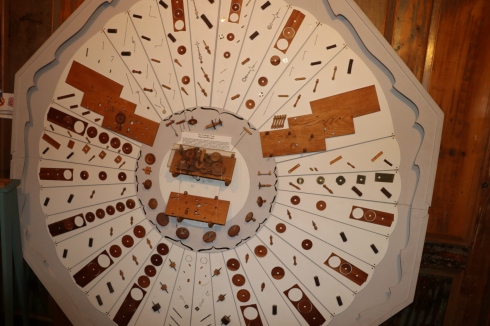
This particular exhibit shows all of the different parts in watches and clocks.

IMG_7826

These educational displays showed how watches were made and the evolution of timekeeping.

The biggest clock in the museum hangs from the first floor to the bottom (or basement) floor.  It is a Tower Clock built by Seth Thomas in 1915.  It still keeps time and it is wound every 8 days.

One of the best parts of the museum is not even in the museum.  Attached to the clock and watch museum, the sun dial garden typically has a sun dial (it was not installed in the garden during my visit), flowers and a bench to take a break from all of the clocks and enjoy the day. if you need to take a timeout.  It really is a great place to pass the time.

Today’s featured link is Rena Tobey’s  blog.

Rena is a creator, curator and teacher among her many talents.  She made a visit to the American Clock And Watch Musseum in April of 2015. As I mentioned before, they do often switch out their clock and watch collection.  So, you will see some different clocks and watched that I did not photograph (although I did see quite a few that we both photographed).


Tuck Museum (Hampton, NH)

Date Of Visit: June 16, 2017

Location:40 Park Avenue, Hampton, NH (about 1 hour north of Boston, MA and 45 minutes east of Manchester, NH)

Hours: Spring / Summer / Fall Museum Hours
Sunday, Wednesday, Friday
1 to 4pm

Winter Museum Hours
January, February, and March
Wednesday, Friday
1 to 4pm
Sunday by appointment

Cost: Free but donations are appreciated

Parking: There is parking available at the side entrance of the building.  There is also additional parking behind the building.

Handicapped Accessible: Yes (thanks to Ryan Lamers)

Highlights: historical artifacts, memorials

Website: Tuck Museum Complex

IMG_3661

Who knew Hampton had so much history?  That is what many visitors think when they leave the Tuck Museum in Hampton, NH.

But, it really shouldn’t surprise anyone that so much history.  After all, it is one of the oldest settled areas of New Hampshire having been settled in 1638.

It’s also surprising that a small museum can have so much historical items and stories.  Upon entering the museum, you will most likely notice some of the historical articles from many years ago.  One of the main features is are the items from the defunct railway that ran to Hampton.

There are also two mannequins dressed in old military clothing from an earlier era.  This is a preview of an exhibit I will discuss later in this post.

The Tuck Museum is considered a “museum complex” because it has several structures and memorials on its land.  Guided tours are given to all of these buildings by the very knowledgeable staff.

The first place our guide took us to was the fire fighter building which had older firefighting equipment and vehicles.  It’s hard to believe , but true, that some of these vehicles were moved by humans, not horses, in the early days of the fire department in Hampton.  It is fitting since the fire department still remains the same – physically go and save lives, despite all of the technological advancements they have made.  It still boils down to the one constant – the brave men and women who work in that profession everyday.

You may notice the name Winnacunnet on the fire engine pictured above.  That used to be the name of Hampton (more specifically it was called Plantation of Winnacunnet) because of the pine trees in the area (Winnacunnet translates to “beautiful place of pines”).  A high school and street in the Hampton area still bear this name.

The next building we went to on the property of the Tuck Museum complex was the barn which contained many of the machines, tools and equipment the people used to farm the land and conduct the everyday chores of the settlers of Hampton.  Everything from fishing equipment, agricultural devices to a shoe cobbler’s counter were housed in this barn.  Each of these devices has a story and history behind it.

It would take too long and take up too much space to explain each one.  But, if you do go on the tour at the museum the tour guide will keep you entertained with various anecdotes and fun facts about these machines and tools.  One fun fact you can impress your friends and hot dates with at dinner parties is that when cobblers made shoes there was only one shape to them so you could wear any shoe on any foot.  I was joking – please don’t tell anyone that on a date.

There is also a special military exhibit dedicated to the people connected to Hampton, NH.  Included in this exhibit are letters from people serving that have been donated on a temporary basis from family and friends of those who served abroad during wartime.  One of the storiees that stood out to me from my visit to this memorial was the story of Hampton residentof Lt. Rita Palmer and the Angels of Bataan.

The final room of the museum (I told you it was surprisingly big) was a room with household items and some of the luxuries of the early settlers of the area.

The framed work of art pictured above was made of human hair (does that make it a bona-fide “hair loom”?).

There are also some replicas of beach houses that used to dot the landscape of the Hampton area on the grounds.  Since it was raining outside, I was unable to get to them without getting my camera equipment wet, unfortunately.

Hampton has a rather obscure dark side in the form of a witch, Eunice “Goody” Cole.  Eunice Cole was the only woman convicted of witchcraft in Hampton, NH (although many others have been casually accused of being one I am sure).

After being released from indentured servitude, her husband and she settled in Mount Wollaston (now Quincy, MA) and they eventually made their way to Hampton, NH.  Since they did not have children (they were both beyond child bearing age) and some other characteristics of her that were considered unusual at the time, she must have been a witch.  Of course.  She was actually accused of witchcraft several times.  the first time she was convicted of witchcraft was in 1660.  She served 2 years in prison and was sentenced again for a number of years in 1668.  She was also found not guilty of witchcraft when she was tried in 1673.  And I thought we were litigious these days.

Eventually, Goody Cole was absolved of her accused crime of witchcraft on March 8, 1938.  The citizens passed a resolution restoring Eunice “Goody” Cole to her rightful place as a citizen of Hampton. The city went as far as to burn copies of all her court documents,  The burned documenst were said to be mixed with soil from her last home and reputed resting place and buried.  However, it was actually given to the Tuck Museum.

This brings me to the last few photos of the museum and its grounds.  Inside the museum there are some replicas of Goody Cole.

On the grounds of the museum is a memorial without her name or any other marking.  In fact, if you did not know the story about Eunice Cole you may just pass by it none the wiser. The marker was erected by Harold Fernald, a teacher and part time police officer from Hampton.  The stone is said to be from the location of Eunice Cole’s property.

As an aside, the North Shore paranormal Group and some other paranormal groups have done ghost hunting on the premises with what they considered convincing results that some paranormal activity occurred.  The fact the museum is located right across the street from a graveyard, mixed with the Goody Cole history, has added to the theories of paranormal activity.  Admittedly, I saw some unusual things during my stay in hampton.  But, it was mostly at the beach.

Another memorial on the grounds of Tuck Museum is dedicated to Thorvald, the brother of Viking explorer Leif Erickson and son of Erik the Red.  However, this memorial has more of a controversial past as some believe it was just a rock put there by Judge Charles A. lamprey to increase the value of land that he was developing for beach cottages in 1902.  Whatever the true story behind the rock, it has become a popular tourist attraction.

The grounds of the museum are well kept and worth strolling by even if you don’t venture into the museum.

marylizstyles is a fellow New England blogger who specializes in the fashion blogging genre.  Read a post about her recent dude that’s so nautical fashion adventure in Hampton, NH.


Buttonball Tree (Sunderland, MA)

Date Of Visit: January 5, 2017

Location: 158 N. Main St, Sunderland, MA

Parking: You can park on the side of the road at or near the tree.  It’s a residential area so please be safe when viewing

Cost: Free

Hours: everyday, 24 hours a day

Handicapped Accessible: Yes

Dog Friendly: Yes

Highlights: “widest tree this side of the Mississippi”, biggest sycamore tree in Massachusetts, 300 plus year old tree

dsc_1014

On a nondescript road in Sunderland, MA, stands a tree.  A big tree.  But, no, this is no ordinary “big tree.”  This is the widest tree in the Eastern part of the United States.

The Buttonball tree, located on N Main St,  is over 113′ high, with a girth of 24’7″ and has a spread of 140′.  Pretty big, huh?  The locals think so.  Because of its size and its legendary status, locals have dubbed the Buttonball Tree, “The widest tree this side of the Mississippi.” It is also considered, wrongly, to be the “biggest” this side of the Mississippi.

In fact, another tree in Massachusetts may hold this claim.  Or, at the least it may be the tallest this side of the Mississippi.  The Eastern White Pine in the Mohawk State Forest in Charlemont, Massachusetts, is listed at 174 feet in height.  And there are many others that are taller than the Buttonball.

For instance, the “Boogerman Pine” (186 feet tall) located in the Great Smoky Mountains in North Carolina, is considered by many as the tallest tree in the U.S. east of the Mississippi.

In addition to these trees, there could be some huge, crazy big tree in some forest or park somewhere that has yet to be recorded.  As you can see, it is a hotly contested claim!

So, the claim of “largest tree east of the Mississippi” is a title that has been debated.  But, the Buttonball still holds the title for widest tree this side of the Mississippi.  OK, enough fun tree facts.  For now.

Who knew it would be such a contentious subject!  Who knew there was so many details about these trees? But, there’s more to the tree than it’s girth and height.  Besides, it’s not the size…never mind.

While the title for largest tree east of the Mississippi may be up for debate, one thing is for: the Buttonball Tree is one big tree!  It is the largest sycamore tree in Massachusetts and one of the largest trees of any kind in Massachusetts.  Once part of the Sunderland forest, the tree now stands in a residential area.  I bet the neighbors just love all the attention.   (another) Fun fact: because of their longevity, during the 17th and 18th century sycamores were sometimes planted at the door of new house for newlyweds as “bride and groom” trees.  The trees lasted much longer the marriages I am sure.

Not only is the Buttonball Tree big, it is historically significant.  And old.  I mean really, really old.  The tree is estimated at being between 350 and 400 years old.  And you thought you were getting long in the tooth.

Without further delay, ladies and gentlemen…the Buttonball Tree….

dsc_0982

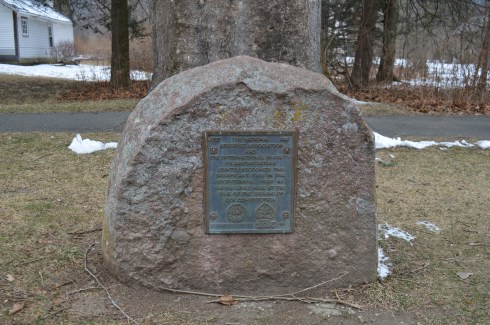
In 1987, to celebrate the 200th anniversary of signing of the Constitution, a plaque was engraved in a stone and placed in front of the tree.  The plaque is engraved with the following:

1787 THE NATIONAL 1987 ARBORIST ASSOCIATION AND THE INTERNATIONAL SOCIETYOF ARBORICULTURE JOINTLY RECOGNIZE THIS SIGNIFICANT TREE IN THIS BICENTENNIAL YEAR AS HAVING LIVED HERE AT THE TIME OF THE SIGNING OF OUR CONSTITUTION

Don’t forget to Connect with me on Facebook (this isn’t part of the inscription)


Ware-Hardwick Covered Bridge (Hardwick-Ware, MA)

Date Of Visit: December 26, 2016

Location: Bridge St (no really, it’s called Bridge St) and Old Gilbertville Rd, Ware – Hardwick, MA

Cost: Free

Hours:Open everyday, 24 hours a day

Parking: Despite the signs to the contrary, you can park on the side of the road on Bridge St.  Parking isn’t available on the other side which leads to Old Gilbertville Rd.

Handicapped Accessible: Yes

Highlights: Covered Bridge in Central Mass

dsc_0197

Many years ago, wooden bridges, particularly covered bridges used to dot the landscapes of Massachusetts.

Now, Massachusetts only has about a dozen covered bridges that you can drive on.  Although it may not seem sturdy, the Ware-Hardwick Bridge, also known as the Granville Bridge because the bridge is in the unincorporated village of Gilbertville which is considered part of Hardwick,  is one of the few remaining traffic worthy covered bridges in Massachusetts.

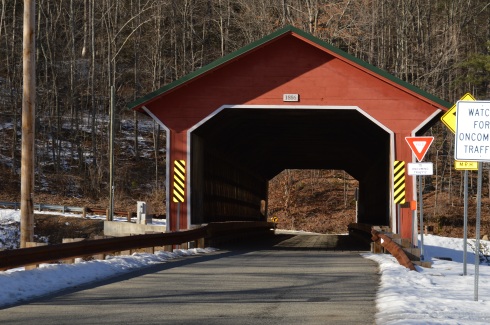
The Ware-Hardwick Bridge, or Hardwick-Ware Bridge depending on which way you’re traveling, is 139.1 feet long and is 130.9 feet at its largest span. It is  19.7 feet wide and 14.4 feet tall.  I suspect trucks would have to seek alternate routes because of the low clearance.  But, according to the state Department of Transportation, there currently is no weight limit for vehicles passing through. Trucks wouldn’t typically use this bridge, in any event, since it is located on a side road.


The Ware-Hardwick Bridg crosses the Ware River which was relatively calm and iced over in some parts during my visit.

The bridge, which is a covered through lattice wooden single-web, double-chord truss design, was originally built in 1887 according to public records, despite the sign bearing the year 1886 just above the entrance on the Ware side.  It was added to the National Register of Historic Places on May 8, 1986, roughly 100 years after it was originally built.

The original bridge only had a capacity of 6 “short tons” (5.4 tons).  It was closed down in 2002 to restore the structural integrity of the bridge due in part to an insect infestation.  The bridge re-opened in October, 2010 after a $1.9 million restoration project.

Fun fact: the bridge was one of the few bridges to survive a major flooding on the Ware River in 1936.

Below is a video of us driving over the bridge.


Happy Halloween (Salem, MA)

Dates Of Visits: October 22 & 29, 2016

Location: Salem, MA

Parking: Very limited during Halloween but you can find lots of parking at the New Liberty and Congress St parking garages and there is metered parkign available as well after Halloween season.

Handicapped Accessible: Salem’s streets are handicapped accessible and most buildings are as well.

October is full of scares and excitement in Salem, MA.  And this year was no different.  I saw so many cool, funny and, yes at times scary, people, pets and other things this year in Salem.  Since I saw so many interesting things in Salem, I am breaking up my posts into several posts so I don’t go overboard with my images in each post since they can take a very long time to download, especially on mobile devices.  And, believe it or not, there are so many interesting things in Salem all year round (not just during Halloween) but particularly during the fall.  From the street performers, the, in some cases, elaborate decorations and the historical aspects of the city, tthere are so many things to post about.  I will post the highlights from my Halloween day visit very soon.

Today’s post focuses mostly on the costumed people and the pets of Salem.  I still have many more photos of costumed people that I will post soon.  But, for the sake of time and space I am including these photos in chronological order from the earliest to the most recent.  There were quite a few politicians at Salem (Donald and Hillary were even seen together).  Poor Bernie was by himself and could only shrug his shoulders and say “Sure” when I asked for a photograph.

Some of the costumes are self explanatory, others not so much.  I’ll help where I can.

The three women with sticks and shades on are the three blind mice.  In the second to last row of photographs next to Jason and his monster friend are the 80s candy “Nerds.”  In the bottom row to the left are the cat and “crazy cat lady.”

Throughout my visits to Salem this past month I saw so many cute dogs.  Whether in costume or au naturel, they all looked very cute!

Lulu is an 8 year old Australian Sheepdog.  I love the different colored ears and the way she looks likes she is smiling in the second photo.

dsc_0168

What a wonderful pose Bella struck for me!  The 1 year old Havanese (yes I had to look it up too) looks cute in her Stegosaurus costume.

Honey got into the festivities with her black and orange collar.

Eva is a 2 and a half year old mixed breed rescue dog.  Another happy dog in the city.

dsc_0068

Fenway is a 5 year old Papipoo (Papillon Poodle mix).  He also has his own Facebook page at Fenway’s Aventures as well as an Instagran account @FenwaysAdventures a Twitter account @FenwayPuppy as well as a Snapchat account: @TheFenwayPuppy.  He’s got more socal media accounts than I do!

Unfortunately, I when I washed my pants the list of dogs and their ages and breeds were still in my pants pocket and my memory isn’t what it used to be.  So, I apologize for not remembering all of these beautiful dogs’ names.

It is also important to remember what Salem is largely known for by the public, besides the fun and scary stuff.  Each year, descendants and others honor the victims of the witch hysteria that unexpectedly put Salem on the map for fun and friendly tourism. At the Salem Witch Trials Memorial on Liberty St, roses are placed on each victim’s granite stone memorials during the week of Halloween.  Passerbys and those with a connection to the victim, through blood or otherwise, often leave notes, cards, flowers and other items as well.  Coins are a common item left behind by tourists and others sympathetic to the victims of this dark time.

Please connect with me on Facebook, Instagram and Twitter

Twitter: New England Nomad (@waynefitz12):

Instagram: @new.england.nomad_

Facebook: https://www.facebook.com/newenglandnomad/


Old Sturbridge Village (Sturbridge, MA)

Date Visited: July 2, 2016

Location: 1 Old Sturbridge Village Rd, Sturbridge, MA 508-347-3362 (about 45 minutes east of Springfield, MA and an hour west of Boston, MA)

Hours: presently, open Daily | 9:30 am – 5:00 pm

November 1-27
Open Wednesday through Sunday | 9:30 am – 4:00 pm

December 2-4, 9-11, 16-18, 23
Christmas by Candlelight | 4:00 pm – 9:00 pm, Fri/Sat/Sun
Please Note: CLOSED during daytime hours
CLOSED December 24, 25

Cost: $28 for adult, $26 for seniors (55 and over), $14 for youths (3-17), children under 3 are admitted free.  They also have annual long family memberships.

Parking:  about 200 parking spots, fills up quickly.  Cars were parked on the grass and other non designated parking spaces when we left because of the large crowd

Time To Allot For Visit: I could spend all day here but 3 hours should do it.

Dog Friendly: No

Highlights: historical actors and portrayal of life in the colonial area era, historical homes, animals, family friendly events, special events throughout the year, stagecoach rides

Old Sturbridge Village

DSC_0992

What better time than the fourth of July to take a trip back to the colonial days of our country where they relive those early days everyday?

Old Sturbridge Village is 200 acre living museum which recreates life in rural New Ebgland during the 1790’s through the 1830’s.  It is the largest living museum in New England.


As you enter the grounds of Sturbridge Village you see flags that represent fallen servicemen and women.

DSC_0422


From the moment you walk into the museum, there are symbols and characters from the past everywhere.

The day began appropriately with the flag raising.  One of the historical actors selected two children from the crowd to help him raise the flag.

Throughout the day there were many more reenactments.  There was the firing of the cannons, marching, drilling and even musket firing (with blanks of course).

Of course, the houses are one of the biggest attractions.  The woman in this house was making stays.  This house is called the “Small House.”

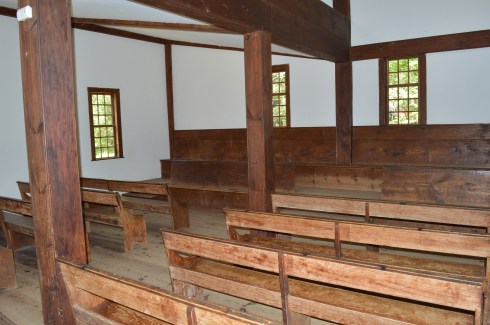
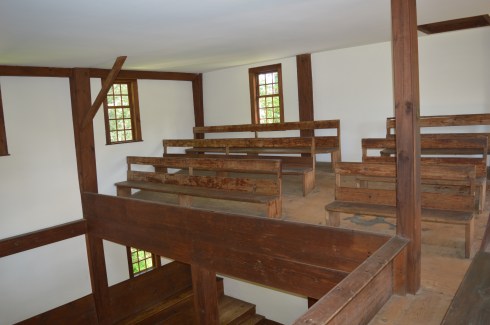
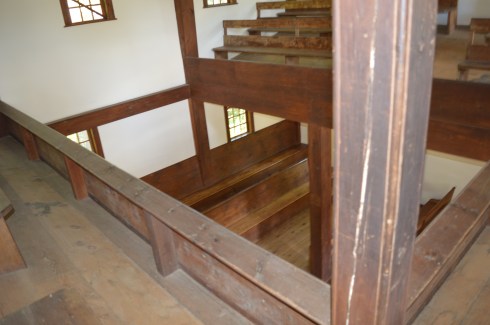
The Meetinghouse is another big attraction.  For 100 years, Friends, also known as Quakers, worshiped in this building.  This particular meetinghouse was originally set in Bolton, MA.  As you can see by the photos, there was no pulpit, altar, statues or other decorative symbols.  Men and women entered the meetinghouse separately in different entrances and sat on separate sides of the building.  The Quakers are remembered for their temperance and anti slavery beliefs.

DSC_0678DSC_0460DSC_0467DSC_0466DSC_0464DSC_0463DSC_0920DSC_0930


While the exterior of the houses were very pretty, the interior of the houses were even nicer.  It also gave you a real feel of what it was like to live back then.  The historical actors were both entertaining and engaging.

This slideshow requires JavaScript.

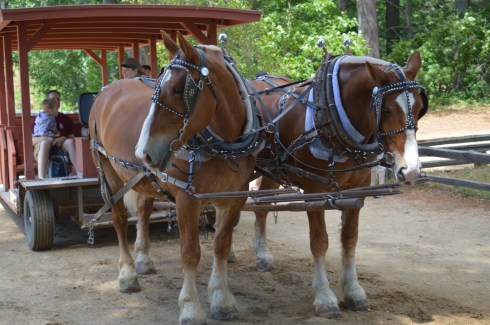
The other great thing about the village was the animals.  Meet Jim and Jerry (from left to right).  Jim and Jerry are the horses who drive the carry all wagon.

DSC_0730DSC_0584


There were also a variety of farm animals.  This sheep was wandering around until he heard his mom calling out to him for feeding time and he came running.

DSC_0846DSC_0848DSC_0847

The rest of the animals at the village were just as beautiful.

This slideshow requires JavaScript.

The village also has little shops and buildings with craftsman and people common to the era like a blacksmith and a tin maker as well as a band call the Quintebrass who played patriotic music of that era.


You could spend all day visiting the many buildings and attractions at the village or just taking in the beautiful views and atmosphere of the area.

This slideshow requires JavaScript.

Sturbridge Village even has toys from the era that kids (or adults) can play with.

The River Ride on the Quinebag takes you around the Quinebag River.  The boat driver also gave a historical overview of the area. The ride costs $3 a person and lasts about 10-15 minutes.

On the way out, there was a nice surprise.  We noticed a building set off to the side; the J. Cheney Wells Clock Gallery.  The clock gallery was a quiet clock museum.  It was fascinating seeing the evolution of time keeping and it felt like a library because it was quiet and set off by itself.  It was a nice break from the hustle and bustle of the historical museum area.

There is also a cafe there (most of their food is cooked outside barbecue style during the warmer seasons and the smell is sure to make you hungry).  There are also several comfort stations scattered around the area.

Below are some videos of the various recreations at Sturbridge Village.

The first cannon firing below was just to get the debris out of the cannon and prep it for the actual cannon firing which is in the second cannon firing video below the first cannon firing video.  The second video is a little long because the men wanted to wait until the stagecoach passed by so they didn’t startle the horse.

Please connect with me on Facebook: New England Nomad


Fort Taber/Fort Rodman Park (New Bedford, MA)

Date Visited: June 11, 2016

Location: 1000 Rodney French Blvd, New Bedford, MA

Parking: There are about 70-100 spots or so in the park itself but plenty of off street parking as well.

Cost: Free

Hours: Dawn until dusk
Dog Friendly: It sure is!

Highlights: forts, lighthouse, jetty, beach, war memorials, walking trails, playground with slides and swings for children (or adults if you’re so inclined), military museum, war reenactments, pretty views

DSC_0696

The highlight of the park for most visitors has to be the jetty.  Fishing off the jetty, or anywhere else at the park is allowed.  But, they have a strict “catch and release” policy because most of the fish are contaminated with PCB (poly-chlorinated bipenyls).  So, they would not be safe to eat.  PCB’s are known cancer causing toxins.  The New Bedford Harbor is lined with these cancer-causing toxins that were released into the harbor between 1938 and 1973 by factories such as the electrical component manufacturer Aerovox.  The harbor is in the process of being cleaned.  But, it could take many more years before the job is complete.

Seashells and seaweed were scattered along the bridge, evidence of some recent stormy seas.

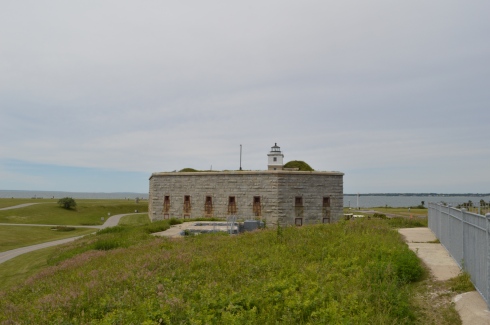
There are so many beautiful views and interesting things at Fort Taber Park.  The lighthouse in the photos is the

Since New Bedford has been known for its whaling and seafaring history, the park (and all of New Bedford) is also known for its lighthouses.  In the background of  the fort in the photo below you can see Clarks Point Lighthouse, first originally built in 1797 (it was replaced with a stone tower in 1804).

DSC_0819

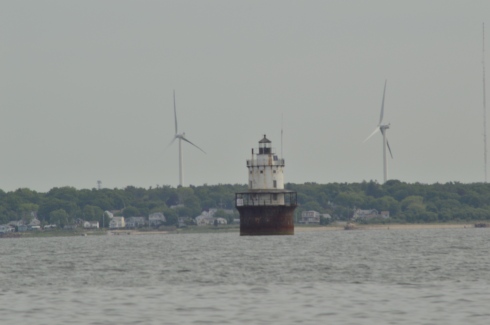
The lighthouse below is the Butler Flats Lighthouse, originally built in 1898.

DSC_0699

There are several war memorials dedicated to the men and women of Fall River who have served their country, with a specific emphasis on those who were killed in action.

The memorial below is a Vietnam War Memorial that really stood out to me.  If you look closely at the board in the final photo, you can see photos of the service people from New Bedford who were killed in the war.   Everything about this memorial has meaning.  The 43 stars on the memorial represent all of the 43 people from New Bedford who died in Vietnam.  The outline of Vietnam is in orange as a reference to Agent Orange who died from Agent Orange.  Even the service ribbons on the memorial have meaning.  The blue ribbon represents the National Defense Ribbon which is representative of everyone who served in Vietnam.  The other two ribbons represent in country veterans.  The two plants at the memorial signify life.

This slideshow requires JavaScript.

There are also several memorials to all of the 20th century wars America has been in, although I did not notice any memorials for the Iraq and Afghanistan wars.  I am assuming this may be because those actions are still not officially over even if we have pulled out most of our military presence in those places.

A tribute does stand for Army Staff Sargent Joseph Camara of New Bedford, MA, who was killed in action on September 1, 2003 while serving during Operation Iraqi Freedom  when the humvee he was traveling in hit a land mine.  He was serving with the 115th Military Police Company as a member of the Rhode Island National Guard in the Iraq War.  He was 40 years old when he died.  He was also a member of the New Bedford Police Department.  His memorial is located at the bottom of the gallery below.

There is also a replica of a Sherman tank stands as a tribute to the LST amphibious force T-4 who lost their lives in training for the invasion on D-Day.  During the training exercises, sadly, many men lost their lives training for the invasion.

While I was visiting it was 17th century drill day.  Reenactors from the Dartmouth militia, in full 17th century garb, showed how weapons were used, described the different types of warfare of the day and answered any questions the public had.

The staff also allowed visitors inside Fort Taber.  The guide explained they stopped using this Civil War fort once the ballistics that were used became too effective against the barricades of the fort.

Grass and rust had overtaken what was once a formidable fortification.

One of the best parts of my visit – on the way to my car, I saw this man and woman playing their instruments.


One of the great things I noticed about the New Bedford area as I walked around taking photos and from the crowd at Fort Taber is the diversity of the cultures and people of the area.  The photographs above illustrate this.  The music sounded like it had an up tempo flamenco influence.  It sounded beautiful.  And I love their attire.

Fort Taber/Fort Rodman is a dog friendly park.  The park is a great place for dogs.  There are miles of trails for your dog to wander.

DSC_0787DSC_0786

Sadie is a miniature poodle.  She will be 5 in August!  Early happy birthday wishes, Sadie!

DSC_0906DSC_0918DSC_0911

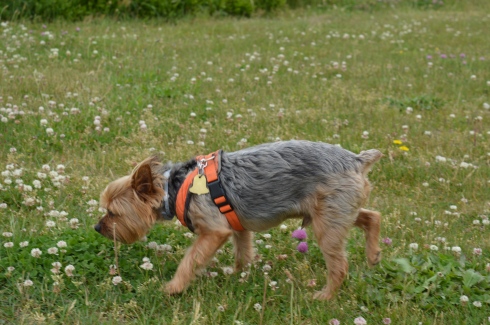
I also met Yoda, a 10 year old Yorkie.

Below is a video of the inside of one of the forts at Fort Taber.   It’s kind of spooky!

This video is a video of the military reenactors firing their weapons.

Please connect with me on Facebook!

New England Nomad


Borderland State Park (North Easton, MA)

Date Visited: May 21, 2016

Location: 259 Massapoag Ave, North Easton, MA

508-238-6566

Hours: Open 365 days a year, 8 a.m. to 6 p.m.  A sign at the front gate of the parking area states cars still parked in the lot after 7 p.m. will be fined $25.

Costs: According to the website it is $5 for MA residents and $6 for non-MA residents.  There is a parking payment station located at the front of the parking area.  I have a parking pass which allows me to park in all state run parks so I do not know exactly how the parking stations work or how they charge each patron.

Parking:  The parking lot is pretty big.  It looks like there are easily 200 spaces.  When we left, on a busy day at peak hours, there were still plenty of parking spots available, albeit far from the entrance to the trails.   There is also an alternate parking area before the main parking area for people with special passes.

Highlights: mansion, 6 ponds, quarry, 20 miles of hiking trails, large field for frisbee golf and other activities.  Fishing, canoeing and horseback riding are allowed.  Leashed dogs are permitted. Easy to moderate trails, teeming with wildlife.  Peaceful feeling, even when the park is packed.

*Please note, some of the slideshows take some time to load, unfortunately (especially on tablets and cellphones).  You may have to refresh but they may take a few minutes to load*

Created during the early 1900’s by artist and suffragist Blanche Ames and her husband Oakes Ames, Borderland State Park has been a state park since it was purchased by the state in 1971.  The Ames’ home, a three-story stone mansion built in 1910 still stands on the grounds.

DSC_0146DSC_0151DSC_0142DSC_0158

The grounds of the mansion are manicured impeccably.  They even take care of those pesky witches (or whatever that is on the lawn) .

This slideshow requires JavaScript.

Bordering on the towns of Sharon and Easton in Southern MA, Borderland has a variety of trails for runners, walkers, cyclists and even horseback riders.  The trails are easy to moderate and I saw many runners on the trail.

Located about 45 minutes south of Boston and half an hour north of Providence, Rhode Island, Borderland State Park is a popular destination for people from all sections of New England.  It is easy to see why so many people flock to the park when you see the views.

This slideshow requires JavaScript.

Sometimes it’s the little things that make the park so much fun.  Whether it’s the frisbee golf course on the lawn in front of the mansion (I can only imagine what the Ames’s would have thought of that) or the benches that are liberally scattered throughout the park  or the always full bowls of water thoughtfully left out for the thirsty dogs, the park really does think of everything.

here was also an abandoned building along one of the trails.

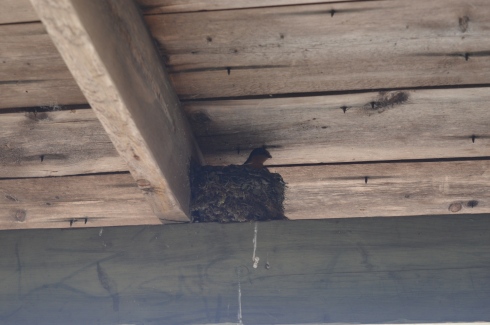
There are always pleasant surprises when you go to visit the different parks in New England.  One of those surprises was a mother bird feeding her babies in the nest on the beams of the roof of the abandoned building pictured above.  I did my best to seem as unobtrusive and I used my telephoto lens from a distance while I took these photos.  I love how the mother looks so protective and is surveying the area for potential threats.

DSC_0402DSC_0399DSC_0421DSC_0429DSC_0433

Then, as I was taking photos of the pond, I saw these little critters.  Look at how the frogs almost perfectly camouflage themselves.  It’s almost the perfect disguise.  Man, I love nature!

DSC_0463DSC_0465DSC_0481

DSC_0471DSC_0459

Ok, the snake isn’t so “little.”  But, I wasn’t about to get closer to see just how big he was.

And the animals didn’t stop there.

There were dogs a plenty also at Borderland State Park.

DSC_0245DSC_0244DSC_0242

Beef is a 6 year old  American Bullweiler (American Bulldog and Rottweiler mix).  He was being trained by his dad.  I thought the last photo showed just how much affection he has for his guardian.

Mason, a chocolate Labrador, took advantage of the warm weather to go for a swim.

DSC_0377DSC_0376

Romeo, an English Chocolate Labrador, celebrated his 10 month birthday at the park!

DSC_0513DSC_0516DSC_0509

Balto, a 7 month German Shepherd, wants attentively for the rest of the family to show up.

DSC_0531DSC_0528DSC_0527

Thank you for stopping by and reading and please consider connecting with me on Facebook and check out my future trips around New England:  New England Nomad


Poet Seat’s Tower (Greenfield, MA)

Date Visited: May 13, 2016

Location:  Mountain Rd, Greenfield, MA

Parking: There are about half a dozen parking spots next to the tower and they fill up quickly.(and they were all filled at 8 o’clock on a Friday morning).  There is also parking at the gate of the entrance on Mountain Road for about another half a dozen vehicles.  The walk to the tower from the main entrance is about a mile.

Cost: Free

Hours: Open 365 days a year from sunrise to sunset

DSC_0095

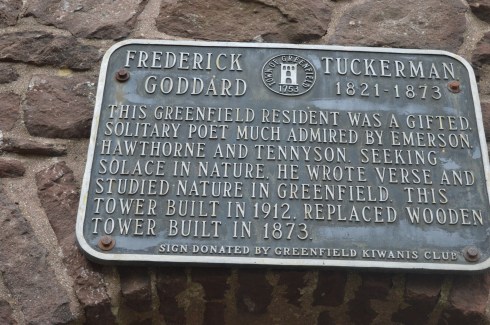
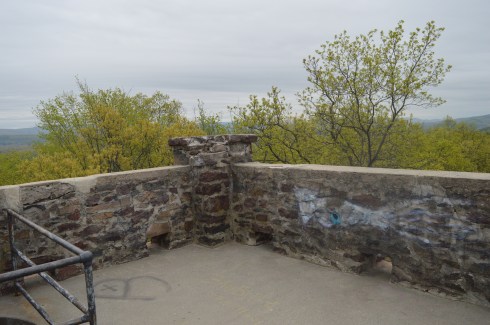
Perhaps it’s the unobstructed, sweeping views of the landscapes or maybe it’s the solitude of being in such an isolated tall structure.  Whatever the reason, poets seemed to flock to this observation tower.  It has since been known as the “poets seat tower” because of the long tradition of poets that have been attracted to the location.  Frederick Goddard Tuckerman, a local poet at the time, is credited with bestowing this name on the structure in 1850.  The tower, which was built in 1912, now attracts people of all walks of life, not just poets.   Prior to the construction of the sandstone tower, a wooden observation tower had been built on the edge of the lookout in 1879.  A plaque at the tower acknowledges Tuckerman’s role in the history of the tower.

DSC_0981


Even before you reach the top of the tower, if you dare, there are some impressive views of the Greenfield (MA), Connecticut, Deerfield (MA) and Green River valleys.  The ledge of the road where the tower is bult has a rocky ledge from where you can get some views of the Greenfield area below.  It’s a long way down!

The highest point of Greenfield, the tower is 4 floors (counting the ground floor and top floor).  The views from each floor are pretty stunning.  After all the rain in the area, the greens were very vivid.

This slideshow requires JavaScript.

As I stood looking over the land below I couldn’t help but think of how the landscape has changed over the years.  Many years ago people looked over farmlands and valleys.  Now, we look over schools, houses, parks and businesses.  I also thought about all of the people who came here to rid their mind and soul of their worries by taking in the beautiful views.  It really can make you take a step back (and hopefully not forward) when you’re up so high and appreciating the nature around us.

The journey to the top is not difficult.  A trip up one stairwell and one spiral staircase take you to the top.

The arches and architecture of the tower rival the beauty of the views from the top of the tower.

This slideshow requires JavaScript.

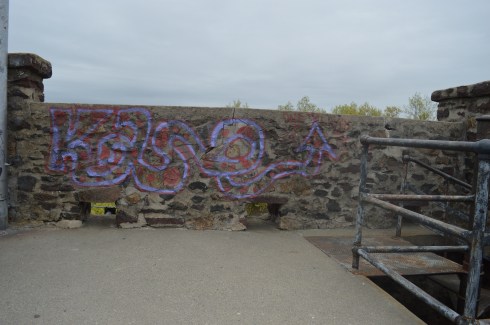
And what would a historic structure be without graffiti?  As seems to be customary, particularly in Western Mass, there was graffiti on the walls of the sandstone structure.  It did seem fitting that poetry lined the walls of “Poet’s Seat Tower”

DSC_0075

“Jump off the cliff and build your wings on the way down”

DSC_0011DSC_0009

DSC_0039DSC_0052

The are also benches along the road to the tower which offer views of the area.  There are also hiking trails that branch off from the road to the tower.  The trails look easy to moderate but I could not walk on them because of time constraints.  I did hear a lot of presumably animal activity in the woods.

Below is a video of the view from the top of Poet’s Seat Tower

Please stop by my Facebook page and like me!  New England Nomad On Facebook


Windsor-Cornish Bridge (Windsor, VT & Cornish, NH)

Date Visited: May 13, 2016

Location: Bridge St, Windsor, VT/ Cornish, NH

DSC_0323

If there is one thing Vermont and New Hampshire are known for, besides moose and lakes, it has to be covered bridges.  But, of the 164 covered bridges listed for Vermont and New Hampshire one stands alone.

DSC_0326


The Windsor-Cornish Bridge (or Cornish-Windsor if you like) is the longest covered bridge in all of New England.  At 449 ft and 5 inches, the Windsor-Cornish Bridge is not only the longest covered bridge in New England it is the second longest wooden covered bridge in the entire United States just behind the Smolen-Gulf Bridge in Ohio (613 ft) which opened in 2008.  It is, however, the longest wooden covered bridge as well as the longest two span covered bridge in the United States.

DSC_0343

The bridge was originally framed at a nearby meadow northwest of the site and later moved to its proper location.  As an aside, I didn’t see anyone cross it on a horse.  But, if they did, they had better walk it across or be ready to pay their two bits.

It has been through three constructions and repairs due to being transported from another location and after being repaired due to flood damage and ice in 1977.  In July, 1987, the bridge was closed to traffic due to deterioration and reconstructed in 1989.  The bridge is listed on the National Register of Historic Places.

DSC_0317

The Windsor-Cornish Bridge holds another unique distinction.  It is one of the few bridges that used to be a toll bridge but no longer has a toll (usually it works the other way around in new England).  The bridge was purchased by the state in 1936 and operated it as a toll bridge until June 1, 1943.  The bridge does have two lane traffic but pedestrians traffic is not allowed.

The Windsor-Cornish Bridge is one resilient bridge.  Previously, there have been three bridges built on this site in 1796, 1824 and 1828. All of these bridges were destroyed by floods.  For now, though, the bridge still stands proudly.

The videos below show what driving through the tunnel (both ways) feels like.

Please stop by and follow me at New England Nomad’s Facebook Page.  Thank you!