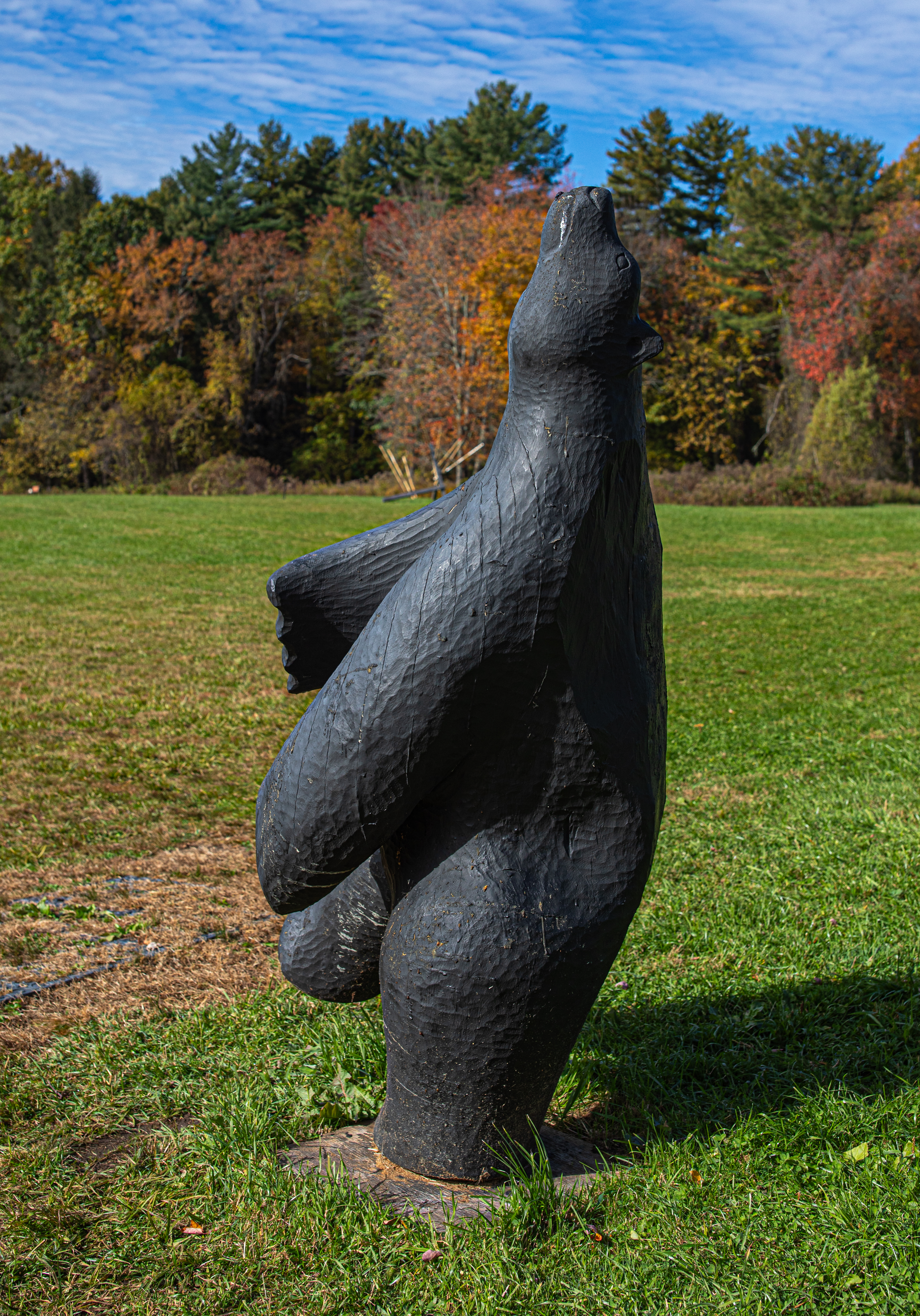
Category Archives: art

2026 Springfield Museums Flower Festival (Springfield Museums, Springfield, MA)

Date Of Event: April 12, 2026

Location: Springfield Museums, 21 Edwards Street, Springfield, MA 

Summary: Springfield Museums held their annual flower festival event last month. Each flower arrangement at the exhibit resembled or was influenced by works of art or books.

Art can take many forms. And the 13th annual Flower Festival at Springfield Museums is a great example of this.

The festival, which included dozens of flower arrangements, used books (specifically their cover art) or works of art or even vehicles or ideas as inspiration for their arrangements. There were dozens of arrangements at the festival. So, I hope you like flowers!

All of the flowers in the first section of the Festival of Flowers exhibit were inspired by children’s books. I use the terms loosely because many of the books still warm the hearts of adult readers as well!

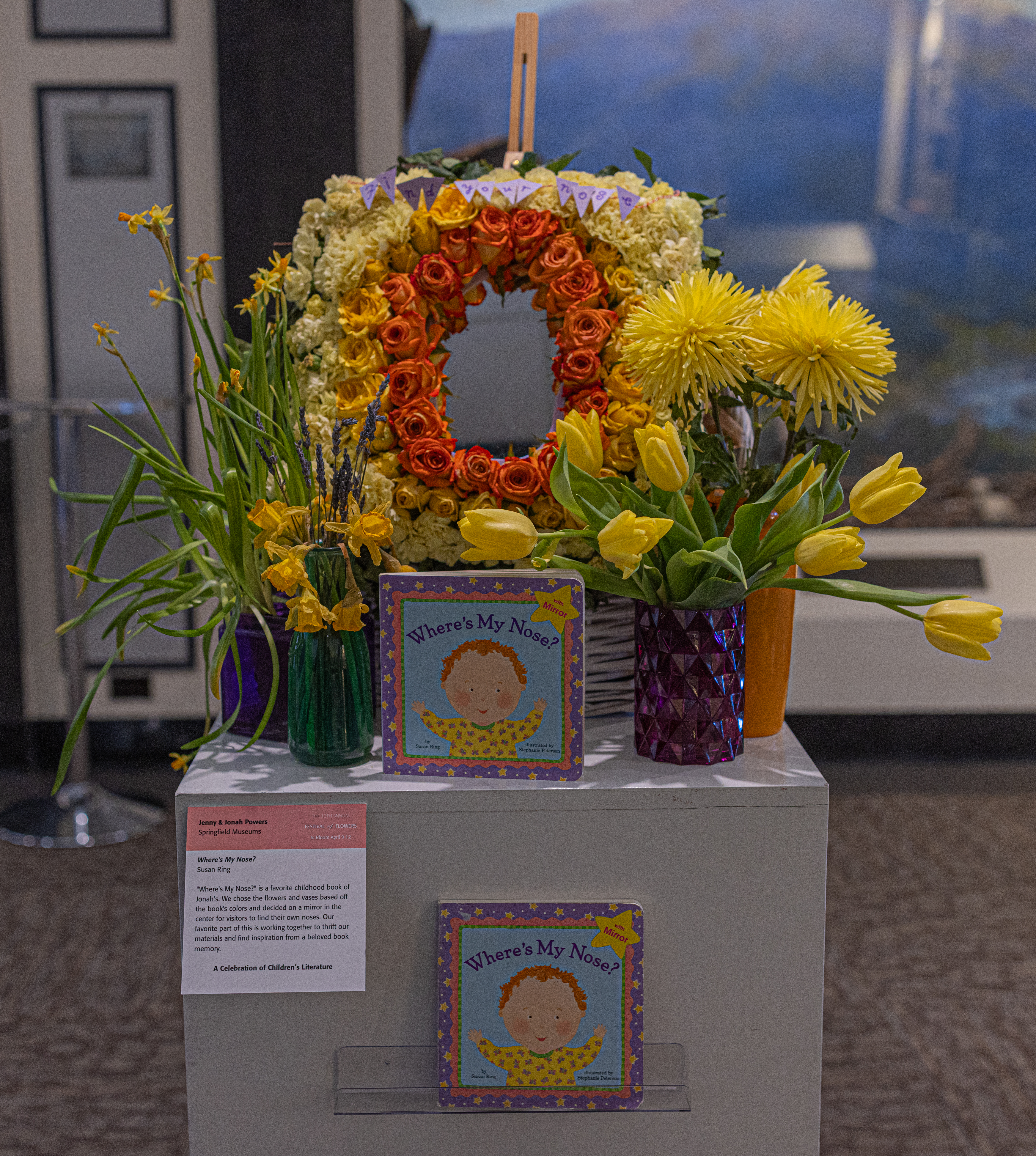
The first example of the flower arrangements imitating art is this arrangement is this arrangement based on the book Where’s My Nose? by Susan Ring. This book is a childhood favorite of Jonah Powers who arranged these flowers and vase with Jenny Powers. They chose the colors based on the book’s colors and decided to put a mirror in the center for visitors to find their own noses. Their favorite part of this flower arrangement was working together to thrift their materials and find inspiration from a beloved book memory. So, can you find your nose? I’ll wait. Ok, now, we can move on to the next arrangement.
The next flower arrangement was based on a book from a local author. The Very Hungry Caterpillar by Northampton, MA, author Eric Carle is the basis for this arrangement. Sadly, Eric passed away in May of 2021.
Elizabeth Tongue of the Springfield Garden Club and grandmother of 5 children, thought The Very Hungry Caterpillar would be fun to emulate so her grandkids could to help her make and see the finished product.

Floral foam wrapped with green plastic was used as the basic caterpillar. She used small green mums and other greens to build the body. Other small colorful flowers were added to signify what he ate as he moved along through the week.

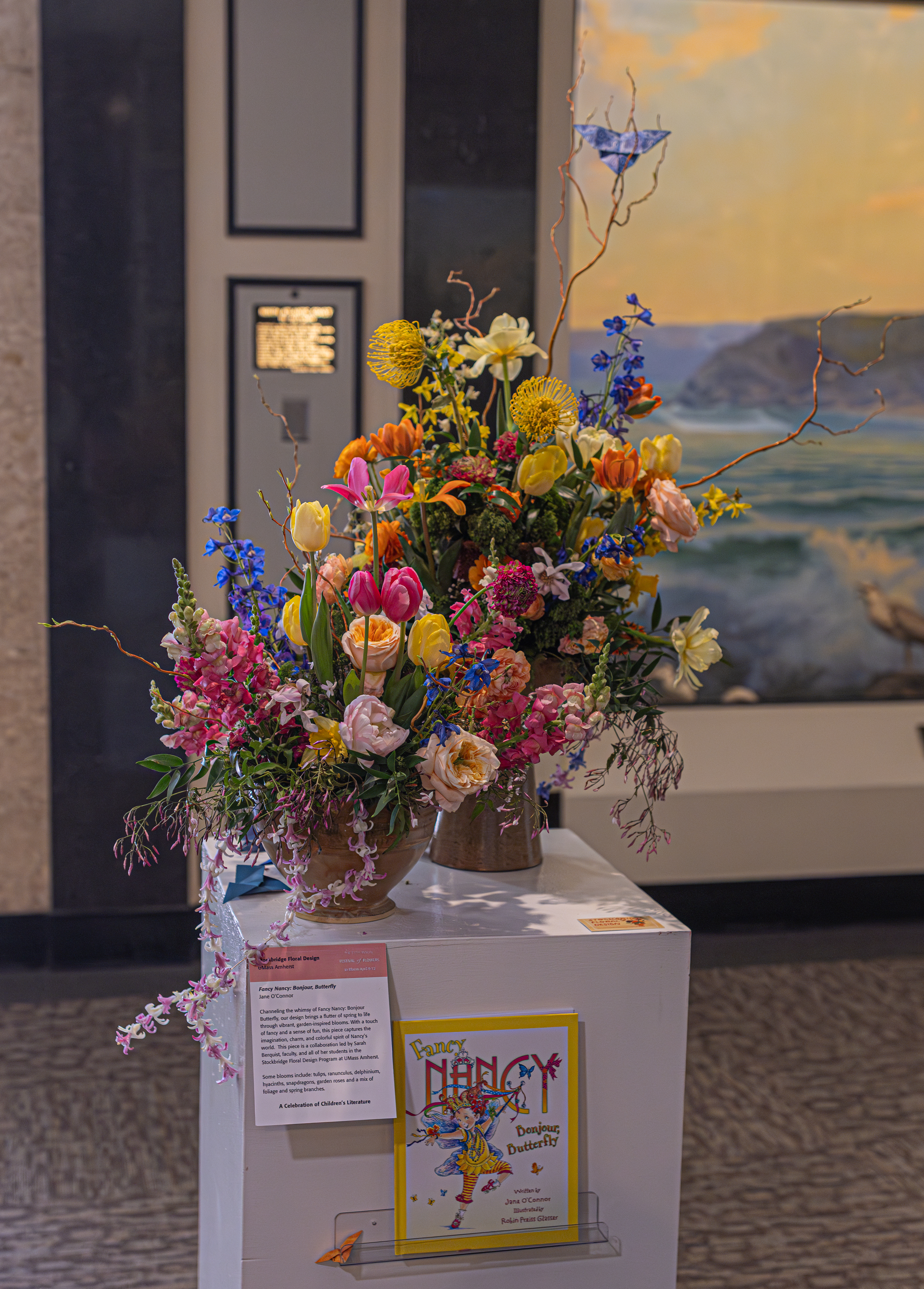
Stockbridge Floral Design created this floral design based on the book Fancy Nancy: Bonjour, Butterfly. Channeling the whimsy of this book, the design brings a flutter of spring to life through vibrant garden-inspired blooms. With a touch of fancy and a sense of fun, this piece captures the imagination, charm and colorful spirit of Nancy’s world. This piece was a collaboration of Sarah Berquist, faculty and all of her students in the Stockbridge Floral Design Program at UMass Amherst.

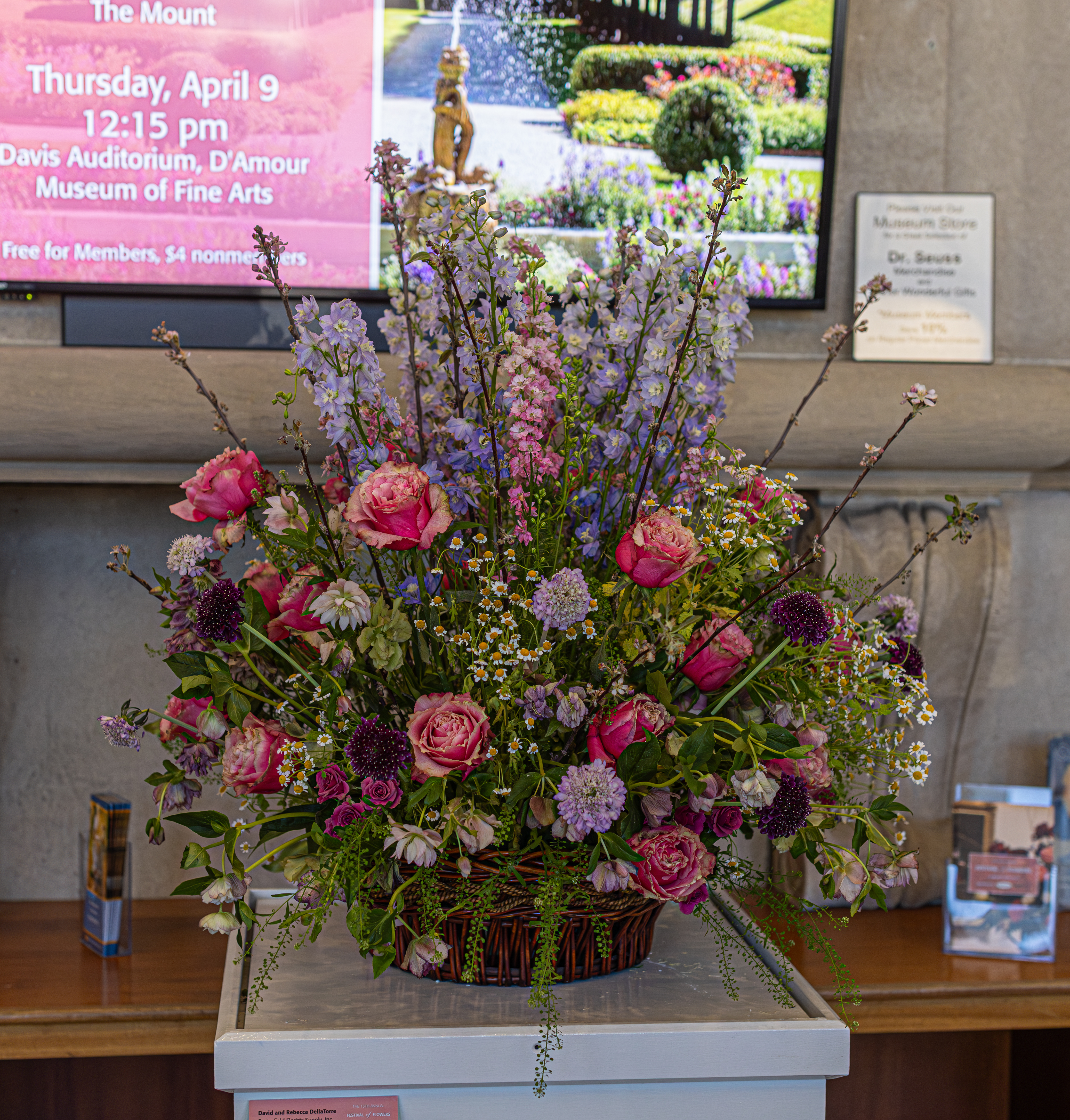
Some blossoms include tulips, ranunculus, delphinium, hyacinths, snapdragons, garden roses and a mix of foliage and spring branches.

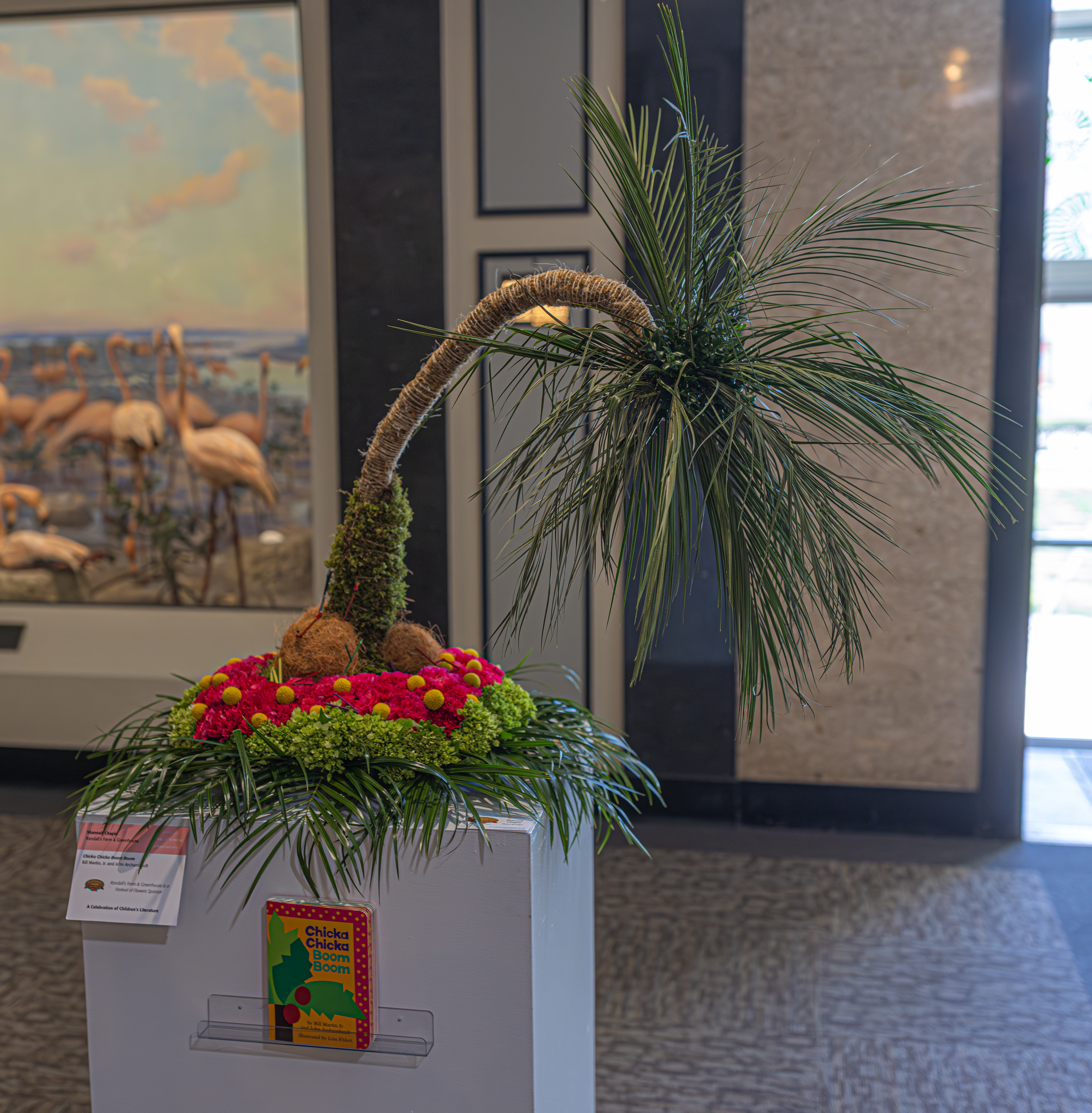
Chicka Chicka Boom Boom by Bill Martin Jr and John Archambault was the inspiration for this arrangement. It was designed by Shannah Chapin at Randall’s Farm & Greenhouse.

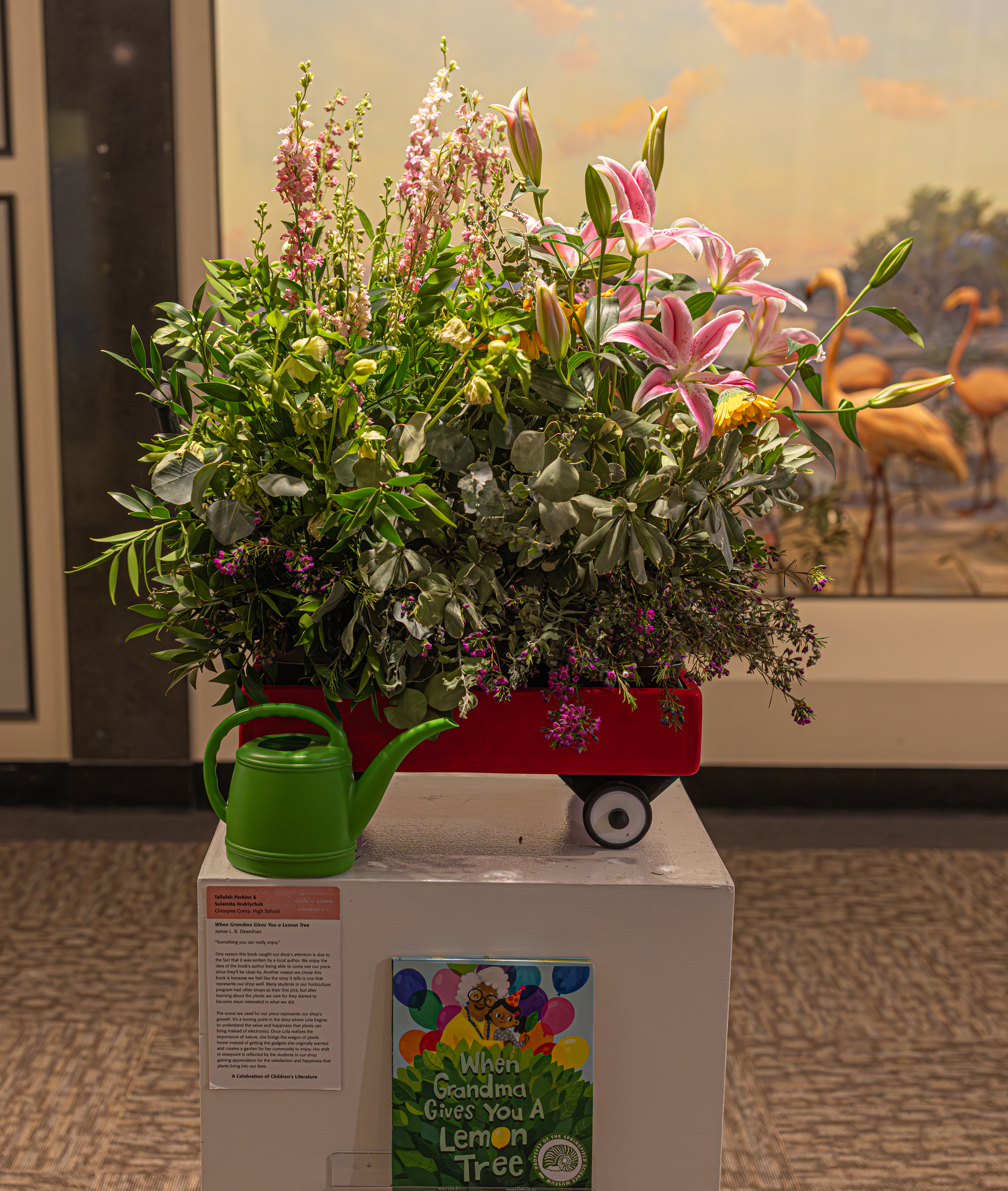
The next arrangement was inspired by the children’s book, When Grandma Gives You a Lemon Tree by Jamie L.B. Deenihan.

Tallulah Perkins and Sulamita Andriychuk from the Chicopee Comp. High School made this arrangement. They used the phrase “Something you can really enjoy” in the description of their arrangement.

One reason this book caught the shop’s attention was the fact that it was written by a local author (Jamie lived and worked in western MA until her recent move to Connecticut). They enjoy the idea of the book’s author being able to come and see their piece. Another reason they chose this book is because they feel the story it tells is one that represents their shop well. Many students in the horticulture program had other shops as their first pick, but after learning about the plants they care for they started to become more interested in what they did.

The scene they used for their piece represents their shop’s growth. It’s a turning point in the story where Lola begins to understand the value and happiness that plants can bring instead of electronics. Once Lola realizes the importance of nature, she brings the wagon of plants home instead of getting the gadgets she originally wanted and creates a garden for her community to enjoy. Her shift in viewpoint is reflected by the students in our shop gaining appreciation for the satisfaction and happiness that plants bring into our lives.

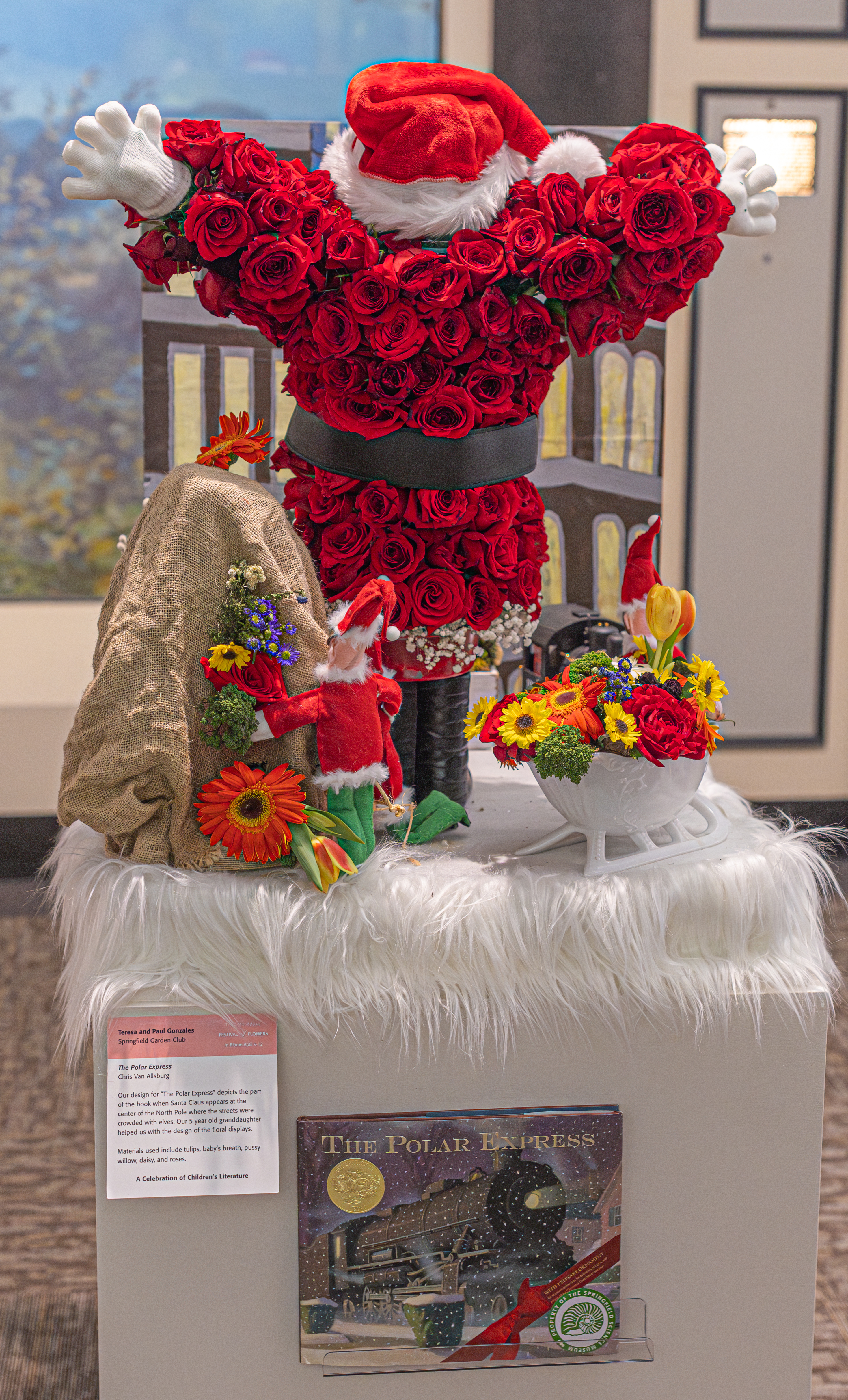
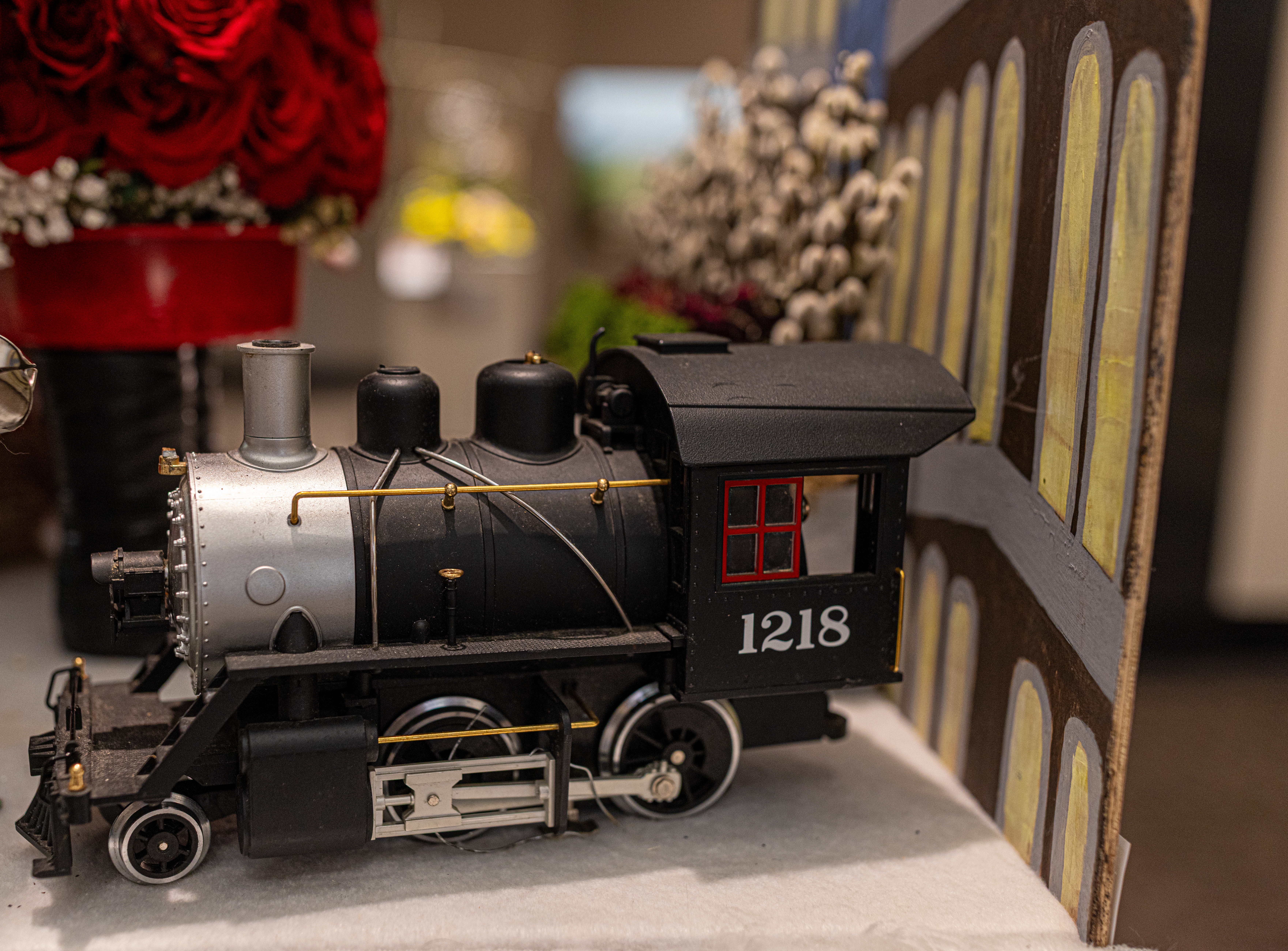
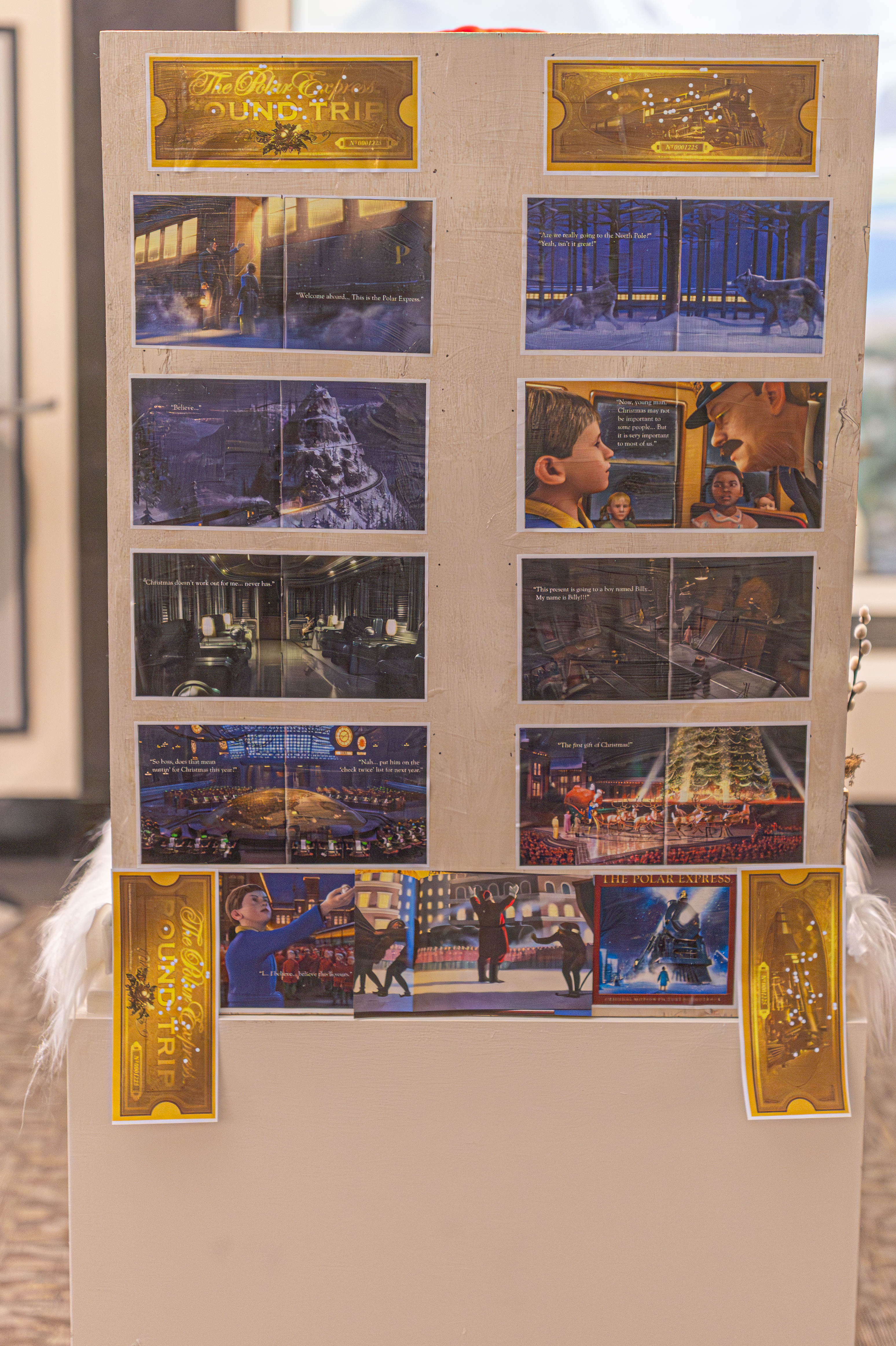
The Polar Express by Chris Van Allsburg is another childhood favorite that was used as an inspiration for the flower festival. Teresa and Paul Gonzales of the Springfield Garden Club created this arrangement to depict the part of the book when Santa Claus appears at the center of the North Pole where streets are crowded with elves. Their 5 year old granddaughter helped design the floral display. Materials used include tulips, pussy willows, baby’s breath, daisies and roses.

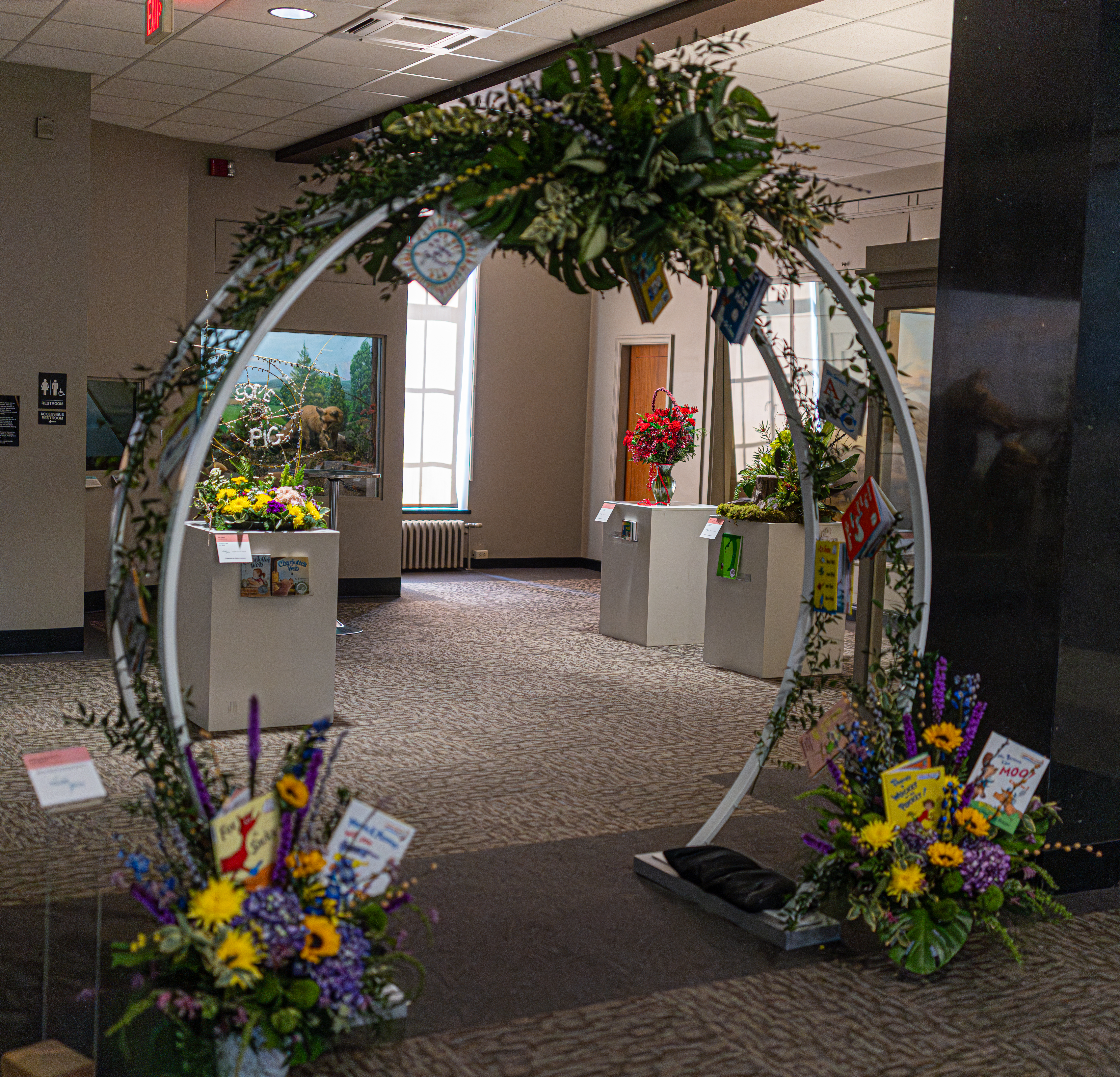
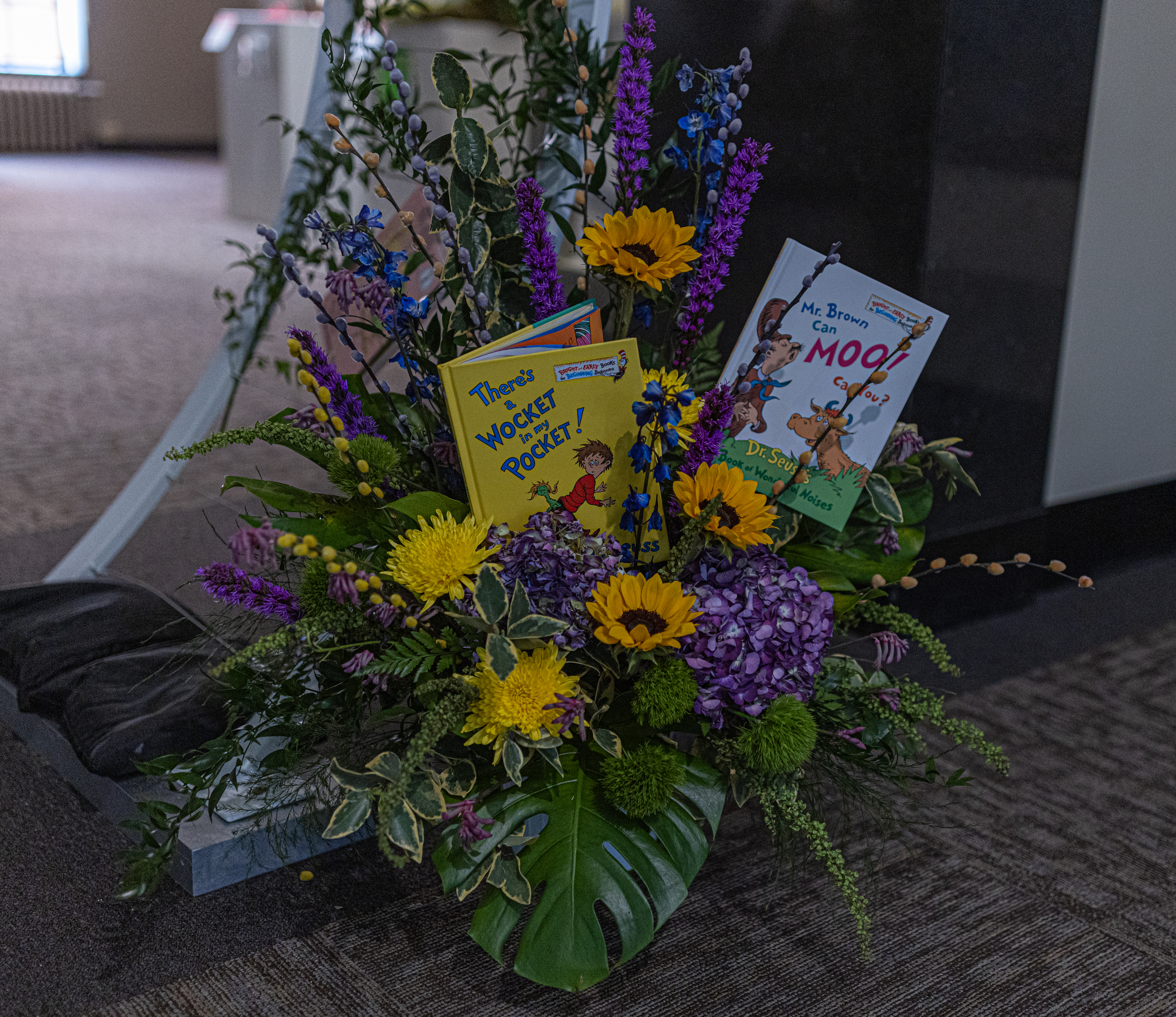
This archway, which was tastefully decorated with books from local Springfield, MA, author Theodore Seuss Geisel (aka Dr. Seuss) separated the floral arrangements. You may recognize one or two!

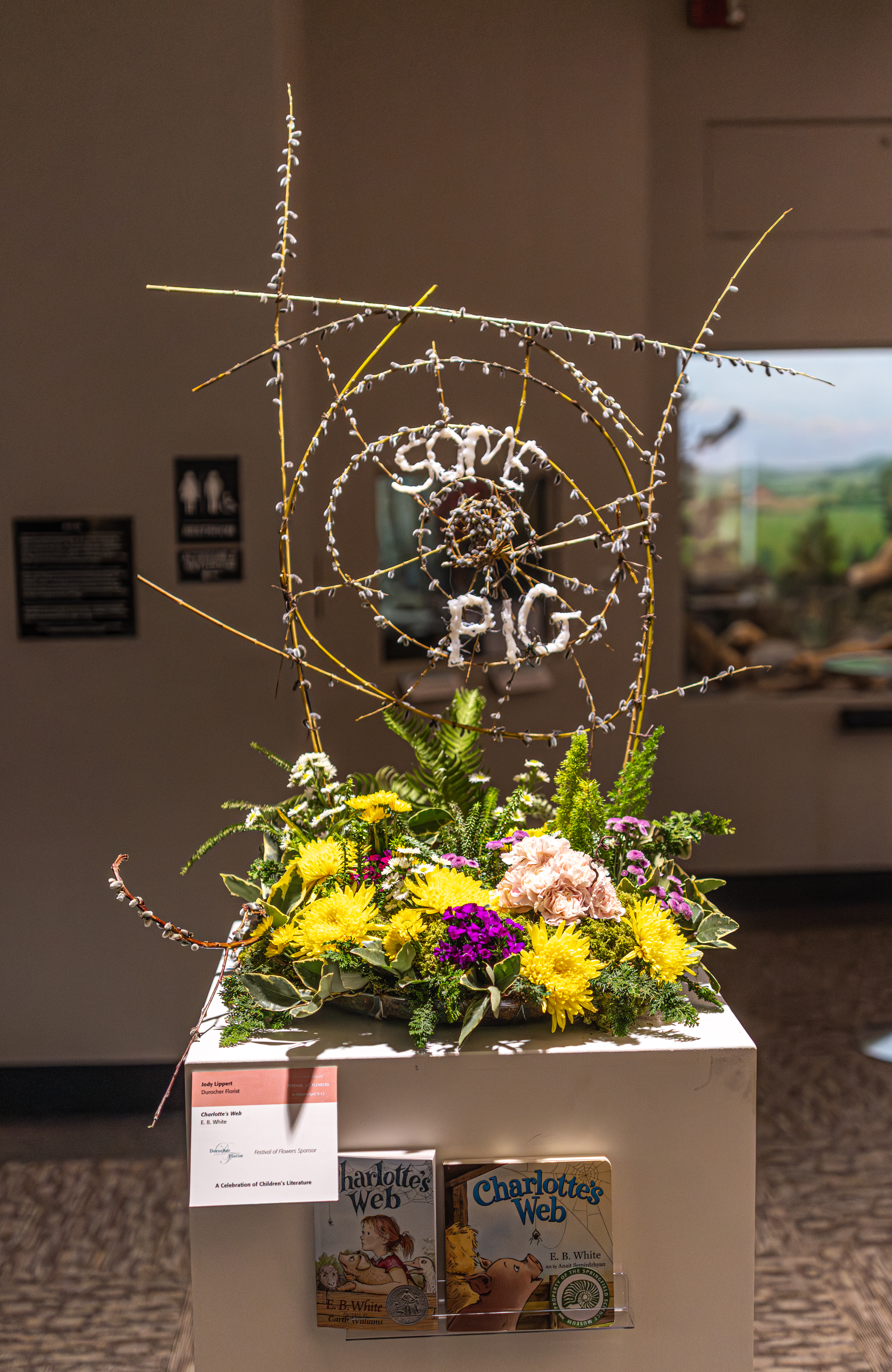
Of course, what children’s book display would be complete without Charlotte’s Web by E.B. White? This display was arranged by Jody Lippert at Durocher Florist.

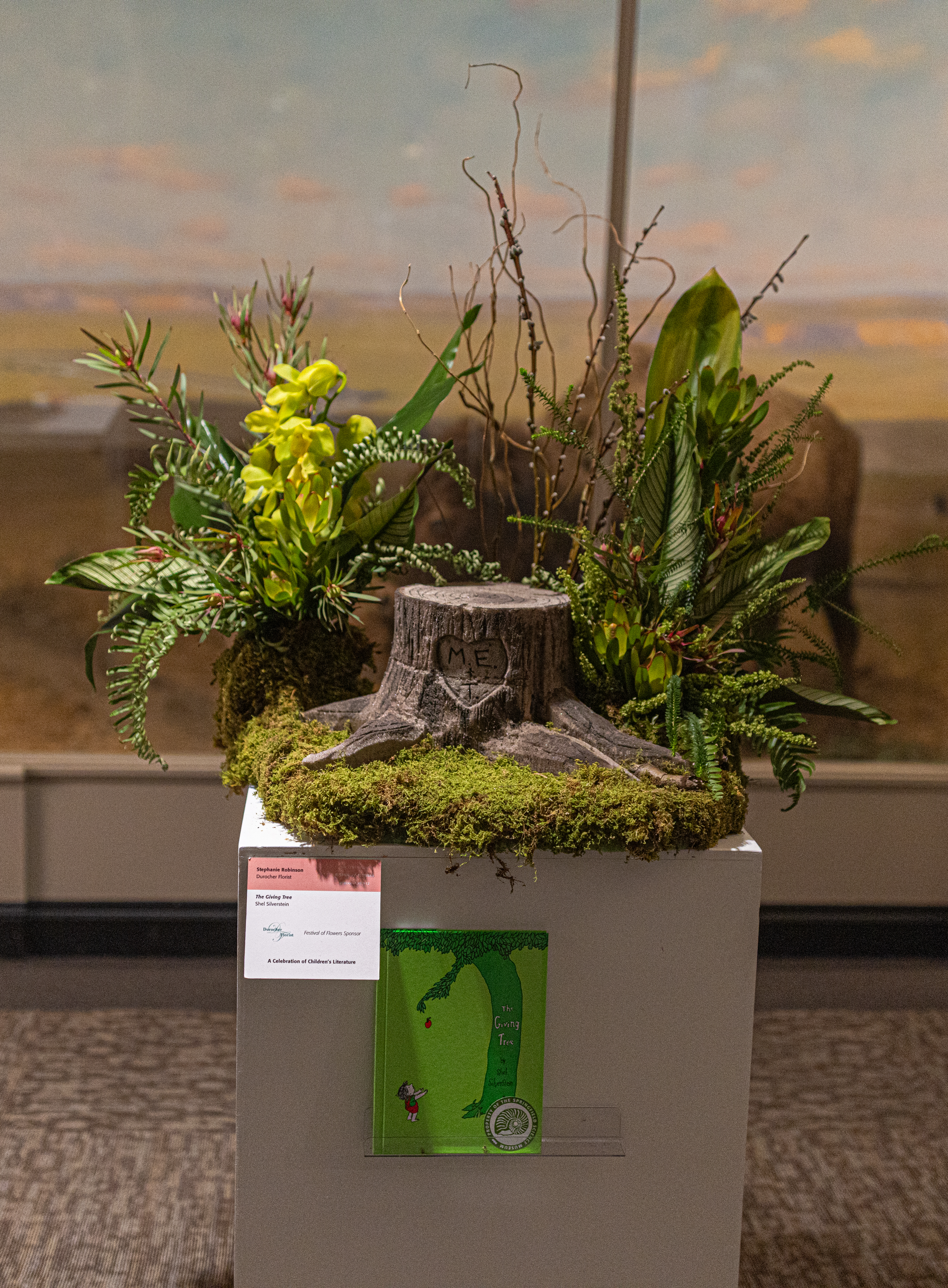
The Giving Tree by Shel Silverstein was the basis for this arrangement by Stephanie Robinson at Durocher Florist. Spoiler alert: it doesn’t end well for the tree.

Nichole Pelletier of Durocher Florist designed this arrangement based on Goodnight Moon by Margaret Wise Brown.

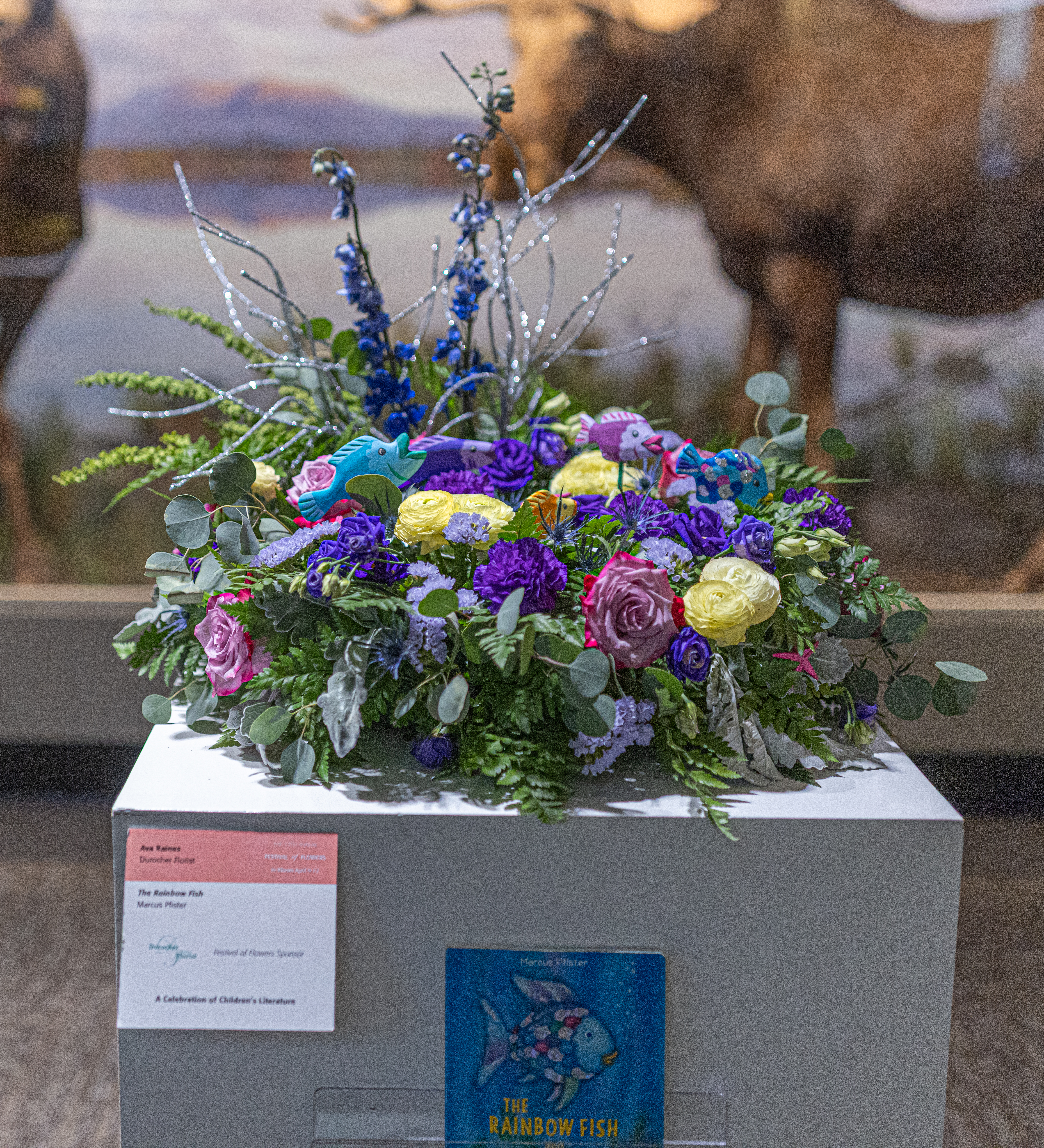
This arrangement was based on Swiss author Marcus Pfister’s The Rainbow Fish. It was arranged by Ava Raines at Durocher Florist.

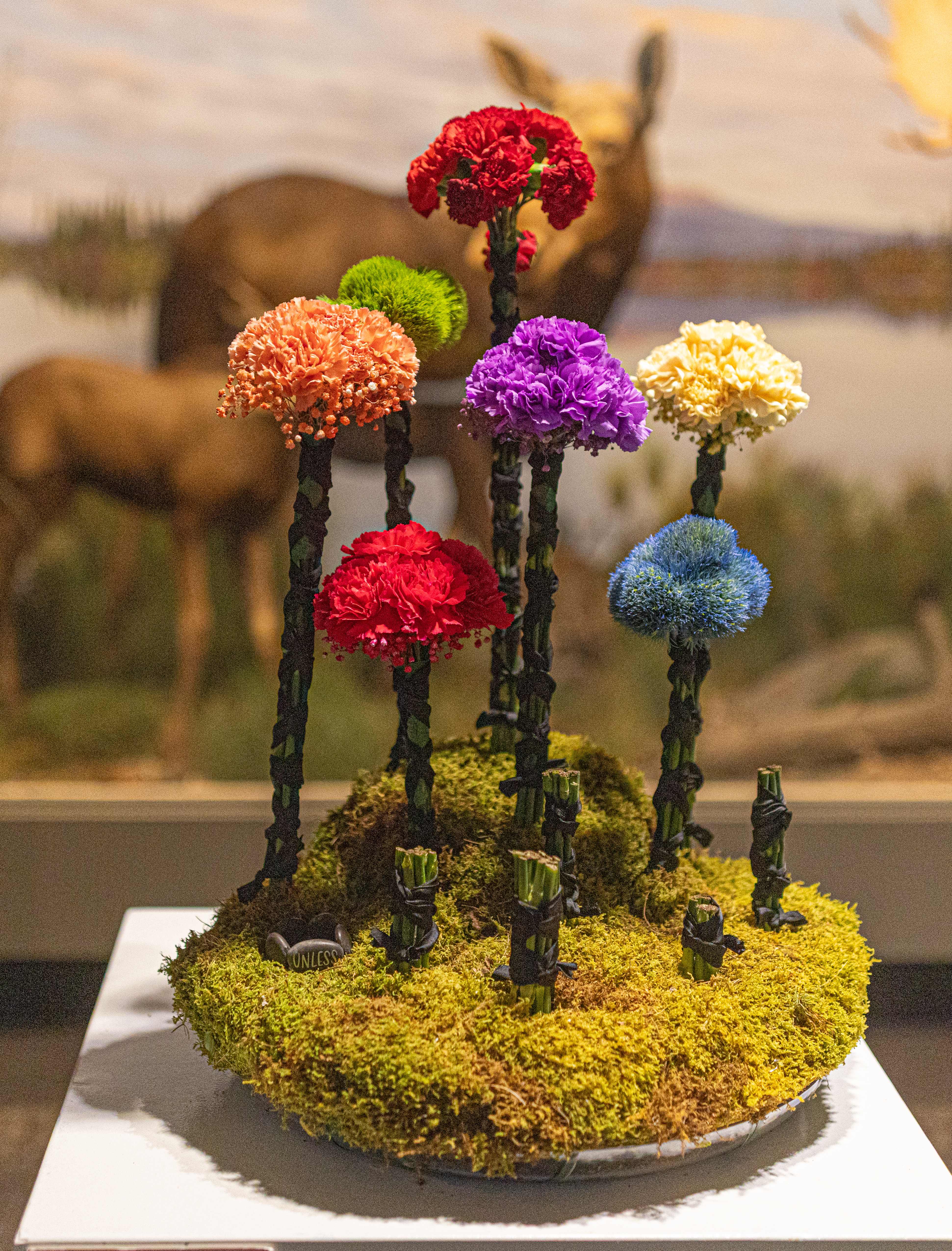
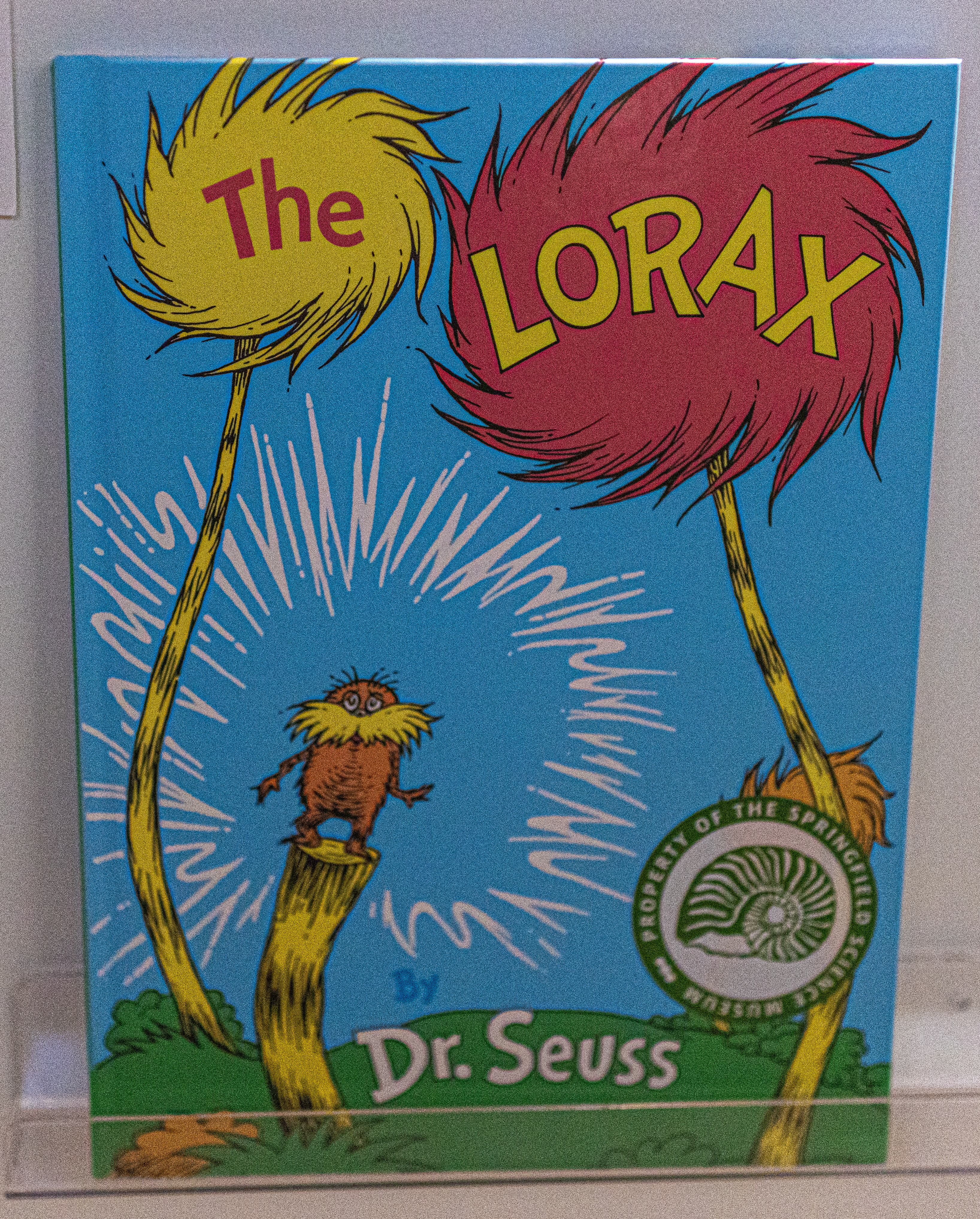
This arrangement was inspired by another book by local legend Dr. Seuss, The Lorax. It was created by Alexis Landry at Durocher Florist.

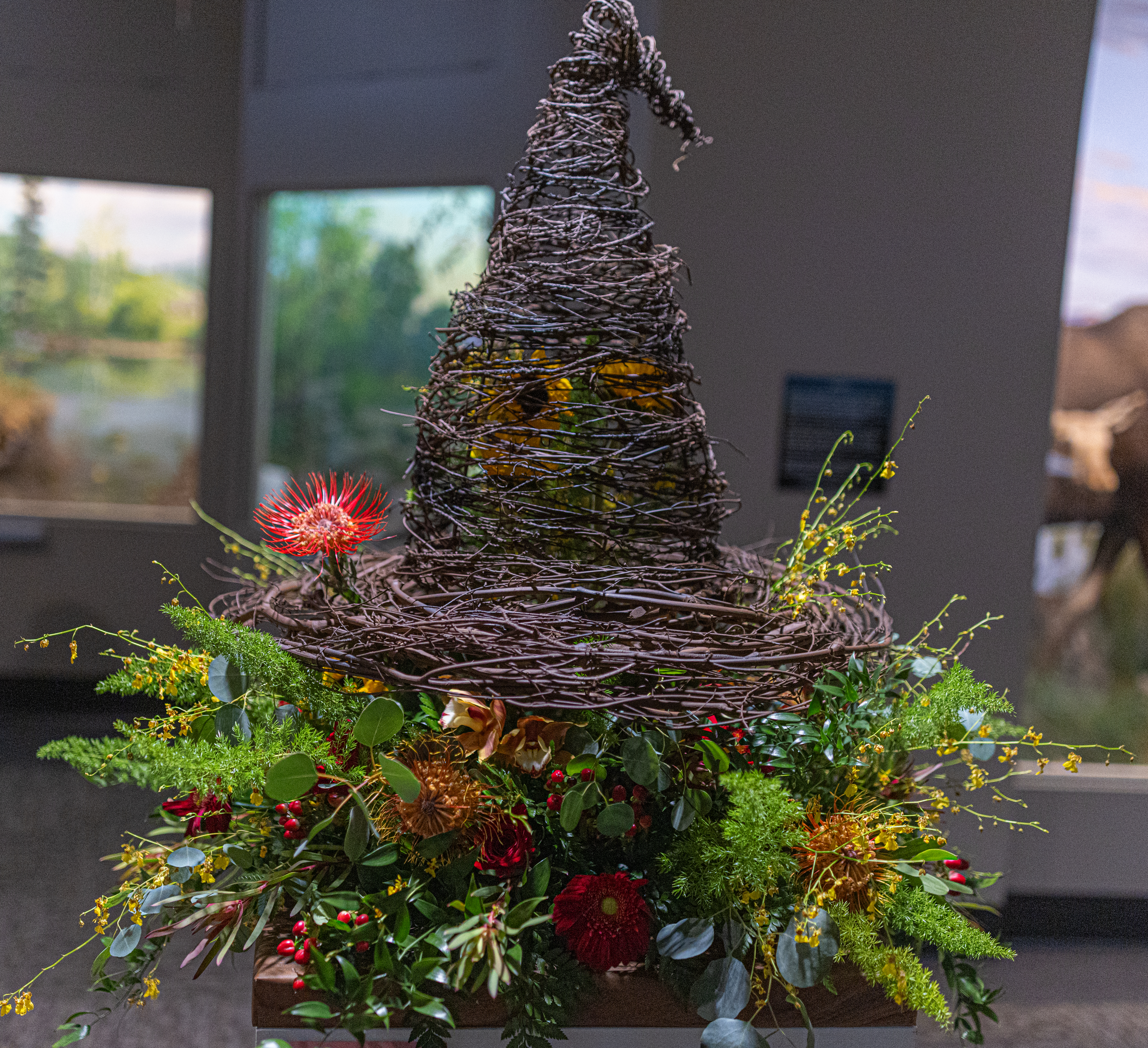
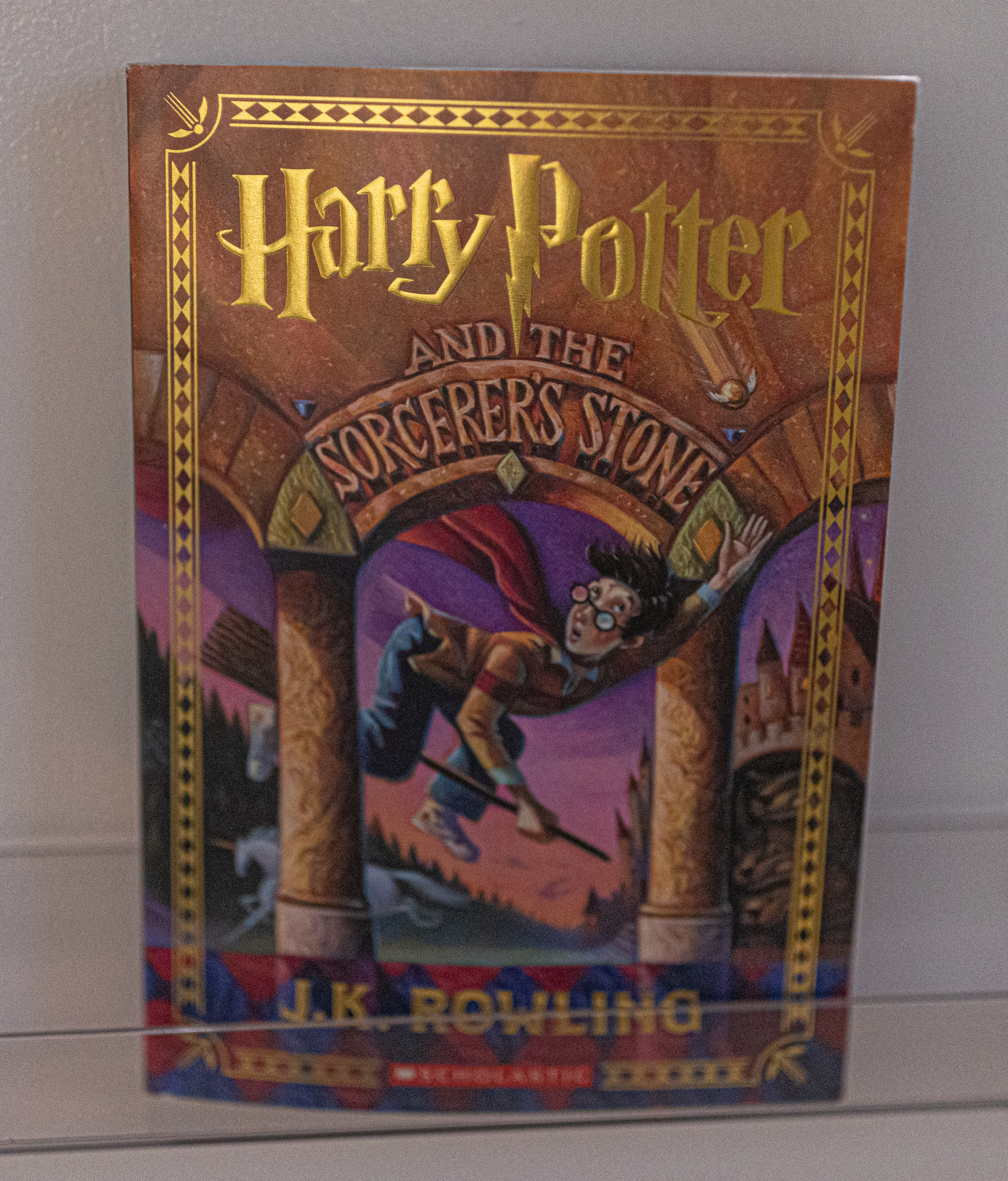
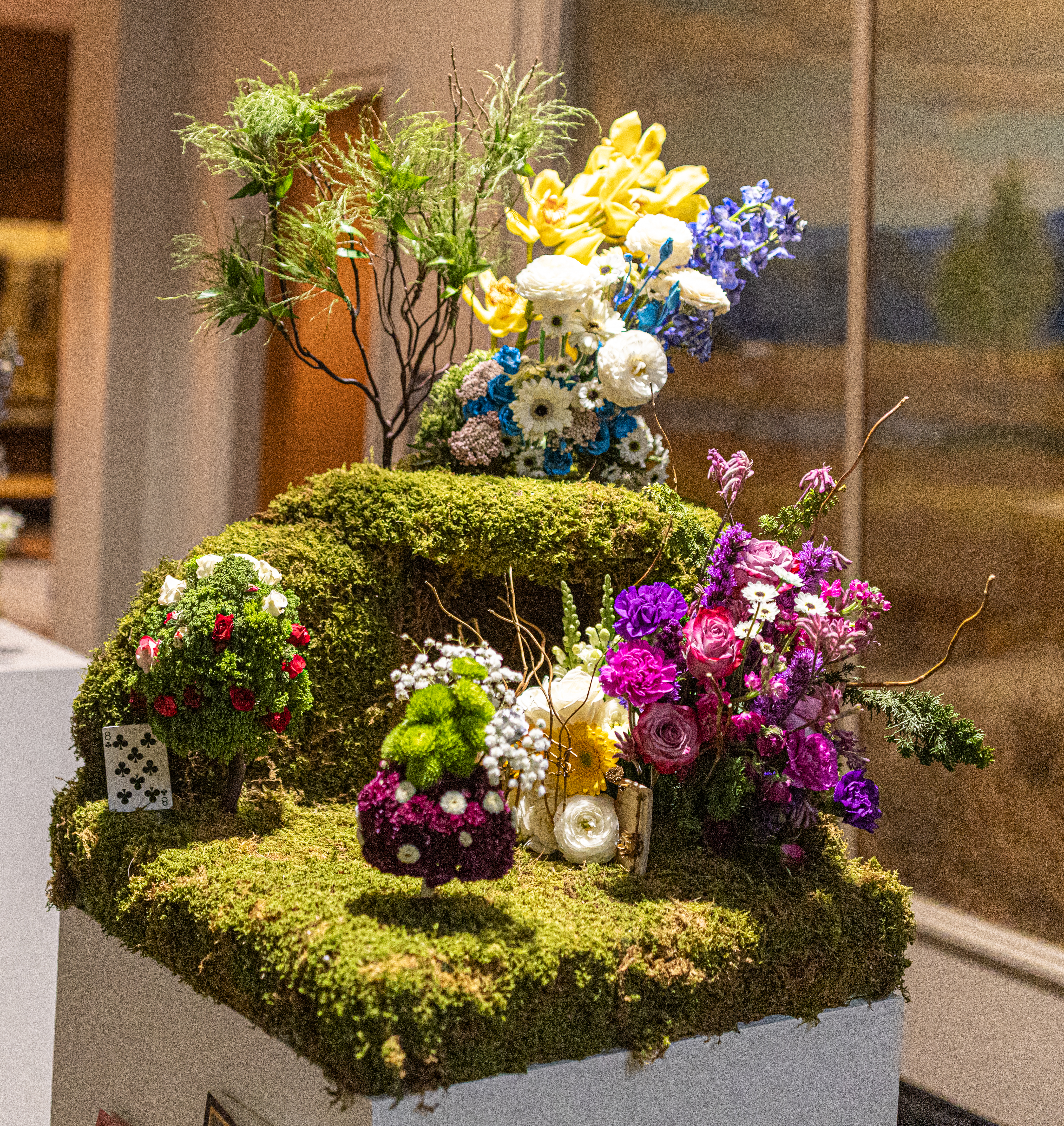
You may have heard of this book before. This floral arrangement and design for Harry Potter and the Sorcerer’s Stone by J.K. Rowling was made by Amanda Wright at Durocher Florist.

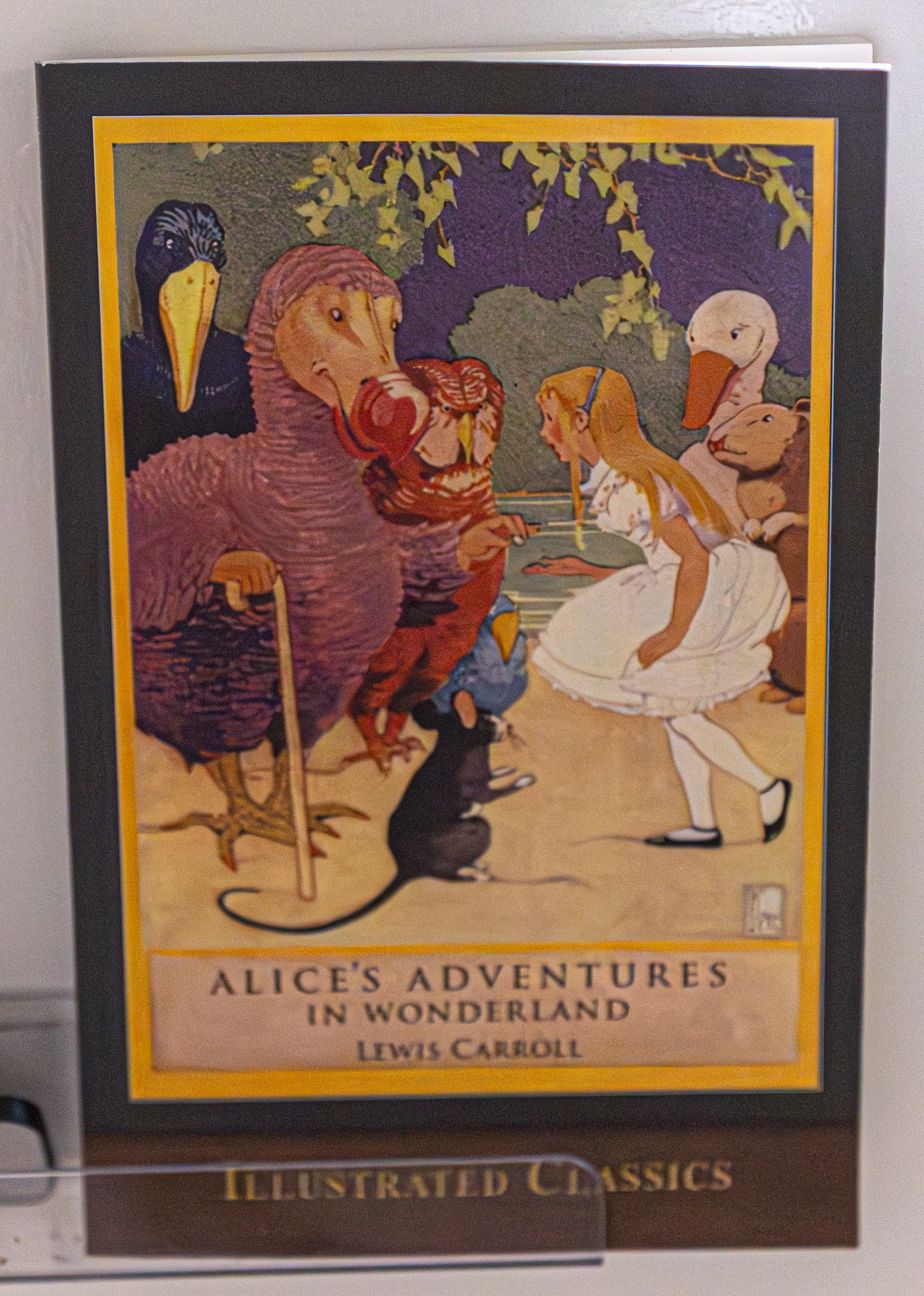
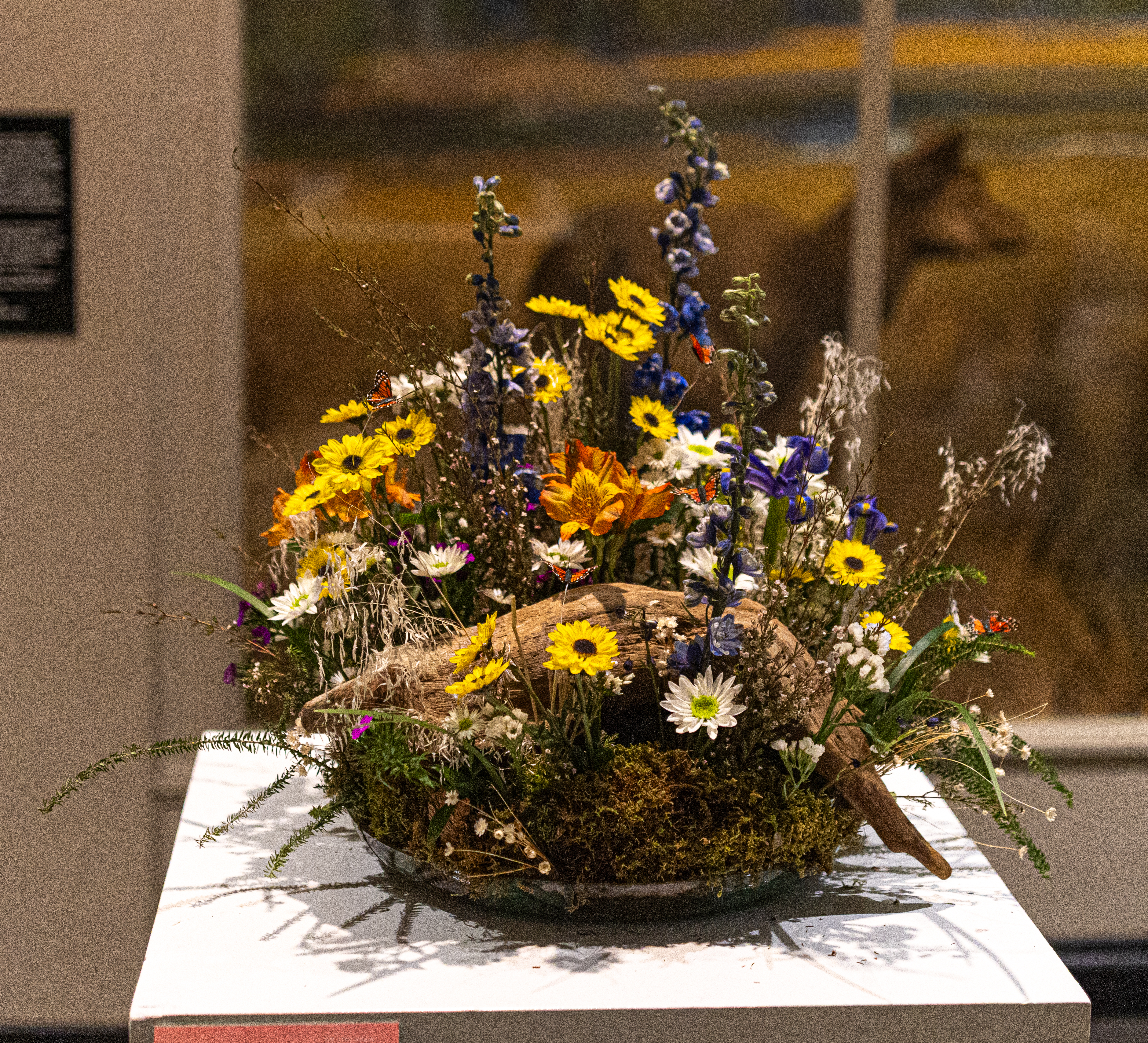
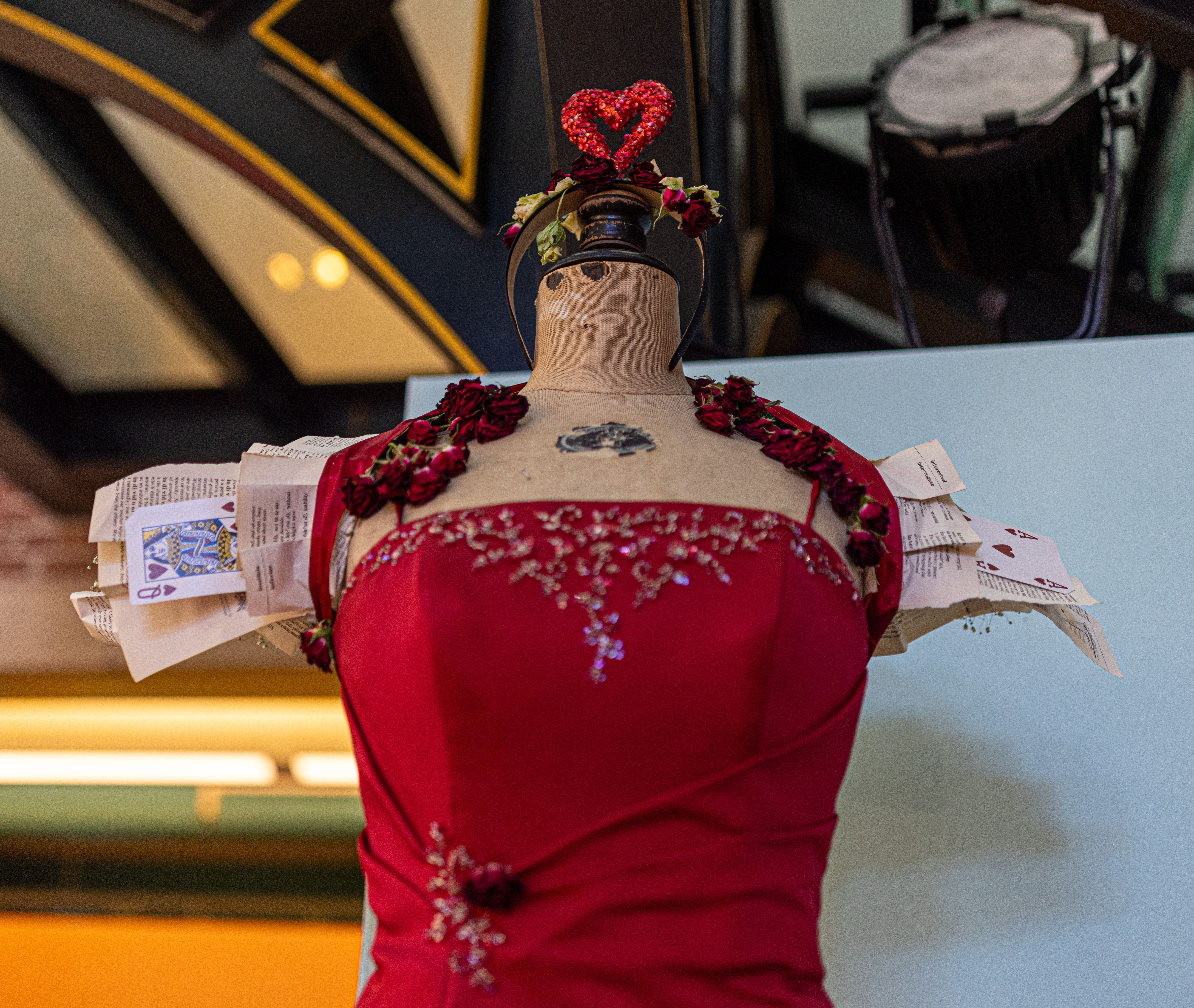
Alice’s Adventure in Wonderland by Lewis Carroll inspired this floral design by Sandra Bushey-Soule at Durocher Florist.

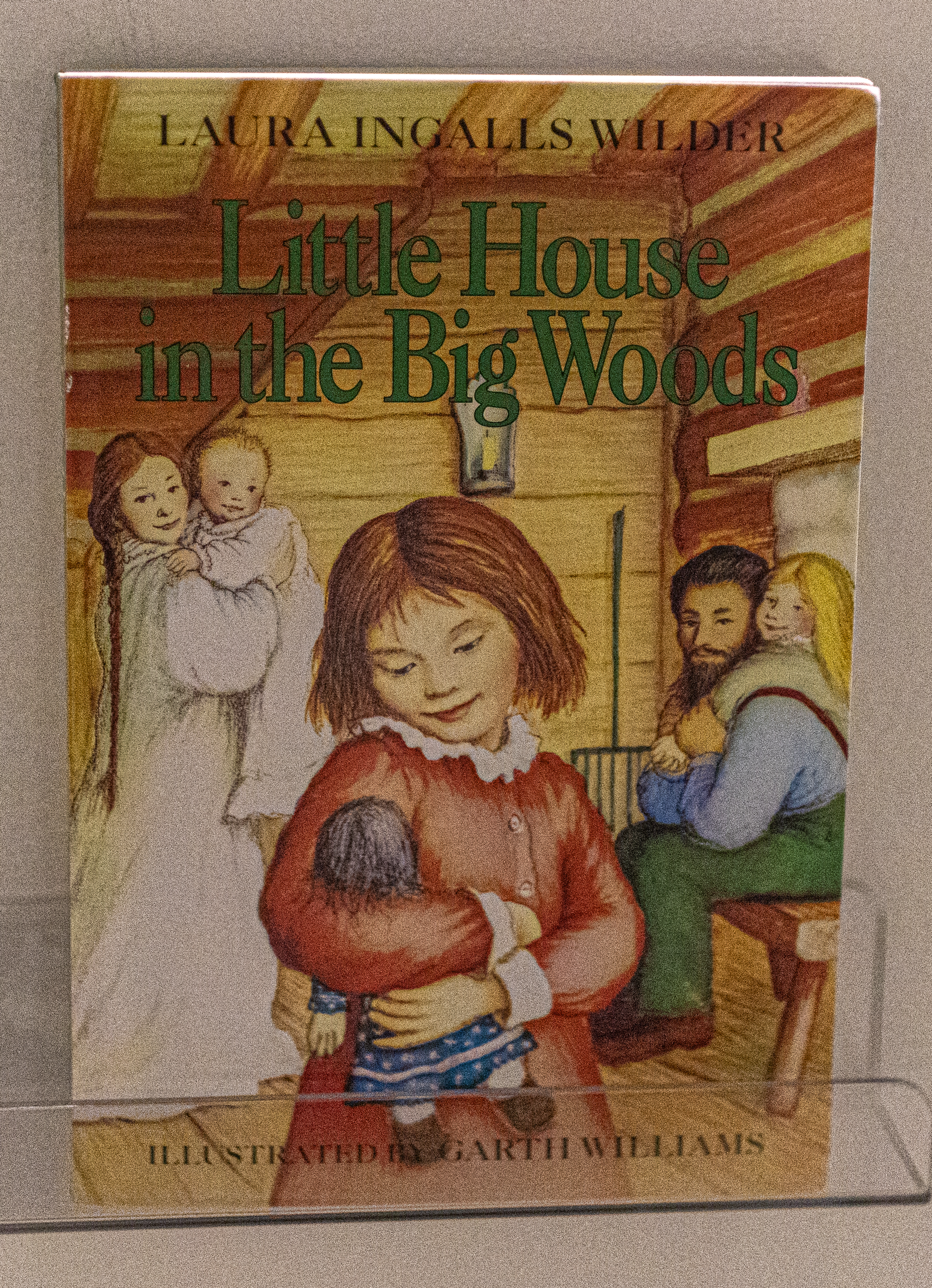
The next floral design which was inspired by the book Little House in the Big Woods by Laura Ingalls Wilder was designed by Julie Rolandini at Durocher Florist. This arrangement brought back memories as it is one book in a series of Little House books that would later become a famous TV show when I was younger. Yes, they did have TV back then.

While the floral arrangements in the Science Museum were based on books, the floral arrangements in the Michele and Donald D’Armour Museum of Fine Arts were based on works of art. In fact, in some of the photos of the floral arrangements, you can see the work of art it was based on.

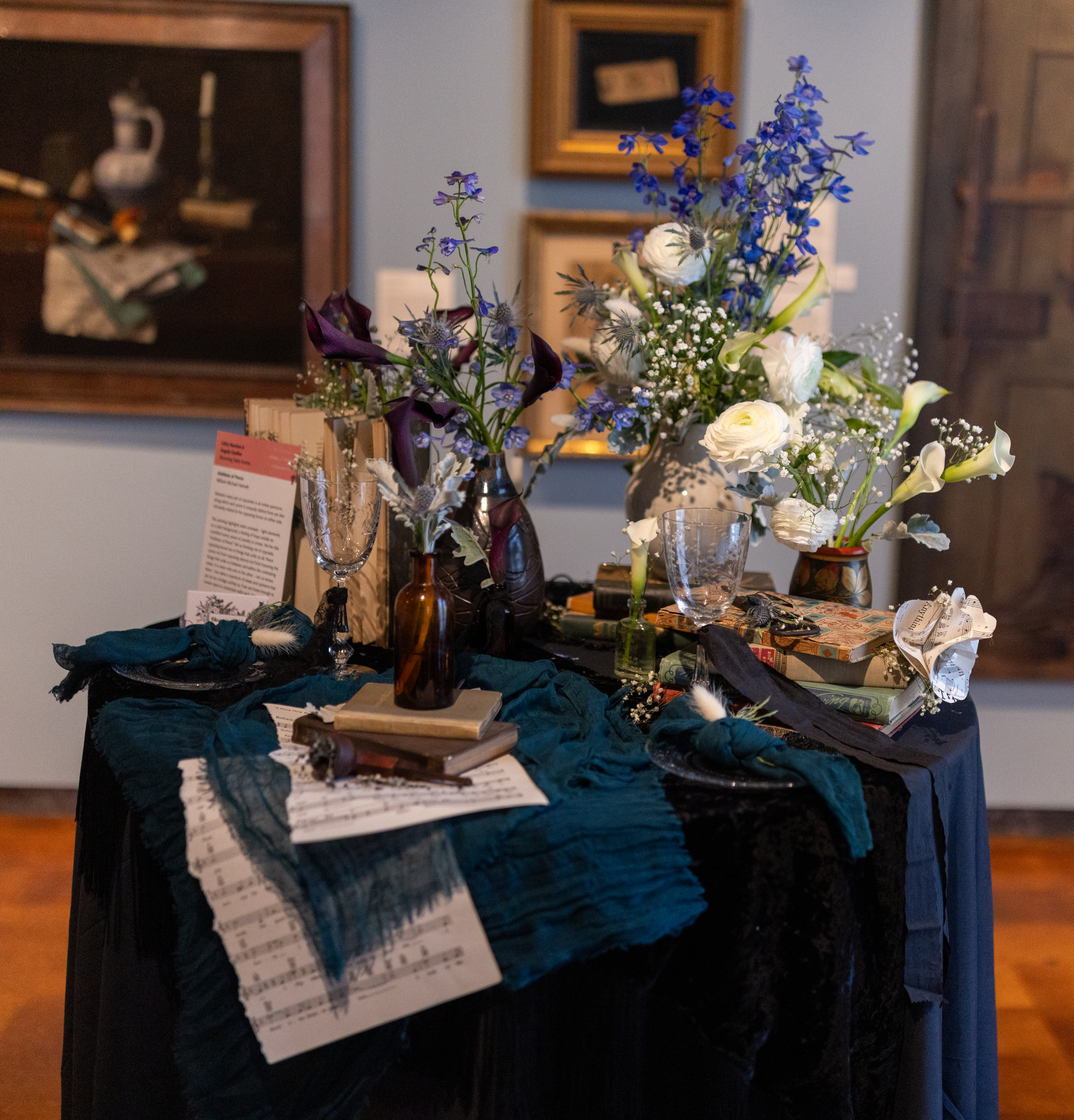
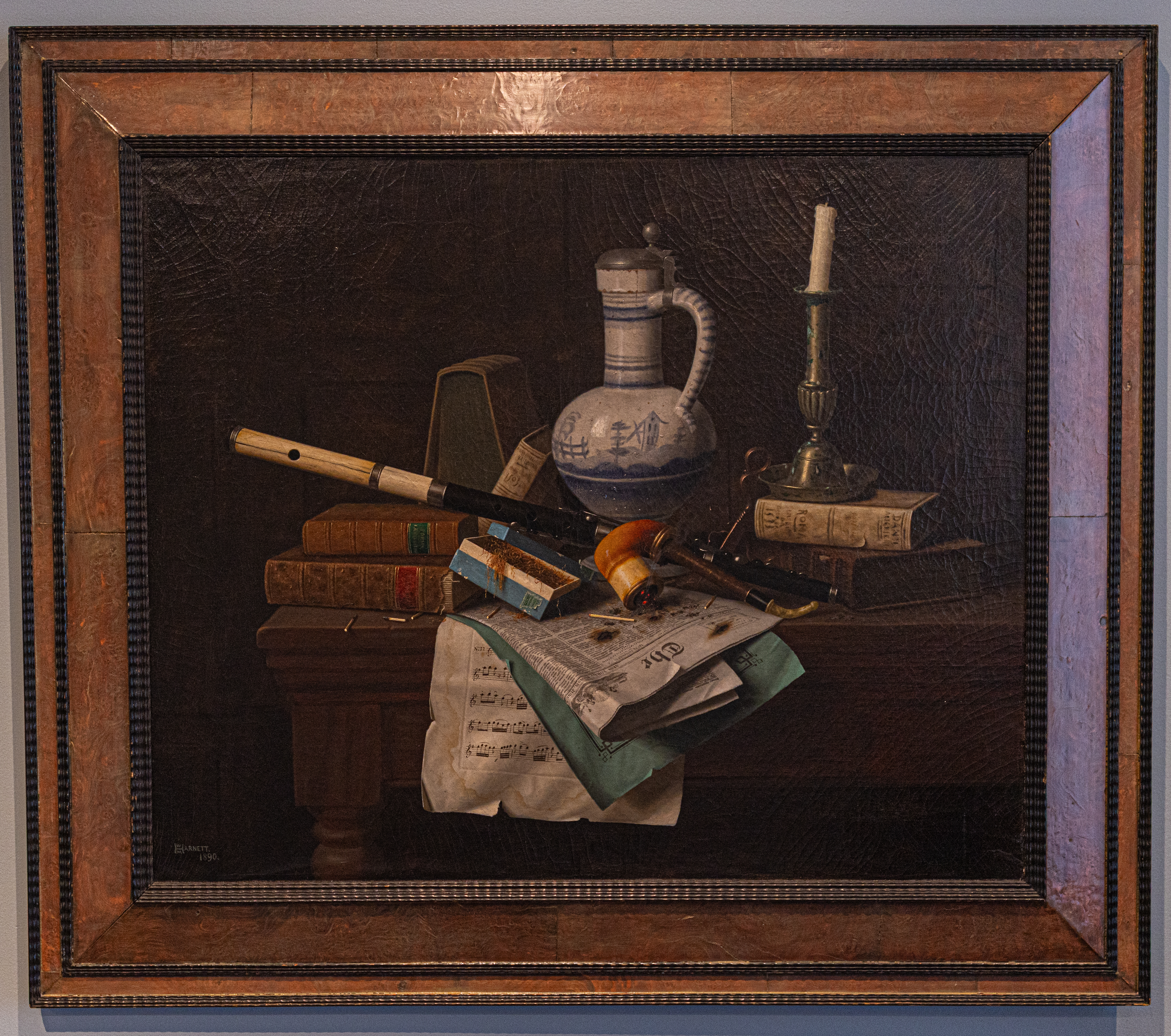
This particular arrangement by Libby Meehan and Angela Chaffee at Blooming Tables Events was based on the art of work called Emblems of Peace (1890, oil on canvas) by William Michael Hartnett.

Libby and Angela said the theme =of this arrangement was opposites. Between every pair of opposites is an entire spectrum, along which each point is uniquely distinct from yet also intimately related to the opposing forces on each side,

The theme of opposites is highlighted by the stark contrasts of a dark background and light elements which create a feeling of hope amidst an unsettled scene, peace vs anxiety or unrest. Yet the title “Emblems of Peace” left them thinking not of opposite, opposing forces but of things that unite us all. Peace comes not from opposing stances but from honoring the things that unite us between and within the contrasting views, It is never one or the other – not us versus them – but rather a spectrum of views and opinions that can act as a bridge uniting us, if we are all brave enough to remain open to connection with each other.

They used white and dark calla lilies to symbolize peace, harmony, balance and new beginnings.

The work of art is considered both unsettling and hopeful. Drawing on a traditional still life theme, Hartnett uses the painting to symbolize the transience of life. The still life is reminiscent of the popular vanitas paintings that were prominent in the Netherlands during the 16th and 17th centuries. Images created in the vanitas style were intended to remind viewers of impermanence, the futility of pleasure and the inevitability of death.

Hartnett used the burning candles and aging papers to suggest deterioration and contribute to a melancholy mood. He has also included items that celebrate love and redemption. A medieval volume by Dante is pictured and suggests Christian salvation n life and death. Additionally, the sheet music featured is “Papageno’s Song”, a love song from Mozart’s The Magic Flute.

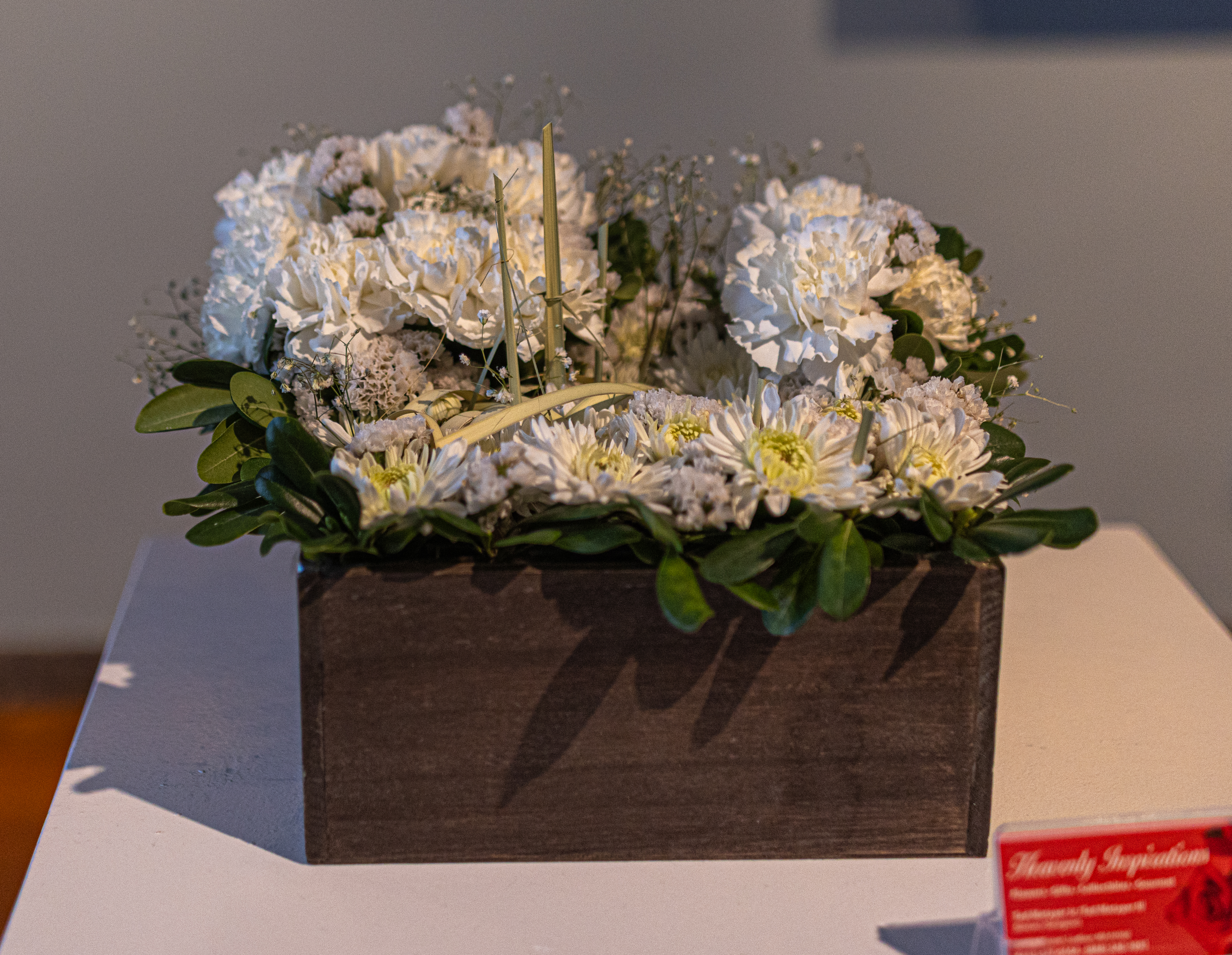
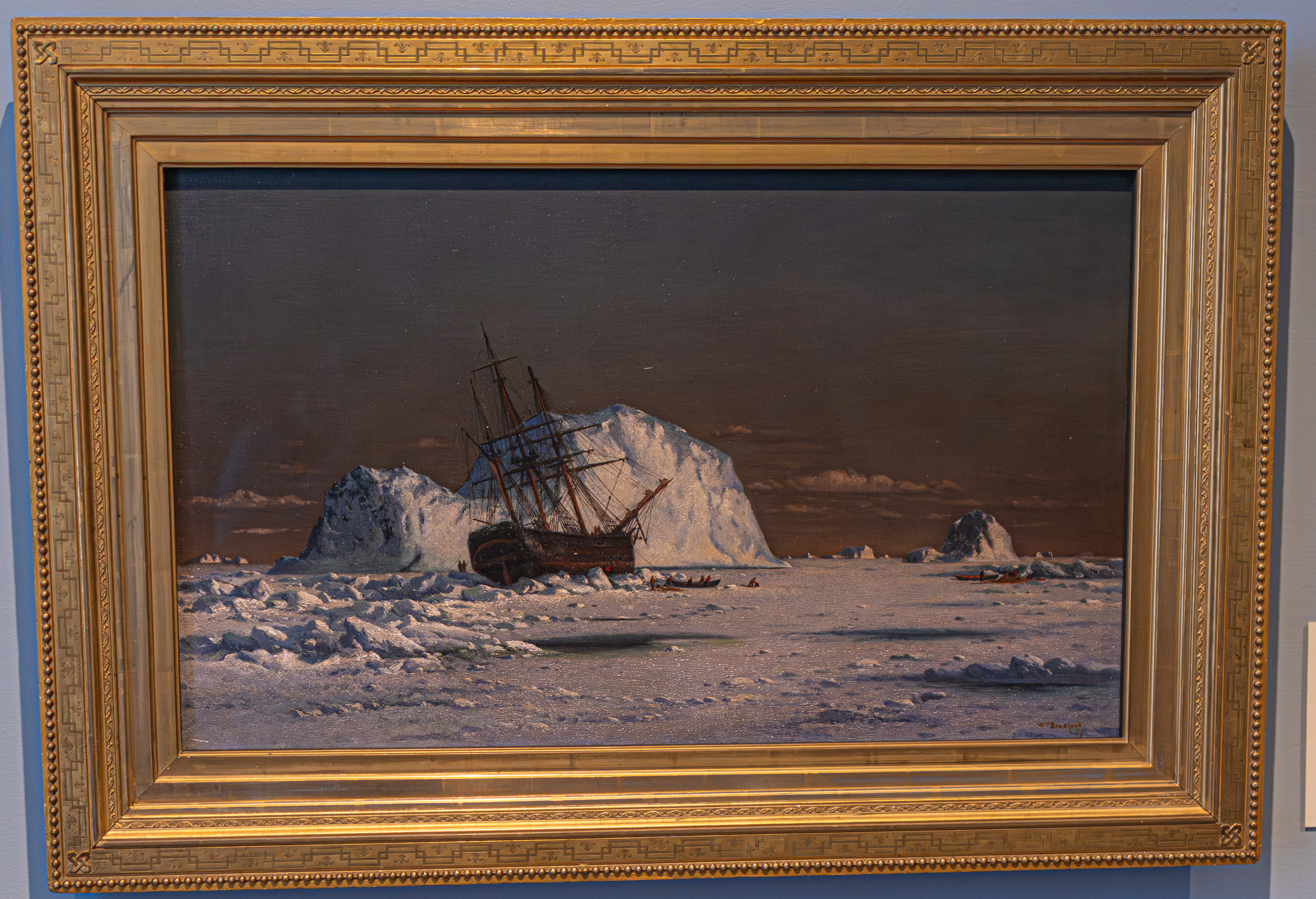
Theodore Metayer III of Heavenly Inspirations Flower and Gifts based this floral design on the painting Icebound Sealer Under the Sun (oil on canvas, 1877) by William Bradford.

At first glance, I thought the painting was a photo. But, Icebound Sealer Under the Sun is indeed a painting. It was painted by William Bradford who was considered the premier artist of the Arctic region. He produced numerous paintings, sketches and photographs taken or created during his at least six trips to the North Pole. Bradford’s enthusiasm coincided with “polar passion”, a popular interest in the region during the Victorian era. Bradford was intrigued by the area after reading various accounts of Arctic exploration. He later recalled that he was, “seized with desire, which became uncontrollable, to visit uncontrollable, to visit the scenes they described and study nature under the terrible aspects of the Frigid Zone.”

Bradford began his career at the whaling village of New Bedford, MA. He earned a living painting “portraits” of the whaling vessels and other ships docked at the bay.

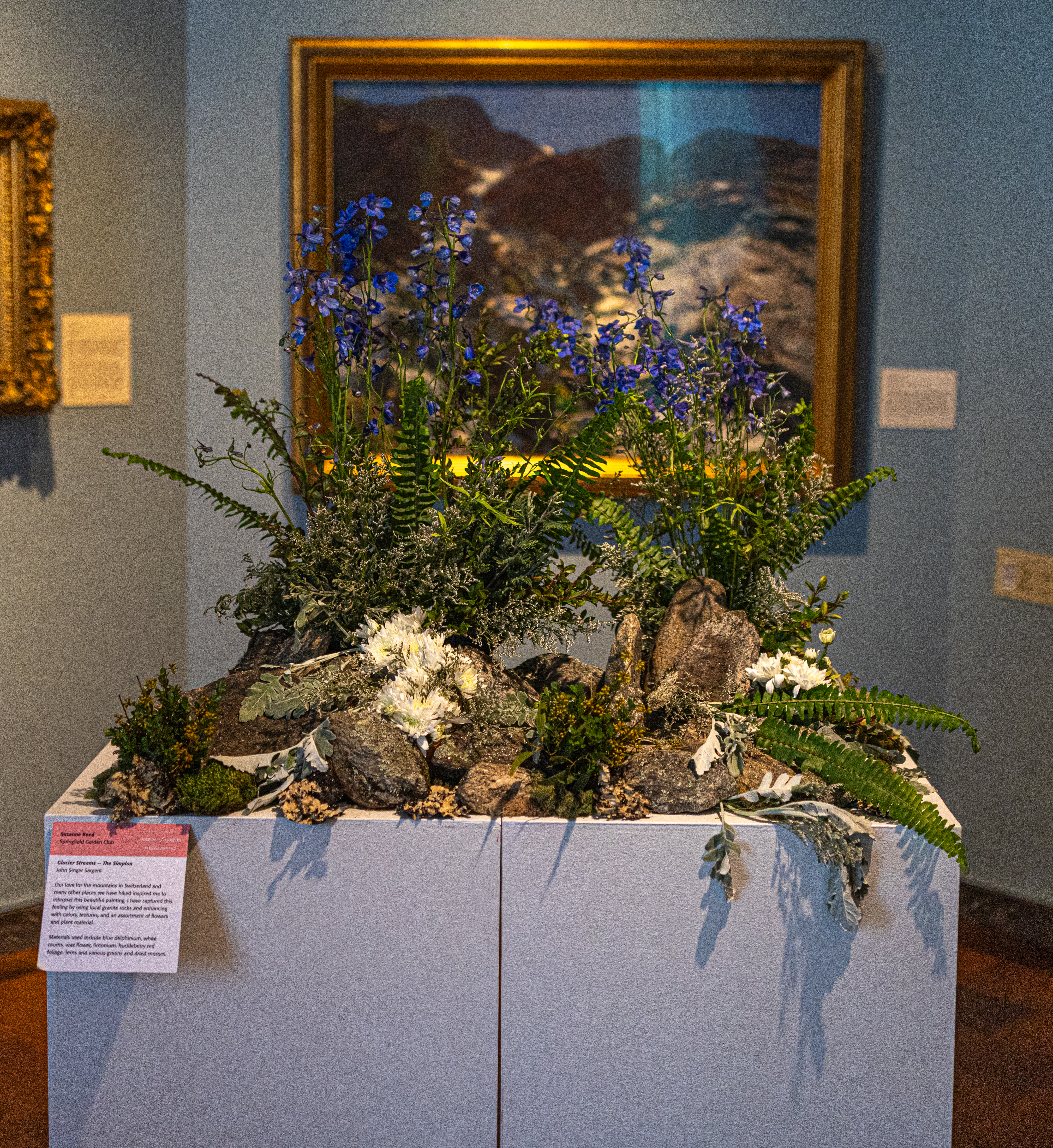
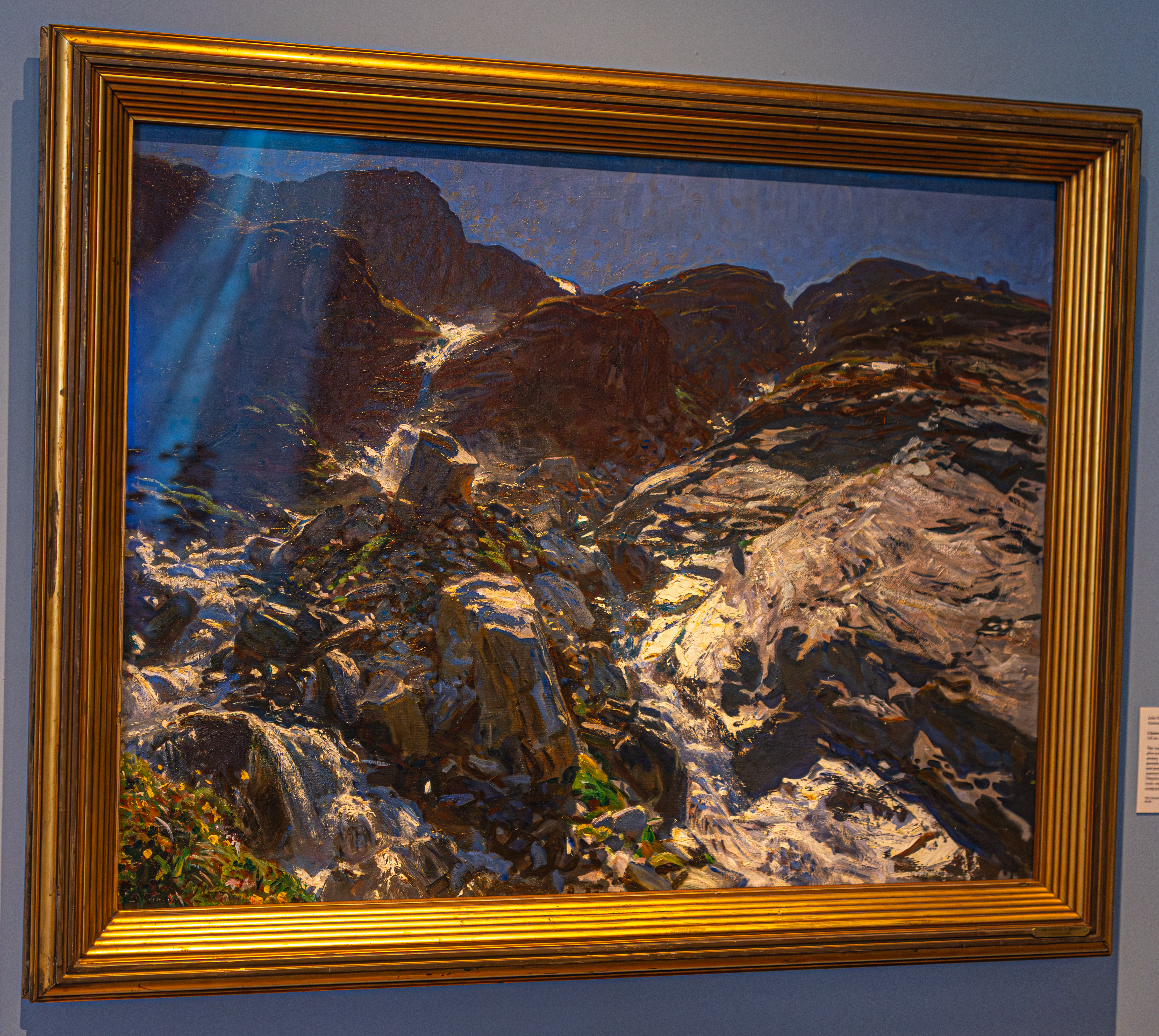
Suzanne Reed of the Springfield Garden Club made this arrangement based on Glacier Streams – the Simplon by John Singer Sargent. Suzanne said her love of the mountains and hiking inspired her to interpret this painting. She captured her feelings by using local granite rocks and enhancing it with colors, textures and an assortment of flowers and plant material. She used blue dephinium, white mums, wax flower, limonium, huckleberry, red foliage, ferns and various greens and dried mosses.

Glacier Streams is a circs 1910 lands ape painting by John Singer Sargent. Much like the Icebound Sealer, at first I though this was a photograph. But, this is indeed a painting. Sargent created this painting during his summer travels in the Swiss Alps, likely using watercolors. It depicts the rocky, bright and rapidly flowing water in the Simplon Valley, reflecting his focus on light and plein-air techniques (the act of painting on location, outdoors and not in a studio).

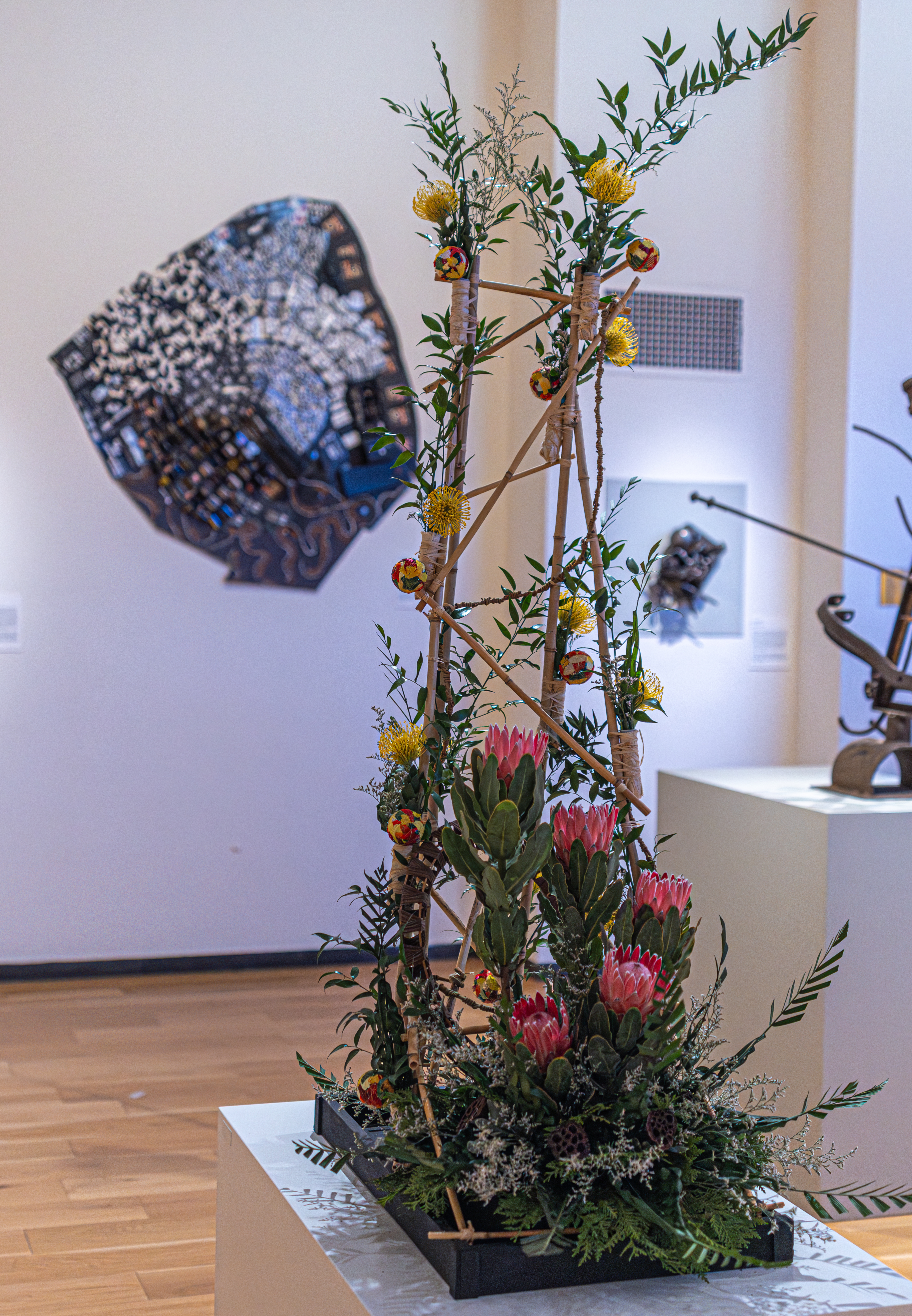
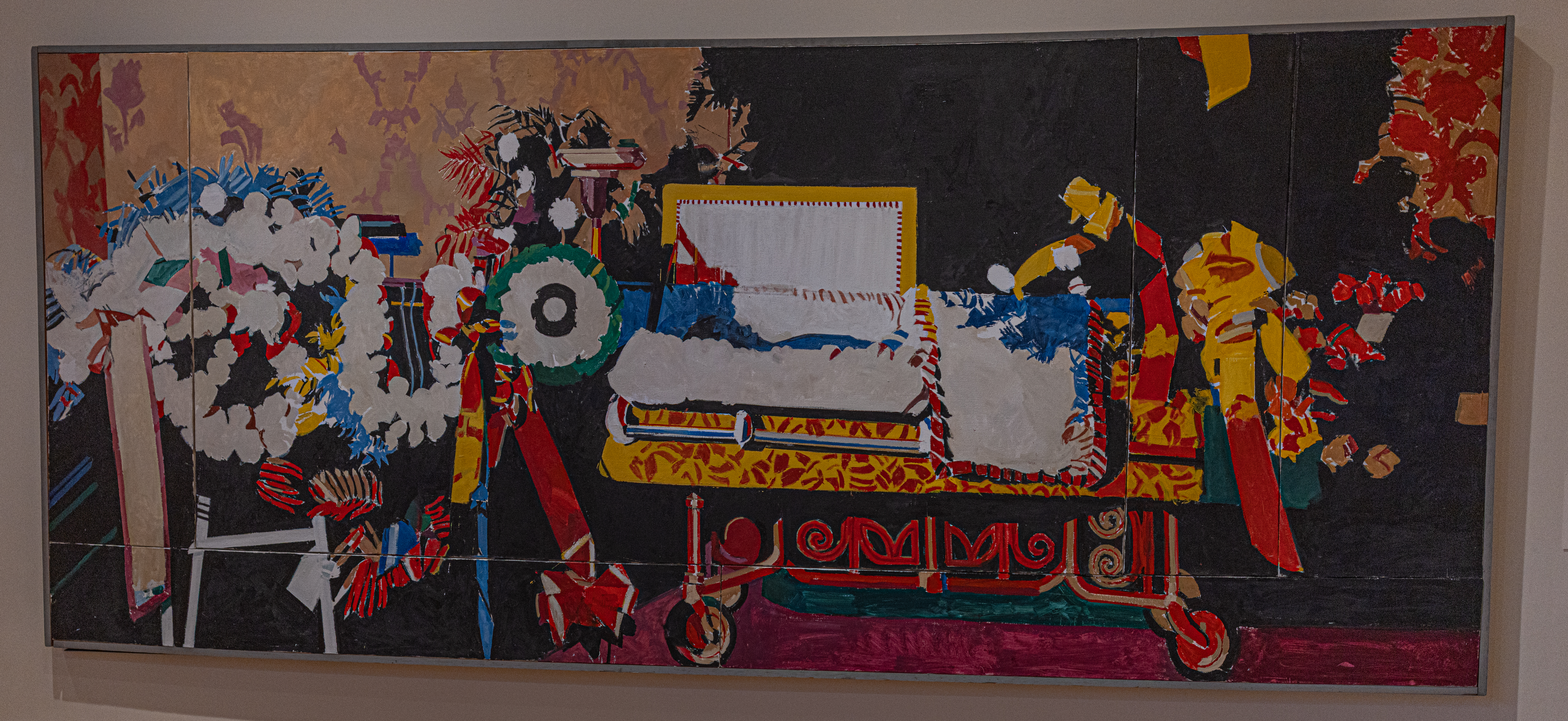
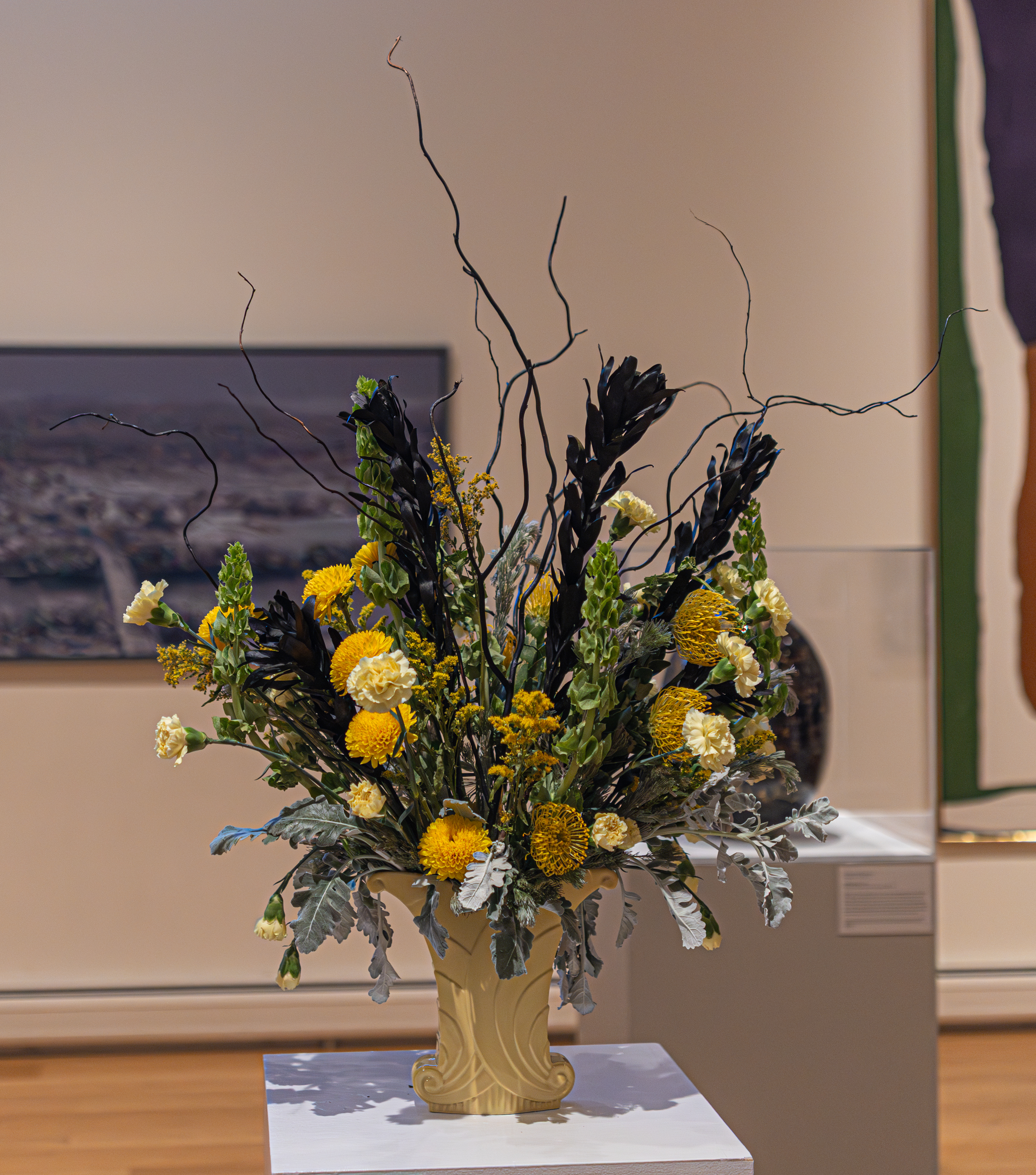
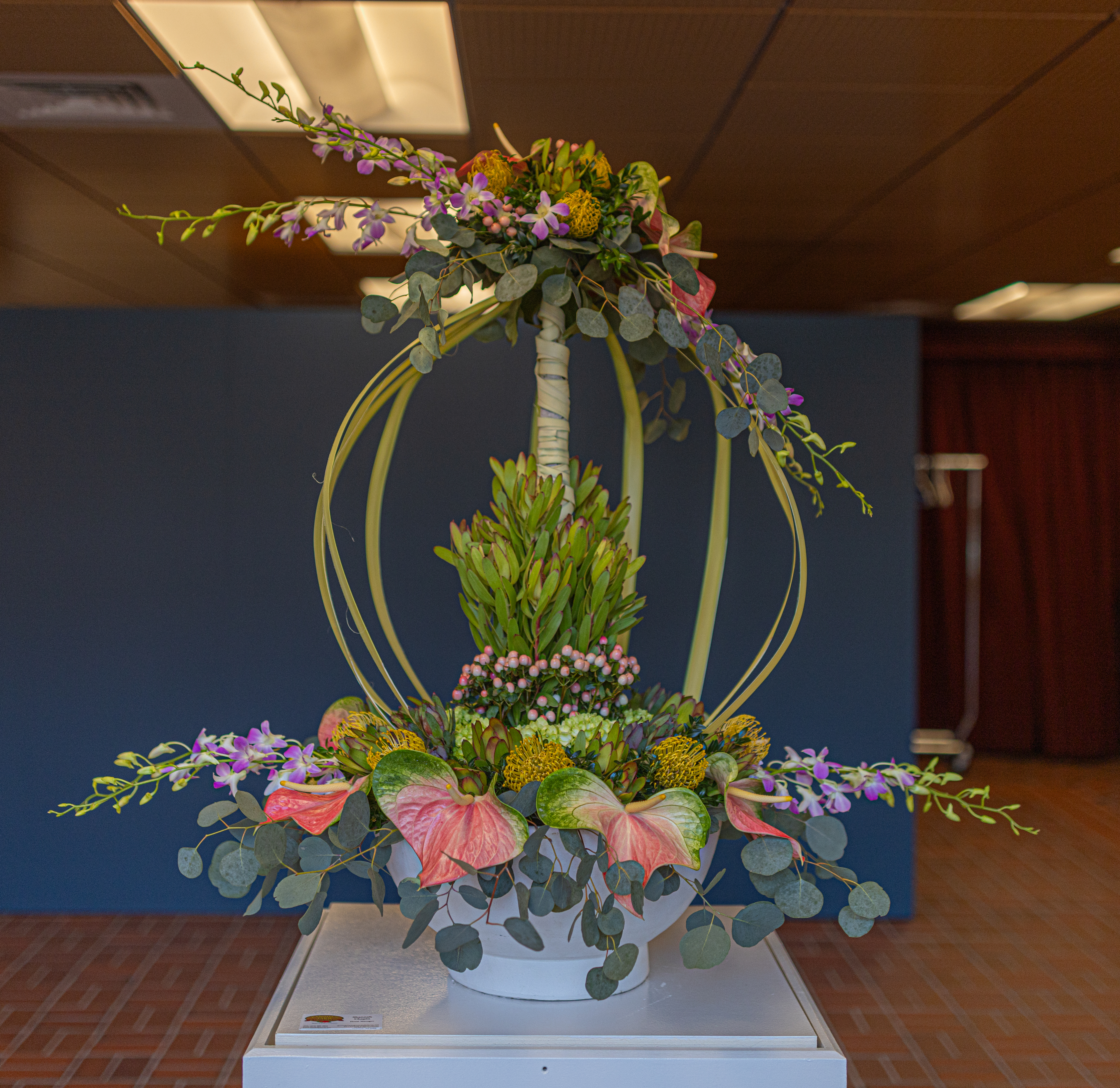
This floral arrangement by Bob Whitney of AIFD (American Institute of Floral Designers) was based on the painting Johnny’s Gone by Boston and Northhampton, MA, resident Richard Yarde. The painting represents the circle of life. The body remains but the spirit rises. The materials used for this arrangement are pink mink protea, pin cushion protea, Tee pee (braided) and Italian ruscus.

Yarde’s subjects include figures from the African American community that he knew personally or were his contemporaries. This large painting, titled Johnny’s Gone (circa 1975-1976), commemorates rhythm and blues singer Johnny Ace, who died at the height of his career in the 1950’s. It is composed of six canvases attached to each other. Lyrical swirling patterns of wreaths and garlands draw attention from the left of the work to the figure in the coffin. Yarde paints the body of Johnny Ace blue, a color used in Nigerian folk art to distinguish the dead from the living. Yarde’s bold use of color, size and pattern speak to the emotional impact that this event had on the artist.

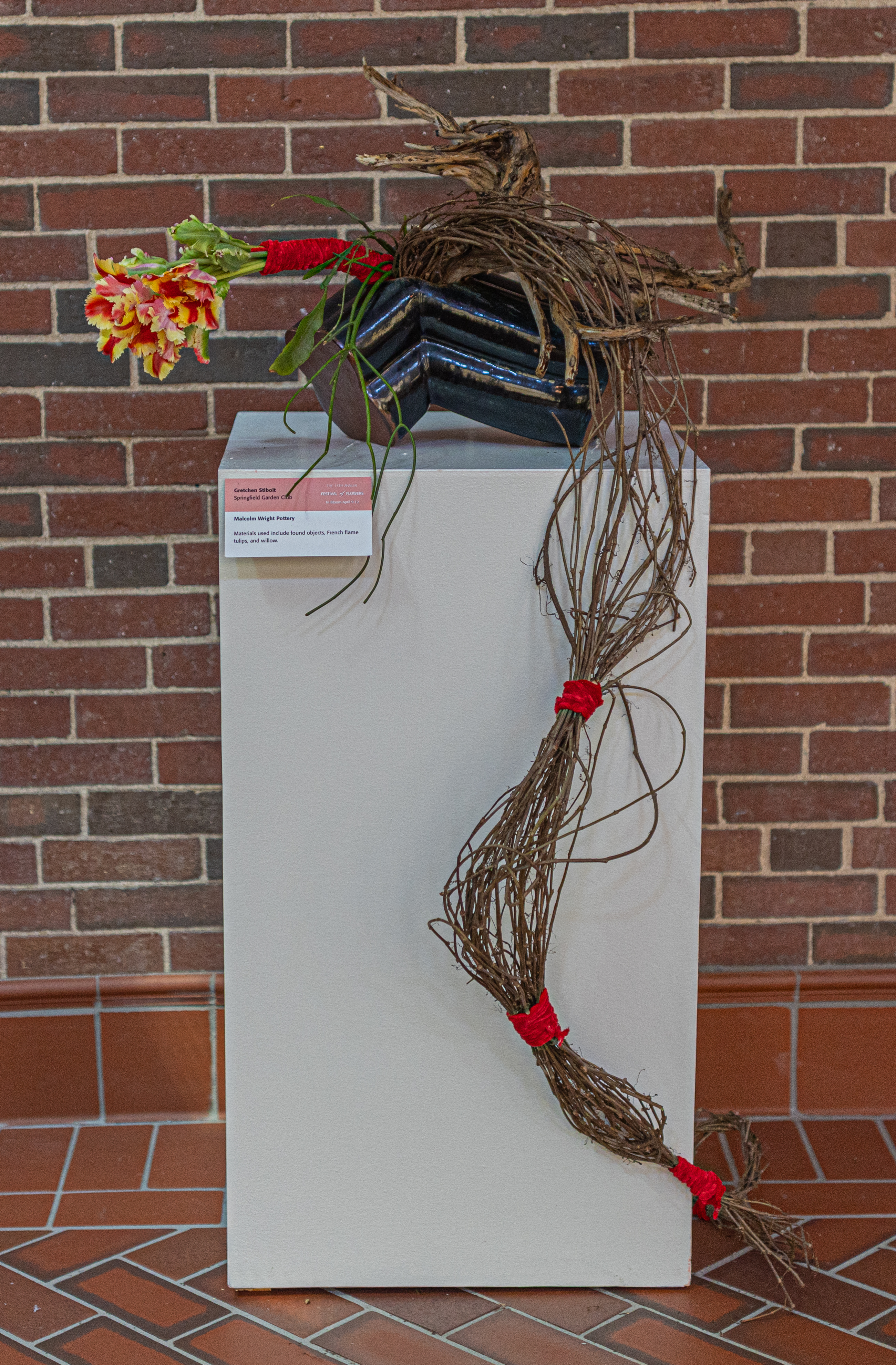
Wanda Roberge of the Springfield Garden Club created this floral design based on Fugue by Bronx native George Sugarman. Whether the artist wanted this work to be a musical idea or theme that is repeated and weaves in and out of whole piece like in a conversation, or a dreamlike state of altered consciousness that may last for hours or days, is a mystery. Wanda’s goal was to create a visual interpretation. Materials used include curly willows, protea and Bells of Ireland.

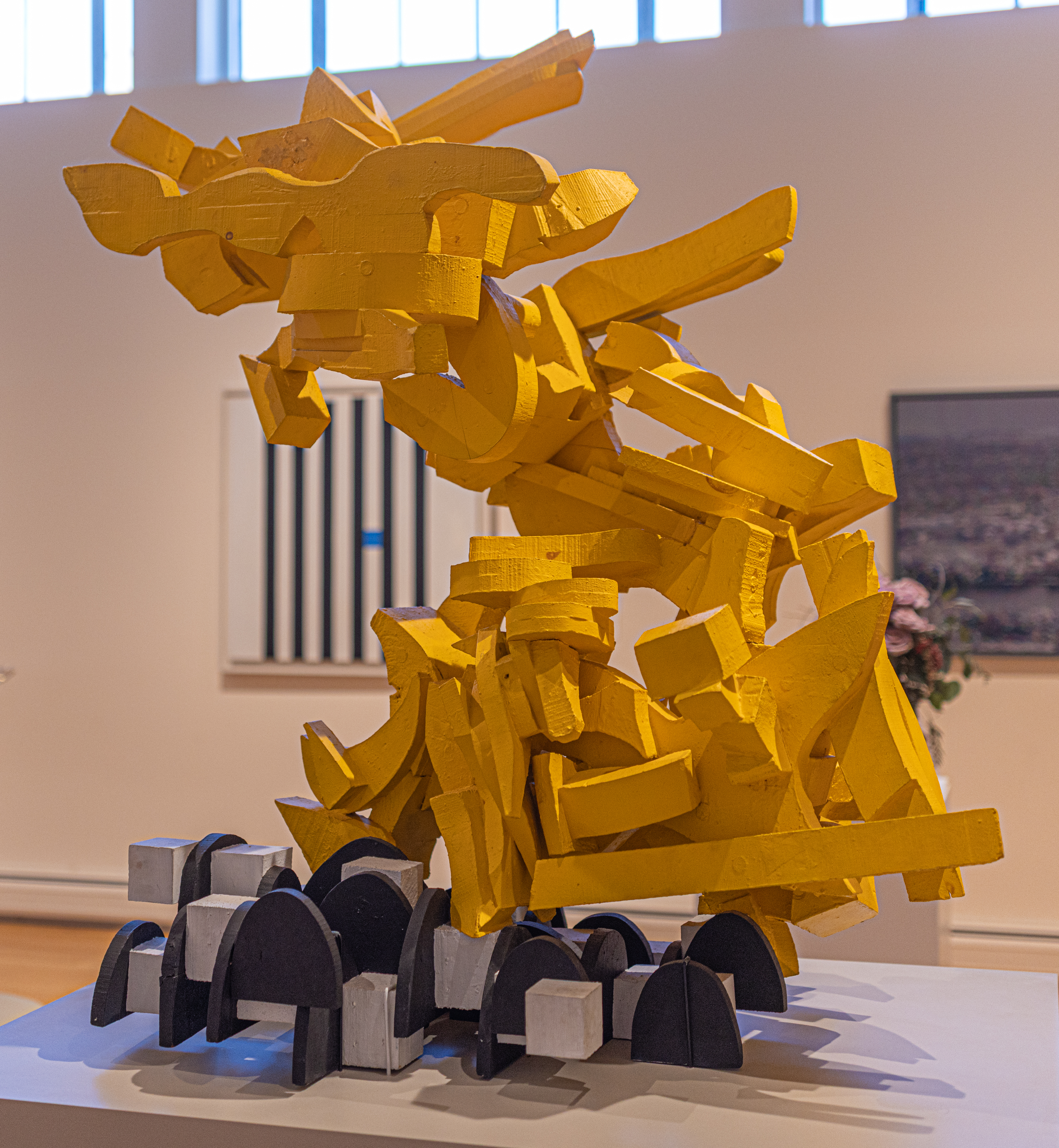
Born in 1912 in The Bronx, George Sugarman was an American artist working in the mediums of drawing, painting, and sculpture. Sugarman’s career is unique because despite his “late” start at the age of 39, his creative output was extensive. He began studying sculpture in Paris and was influenced by European art and architecture, especially from the Baroque period in Italy and Spain. He returned to New York in 1955 and began making abstract construction sculptures out of unpainted wood. Each sculpture is made up of many individual smaller sculptures placed together to create one entity which appears to move through space.

Sugarman was one of the first modern artists to experiment with painting his sculpture and Fugue is an example of this innovation. He uses paint to draw attention to the forms rather than the beauty of the wood and to make the forms appear heavier. The sculpture does not passively occupy space, but energizes the space. George Sugarman’s art, as exemplified in Fugue is a statement of his love of dynamic energy and his talent to express this exuberance through complex constructions of wood.

Fugue is one of many spectacular contemporary art pieces that can be found in the D’Amour Museum of Fine Arts.

Fugue (1963), George Sugarman (American, 1912-1999). Laminated wood, carved and painted. Museum Purchase with the aid of the National Endowment for the Arts. 79.S02.

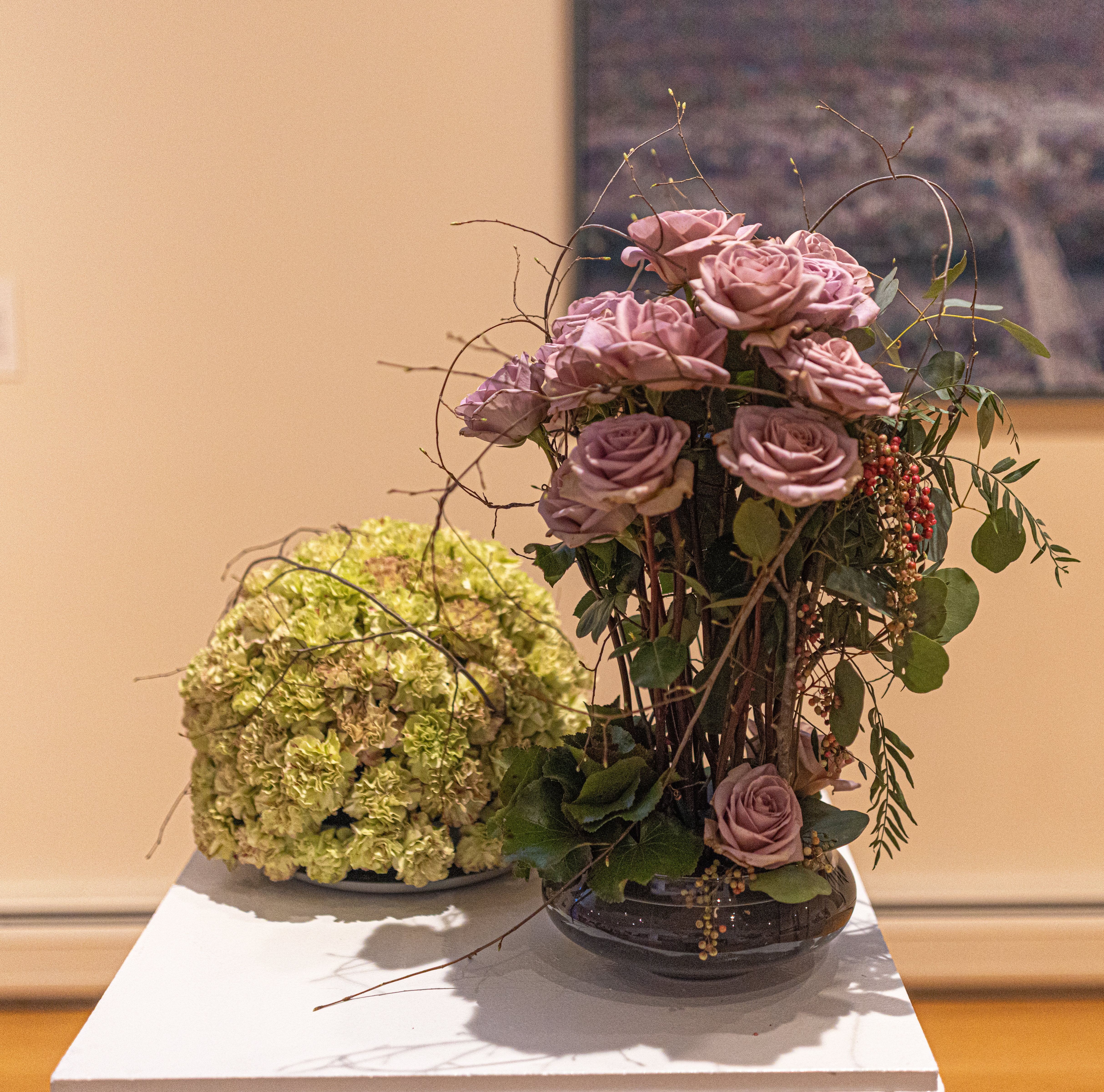
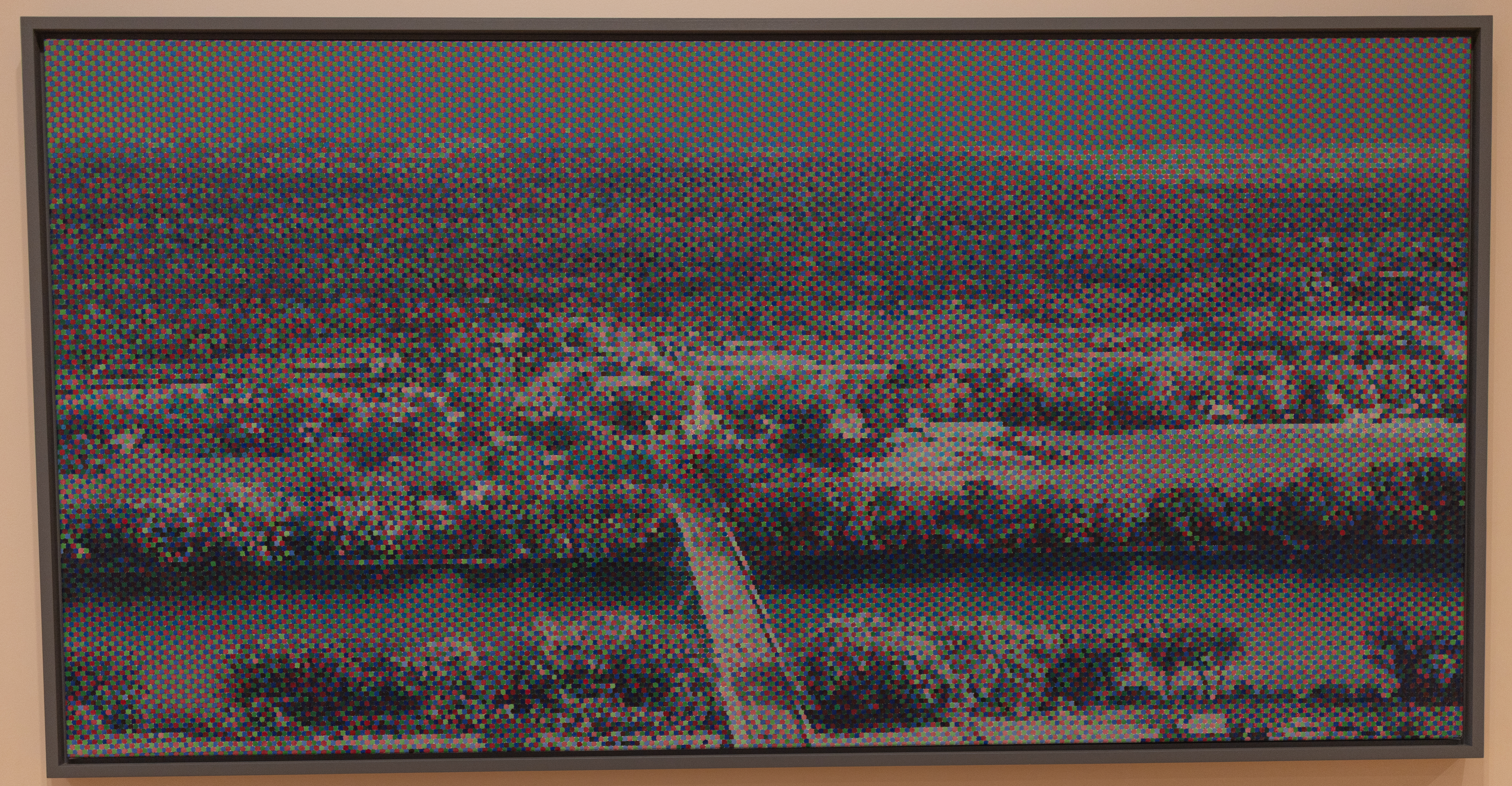
Cynthis Gorsky used the Bridge to Sunderland by John Roy as inspiration for her floral arrangement. She used artemisia, dusty miller, carnations and roses in her design.

In Bridge to Sunderland, Springfield, MA, native John Roy explores the way people see and understand color. Roy created this composition using the aid of a computer and the colors red, blue and green and then painting the pattern on the canvas. When viewed from a distance, the dots of color merge to reveal a bridge and surrounding landscape. When viewed up close, the landscape is lost and only the colors are visible. The landscape looks very much like a picture from the top of Mount Sugarloaf in Deerfield, MA. Since Roy was born and raised in Springfield, MA, he frequently visited and attended classes at the Springfield Art Museums. He also studied art at Yale University and became a professor at the University of Massachusetts at Amherst.

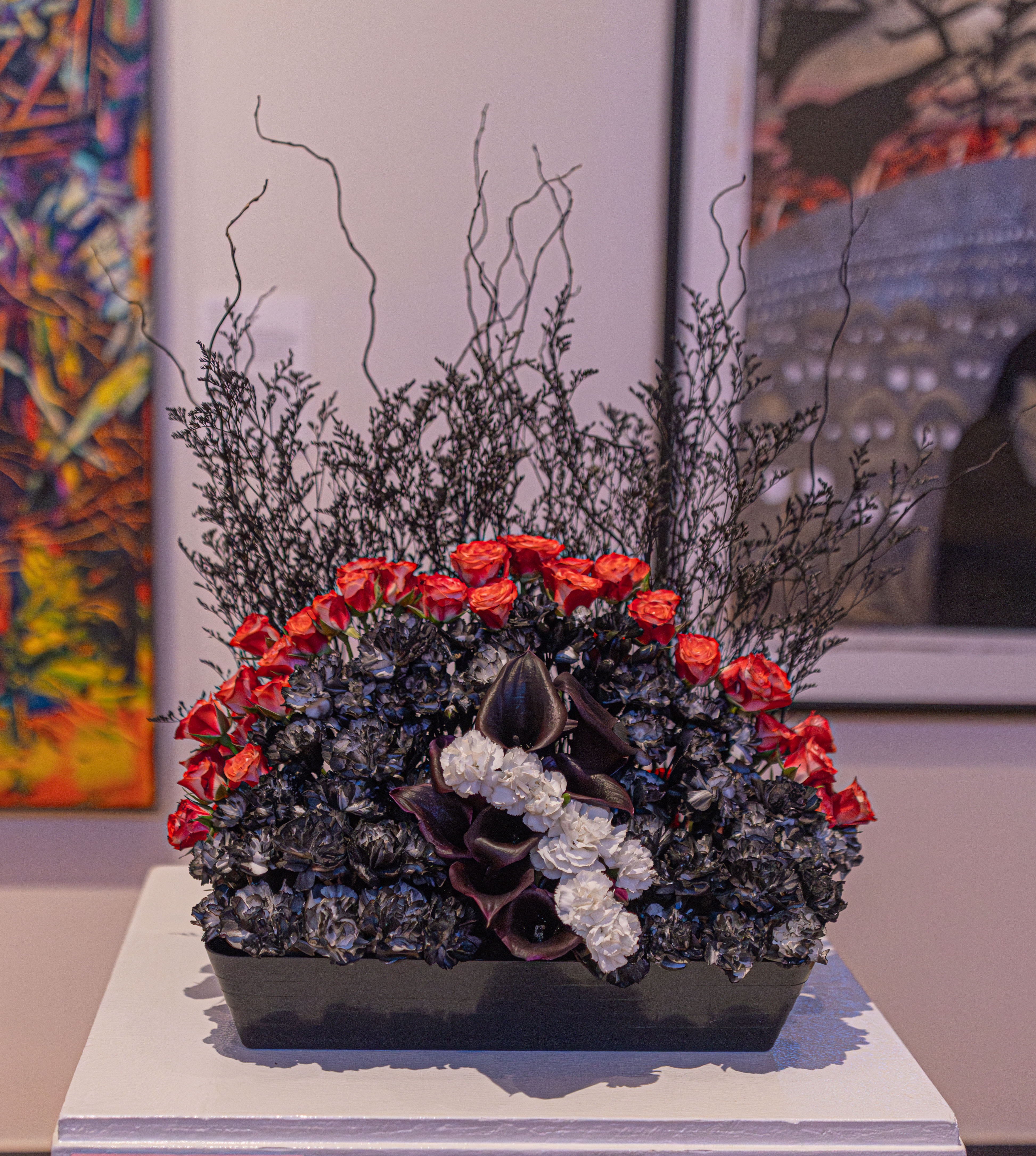
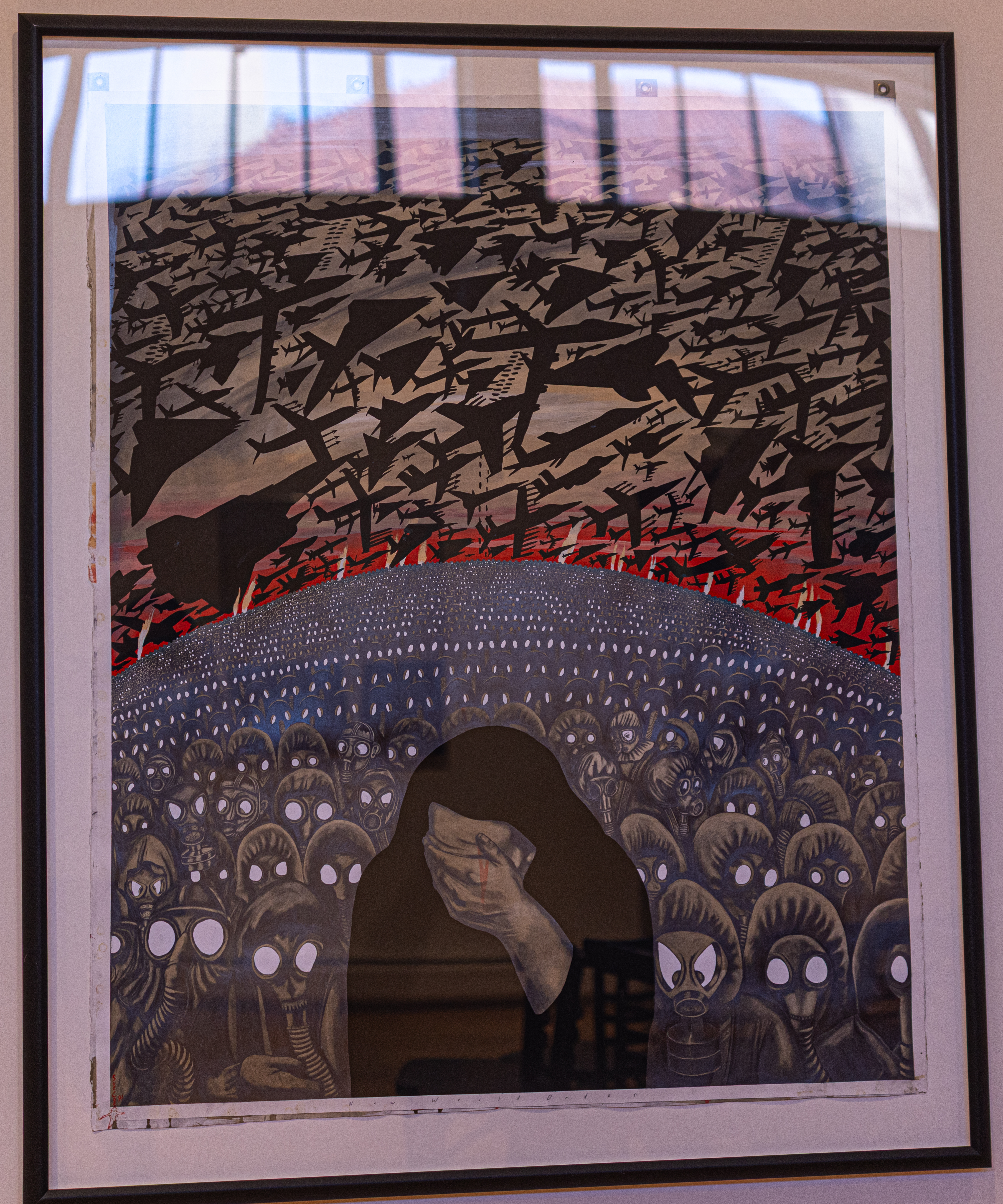
Janine Boland of the Springfield Garden Club used New World Order by Sue Coe as inspiration for her arrangement. Janine feels we live in a world of uncertainty, of fear and of horrific violence. She thinks our safety and that of our fellow humans is threatened everyday by forces seen and unseen, While our hearts are hurting, what can we do but face our worst nightmares, even if from behind a mask?

As one of the leading political artists of the 20th century, Sue Coe believes exposing the injustices in society can affect change. Her pictures compel the viewer to face issues of change. Her pictures compel the viewer to face issues of universal concern: economic oppression, sexual exploitation, AIDS, cruelty towards animals and war.

Coe studied commercial art at the Royal Academy of Arts in London and has lived in New York City since 1972. She has worked as an illustrator for the New York Times editorial pages, The New Yorker, Time and Newsweek. She refers to Herself as a journalist rather than an artist, even though her artistic work conveys its message more immediately than the written word.

As a statement on the Persian Gulf Crisis, New World Order comments on the nameless, faceless masses that experienced the bombing in Iraq. As with all of Coe’s work, a monochrome palette, somber lighting and bold figures empower her message. Touches of red on the horizon and a blood-like tear on the dark figure in the foreground are startling and reinforce the violent nature of the project.

Sara made this painting in 1981. She used gouache and graphite on white board.

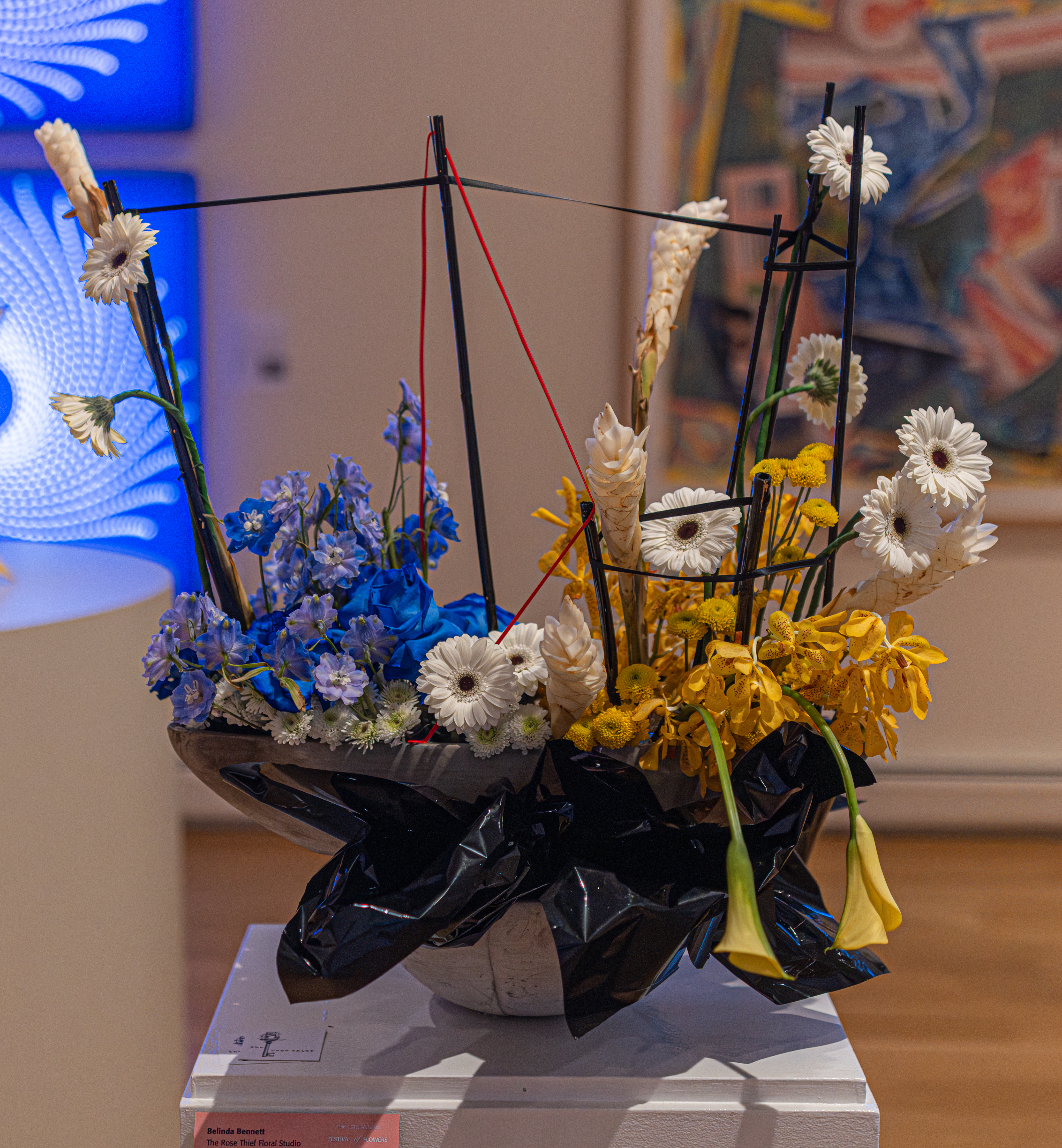
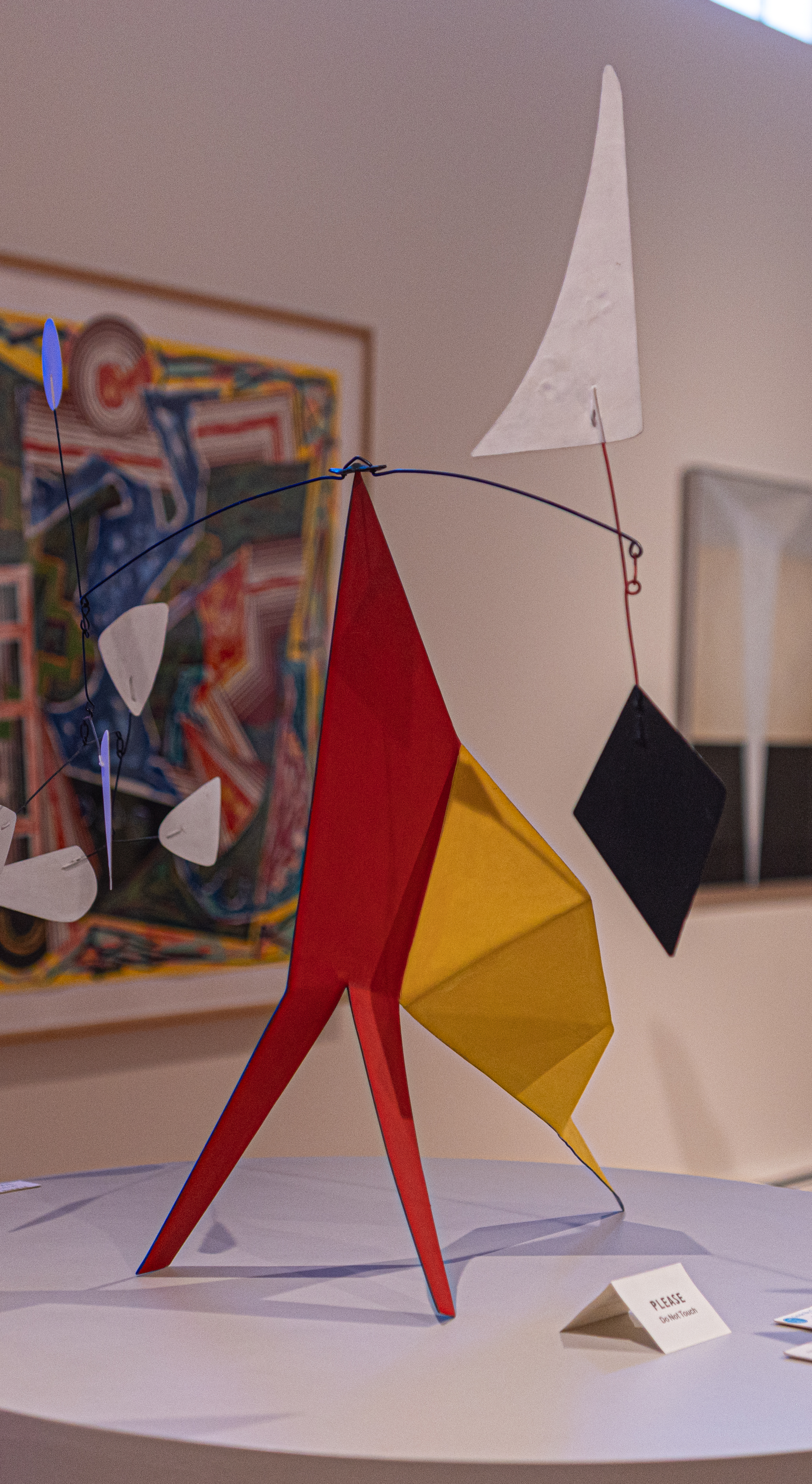
Black Diamond by Alexander Calder was the inspiration behind this flower arrangement by Belinda Bennett of the Rose Thief Floral Studio.

World-renowned for his whimsical, aerodynamic sculptures, Alexander Calder’s first solo museum exhibition took place at the George Walter Vincent Smith Art Museum in 1938. This piece, “Black Diamond” (1969), painted metal and wire sculpture, is from Calder’s “late” period when he was best known for recreating monumental public sculptures. In fact, in the same year as this sculpture, Calder created the first public artwork funded by the National Endowment for the Arts.

After receiving a degree in mechanical engineering and studying art in Paris, Calder experimented with new forms of sculpture. He invented the mobile in the 1930s, and later in the 1960s, a free-standing version of the mobile. The stabile form enabled Calder to create large sculptures for public sites in urban settings. Usually he created small-scale stabiles as models for his monumental sculptures. Black Diamond is unusual as it is not a model, but intended by the artist to be viewed as an independent stabile in its own right.

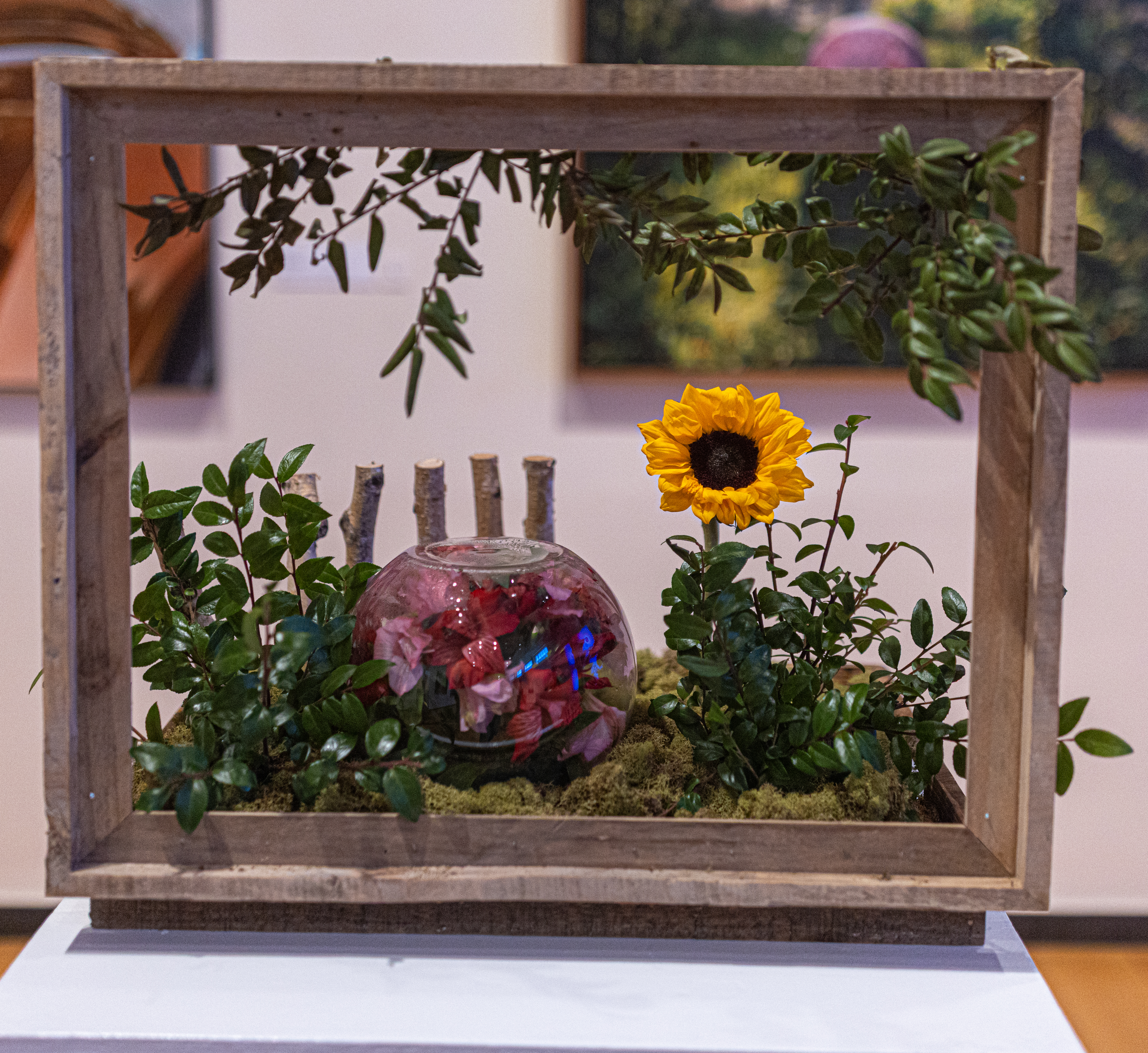
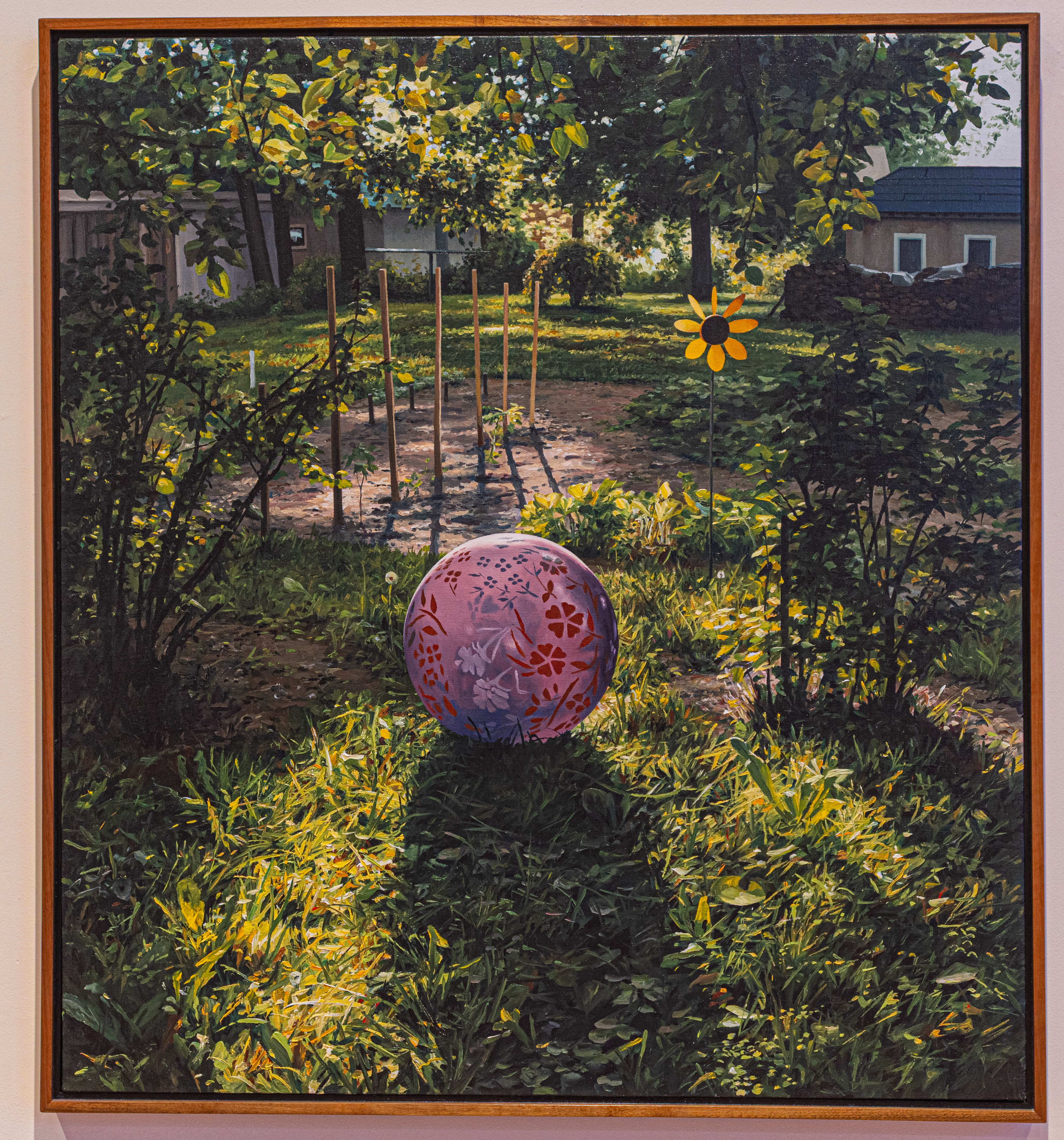
This floral arrangement was designed by Lauren Hufnagel at Love In Bloom. She based her arrangement on Ball At Sunset by Scott Prior.

Western MA resident Scott Prior is inspired by his family and everyday events. The artist works from life as well as photographs. He creates intimate magical scenes with ordinary objects, revealing that beauty can be found in the simplest moments.

The following floral arrangements were inspired by some of the older paintings at the museum. One thing you may notice is the colors, shapes and feel of the arrangements match the original work of art.

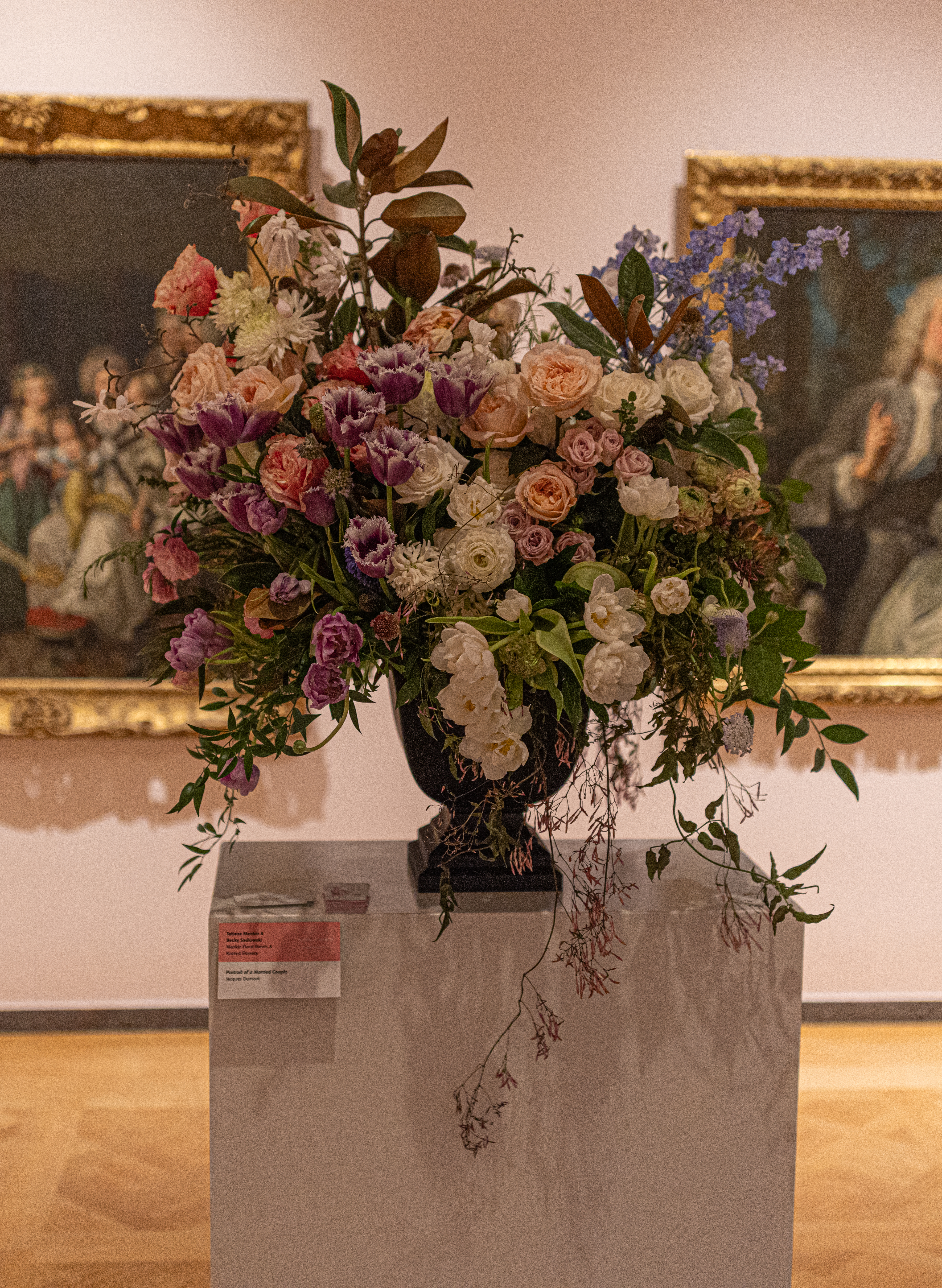
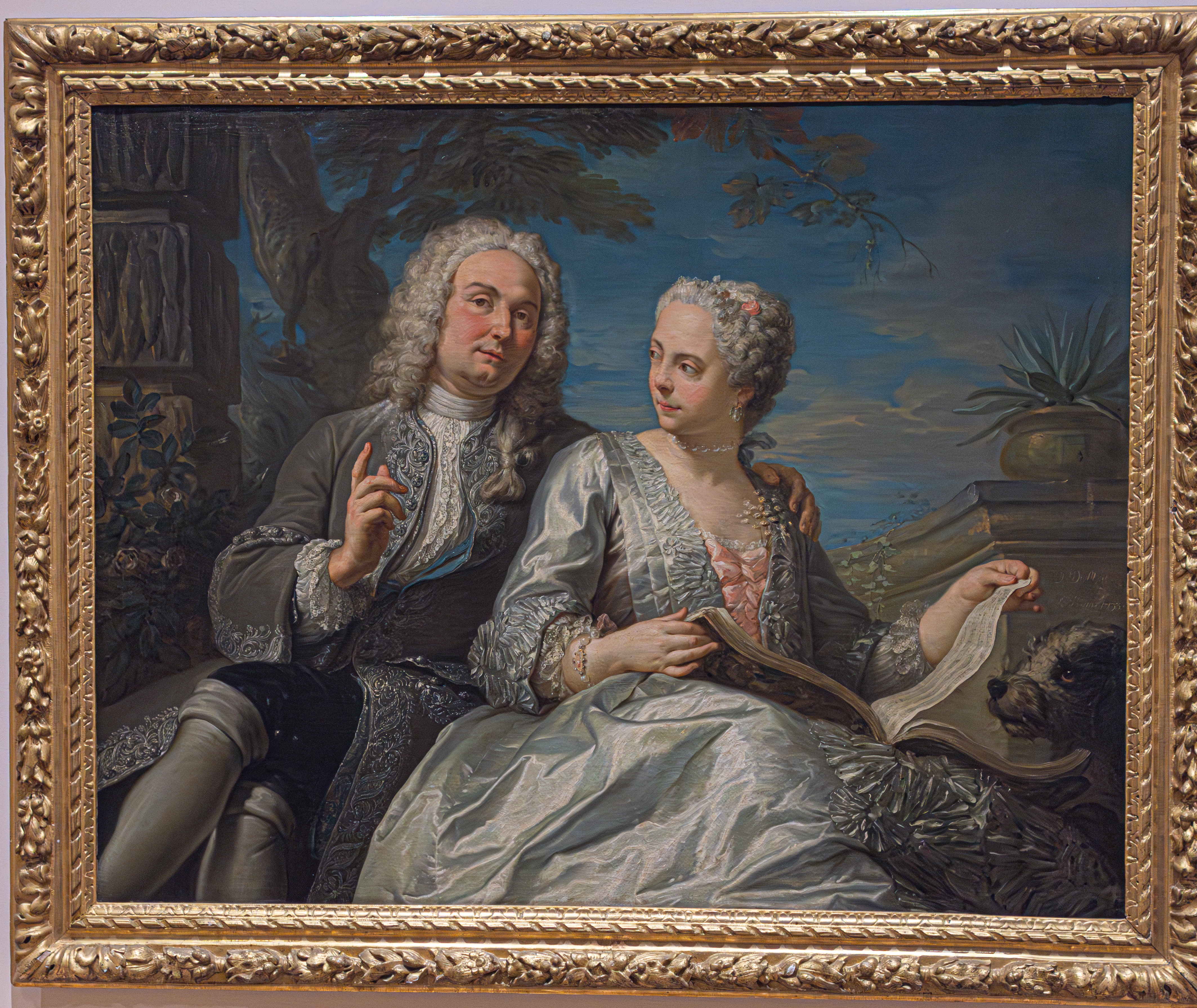
This arrangement was based on the painting Portrait of a Married Couple by Jacques Dumont, circa 1733. The oil on canvas painting is thought to have been a self portrait. French portrait painter and member of the Académie royal de peinture et de sculpture. Dumont was famously known for capturing the poise of a subject and bring that vivacity to life through brush strokes. Endearing love in celebration was a favorite theme of Dumont. This particular oil painting depicts his wife/collaborator in a comfortable setting, highlighting their partnership in science.
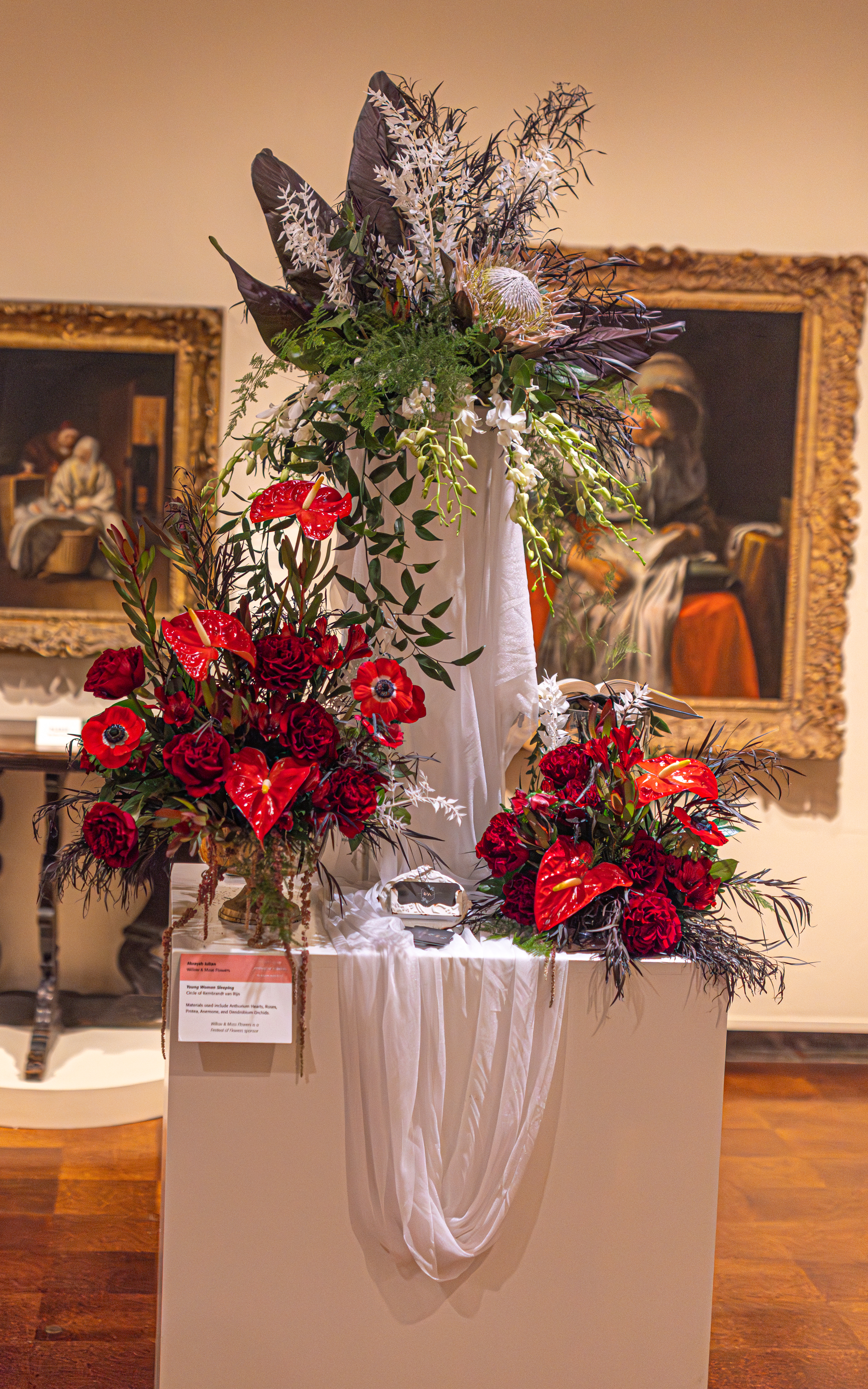
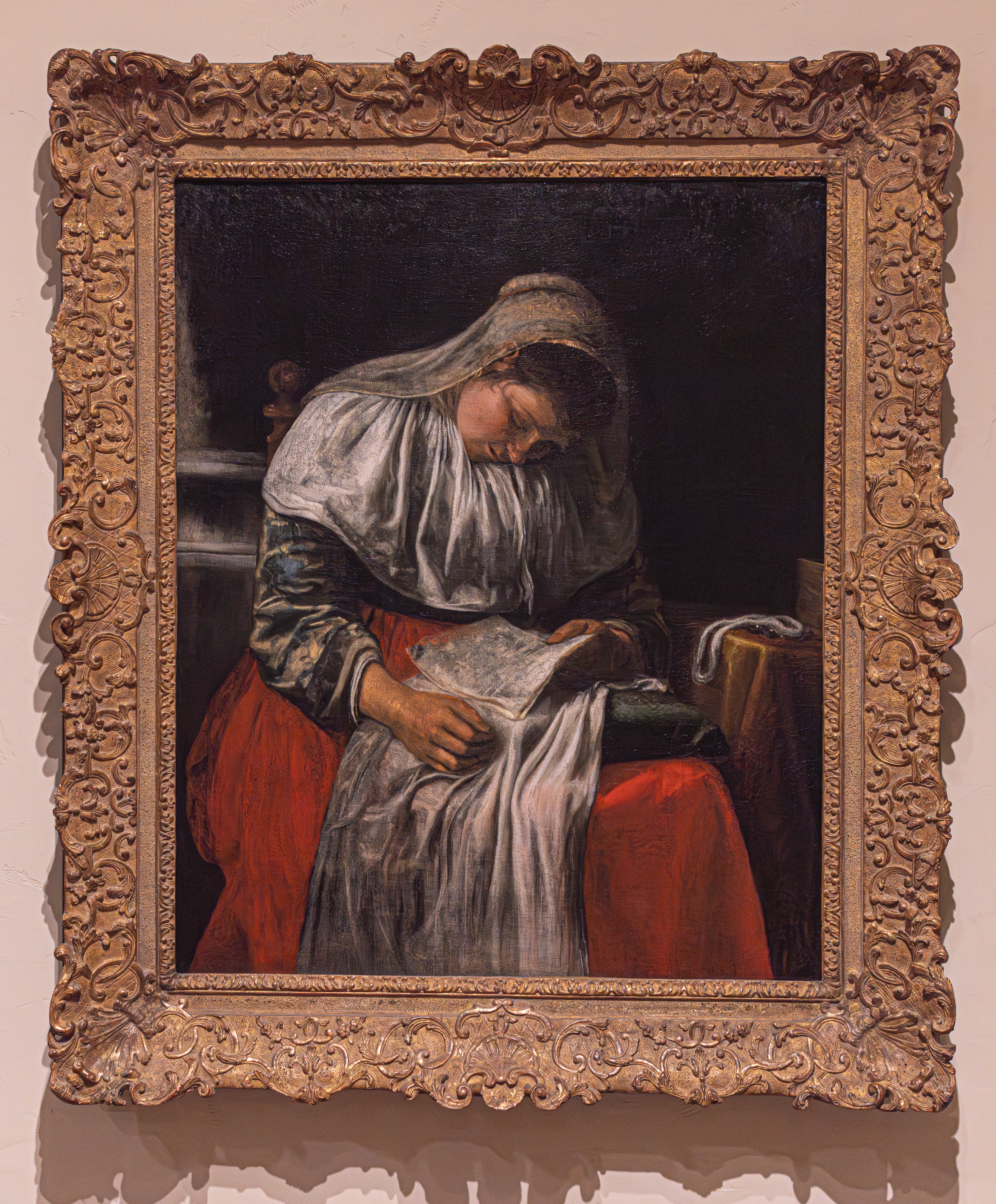
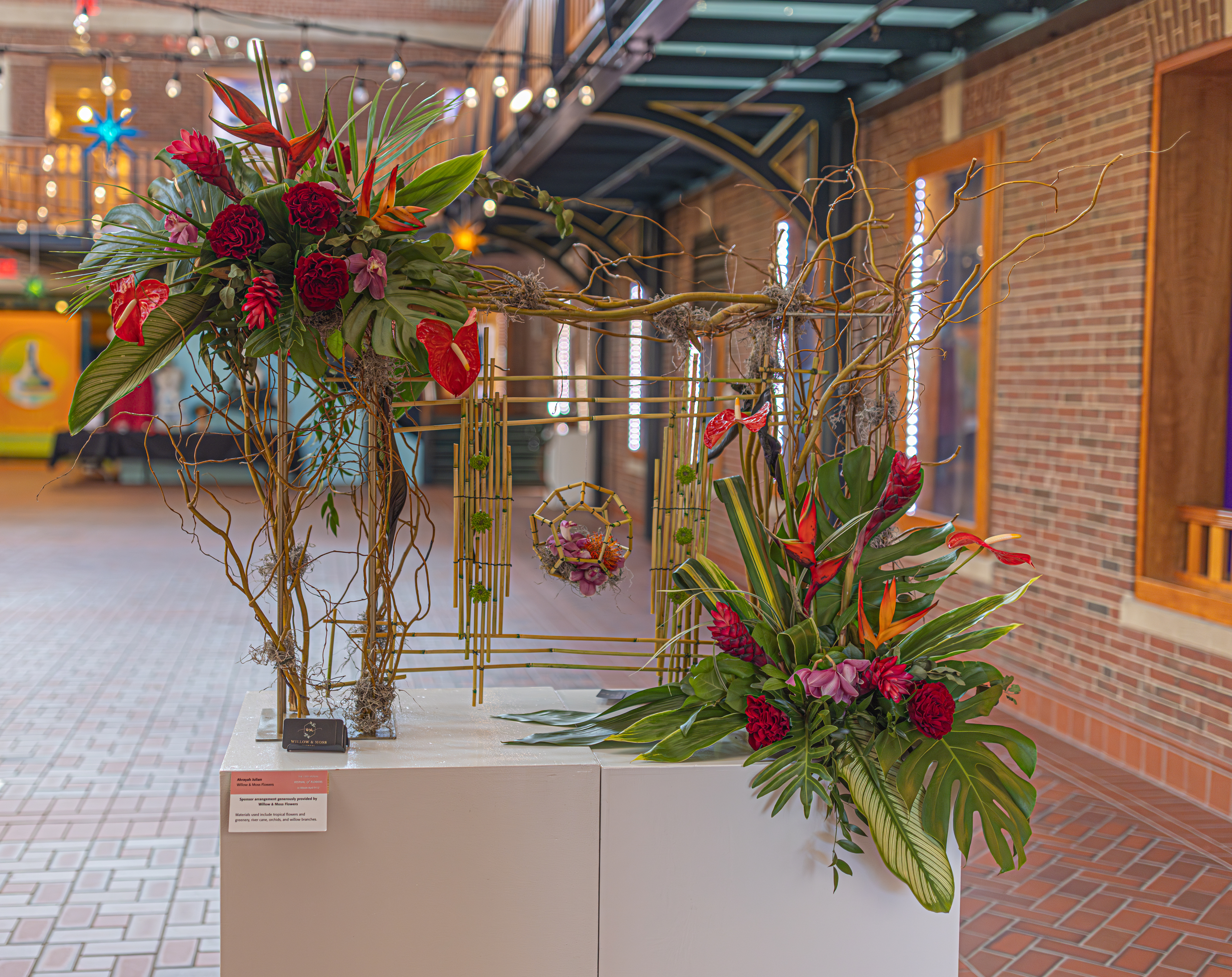
Ahrayah Julian at Willow & Moss Flowers created this arrangement based on the painting Young Woman Sleeping by Circle of Rembrandt van Rijn. The materials used for this arrangement were Anthurium Hearts, roses, protea, anemone and Dendrobium Orchids.

Rembrandt van Rijn, considered the most gifted Dutch artist of all time, influenced many painters, including the creator of our Young Woman Sleeping. In the 17th century, images of women engaged in sewing, reading letters, or sleeping often carried associations of love. Here, the letter and a faint smile on the woman’s face may indicate that the young woman is dreaming of an absent lover, from whom she has just received a note. Her prominent handiwork, a symbol of the virtuous housewife, may allude to her faithfulness and patience in waiting for her love to return.

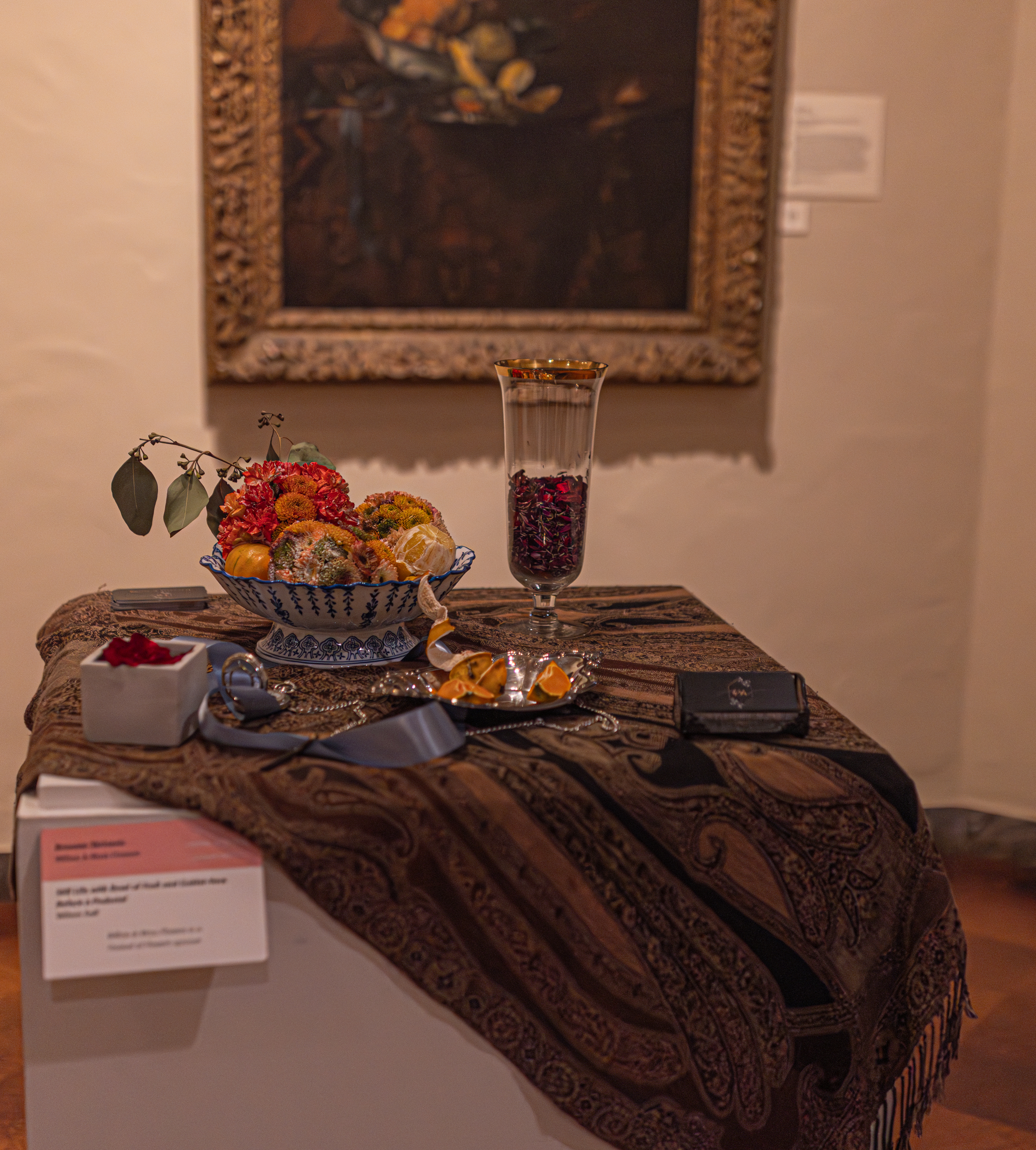
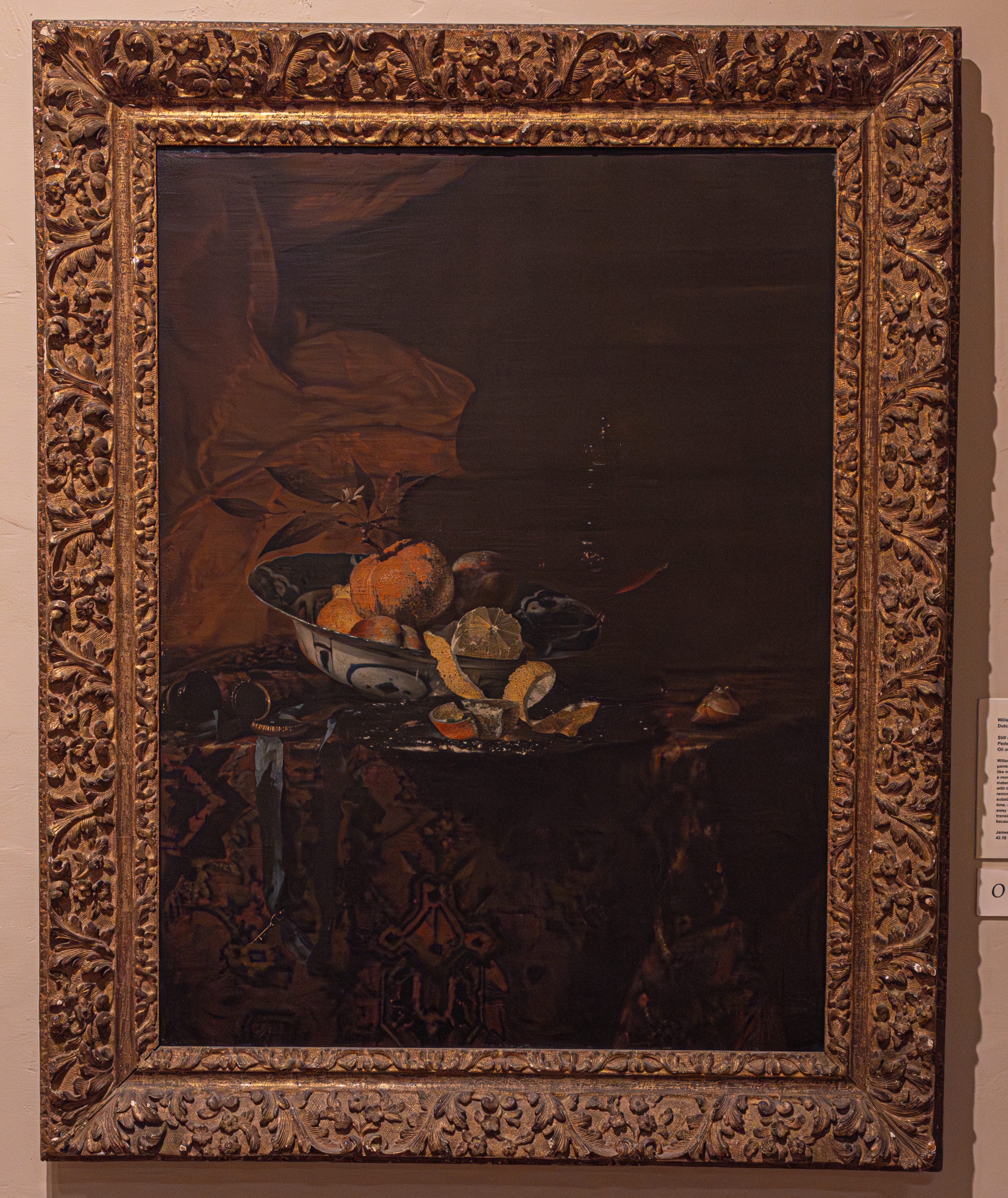
Breanne Skrivanic of Willow & Moss Flowers created this arrangement based on Still Life of Fruit and Goblet-Vase Before a Pedestal by Willem Kalf.

This oil on canvas painting, painted circa 1655, is an example of Kalf’s realistic descriptions of objects. One of the most celebrated 17th century still-life painters, Kalf, like many painters of his time, used his paintings to communicate a moral message about the transience of life and the emptiness of material existence. For instance, the box at the left, when filled with tobacco, was a warning against the sin of smoking and a reminder that earthly pleasures, like smoke, have no lasting substance. Similarly, the lemon and orange, expensive fruits at the time, signified original sin as well as the idea that luxury leads away from God. Finally, the watch served as a symbol of death or transience (time running out)but also represented moderation because of its regulated movement.

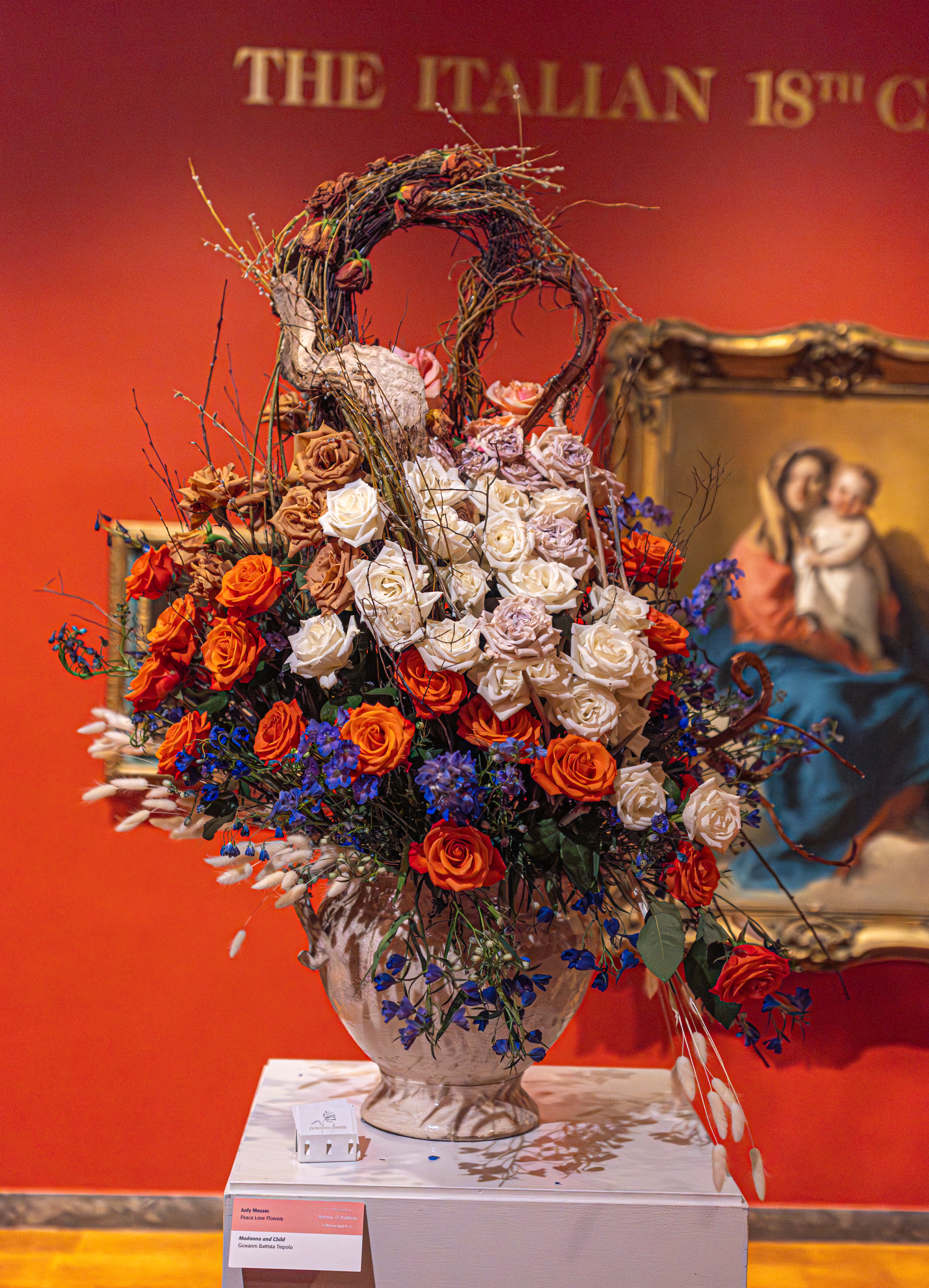
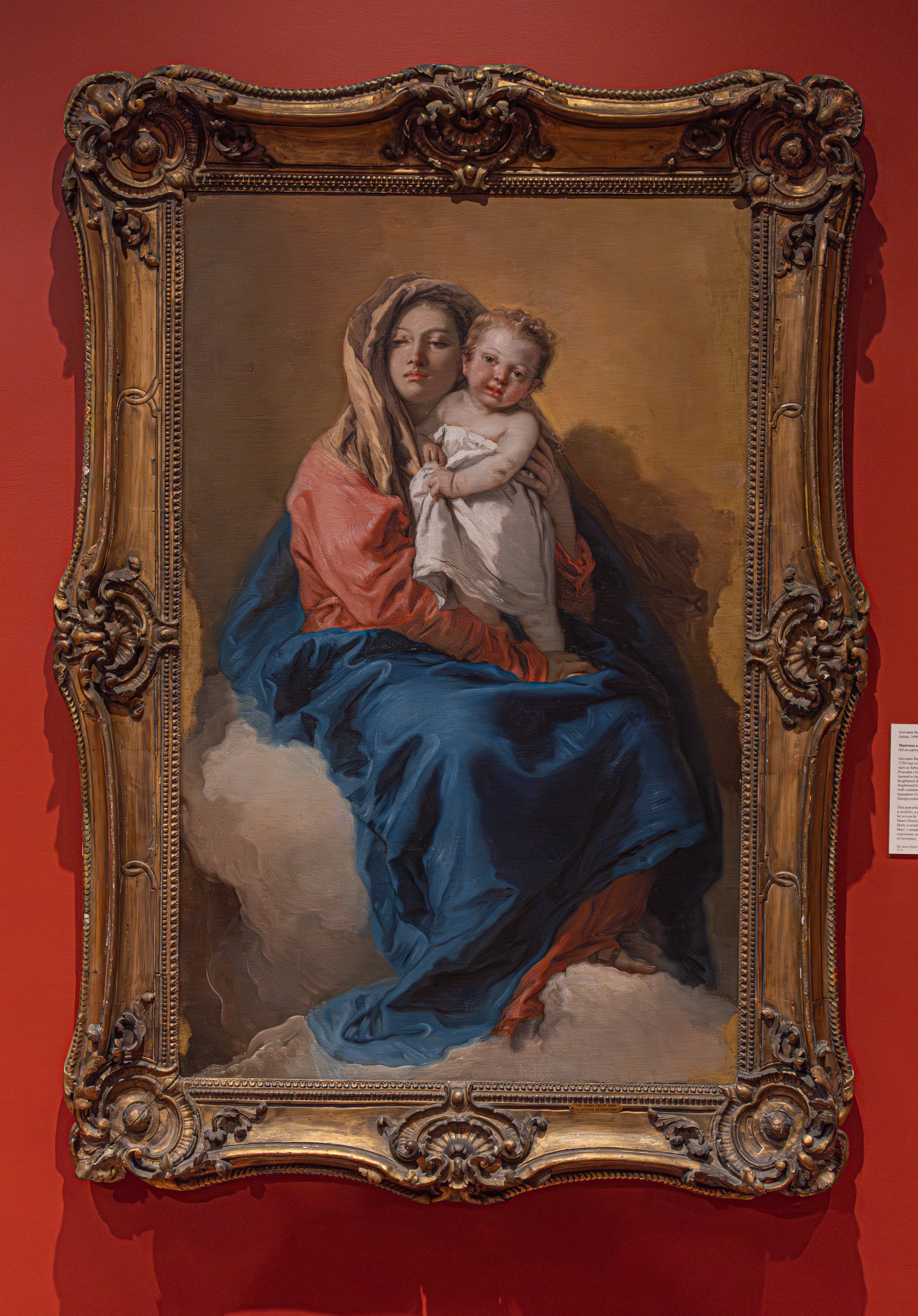
Judy Messer at the appropriately named Peace Love Flowers, created this arrangement based on the Madonna and Child portrait by Giovanni Battista Tiepolo.

Giovanni Battista Tiepolo studied under Gregorio Lazzarini but was strongly influenced by the art of contemporaries such as Sebastiano Ricci and Giovanni Battista Piazetta. It is from Piazetta and Ricci that Tiepolo Learned to handle complex shading. While his teachers created heightened drama through darkness and heavy colors, Tiepolo brightened his palette and illuminated his canvasses and frescoes with voluminous, revealing highlights. Tiepolo gained a popular reputation for decorative interiot painting, resulting in many foreign commissions.

This powerful rendering of the Madonna and Child was created as a modello, a preparatory oil sketch, for a silk and wool banner to be woven by Antonio Dini and hung in the church of Santa Maria Mater Domini in Venice. The simplicity of the composition is likely a result of the Painting’s purpose as a tapestry design. Mary’s sumptuous robes create an air of elegance and her dignified expression, as she sits atop the throne of clouds

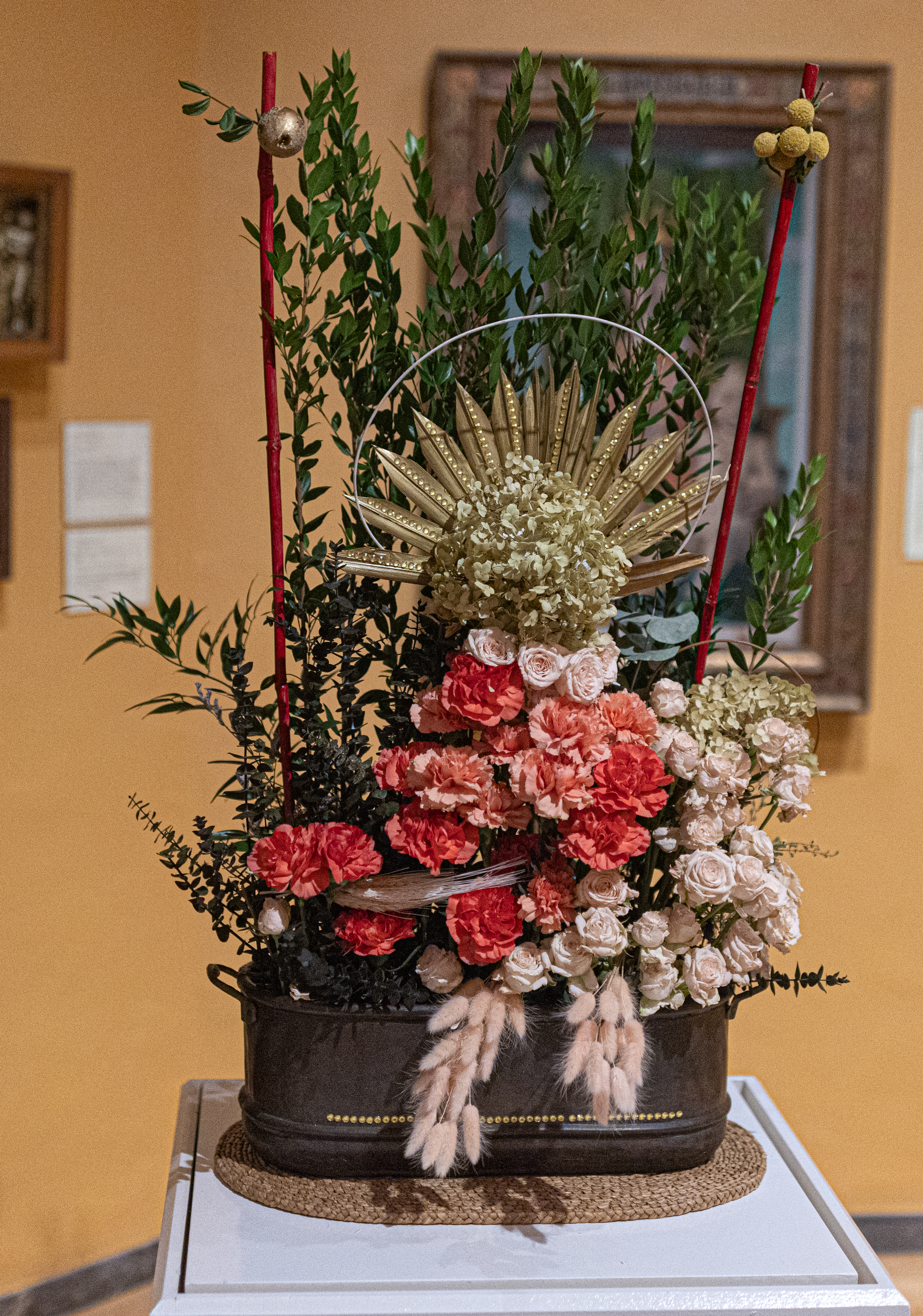
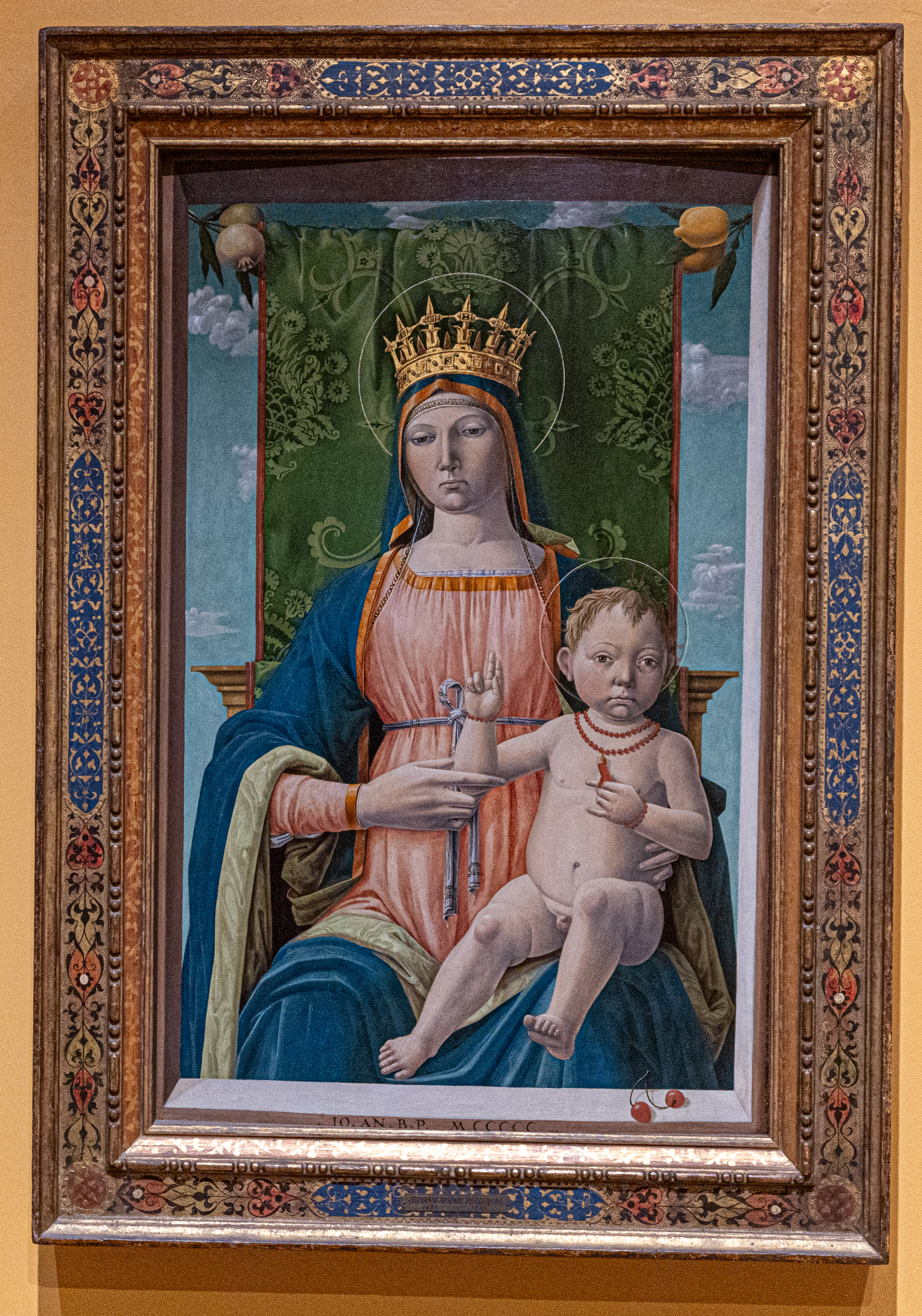
Sometimes confused with the Madonna and Child portrait, the Virgin and Child by Giovanni Antonio was the basis for this floral arrangement.

The painting features a gilded frame and depicts the Madonna wearing a crown, holding a key, while the Christ child wears a coral necklace.

The representation of the Madonna and Christ Child was extremely popular during the Italian Renaissance. Works of art such as this were probably for private devotional use. Most homes had at least one painting or sculpture with the image of Madonna and Christ Child. These served to stimulate devotion, as they could be reflected upon a daily basis.

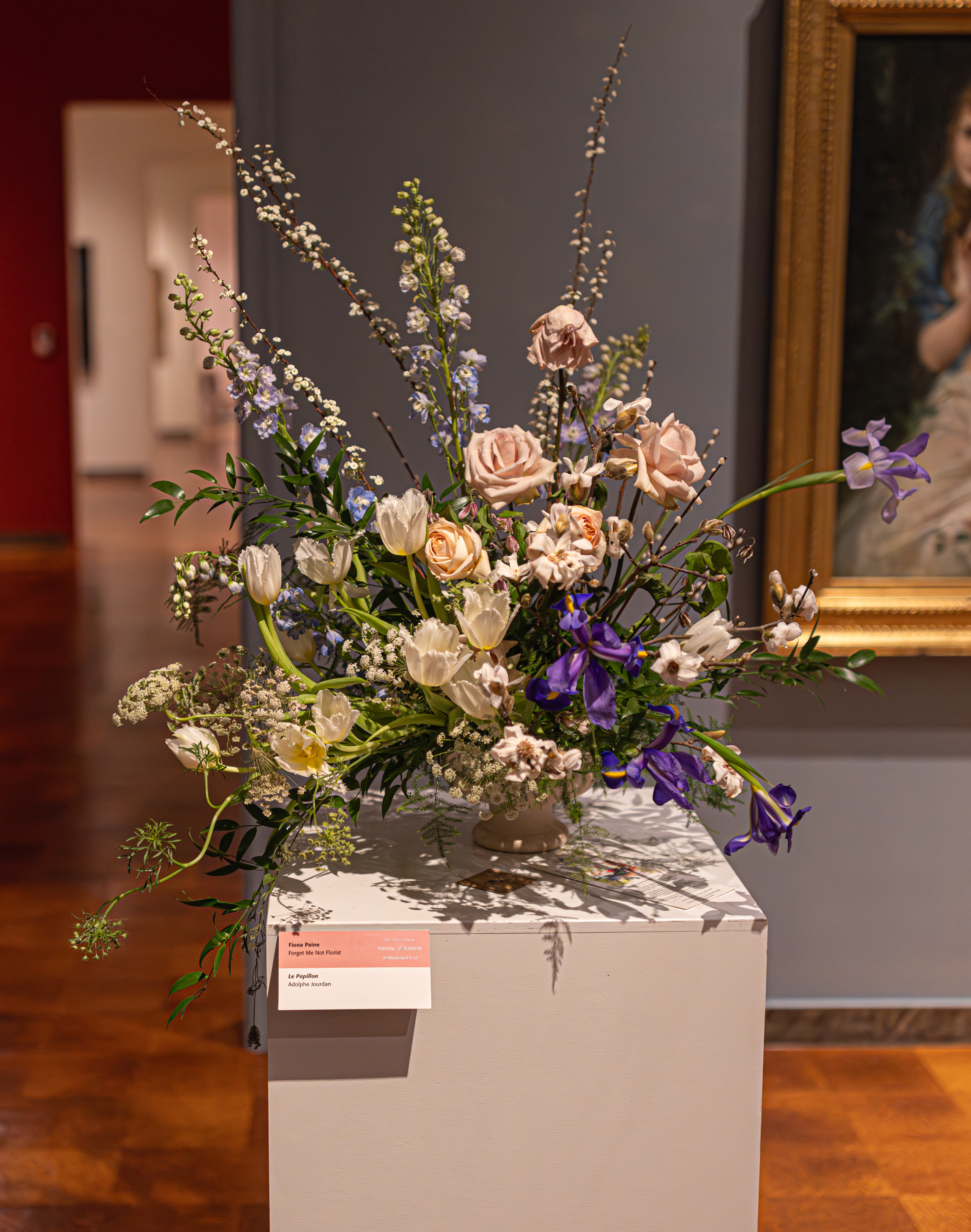
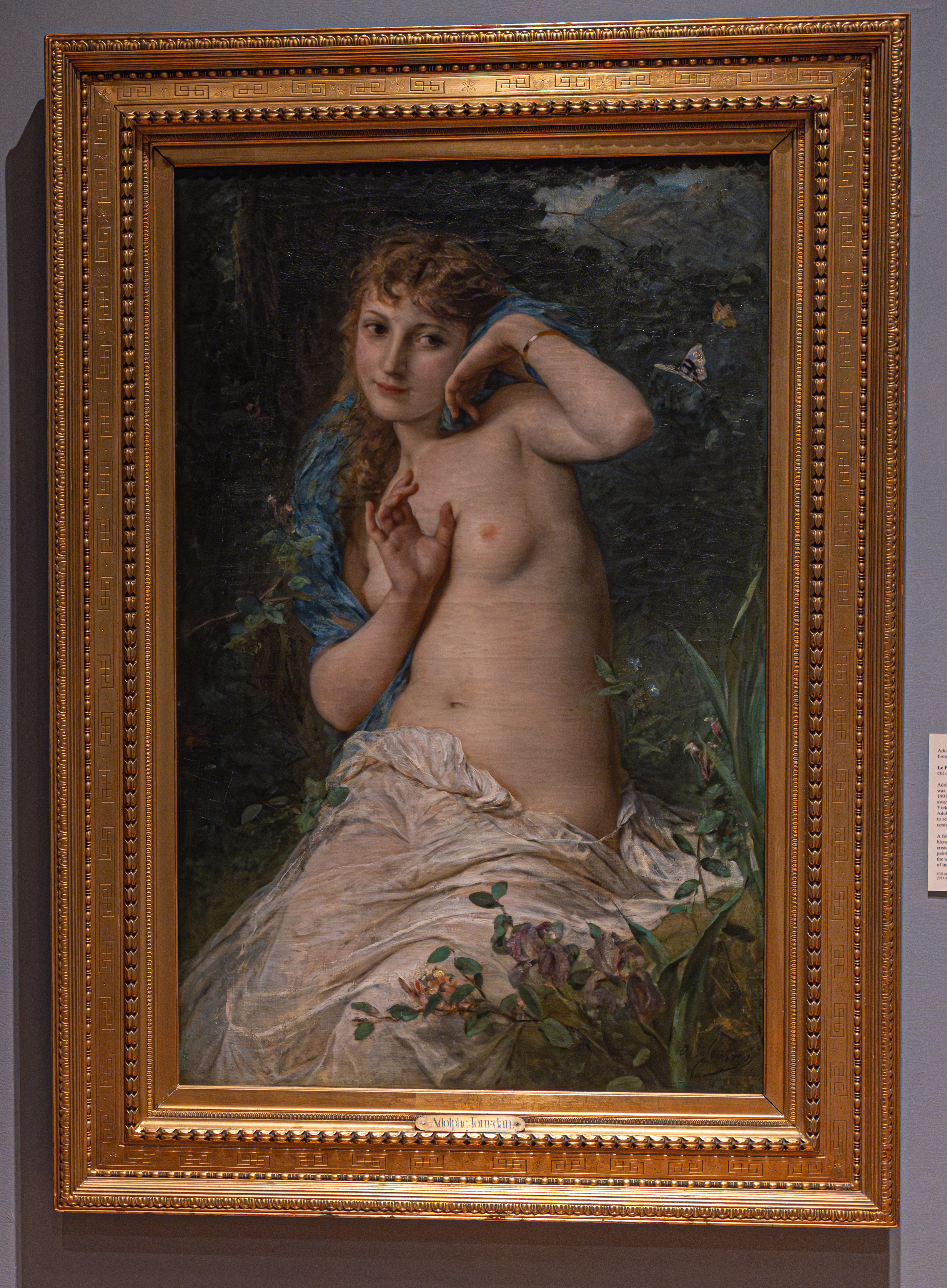
La Papillon (The Butterfly) by French painter Adolphe Jourdan was the inspiration for this arrangement by Fiona Paise at Forget Me Not Florist.

Adolphe Jourdan entered the Ecole des Beaux-Arts in 1844 and was a student of French Academic painter Charles Jalabert. Jourdan frequently in the Paris salons and won awards for his work in 1864 and 1866. He also exhibited in New York in 1876. The artist worked for art dealer and publisher Adolphe Goupil as a copyist and replicated paintings to serve as models for mass-produced engravings in the late 19th century.

A follower of William-Adolphe Bouguereau (apparently, Adolphe was a popular name in the late 1800s), Jourdan blended the style of his contemporary with his own training to create this excellent example of 19th century French romantic painting. The photographic realism depicted in the plants as well as the idealized classical form of the figure present a striking image of innocence.

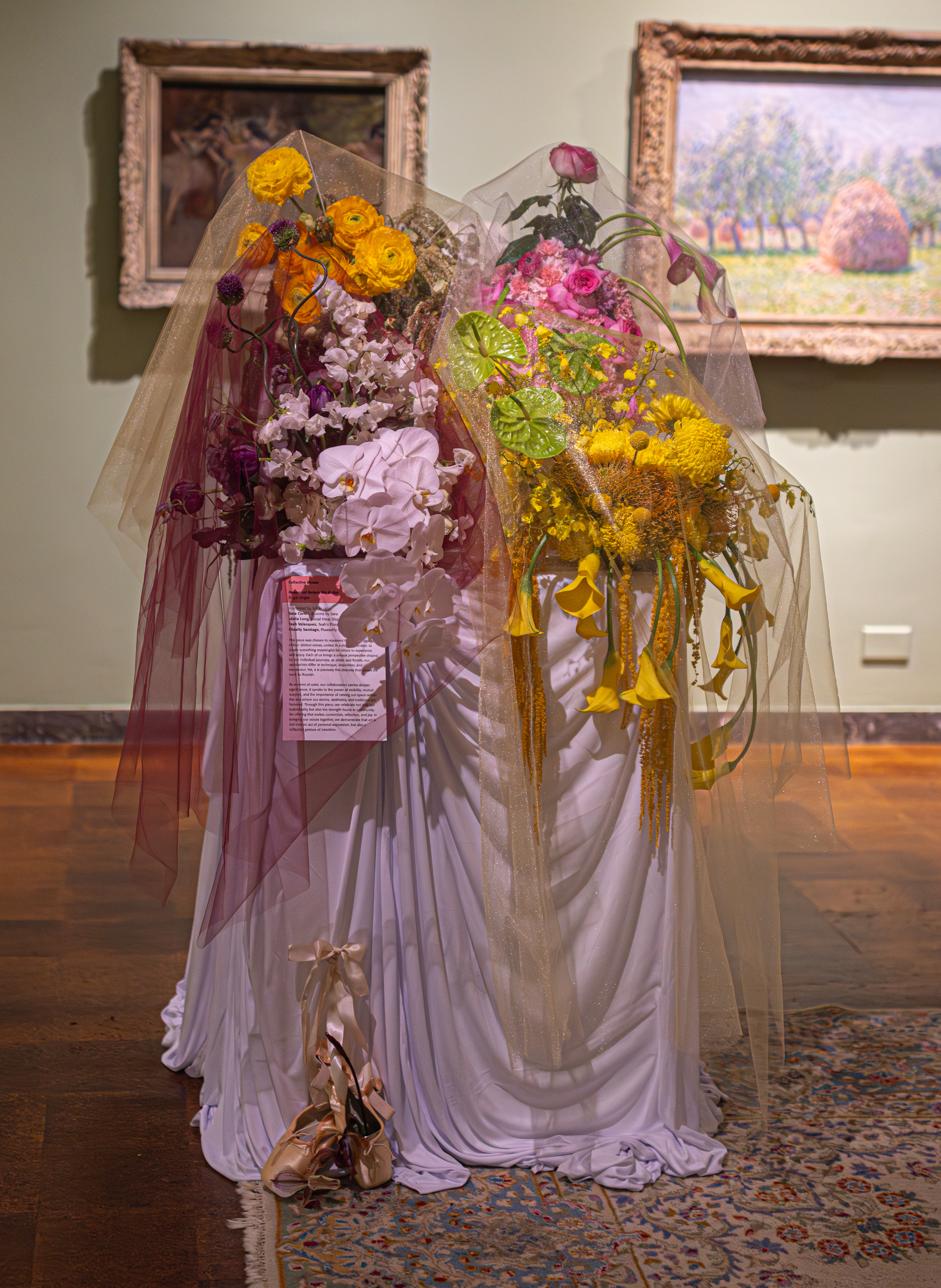
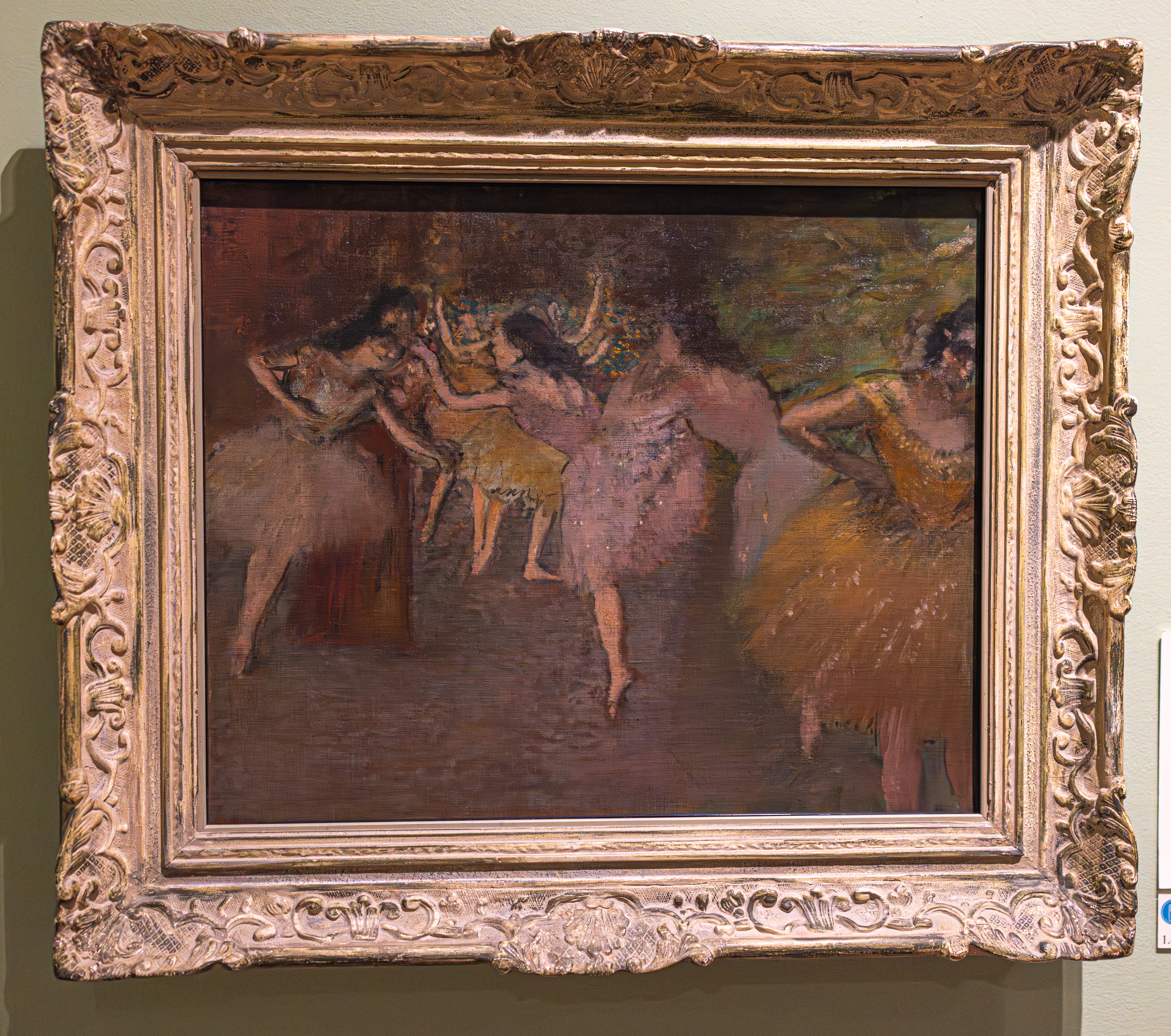
Collective Bloom created this arrangement inspired by Rehearsal Before the Ballet by Edgar Degas. They said the piece was chosen because of four distinct voices, united intention” to create something meaningful for others to experience and enjoy. Each of us brings our own journeys as artists and florists. Yet it is our diversity that allows the work to flourish.

As women of color, our collaboration carries deeper significance. It speaks to the power of visibility, mutual support and the importance of carving out space within the arts where our stories, aesthetics and traditions are honored. Through this piece, we celebrate not only our individuality but also the strength found in community. An offering that invites connection, reflection and joy. In bringing our voices together, we demonstrate that art is not only an act of personal expression, but also a collective gesture of intention.

Impressionist artist Edgar Degas is best known for his depictions of ballet dancers. The artist was inspired by ballet rehearsals and fascinated by the movement of dancers. Though his knowledge of human anatomy informed his drawings and paintings, Degas was more interested in capturing the essence or impression of a ballerina’s movements rather than realistically documenting the motions. In Rehearsal Before the Ballet, Degas offers the viewer a backstage preview, with some dancers poised on one toe and others stretching as they prepare for the performance. The sparkling costumes and suggestions of an audience in the background add to the anticipation of the moment before the curtain rises.

Degas worked in a studio in the Montmartre district of Paris for many years. His academic training was influenced heavily by the inventive compositions of Japanese prints which became available in Europe following the opening of trade with Japan in 1854. The artist never reconciled himself to being referred to as an Impressionist painter, yet he was one of the group’s founders, an organizer of its exhibitions and one of its most important members.

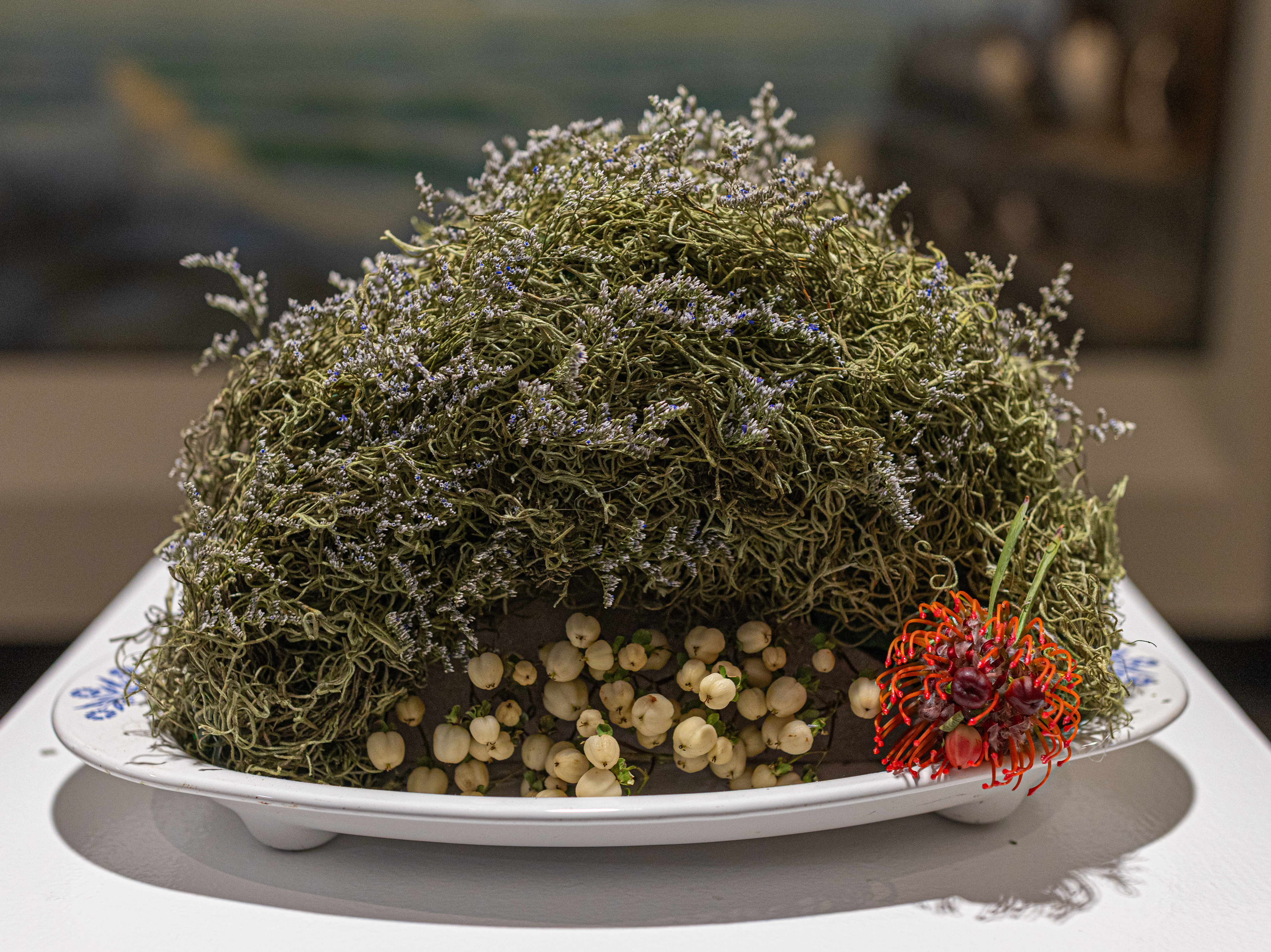
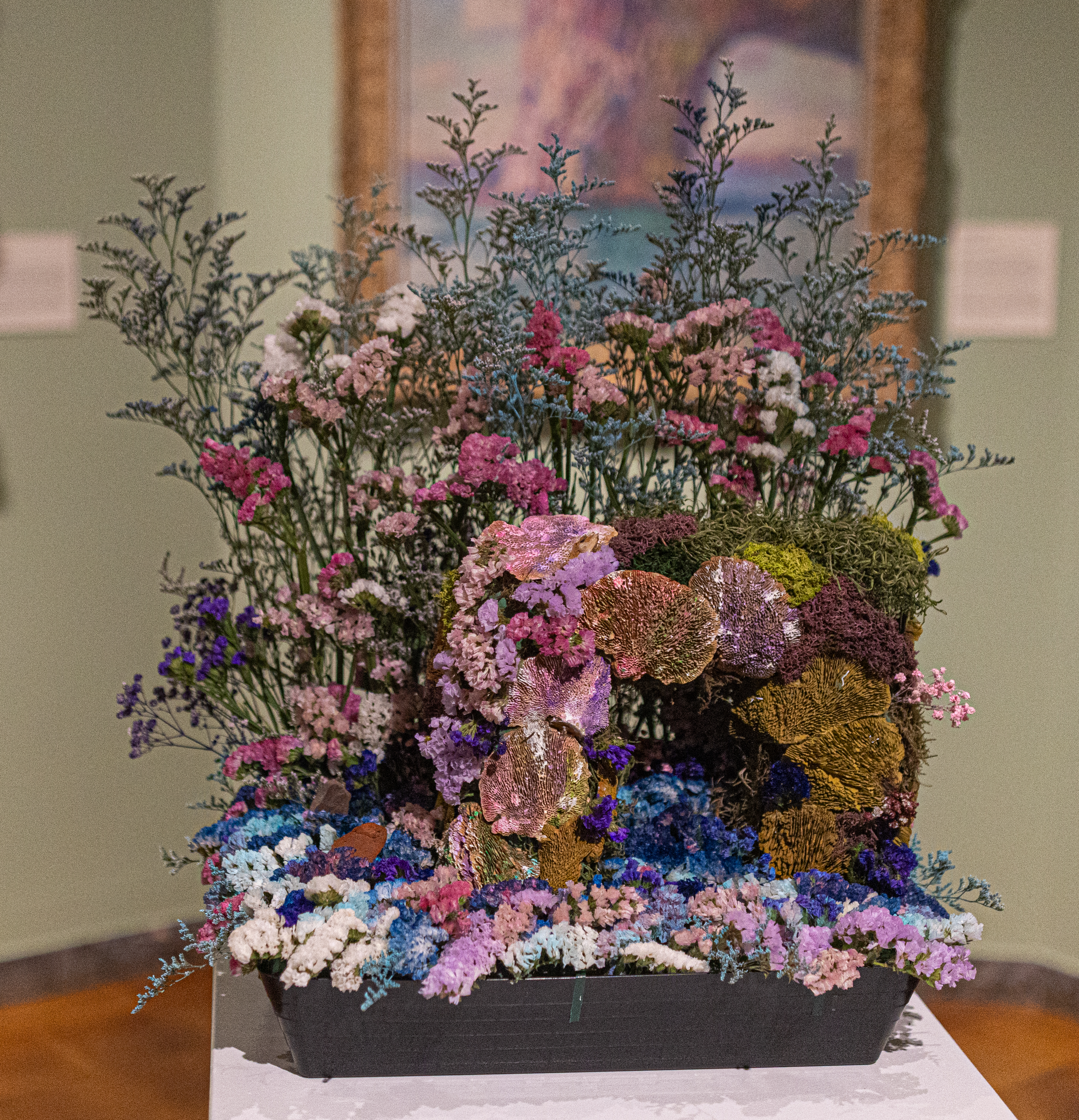
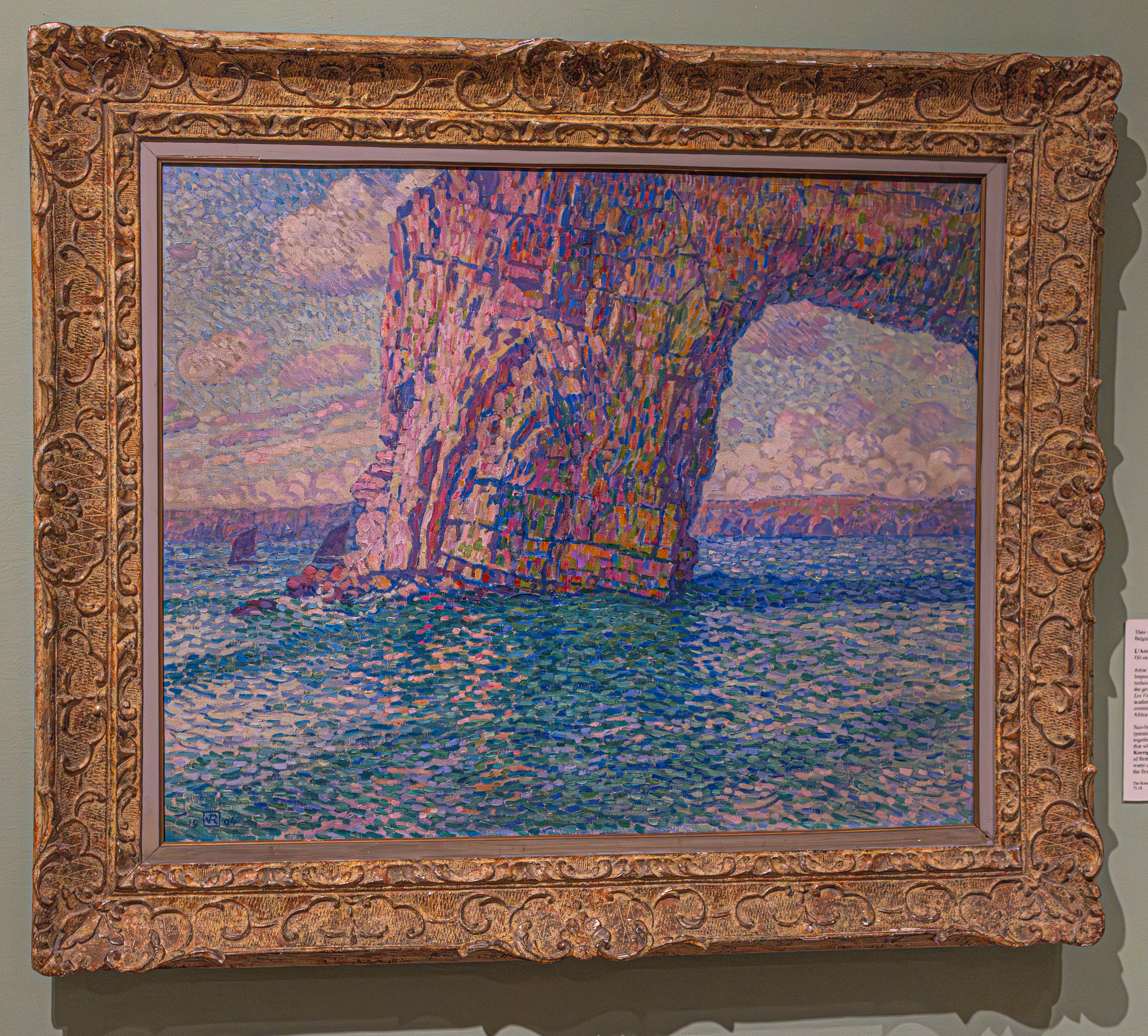
Nora Santourian at the Springfield Garden Club used L’Arche Korrigan a Dinard by Theo Van Rysselberghe as inspiration for her floral design. Nora said her travels to impressionist sites in France inspired her artwork. Her last trip included a visit to Etretat which she was drawn to due to Monet’s paintings.

As Nora walked into the French Impressionist Gallery, she was immediately drawn to Rysselberghe’s vibrant depiction of L’Arche Korrigan a Dinard, painted on the coast of Brittany. It is an exciting challenge for me to present this painting with flowers.

The materials used for this floral arrangement include Statice, Limonium, Baby’s Breath, Goldenrod and natural sponge mushrooms.

Artist Theo Van Rysselberghe was a leader of the Neo-Impressionist art movement. He introduced the Pointillist technique (a technique that creates images using thousands of tiny, distinct dots of pure color applied to canvas)to the art world in Belgium and played a major role in the group of avant-garde artists in Brussels known as Les XX or Les Vingt. Born in Ghent, Belgium, van Rysselberghe, studied academic painting at the Academies of Ghent and received a commission to copy paintings in Spain. He also visited North Africa where he created many academic landscapes.

Neo-Impressionists artists often used the pointillist method to achieve an even greater luminosity and vibrancy than that which had been achieved by the Impressionists. L’Arche Koprrigan a Dinard, an oil on canvas painting, was painted at Cote d’Emeraude, or Emerald Cost of Brittany. It shows the artist’s skill at capturing light and sparkling water using pointillism. The artist was also for being one of the first to use this method in portraiture.

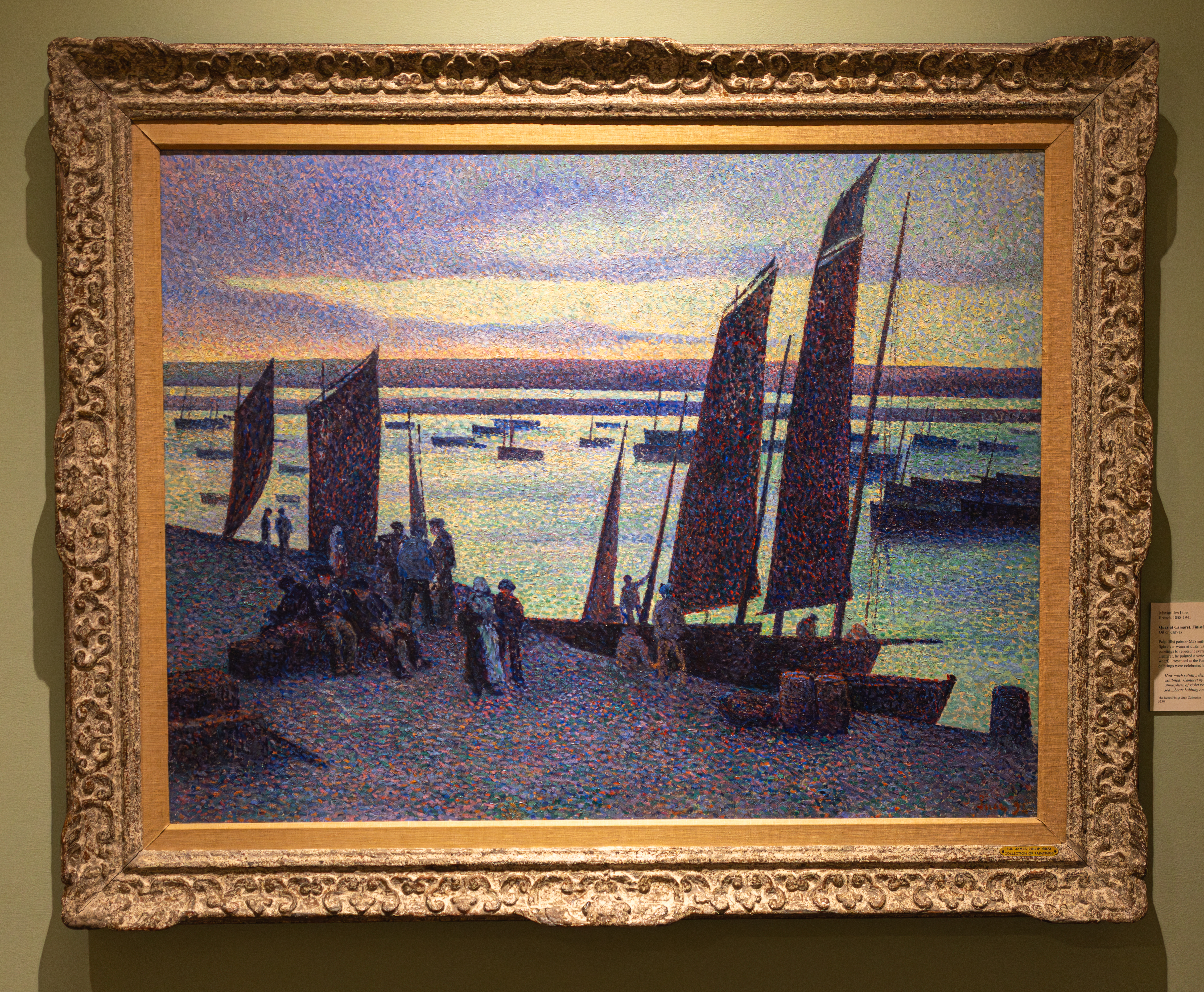
Painter Maximilien Luce (1858-1941) was introduced to Georges Seurat in 1887, while exhibiting work at the third exhibition of the Society of Independent Artists in Paris, and soon after adopted the Pointillist style. Luce would become a successful proponent of Pointillism, though he admitted to applying paint with a healthy dose of artistic license. In one letter to a friend, Luce explained that when he could “see no way of applying the division of color” he would “just give free rein to my instincts.” While traveling to the seaside town of Camaret-sur-Mer in the region of Brittany, France, Luce was inspired to paint Quay at Camaret, Finistère, a scene featuring fishing boats and figures gathering near the coast at dusk. Although night is falling, vibrant purple, pink, and turquoise hues punctuate the dramatic sky. Enlarged details of the painting (below) elucidate the distinct colors that are more difficult to see from afar.

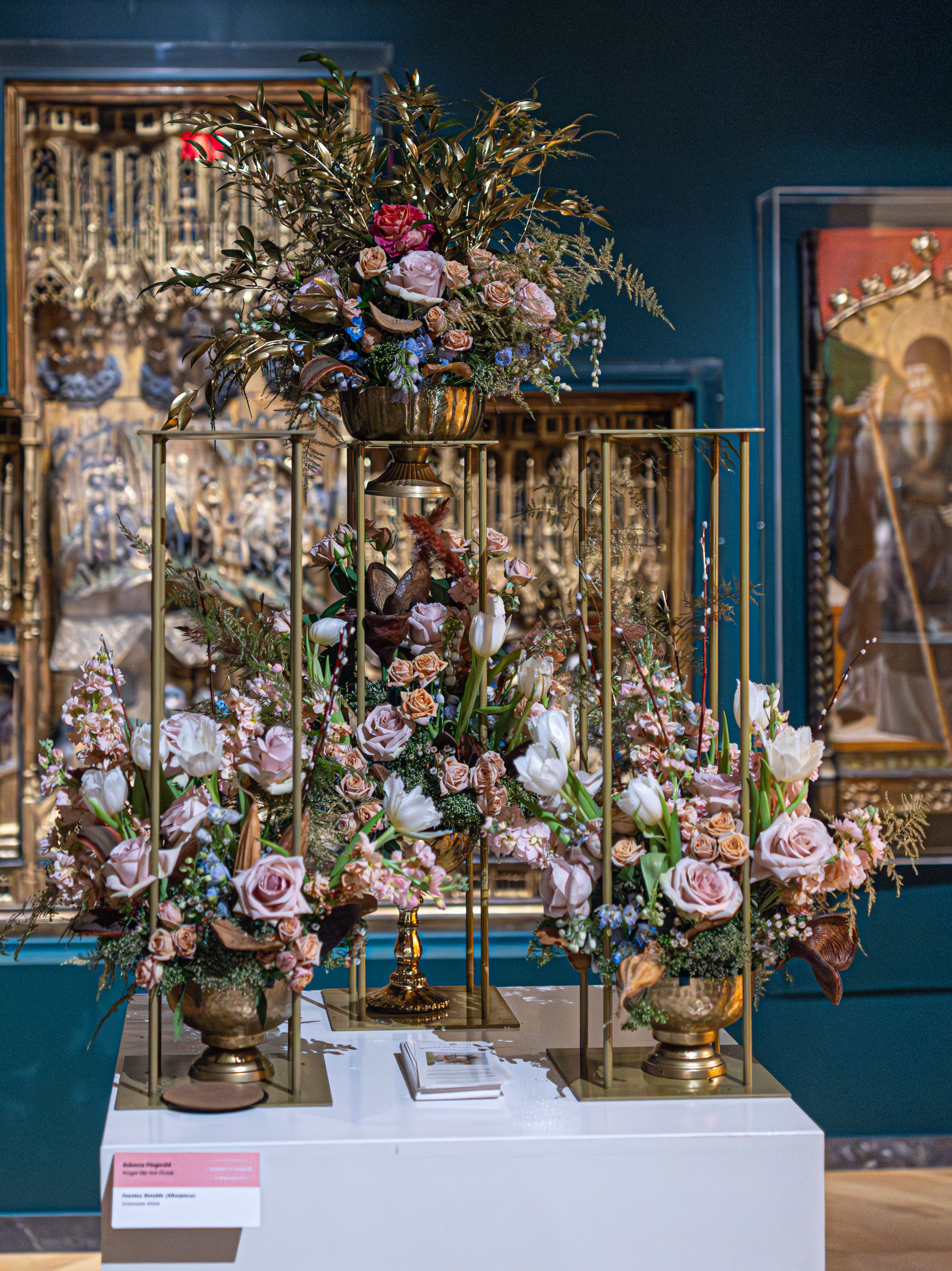
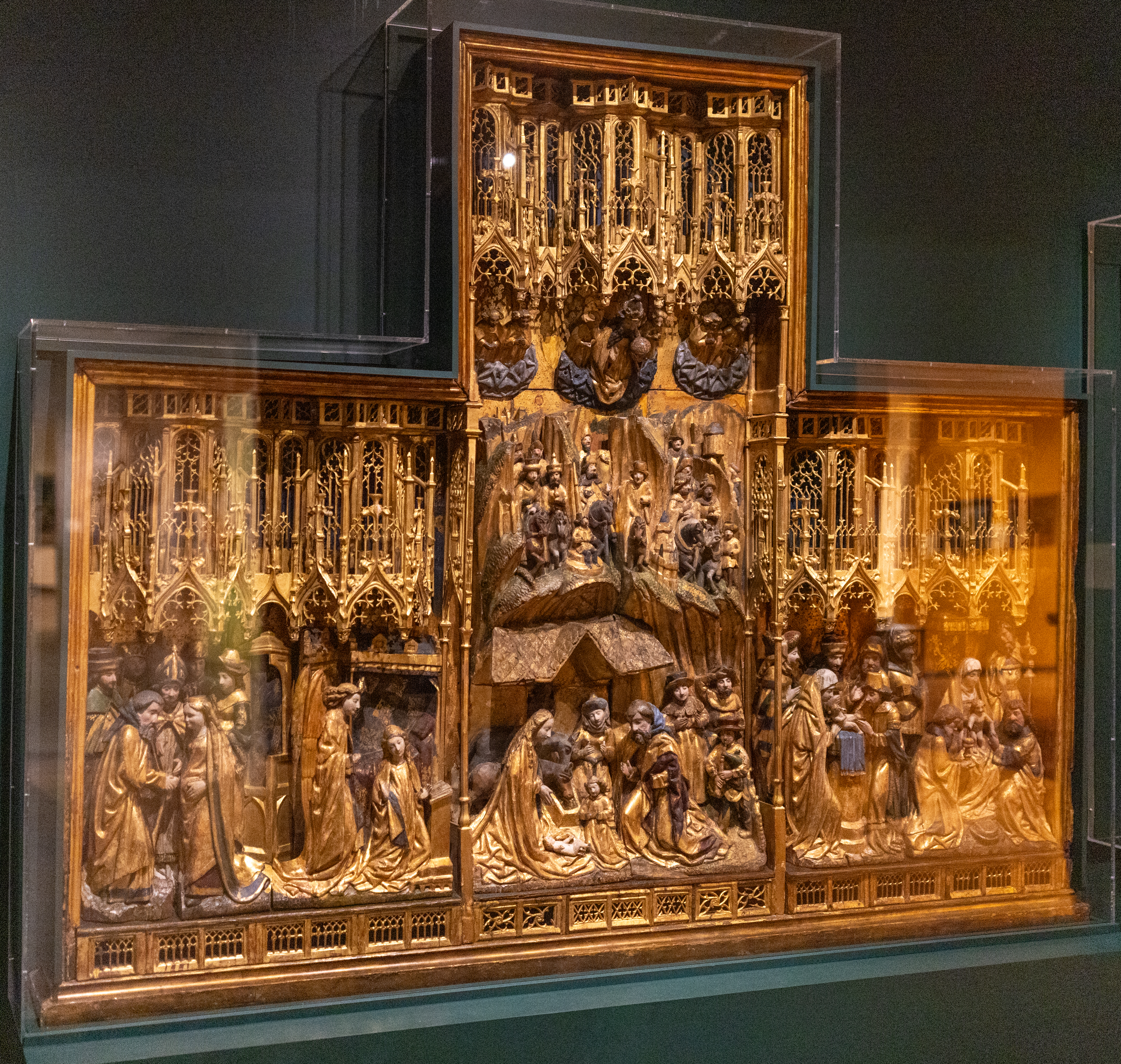
This arrangement Rebecca Fitzgerald at Forget Me Knot Florist is based on a very intricate piece of art. Fuentes Retable by and unknown artist or artists is one of the more creative and detailed pieces in the exhibit.

This finely carved retable, with a Brussels mark of manufacture on the back, is one of only 35 surviving altarpieces known to be imported from Flanders to Spain, and the single example found in an American collection. The altarpiece was made for the church in Fuentes, a small town no longer in existence, located near the city of Valladolid, Spain.

The altarpiece illustrates scenes from the life of Mary, Mother of Christ. The left panel shows the Betrothal of the Virgin to Joseph and the Annunciation with the Archangel Gabriel and the Virgin. The bottom of the central panel shows the traditional figures associated with the Adoration, including Mary who worships the infant Christ. In the mid-section are mountains, buildings and the three Wise Men and their followers. In the top portion God, holding the orb of the world in his hand, is flanked by angels. The right panel contains the Presentation of Jesus at the Temple and the Epiphany. Framing the entire composition is a canopy of delicate tracery. At one time the altarpiece had doors, now lost.

The altarpiece, both opulent and costly, demonstrates the strong devotion of a small, rural congregation. It was produced during the reign of King Ferdinand and Queen Isabella, great supporters of religion and the arts. The building of churches increased and artists were commissioned to decorate the new buildings with monumental altarpieces, statues and elaborate carvings for walls and facades. Many of the artists were from Flanders, a country which also supported Catholicism. Flemish craftsmen traveled to Spain to work in the expanded art market or fulfilled orders, such as for this altarpiece, in their native land. The altarpiece was then shipped to Fuentes and assembled and installed by Spanish craftsmen. Thus, the piece is not the work of a single artist, but rather the product of a team of people, each specializing in distinct stages of the altarpiece’s creation

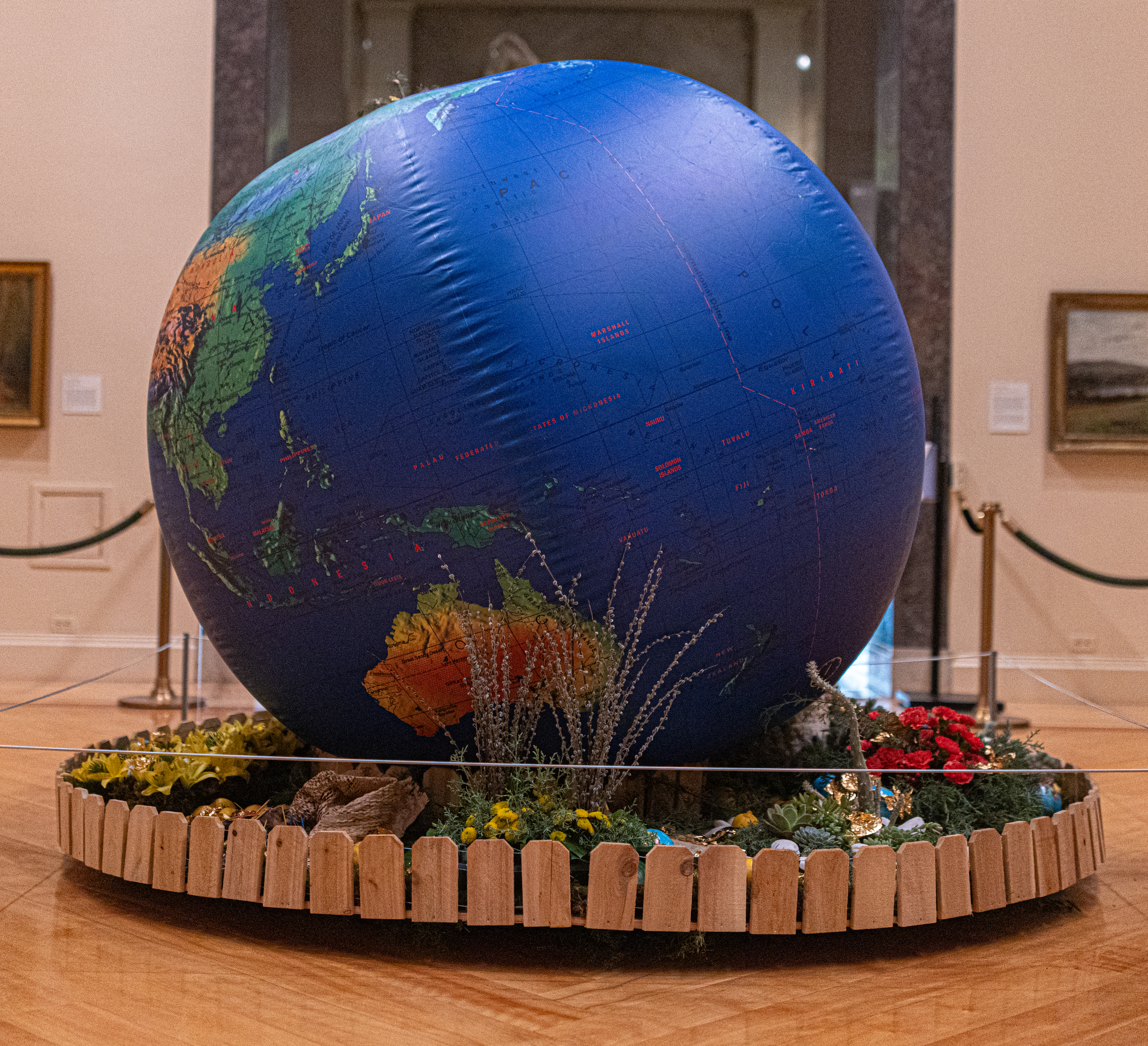
Earth: A Glowing Cornucopia was made by the team at Flowers, Flowers! It used a sprinkle of many things. They described their aork of art as “a symphony of Earthly things.”

Some of the floral arrangements were not based on books or works or art, or anything in particular like these arrangements.

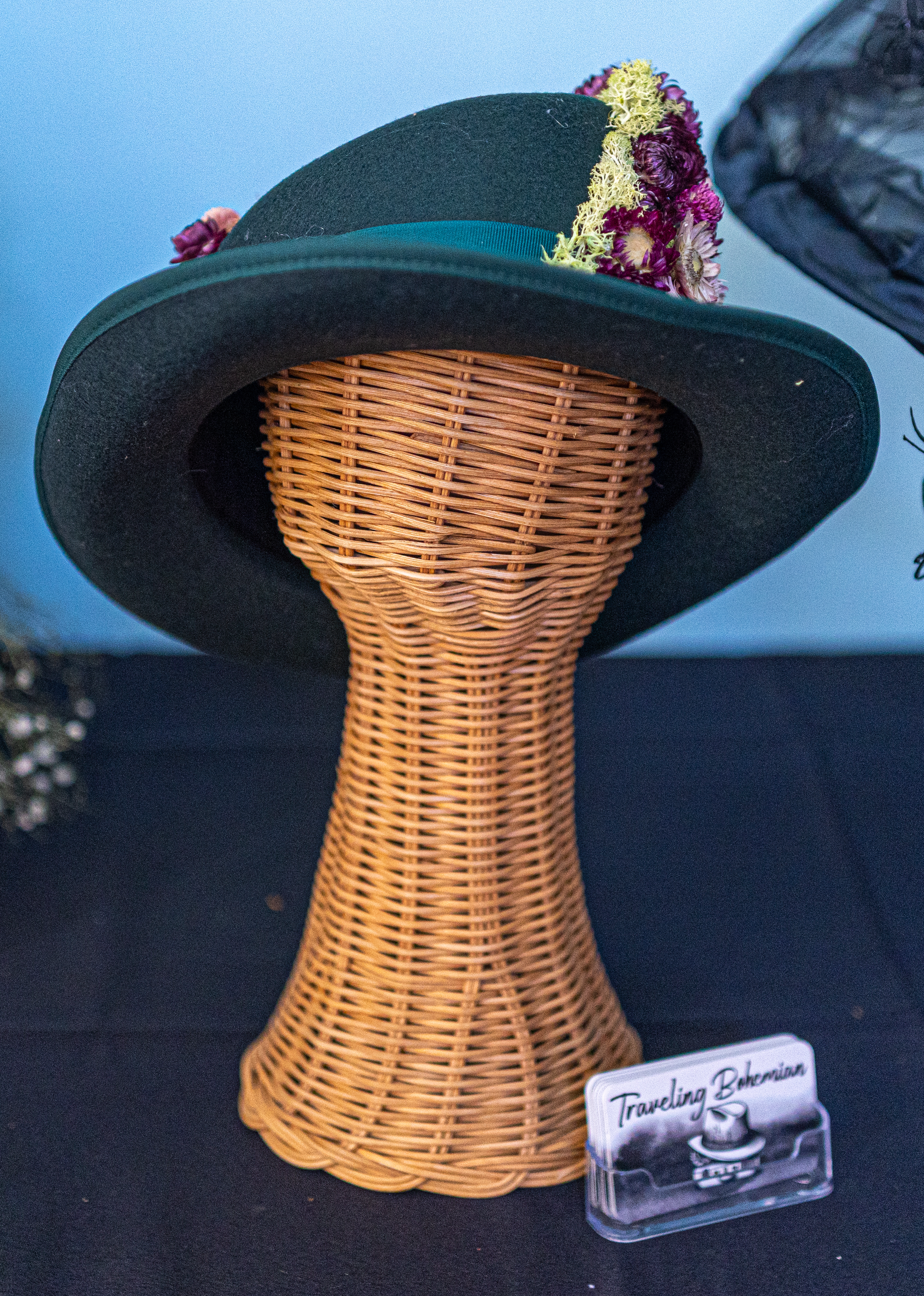
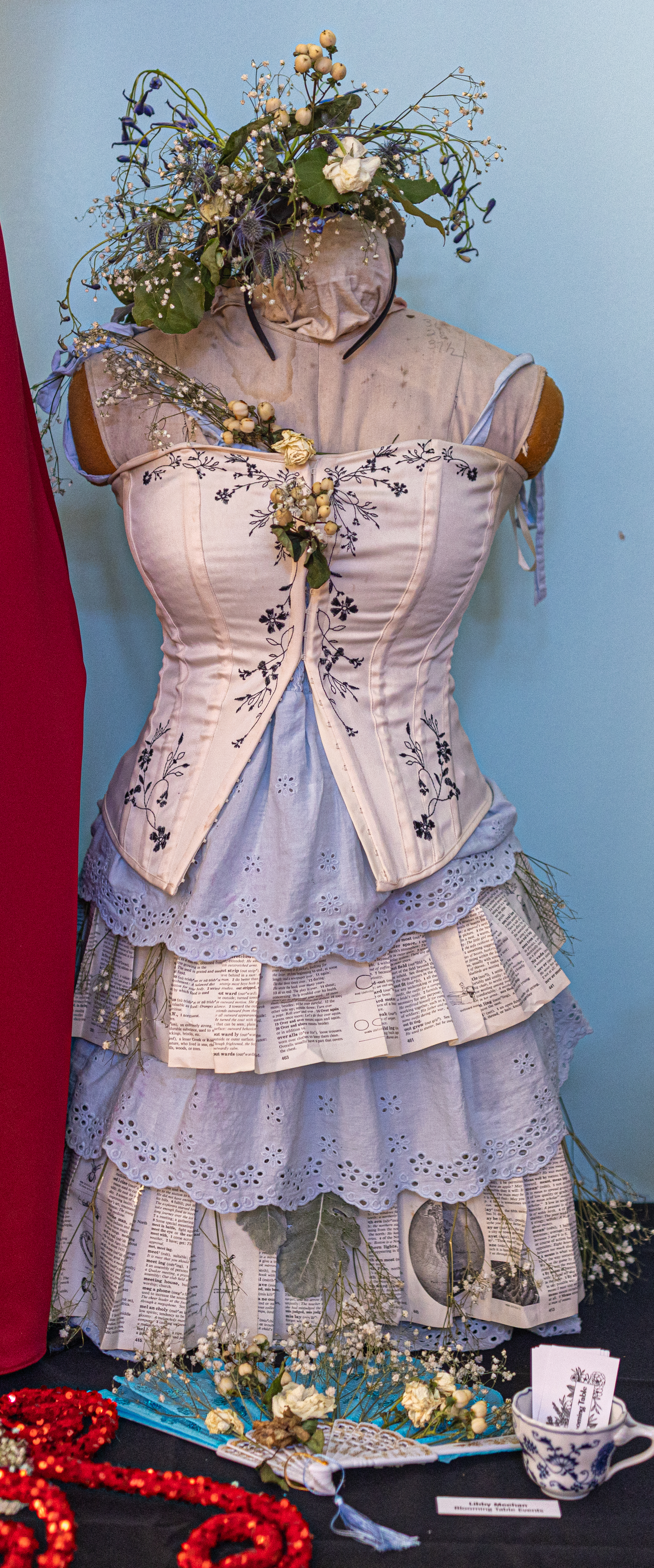
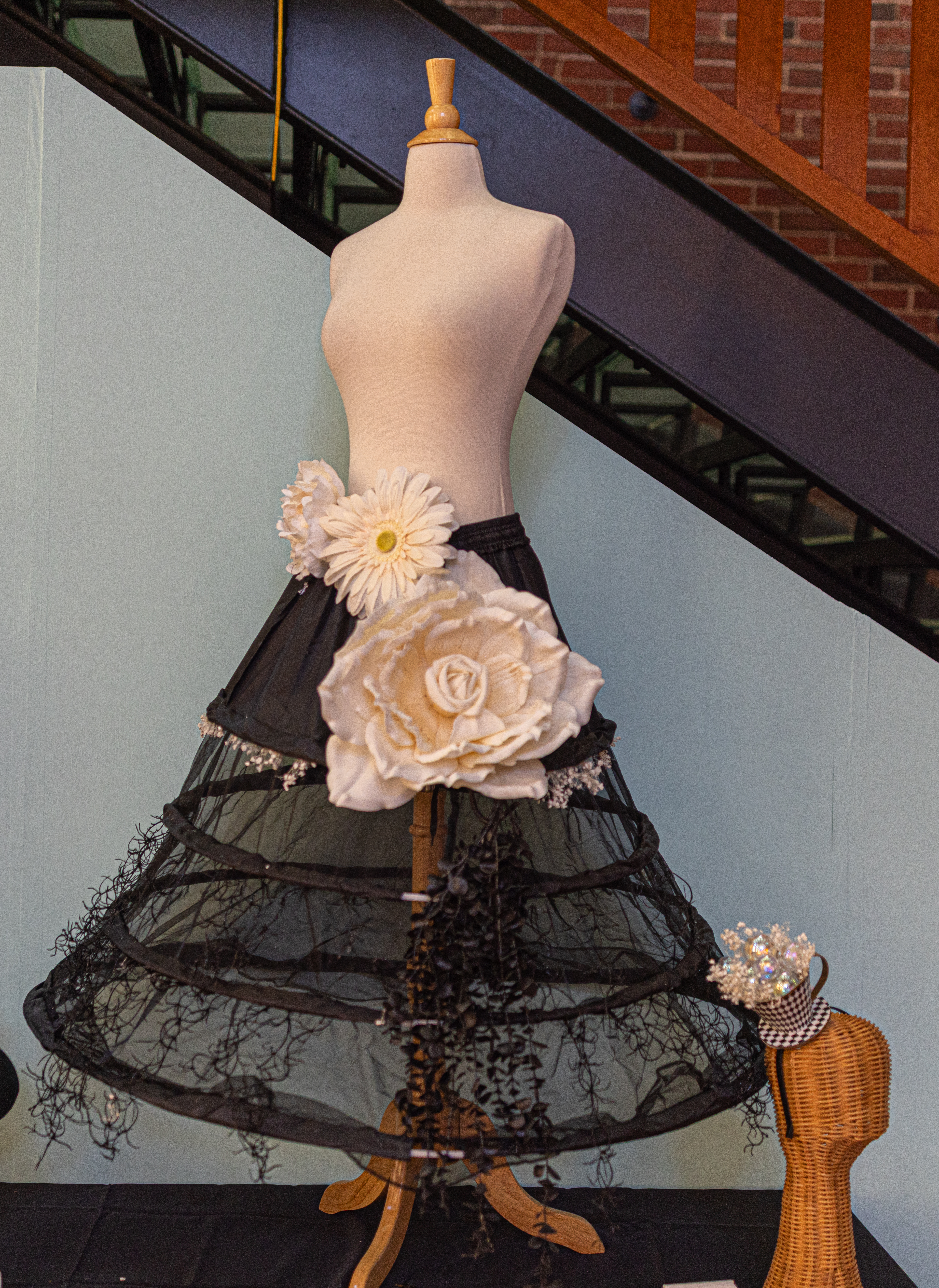
This work of art used flowers and other materials to make some unique fashion.

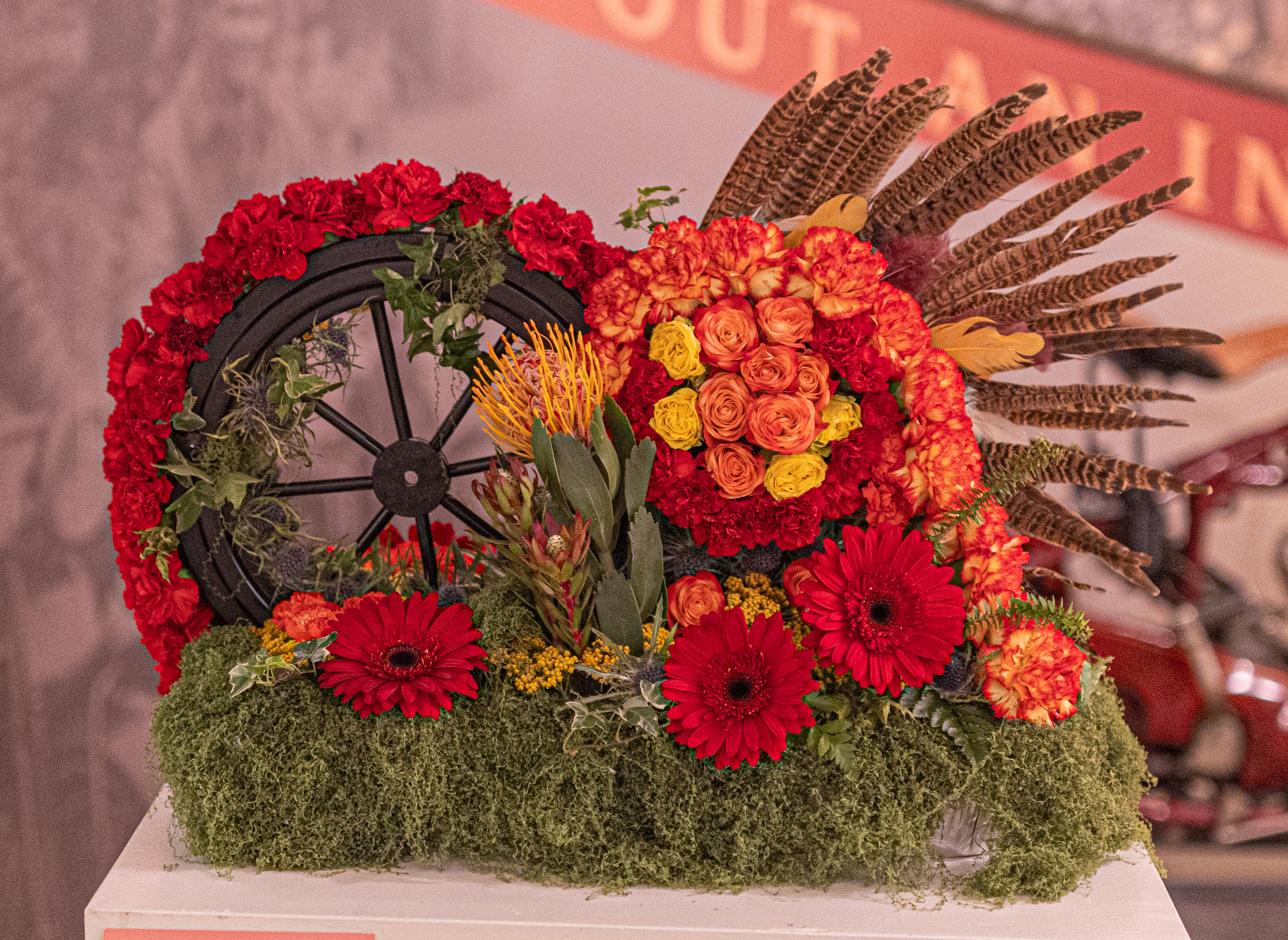
Not to be outdone, this floral design was modeled after a motorcycle. No, that’s not a typo!

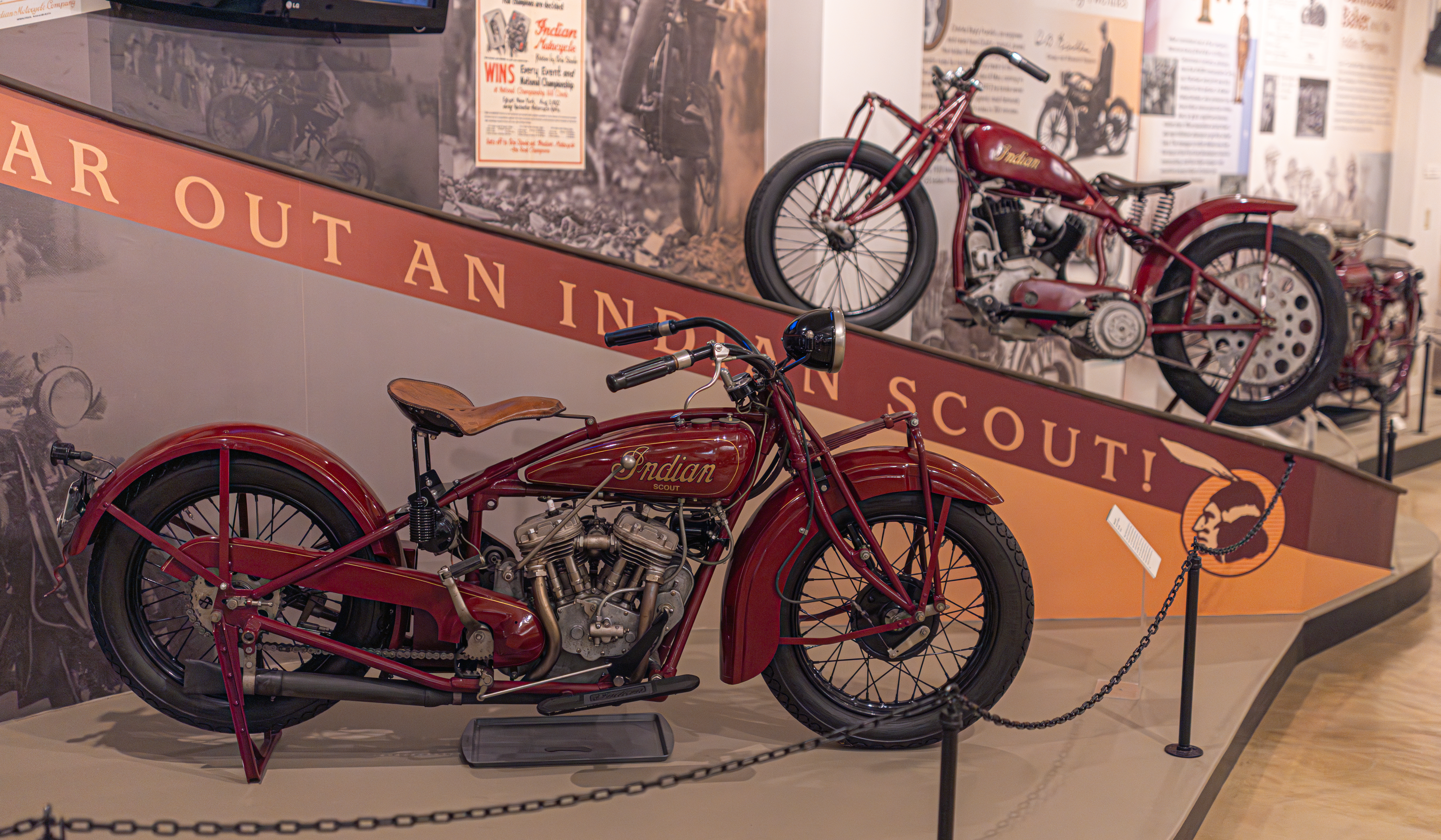
Springfield, MA. is home to Indian Motorcycle. And this piece pays homage to that history. In fact, it is the Scout motorcycle that is depicted here.

Responding to feedback from racers, the original Scout introduced in 1920 was updated with key modifications making the new Scout 101 one of the most popular models ever built. Charles Franklin tweaked his original design, creating a bike that for years was a favorite among racers even though actual production years were few due to the onset of the Depression. The Scout 101 had a stronger frame, larger wheelbase, an increased fork rake, a front brake and a low 26 and one quarter inch seat height.

There was also a section of the Wood Museum (one of the five museums that makeup the Springfield Museums) that had floral arrangements or works of art that celebrated America’s 250th anniversary.

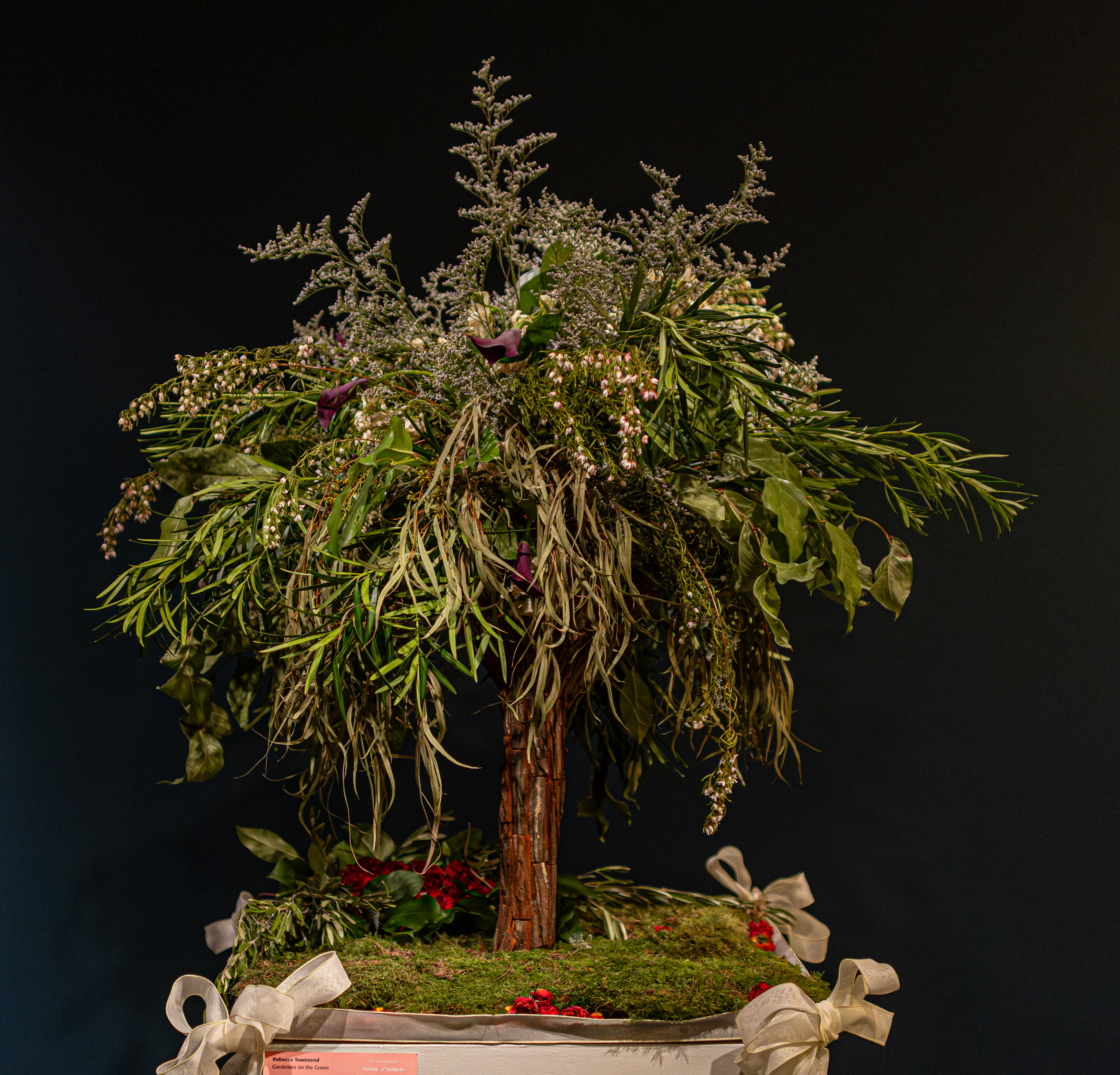
In observance of the 250th anniversary of American independence, Rebecca Townsend at Gardeners on the Green created the Tree of Liberty.

The “Tree of Liberty” has roots in the American Revolution. The Sons and Daughters of Liberty, formed in the 1760s in opposition to the Intolerable Acts, played key roles in the Revolution. Quite literally and Elm tree near Boston Common served as the meeting grounds for the protesters and gatherings of the Sons of Liberty. Massachusetts towns declared their independence as early as two years prior to July, 4, 1776 (October 4, 1774 in Worcester, MA), and they did so in part because the Massachusetts Government Act prohibited them from holding town meetings . People met and acted despite this. The Sons of Liberty included Samuel Adams, who noted that, “with ladies on our side, we can make every Tory tremble.” Daughters of Liberty, ;like Sarah Bradlee Fulton, played roles in the Boston Tea Party and in the War itself.

The design depicted here draws from the importance regular people played in the Revolution, with a tree as the gathering place, and people exercising political agency in the ways they could. Women made homespun linen as a means of economic boycott. Olive branches draw on the symbolism offered by the “Olive Branch Petition.” The Continental Congress adopted this in July, 1775 to avoid a war with Great Britain. Of course, this gestured failed. Then, on July 4, 1776, the Continental Congress resolved to create the Great Seal of the United States. The design featured an eagle turned towards its right talons, which grasp an olive branch. The red rose petals are a reference to Thomas Jefferson’s 1787 comment that the “tree of liberty must be refreshed from time to time with the blood of patriots and tyrants. It is the natural manure.”

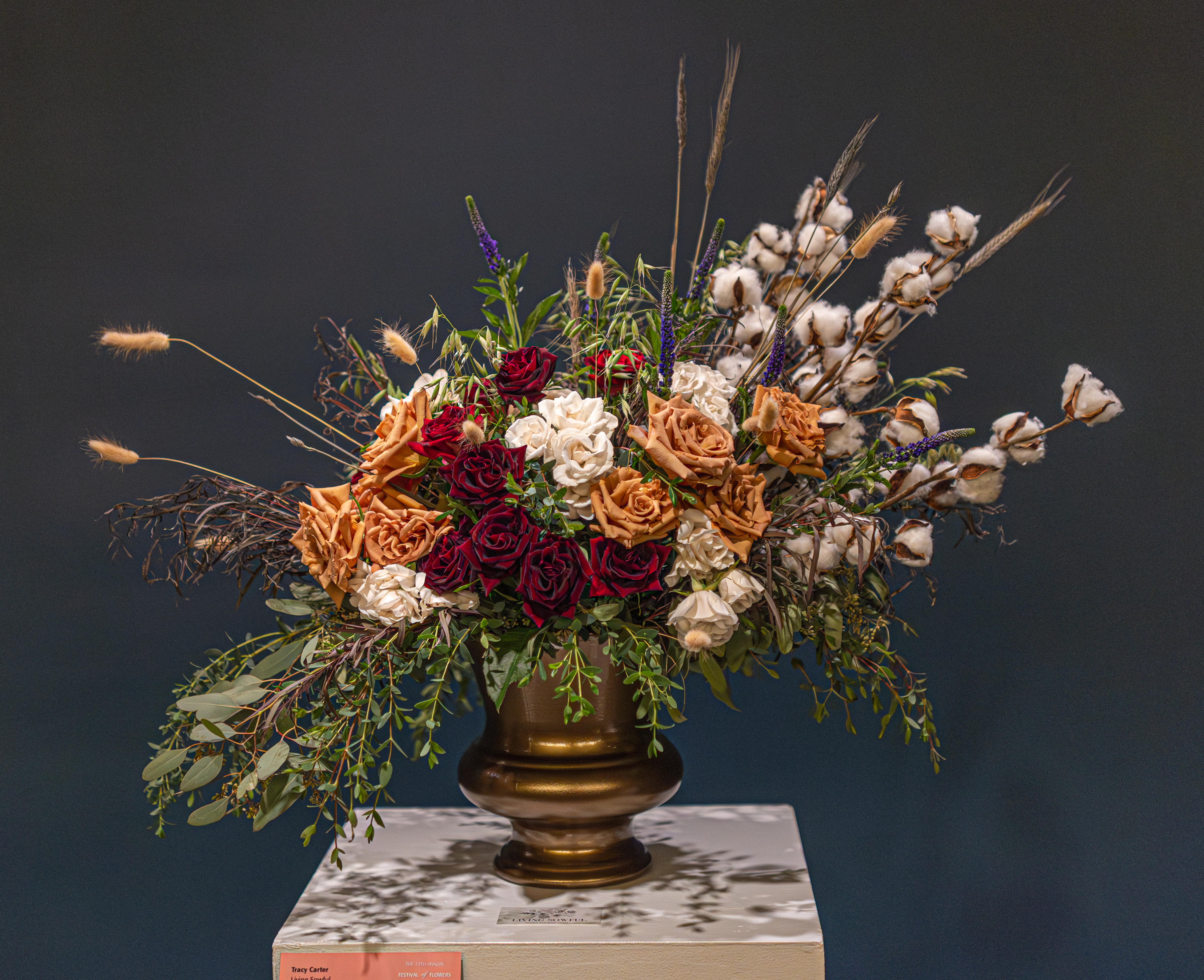
Tracy Carter at Living Sowful Micro Flower Farm. Her piece, “The People, Not Just the Promise” reflects the spirit of 1776 through the lens of everyday life. While the Declaration of Independence expressed bold ideals of liberty and equality, the nation was shaped by the diverse experiences of its people.

Layers of red, white and blue blooms are woven throughout the design to represent both aspiration and resilience. Cotton and wheat are included to honor the labor and hands that built and sustained early communities. The arrangement embraces movement and open space, suggesting the promise of 1776 continues to unfold over time, shaped by those who lived it.

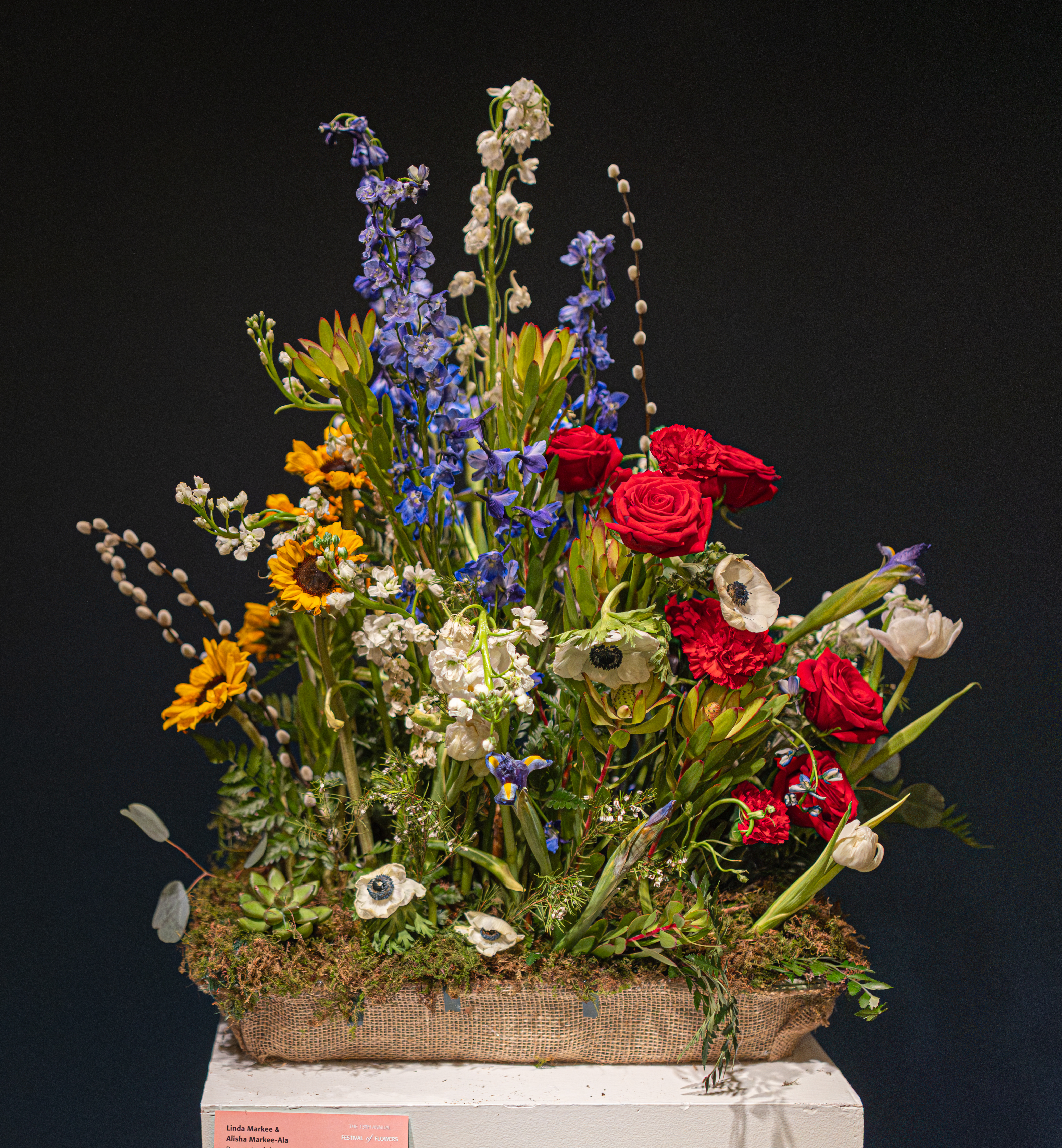
“WE THE PEOPLE” by Linda Markee and Alisha Markee-Ala from Bouquets of the Valley celebrated our independence.

The American garden has never belonged to one people. The tulip traveled from the Ottoman Empire. The rose from ancient Persia. The dahlia marigold from Mexico. The peony from China. The ranunculus from the Middle East. The protea from South Africa. The orchid from tropical Asia. The sunflower was already here, tended by the Native peoples of this land long before the republic was imagined.

They came with immigrants and refugees, With people who carried seeds in their pockets as the last remnant of home. They took root in unfamiliar soil and grew alongside everything else that was already there.

This arrangement does not separate by origin. It places them together as one living thing – because that is what they have always been. That is what we have always been.

Many roots. One harden.

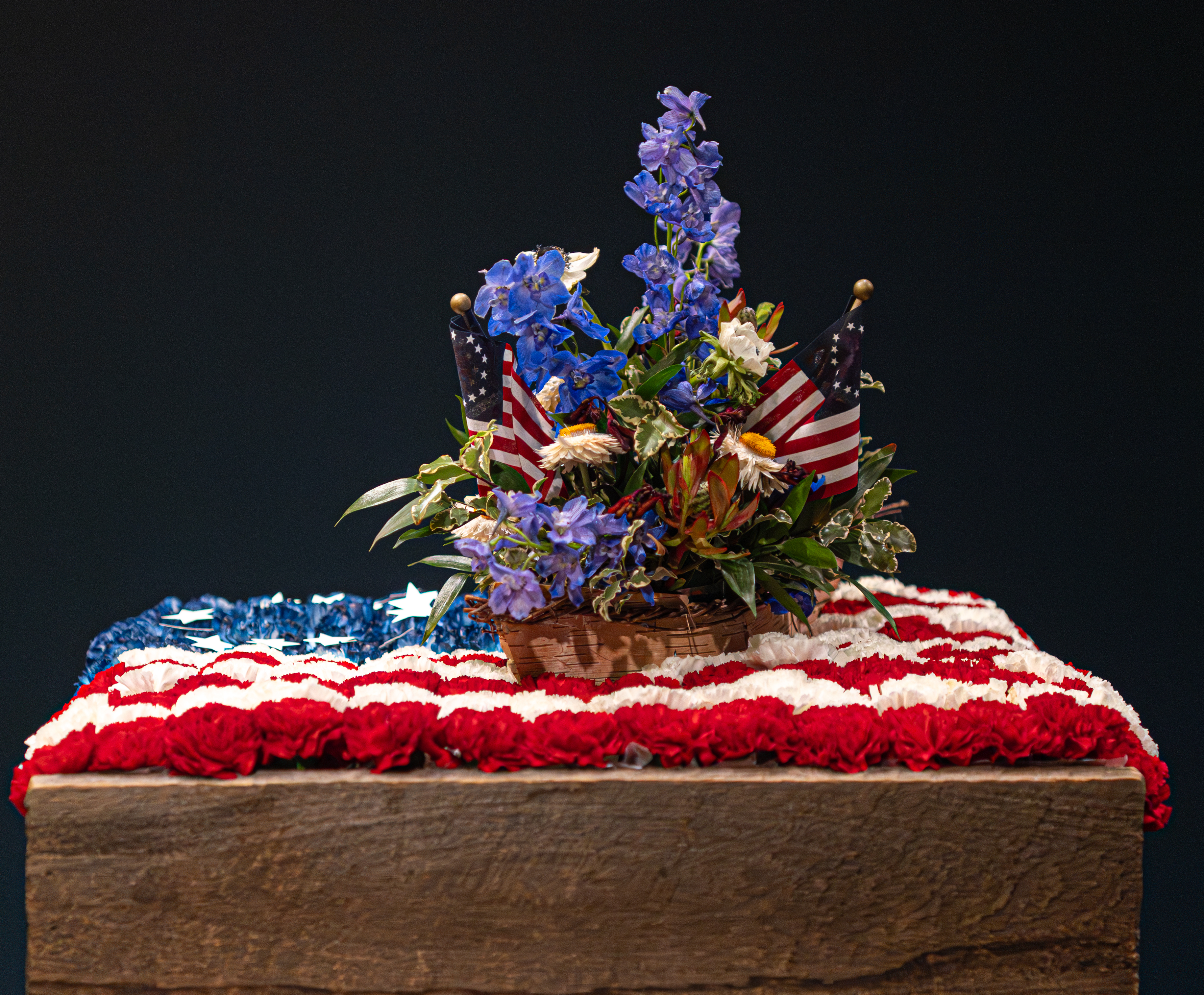
Joanne Teehan at Randall’s Farm & Greenhouse created this arrangement in spired by the 250th anniversary of our Independence.

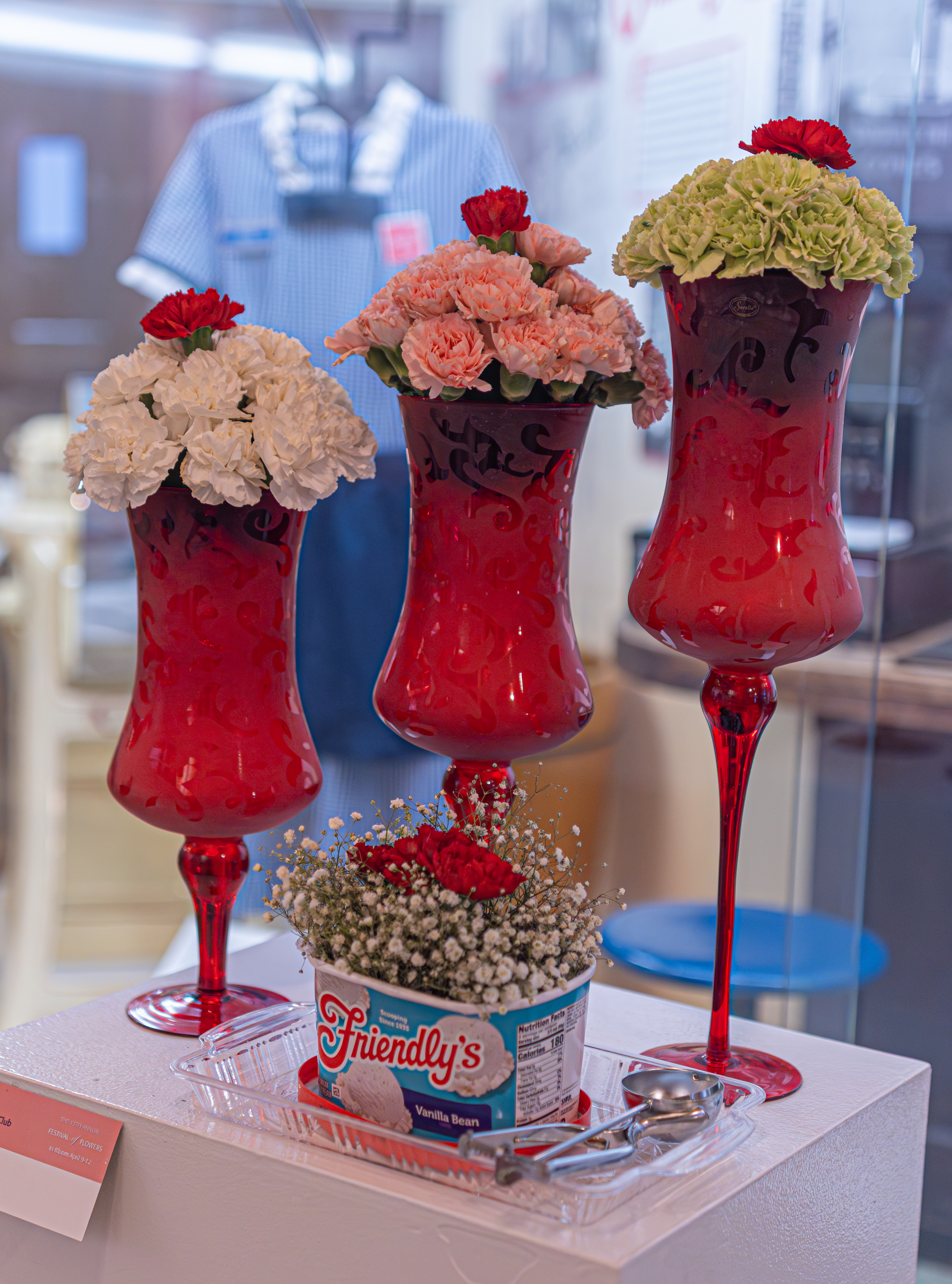
If you’re thirsty looking for all these arrangements and works of art, you can always have an ice cream of flower float. Friendly’s was founded in Springfield, MA, in 1935 and it has had a presence in many Massachusetts cities and towns, particularly western MA, although many of them have since closed.

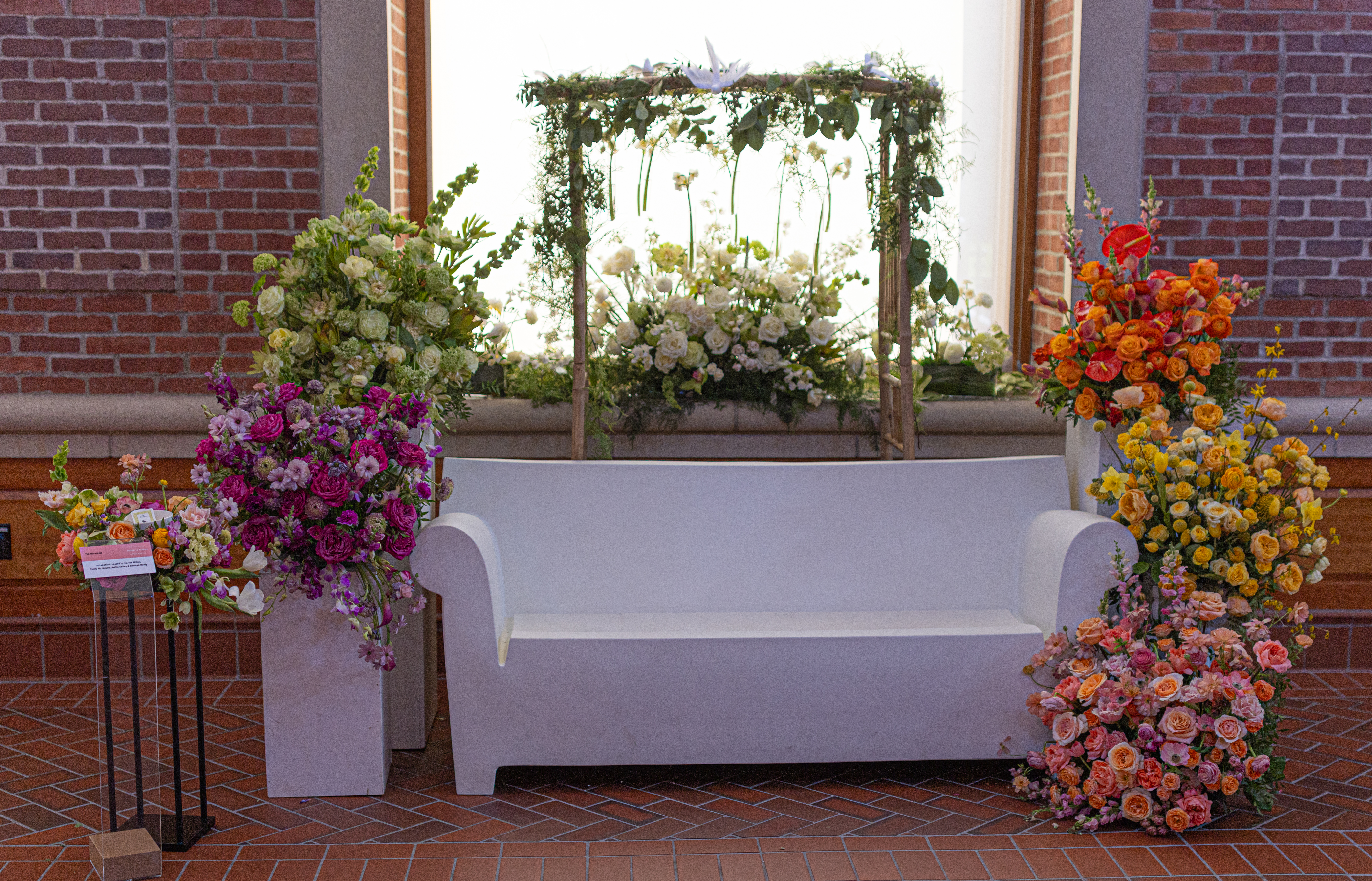
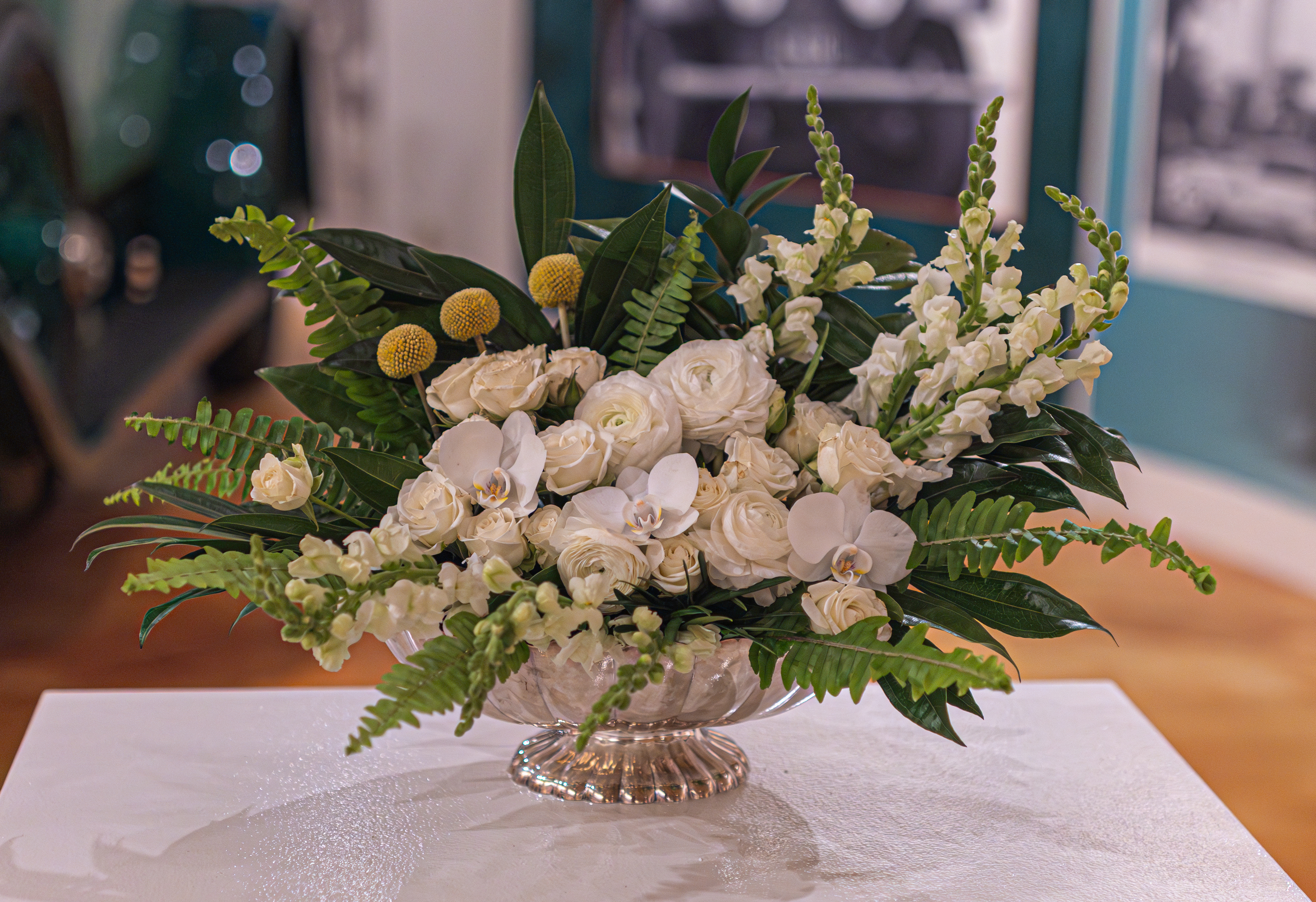
Kate Sobo fittingly from Gardeners on the Green made this arrangement based on my car. I’m kidding, of course. The arrangement is based on a 1928 Rolls-Royce Phantom I on display at the museum. The arrangement reflects the automobile’s deep greens, polished finishes and elongated, graceful lines. With ivory blooms set against structured greenery, it intends to evoke the quiet luxury of the late 1920s English countryside, channeling the atmosphere a Great Gatsby garden party – timeless, refined and subtly extravagant.

As you can see, flower arrangements can take many shapes and forms. Somewhat surprisingly, they can also make us nostalgic and make us think.


Book of Wonder, Cover to Cover: A Hands-On Journey with Donna Castellanos (Springfield Museums, The Michele and Donald D’Amour Museum of Fine Arts, Springfield, MA)

Date Of Visit: March 28, 2026

Location: Springfield Museums, 21 Edwards St, Springfield, MA

Websites: Springfield Museums

Donna Castellanos Design

Summary: Donna Castellano’s Cover To Cover repurposes books to make meaningful interesting works of art.

It’s a shame that once you read a book its no longer of any use. Unless, you’re Donna Castellanos.

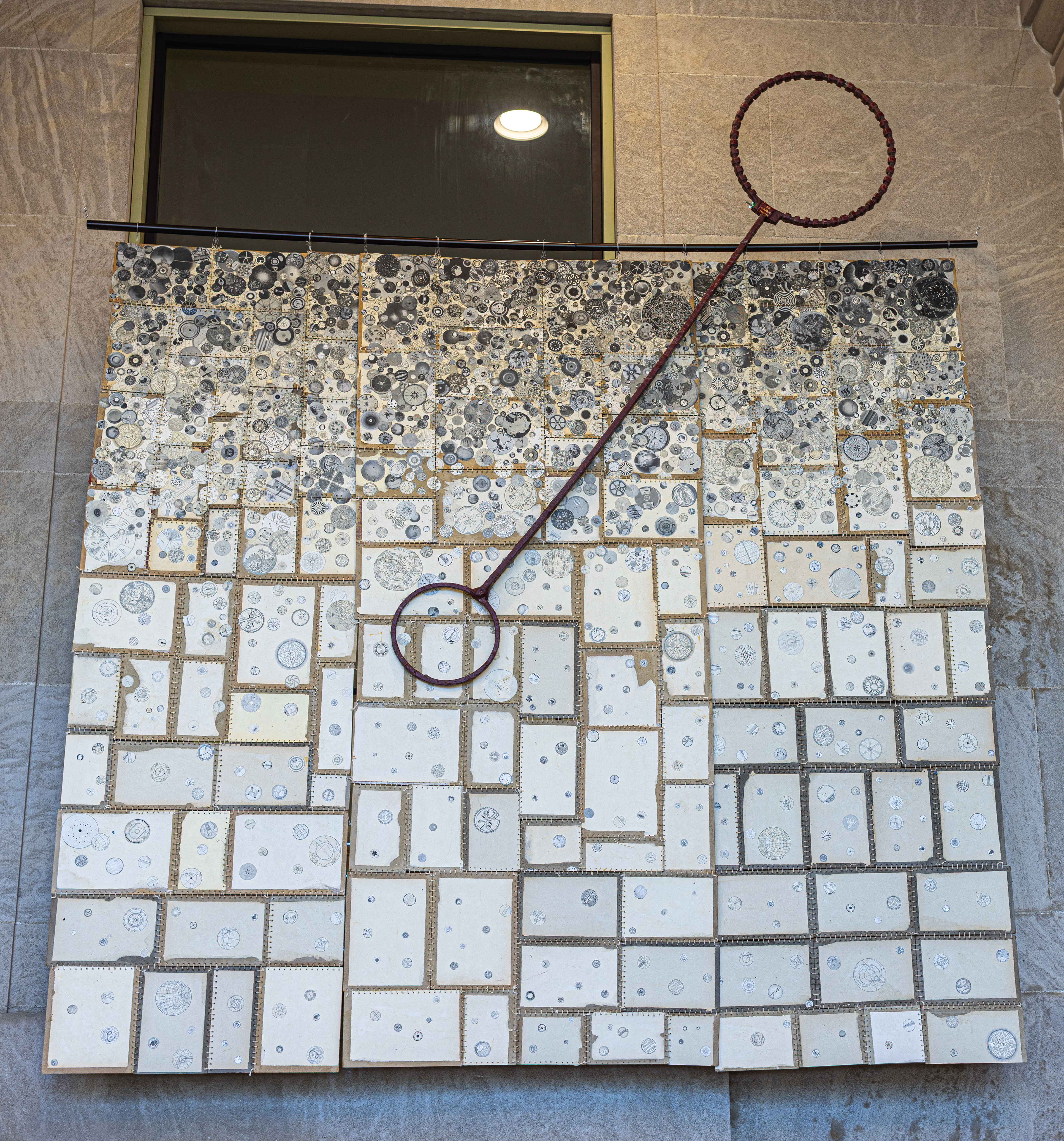
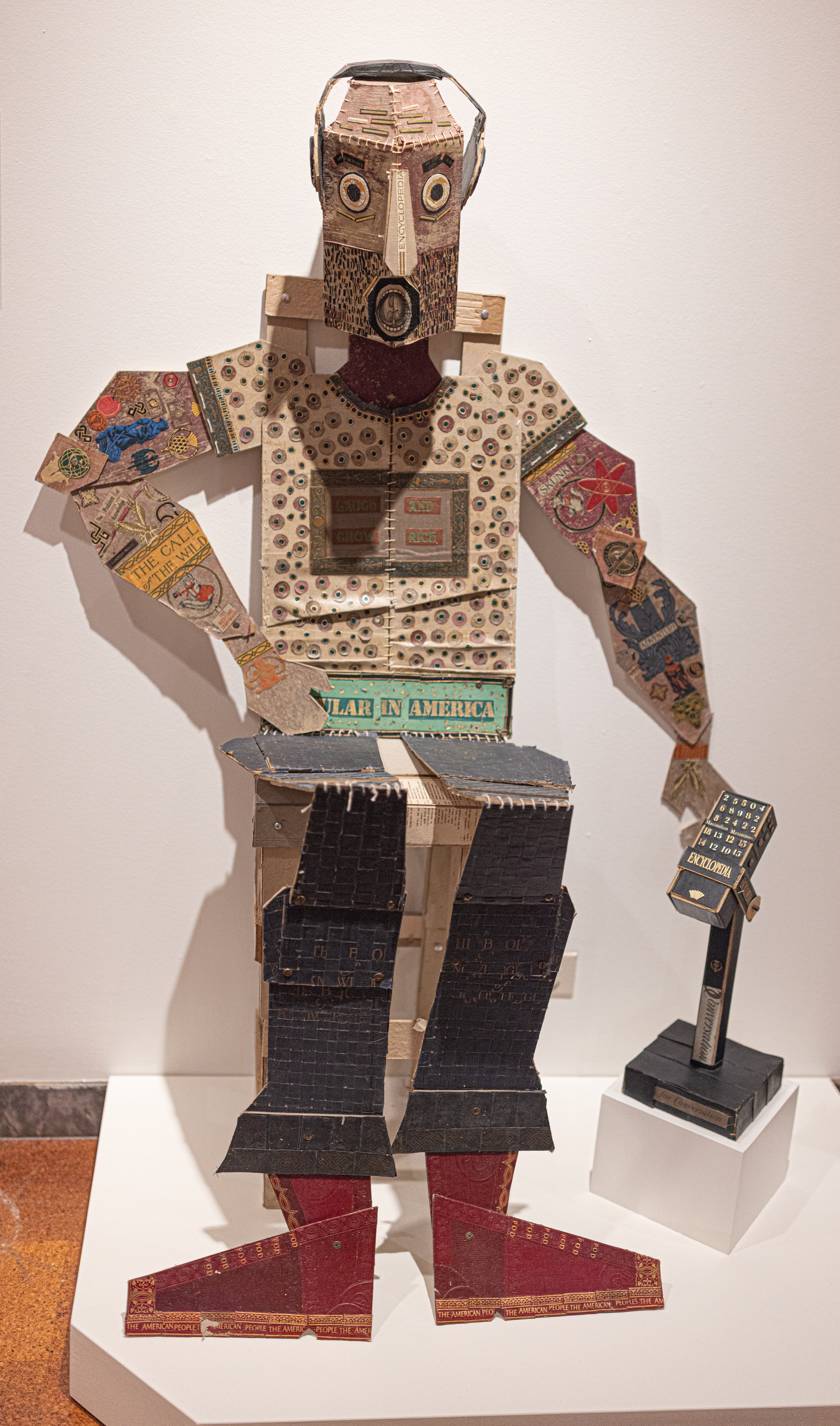
Donna, a native of Elmhurst, IL, has been using old books and other repurposed materials to make art for many years. All of her art on display, which includes a variety of subjects, has one thing in common: books.

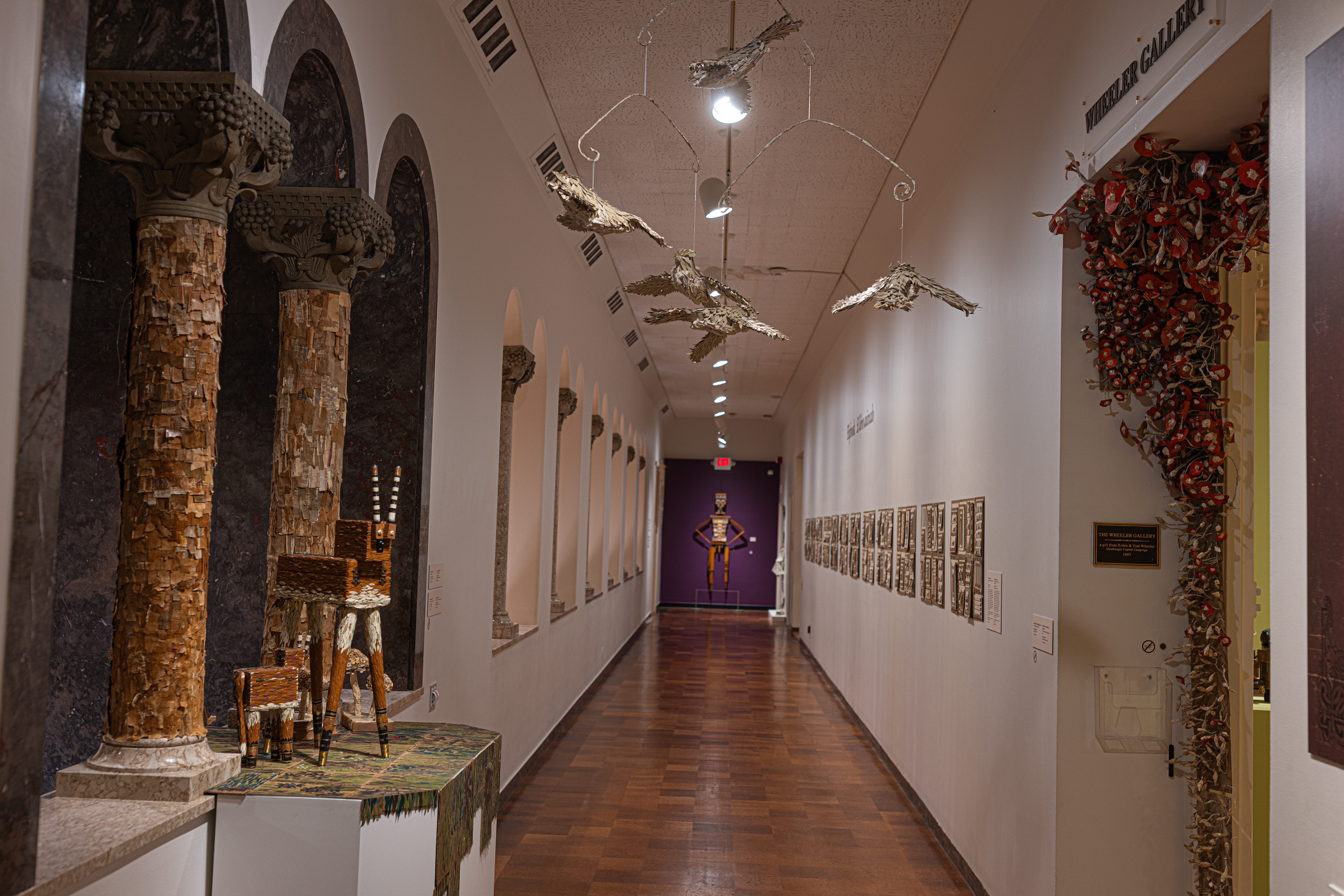
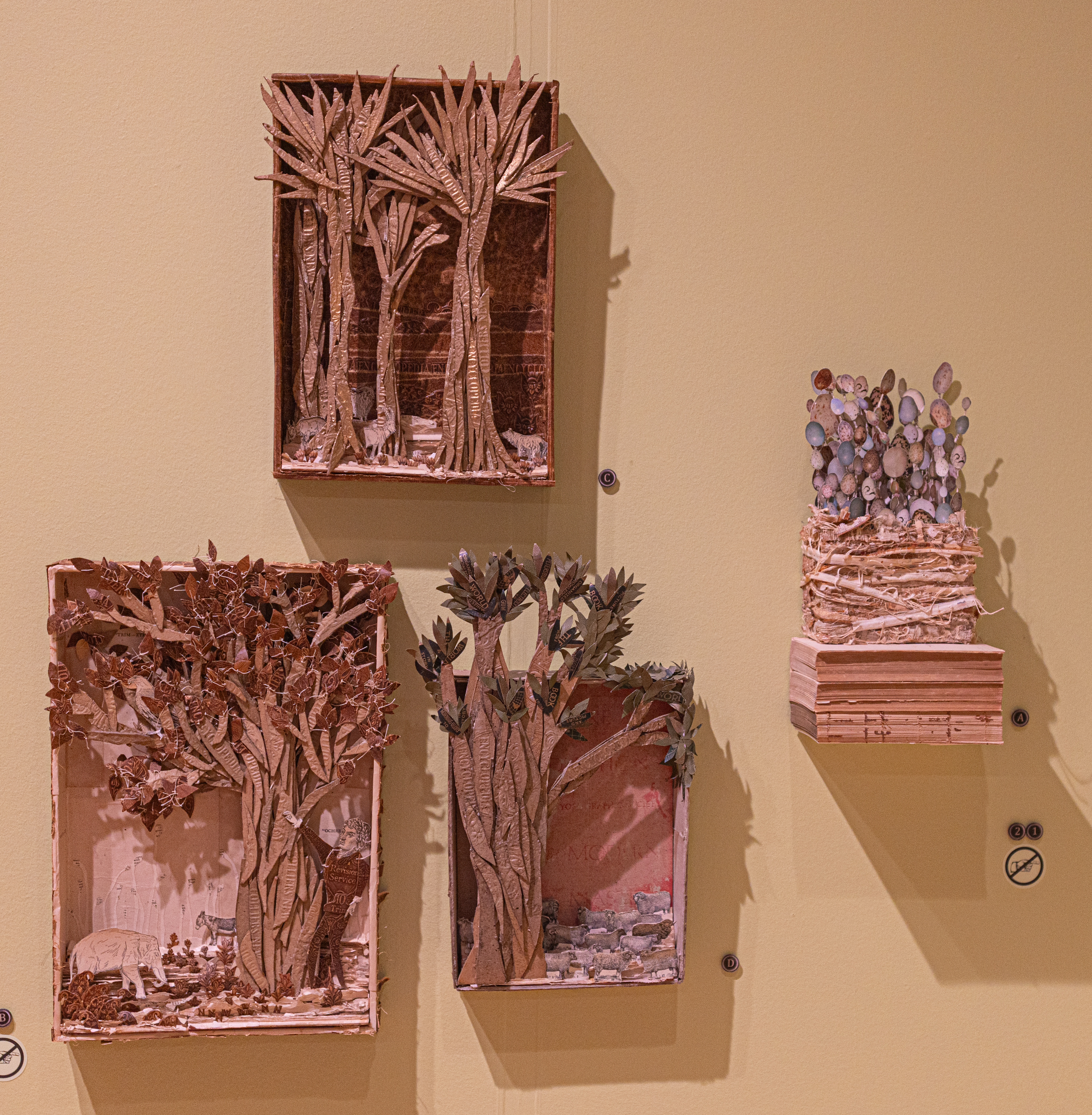
Donna told me her evolution to working with books was a gradual evolution. Initially, she was working with found objects and other repurposed objects. Then, during the 2010s, she began incorporating books into her artwork. Castellanos cuts, folds and binds parts of books to create her art. While the works of art on display aren’t necessarily entirely made of books, they all have parts of books incorporated into them. As you go through the photos it may be hard to believe these works of art are made out of, at least in part, books. They look like any other work of art.

One of the major themes of her work is family. You can feel the love and respect she has for her family and those closest to her in many of her works.

Fair warning. Due to the large volume of art pieces, this is a long post. So, buckle up!

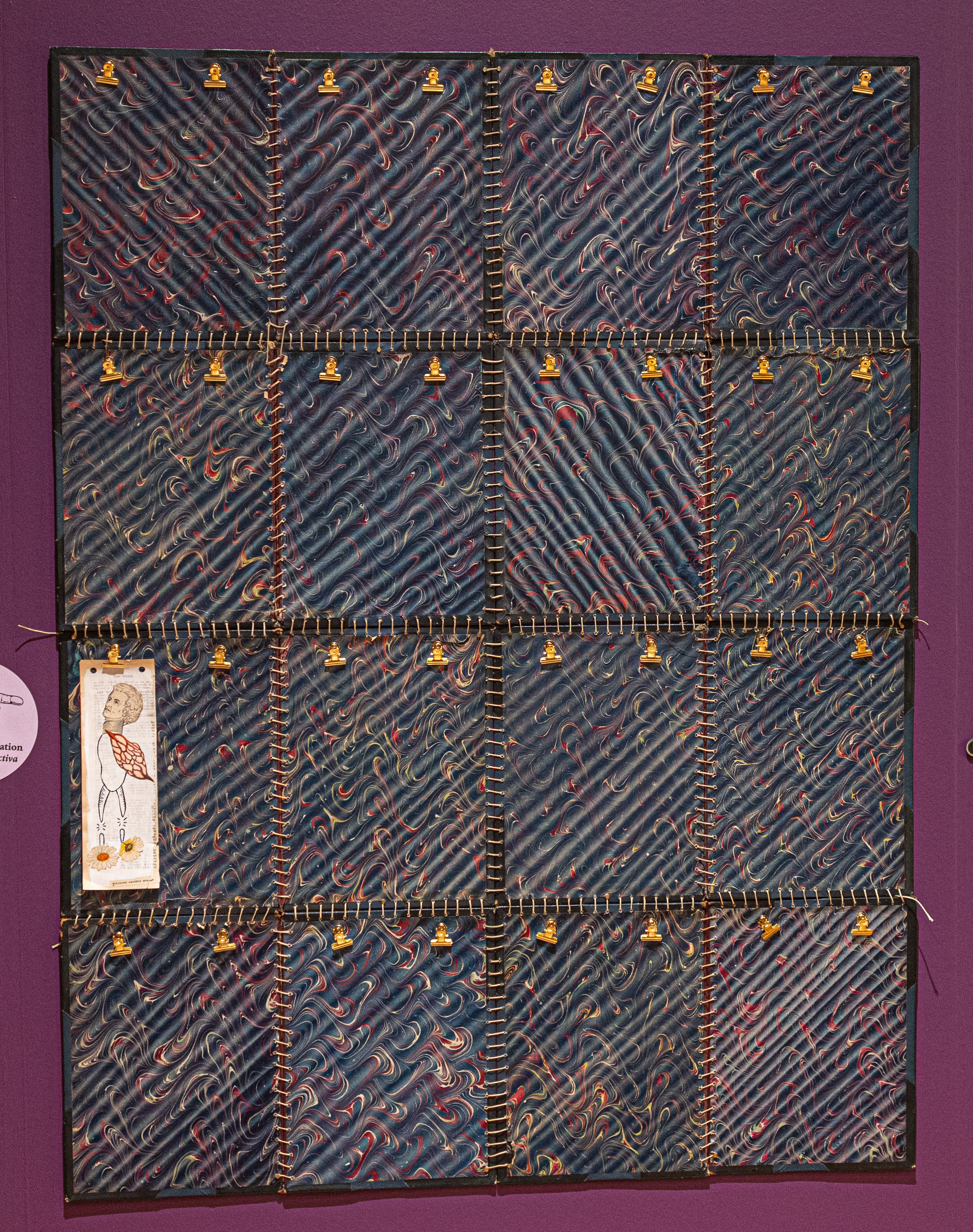
This work of art was displayed in the main entrance to the museum. It is just an introduction to Donna’s work.

At the entrance to the The Michele and Donald D’Amour Museum of Fine Arts where the main exhibit is located, there were these works of art.

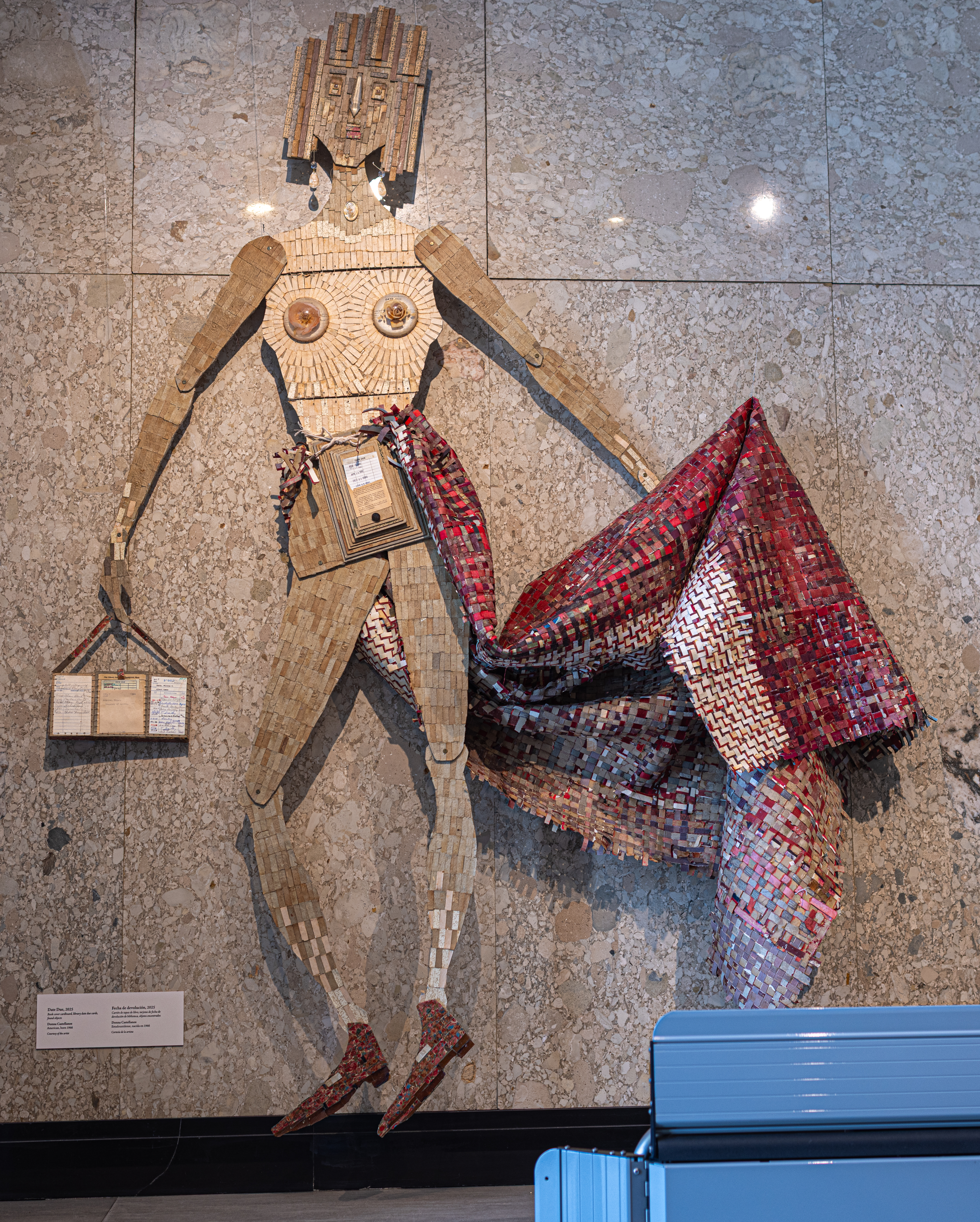
“Due Date” (2025) is made of book cover cardboard, library date due cards (does anyone else remember these?) and found objects.

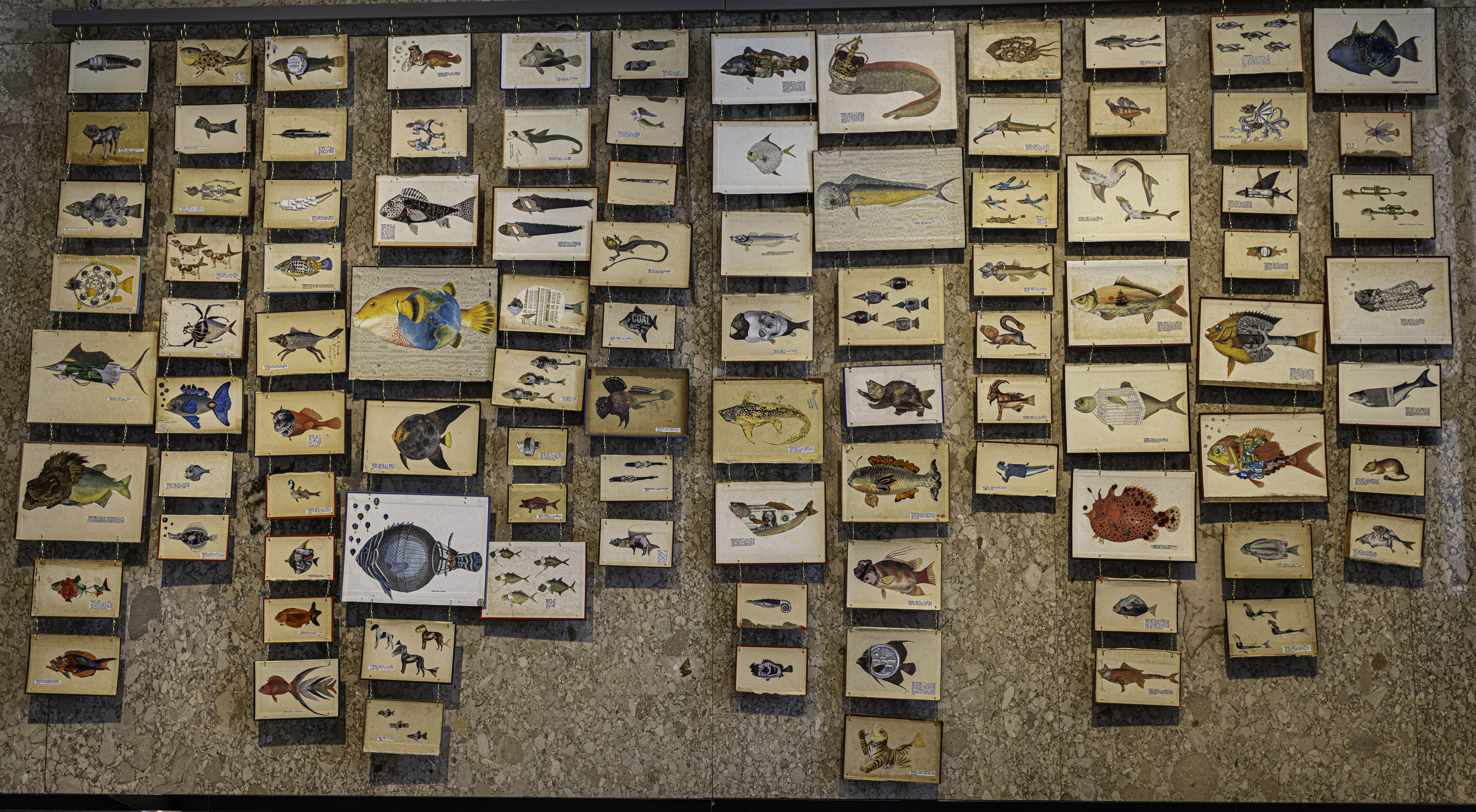
“School Books” (2025) is made of illustrations from the 1987 Die Galerie Der Fische book and vintage encyclopedias and book covers. All of the fish in the work of art are all actual fish such as balloon fish, electric fish, frog fish, football fish, lungfish, butterfly fish, red fish, blue fish, etc.

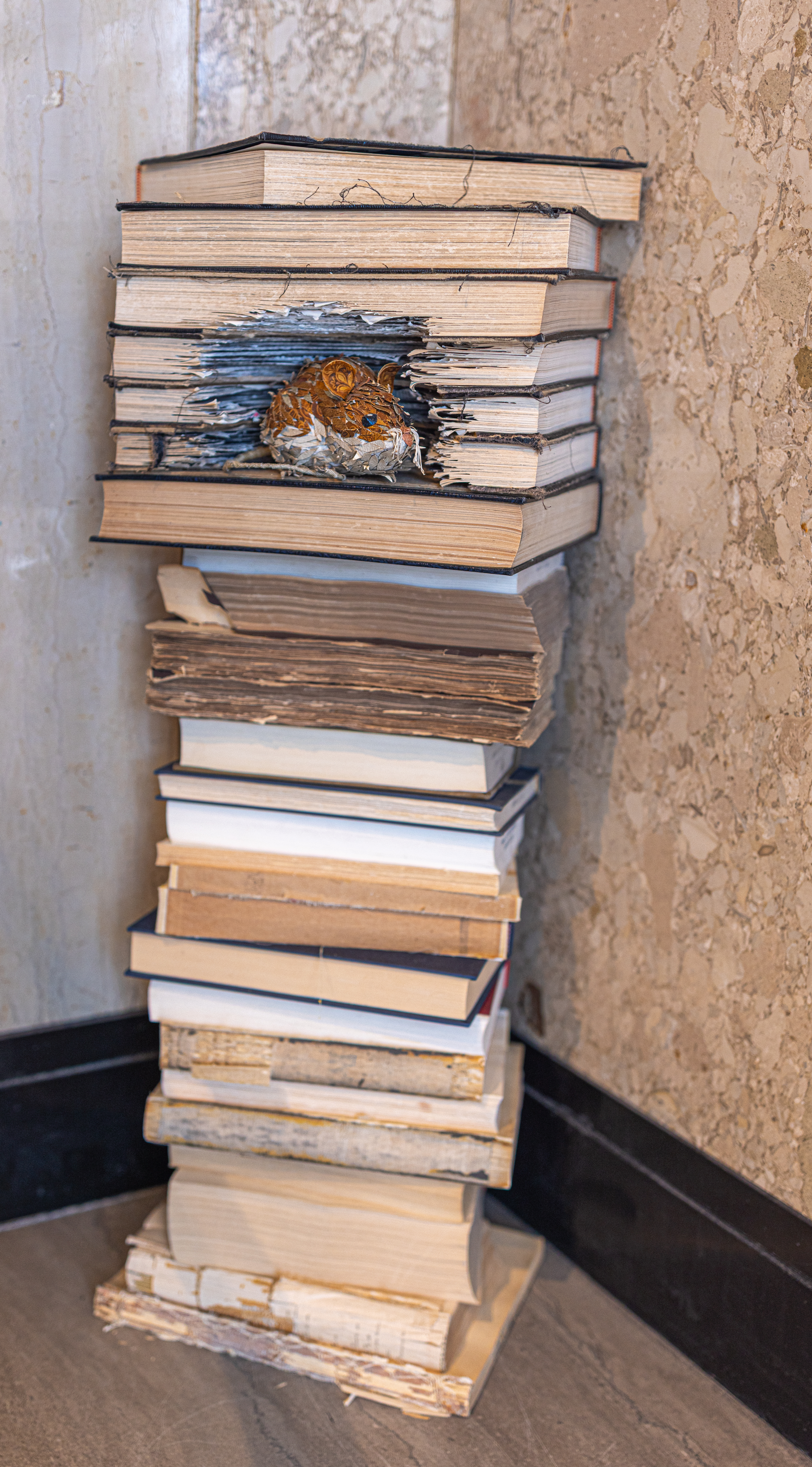
Donna created “House Mouse” (2022) out of book covers.

In the literature accompanying the art work, Donna writes that reading a book for the first time can feel like stepping into another world. While reading from cover to cover, it is easy t be transported-swept into new settings, illustrations and ideas that take us on an immersive journey. Most importantly, by engaging with stories we not only connect with the authors and illustrators who created the books, but with the people around us when we share them.

As you will see in her works of art, much of Donna’s work is drawn upon from her personal experiences and popular culture. Through some of interactive work and her imaginative creations, she draws people into her world and her creative mind.

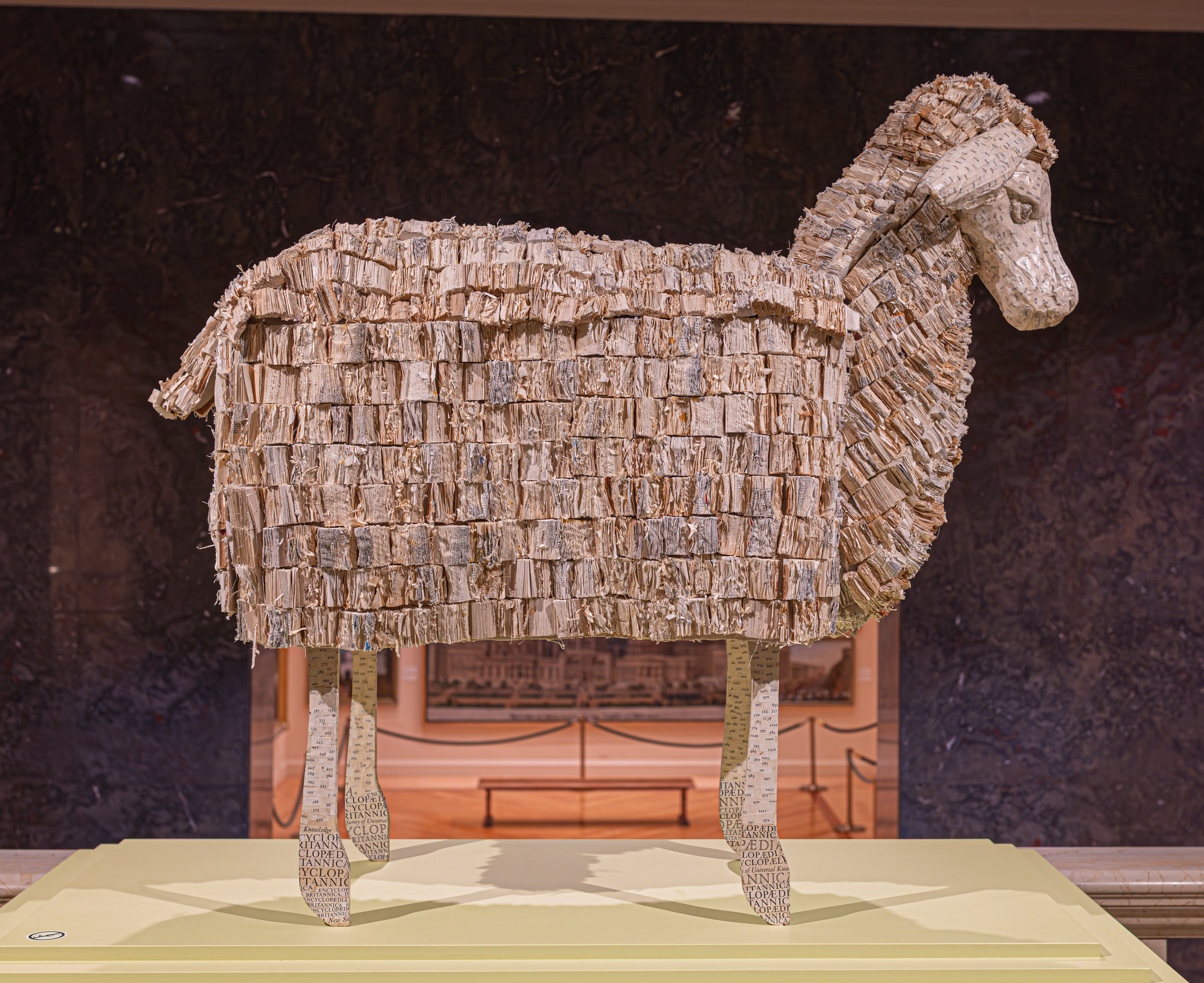
“Fall Asleep Reading Sheep” (2025) is an example of Donna’s creative mind. It is made of book bindings, salvaged table legs, papier-mache and wood.

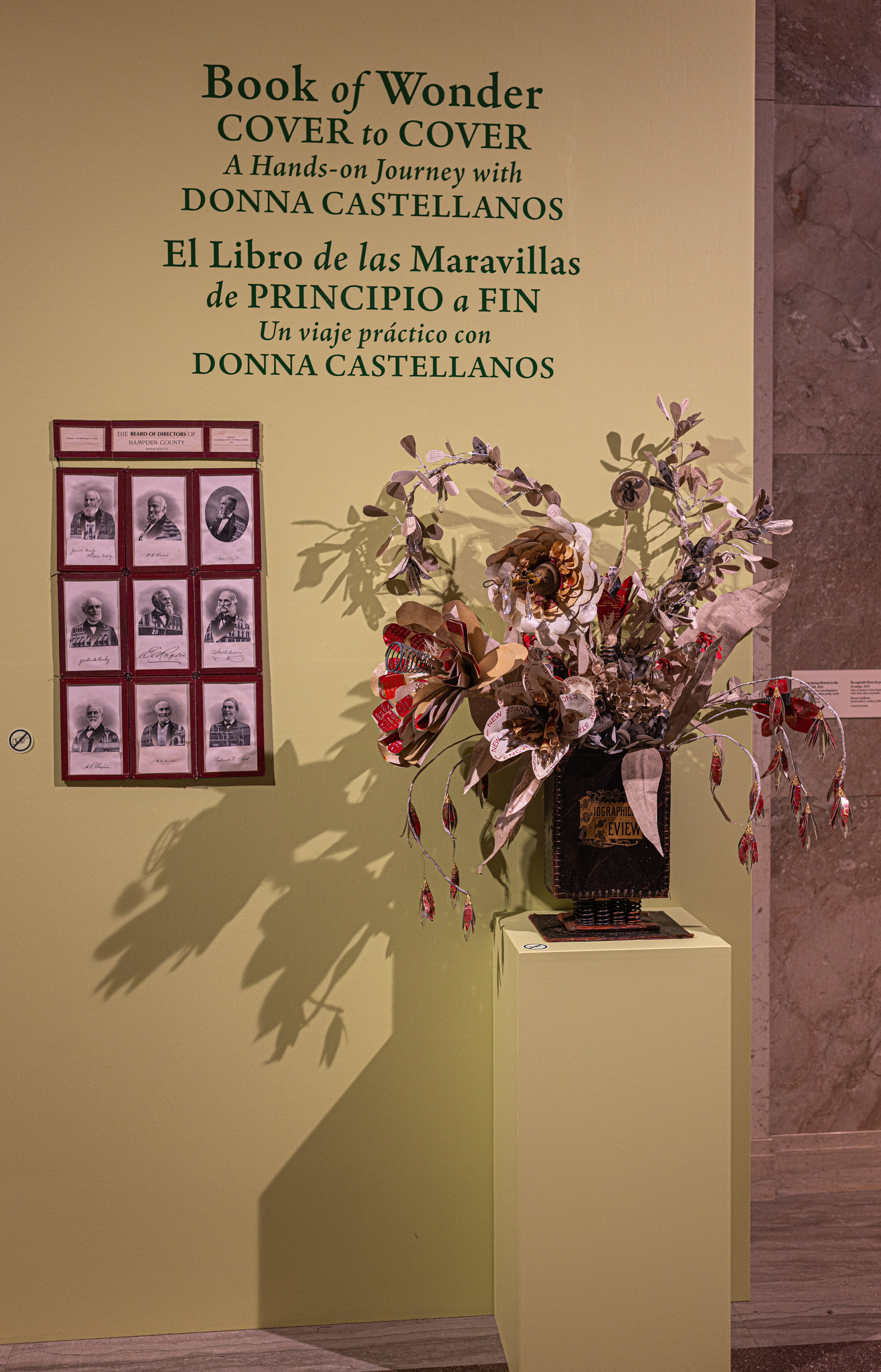
“Picking Spring Flowers in the Spring Field” (2025) is made of 1895-1896 Hampton County Biographical Review books, found objects, springs and crystals. They look like real flowers to me.

Animals, flowers and other works of art lined the hallway of the museum. But, we’ll get to them later.

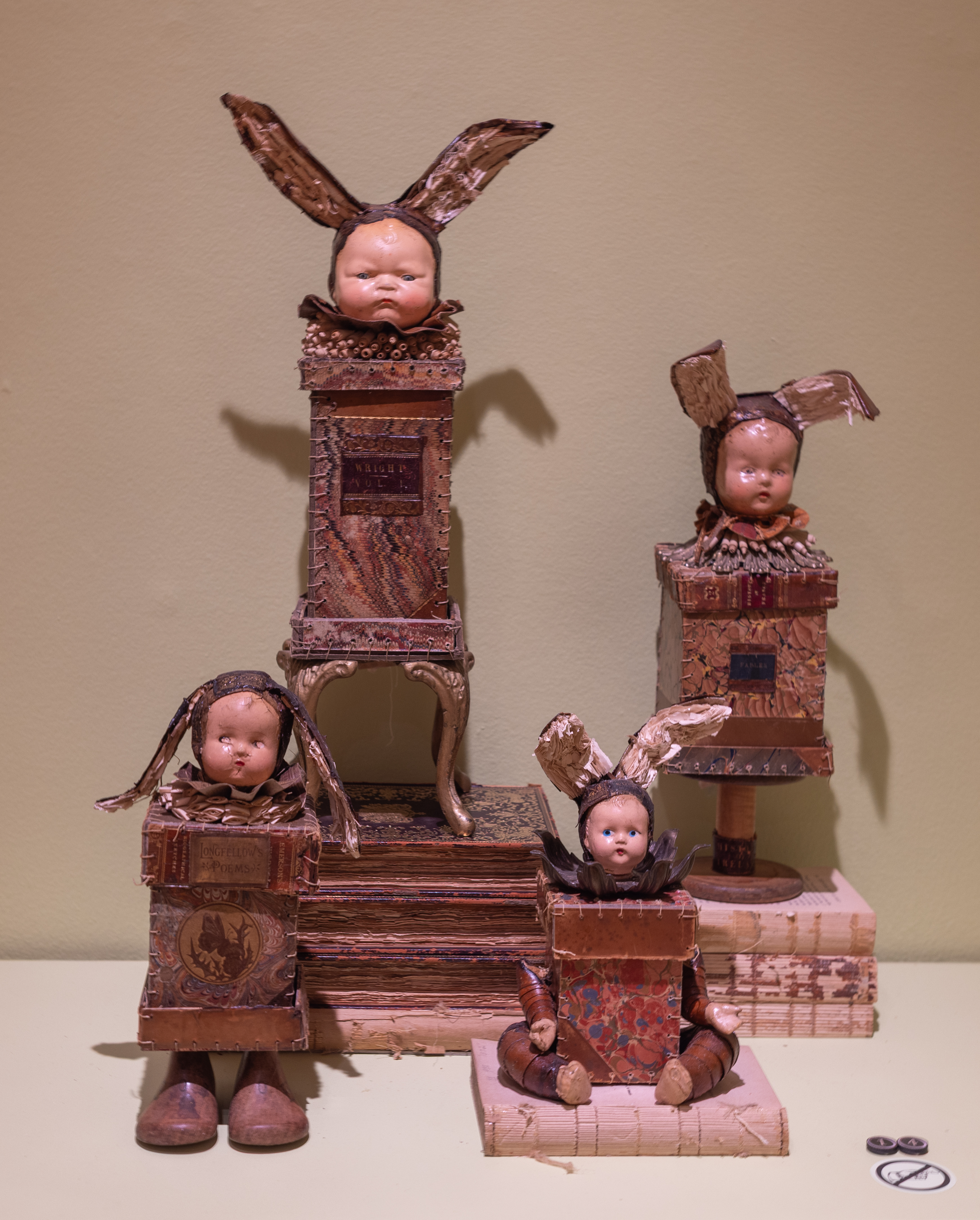
First, let’s take a look at some of the art in the Wheeler Gallery. The Wheeler Gallery has a variety of diverse art. One example of this unusual art is “A Fluffle” (2025) made of doll heads, found objects and book covers. Their names are Faith J Lory, Beulah B.B., Ada and Wilma.

Donna used her real life experiences when making “Cicada Invasion” (2024). She has lived through 4 Cicada invasion while she has lived in Illinois. While many people find cicadas disgusting and the noise of them deafening, Donna finds them to be fascinating. She remember when her family went to have a picnic in the older part of town where the invasion hit the hardest. Instead of grass, Donna said all you could see at the park was cicada shells.

Keep in mind, all of this art has been made, at least, in part of books. It’s really easy to forget how much of Donna’s amazing art work is made of basic materials.

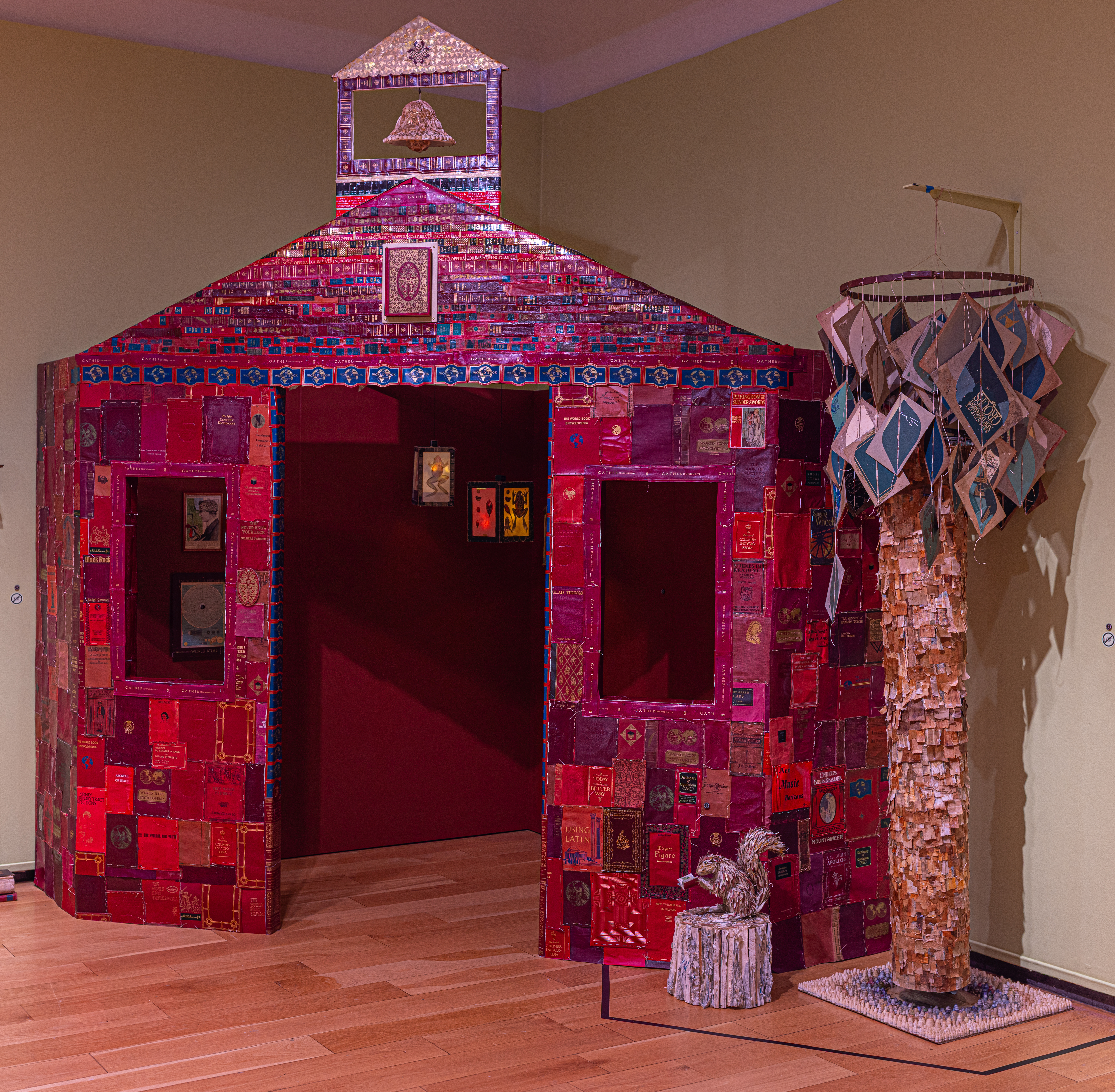
One of these more elaborate works of art is “Little Red School House” (2025-2026). The idea for the “Little Red School House” came from Donna’s school vacations. Yes, her vacations. Her family and she would often stay at a motel in their favorite vacation spot of Baraboo, Wisconsin. The motel was aptly called the Little Red School House. And, although it may seem the last thing some kids would want to do during their school vacation, Donna would play “school” while on vacation. This work of art is made of plywood and book covers. Even the squirrel, who is reading a book, is made of books.

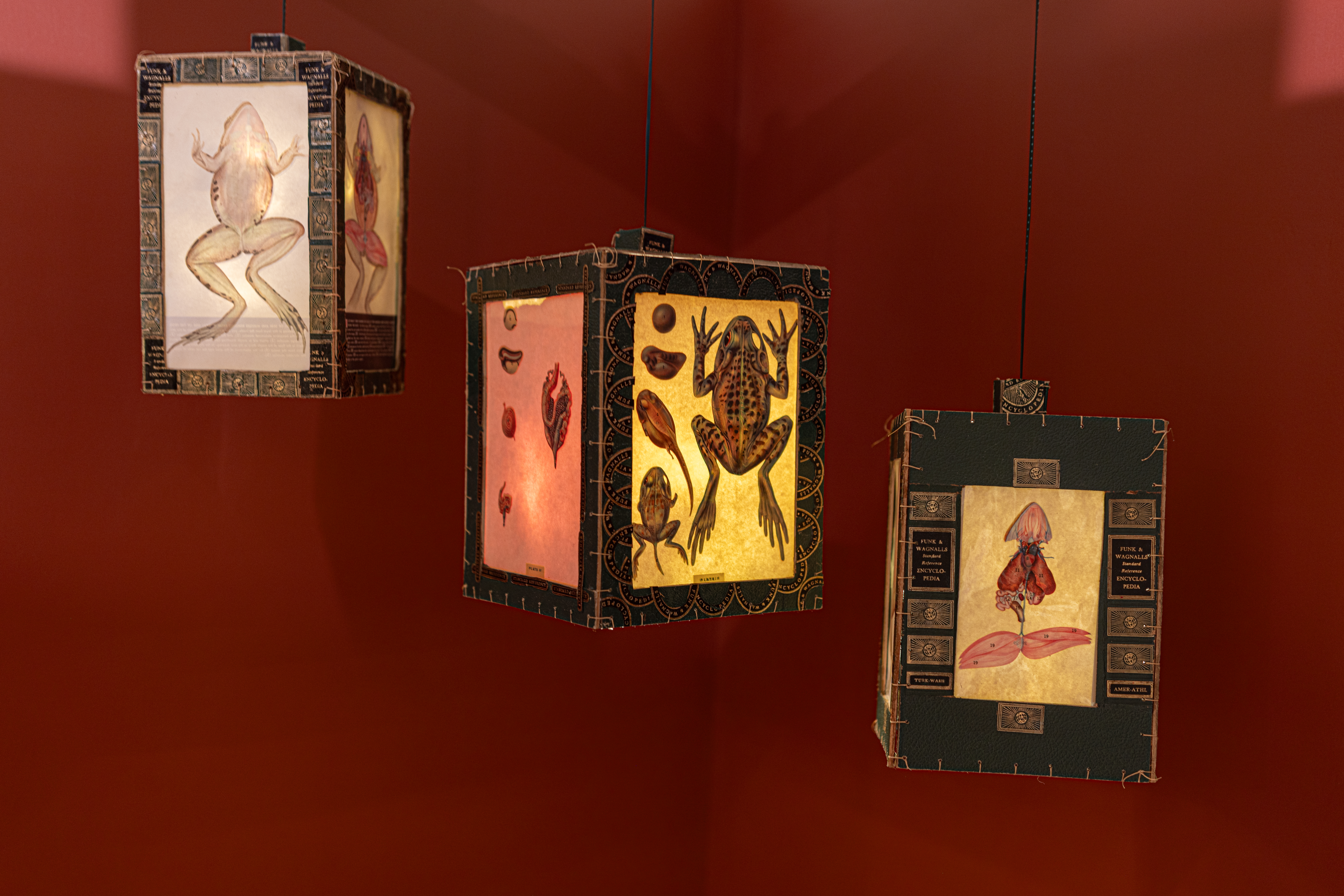
Inside the school house are some lights. “Turn On Your Frog Lights” (2025) is a reference to Donna’s childhood. Donna and her brother would try to catch as many lightning bugs as possible. Her brother thought it would be interesting to feed the frogs lightning bug and see what happens. Apparently, it was quite a sight to see, The frogs stomachs would light up after being fed the lightning bugs! “Turn On Your Frog Lights” is made of book covers and biology transparencies.

Another work of art in the Wheeler Gallery is “Gas Light” (2020) which is made of book covers.

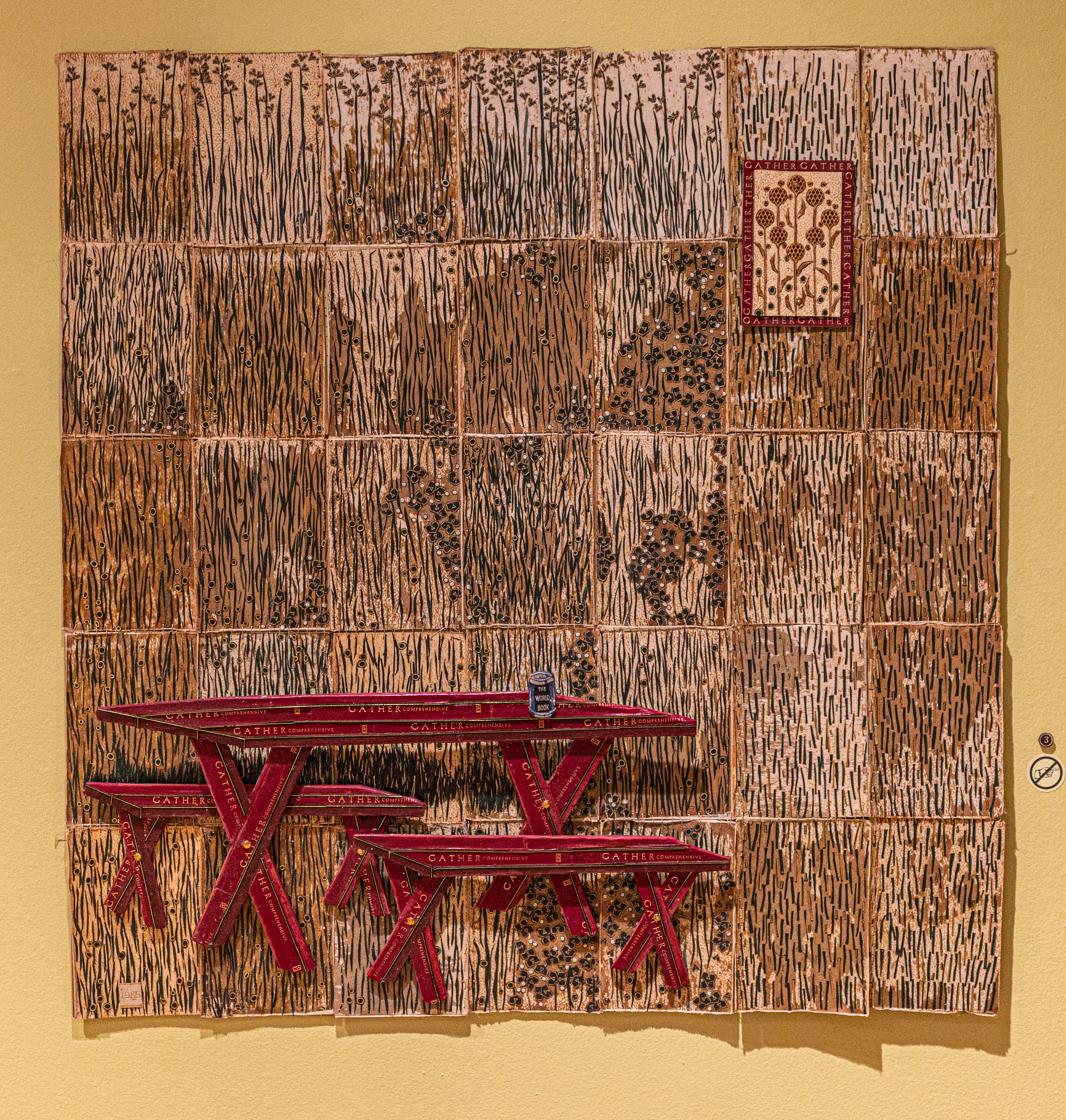
Art can be a very subjective thing and may hold special meaning we don’t see at first glance. “XO When We Gather” (2025) has very a very special meaning to Donna. The piece, which is made of encyclopedia covers, Gather missal covers from Mary Queen of Heaven Church and book screw posts, was made to honor her father. The piece honors her father’s last day. The black area which may look like a shadow is meant to represent her father. In a way, it is also a shadow. As it is the shadow he left behind. Donna’s father passed away while mowing the lawn. The church books that form the picnic table represent the gathering of the people in your life around you in love and support when there is a death. The picnic table was a big part of their lives growing up. It was a place where they gathered with friends, family and neighbors creating loving memories.

“The World In Your Garden” (2025) and “How It Works” (2020), both made of encyclopedia covers, are reminders of Donna’s childhood. Before video games and the internet, Donna and her family and friends would spend hours in the backyard with the garden hose, whipping buckets of water at each other and filling water balloons.

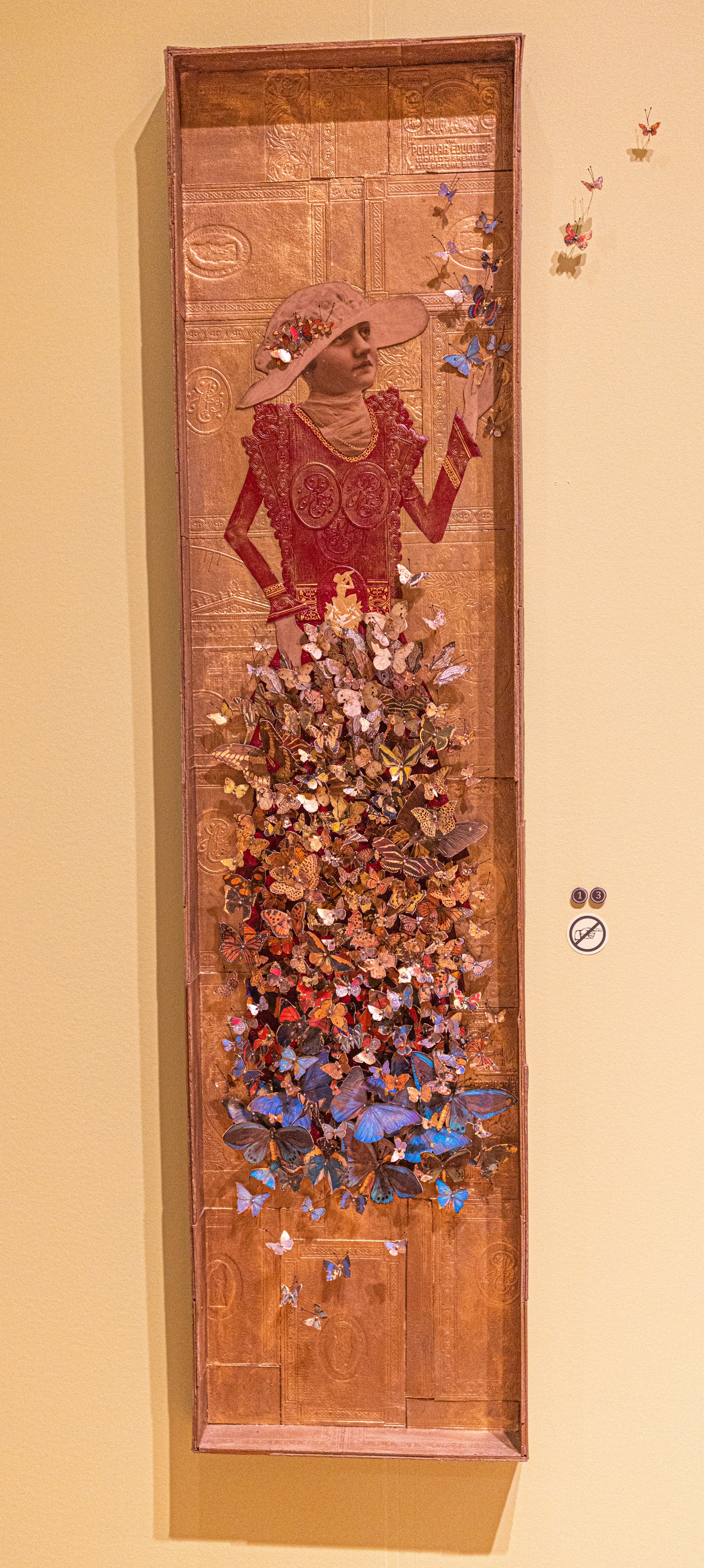
“She’s All A Flutter” (2019) is made of a vintage photo, embossed book cover cardboard and encyclopedia butterfly illustrations.

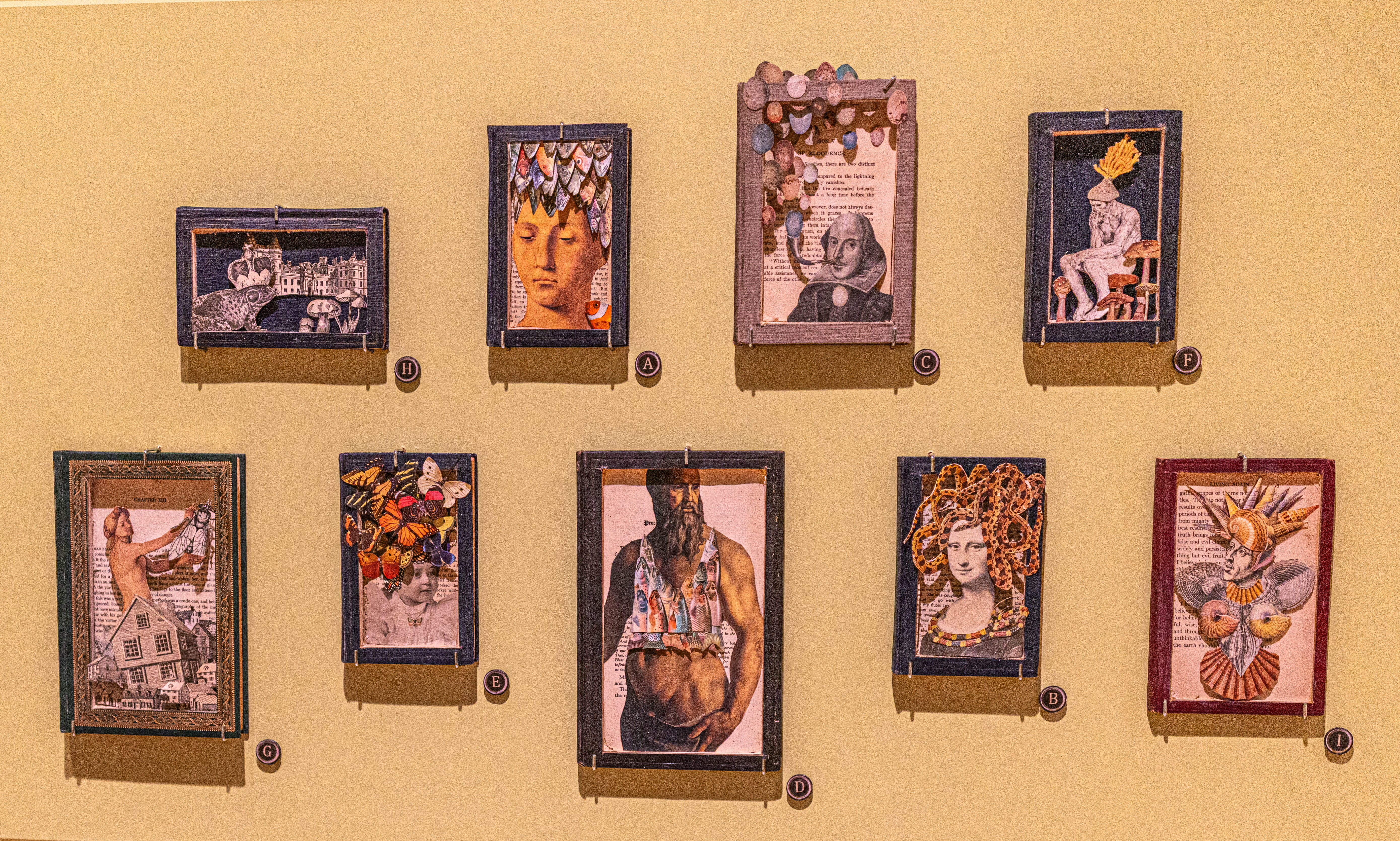
The “Nature Book Series” (2022) has some famous people and personalities in their works of art. You may recognize a few of them!

From the top (left to right) they are “Prince”, “Beauty School”, “Eggstra Eloquence”, “Fun Guy”, and bottom from left to right are “House Fly”, “Fly Away Hair”, “Fish Tank”, “Charmer” and “Shell Shocked”

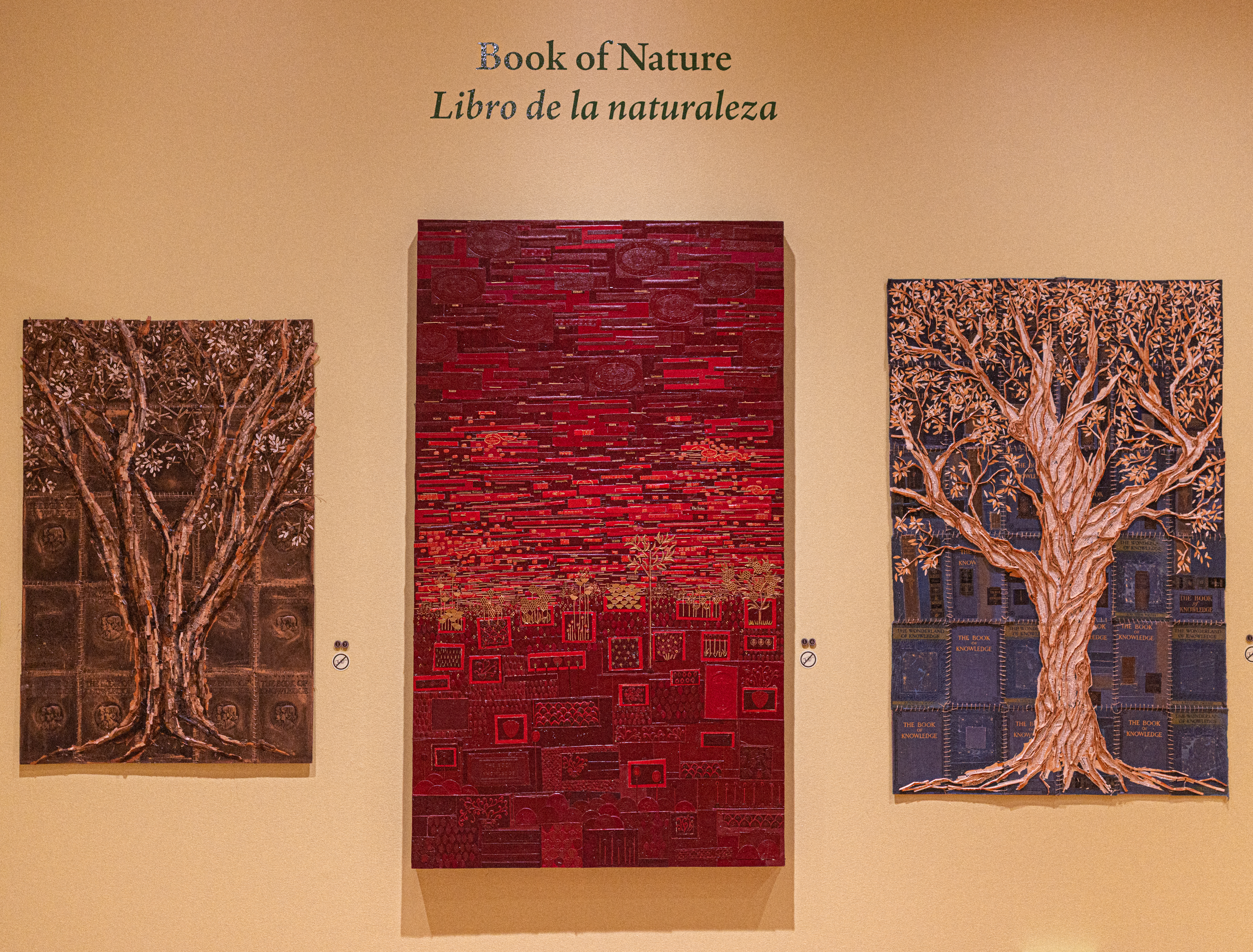
“Tree Of Knowledge”, “/red/Sky” and “Tree Of Wonder, Chapter Book of Men and Women” (from left to right) were made of book covers, pages, and bindings from encyclopedias. These works of art look like they could be paintings or perhaps even enhanced photographs. The “Tree Of Knowledge” (the first work of art from left to right) has an especially special meaning to Donna. The encyclopedia she used had an embossed image of a boy and girl. She decided these books would represent the big, huge maple tree in the backyard of her childhood home. The tree served as her hangout and fort. Her brothers, sisters and she would climb up the tree and nestle in the middle of the branches and talk for hours. The tree has five distinctive branches, one for each sibling, that stretch out like fingers on a hand.

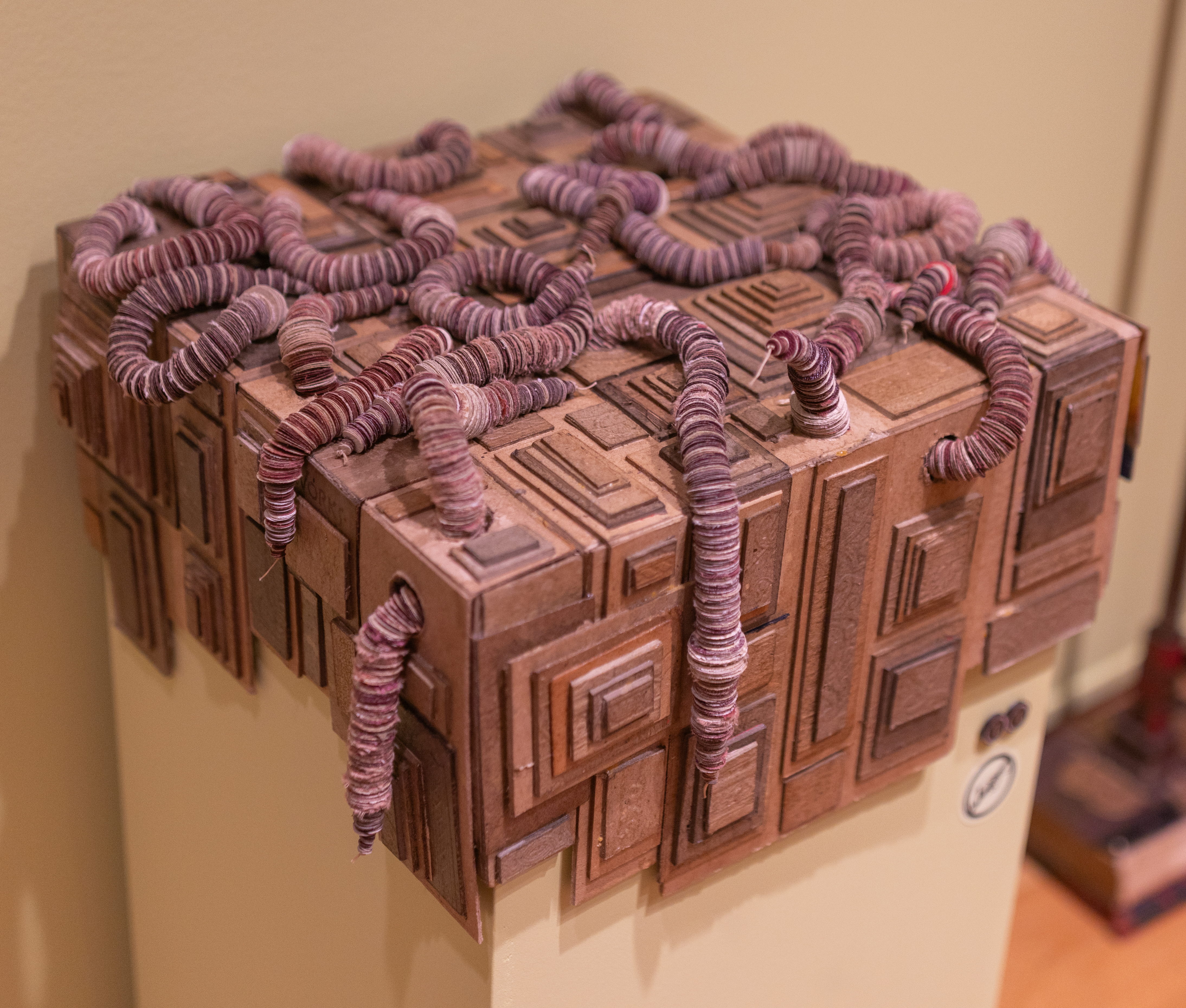
“Bookworms” (2025), made of hole punched book covers and book cover cardboard, is another reminder of her childhood. Catching bait for fishing was a big part of her childhood. Her father used to flood the yard the night before their fishing trip. In the morning, they would go out into the yard barefoot and pull the worms out of their holes. The past summer, she put her family to work punching out and stringing these worms together.

Made of vintage encyclopedia illustrations and acrylic on old military cot, “Busy Bearded Bees In History” (2019) is a tribute to historical men who had bees. Donna made the beards into bees.

You may have to look very closely or zoom in to see the details of these works of art to see get the full meaning of their names. The work of art at the top is “Scapegoat.” The bottom row from left to right are “Political Landscape”, “Sheepscape” and “Eggscape.” They are made of embossed book cover cardboard, bookbinding materials and encyclopedia illustrations.

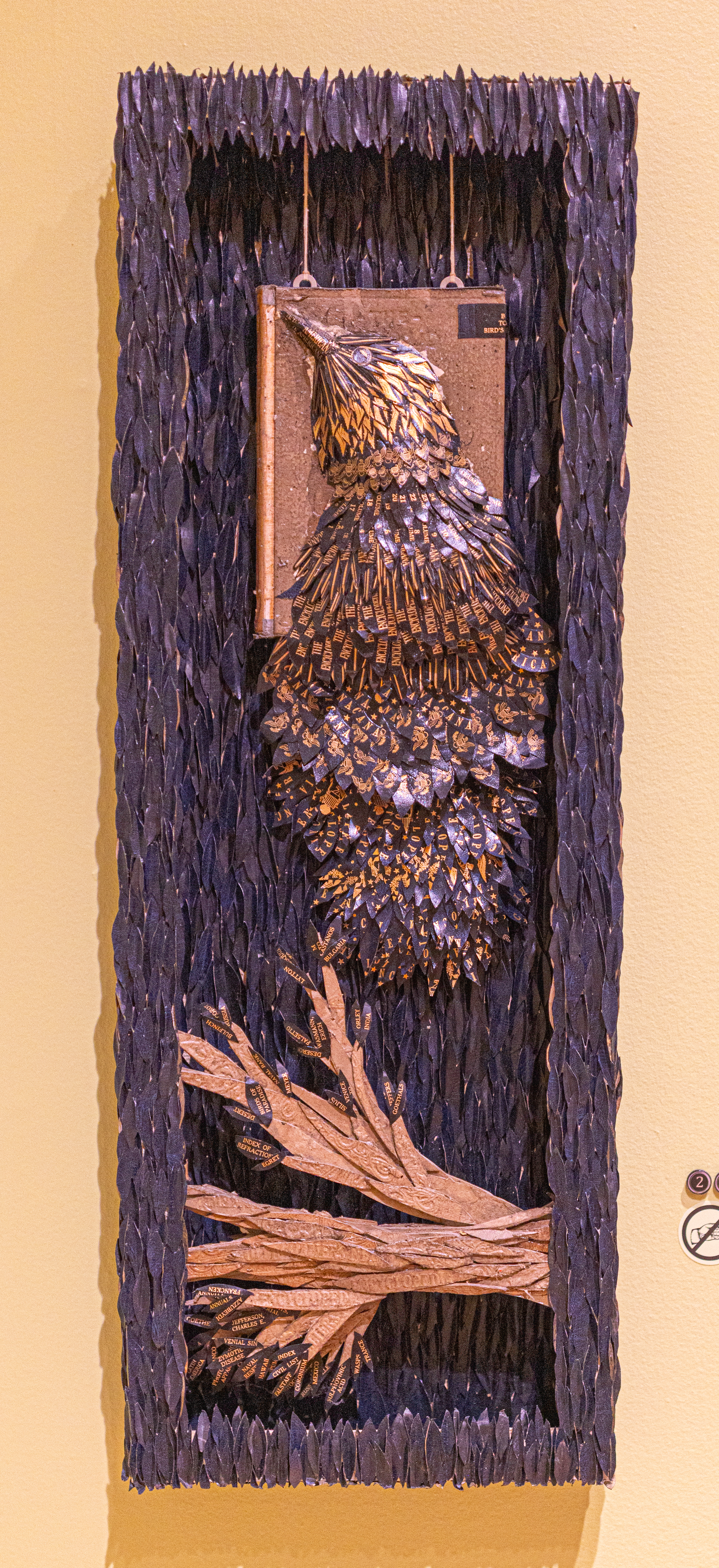
“Do You Hear the Blue Bird?” (2019) is made of book covers from the 1950s American Encyclopedia.

“The Cardinals Rules” (2025) is a tribute to her father and others who have passed away. Made of book covers, the cardinal is a nod to the belief that these birds carry the spirits of those who have passed. Donna said that whenever she sees one she always says “Hi Dad.” She said they always seem to appear at the right time when you need a hug or assurance that everything is going to be ok.

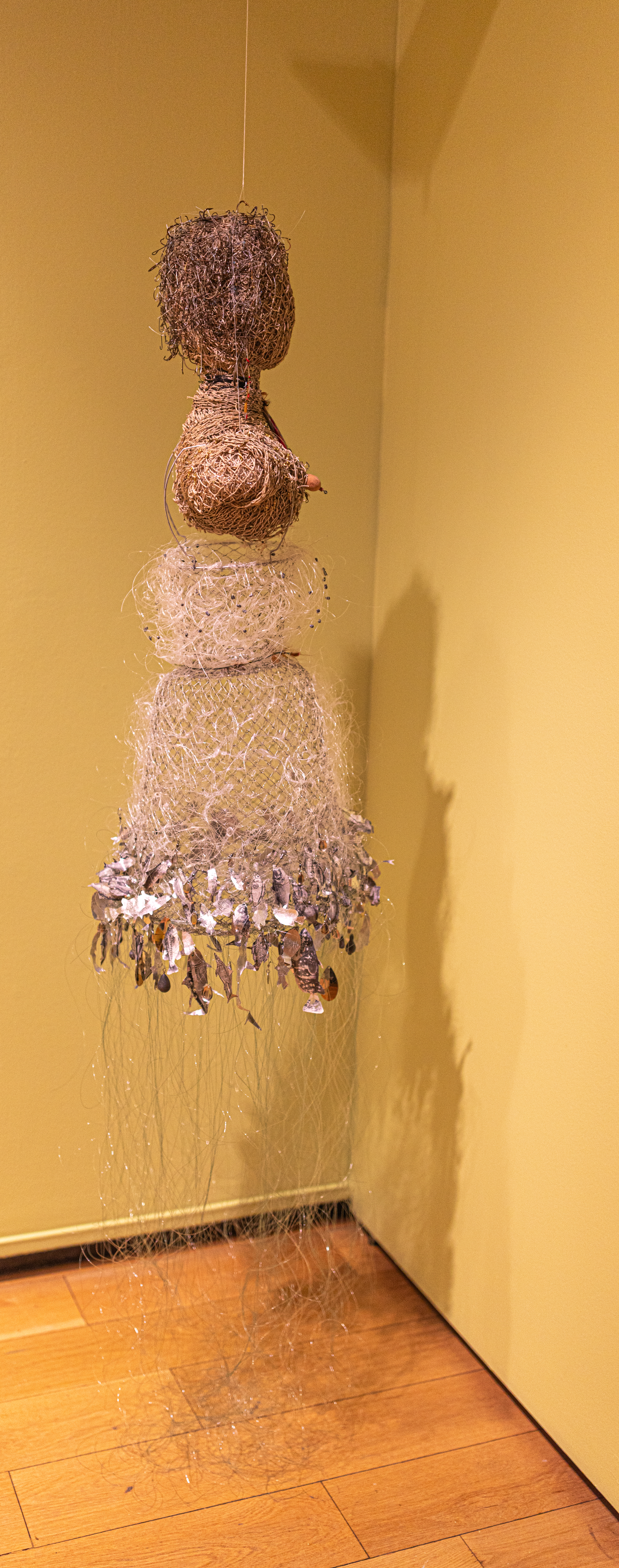
“Too Many Fish in the Sea” (2019) is made of encyclopedia fish illustrations, a fishing basket, fish hooks, fish net and wire.

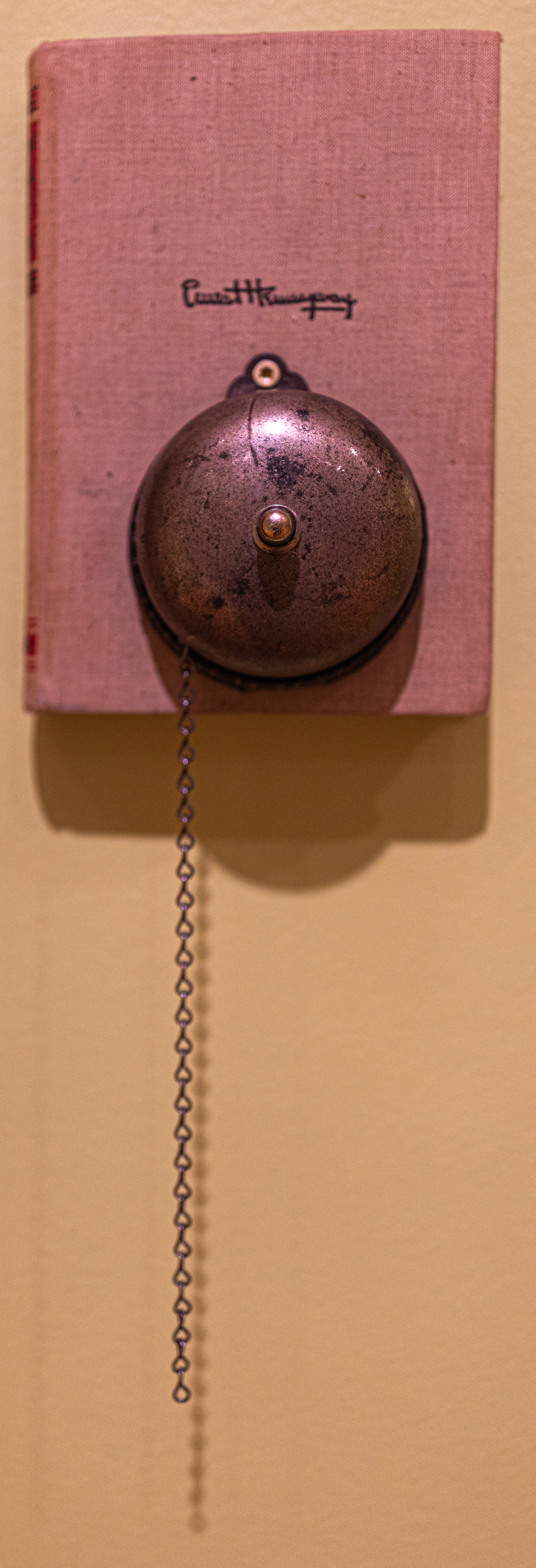
“For Whom the Bell Tolls” (2025) is a tribute to the classic work of literature by Ernest Hemingway. The work of art consists of a vintage doorbell and a copy of the For Whom the Bell Tolls.

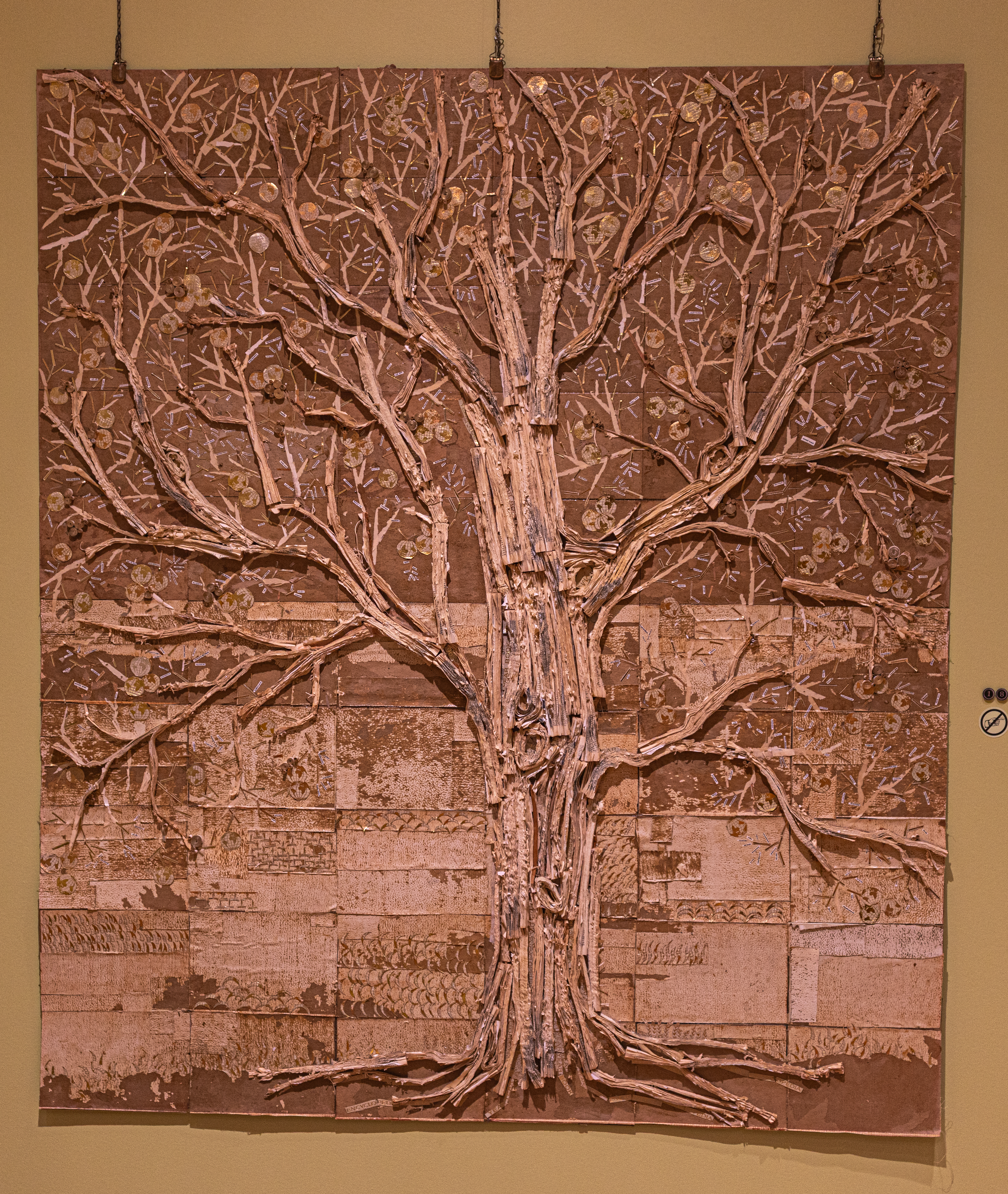
“Communitree” is another work of art with special meaning for Donna. The piece, which is made of book covers, bindings and pages from the 1950sWorld Book Encyclopedia, was an idea that started at one of her art parties. She had multiple dictionaries available for her friends to flip through. She asked them to choose words that best described themselves, her, family or friends. Then, they pasted these words on the tree. The tree is an ongoing project that is constantly being added to. If you look closely, or zoom in to the picture you can see words on the tree.

“Ms. Michell Vaillancourt” (2019) is made of encyclopedia bindings, encyclopedia pages and an egg carton.

As a side note, as I was putting this post together, I kept feeling amazed at the work of art Donna is able to make with such few materials.

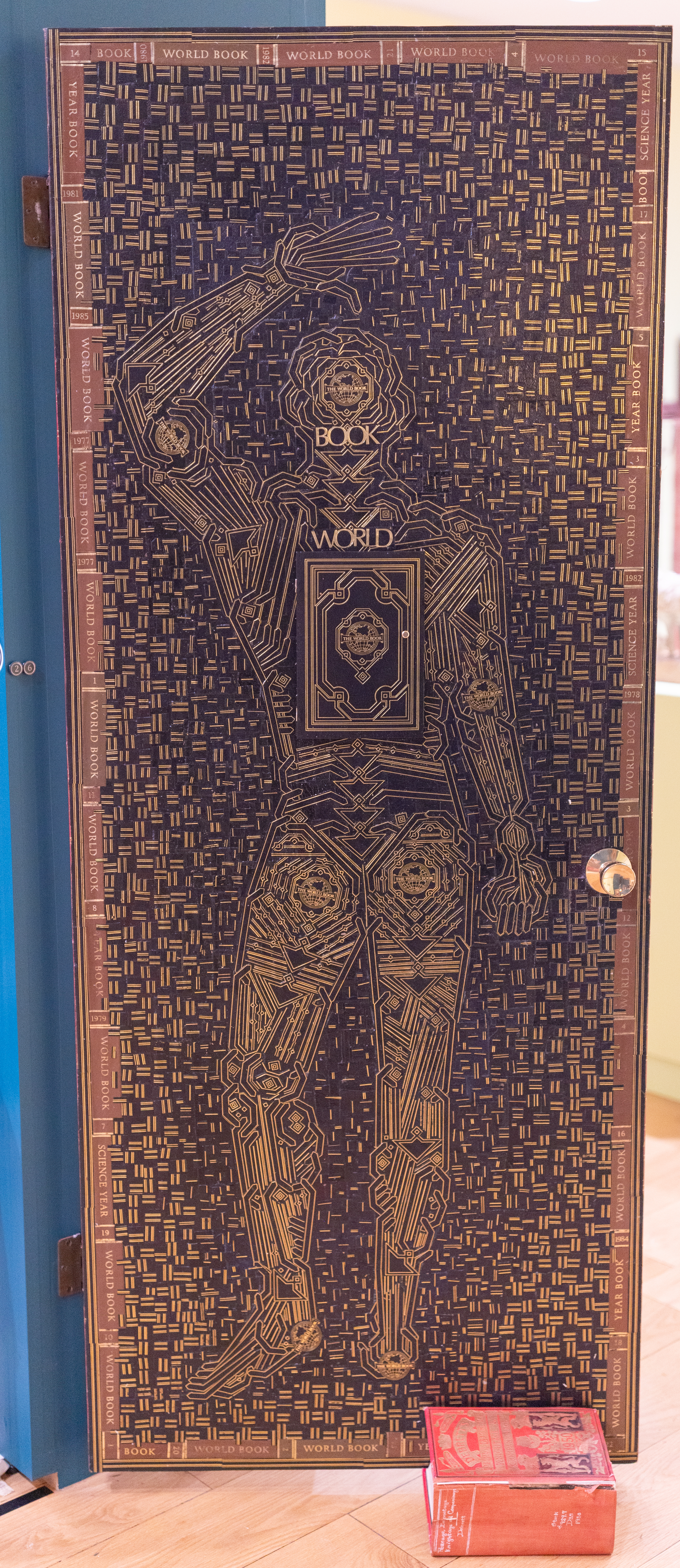
“Doorman” (2025) is made of a salvaged door and Encyclopedia Britannica covers.

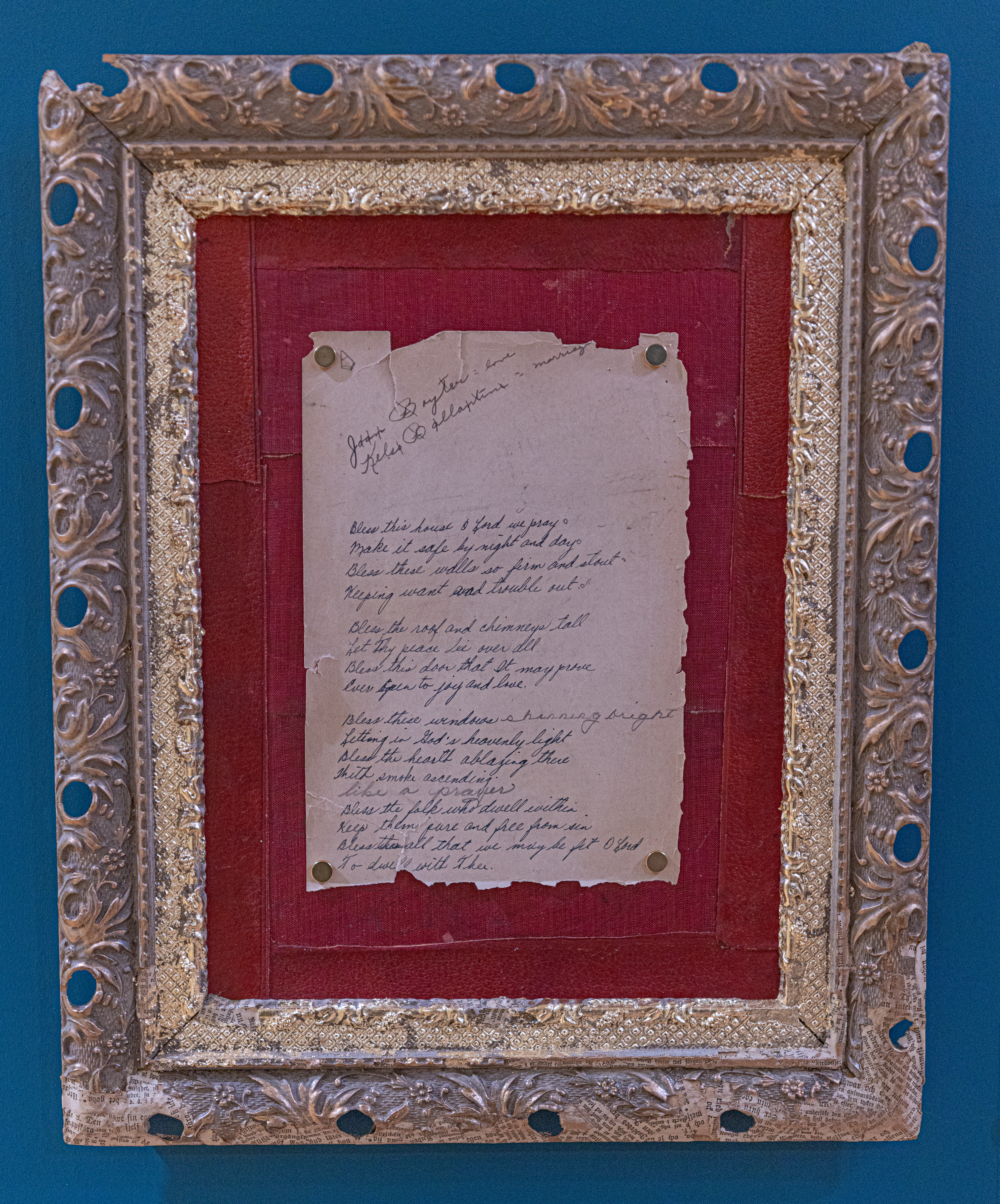
“Bless This House” (2025) is handwritten poem Donna found inside a book page inside a wood frame with gold leaf and book pages.

This was originally a song written by Helen Taylor that was published in 1927. It has been covered by such well regarded singers as Perry Como. The words are also listed below if you can’t read them in the poem.

“Bless This House”

Bless this house, O Lord we pray,
Make it safe by night and day…

Bless these walls so firm and stout,
Keeping want and trouble out…

Bless the roof and chimneys tall,
Let thy peace lie overall…

Bless this door that it may prove,
Ever open,
To joy and love…

Bless these windows shining bright,

Letting in God’s Heavenly light,
Bless the hearth, ablazing there,
With smoke ascending like a prayer!

Bless the people here within,
Keep them pure and free from sin…

Bless us all that we may be,
Fit O Lord to dwell with thee…

Bless us all that one day we may dwell,
O Lord! With Thee!

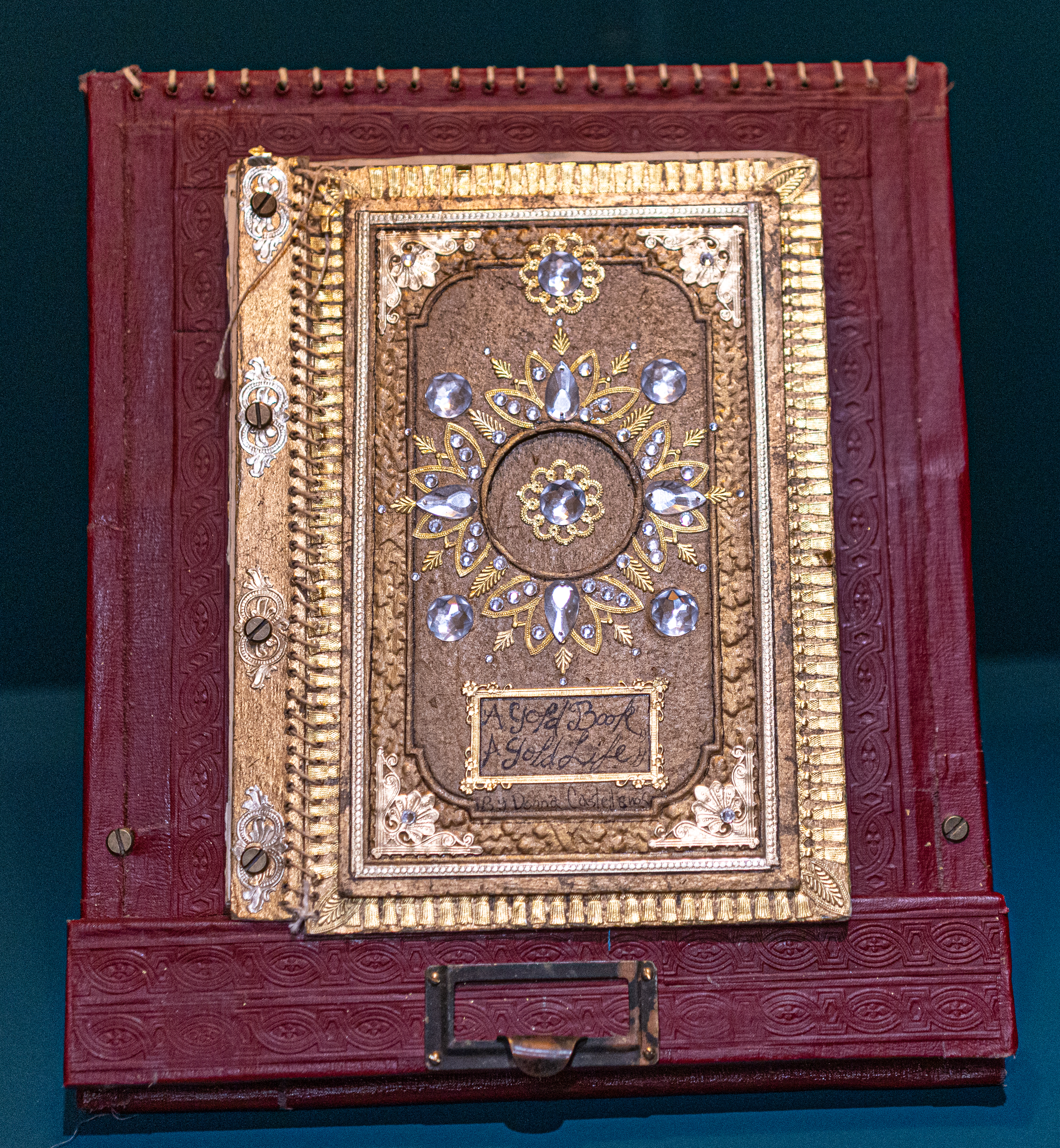
“Golden Book, Golden Life” (2023) is made of book covers, gold leaf, gems, vintage Japanese gold foil, ink, watercolor and thread. Donna created this book for an Andy Warhol-themed art exhibit. And, yes, this work of art did win best of show!

Being from an advertising background, Donna has always been attracted to Warhol’s early graphic design work, especially the gold and glitz. There was a point in Warhol’s life when he realized he did his best work when it was something personal to him; he painted what he knew. With this work, Donna wanted to represent her own life and story in his style.

I didn’t recognize what these really were when I first saw them. At first glance, it looks like a work of art with a group of people. But, look closer. There are light switches at a certain part of their bodies!

Made of book covers, light switches and wood, “Turned On Turned Off” (2017) was Donna’s first biggest work of art and the oldest in this exhibit. The piece was inspired by Swiss-German artist Paul Klee, this was one of Donna’s first pieces she created with book covers, combining them with found objects.

The light switches came from an estate sale of a man who was an electrician. One of the areas of a home she likes to explore is men’s work and hobby rooms. At the estate sale, she found an old, beat-up dresser with various tools and “great junk.” The bottom drawer was completely filled with these vintage light switches. She bought the whole drawer!

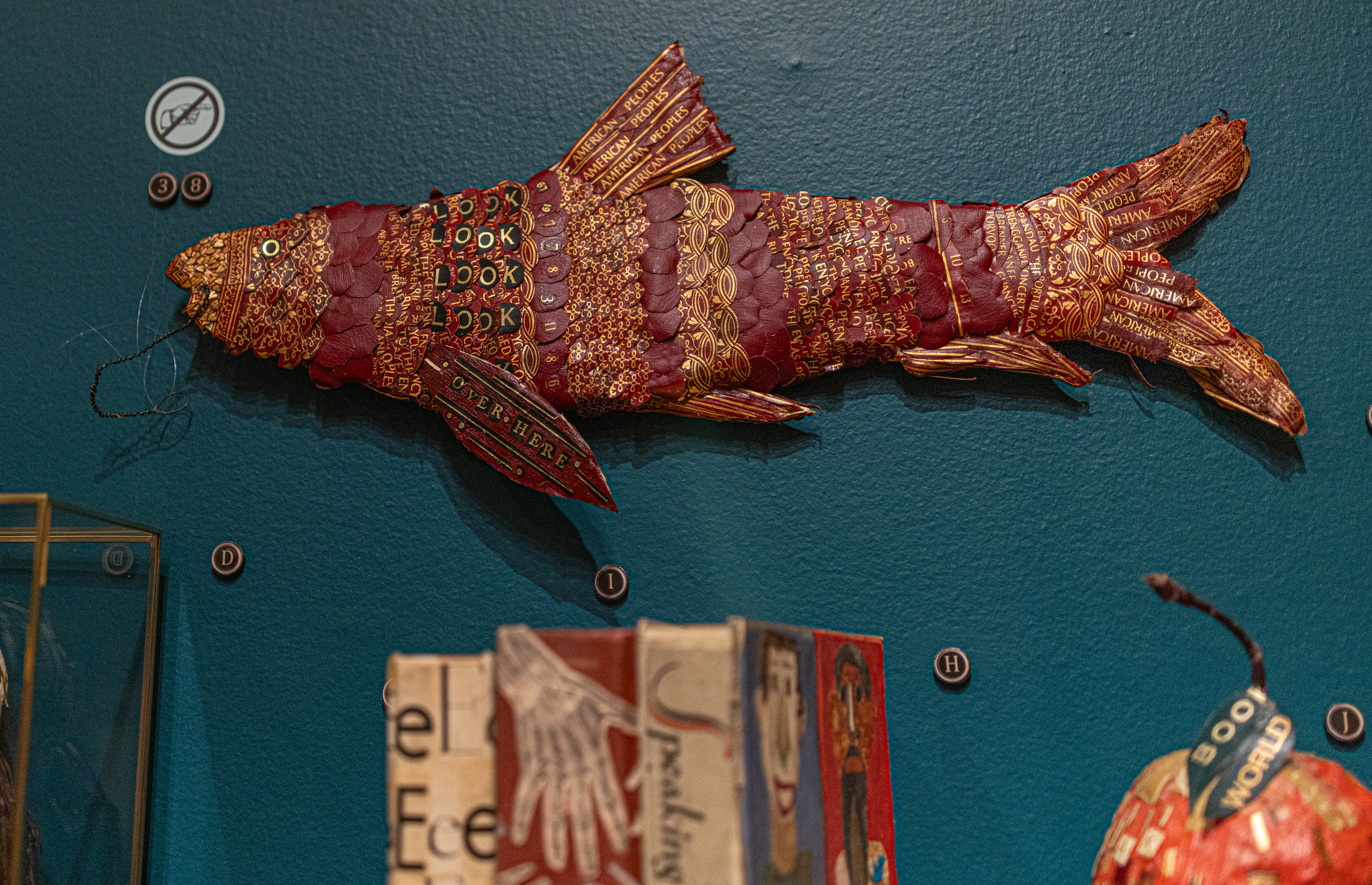
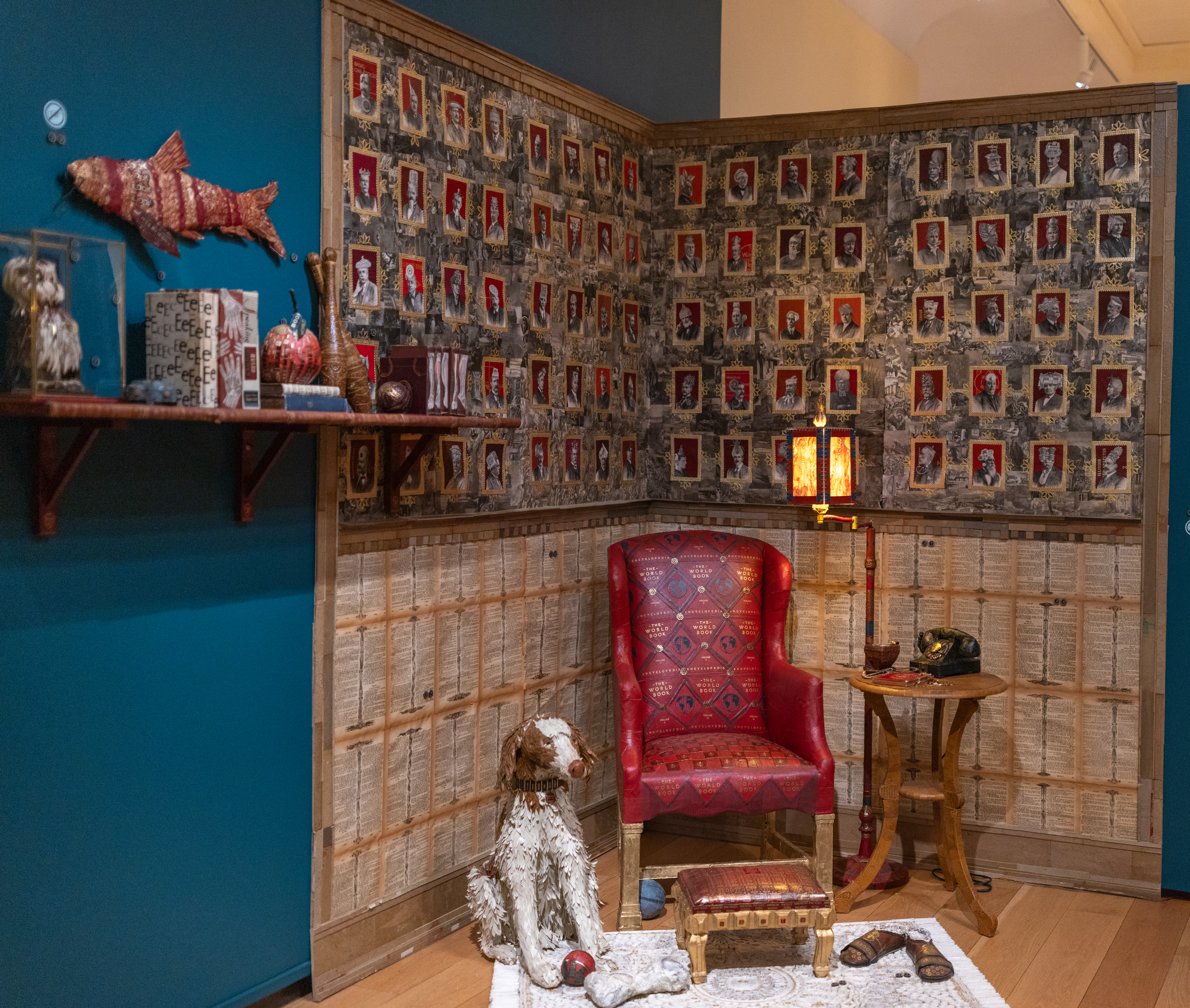
The photo below shows Donna’s “Five Foot Shelf of Books.” It includes the fish called “Look At Me (red herring)” 2023, the owl at the end of the shelf called “BooBook Owl” (2026), book covered exercise clubs called “Book Club” (2025), paper mache book covered paper plates and several other works of art.

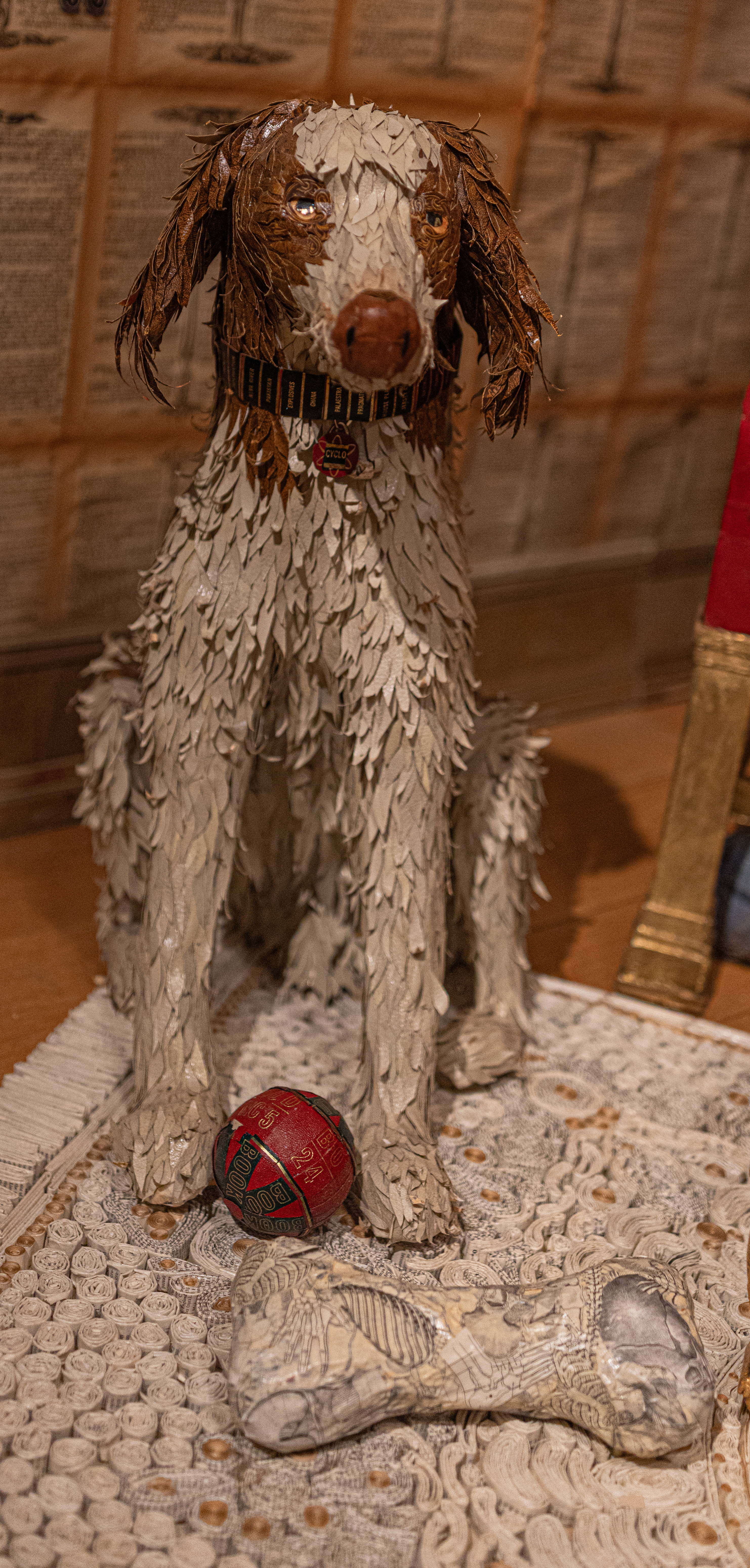
There is also a sitting area, well not a real sitting area. Rather, a chair, light, telephone (I had a phone like that) and a cute little pup! The wall coverings were made from 20th century Swedish Bible pages from The Good Book”, “The Good Book Poppies” and “Men With Hats.” Again, all of these were either in part made of books or used books to cover items.

The Reading Chair is a salvaged chair, covers from the 1940s The World Book and Encyclopedia Britannica encyclopedia sets and gold leaf.

Cyclo, the dog, is made of chicken wire, paper mache, 1920s Collier’s Encyclopedia set and 1960 World Book encyclopedia set.

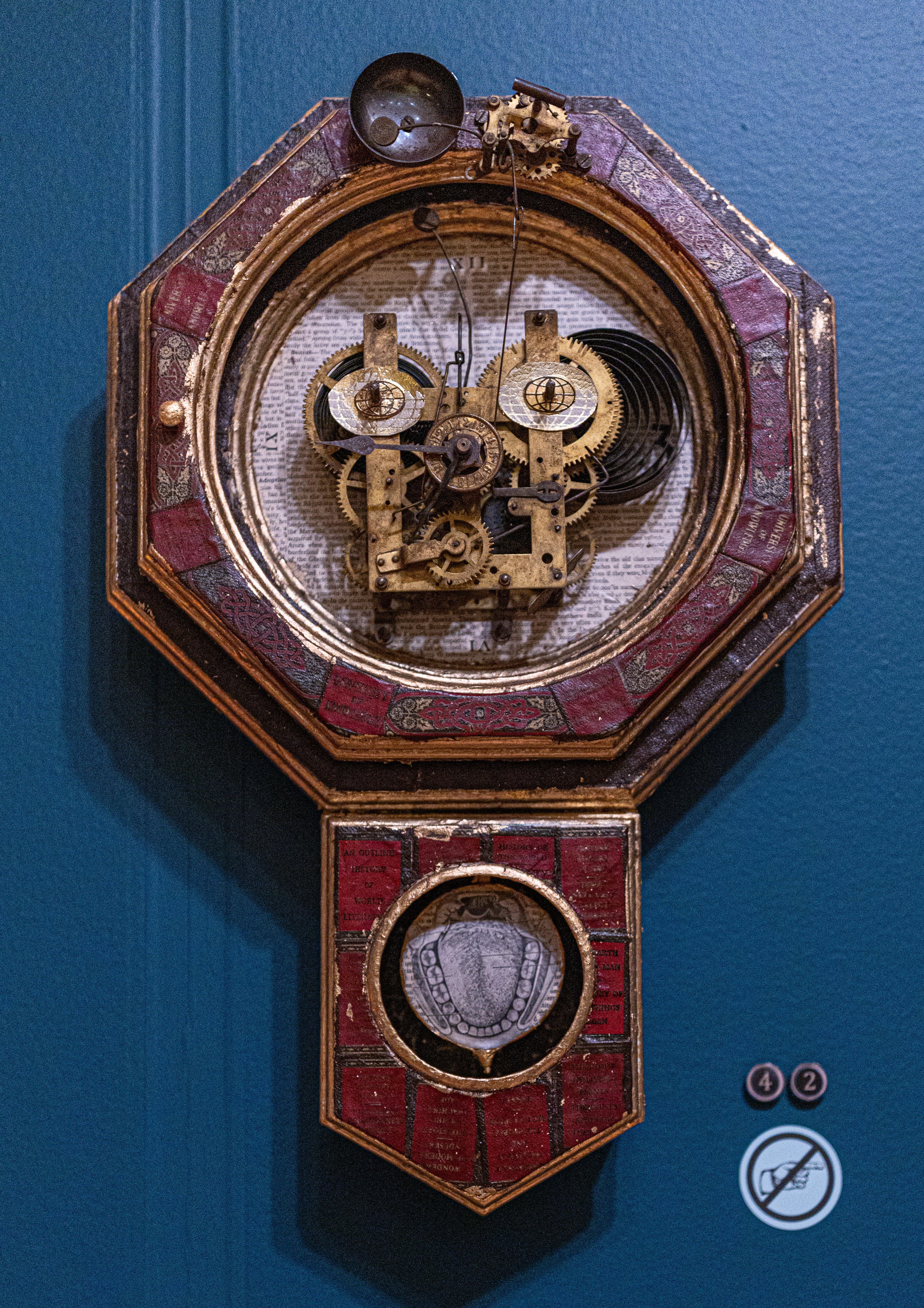
“Facetime” is a vintage wall clock with clock parts and encyclopedia covers.

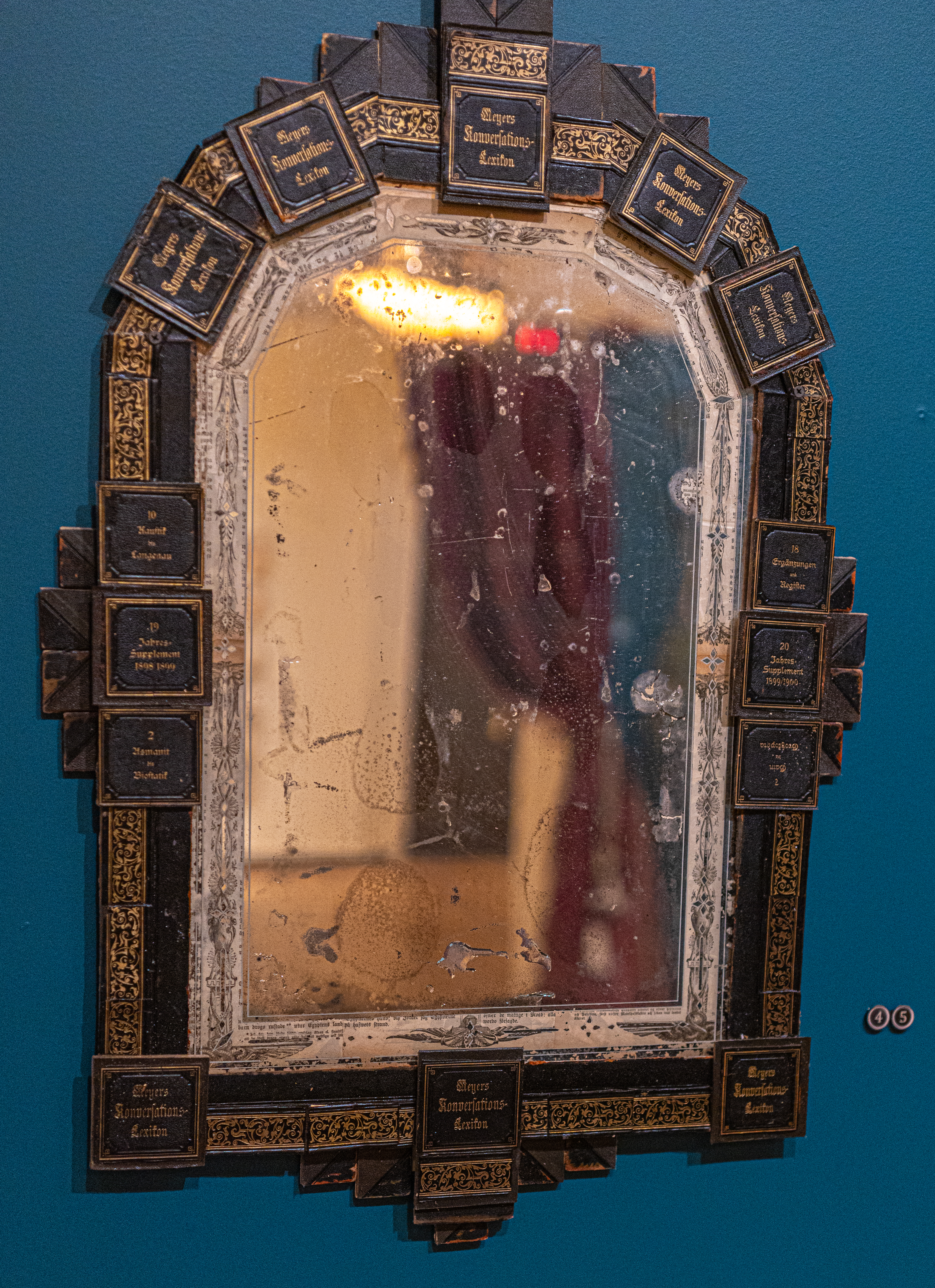
“Look into the Lexicon” (2025) is a vintage mirror and early 20th century German encyclopedia covers.

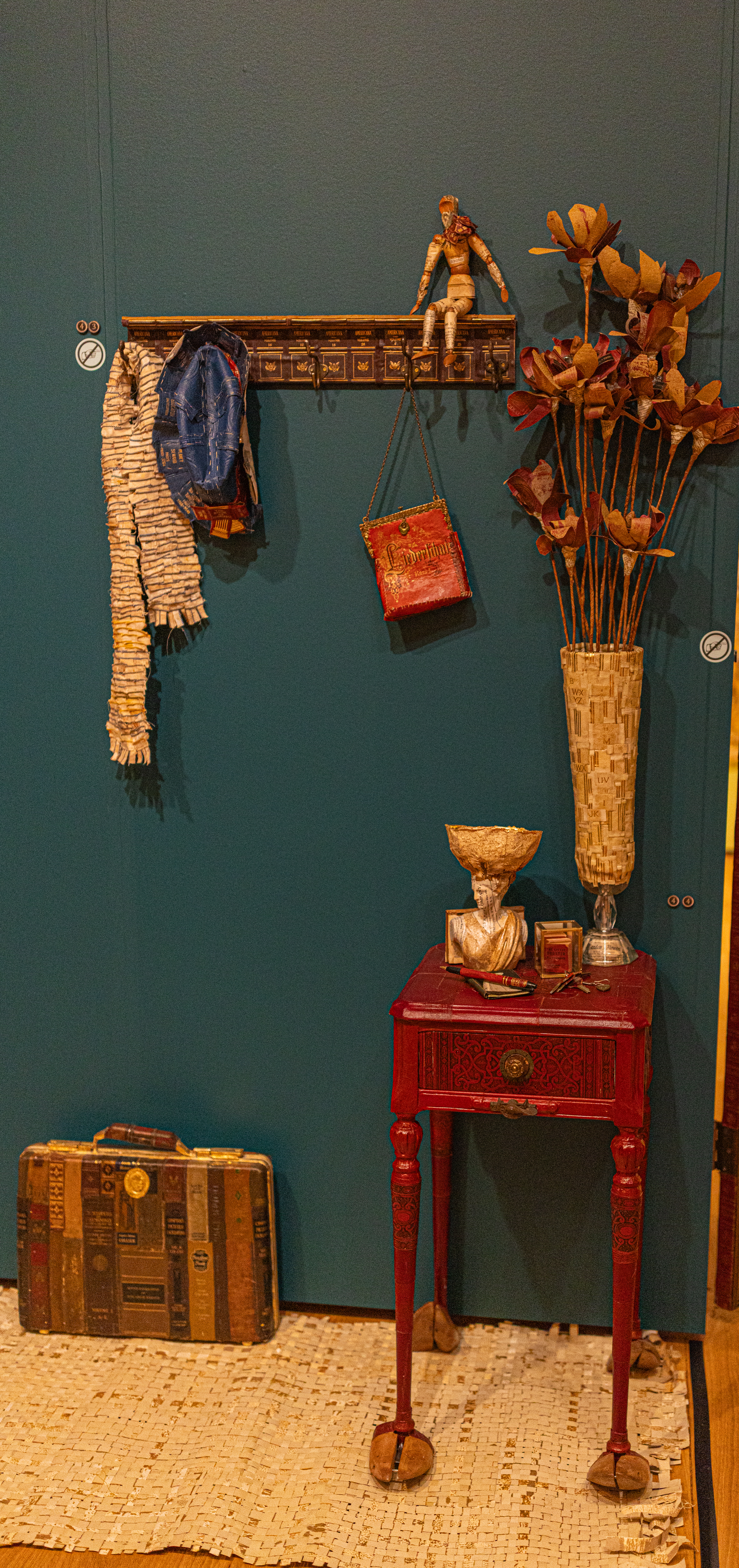
The Book Rack has a vase with flowers, a scarf, pocketbook and other objects all made at least in part with paper. The rug is made of encyclopedia pages and book covers.

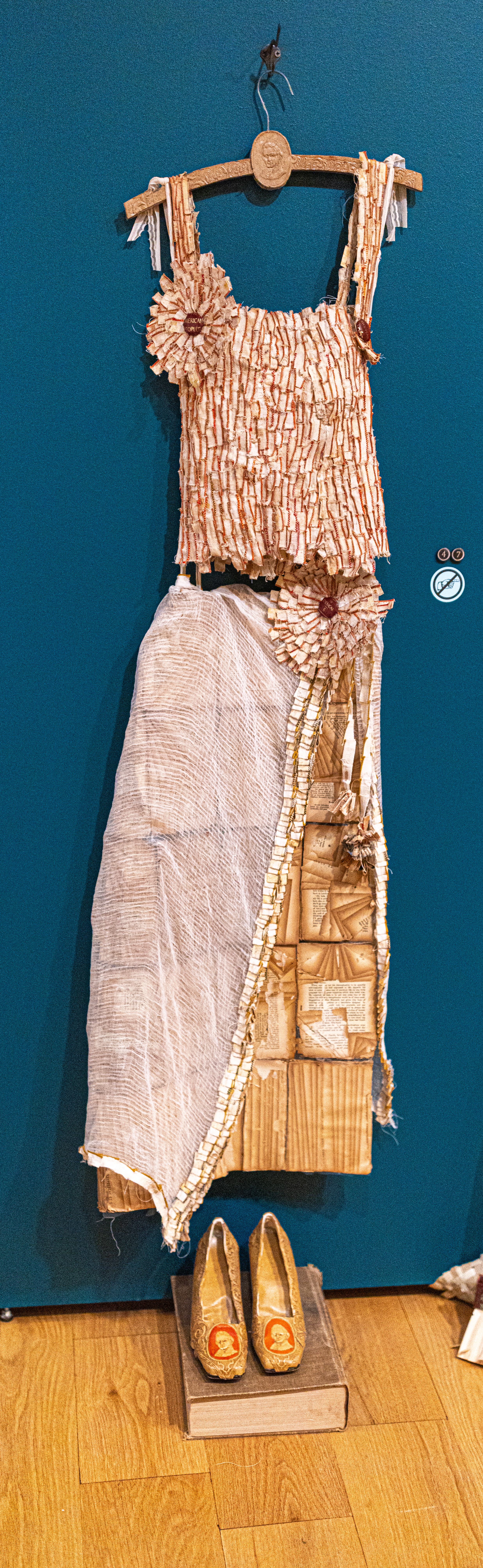
“Should I Wear A Headband?” (2025) is made of book headbands. Donna said that when she deconstructs a book, she tried to save as many elements as possible, including the headbands at the top and bottom of the spine. She learned from the Library of Congress that these little cloth tabs are called “headbands.” During the 17th and 18th centuries, they served a purpose and also became an ornate signature for book publishers and makers. She used these headbands to make this skirt and top and shoes.

“Roger R. Grant” is a sculpture of the author from his repurposed books.

“Birds Of America” is a commentary on the “Twitter and Twitter Files controversy.” She found it funny that people were getting so upset about it.

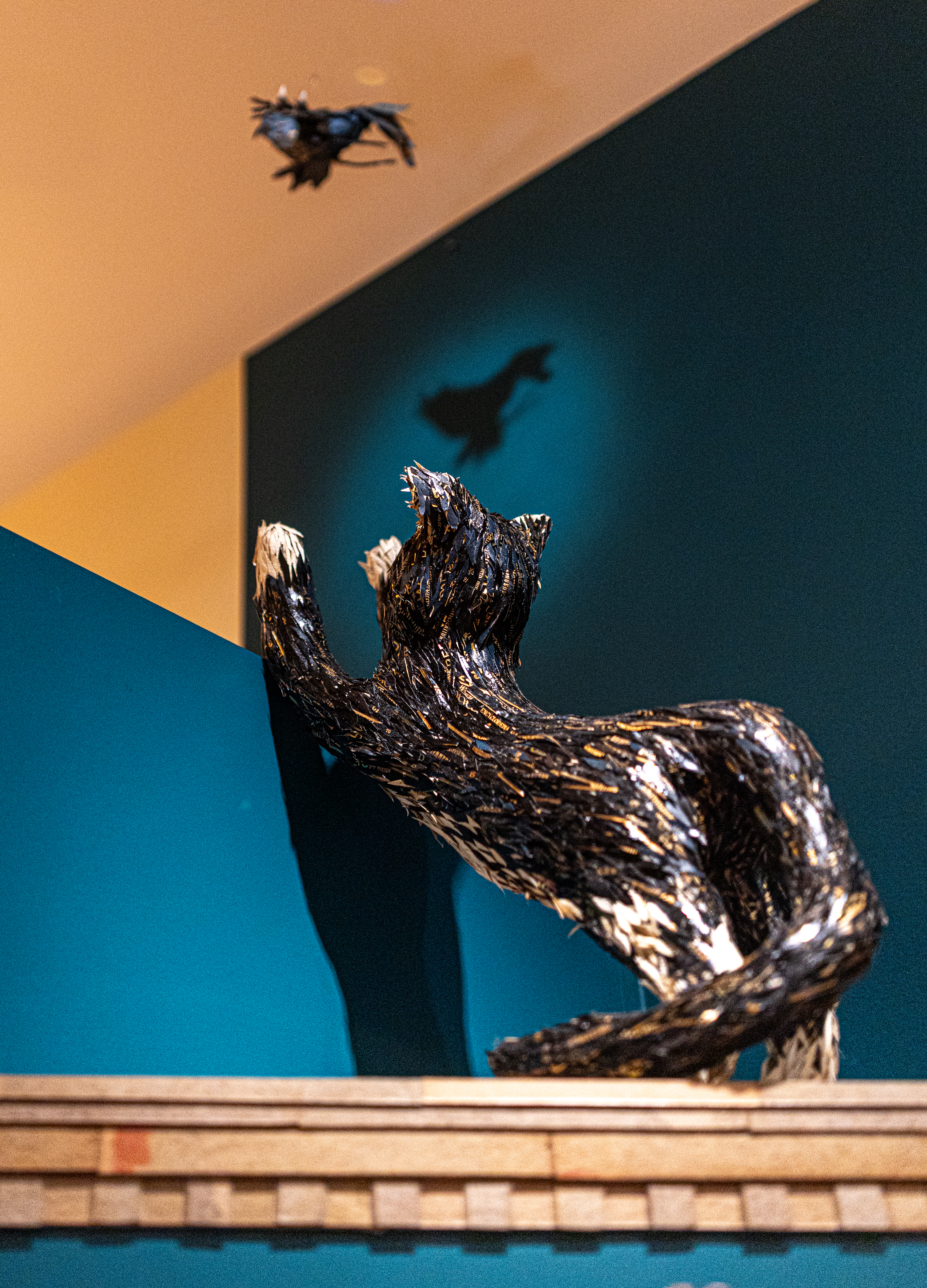
“IKey” (2025) is a statue of their cat “Ikey” made of chicken-wire, paper mache and encyclopedia set covers. The cat’s name was derived from her father’s nickname, “Ike.” Sadly, he died the same night they adopted her.

Many of the works of art didn’t have a lot of details or explanations. Below are a list of some of the works of art that only had their names listed and the items used to make them next to them.

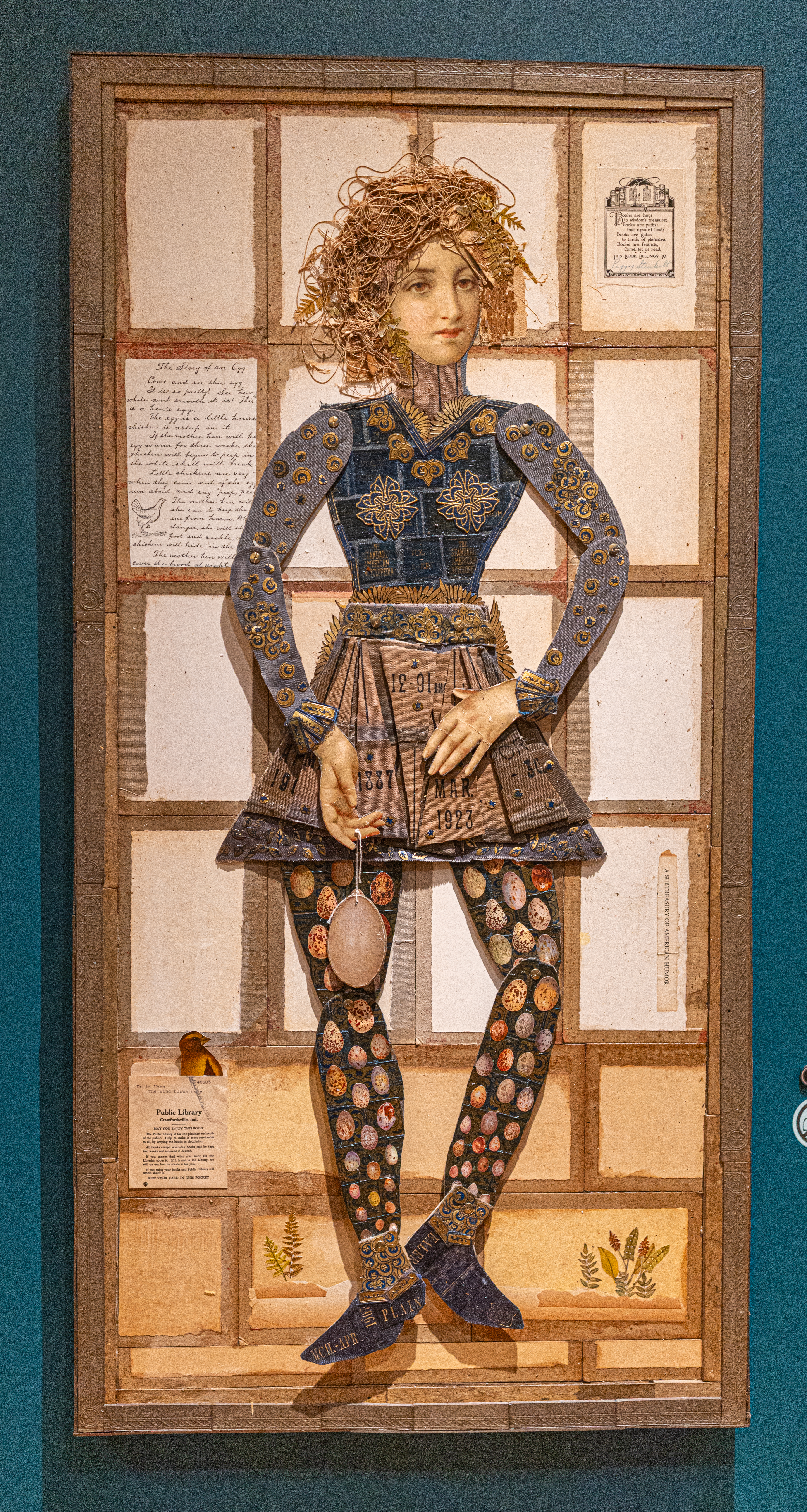
“Peggy Steuhholt Loves to Dance in Her Leggings” is made of book covers, book bindings and book illustrations.

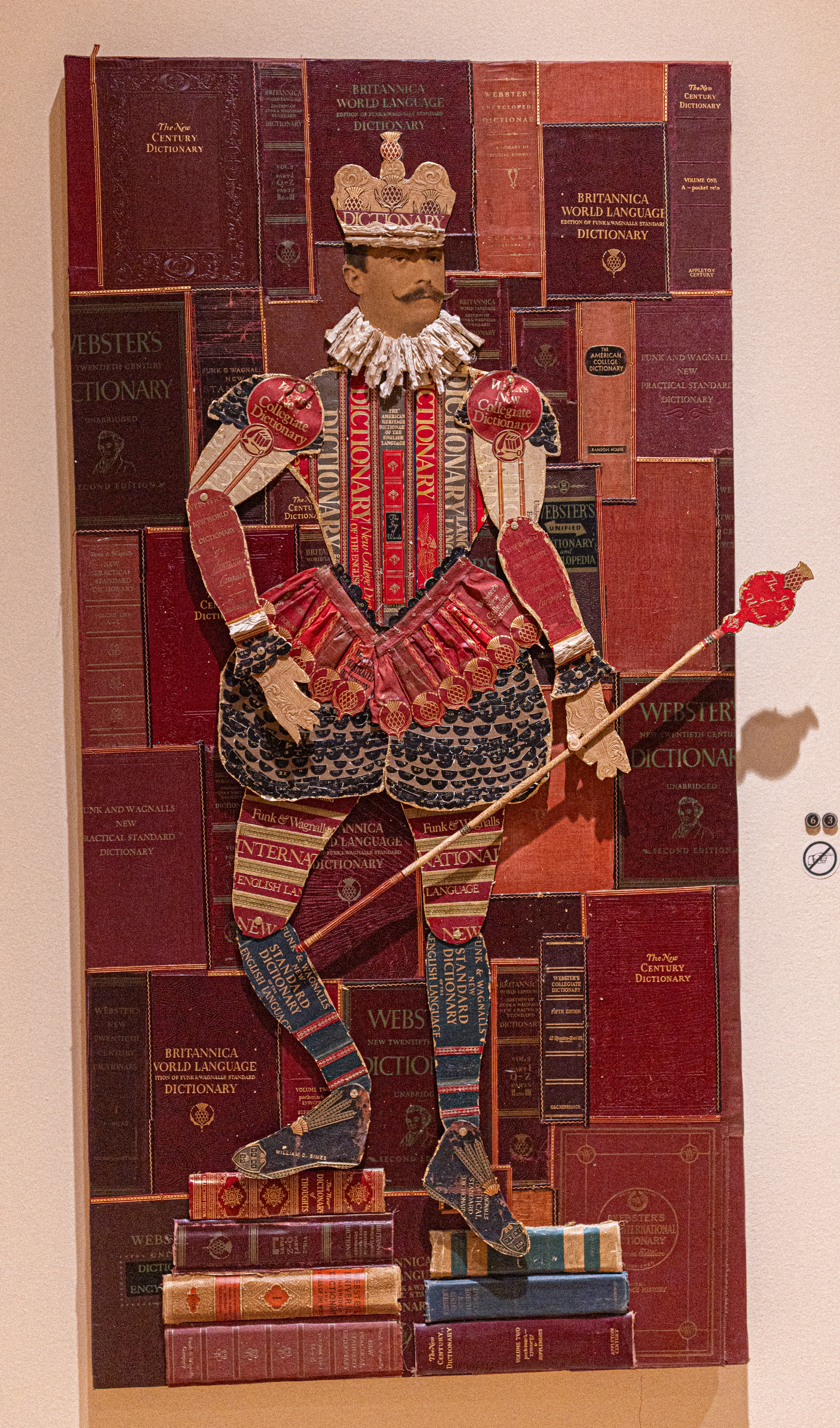
King Richard of the Word is made of dictionary covers, alphabet tabs and vintage photographs.

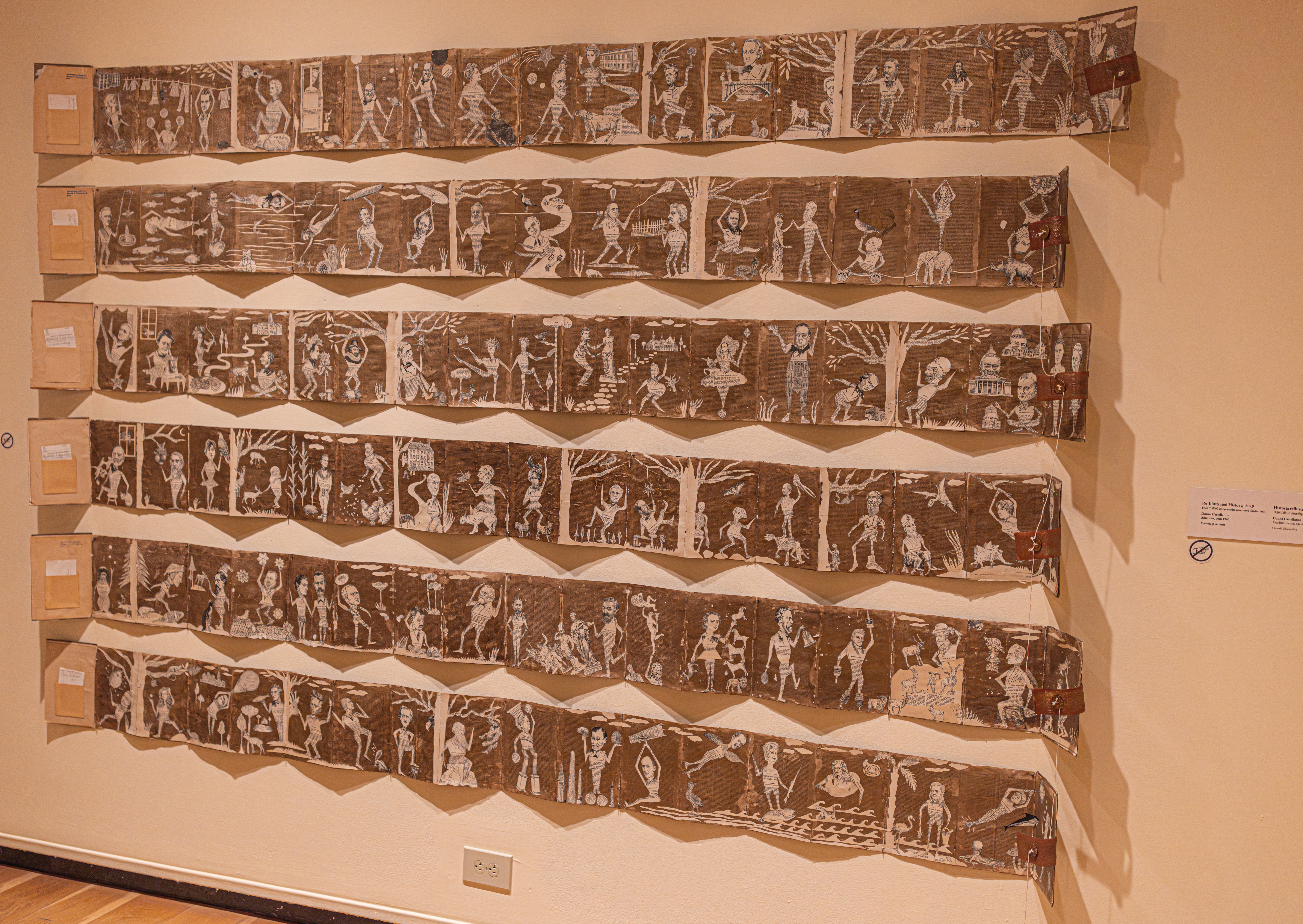
“Re-Illustrated History” (2019) is a collection of 1920s Collier’s Encyclopedia covers and illustrations.

“Little Less Conversation” (2020) is made of book covers. Although I’m not sure that is possible.

“Organ Donor” (2024) is made of wood pipe organ pieces and medical book illustrations. I’m no doctor. But, the parts of the body in the center of the work of art such as the shoulders and ribs seem to match up!

“Give a Dog a Bone” (2024) is made of 1930-1950 medical book illustrations and book cover cardboard. He looks like he could use one.

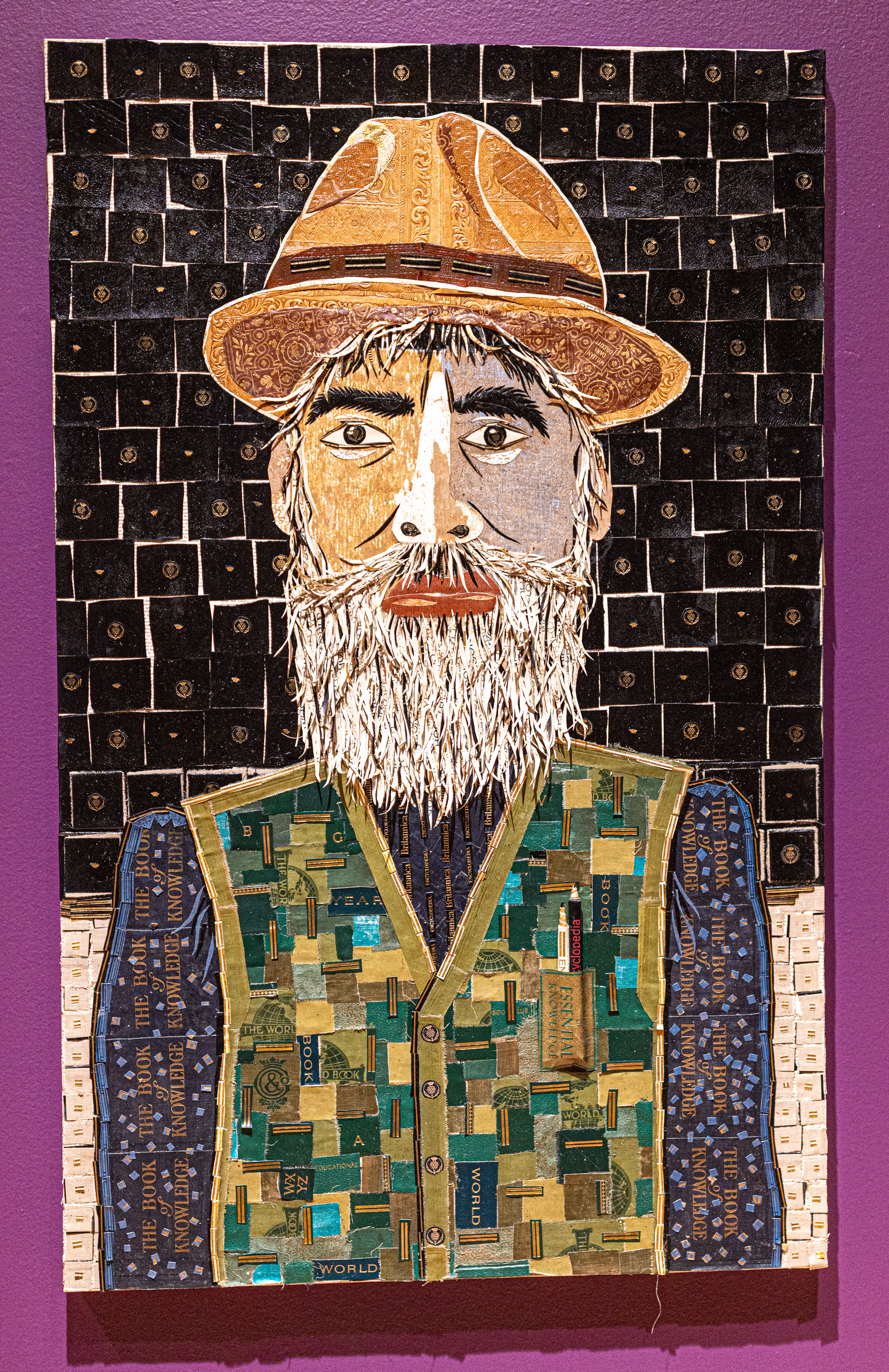
“Knowledgeable Bearded Man in Hat aka Alfonso (2021) is made of encyclopedia covers. It is also a portrait of her husband.

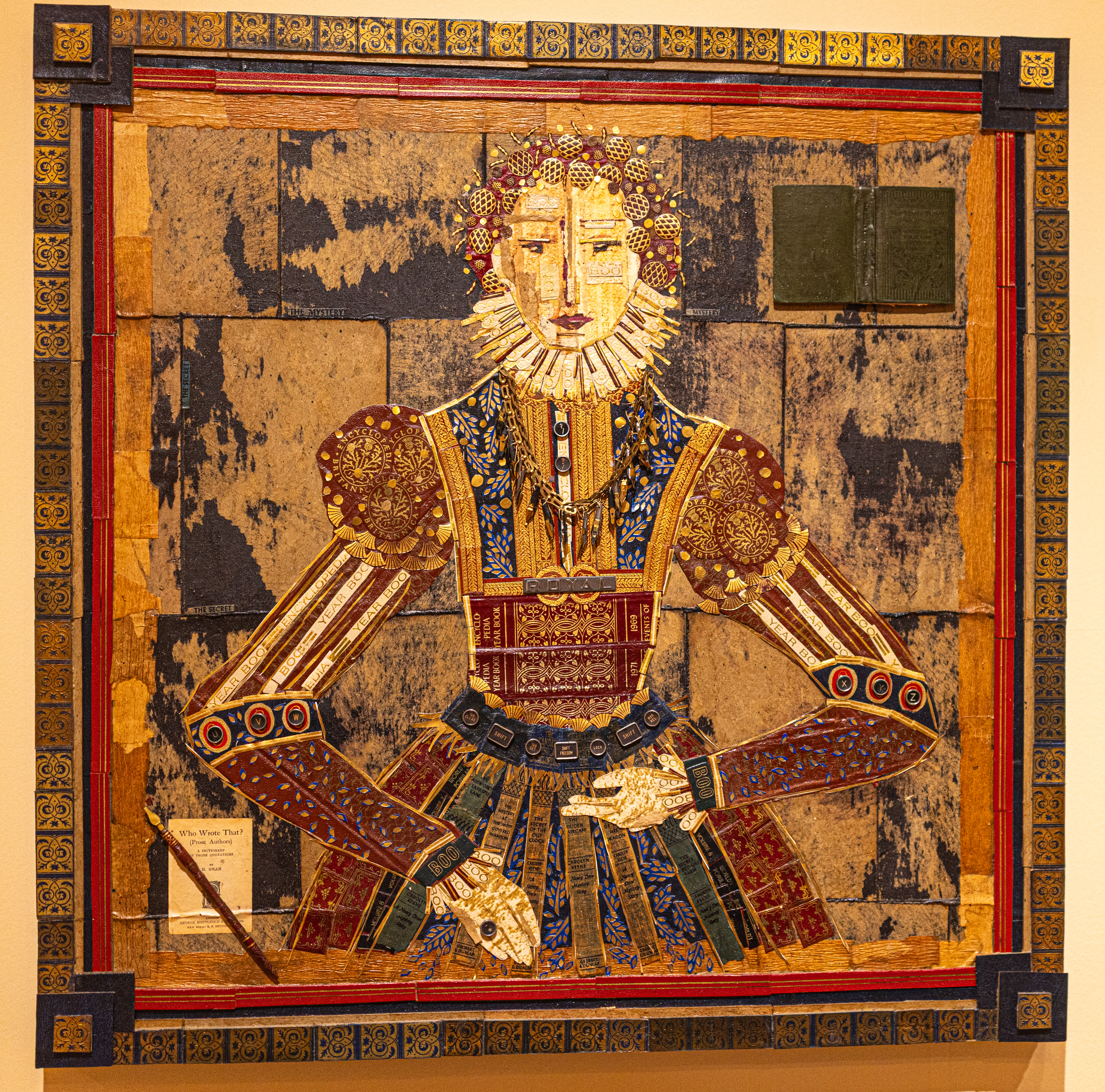
“Ghostwriter” (2025) is made of Nancy Drew covers, encyclopedia covers, typewriter keys and pen tips.

“Small Pendant Light” (2025) is made of crystal lamp parts and encyclopedia covers.

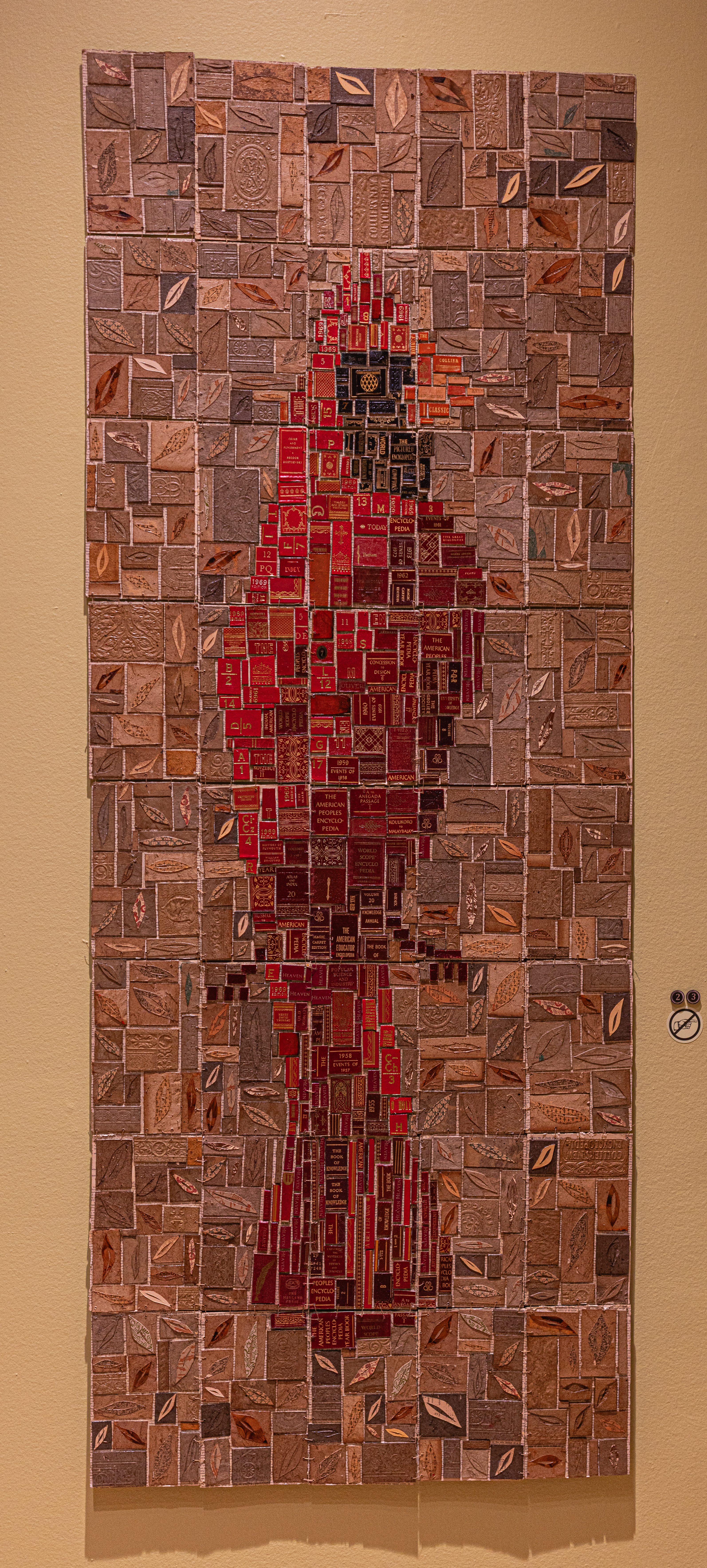
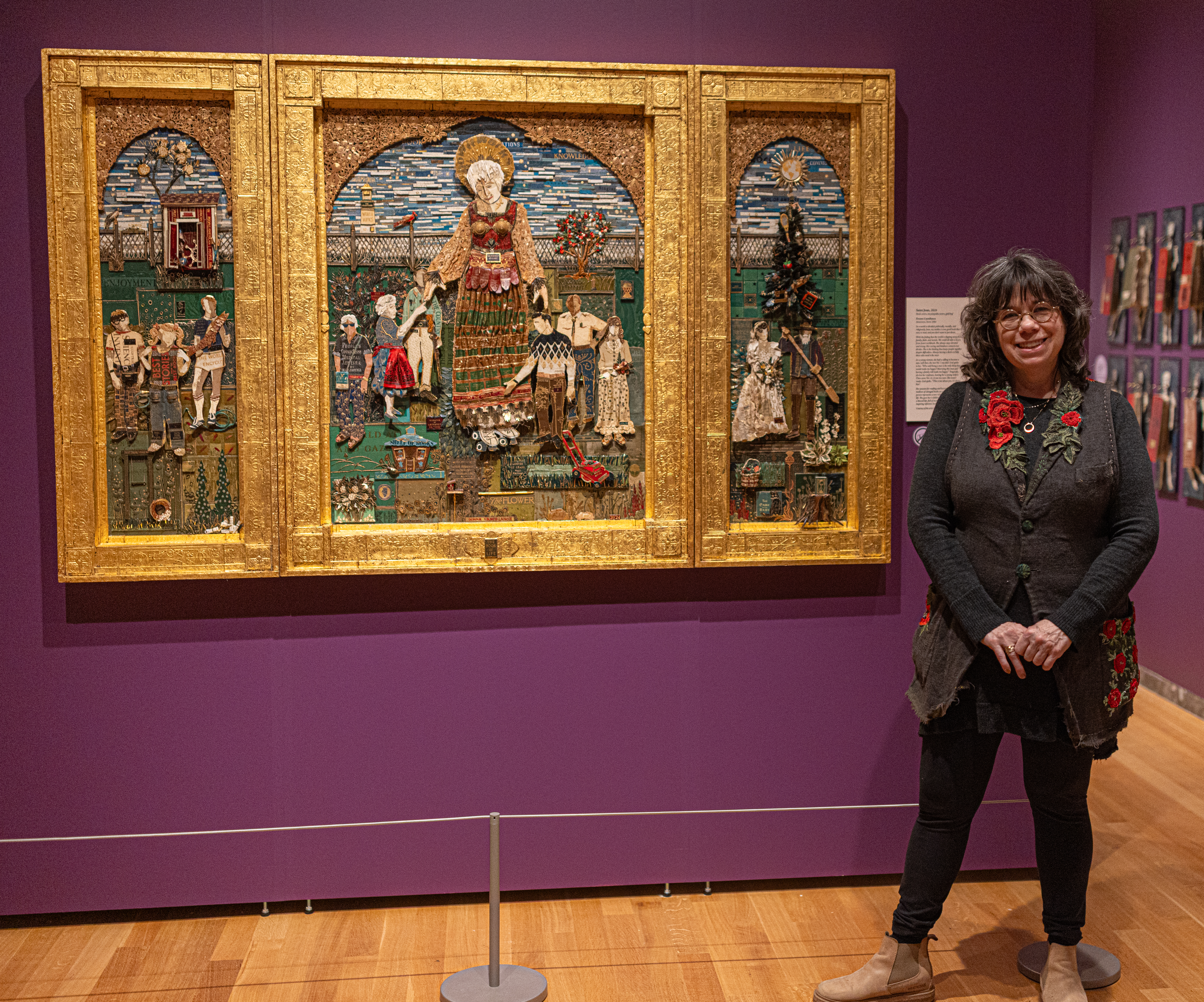
Those are all amazing and thought provoking works of art. But, out of all of these works of art, there is one that stands out above the rest. Donna’s favorite work of art is Saint Joan (2024) made of book covers, encyclopedia covers and gold leaf which she is standing next to in the photo below.

Saint Joan is a tribute to Donna’s mother, Joan. In a world polarized by politics and racial and religious divides, Joan was a good book you would want to read, Donna wrote about her mother, keeping with the book theme. As the world feels like it is slipping away from family and morals, we could all take a lesson Joan’s workbook.

As a young woman, Joan had a calling to become a nun. But, after meeting her future husband, God spoke to her and said “Who said being a nun is the only thing that would make happy?” God told her marrying the man she met and having a family would also him happy. Tragically, she lost her soulmate, leaving her a young widow. But God calmed her by telling her it was not about her. It was about him.

Joan’s passion for reading and learning made the medium of salvaged books an easy choice. Each person in the work of art represents a new chapter. The five children and 10 grandchildren are all visible in the painting. You can also see things that people in her family like or were known for such as musical instruments, sporting goods and a lawnmower (more on that later) in the painting.

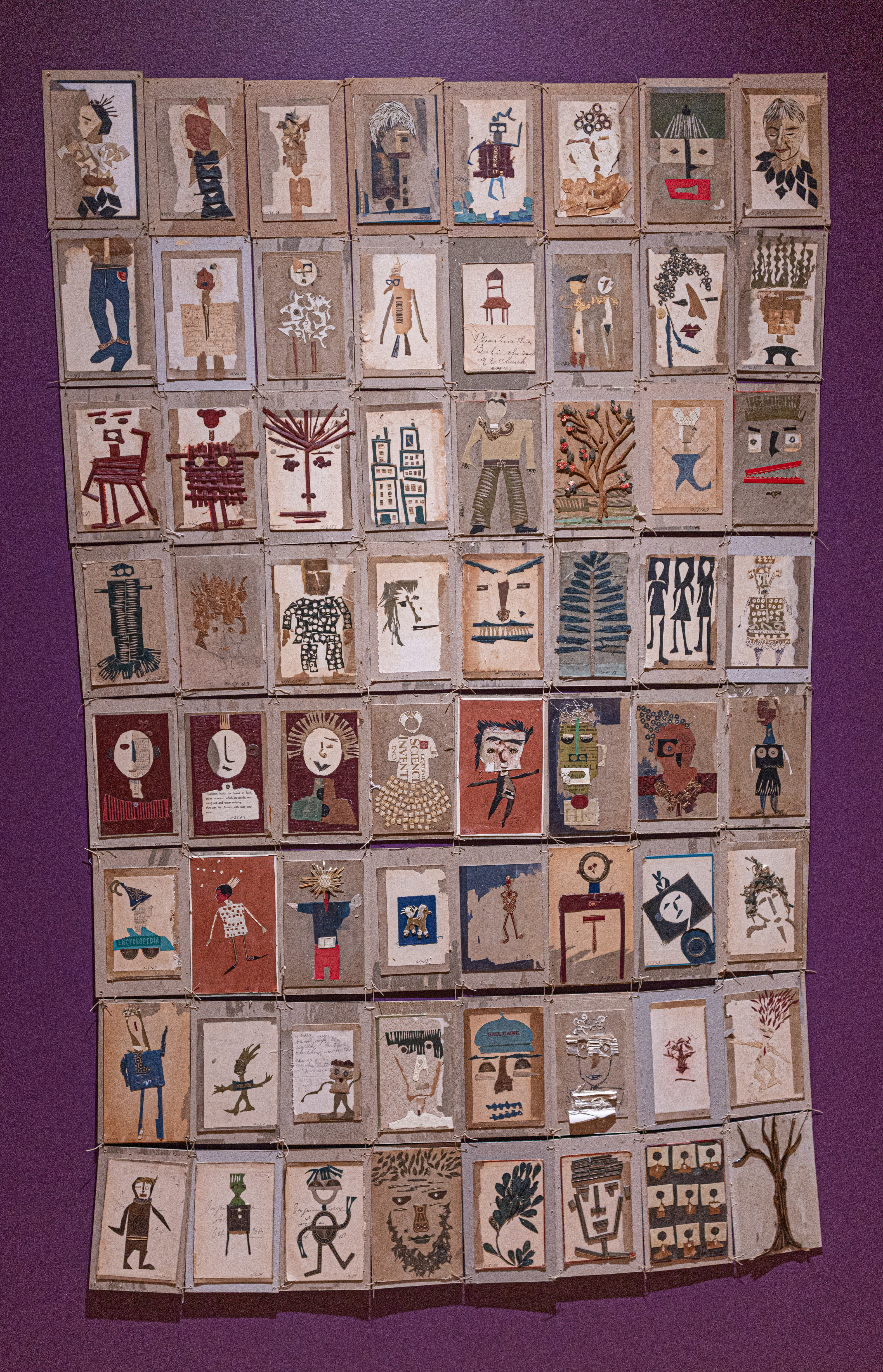
A companion piece to “Saint Joan”, the “Saint Joan Scrapbook” (2024) is made of book covers and paper scraps. While Donna was working on “Saint Joan”, she took a moment to cleaning up the growing pile of scraps. As she was sweeping them off, she saw a fun image appear in the mess. She quickly glued it down on a spare book cover. These little doodles became a fun little break for her as she worked on this rather emotional piece. She dated each board so you can see which part of “Saint Joan” she was working on.

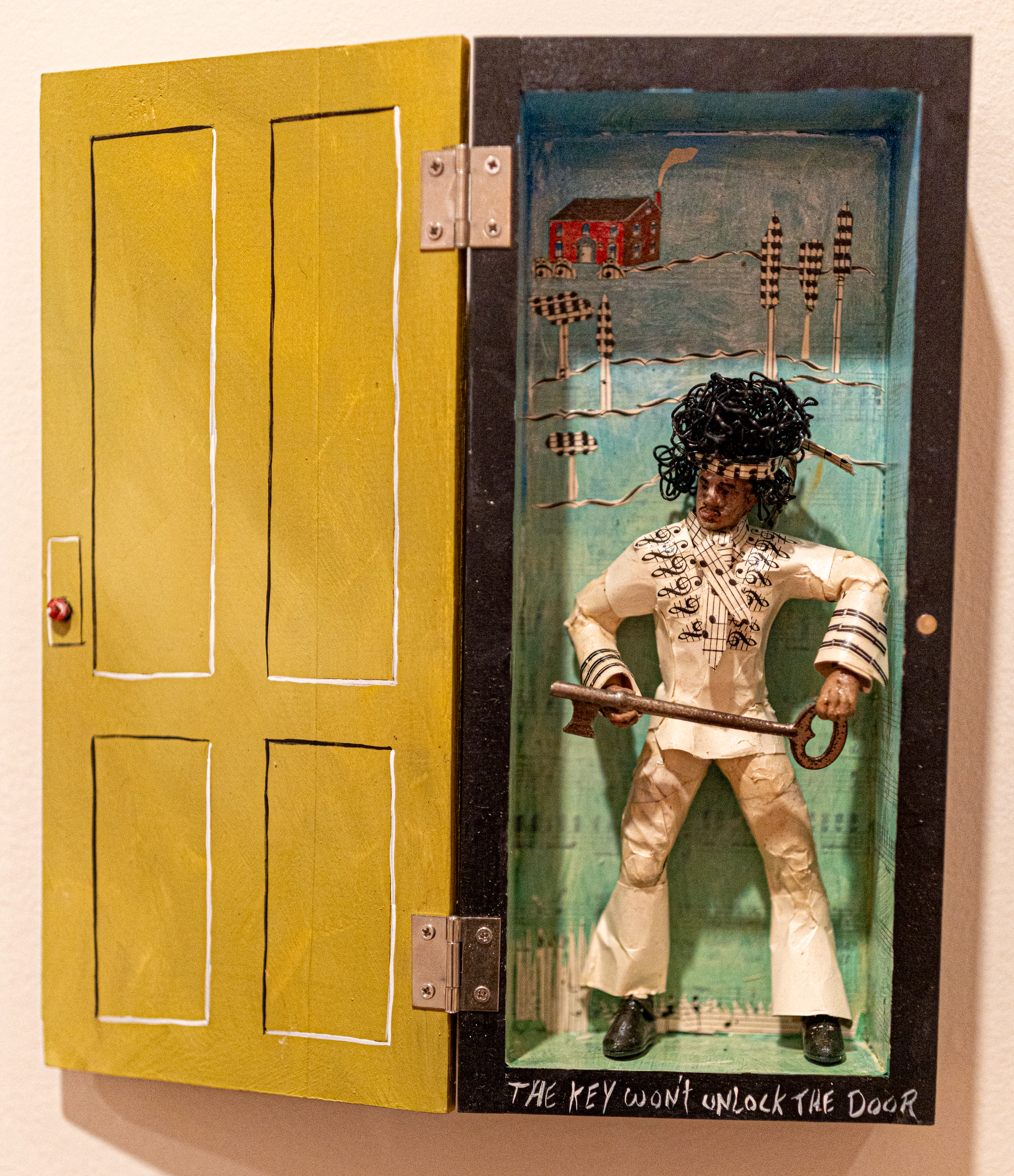
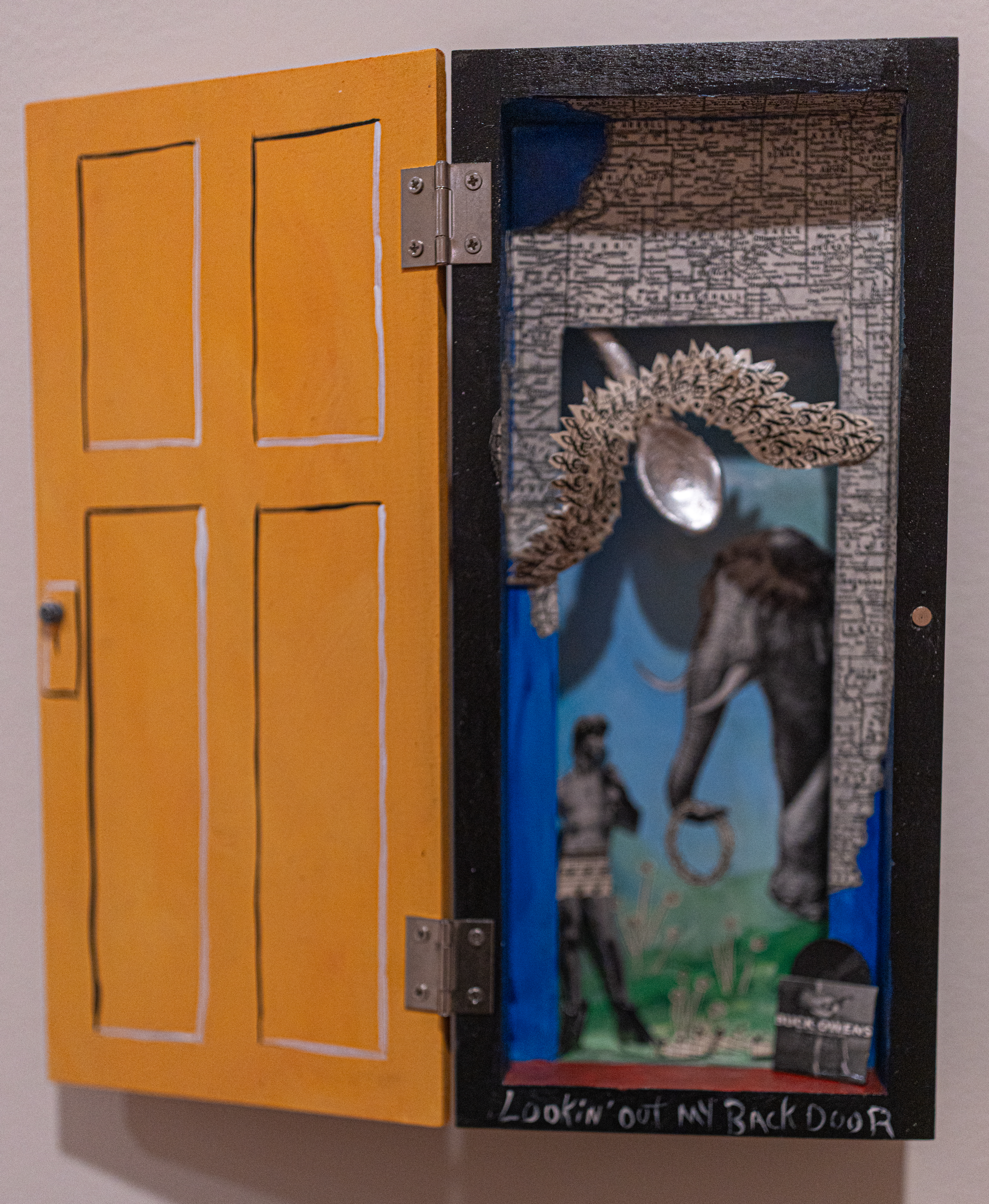
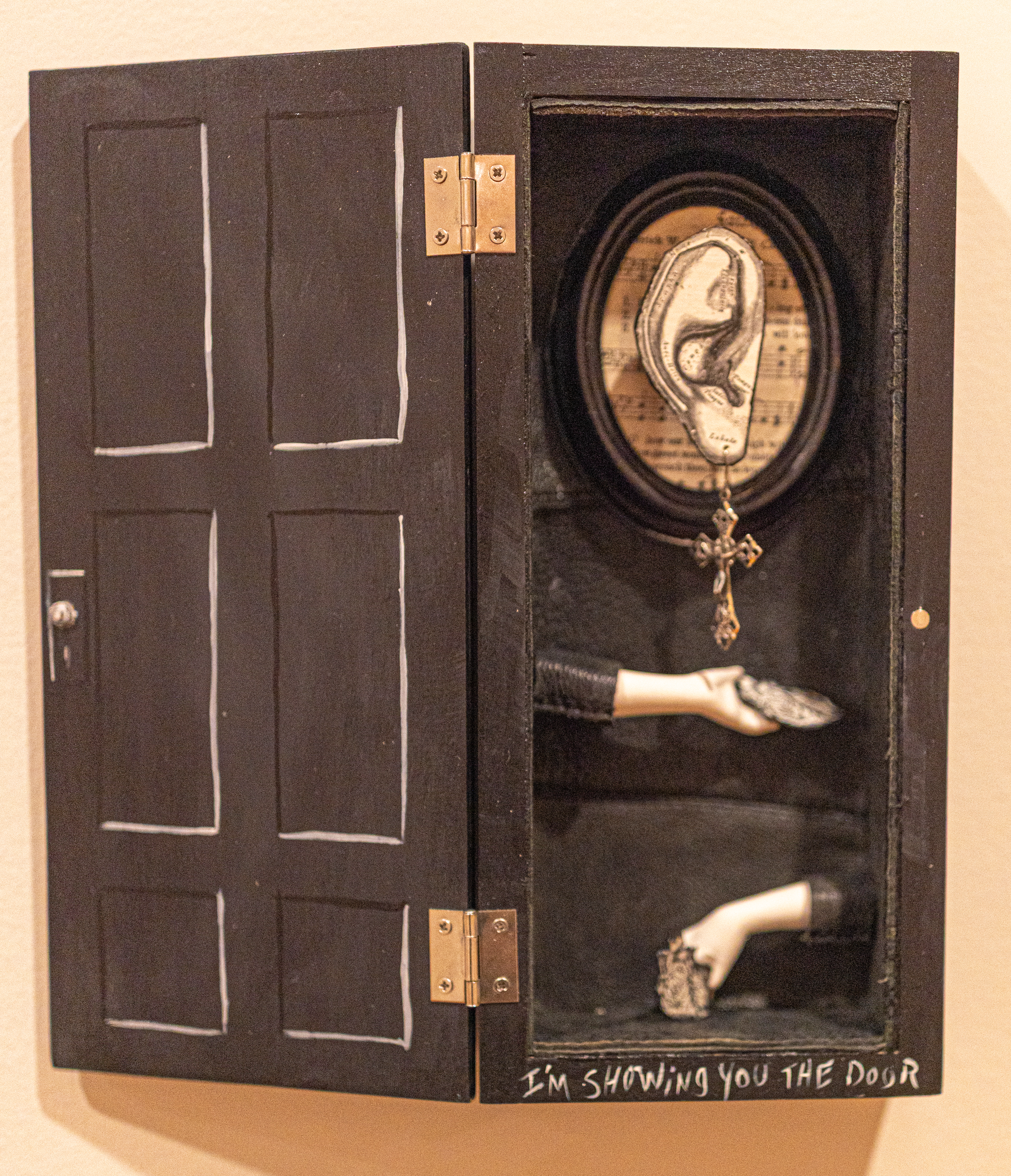
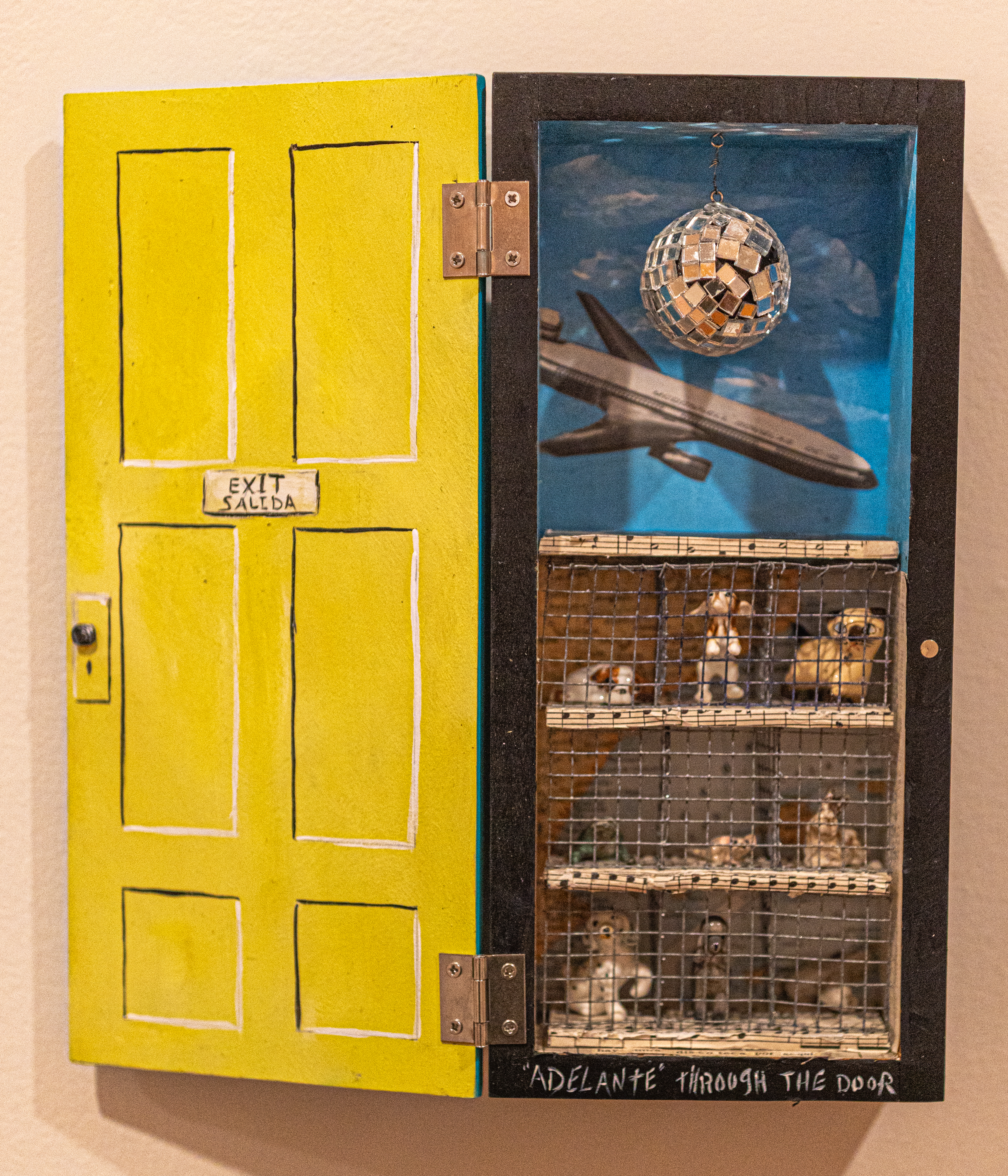
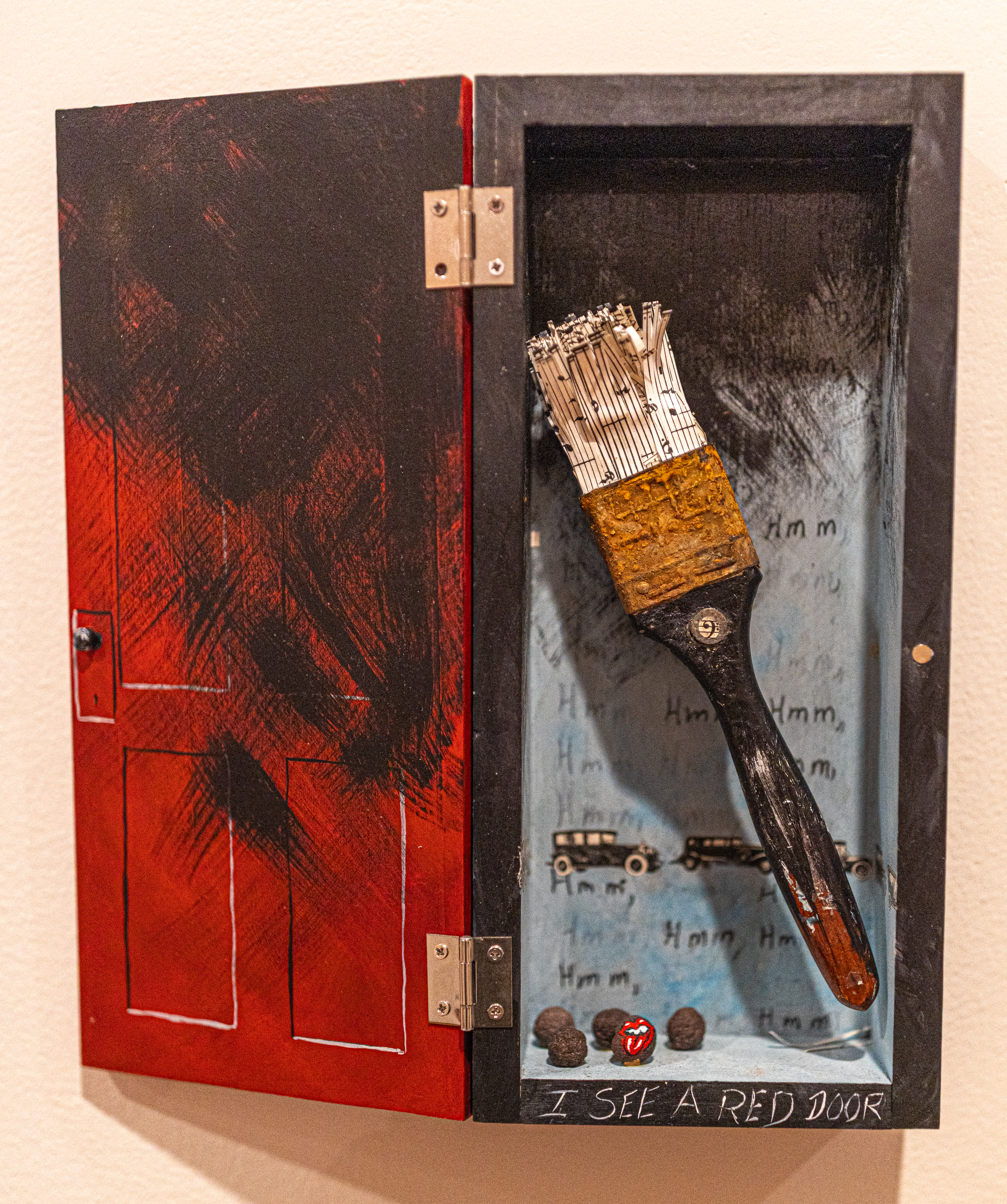
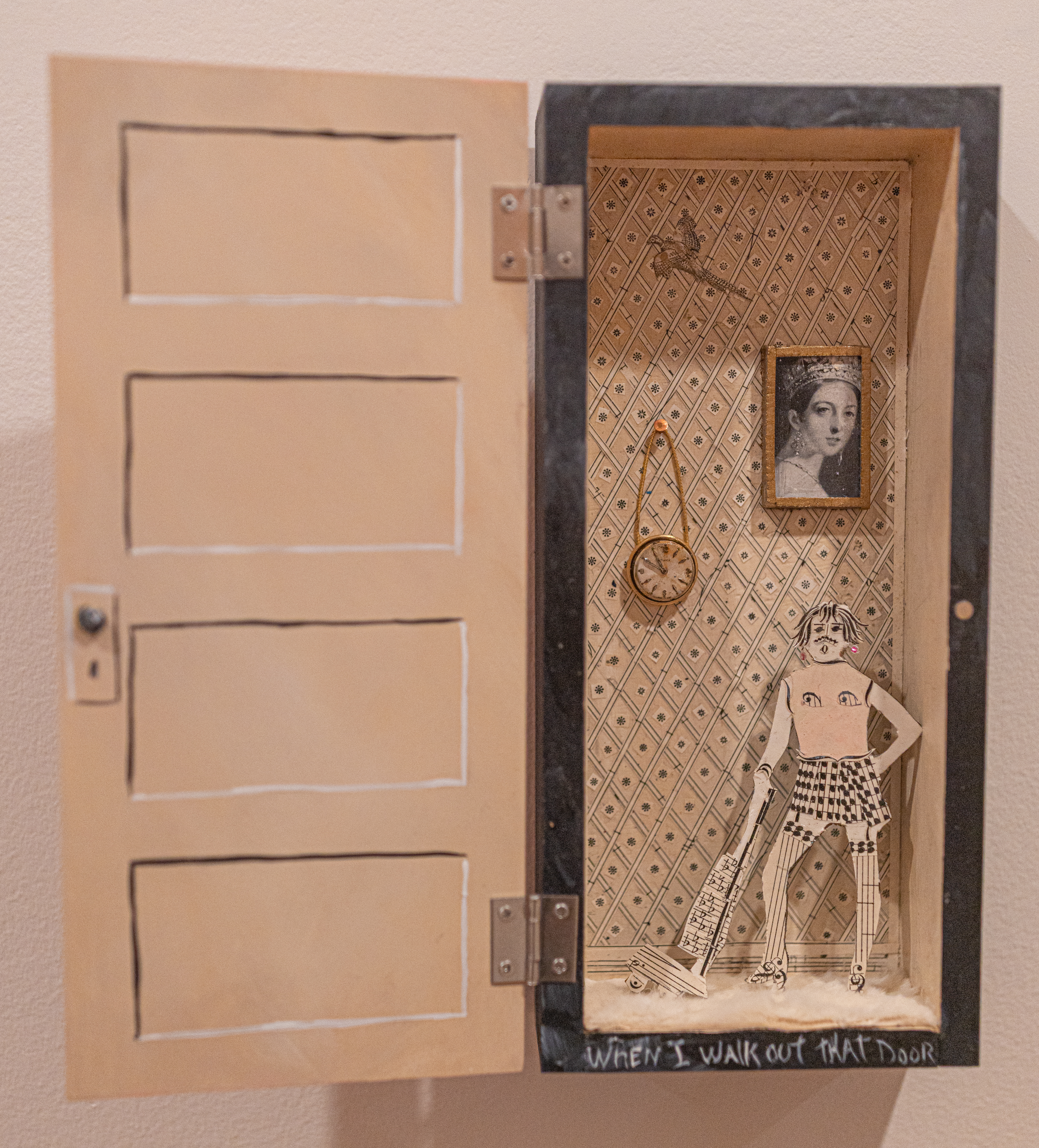
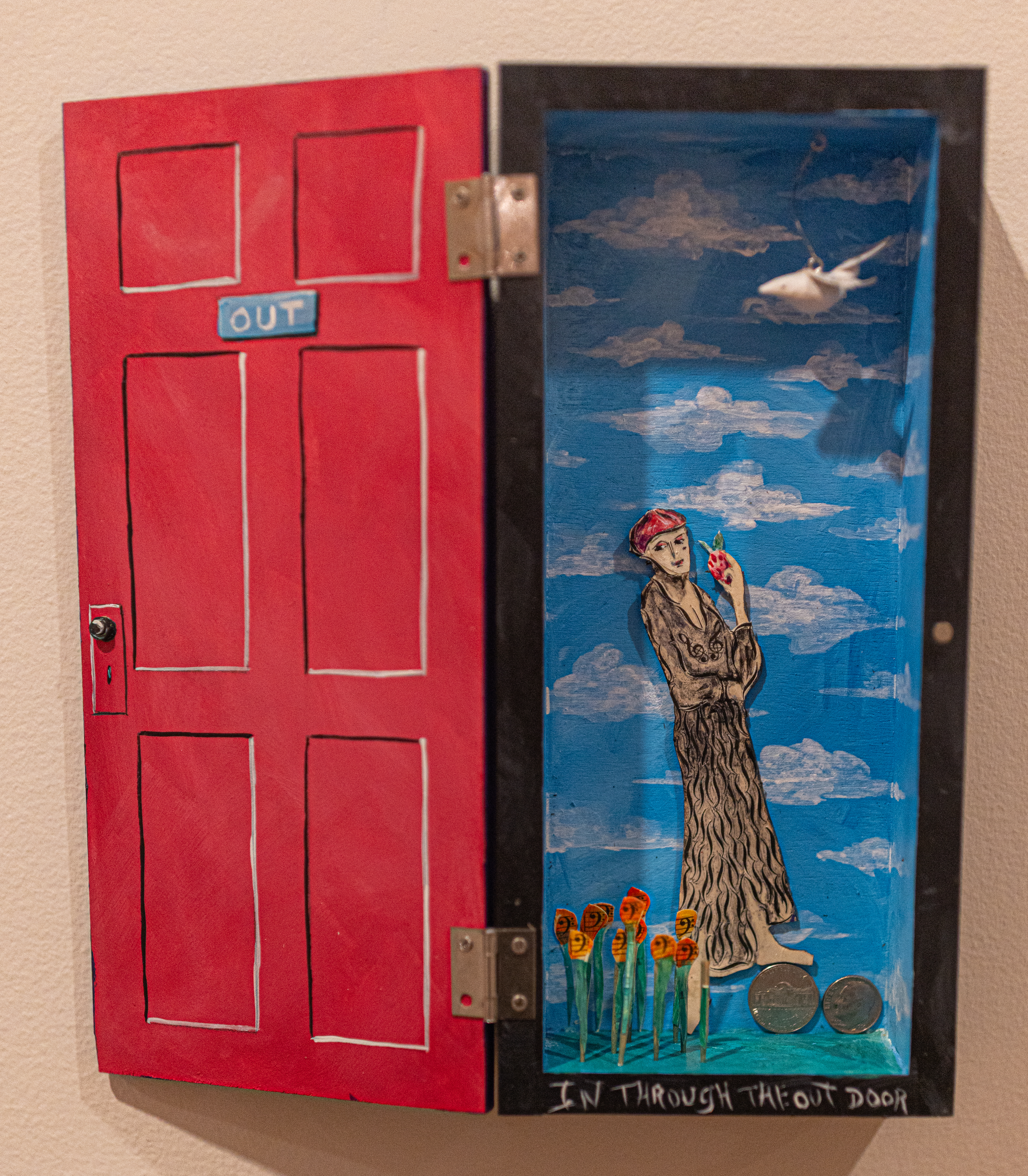
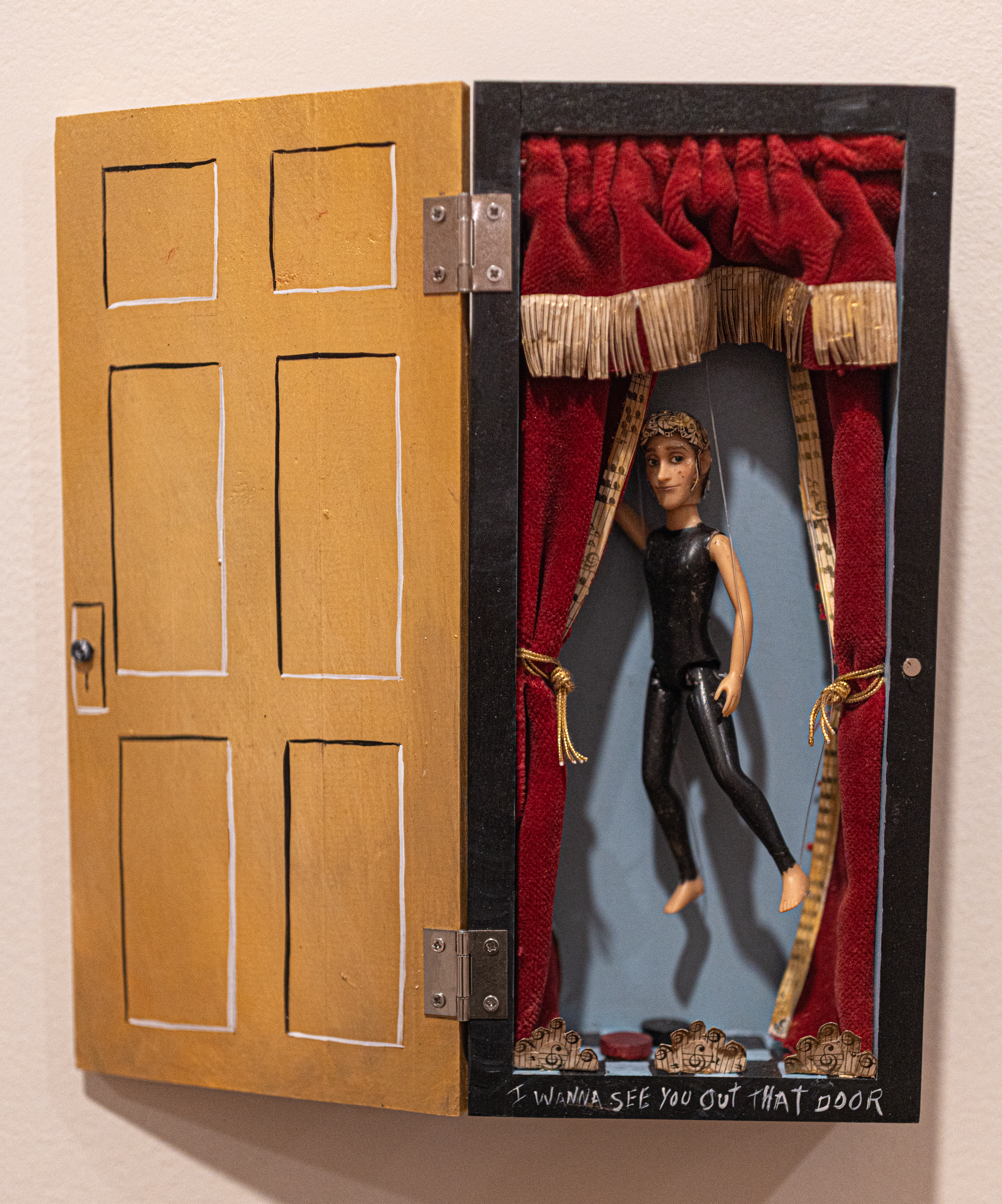
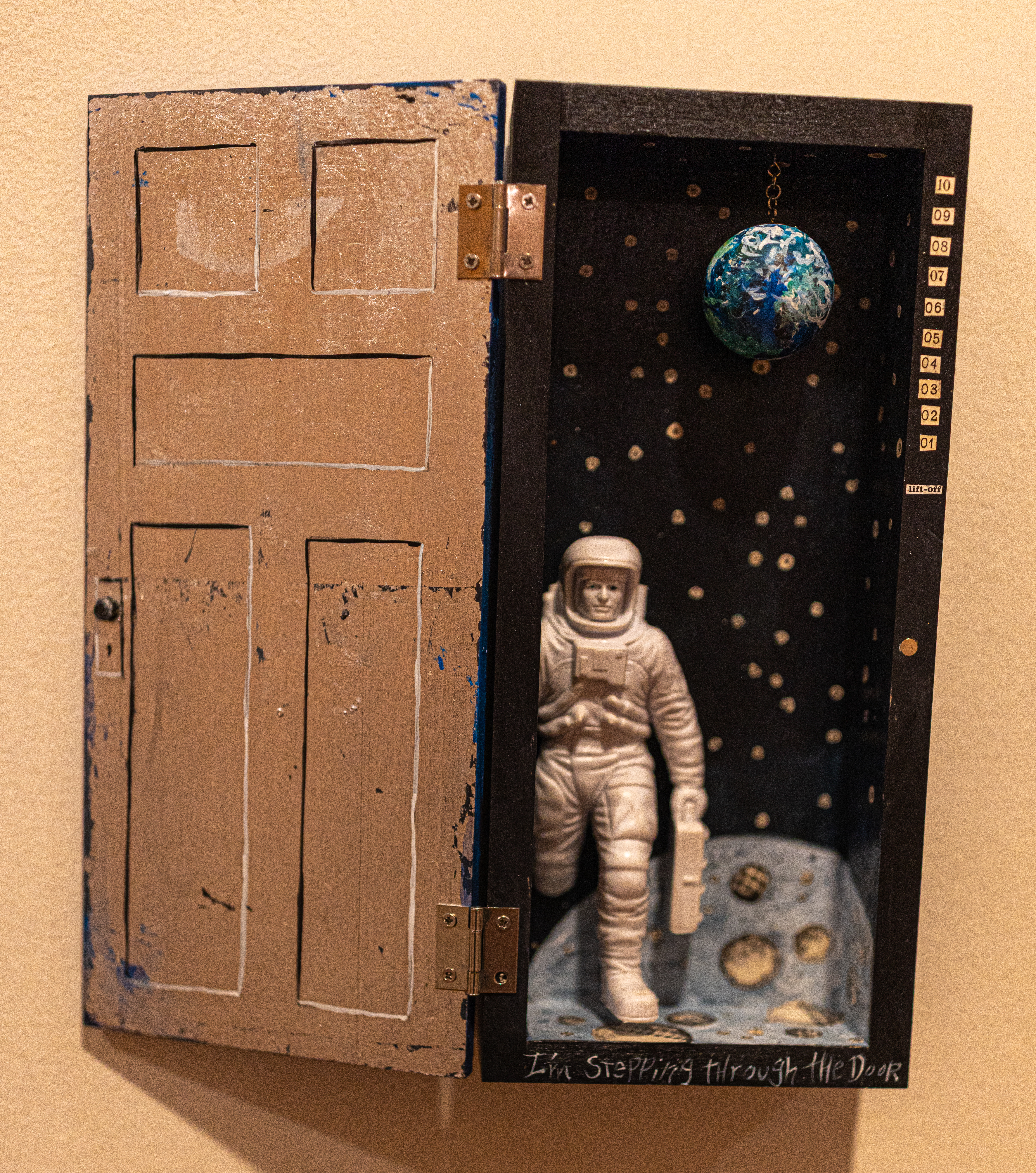
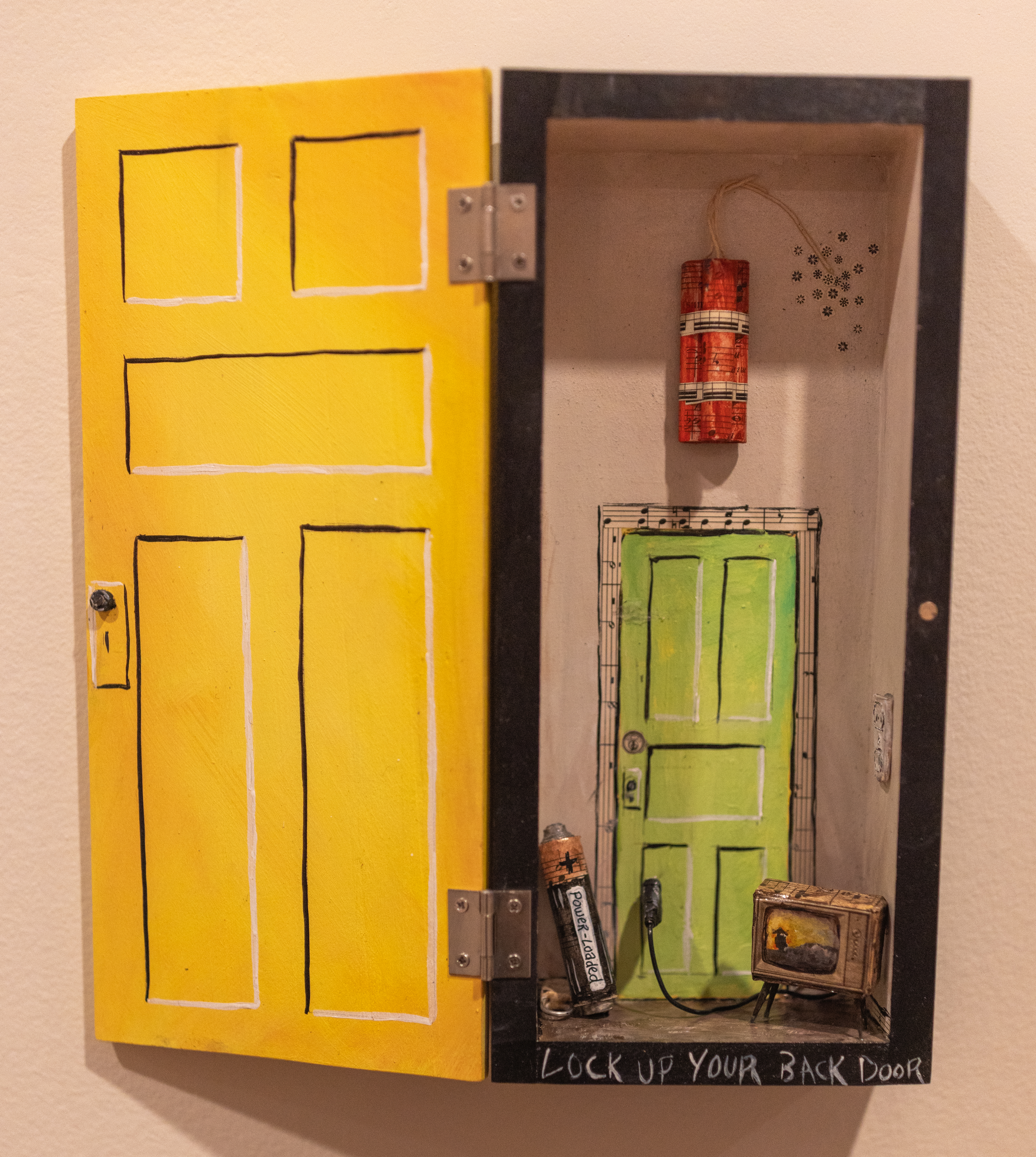
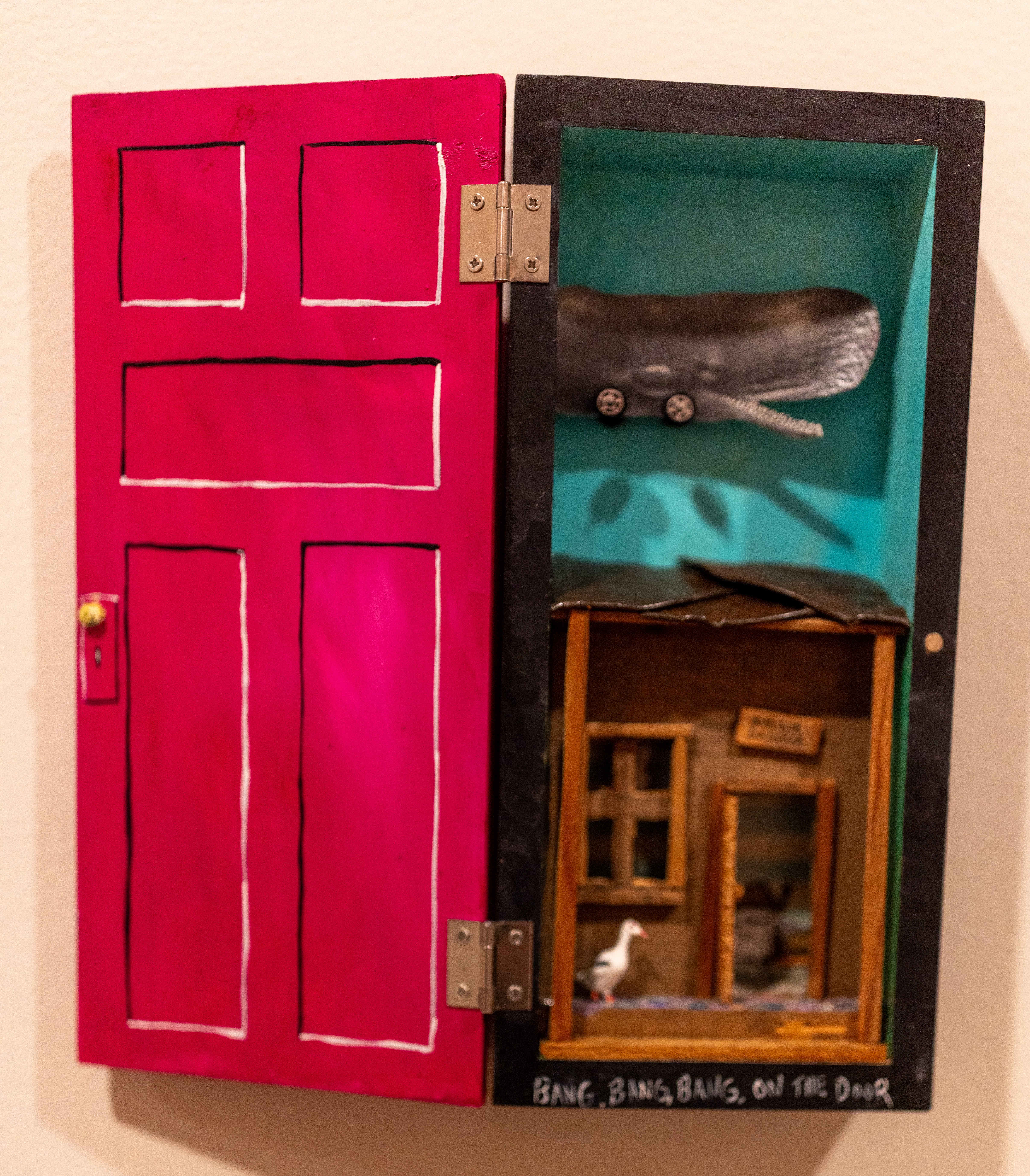
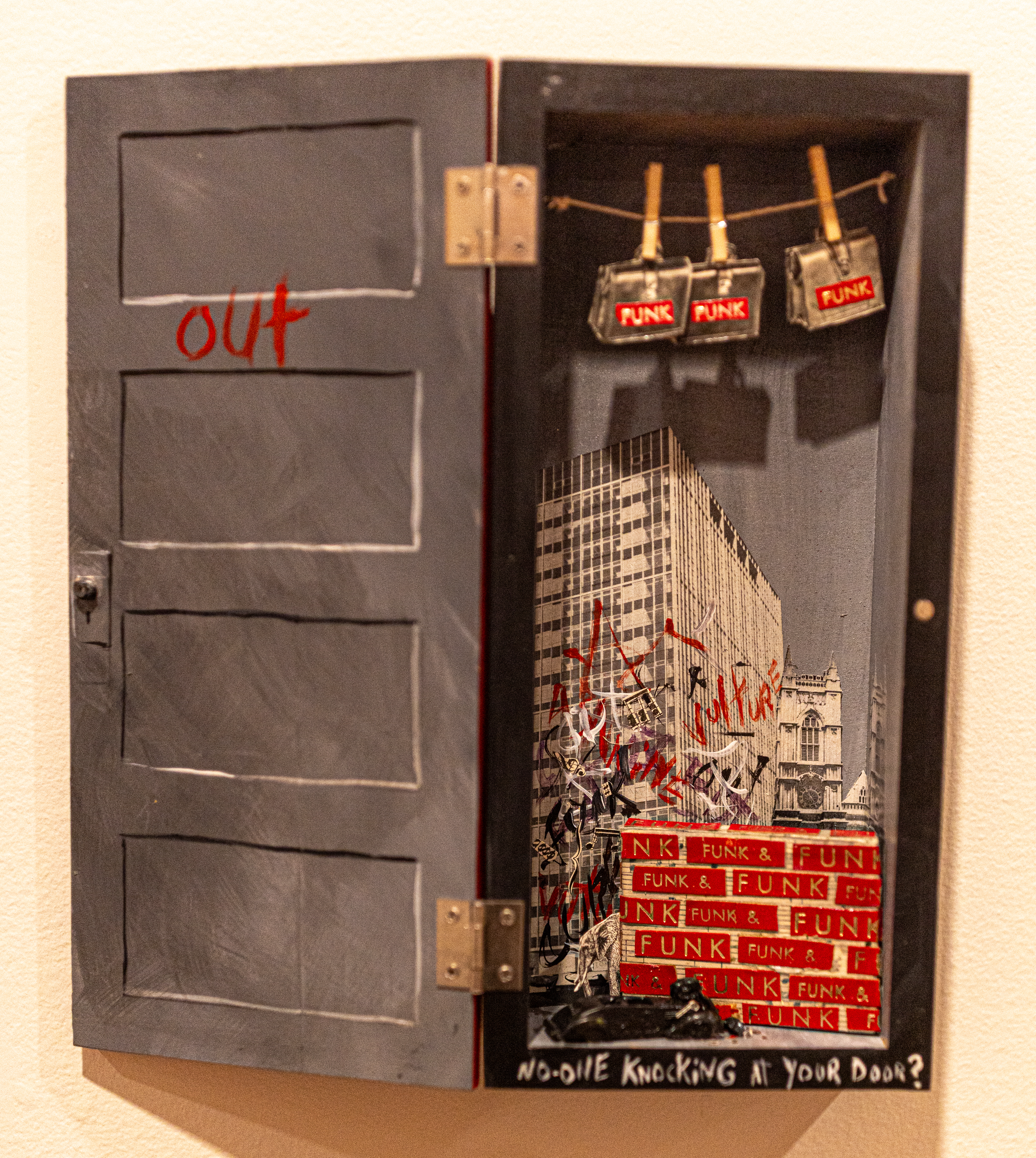
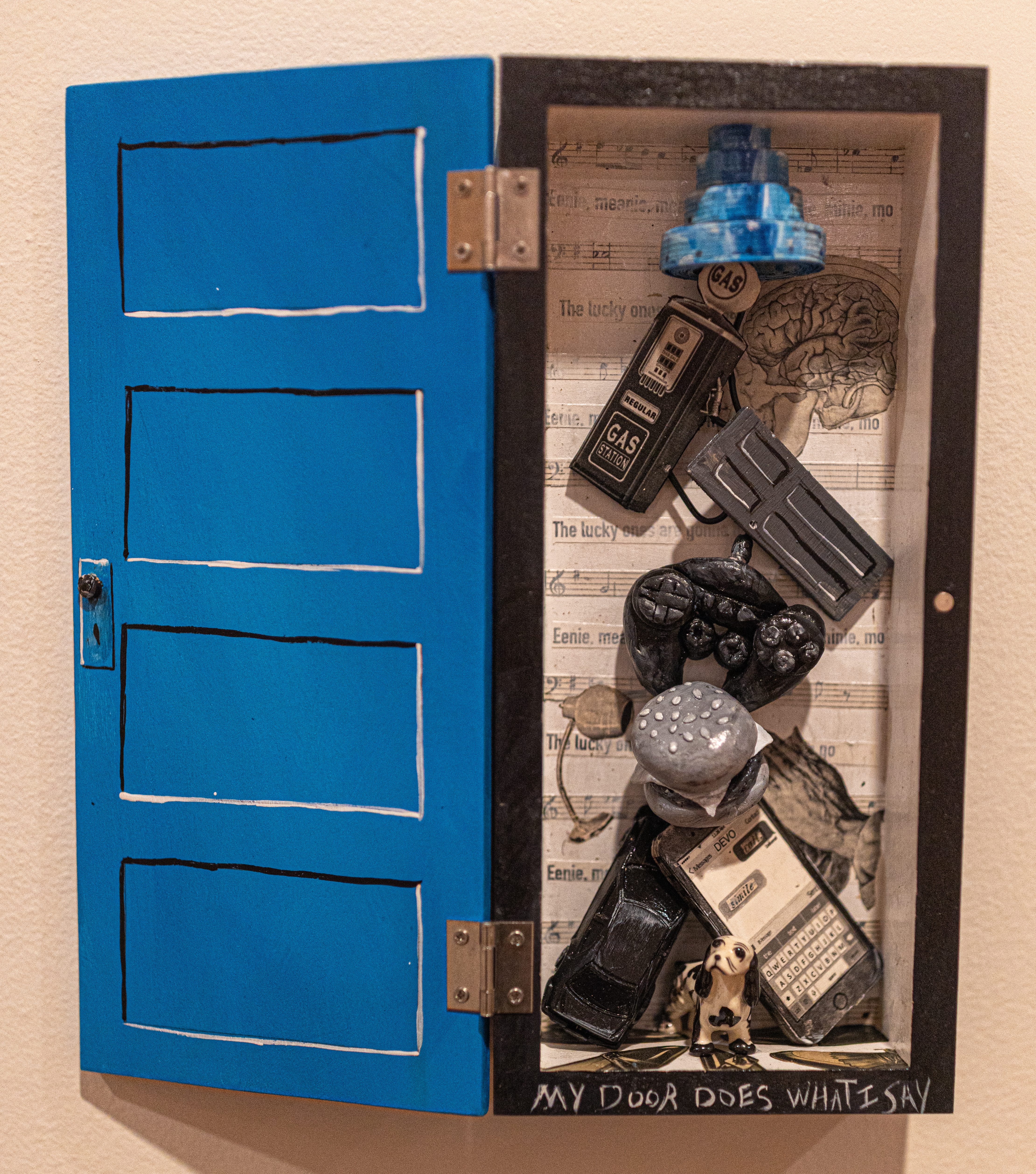
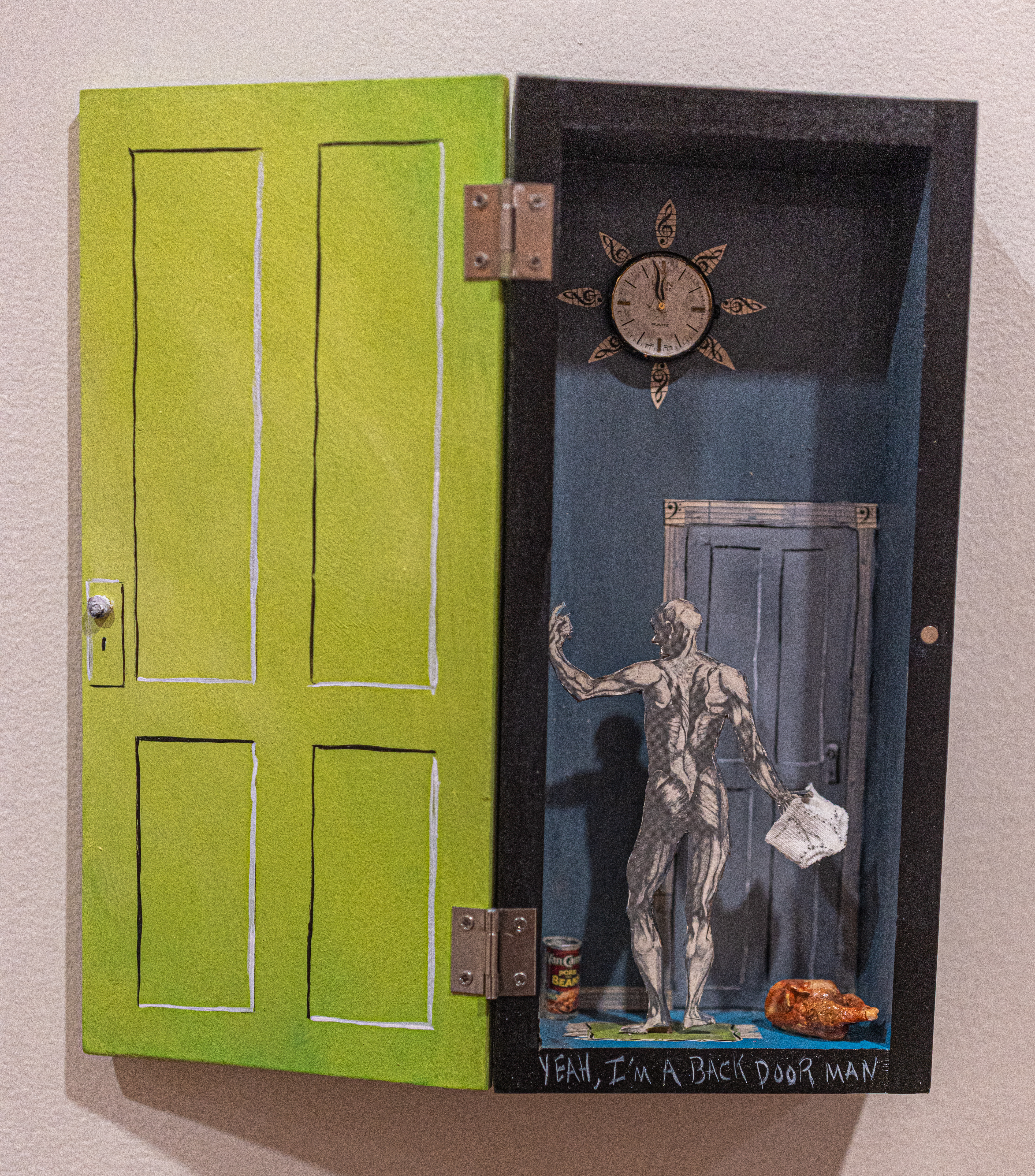
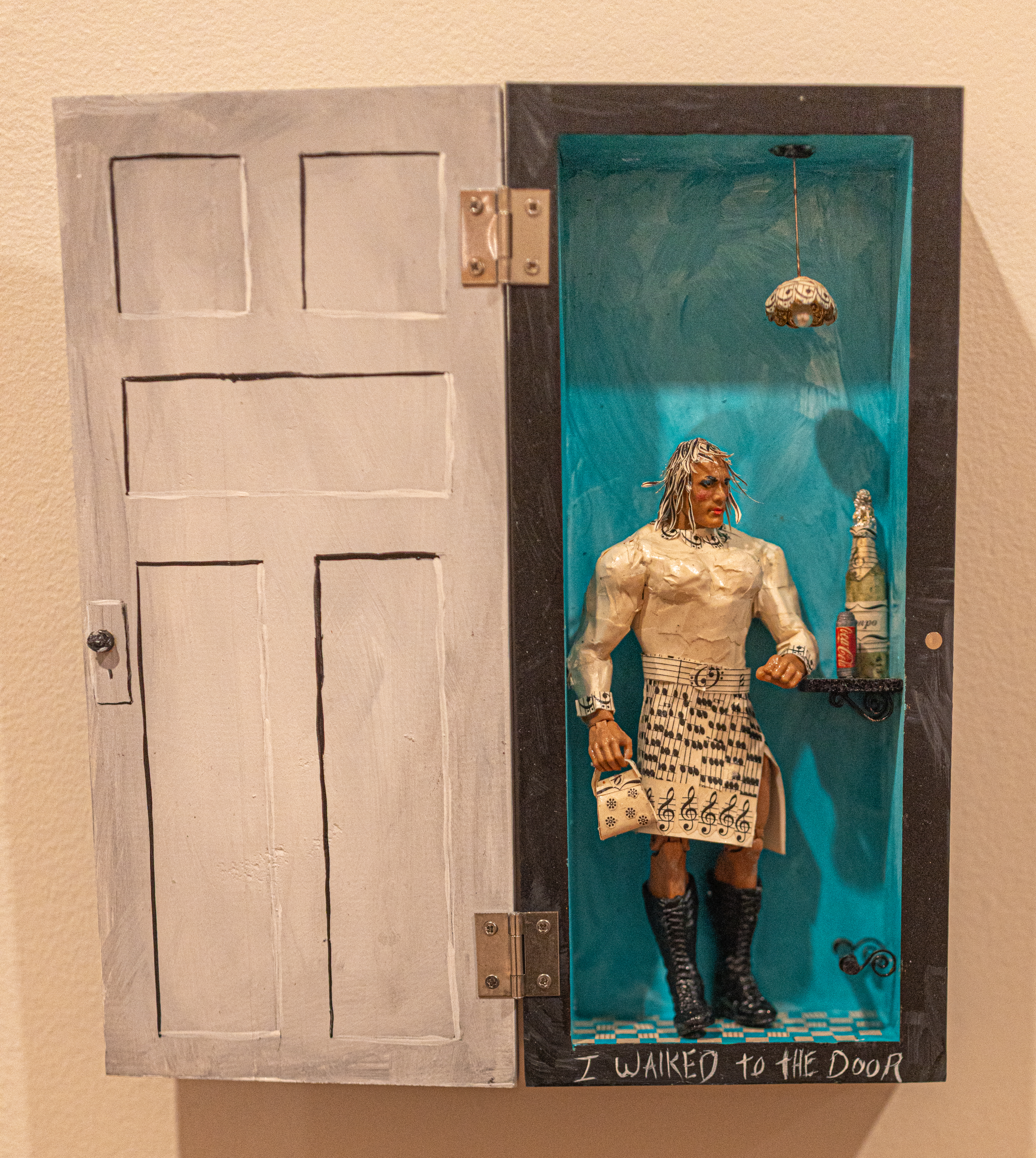
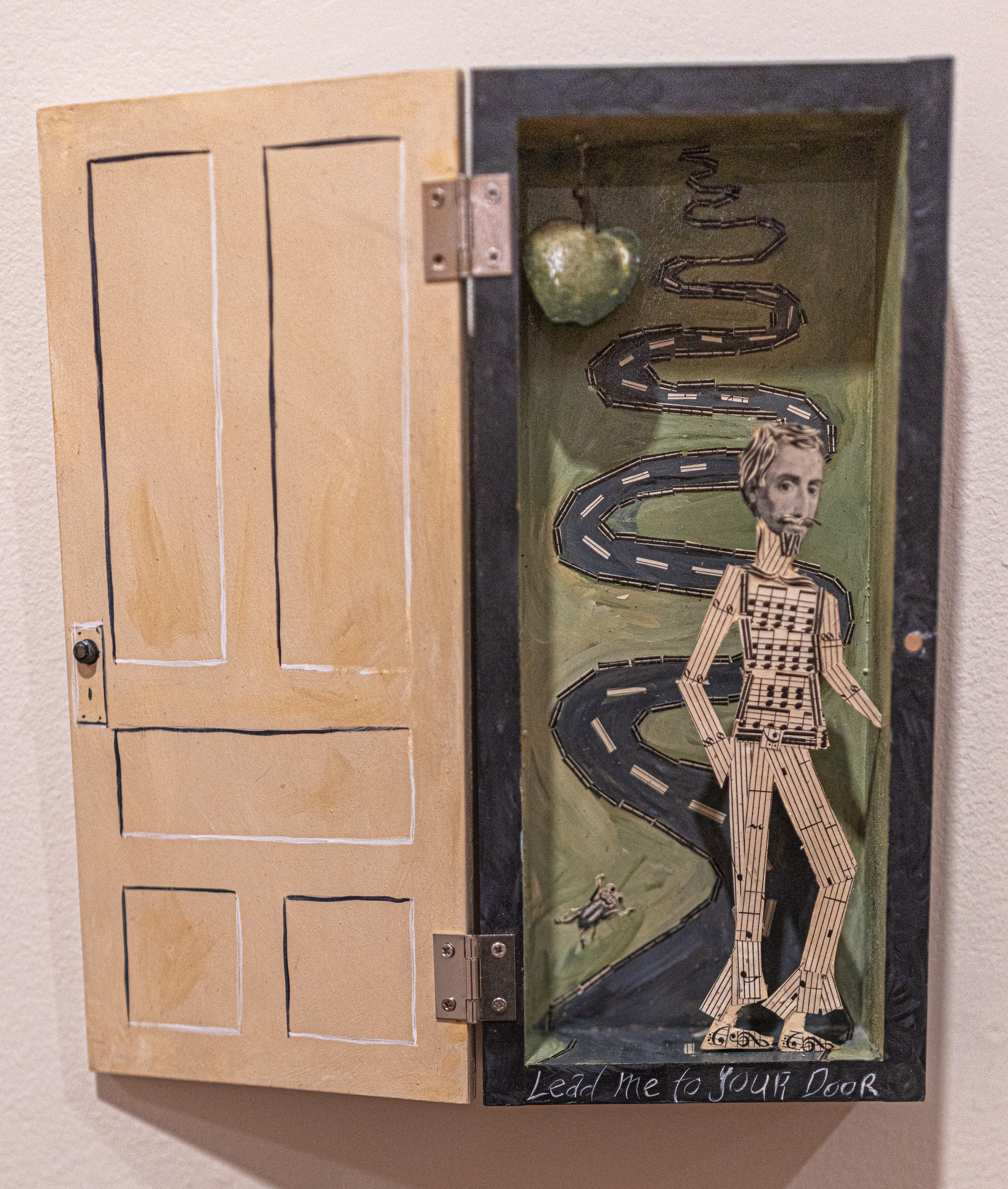
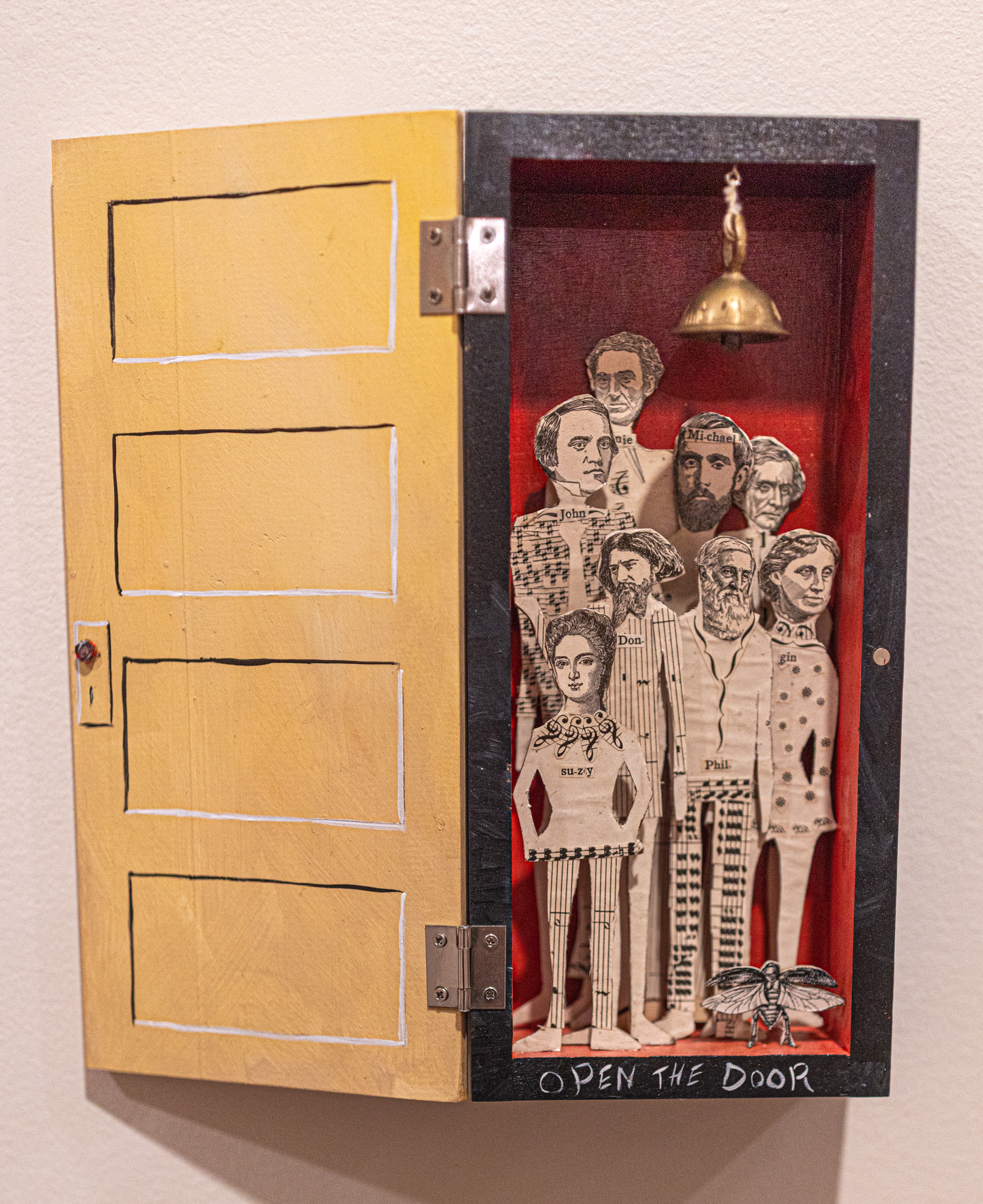
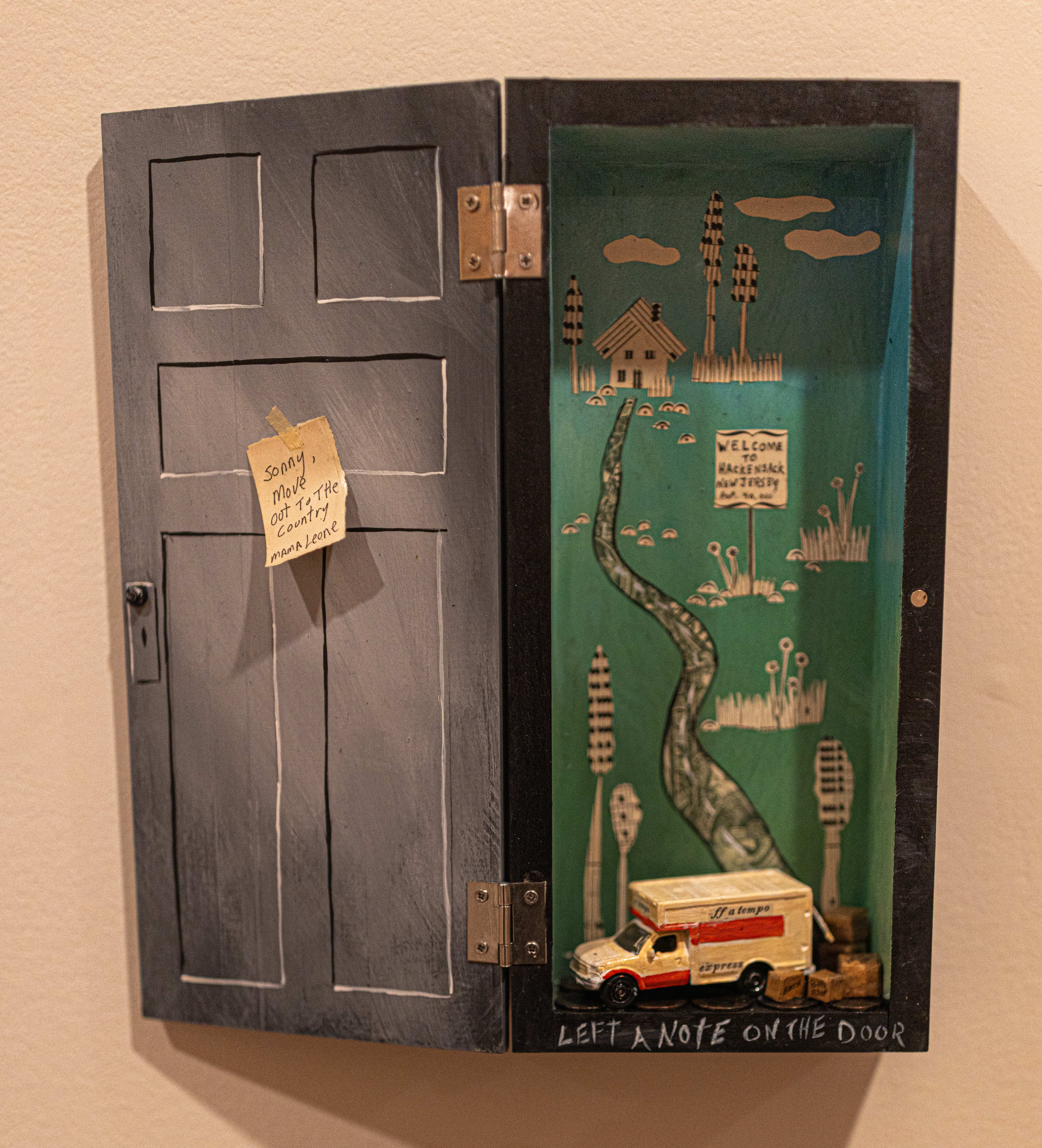
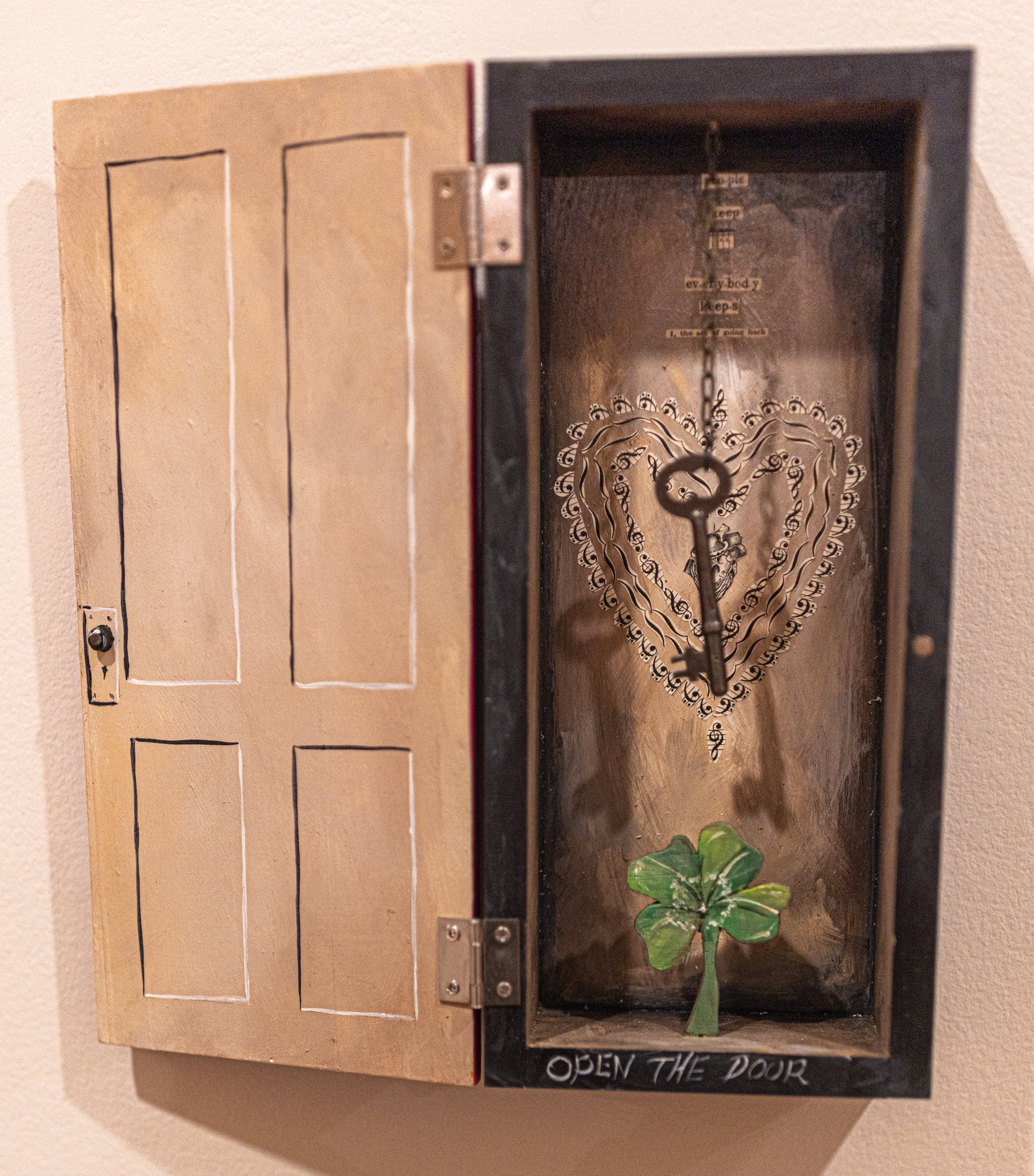
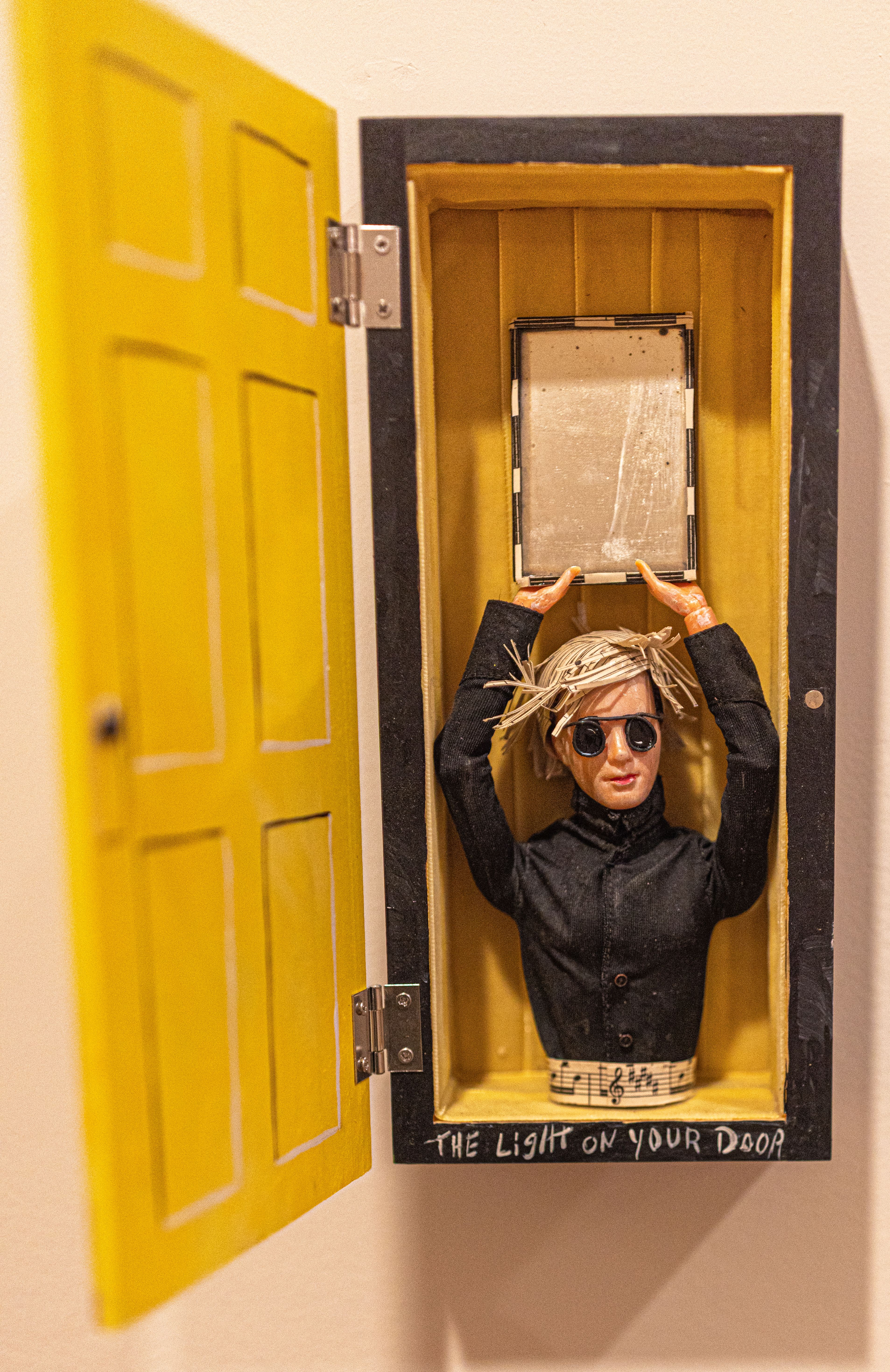
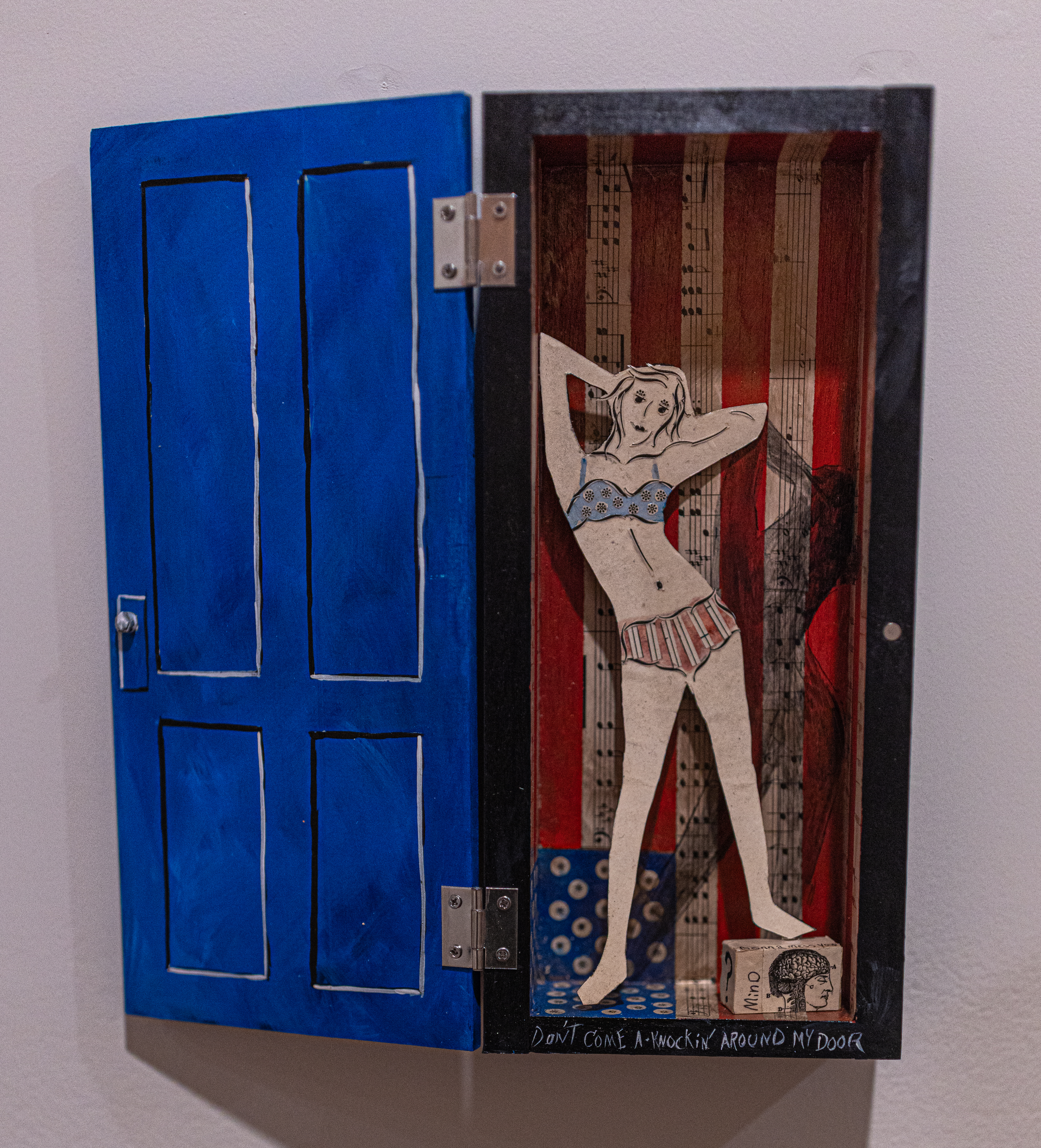
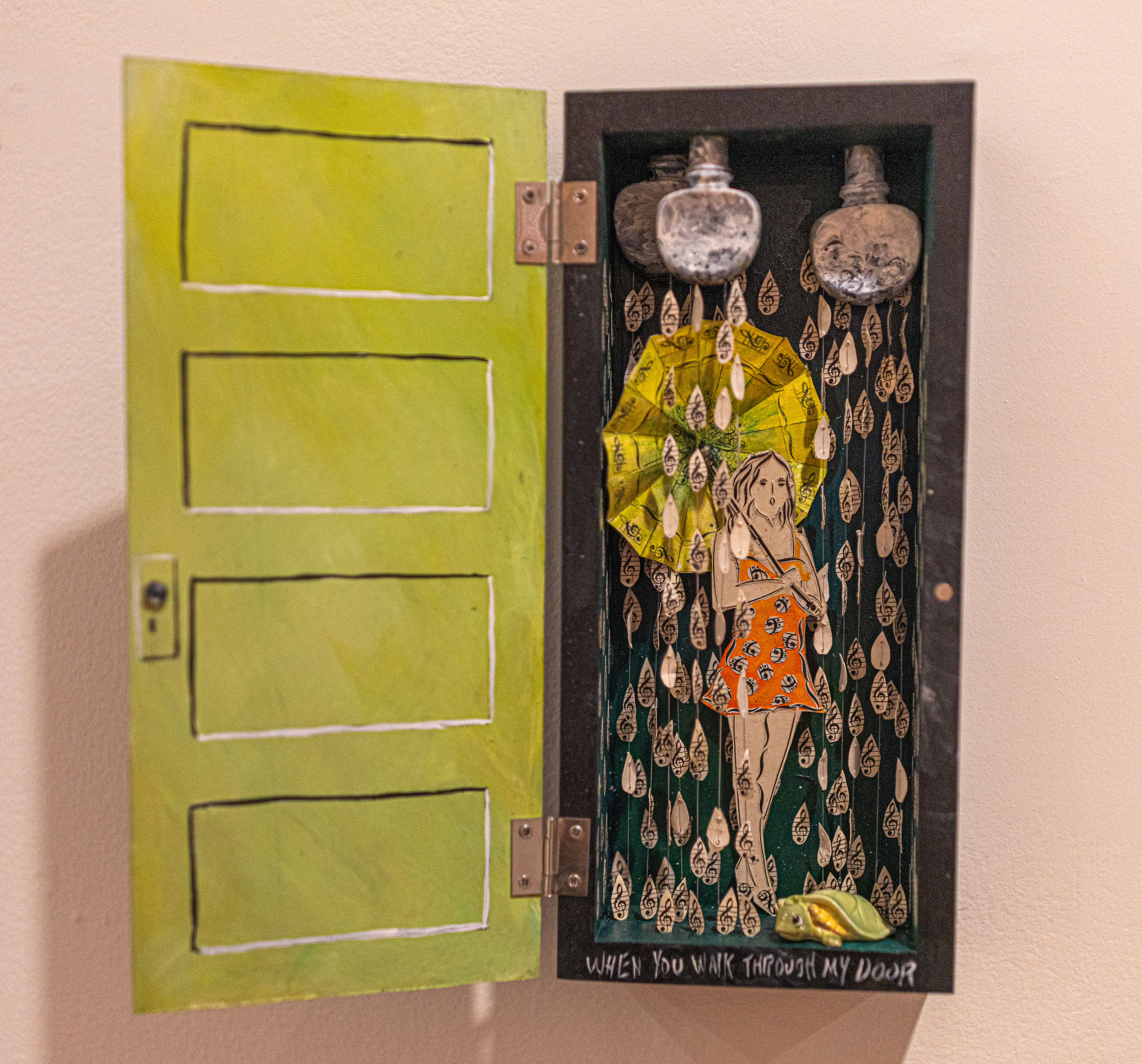
Another part of the exhibit is a collection of doors fittingly called The Doors. The idea came to Donna after she finished an exhibit featuring the work of 1940s Surrealist artist Gertrude Abercrombie. Gertrude painted doors and Donna painted a lot of doors for the exhibit. Later, when Donna was invited to the Rock and Rolled Show, Donna wondered how many songs have “door” in their lyrics. The answer is a lot. But, the exhibit only includes 23 of them. Donna thought about songs and bands she liked from her era. From “Lookin’ Out My Back Door” to “Paint It Black” the majority of the songs have a rock theme. The door color was based on the color of each album the song was recorded on (for young people those were circular devices that songs used to be recorded on and played back later wow I feel old) particular lyrics with door in them are printed at the bottom of each door.

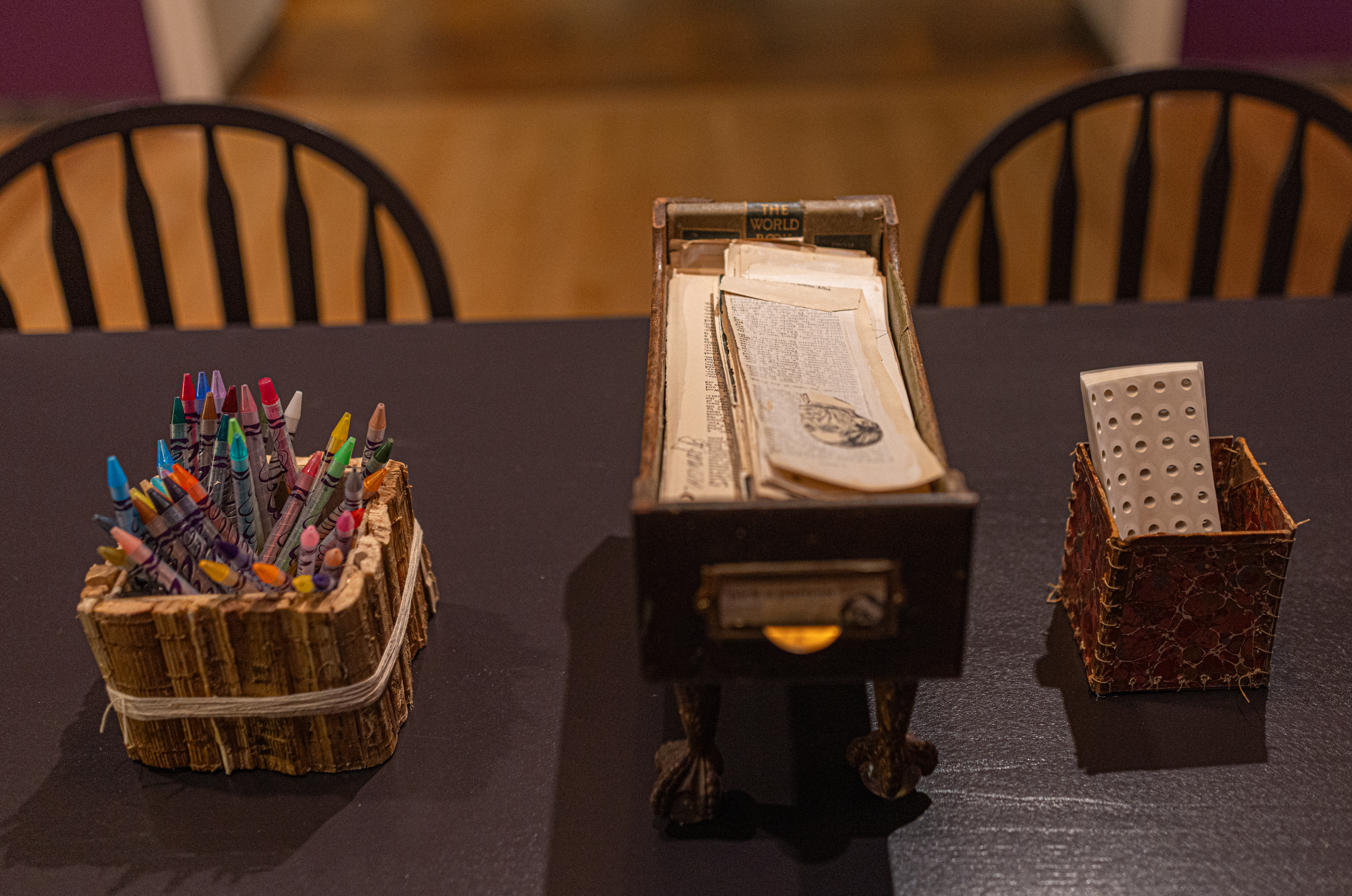
There are also some fun interactive parts of the exhibit that are interactive. In this part of the exhibit, you can create your own works of art! Visitors were encourage to finish making drawings of the figures on the pieces of paper. Donna collects all of the drawings people make and includes them in her collections from her travels.

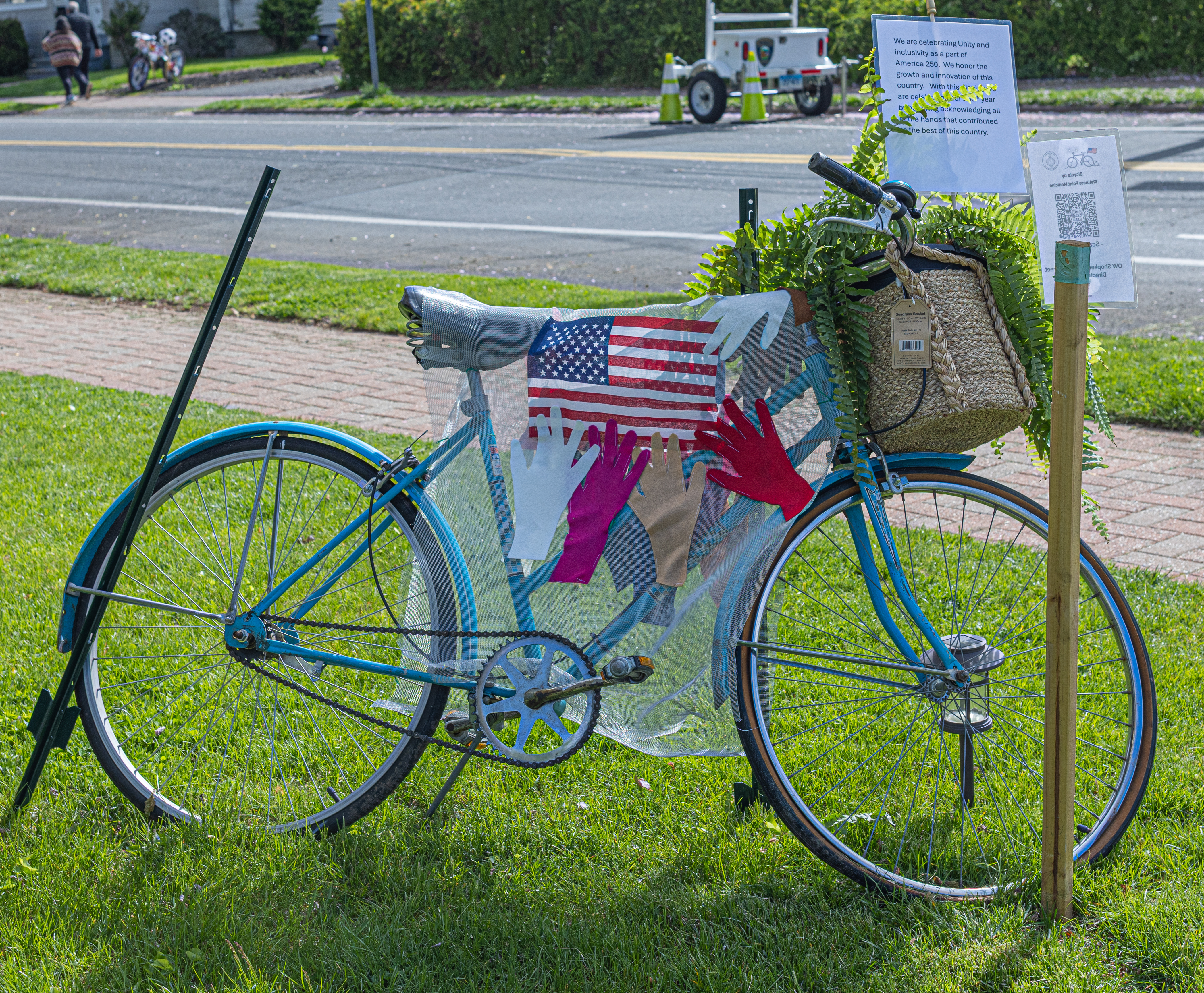
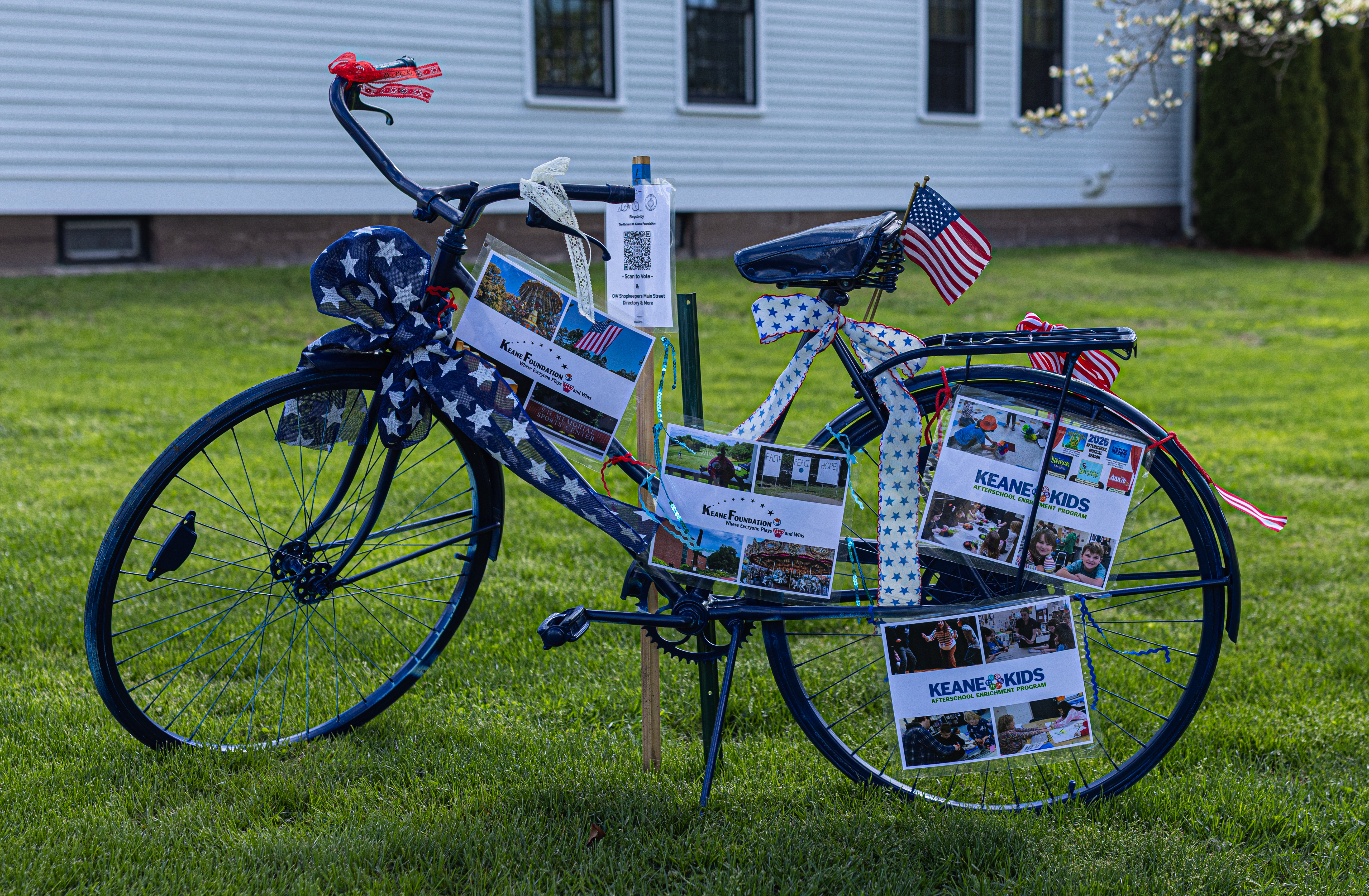
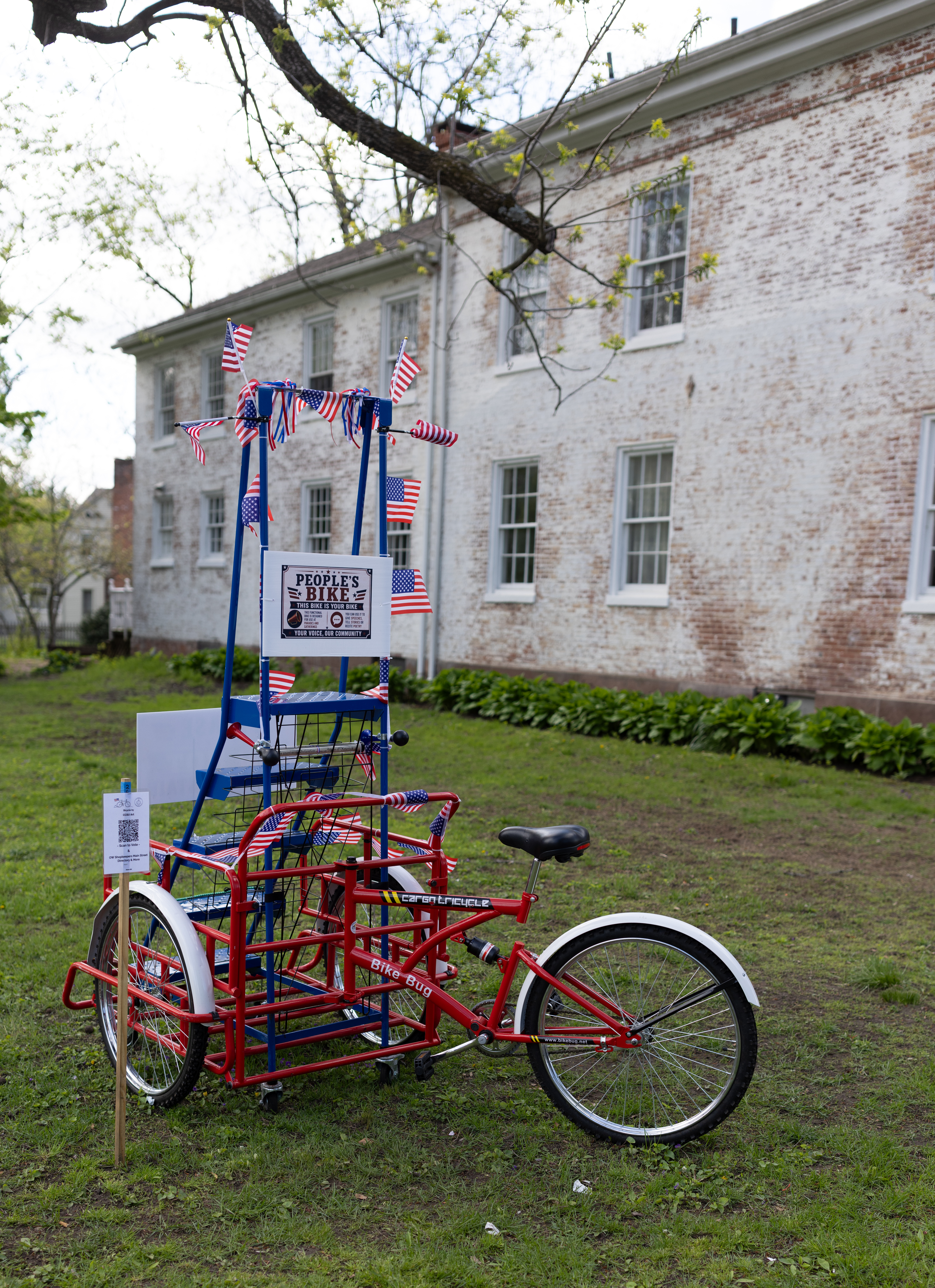
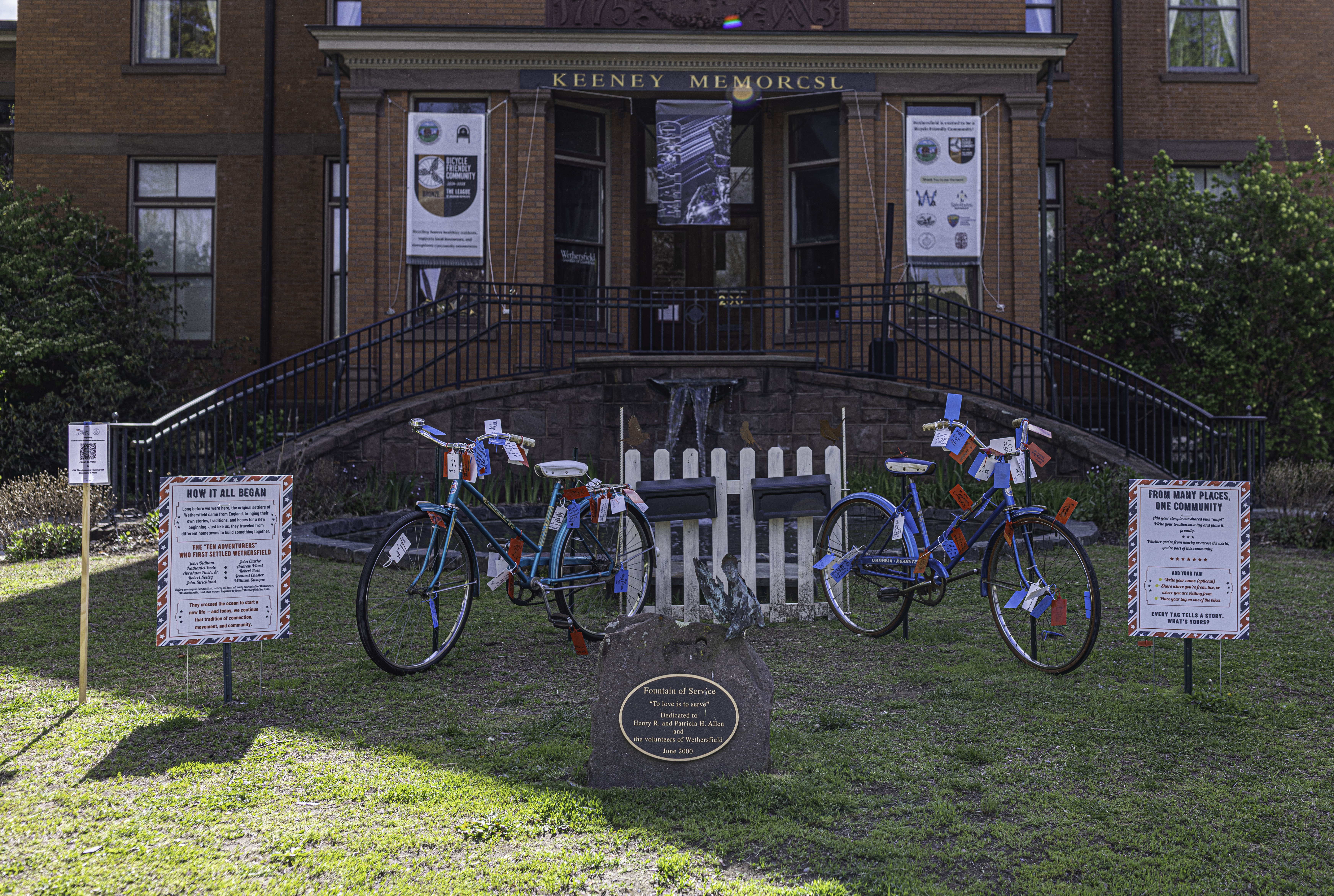
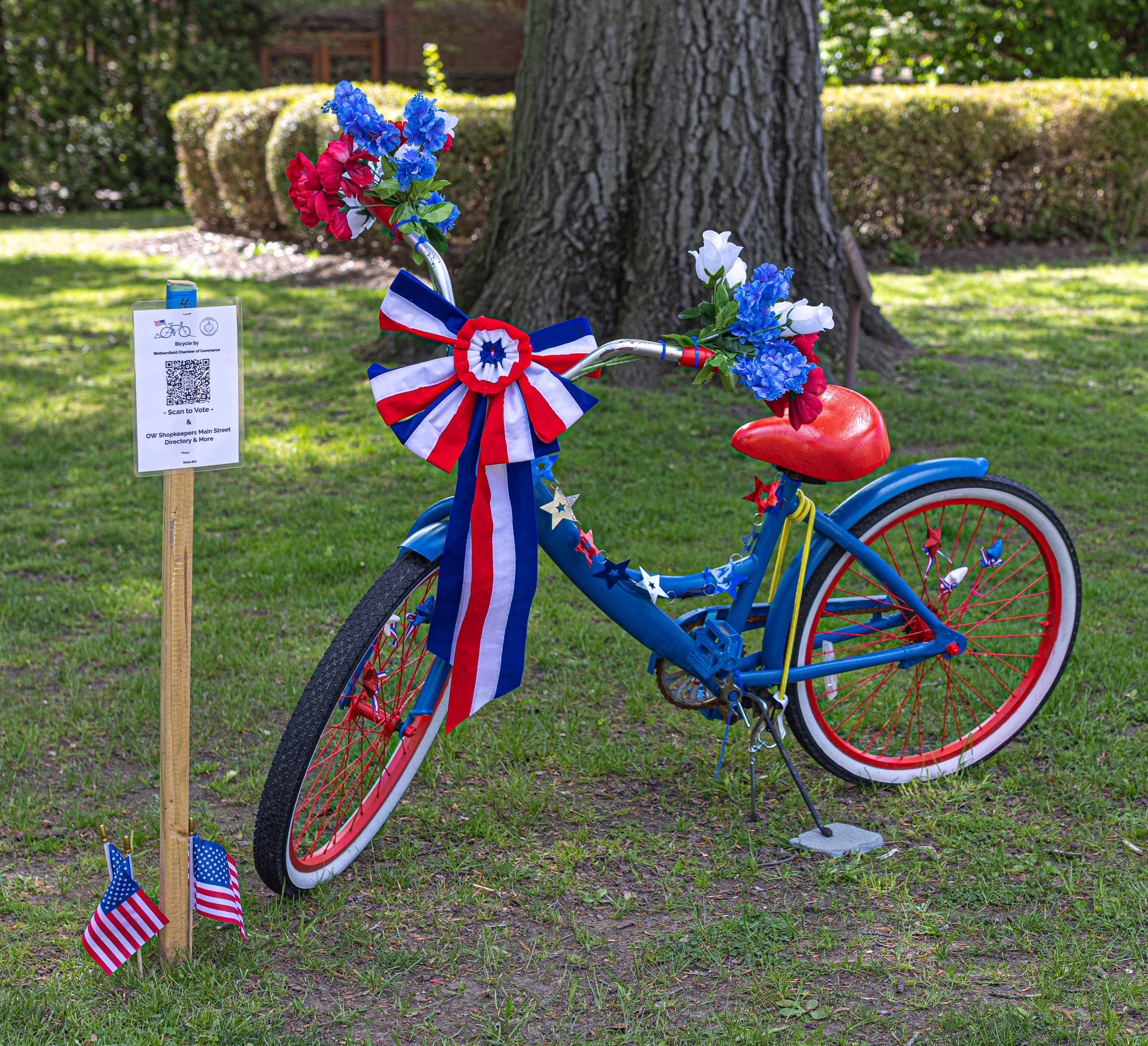
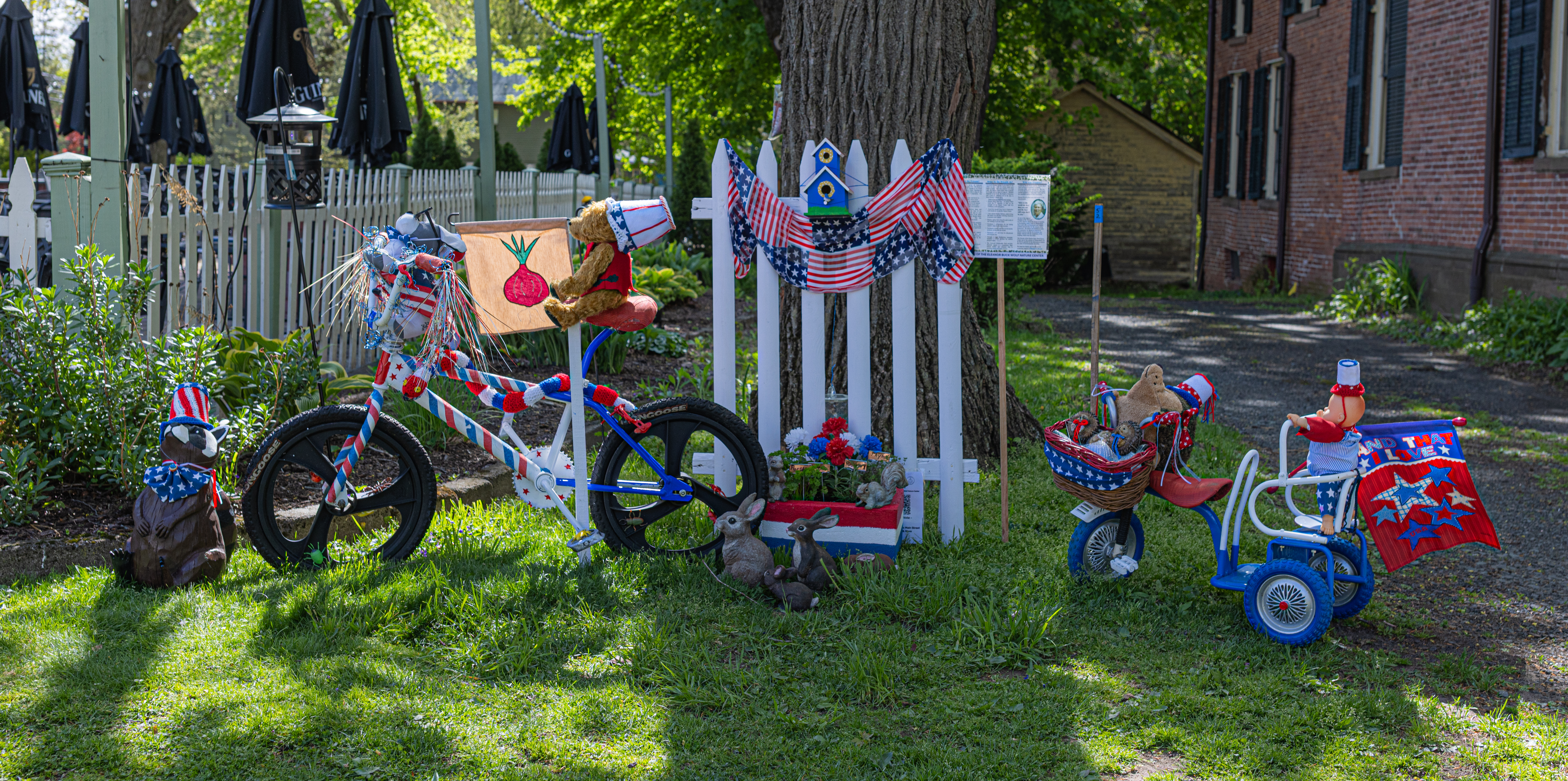
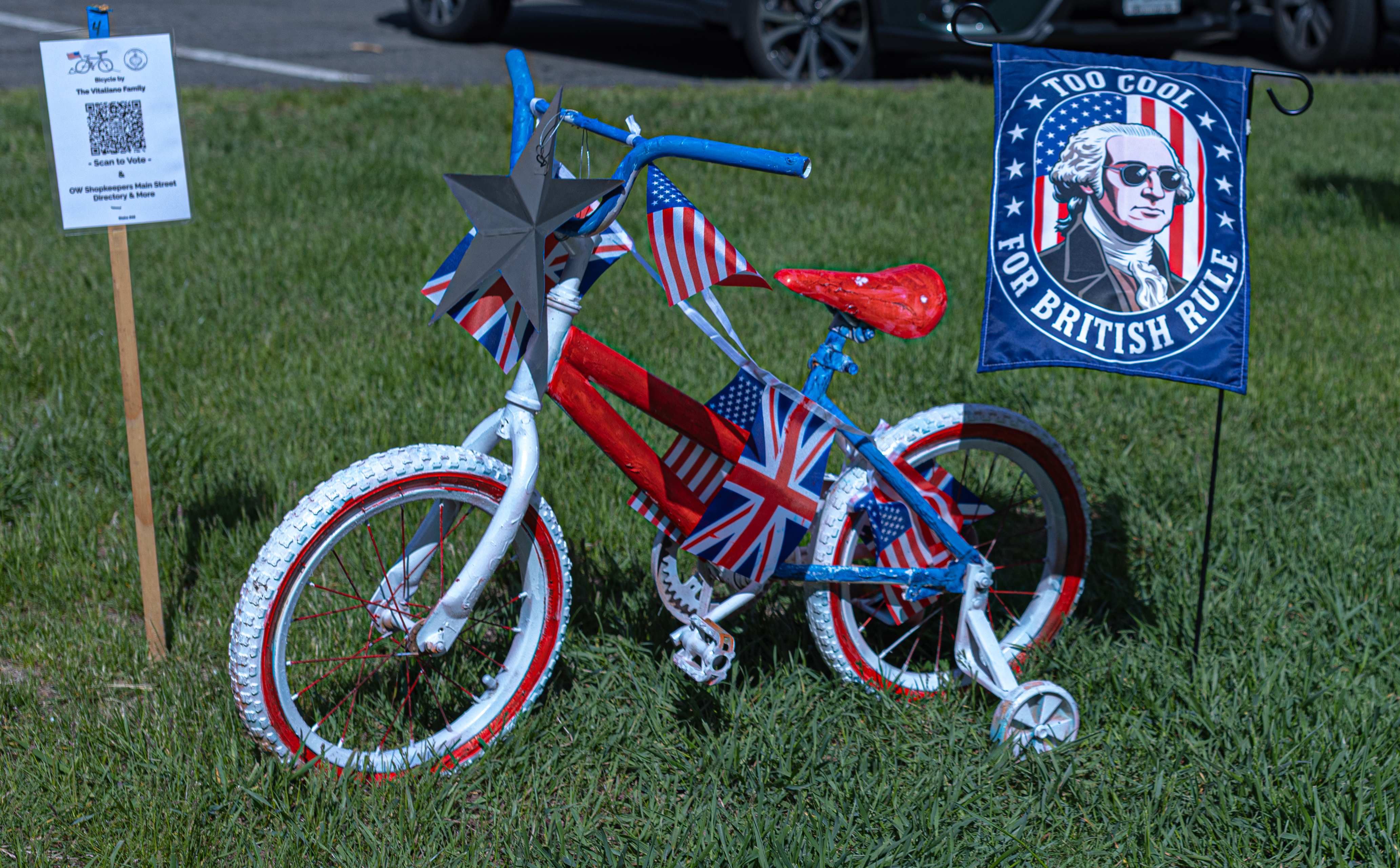
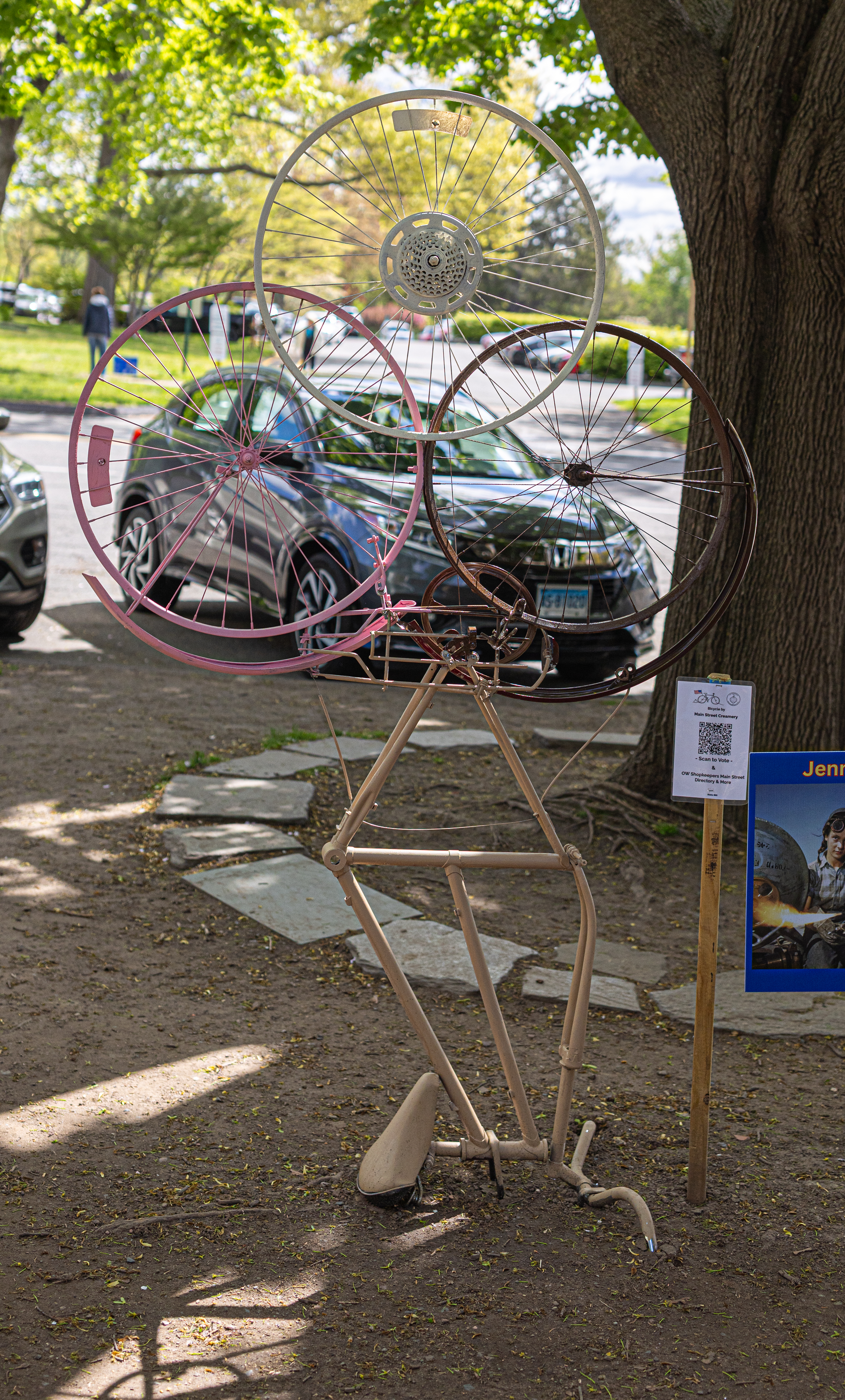
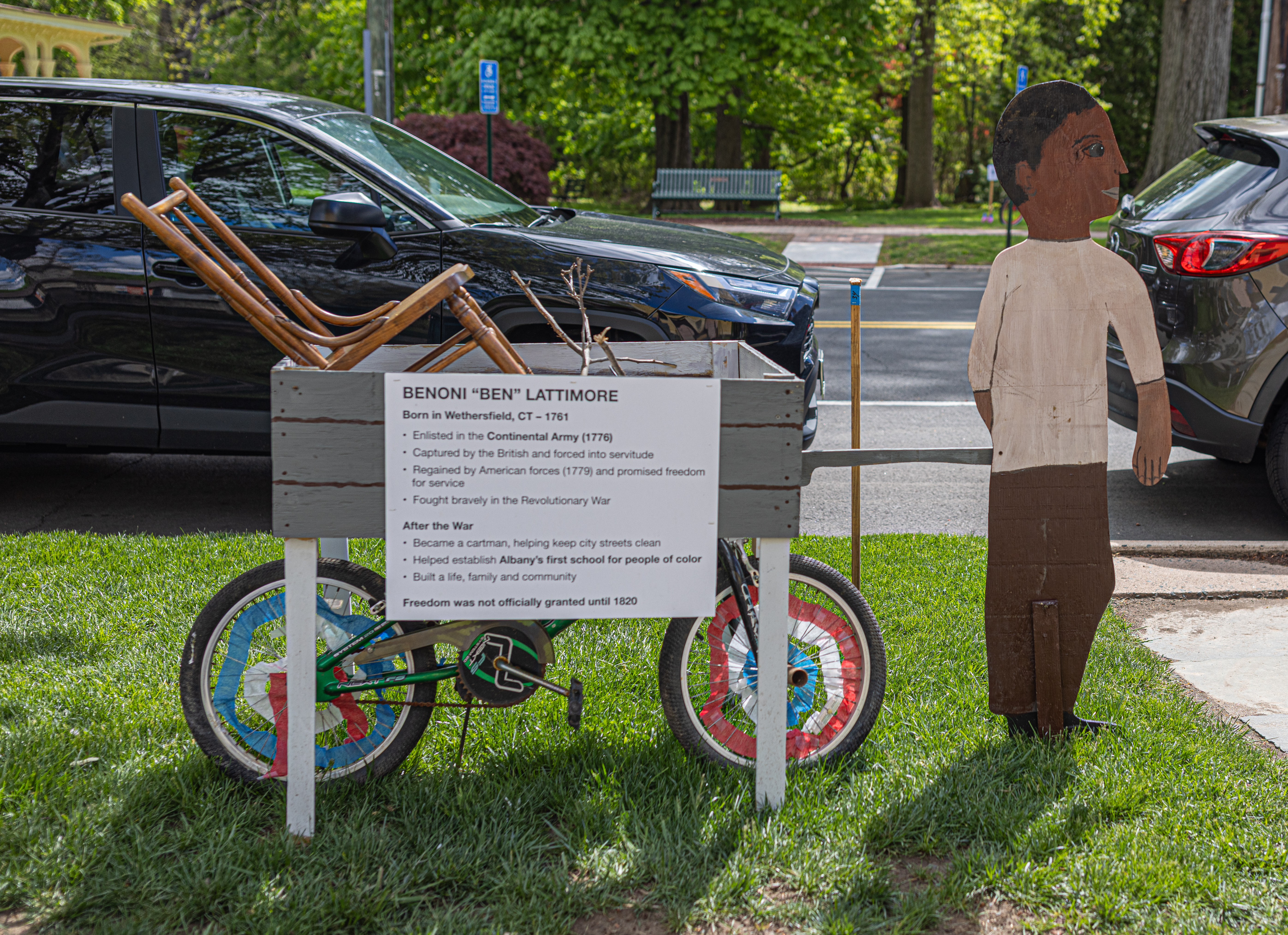
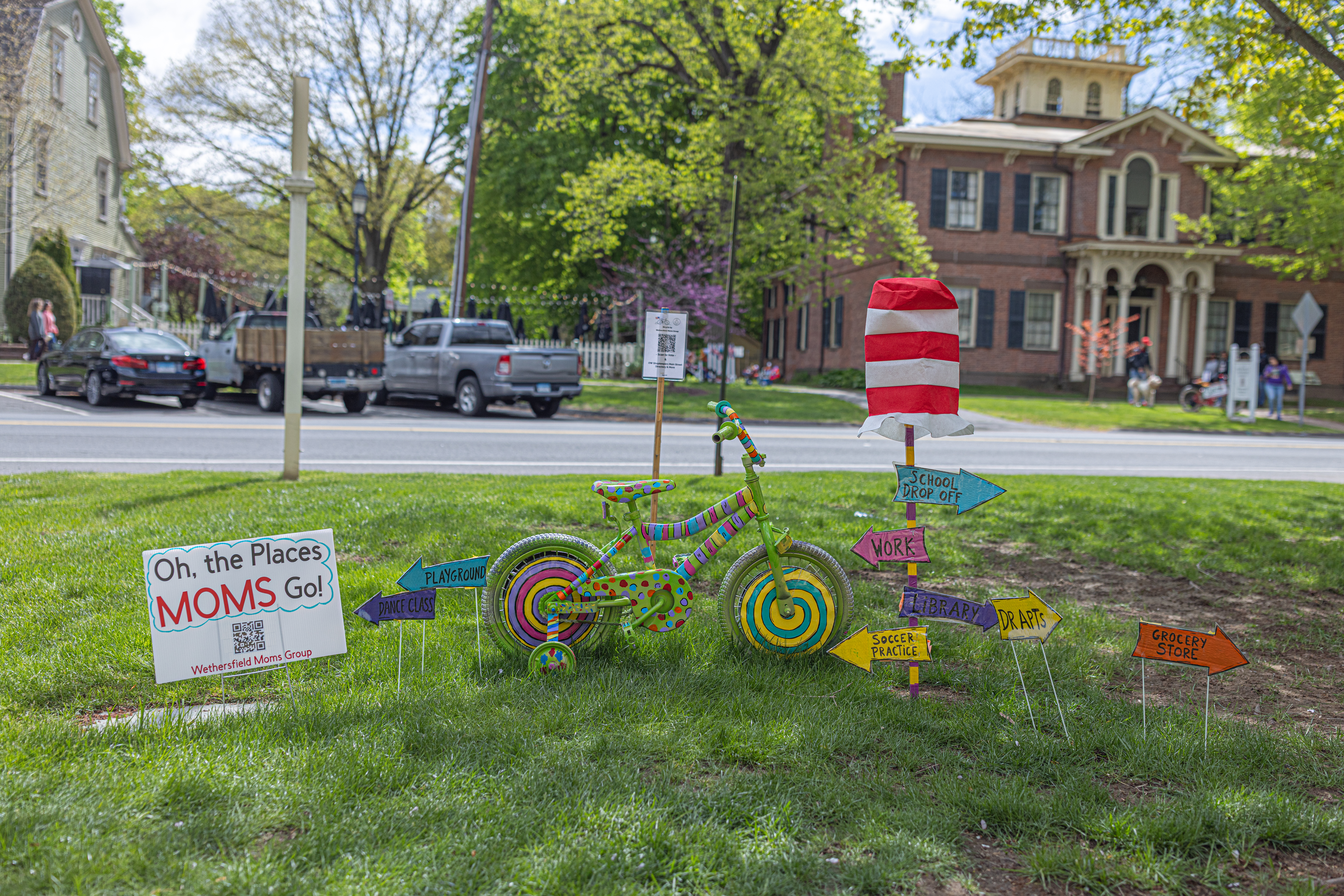
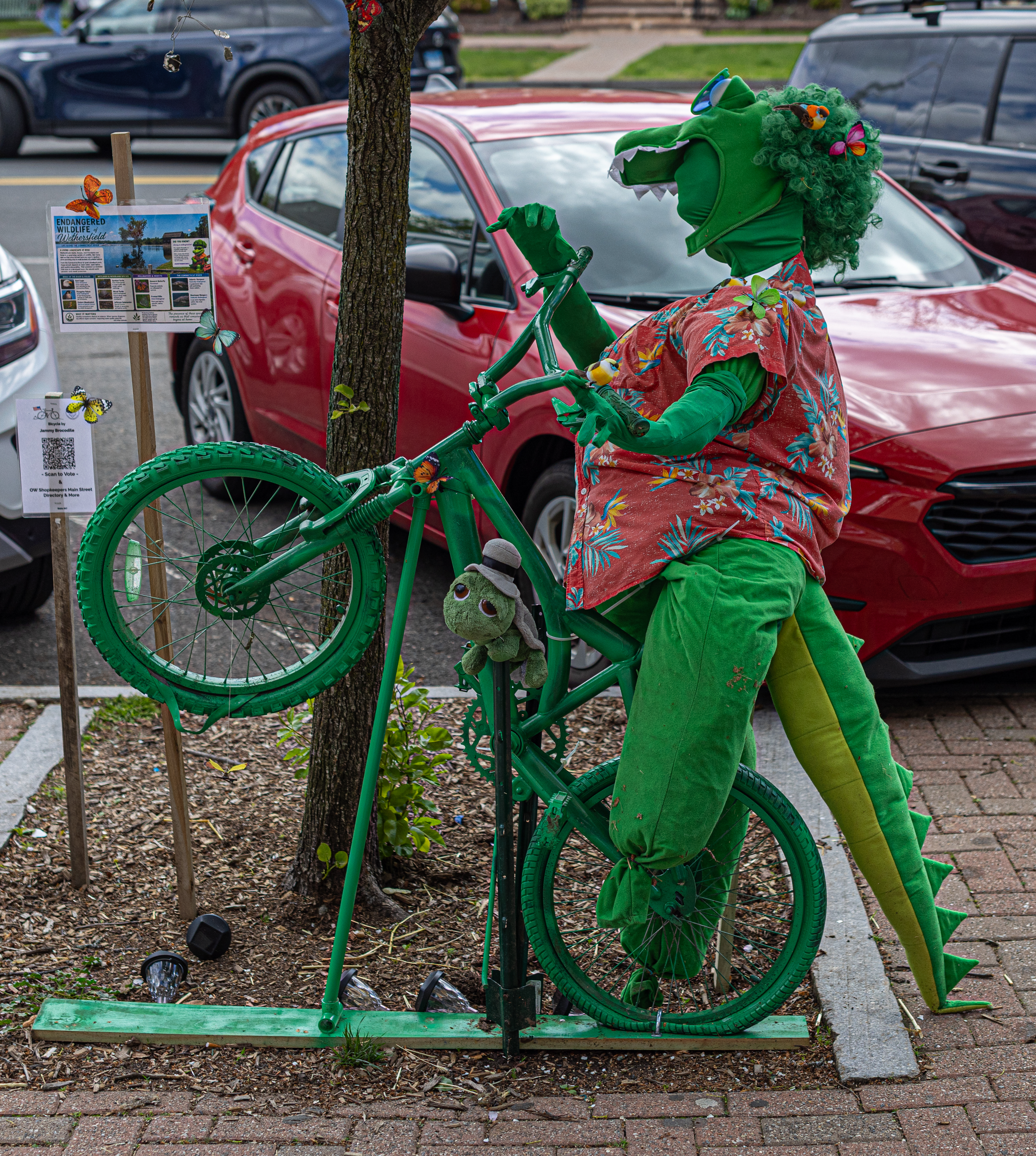
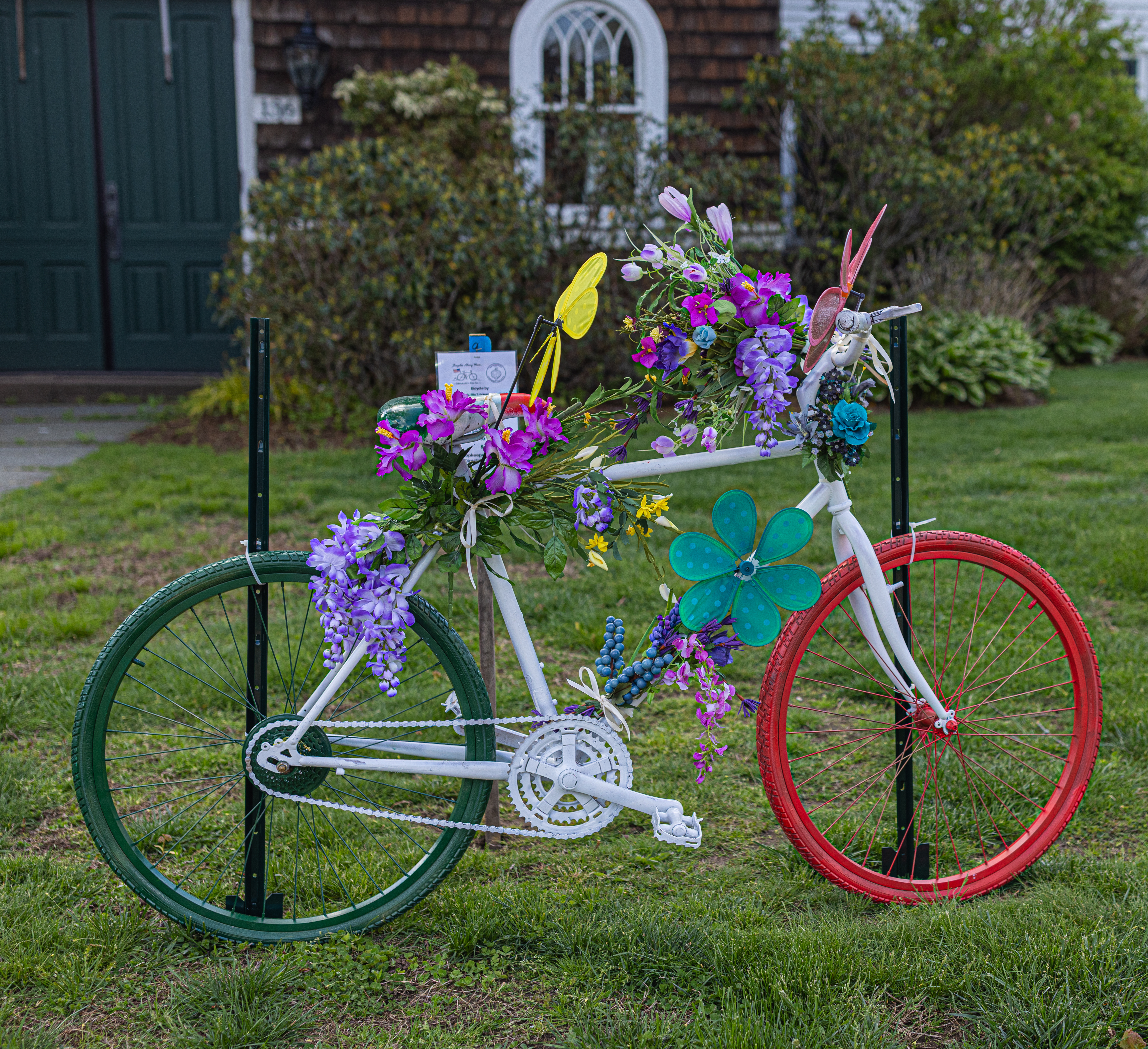
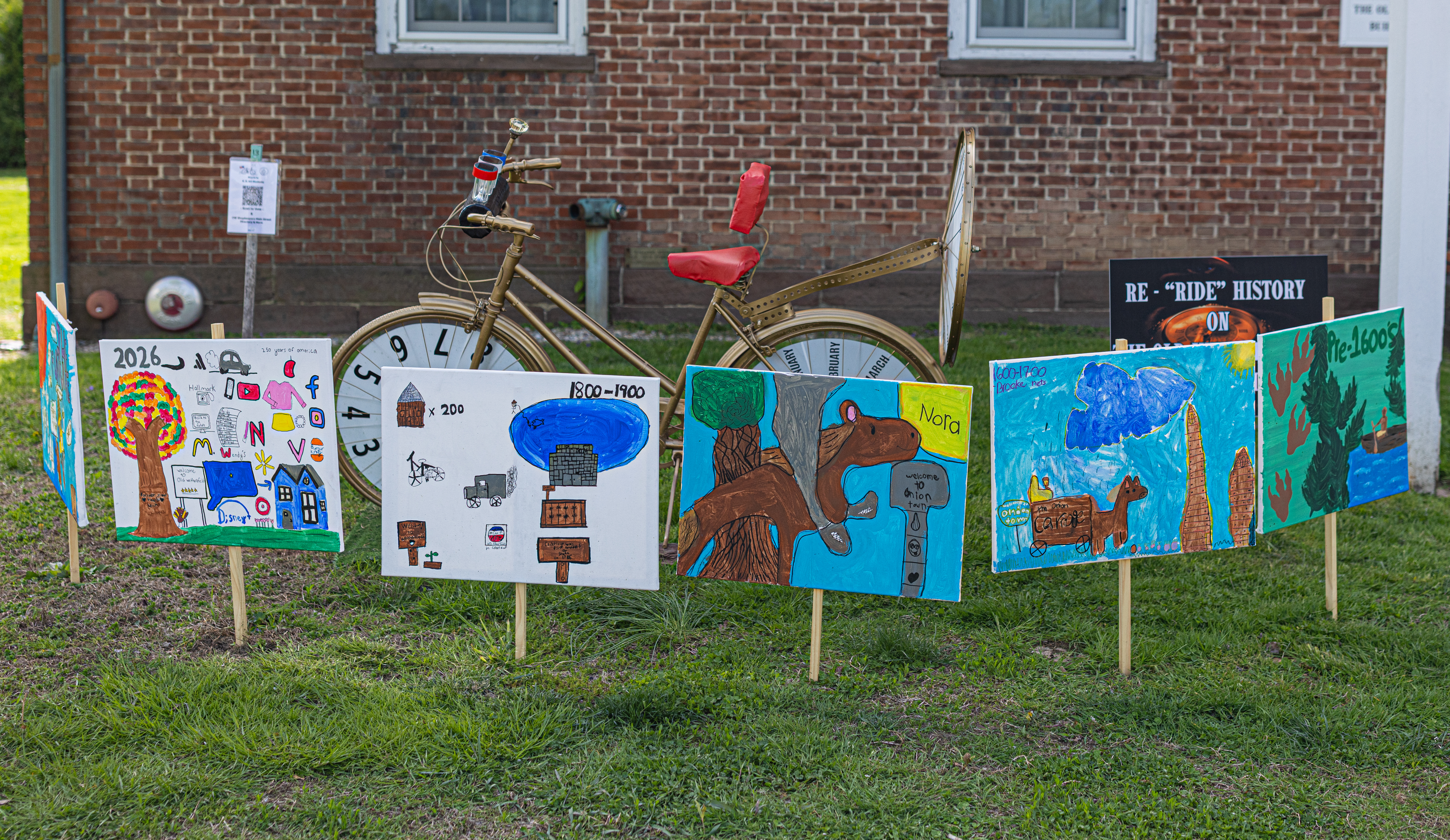
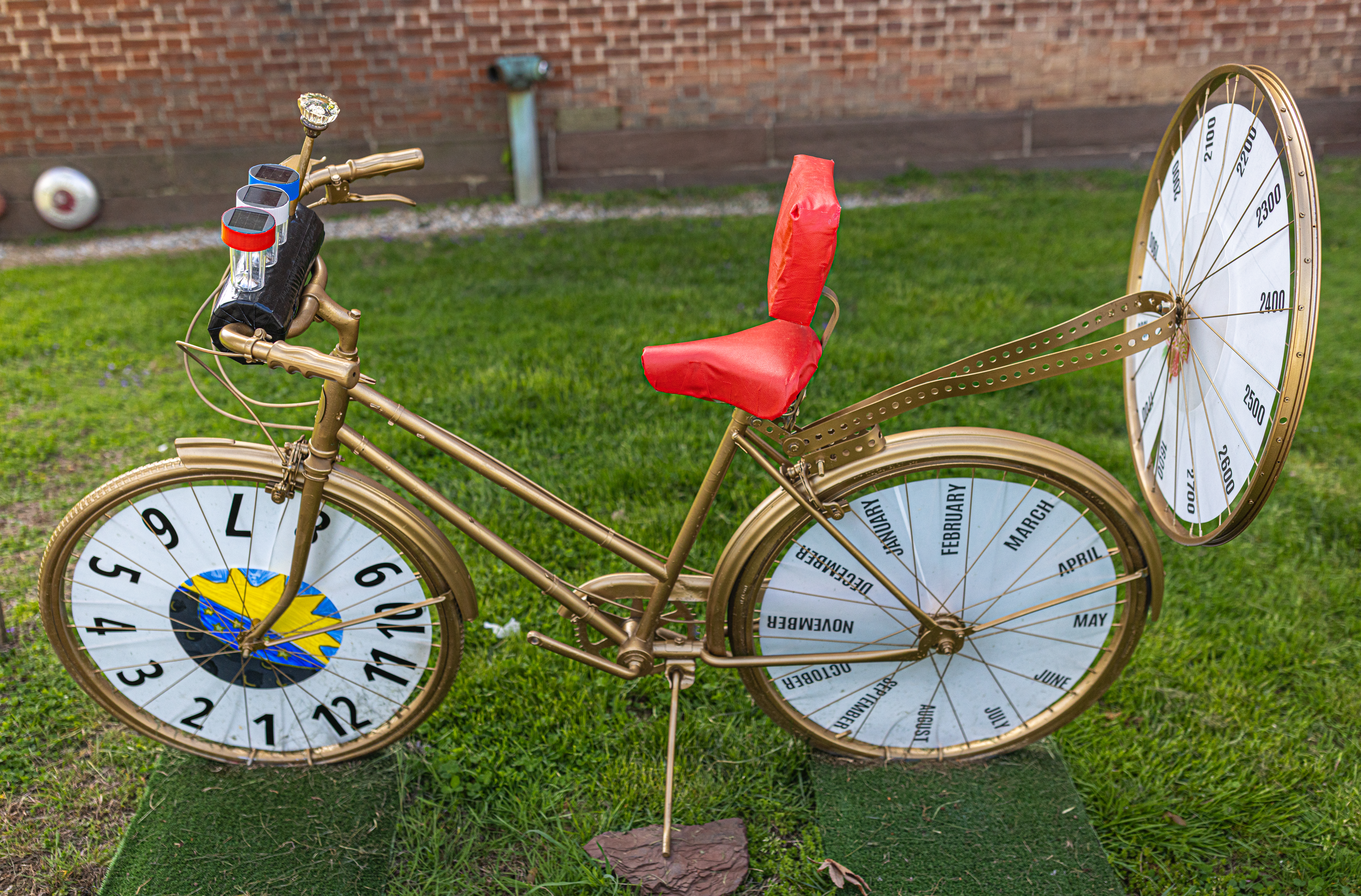
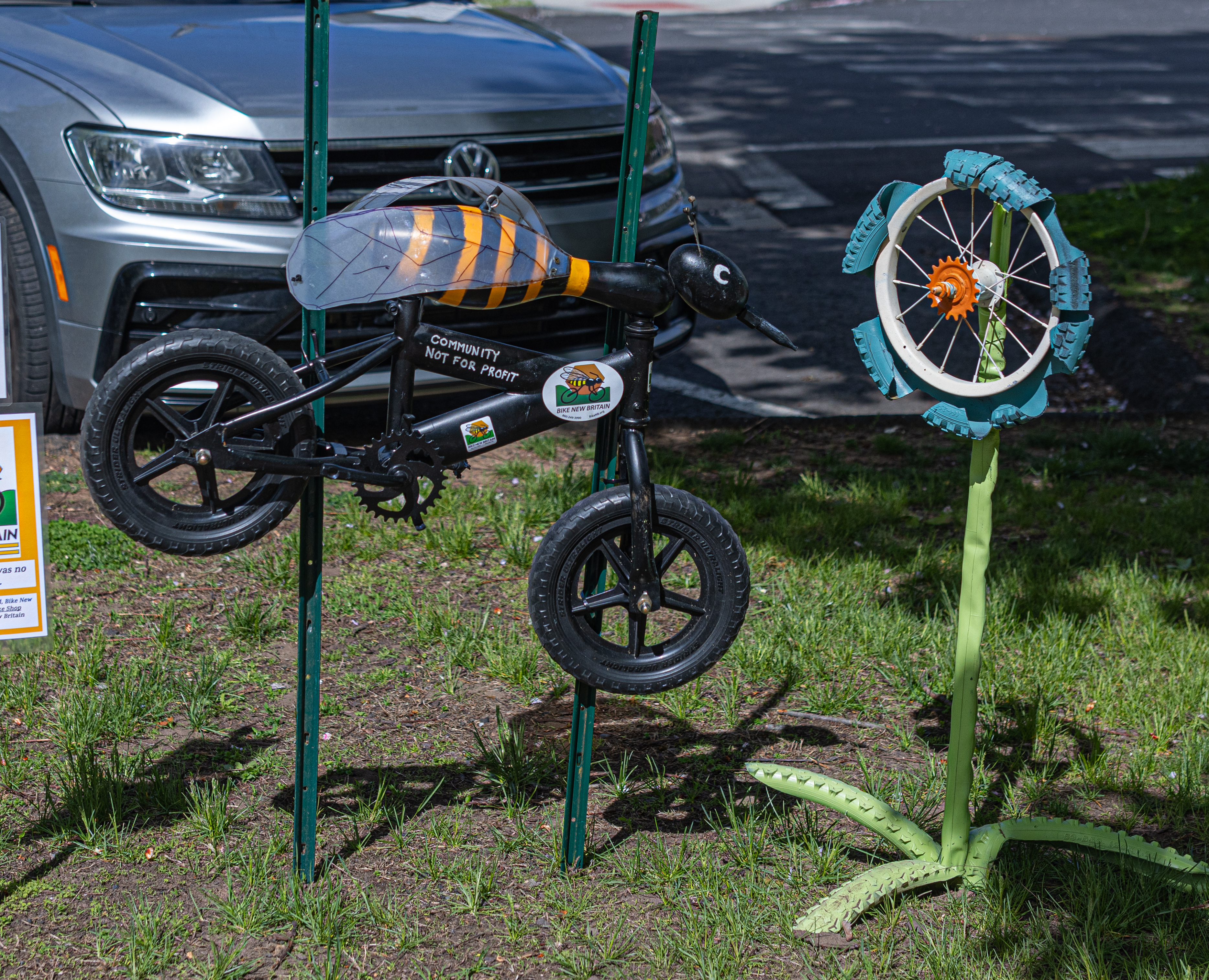
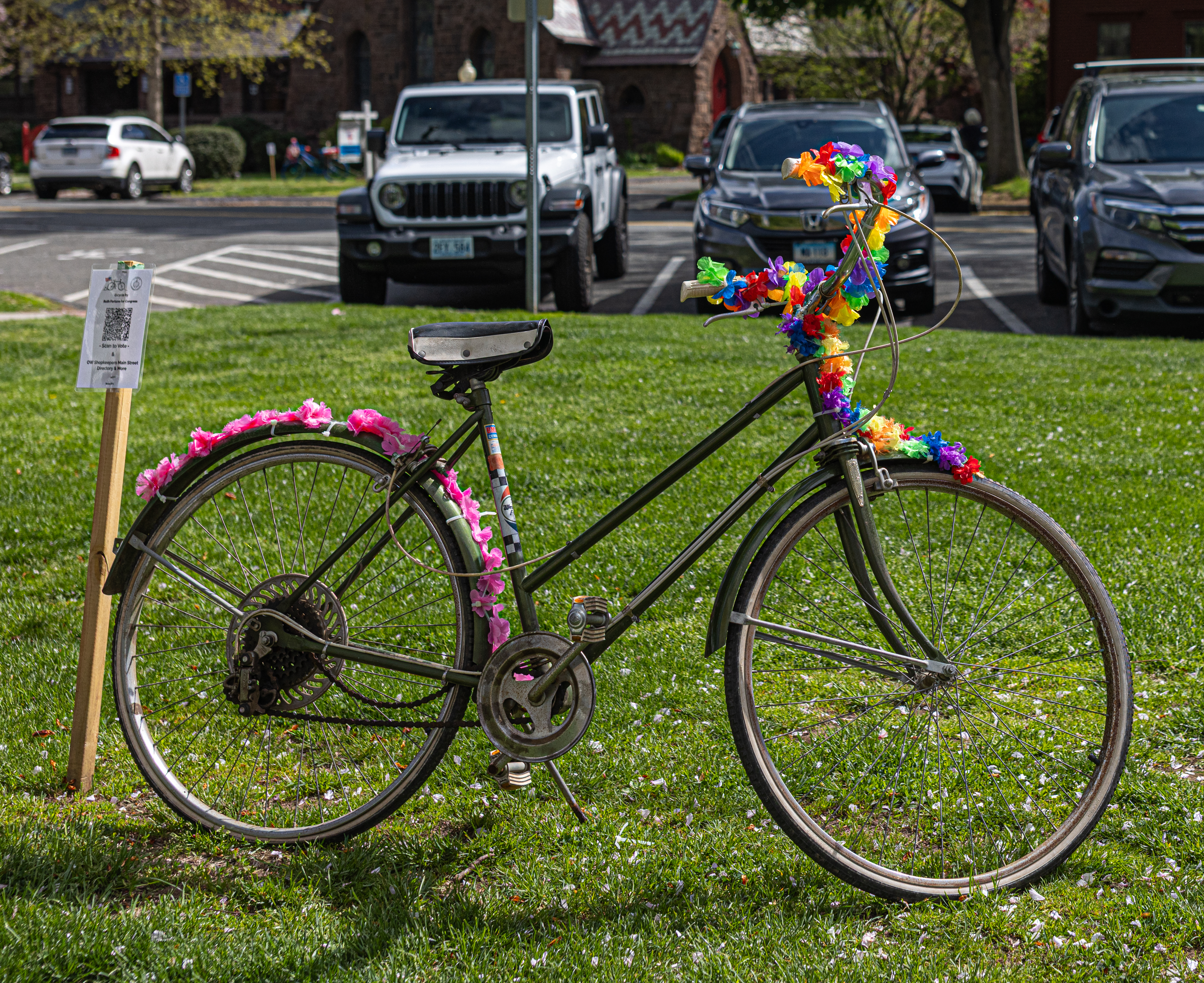
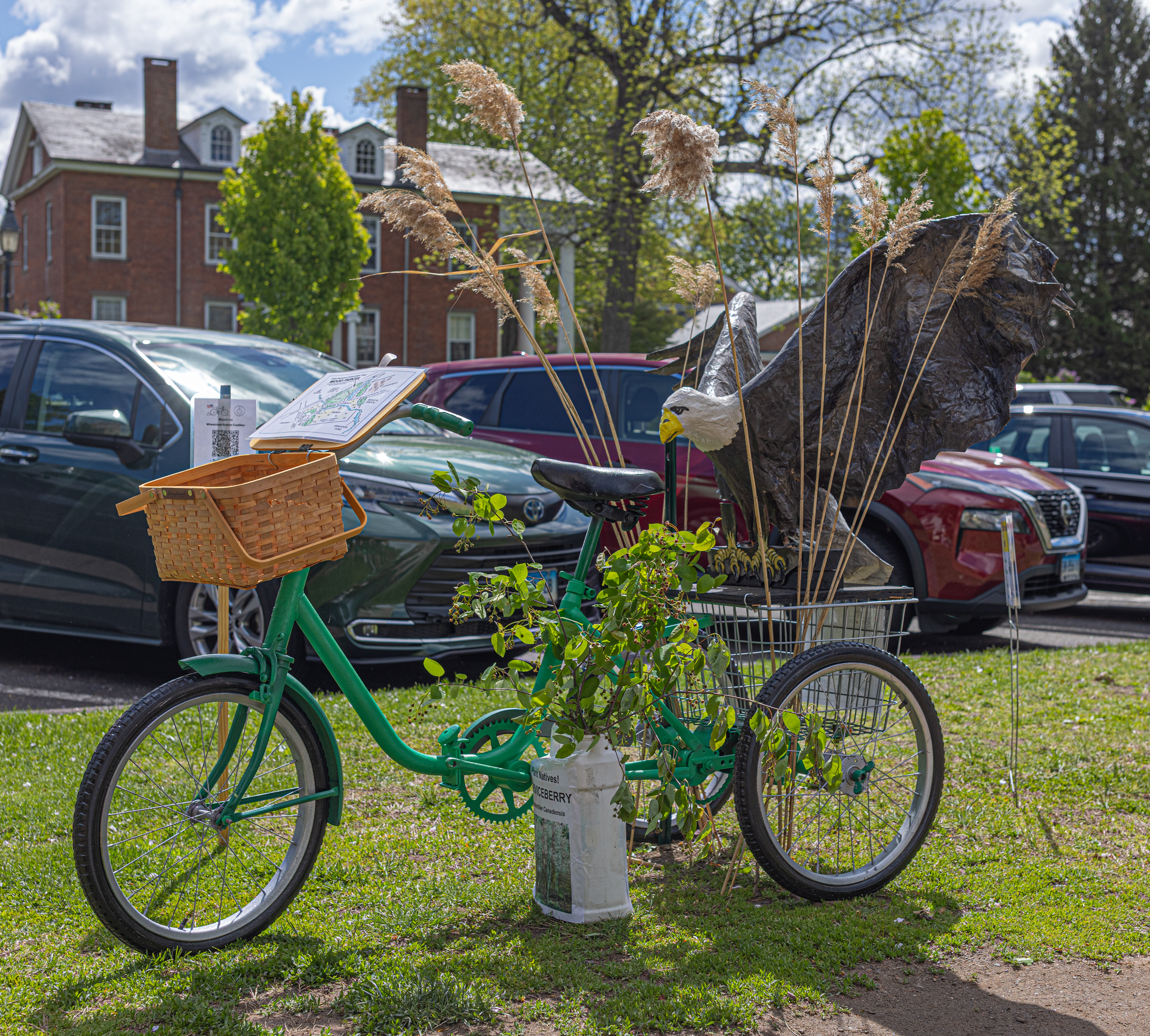
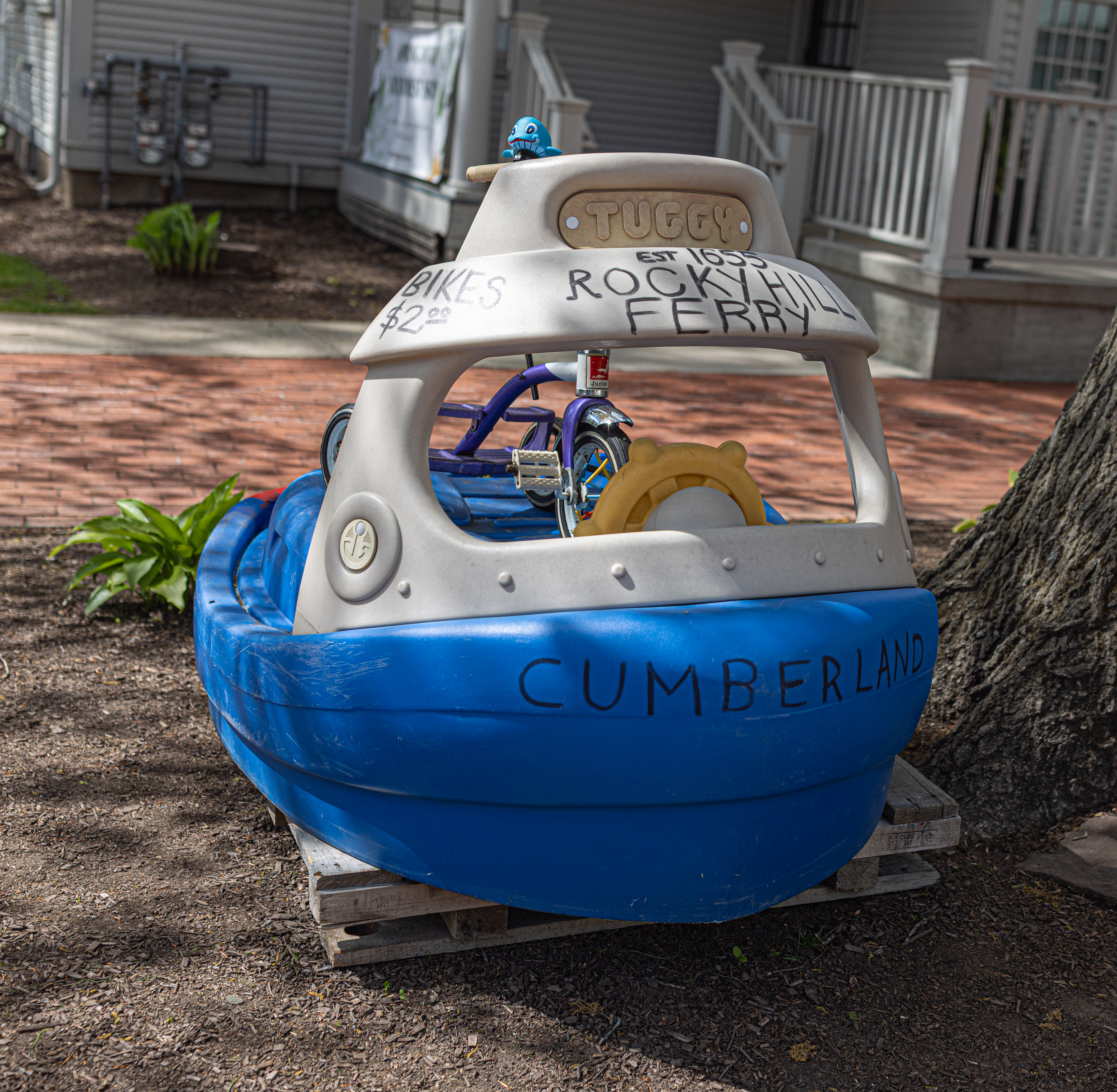
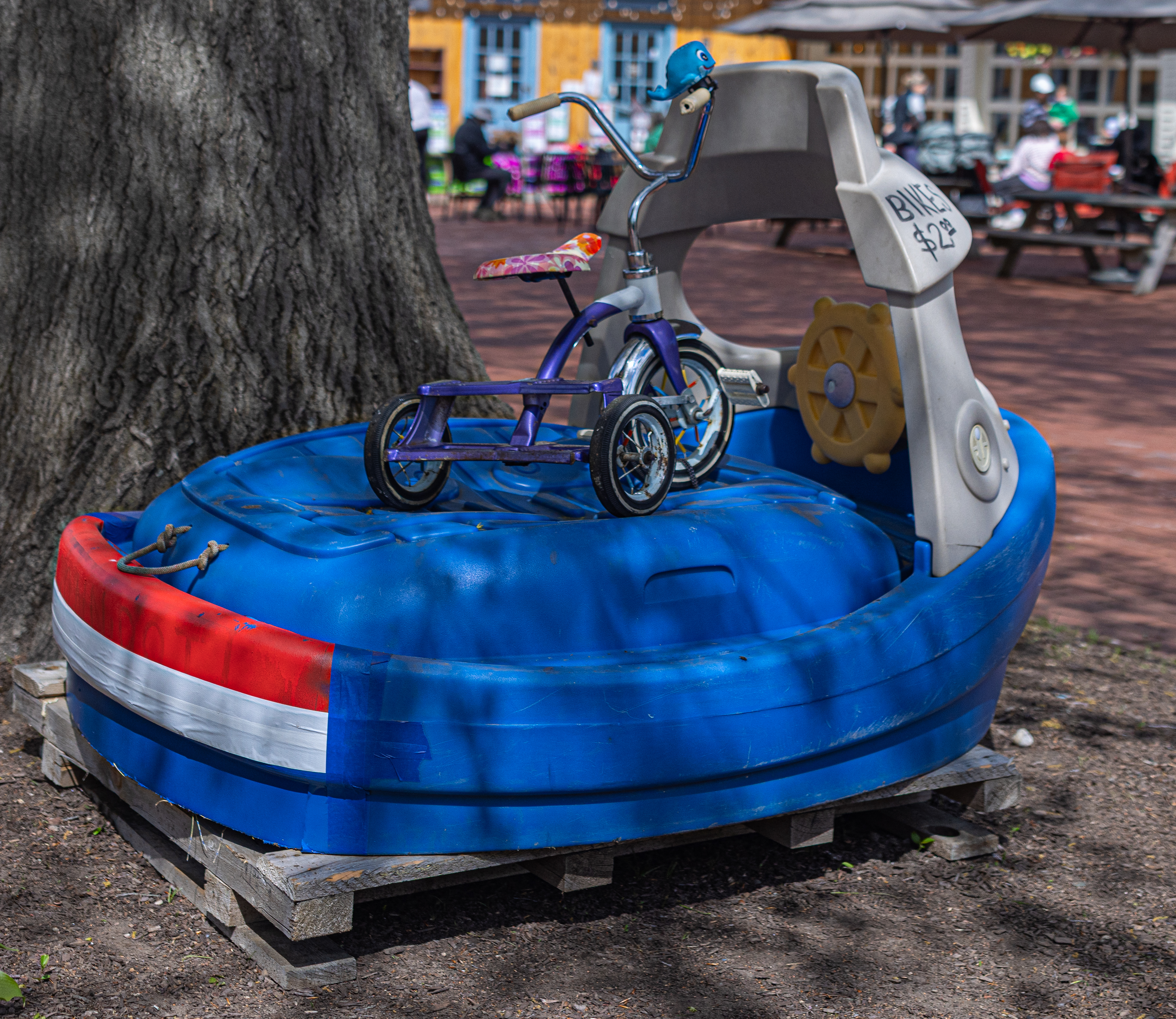
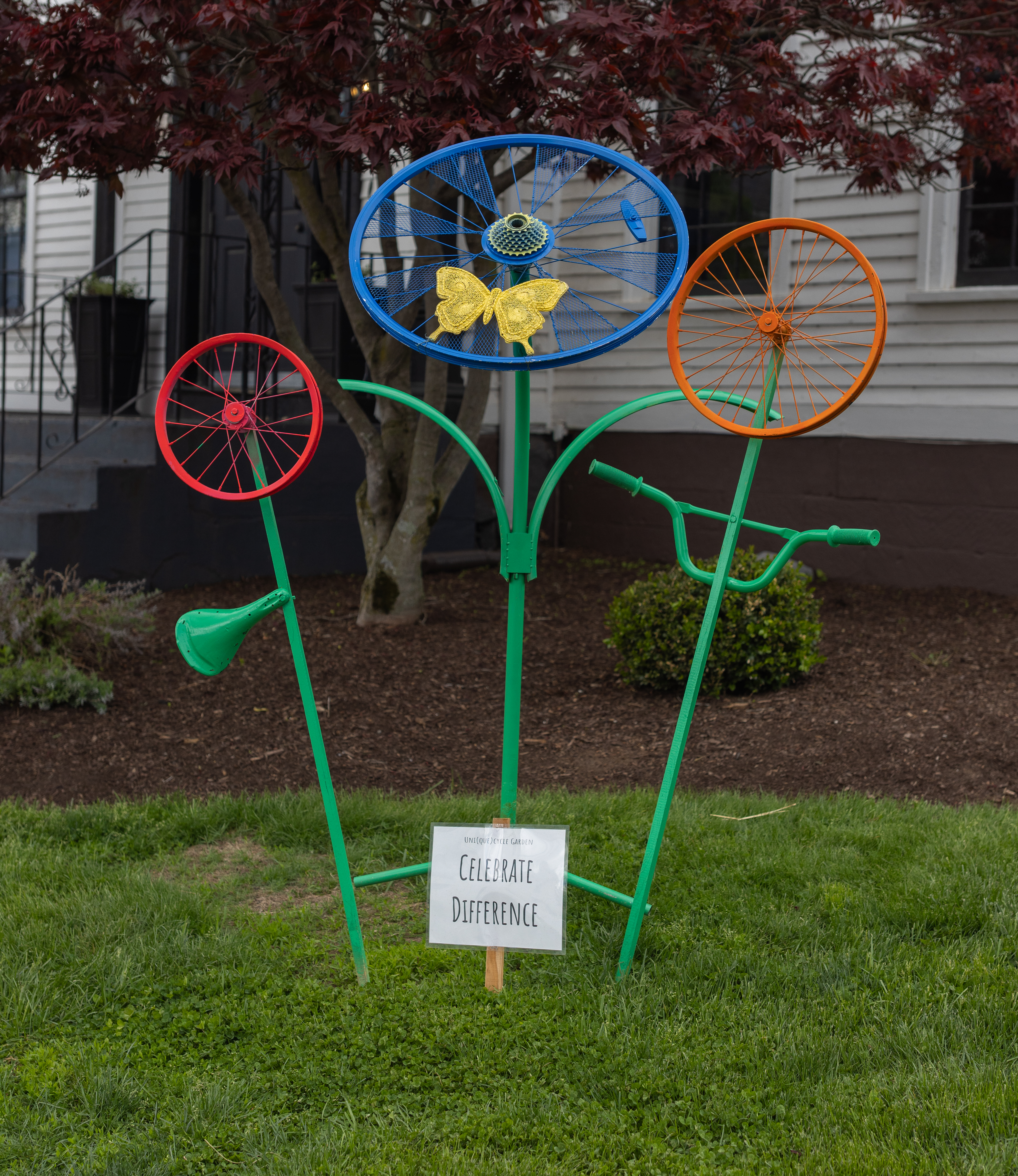
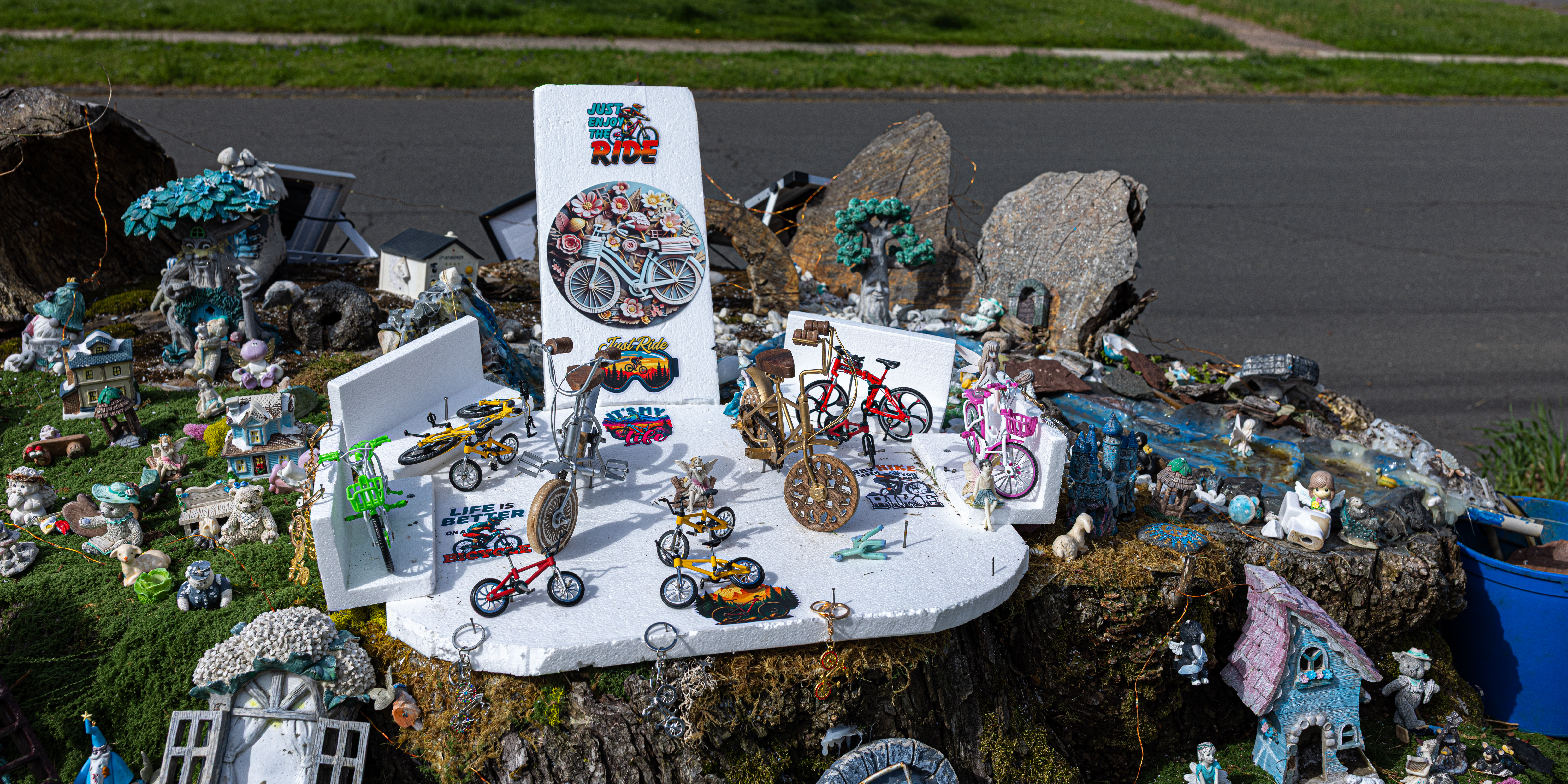
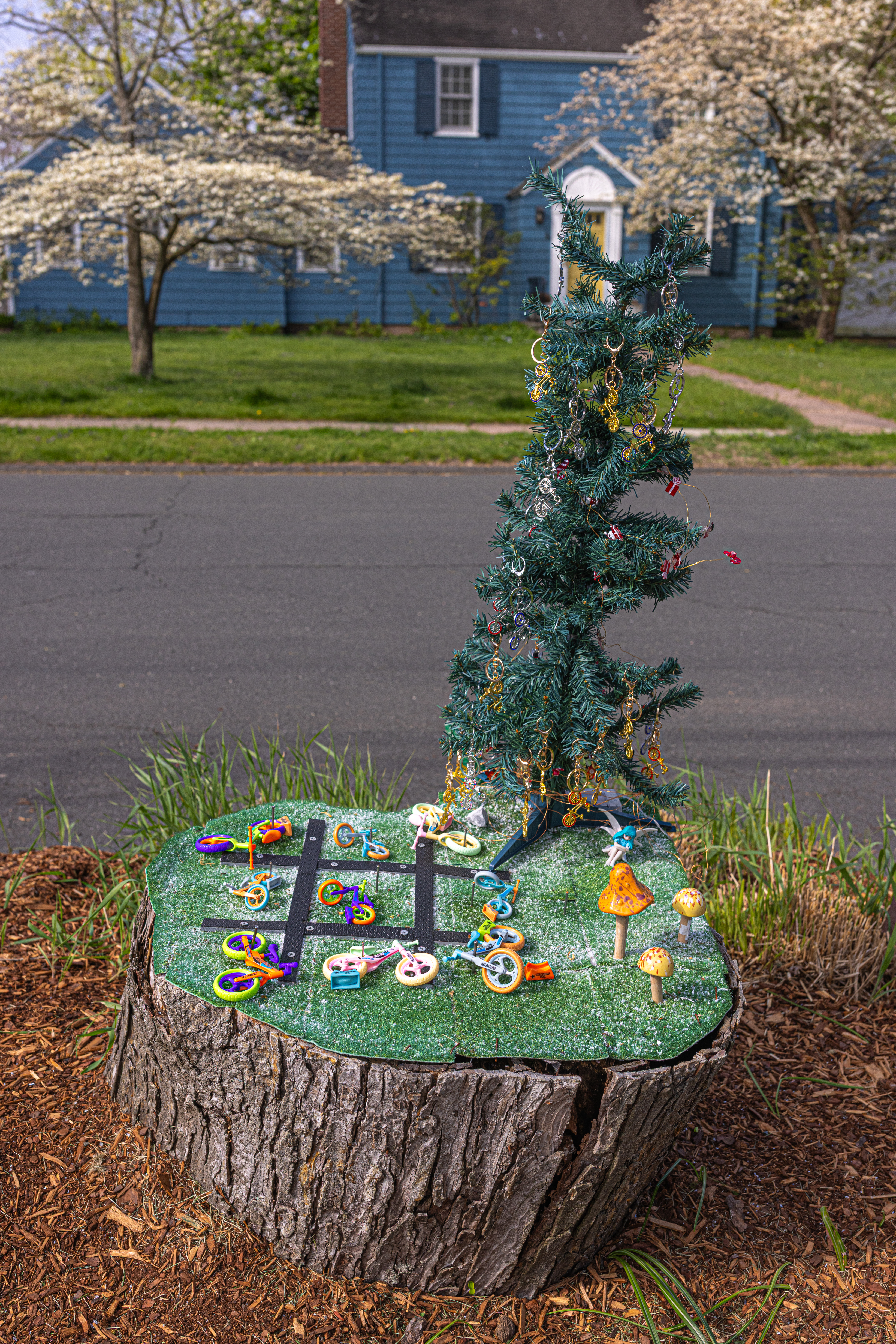
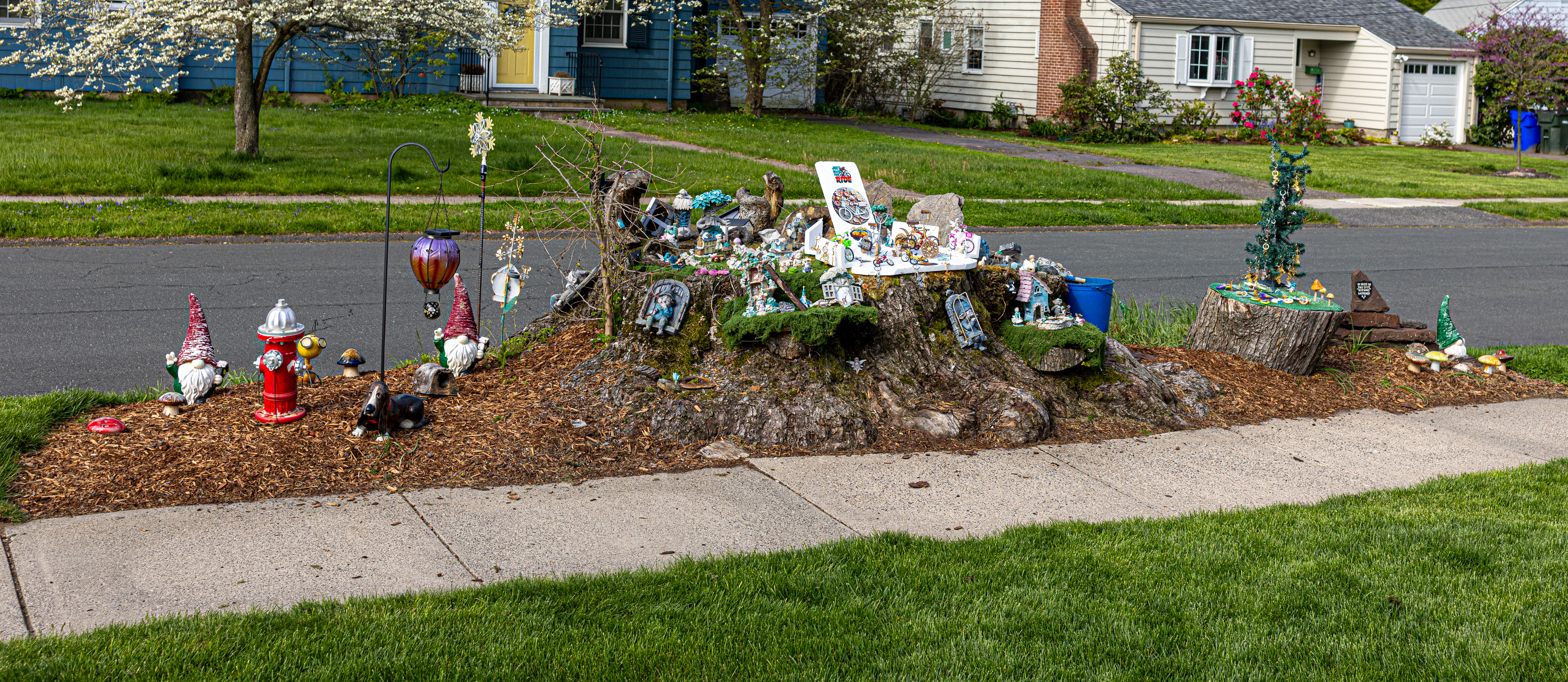
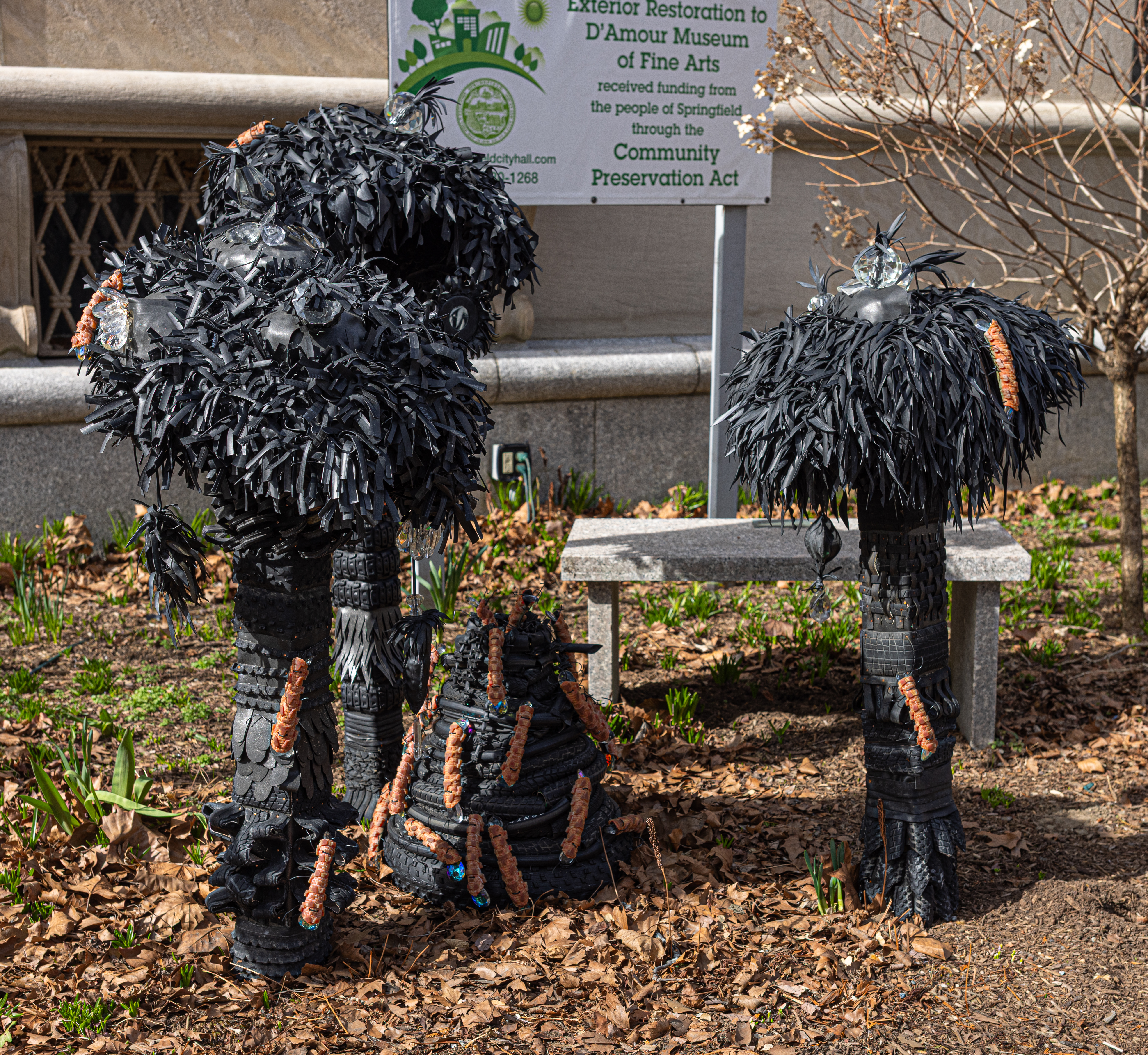
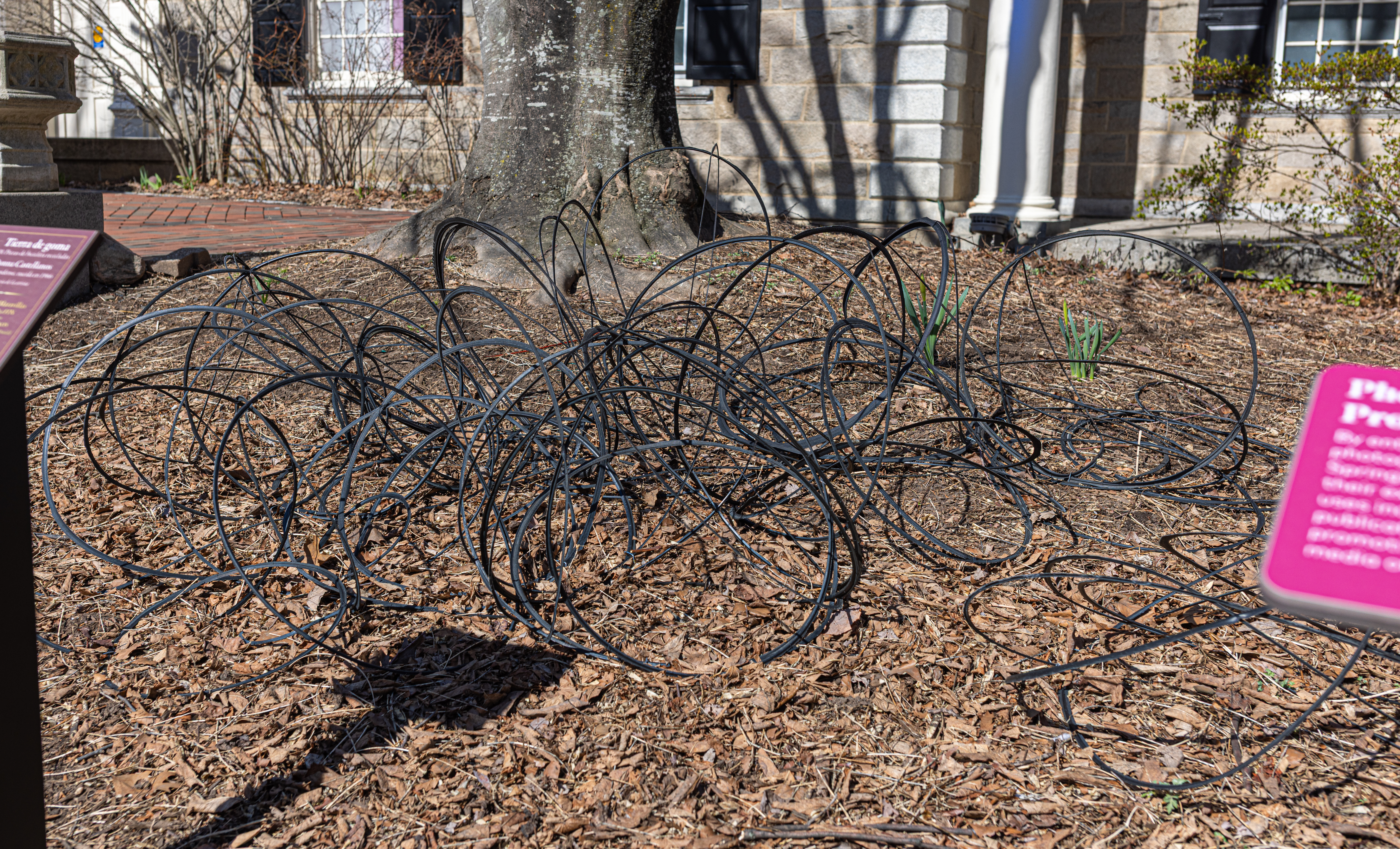
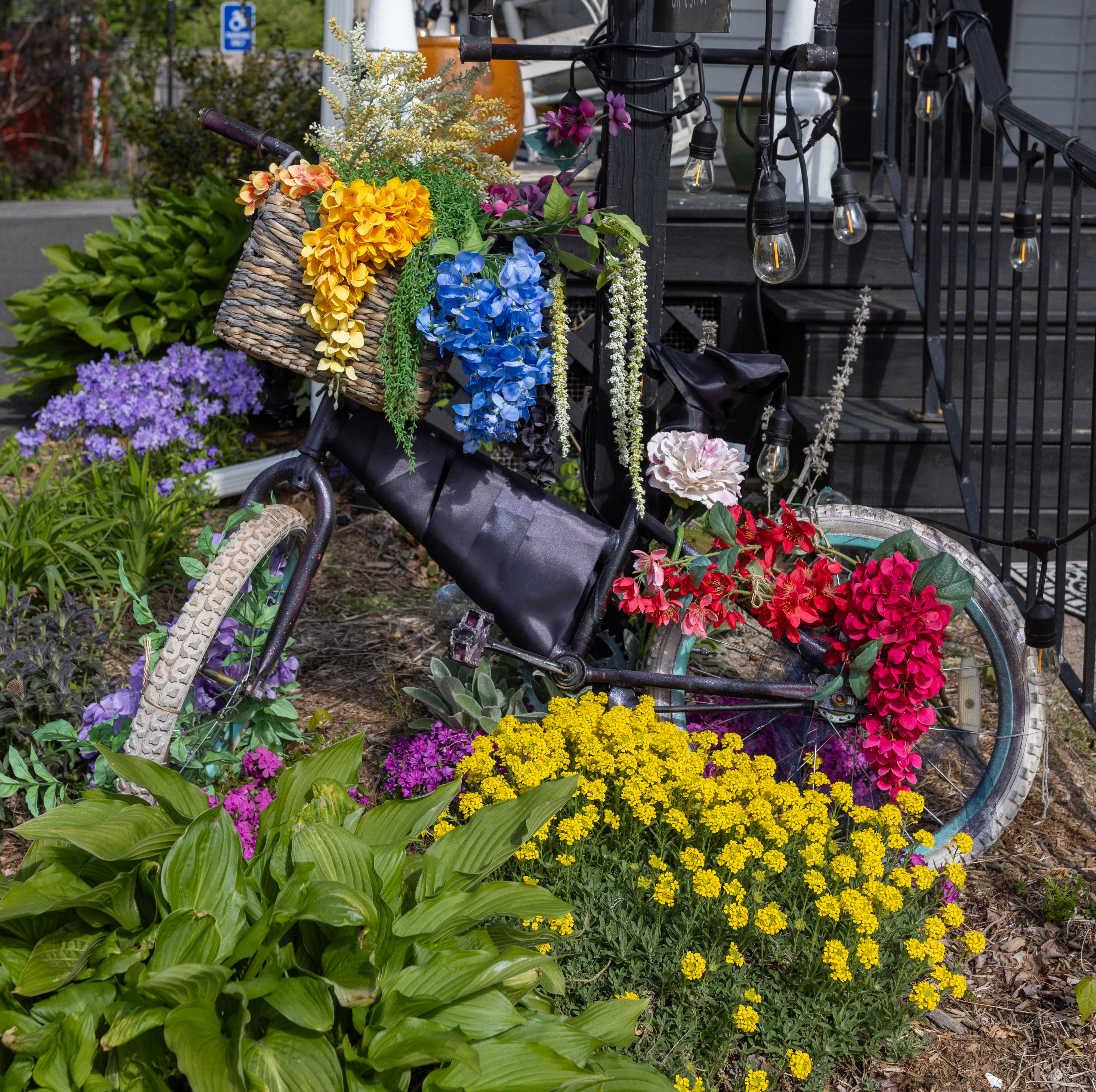
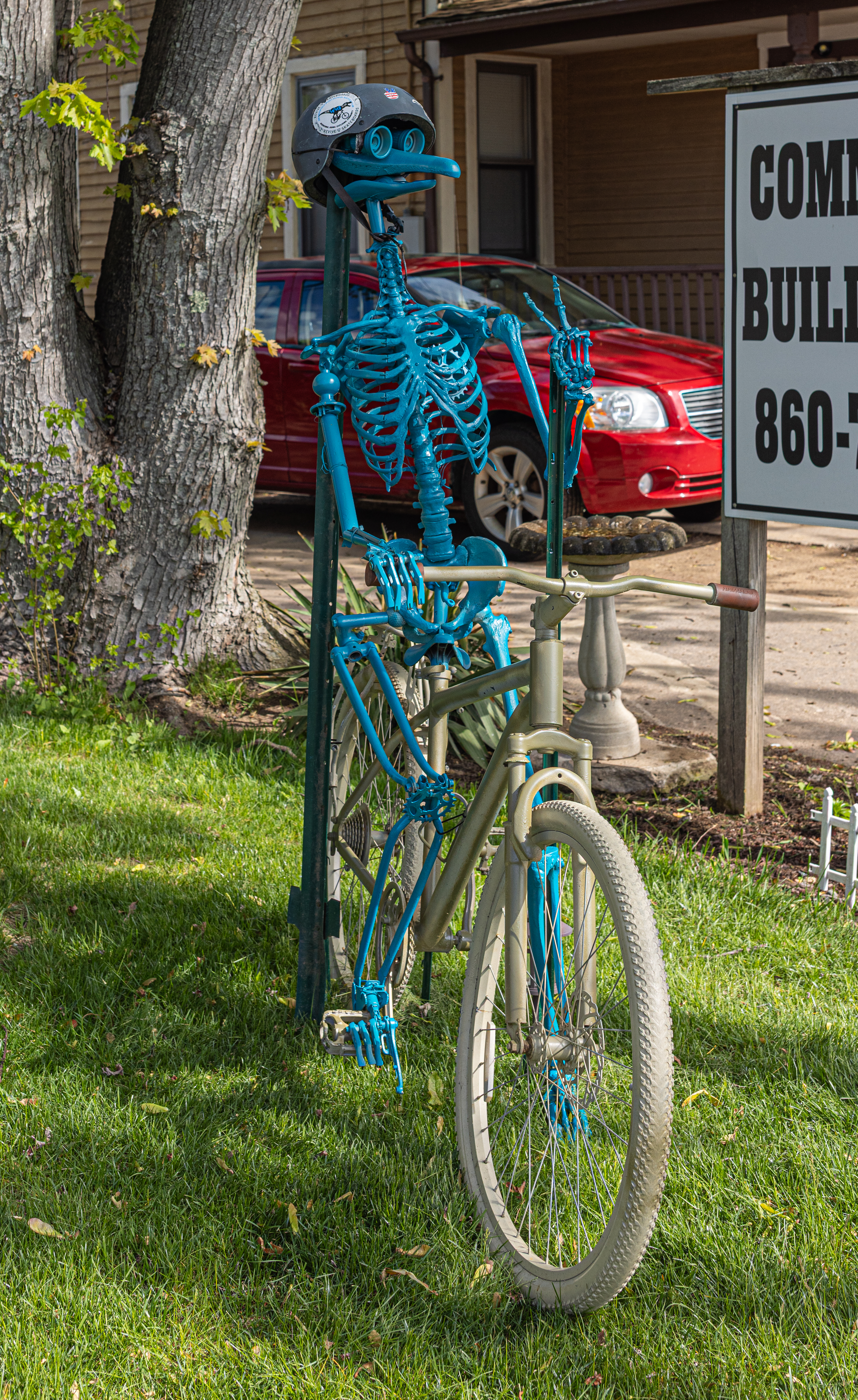
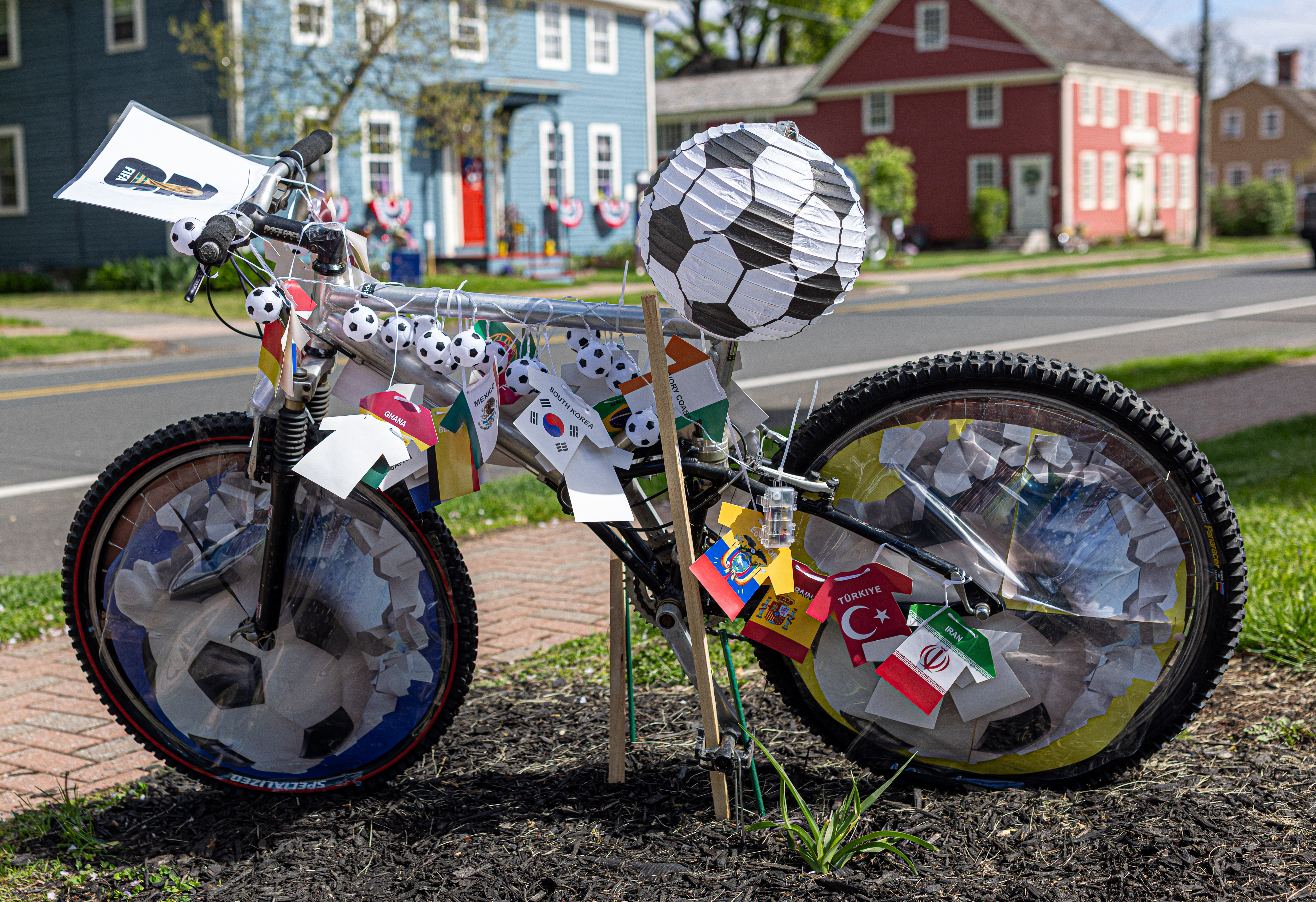
Outside of the museum is another work of art by Donna called “Rubberland,” This exhibit reuses bicycle parts to make art.

Donna’s works of art will be at the Michele and Donald D’amour Museum of Fine Arts at the Springfield Museums until Sep. 6. She may also be making a visit to the museum this summer. Check the museum’s website for more details.

What better to post to leave a review from an author from New England! I finished reading Joyland by Stephen King recently. Below is a spoiler free review.

Reading Joyland was like being on a joyride. Sorry for the bad simile. But, don’t let the genre fool you. Joyland is more than just a scary tale. While it is a horror story, Stephen managed to write it in a way that still had some warm and even wholesome moments. In fact, some of the most memorable parts of the story are not related to the horror story. The horror aspect almost seems like an afterthought. If you’re looking for a seat of your pants, tense horror thriller, this isn’t your book. But, I think it displays King’s ability to branch out and tell a well thought out coming of age story (wow I’m really wearing out the cliches here).

You can read the full review, spoilers and all, here: Joyland Review


2025 Art In The Orchard Part 3 (Park Hill Orchard, Easthampton, MA)

Date Of Visit: October 18, 2025

Location: Park Hill Orchard, 50 Payson Ave, Easthampton, MA (2 hours west of Boston, MA, 45 minutes north of Hartford, CT)

Cost: Free

Universally Accessible: Yes. The staff at Park Hill Orchard offer a Accessible Art Cart for those who need assistance.

Dog Friendly: Yes

Summary: Art In The Orchard featured dozens of works of art from local artists.

Welcome to the third and final post from the Art In The Orchard art exhibition.

Yes, believe it or not, this is the last post of the art work at the Art In The Orchard event. And there are a few extras at the end of this post from the event. I hope you have enjoyed the posts from this event!

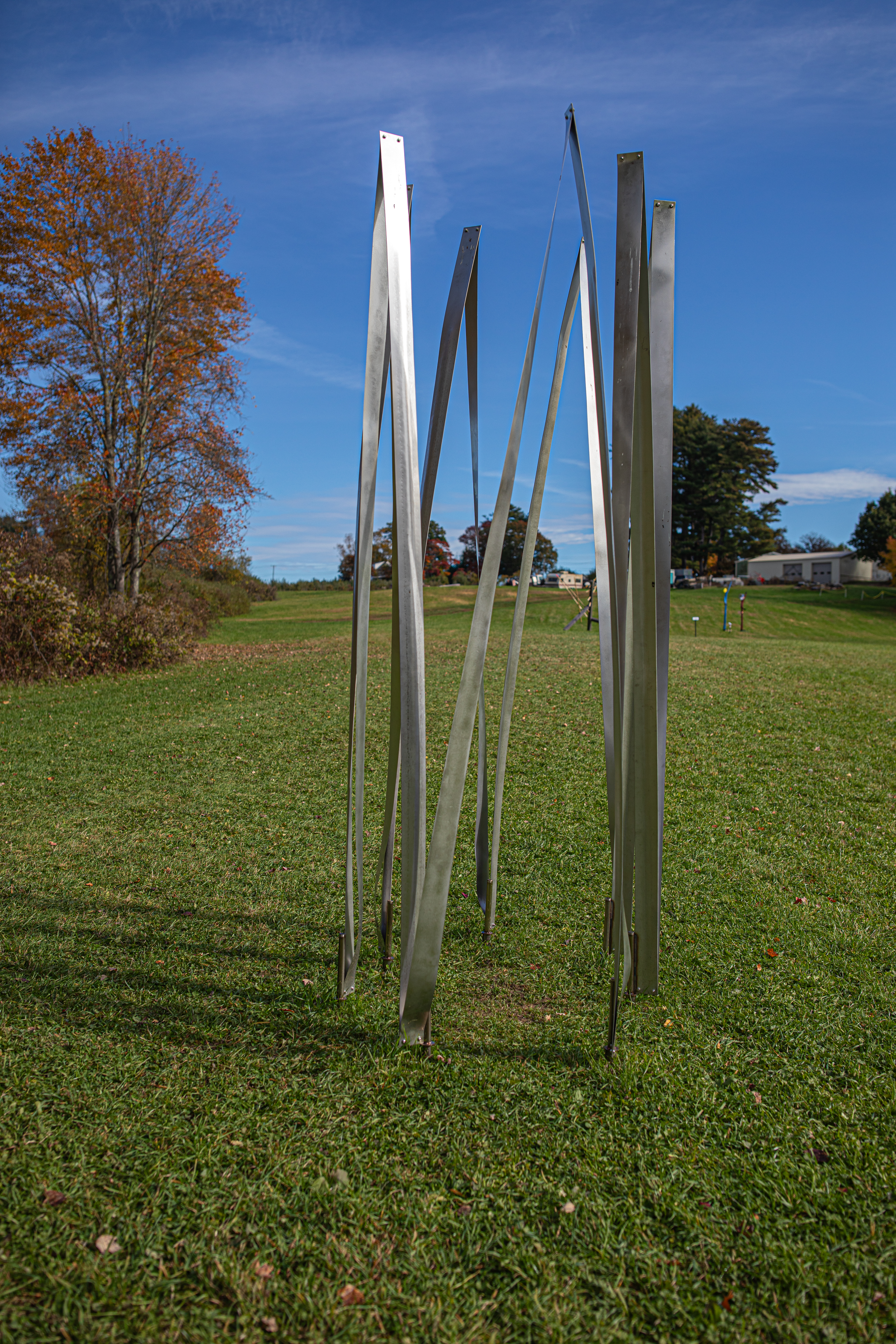
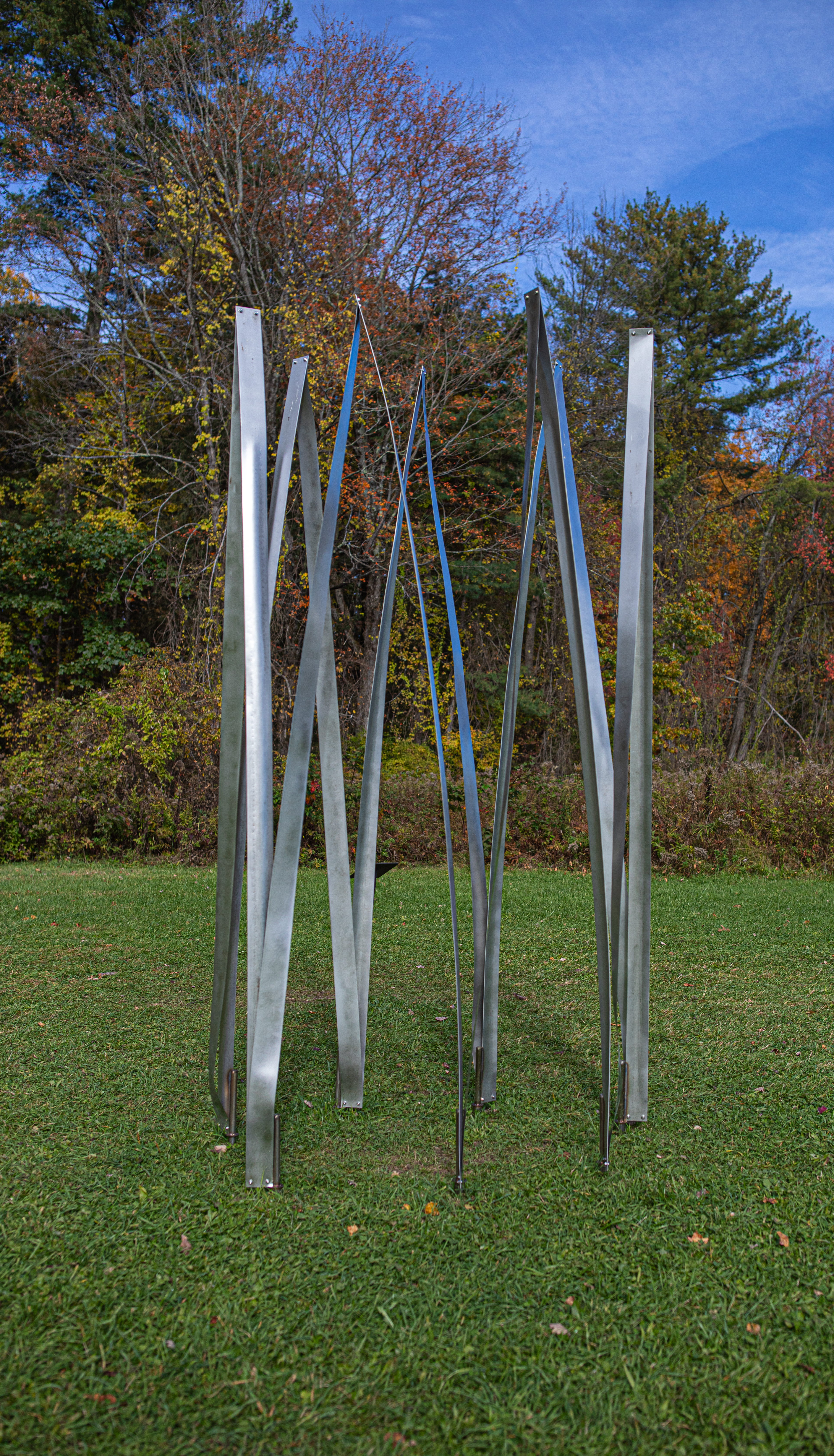
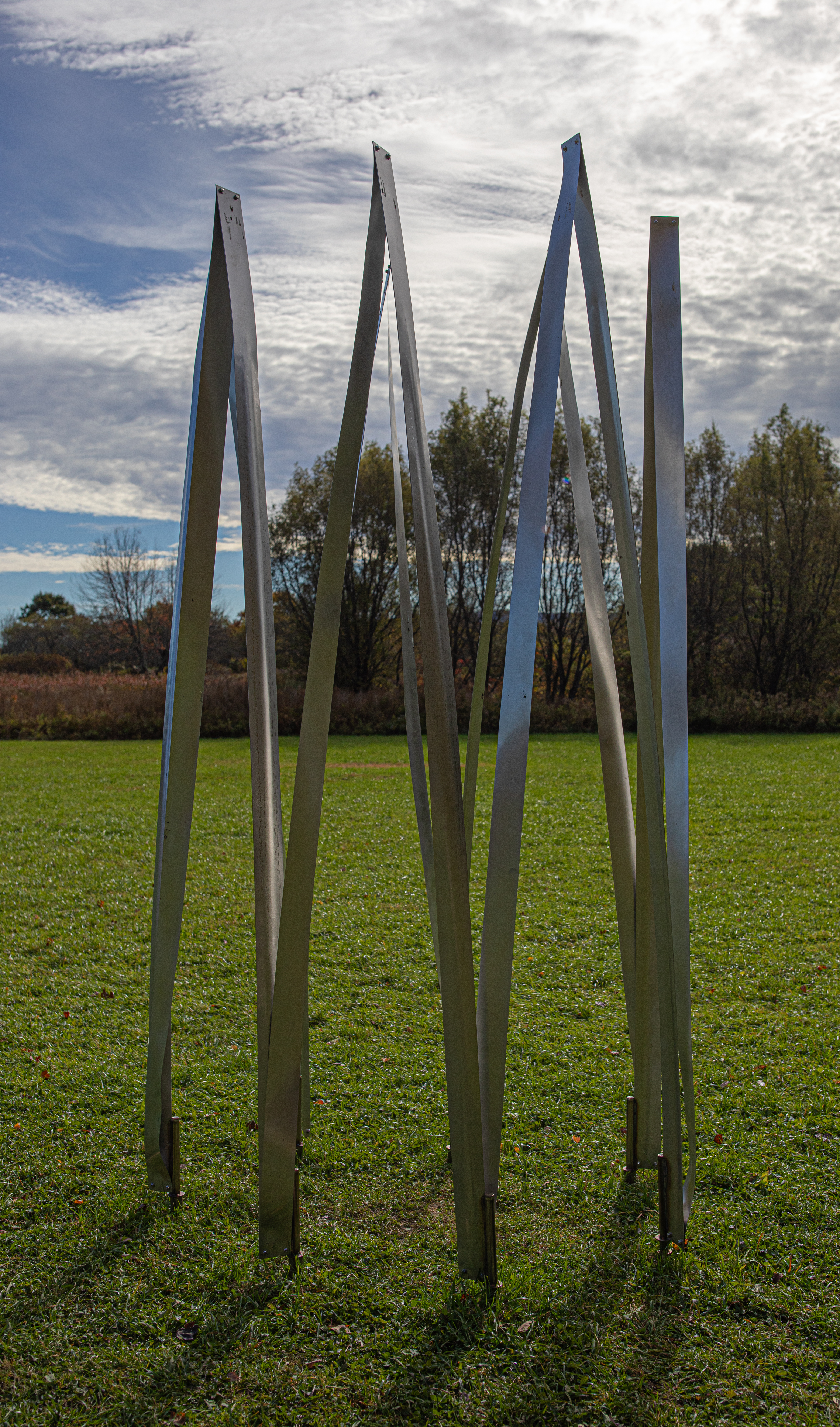
The first art installation in this post is “The Graces” by Ray Ciemny of Groton, MA.

Made of stainless steel, “The Graces” is an attempt to draw attention to the wind and the invisible world that envelops us all.

What captivates Ray and inspired the work of art is the notion of keeping the doors of experimentation and materials exploration open. The keys to these doors are Ray’s head and heart functioning together with an instinctual tension.

Ray tries to give new life to metal objects that were once useful and have become worn or obsolete. Ray endeavors to create a nirvana from scrap. Tension and movement whether physical or suggested has to be present in the work to make it worthy of existence.

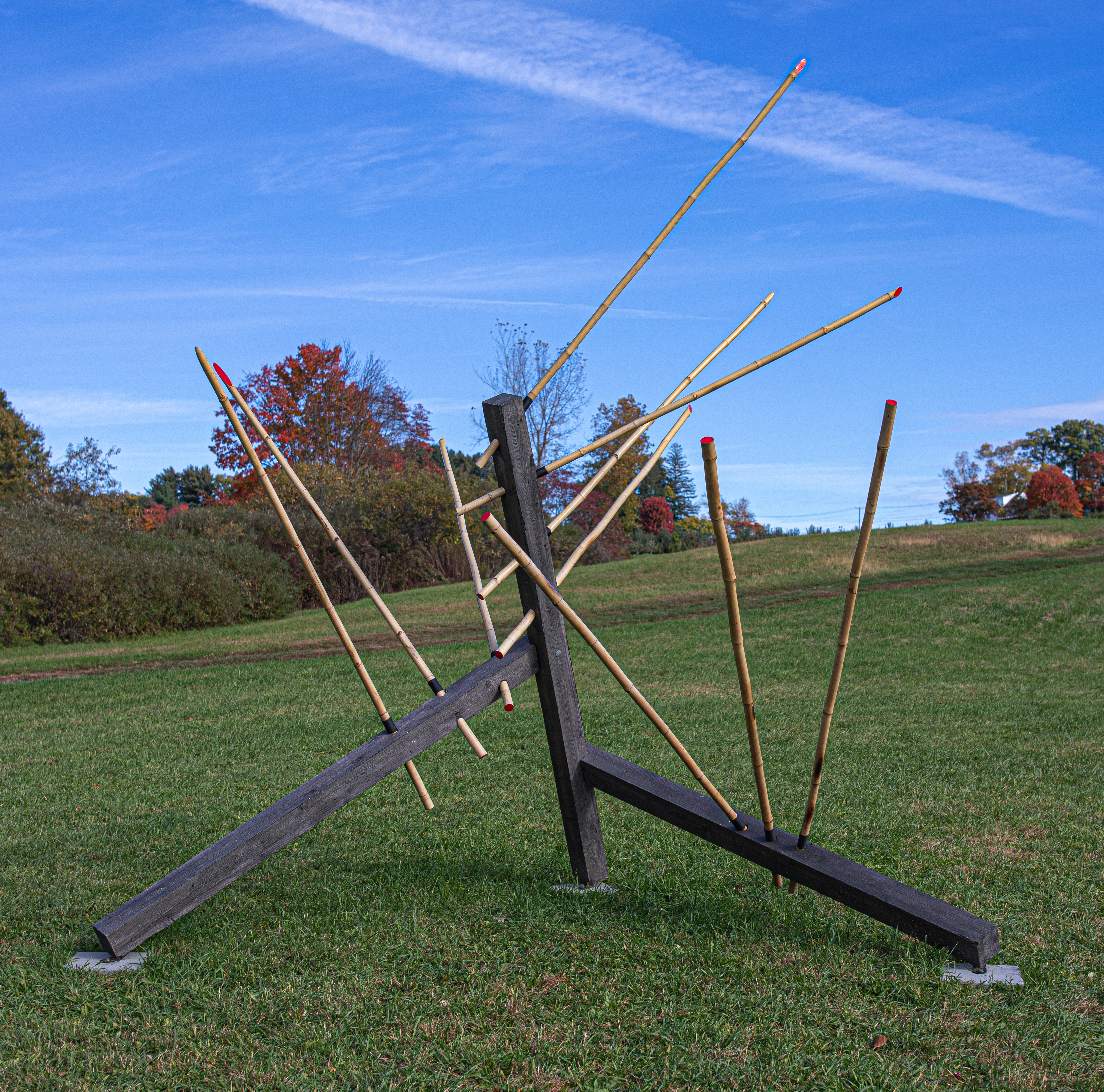
Bamboo has always fascinated Philip Marshall of Grafton, MA. For his work of art “Bamboo 2”, Philip used construction grade bamboo, Eastern white cedar, laquer, paint and cord to create an abstract piece similar to the ones he has made using steel.

Philip is a painter and sculptor based out of Massachusetts. But, he was born in Kent, England. He is drawn to public art for its freedom of scale and because he views it as “gateway art” for those who rarely visit a gallery or museum. Although Phillip takes painting and sculpture commissions, his primary focus has been creating outdoor sculptures for temporary public exhibitions. His varied life experiences, extensive world travel and the people he has encountered, provide a rich source of material.

Michael Tillyer of Conway. MA, used a fourteen foot pine tree and some metal to make “Totem.”

This sculpture did not have a sign identifying the work of art or artist. The birds liked it though.

“Rabbit” by Tim MacKenzie of Hull, MA, was made of marble.

In an orchard, Velma stands proud – a stone rabbit sentinel with ears to the breeze and secrets to keep. Forever frozen mid-thought, she ponders the mysteries of morning dew and moonlight dreams.

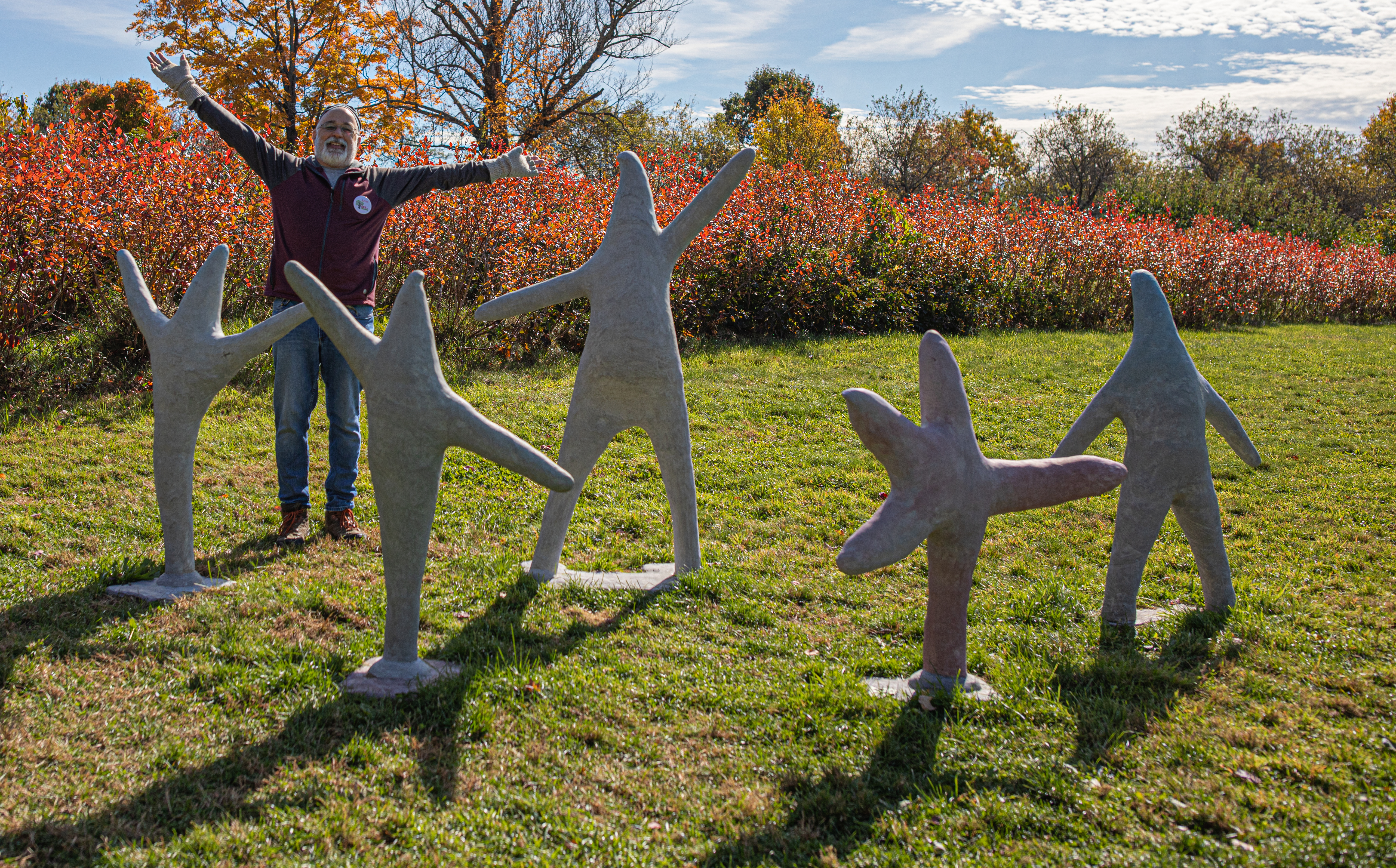
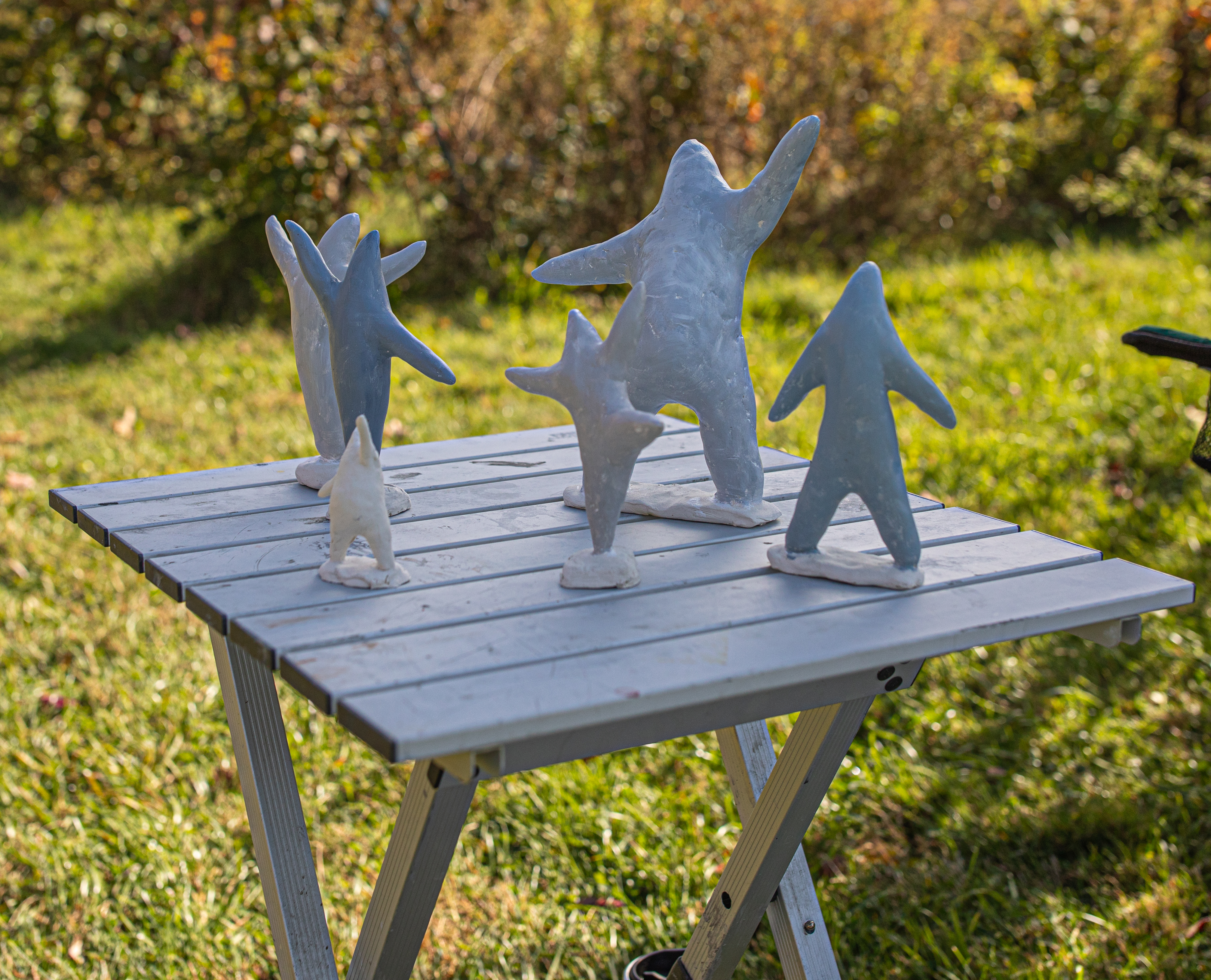
The sculpture “Joy” by Michael Perusse of Easthampton, MA, is a remembrance and reflection of moments of joy in our lives. The movement of the figures, which are made of Pal Tiya (a cement-based weatherproof sculpting medium that cures to a stone-hard finish without baking or firing which is ideal for durable indoor or outdoor sculptures) can be a moment of silliness, dance, sports achievement, a simple morning stretch in a ray of sunshine or as complex as finishing a law degree and everything in between. It’s that moment your body, heart, mind and soul are one in Joy within yourself or with others.

This is a miniature sized model of the work of art.

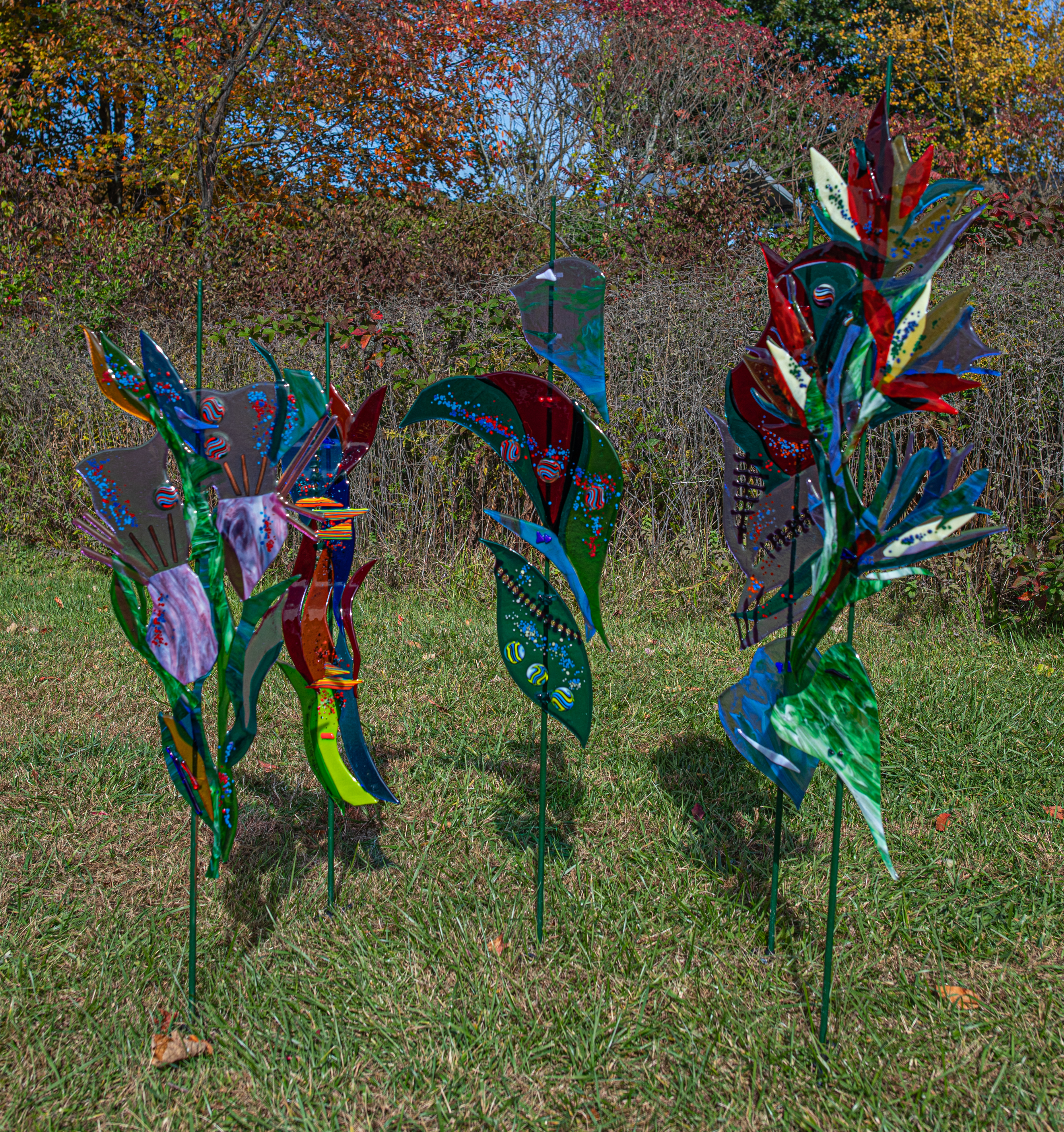
Lynn Richards of Sommerville, MA, is interested in how light transforms fused glass to create a dynamic viewing experience. After seeing a Georgia O’Keefe exhibit, Lynn was inspired to create a larger than life glass flower bouquet which would become “Flourishing Buds.” She used bullseye glass with steel rods to create the various flower elements. The glass was cut into realistic and abstract shapes that invite the viewer to interpret the bouquet. Finally, the flowers are designed to ensure wind can easily pass through the swirl on a steel rod.

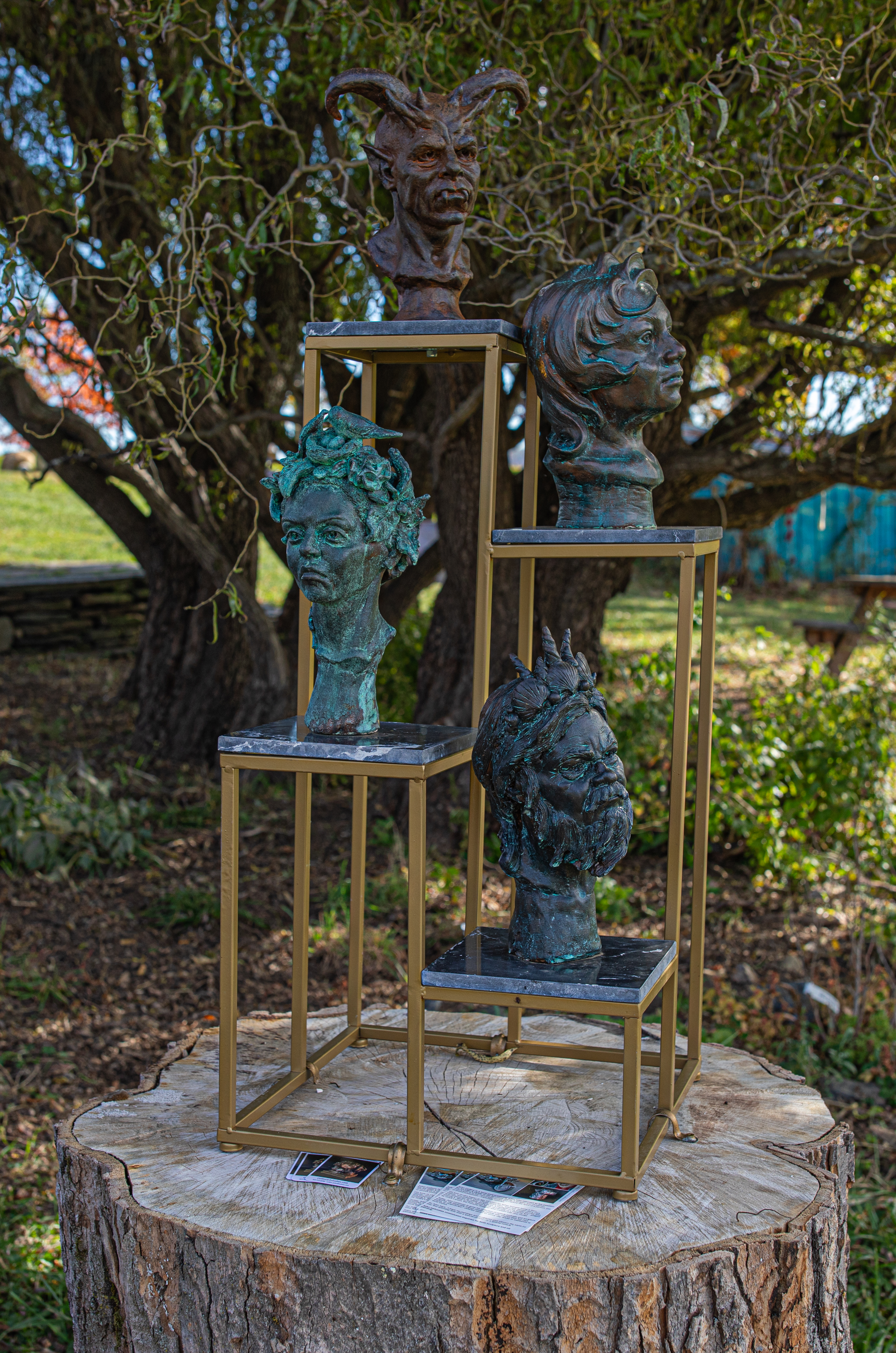
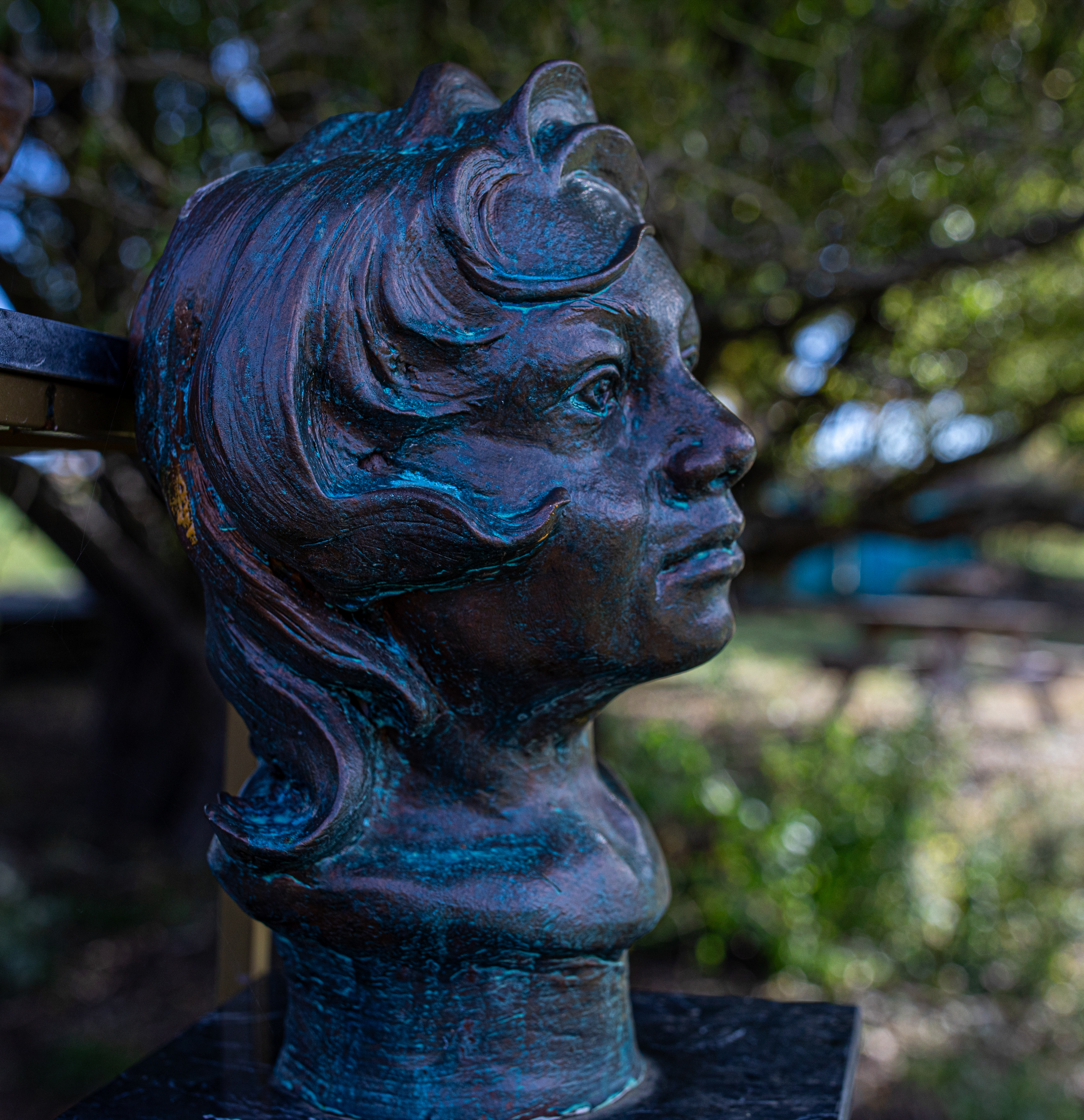
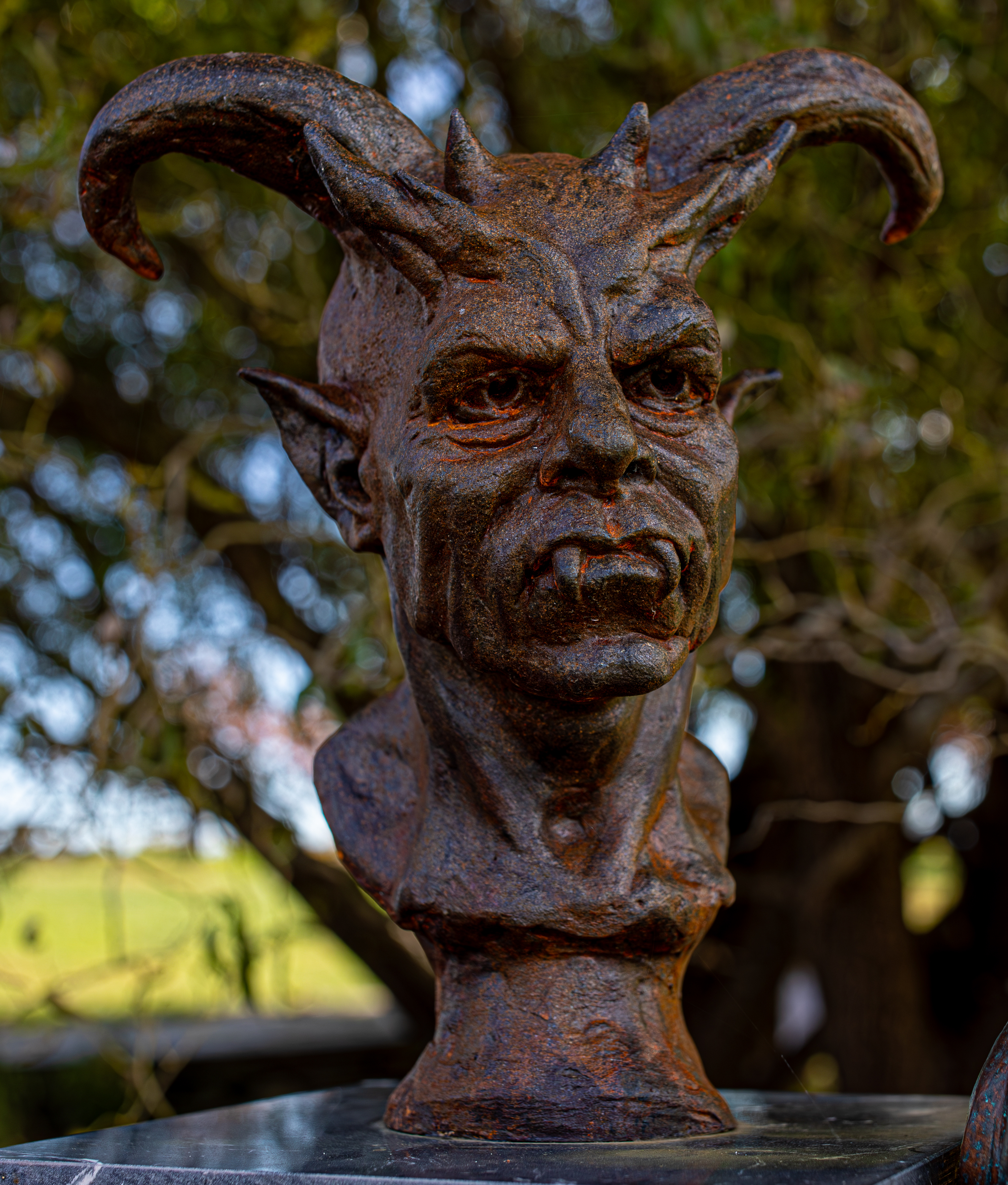
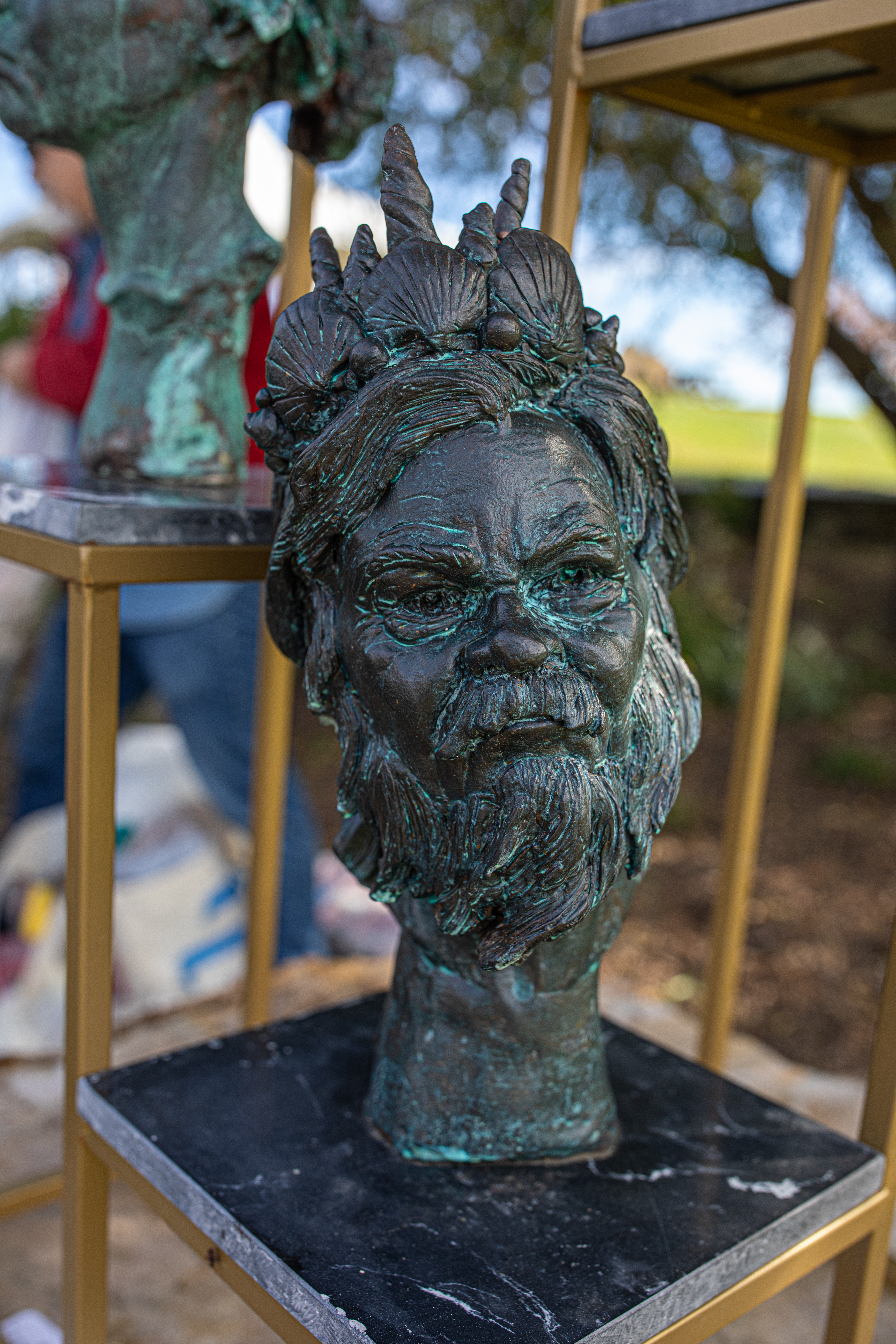
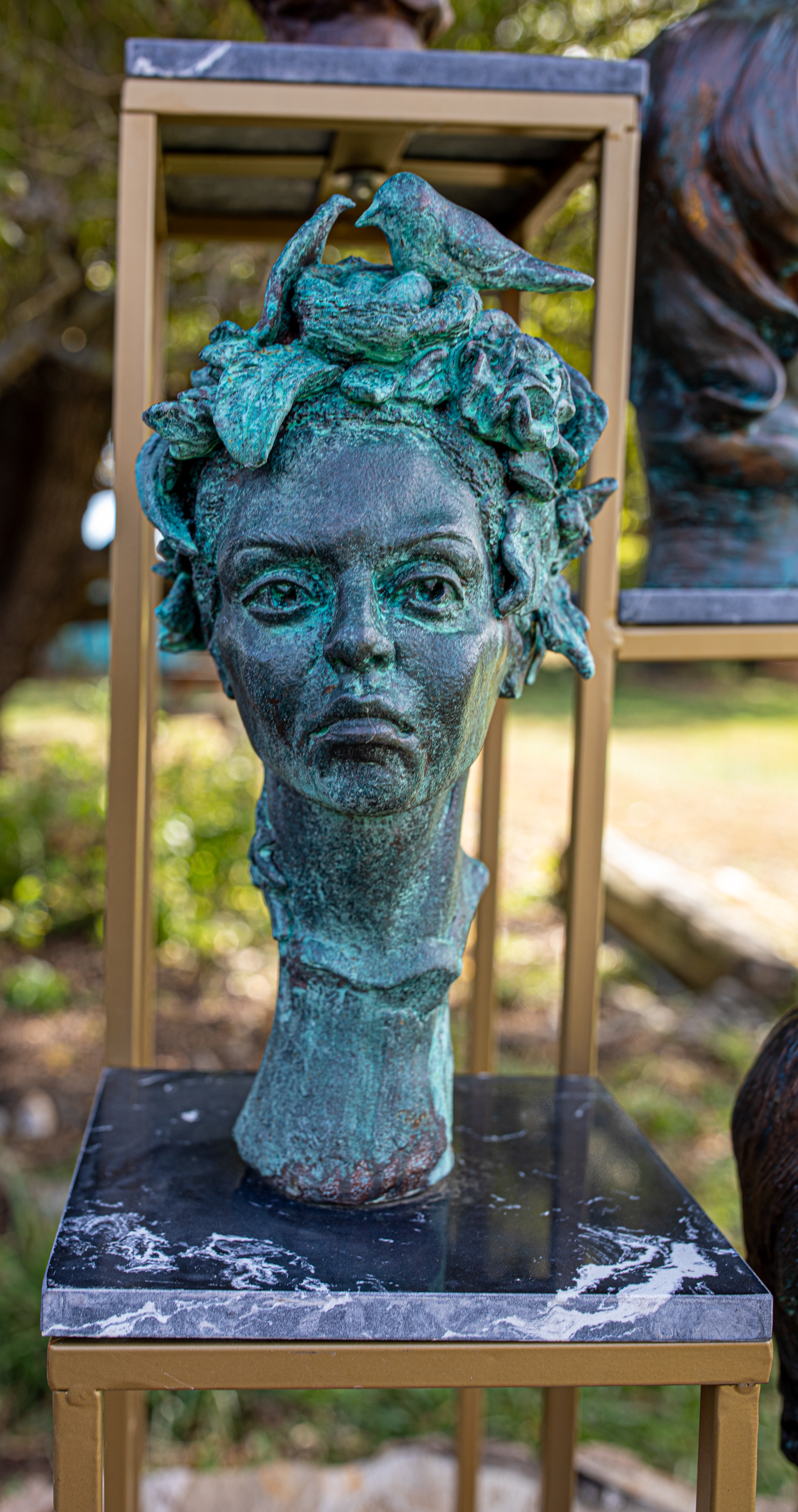
“The Four Elements Personified” by John Collins of Ware, MA, displays the four elements (water, Earth, wind and fire) as humans. Each bust made of fire clay with metal coating finish with a marble, cast iron stand, represents each element. Mounted on a four tier marble and steel base, the work unites the distinct energies of Satan, Lady Wind, Mother Earth and Poseidon.

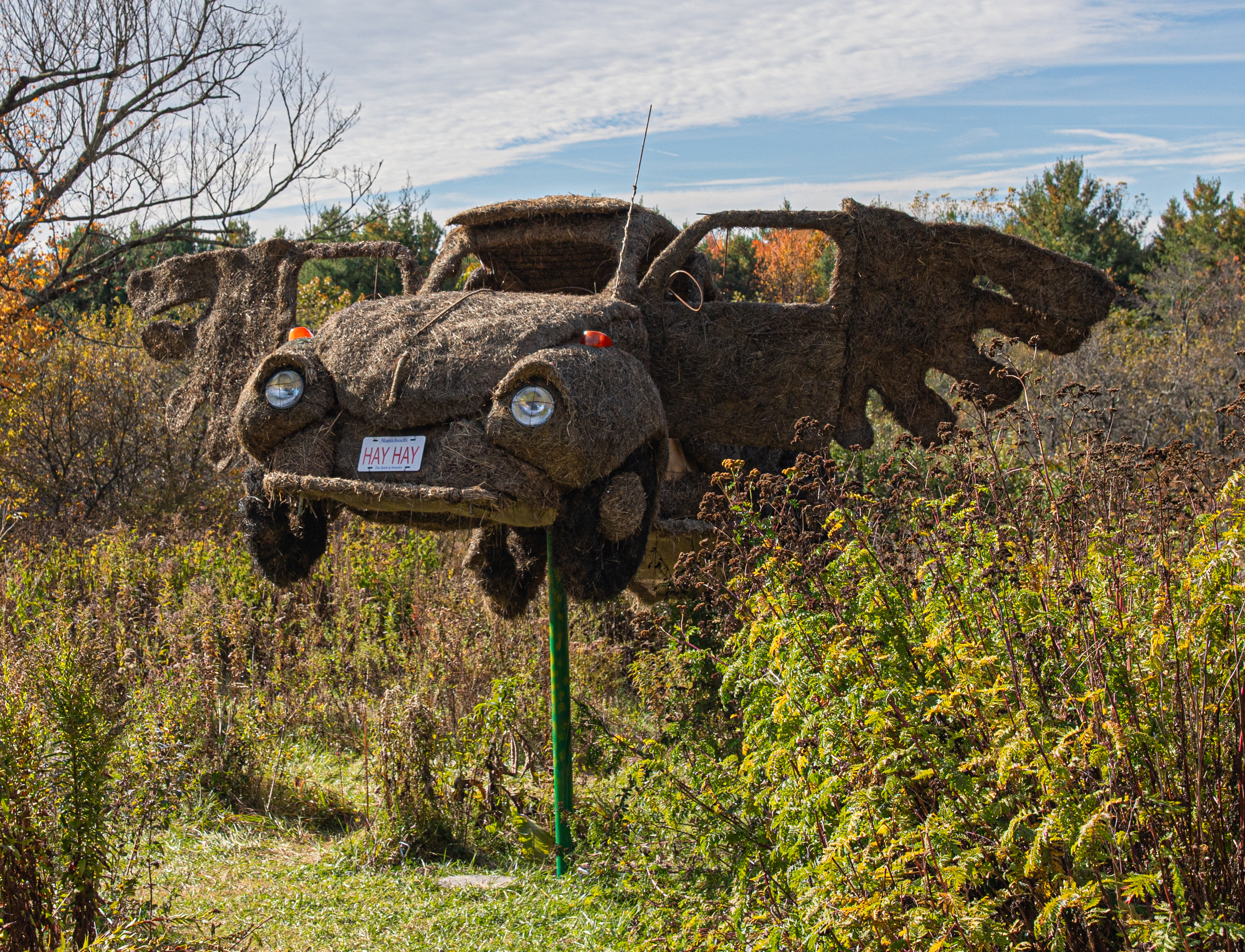
Dave Rothstein of Florence (Northampton), MA, used hay, straw, chicken wire, steel, aluminum and a lot of ingenuity to make “Beetle in a Haystack.”

The most beautiful things are often fleeting and right under our noses. But if we don’t take time to observe we often miss out. “Beetle In A Haystack” pays homage to the ubiquitous hay bales that blanket the New England landscape. They are so commonplace that we often take them for granted. So, the next time you’re driving by a far,m or other landscape in New England or some other rural area, pause and take a look (safely).

Most hay bales contain much more than hay. You’ll often find Goldenrod, native mints, bergamot (a fragrant citrus fruit native to southern Italy) and other plants.

So it’s no surprise that Beetle In A Haystack hovers over the “Harmonics Gardens Labyrinth” filled with native grasses and medical plants and abound with pollinators. Please experience its magic and maybe you’ll discover the elusive calm and peace we search so longingly for, See what you learn about yourself and the natural world in the process.

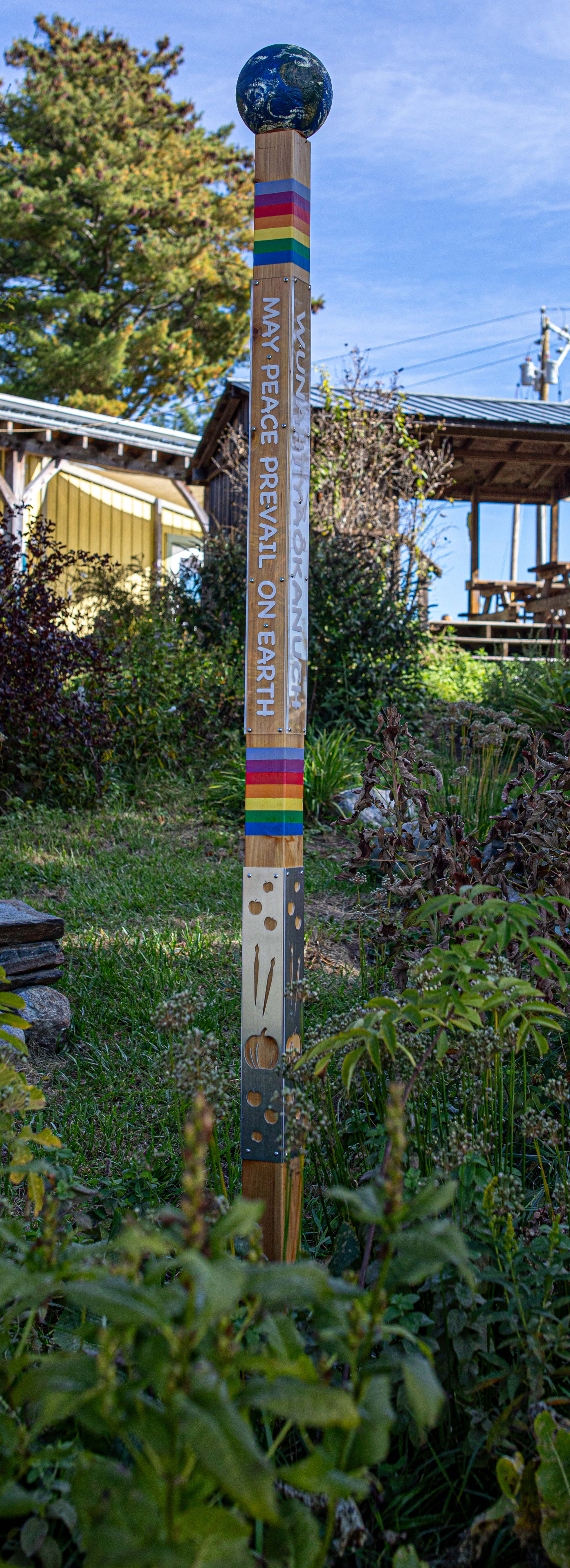
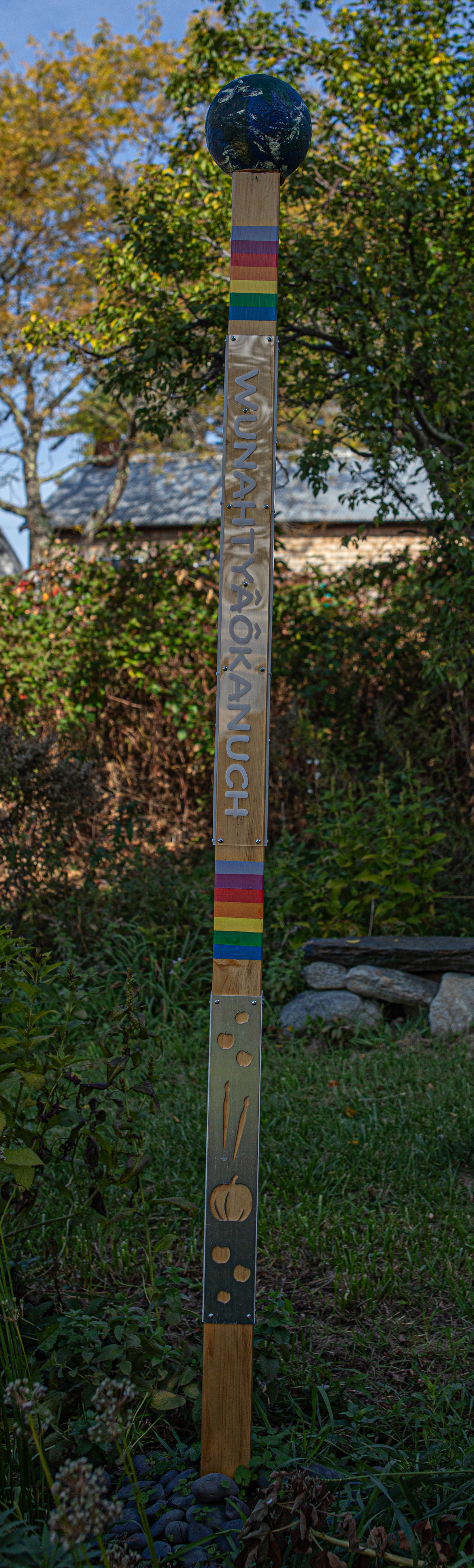
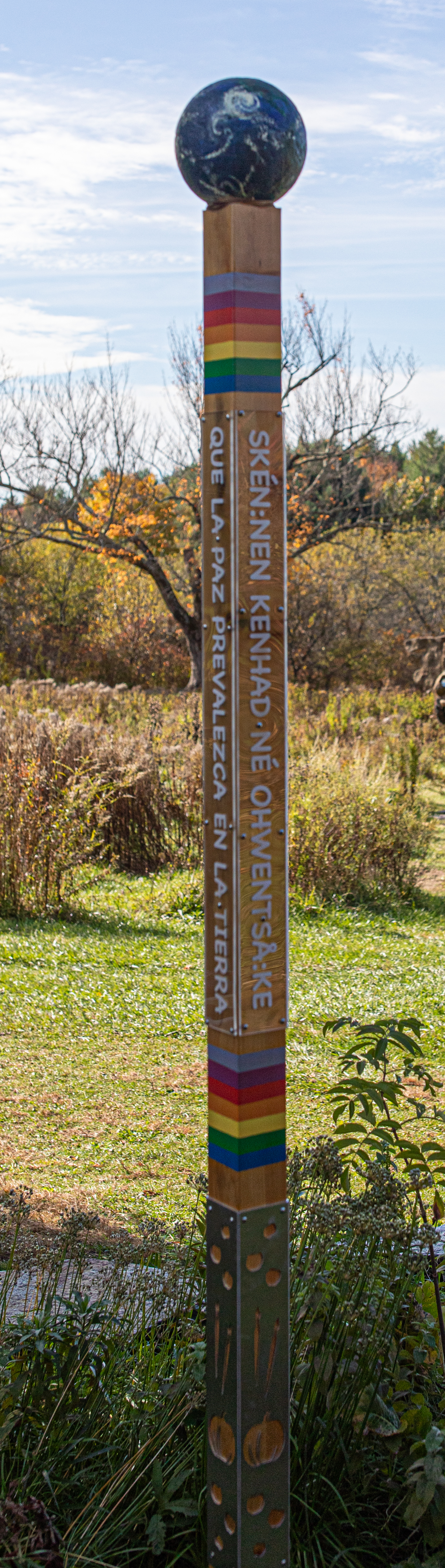
“Peace Pole: A beacon for hope and desire for peace” by Jane Pelton Andresen of Easthampton, MA, is the perfect work of art to end this series of posts. The pole, which is made of wood, acrylic panels and clay, is meant to connect people. She included indigenous languages from the region, in this case Mohawk (territory to the west) and Wampanoag (territory in what is now eastern MA, RI and parts of CT). Both languages are still spoken today. She also included Spanish as it is the most non-English language spoken here.

The rainbow stripes represent the fact that peace without freedom and equity is not true peace.

The symbols on the pole represent what Park Hill Orchard has given to our community.

While the art from the artists was plentiful, there was additional art at the park.

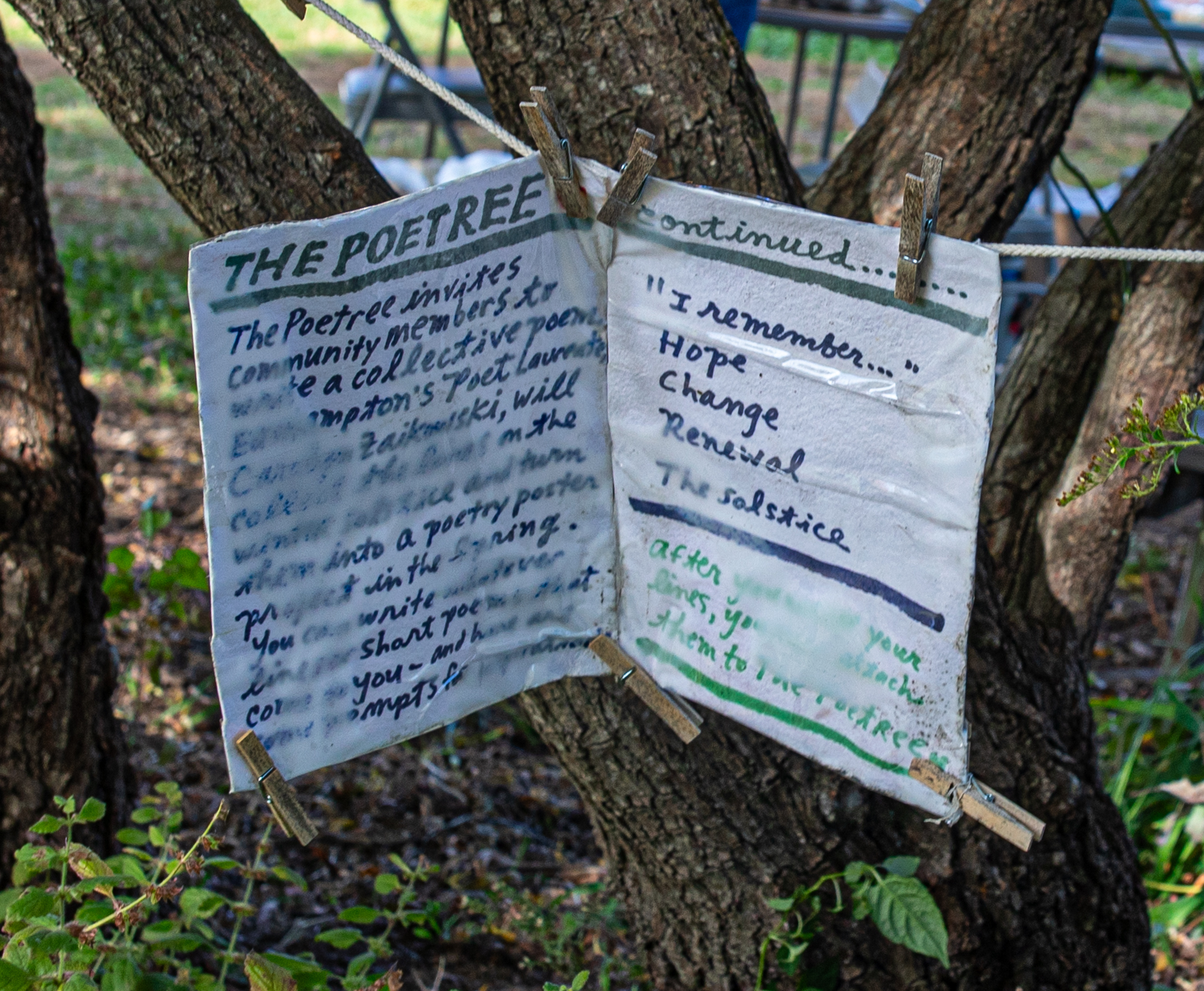
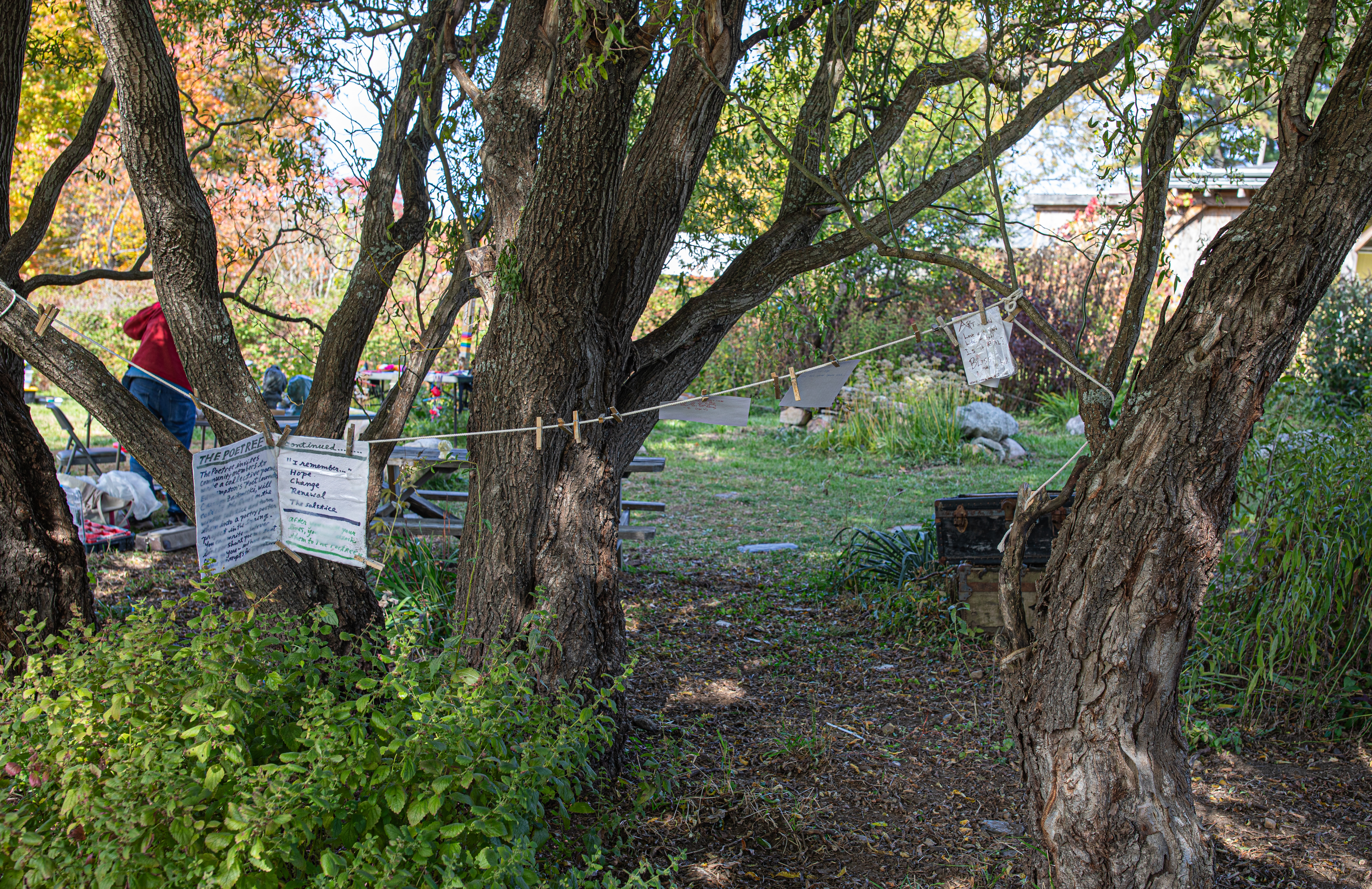
There was this Poetree at the park. The Poetree included poems attached to the tree.

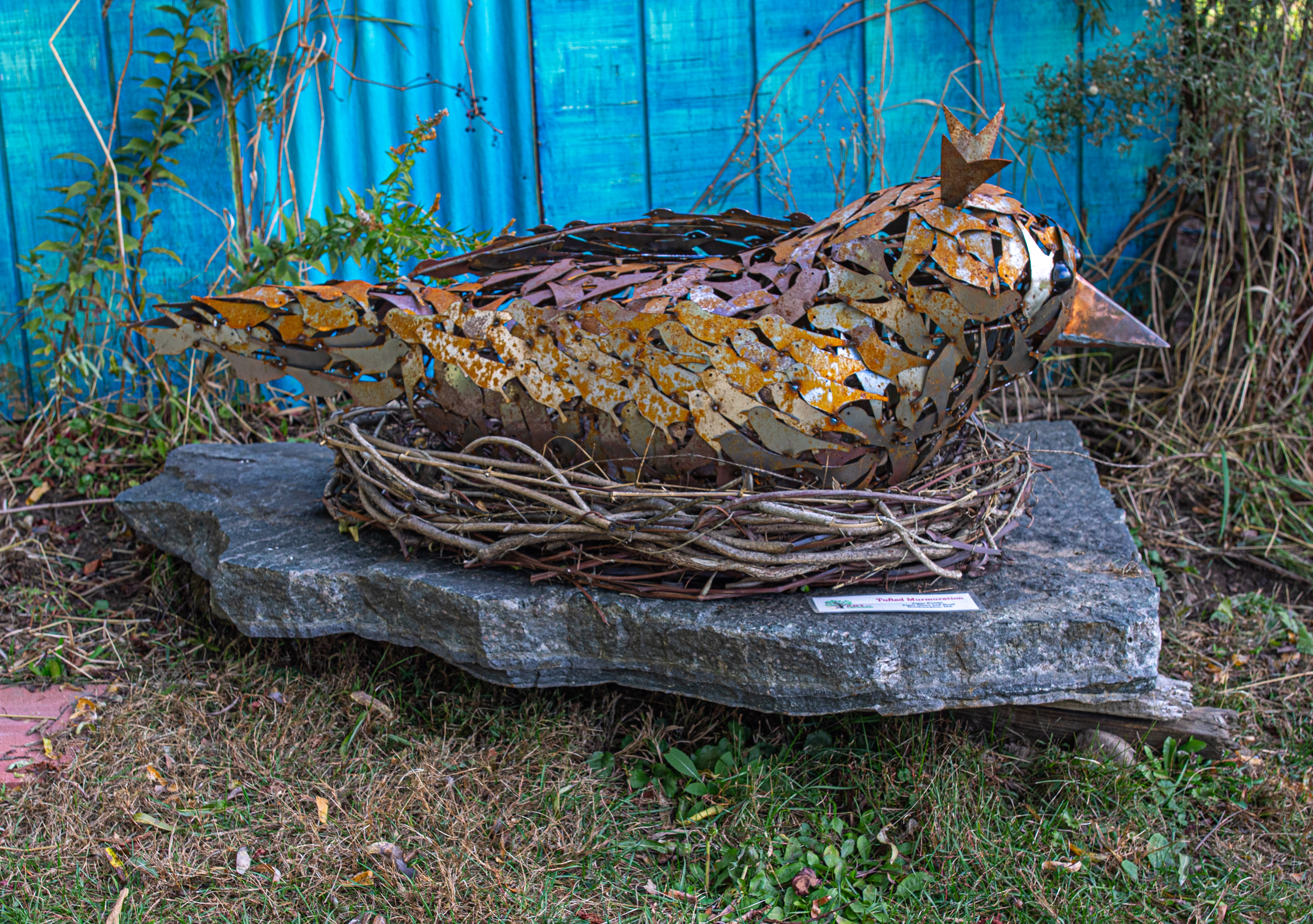
There were also other sculptures and works of art that were not part of the event. Some of them were sculptures the artists were selling and some were things I just noticed at the park.

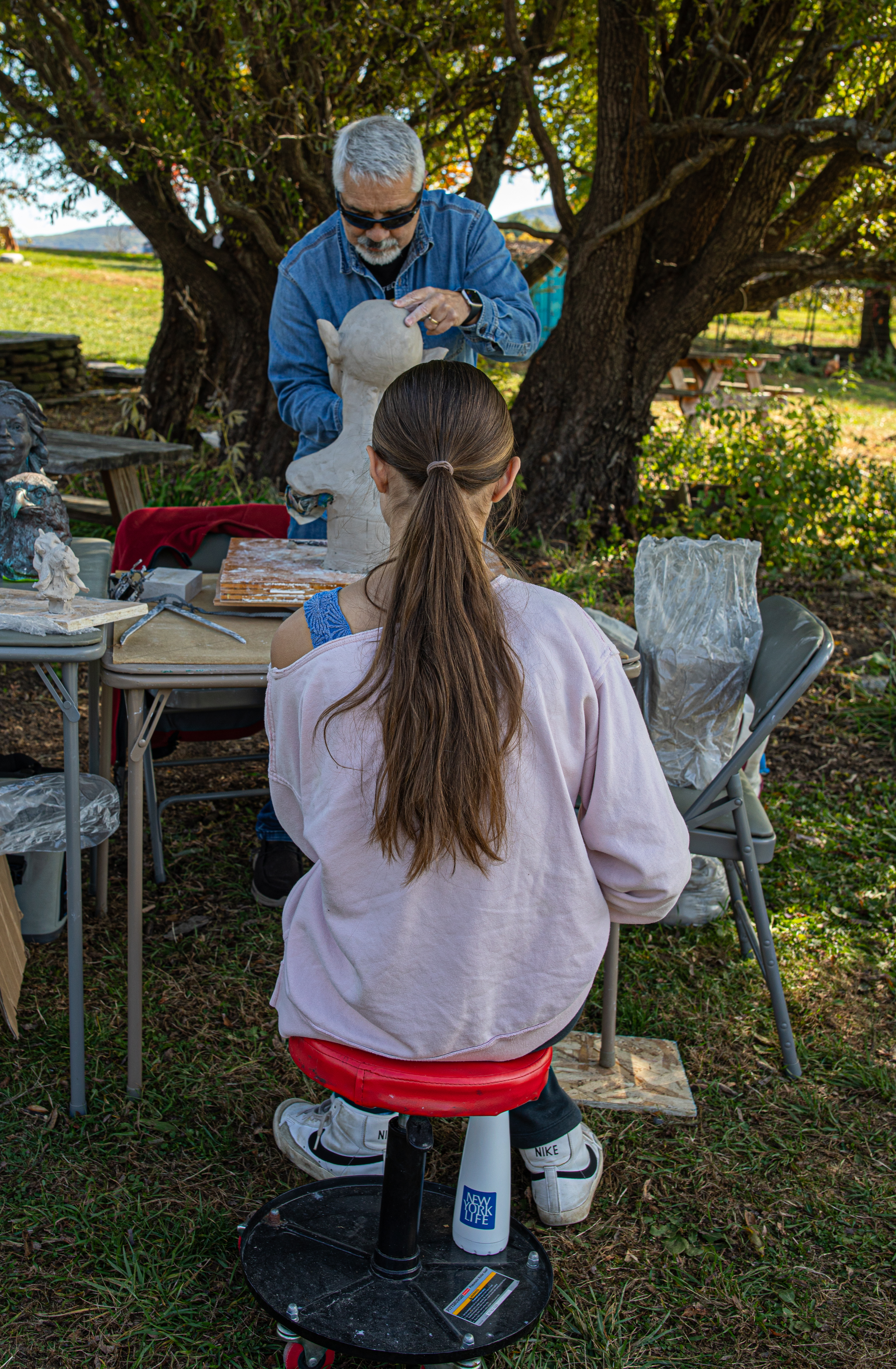
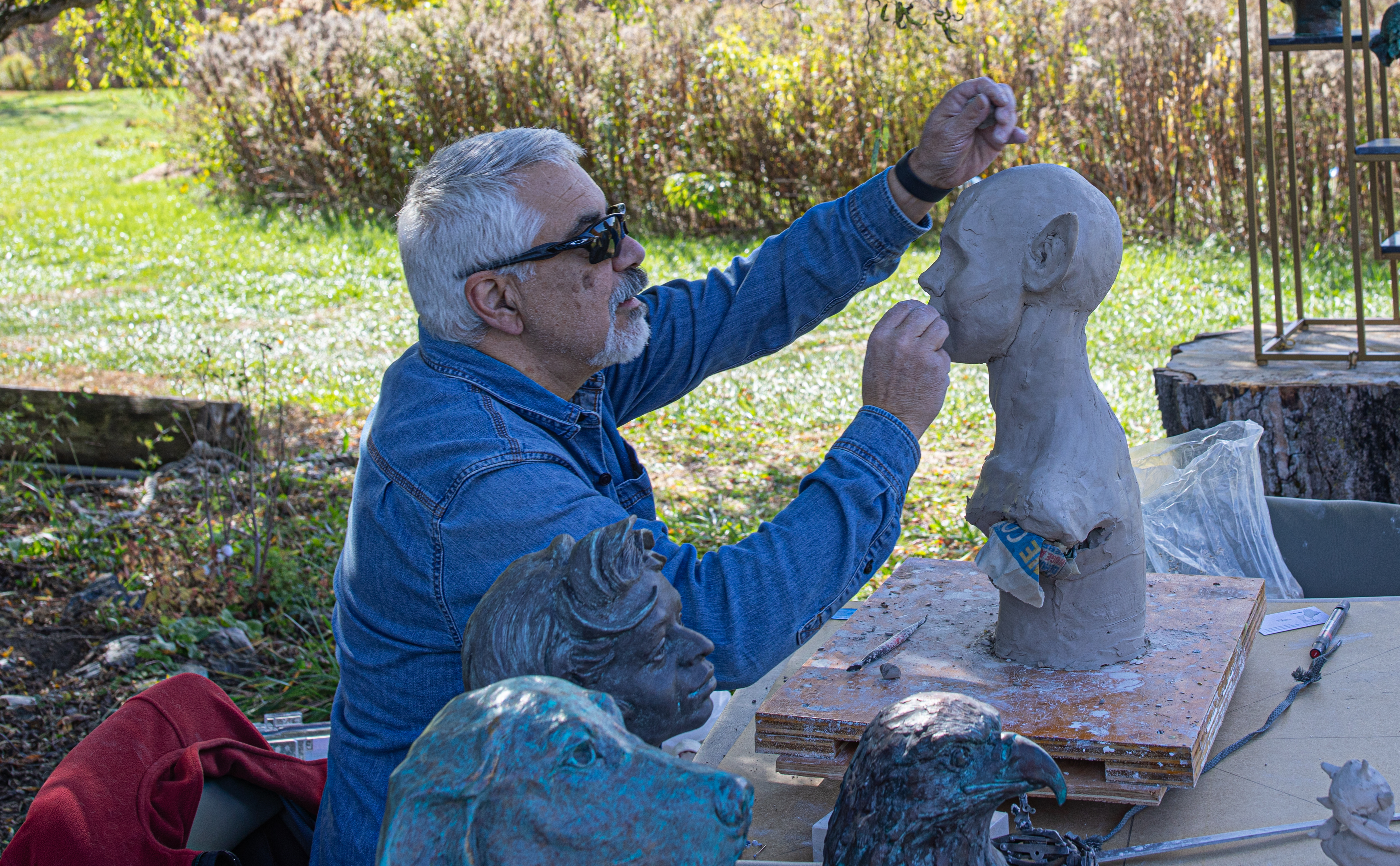
During the event, one of the sculptors, John Collins, was making a sculpture of a girl’s head.

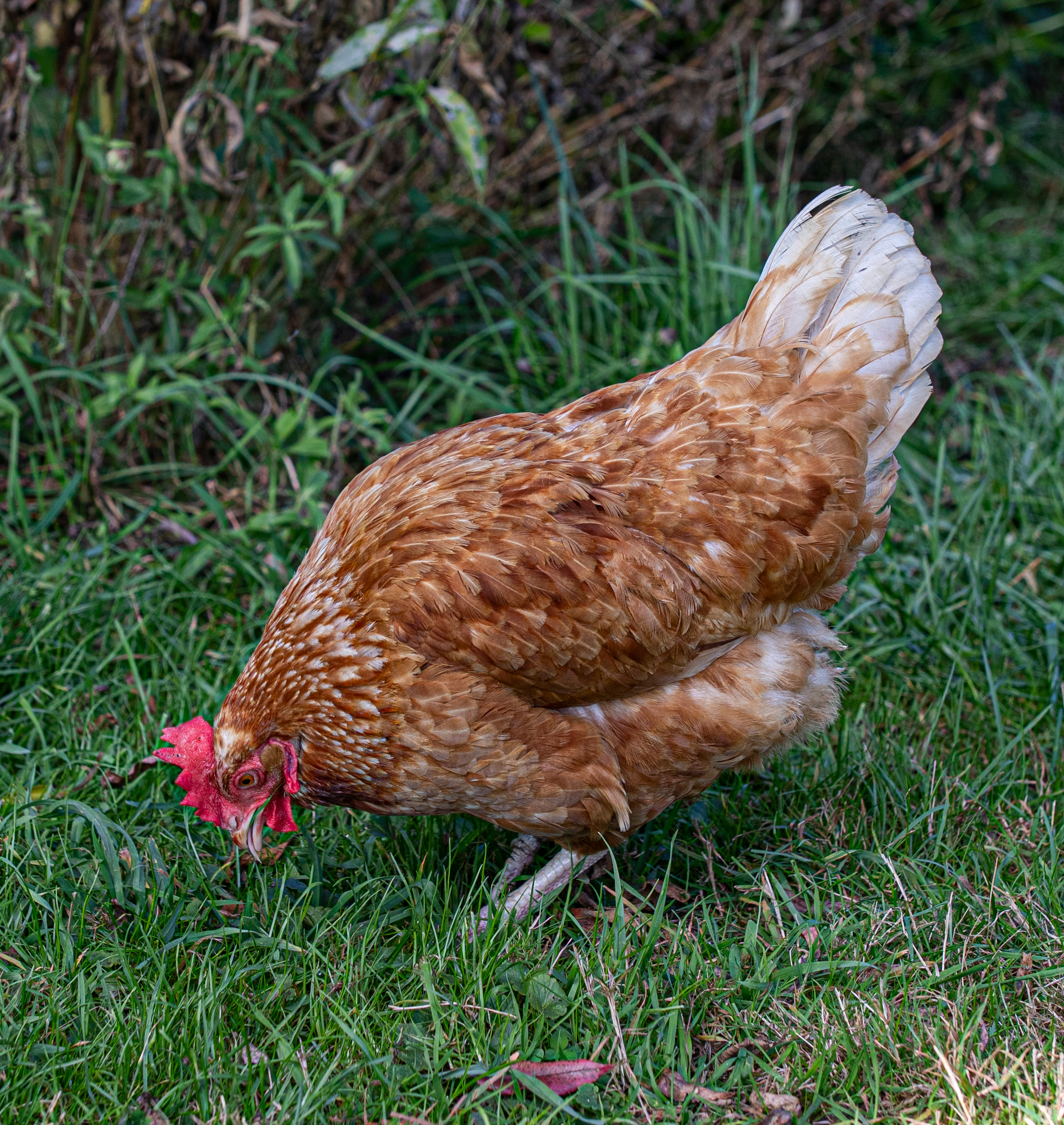
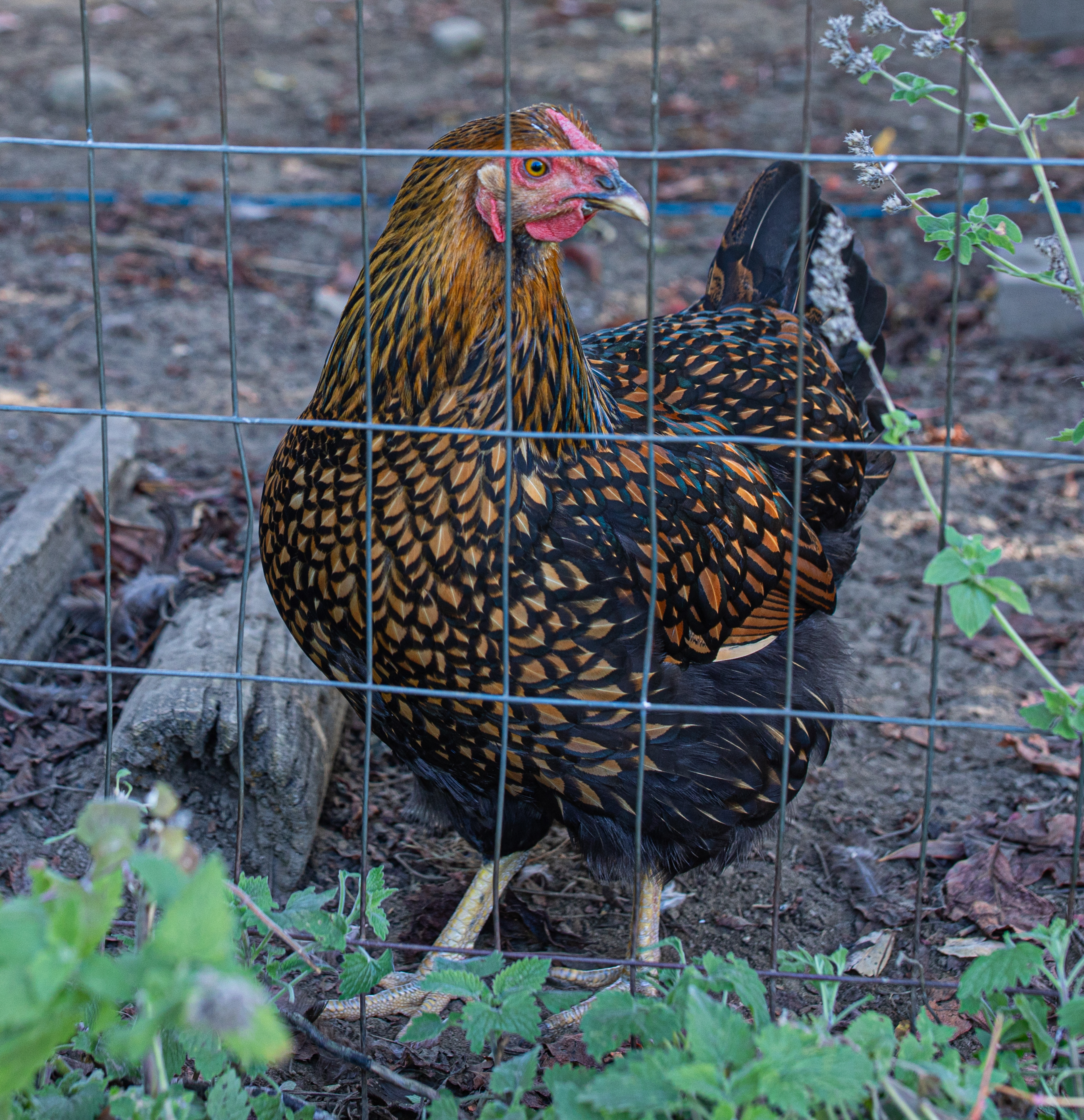
And, there was also a rooster and chicken, specifically a Golden Laced Wyandotte chicken.

AS you can see, there was lots of art at the event. But, what struck me most was the meaning and theme of the works of art. There were some very meaningful messages to some of the art! It also goes to show how creative people can be!


2025 Art In The Orchard Part 2 (Park Hill Orchard, Easthampton, MA)

Date Of Visit: October 18, 2025

Location: Park Hill Orchard, 50 Payson Ave, Easthampton, MA (2 hours west of Boston, MA, 45 minutes north of Hartford, CT)

Cost: Free

Universally Accessible: Yes. The staff at Park Hill Orchard offer a Accessible Art Cart for those who need assistance.

Dog Friendly: Yes

Summary: Art In The Orchard featured dozens of works of art from local artists.

Welcome to the second part of my Art In The Orchard post! Even though I am posting quite a few sculptures and other works of art, there are still many more to share with you all. This is why I debated posting them at all. It is fairly big undertaking and I didn’t want to bore anyone with the volume of art. But, these sculptures and other works of art are so impressive, I doubt they will bore any of you!

Well, it’s another weekend and that can only mean one thing in New England: more snow! So, to brighten my and everyone else’s mood in New England and anyone else experiencing inclement weather, what better way to get our minds off this wintry weather than to look at some photos from a warmer and prettier time!

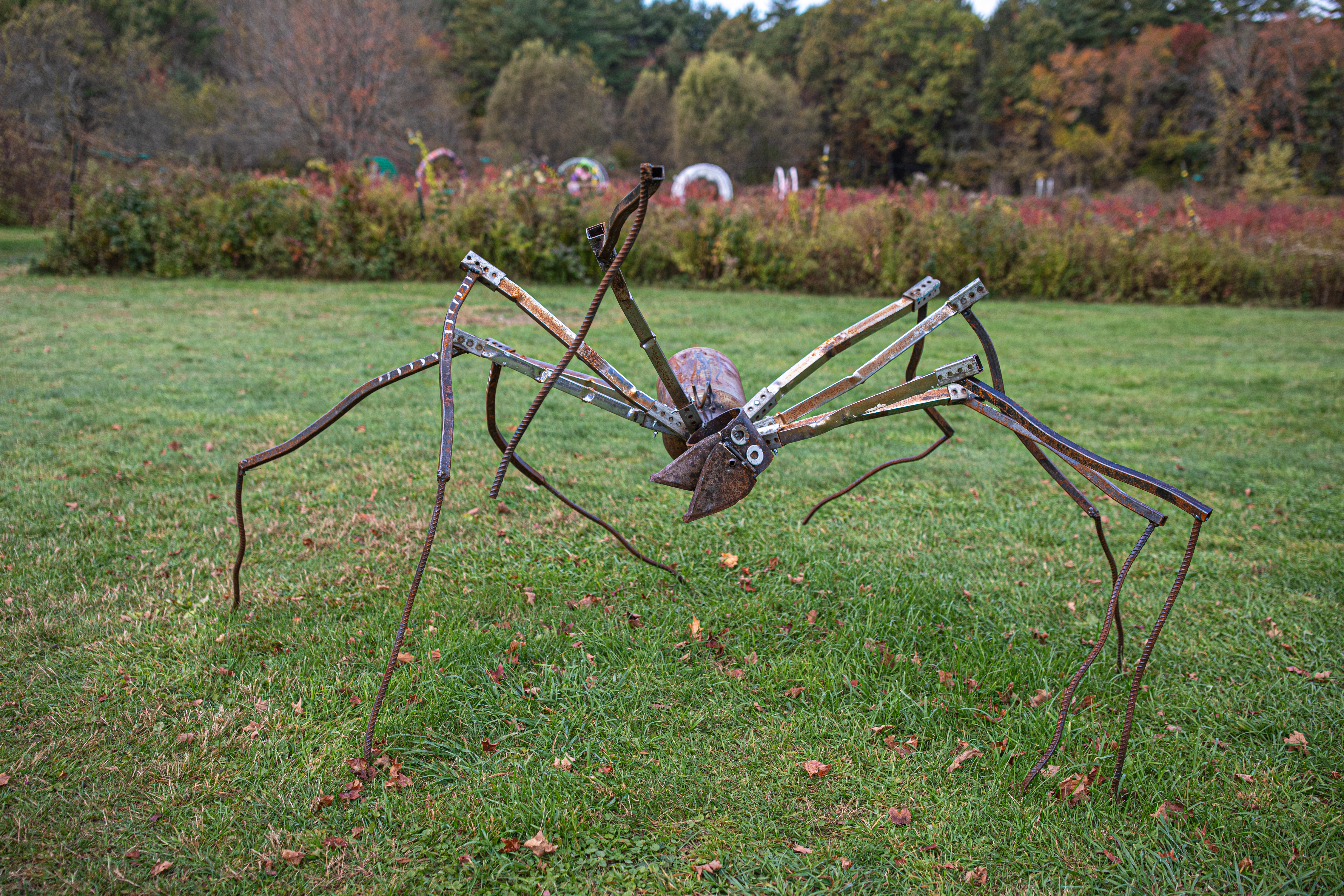
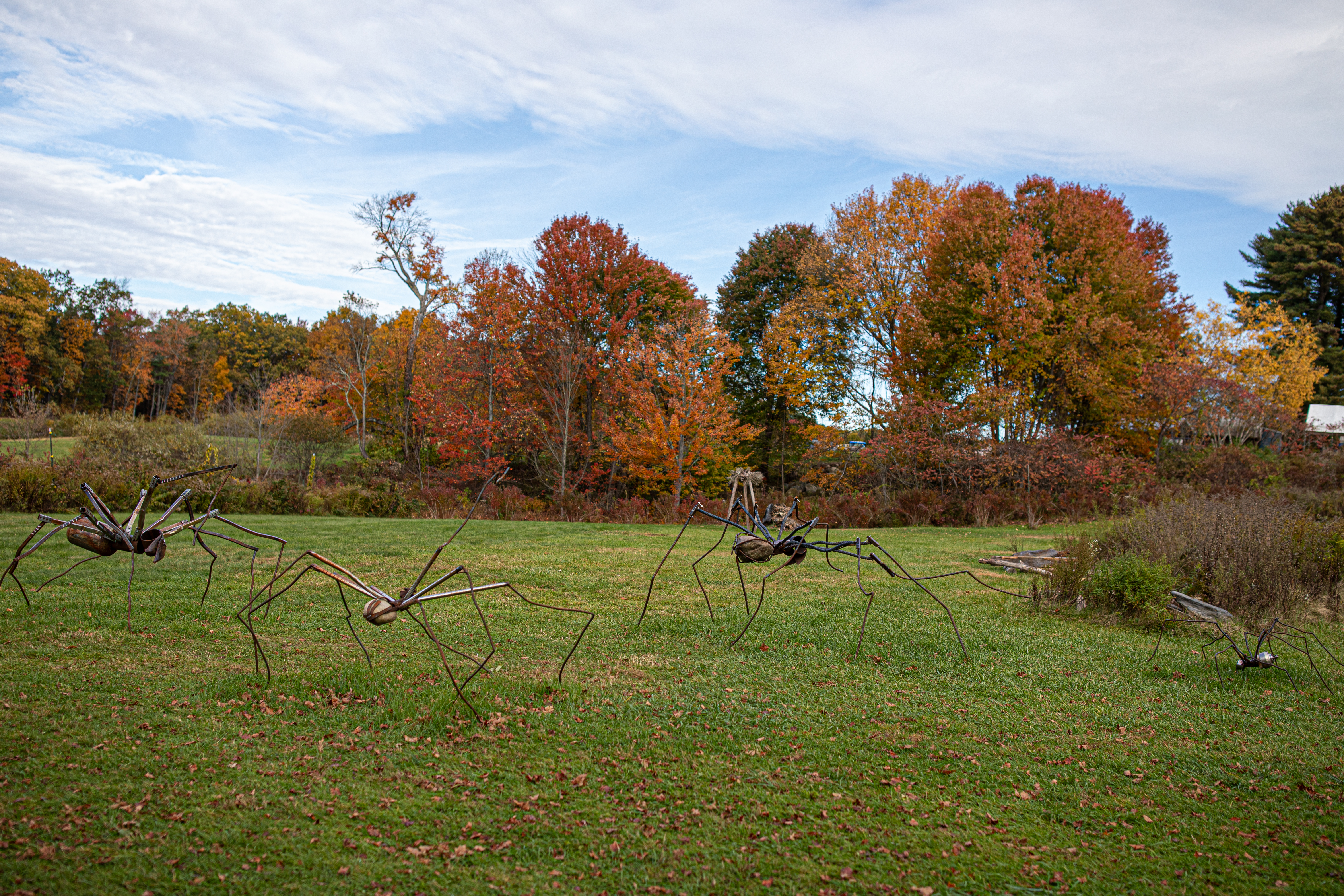
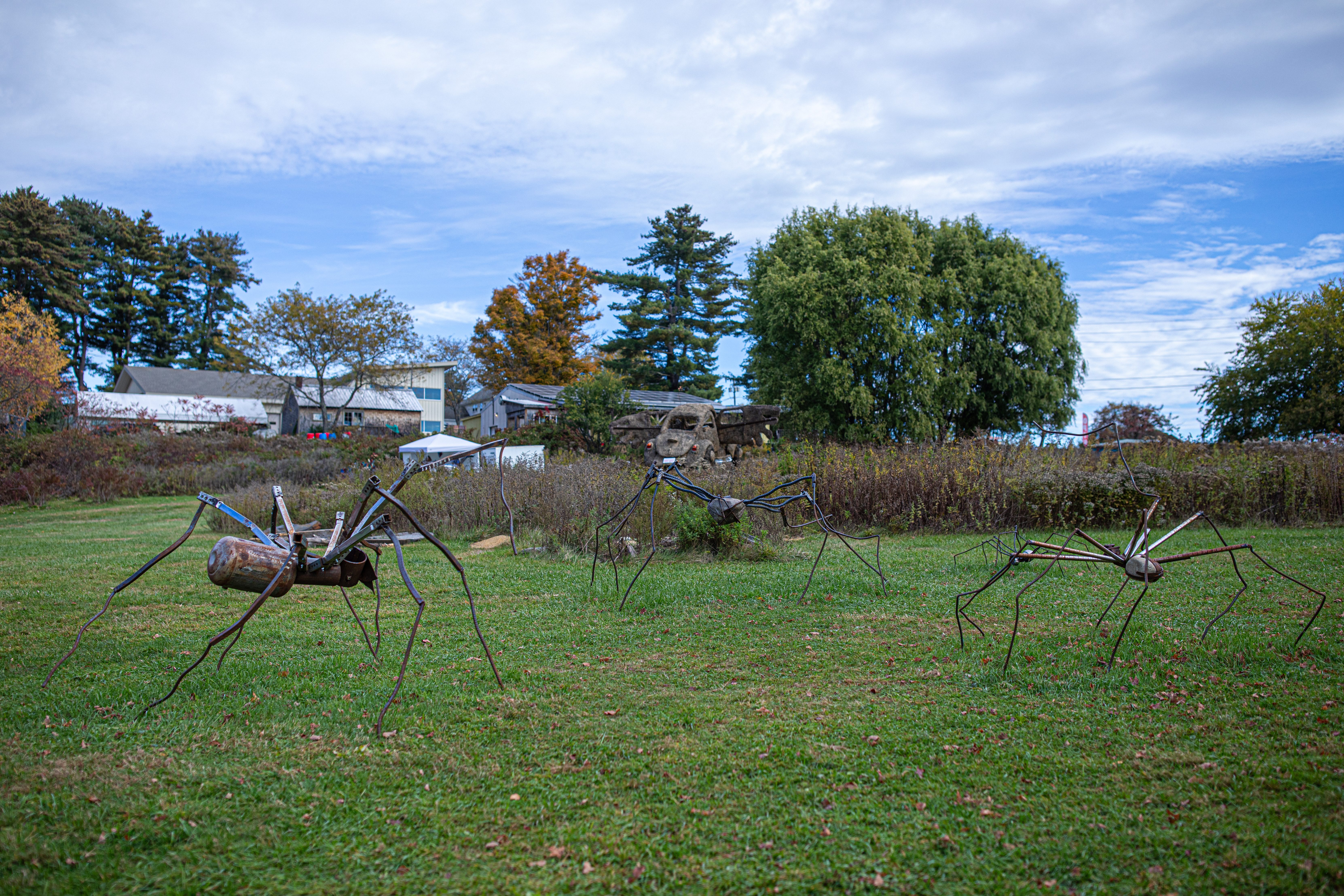
“Spiders” by Matt Evald Johnson is the first installation in the second post from the Art In The Orchard event. I know. I get it. I’m not crazy about spiders either. But, look at that face! On his Instagram profile, Matt describes himself as a “spider protector.” So, it makes sense that he would make such cute creatures for the event.

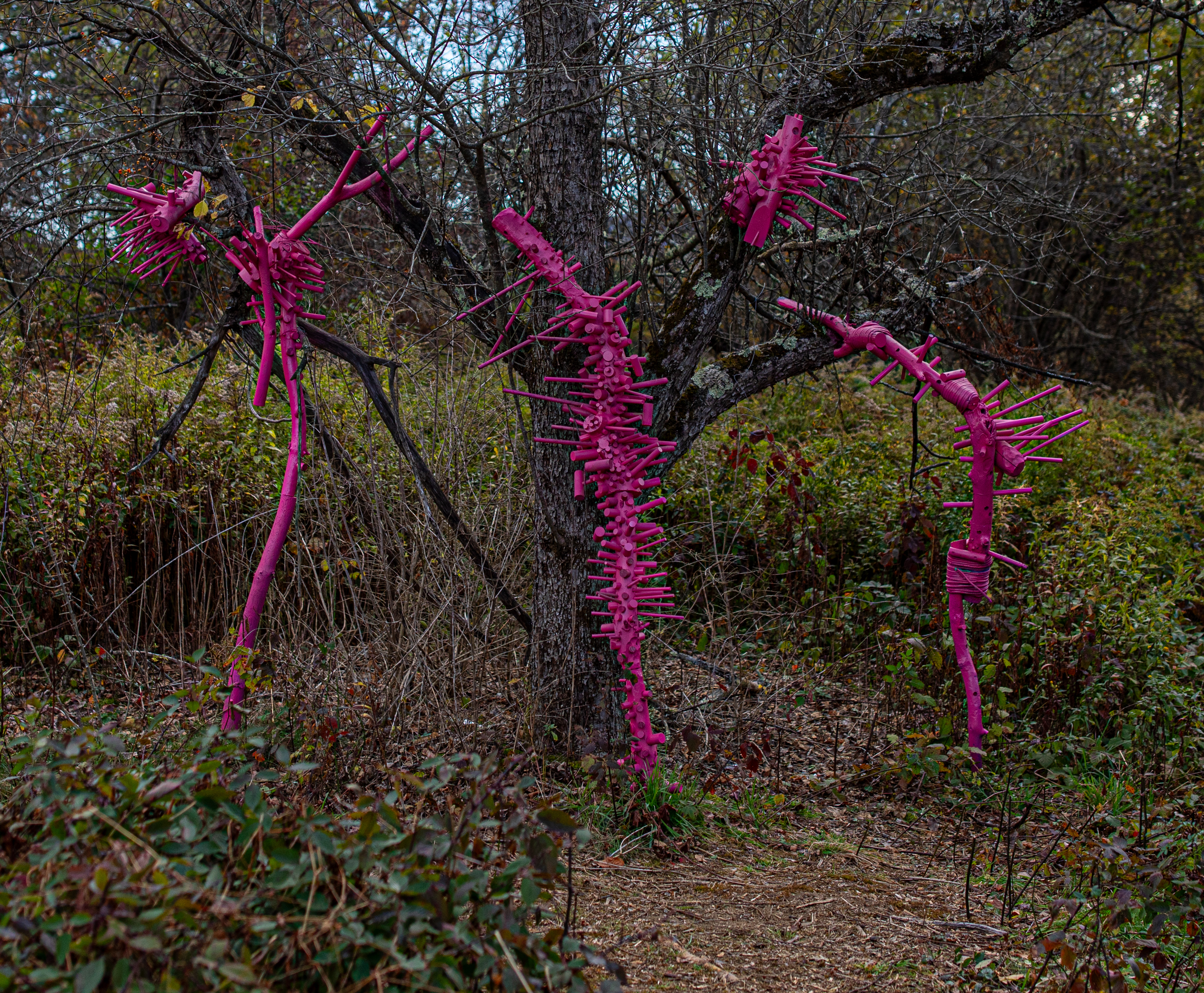
“Infinite Delicacy” by Lee Williams of Shaftsbury, VT, is a colorful work of art that shows the deconstruction and construction of nature and other things in our lives.

Lee, whose installation is made of paint and wood, makes art by disrupting things. Deconstruction becomes construction. Action interrupts contemplation as a means of accepting a path among many alternatives. Lee thinks there is a constant fluidity and changeability and elements influence one another as they entangle and smear together. The color pink saturates the sculpture which is rare in nature. It moves us toward the sublime. Poised between laughter and despair, they call to mind the natural and unnatural in their materiality.

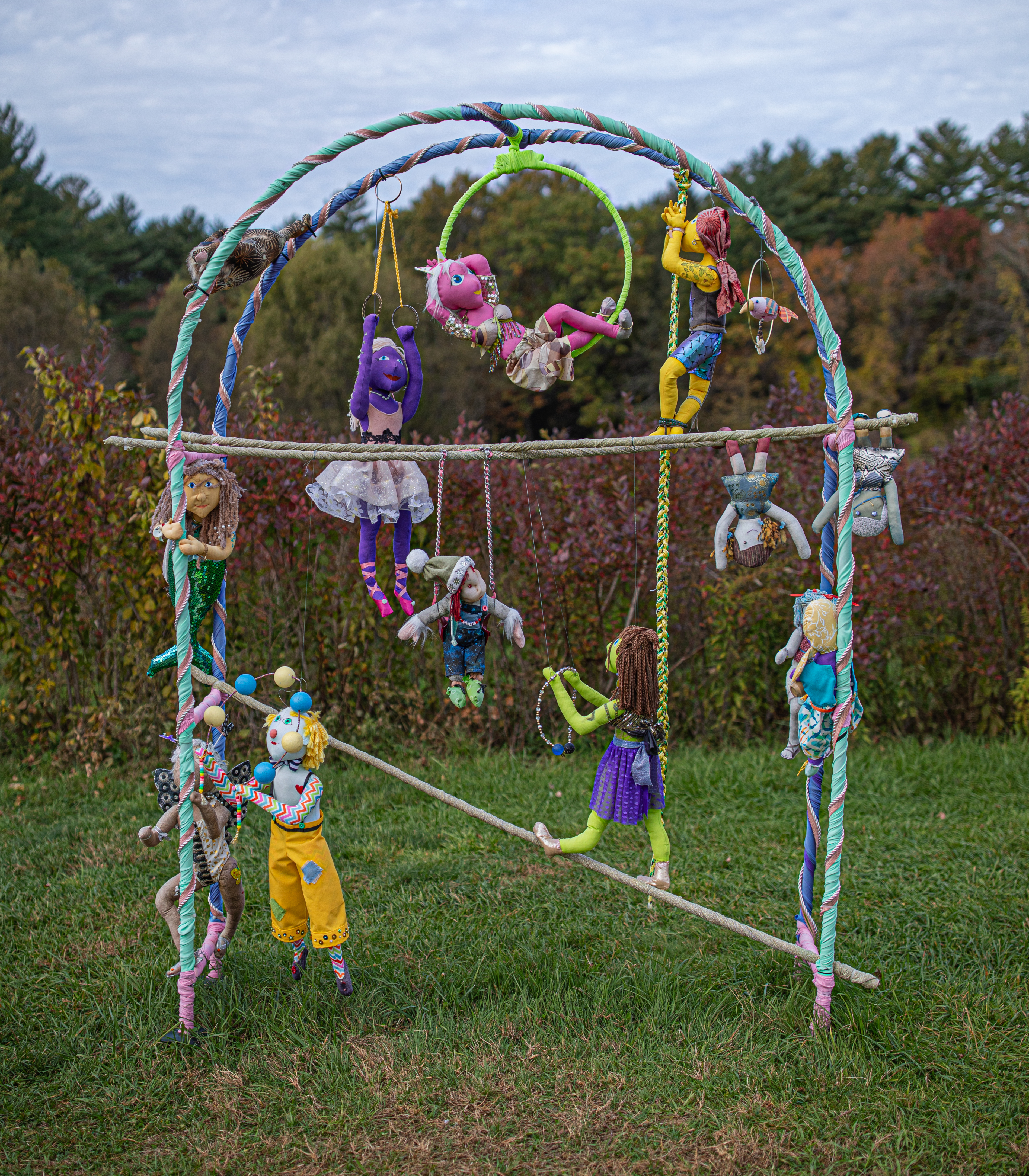
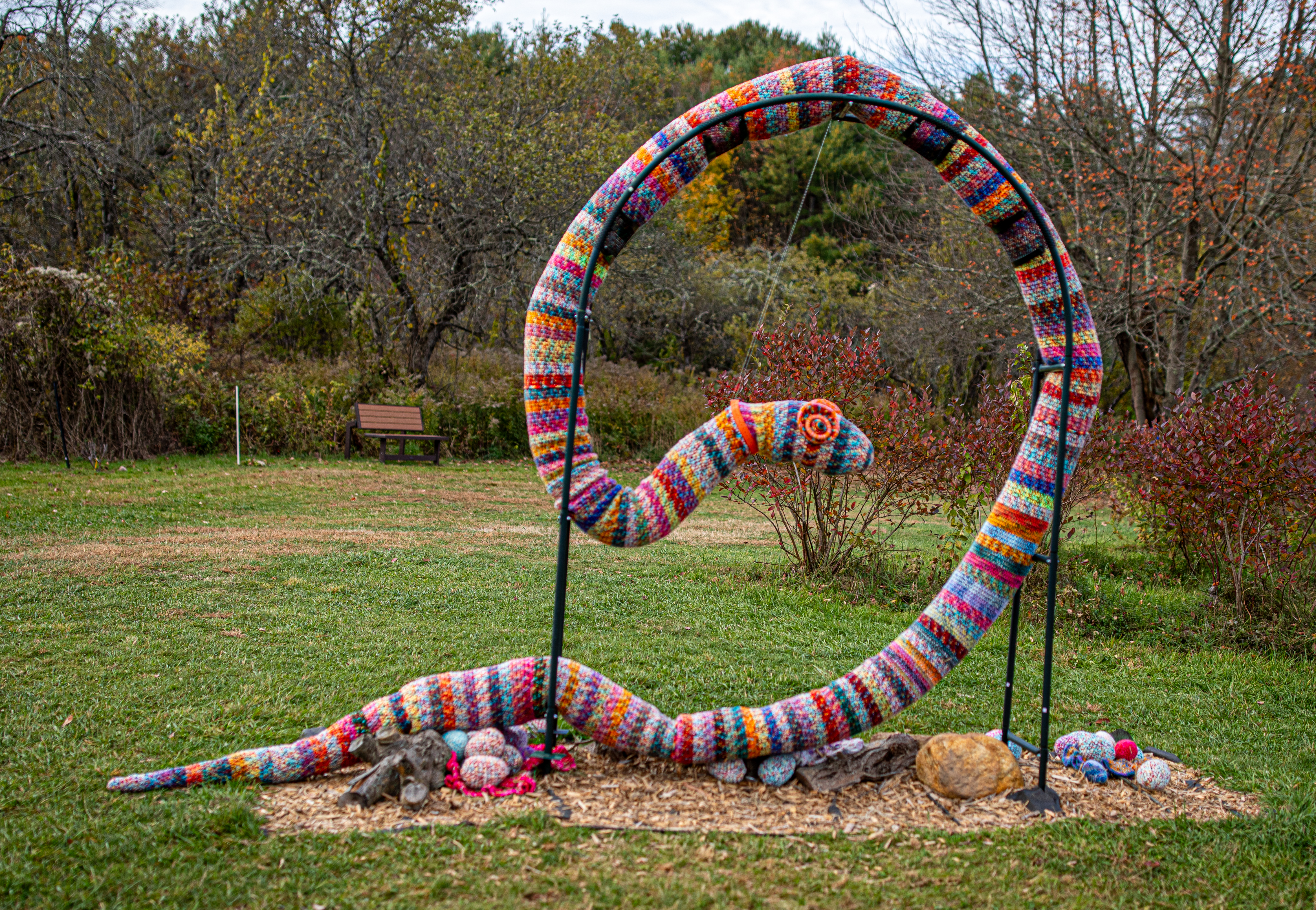
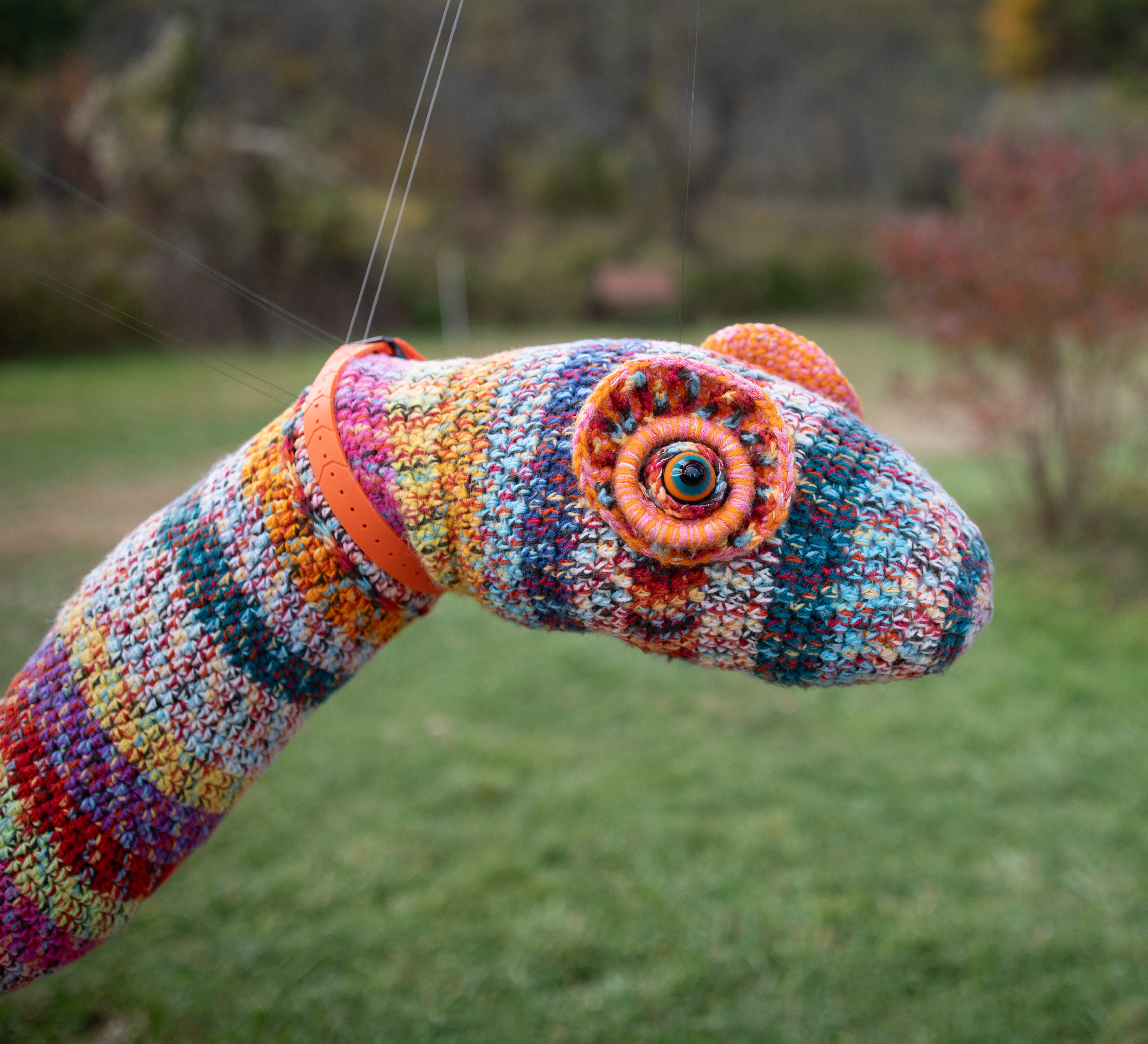
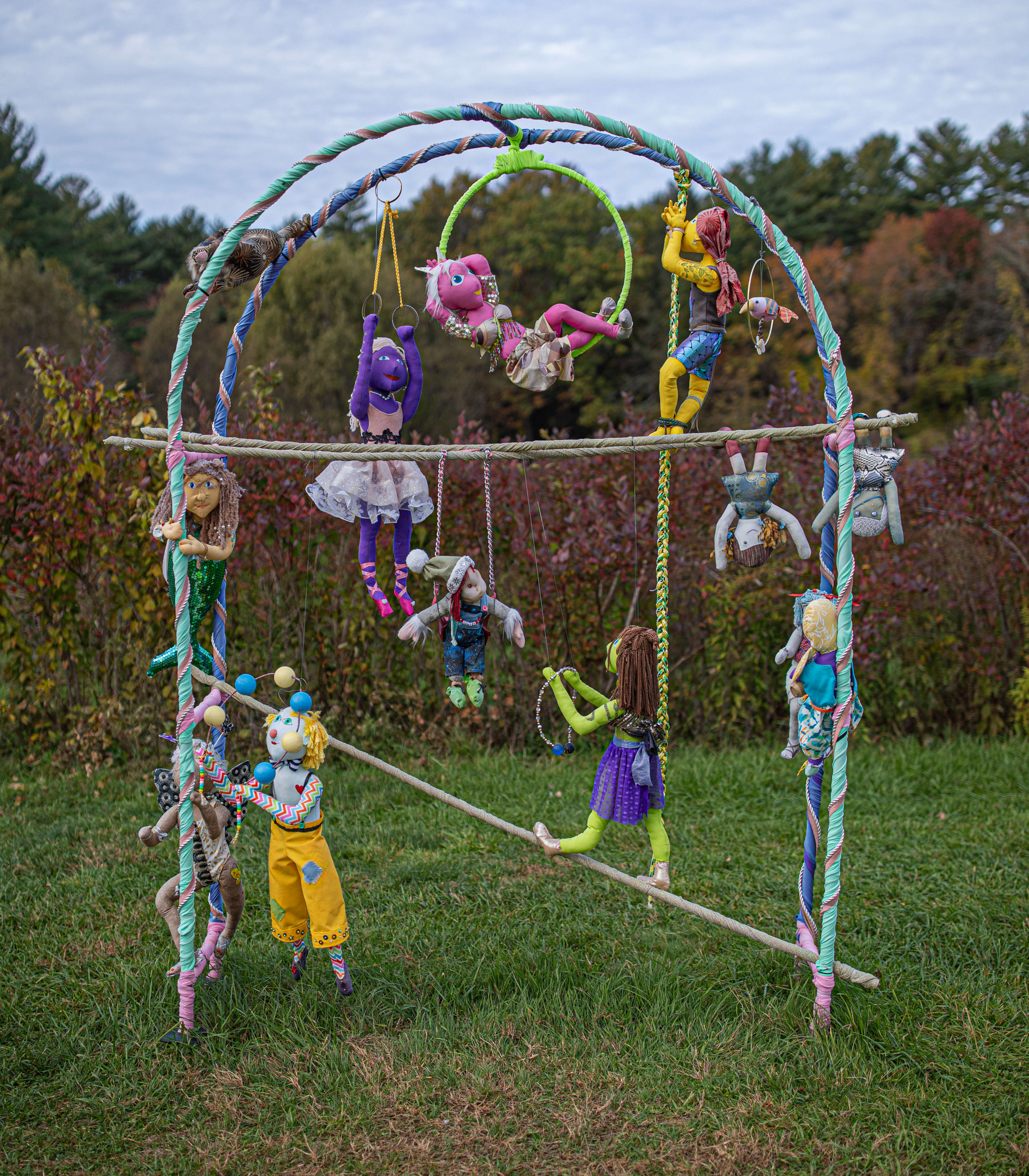
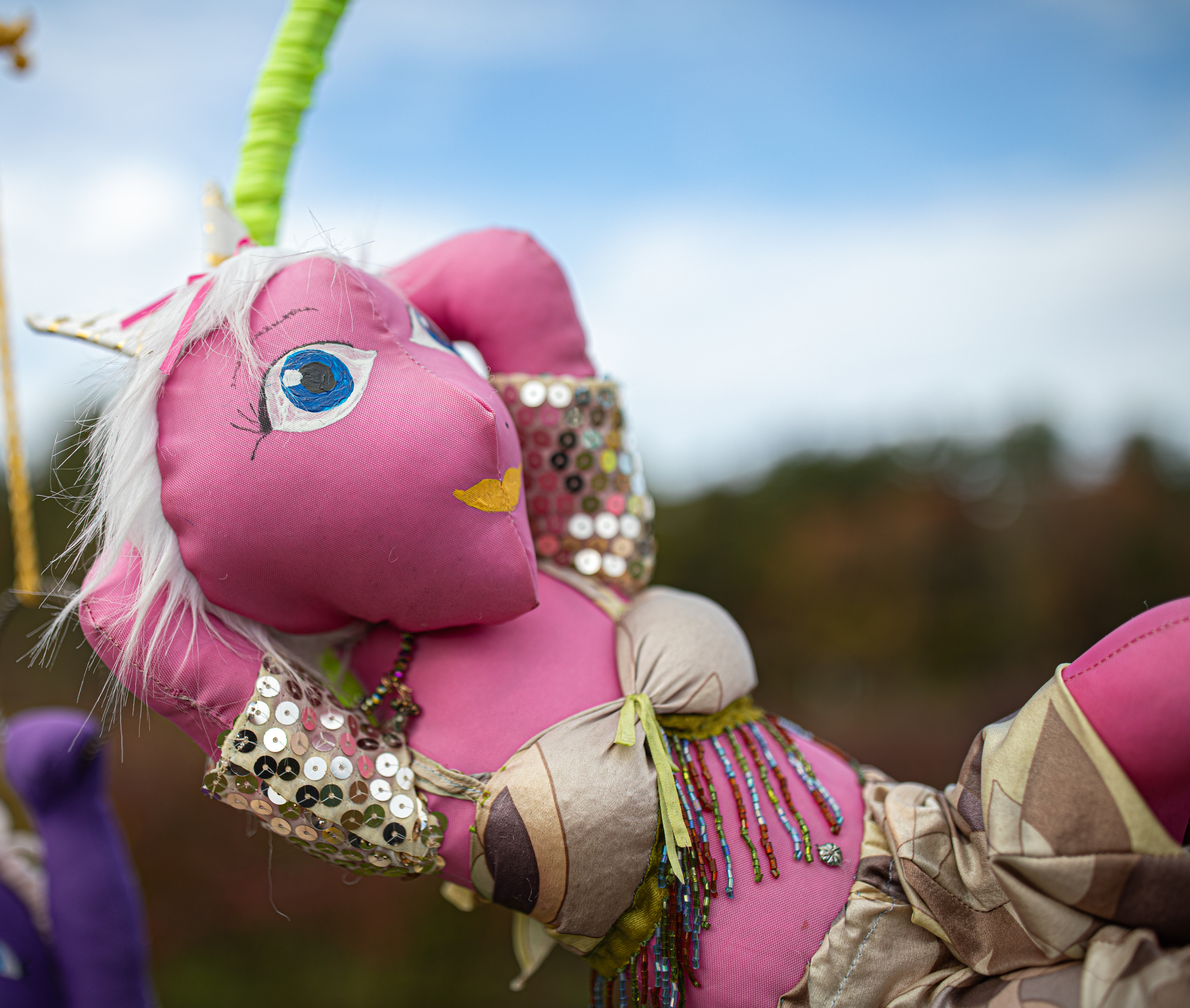
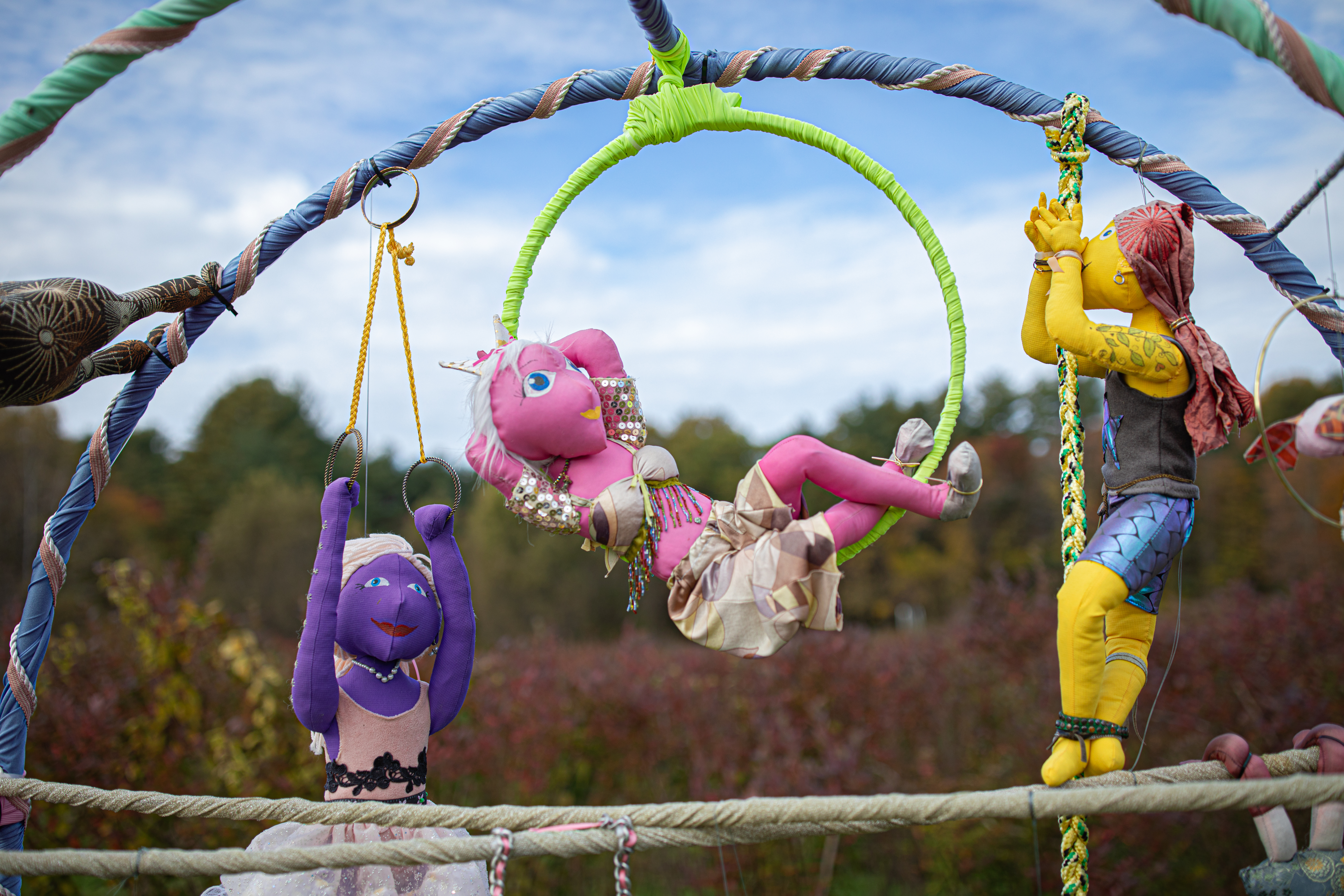
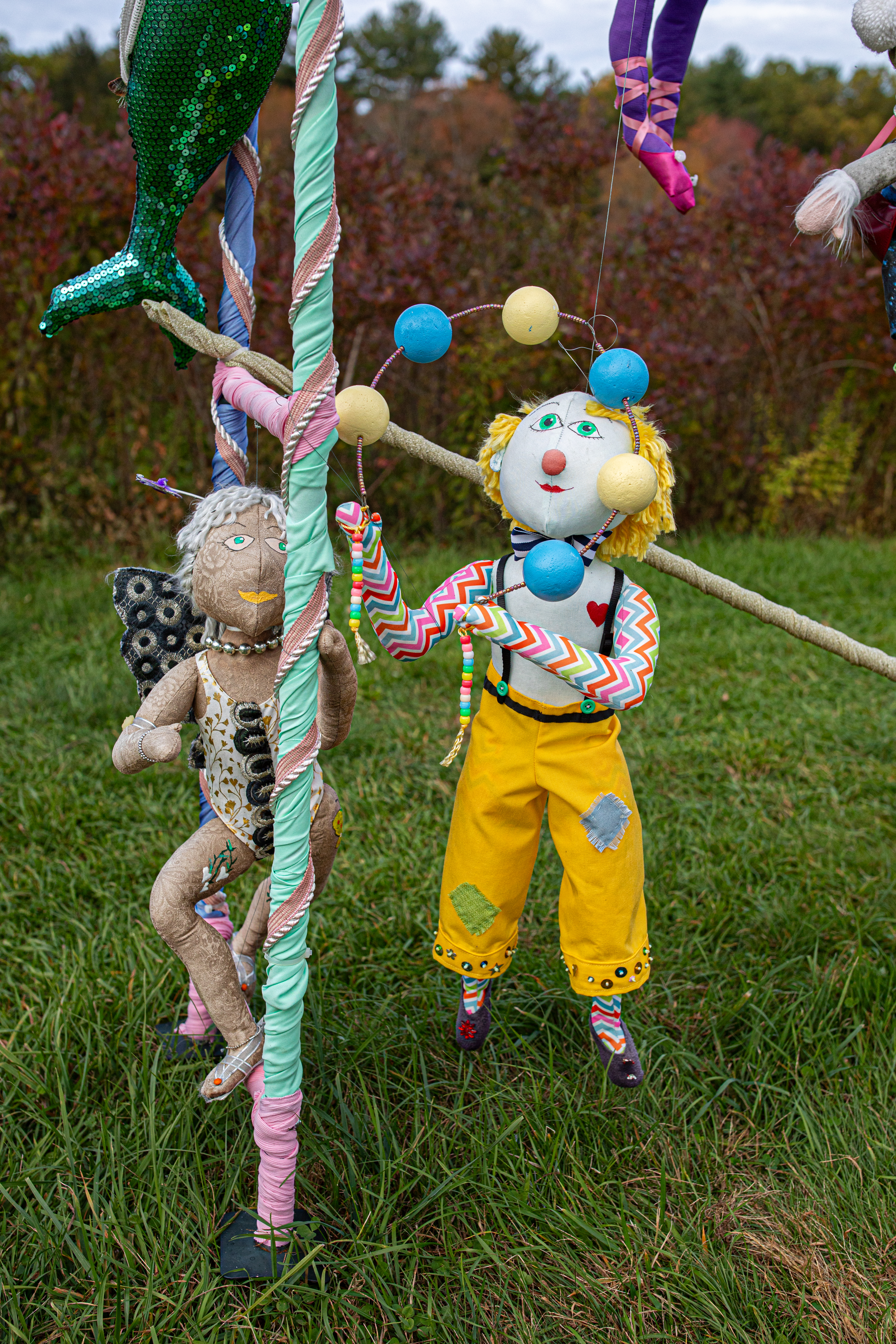
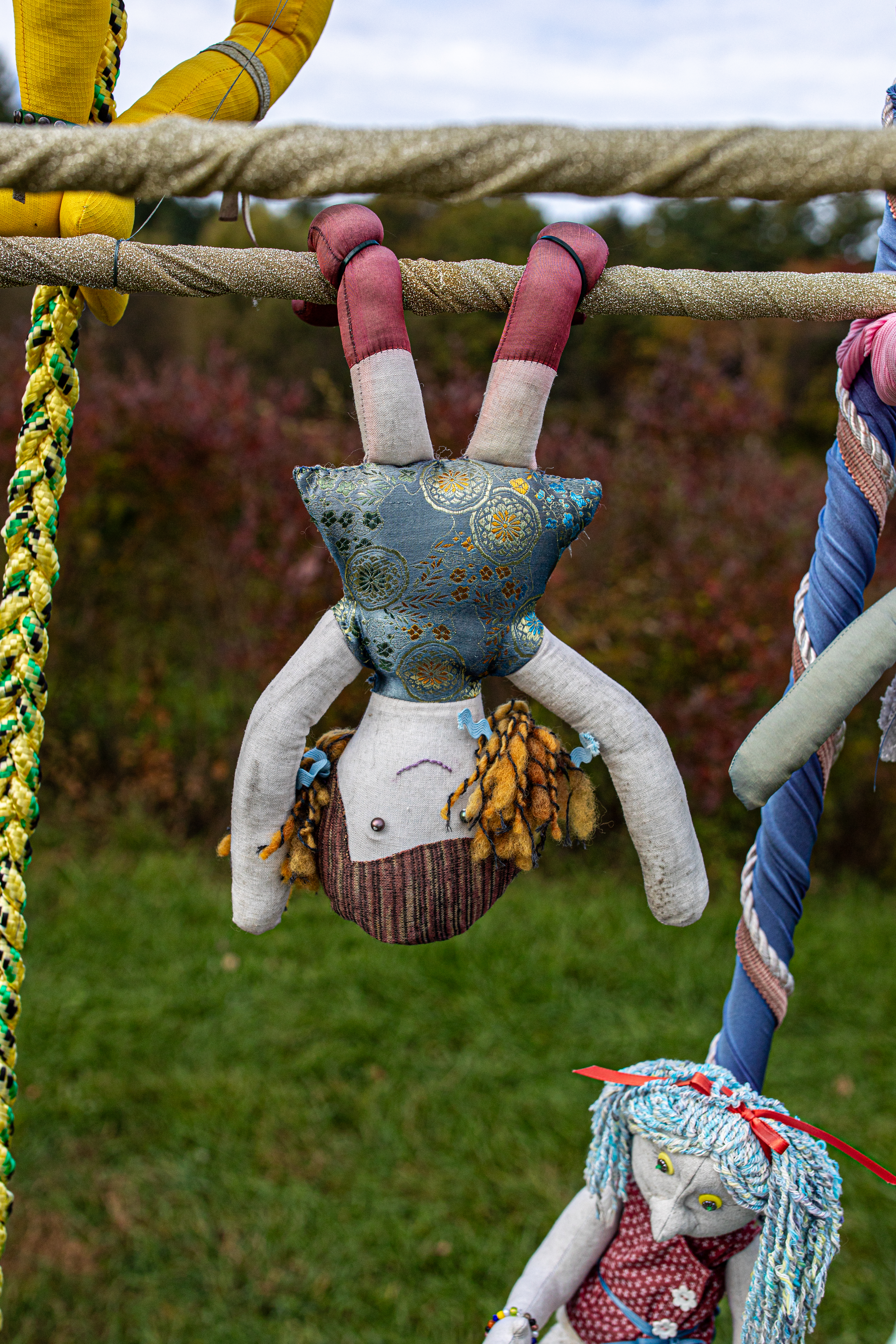
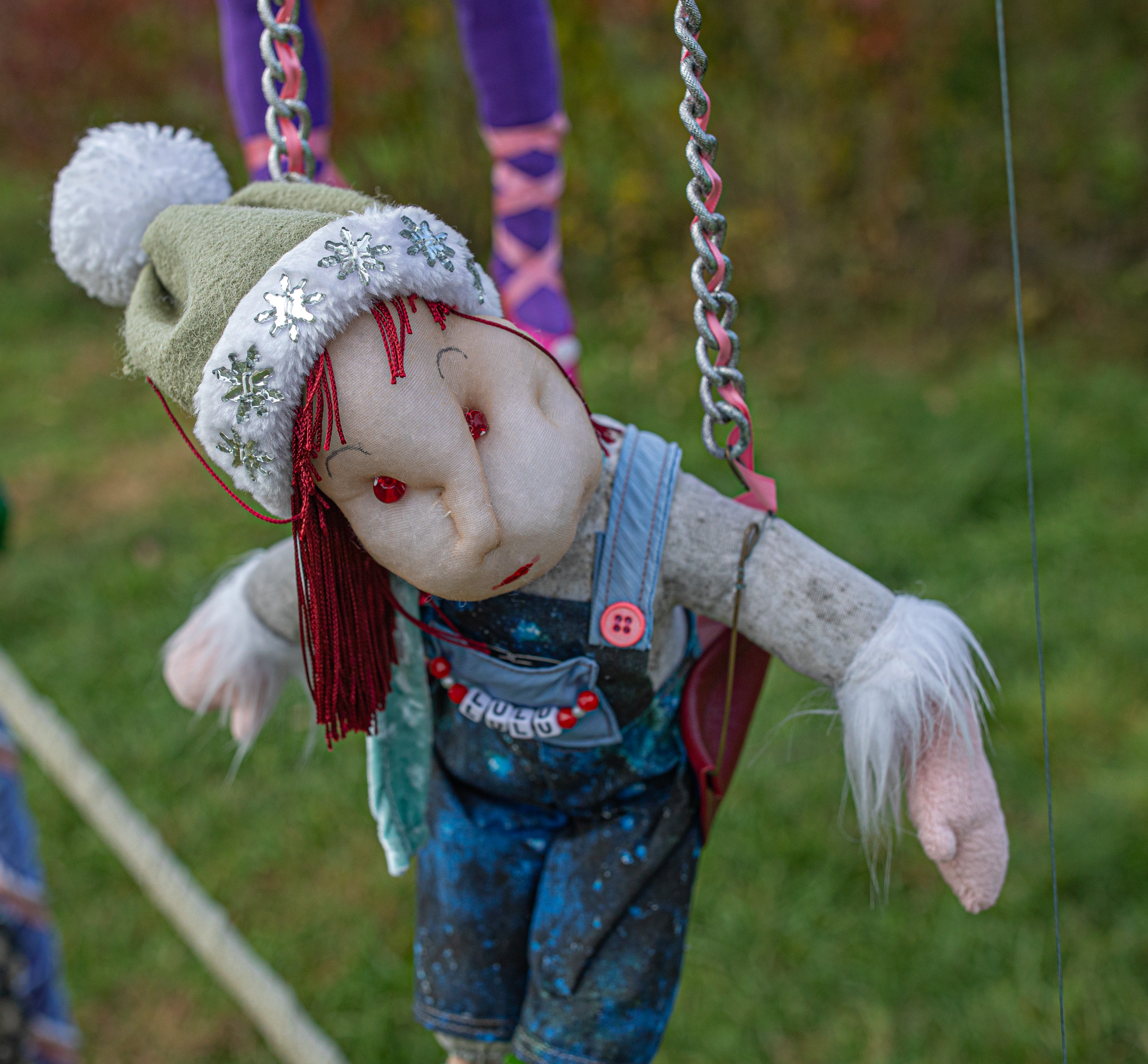
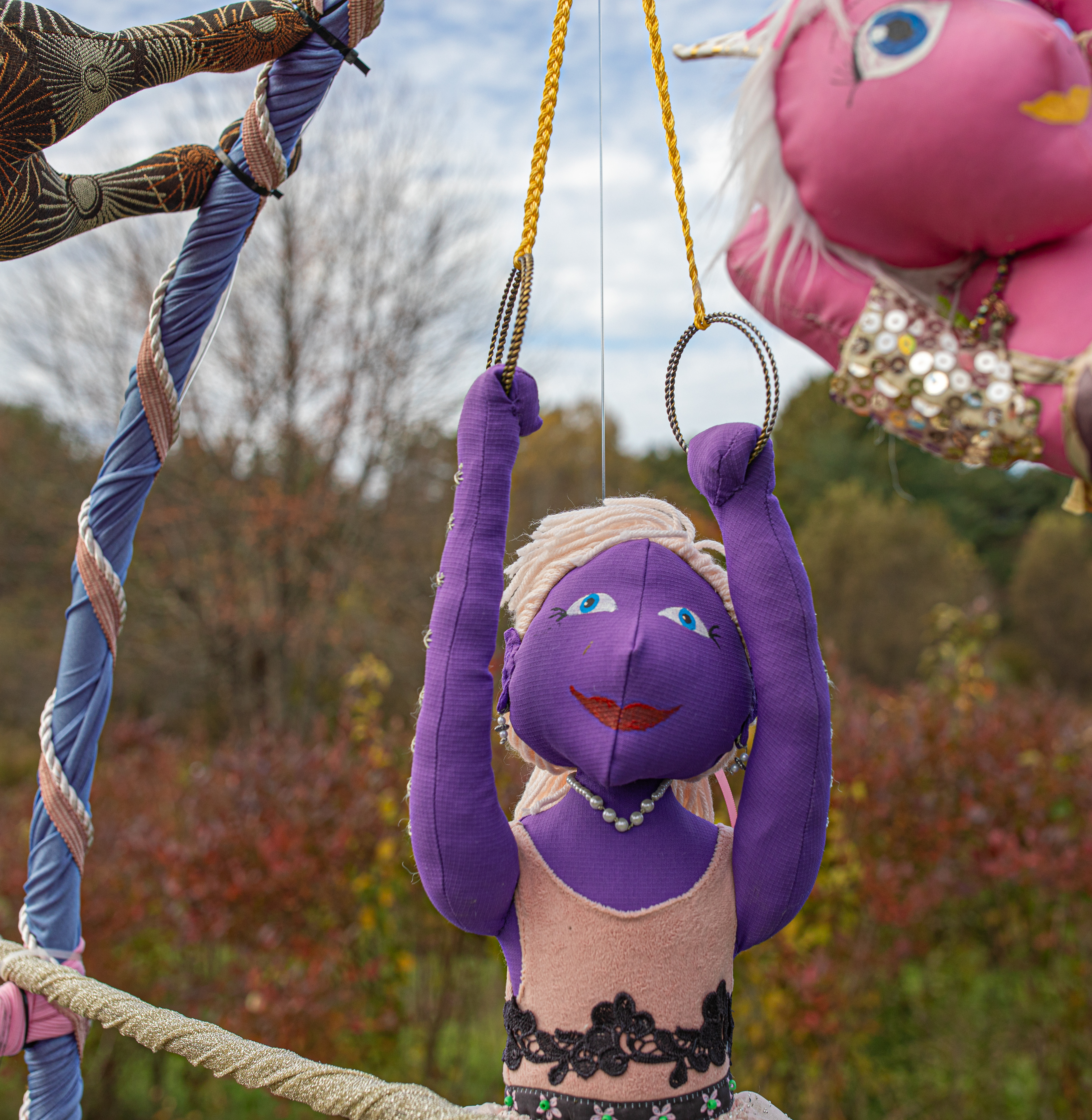
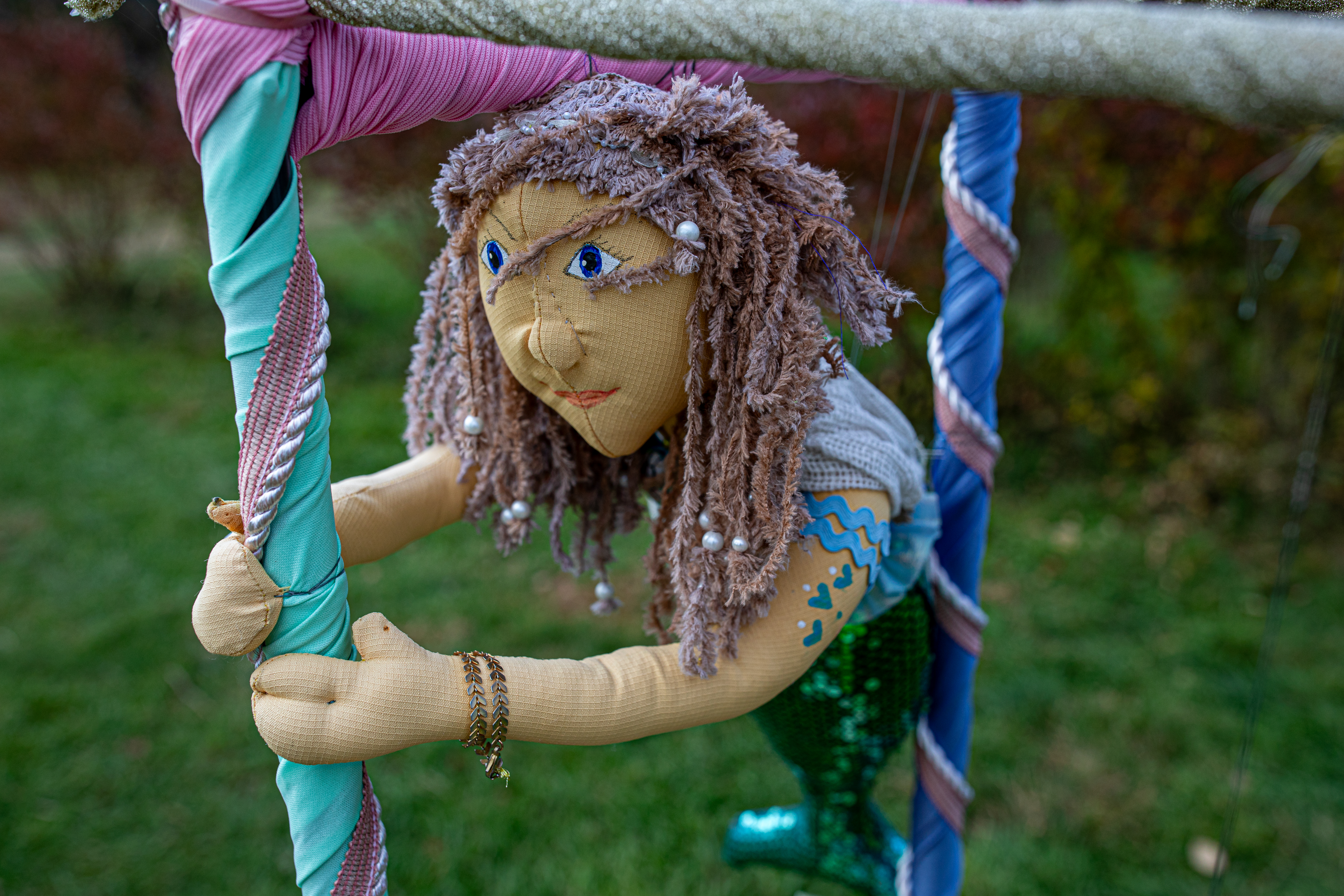
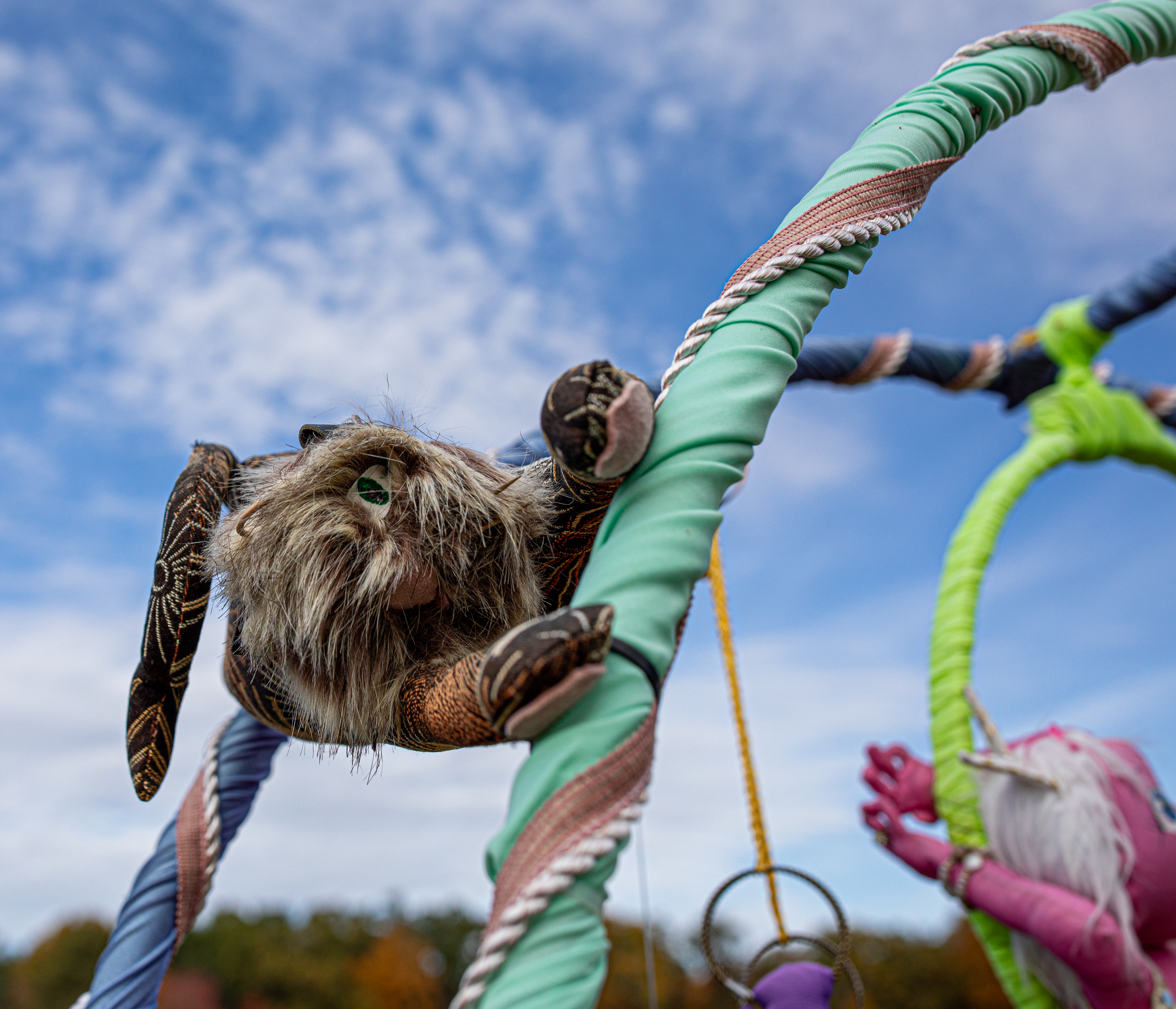
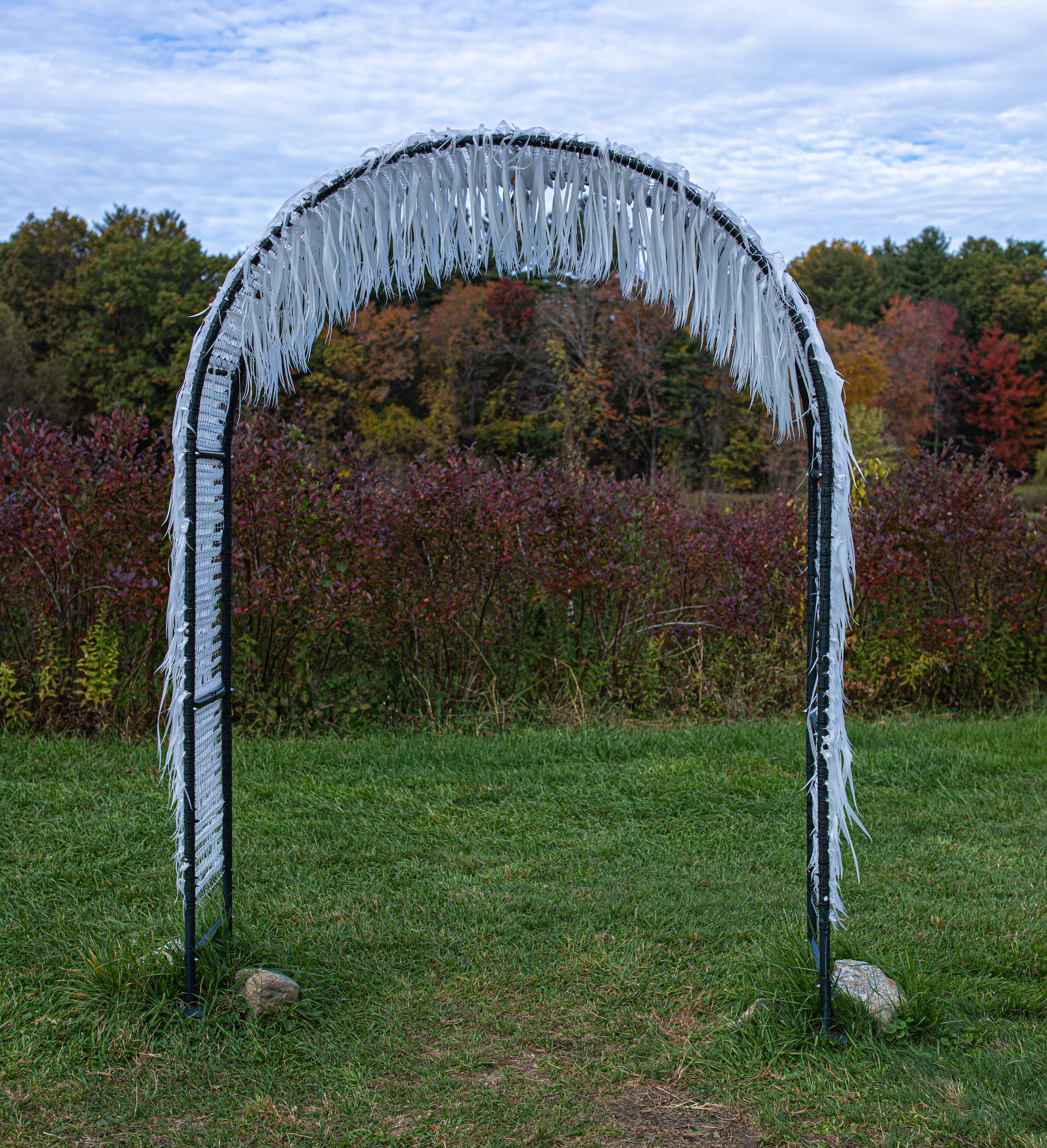
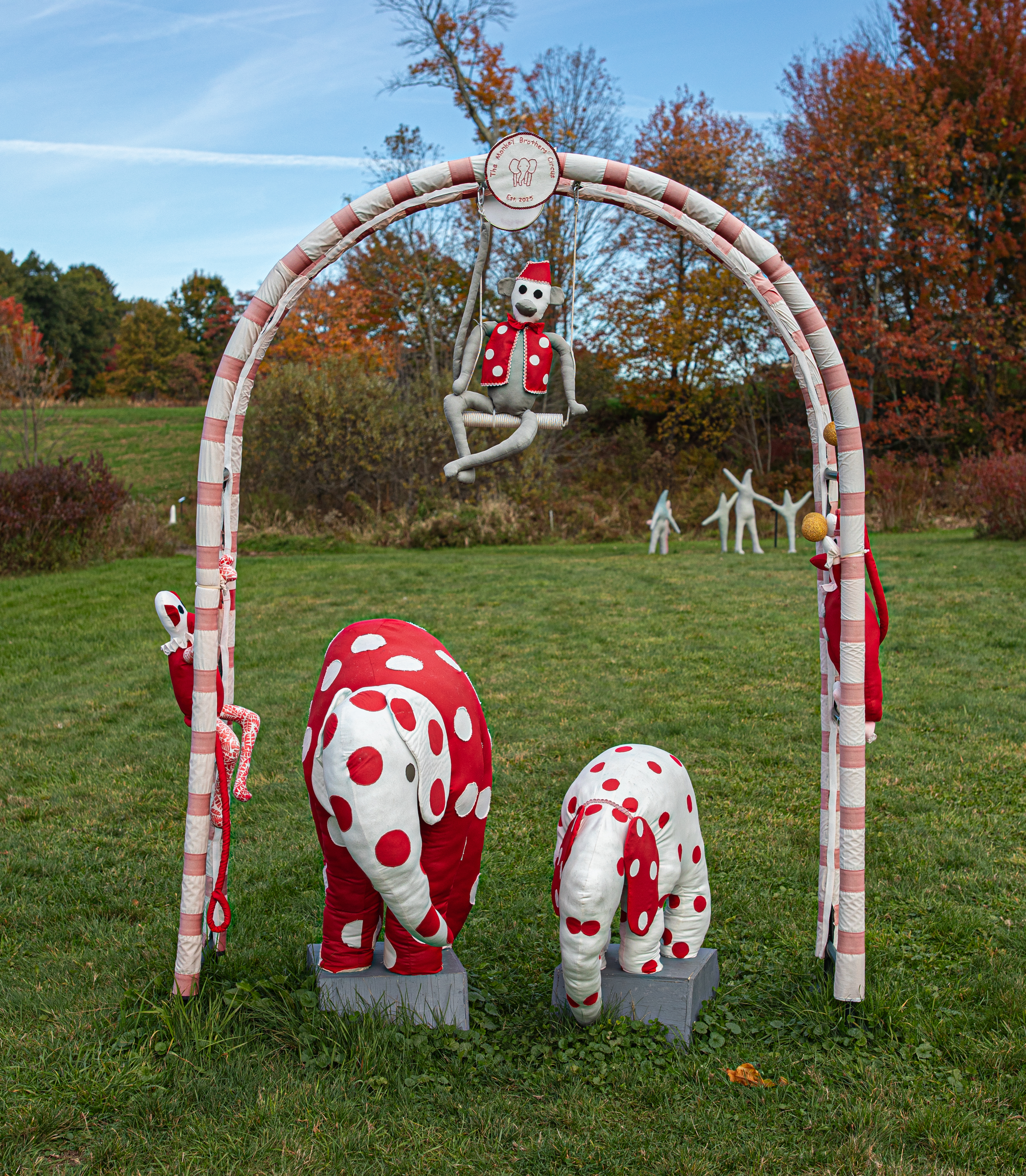
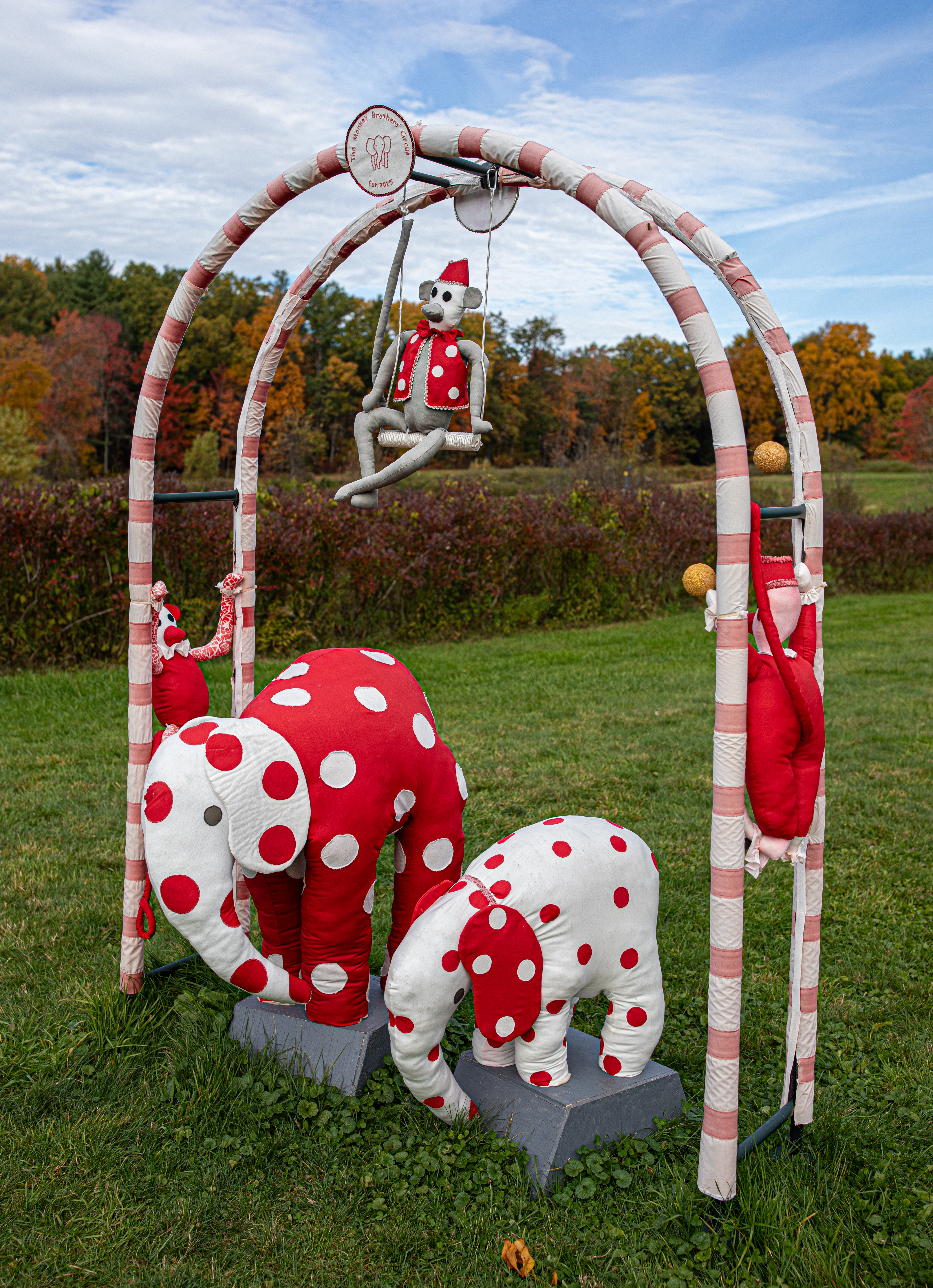
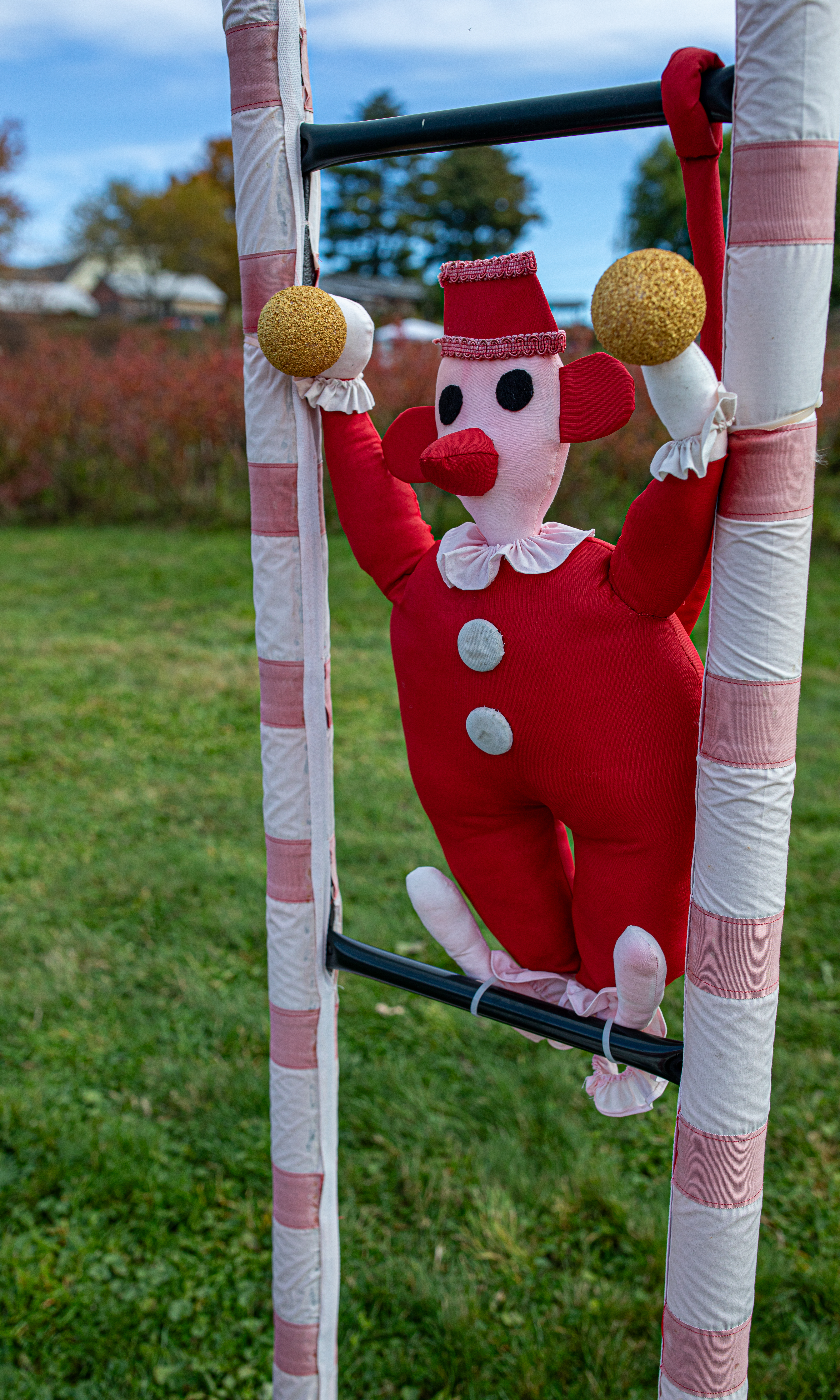
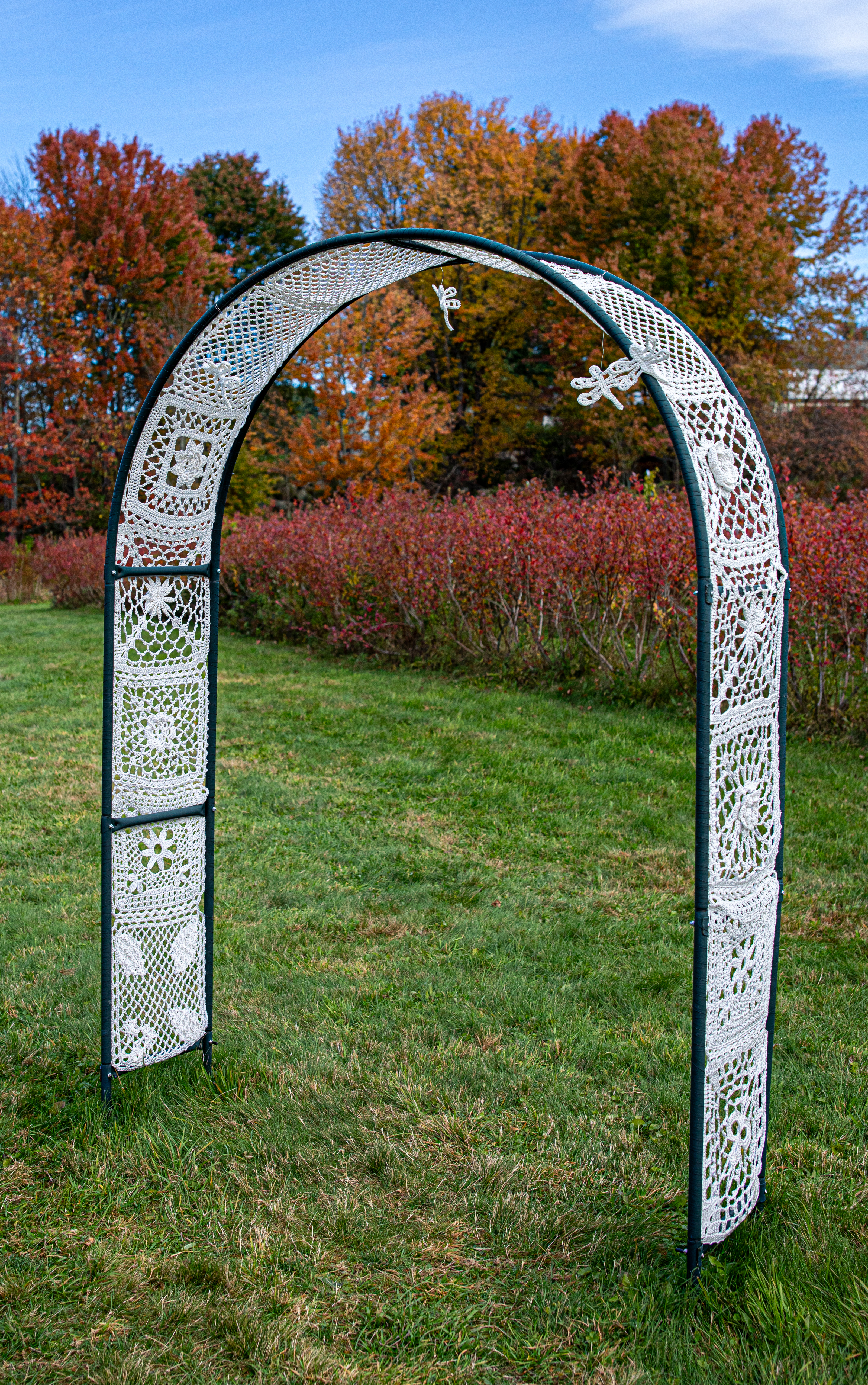
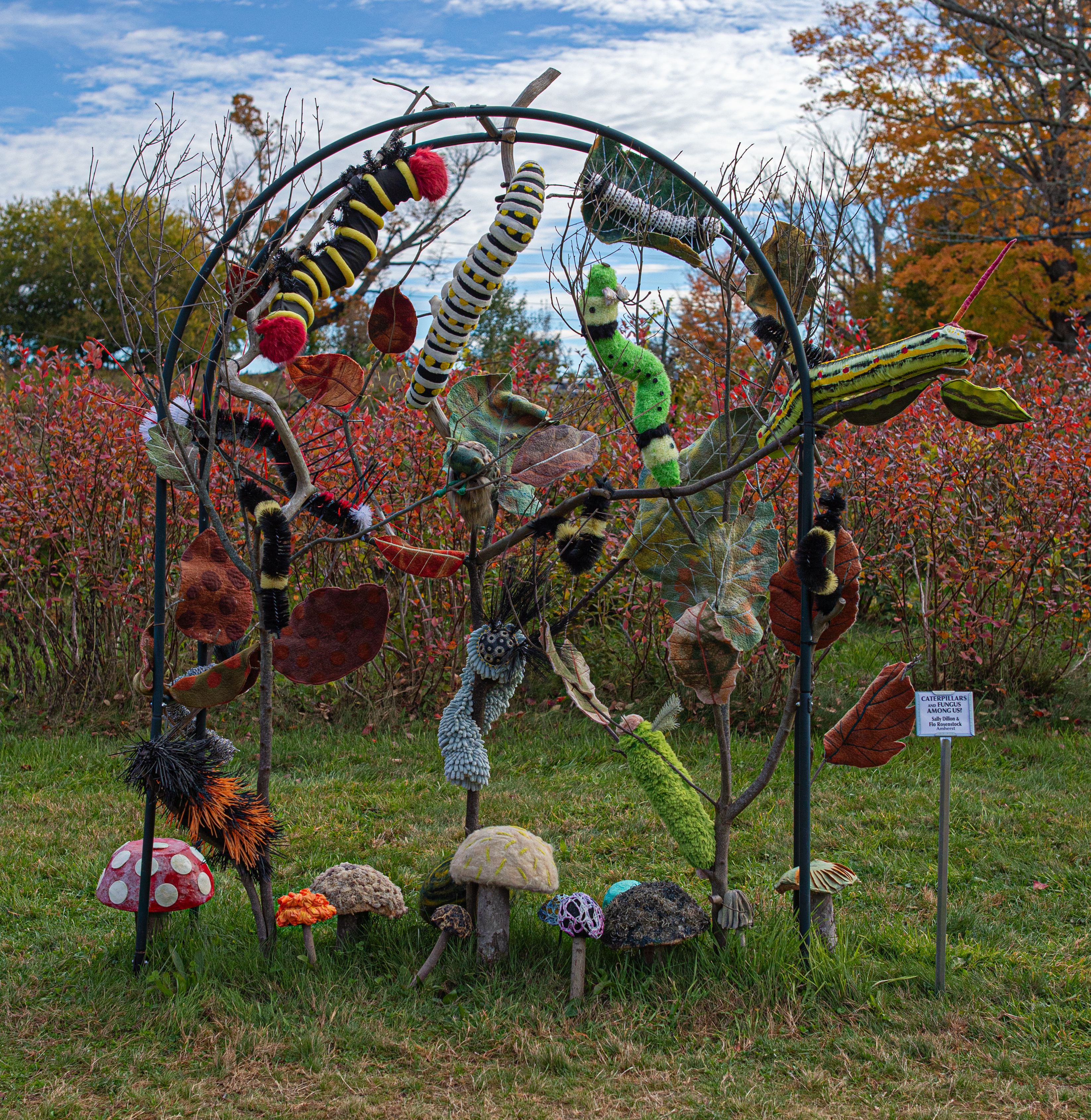
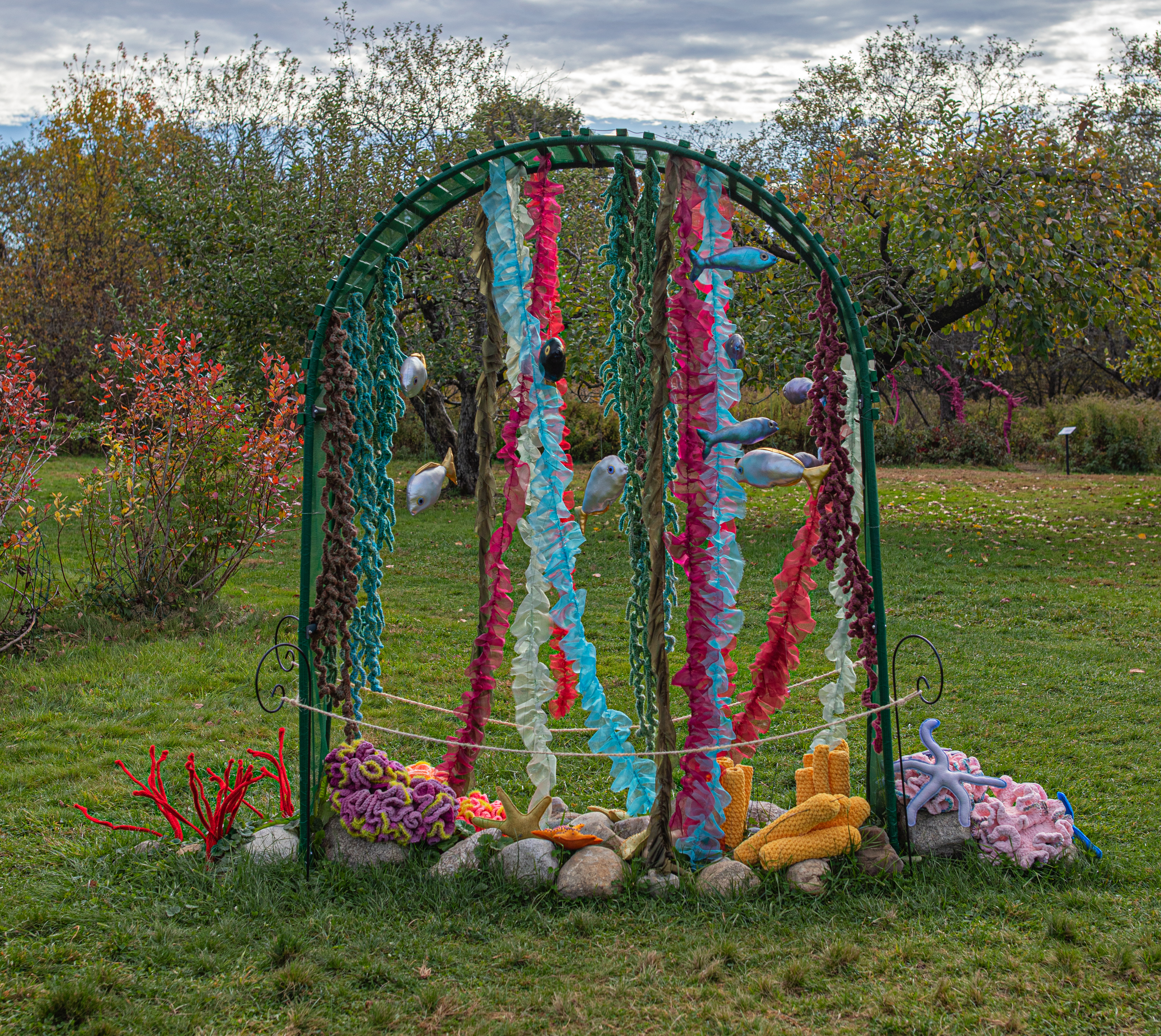
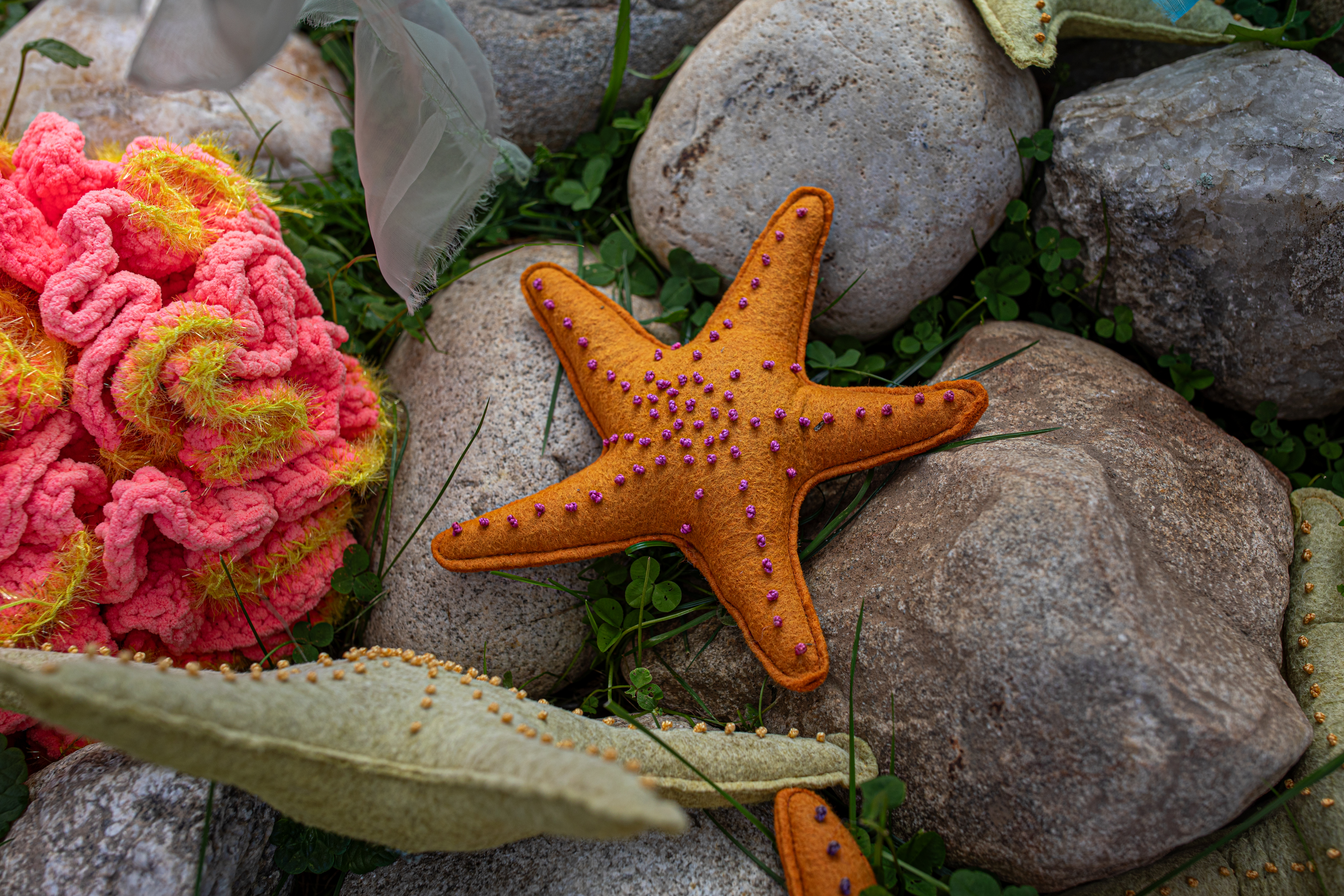
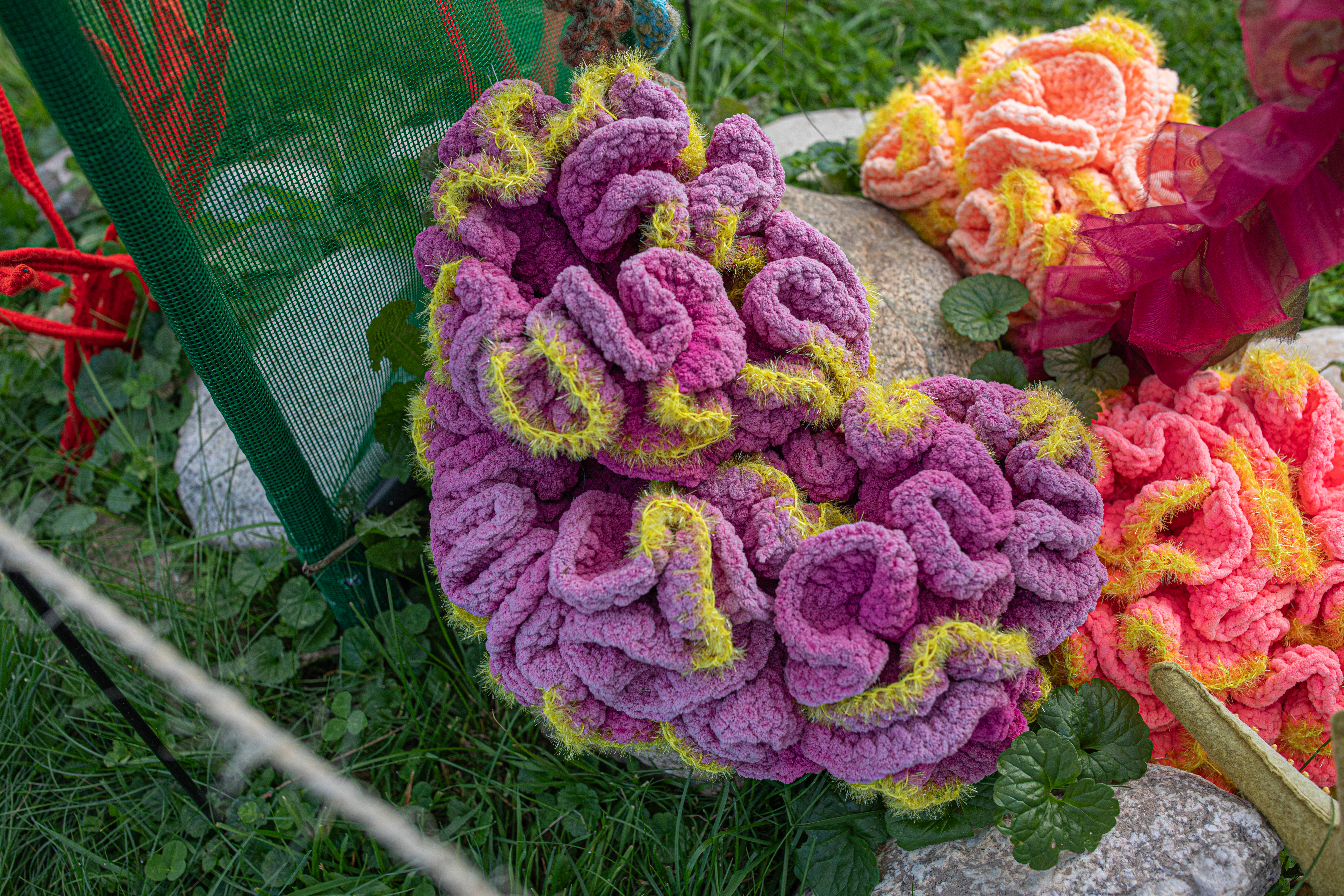
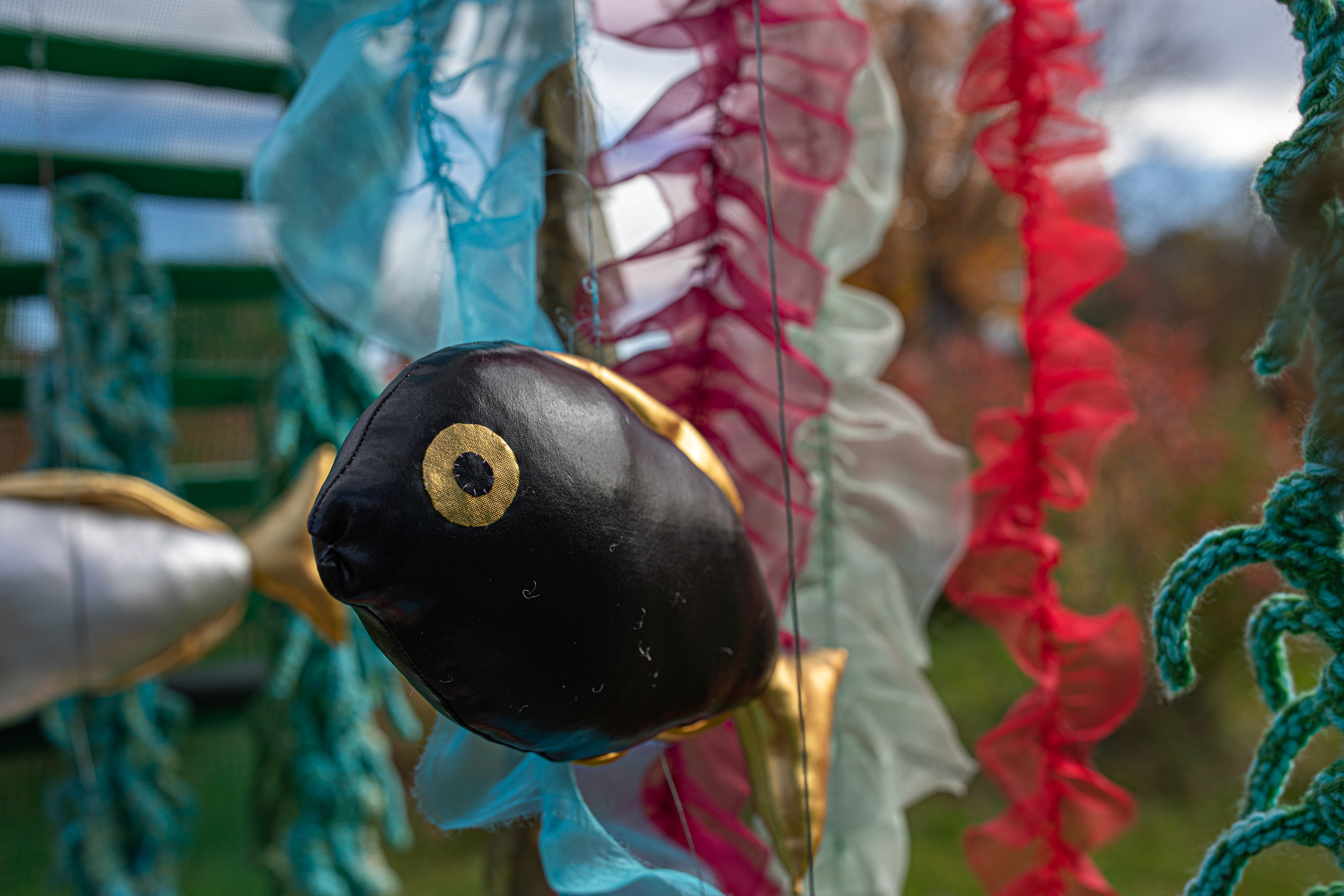
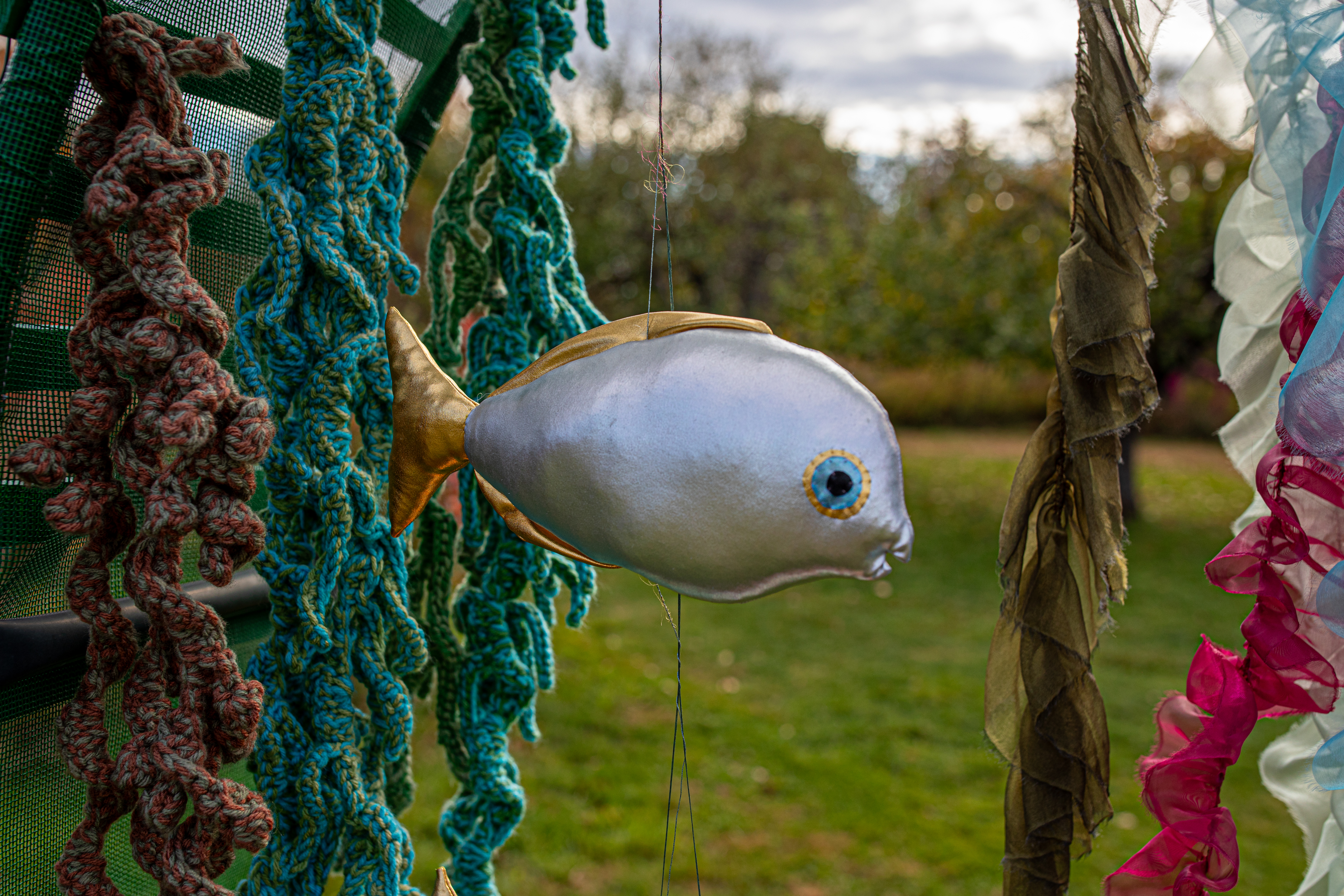
The Fiberistas, a group of nine women artists in western MA who love to work with fiber, worked together to make a group of art installations called “The Arches Of Hampshire County.” Each work of art in this installation had 7 works of art made by different artists. All of the works of art were made with nylon twine, thread, fabric, yarn, wire and wool felt.

The first work of art was “Raphaella”(Queen of Healing) by Martha May of Holyoke, MA. It appears to be a snake with perhaps some eggs ready to hatch on the ground next to her.

RAZZAMATAZZ” by Barbara Kline of Leverett, MA, features carnival performers. Ringling Bros, no offense, has nothing on these performers!

The next work of art for this installation was “Flutter” by Martha Robinson

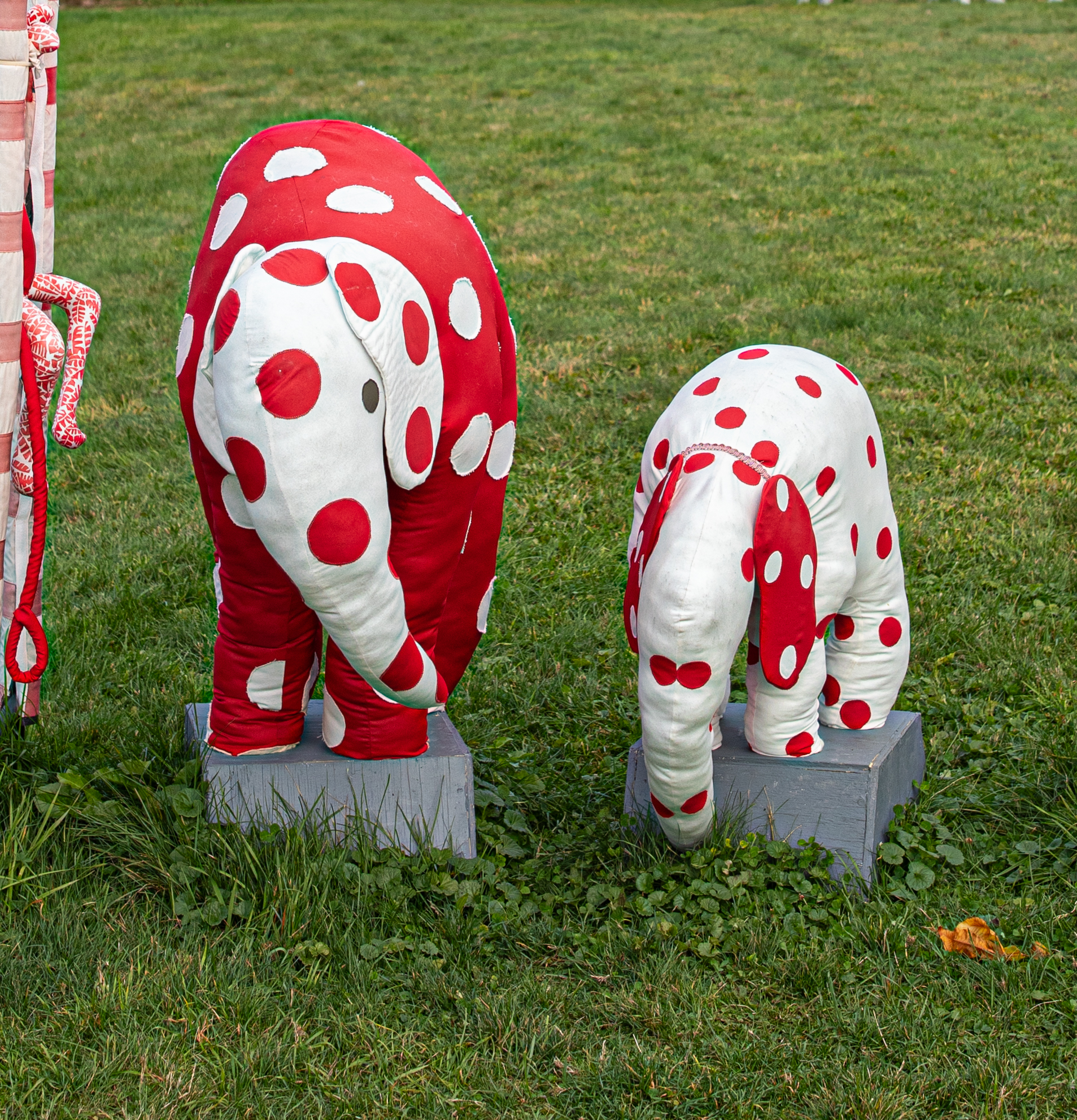
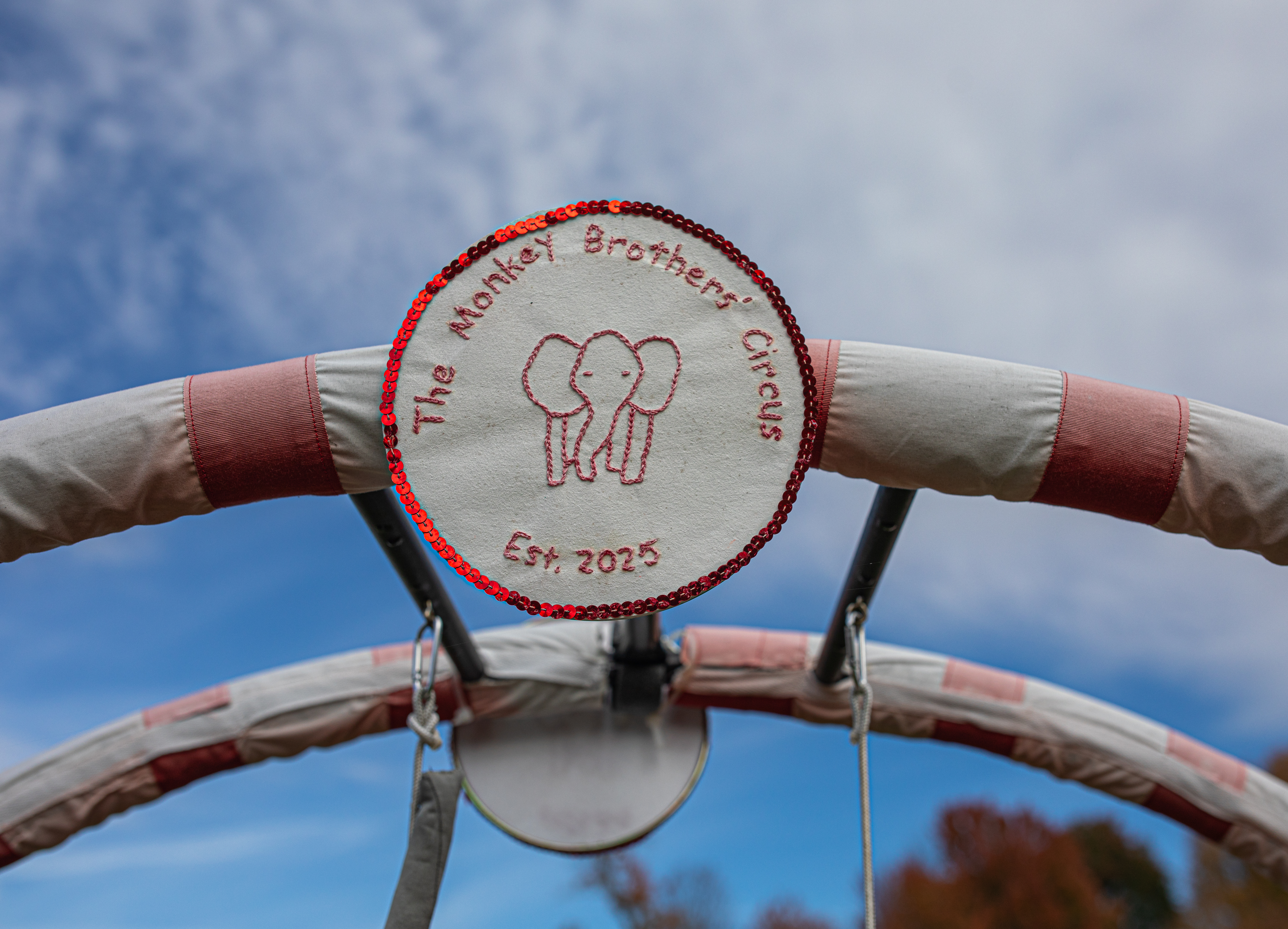
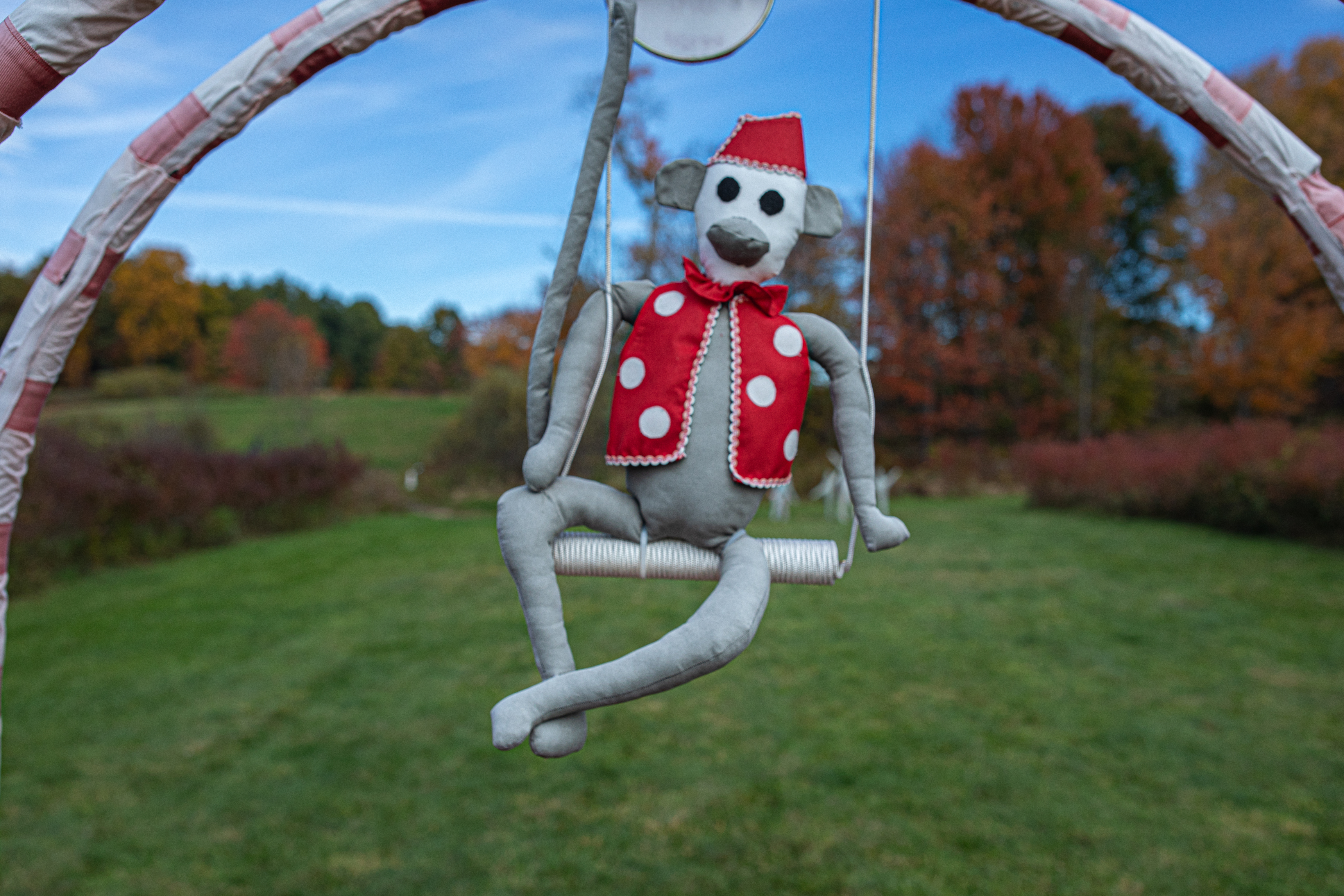
Nancy Young of South Hadley added to the art installation with “The Monkey Brother’s Circus” (Not All Elephants Are Gray!).

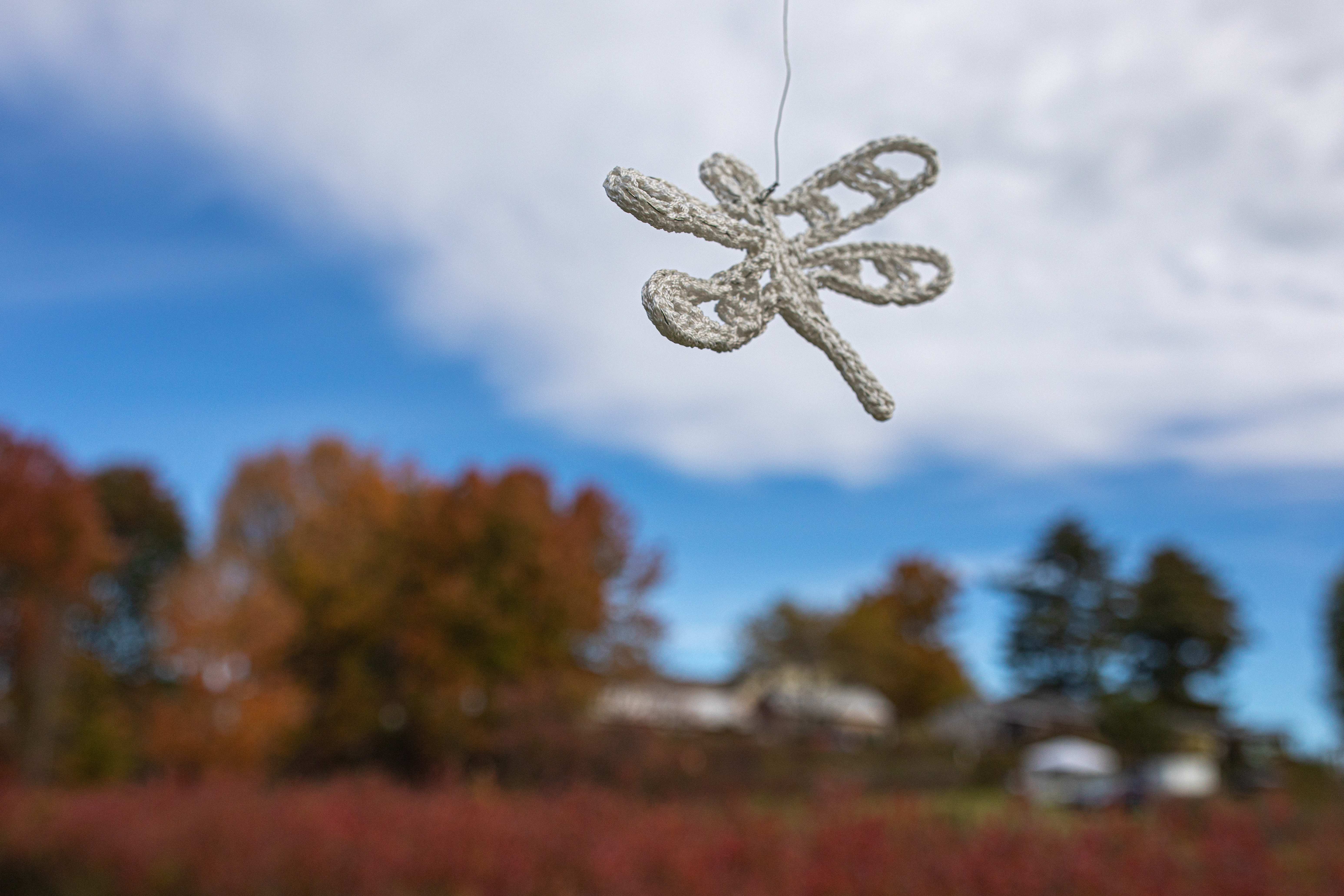
“Irish Lace Crochet” was created by Eileen Travis.

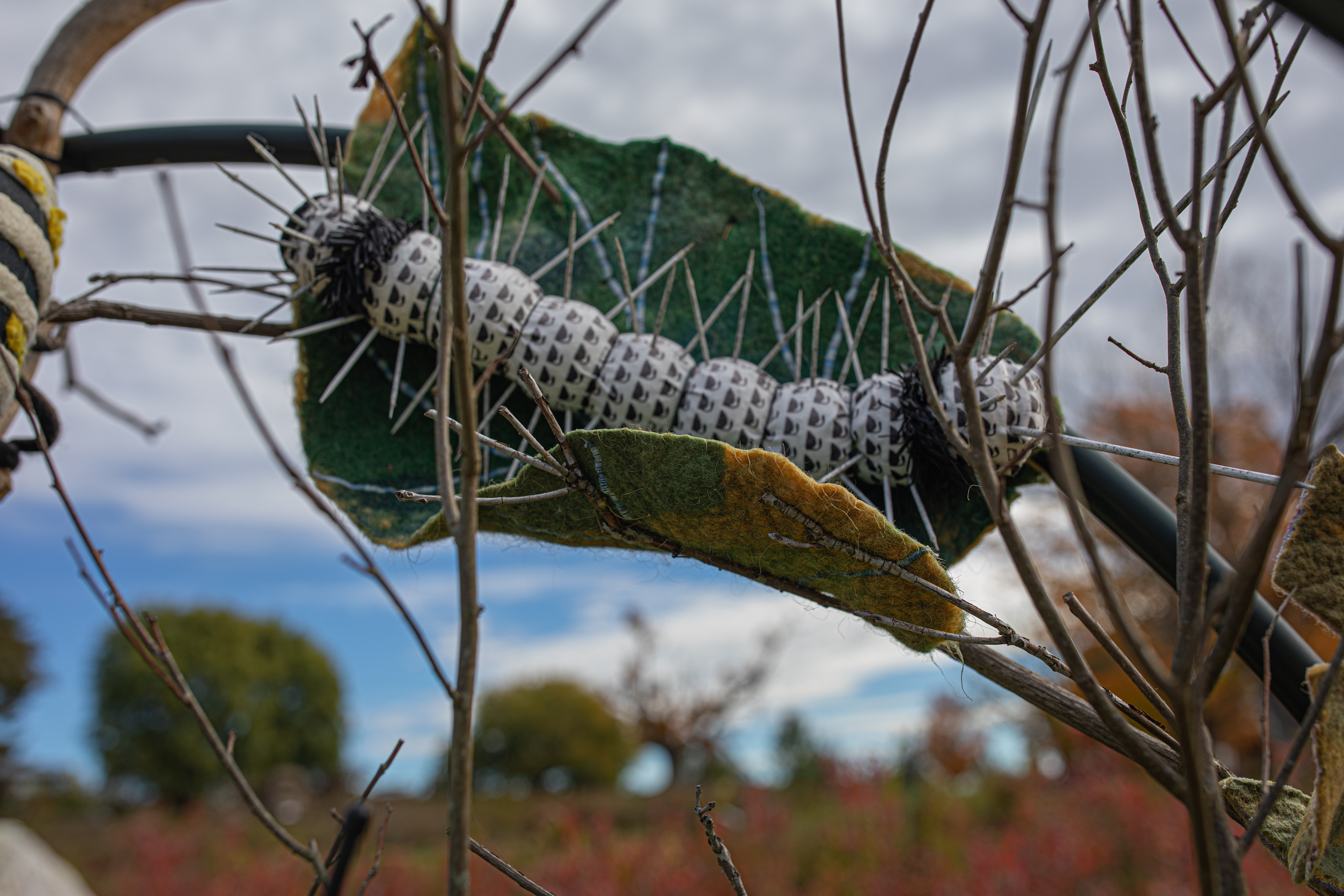
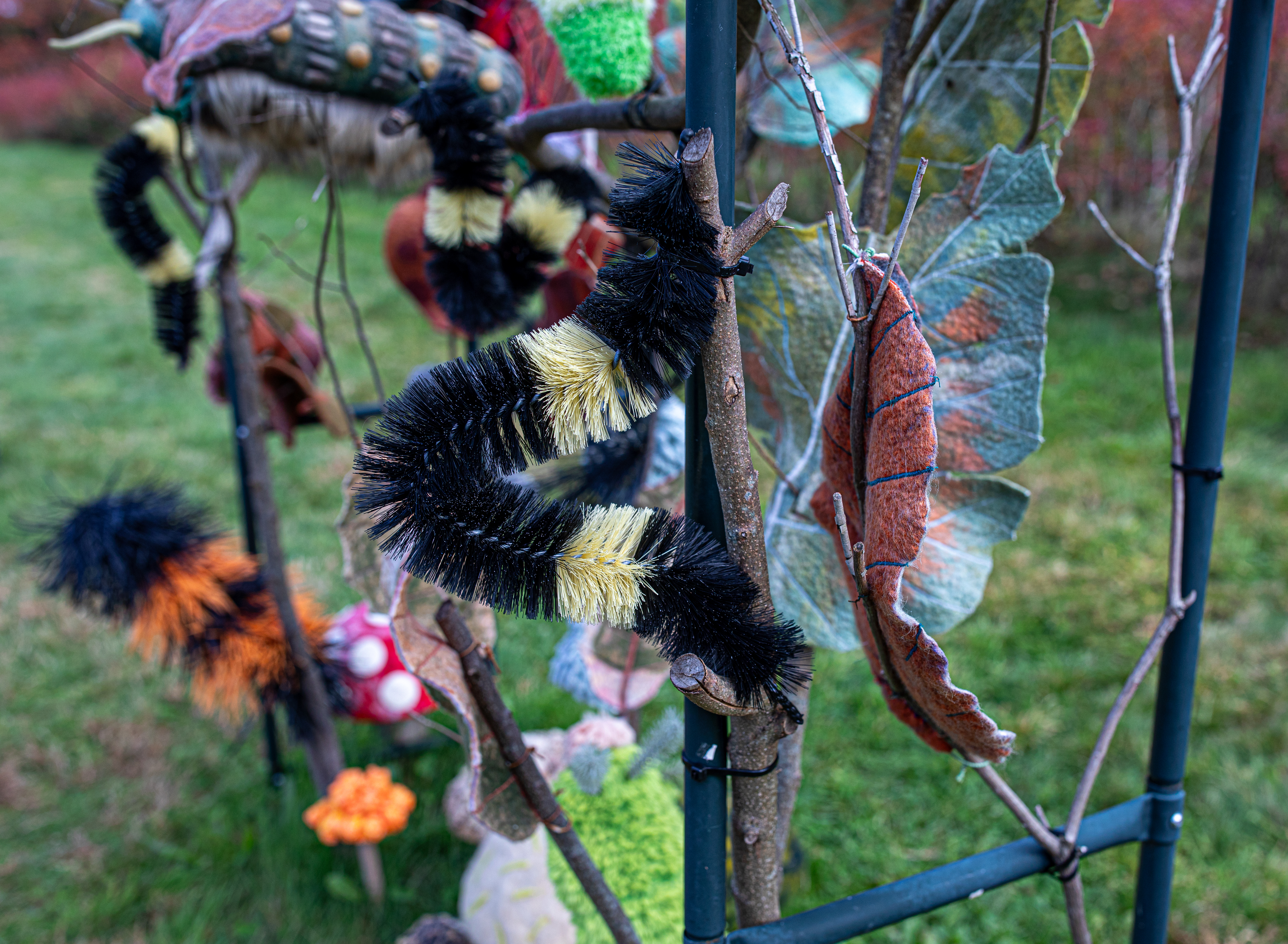
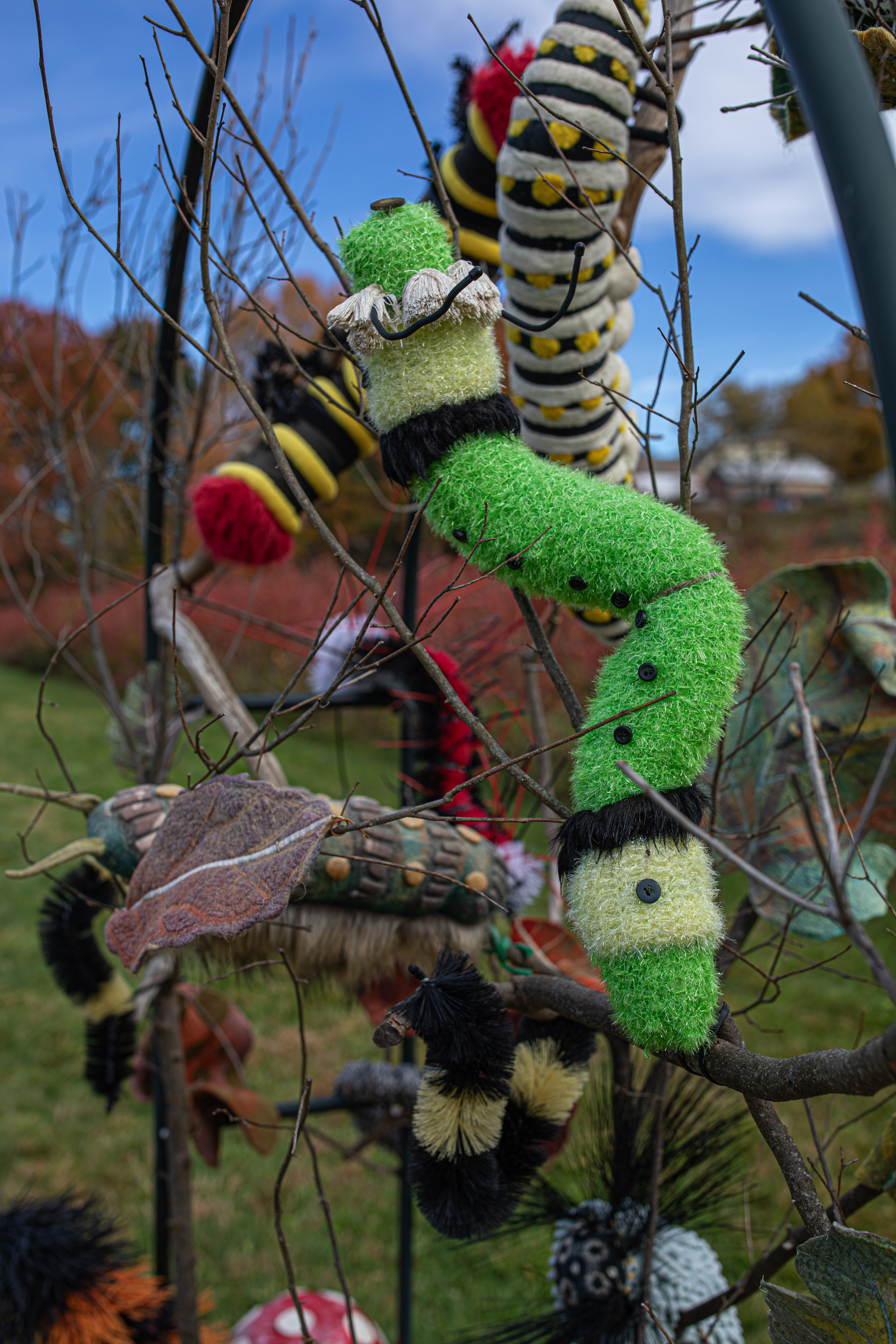
Sally Dillon and Flo Rosenstock of Amherst, MA, created “Caterpillars & Fungus Among Us?”

The final piece of this extensive art installation is “I Dream Of The Sea” by Margaret Stancer of Pelham, MA.

I told you (in the earlier post) there were a lot of works of art!

One of the things I noticed is people expressing a desire or need for people to come together and connect through their work. This is a common theme during these times. Eileen Jager‘s work of art called “We Are All One Planet” was an example of this.

Eileen, from Easthampton, MA, presented Planet Earth as the egg in a nest. The work of art, made of glass mosaic, Pal Tiya, willow, moss, pine cones and needles, represented the elements of Earth; air, fire, water and earth. Like our Earth it is resilient yet fragile. The work of art shows the forces of nature are strong and how we all inhabit this planet. The proverbial flap of a butterfly here can become a tsunami there. It’s time we understand we are all connected, we are all one planet and we all share our living, our dying and out birth.

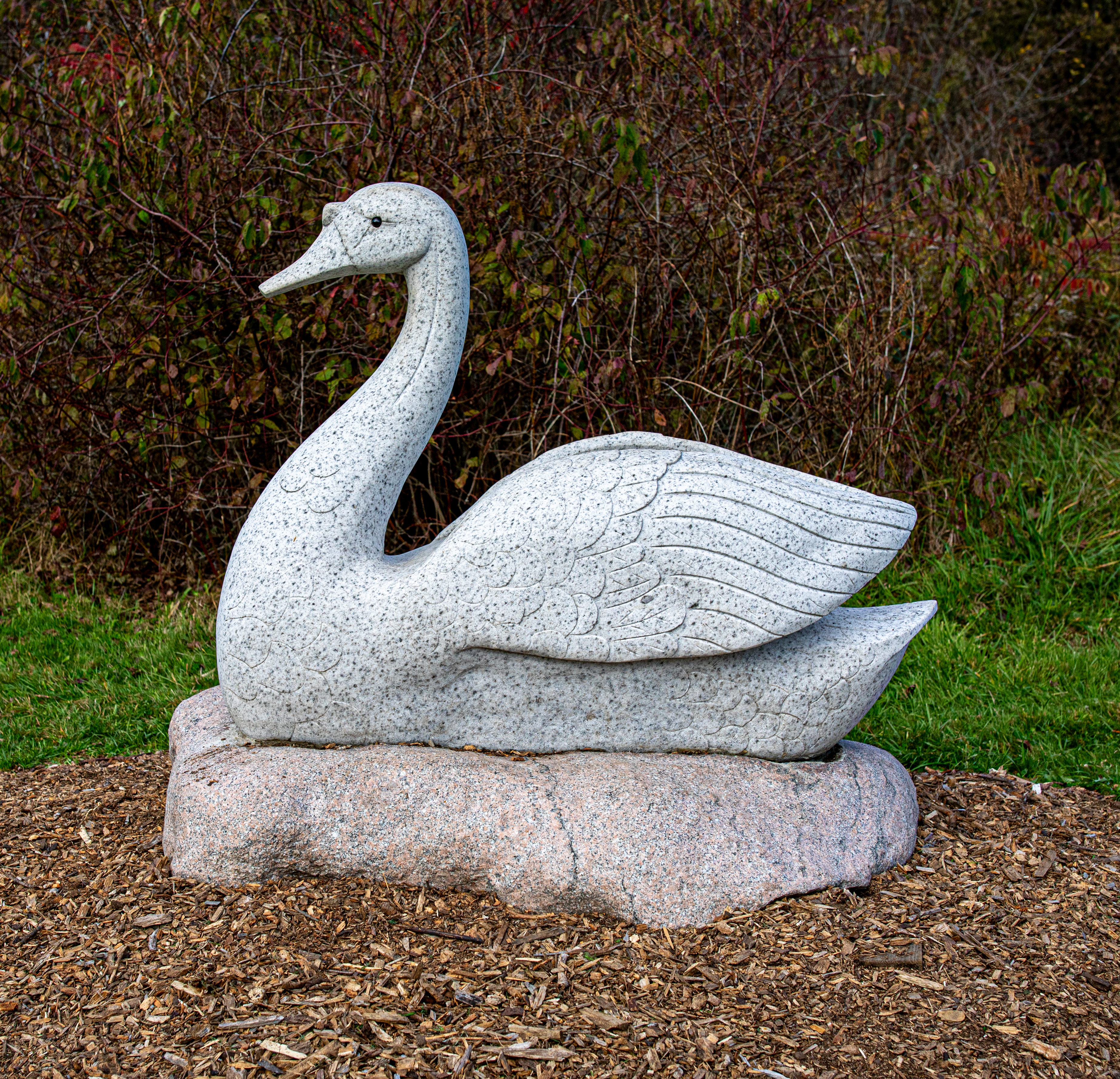
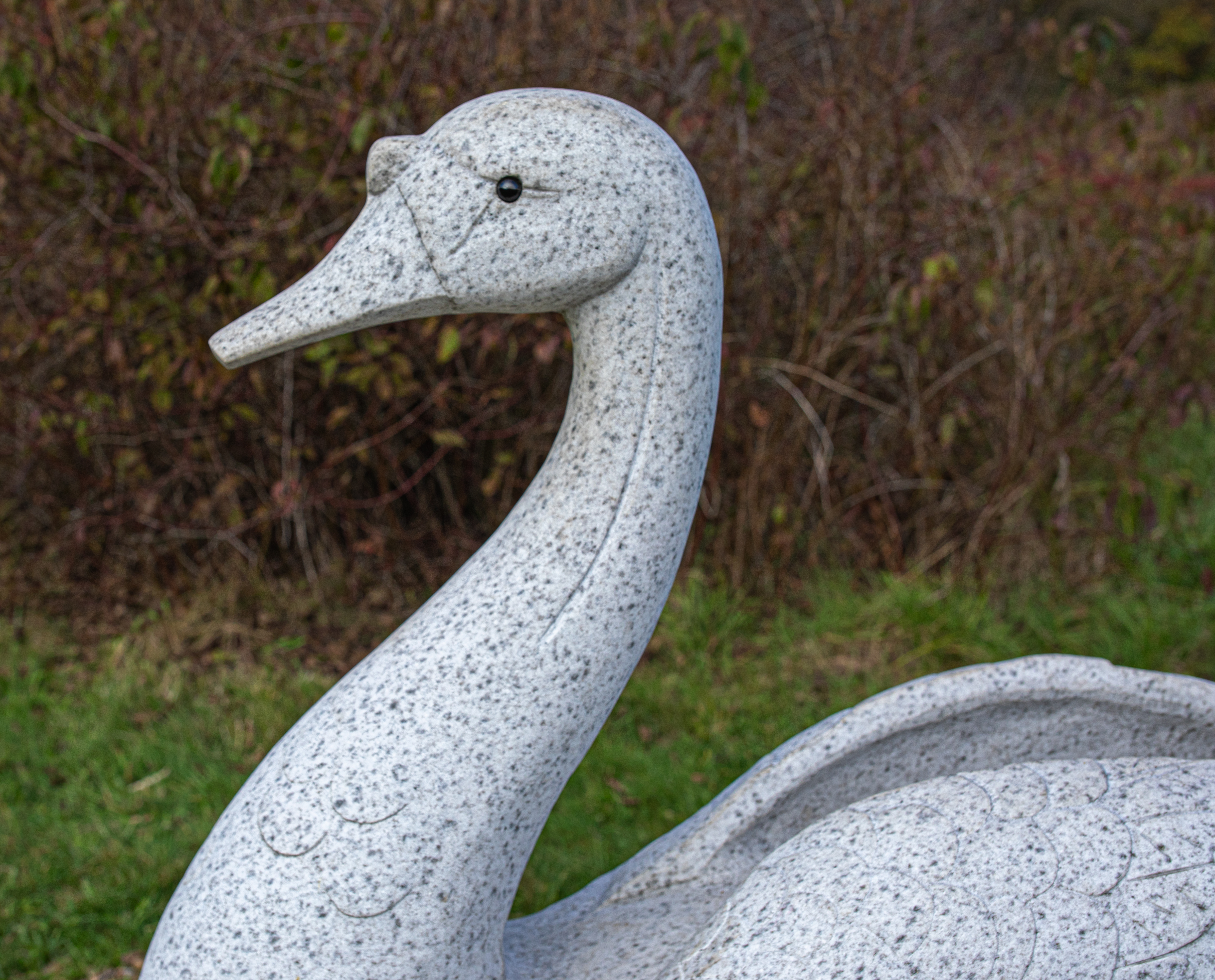
Carved from a single block of Bethel white granite, the “Swan Side Profile” by Ryan Ackerman of Quincy, MA, merges Art Nouveau elegance with enduring strength. Shaped using a liquid oxygen/biodiesel quarry torch (the same fuel mix used in NASA shuttles) alongside diamond abrasives and air chisel, the sculpture reveals fluid grace within dense, glacial stone.

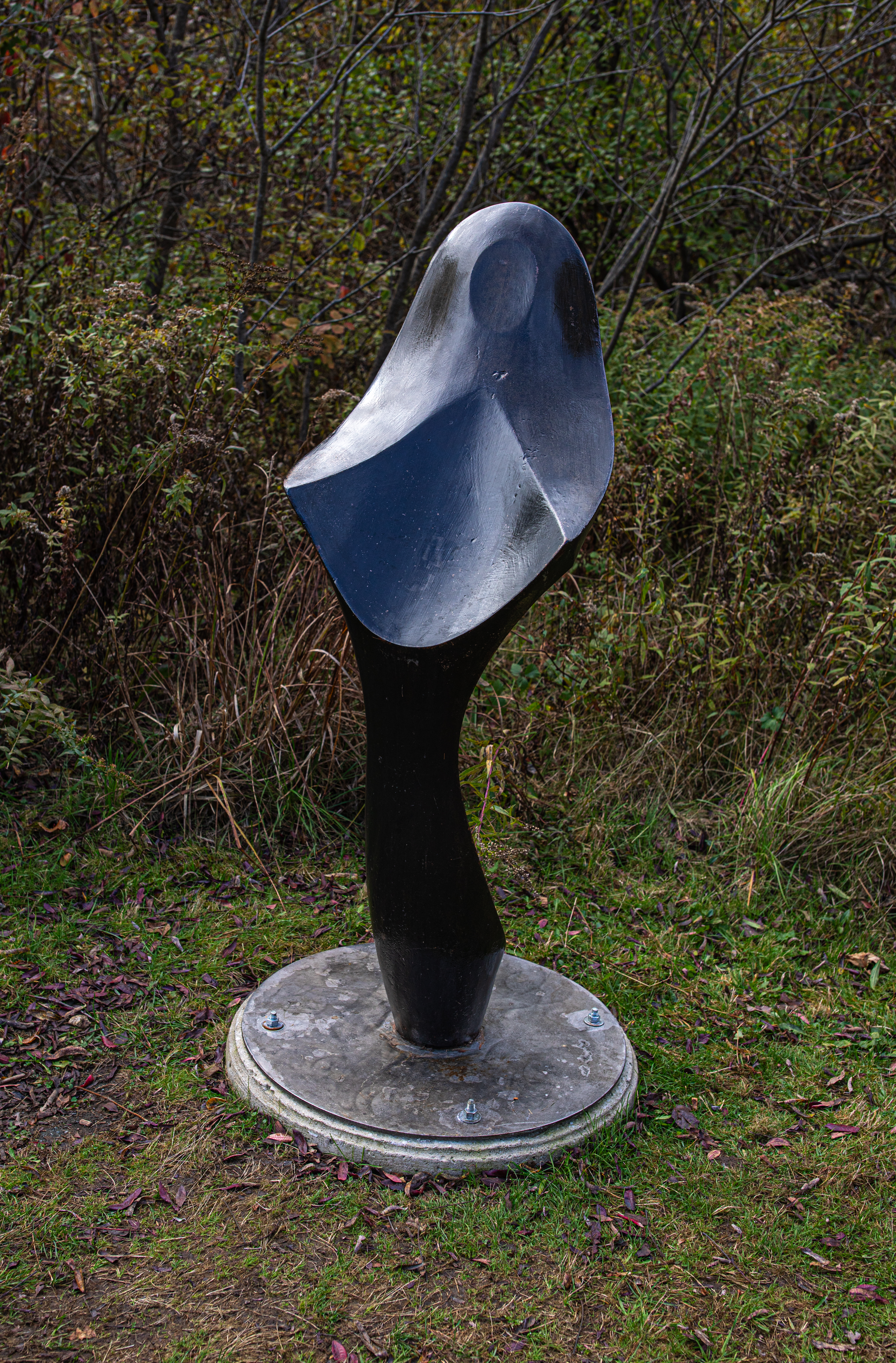
“Salutation” by Scott Keeley of Charleston, RI is an abstract figurative form in a pose that represents an international symbol of welcome and peace. The figure, made of cast iron, stands tall, arms wide open, her face gently tilted upward yet gazing at the viewer. The geometric form of the face is a reference to Constantin Brancusi. Like the way the beak in “Bird In Space” is a truncation of the soft form that makes up the body of the bird, the face in “Salutation” is a revolved cut in the soft form that makes up the torso of the figure. The focal point of the sculpture, the figure’s face, is expressed by what is taken away.

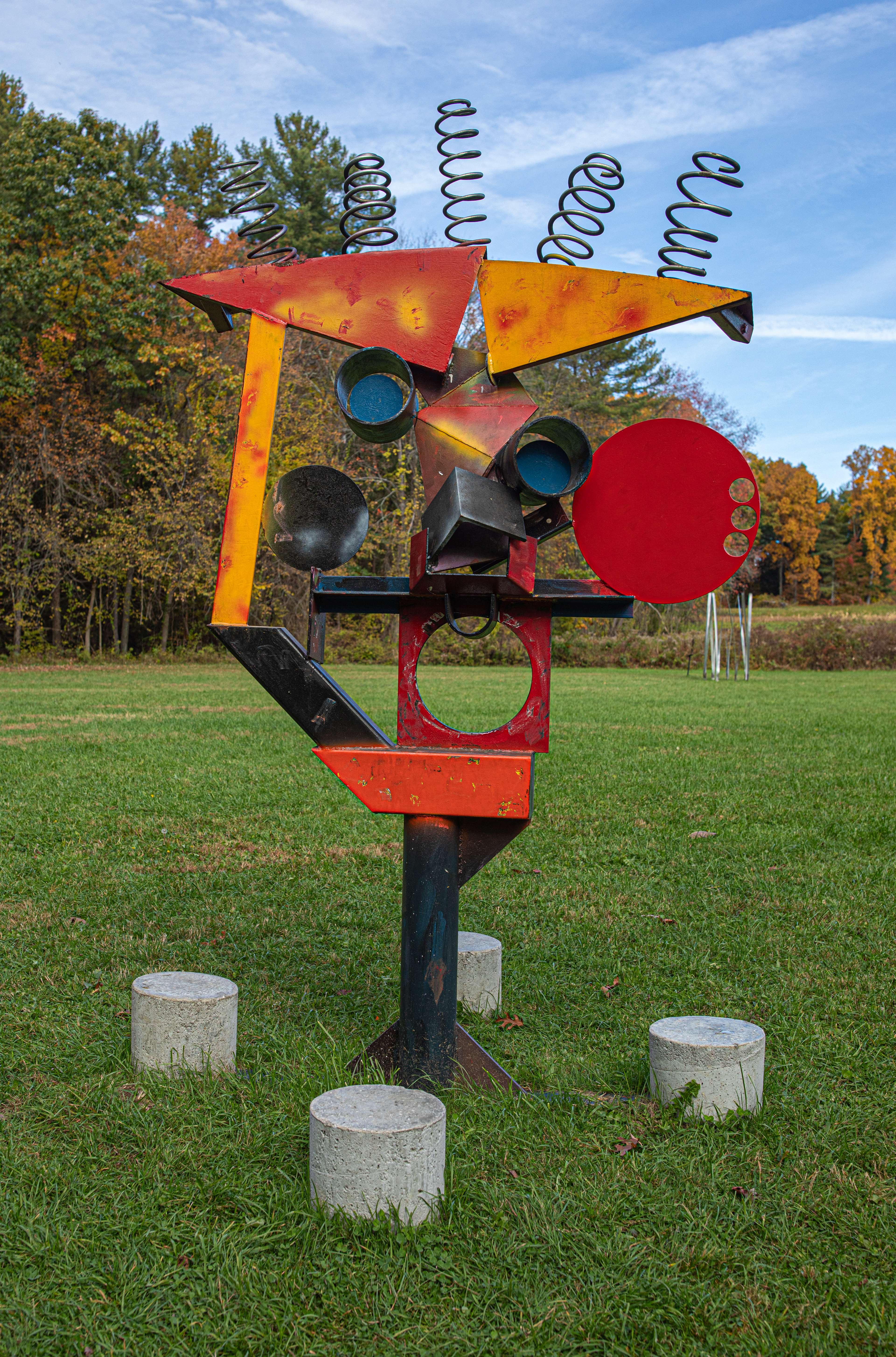
This large-scale abstract sculpture named “Medusa” by Chris Plaisted is a bold and striking work of art that captures the essence of the mythological figure while pushing the boundaries of traditional representation.

Rather than depicting Medusa in a realistic or literal way, the sculpture, which is made of steel and enamel paint, takes on an abstract form that evokes the snake haired, fearsome nature of the mythological figure. While the eyes, nose and mouth facial structures remain, components and shapes are added to make the face less obvious.

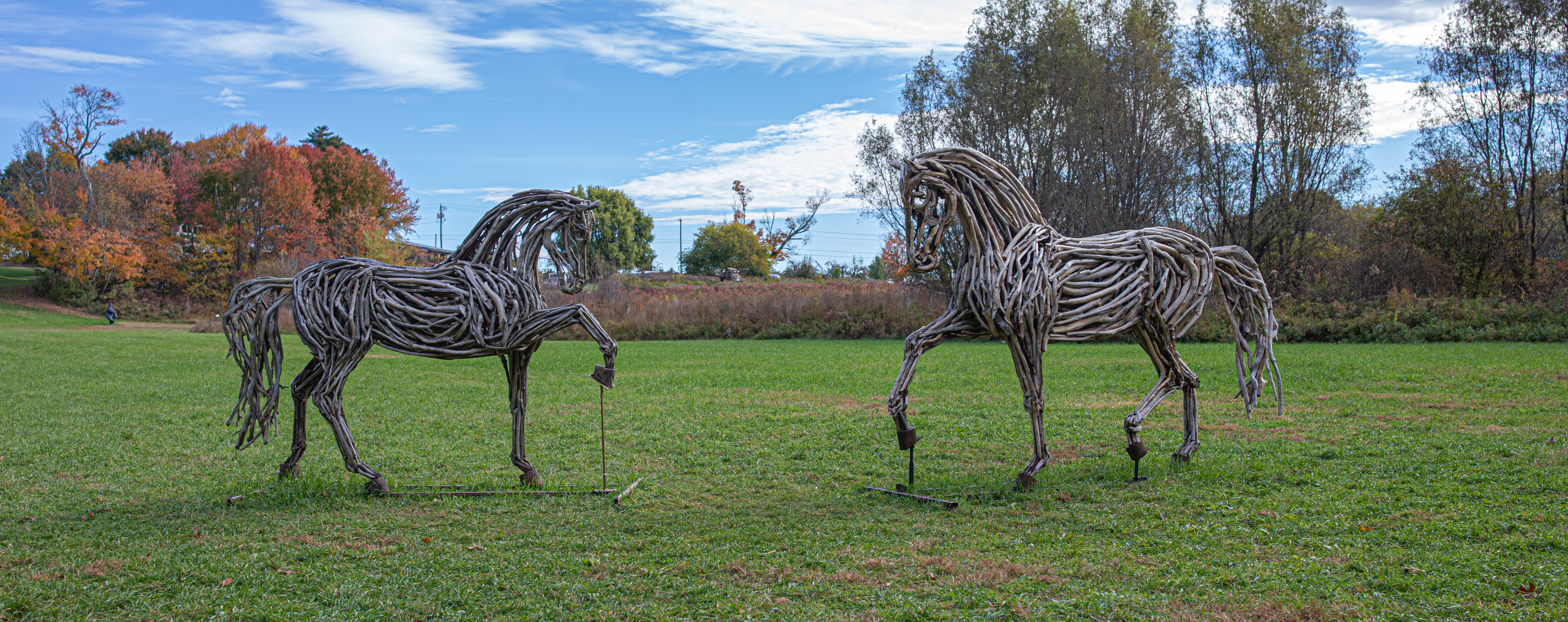
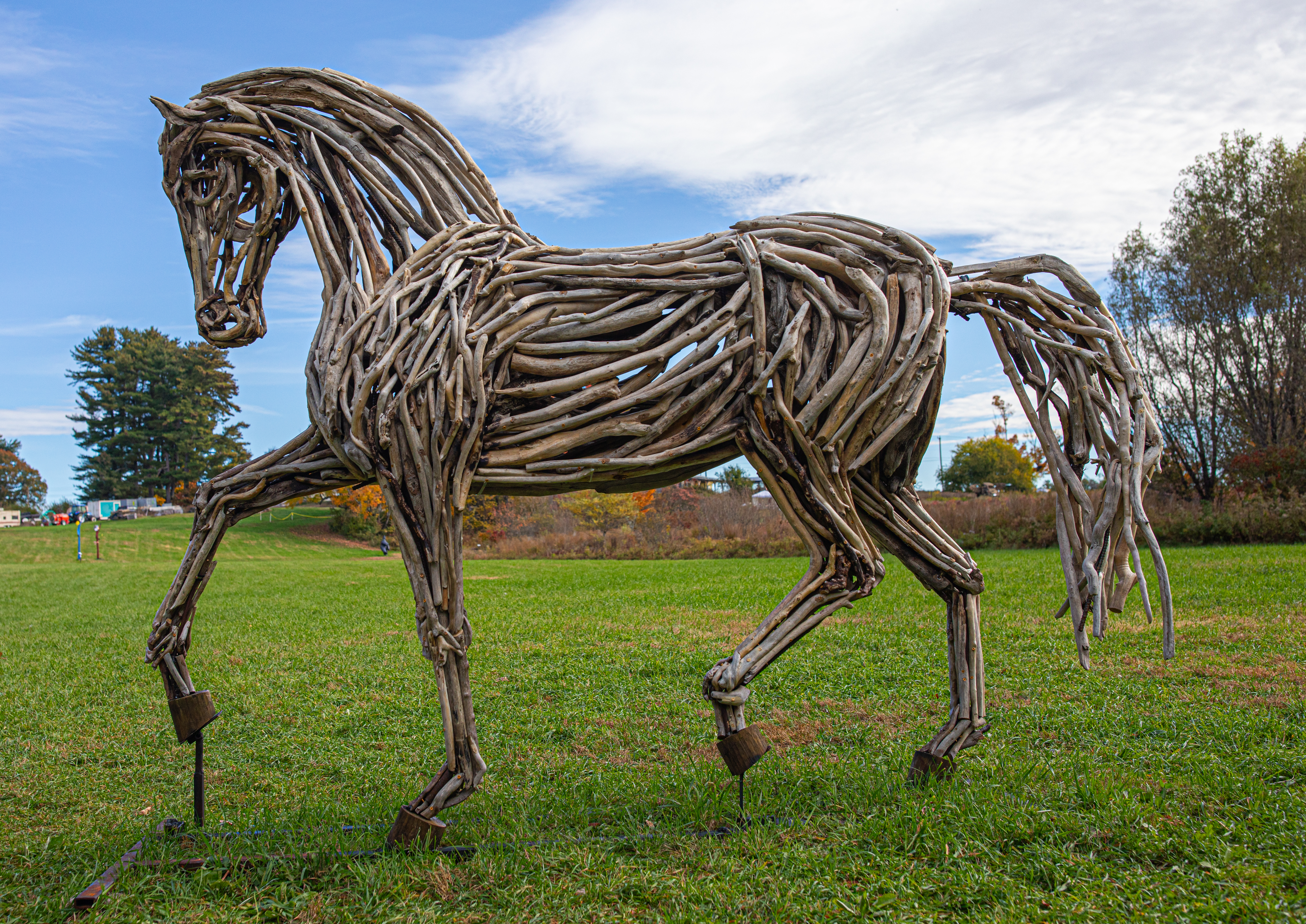
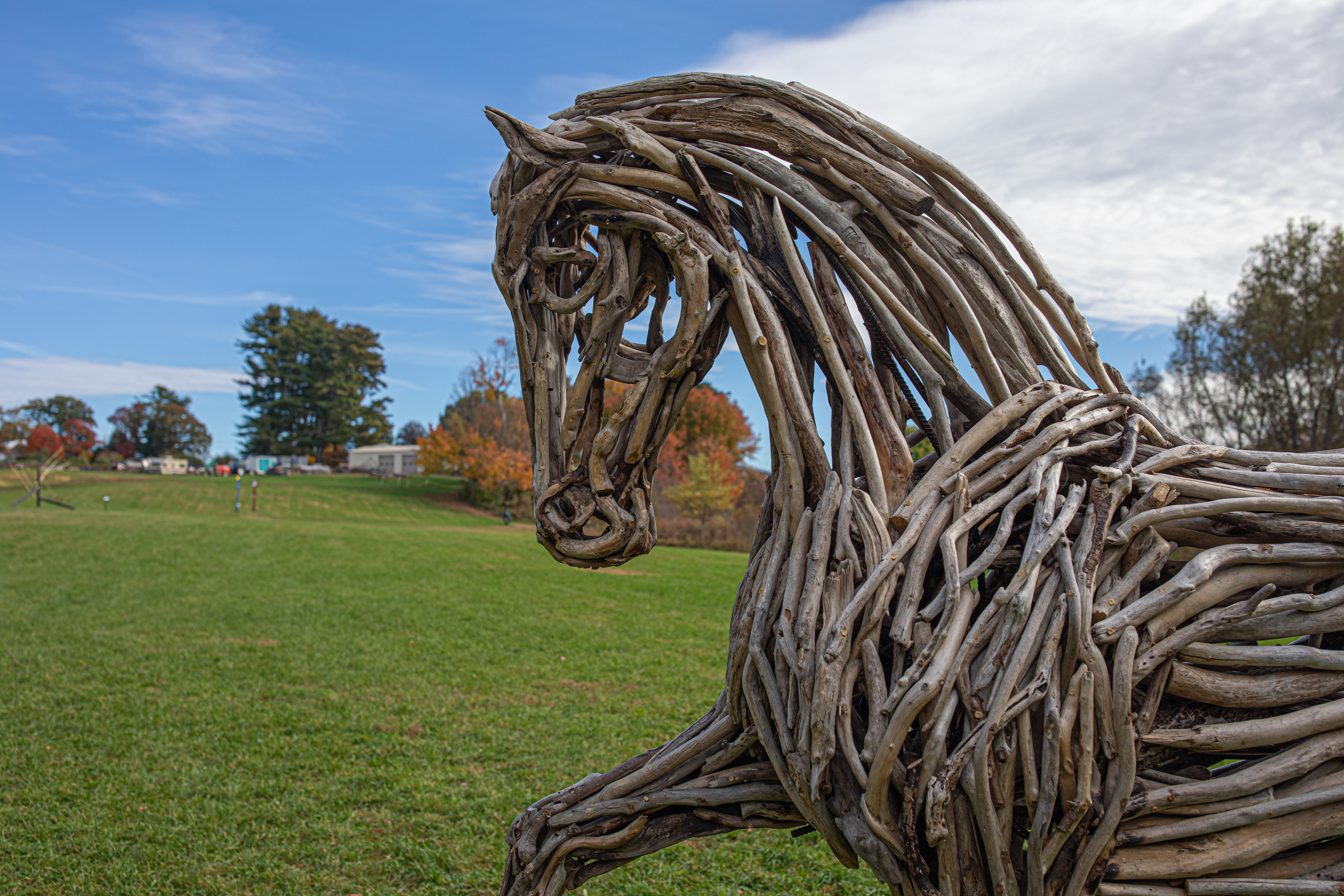
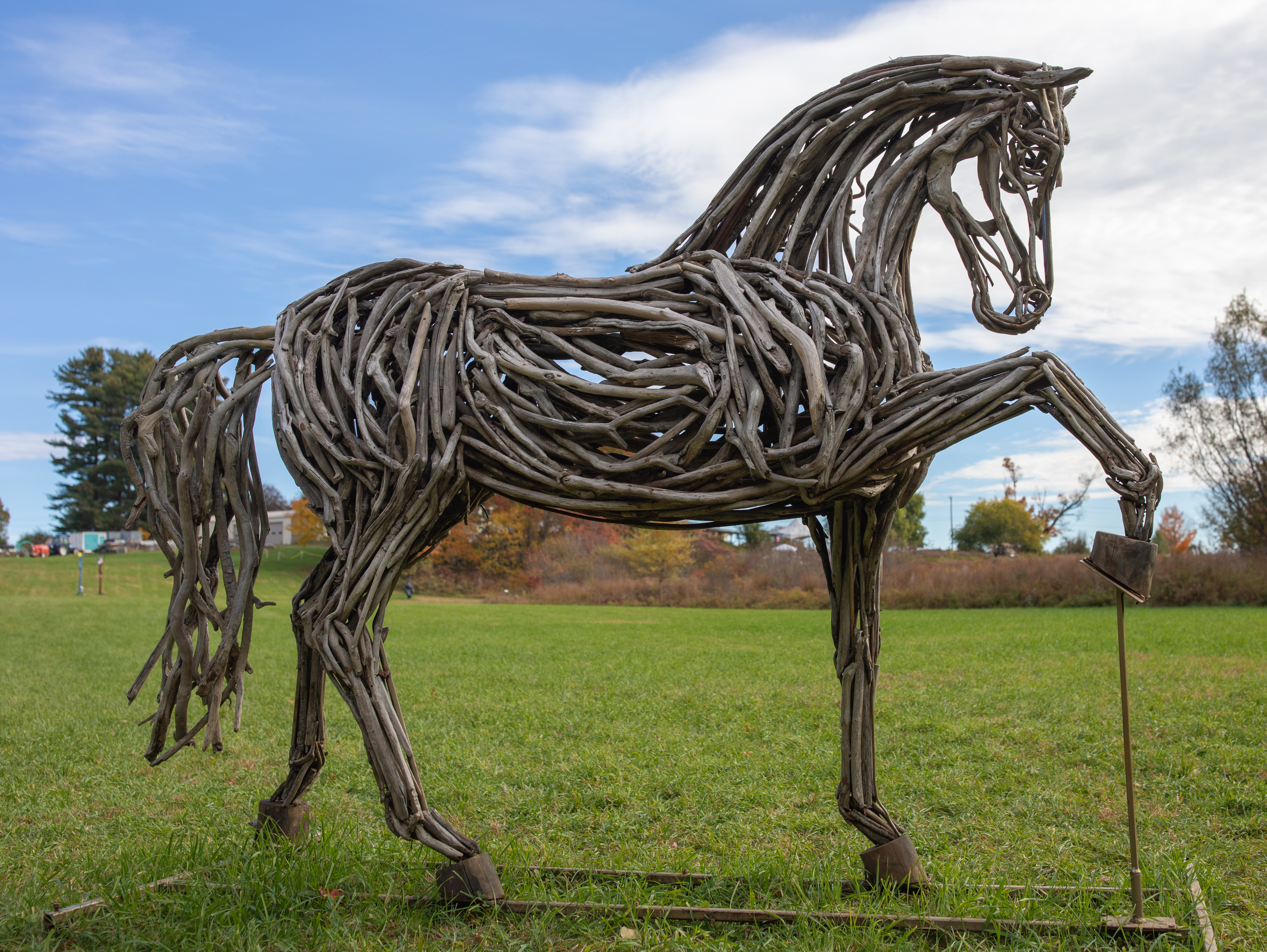
Made of stainless steel and reclaimed wood, “Forward” by Lindsey Molyneux is a tribute to horses. Throughout history, horses have played a pivotal role in altering the course of conflicts, expanding human boundaries through exploration and facilitating cultural exchanges. This transformative impact mirrors the power of connection and communication, which are more crucial now than ever.

As symbols of movement and progress, horses act as a metaphor for the human journey how, despite our differences, we can forge paths toward greater unity and movement forwards.

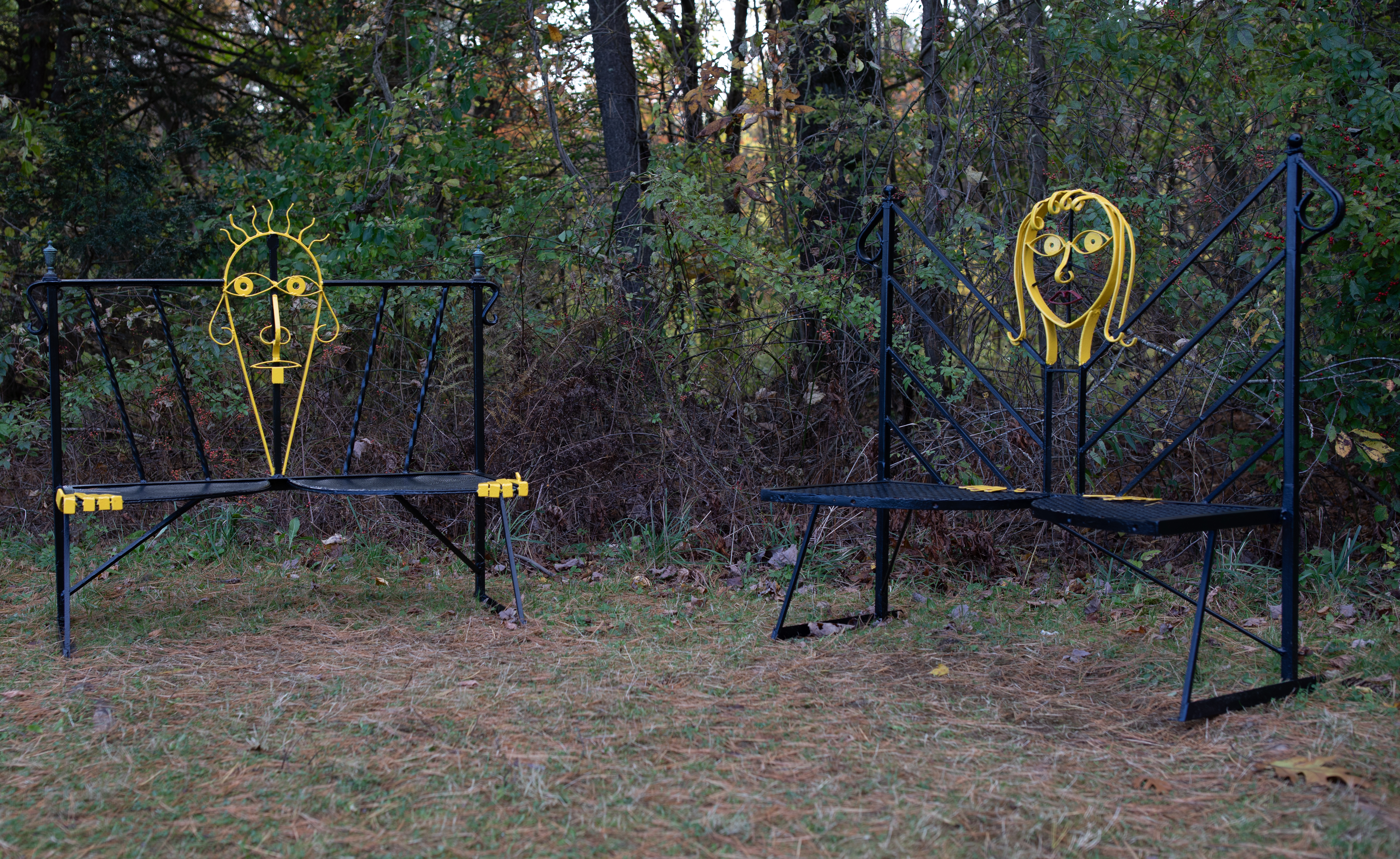
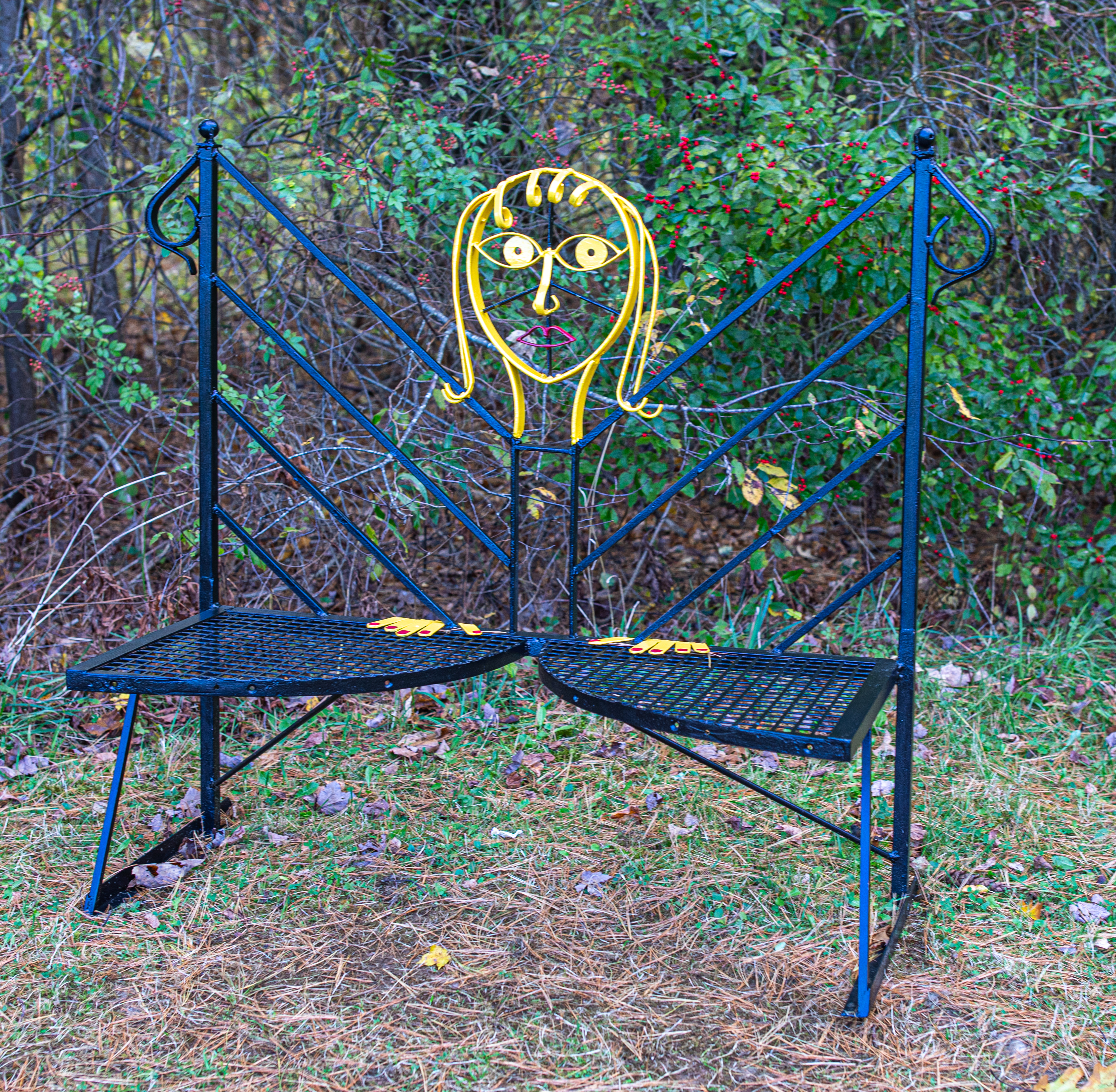
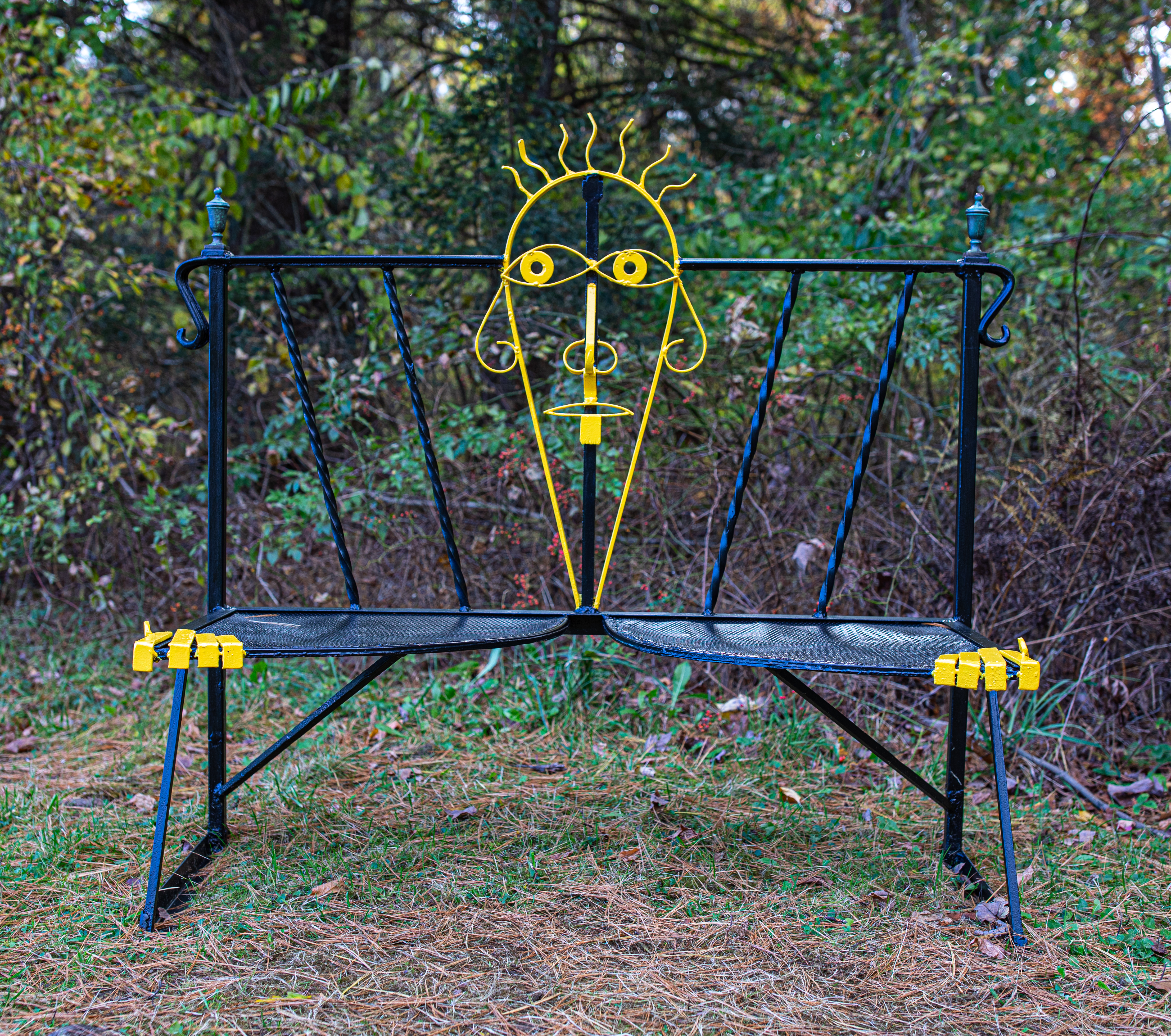
“Bench People” by Ed Mcaloon is designed to be both entertaining and functional. The configurations of the seat, made of welded recycled steel with oil based paint finish, are intended to invite the seated folks to face each other and interact.

The selection of female and male themes is meant to be inclusive. When positioned facing each other, these pieces create a fanciful environment.

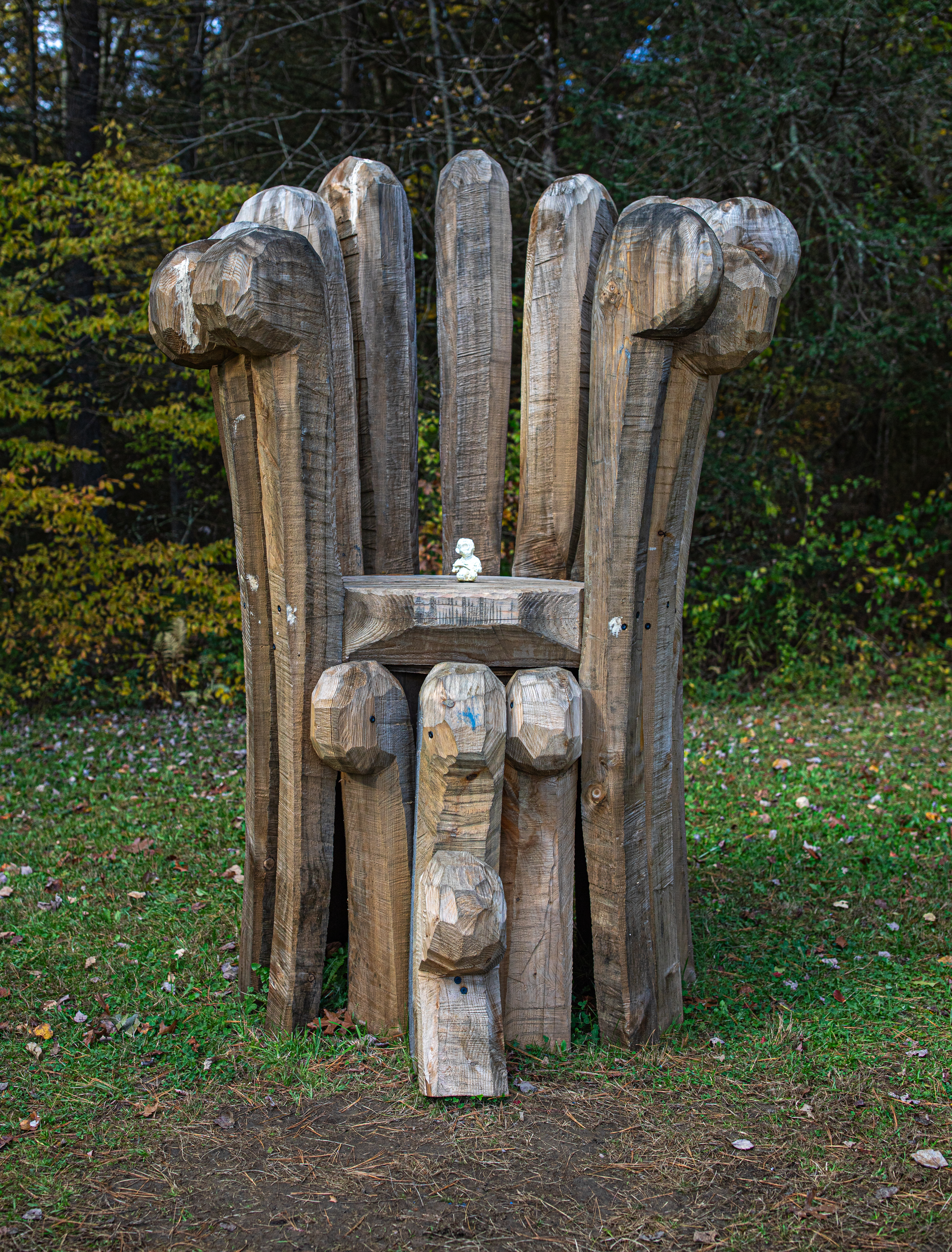
Keeping with the chair theme, Mark Fenwick of Guilford, VT, created :Andromeda’s Chair” made of hemlock. There also seems to be a little visitor sitting in the chair. The wooden chair in the similitude of a sea wave washed rock. Andromeda was an Ethiopian woman threatened by a monster. Perseus came along and turned the beast into a rock by showing it the head of Medusa.

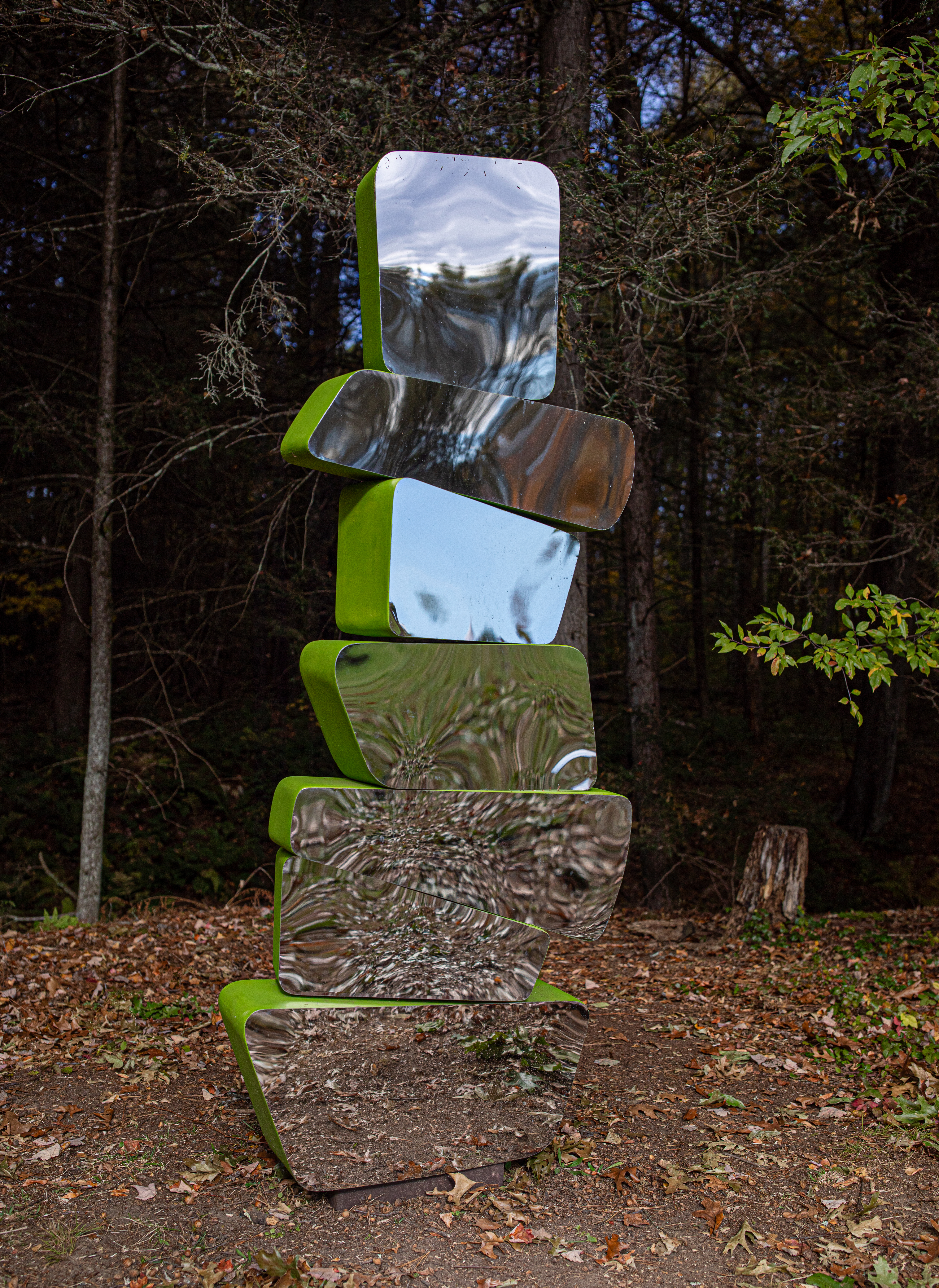
“Olie” by Dan Rocha is a contemporary interpretation of a carin. Carins, a stack of stones, are usually used as markers on hiking trails. While most carins are made of rocks and stones, this particular carin was made of PVC, aluminum sheet and paint. In Celtic prehistory carins also have a spiritual significance as they were used as memorials and as burial chambers.

This concludes the second part of the Art In The Orchard exhibit. But, don’t fret. There are many more to show in my following posts!


2025 Art In The Orchard Part 1 (Park Hill Orchard, Easthampton, MA)

Date Of Visit: October 18, 2025

Location: Park Hill Orchard, 50 Payson Ave, Easthampton, MA

Cost: Free

Universally Accessible: Yes. The staff at Park Hill Orchard offer a Accessible Art Cart for those who need assistance.

Dog Friendly: Yes

Summary: Art In The Orchard featured dozens of works of art from local artists.

Raise you hand if you’re sick of this cold and wintry weather. Since I still have lots of photos from events and places I have visited last year, I thought it would be a good time for a change of pace and post some photos from a milder, more colorful time.

Nature and art go hand in hand. Hence, the Art In The Orchard exhibit. The aim of Art In The Orchard is to blend art with horticulture. Two of my favorite things!

Created in 2011, Art in the Orchard is a juried outdoor sculpture and installation exhibit showcasing the work of local and regional artists. Set on the grounds of Park Hill Orchard, the Art In The Orchard event is nestled among apple trees, small fruit gardens and landscaped farmland.

Because there were so many art installations (well over 30) and in some cases lengthy descriptions of each exhibit, I am posting this event in parts. In fact, I have photographed this event in years past. But, it was too overwhelming and time consuming to post all of the photos from the exhibit. Maybe, in the future, if I can find those photos I took I can post photos from those other years. Also, since this was a “meet and greet” event, you may notice artists posing next to some of their works. As an added note, some of the names of the artists were very familiar as I have photographed some of their works in the past. For instance, Harold Grinspoon, the artist of the first work of art has many works of art installed throughout western MA, namely at the Big E Fair at the Eastern Exposition Center in West Springfield, MA, and at Mittineague Park, also in West Springfield, MA.

One of the things that stood out to me was how all of New England was represented in the art. From Vermont to Connecticut, people came from all over New England to show their art.

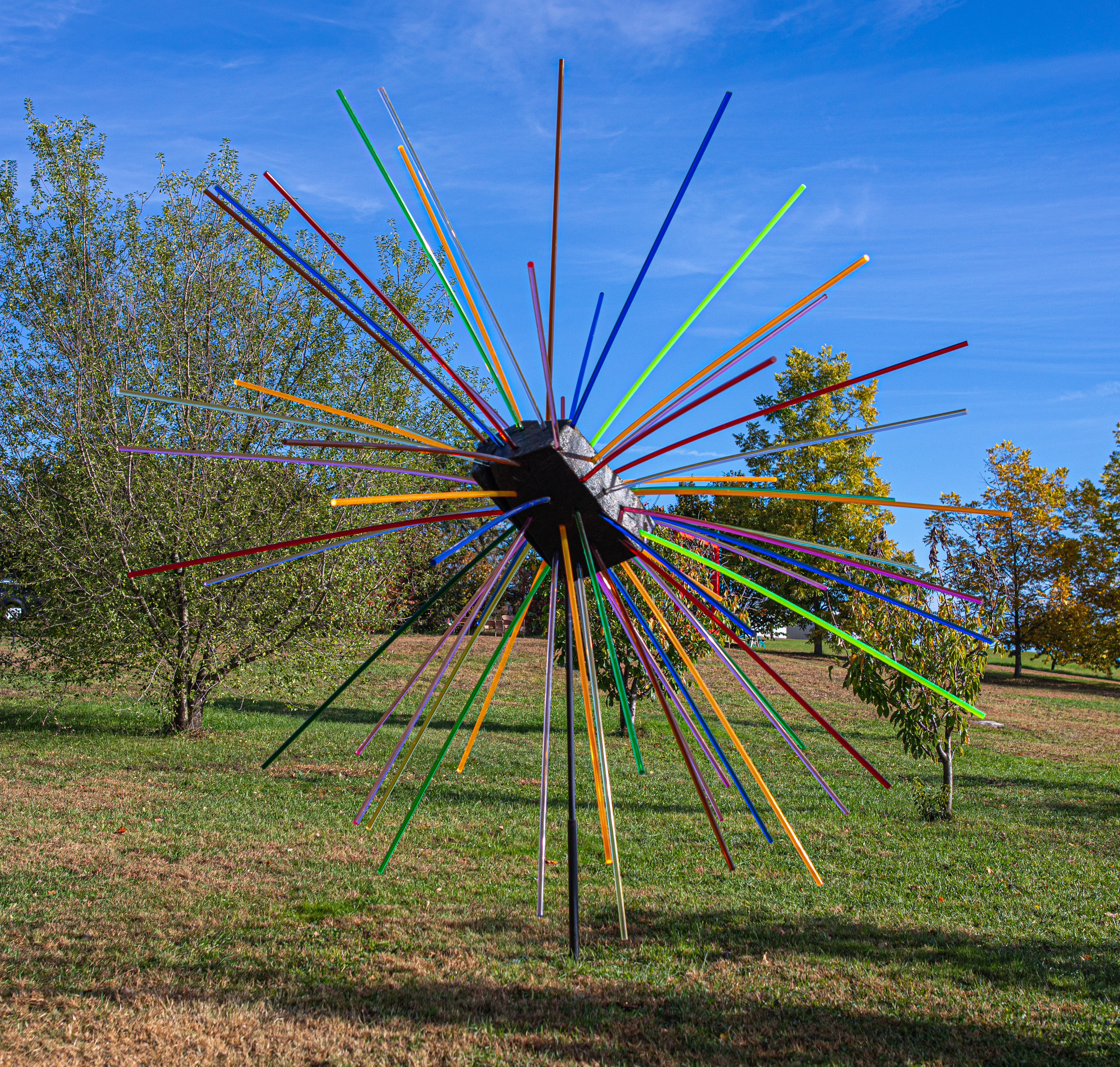
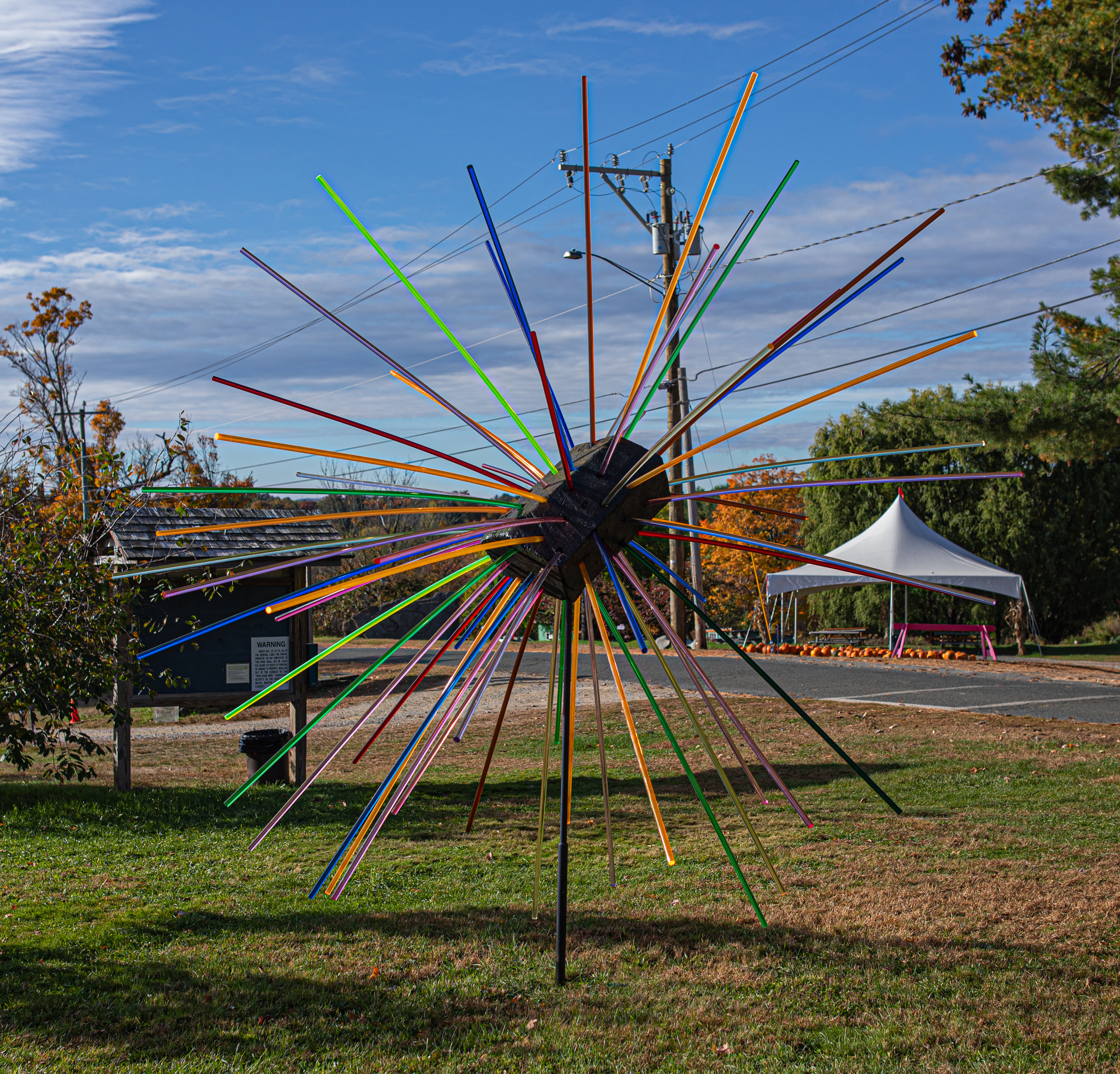
The first work of art at the event was “Big Bang” by Harold Grinspoon of Agawam, MA. “Big Bang” is made of charred wood center and acrylic rods. It is meant to be a celebration of special occasions and to remind us to be joyful of life. The rods individually capture light and reflect it back. But, together with others it creates an impact and good feelings in us.

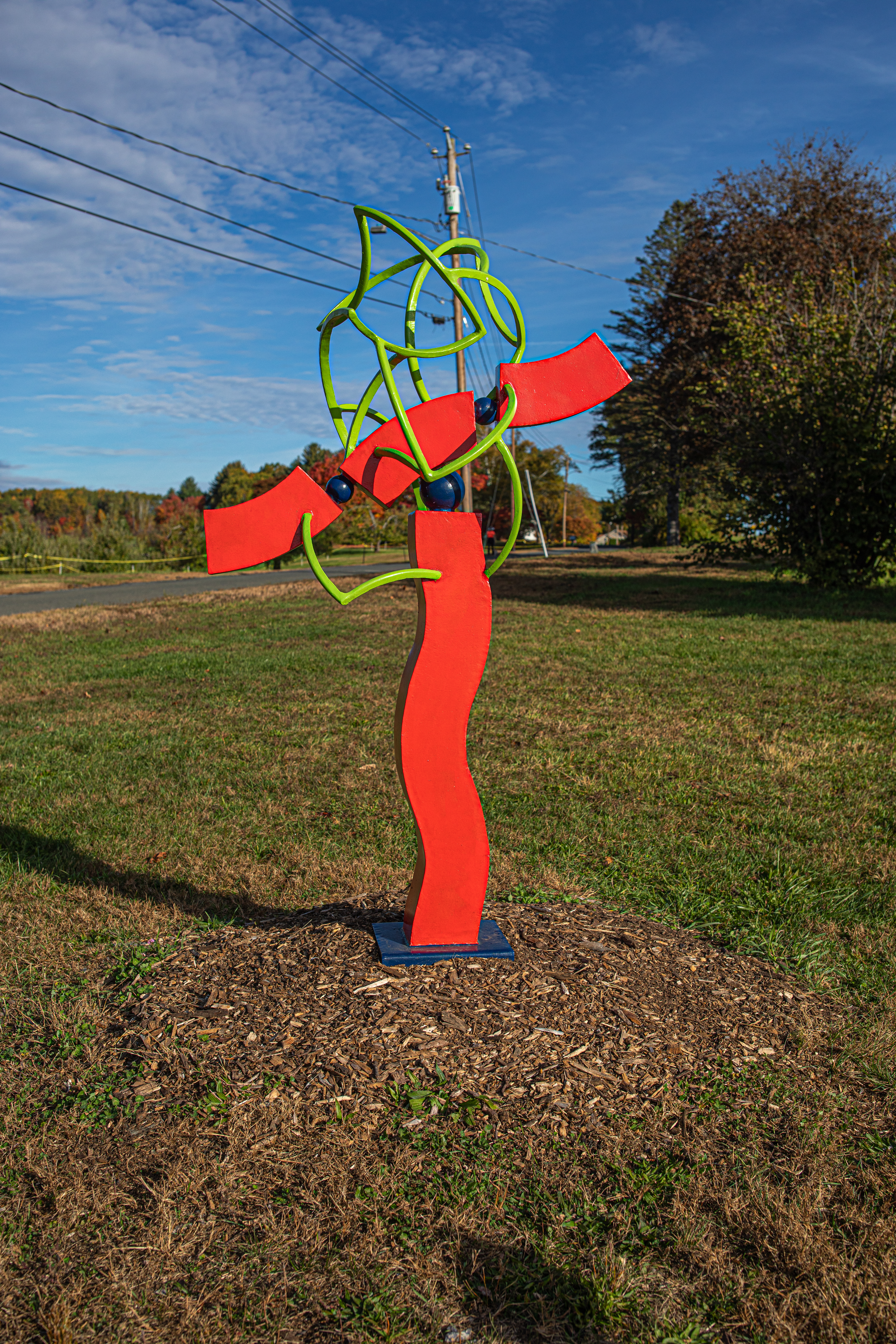
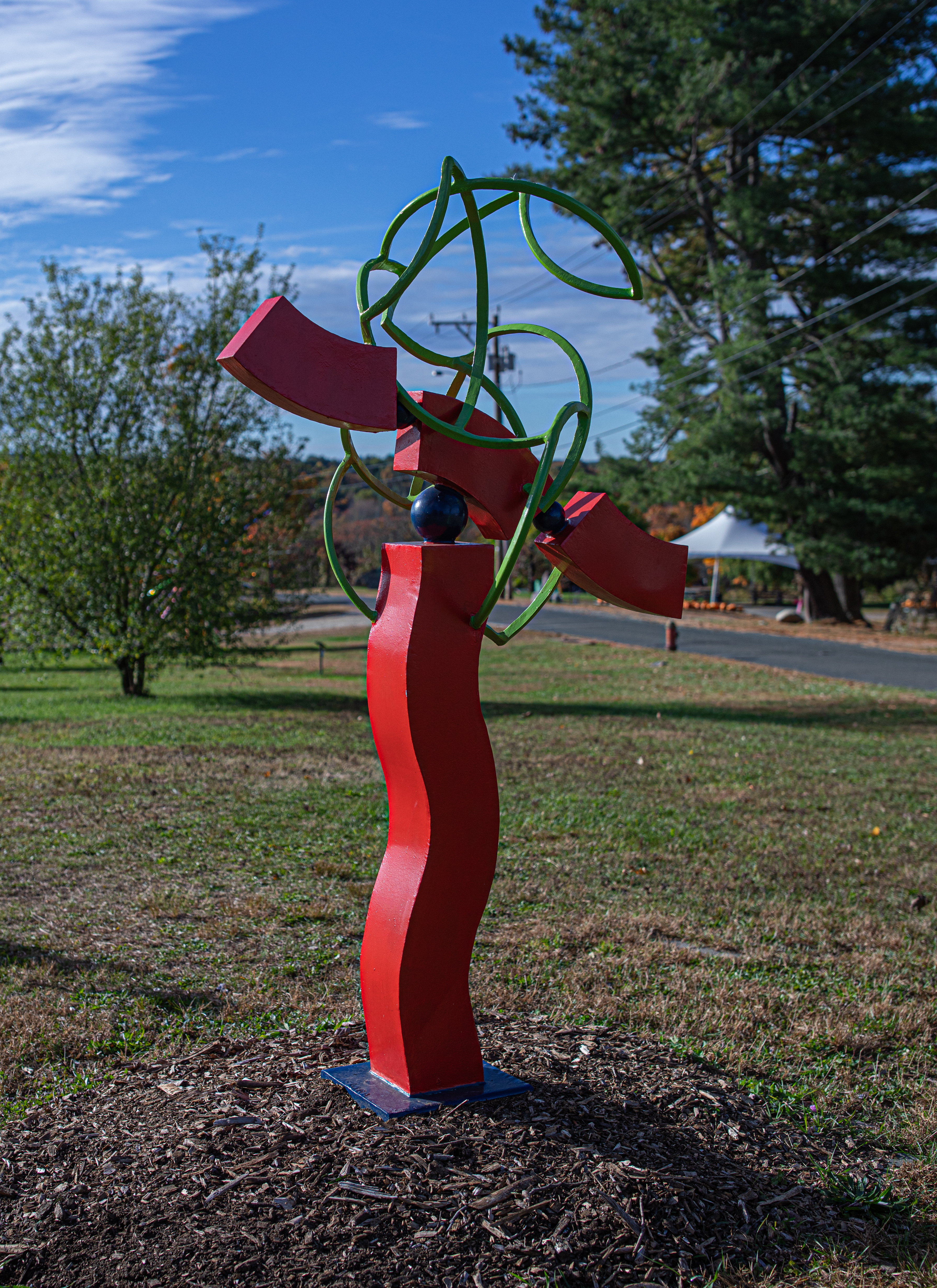
“Baroque Composition, Standing Figure” by David Skora of New Hartford, CT, made of welded polychromed steel, is the next exhibit. Created in the modernist tradition, “Baroque Composition, Standing Figure” was a welded fabricated metal sculpture of abstracted forms. The sculpture attempts to appropriate the energy and exhilaration of David’s interpretation of the Baroque style of art and architecture he observed while visiting Spain.

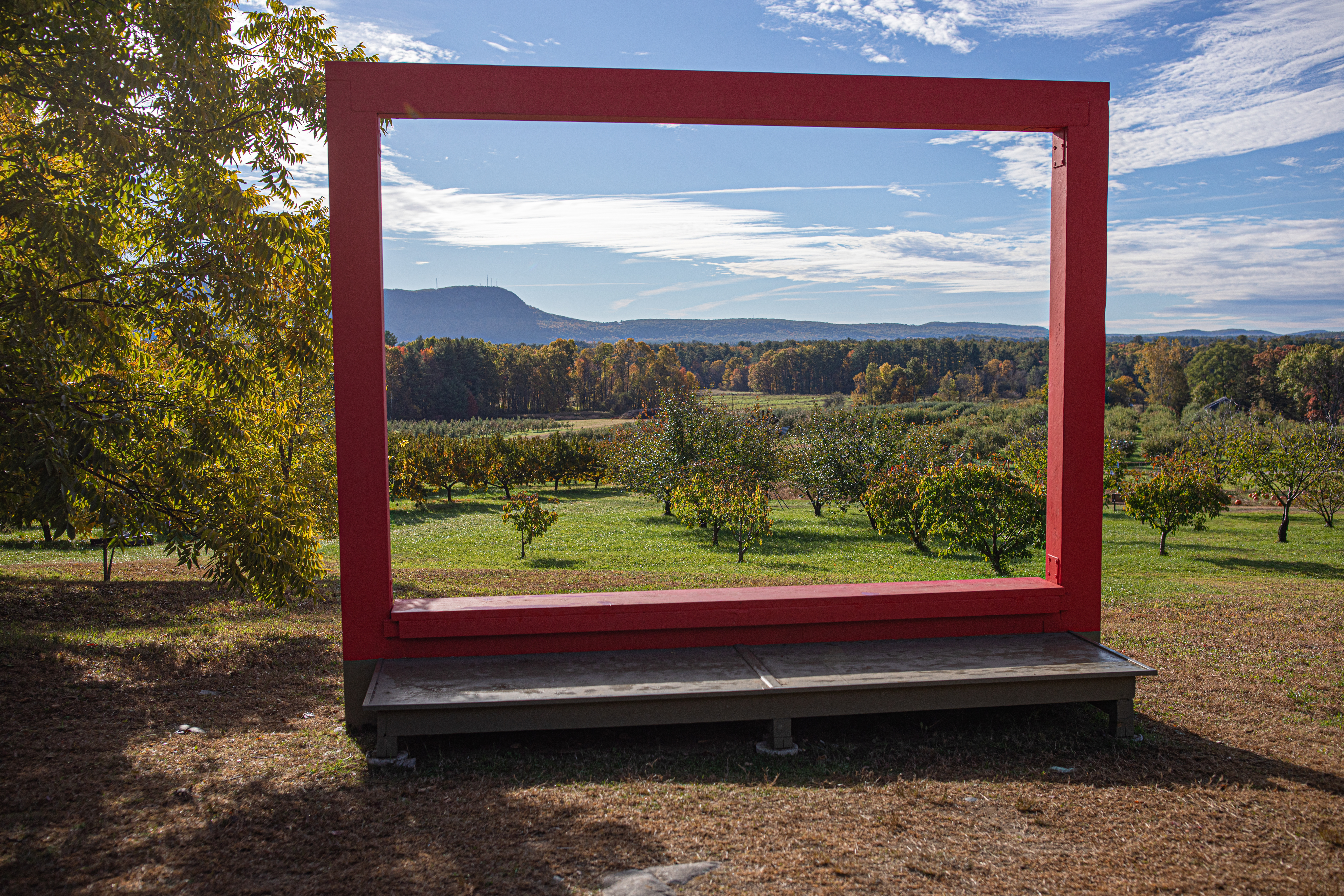
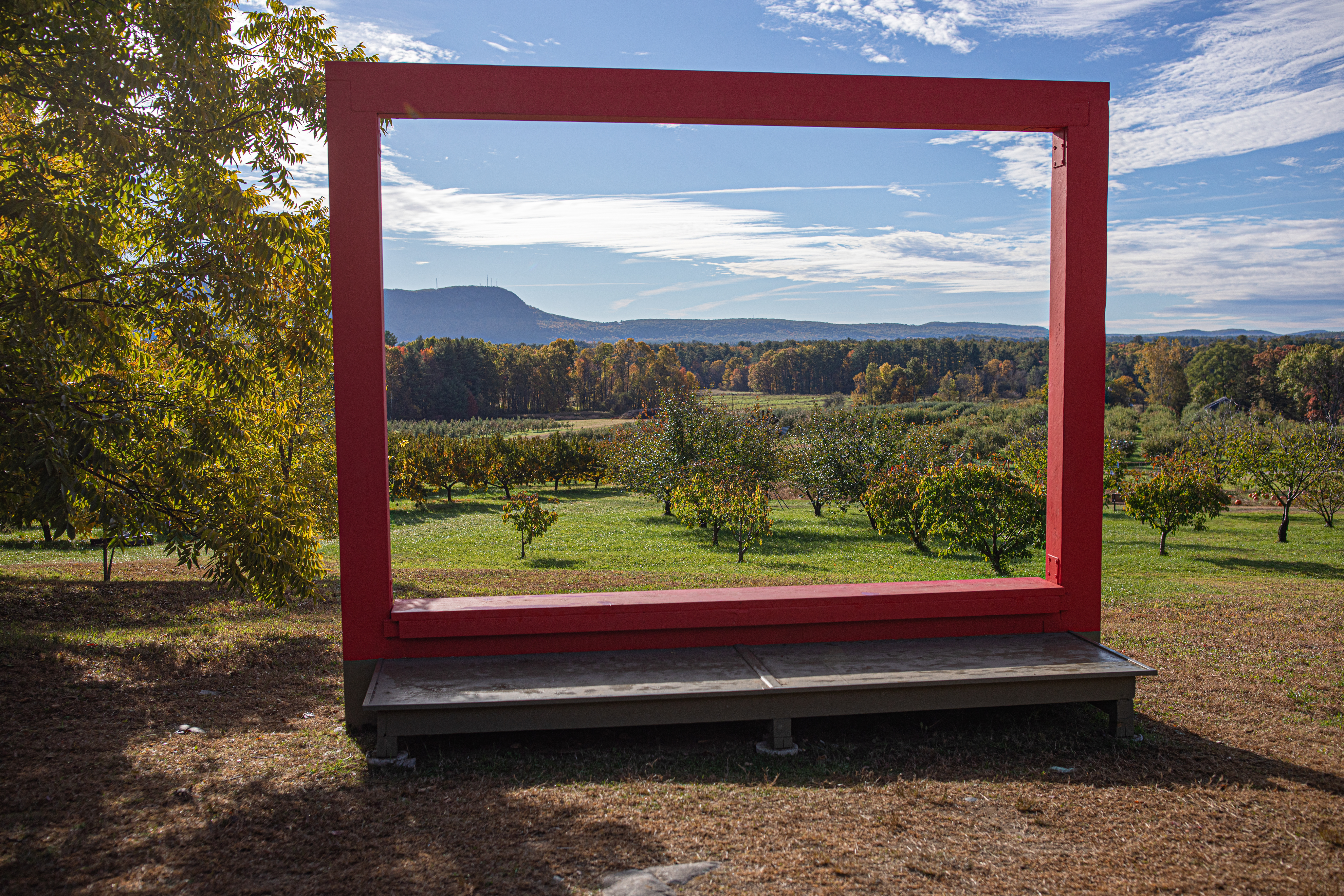
The next piece is not really a work of art. The red frame is often used for people to take selfies or photos with friends and loved ones. The hills and trees make for a beautiful backdrop, especially during foliage. It is installed at every Art In The Orchard event.

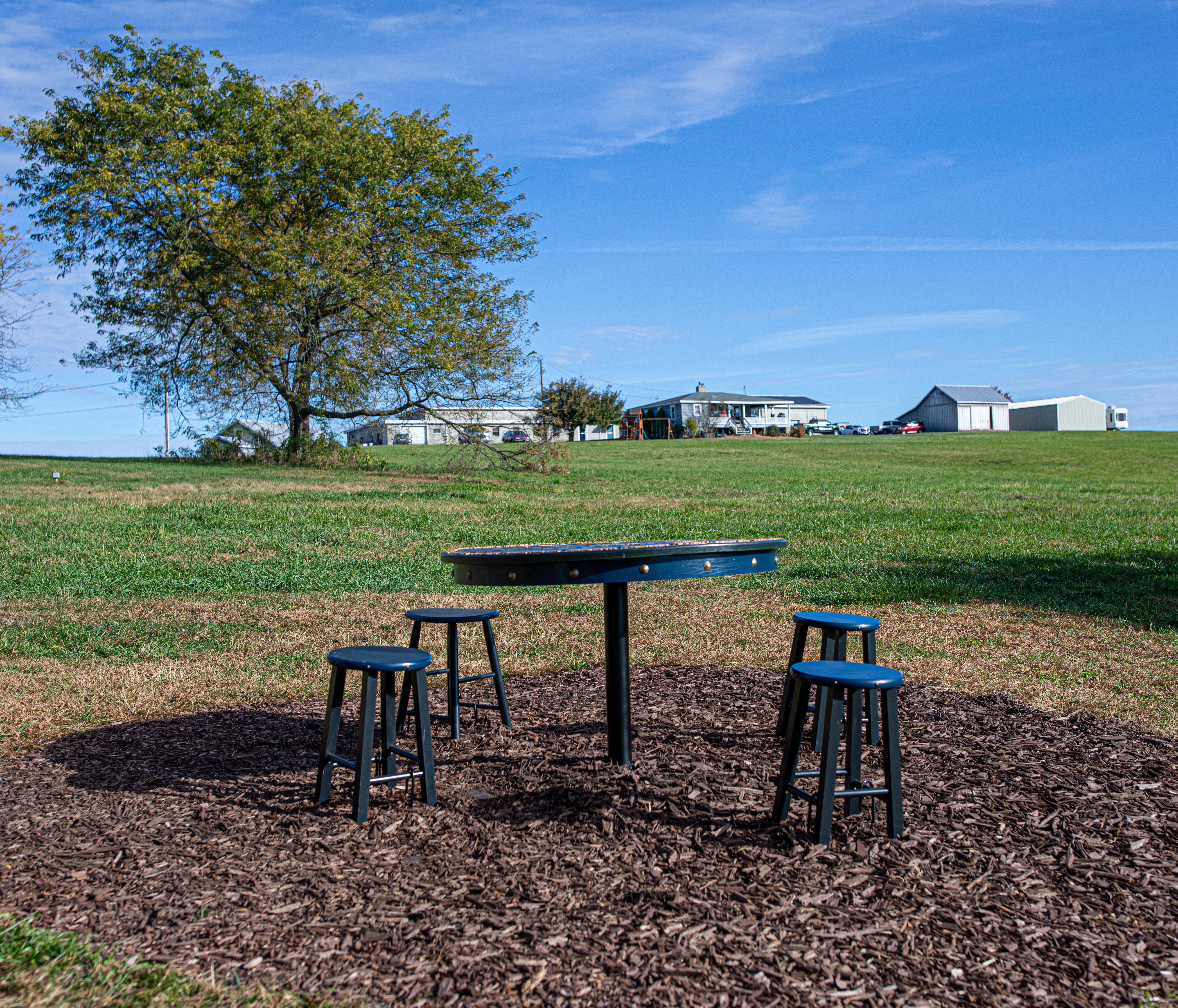
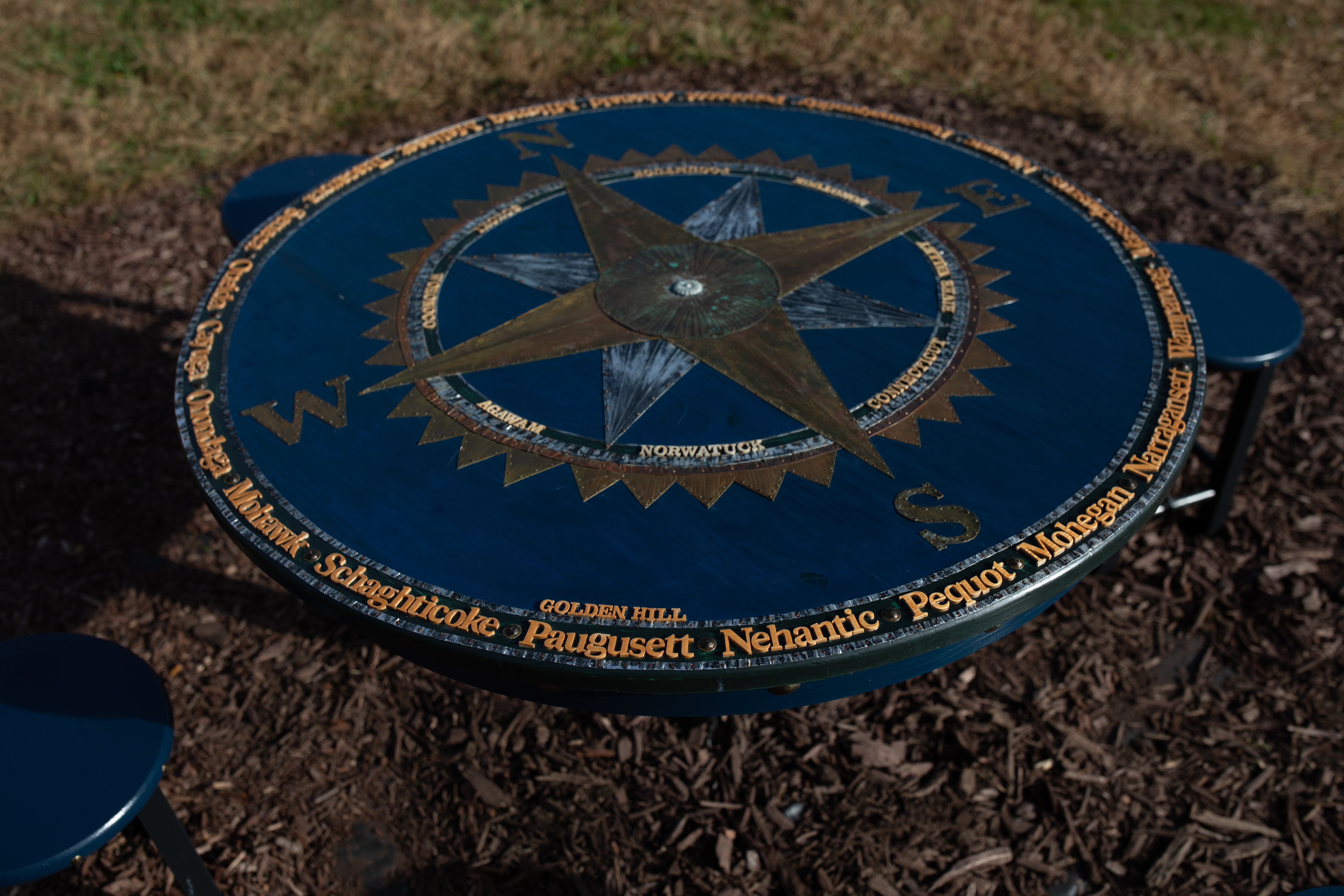
“Acknowledgement” “by Diane Travis of Northampton, MA, is a nod to “land acknowledgement.” You may have seen some signs or markers on the ground acknowledging “native land” or other forms of land acknowledgement (I’ve seen several of them in Boston and Salem, MA). This installation, made of a found table, brass copper, aluminum, paint and wood letters, is meant to be a tangible. interactive sculpture situated on the land people to refer to during “land acknowledgements” at meetings and gatherings. It also pays tribute to the original people of the land.

A compass rose set upon the table orients the viewer in the landscape of Mt. Tom, short for “Tomhoganompekut.” Say that three times fast. I dare you. This name roughly translates to “Tomahawk Stone Place.” For millennia, Indigenous people used the unique stone there to make tomahawks.

Stools set at North, South, East and West invite people to sit and contemplate the land in all directions. Visitors are encouraged to sit and contemplate the land and history in all directions. The compass has an inner and outer circle of names; the inner circle refers to the Ancestral names of original people in the area. The outer circle names and acknowledges the continuous and current presence of Native people in the wider region of Dawn Land now called New England. “Acknowledgement” is meant to confront tropes of the “Disappeared Indian”, asserting, “We are here.”

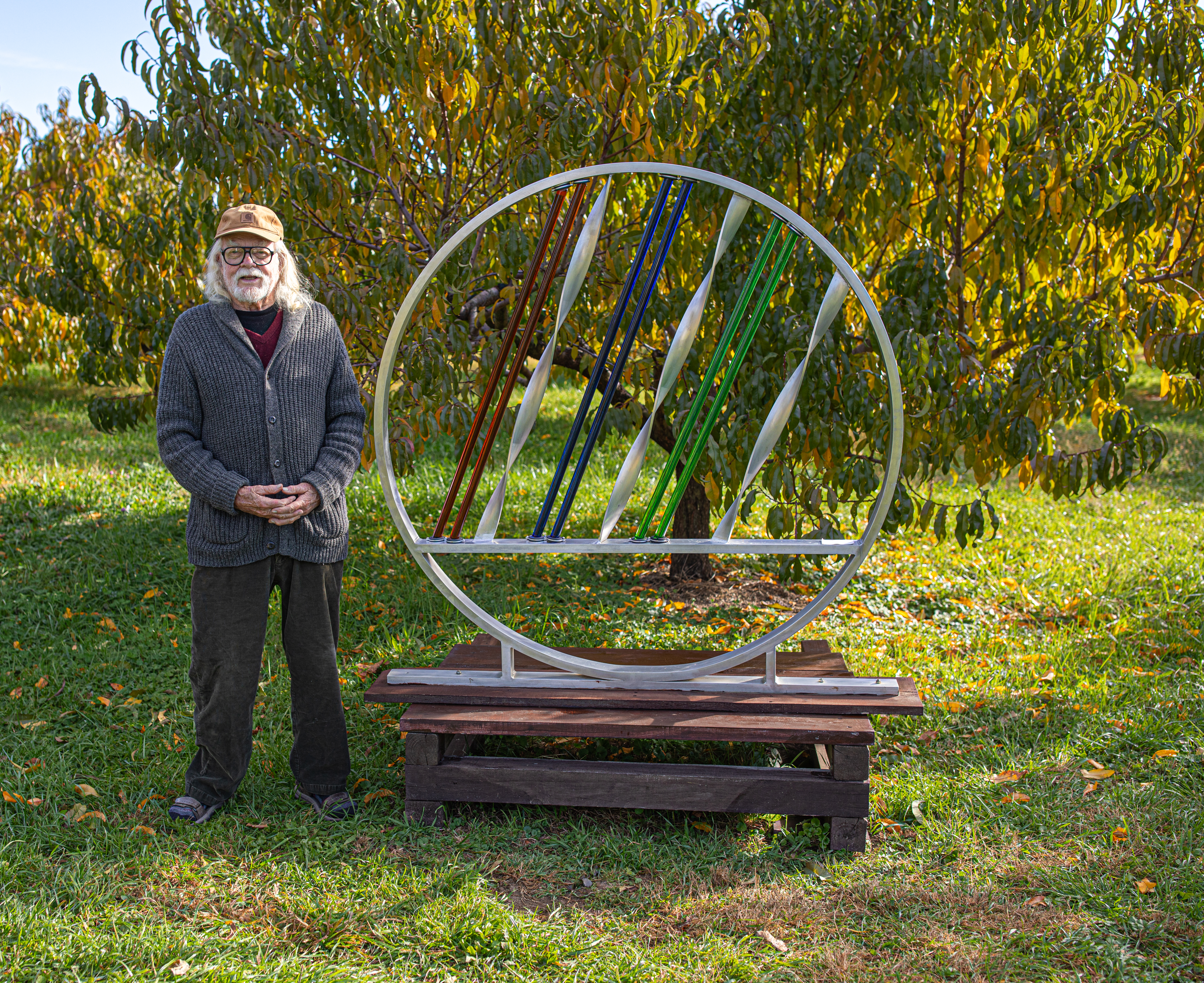
“Big Mama With Glass ” by Robert Osborne of Athol, MA is the next art installation. I was fortunate enough to meet the artist of this work of art during the event. Robert told me the “Big Mama With Glass”, which is made of solid aluminum bar and solid glass rods, was the largest of his “Mama” sculptures. He said the “Dia generation” which is Michael Kimmelman’s label for minimalists and conceptualists many of which are on view at the Dia in Beacon, NY, to be the most relevant today. Their work, according to Robert, is about optics, light, architecture and a unique philosophical approach to seeing and thinking. Robert is also intrigued by the string constructions of Fred Sandback because of his exploration of volume and space. Robert hopes to make people question and really look closely and think about the images and their interactions with his art.

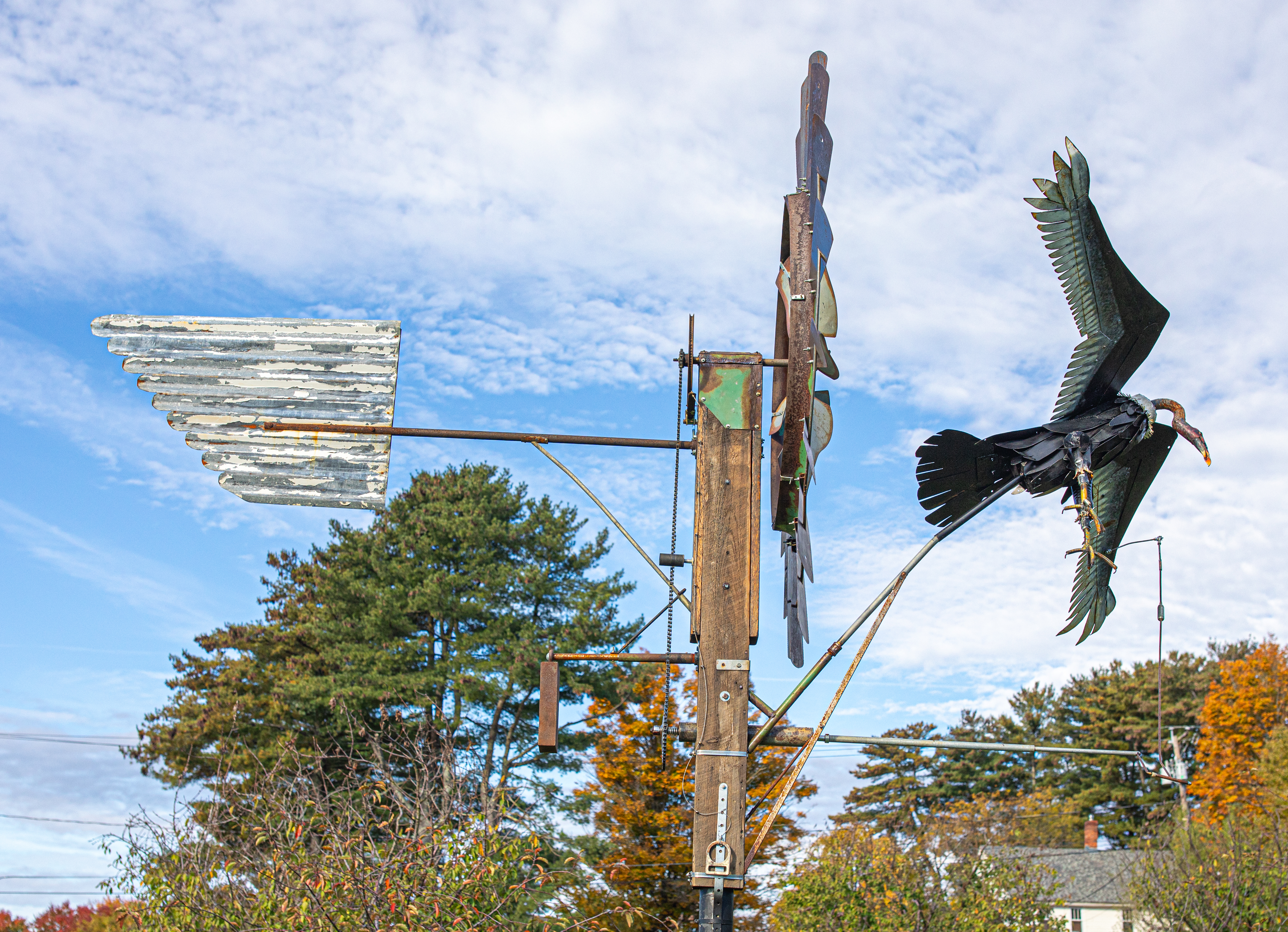
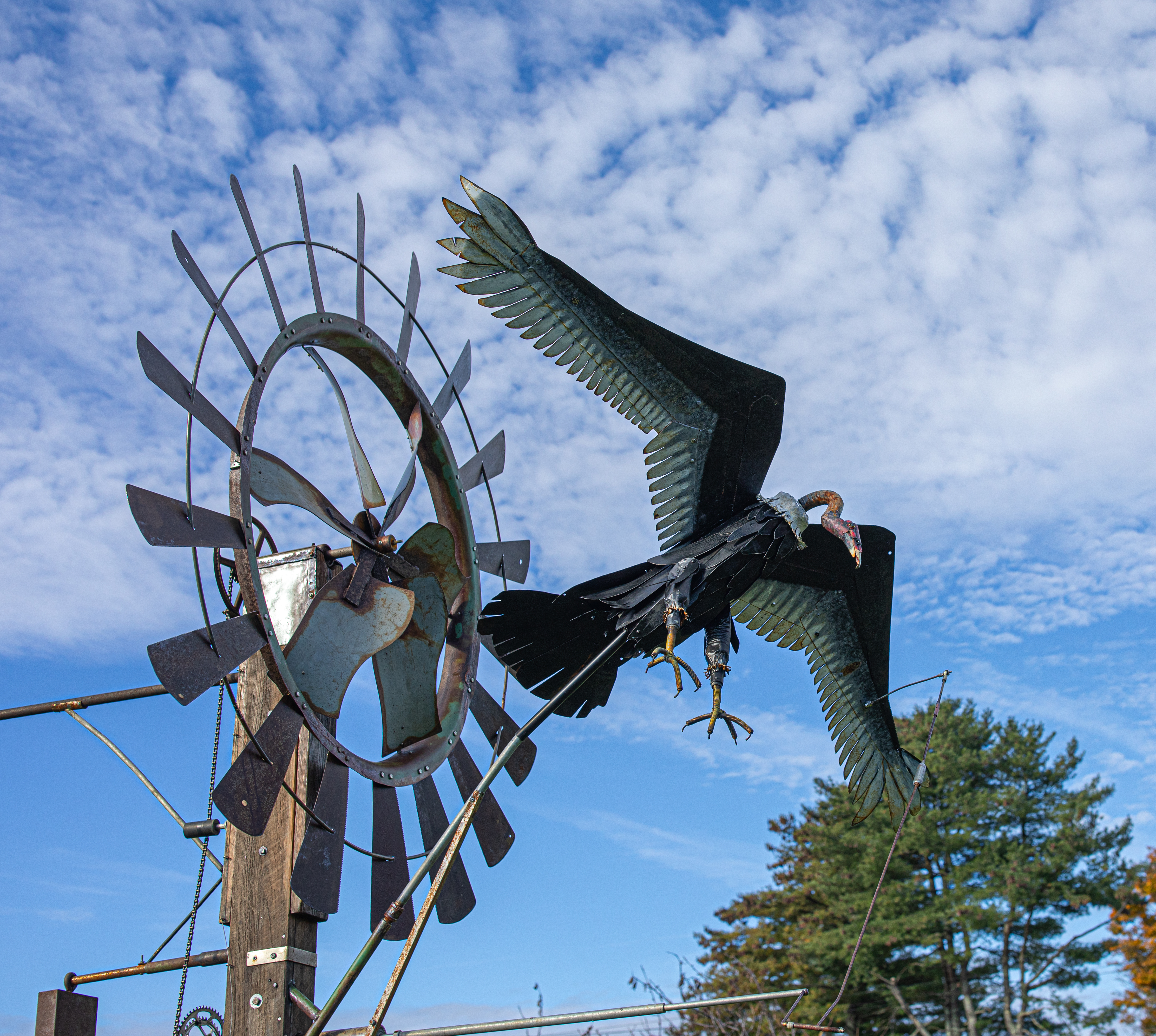
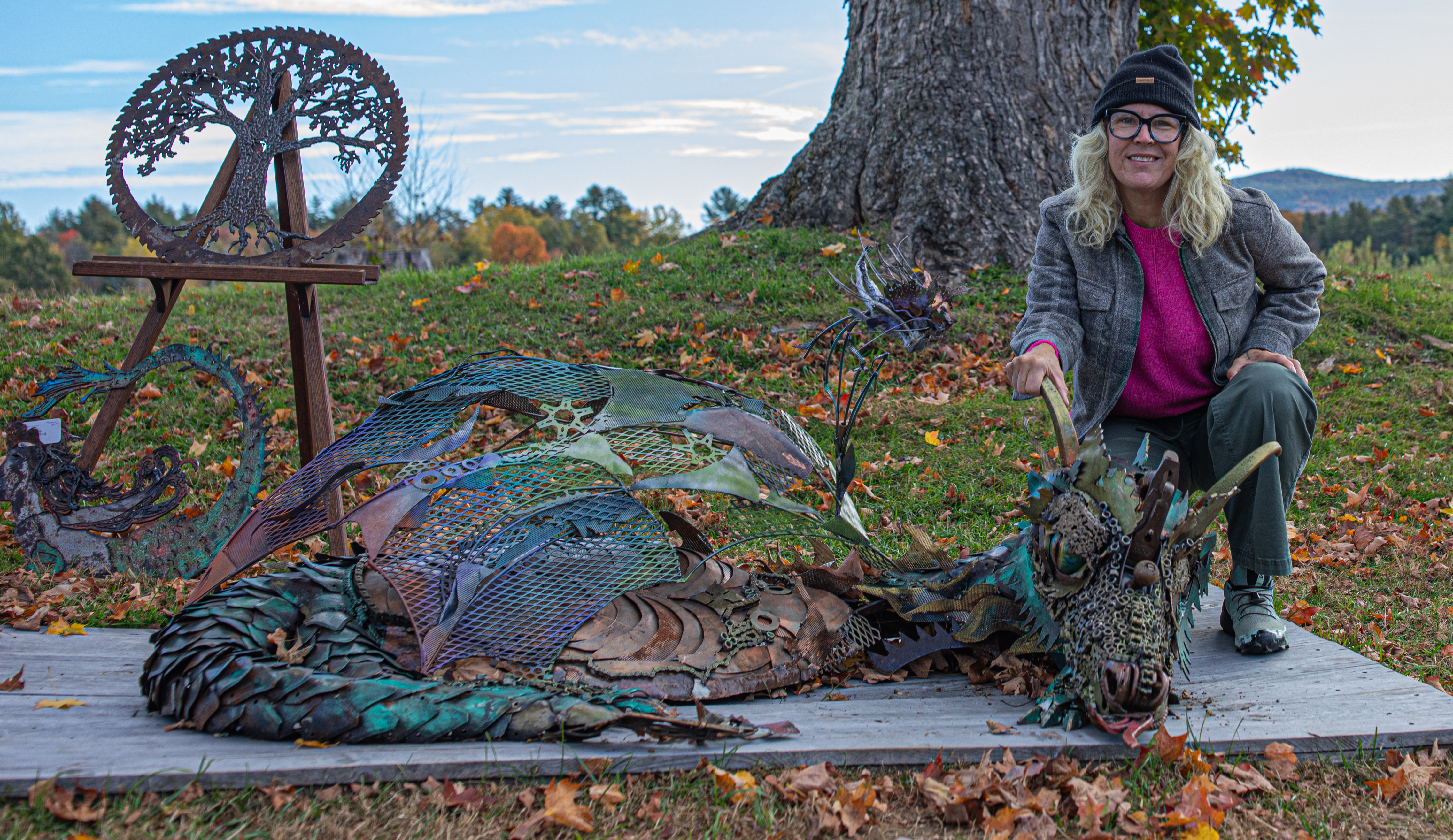
“Coming Home To Roost” by Easthampton resident Christopher Woodman was inspired by some unsavory looking guests in his backyard. The art installation, which is made of a factory fan hub, multiple hand saws and other found metals and wooden beams, was inspired by turkey vultures. The previous Fall, the trees in Christopher’s yard were the chosen home for dozens of turkey vultures. Christopher was taken by the calamity in their process. He observed that for masters of the wind, they don’t always stick their landings. At one point, Christopher counted 60 buzzards, which was close to 400 ft of wingspan.

When choosing a focal point for his piece, the vulture idea hit a lot of themes for Christopher. He especially liked using discarded parts and appreciated the balance of nature and renewal. He also wanted to show the ominous and foreboding specter of the future.

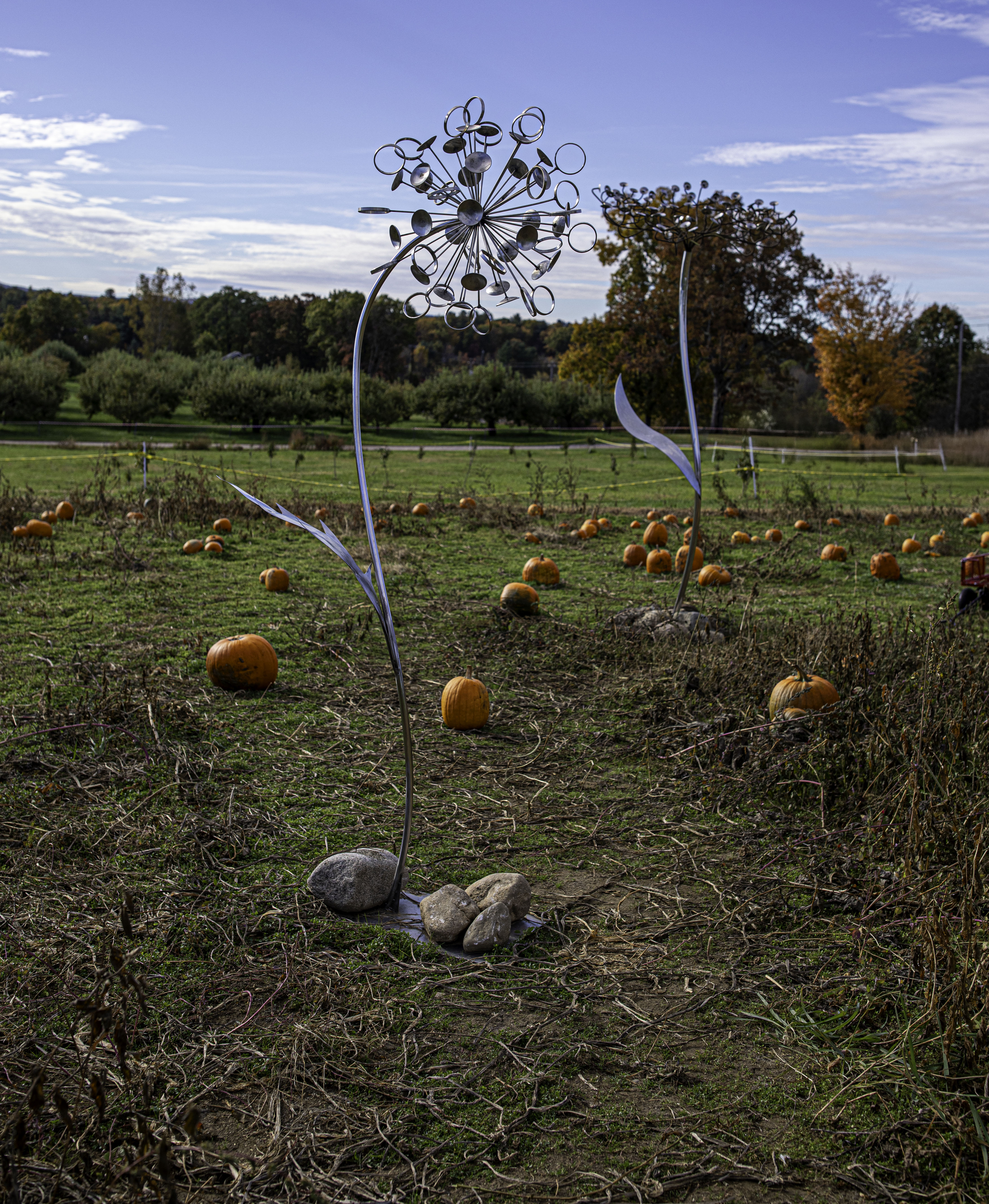
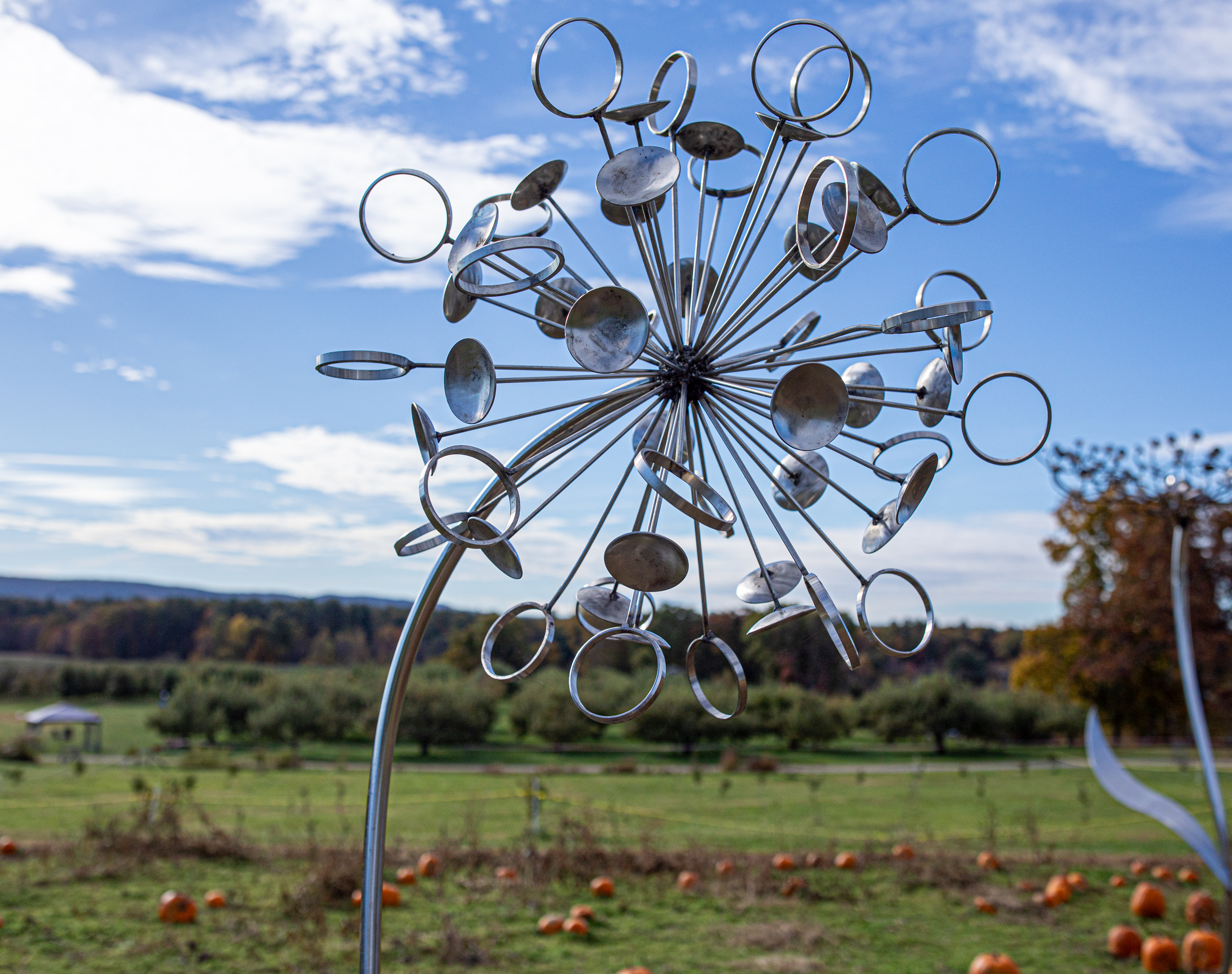
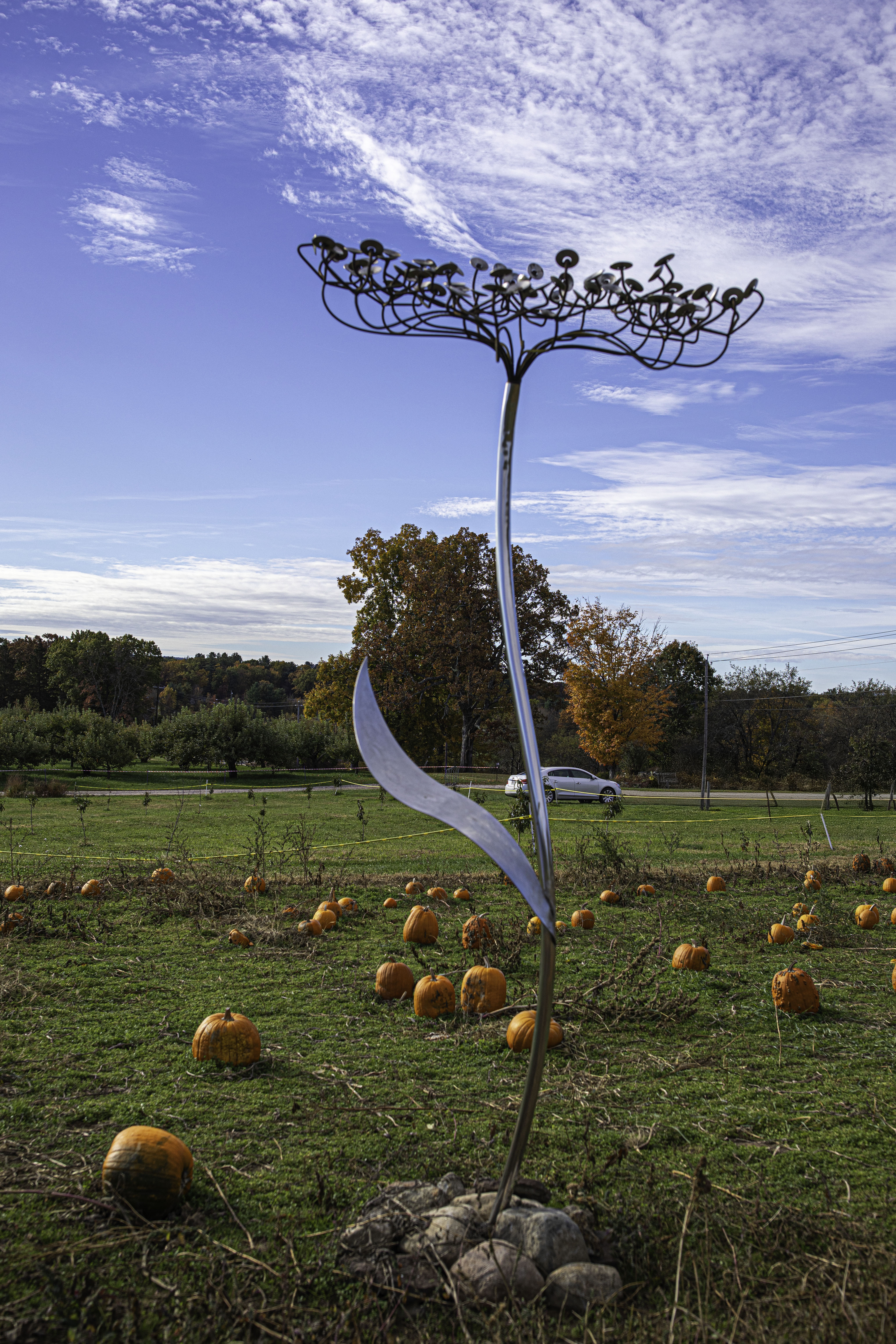
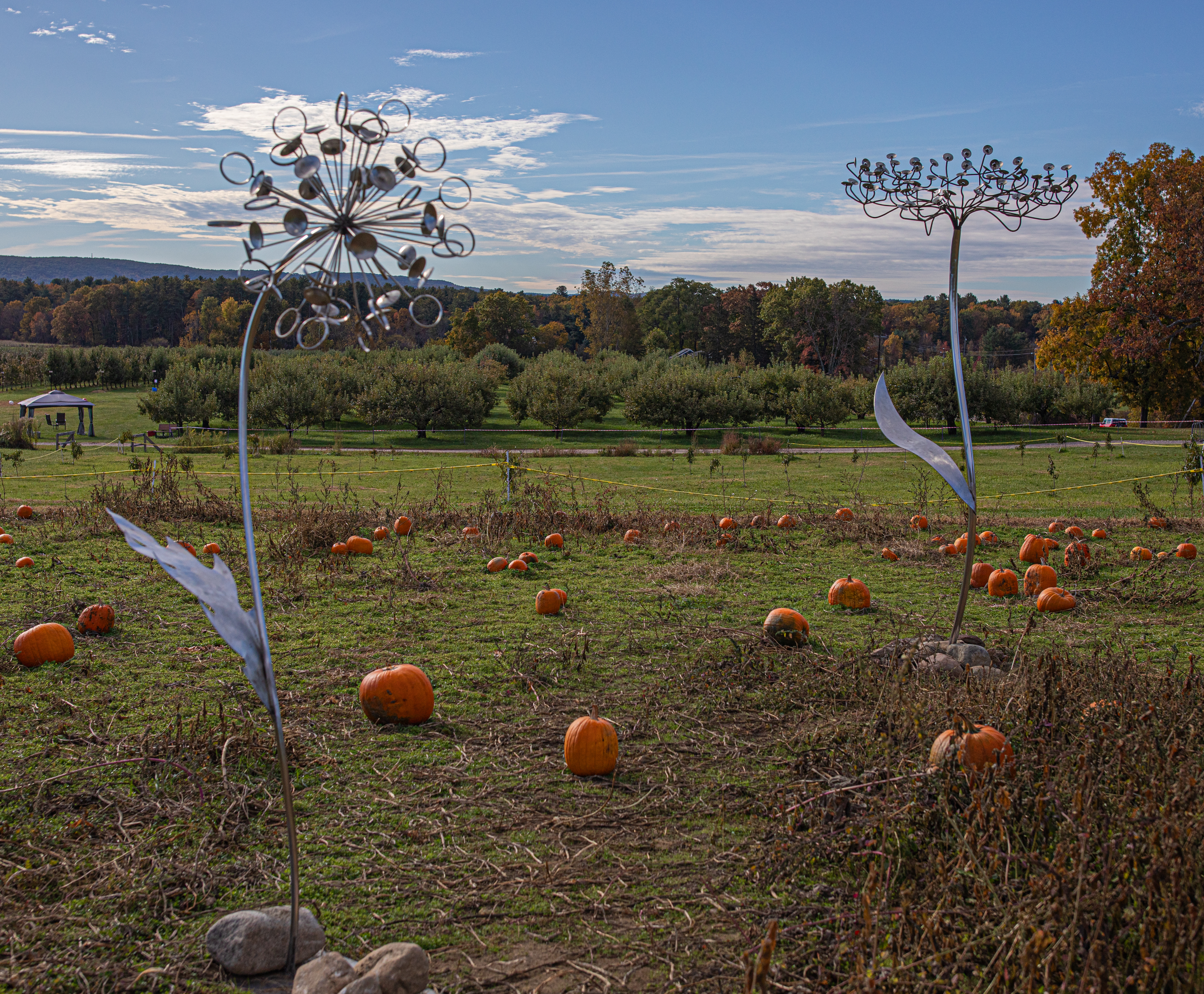
Gints Grinbergs of Dedham, MA created “Queen Anne’s Lace” with stainless steel tubing found metal rods, bent landscape spikes and cast off stainless steel washers. It strives to depict forms and structures found in nature as it reaches for the sky, turning it’s head towards the sun. The backdrop of foliage and pumpkins made the installation look prettier.

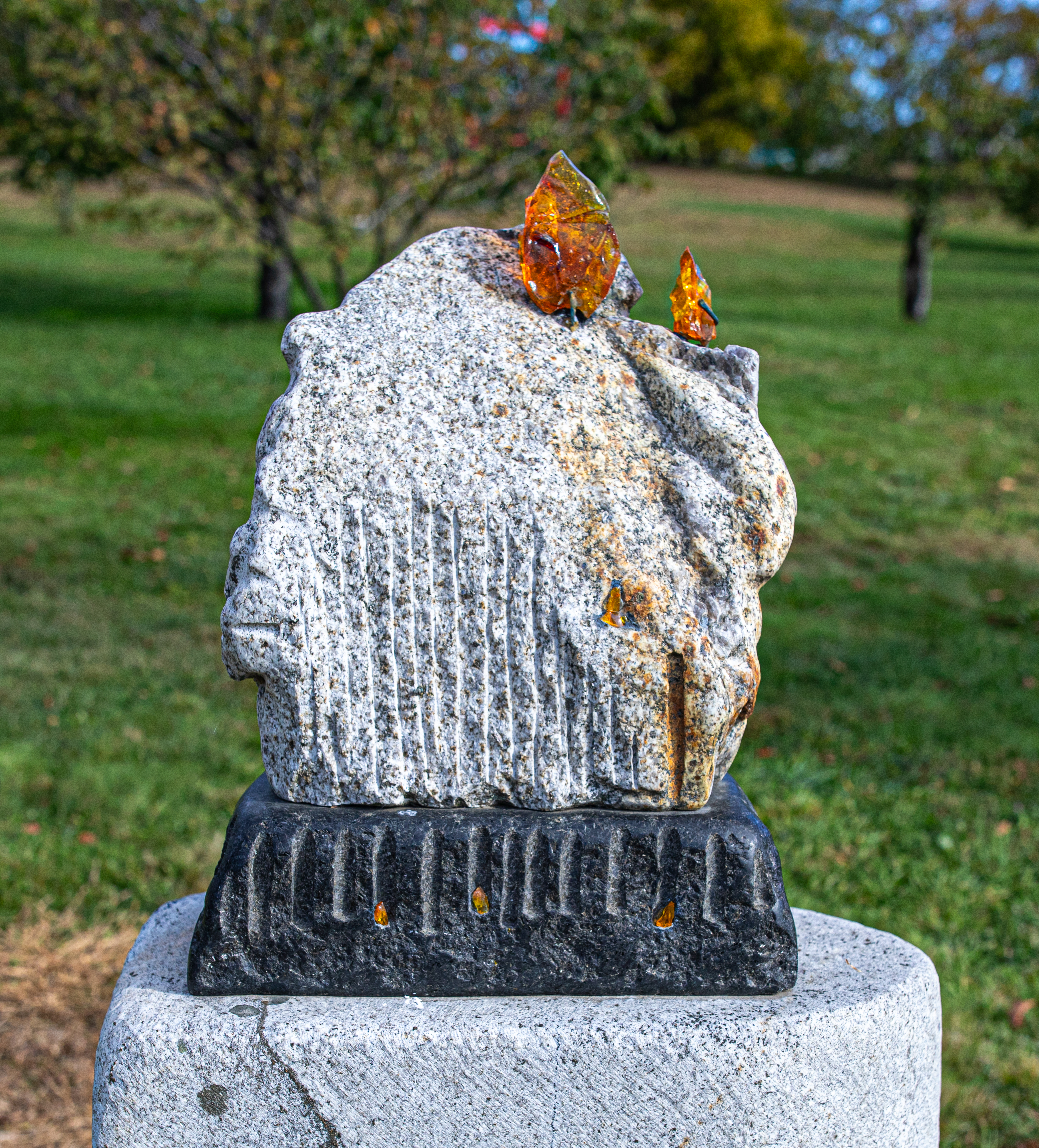
“Three Small Flames” by Antoinette Schultze of Eliot, ME, is the next art installation. The work of art, which was made of granite and glass, was a work of nostalgia. It represented her nostalgia for place, specifically home, with the candles burning. The three small flames can be found at the bottom of the granite installation.

Antoinette began her art career in 1961 when she auditioned for an Impressionist class at Columbia College in New York. Antoinette learned that an artist can express their feelings, not just copy nature. The materials and process of creating her sculptures are a manifestation of herself. Antoinette can carve stone and wood, coupled with glass into a marriage seeking light. Although the work is dirty, time consuming and laborious, Antoinette finds it to be meaningful and rewarding. The work brings order and insight into what she calls a chaotic world. Calling herself the “singing sculptor”, Antoinette said she often sings and speaks to herself as she works.

The next sculpture “River Siren” by Joshua Ruder of Greenfield, MA, is a little unusual. It is interactive. The sculpture made of stone, metal and concrete has a stone attached by a string to the other side of the sculpture. And yes, it does make a “siren song sound.

Joshua found the perfect curved contour in the stone while he was wading in a river. He felt compelled to carve the stone and continue the process of carving that nature had begun.

“Rebirth” by Gregory Didyoung of Wilmington, VT, is a sculptural interpretation of the phoenix myth. Reborn from its own ashes, the phoenix symbolizes renewal, resurrection and immortality. The sculpture was made of found metal and reused and reborn into something new. Cracking the nested egg into two halves the phoenix rises and flaps his wings for the first time.

While the meaning of “Erebus” by Trisha Moody may seem straightforward, it has a deeper meaning. The sculpture which is made of steel, iron and recycled tools is actually a commentary of human beings. The sleepy dragon which looks beautiful and dangerous, is similar to how we are often asleep and how we all react differently when woken. The dragon is playfully being tapped by the fairy to join her in the woods. It shows how two very different creatures can play together. It also shows how we have the ability to act together in a community and how we can choose to be the gentle giant or the fire thrower.

Brendan Stechini of Belchertown, MA, described his sculpture as being like a scientific instrument. He described it as being like a lighthouse with a round mirror that projects and reflects light, turning 360 degrees, oscillating like a weathervane. The mirrors on the outside legs capture the sky and the tops of the trees. The mirrors on the inside reflect the ground and our footprints. At the top of the sculpture, the steel rod points to the heavens. Brendan suggests looking at the sculpture with “new eyes” and “holding a mirror up to it” This sculpture represents how we can look at the same facts from an alternative perspective.

Malcolm White of Leeds. MA made some impressive sculptures all out of grape vine. Perhaps you heard about them through the…well you know.

Malcolm’s installations consisted of Pegasus the hippo, Long Tall Sally the giraffe and Atlas the elephant.

Malcolm has two objectives for his work: making a connection and bringing some joy to those who view his work. Malcolm uses material found in the landscape where he lives and which will decay into the same landscape without harm to the environment. He feels joy and a connection to the environment when he is making his works of art. If viewers feel the same connection and joy, Malcolm feels he has succeeded in his goals.

Malcolm was inspired by Greek mythology when making these sculptures. For instance, Pegasus was a flying horse from Greek mythology and hippos, or as the Greeks proclaimed them “river horses”, fly about in the watery world. So, the hippo is worthy of the name Pegasus. If you have seen a hippo gracefully swimming underwater you can see why he named it Pegasus.

Stay tuned for parts 2 and 3 (and maybe 4)!


Roots | Raíces (Salem, MA)

Date Of Visit: September 28, 2025

Location: Peabody St, Salem, MA

Cost: Free

Parking: There is both metered parking and parking garages and lots in the area.

Summary: 17 new works of art adorn the walls on Peabody St in the “punto” area of Salem, MA

Salem, MA, is a diverse community . And the “El Punto” (“The Point”) neighborhood is proof of this diversity. Comprised largely of Latinx and other new immigrants, El Punto is the sight of many art projects by the Punto Urban Art Museum (PUAM), a program of North Shore Community Development Coalition.

The Roots/Raices mural art project is meant to reflect on the layered histories of place and people. The aim of the project is to honor both the original inhabitants and the newer generations who have made Salem home.

The project, which is presented in partnership with Salem 400+, Salem Maritime National Historic Site, and the Peabody Essex Museum, unites arts, history, and community to honor Salem’s past while envisioning its future. Selected artists received a $1,000 stipend to create 8-by-8-foot mural works that will become part of PUAM’s semi-permanent outdoor collection. Artists were asked to share their stories and to seek out and bring together their different experiences and beliefs.

These murals are usually painted every year or few years. In fact, I photographed the last group of murals there which were part of a project called A Dream Called Home. The works of art do not have titles. But, most of the artists left their Instagram or other contact info in the artwork.

From the Old Salem Depot, the old Salem train that used to run through the center of the city, to the famous lighthouse (Fort Pickering Light) and the trolley which takes its passengers past all of the historical sites in Salem, some of the works of art pay tribute to parts of Salem and its history.


Muñeca Sin Rostro (Palmer Cove Park, Salem, MA)

Dates Of Visit: June 29 and Sep. 20, 2025

Location: Palmer Cove Park, 38 Leavitt St, Salem, MA (about 40 minutes northeast of Boston, MA)

Cost: Free

Universally Accessible: Yes

Dog Friendly: Yes

Parking: There is a small parking lot at the park for about 7 cars. There is also local on street parking and several parking lots and garages in the area.

Website: Muñeca Sin Rostro

Summary: 7 “faceless dolls” (Muñeca Sin Rostro) have been installed at Palmer Cove Park and Pioneer Terrace, Salem, MA. And, a special path has been installed to view the statues and reflect.

The Punto Urban Art Museum (PUAM) have found a way to mix art with an education. The seven 12 foot fiberglass statues were painted by a group of artists who used the statues for expression and storytelling.

The ceramic Muñeca Sin Rostro (“faceless dolls”) were originally created by Liliana Mera Lime in 1981. Liliana, a pottery worker in the town of Moca, a province in the Dominican Republic, wanted to depict a small figure of a woman. However, she lacked the tools and molds to make a small ceramic figure. This would prove to be a blessing in disguise. The doll was handcrafted by hand on a potter’s wheel with elements like ruffles, baskets and hats and one distinct feature, or lack of a feature. The dolls all had a head with no facial features. These full-sized dolls, which were originally smaller figurines, have been replicated with each artist’s interpretation and messages.

There are 7 statues at Palmer Cove Park. I did have a hard time finding the 7th one on my list. In fact, I had to make 2 visits to find them all. So, don’t forget to go to the area by the public garden to find them all!

Another special part of the park is a walkway that was installed earlier this year as a memorial to those lost from Covid-19.

Salem

The first Muñeca Sin Rostro is fittingly called “Salem.” Created by painter and sculptor Ramon Santiago, a native of the city of Moca, Espaillat province in the Dominican Republic, “Salem” is a representation of the city bearing the statue’s name. Ramon said his work of art is dedicated to the hardworking people of Salem. Examples of the hardworking people of Salem can be found not only in elements of people working at a job, in their yards and, most importantly, with their families. The various bold colors are meant to represent how diverse and vibrant the city is.

Los Ninos Y El Carnaval

“Los Ninos La Carnaval” represents children and their participation in the Dominican Republic’s carnival. The statue, made by Luis Rivera, a native of San Cristobal, displays the most representative costumes from different regions of the country: the Lechones of Santiago, the Ecol Devils of San Cristóbal, the Devils of La Vega, the Plátanus of Cotuí, and the Taimácaros of Puerto Plata, among others. The flowers represent the joy of the Dominican people. The flowers symbolize the diversity and racial mix that define us as a nation which is a fusion of Indigenous, African, and Spanish heritage. A graduate of the Universidad Autónoma de Santo Domingo and the Escuela de Diseño de Altos de Chavón, Luis has developed a versatile artistic style that spans sculpture, stained glass, jewelry, and carnival costumes. Luis is the co-creator of Urbelconica, a project that has helped reimagine the traditional Muñeca sin Rostro, beloved Dominican symbol of resilience and shared heritage, into large-scale public sculptures brought to life through the talent of many Dominican artists.

Oswald’s Ocean

“Oswald’s Ocean” was created, or at least conceived, by a 4 year old; Oswald. The artist, Yixuan Zeng, was captivated while reading Oswald’s design for the doll. Yixuan said the faceless doll designs reminded him of Chinese porcelain figures. Yixuan was inspired by Oswald’s passion for the color blue and sea life. He enjoyed making the sea creatures Oswald had described and envisioned the dress as being a dynamic sea scene beneath the waves.

Oswald said he is 4 years old and loves the color blue and sea life. Oswald did contribute beyond designing it. He added blue glitter to the hat.

Mariposa Cibaeña

Angela Gonzalez, a Dominican artist, wanted to highlight Las Hermanas Mirabal (more commonly known as the “Butterfly Sisters”), the sisters who fought for women’s rights. They were the only women who stood up to the last Dominican dictator. Angela chose to feature the Dominican flag as the main background design. She also added the national plants and, of course, a butterfly.

Angela said her doll represents the flavors, music and nature of the Dominican Republic, The bottom of the dress is made from plantain leaves which were used to make pasteles en hojas, a leaf-wrapped plantain pocket. You may have to look closely, particularly at the bottom of the statue, to see other objects that represent the Dominican Republic such as tropical plants such as coconut, bananas, sugar cane and eggplant. Musical instruments and other foods are also included.

Harmony

The artist for this statue, Vicky Ortega, said her doll was meant to serve as a celebration of those who represent the multiple cultures and as an homage to the strength of our multicultural community. The statue illustrates her own cultural blend by combining traditional Mexican dress embroidery with features of the American flag. Vicky wanted to express the strength of a new identity that draws from multiple traditions.

As a Mexican-American, Vicky often felt she didn’t belong in either culture. However, over time she learned to embrace both her heritage and nationality which helped shape who she is.

Lift Each Other Up

Created by Sheila Farren Billings, My Muñeca, “Lift Each Other Up”, is meant to express how language can either divide us or bring us together. Sheila says it is up to us to use language wisely and well. Sheila included quotes from remarks that neighbors made at a meeting about the project, with translations of course.

La Reyna De La Cosecha

The artists for this statue (Rigo Peralta and Melanio Guzman), said this sculpture honors the deep roots of agricultural labor as well as the cultural legacy of muñecas de tusa, traditional Honduran corn husk dolls. They said the corn husk dolls, which Melanio’s grandmother used to make and sell at Honduras flower festivals, is a reminder of the hard worker of the field laborers. It was fittingly located by the community garden.

Along the newly paved walkway, there is a memorial remembering the 140 Salem residents who lost their lives from Covid-19. The walkway is meant to give people a space to wander, reflect and enjoy the statues and park. It also gives people an easier and more accessible way to enjoy the park. It’s hard to imagine the park was just all grass without paths to allow people an easier access to move around. Benches give visitors a chance to sit and reflect while they enjoy the scenic views of Palmer Bay Cove.


Big Hoops To Fill (Rose Fitzgerald Kennedy Greenway, Boston, MA)

Date Of Visit: June 15, 2025

Location: Rose Fitzgerald Kennedy Greenway, Boston, MA

Cost: Free

Dog Friendly: Yes

Parking: There are several parking lots and garages in the area. Metered parking may also be available.

Website: Big Hoops To Fill

Summary: There is a new multi-use art installation on the Rose Fitzgerald Kennedy Greenway

“Door knockers” or swings? That is what many people have been been asking themselves when they see the new art installation on the Rose Fitzgerald Kennedy Greenway.

The answer is both!

The artwork, “Big Hoops To Fill”, features two “door knocker” earrings made of steel, resin and fiberglass composite, epoxy paint and polyurethane.

But, this is not just a work of art. People use the “door knockers” as a swing. In fact, that was the highlight of the art. Many people, both young and older, enjoyed swinging on it. This dual function of the art has made it one of the most popular attractions on the Greenway.

According Ja’Hari Ortega, the Boston-based sculptor and jewelry-maker, the “door knockers”, which are cast from fiberglass with steel interior supports, are reminiscent of swings she used to swing on as a child.

The art is also a cultural statement. According to Ja’Hari, this work of art draws upon the cultural weight of bamboo hoop earrings which are considered an iconic style of jewelry worn by many women of color that originated from early hip-hop culture and fashion. Artists such as Salt-N-Pepa, MC Lyte, Roxanne Shanté, and Queen Latifah (they were definitely on my playlists or “mix tapes” when I was younger) have been known to include these types of ear rings in their fashion.

According to Ja’Hari, “Big Hoops to Fill” creates opportunities to “heal one’s inner child, cultivate and encourage healthy multigenerational relationships, and foster confidence in one’s identity and culture.”

“Big Hoops To Fill” is set to be on display along the Greenway Until October, 2026. So, stop by for a swing!


Boston Bricks (Boston, MA)

Date Of Visit: June 15, 2025

Location: Winthrop St, Boston, MA

Cost: Free

Dog Friendly: Yes

Universally Accessible: Yes

Parking: There are several parking lots and metered street parking in the area

Summary: Dozens of bricks representing people, places and things related to Boston (and some of the surrounding areas such as Cambridge) are installed on the ground of the alley way on Winthrop St.

Watch where you’re stepping on Winthrop St in Boston, MA! You may be stepping on history.

The roughly 100 bricks scattered along Winthrop St (don’t worry, I won’t include them all), which were created by sculptors Kate Burke and Gregg LeFevre in 1985, depict something related to Boston. The alleyway is easy to miss. So, you do have to pay close attention. It is located between Otis and Arch Streets

One of the bricks, which were funded by the Edward Ingersoll Browne Fund, is something any Boston driver can relate to. In fact, I think he cut me off the other day.

Yes, Boston drivers can be animals at times. At least he’s using the “10 and 2” steering wheel method.

Like them or hate them, Boston is also known for its sports teams and sports in general. These bricks represent everything from the Boston Marathon (the longest active marathon in the United States) to the oldest Major League Baseball park in the states (Fenway Park) as well as some rowers and the most winning team (in terms of championships); the Boston Celtics.

This Boston Bruin logo was included in this brick which also contains logos of the MBTA (Massachusetts Bay Transportation Authority, or more commonly known as “the T” in Boston) as well as the logo for the New England Sea Aquarium in the left hand corner. “I can walk like a penguin.” If you got that reference your AARP card is in the mail.

Of course, Boston is a city of firsts. These bricks show off some of the firsts the city may or may not be known for. For instance, did you know the first wooden golf tee was invented in 1899 by Dr. George Franklin Grant in Boston, MA?

Another sports first is the claim to the use of the first baseball glove. Although it is debated (one historical reference states the first “buckskin” gloves, which were more like actual gloves, were worn as early as the 1860s). But, the first gloves that resemble what we use now are said to have been worn by first baseman Charles Waitt in Boston.

One more first represented by the bricks on Brick Alley is the first First Night which should really be called “First Morning” or “Last Night”. But I digress.

Boston held its first (and the country’s first) First Night December 31, 1976. I guess people just went to bed at a reasonable hour before then.

Another first in Boston is the first resident. After all, it had to be someone. And that someone was Rev. William Blaxton (also spelled Blackstone). He moved to what would later to Shawmut Peninsula which would later become known as Boston in 1625.

Since it is an area so rich in history, there were also several bricks dedicated to the history of the city.

This brick could signify a few different battles or clashes in Boston or were part of the “Boston Campaign” of the American Revolutionary War. But, I am assuming this brick pays tribute to the “shot heard around the world” and the subsequent Battle of Lexington and Concord just outside of Boston. I’m not saying who shot first, though.

The first public park is indeed in Boston. Boston Common was established in 1634 by the Puritans to serve as meeting place for public, military and recreational purposes. A lot of effort and care were used to show all of the paths in the park.

These swan boats which are in use every summer in the public garden adjacent to the Boston Commons,. They have been in operation in one form or another since 1877 when Robert Paget, a ship builder in Boston started making them.

Another first is the Boston subway system. The subway system in Boston is the first in this country (the first subway stops were Boylston and Park Street). The first trains began operating in 1898 and I think they’re still in use today. At least it feels that way,

The Boston Latin School, which was founded in Boston in 1635, is the first public school in the country. It has been in continuous operation since it formed on April 23, 1635. And, no, I wasn’t in attendance. I’m not that old.

While the sewing machine is in its earliest forms was not invented in Boston, the inventor of the first practical and commonly used sewing machine was a mechanic from Boston named Elias Howe. Elias invented the first modern lockstitch sewing machine in 1845. The underlying lockstitch design Elias invented became the foundation for most modern day sewing machines and is still used to this day in most sewing machines.

Boston is also known for its many arts and entertainment. These bricks include the POPS (the Boston Pops). Although they’re most famously known for their performances during the 4th of July celebrations on the Charles River Esplanade, they perform on many other occasions at many other venues.

This brick is a tribute to the ballet dancers that perform at the many events throughout the year. But, I will always get Nutcracker vibes when I see them.

The opera is also a staple of the art which is plentiful in the area.

This brass instrument is commonly used in the Boston Pops concerts and at other concerts throughout the city.

The Franklin Park Zoo in Boston, MA, is one of the oldest continuously running zoos. But, not the oldest in the country. The 72 acre zoo opened on October 4, 1912.

Boston is proud of its history and accomplishments. One of those accomplishments championed by President Kennedy, from Boston, was sending astronauts to the moon by the end of the decade, although he was not alive to see it to fruition. This brick shows both the moon and the approximate distance to the moon.

This brick shows some of the most famous people from Boston in their final resting places.

Speaking of final resting places, many of these newspapers no longer exist. A few, like the Boston Herald, the Boston Globe and Christian Science Monitor are still in operation, though.

This historical event was a real mess. The Molasses Flood of 1919 was just that; a flood of molasses. On January 15, 1919, a 58 foot tall and 98 foot diameter molasses storage tank in Boston’s North End burst, releasing 2.3 millions of molasses into the streets. The dark brown syrup is said to have reached speeds of 35 miles per hour and left a 10 foot deep, 100 yard tidal wave that destroyed everything in its path. Twenty one people were killed and 150 more people were injured. Wen the air is just so and the breeze is just right, it’s said you can still smell the thick scent of molasses.

These bricks are representative of the protests and how we have worked to make the world a little bit better.

I never liked tea anyway.

“Yes”. “No.” I wish they’d make up their minds.

The Underground Railroad did include parts of Boston, specifically the north slope of Beacon Hill and other areas in Boston.

The Stamp Act was another political issue that was hotly debated and protested. If only things were still so simple today.

We have a lot of famous landmarks and buildings. A few of them were represented in the alley.

As it is stated clearly on it, this brick is a depiction of the State House in Boston, MA. Yes, the dome is really covered in real gold leaf. And you wonder why we’re so grumpy.

This brick is an artful design of the Old North Church in Boston, MA

The Custom House Tower, also located in Boston, MA, is also on one of the bricks.

Some of the bricks would need a little explaining. So, what’s a “Smoot”!?

A “smoot” is a non-standard unit of measurement (defined as 5 ft 7 inches). This measurement perfectly fits Oliver Smoot, an MIT fraternity pledge from 1958. The fraternity members used poor Oliver to measure the Harvard Bridge in Cambridge, MA (it measured 364.4 smoots long). The fraternity brothers measured him, made him lie on the bridge, marked his full body length and continued the process until they had covered the entire length of the bridge. And I thought I had a lot of free time. The “smoot” has remained a tradition at MIT and a well known landmark (by locals at least). And each year the fraternity repaints the yellow markings.

Another brick that may need some explaining is this brick that has “George or Paul?” No, not those George and Paul. There are two statues in Boston of two pretty famous people. One statue with George Washington on a horse is in the Boston Public Garden. The other statue is of Paul Revere, undoubtedly on his ride to warn us all about the British, is located in Paul Revere Mall in Boston’s North End.

This may seem like a pretty straightforward design on the brick below. It is the Longfellow Bridge which spans the Charles River and connects Boston’s Beacon Hill to the Kendall Square area of Cambridge, MA (or vice versa). The bridge has an interesting history and background. The S and the P are meant to represent “salt” and “pepper” as it is also known as the “Salt” and “Pepper” bridge because the shape of the central towers on the bridge resemble salt and pepper shakers. Great. Now I’m hungry.

When it was originally built in 1845, the bridge was named the West Bridge. It was rebuilt in 1906 and eventually it was named the Longfellow Bridge after a certain writer penned a poem about the original bridge (West Bridge) entitled “The Bridge.”

These two seemingly random creatures actually have a very close connection to our history. They are both located on a very old and important historical building; the Old State House. Located on Washington St in Boston, the original State House is also near the site of the Boston Massacre. In any event, this lion and unicorn are located on the exterior of the building near the roof. These are the same figures used in the coat of arms for the United Kingdom which are reminders of its past.

These are only roughly half of the bricks on the alleyway. So, there are many more for you to find on your own! Just don’t forget to look down!


2025 Salem Arts Festival Part I (Salem, MA)

Date Of Event: June 6-8

Location: Salem, MA

Summary: Artists from all over the Salem (MA) area showed off their artistic abilities at the 17th annual Salem Arts Festival.

As summer is winding down, sadly, it’s true, I thought it was the perfect time to post photos from the annual Salem Arts Festival in June of this year! Ok, I should have posted them earlier. But, it’s been a busy summer! And I plan to show off more photos from my busy summer soon!

The 17th annual arts festival featured art and artists from all over the Salem, MA, area.

The theme for this year’s festival was Hissstory. As the sign below states, the hissstory project repurposed banners from previous events in the city. These repurposed parts were used to form a very long snake! Citizens of Salem were encouraged to create their segments of the snake which was displayed on Front St; the staging area for the performers. Recycling, or repurposing, at its finest.

The festival ran from June 6th to 8th. But, because of the rainy weather, I only attended on the 8th of June.

Since there was so much art and entertainment at the festival, I have decided to post this blog post in 2 parts. This post will include the popular “Mural Slam” as well as some of the dancers and musicians at the festival.

Without a doubt, the main event of the festival is the mural slam. Twelve artists painted uniquely creative works of art.

The murals weren’t finished until later in the day after I left. So, I stopped by the next weekend to photograph them when they were done. Plus it’s fun seeing how some of the murals evolved. At least it’s fun for me. Maybe I need to get out more.

Paige Doyle-Elwell

Howie Green

Colomba Klenner

Jess “Pickles” Clark

Max Pro

Daphne Powers

Bruce Orr

Naijah Nine

Caoin O’Durgy

Sarah Egan

Jennifer Wackerle

Bobbie Smith

There were additional murals and other works of art that were not part of the mural slam. The elephant was made by Polyvios Christoforos for the 2018 Salem, MA, mural slam. Bonus points if you can name all of the 4 buildings in the painting with the homes.

But, the art wasn’t just the murals and in the old town hall. There were also musicians and dancers. Matt Savage Groove Experiment kicked off the festivities on the second day of the festival. Matt is the keyboard player and composer for the band.

One of the more interesting and creative parts of the festival were the dancers. There were tap dancers.

But, the most interesting dancers were the interpretative dancers.

I hope you join me in part 2 of my blog post from this event which I will post soon!