As part of the 10 year anniversary of the Rose Fitzgerald Kennedy Greenway, the workers at the Greenway Conservancy planned a very colorful event. Thirty dancers frolicked along the Greenway while seven different colored lights illuminated the fountains. New lights were installed specially for this celebration.
The event began with a pretty water display. Normally, the lights at the Greenway are white. But, for the first time, colored lights were installed at the Greenway for this special event. This event was held twice earlier in October. But those events weer held during the daytime without colored lights. I thought a night time display would be much more interesting.
After a few words from the creator of the event, Peter DiMuro of Public Displays Of Motion, there was a pretty fountain display.
Interpretive dancers began moving along the grassy greenway.
The highlight (no pun intended) of the event, was when the dancers made it to the brightly colored fountains.
The dancers, aged 14 to 75, were equipped with umbrellas while they danced along the fountains. They creatively used the umbrellas and light to make some very pretty colors.
There’s no word on whether the Greenway will conduct another display like this. But, if they do I will be there, umbrella in hand.
This one was particularly challenging to photograph. I used a higher than usual ISO (between 300 and 1,000) with a fast shutter speed (500 and higher) to capture the water as it shot up in the air and the dancers. While I did have a flash I used it sparingly. For one, I think the flash was frowned upon giving the fact the darkness mixed with the light from the fountains made the event so pretty. I also think it wasn’t necessary, especially since I could use PhotoShop to bring out the colors. I was also able to hide mistakes by utilizing the darkness ( :
Shoots like this are hard since you want to use a fast shutter speed to capture motion, yet you often want to use a slower shutter speed in low light situations. So, I compensated with a higher than usual ISO to capture as much light as possibly. While it varied throughout the shoot, I generally used a lower F stop (around 4.0).
Summary: Danny Grant performed rope tricks at Dolly’s Honky Tonk at the Big E!
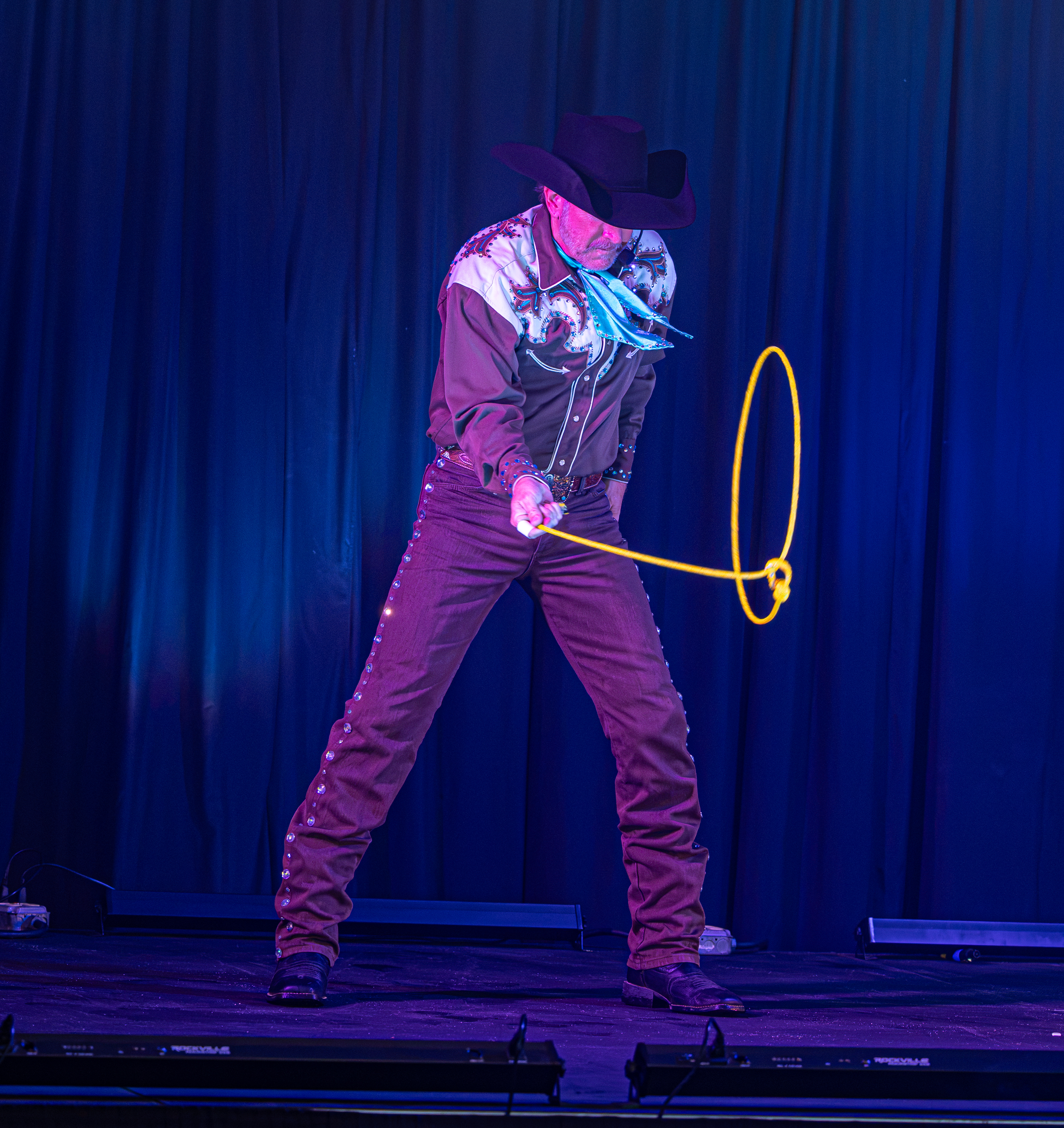
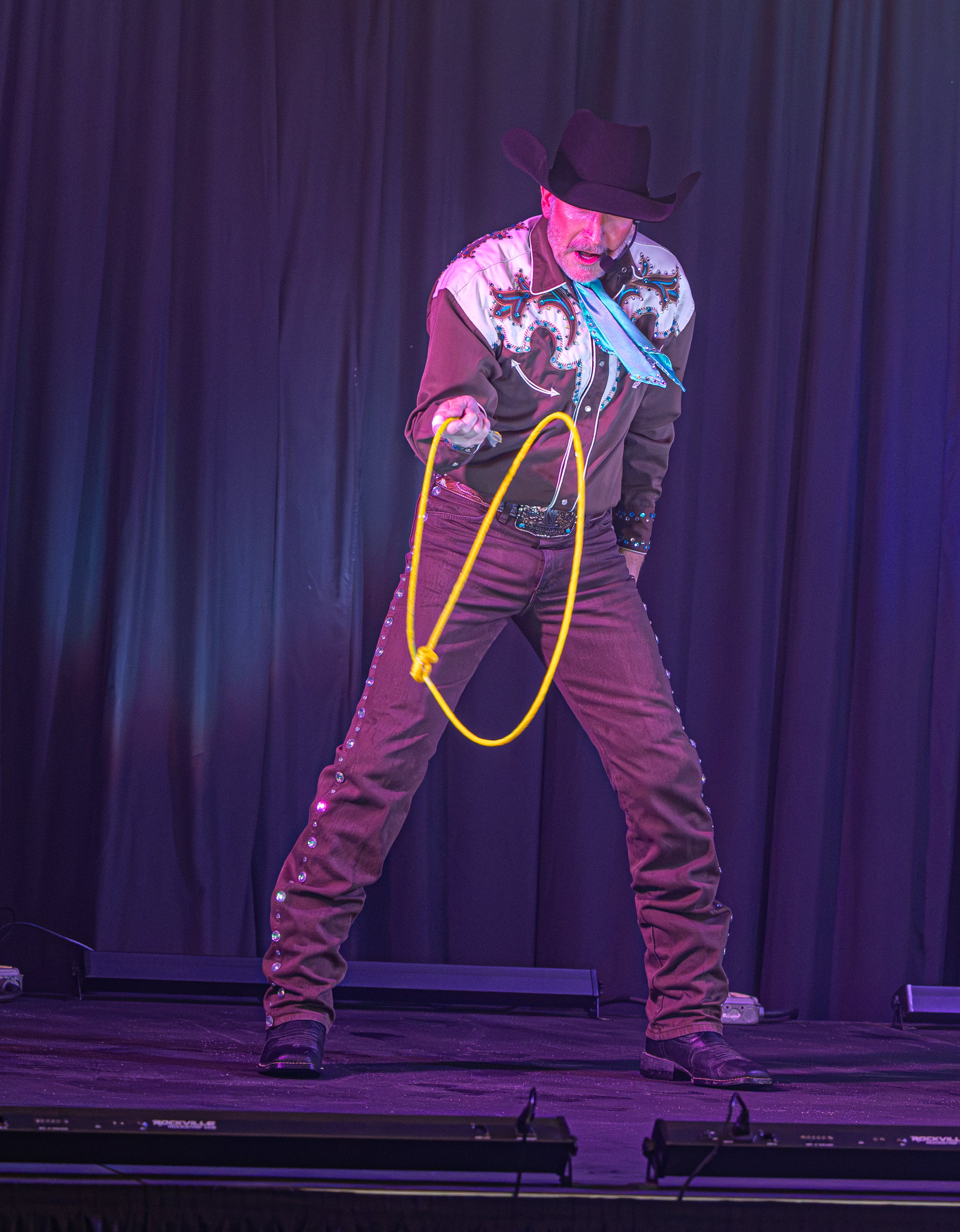
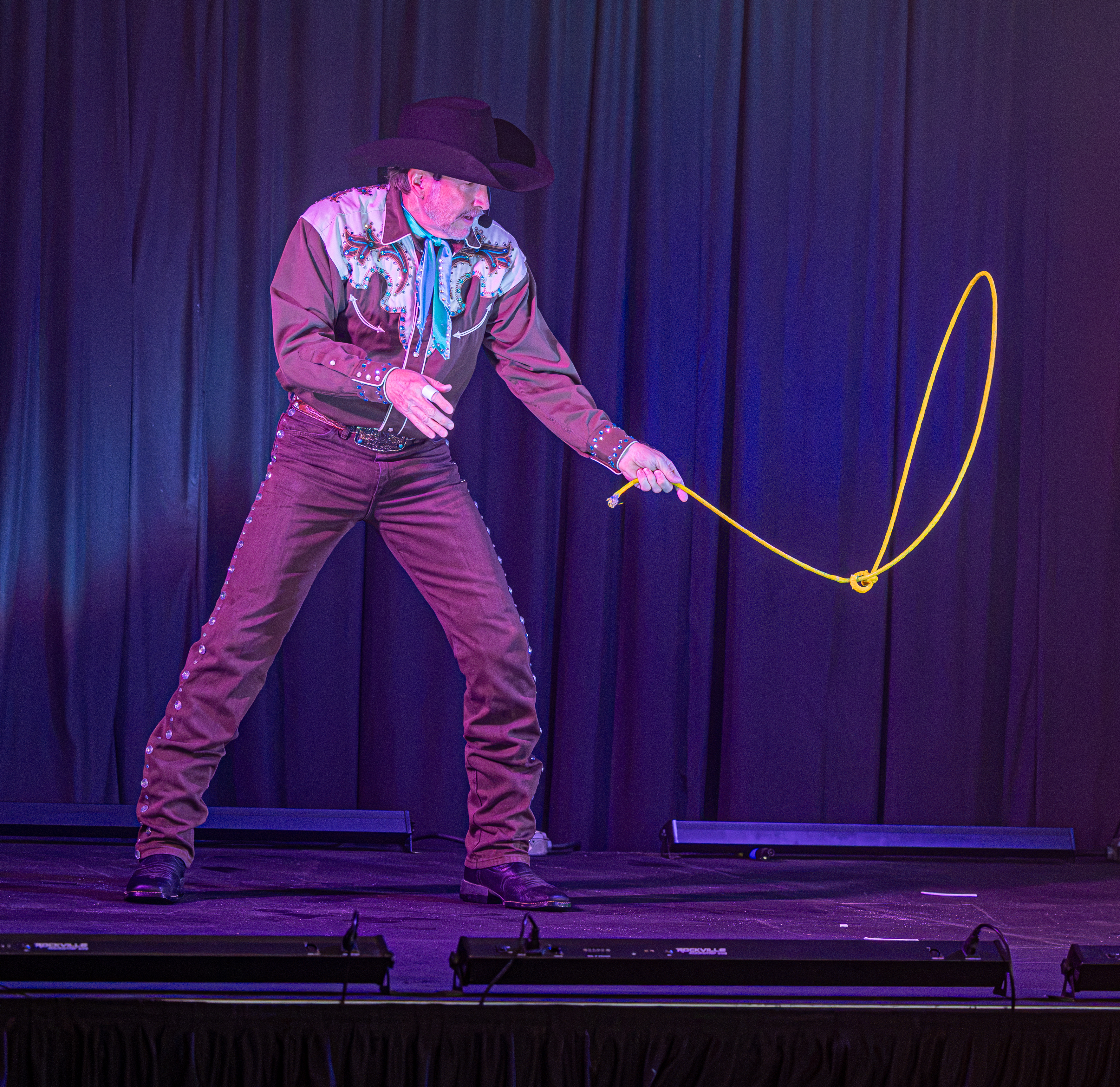
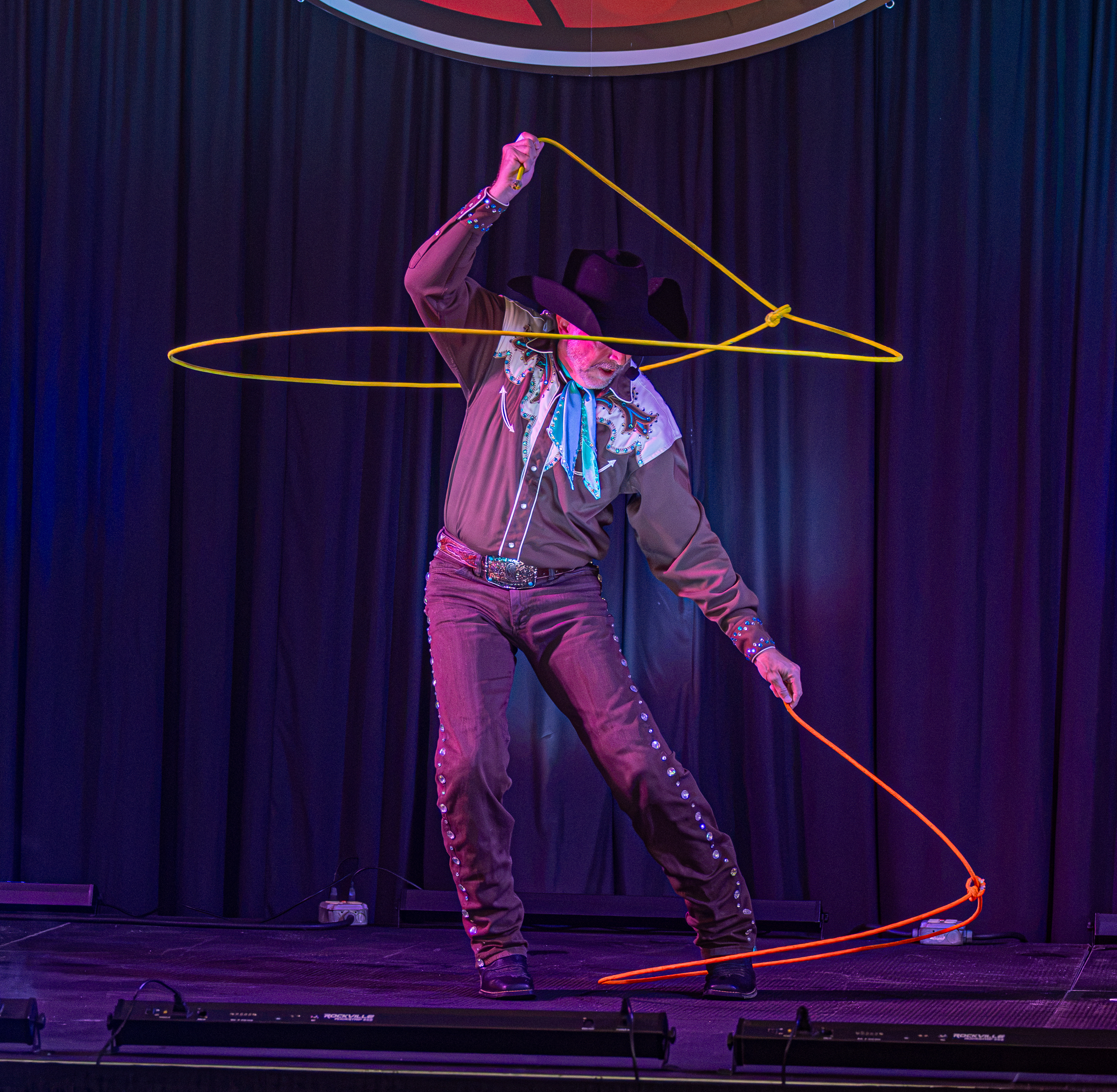
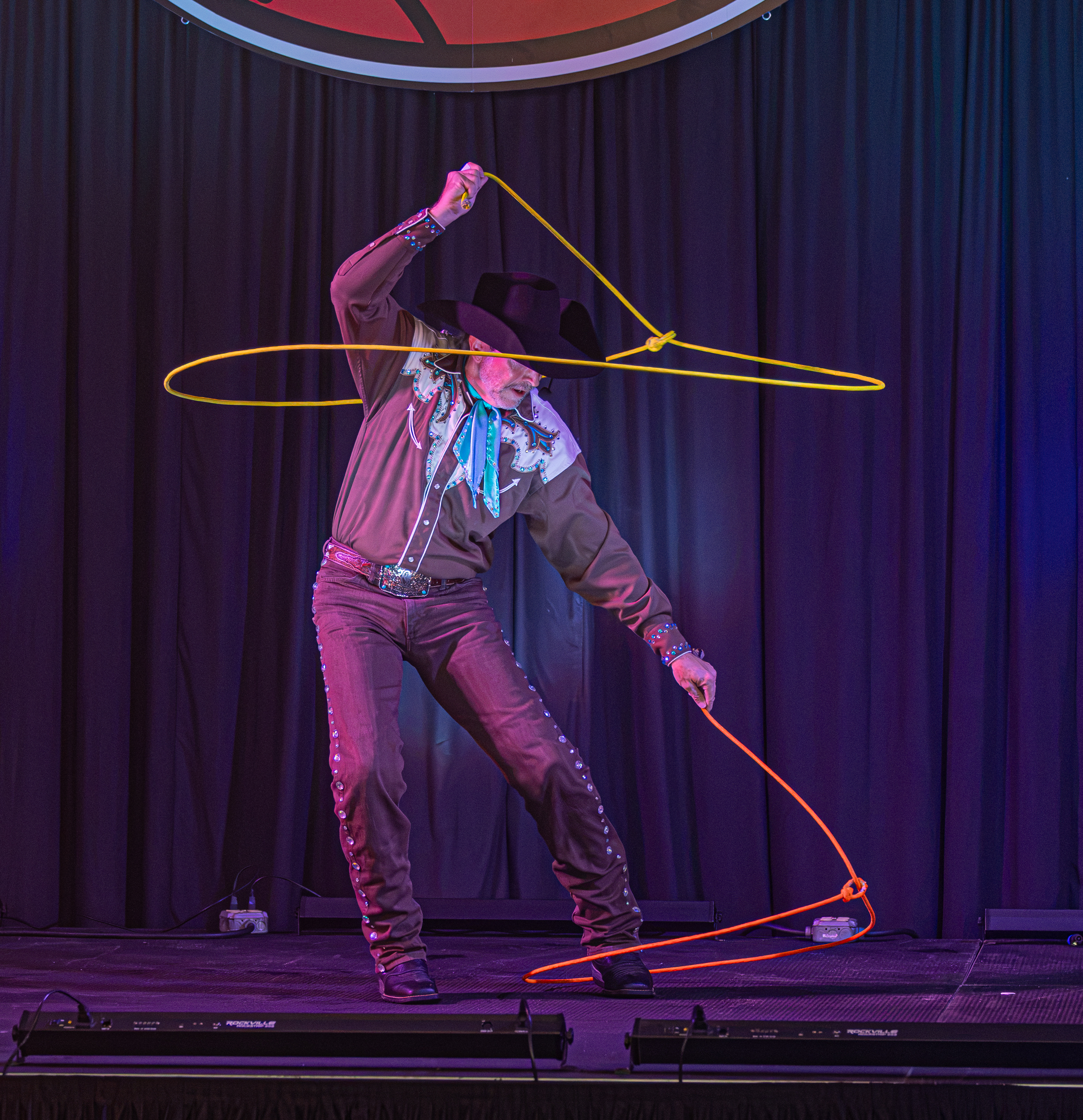
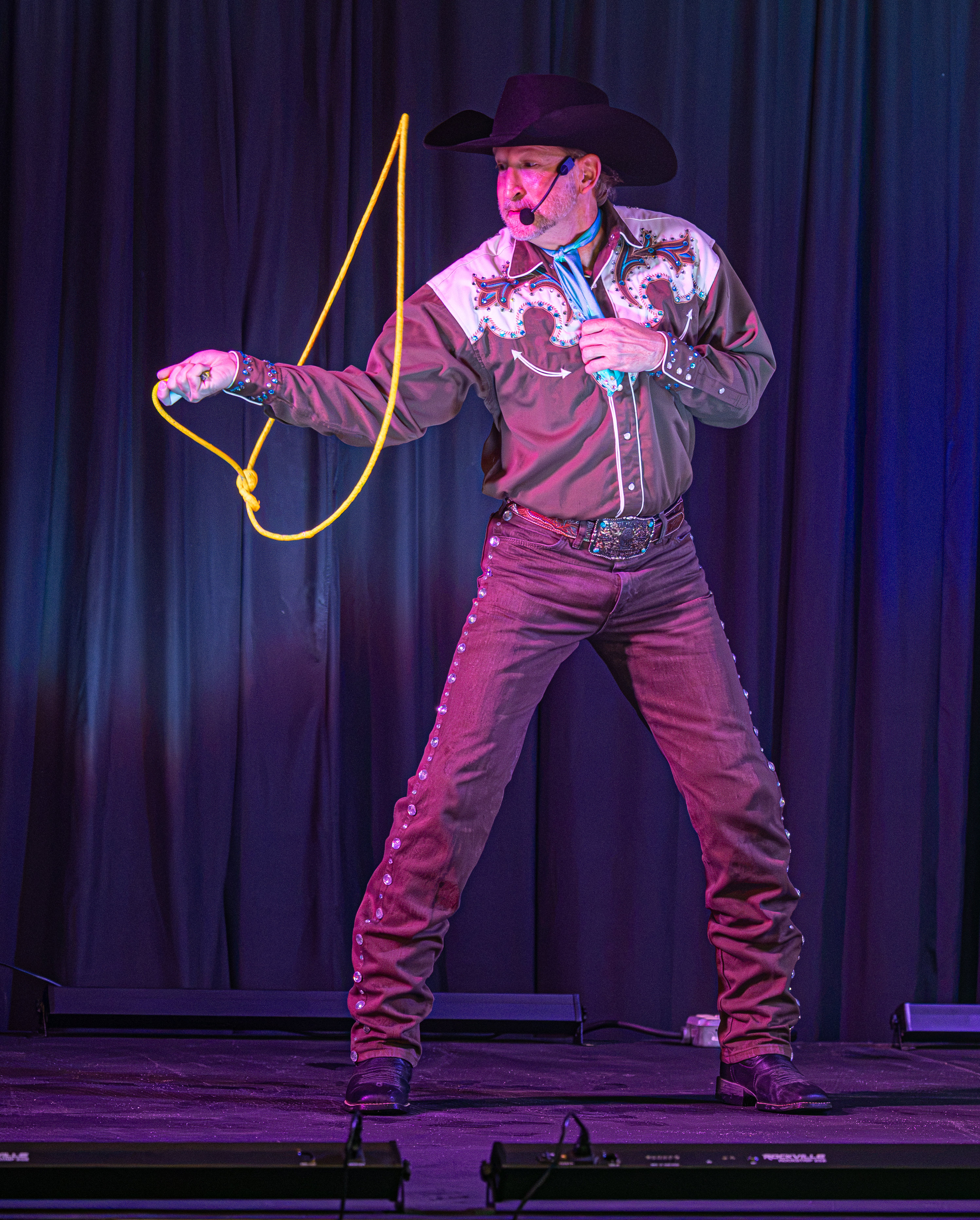
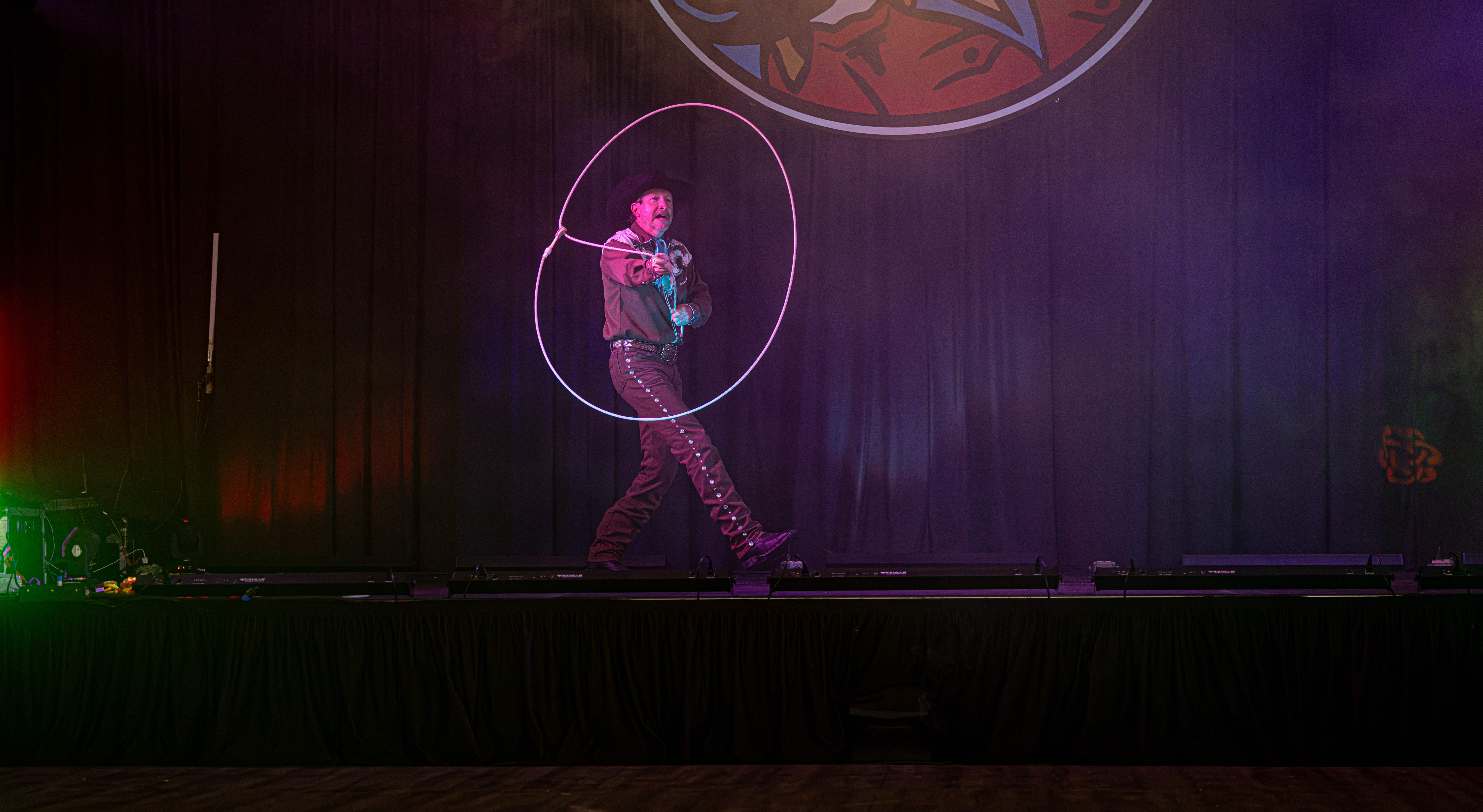
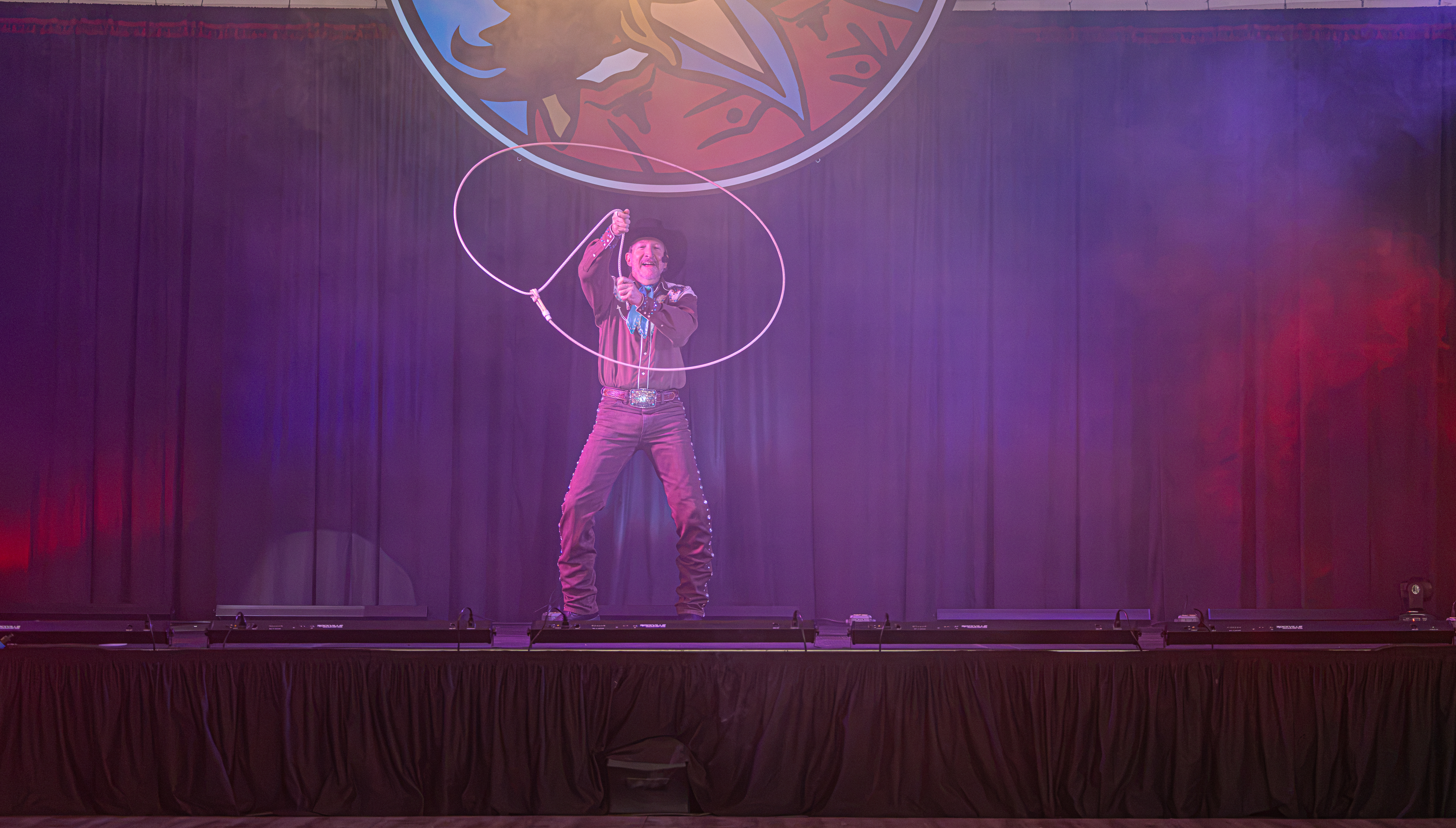
The annual Big E event in West Springfield may be known mostly for its good eats, concerts by big names like Roger Daltrey, the Beach Boys and Ice Cube. But, there is also a wide variety of entertainers with a special set of skills. One of these entertainers is Danny Grant of Cowboy Circus.
Danny adds music and banter to his act.
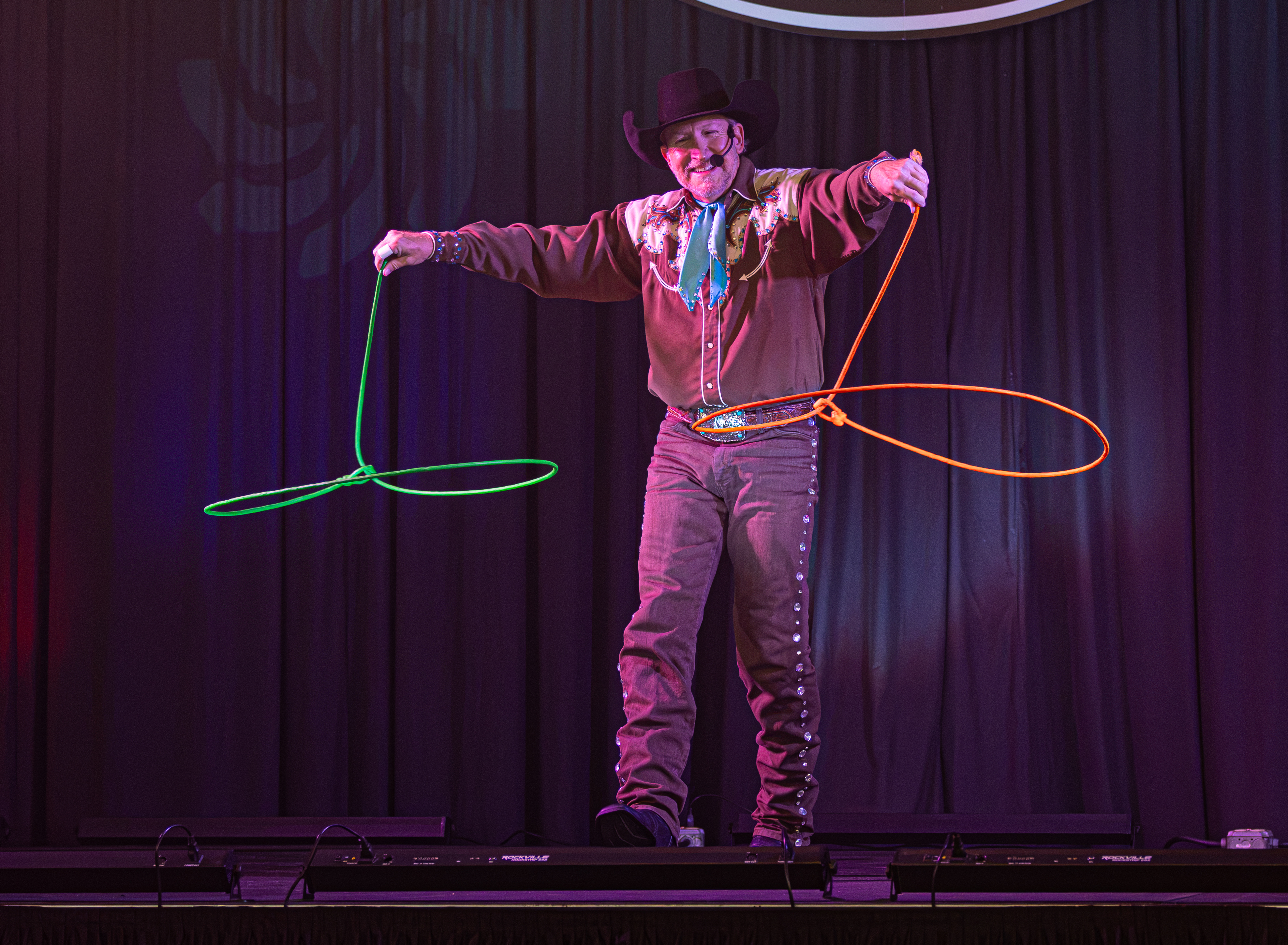
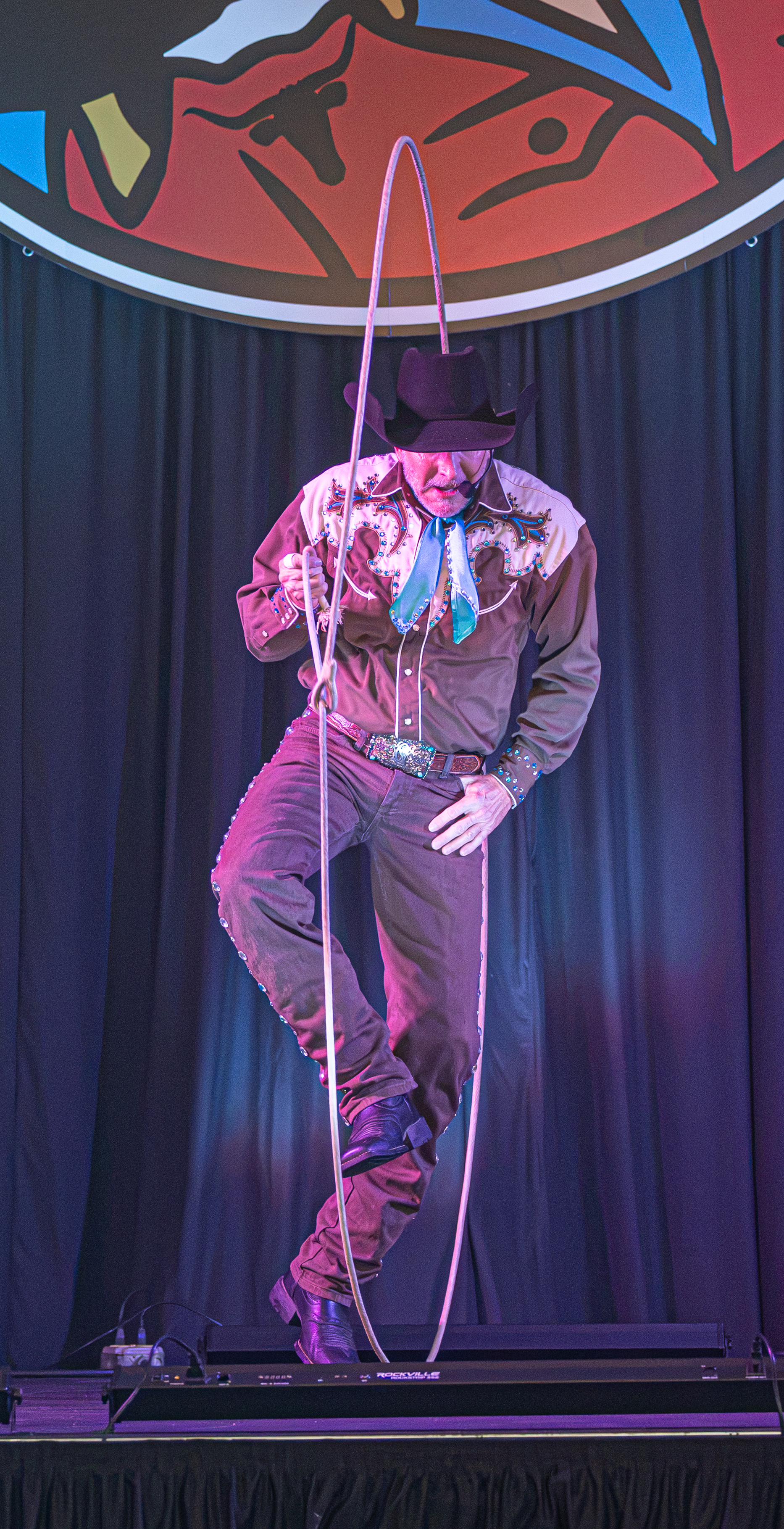
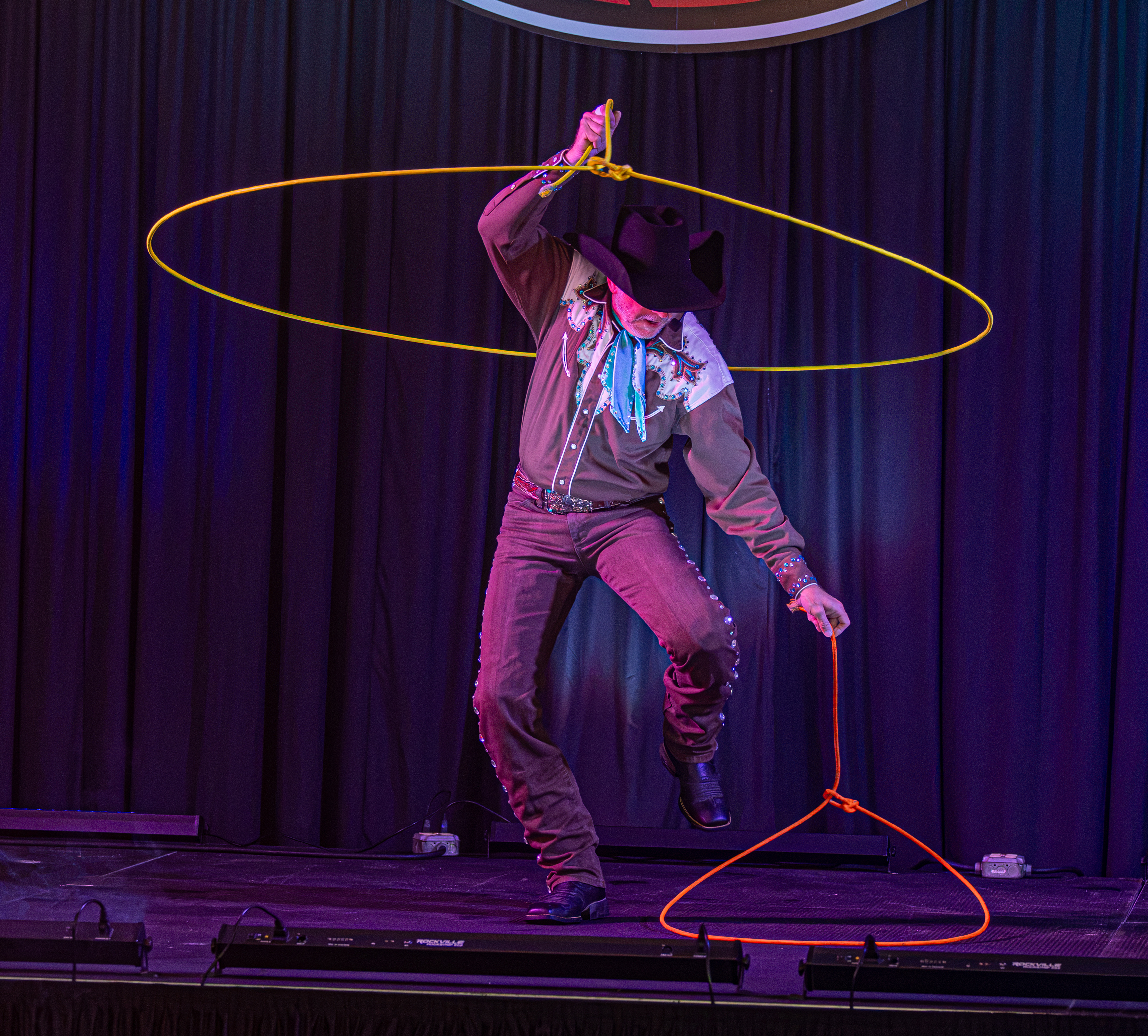
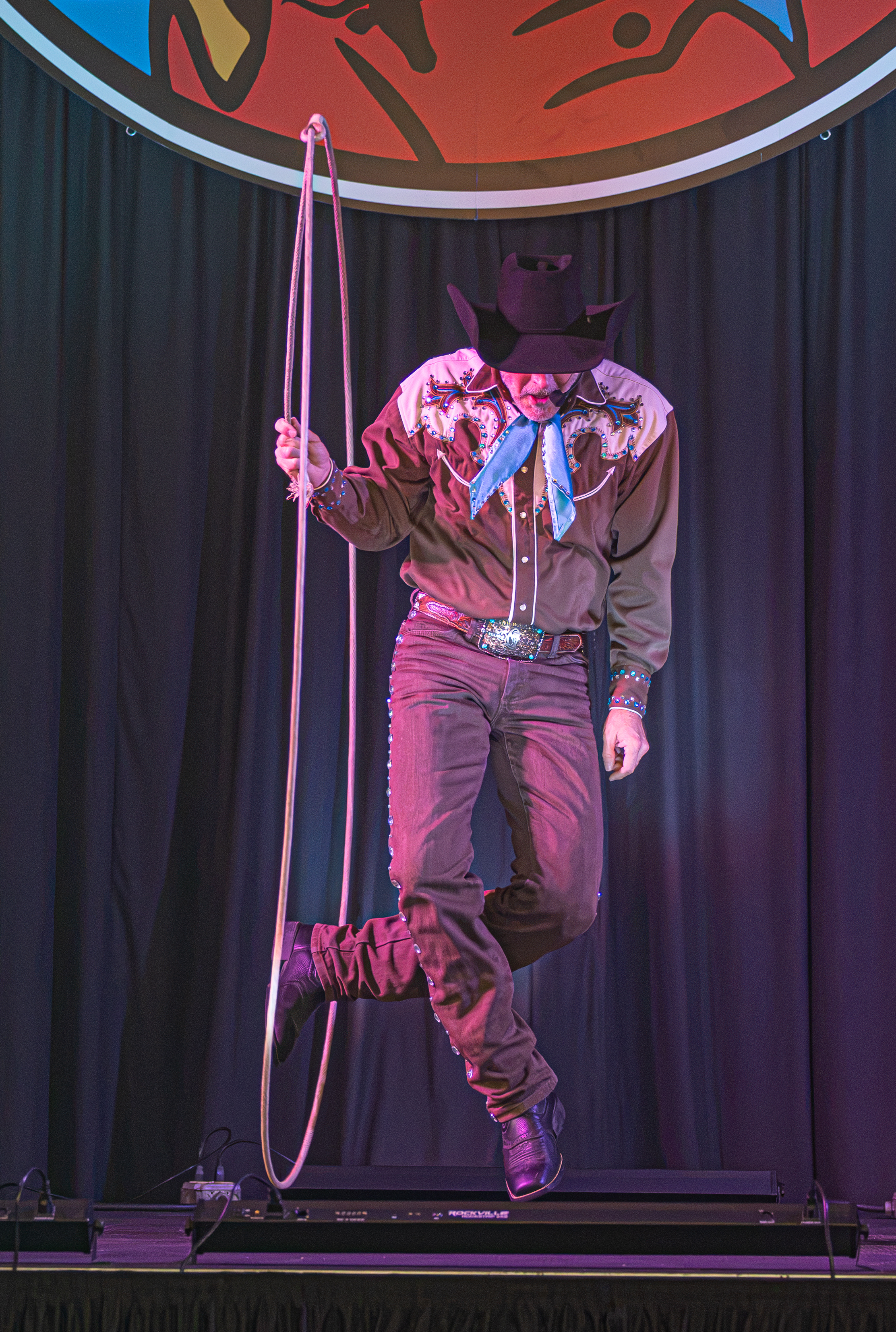
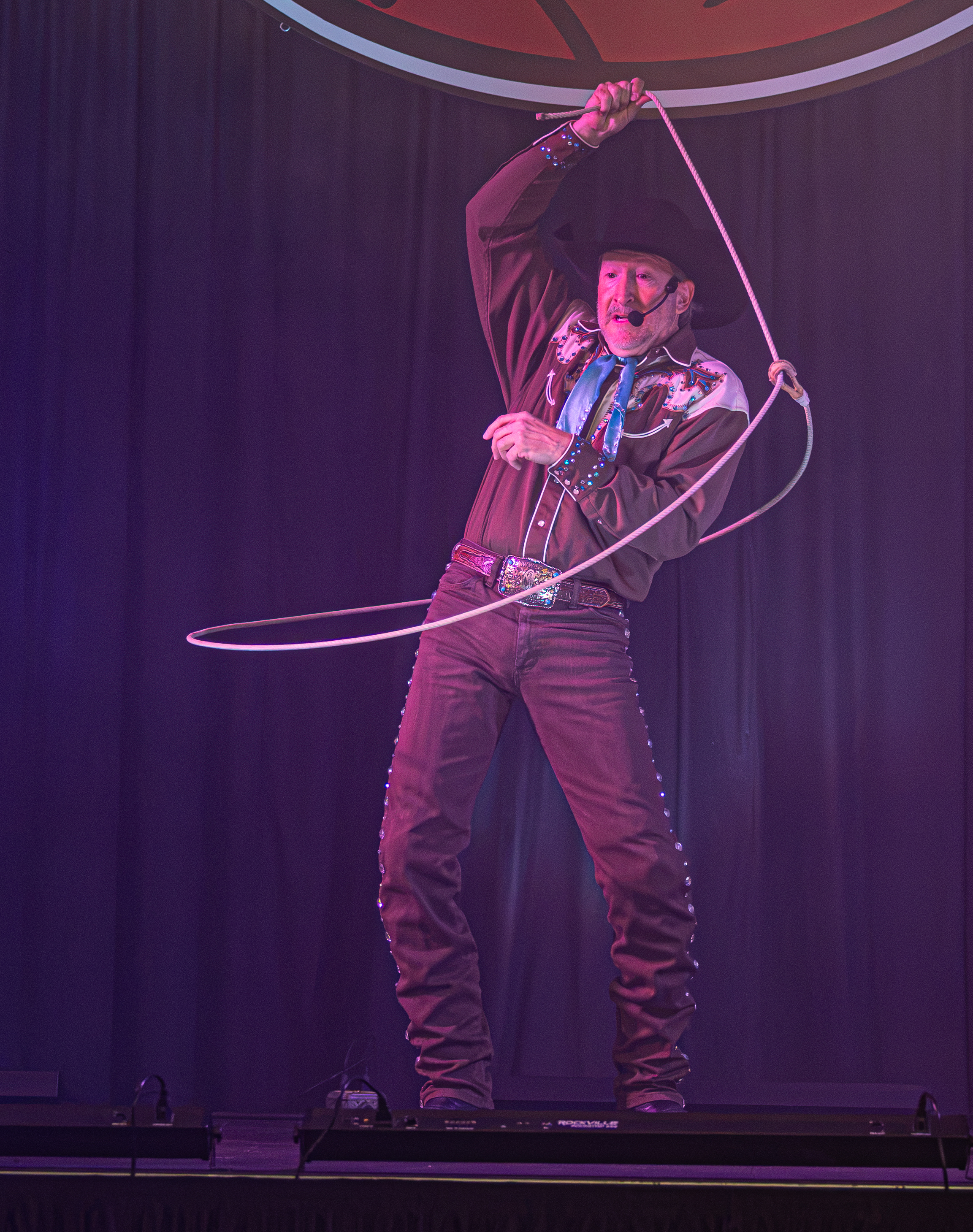
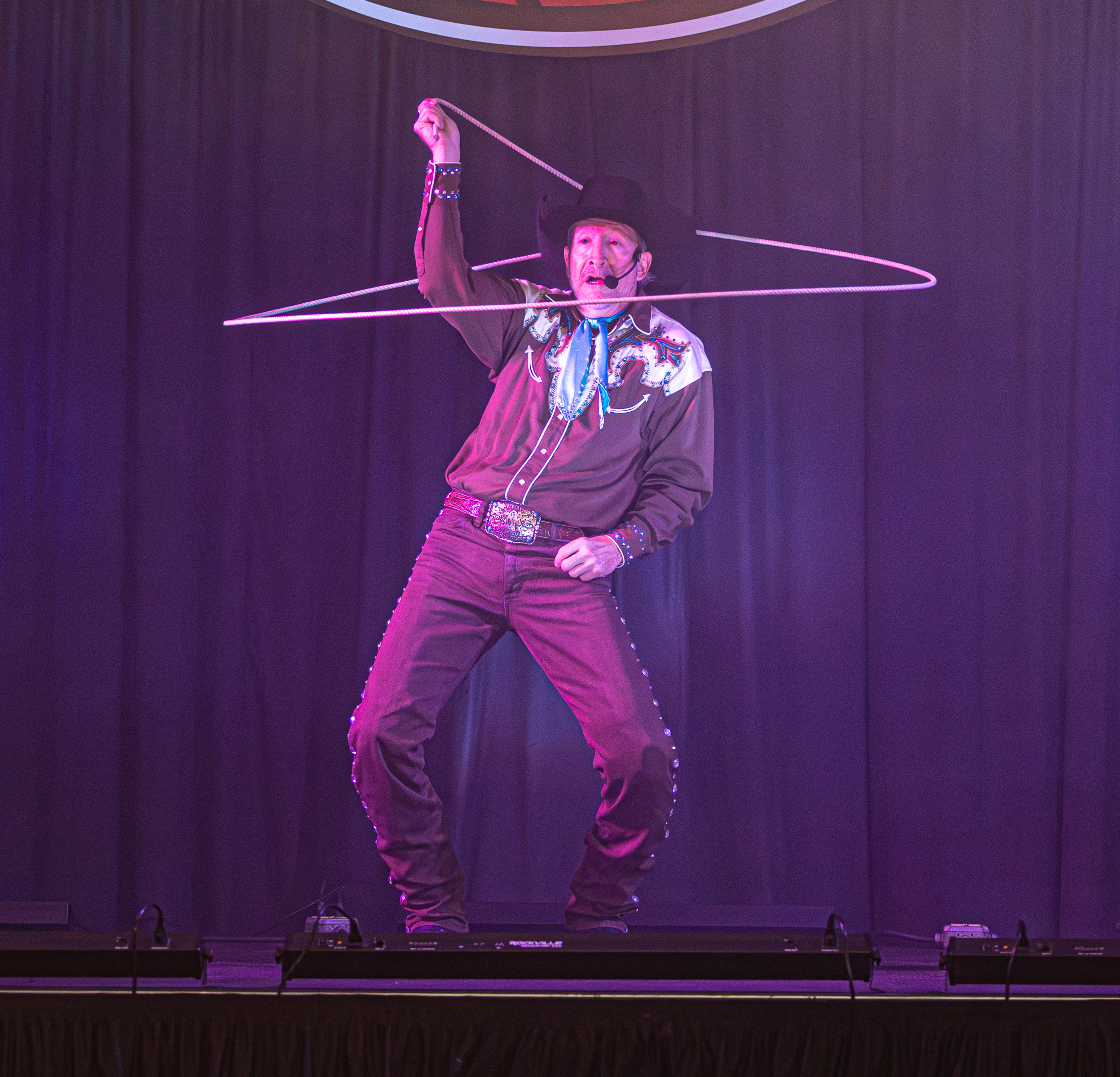
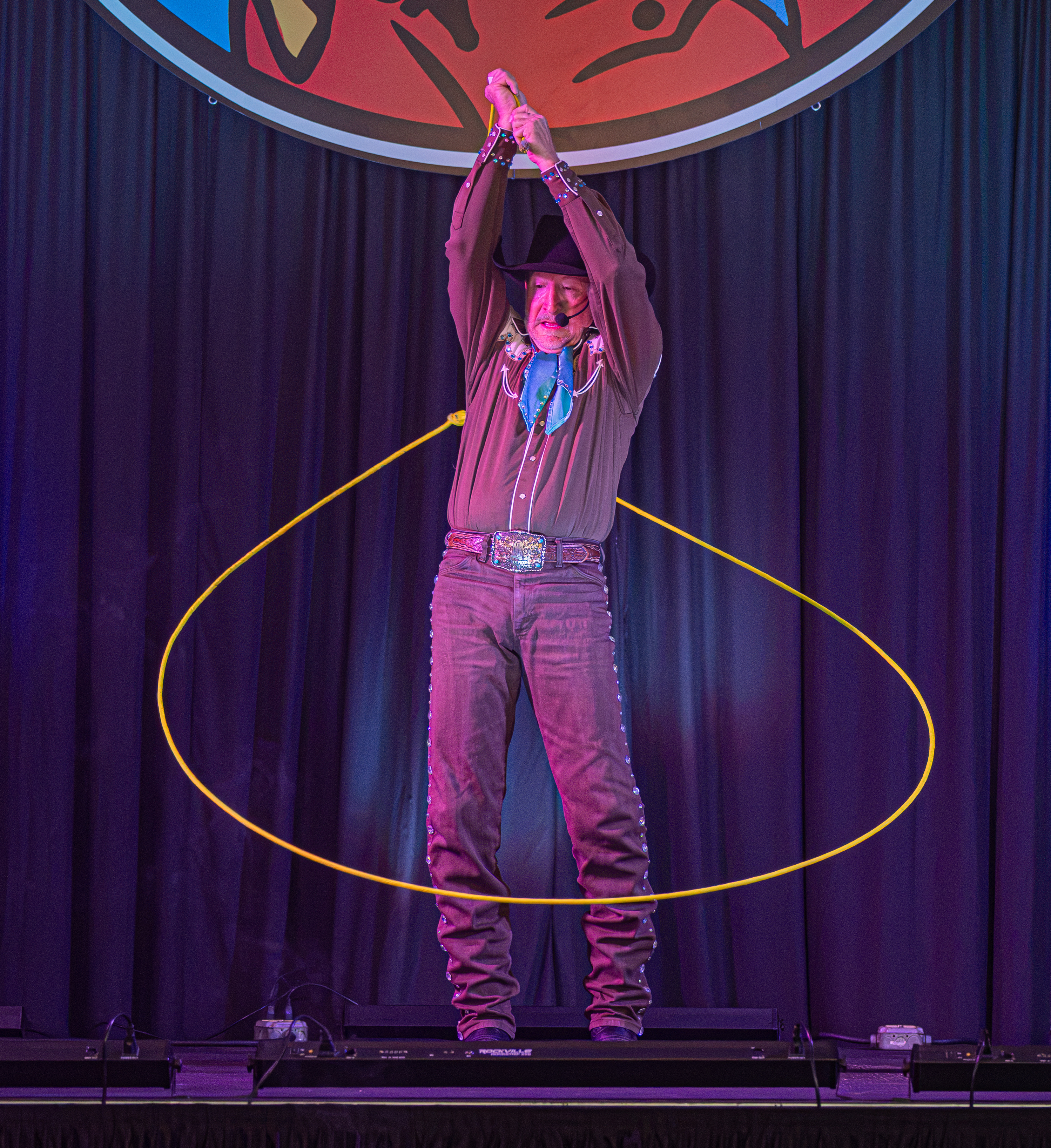
Some of Danny’s more impressive tricks included using two lassos and stepping in and out of the ropes.
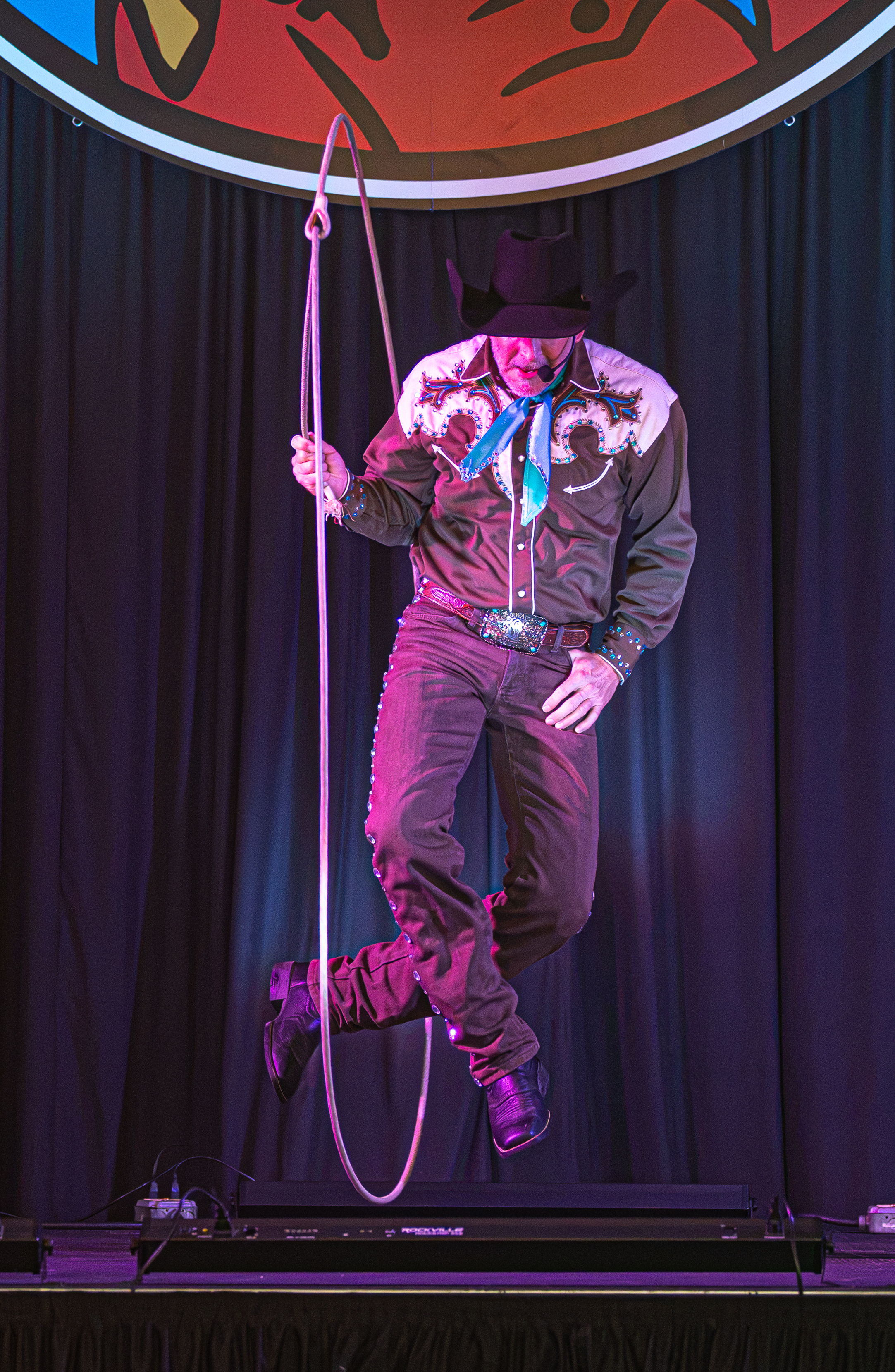
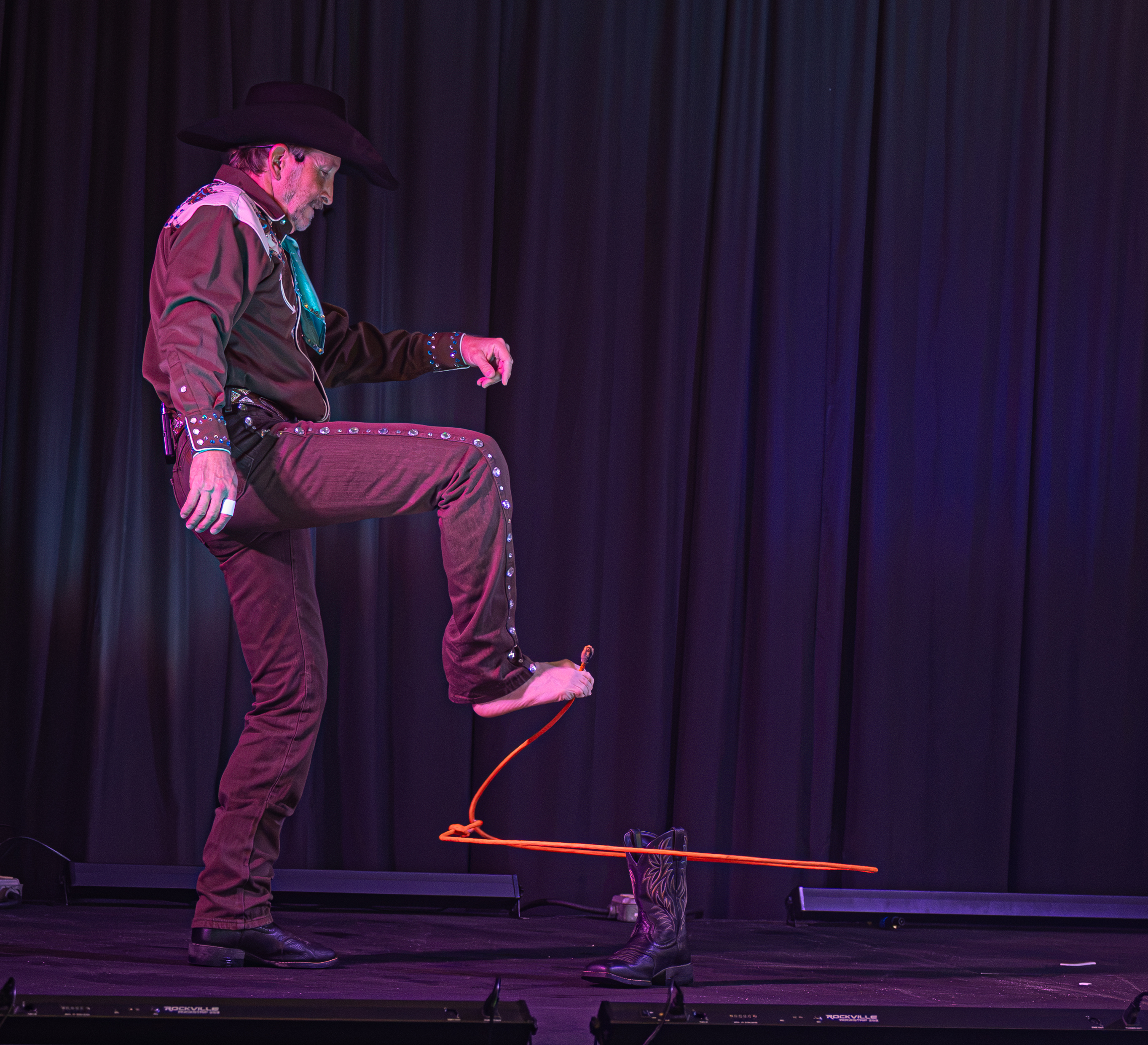
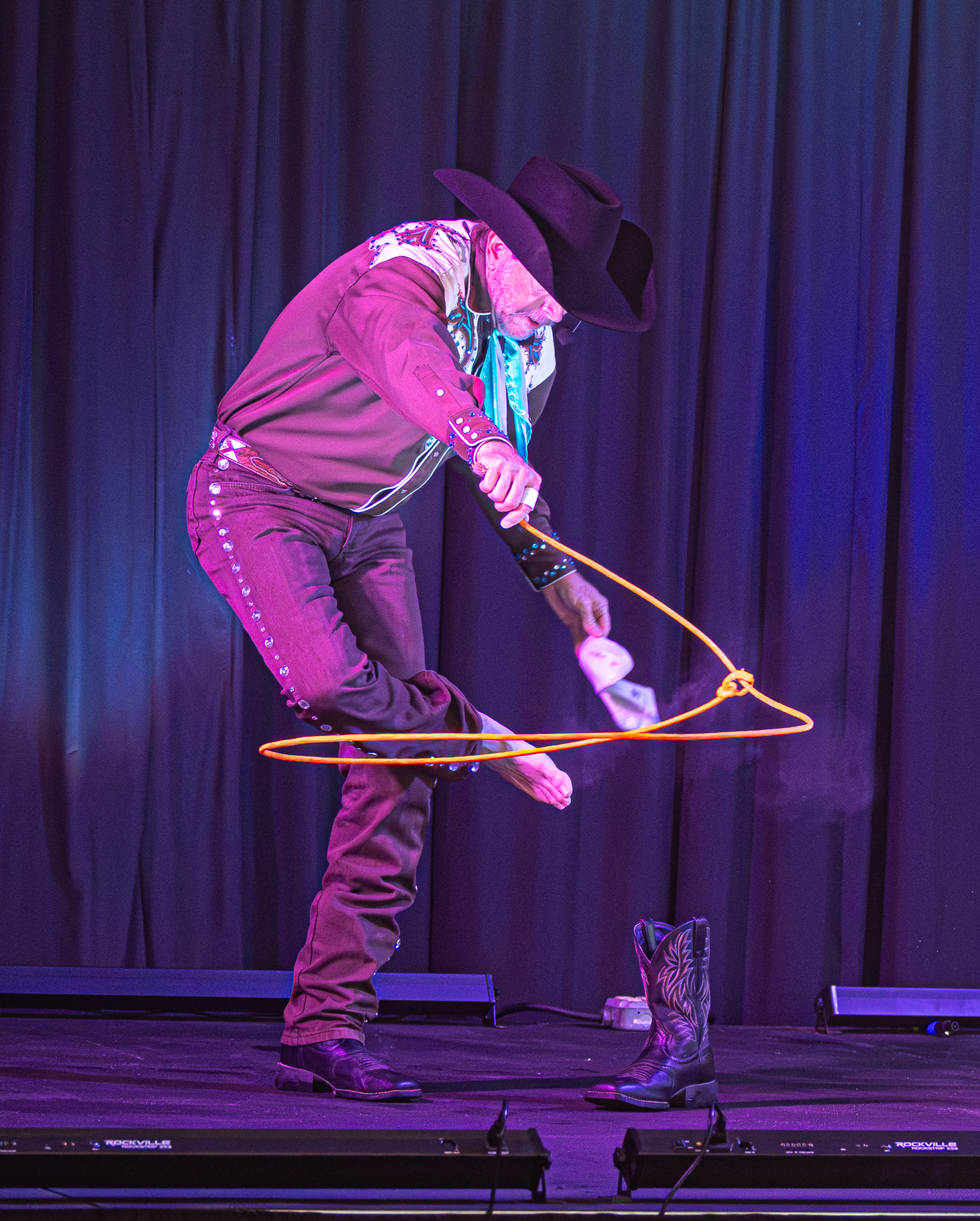
And sometimes he even did rope tricks with his toes!
THos are just a few of the tricks Danny used. He had a lot more tricks up his sleeve, or arm!
I couldn’t help but smile while I was photographing Danny. It’s always a pleasure watching an expert ply their trade. Those are very often the easiest photo shoots. Just set your camera, adjust accordingly and enjoy the show.
Summary: Noah Royak entertained the crowd at the Big E!
New England has a long history of festival celebrations. One of the biggest events during the fall, and perhaps the entire year in New England, is the Big E! The event, which is held during the last few weeks of September and part of October, attracts people from all over the region and beyond.
Of course, it rained during my visit. But, most of the events were either indoor or held under a canopy. So I was still able to photograph most of the event.
I have visited, and photographed, the Big E Fair many times over the years. But, because of the volume of photos I take and the number of events I photograph this time of the year, I had never edited or posted those photos. One day, I will get to them! But, I promised myself I would make sure to post the photos from this year’s event! Since there are so many events at this fair and I take so many photos, I decided to post each event from the fair separately. The first event from this year’s event was the entertainment of Noah Royak.!
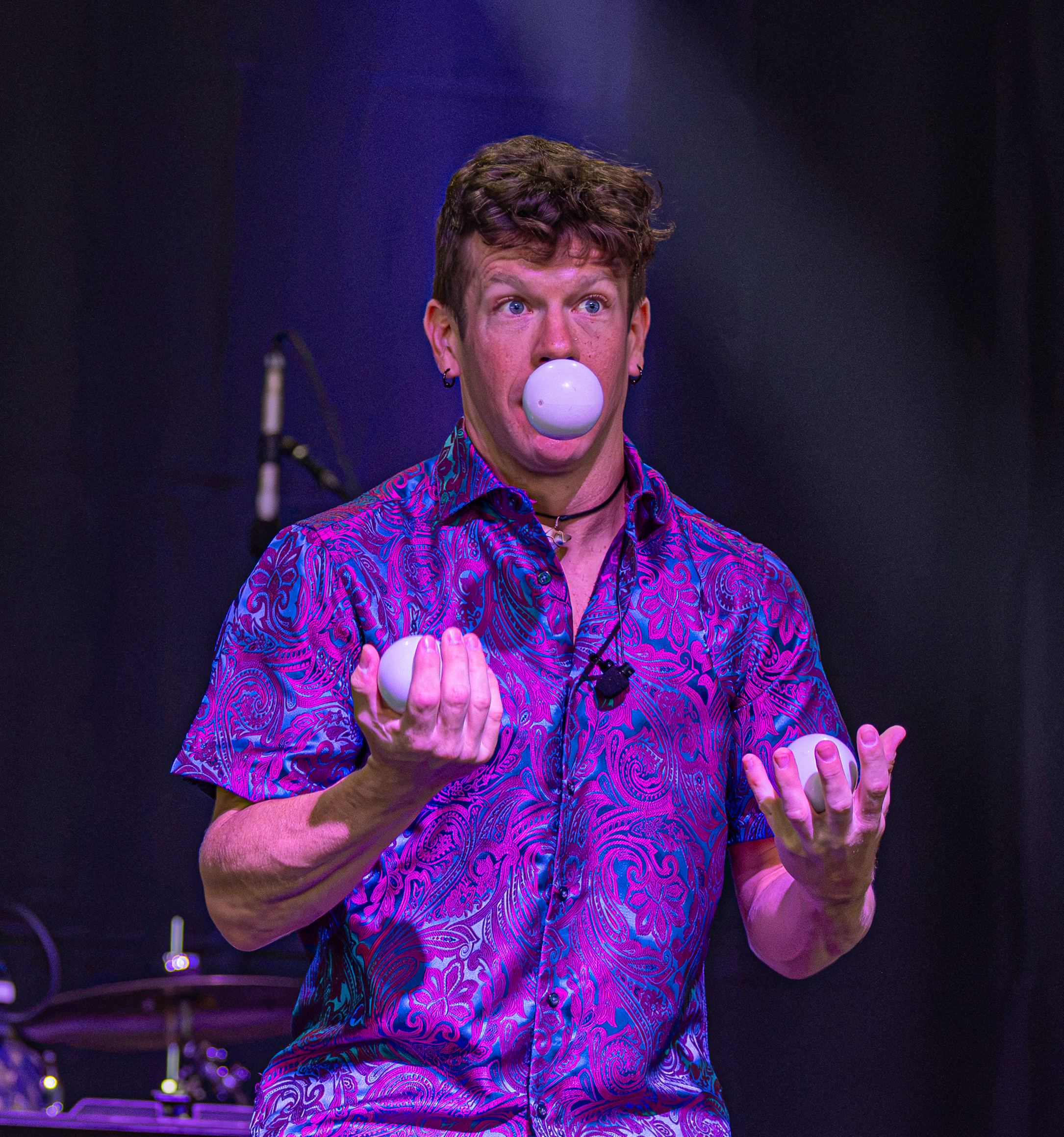
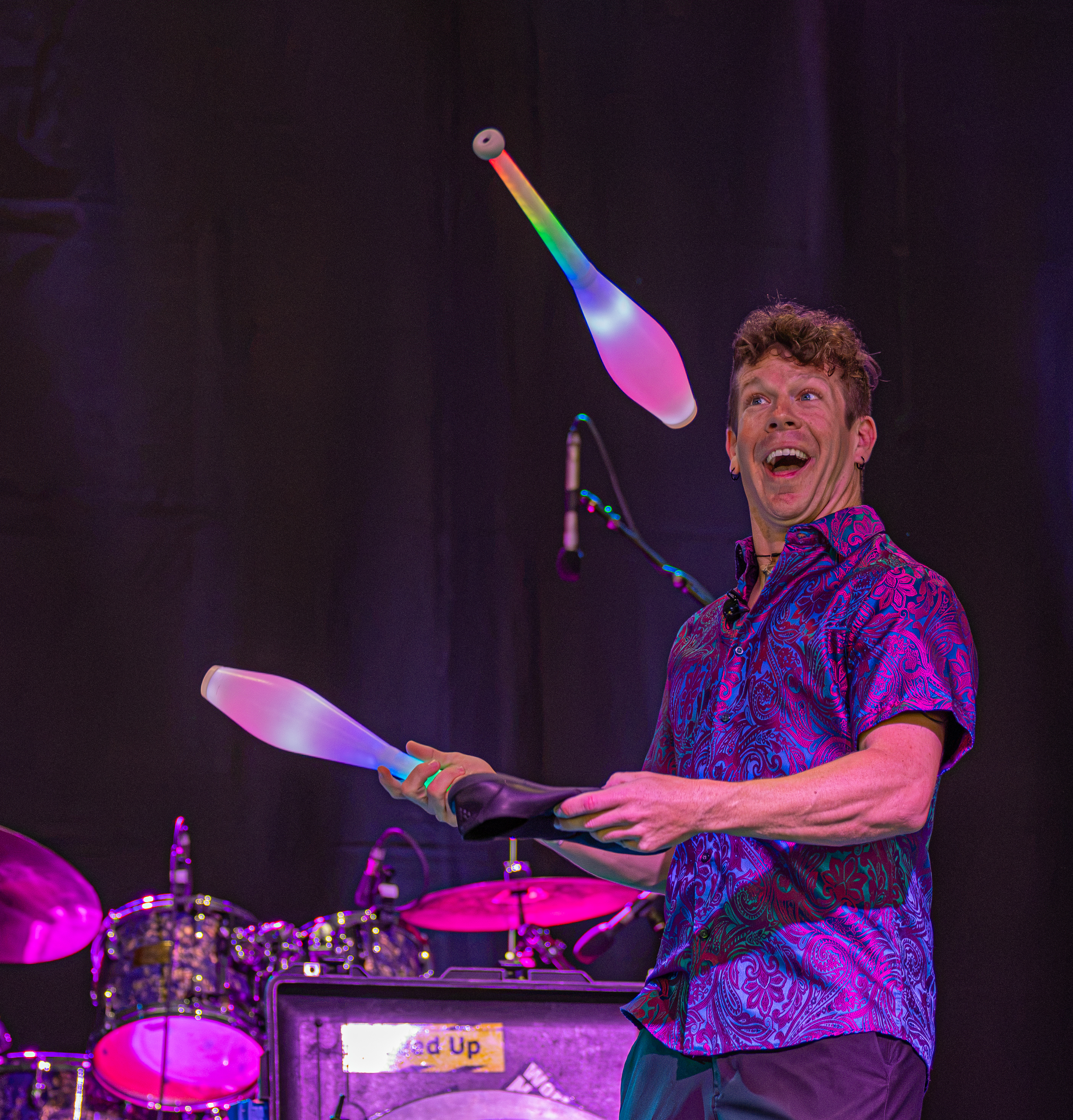
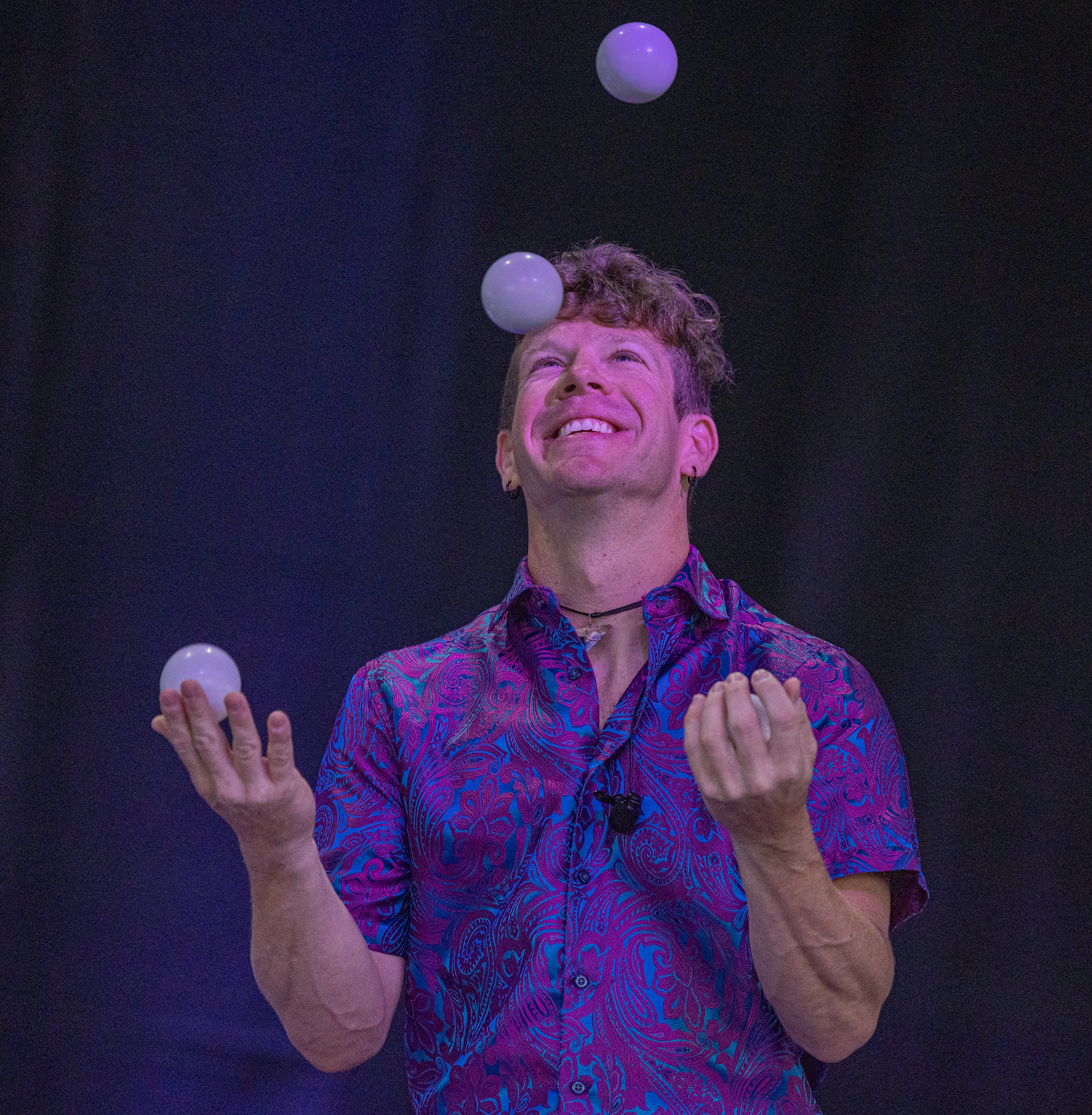
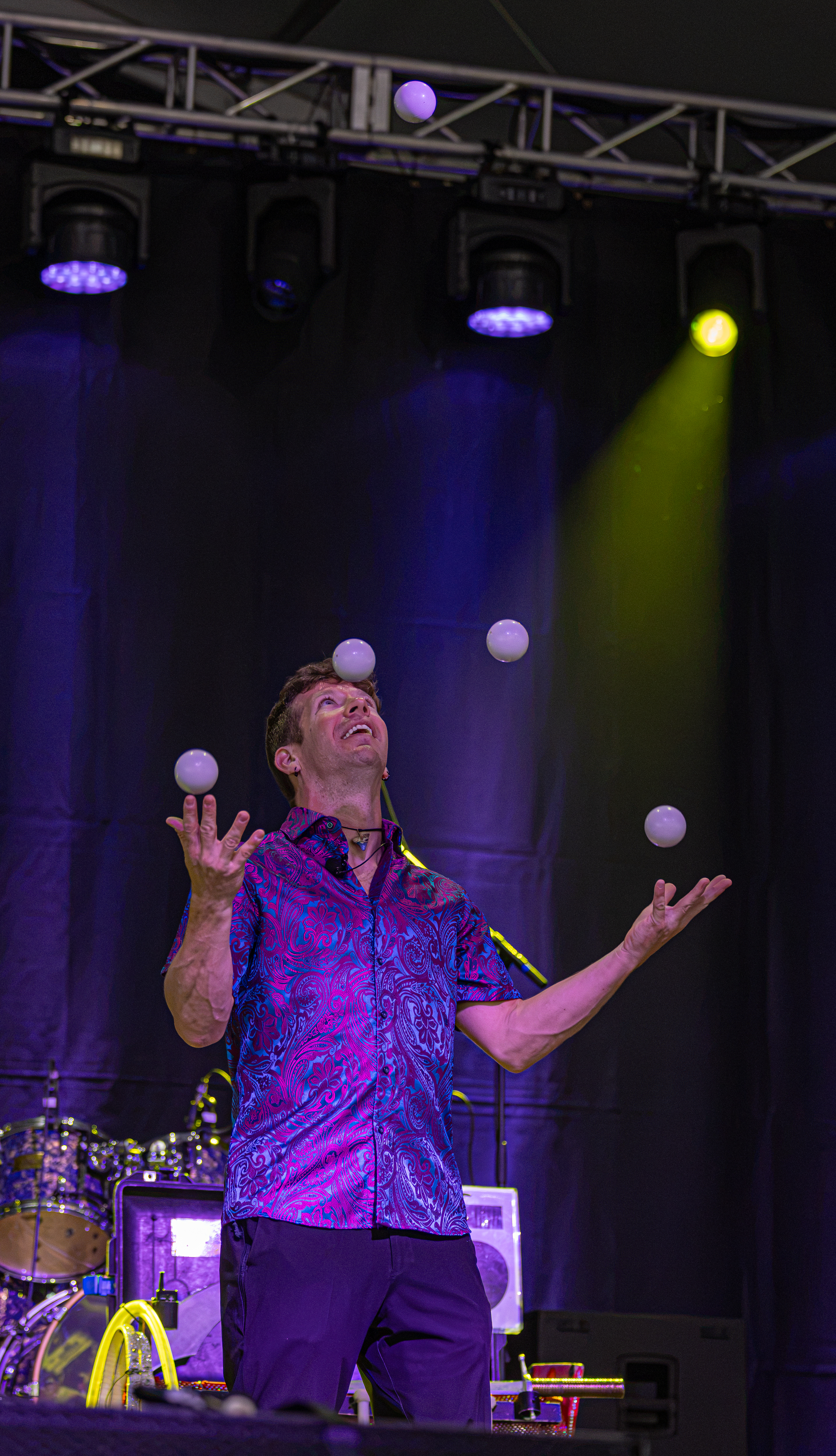
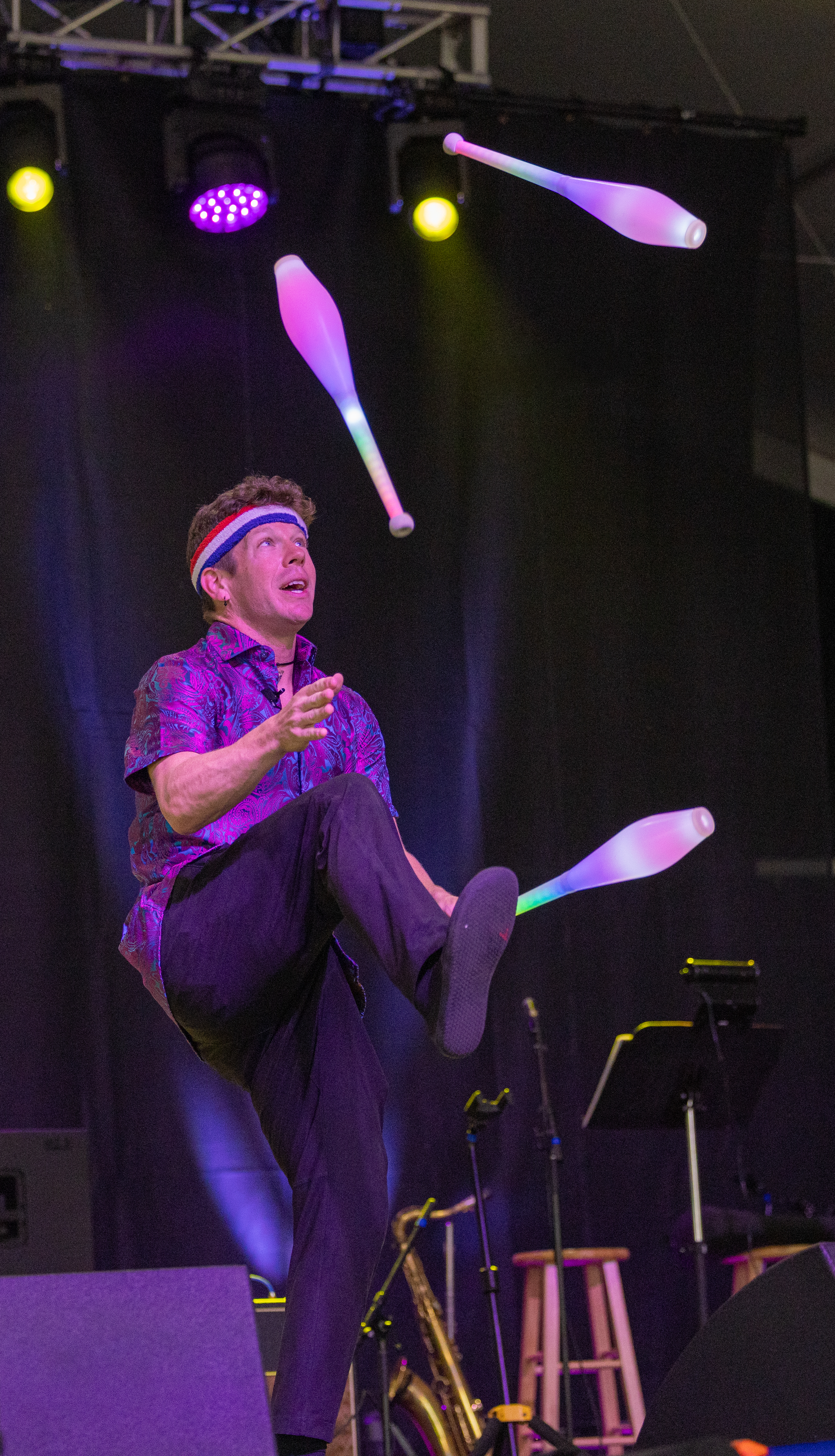
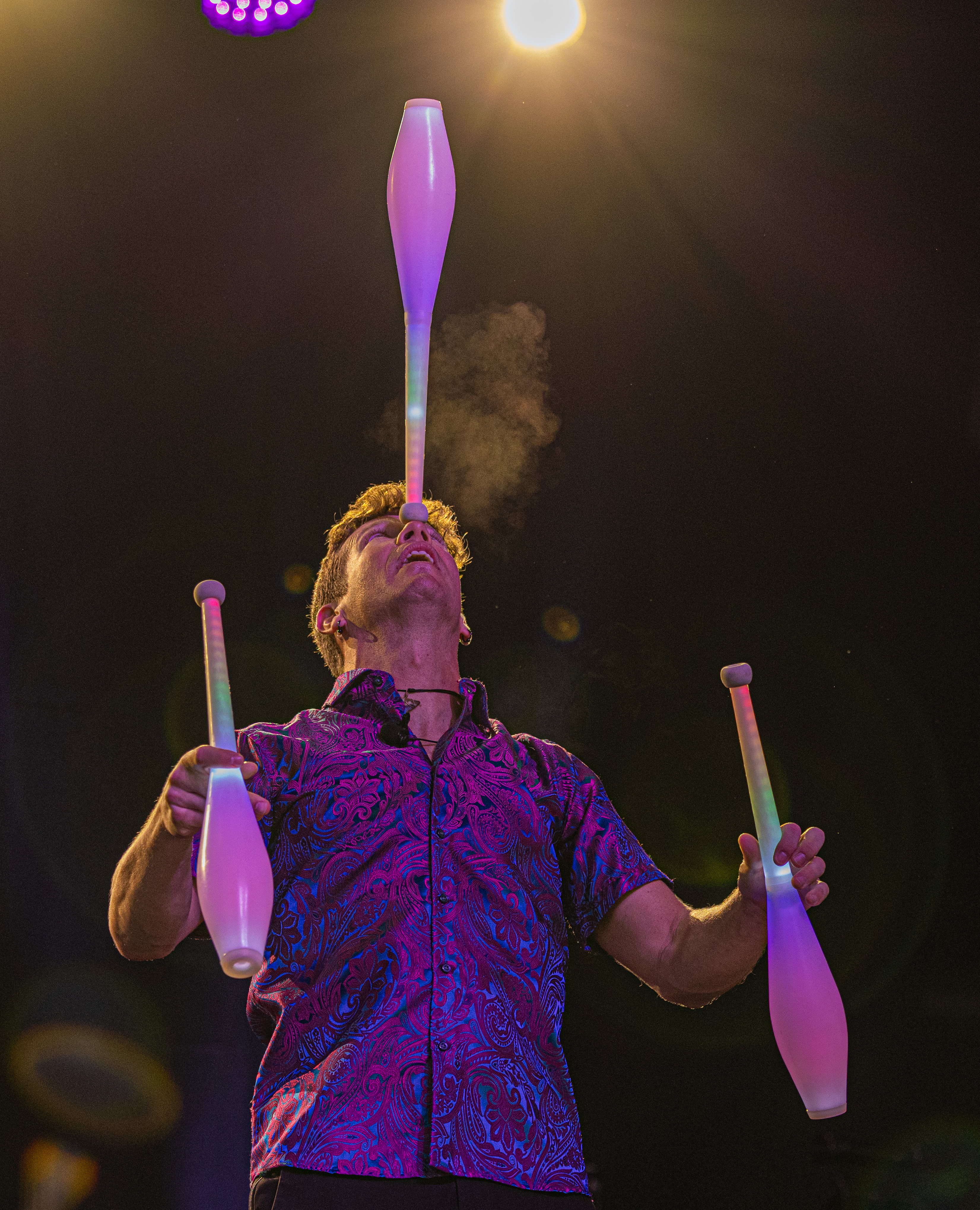
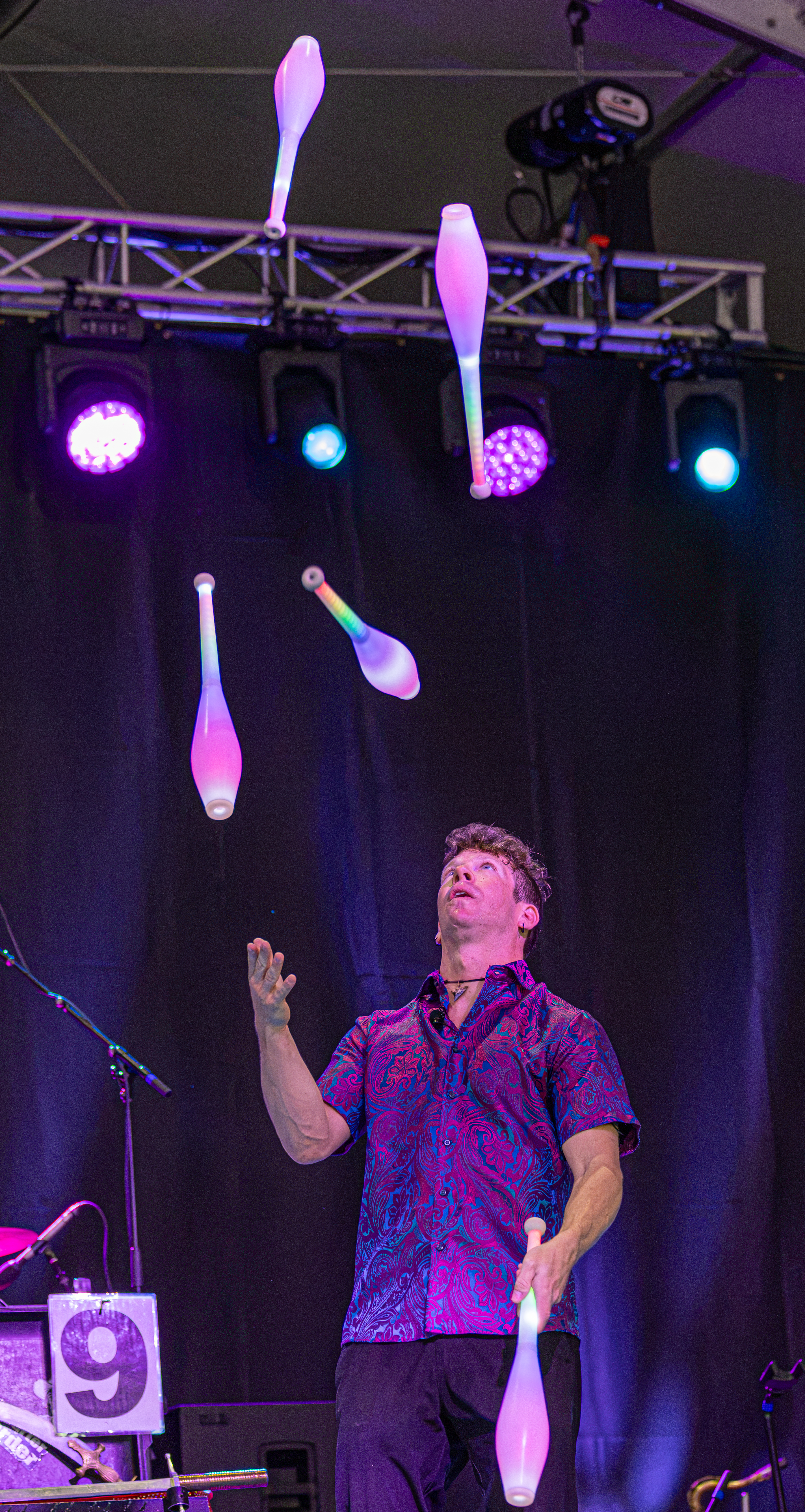
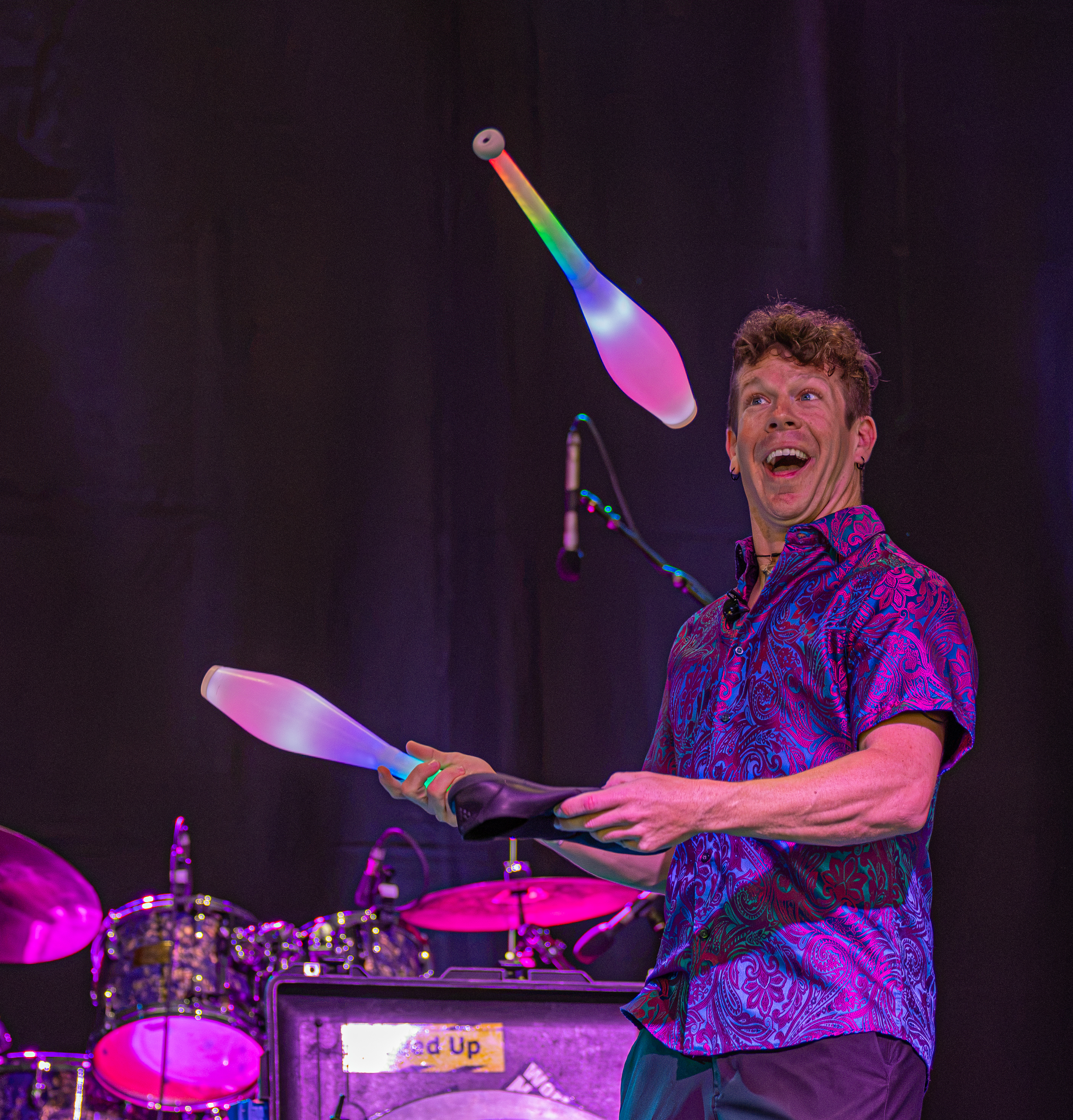
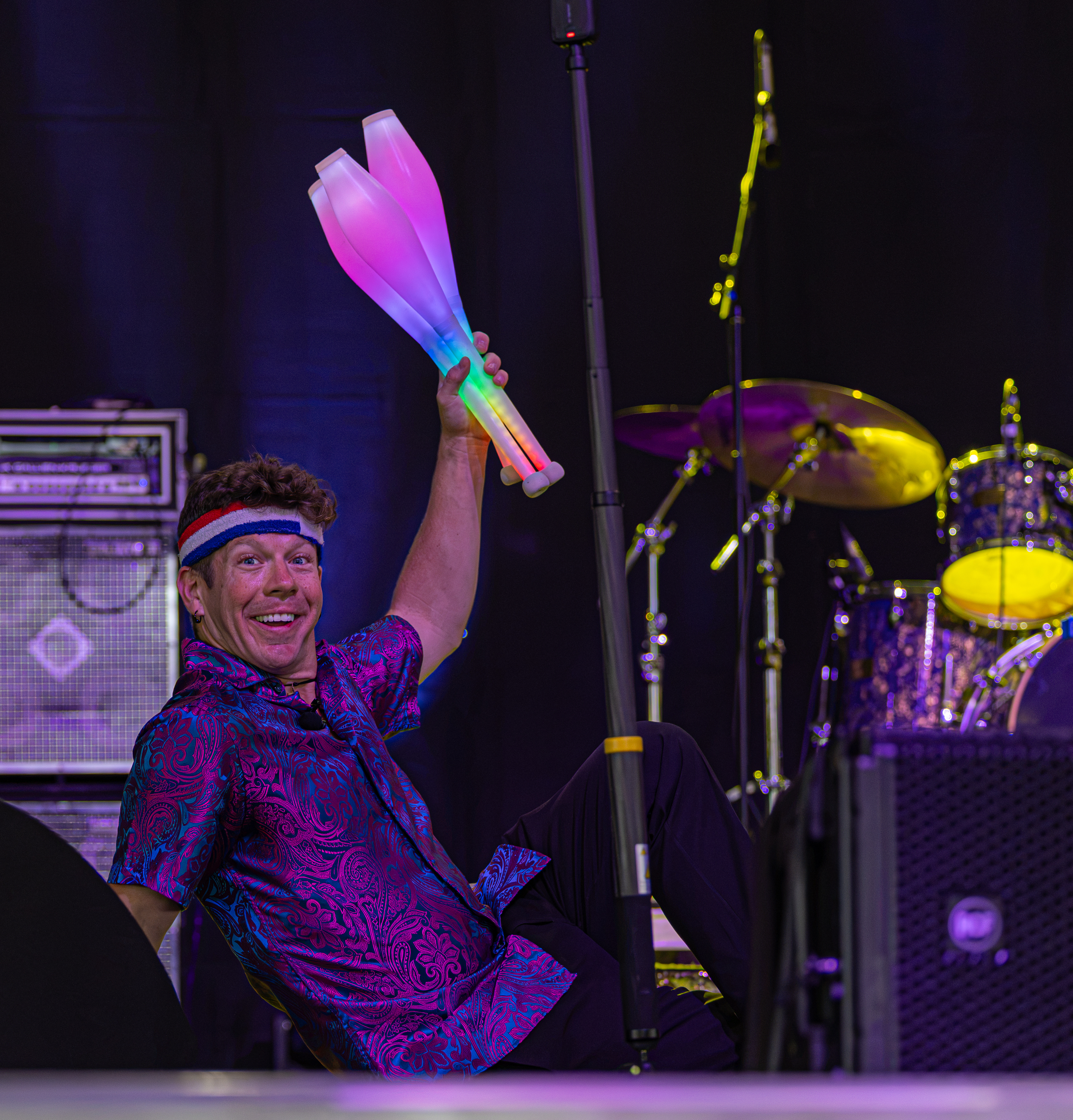
Noah mixes comedy, juggling and other theatrics in his performance.
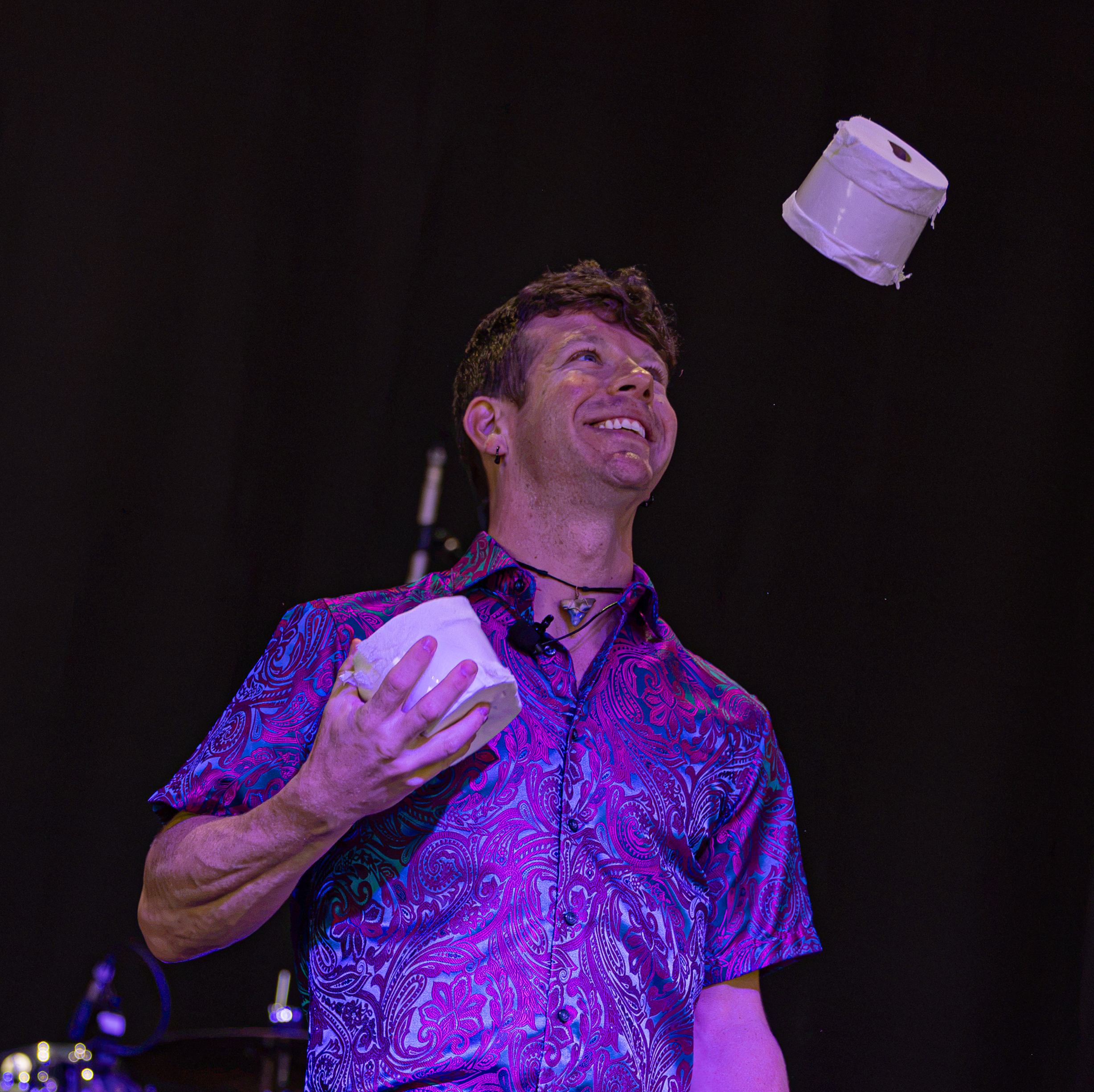
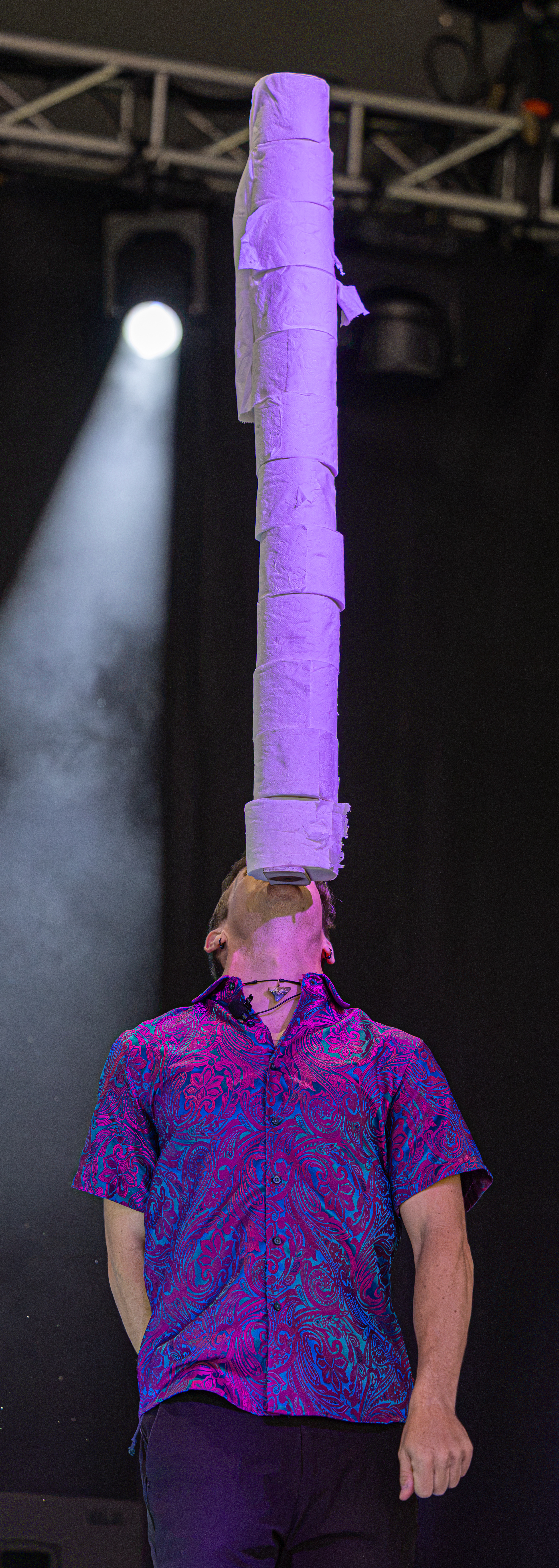
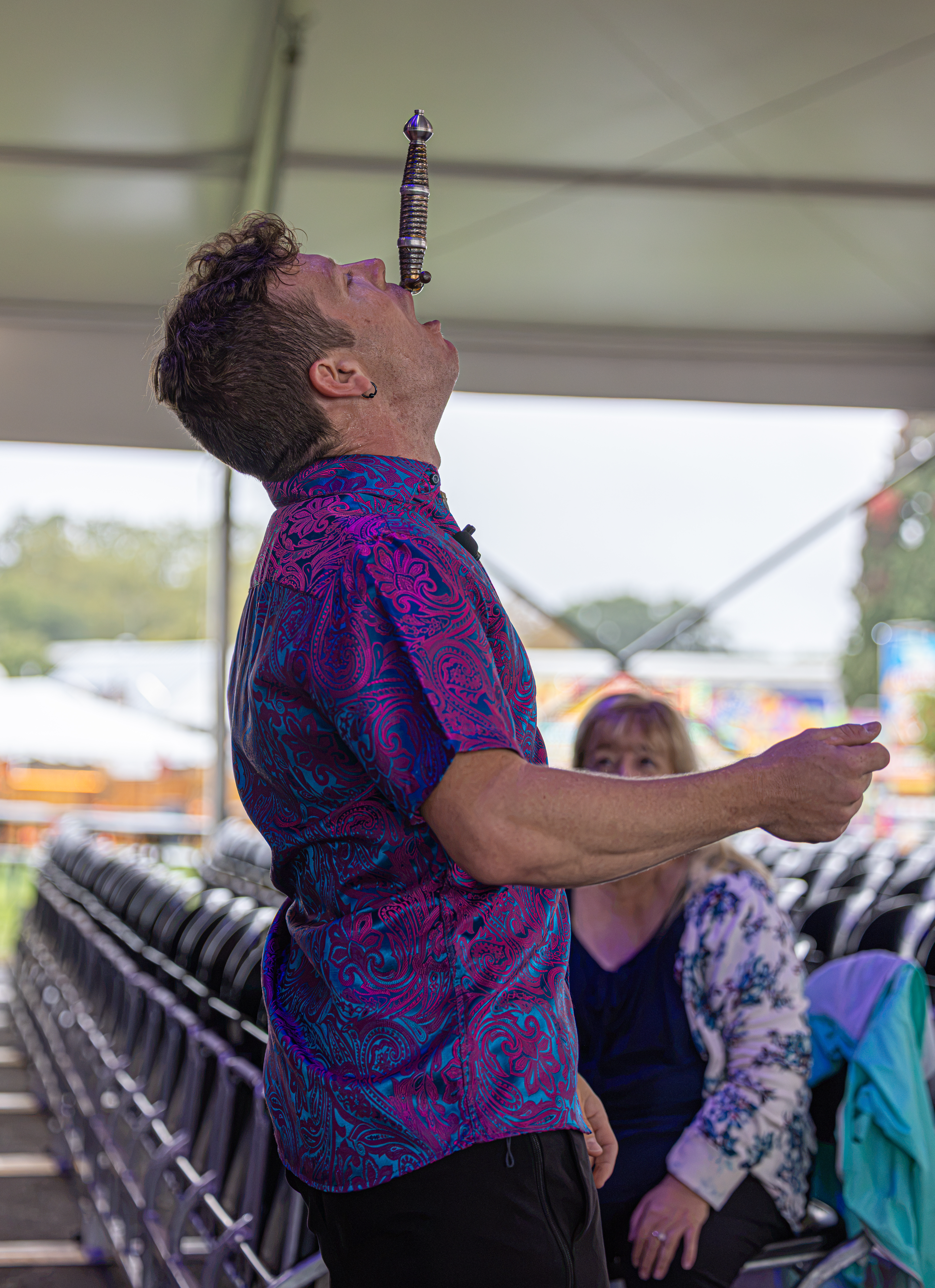
But, Noah doesn’t just juggle and balance the usual items.
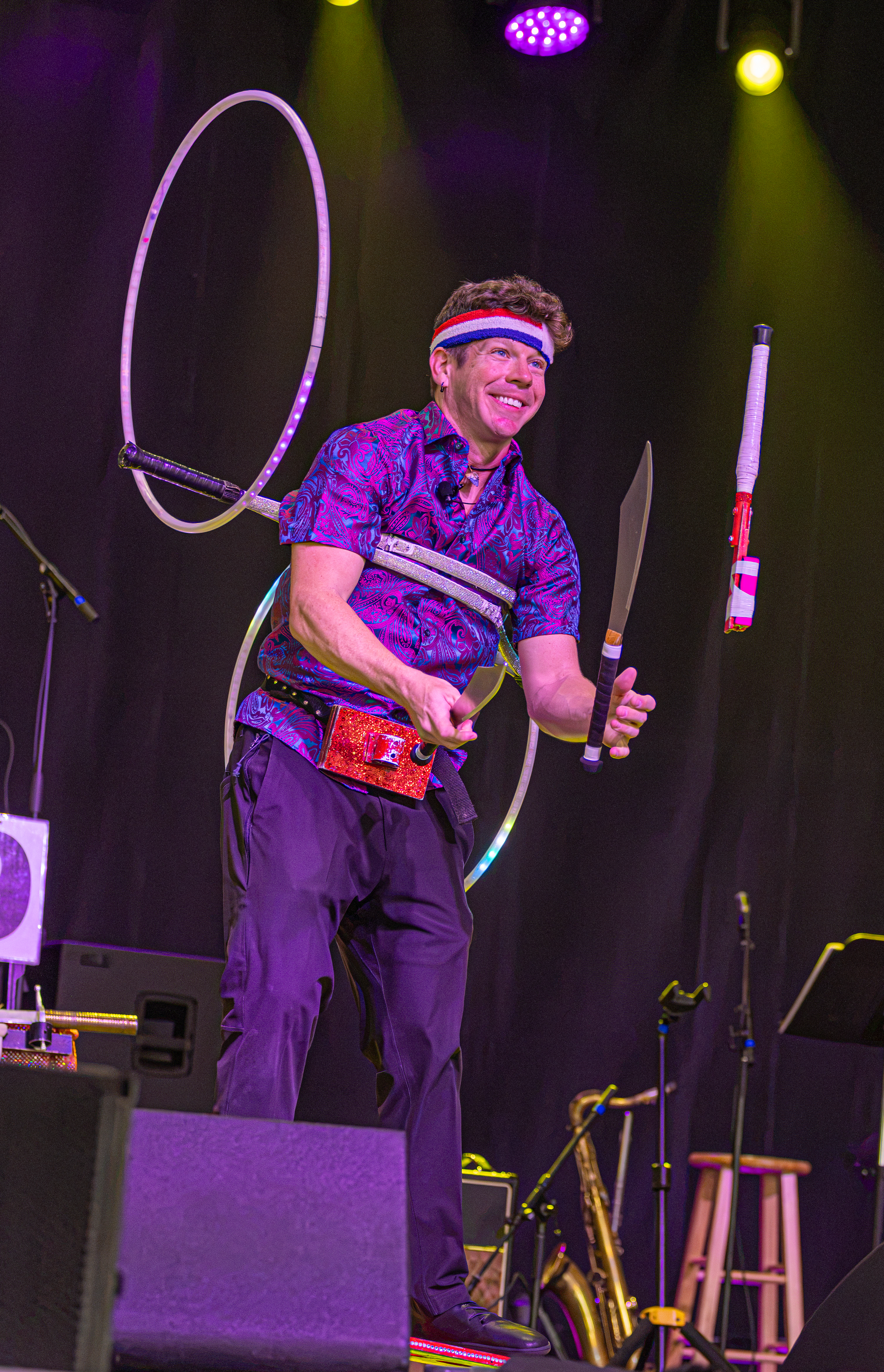
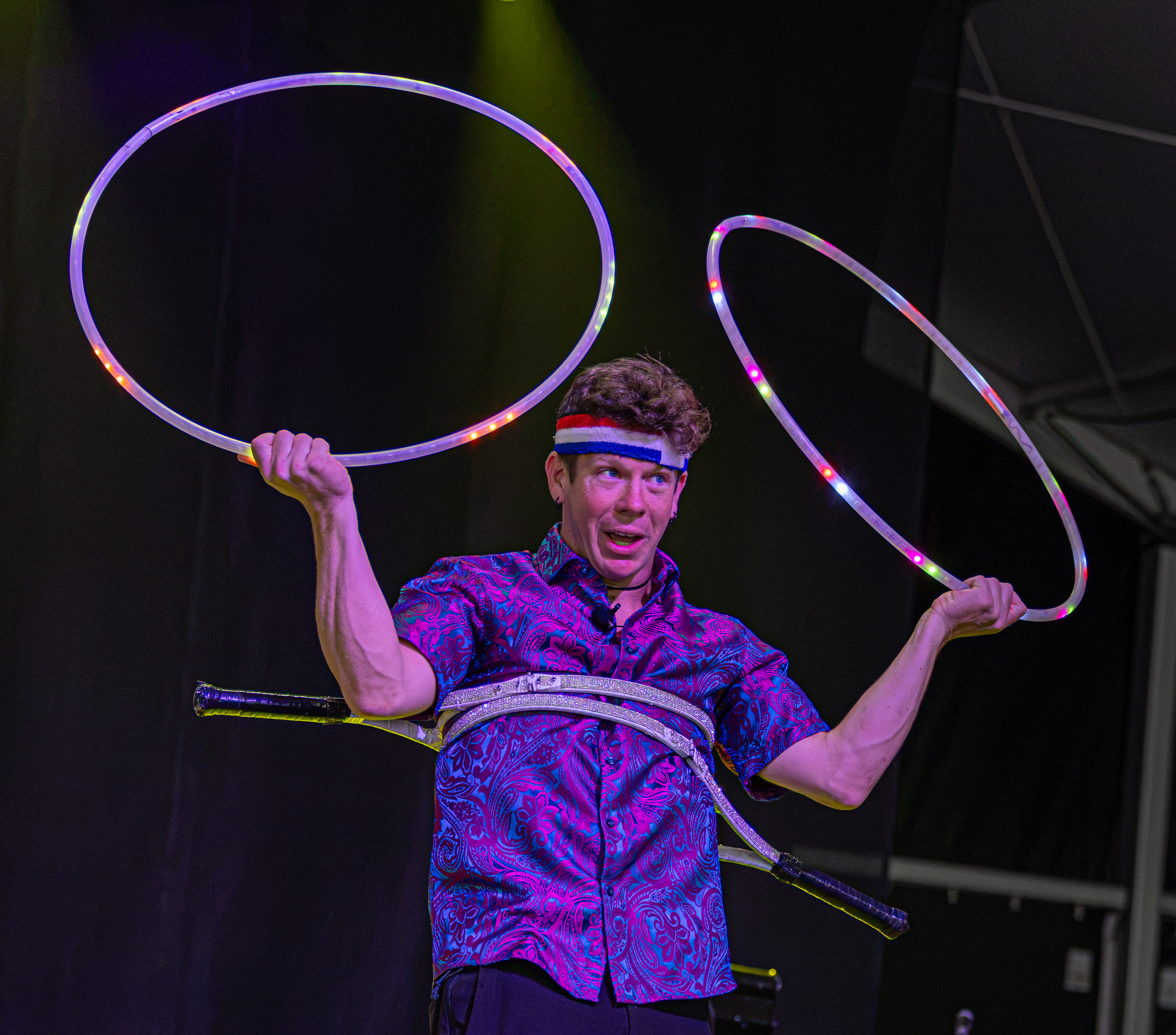
Noah does other stuff besides juggling and balancing things on his head. He incorporated these hula hoops in his act as well as a few dangerous weapons!
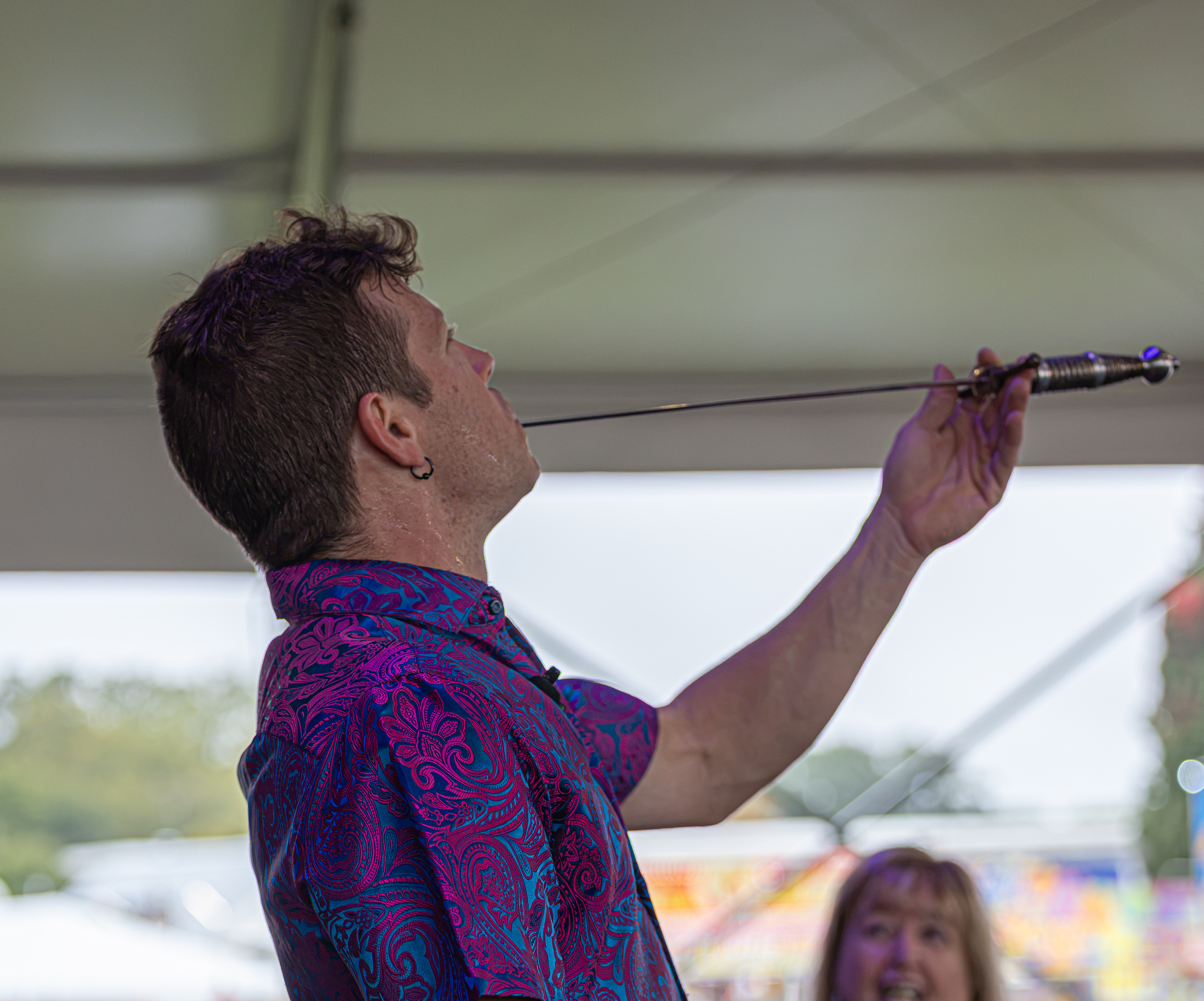
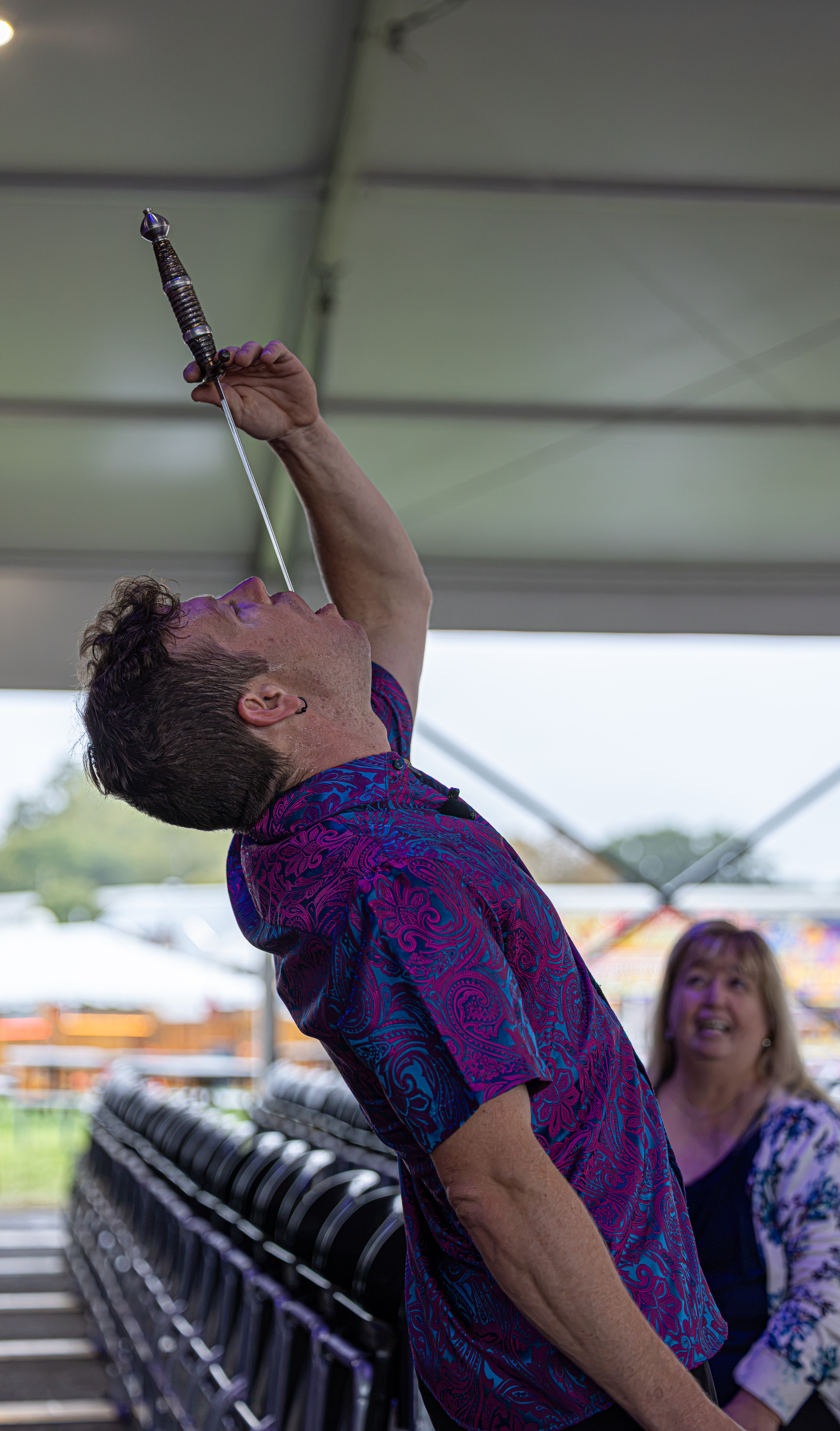
Speaking of dangerous weapons. Don’t try this at home!
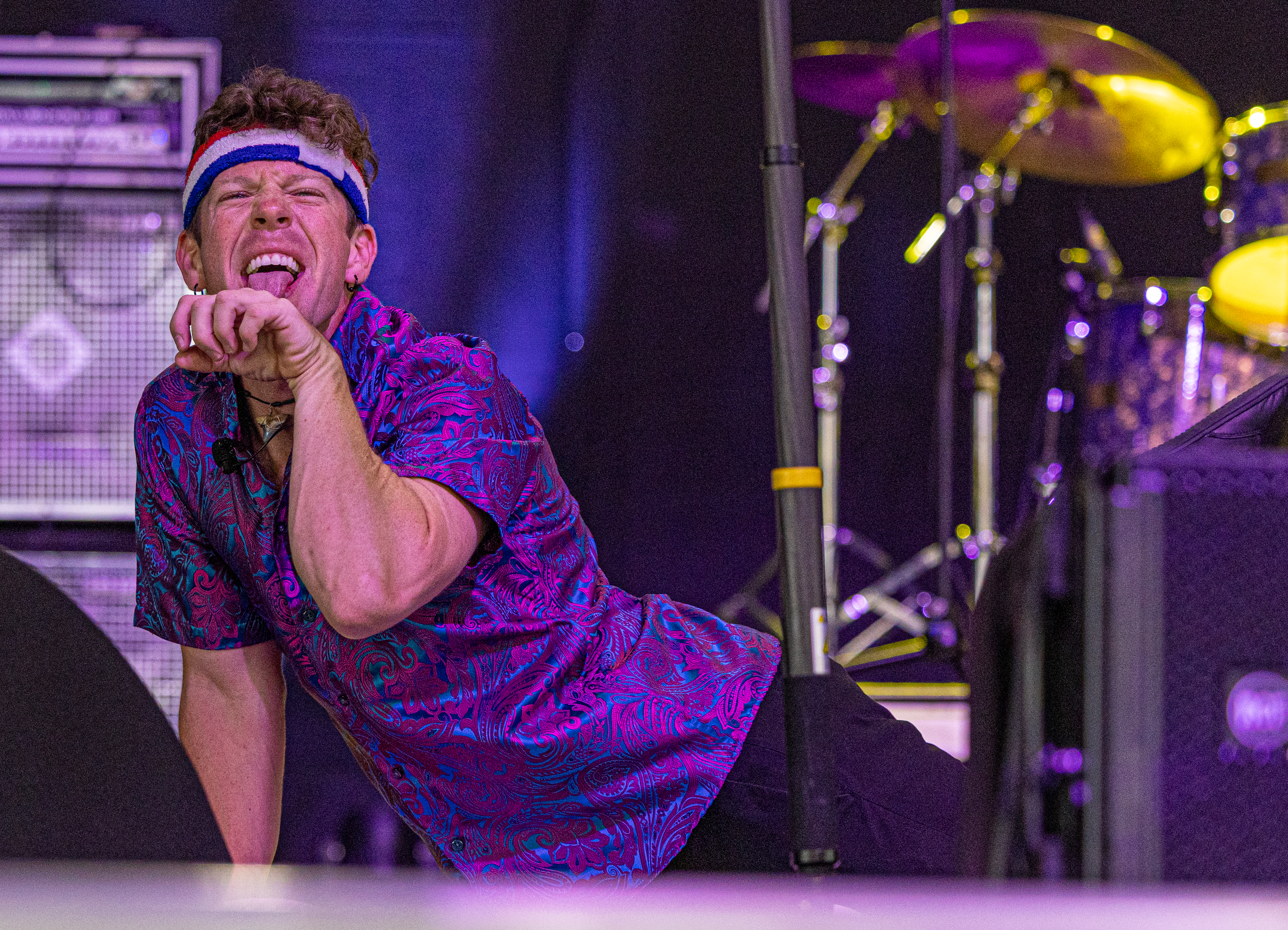
While I was photographing him, Noah did notice me and made sure to do a little modeling for me!
He also does impressions! Like this impression of Mickey Mouse!
The highlight of the event was not photographed, though. While looking for a volunteer near the end of his performance, he scanned the audience. Eventually, when there weren’t many takers, he chose me. Lucky me. He actually chose someone else but I thought he was pointing at me.
With much trepidation, I climbed the stairs to the stage. The crowd went crazy as I waved my arms to pump them up. OK, maybe not crazy but work with me. For his finale, I was instructed to hold a balloon while Noah deflated it with a whip! I made sure to held the balloon as far away from my body as possible while Noah went through the calculations in his head for a trick he’s done countless times. And, without a hitch, he deflated the balloon with his whip. Safe and easy. And, after checking to make sure all my digits and other appendages were still with me, I walked back to my seat There may be video or photos of this somewhere. But, they’re not in this post!
There were many other events at the fair this year that I will post in my next installments! There were lots of photo opportunities. So it may take a while to post all of them. But stay tuned for more photos from the festival!
Date Of Event: September 12, 2026 (usually held annually the weekend after Labor Day)
Location: Salem Commons, Salem, MA
Universally Accessible: Yes
Dog Friendly: Yes
Summary: People dressed in their best vintage wear as they listened to, or danced to, swing music and posed for photos by the various antique cars.
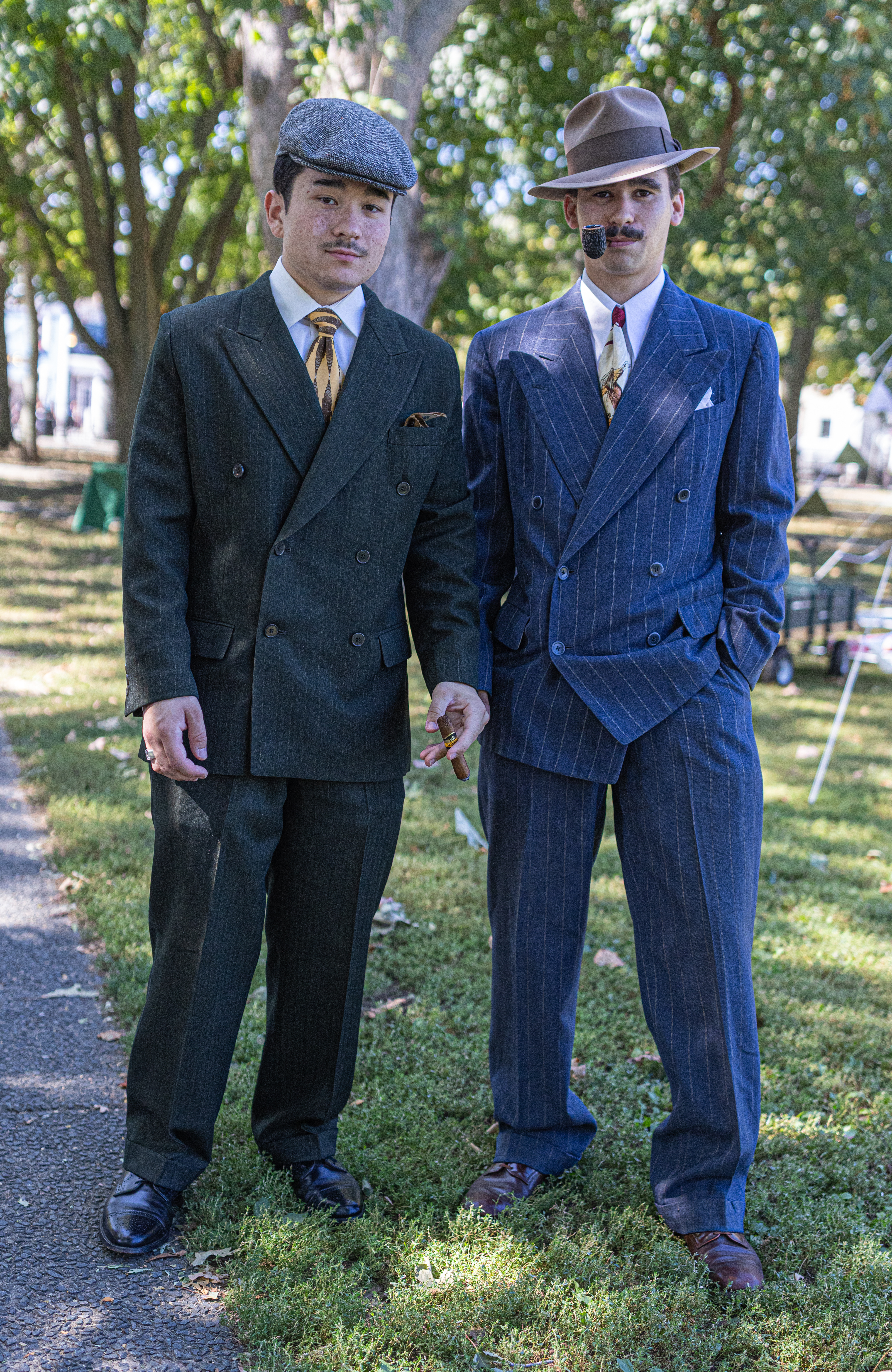
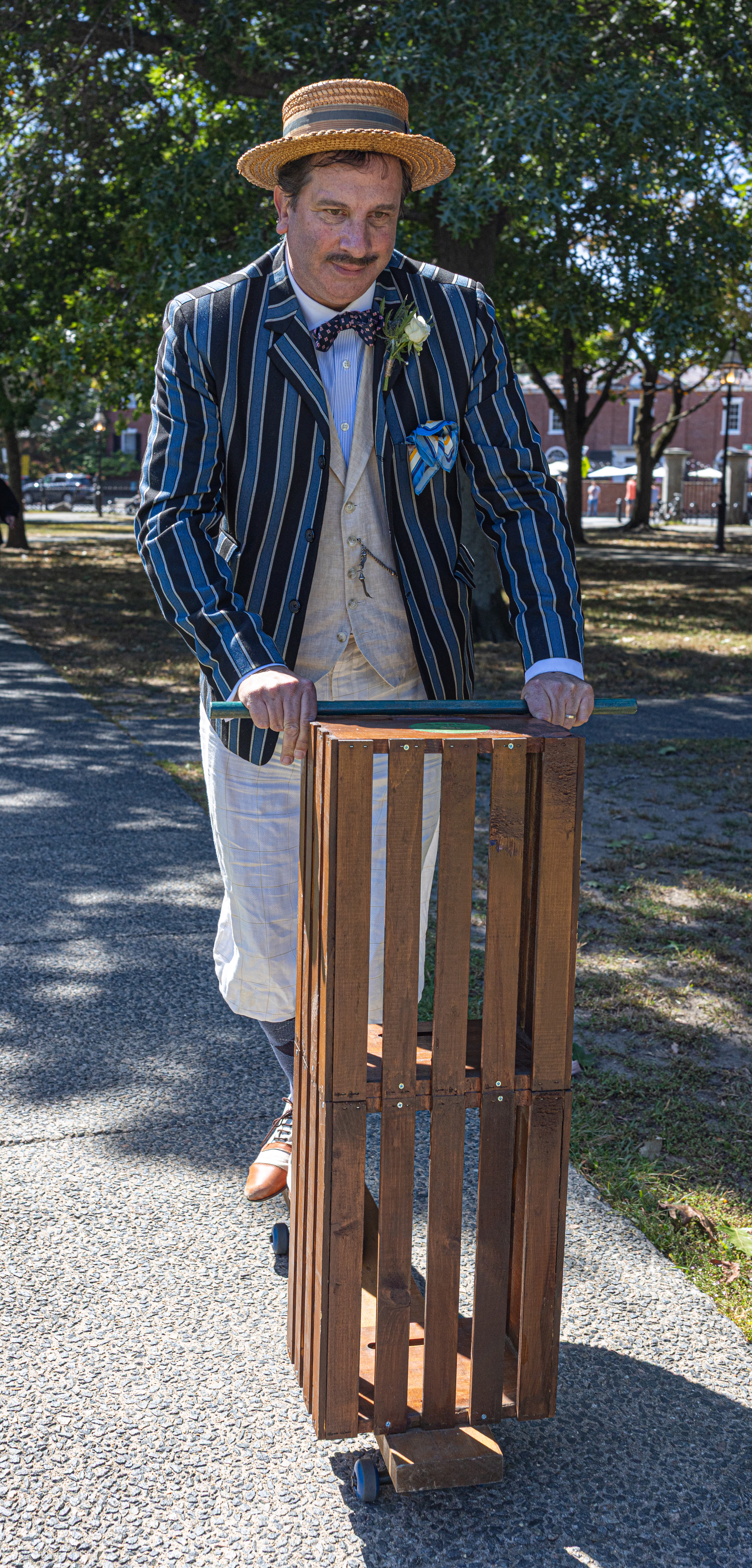
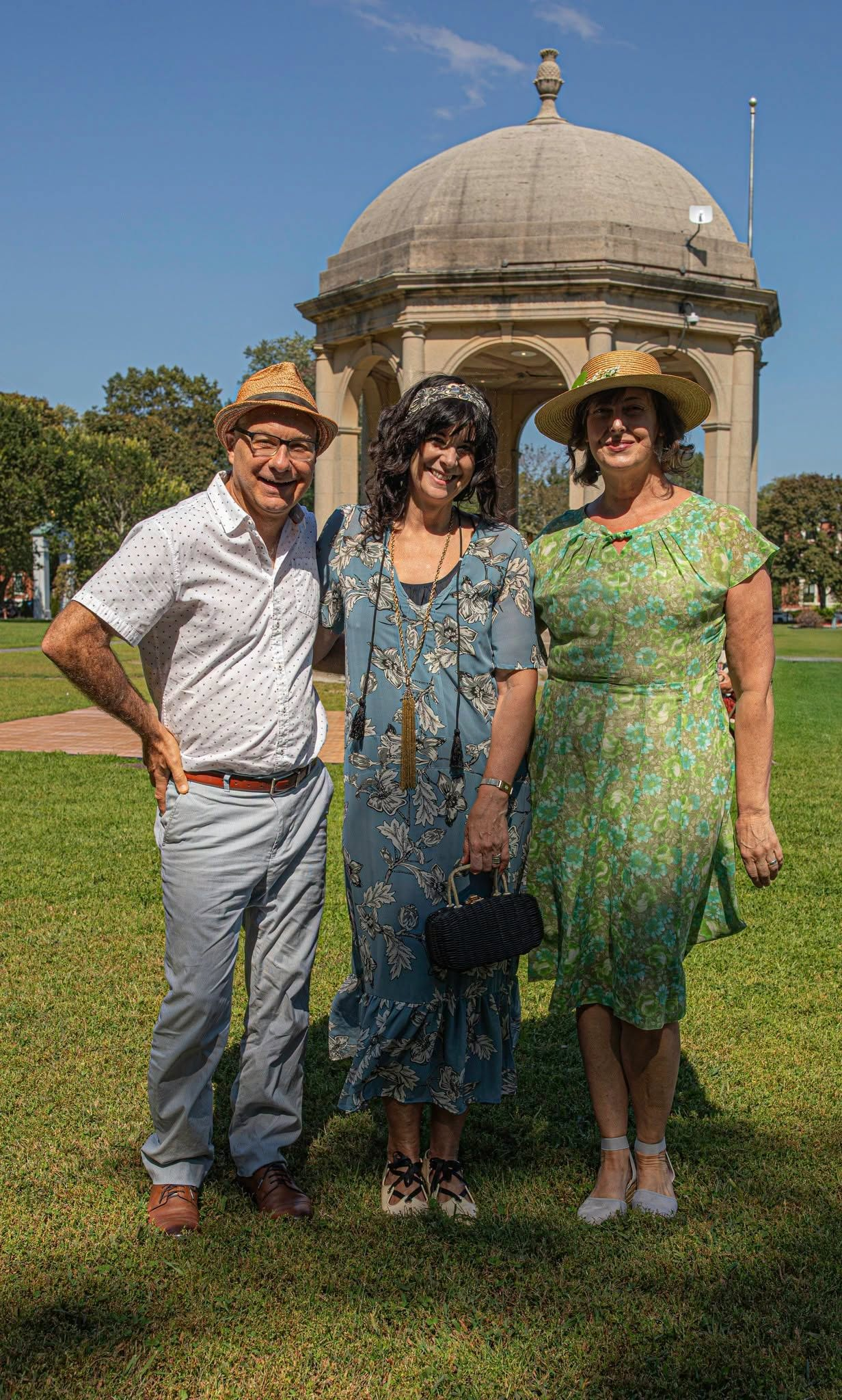
Swing music, antique cars and snazzy dressers were in abundance last Saturday at the annual Vintage Lawn Party in Salem, MA.
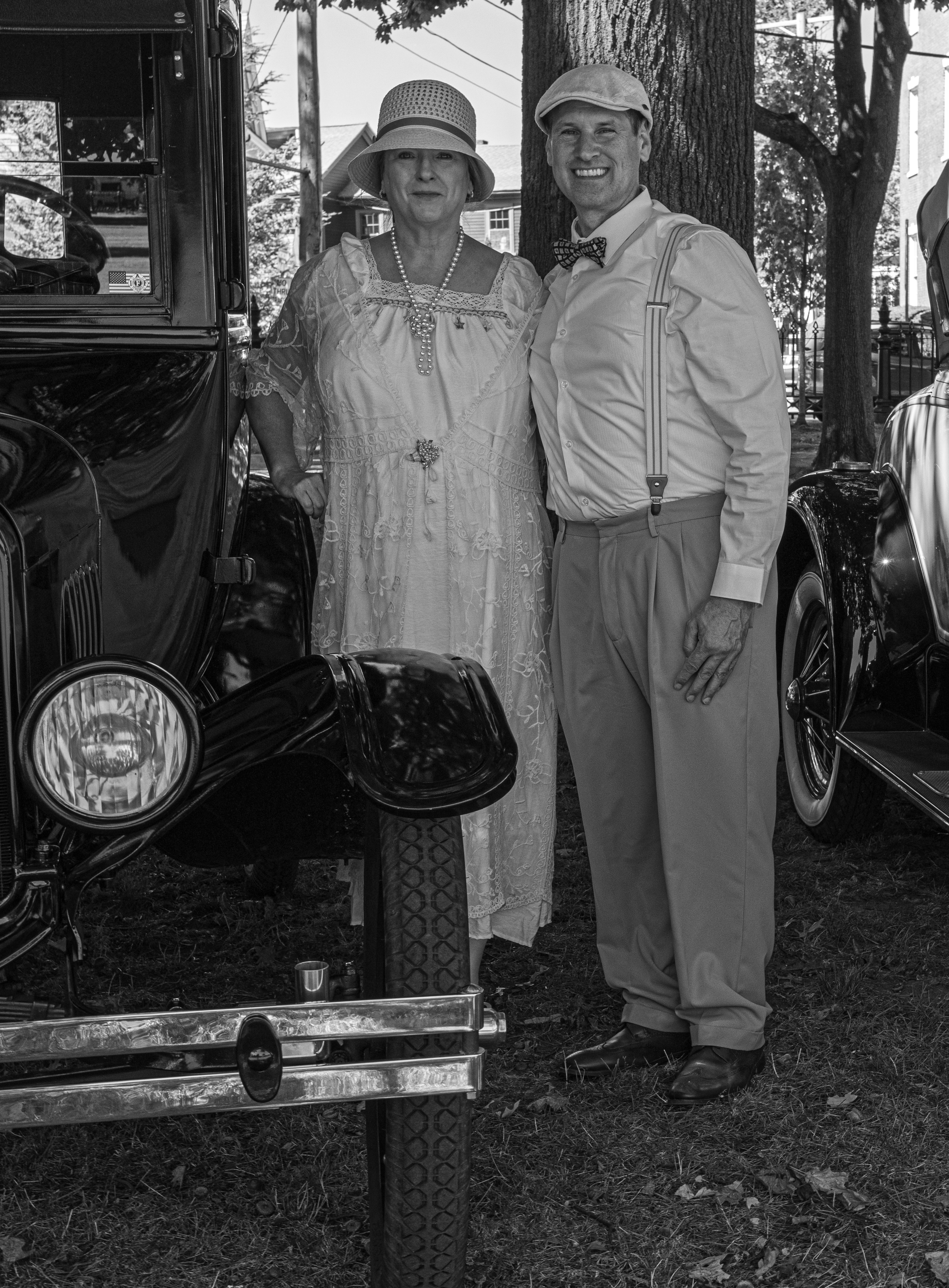
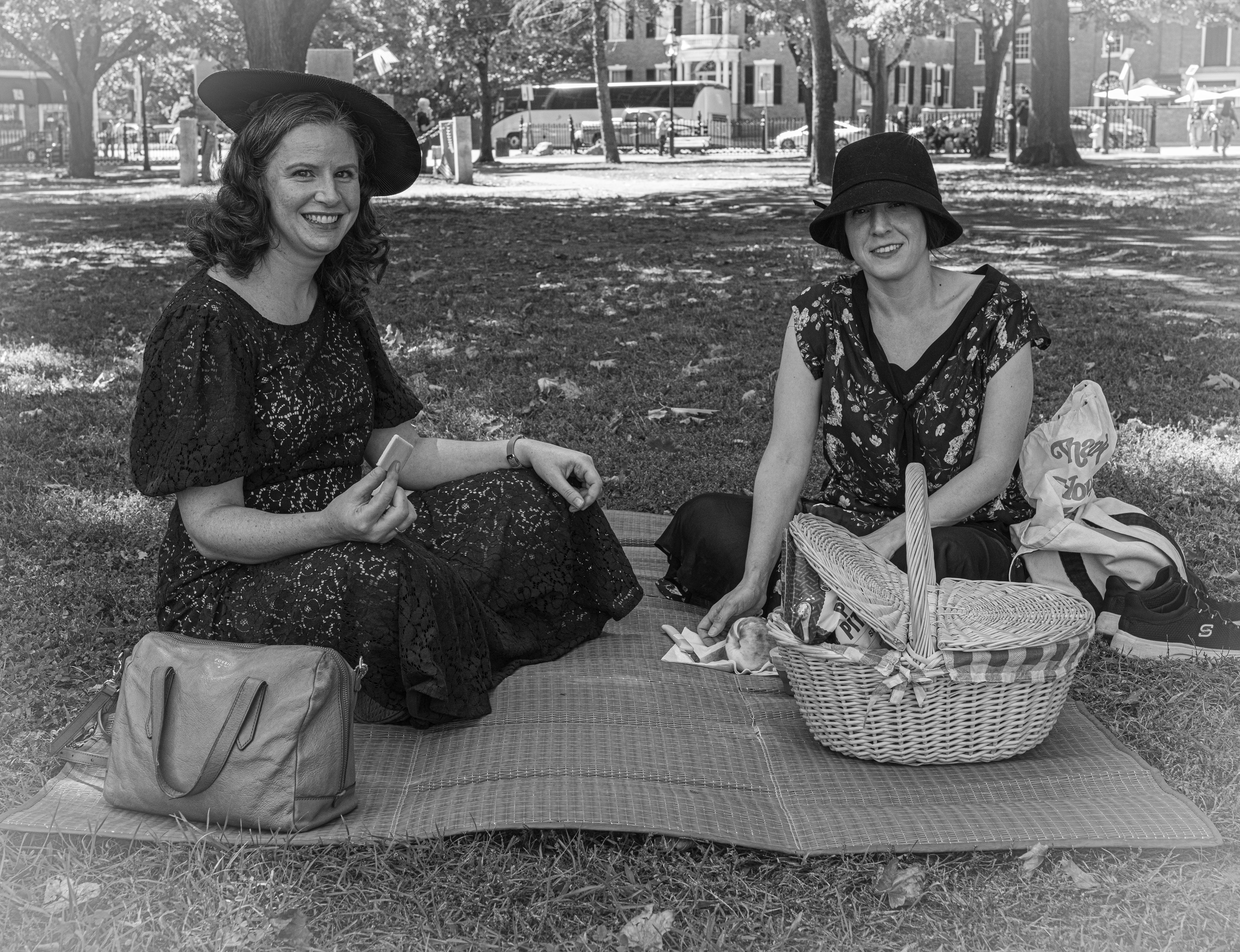
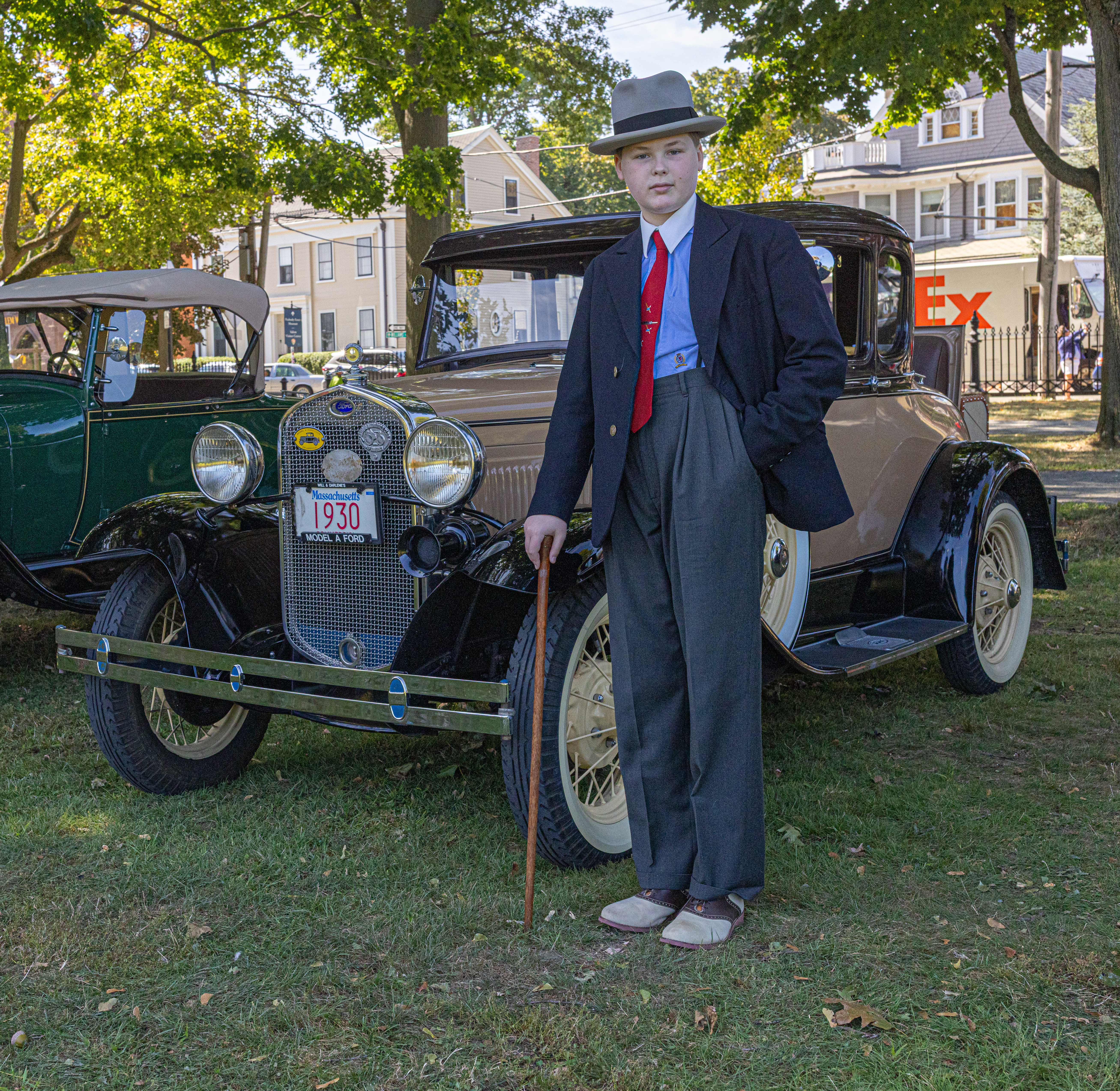
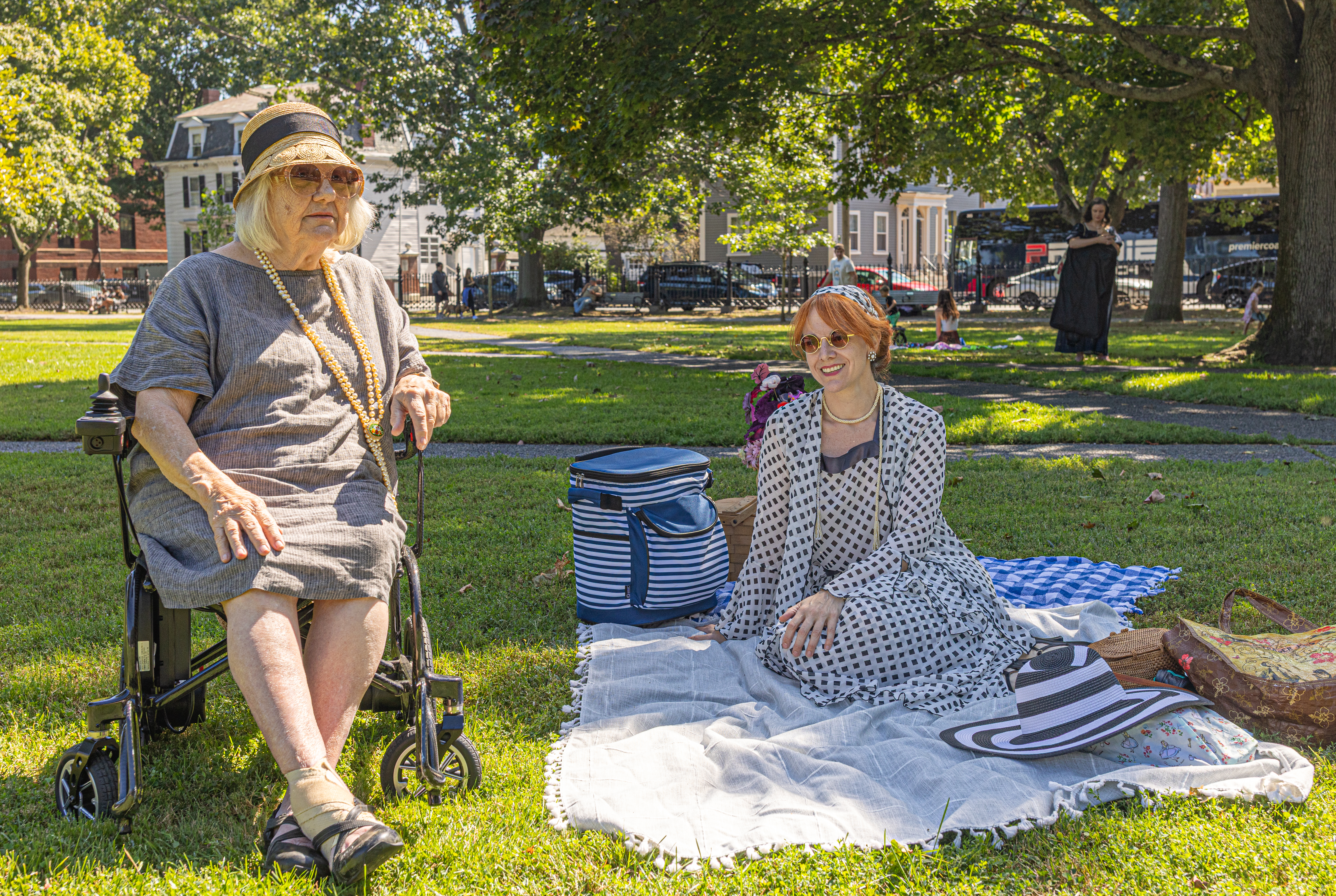
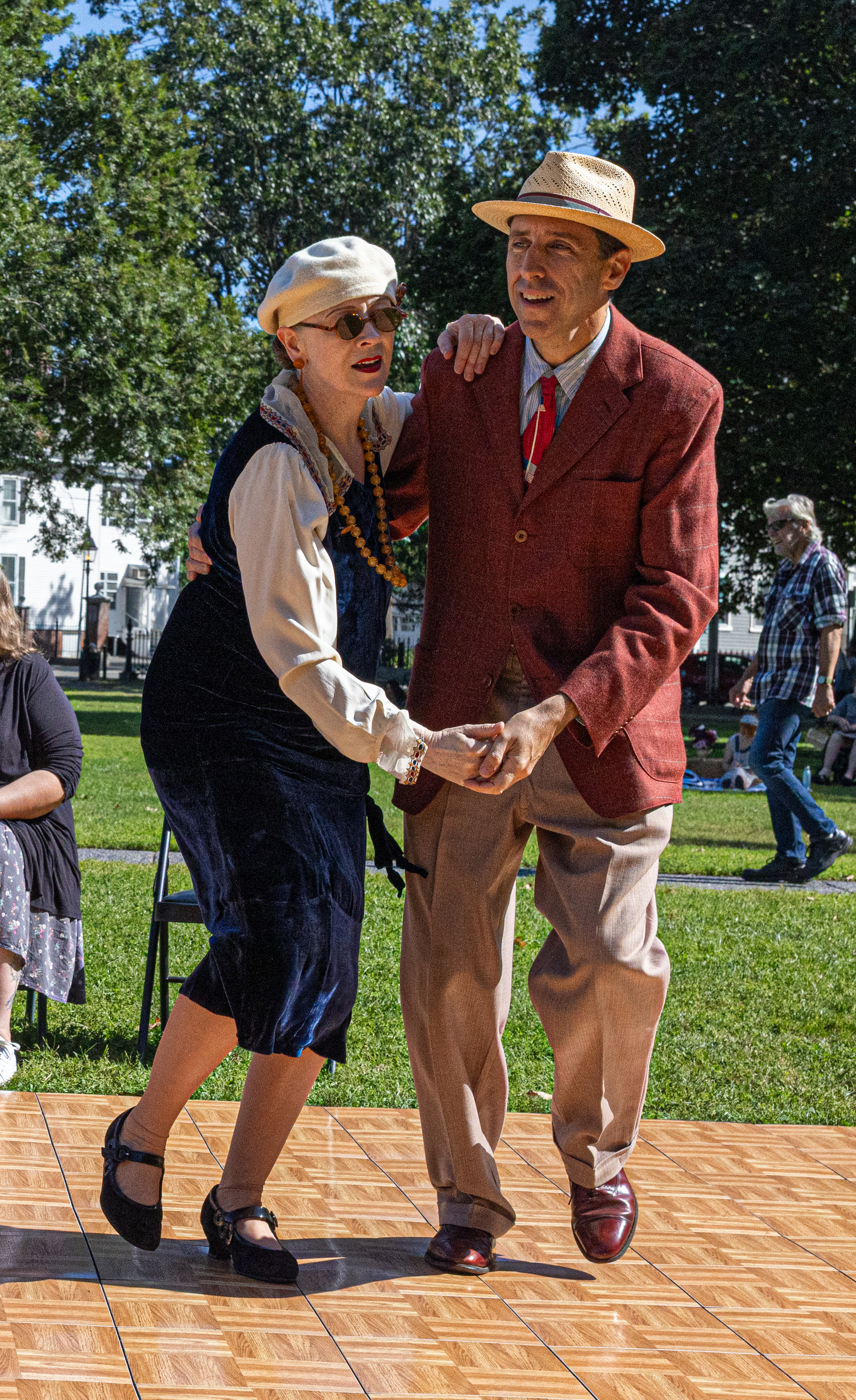
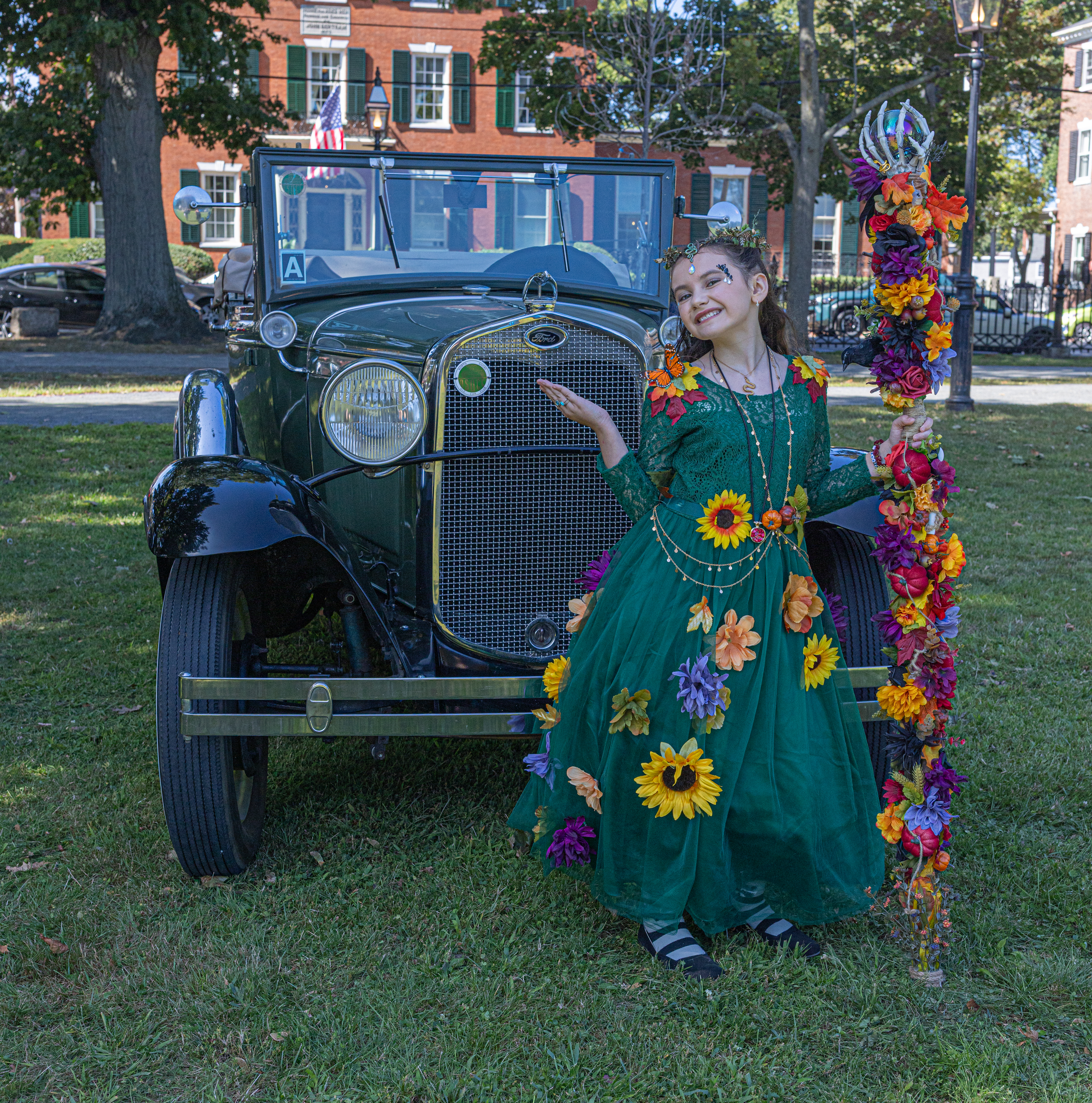
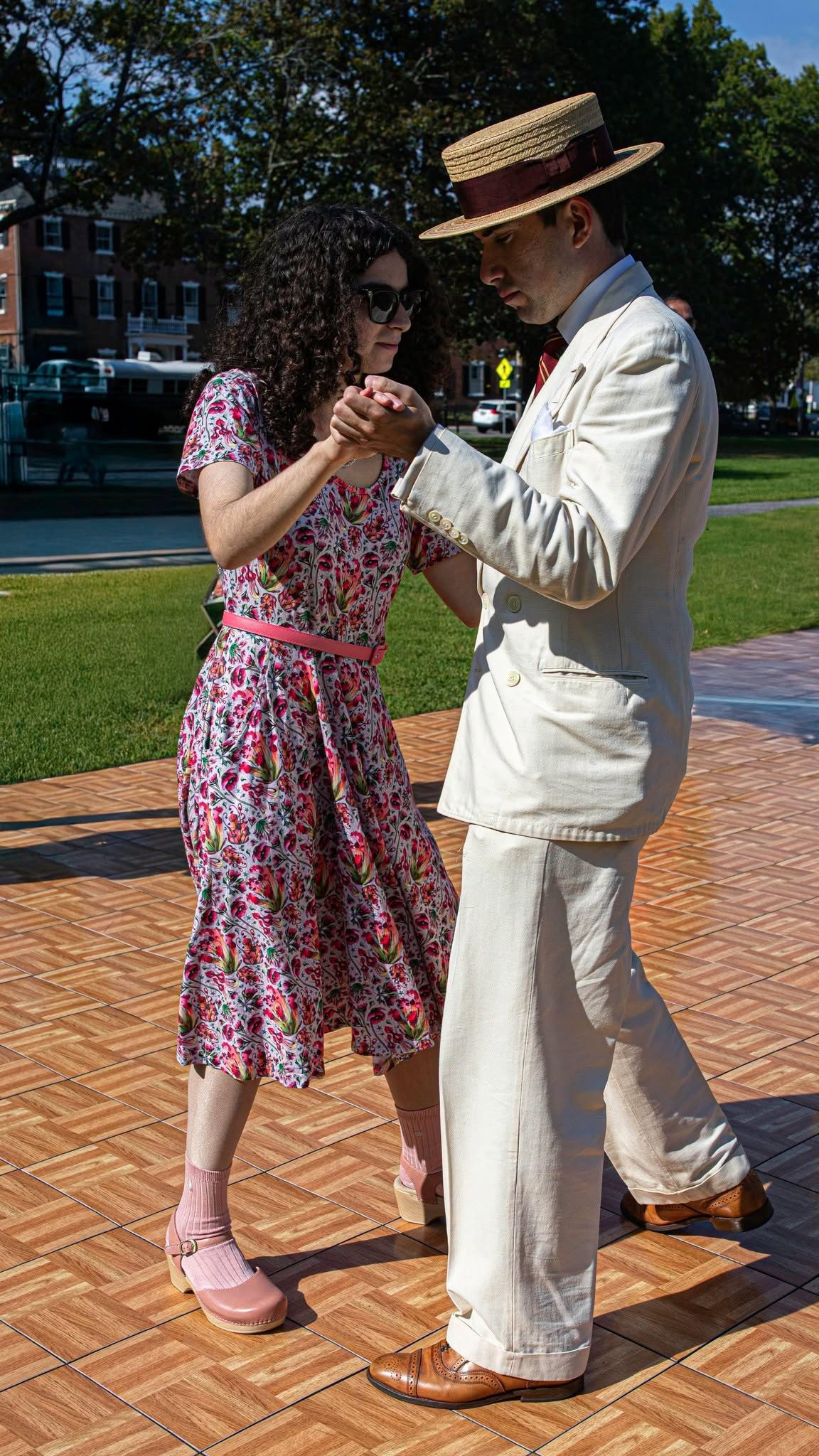
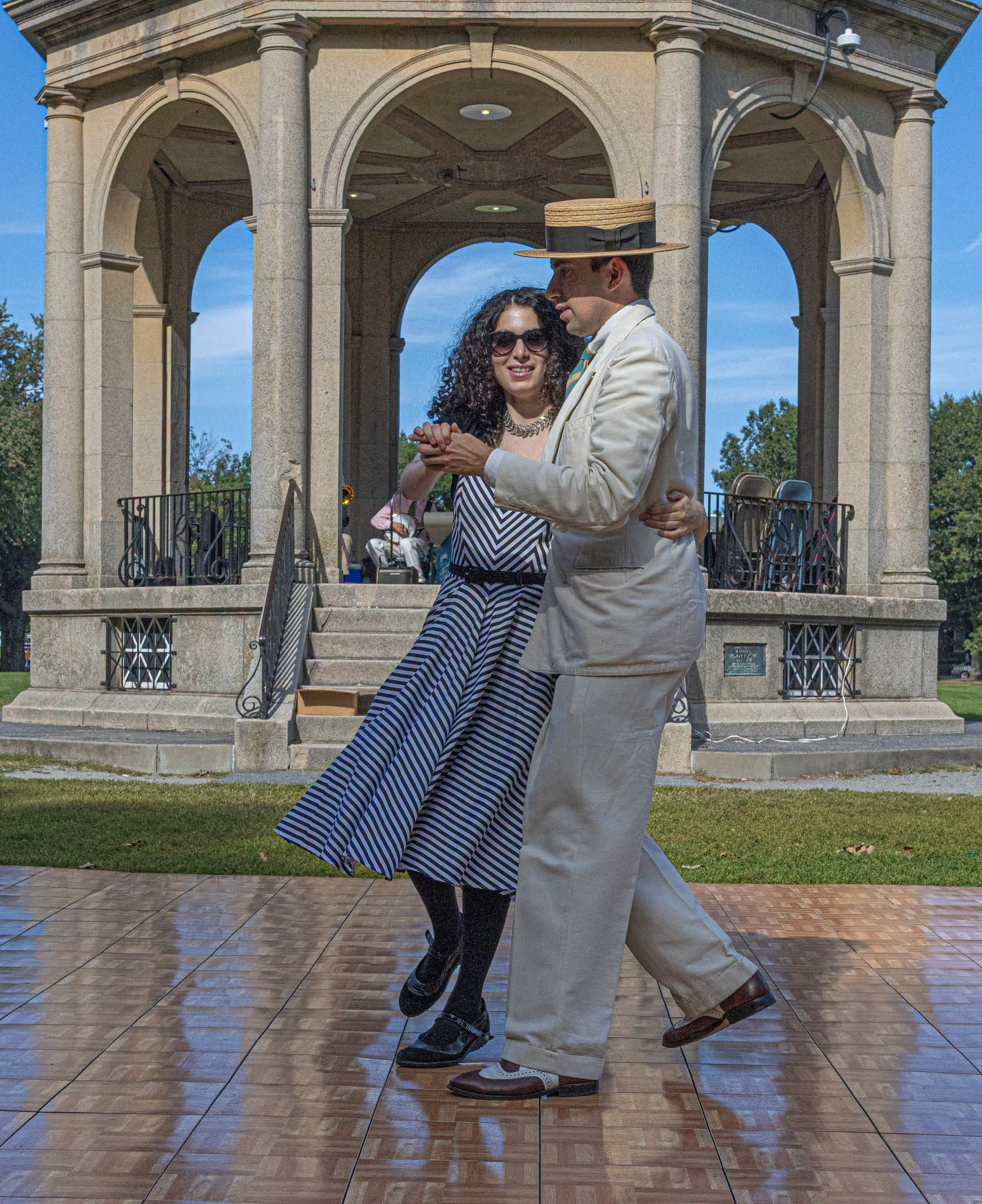
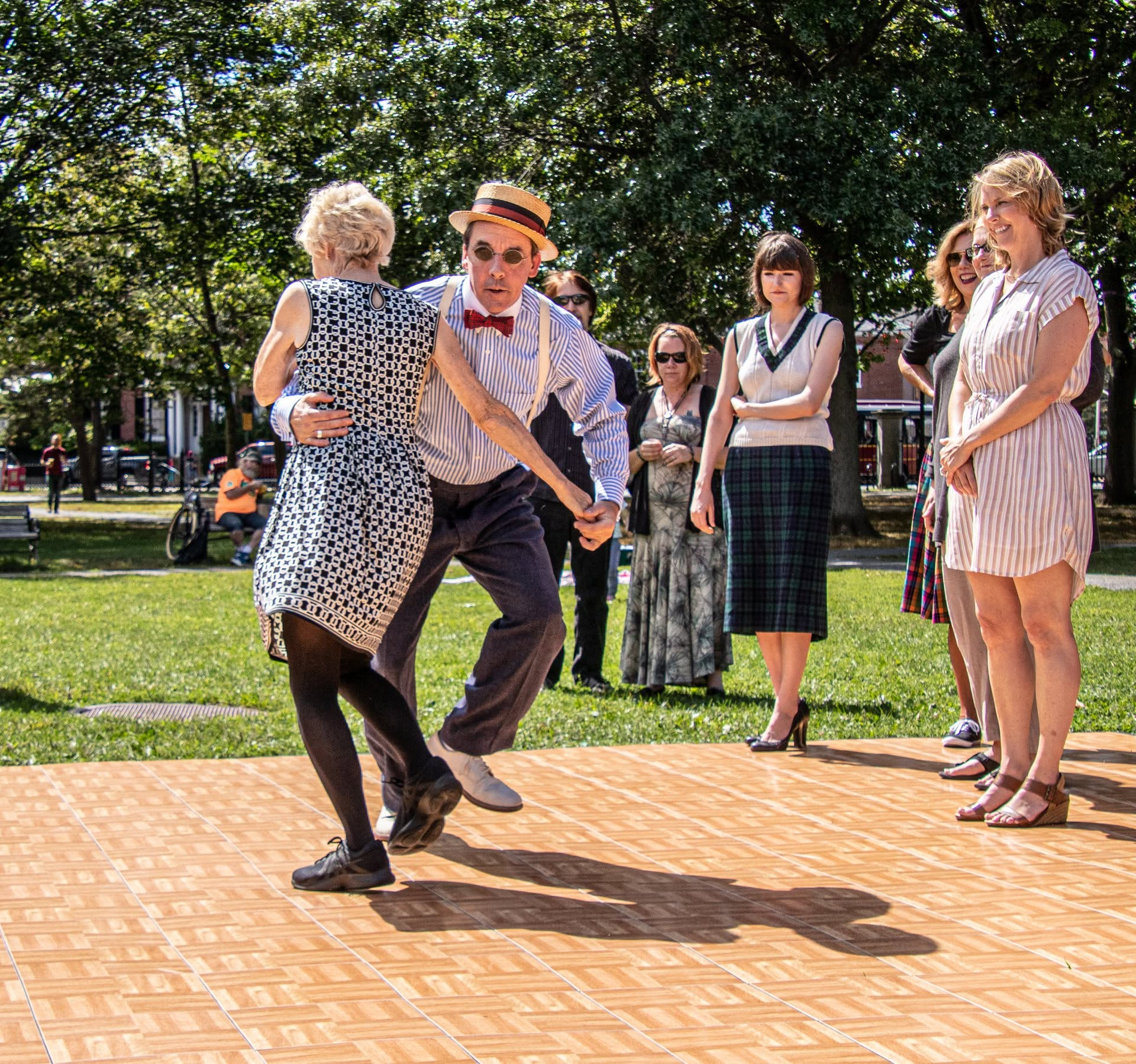
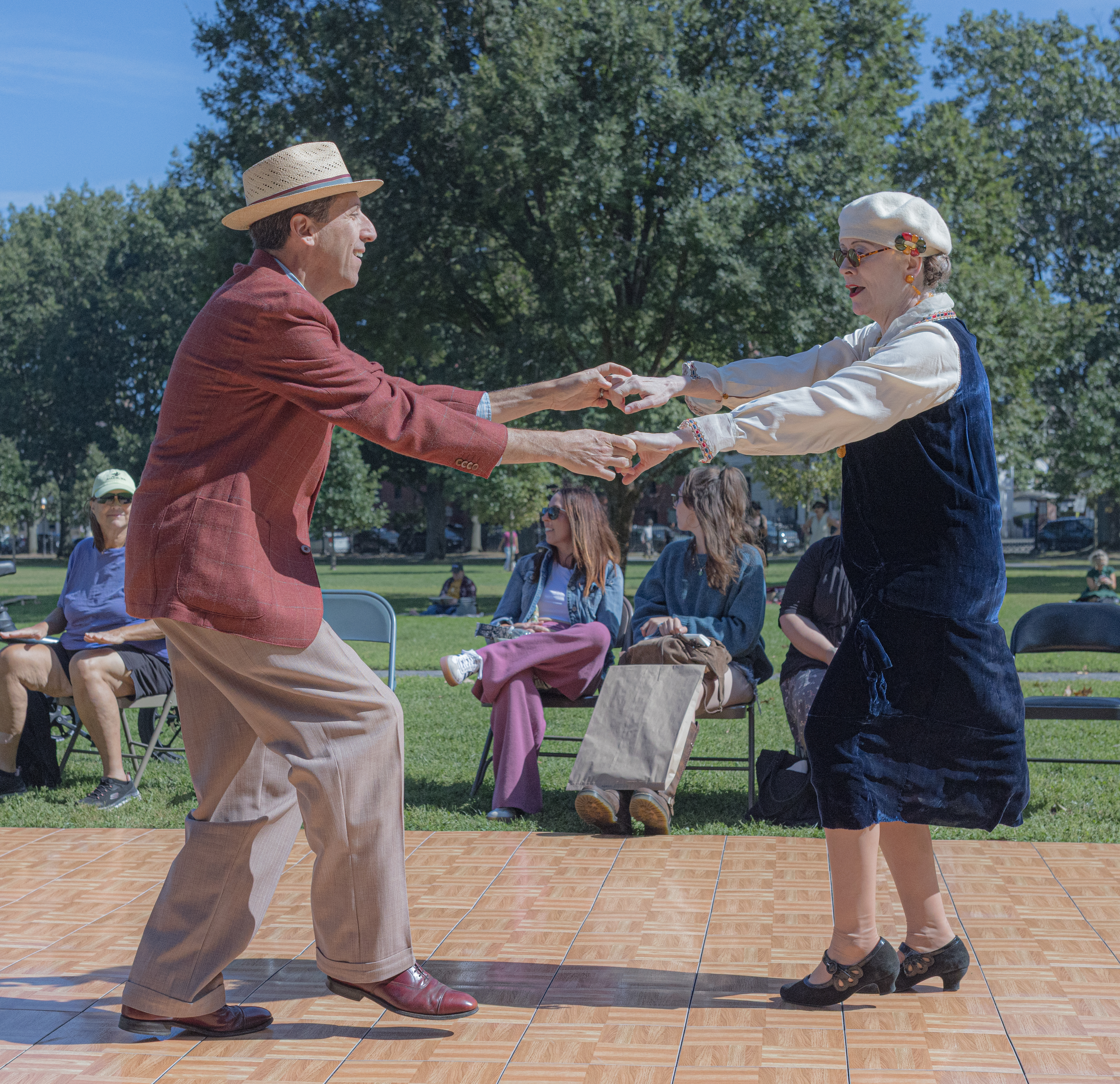
People dressed to the nines in their best vintage clothing.
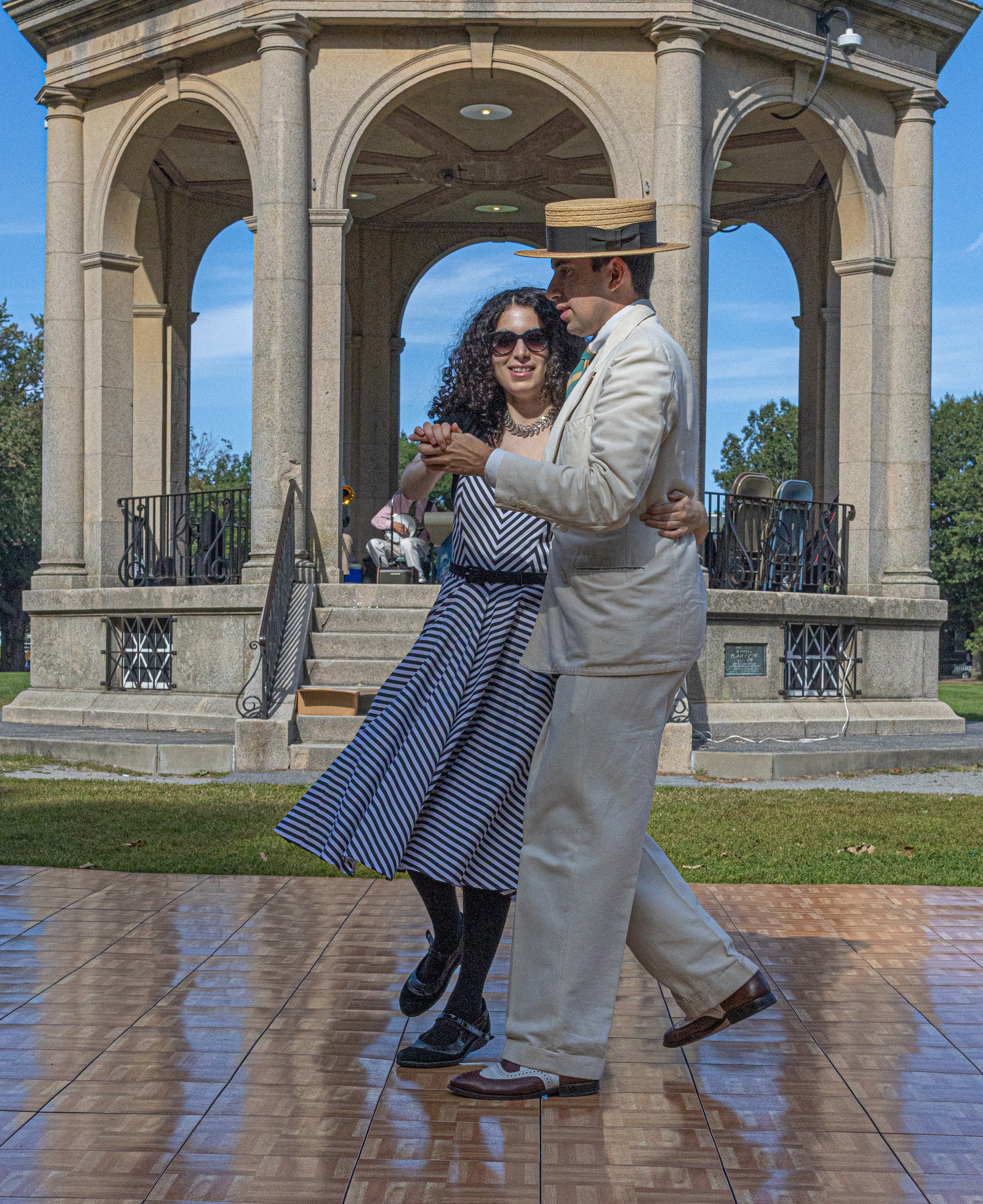
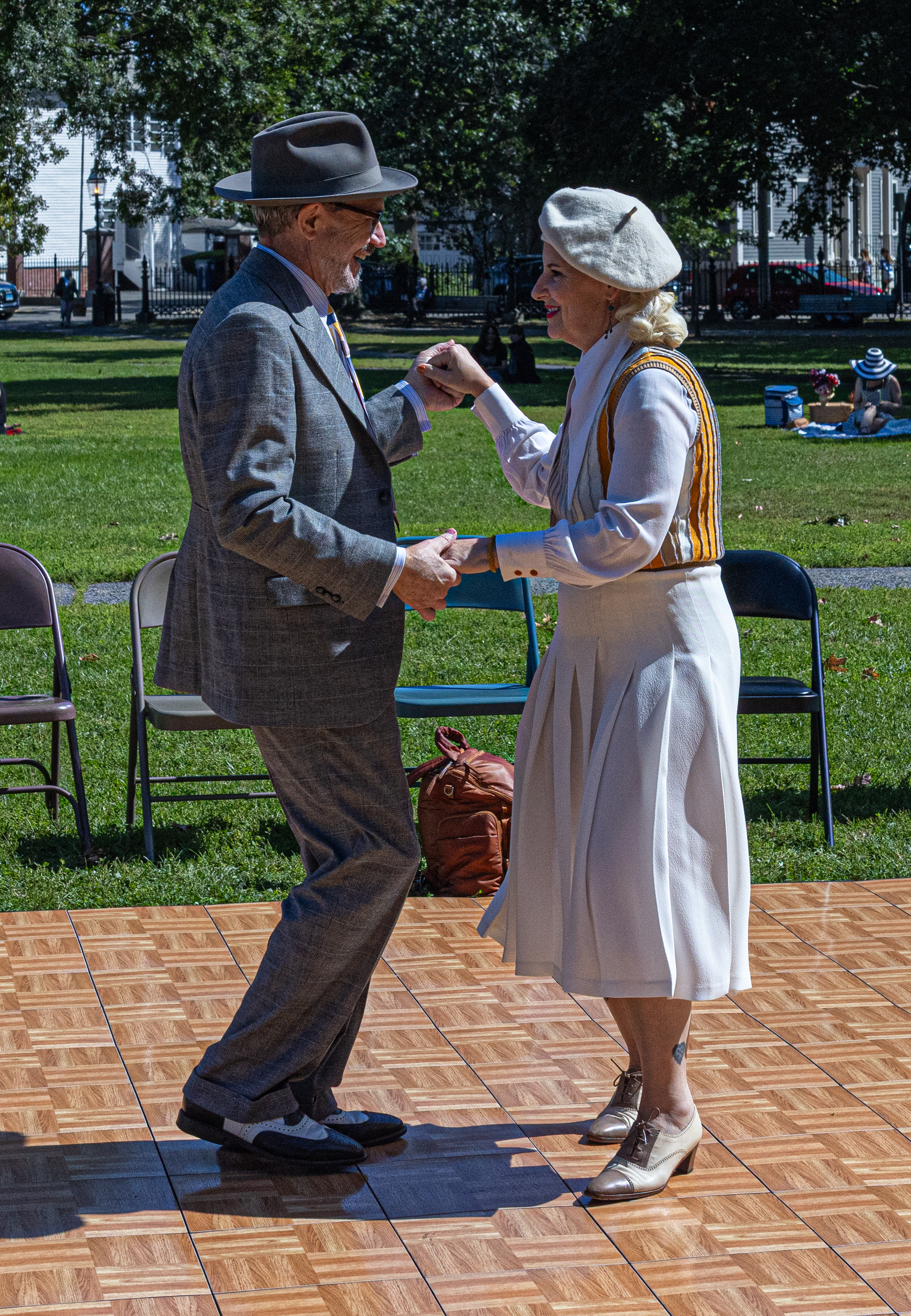
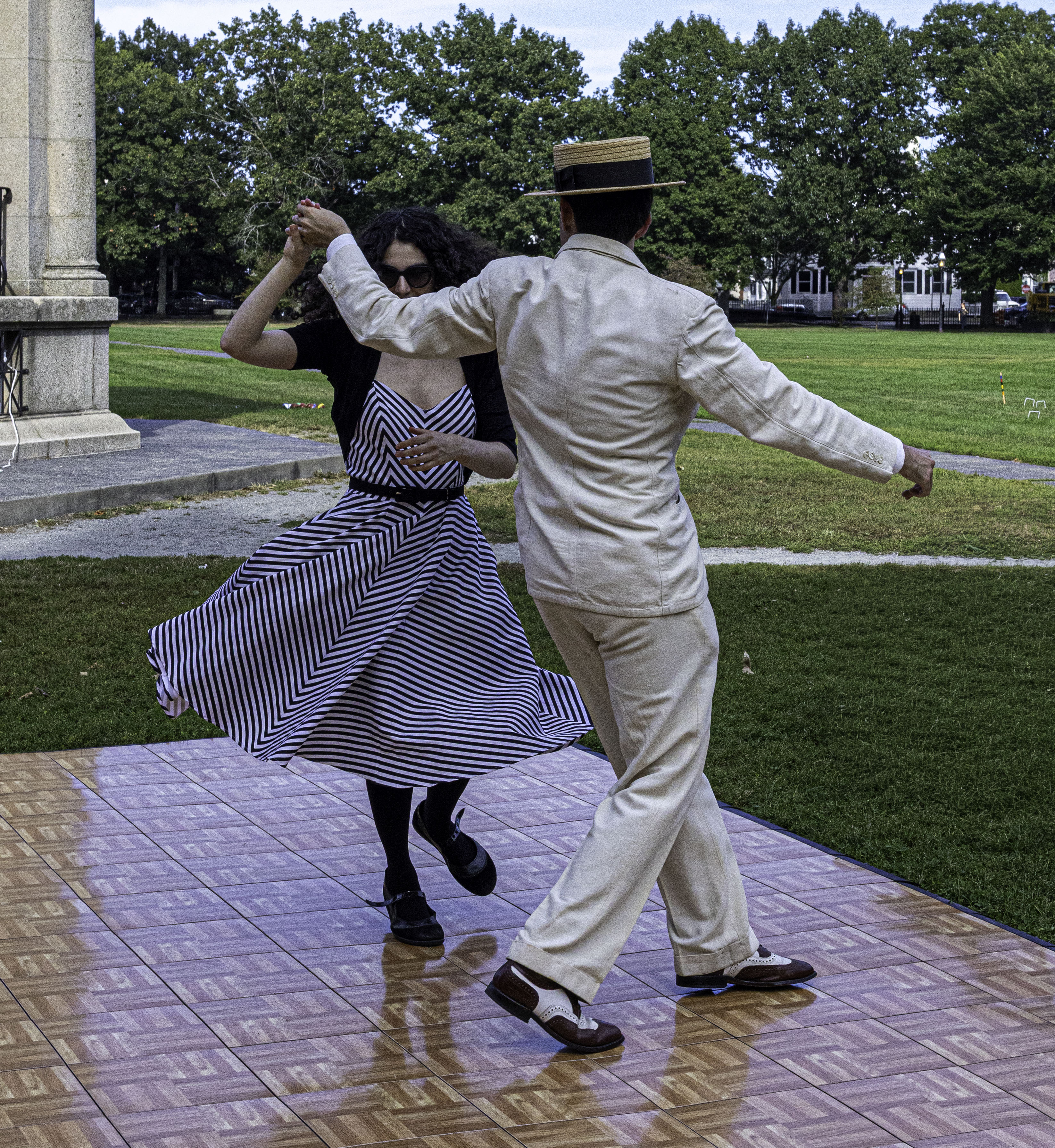
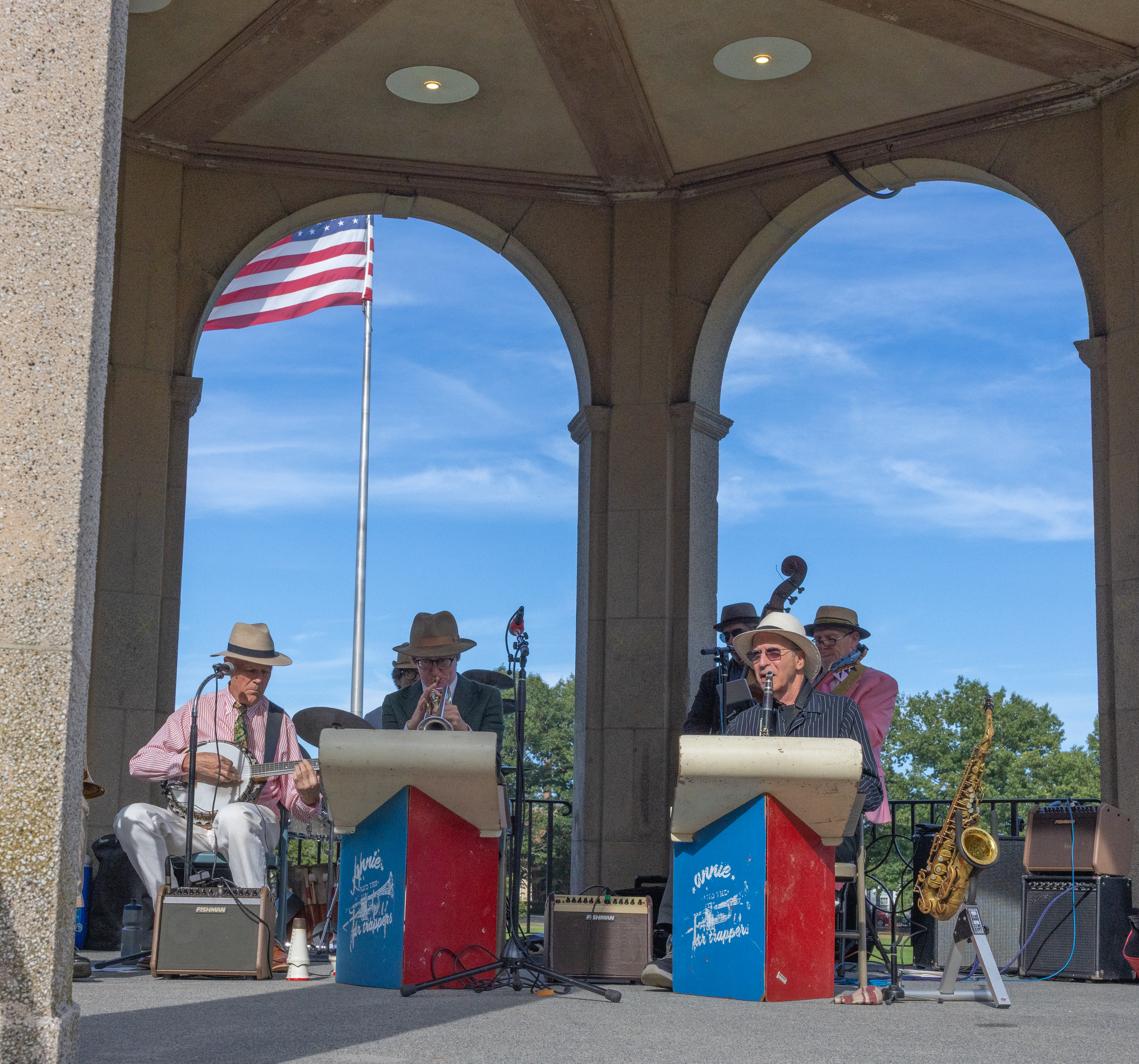
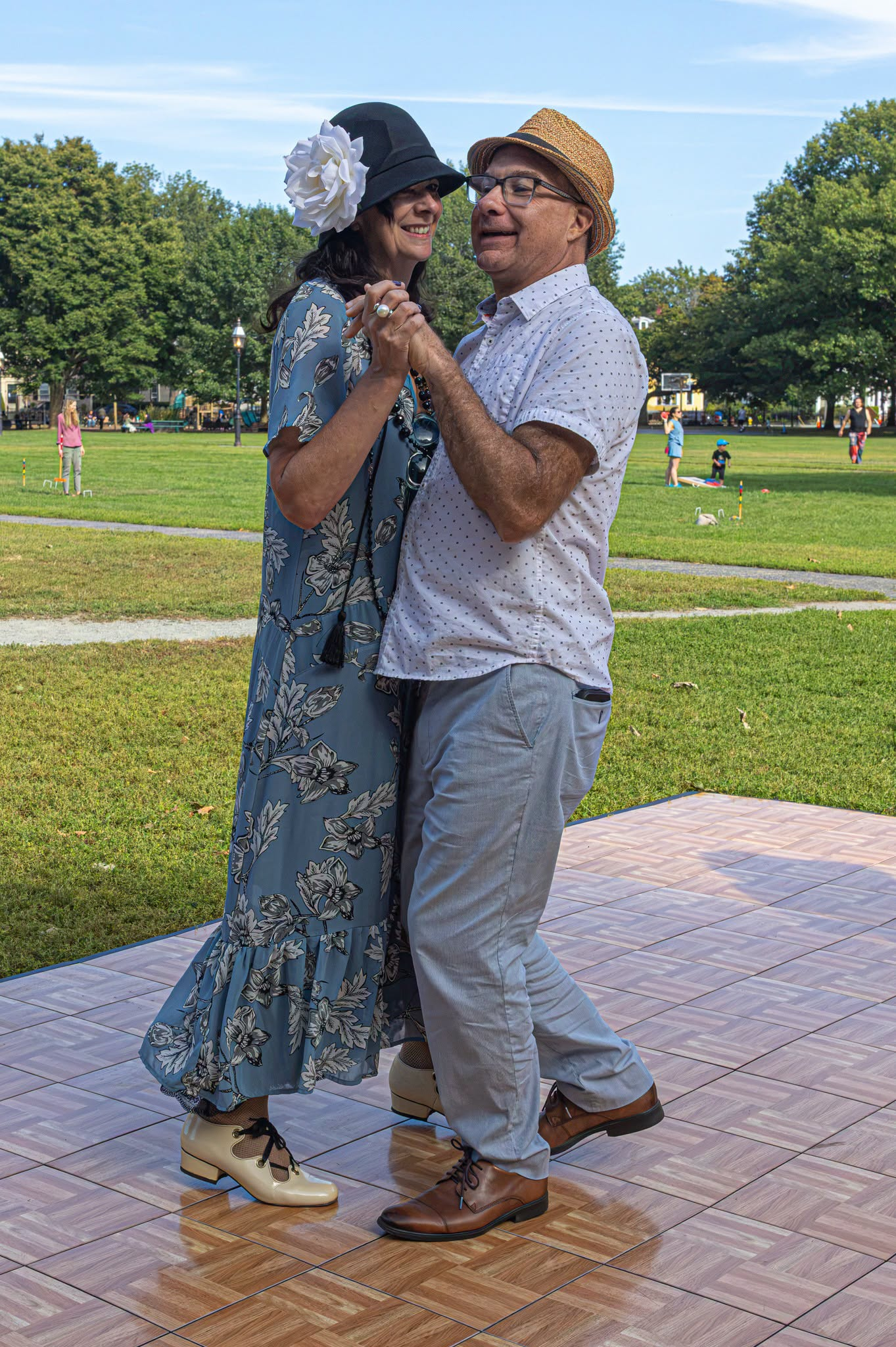
And, of course, they danced to the swinging sounds of Annie and the Furtrappers.
As someone with two left feet, I always appreciate the dance moves on display at this event.
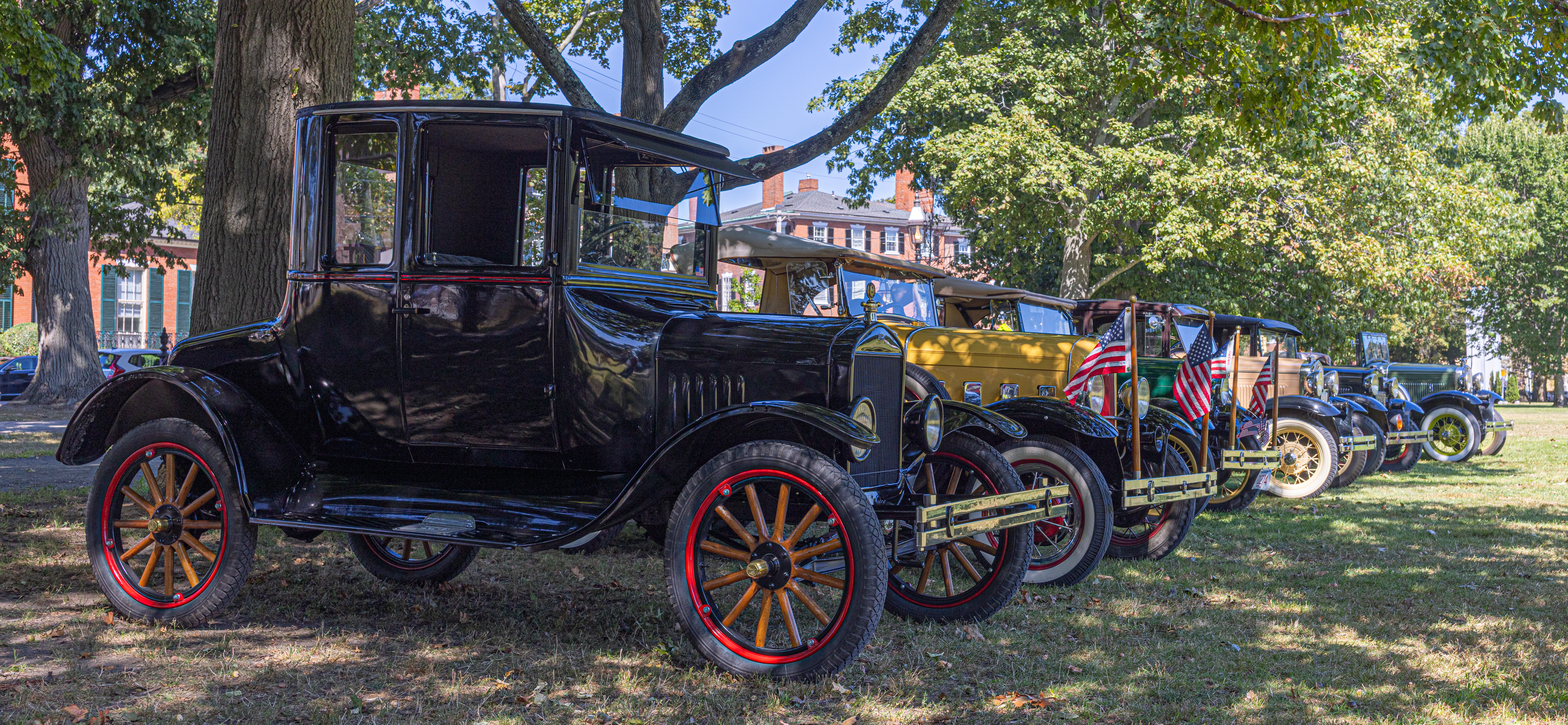
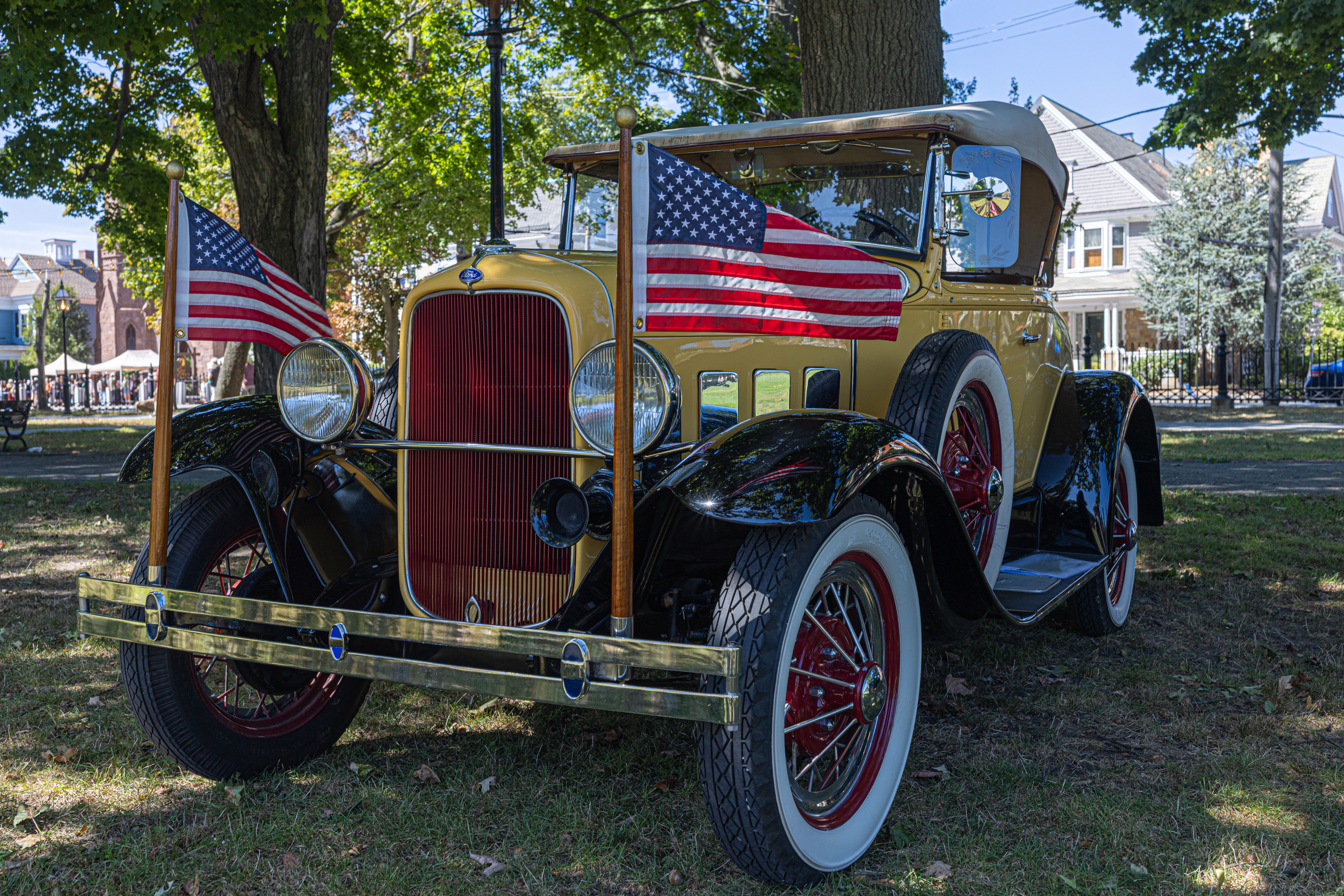
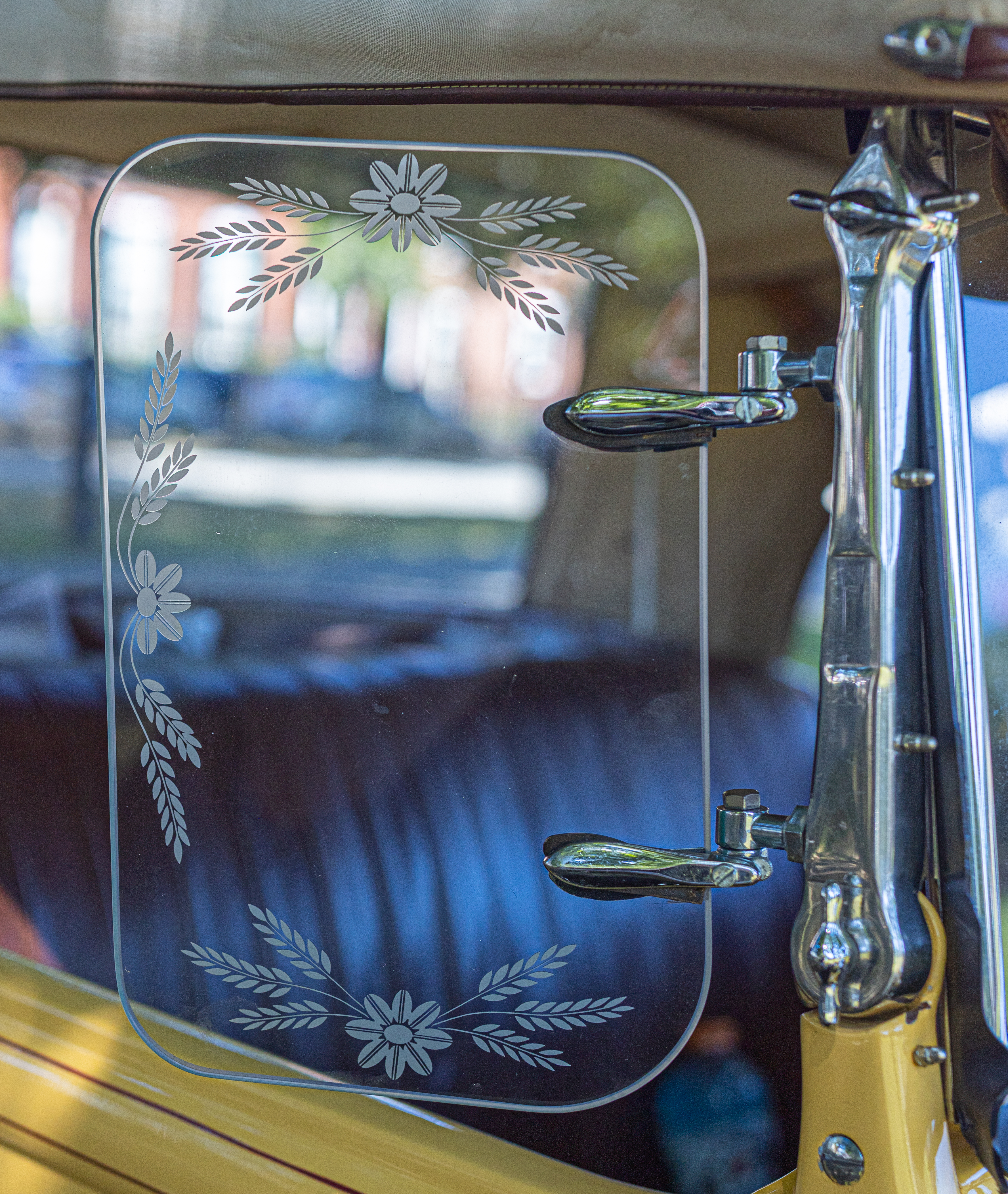
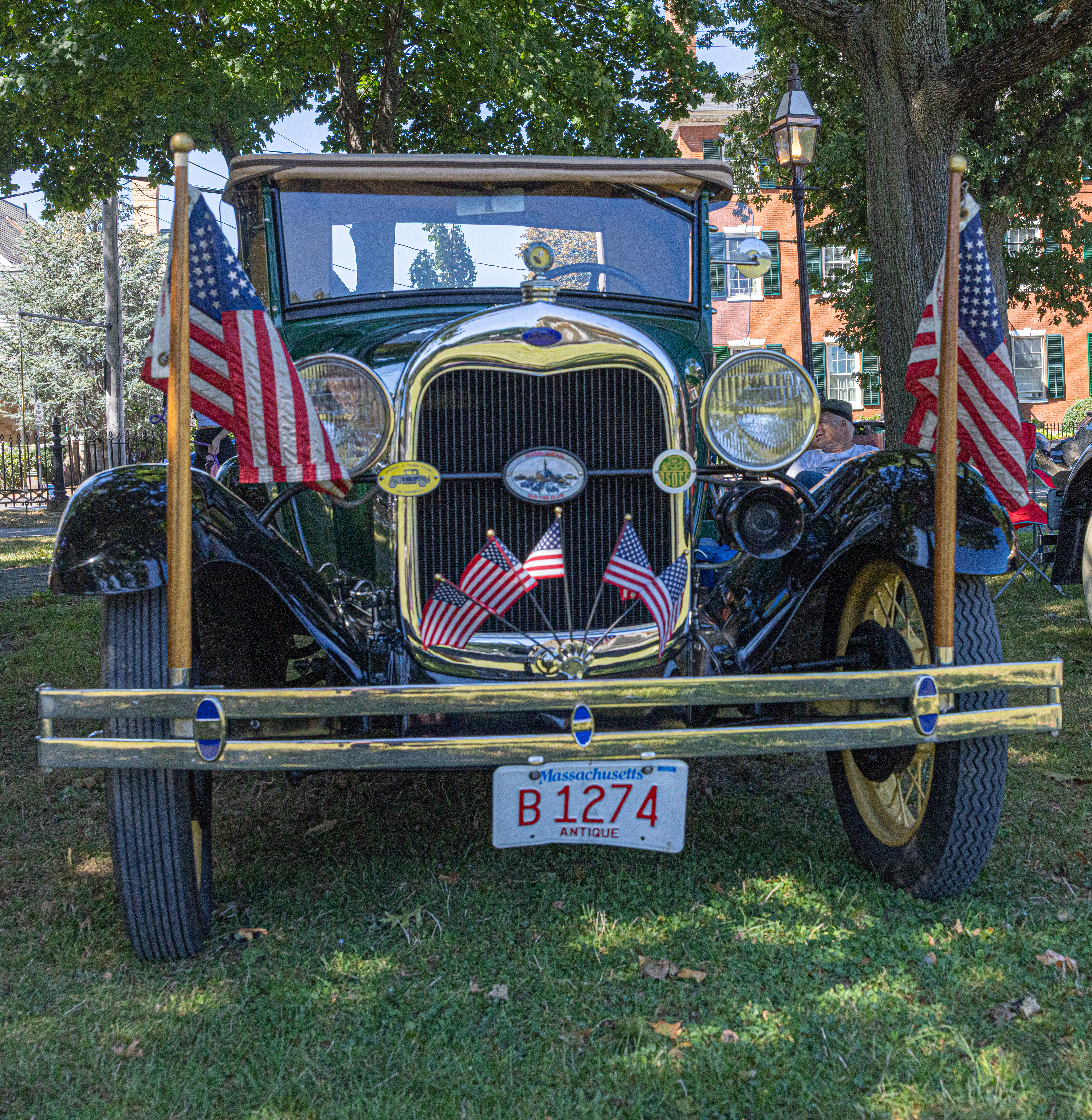
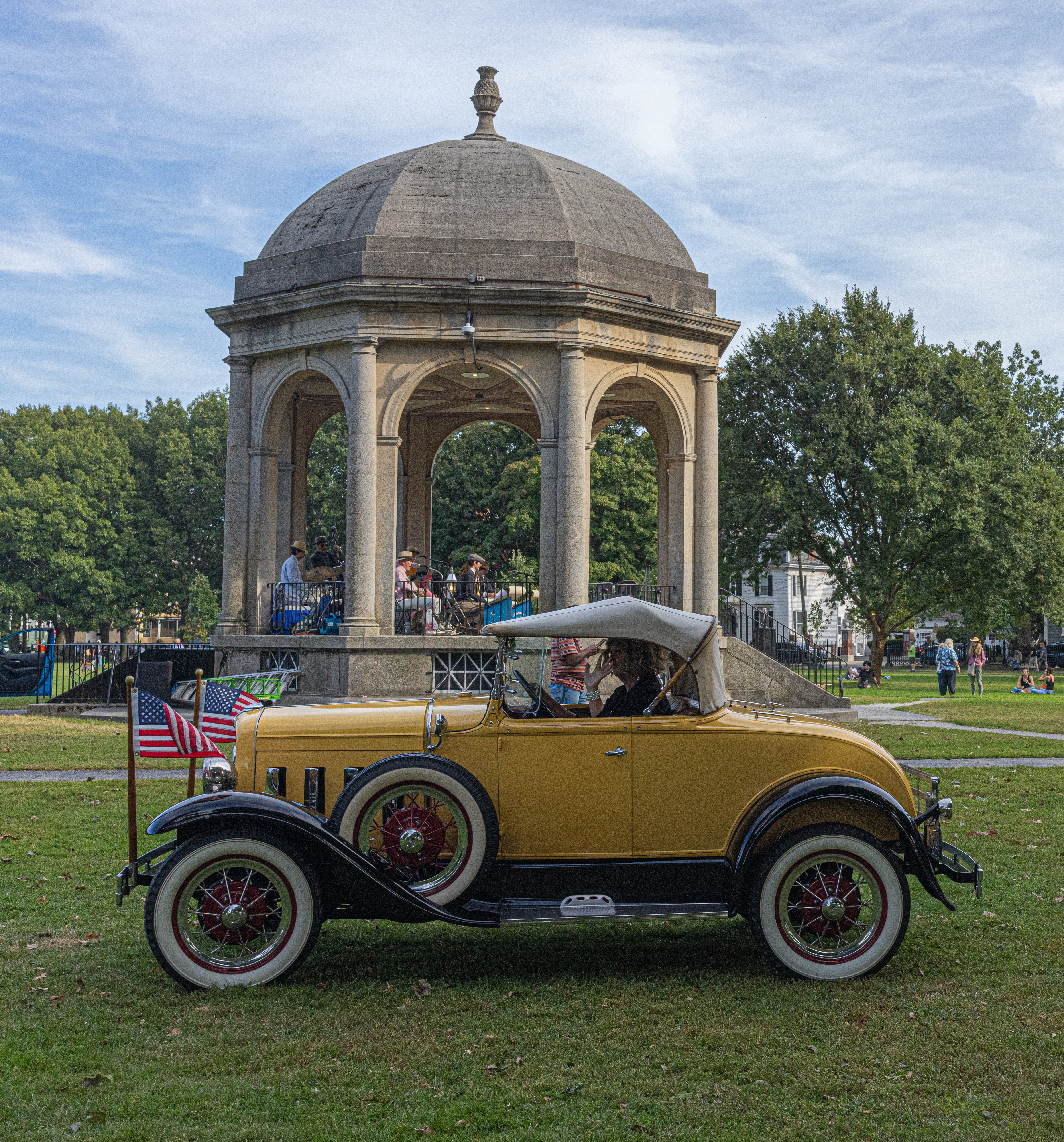
One of the main attractions at the party are the cars. A variety of antique cars were featured at the event. In fact, I think that is what attracted the attention of most of the onlookers and got their interest.
This guy didn’t just bring his vehicle. He also brought some old slot machines that were previously used in local speakeasys during the 1930s They are are also still in working order!
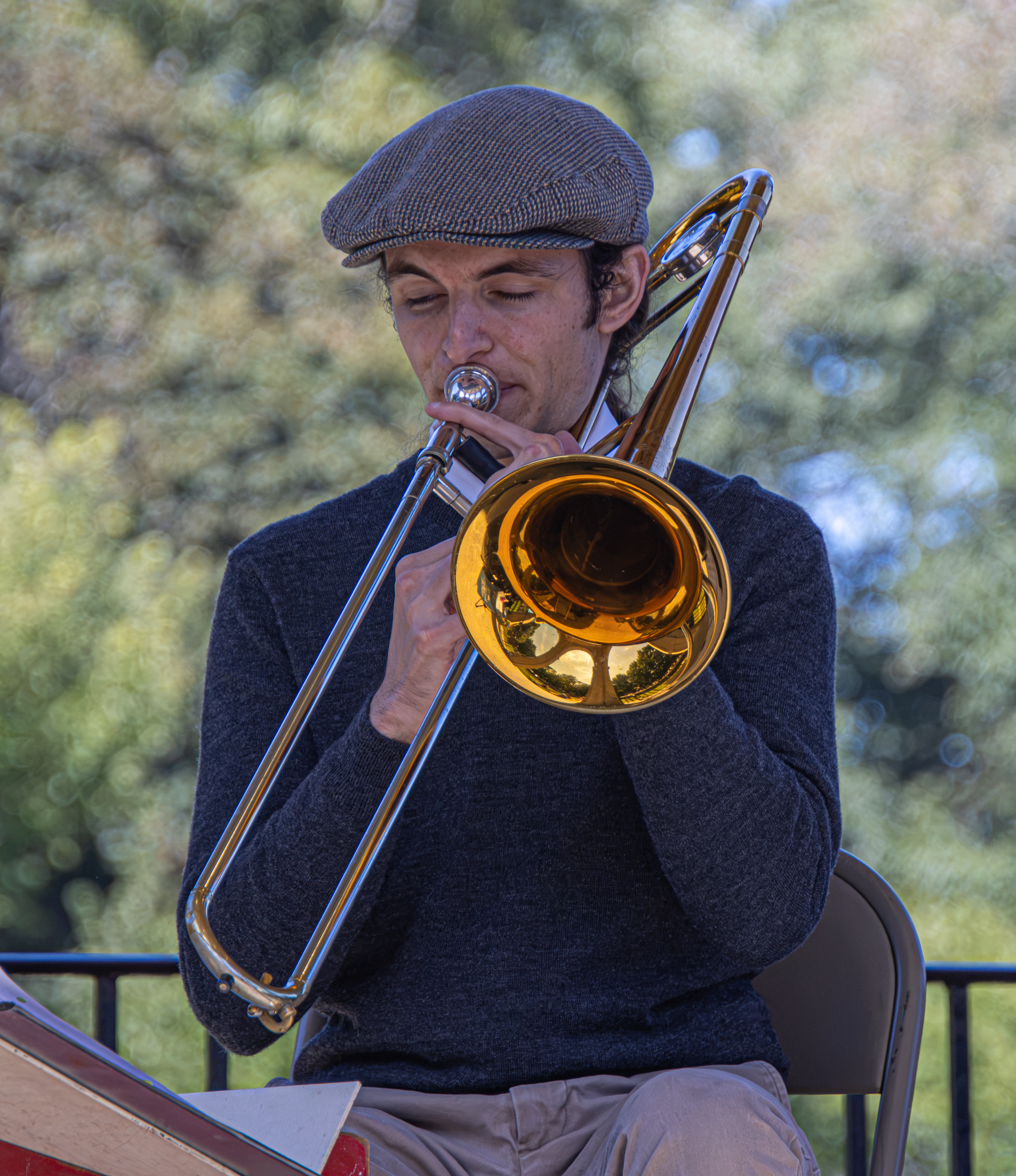
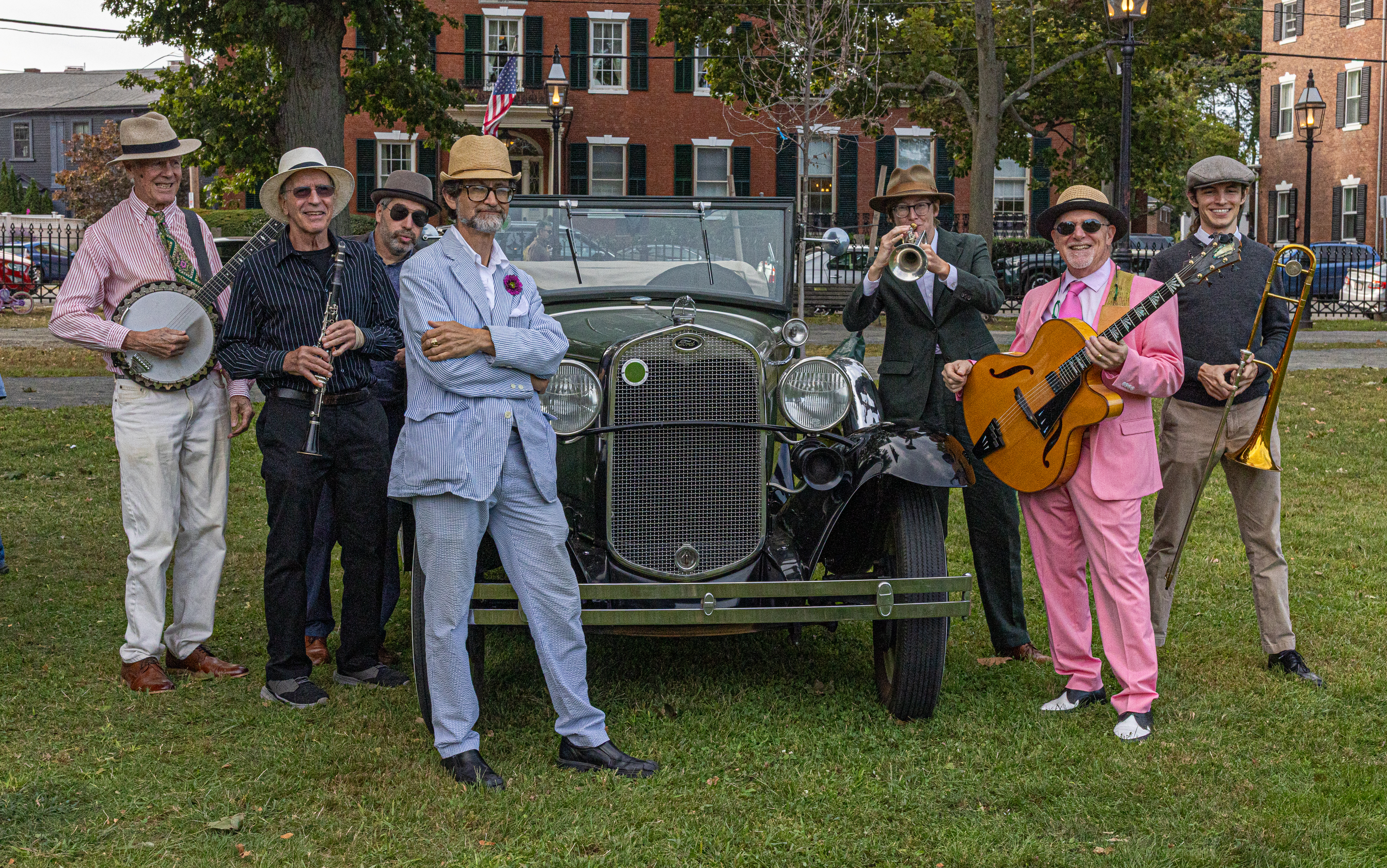
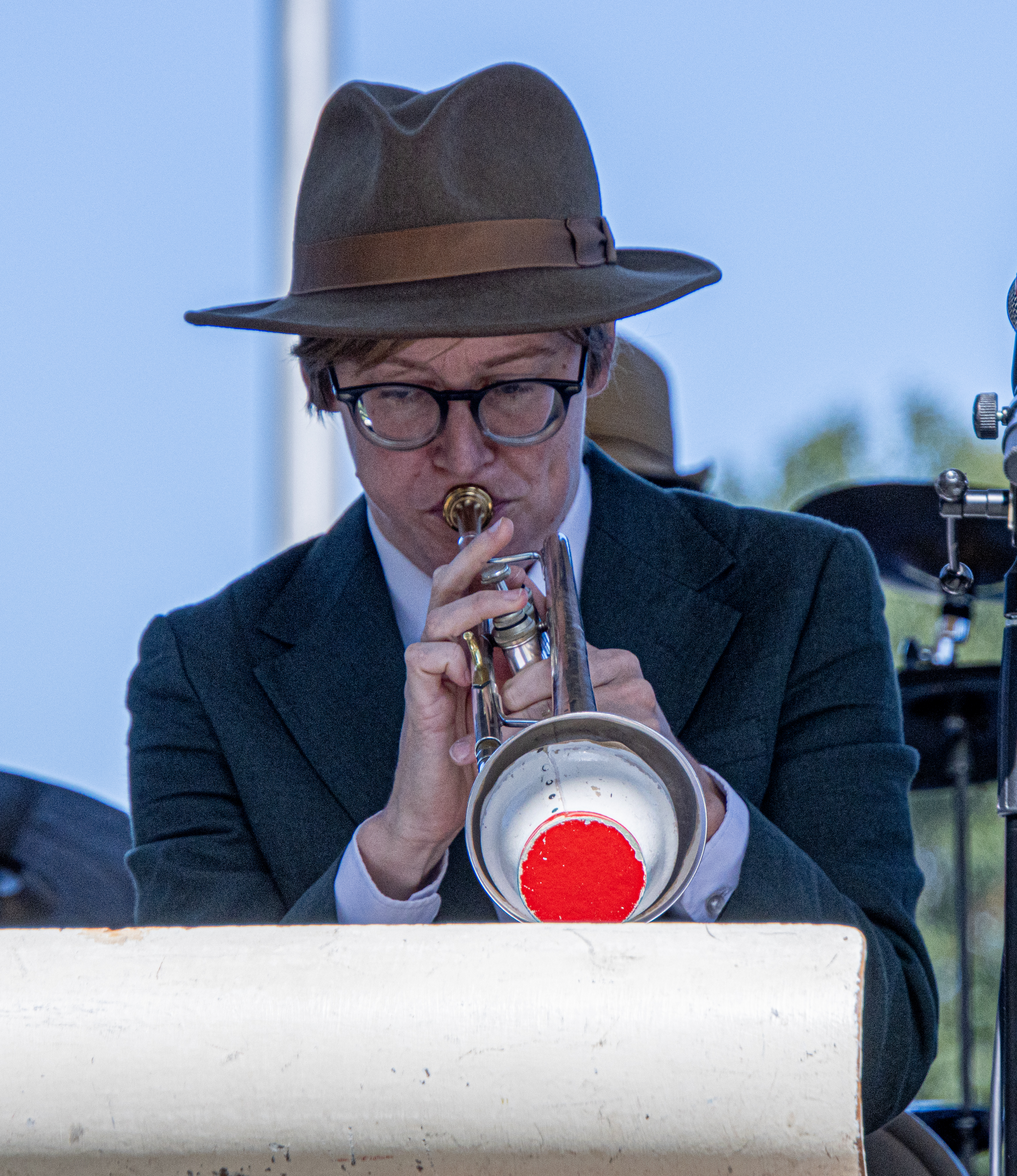
Annie and the Furtrappers provided the entertainment for the event. They have been the musical performers every year I have attended and they always get the crowd moving.
There were also vendors selling swag and other wares from that era. Some of the vintage clothing being sold were over 100 years old!
There were games like croquet, bocce and other games popular at that time, and still to this day. But, this visitor found another way to have fun and travel.
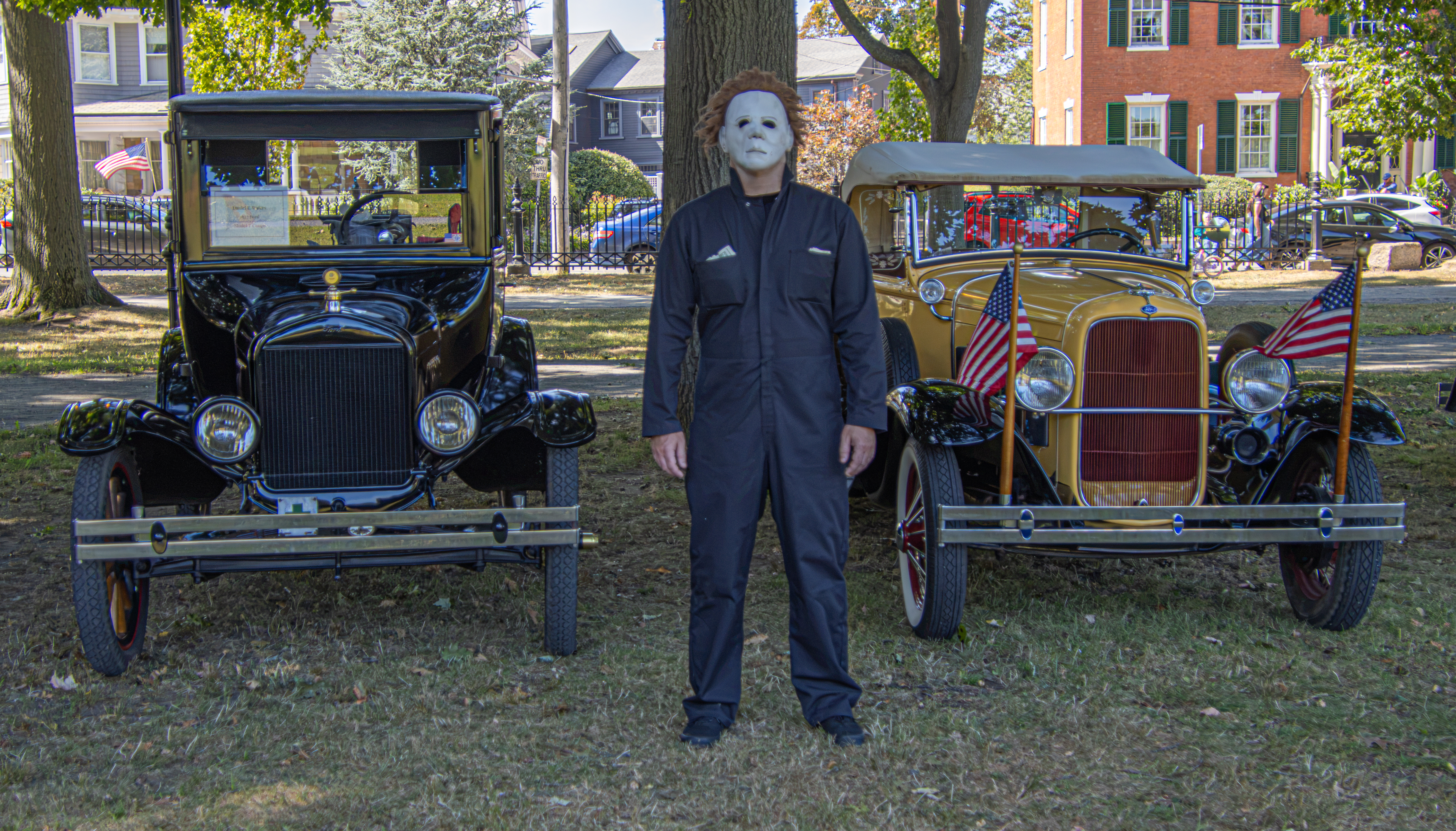
You never know who’s going to show up at these events. It is Salem, after all.
Who knew Mike was such a classic car aficionado. He did drive quite a bit in the first and best Halloween movie, though.
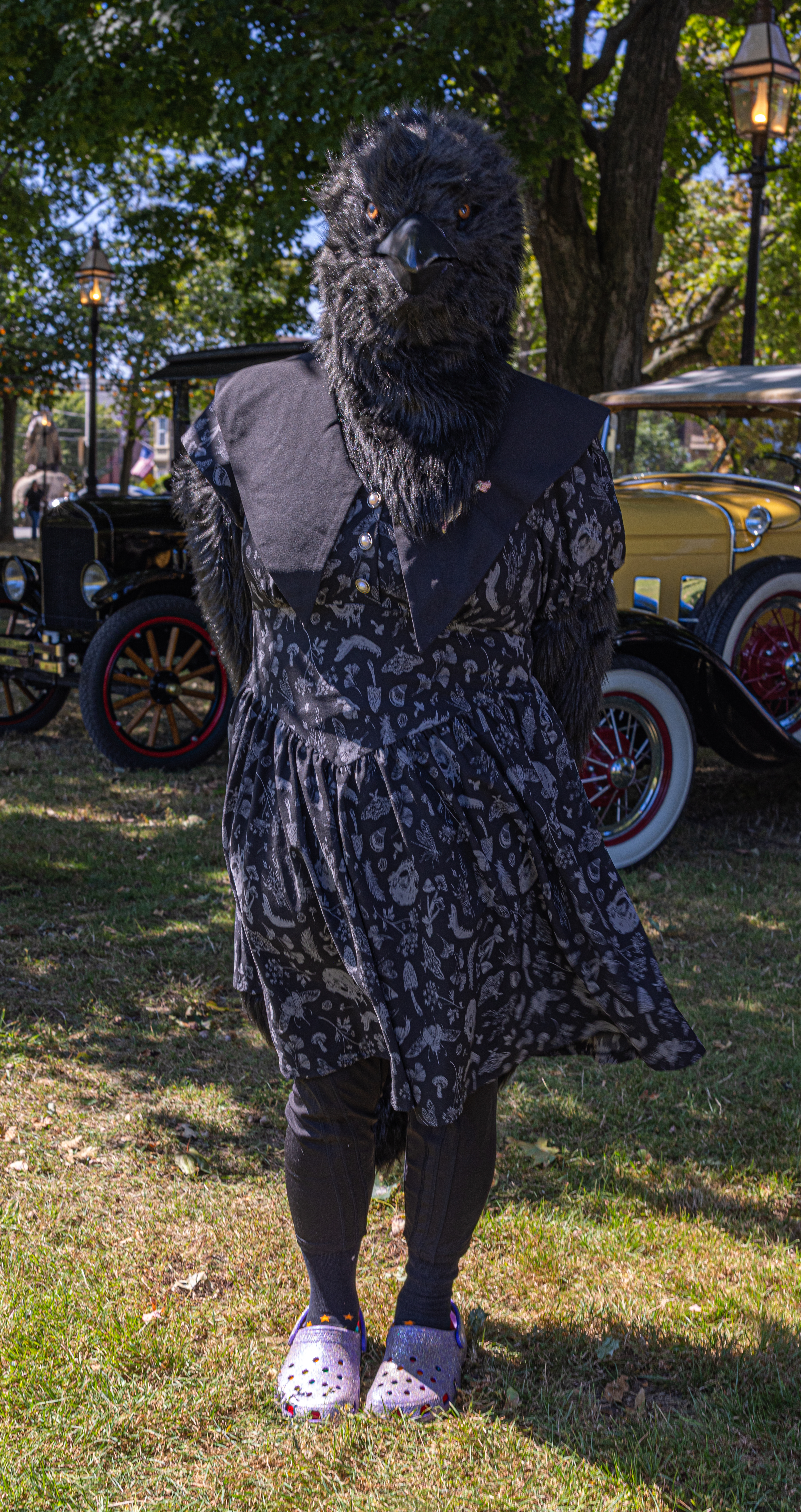
The party was for the birds. Literally. Again, it’s Salem.
This busker, Persephoneo is one of the performers who pose for photos and entertain people on Essex St,
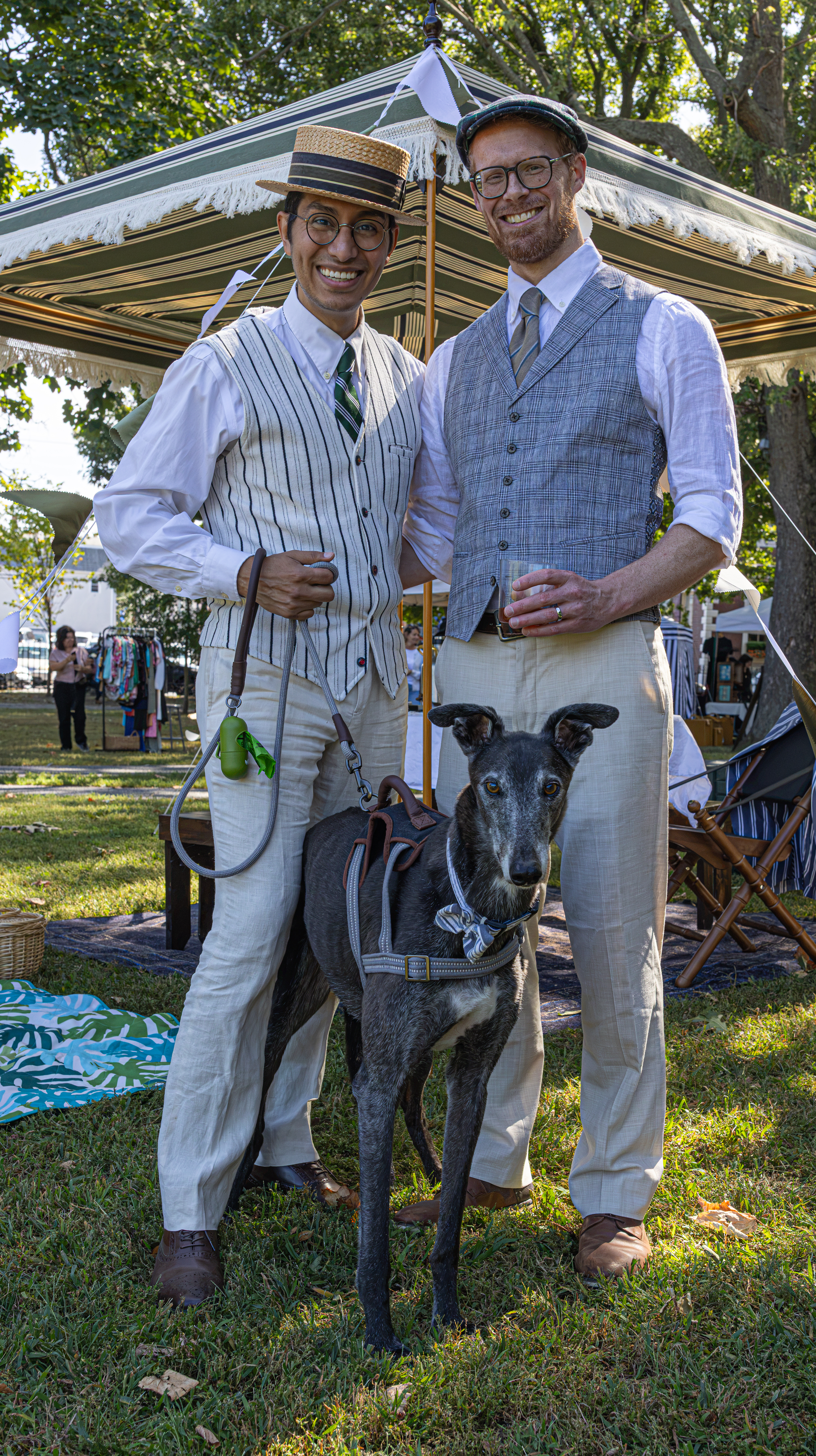
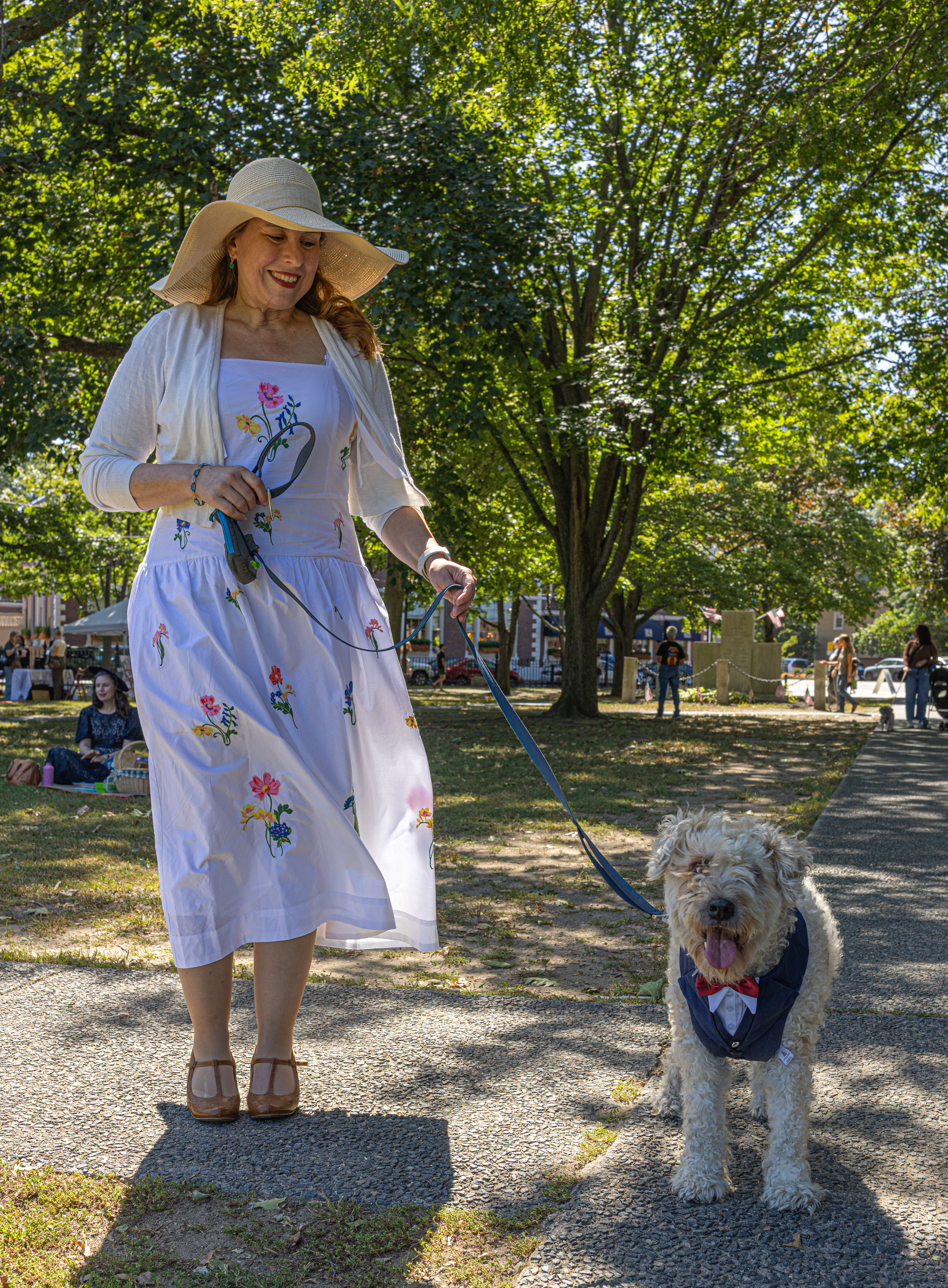
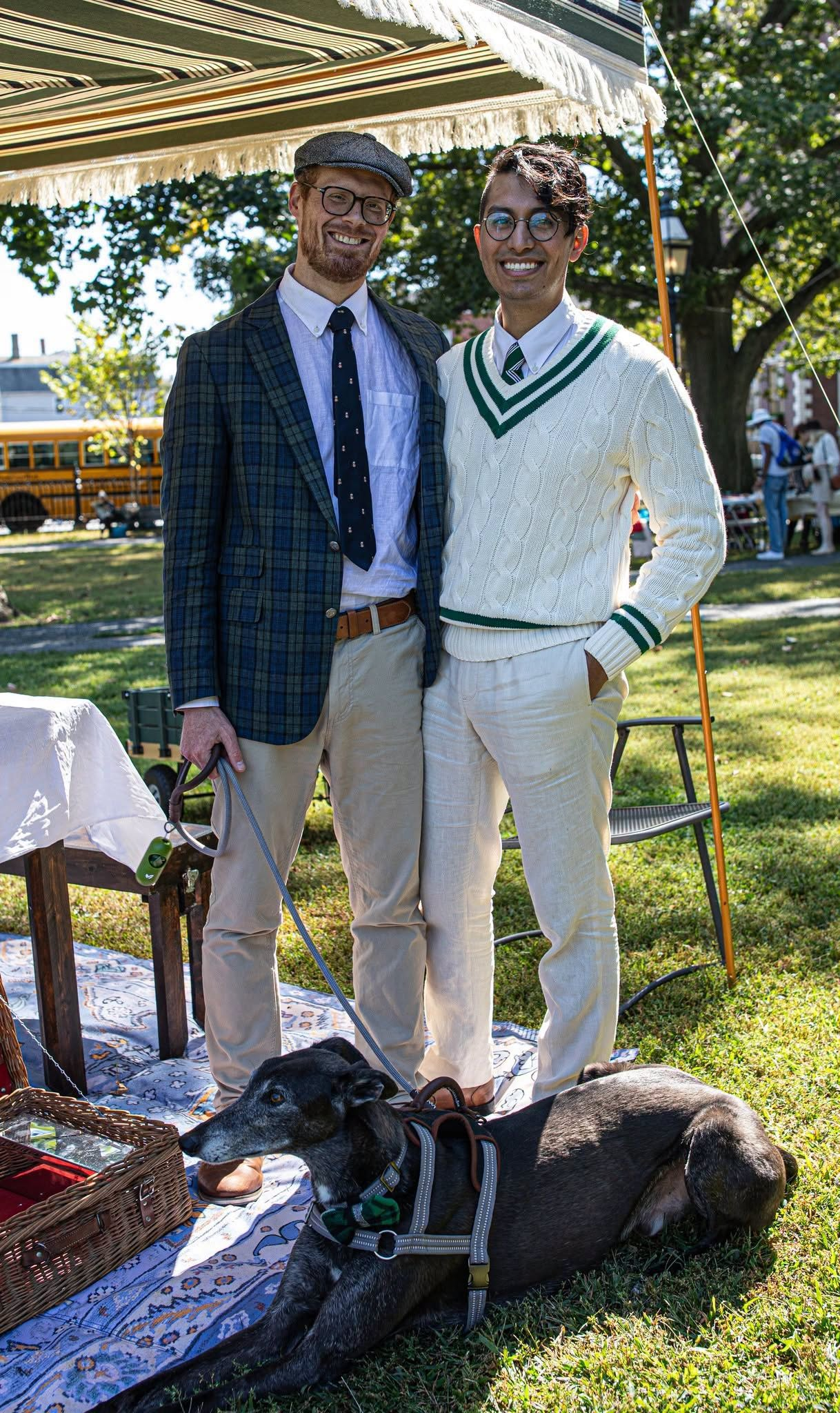
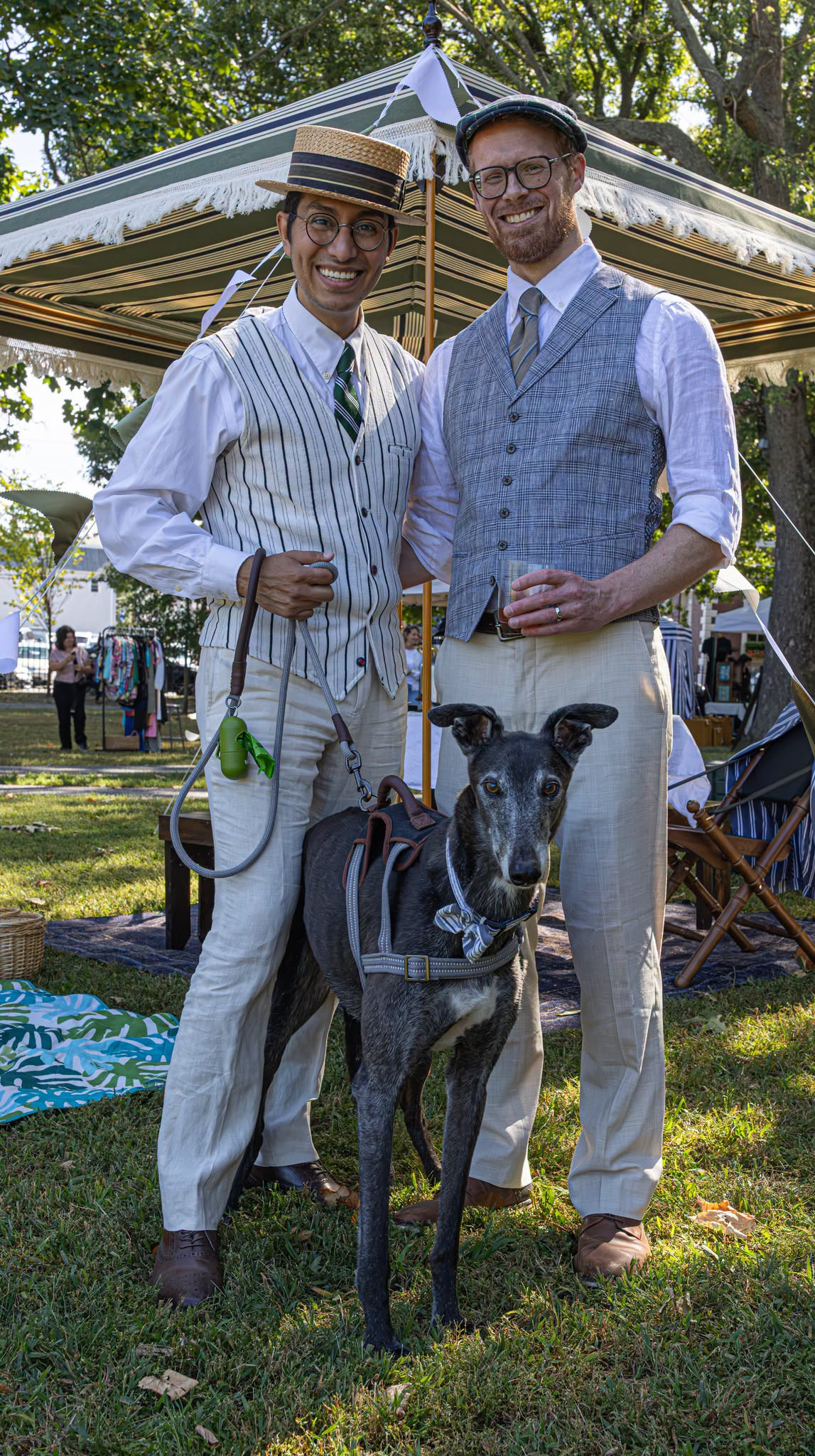
Dogs are also welcome at the vintage party!
Orion wore his best bowtie to the event.
Fergus McWolfstein (also known as Gus) had a fun time at the party!
As the annual lawn party becomes more popular, it’s great to see more people attend! But, what really makes me happy is seeing the regulars who come every year. It’s great seeing familiar faces and reconnecting with people. I also wonder about and miss some of the regulars who can no longer attend. Below are some of the regulars I have photographed over the years.
Summary: 24 sand sculptures are located throughout the Yarmouth area
Cape Cod, specifically Yarmouth, is known for its sand. But, the sand isn’t just located on the beach or your clothes when you get you back from the beach. Instead, this sand is found all over Yarmouth.
Each year, Fitzysnowman sculpts 23 sand sculptures in various locations in Yarmouth, MA. There were 24 this year. But, more on that later. The themes of the sand sculptures ranged from movie characters to patriotic themes celebrating America’s 250th anniversary of independence. I have noticed that each year I see them, many of the sculptures at certain locations have the same themes each year.
I am posting the sculptures in the order I saw them, mostly in reverse order of how they are listed on the web site for the trail map. But, you can see them in any order! The sand sculptures were made in June and, after all of the rain and other New England conditions, some of them were a little worse for wear.
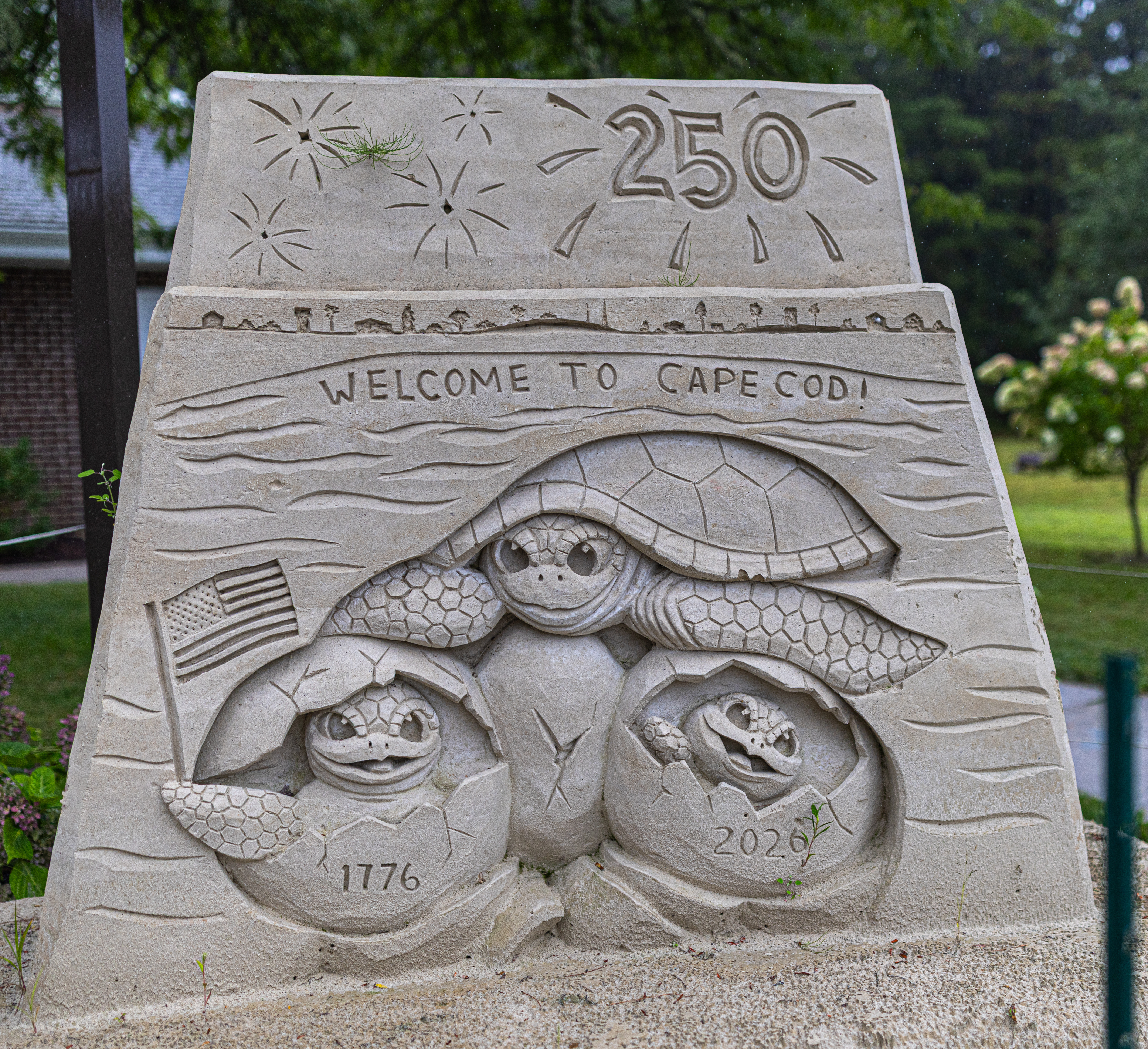
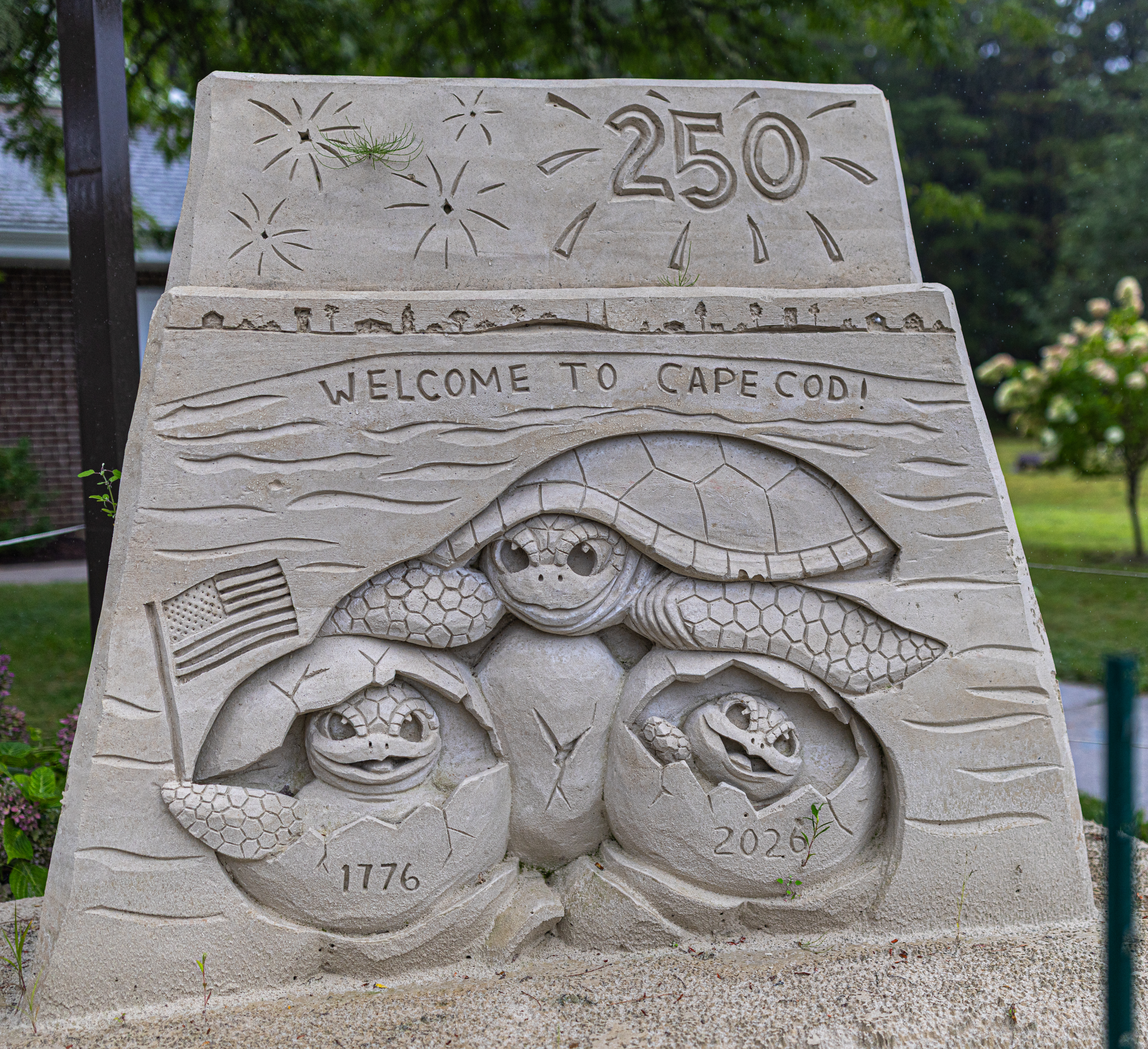
The first sand sculpture was at the Cape Cod Welcome Center on Rte 6 East, a short distance from the Sagamore Bridge. This sculpture celebrates our anniversary of independence as well as the hatching of some turtles that inhabit the Cape Cod area.
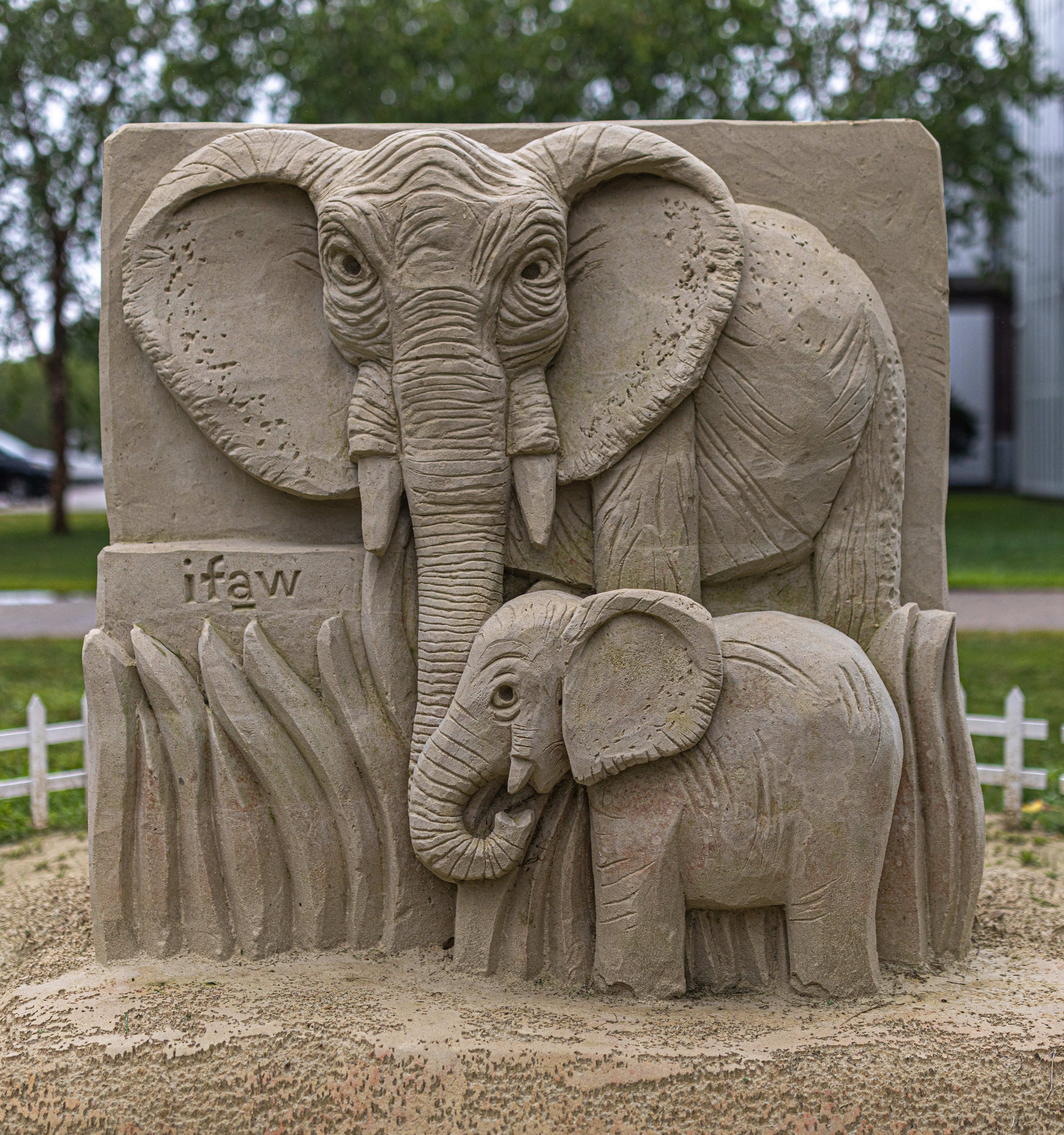
This sculpture is located at Ifaw (290 Summer St, Yarmouth Port)
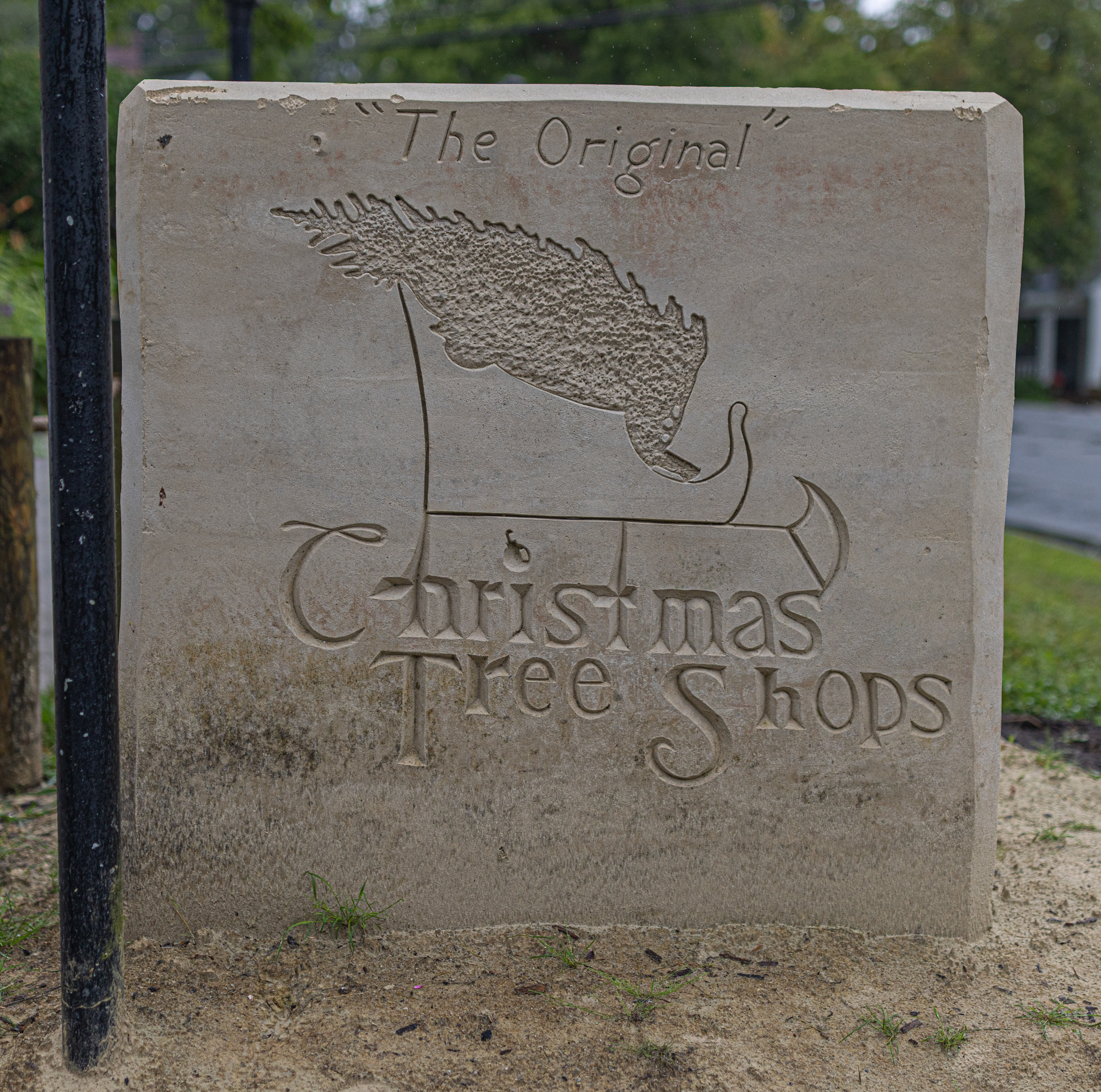
This sculpture at Wharf Yarmouthport (13 Willow St, Yarmouth) is a tribute to a store that is no longer in business but used to be a staple for many malls in the New England area and beyond New England. In fact, at its peak Christmas Tree Shops operated 82 stores in 20 states.
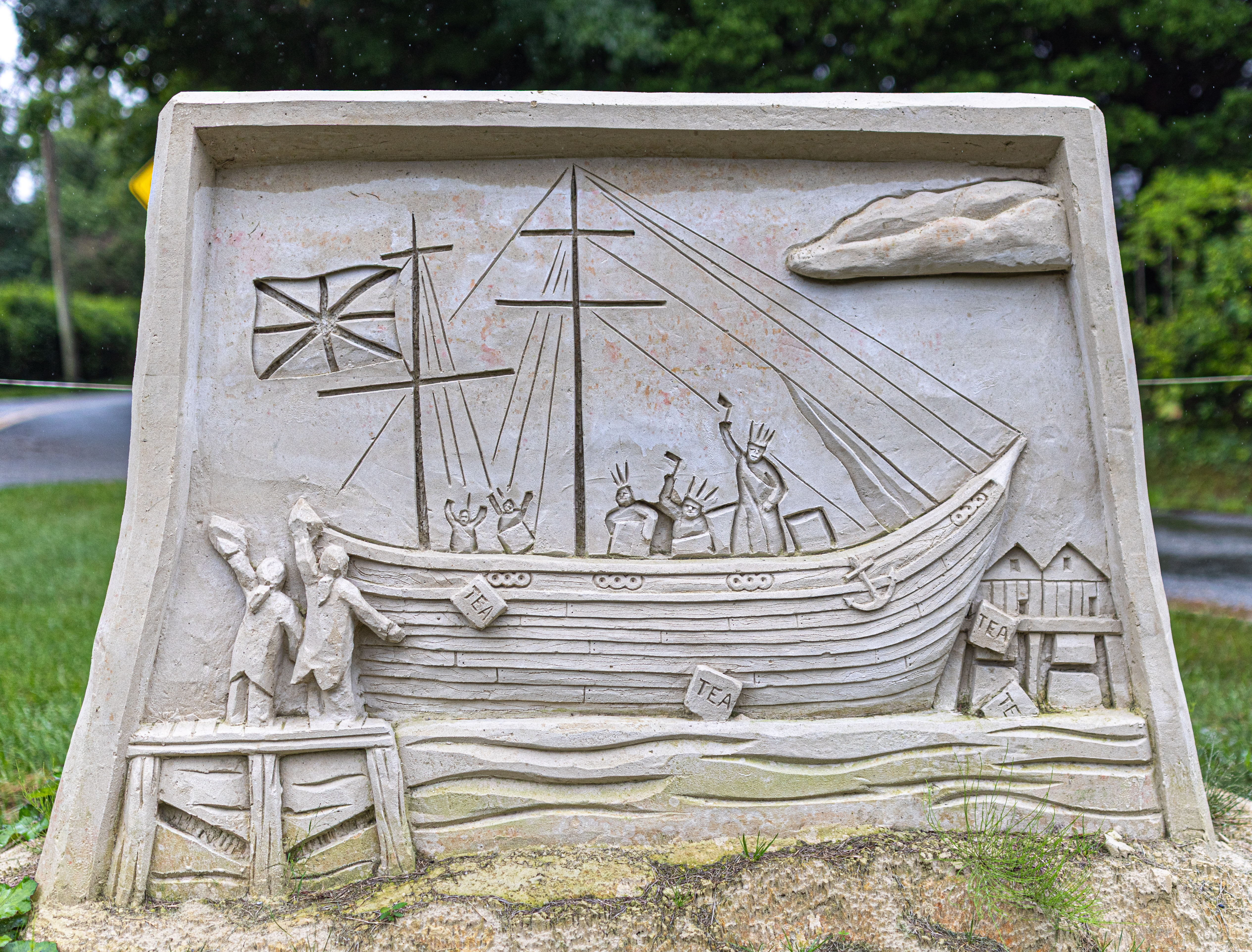
This tribute to the Boston Party is located on Strawberry Lane in Yarmouthport.
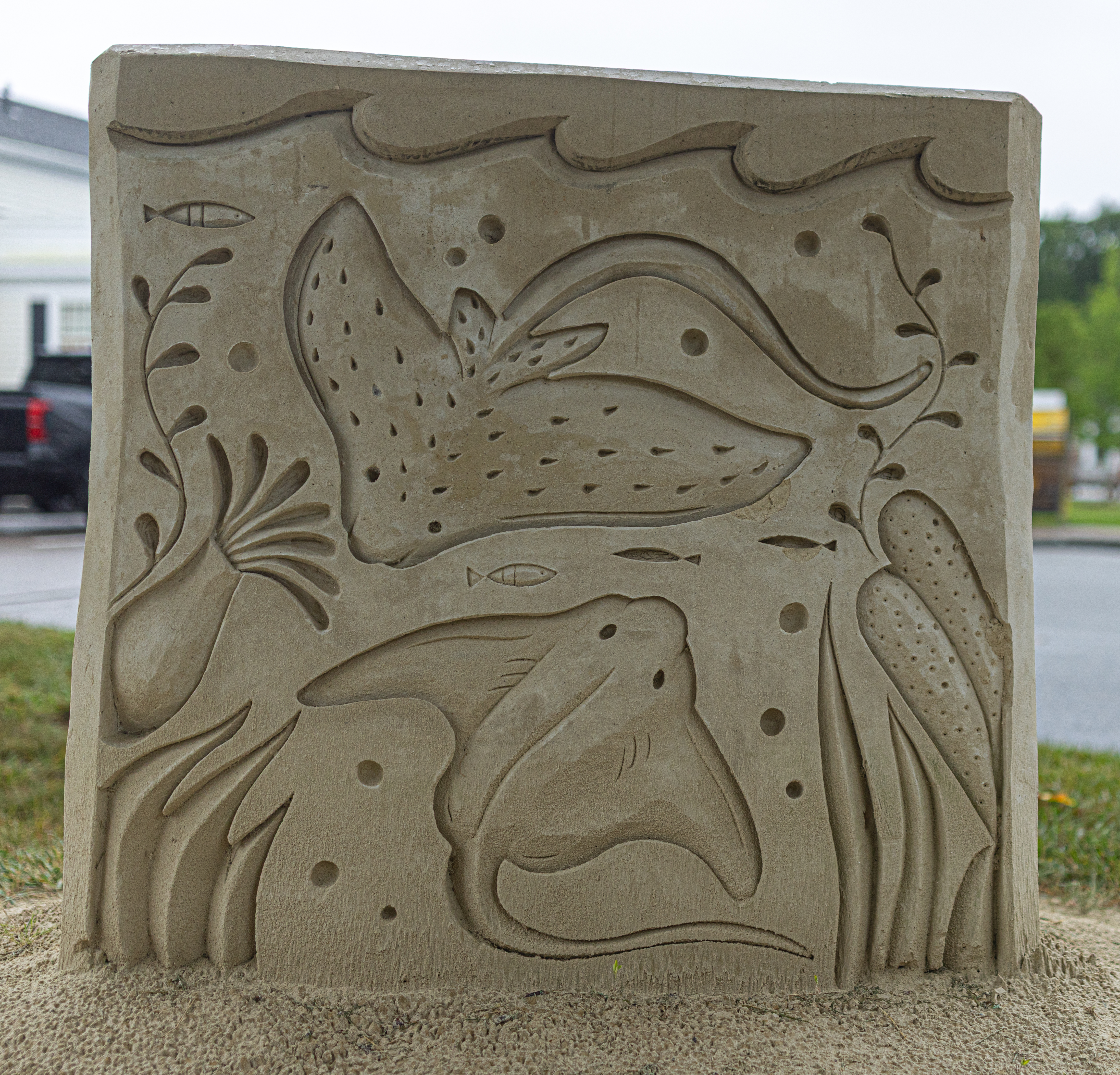
This sculpture at Coast and Cape Bank shows some manta rays or sting rays. People have spotted both manta rays and sting rays in New England, usually during the summer.
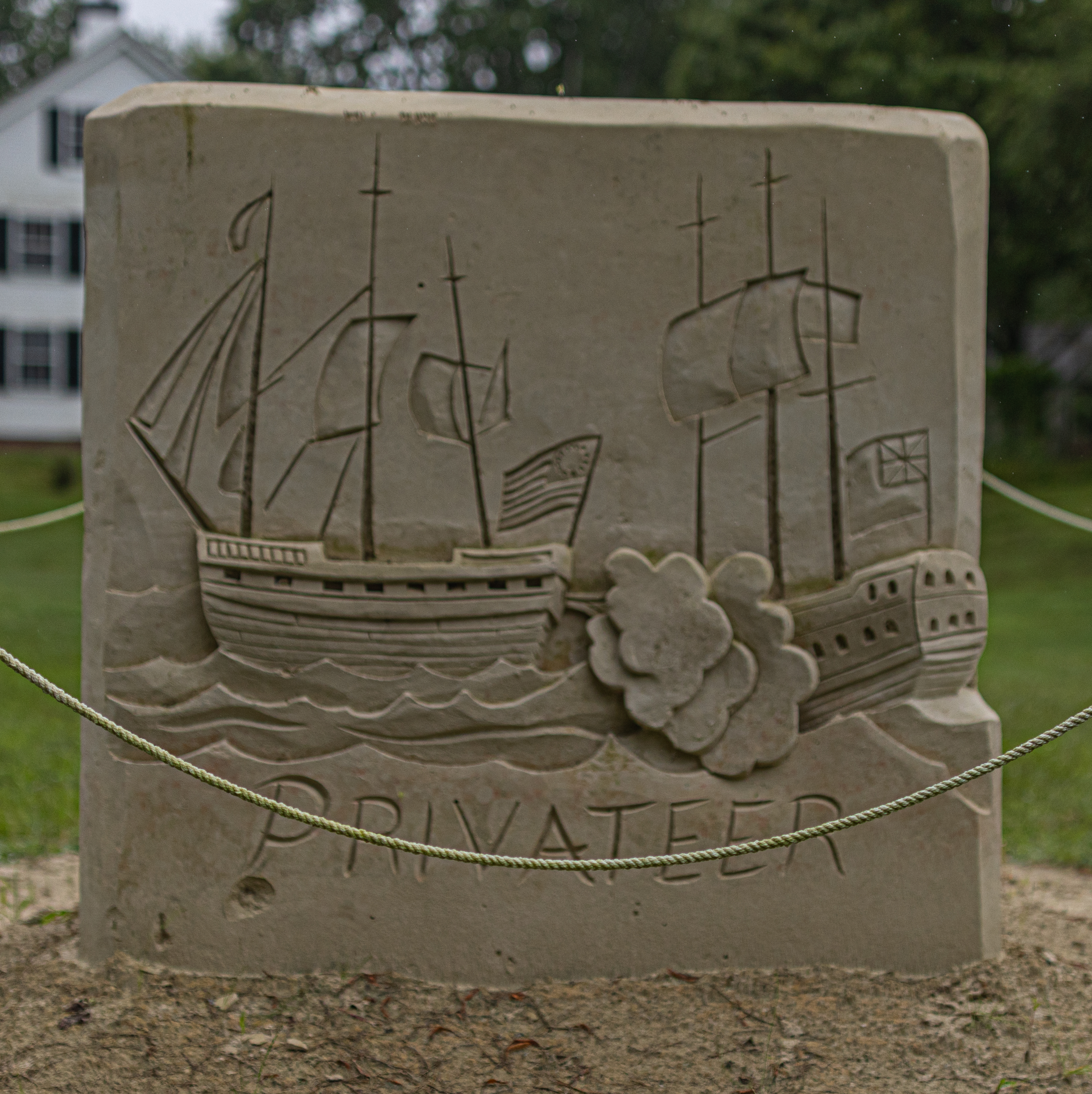
This sculpture, located on the grounds of the Winslow Crocker House, was another tribute to the fighters of the American Revolution, presumably the privateer John Paul Jones.
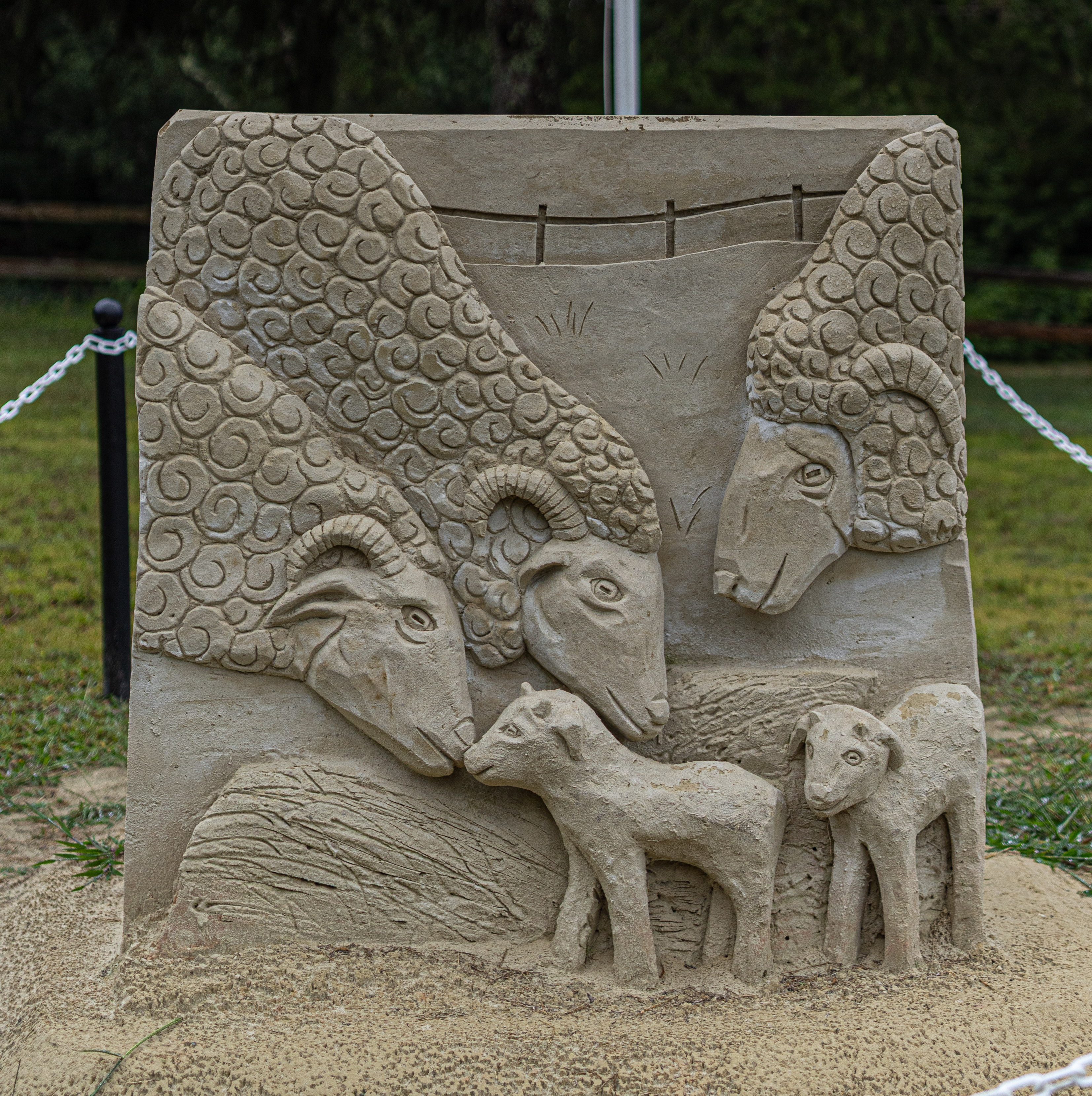
This sculpture at Taylor Bray Farms was one of my favorites on the trail.
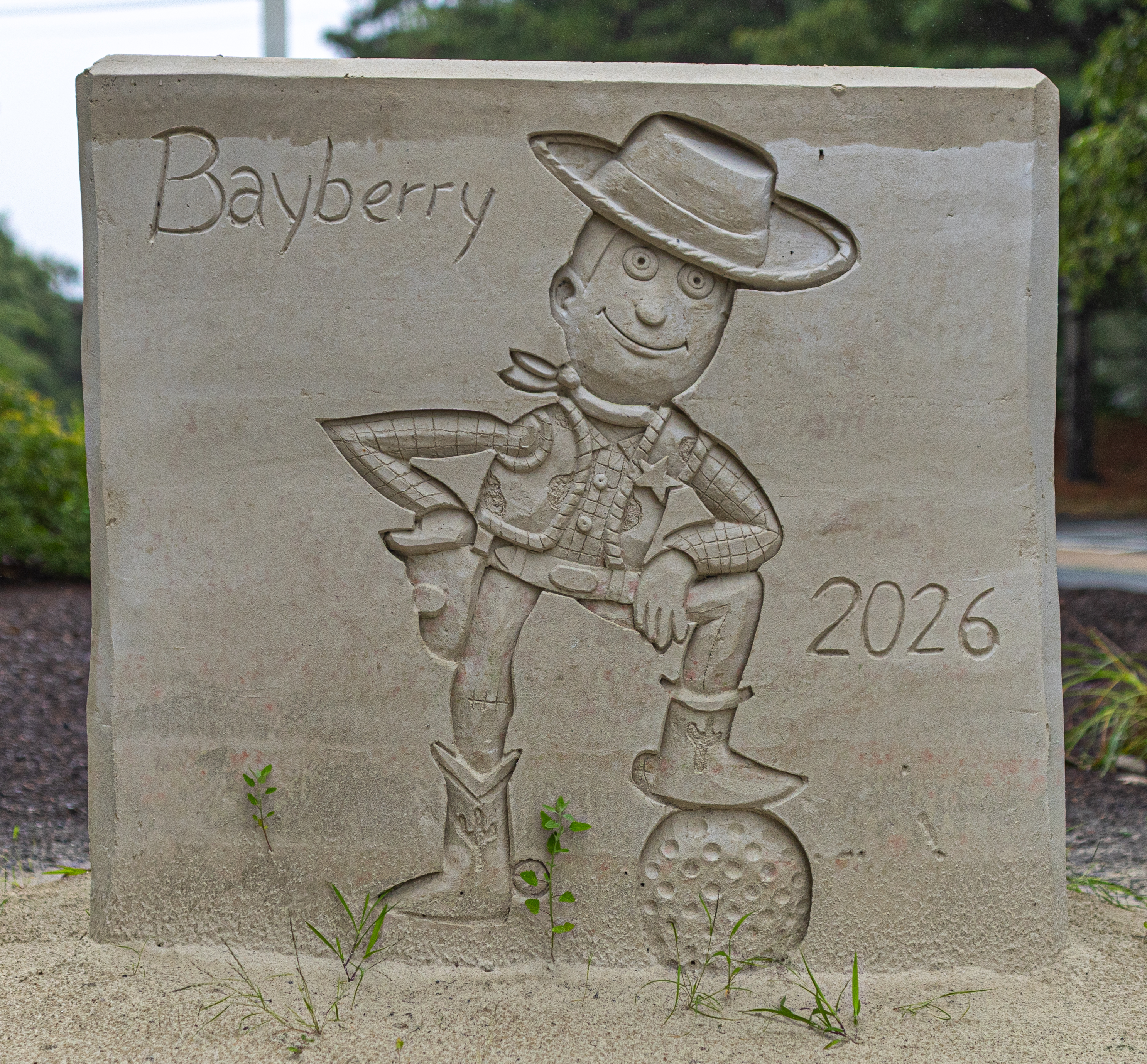
A few of the sand sculptures paid tribute to the Toy Story franchise which was timely since there is a new Toy Story movie being released soon. This sculpture at Bayberry Hills Golf Course shows Woody with a golf ball.
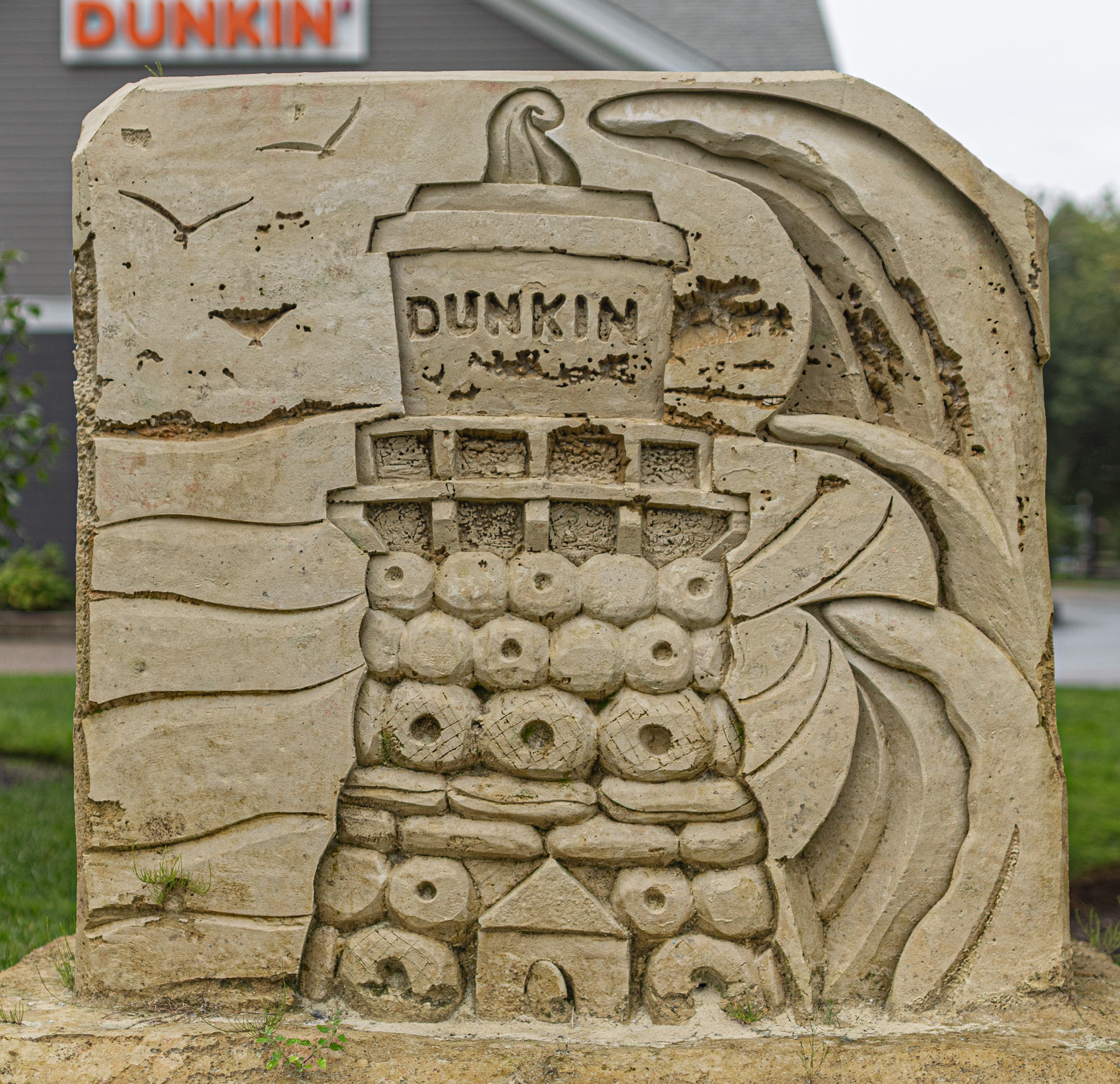
Of course, what sand sculpture trail in New England would be complete without a Dunkin Donuts sculpture!
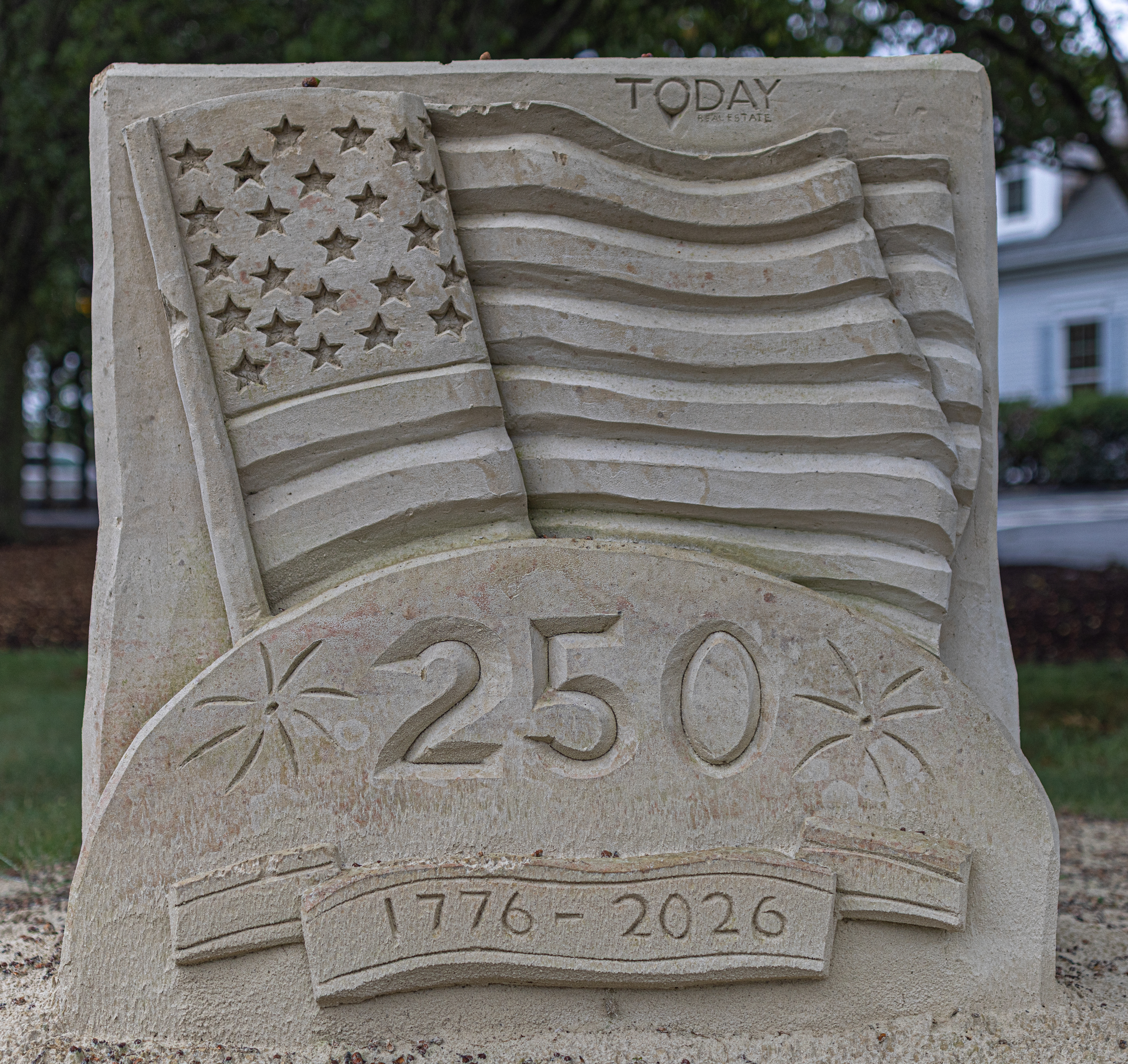
This sculpture at Today Real Estate is another sculpture celebrating the country’s independence.
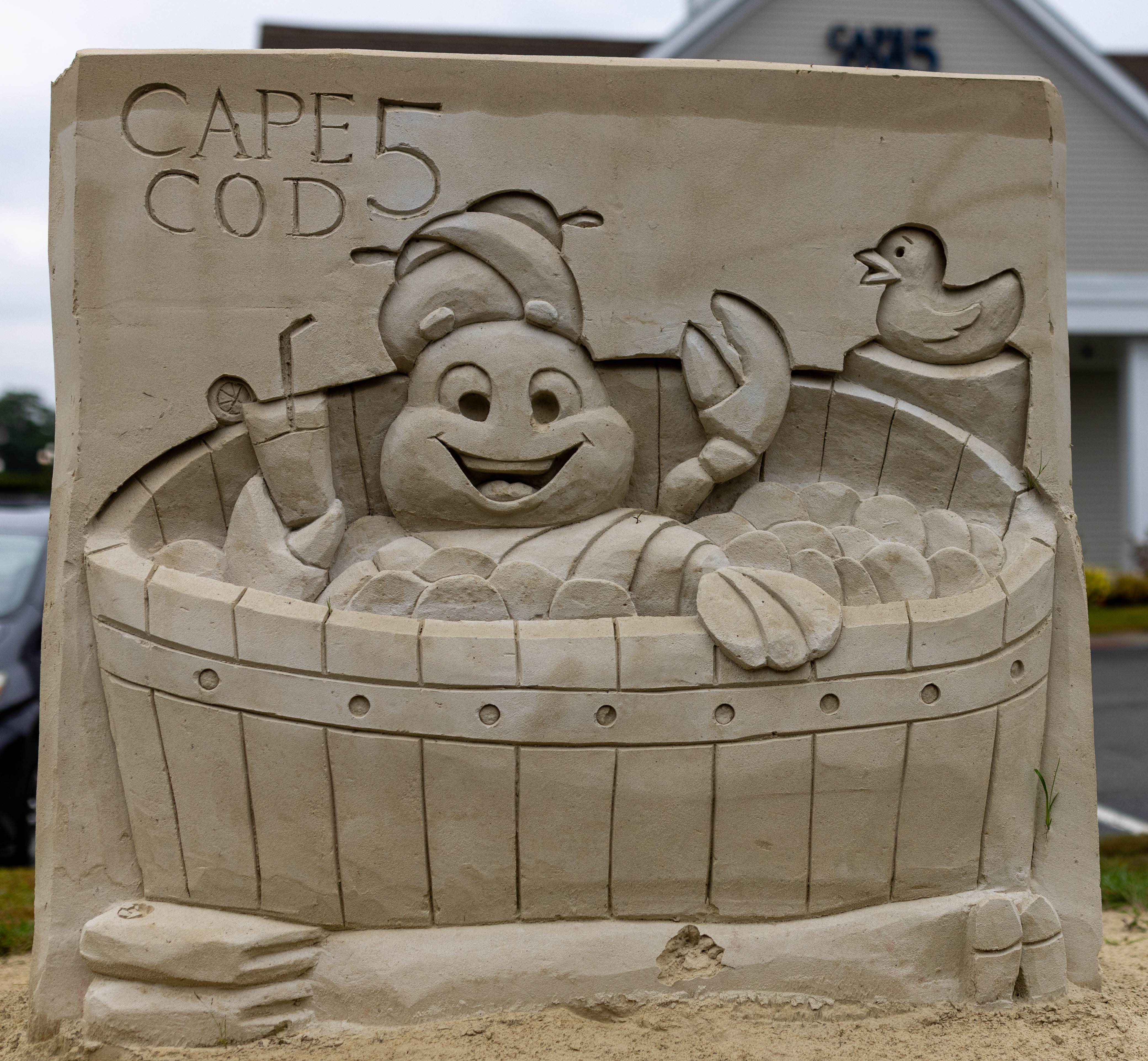
New England is known for its lobsters. So, this sand sculpture at Cape Cod 5 seems appropriate.
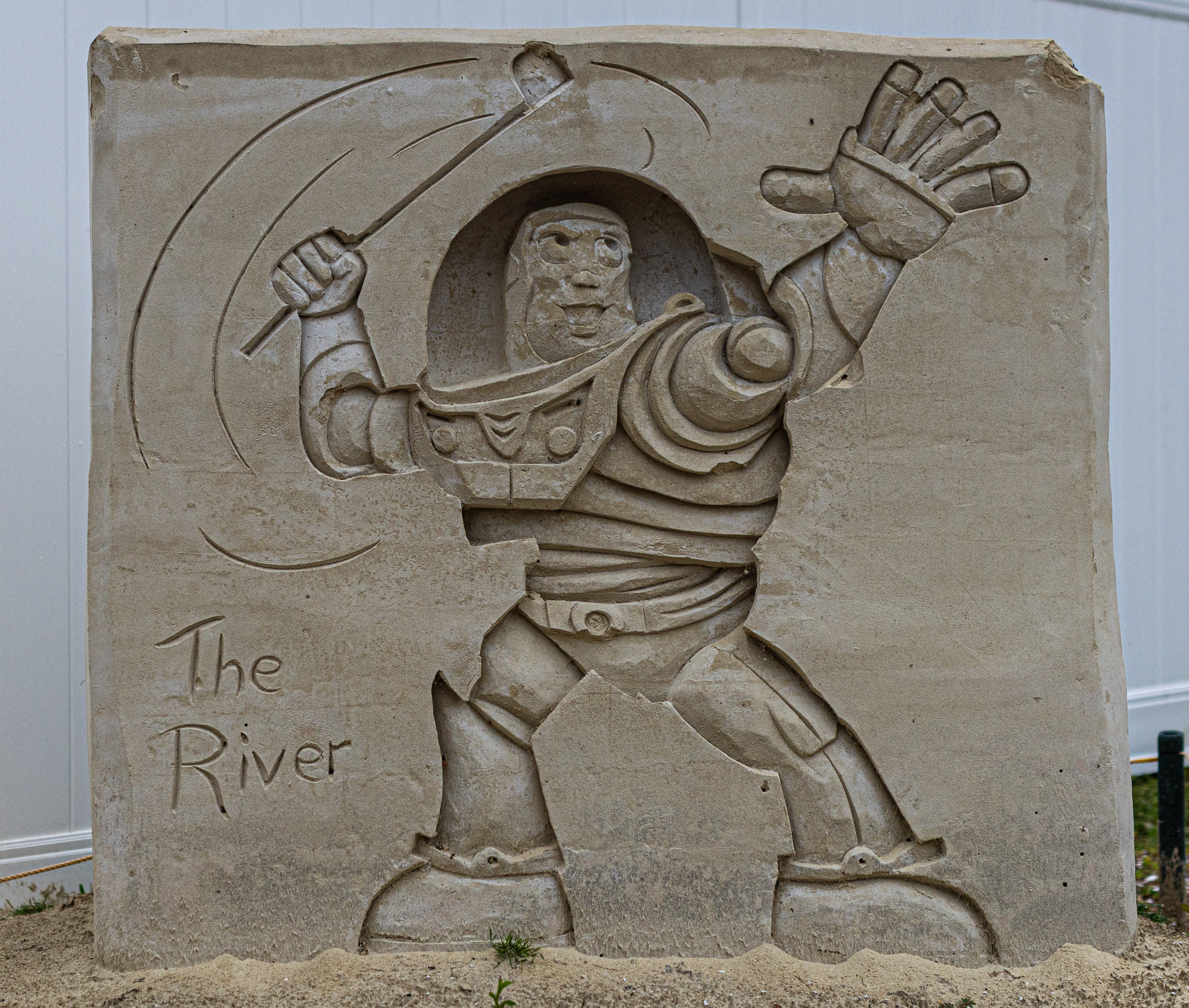
This sculpture at Bass River Golf Course is another tribute to the Toy Story movie series. Buzz seems to be admiring one of his drives!
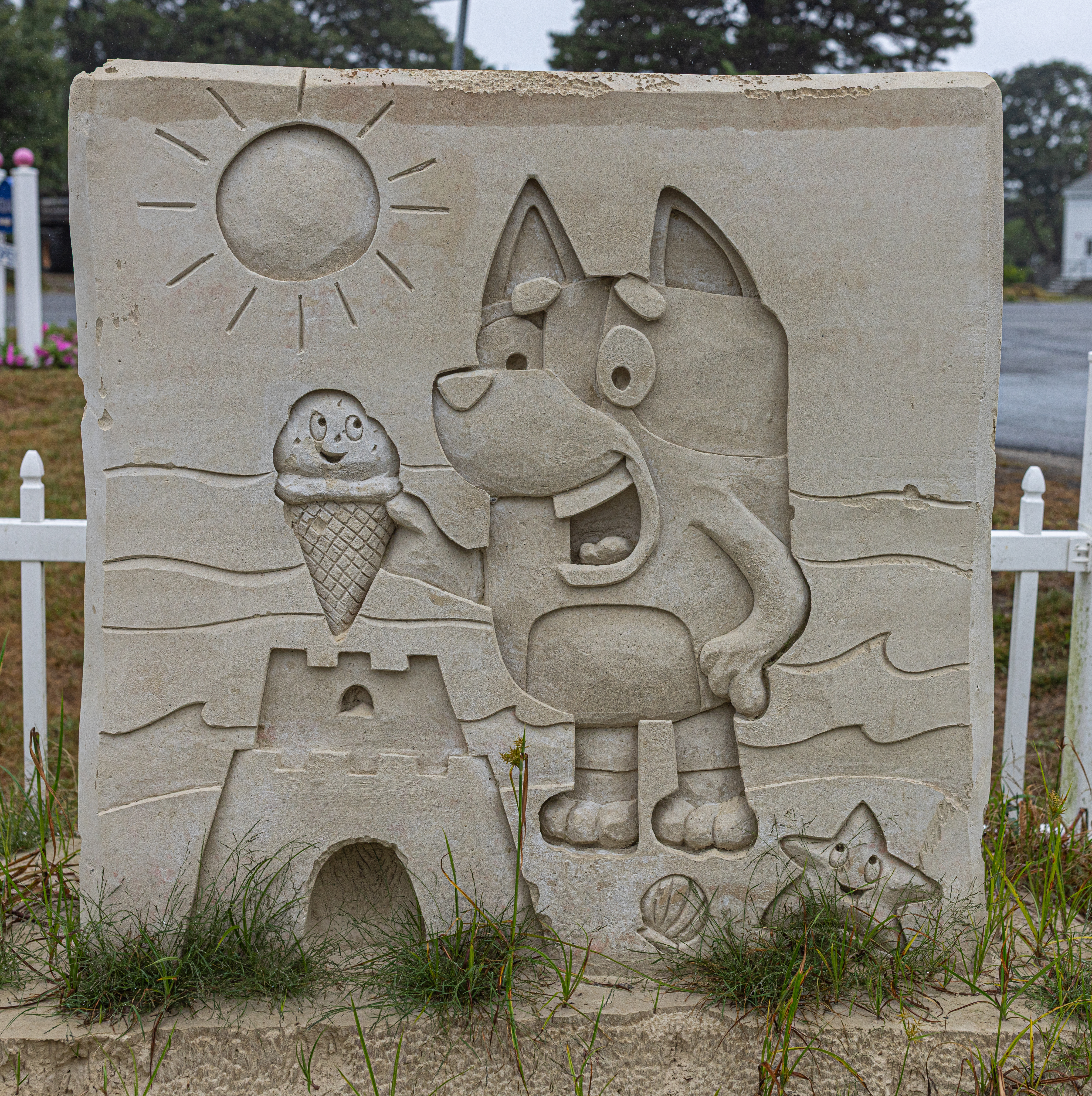
Cape Cod Creamery always has some very cute and interesting sculptures each year. This dog or dog-like creature seems to be enjoying a cone.
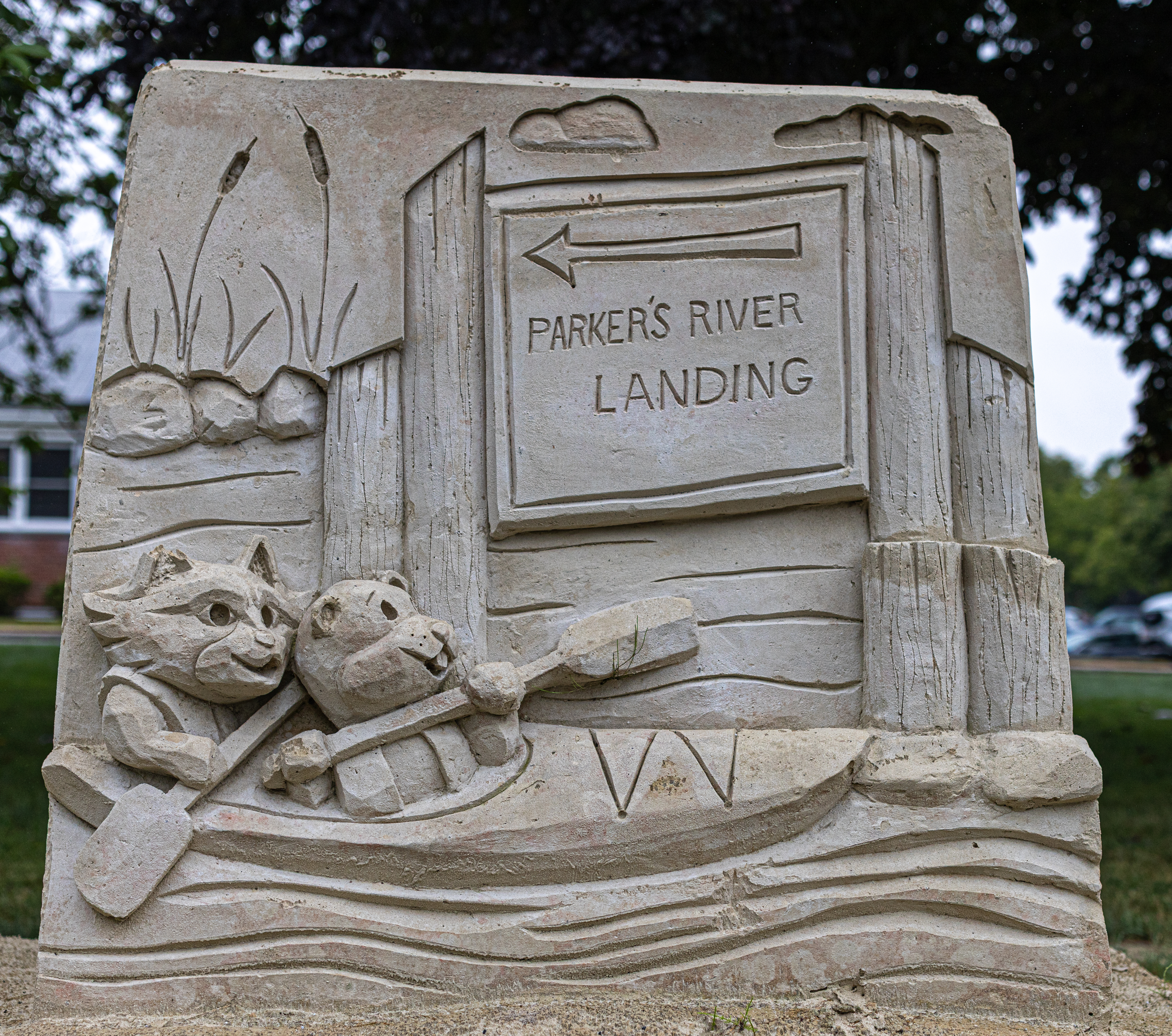
This sculpture at Yarmouth Town Hall is a tribute to Parker’s River Landing, one of the many parks in the area.
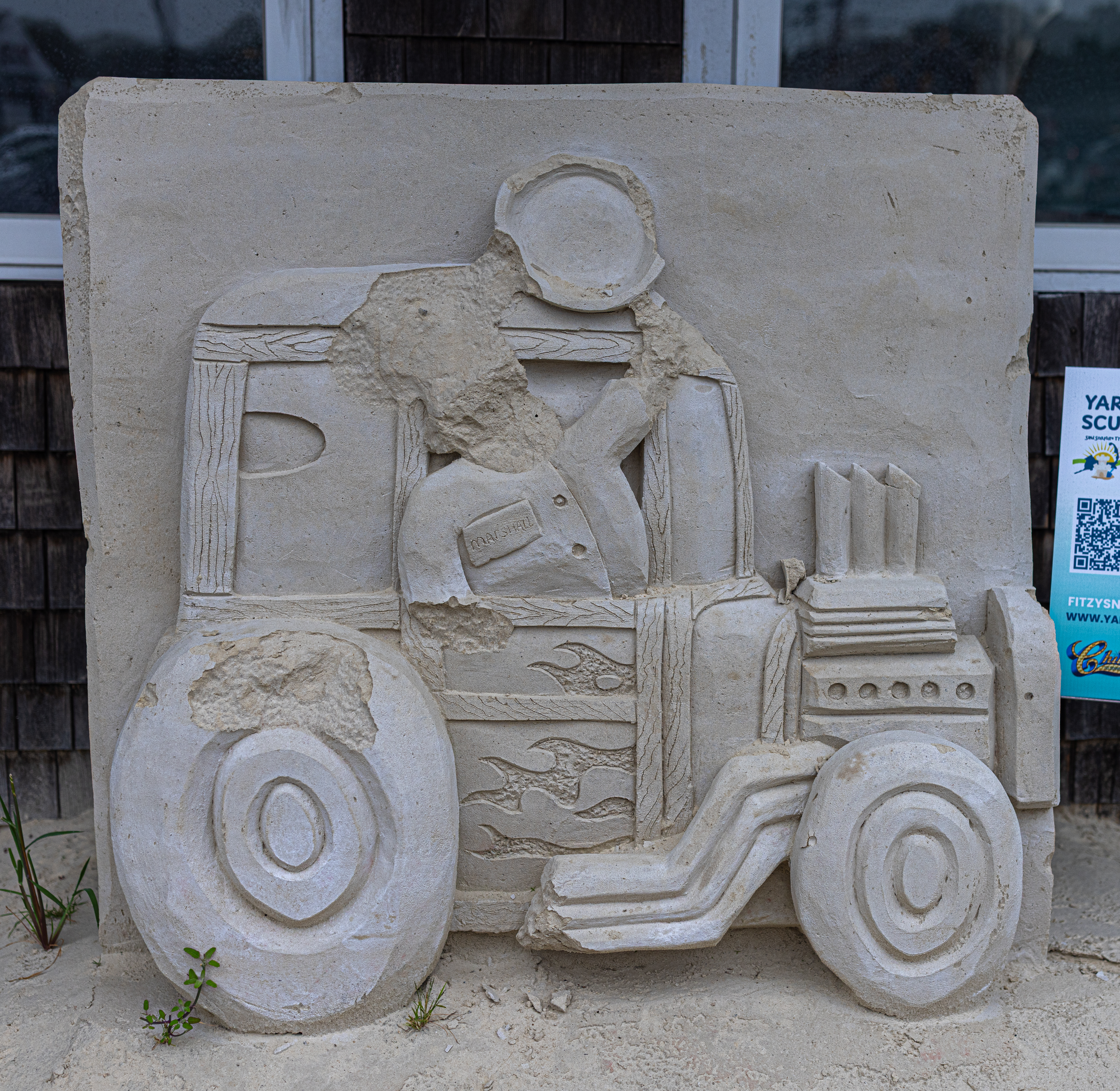
This sculpture, located at The Pancake Man, was a little damaged during my visit, unfortunately.
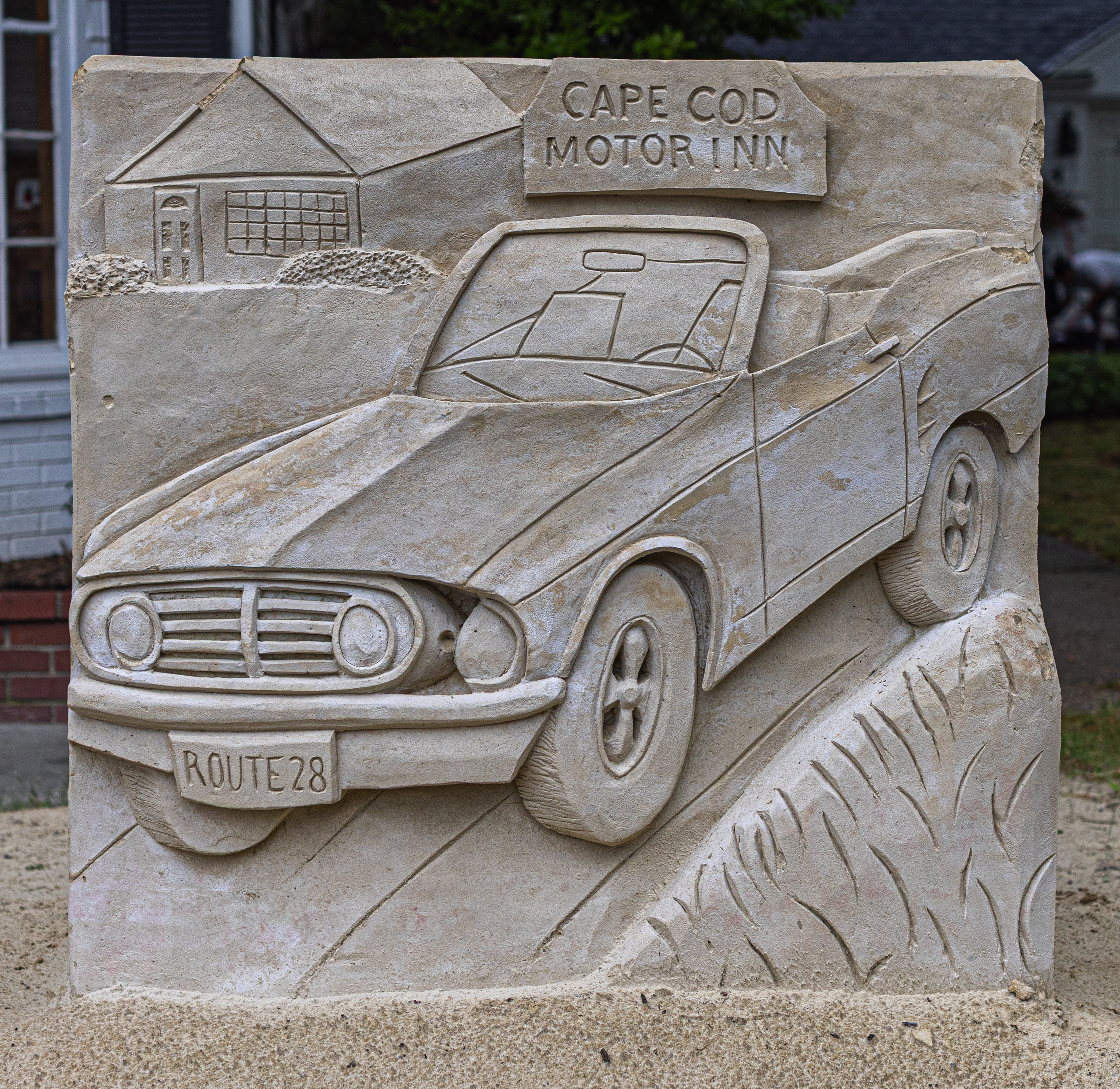
This sculpture at the Cape Cod Motor Inn shows a classic car in front of the hotel. What better way to take in all of the attractions!
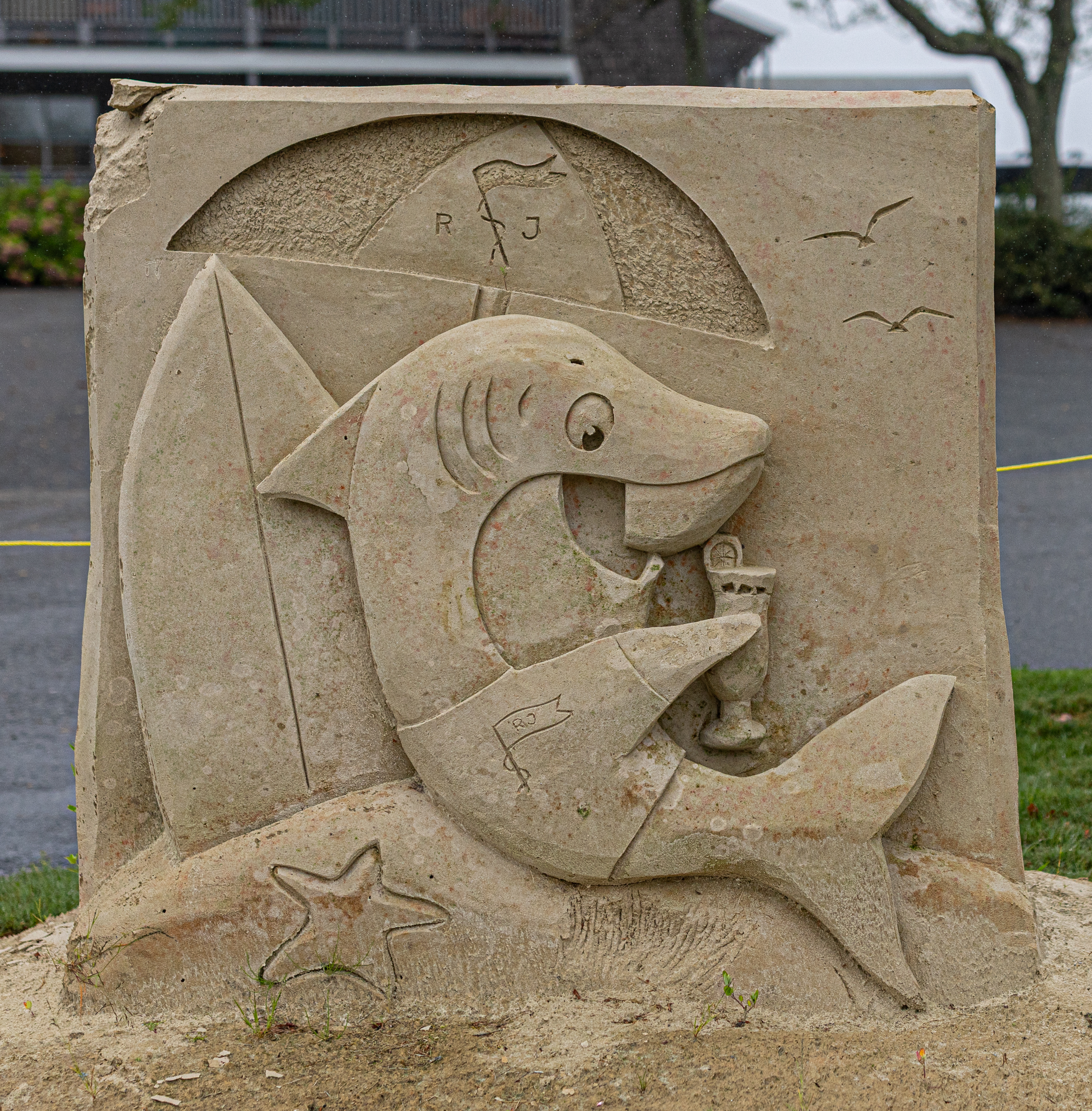
Shark sightings have become more prevalent in the Cape Cod area over the years. And this shark at the Riviera Beach Resorts has the right idea! I can’t think of a better way to relax and maybe scare off a few tourists!
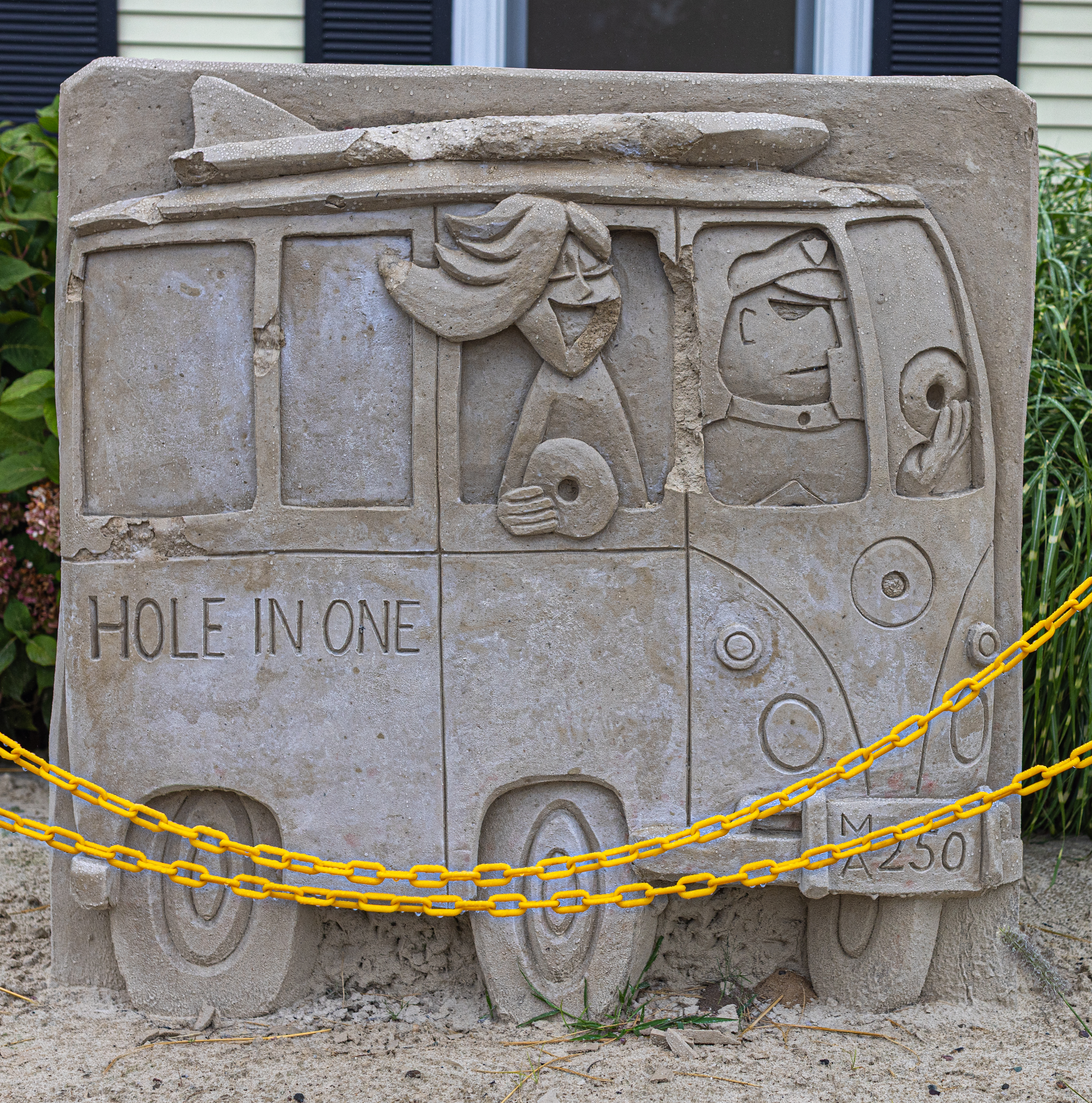
The Hole In One donut shop shows what looks like a police officer driving a very happy surfer somewhere while he inspects a donut.
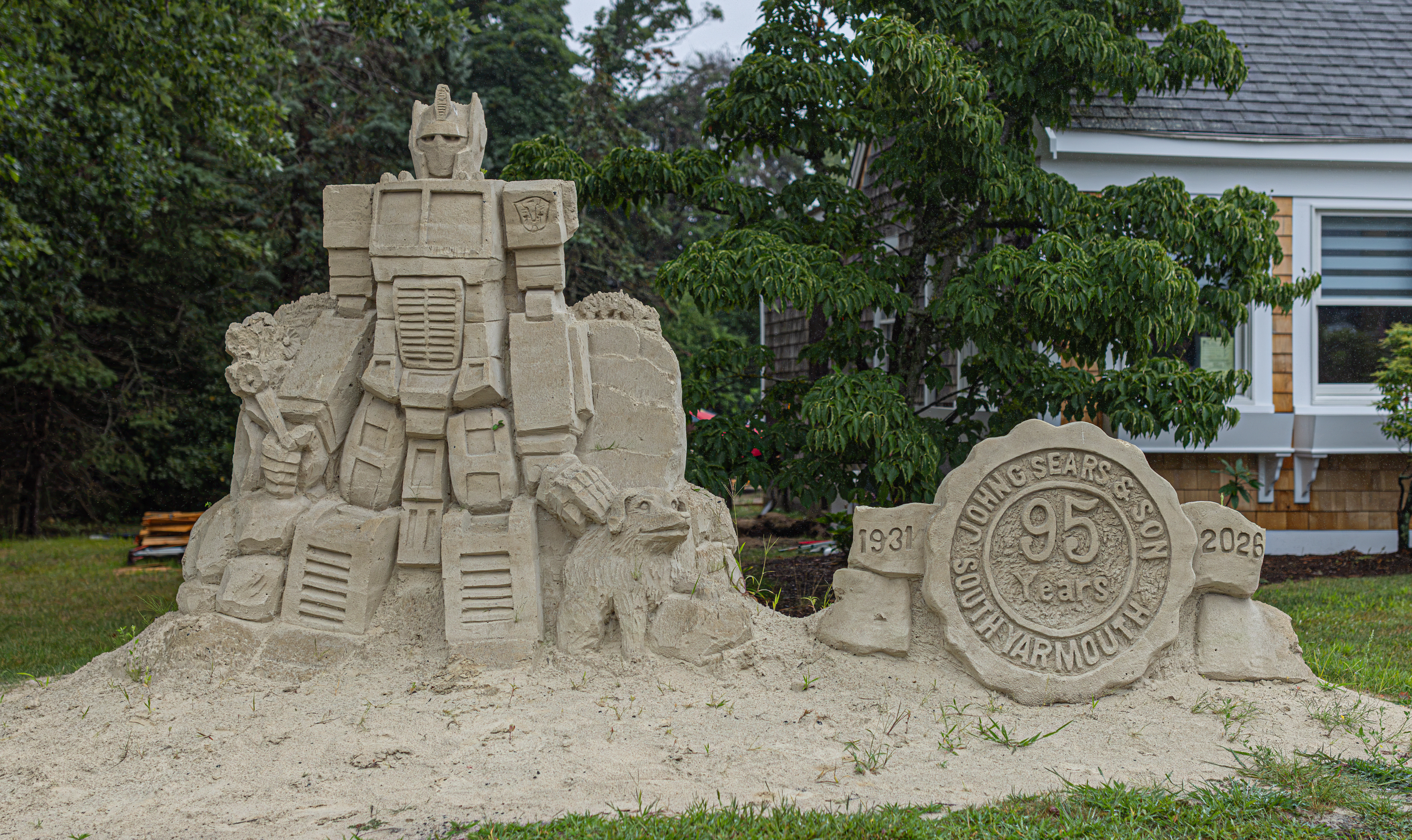
This sand sculpture, located at John G. Sears & Sons Landscaping, wasn’t on the sand sculpture trail map. And I only came across by chance on the way to a different sand sculpture.
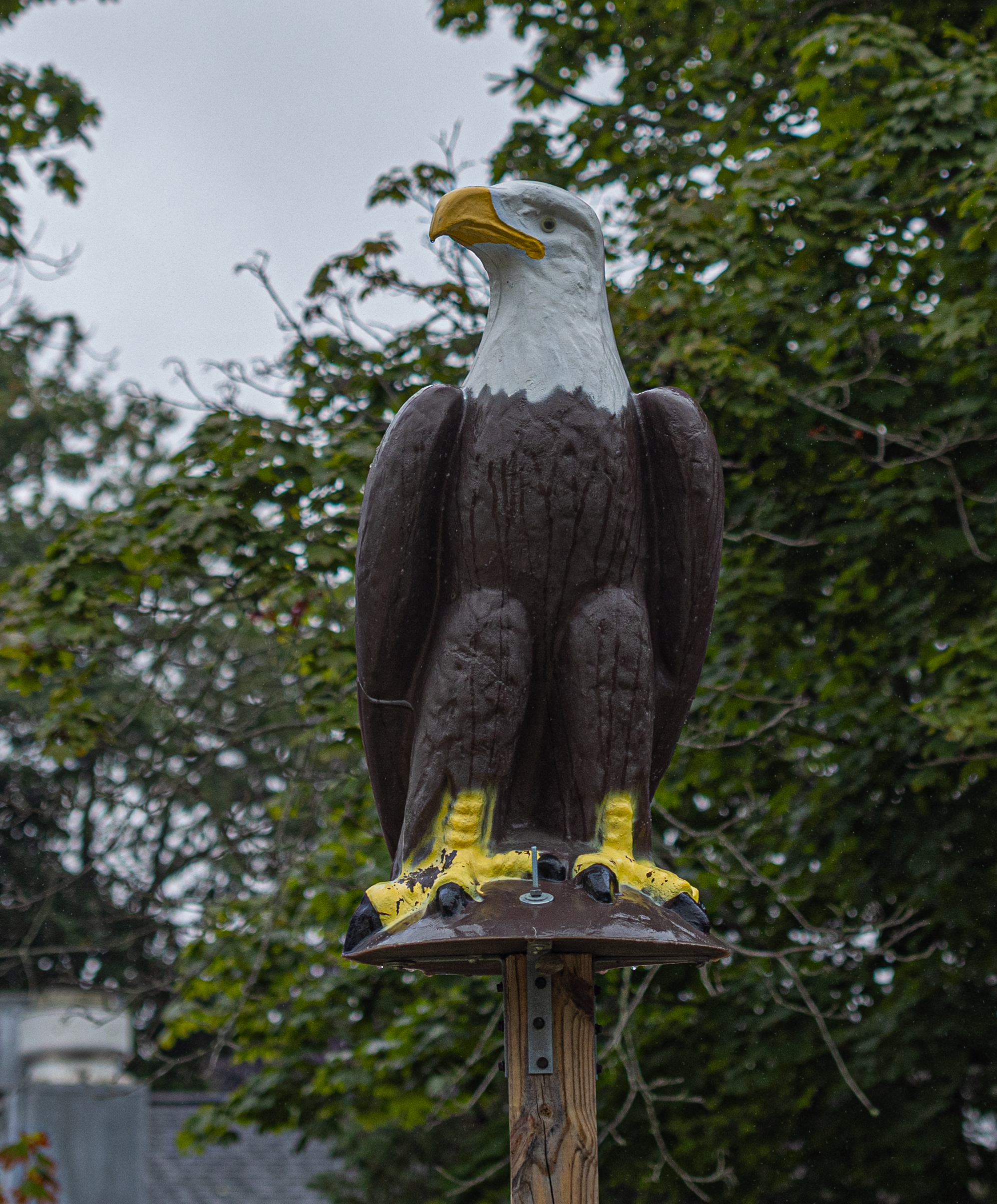
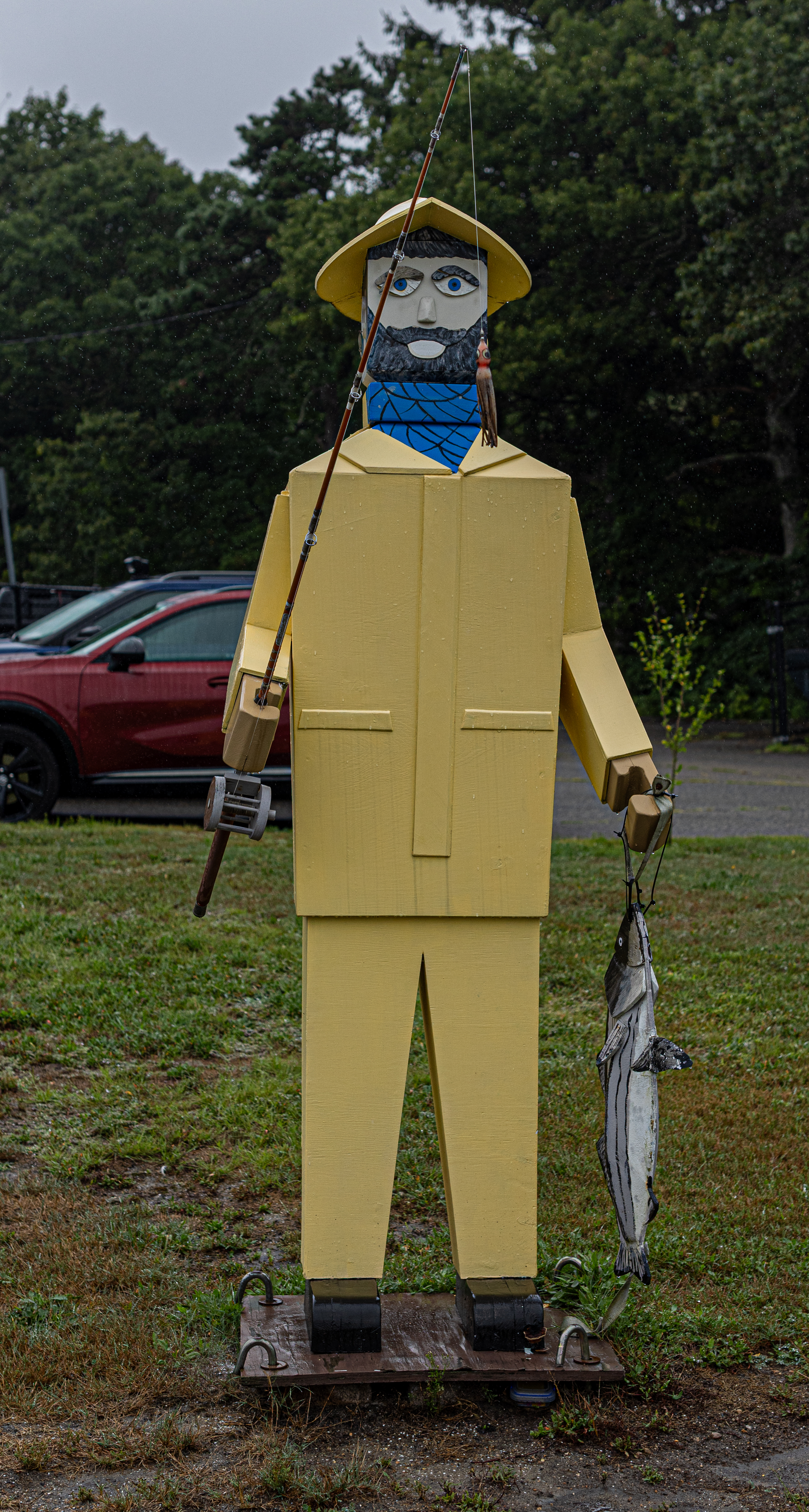
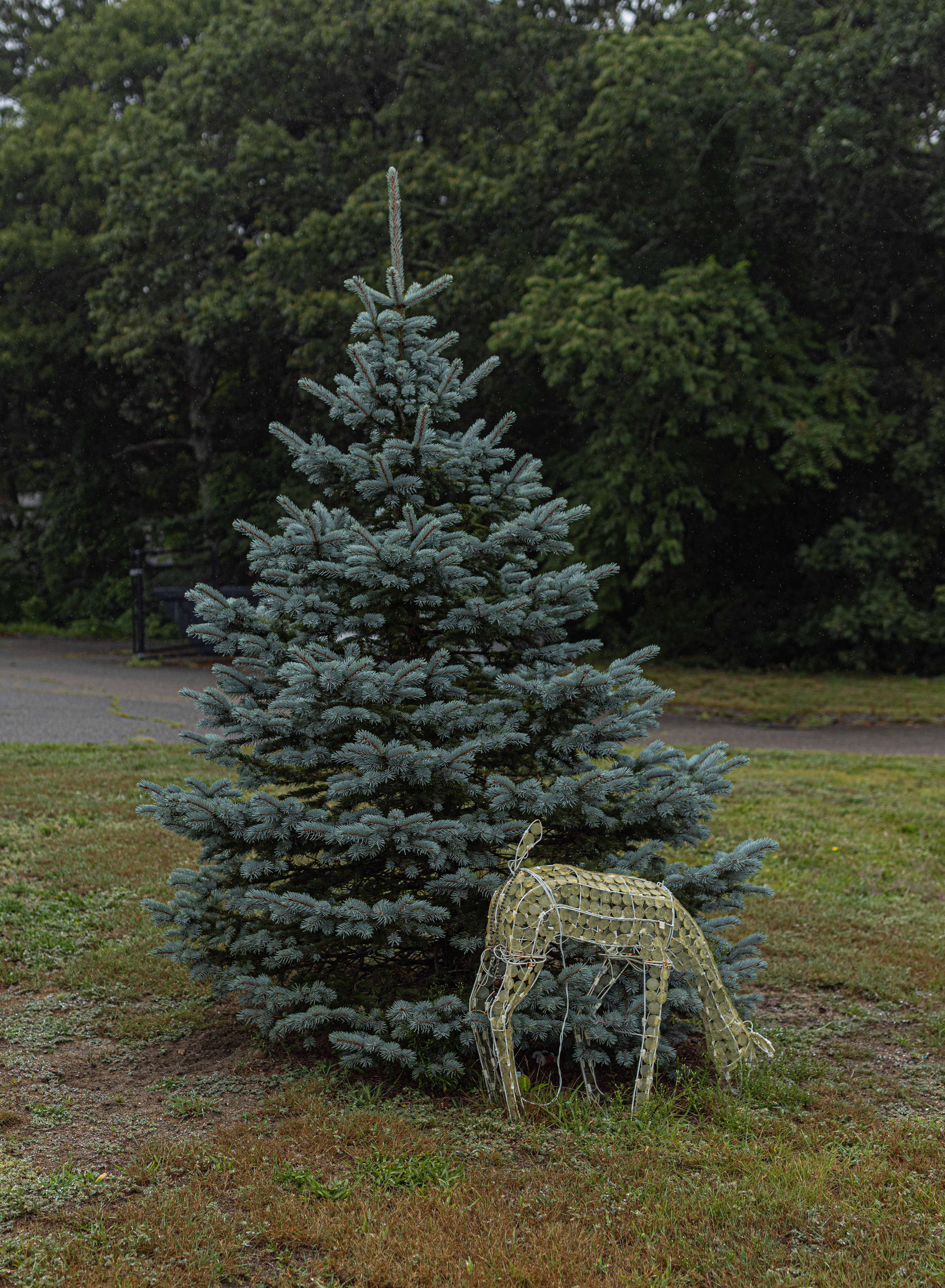
The Yarmouth Chamber Visitor Center always has a grand sculpture on their property. And this year was no different! I was lucky to get this eagle in the photo. Kidding. It’s one of the decorations along with a fisherman and a deer and a tree that must look very festive during the holidays!
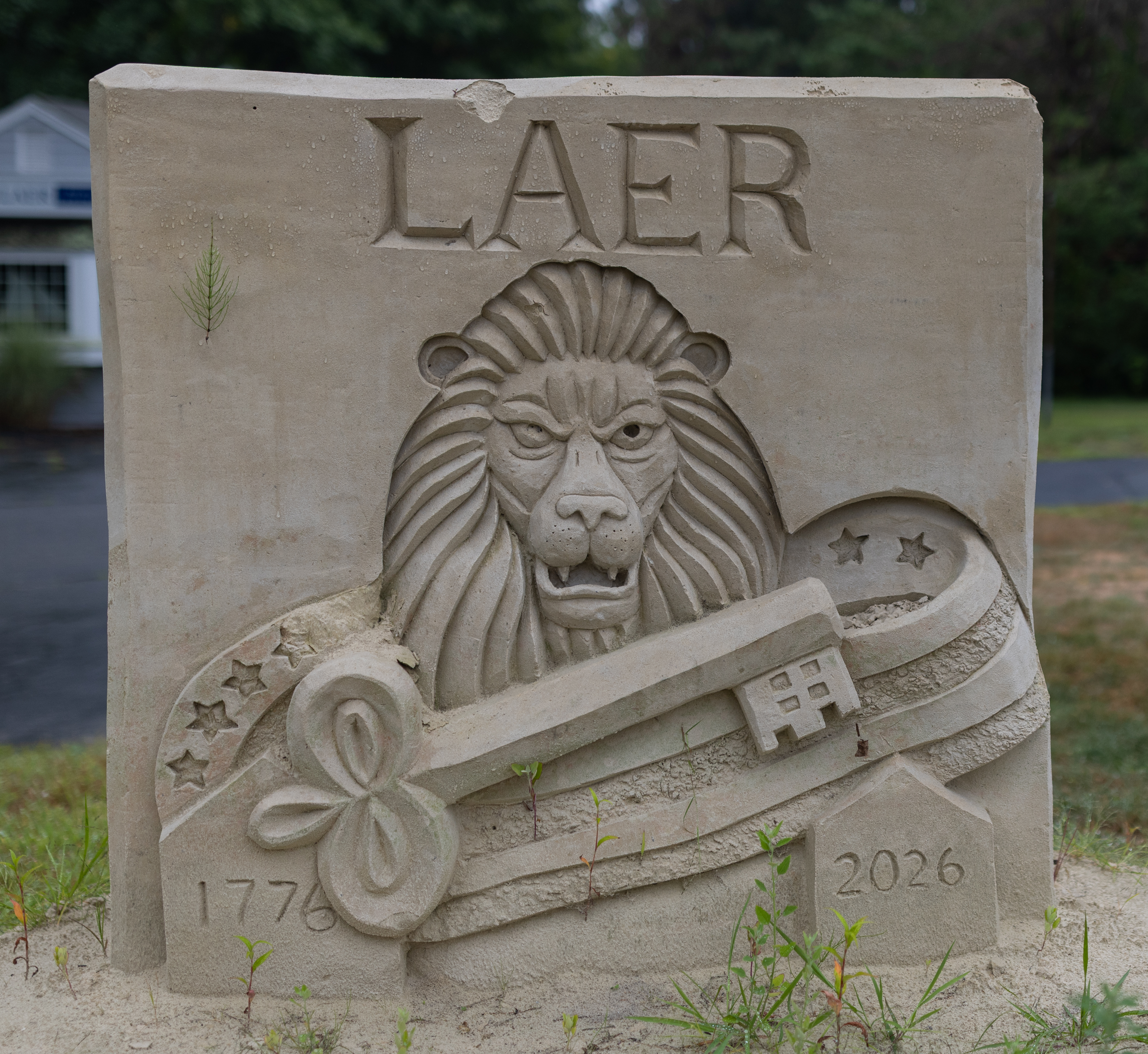
The LAER Realty Partners always uses an image of a lion, the company mascot, for their sculpture. It’s interesting to see the little details of these sculptures. For instance, this sculpture for the real estate agency has a home on the key and houses at the bottom of the sculpture with the years of the country on them.
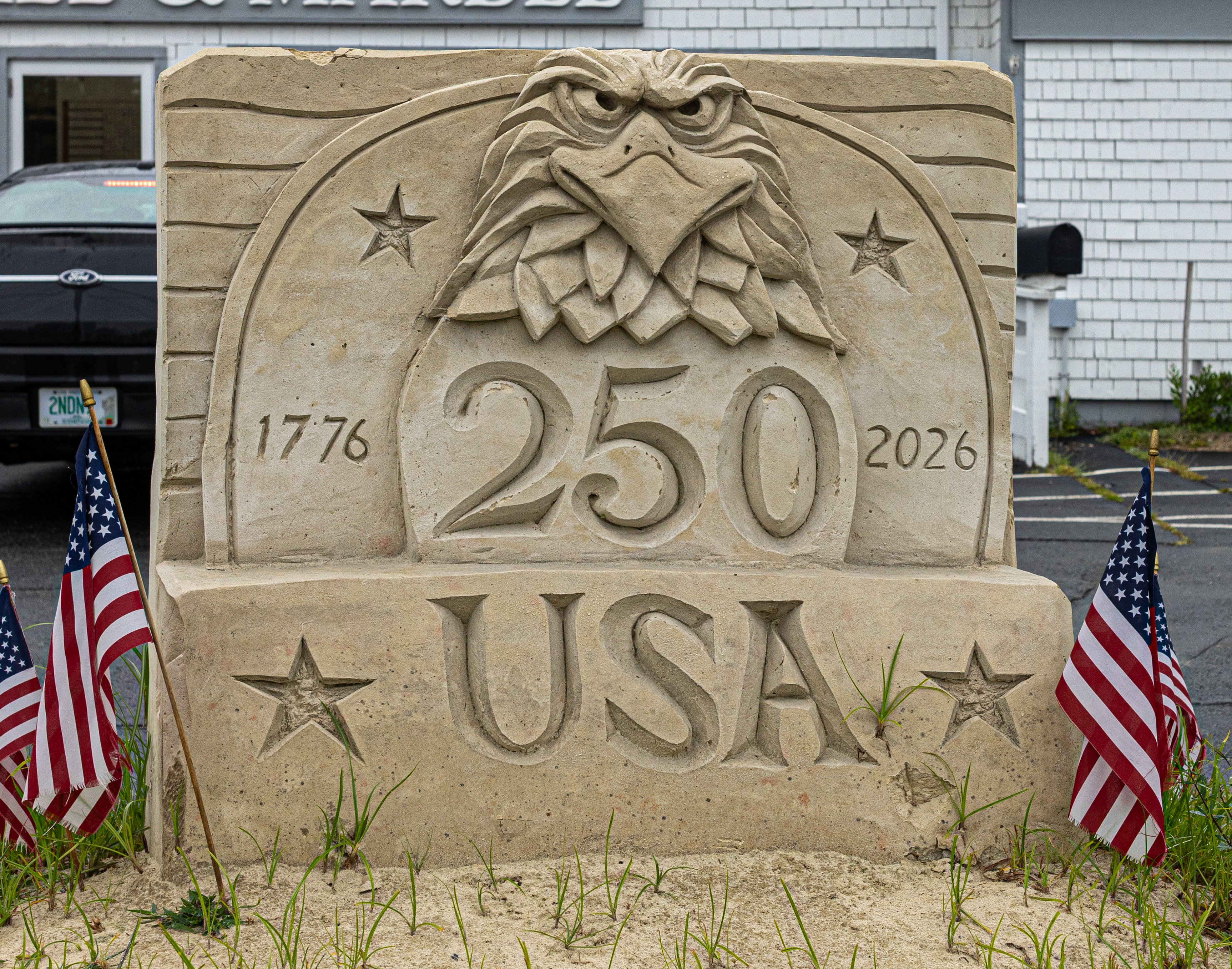
This very patriotic sculpture, which held up surprisingly well especially given the intricate details, is located at the Bellew Tile and Marble Company.
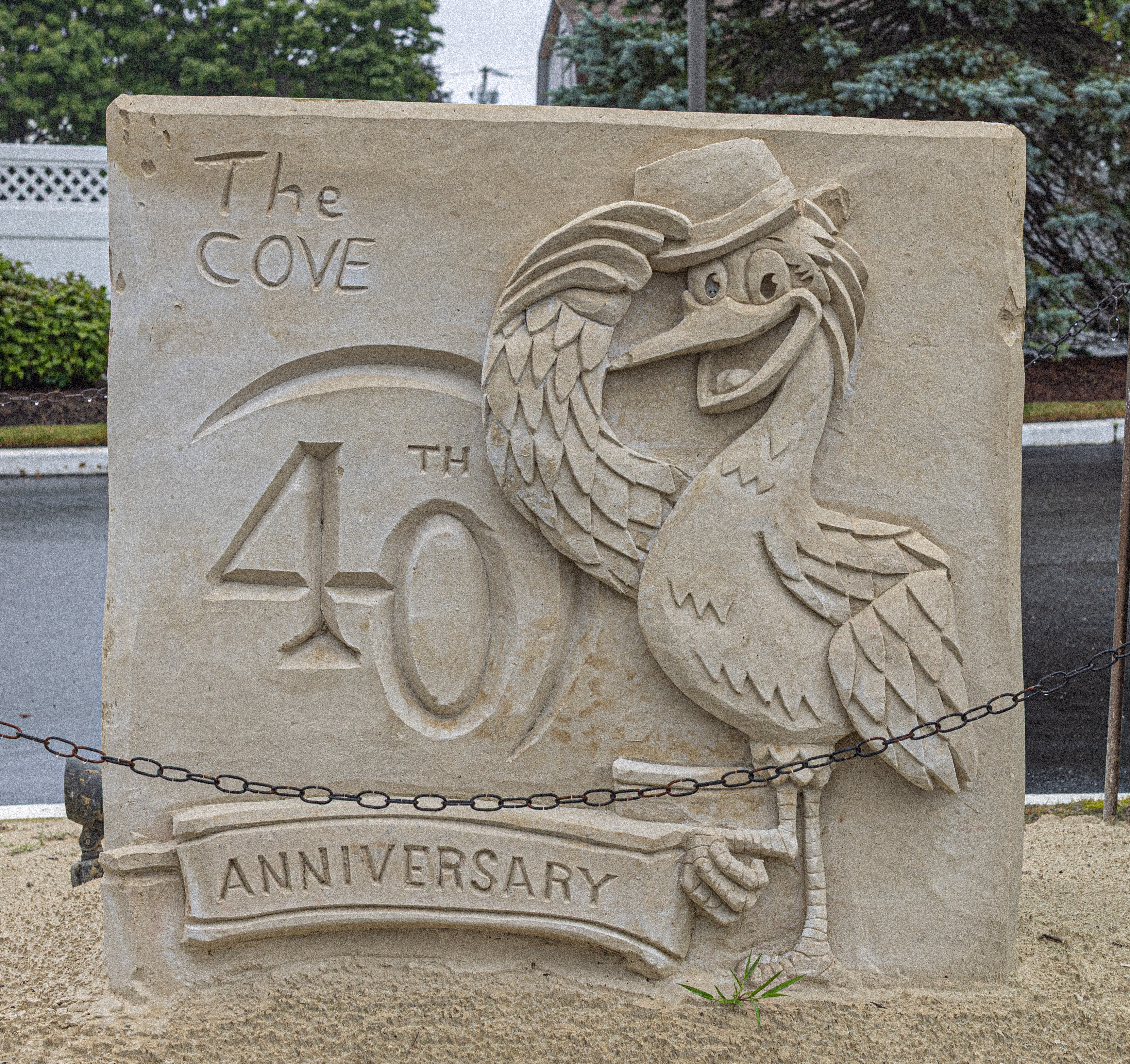
The Cove celebrated their 40th anniversary with this sand sculpture.
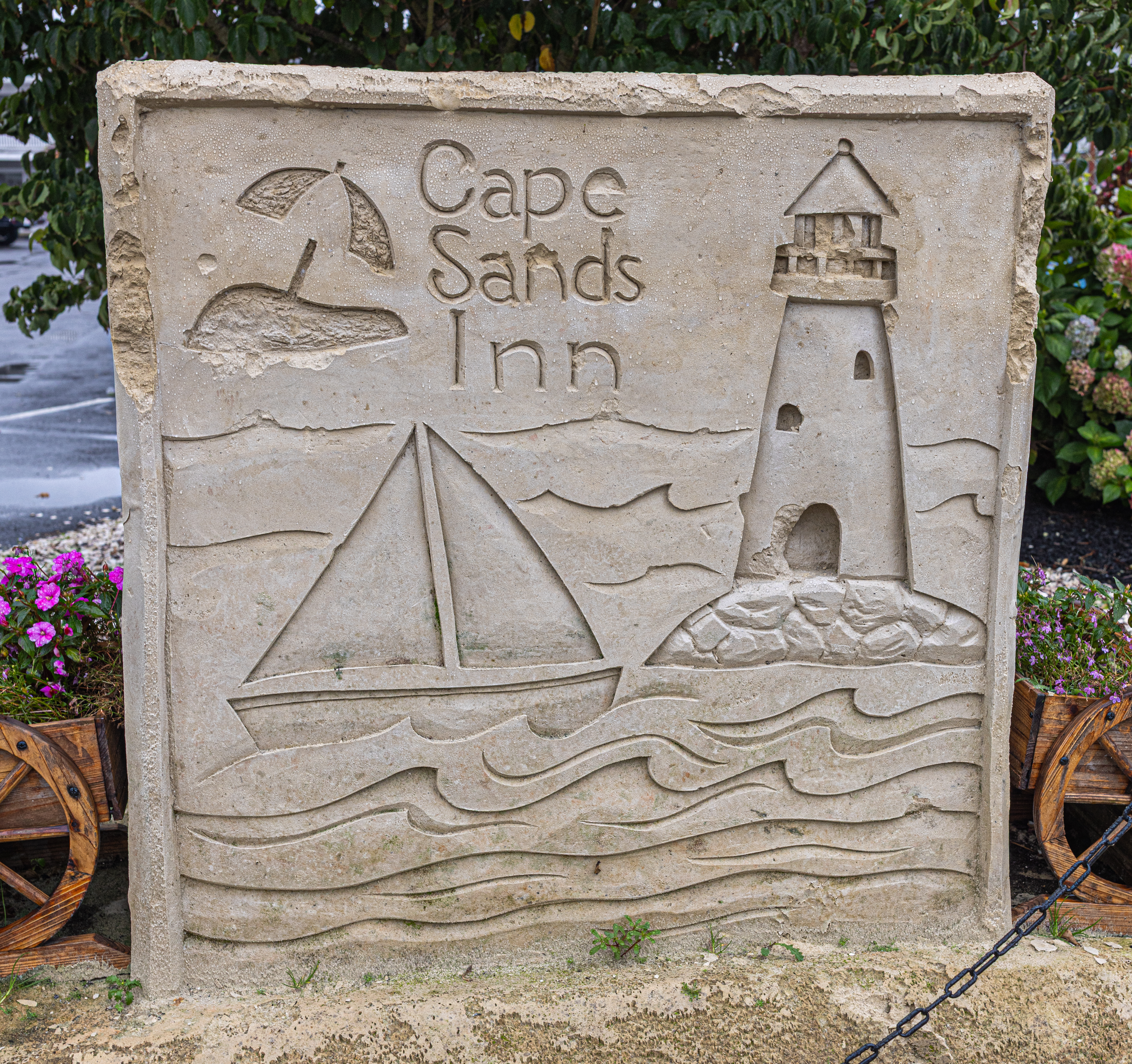
The sculpture at the Cape Sands Inn was the last sculpture on the tour (or the first if you see them in the order of the map).
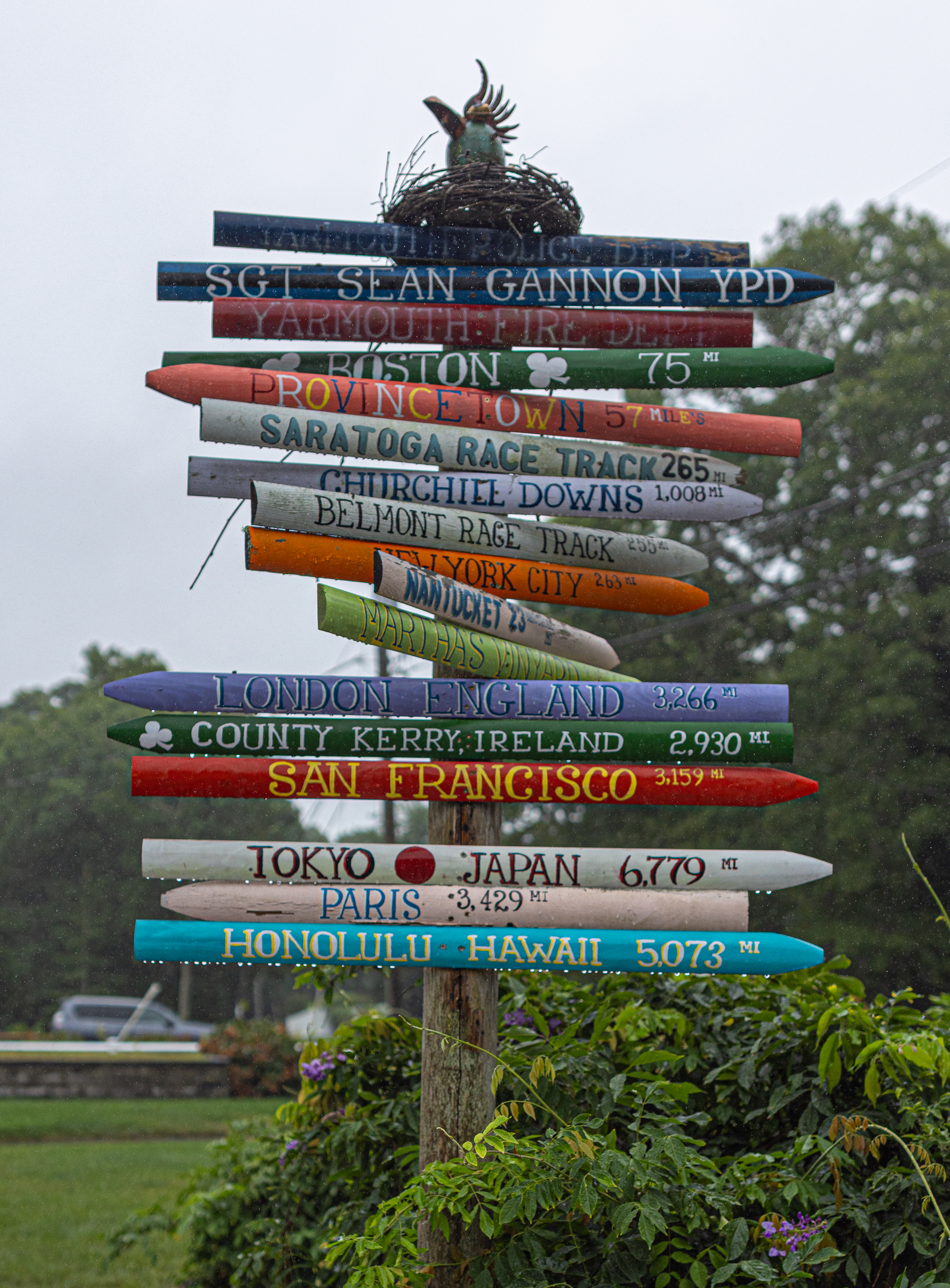
I found afew other fun things along the sand sculpture trail such as this cute land marker. It’s an awfully long way to Tokyo, Japan!
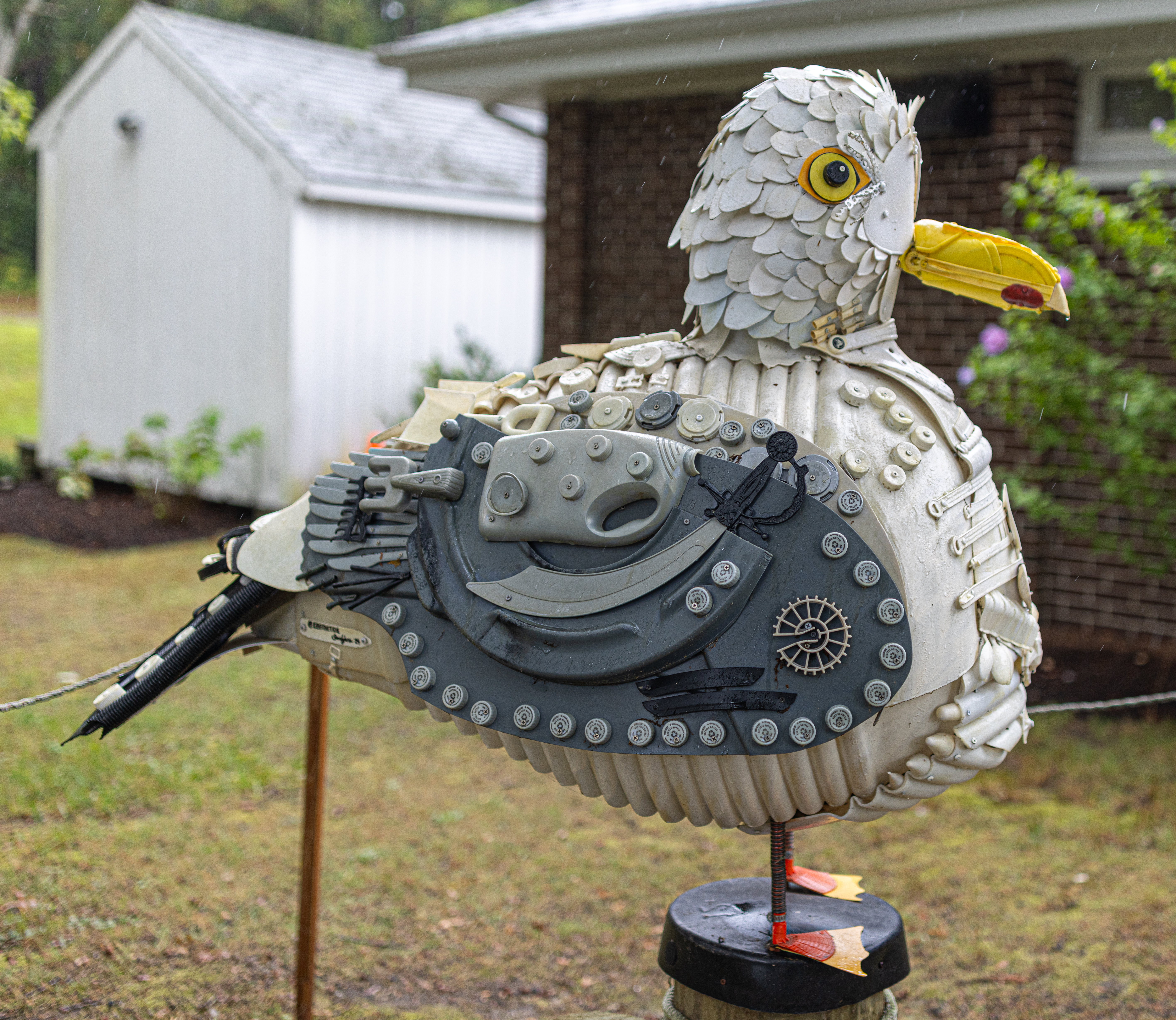
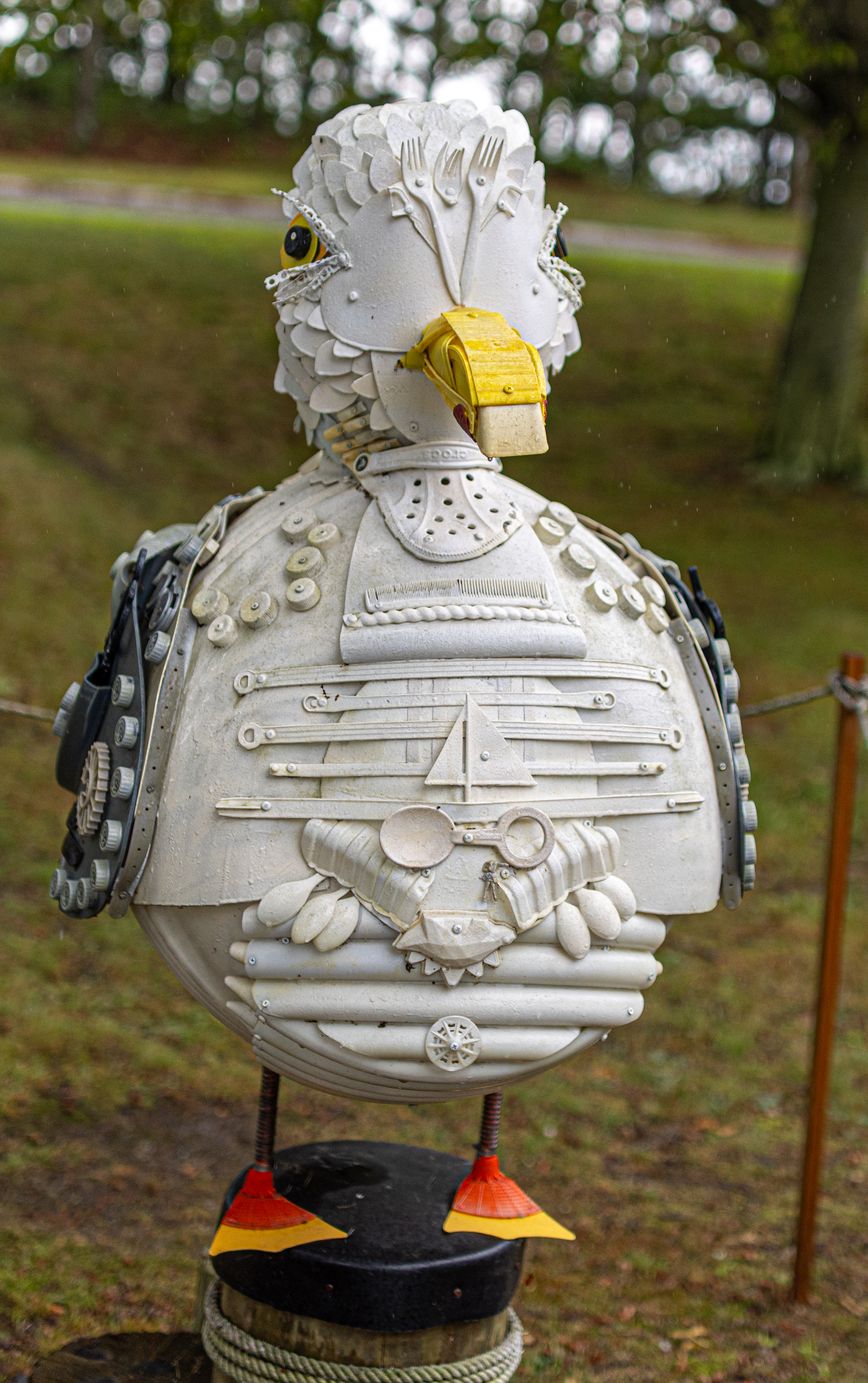
This Gull located at the Cape Cod Welcome Center is called Clionda (pronounced “Clean-ah). It is a Herring Gull with a message: “We need to take care of our beautiful landscape and keep it cleaner”
The sculpture is meant to inspire all who see it to become better stewards of our planet and to create a responsible environment for the Cape and Islands. The makers of the sculpture encourage people to take simple steps to keep the environment clean such as using reusable instead of single-use plastic, taking trash with you if a trash can is full or not available (“carry in, carry out”) and recycle or repurpose what you can.
Clionda is made with marina-debris cleaned off local beaches as well as post-consumer waste. She was cared for by accomplished activist Sarah J Thornington.
It should only take an hour or so to see all of these amazing sand sculptures by vehicle. It took me closer to 2 or 2.5 hours because I took breaks and explored the area while I took some of the photos. Definitely take some time to enjoy the Taylor Bray farm if you do visit these sculptures. They will be on display until the weekend of Oct 12.
Parking” there is free on street parking available on Asylum St
Universally Accessible: Yes
Dog Friendly: Yes
Summary: Elizabeth Park Conservancy in West Hartford, CT, offers over 100 acres of beautiful greenery and flowers as well as lots of greenery for people to picnic, relax and take a few photos!
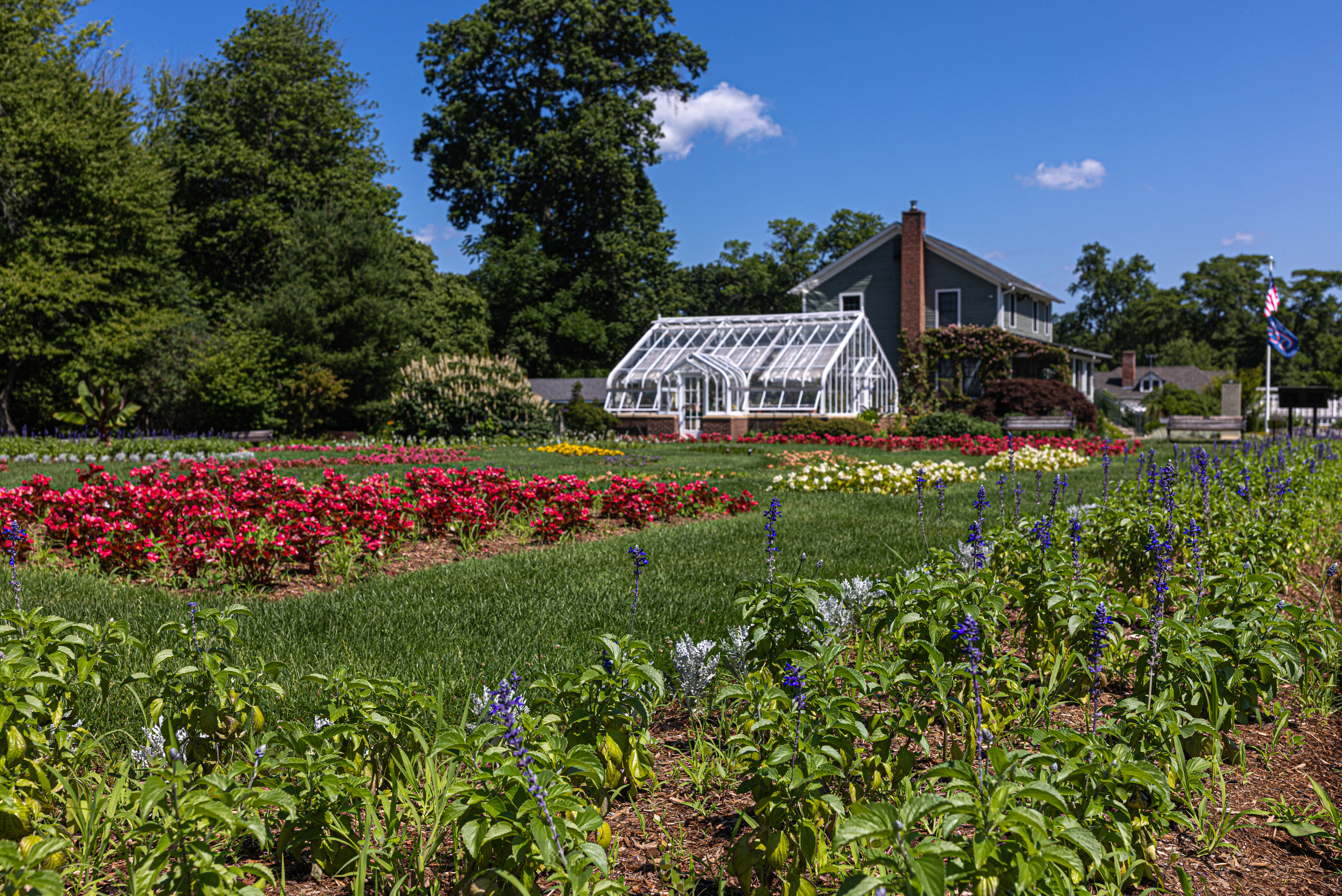
Boasting over one hundred acres of formal gardens, green space, recreational facilities, walking loops, and the Pond House Café, Elizabeth Park Conservancy has something for everyone to enjoy. But, the highlight of the conservancy are the flowers.
I visited this park earlier in May. But, I was told the roses were in full bloom in later June and July. So, I made a special visit the first weekend of July. Unfortunately, we were experiencing a dry and hot spell during that time So, the roses and some of the other flowers looked a little worse for wear. And, as you will see later, there were some other environmental factors that affected the roses and other flowers.
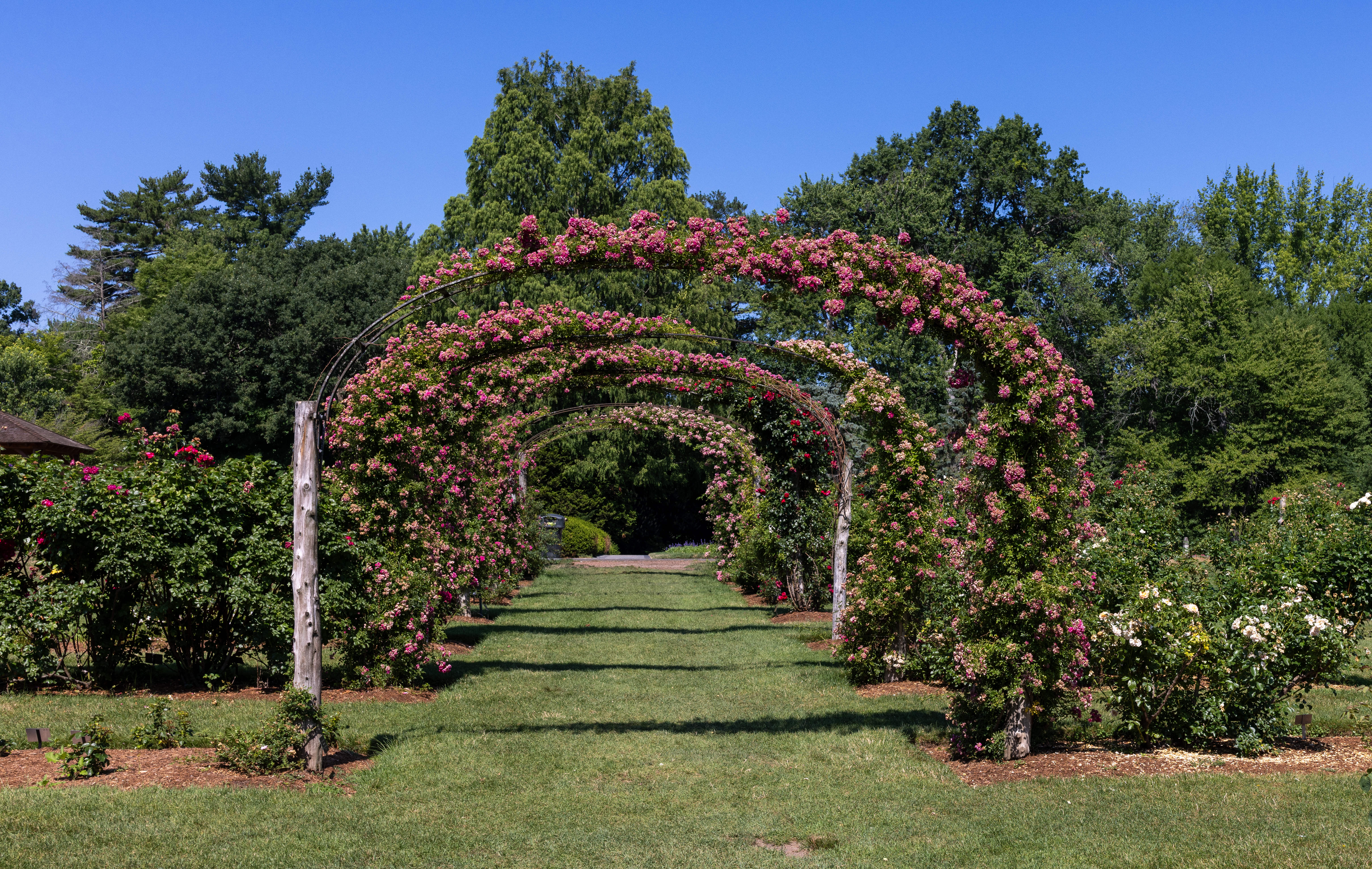
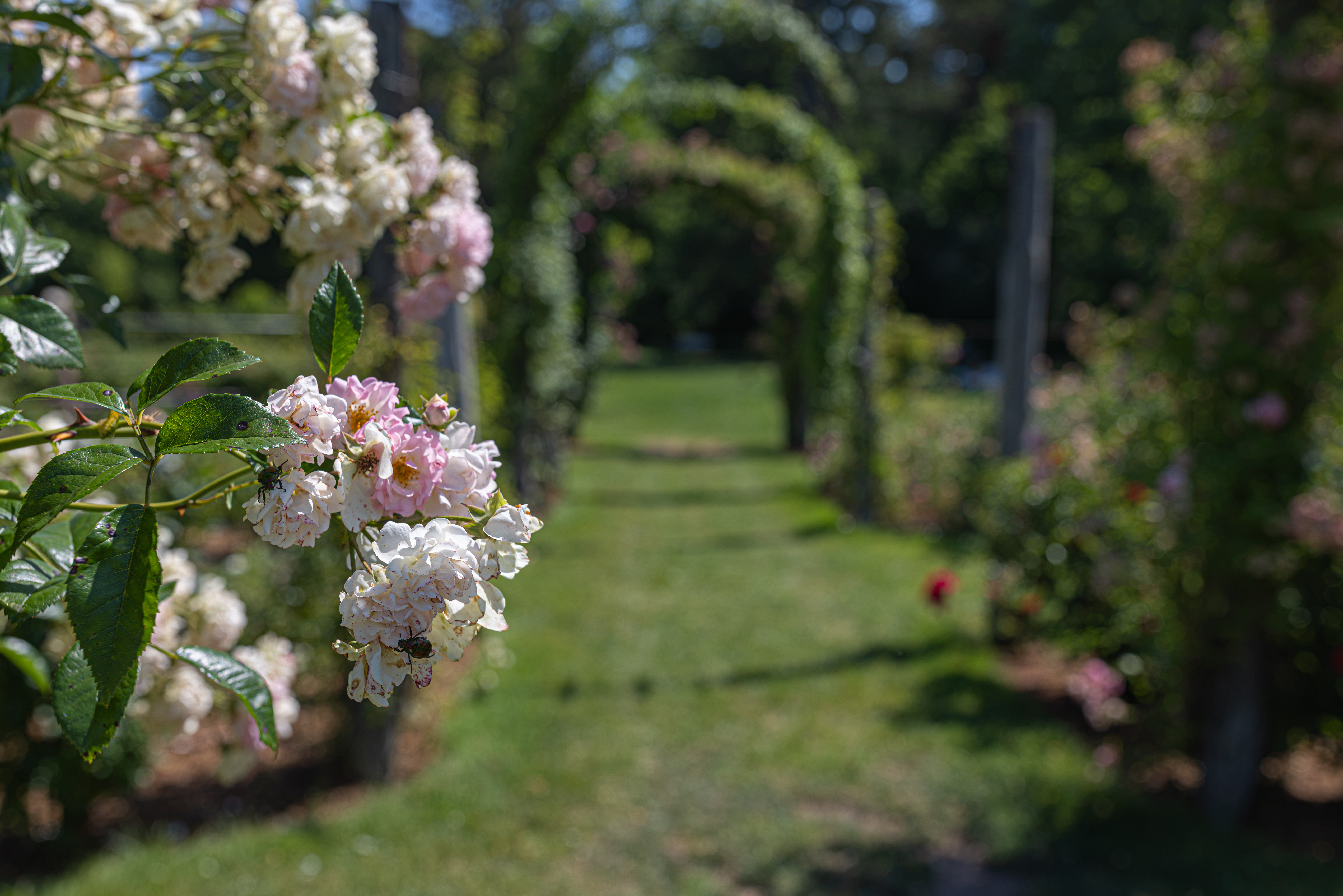
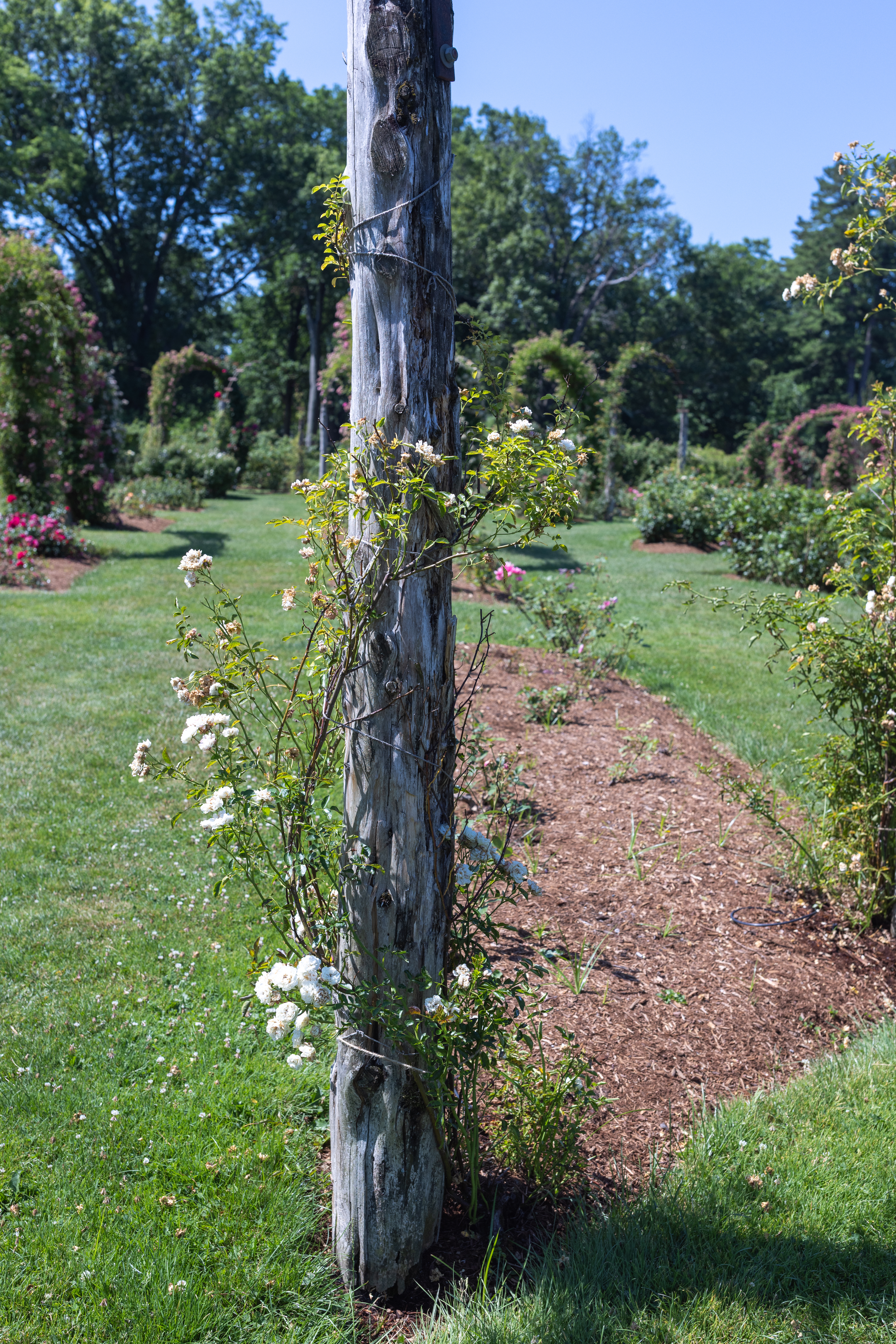
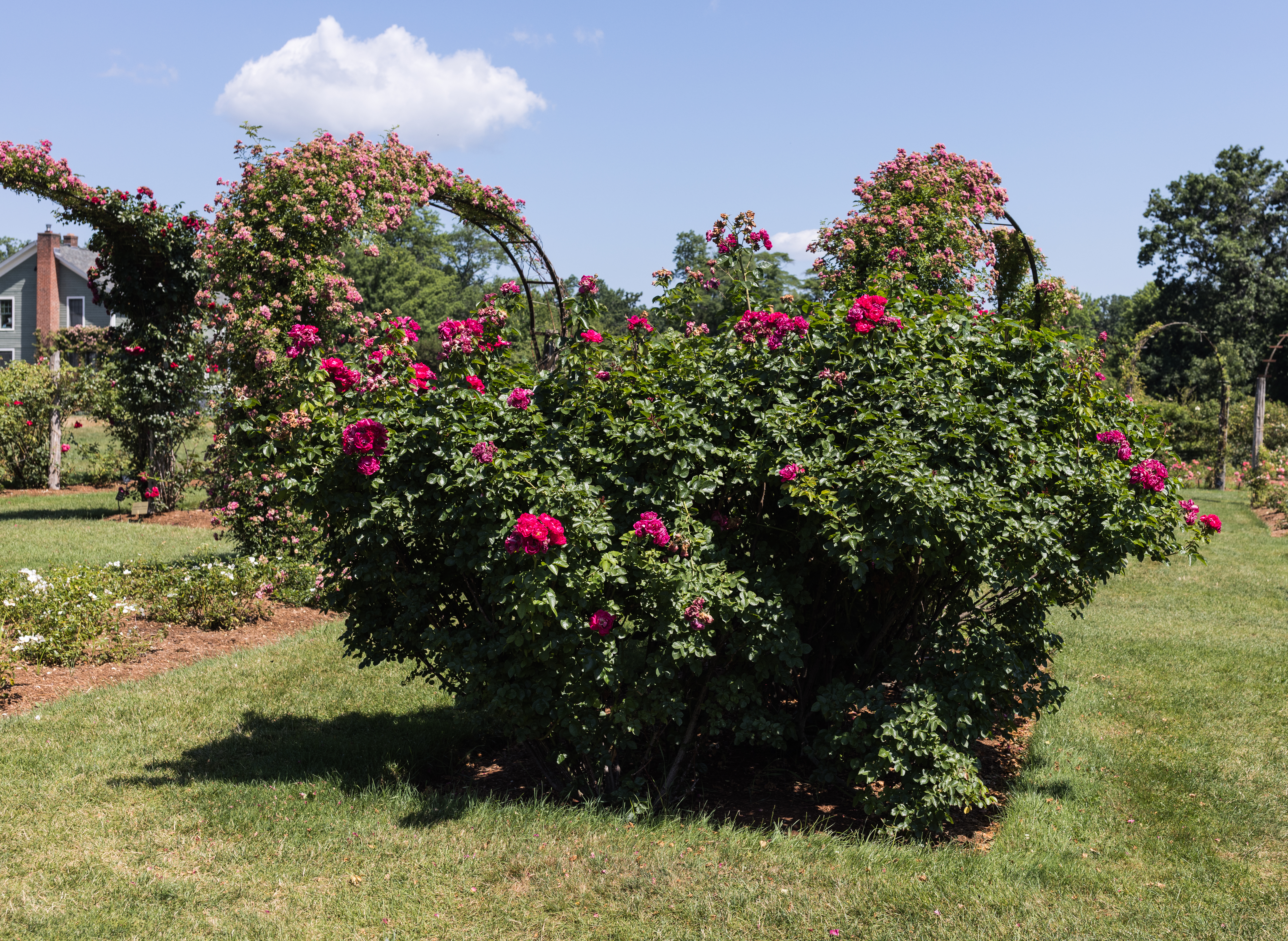
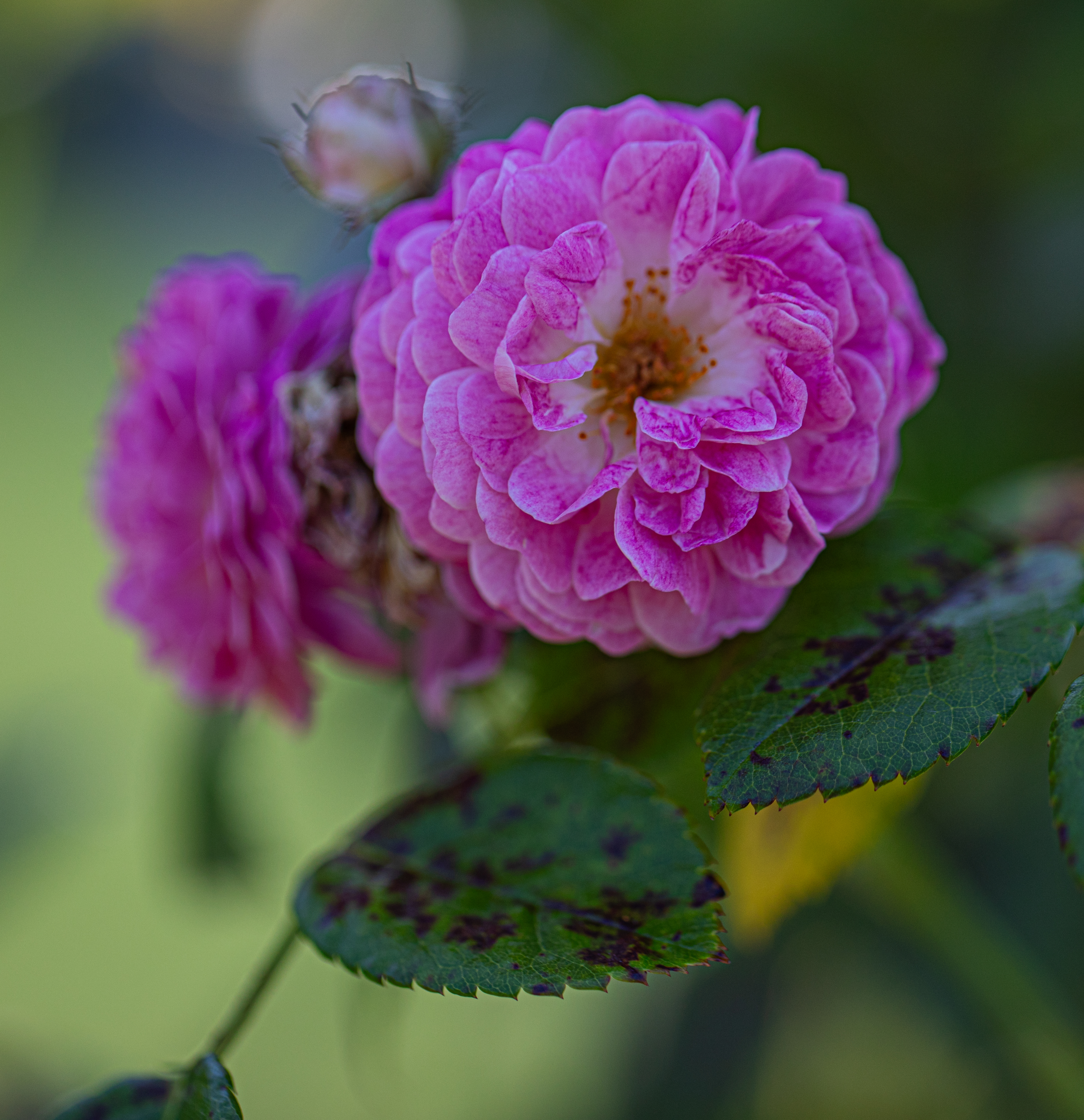
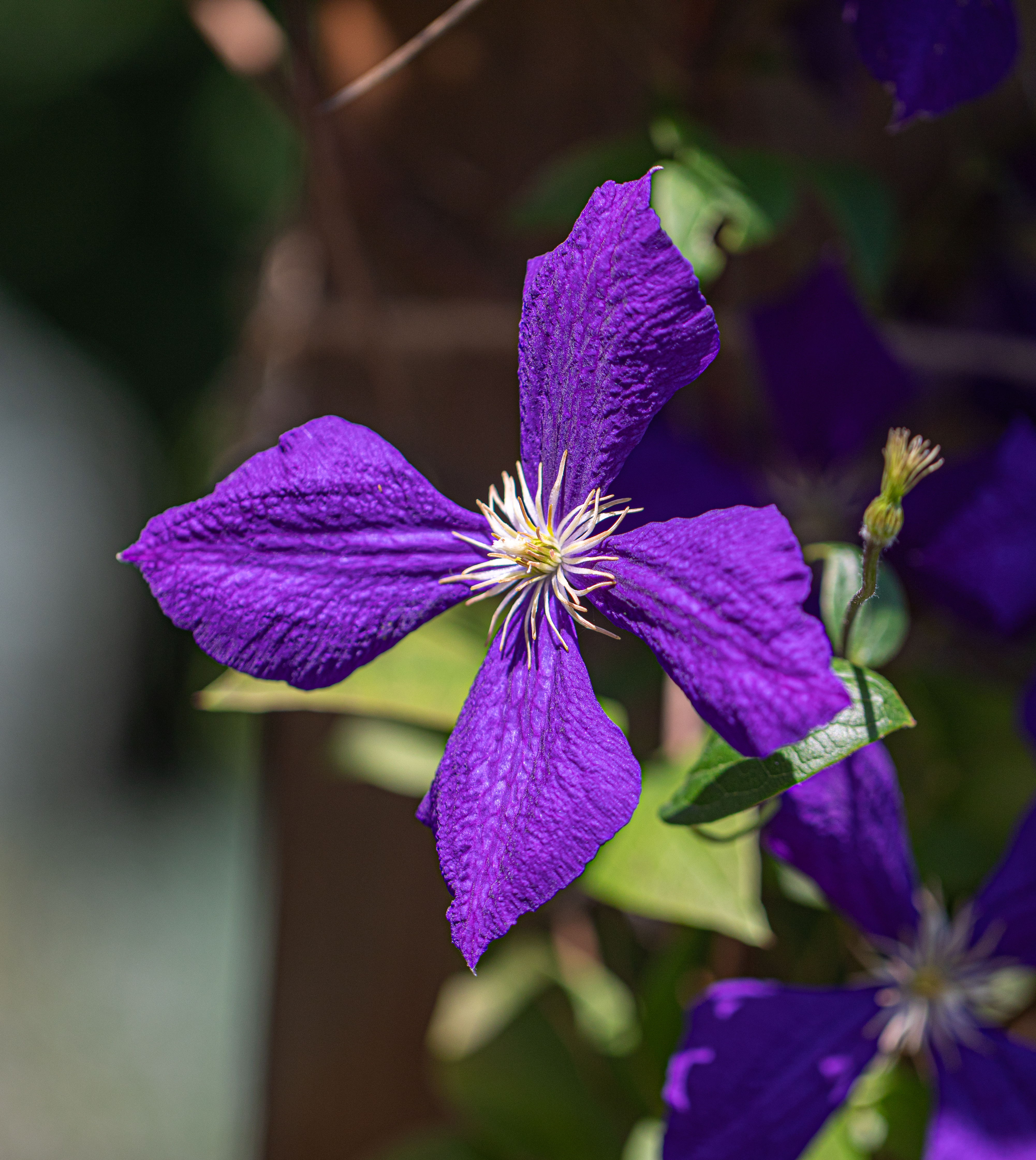
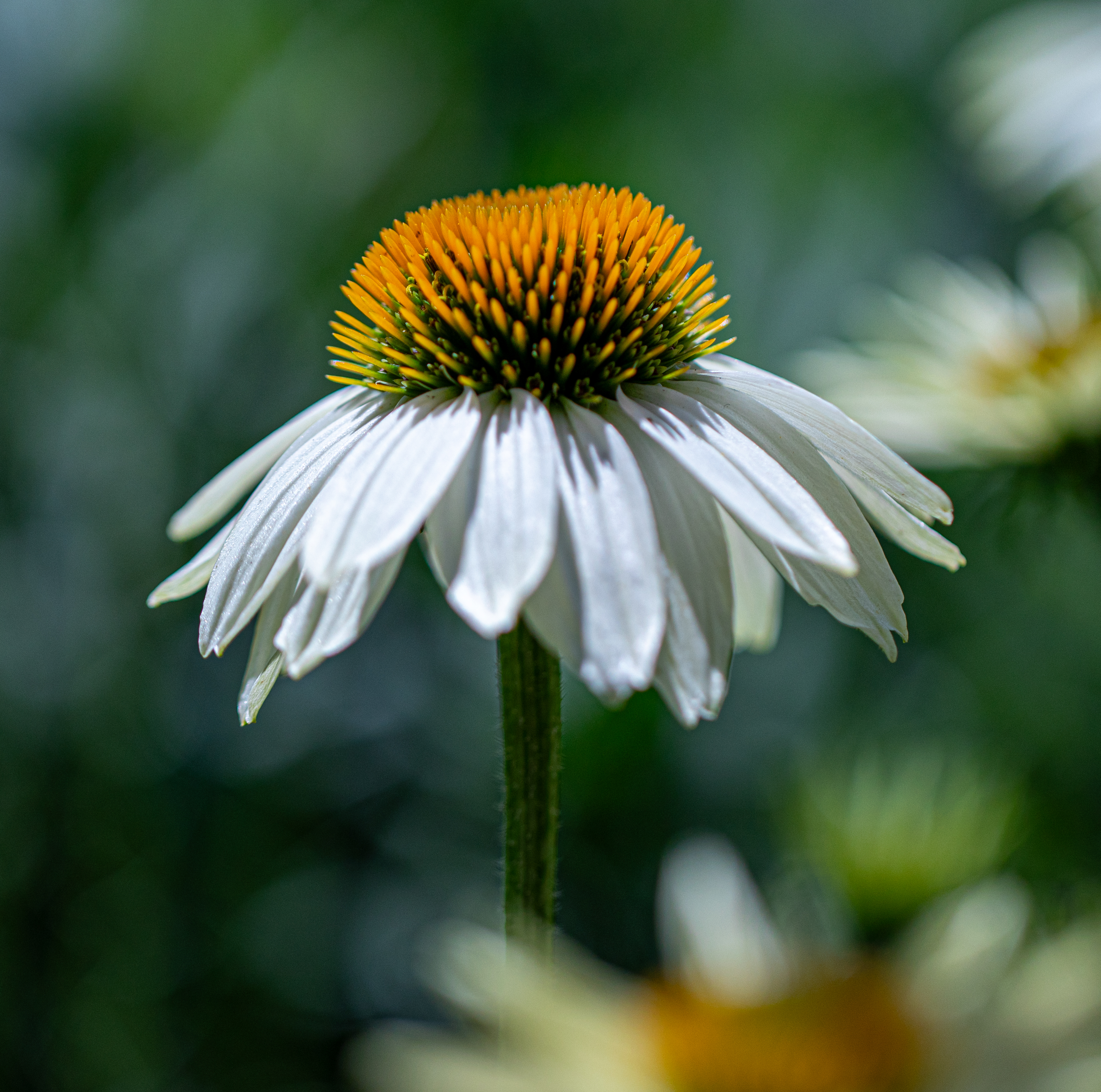
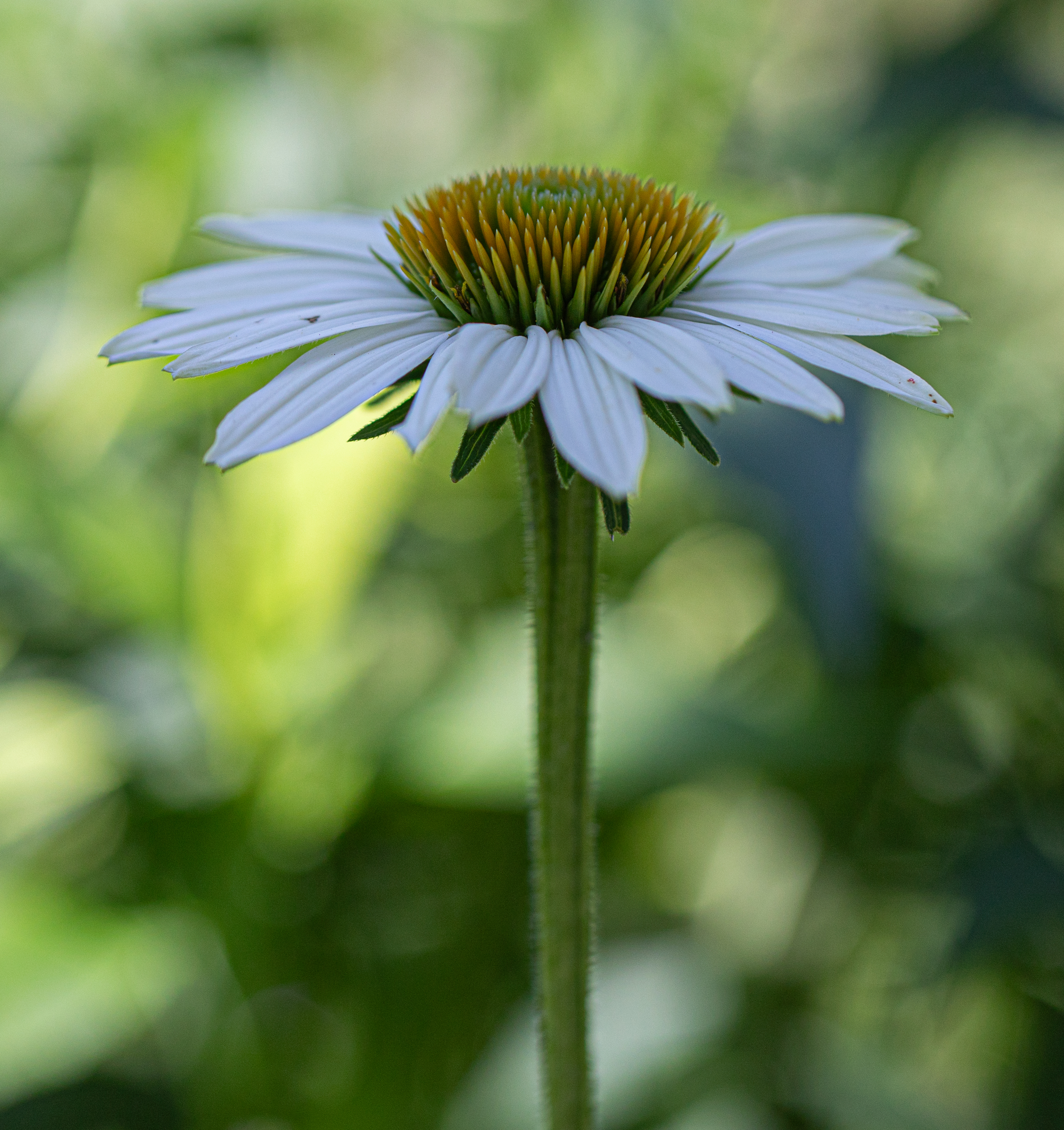
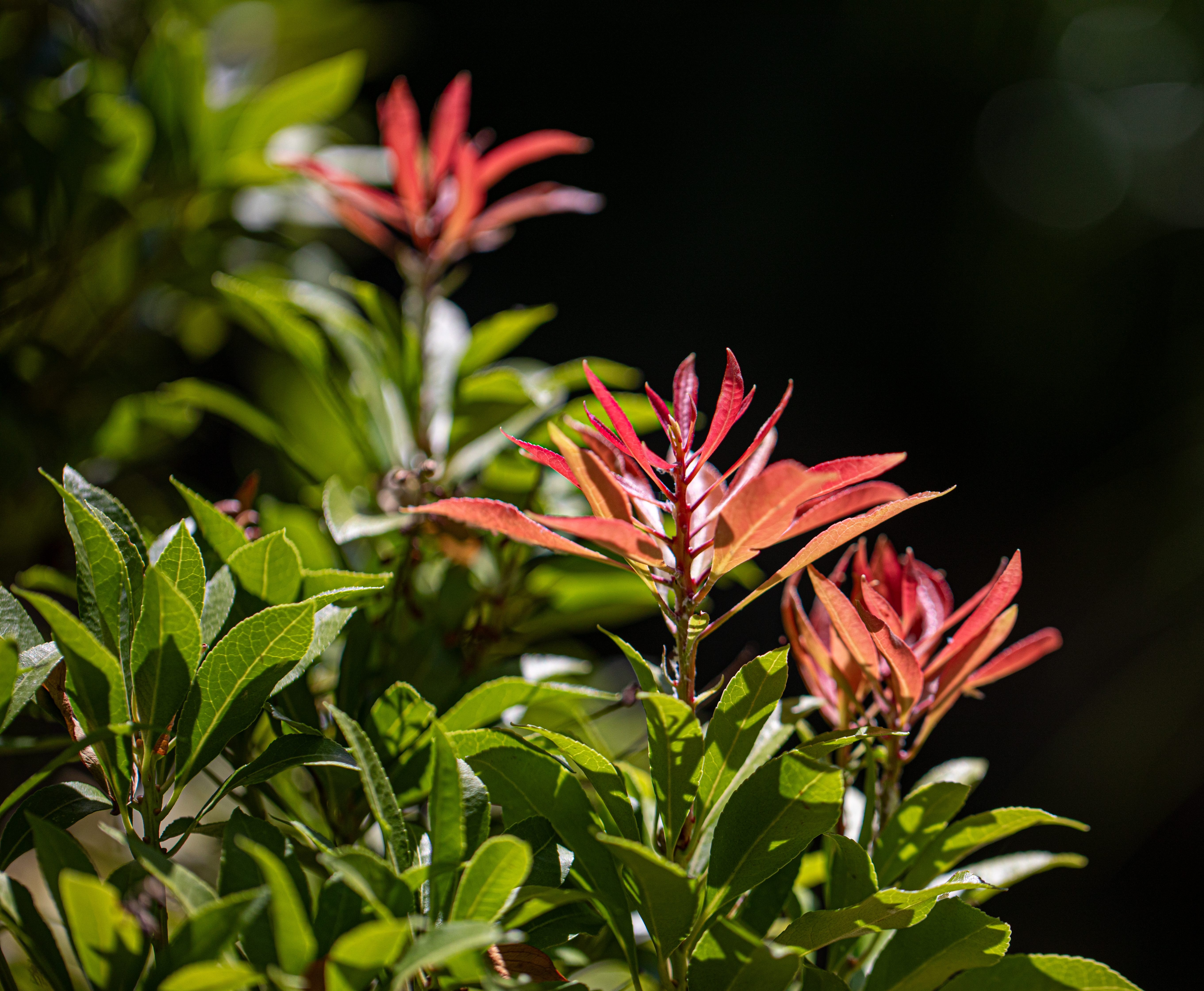
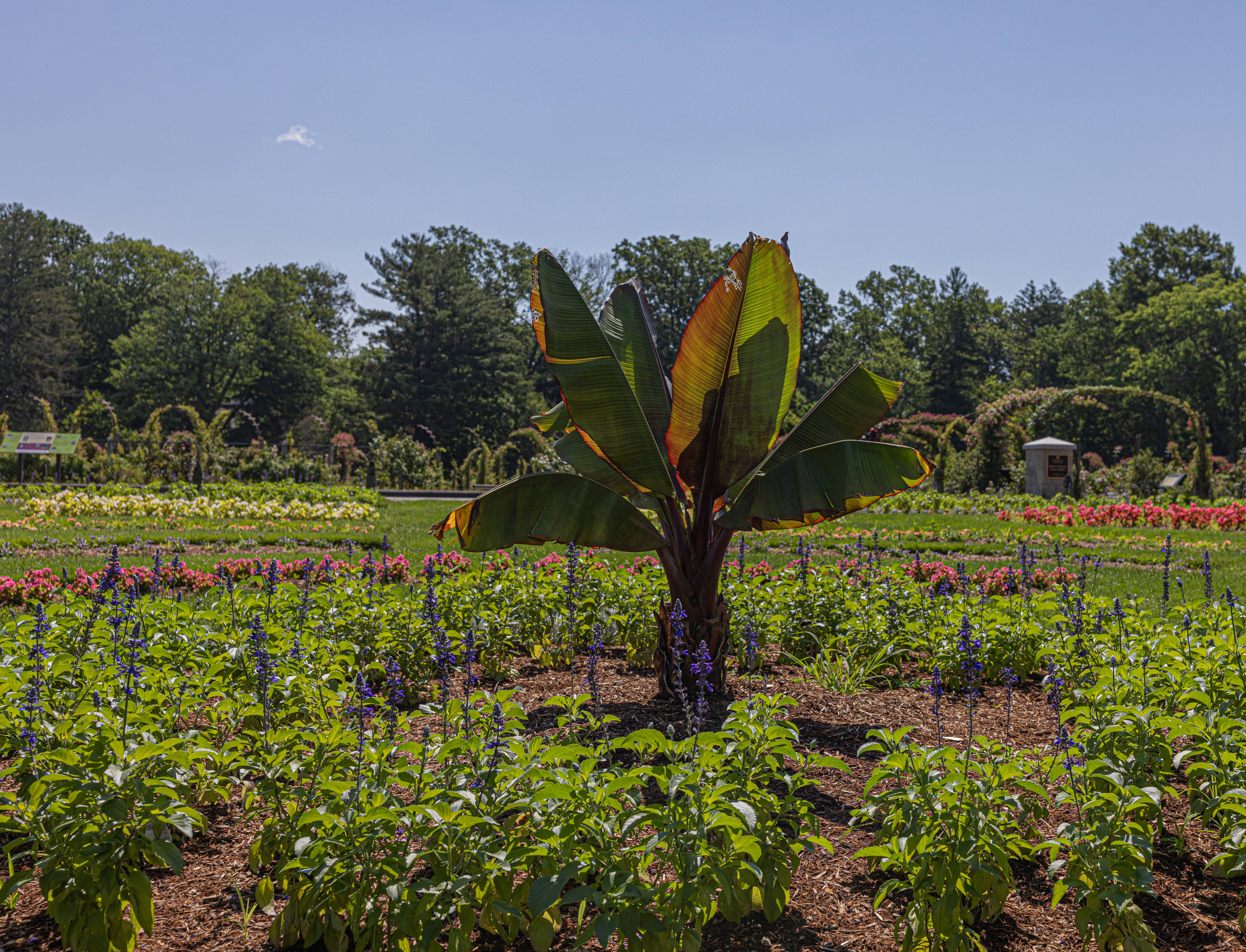
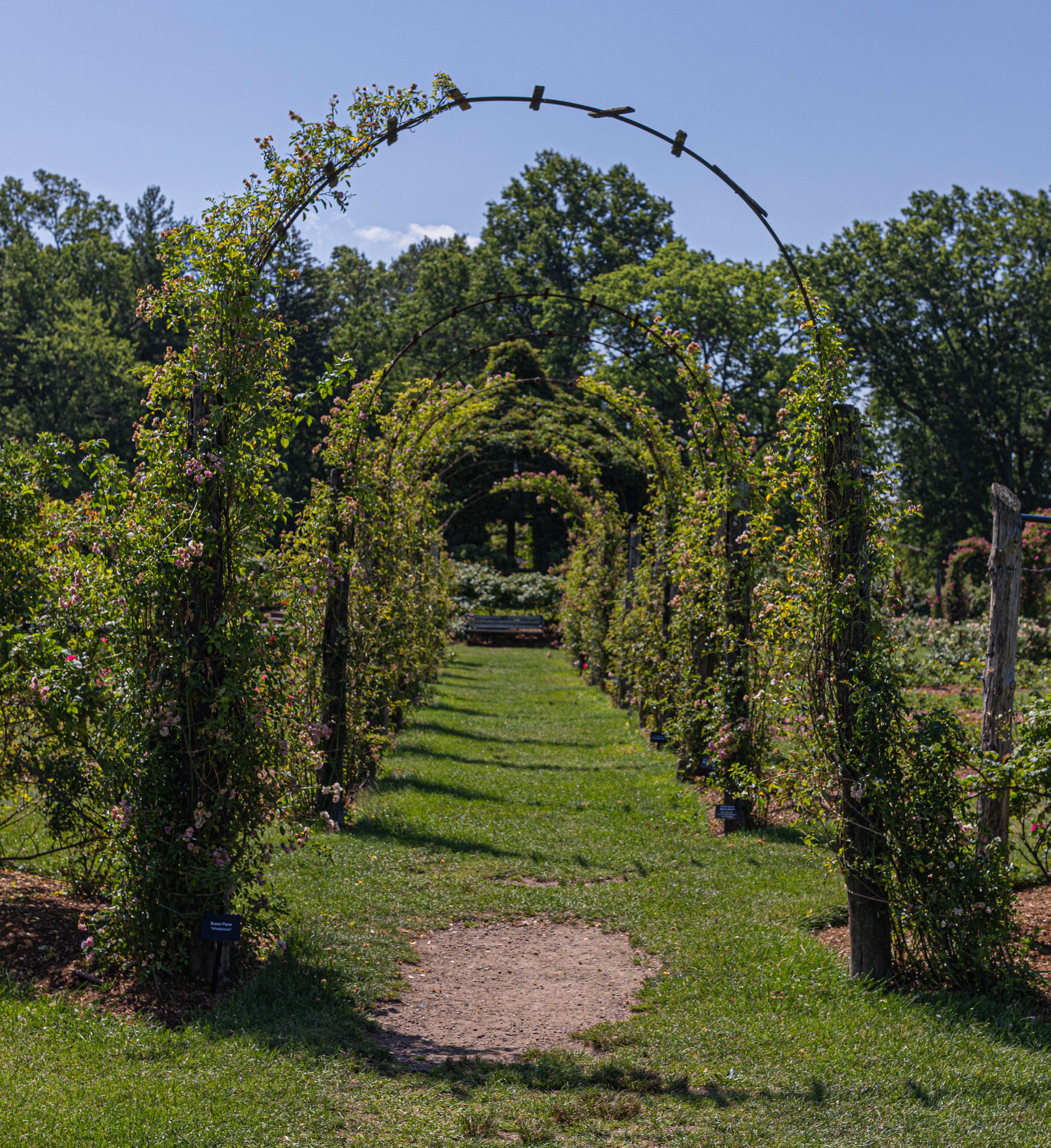
Elizabeth Park has a wide array of flowers and plants at the conservancy.
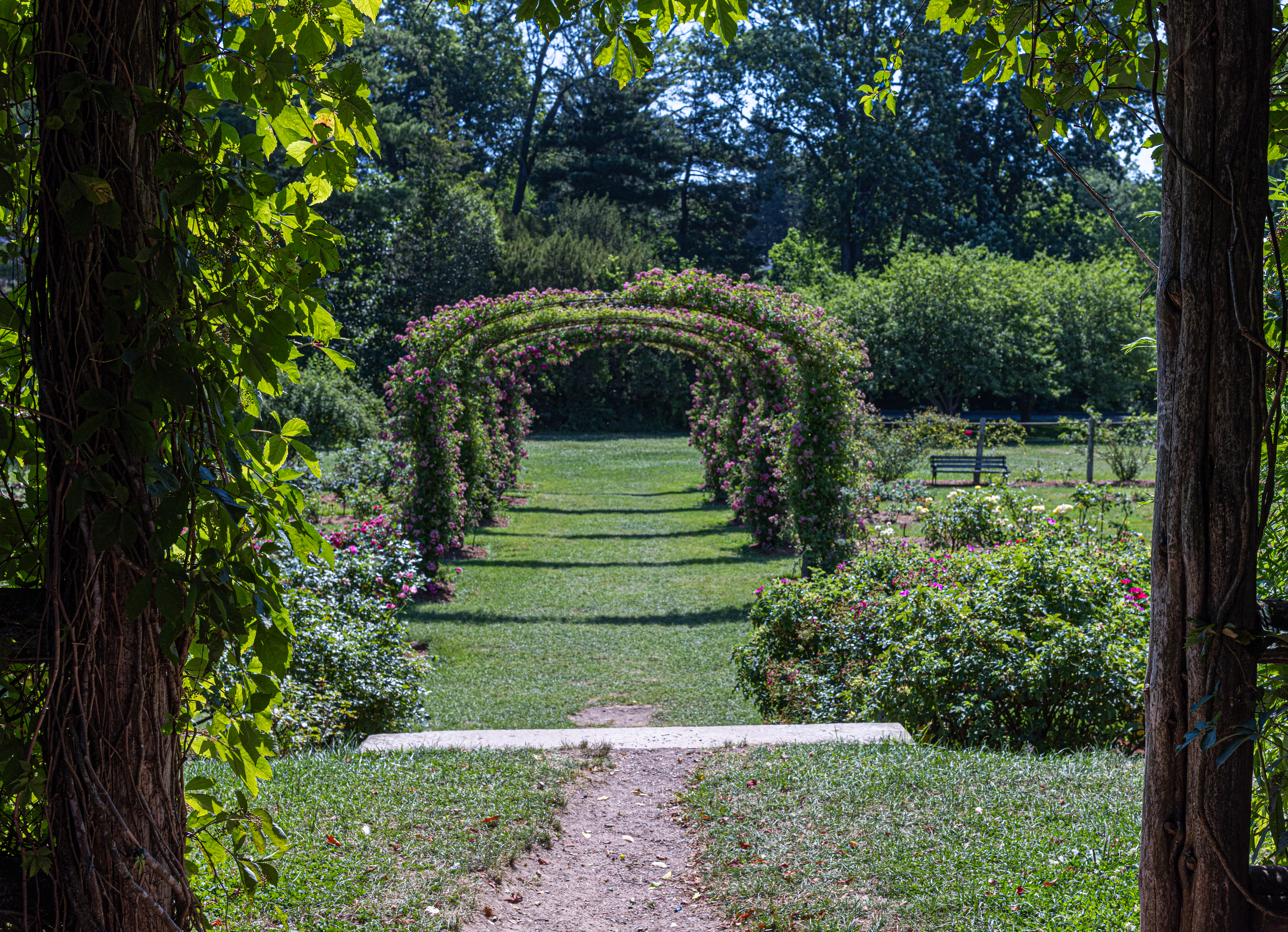
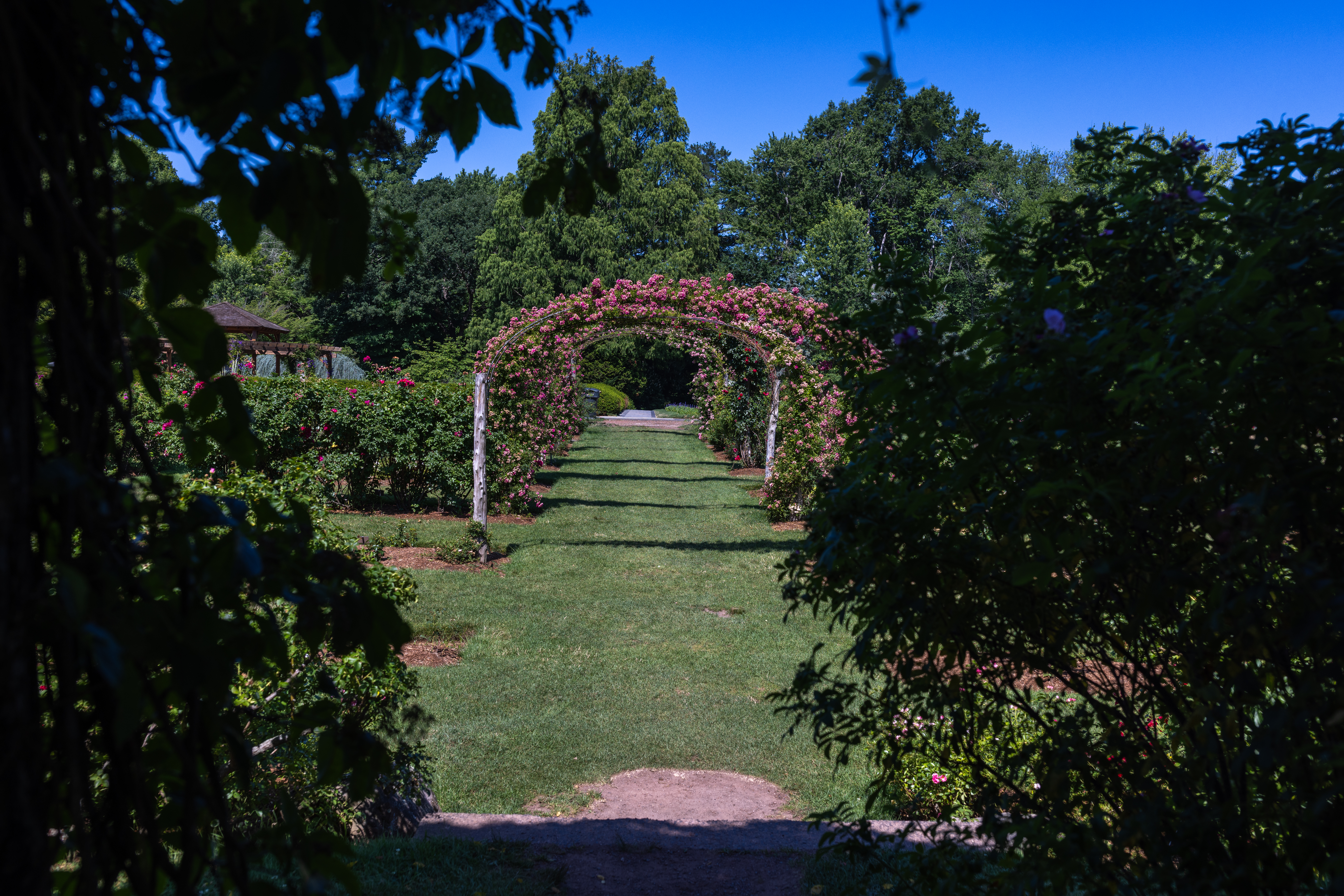
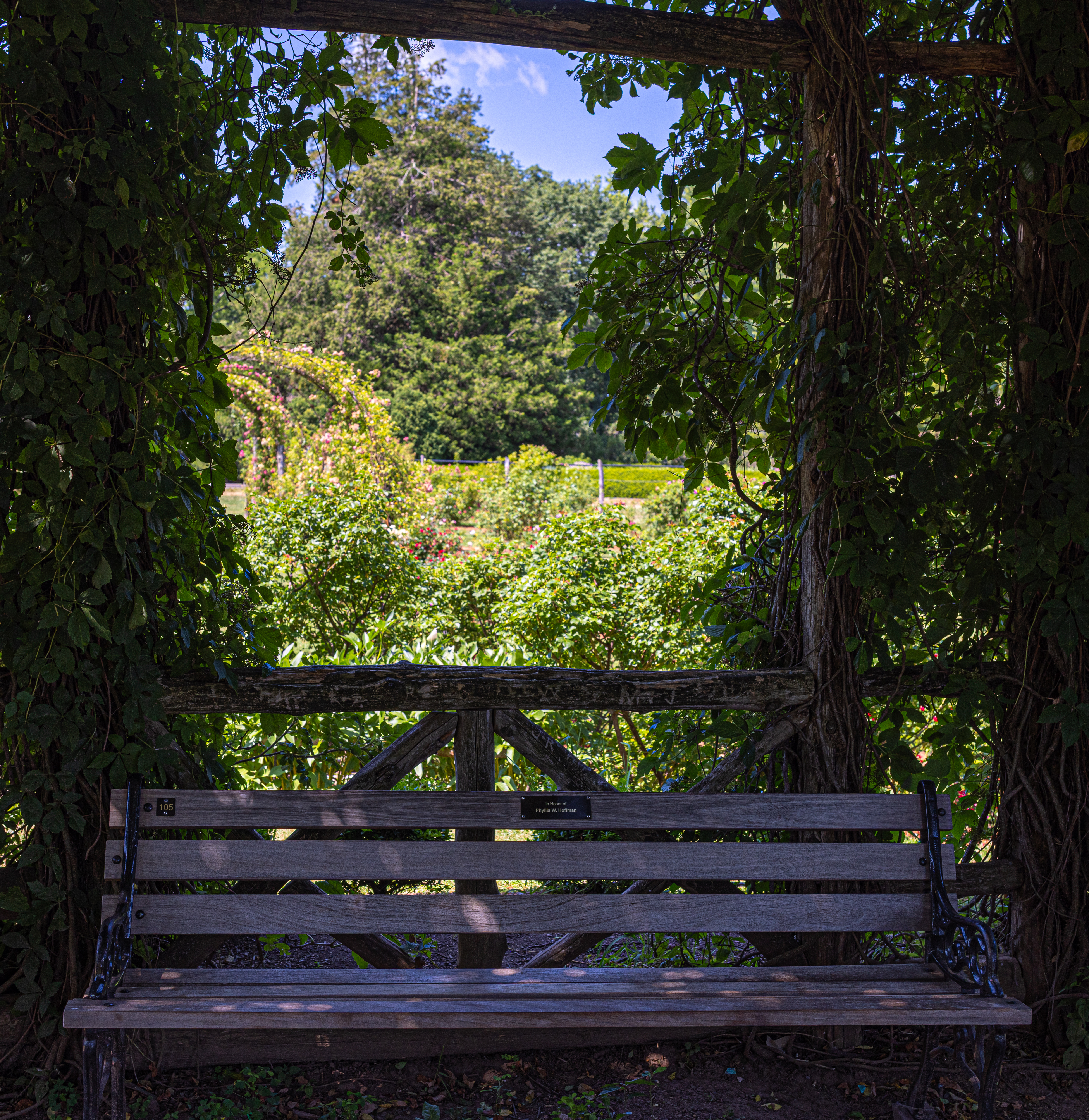
Elizabeth park also has a lot of structures and trails which makes it a popular place for people taking portraits and engagement photos.
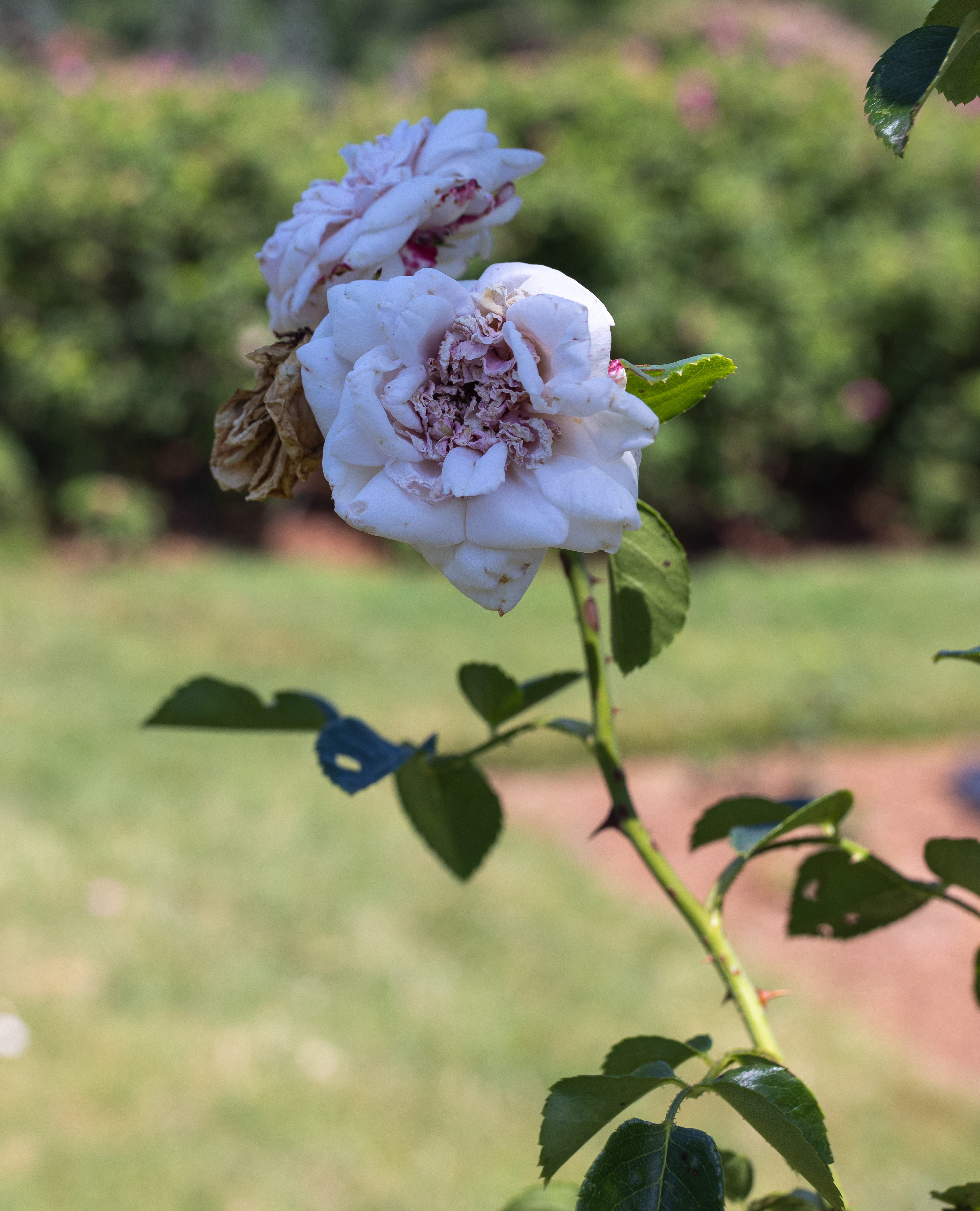
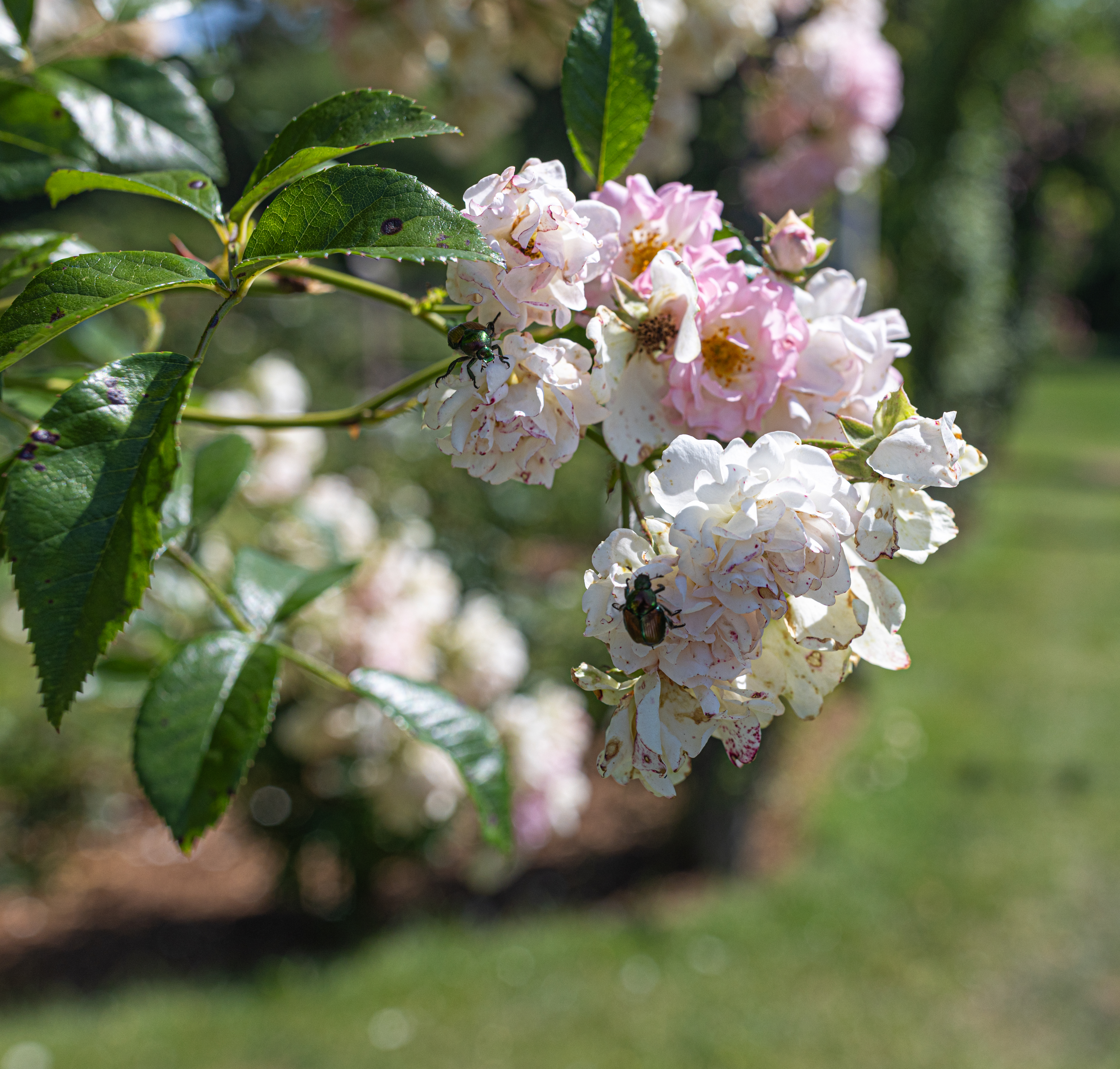
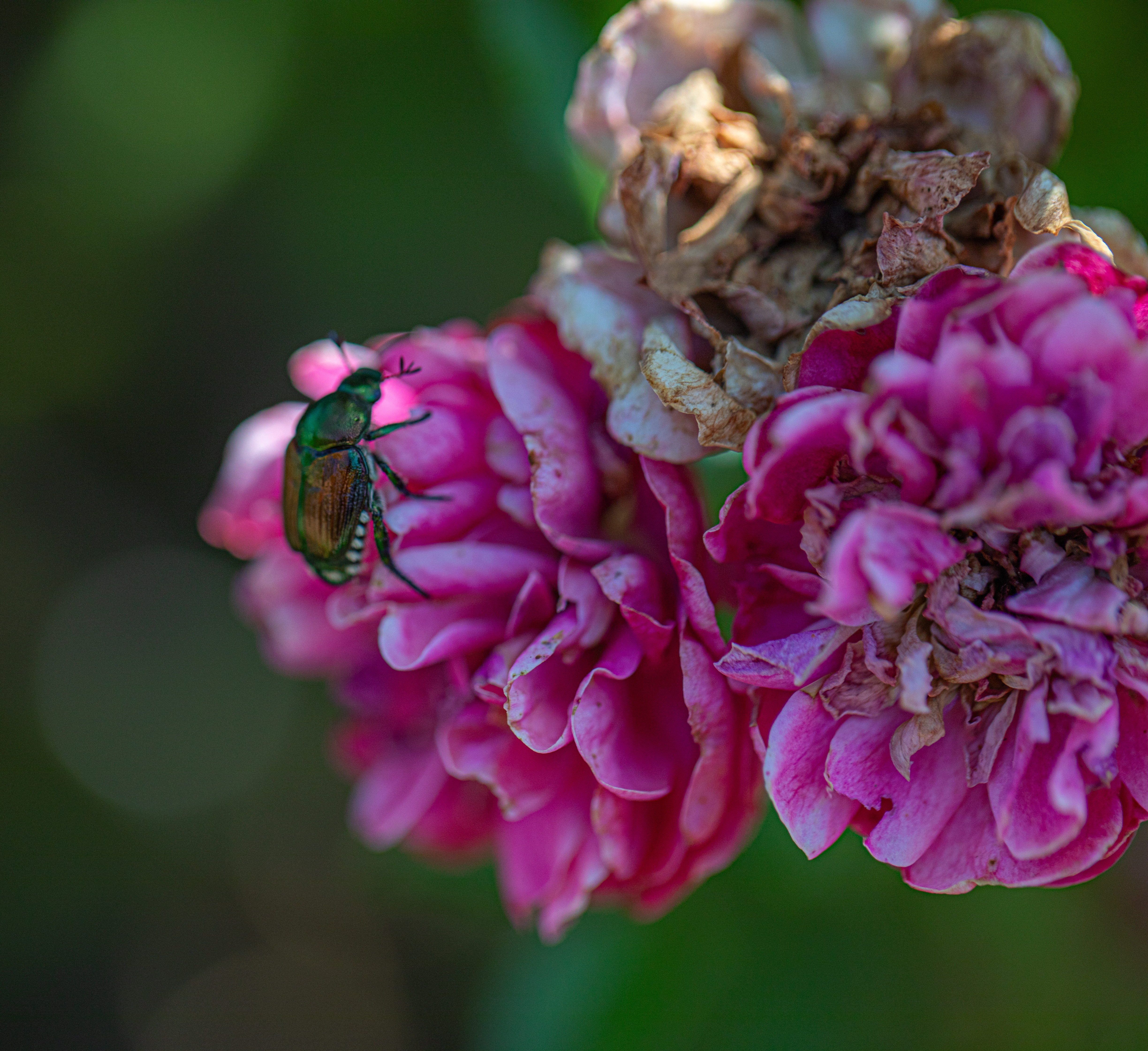
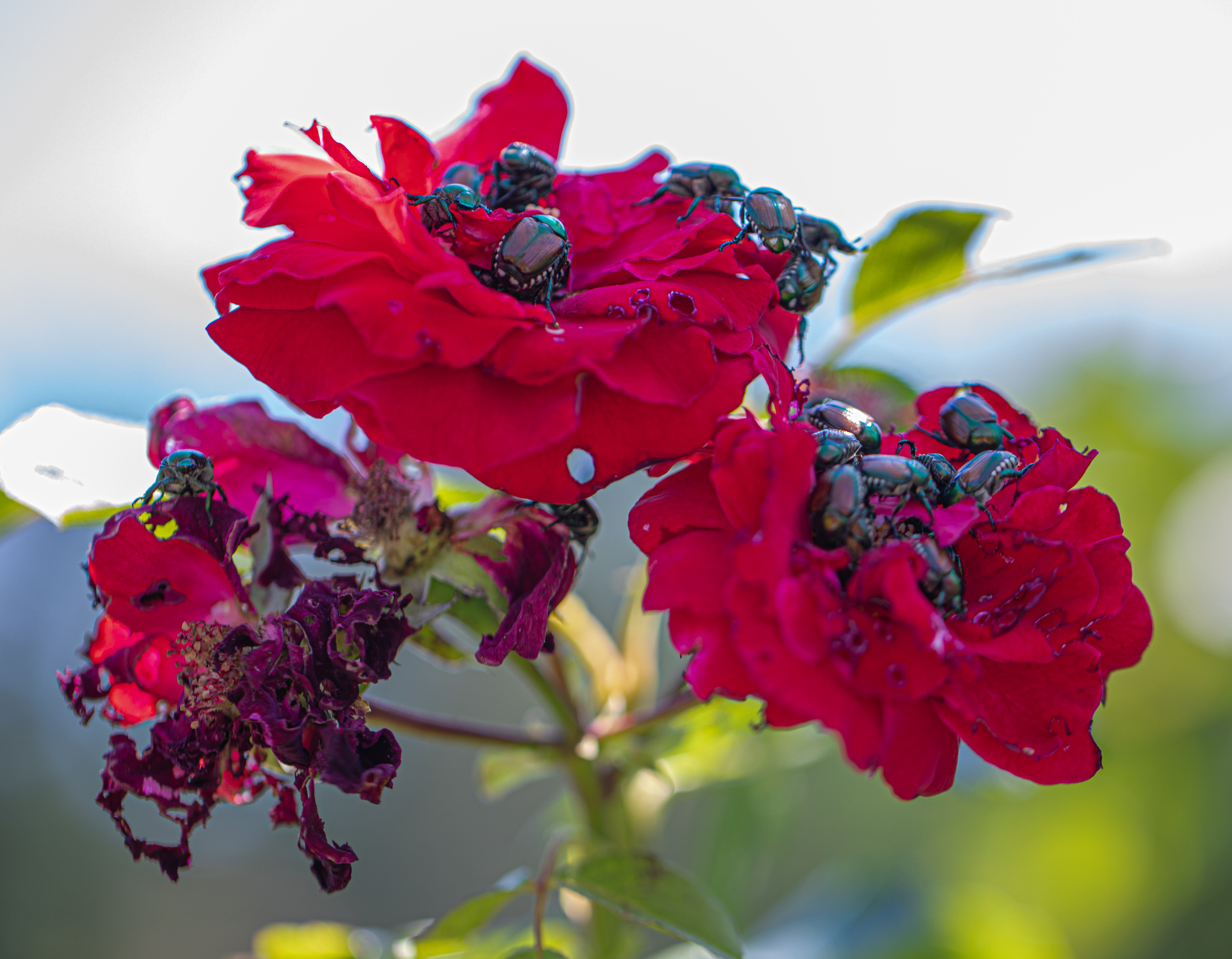
One thing I noticed, and you may also notice, is I should have used a flash for some of the photos. I know what you might be thinking; a flash on a sunny day? Yes, the flash or artificial light can help “fill in” some of the shadows and dark areas which helps to bring out the colors and highlight the features of what you’re photographing. Unfortunately, these Japanese beetles, who were in great abundance at the park, were feeding and mating on some of the flowers. These invasive insects, which are native to Japan, are highly destructive. The damage they cause is particularly evident in the third photo.
Despite the heat, drought-like conditions and the havoc the Japanese beetles had on some of the flowers, Elizabeth Park was a delight that I am glad I was able to share with everyone!
Locations: Arcadia Mass Audubon Wildlife Sanctuary (Easthampton, MA), Stanley Park and Robinson State Park (Westfield, MA)
Summary: Lots of wildlife photos from western MA
I realized I haven’t posted in a while. So, I thought a quick tour of some of my favorite local parks would be a good way to get me back to posting on a regular basis.
This post highlights three of my favorite parks in my area.
Because of it’s proximity to my new home and it’s overall beauty, Stanley Park in Westfield, MA, has become one of my favorite places to photograph wildlife.
I saw this American Bullfrog croaking during one of my visits.
Male Bullfrogs croak to attract females and defend their individual territory.
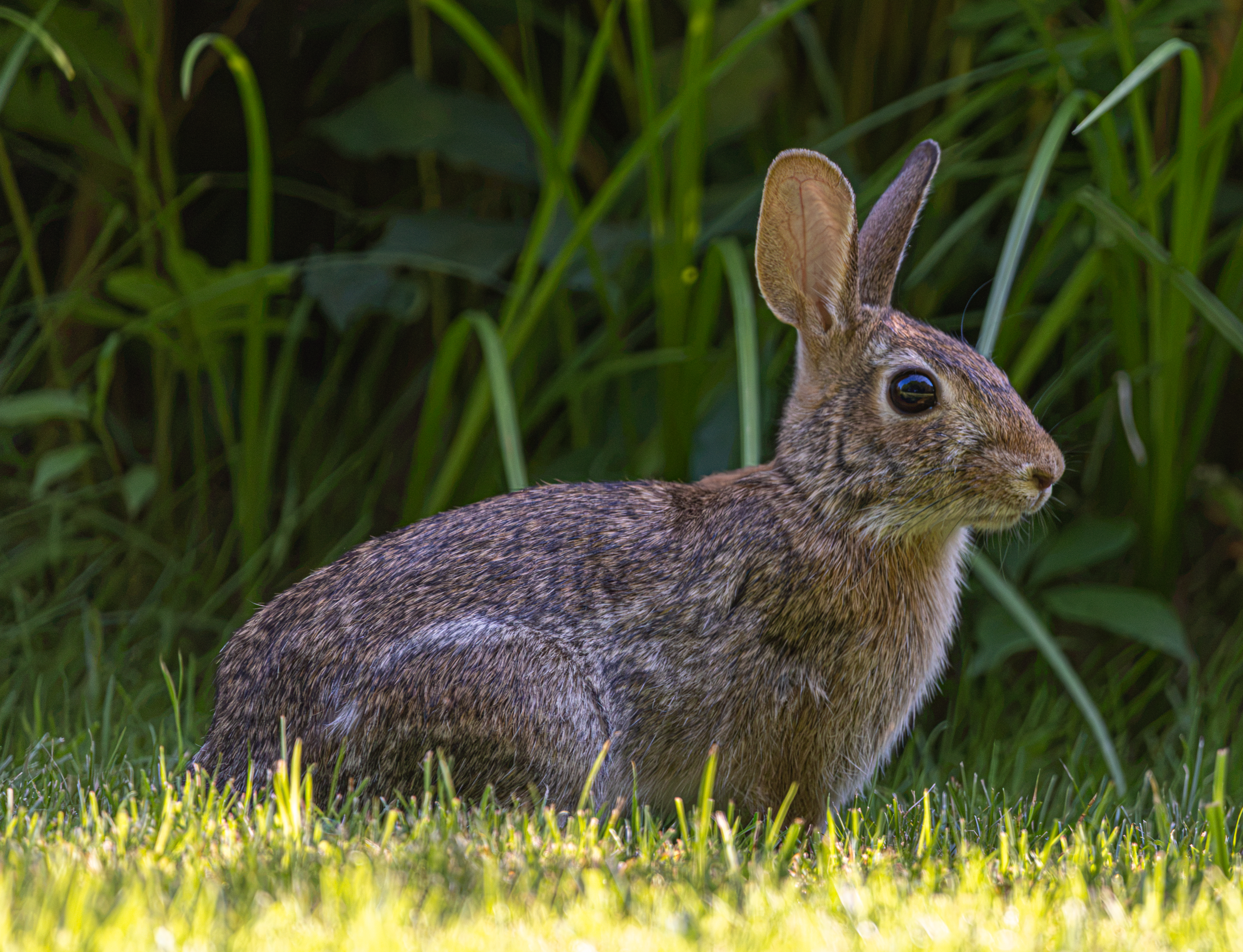
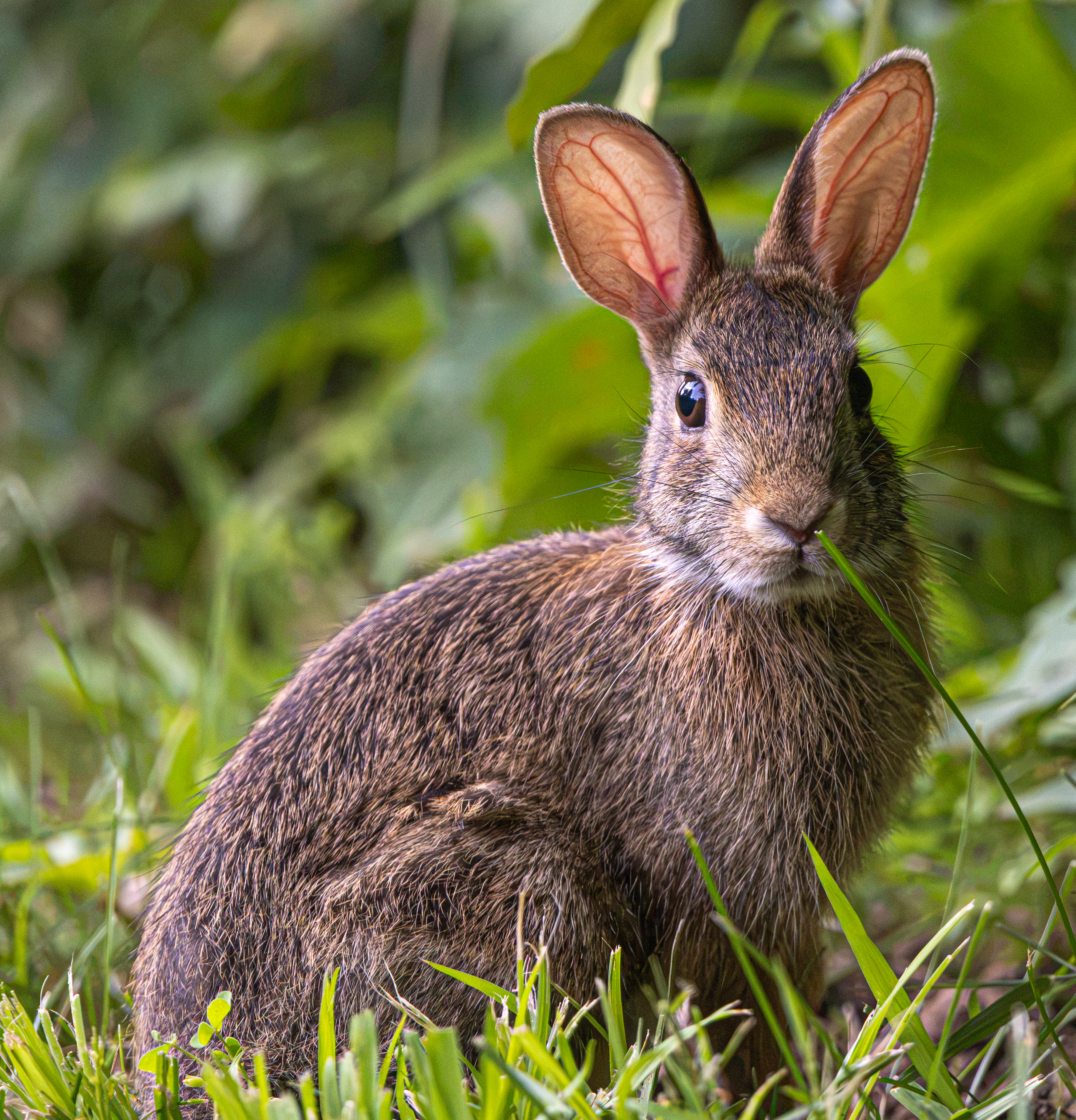
Stanley Park also has a wide variety of wildlife such as rabbits, turtles as well as other critters.
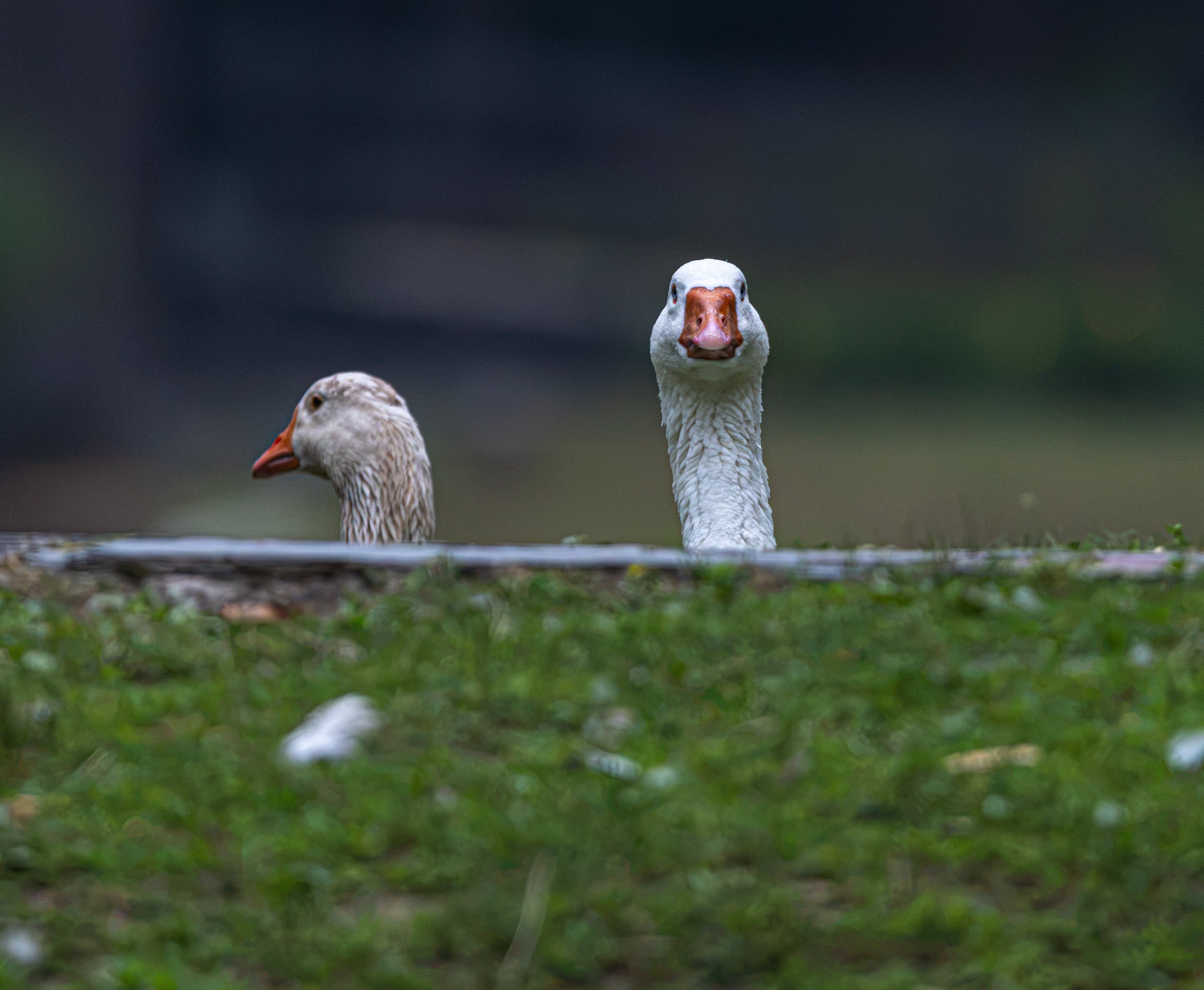
Stanley Park also has a lot of geese and ducks.
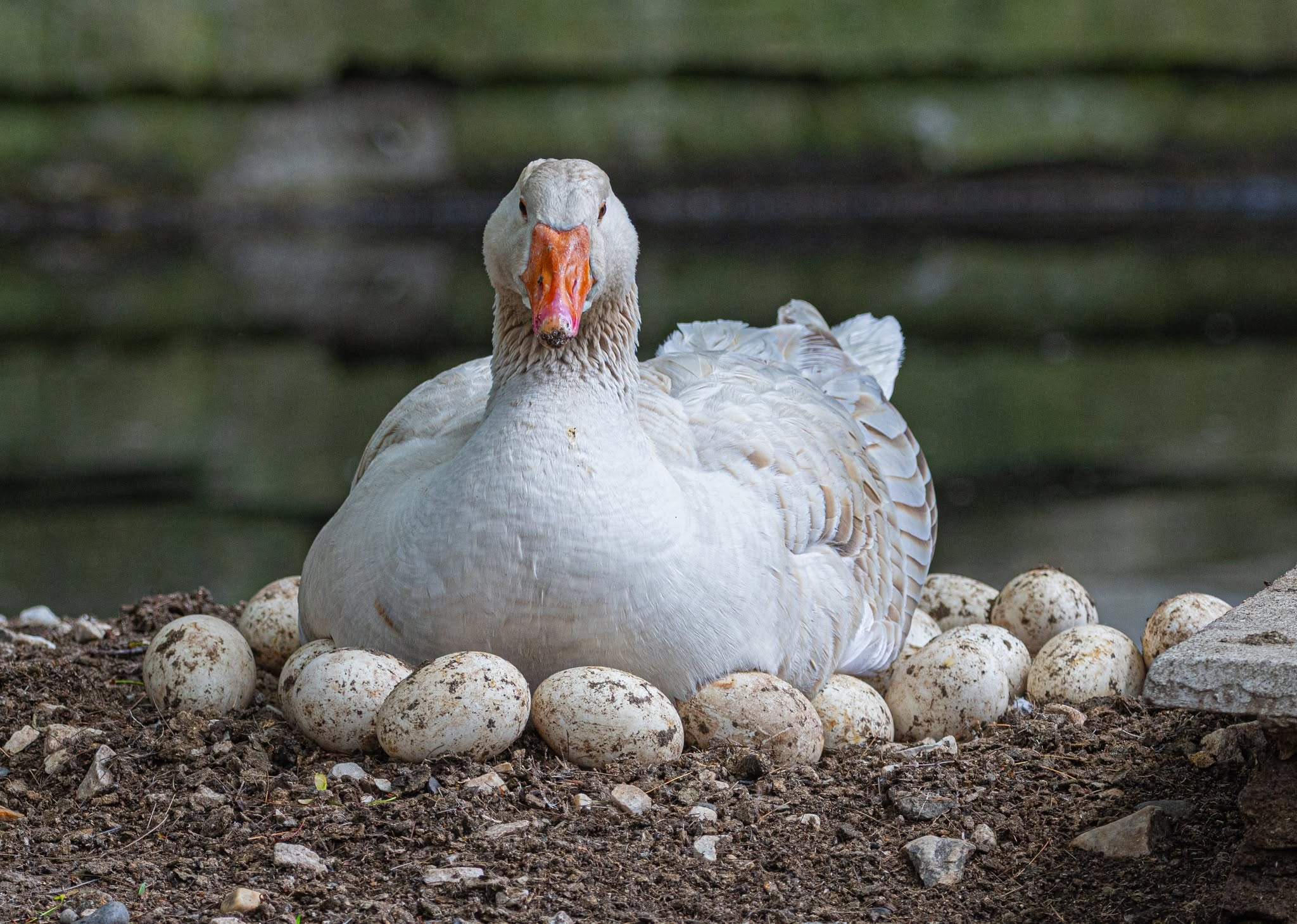
This momma goose was nesting some eggs during one of my visits.
Some ducks and geese, like this Ebden Goose giving me a rather stern look, do sometimes nest together and even raise each other’s eggs. In fact, it is not uncommon for geese and ducks to either lay eggs in close proximity to each other’s nests or sometimes they lay their eggs in the nests of other ducks or geese, also known as brood amalgamation.
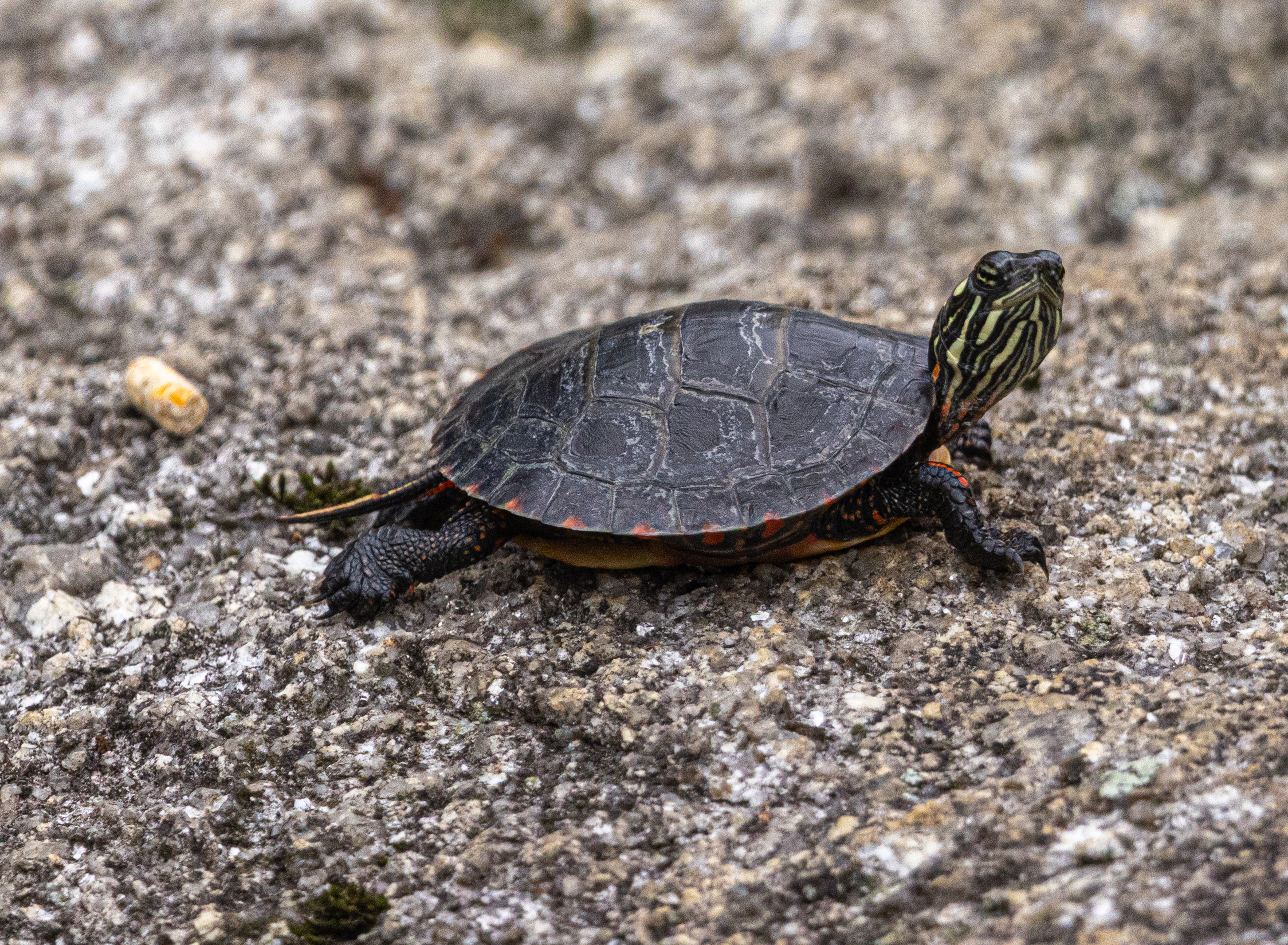
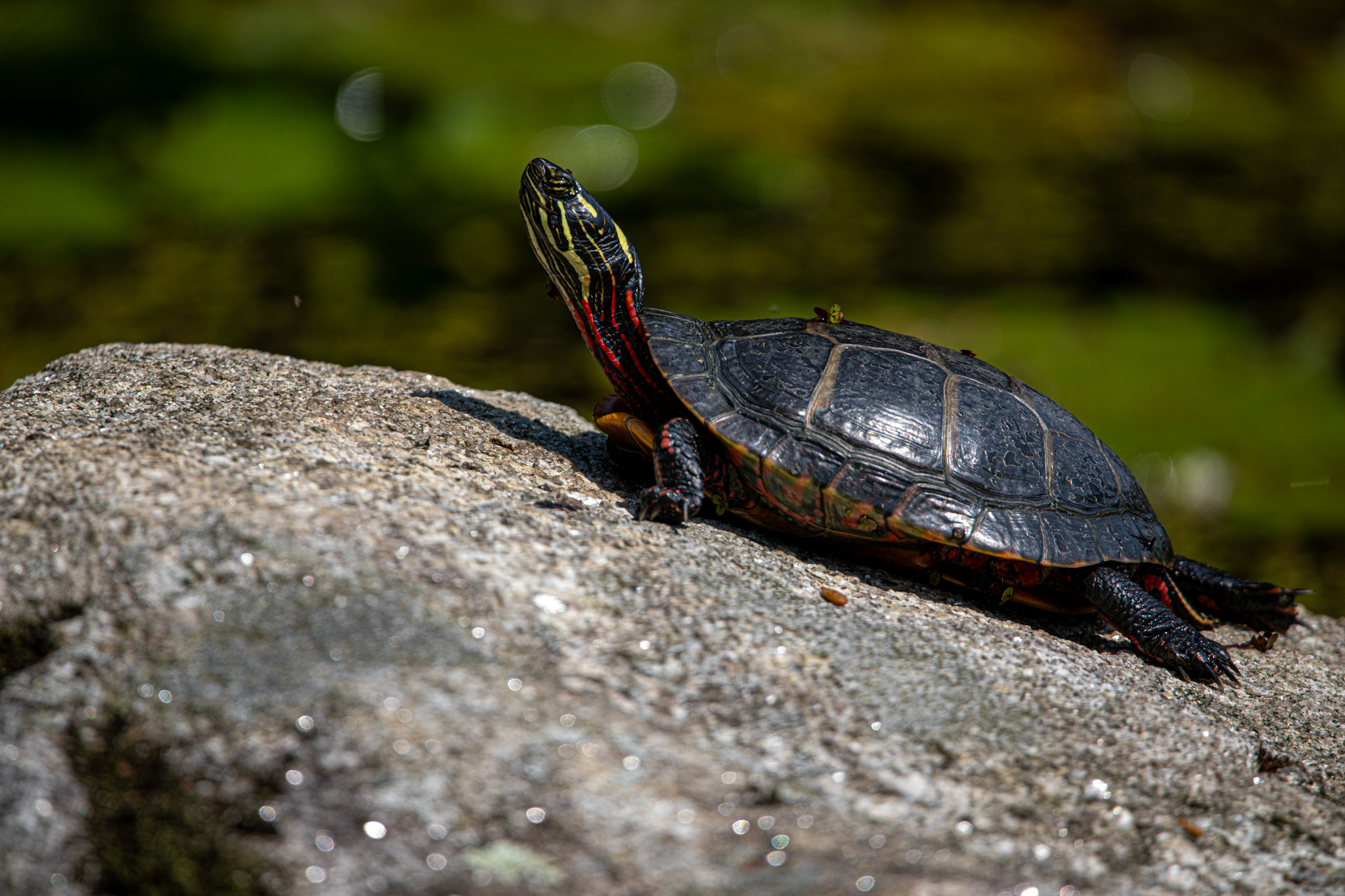
Turtles are also abundant at the park.
But, I took my favorite photo from there a few years ago. I encountered this fox, who I dubbed “Red”, while they were hunting.
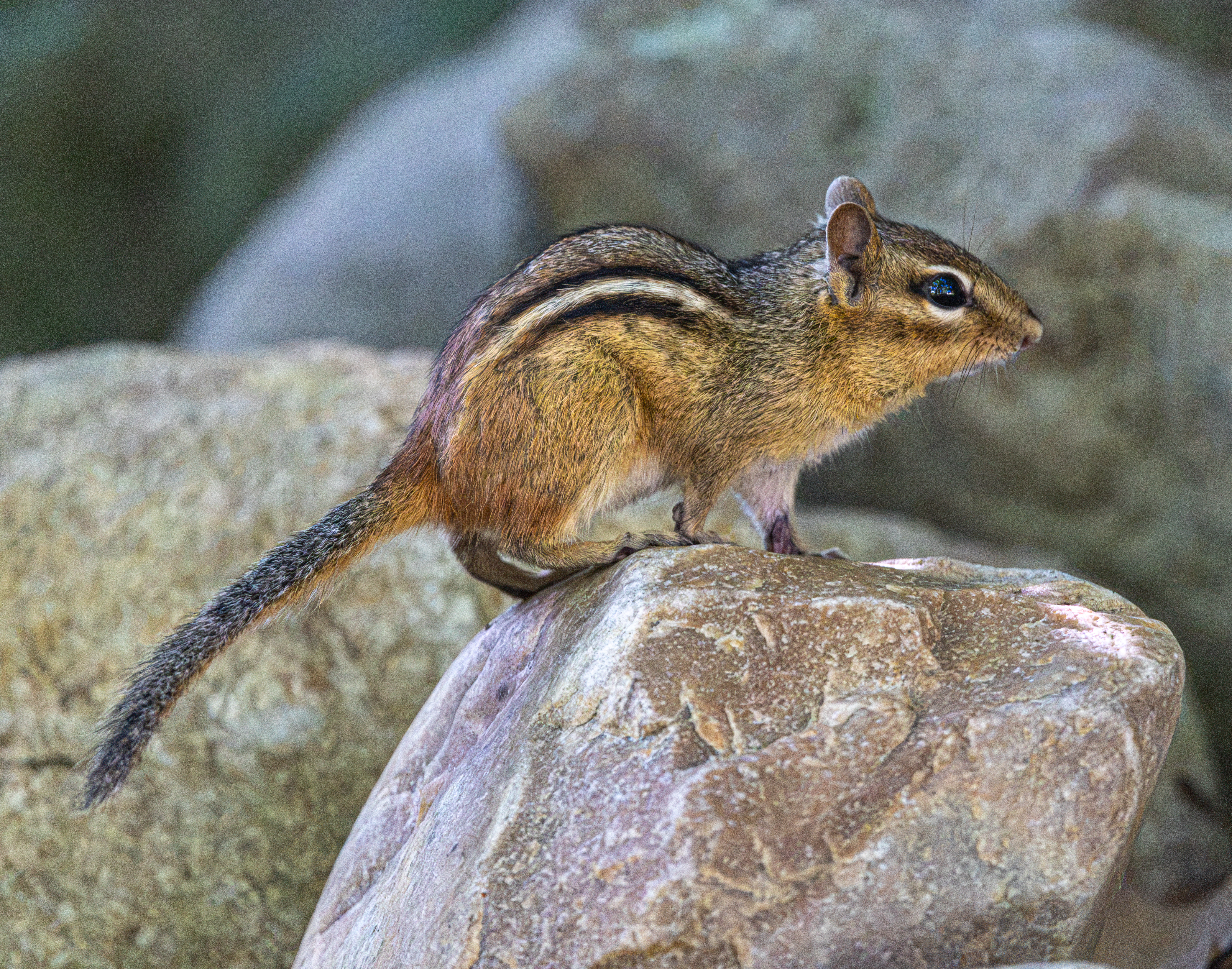
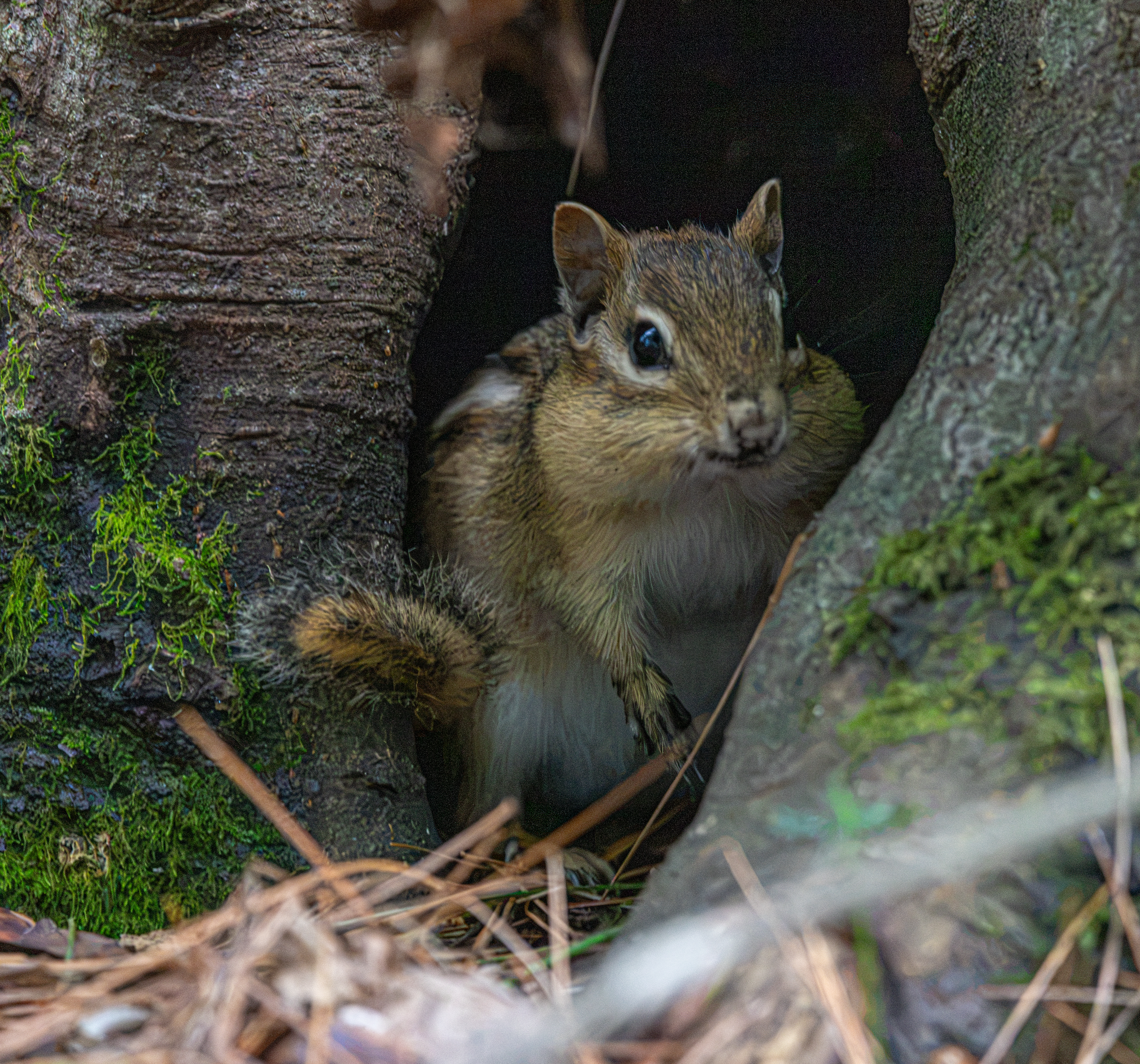
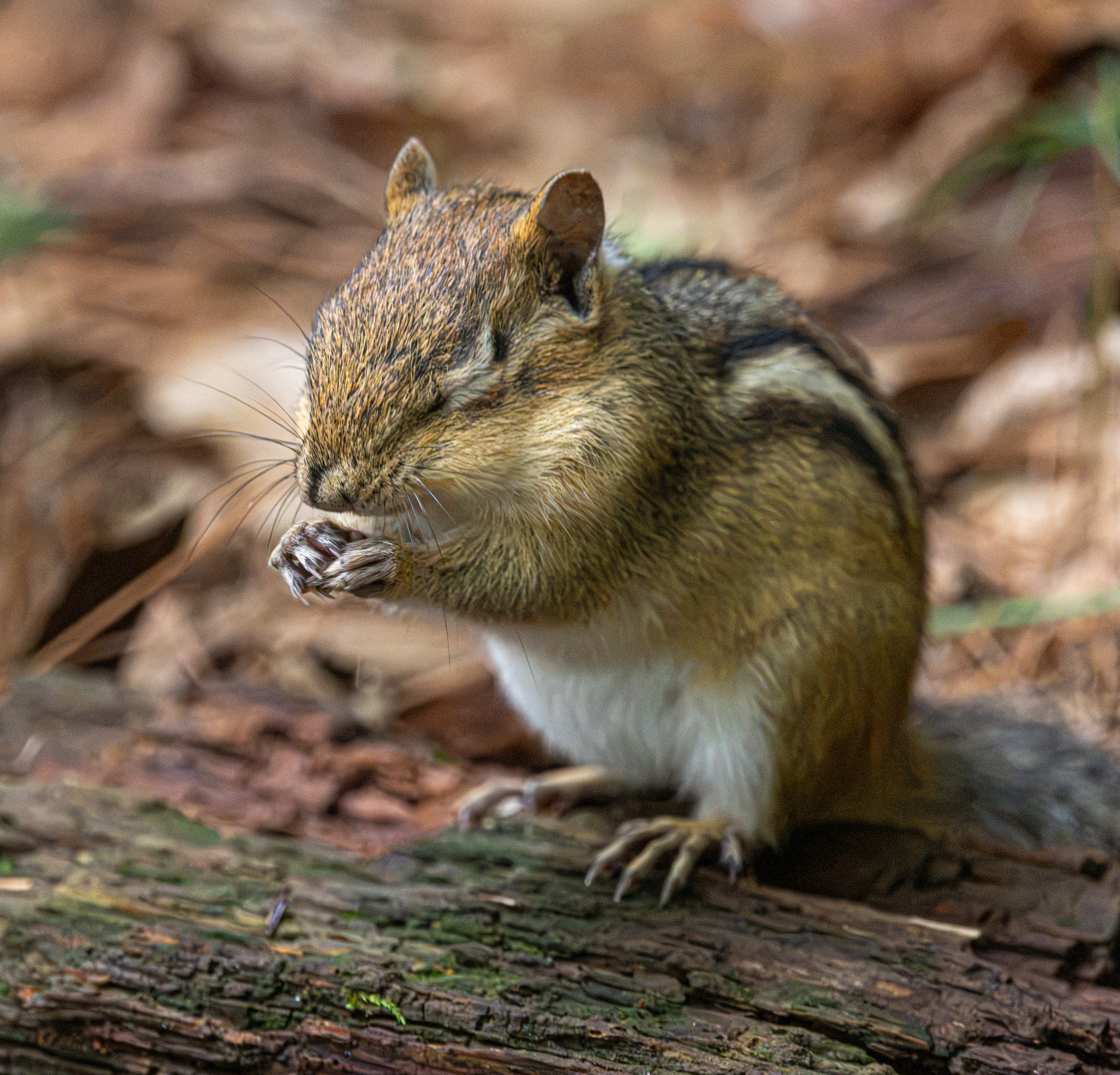
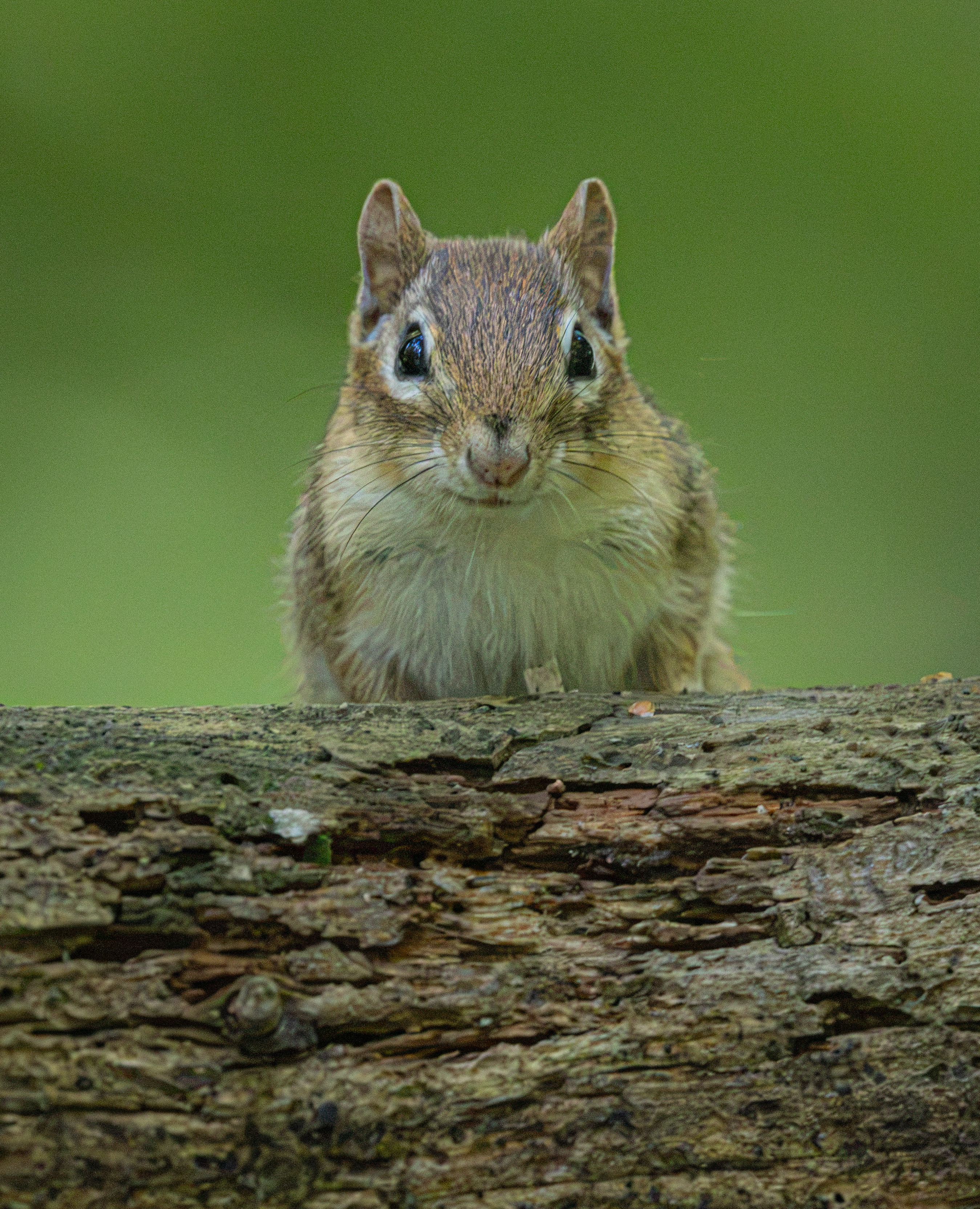
Stanley also has a lot of chipmunks.
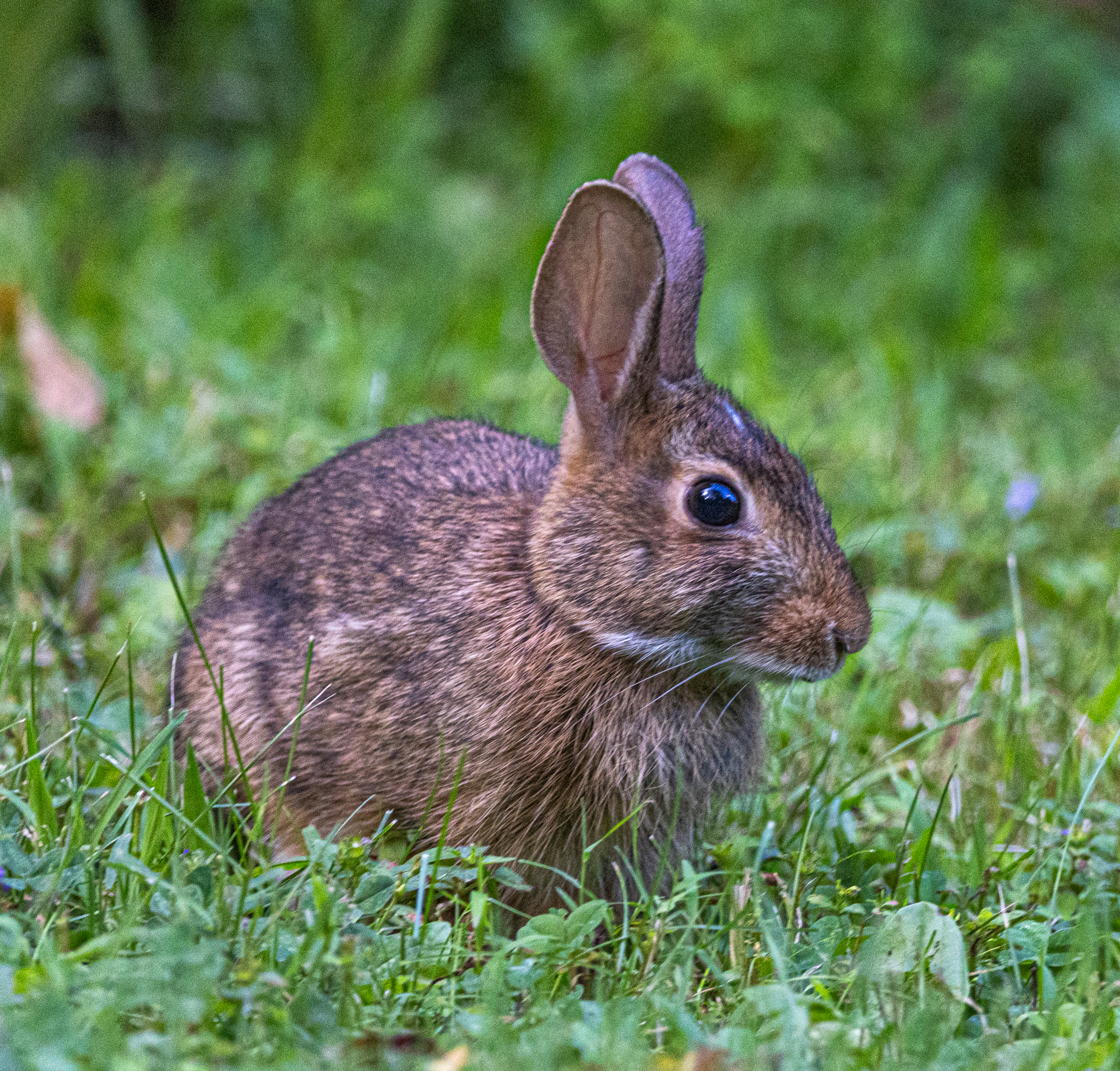
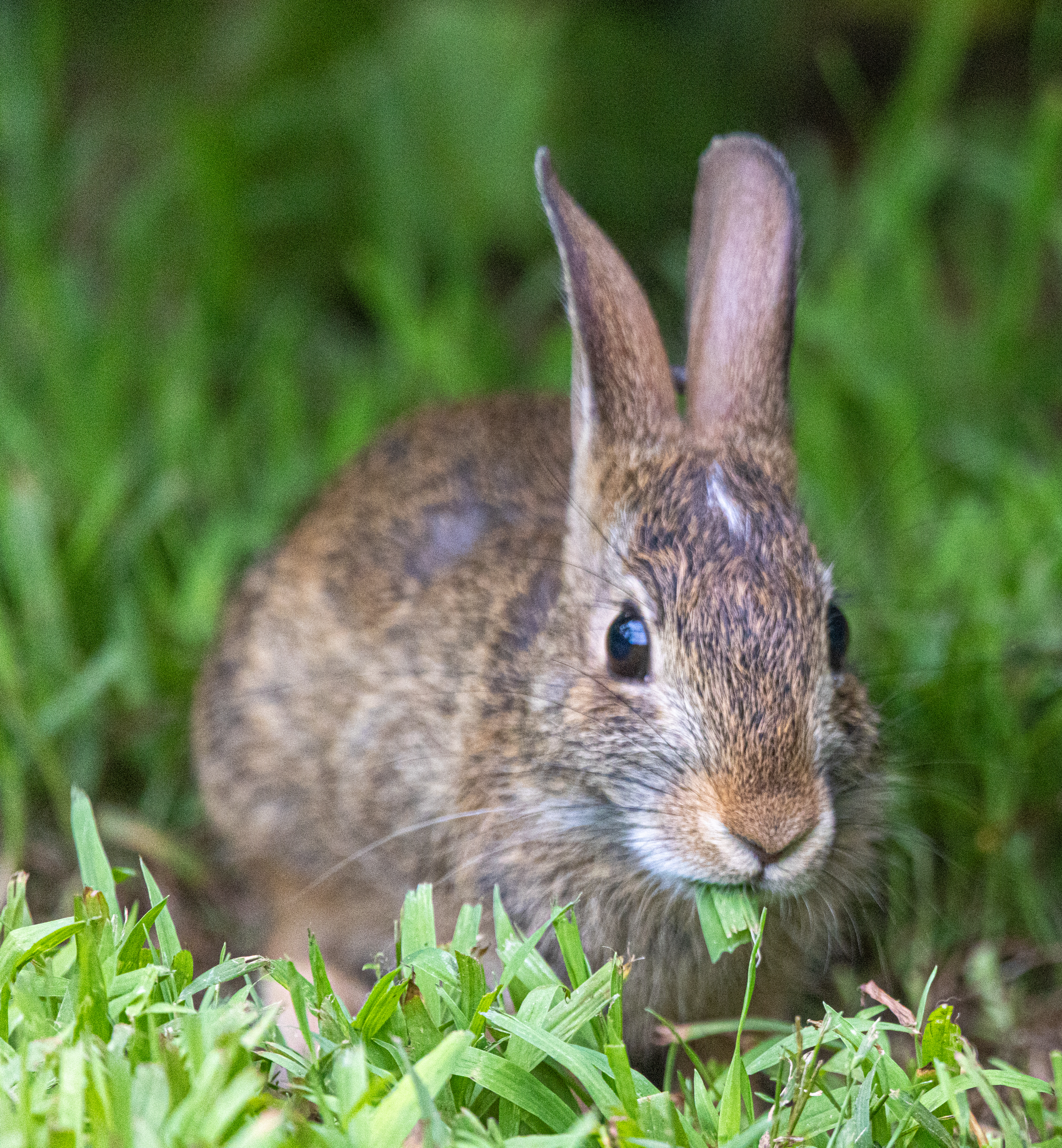
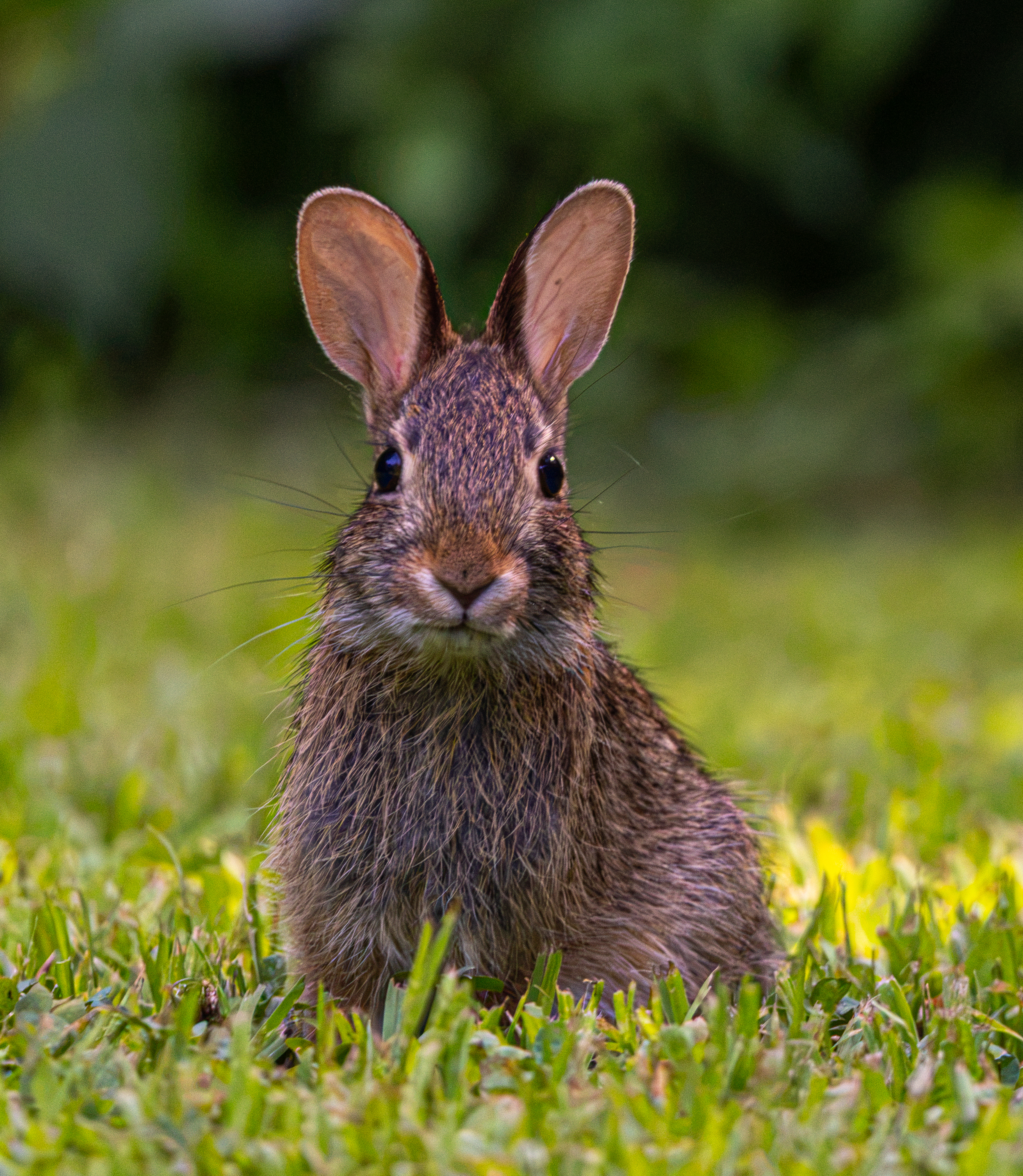
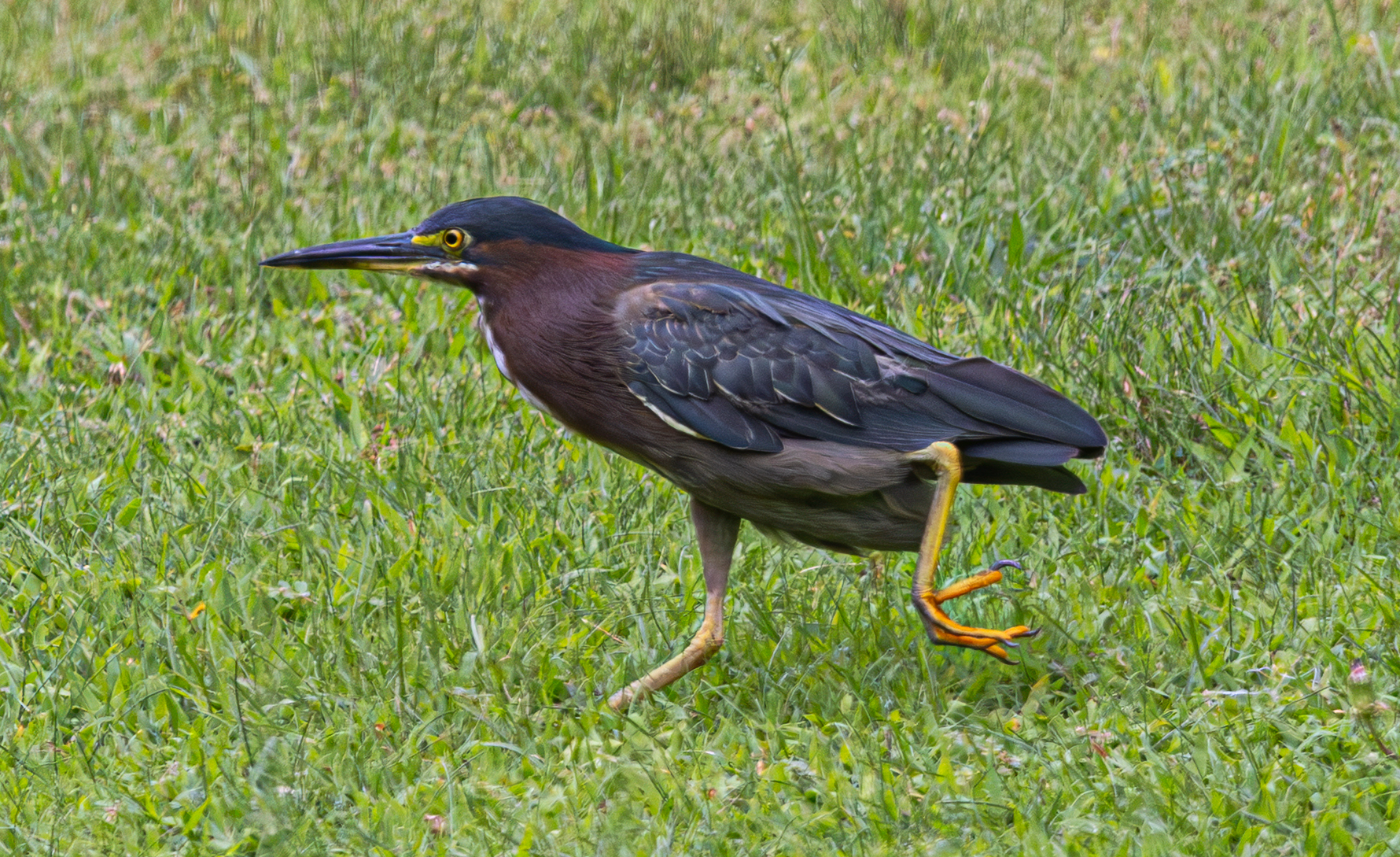
Another park in the Westfield area, technically the neighboring town of Agawam, that I like to frequent is Robinson State Park. I have been able to photograph these rabbits and a real gem; a Green Heron. While Great Blue Herons are common to the area, at least to the places I visit, Green Herons have always more elusive for me. So, when I got the opportunity to photograph this one, I made sure to get a photo of it!
You may see baby cottontails, called kits, with a small white spot on their forehead often called a “milk spot.” This is a common trait among healthy kits. The mark usually goes away as they grow into adults, though some rabbits keep it into adulthood. White spots can also be a sign of disease or infection or some other condition in older rabbits, although they often appear in groups when a rabbit has these conditions.
Another one of my new favorite places to visit is the local Mass Audubon in Easthampton, MA (aka Arcadia). Over the years, I’ve photographed deer, a falcon and a variety of critters. But, during my most recent visits, I have seen chipmunks, a deer and a juvenile Yellow-bellied Sapsucker.
Sapsuckers, which feed on tree sap and insects, are known to girdle trees by drilling rings of holes, which can injure or kill the tree.
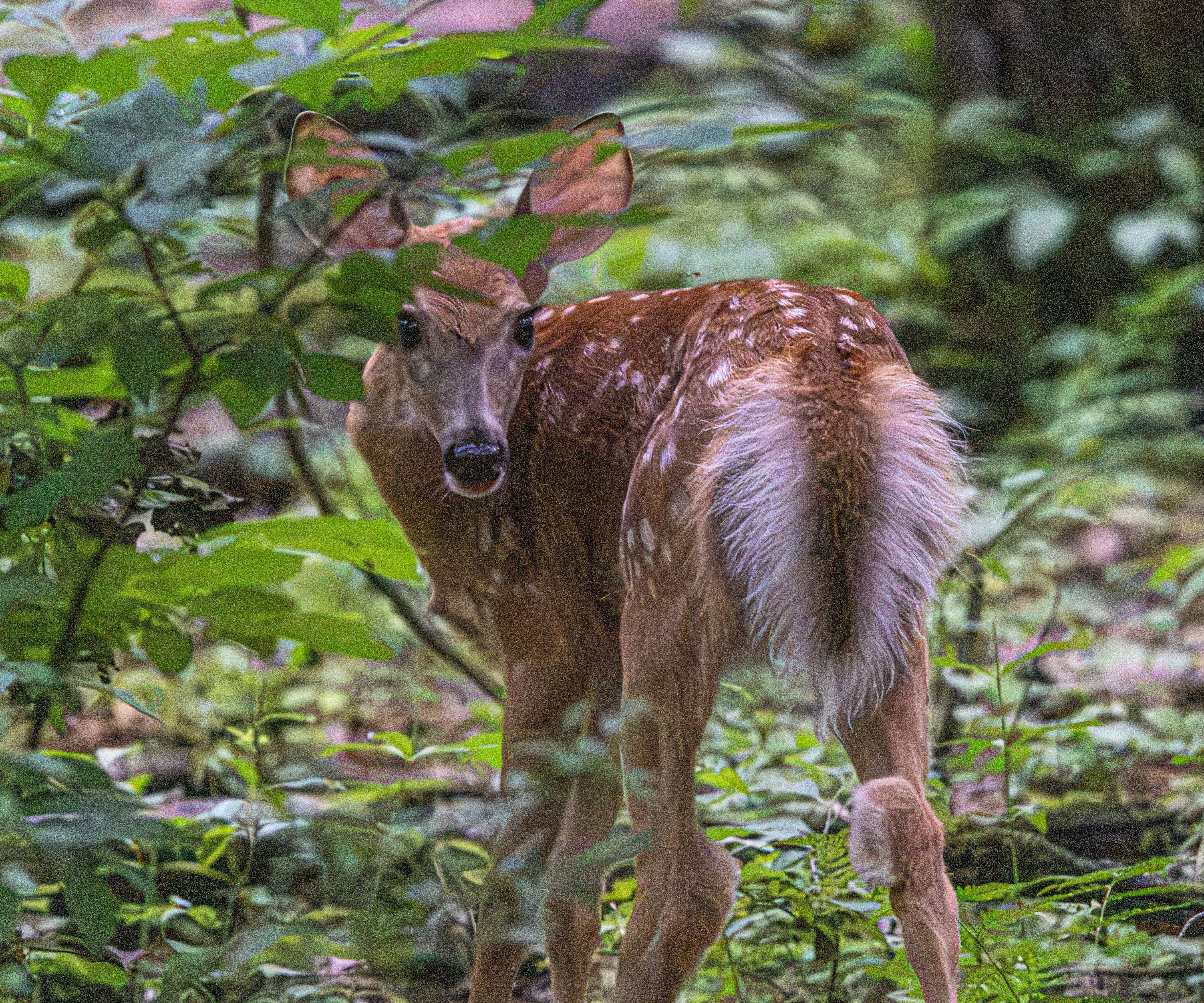
I photographed this fawn during a recent a visit. Don’t worry. Mom was nearby and very eager to get her little one moving.
But, mostly, I have seen chipmunks at Arcadia. Lots and lots of chipmunks.
I’m sure I’ll be posting more photos from these parks in the future, especially since I’ve heard and seen lots of wildlife when I didn’t have my camera with me.
I do have lots more photos of destinations I’ve visited. I just haven’t had much free time to edit and post them. Hopefully, I’ll have the time to post new photos of my travels!
There have been incredible celebrations and memorials throughout this year all of New England in celebration of the country’s 250th anniversary. And the sidewalk art in Greenfield, MA, is another example of how art can be used to be celebrate our country’s independence.
The ten murals, which are painted on the sidewalk rather than walls, celebrated a different aspect of our independence.
While all of the murals are located in or near Greenfield Center, you will have to drive to a few of them. I am listing them as they appear on the website. But, I didn’t photograph them in this order. Some of the addresses are approximations since some of the locations, like a cemetery, don’t have an actual address. Also, some of the locations are near certain areas, like the intersection of Meridien and Deerfield St. So, it’s important for you, or preferably a passenger, to look at the sidewalk while driving to some of these locations.
Since most of the descriptions use the artist’s own descriptions of the works of art, I copy and pasted the descriptions from the website as I wanted to represent the artists’ descriptions in their own words. Plus, it made it easier for me. So, it was a win-win!
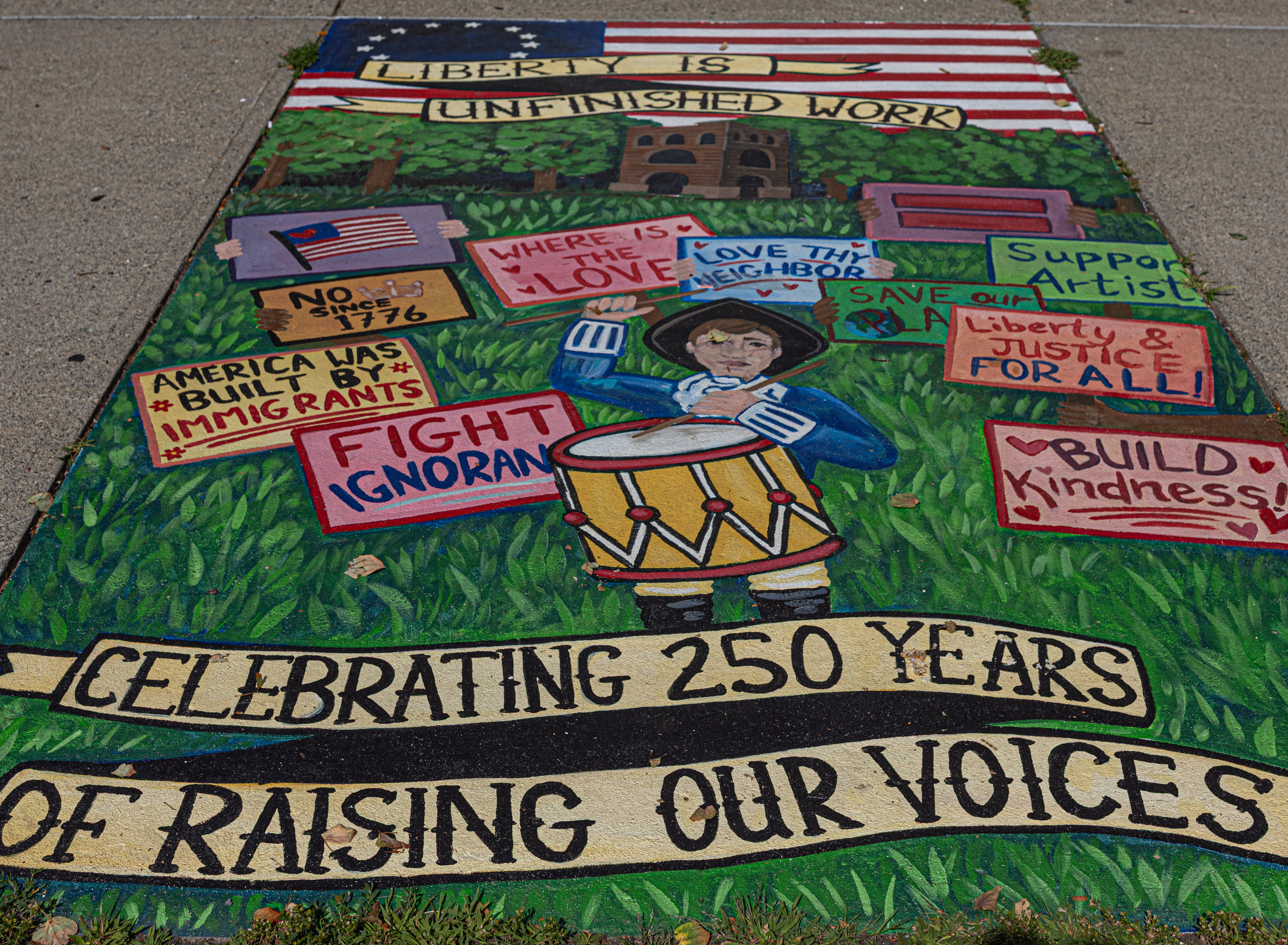
“Liberty is Unfinished Work” – City Hall, 14 Court Square by Danielle Lucier
Sometimes photography can seem simple. Just point, adjust settings, sometimes repeatedly, and click. However, sometimes it’s not so easy or straightforward. Since this mural was painted vertically on a sidewalk and it was difficult to read all the lettering, I actually photographed this mural on a step stool. By photographing it from a higher angle and looking down, I was able to photograph it with all of the worlds visible and legible. I did have to duck a little so my shadow didn’t appear though.
Created for the 250th anniversary of the American Revolution, “Liberty is Unfinished Work” reflects on the ideals that inspired our nation’s founding, while also acknowledging that liberty is an ongoing project that we work towards every day. My piece depicts a Revolutionary War drummer boy leading a group of present-day marchers with modern signs, connecting the spirit of civic action that shaped the American Revolution with the ways people continue to advocate for their rights, communities, and futures. By putting the drummer with modern day marchers, I also wanted to give viewers a way to relate their work back to history- and to feel like a participant in an ongoing story rather than a distant observer of a historical event.
When designing this piece, I thought about the Revolution not only as a defining historical event, but also as the beginning of a conversation about liberty, representation, and self government. The American Revolution was driven by ordinary people who believed they had the right to make their voices heard. So instead of portraying a moment in the past, I wanted to explore things like who had a voice, who was included, and how those people worked together to create change- and create a piece that felt relatable as a person existing 250 years later.
As an artist reflecting on the 250th, I felt both contemplative and celebratory. It gave me this beautiful opportunity to honor courage, aspirations, and sacrifices that shaped our nation- while also recognizing that liberty isn’t a finished achievement. This anniversary serves as a reminder that each generation inherits the responsibility to expand, protect, and redefine freedom in its own time. This mural was made to celebrate the continuing work and the people who carry it forward.
Visual description: a tall rectangular sidewalk square with banners at the top and bottom. The banners say “Liberty is Unfinished work. Celebrating 250 years of raising our voices”. In between the banners is a green hilly landscape with Poet’s Seat Tower at the top. A revolutionary drummer boy leads a crowd of modern-day protesters with bright, colorful signs standing up for what they believe in.
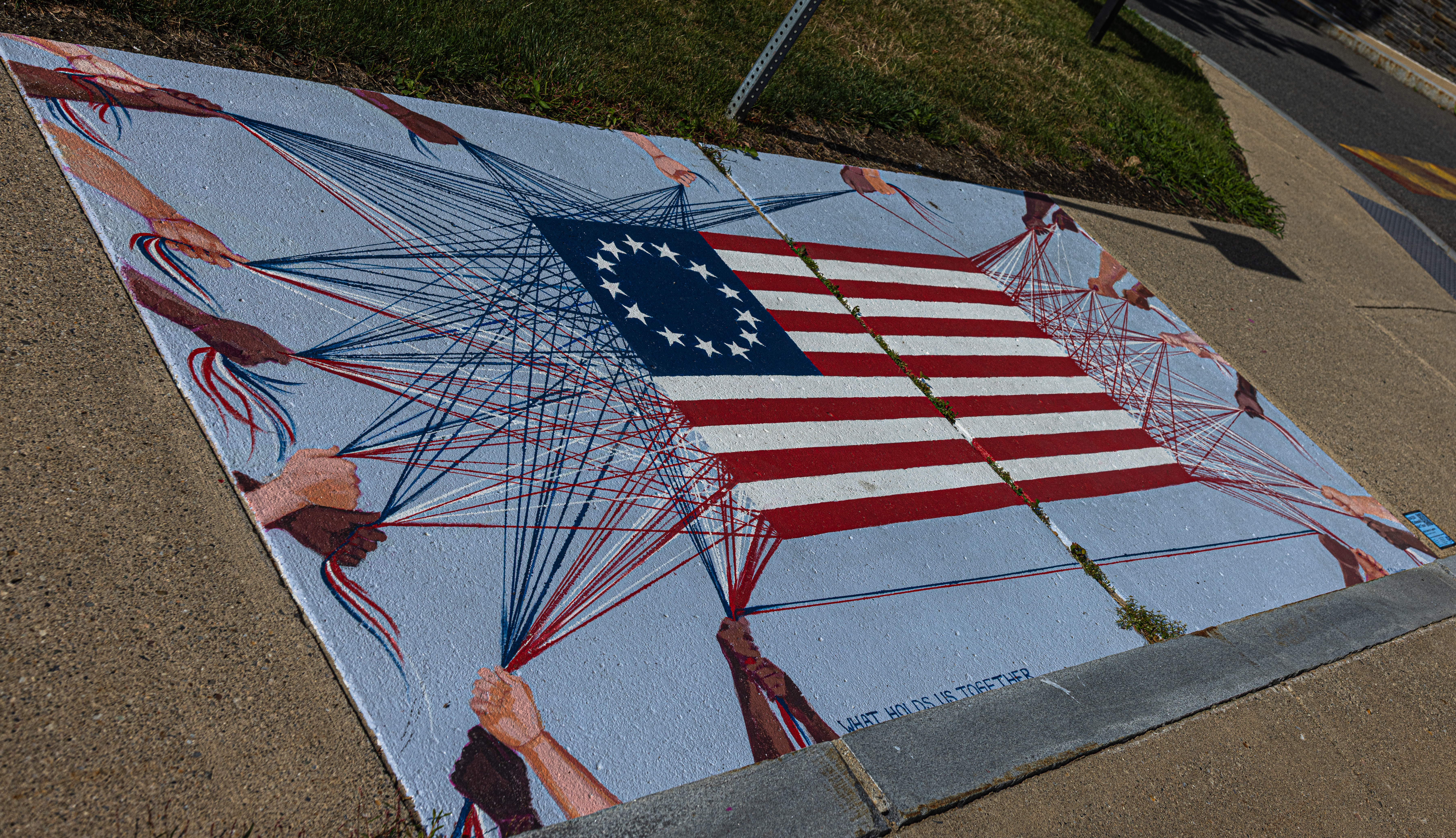
“What Holds Us Together” – Transit Station, 11 Olive St by Cameron Schmitz
Painted in honor of the 250th anniversary of the American Revolution, my mural, “What Holds Us Together”, celebrates the diverse people whose contributions, sacrifices, and shared efforts have been essential in shaping our nation from its founding to present day.
Suspended in the center of the mural, the original thirteen-star American flag appears to emerge from a web of intersecting threads, its fibers extending outward, held together by the hands of many different individuals. Like a woven tapestry, overlapping strands of red, white, and blue extend outwards, interweaving and converging into an intricate network of connection. The diverse hands which collectively hold the flag’s fibers together, represent people of different backgrounds, cultures, ethnicities, and generations, each contributing to the ongoing work of strengthening the fabric of our nation.
My inspiration for this mural is rooted in an often-overlooked truth about the American Revolution itself. Traditional depictions of the Revolutionary era have frequently centered on white colonial figures, leaving many other contributing members largely absent. Yet the struggle for independence was shaped by people from a wide range of backgrounds. African American men, both free and enslaved, served as soldiers, sailors, laborers, messengers, spies, and support personnel throughout the war. African American women contributed as caregivers, laborers, messengers, camp followers, and community builders whose efforts helped sustain both military and civilian life during the Revolution.
Indigenous nations also played significant and complex roles throughout the Revolution. Native soldiers, scouts, diplomats, guides, and leaders influenced military campaigns, intelligence networks, and political alliances, while Indigenous women often held important roles in diplomacy, decision-making, and sustaining their communities through a time of profound upheaval. The choices made by Native nations shaped both the course of the war and the future of the continent.
The story of American independence is far more diverse, interconnected, and nuanced than it has often been portrayed. By depicting hands of different skin tones collaboratively supporting the flag, this mural recognizes the countless individuals whose labor, sacrifice, and participation have been vital in weaving our nation into being. It serves as a reminder that diversity is not a recent addition to the American story, but is in fact, an essential part of it. The strength of our nation has never rested in a single people, culture, or perspective, but rather, is the result of contributions of many individuals whose lives and efforts have become interwoven across generations.
The hands of this mural do not simply hold the flag together—but are also being held together in unison as its maker. Some hands overlap, some press intimately against one another, and others work side-by-side, symbolizing the trust, collaboration, and shared responsibility that is necessary in sustaining our democracy.
Two hundred and fifty years after the Revolution, the ideals of liberty, self-determination, and democracy remain unfinished work. Like the threads of the flag itself, these ideals must be continually strengthened and held with care by each generation.
“What Holds Us Together” invites viewers to recognize the many people who have been—and continue to be—an essential part of the fabric of our nation, and to reflect on the relationships, care, and collective effort that binds us together.
The strength of our nation lies in the spirit of cooperation that made the American Revolution possible, and in the many hands that continue to work together to hold, weave, and sustain our democracy and our shared future.
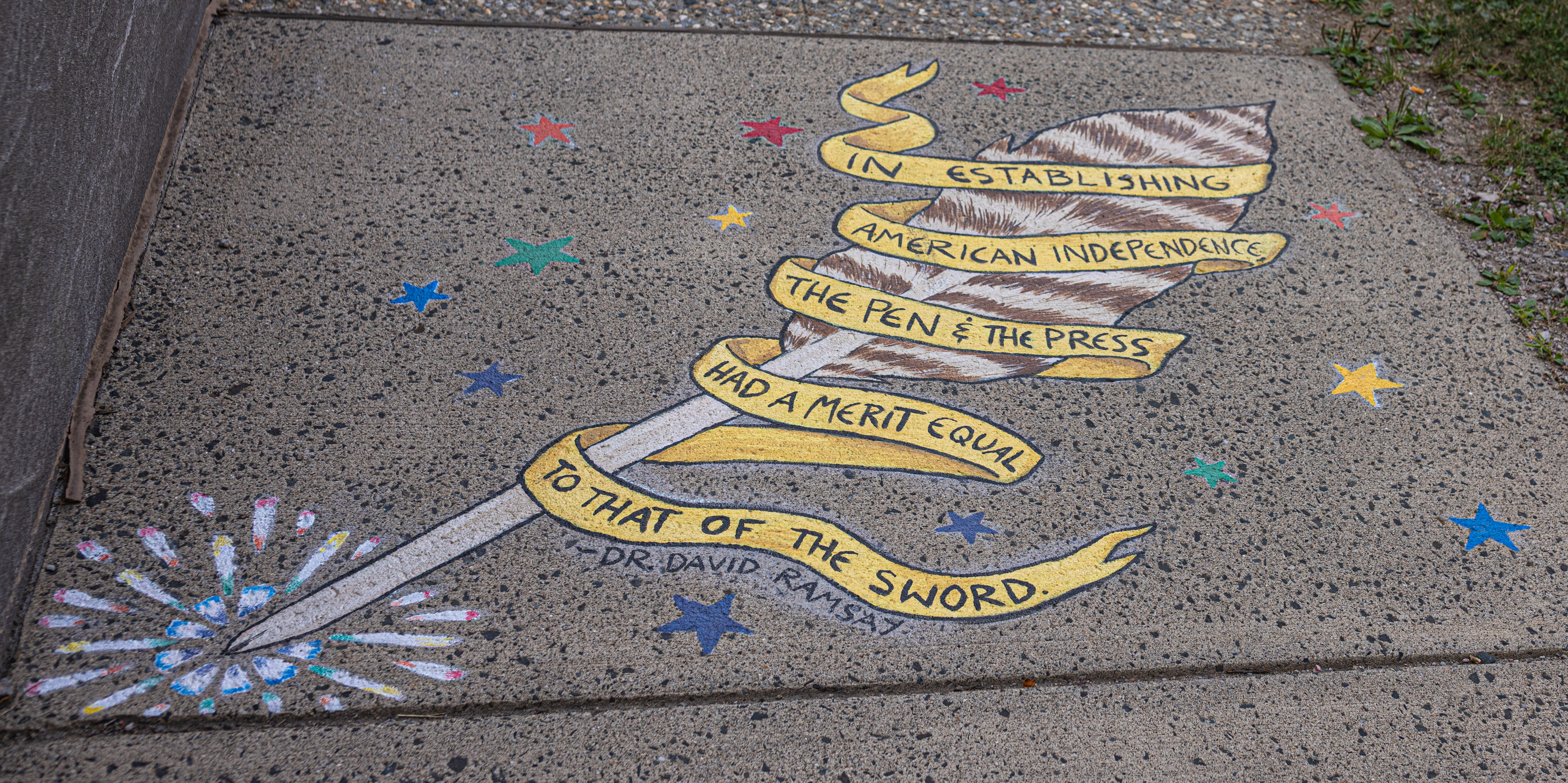
“The Pen and the Press” – Justice Center, 43 Hope St by Althea Keaton
“In establishing American independence, the pen and the press had a merit equal to that of the sword.” – Dr. David Ramsay
Dr. David Ramsay was one of the earliest major historians of the American Revolution, as well as a politician and author. He served as a field surgeon during the American Revolutionary War until he was captured by the British army and imprisoned for a year. He wrote many well-respected volumes on American history, both more broadly and specifically about the Revolution. This quote of his reflects his direct experience of the Revolution, both as a writer and as someone who served on the battlefield.
During the U.S. Revolution, newspapers played an essential part in shaping public opinion. At that time, newspapers were the most effective means of mass communication. They spread not only the news, but political ideas, propaganda, foreign dispatches, official documents, and more. Massachusetts in particular was a hotbed for newspapers, with Boston establishing the United States’ first regular newspaper, the Boston News-Letter. By the time of the Revolution, there were numerous Massachusetts papers vying to influence public opinion, the majority of them Patriot papers advocating for independence.
A revolution is not won only with weapons, but with words and ideas. Although the quote this mural is structured around specifically references the American Revolution, it is relevant beyond that corner of history. Freedom of speech and freedom of the press – two of our First Amendment rights – are essential to maintaining a functioning democracy. We may no longer typically exercise these rights via quill or letterpress, but they are still vital.
The barred turkey quill pictured in this mural is a literal depiction of the kind of writing implement commonly used in the 1700s, but it is also a symbol of ‘the pen’ as a concept. Today’s ‘pen’ may be a stylus, a smartphone, or any number of devices. The specific implements may have changed, but they are still potent tools, and they can reach farther than anyone could have possibly imagined in 1776.
Visual description: A barred turkey quill is set at a diagonal, as though writing. A yellow ribbon winds around it bearing the quote, “In establishing American independence, the pen and the press had a merit equal to that of the sword.” – Dr. David Ramsay. At the tip of the quill, there is a firework-like burst. Thirteen stars sparkle around the quill in red, orange, yellow, green, blue, and purple.
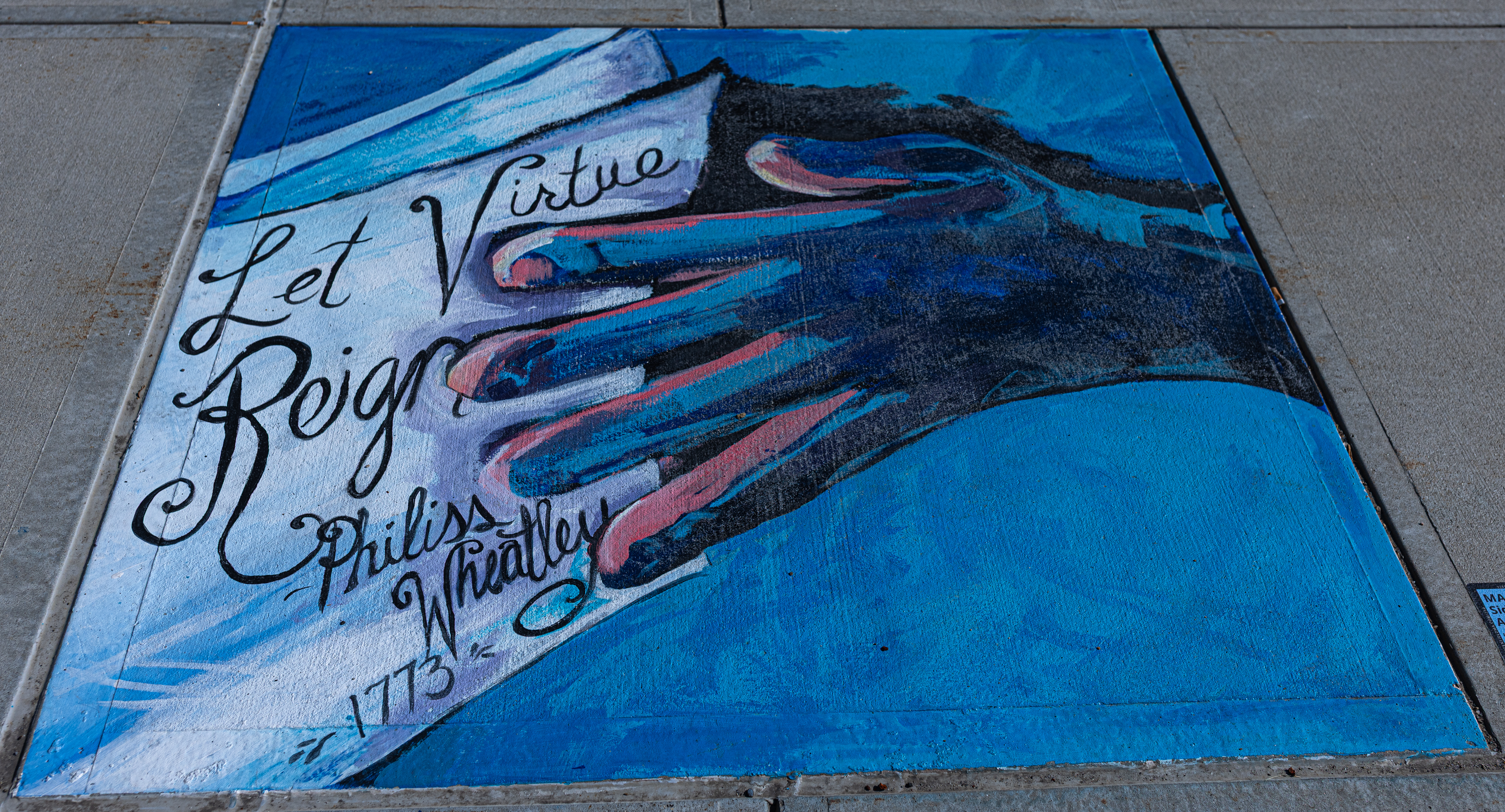
“Let Virtue Reign” – Greenfield Library, 412 Main St by Youme Nguyen Ly
Let Virtue Reign is painted in front of the Greenfield Library. A dark blue hand holds a stack of papers, the topmost of which reads, “Let Virtue Reign 1773 Phillis Wheatley”.
The hand represents Elizabeth Freeman, the first African American woman to successfully file a lawsuit for freedom in the state of Massachusetts, less than a year after the adoption of the Massachusetts State Constitution. Her case would ultimately lead Massachusetts to outlaw slavery.
Phillis Wheatley was one of the best-known poets in pre-19th century America. Born in West Africa in 1753, enslaved as a child in Massachusetts. She learned to read and write and was emancipated in 1773, the year her collection “Poems on Various Subjects, Religious and Moral”, was published. She wrote in support of anti-slavery movements. “Ode to Dartmouth”, the quoted poem, was written to encourage Dartmouth’s abolitionist work.
This painting celebrates two Black women who were actively working in Massachusetts and beyond, 250 years ago to make the future better for everyone.
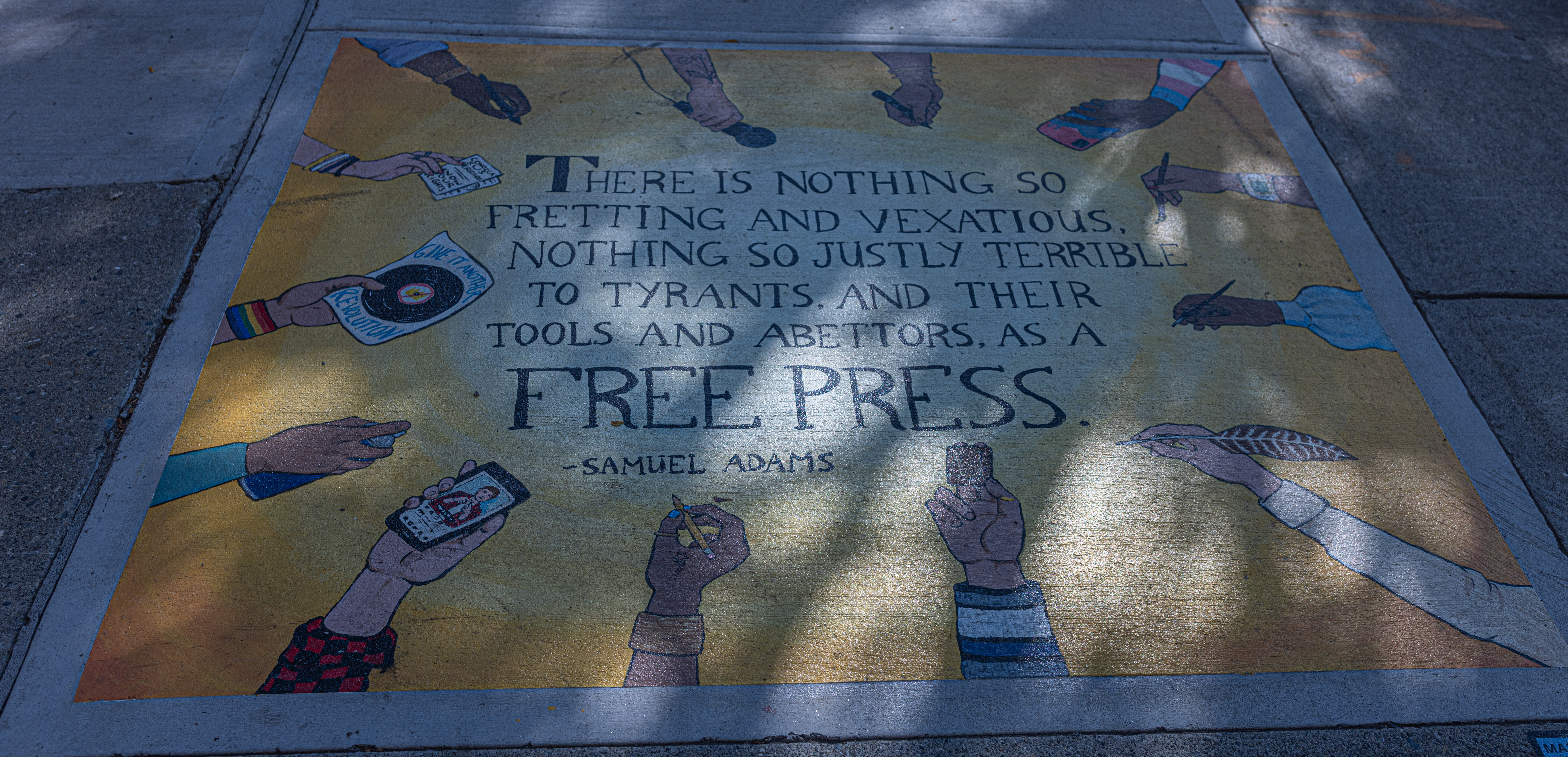
“Free Press” – Main St & Sears Ave by Althea Harris
“There is nothing so fretting and vexatious, nothing so justly TERRIBLE to tyrants, and their tools and abettors, as a FREE PRESS.” – Samuel Adams (from his statement on freedom of the press in the Boston Gazette, March 14, 1768)
Founding Father, signatory of the Declaration of Independence, and colonial Massachusetts politician Samuel Adams was, as you may have guessed from this quote, a strong proponent of the role of a free press in ensuring freedom from tyranny. Adams actively used the press as a tool to advocate for colonial rights and independence, criticizing British rule and promoting his political ideals through essays and letters in colonial newspapers, especially the Boston Gazette. With its weekly publication and its circulation of approximately 2,000, this paper had a significant reach for the time period. By the 1770s, Massachusetts had numerous newspapers – most of them Patriot-led – and Adams was far from the only person to take advantage of this medium of mass-communication and its ability to push the tide of public opinion in favor of revolution.
The appearance of the press has changed significantly over the past 250 years, but the importance of a free press has not declined. A newspaper with a circulation of 2,000 has much less clout in the U.S. of 2026 than it did in the pre-revolution colonies, but the dissemination of news, political thoughts, and opinions is still an essential (and Constitutionally protected) right. This mural is a celebration of a free and active press as it has evolved over the years, and it is also a call for the viewer to support freedom of the press in its many forms.
For this mural, I felt it important to celebrate not only a revolutionary past but also the revolutionary present and future. Independence is not something that was won once in 1776 and need never be fought for again, but something we as a country continue to strive for and evolve towards. Rights have been hard-won, some only recently won, and some even more recently revoked. Freedom of the press is encoded in our Bill of Rights, and true freedom of the press cannot belong in only the hands of a few. It needs to come in many forms and from many people.
Free press is still a potent tool for shaping public opinion as well as for spreading journalistic news. Think pieces still come in newspapers and magazines, but they are also found in social media feeds, pinned on bulletin boards, spoken or sung aloud at open mic events. In times when rights are being infringed upon, find people who are impacted and listen to their voices, read their words. Seek out multiple journalistic sources. Fact check and dig deep rather than trusting AI summaries. Use your own voice to speak out against the silencing of journalists. And don’t be afraid to pick up a pen, paintbrush, or microphone and speak your own truth.
We need all hands on deck to keep this ship moving forward.
Visual description: Thirteen hands reach in from the edges of the sidewalk panel holding various implements of communication from the 1800s to today, including: a quill, a paintbrush, a letterpress block, a zine, a microphone, a smartphone, and more. They are set against a bright yellow background, which fades into an off-white glow in the middle to emphasize the quote the hands surround. “There is nothing so fretting and vexatious, nothing so justly terrible to tyrants, and their tools and abettors, as a free press.” – Samuel Adams
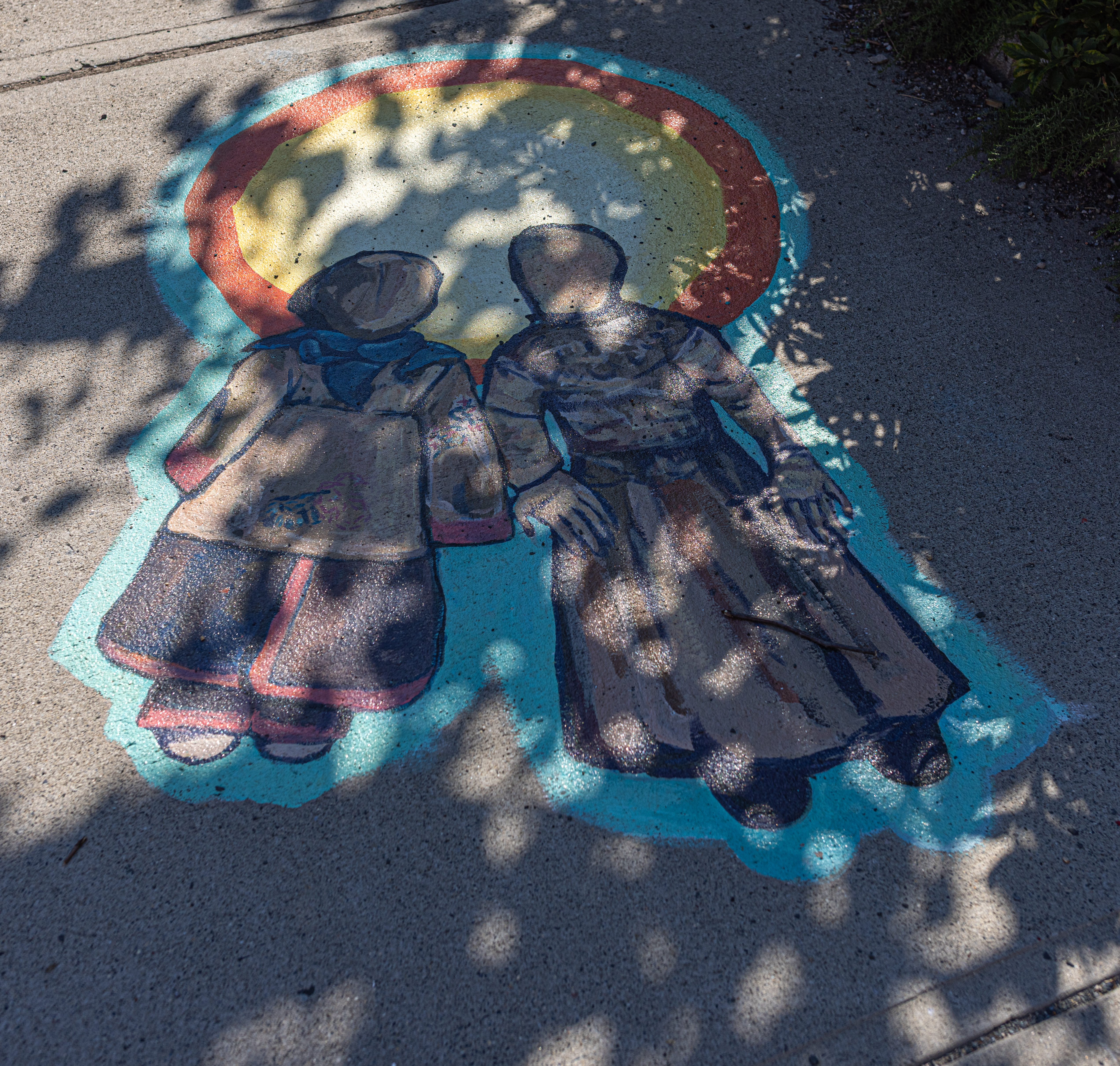
“Old Friends” – Fiske Ave Pocket Park by Youme Nguyen Ly
Old Friends depicts two dolls with a shared sun radiating behind them and a bright outline of sky. On the left a traditional corn husk amsute’kan made in New England.
A traditional story tells that Corn Spirit created the cornhusk amsute’kan for children to enjoy and to watch over them. Originally, she had a face, when she became distracted by her own beauty, her face was taken away to remind us not to focus on our own looks so much that we forget to care for others. On the right side, one of the oldest surviving ragdolls in this country, named Bangwell Putt. She belonged to Clarissa Field of Northfield, Massachusetts. Clarissa was born blind in 1765. The doll’s carefully constructed fingers suggest the importance of touch. In my depiction, the dolls have been friends for over 250 years and carry the respect and gratitude for Indigenous and Non-Indigenous friendships, past, present and future. This piece further serves as a tribute to the importance of children and the essential role of childcare.
“Essential Pieces on the Tapestry of a Revolution” – Historical Society, 43 Church St by Danielle Lucier
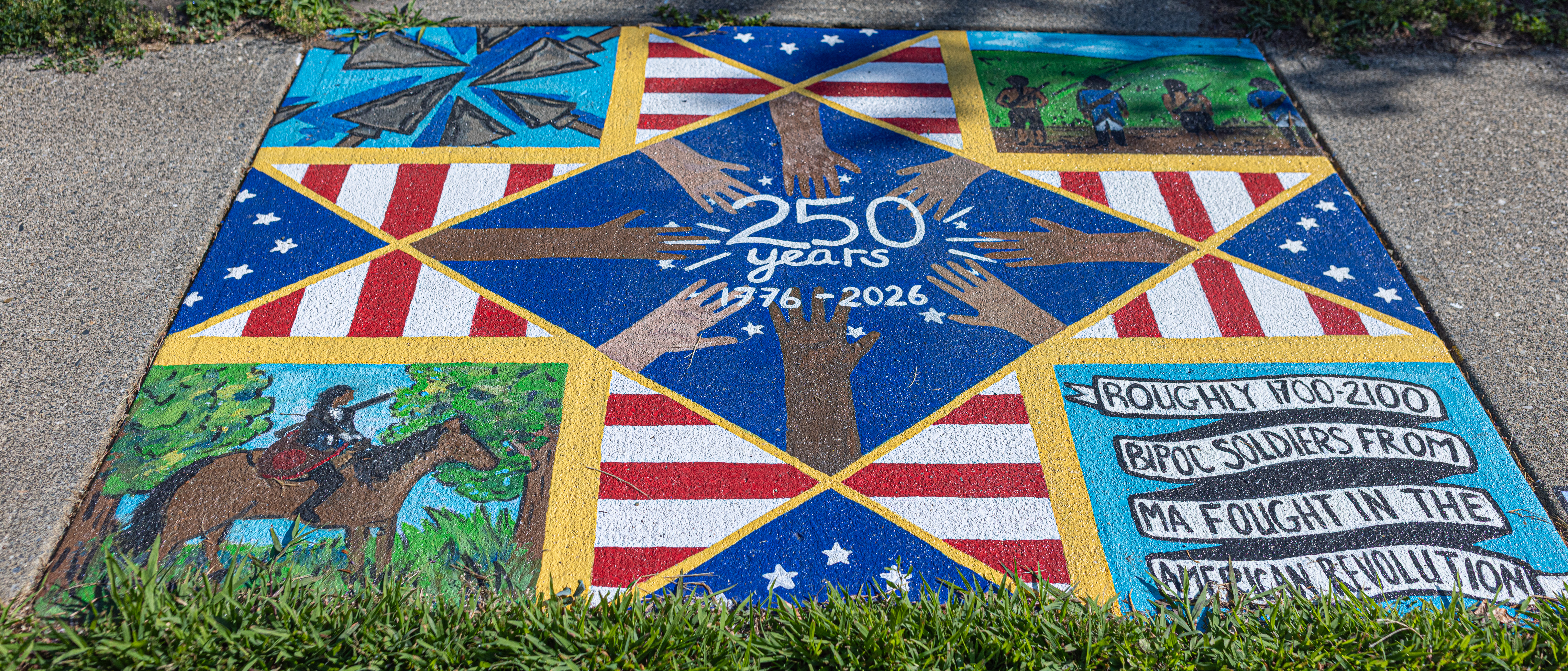
This piece, created within the shape of an American traditional quilt square, is a celebration of the diversity of the American Revolution that often gets overlooked throughout historical representations of the war. This quilt square is built of pieces of the original thirteen-star American Flag, pieced together with imagery representing BIPOC roles in the Revolution- all coming together to form one solid piece of our historical tapestry.
In doing research for this piece, everything I found online was vastly misrepresentative of the actual people who worked together in the American Revolution. Most information available showed Colonial white figures- and mostly men at that. Yet upon deeper research at the Historical Society of Greenfield, I found many books and references referring to BIPOC soldiers, spies, messengers, and laborers (free and enslaved) – all in the same positions as these colonial white men. This sparked something in me that felt like a piece of this historical quilt was missing – and inspired my quilt block design. I wanted to pay honor to these hardworking BIPOC people who fell through the cracks in the history books, who didn’t get the credit and honor they deserved.
I found out that roughly 1700-2100 BIPOC men from Massachusetts served as soldiers and sailors throughout the war- and BIPOCwomen worked to build communities, sew soldiers clothing, serve as caregivers, and when not traveling with the camp – they also helped to hold up life at home taking on their duties and the duties of the men who were off fighting.
“Essential Pieces of the Tapestry of the Revolution” is a piece dedicated to African American and Indigenous soldiers and war contributors. Our history is so much more diverse than representation has ever shown – and having this chance to create a piece that tells more of the real story was a true honor. Work and decisions made by BIPOC war contributors played such a large role in the history of our independence- a history that is so much more multicultural and diverse than history texts have led us to believe. It takes hands from all backgrounds coming together to work for a common cause – to create a successful revolution.
Visual description: this square sidewalk tile is broken up into 9 smaller squares to represent an american traditional quilt block. Pieces of the original 13-star flag, and red and white stripes come together to form a pointed star-like pattern, and imagery of Indigenous and African American soldiers are in opposing corners. The center says “250 years 1776-2026” and has hands of all skin colors reaching towards the center of the piece. A banner in the bottom corner says “roughly 1700-2100 BIPOC soldiers from MA fought in the American Revolution”.
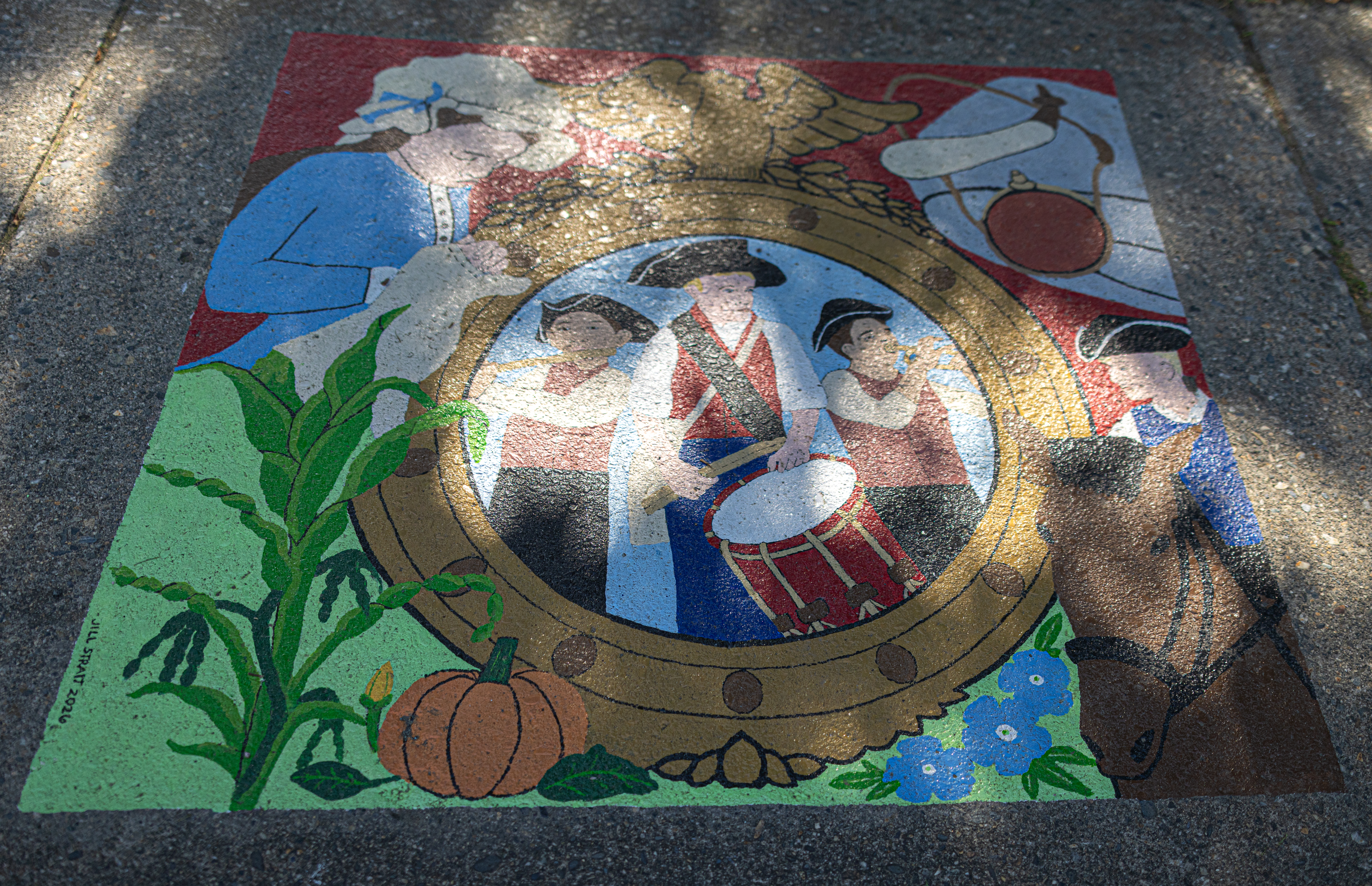
“Roles of Children During the American Revolution” – Federal Street School, 125 Federal St by Jill Strait
This mural depicts the various roles children played during the Revolutionary War, a time when the absence of child labor laws meant young people often set aside their education to assist with adult duties. I especially wanted to highlight musicians, who were often in their teens or younger, so they are featured in the center of the piece playing the bugle, drum and fife. Clockwise from left is a young girl hand-sewing a garment, as children worked on uniforms and helped with mending. They often brought essential supplies where needed, on the top right there is a folded blanket, powder horn and a canteen of water. Below that is a teen on a horse, serving the role as messenger. And lastly, farming was a role that kept children occupied, represented by the “three sisters”—squash, corn, and beans—in the lower left corner.
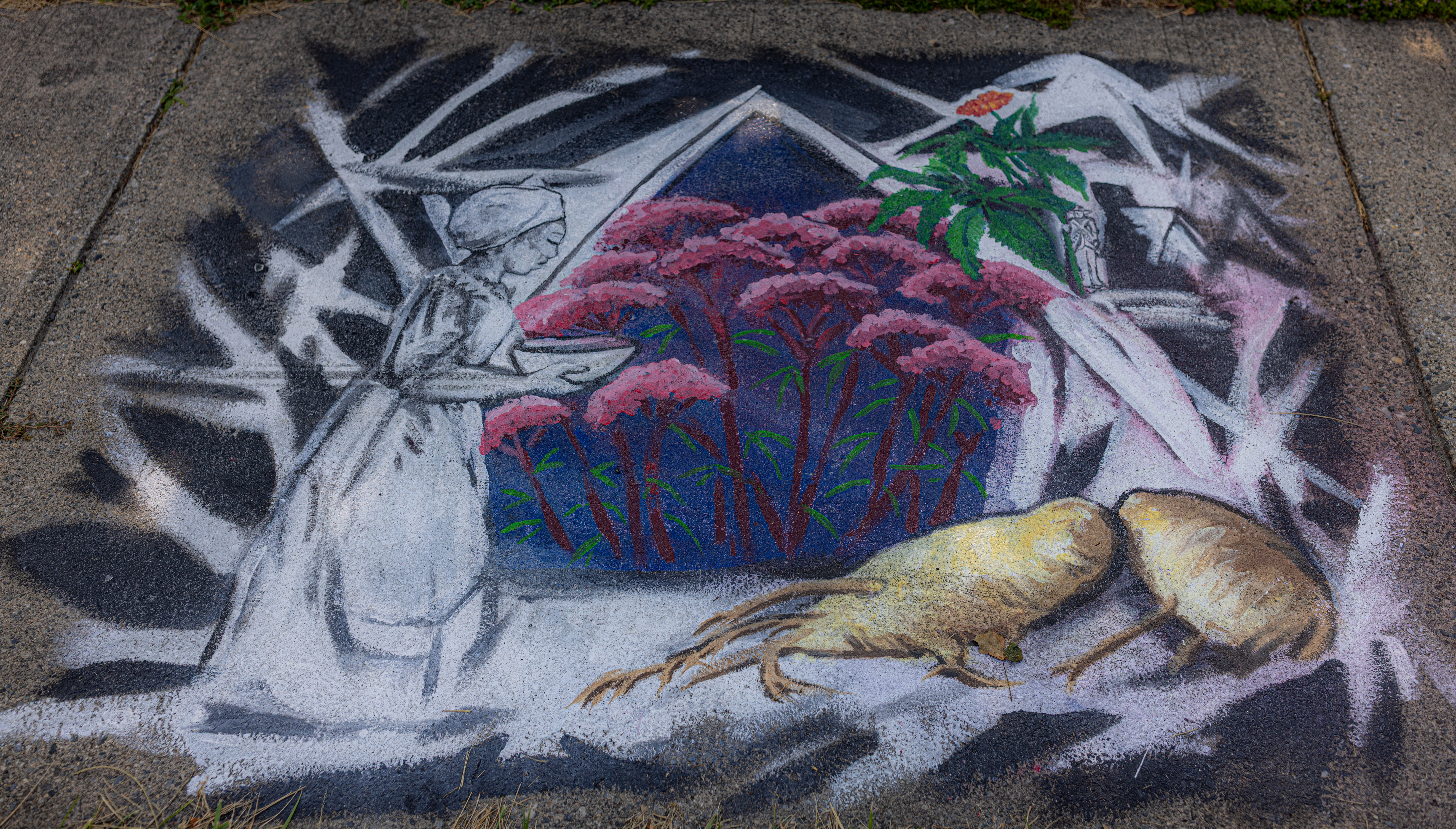
“Caregivers” – Federal Street Cemetery, 175 Federal St by Joe Pye and Ginseng by Youme Nguyen Ly
Caregivers, Joe Pye and Ginseng, shows a black and white tent with abstract pink flowers, red stems and green leaves of Joe Pye weed growing from within. A woman arrives to the tent with a healing bowl of soup. In the abstract black and white background, a tiny black and white revolutionary soldier holds the green living stem of a full color red and green ginseng plant instead of a weapon. Two large ginseng roots are depicted in full color golden yellow, at the base of the illustration.
American ginseng is a medicinal plant native to North America. Income generated from gathering and selling wild ginseng influenced the early history of this country. Local ginseng use and trade stretches back much further than the Declaration of Independence. Long before North America was colonized, various Indigenous peoples used ginseng in medicine.
The story of how this plant came to be called “Joe Pye Weed” has evolved over time. Stories tell of Zhopai, an Abenaki medicine man who treated typhus with this plant. Some researchers believe “Joe Pye” was what white settlers called Joseph Shauquethqueat, a Mohican. Shauquethqueat was a sachem and selectman. It’s believed that white colonists saw Shauquethqueat healing with the plant Pkuwiimakw and named the plant after him.
I painted this with healing in mind, healing that nature offers everyone if we can listen for it. I am also honored that it was chosen for the cemetery location, as those that came before us are part of who we are now and who we will become.
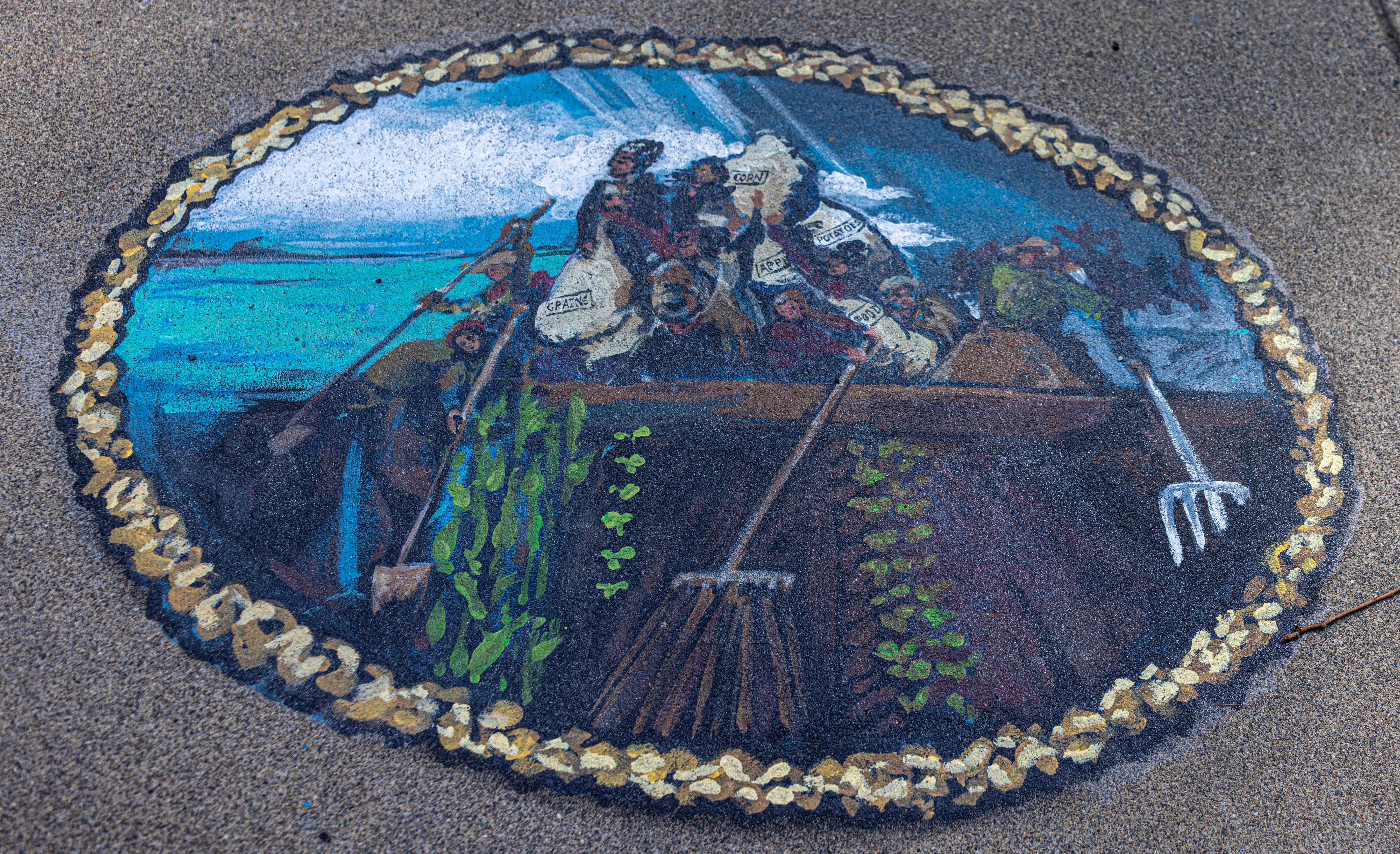
“Crossing the Dela-Western Mass” – Riverworks Park, 250 Deerfield St, just past Meridien & Deerfield St by Youme Nguyen Ly
The Crossing of Dela-Western Massachusetts, references a famous painting of Washington Crossing the Delaware by Emanuel Leutze. In the original painting, George Washington stands at the front of a small boat crowded with thirteen individuals, mostly soldiers, but also a farmer, and a merchant. In my painting, the diverse figures are farming land instead of rowing, what was once an oar is now a shovel. The people are transporting giant sacks of potatoes, corn, one bag simply labeled food.
I wanted to honor the farmers, female, male and non-binary, of all who lived in Greenfield 250 years ago, and grew food which fed the revolution.
What I loved most of these uniquely artistic works of art is how they each showed a different creative display of our fight for freedom and liberty and how that fight continues.
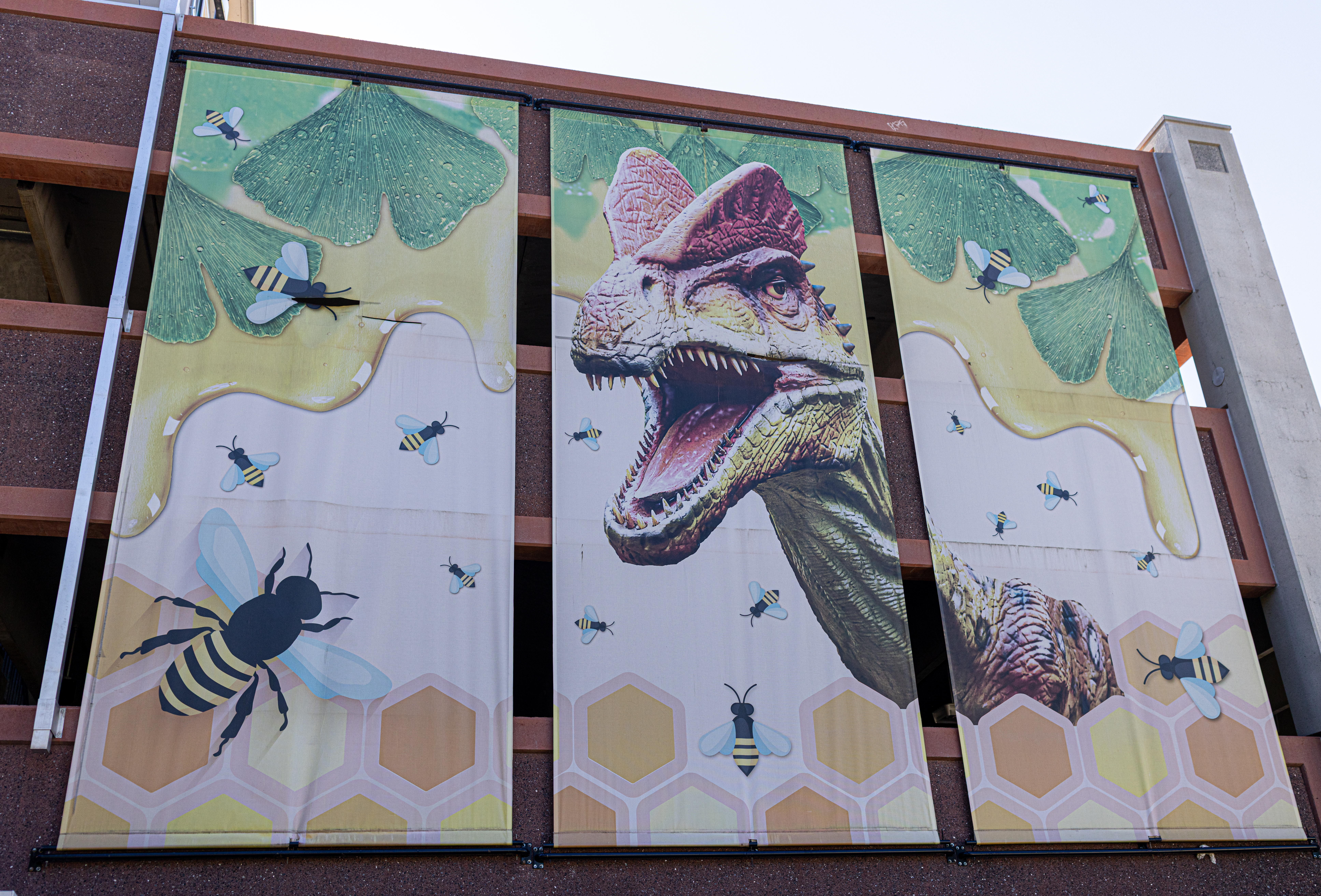
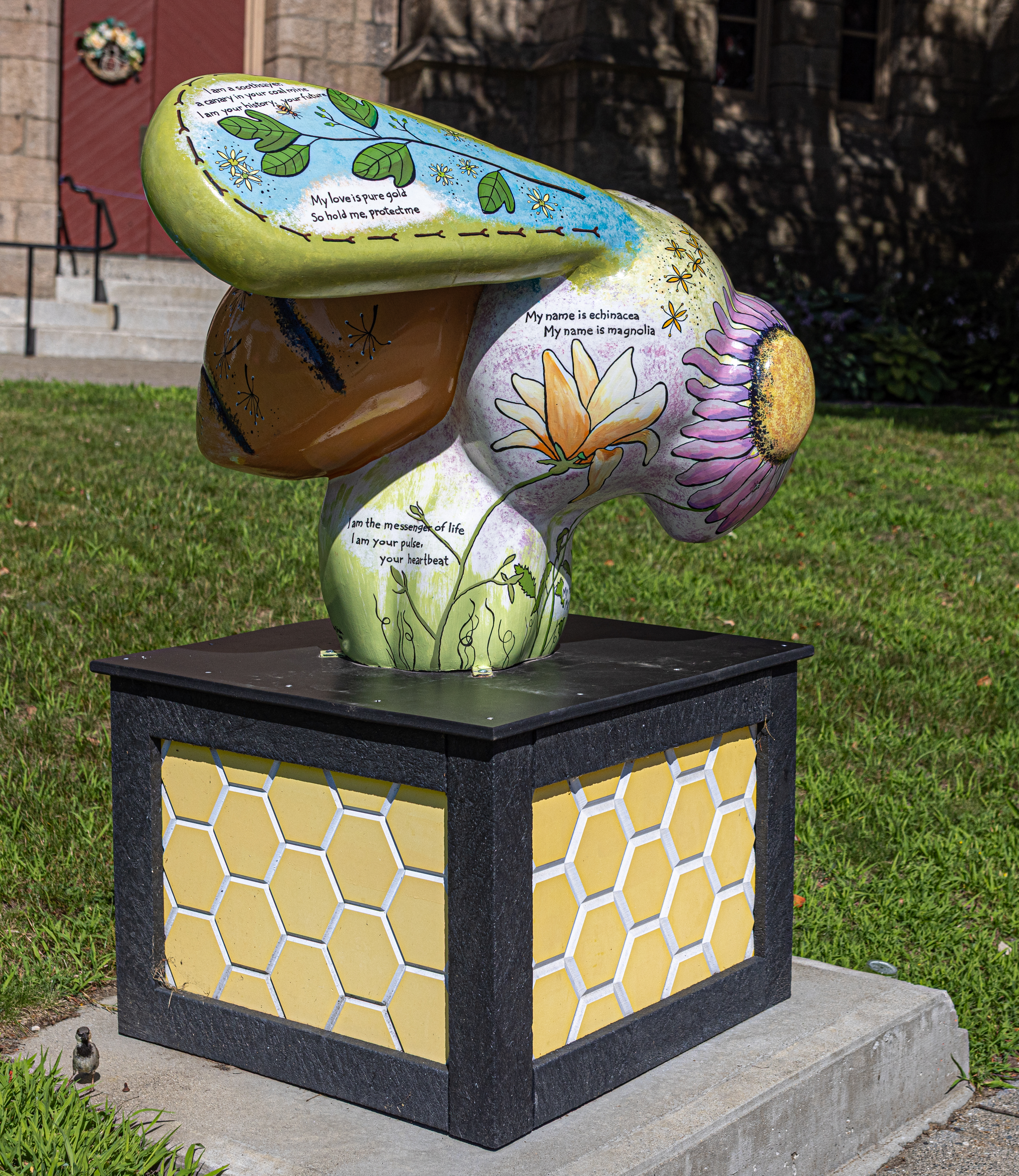
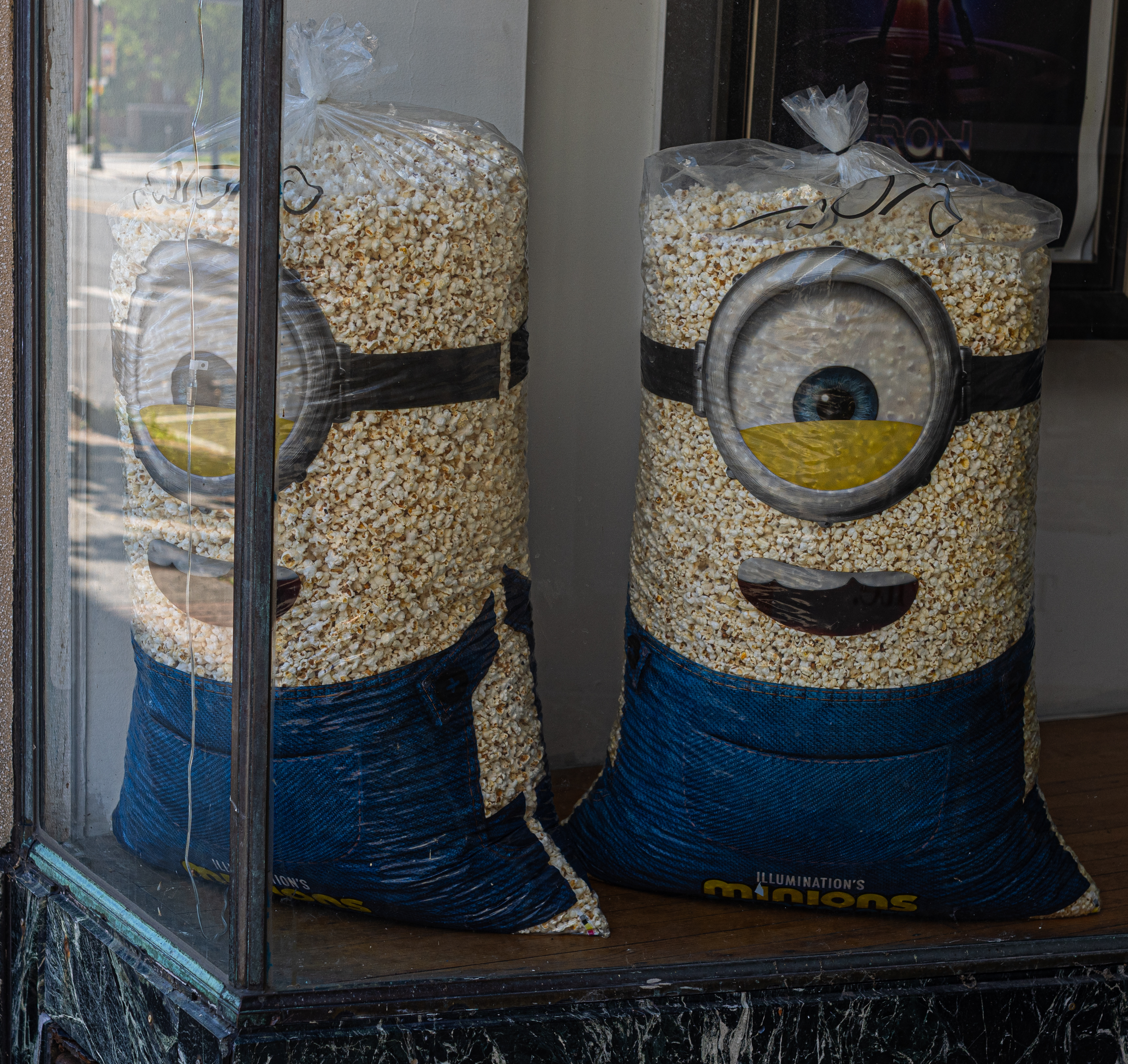
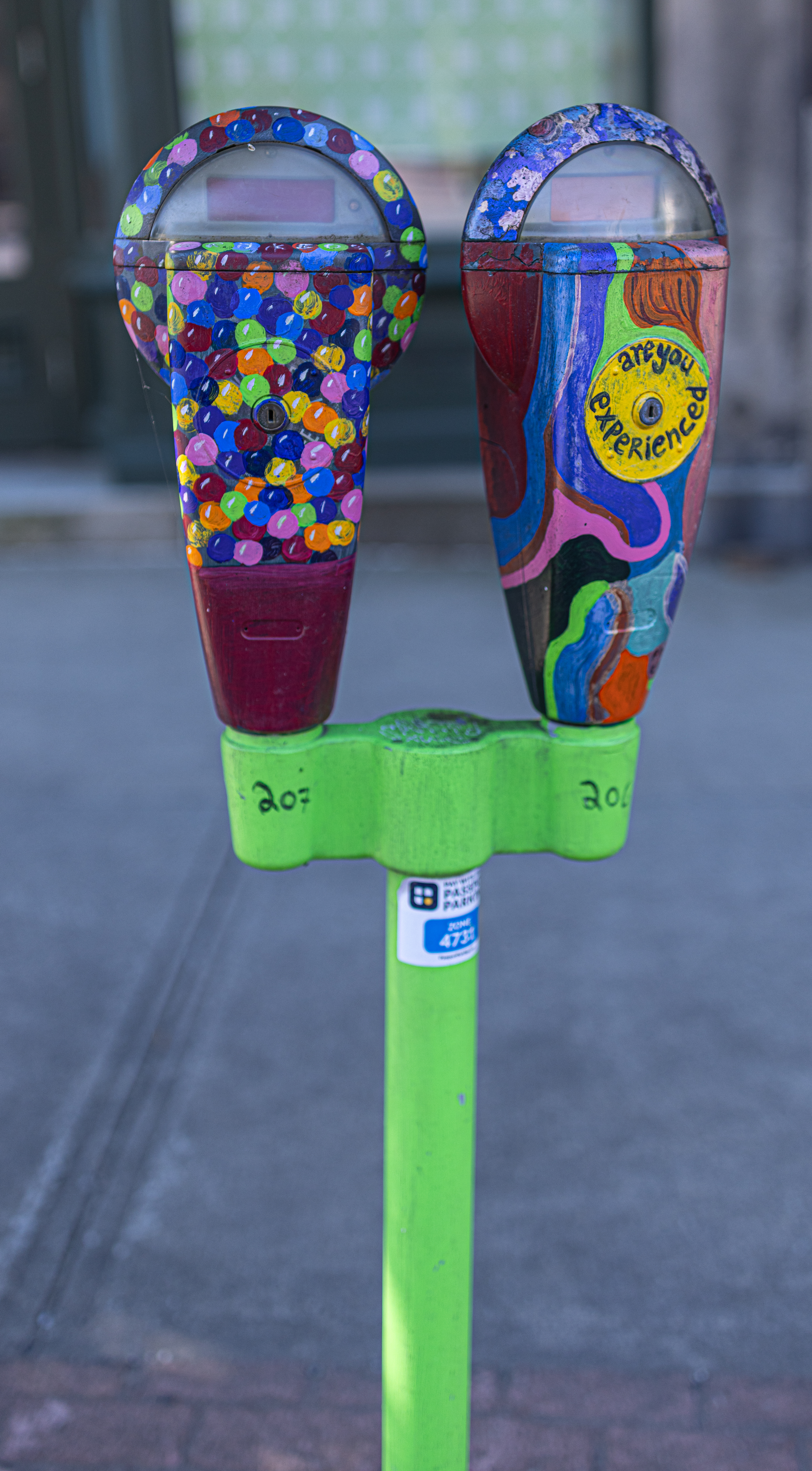
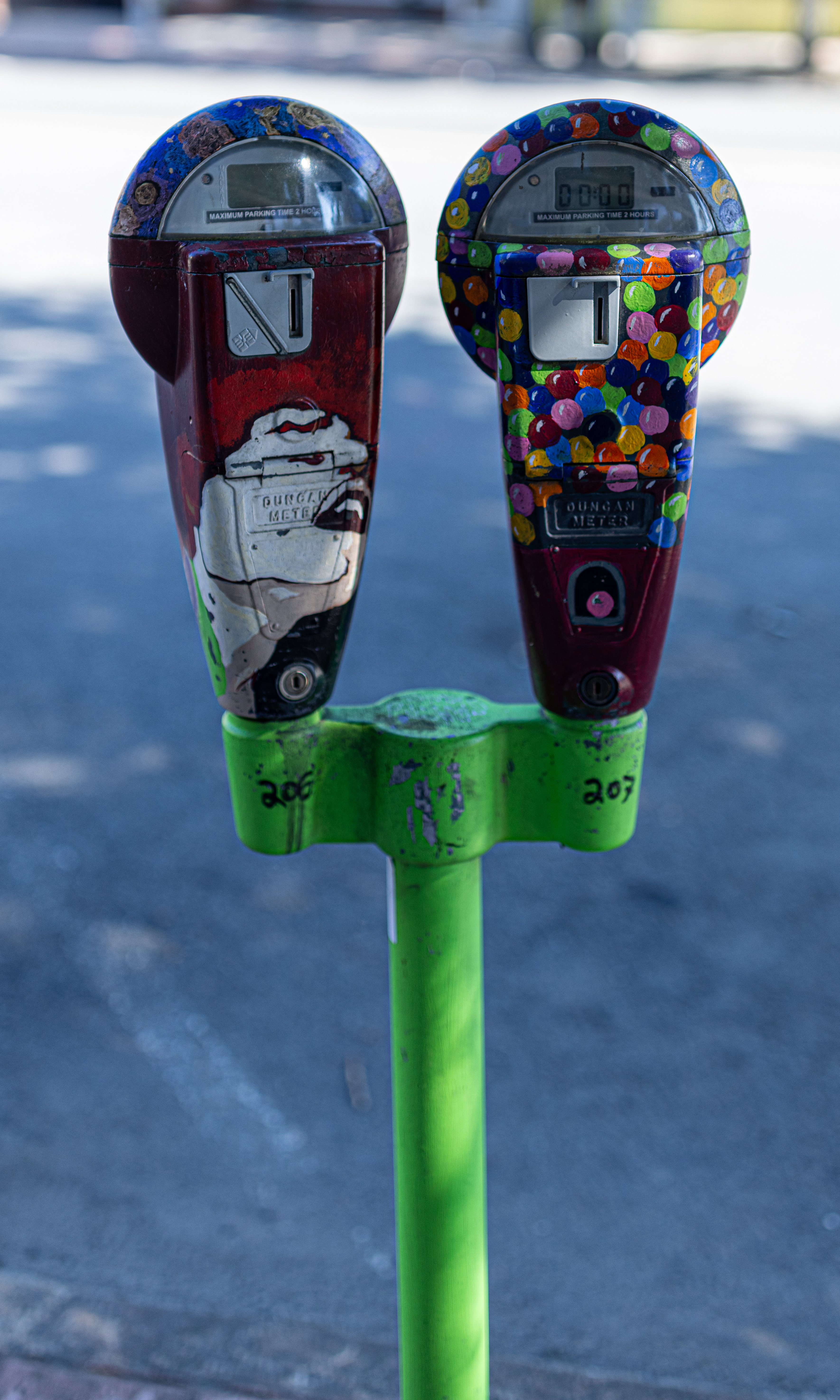
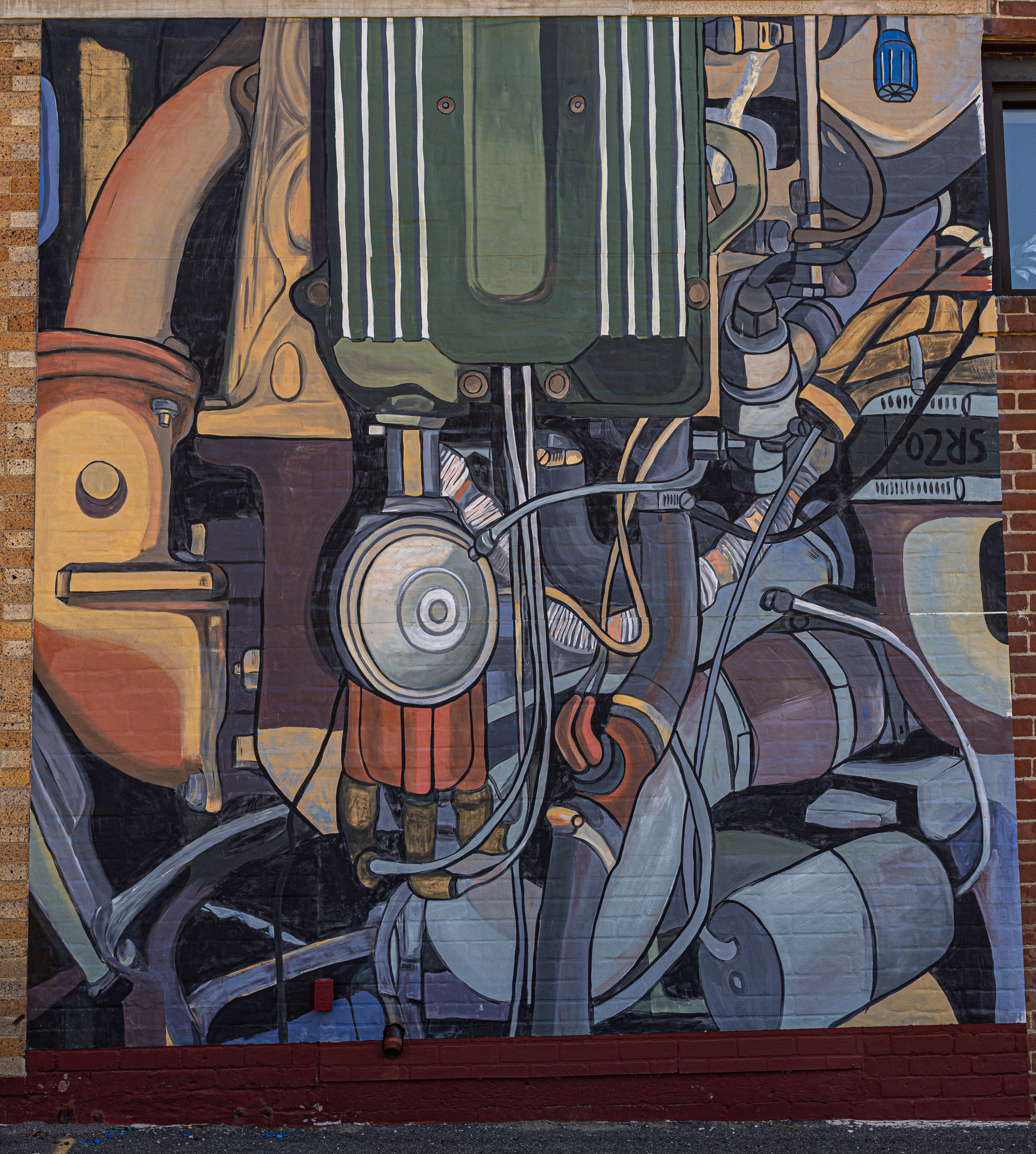
There were many other interesting and fun things to see and do in Greenfield. From industrial sized popcorn bags made to look like Minions to bees (which has a story that deserves their very own post), parking meters painted to look like cultural icons and other murals as well as a nod to dinosaurs, Greenfield has so many more interesting things to see! It’s definitely worth another visit.
Location: Hampton Ponds, Westfield, MA (2 hours southwest of Boston, MA)
Summary: Westfield, MA, celebrated the 250th anniversary of America’s independence with a family friendly extravaganza!
Westfield, MA, kicked off their 4th of July celebrations with their annual parade. The parade featured horses, vintage cars and lots of fun for the entire family!
Pixie is a 14 year old pony.1957 Ford Thunderbird (“Baby Bird”)
Since this is the 250th anniversary of the celebration of the country’s independence, they really pulled out all the stops. Parade participants threw candy, necklaces with stars and other gifts to the people at the parade.
For those of you who may be from around the area, the 18 minute parade winded down a mile route from Hampton Ponds on East Mountain Rd to Froggy’s Saloon on Airport Industrial Park Rd.
People rode many modes of transportation during the parade from horses to bicycles and some other fancy vehicles.
2016 Chevrolet Stingray Z51
But, my favorite vehicle from the parade was the DeLorean (aka as Marty McFly’s time traveling car) Flux Capacitor and hat from the sequel included!
Meanwhile, some participants chose to walk along the parade route.
There was also lots of music at the event!
Sarah The Fiddler
If you look closely at the photos, you can see just how everyone at the parade was so happy. It was a very rewarding experience seeing and capturing people’s smiles. We need more events like this where people can just come together and enjoy these moments.
Attached are videos from the parade! Feel free to peruse my other videos on my YouTube channel.
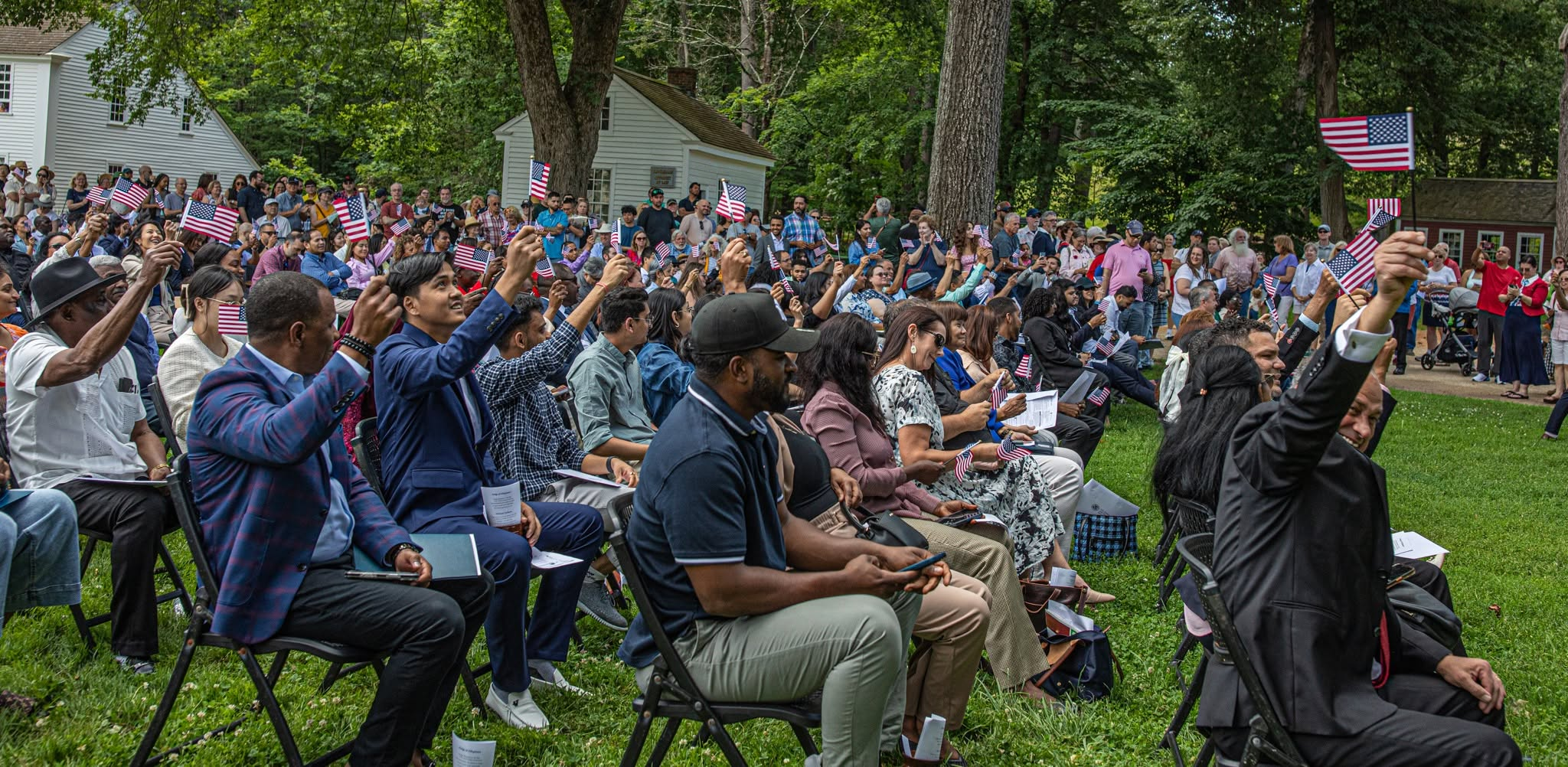
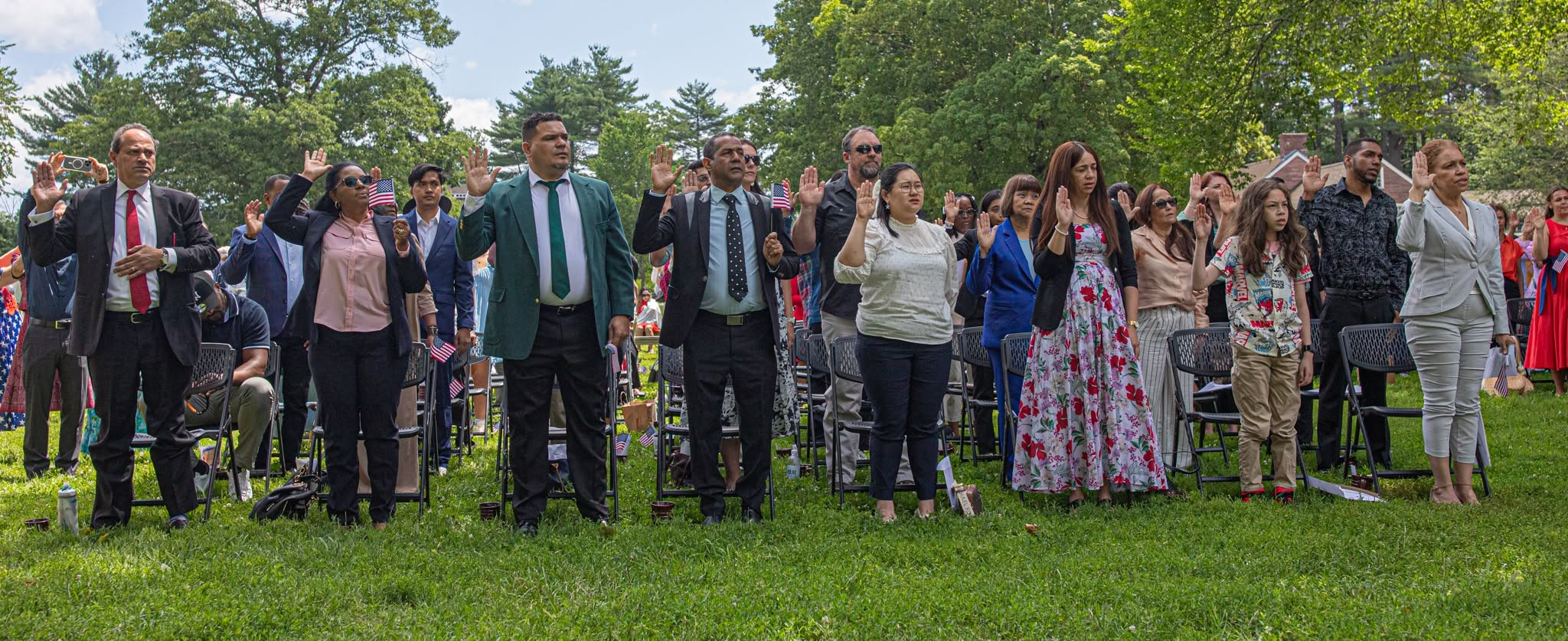
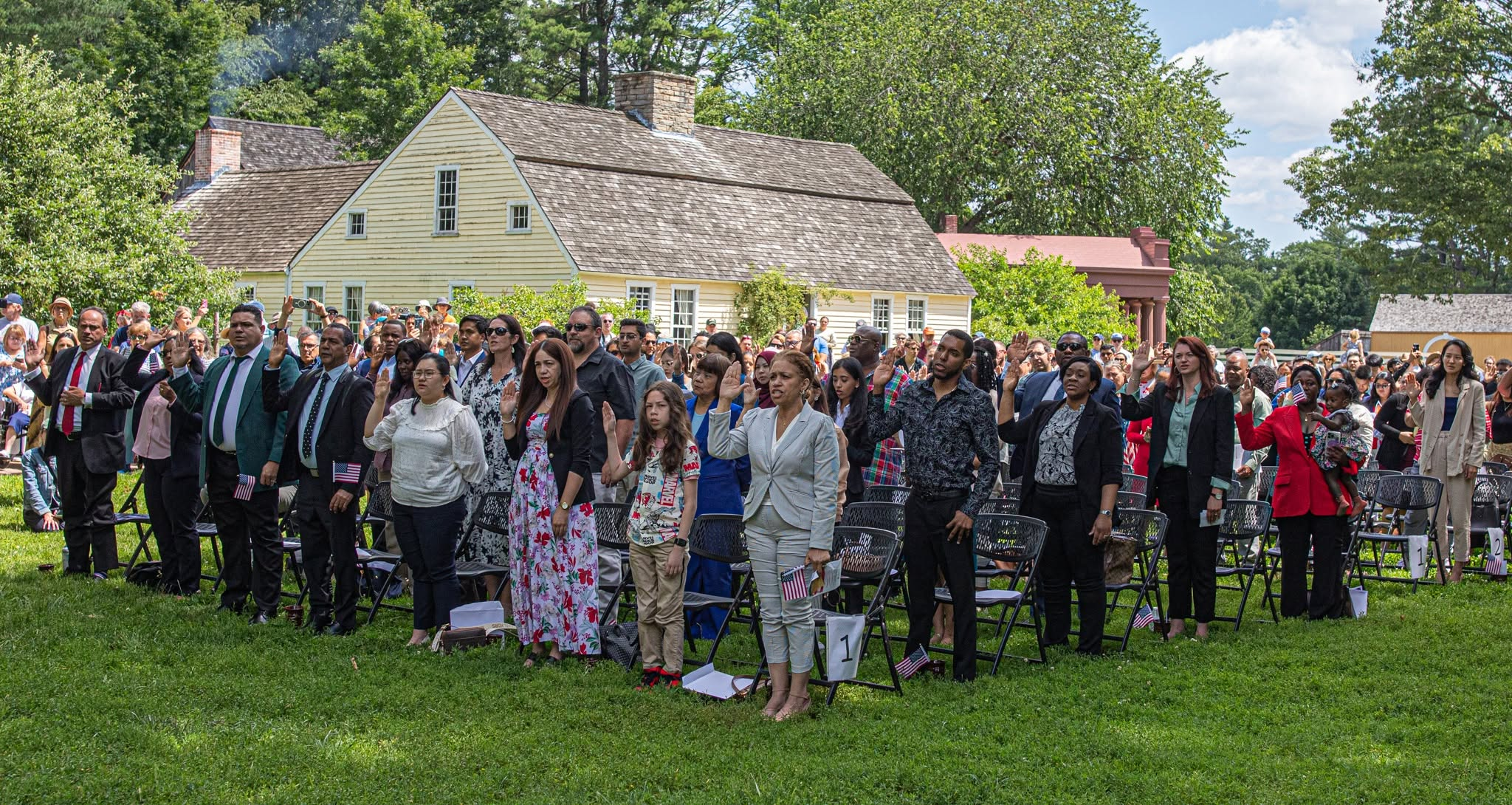
Summary scores of people became naturalized citizens last year at Sturbridge Village
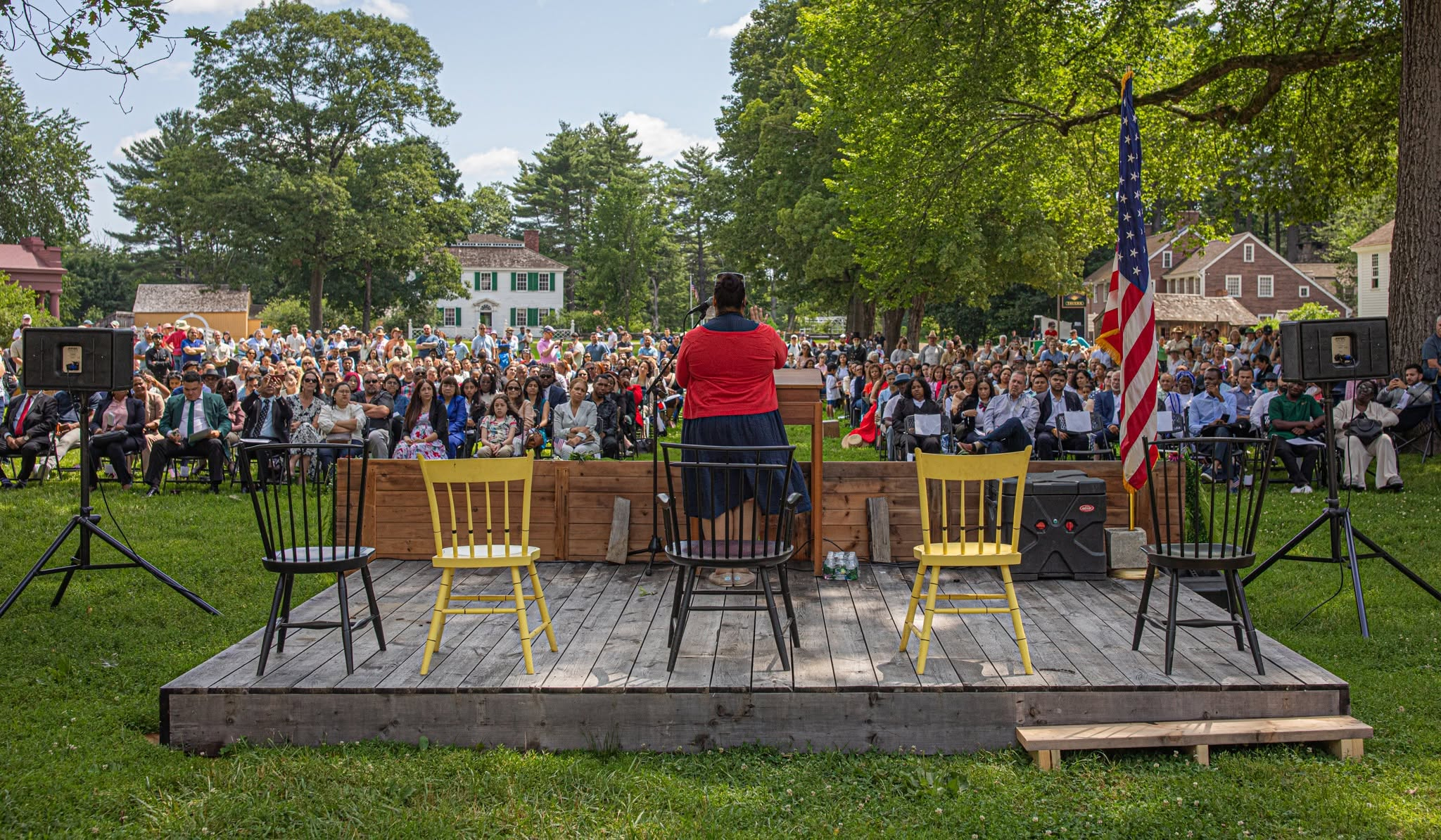
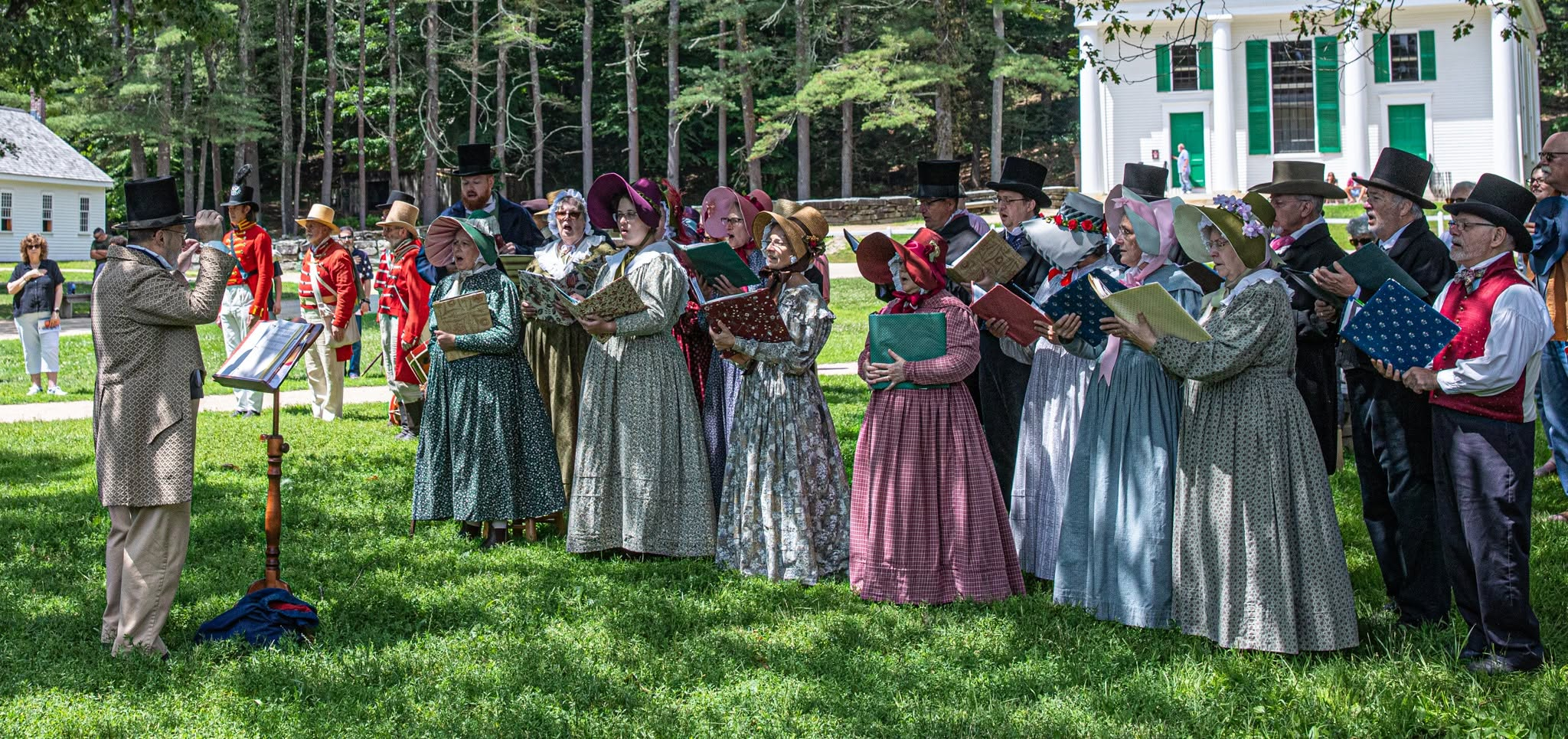
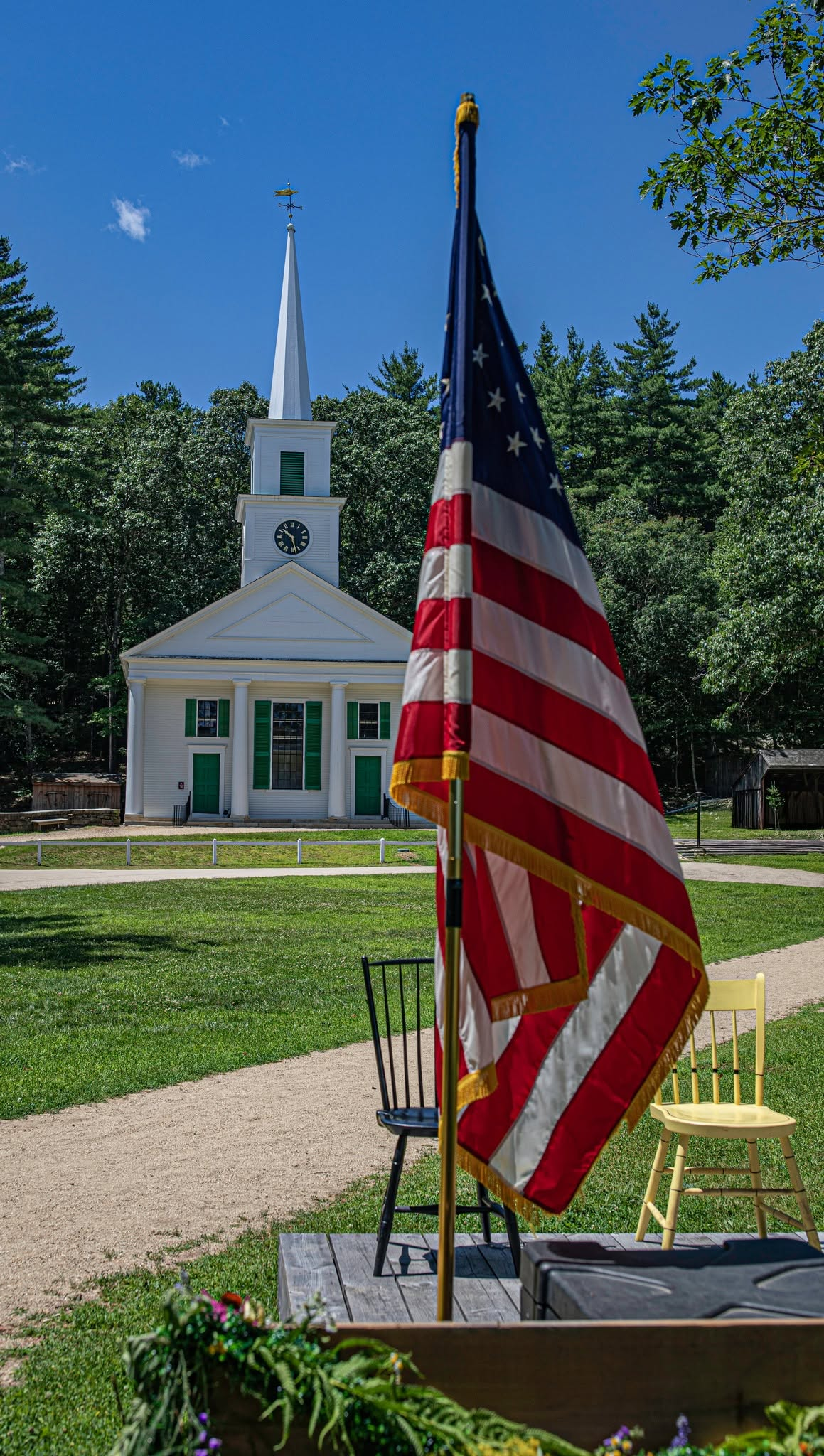
As we celebrate the 250th anniversary of American independence, I thought I would share some poignant photos from a visit to Old Sturbridge Village last year. These citizens were so proud and happy to experience something many of us take for granted. It was one of my most fun events to photograph because of the effervescent atmosphere of the people being sworn in as citizens. It’s great to see people happy in any environment, especially at an event with so much meaning.
Each 4th of July, the village conducts citizenship ceremonies. Last July 4th 146 people from 36 countries became citizens during their Naturalization Ceremonies. Since I will not be able to attend the ceremony this year, I thought I would share some photos from last year’s ceremony.
Because of a very busy schedule and some personal changes in my life including selling my home last year and moving to western MA, I have yet to edit all of the photos from this year and most of last year for that matter. But, what better time to post these photos of such a special event. I do hope to post more photos of this event in a future post.
As I was processing these photos, I was overwhelmed by how happy, no elated, these new citizens were to be Americans. And, while it’s often hard to get approval to use people’s photos for posts, these people were more than willing to pose and show their pride for their new citizenship. Congratulations to the these new citizens and to future citizens of this country.
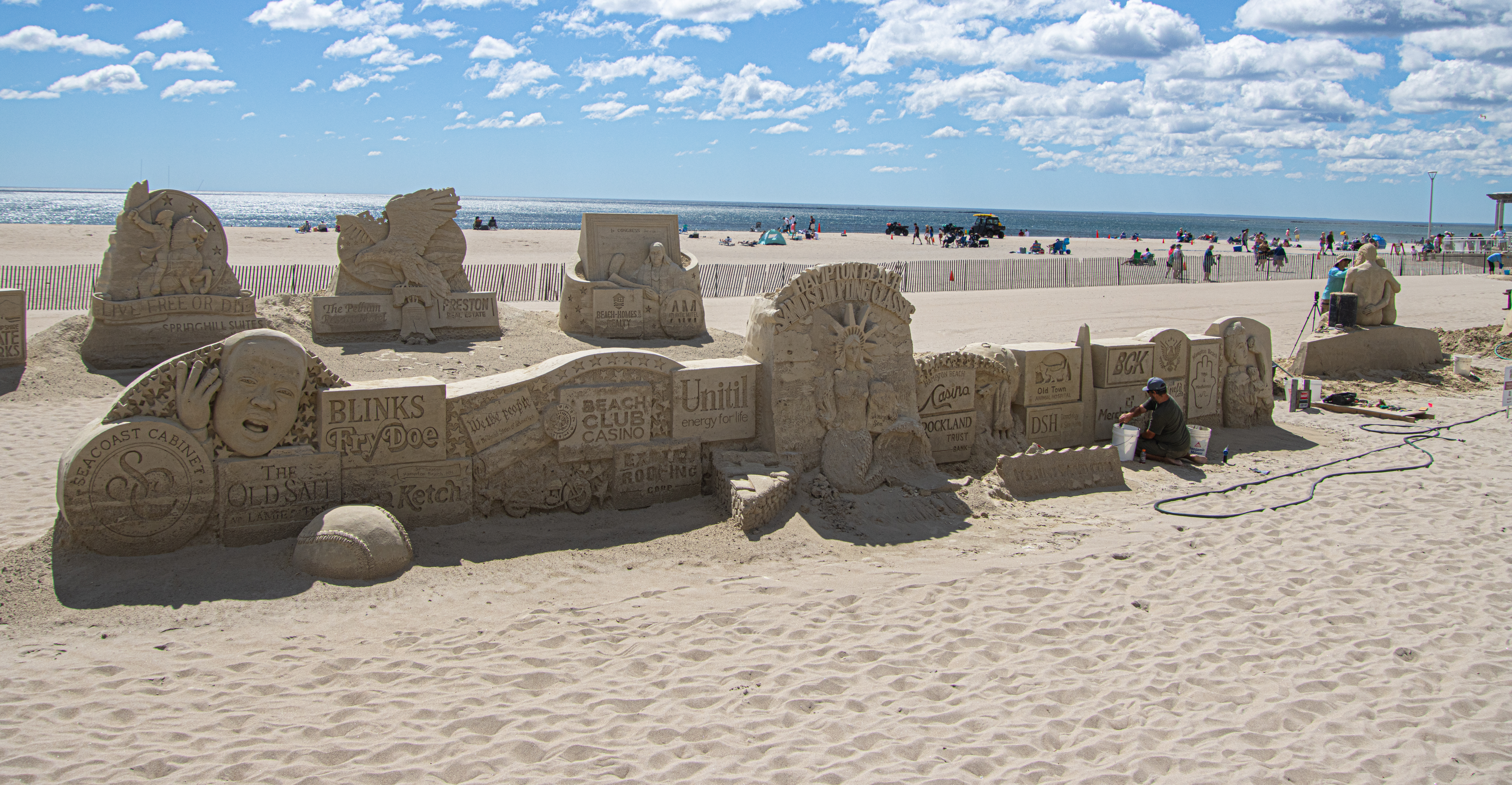
For the 26th year in a row, sculptors from all over the world came to Hampton Beach to flaunt their sculpting skills and make a bid for the elusive $6,000 first place prize.
One of the more common questions people inquire about is the sand used for making the sculptures. And, no, they don’t use the sand from the beach. At least not from Hampton Beach. The sand is sourced from local beaches and coastal areas because of its fine texture and consistency. This imported sand was used to make everything from a cat to the tallest sand sculpture, at least the tallest sand sculpture that has ever been constructed at this festival.
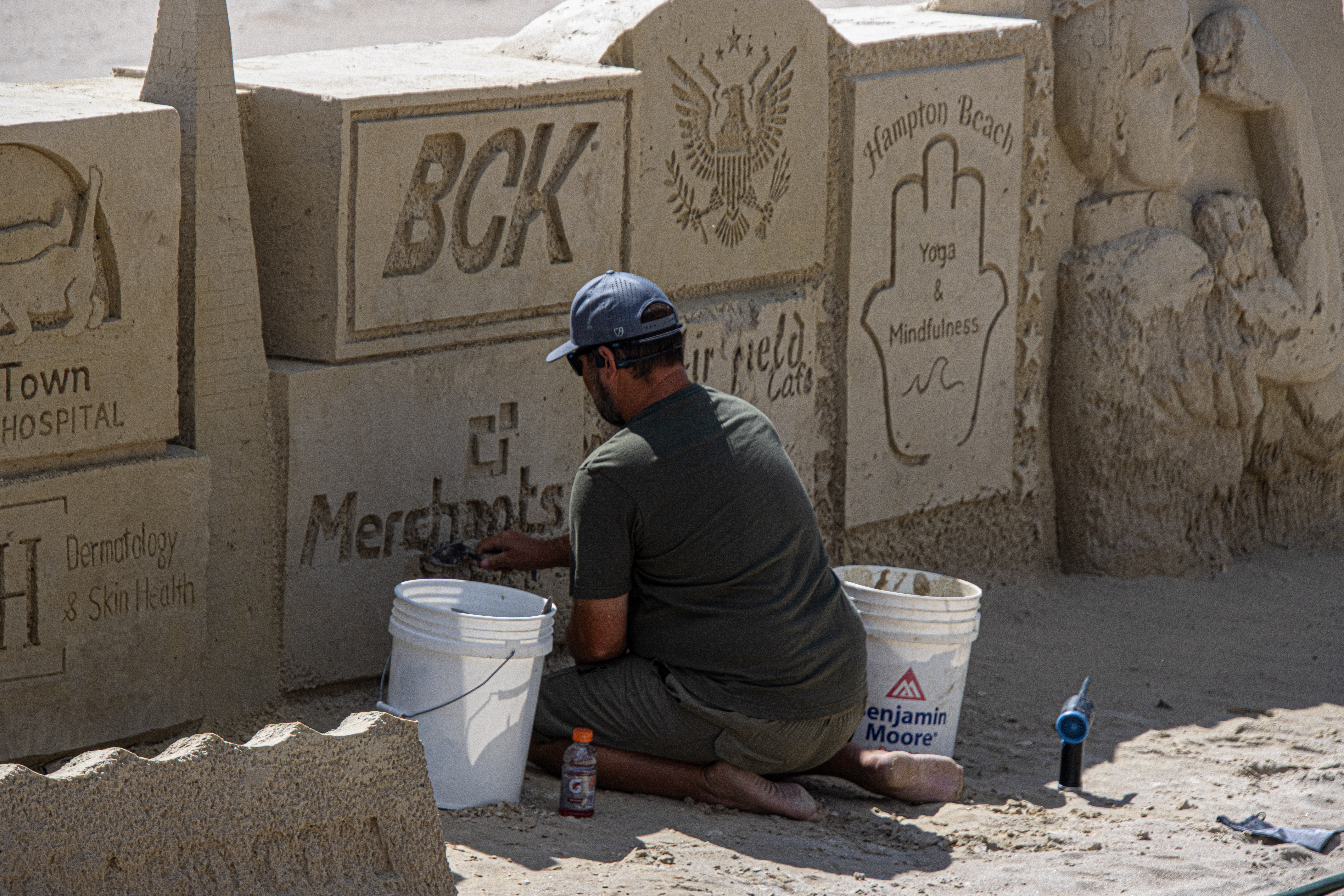
Another thing people wonder about is how the sculptures keep their shape and don’t fall apart, even during our turbulent New England weather. The sculptors use moisture control to help keep the sculptures together. If you see the sculptors making the sculptures you may notice how they strategically add water in targeted areas and limited amounts. This helps to create a cohesive mixture which is called capillary action, This is the principle that allows water to bind sand particles. They also spray or mist the sculpture to maintain moisture levels, especially on very hot days. Another tactic they use is a layering technique in which the first layers of the sculpture provide a strong foundation. Some sculptors also use binders such as cornstarch, clay and even glue, in limited amounts, although I am not sure if these are allowed at the Northampton event. The sculptors also have specialized tools which carve and shape the sand in a way that prevents or reduces the chances of disturbing the sculpture.
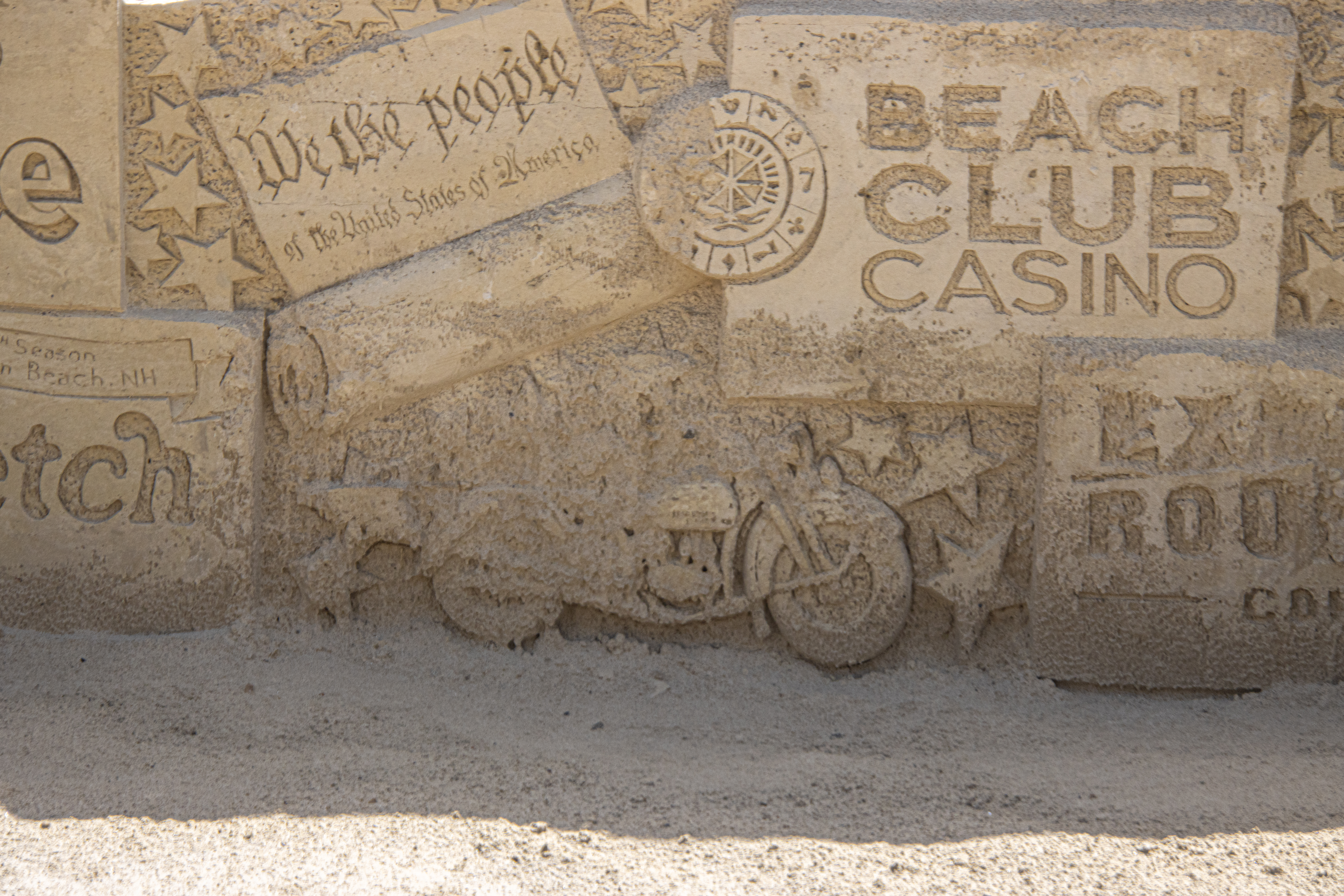
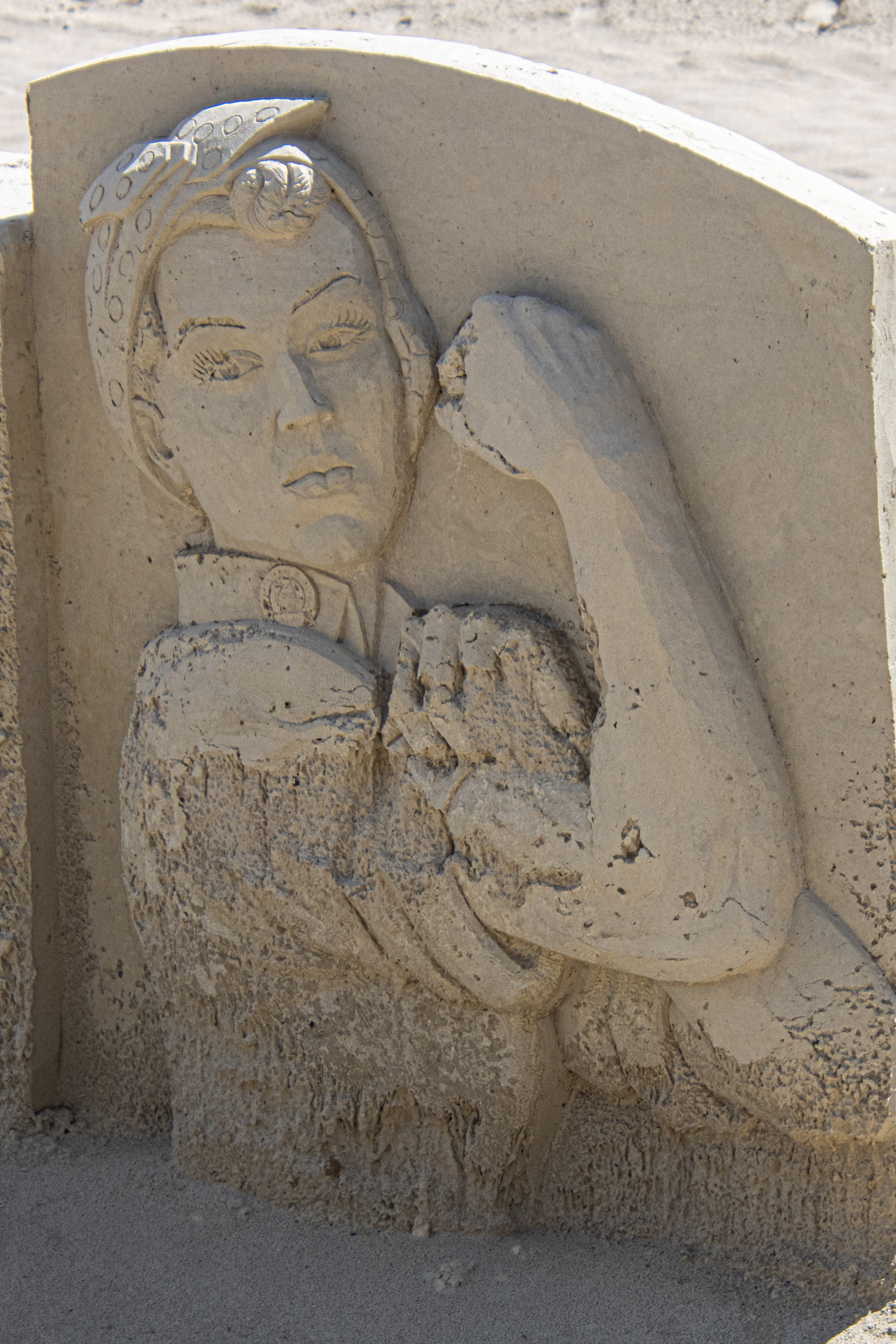
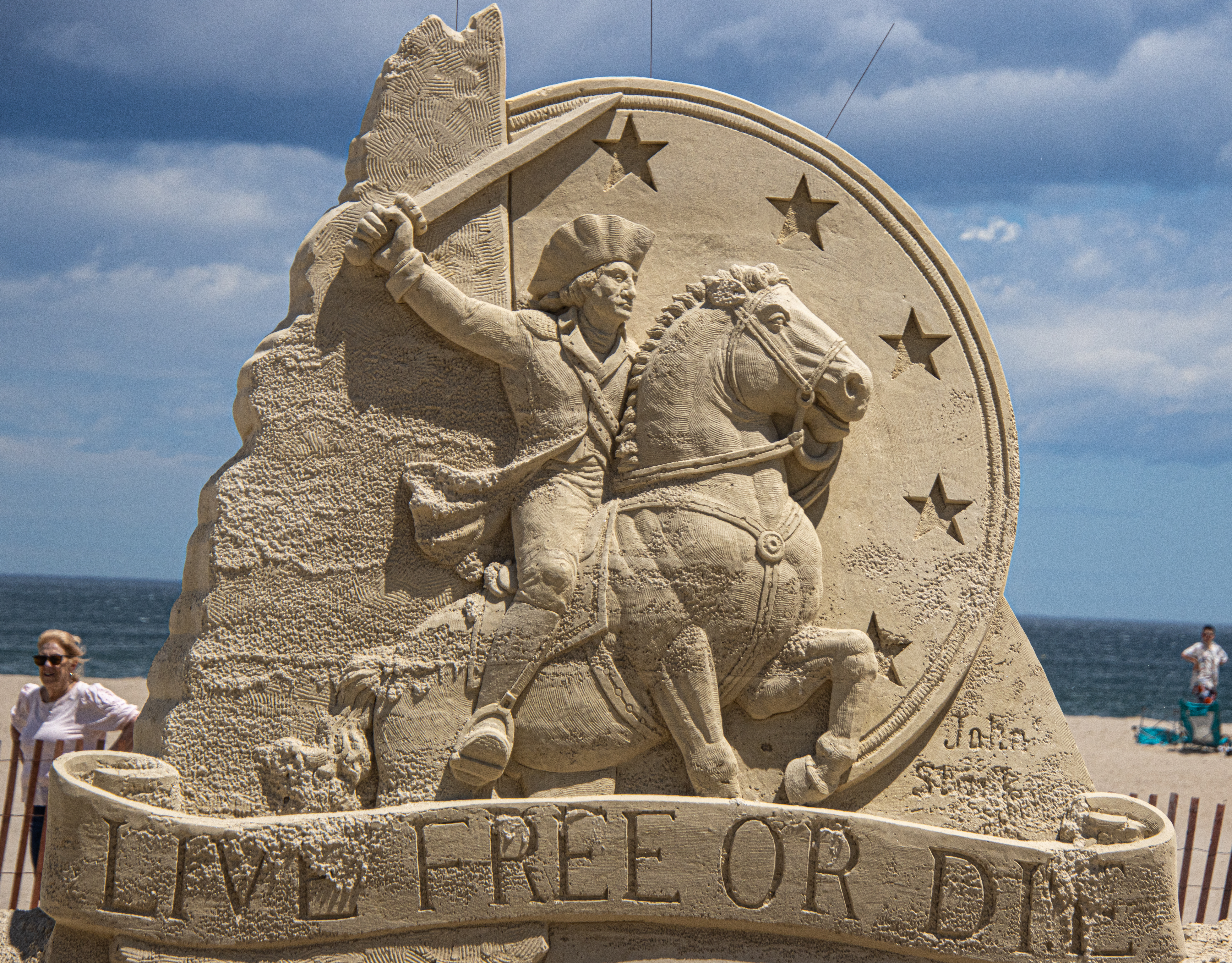
Each year the Sand Sculpting Classic has a different theme. This year’s theme was the 250th anniversary of the nation’s independence. The main sand sculpture, located in the middle of the sculptures, was created by all of the sand sculptors. Some of the sculptures were damaged by heavy rains before the weekend. So, they had to be touched up.
Instead of building up your suspense, I think we all have enough of that in our lives already, I’ll start with the sculptures that won prizes at the event. You may notice something missing in some of the photos. People. I deleted them from some of the photos when I started editing. But, it wasn’t possible to delete them from every photo and, after thinking it over I considered how time consuming it was as well as how people in the photos could add some atmosphere to the photos. So, ultimately, I kept them in most of the photos.
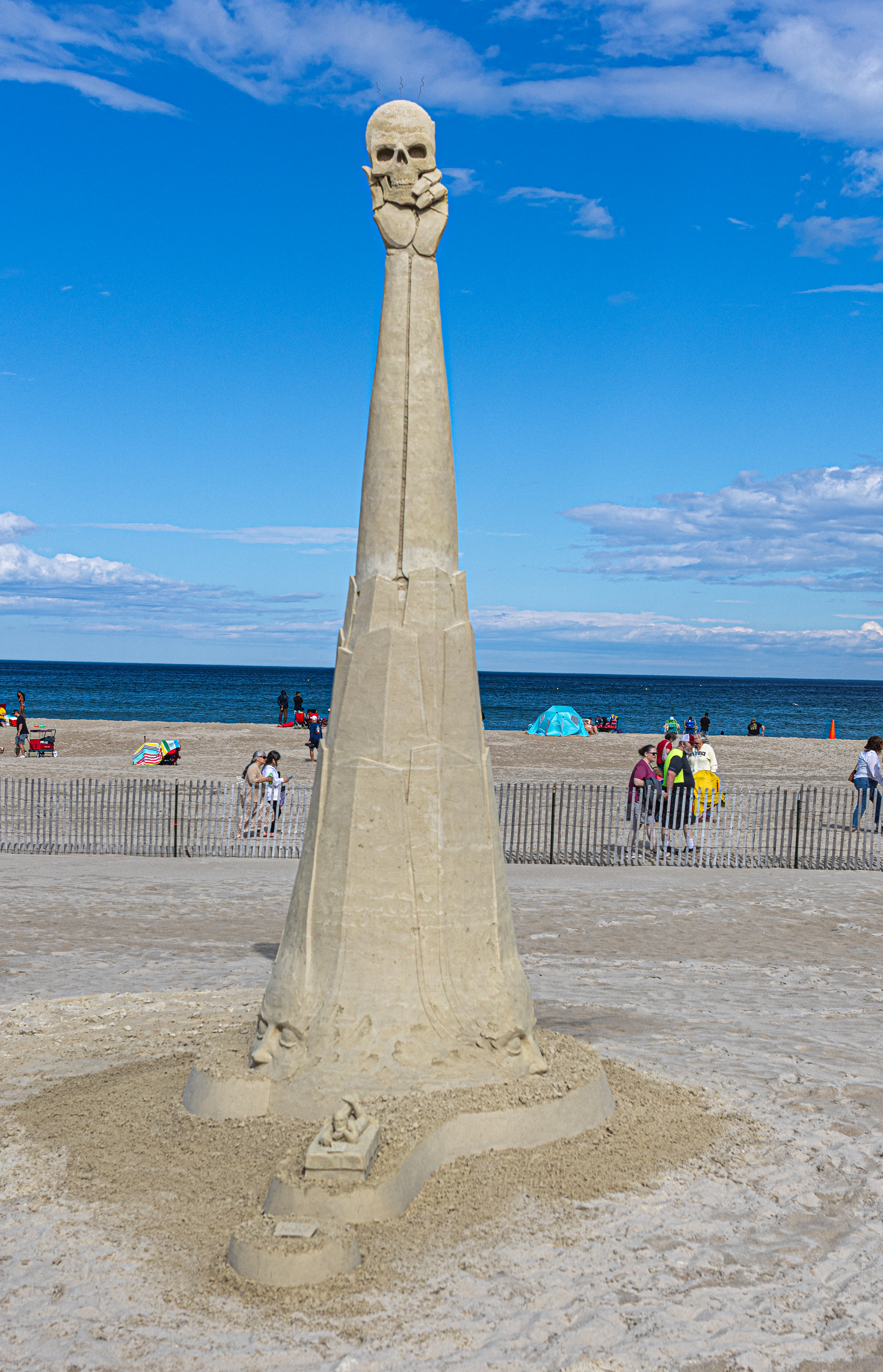
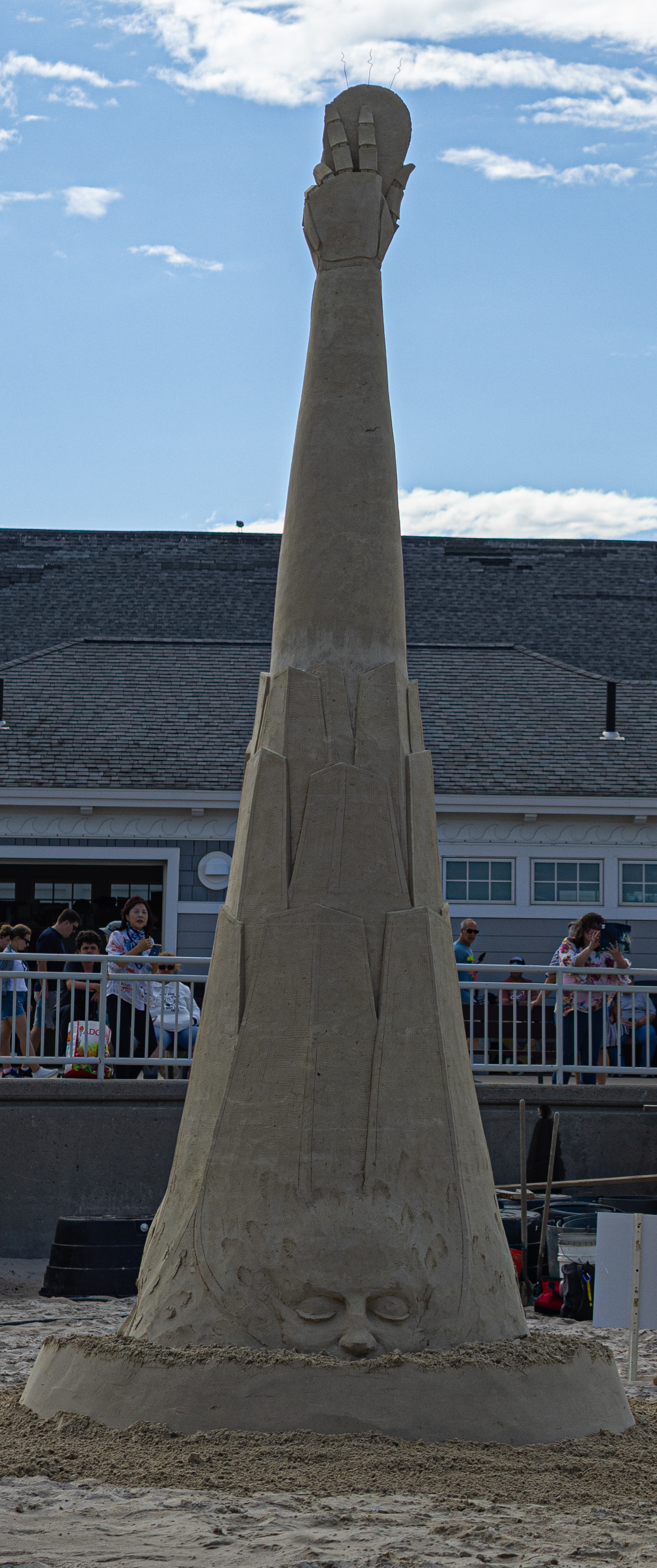
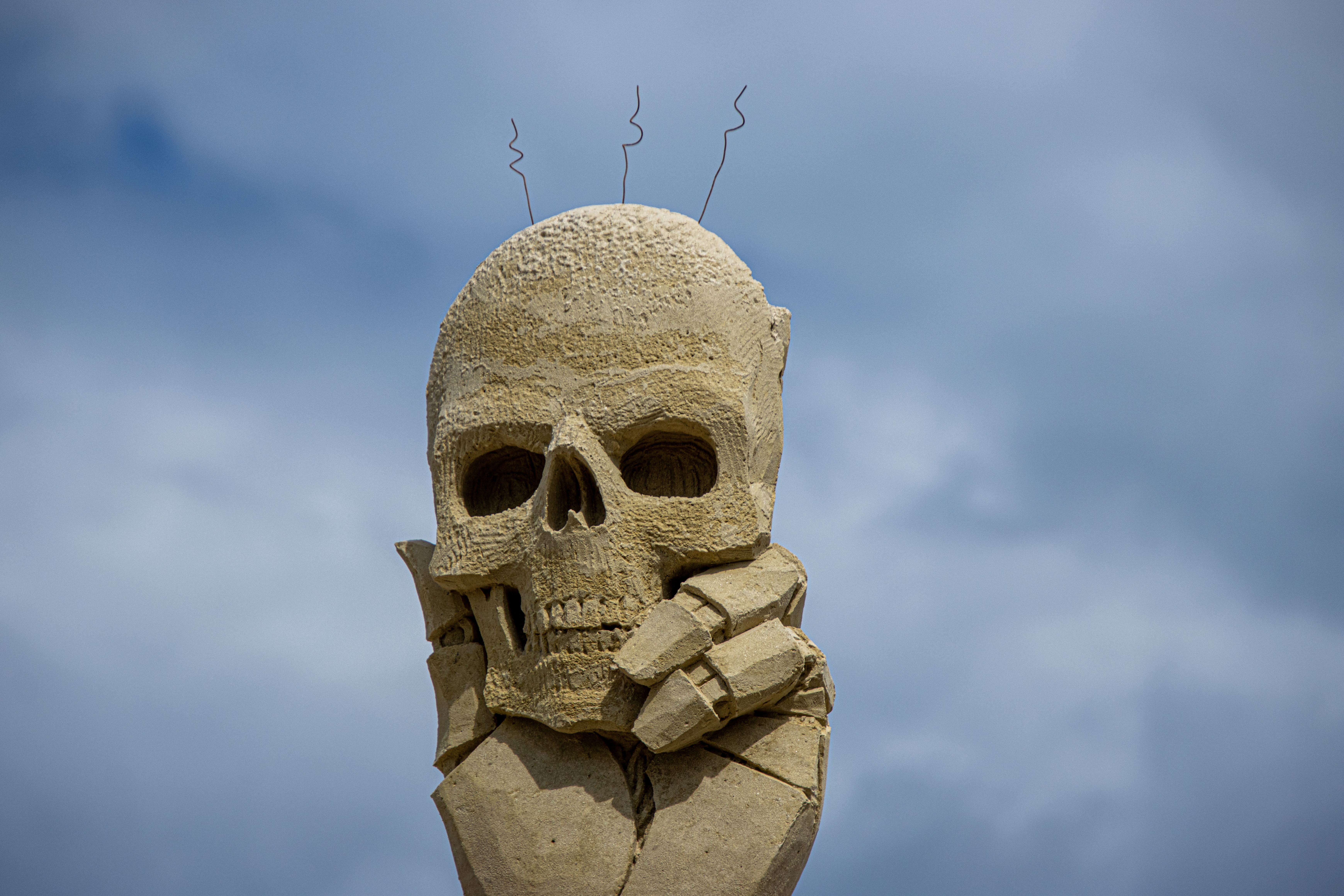
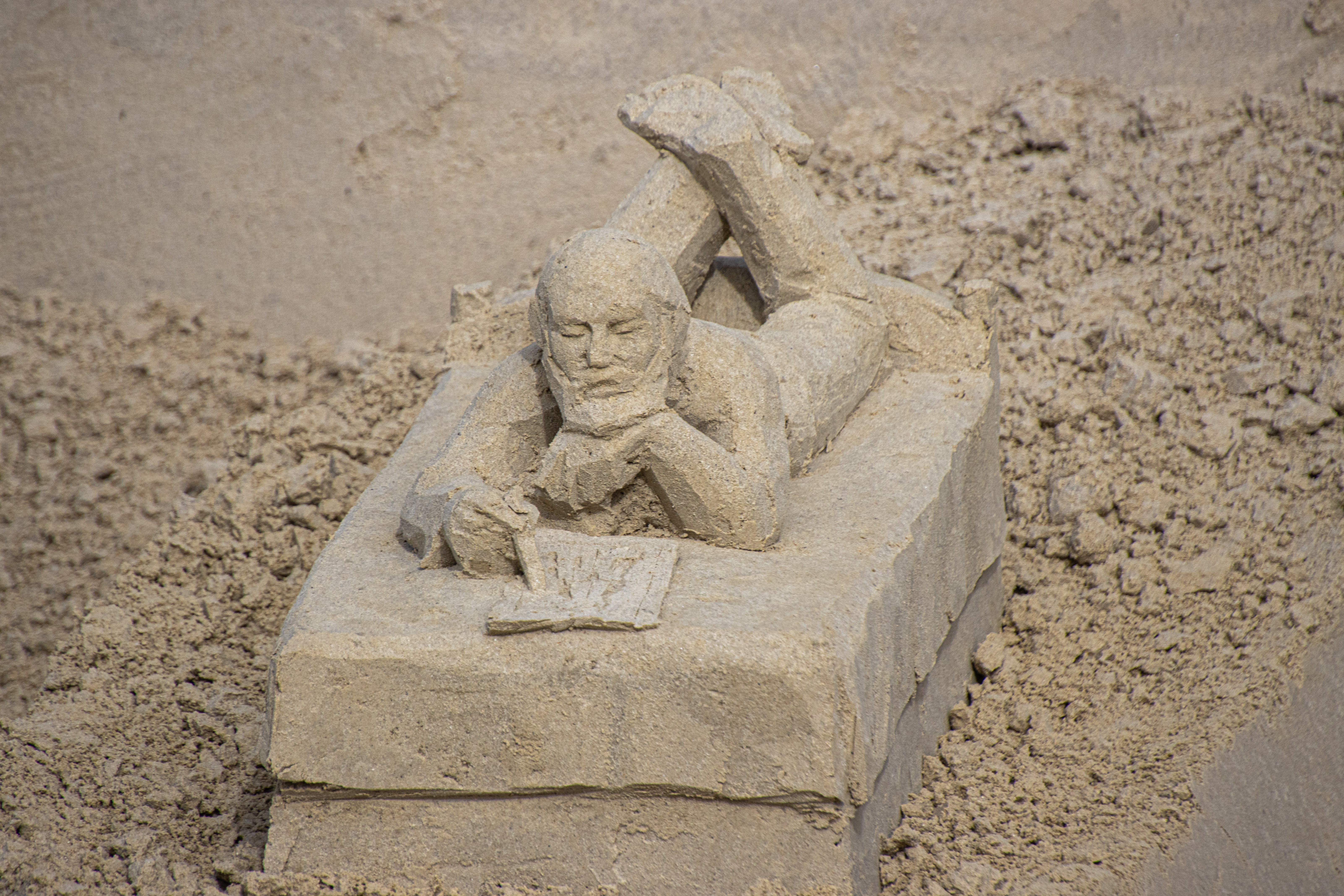
First prize was awarded to Abe Waterman of Prince Edward Island, Canada. His piece, titled “The Height of Stupidity”, is a commentary about technology and how we use it. He said it is about how we create technology that either kills us or we use to kill ourselves. The towering sculpture depicts an AI‑powered robotic arm holding a skull toward the sky. There are other From the “heads in the sand” and the “huh” written in front of the person in front of the sculpture, there are other aspects of our society or culture mentioned in the sculpture. The 21 foot sculpture is said to the tallest sand sculpture ever made, at least at the Hampton Beach sand sculpture classic.
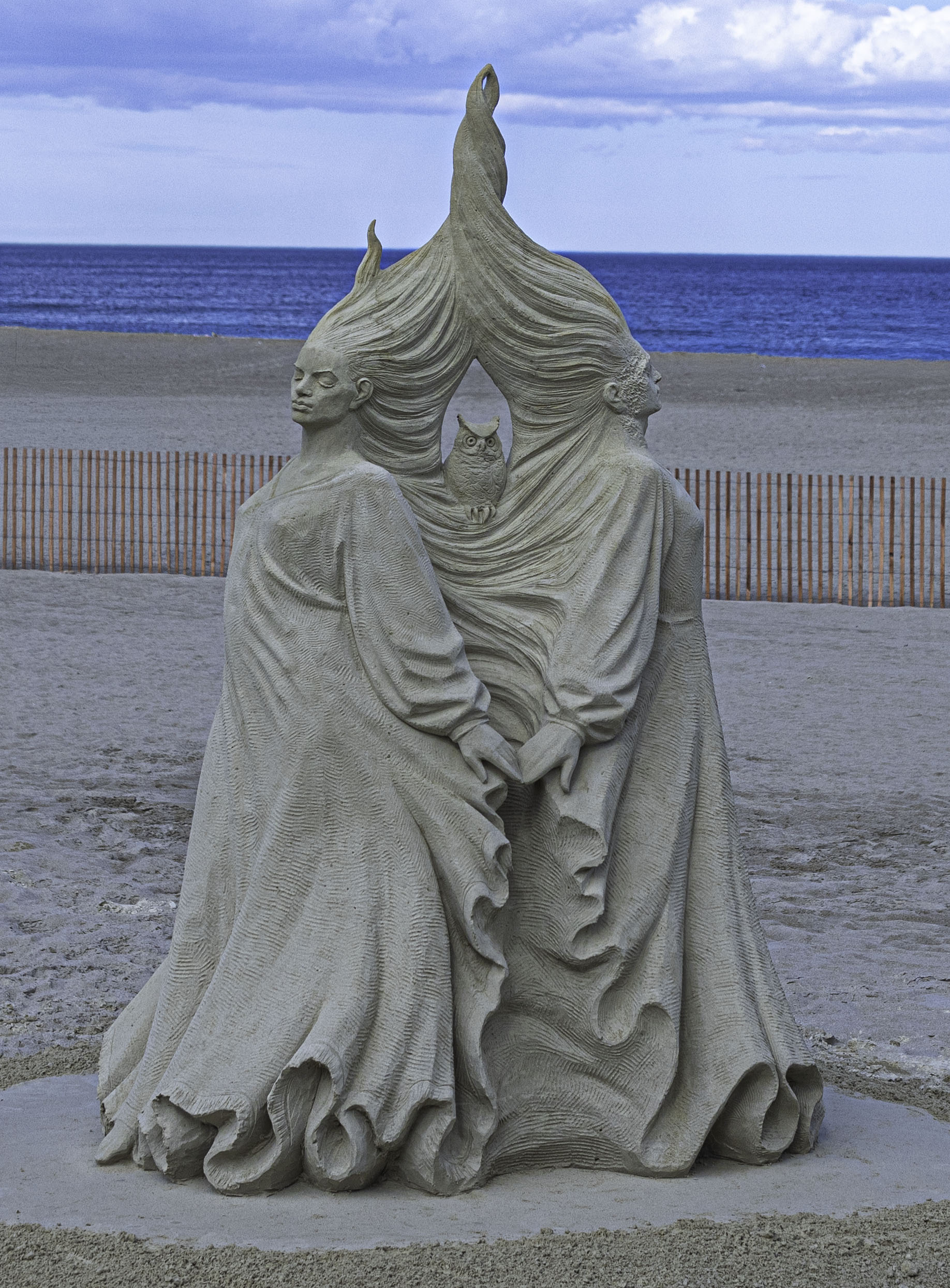
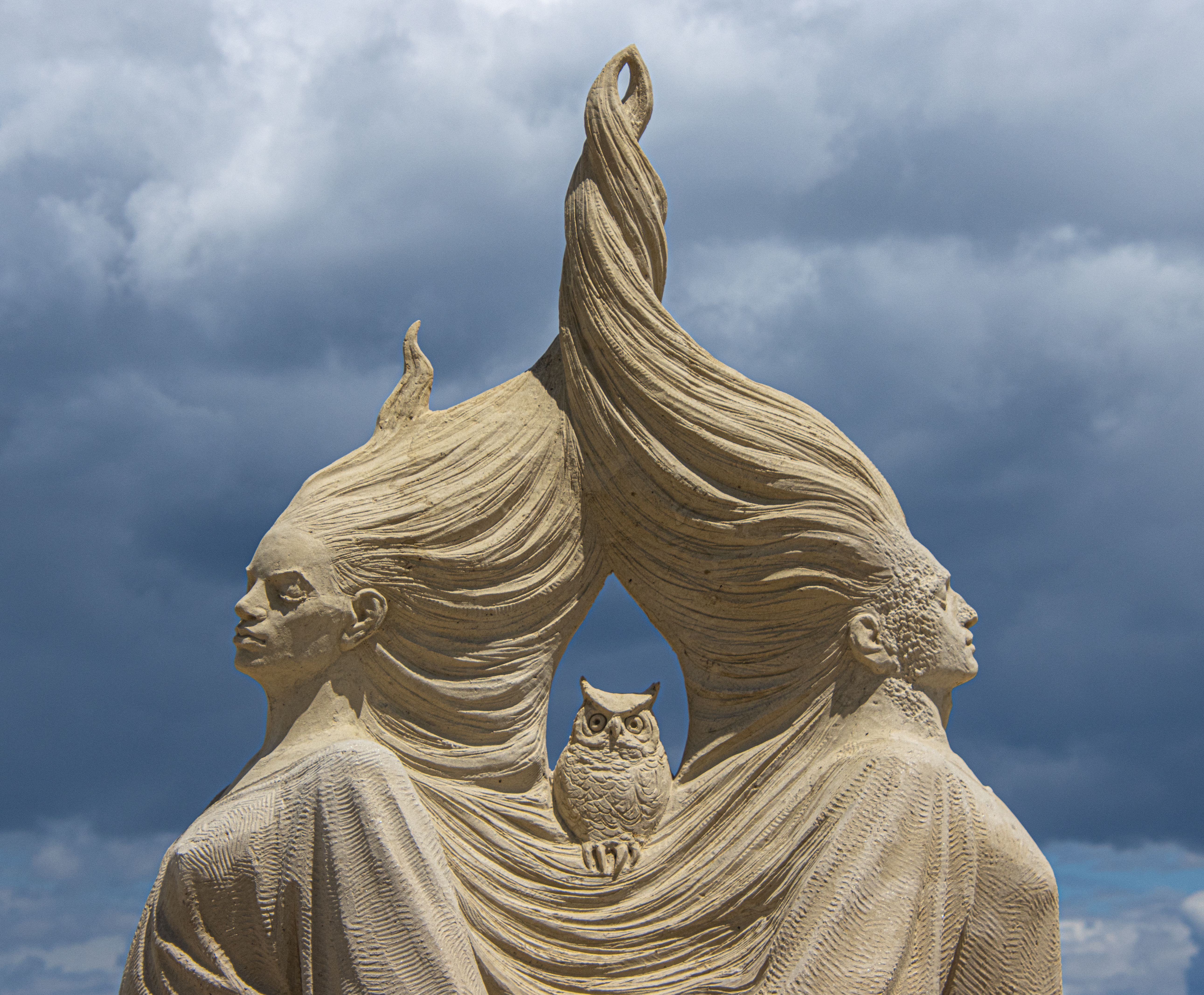
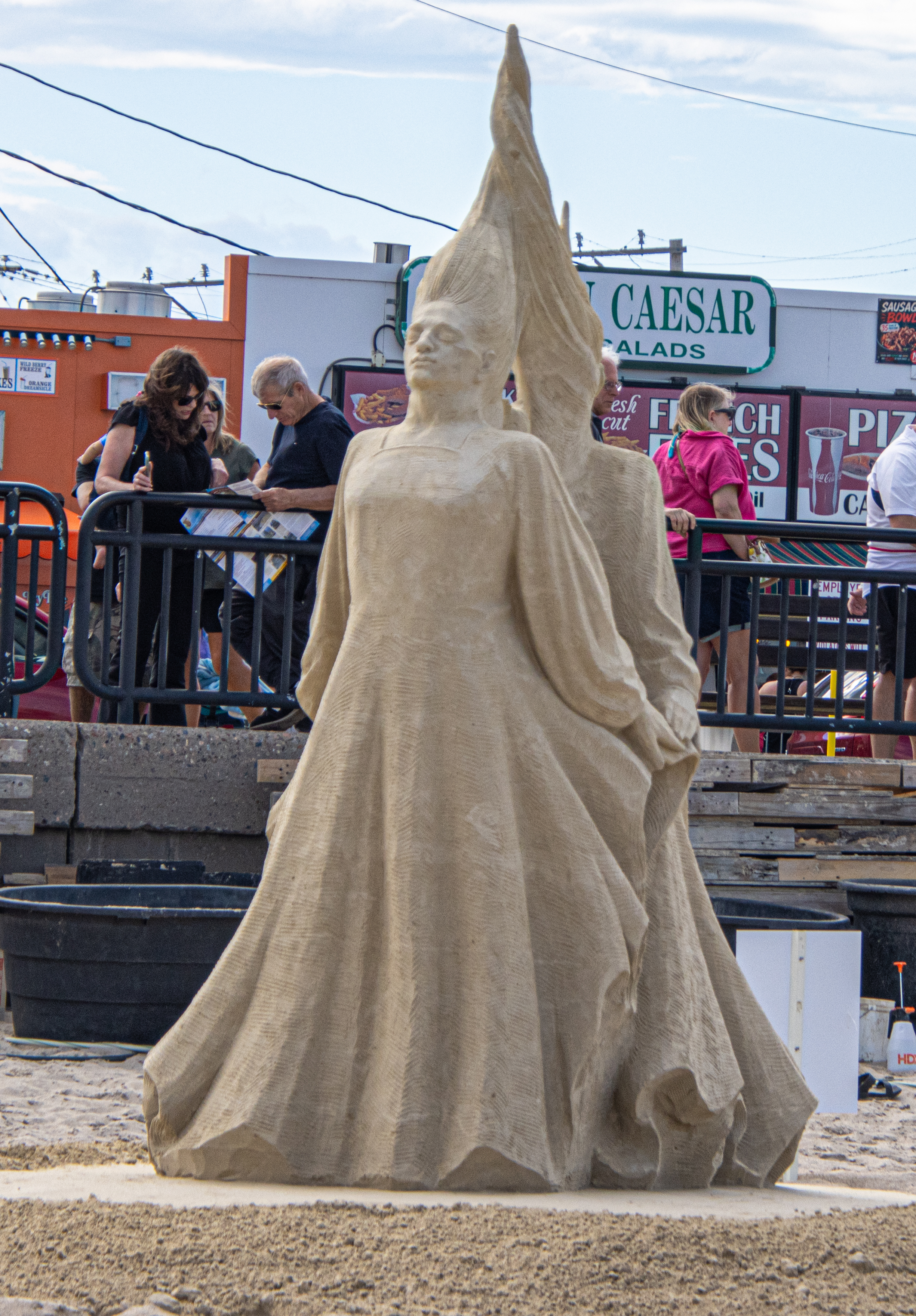
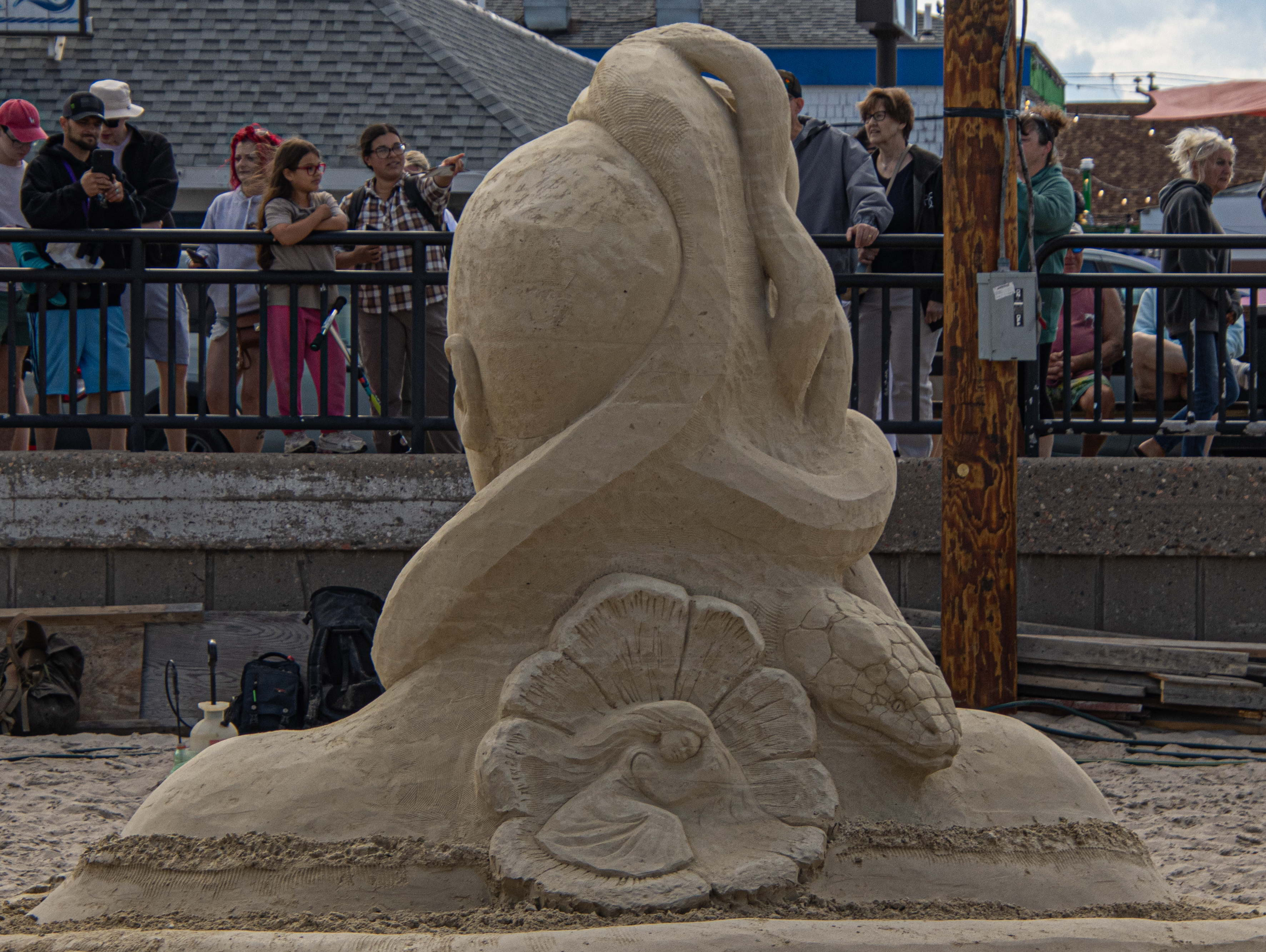
Second place went to Dmitri Klimenko of Saint Petersburg, Russia for “Spiritual Affinity”. Dmitri said the sculpture is all about relations and when people “become one.” The owl is a symbol of wisdom that people gain when they come together.
Coming in third was “The Birth of Venus” by Ilya Filimontsev of Moscow, Russia. His sculpture was based on a work of art of the same name as the sculpture by Sandro Boticello. He explained that the work of art shows Venice coming from the ocean and the beauty of Hampton Beach reminded him of the story of “The Birth of Venus.”
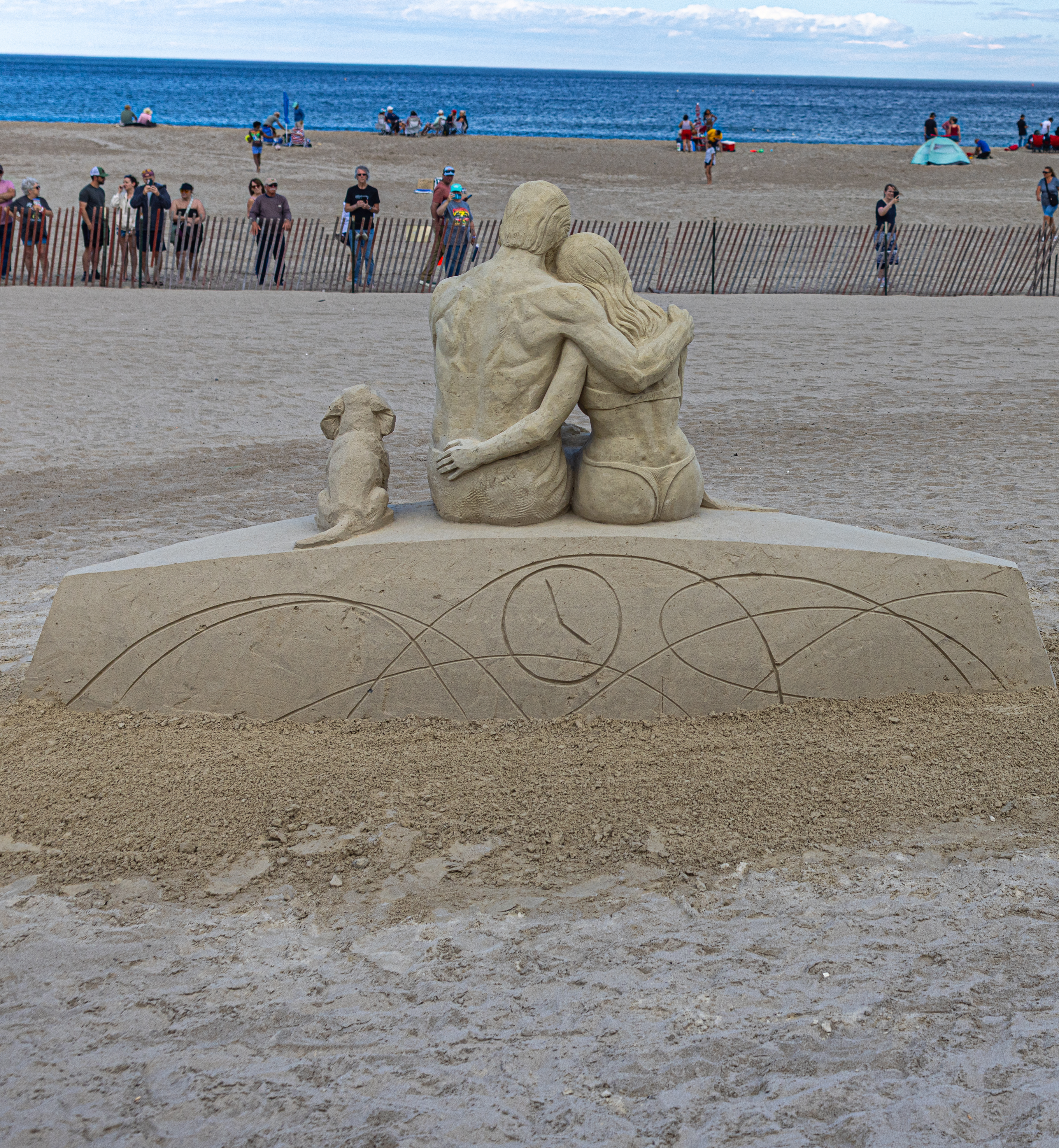
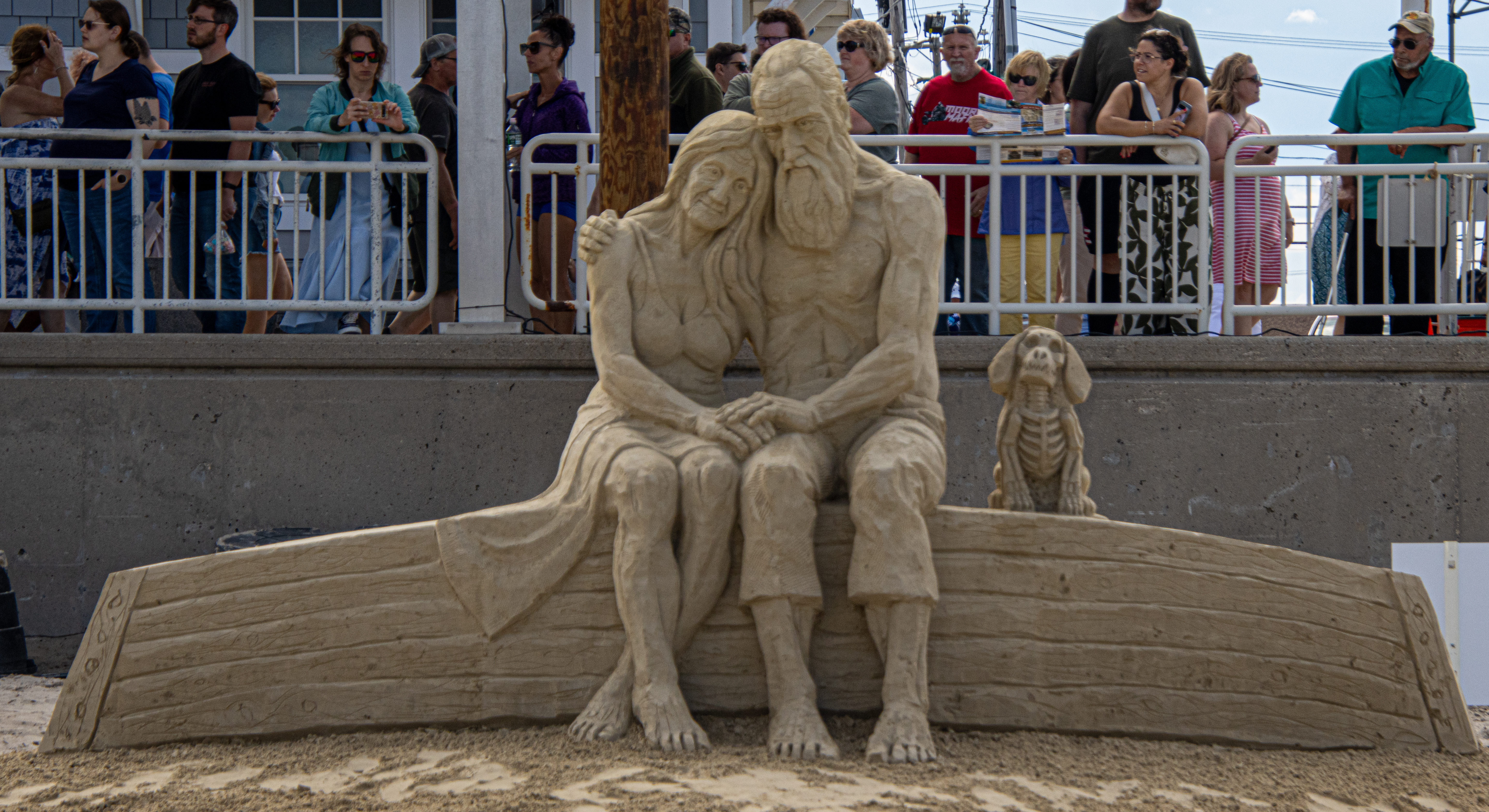
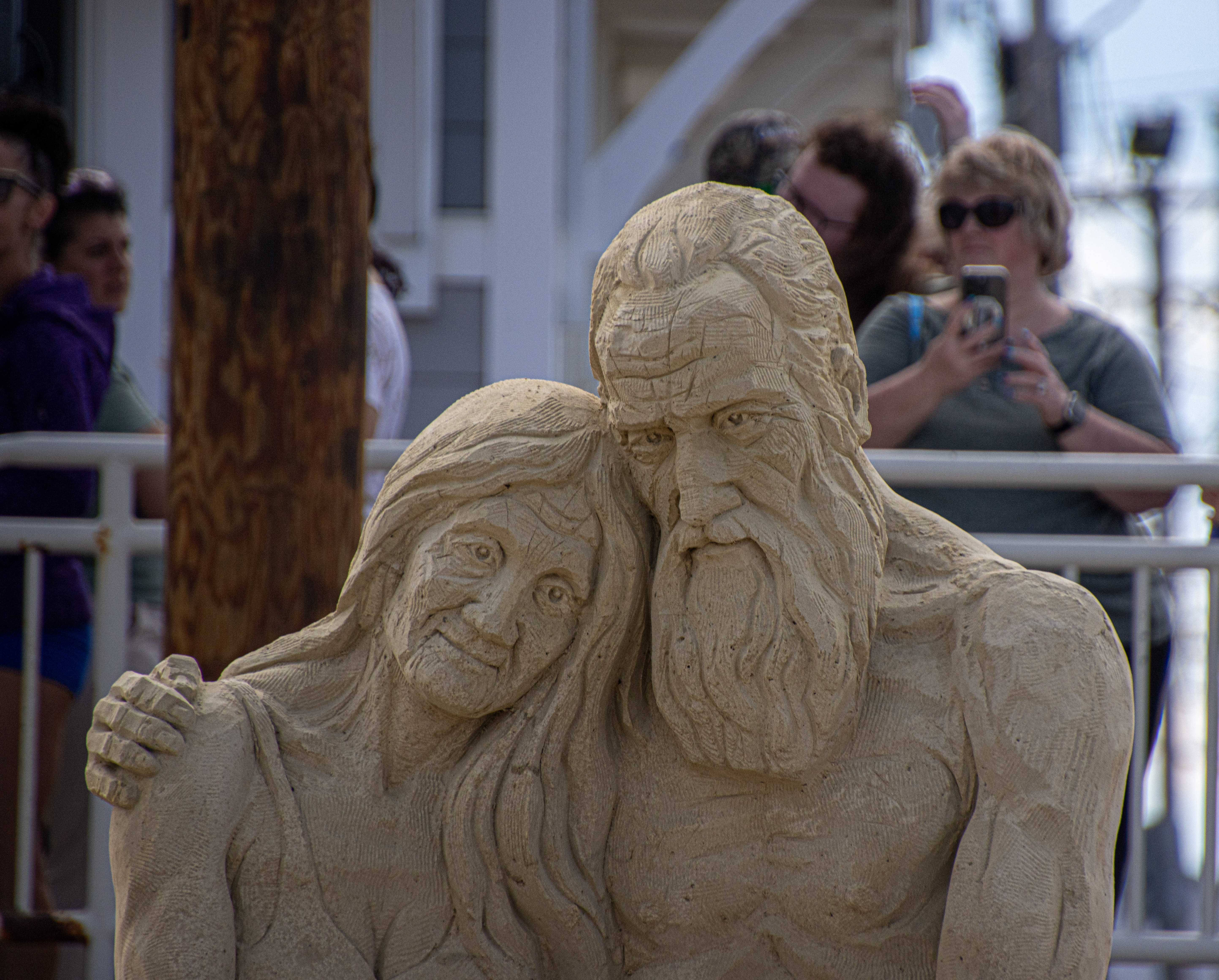
Karlis Ile of Latvia snagged fourth place with his sculpture “Waiting for the Sunset.” This sculpture also won the People’s Choice” and the “Governor’s Choice” Awards. He said his sculpture was about two people waiting for the sunrise and how beautiful it is to see one sunrise. But, it’s even more beautiful to see many sunrises together and to have the time we spend with our loved ones. This sculpture was unusual because the back of the figures of the sculpture are facing the street view while the front of the figures are facing the ocean. Of course, it does make sense as they are waiting for the sunrise!
While those sculptures were the winners of the event, all of the sculptures were worthy of praise.
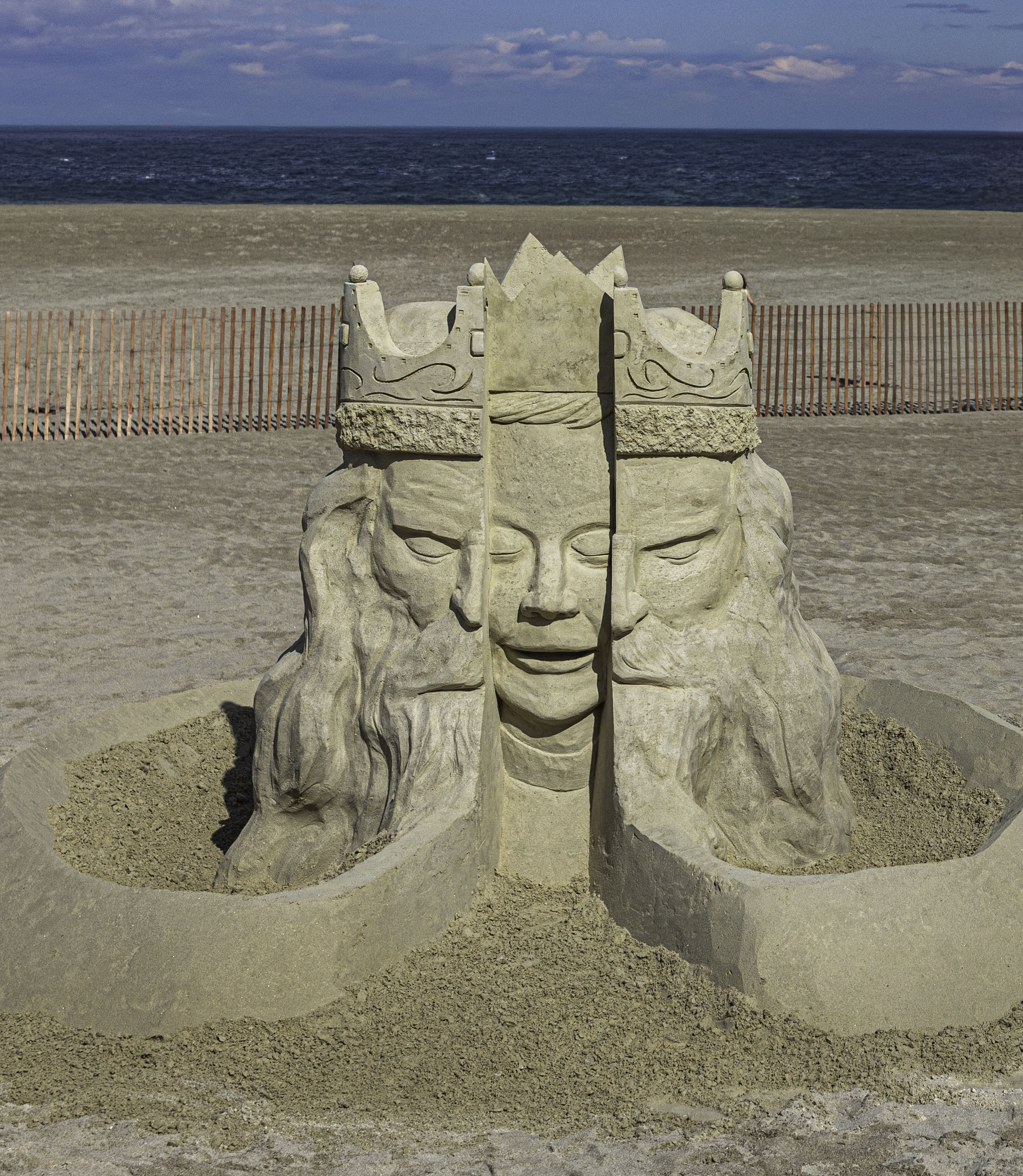
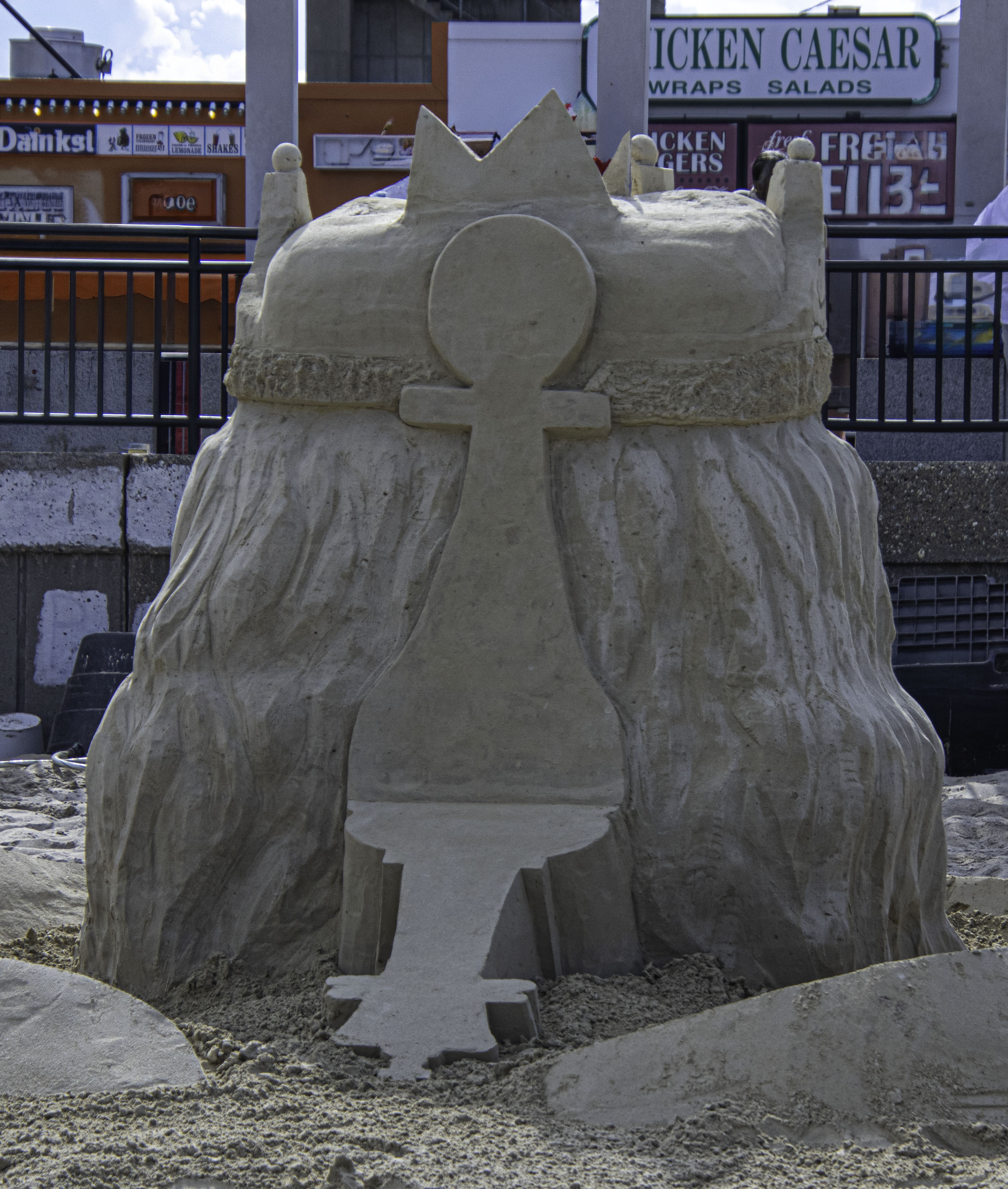
Joon Park, also known as JP and the “Japanese Sandman” made “Born to Be”. He said his sculpture shows a young prince and his evolution into a king.
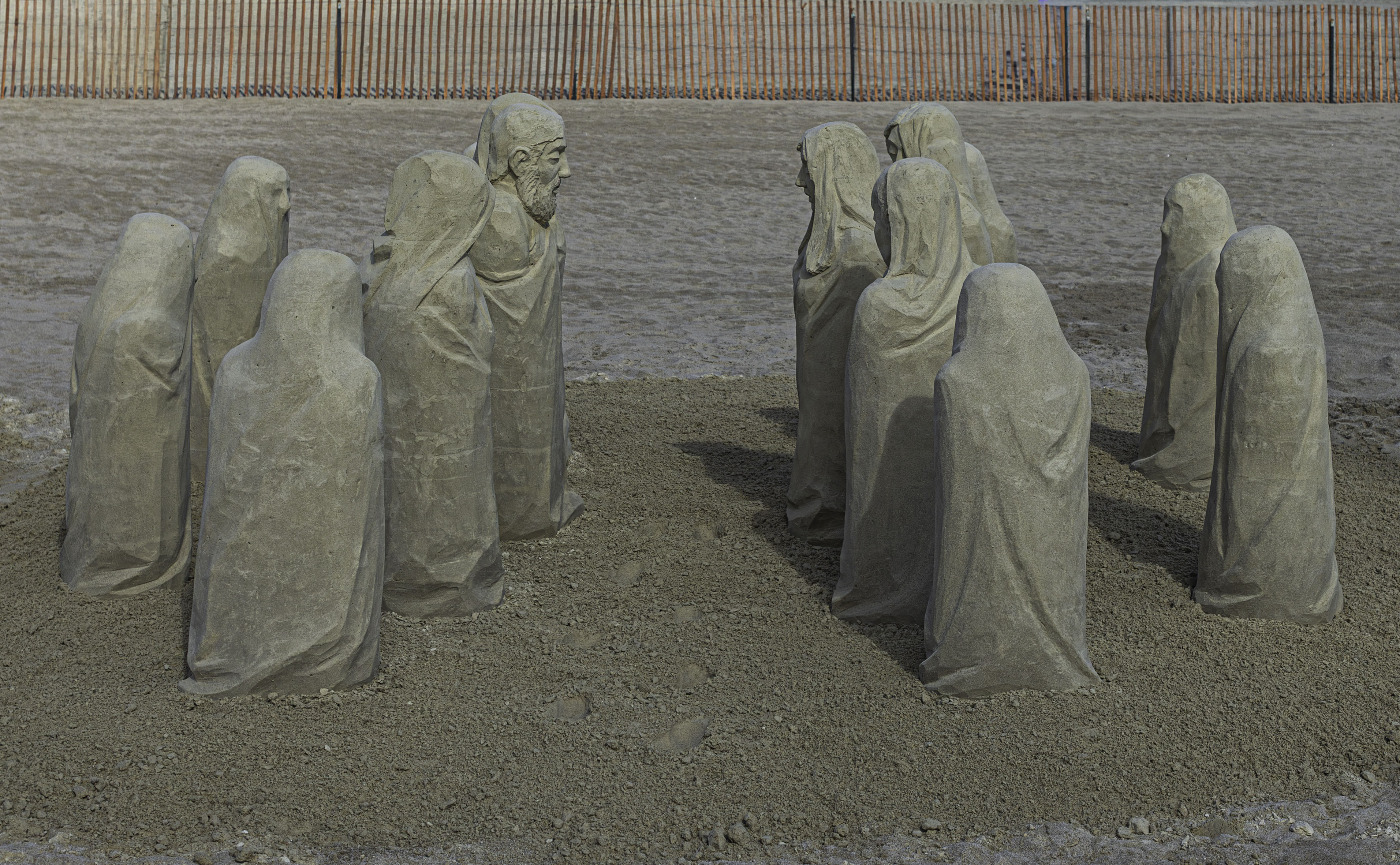
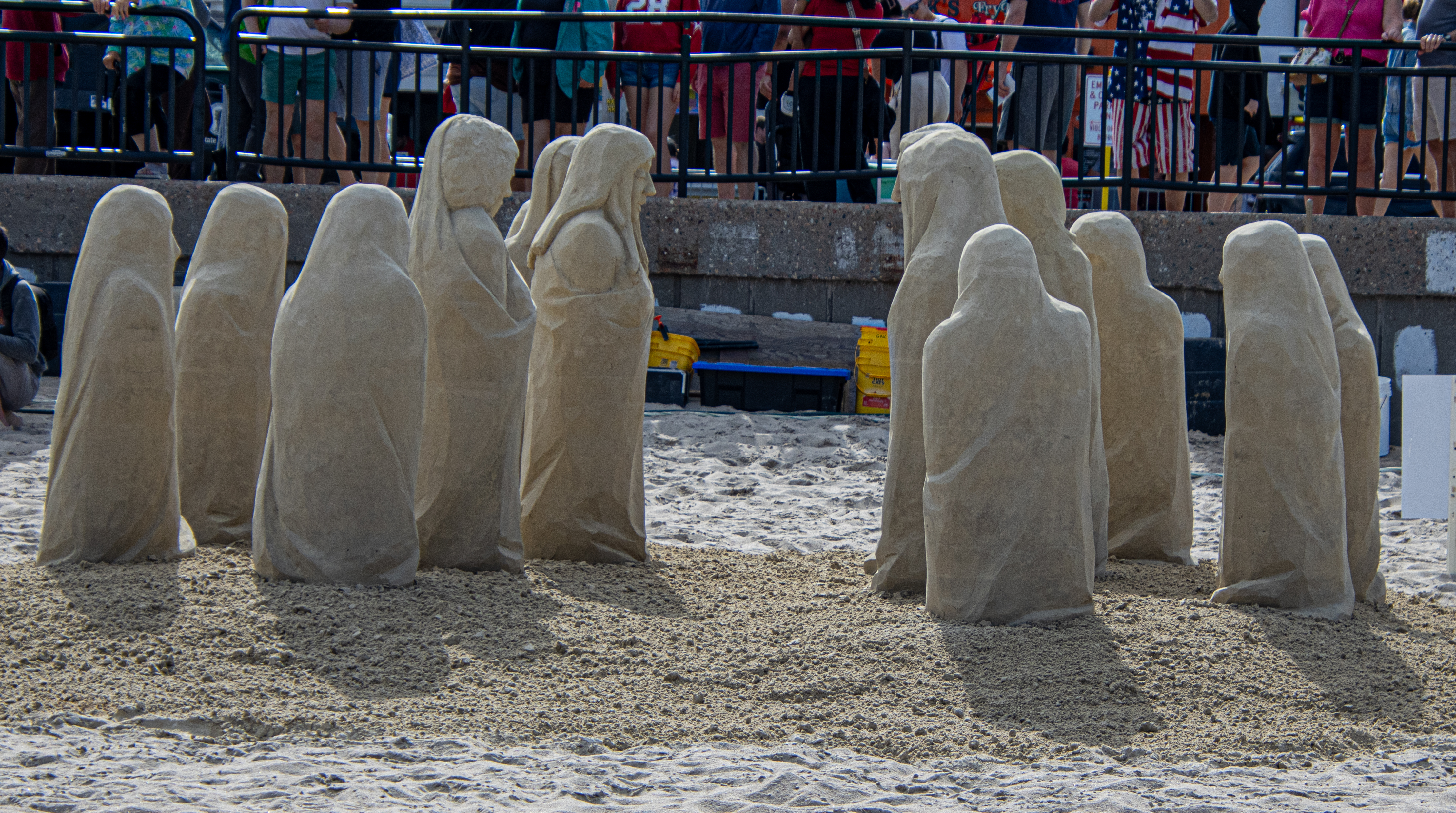
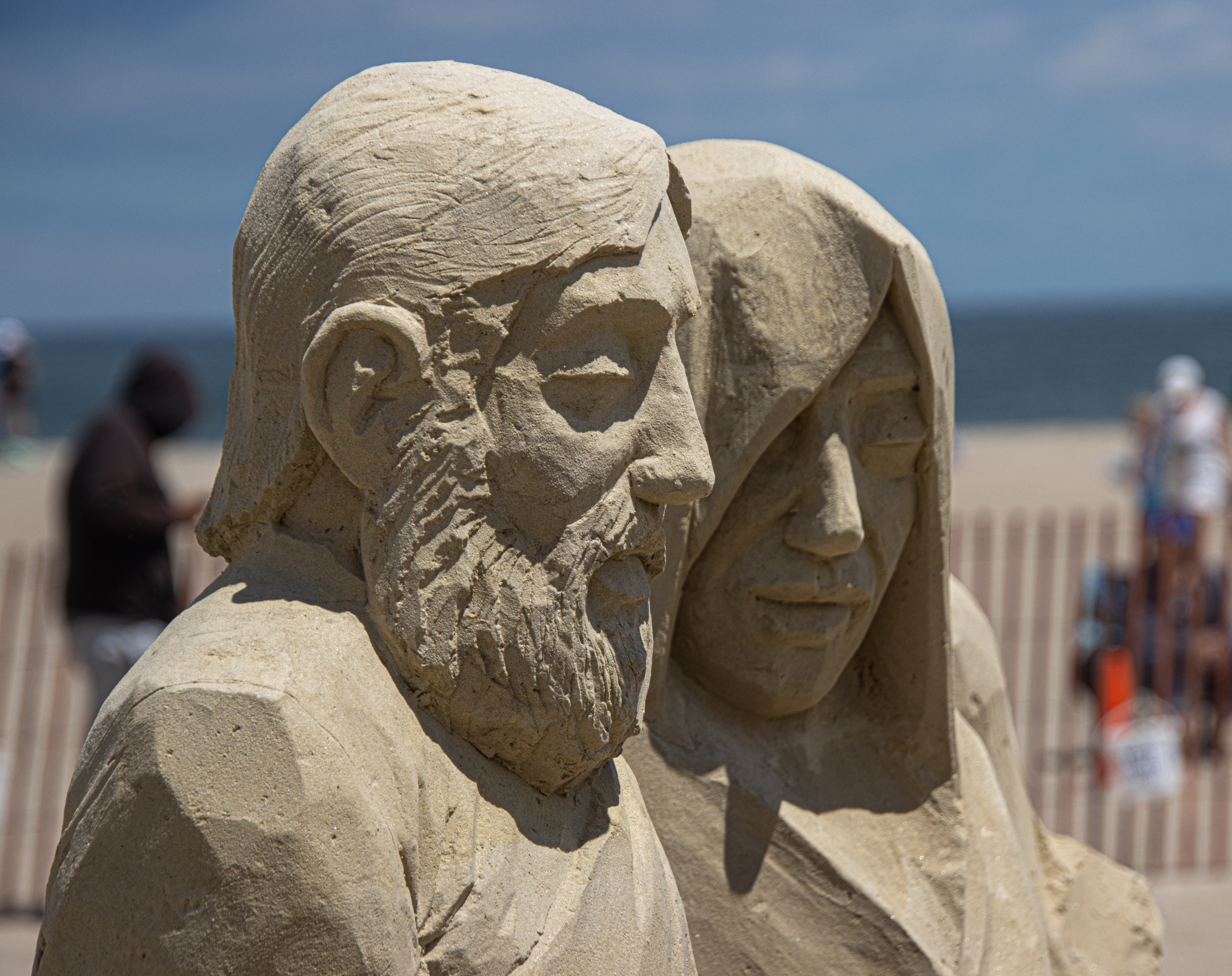
“Ancestral Knowledge” by Carl Jara from Cleveland, Ohio, is about the knowledge he has of his ancestors. The empty space in the middle is where he stepped out and the people on one side are his parents and the people on the other side are his grandparents.
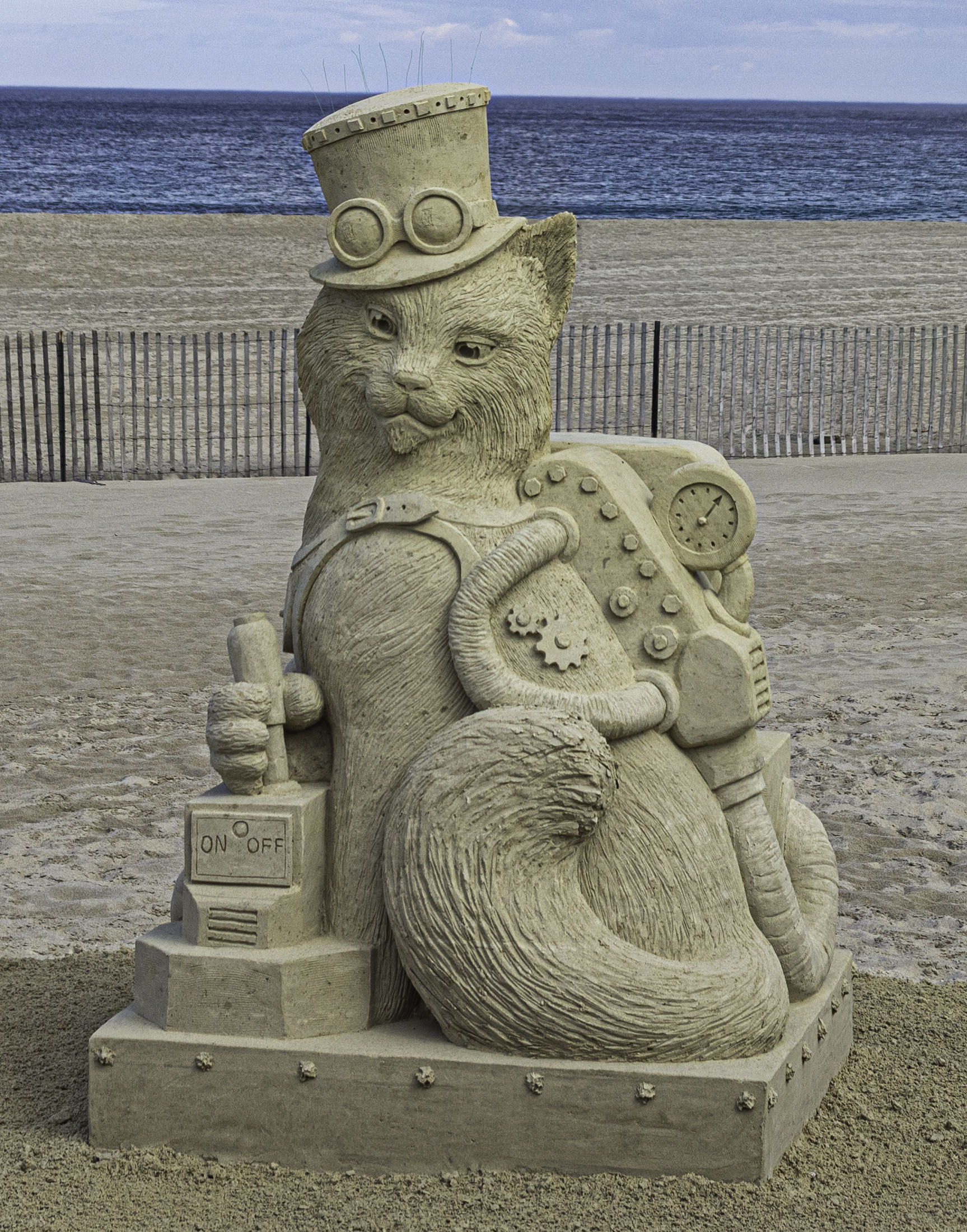
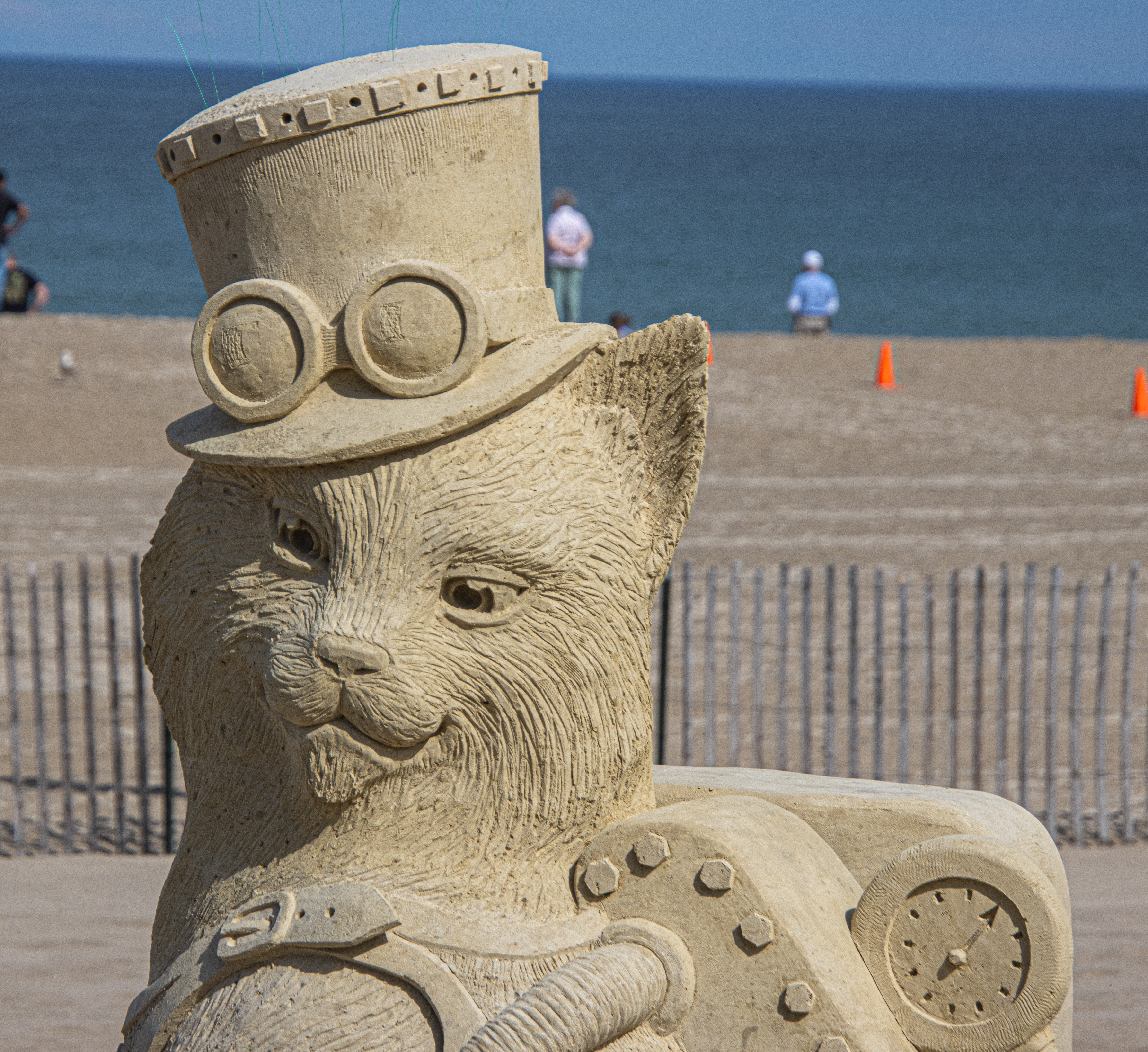
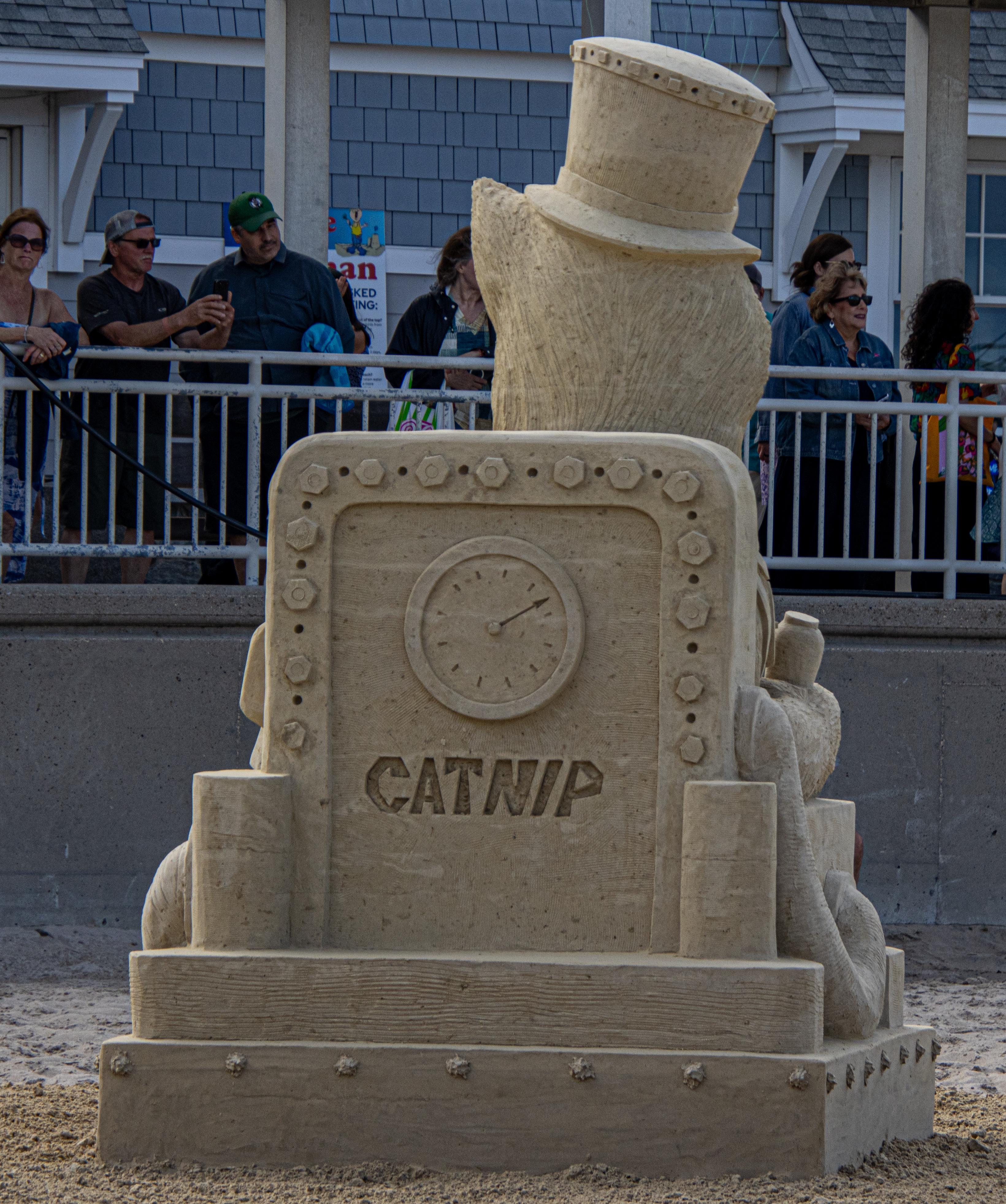
“Puss N Bolts” by Karen_Fralich from Toronto, Canada, is based on the animated film “Puss In Boots”. According to Fralich, “Puss In Boots” has been moving up in the world since his success in the fairy tale. He’s decided to expand his business and he’s created a machine that makes catnip. The pack on his back shows it’s full and so he’s very pleased with himself.
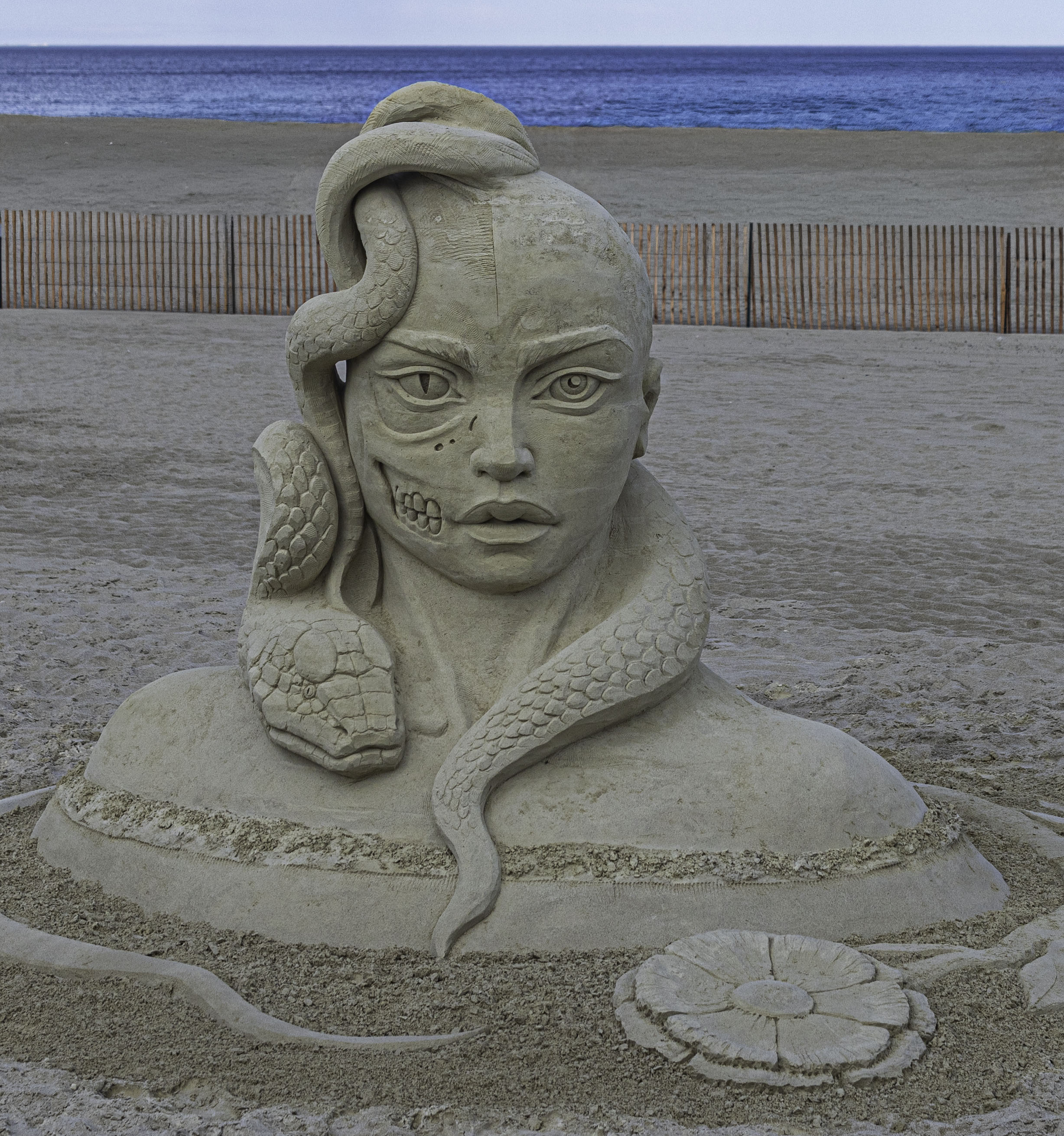
Agnese Ruditze from Lativia created “Revival.” She said her sculpture was inspired by the story of Medusa. She said Medusa’s fate was not her fault. Medusa, according to Fralich, was a victim and she wanted to give her a second chance. I think she would approve.
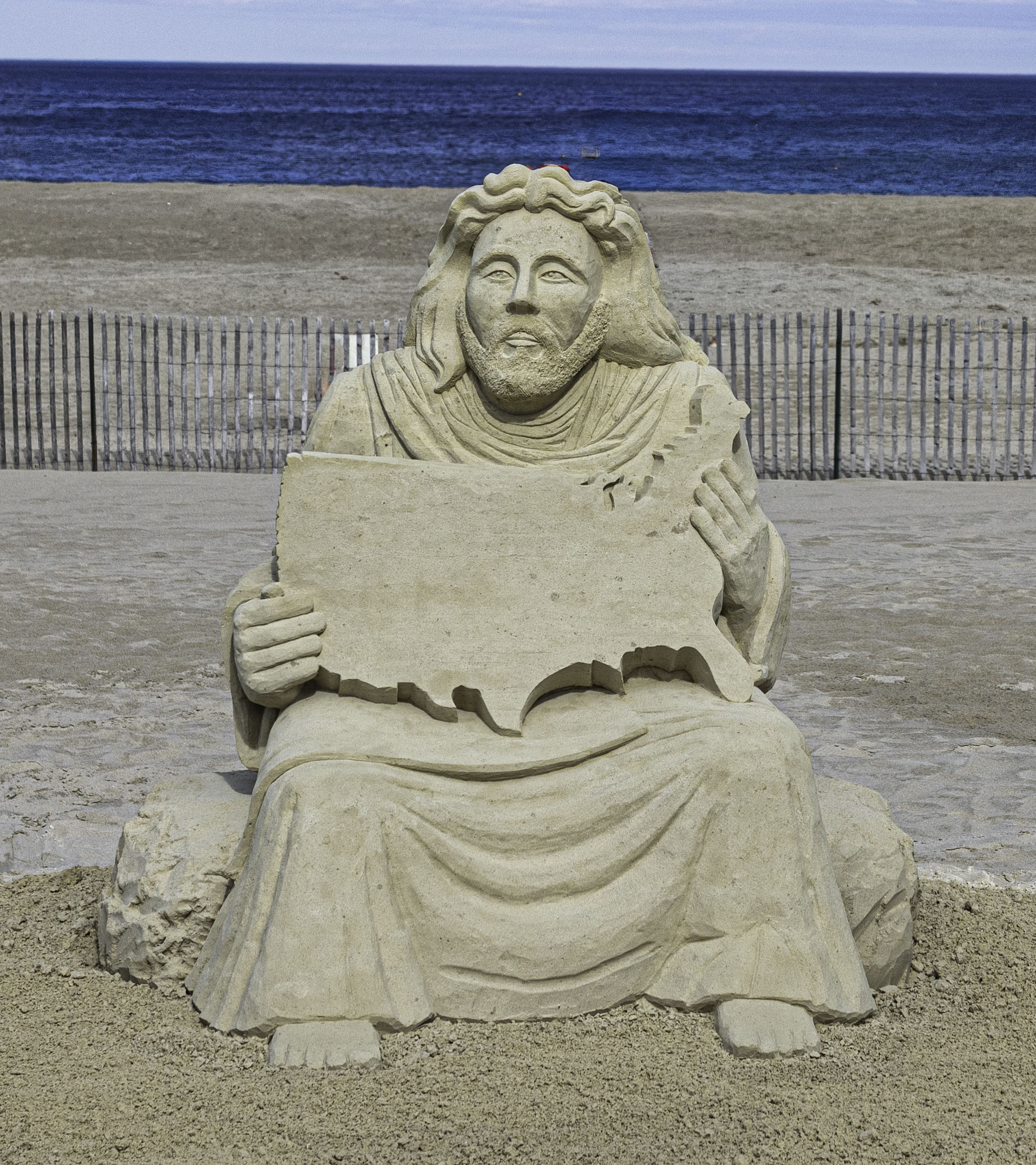
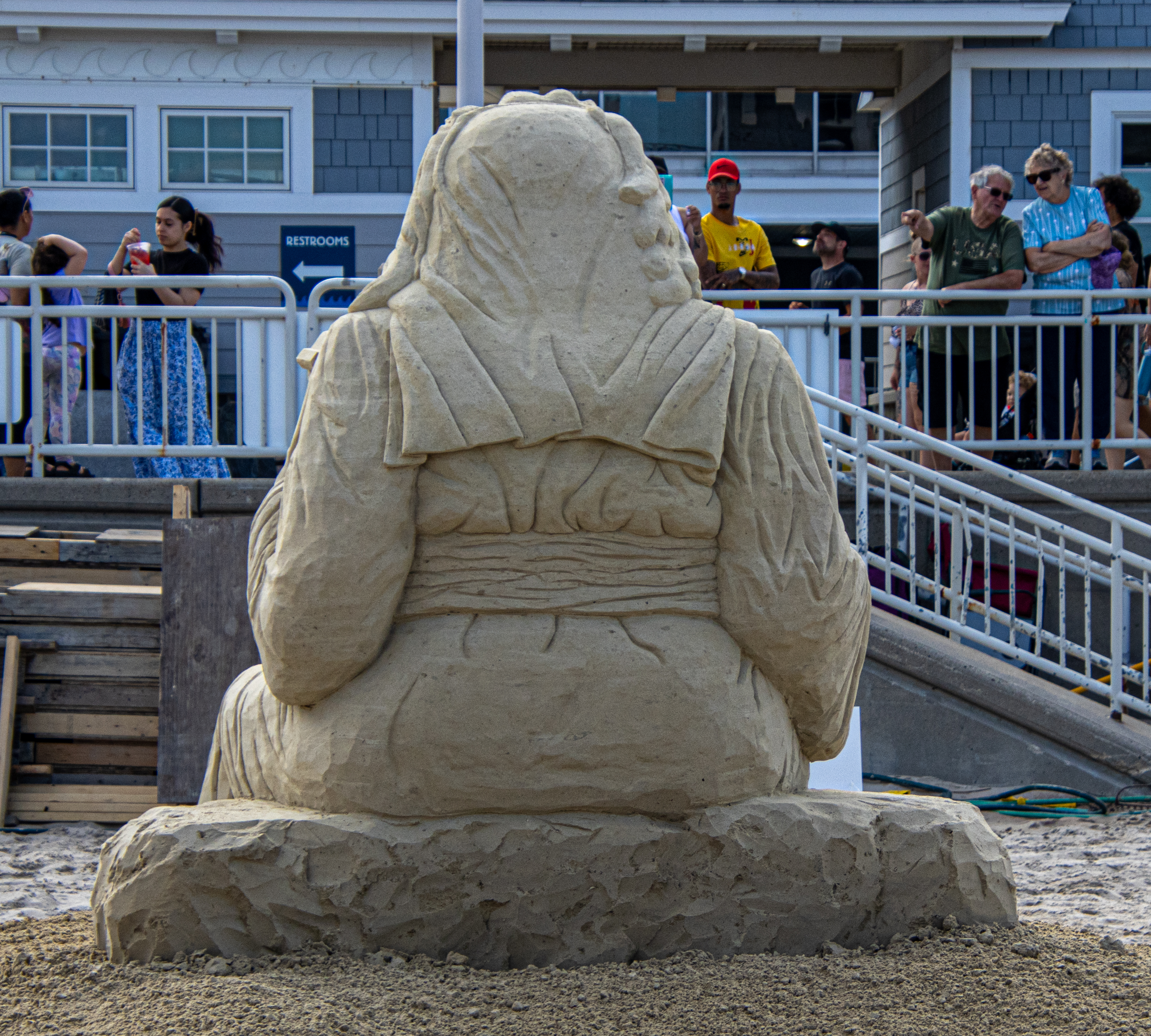
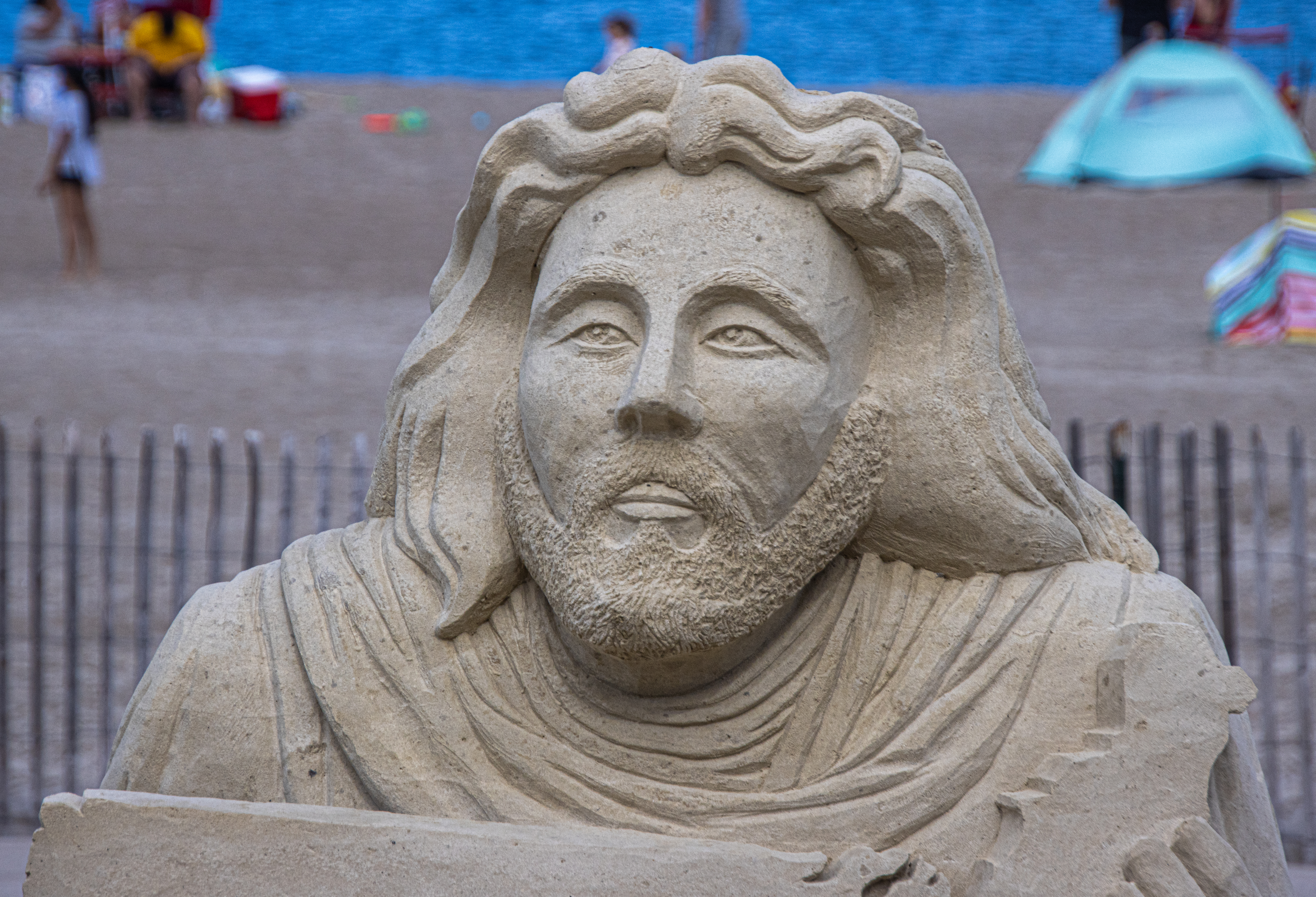
“One Nation Under God” was created by Justin Gordon from Groveland, MA.
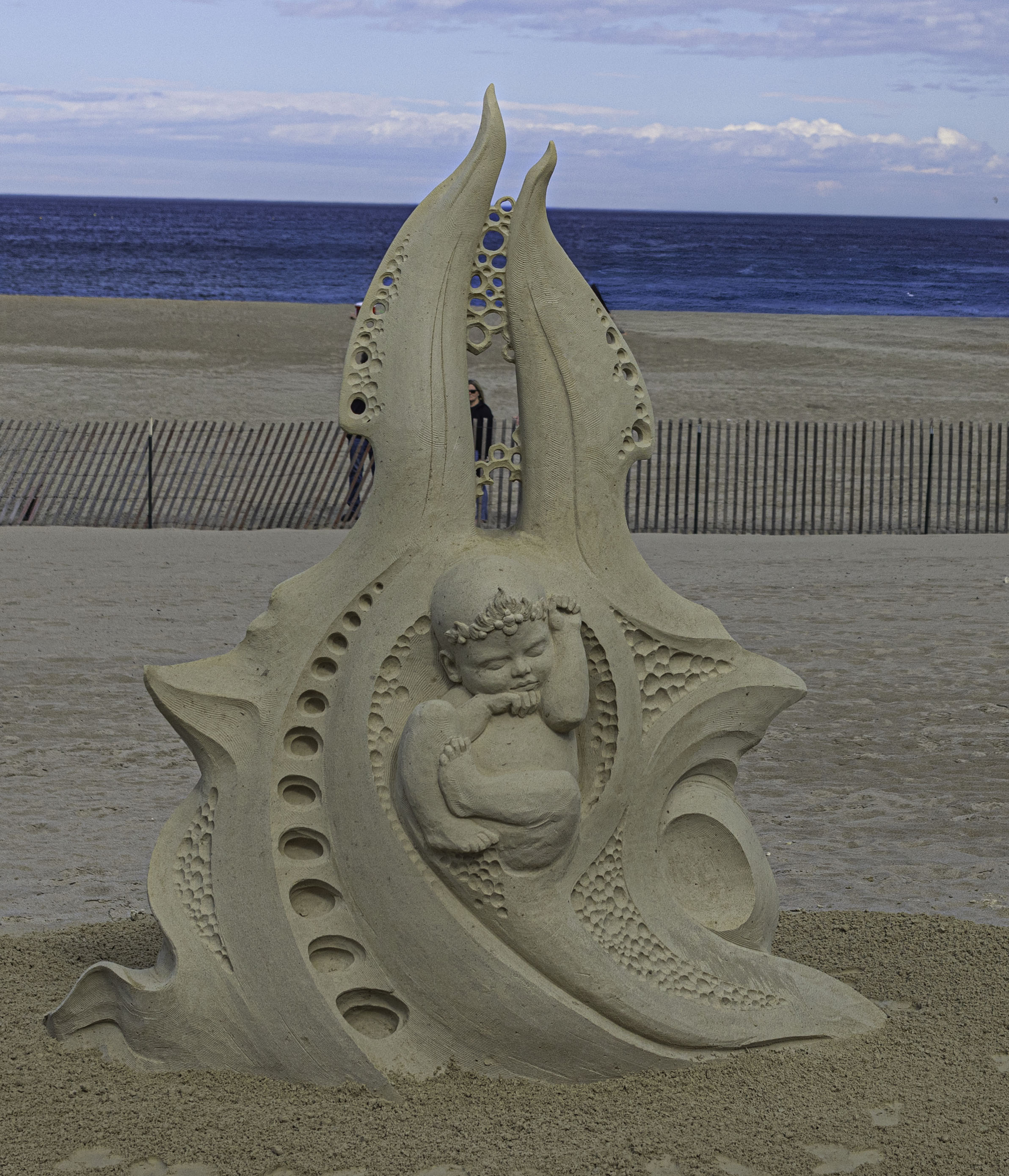
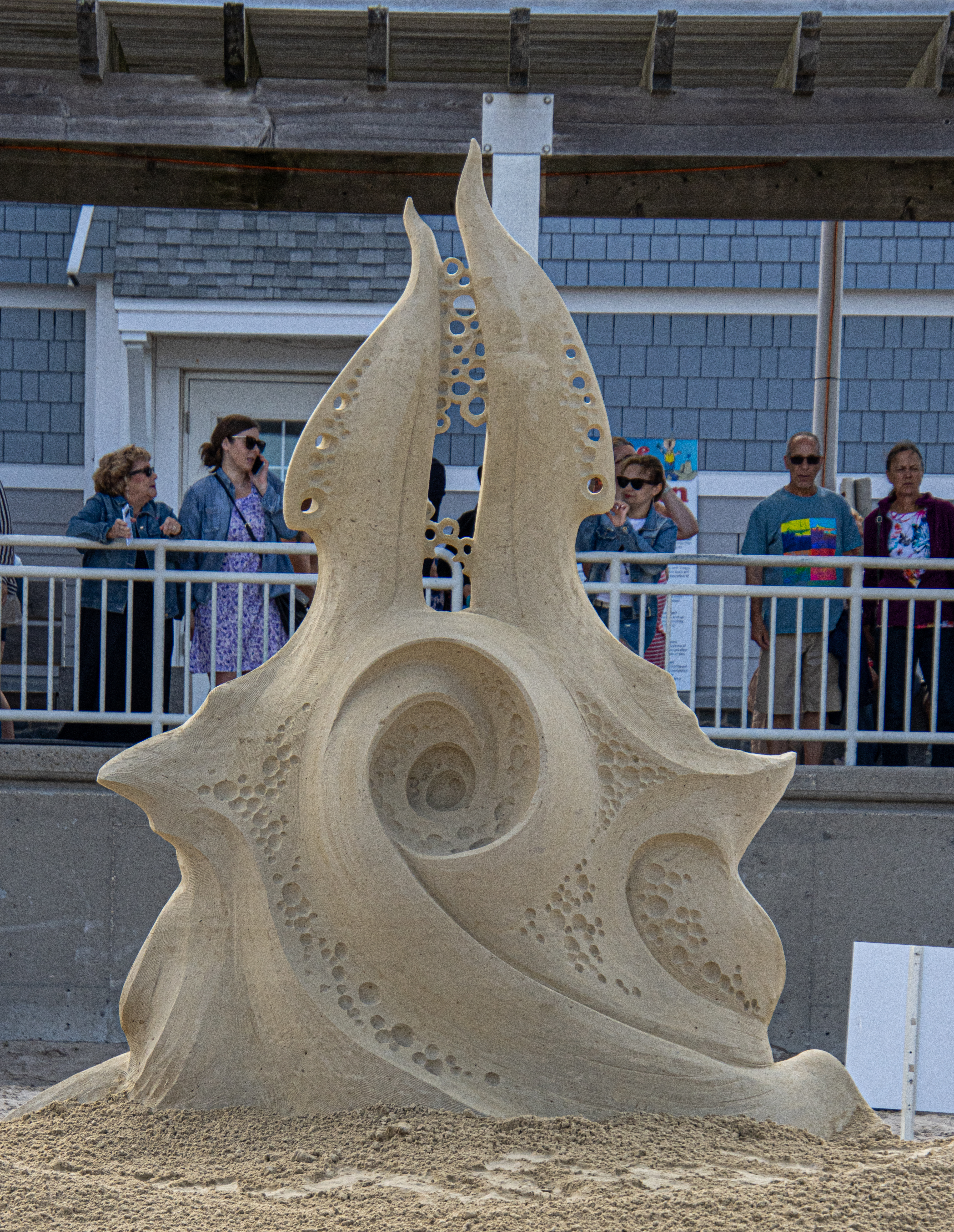
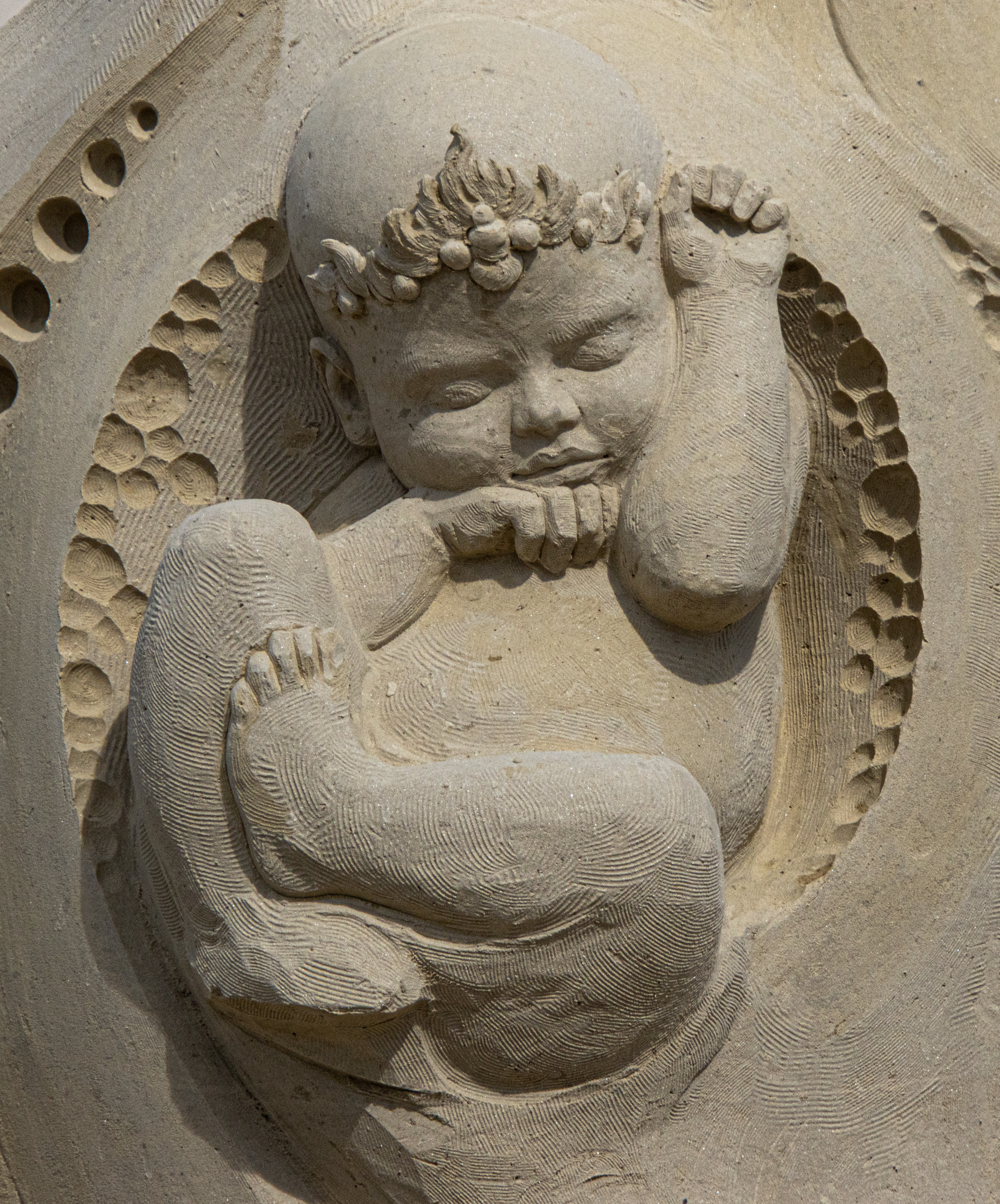
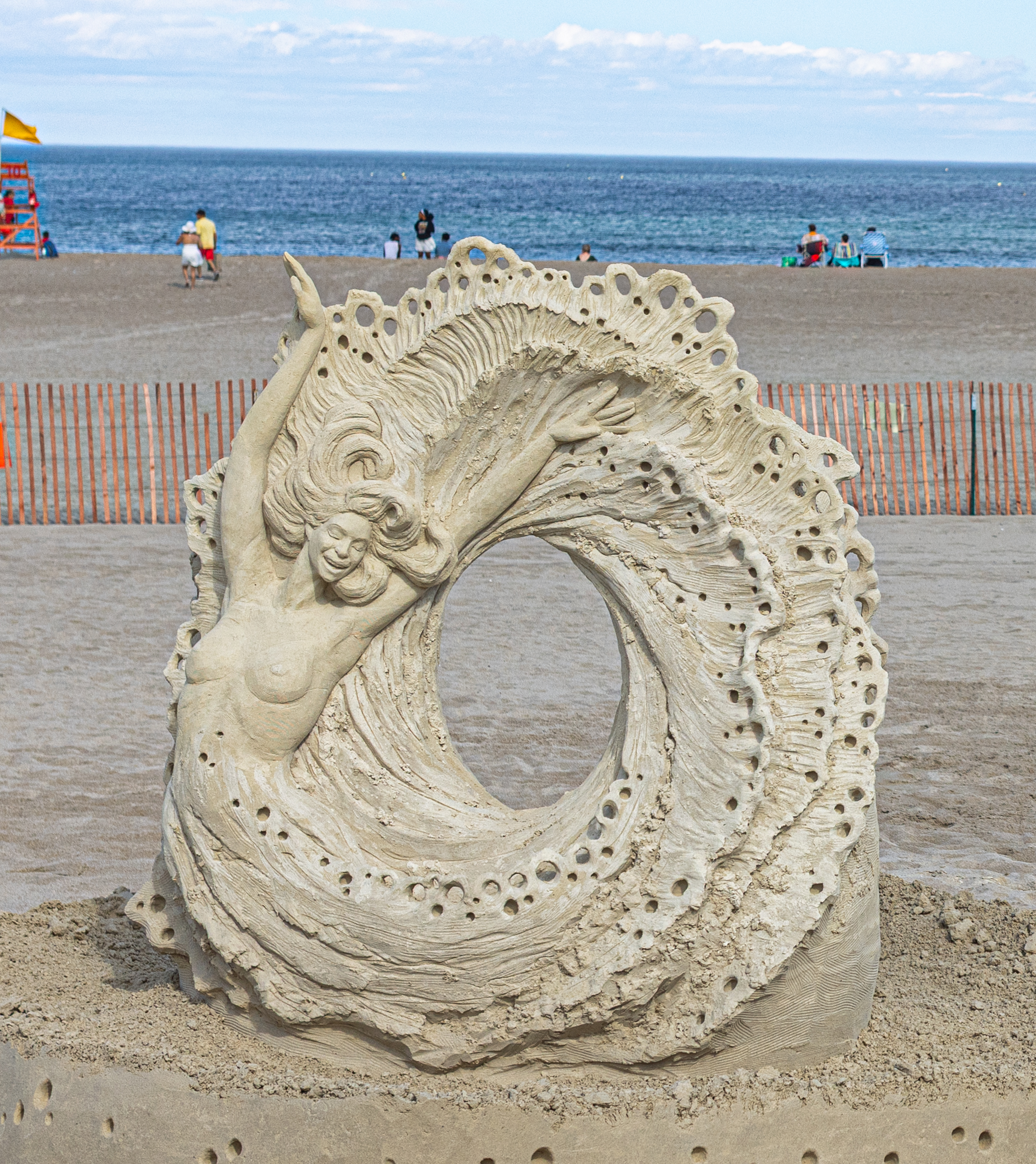
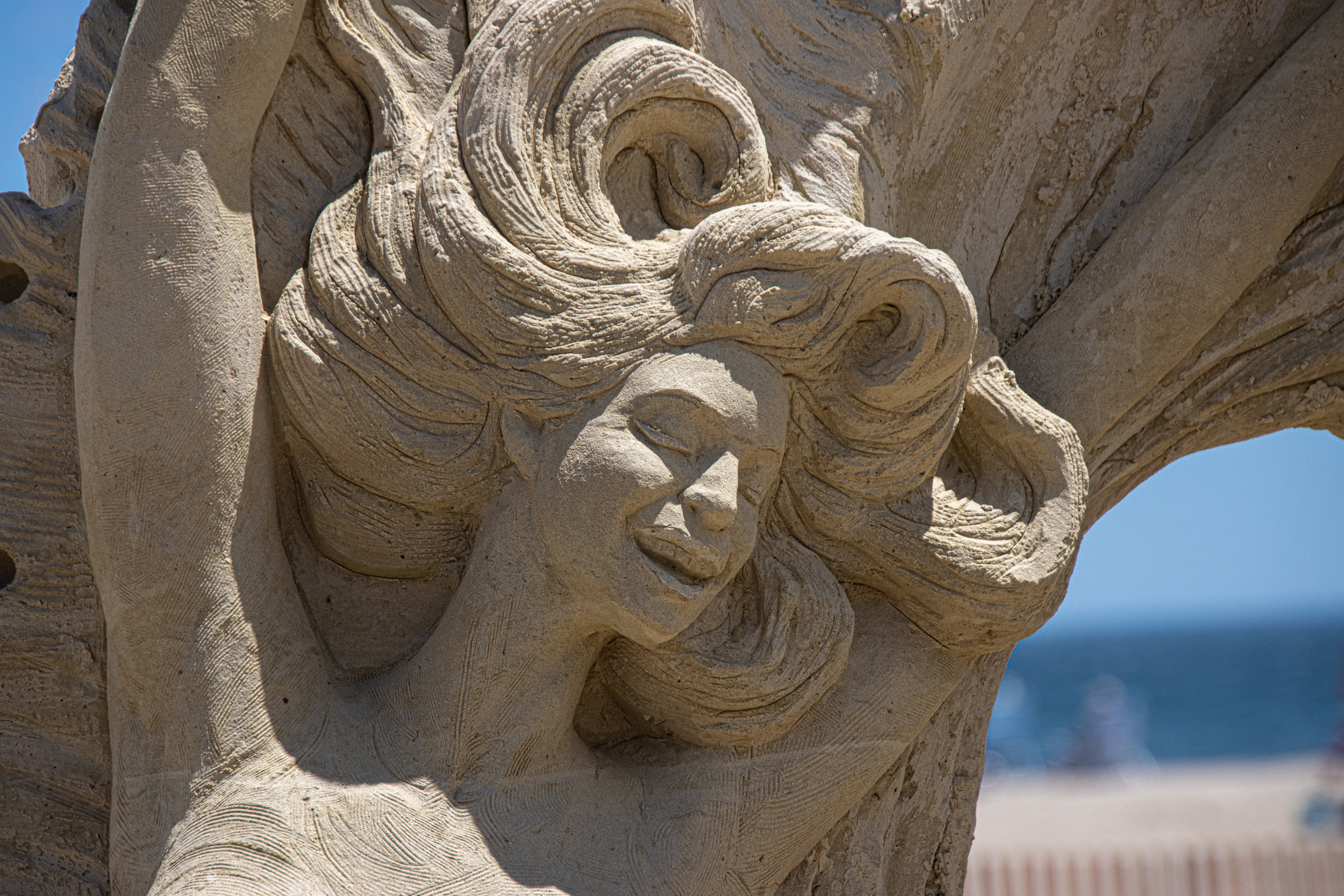
Last year’s first place winner, Melineige Beauregard from Captain Cook, HI, made “Go with the Flow.” She said her sculpture depicts how life is like a whirlpool and is full of currents and events that are always changing, She said the best thing we can do is bring our positivity and go with the change. Or, simply put, “go with the low”.
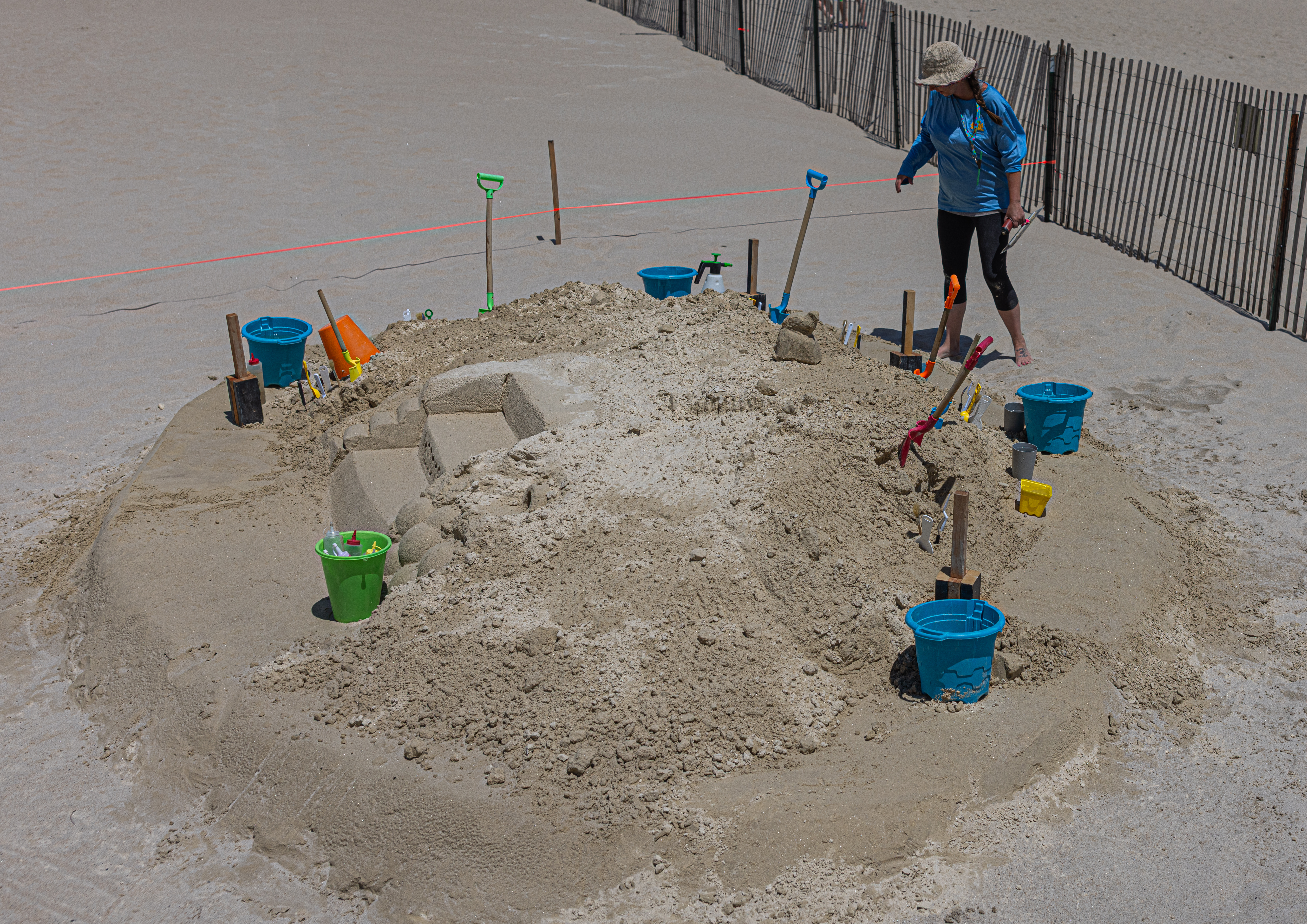
There was also an area on the beach where people of all ages could learn and practice their sand sculpting skills.
The sand sculpting event was fun for the entire family, even the furry members!
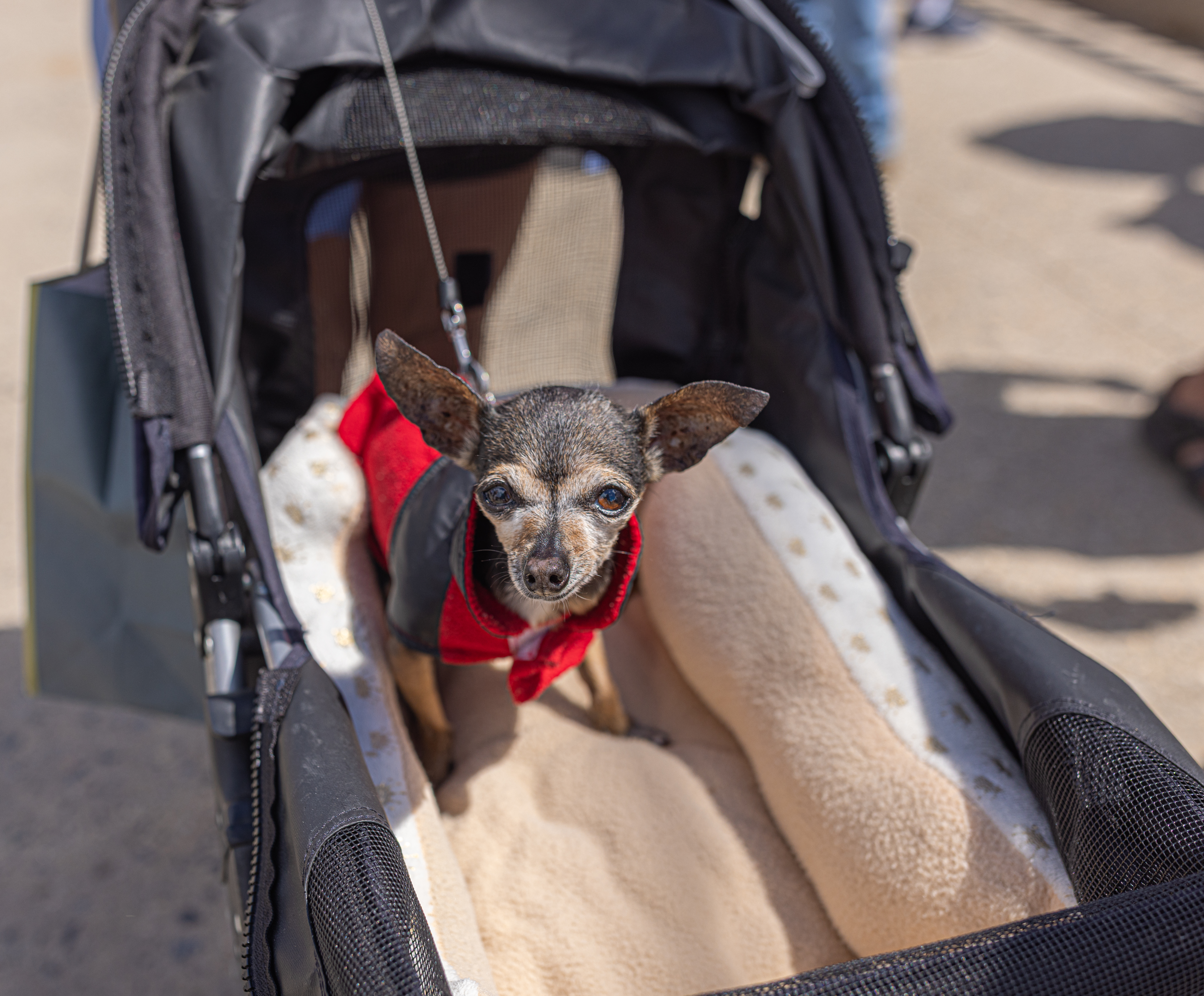
Eda, a 14 year old chihuahua mixed breed enjoyed the sculptures.
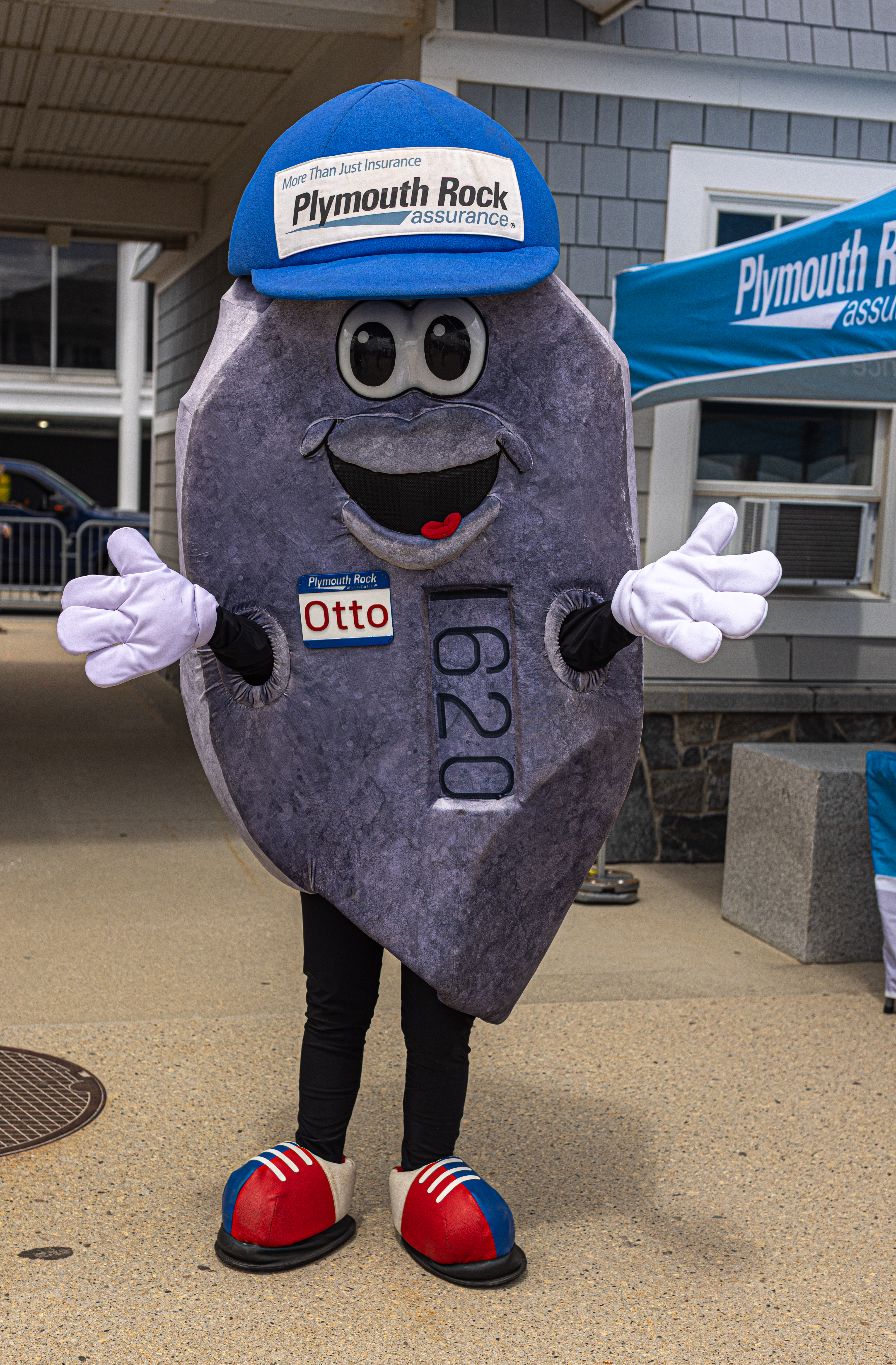
Even Otto, an insurance agent, had fun at the sand sculpting event.
The sand sculptures will be available for viewing until Sunday, June 28.