Category Archives: history

MA250 Sidewalk Art Tour (Greenfield, MA)

Date of Visit: July 25, 2026

Location: Greenfield, MA (2 hours northwest of Boston, MA or 1 hour north of Hartford, CT)

Cost: Free

Parking: Metered parking is available throughout the city

Summary: 10 murals celebrating America’s independence have been painted on the sidewalks of Greenfield, MA

Website: MA250 Sidewalk Art Tour

There have been incredible celebrations and memorials throughout this year all of New England in celebration of the country’s 250th anniversary. And the sidewalk art in Greenfield, MA, is another example of how art can be used to be celebrate our country’s independence.

The ten murals, which are painted on the sidewalk rather than walls, celebrated a different aspect of our independence.

While all of the murals are located in or near Greenfield Center, you will have to drive to a few of them. I am listing them as they appear on the website. But, I didn’t photograph them in this order. Some of the addresses are approximations since some of the locations, like a cemetery, don’t have an actual address. Also, some of the locations are near certain areas, like the intersection of Meridien and Deerfield St. So, it’s important for you, or preferably a passenger, to look at the sidewalk while driving to some of these locations.

Since most of the descriptions use the artist’s own descriptions of the works of art, I copy and pasted the descriptions from the website as I wanted to represent the artists’ descriptions in their own words. Plus, it made it easier for me. So, it was a win-win!

“Liberty is Unfinished Work” – City Hall, 14 Court Square by Danielle Lucier
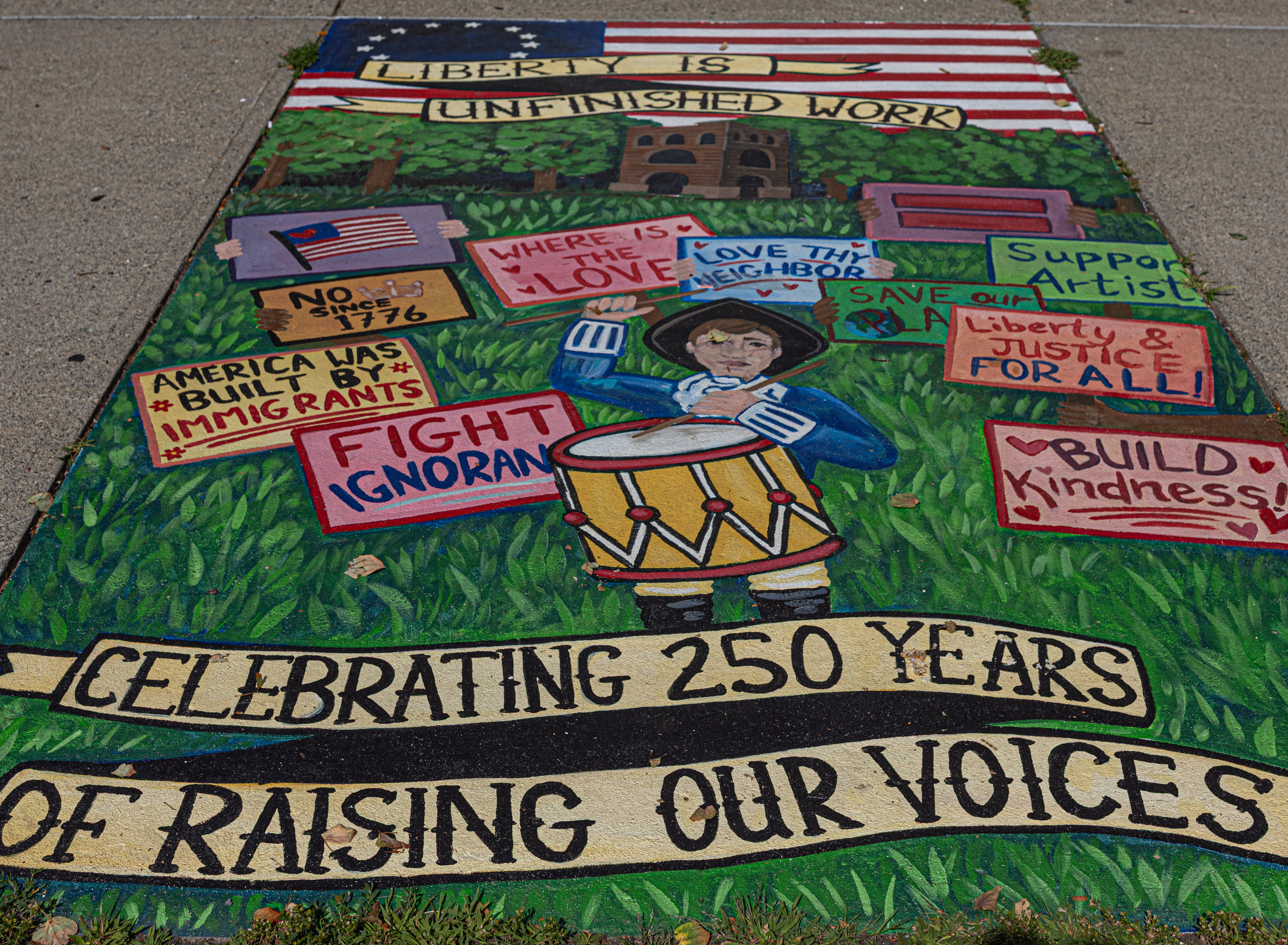
Sometimes photography can seem simple. Just point, adjust settings, sometimes repeatedly, and click. However, sometimes it’s not so easy or straightforward. Since this mural was painted vertically on a sidewalk and it was difficult to read all the lettering, I actually photographed this mural on a step stool. By photographing it from a higher angle and looking down, I was able to photograph it with all of the worlds visible and legible. I did have to duck a little so my shadow didn’t appear though.

Created for the 250th anniversary of the American Revolution, “Liberty is Unfinished Work” reflects on the ideals that inspired our nation’s founding, while also acknowledging that liberty is an ongoing project that we work towards every day. My piece depicts a Revolutionary War drummer boy leading a group of present-day marchers with modern signs, connecting the spirit of civic action that shaped the American Revolution with the ways people continue to advocate for their rights, communities, and futures. By putting the drummer with modern day marchers, I also wanted to give viewers a way to relate their work back to history- and to feel like a participant in an ongoing story rather than a distant observer of a historical event.

When designing this piece, I thought about the Revolution not only as a defining historical event, but also as the beginning of a conversation about liberty, representation, and self government. The American Revolution was driven by ordinary people who believed they had the right to make their voices heard. So instead of portraying a moment in the past,  I wanted to explore things like who had a voice, who was included, and how those people worked together to create change- and create a piece that felt relatable as a person existing 250 years later.

As an artist reflecting on the 250th, I felt both contemplative and celebratory. It gave me this beautiful opportunity to honor courage, aspirations, and sacrifices that shaped our nation- while also recognizing that liberty isn’t a finished achievement. This anniversary serves as a reminder that each generation inherits the responsibility to expand, protect, and redefine freedom in its own time. This mural was made to celebrate the continuing work and the people who carry it forward.

Visual description: a tall rectangular sidewalk square with banners at the top and bottom. The banners say “Liberty is Unfinished work. Celebrating 250 years of raising our voices”. In between the banners is a green hilly landscape with Poet’s Seat Tower at the top. A revolutionary drummer boy leads a crowd of modern-day protesters with bright, colorful signs standing up for what they believe in.

“What Holds Us Together” – Transit Station, 11 Olive St by Cameron Schmitz
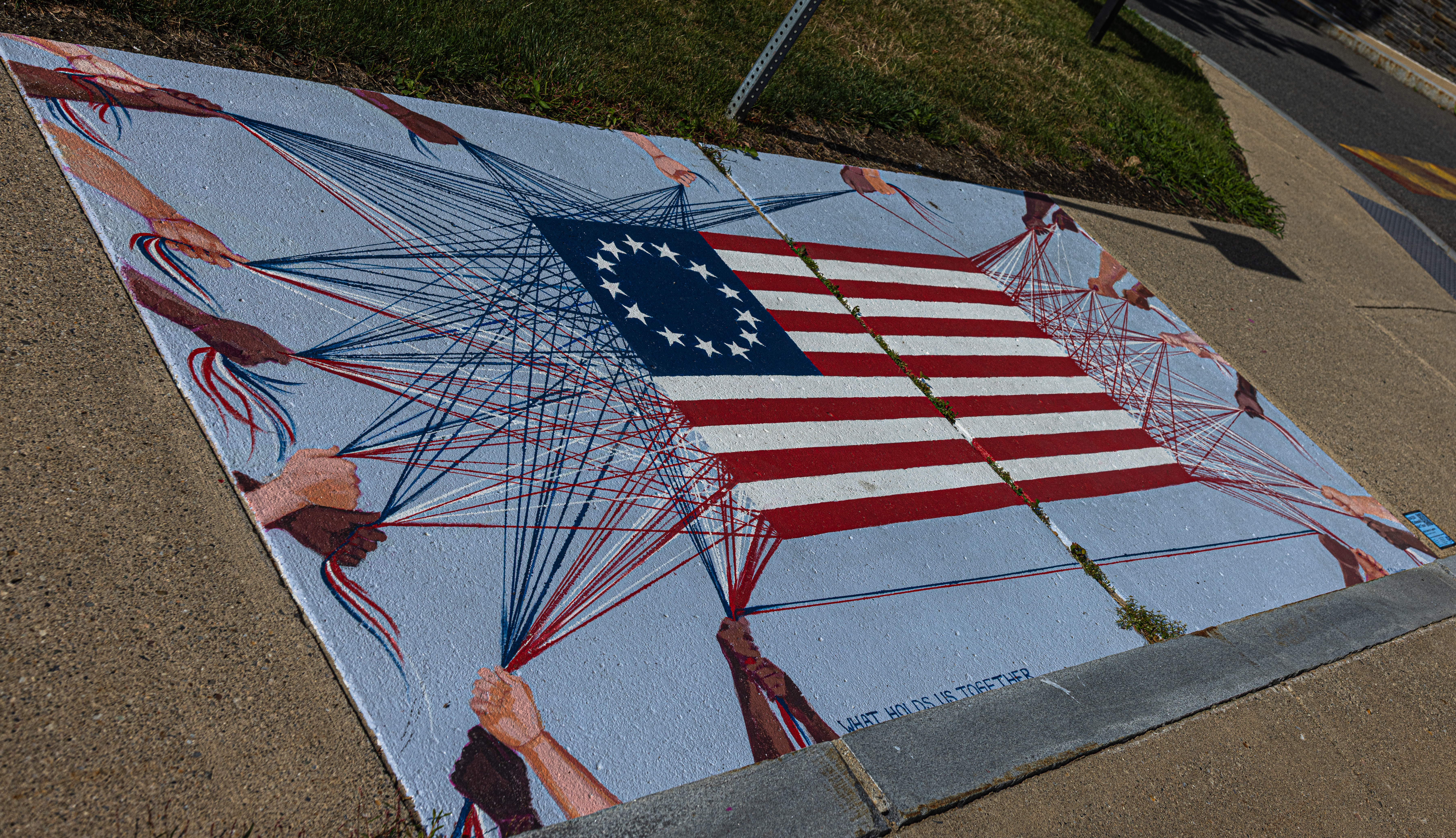
Painted in honor of the 250th anniversary of the American Revolution, my mural, “What Holds Us Together”, celebrates the diverse people whose contributions, sacrifices, and shared efforts have been essential in shaping our nation from its founding to present day.

Suspended in the center of the mural, the original thirteen-star American flag appears to emerge from a web of intersecting threads, its fibers extending outward, held together by the hands of many different individuals. Like a woven tapestry, overlapping strands of red, white, and blue extend outwards, interweaving and converging into an intricate network of connection. The diverse hands which collectively hold the flag’s fibers together, represent people of different backgrounds, cultures, ethnicities, and generations, each contributing to the ongoing work of strengthening the fabric of our nation.

My inspiration for this mural is rooted in an often-overlooked truth about the American Revolution itself. Traditional depictions of the Revolutionary era have frequently centered on white colonial figures, leaving many other contributing members largely absent. Yet the struggle for independence was shaped by people from a wide range of backgrounds. African American men, both free and enslaved, served as soldiers, sailors, laborers, messengers, spies, and support personnel throughout the war. African American women contributed as caregivers, laborers, messengers, camp followers, and community builders whose efforts helped sustain both military and civilian life during the Revolution.

Indigenous nations also played significant and complex roles throughout the Revolution. Native soldiers, scouts, diplomats, guides, and leaders influenced military campaigns, intelligence networks, and political alliances, while Indigenous women often held important roles in diplomacy, decision-making, and sustaining their communities through a time of profound upheaval. The choices made by Native nations shaped both the course of the war and the future of the continent.

The story of American independence is far more diverse, interconnected, and nuanced than it has often been portrayed. By depicting hands of different skin tones collaboratively supporting the flag, this mural recognizes the countless individuals whose labor, sacrifice, and participation have been vital in weaving our nation into being. It serves as a reminder that diversity is not a recent addition to the American story, but is in fact, an essential part of it. The strength of our nation has never rested in a single people, culture, or perspective, but rather, is the result of contributions of many individuals whose lives and efforts have become interwoven across generations.

The hands of this mural do not simply hold the flag together—but are also being held together in unison as its maker. Some hands overlap, some press intimately against one another, and others work side-by-side, symbolizing the trust, collaboration, and shared responsibility that is necessary in sustaining our democracy.

Two hundred and fifty years after the Revolution, the ideals of liberty, self-determination, and democracy remain unfinished work. Like the threads of the flag itself, these ideals must be continually strengthened and held with care by each generation.

“What Holds Us Together” invites viewers to recognize the many people who have been—and continue to be—an essential part of the fabric of our nation, and to reflect on the relationships, care, and collective effort that binds us together.

The strength of our nation lies in the spirit of cooperation that made the American Revolution possible, and in the many hands that continue to work together to hold, weave, and sustain our democracy and our shared future.

“The Pen and the Press” – Justice Center, 43 Hope St by Althea Keaton
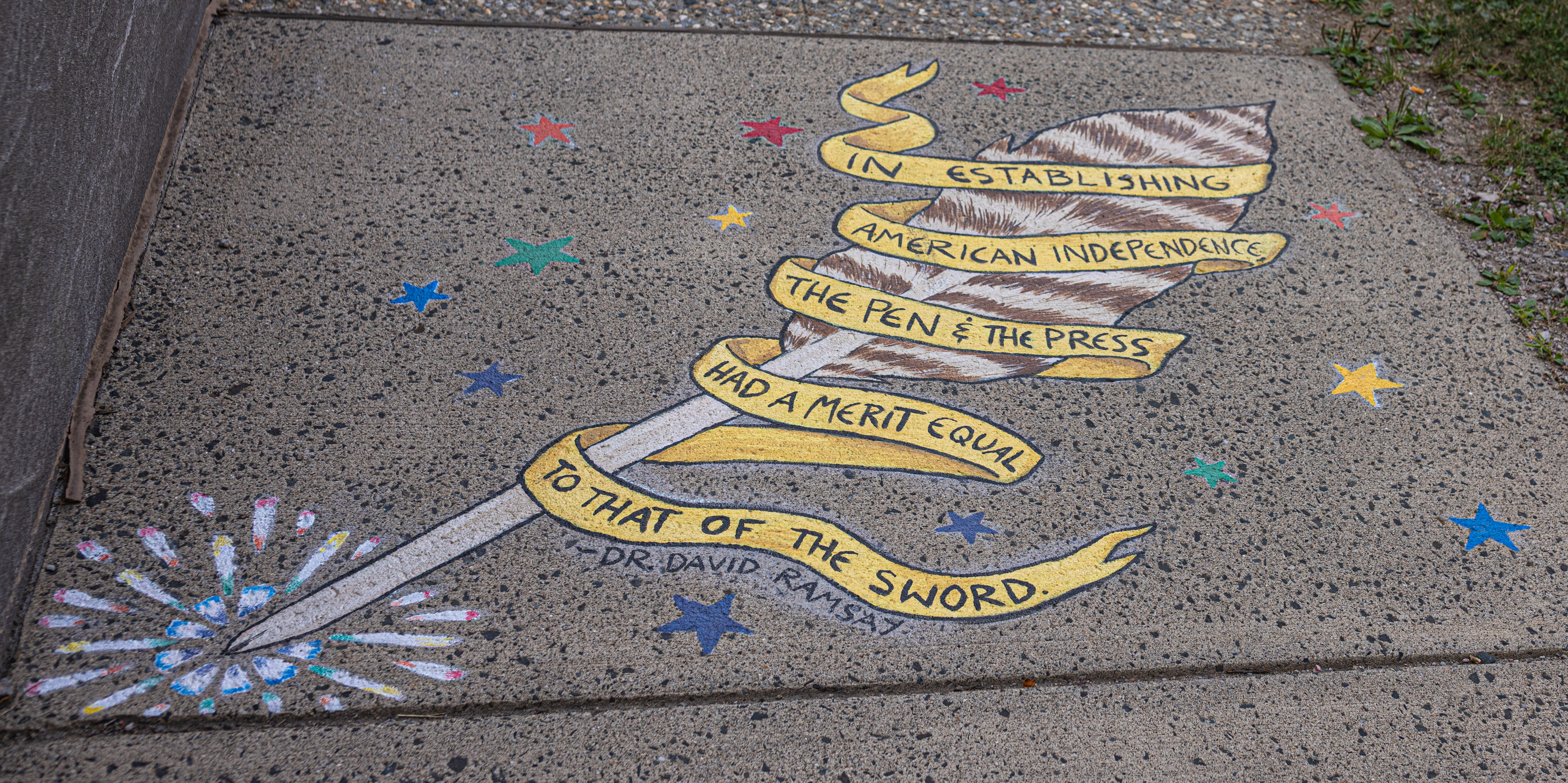
“In establishing American independence, the pen and the press had a merit equal to that of the sword.” – Dr. David Ramsay

Dr. David Ramsay was one of the earliest major historians of the American Revolution, as well as a politician and author. He served as a field surgeon during the American Revolutionary War until he was captured by the British army and imprisoned for a year. He wrote many well-respected volumes on American history, both more broadly and specifically about the Revolution. This quote of his reflects his direct experience of the Revolution, both as a writer and as someone who served on the battlefield.

During the U.S. Revolution, newspapers played an essential part in shaping public opinion. At that time, newspapers were the most effective means of mass
communication. They spread not only the news, but political ideas, propaganda, foreign dispatches, official documents, and more. Massachusetts in particular was a hotbed for newspapers, with Boston establishing the United States’ first regular newspaper, the Boston News-Letter. By the time of the Revolution, there were numerous Massachusetts papers vying to influence public opinion, the majority of them Patriot papers advocating for independence.

A revolution is not won only with weapons, but with words and ideas. Although the quote this mural is structured around specifically references the American Revolution, it is relevant beyond that corner of history. Freedom of speech and freedom of the press – two of our First Amendment rights – are essential to maintaining a functioning democracy. We may no longer typically exercise these rights via quill or letterpress, but they are still vital.

The barred turkey quill pictured in this mural is a literal depiction of the kind of writing implement commonly used in the 1700s, but it is also a symbol of ‘the pen’ as a concept. Today’s ‘pen’ may be a stylus, a smartphone, or any number of devices. The specific implements may have changed, but they are still potent tools, and they can reach farther than anyone could have possibly imagined in 1776.

Visual description: A barred turkey quill is set at a diagonal, as though writing. A yellow ribbon winds around it bearing the quote, “In establishing American
independence, the pen and the press had a merit equal to that of the sword.” – Dr. David Ramsay. At the tip of the quill, there is a firework-like burst. Thirteen stars sparkle around the quill in red, orange, yellow, green, blue, and purple.

“Let Virtue Reign” – Greenfield Library, 412 Main St by Youme Nguyen Ly
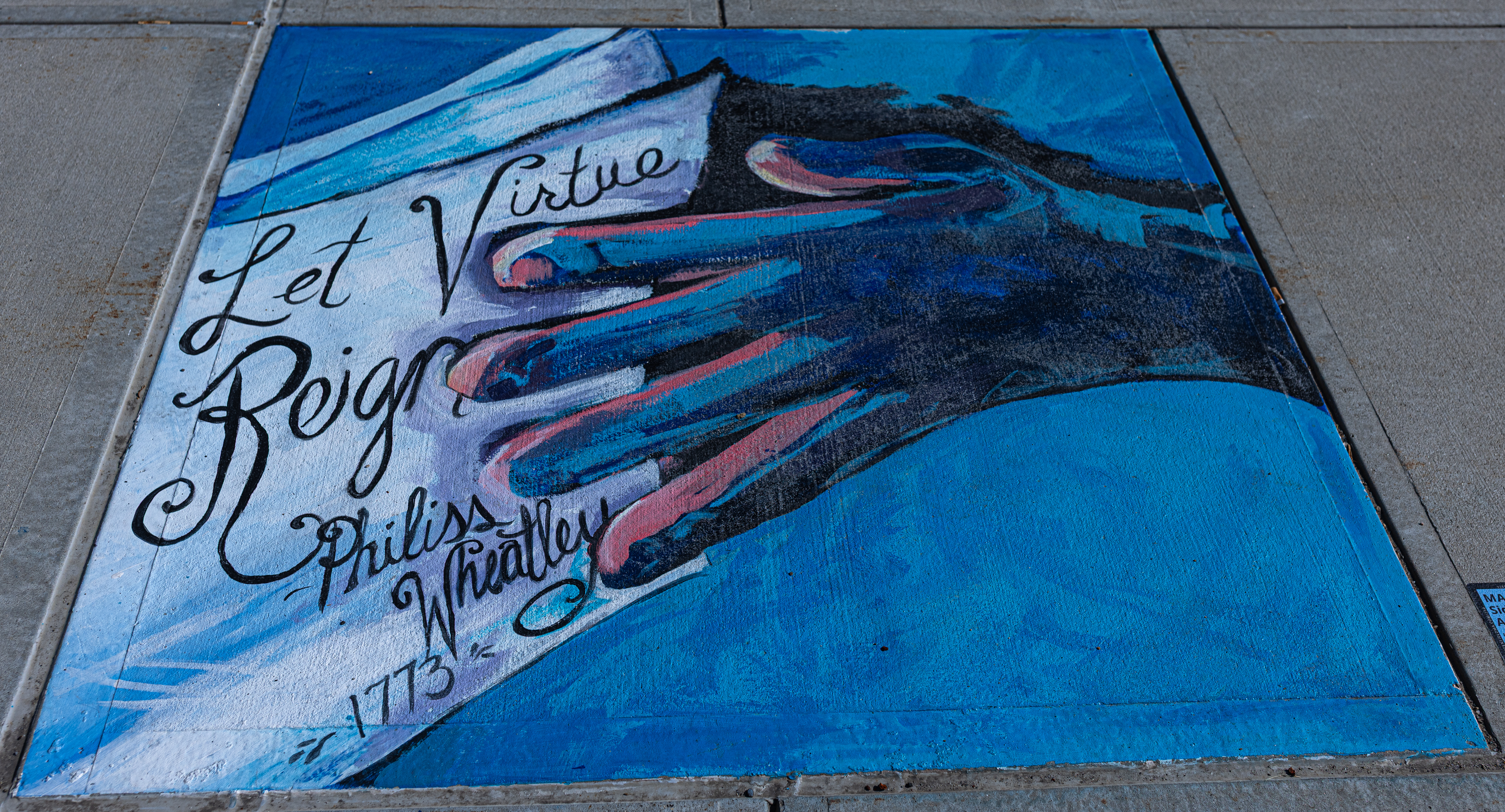
Let Virtue Reign is painted in front of the Greenfield Library. A dark blue hand holds a stack of papers, the topmost of which reads, “Let Virtue Reign 1773 Phillis Wheatley”.

The hand represents Elizabeth Freeman, the first African American woman to successfully file a lawsuit for freedom in the state of Massachusetts, less than a year after the adoption of the Massachusetts State Constitution. Her case would ultimately lead Massachusetts to outlaw slavery.

Phillis Wheatley was one of the best-known poets in pre-19th century America. Born in West Africa in 1753, enslaved as a child in Massachusetts. She learned to read and write and was emancipated in 1773, the year her collection “Poems on Various Subjects, Religious and Moral”, was published. She wrote in support of anti-slavery movements. “Ode to Dartmouth”, the quoted poem, was written to encourage Dartmouth’s abolitionist work.

This painting celebrates two Black women who were actively working in Massachusetts and beyond, 250 years ago to make the future better for everyone.

“Free Press” – Main St & Sears Ave by Althea Harris
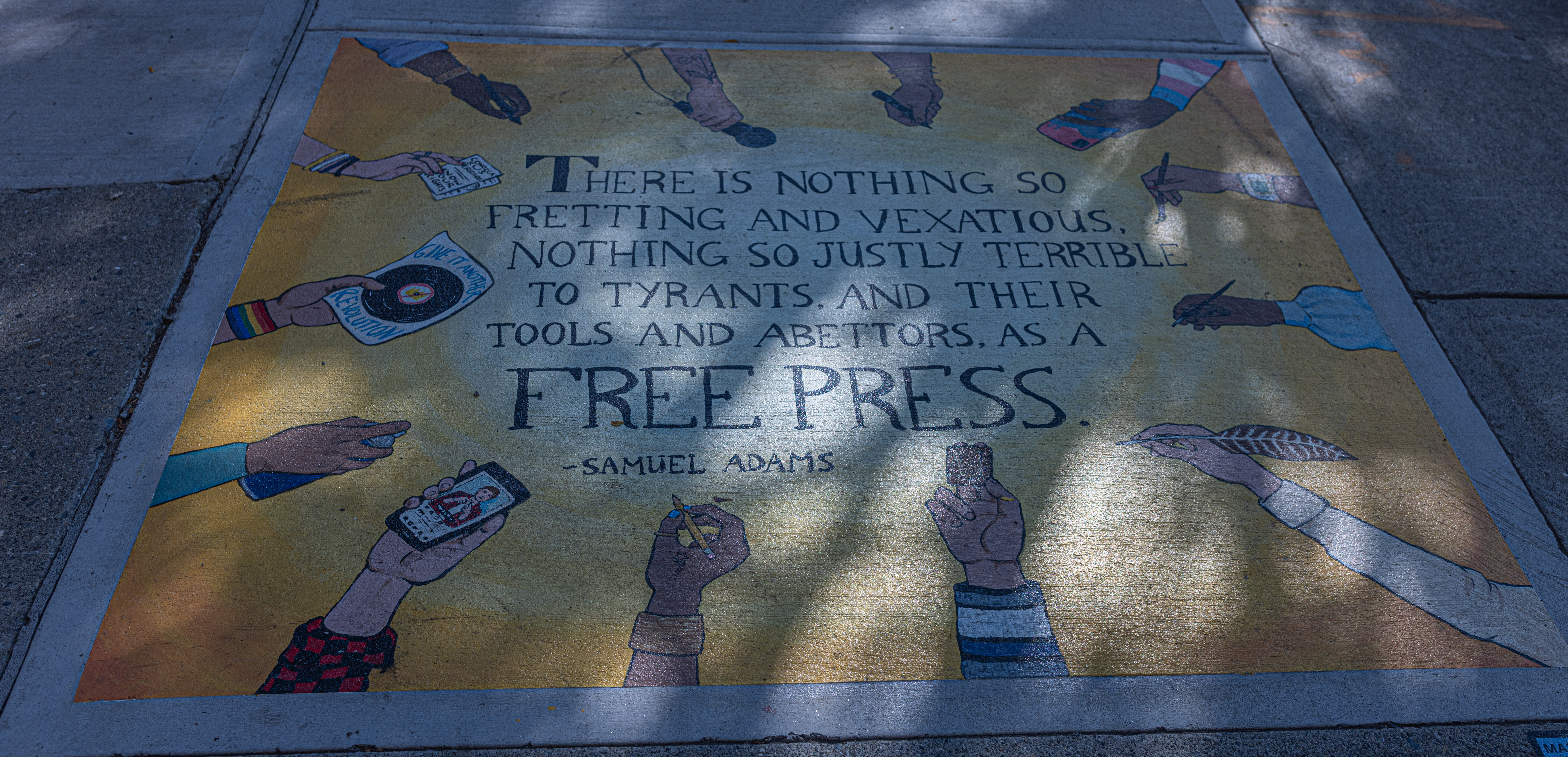
“There is nothing so fretting and vexatious, nothing so justly TERRIBLE to tyrants, and their tools and abettors, as a FREE PRESS.” – Samuel Adams (from his statement on freedom of the press in the Boston Gazette, March 14, 1768)

Founding Father, signatory of the Declaration of Independence, and colonial Massachusetts politician Samuel Adams was, as you may have guessed from this quote, a strong proponent of the role of a free press in ensuring freedom from tyranny. Adams actively used the press as a tool to advocate for colonial rights and independence, criticizing British rule and promoting his political ideals through essays and letters in colonial newspapers, especially the Boston Gazette. With its weekly publication and its circulation of approximately 2,000, this paper had a significant reach for the time period. By the 1770s, Massachusetts had numerous newspapers – most of them Patriot-led – and Adams was far from the only person to take advantage of this medium of mass-communication and its ability to push the tide of public opinion in favor of revolution.

The appearance of the press has changed significantly over the past 250 years, but the importance of a free press has not declined. A newspaper with a circulation of 2,000 has much less clout in the U.S. of 2026 than it did in the pre-revolution colonies, but the dissemination of news, political thoughts, and opinions is still an essential (and Constitutionally protected) right. This mural is a celebration of a free and active press as it has evolved over the years, and it is also a call for the viewer to support freedom of the press in its many forms.

For this mural, I felt it important to celebrate not only a revolutionary past but also the revolutionary present and future. Independence is not something that was won once in 1776 and need never be fought for again, but something we as a country continue to strive for and evolve towards. Rights have been hard-won, some only recently won, and some even more recently revoked. Freedom of the press is encoded in our Bill of Rights, and true freedom of the press cannot belong in only the hands of a few. It needs to come in many forms and from many people.

Free press is still a potent tool for shaping public opinion as well as for spreading journalistic news. Think pieces still come in newspapers and magazines, but they are also found in social media feeds, pinned on bulletin boards, spoken or sung aloud at open mic events. In times when rights are being infringed upon, find people who are impacted and listen to their voices, read their words. Seek out multiple journalistic sources. Fact check and dig deep rather than trusting AI summaries. Use your own voice to speak out against the silencing of journalists. And don’t be afraid to pick up a pen, paintbrush, or microphone and speak your own truth.

We need all hands on deck to keep this ship moving forward.

Visual description: Thirteen hands reach in from the edges of the sidewalk panel holding various implements of communication from the 1800s to today, including: a quill, a paintbrush, a letterpress block, a zine, a microphone, a smartphone, and more. They are set against a bright yellow background, which fades into an off-white glow in the middle to emphasize the quote the hands surround. “There is nothing so fretting and vexatious, nothing so justly terrible to tyrants,
and their tools and abettors, as a free press.” – Samuel Adams

“Old Friends” – Fiske Ave Pocket Park by Youme Nguyen Ly
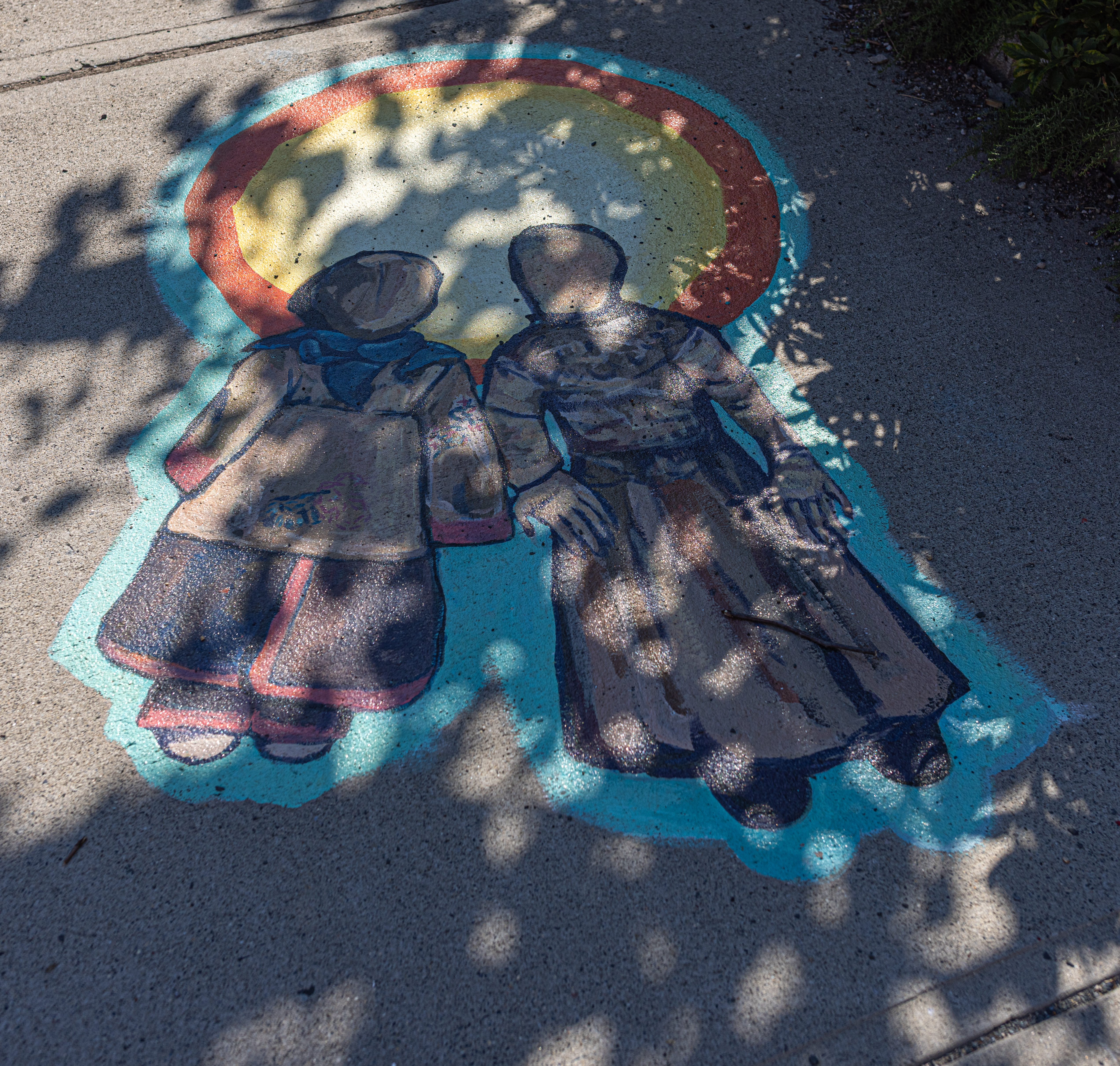
Old Friends depicts two dolls with a shared sun radiating behind them and a bright outline of sky. On the left a traditional corn husk amsute’kan made in New England.

A traditional story tells that Corn Spirit created the cornhusk amsute’kan for children to enjoy and to watch over them. Originally, she had a face, when she became distracted by her own beauty, her face was taken away to remind us not to focus on our own looks so much that we forget to care for others. On the right side, one of the oldest surviving ragdolls in this country, named Bangwell Putt. She belonged to Clarissa Field of Northfield, Massachusetts. Clarissa was born blind in 1765. The doll’s carefully constructed fingers suggest the importance of touch. In my depiction, the dolls have been friends for over 250 years and carry the respect and gratitude for Indigenous and Non-Indigenous friendships, past, present and future. This piece further serves as a tribute to the importance of children and the essential role of childcare.

“Essential Pieces on the Tapestry of a Revolution” – Historical Society, 43 Church St by Danielle Lucier
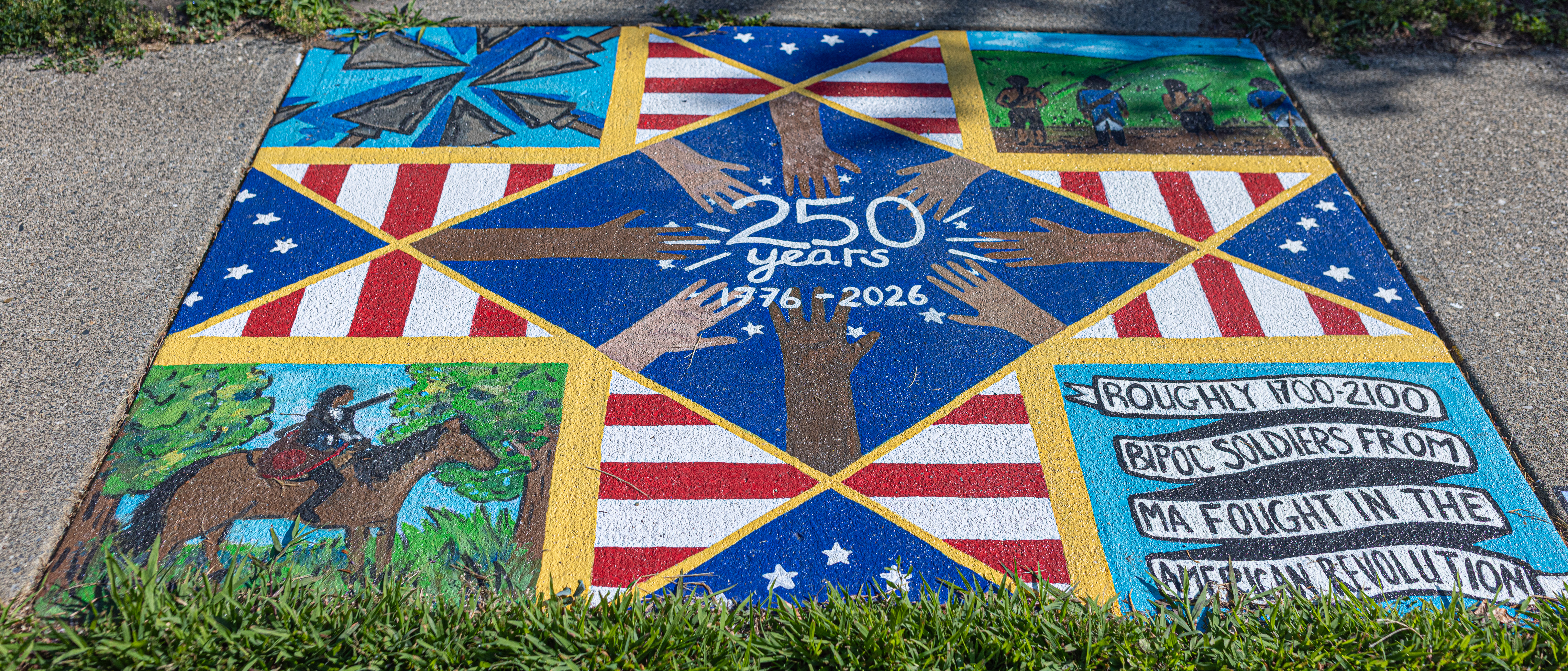
This piece, created within the shape of an American traditional quilt square, is a celebration of the diversity of the American Revolution that often gets overlooked throughout historical representations of the war. This quilt square is built of pieces of the original thirteen-star American Flag, pieced together with imagery representing BIPOC roles in the Revolution- all coming together to form one solid piece of our historical tapestry.

In doing research for this piece, everything I found online was vastly misrepresentative of the actual people who worked together in the American Revolution. Most information available showed Colonial white figures- and mostly men at that. Yet upon deeper research at the Historical Society of Greenfield, I found many books and references referring to BIPOC soldiers, spies, messengers, and laborers (free and enslaved) – all in the same positions as these colonial white men. This sparked something in me that felt like a piece of this historical quilt was missing – and inspired my quilt block design. I wanted to pay honor to these hardworking BIPOC people who fell through the cracks in the history books, who didn’t get the credit and honor they deserved.

I found out that roughly 1700-2100 BIPOC men from Massachusetts served as soldiers and sailors throughout the war- and BIPOCwomen worked to build communities, sew soldiers clothing, serve as caregivers, and when not traveling with the camp – they also helped to hold up life at home taking on their duties and the duties of the men who were off fighting.

“Essential Pieces of the Tapestry of the Revolution” is a piece dedicated to African American and Indigenous soldiers and war contributors. Our history is so much more diverse than representation has ever shown – and having this chance to create a piece that tells more of the real story was a true honor. Work and decisions made by BIPOC war contributors played such a large role in the history of our independence- a history that is so much more multicultural and diverse than history texts have led us to believe. It takes hands from all backgrounds coming together to work for a common cause – to create a successful revolution.

Visual description: this square sidewalk tile is broken up into 9 smaller squares to represent an american traditional quilt block. Pieces of the original 13-star flag, and red and white stripes come together to form a pointed star-like pattern, and imagery of Indigenous and African American soldiers are in opposing corners. The center says “250 years 1776-2026” and has hands of all skin colors reaching towards the center of the piece. A banner in the bottom corner says “roughly 1700-2100 BIPOC soldiers from MA fought in the American Revolution”.

“Roles of Children During the American Revolution” – Federal Street School, 125 Federal St by Jill Strait
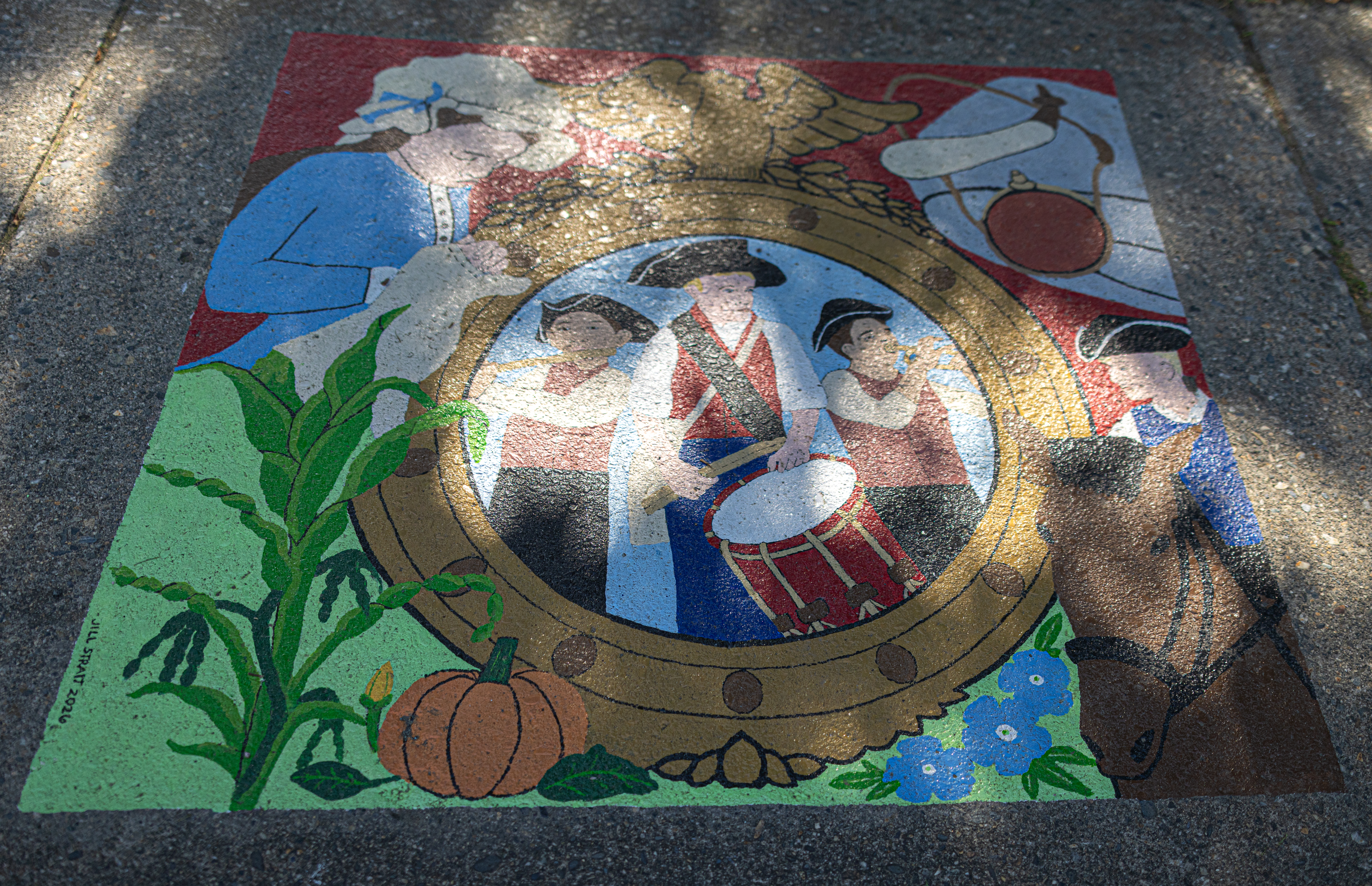
This mural depicts the various roles children played during the Revolutionary War, a time when the absence of child labor laws meant young people often set aside their education to assist with adult duties. I especially wanted to highlight musicians, who were often in their teens or younger, so they are featured in the center of the piece playing the bugle, drum and fife. Clockwise from left is a young girl hand-sewing a garment, as children worked on uniforms and helped with mending. They often brought essential supplies where needed, on the top right there is a folded blanket, powder horn and a canteen of water. Below that is a teen on a horse, serving the role as messenger. And lastly, farming was a role that kept children occupied, represented by the “three sisters”—squash, corn, and beans—in the lower left corner.

“Caregivers” – Federal Street Cemetery, 175 Federal St by Joe Pye and Ginseng by Youme Nguyen Ly
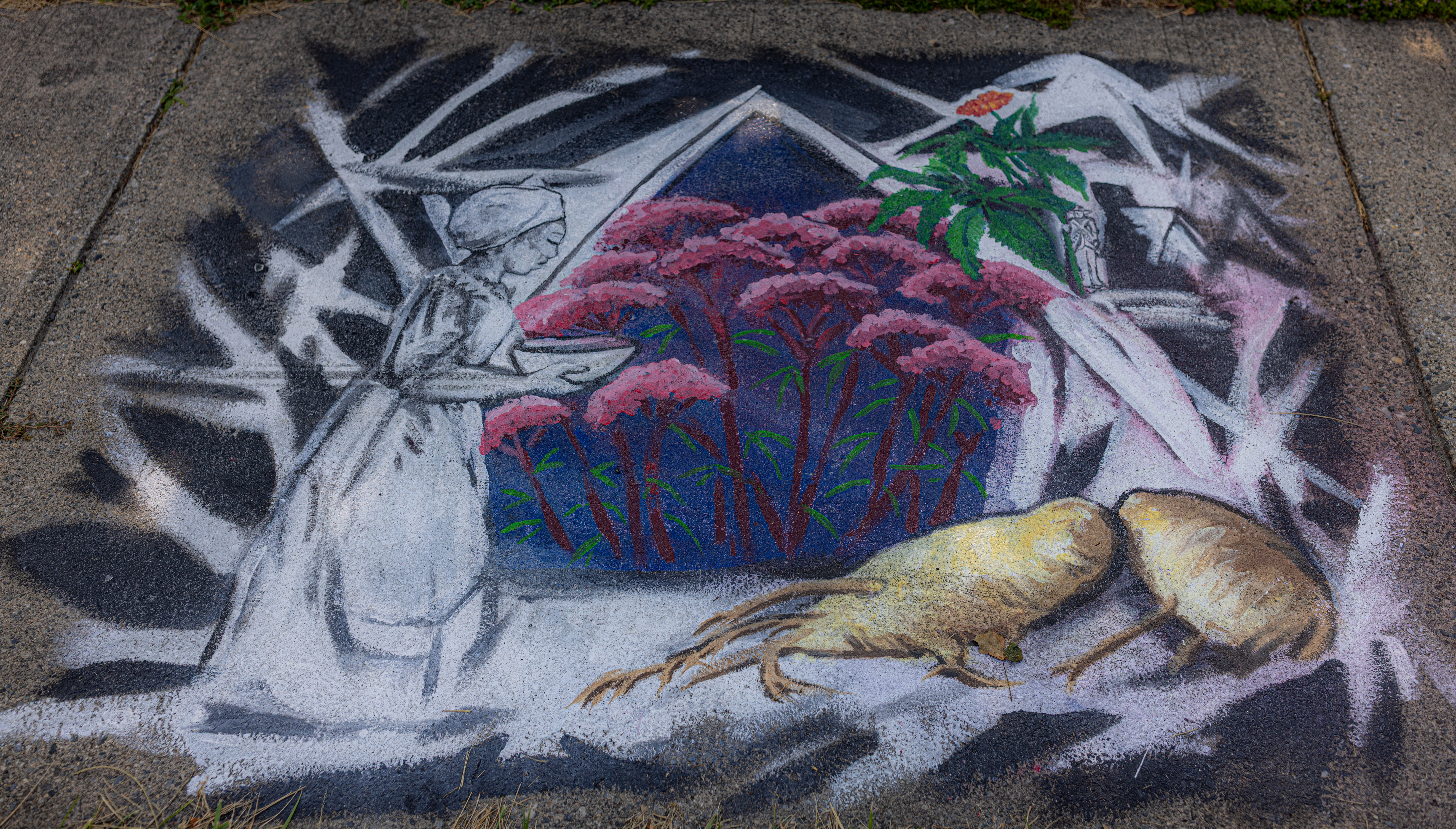
Caregivers, Joe Pye and Ginseng, shows a black and white tent with abstract pink flowers, red stems and green leaves of Joe Pye weed growing from within. A woman arrives to the tent with a healing bowl of soup. In the abstract black and white background, a tiny black and white revolutionary soldier holds the green living stem of a full color red and green ginseng plant instead of a weapon. Two large ginseng roots are depicted in full color golden yellow, at the base of the illustration.

American ginseng is a medicinal plant native to North America. Income generated from gathering and selling wild ginseng influenced the early history of this country. Local ginseng use and trade stretches back much further than the Declaration of Independence. Long before North America was colonized, various Indigenous peoples used ginseng in medicine.

The story of how this plant came to be called “Joe Pye Weed” has evolved over time. Stories tell of Zhopai, an Abenaki medicine man who treated typhus with this plant. Some researchers believe “Joe Pye” was what white settlers called Joseph Shauquethqueat, a Mohican. Shauquethqueat was a sachem and selectman. It’s believed that white colonists saw Shauquethqueat healing with the plant Pkuwiimakw and named the plant after him.

I painted this with healing in mind, healing that nature offers everyone if we can listen for it. I am also honored that it was chosen for the cemetery location, as those that came before us are part of who we are now and who we will become.

“Crossing the Dela-Western Mass” – Riverworks Park, 250 Deerfield St, just past Meridien & Deerfield St by Youme Nguyen Ly
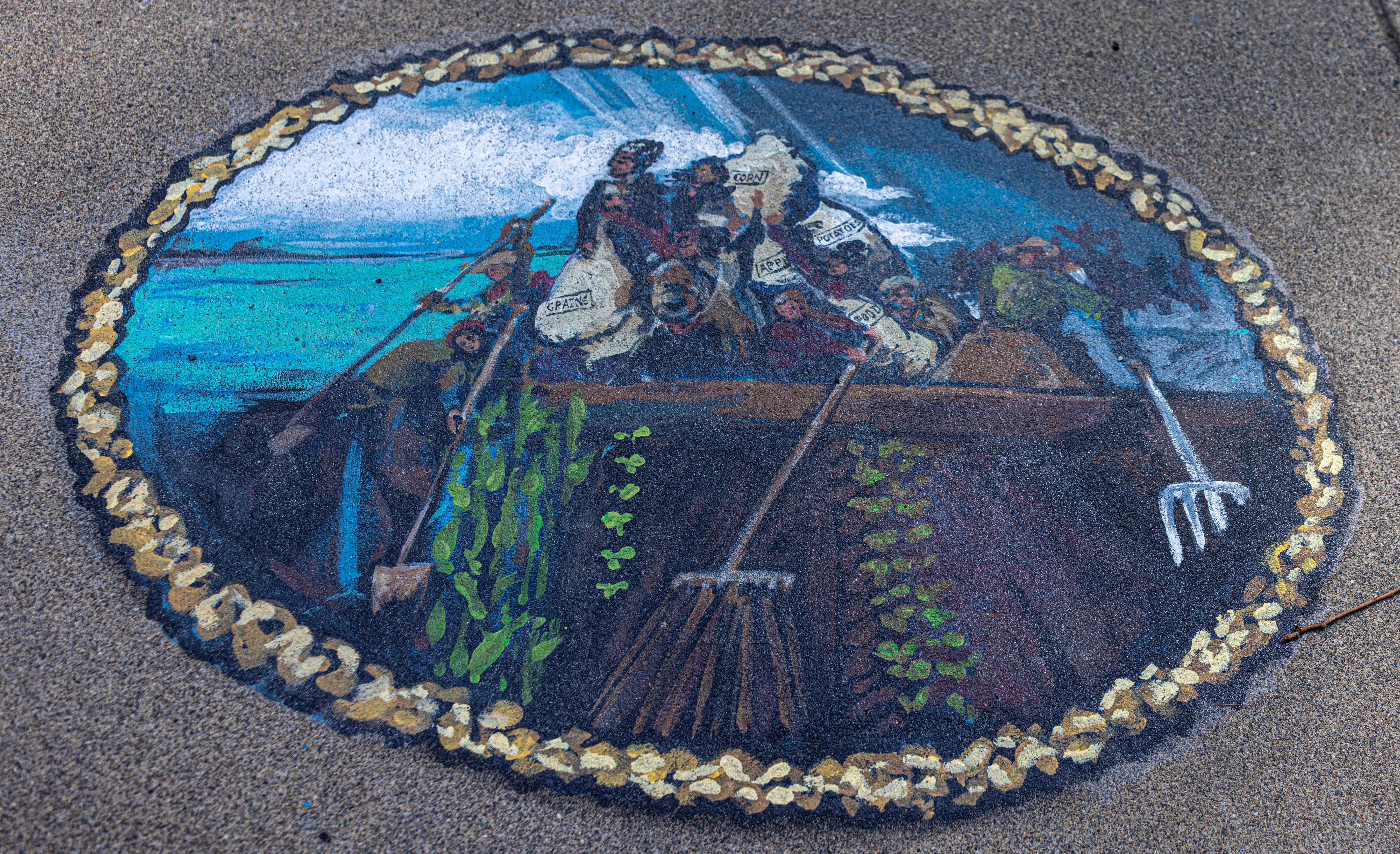
The Crossing of Dela-Western Massachusetts, references a famous painting of Washington Crossing the Delaware by Emanuel Leutze. In the original painting, George Washington stands at the front of a small boat crowded with thirteen individuals, mostly soldiers, but also a farmer, and a merchant. In my painting, the diverse figures are farming land instead of rowing, what was once an oar is now a shovel. The people are transporting giant sacks of potatoes, corn, one bag simply labeled food.

I wanted to honor the farmers, female, male and non-binary, of all who lived in Greenfield 250 years ago, and grew food which fed the revolution.

What I loved most of these uniquely artistic works of art is how they each showed a different creative display of our fight for freedom and liberty and how that fight continues.

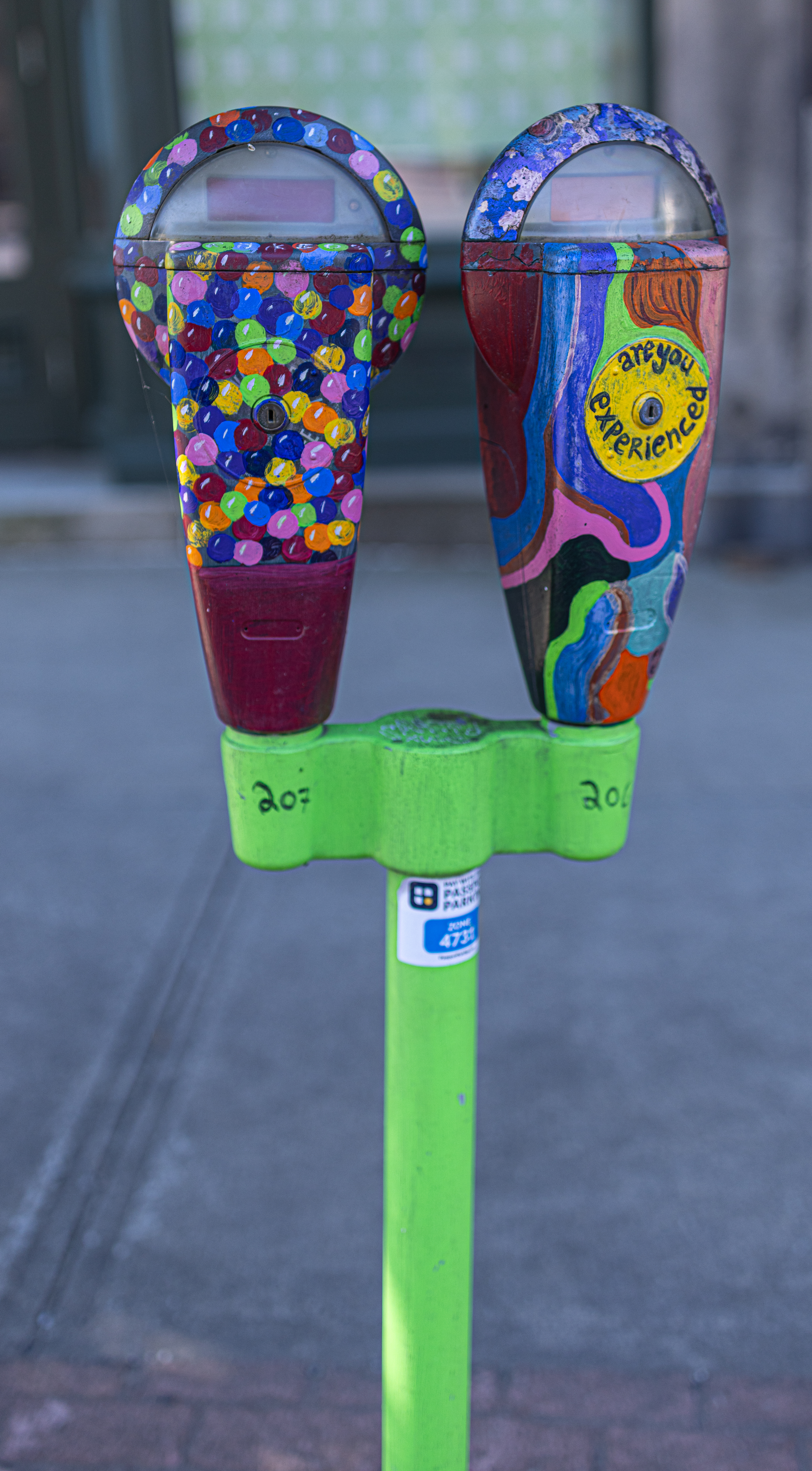
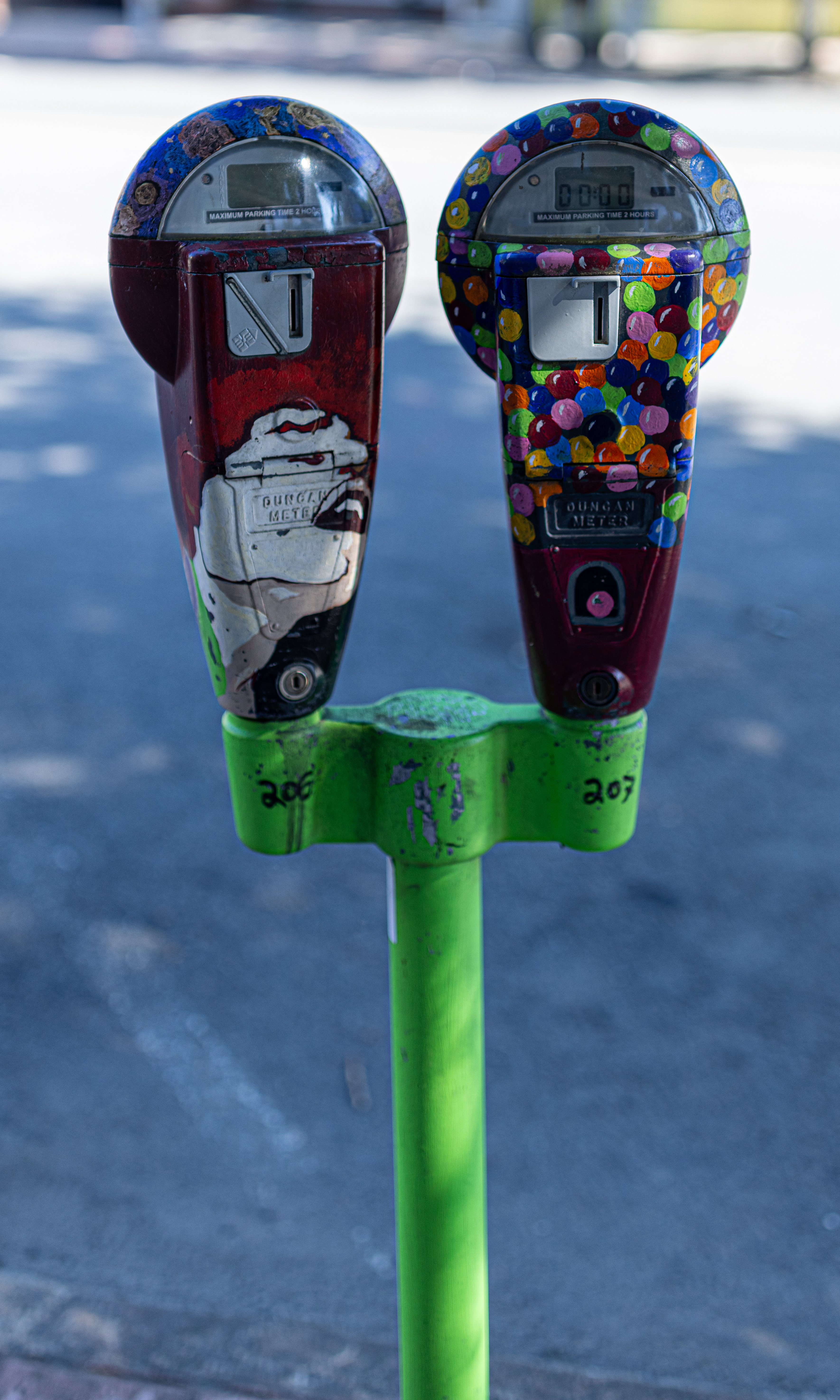
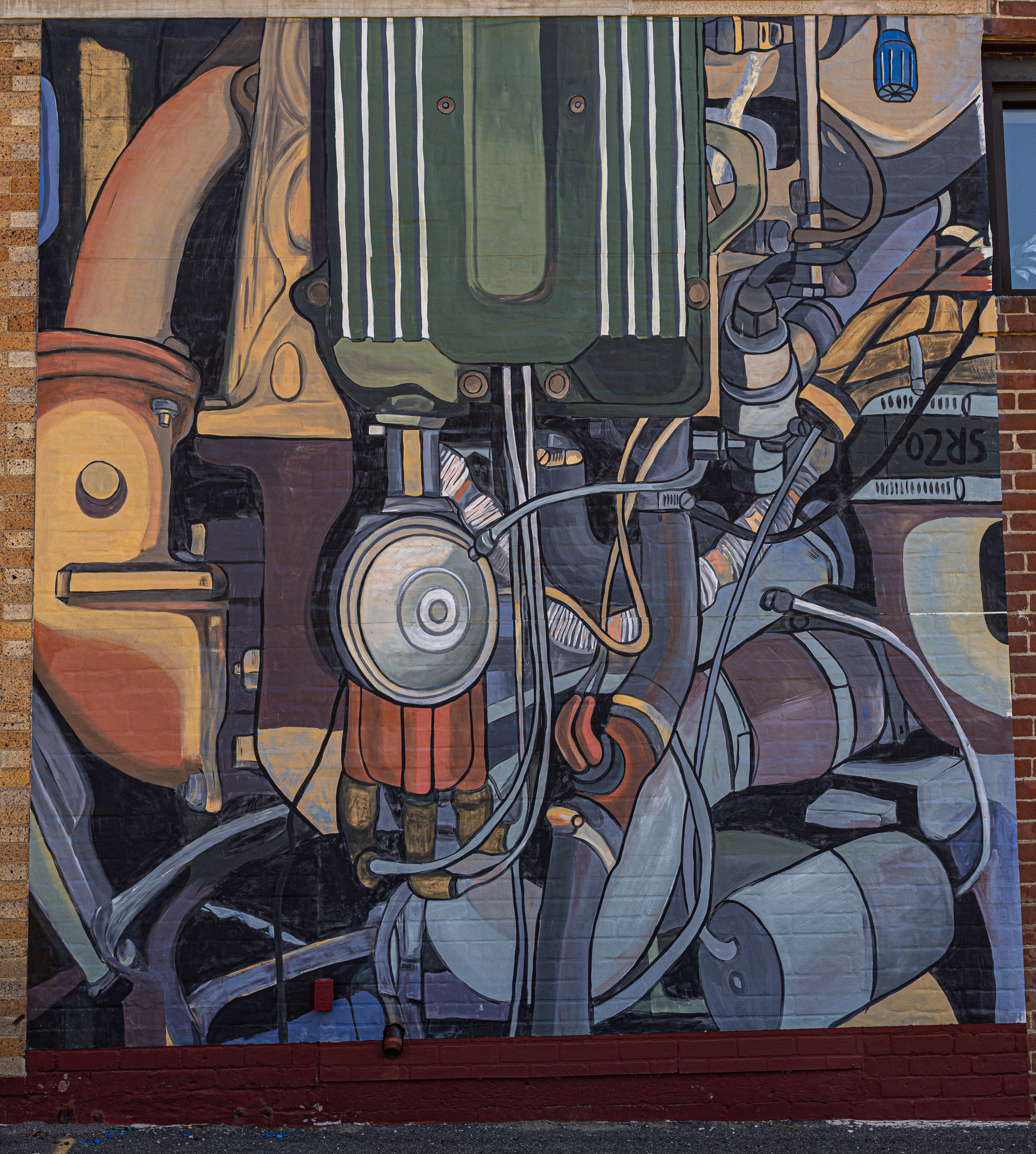
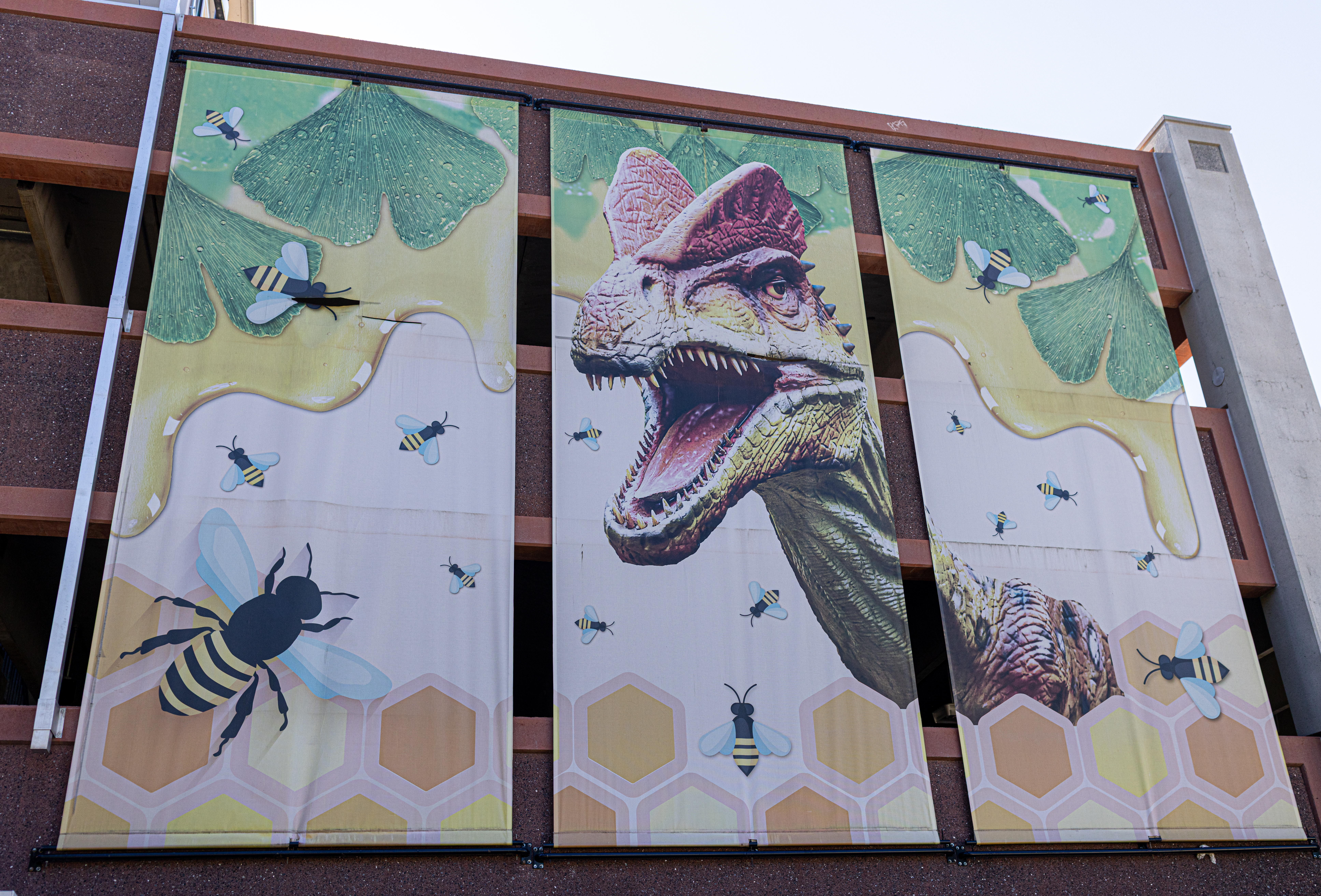
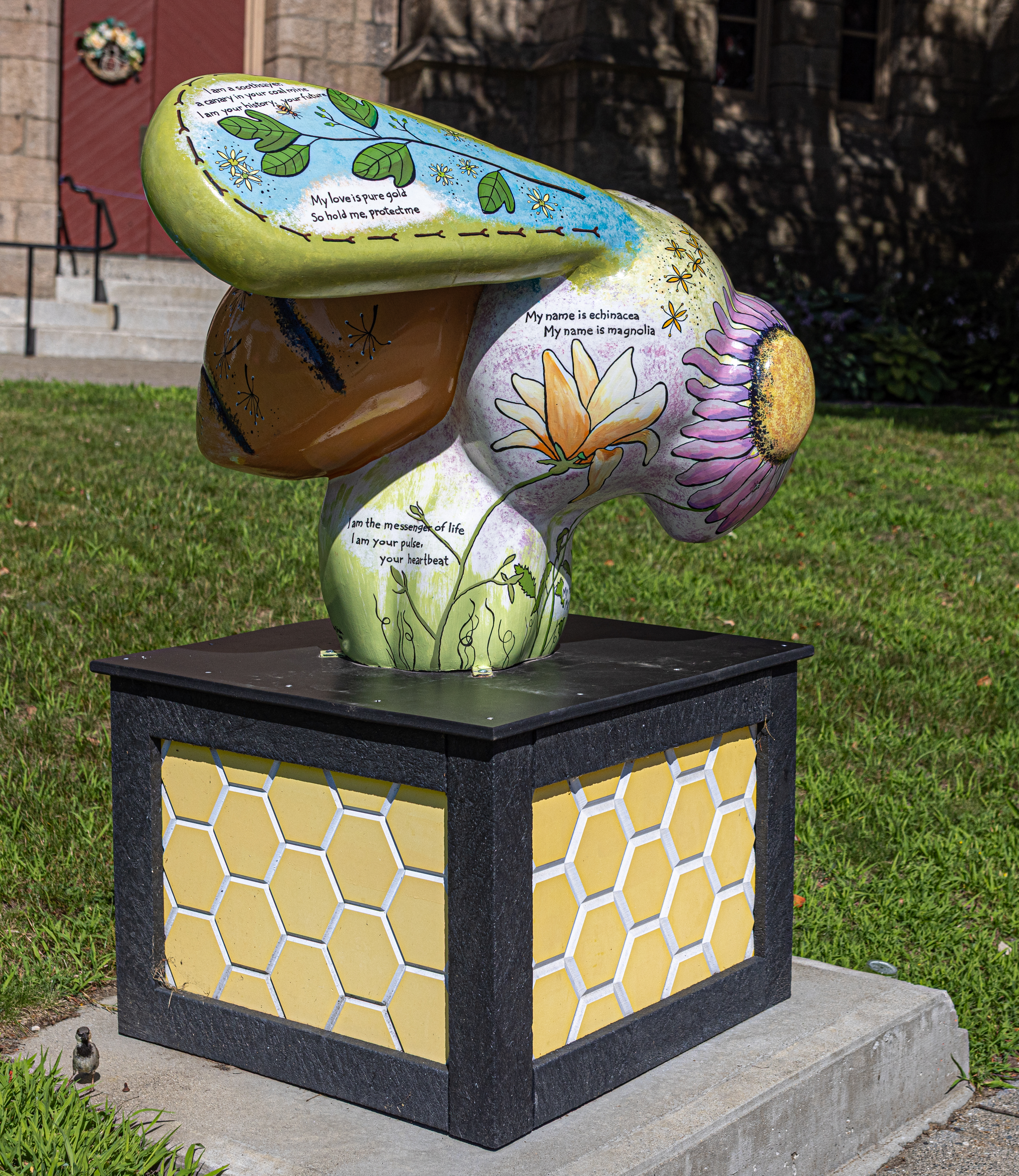
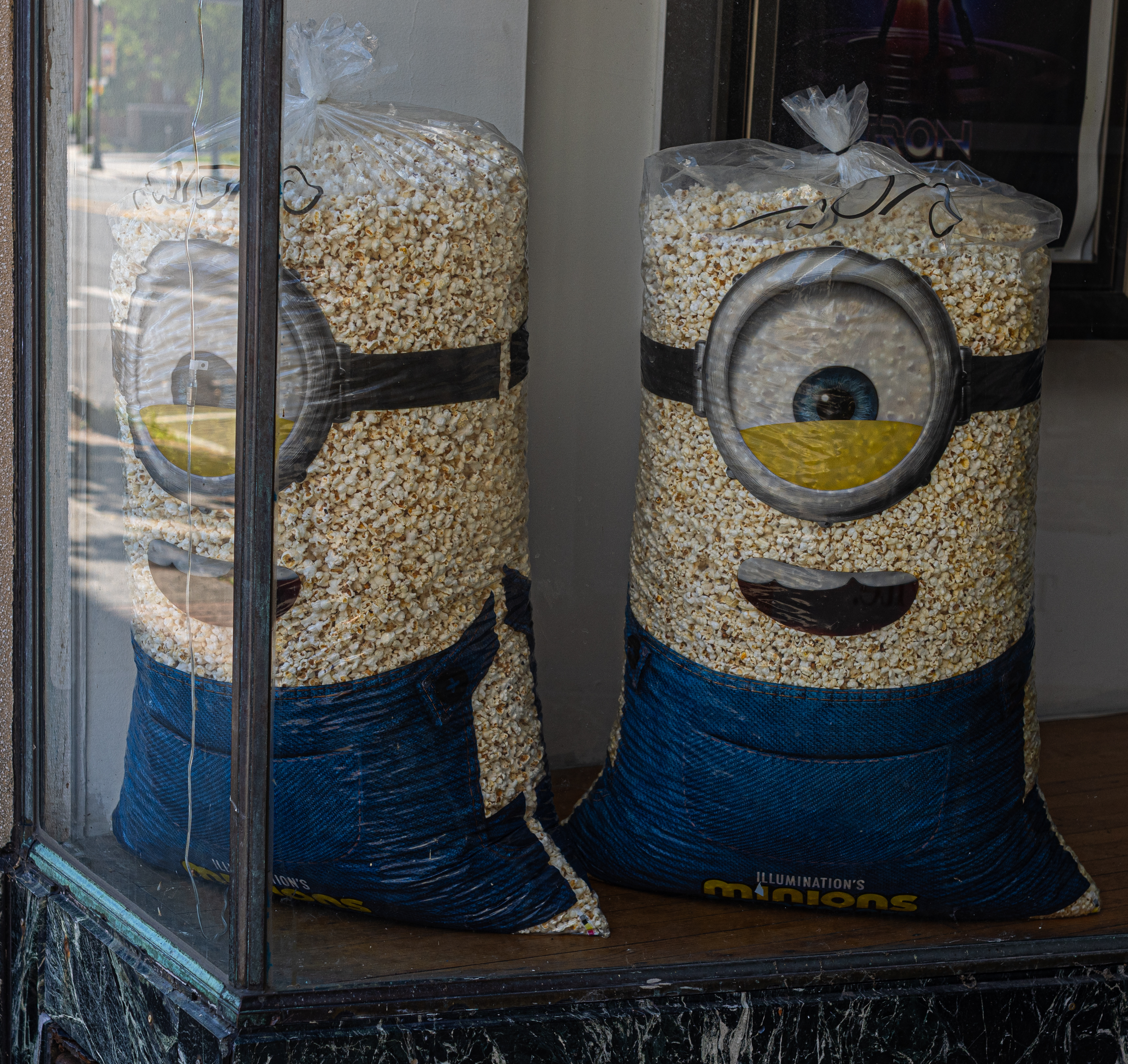
There were many other interesting and fun things to see and do in Greenfield. From industrial sized popcorn bags made to look like Minions to bees (which has a story that deserves their very own post), parking meters painted to look like cultural icons and other murals as well as a nod to dinosaurs, Greenfield has so many more interesting things to see! It’s definitely worth another visit.
Thanksgiving at Old Sturbridge Village (Old Sturbridge Village, Sturbridge, MA)

Date Of Event: Nov. 18, 2025

Location: Old Sturbridge Village,

Cost: $30 for daytime events. There are discounts for seniors, military personnel and college students. See their website for additional info

Website:Old Sturbridge Village

Summary: Old Sturbridge Village celebrated Thanksgiving

The week before Thanksgiving, Old Sturbridge Village replicated Thanksgiving in the early United States. From Thanksgiving dinner (more like lunch) and turkey shoots were just some of the highlights of the festivities during my visit.
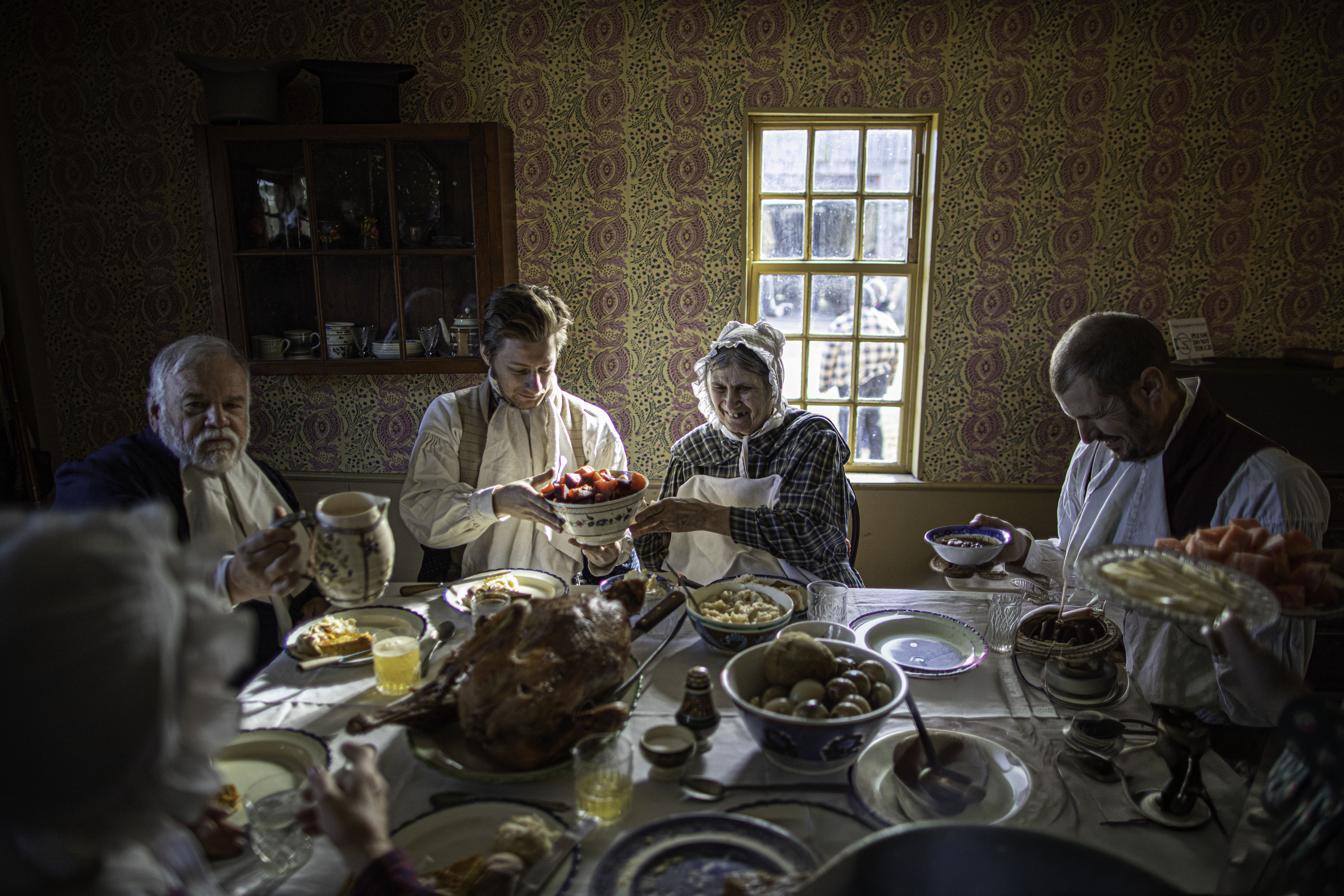
Thanksgiving was celebrated very differently in New England during the late 18th and early 19th century. Instead of watching football and shopping online for Christmas presents, people went to turkey shoots and cooked some unusual dishes (more on that later).

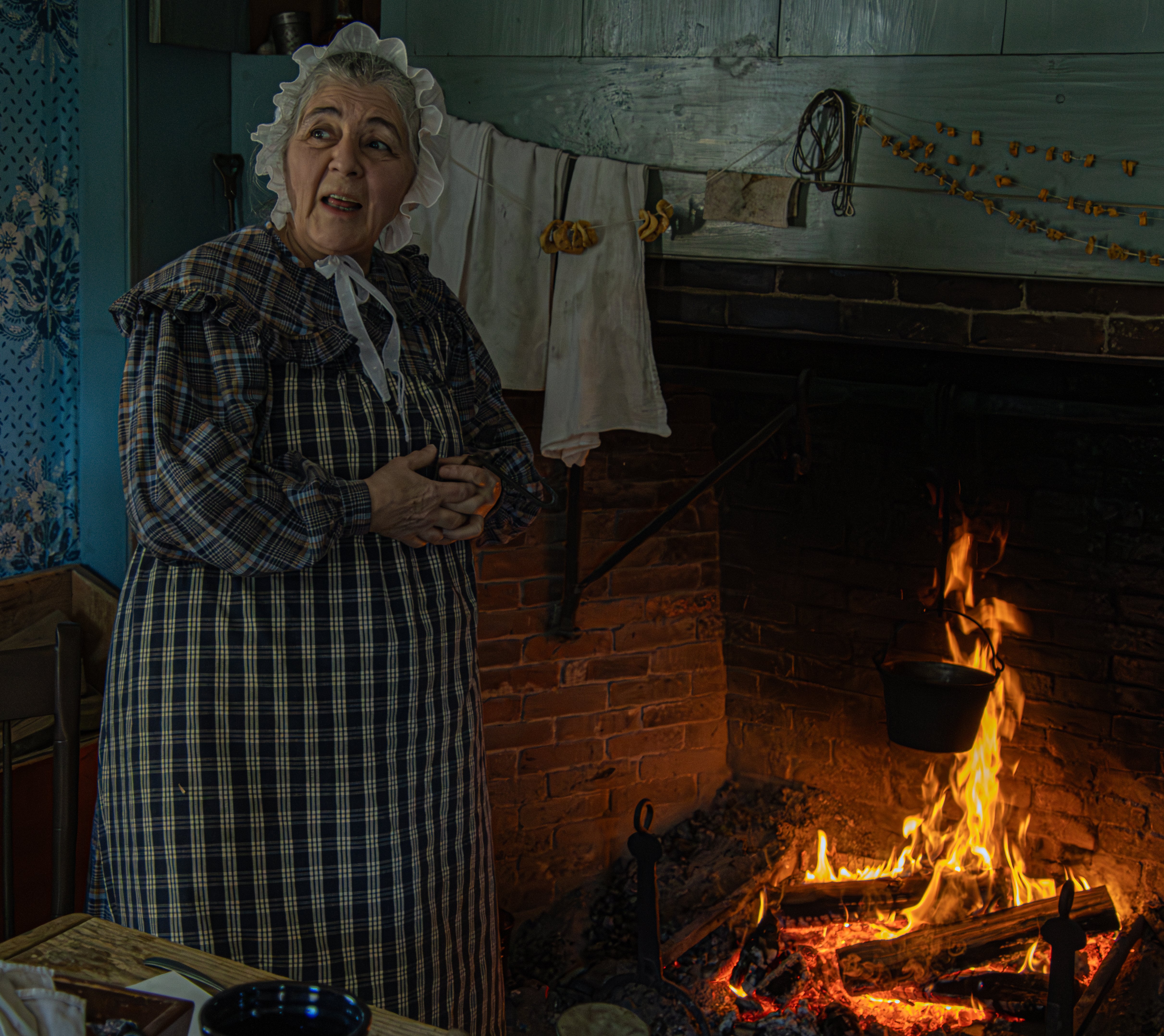
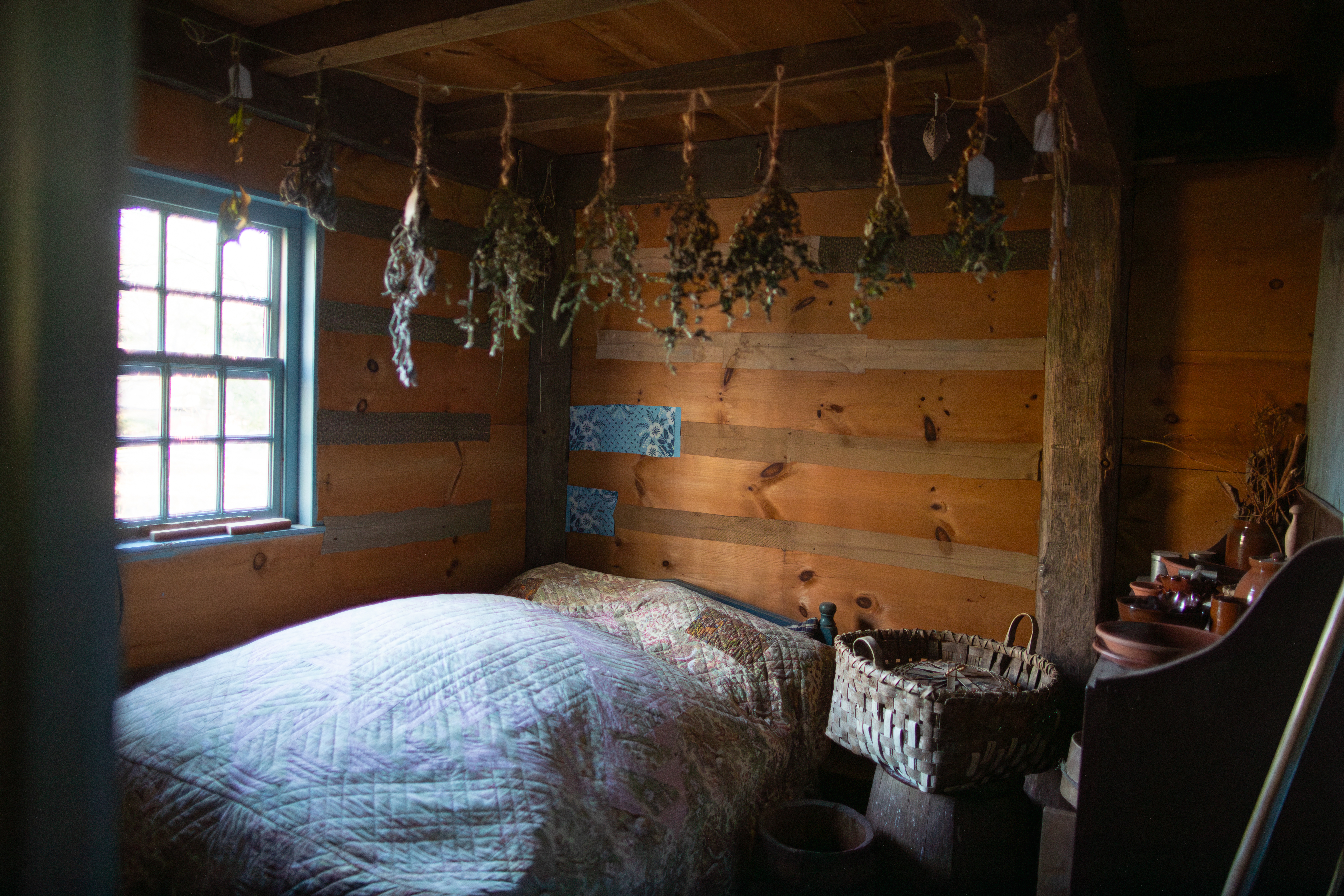
The first stop was to the small home and garden. I had never noticed before during my many but there is a room located adjacent to the fireplace. It is a very cozy accommodation.

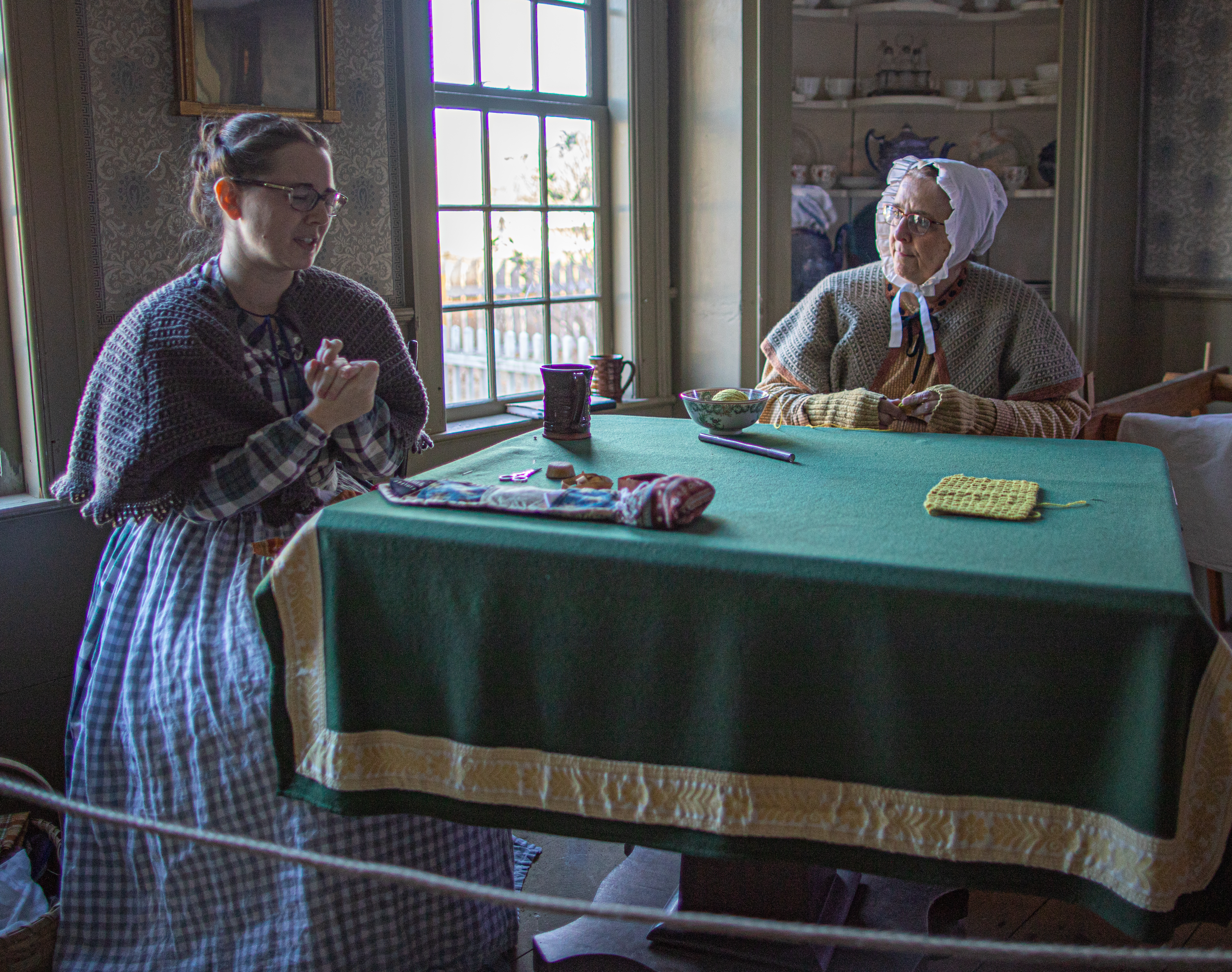
Some of the workers were busy quilting stockings and clothing for the coming winter season. .

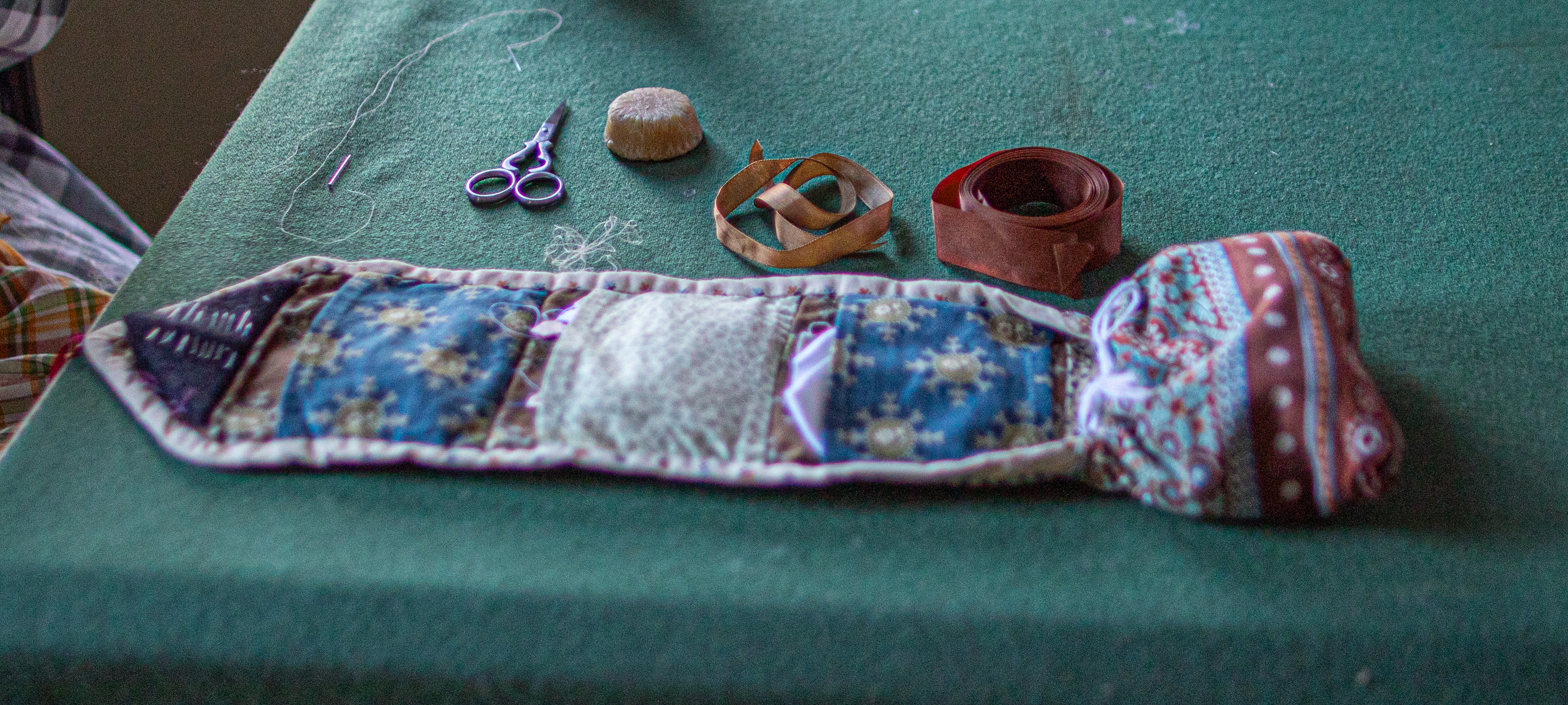
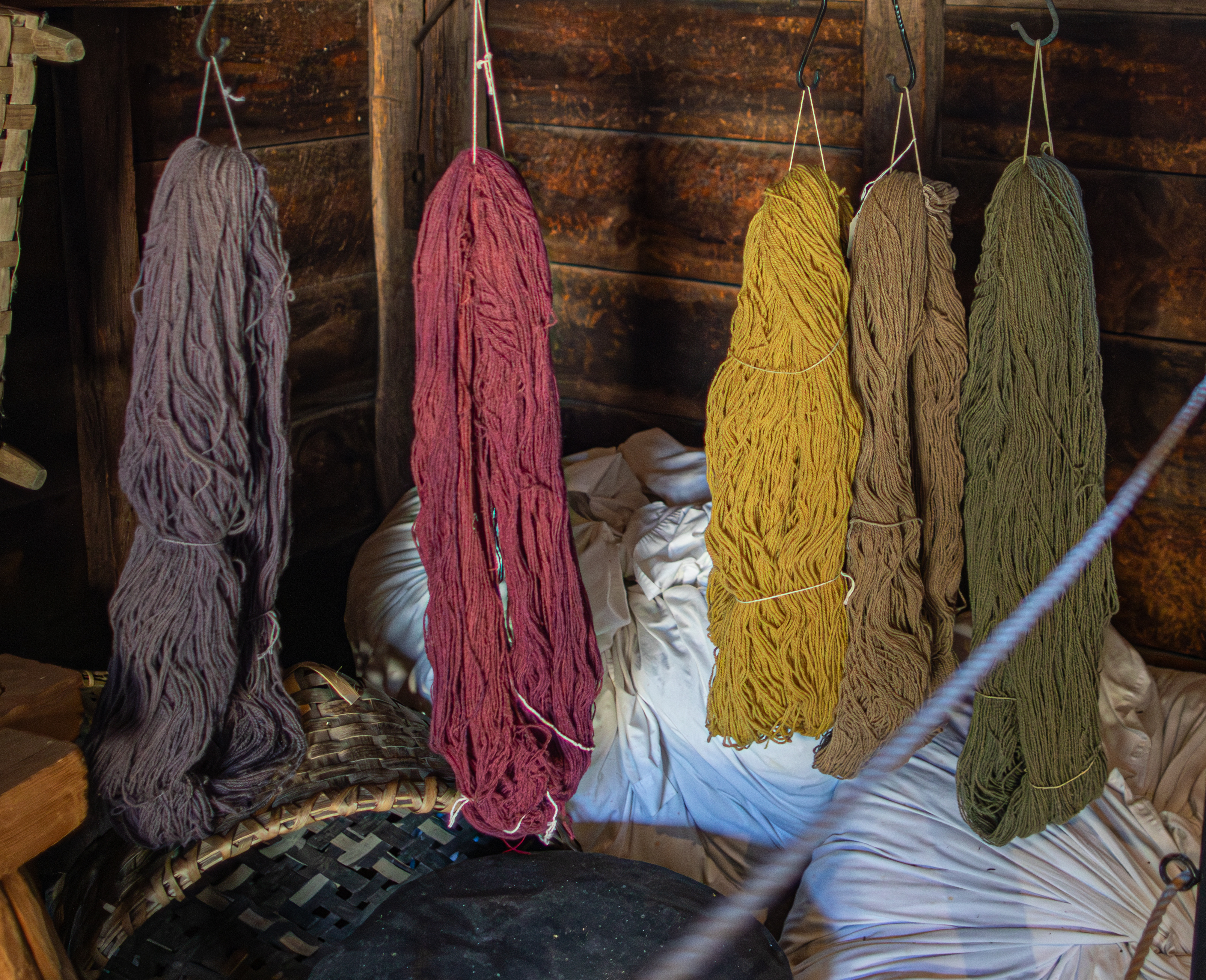
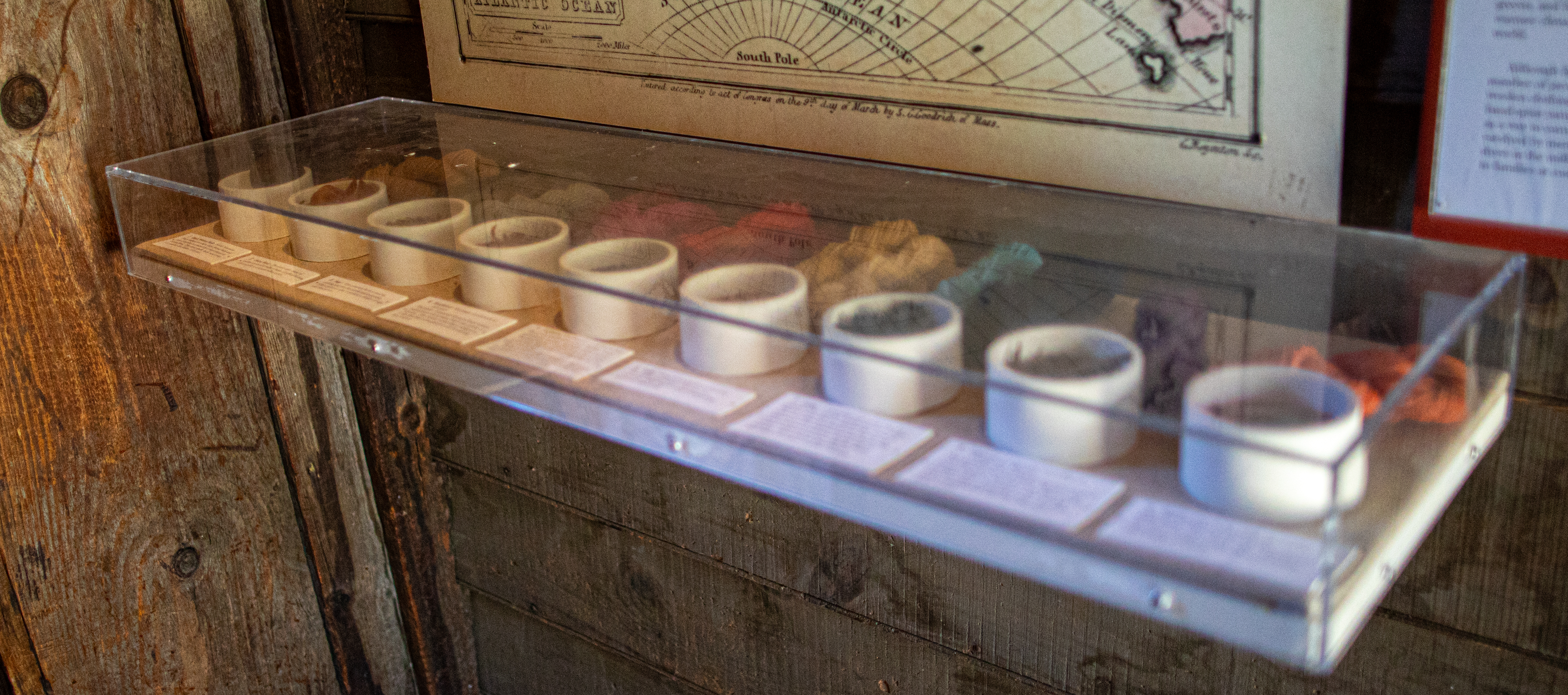
The fabric below was dyed using the method from the late 1700s and early 1800s. Dyers in the 19th century used natural materials to make their colors. Housewives gathered black walnuts, oak galls and goldenrod from the countryside. They cultivated plants used for dying like sage in their kitchen gardens. Local New England dyestuffs produced a range of yellows, greens and browns. More vibrant colors usually came from dyestuffs grown in warmer climates. Many country stores stocked imported dyes all over the world.

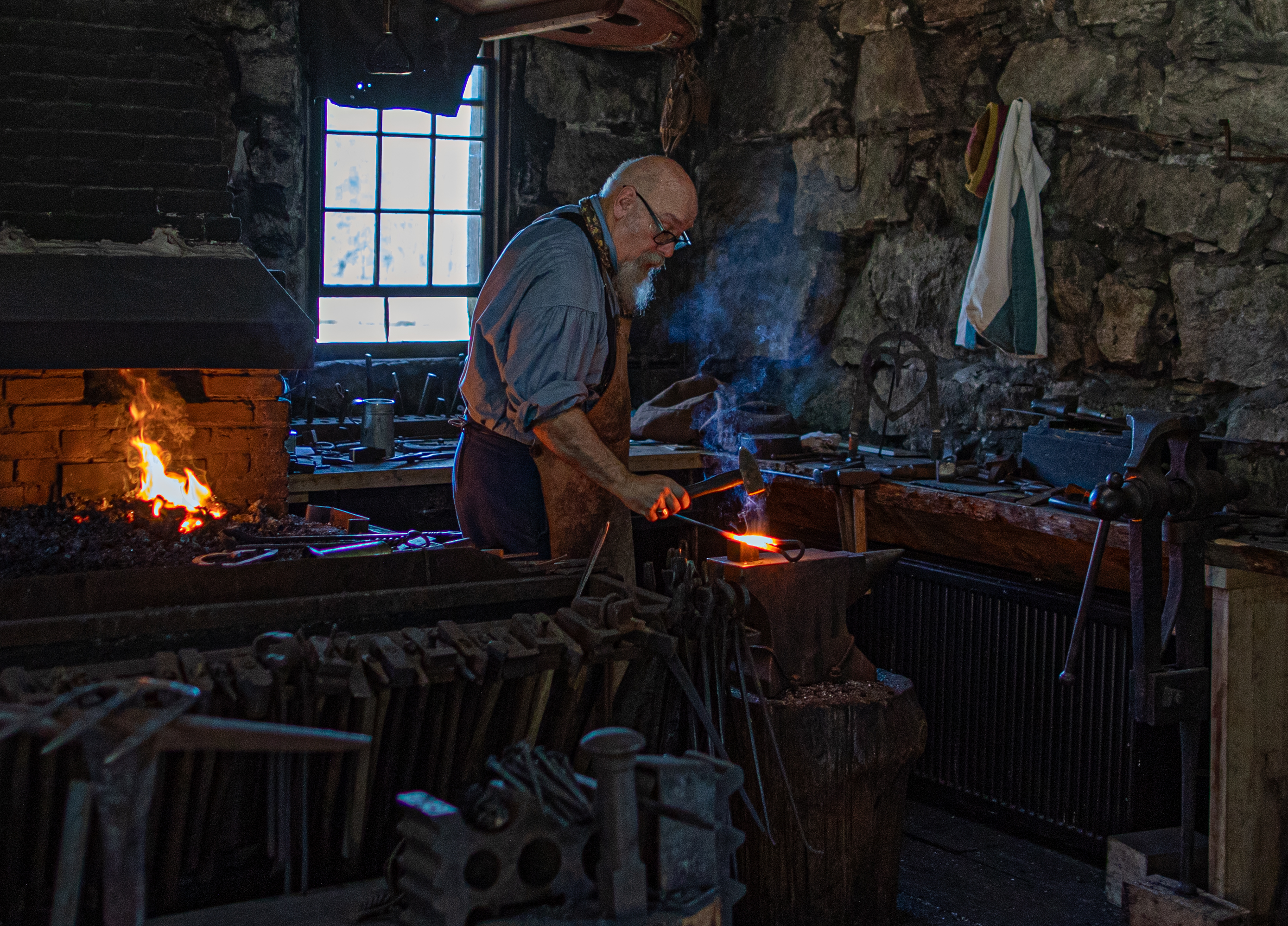
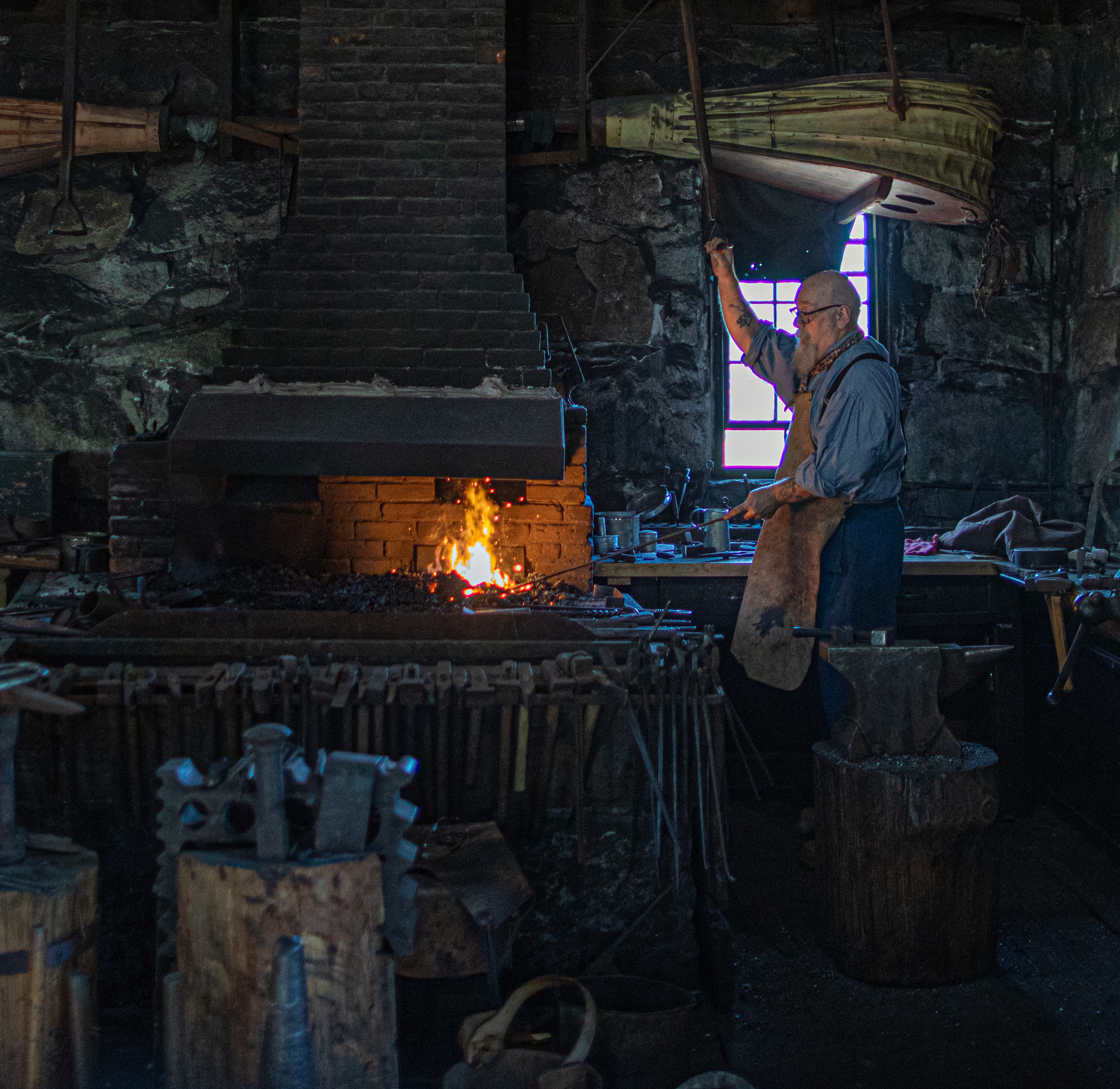
One of my favorite places to visit at the village is the Blacksmith Shop. The blacksmith always seems to be working on something interesting.

This Blacksmith Shop was originally located in Bolton, MA around 1810. It was relocated to the village in 1957.

Blacksmith Moses Wilder owned land that adjoined a stone quarry operated by his wife’s cousins in Bolton, Massachusetts. Wilder built the Blacksmith Shop using some 400 granite stones from the quarry to form the walls. He was able to maintain a prosperous business making and repairing tools used in the neighboring quarry. His son, Abraham, later took over the business.

Neighborhood blacksmiths undertook several different kinds of work in rural New England, and most towns had several blacksmiths. Some specialized in producing edge tools or machinery. Others shoed horses or turned to wheelwrighting and repairing vehicles. Many did general iron work, repairing manufactured and imported tools, shoeing horses and oxen, and making hardware and other metal items needed in the community.

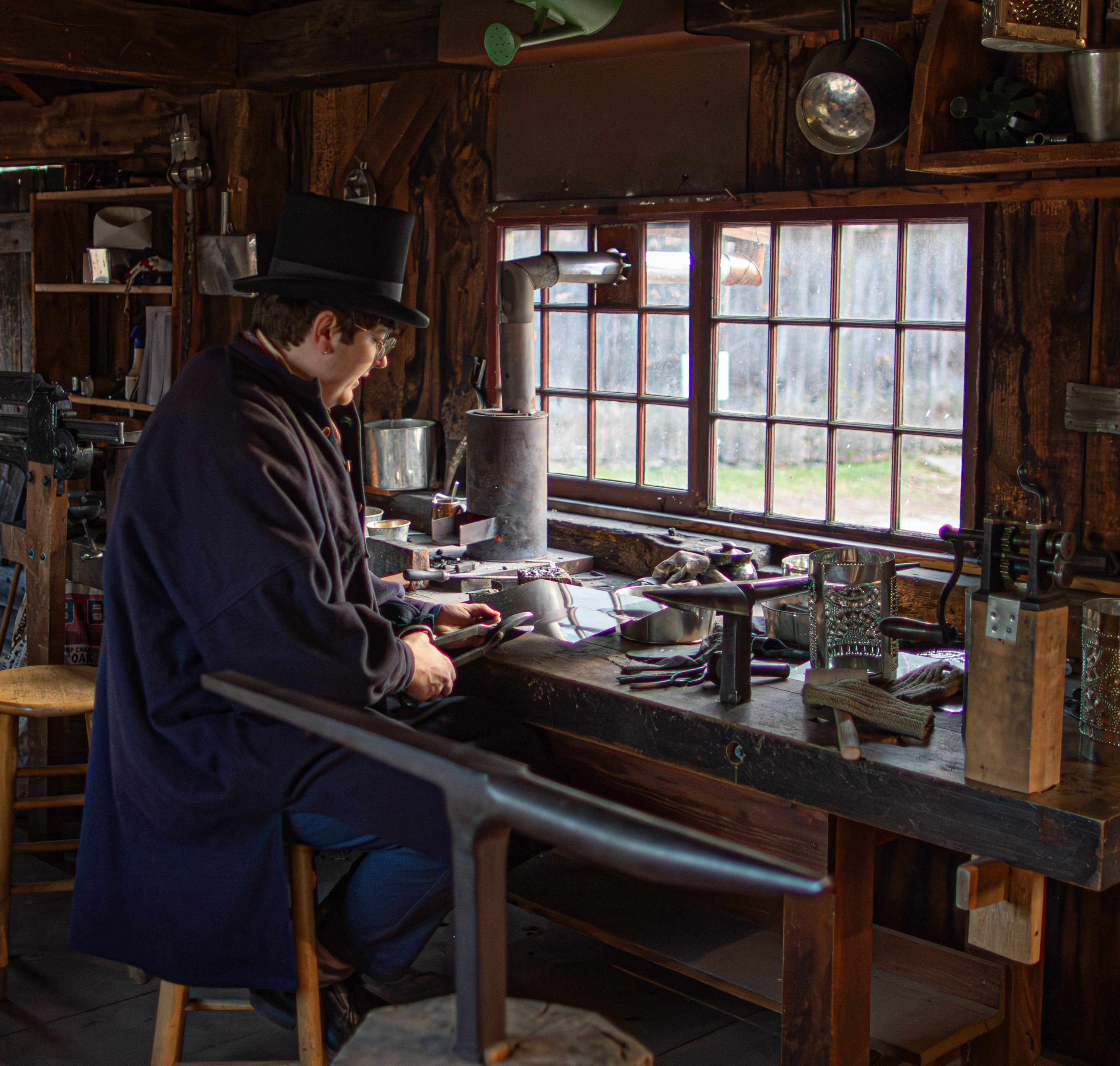
This tin shop, which was reconstructed in 1975, is believed to have been in operation around 1800 to 1850.

The tin business in New England grew rapidly after 1820. Tin shop owners imported tinplated sheet iron from Great Britain, shaped it into a variety of forms, and distributed their finished goods through peddlers and country stores. They also sold tinware in their shops. Colanders, dippers, dish kettles, funnels, measures, and pans were in greatest demand. Other common items included lanterns, foot stoves, teapots, coffeepots, “tin kitchens”, skimmers, and sconces.

The Tin Shop at Old Sturbridge Village is a reconfigured the early 1800s shed. Here, “tinners” work with hand tools as well as machines that were new innovations in the early 19th century. These machines turned tinplate, made grooves and folds, and inserted wire, increasing a shop’s production.

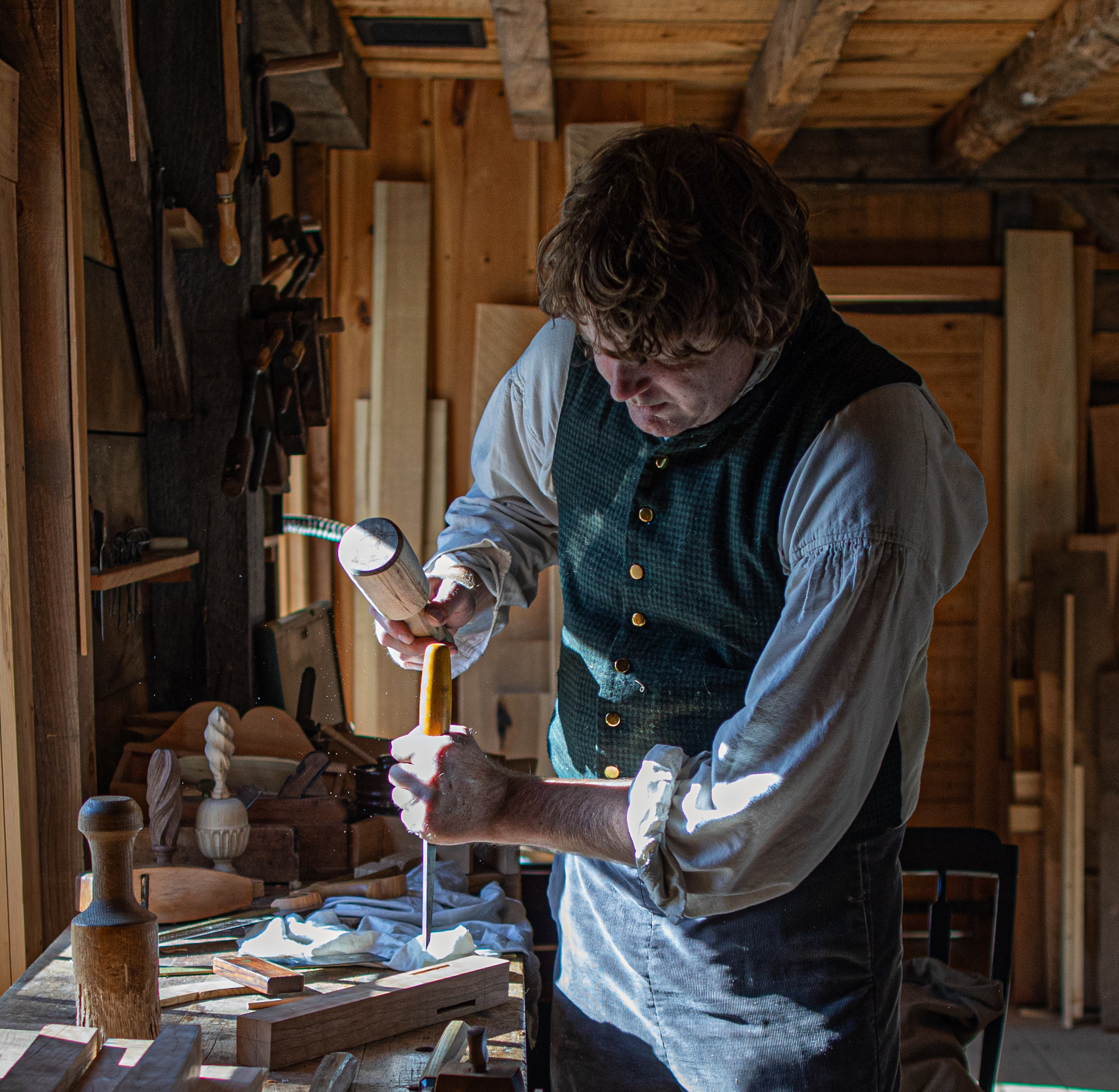
Sturbridge and the surrounding region were home to some of the foremost rural cabinetmakers of the early 19th century, including Nathan Lumbard and Oliver Wight. These craftspeople, as well as others like them, were integral to 19th-century rural New England communities. In 2017, Village staff and Trustees began working on a plan to create a permanent home for cabinetmaking at the Village. The Cabinetmaking Shop opened in October, 2021, as a highlight of the Village’s 75th anniversary.

In the new cabinetmaking shop,  cabinetmakers discuss the tools and techniques used in period furniture construction, including turning demonstrations on a treadle lathe, preparing stock with hand tools, and Federal-style table construction.

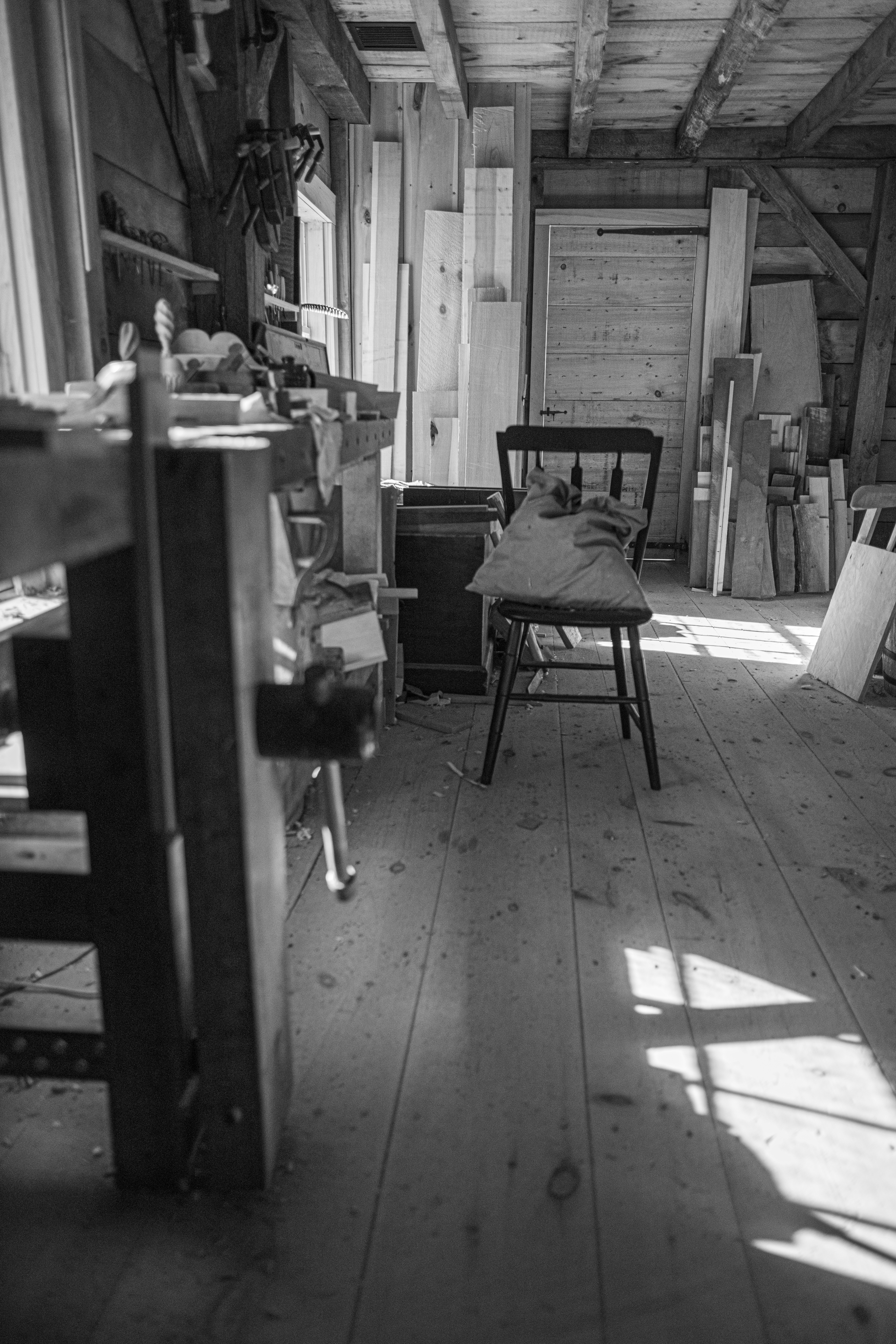
The Cabinetmaking Shop is a hybrid building, built using both historic and modern building methods in the construction of the Shop. The shop is patterned after period structures operated by early 19th-century New England craftsmen. Many elements of the final Cabinetmaking Shop will be created by craftsmen and interpretive staff working in the Village, including reproduction period tools, doors, shelves, and the box stove. The large timbers for the construction of the shop were even cut by the Village Sawmill.

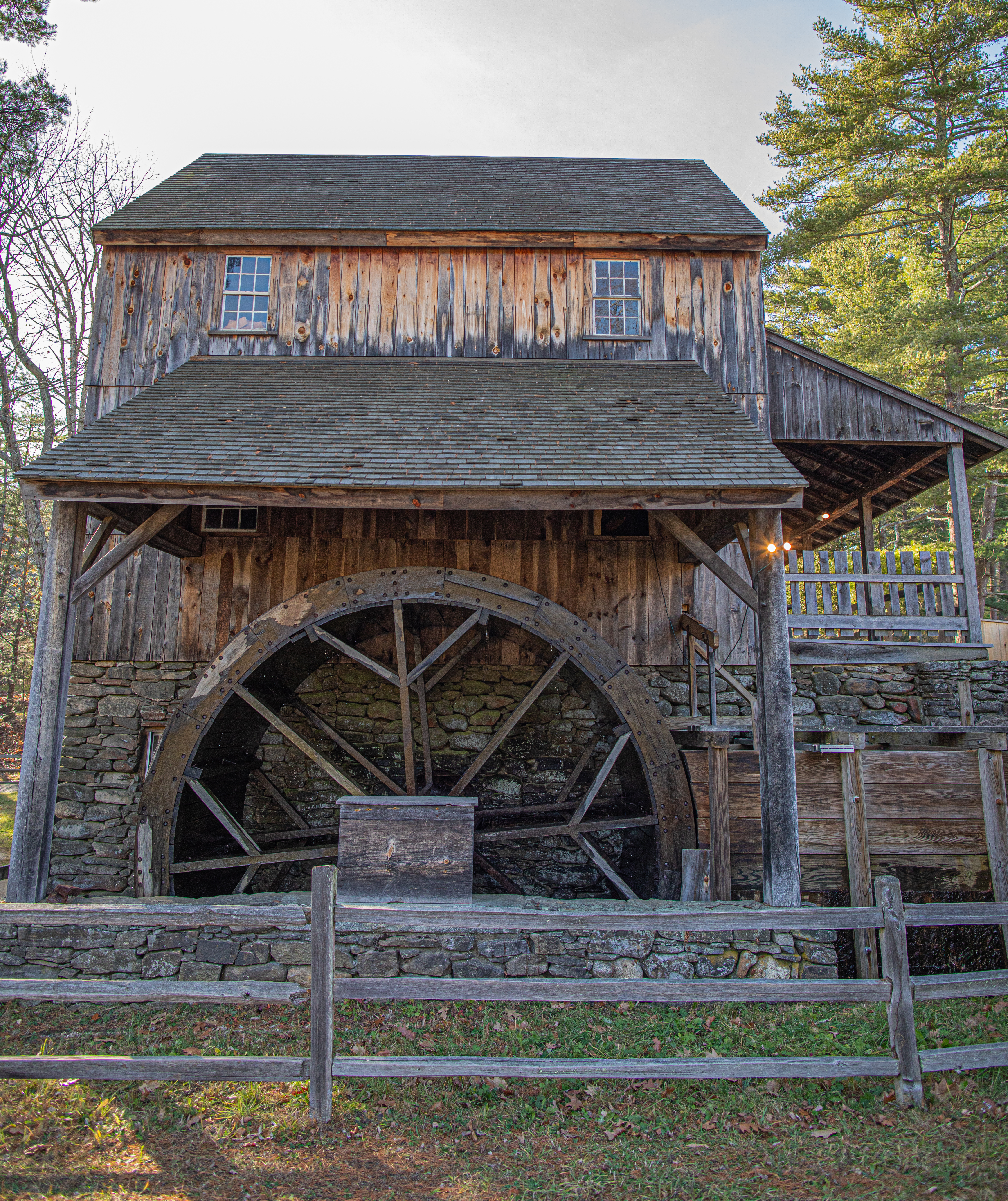
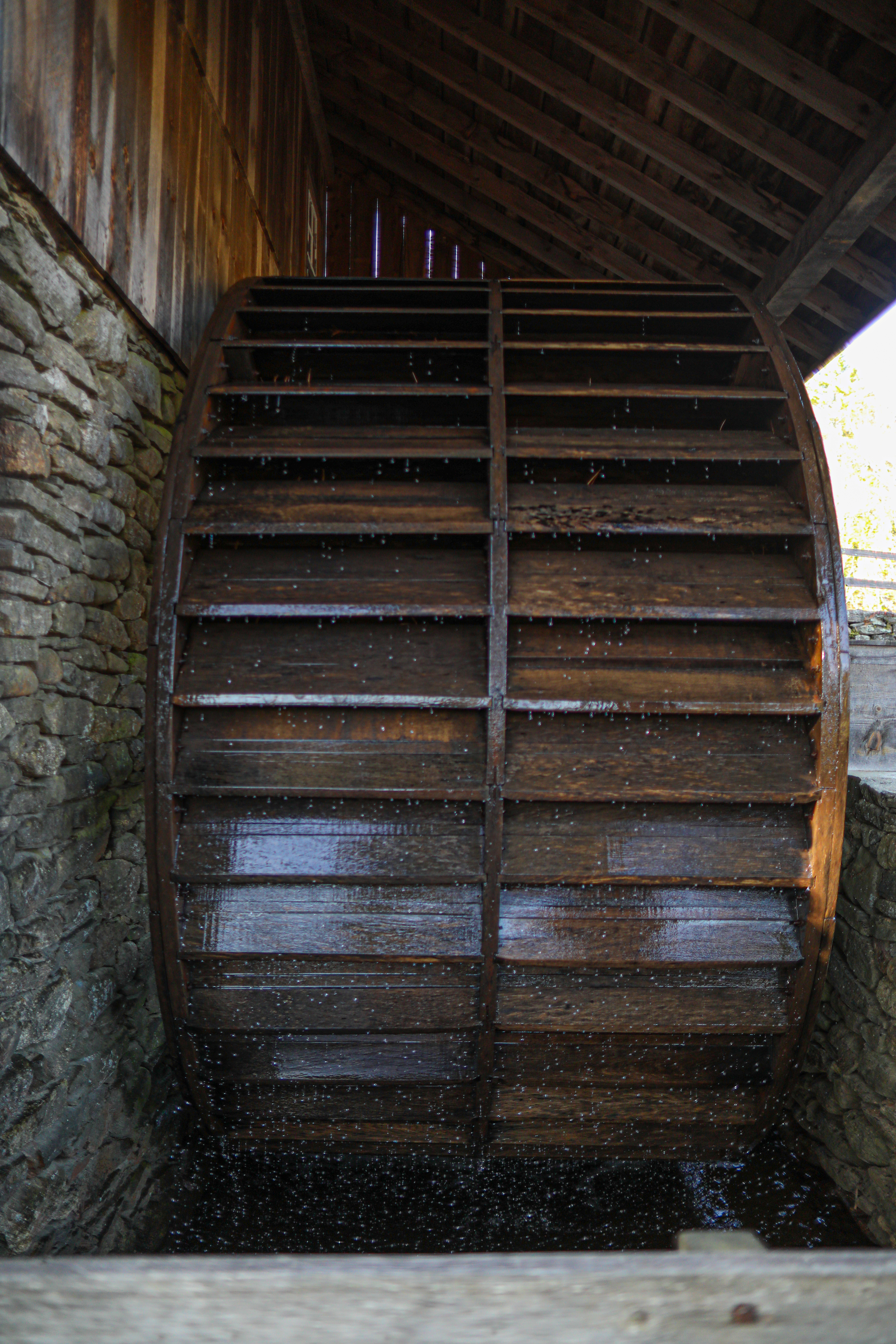
The sawmill was one of the most important buildings in the village. This sawmill was reproduced in 1984.

This rare water-powered sawmill—erected on the millpond site that David Wight, Jr. first created in the 1790s—is used to cut lumber for Old Sturbridge Village and other historic sites. The Sawmill is based on what had been one of the oldest surviving sawmills in the area: the Nichols-Colby Sawmill of Bow, New Hampshire, which was destroyed in a 1938 hurricane.

Although the Village demonstrates sawmilling in spring, summer, and fall, rural mills were busiest during late winter and early spring, when waterpower was most abundant and the demands of farming were less pressing. Sawmill account books suggest that since it was so difficult and expensive to transport logs and lumber, mills like this one concentrated on custom production for local customers.

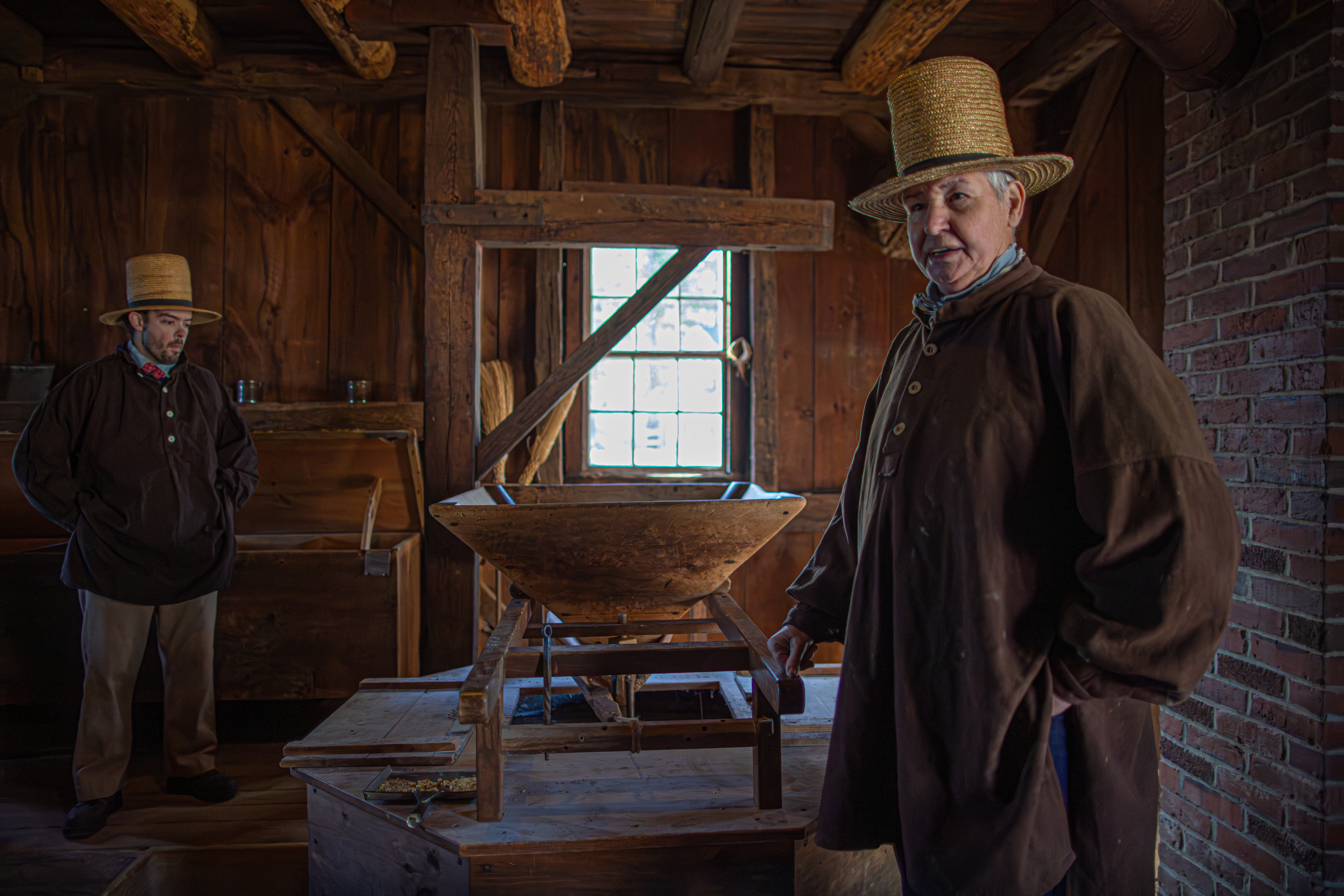
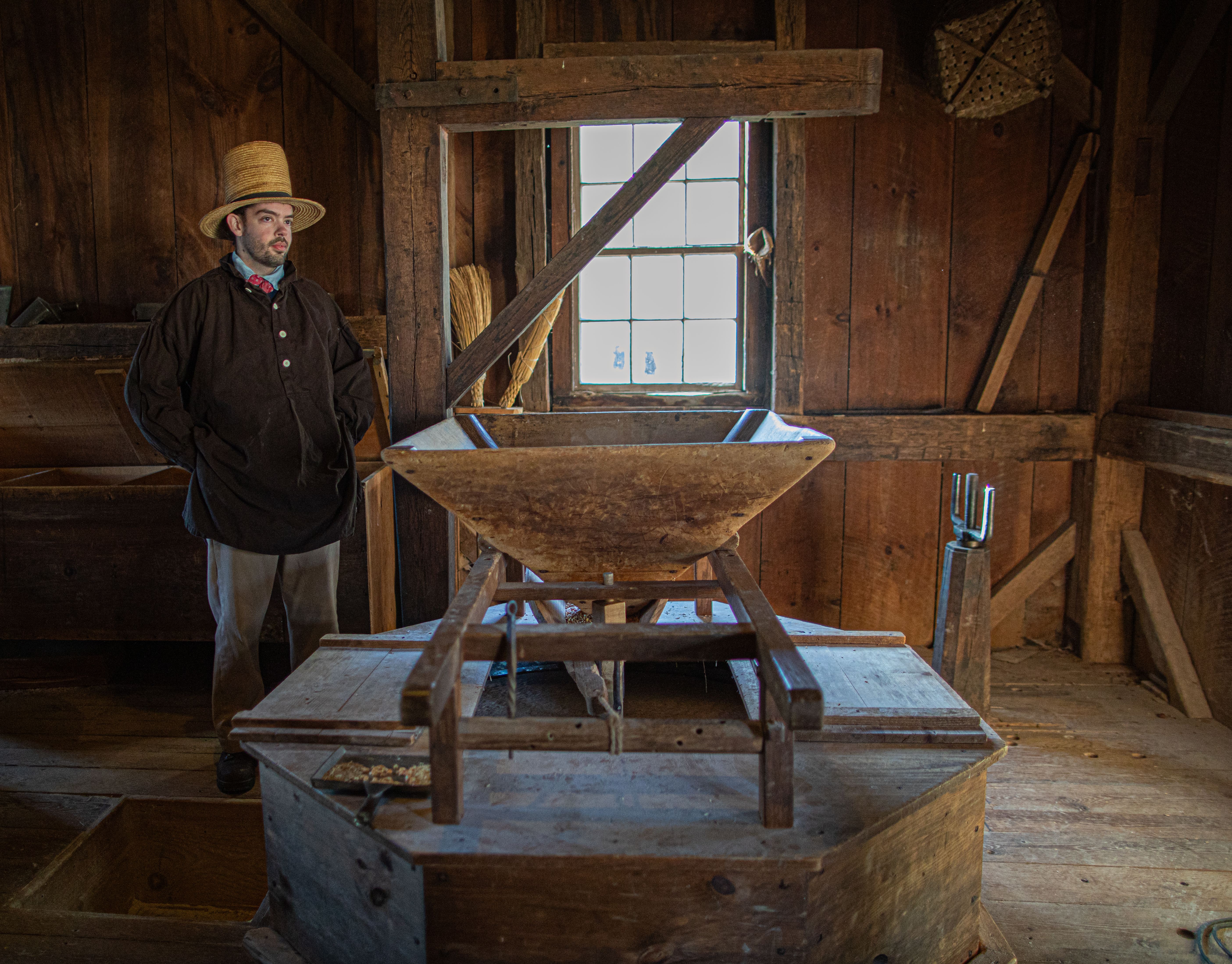
The Gristmill was also active during my visit.
The Gristmill was one of the first buildings constructed at Old Sturbridge Village. Built on the site of the Wight family’s original gristmill, the mill is made of recycled old timbers and new lumber. The mill’s massive millstones and other parts came from the Porter Gristmill in Hebron, Connecticut.

Gristmill owners served their customers by grinding grain into flour and meal for baking or provender for feeding livestock. By Massachusetts law, a miller could charge a fee or toll of 1/16th of the grain bought to him as payment for milling the rest. But rural milling was changing along with the rest of the economy; even in the countryside, cash fees were beginning to replace traditional tolls.

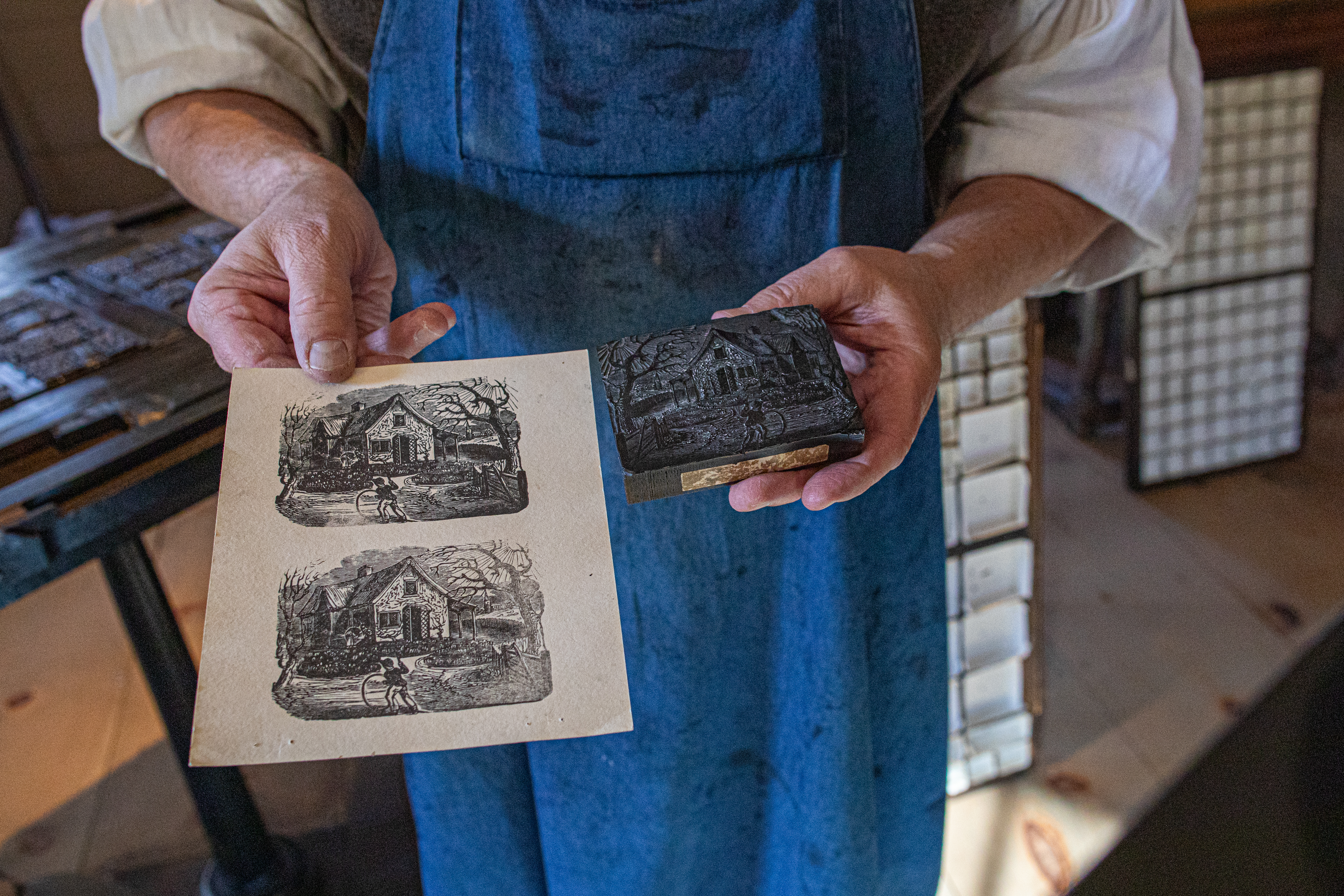
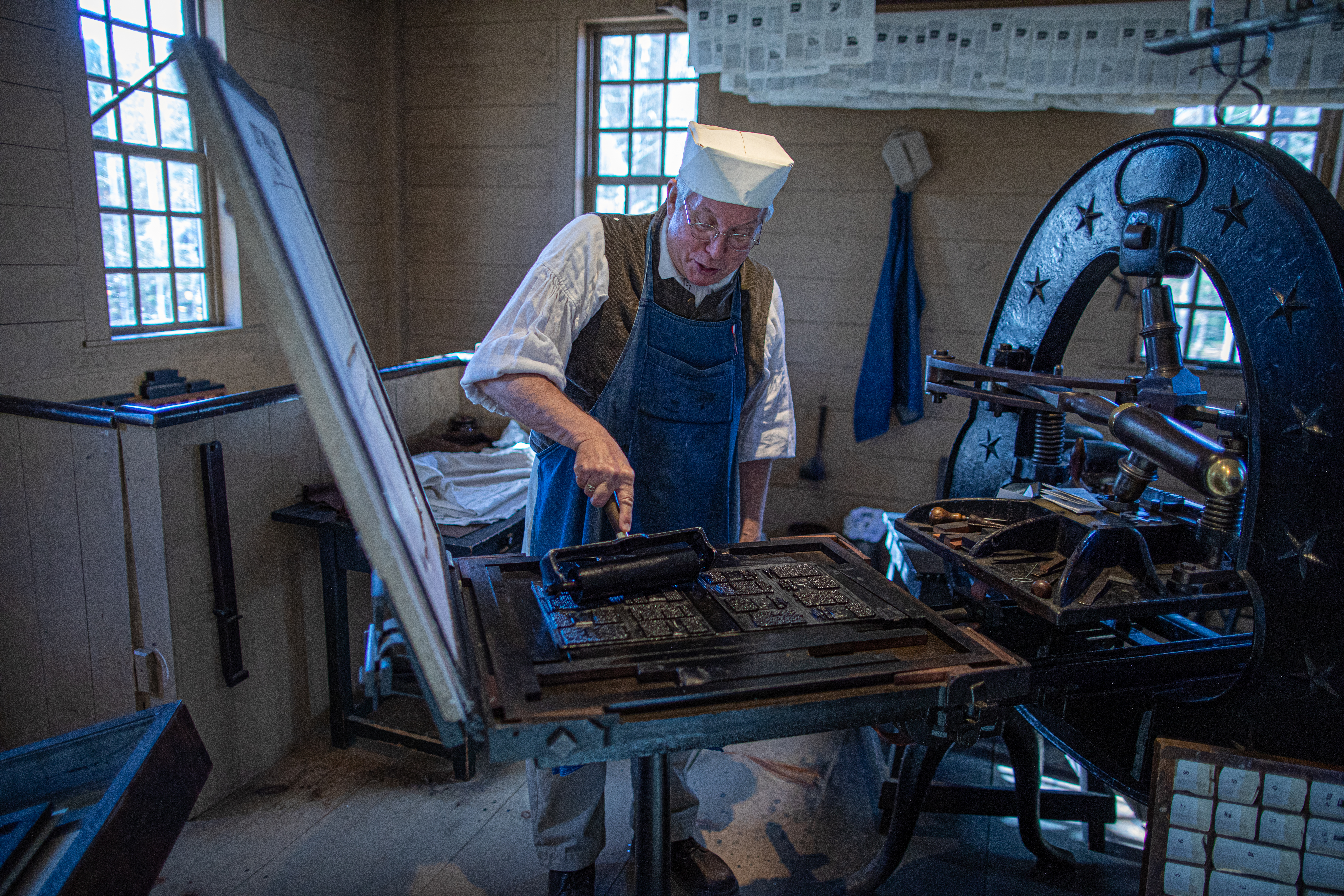
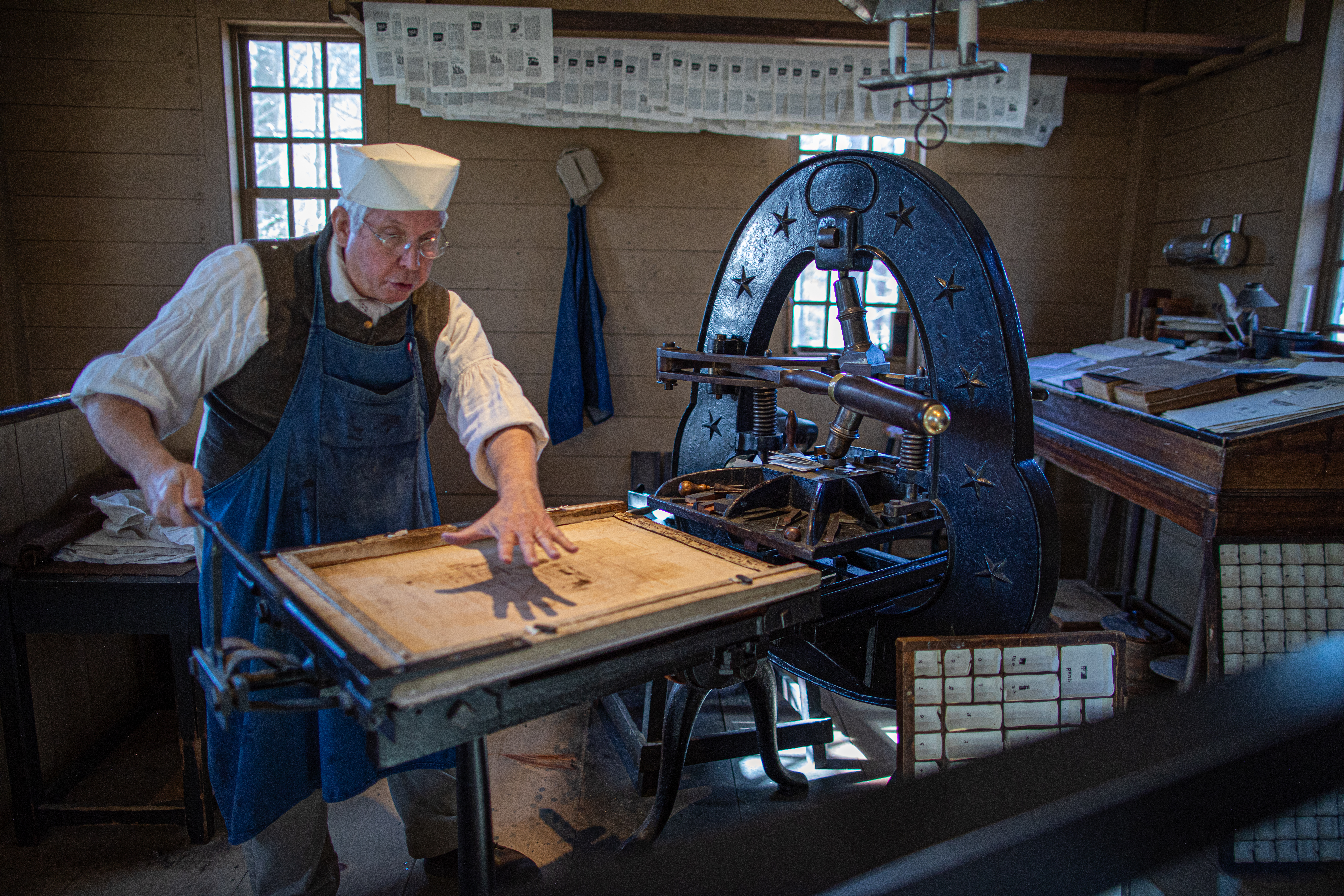
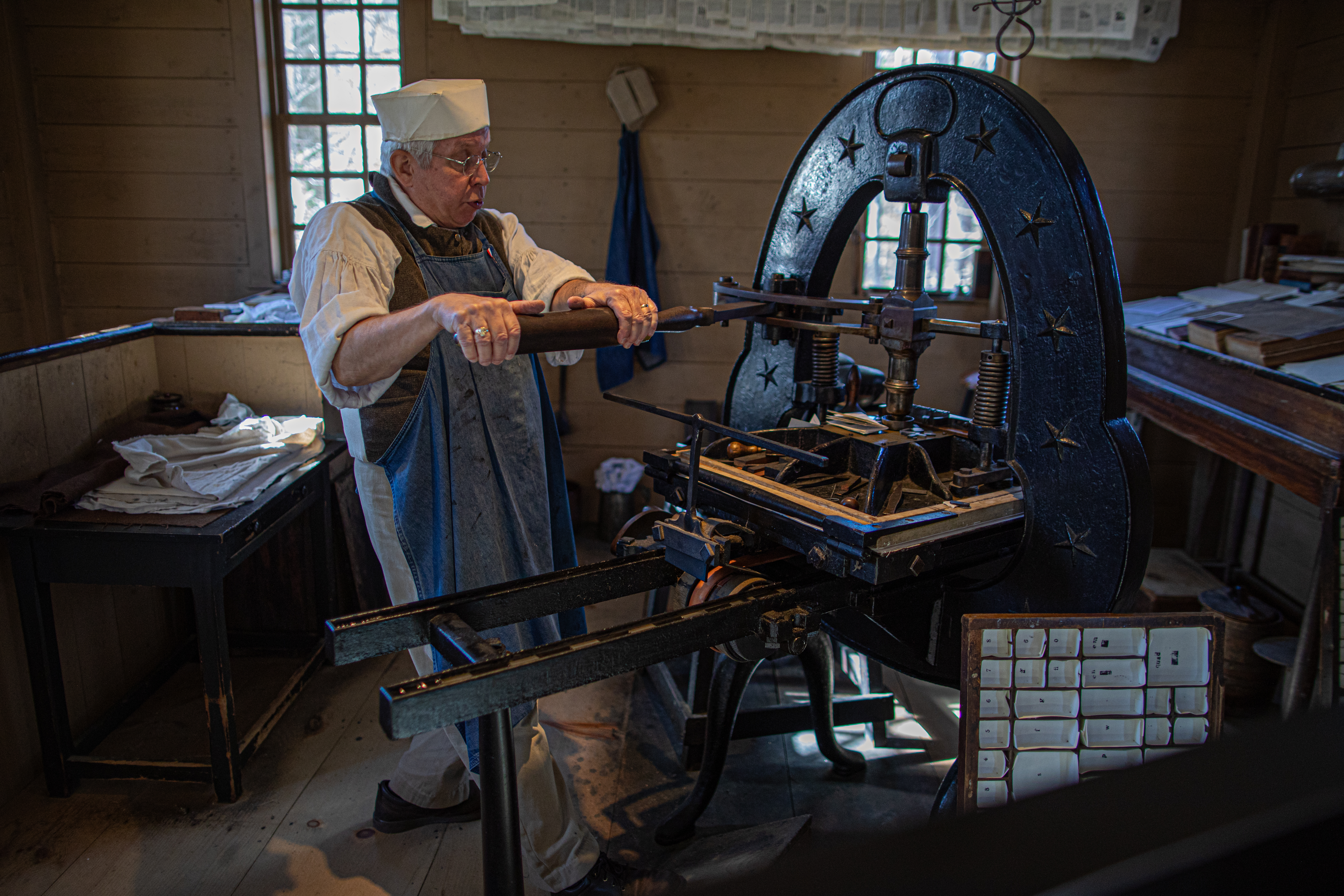
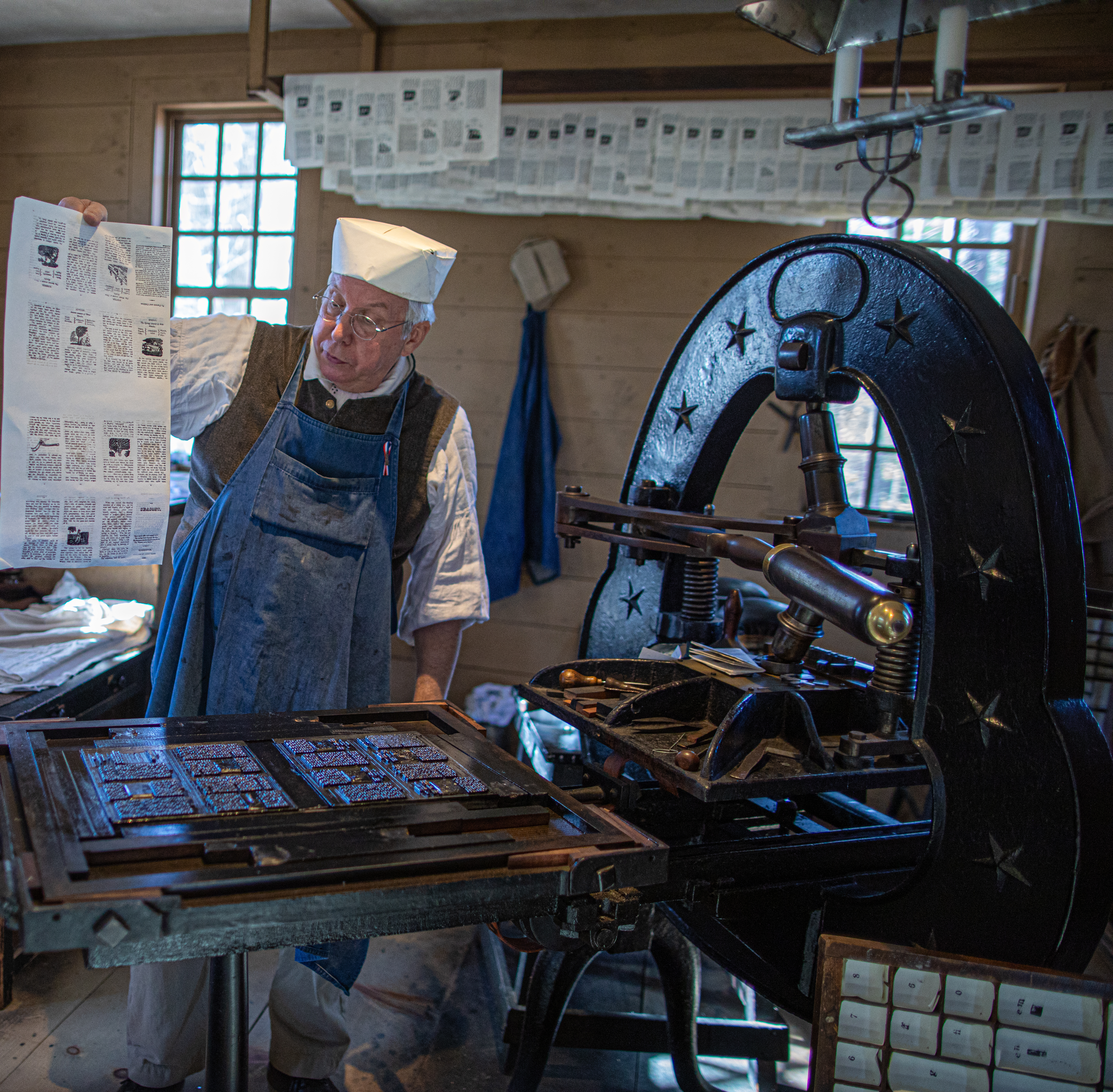
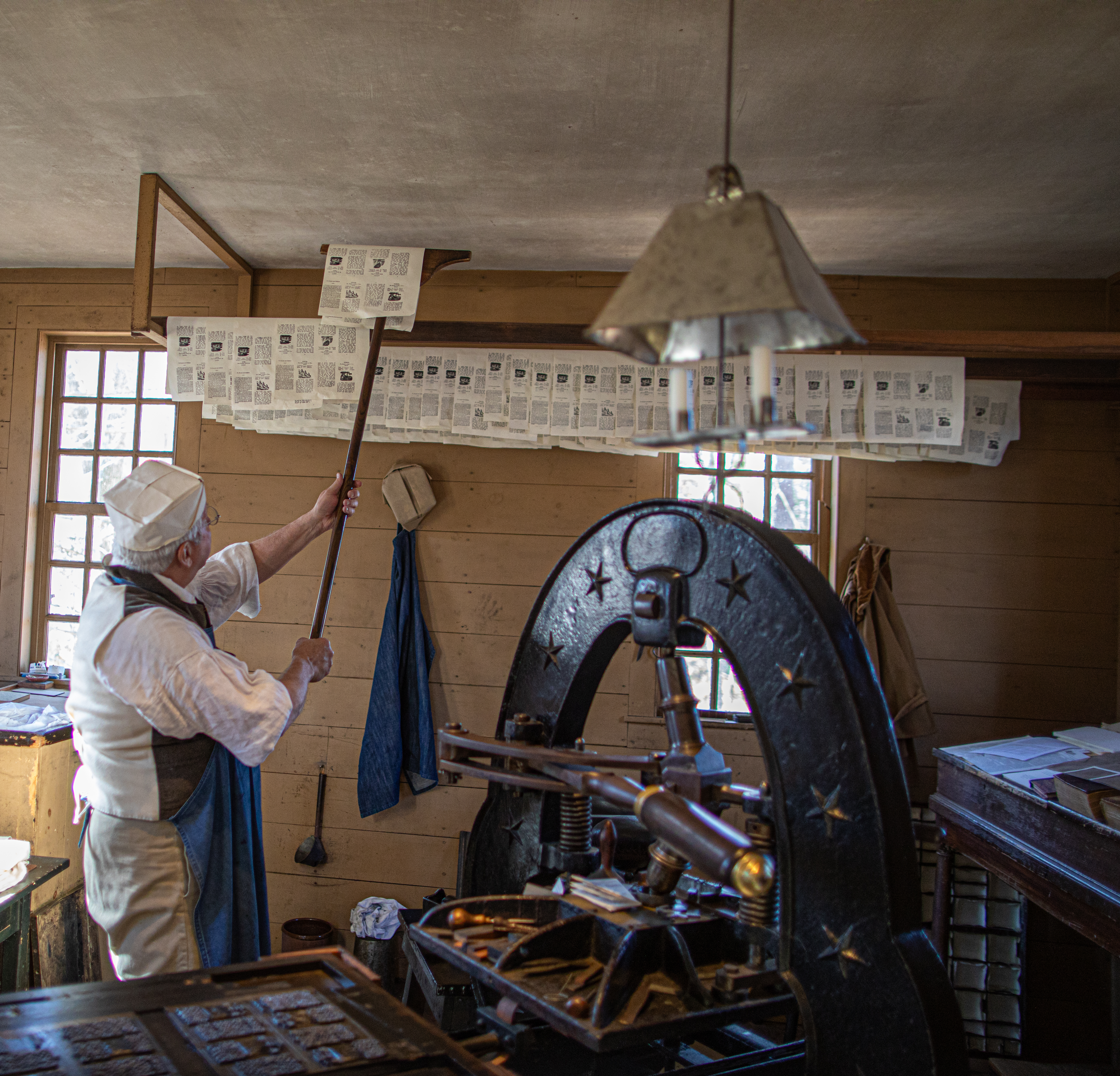
Originally built in Worcester, MA around 1780, the Printing Office was moved to Old Sturbridge Village in 1951.

Printing required speed, dexterity, and strength. Setting type and printing were generally the work of men and boys, but women were employed in stitching and binding books. Country printers concentrated on books, pamphlets, broadsides, and forms. Newspapers were seldom profitable in small towns, but many rural printers tried to make money from them. In order to have a variety of titles for their customers, rural printers exchanged large quantities of books with printers throughout New England. Then they sold the books to country merchants, often taking store goods in exchange. By 1820, many were printing books for publishers in Boston, New York, and Philadelphia.

The Printing Office at Old Sturbridge Village was owned for a time by noted printer Isaiah Thomas. Thomas moved from Boston to Worcester during the Revolutionary War to preserve his freedom to publish. It is unlikely that Thomas printed in this building, but the association with him is important. As one of America’s most successful printers, he trained many craftsmen, who influenced the trade for two generations.

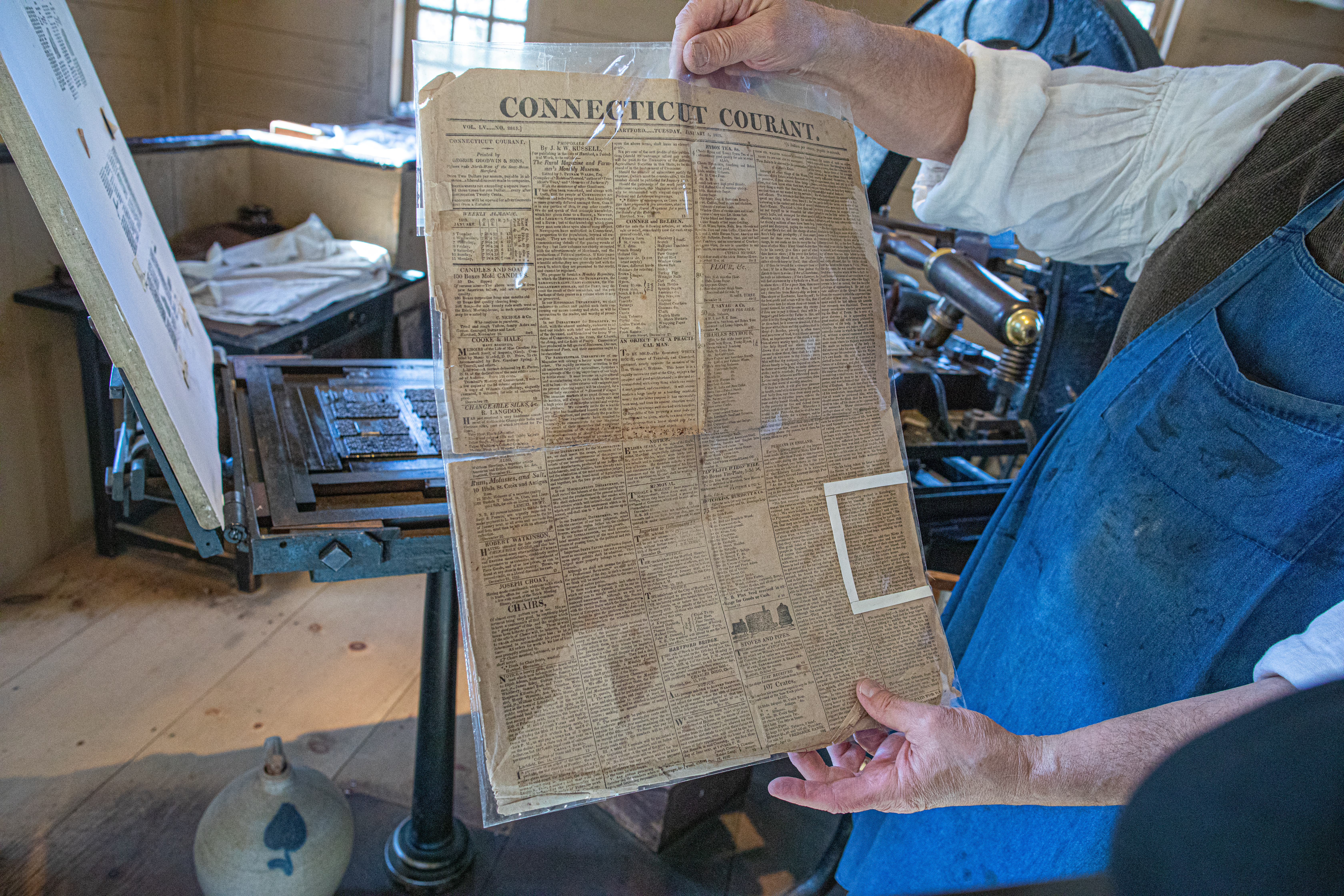
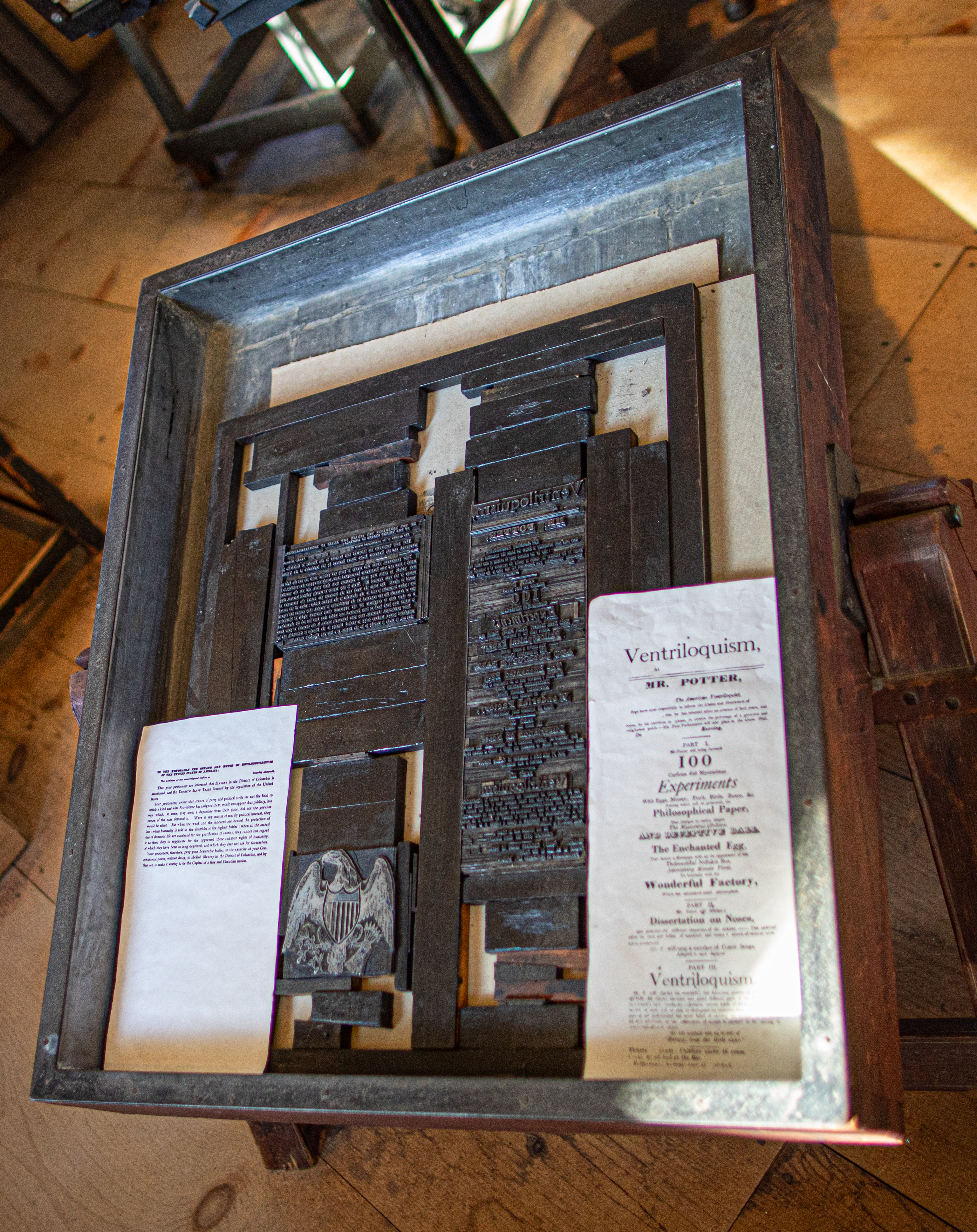
The printer showed off the tools of the print shop as well as how the papers were printed on. This copy of the Connecticut, which was printed on the printer in the office is an original from the 1800s.

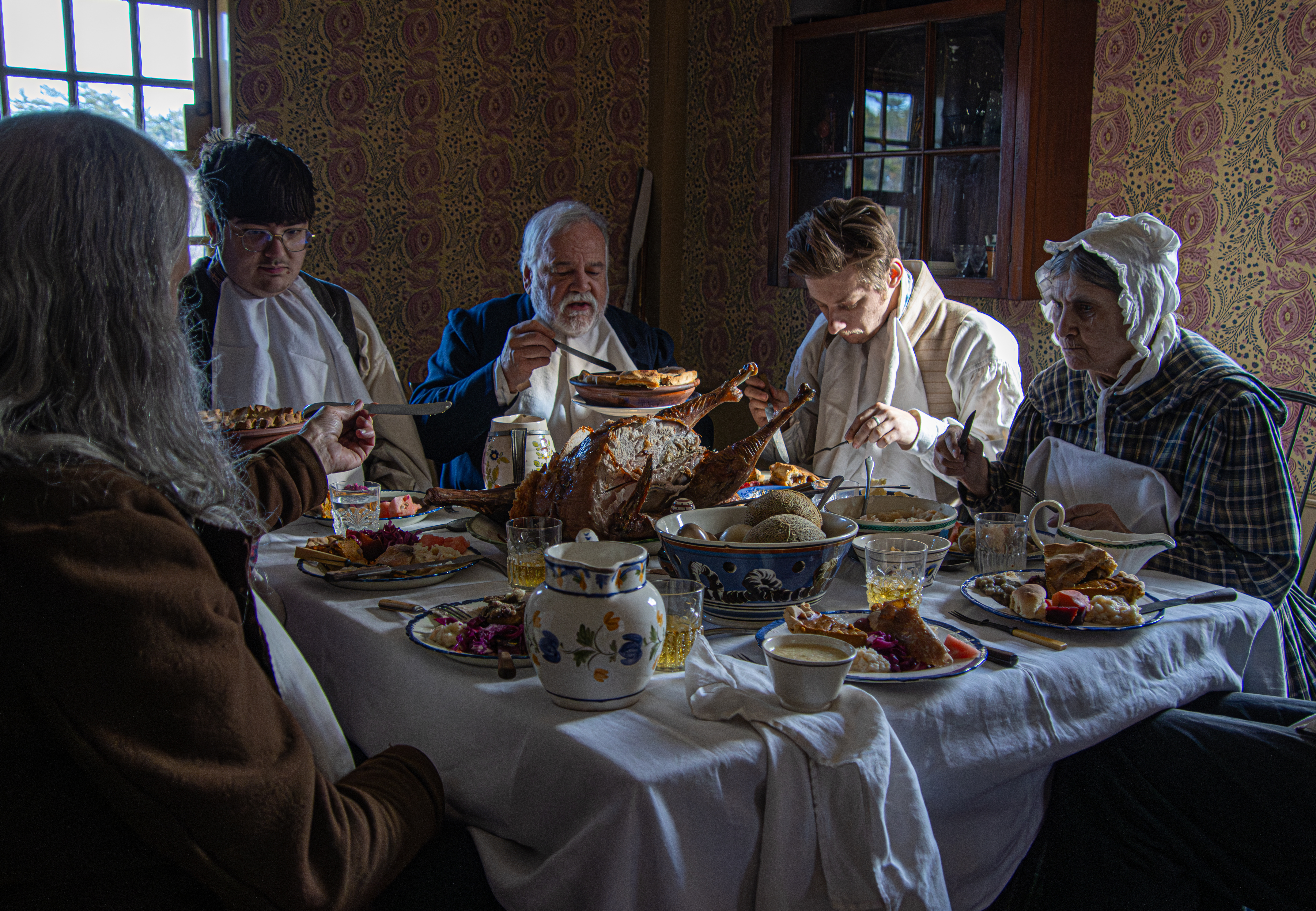
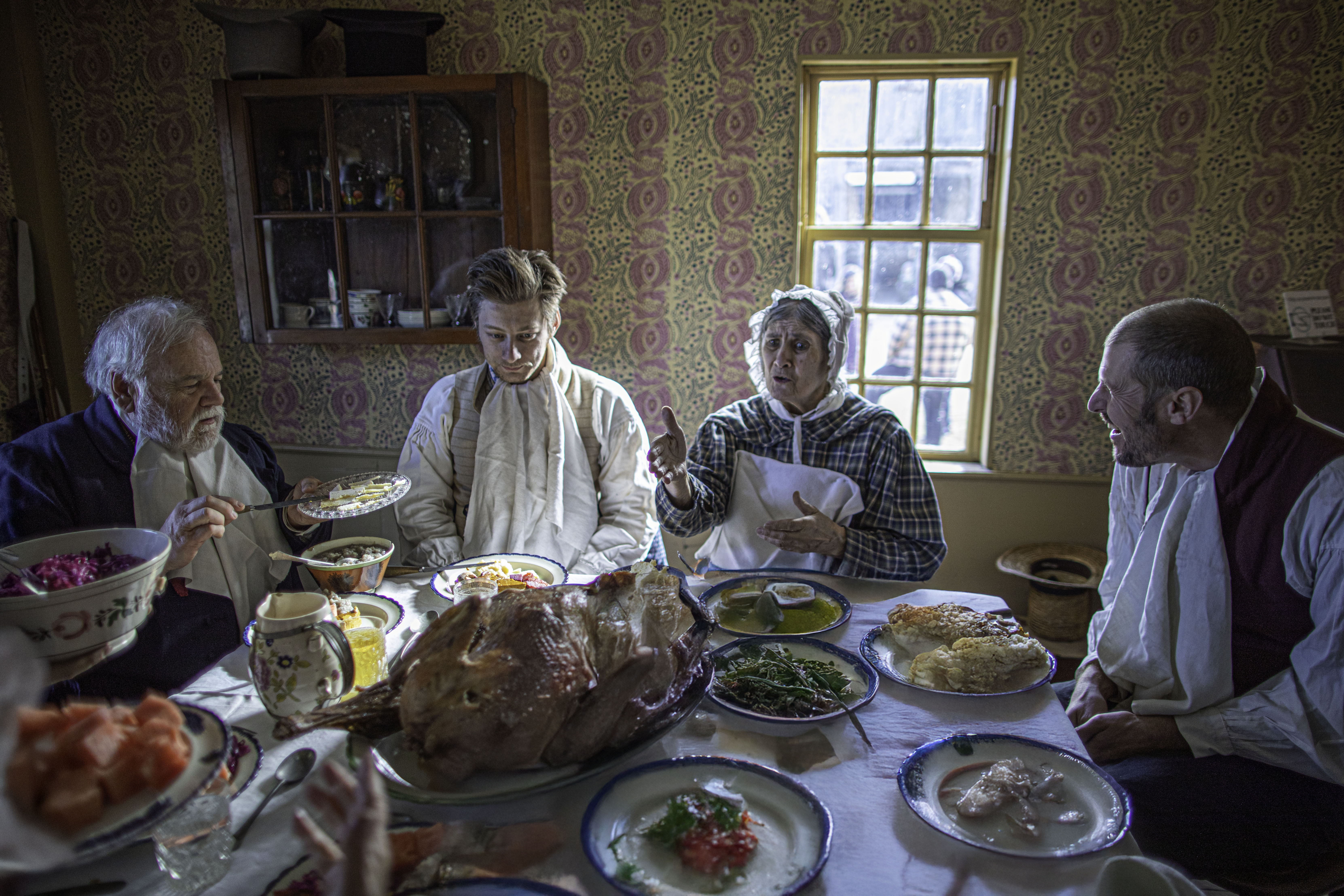
Of course, what would a Thanksgiving celebration be without a feast?

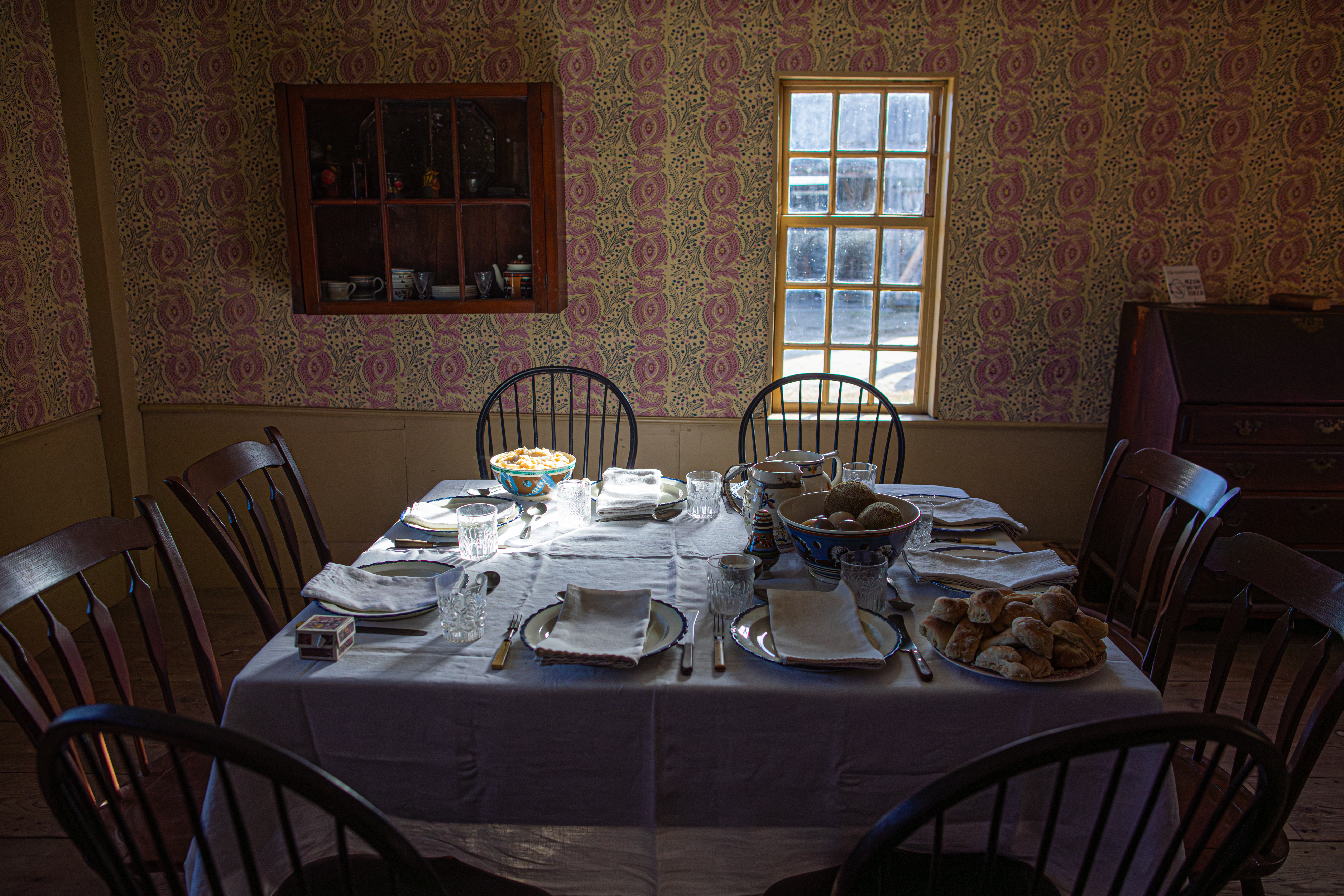
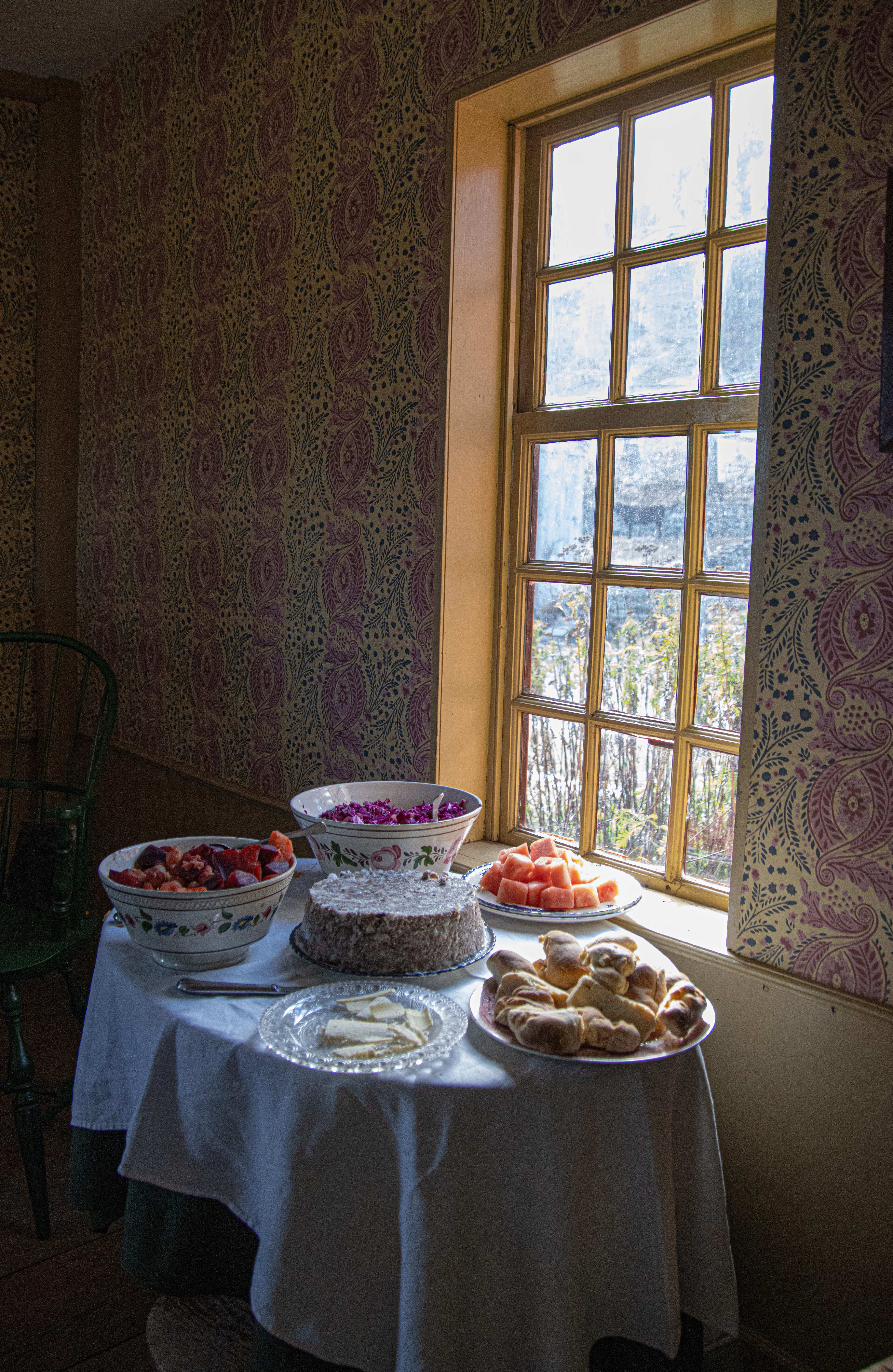
Thanksgiving was the biggest holiday in 19th century Sturbridge. While the turkey is usually the biggest part of the Thanksgiving meal in modern day America, it was not the case in 19th century Sturbridge. And, other parts of the meal were considered more important. es were baked weeks ahead of time and stored in unheated attics and bedrooms where they would freeze and keep for months. Pies not consumed at Thanksgiving would sometimes last until April. Also, while many people might be surprised to read this, prayer was not said before the big meal. Grace, or a proclamation of gratitude, was often said before the meal.

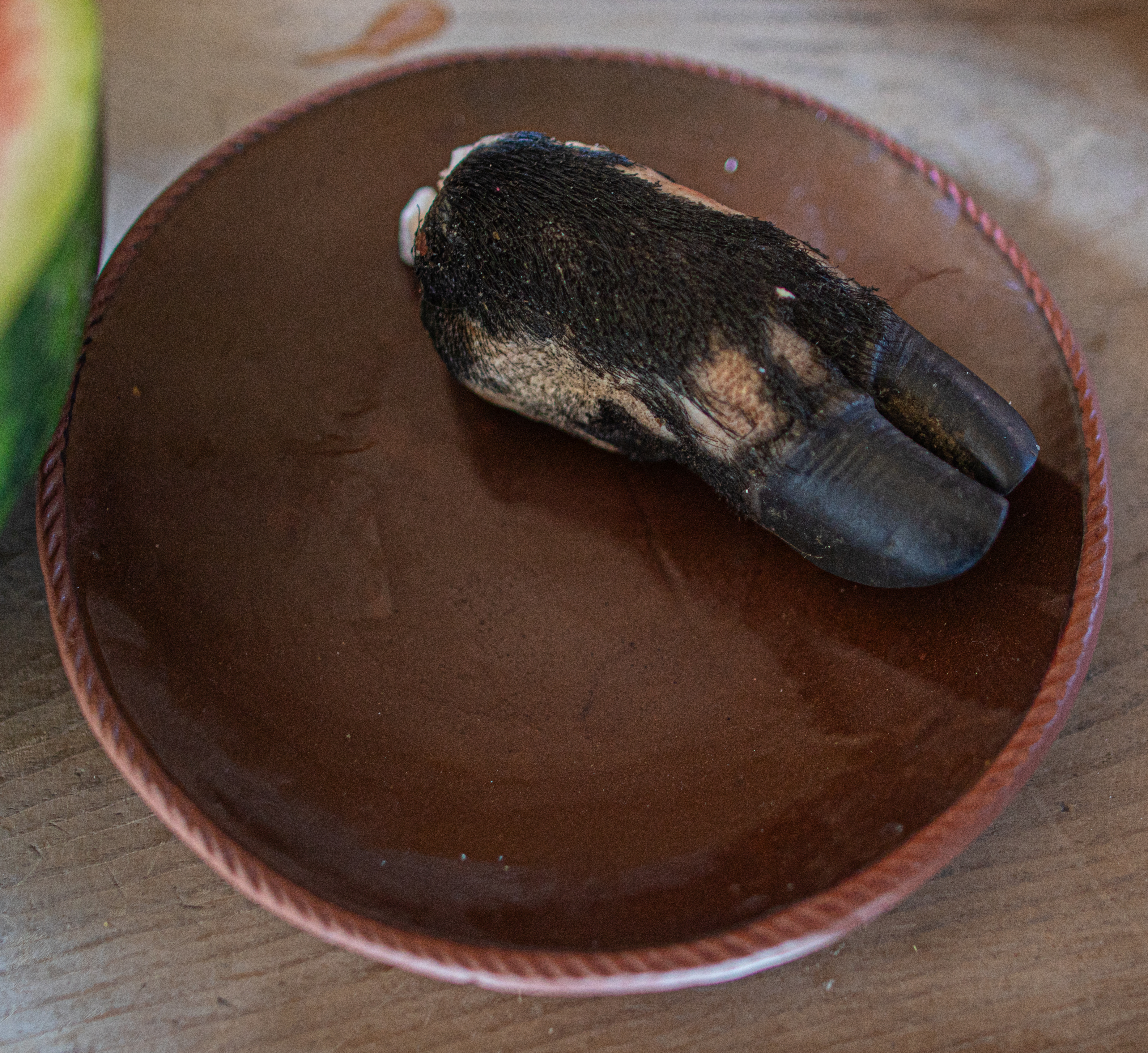
Turkey wasn’t the only thing on the menu. This hoof (possibly from a boar, sheep or deer) was a common delicacy of these meals.

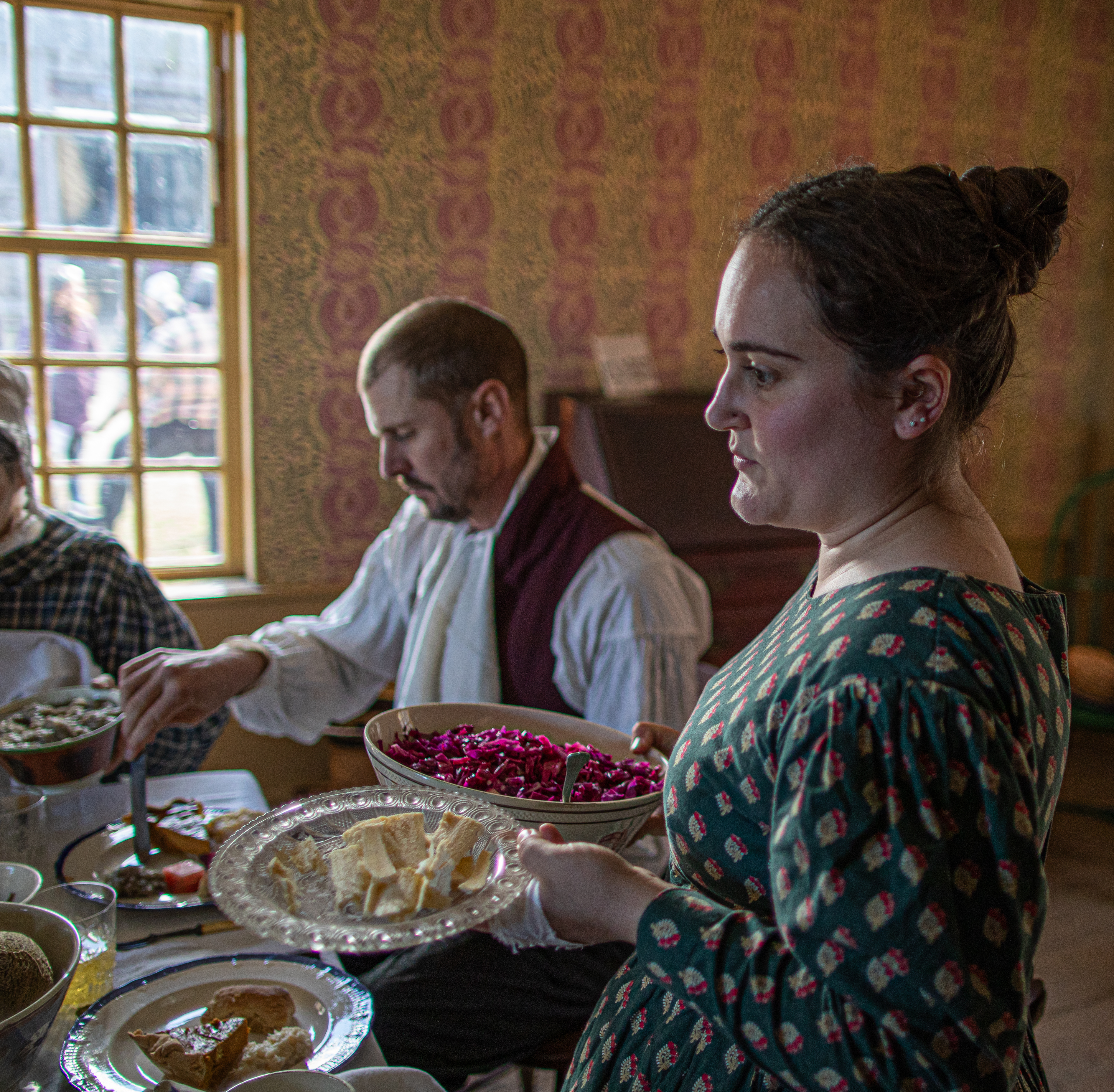
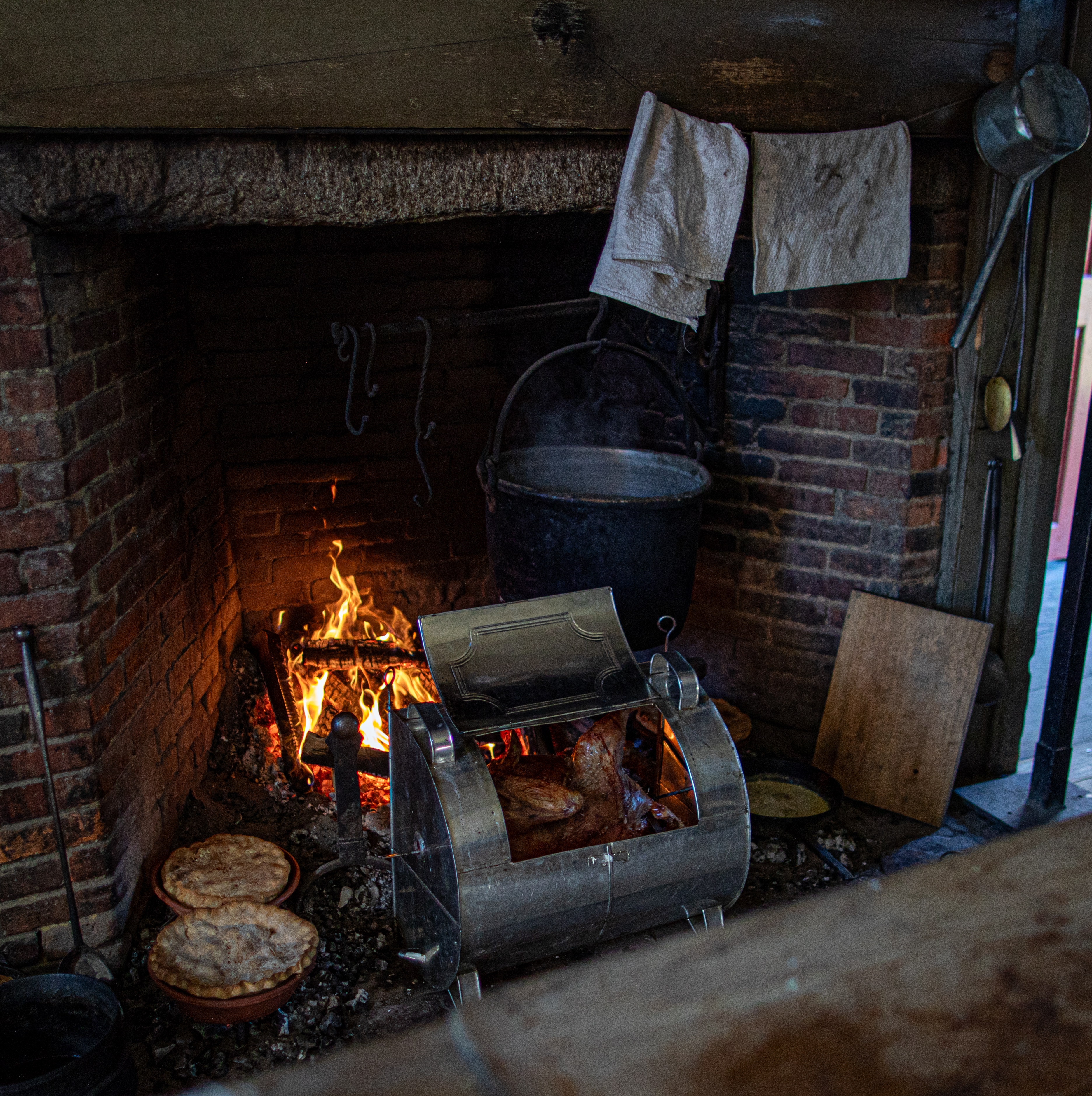
But there were also more savory items like pies, cake, vegetables and a turkey cooking near an open flame.

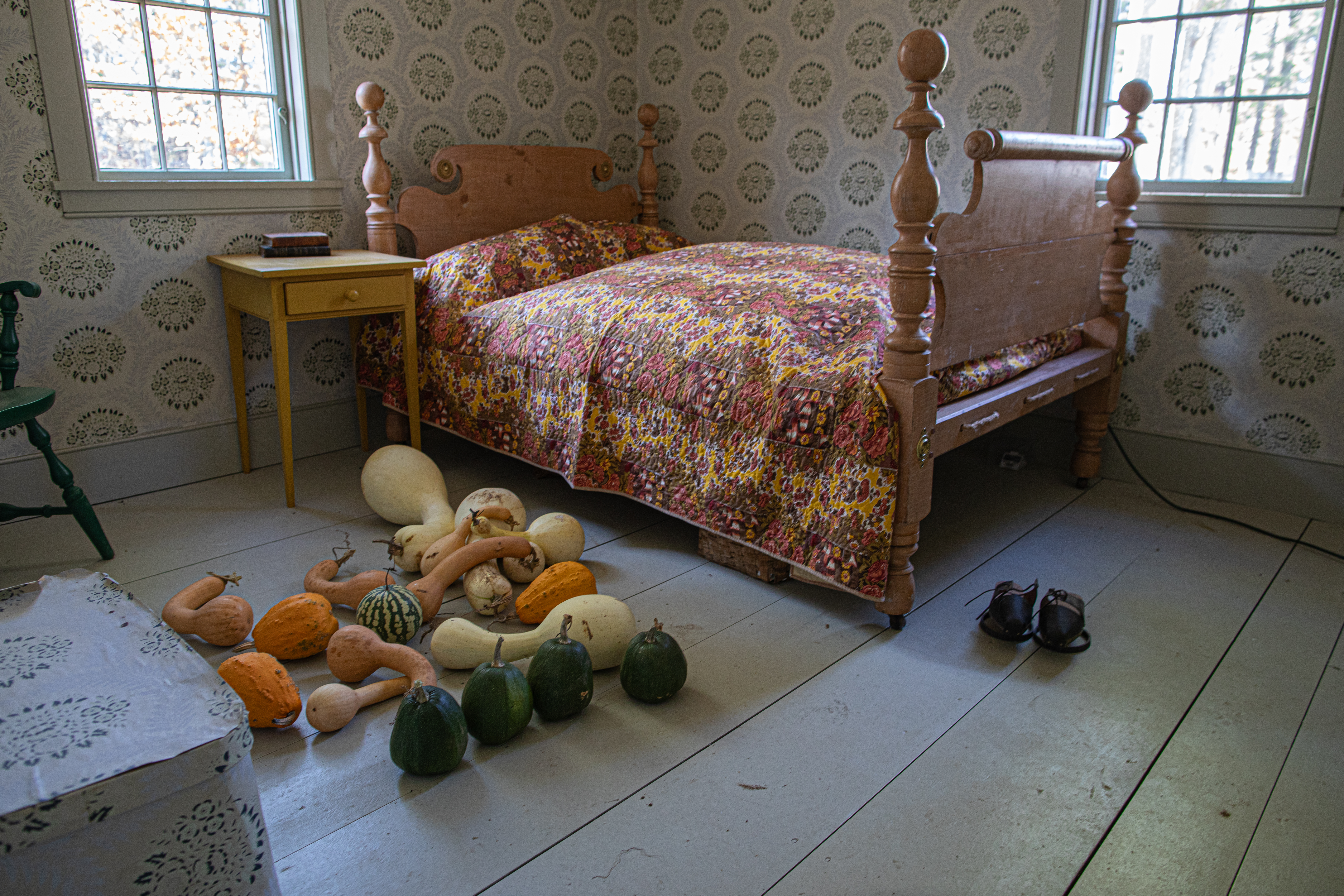
Sometimes, they would store extra vegetables in unusual places!

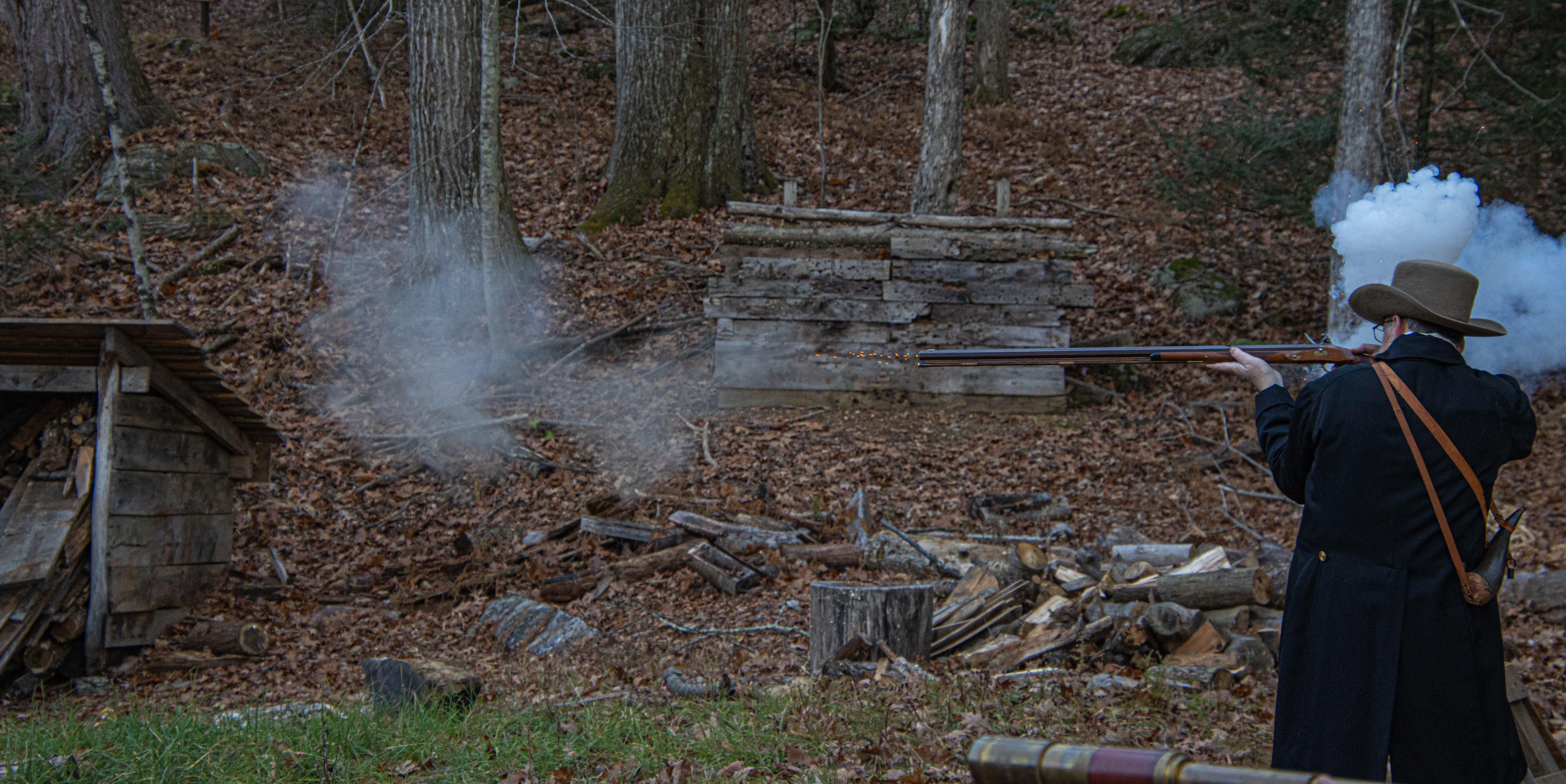
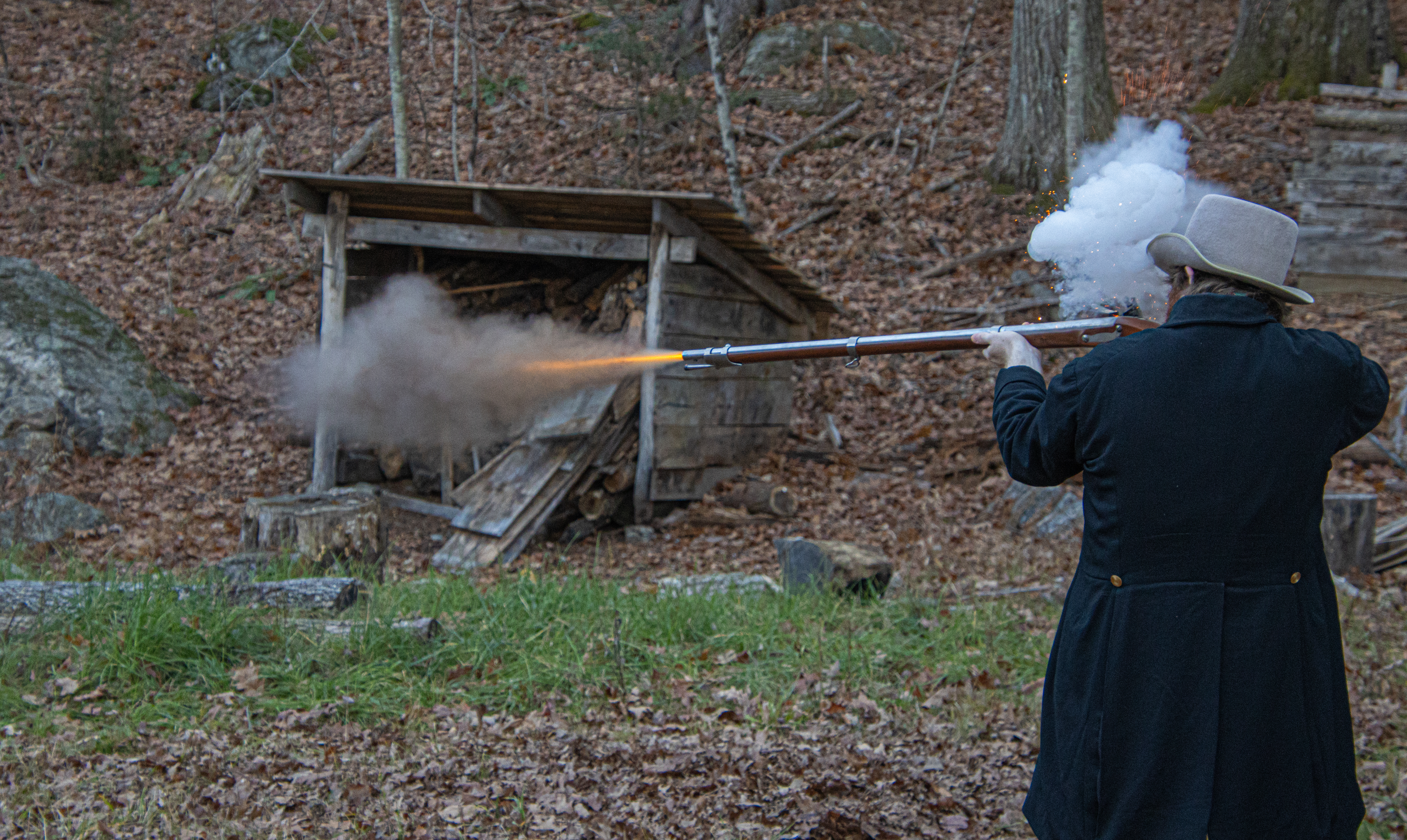
The highlight for most, though, was the “turkey shoot.” But, no turkeys were harmed during this event. Men and women from the village took their turns at trying to hit the targets. While beginning to fall out of favor by the 1830s, competitive turkey shoots were still fairly common New England events in the fall and early winter. Participants would pay cash to shoot at nearly impossible ranges to try to win their own bird.

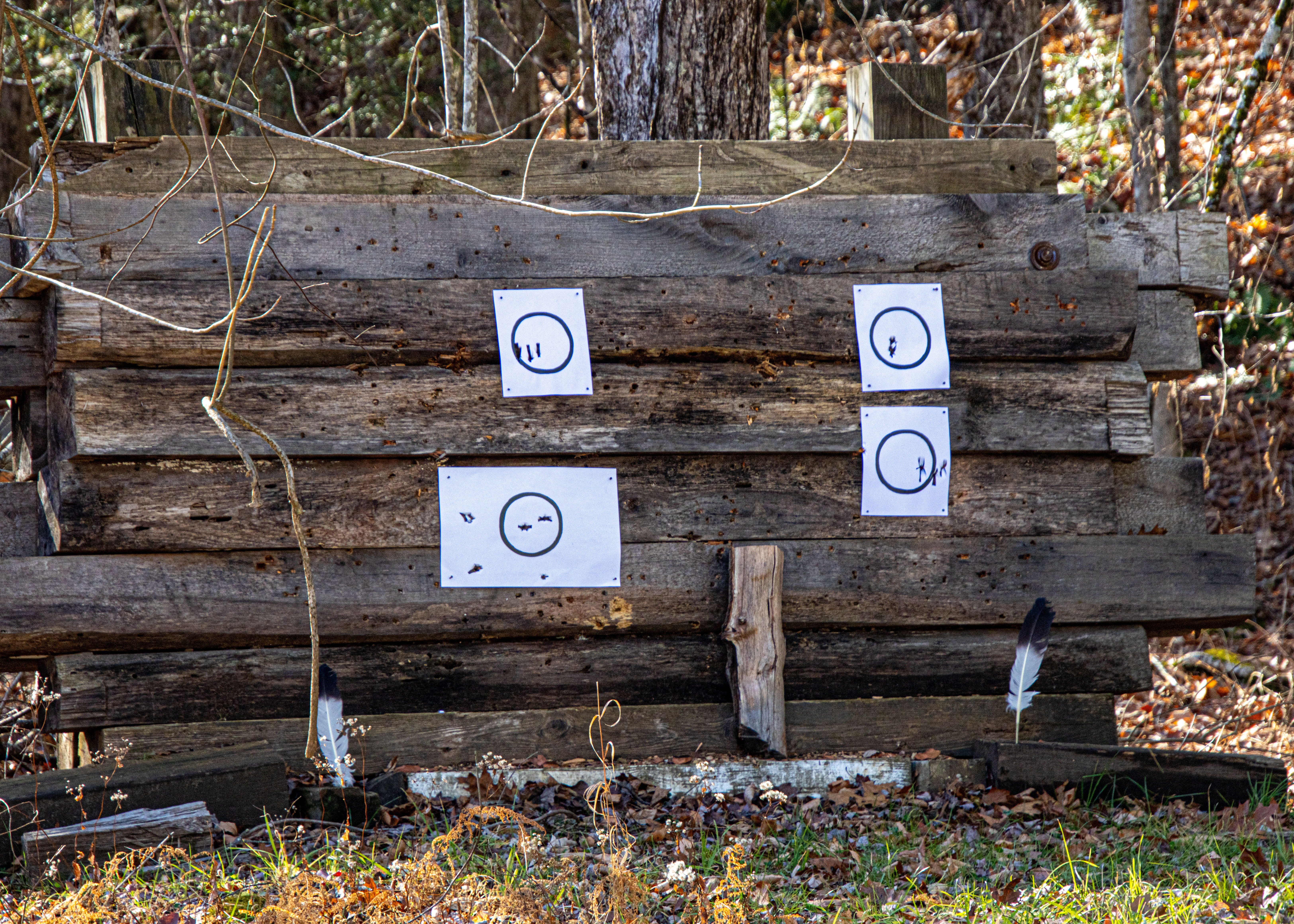
While no animals were used or harmed during the shoot, there were other targets used in the shooting. Instead of turkeys or other living things, the shooters aimed at the paper targets, jugs and bowls.

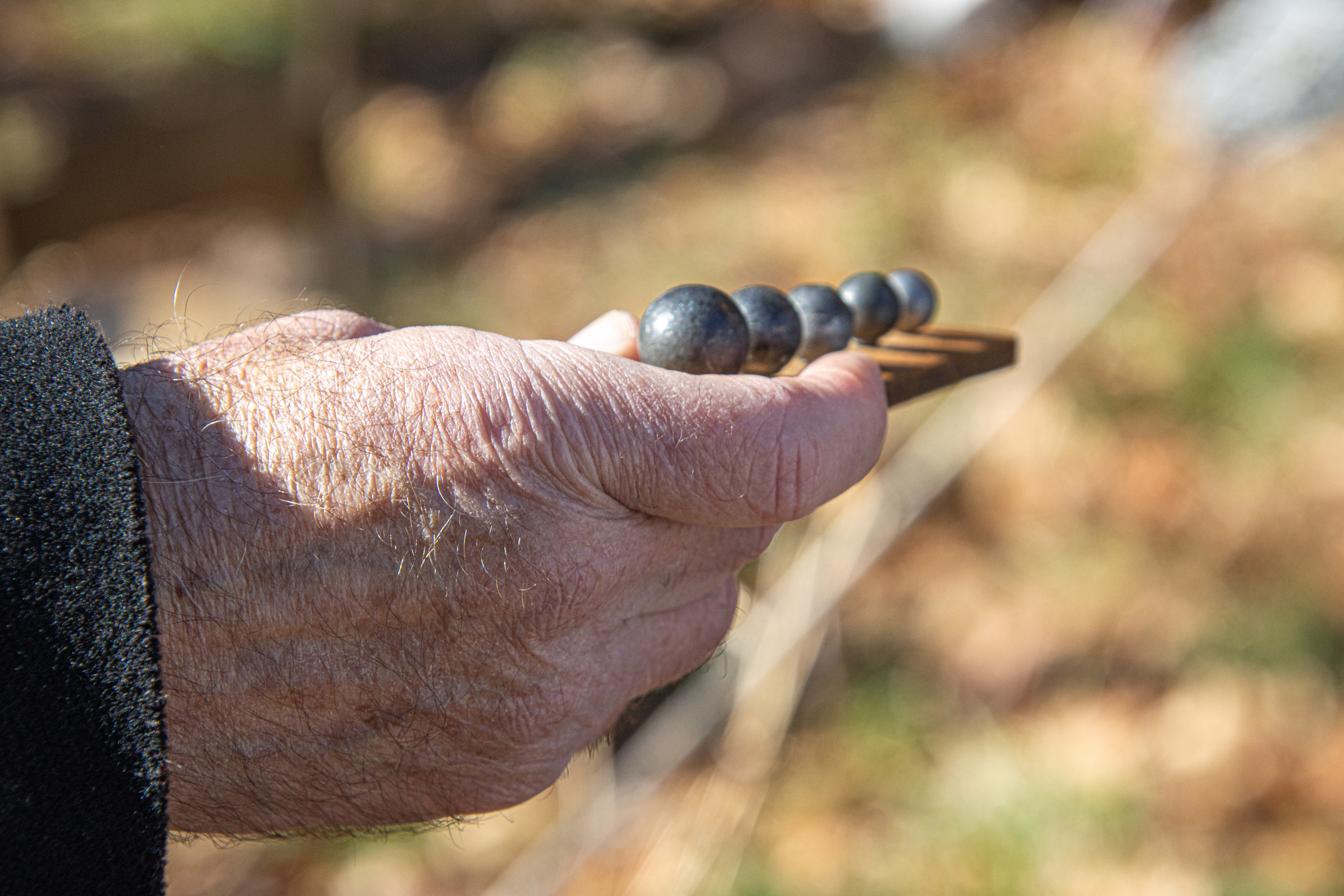
These are the rounds used during the time of the turkey shoot they were recreating. The shooters used the largest projectile to the left for the target practice. Imagine getting hit by that bullet, or any of these bullets for that matter. Ouch.

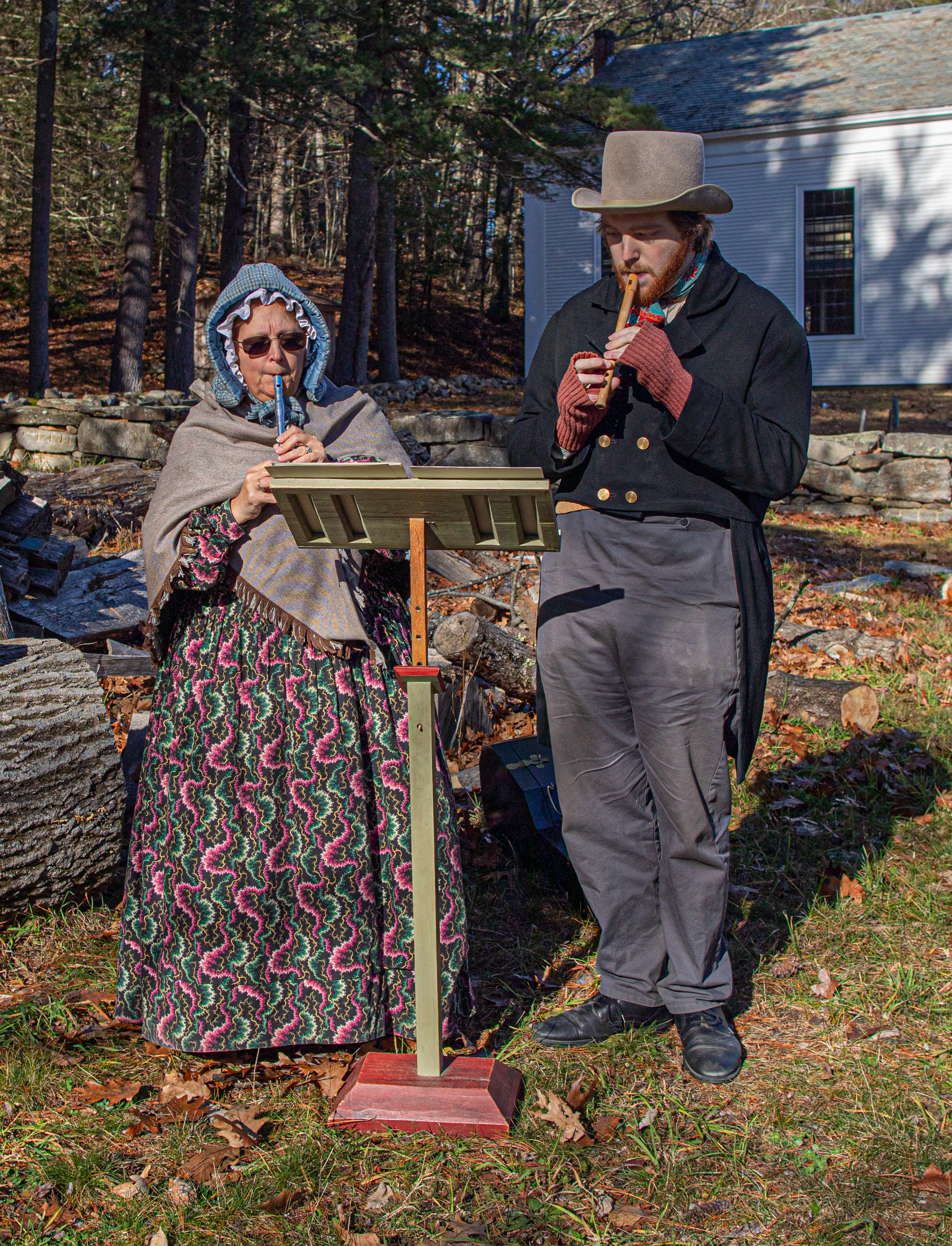
There were musicians and a few roosters at the turkey shoot.

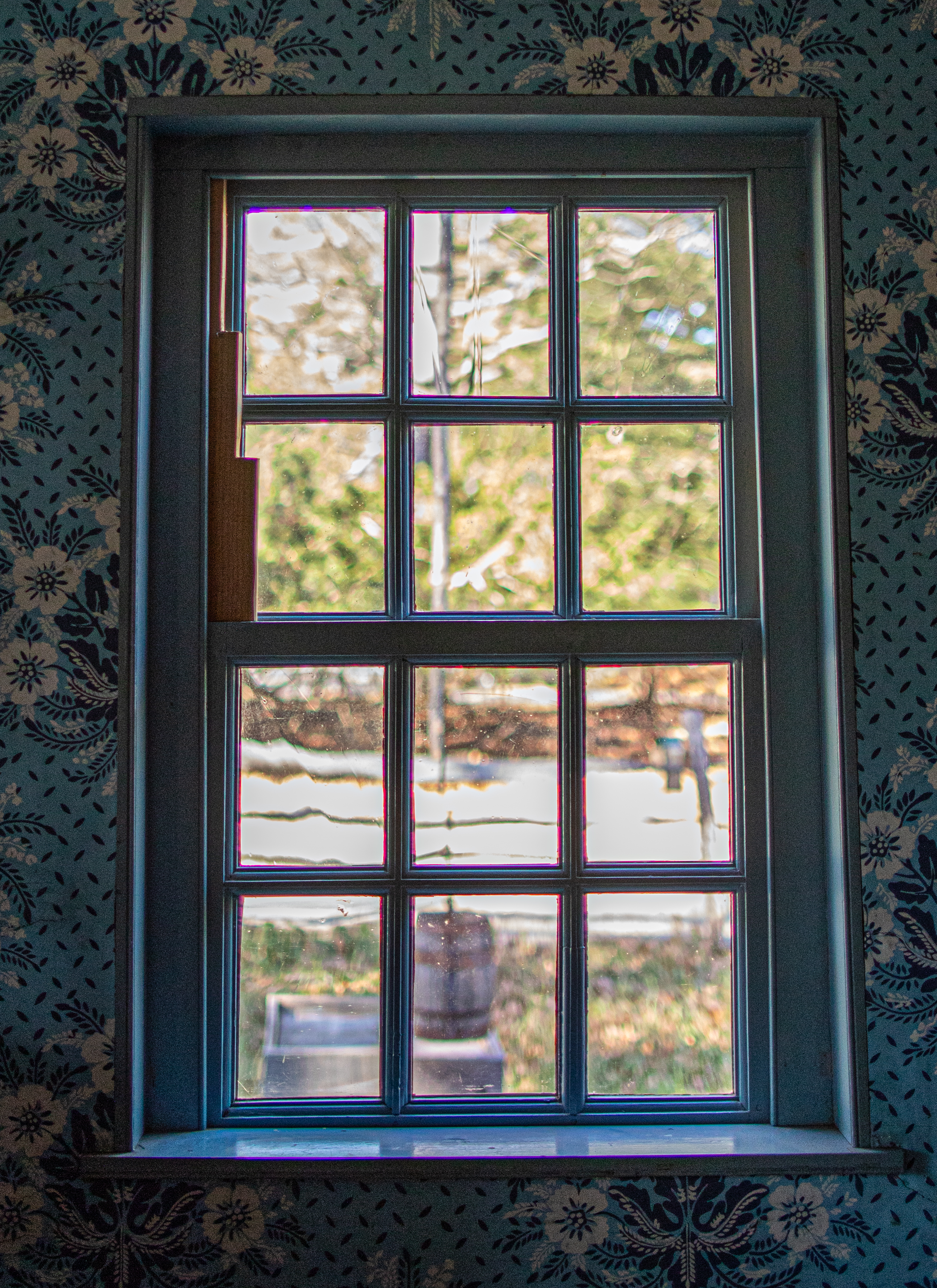
I couldn’t end my post without adding some of my favorite artsy photos. One of the things I like to photograph in the village are the windows. If you get it the right time of the day when the light is shining just right, you can get some pretty photo opportunities.


Knox Trail 250 (Springfield, MA)

Date Of Event: January 17, 2026

Location: Springfield Armory. 1 Springfield Armory, Springfield, MA (1 Armory St for GPS location) (2 hours southwest of Boston, MA)

Admission cost: Free admission

Parking: Free parking was available at the event

Summary: The Park Ranger Services at the Springfield Armory hosted a ceremony to commemorate Henry Knox’s journey across Massachusetts.

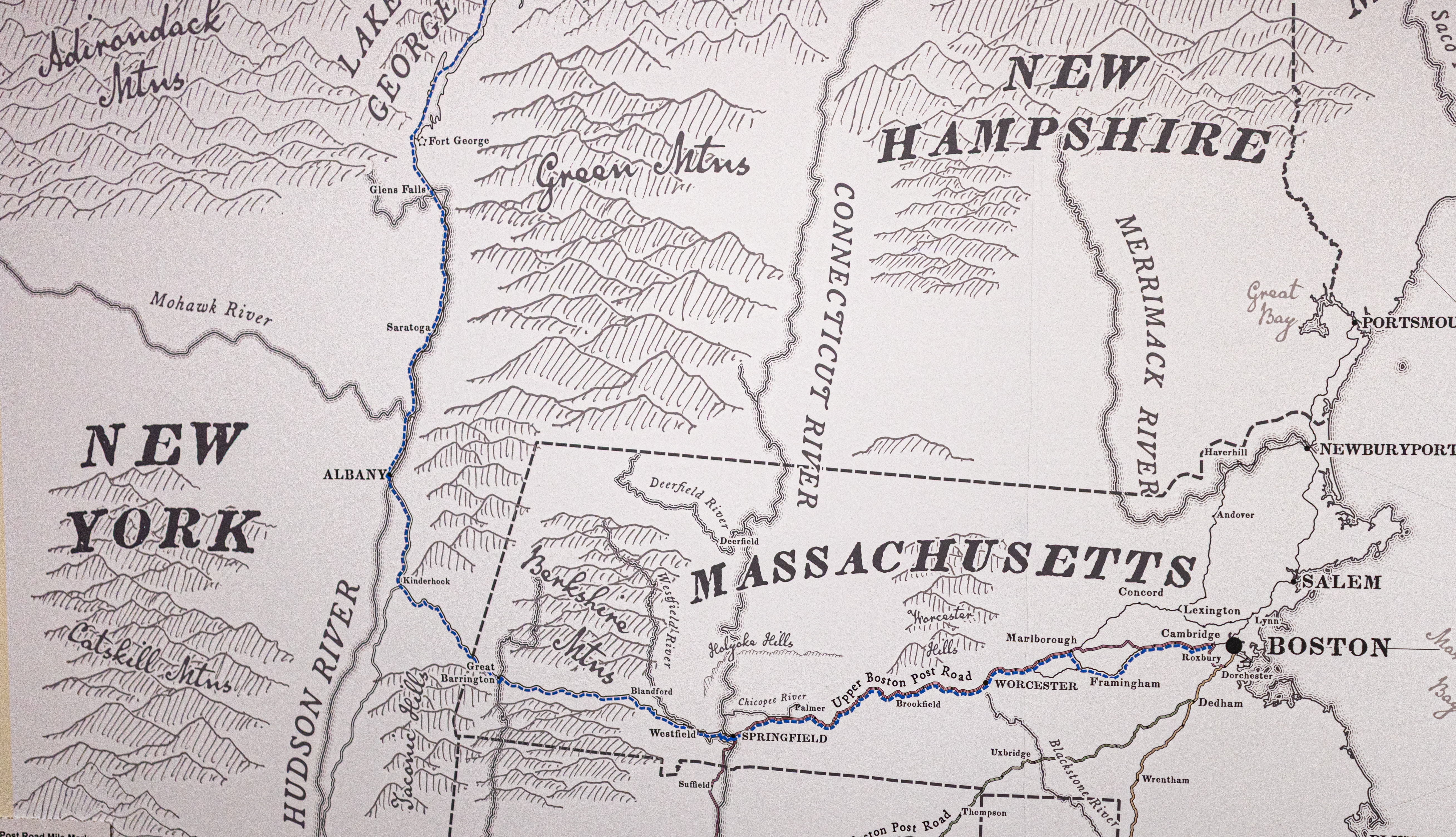
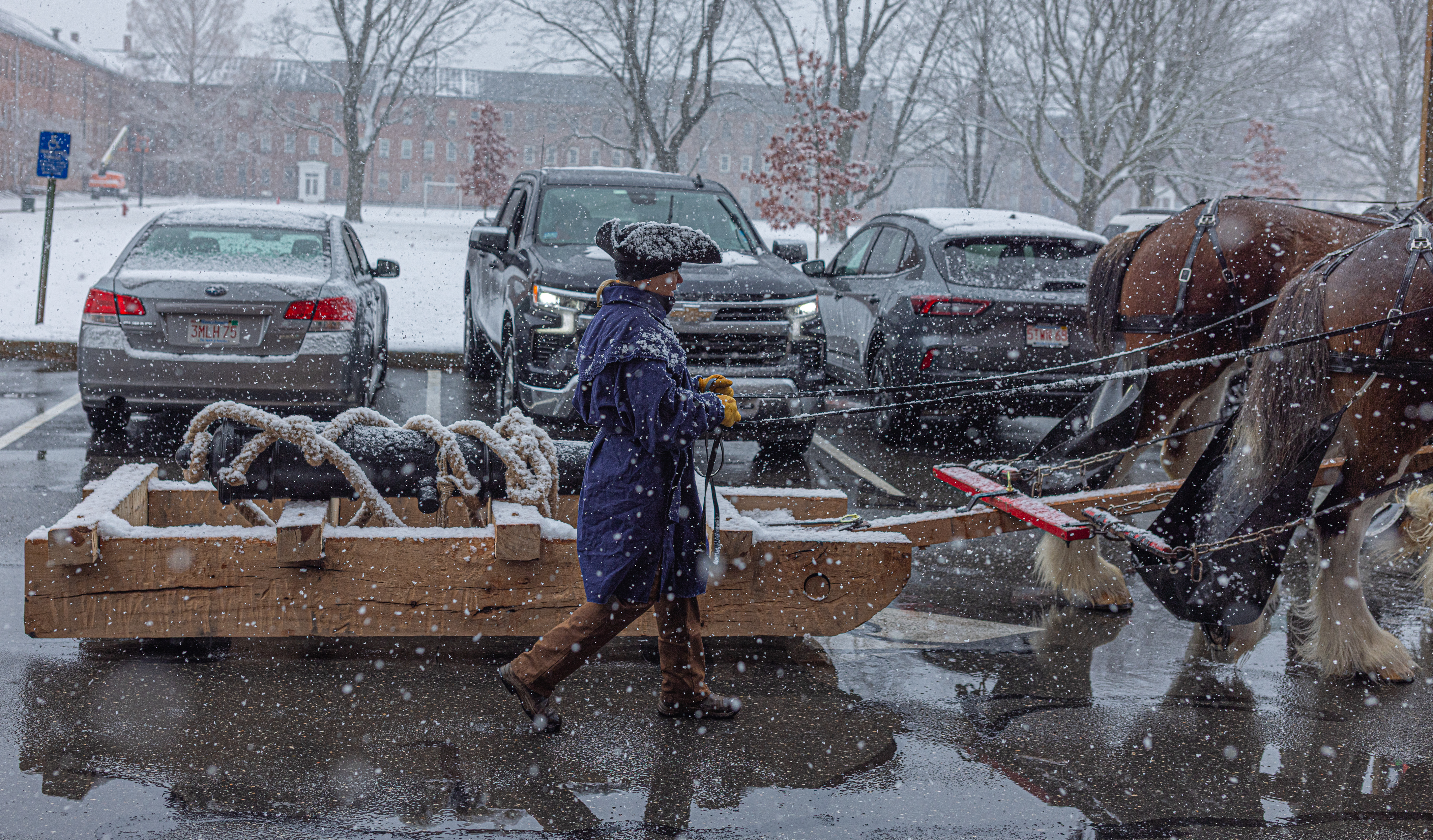
The Knox Trail, also known as the Henry Knox Trail or the Knox Cannon Trail, is a network of roads and paths which traces the route of Colonel Henry Knox’s “noble train of artillery” from Crown Point, NY, to the Continental Army camp just outside of Boston, MA. Knox and his team moved 59 or 60 tons of artillery. The trail, which was called a “Noble Train of Artillery”, was completed using primarily ox-drawn sleds (or sledges) and horses. It was completed in an impressive 56 days and spans approximately 300 miles. While the exact dates aren’t clear, it is believed to have taken place during the winter of 1775 to 1776. The map below shows the path they took. The blue line shows the exact path. It extends from the Lake George area to Boston.

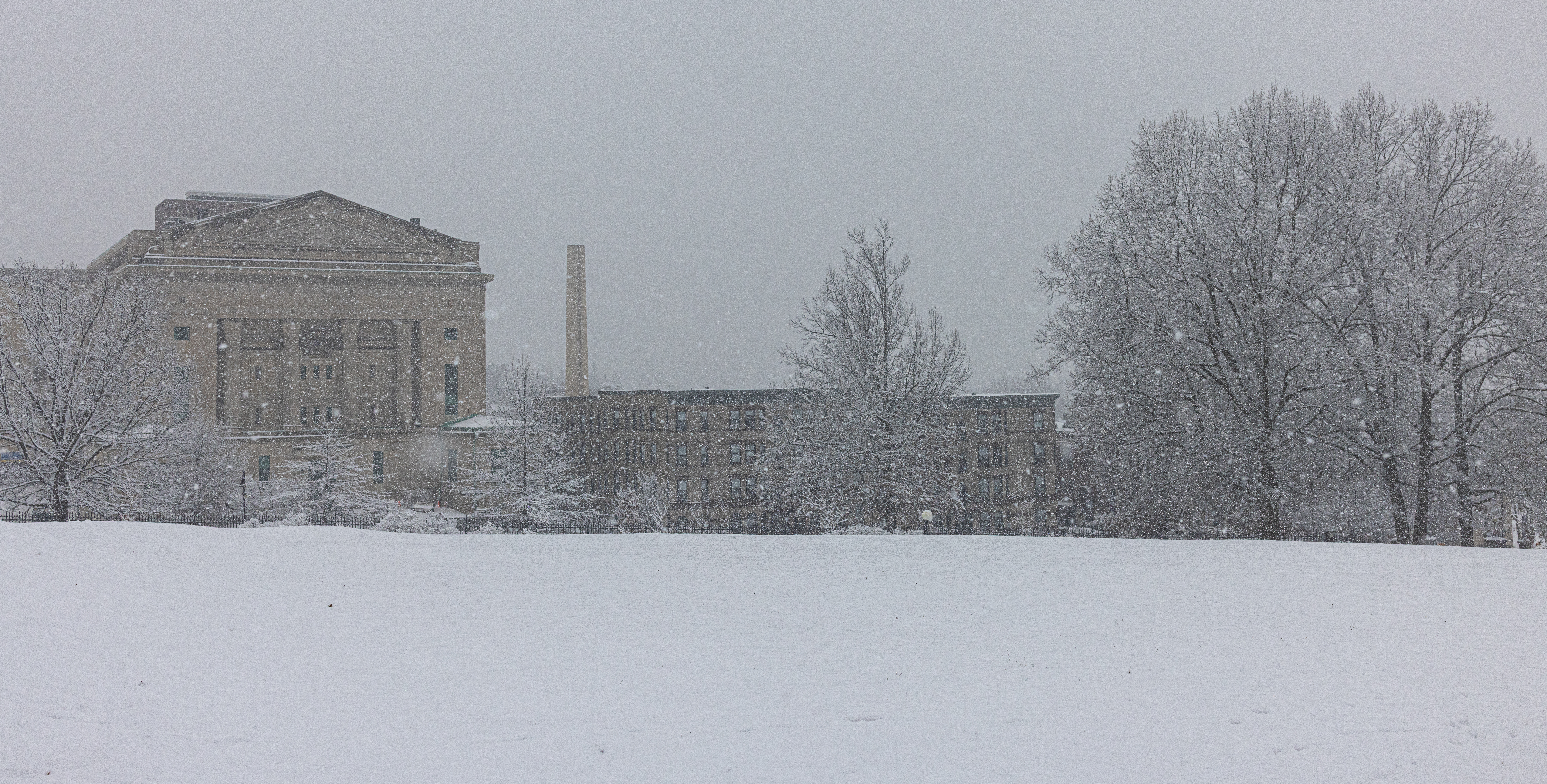
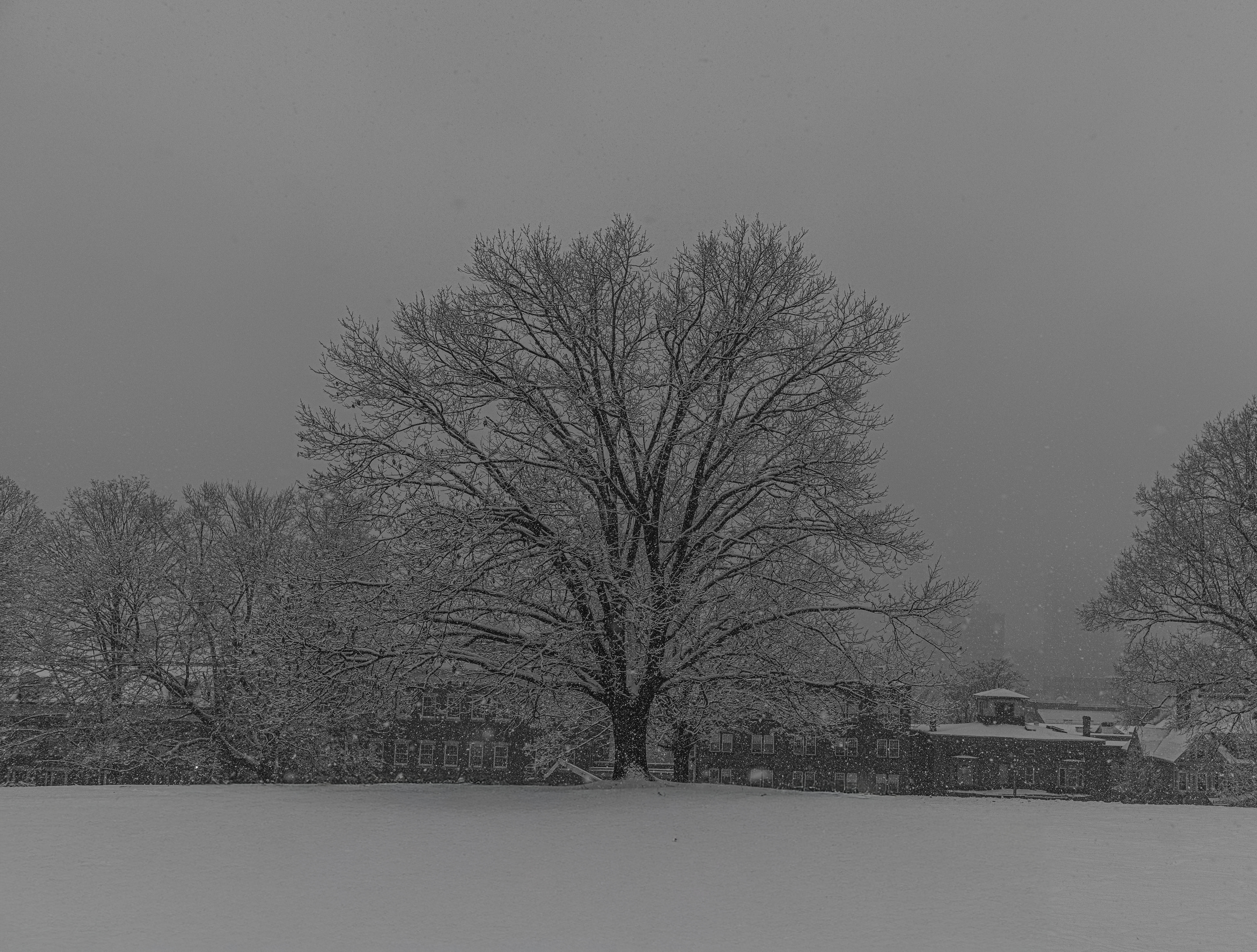
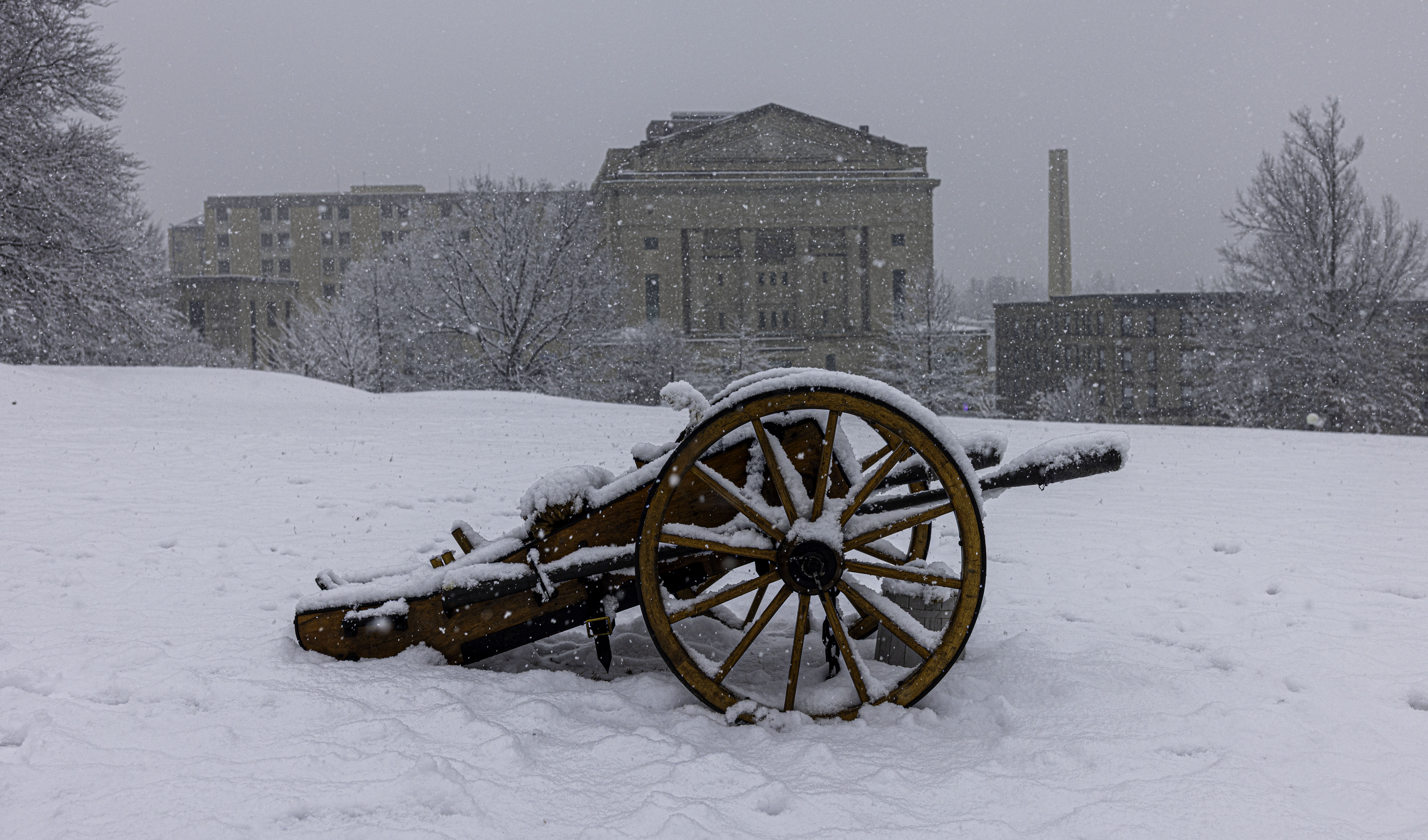
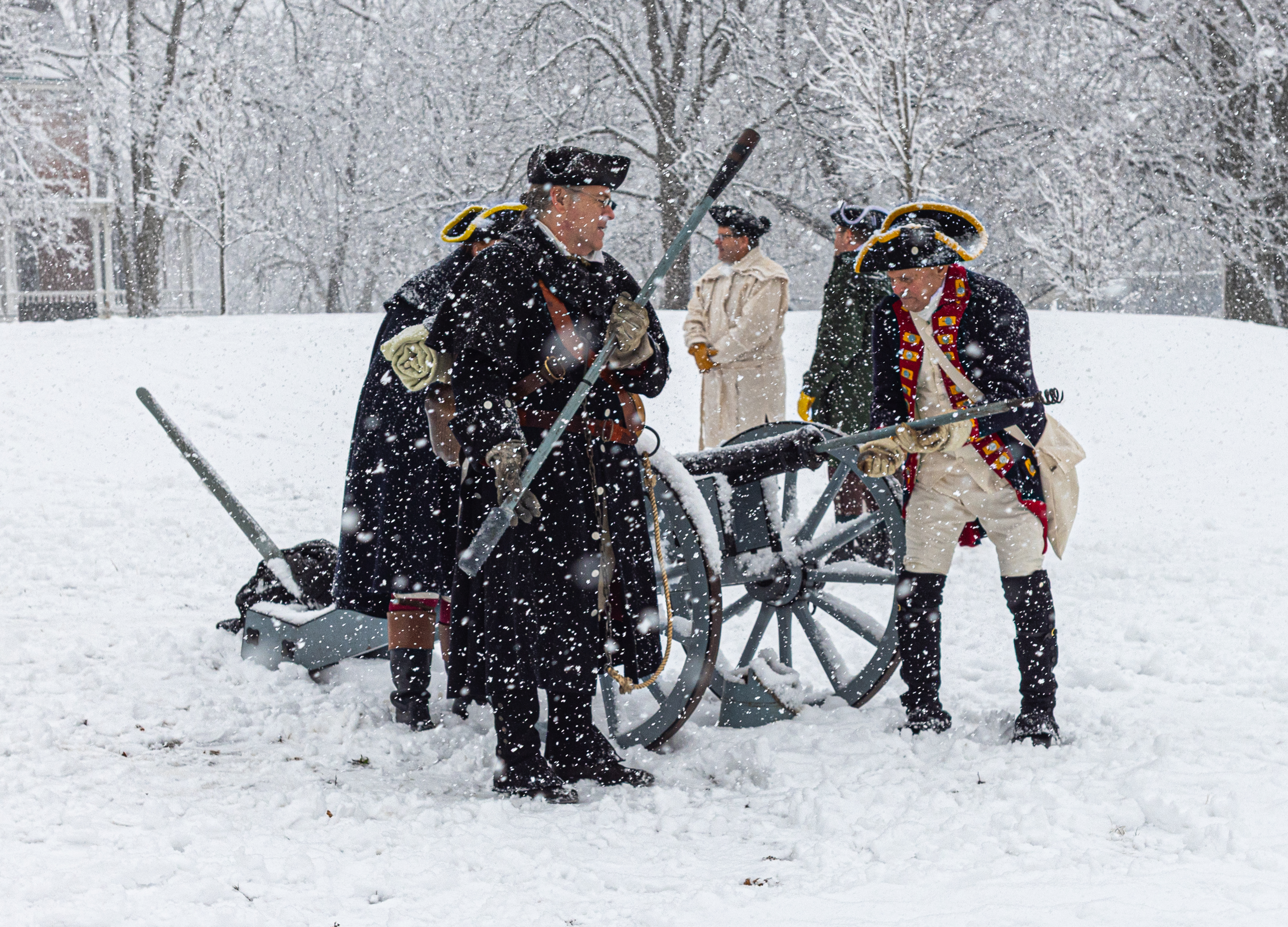
For better or worse, it has been snowing or it recently snowed during many of my trips lately. This day was no different. And wow did it provide for a pretty backdrop!

This was my first photo shoot using my Canon R5 mirrorless camera. I think the photos might look a little more crisp and clearer. One thing I did notice is the camera and lens I used (Canon 35 mm) was better at focusing on the people and their faces despite the snow. My older camera (Canon 5D) would tend to focus on the snow and not the people.

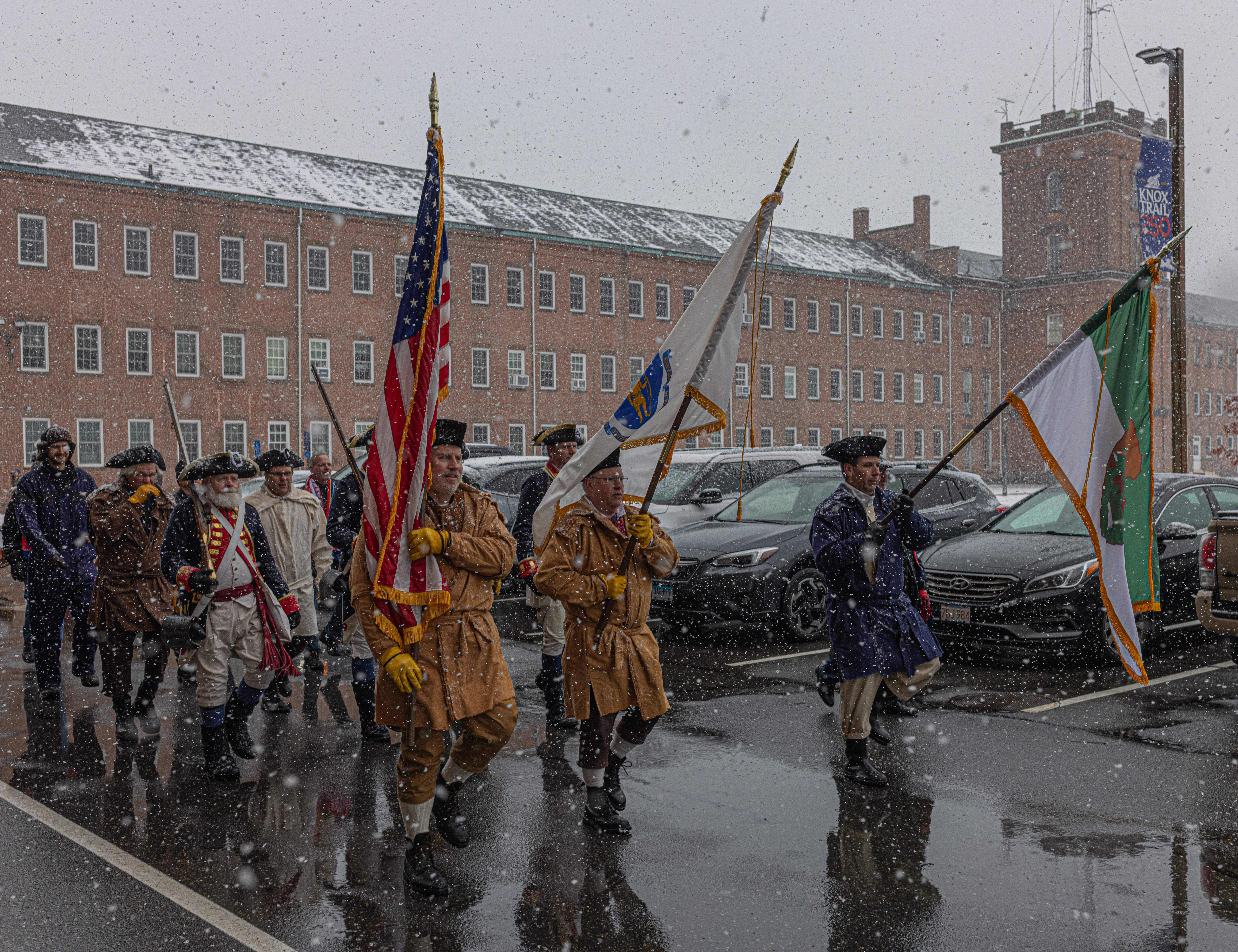
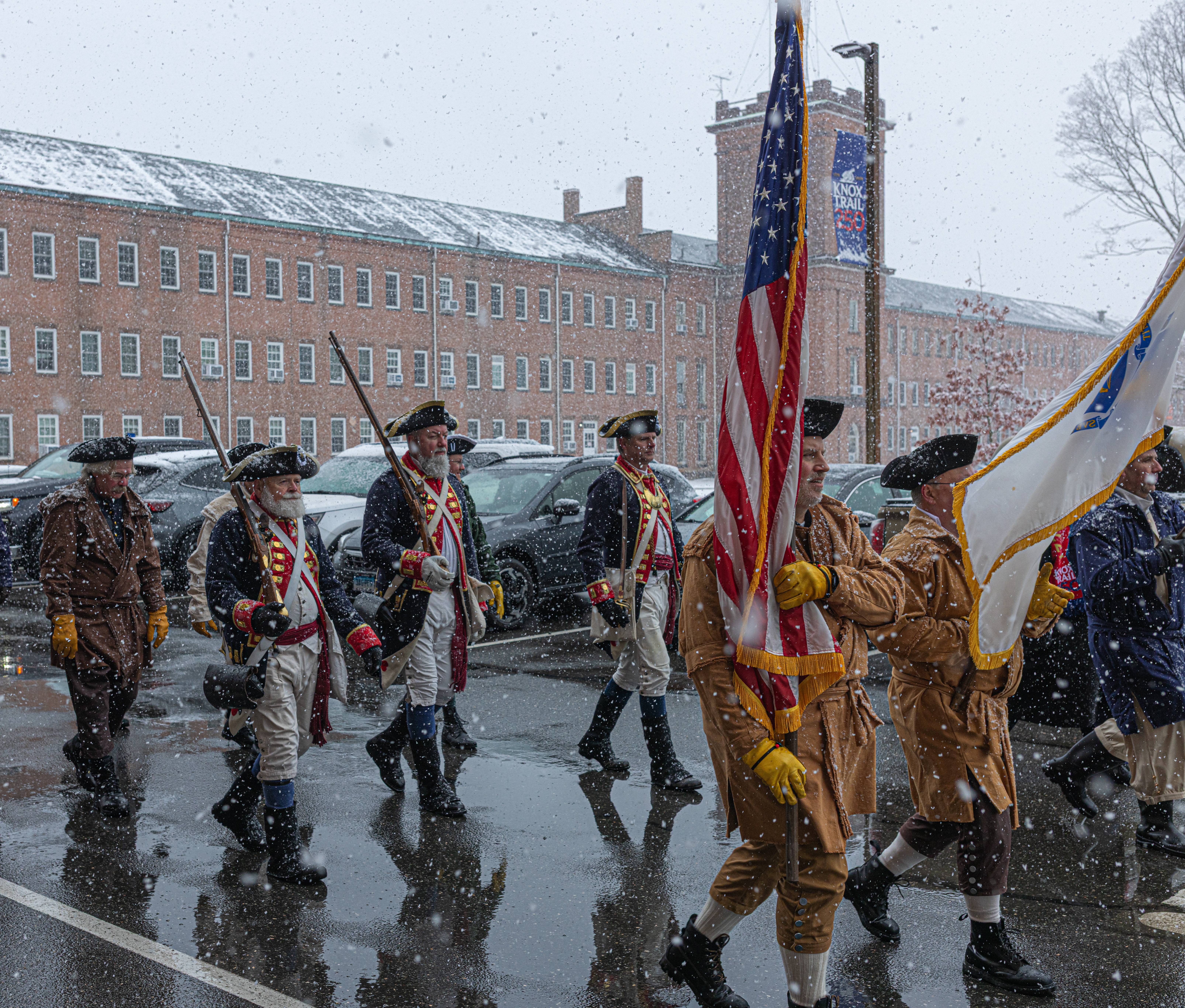
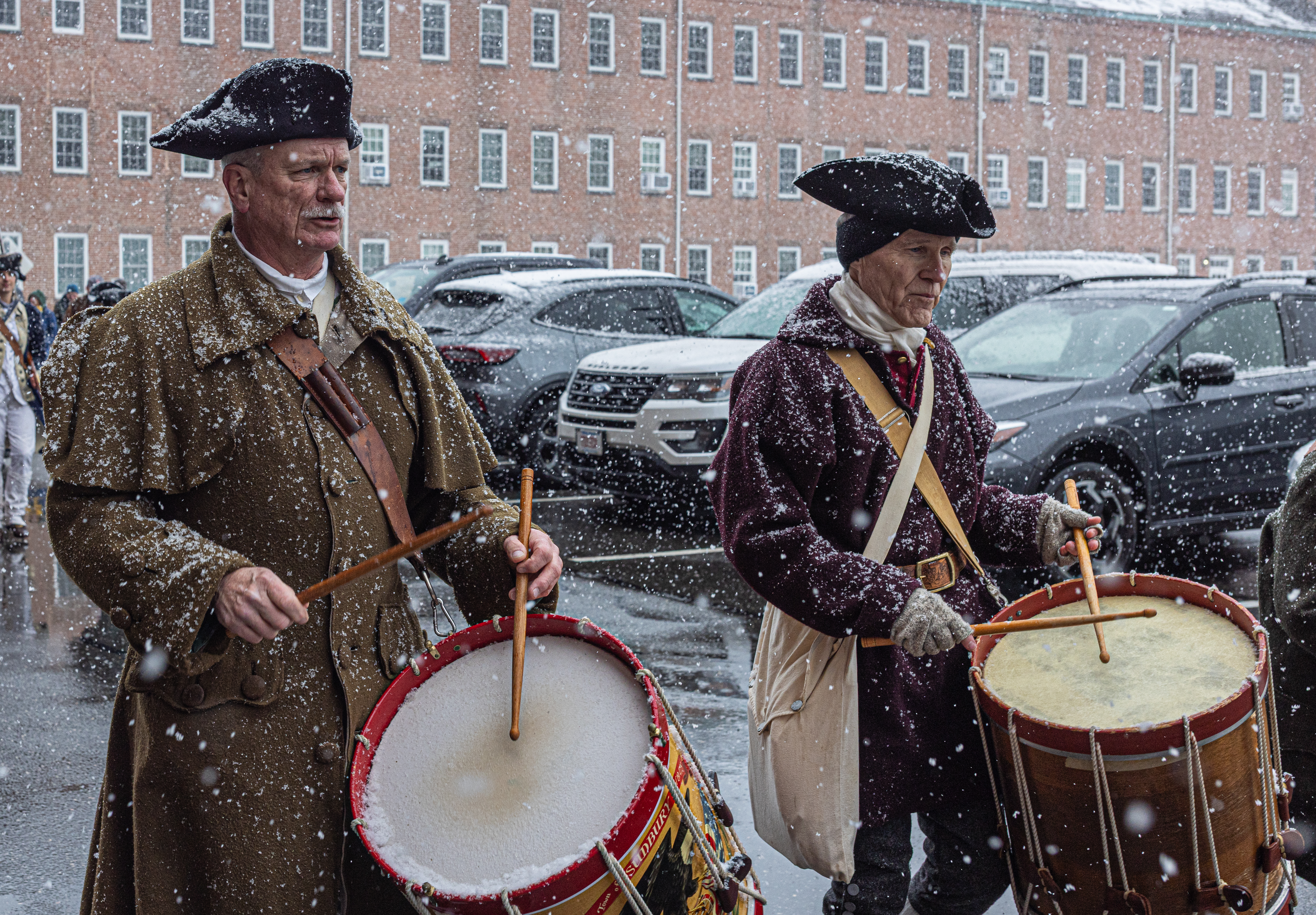
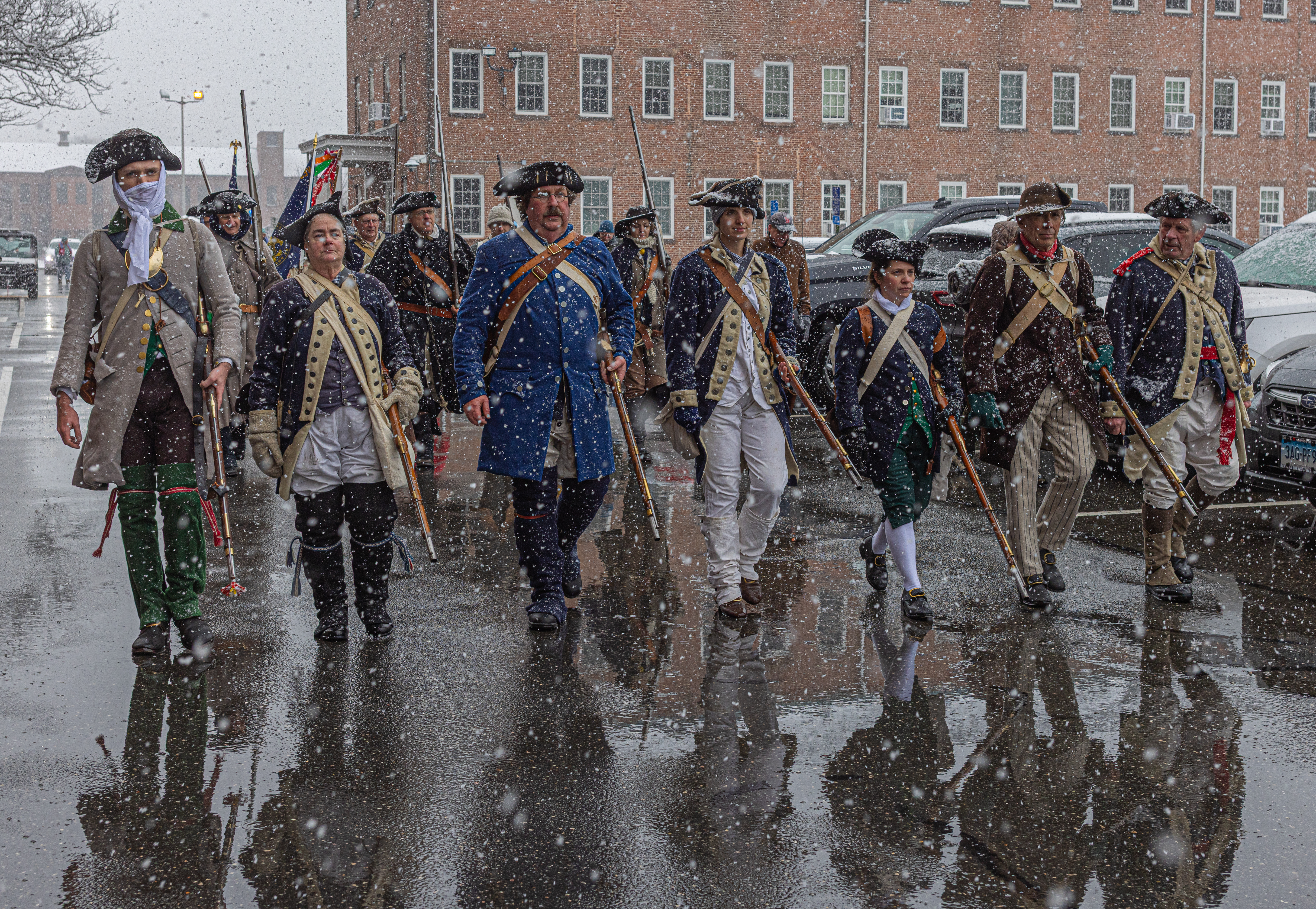
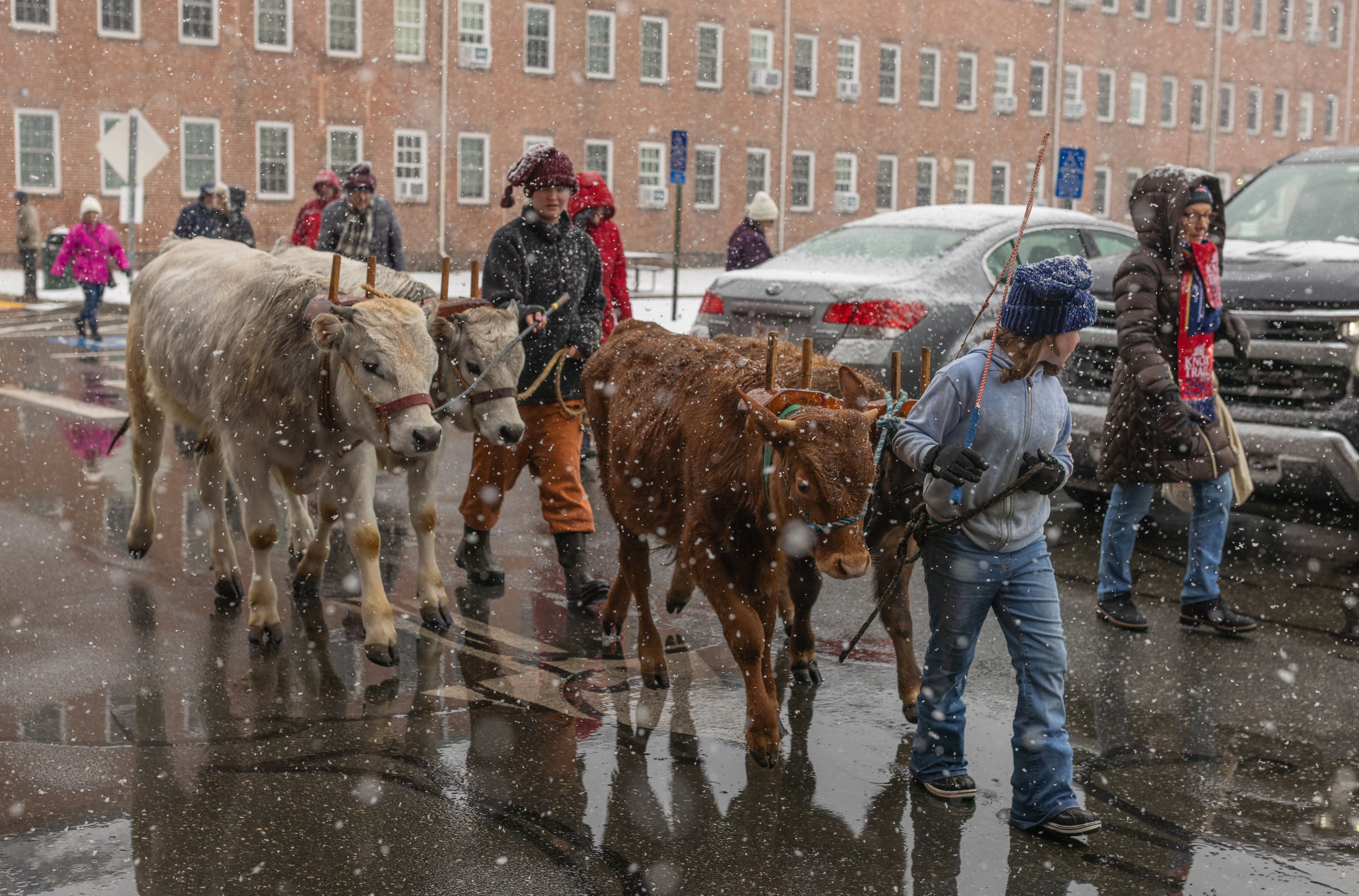
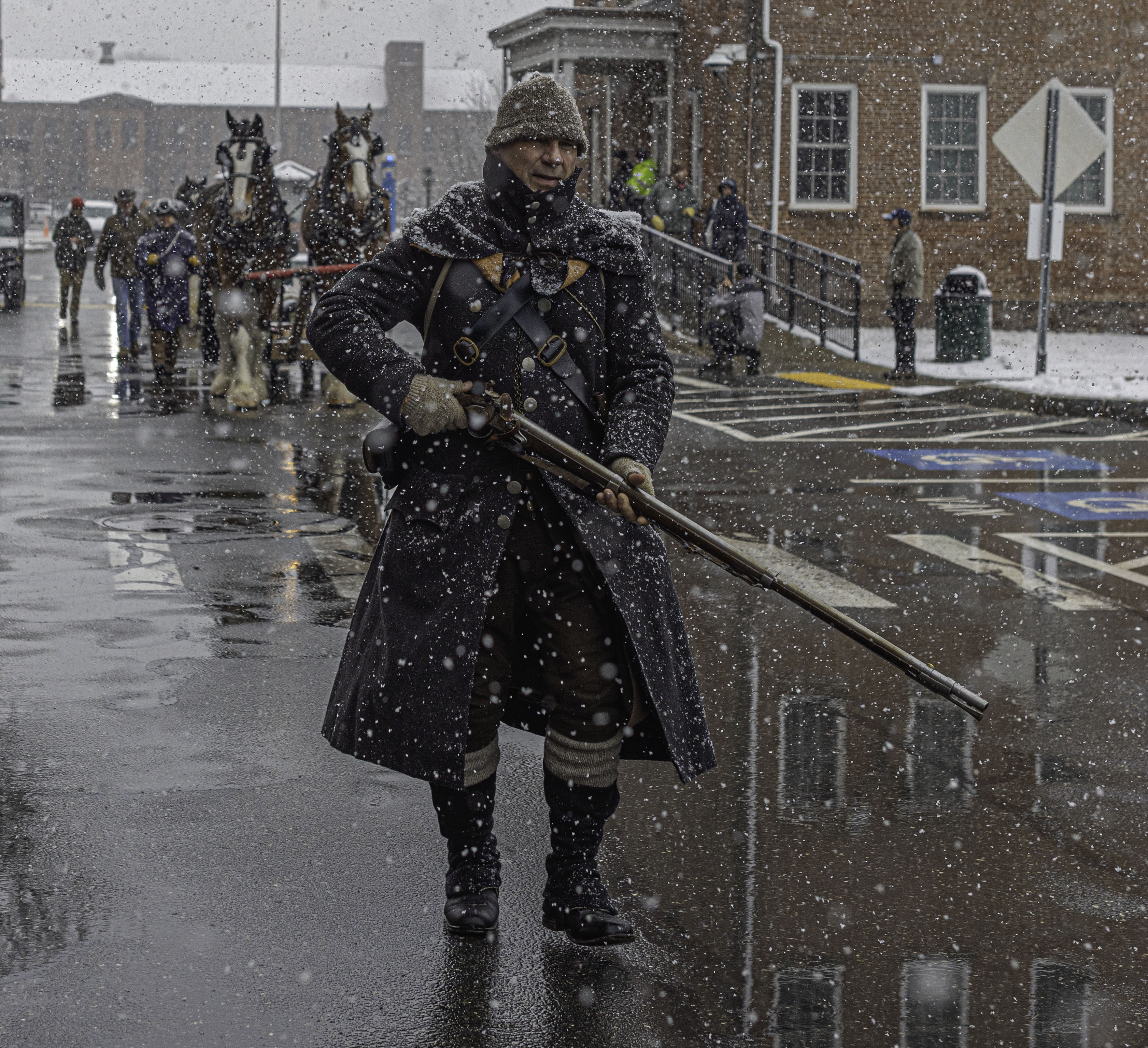
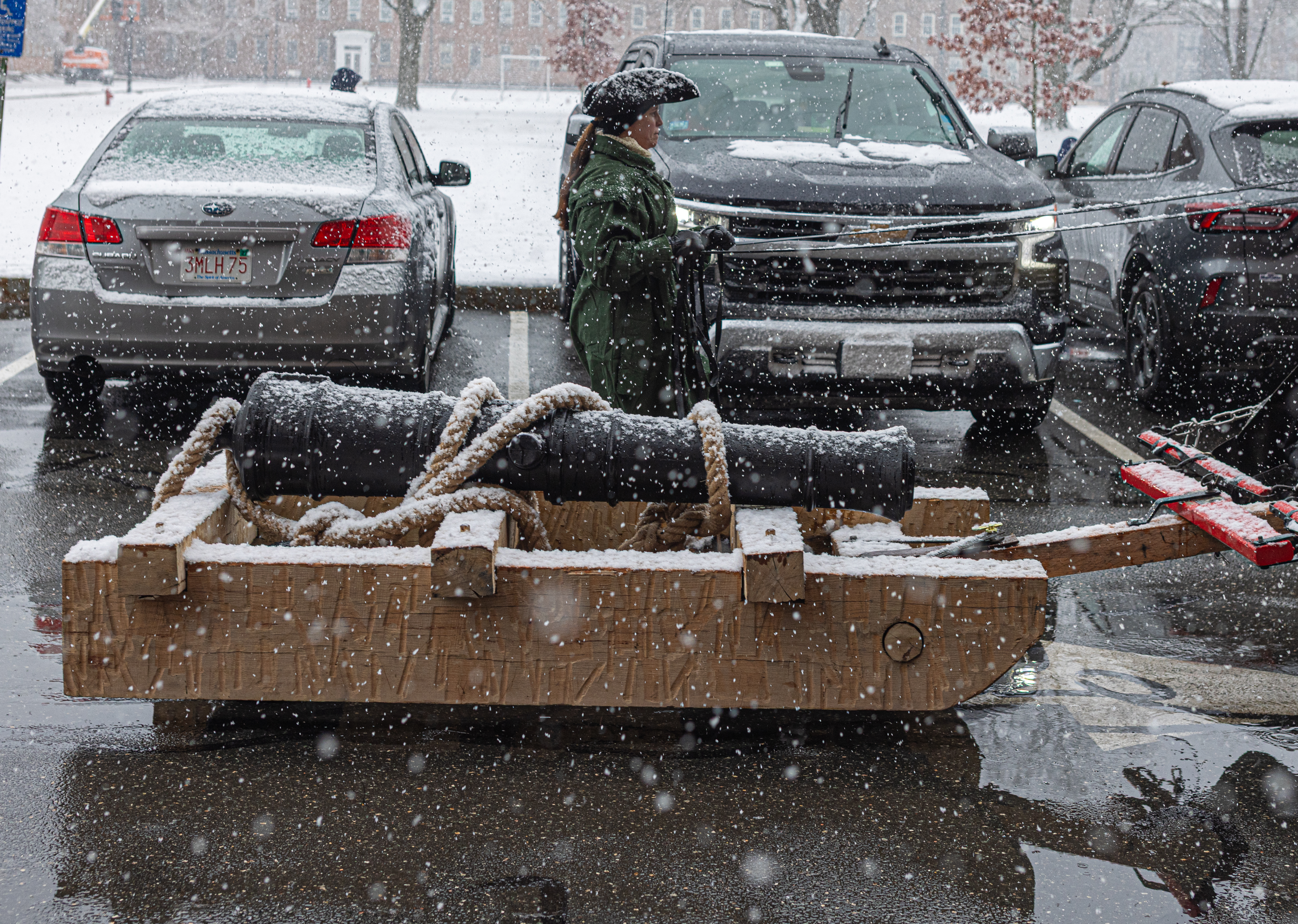
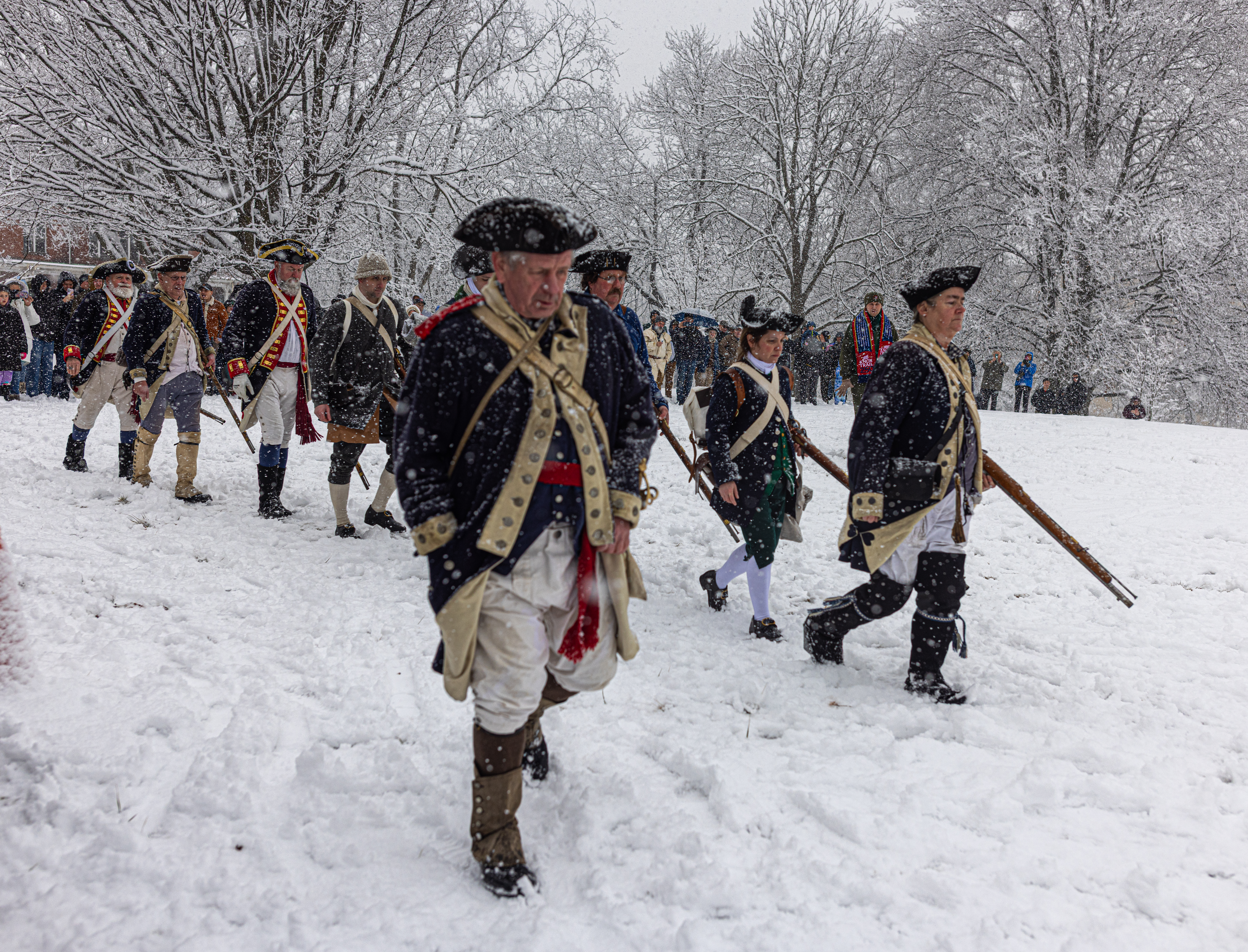
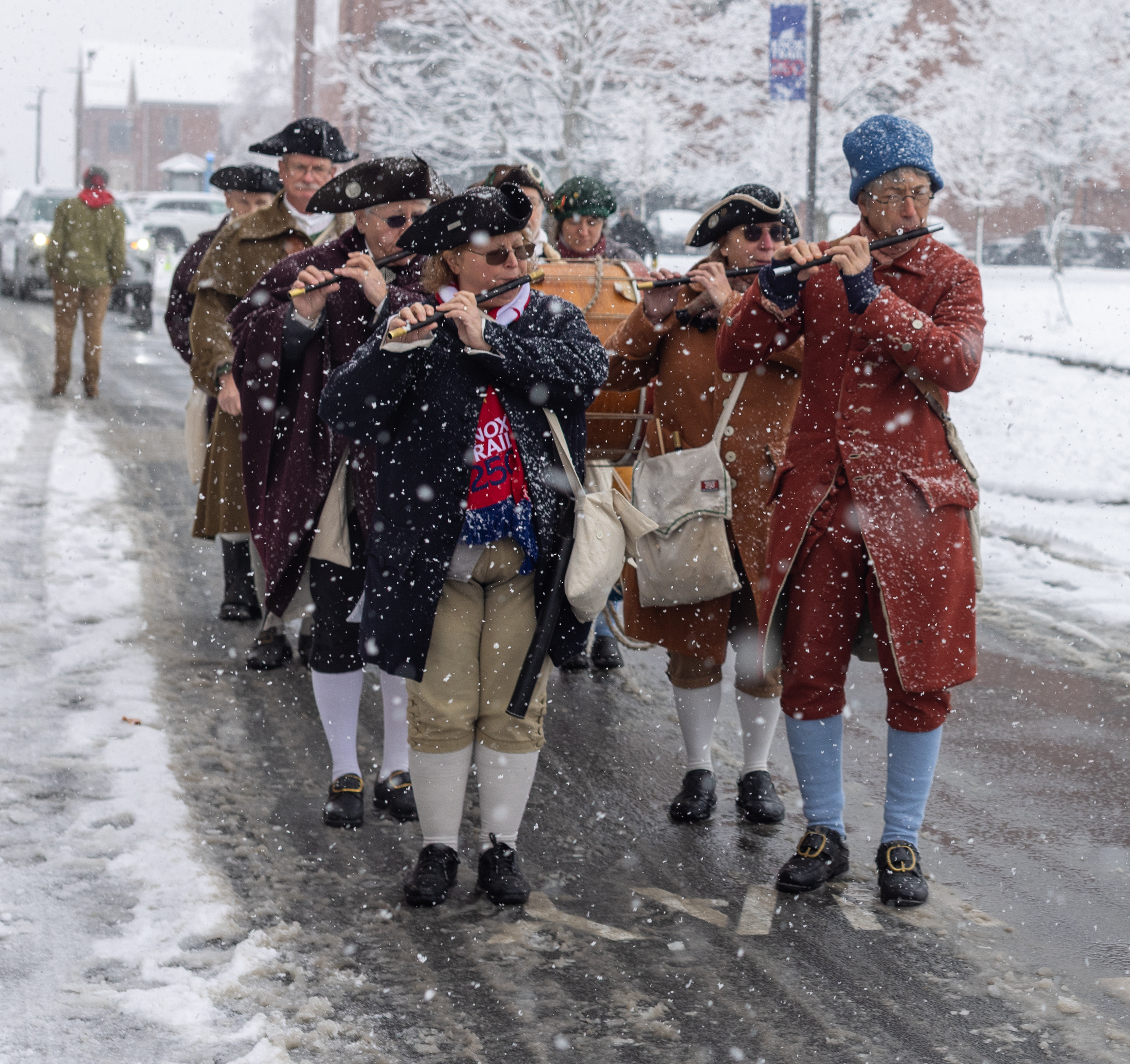
The ceremony began with a march on the grounds of the Springfield Armory which included reenactors and animals.

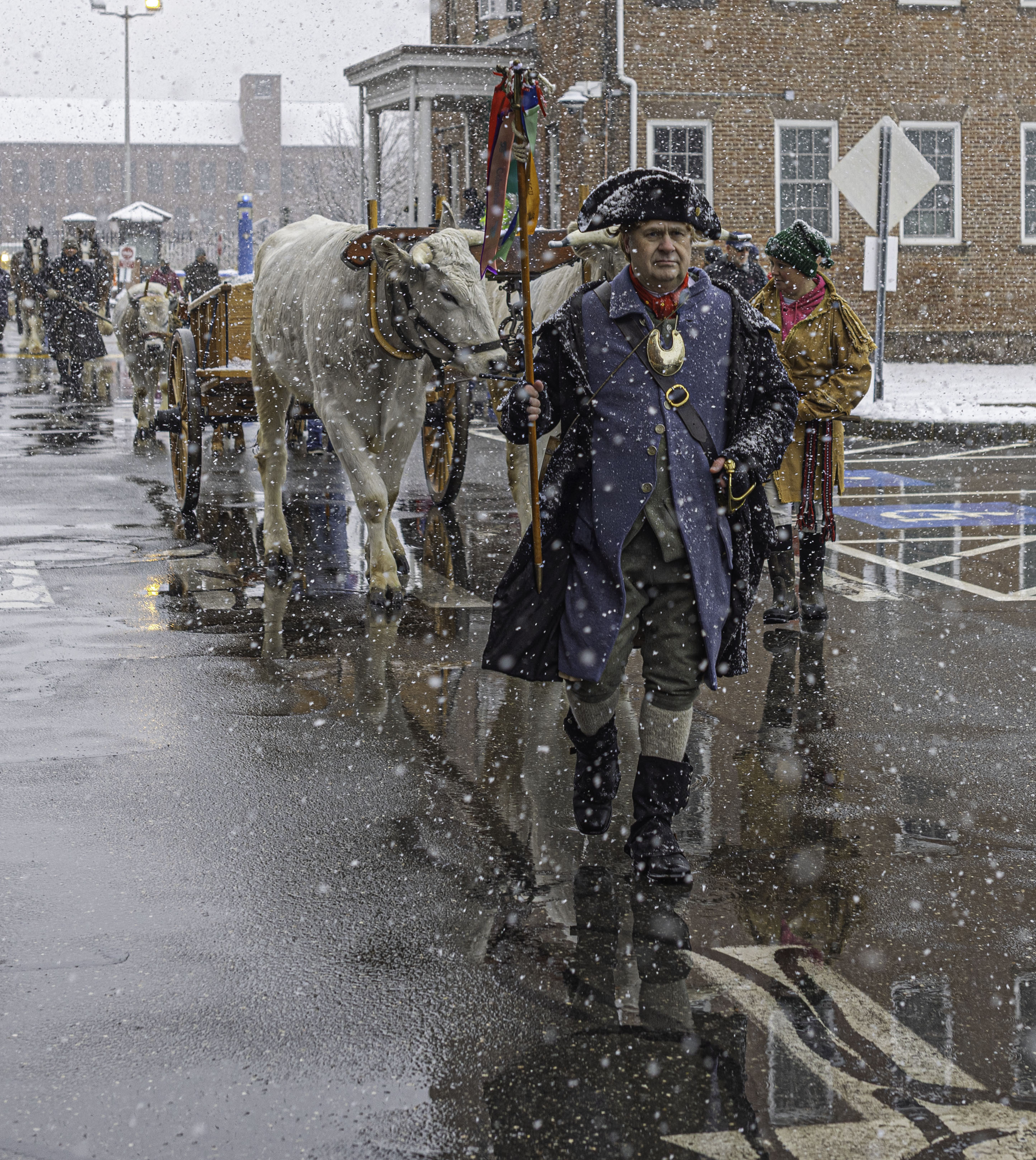
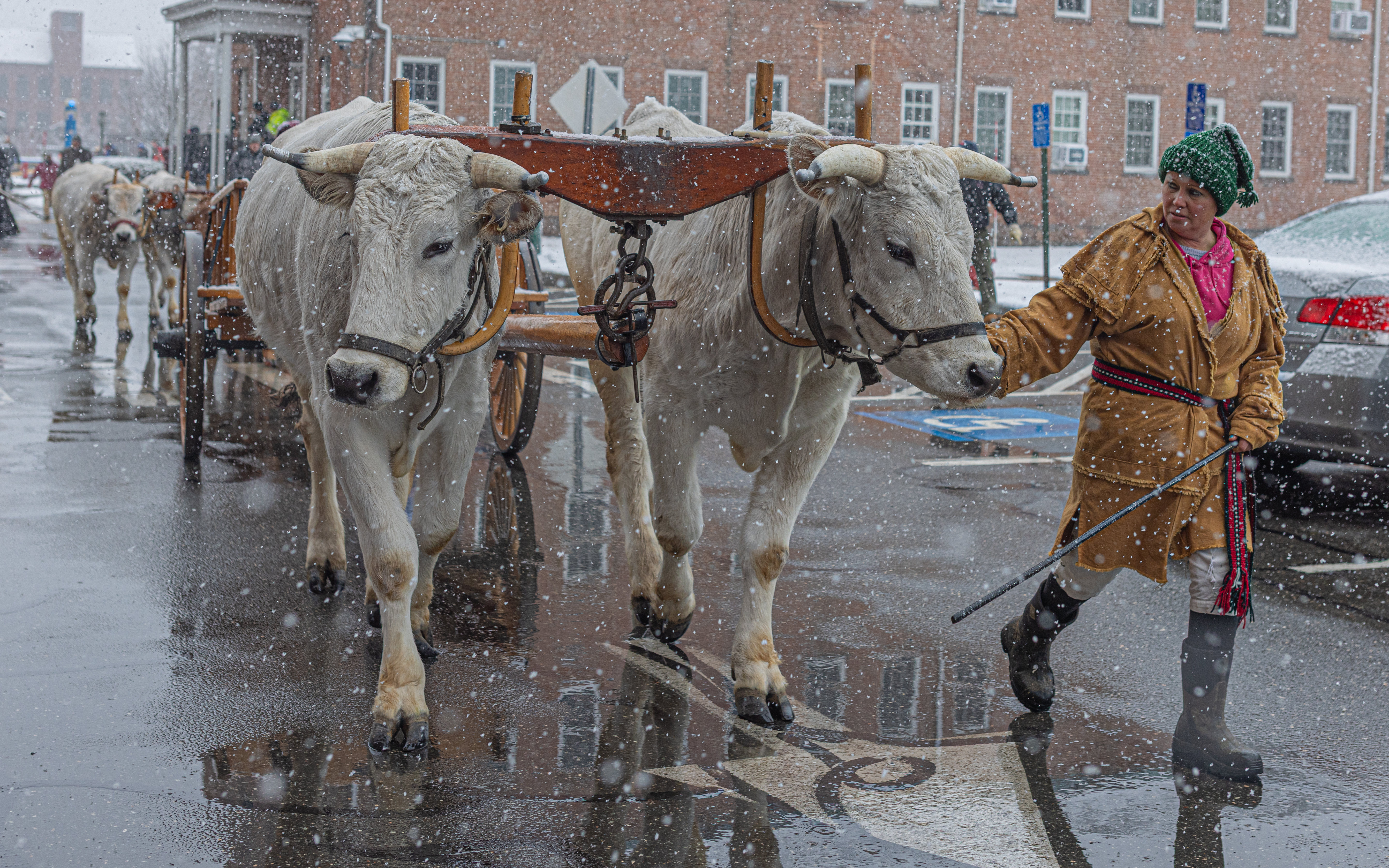
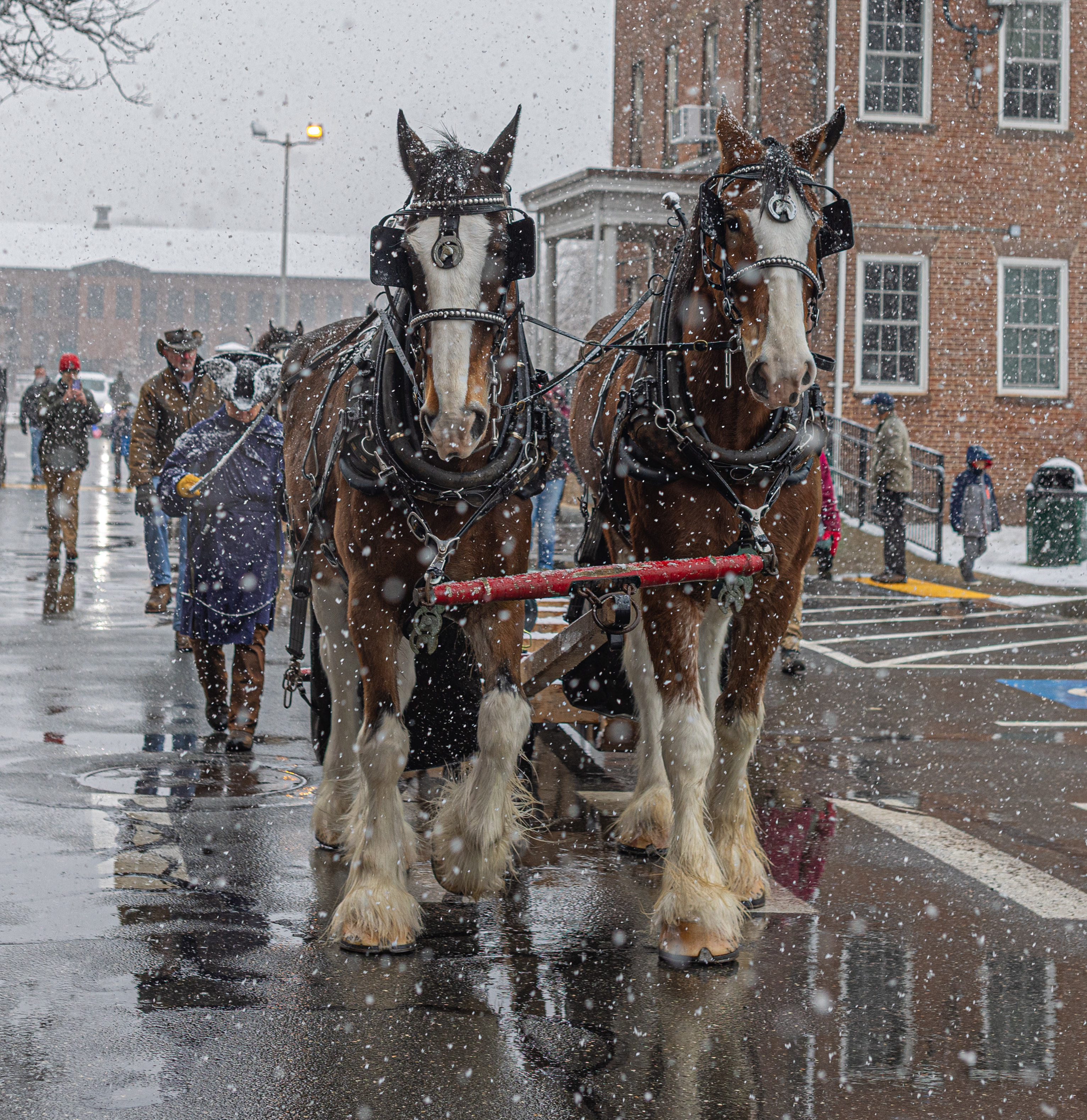
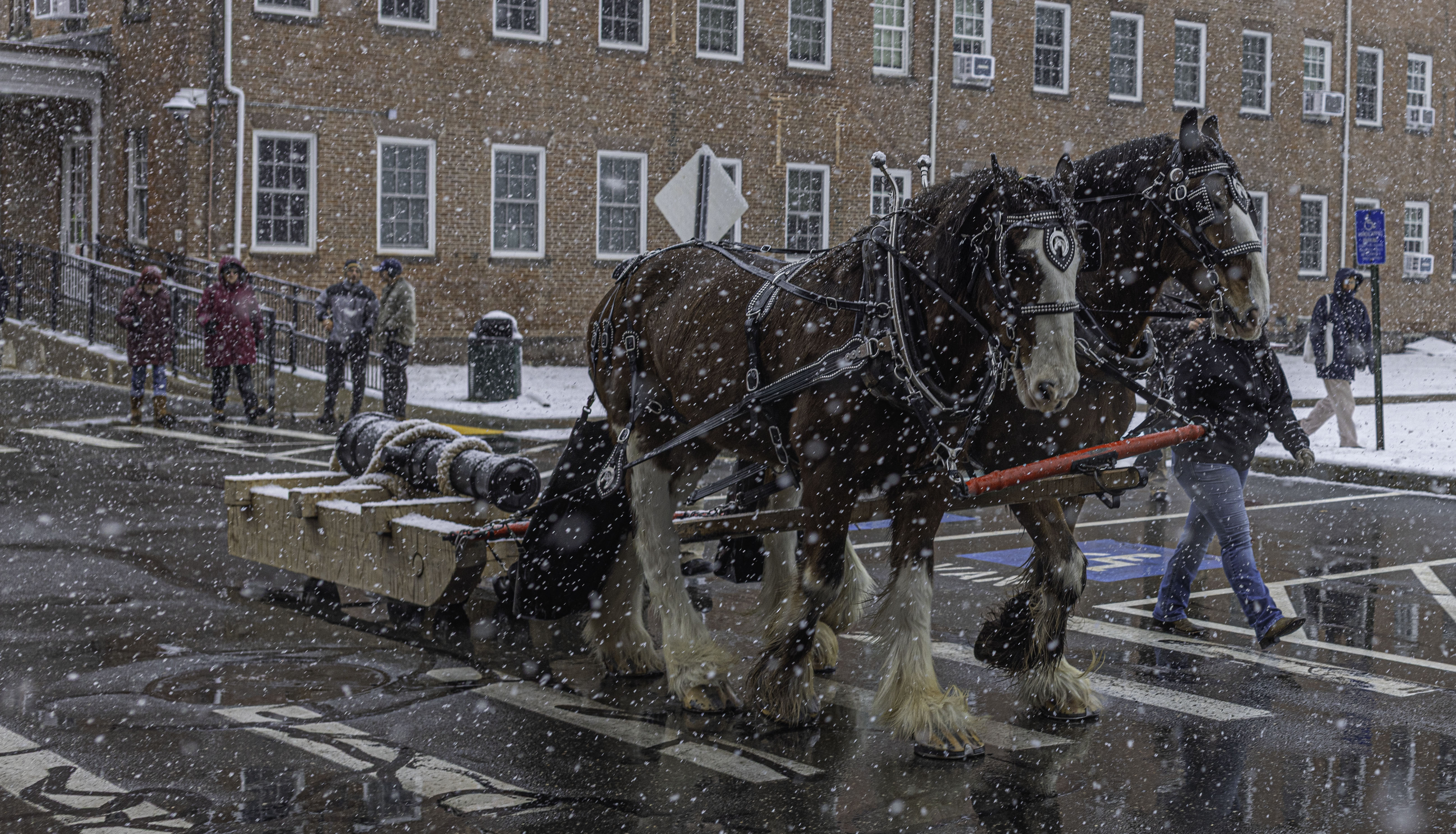
These horses were used to move some of the artillery, emulating the original Knox Trail.

The Springfield Armory didn’t just have military weapons and historical information Knox Trail. There were a variety of old firearms and gear from different eras and wars.

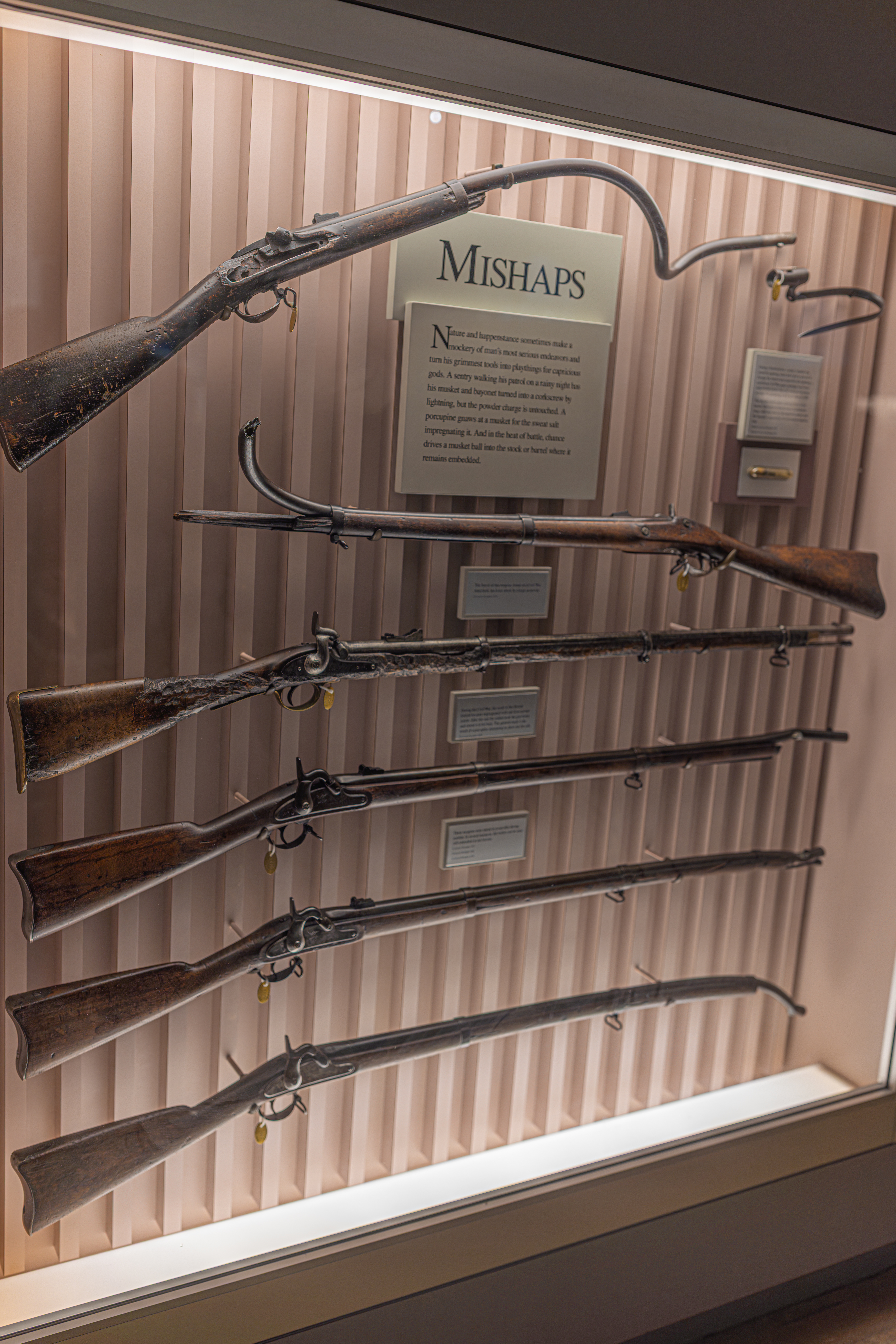
These weapons showed below were involved in different mishaps during battle.

The first musket was struck by lightning. Because of the intense hear caused by the lightning, a regulation Civil War paper cartridge (which can be found to the right in the photo) was found intact in the breech (the rear end of the barrel where the gunpowder is ignited and the projectile is loaded) when the weapon was disassembled for cataloging and preservation in 1981. While the identity of the sentry whose weapon this was is unknown, it is believed it was a Confederate soldier because the bayonet was from a Confederate manufacturer (although Union soldiers often took weapons, ammunition, clothing and other gear from fallen Confederate soldiers and vice versa).

The barrel of the second weapon, which was found on a Civil War battlefield, was struck by a projectile.

During the Civil War, the stock (the main structural component in this case made of wood) of the third rifle, a British Enfield rifle, became impregnated with salt from perspiration. After the war ended, the soldier took the gun home and stored it in his barn. While it was stored, a porcupine gnawed at the stock in an attempt to chew out the salt from the stock of the rifle.

The other guns in the display were struck by projectiles.

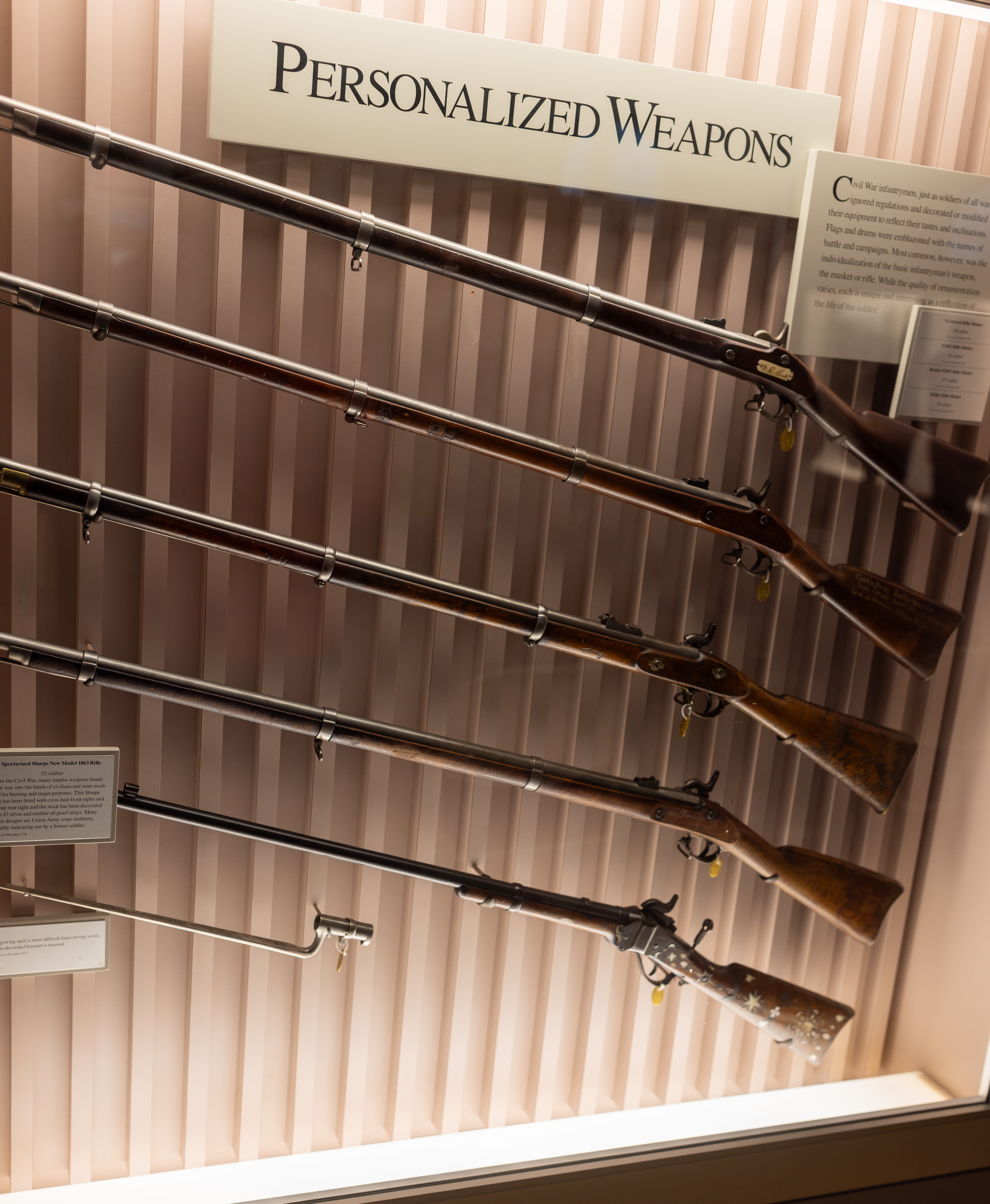
There were many other weapons on display like these personalized weapons.

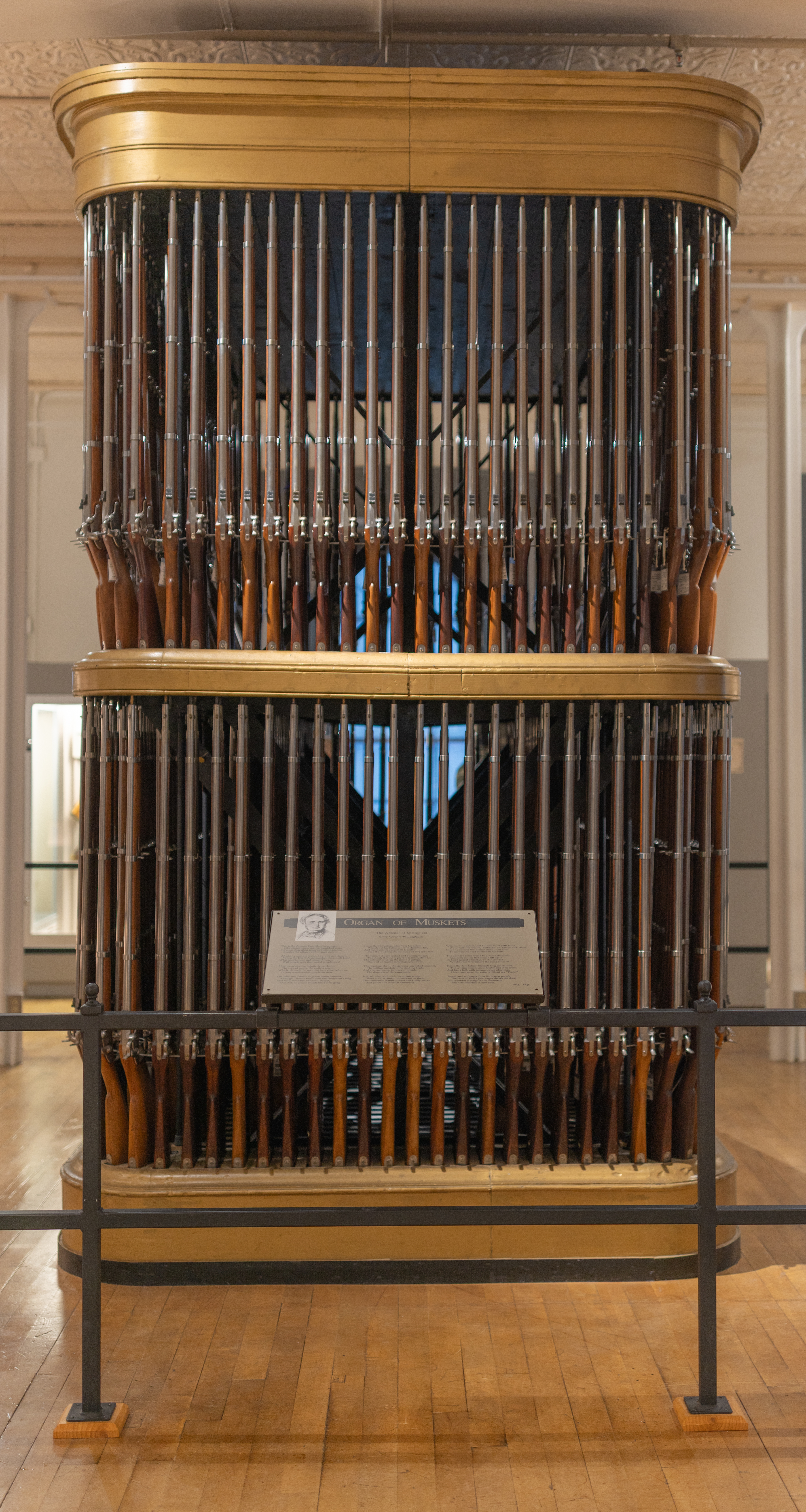
This Organ of Muskets is partially filled with 645 Springfield U.S. Model 1861 rifle muskets.

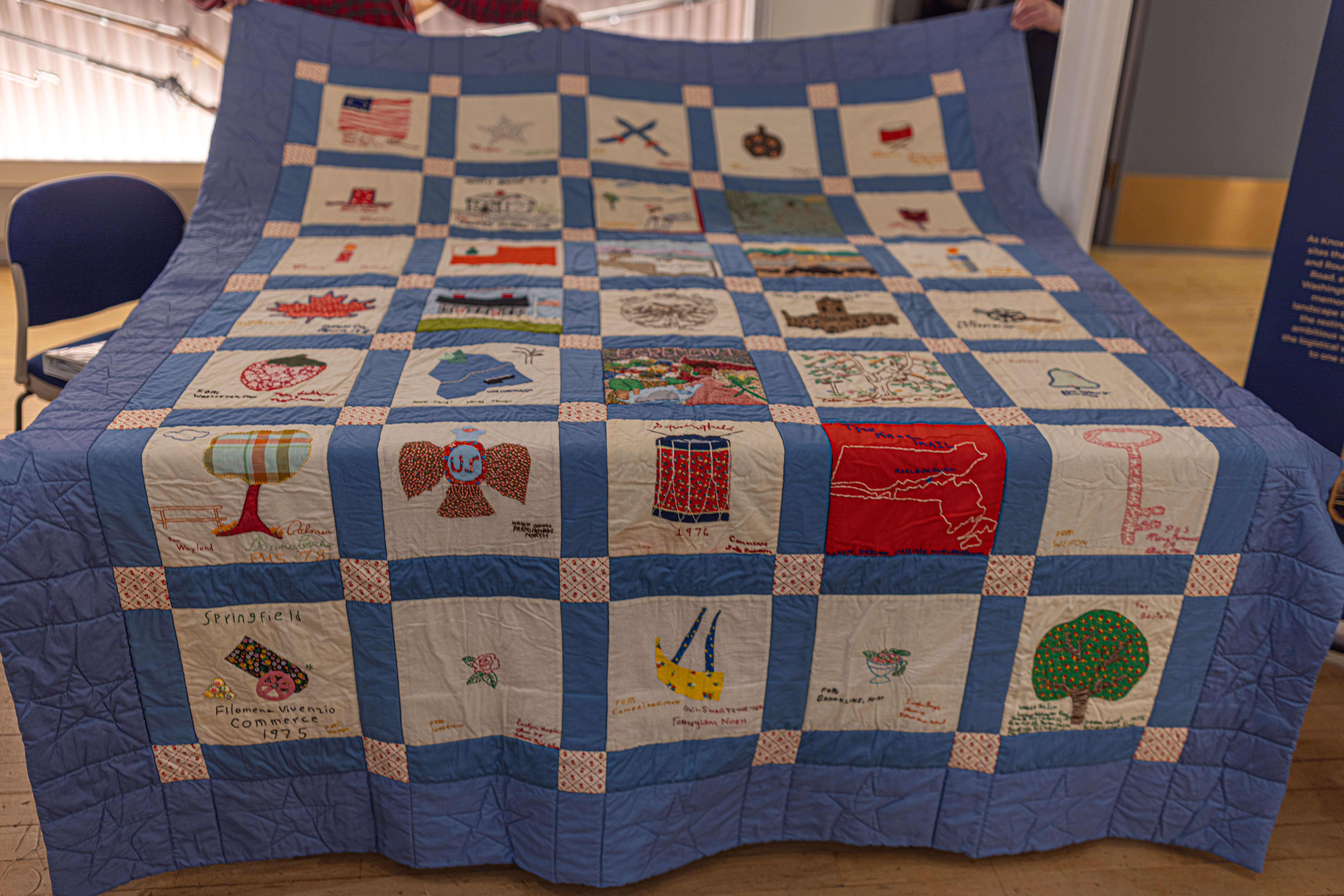
This quilt was made by various high school students in all of the cities and towns in Hampden county in Massachusetts to commemorate the 200th anniversary of Knox Trail. Another quilt from a different county in Massachusetts hangs in the Massachusetts State House. As an aside, 50 years ago, also to commemorate the 200th anniversary, reenactors hiked the original Knox Trail. Given our current weather conditions as we are expected 18-24 inches of snow and freezing wind chill temperatures today and tonight.

These are just a few of the weapons and military and gear with a historical background at the armory. It’s certainly worth another visit since I couldn’t spend too much time looking at all the exhibits in the armory.

There was also an activity learning area where people could make their own paper cartridges. Paper cartridges were a type of small arms ammunition used before the advent of metallic cartridges. To be clear, these were not dangerous on their own and no one was injured while making these cartridges. That I know of.

The main event, of course, were the cannon firing and rifle and musket firings.

The reenactors prepared for the cannon by priming the cannon before the firing.

A ranger gave some background info about the Knox Trail and what it was like to be in battle.

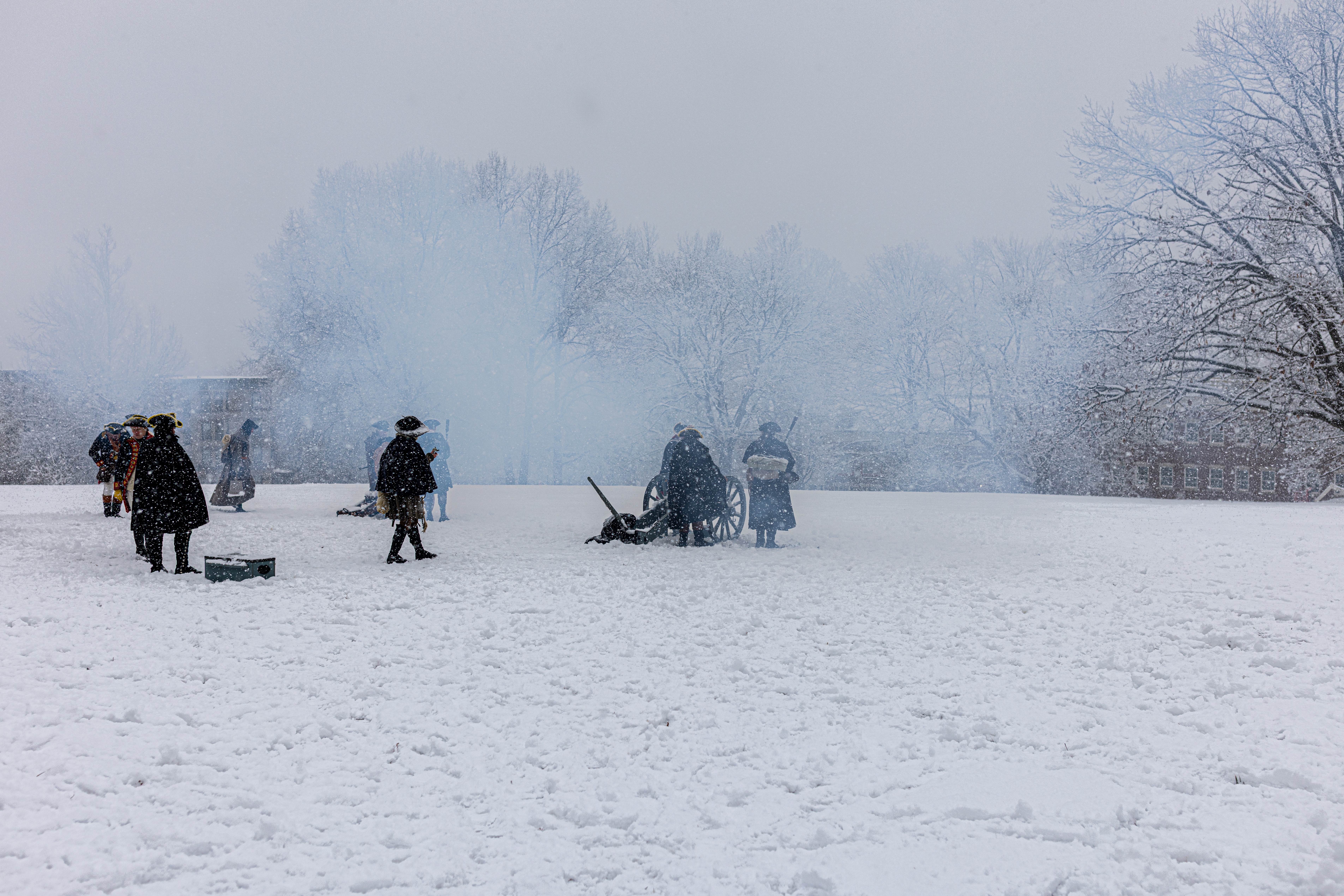
The reenactors did fire a canon. But, because of safety precautions, they had us stand far away and everyone was bunched up together. So I was out of position for the cannon firing. This was the aftermath of the canon firing.

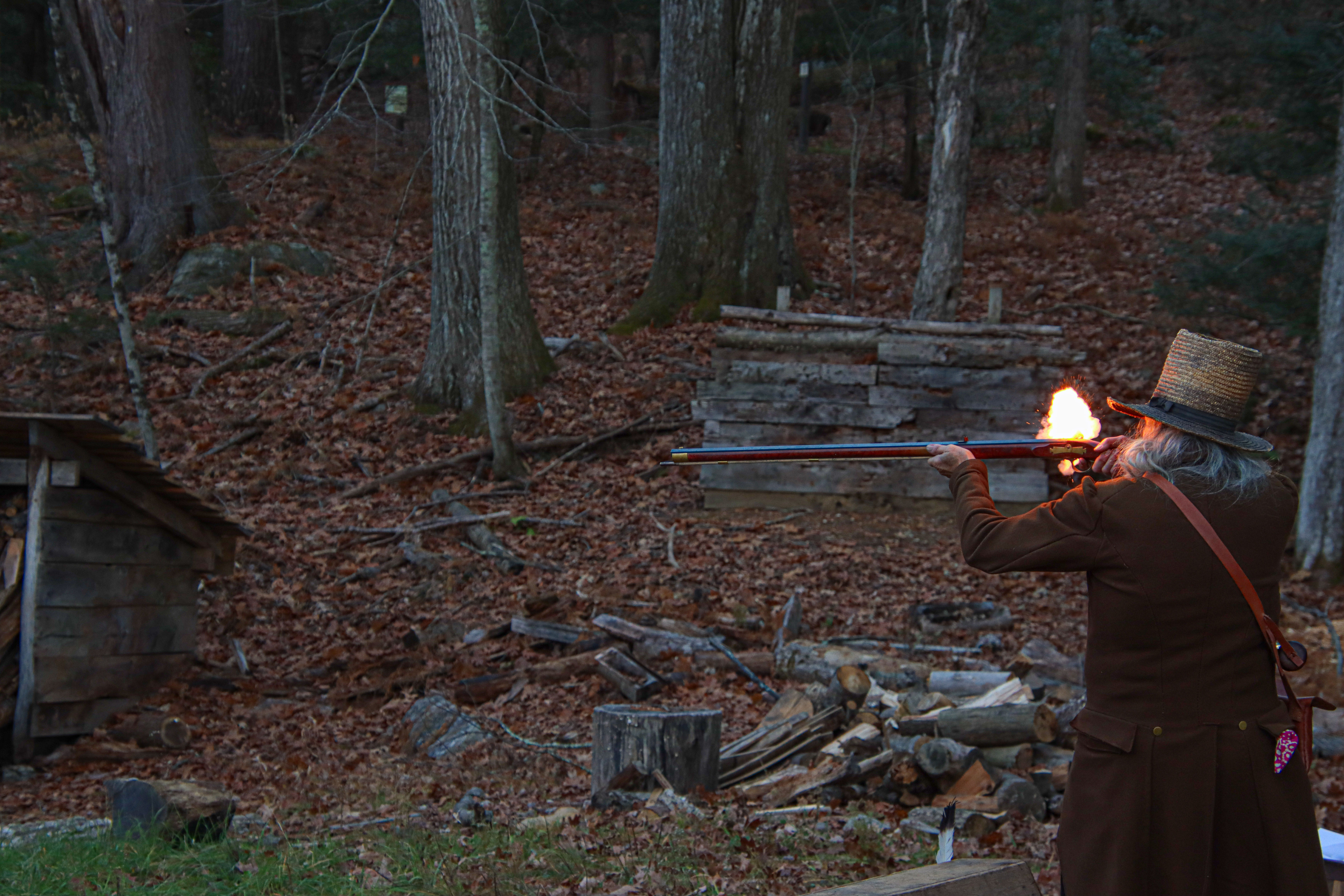
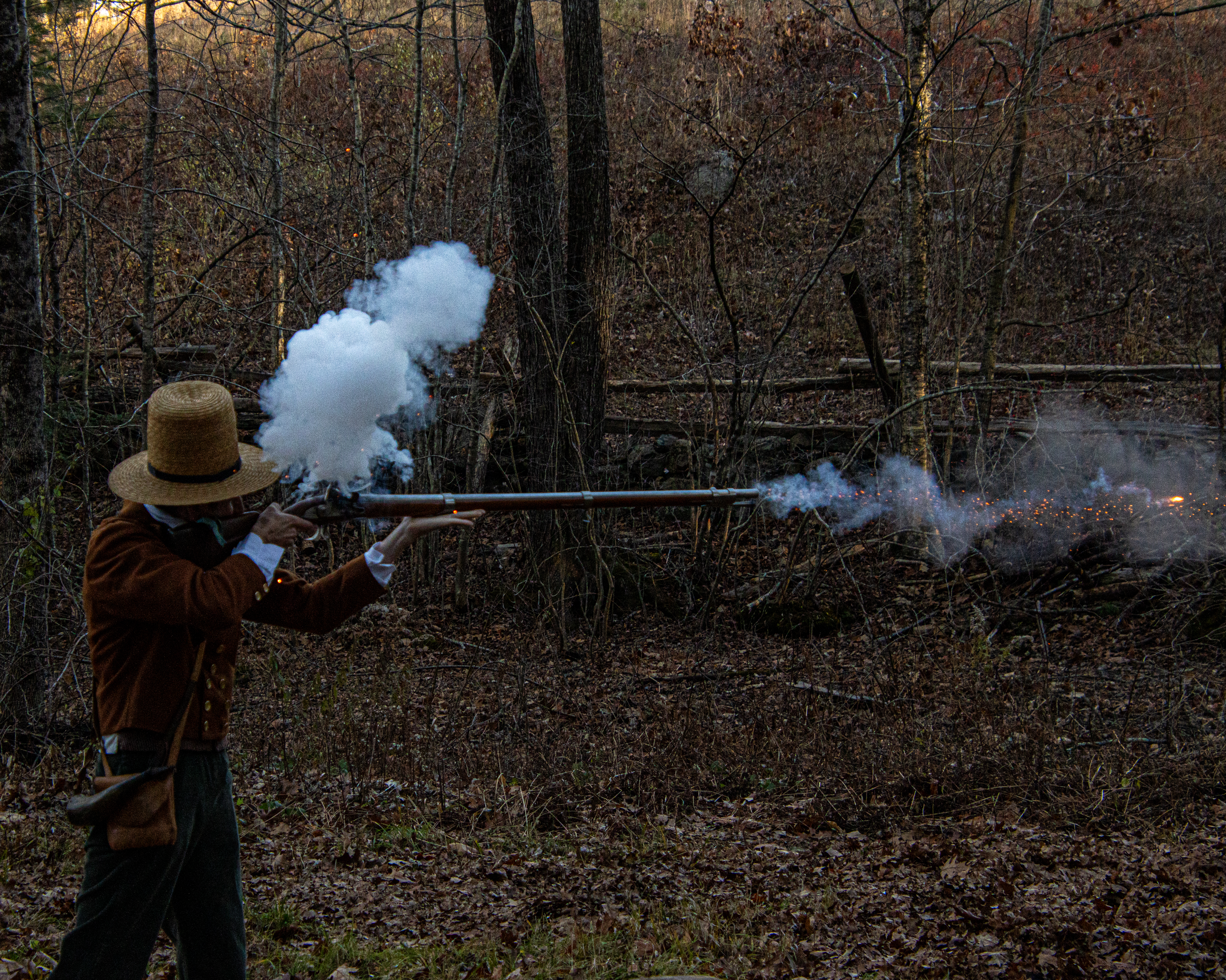
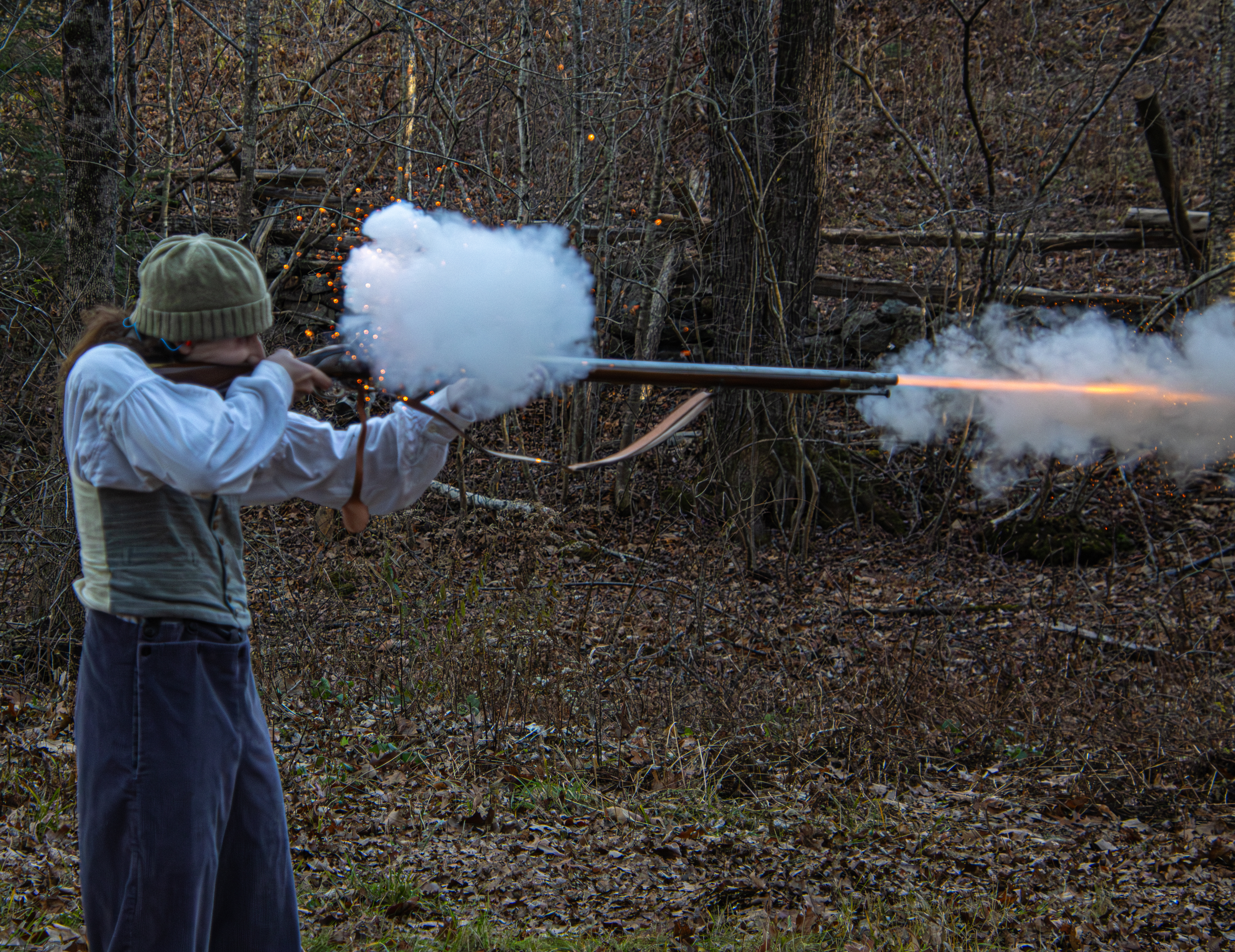
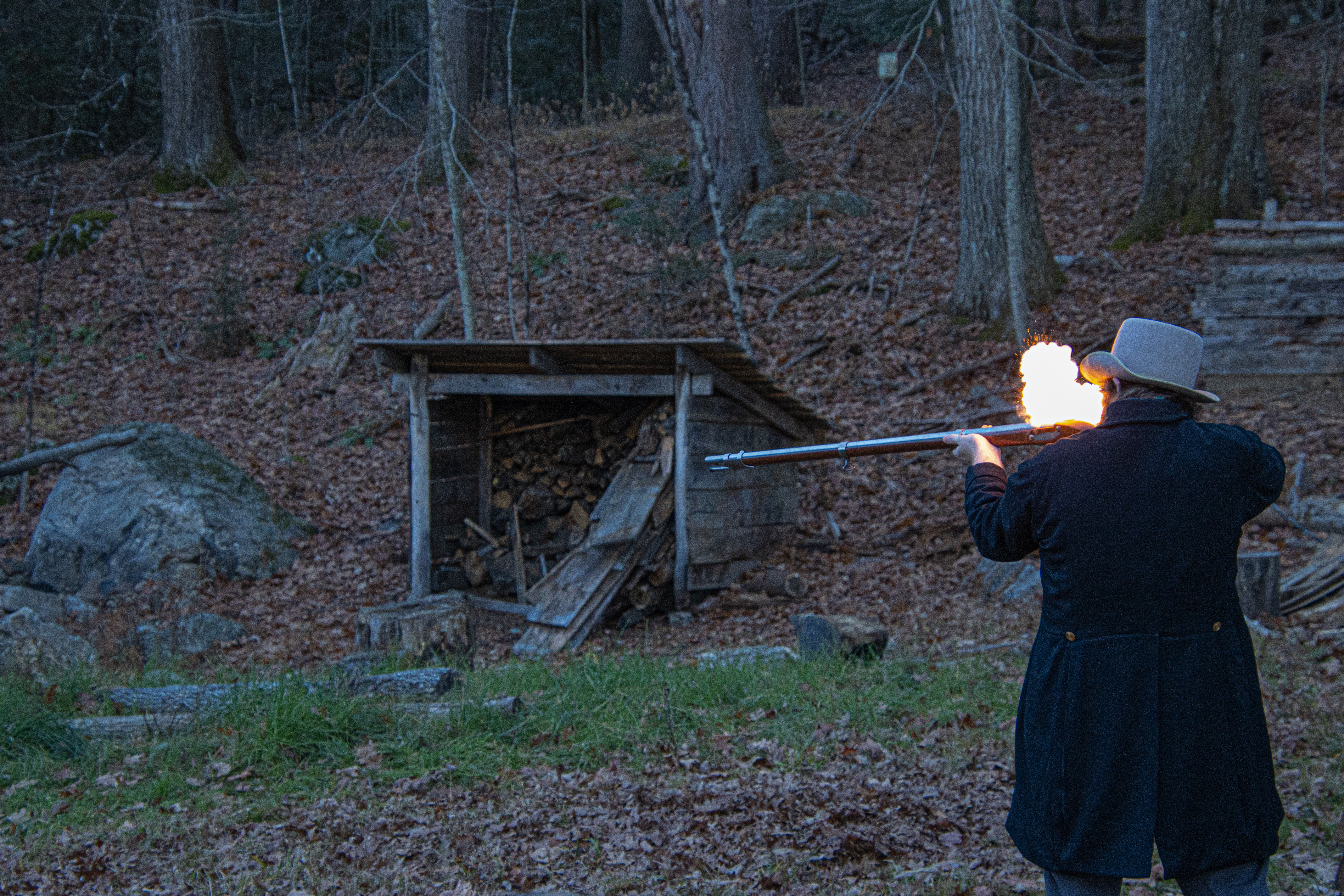
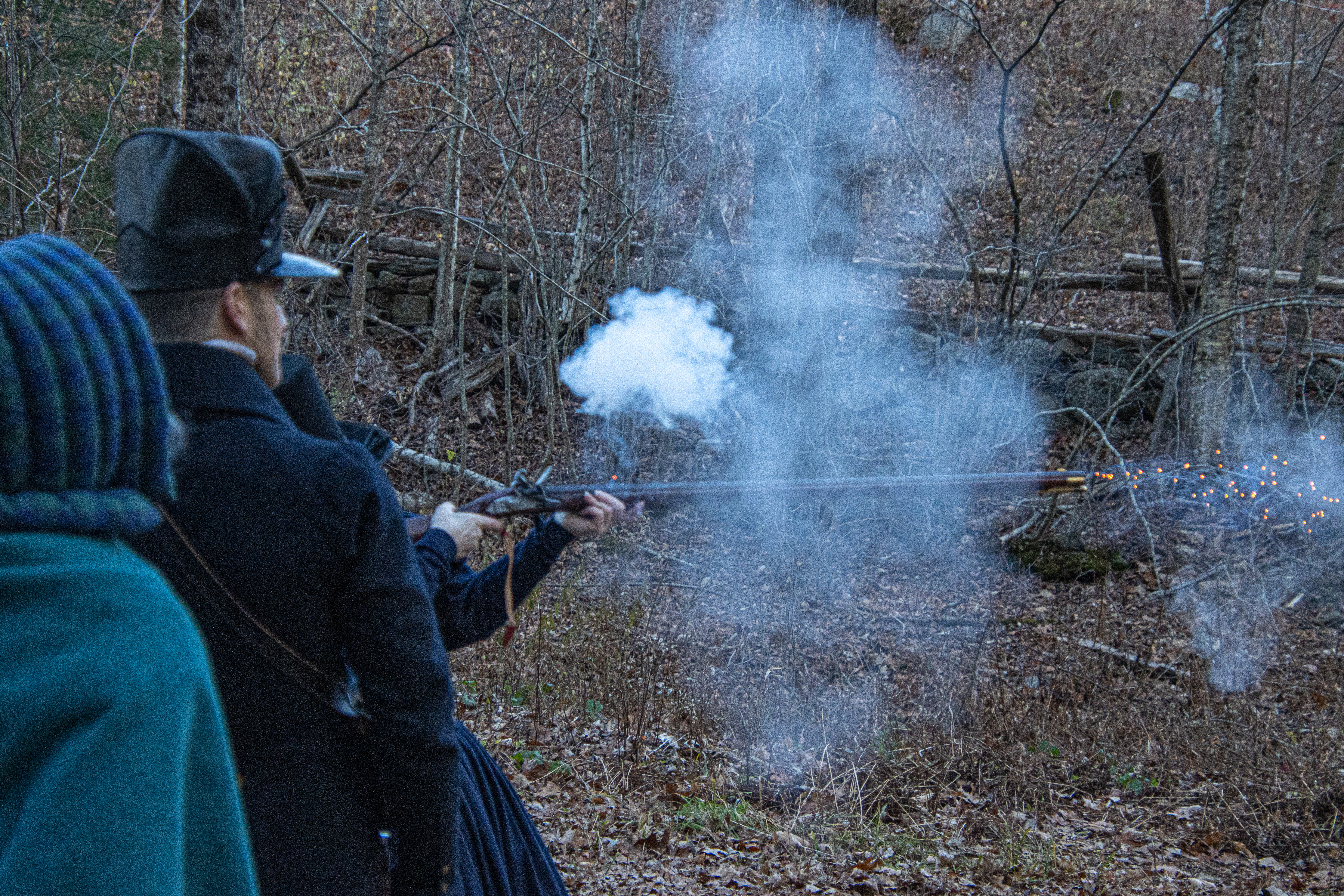
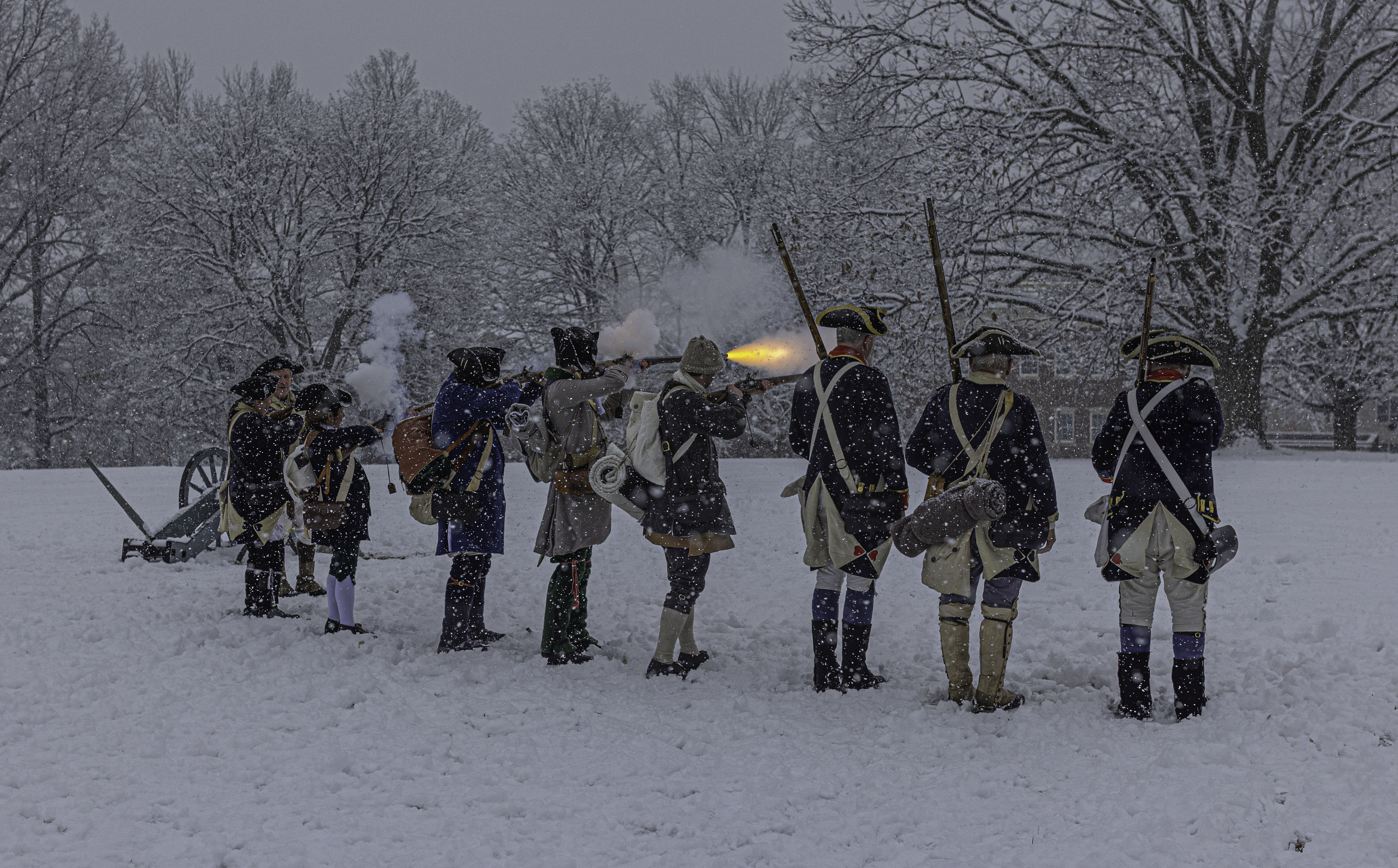
But, I was able to get a photo of the firing of the rifles and muskets.

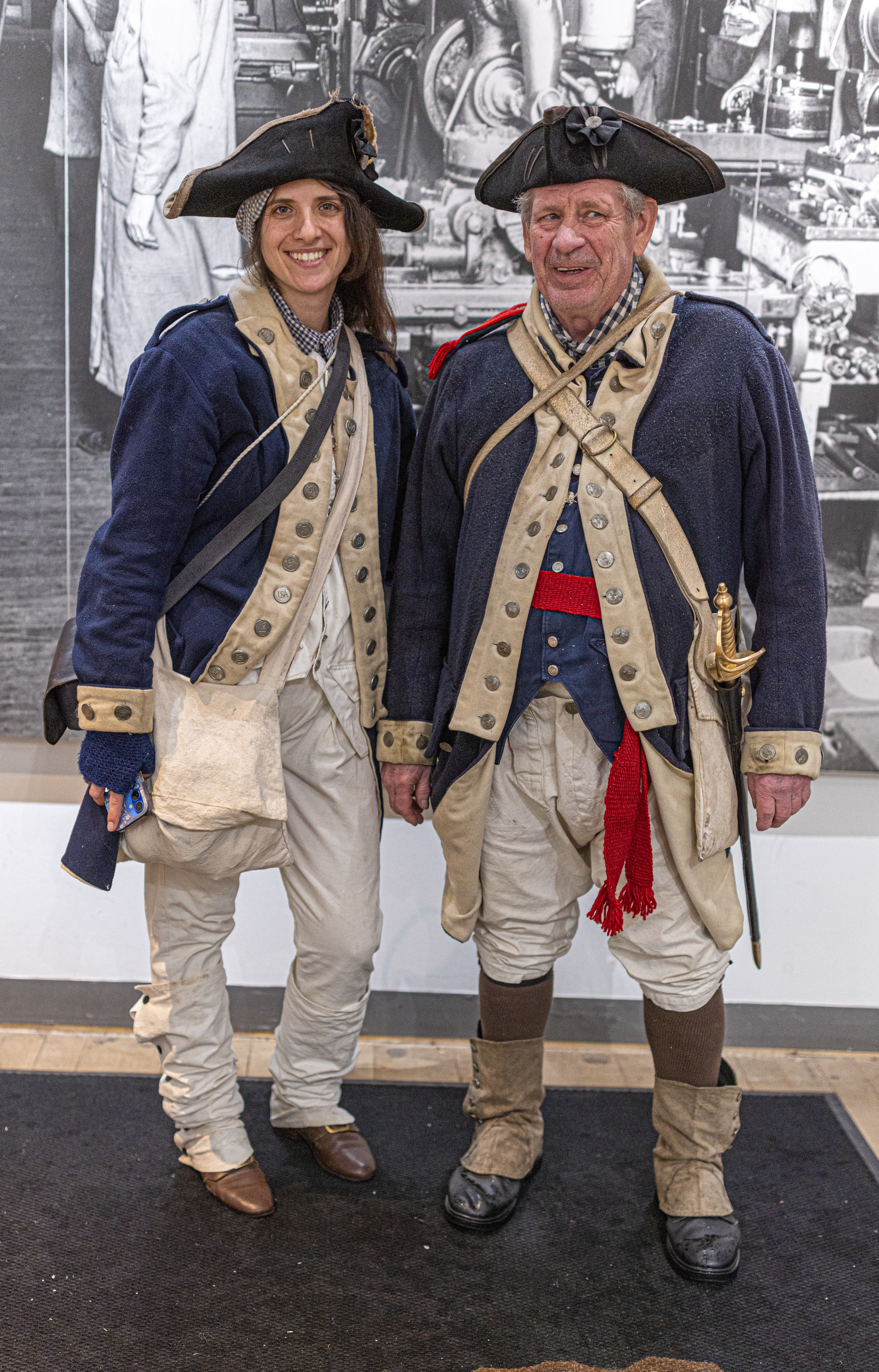
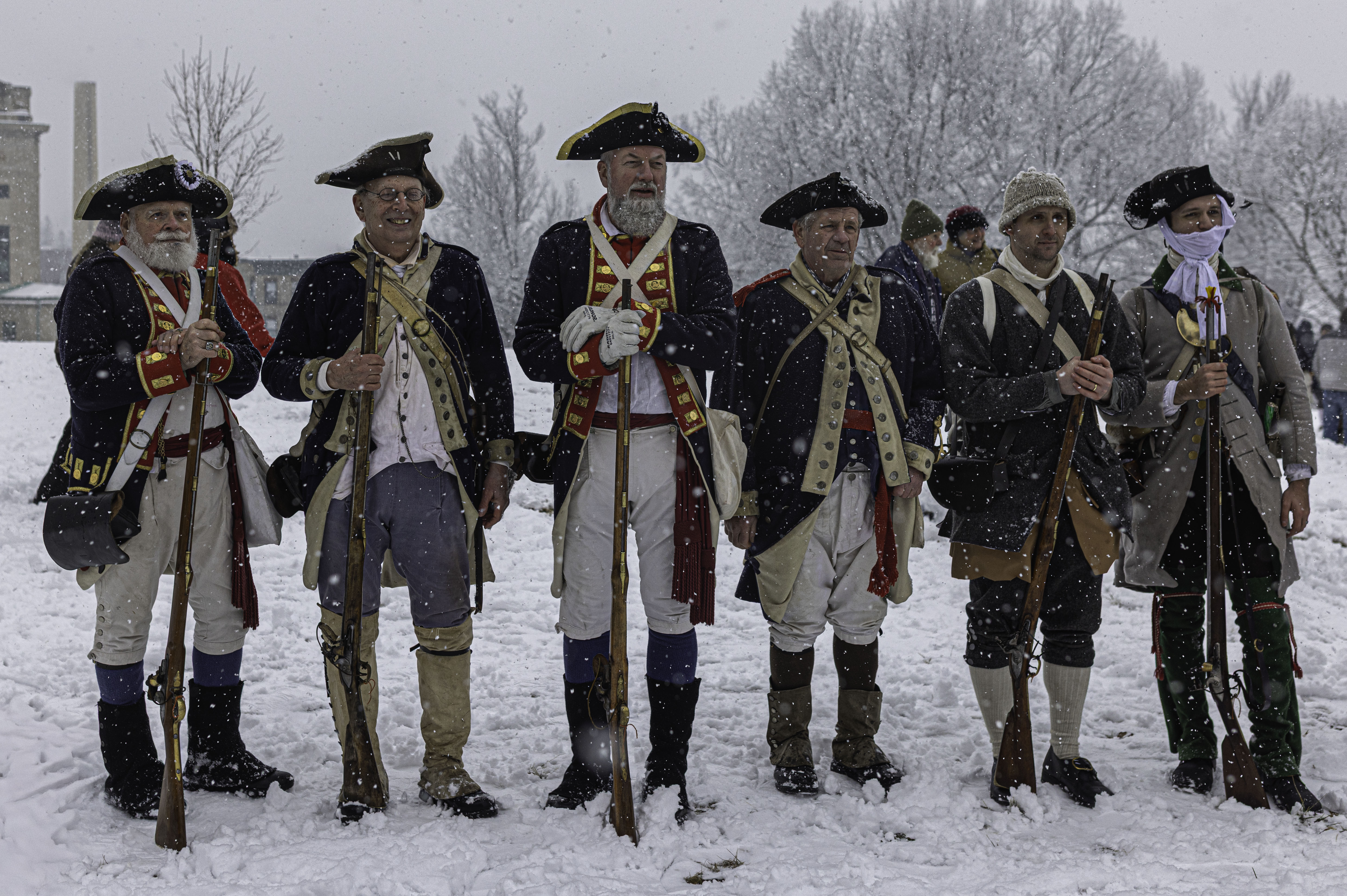
The reenactors were active and approachable at the event. I was able to take a few photos of them during the event.

There are bound to be many more 250th commemorations and celebrations this year. So, I’m sure I’ll be photographing more of these type of events throughout the year!


Christmas In Salem – Boughs And Blossoms – Gedney House (Salem, MA)

Location: 21 High St, Salem, MA (about 30 minutes northeast of Boston, MA)

Universally Accessible: No

Cost: $40 per ticket ($50 if you purchase day of tour tickets)

Parking: There are several parking garages in Salem, as well as metered on street parking.

Summary: By showing the architecture and “bones” of the home, the Gedney House serves as a model for what the historic homes of Salem look like on the inside.

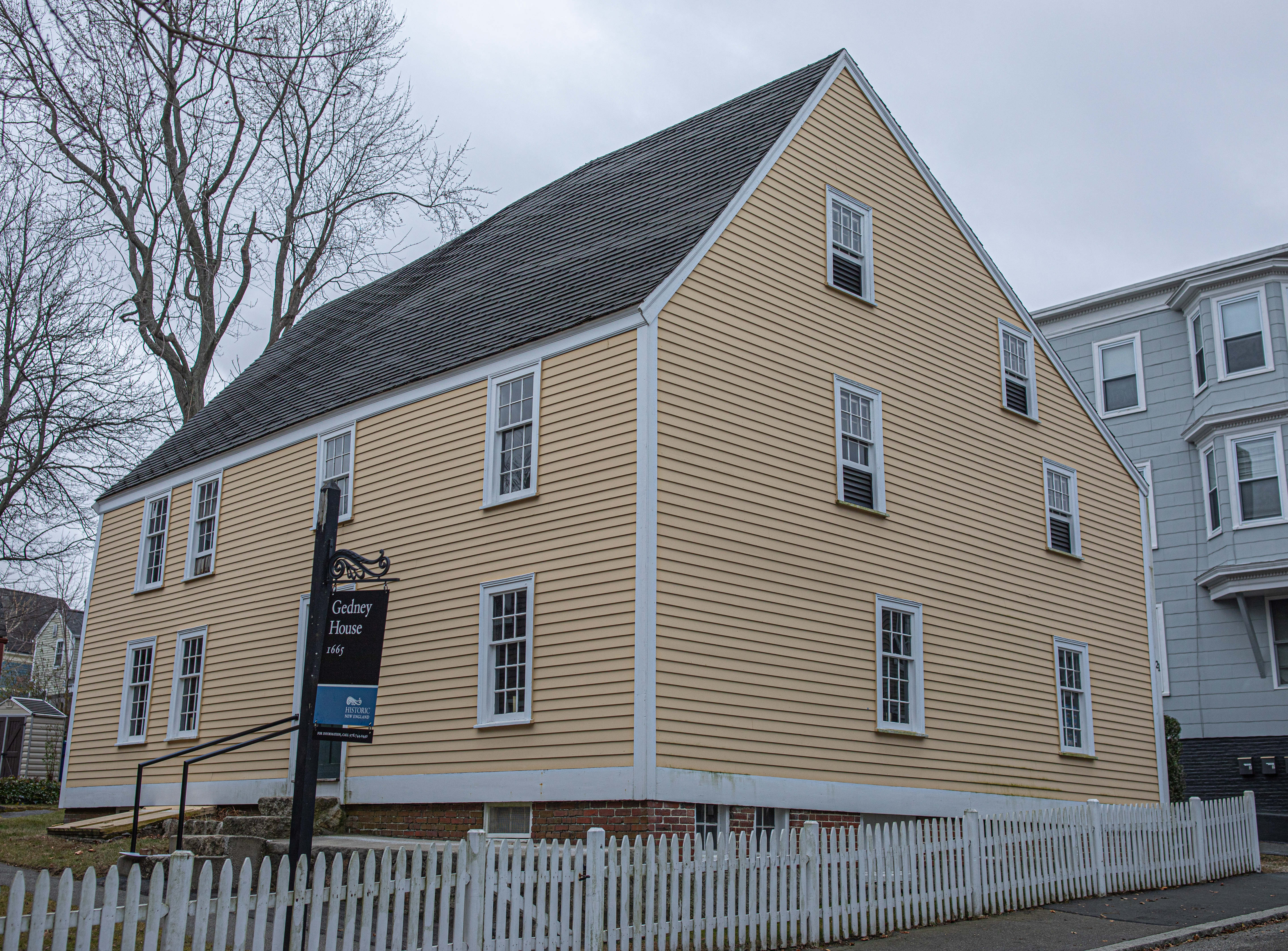
While we have seen all of the residential homes on the historic homes tour, there was one more building on the tour. But, it’s not a residential home. At least, not now. The Gedney House, once used for rooming, holding events and other occasions, the Gedney Home is now used to showcase the nuts and bolts, sometimes literally, of the homes of that era.

One of the oldest timber-framed dwellings in the country, the Gedney House was built by Eleazer Gedney, a wealthy shipwright whose family had arrived in Salem in 1637. The original structure was a basic post-Medieval center chimney plan consisting of a hall and parlor on either side of the chimney. The location of the house was near Eleazer’s shipyard on the South River. Gedney was married to Elizabeth Turner, sister of John Turner, who built the house of House of the Seven Gables. Although modest in size, the house had features which showed that it was built by a family of means; a spacious, decorative gable and two impressive summer beams (load-bearing building elements) in the main hall, an unusual feature as homes of this style typically had only one.

In 1733 a new owner expanded the house into a multifamily dwelling used as a rooming house. By the early twentieth century, when Salem was becoming home to successive groups of immigrants, the house was a tenement in the area which became known as Little Italy, reportedly once housing 25 people in four households. So much for building codes.

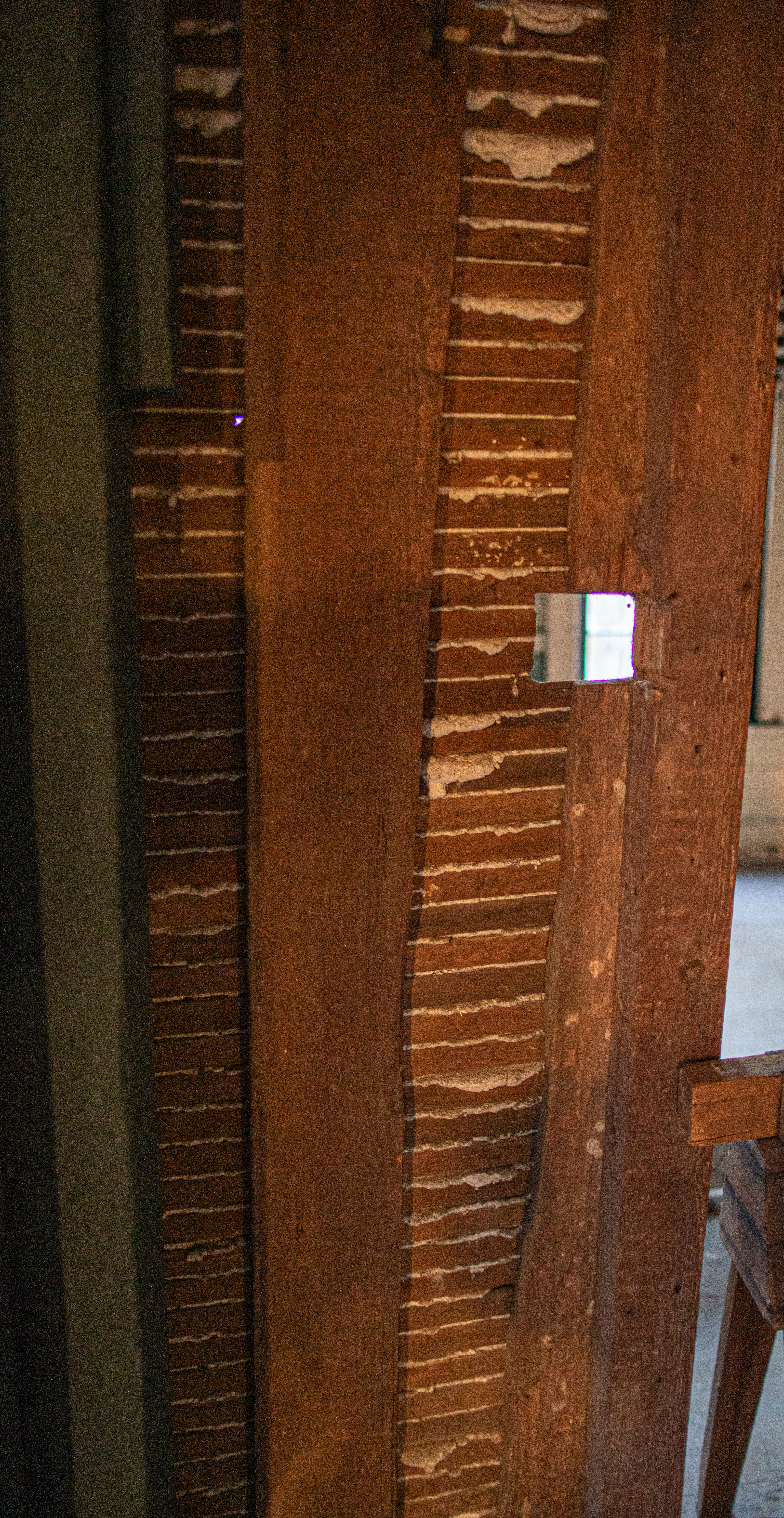
A local builder purchased the house in 1962 with the intent of turning it into apartments. An observant Salem resident, Elizabeth Reardon, noticed 17th century paneling in the trash as the renovations were beginning and alerted Historic New England, which subsequently acquired the house. Because of the halted 1960s renovations, much of the original framing is exposed for visitors to see today.

The exposed framing mentioned above can be found in the structure.

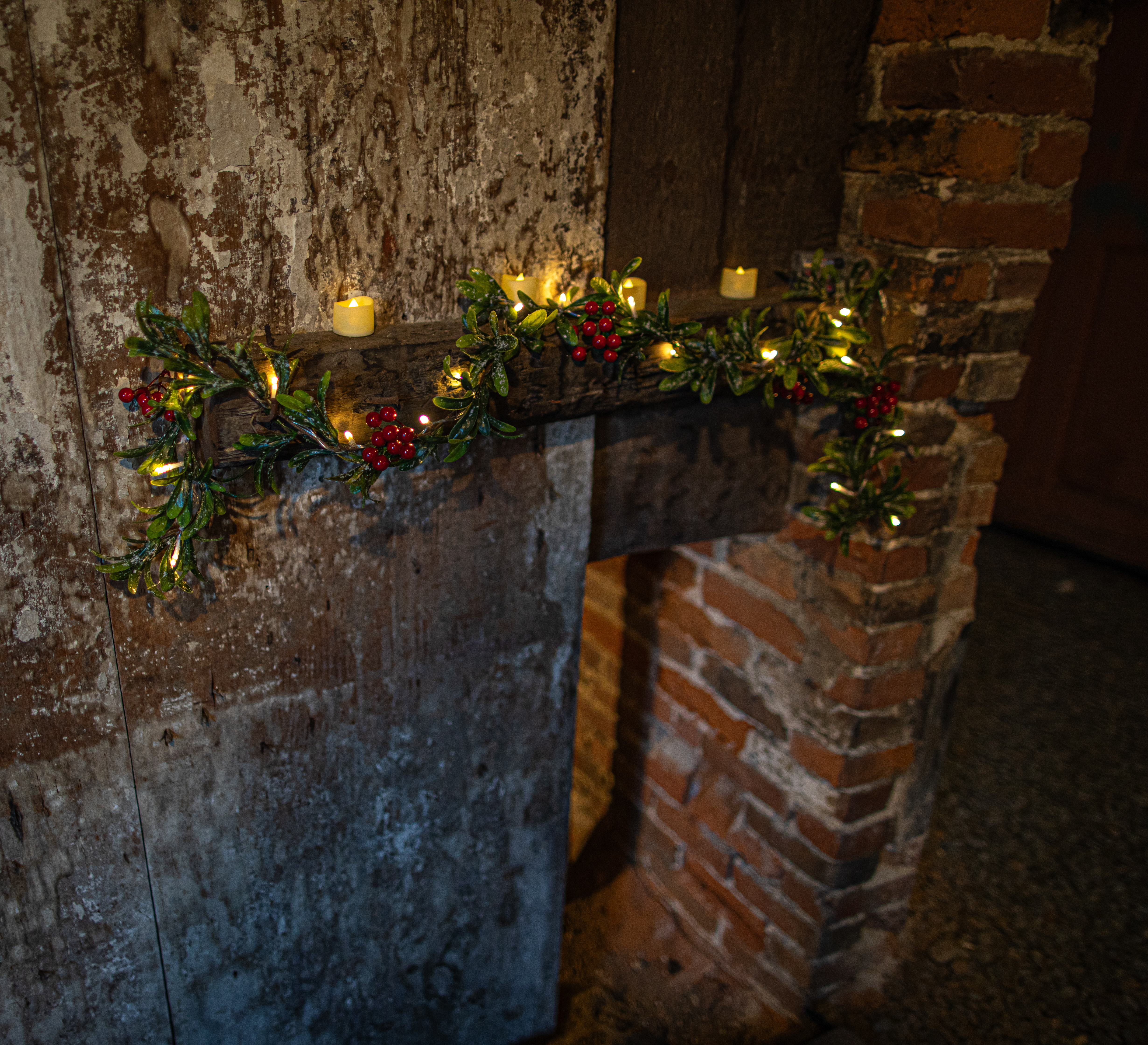
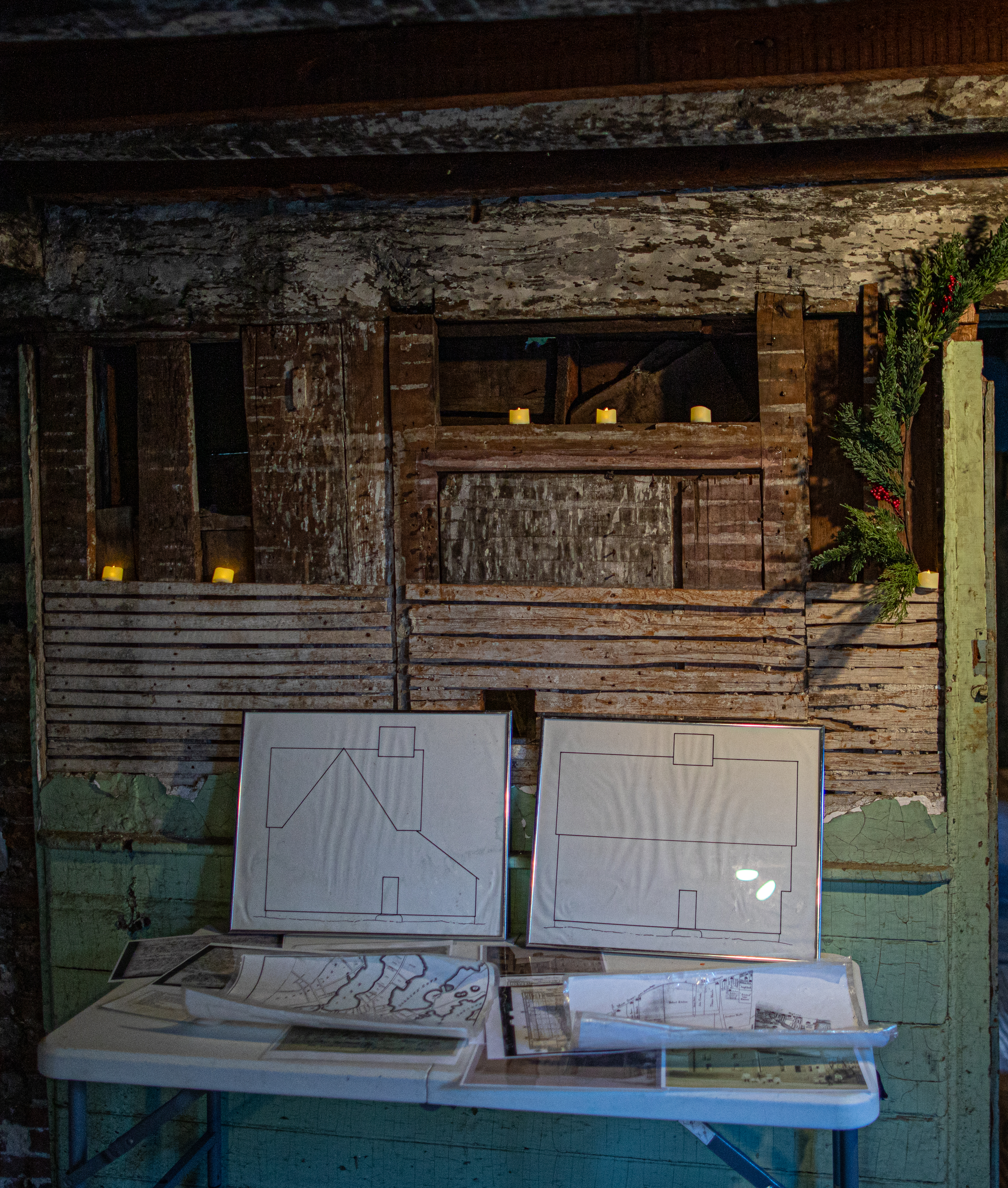
The house, such as it is a “home” is meant to serve as an architectural model to see the “bones” of these old historical homes. There were examples of the home’s architectural frame and design throughout the house. Some lit up for the holiday season. AS you can see, the paneling and wood covered a lot of the original str The photos at the bottom show the original designs of the building.

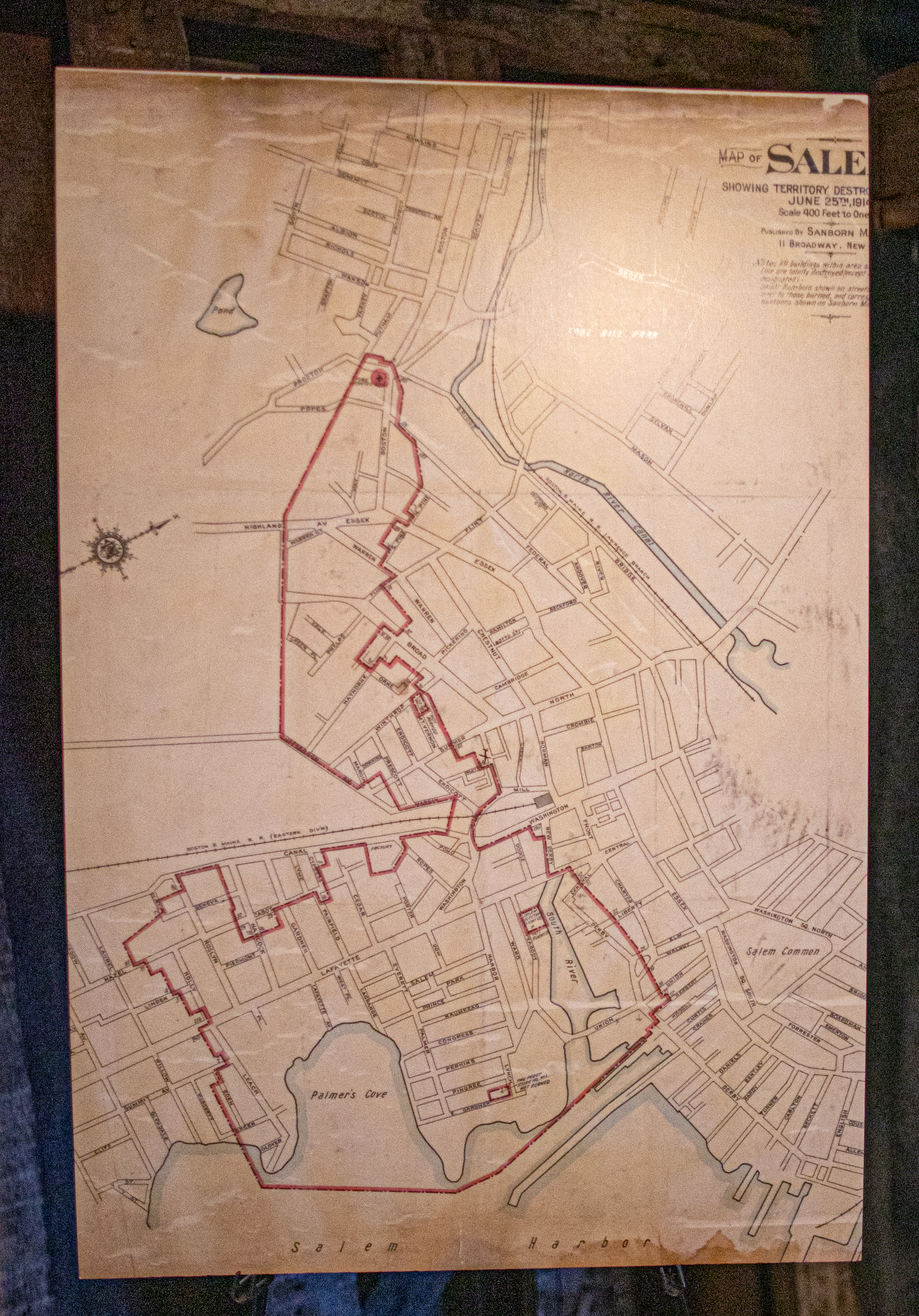
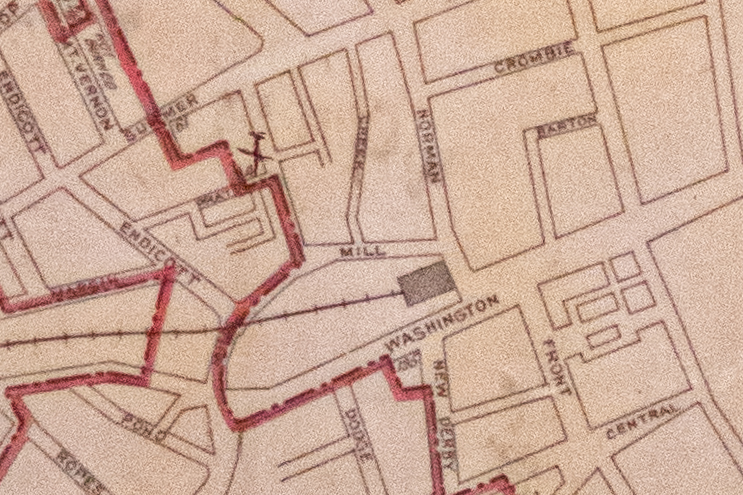
The “Great Fire Of 1914” in Salem took out much of the McIntire District. The Gedney House, however, was spared, barely.

The map below shows the area the fire spread (in red). The Gedney House is the x on the map.

Here’s a closer look

This concludes the annual Christmas In Salem historic homes tour!


Christmas In Salem – Boughs And Blossoms – 1 Chestnut St – Built For Francis Cox (Salem, MA)

Date Of Visit: December 6, 2025

Location: 1 Chestnut St, Salem, MA (about 30 minutes northeast of Boston, MA)

Universally Accessible: No

Cost: $40 per ticket ($50 if you purchase day of tour tickets)

Parking: There are several parking garages in Salem, as well as metered on street parking.

Summary: The home at 1 Chestnut St had a lot of pretty decorations, an interesting history and quite a few nutcrackers!

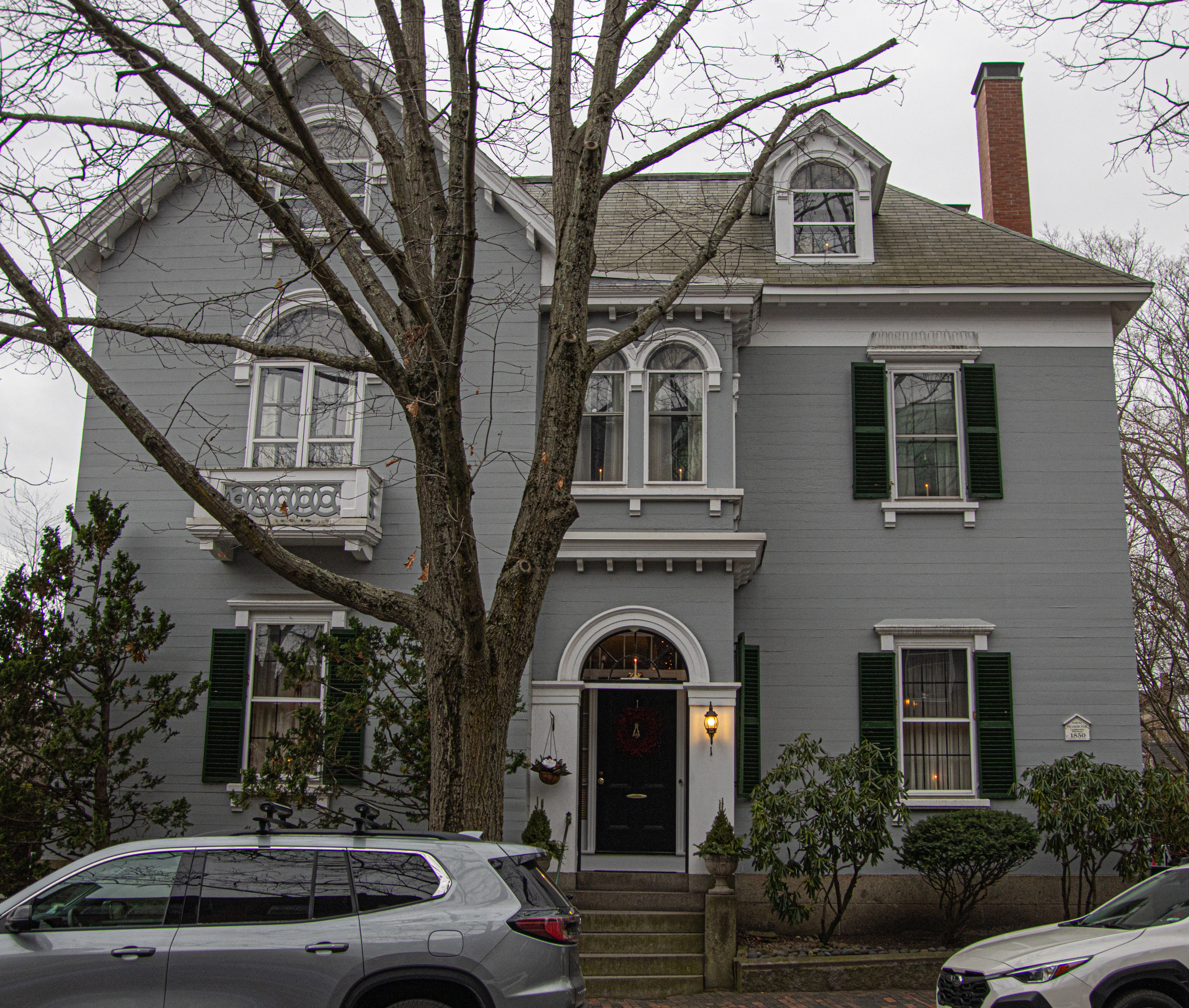
Constructed circa 1850 for Francis Cox and his wife, Ellen Barr, 1 Chestnut St exemplifies a blend of Italian Villa and Georgian/Federal styles. Cox began his career as a commission merchant in Boston supplying Cunard steamships (I had to Google that too!). Cunard steamships were those very long steam ships established by Samuel Cunard. Think of the Lusitania and Queen Mary. Or, better yet, “Steamboat Willie’s” boat. These steamships traveled between Boston and Liverpool, England. Following his retirement, he served as President of the Naumkeag National Bank, and Vice President of the Salem Five Cents Savings Bank.

Architecturally, the projecting entrance and bay windows of the home are believed to be the earliest examples of the Italian Villa style in Massachusetts. These elements contrast with the more traditional, boxy Federal features that align with the style of neighboring houses on the street, Prior to the home’s construction, the site was occupied by a bakery and vegetable patch.

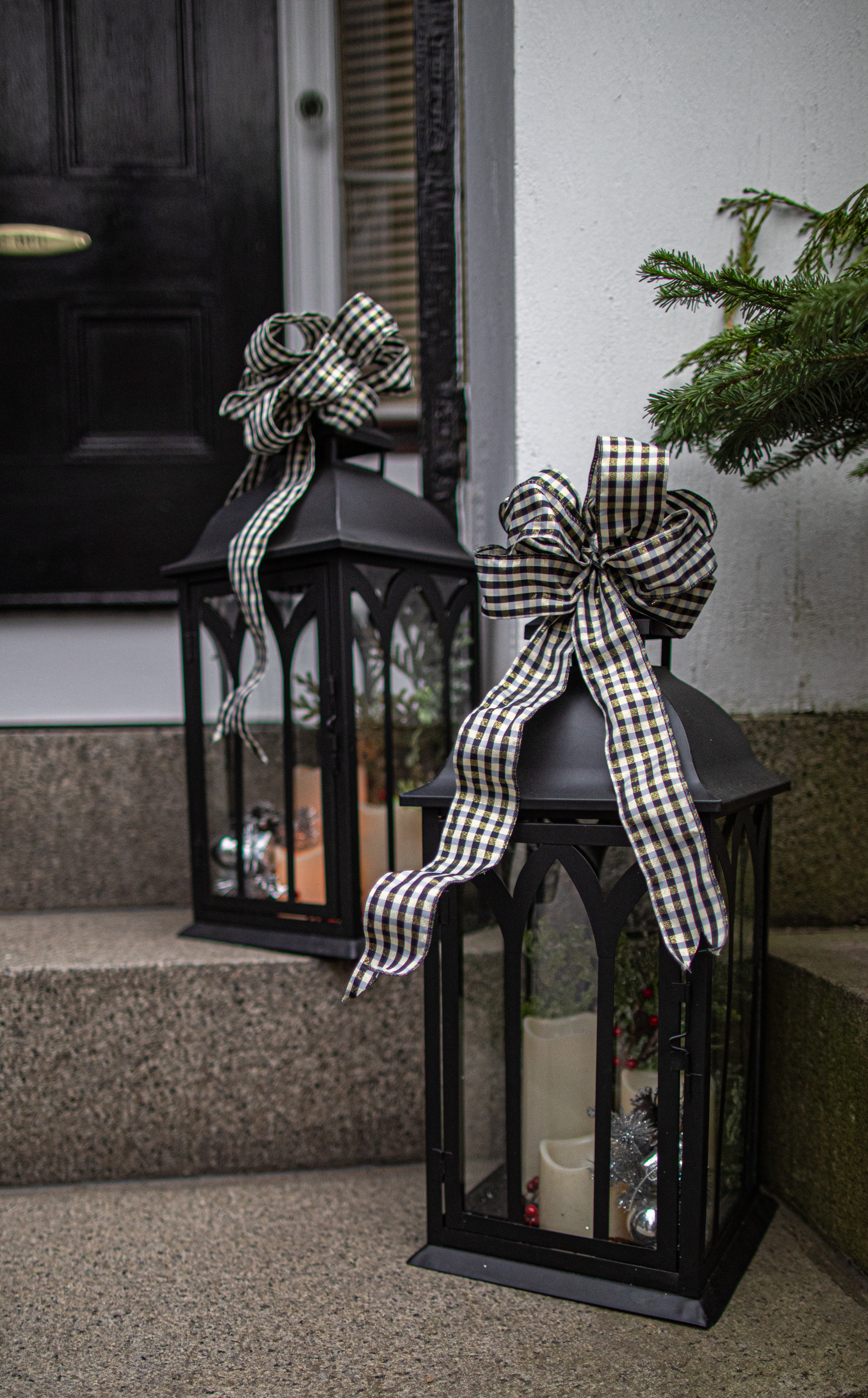
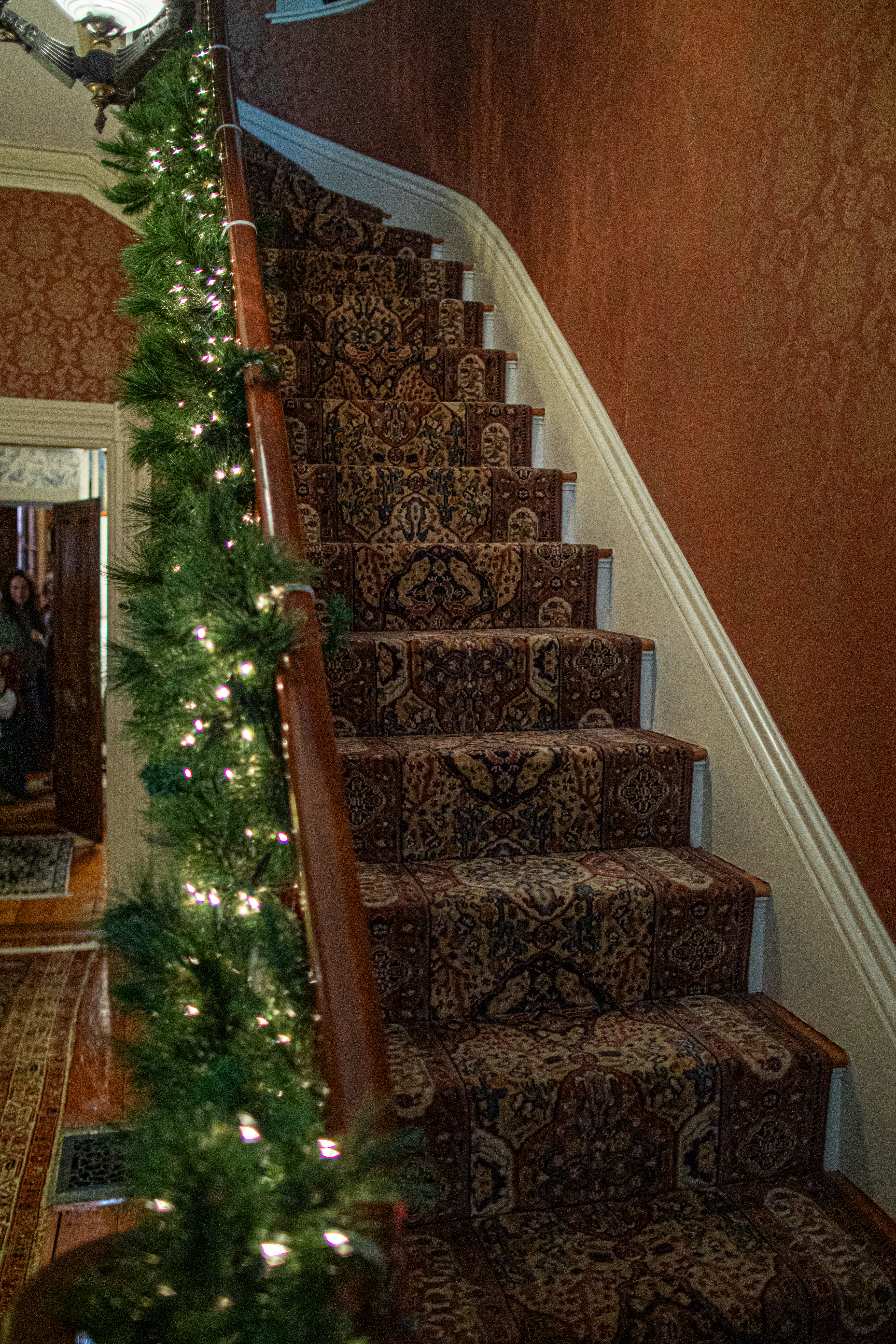
Right from the entry and front stairway, the home at 1 Chestnut St was stunning.

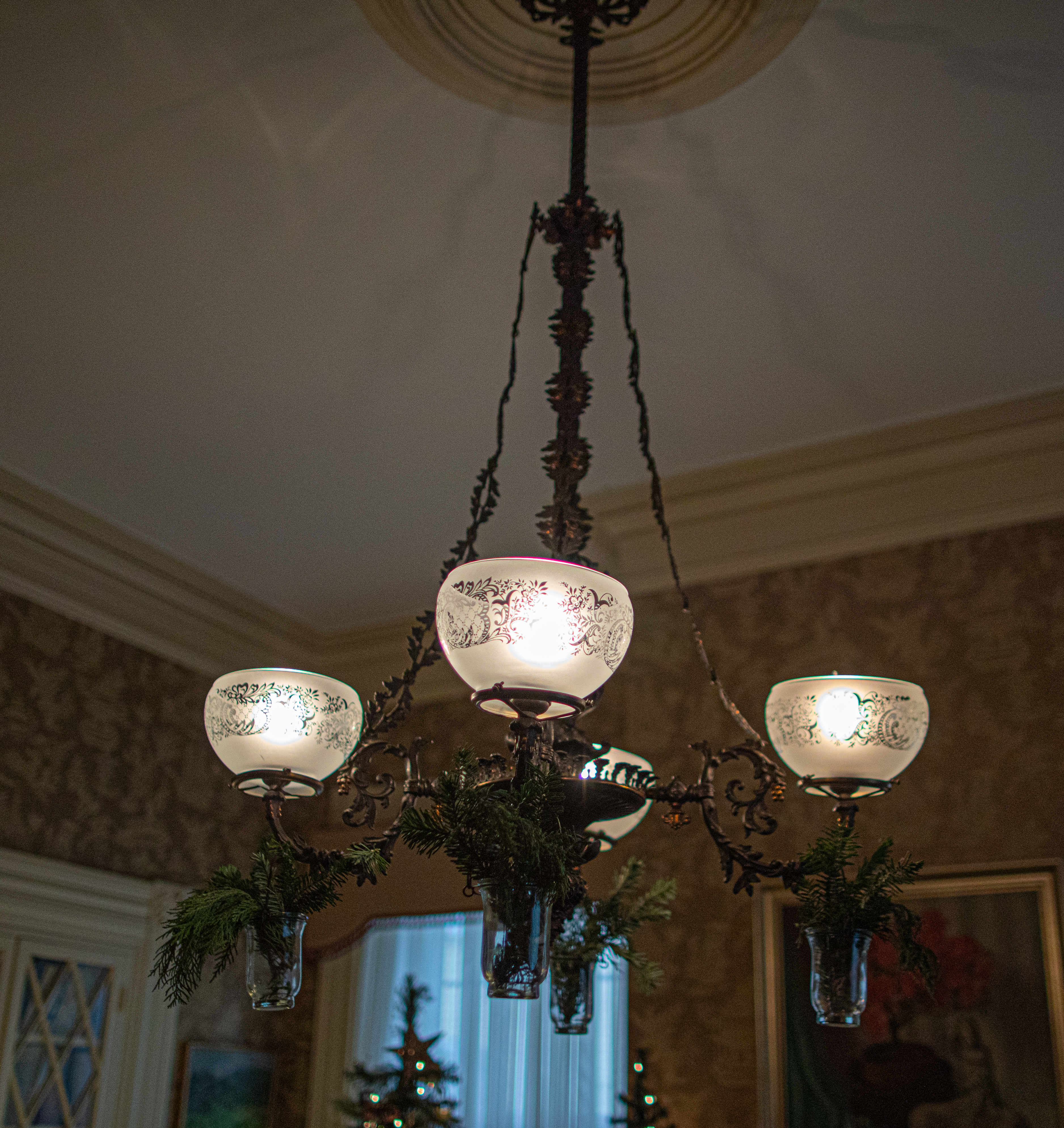
The lighting fixture also had some boughs, appropriate with the theme of the tours.

These fireplaces are both black Italian marble with gold striated decor.

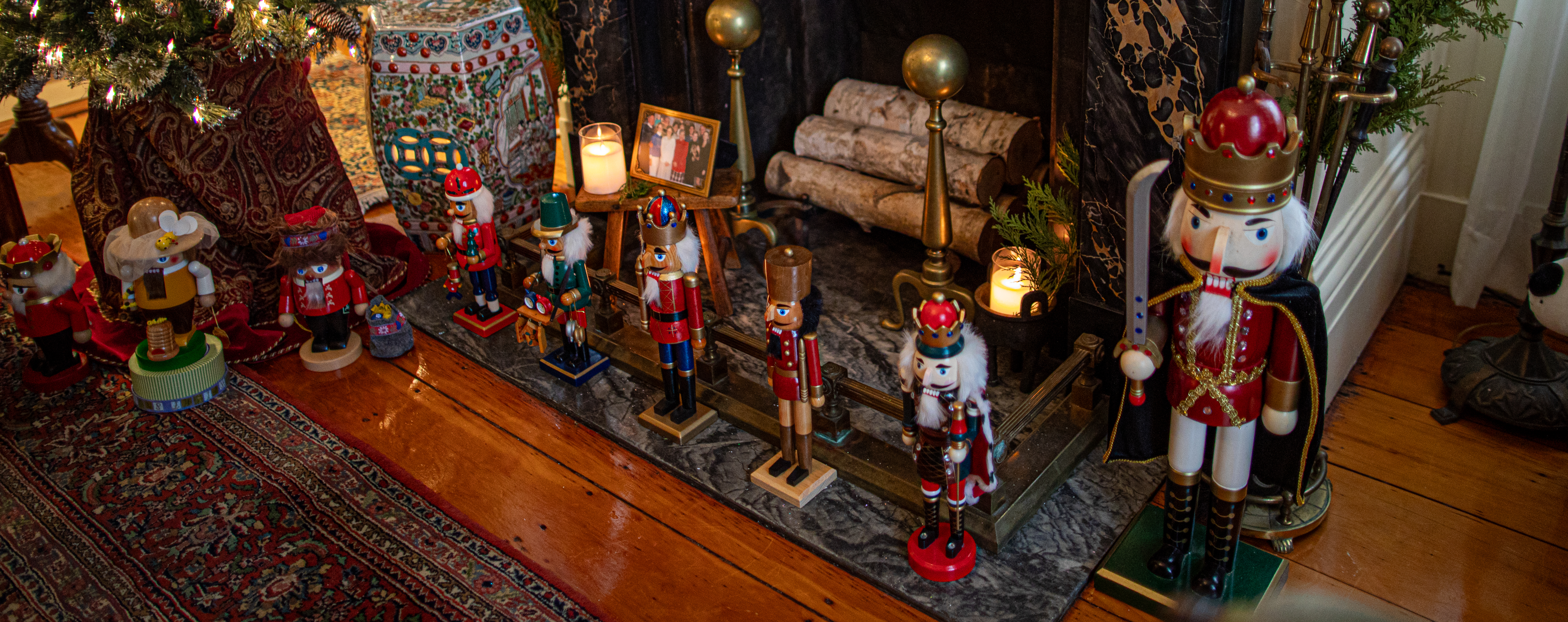
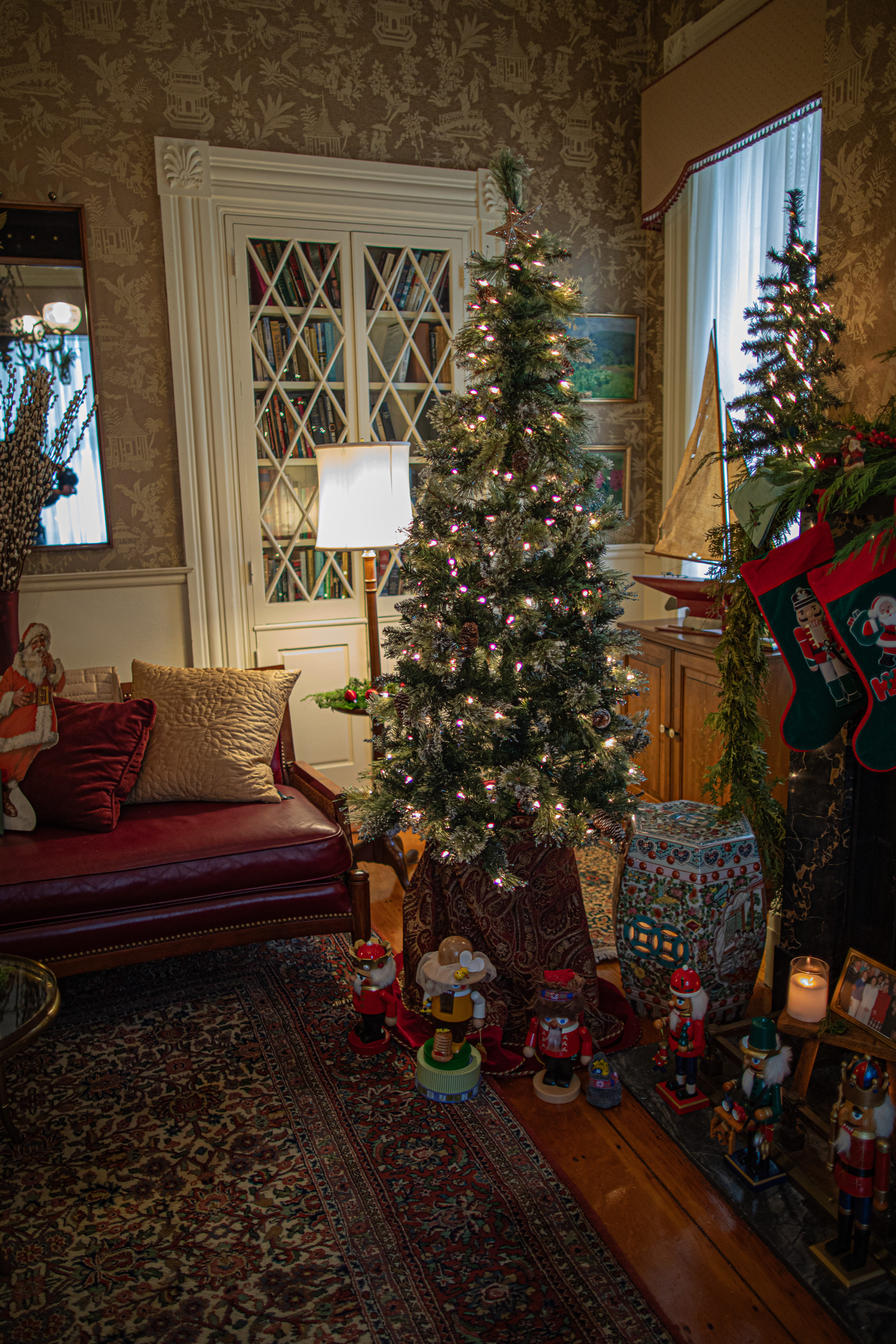
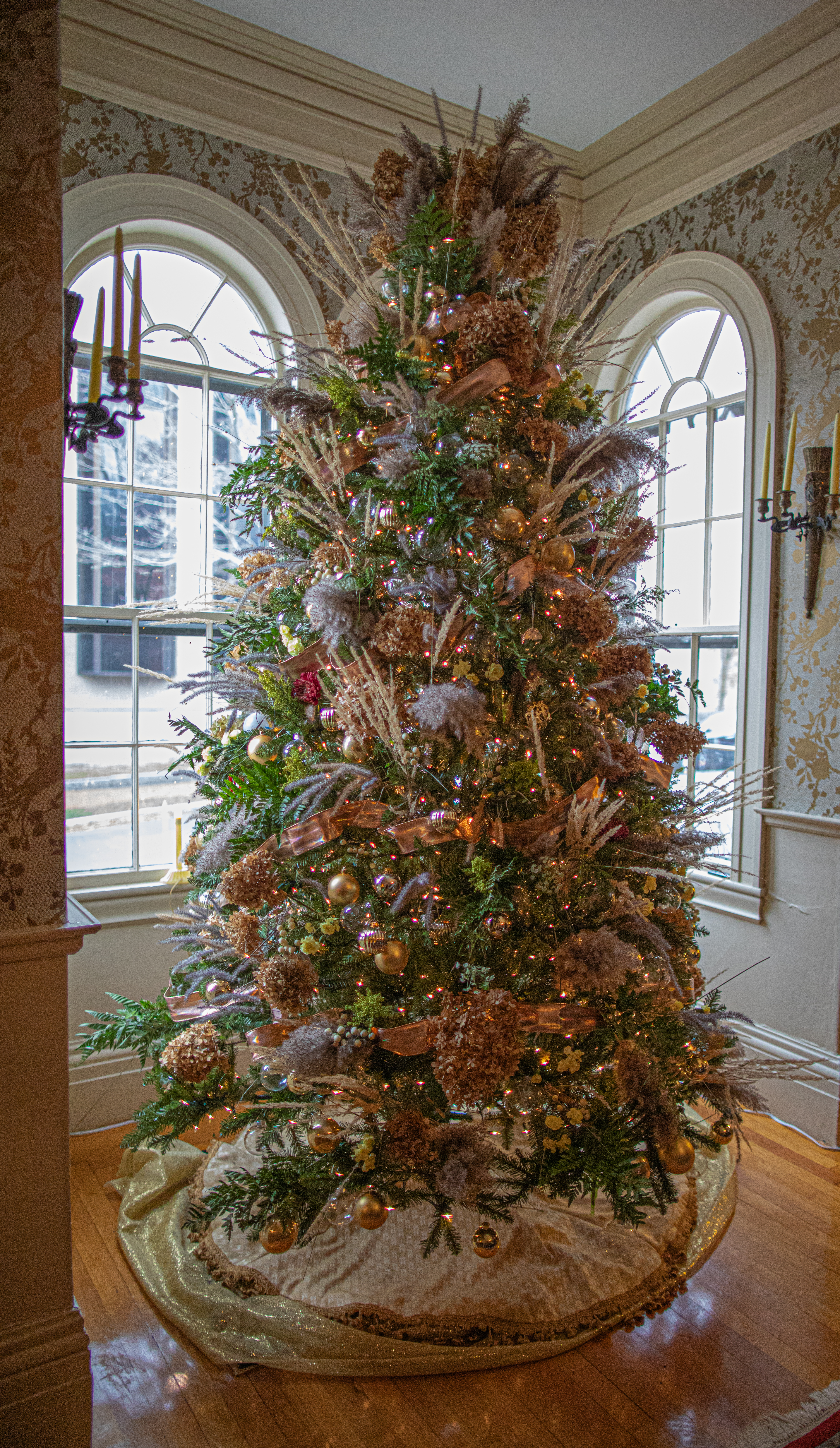
There were so many elegant and festive decorations around the home. Each home seemed to have one feature or theme that stood out. As you’ll notice in the photos, nutcrackers were prominent in the holiday decor of this home. And, quite a few Christmas trees! I wonder how long it takes to put all of these decorations up, and, even more daunting, how long it would take to take them all down.

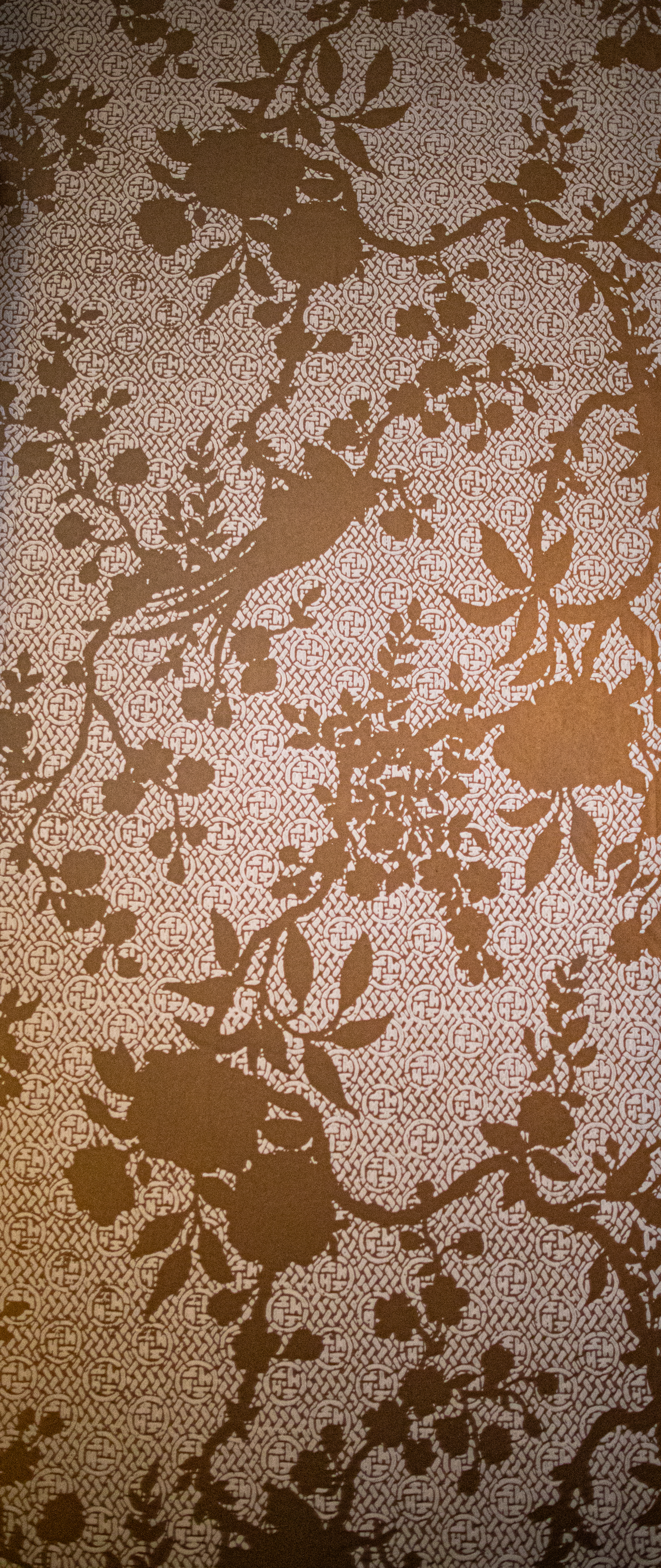
Like many homes on this tour, this house has the original wallpaper. With a twist.

Do you notice anything different about it? The wallpaper was put on upside down! It’s a little hard to see. But, you can tell it is upside down by the flowers that seem to be growing in a downward angle.

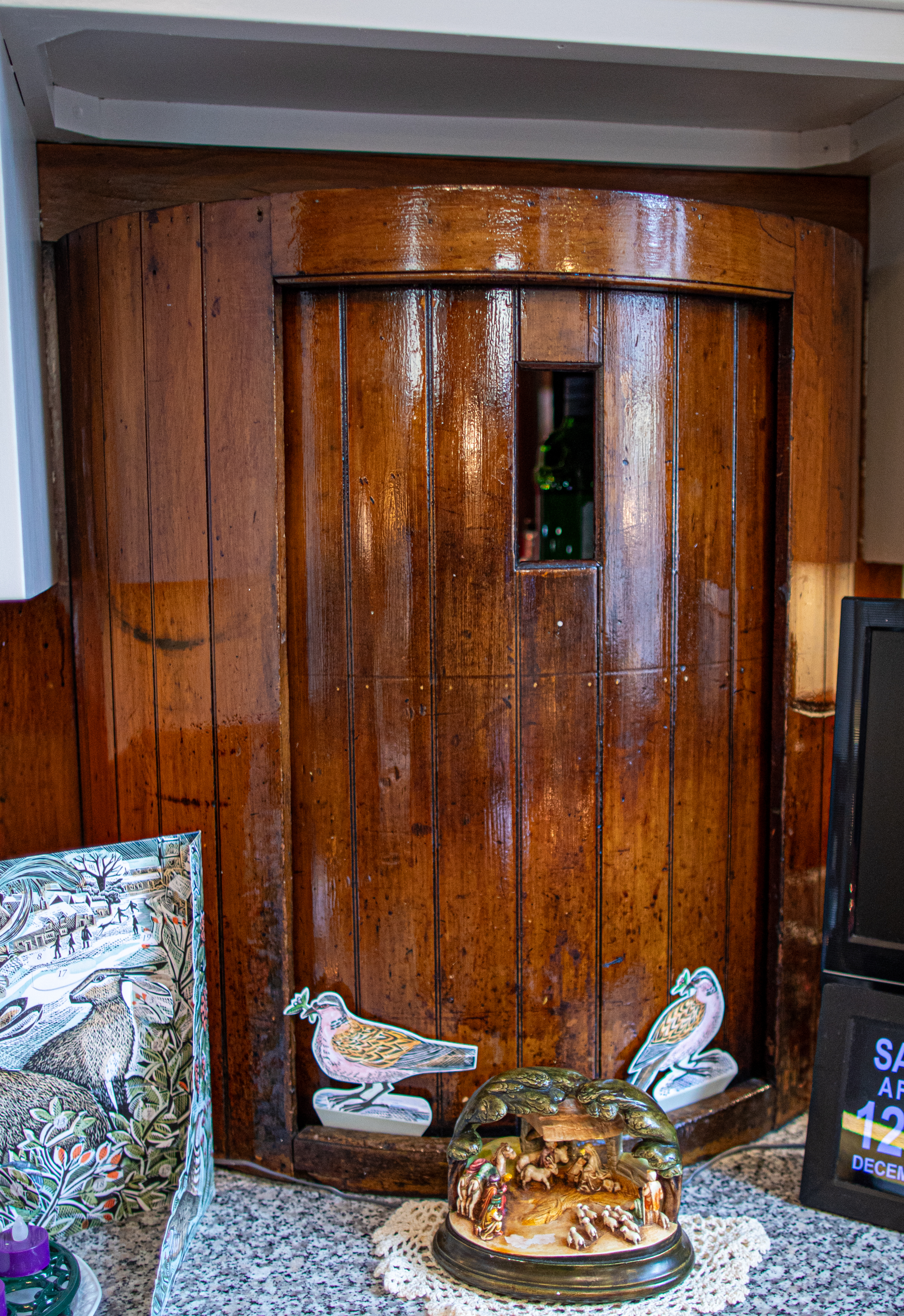
This liquor cabinet had a very cool style. If you went into the room next to the this liquor cabinet.

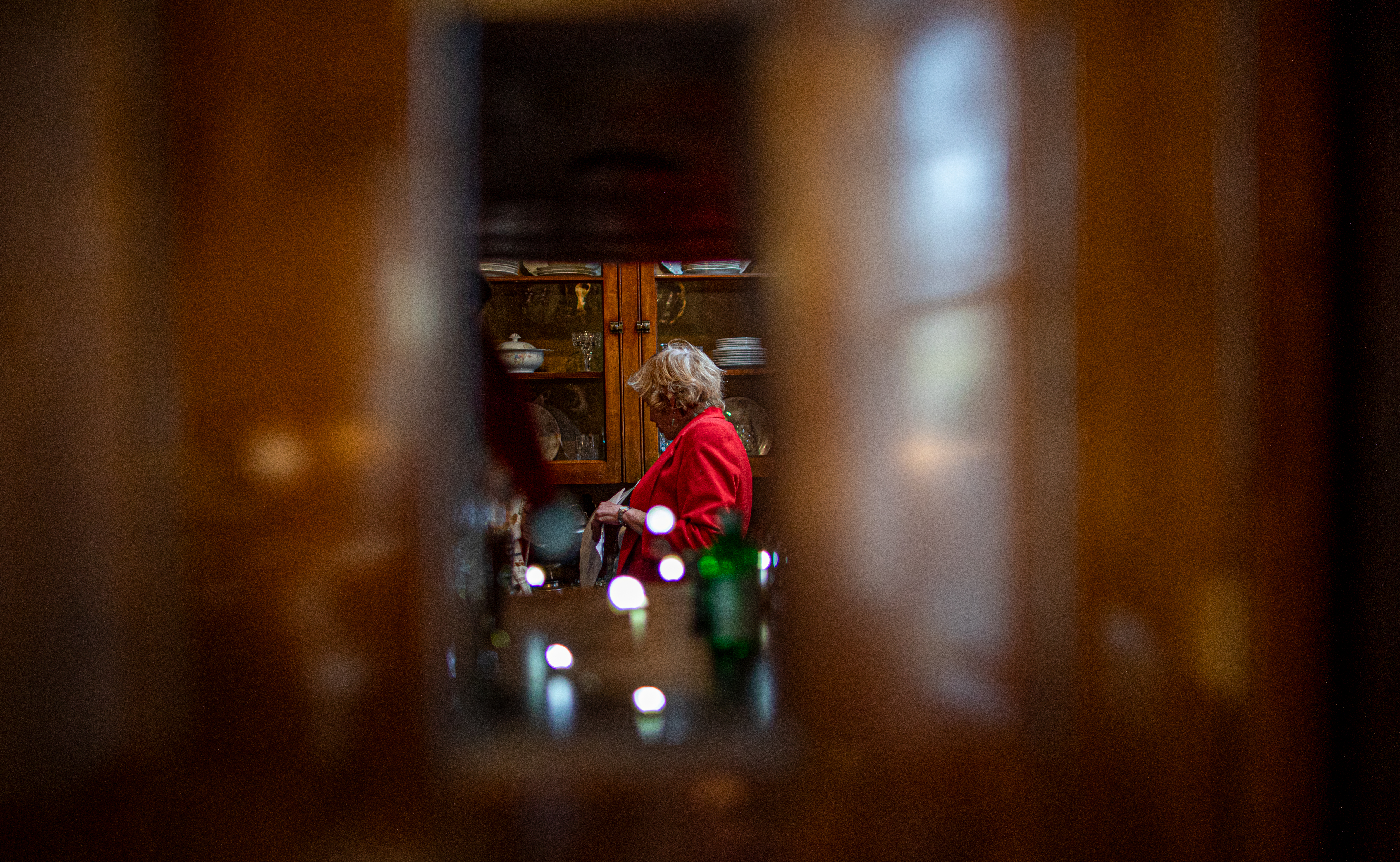
If you go into the room next to the liquor cabinet, you can look through the liquor cabinet from that room when the cabinet doors are open. It’s kind of like a peep hole in your apartment or hotel room!

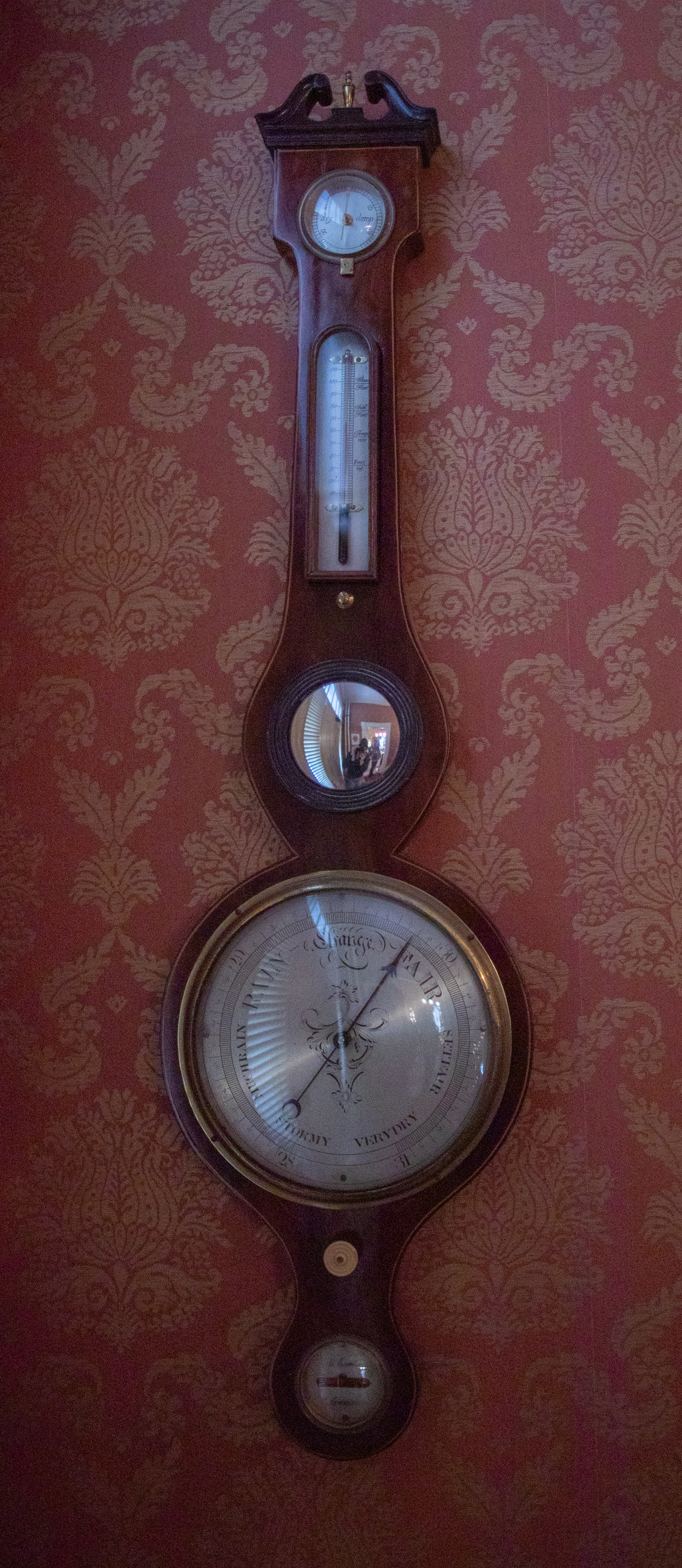
This is an antique English barometer from 1780.

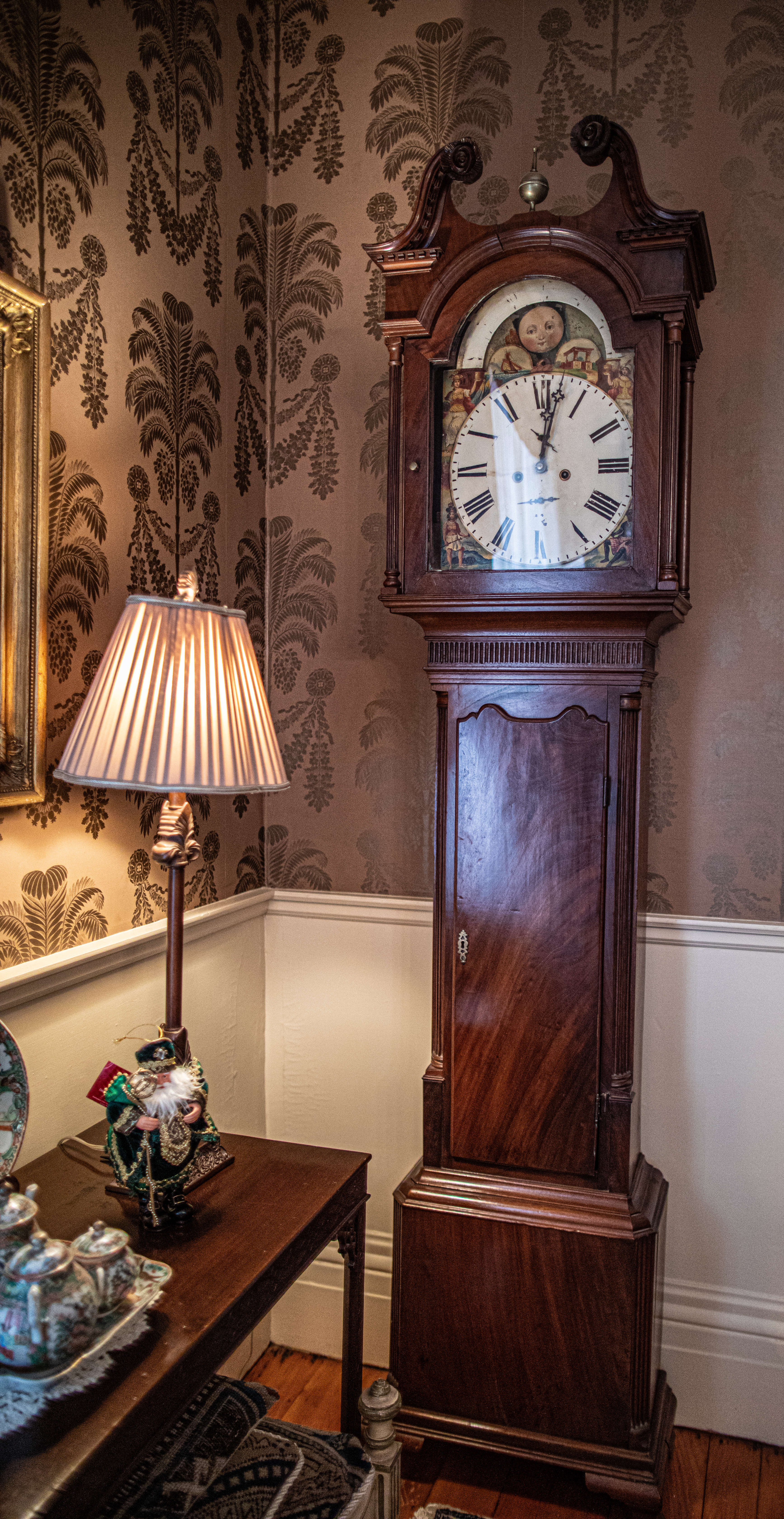
This 1780s grandfather clock had all of the moon phases and seasons.

This was the last actual lived in home on the tour. There is one more home on the tour. But, it is more of a model home and not furnished. So, I hope you’ve enjoyed the tours of the actual residential homes in the Christmas In Salem Boughs And Blossoms tour!


Christmas In Salem – Boughs And Blossoms – 4 Chestnut St – Deacon John Stone House (Salem, MA)

Date Of Visit: December 6, 2025

Location: 4 Chestnut St, Salem, MA (about 30 minutes northeast of Boston, MA)

Universally Accessible: No

Cost: $40 per ticket ($50 if you purchase day of tour tickets)

Parking: There are several parking garages in Salem, as well as metered on street parking.

Summary: The home at 4 Chestnut St, another home of Deacon John Stone, was decked out for the holidays. They also let people tour the second floor!

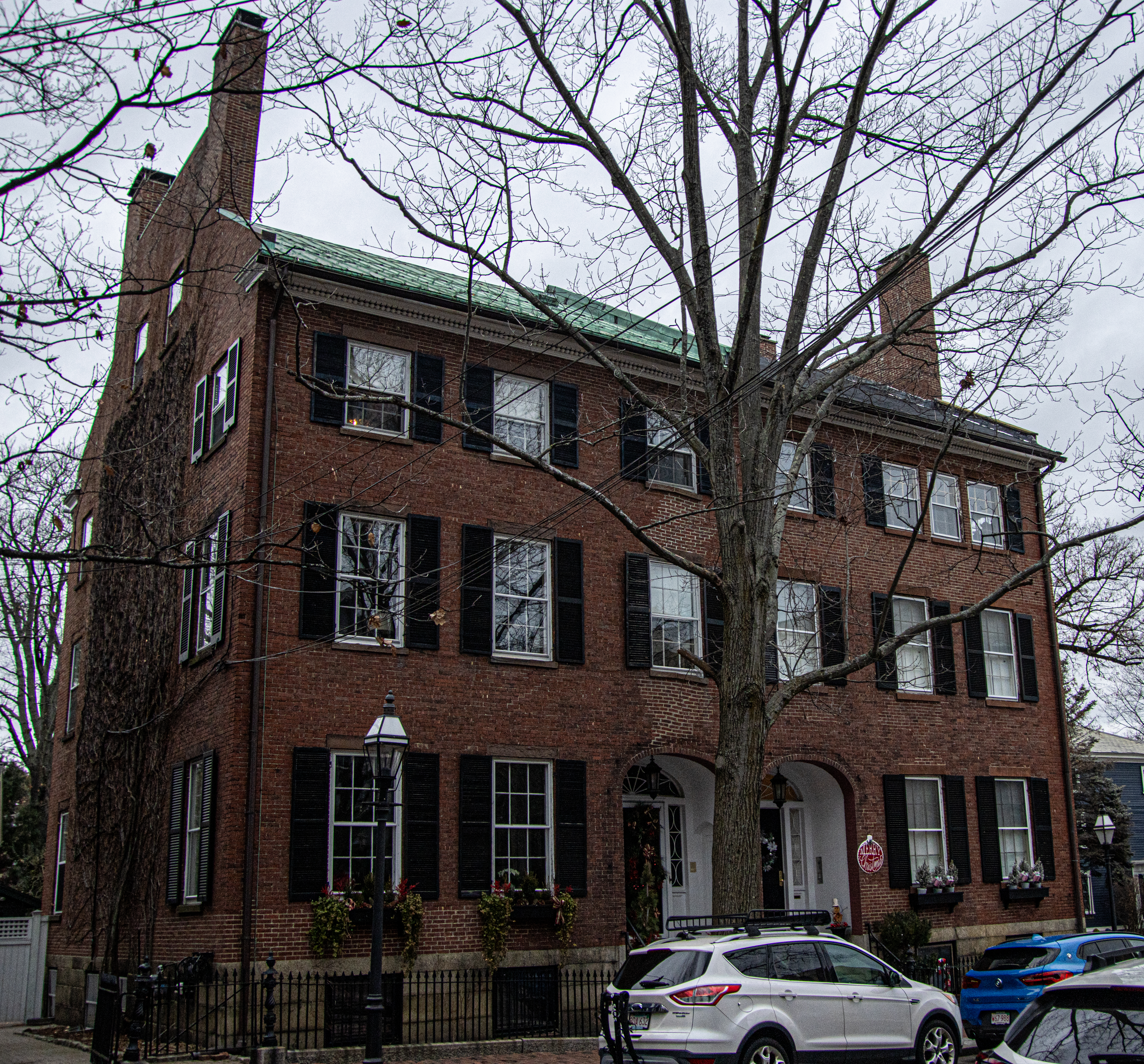
John Stone, a third generation distiller and a deacon in the First Unitarian Church in Salem, MA, built this three story brick double row house in 1827 on the former site of Mrs. Dowst’s Candy Store. An example of the late Federal style, the house boasts a pair of interior chimneys at either end and features semi-circular fan lights over the front doors as well as symmetrically placed windows along its facade. Of note are the somewhat unique two separate, recessed, semi-elliptical arched entrances located in the center two bays of the block, so that each townhouse appears as a mirror image of the other.

The Stone family resided in townhouse #4, the western, or left, side of the two residential units, until 1839 when the building was acquired by Stone’s daughter Lucy and her husband, Salem merchant, John Robinson. Because of their long-time occupancy of the eastern half, the house was often referred to as “The Robinson Block.” After the Civil War the double dwelling became known as “The Studio” when Salem artists Frank Benson and Phillip Little rented the studio space in it. In the 1880s the property was leased by two physicians. Then, in the early 1900s, the east side of the property (#2) housed Miss Howe’s School.
All joining walls and doors between the two units were closed off in 1923 as #2 Chestnut and #4 Chestnut Street were sold as individual properties. The house at #4 Chestnut St was designated a Massachusetts Historic Landmark in 1969.

So, as you can see, the home has a rich history, no pun intended, and has gone through quite a lot of changes over the years.

Fun fact: Chestnut St is the widest street (by a few centimeters) in Salem, MA (ironically, it’s also a one way street) . So, take that Essex St! Now, you have something to talk about at dinner parties and blind dates.

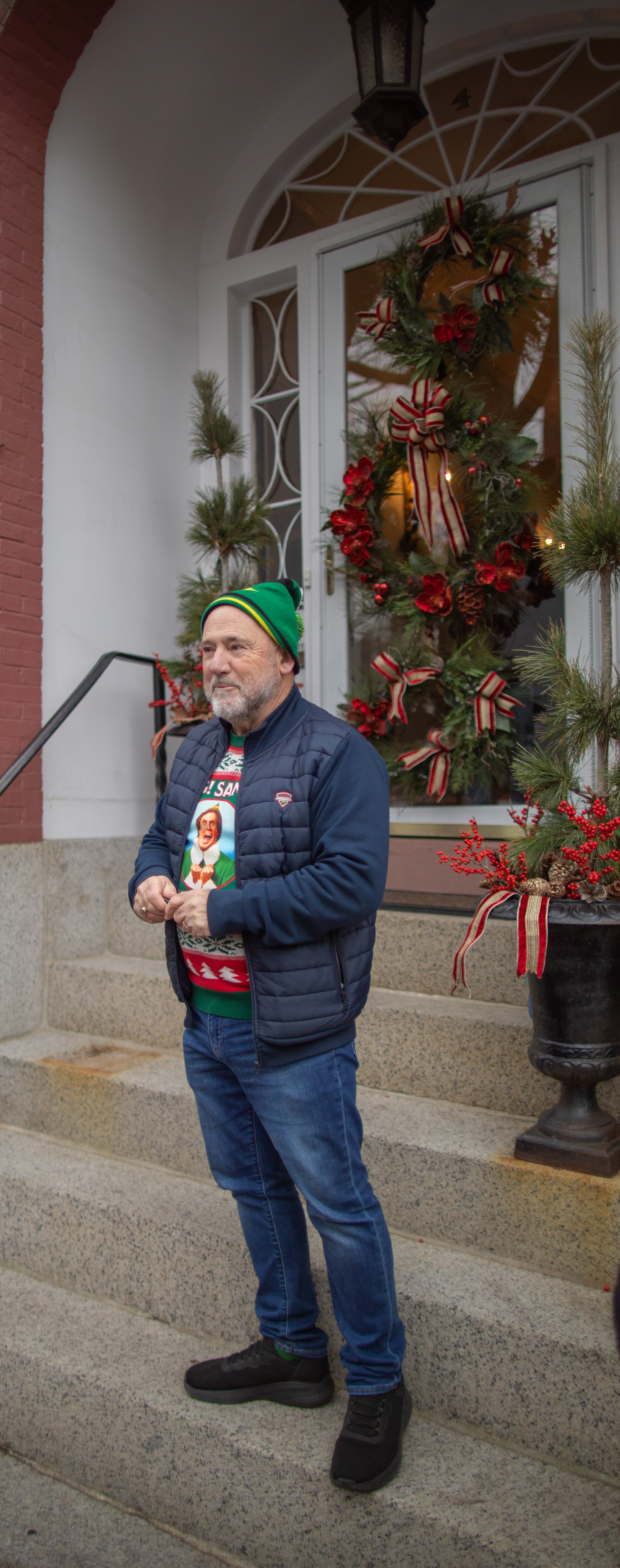
The charming home on 4 Chestnut is actually a two on the corner of Chestnut St. One of the tour guides gave a brief background and history of the home in front of a very festive front door.
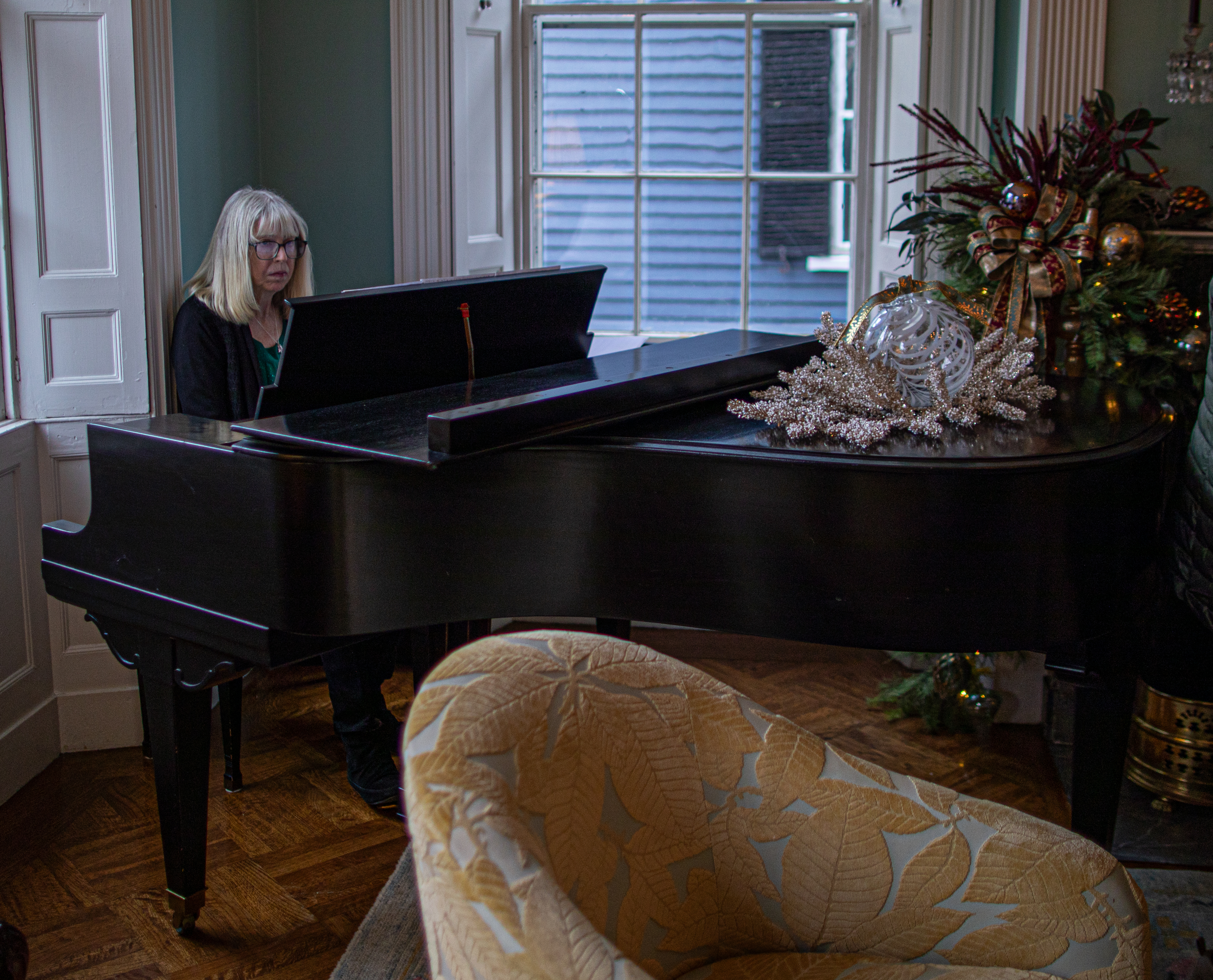
A pianist played traditional Christmas music in the living room.

The living room was designed by an interior designer from Atlanta. Of course, it was dressed up for the holidays.

As an added bonus, the Deacon John Stone home, one of a few he owned on the street, was the only home on the tour where they allowed you to visit the second floor.

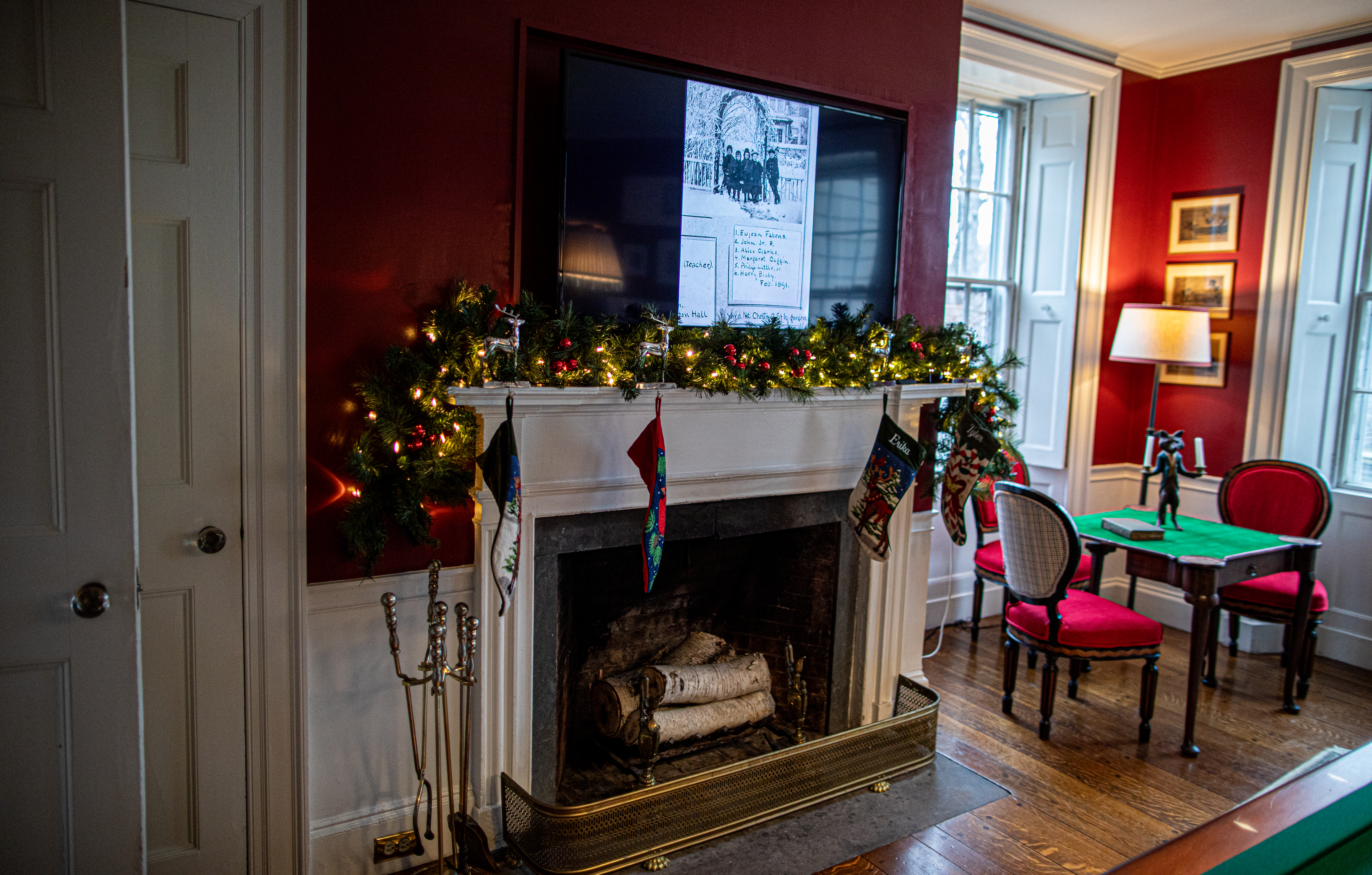
The second floor had a game room with a pool table, elegant furniture and lots of photos and memorabilia on the walls.

I feel like I say this about every house I tour, But, 4 Chestnut St was a beautiful home with lots of charm!


Christmas In Salem – Boughs And Blossoms – 7 Chestnut St – built for Deacon John Stone (Salem, MA)

Date Of Visit: December 6, 2025

Location: 7 Chestnut St, Salem, MA (about 30 minutes northeast of Boston, MA)

Universally Accessible: No

Cost: $40 per ticket ($50 if you purchase day of tour tickets)

Parking: There are several parking garages in Salem, as well as metered on street parking.

Summary: Home to Deacon John Stone, the home sat 7 Chestnut St had some impressive decor and many original pieces.

Built circa 1827 by architect William Lummus, 7 Chestnut St was commissioned by Deacon John Stone as a rental property while the Stone Family resided at 2 and 8 Chestnut St (the Deacon was doing very well for himself apparently). Early tenants included the Reverend W.R. Babcock, minister of the Baptist Church and, later, James E Sprague, the high sheriff of Essex County.

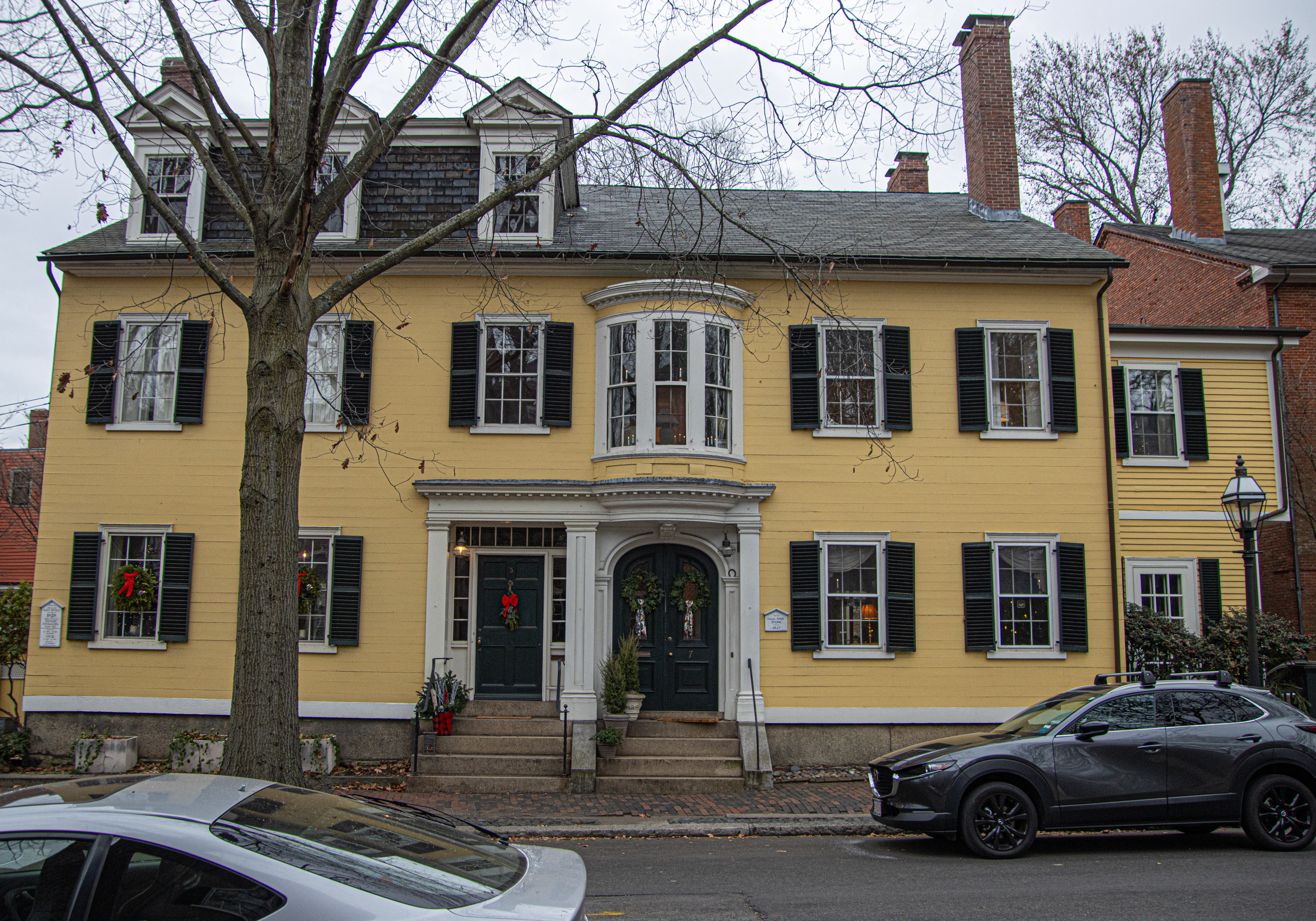
The house, located on the right side entryway, is known for both its yellow exterior and the asymmetrical double-house design – a rarity in its time. The left side of the house features 4/3 pane windows, dormers and a rectangular entryway, while the right side presents similar windows paired with an arched double-door entry. Above the entryway, a rounded bay window provides additional changes from the left side.

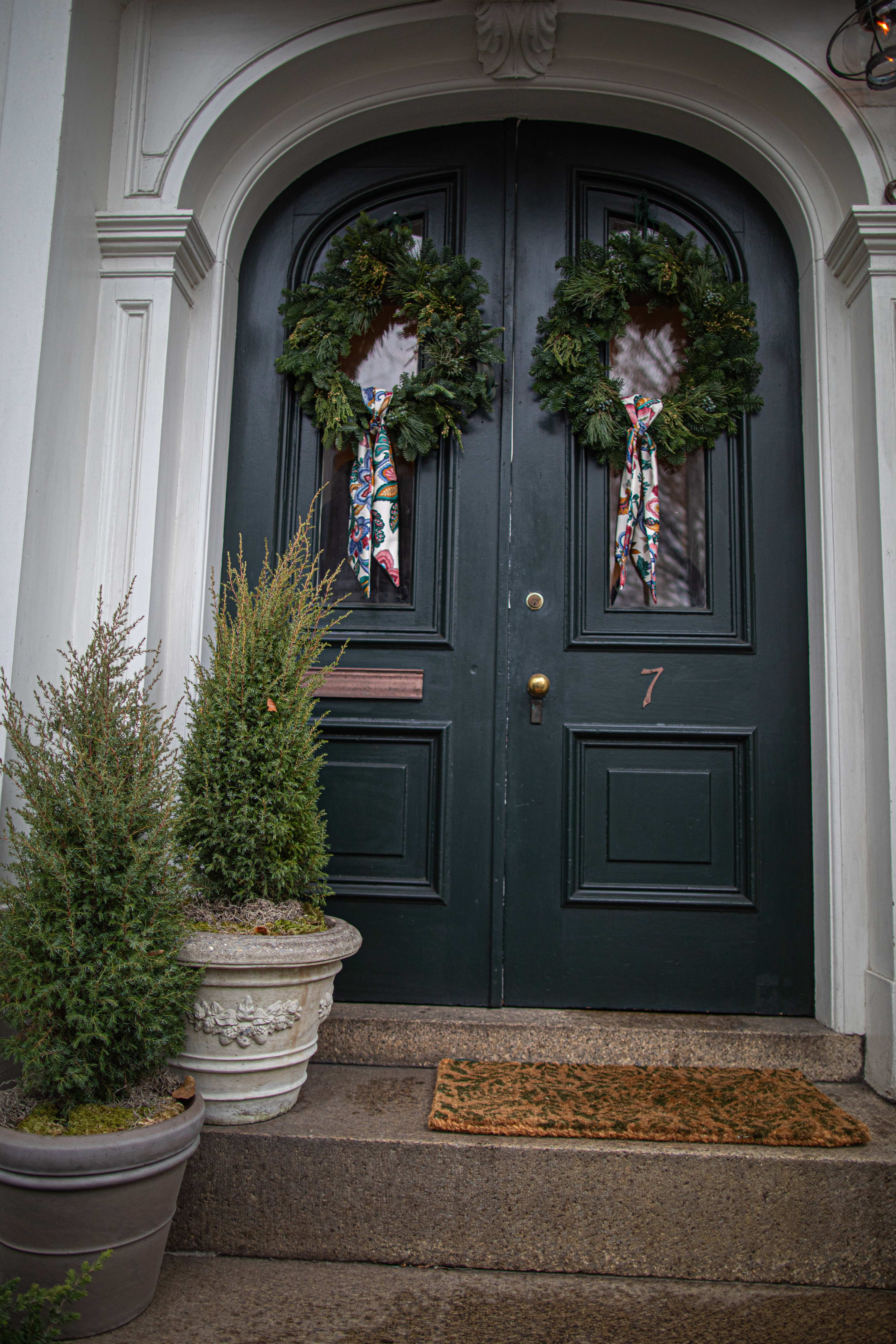
As mentioned above, the home has very unique characteristics from the outside. The exterior of the building was decorated for the holidays.

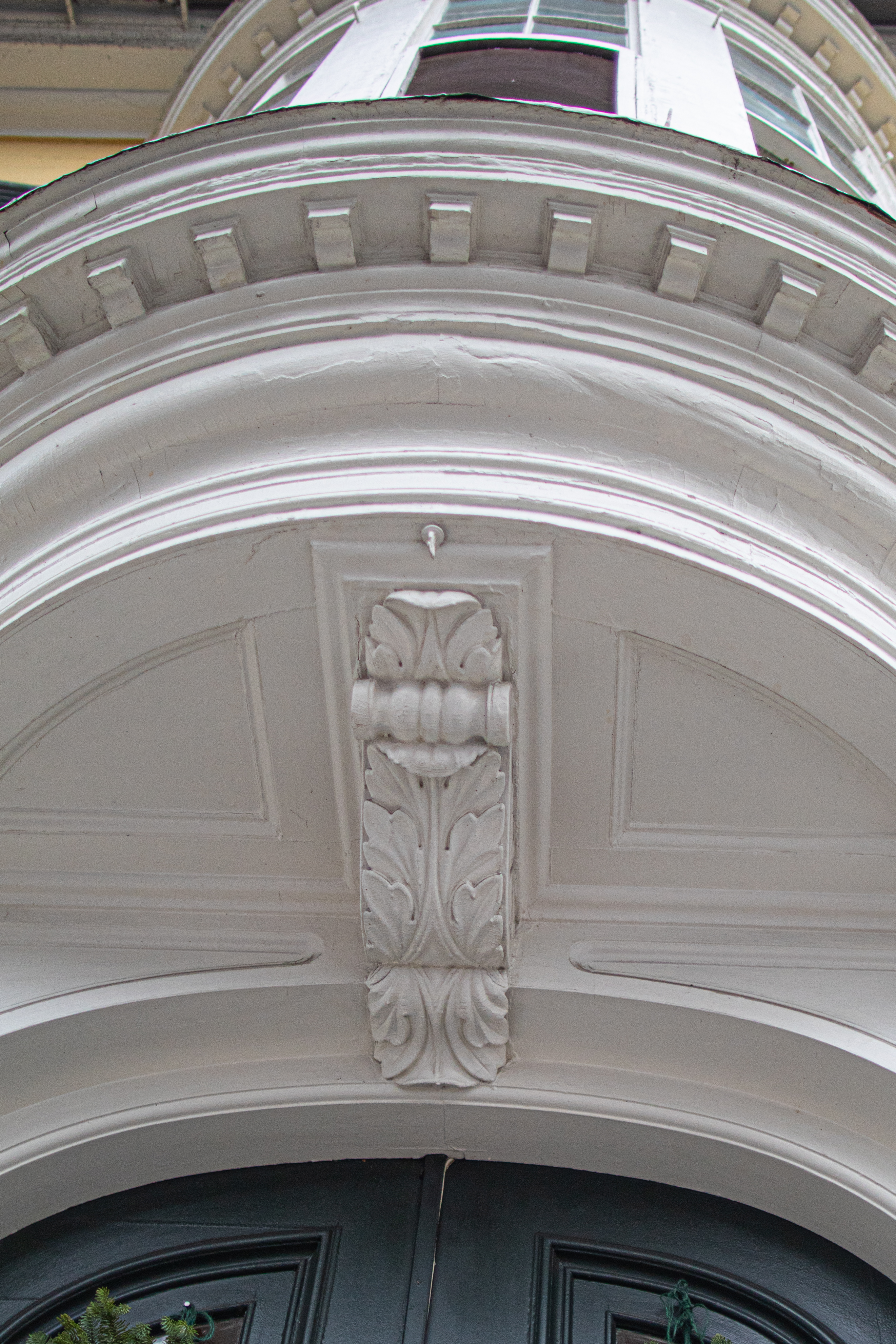
This decor above the door stood out to me.

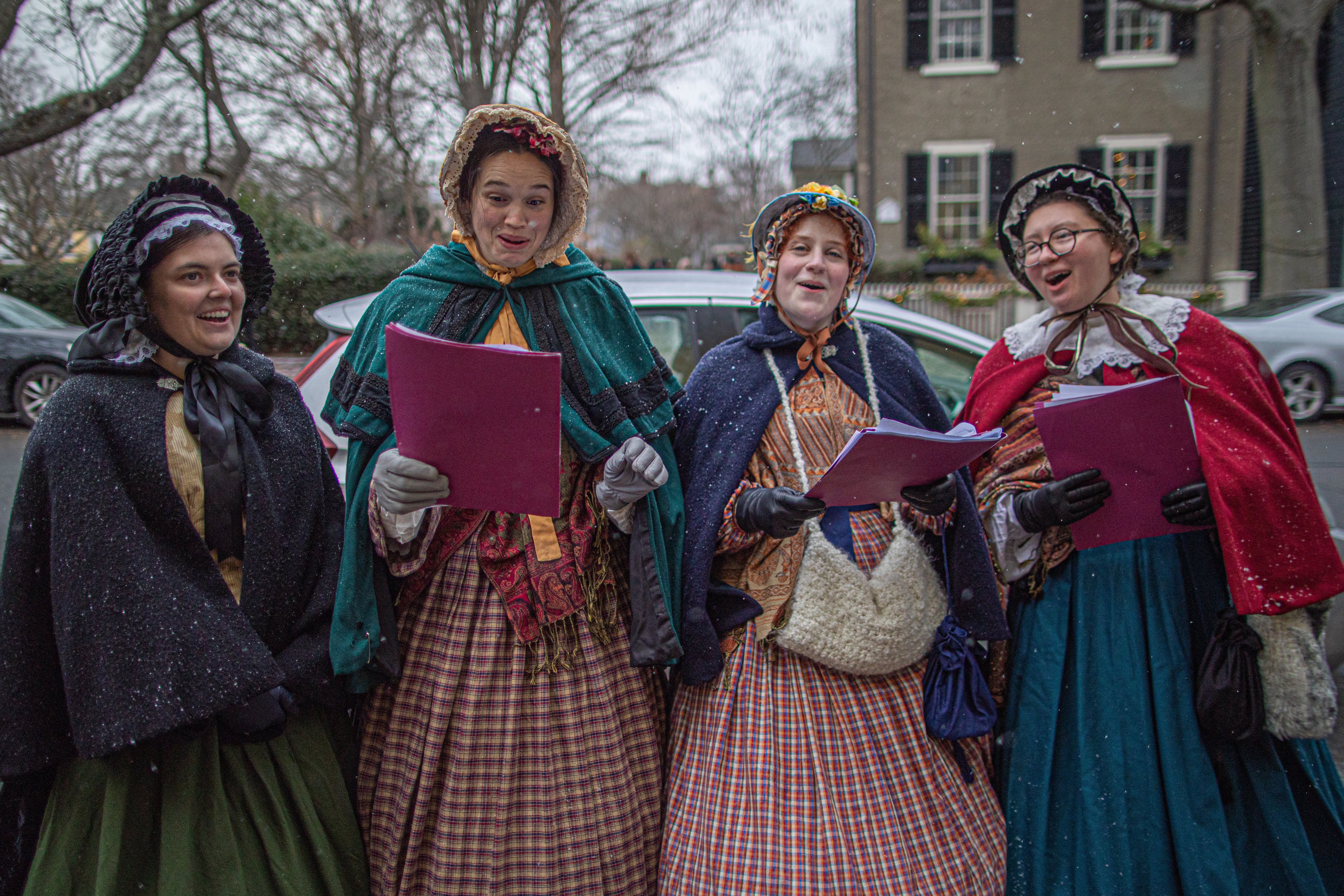
The line to get in to the houses can be long. So, we all took delight when these carolers stopped by. On cue, as the were singing, a light snow began to fall.

Eventually, we entered the home of Deacon John Stone, said to be the largest producer of rum in the area. The Deacon had his fingers in a lot of pots, apparently.

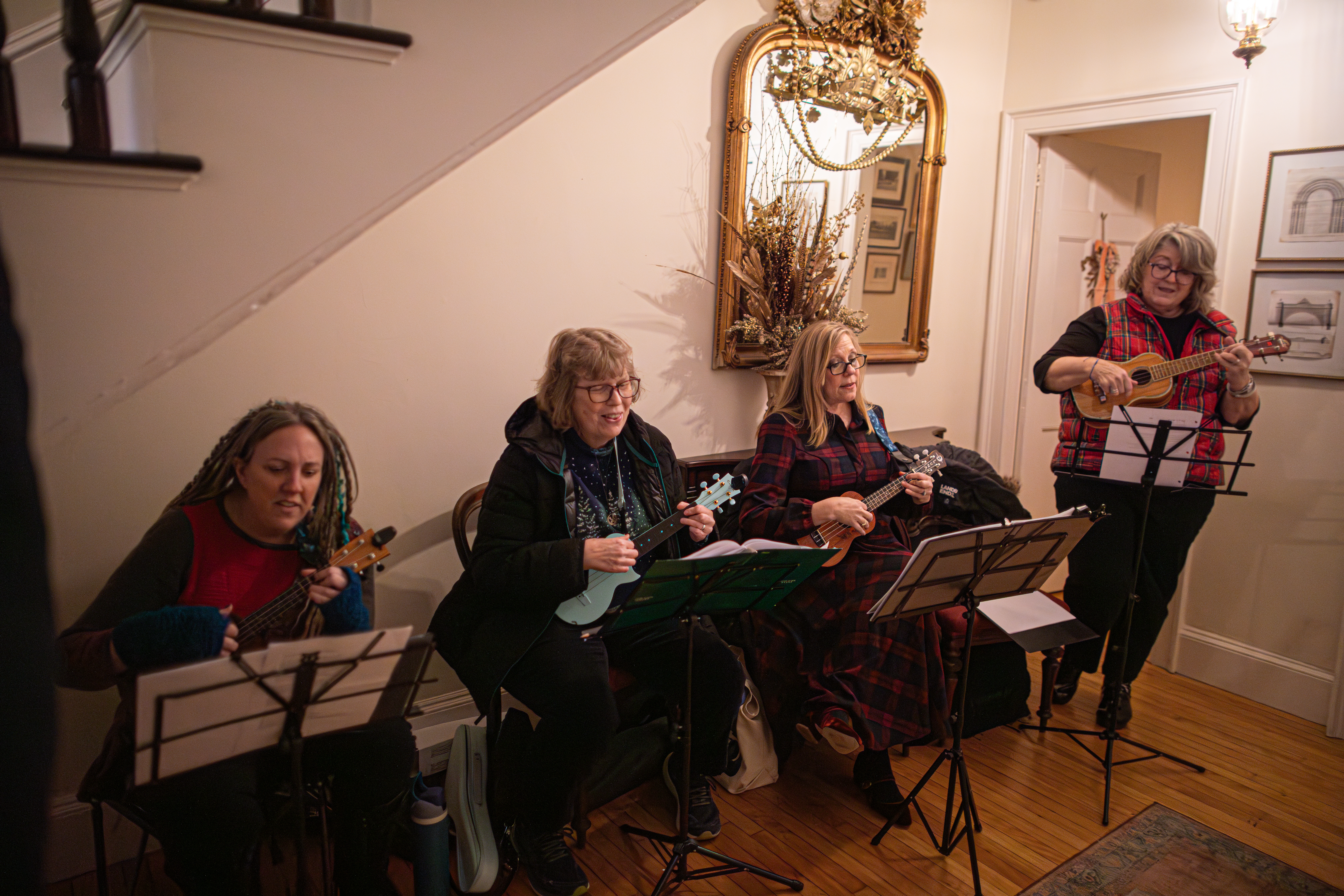
In the entryway, we were greeted by some musicians and signers playing holiday songs.

The home had a lot of vintage or original pieces.

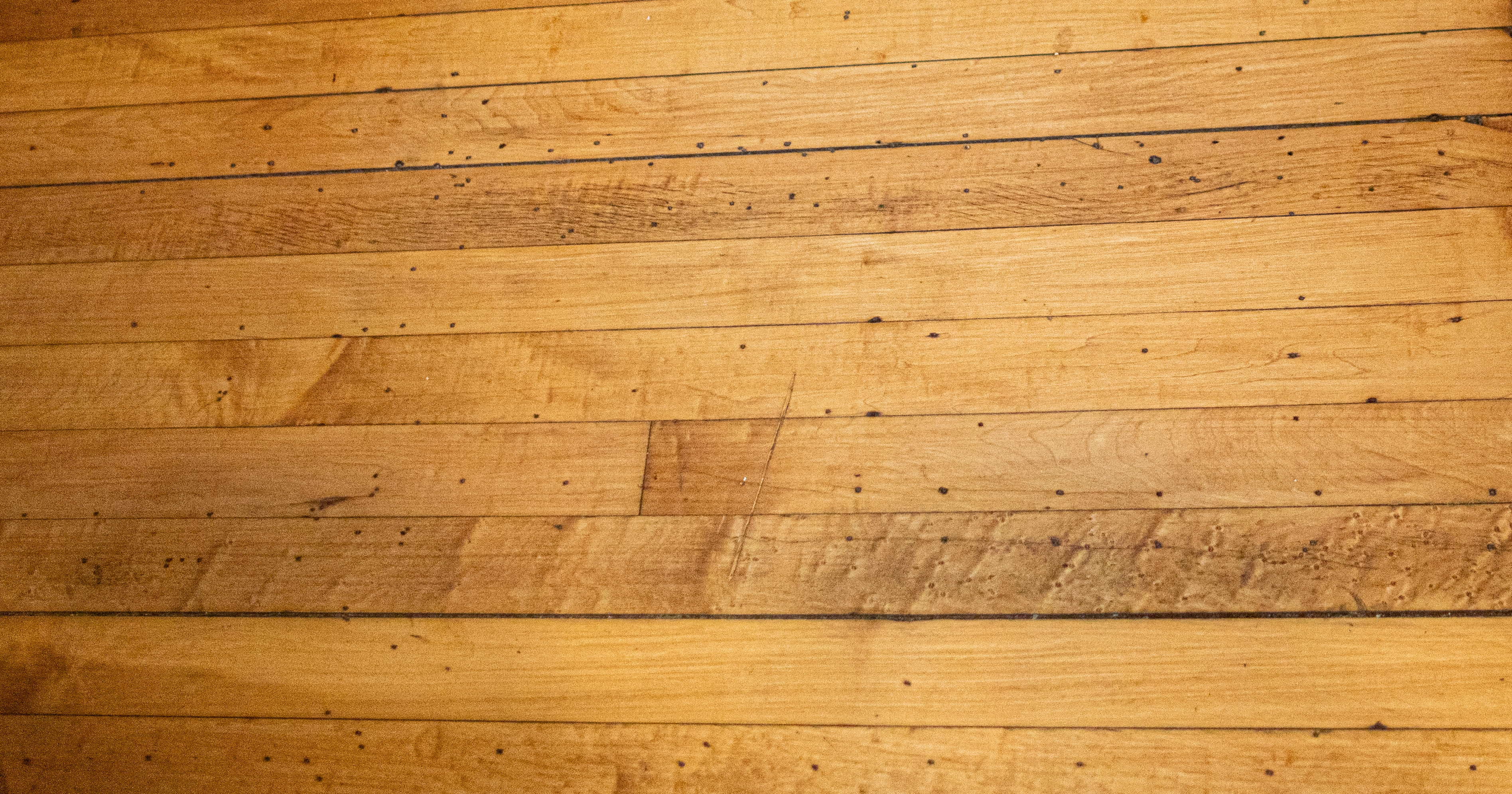
The floors were said to have been original to the home.

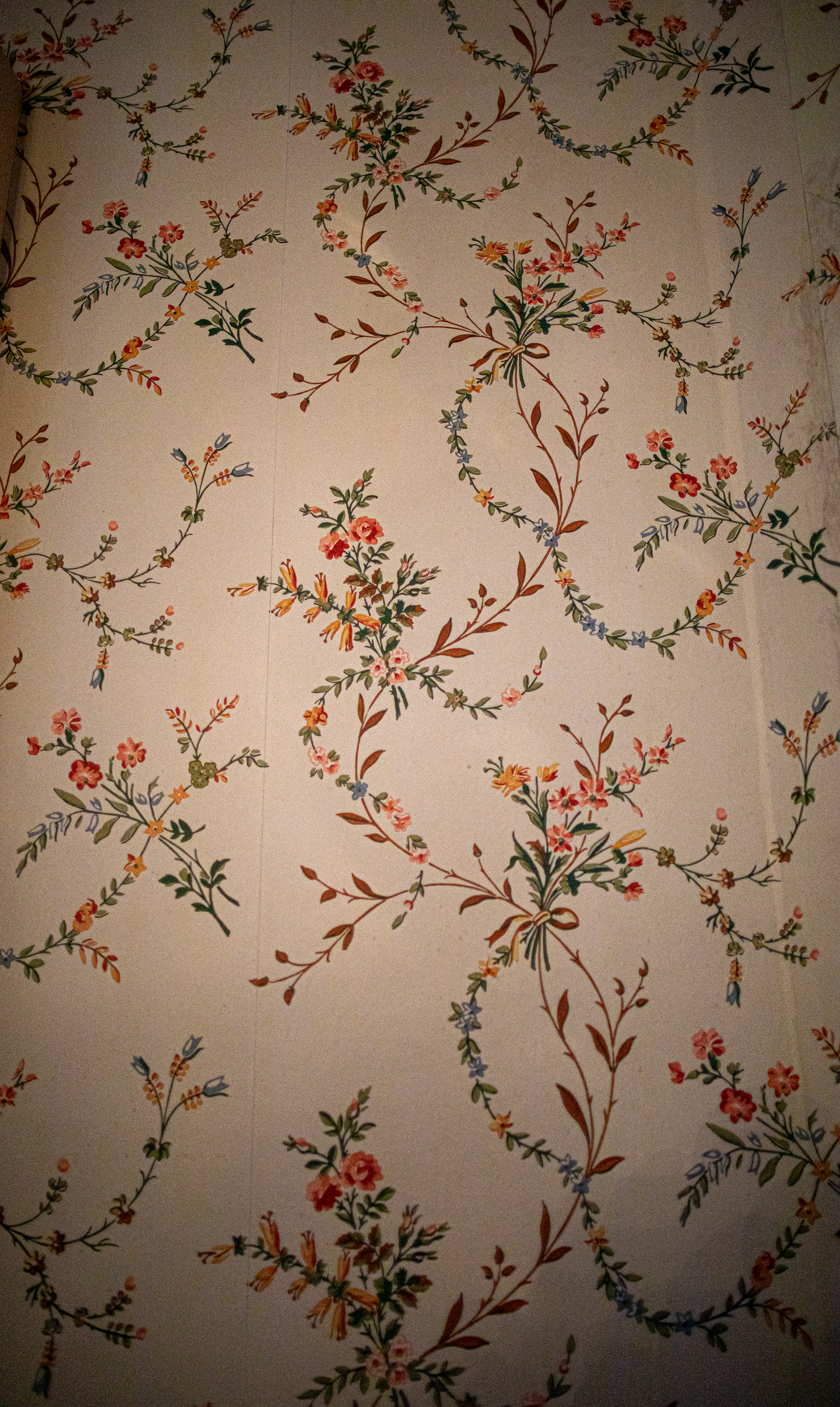
And the wallpaper was either the original or a replica of the original wallpaper. It never ceases to amaze me how the wallpaper on these homes have lasted so long, especially since people smoked in these homes in the past. I have to paint my walls every few years.

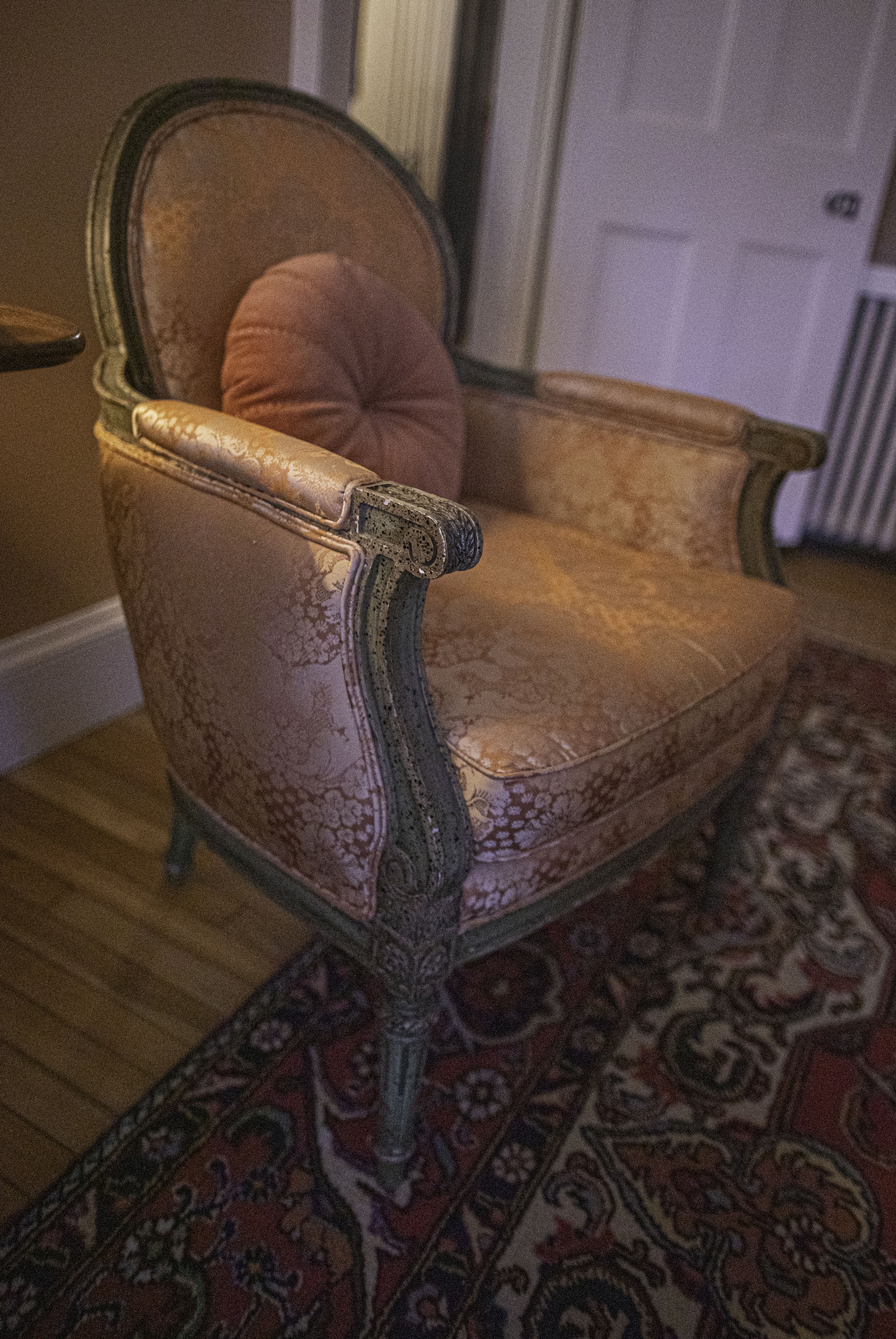
This Berger chair is a vintage piece that would have been common when this house was built.

And I thought my recliner was comfortable.

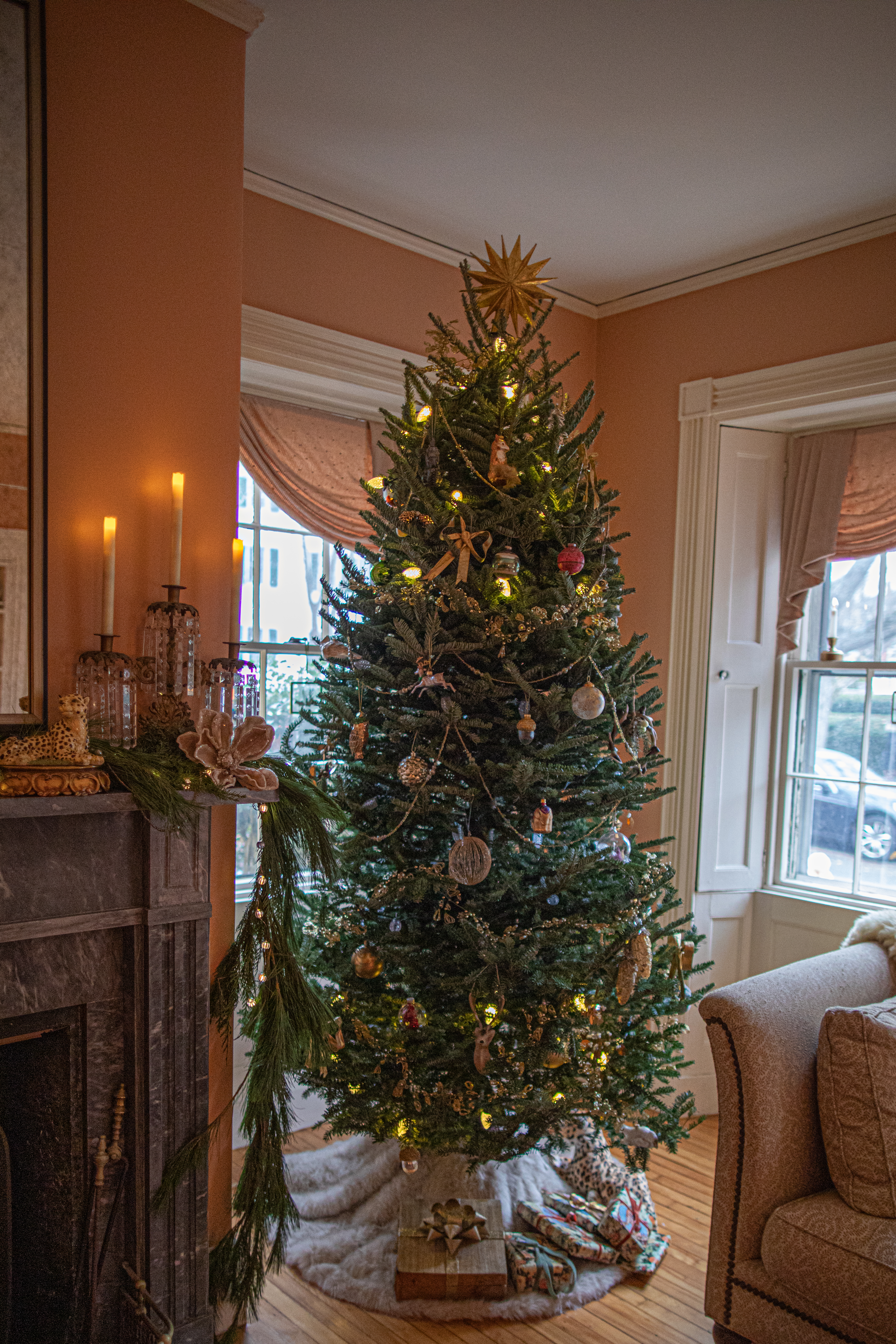
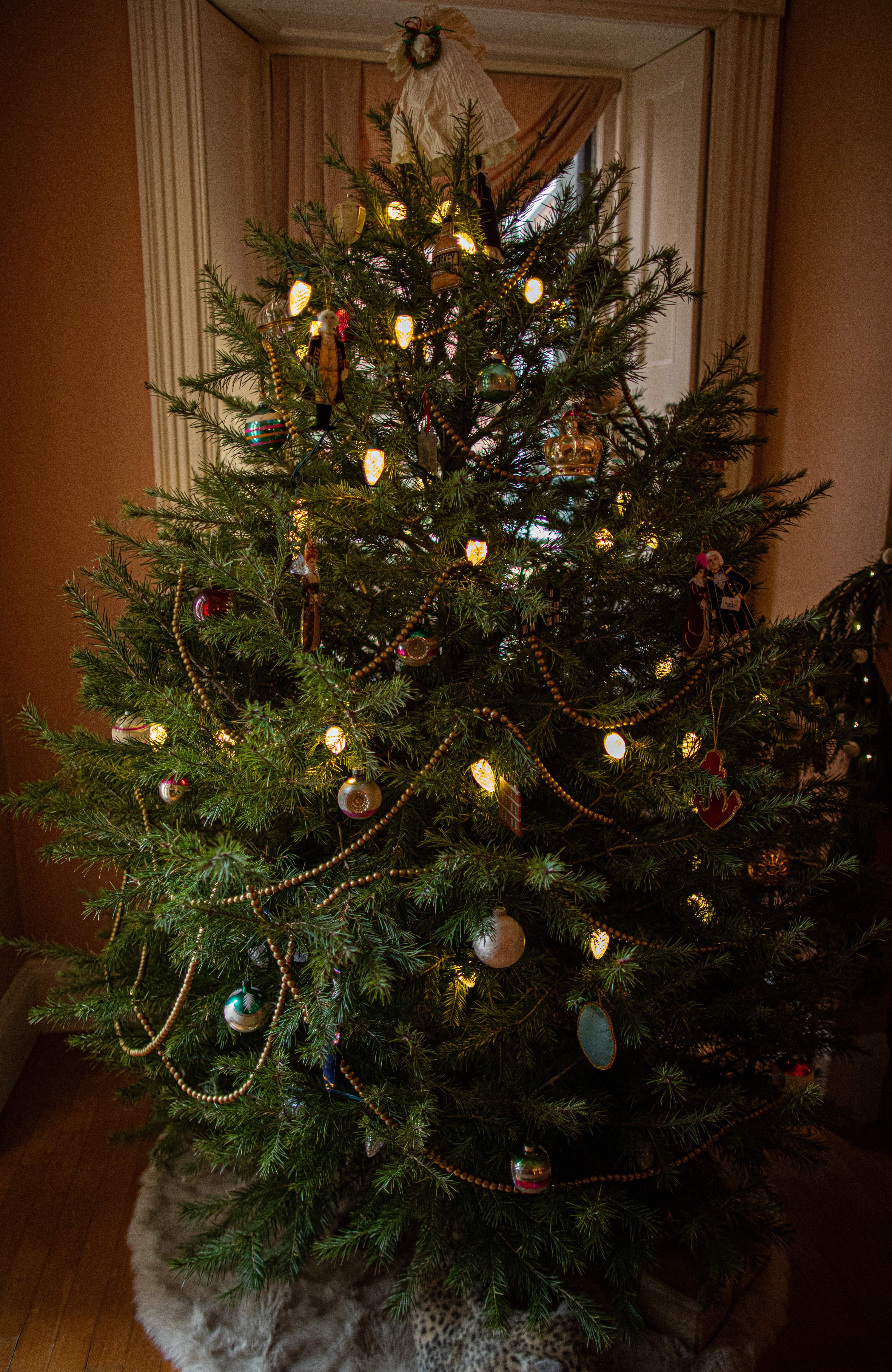
The house was decorated for the holidays.

As the two trees suggest, there were indeed two separate rooms for dinner parties, festivities and other communal events. However, as was custom at the time, the men would congregate in one room while the women gathered in the other room. Some couples may still wish this custom was in vogue.

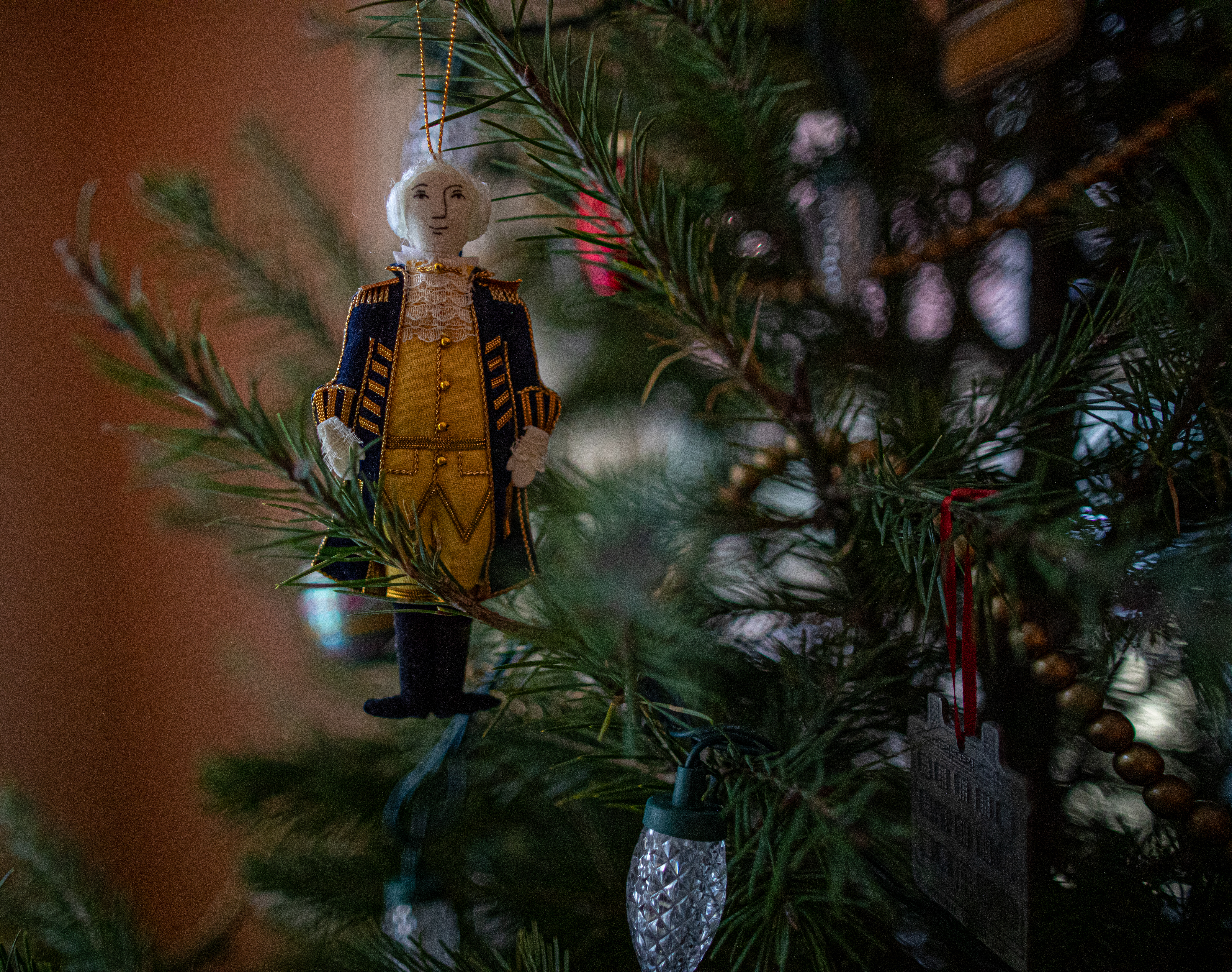
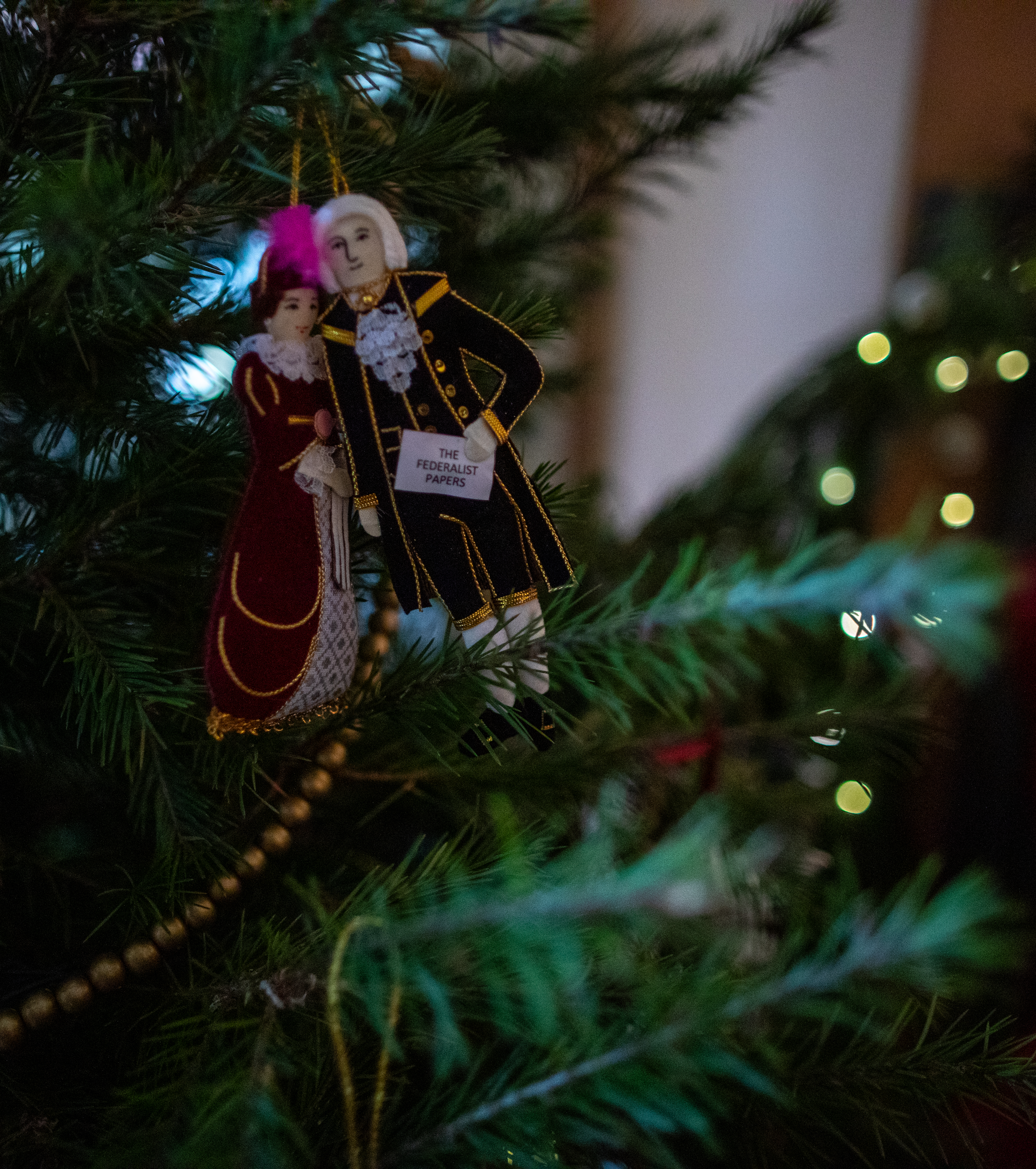
I had never seen ornaments of the early leaders of the country before.

Of course, the lighting fixtures caught my eye, especially since this one reminded me of a light we had in my childhood home sans the greenery.

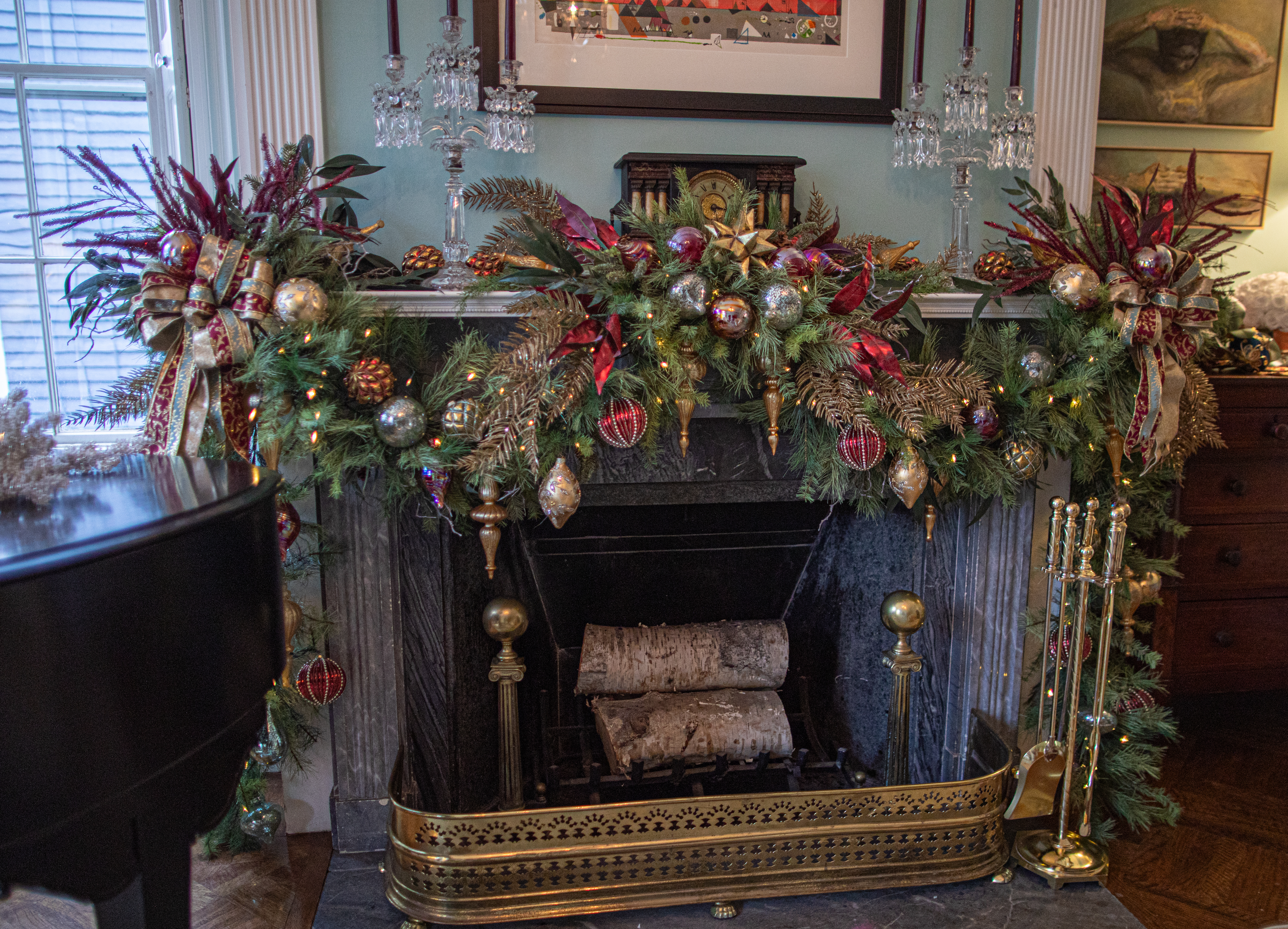
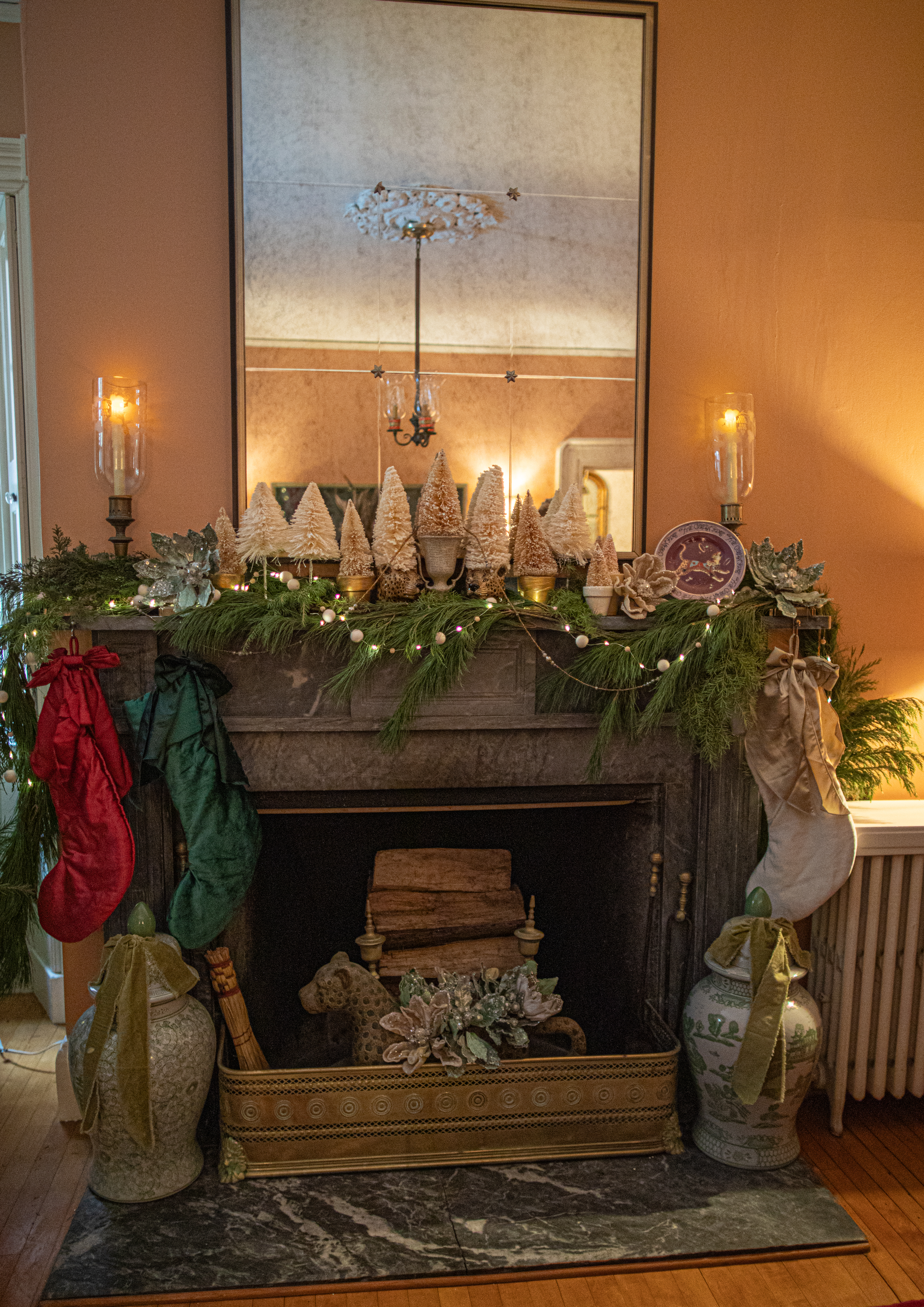
This original fireplace has a very rare marble.

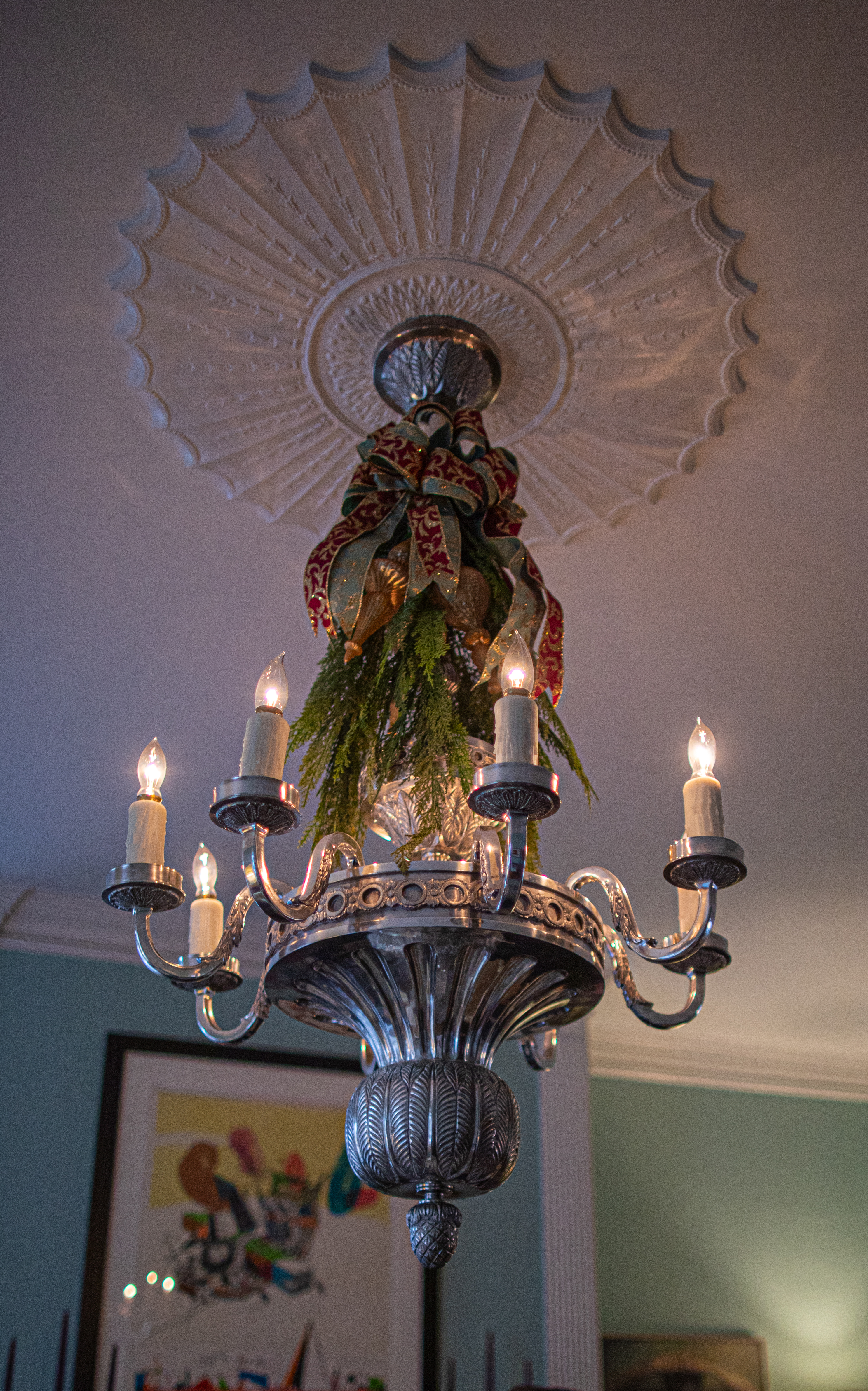
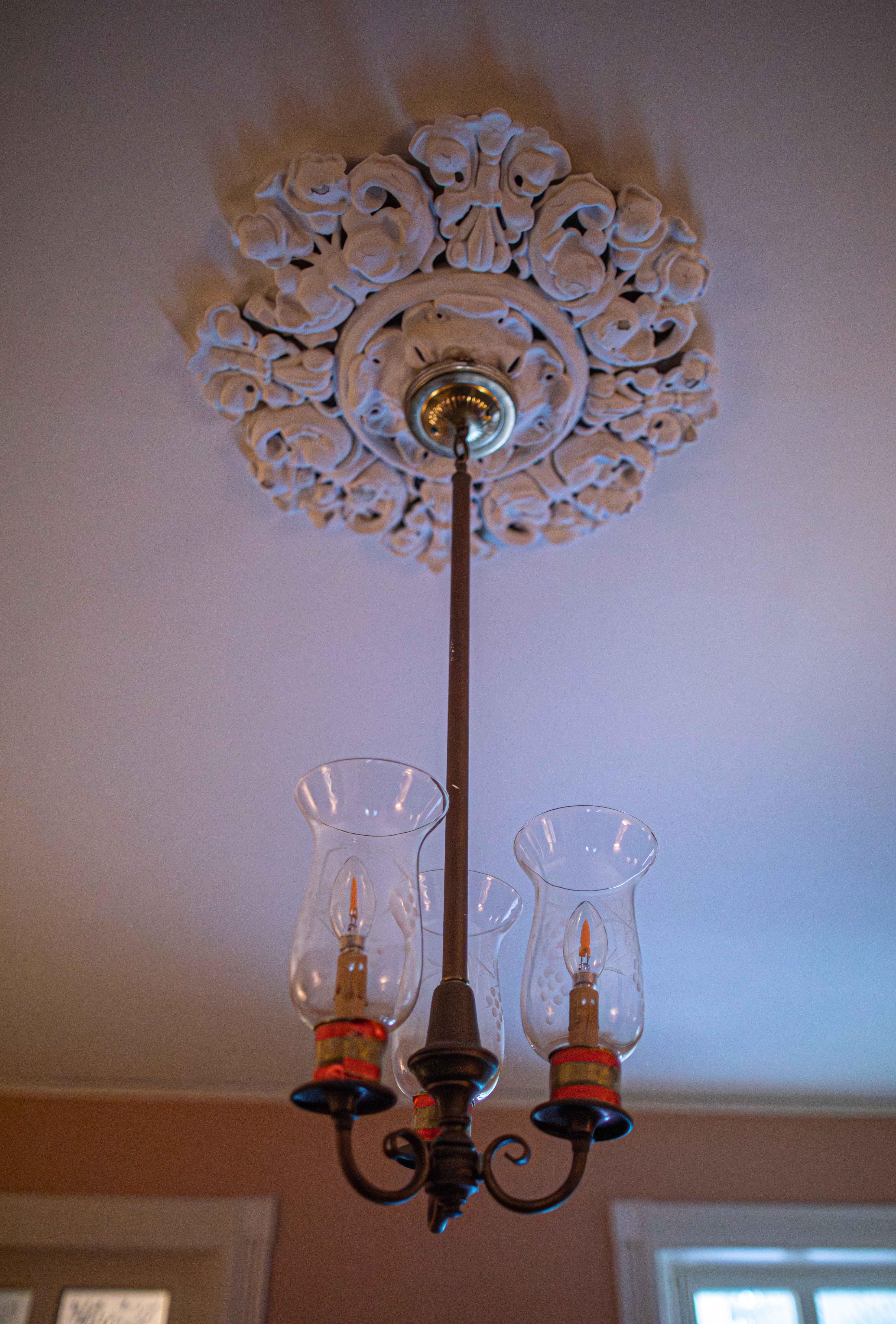
I always enjoy seeing the molding on the ceilings from which the lights hang from.

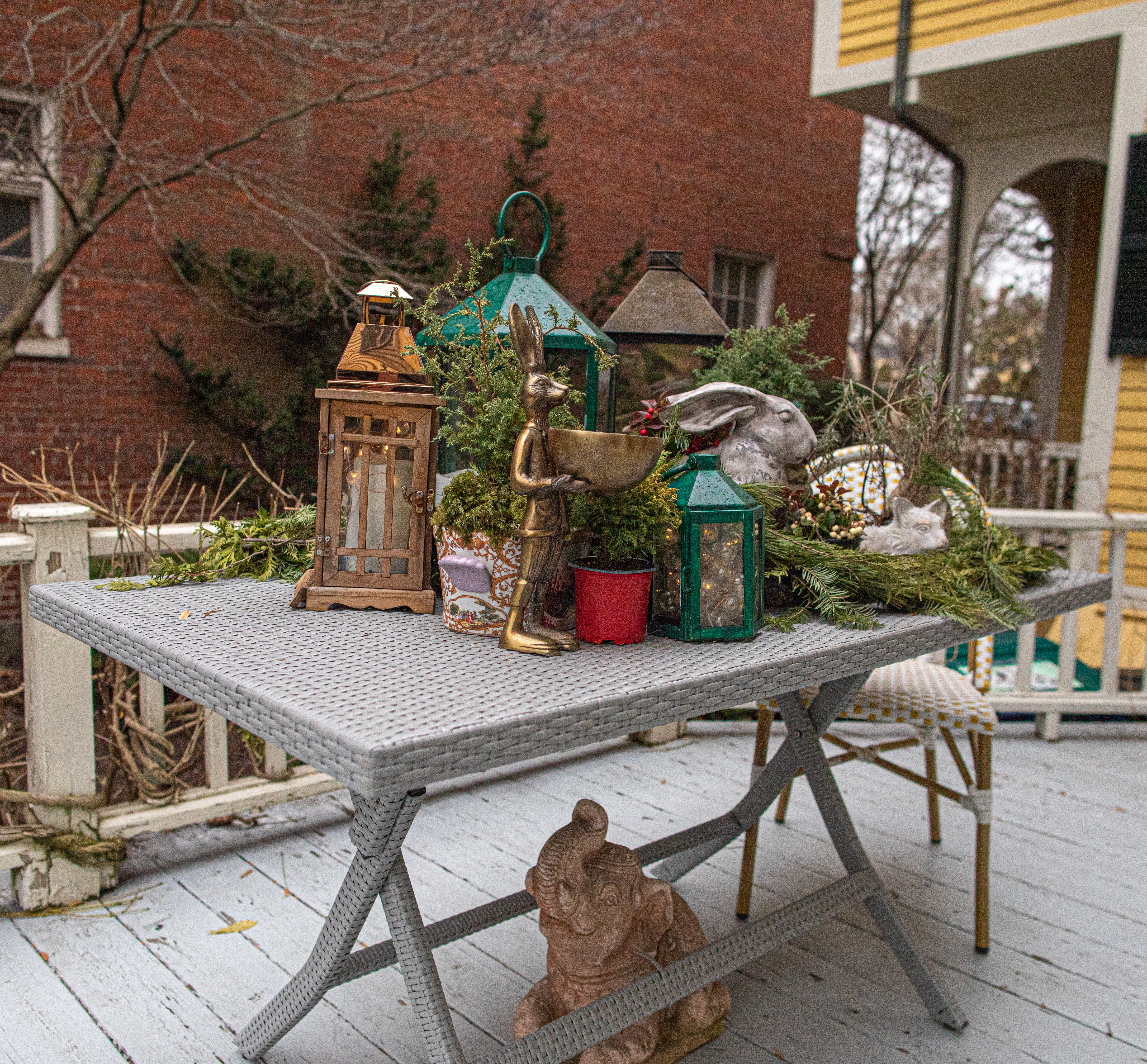
But, the holiday cheer didn’t end with the interior of the home. As we left the home, this decor was on the back porch.


Christmas In Salem – Boughs And Blossoms – 18 Broad St – The Pickering House (Salem, MA)

Date Of Visit: December 6, 2025

Location: 18 Broad St, Salem, MA (about 30 minutes northeast of Boston, MA)

Universally Accessible: No

Cost: $40 per ticket ($50 if you purchase day of tour tickets)

Parking: There are several parking garages in Salem, as well as metered on street parking.

Summary: The Pickering House is both the biggest and perhaps most impressive homes on the tour!

The Pickering House was built in 1660 by John Pickering. From its construction until 1998, ten generations of the Pickering family lived in the home. Since 1998, it has continuously occupied by a caretaker family, making it the oldest continuously inhabited house in the United States. Over the centuries, the home has hosted numerous visitors including George Washington who is said to have dined at the very same table that is still in the house. The original portion of the home – the front living room – retains its exposed beams from 1660. Additional sections were added over time, with the most recent major renovation, the kitchen, completed in 1911. The exterior, a Gothic Revival Influence, was chosen by John Pickering VI to mirror European architectural trends during his time at the residence.

The most impressive building, at least from its exterior, the Pickering House is also the oldest home on the tour.

One of the features of the home that caught my attention was the chimney which is a group of flues from several chimneys.. You can see the chimney in the left of the photo below. The reason for the shape of the chimney was to allow for all of the flues from the various fireplaces in the home. When it was renovated, the home owners wanted to duplicate that look even if the home didn’t have as many fireplaces in it any longer.

There is a lot of history inside the Pickering House. For instance, the home still has the original wallpaper.

And this couch which was a gift from Eleanor Roosevelt.

There were pretty decorations and furniture throughout the home.

To keep the large home warm, this fireplace was said to have been much bigger. The fireplace was originally from doorway to doorway. It was downsized during renovations.

Just like most historic homes in Massachusetts, and New England for that matter, George Washington slept in this home. It’s amazing how this rumor or legend has become a claim to fame for so many homes and inns. Legend has it George Washington slept in one of the second floor bedrooms. It is said that Washington stopped by the Pickering house and tied his horse to an old locust tree in the front yard when he visited Colonel Pickering in 1789. But, whether he slept there is still a bit of a mystery. Everywhere I looked for information to support this claim either didn’t mention anything to support it or used hedge words like “rumored” or “legend has it.” In any event, that’s their story and their sticking to it.

There also musicians playing Christmas music in one of the dining rooms. I could have stayed all day and listened to them.

As if that wasn’t enough, the Pickering House also had a barn that was lit up and decorated for the holiday season. It was a festive way to end the tour of the home.


Christmas In Salem – Boughs And Blossoms – 10 Broad St built for Hannah Smith (Salem, MA)

Date Of Visit: December 6, 2025

Location: 10 Broad St, Salem, MA (about 30 minutes northeast of Boston, MA)

Universally Accessible: No

Cost: $40 per ticket ($50 if you purchase day of tour tickets)

Parking: There are several parking garages in Salem, as well as metered on street parking.

Summary: The home at 10 Broad St has a long history of changing ownership, construction (and deconstruction) and a lot of charm!

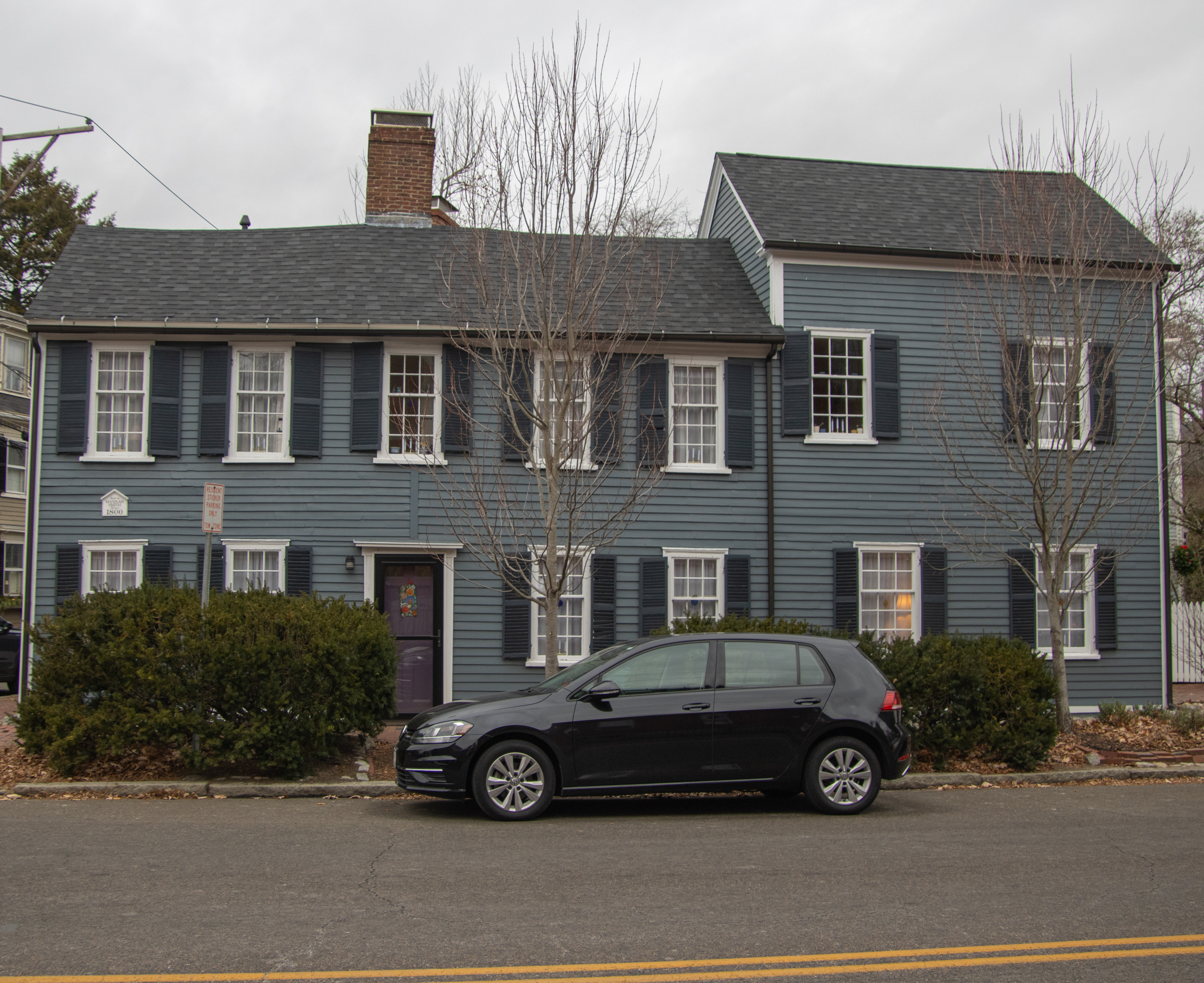
Like many of the houses on the Christmas In Salem tour, the home at 10 Broad St was part of the 17th century “homestead land” of Jonathan Neal (that name may ring a bell from my previous post) which was partitioned among the children and grandchildren. Hannah Smith, a 43 year old widow and granddaughter of Neal, inherited “Lot #7 and the small old house thereon” in 1799. Hannah razed the old house and built a new one in 1800, occupying the Broad St portion of the house and renting out the portion that front Cambridge St. After her death the property was partitioned again and divided into two parts by her heirs as two separate residences.
The Cambridge St section of the building was continuously occupied for much of the 19th century while the Broad St side was often vacant. One hundred years later, the two entities were united into a single-family residence by another widow, Hope Brown, in 1954.

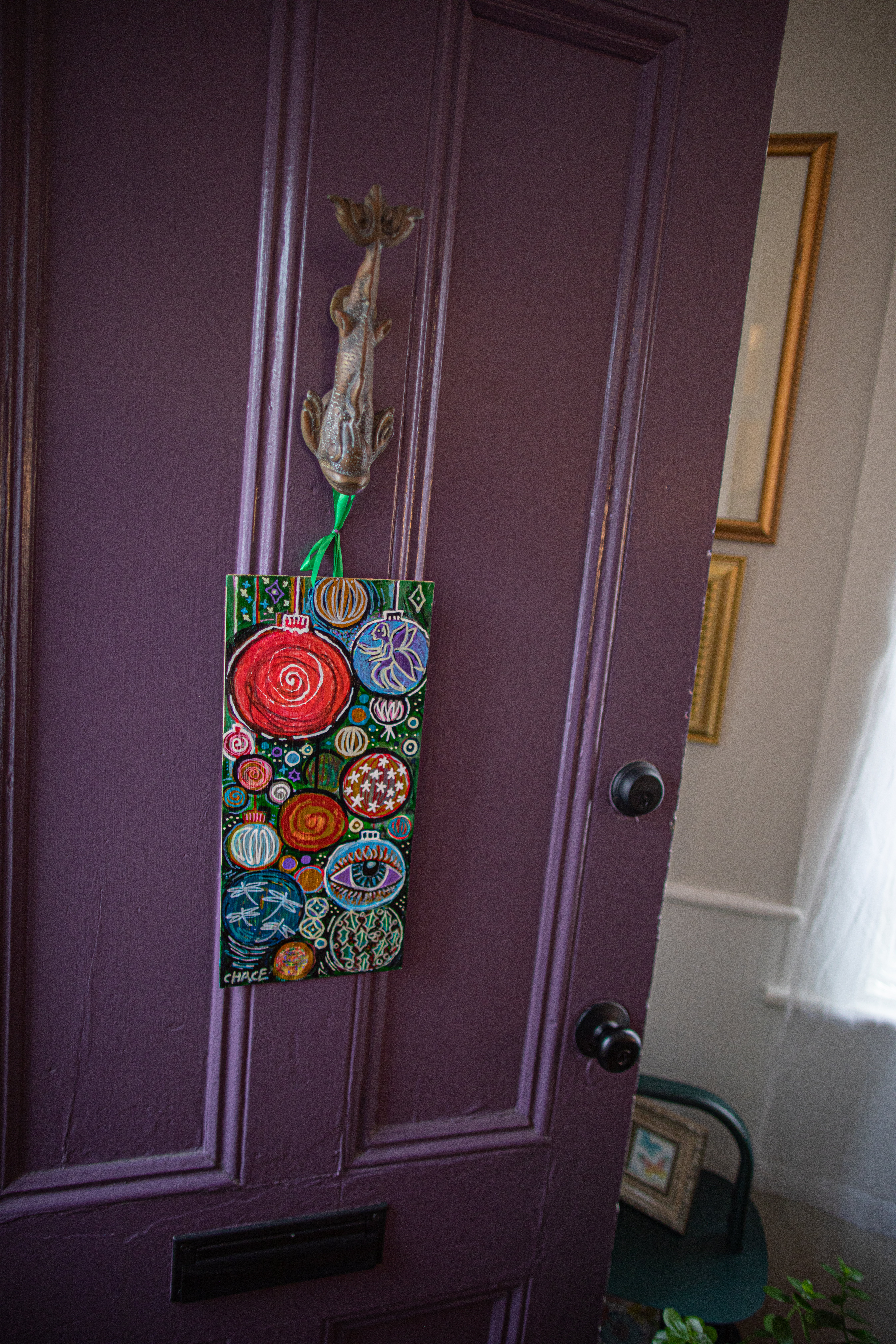
The entrance to the home is located at the side of the right of the building. There was some Christmas decor attached to a Neoclassical Style Dolphin Door knocker.

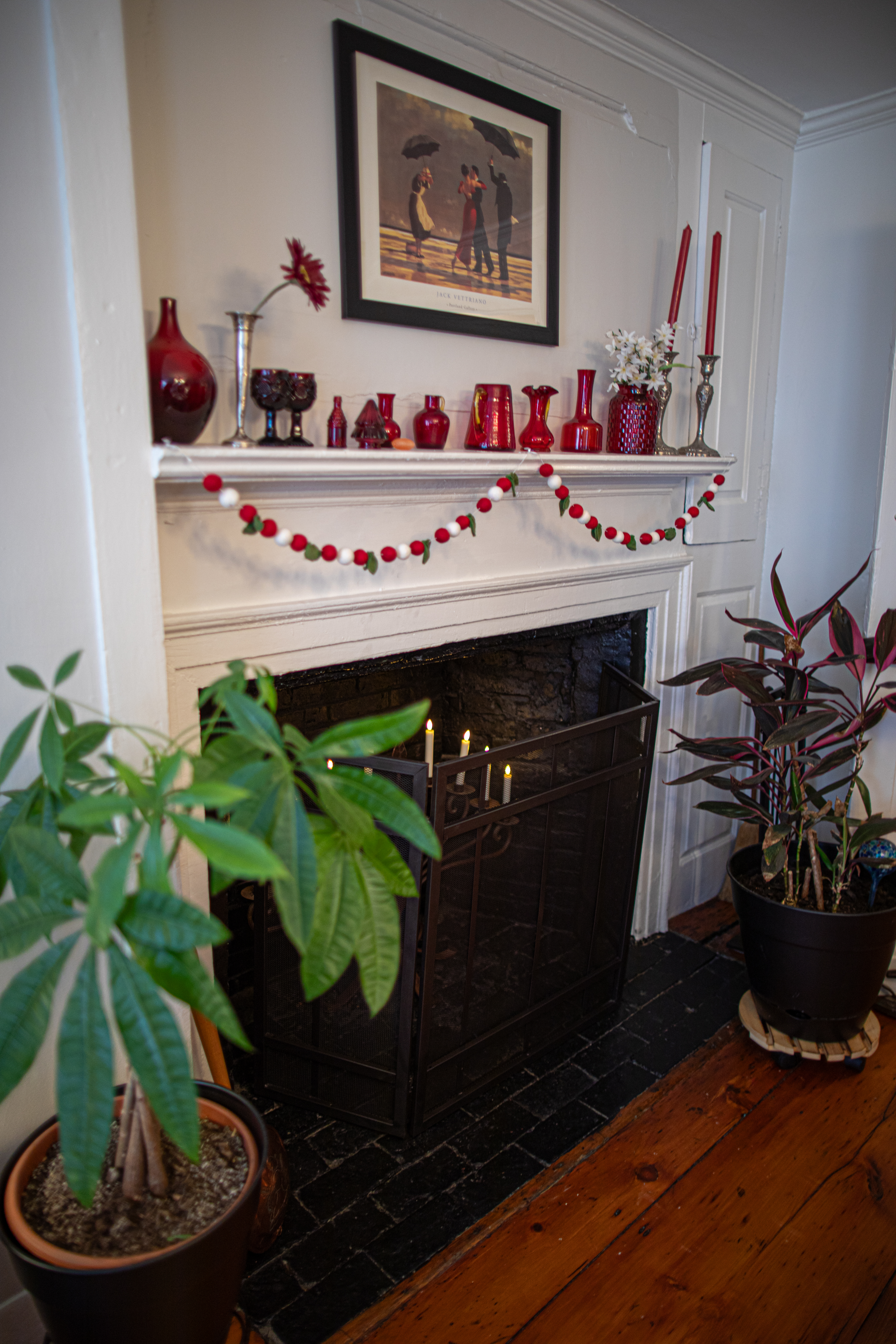
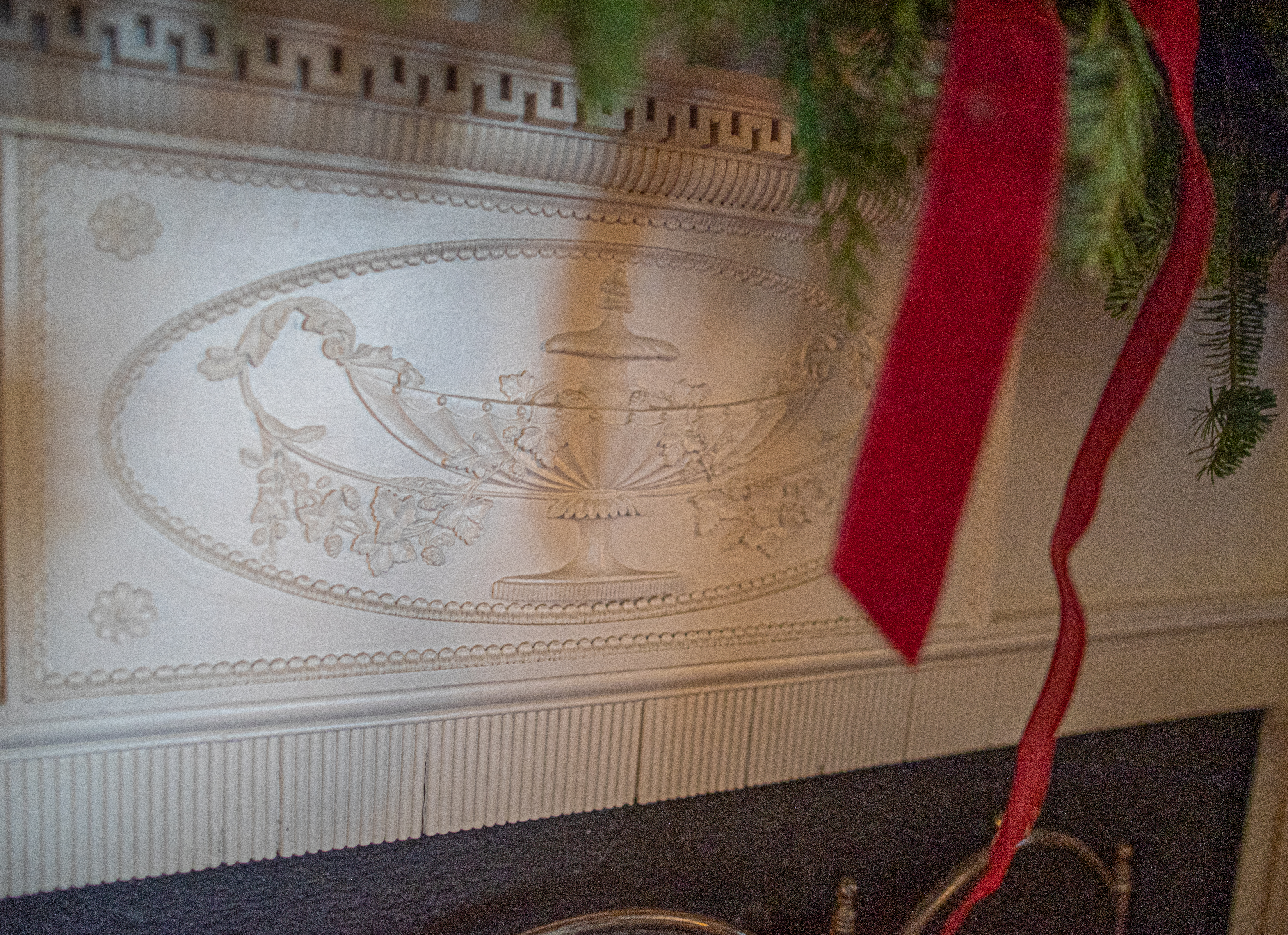
This fireplace had a holiday feel to it.

The house had a red and chicken theme. I liked the black and white photo better. But it didn’t illustrate the color theme as well as the color photo. So, I’ll attach the black and white photo below as well.

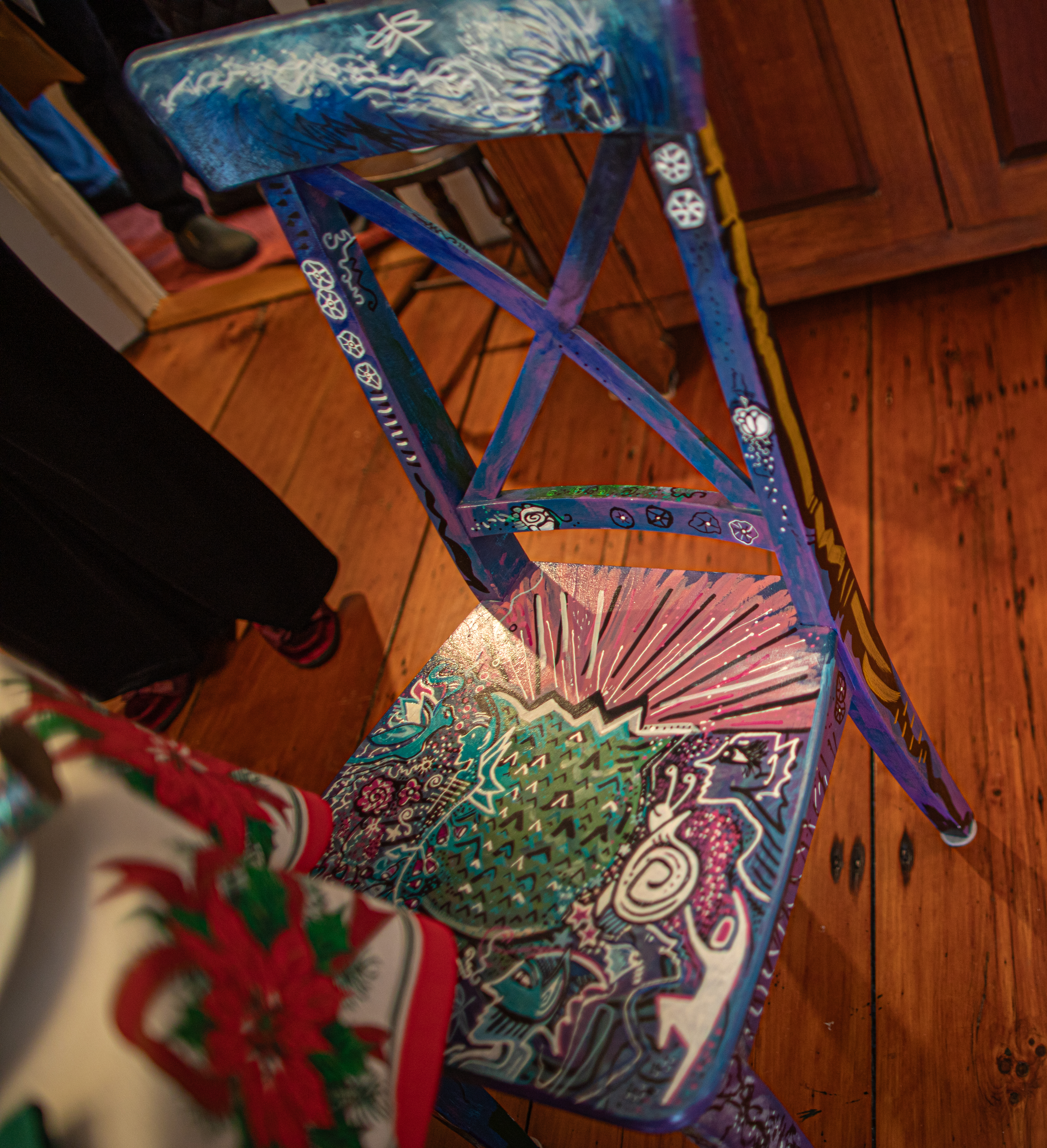
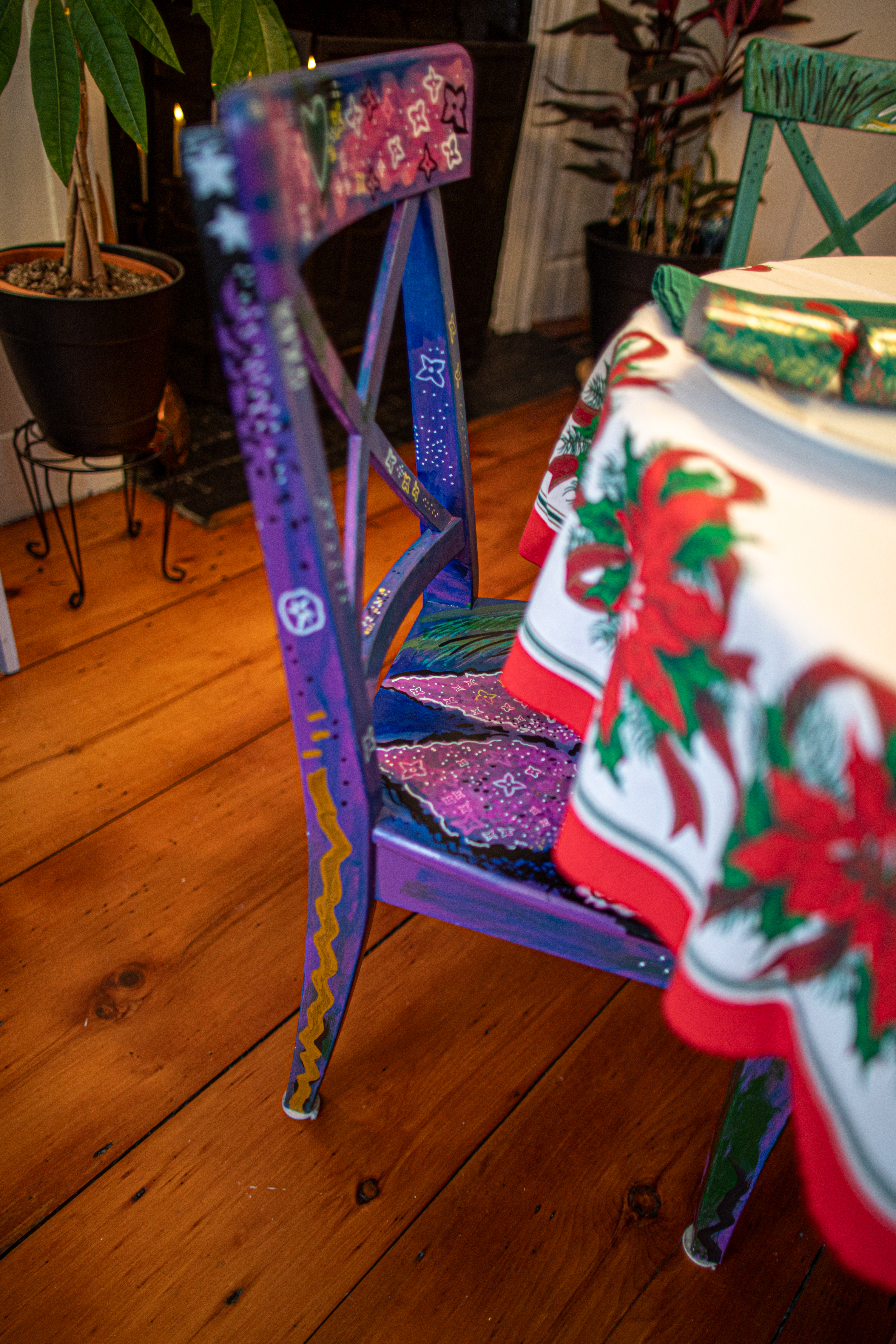
These chairs were originally Ikea chairs the owner bought and were decorated to represent important times, events and other things of their life.

The tour guide didn’t say specifically what events or things the decor represented. But, I think that adds to the secrecy and mystery of the decorations.

The home had a lot of Christmas cheer (and some extra cheer in the bottles of the last group of photos). I especially liked how they set up the dining room table as though they were expecting dinner guests.

I liked the stars hanging from the lighting fixture and, of course, the bokeh.

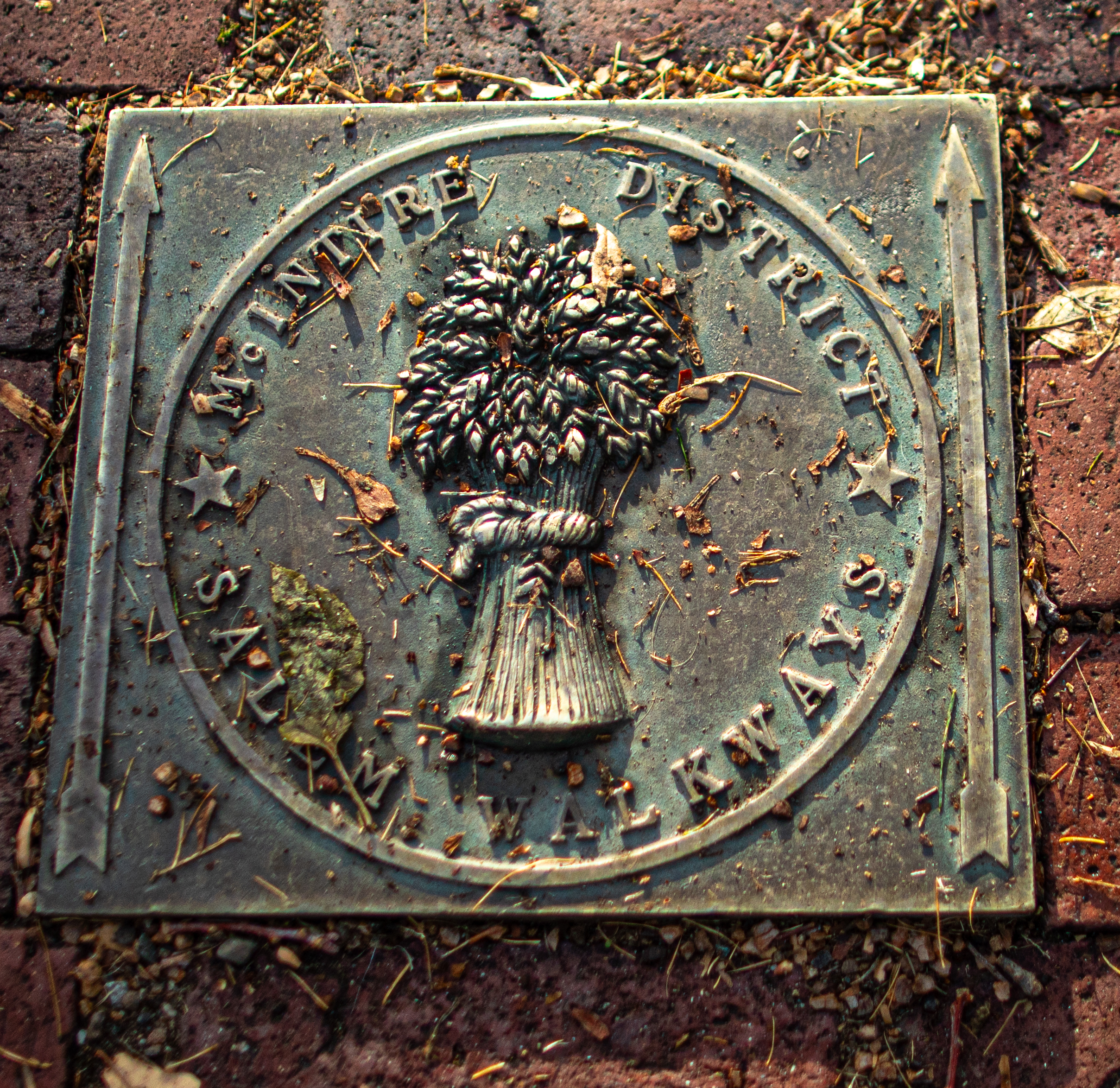
While I was walking along the trail to the various homes, I saw a few of these markers.

Since these homes are in the “Mcintire District), named after famous Salem architect, carver, sculpture and crafts worker Samuel Mcintire. A whole post or series of blog posts could be devoted to Samuel Mcintire’s work. But, the fact that an entire section of Salem has been dedicated in his honor says volumes. Even though he may not have had a part in the building or design of some of these homes, his influence can be noticed in all of the homes.


Christmas In Salem -Boughs And Blossoms – 12 Broad St built by Jonathan Neal (Salem, MA)

Date Of Visit: December 6, 2025

Location: 12 Broad St, Salem, MA (about 30 minutes northeast of Boston, MA)

Universally Accessible: No

Cost: $40 per ticket ($50 if you purchase day of tour tickets)

Parking: There are several parking garages in Salem, as well as metered on street parking.

Summary: The home on 12 Broad St, built by Jonathan Neal, has some impressive decor, an interesting history and a connection to bees and chickens! I bet that got your attention!

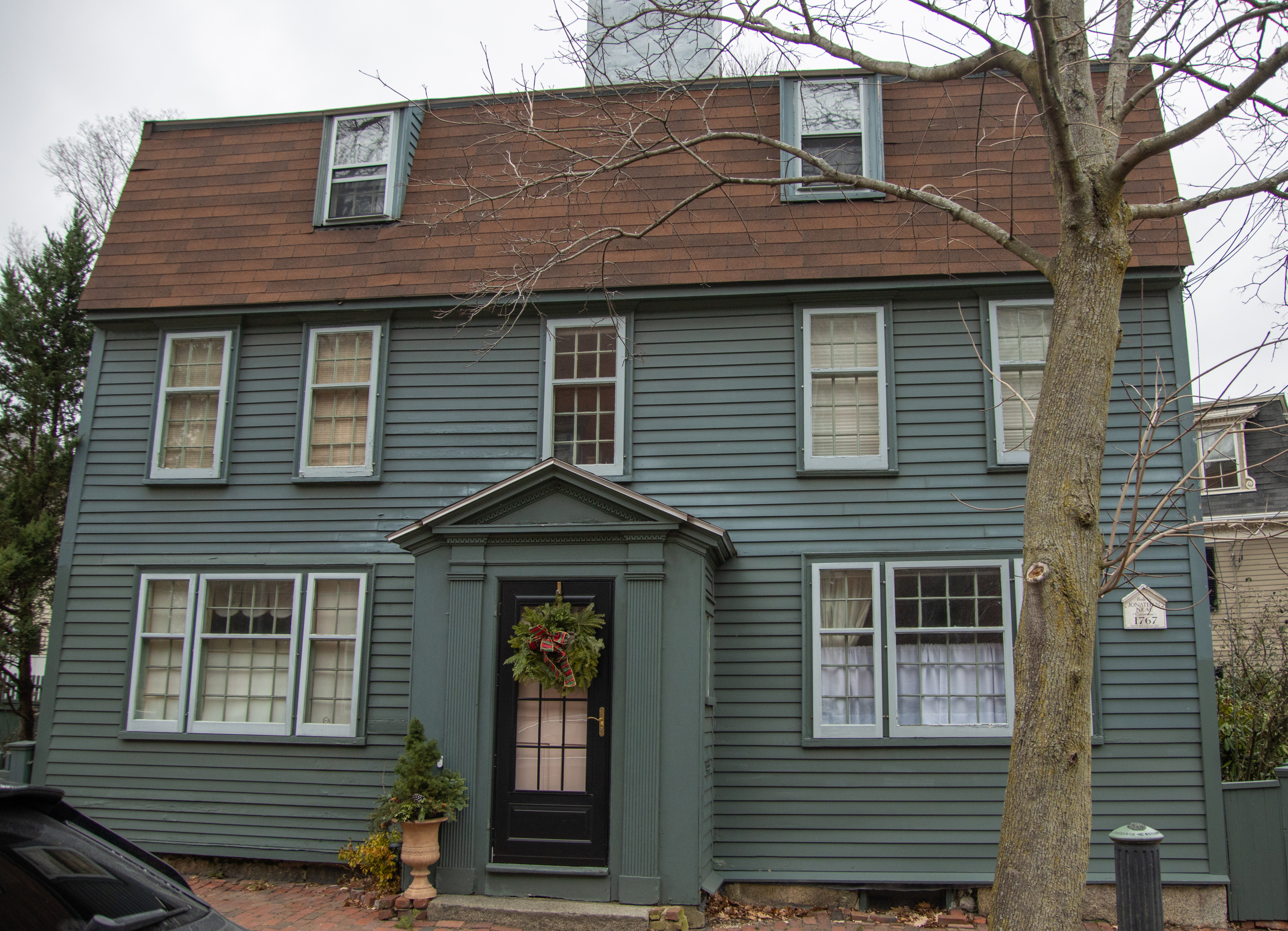
In 1767 Johnathan Neal, a yeoman and carter, built this house on land owned owned by the Neal family since the 1600s; The house Jonathan built was described as two stories high and one room deep with a pitched roof which may have been a recycled from a previous house. Certain elements, such as a front-to- back summer beam on the first floor, suggest a possible pre-1730s date while elsewhere there is beaded box molding suggestive of post-1730s construction. The house is said to have had 6 working fireplaces. It was extensively renovated in the 20th making it difficult to determine which elements are original and which have been restored.

The area of Broad St where this house stands was not far from the town almshouse (a charitable residence, often endowed by a benefactor, providing housing of poor, elderly, disabled or otherwise disadvantaged people in a community) where indigent and very sick people were housed in the 18th century. Because of the location of the almshouses, the street was known as Almshouse Lane.

Neal died in 1790 after falling off the wharf near his almshouse after visiting a “house of intemperance.” Neal landed face first in the mud. Hey, we’ve all had bad nights. Unfortunately, Neal’s bad night was fatal. After his death, the house was divided among his children into four units occupied by the Neal family and in-laws. After the Civil War, the dwelling house became a two-family home and in 1925 it was a single-family home for the first time in over 25 years.

In 1885, Leverett Saltonstall, who grew up on nearby Chestnut St, recalled that Jonathan Neal’s sons had run a bakery at 12 Broad St where pigs were often slaughtered in the yard. The process was so grim and viscous screams and squeals from the pigs could be heard around the block. Because of the noises, Jonathan Neal Jr was taunted by the children as “Piggy Neal who makes pigs squeal.”

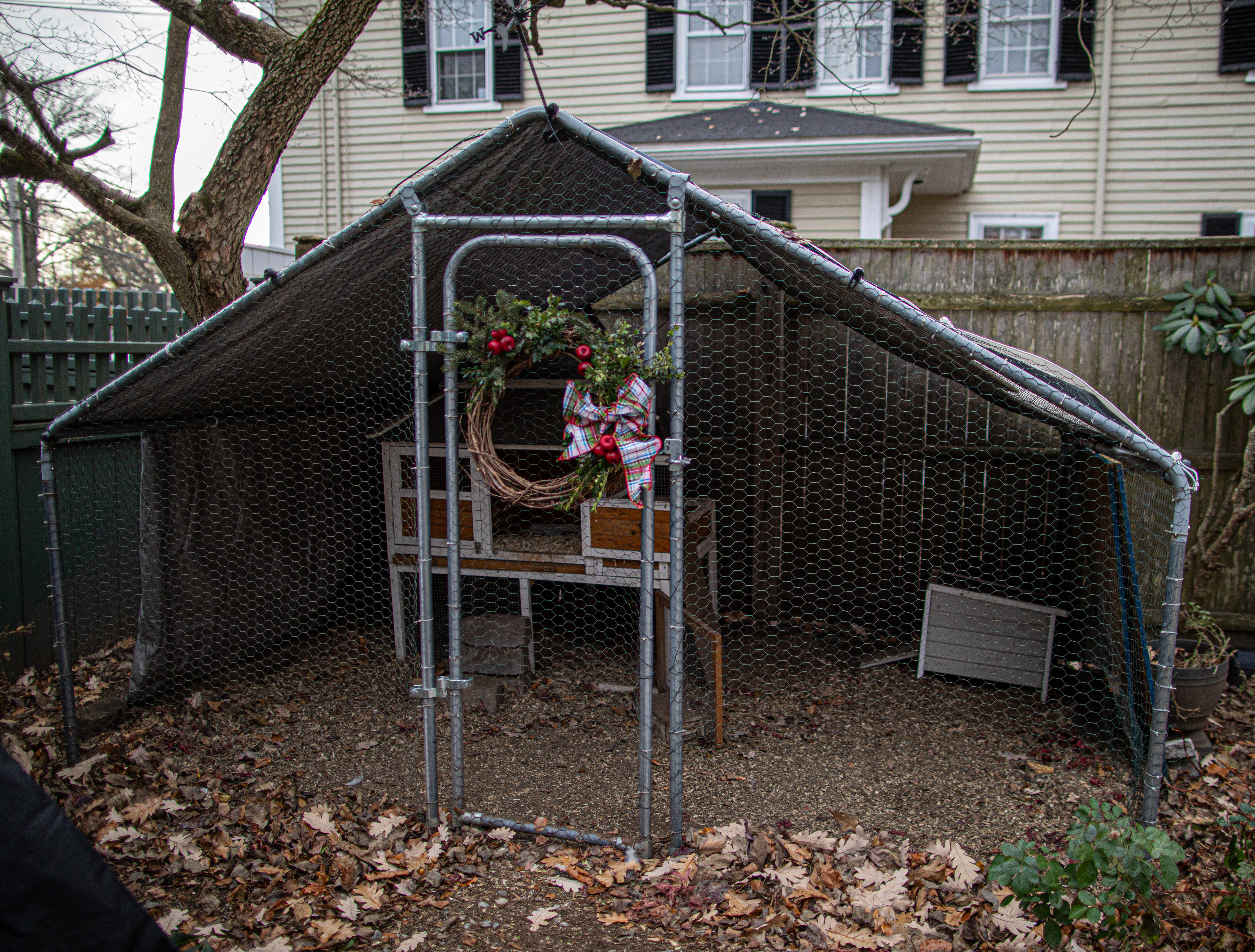
Instead of the pigs mentioned above, bees and chickens are now the themes of the house. The owners raise chickens and are beekeepers. There were beekeeping supplies outside of the house.

This is the original wallpaper from the 18th century. I know. I had to ask twice to make sure I heard that correctly.

The home was decorated tastefully for the holiday season.

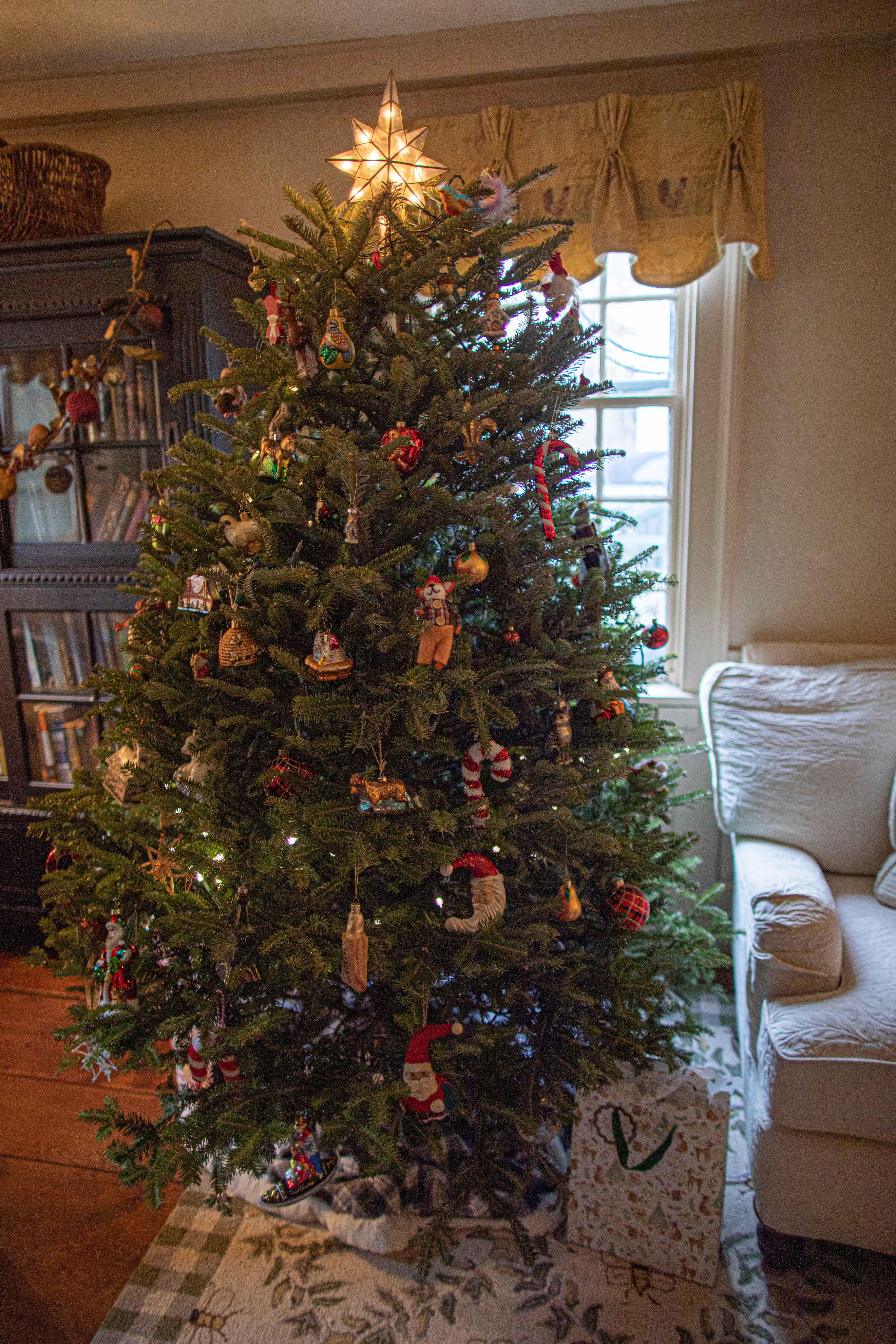
Keeping with the chicken and bee theme, this tree had chicken and beekeeper decorations (zoom in and look about 1/3 of the way from the top on the left)’

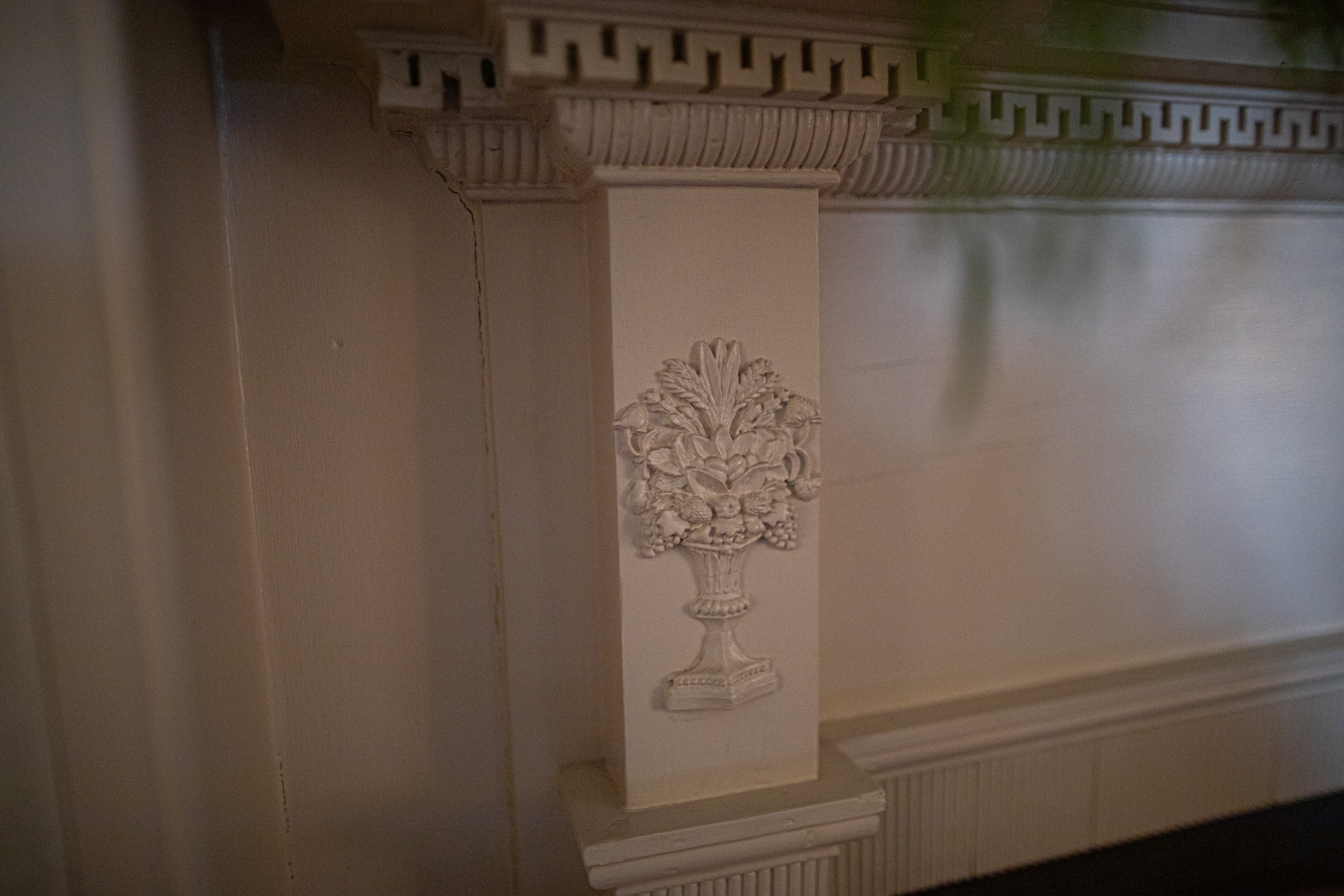
This was one of the fireplaces on the first floor.

I was particularly impressed by the artwork above the fireplace.

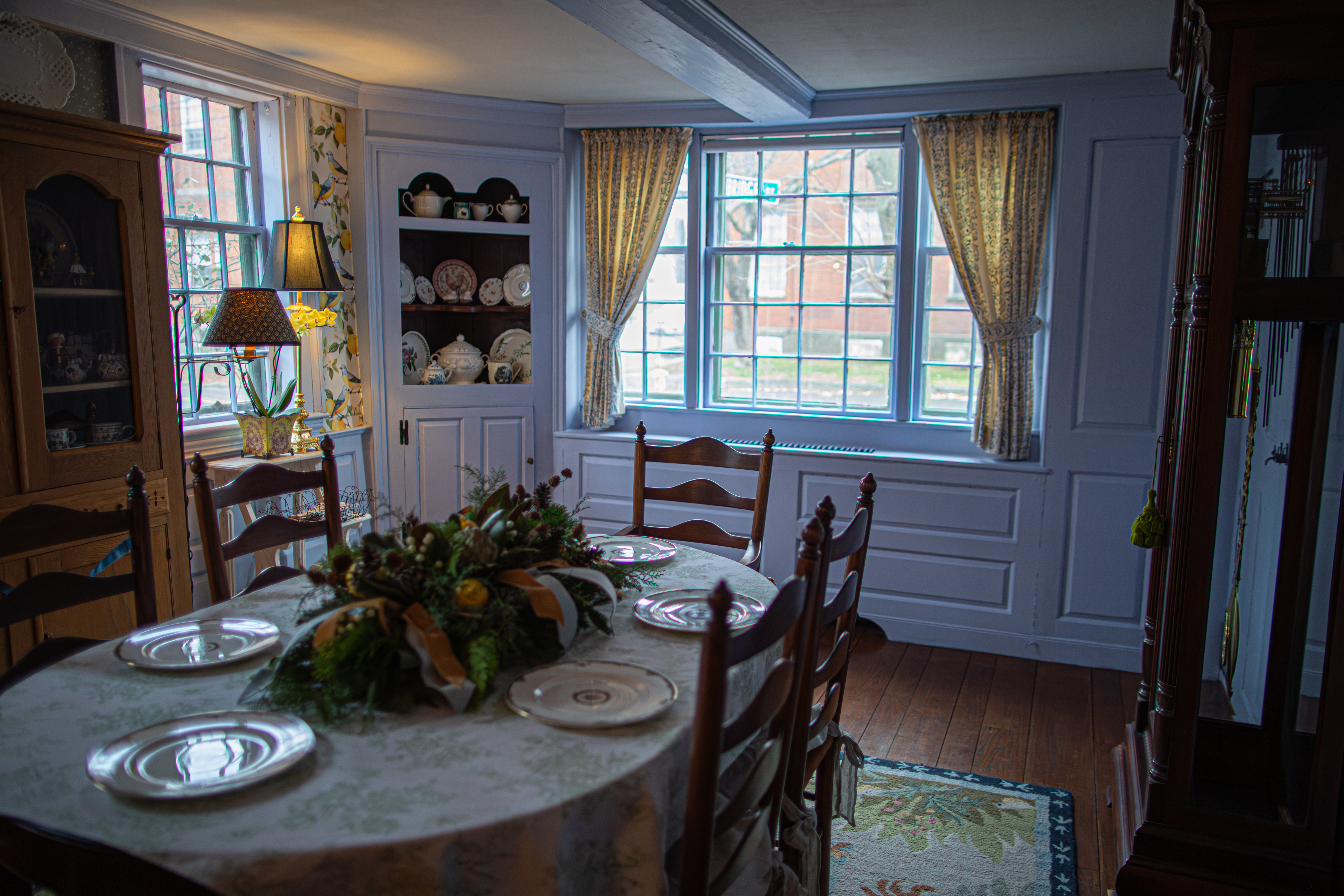
I particularly appreciated the wainscoting and traditional decor in the dining room.

I know Christmas is over. But, these posts serve as “left overs” from a holiday season I think we all wish lasted longer! Fear not. I have many more tours to take you all on!