Tag Archives: Bristol

The New England Carousel Museum – 2026 (Bristol, CT)

Date Of Visit: February 28, 2026

Location: 95 Riverside Ave, Bristol, CT

Hours: Mon Closed

Tue Closed

Wed 10:00 AM – 5:00 PM

Thu 10:00 AM – 8:00 PM

Fri 10:00 AM – 5:00 PM

Sat 10:00 AM – 5:00 PM

Sun 12:00 PM – 5:00 PM

Summary: The New England Carousel Museum features over a hundred carousel animals (not just horses), a working carousel and a few more surprises!
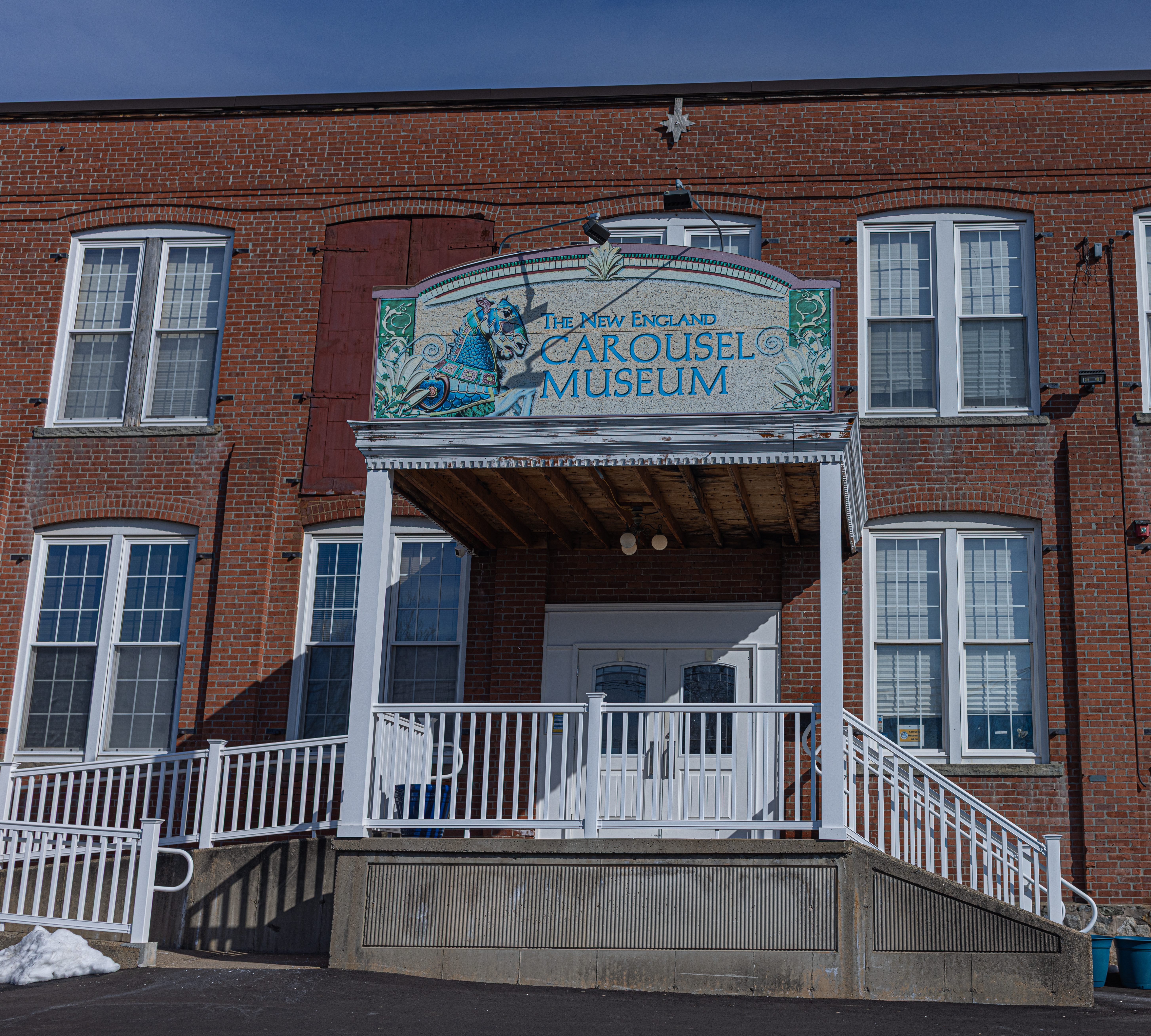
Some places are so incredible they’re worth a second visit. You may remember my earlier visit to the New England Carousel Museum in 2017. But, during this visit there was so much more to see and document. So, I may have missed a few things the first time. Plus, the museum often adds new exhibits and updates their permanent displays.
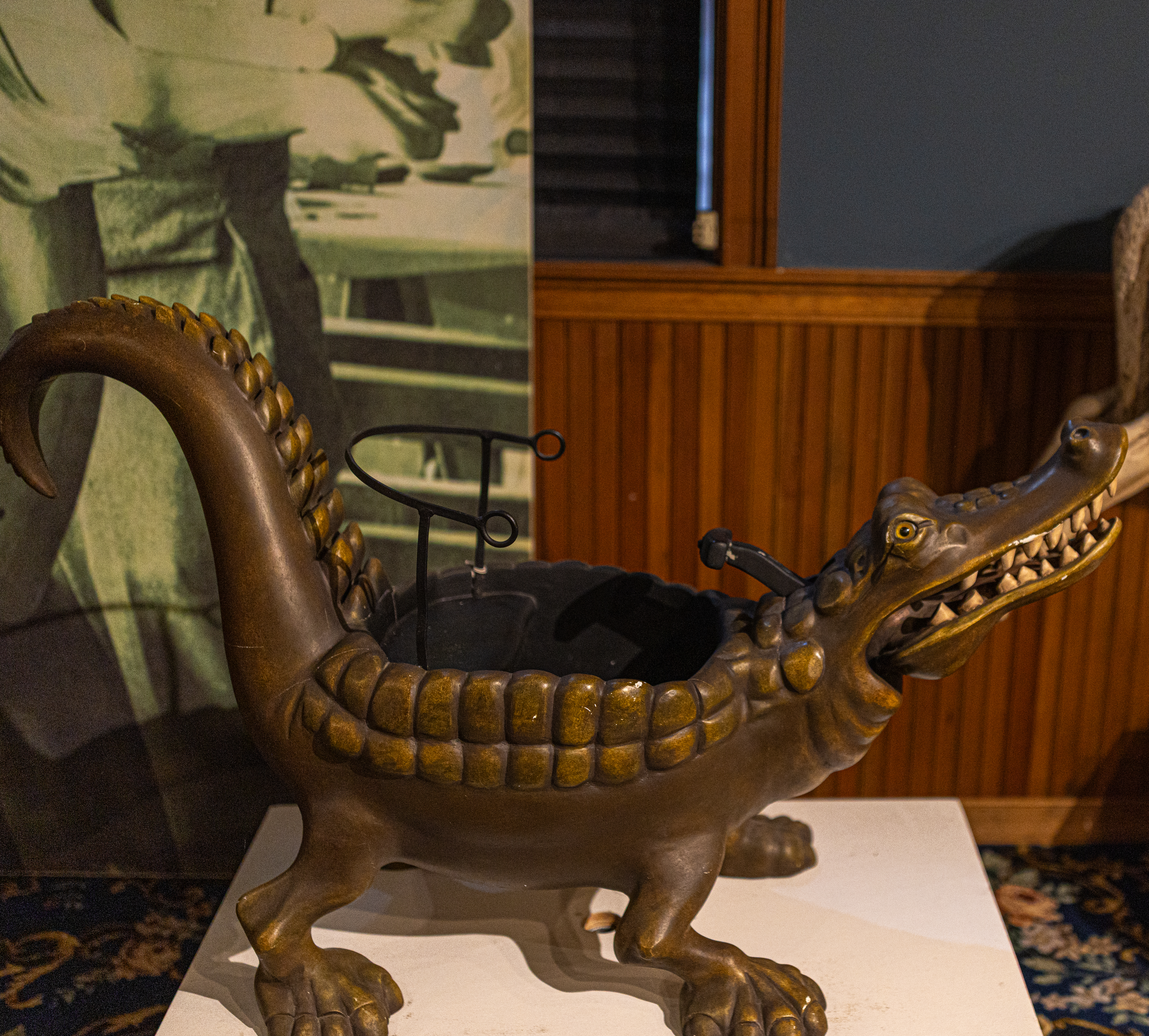
The museum boasts over 100 horses But, horses aren’t the only animals at the carousel museum. And not all of the non-horse carousels are animals!
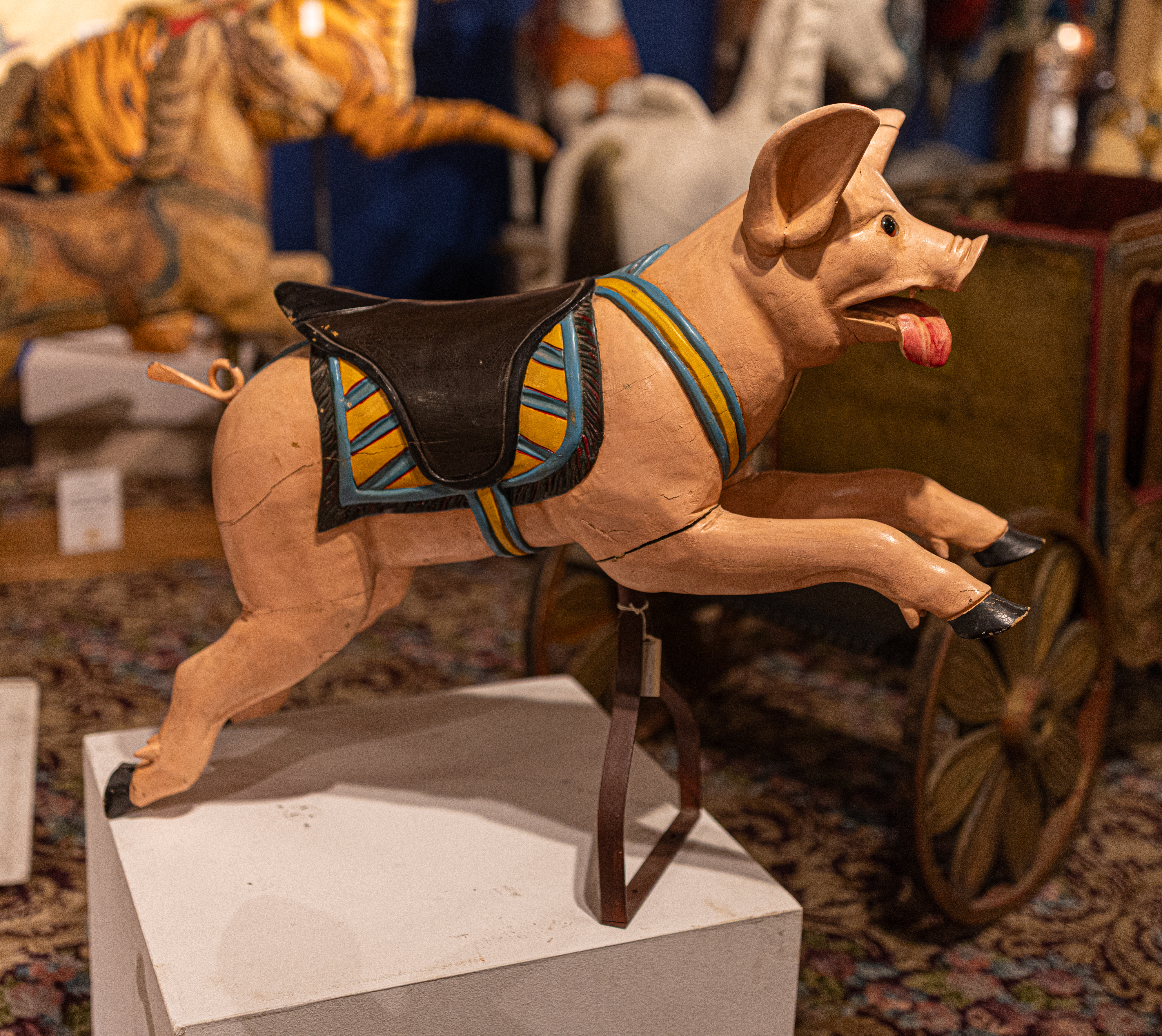
This small pig was designed in Germany by Frederick Heyn circa 1900. The pig is still wearing “park paint” which was applied by amusement park personnel when the original paint gets worn. It often hides the detailed painting and carving on the carousel animal but also protects the wood. But flying pigs aren’t the only non-horse animals at the carousel museum.
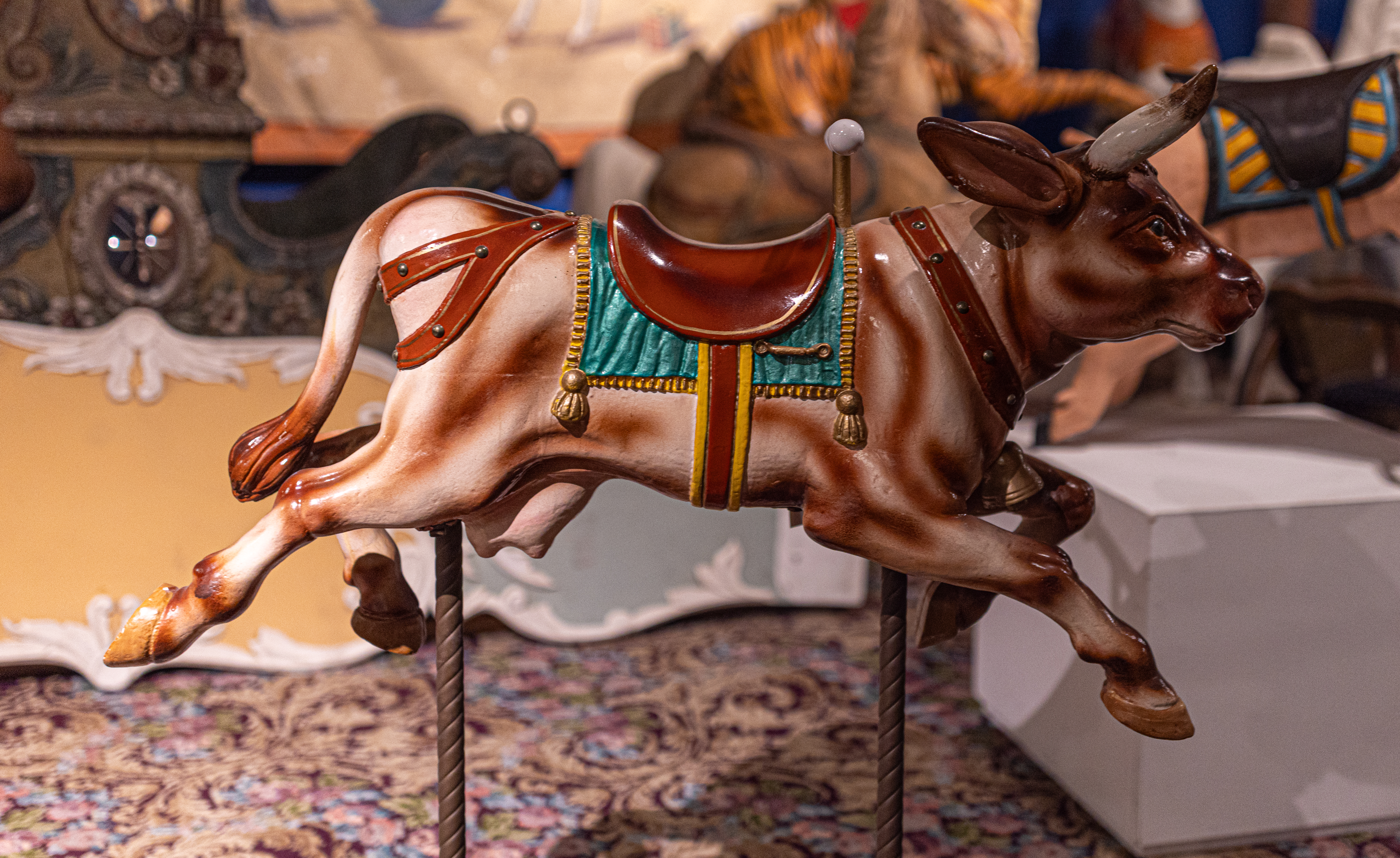
This small cow was created by Matthieu, a little known carver, in France circa 1915. Cows and other farm animals are popular carousel animals in France and Germany. They were not created by American carvers and were not found in the United States where horses were the favorite.
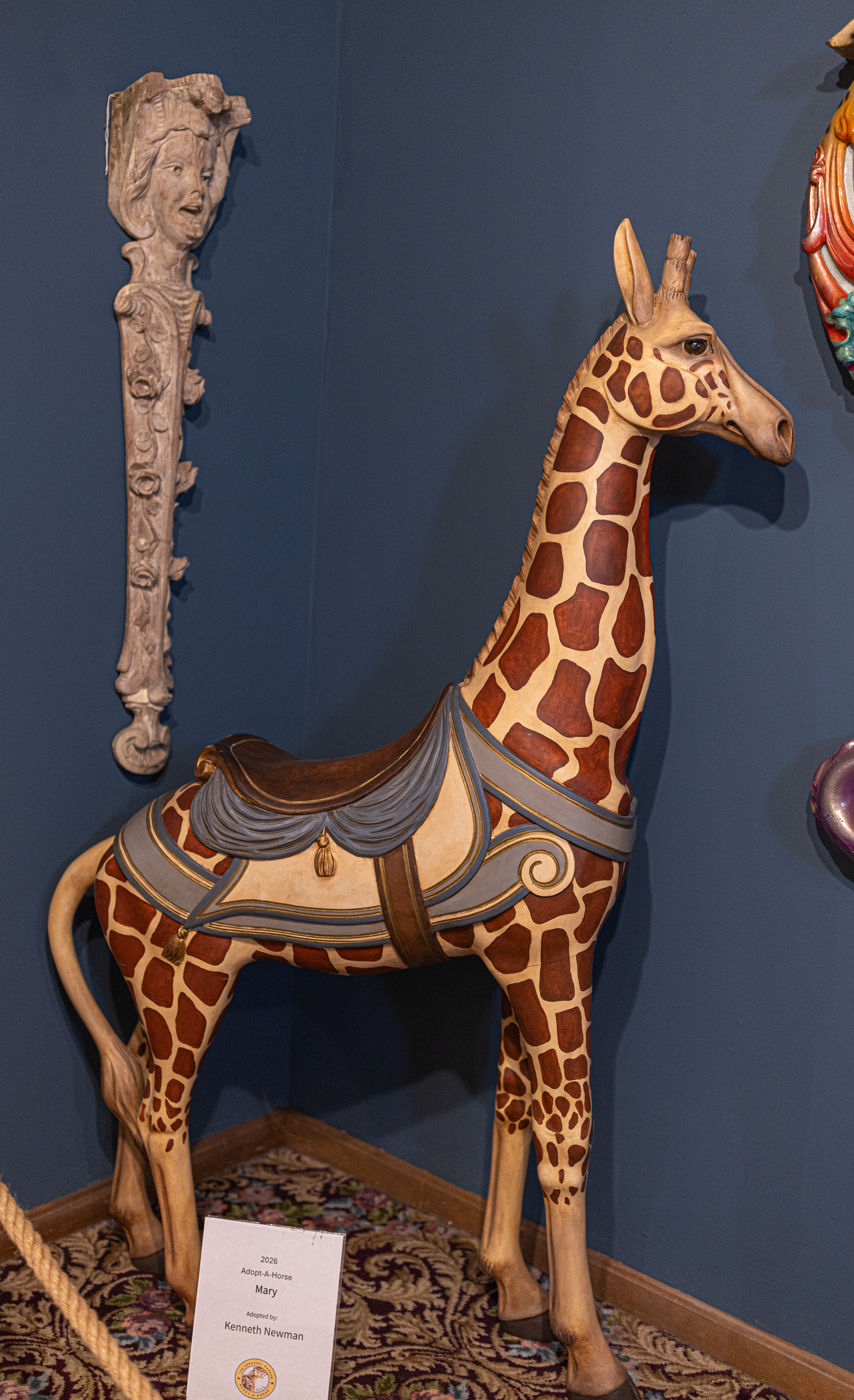
This giraffe was created by the Philadelphia Toboggan Company circa 1905. The Philadelphia Toboggan Company made a few menagerie animals before 1907. But the stopped making them because, as mentioned above, horses were more popular with the public. Don’t worry about the screaming face in the background. We’ll get to that later.
This carp, carved by an unknown artist (but most likely Gustave Bayol), was painted as a goldfish. It most likely originated from the Gustave Bayol factory of Angiers, France.
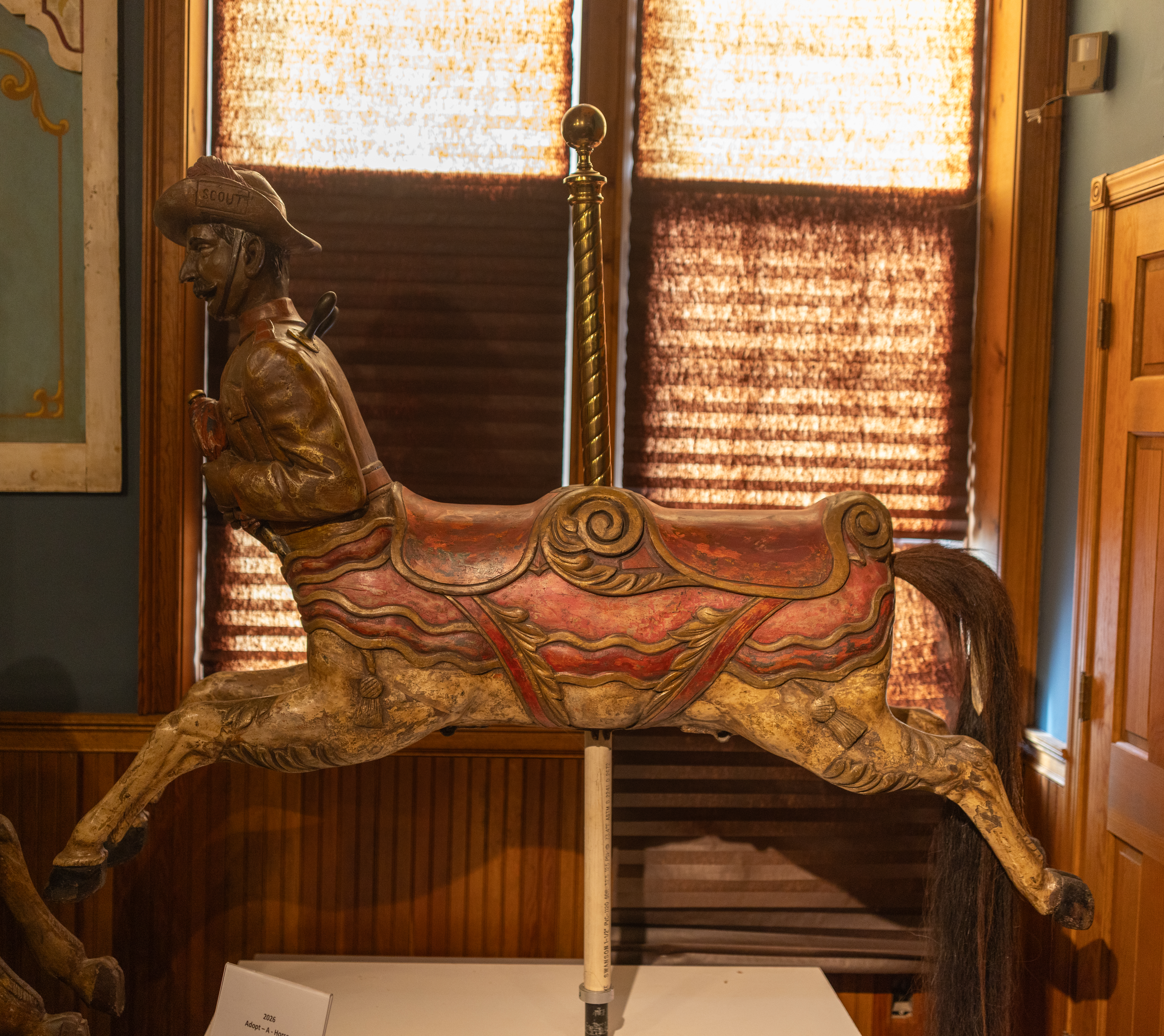
The C.J. Spooner Factory created this Robert Bayden Powell Centaur. The British sometimes immortalized officers from the Boer Wars as centaurs or mythical creatures that are half human and half equine. The Boer Wars were disputes over territory in South Africa between the British and Dutch in the late 1800s and early 1900s, a time that coincided with the height of the British carousel industry. The carver of this work of art is unknown.

Certain generals from the wars were so well-liked that multiple centaurs were carved of each one. General Robert Brayden Powell served in the British Army for over thirty years and established the Boy Scouts in Great Britain.
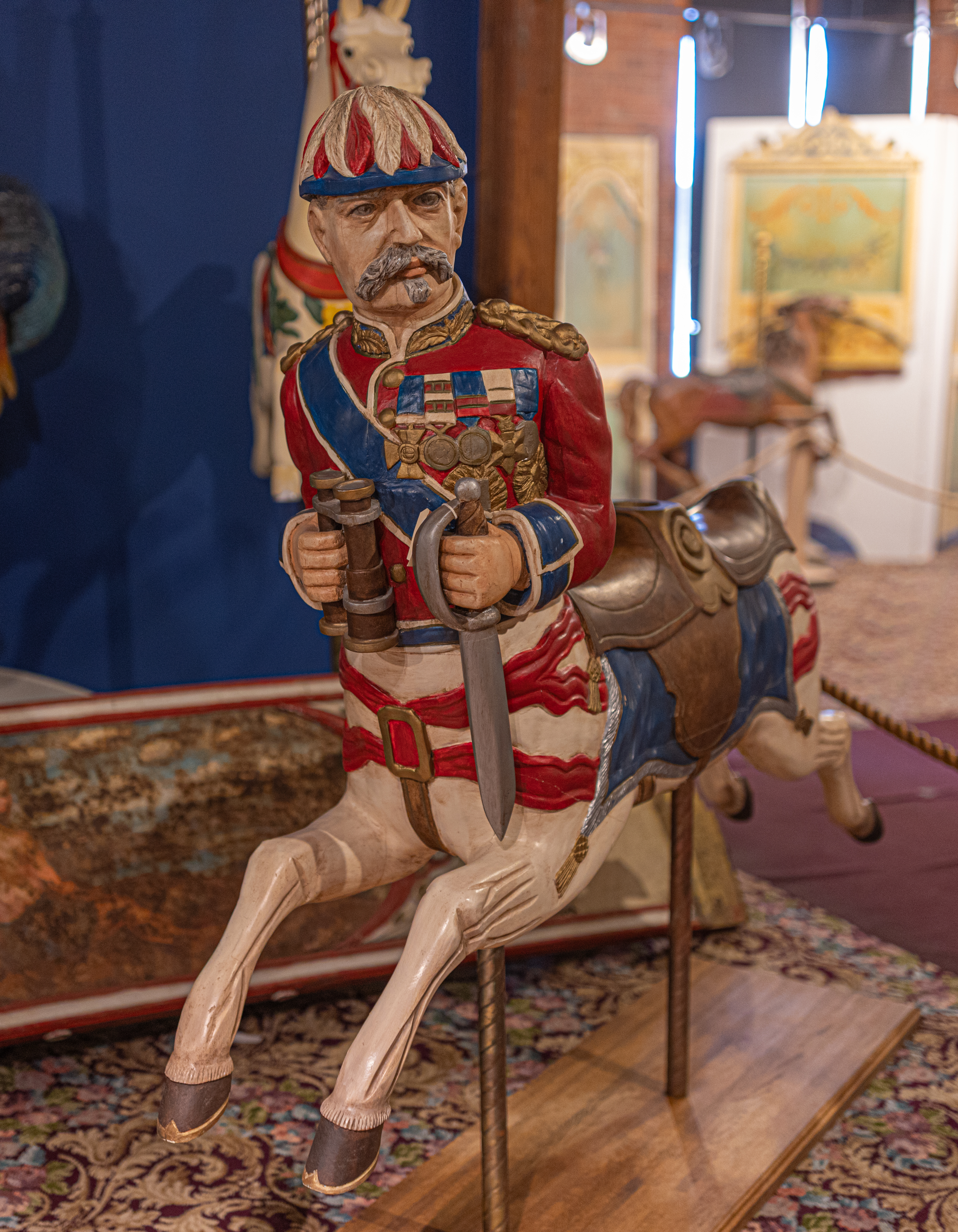
This is another centaur at the museum. It was carved by C.J. Spooner around 1918-1920.
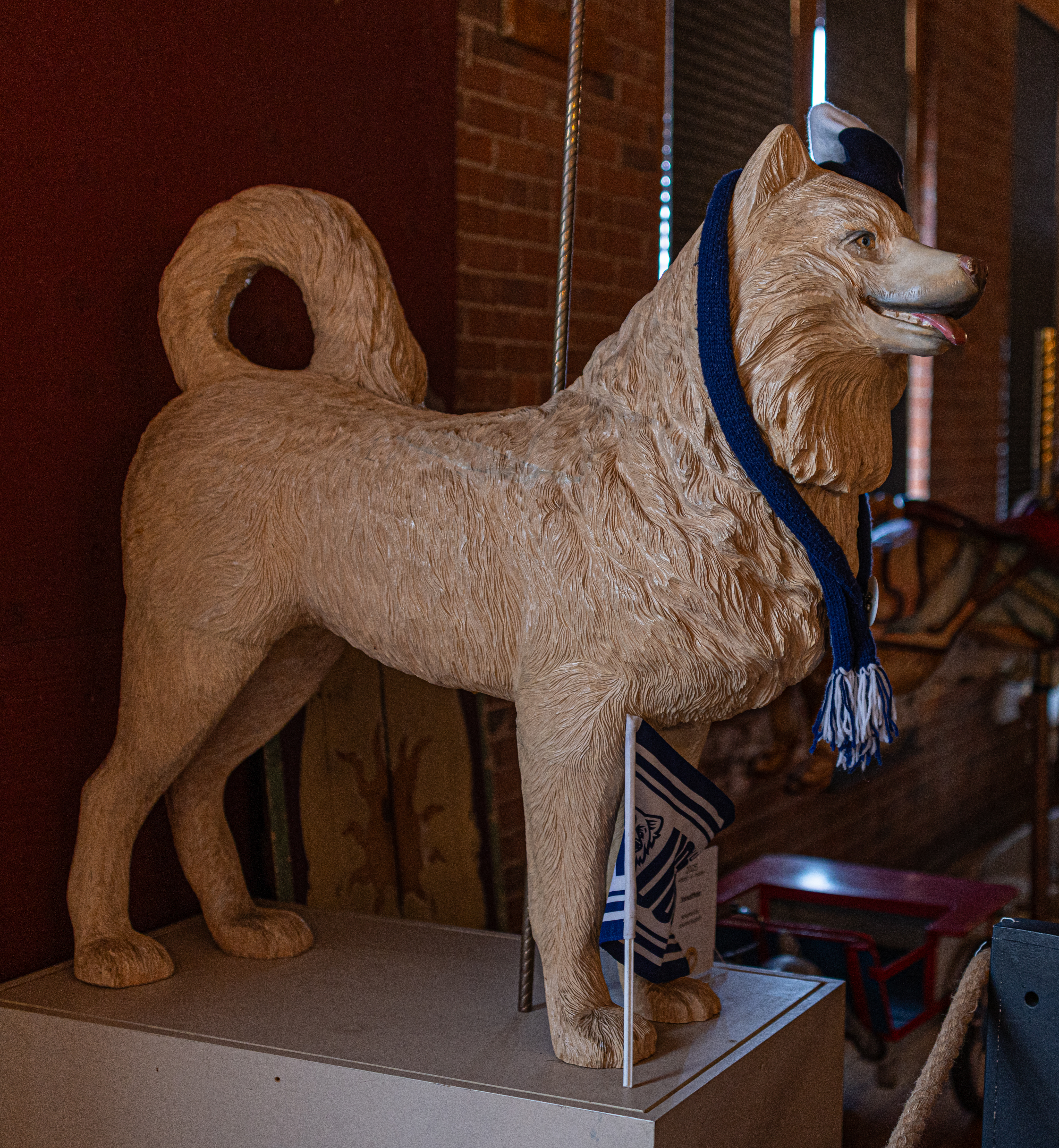
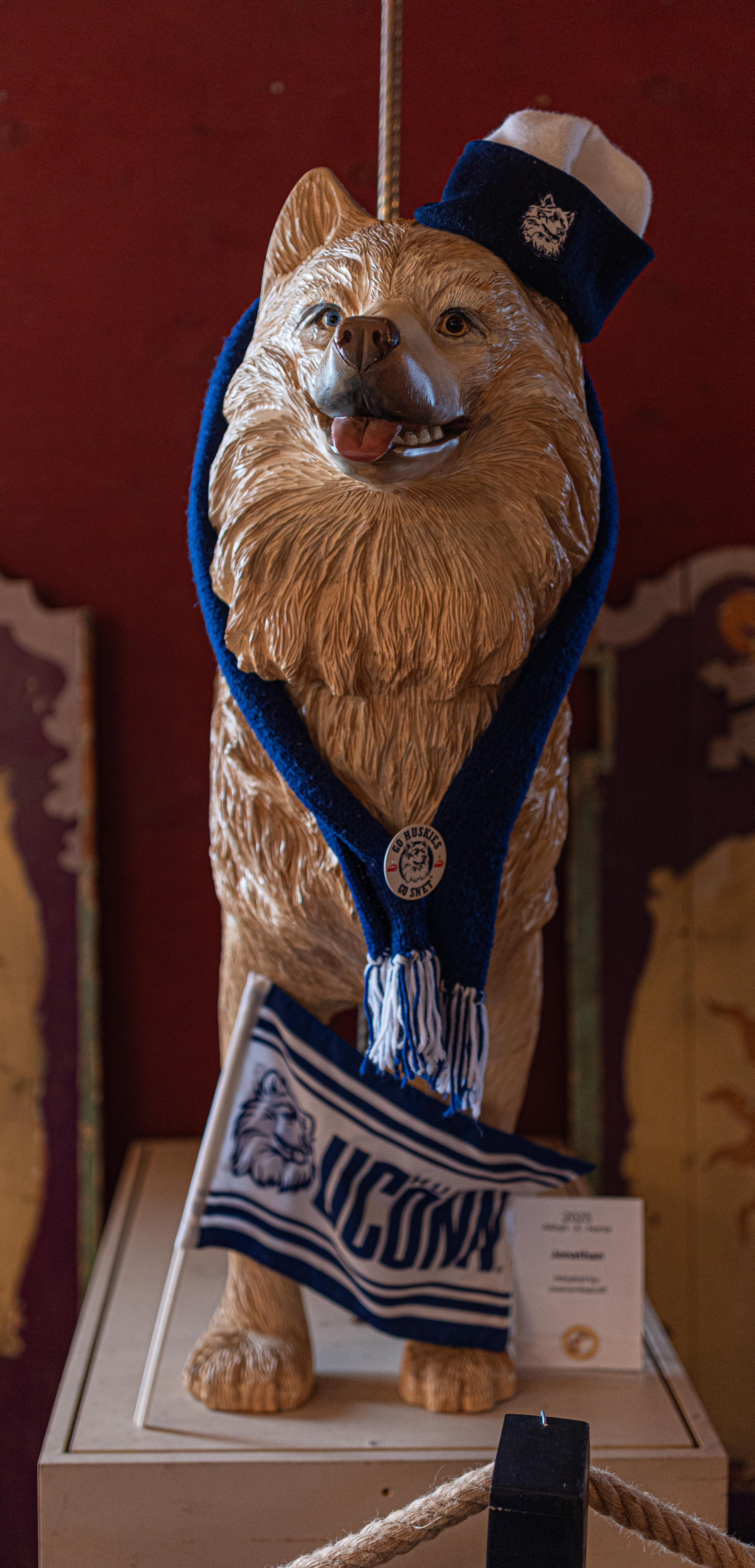
Those of you familiar with college sports may recognize this dog as the mascot of the University of Connecticut Huskies.
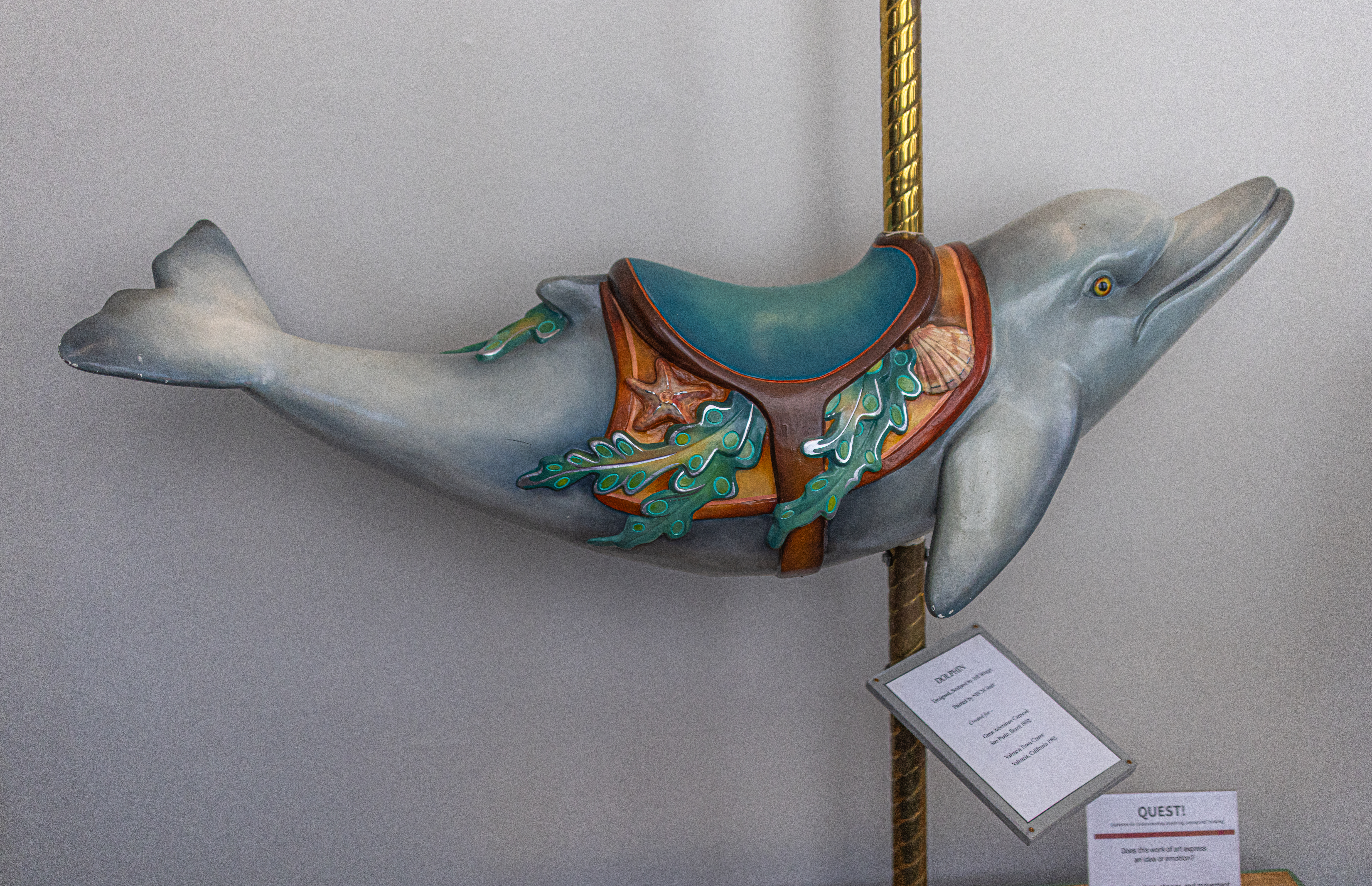
This dolphin was designed and sculpted by Massachusetts College of Arts graduate Jeff Briggs. It was painted by the New England Carousel Museum staff. The dolphin has been displayed at the Great Adventure Carousel in Sao Paulo, Brazil in 1992 and the Valencia Town Center in Valencia, California in 1993. Jeff’s name will appear prominently later in this post.
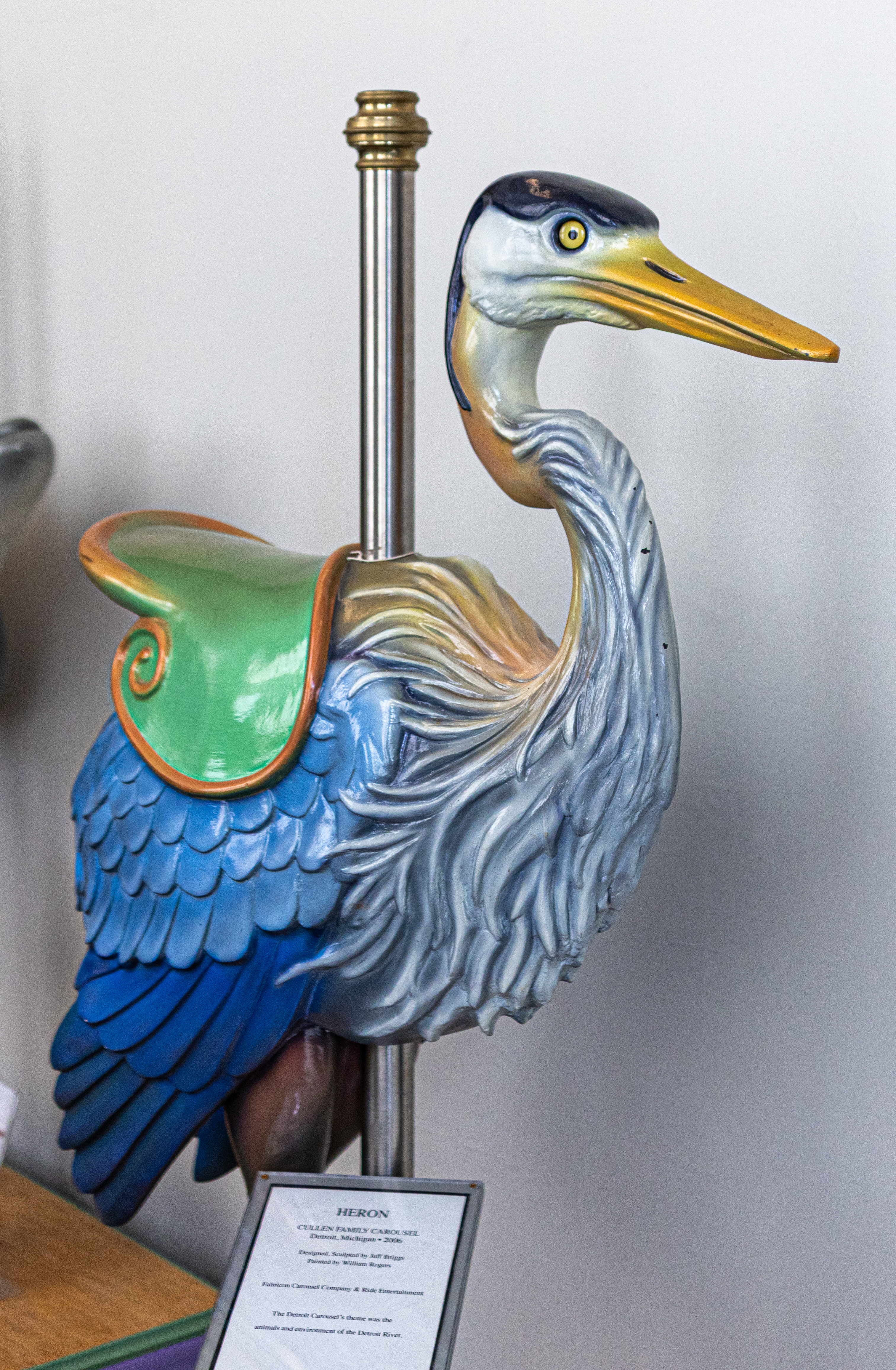
This Heron was also designed and sculpted by Jeff Briggs and painted by William Rogers.
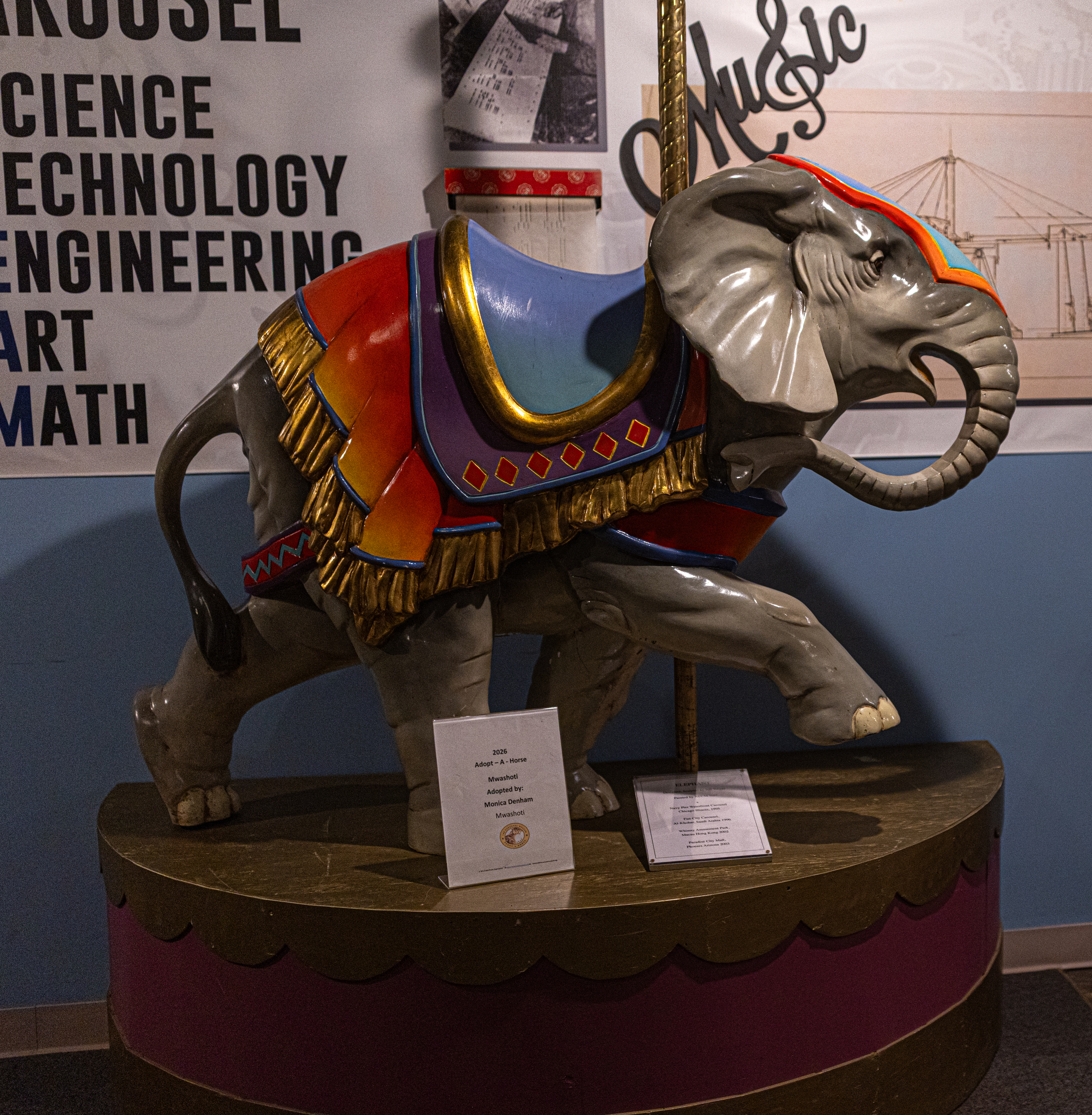
This elephant was designed, carved and sculpted by Jeff Briggs and it was painted by the New England Carousel Museum staff. It has appeared in the Navy Pier Waterfront Carousel in Chicago, IL, the Fun City Carousel in Al-Khobar, Saudi Arabia, the Whimsy Amusement Park in Macau, Hong Kong, the Paradise City Mall in Phoenix, AZ and, of course, the New England Carousel Museum.

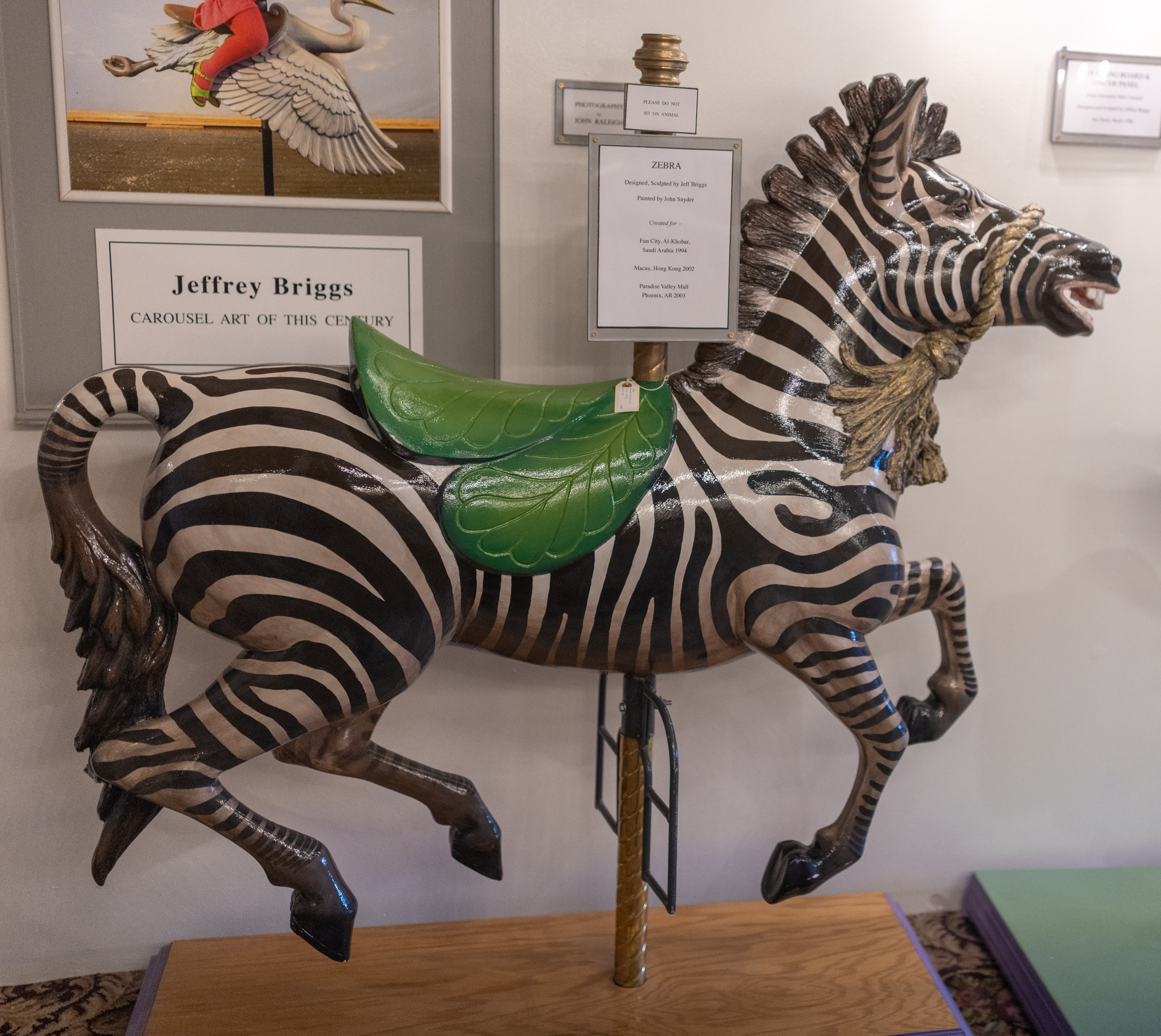
Speaking of Jeff, he designed and sculpted this zebra which has appeared at the Fun City Carousel in Al-Khobar, Saudi Arabia, the Whimsy Amusement Park in Macau, Hong Kong, and the Paradise City Mall in Phoenix, AZ.

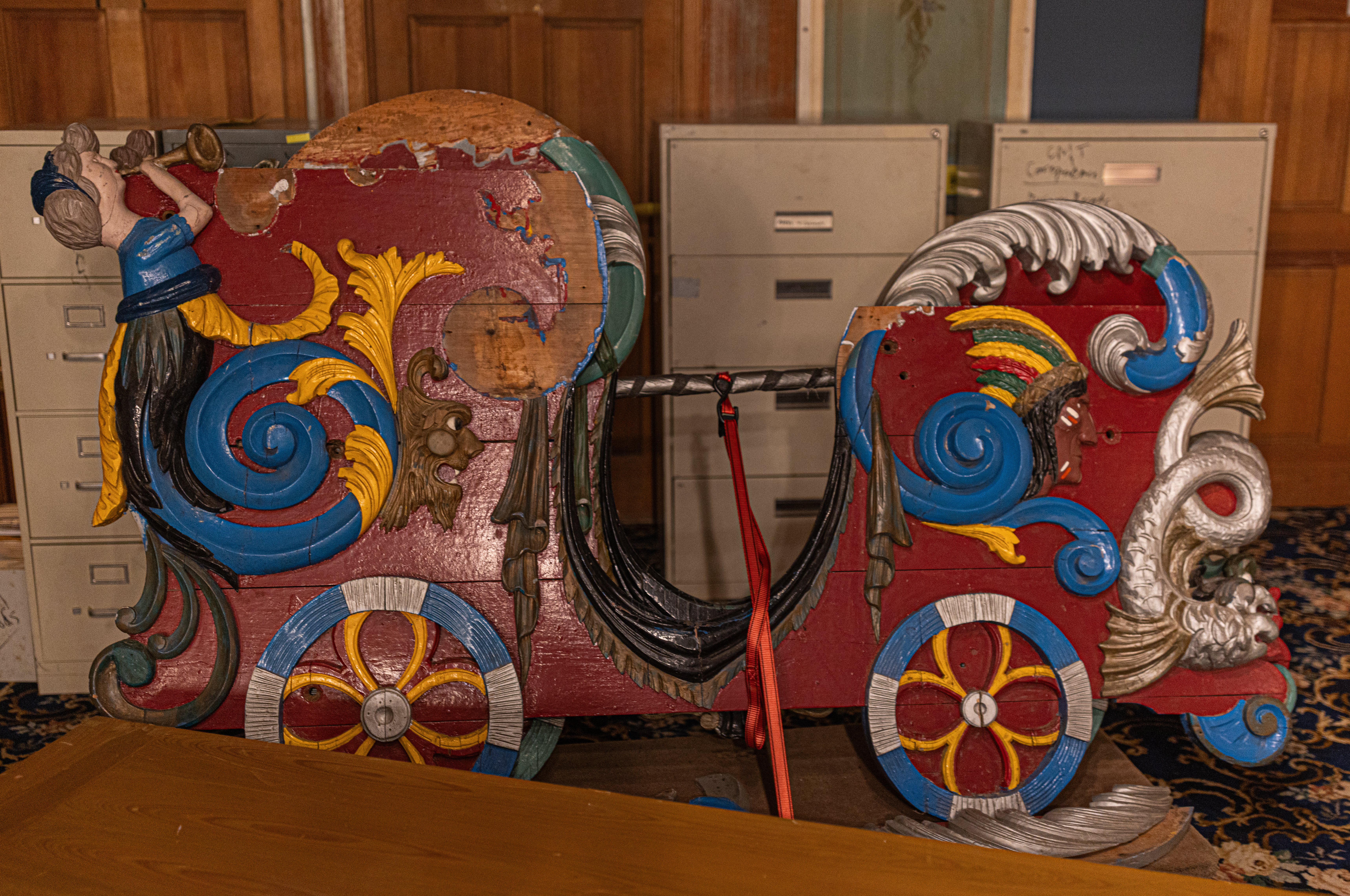
Some of the most appealing and interesting parts of the carousel are the chariots and other designs.

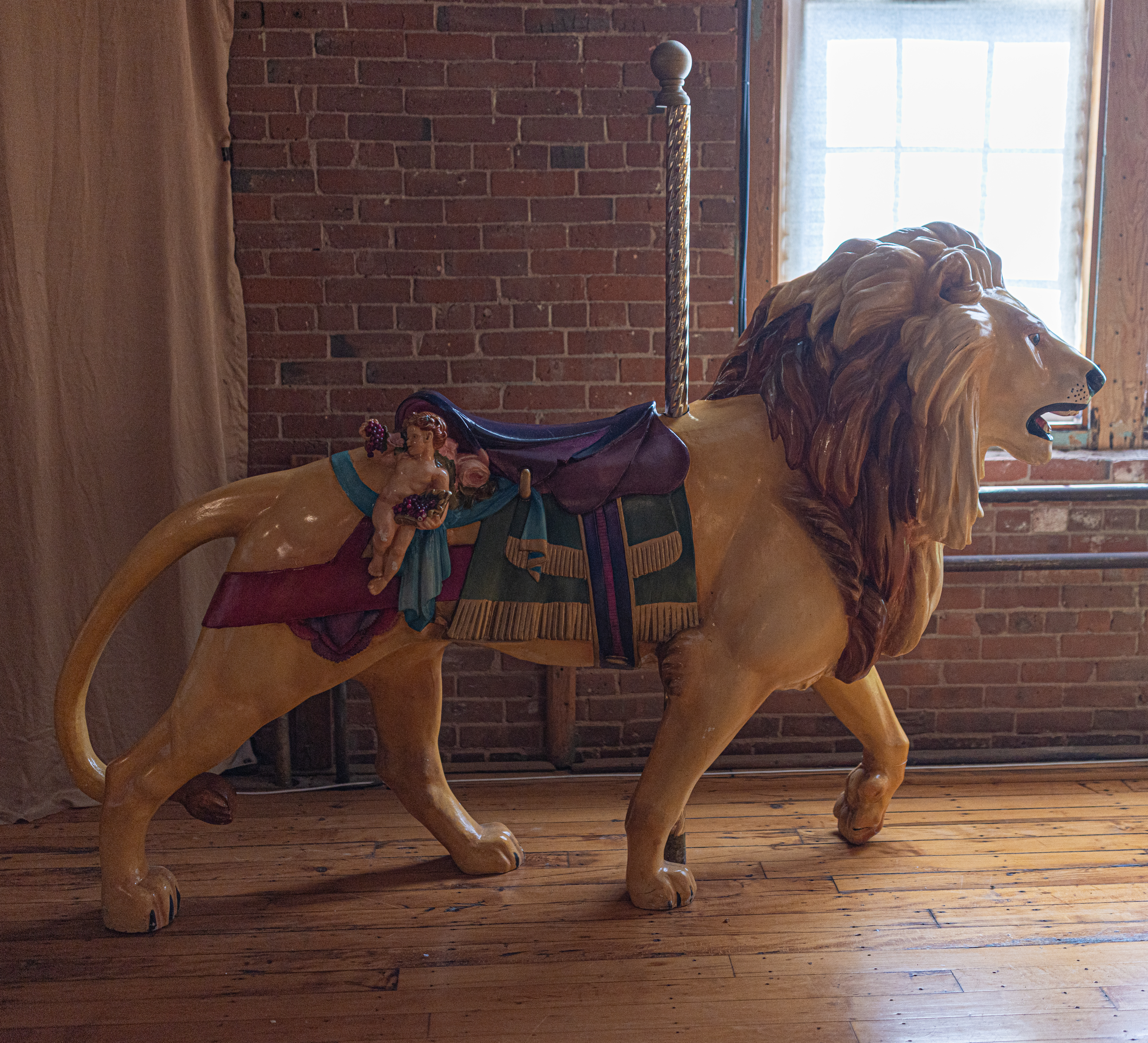
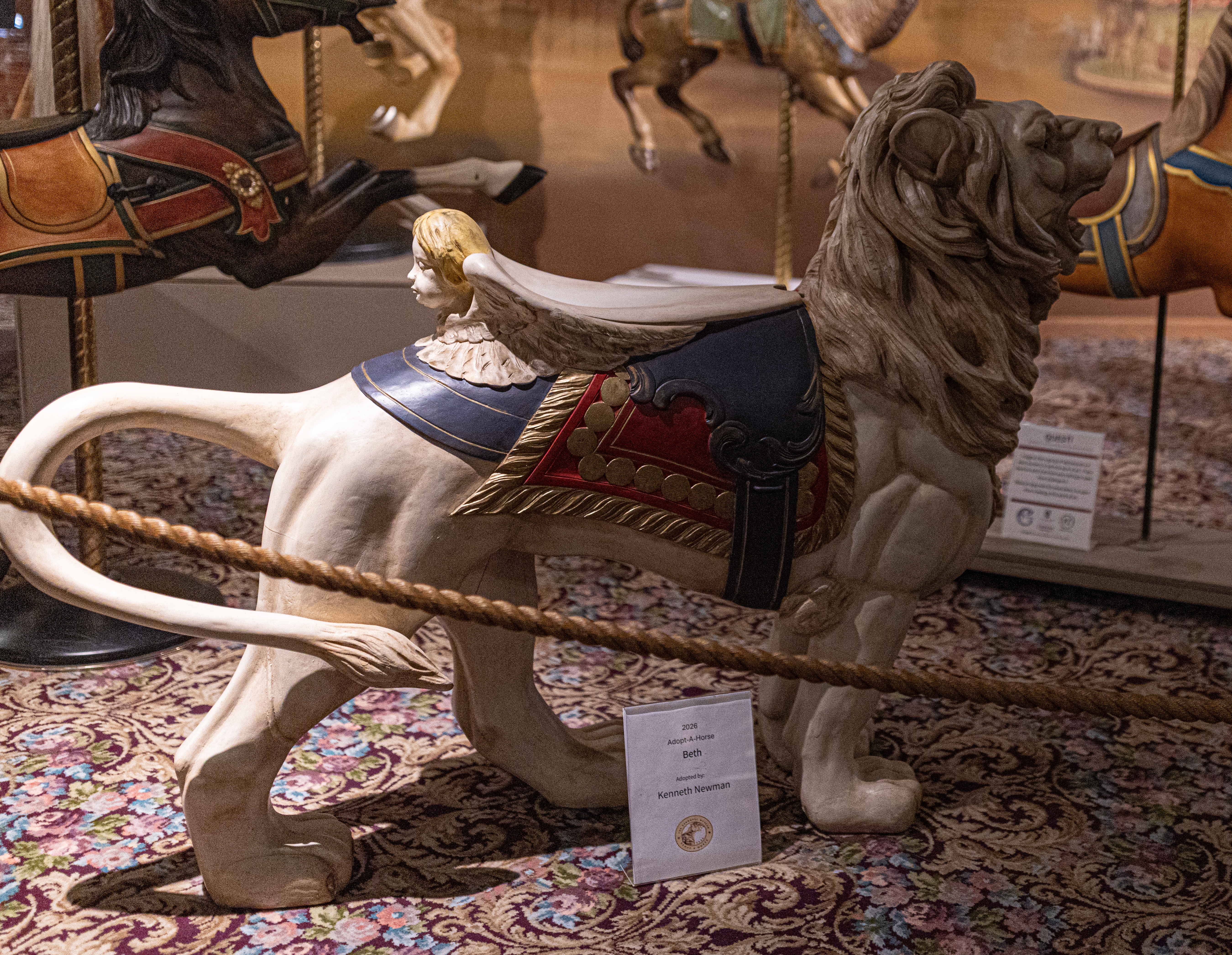
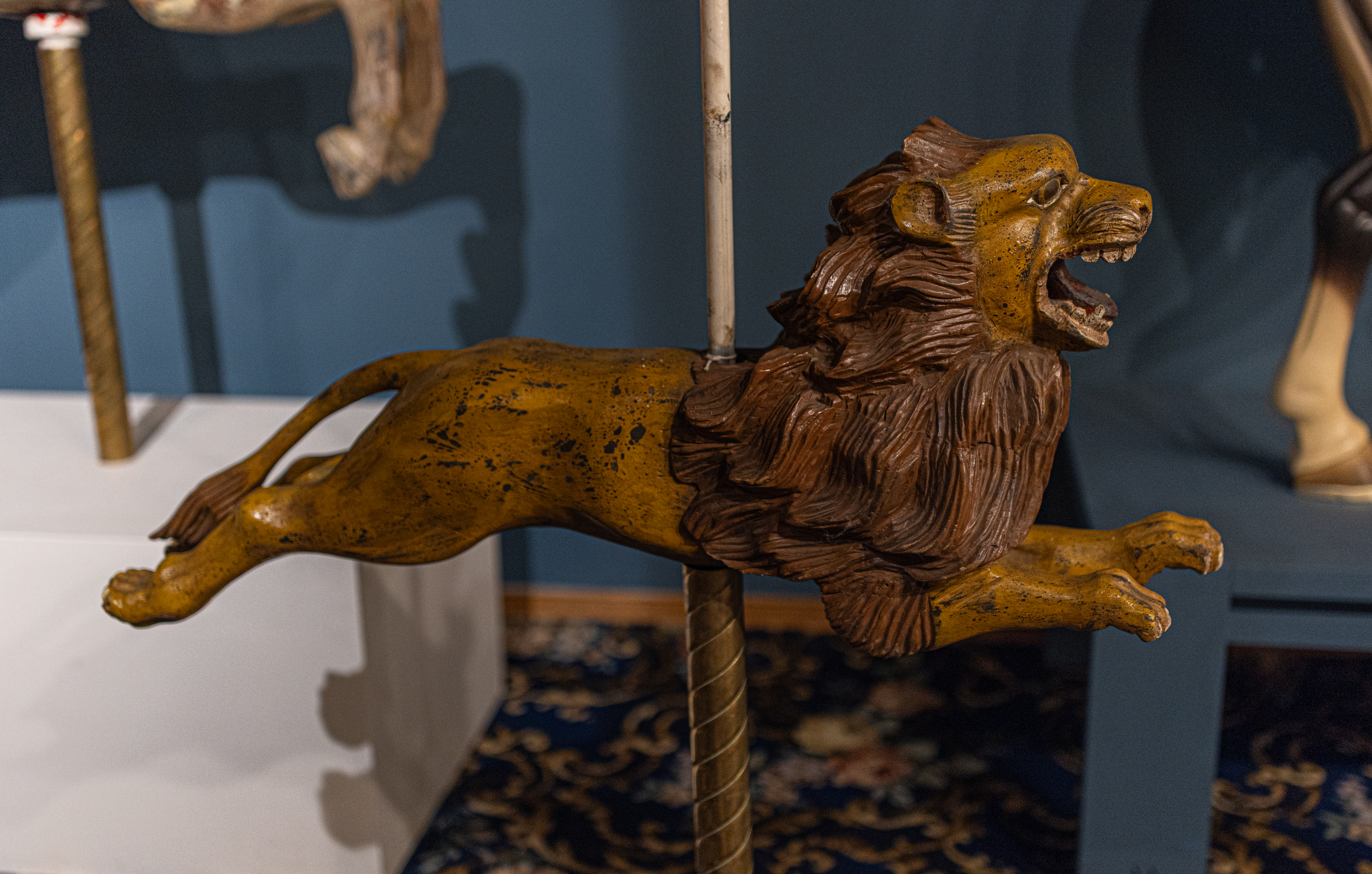
The Illions Supreme carousels were some of the most ornate carousels ever built, featuring horses with elaborate flaming manes, 23.5 karat gold leaf and hundreds of beveled mirrors. The carousels featured chariots with fantasy creature morphs from a ravenous fire-breathing cheetah to a a serpent then again from dragon to lion, evoking themes of jungle law, eat or be eaten and the thrill of the hunt.

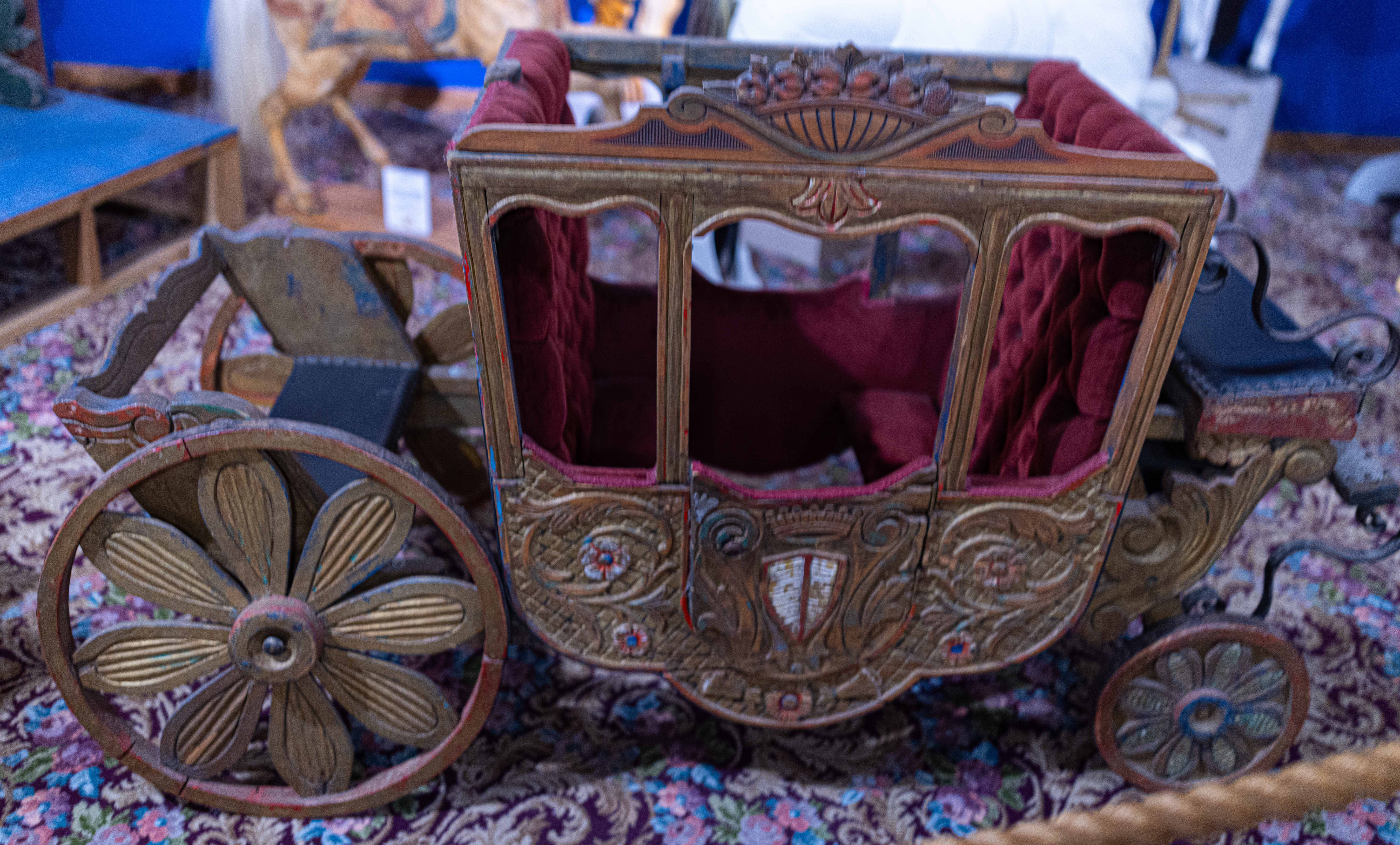
The child’s chariot by an unknown carver circa 1900 posted below was intended for a juvenile ride. Although it appears too small for all but the youngest children, it has no floor or ceiling, allowing taller children to fit comfortably inside. Or, they might have chosen to sit as the driver or the footman. Based on the condition of the fabric, it is possible that the inside was rarely used, if at all.

This is another chariot at the museum. If you look closely you can see what looks like a fairy on the exterior of the backseat.

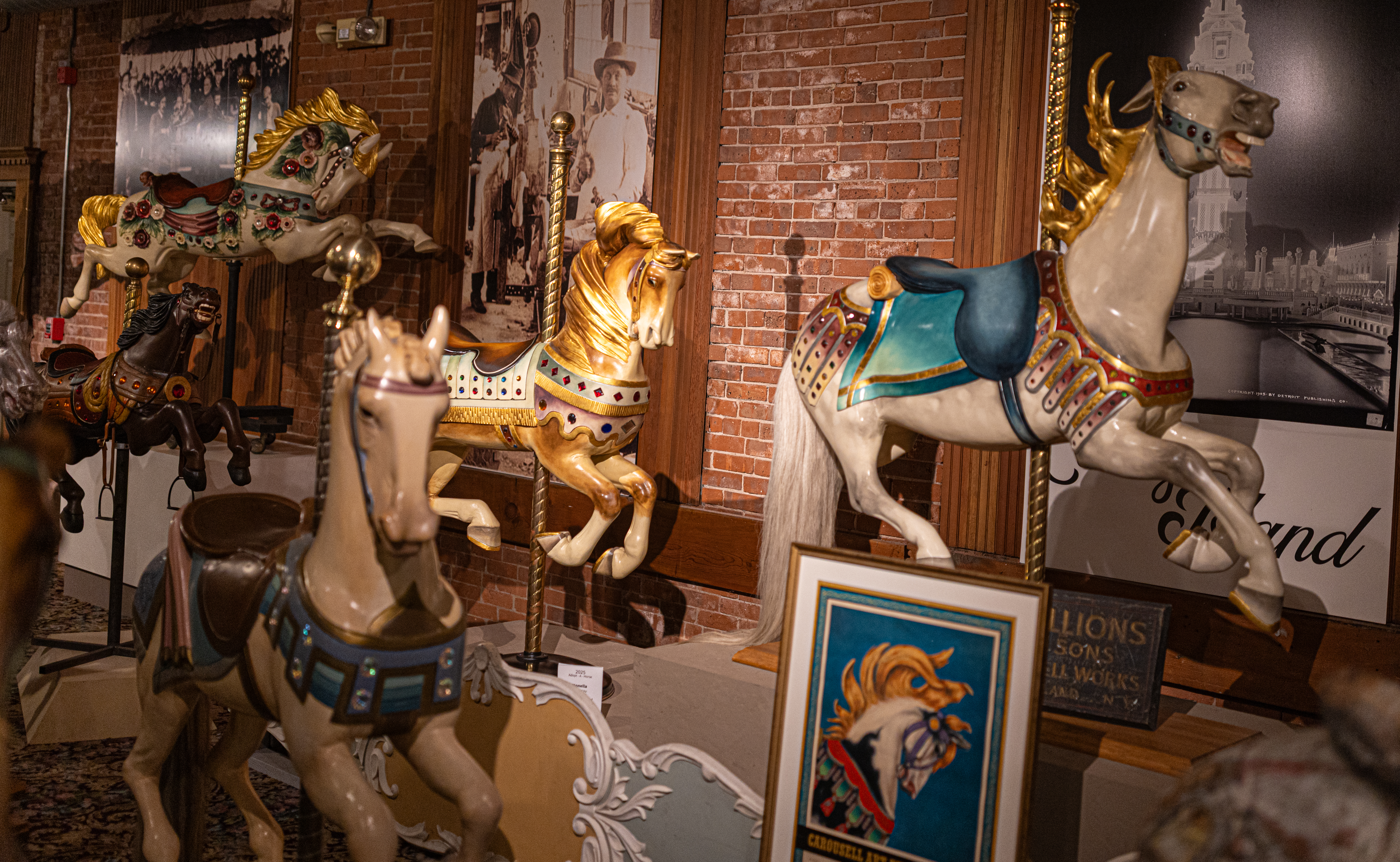
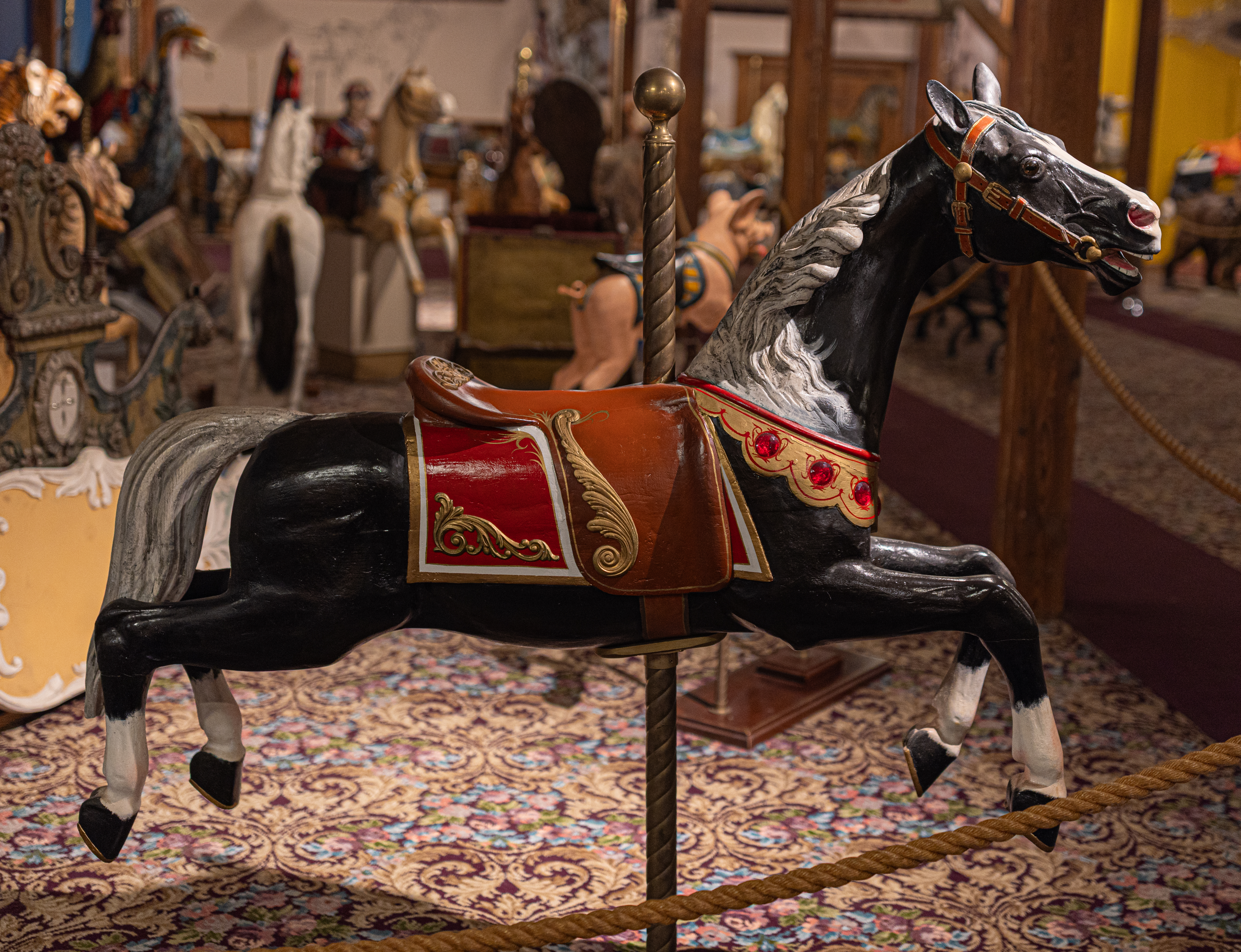
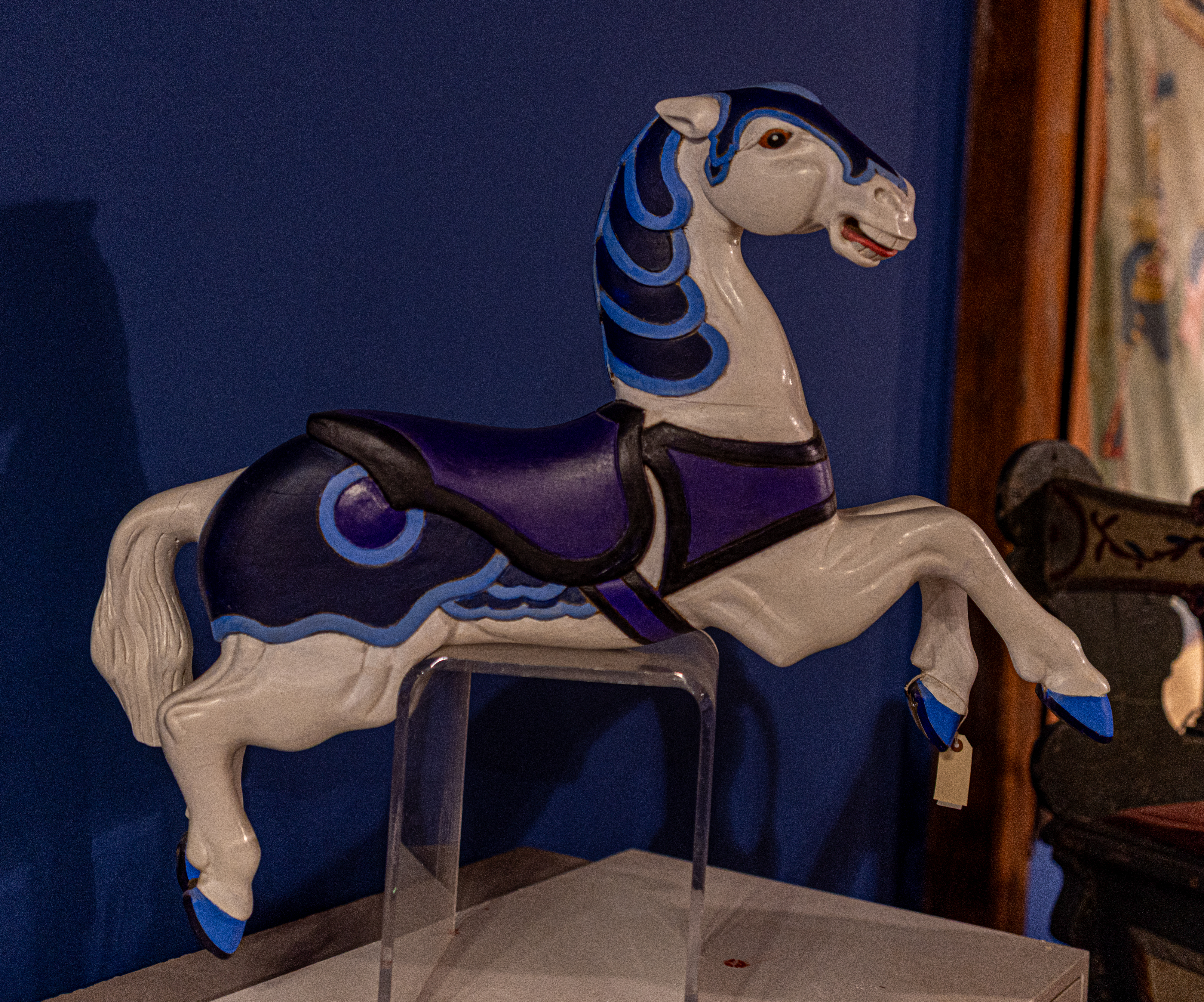
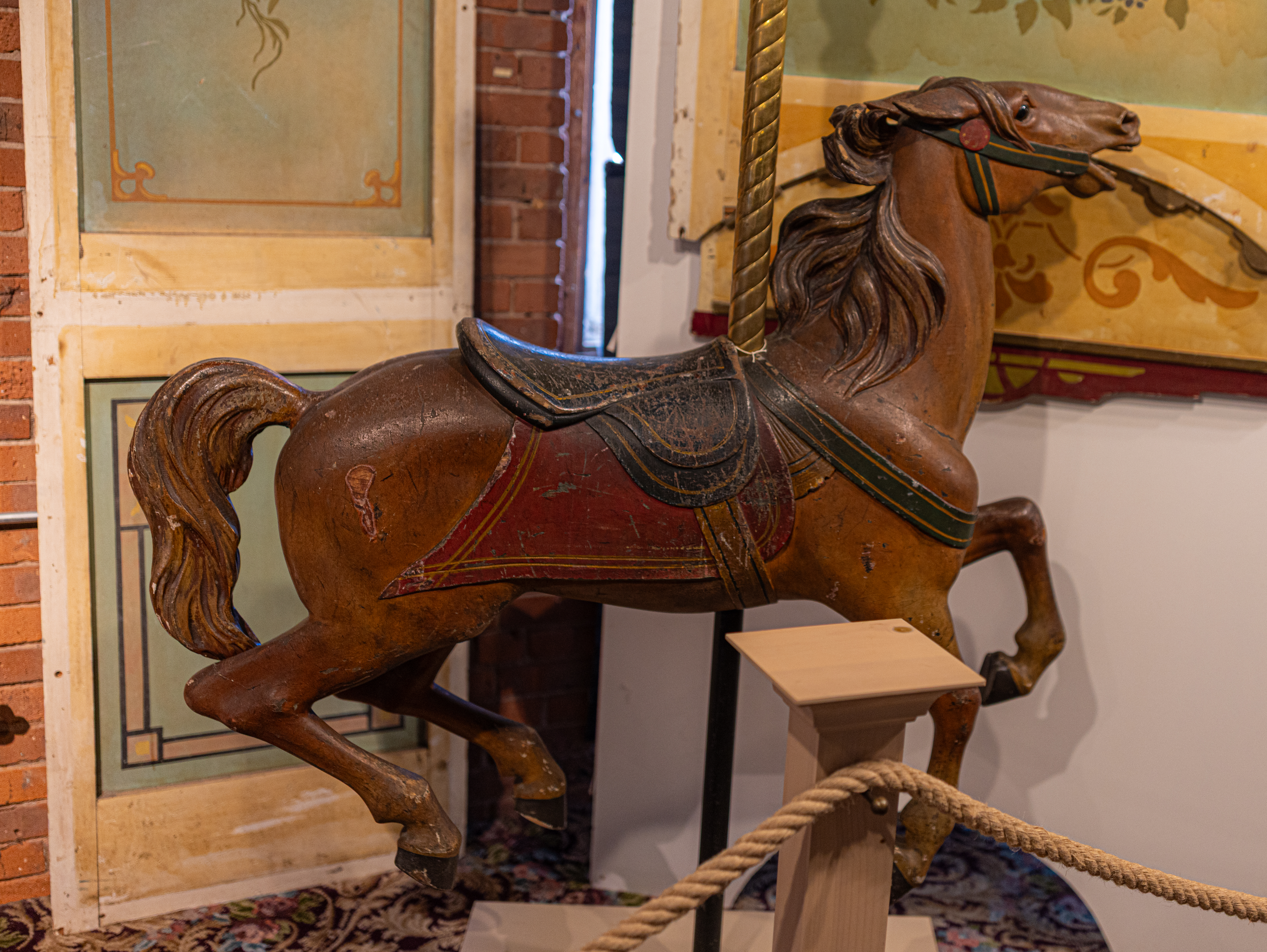
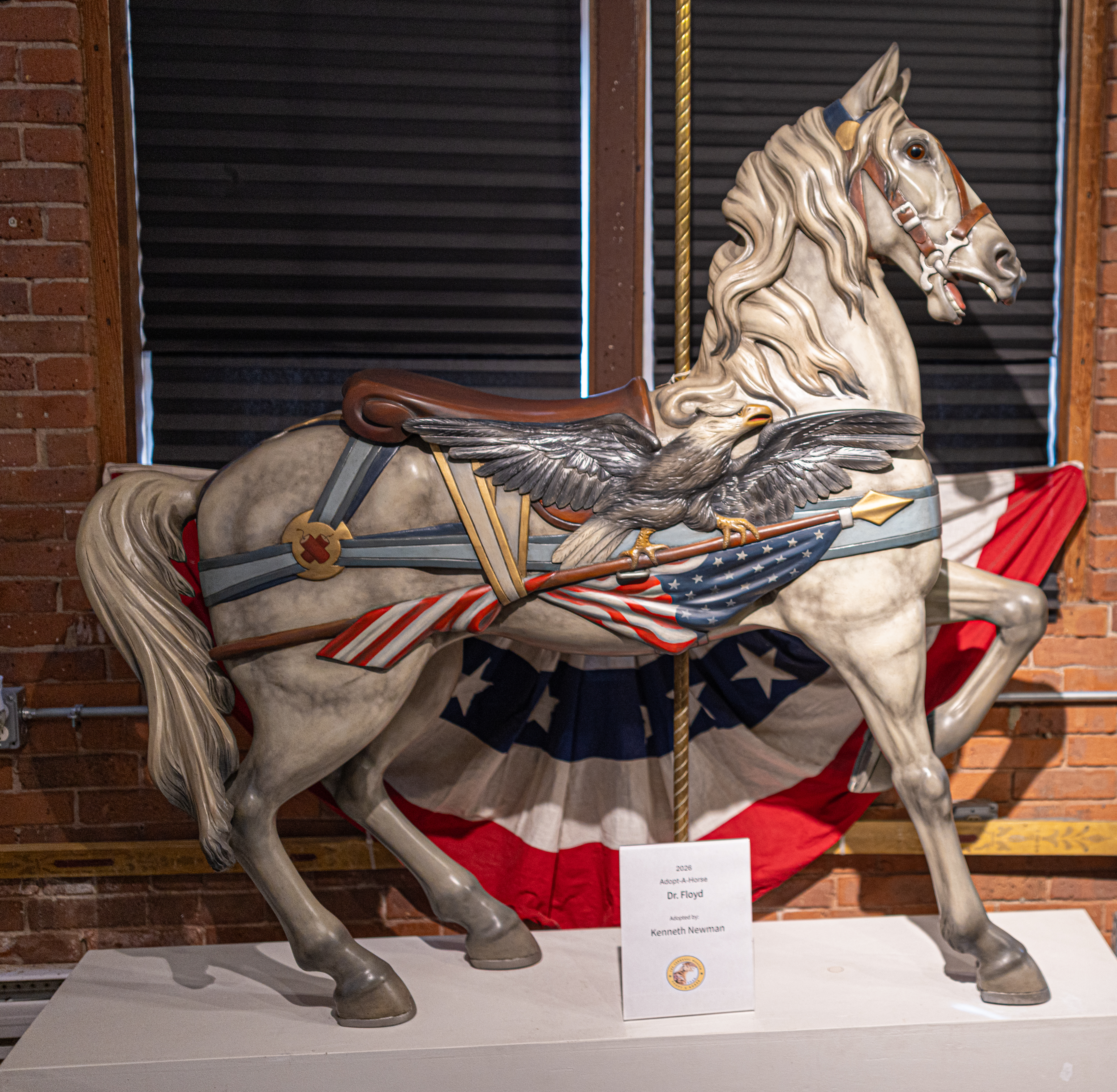
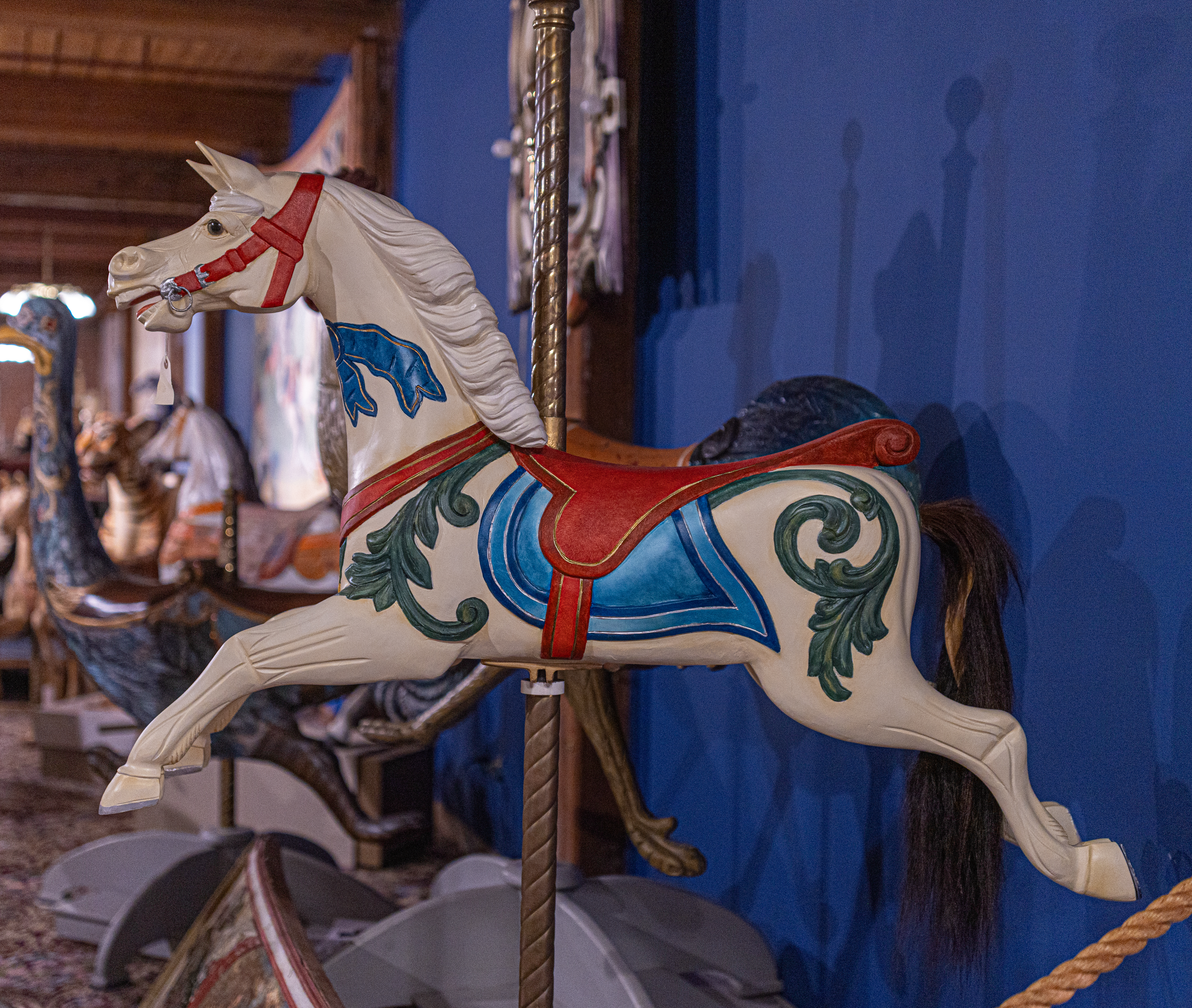
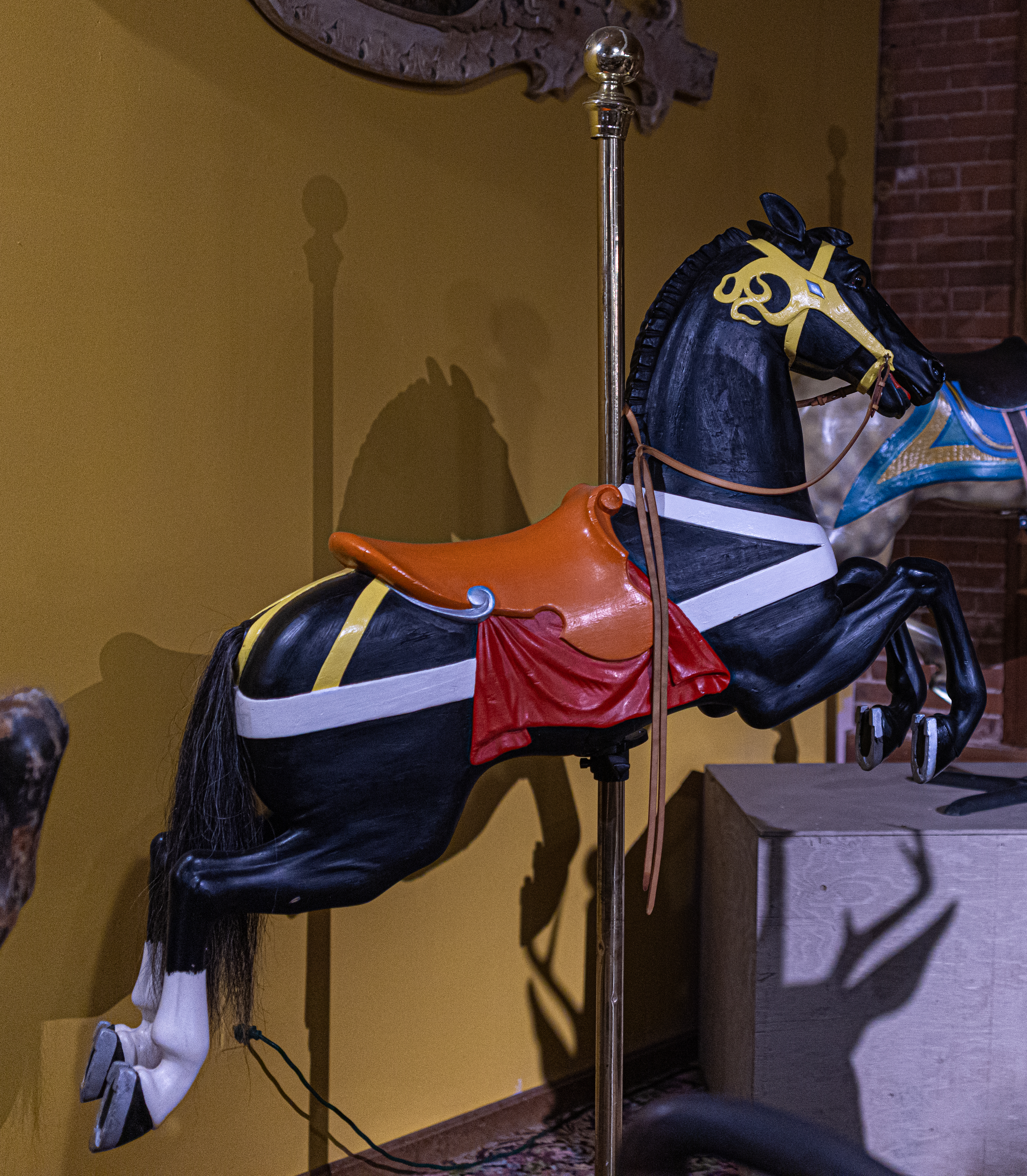
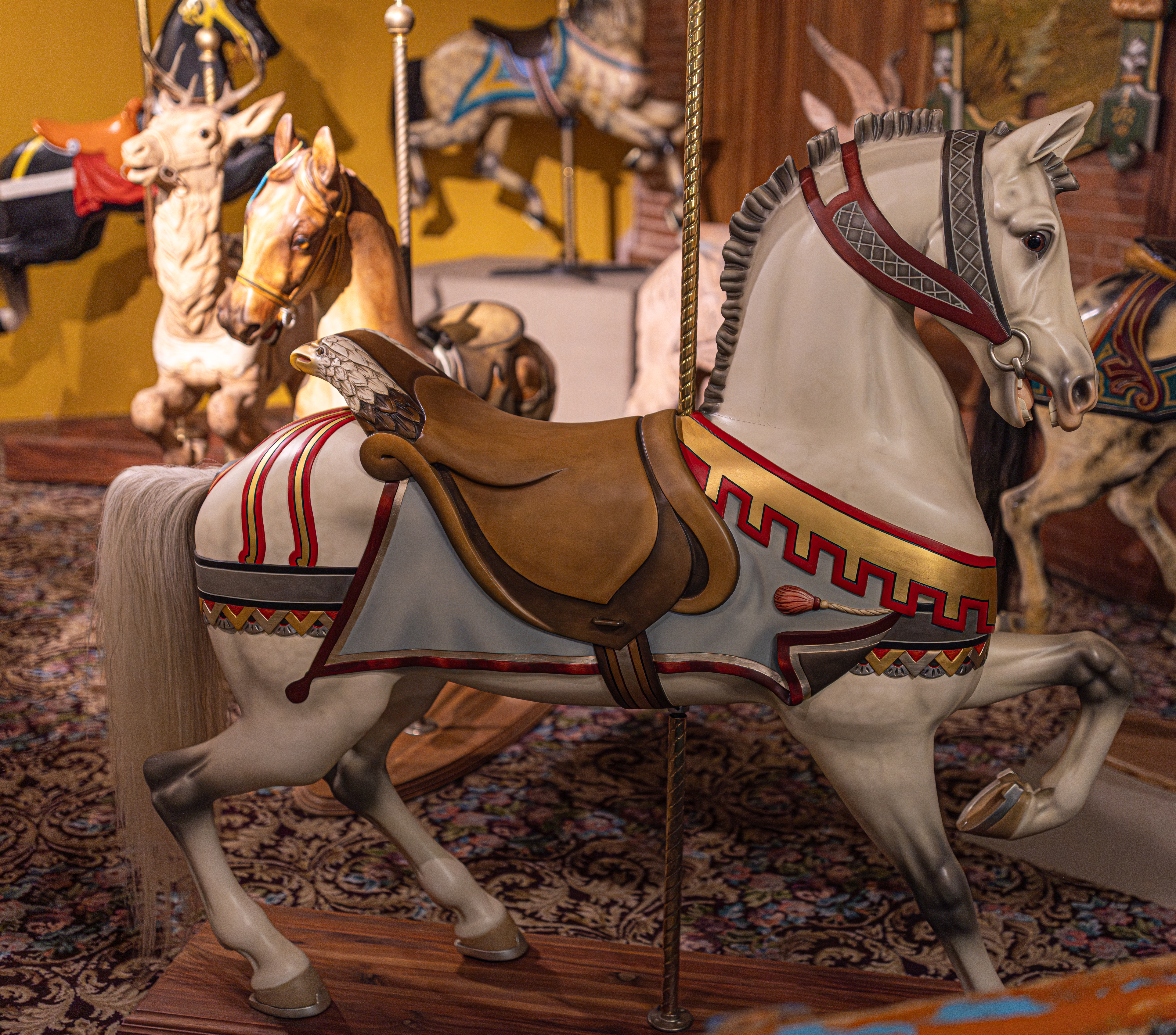
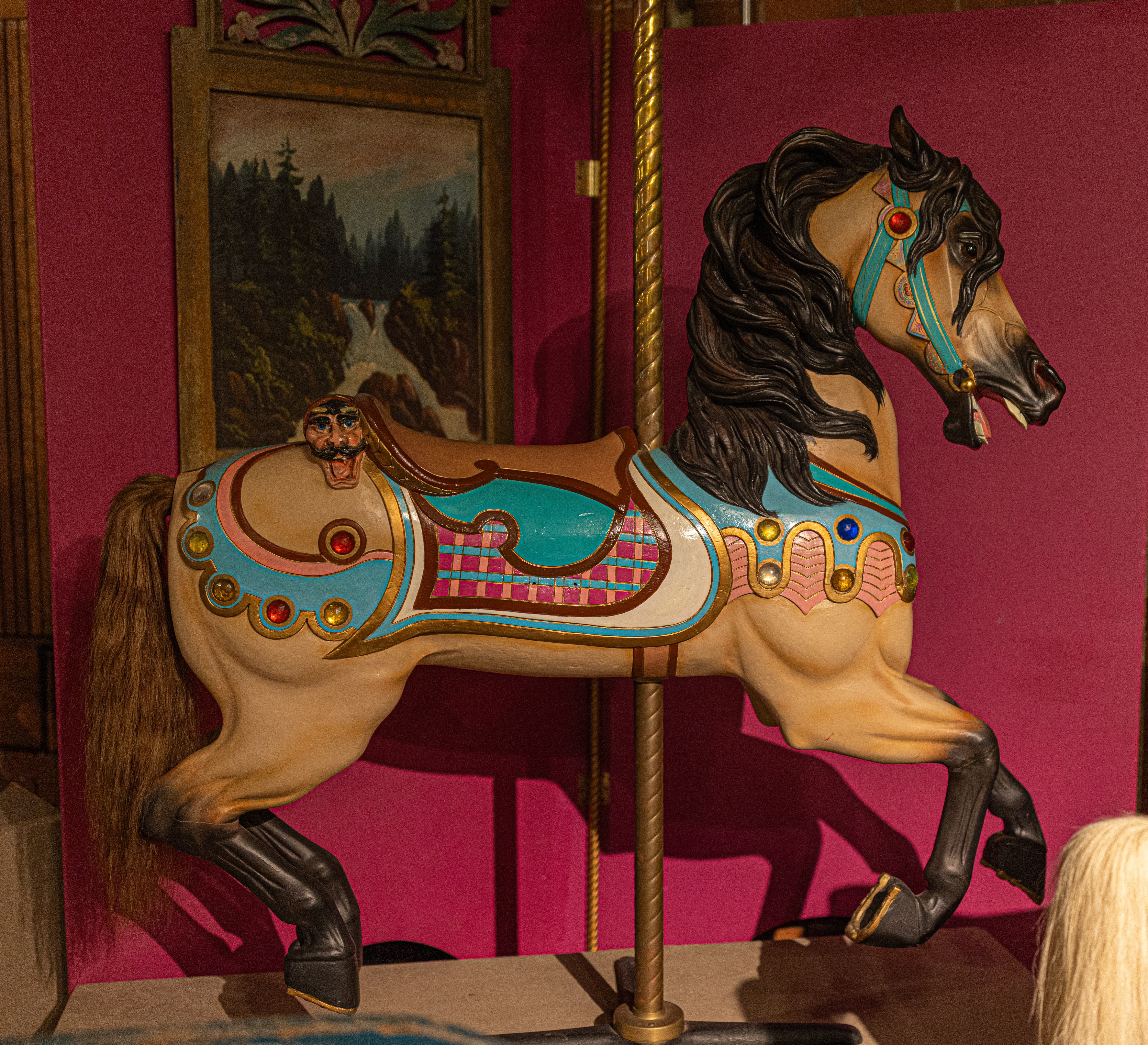
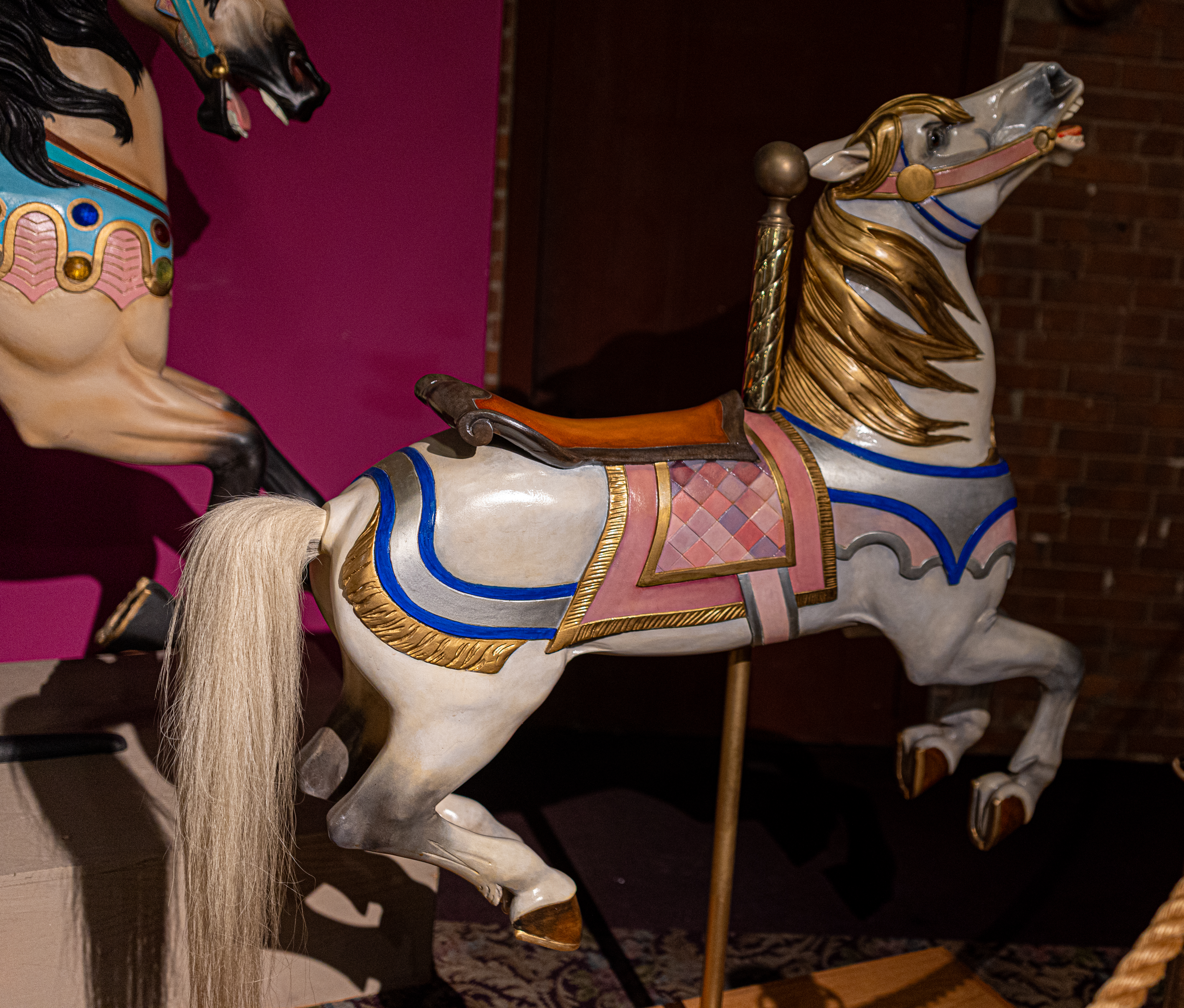
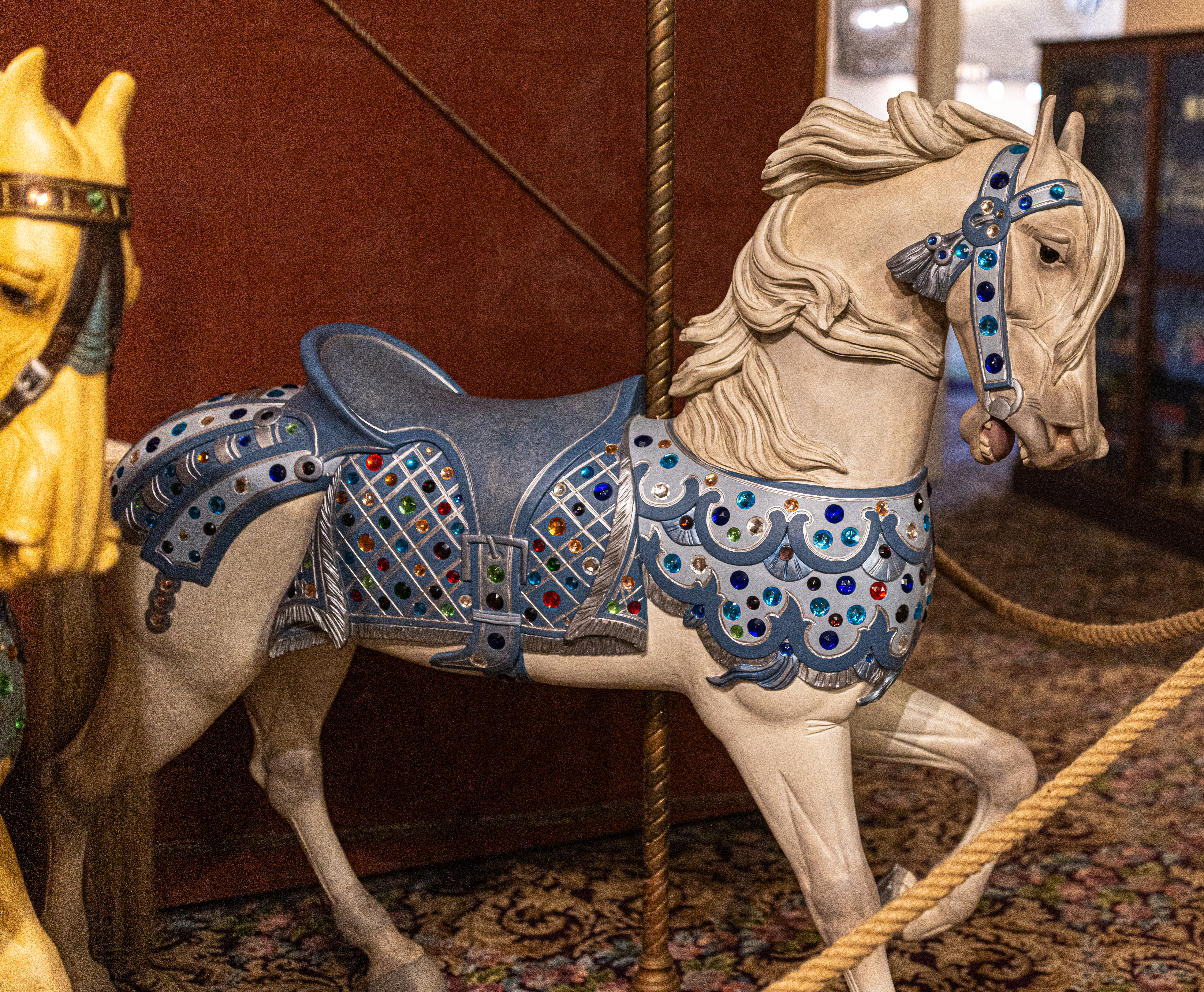
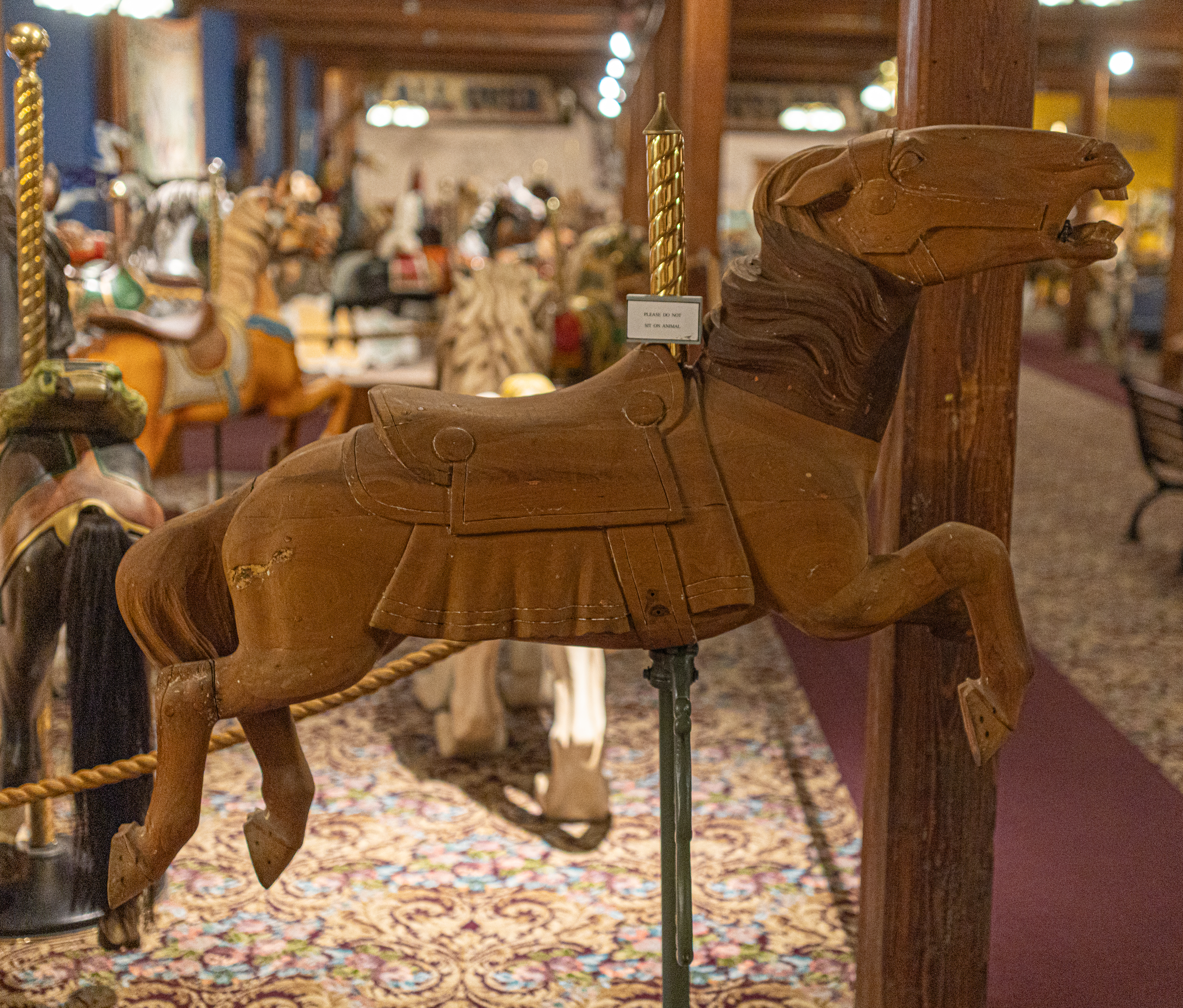
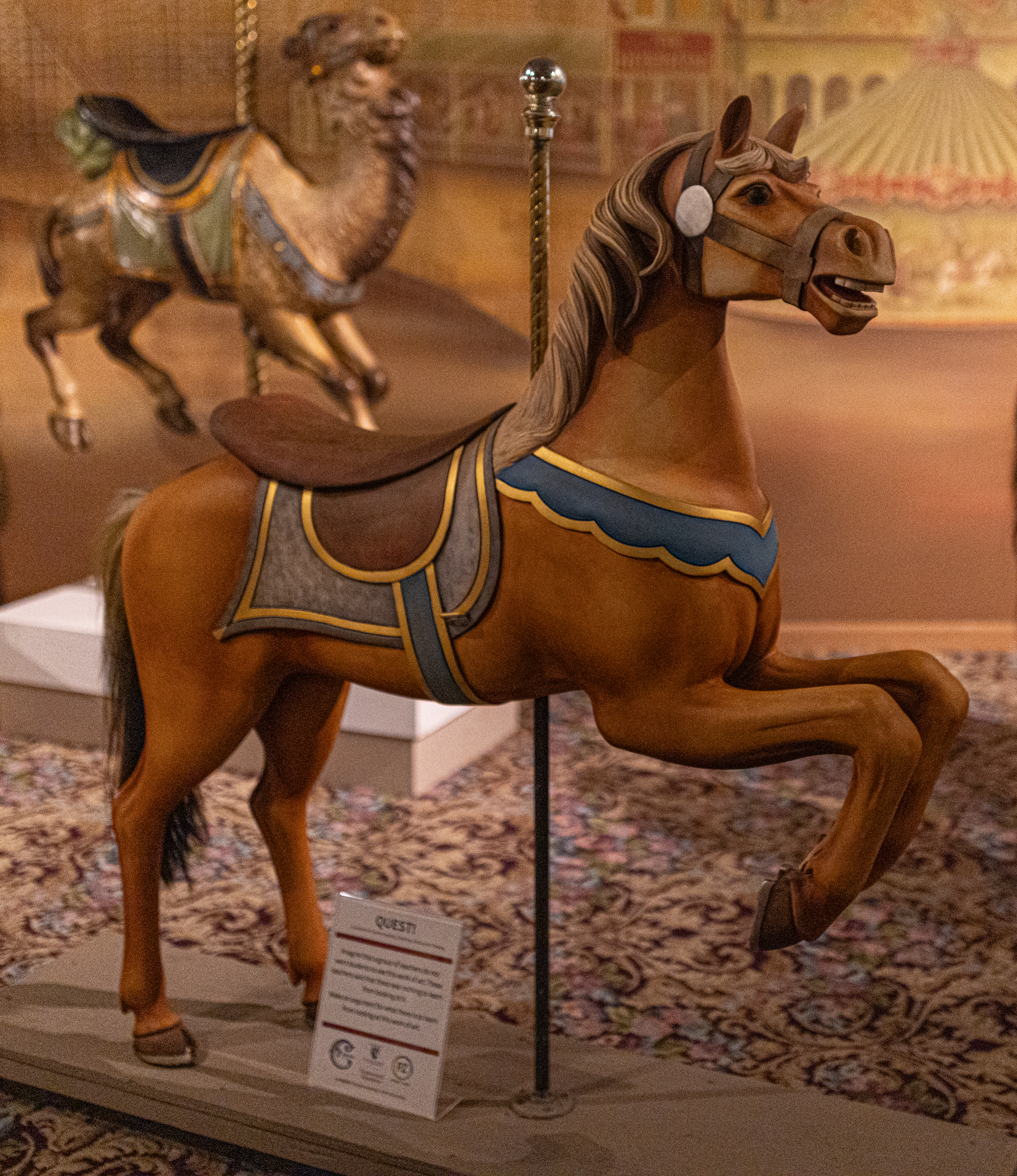
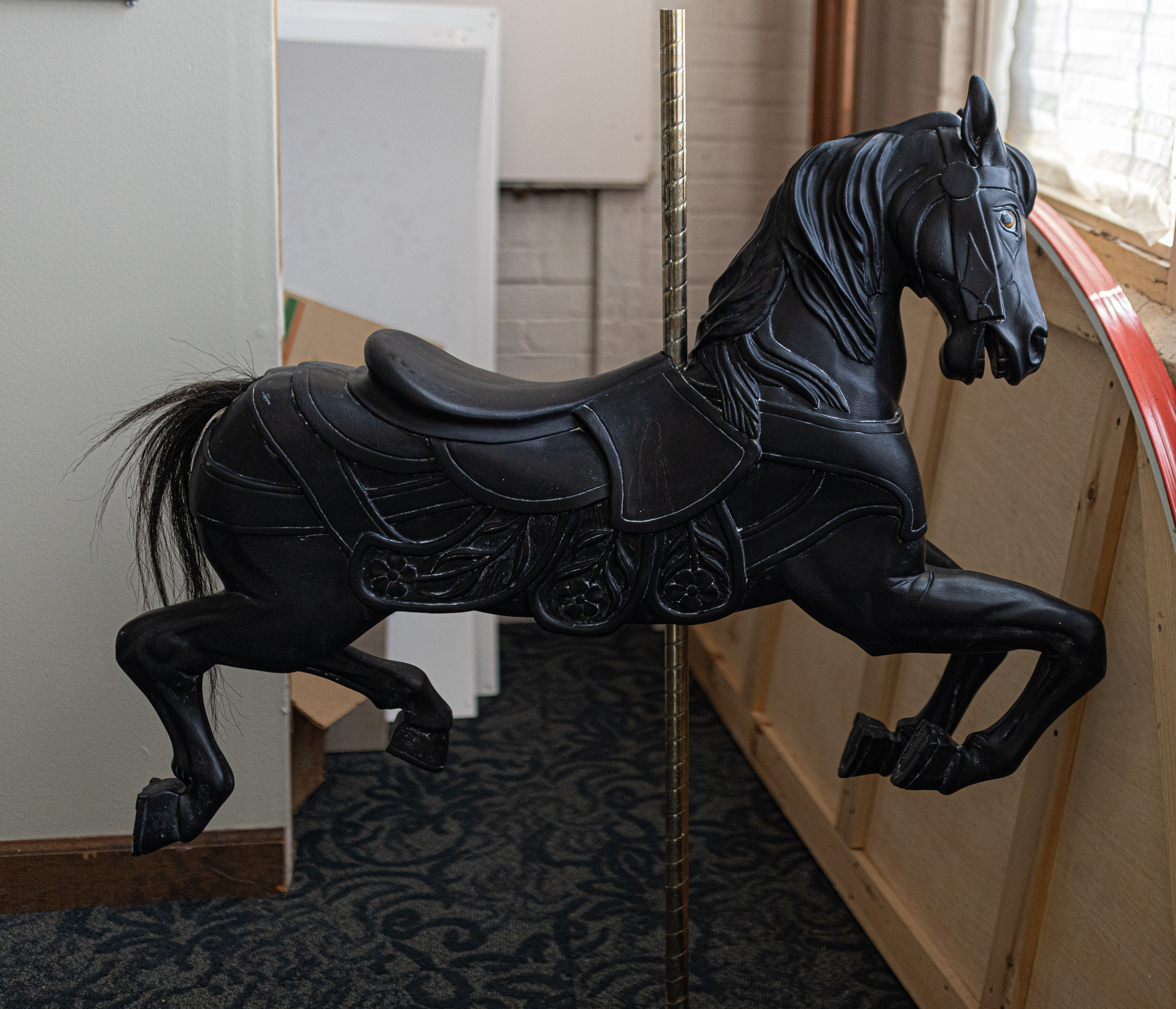
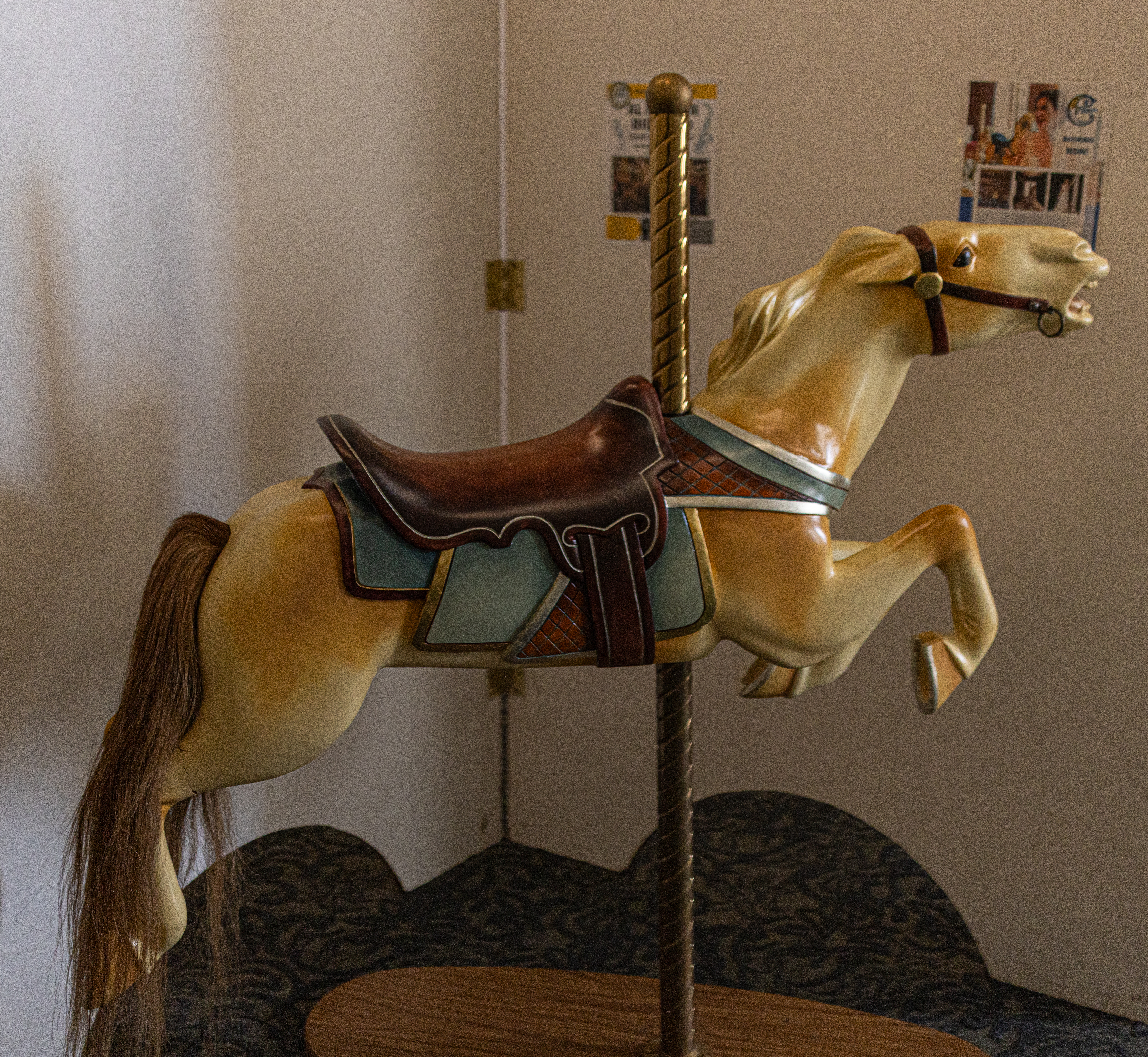
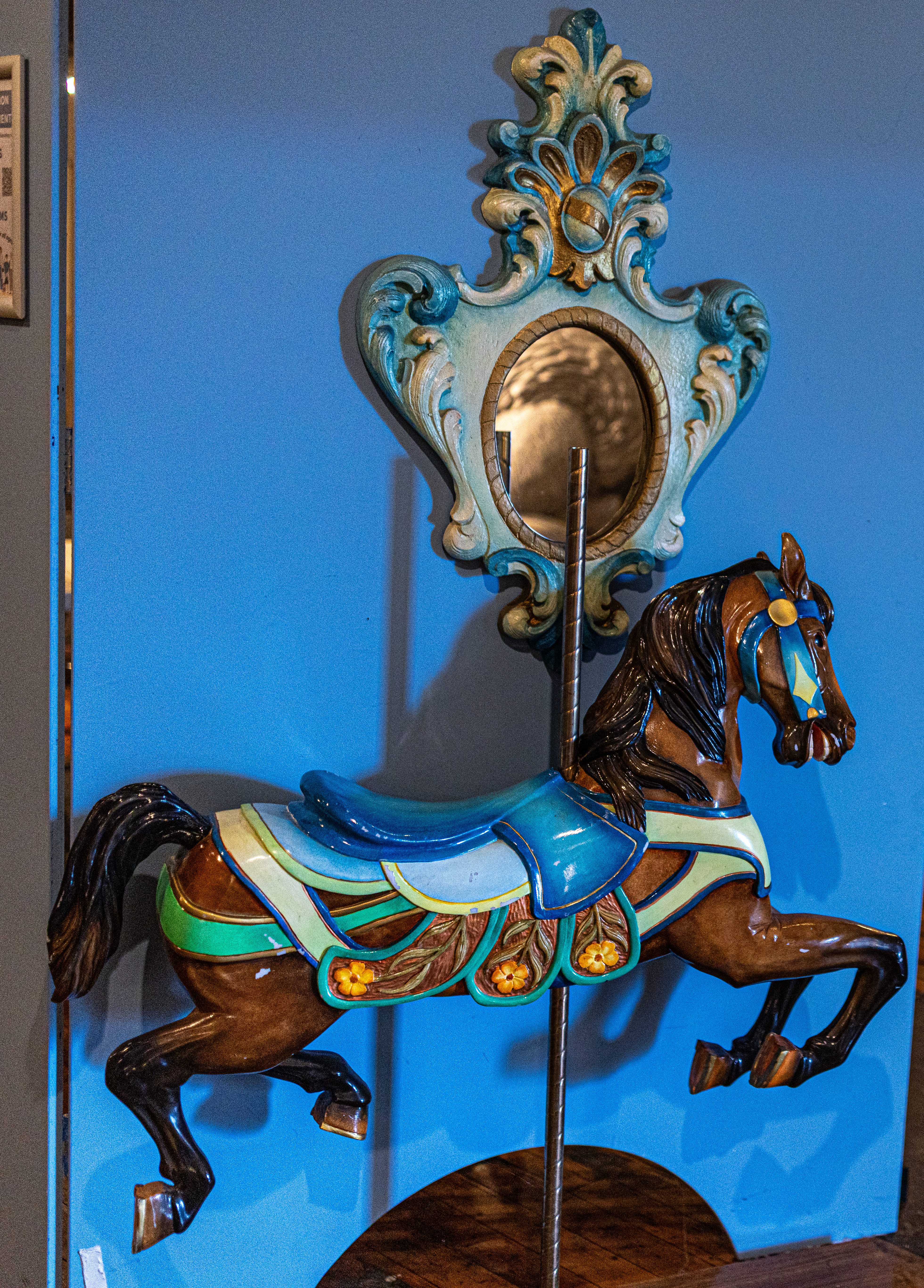
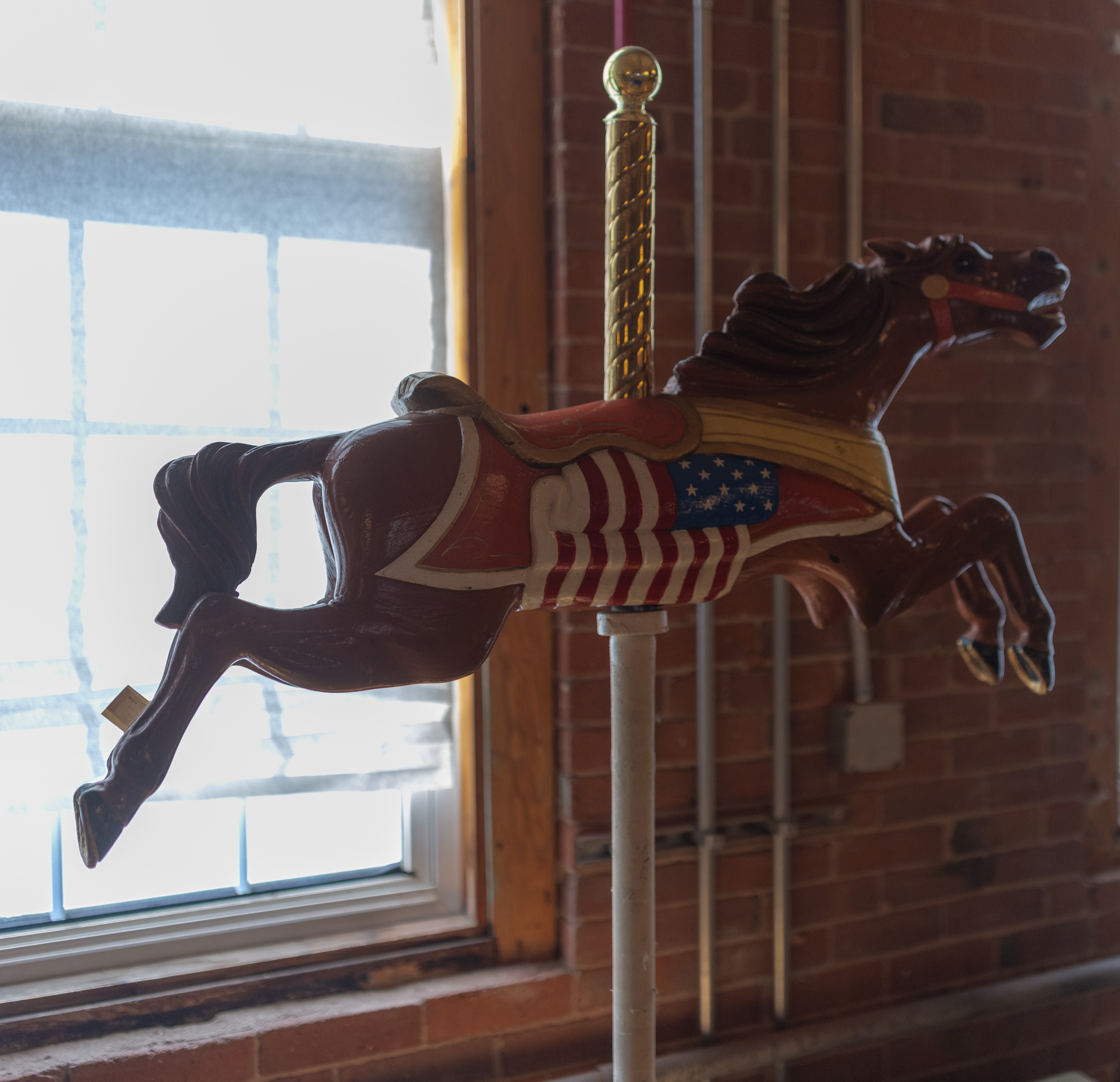
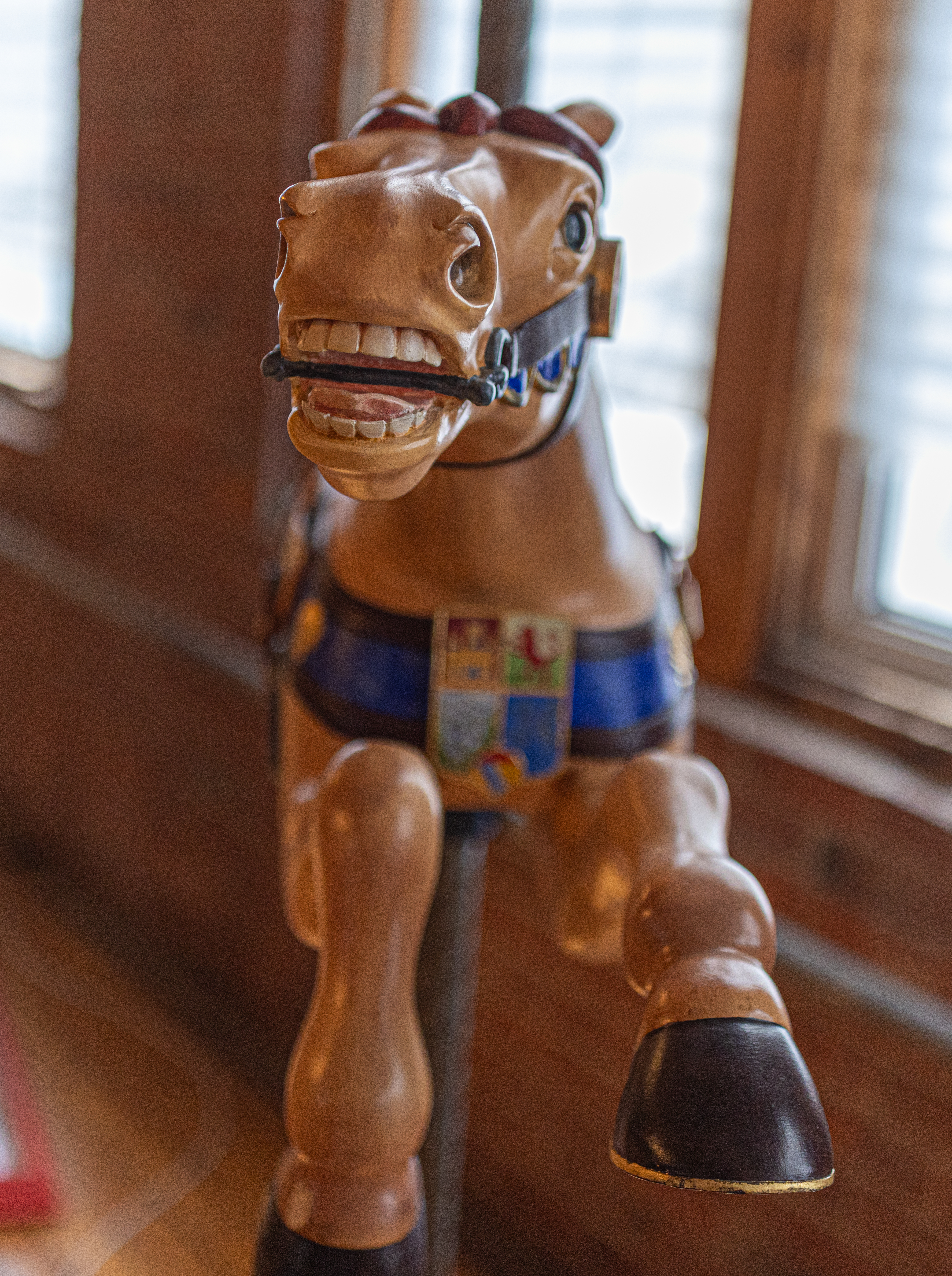
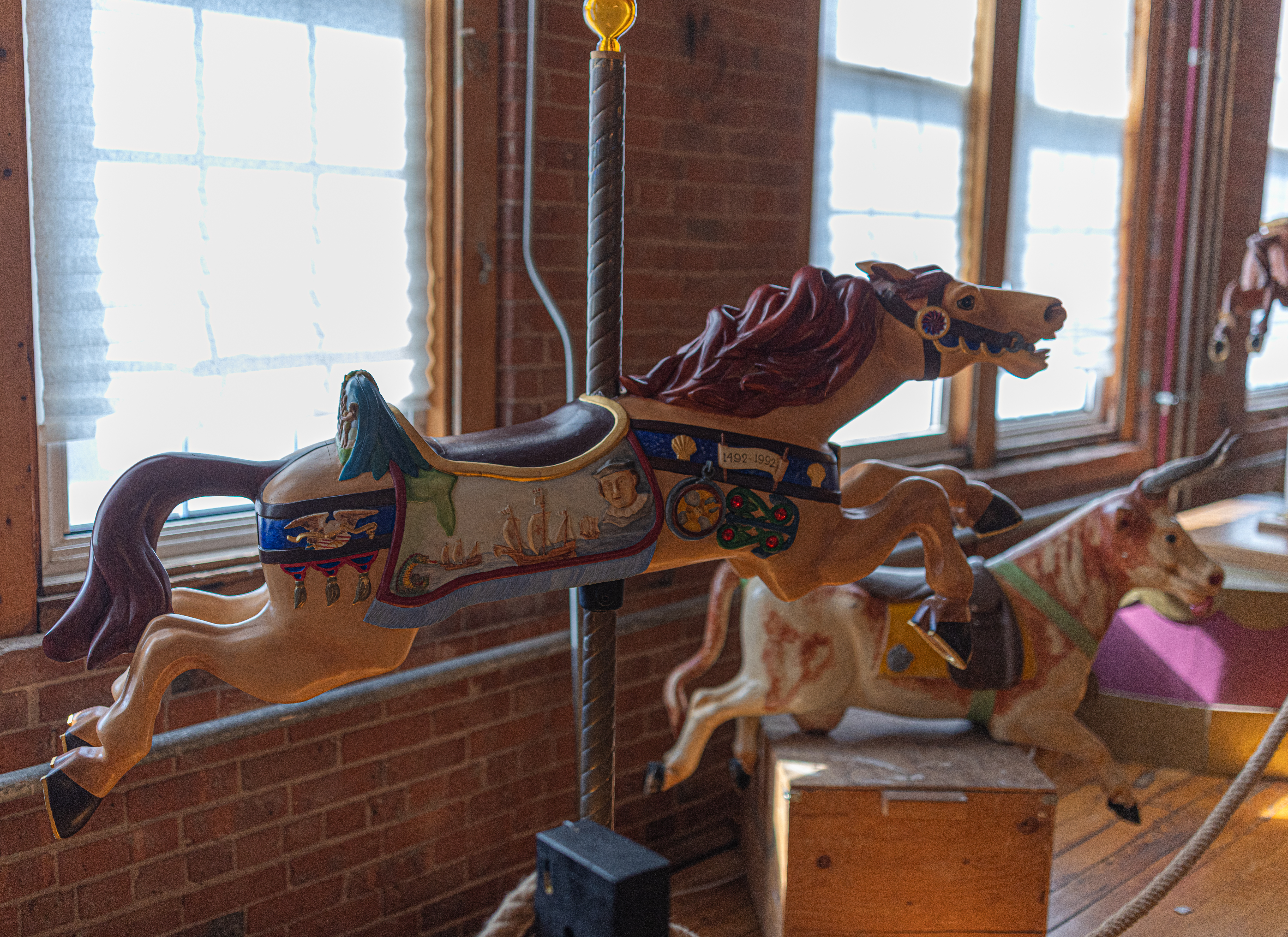
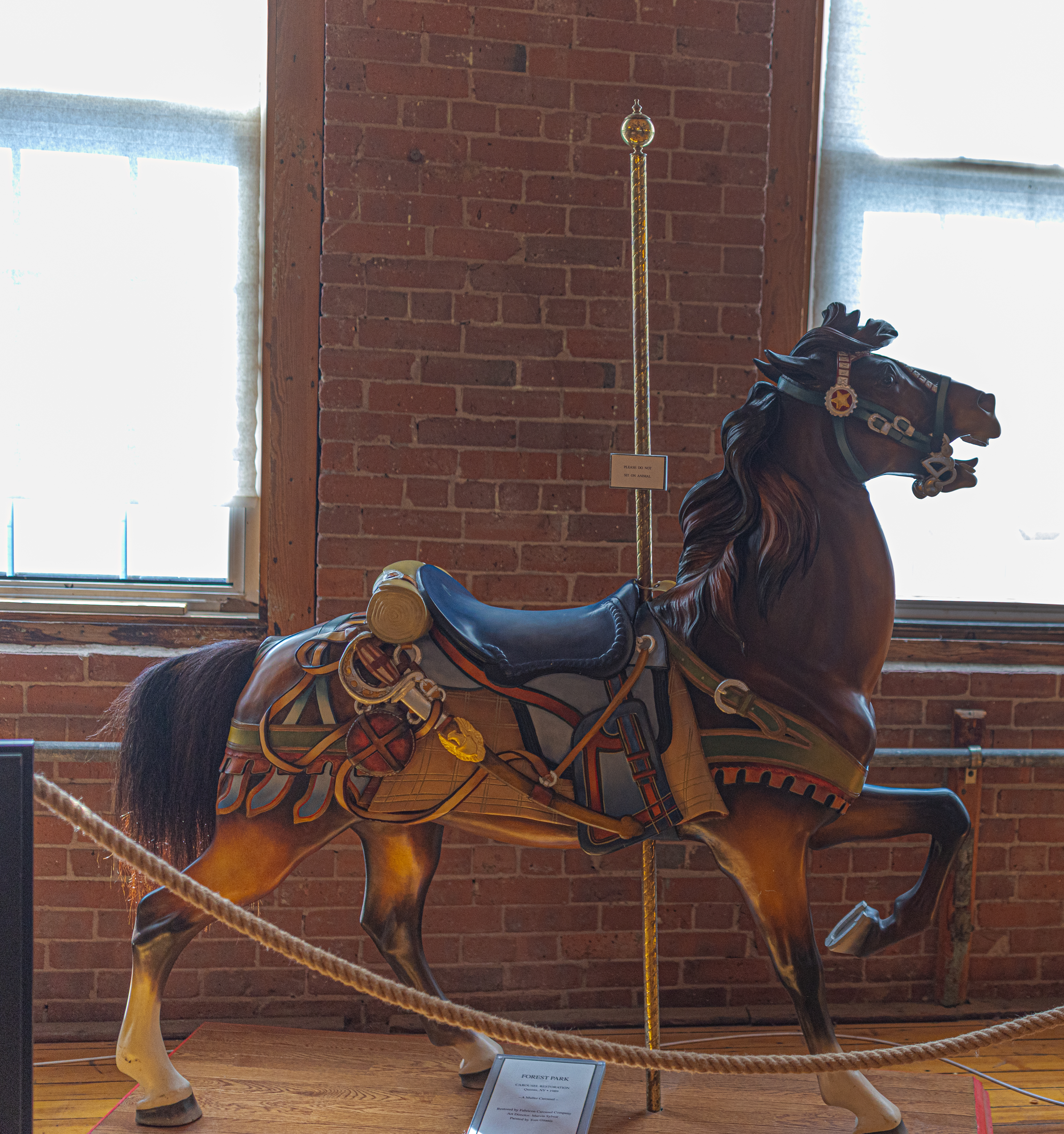
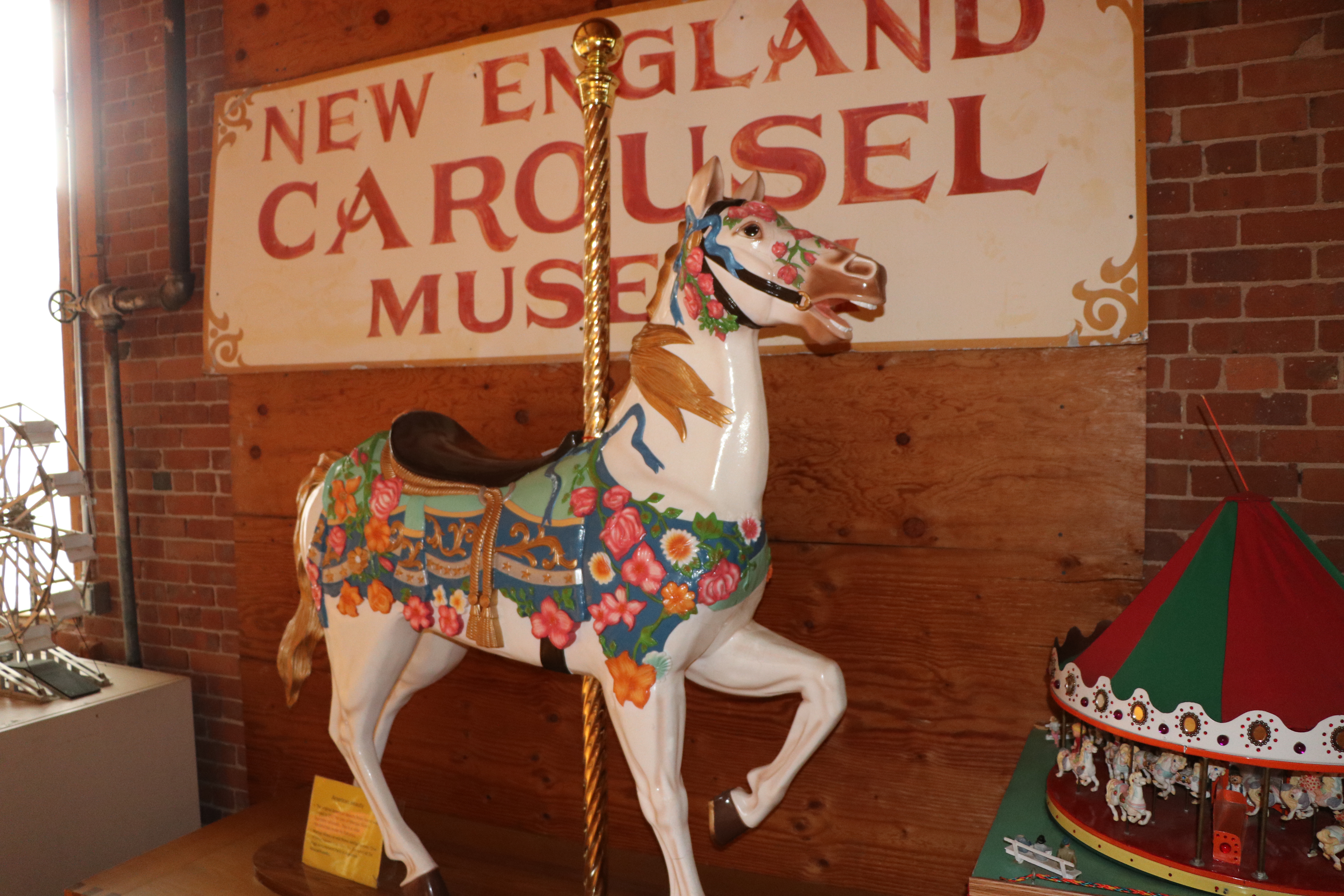
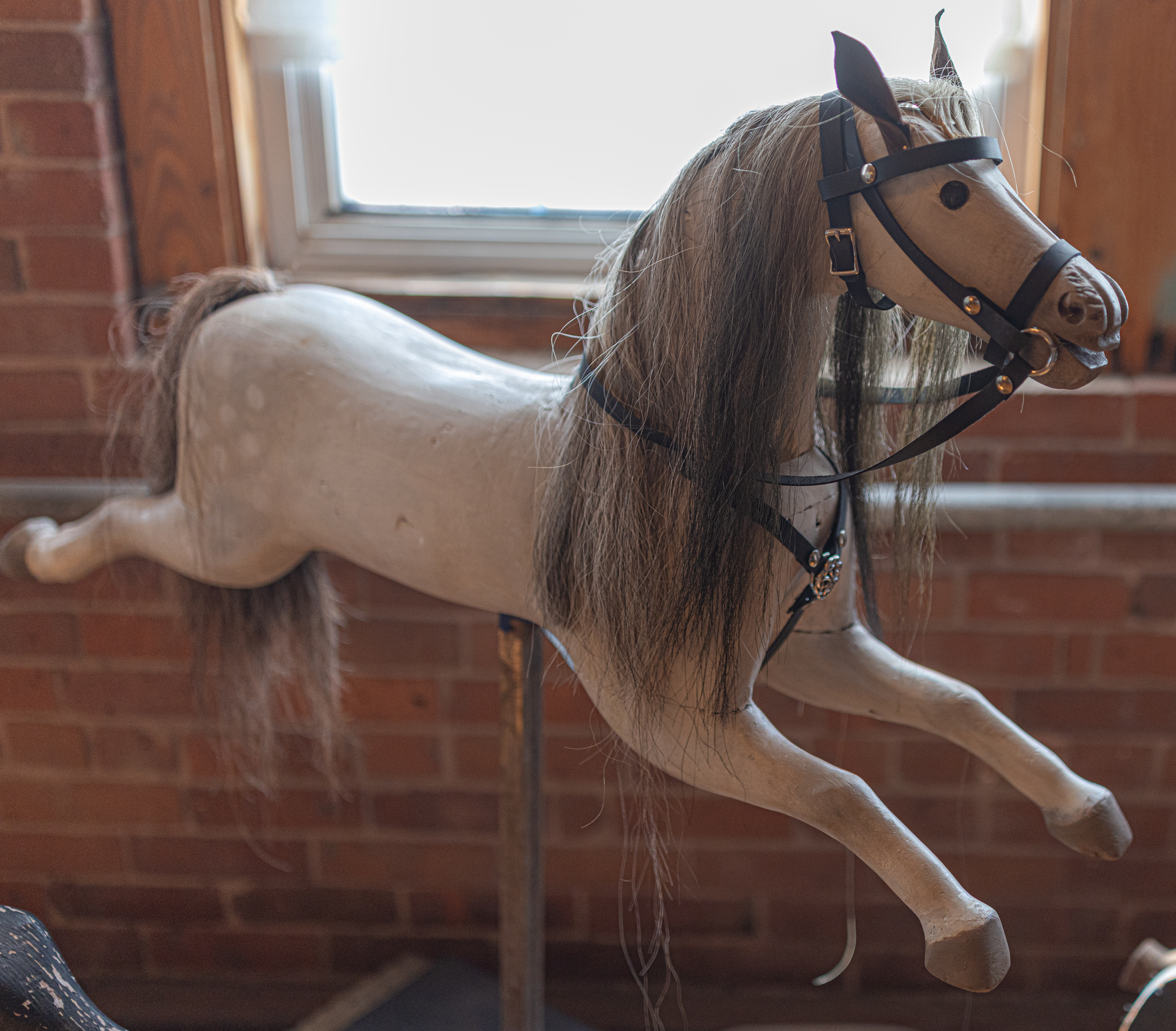
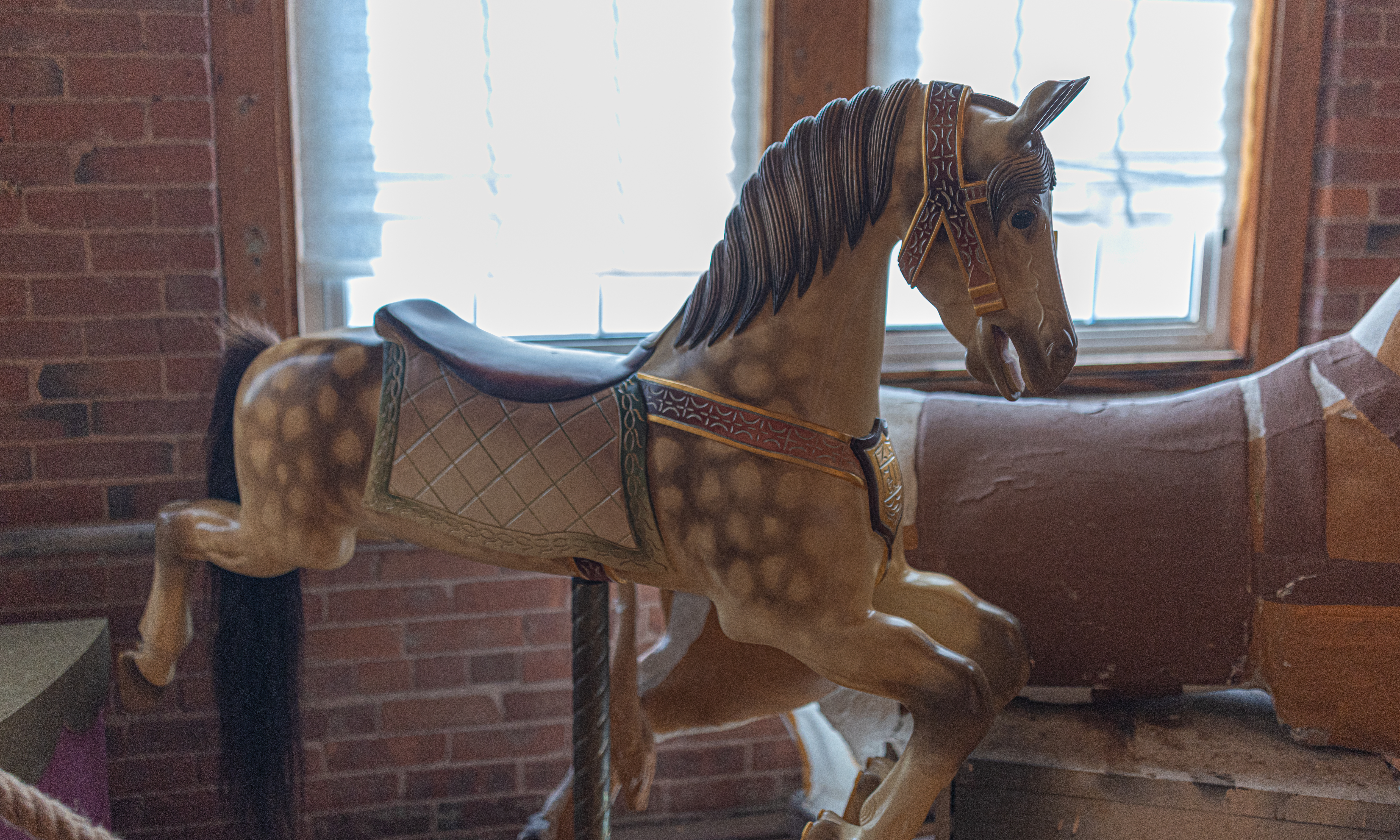
The vast majority of the carousel art is. of course, horses. There were a wide variety of different horses at the carousel museum. One thing you may notice with some of the horses is the use of real horse hair for their tails.

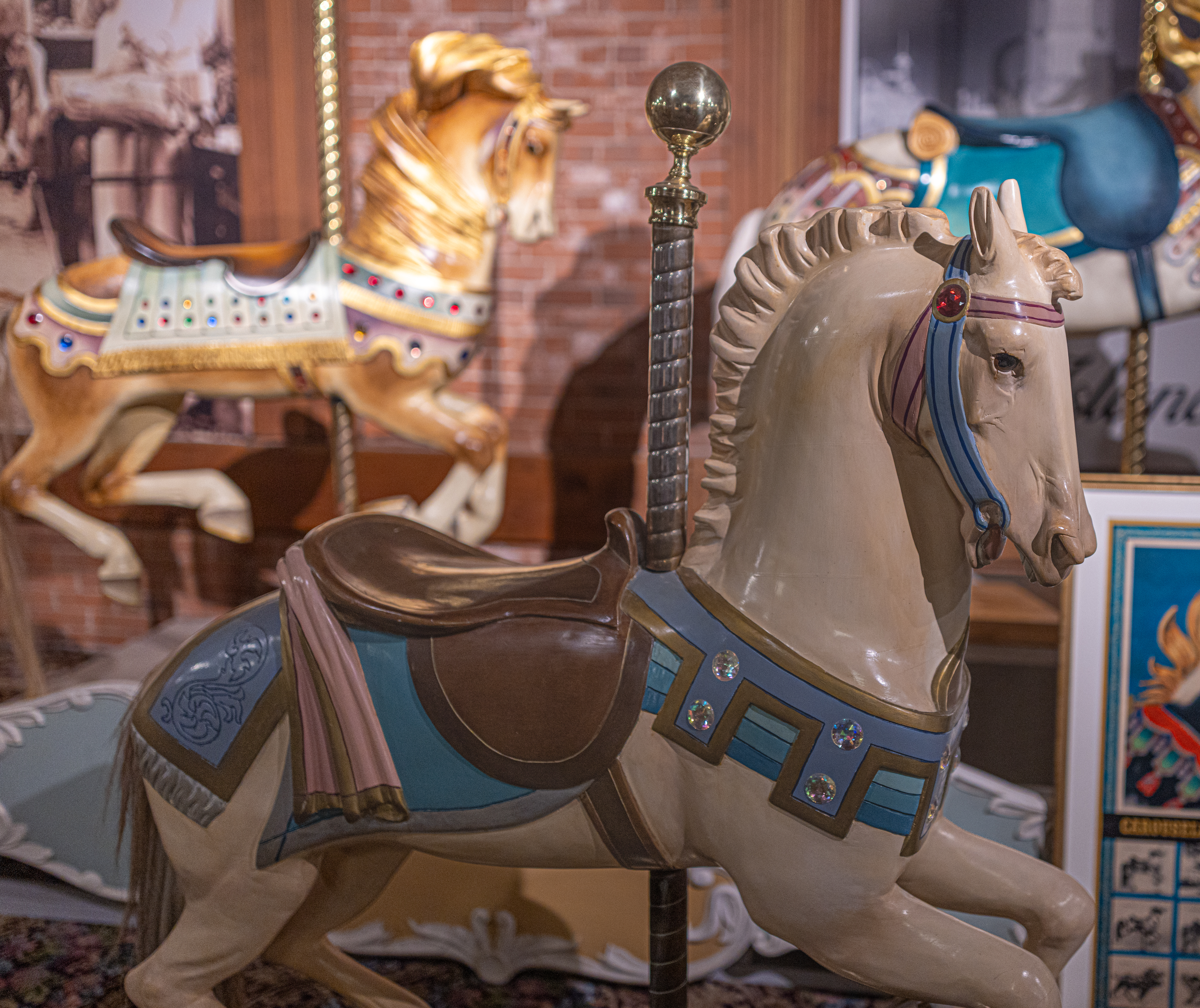
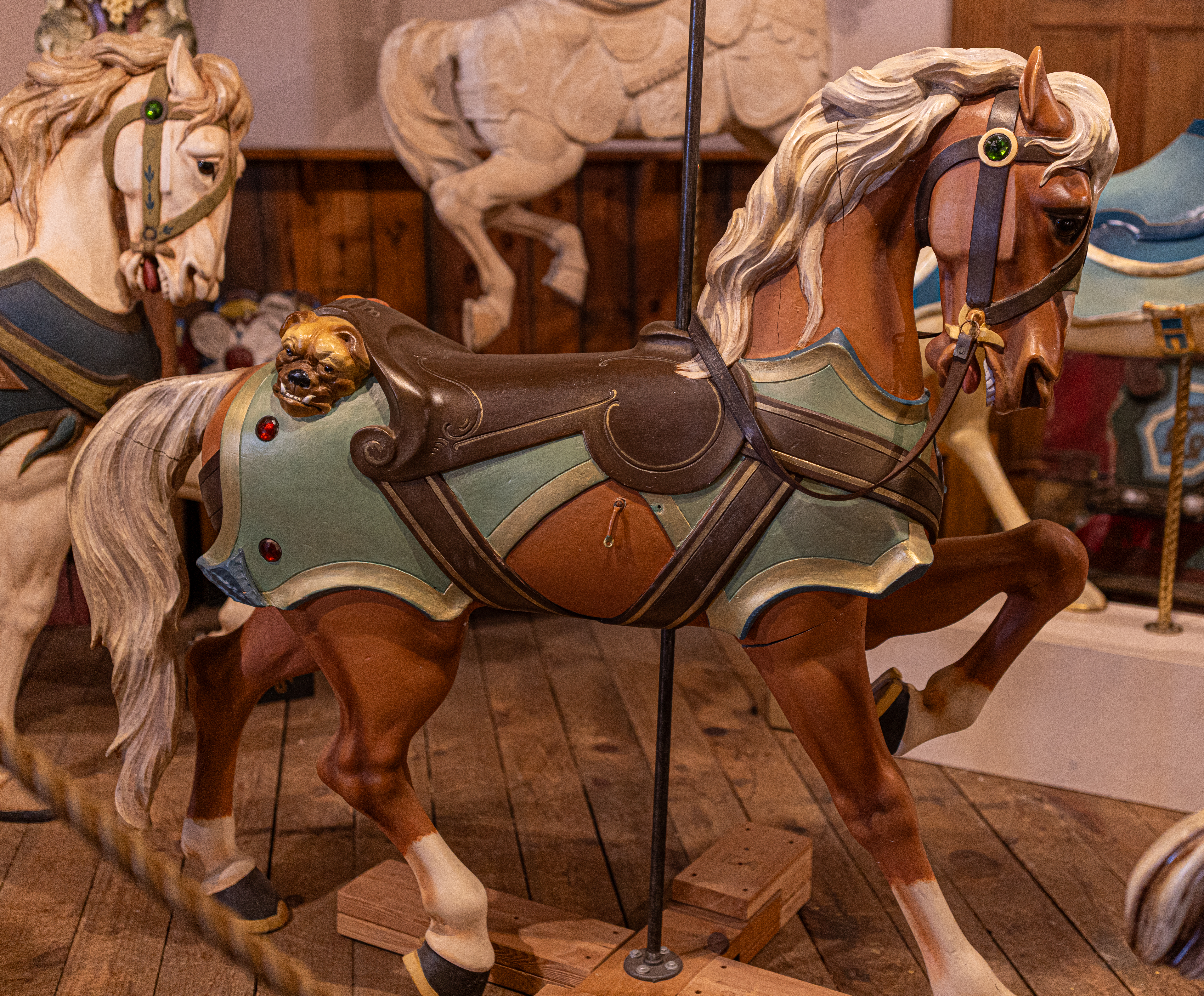
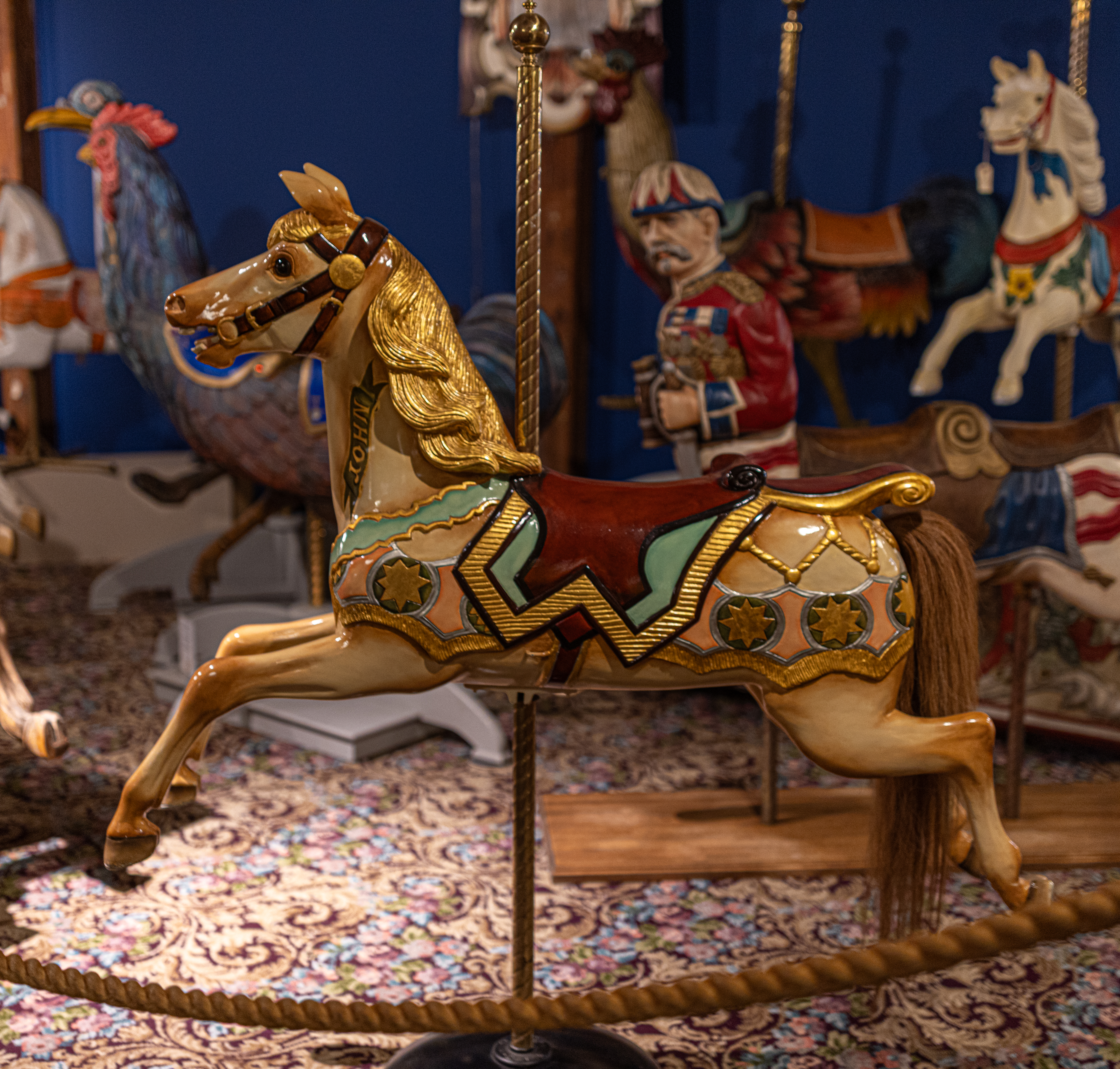
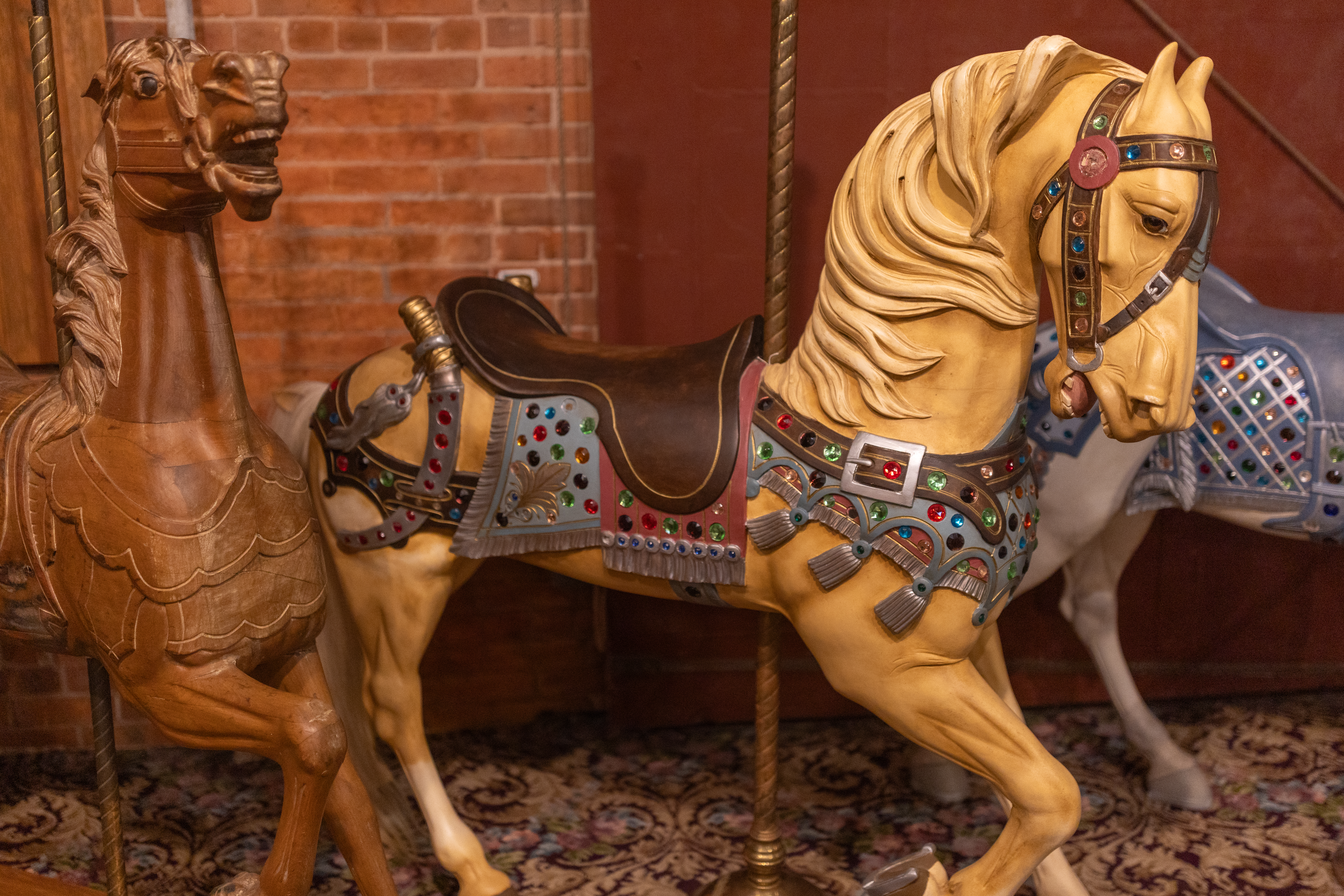
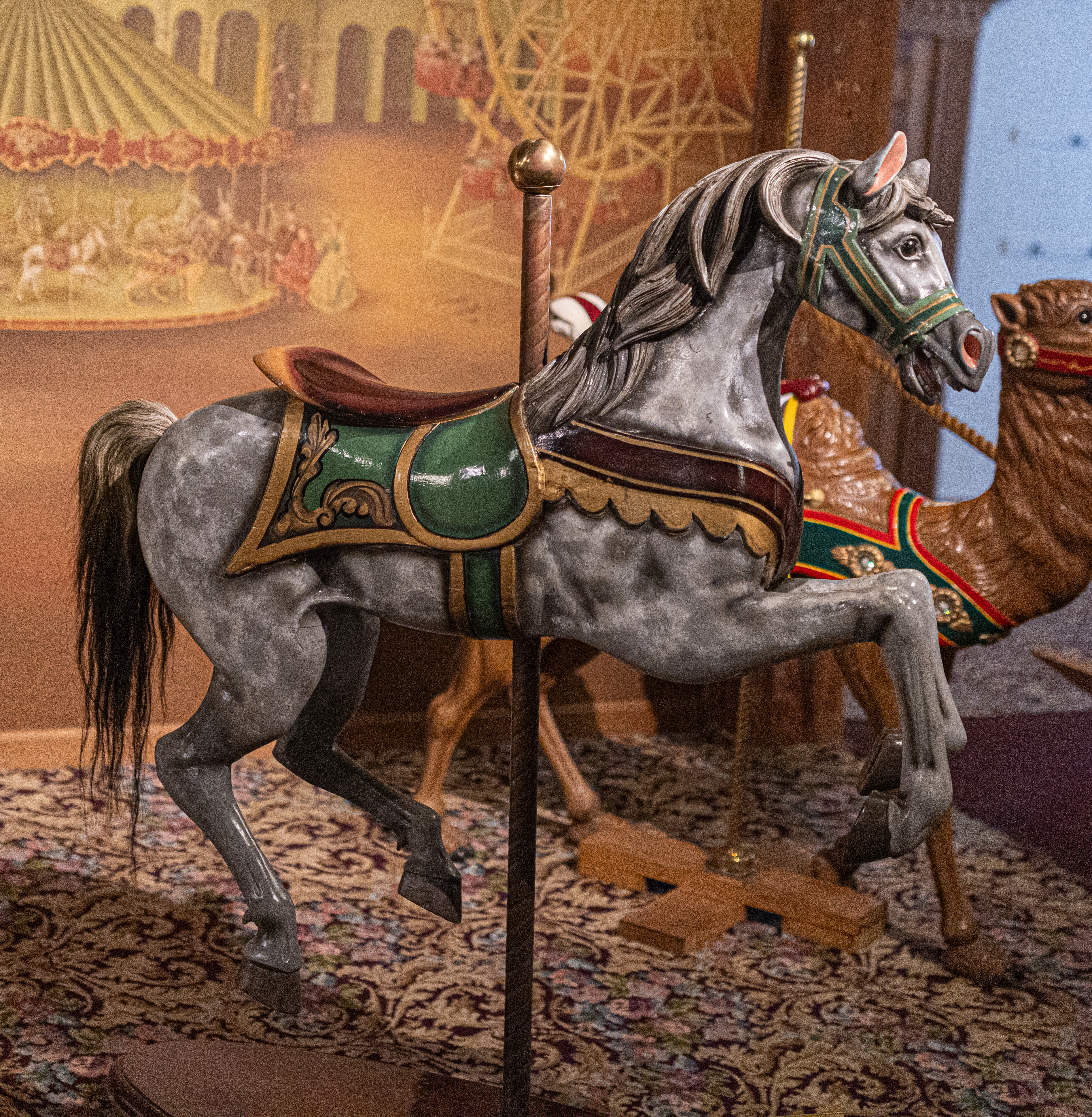
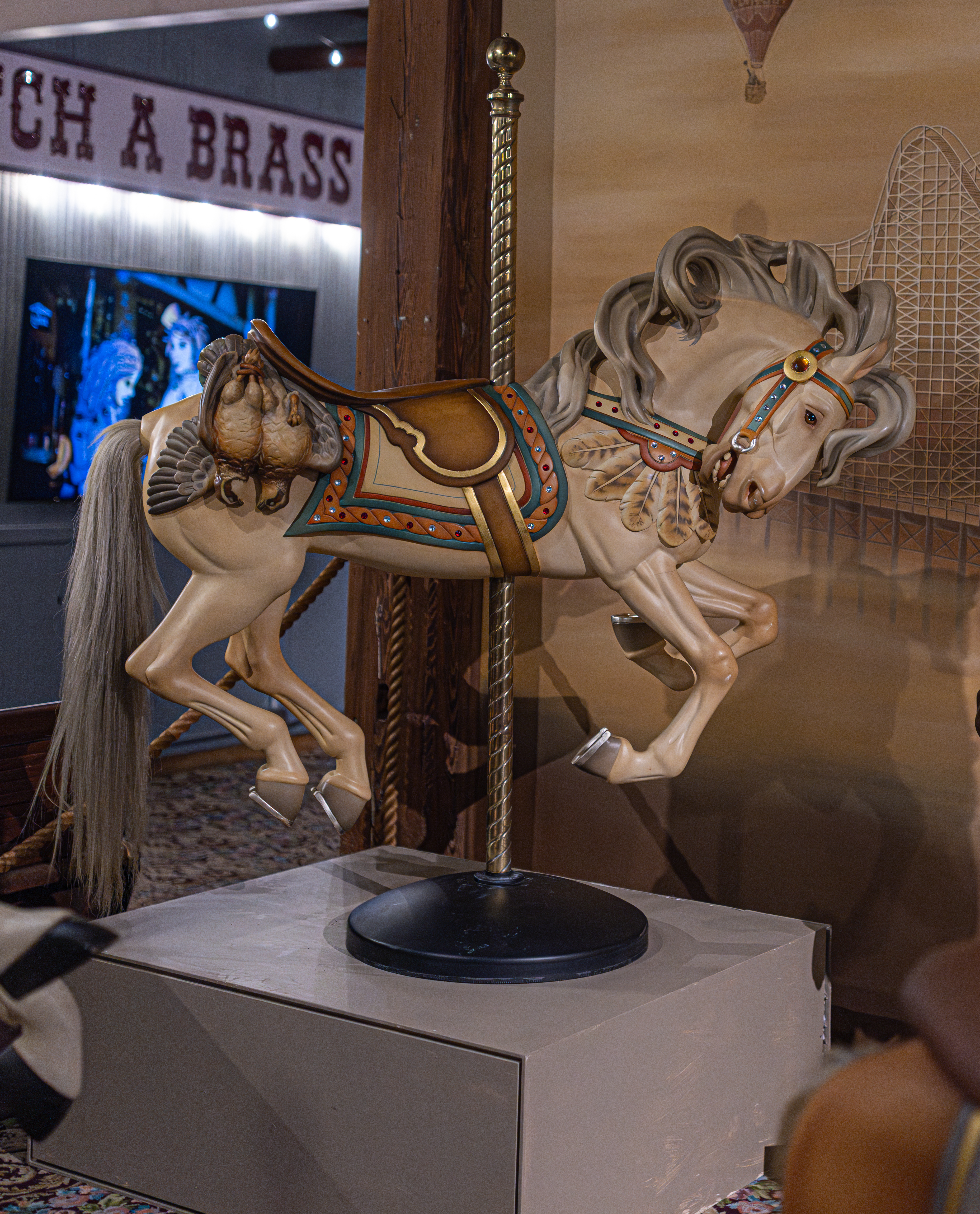
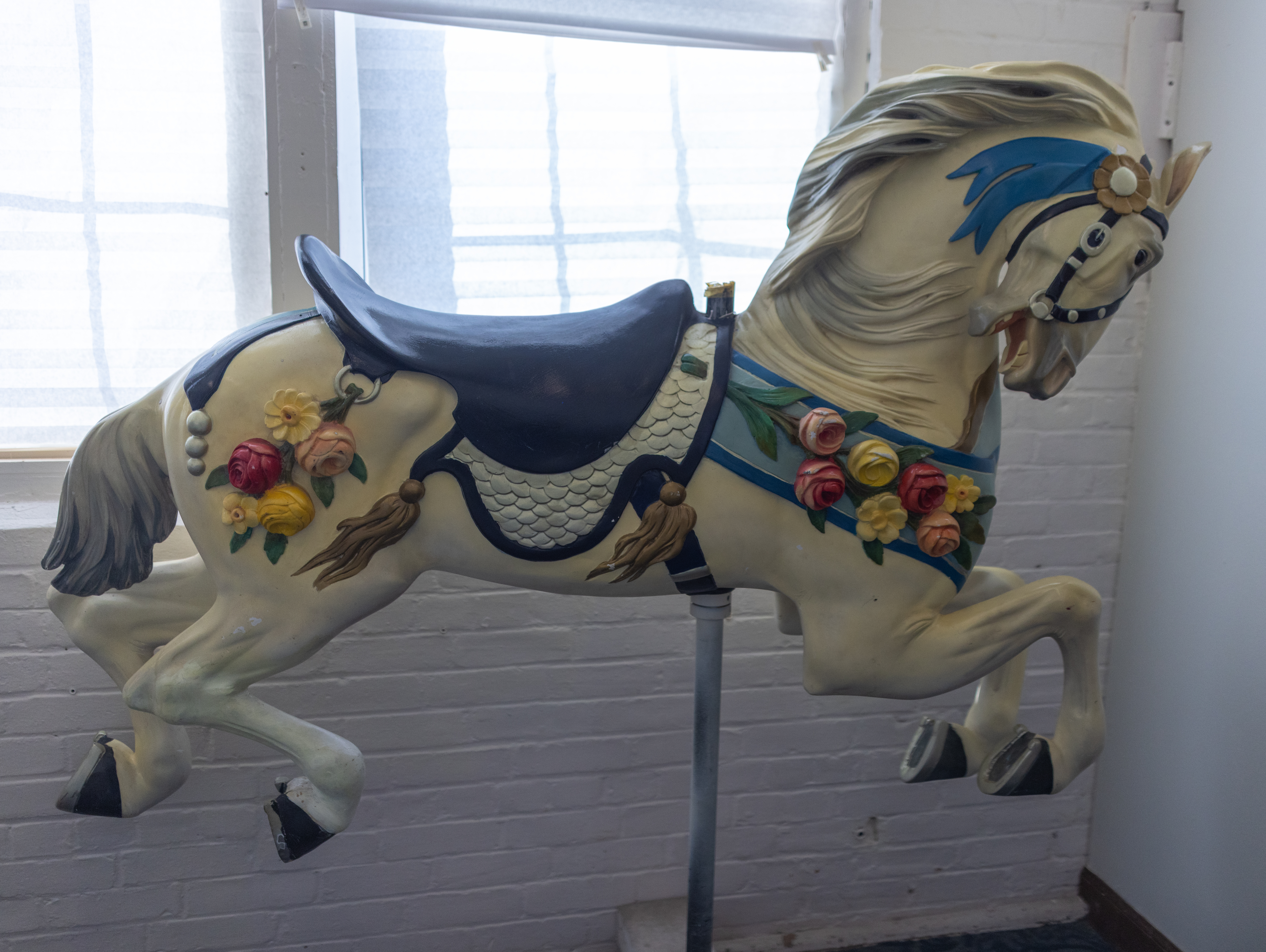
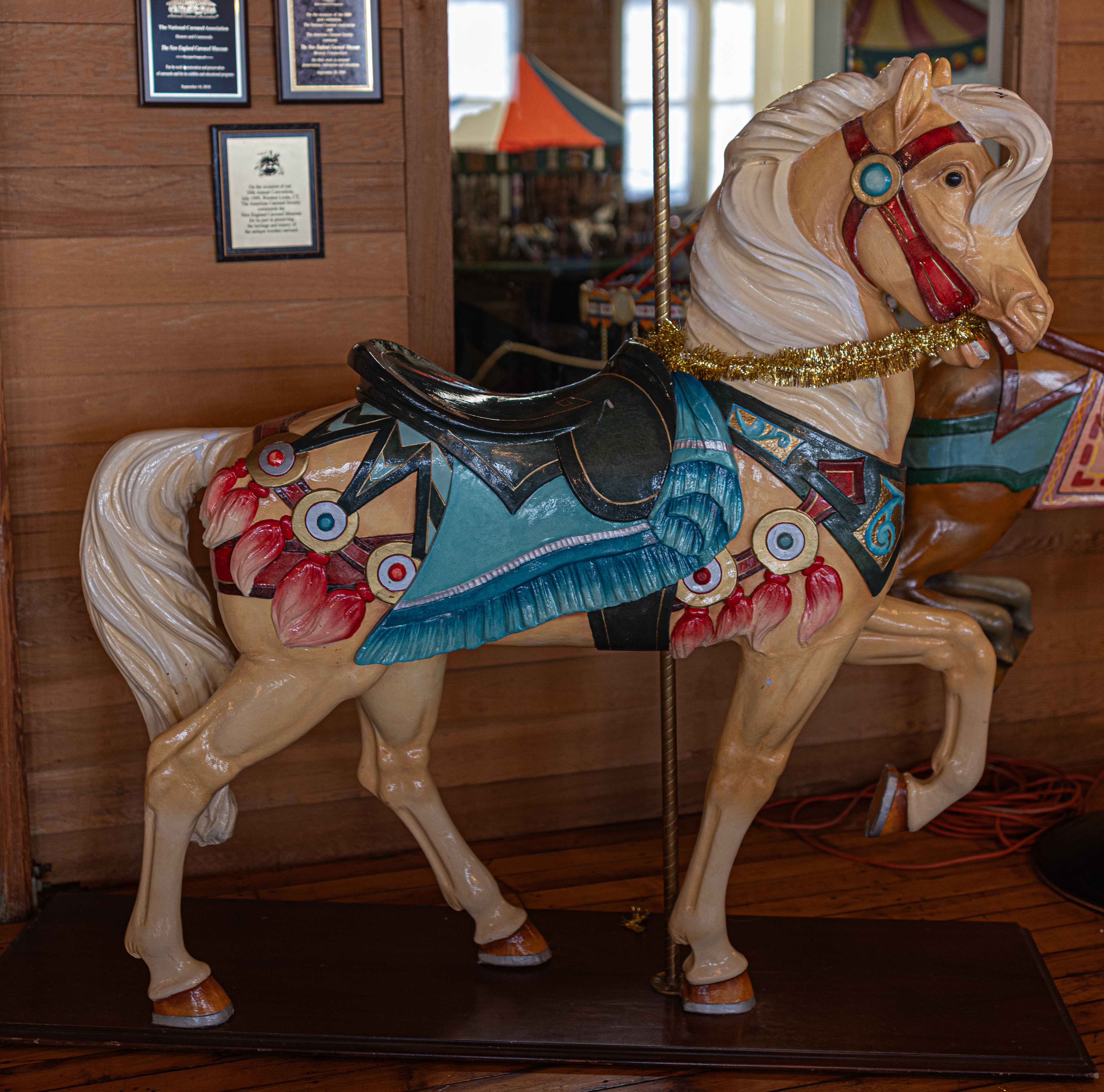
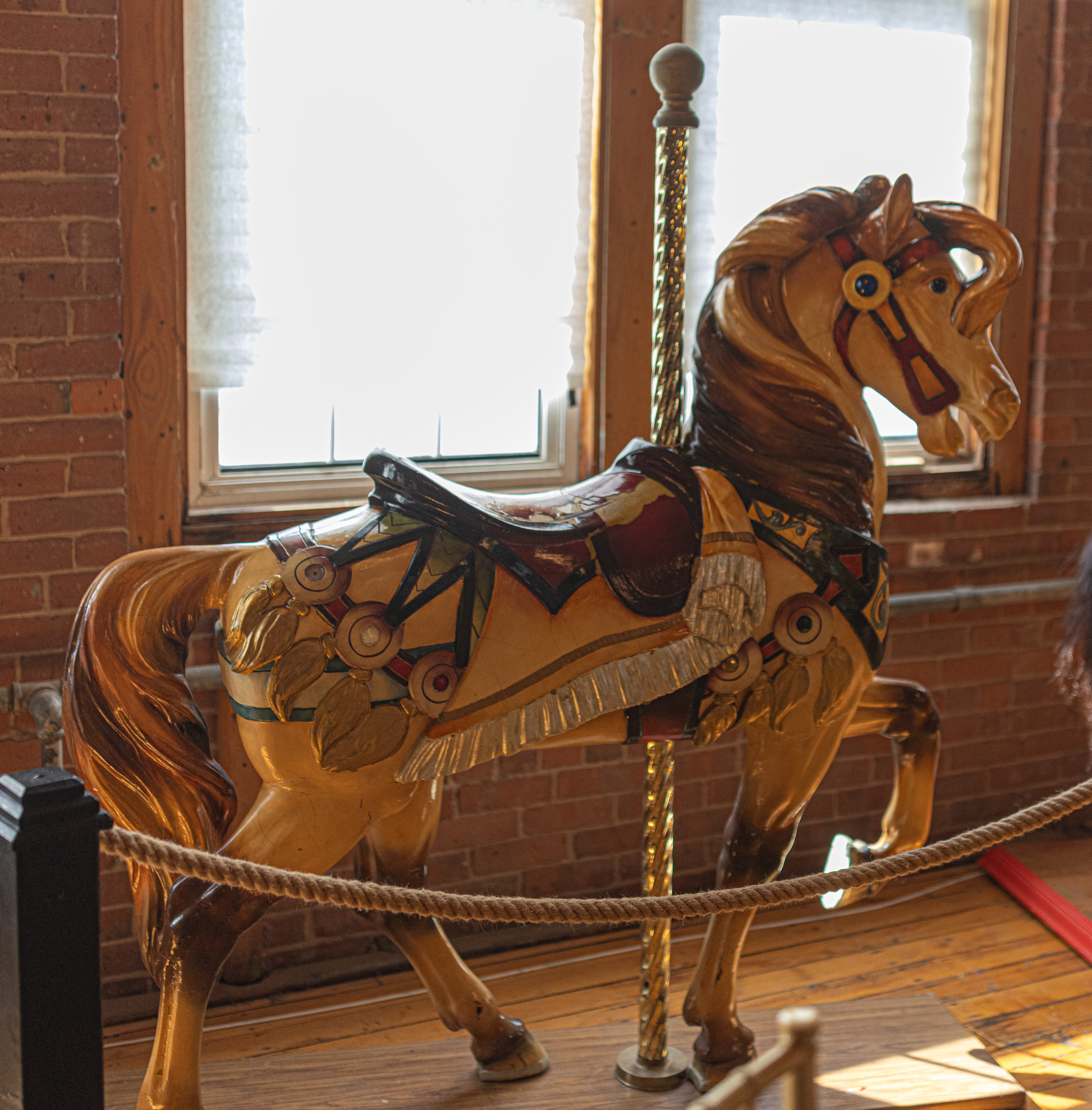
This is a Coney Island style carousel horse. These horses, which originated from the famed amusement parks in Coney Island, typically feature vibrant, hand painted designs and intricate carvings. They are often made of wood, showcases the craftmanship of the late 19th century to early 20th century. The horses are usually adorned with decorative elements like jewels, saddles, and manes.

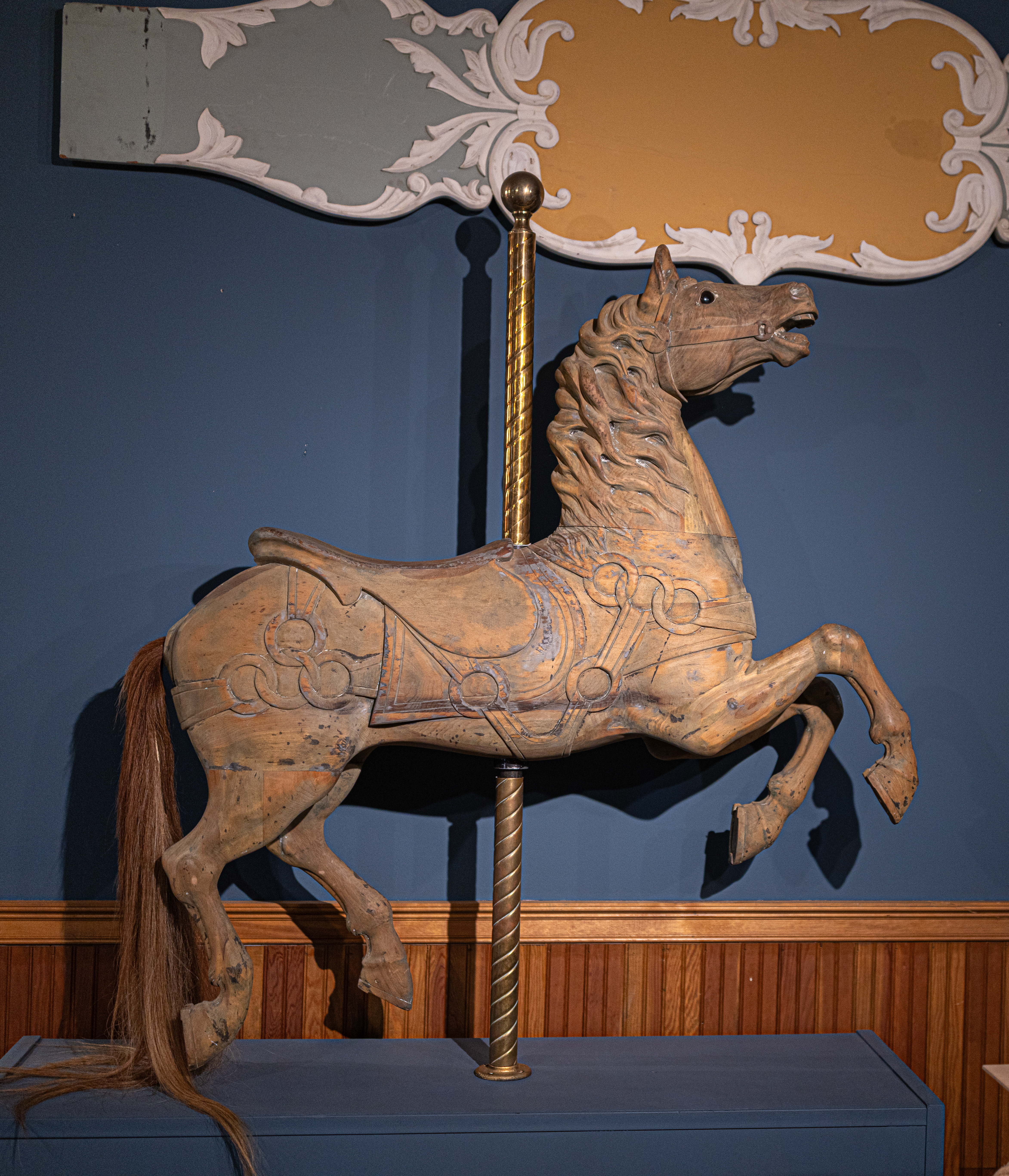
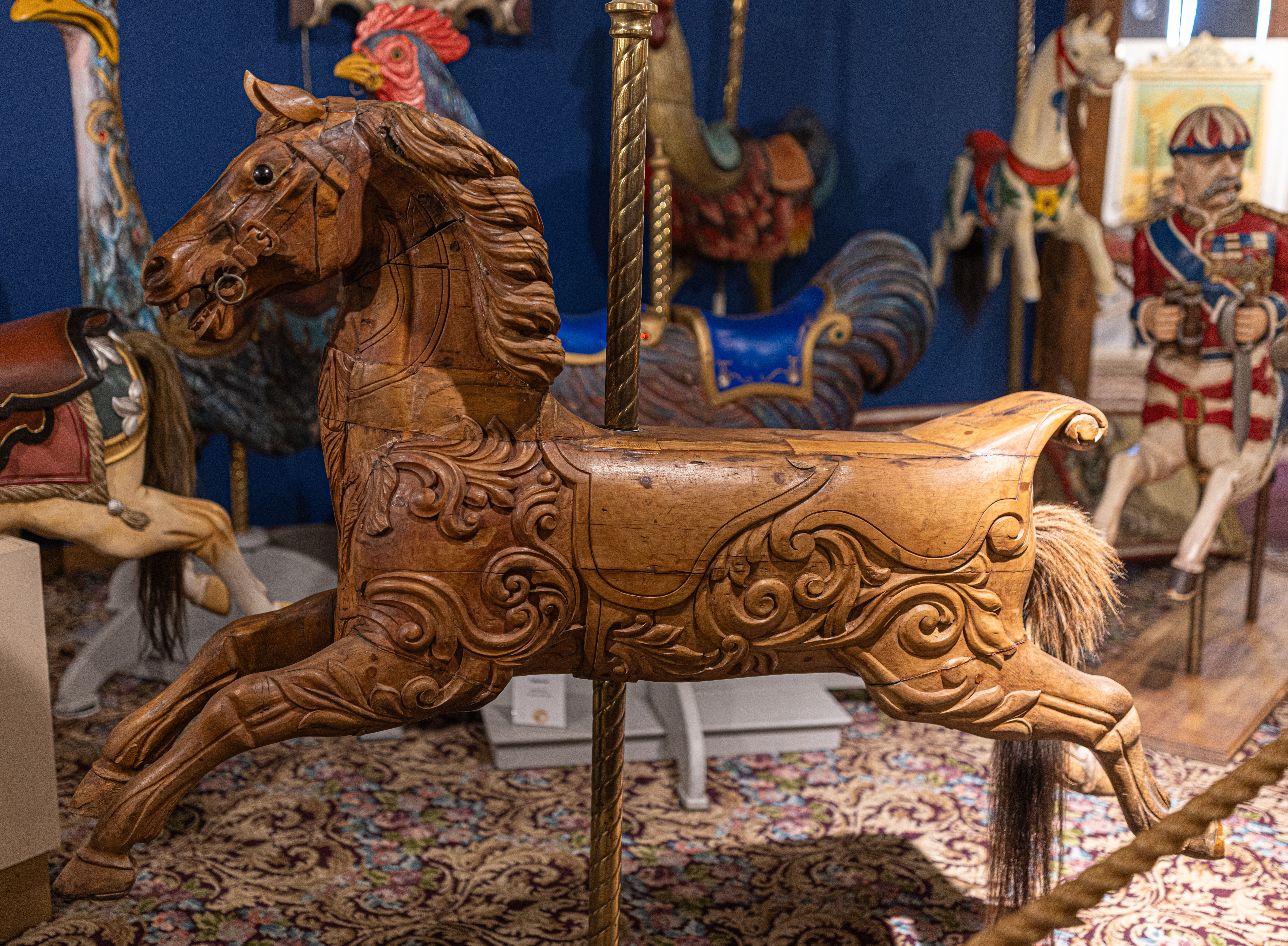
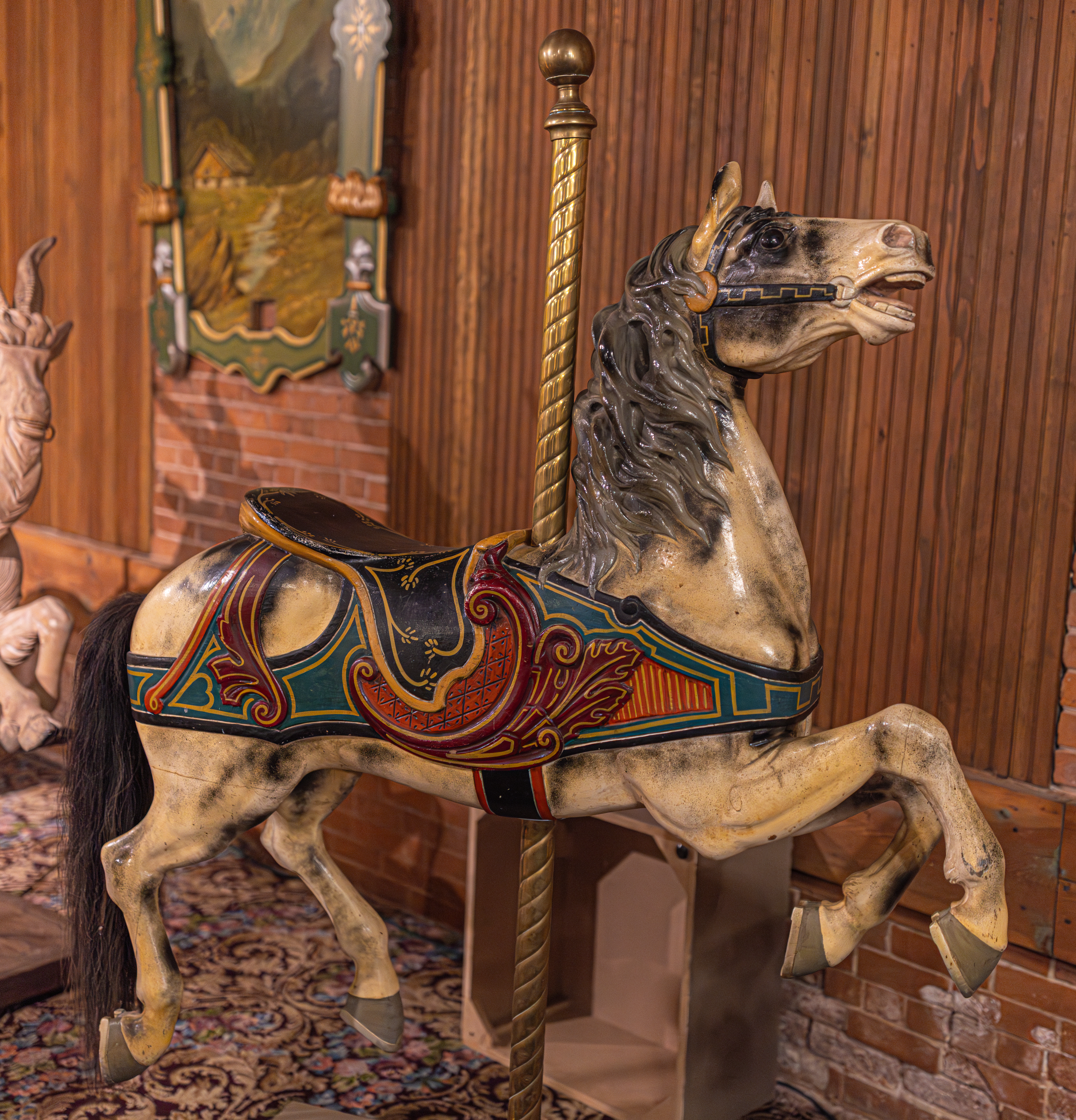
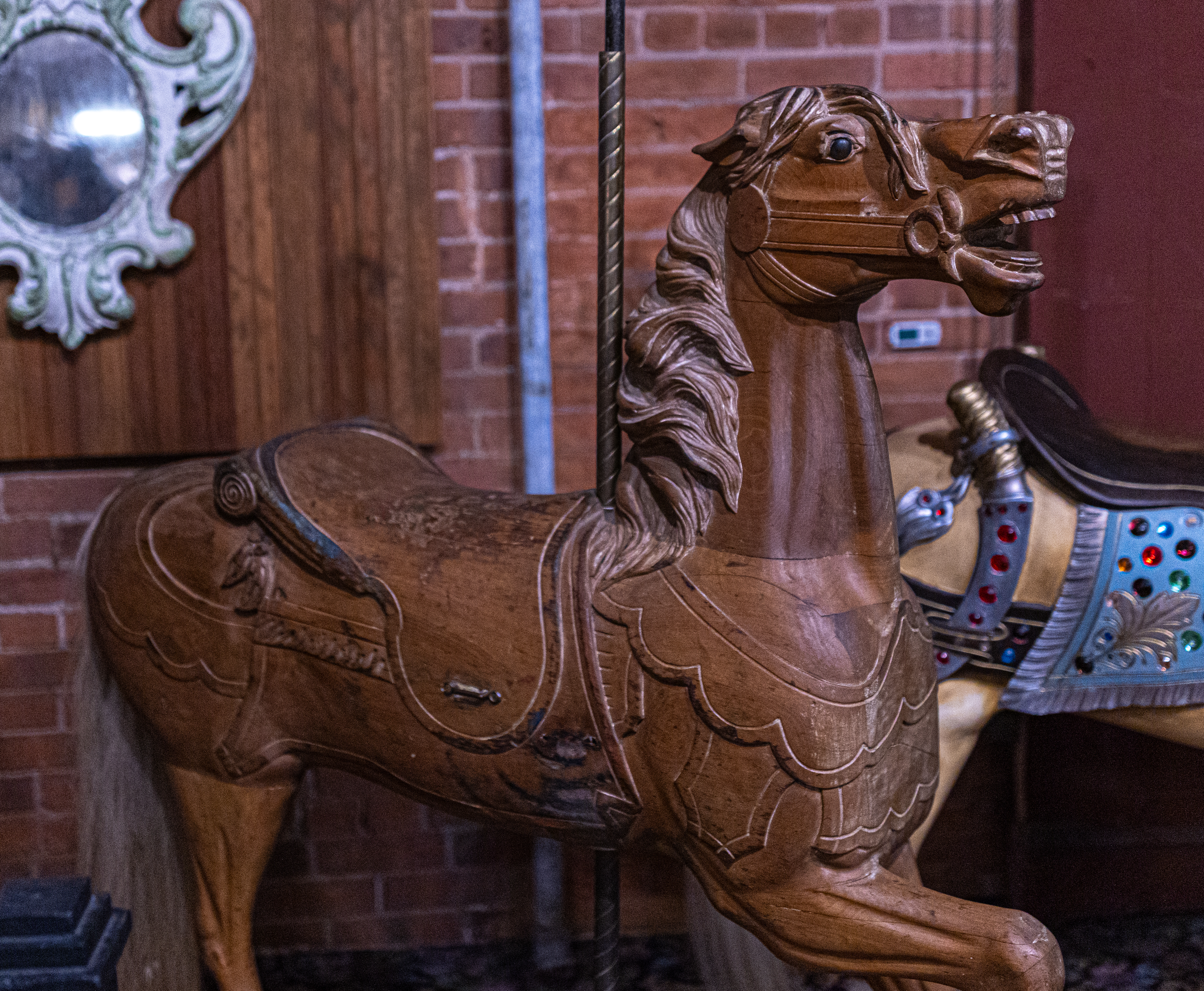
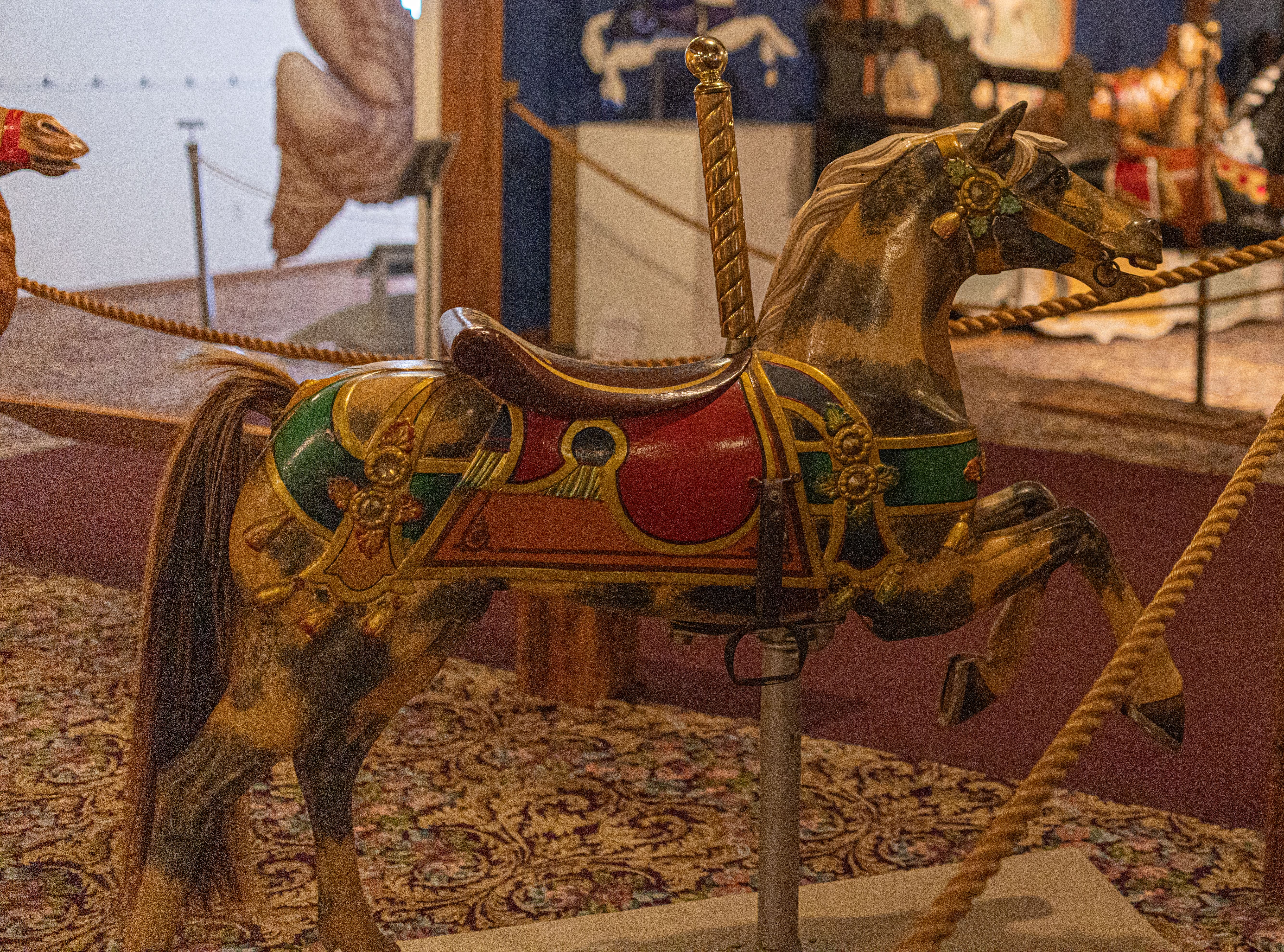
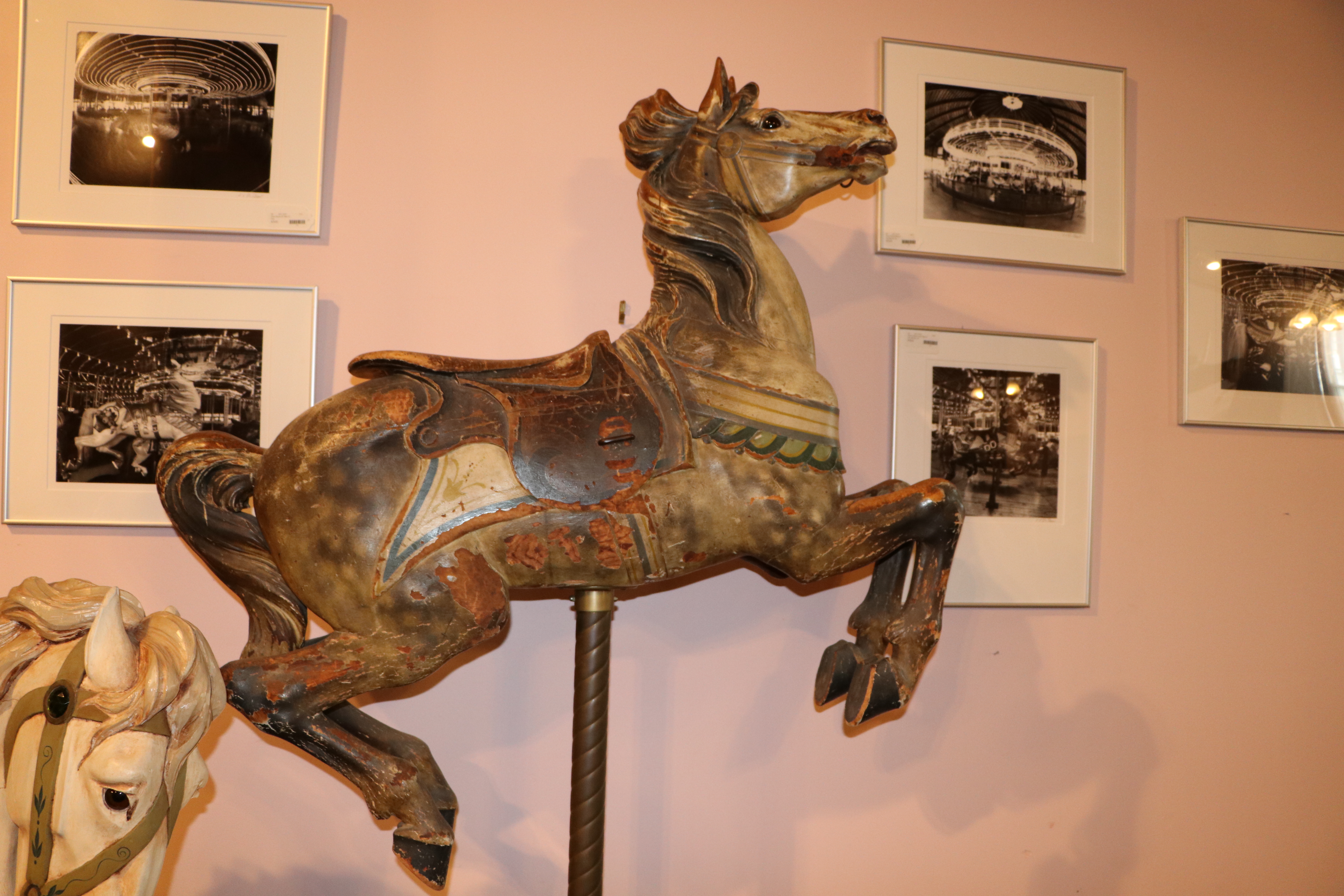
This French Horse, also known as a “jumper horse”, was carved by Frenchman Gustav Bayol circa 1905. French carousels typically consisted of menagerie animals, sometimes focusing on one or two animals exclusively. In fact, French carousel horses were typically quite rare.

The carver of this horse, M.C. (Marcus Charles) Illions, was a master carver of wooden carousel horses and other figures at Coney Island, Brooklyn, New York City in the early 20th century.

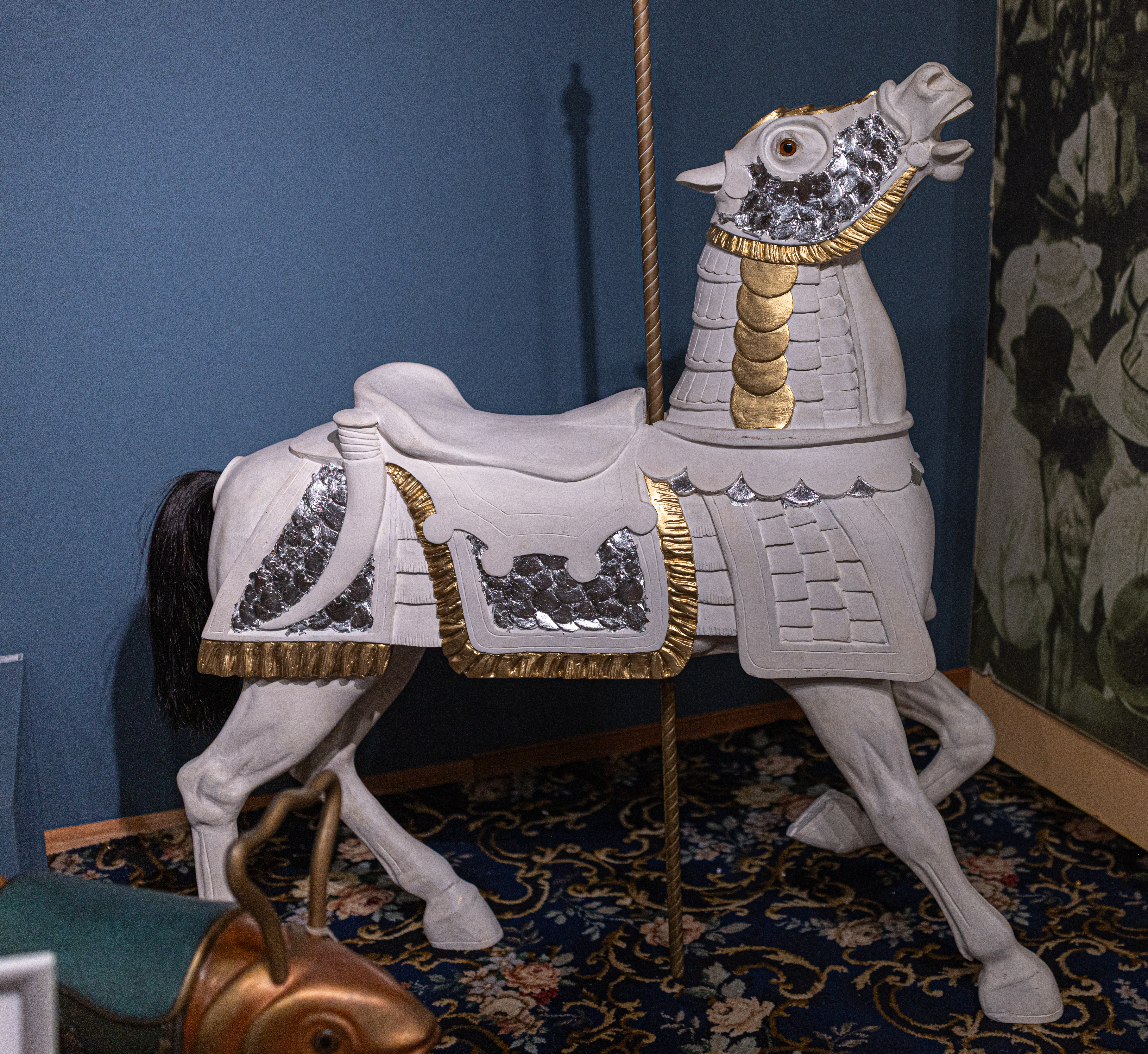
This child-sized Armored Horse was sculpted by Ismael Flores of Mexico circa 1930. Mexican animals, carved of savino wood, are often small measuring less than 36 inches. Carousel carving in Mexico is often done in the carver’s home with simple tools.

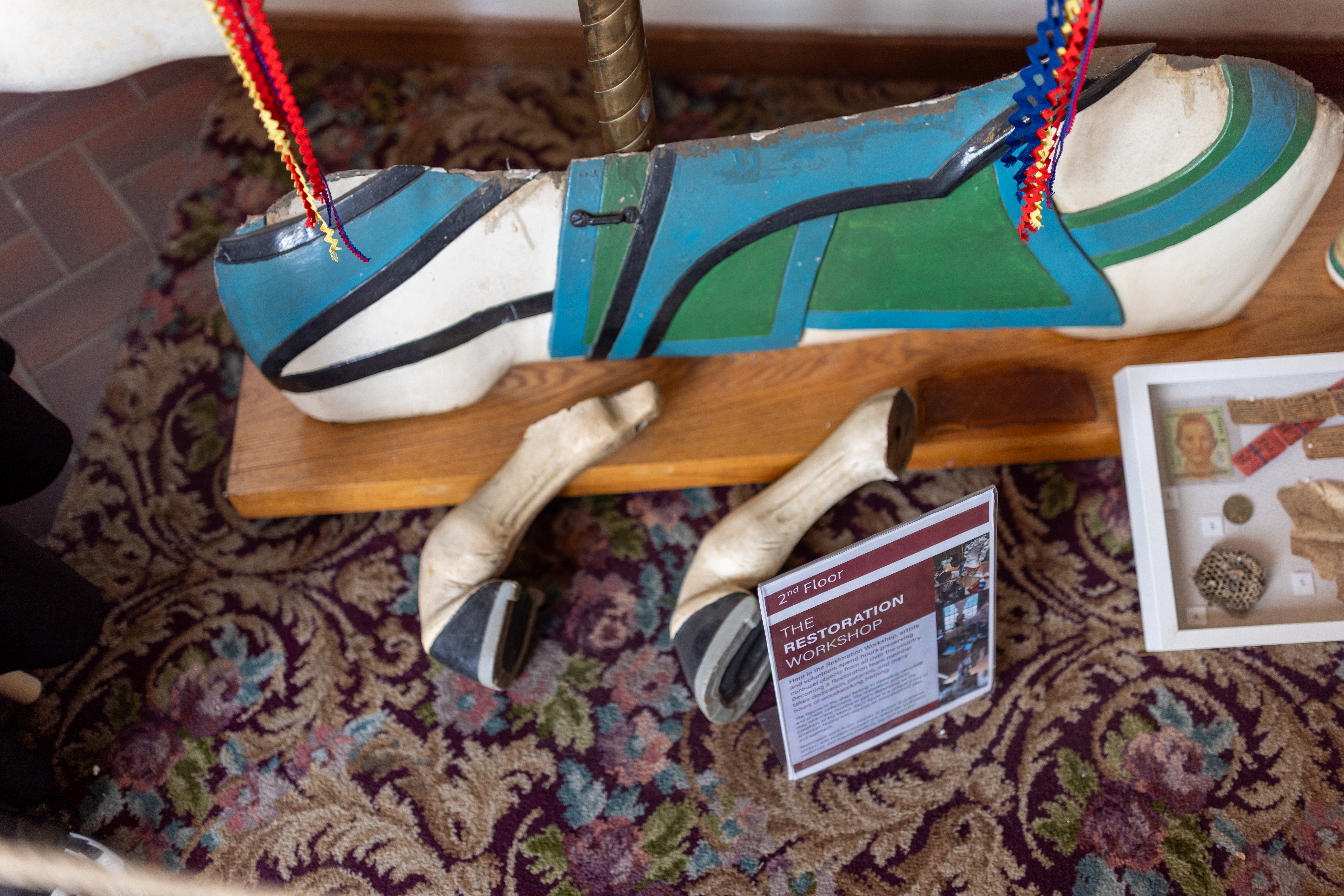
Sometimes the horses need a little tlc.

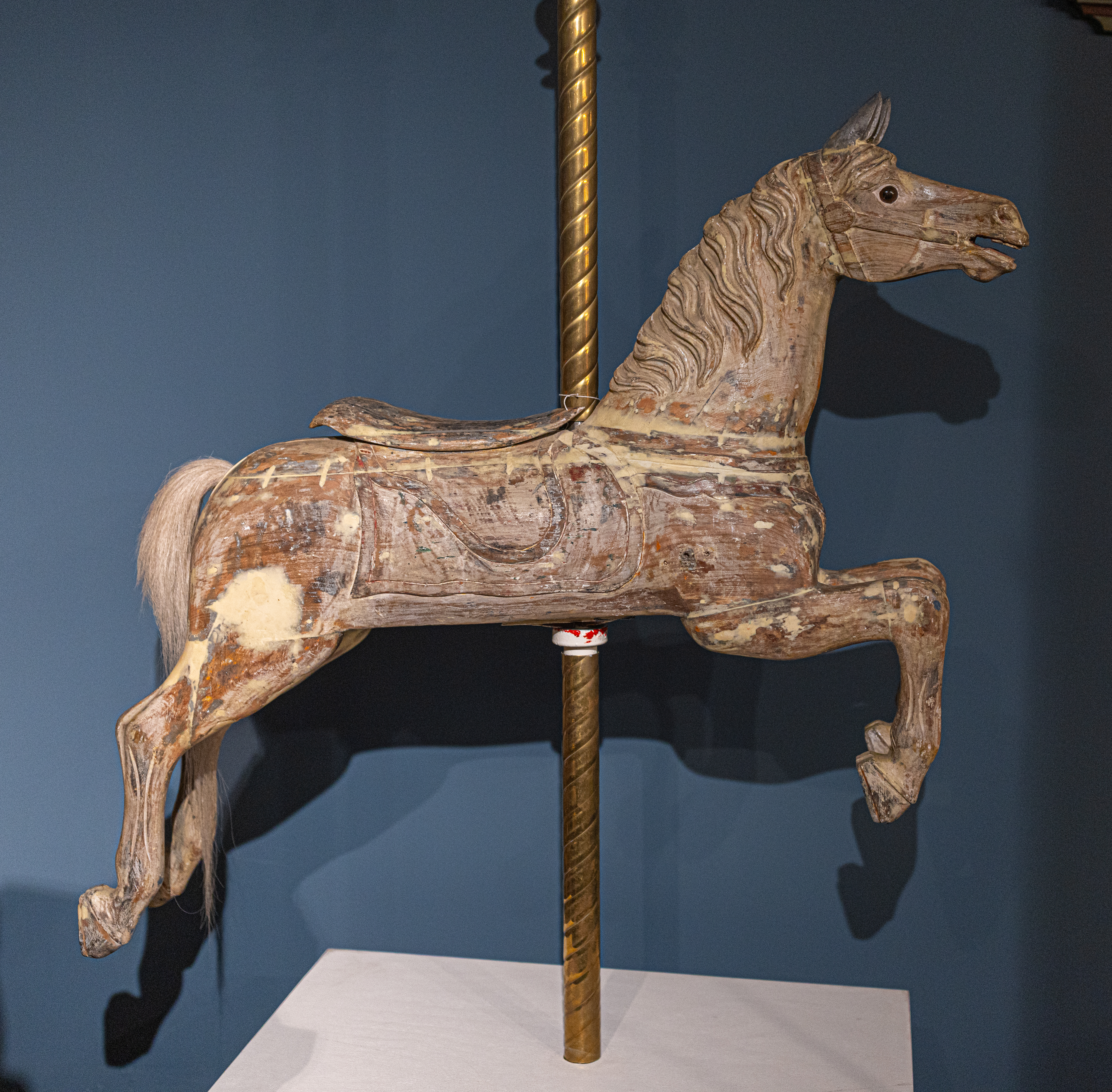
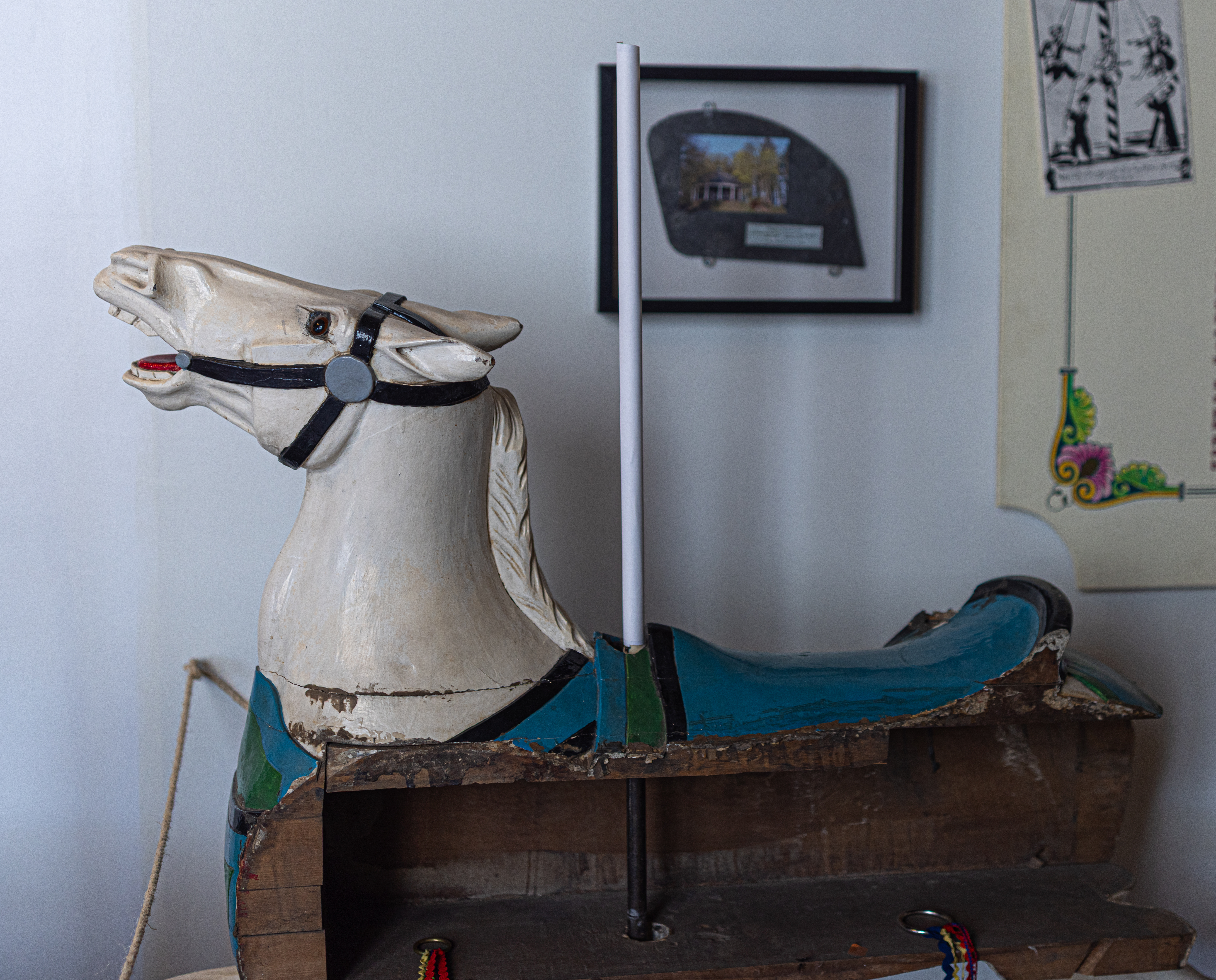
This horse is an example of a carousel horse that needs repair. They are all sent to this office where they are restored to the same likeness or very close to the same likeness as its original state.

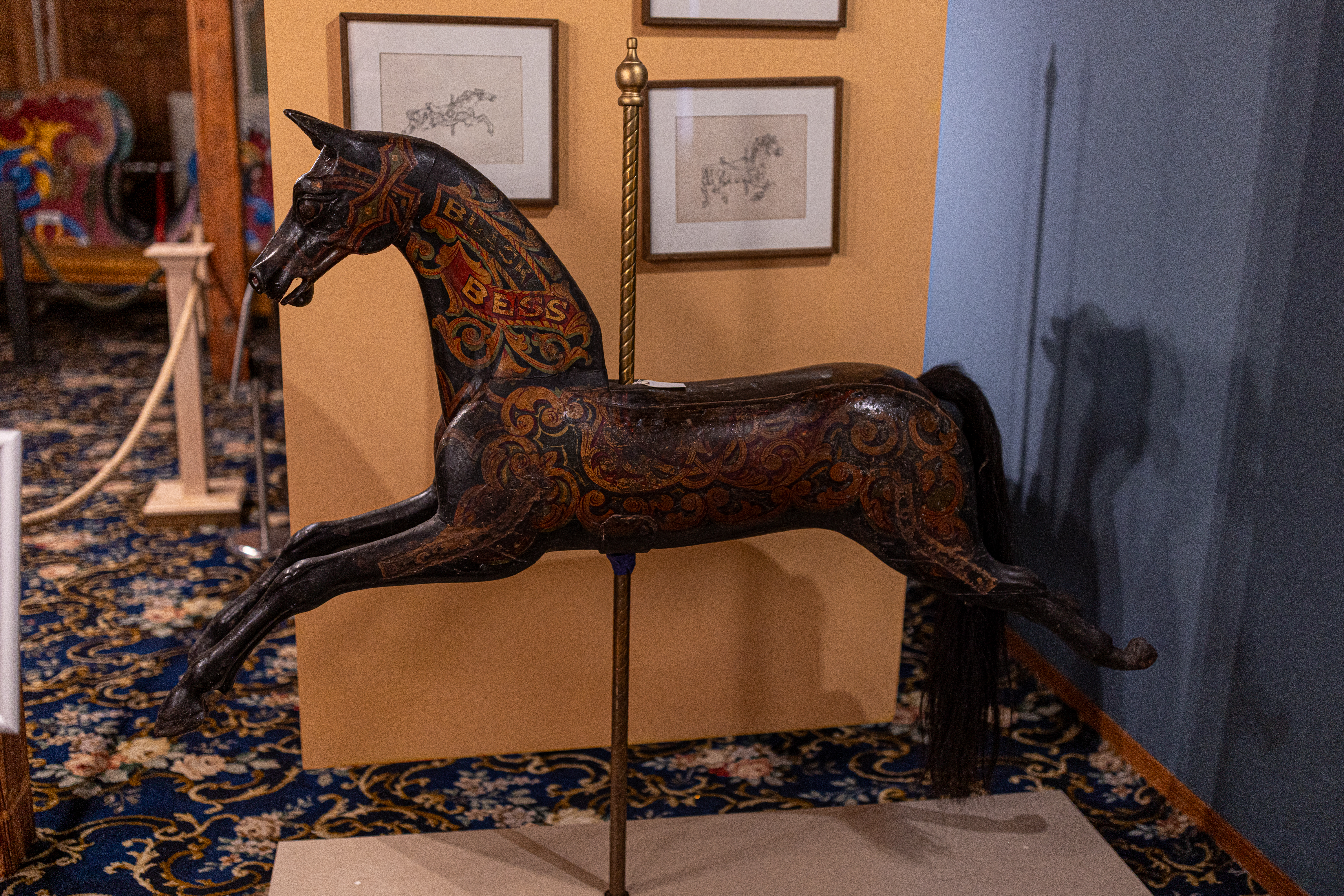
“Black Bess” is believed to be the oldest carousel horse at the Carousel Museum dating back to 1870, “Black Bess” was made by the G&J Lines factory of London, England. G&J Lines factory began producing toy and rocking horses in the mid 1800s before expanding to “dobby horses” which were English carousel horses suspended from sweeps by a pole without a platform.

Bess originally had a real horse hair mane and leather saddle, although no evidence remains of either. What does remain is intricate park paint; the name ribbon and scrollwork are common British fairground motifs. Her legs were broken off and reattached with iron patches, a typical repair done by carnival workers eager to get her back to earning her keep as quickly as possible.

Sculptor Jeff Briggs has been instrumental in designing and carving some of the animals for the carousel on the Rose Kennedy Greenway in Boston, MA. Briggs was the designer, sculptor and art director for this lobster. It was painted by William Rogers. This was one of several gifts from Amalie Kass, an author and American historian at Harvard Medical School, to the museum’s collection. Amalie’s substantial donation sparked the creation of the Greenway Carousel. The museum’s agreement with Amalie specified that several duplicates of Greenway animals would eventually become part of the museum’s collection.
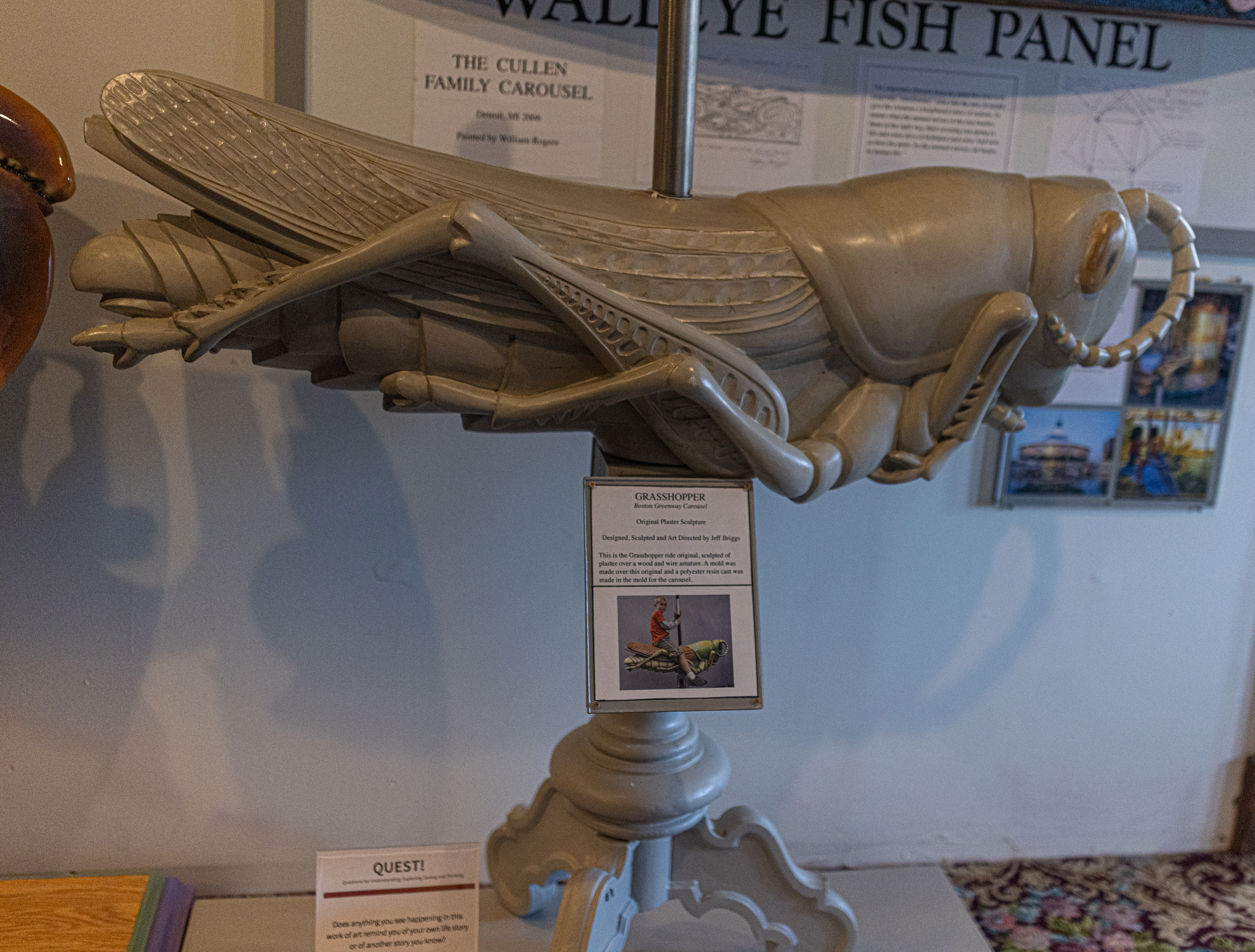
This is the original plaster sculpture of the grasshopper on the Boston Greenway Carousel. It was also designed and sculpted by Jeff Briggs. He was also the art director for this sculpture. The grasshopper sculpture was sculpted of plaster over a wood and wire amature. A mold was made over this original and a polyester resin cast was made in the mold for the carousel.

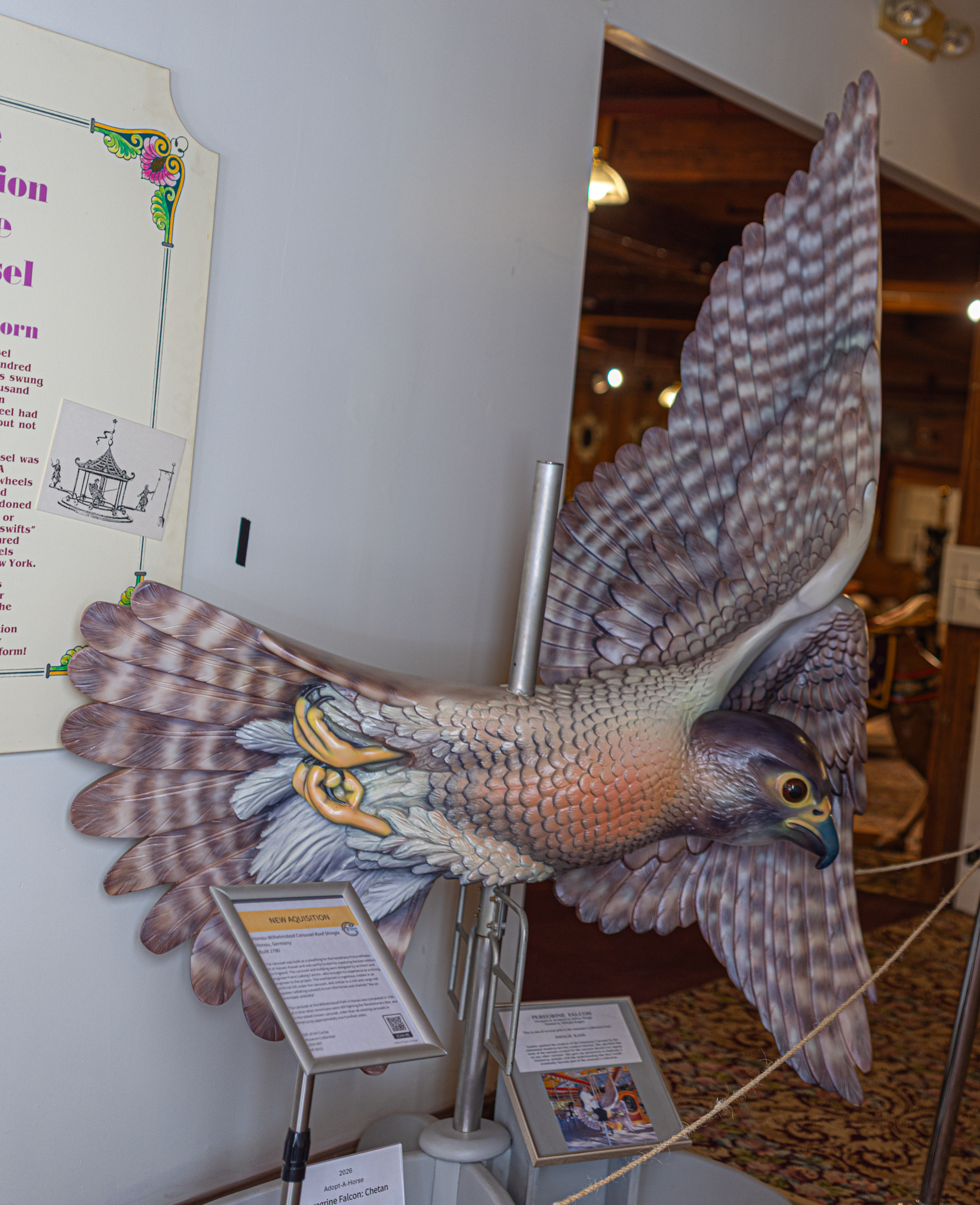
This Peregrine Falcon is another duplicate of one of the animals on the Eose Kennedy Greenway Carousel. It was designed and sculpted by Jeff Briggs.

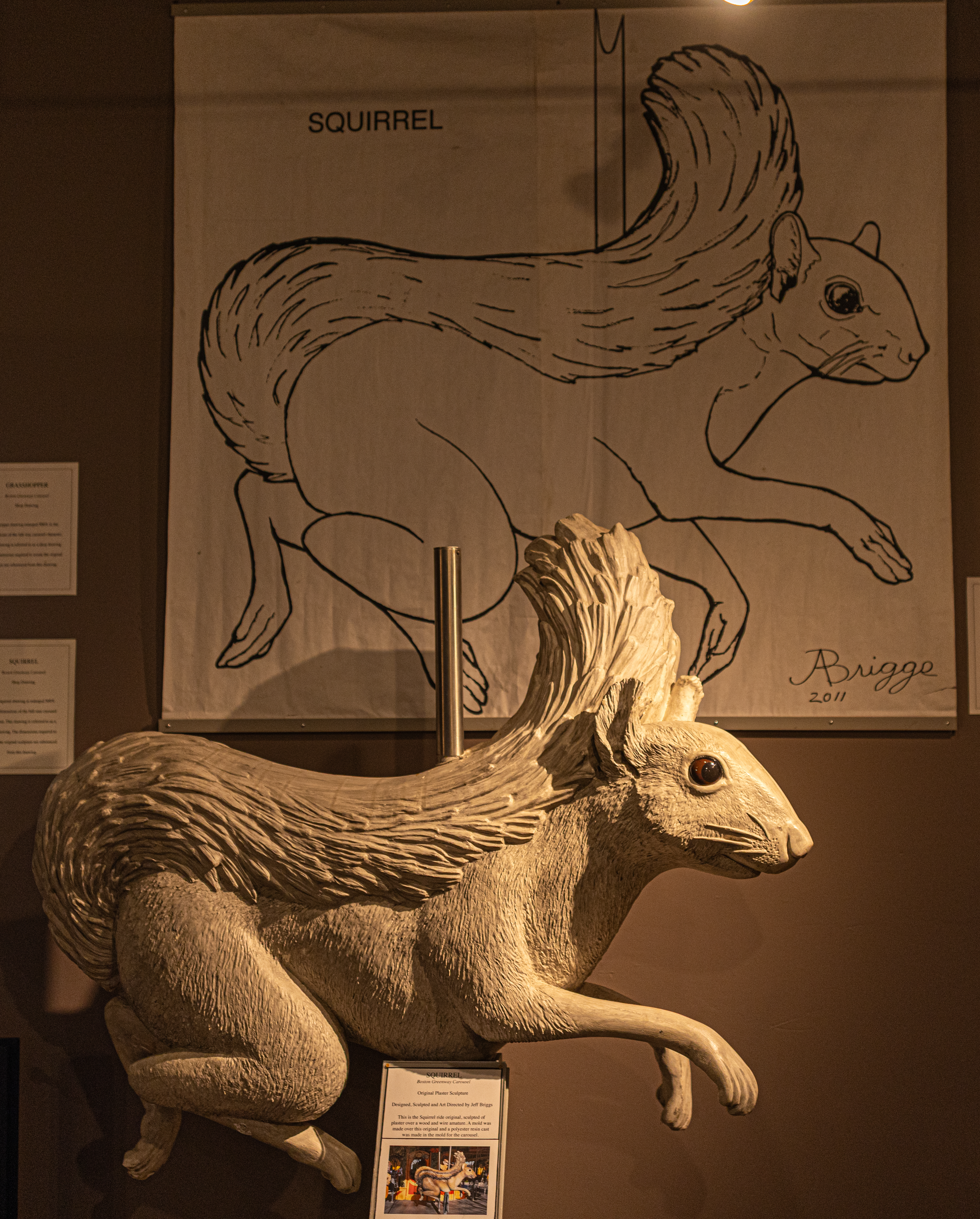
This is the original plaster sculpture for the squirrel on the Boston Greenway Carousel. It was designed and sculpted by, surprise, Jeff Briggs. This is the Squirrel ride original, sculpted of plaster over a wood and wire amature. A mold was made over this original and a polyester resin cast was made in the mold for the carousel. The drawing behind the squirrel is called a shop drawing. The drawing was enlarged to 500% to the dimensions of the full-size carousel character.

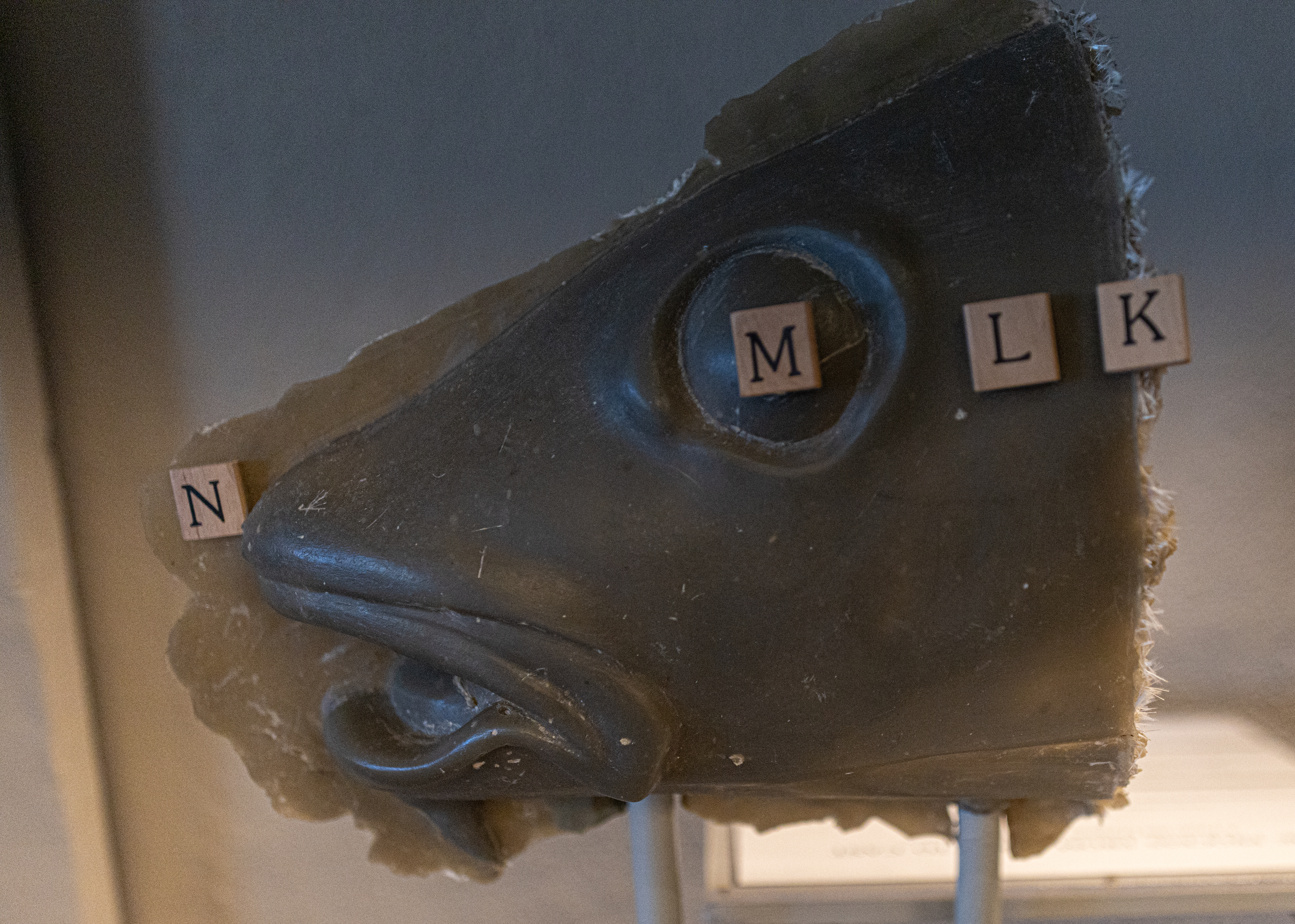
Th and wire amature. A mold was ese models of a carousel sculpture shows the pieces and process of the production of the sculpture production. Each letter on the mold of the fish corresponds with letters on the placard beneath it.

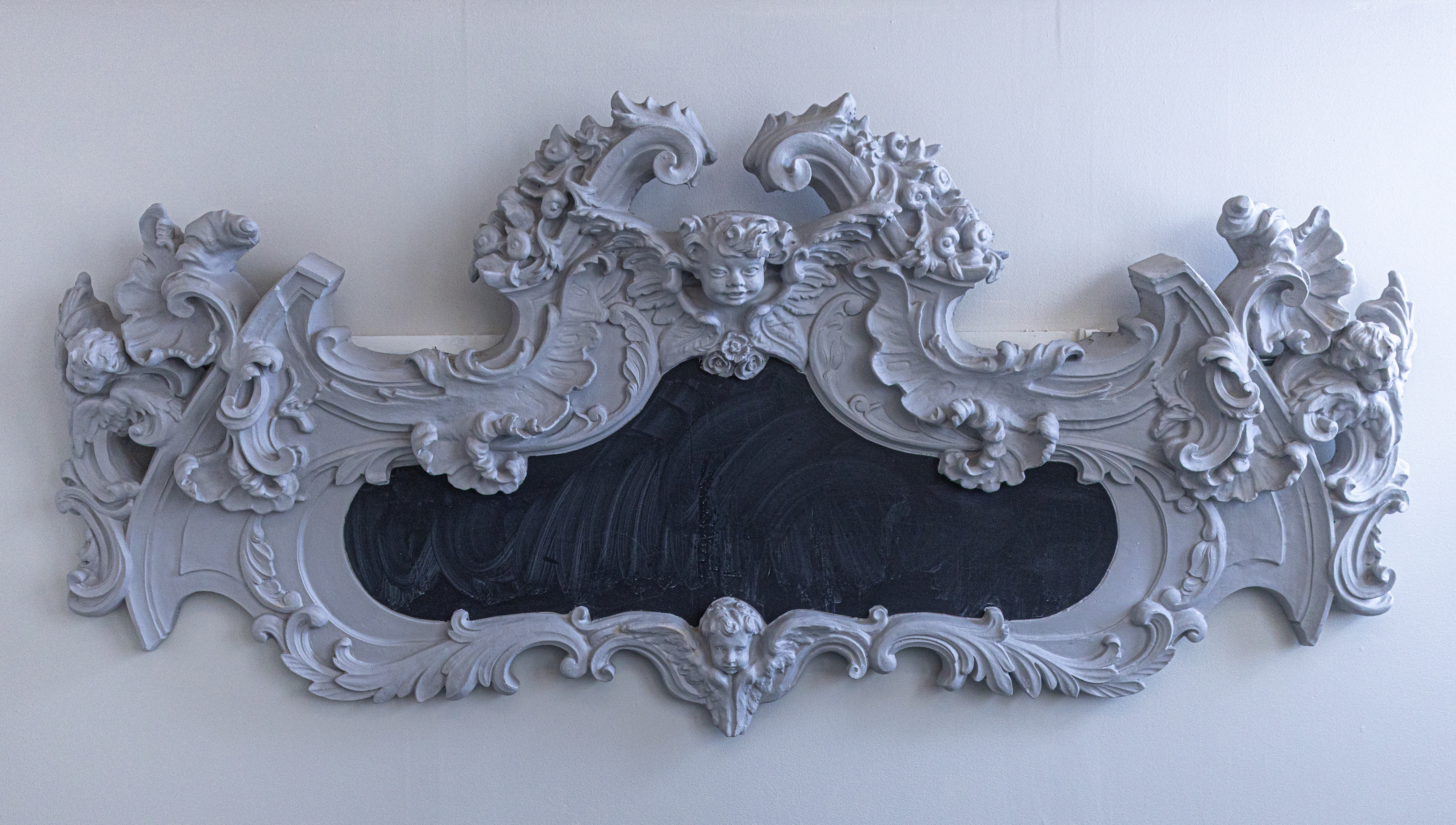
The museum also has pieces of carousels from all around the country. This rounding board, also designed and sculpted by Jeff Briggs, was on a carousel at Bryant Park in New York, NY.

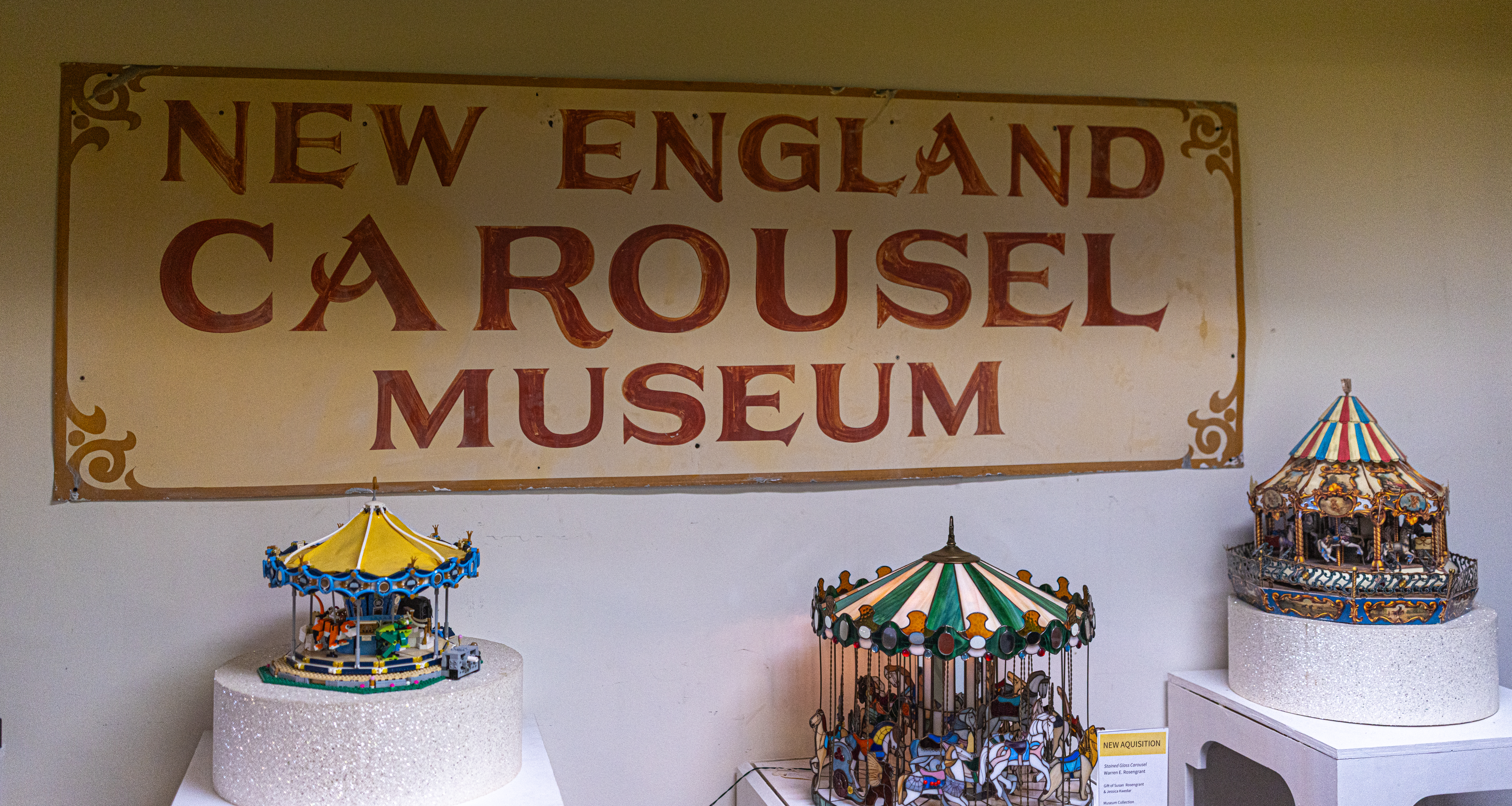
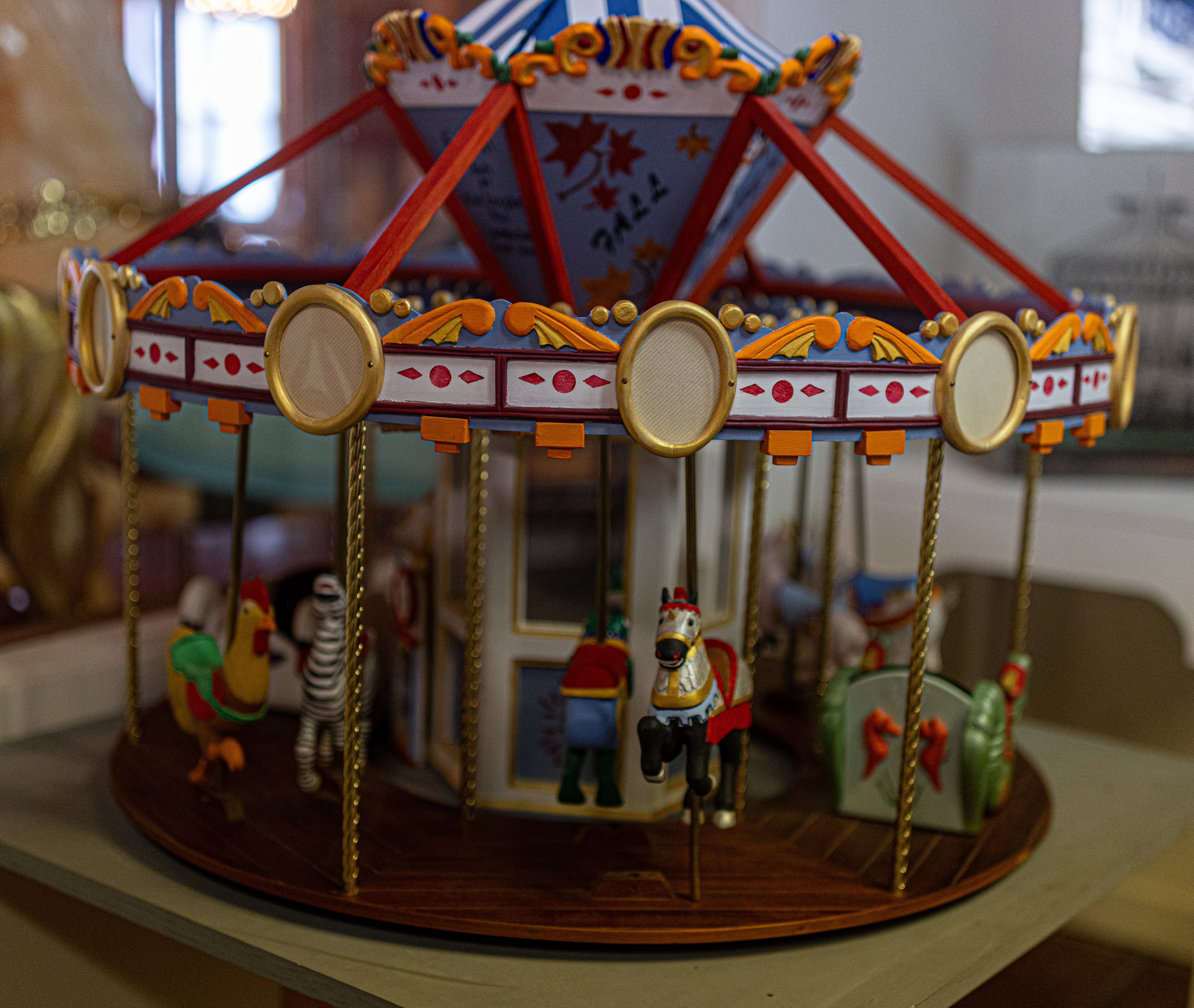
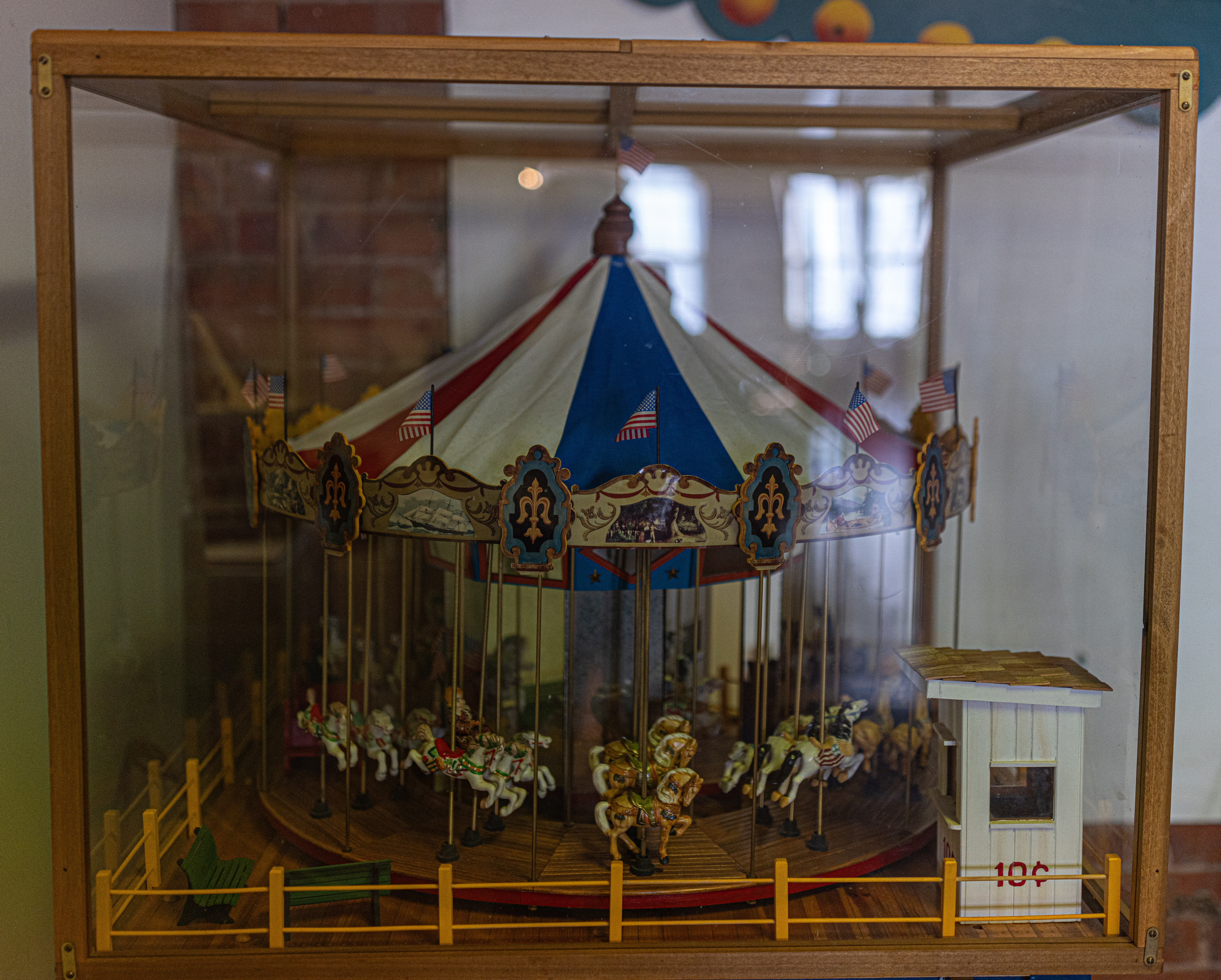
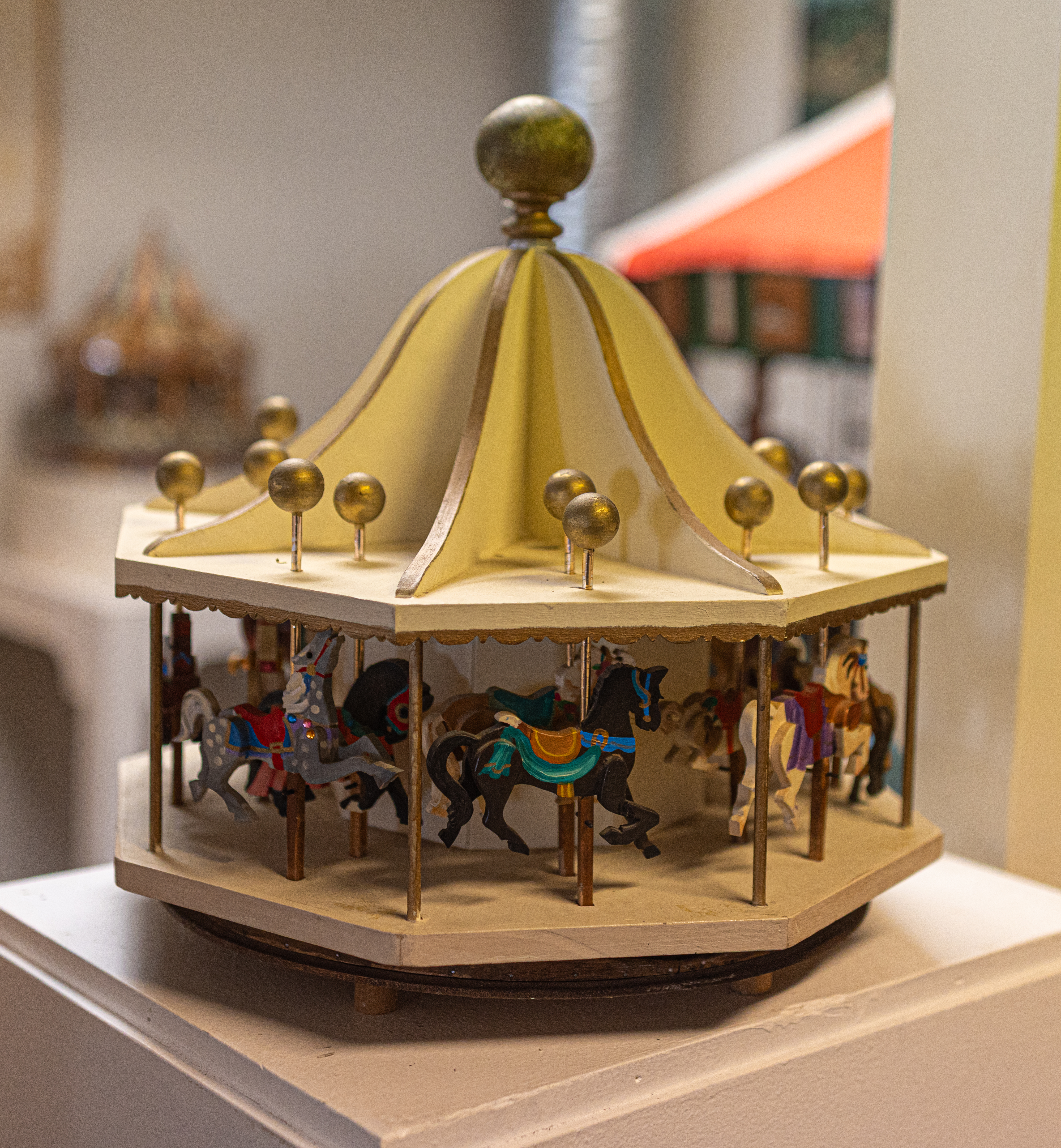
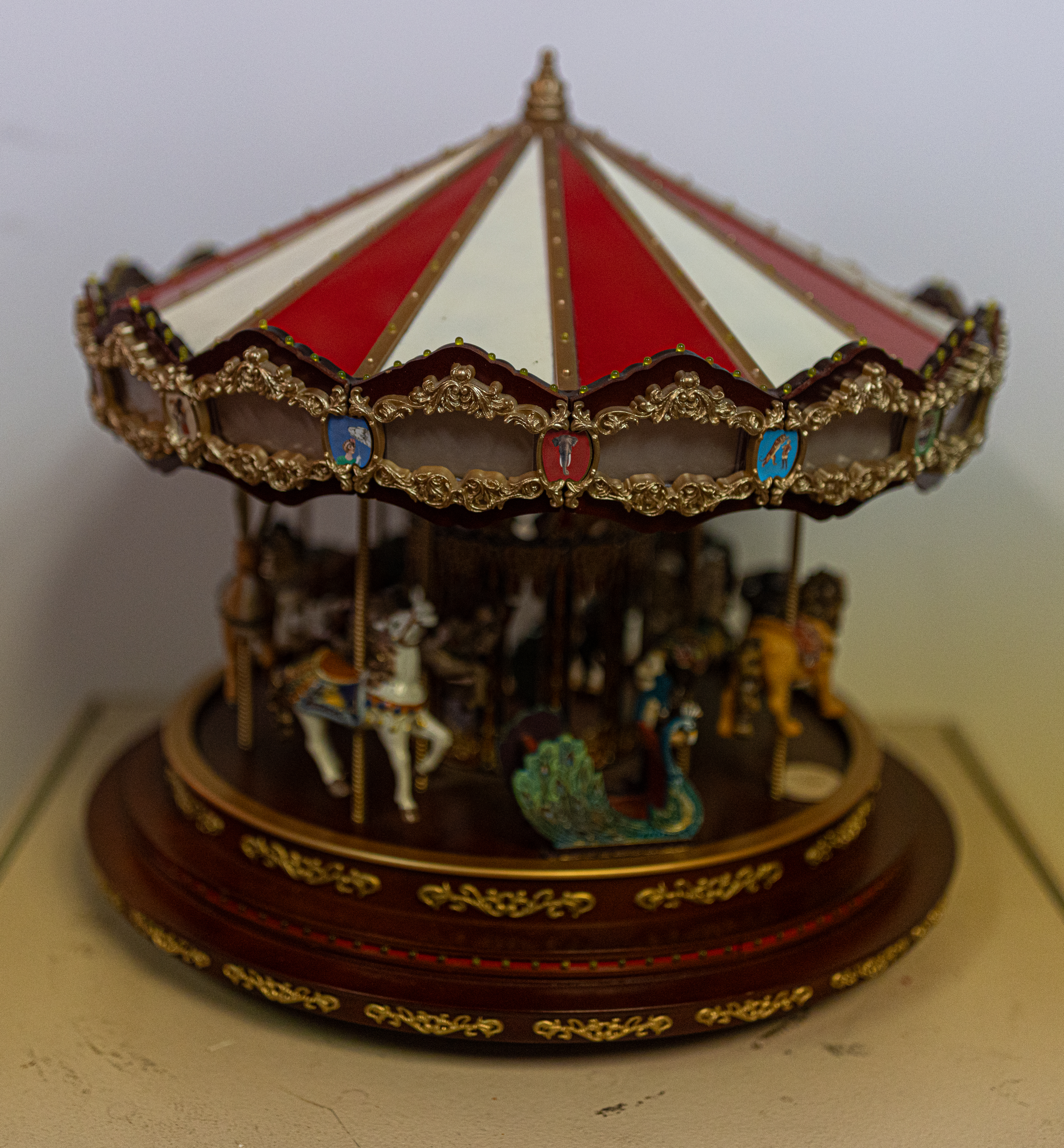
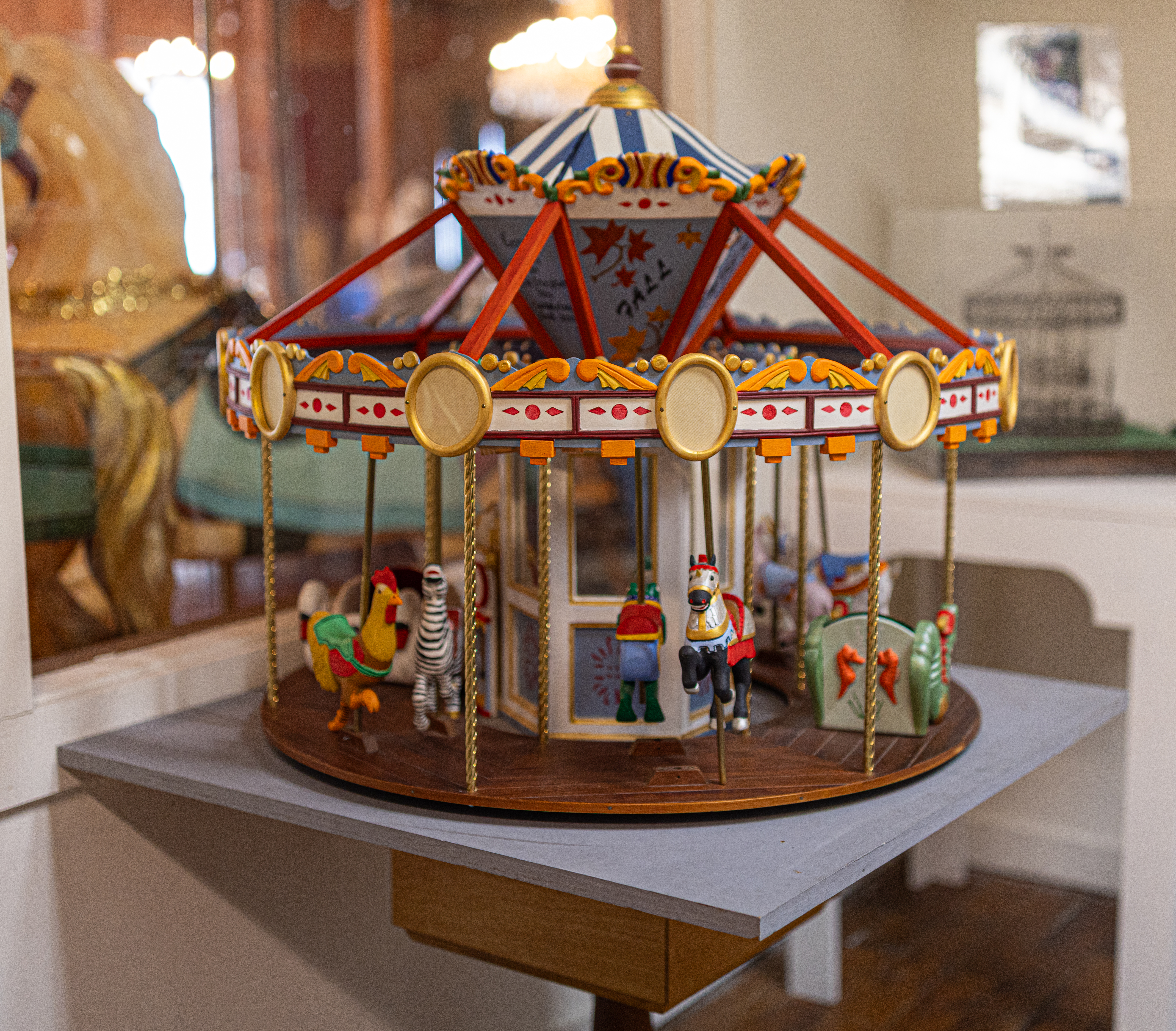
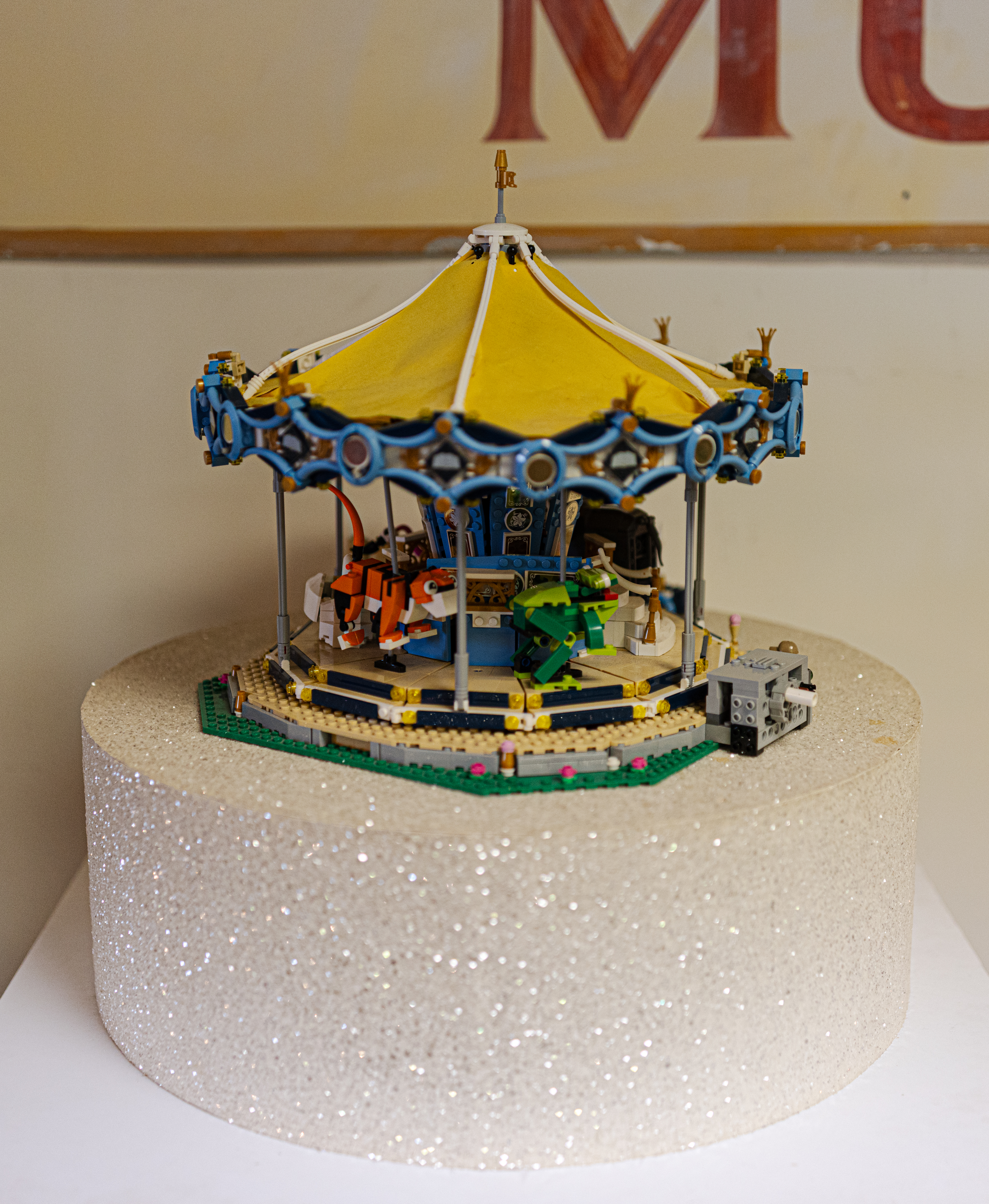
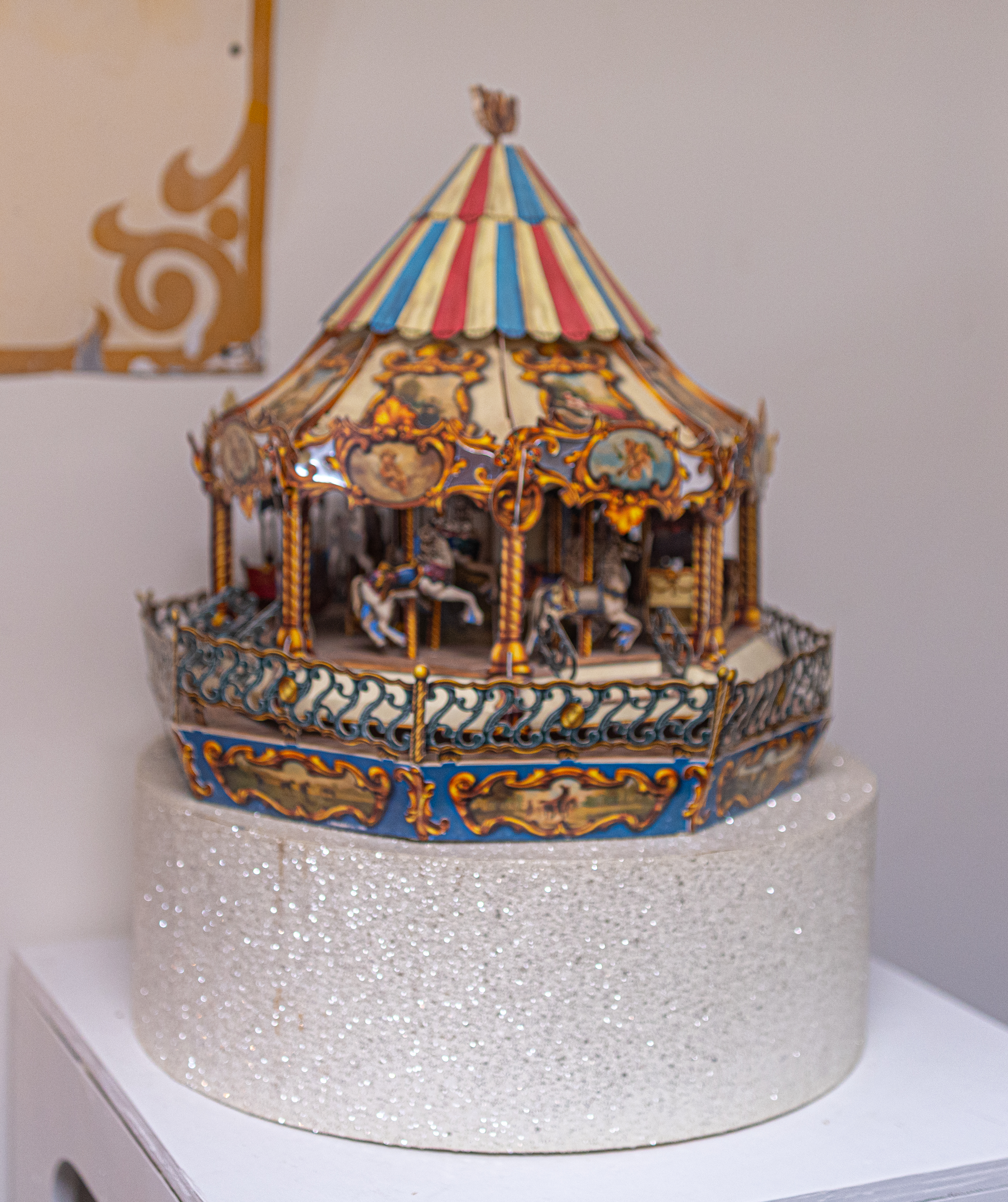
One of the things I really liked, well besides the various carousel sculptures of course, were the miniature sized carousels on display at the museum.

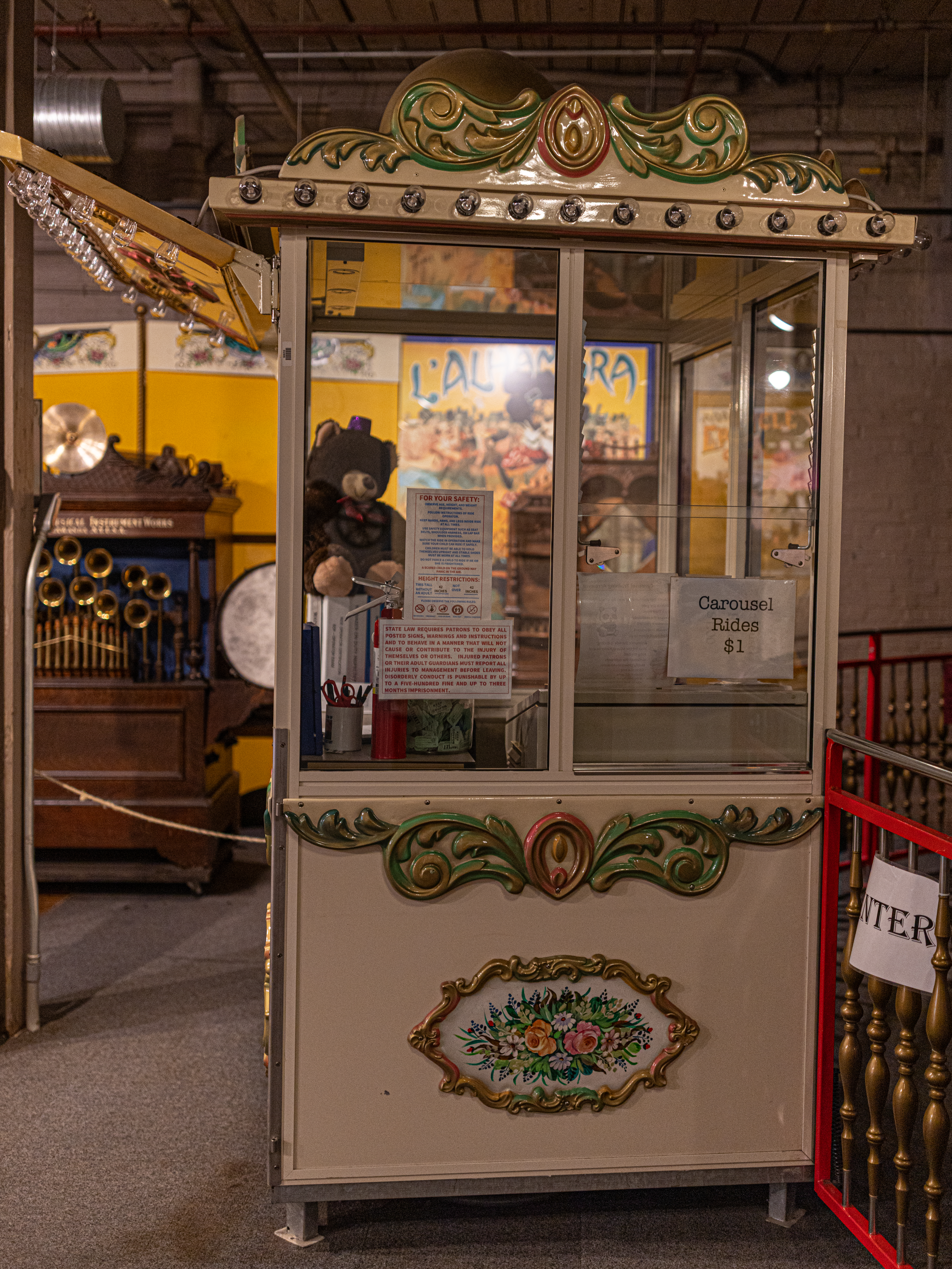
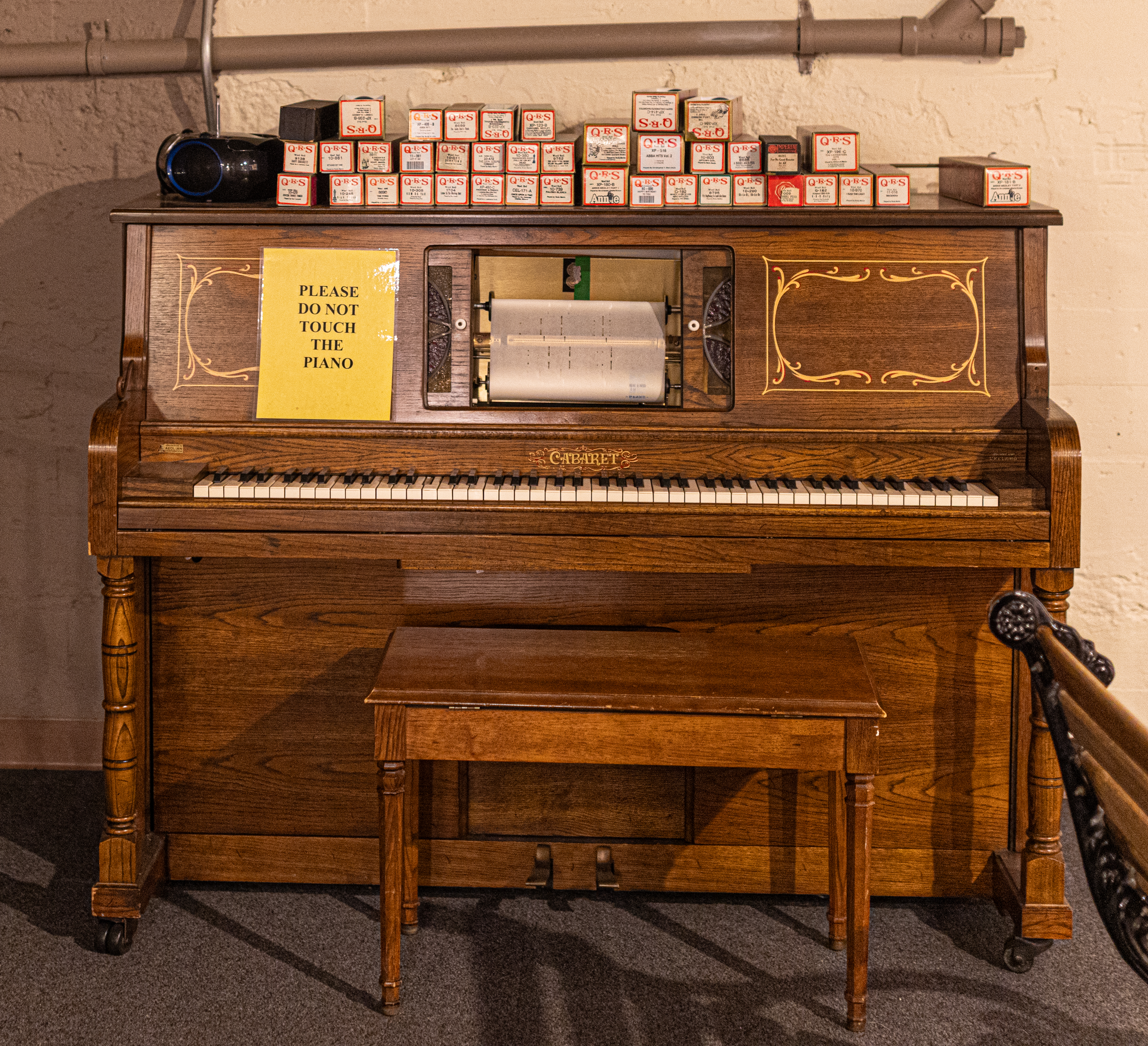
But, the carousel museum doesn’t just have miniature museums. They also have a real life actual carousel that visitors are encouraged to ride. But, there is not just a working carousel there. There are also music players, a ticket booth to purchase a ride (carousel rides costs $3 a ride or $6 for unlimited rides) and a piano.

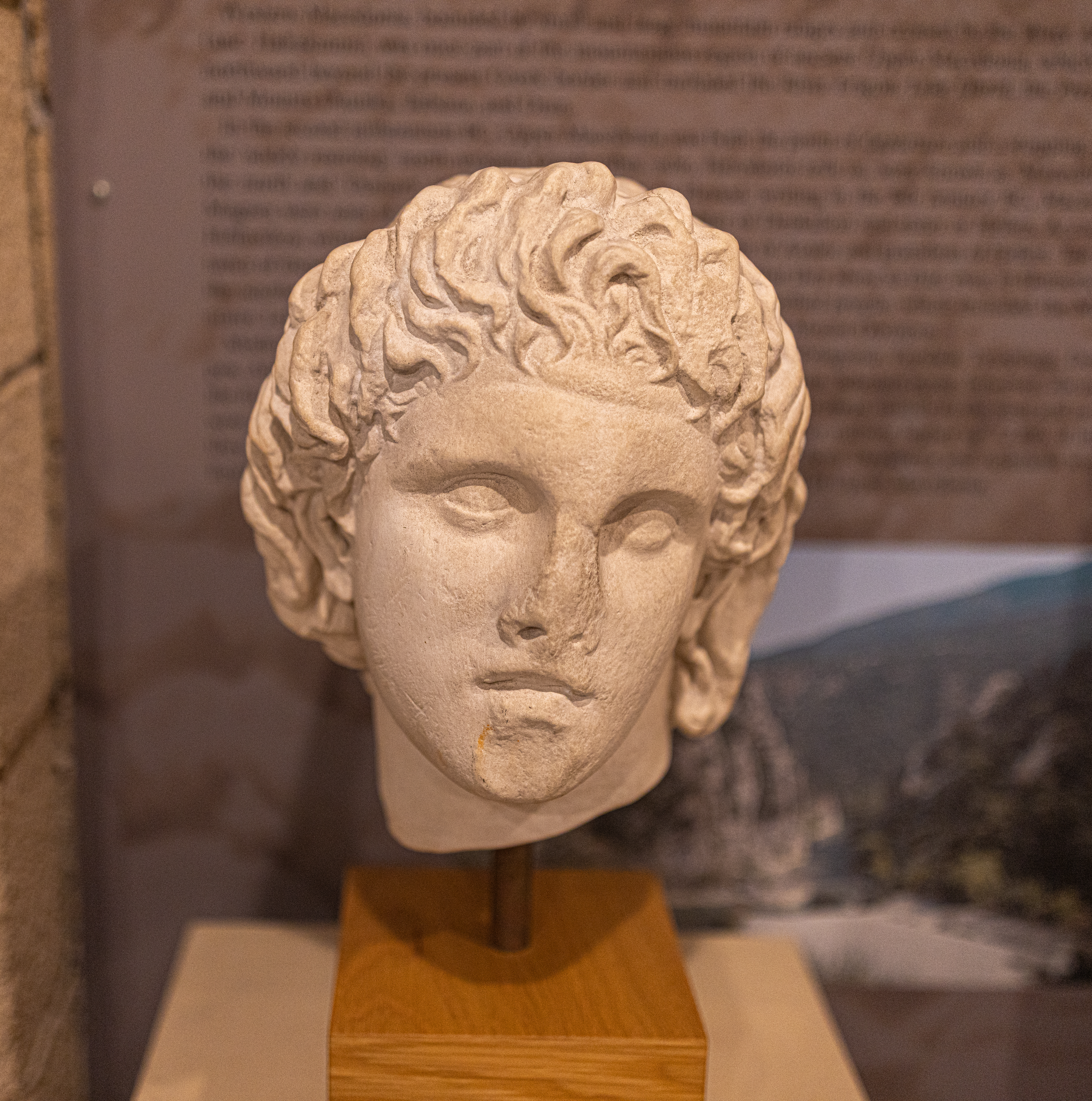
If all that wasn’t enough, there is a Fire History Museum and a Hellenic Museum.

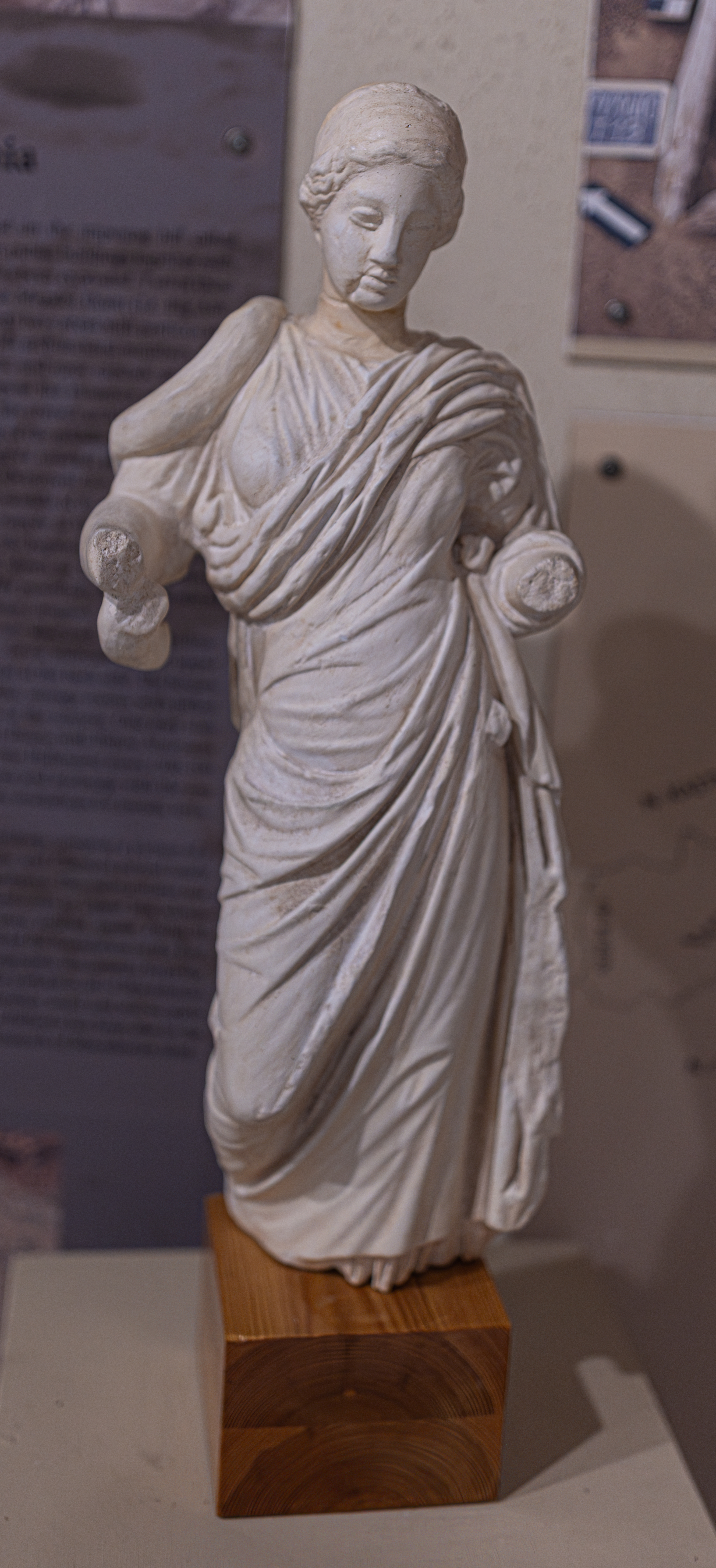
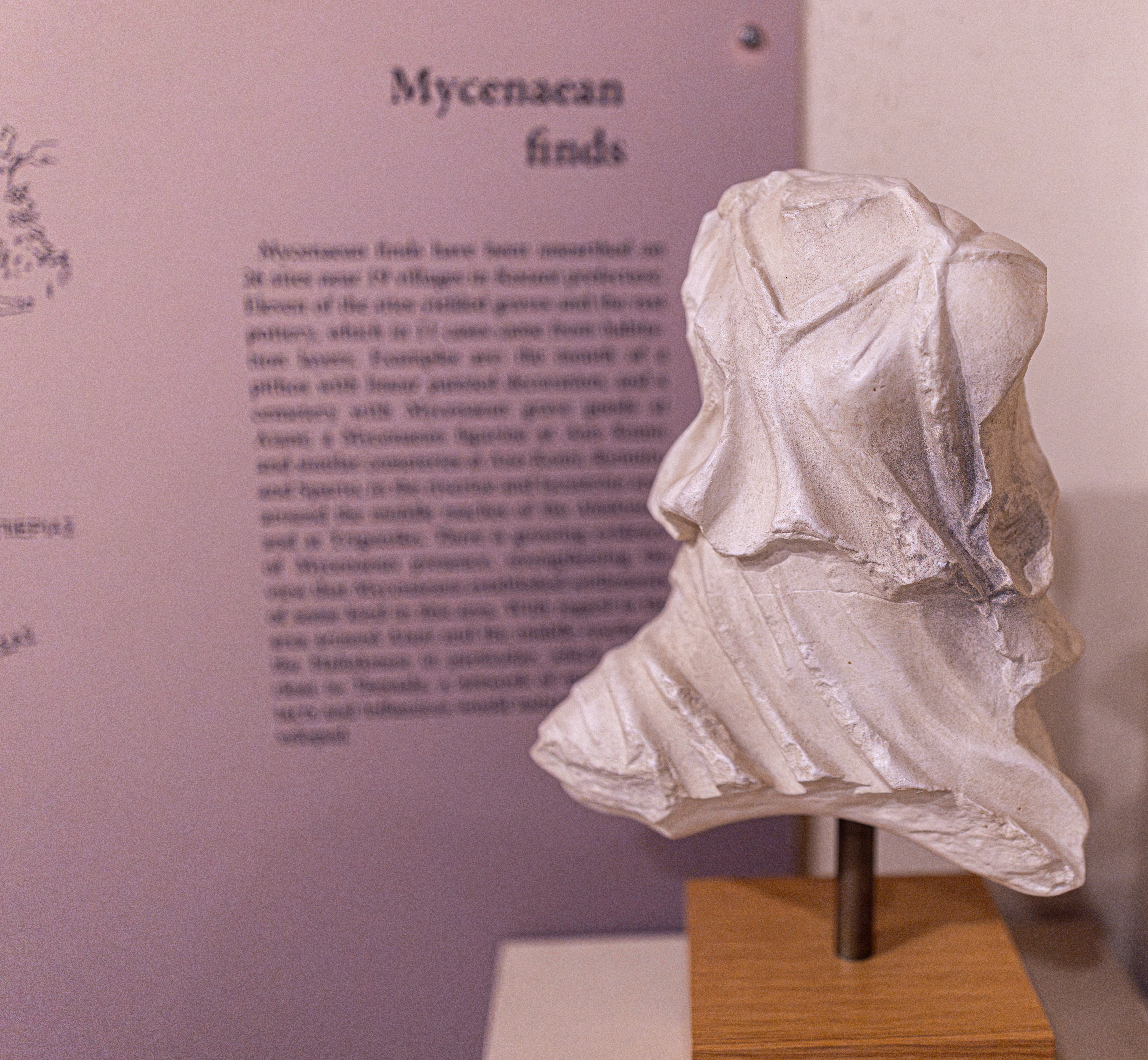
There were busts, statues and other artifacts.

There is also a Museum of Fire History which has old fire alarm transmitters,

It was a poignant reminder of the hard work and sacrifice firefighters make everyday.

So, as you can see, the carousel museum has something for everyone to enjoy!


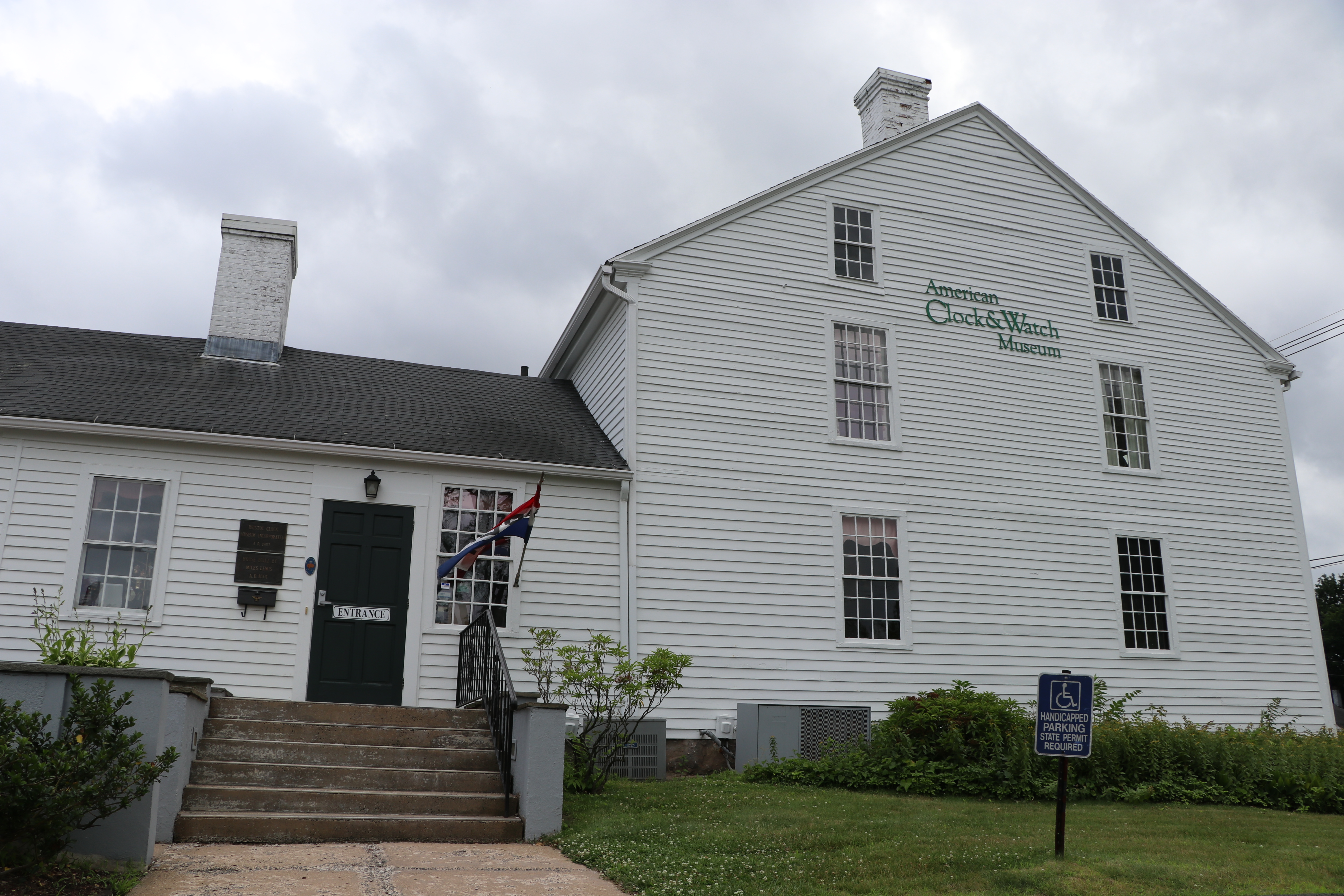
American Clock And Watch Museum (Bristol, CT)

Date Of Visit: July 1, 2017

Location: 199 Maple St, Bristol, CT

Hours: April 1st through Nov 30th

10 a.m. – 5 p.m.

Closed Easter and Thanksgiving. Winter months by chance or by appointment.

Cost:

Adults $5.00
Seniors/AAA $4.00
Children (8-15) $2.00
Under 8 Free
Group tours available by appointment.

Parking: There is room for about 15 to 20 cars in the parking lot

Handicapped Accessible: Yes

Highlights: clocks, watches and other time measuring devices from various eras and places, outdoor garden with a sundial

IMG_8055

Storing more than 5,500 clocks, watches and other timepieces, the American Clock And Watch Museum has one of the largest collections of watches and clocks in the country.  They generally switch out their clocks seasonally which makes it a great place to visit continually throughout the year.  I had been clocking the place for a while but it was my first time visiting.

While their total collection of clocks and watches numbers over 5,500, thy only display about 1,500 at a time.  They switch some of the clocks and watches every few months.  I’m sure they do it in a very timely manner.

The collection of clocks range from the beautiful to the bizarre.  I wonder how many times people have stared at these clocks and watches.

The biggest current attraction at the museum now is the classic kitty kat clock.

I could spend all day there, especially in the room with all of the grandfather clocks (many of which are from the Bristol, CT area)

Each clock and timepiece has a story behind.  They all have a card explaining when and where they were made and some interesting background information about the time piece.  I found the information and history of the timepieces to be just as interesting as the clocks themselves.

For instance, this clock was called “the grip” because the clock’s movement was so small it could be fitted into a large pocket watch case.  As is the case with many of the timepieces there, it was made in Connecticut (Forestville to be exact).

IMG_7774

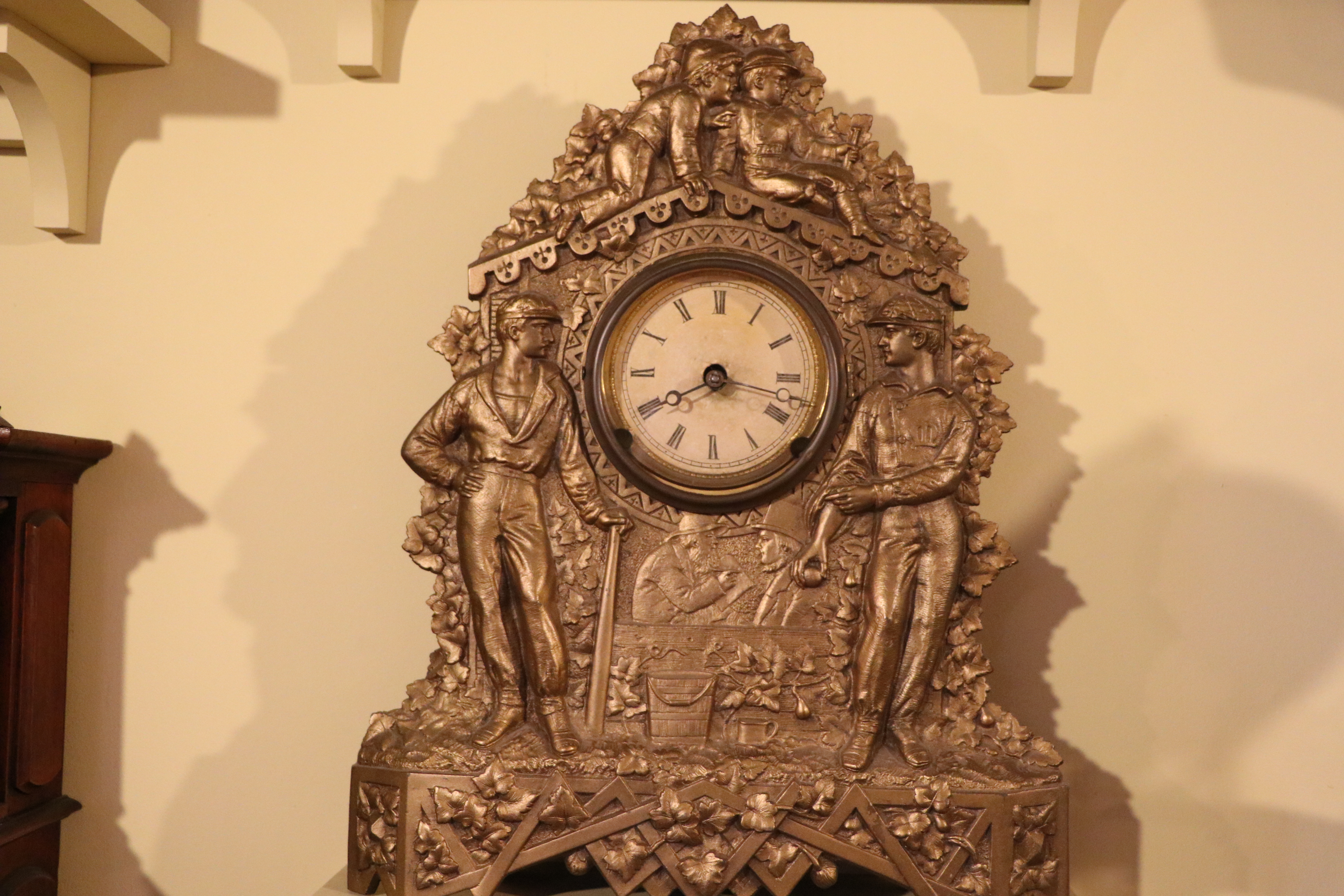
The clock below is a tribute to baseball.  If you look closely at the clock you can see the baseball players and coach in the design around the face of the clock.  This clock was sold in 1875 by the American Clock Company in New York, NY.  The movement was made Noah Pomeroy, of course, from Bristol, CT.

IMG_7745

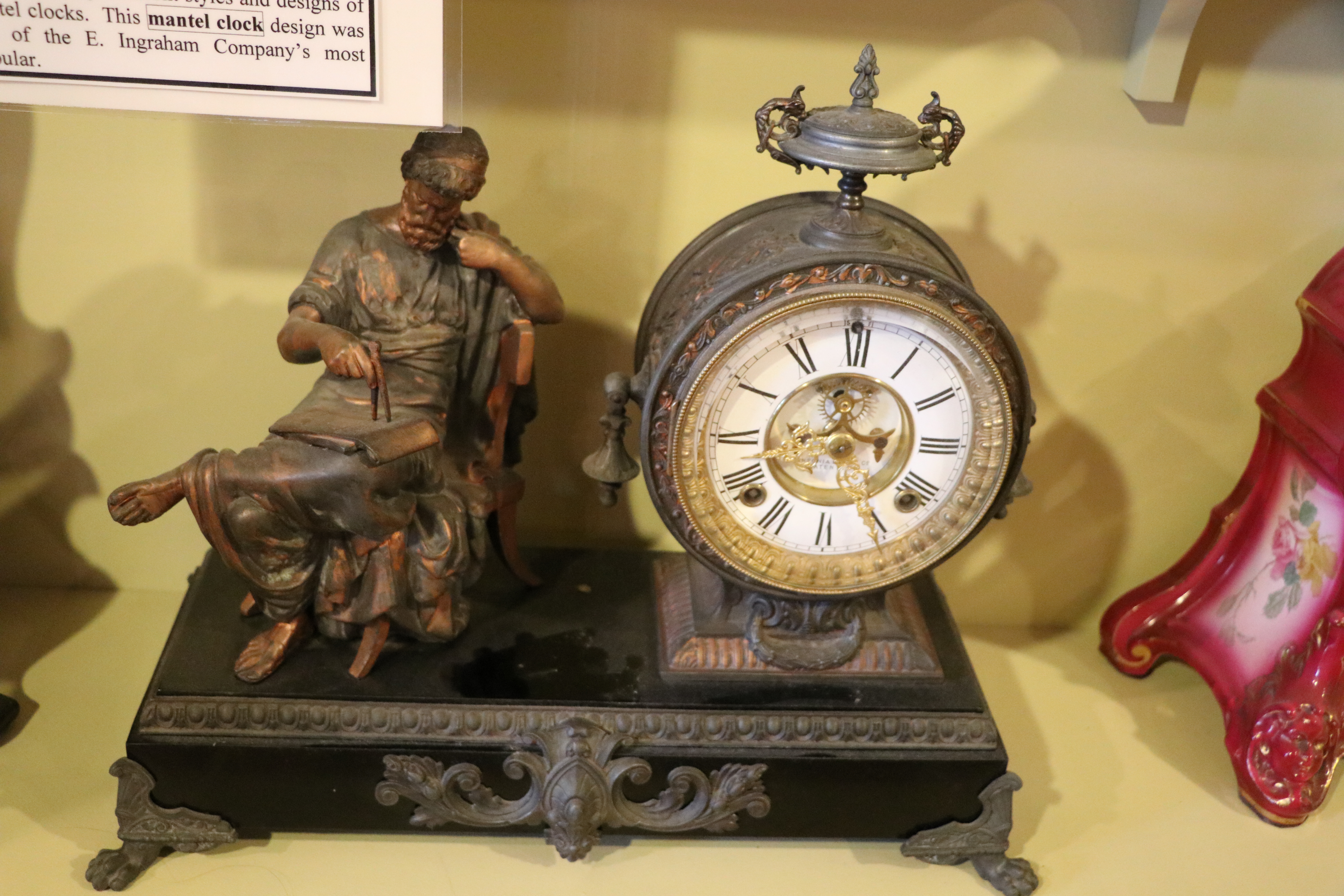
“The Philosopher” is a brass mantel clock with an 8-day movement made by the Ansonia Clock Company in Brooklyn, NY in 1855.  This is another interesting bit of information I learned at the museum.  Some clocks, especially the older clocks in their collection, had to be rewound.  Generally, clocks had either one day or eight day movement.  Clocks with a one day movement, obviously, had to be rewound every day.  However, saying a clock had a 8 day movement is a bit of a misnomer as it would have to be rewound every week (not every 8 days).

IMG_7754

I know.  Who knew a clock and watch museum could be so interesting!?

The museum also has old pocket watches, wrist watches and stop watches on display.

As you can see by the photos, Ingersoll played a major part in the watch making business, particularly pocket watches.  Keeping with their Connecticut ties, Ingersoll watches were originally supplied by the Waterbury (CT) Clock Company.

There are also several displays of watch and clock related items and historical exhibits.

This particular exhibit shows all of the different parts in watches and clocks.

IMG_7826

These educational displays showed how watches were made and the evolution of timekeeping.

The biggest clock in the museum hangs from the first floor to the bottom (or basement) floor.  It is a Tower Clock built by Seth Thomas in 1915.  It still keeps time and it is wound every 8 days.

One of the best parts of the museum is not even in the museum.  Attached to the clock and watch museum, the sun dial garden typically has a sun dial (it was not installed in the garden during my visit), flowers and a bench to take a break from all of the clocks and enjoy the day. if you need to take a timeout.  It really is a great place to pass the time.

Today’s featured link is Rena Tobey’s  blog.

Rena is a creator, curator and teacher among her many talents.  She made a visit to the American Clock And Watch Musseum in April of 2015. As I mentioned before, they do often switch out their clock and watch collection.  So, you will see some different clocks and watched that I did not photograph (although I did see quite a few that we both photographed).


New England Carousel Museum (Bristol, CT)


IMG_7573

Date Of Visit: July 1, 2017

Location:95 Riverside Ave, Bristol, CT

Hours:

Monday: Closed
Tuesday: Closed
Wednesday: 10-5
Thursday: 10-5
Friday: 10-5
Saturday: 10-5
Sunday: 12-5

The Museum is available any day of the week for special tours and facility rentals; even when closed to the public. If you’re interested in visiting the Museum Monday – Friday please call (860) 585-5411

Cost:

Adults $6.00
Seniors $5.50
Children $3.50 (age 4-14)
Children $2.00 (age 1-3)

All admissions include one ride ticket for the indoor carousel.

Parking: There is parking for about 15 vehicles in front of the building.  There is also street parking available on Riverside Ave.

Handicapped Accessible: Yes

Highlights: carousel horses, working carousel, tours, family friendly

Website: New England Carousel Museum

IMG_7349

As a child, I always loved riding the Merry-Go-Round and looking at all of the beautiful horses on the carousel.  Living in the city, it was bout as close as I was going to get to a horse.  It was always the highlight of my trip to the amusement park, especially since I never was a fan of the roller coasters.

There is a place you can go so the very same kinds of carousel horses we rode on as children.  And, you might also get a chance to actually ride on a Merry-Go_Round while you’re there.  I’m not horsing around either.

The New England Carousel Museum is deceivingly big.  From the outside, you wouldn’t even notice the museum was there.  In fact, I drove by it the first time I went looking for it.  The museum features hundreds of carousel horses and other types of carousel animals in their 10,000 square feet of space and several rooms with carousel horses and other items from carnivals and amusement parks.  Most recently, they added a carousel on their second floor.


Some of the carousel horses have been donated.  Others are being held while the owners are moving or while their homes are being worked on. Yes, some people actually have carousel horses in their homes!

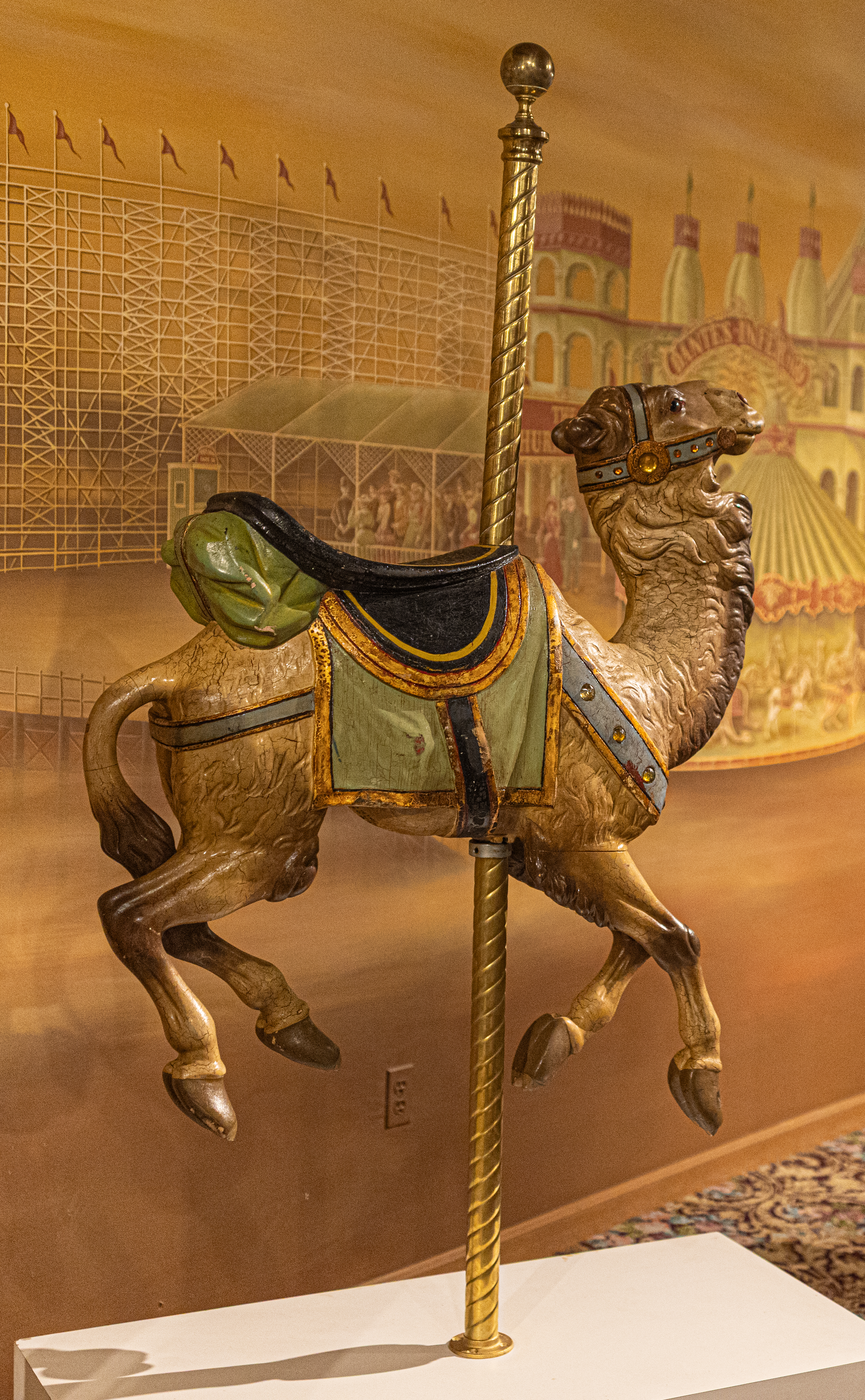
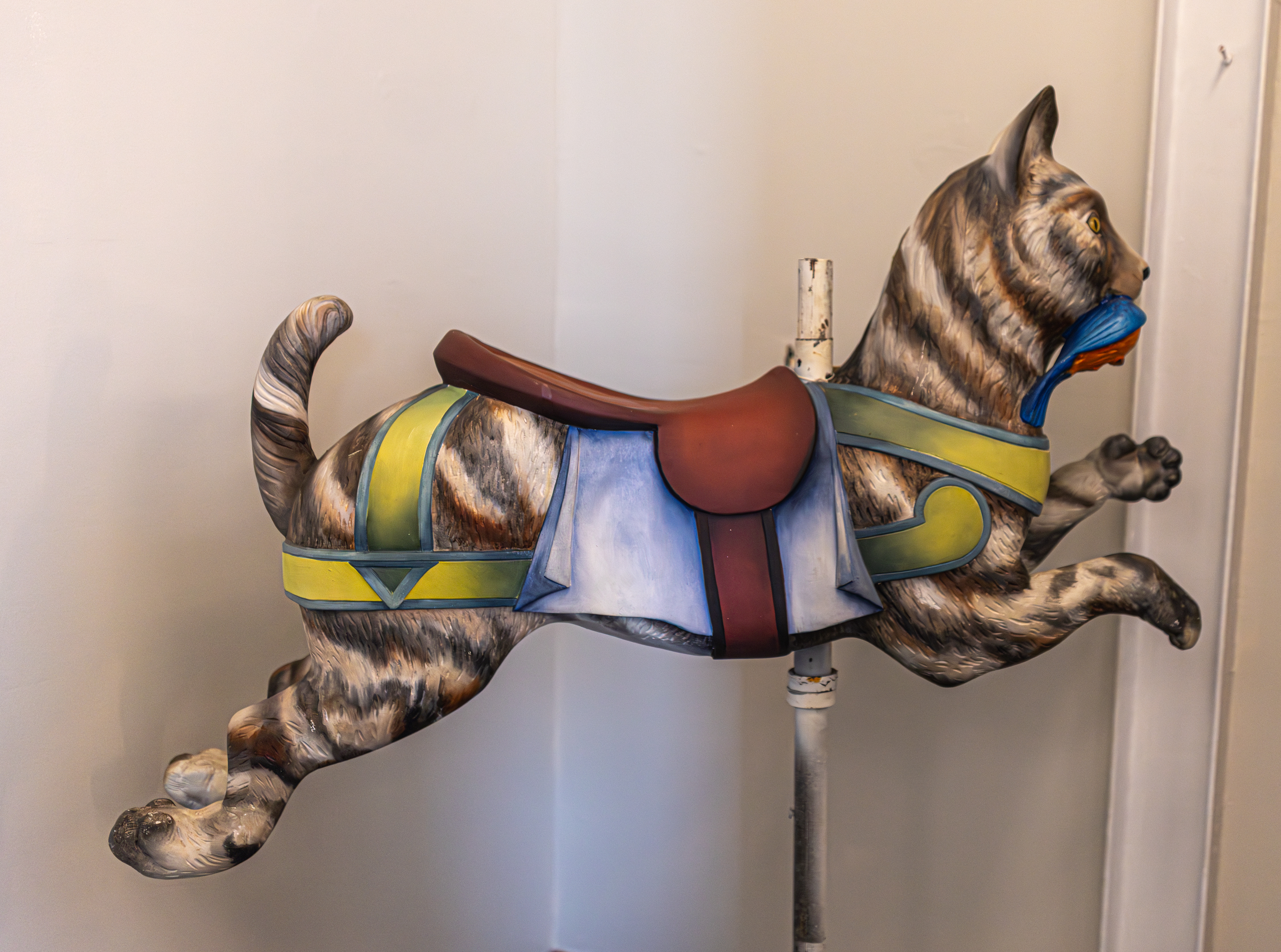
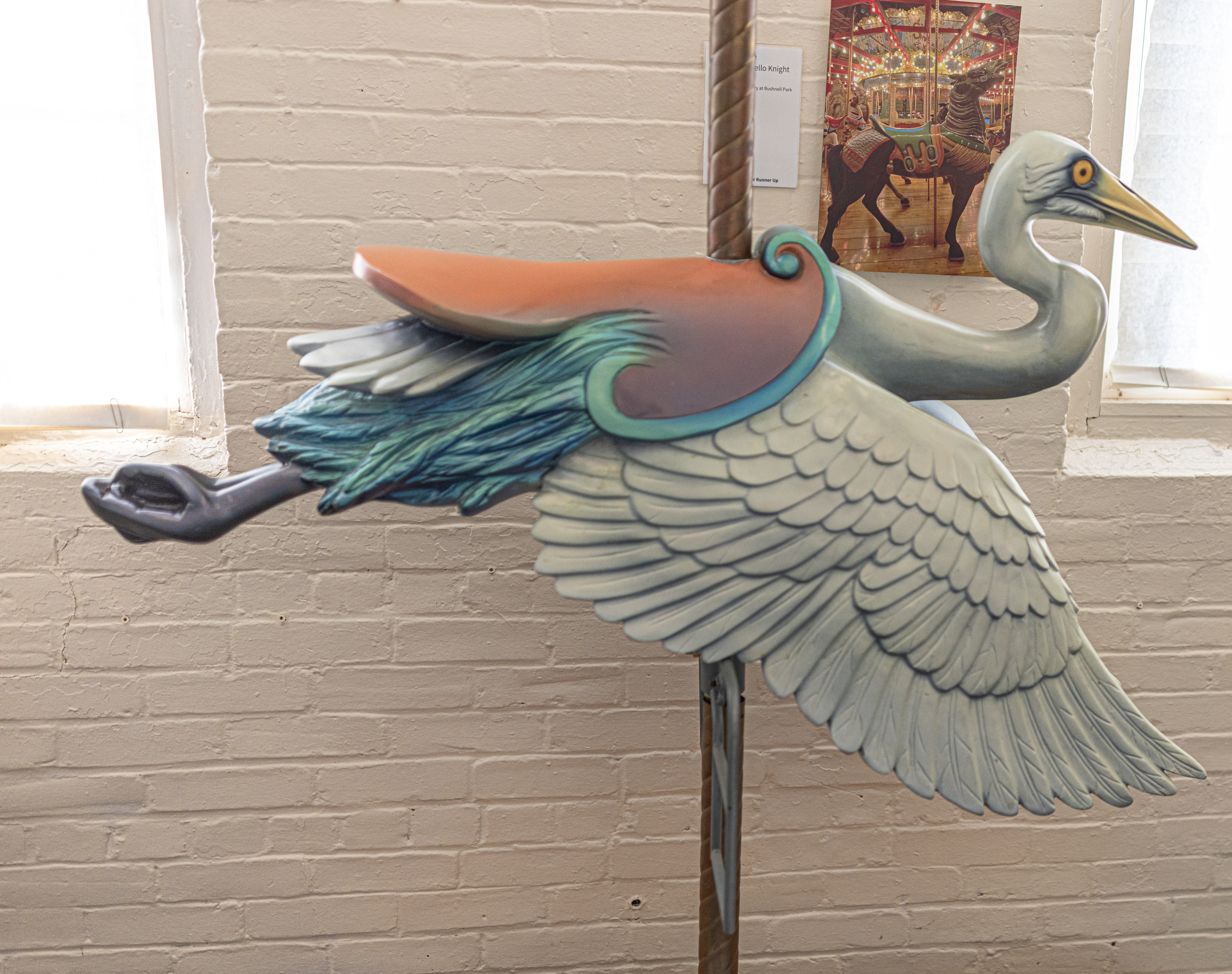
The carousel horses range from the traditional horse to swan, egret, giraffe and even a cat among other animals.
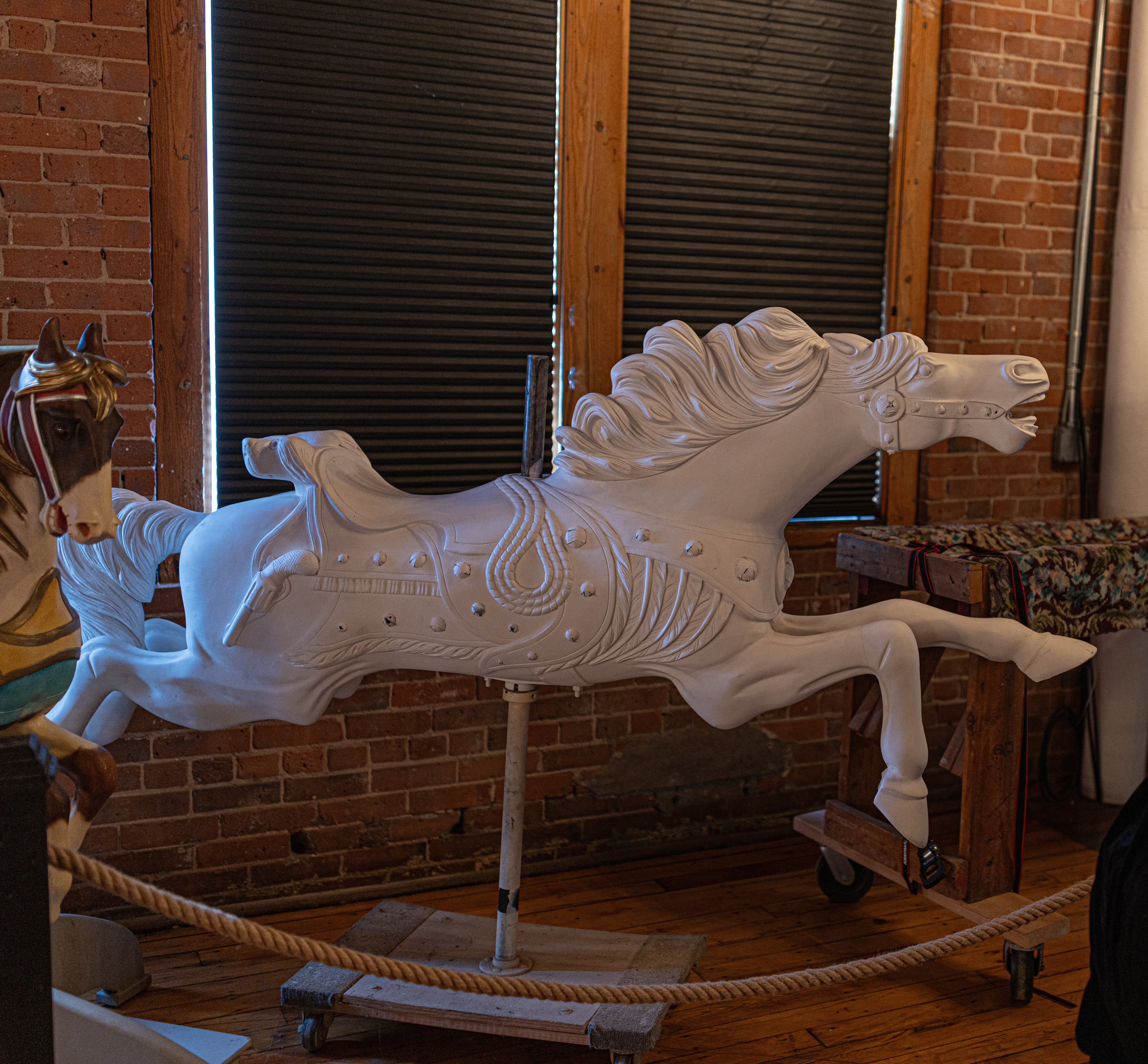


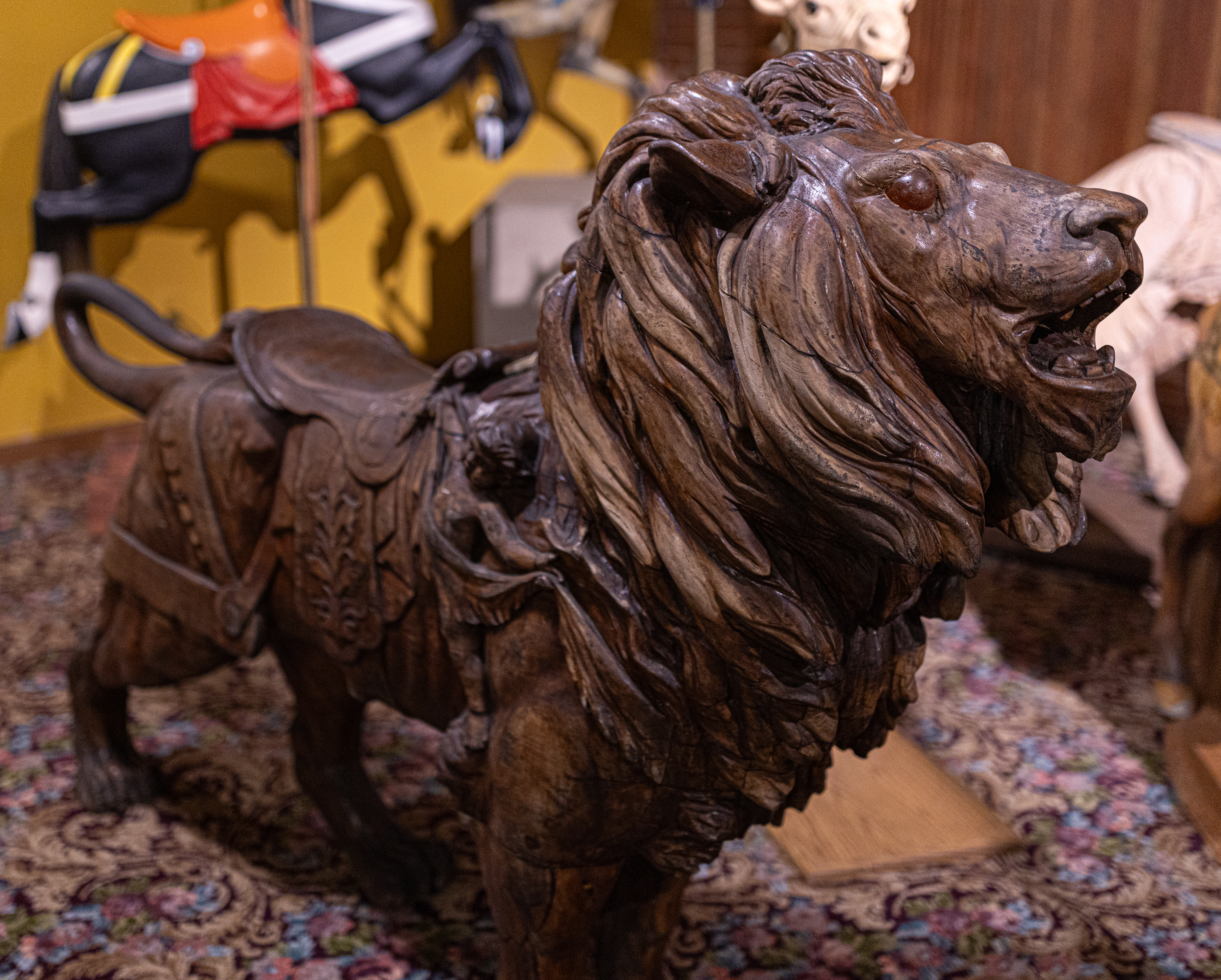
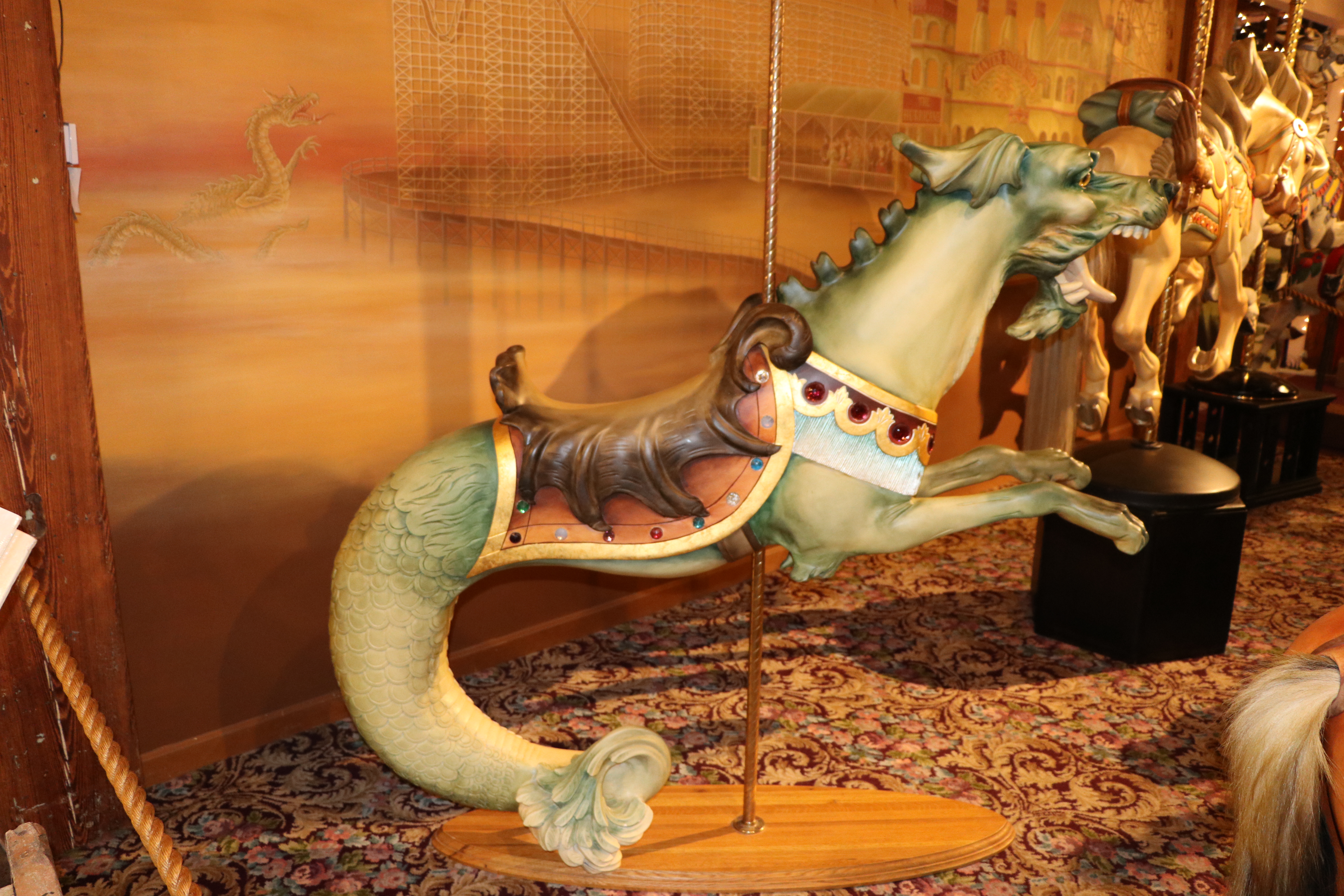
There are even some carousel horses in the form of mythical characters.
IMG_7367

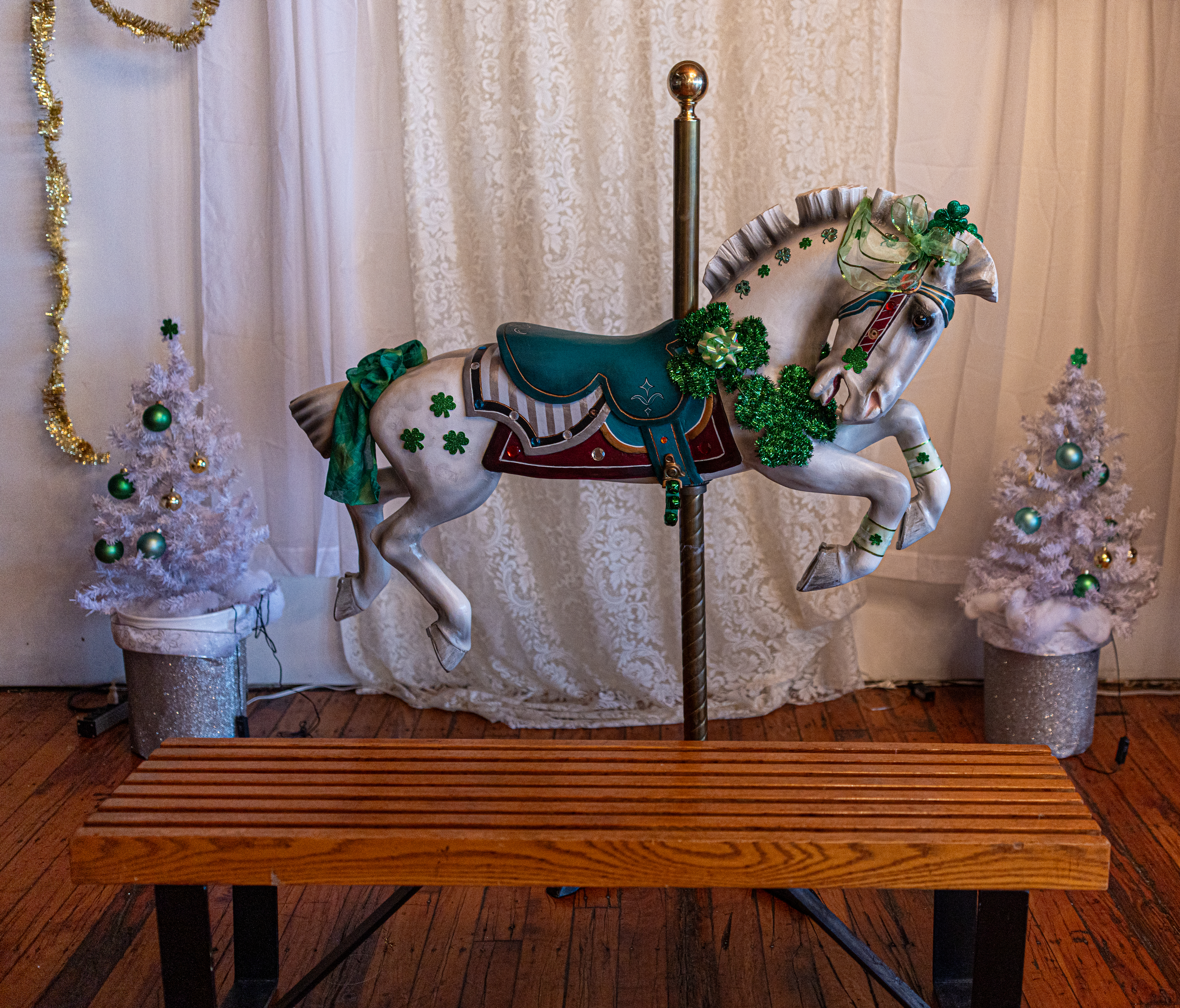
The craftsmanship and attention to detail are incredible.  Most of the horses have placards that give a little background to their history and the artist who created the animal.  For instance, this “Irish Horse” was carved in 1917 by David Lightfoot for the Philadelphia Toboggan Company.  The Irish theme was indicative of the Irish Nationalism that was a major influence in the eastern part of the United States during that time.


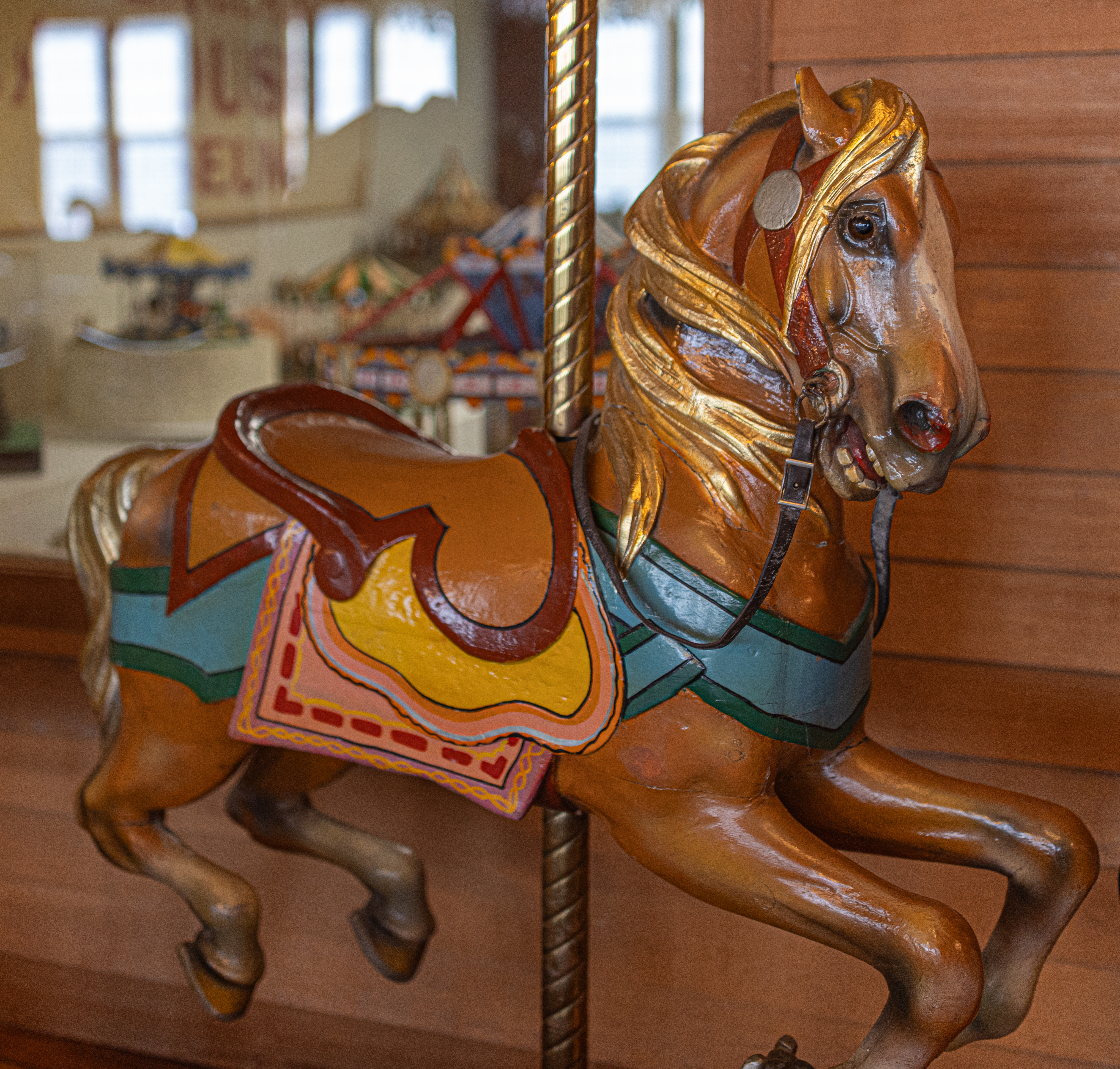
This “Sweet Horse” was carved by Daniel Muller in 1895.  The horse, which is over 120 years old, is still in its original paint.  It also has all four legs in the air which is another unusual feature of the horse.

IMG_7444

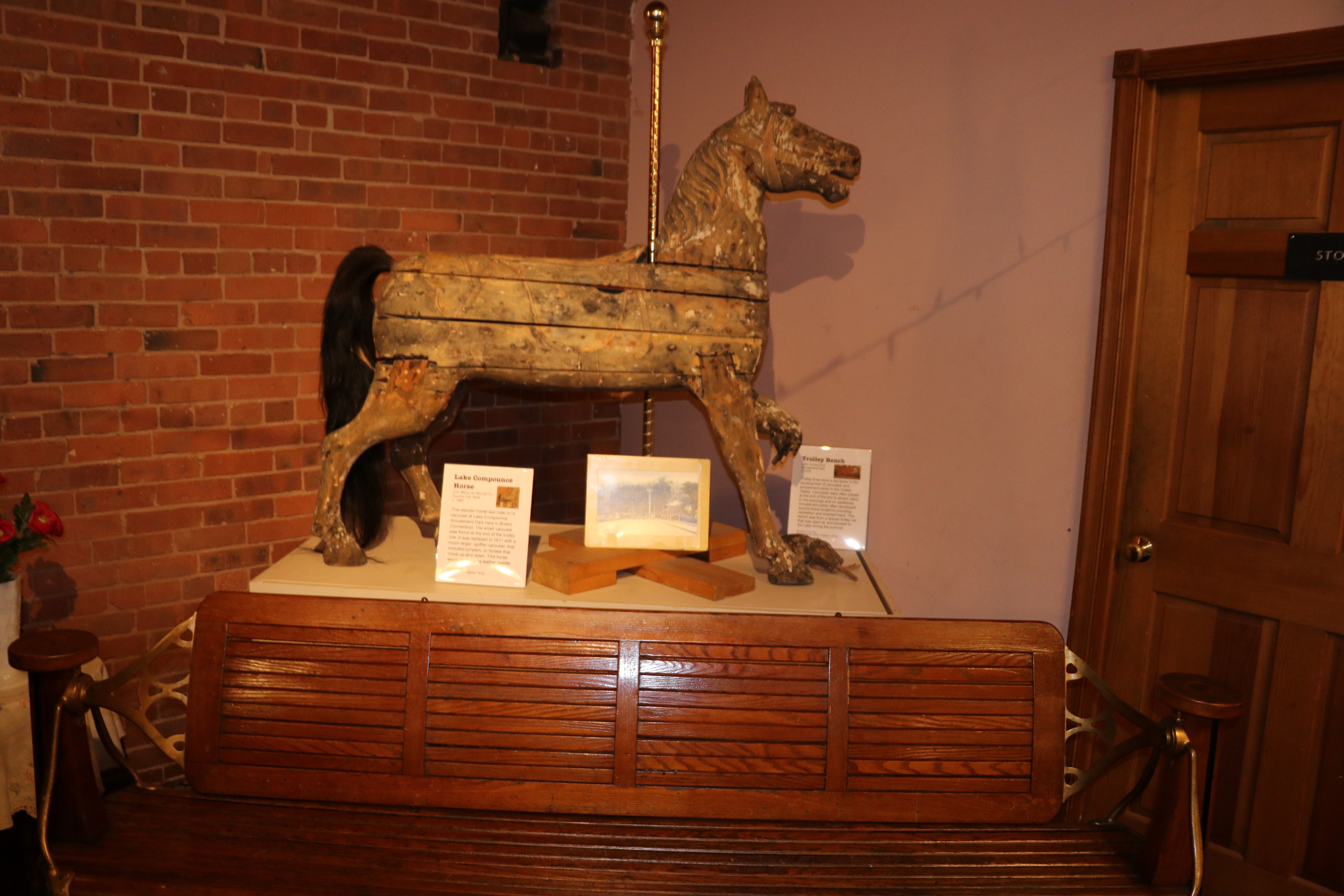
This particular carousel horse was originally part of the carousel at Lake Compounce in Bristol, CT.  Lake Compounce, which opened in 1846, is the largest water park and Connecticut as well as the oldest continuously running amusement park in the United States.   This horse was taken down from the carousel at the amusement park in 1911 when the carousel was replaced with a newer, more up to date (at that time) carousel.  It now resides in the Carousel Museum.

IMG_7425

There are many more interesting stories and facts about each carousel horse.

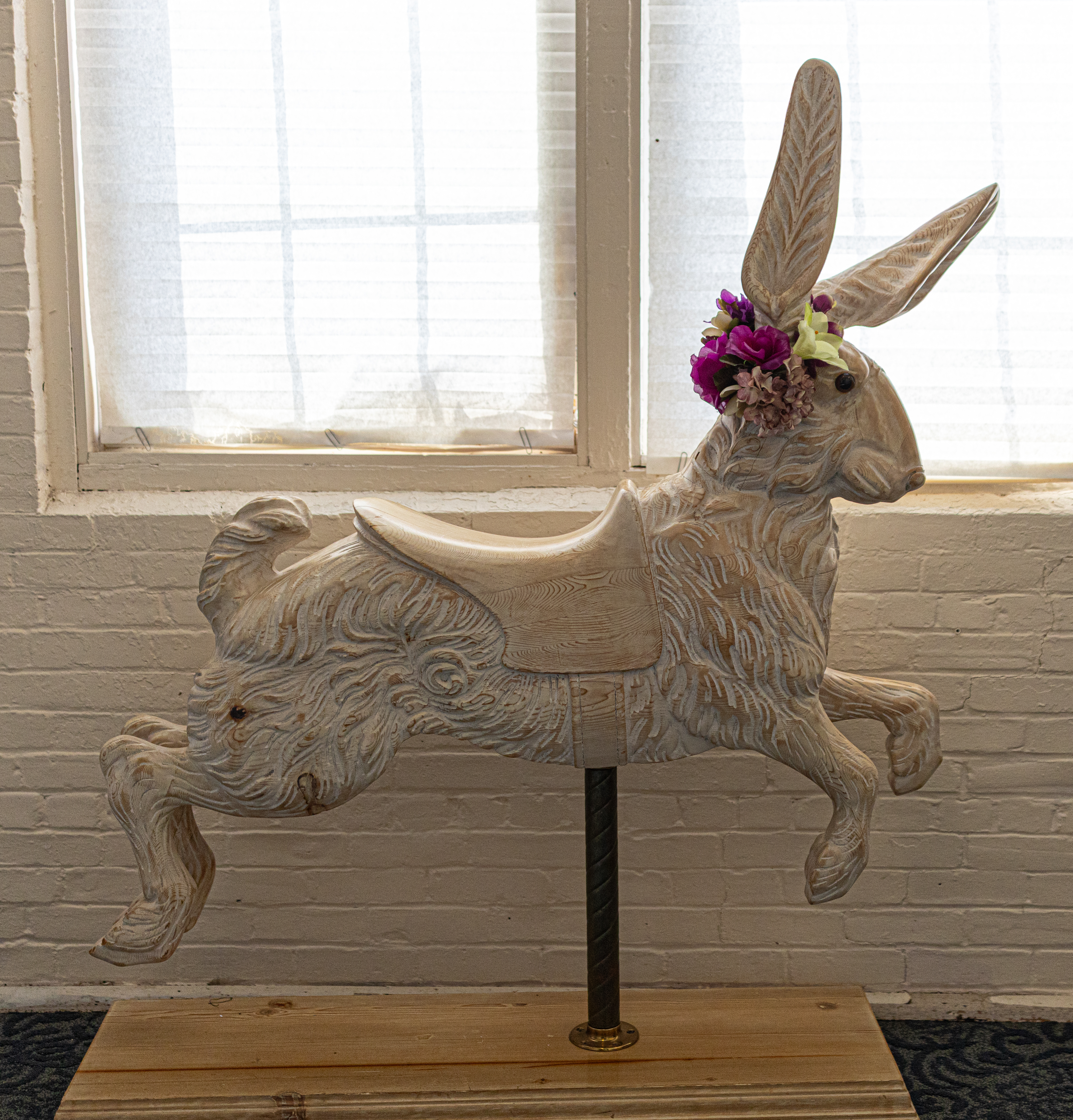
The carousel museum just doesn’t have horses.  They also have a swan, egret, dolphin, zebra, elephant, cat and rabbit among other carousel animals


Photos of carousels and amusement parks line the walls of the New England Carousel Museum and they have other items from amusement parks as well.


I even manged to photograph a dog there!  This realistic sculpture of a Siberian Husky is located near the carousel.  You may notice how one eye is brown and the other eye is blue.


The knowledgeable and friendly staff at the Carousel Museum give guided tours and explain how the horses were made.  Some of the factoids I learned during the informational session: those tails on the carousel horses…yup they’re real.  They are actual tails from horses.  It is true that some carouse horses do have wooden, carved tails.  But, the horses with actual tails most likely got their tails from a horse that had passed on.  Also, most carousel horses were only painted on the outside because that was the only side most people would see and that would save them money.


The highlight of the museum for many people, especially the little ones, is probably the carousel ride.  And, yes, I did go on it.   The carousel is located on the second floor (there is an elevator for those who can’t or don’t want to take the stairs).  It’s a great way to end a fun visit!


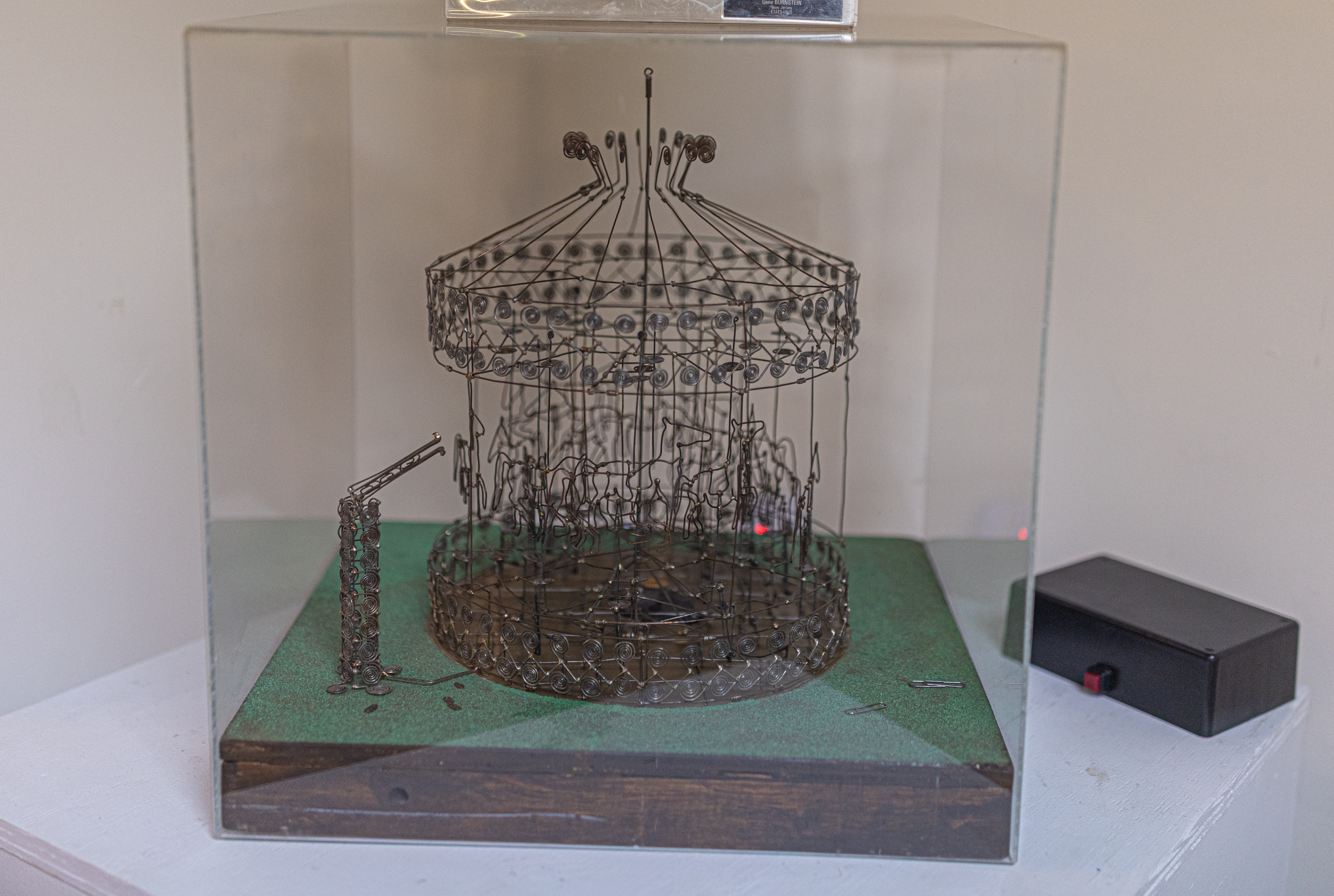
Below are two videos I took at the museum.  The first video is of a motorized replica of a carousel made entirely out of paper clips.  The work of art is called “Paper Clip Fantasy” and it was created by Eugene Burnstein of Lakewood, New Jersey.

The next video is a video of the fortune telling machine at the museum.  Yes, it still works and it even gives out fortunes.

Since some of you may be wondering what the fortune said, I have included some photos of it below.  The front side of the card said to hold the fortune in front of a mirror to read it.  I was able to decipher it without looking into a mirror.  It says “love me and the world is mine.”


The Nomad’s link of the day is faye_fares.   Faye is one of the tour guides at The New England Carousel Museum and she is also a very talented artist.  She’s an artist, photographer and model.  Some of her work takes 4 to 9 hours to complete.  You can follow her Instagram account here.

Please connect with me on Facebook and Instagram


Coggeshall Farm Museum (Bristol, RI)

Date Visited: June 18, 2016

Location: 1 Colt Drive, Bristol, Rhode Island (about half an hour from Providence and 1 hour from Boston, MA)  (401) 253-9062

Hours: presently open Tue-Sun 10 a.m. to 4 p.m.

December 15 – April 15
Open Weekends, 10 am to 4 pm
Open February 16 – 21, 2016 for February vacation

April 15 – December 15
Open Tuesday through Sunday, 10 am to 4 pm.

Closed Thanksgiving, Christmas and New Year’s Day.

Cost:

Weekdays

Adults: $5
Seniors: $3
Children (3–12): $3
Children under 3: Free

Weekends

Adults: $7
Seniors: $5
Children (3–12): $5
Children under 3: Free

You can also purchase a membership for unlimited visits, free access to special events and discounts at their gift shop.  If you plan on going more than once or twice a year and especially if you go with your family, the membership is probably the best rate:


Individual membership: $25

Couples: $35

Family: $50

Parking:  There is a space for about 4 or 5 cars across from Coggeshall Farm.  You can also park at Colt State Park, which is adjacent to the farm but you may have to pay a fee to enter the park.

Size: 48 acres

Time To Allot For Visit: About An Hour

Dog Friendly: No (except for guide dogs)

Highlights: living museum, character actors, farm animals, historic style homes

Coggeshall Farm Museum

DSC_0467


You often find the most wonderful places in the most unexpected places.  On an otherwise nondescript trail at Colt State Park used for cycling and running, lies a farm frozen in time.

Established in 1973, the Coggeshall Museum Farm features interpreters and authentic reenactments of farm life in the year 1799.  Every last detail from the tools they use to the bedding (mostly hay) is authentic to the time it represents.

I loved the houses and workshops at Coggeshall.  The homes and interiors were definitely the highlight of the trip for me.  The rooms were modest and fairly bare (and I thought my room was small).

This slideshow requires JavaScript.

Even the papers and bills in the houses are accurate to those days.  They don’t accept them as legal tender though, in case you were wondering.

Coggeshall Farm Museum also has a variety of animals.  When I came to visit there were 2 steer, 11 sheep and several chickens, turkeys and other fowl.  I also got to see some newly hatched chicks.

When I asked how long they keep the animals there I was told they usually live 6 to 8 years and then they have a “retirement plan.”  Yes, everything gets used at the farm.

This slideshow requires JavaScript.

There were several character actors working during my visit.  This gentleman was cutting wood to store (it’s never too early to get ready for long, chilly winter nights).  When I asked how long it would take to cut all the wood he said, “util it is done”.  Where has that work ethic gone?

DSC_0380DSC_0372

The grounds are well kept and very pretty.  They also have a large grazing area for the animals.

Then there was Moe – the resident cat and pest control manager.  He was very friendly and playful as you can see.  Believe it or not, the chipmunk he’s hunting and carrying so gently escaped only a little worse for the wear.

This slideshow requires JavaScript.

Coggeshall Farm also lets the patrons partake in some tasks (such as cutting wood) as long as it is supervised and they  have many events throughout the year such as Arts On The Farm and Farm Camp.  Check their website for more details.


Colt State Park (Bristol, RI)

Date Visited: June 19, 2016

Location: Rte 114 (off Poppasquash Rd – yes that is the real name of the road – or Hope St depending which direction you’re coming from), Bristol, RI

Cost: It was free when I visited, according to the new parking fees it is $7 for residents and $14 for non residents to park at beaches in Rhode Island (lawmakers in Rhode Island recently cut the costs in half)

Parking: There are several parking areas.  But, they fill up quickly.  Arrive early to ensure you get a good spot, especially during the summer weekends.  There are also electric vehicle charging stations available for 4 hours max while enjoying the park or other facility.The EV station does not guarantee a space on full capacity days

Hours: open daily dawn to dusk.

Time To Allot For Visit: This can vary depending on what you’re doing there (kayaking, running, cycling, barbecuing, etc.)  If you’re just going for a walk or jog an hour to two hours should be enough time.  I spent three hours there but I was stopping a lot to take photos

Size of Park: 464 acres

Highlights: scenic waterscape, various wildlife, walking/running/biking trails, fields and picnic areas, beach, bridge and pretty architecture and well kept trails

DSC_0520

Named after Samuel P. Colt who owned the property in the early 1900’s where he built his home the Casino, Colt State Park has been considered the “gem of Rhode Island.”  With its pretty views, teeming wildlife and peaceful setting it lives up to its name.

This slideshow requires JavaScript.

The park is surrounded by water for people to launch their boats, kayaks and other types or watercraft.

DSC_0020

One of the best things about Colt State Park is the abundant wildlife.  There are birds aplenty.

DSC_0530DSC_0481

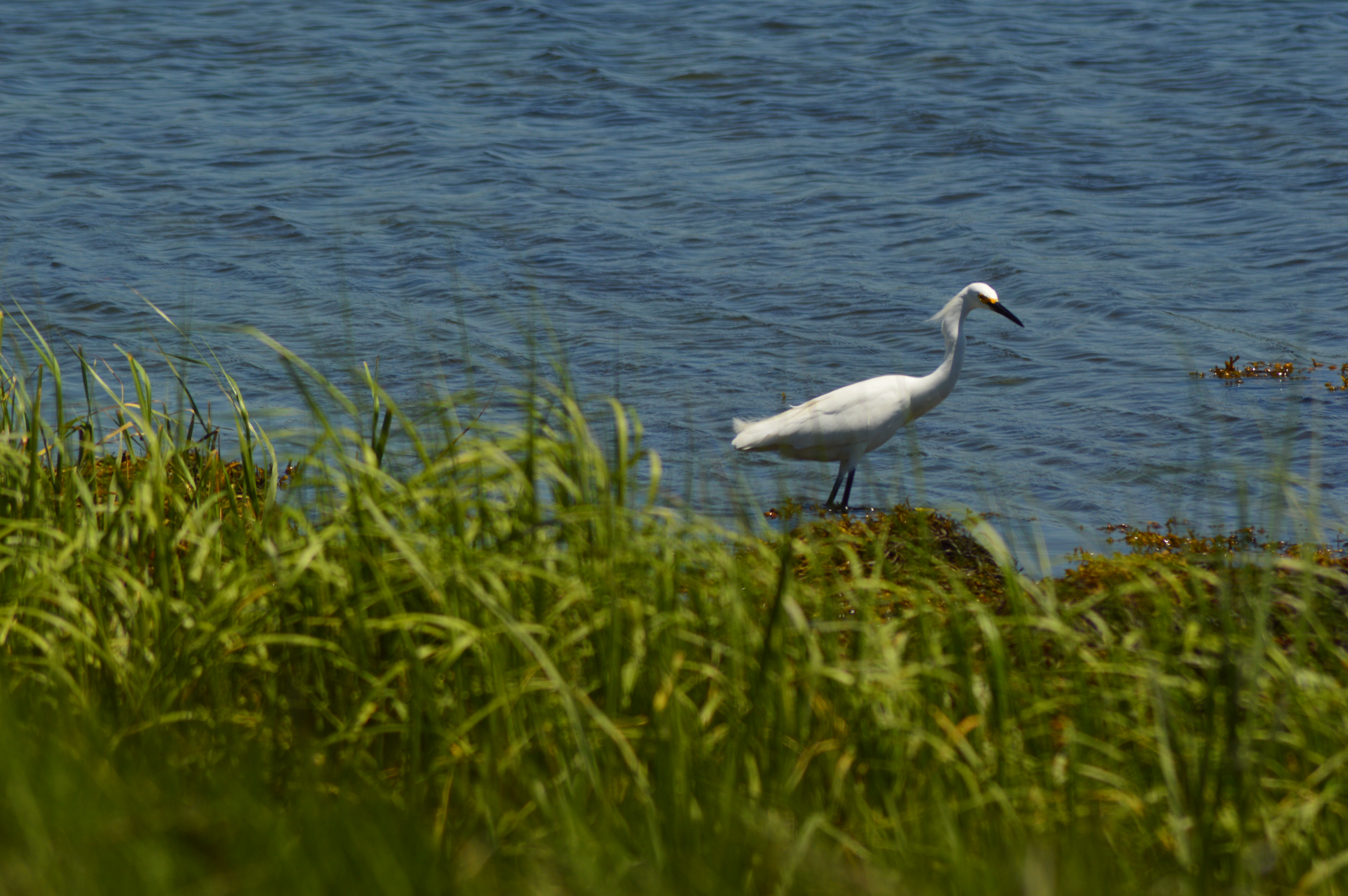
Egrets

DSC_0510

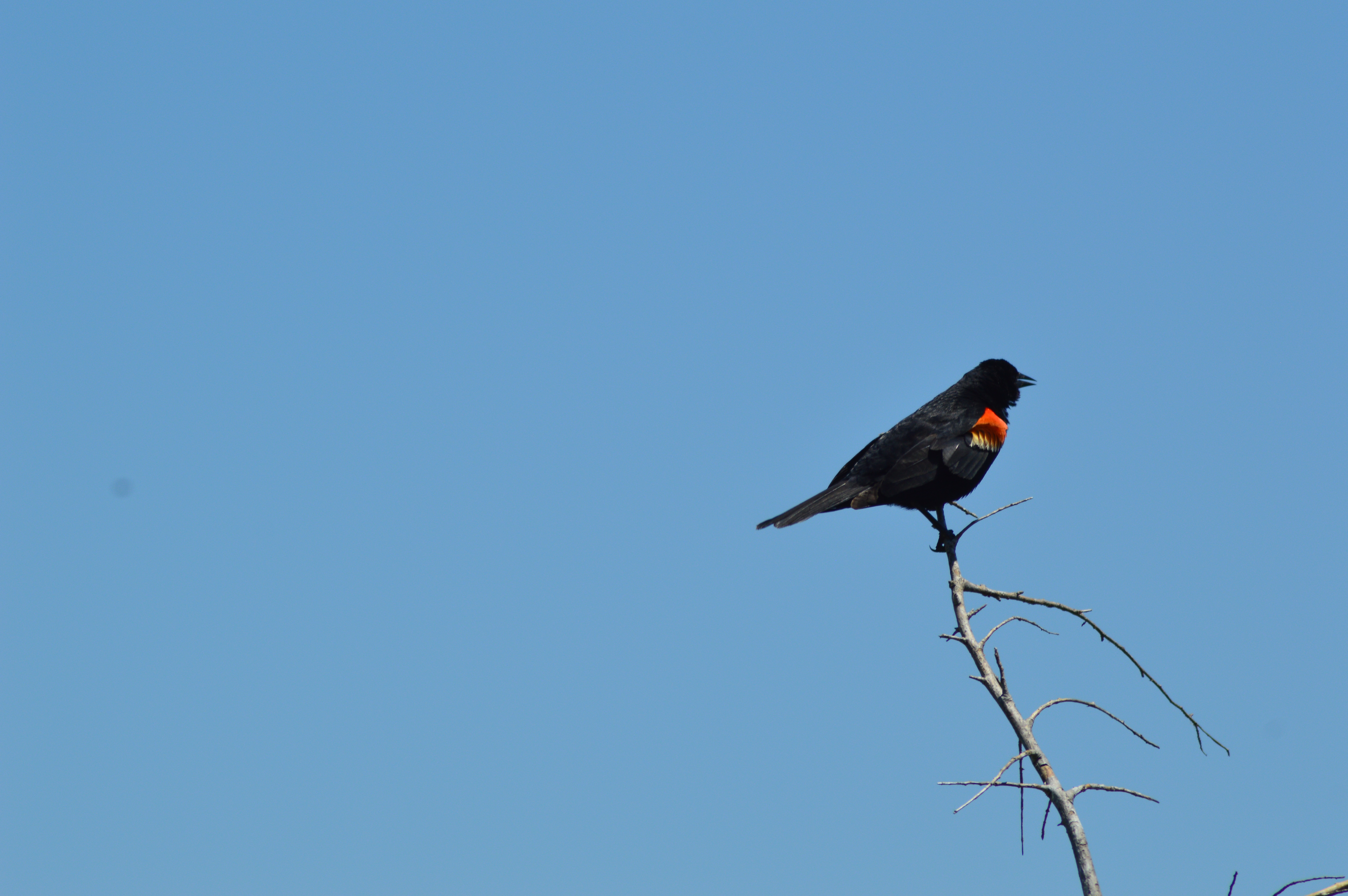
Red Winged Blackbird

DSC_0157

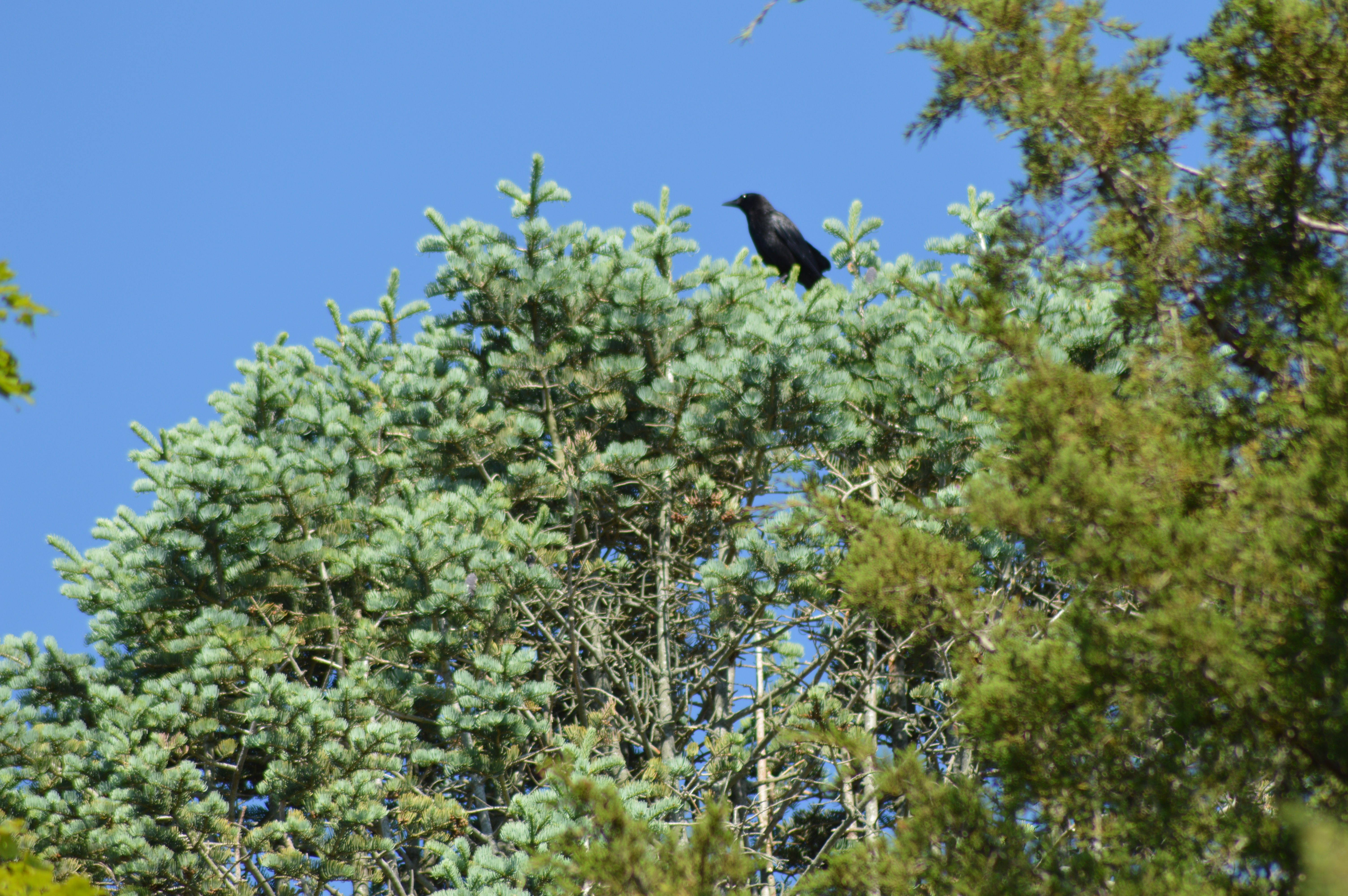
American Black Crow

DSC_0066

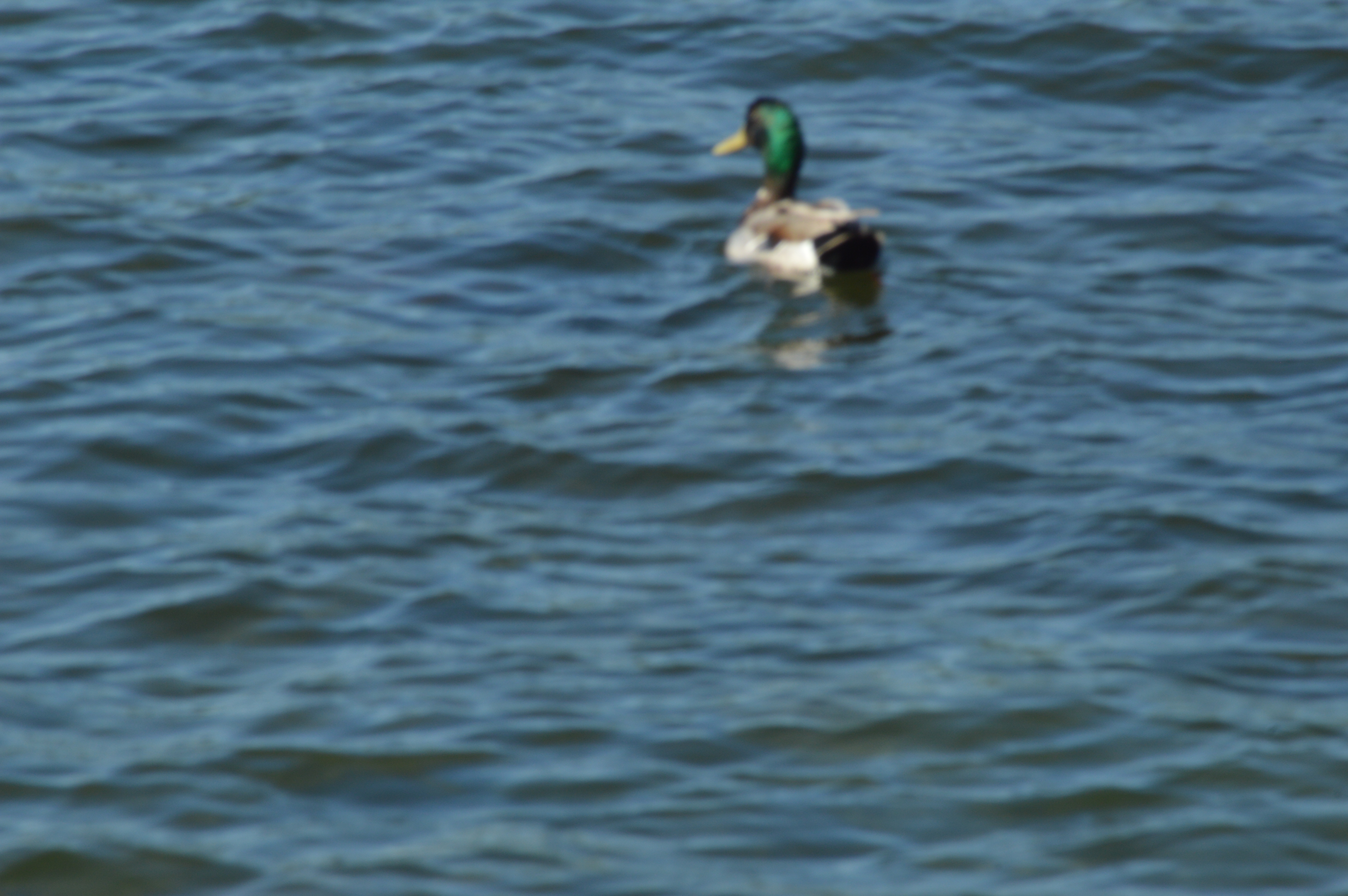
Mallard Duck

DSC_0046

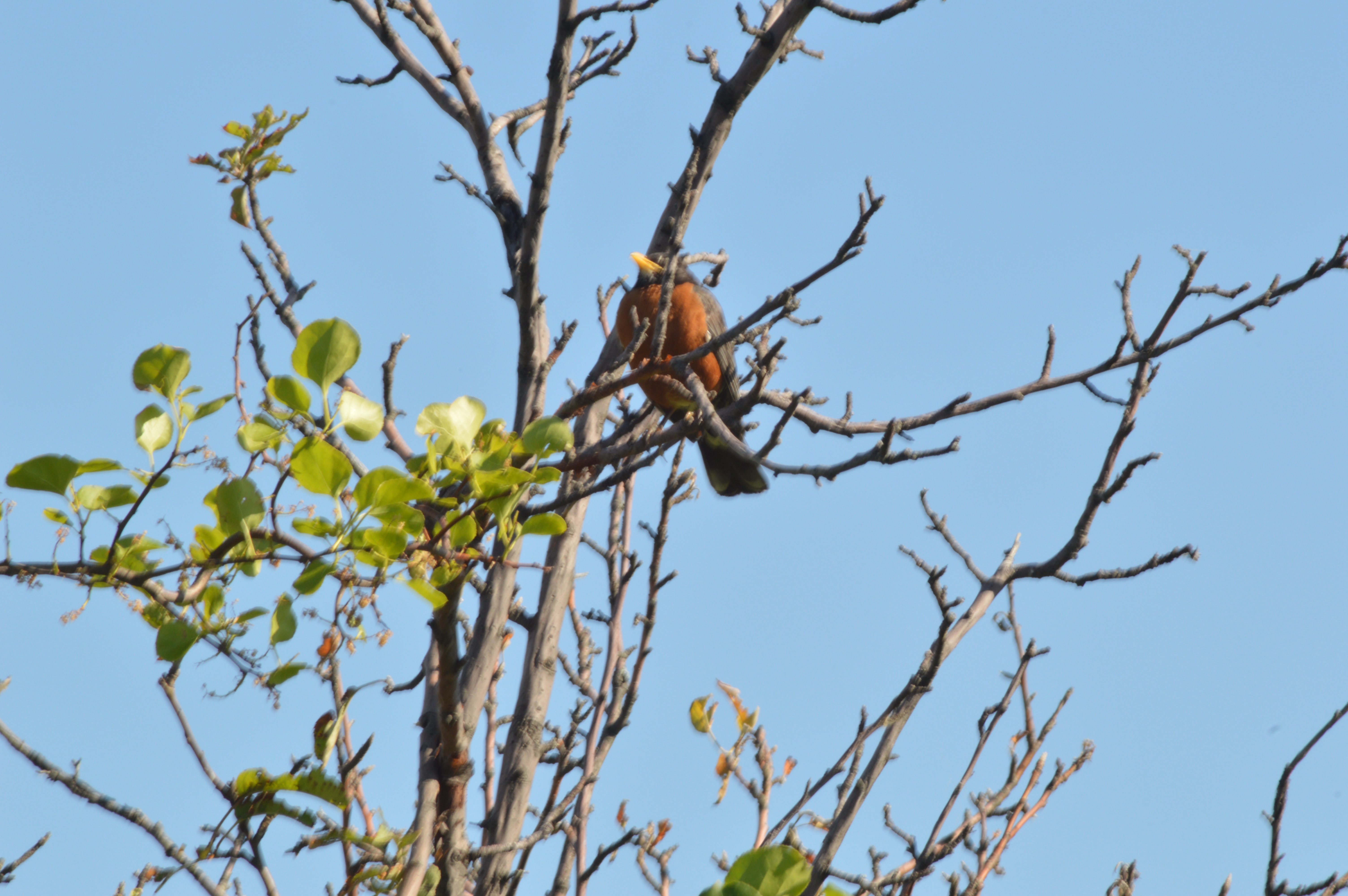
Robin

DSC_0051

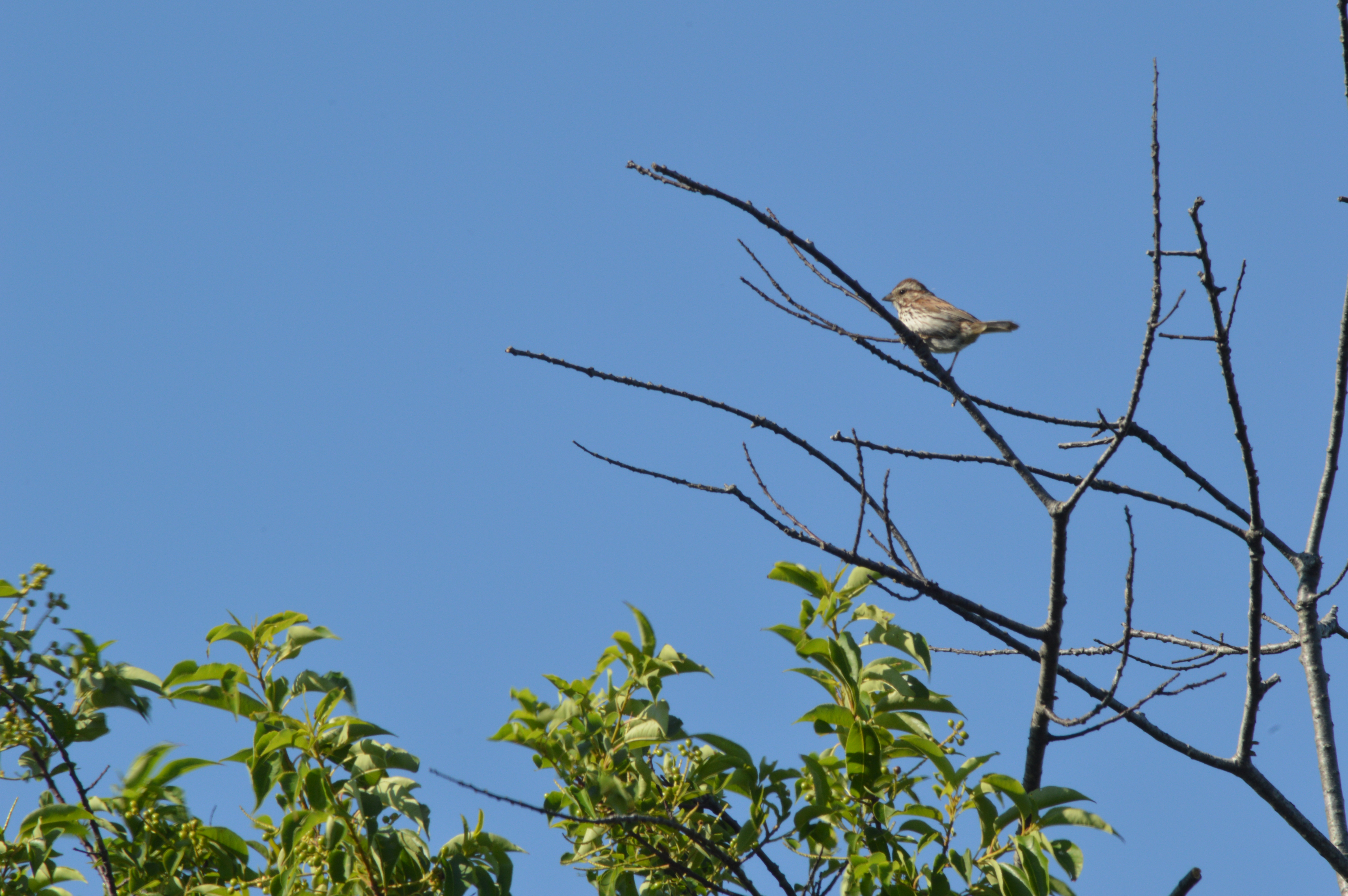
??????

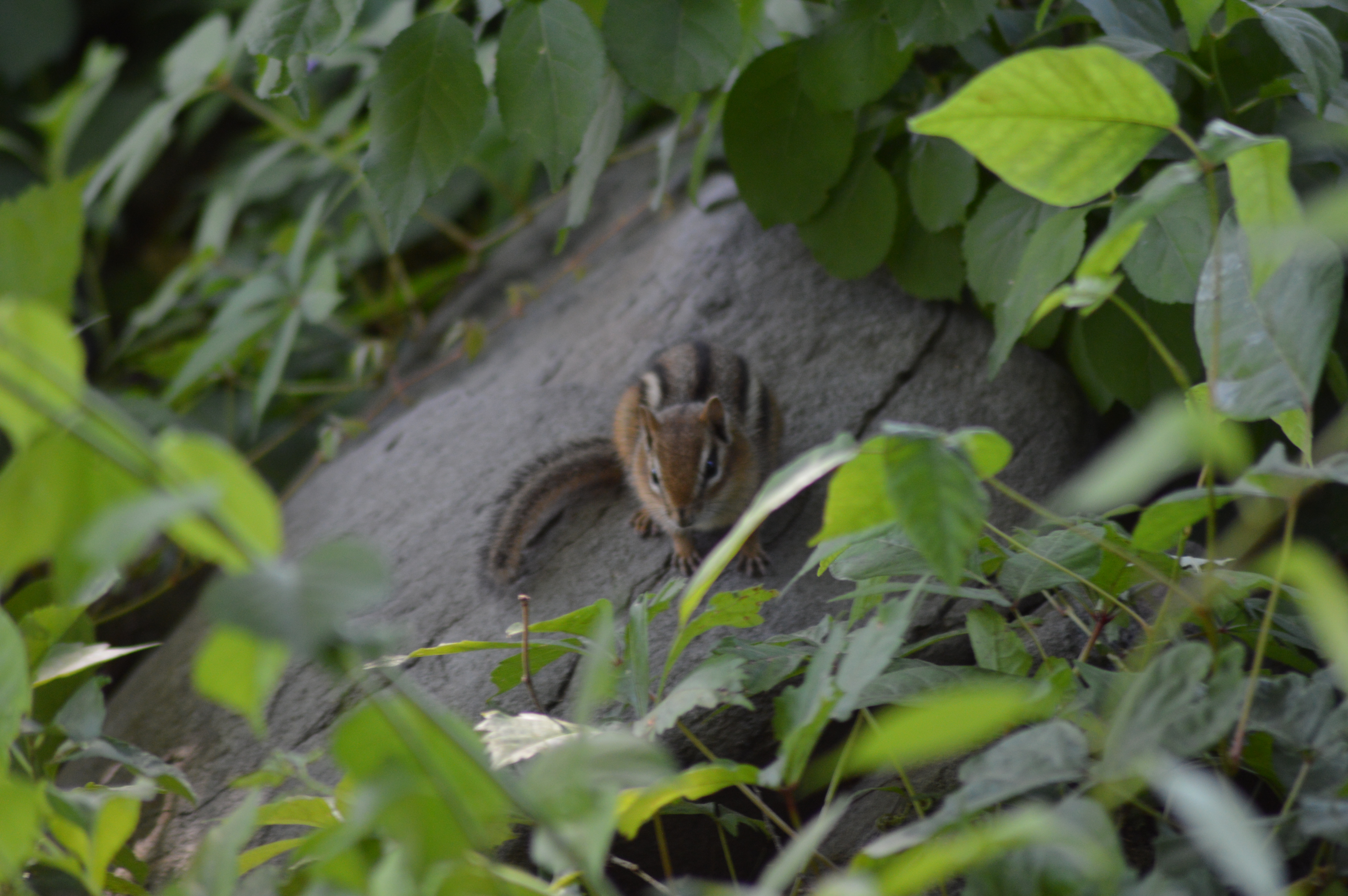
There are many other animals at the park like this chipmunk

DSC_0132

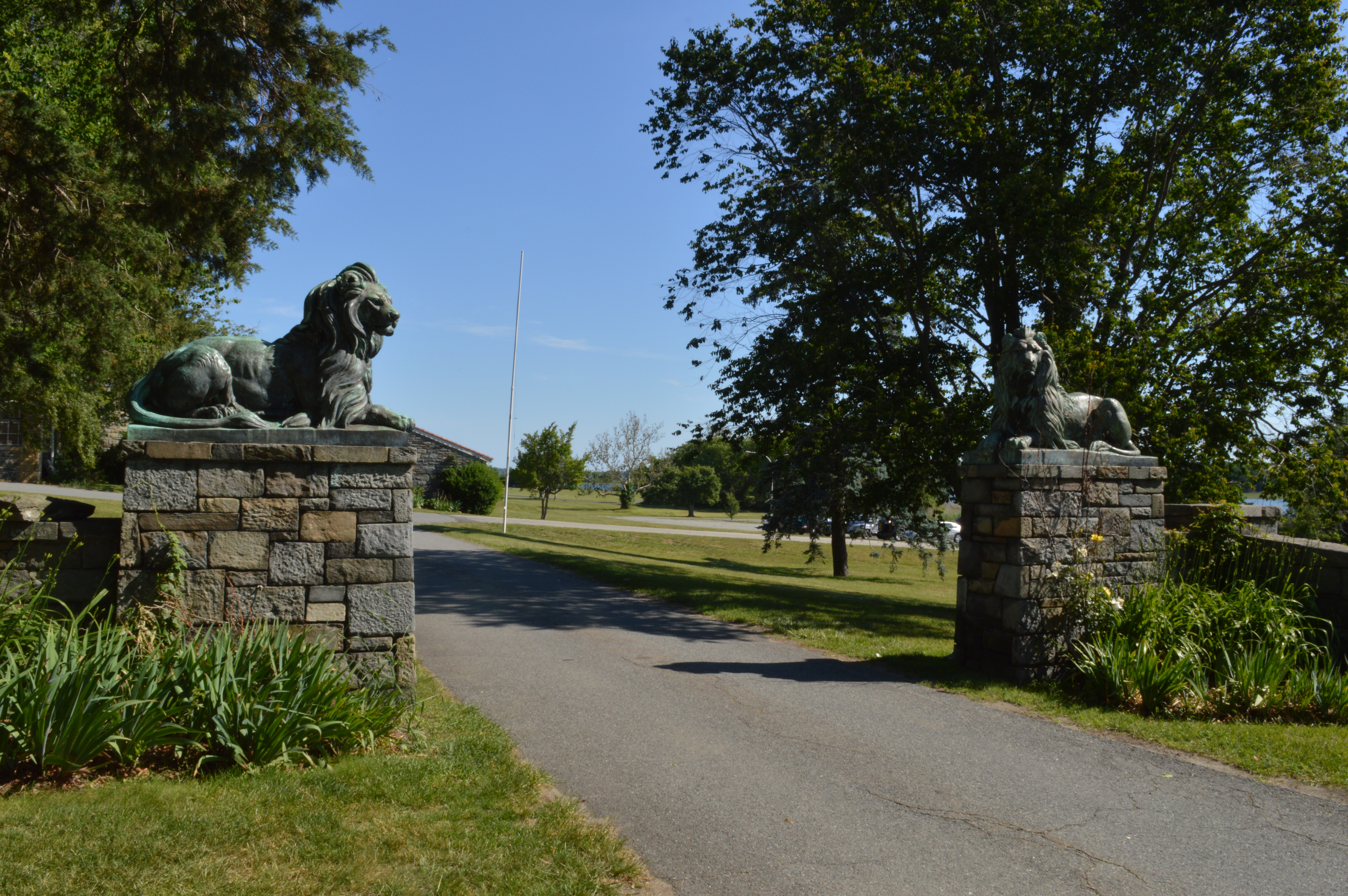
I even saw lions at the park

DSC_0144

Off the beaten path, I found these top bar bee hives.  And they get nasty when you get too close and I had a bee sting to prove it!  I suppose I wouldn’t like it if someone came into my home and started taking photos either.

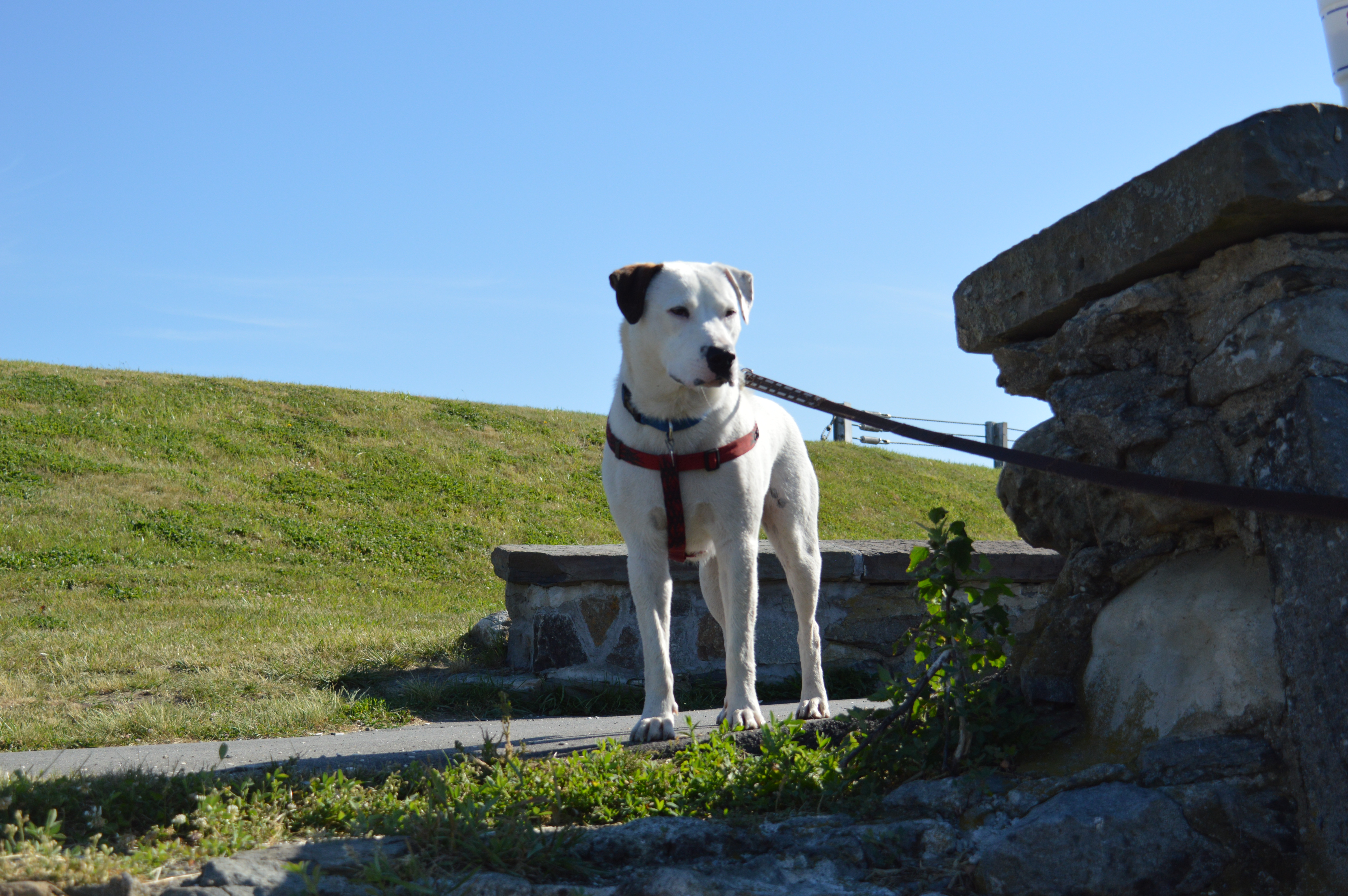
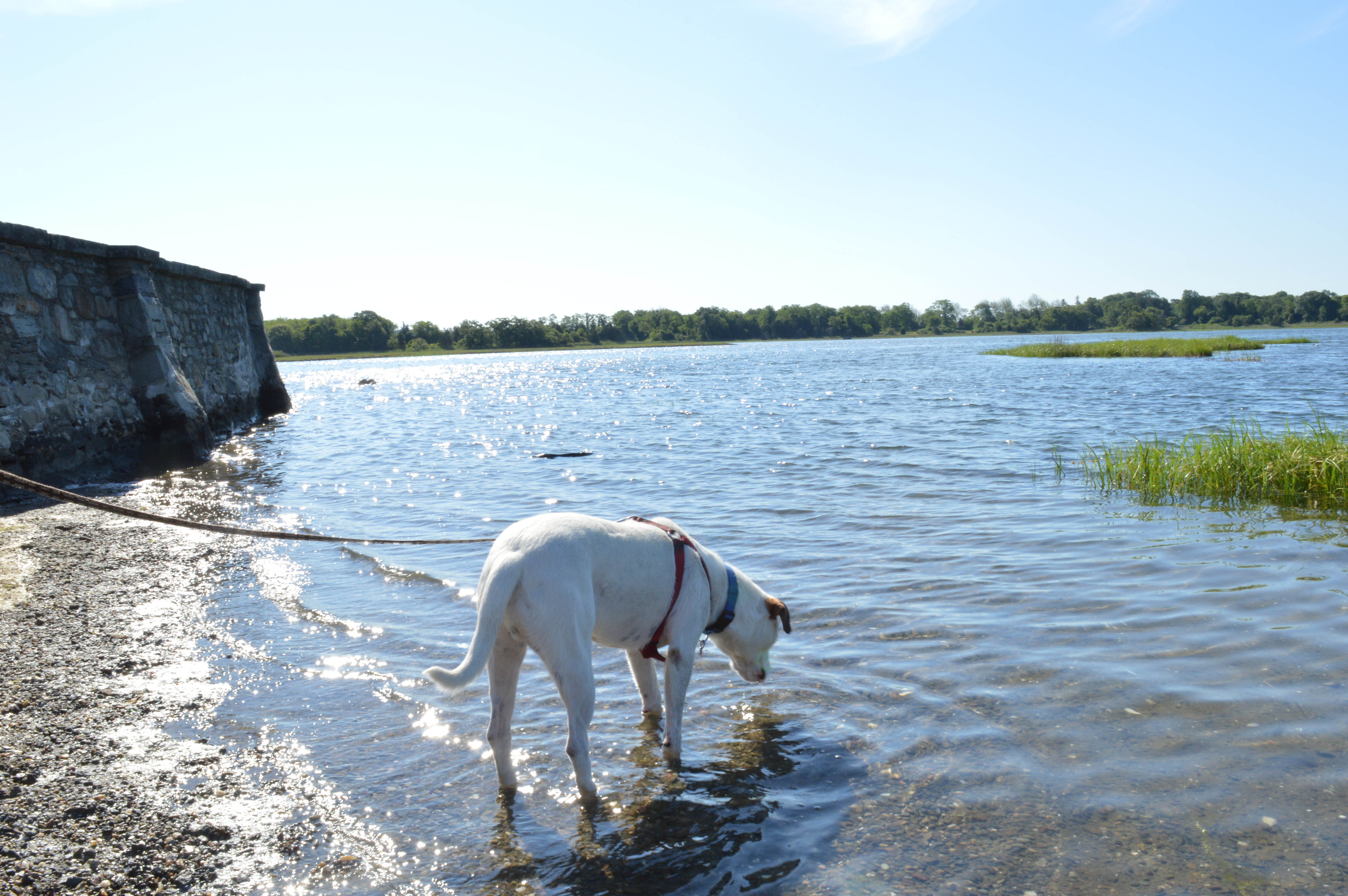
And, of course, there were dogs at the park.

DSC_0088DSC_0069

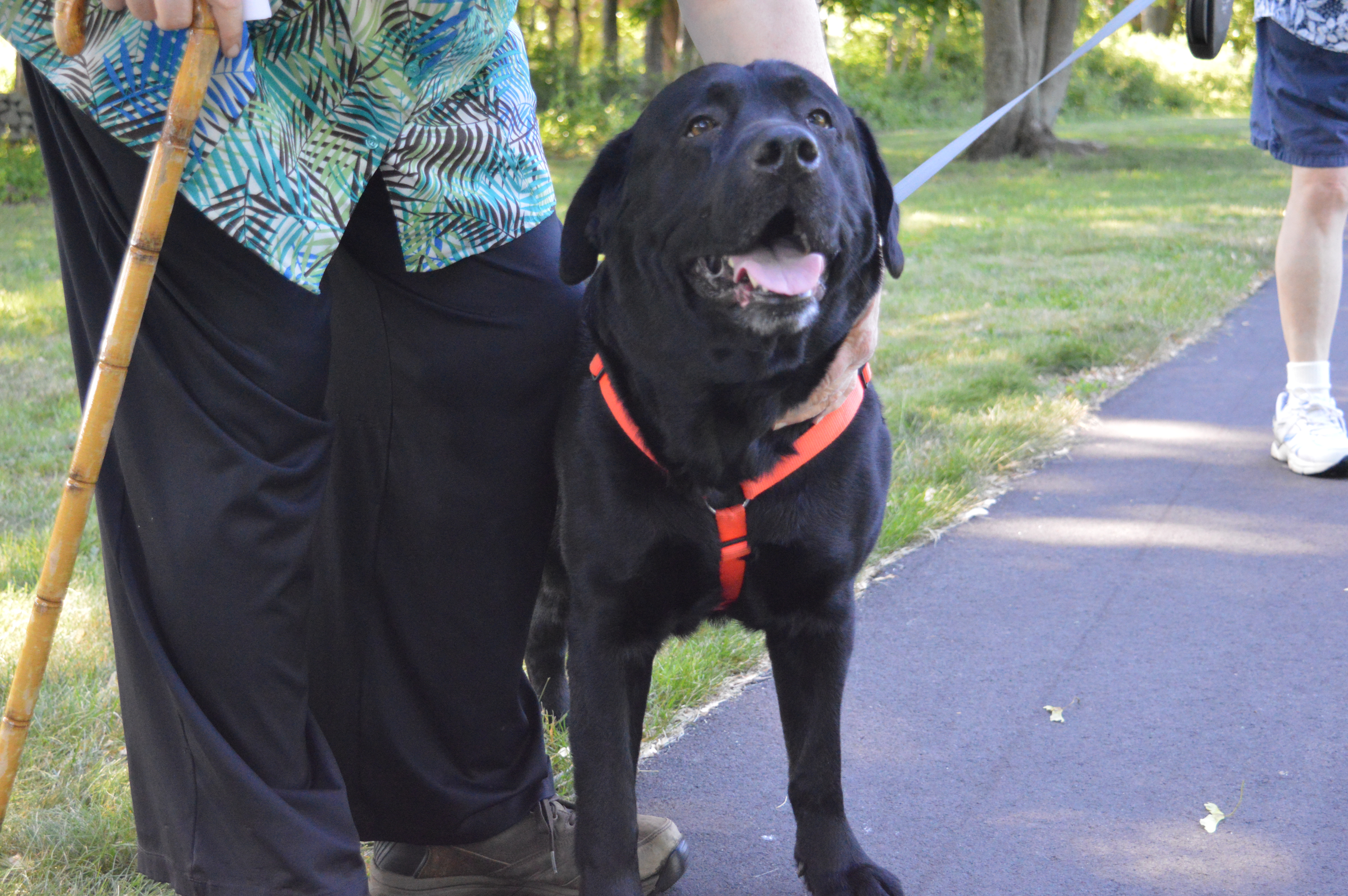
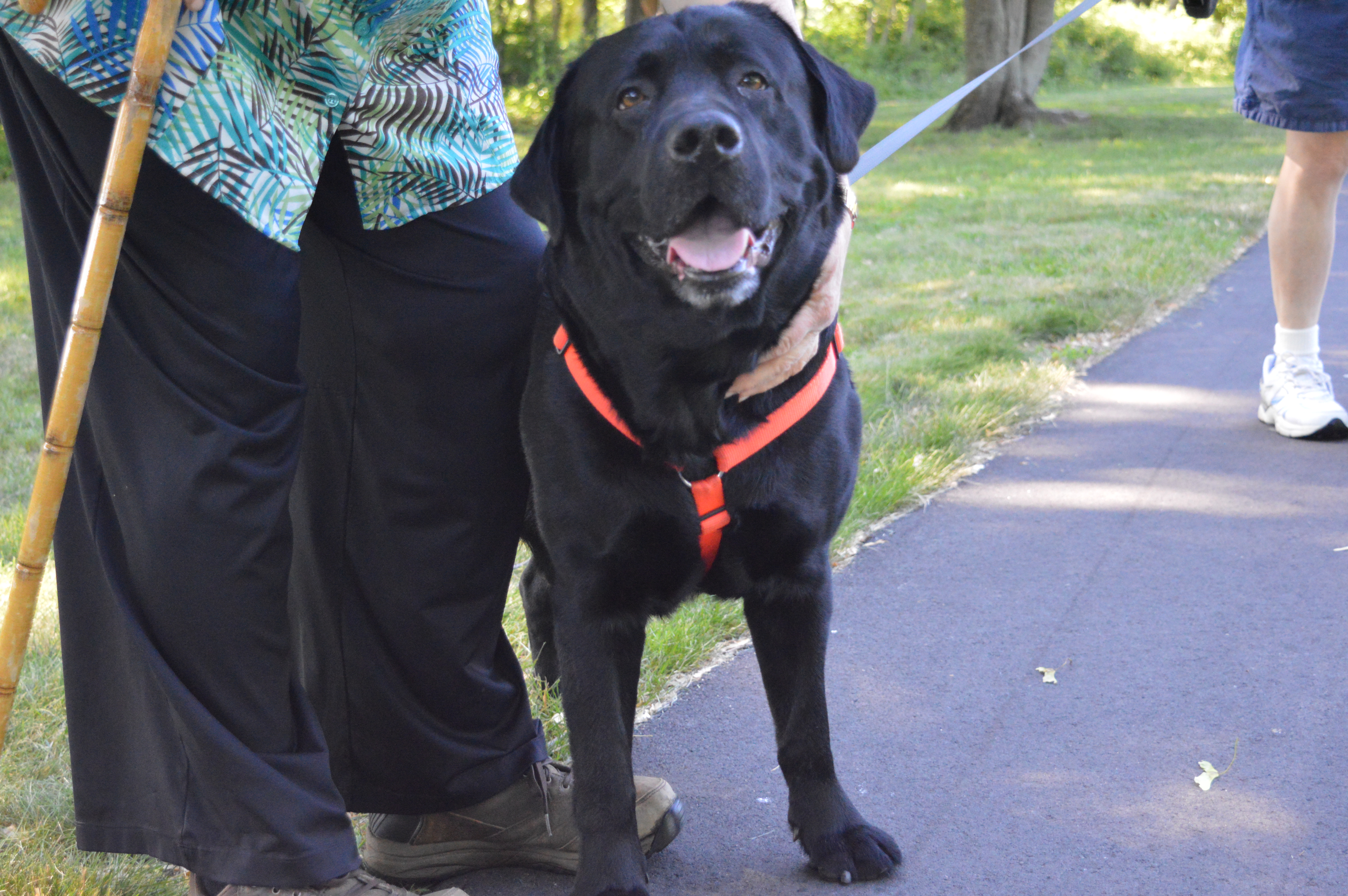
Butch, a Lab mix, is a shelter dog from South Carolina.  His mommy wasn’t sure of his age (either 3 or 4 years old probably).

DSC_0105DSC_0111

Max is a 6 year old English Lab.  He is also an AKC (American Kennel Club) dog.

Please connect with me on Facebook:  New England Nomad