Date Of Visit: February 28, 2026
Location: 95 Riverside Ave, Bristol, CT
Hours: Mon Closed
Tue Closed
Wed 10:00 AM – 5:00 PM
Thu 10:00 AM – 8:00 PM
Fri 10:00 AM – 5:00 PM
Sat 10:00 AM – 5:00 PM
Summary: The New England Carousel Museum features over a hundred carousel animals (not just horses), a working carousel and a few more surprises!
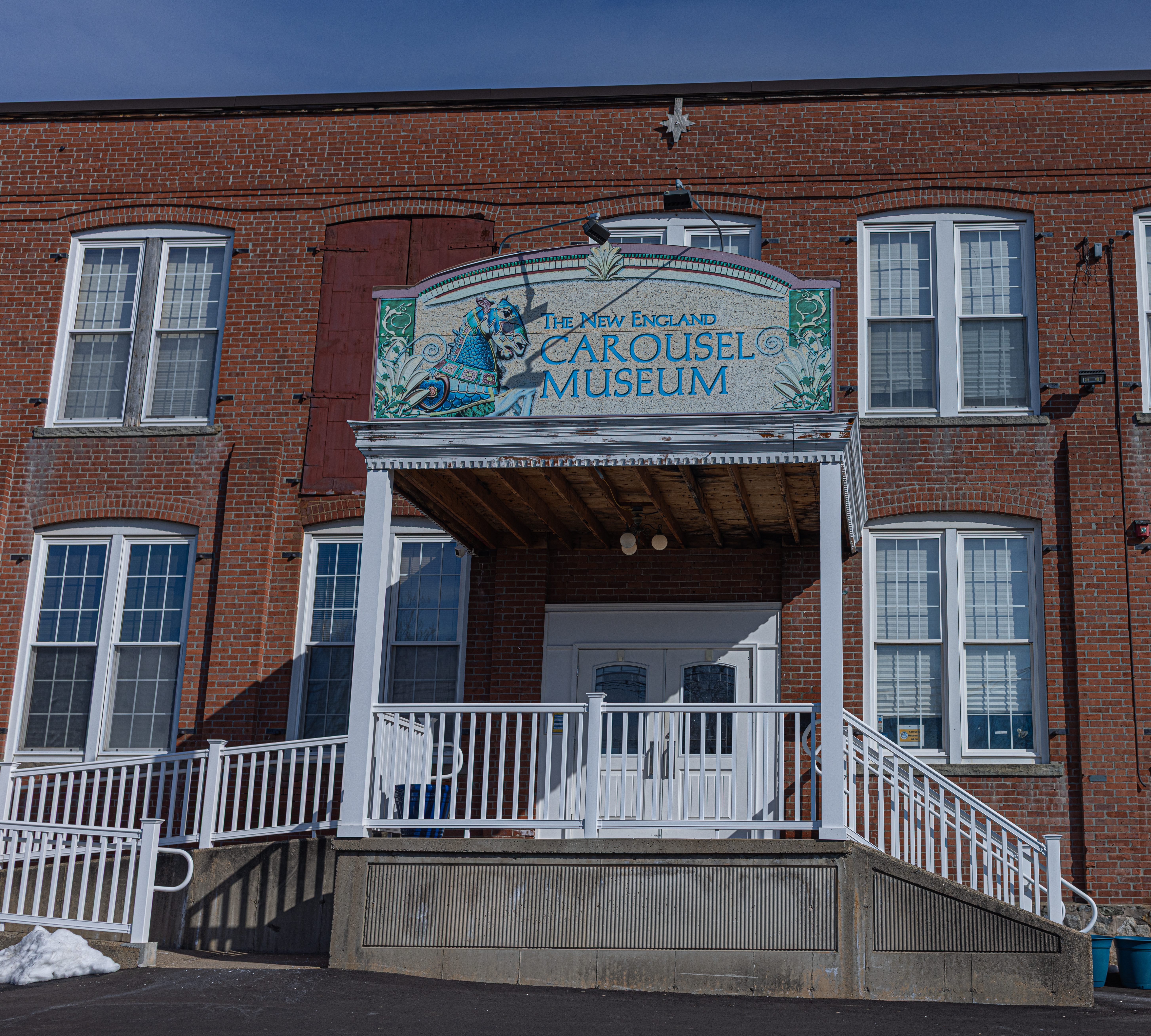
Some places are so incredible they’re worth a second visit. You may remember my earlier visit to the New England Carousel Museum in 2017. But, during this visit there was so much more to see and document. So, I may have missed a few things the first time. Plus, the museum often adds new exhibits and updates their permanent displays.
The museum boasts over 100 horses But, horses aren’t the only animals at the carousel museum. And not all of the non-horse carousels are animals!
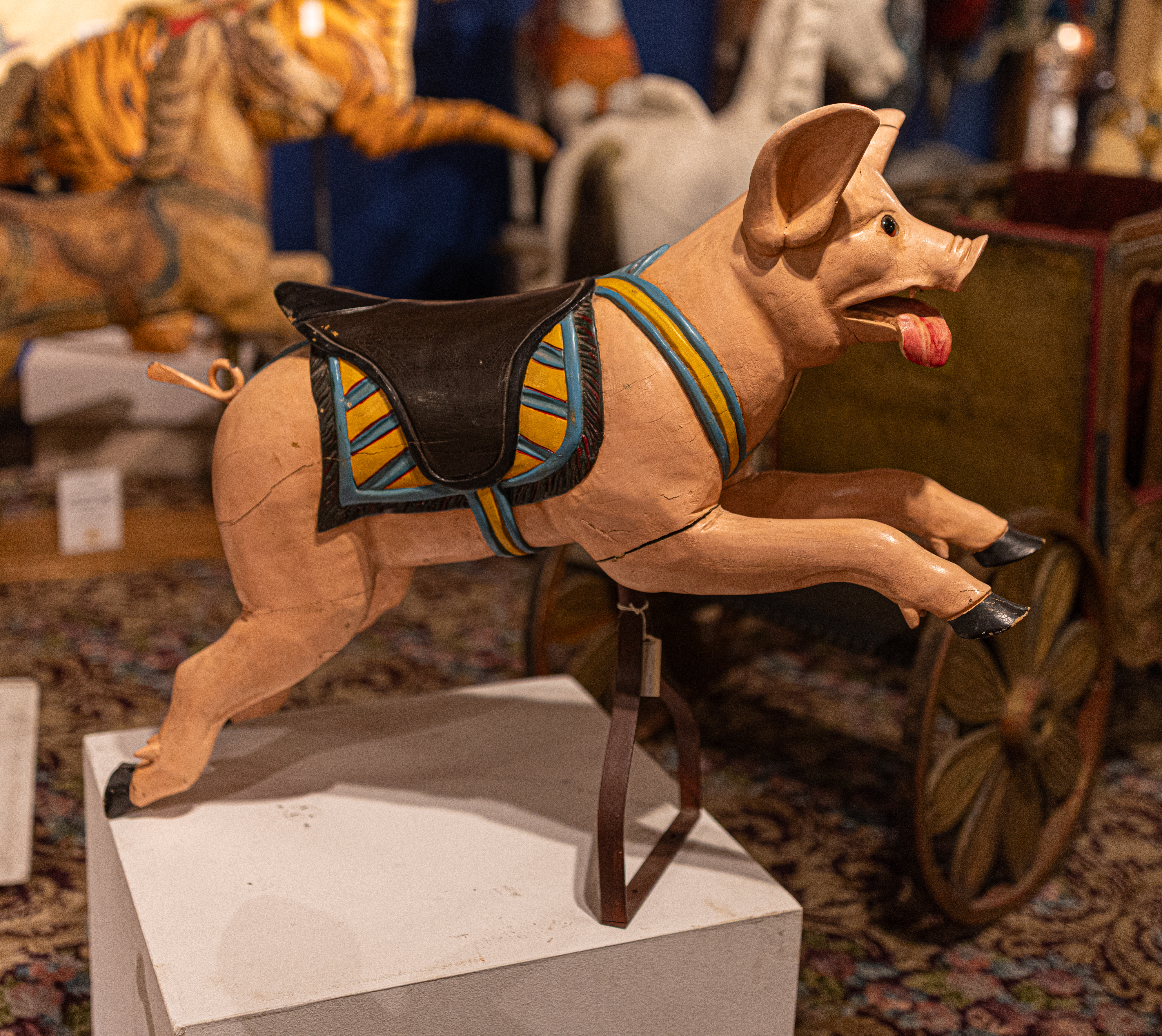
This small pig was designed in Germany by Frederick Heyn circa 1900. The pig is still wearing “park paint” which was applied by amusement park personnel when the original paint gets worn. It often hides the detailed painting and carving on the carousel animal but also protects the wood. But flying pigs aren’t the only non-horse animals at the carousel museum.
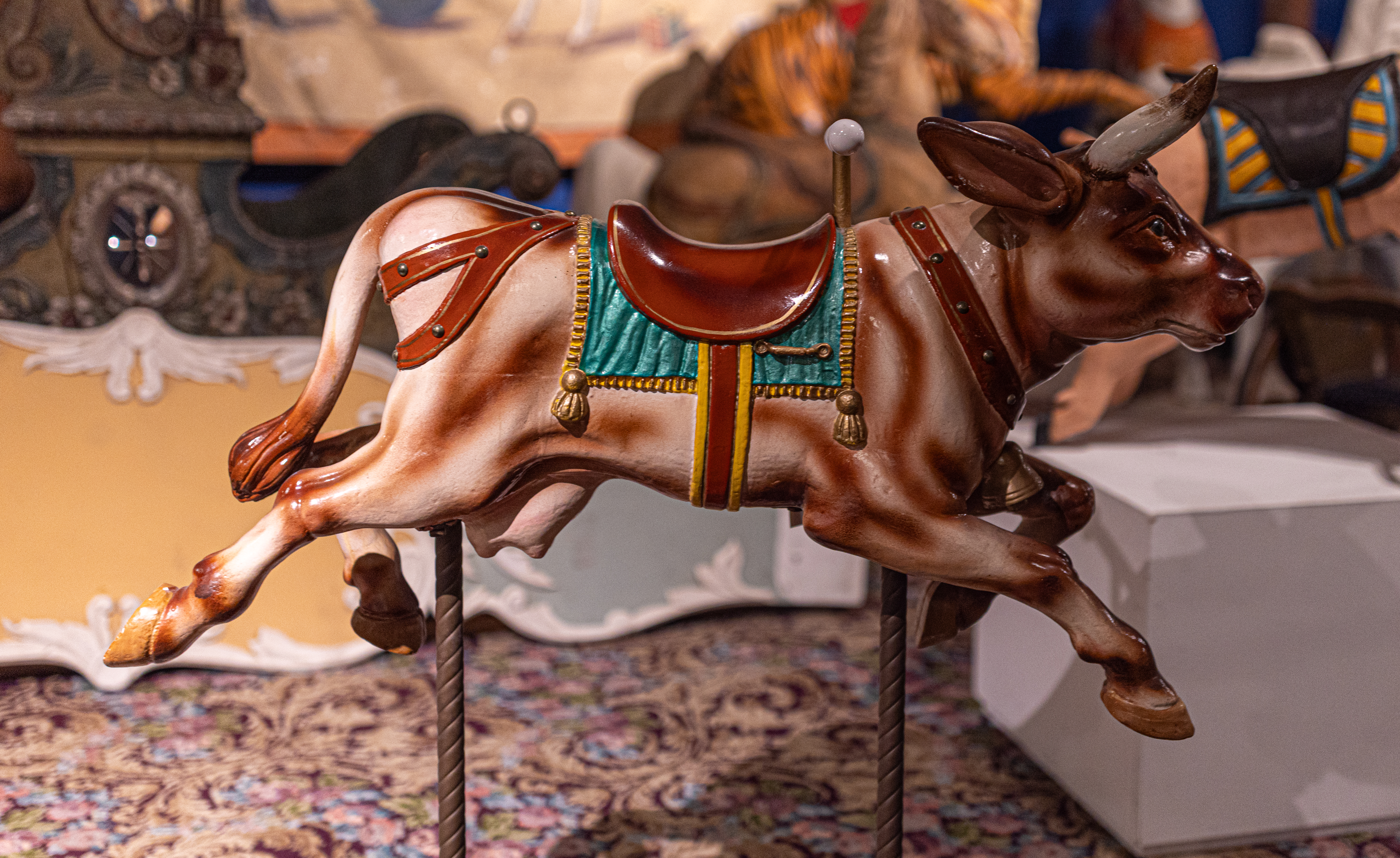
This small cow was created by Matthieu, a little known carver, in France circa 1915. Cows and other farm animals are popular carousel animals in France and Germany. They were not created by American carvers and were not found in the United States where horses were the favorite.
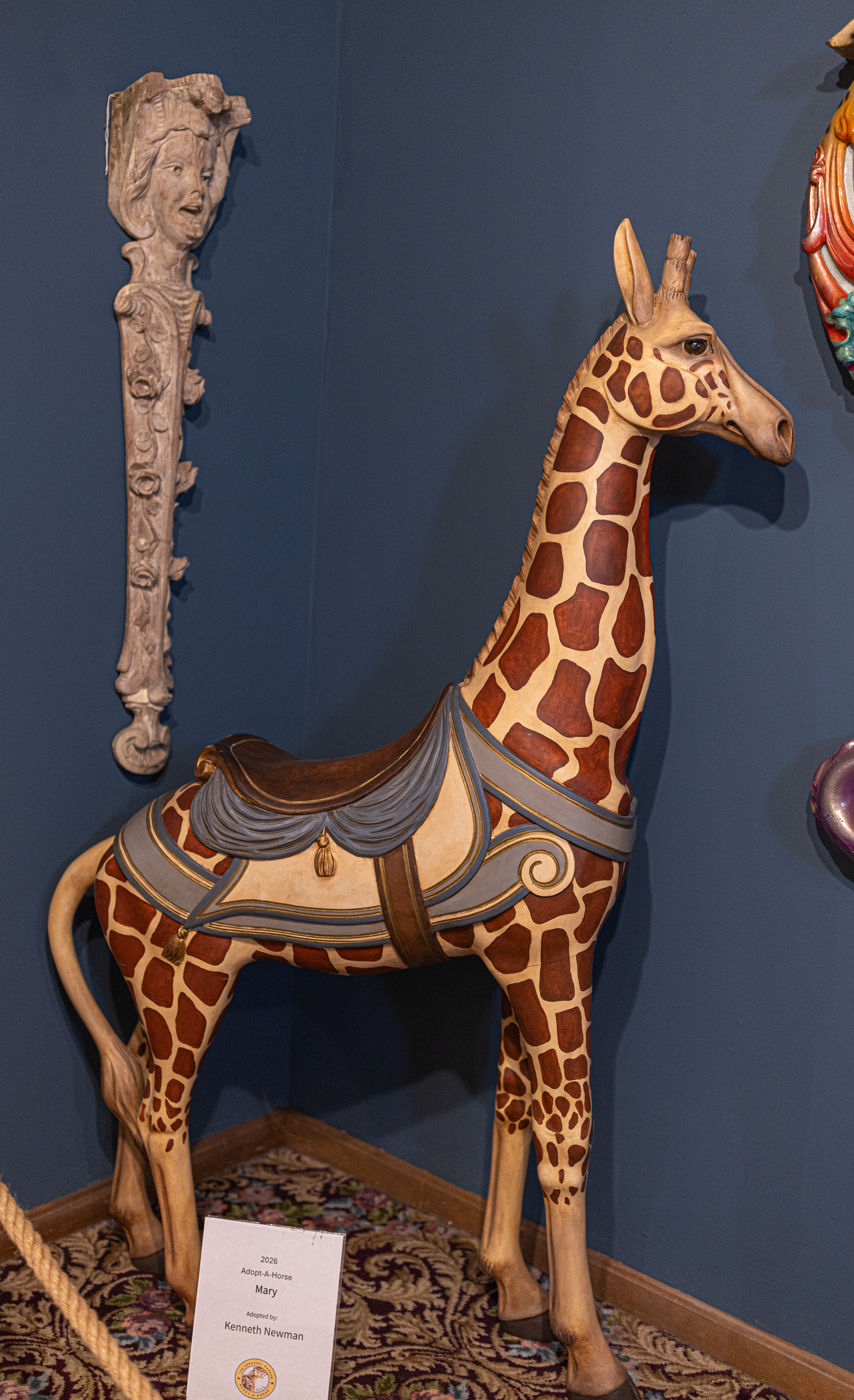
This giraffe was created by the Philadelphia Toboggan Company circa 1905. The Philadelphia Toboggan Company made a few menagerie animals before 1907. But the stopped making them because, as mentioned above, horses were more popular with the public. Don’t worry about the screaming face in the background. We’ll get to that later.
This carp, carved by an unknown artist (but most likely Gustave Bayol), was painted as a goldfish. It most likely originated from the Gustave Bayol factory of Angiers, France.
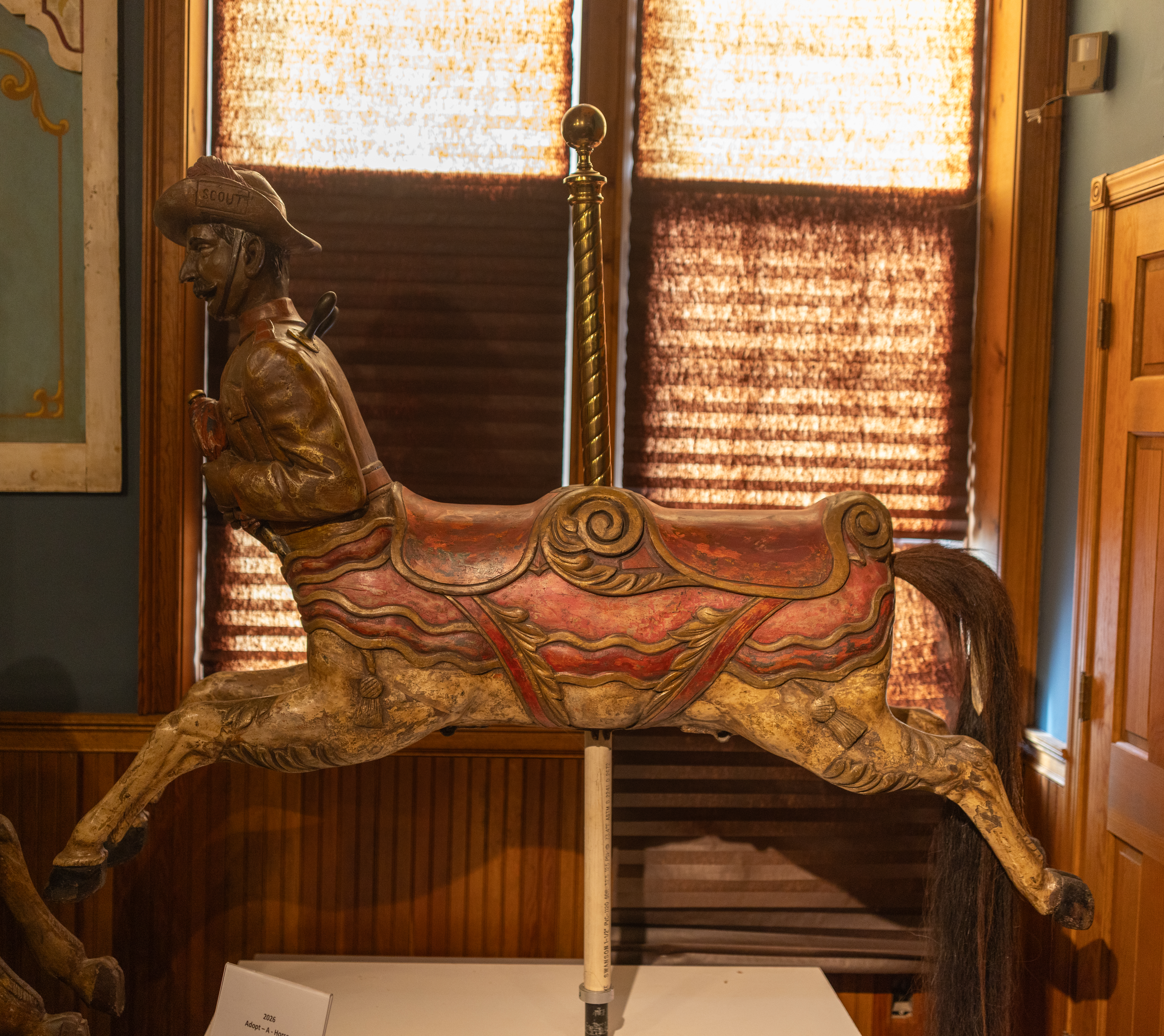
The C.J. Spooner Factory created this Robert Bayden Powell Centaur. The British sometimes immortalized officers from the Boer Wars as centaurs or mythical creatures that are half human and half equine. The Boer Wars were disputes over territory in South Africa between the British and Dutch in the late 1800s and early 1900s, a time that coincided with the height of the British carousel industry. The carver of this work of art is unknown.
Certain generals from the wars were so well-liked that multiple centaurs were carved of each one. General Robert Brayden Powell served in the British Army for over thirty years and established the Boy Scouts in Great Britain.
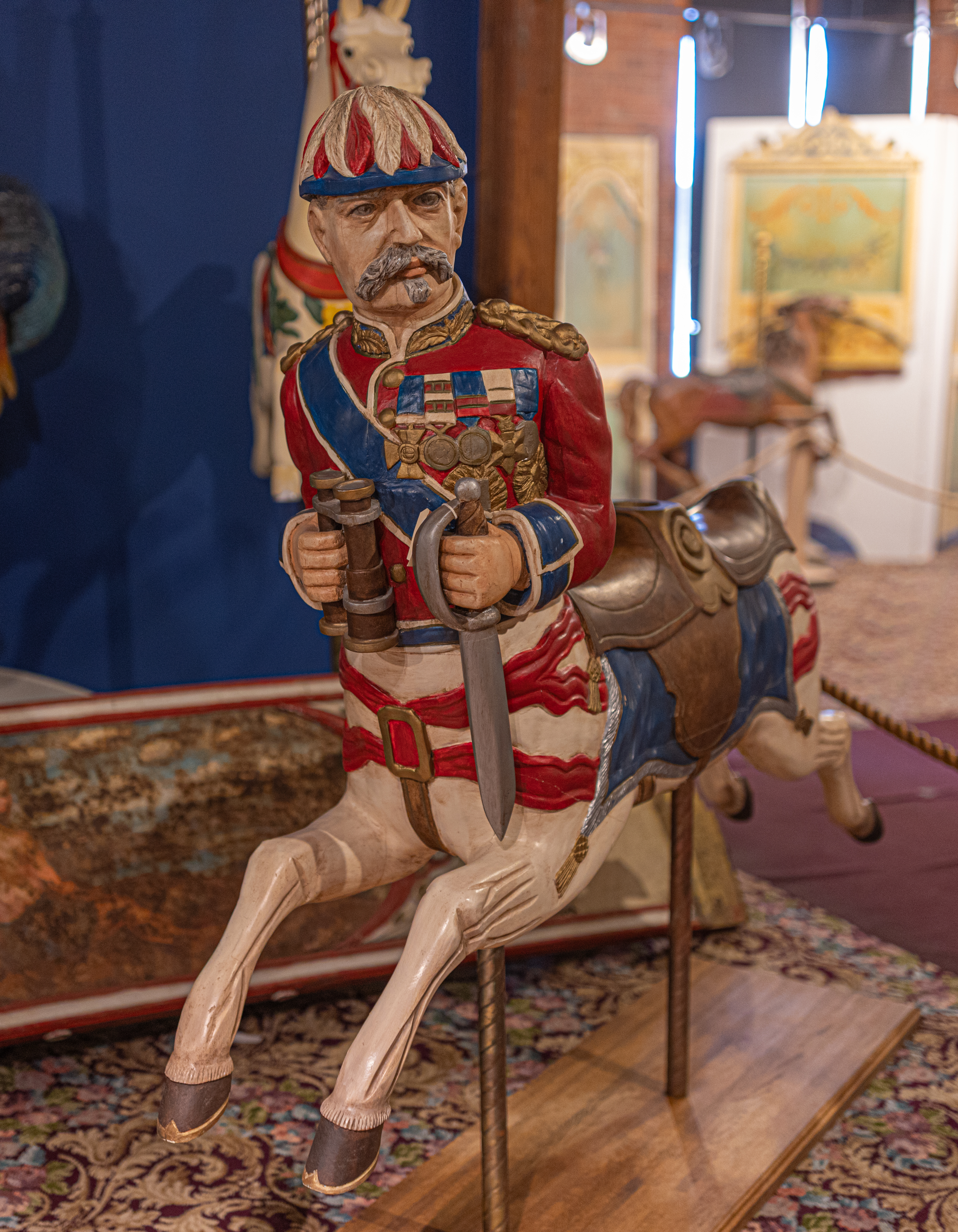
This is another centaur at the museum. It was carved by C.J. Spooner around 1918-1920.
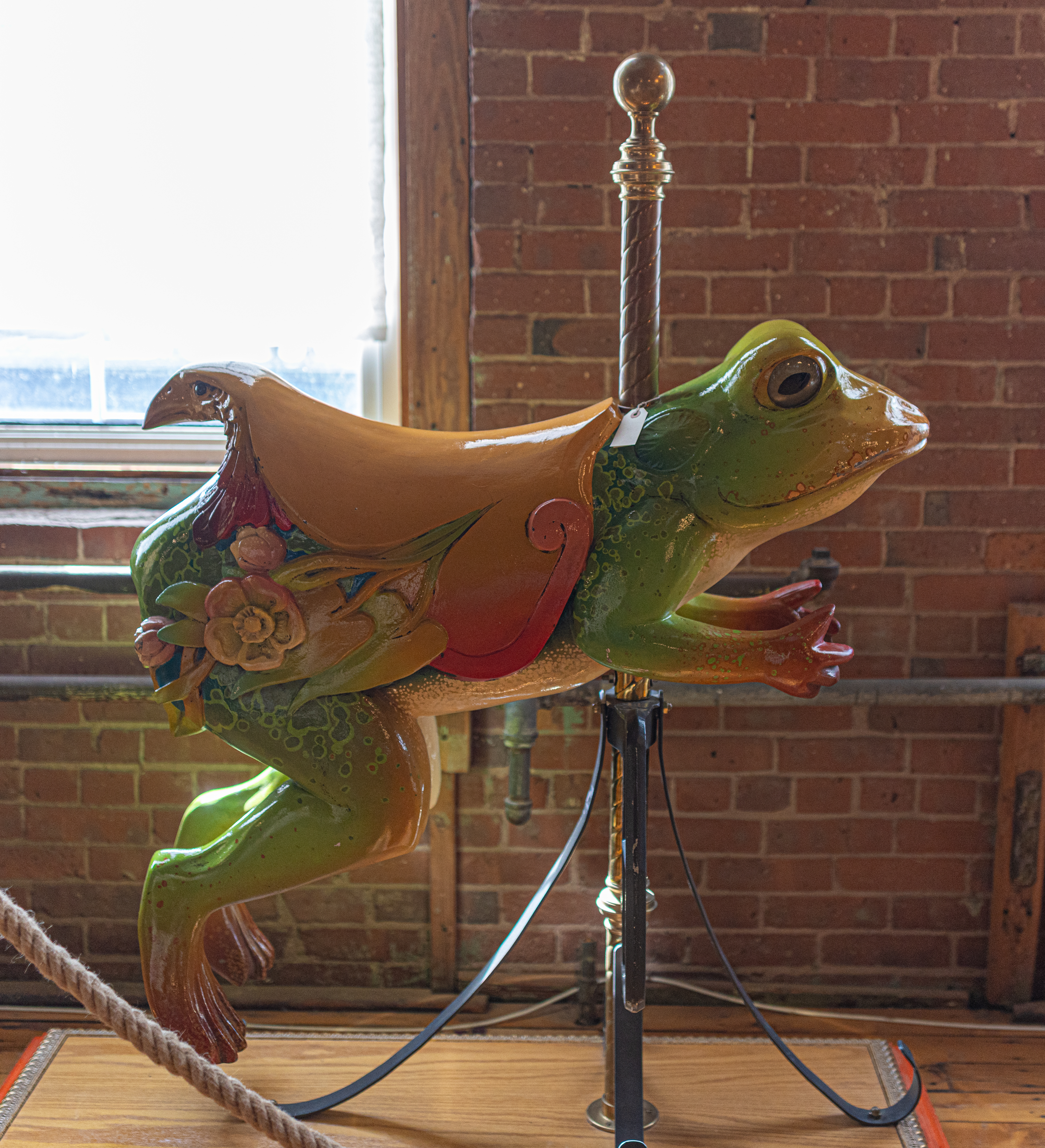
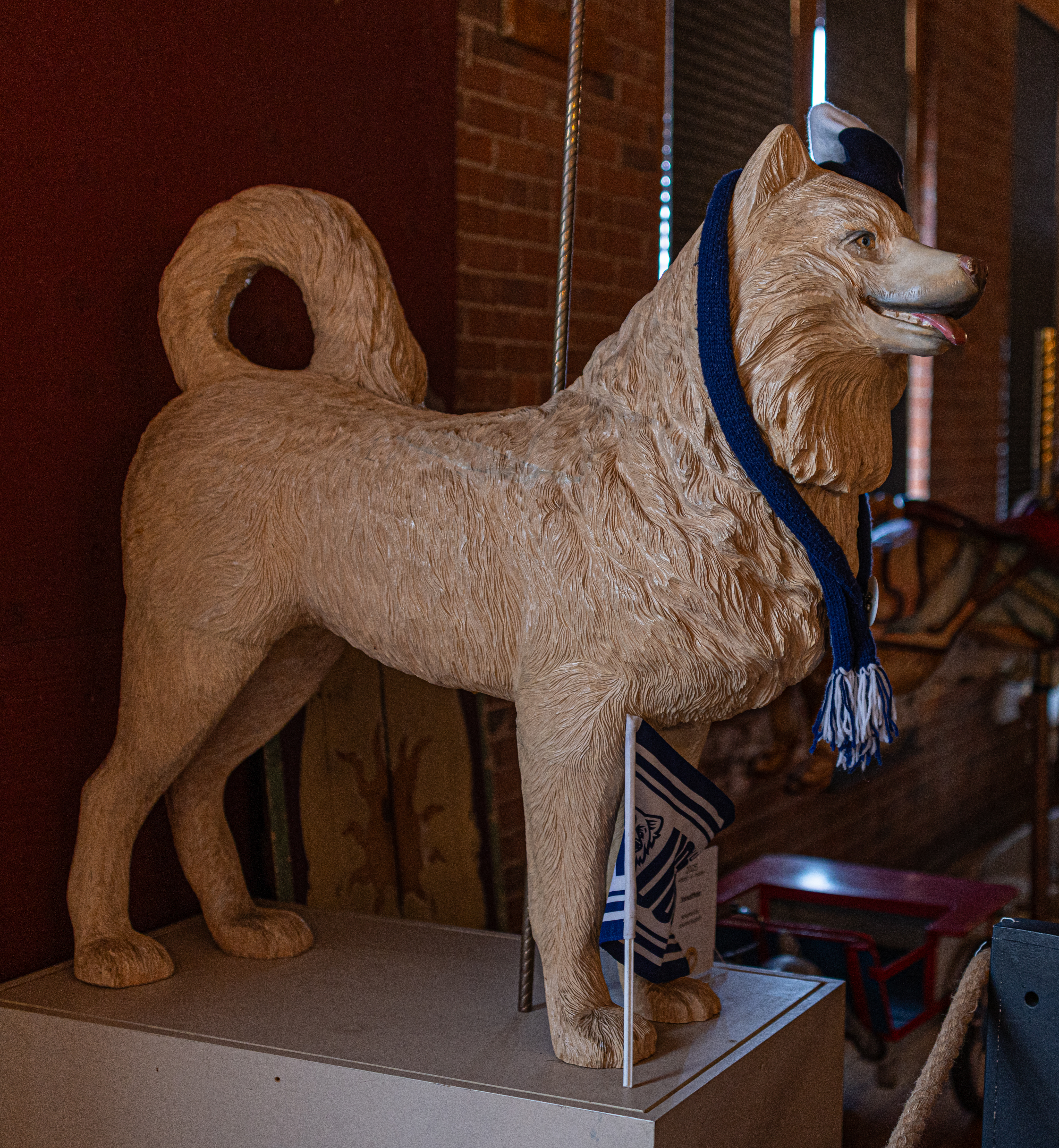
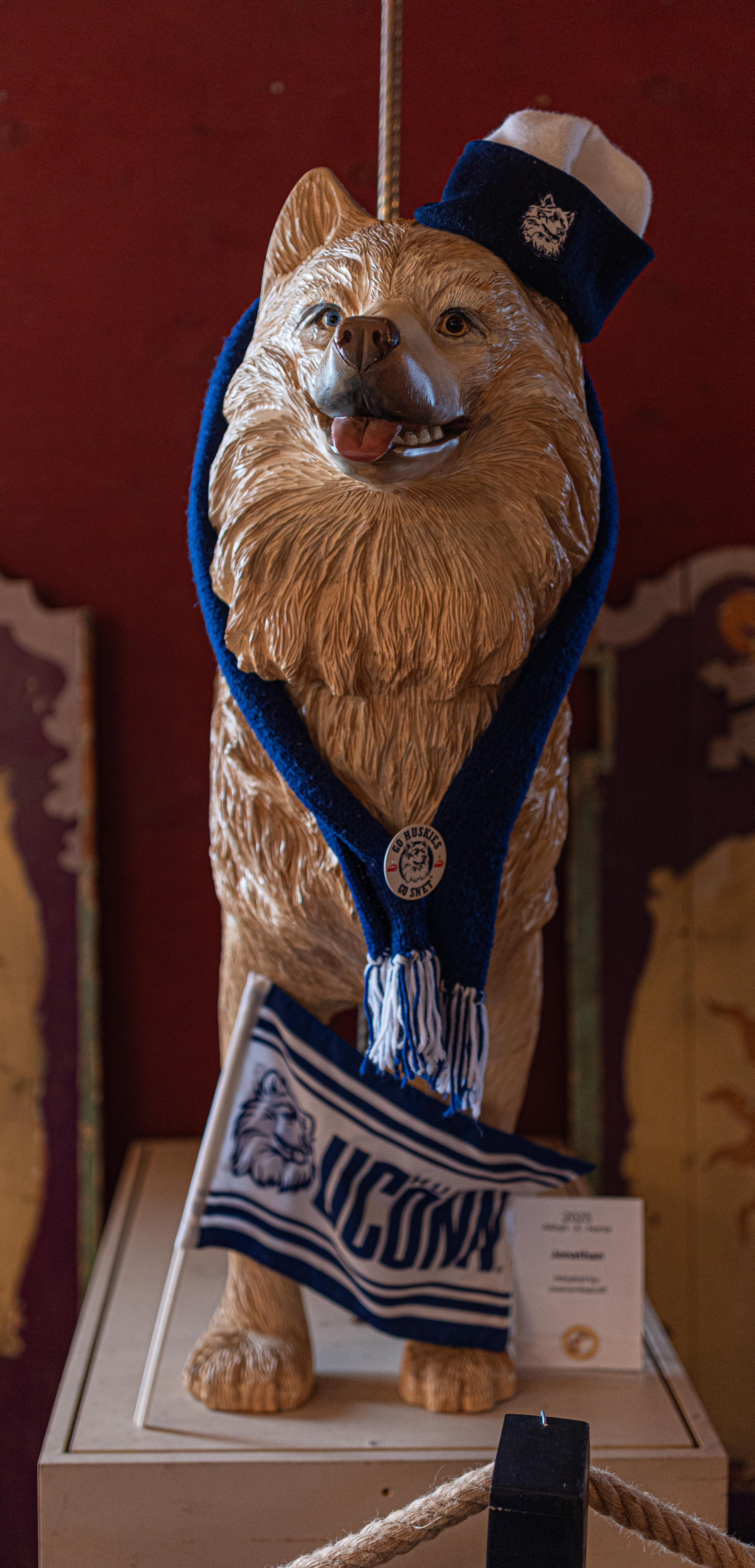
Those of you familiar with college sports may recognize this dog as the mascot of the University of Connecticut Huskies.
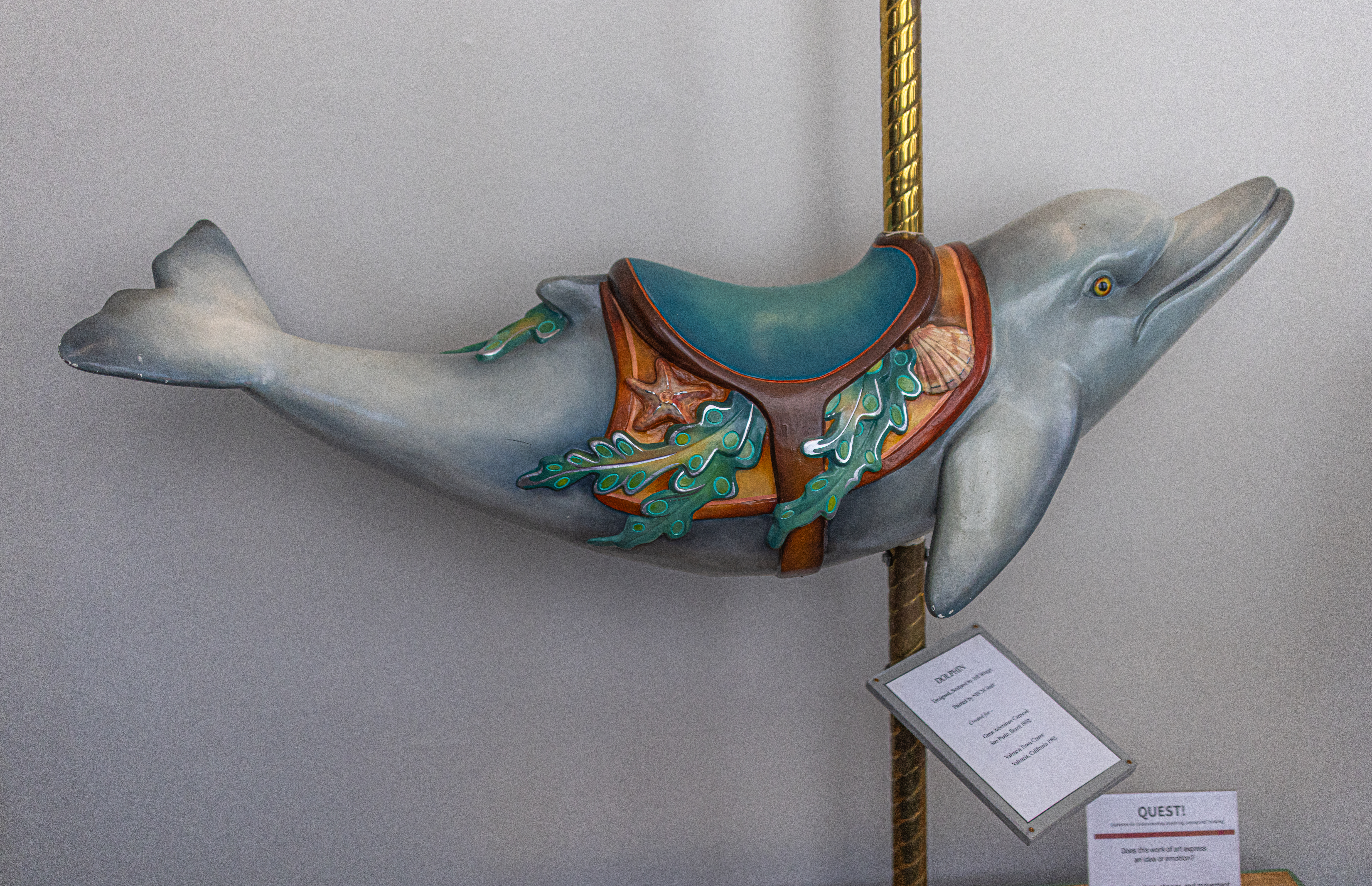
This dolphin was designed and sculpted by Massachusetts College of Arts graduate Jeff Briggs. It was painted by the New England Carousel Museum staff. The dolphin has been displayed at the Great Adventure Carousel in Sao Paulo, Brazil in 1992 and the Valencia Town Center in Valencia, California in 1993. Jeff’s name will appear prominently later in this post.
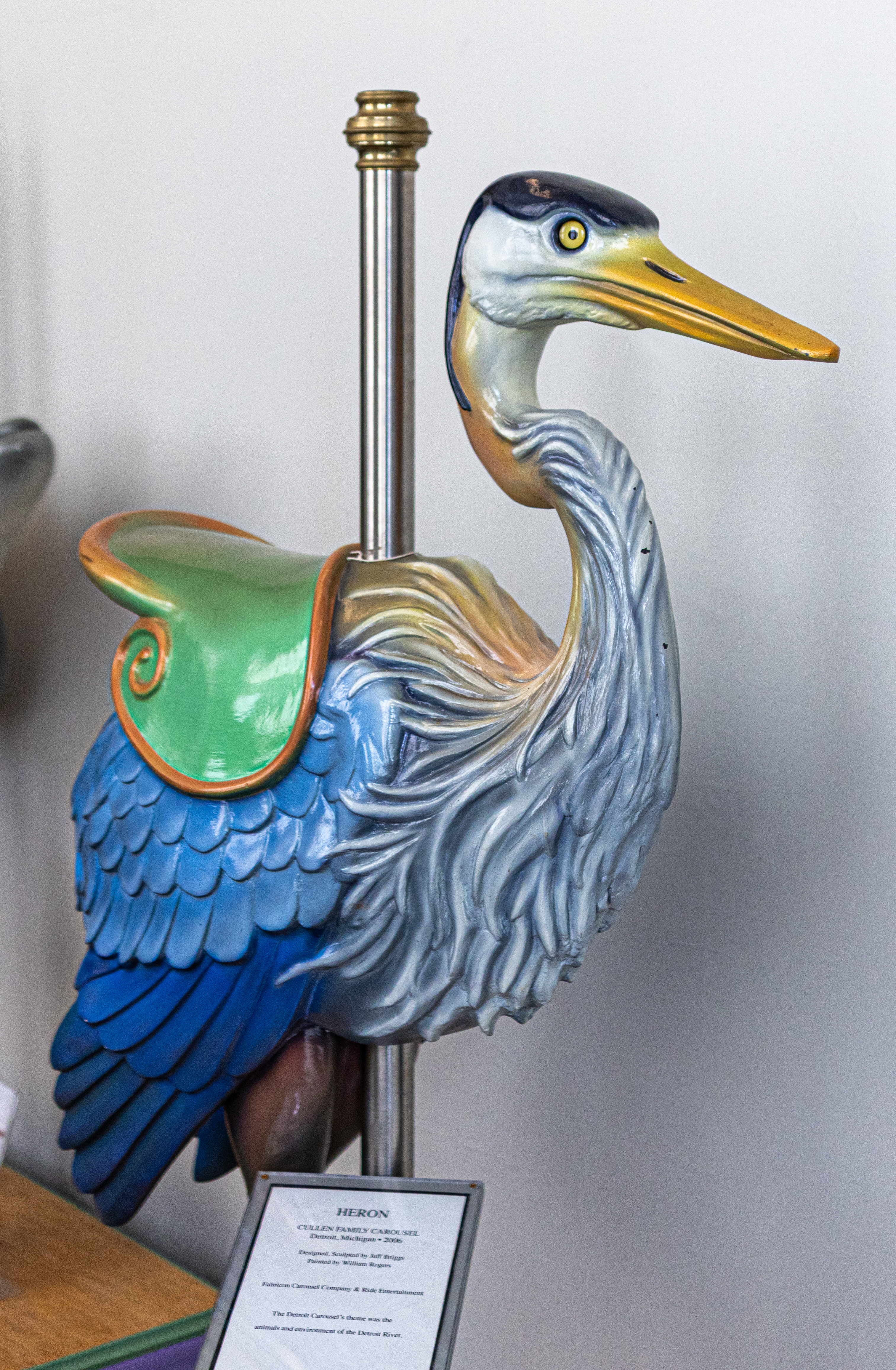
This Heron was also designed and sculpted by Jeff Briggs and painted by William Rogers.
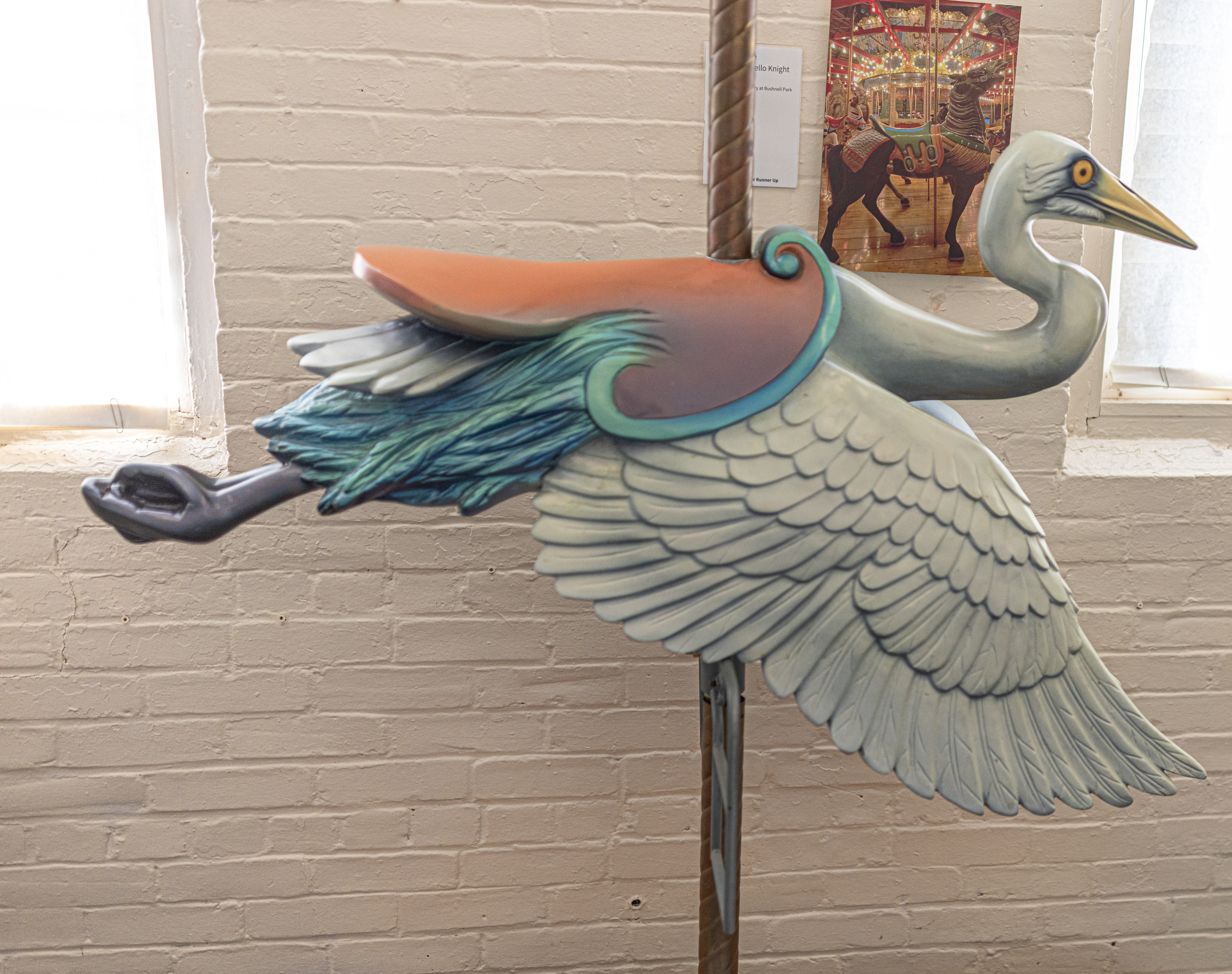
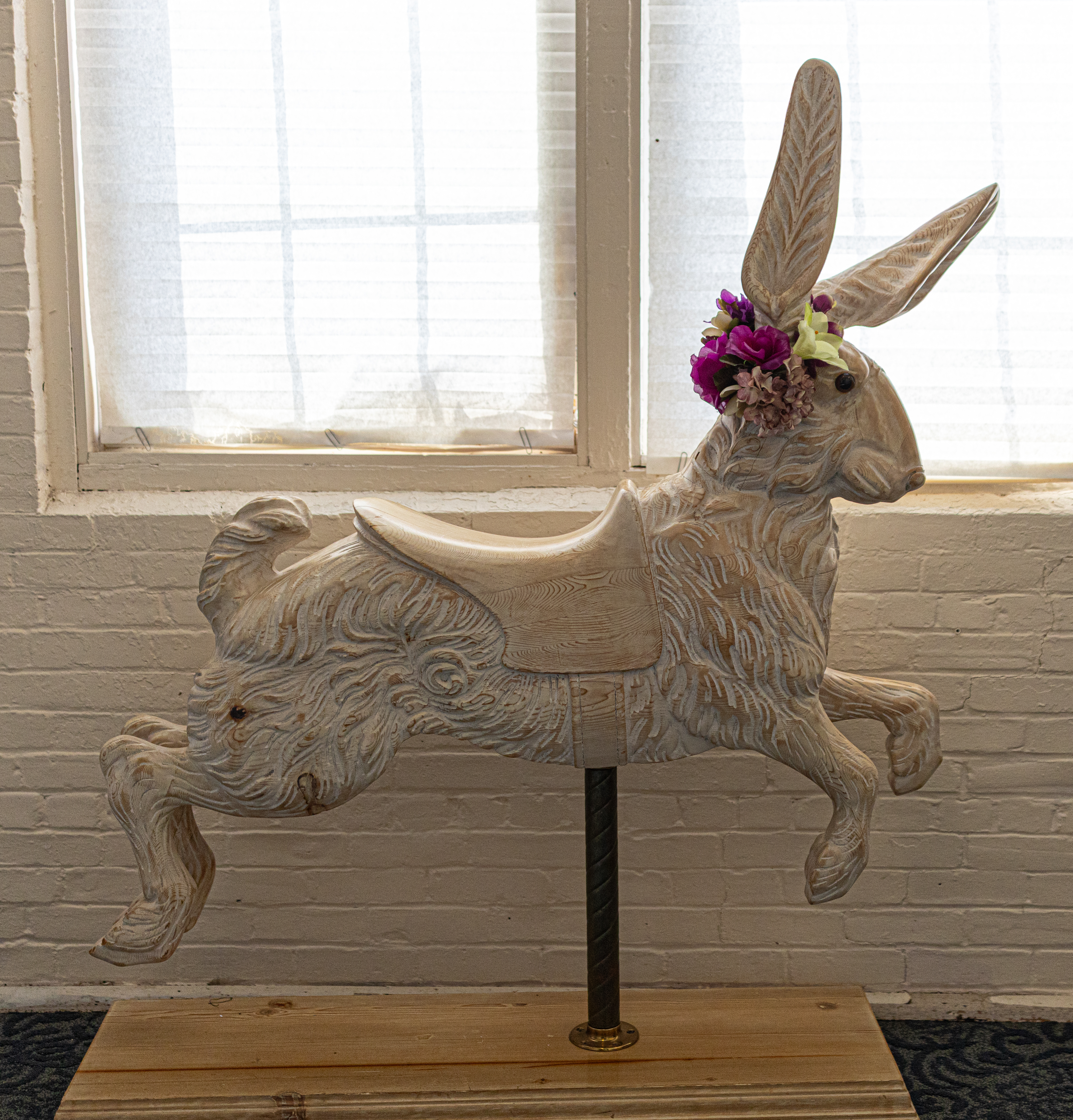
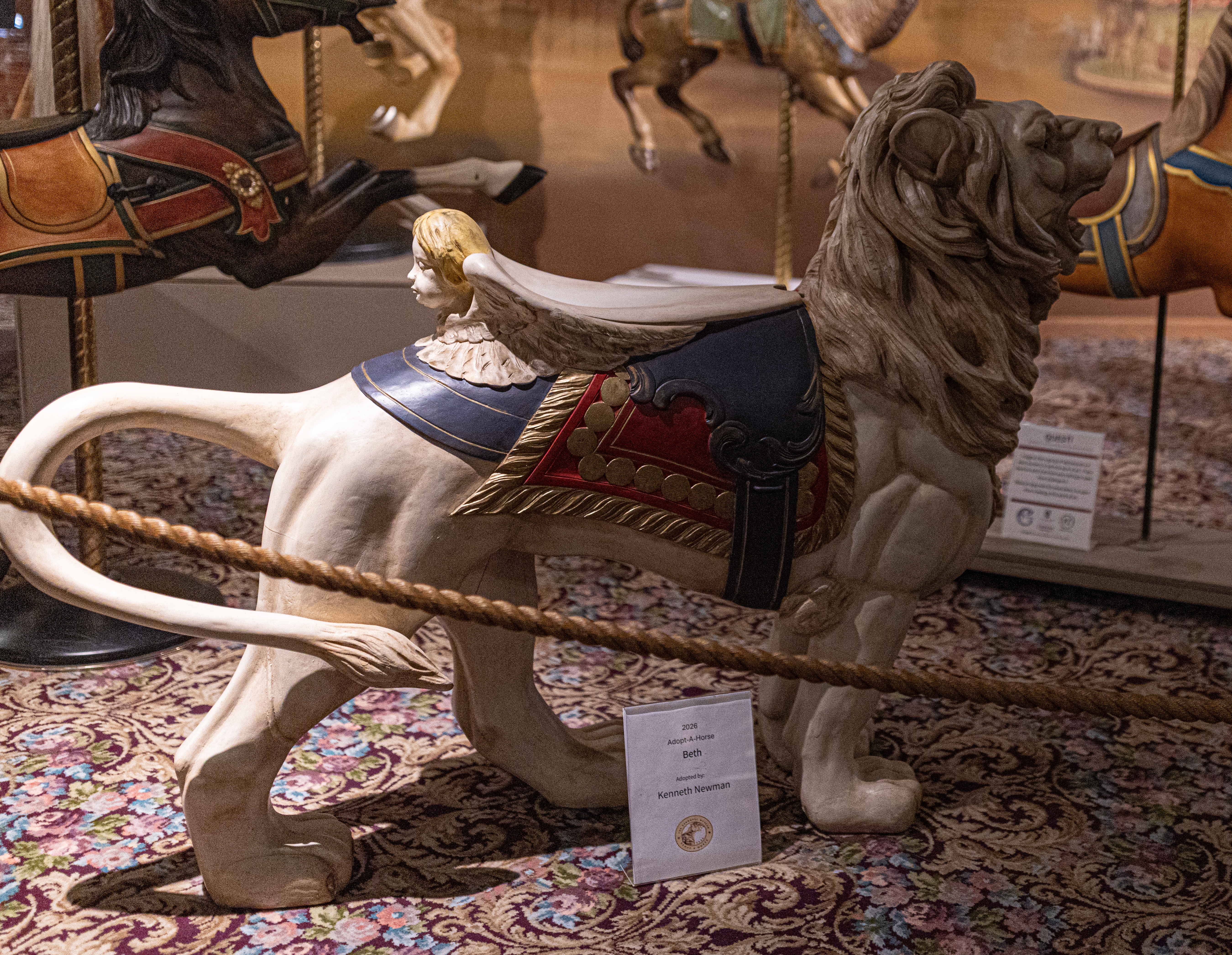
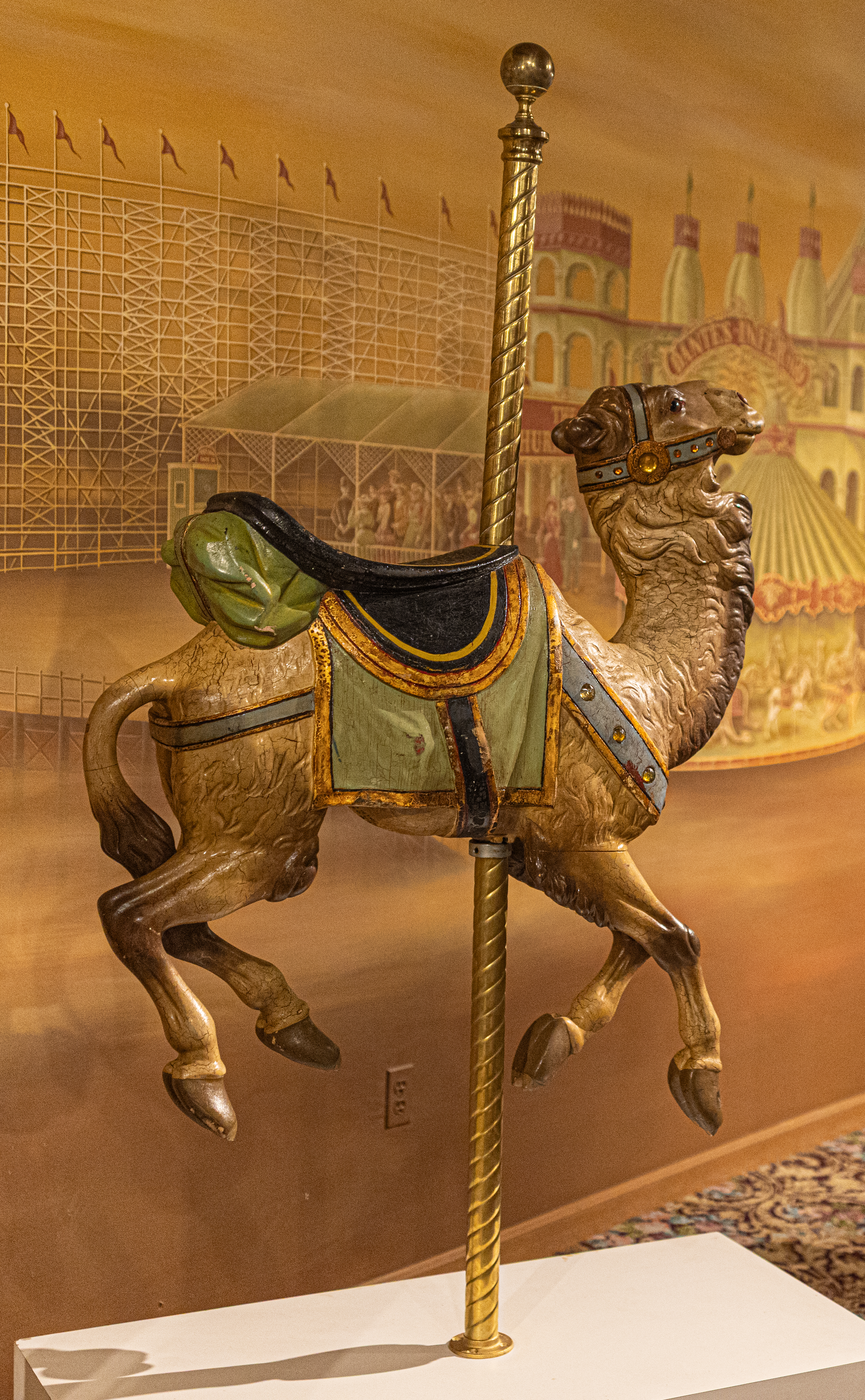
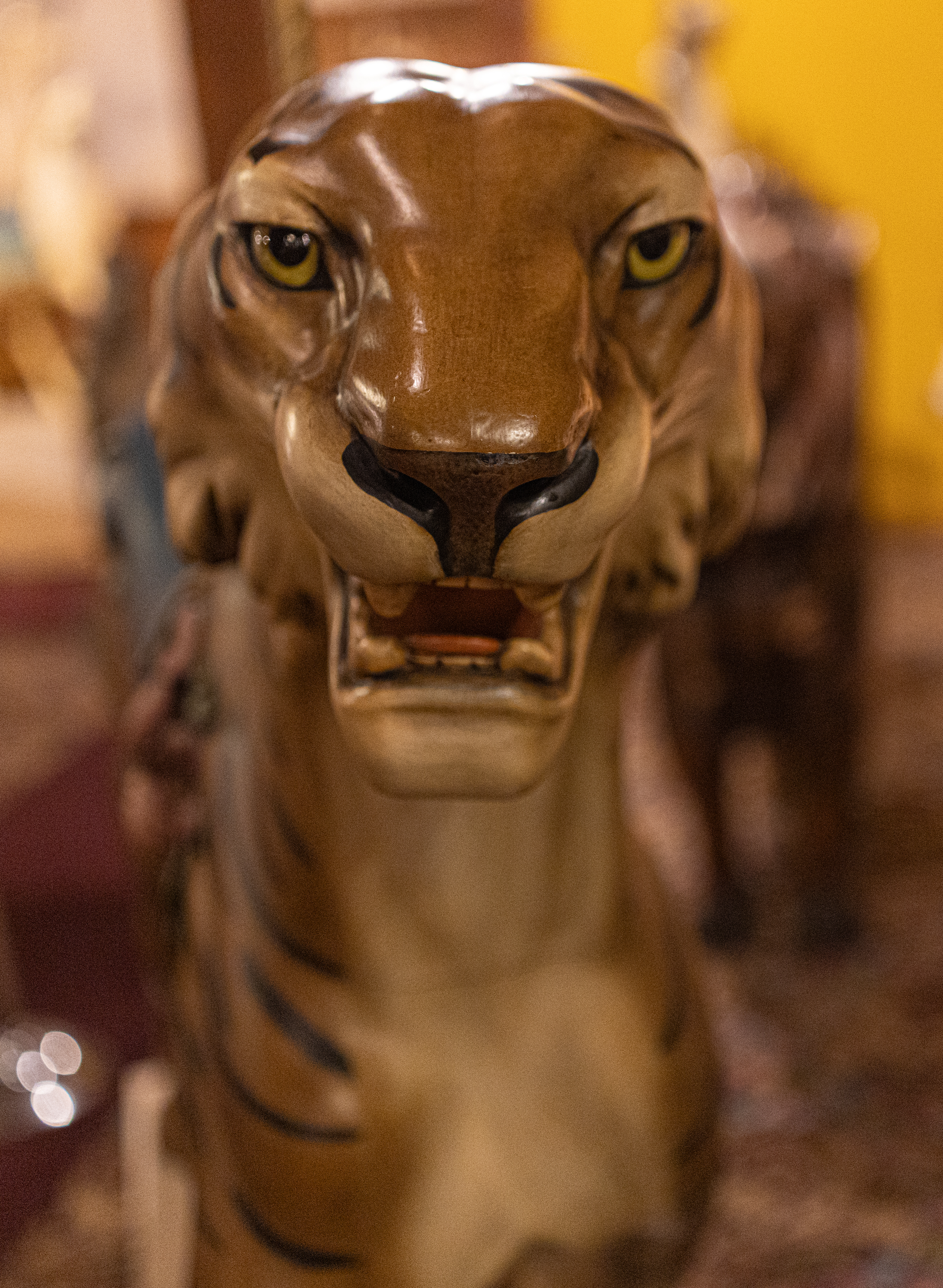
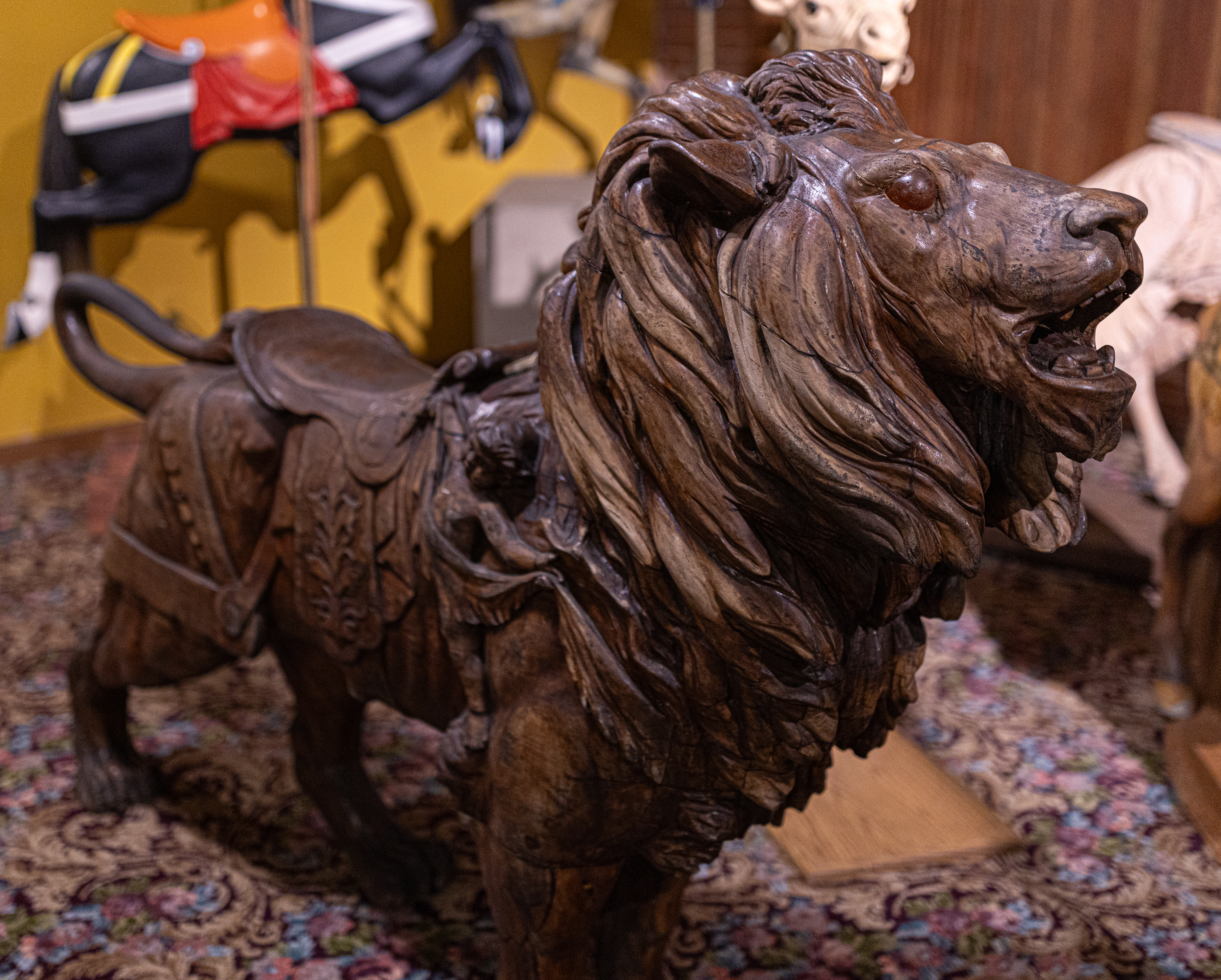
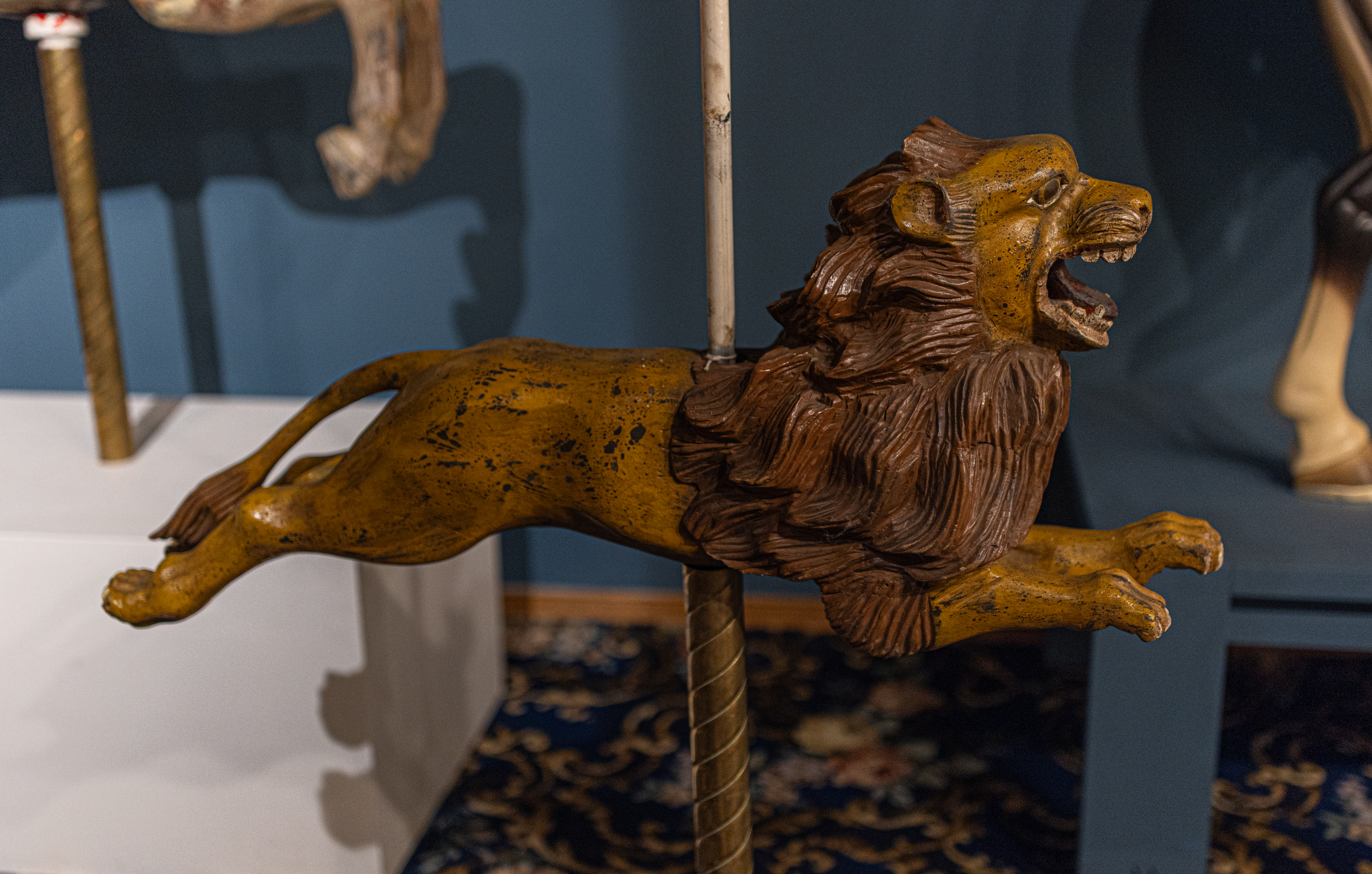
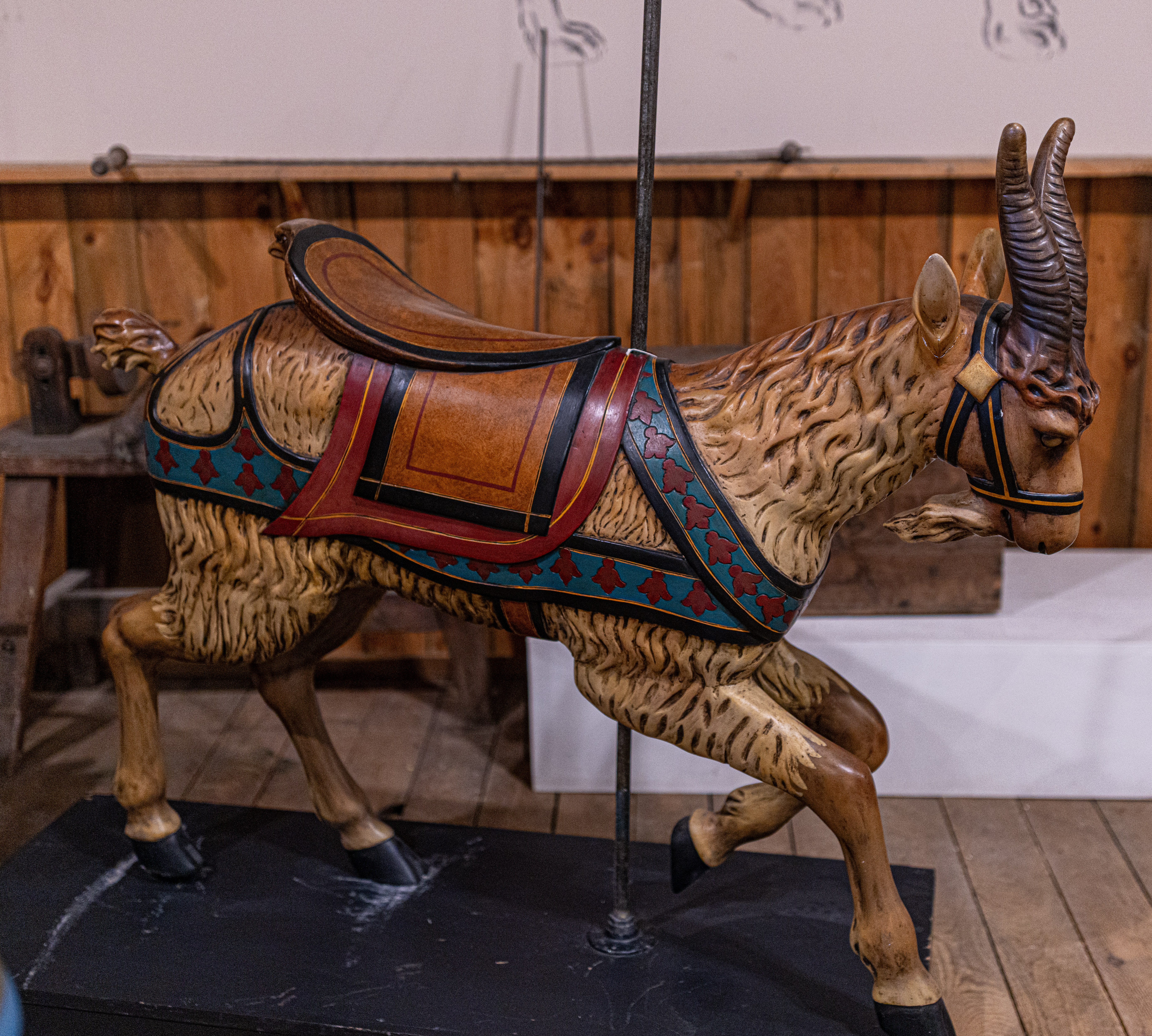
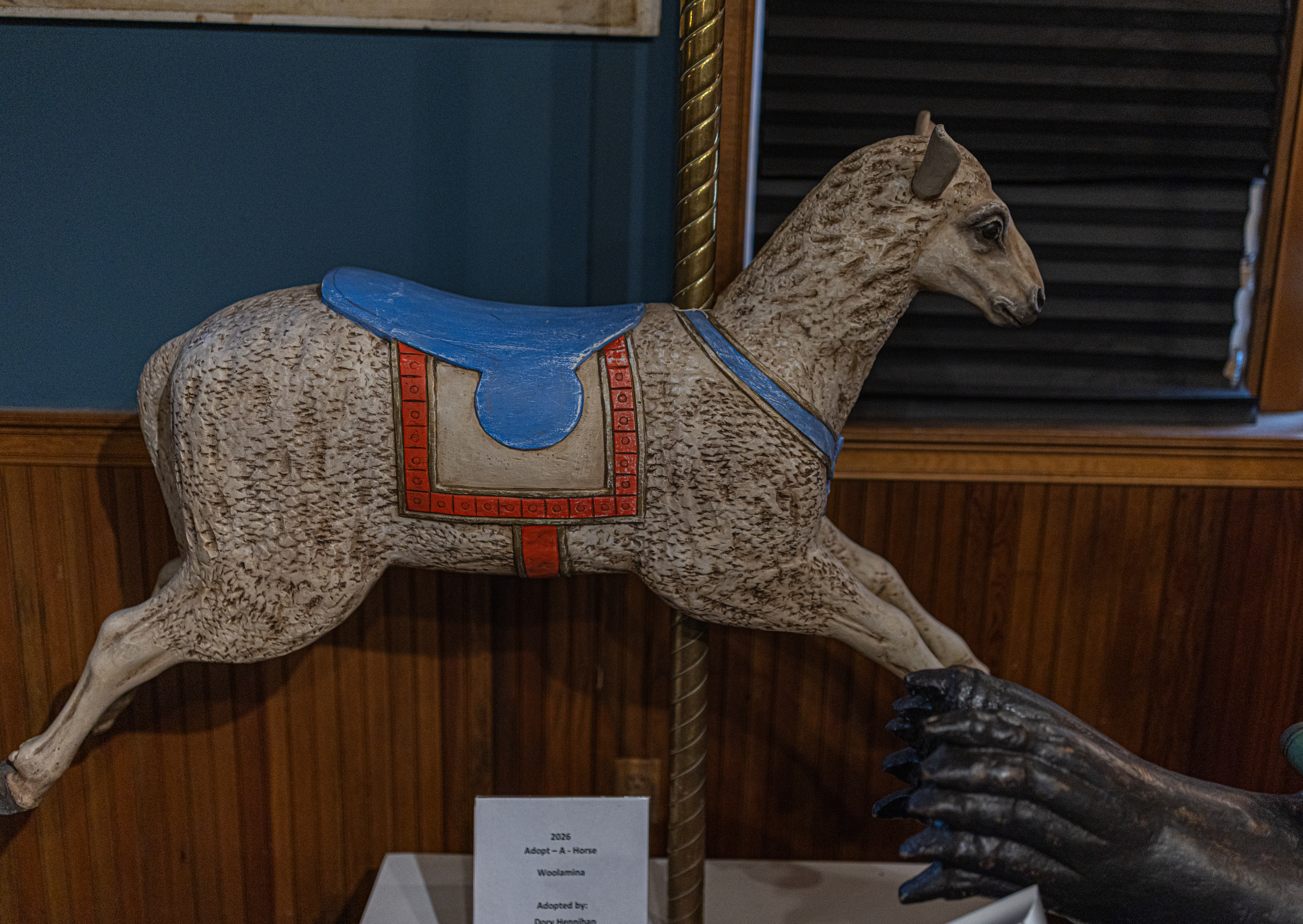
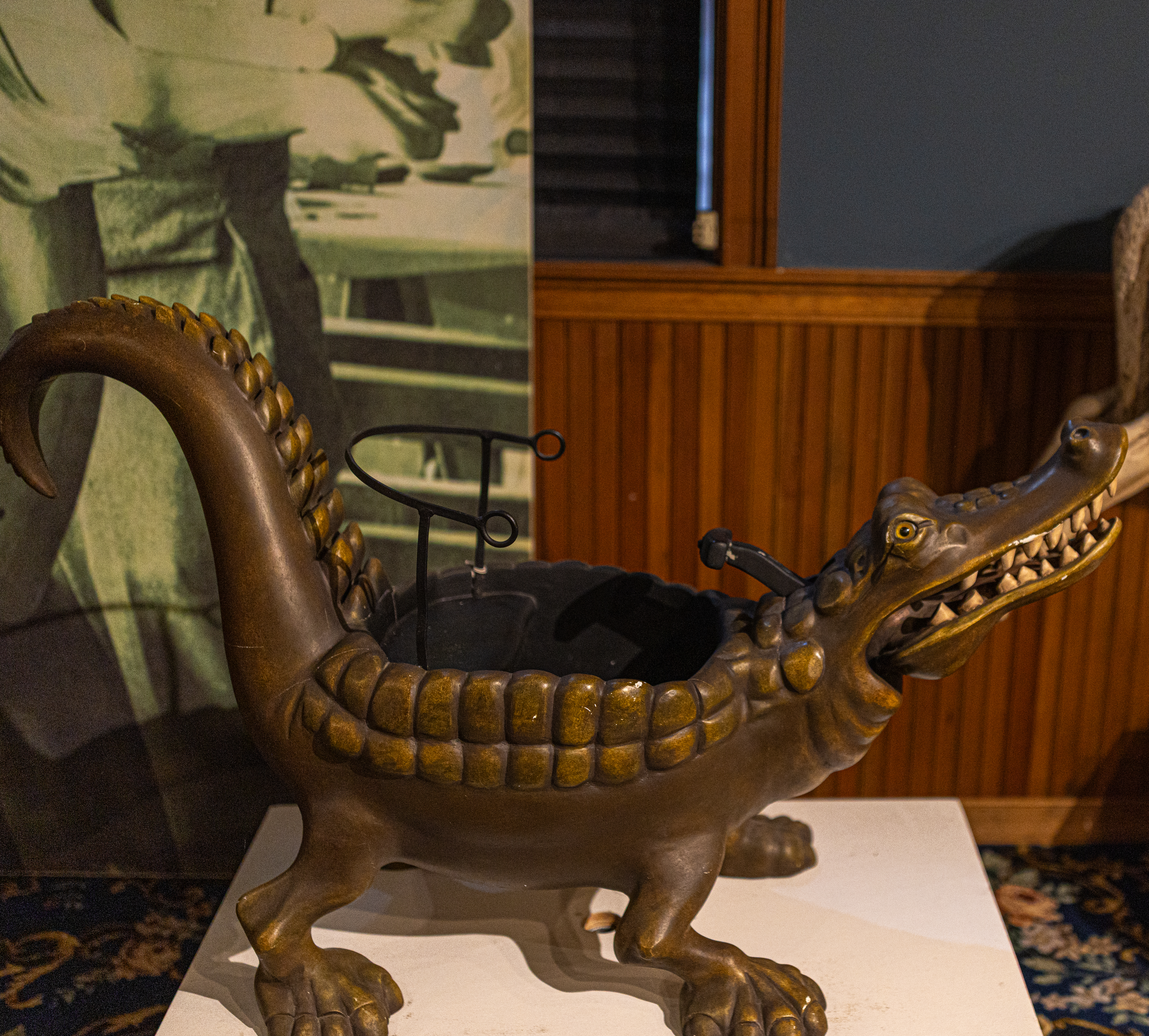
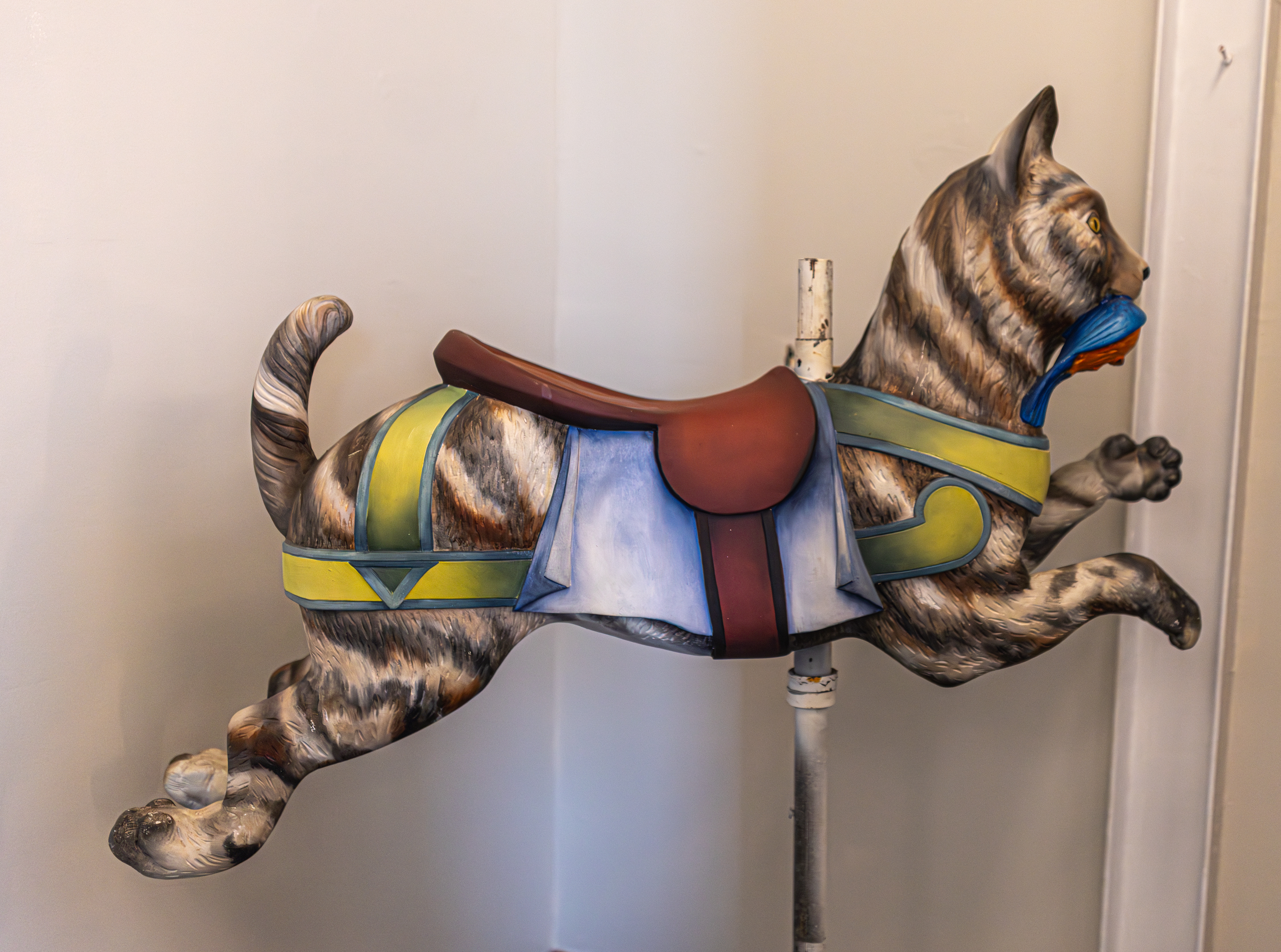
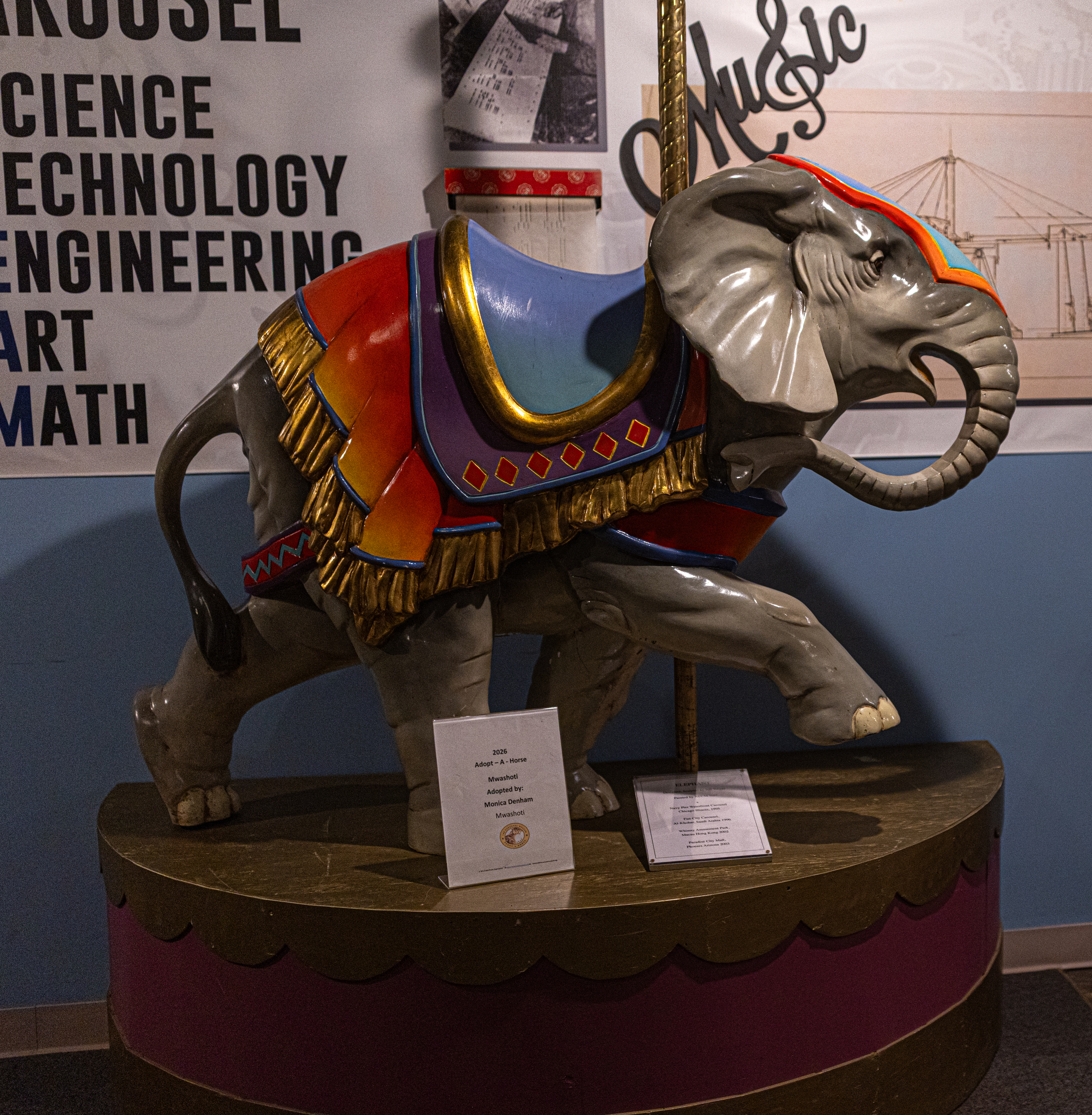
This elephant was designed, carved and sculpted by Jeff Briggs and it was painted by the New England Carousel Museum staff. It has appeared in the Navy Pier Waterfront Carousel in Chicago, IL, the Fun City Carousel in Al-Khobar, Saudi Arabia, the Whimsy Amusement Park in Macau, Hong Kong, the Paradise City Mall in Phoenix, AZ and, of course, the New England Carousel Museum.
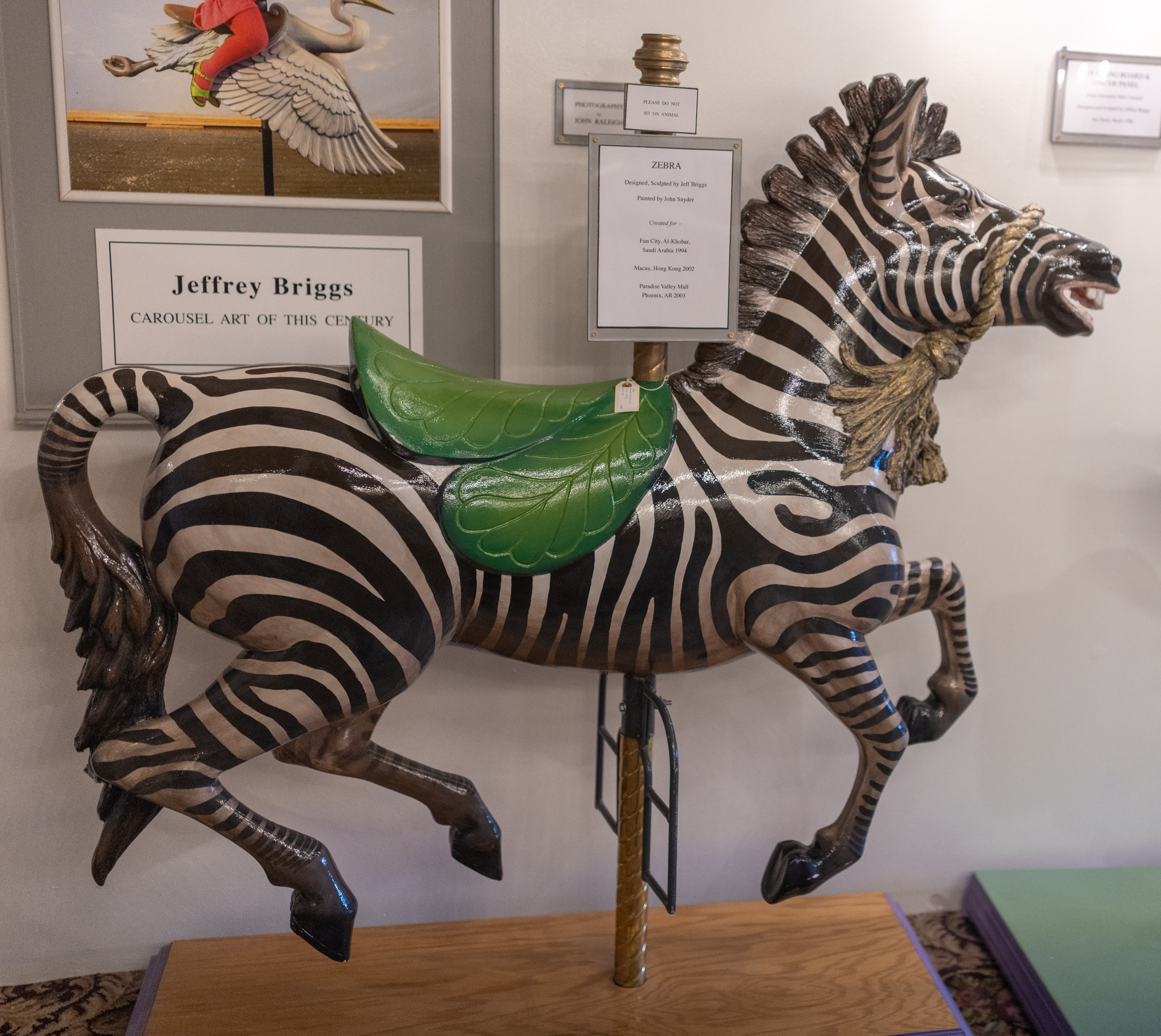
Speaking of Jeff, he designed and sculpted this zebra which has appeared at the Fun City Carousel in Al-Khobar, Saudi Arabia, the Whimsy Amusement Park in Macau, Hong Kong, and the Paradise City Mall in Phoenix, AZ.
Some of the most appealing and interesting parts of the carousel are the chariots and other designs.
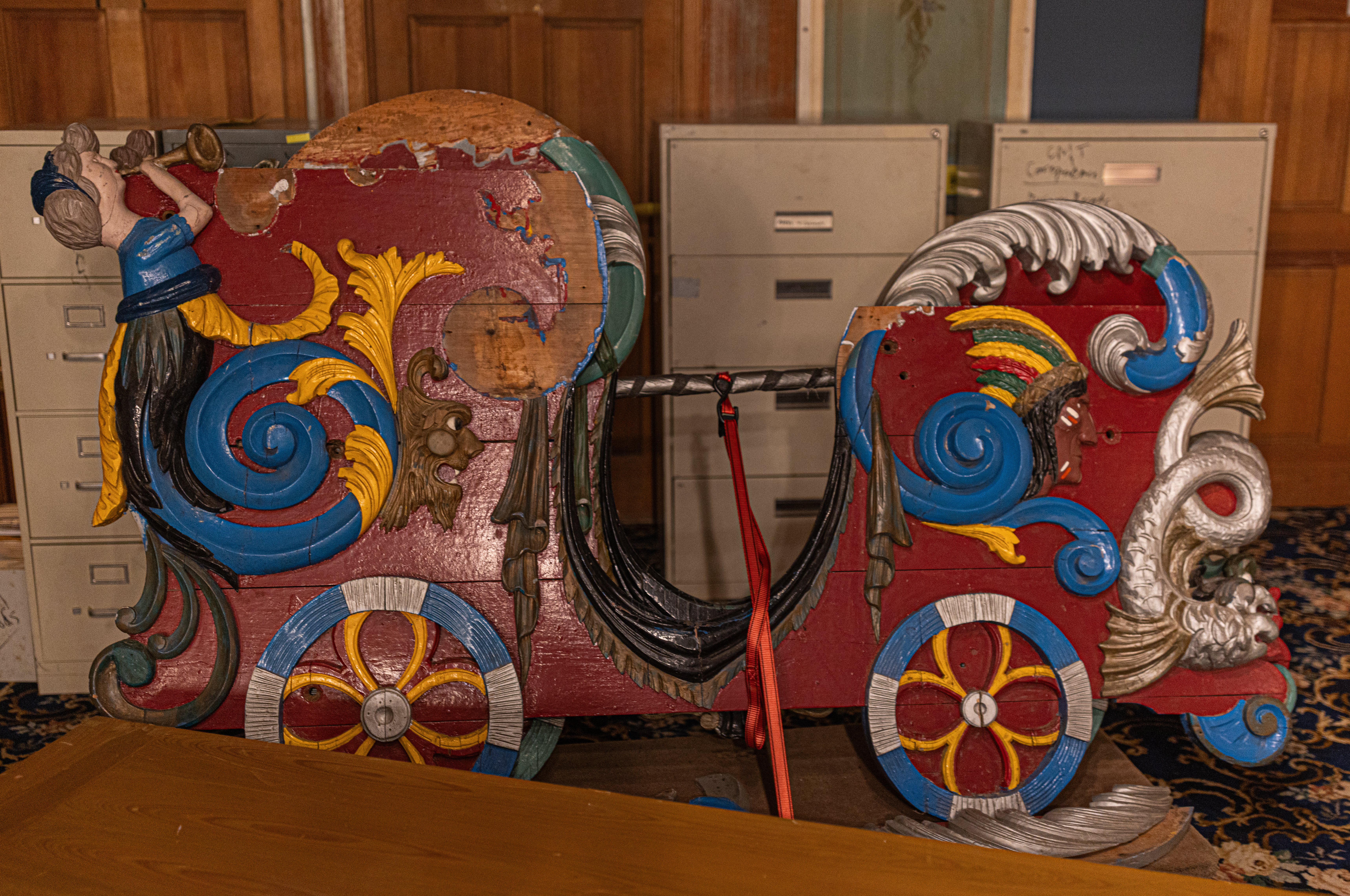
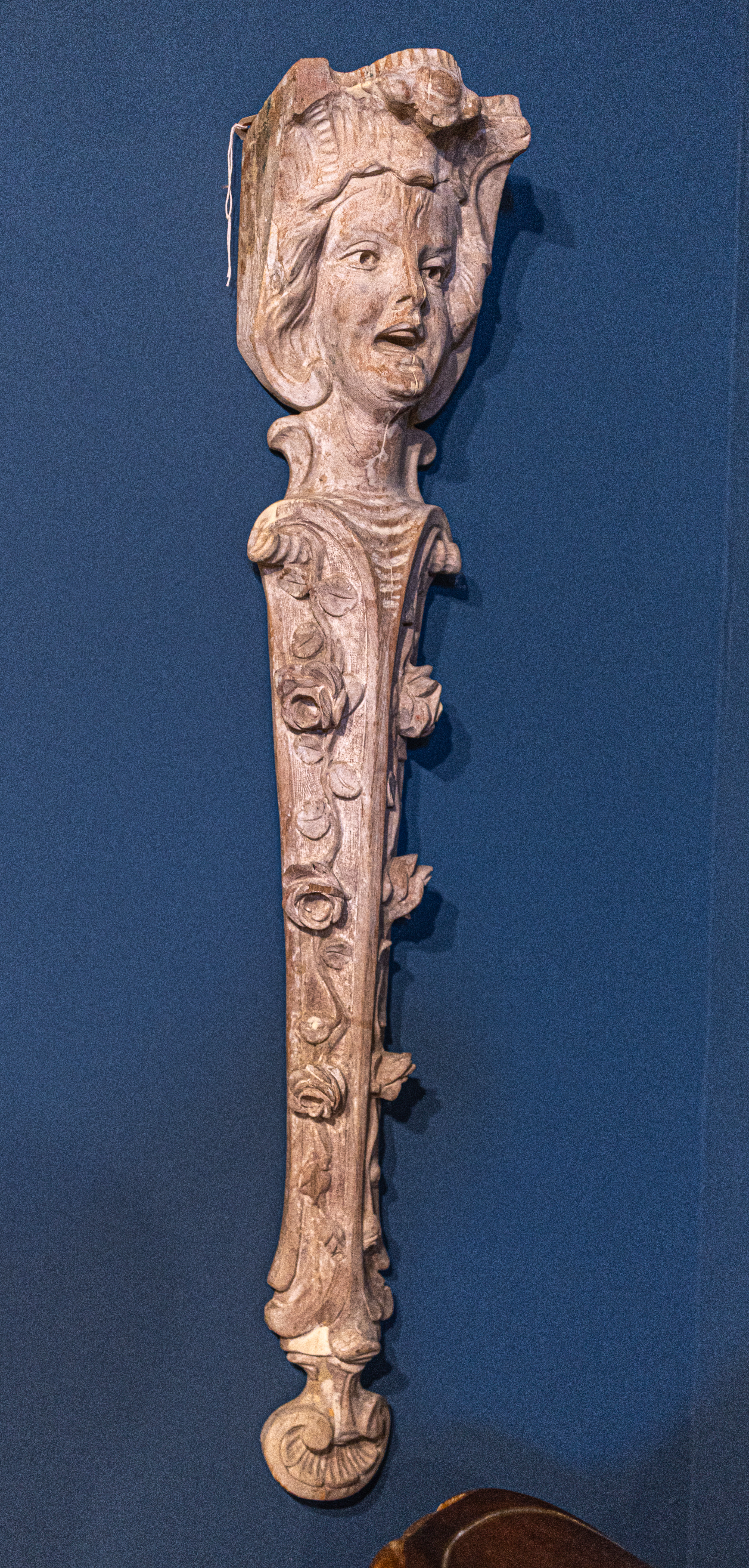
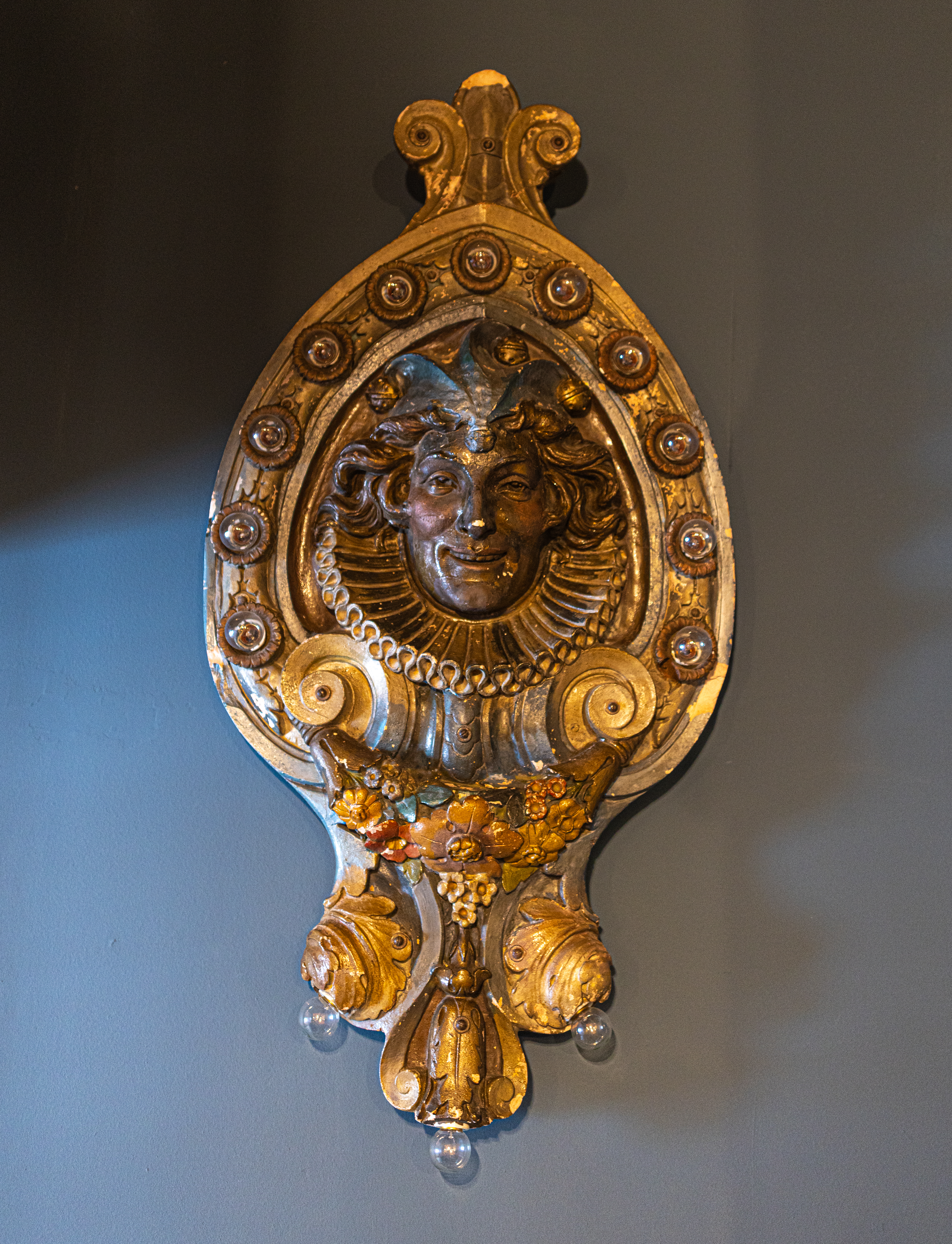
The Illions Supreme carousels were some of the most ornate carousels ever built, featuring horses with elaborate flaming manes, 23.5 karat gold leaf and hundreds of beveled mirrors. The carousels featured chariots with fantasy creature morphs from a ravenous fire-breathing cheetah to a a serpent then again from dragon to lion, evoking themes of jungle law, eat or be eaten and the thrill of the hunt.
The child’s chariot by an unknown carver circa 1900 posted below was intended for a juvenile ride. Although it appears too small for all but the youngest children, it has no floor or ceiling, allowing taller children to fit comfortably inside. Or, they might have chosen to sit as the driver or the footman. Based on the condition of the fabric, it is possible that the inside was rarely used, if at all.
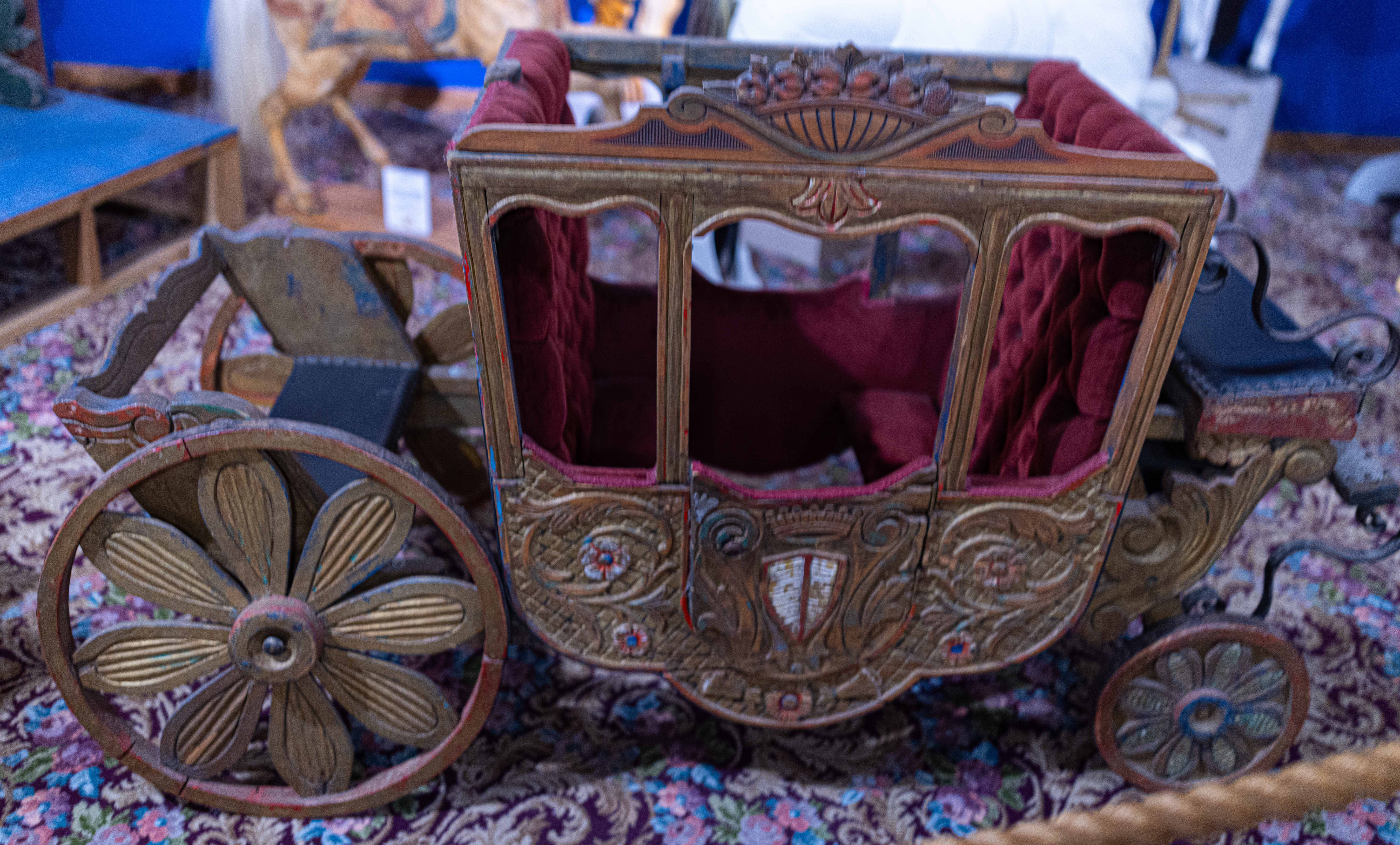
This is another chariot at the museum. If you look closely you can see what looks like a fairy on the exterior of the backseat.
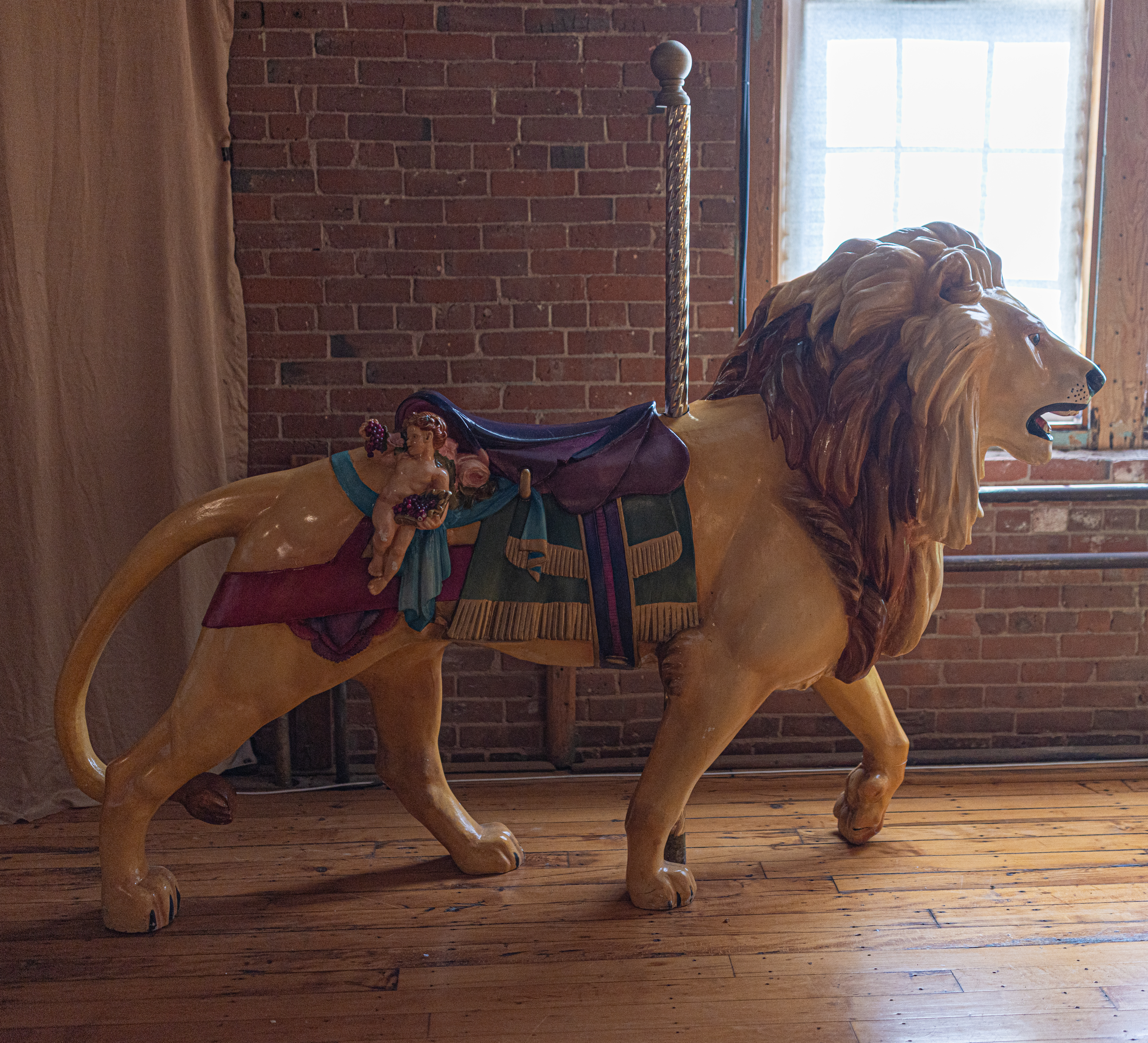
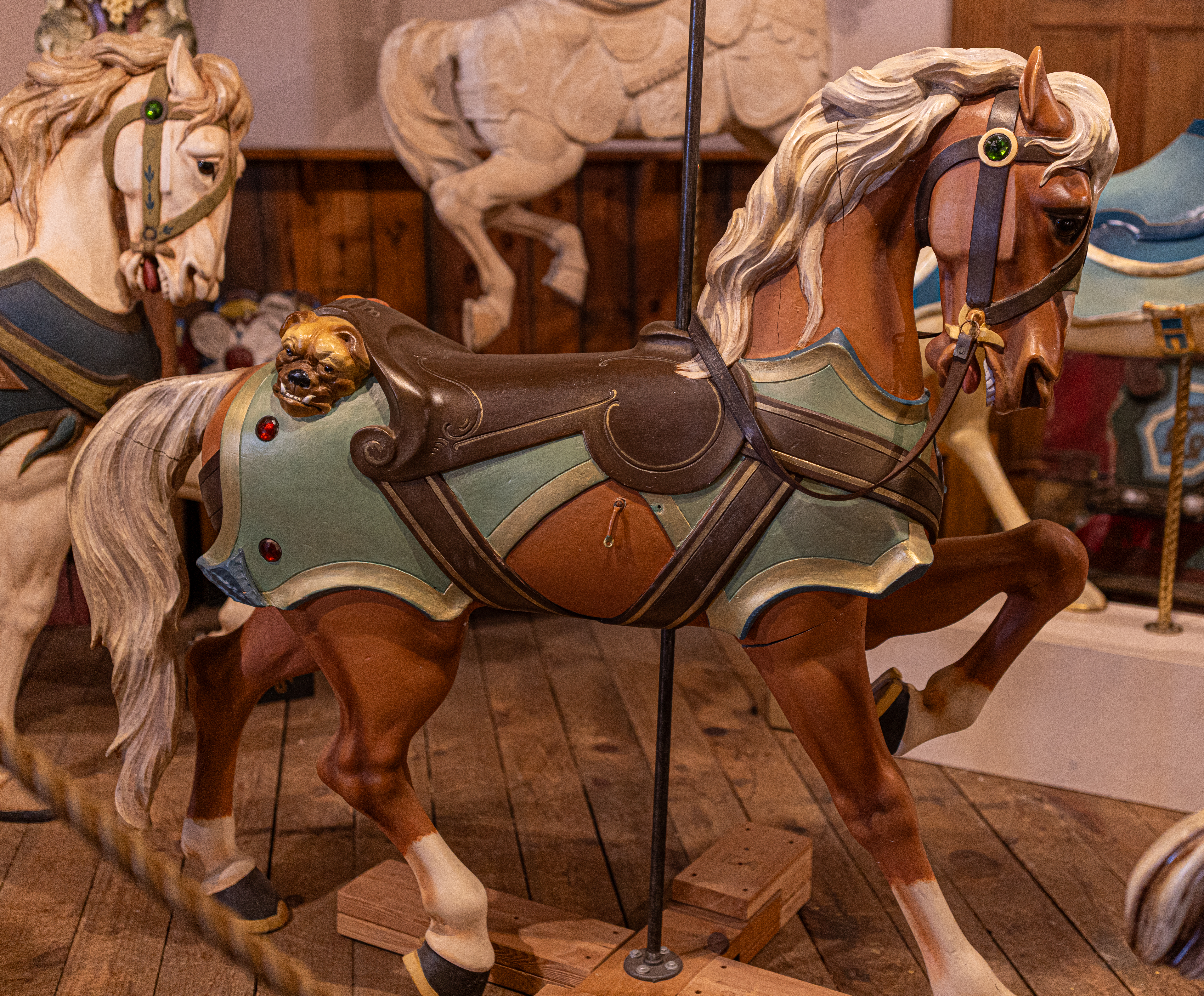
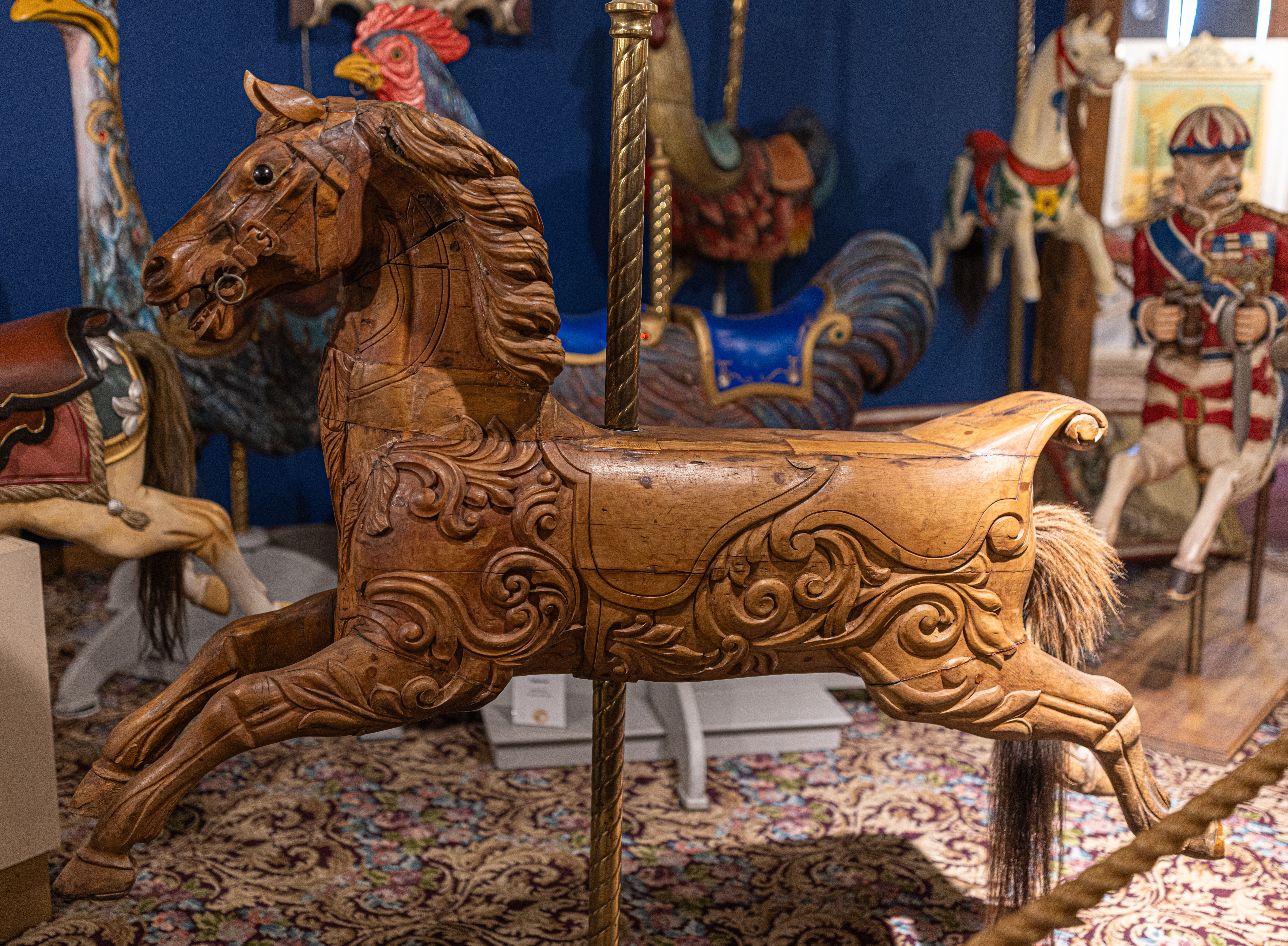
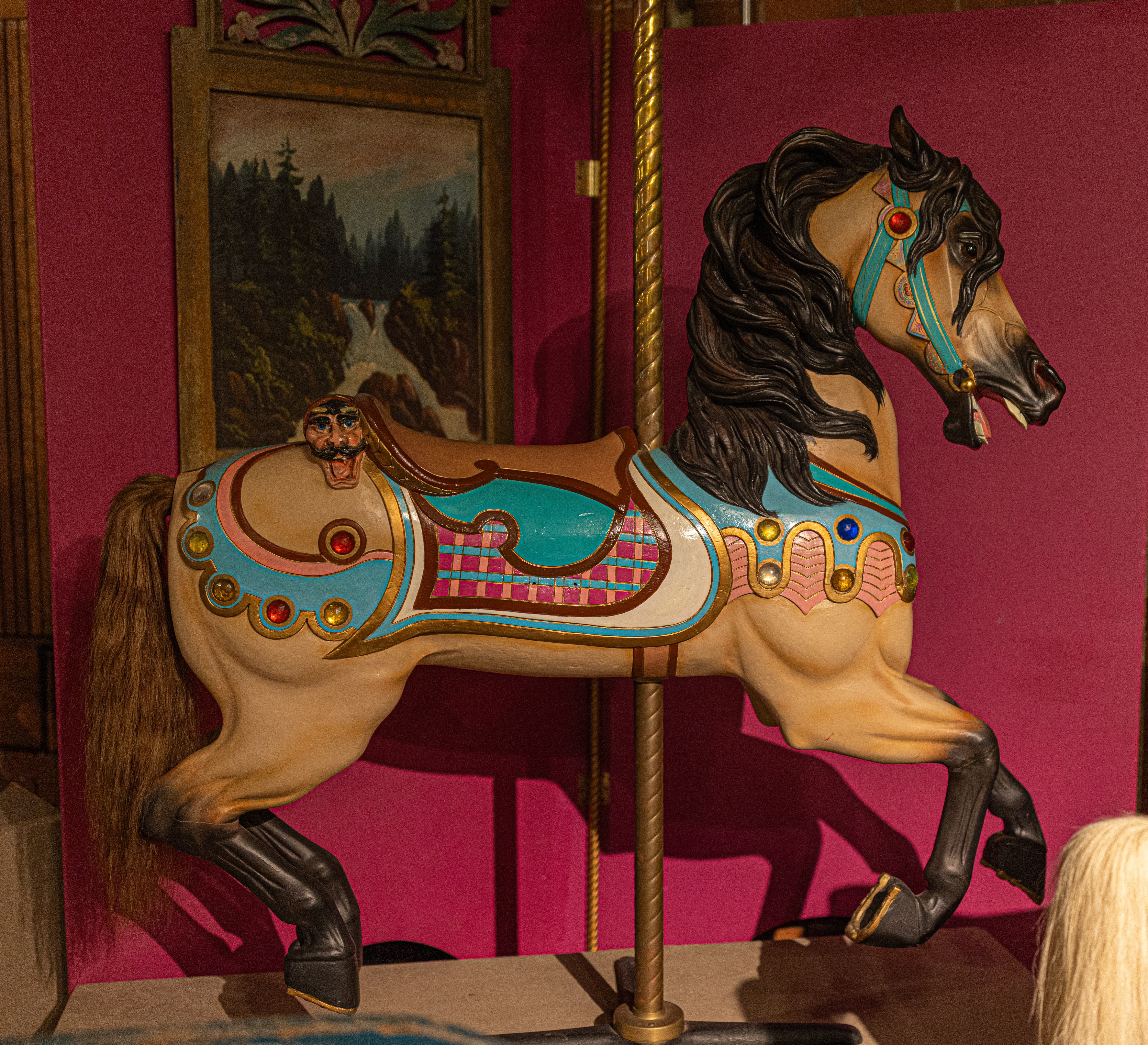
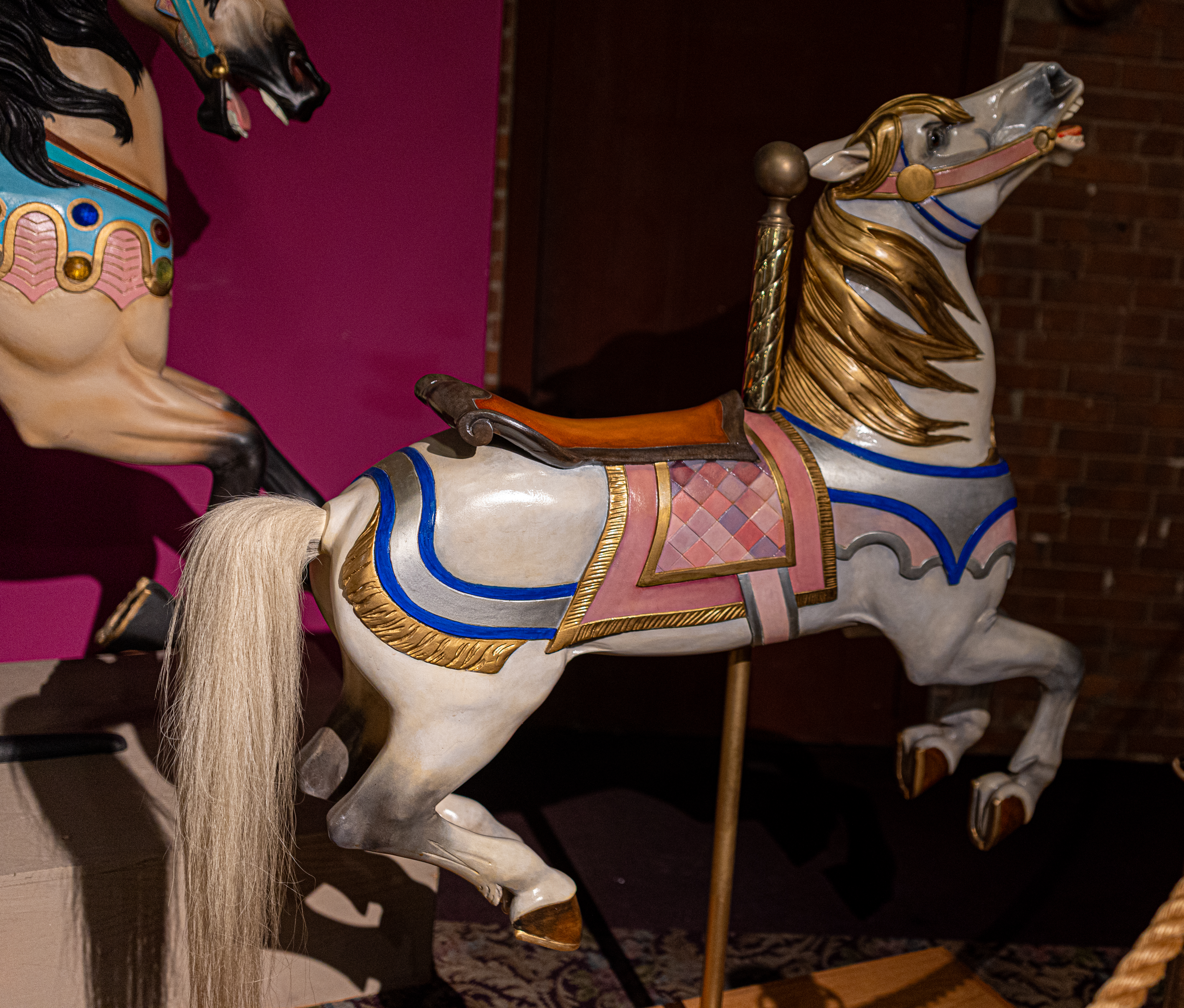
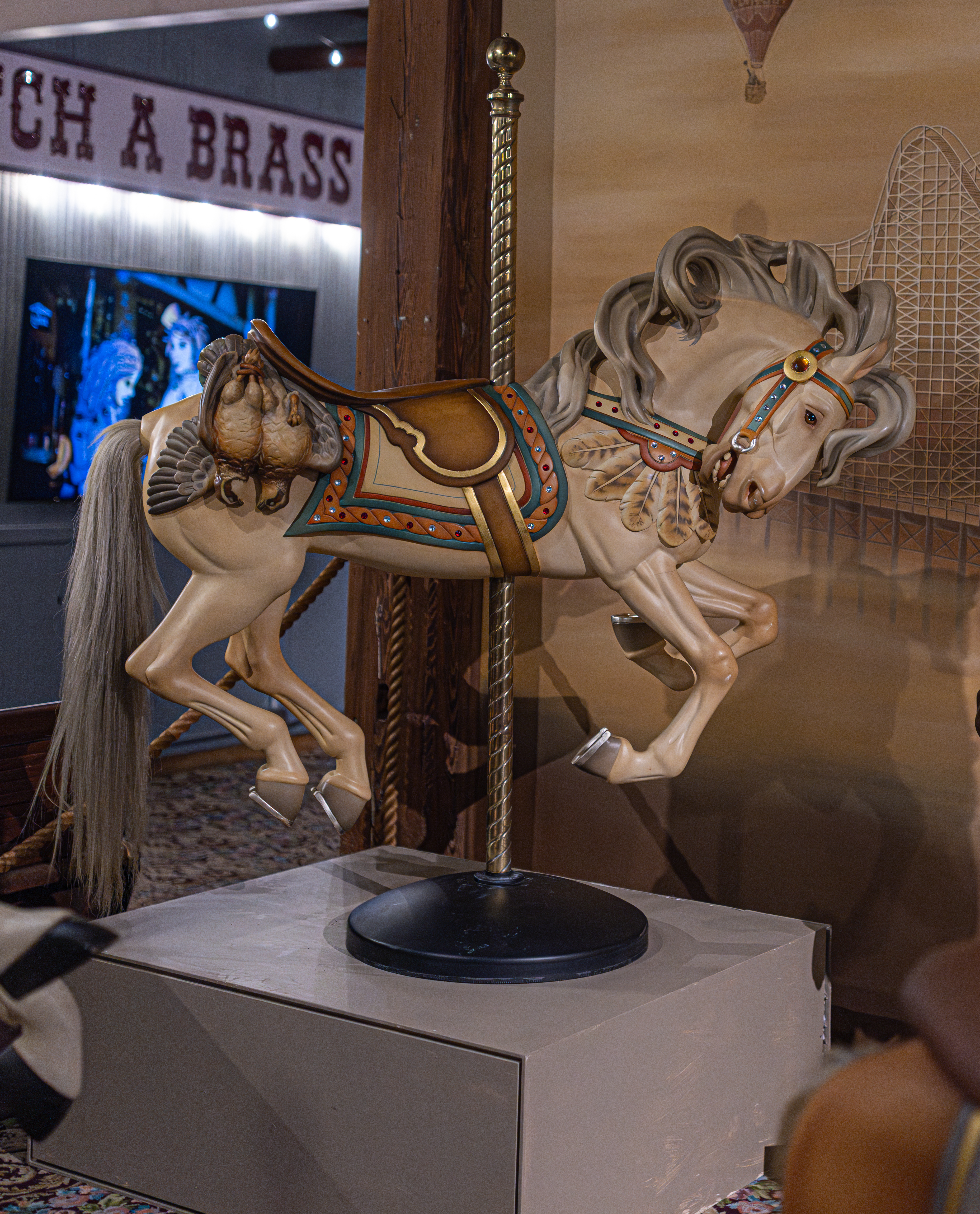
The vast majority of the carousel art is. of course, horses. There were a wide variety of different horses at the carousel museum. One thing you may notice with some of the horses is the use of real horse hair for their tails.
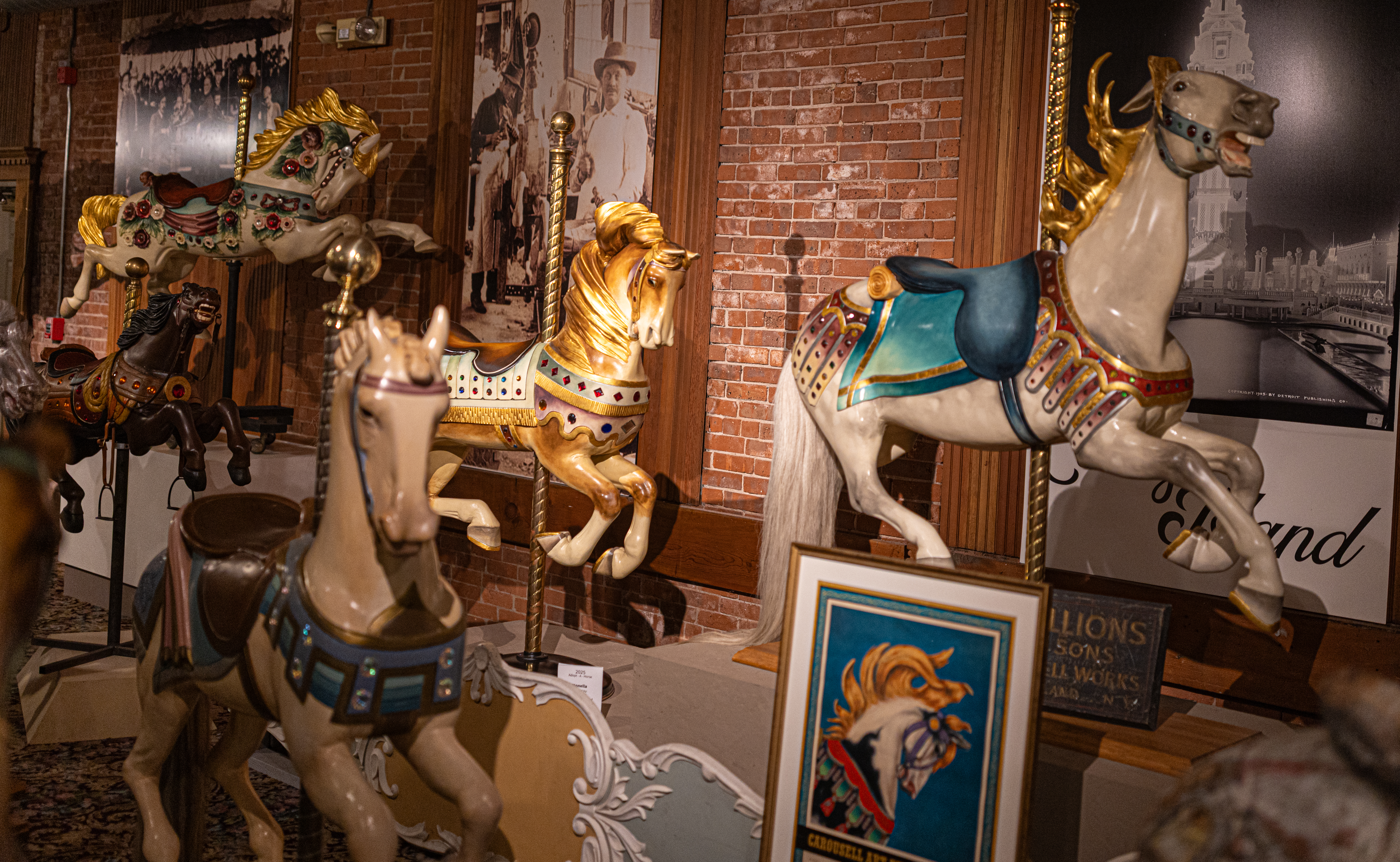
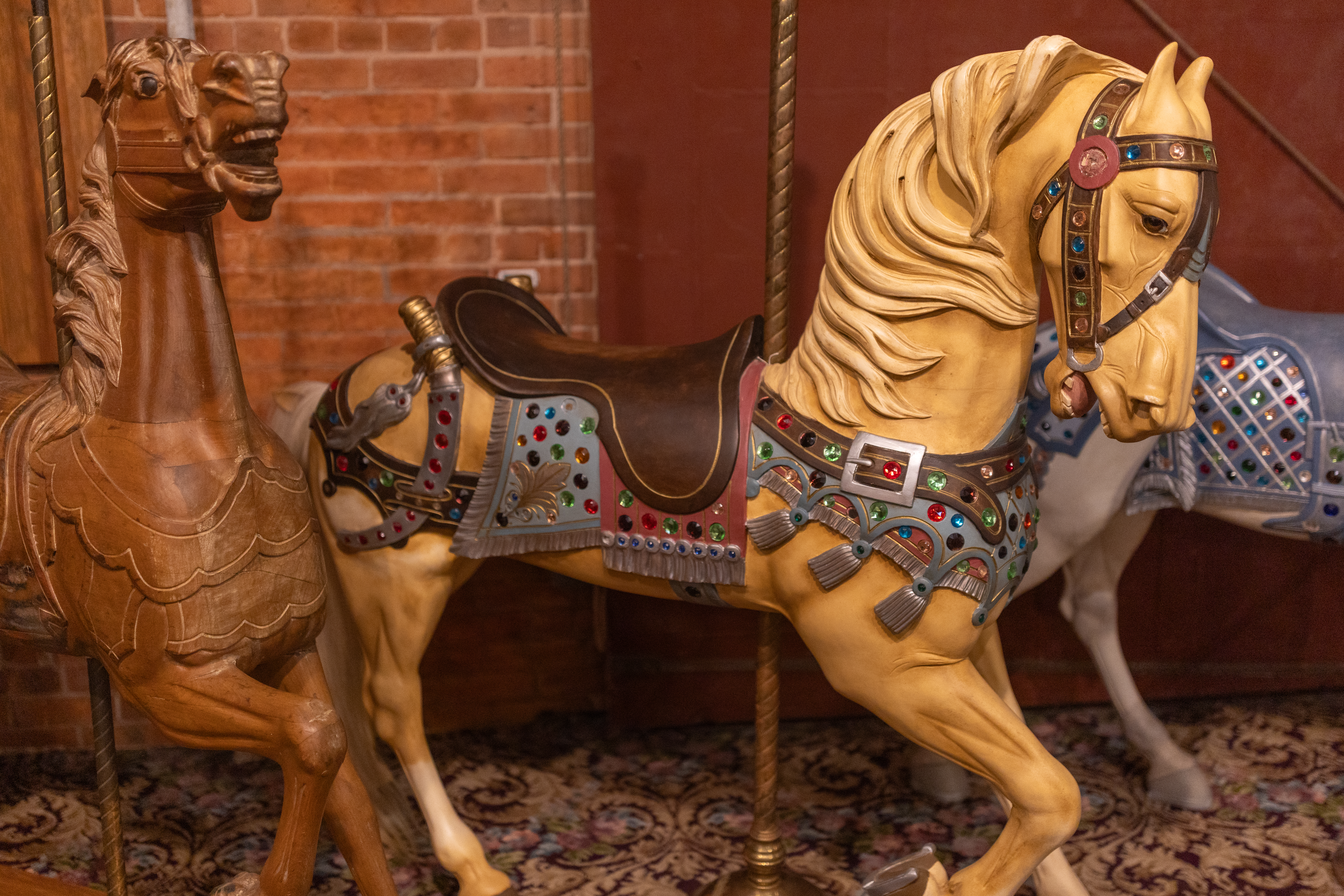
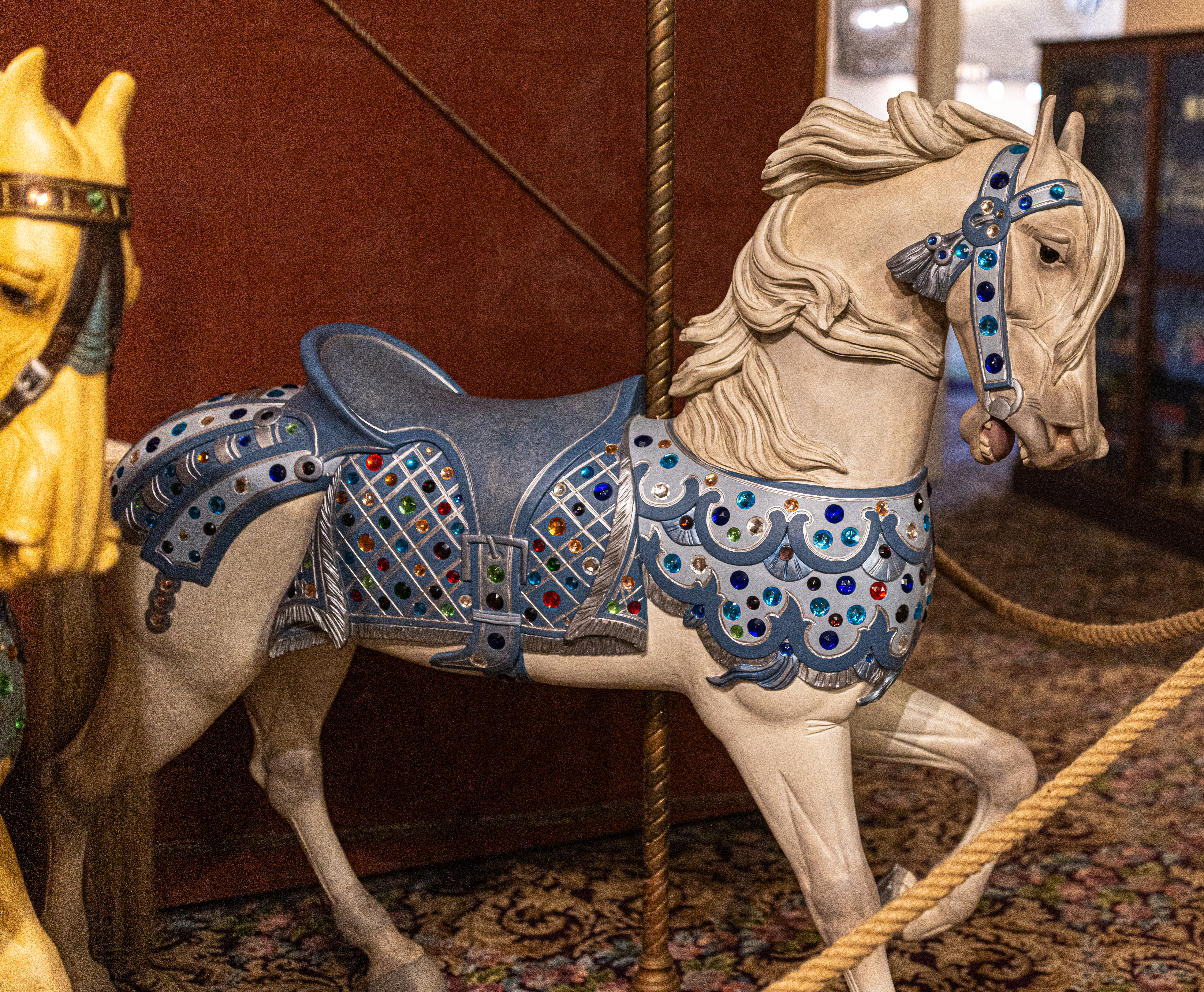
This is a Coney Island style carousel horse. These horses, which originated from the famed amusement parks in Coney Island, typically feature vibrant, hand painted designs and intricate carvings. They are often made of wood, showcases the craftmanship of the late 19th century to early 20th century. The horses are usually adorned with decorative elements like jewels, saddles, and manes.
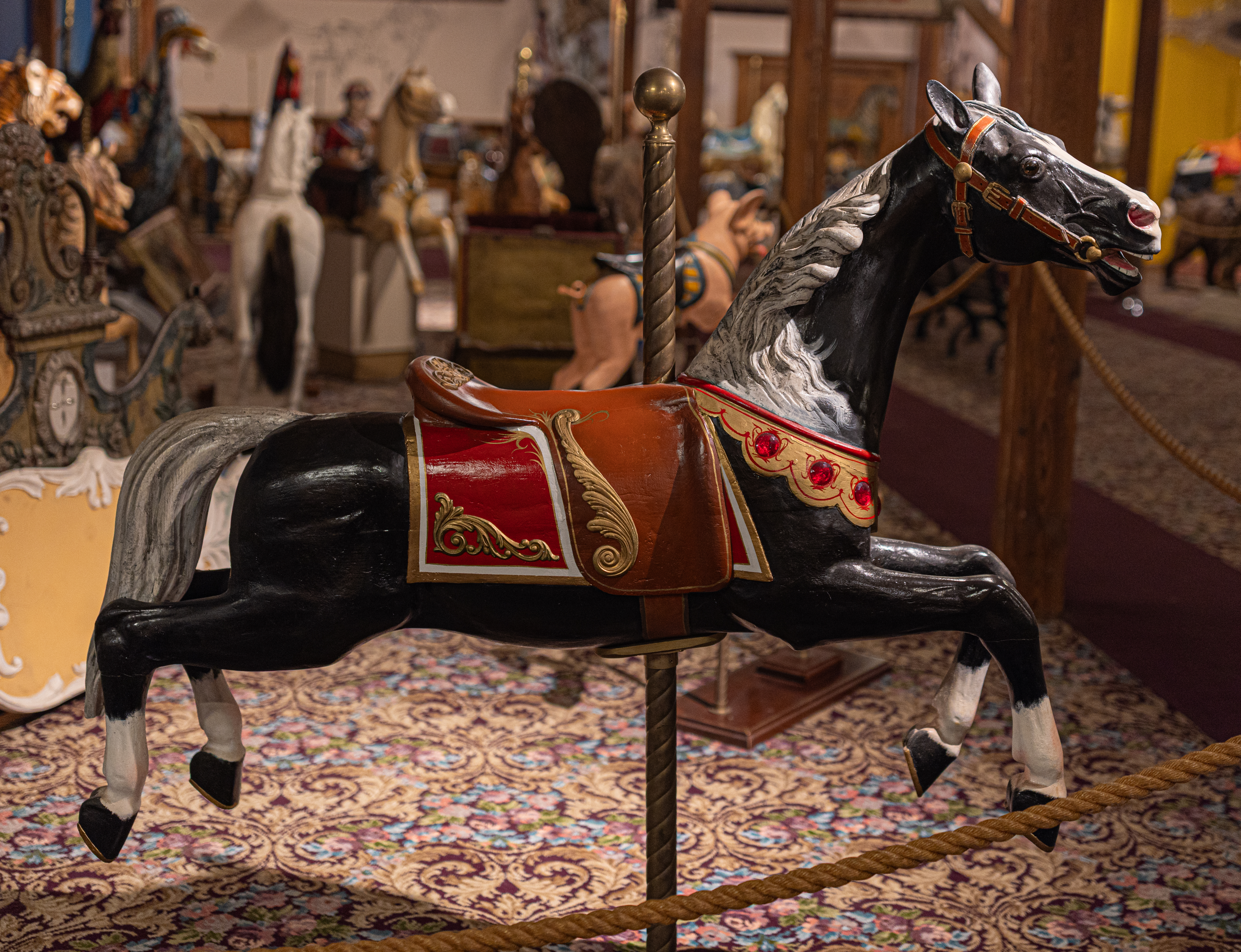
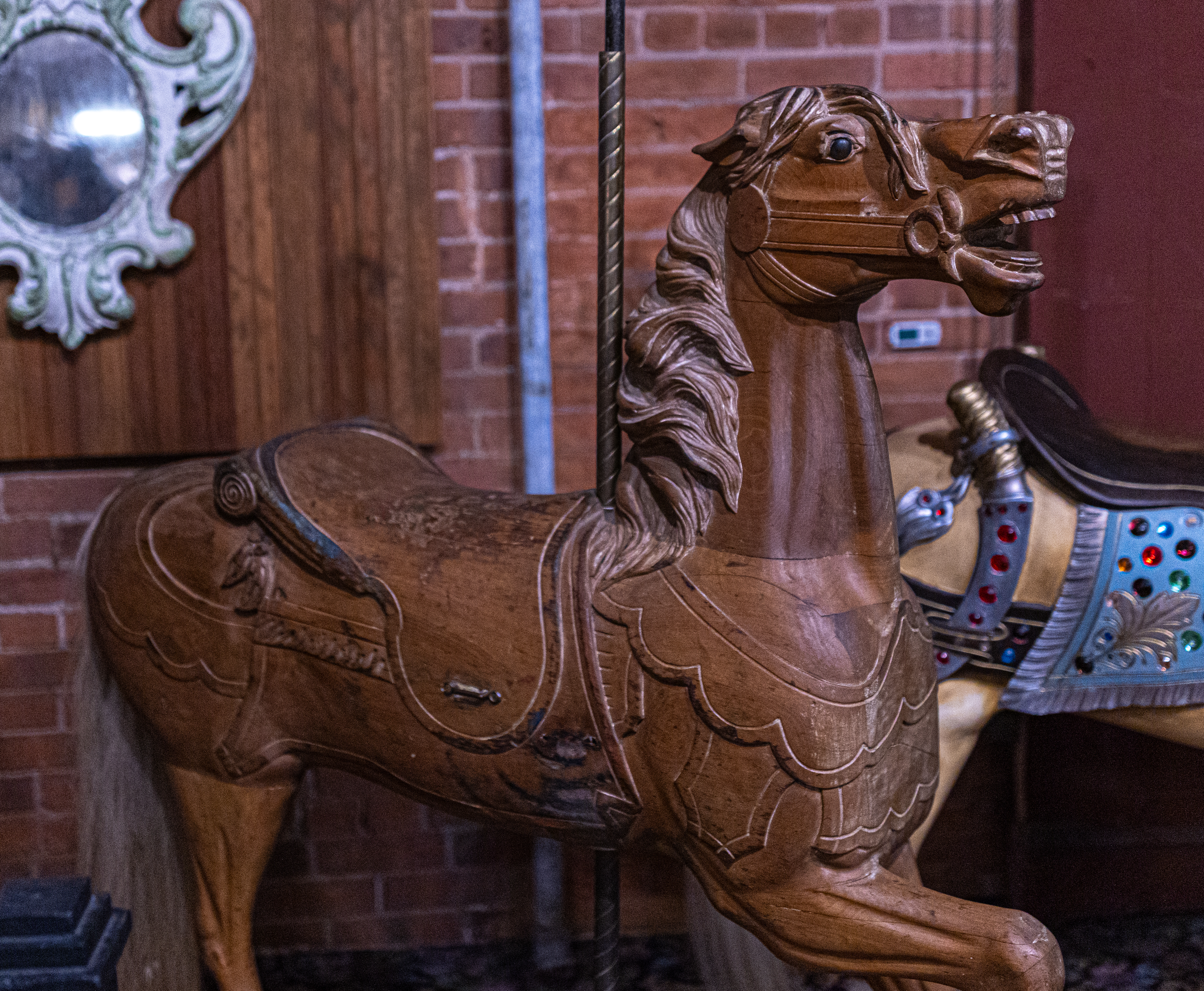
This French Horse, also known as a “jumper horse”, was carved by Frenchman Gustav Bayol circa 1905. French carousels typically consisted of menagerie animals, sometimes focusing on one or two animals exclusively. In fact, French carousel horses were typically quite rare.
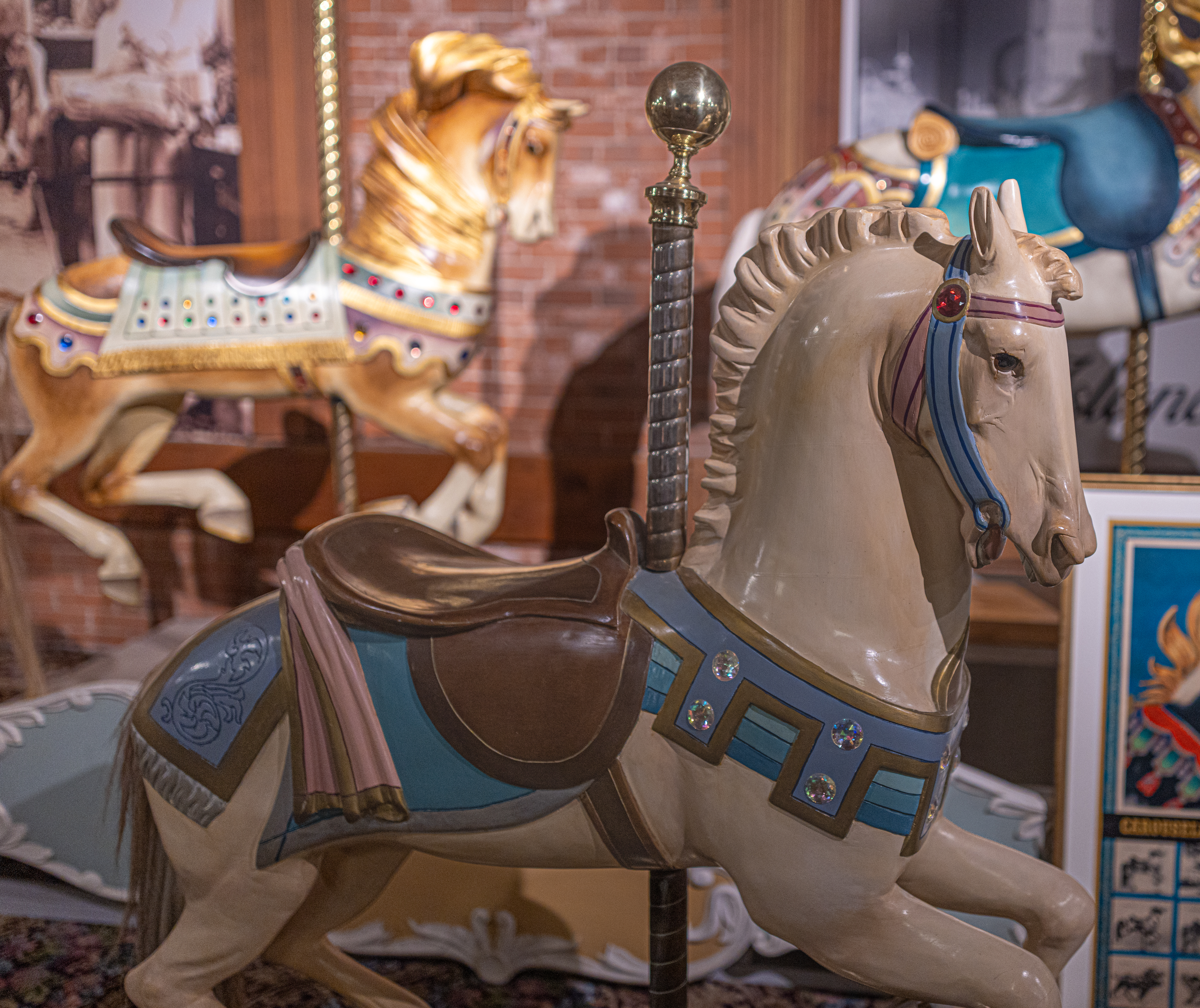
The carver of this horse, M.C. (Marcus Charles) Illions, was a master carver of wooden carousel horses and other figures at Coney Island, Brooklyn, New York City in the early 20th century.
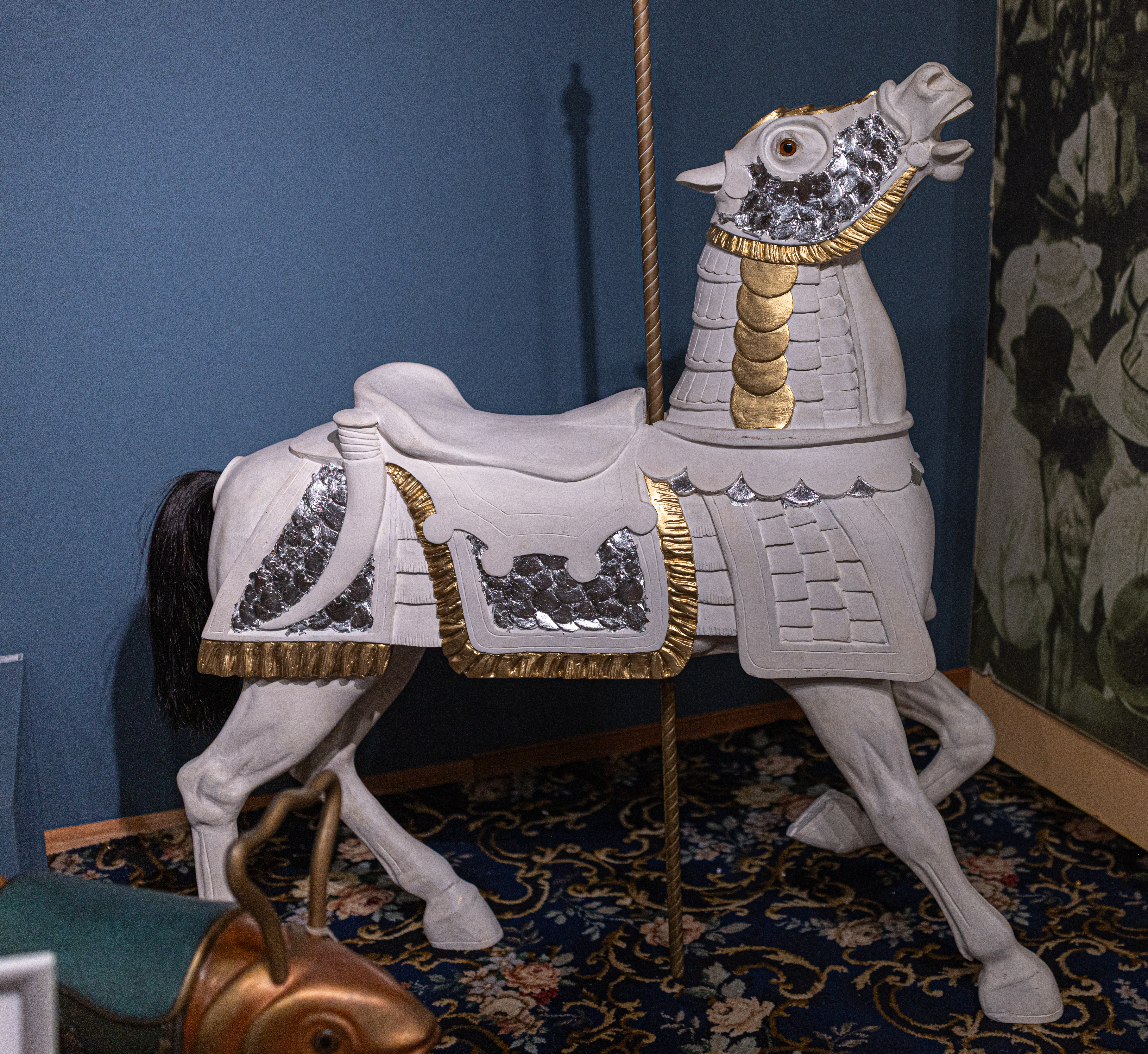
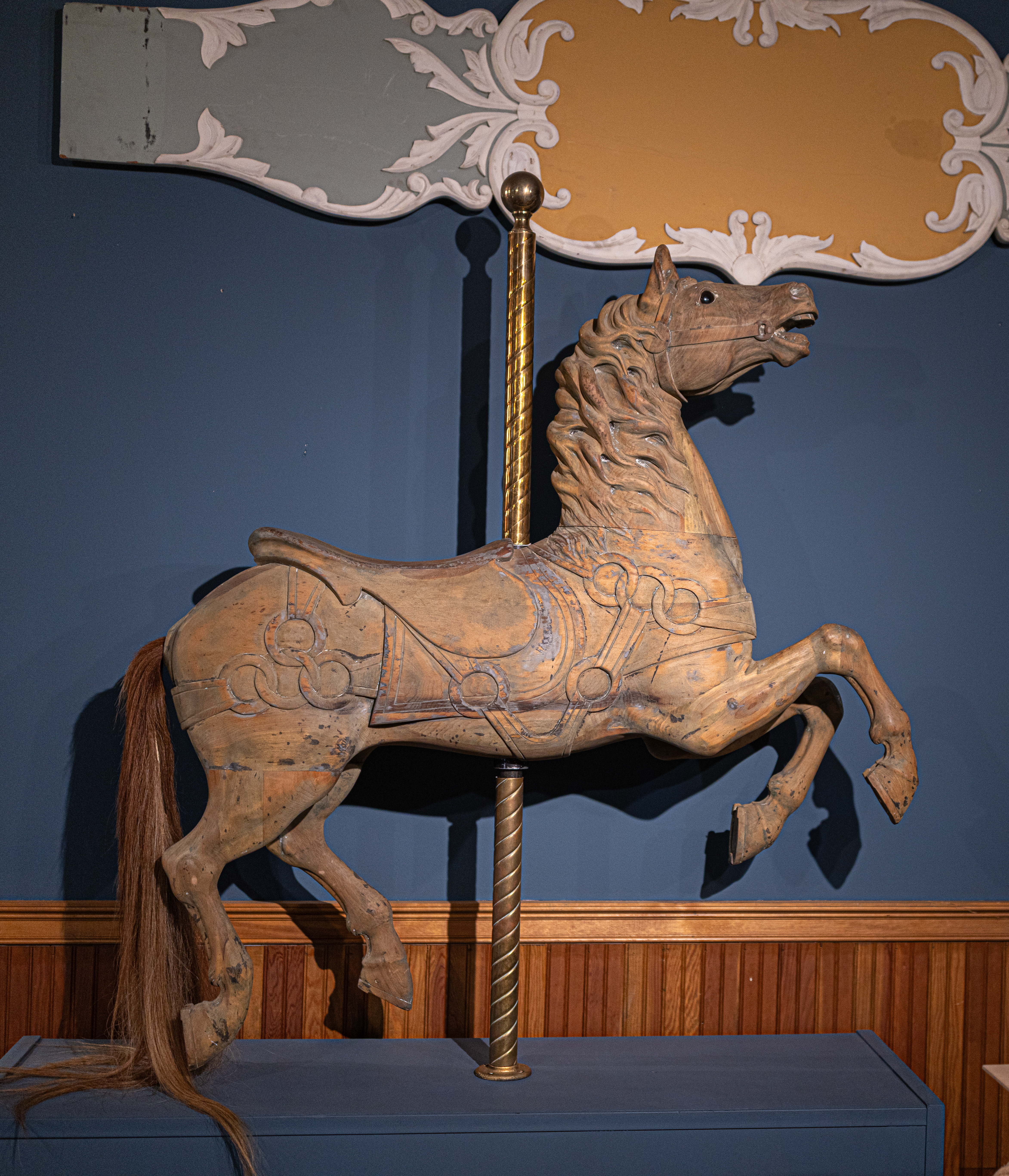
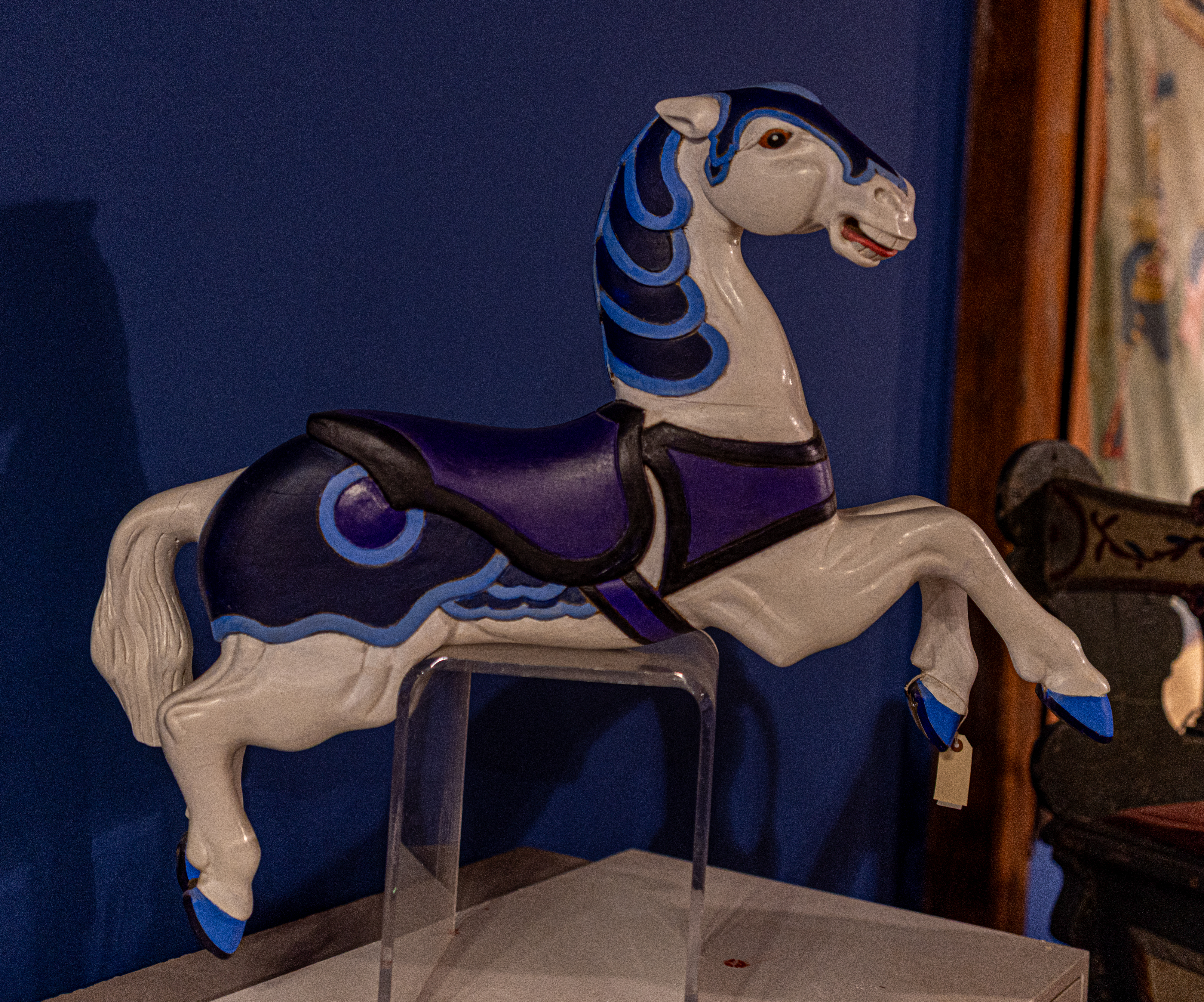
This child-sized Armored Horse was sculpted by Ismael Flores of Mexico circa 1930. Mexican animals, carved of savino wood, are often small measuring less than 36 inches. Carousel carving in Mexico is often done in the carver’s home with simple tools.
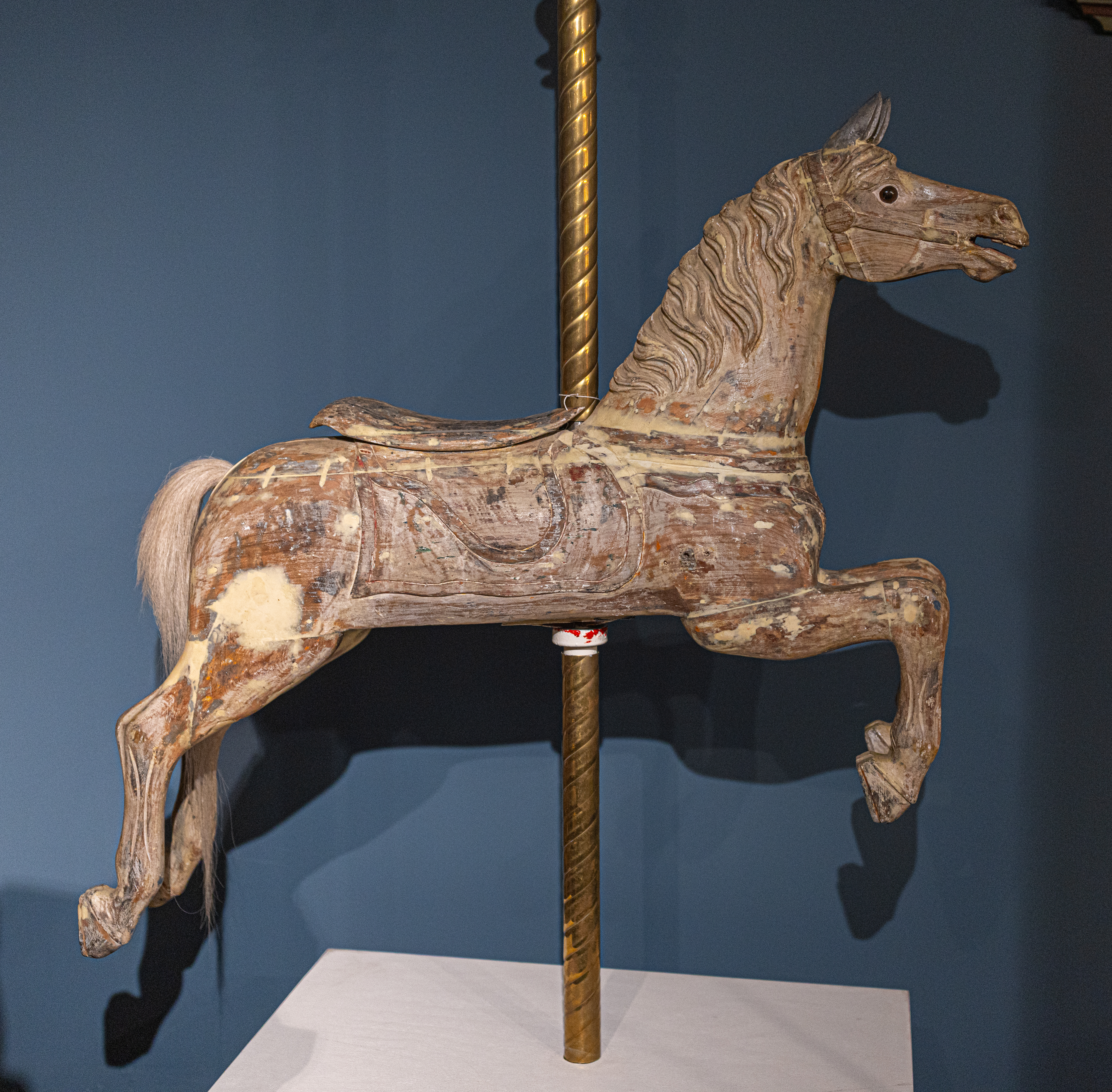
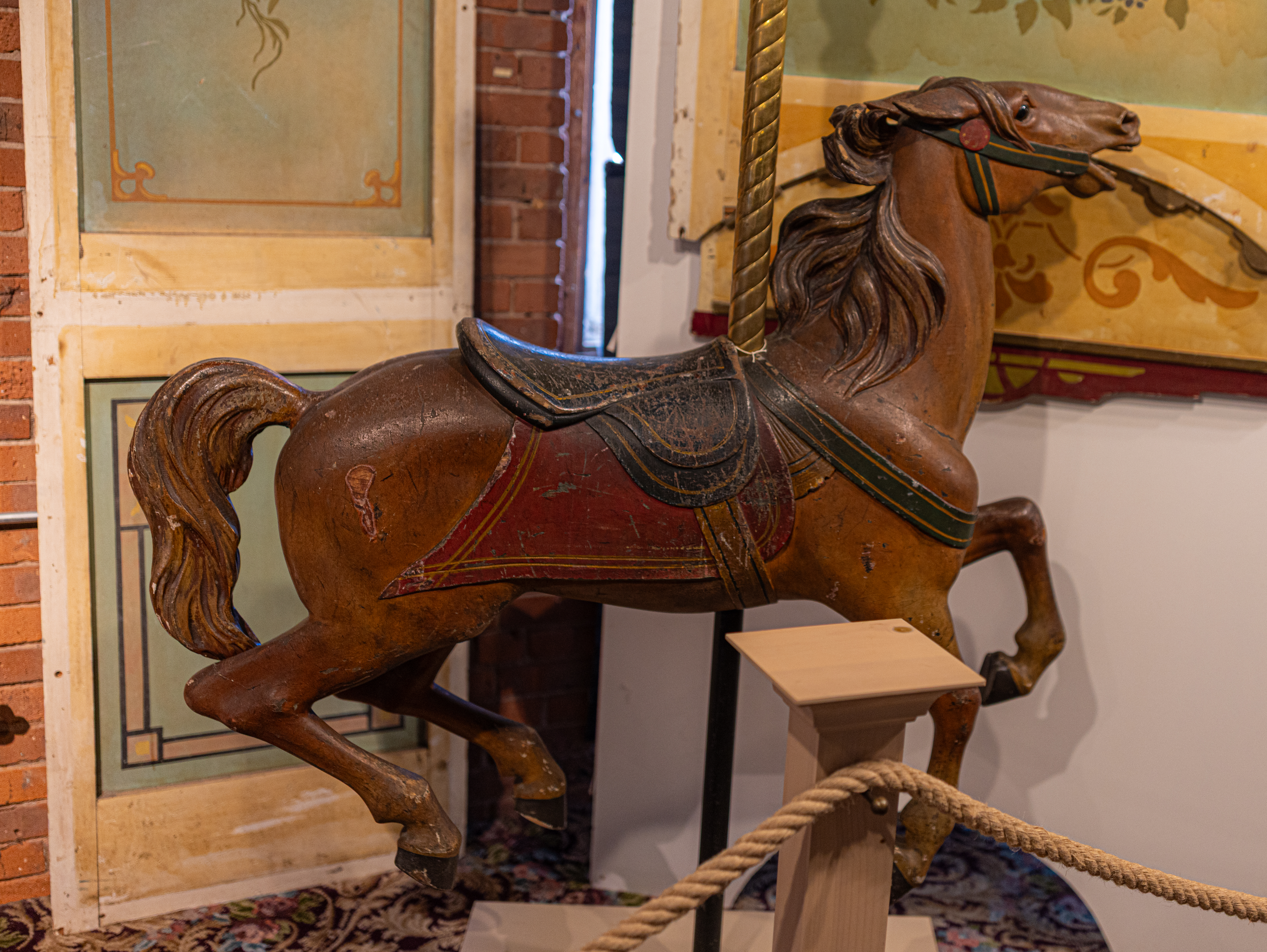
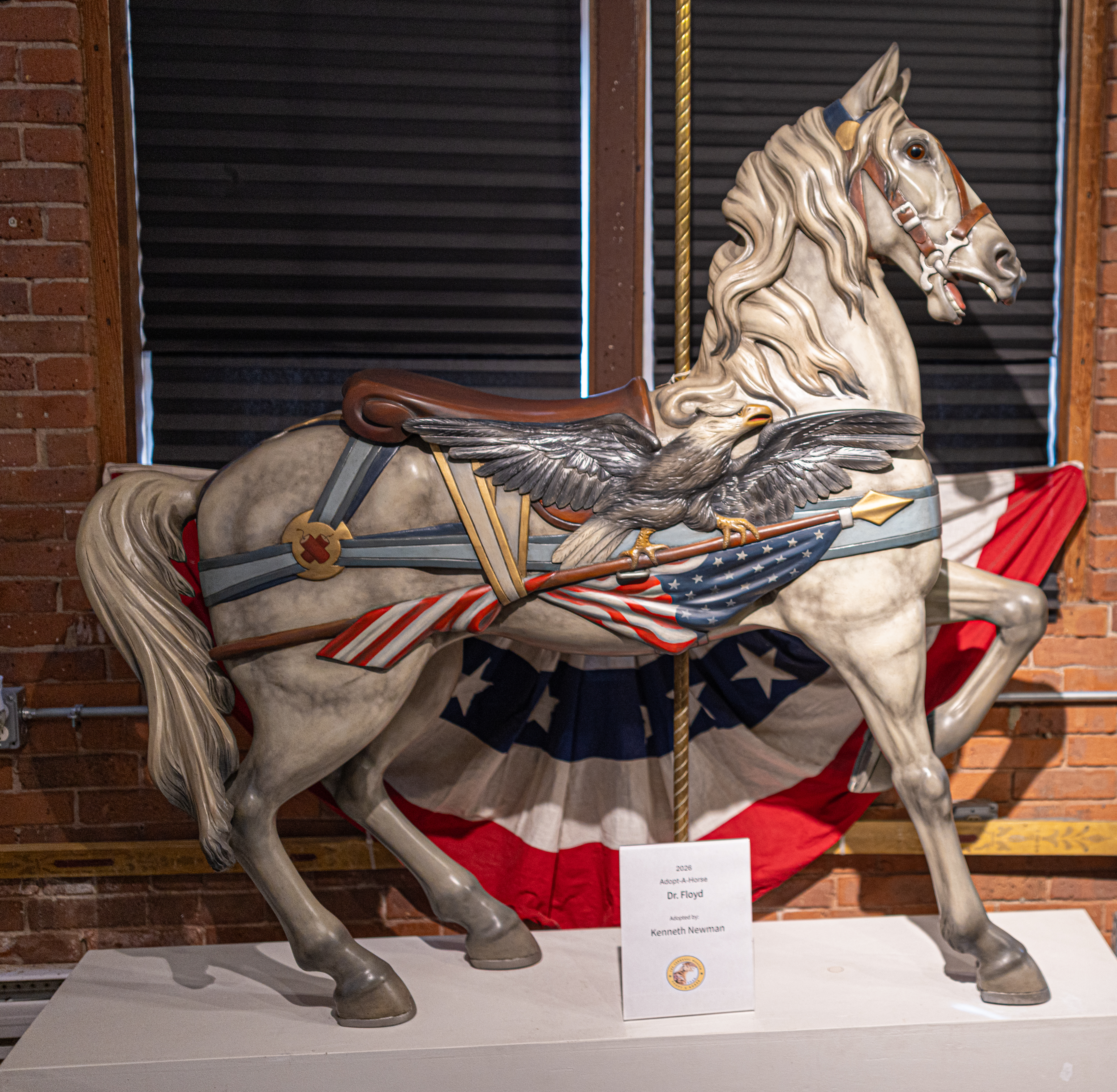
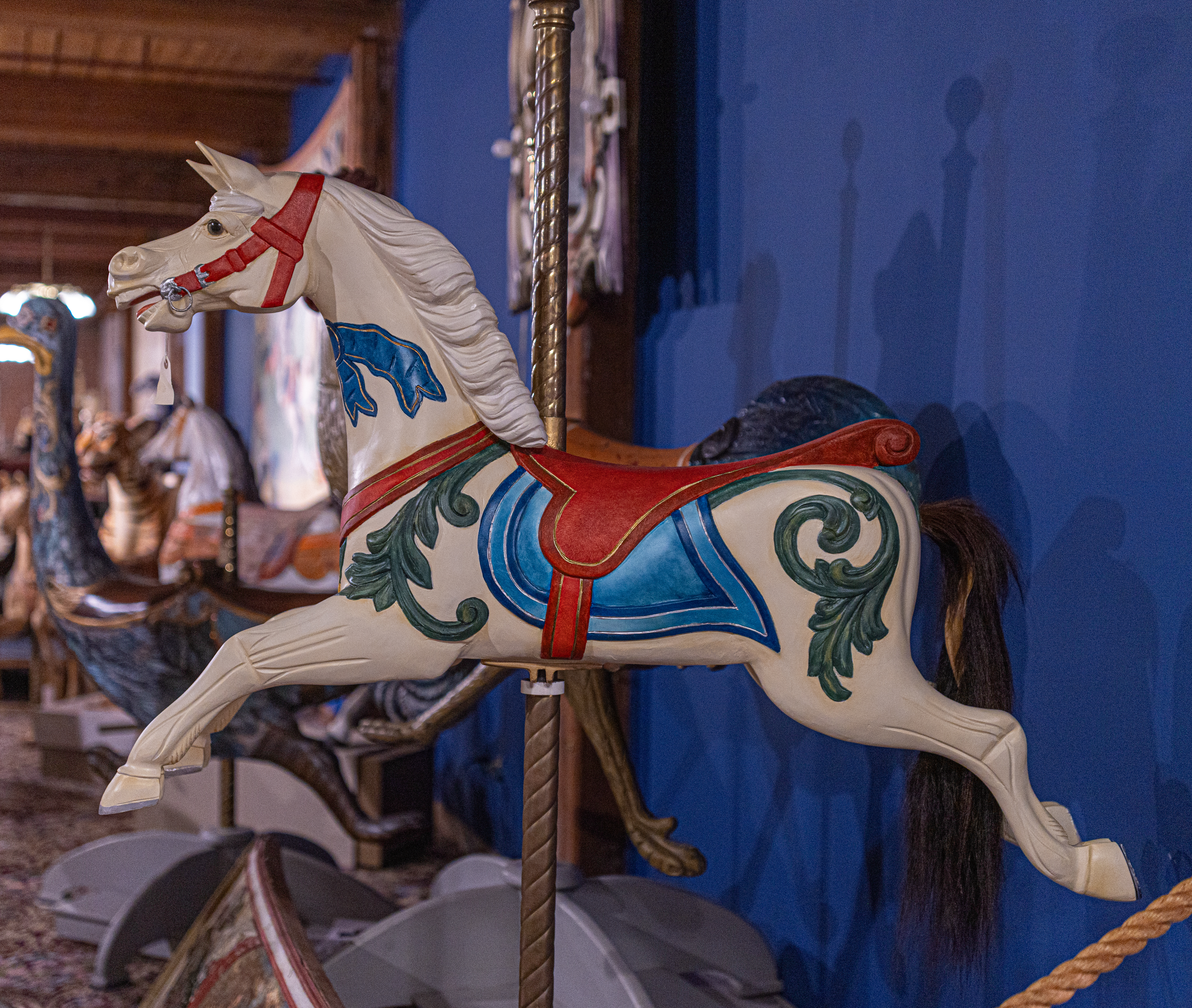
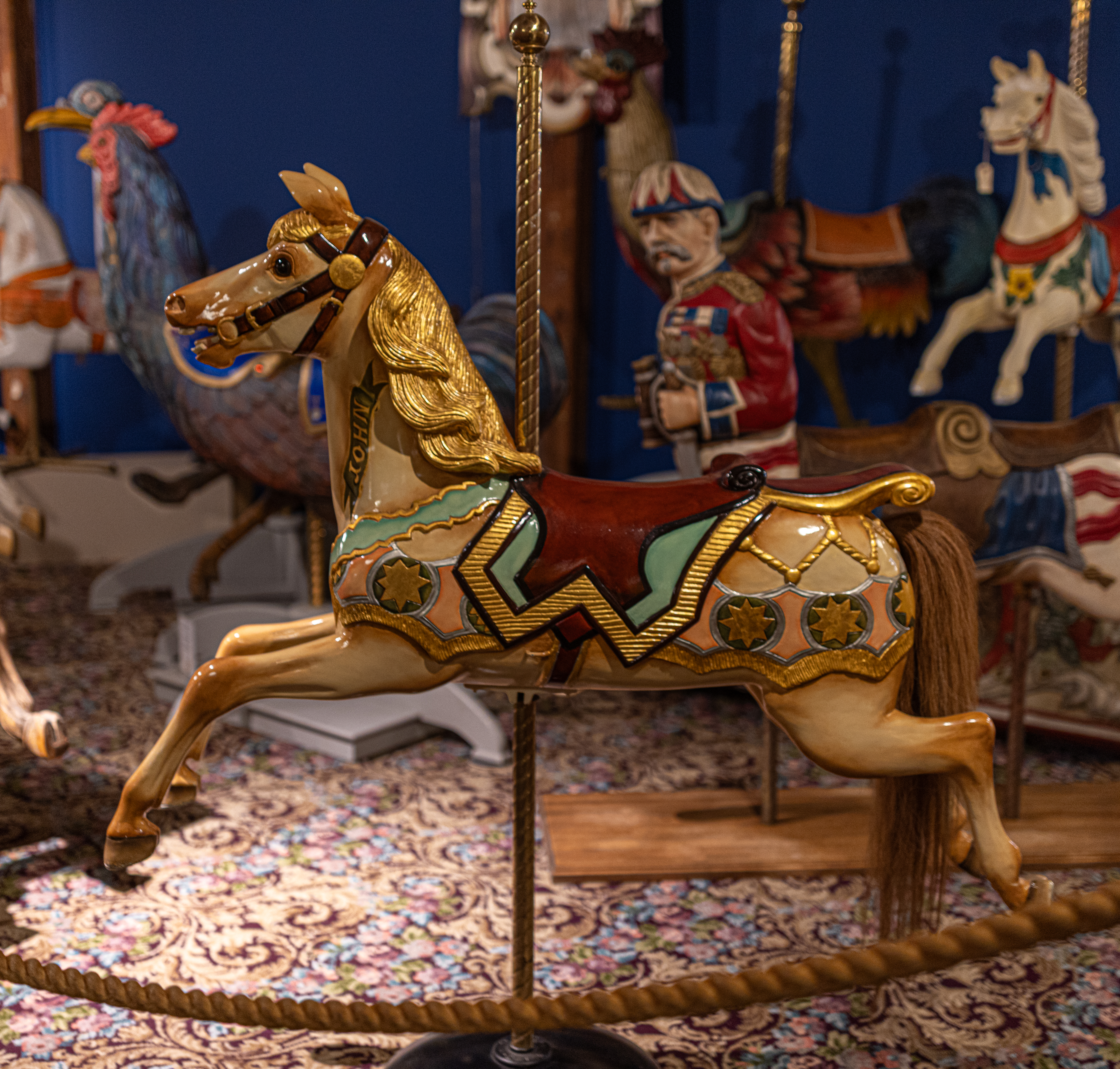
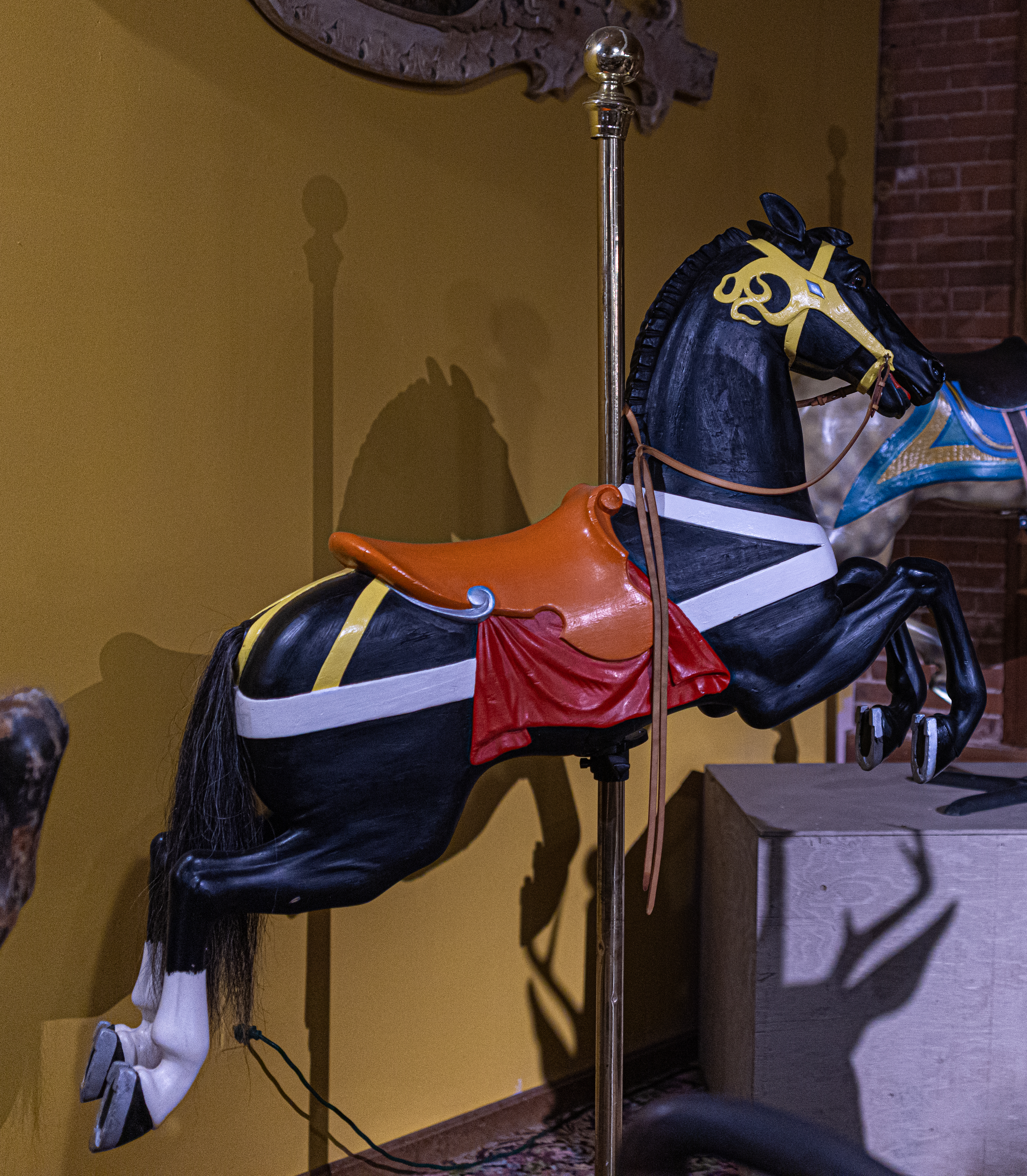
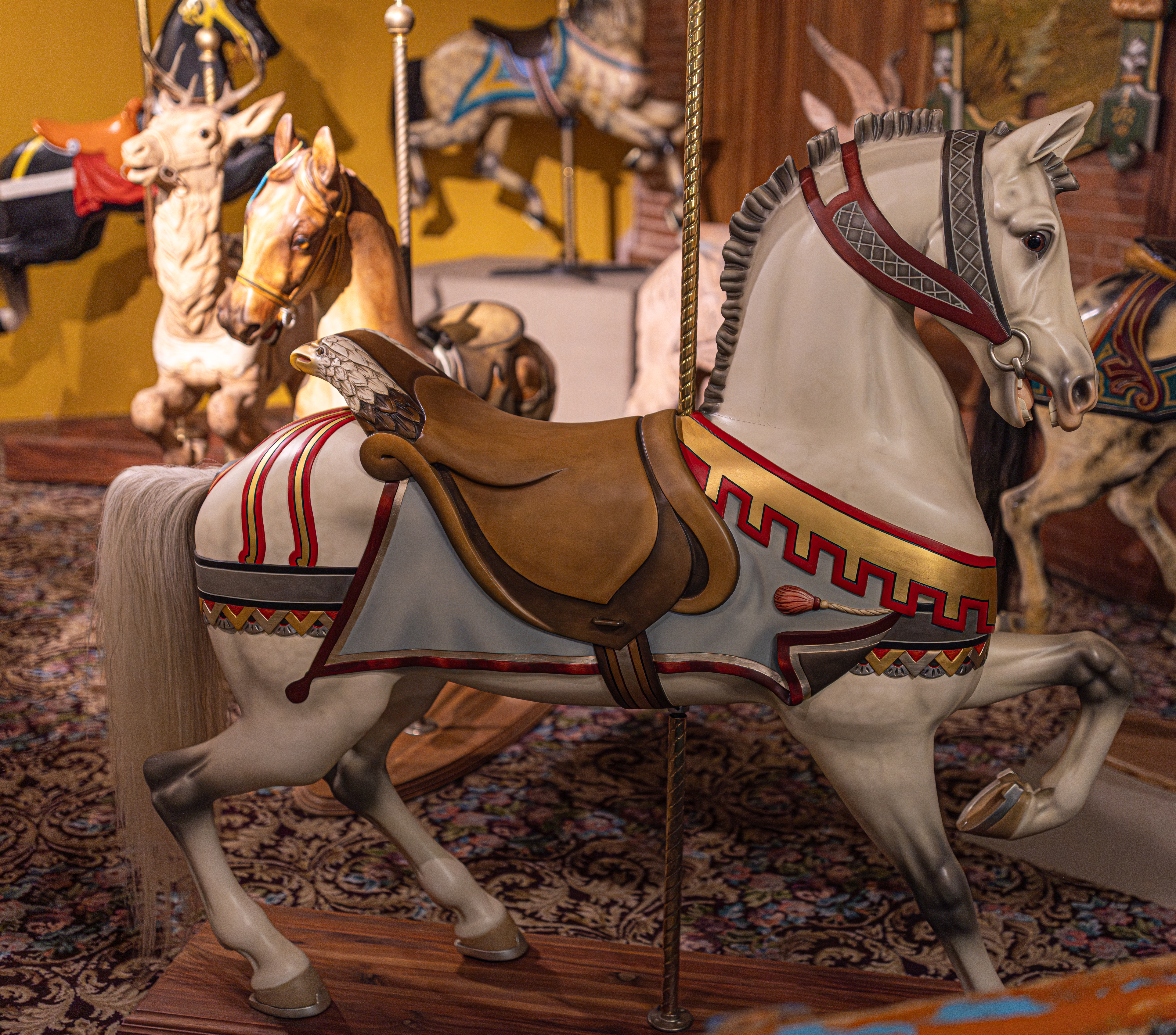
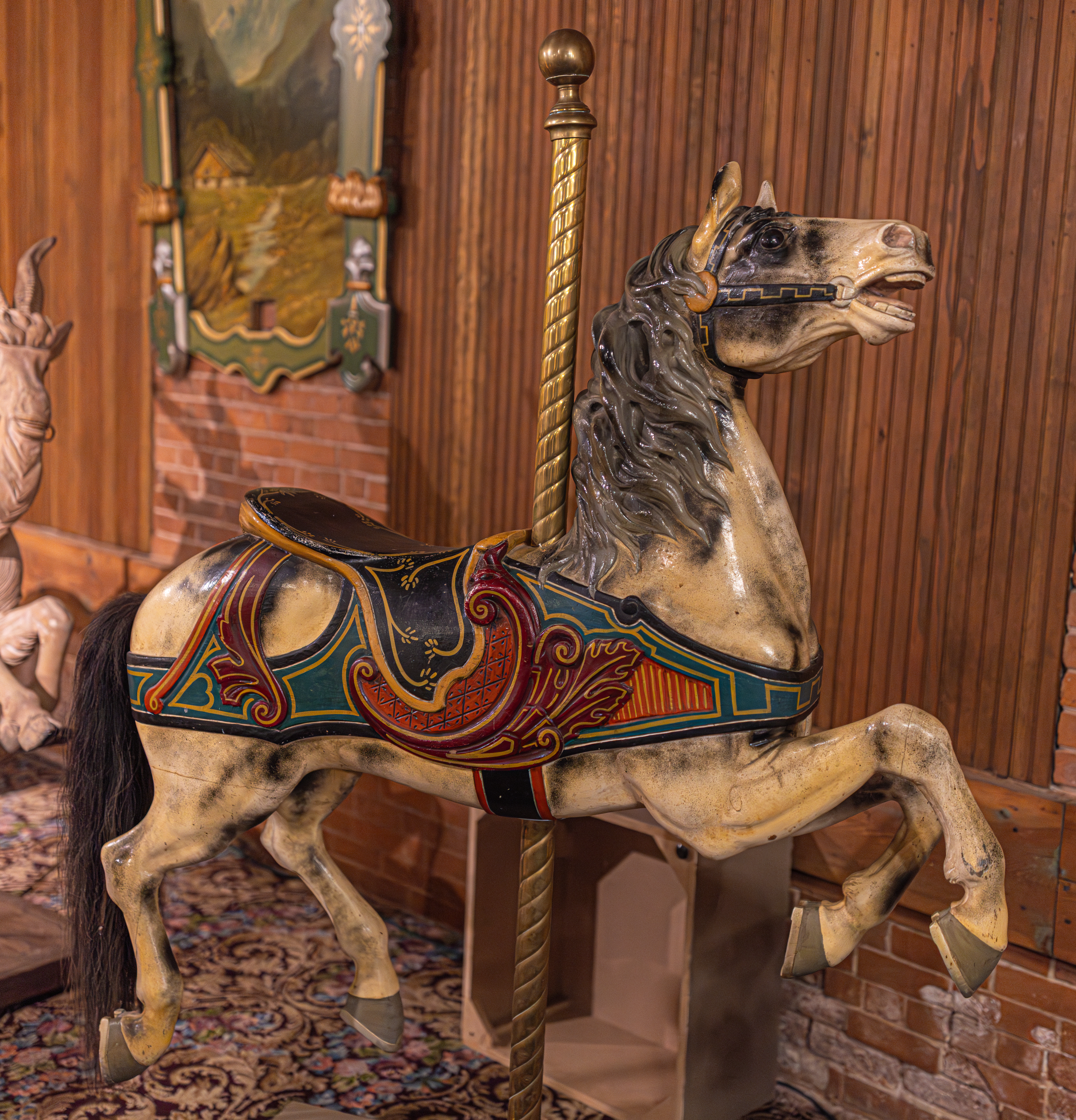
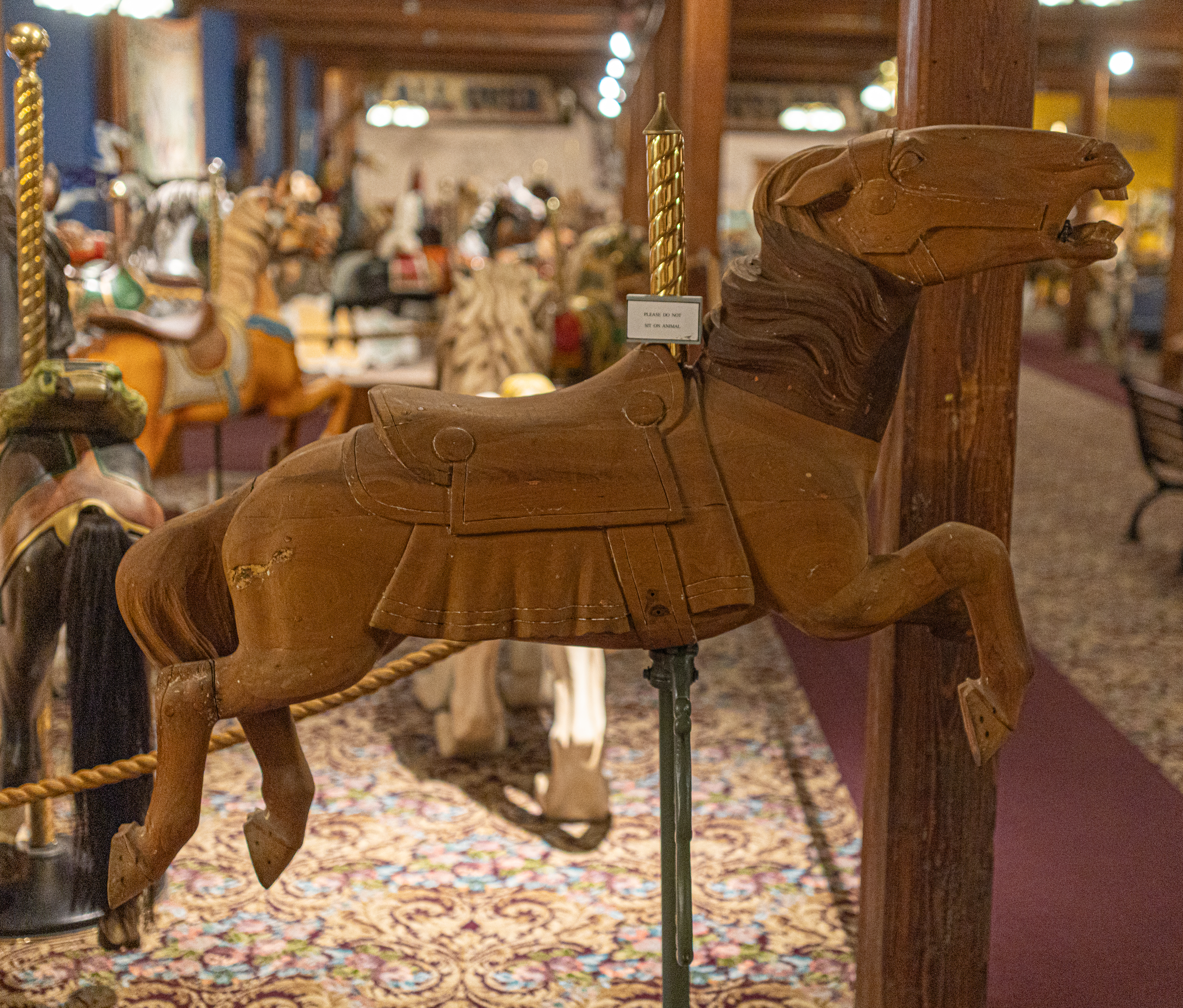
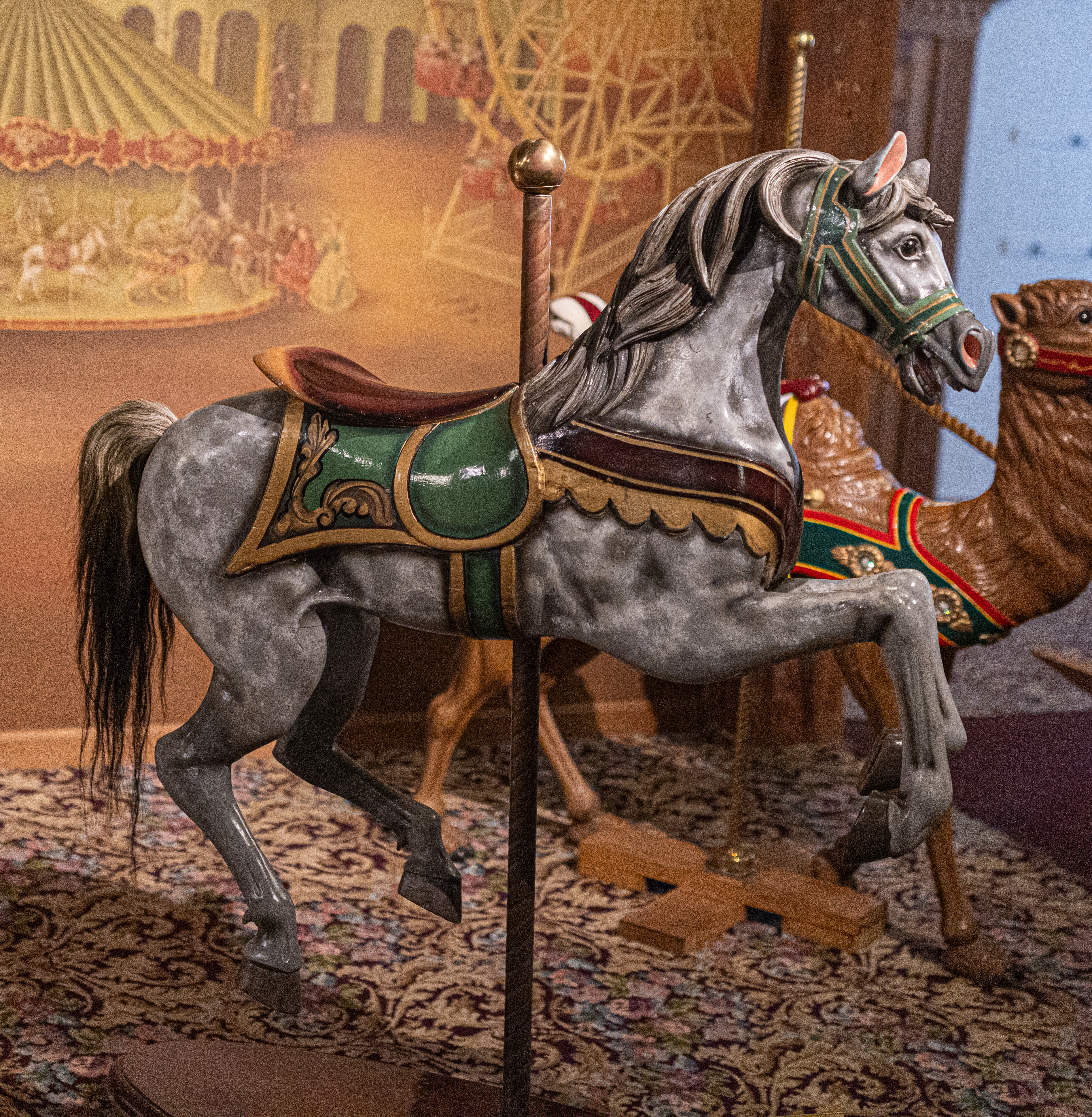
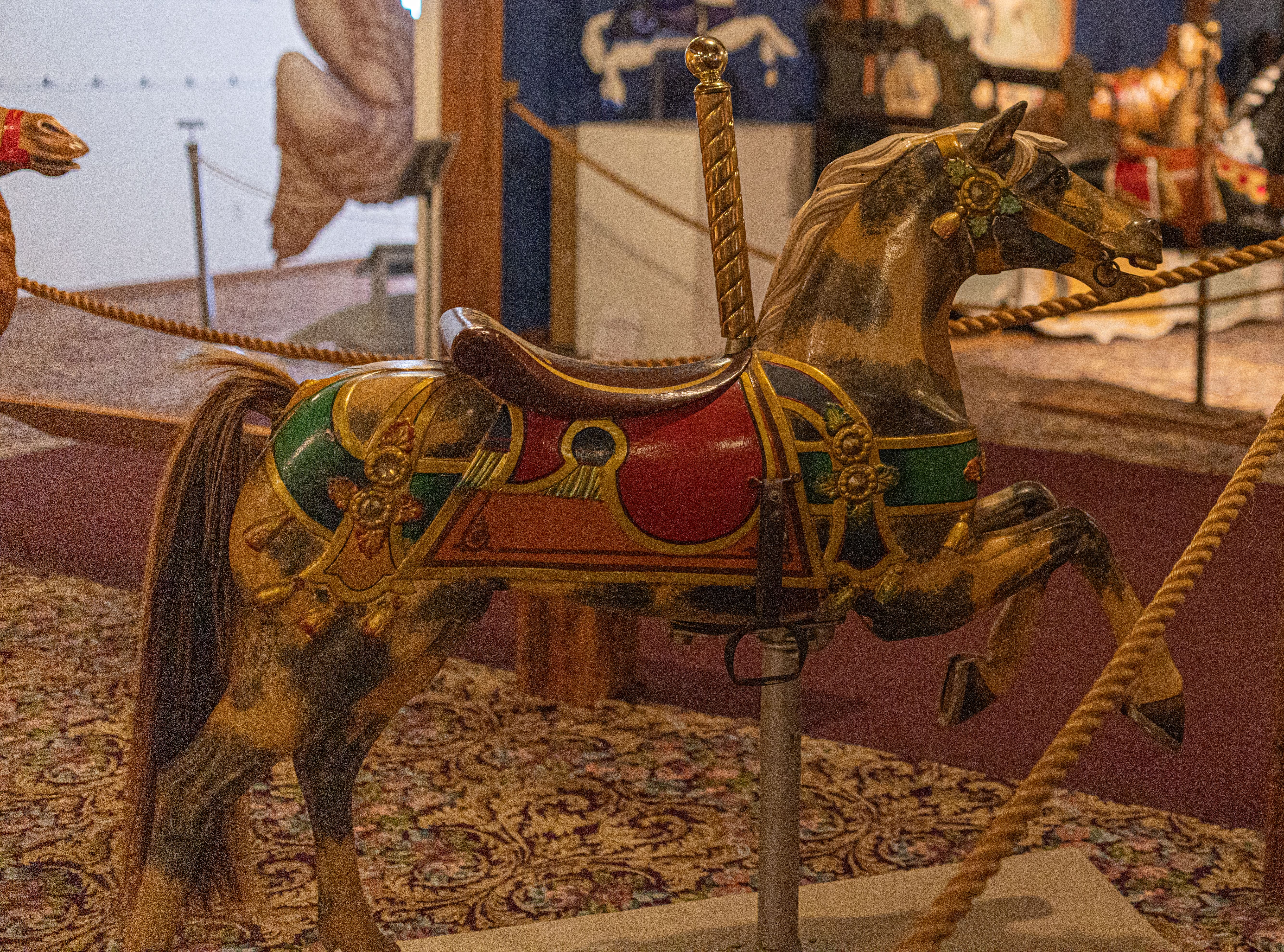
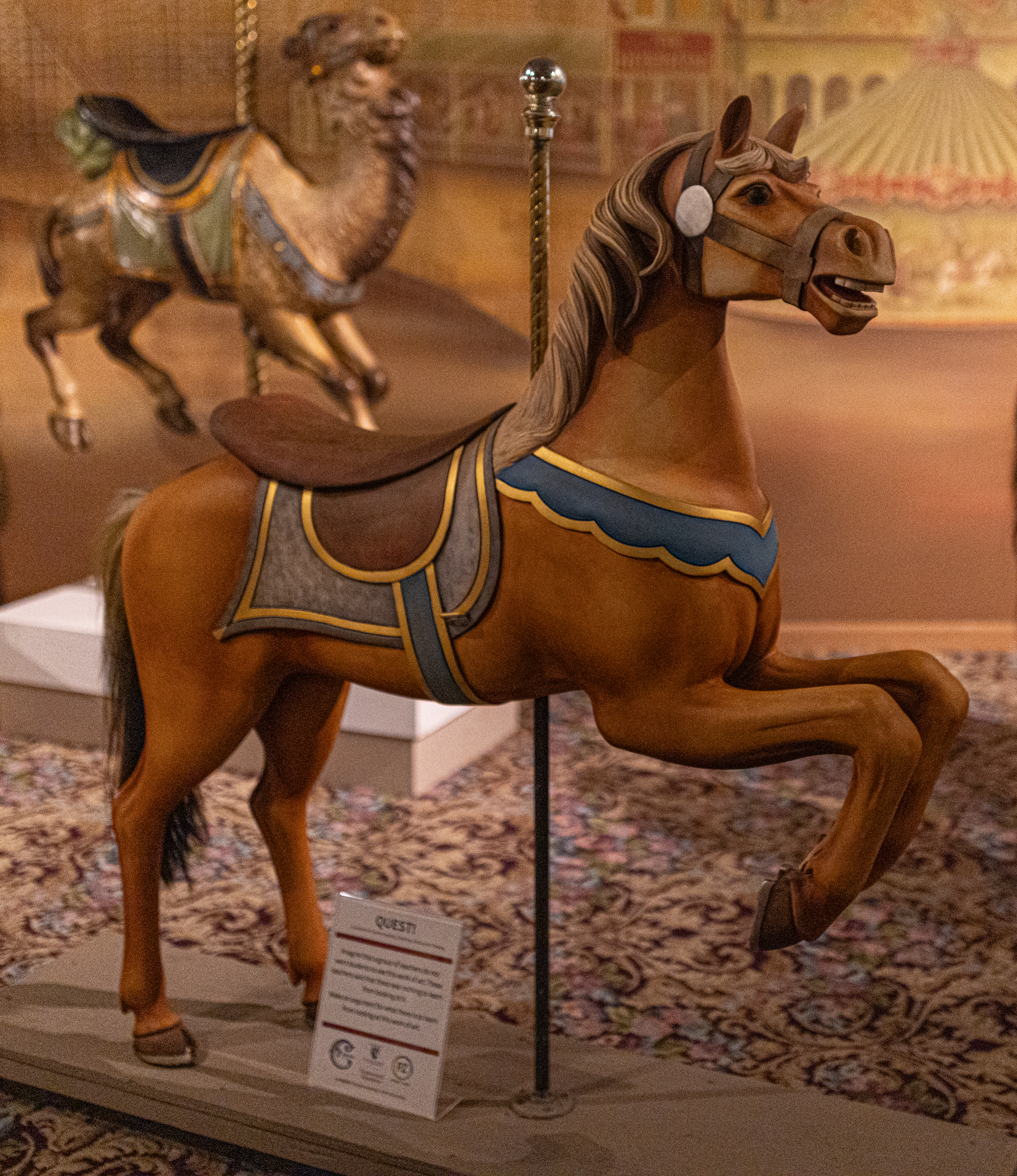
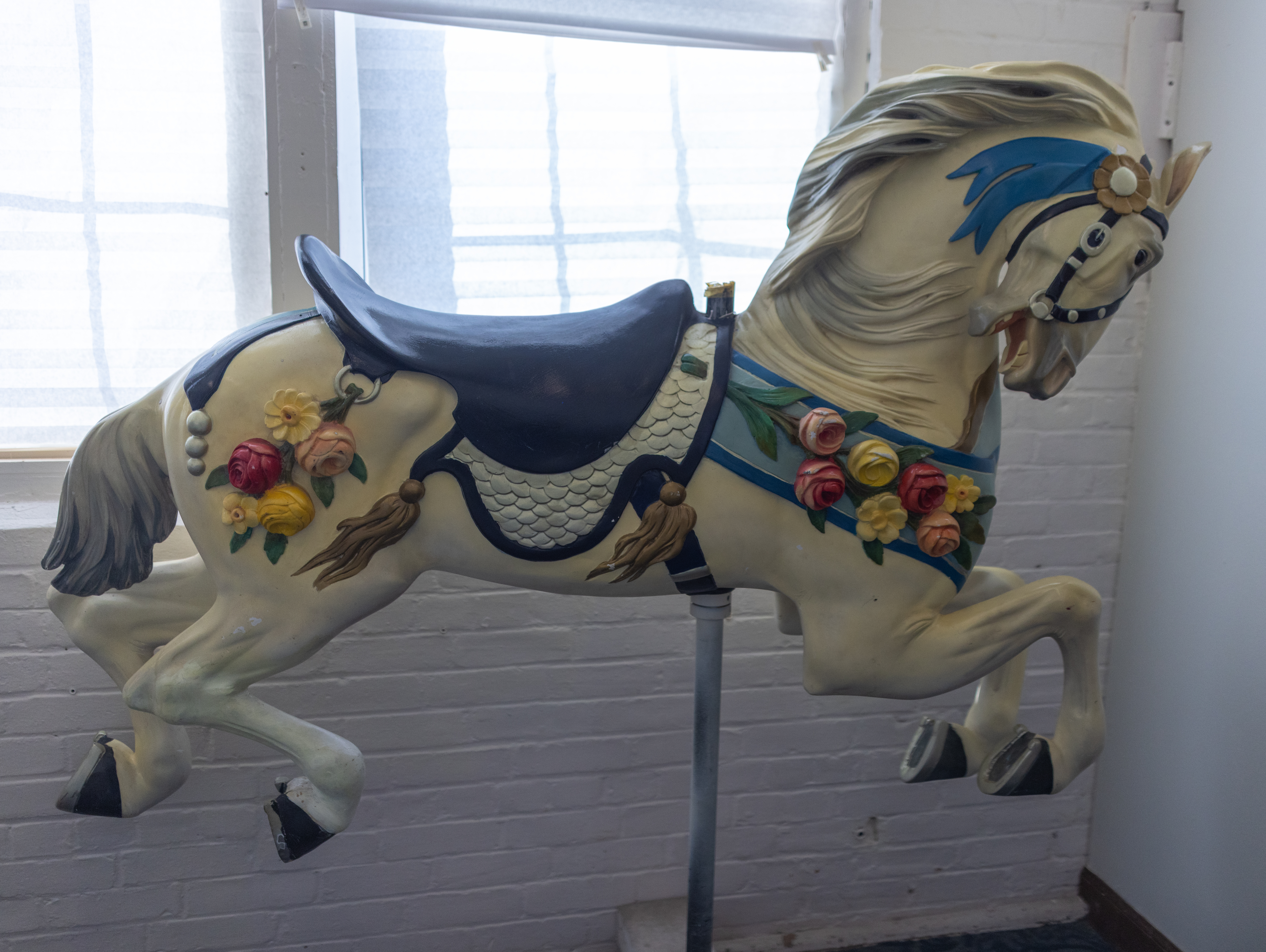
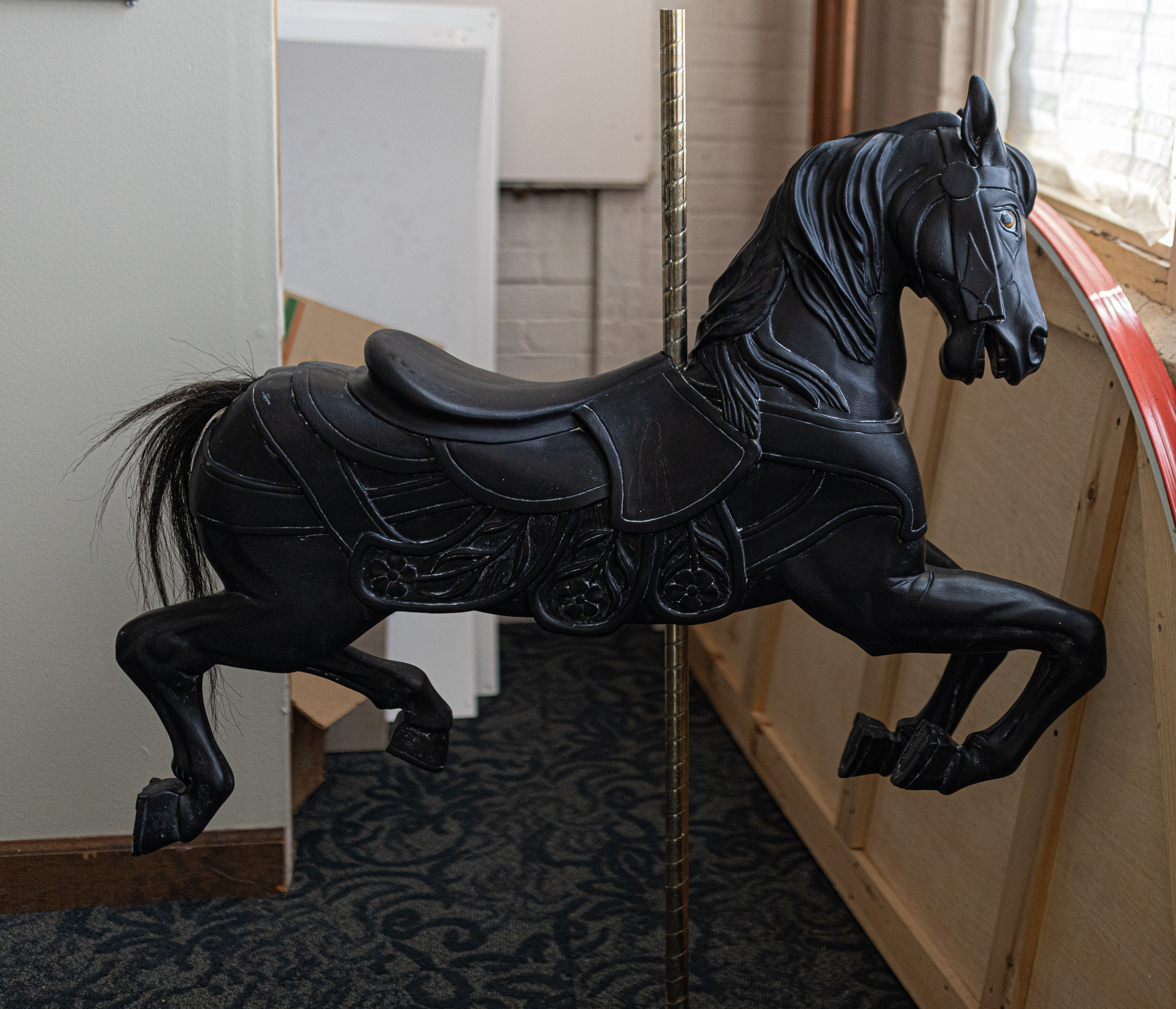
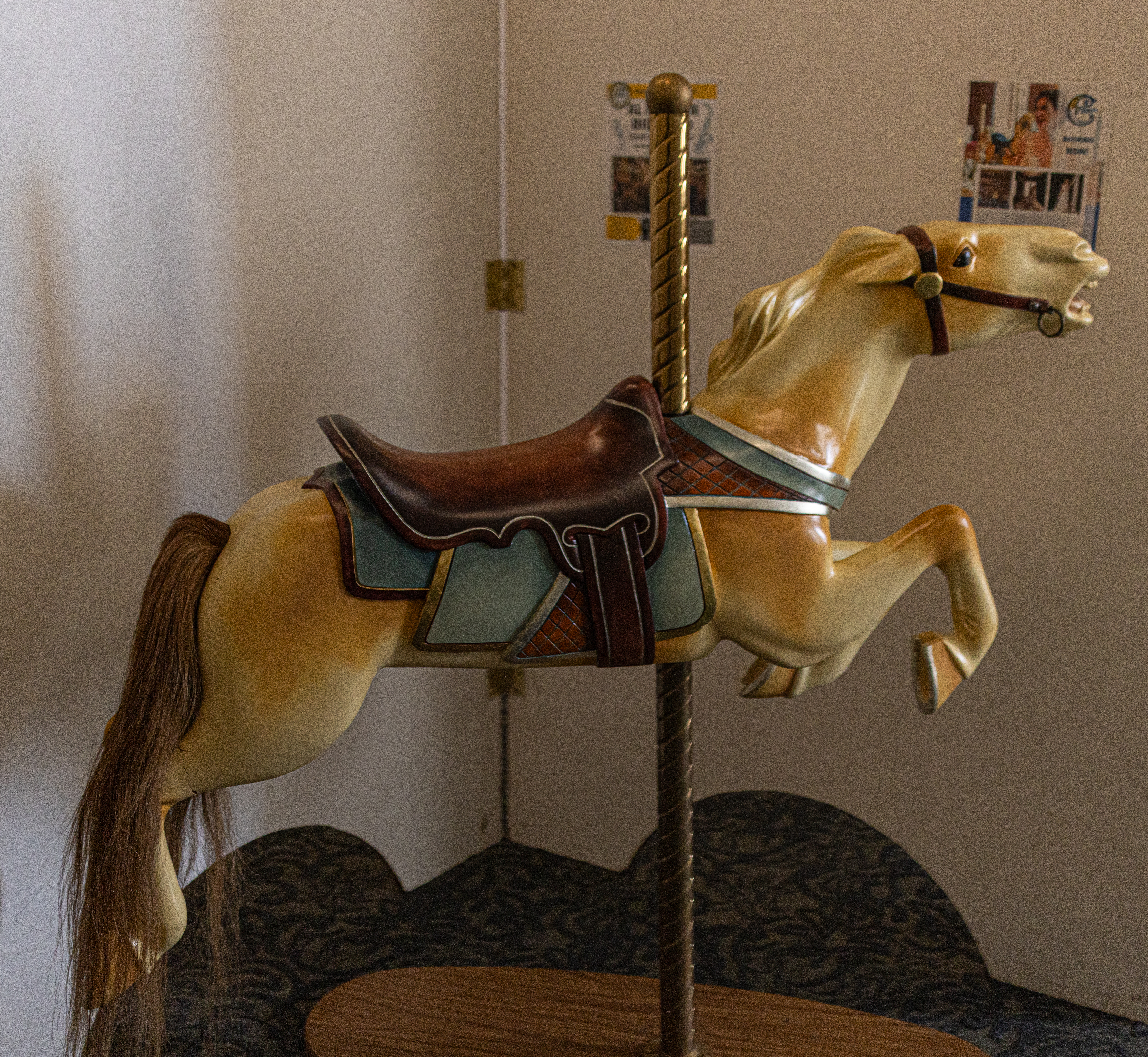
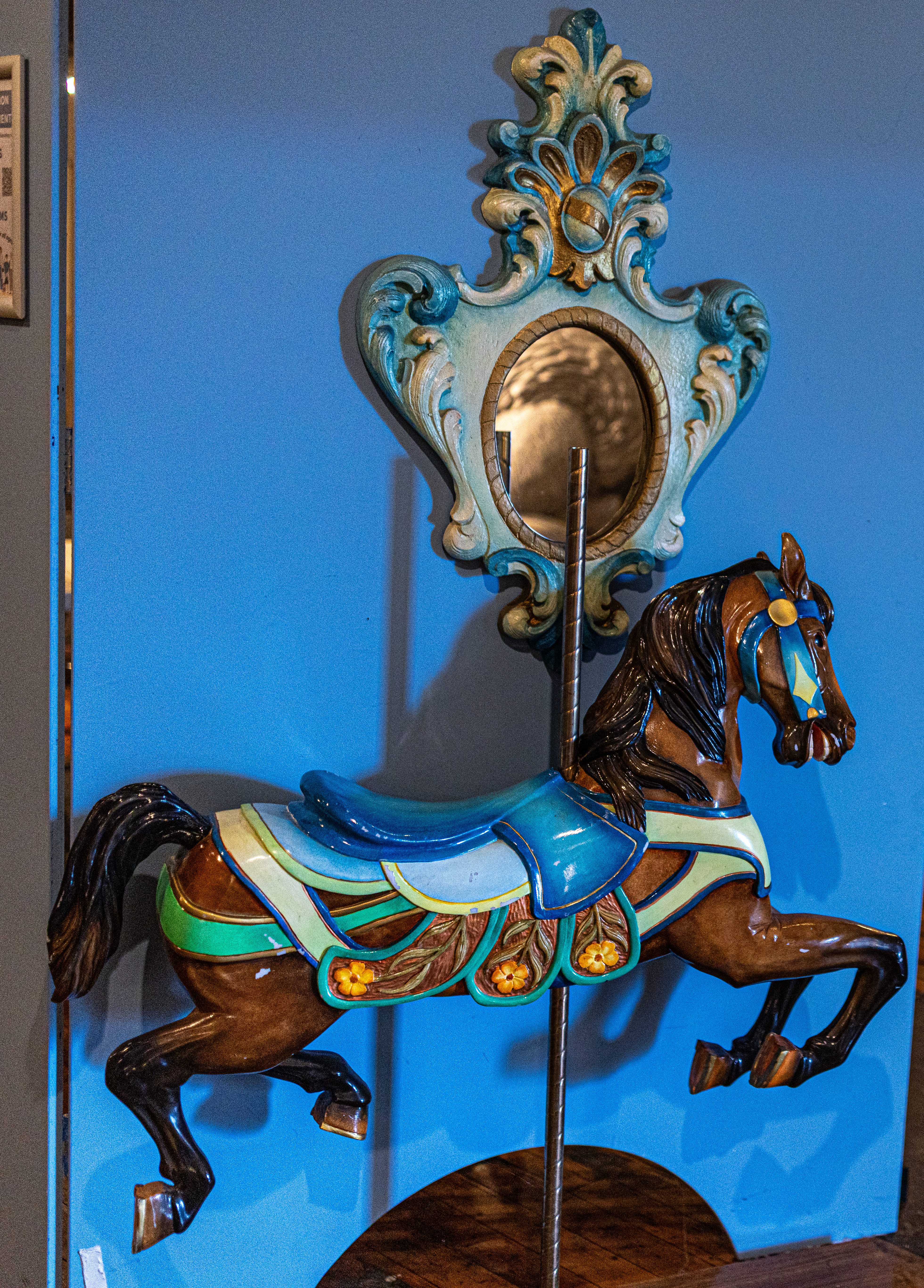
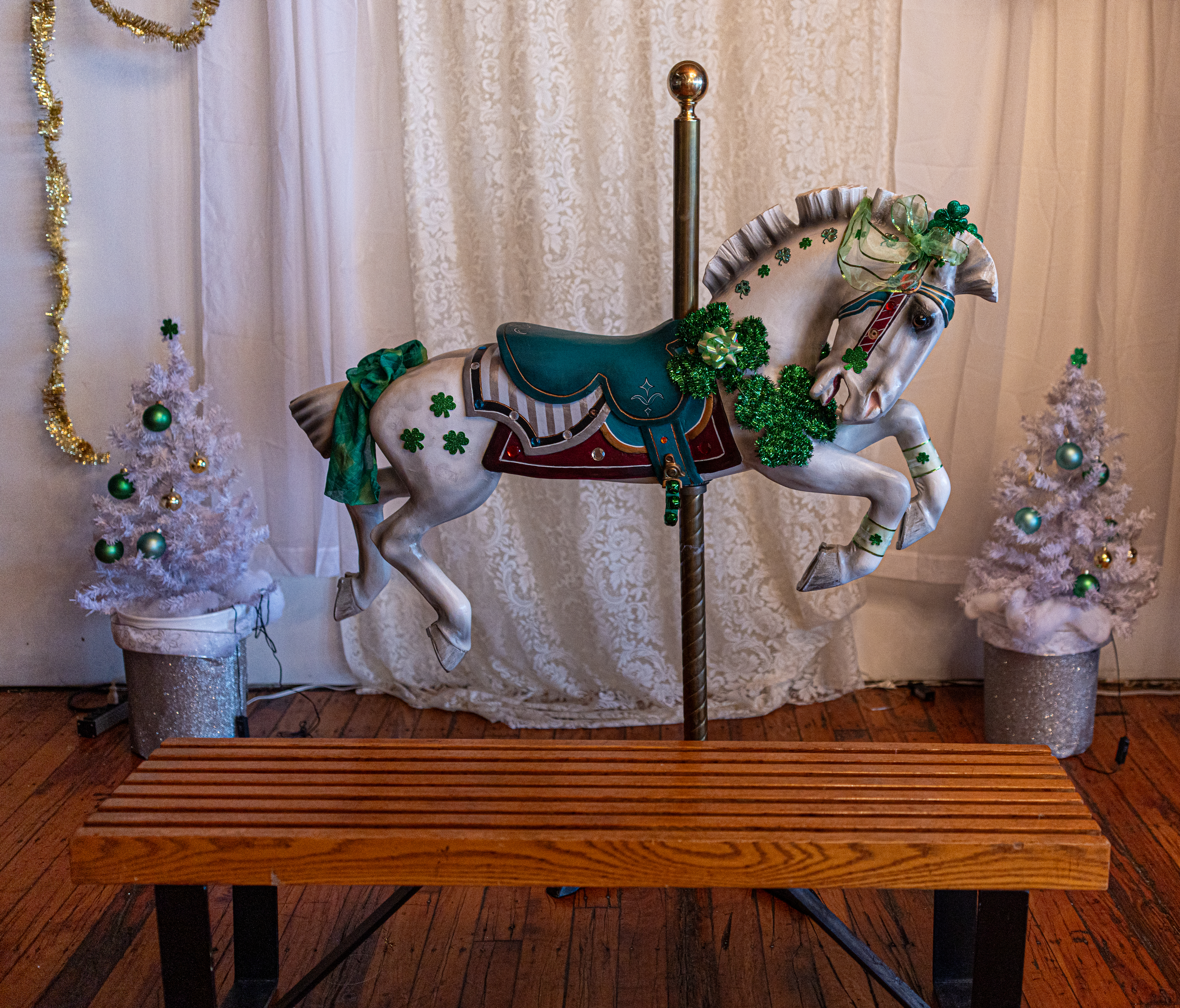
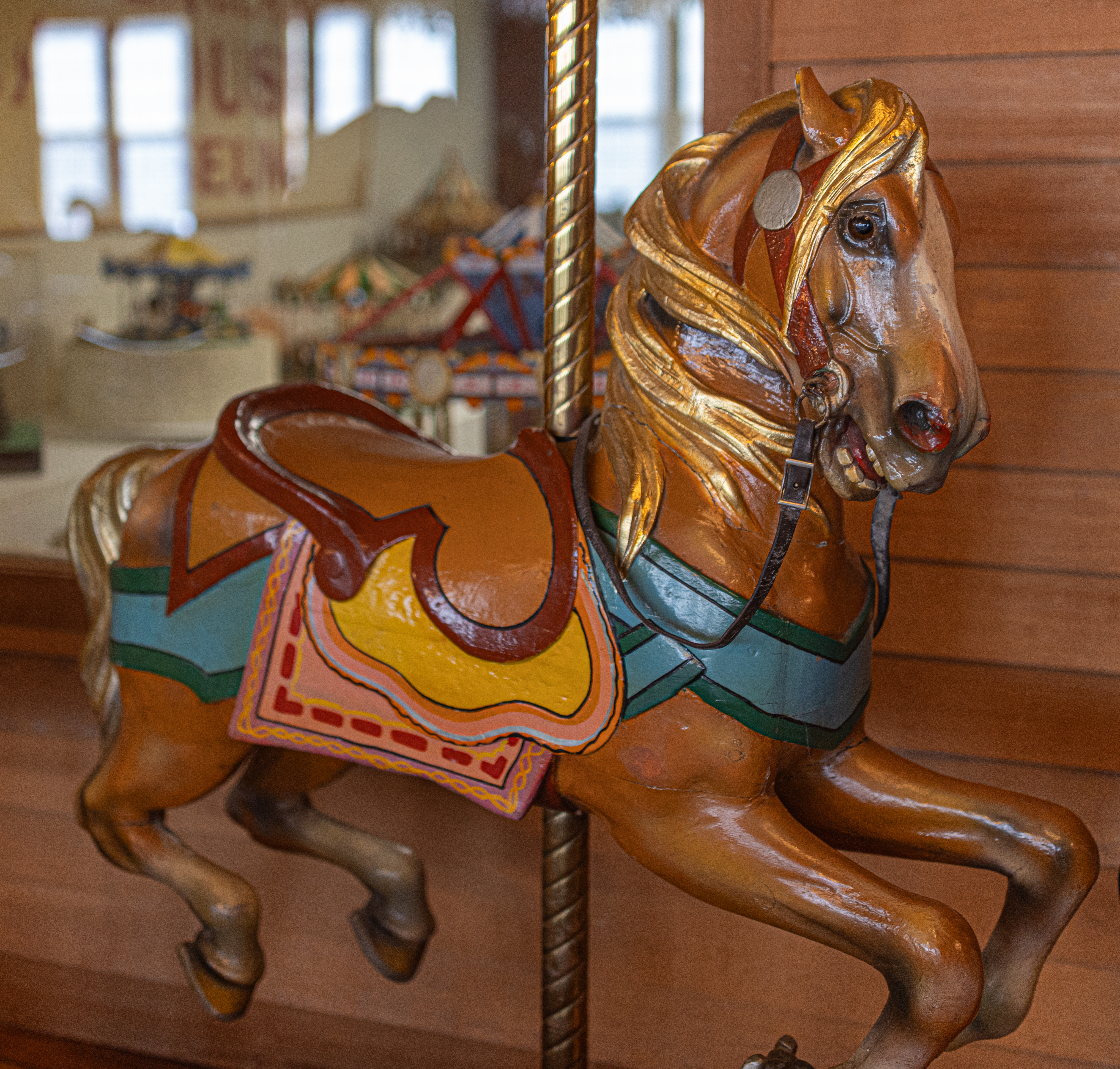
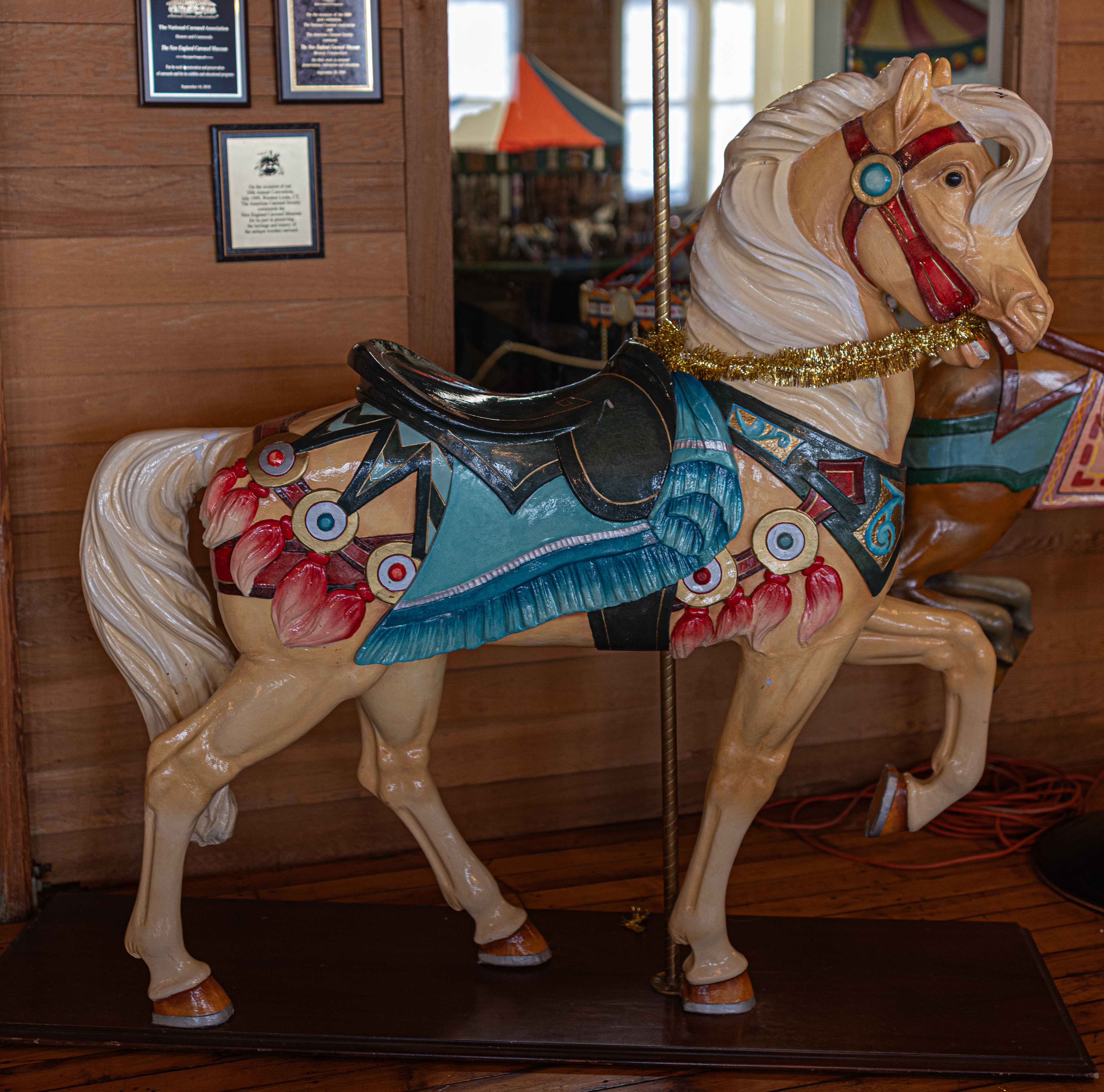
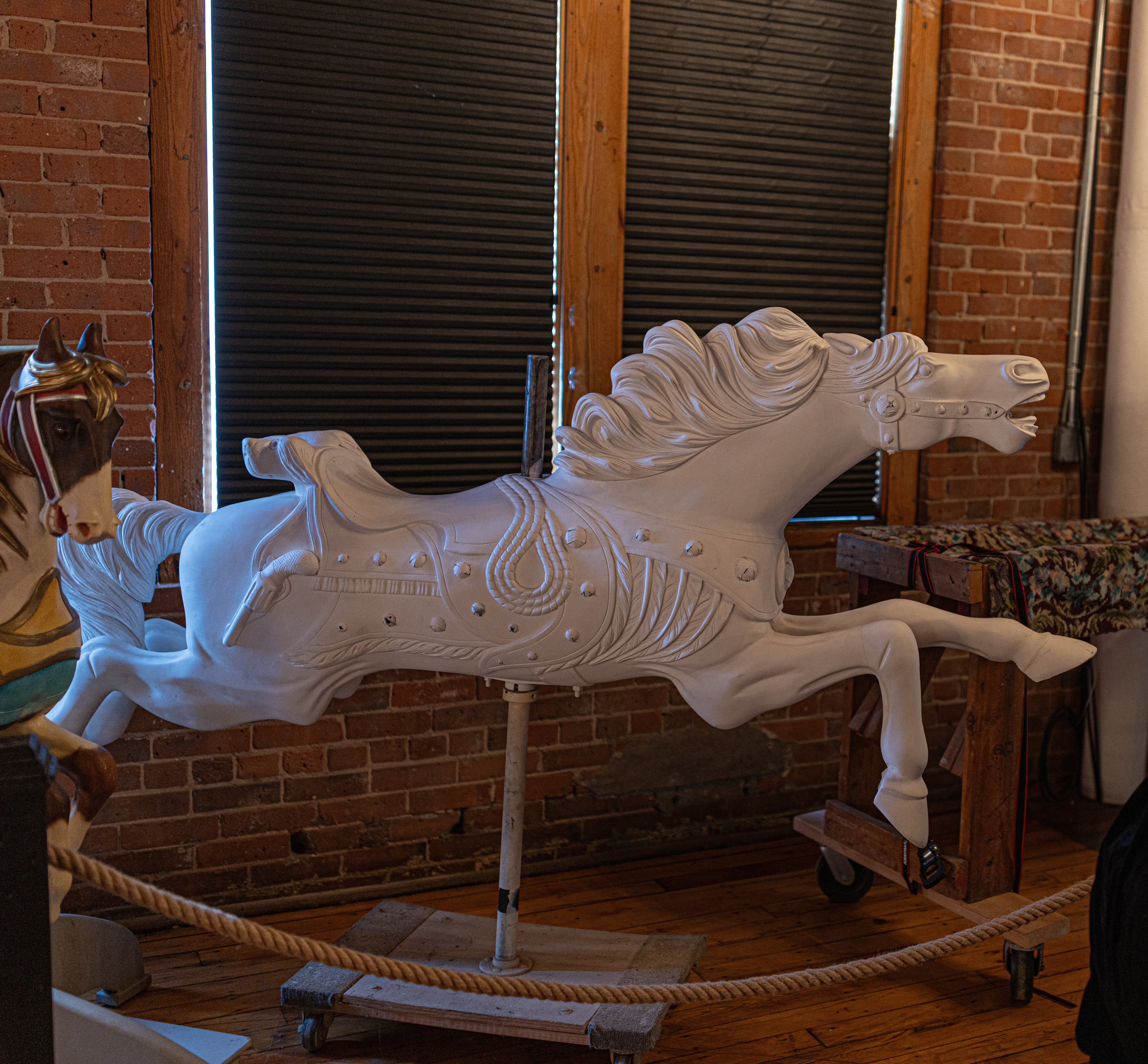
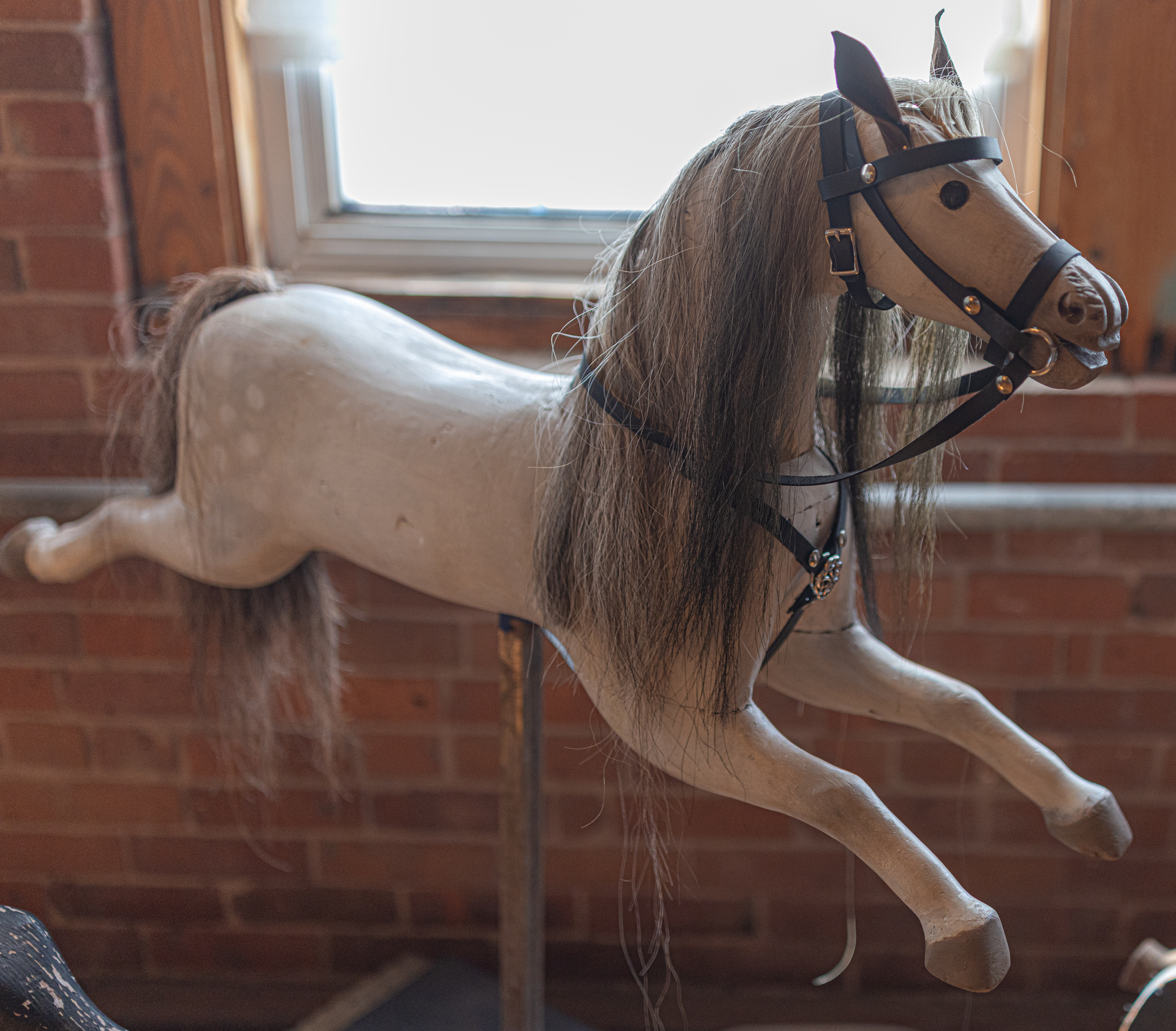
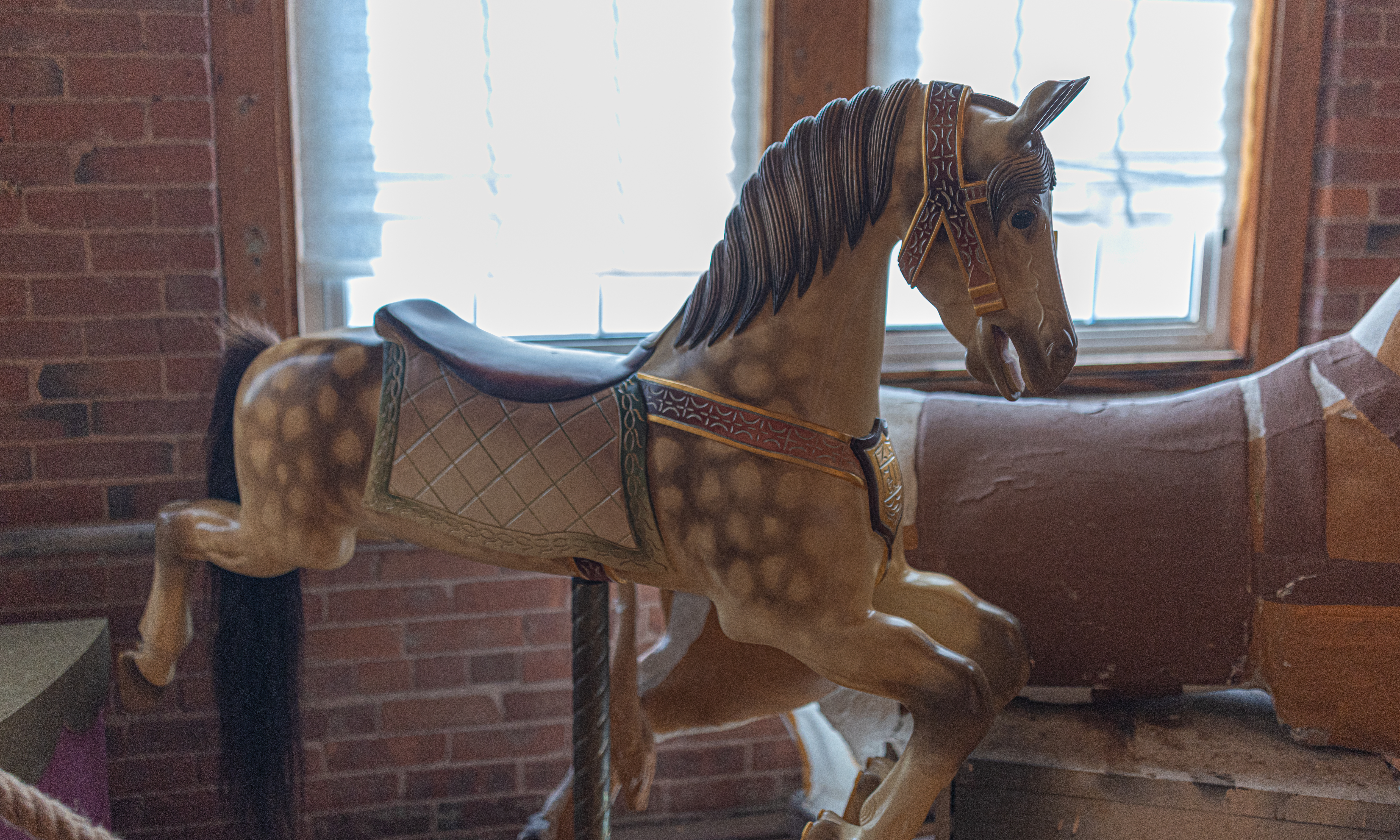
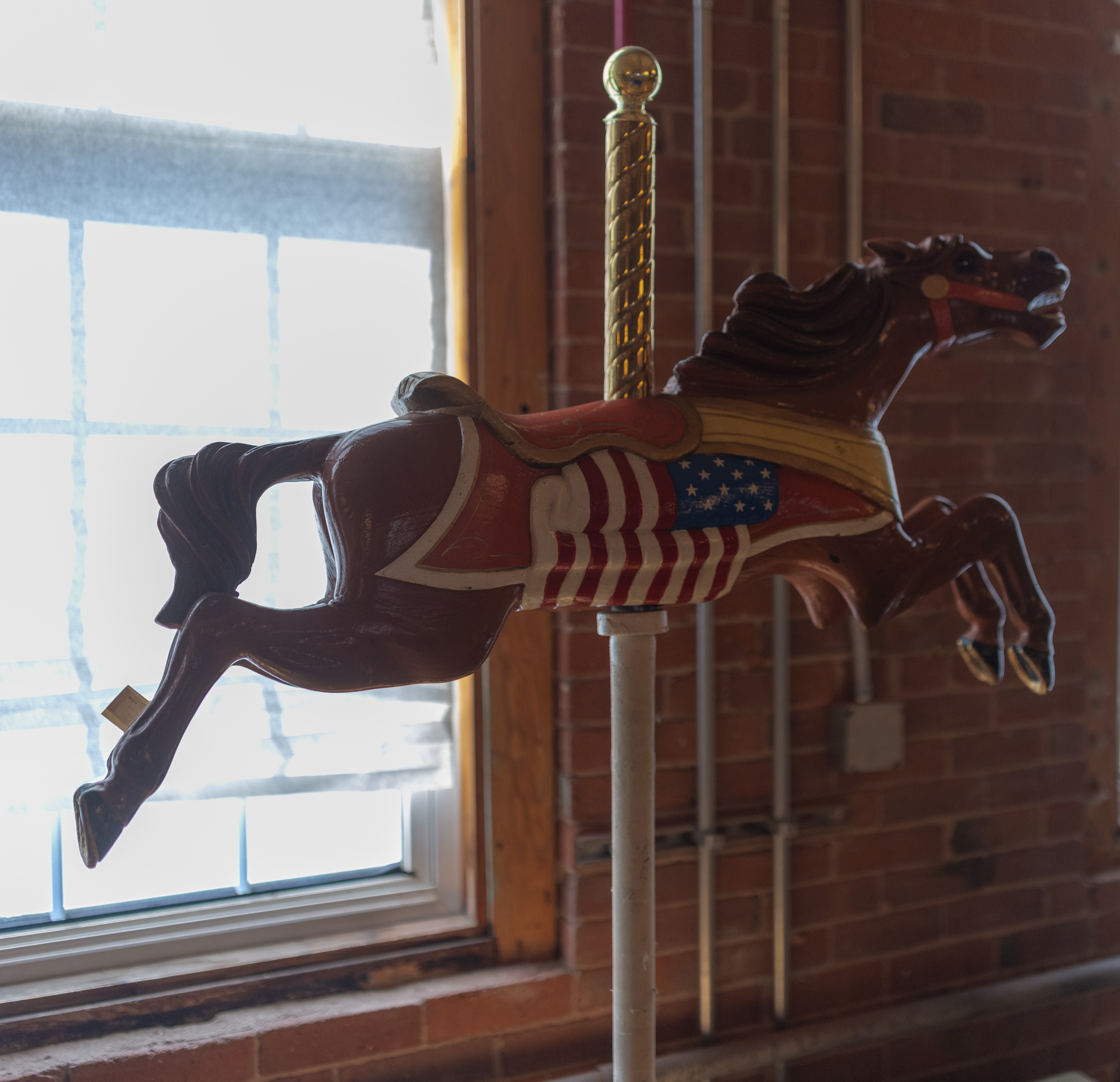
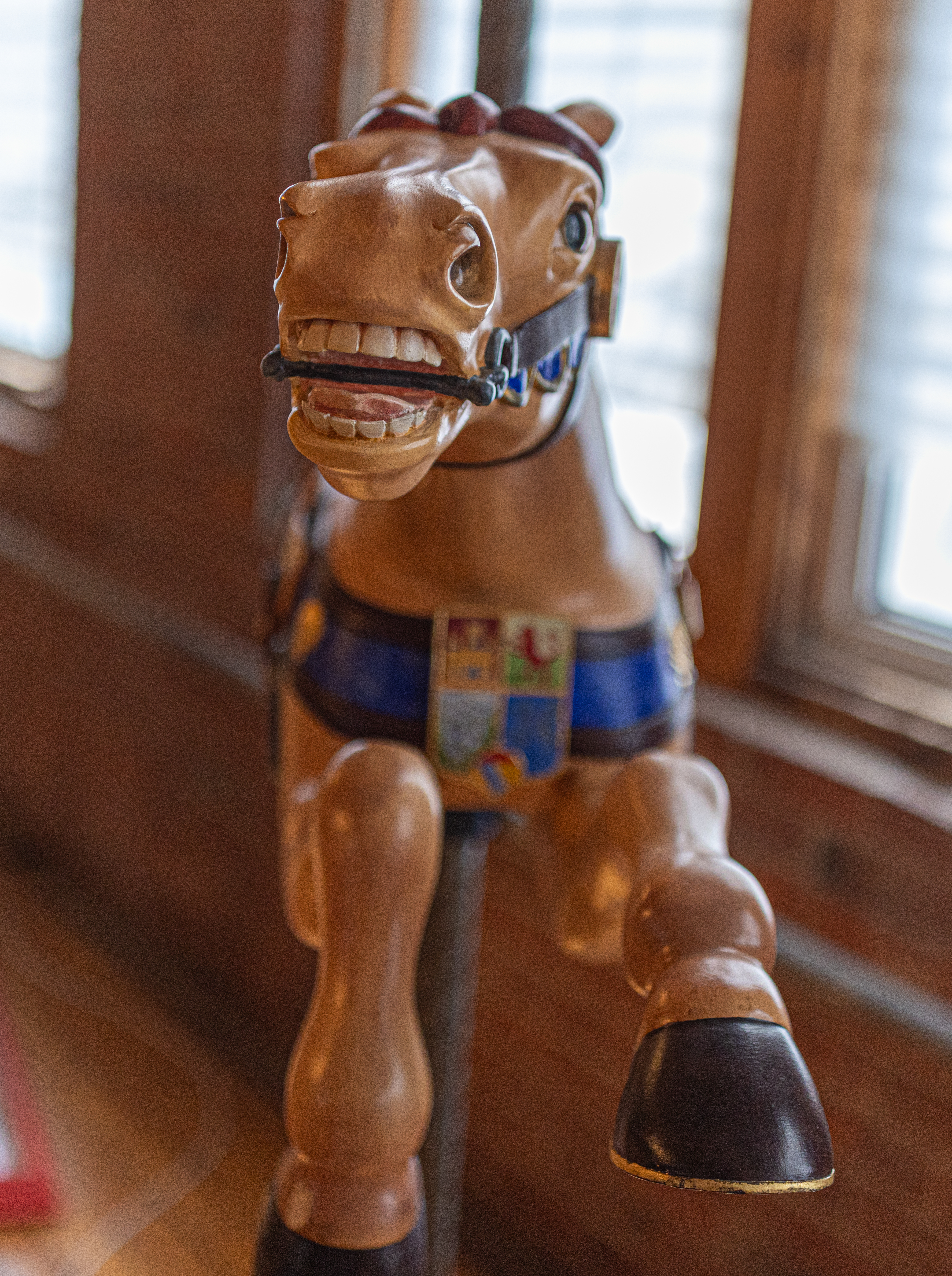
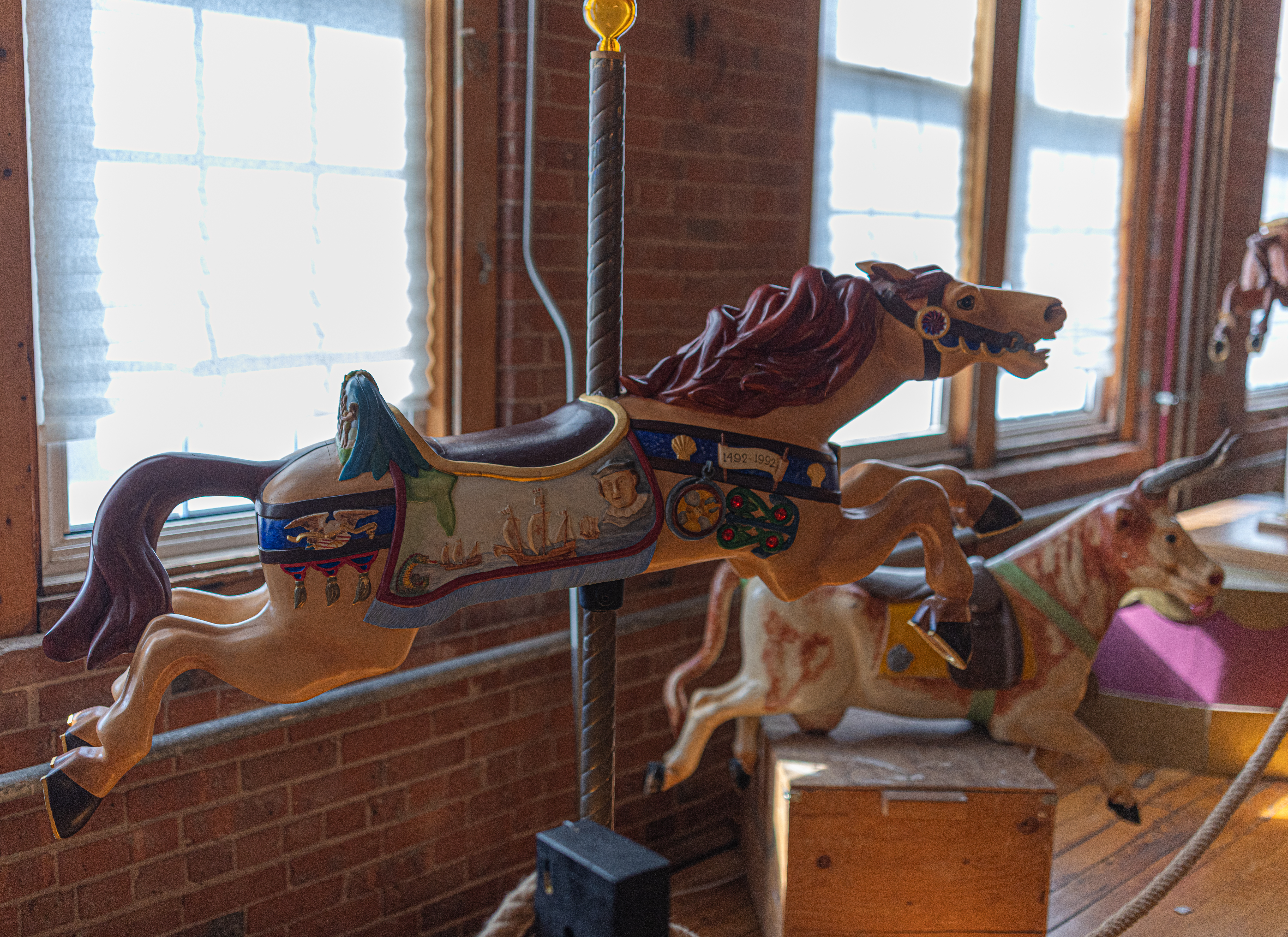
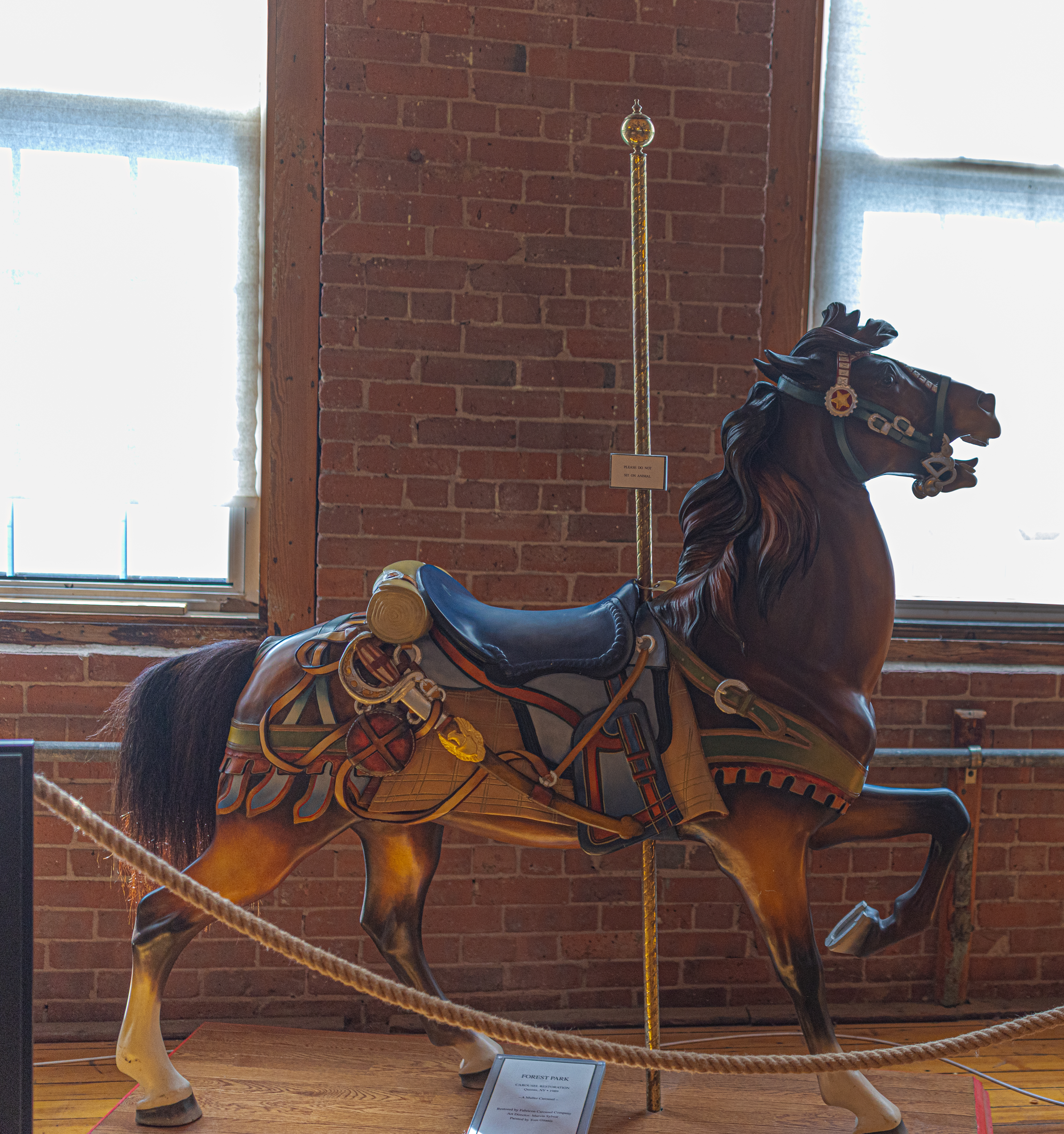
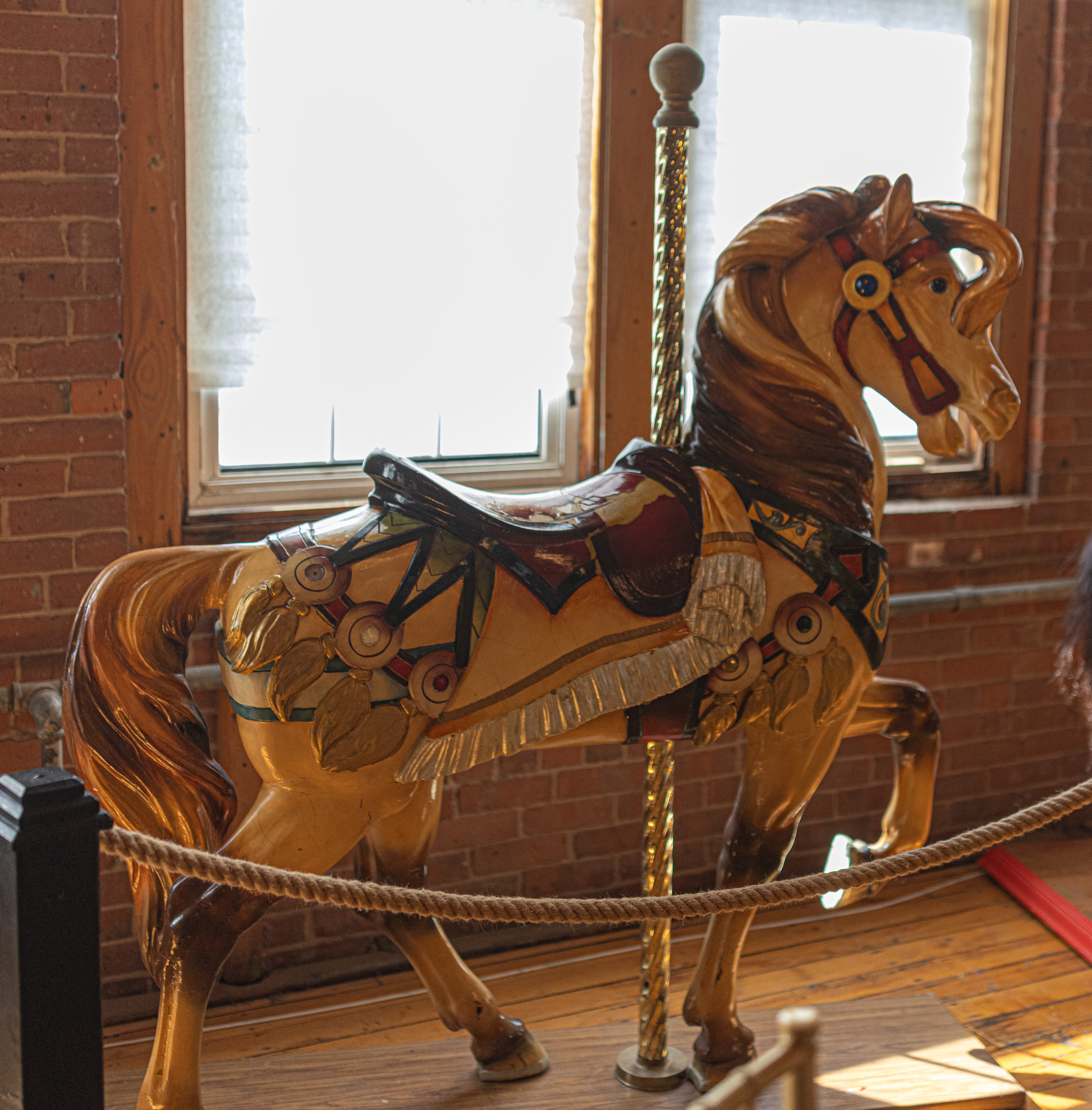
Sometimes the horses need a little tlc.
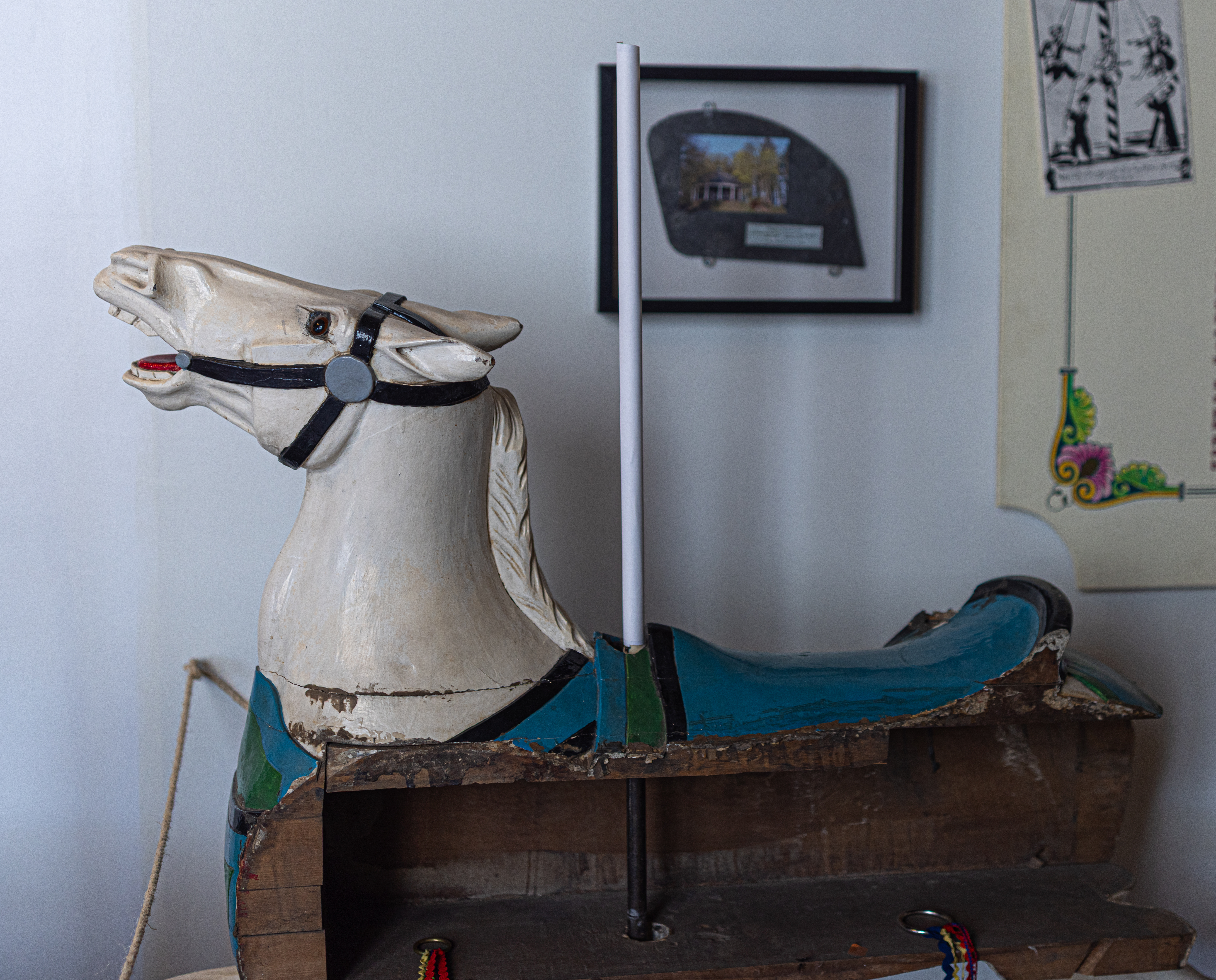
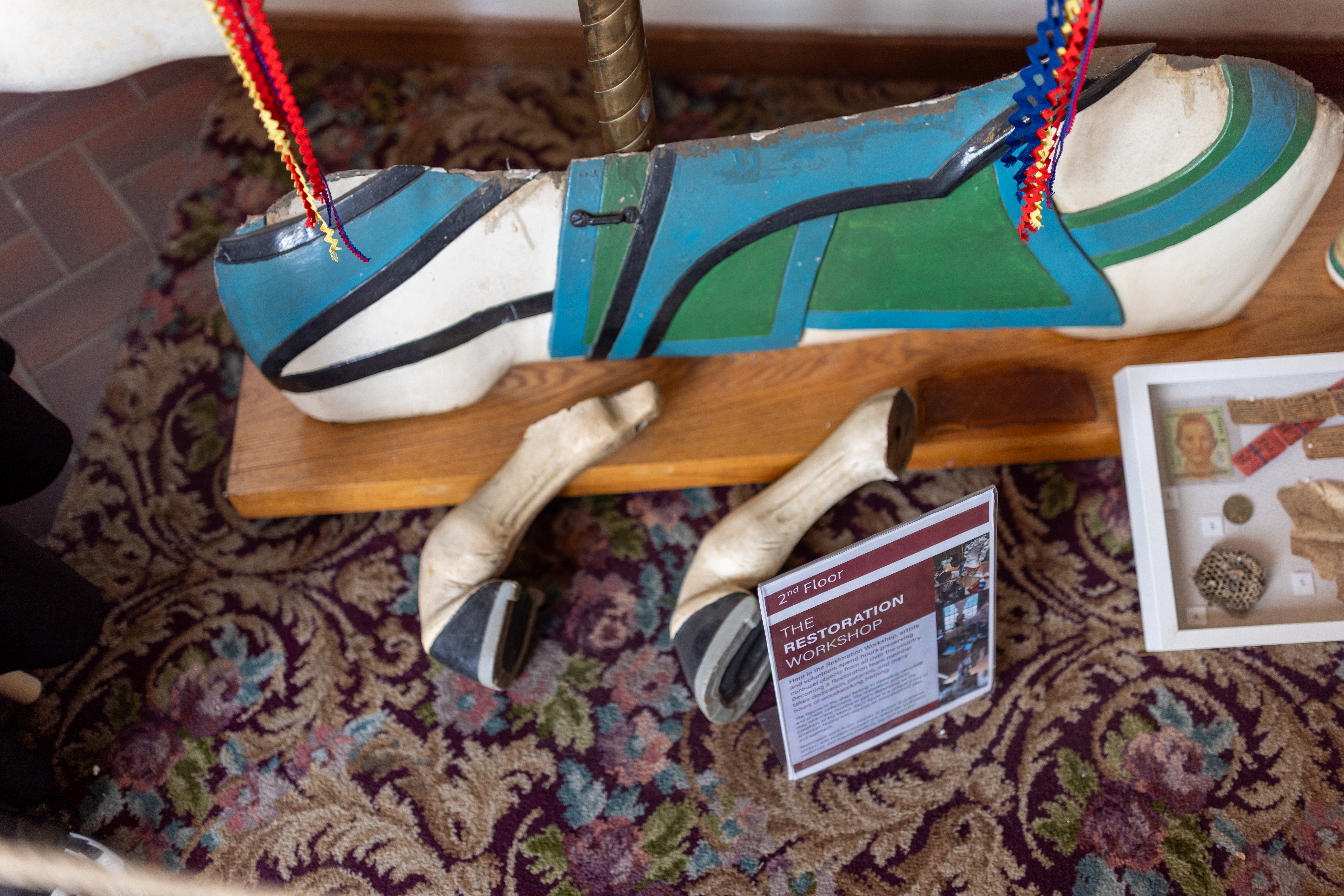
This horse is an example of a carousel horse that needs repair. They are all sent to this office where they are restored to the same likeness or very close to the same likeness as its original state.
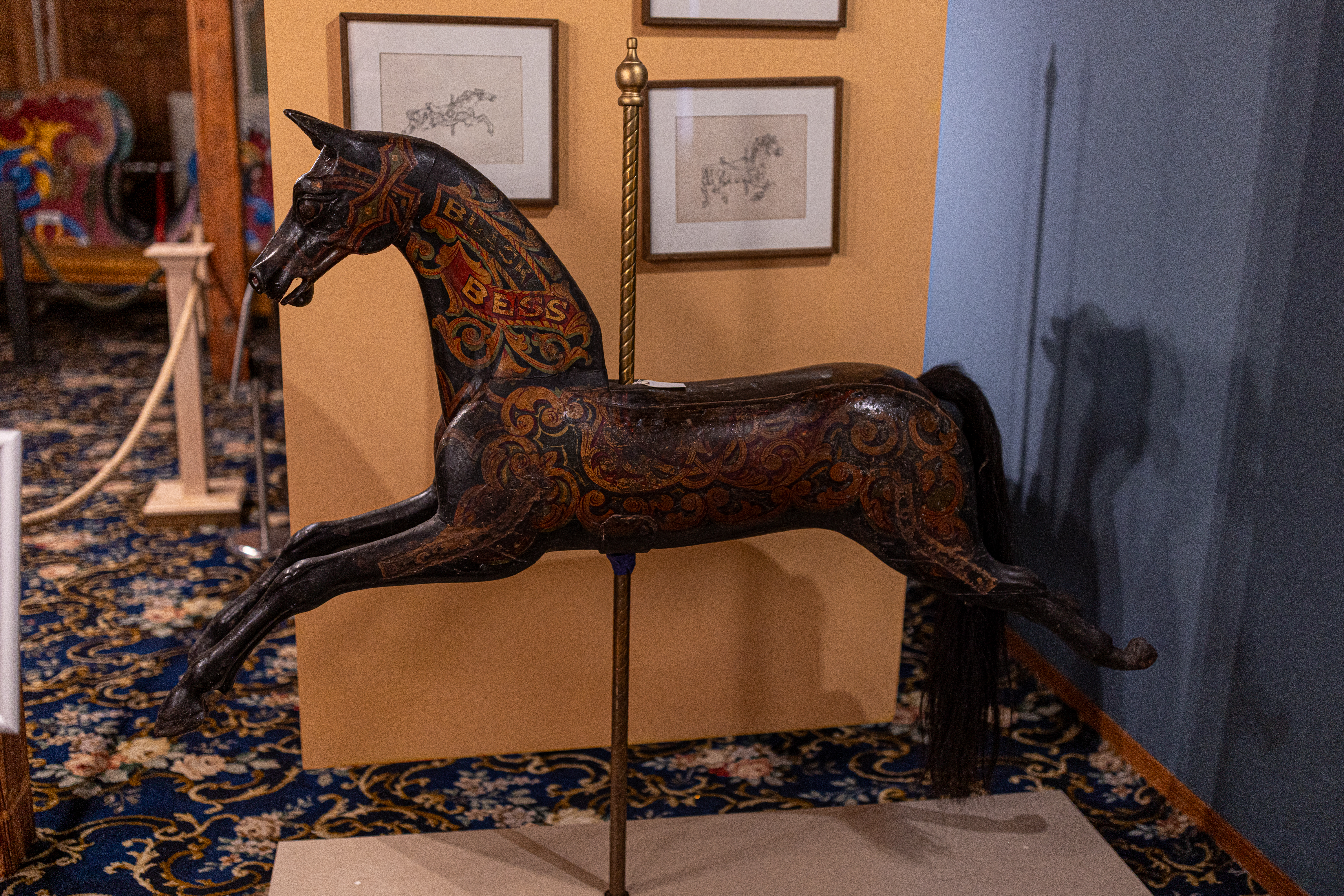
“Black Bess” is believed to be the oldest carousel horse at the Carousel Museum dating back to 1870, “Black Bess” was made by the G&J Lines factory of London, England. G&J Lines factory began producing toy and rocking horses in the mid 1800s before expanding to “dobby horses” which were English carousel horses suspended from sweeps by a pole without a platform.
Bess originally had a real horse hair mane and leather saddle, although no evidence remains of either. What does remain is intricate park paint; the name ribbon and scrollwork are common British fairground motifs. Her legs were broken off and reattached with iron patches, a typical repair done by carnival workers eager to get her back to earning her keep as quickly as possible.
Sculptor Jeff Briggs has been instrumental in designing and carving some of the animals for the carousel on the Rose Kennedy Greenway in Boston, MA. Briggs was the designer, sculptor and art director for this lobster. It was painted by William Rogers. This was one of several gifts from Amalie Kass, an author and American historian at Harvard Medical School, to the museum’s collection. Amalie’s substantial donation sparked the creation of the Greenway Carousel. The museum’s agreement with Amalie specified that several duplicates of Greenway animals would eventually become part of the museum’s collection.
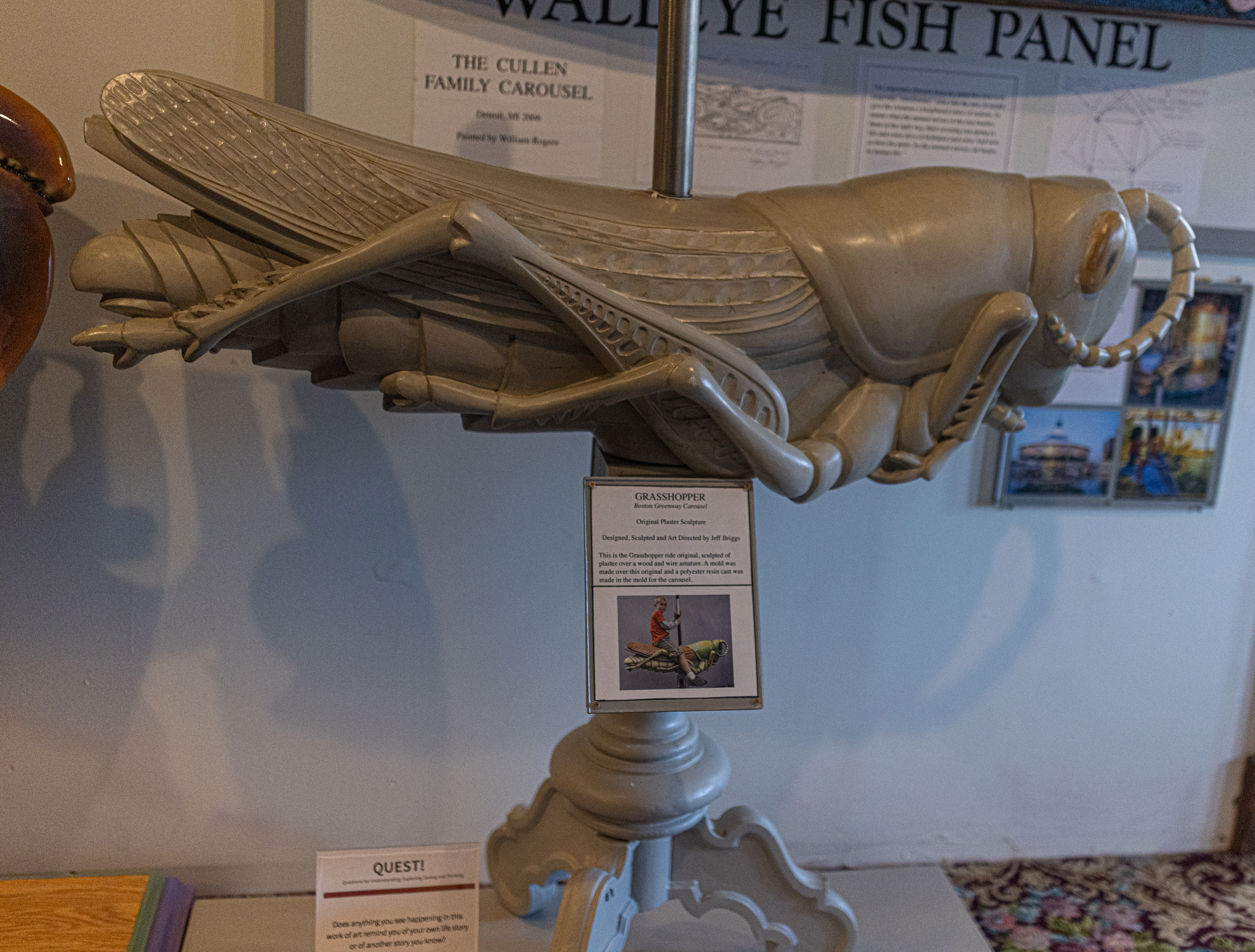
This is the original plaster sculpture of the grasshopper on the Boston Greenway Carousel. It was also designed and sculpted by Jeff Briggs. He was also the art director for this sculpture. The grasshopper sculpture was sculpted of plaster over a wood and wire amature. A mold was made over this original and a polyester resin cast was made in the mold for the carousel.
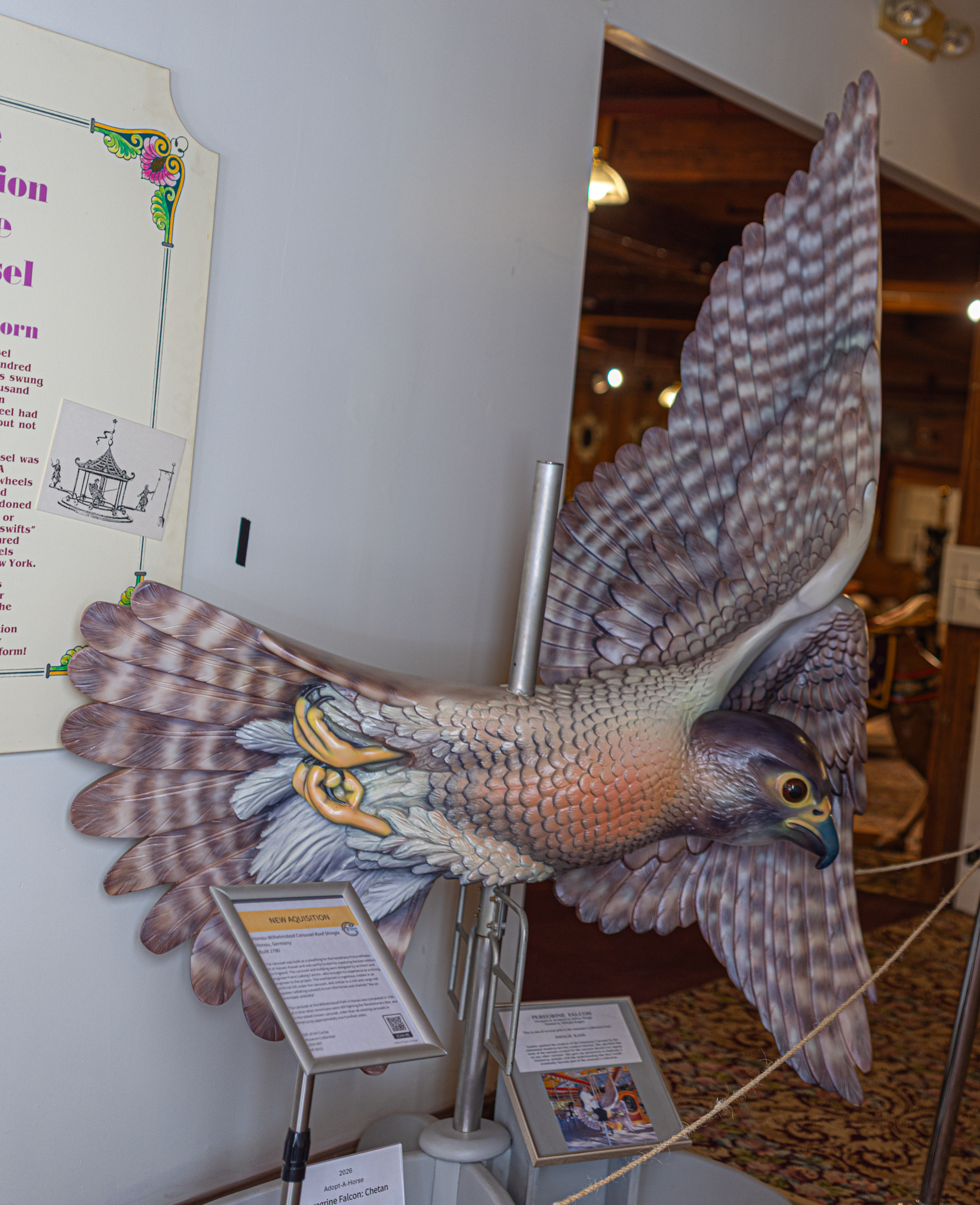
This Peregrine Falcon is another duplicate of one of the animals on the Eose Kennedy Greenway Carousel. It was designed and sculpted by Jeff Briggs.
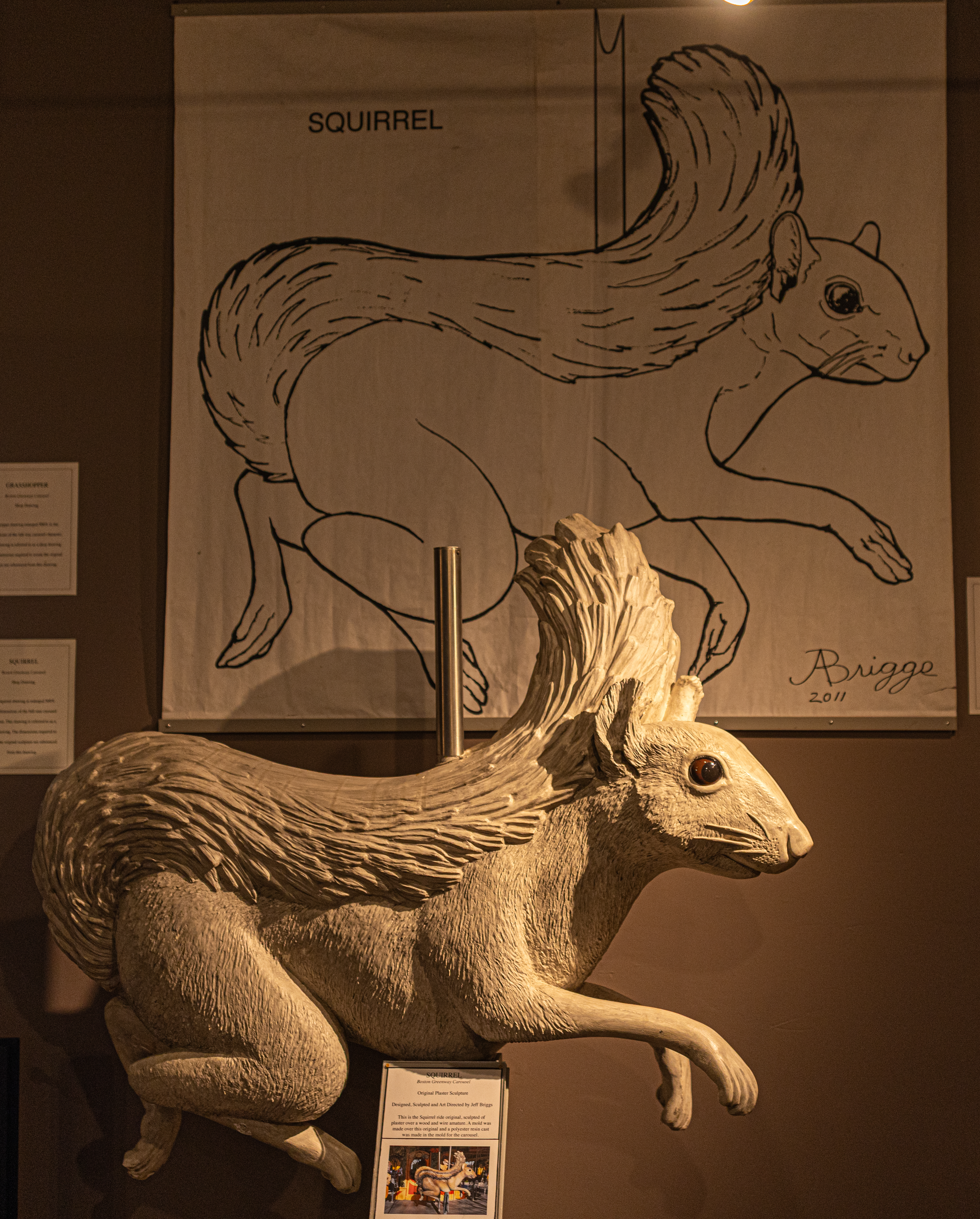
This is the original plaster sculpture for the squirrel on the Boston Greenway Carousel. It was designed and sculpted by, surprise, Jeff Briggs. This is the Squirrel ride original, sculpted of plaster over a wood and wire amature. A mold was made over this original and a polyester resin cast was made in the mold for the carousel. The drawing behind the squirrel is called a shop drawing. The drawing was enlarged to 500% to the dimensions of the full-size carousel character.
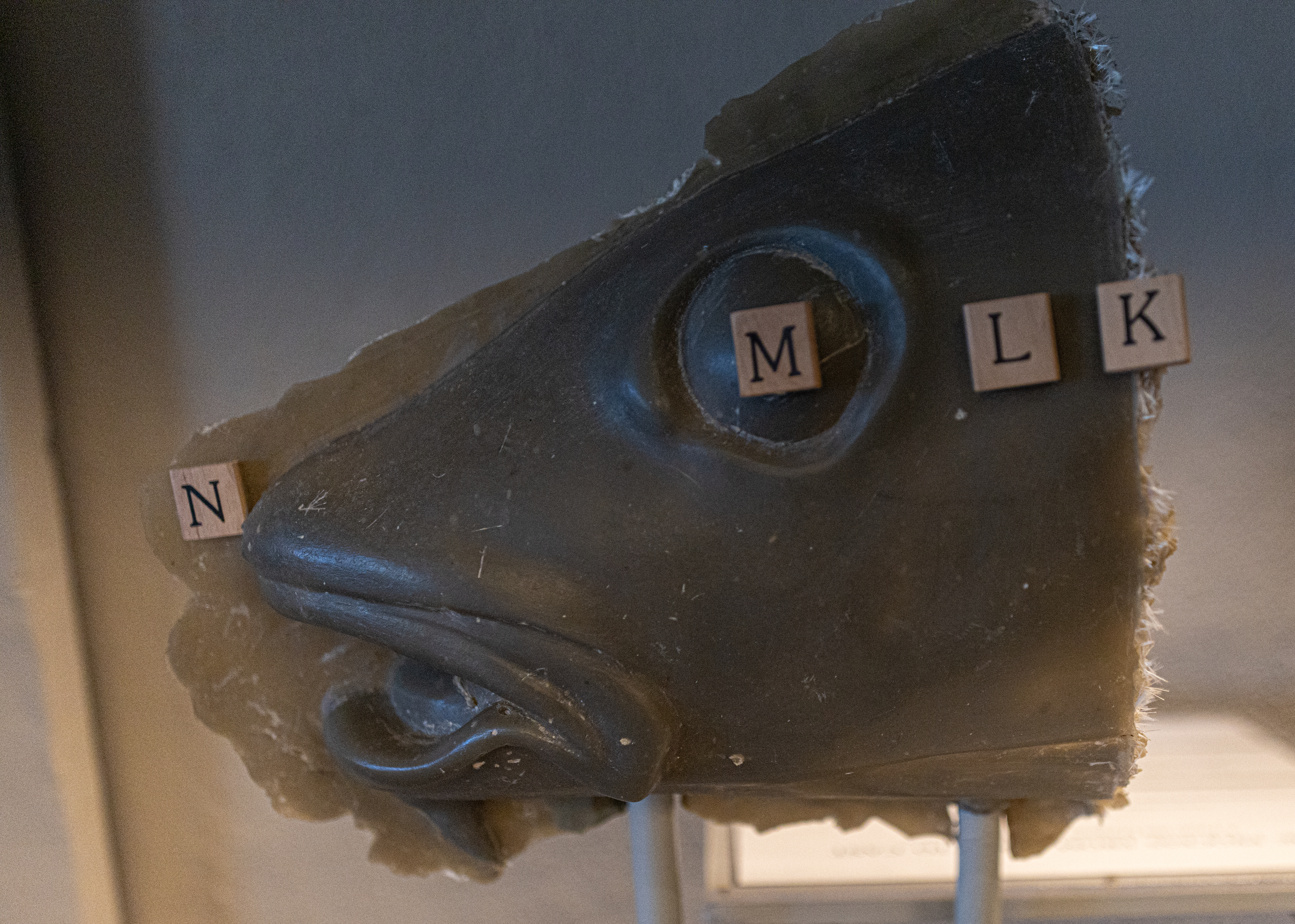
Th and wire amature. A mold was ese models of a carousel sculpture shows the pieces and process of the production of the sculpture production. Each letter on the mold of the fish corresponds with letters on the placard beneath it.
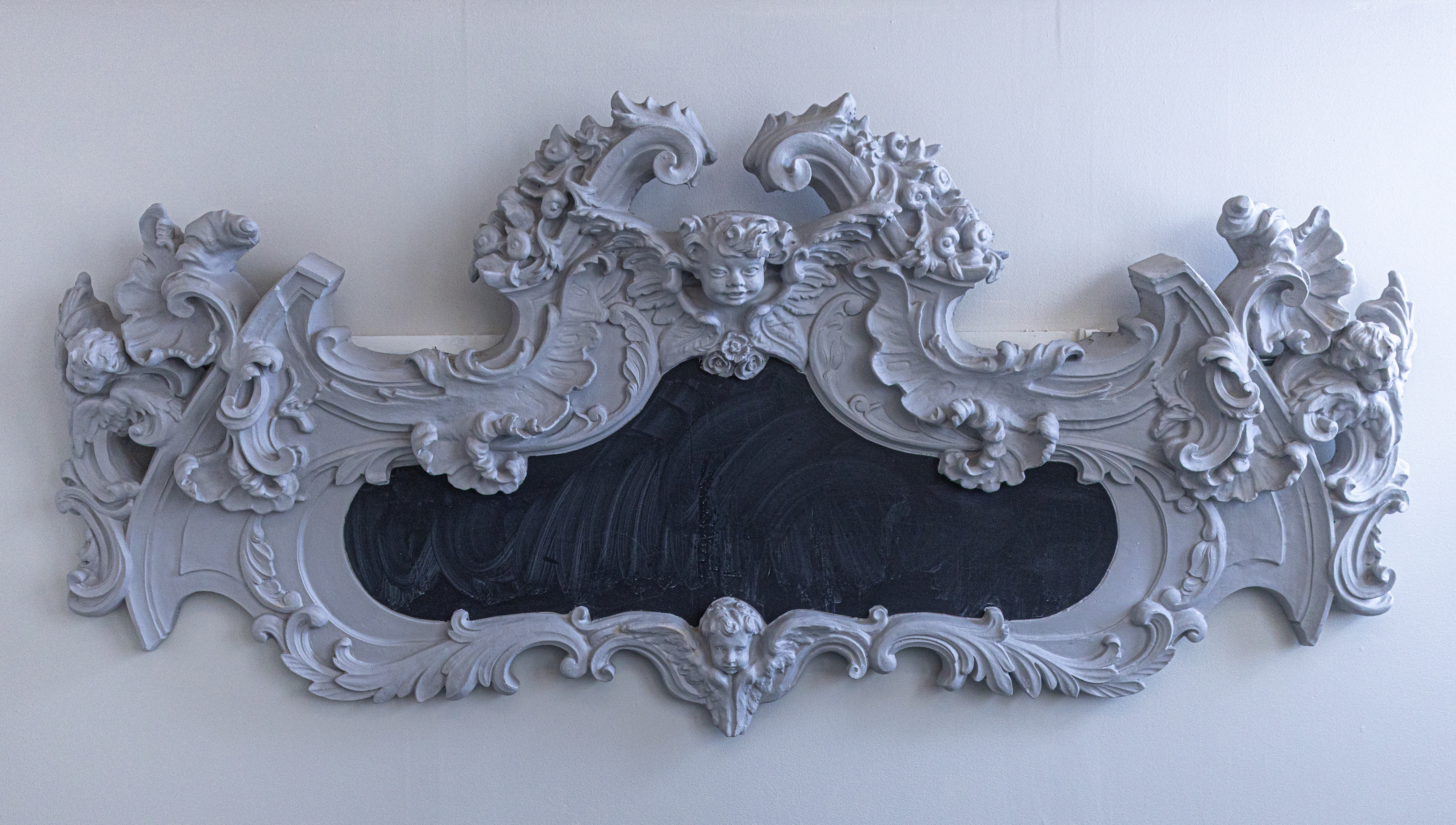
The museum also has pieces of carousels from all around the country. This rounding board, also designed and sculpted by Jeff Briggs, was on a carousel at Bryant Park in New York, NY.
One of the things I really liked, well besides the various carousel sculptures of course, were the miniature sized carousels on display at the museum.
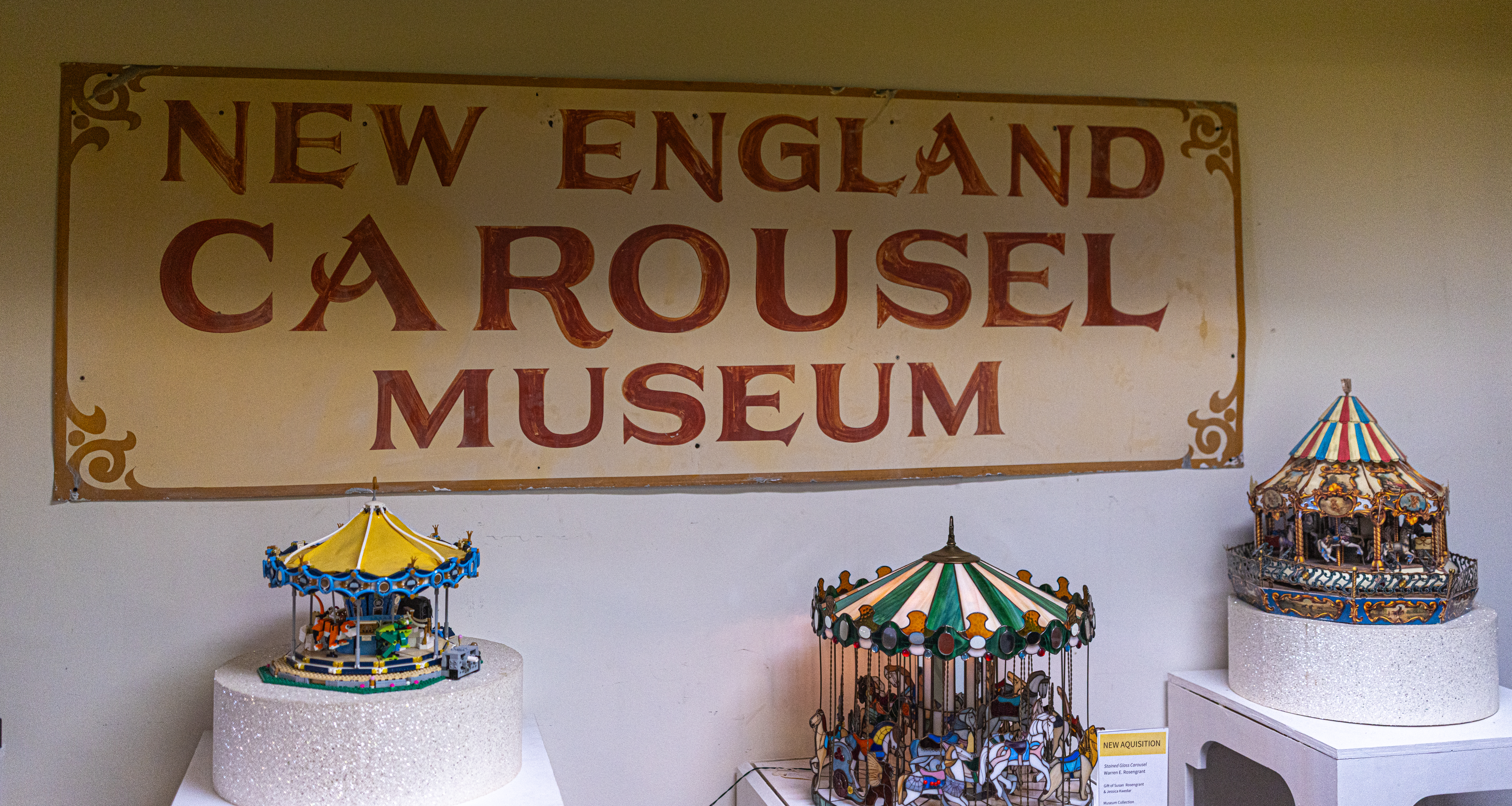
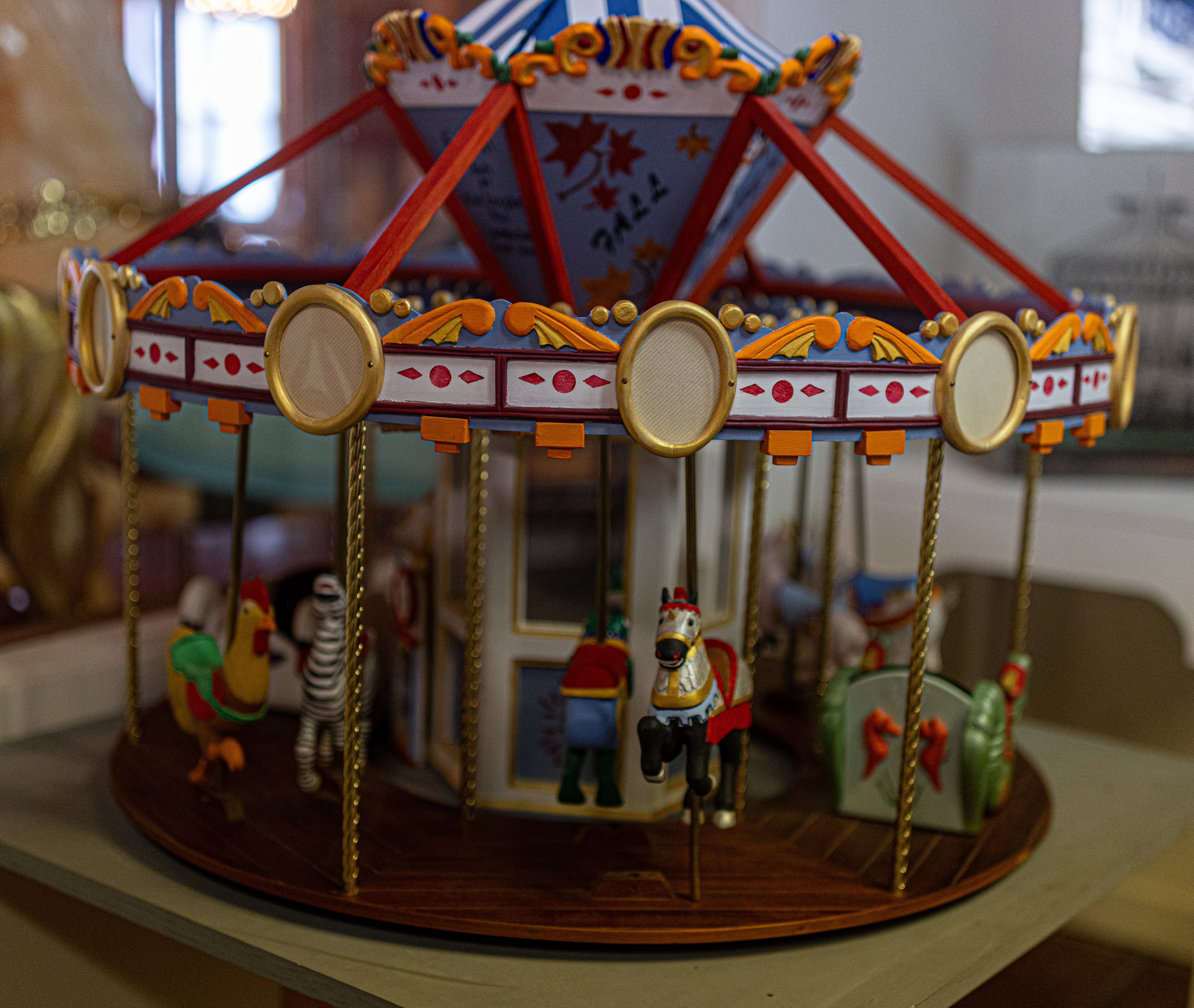
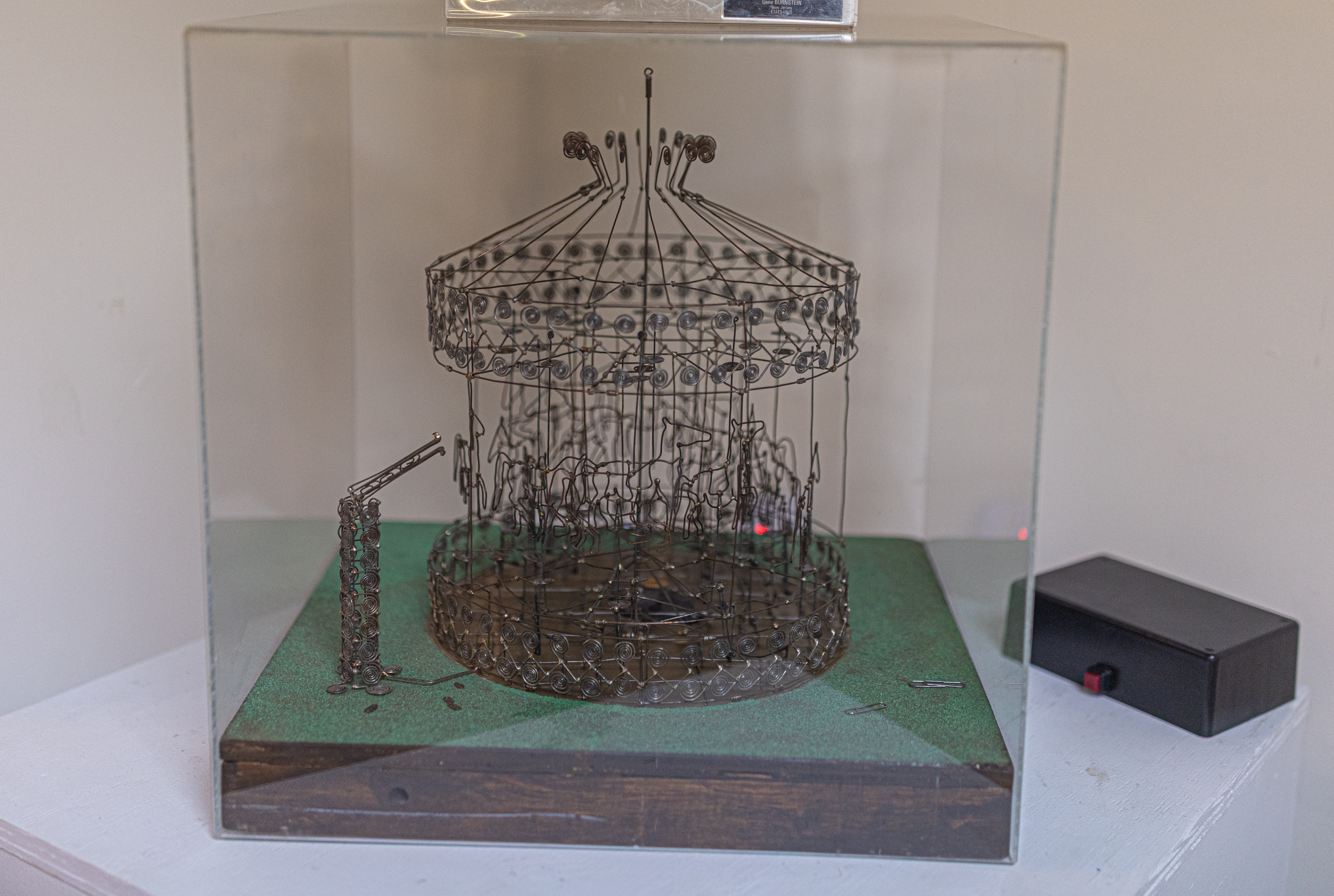
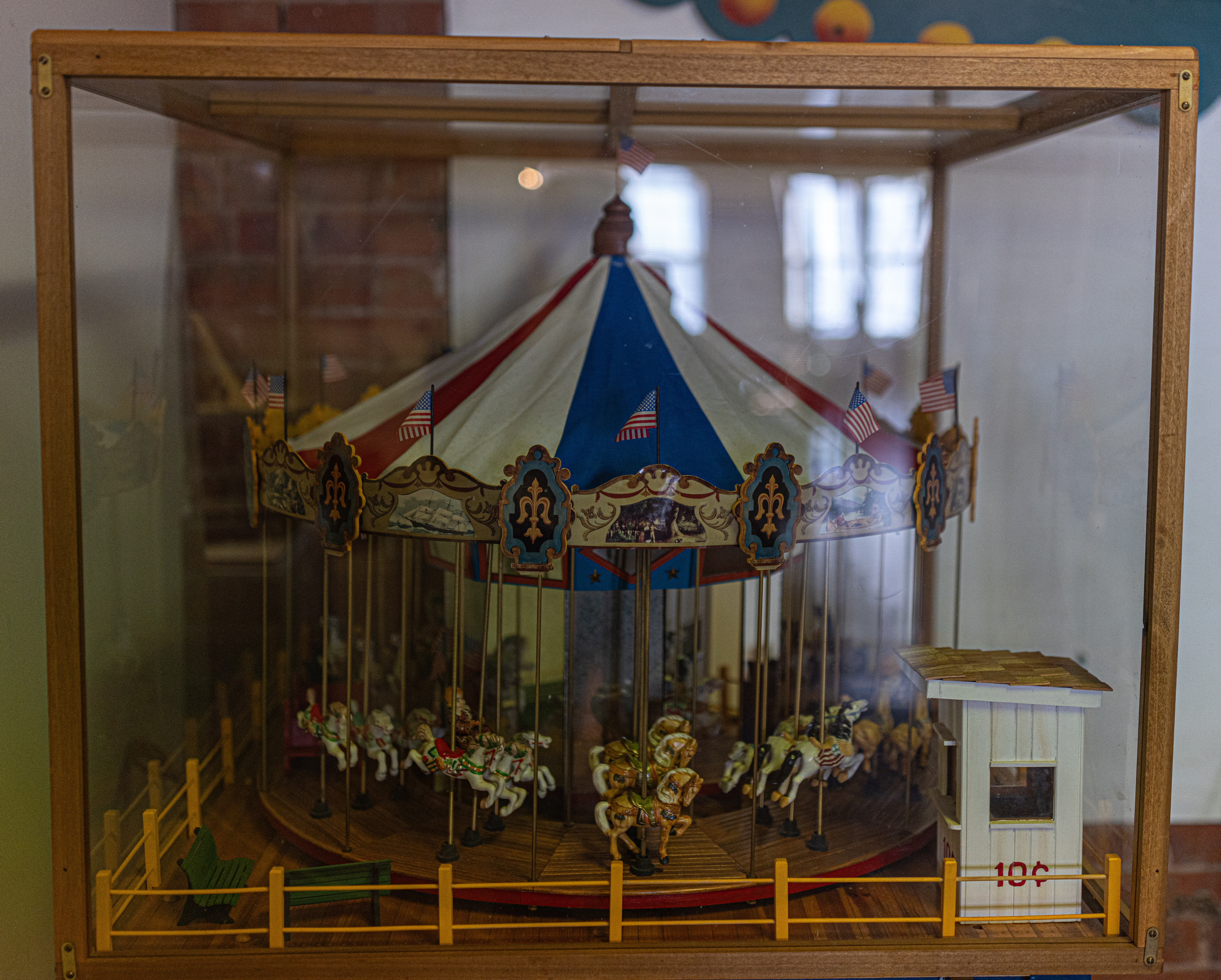
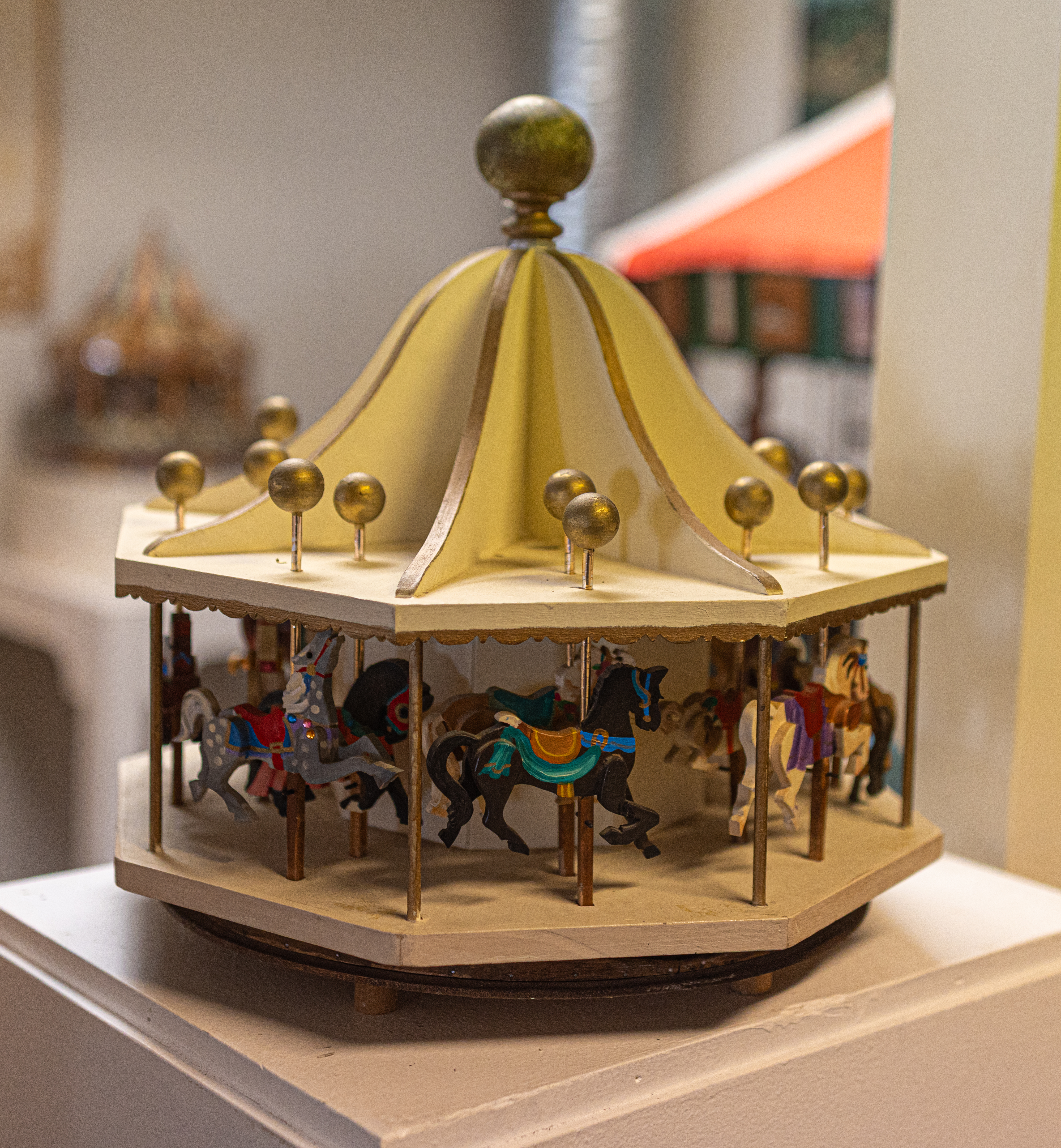
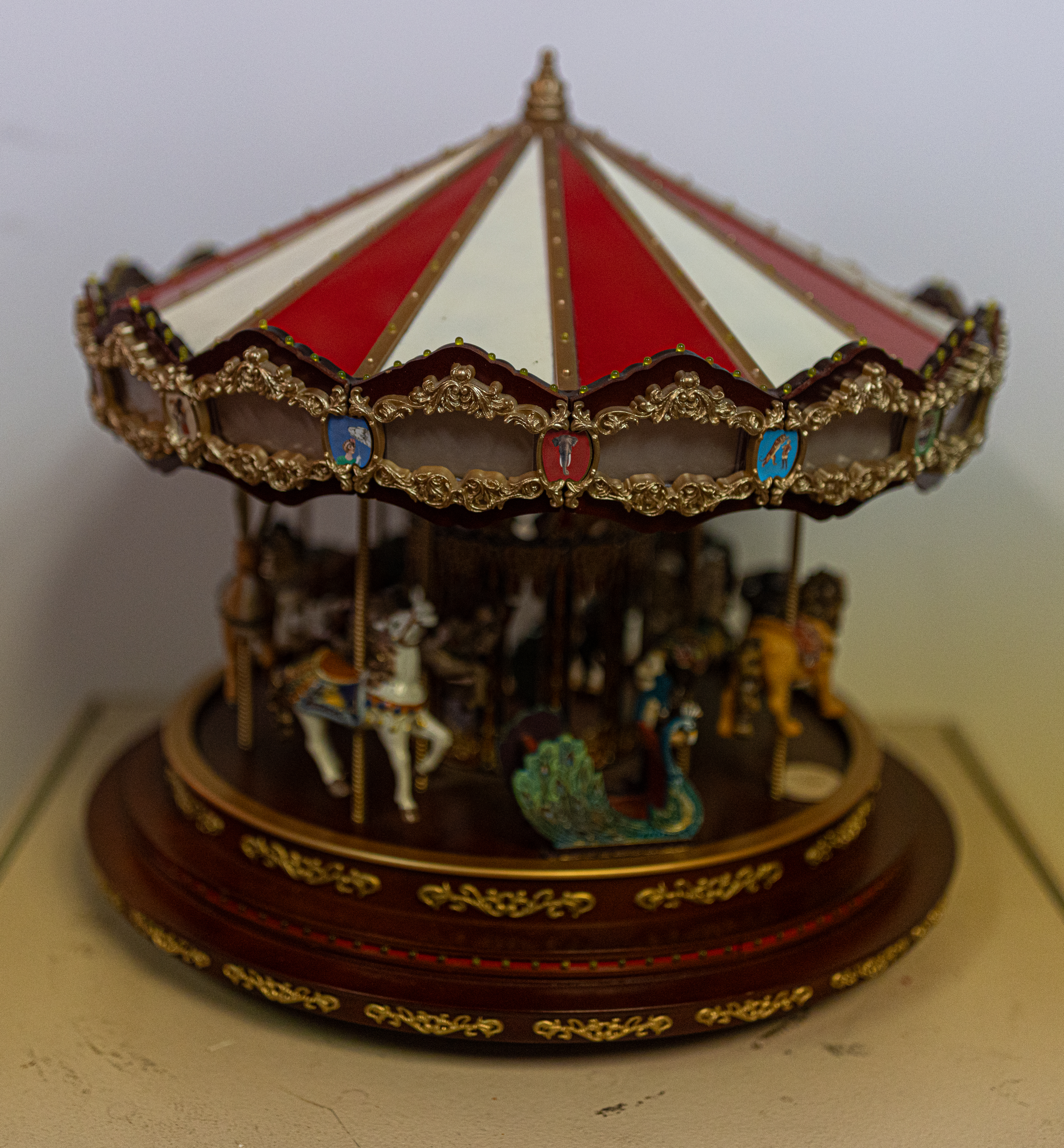
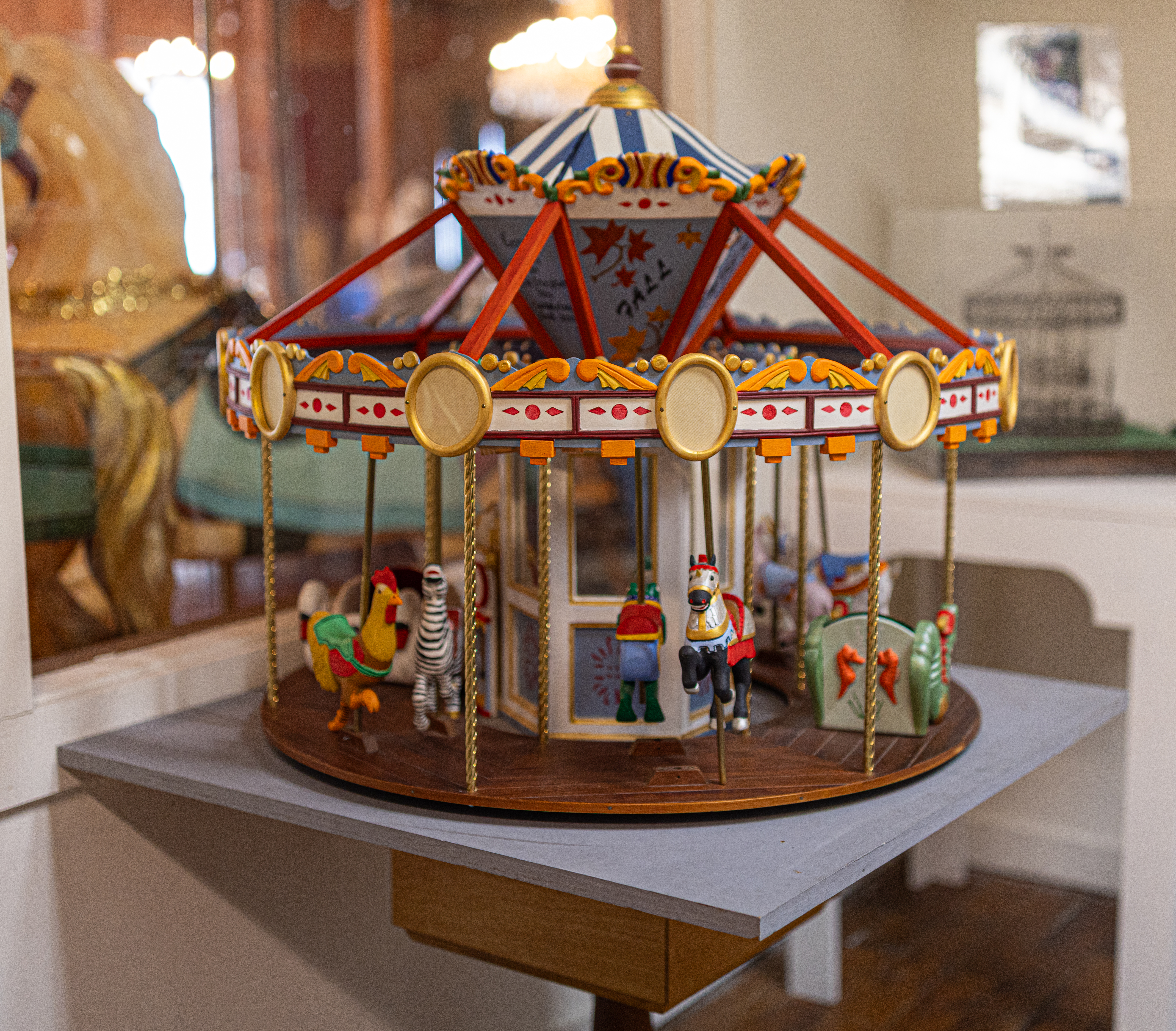
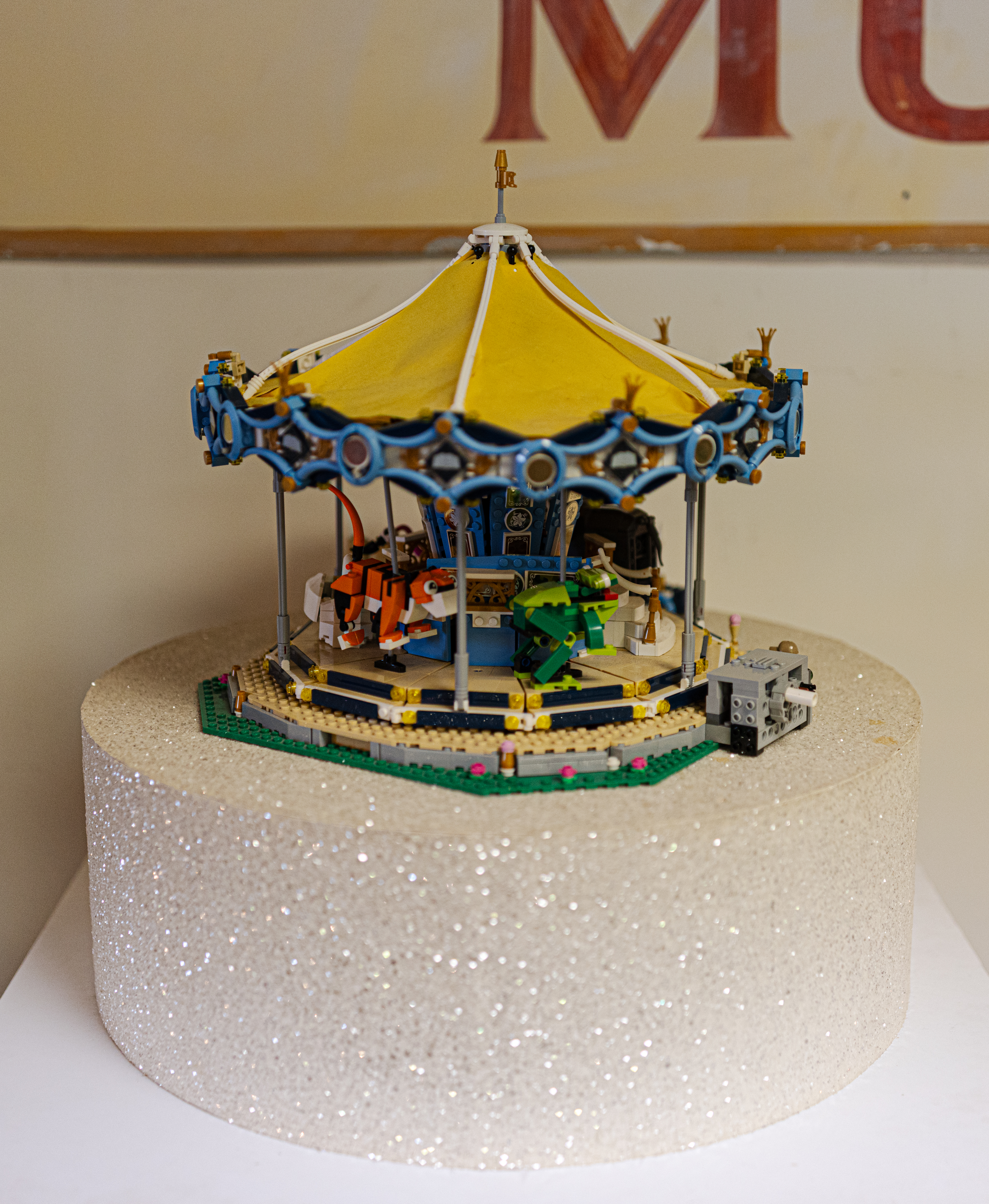
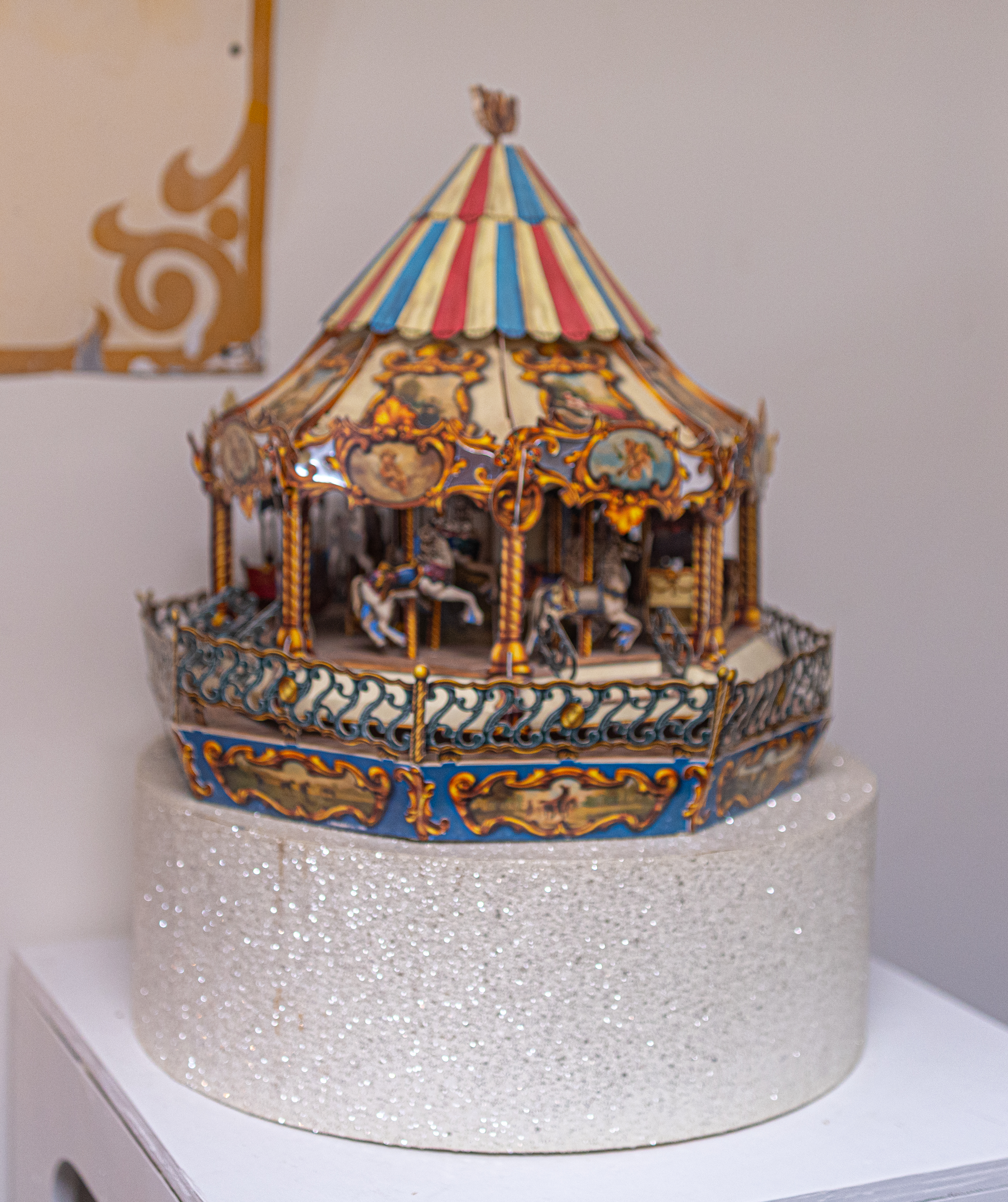
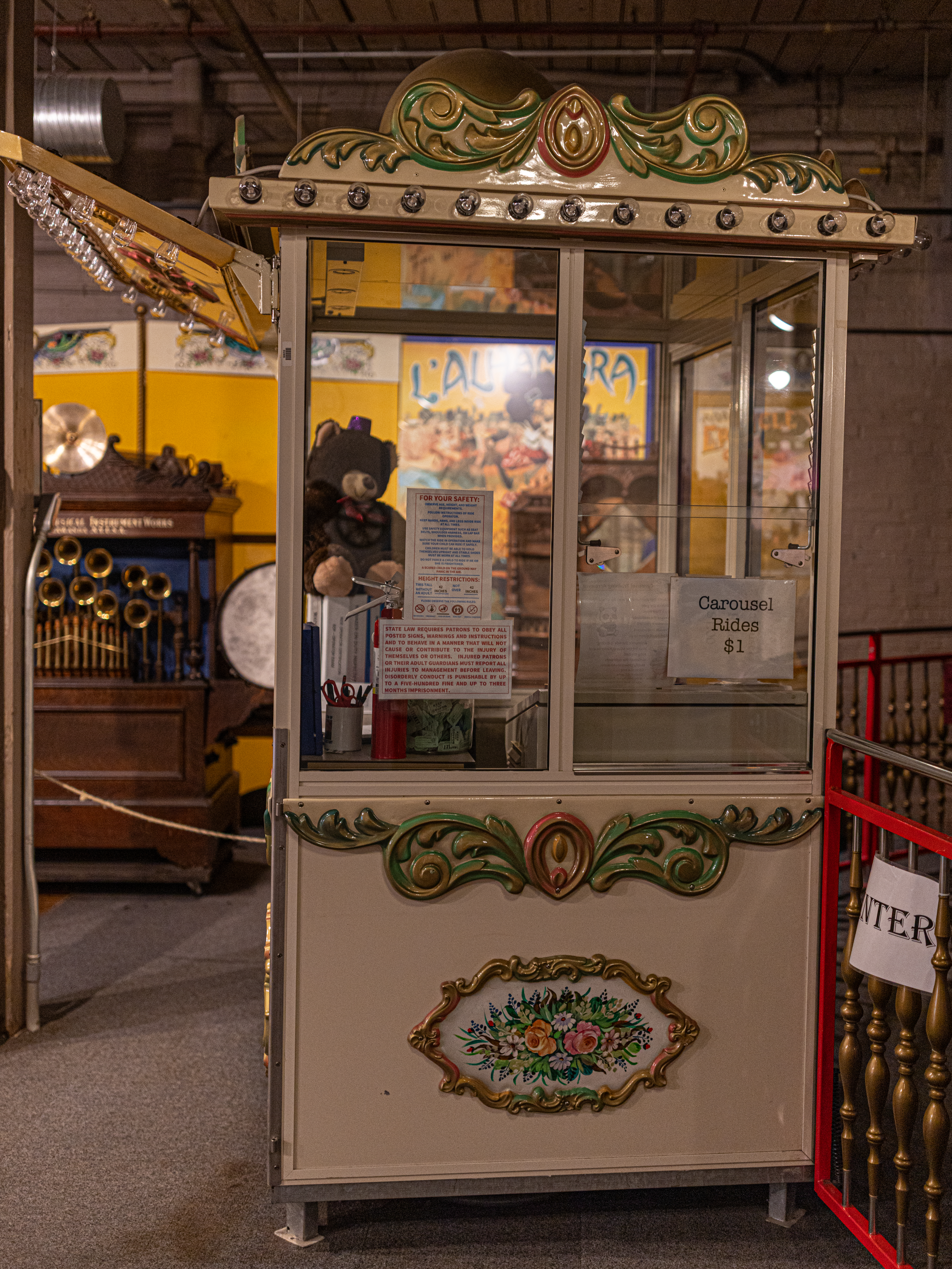
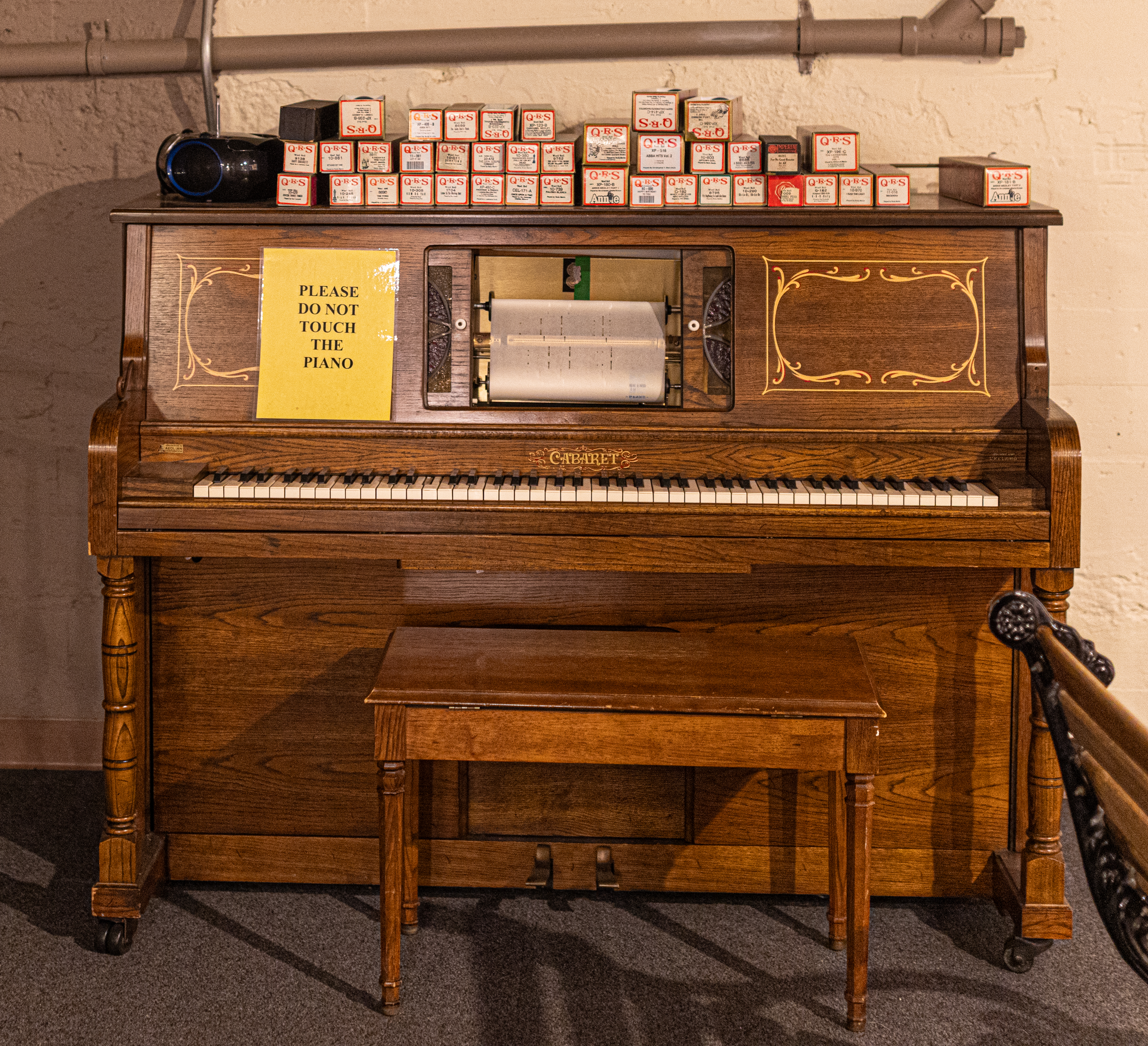
But, the carousel museum doesn’t just have miniature museums. They also have a real life actual carousel that visitors are encouraged to ride. But, there is not just a working carousel there. There are also music players, a ticket booth to purchase a ride (carousel rides costs $3 a ride or $6 for unlimited rides) and a piano.
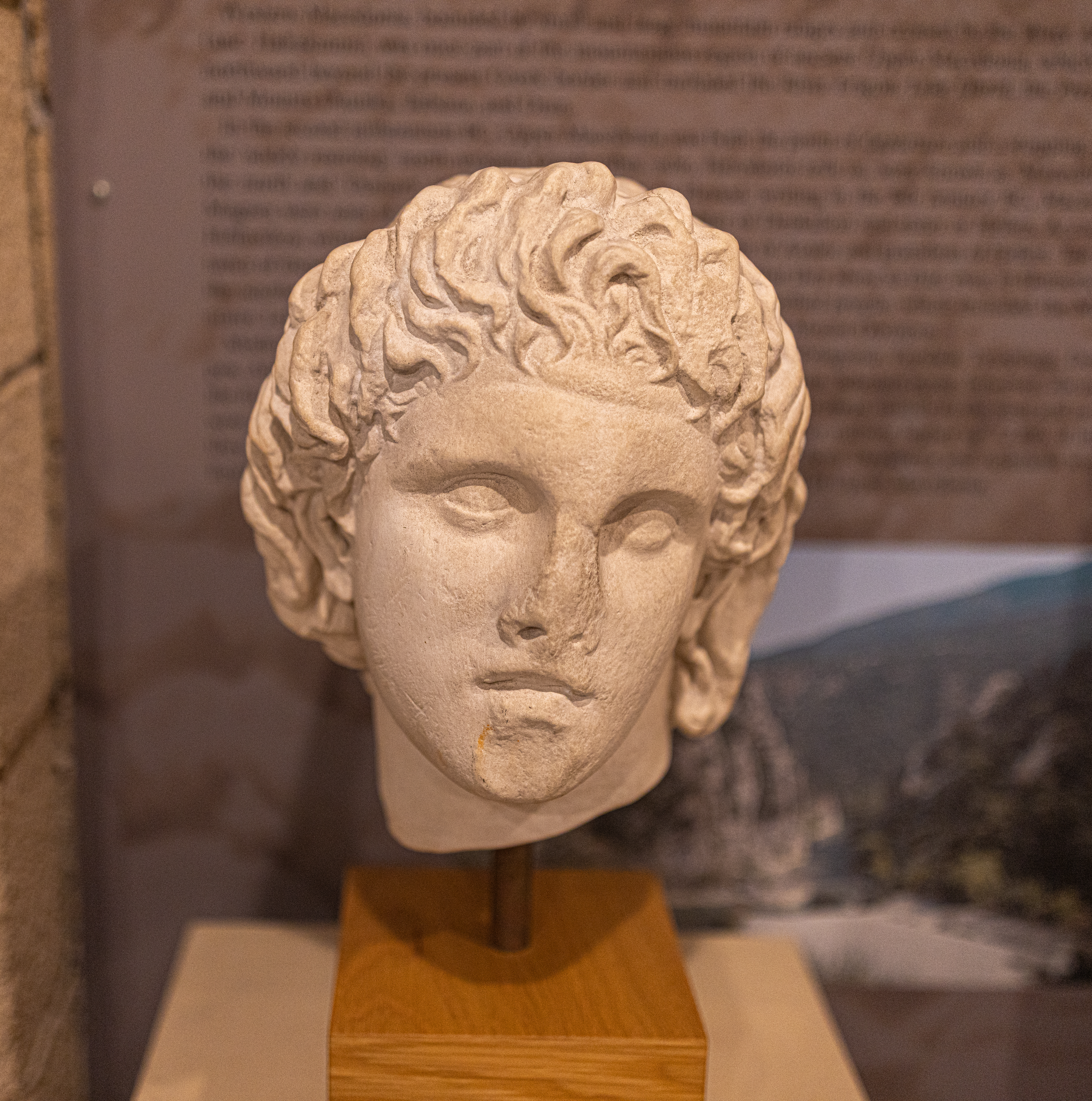
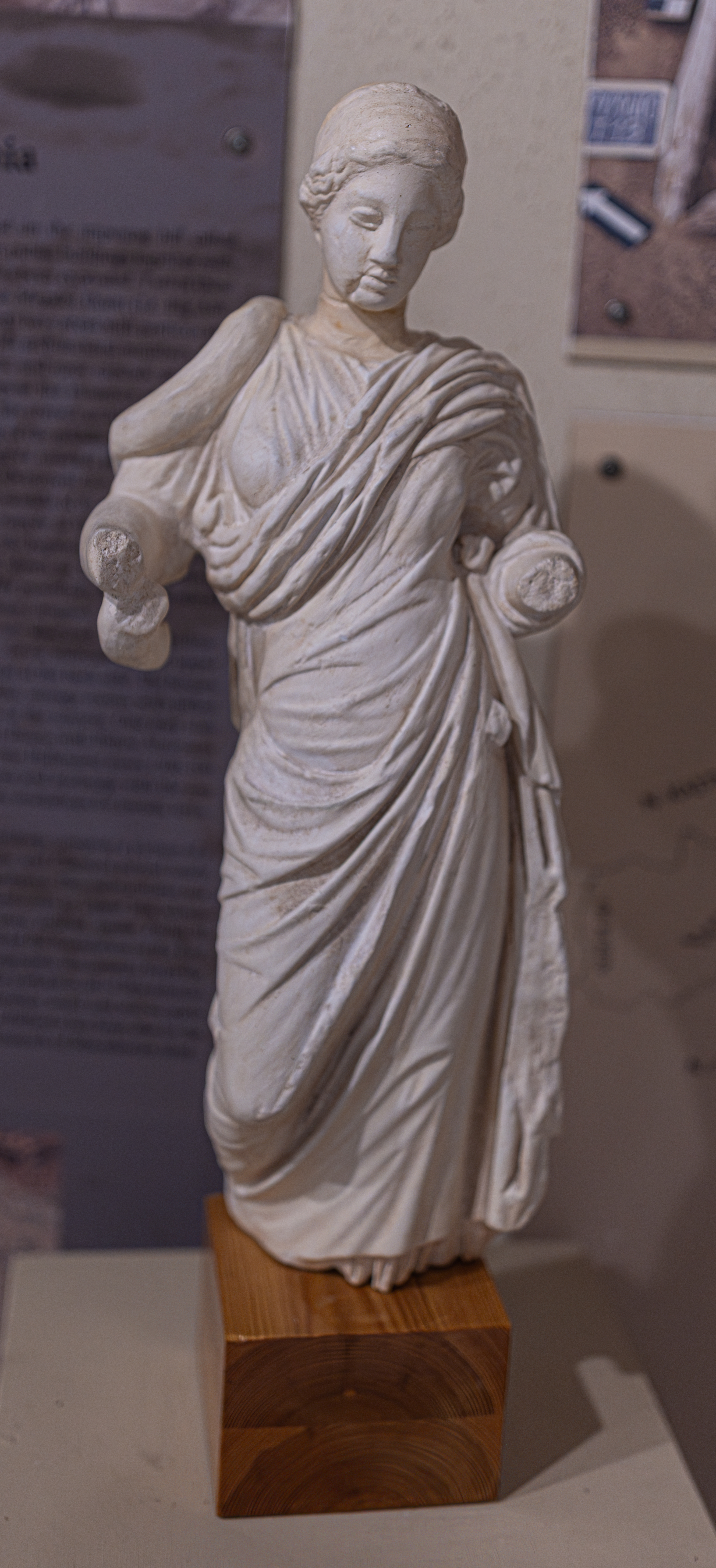
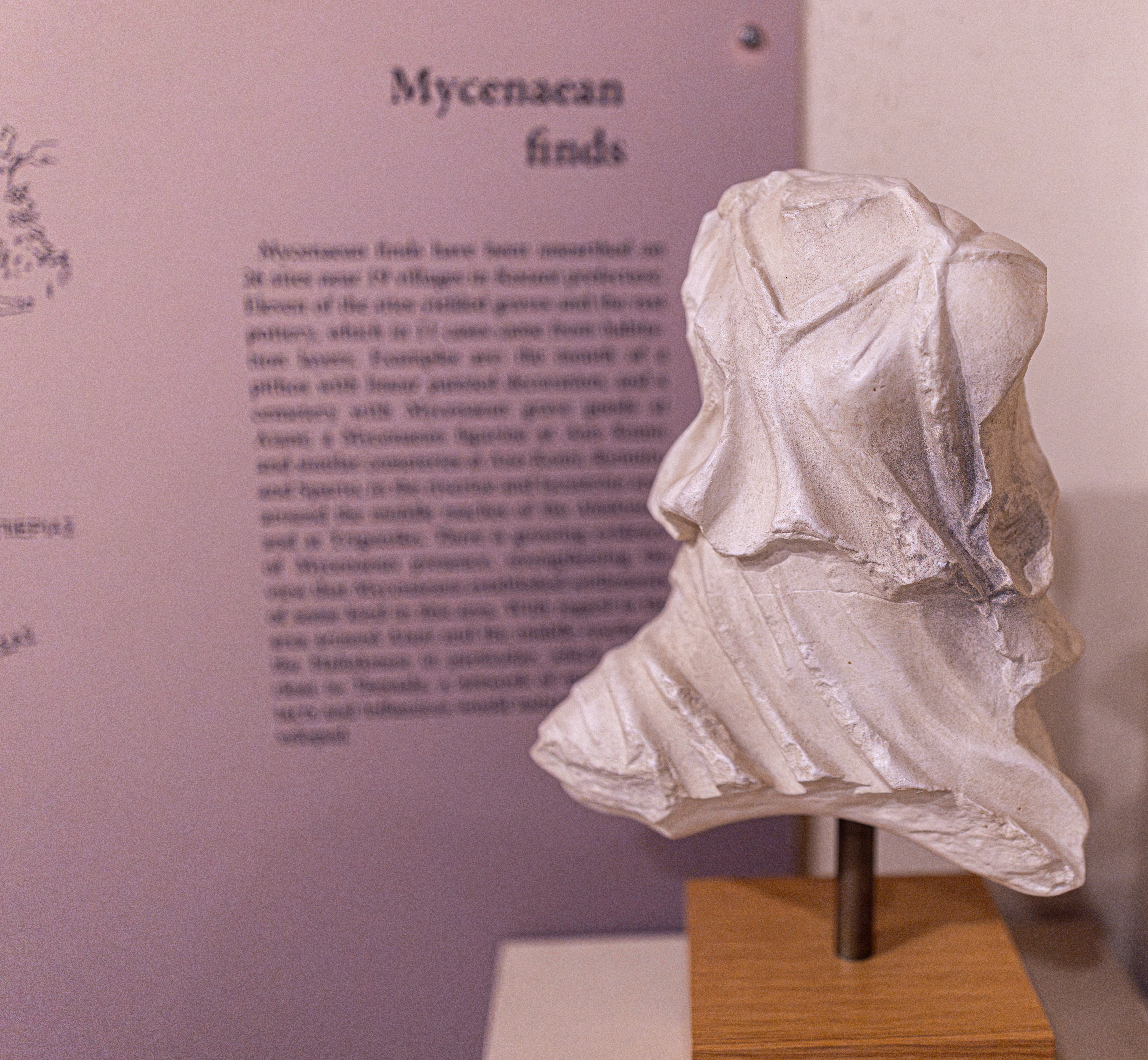
If all that wasn’t enough, there is a Fire History Museum and a Hellenic Museum.
There were busts, statues and other artifacts.
There is also a Museum of Fire History which has old fire alarm transmitters,
It was a poignant reminder of the hard work and sacrifice firefighters make everyday.
So, as you can see, the carousel museum has something for everyone to enjoy!


June 8th, 2026 at 10:06 pm
Another beautiful collection of “artwork.”
LikeLiked by 1 person
June 8th, 2026 at 10:55 pm
Yes, indeed! Thank you!
LikeLiked by 1 person
June 9th, 2026 at 12:36 am
Wow! I’ve never seen some of those before, Insects, Birds, etc., so different. All of them beautiful, All the gorgeous horses. Loved the zebra and the cat. Thank you sooo much for the tour.
LikeLiked by 1 person
June 9th, 2026 at 9:04 pm
I really liked the non-horse carousels. But the centaurs kind of freaked me out! Thank you!
LikeLike
June 9th, 2026 at 8:53 am
⭐️⭐️⭐️⭐️⭐️
LikeLike
June 9th, 2026 at 9:30 am
Carousels don’t do much for me, but I squeeeeed over the miniatures so loudly 😆 Thank you for another fabulous museum tour!
LikeLiked by 1 person
June 9th, 2026 at 8:58 pm
Those were very cool! Thank you Teresa!
LikeLiked by 1 person
June 9th, 2026 at 9:32 am
Wow! The collections of artwork are fantastic, Wayne!
LikeLiked by 1 person
June 9th, 2026 at 8:54 pm
Yes, it is amazing! Thank you!
LikeLiked by 1 person
June 9th, 2026 at 9:00 pm
You’re welcome. 😊
LikeLike
June 9th, 2026 at 8:12 pm
It is really special! Thank you!
LikeLiked by 1 person
July 12th, 2026 at 6:40 pm
Simply amazing!
LikeLiked by 1 person
July 13th, 2026 at 6:31 pm
Thank you Lori!
LikeLike