Tag Archives: sculpture

2025 Art In The Orchard Part 3 (Park Hill Orchard, Easthampton, MA)

Date Of Visit: October 18, 2025

Location: Park Hill Orchard, 50 Payson Ave, Easthampton, MA (2 hours west of Boston, MA, 45 minutes north of Hartford, CT)

Cost: Free

Universally Accessible: Yes. The staff at Park Hill Orchard offer a Accessible Art Cart for those who need assistance.

Dog Friendly: Yes

Summary: Art In The Orchard featured dozens of works of art from local artists.

Welcome to the third and final post from the Art In The Orchard art exhibition.

Yes, believe it or not, this is the last post of the art work at the Art In The Orchard event. And there are a few extras at the end of this post from the event. I hope you have enjoyed the posts from this event!

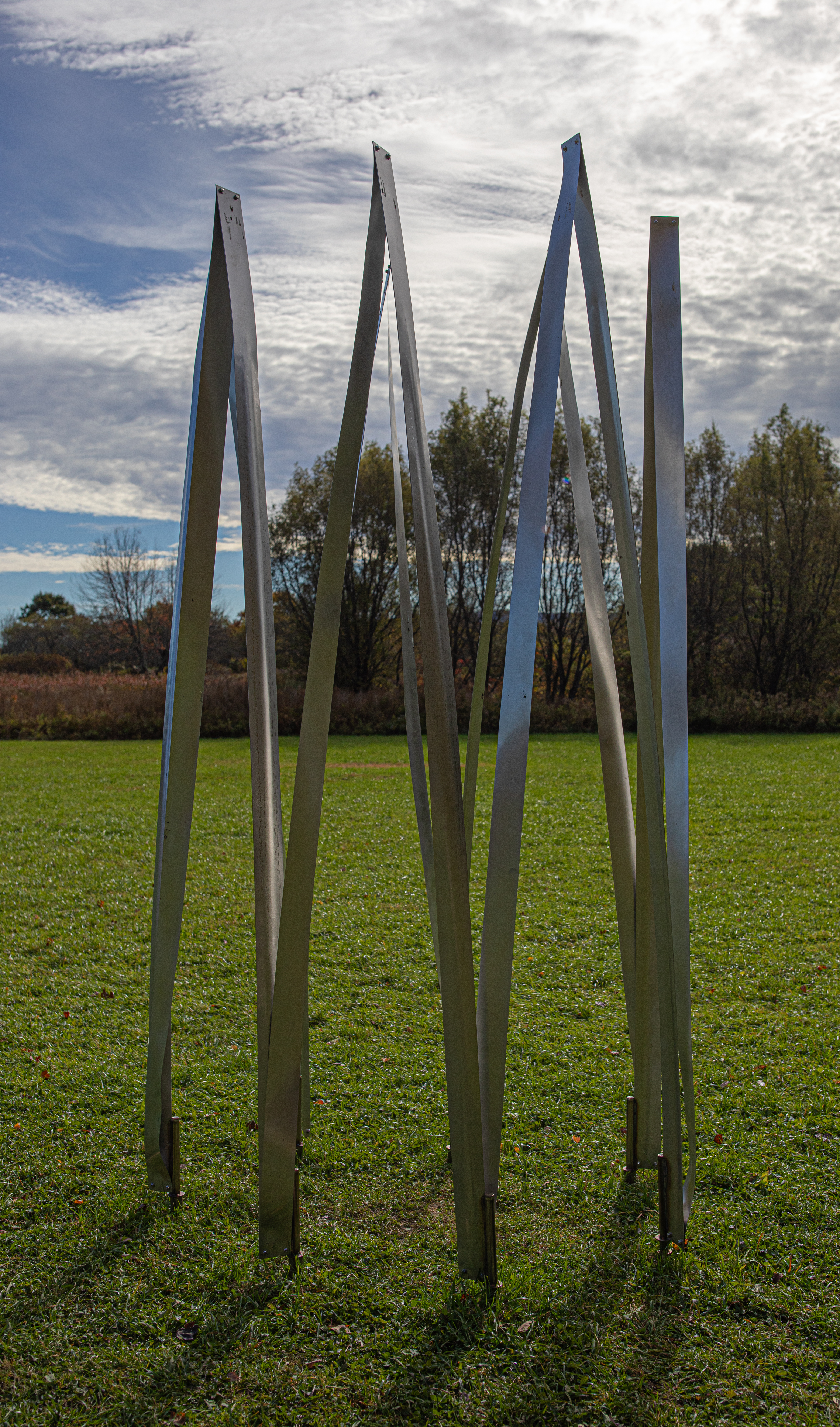
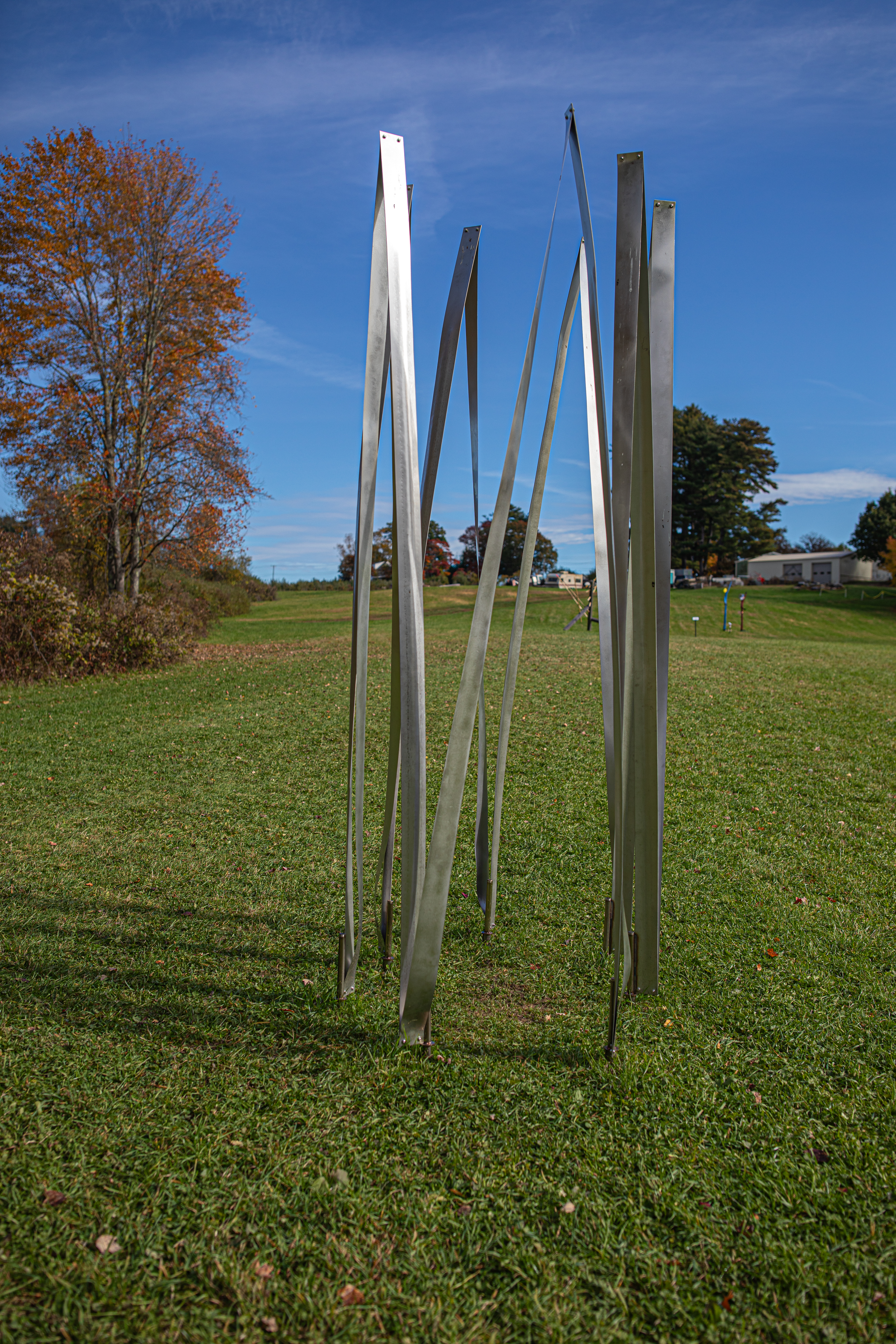
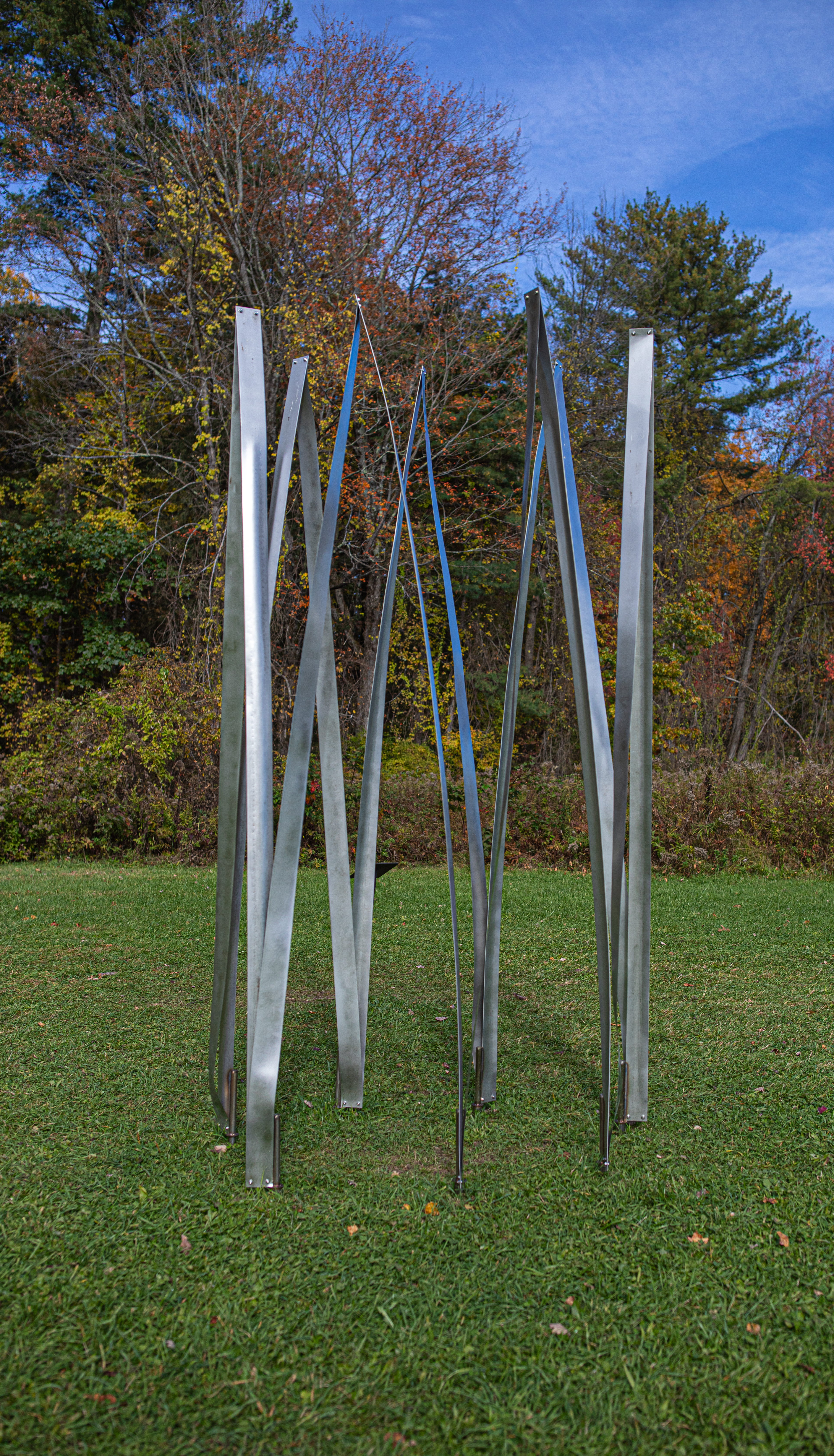
The first art installation in this post is “The Graces” by Ray Ciemny of Groton, MA.

Made of stainless steel, “The Graces” is an attempt to draw attention to the wind and the invisible world that envelops us all.

What captivates Ray and inspired the work of art is the notion of keeping the doors of experimentation and materials exploration open. The keys to these doors are Ray’s head and heart functioning together with an instinctual tension.

Ray tries to give new life to metal objects that were once useful and have become worn or obsolete. Ray endeavors to create a nirvana from scrap. Tension and movement whether physical or suggested has to be present in the work to make it worthy of existence.
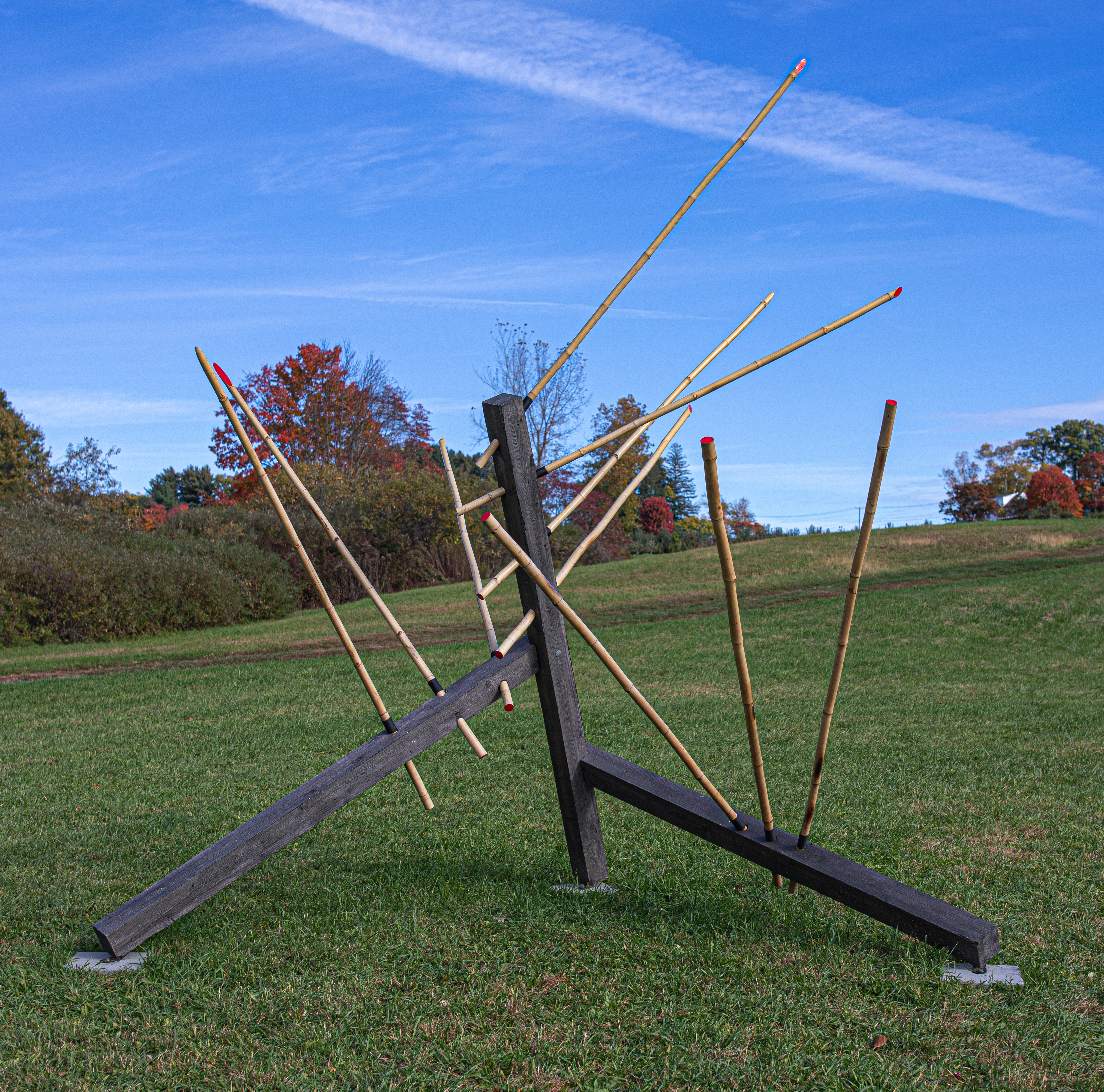
Bamboo has always fascinated Philip Marshall of Grafton, MA. For his work of art “Bamboo 2”, Philip used construction grade bamboo, Eastern white cedar, laquer, paint and cord to create an abstract piece similar to the ones he has made using steel.

Philip is a painter and sculptor based out of Massachusetts. But, he was born in Kent, England. He is drawn to public art for its freedom of scale and because he views it as “gateway art” for those who rarely visit a gallery or museum. Although Phillip takes painting and sculpture commissions, his primary focus has been creating outdoor sculptures for temporary public exhibitions. His varied life experiences, extensive world travel and the people he has encountered, provide a rich source of material.
Michael Tillyer of Conway. MA, used a fourteen foot pine tree and some metal to make “Totem.”
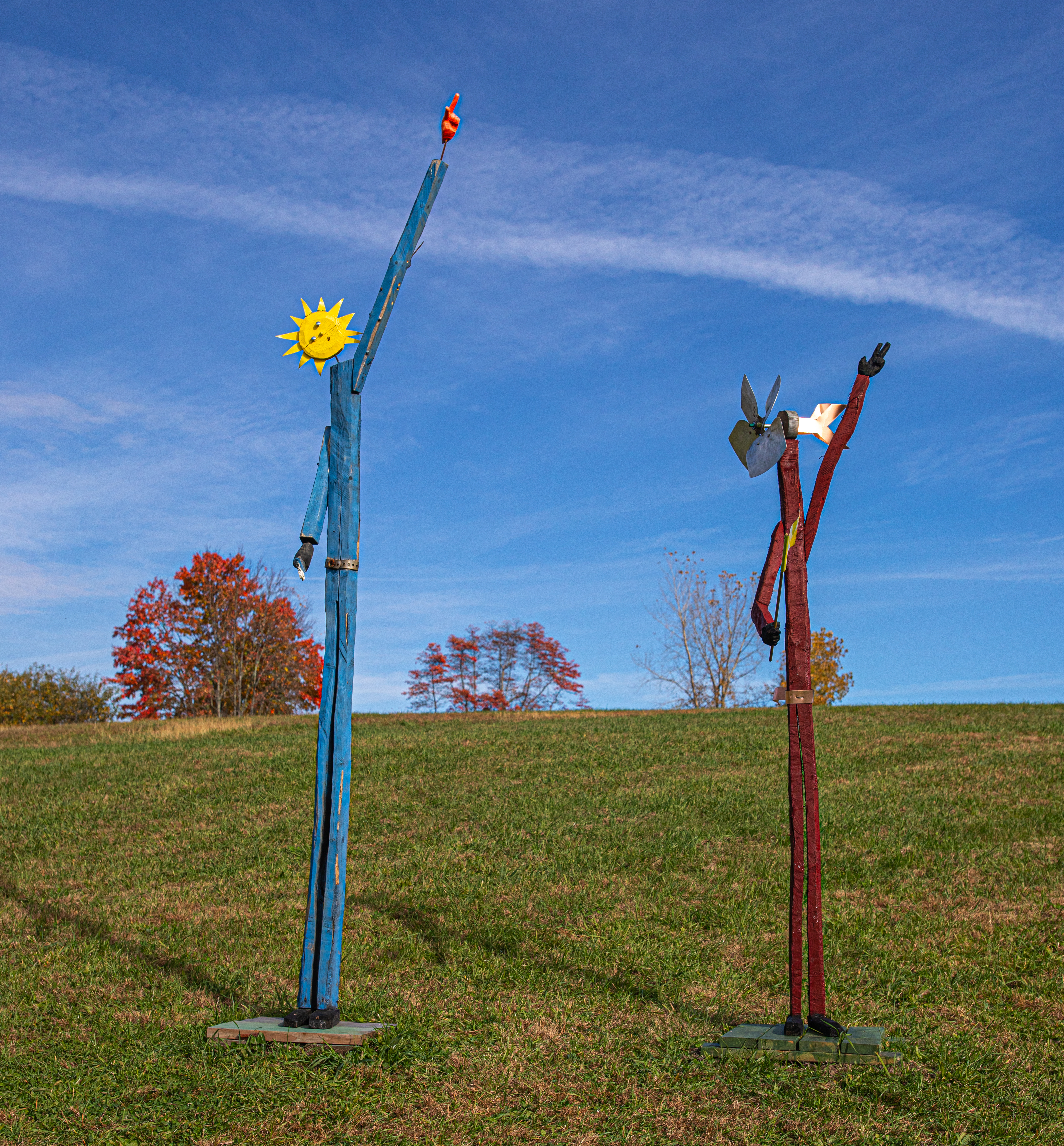
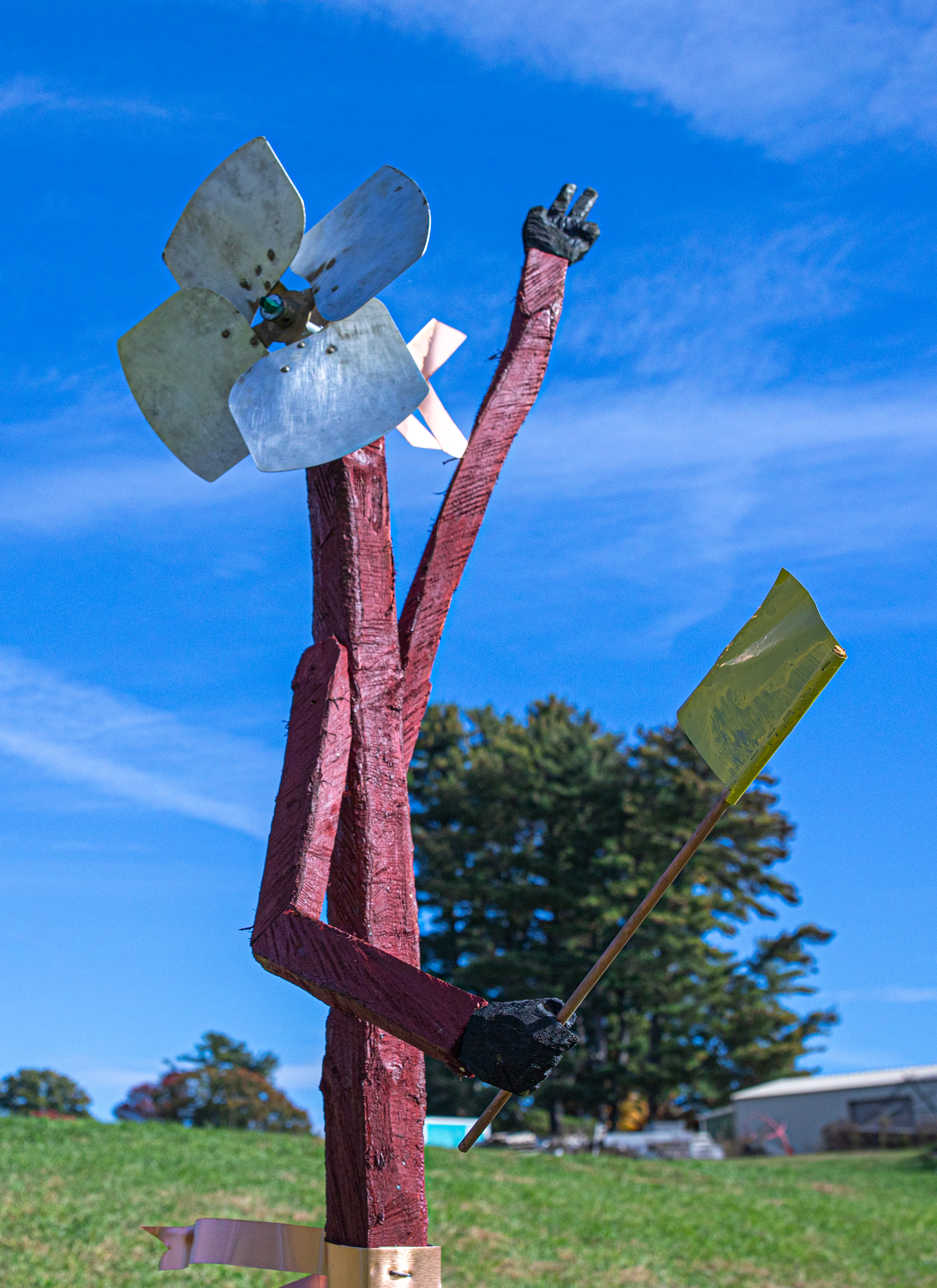
This sculpture did not have a sign identifying the work of art or artist. The birds liked it though.
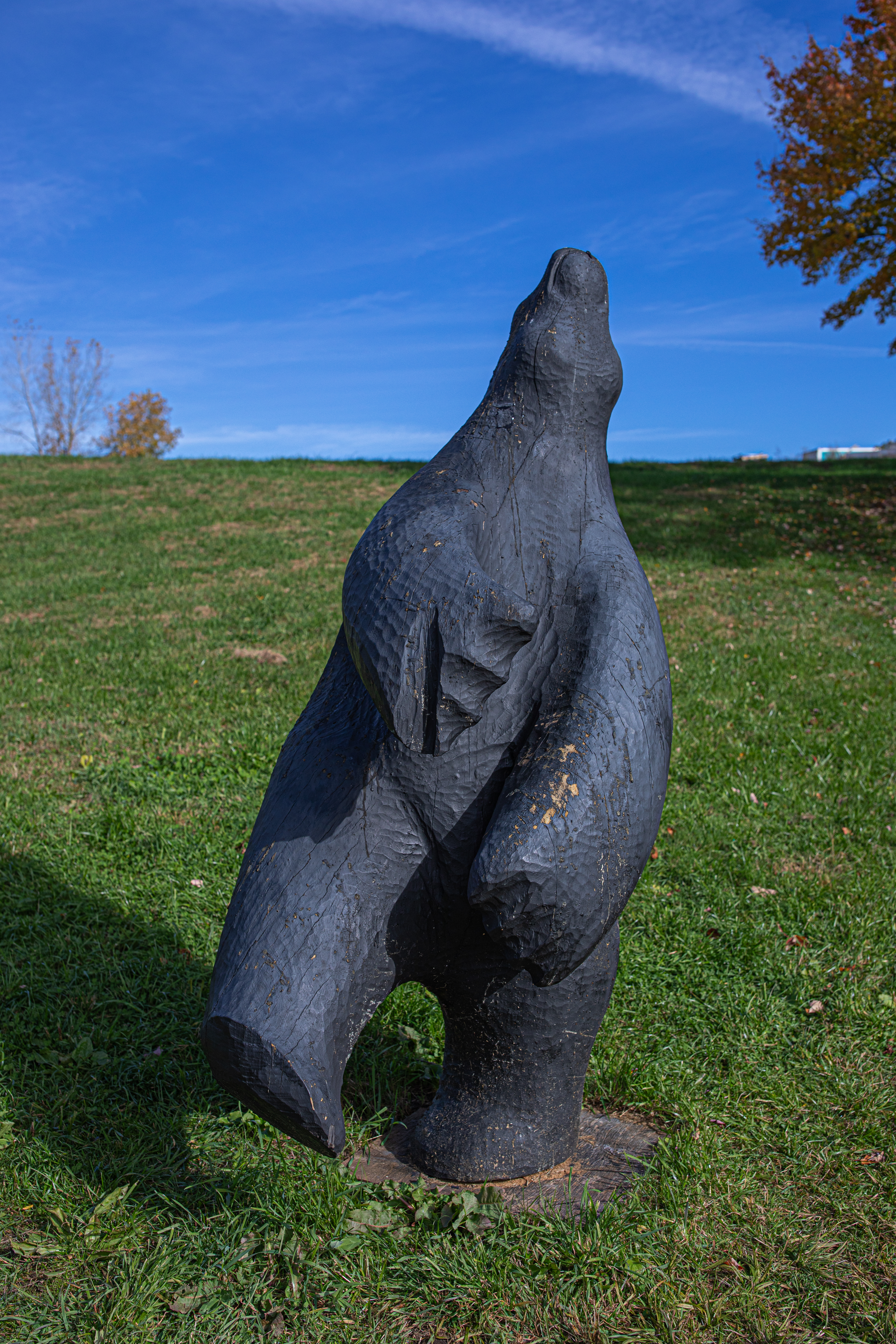
“Rabbit” by Tim MacKenzie of Hull, MA, was made of marble.

In an orchard, Velma stands proud – a stone rabbit sentinel with ears to the breeze and secrets to keep. Forever frozen mid-thought, she ponders the mysteries of morning dew and moonlight dreams.

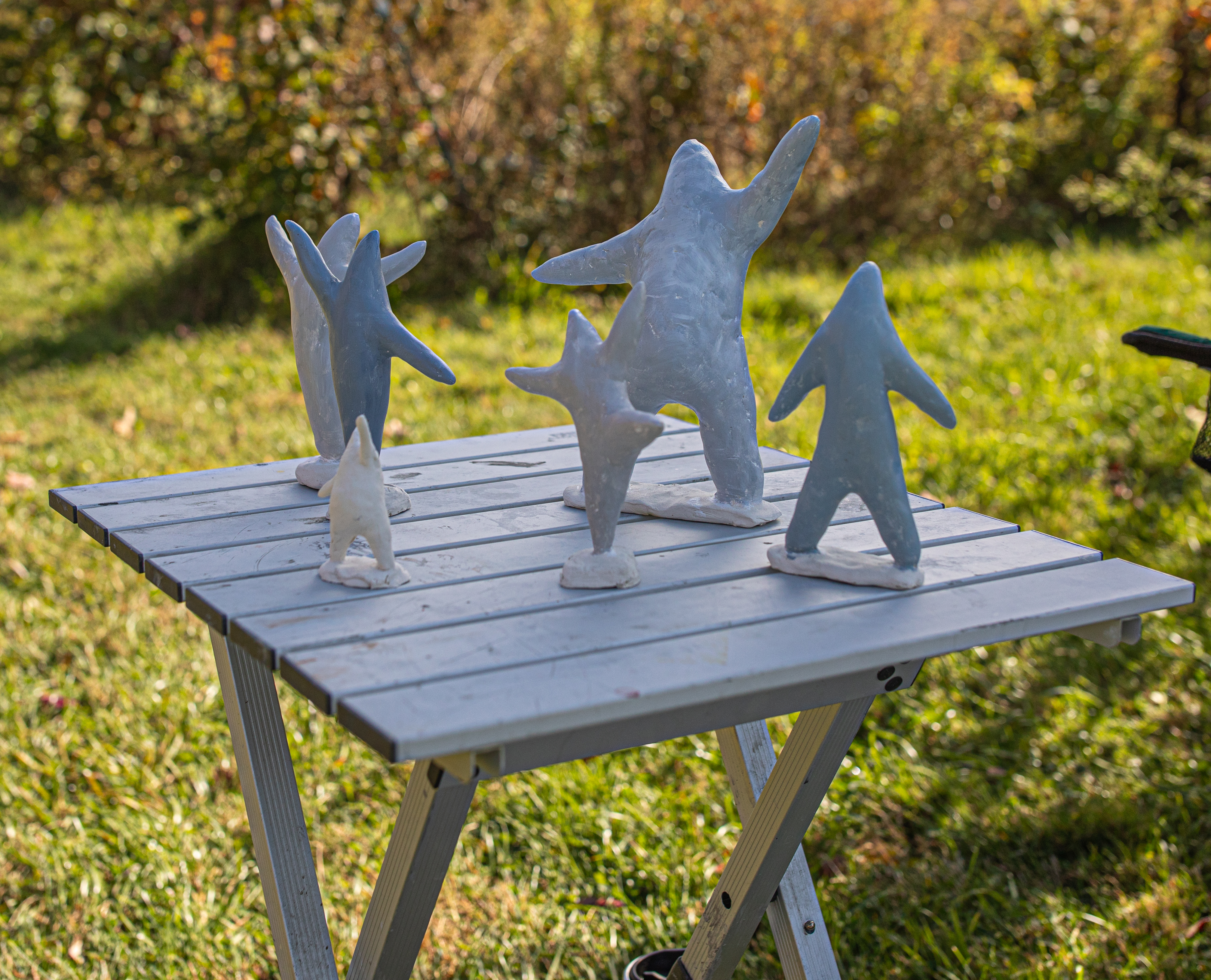
The sculpture “Joy” by Michael Perusse of Easthampton, MA, is a remembrance and reflection of moments of joy in our lives. The movement of the figures, which are made of Pal Tiya (a cement-based weatherproof sculpting medium that cures to a stone-hard finish without baking or firing which is ideal for durable indoor or outdoor sculptures) can be a moment of silliness, dance, sports achievement, a simple morning stretch in a ray of sunshine or as complex as finishing a law degree and everything in between. It’s that moment your body, heart, mind and soul are one in Joy within yourself or with others.
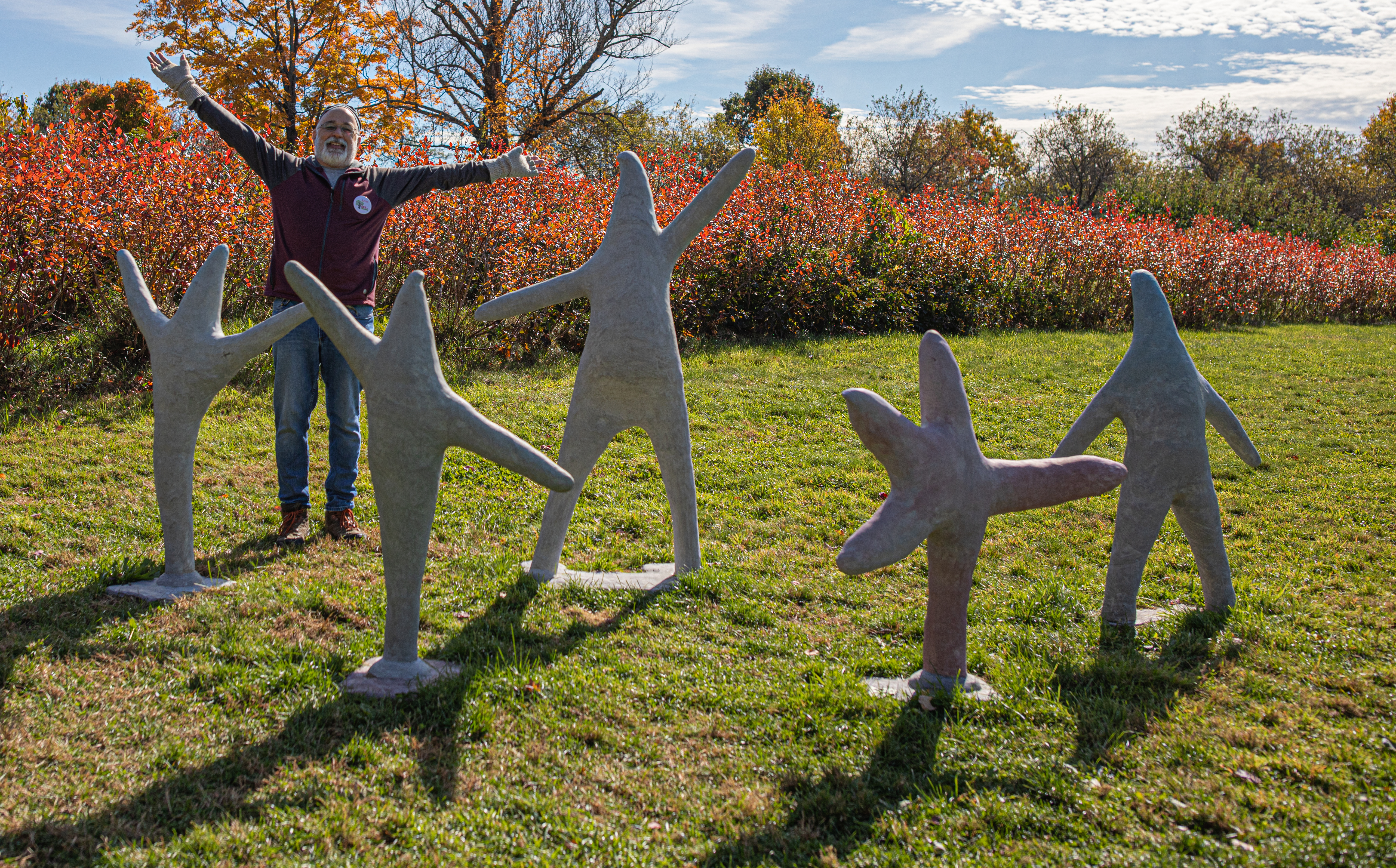
This is a miniature sized model of the work of art.
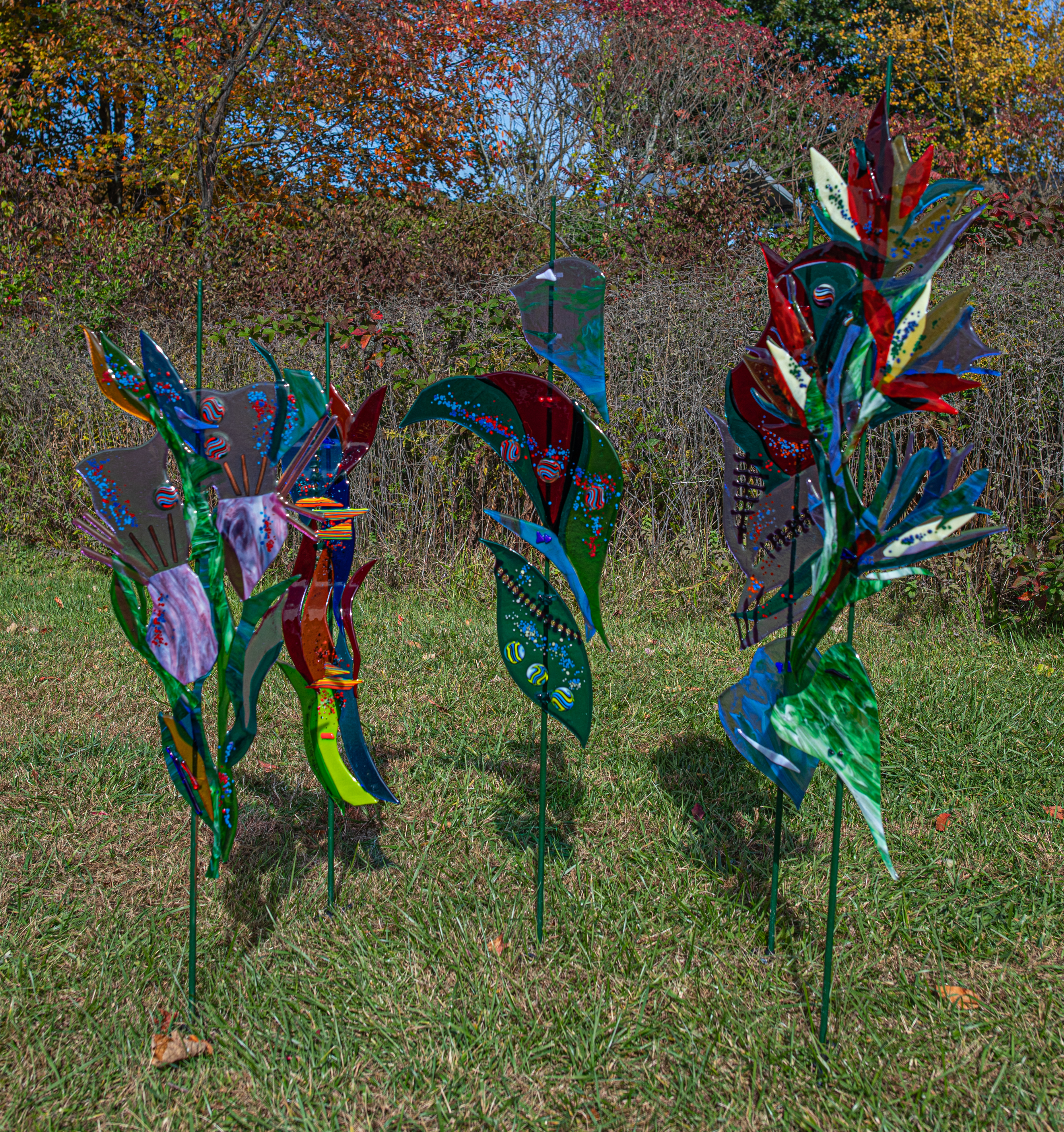
Lynn Richards of Sommerville, MA, is interested in how light transforms fused glass to create a dynamic viewing experience. After seeing a Georgia O’Keefe exhibit, Lynn was inspired to create a larger than life glass flower bouquet which would become “Flourishing Buds.” She used bullseye glass with steel rods to create the various flower elements. The glass was cut into realistic and abstract shapes that invite the viewer to interpret the bouquet. Finally, the flowers are designed to ensure wind can easily pass through the swirl on a steel rod.
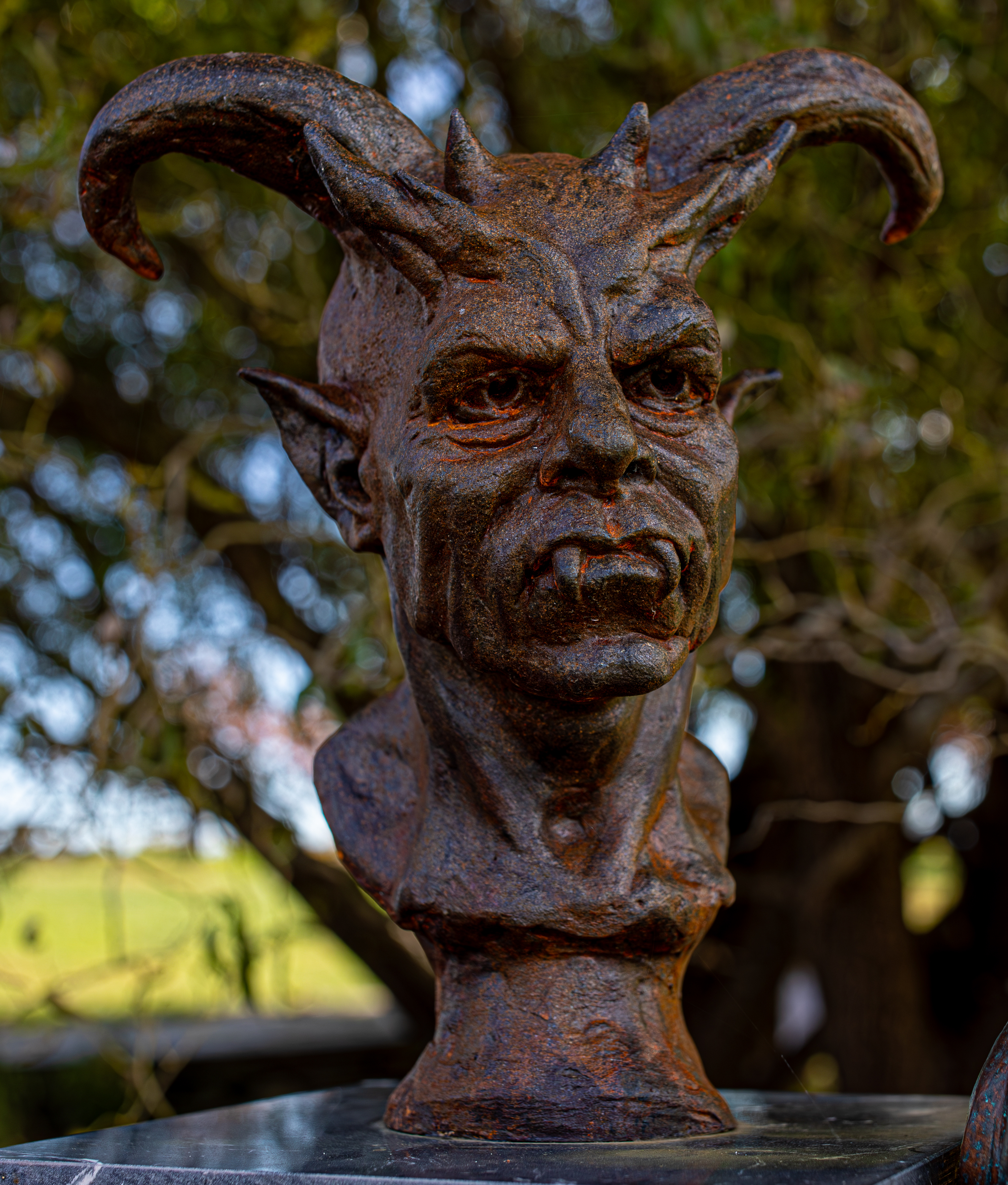
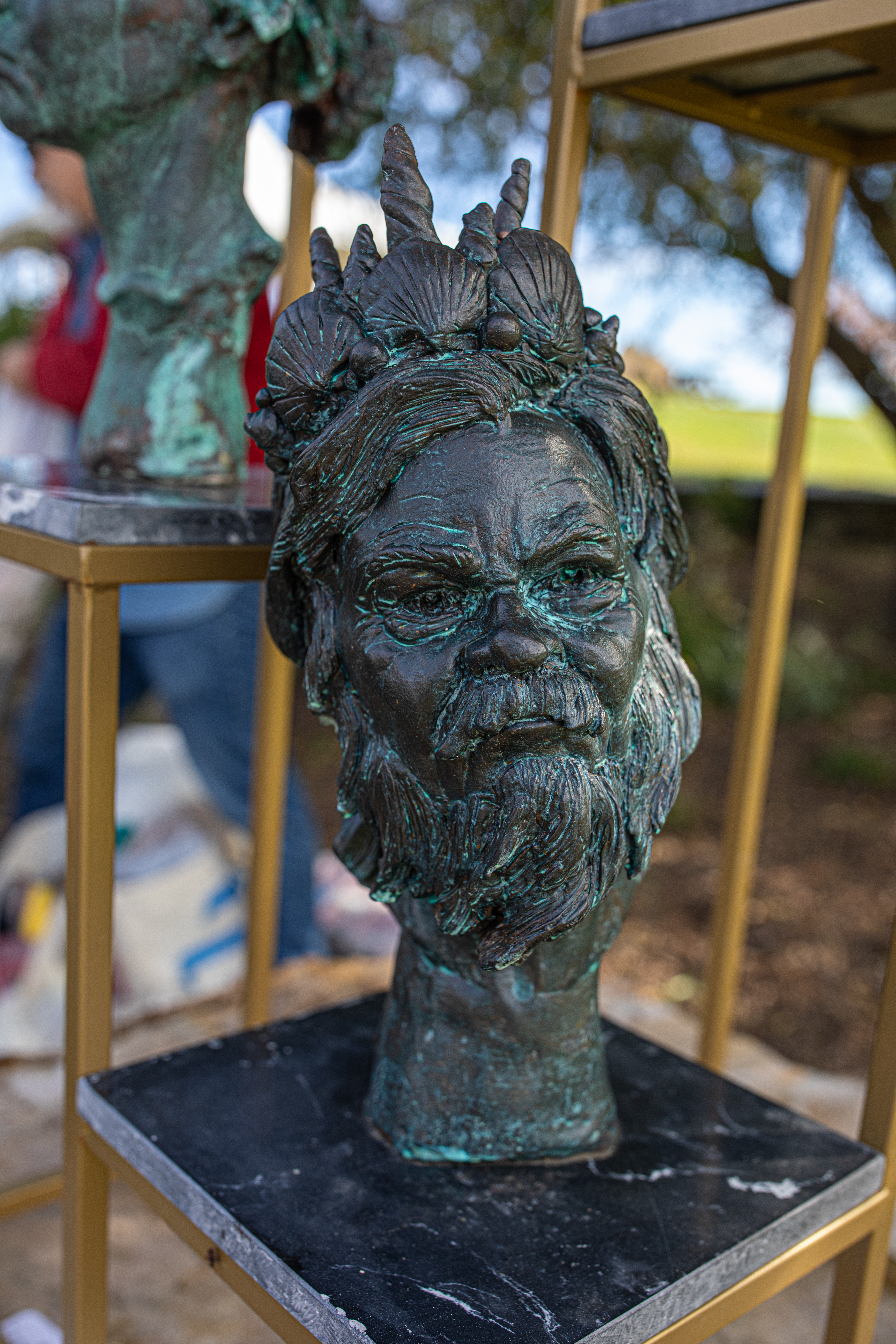
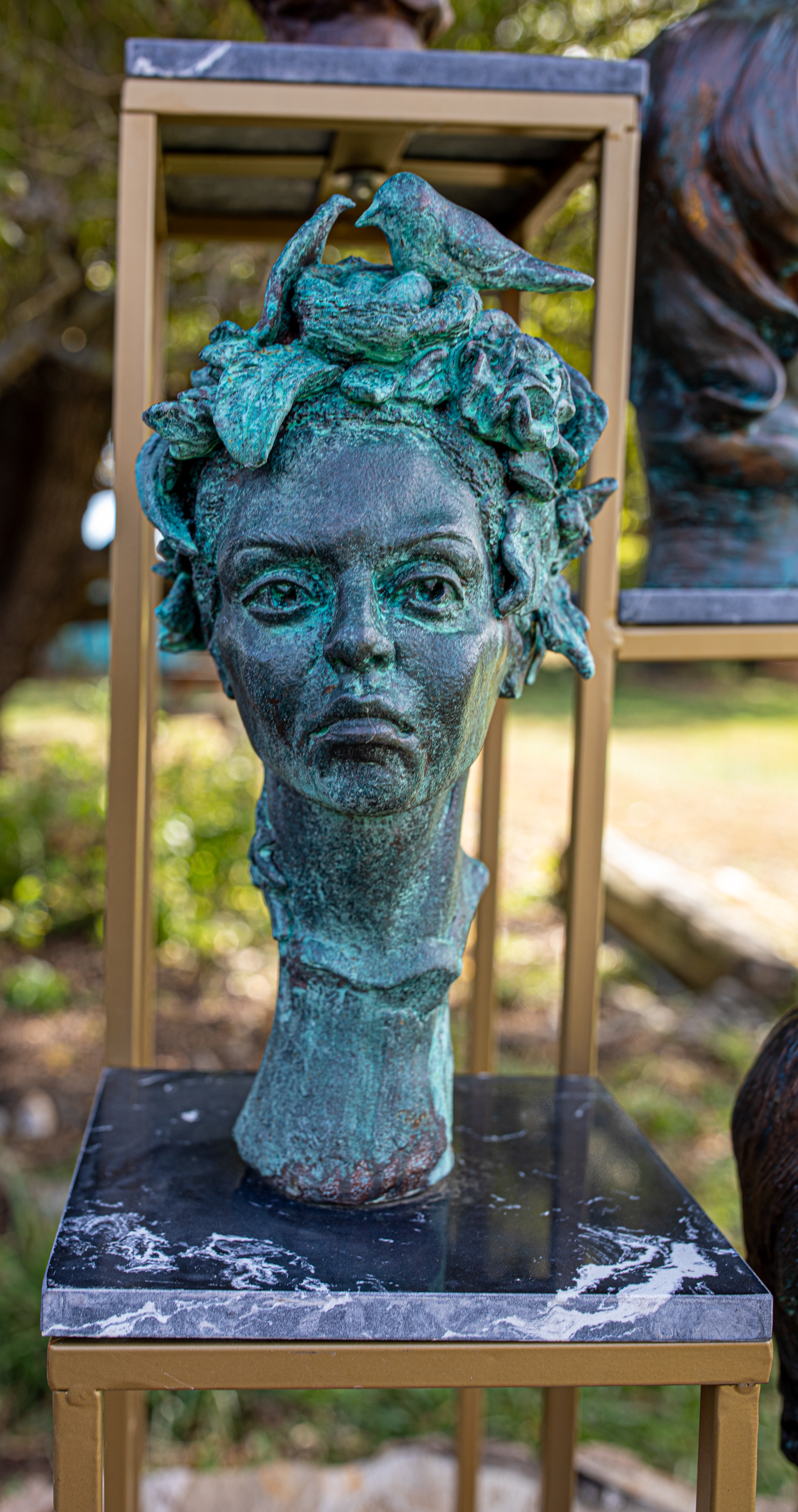
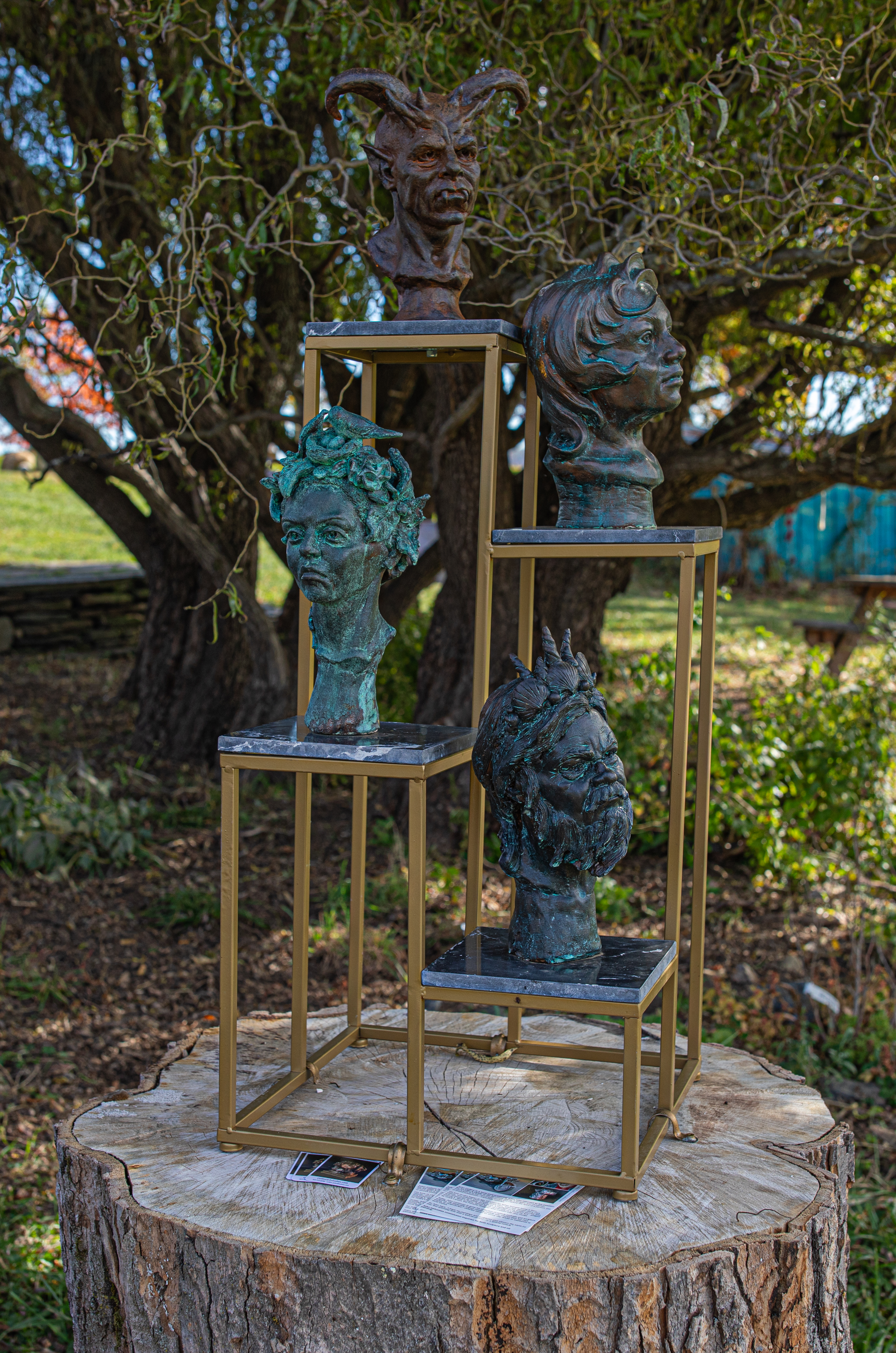
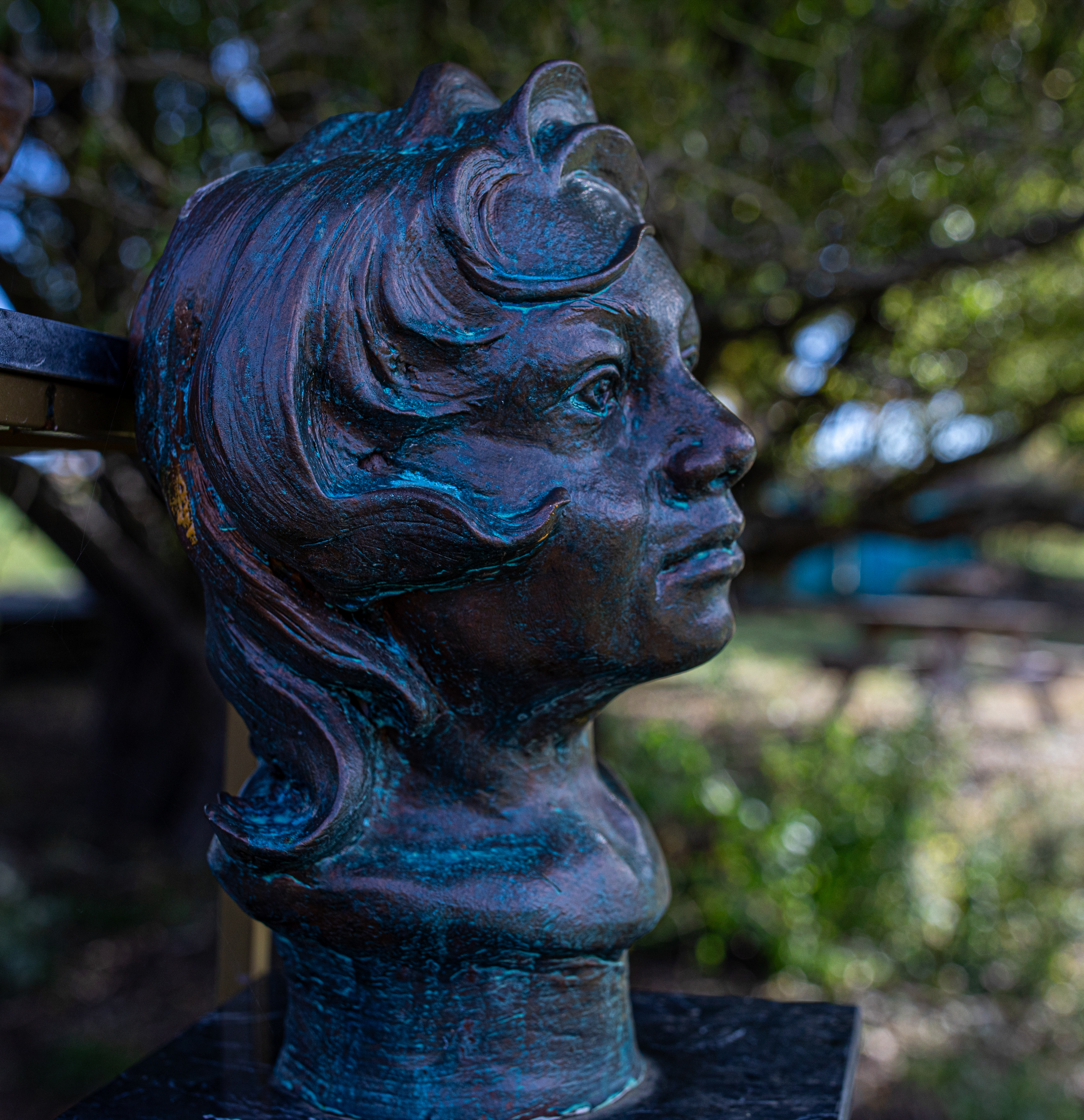
“The Four Elements Personified” by John Collins of Ware, MA, displays the four elements (water, Earth, wind and fire) as humans. Each bust made of fire clay with metal coating finish with a marble, cast iron stand, represents each element. Mounted on a four tier marble and steel base, the work unites the distinct energies of Satan, Lady Wind, Mother Earth and Poseidon.
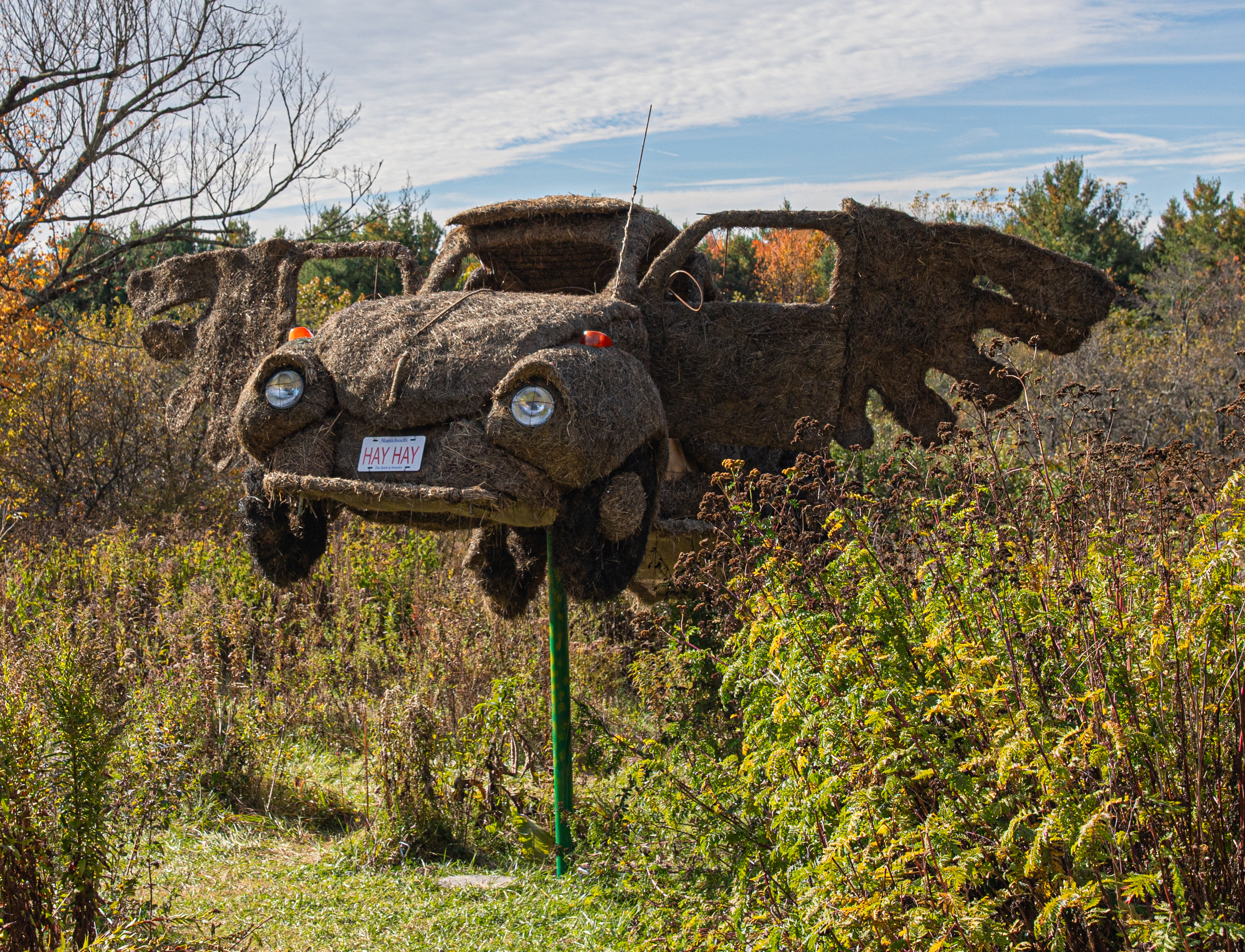
Dave Rothstein of Florence (Northampton), MA, used hay, straw, chicken wire, steel, aluminum and a lot of ingenuity to make “Beetle in a Haystack.”

The most beautiful things are often fleeting and right under our noses. But if we don’t take time to observe we often miss out. “Beetle In A Haystack” pays homage to the ubiquitous hay bales that blanket the New England landscape. They are so commonplace that we often take them for granted. So, the next time you’re driving by a far,m or other landscape in New England or some other rural area, pause and take a look (safely).

Most hay bales contain much more than hay. You’ll often find Goldenrod, native mints, bergamot (a fragrant citrus fruit native to southern Italy) and other plants.

So it’s no surprise that Beetle In A Haystack hovers over the “Harmonics Gardens Labyrinth” filled with native grasses and medical plants and abound with pollinators. Please experience its magic and maybe you’ll discover the elusive calm and peace we search so longingly for, See what you learn about yourself and the natural world in the process.
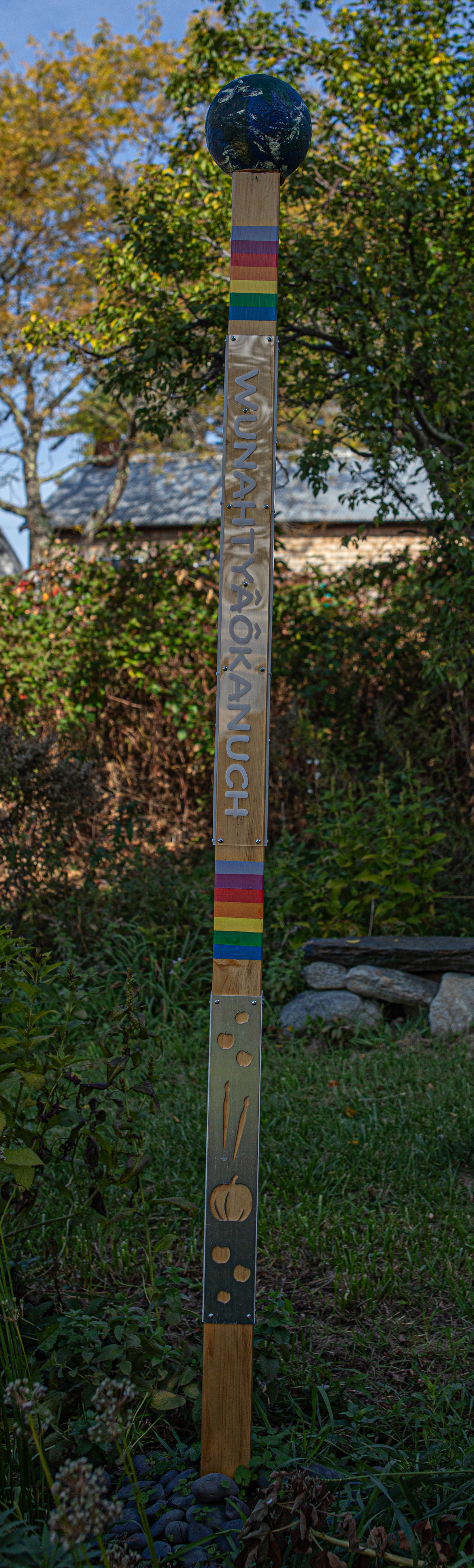
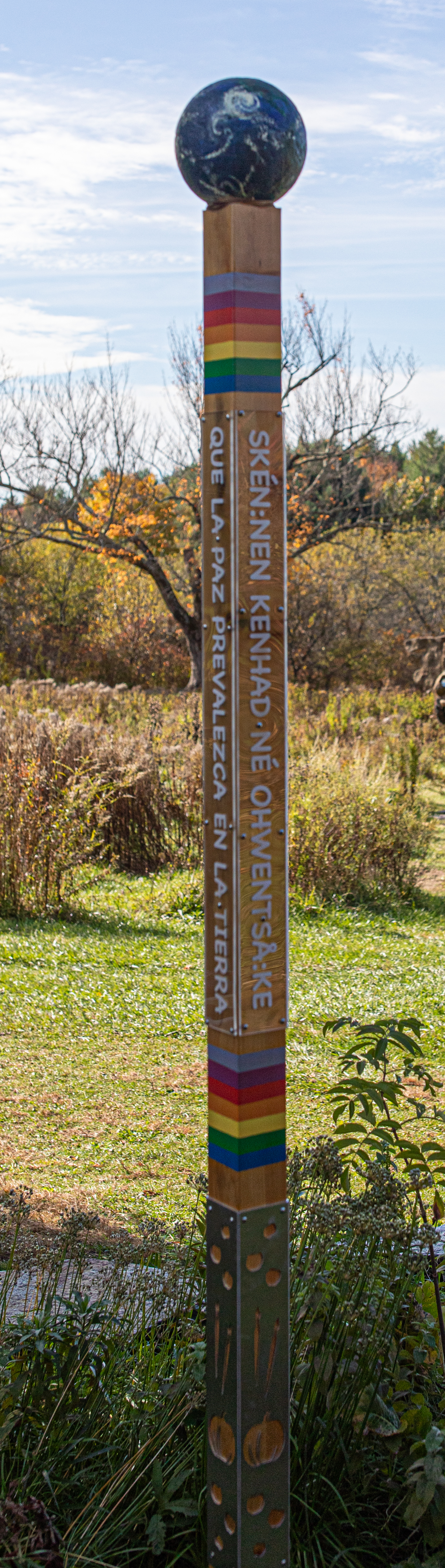
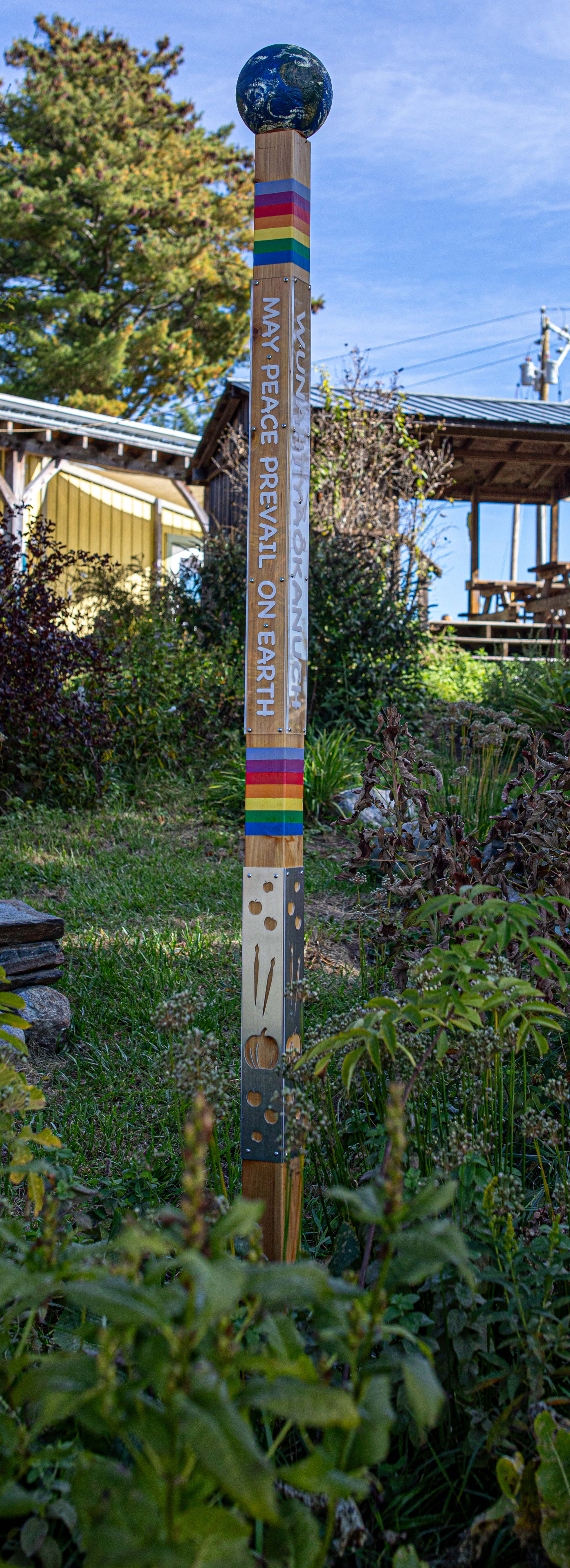
“Peace Pole: A beacon for hope and desire for peace” by Jane Pelton Andresen of Easthampton, MA, is the perfect work of art to end this series of posts. The pole, which is made of wood, acrylic panels and clay, is meant to connect people. She included indigenous languages from the region, in this case Mohawk (territory to the west) and Wampanoag (territory in what is now eastern MA, RI and parts of CT). Both languages are still spoken today. She also included Spanish as it is the most non-English language spoken here.

The rainbow stripes represent the fact that peace without freedom and equity is not true peace.

The symbols on the pole represent what Park Hill Orchard has given to our community.
While the art from the artists was plentiful, there was additional art at the park.

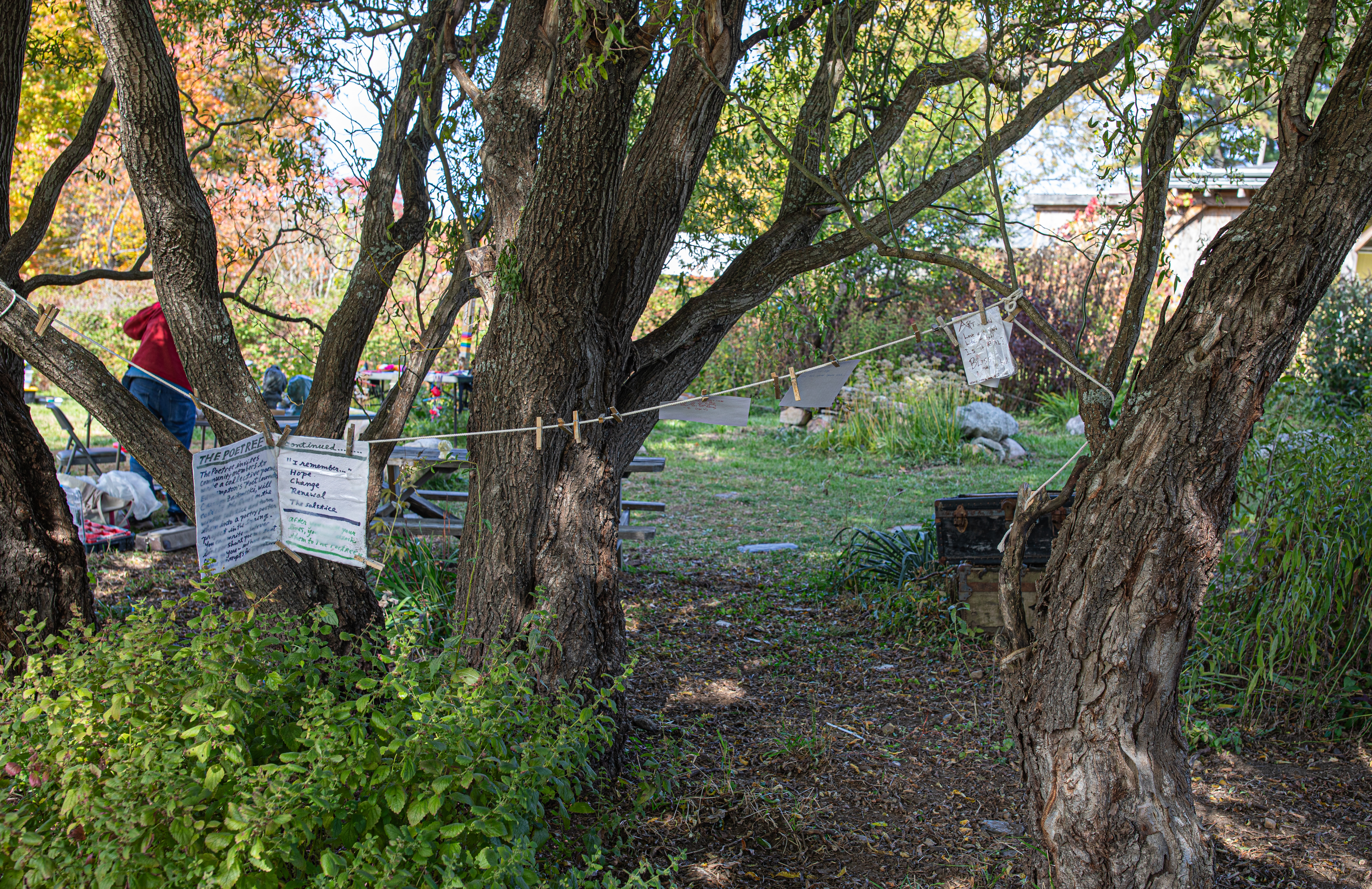
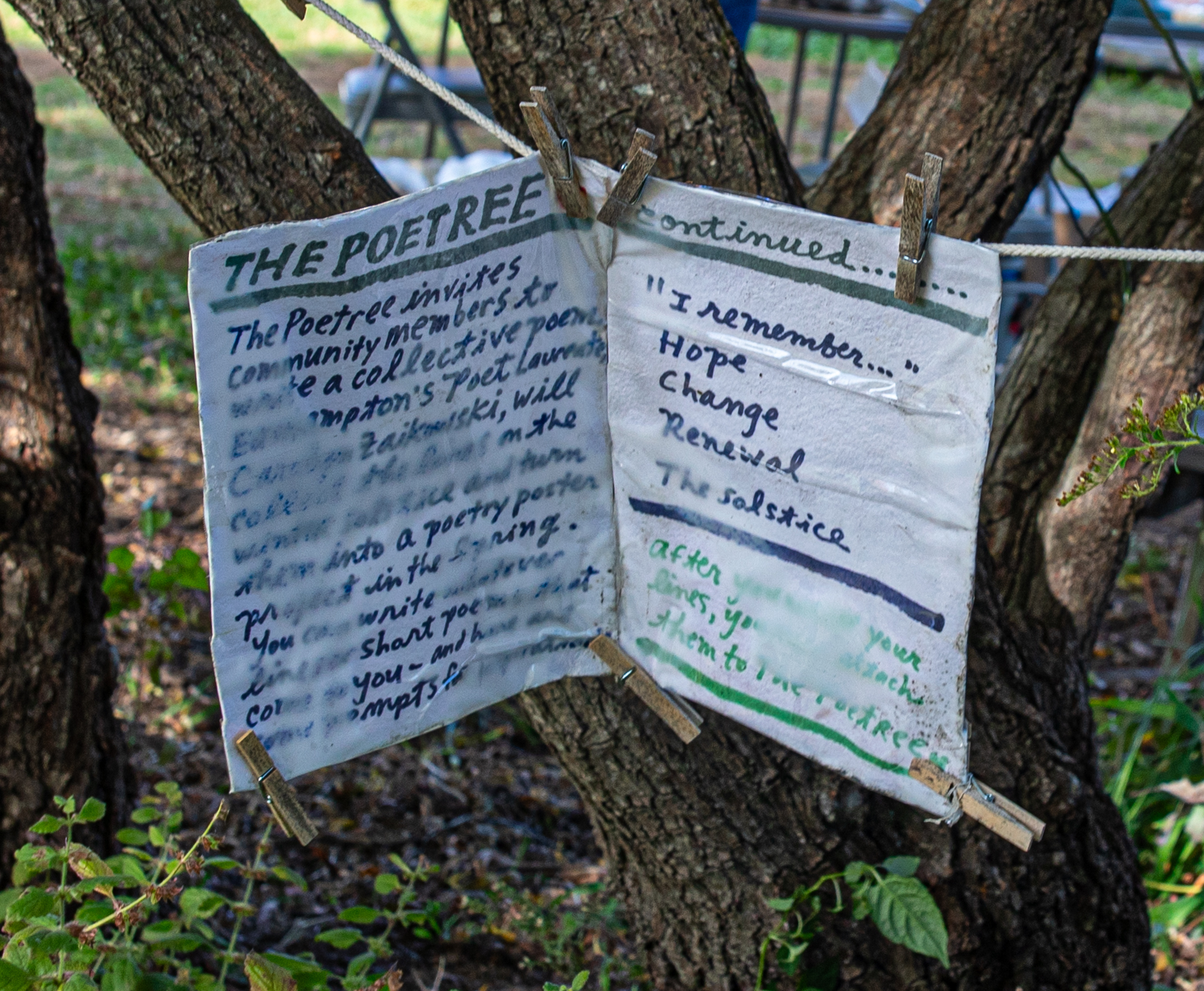
There was this Poetree at the park. The Poetree included poems attached to the tree.
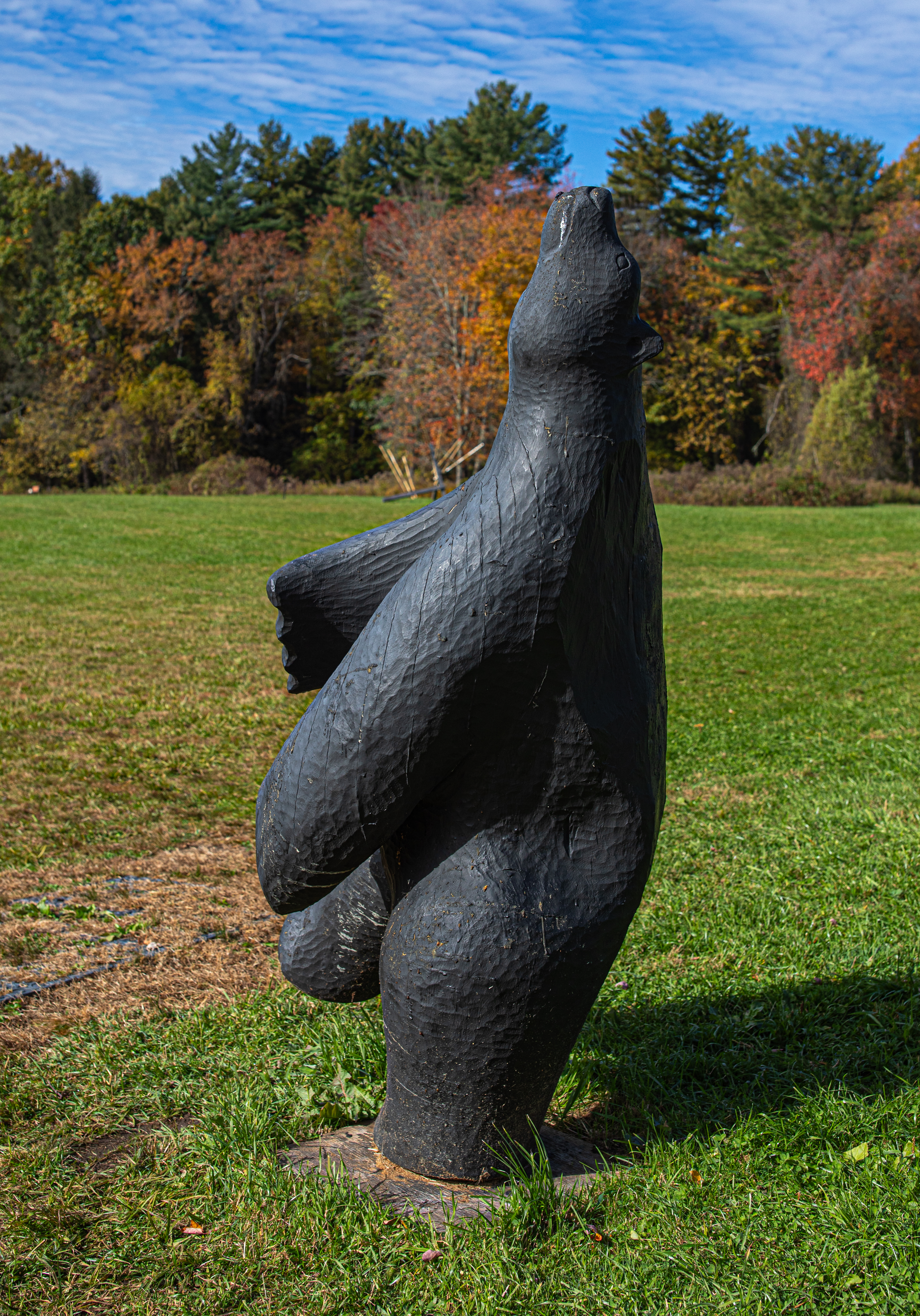
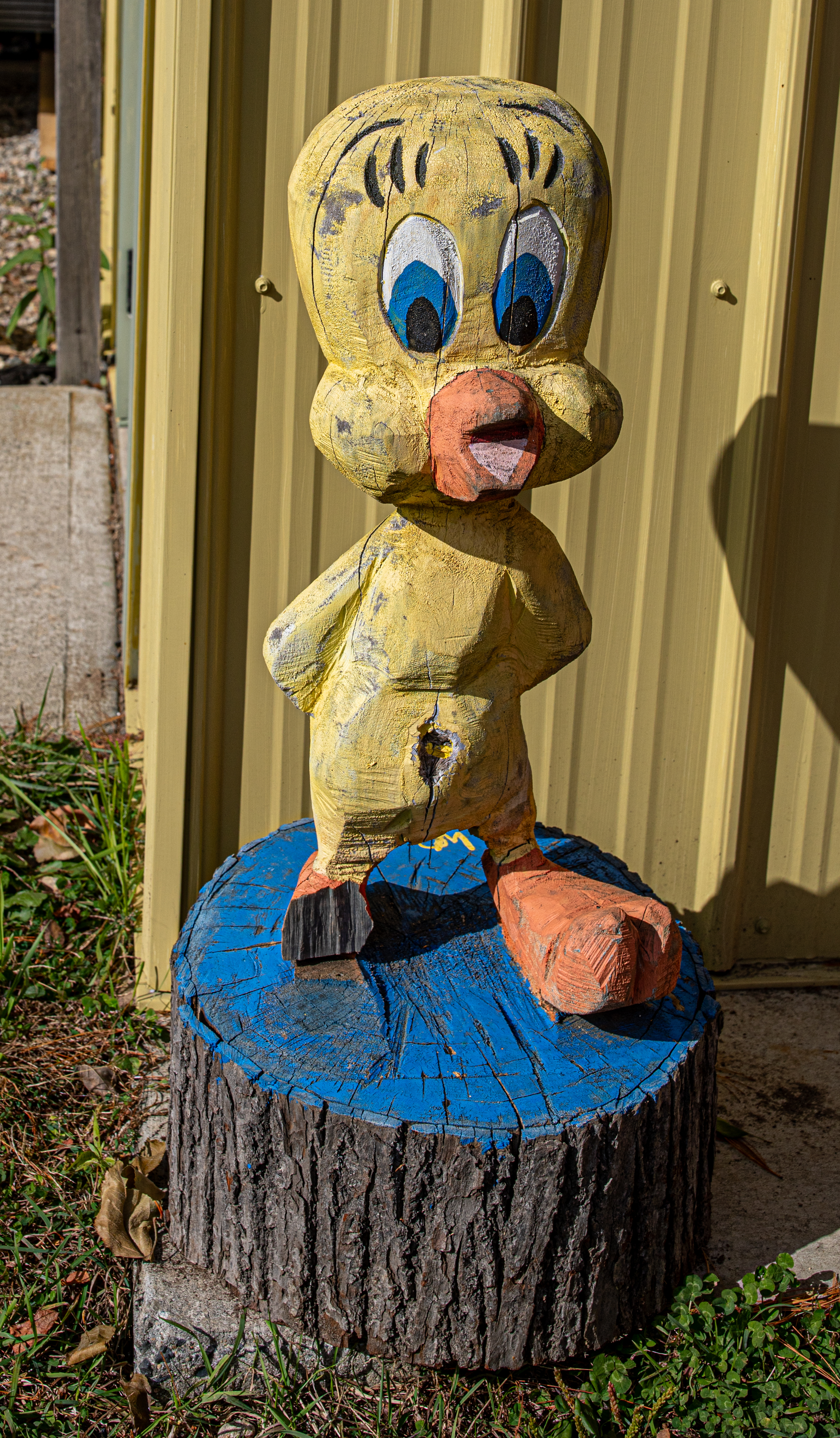
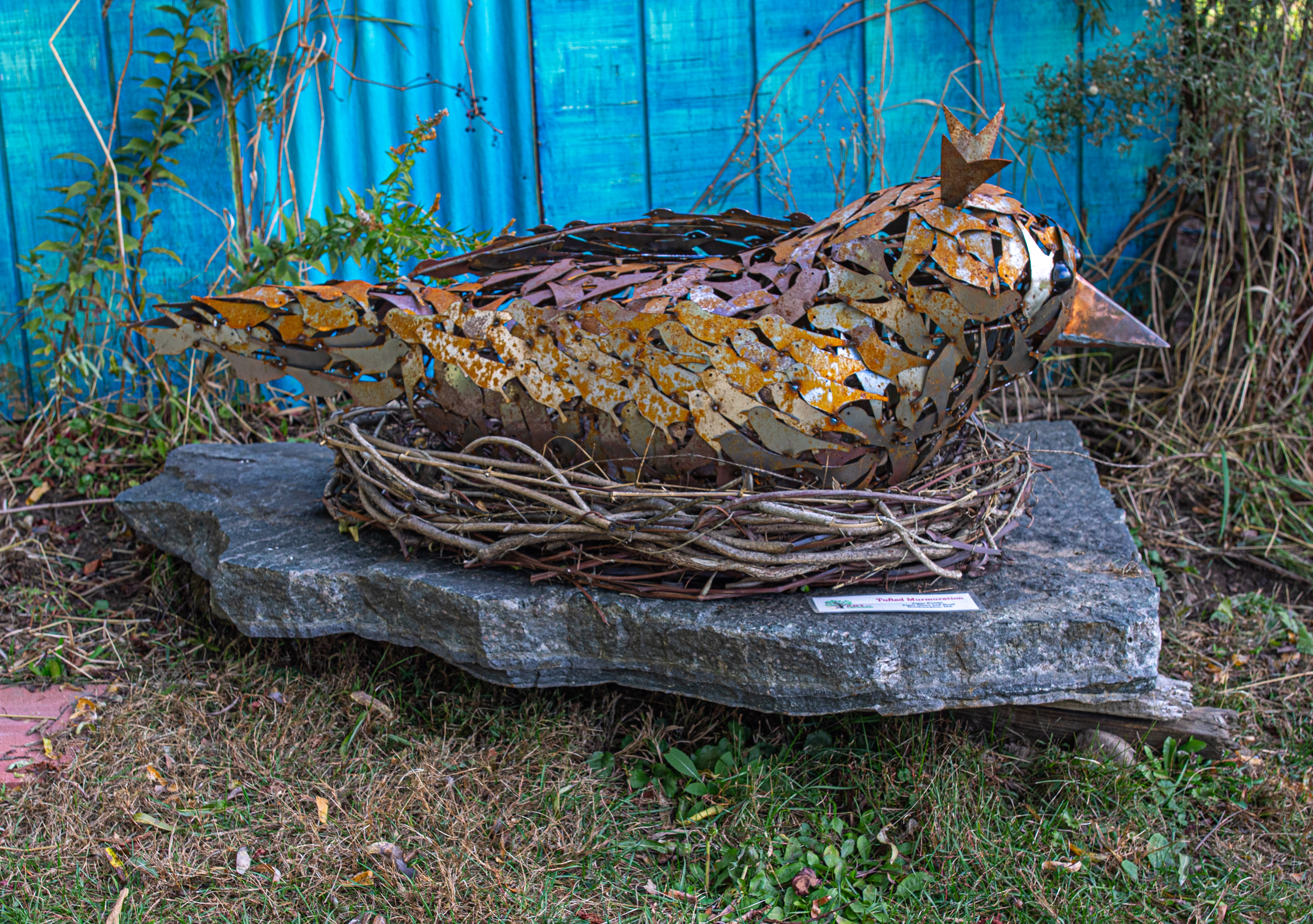
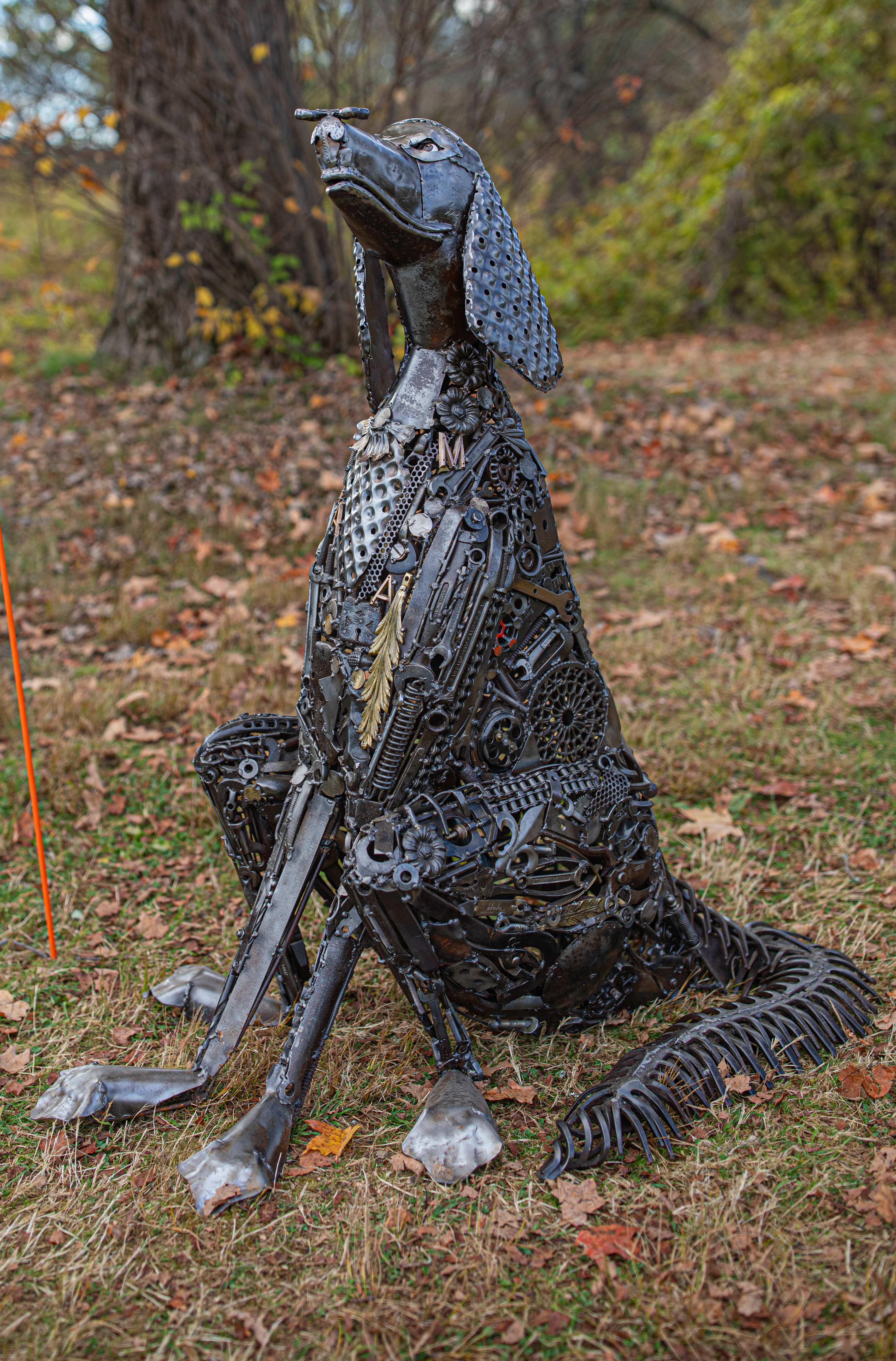
There were also other sculptures and works of art that were not part of the event. Some of them were sculptures the artists were selling and some were things I just noticed at the park.
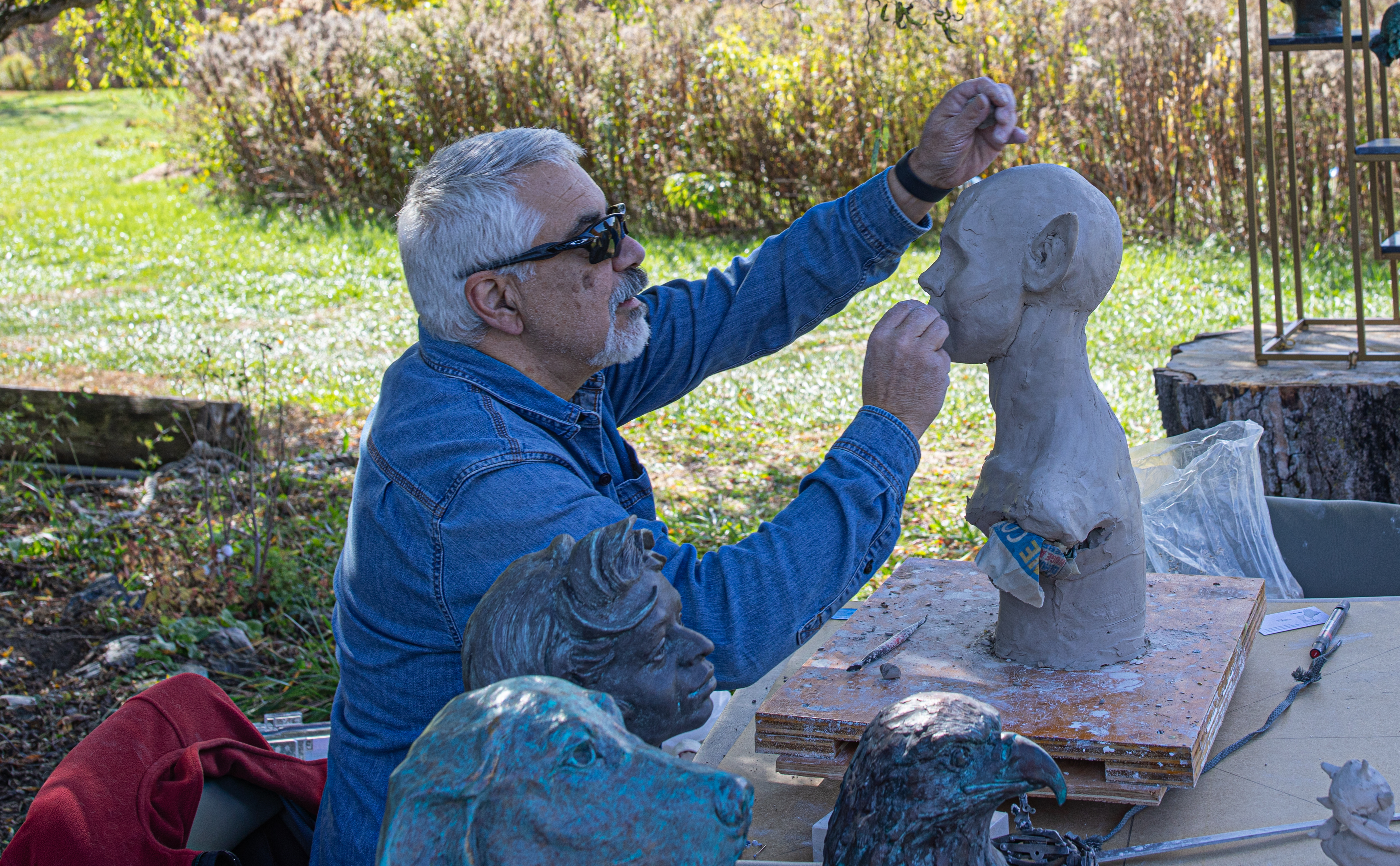
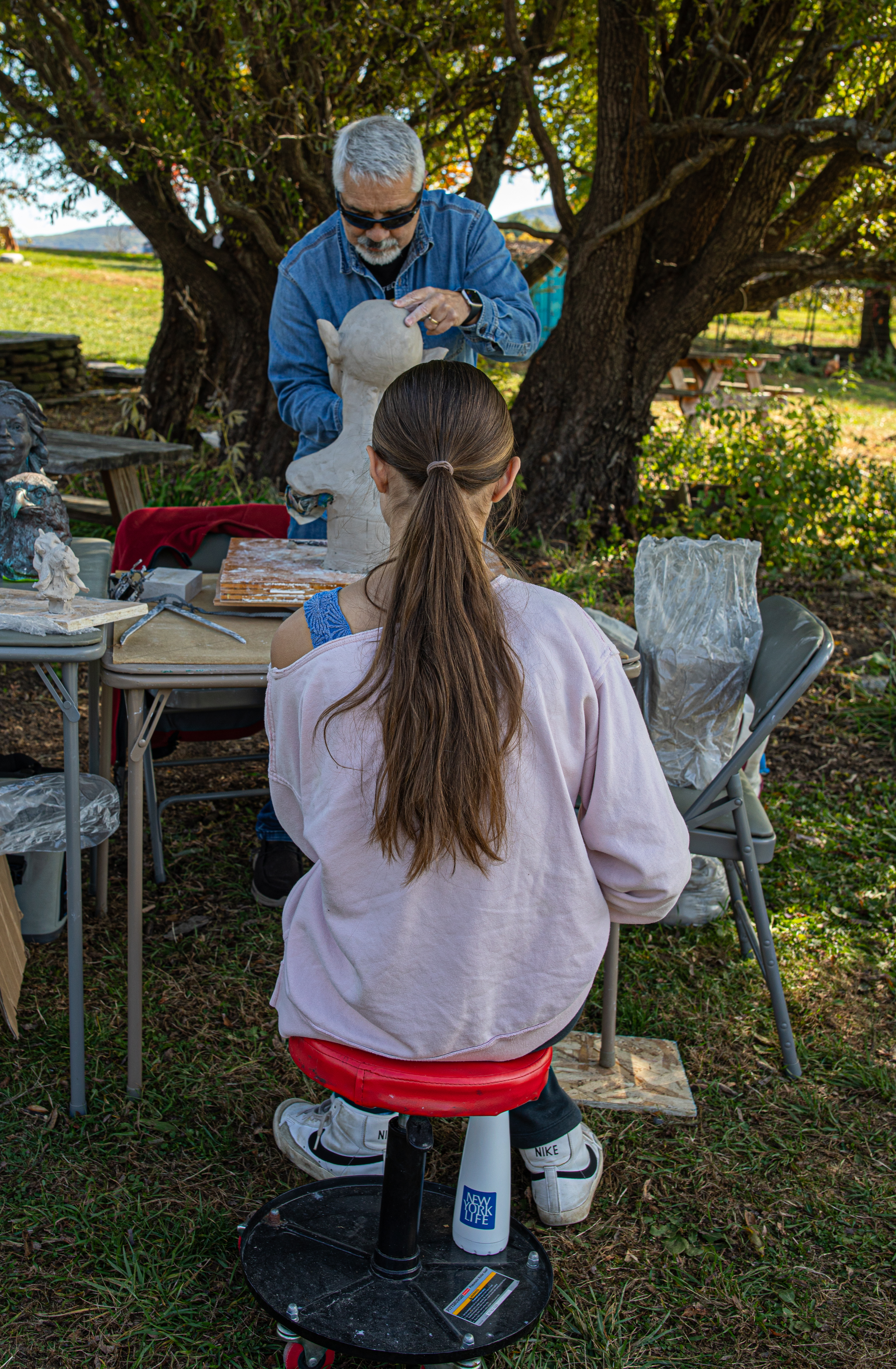
During the event, one of the sculptors, John Collins, was making a sculpture of a girl’s head.
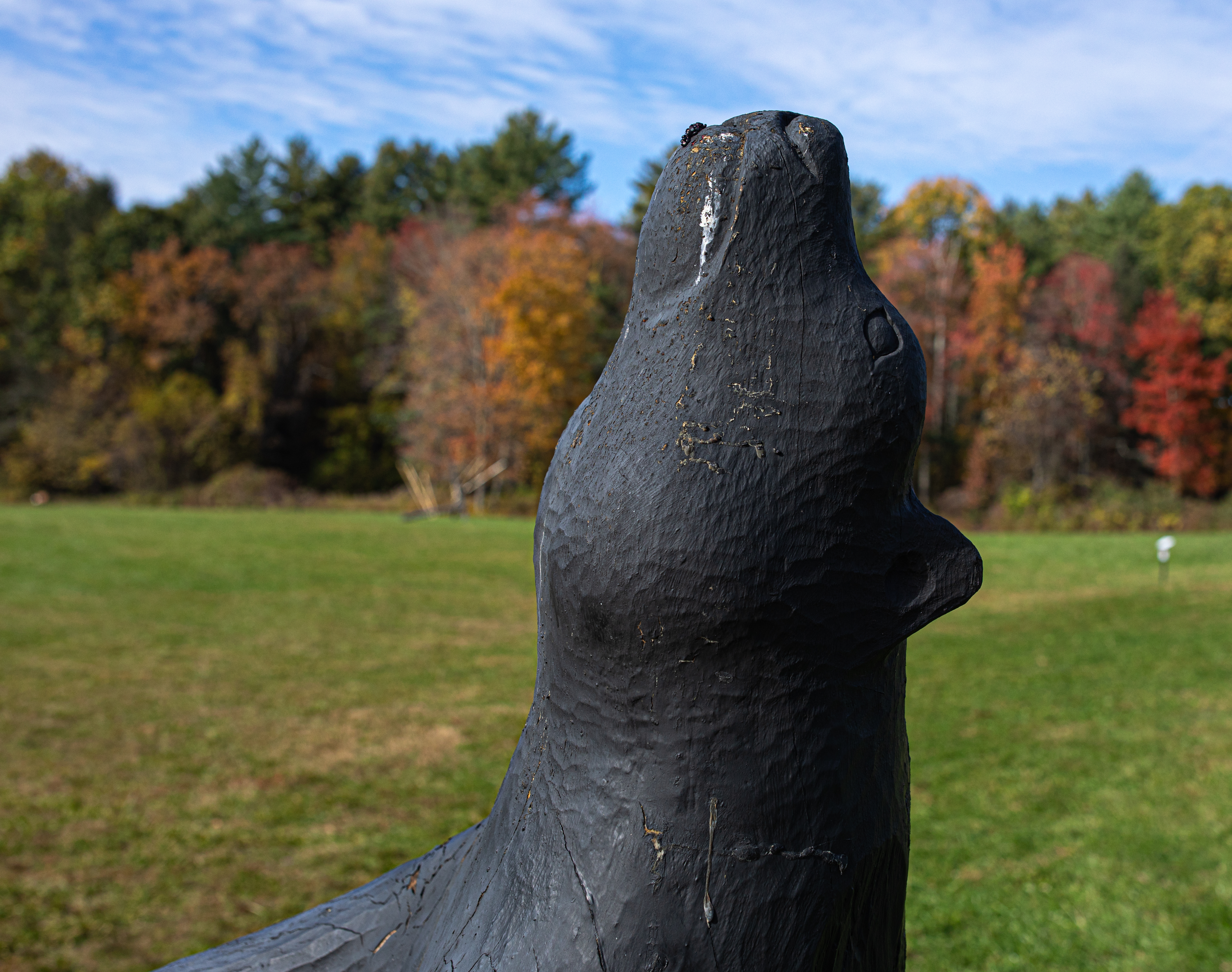
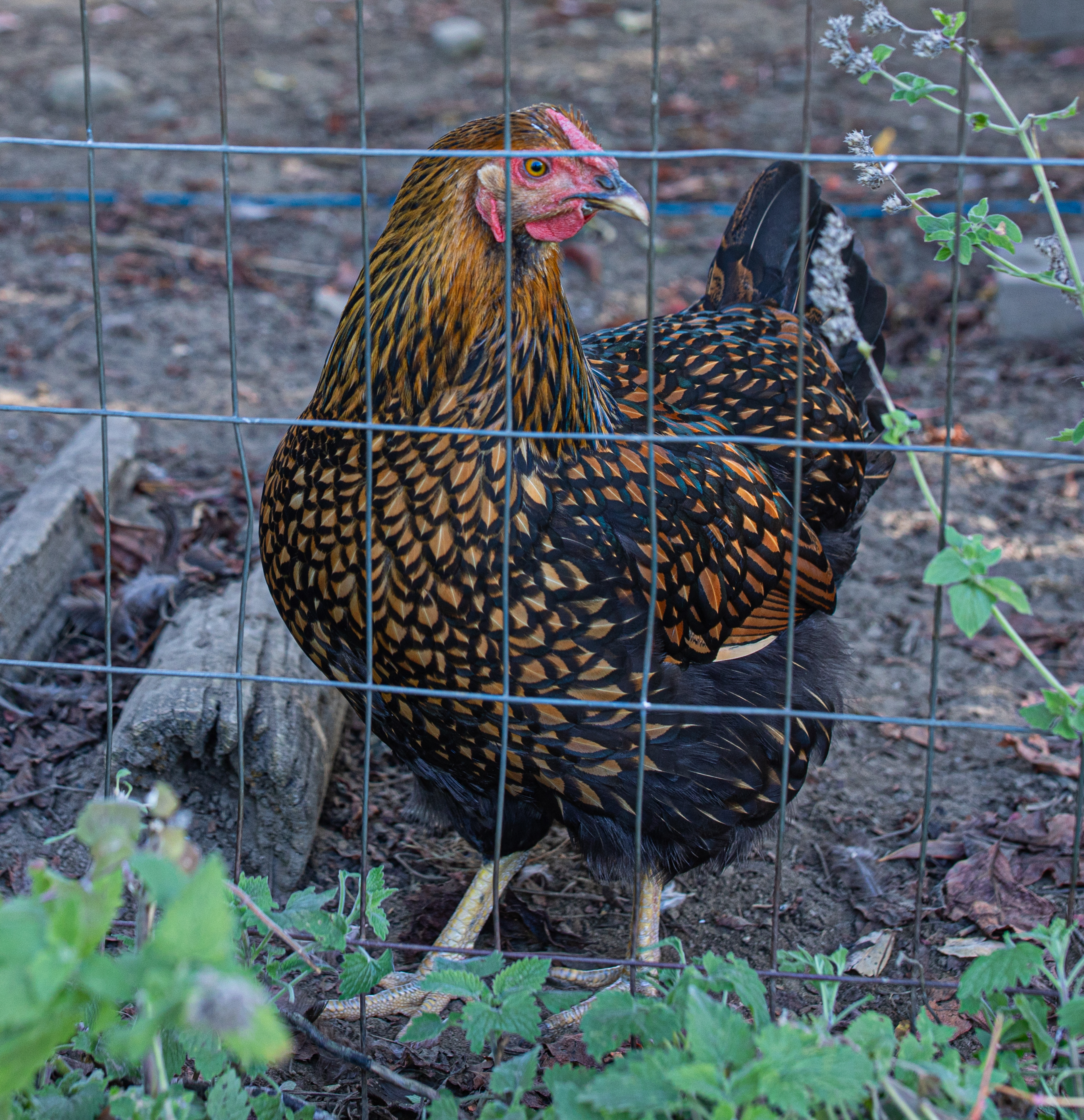
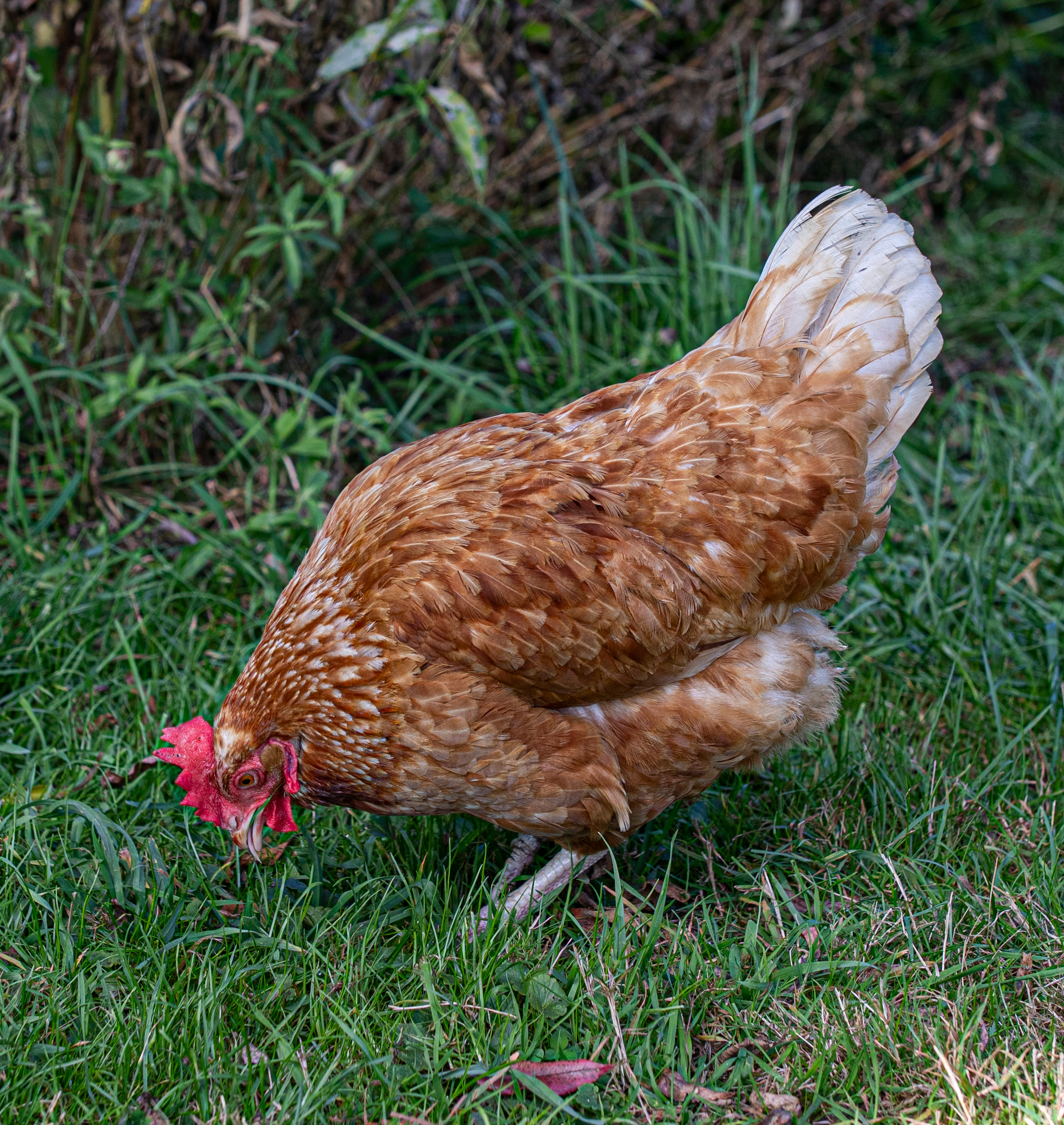
And, there was also a rooster and chicken, specifically a Golden Laced Wyandotte chicken.
AS you can see, there was lots of art at the event. But, what struck me most was the meaning and theme of the works of art. There were some very meaningful messages to some of the art! It also goes to show how creative people can be!
2025 Art In The Orchard Part 1 (Park Hill Orchard, Easthampton, MA)

Date Of Visit: October 18, 2025

Location: Park Hill Orchard, 50 Payson Ave, Easthampton, MA

Cost: Free

Universally Accessible: Yes. The staff at Park Hill Orchard offer a Accessible Art Cart for those who need assistance.

Dog Friendly: Yes

Summary: Art In The Orchard featured dozens of works of art from local artists.

Raise you hand if you’re sick of this cold and wintry weather. Since I still have lots of photos from events and places I have visited last year, I thought it would be a good time for a change of pace and post some photos from a milder, more colorful time.

Nature and art go hand in hand. Hence, the Art In The Orchard exhibit. The aim of Art In The Orchard is to blend art with horticulture. Two of my favorite things!

Created in 2011, Art in the Orchard is a juried outdoor sculpture and installation exhibit showcasing the work of local and regional artists. Set on the grounds of Park Hill Orchard, the Art In The Orchard event is nestled among apple trees, small fruit gardens and landscaped farmland.

Because there were so many art installations (well over 30) and in some cases lengthy descriptions of each exhibit, I am posting this event in parts. In fact, I have photographed this event in years past. But, it was too overwhelming and time consuming to post all of the photos from the exhibit. Maybe, in the future, if I can find those photos I took I can post photos from those other years. Also, since this was a “meet and greet” event, you may notice artists posing next to some of their works. As an added note, some of the names of the artists were very familiar as I have photographed some of their works in the past. For instance, Harold Grinspoon, the artist of the first work of art has many works of art installed throughout western MA, namely at the Big E Fair at the Eastern Exposition Center in West Springfield, MA, and at Mittineague Park, also in West Springfield, MA.

One of the things that stood out to me was how all of New England was represented in the art. From Vermont to Connecticut, people came from all over New England to show their art.

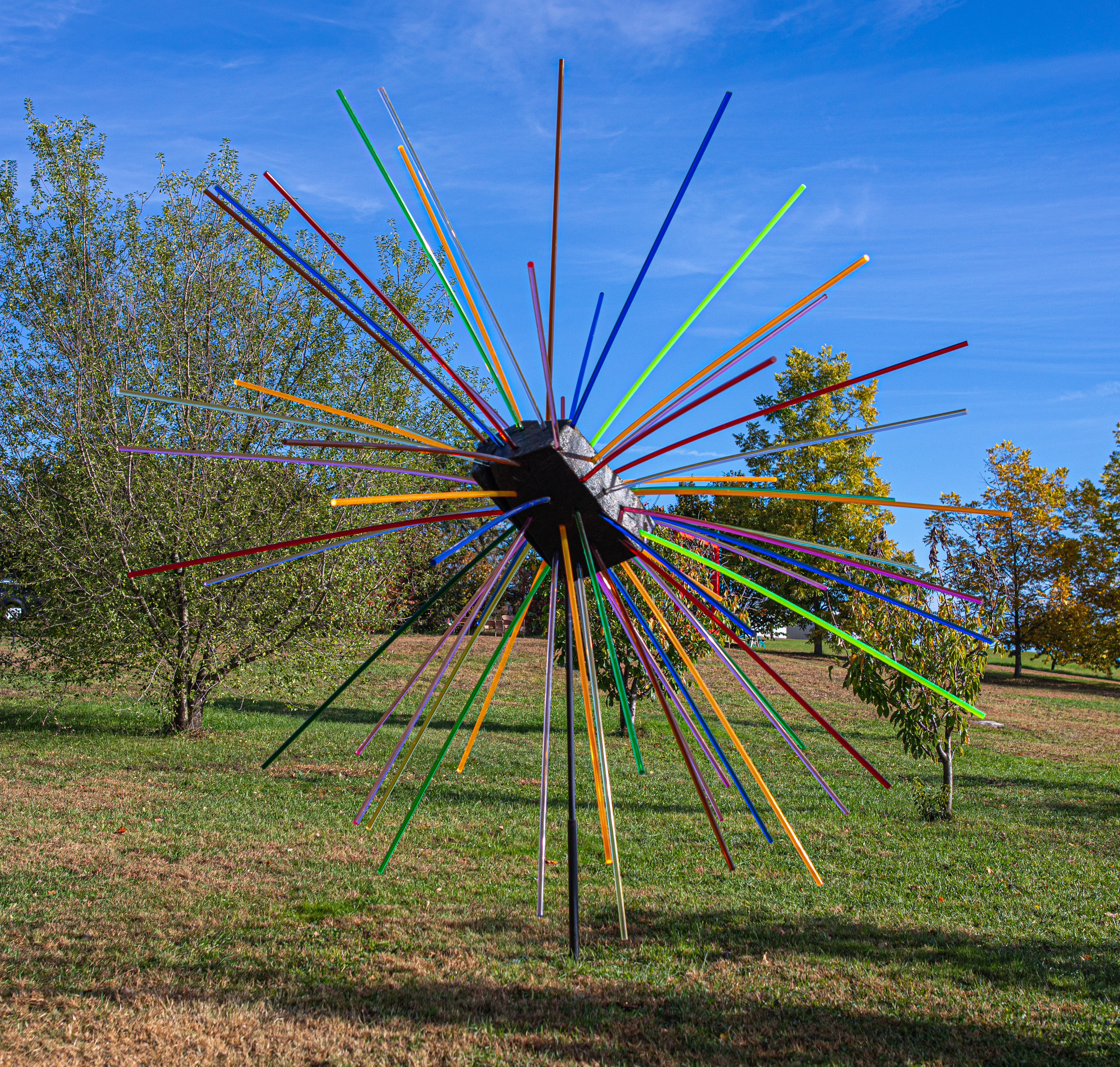
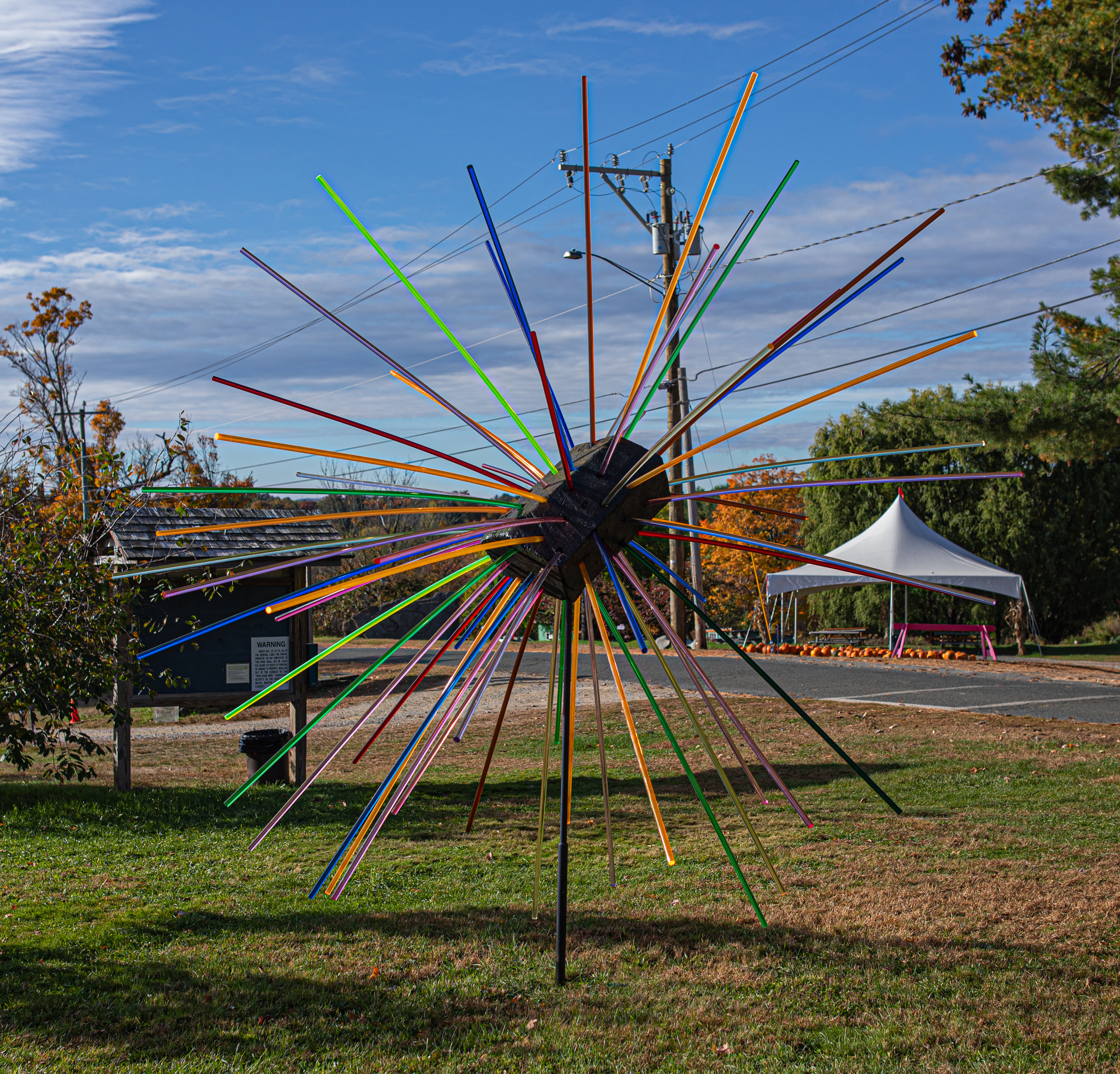
The first work of art at the event was “Big Bang” by Harold Grinspoon of Agawam, MA. “Big Bang” is made of charred wood center and acrylic rods. It is meant to be a celebration of special occasions and to remind us to be joyful of life. The rods individually capture light and reflect it back. But, together with others it creates an impact and good feelings in us.

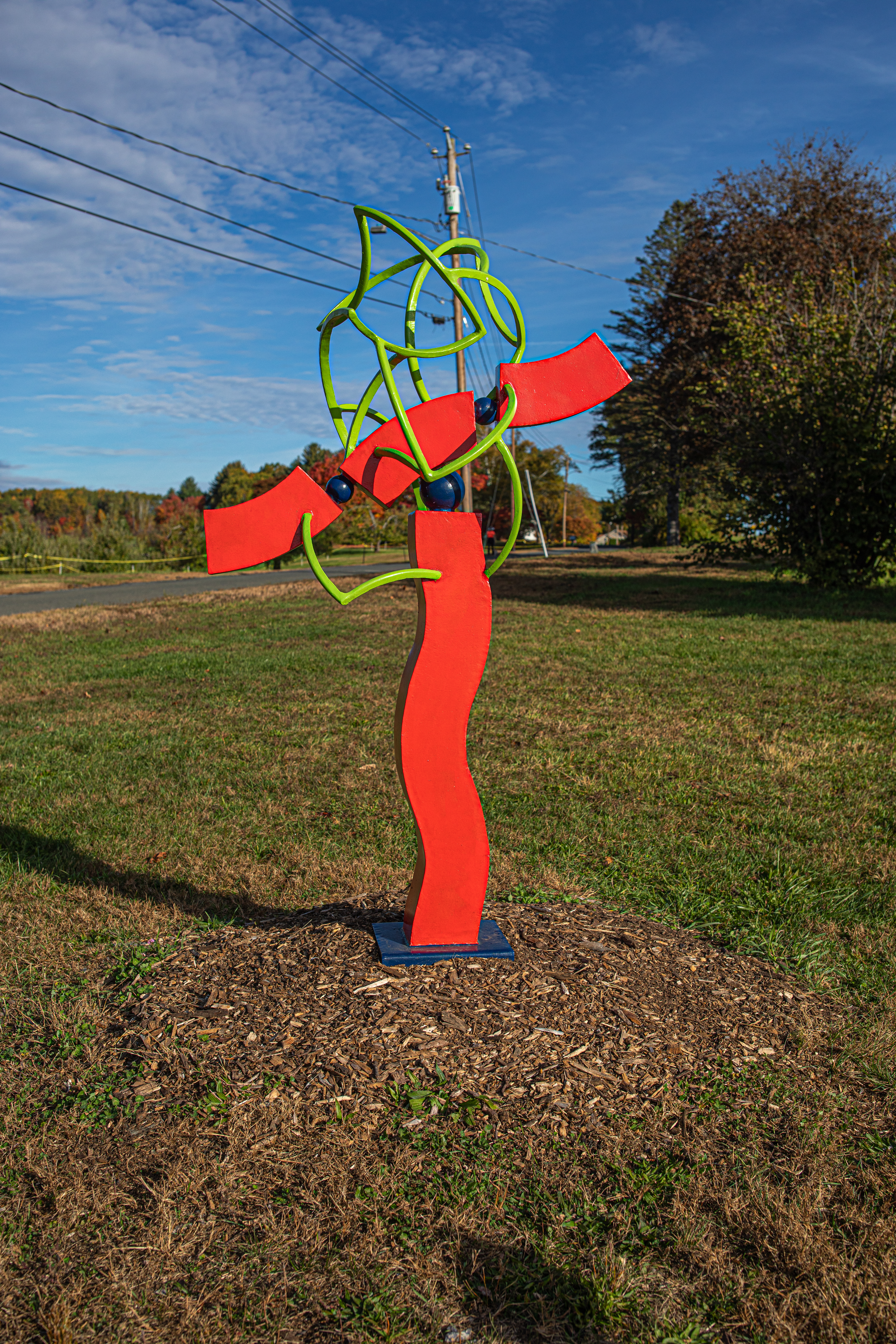
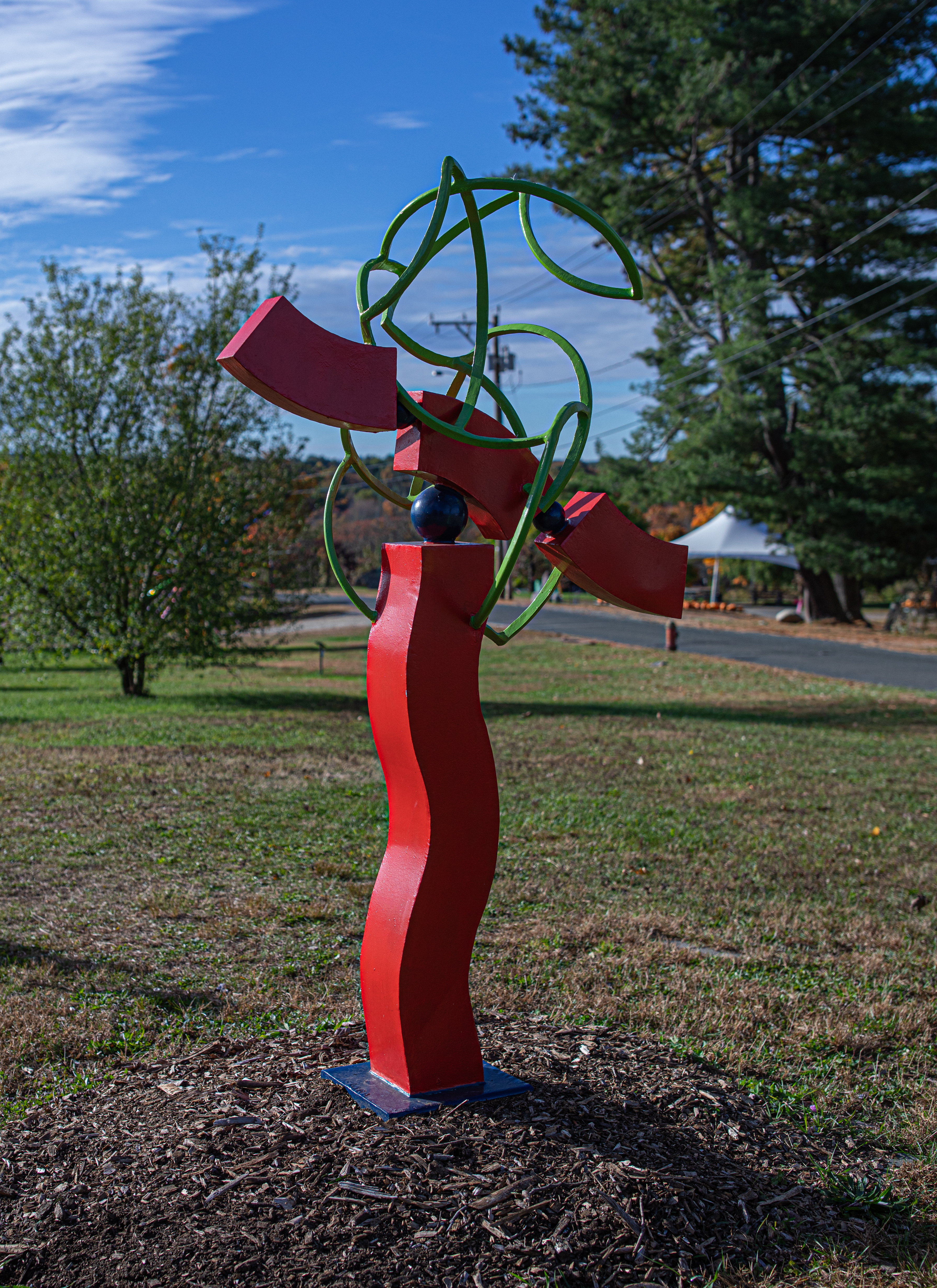
“Baroque Composition, Standing Figure” by David Skora of New Hartford, CT, made of welded polychromed steel, is the next exhibit. Created in the modernist tradition, “Baroque Composition, Standing Figure” was a welded fabricated metal sculpture of abstracted forms. The sculpture attempts to appropriate the energy and exhilaration of David’s interpretation of the Baroque style of art and architecture he observed while visiting Spain.

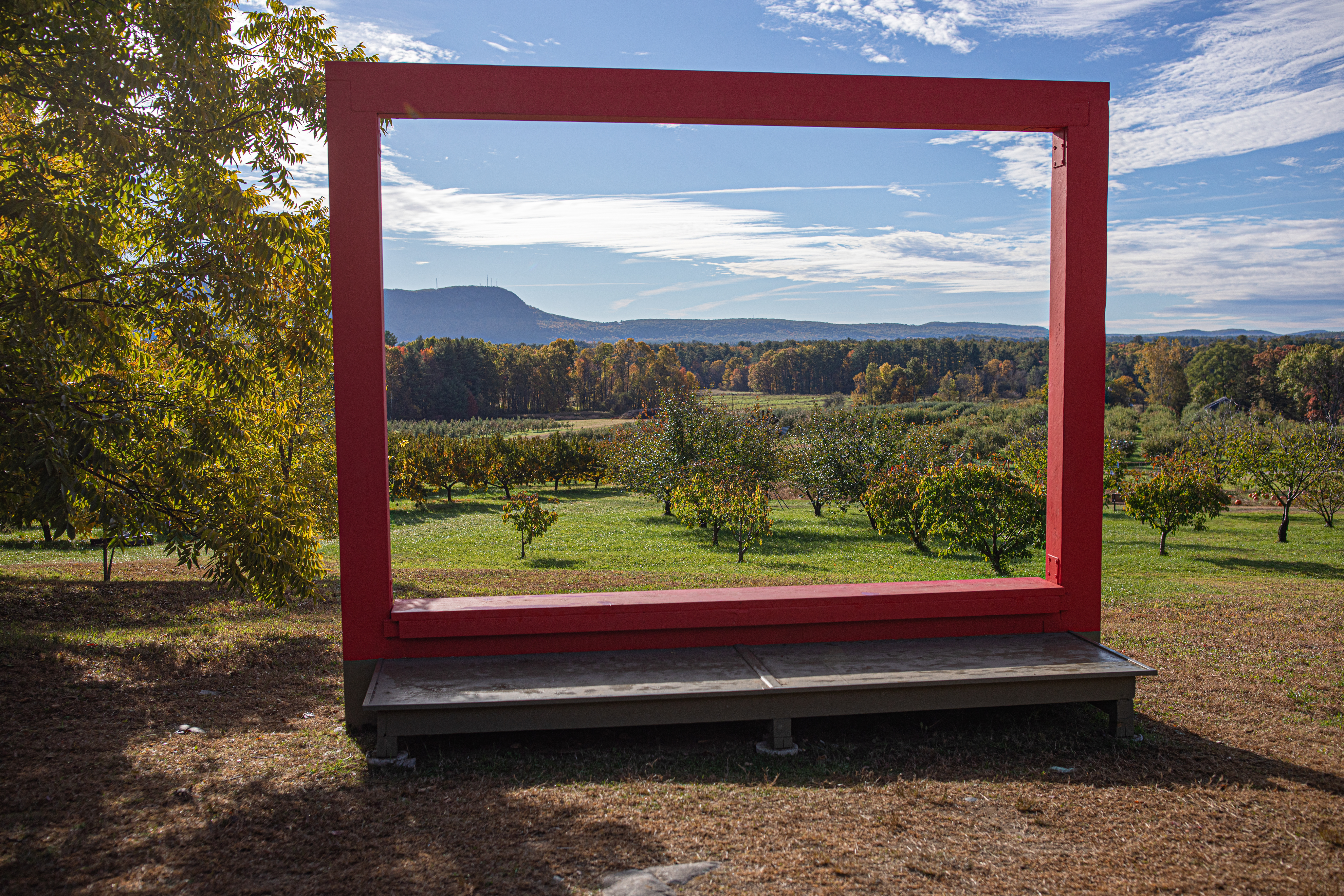
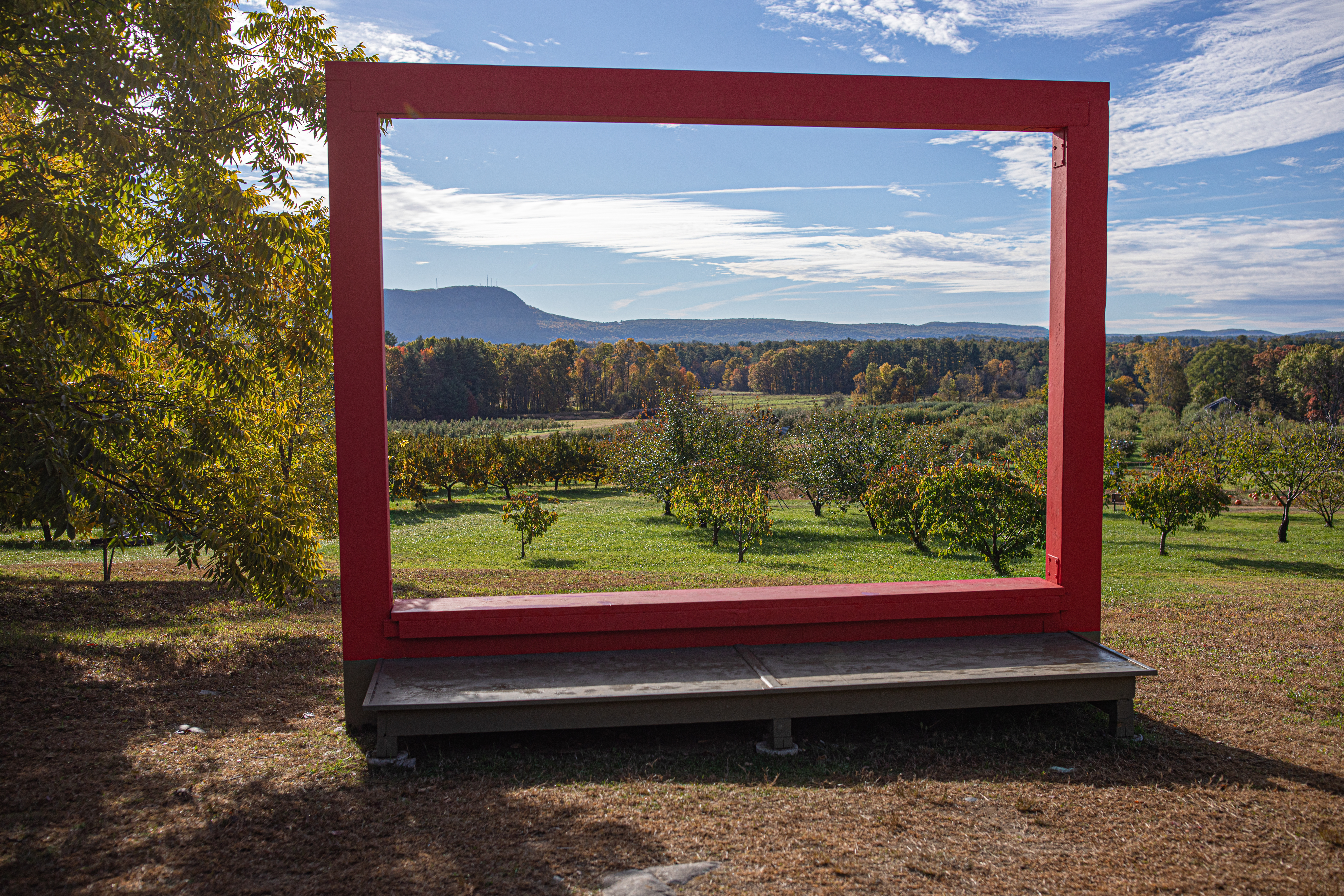
The next piece is not really a work of art. The red frame is often used for people to take selfies or photos with friends and loved ones. The hills and trees make for a beautiful backdrop, especially during foliage. It is installed at every Art In The Orchard event.

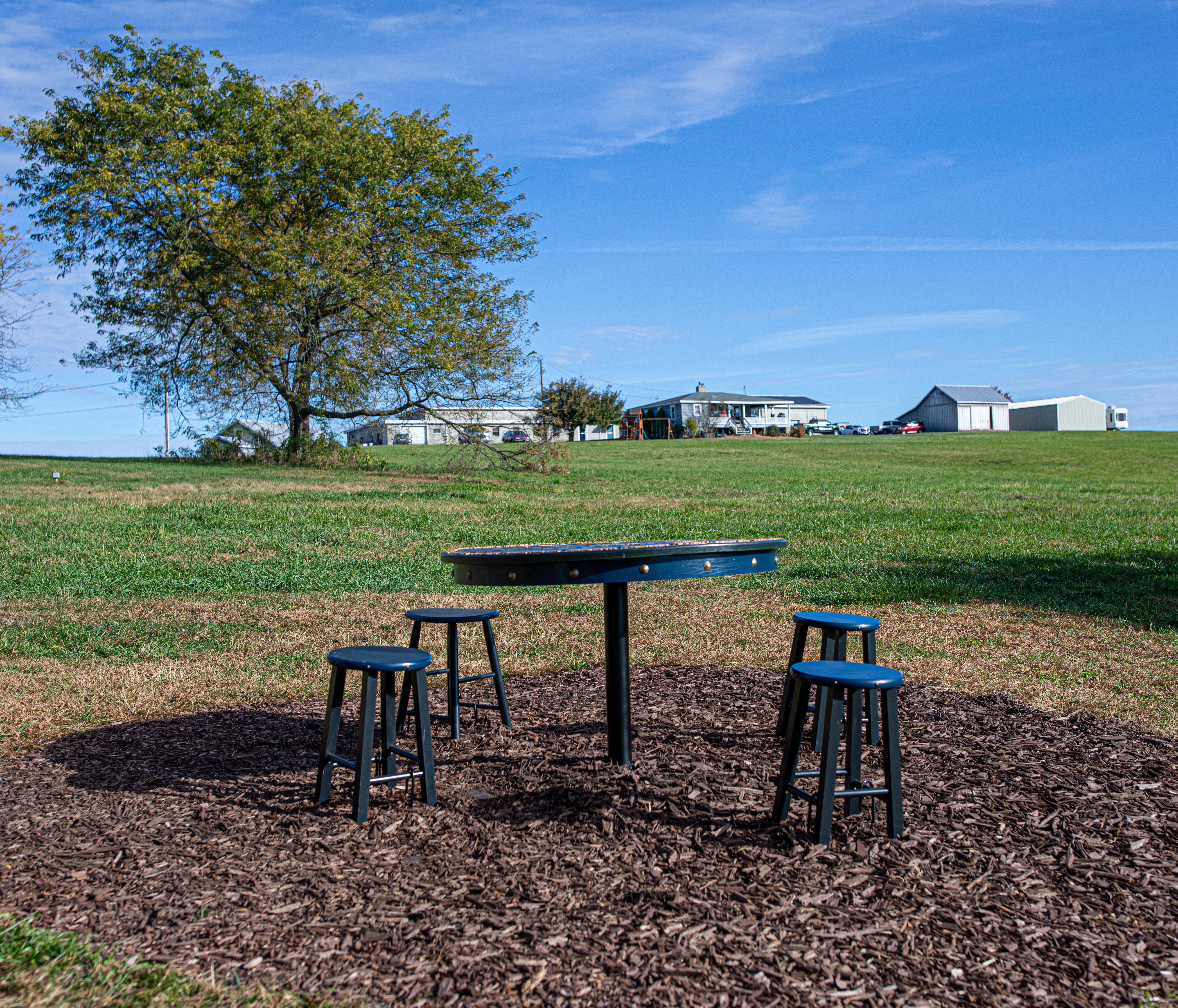
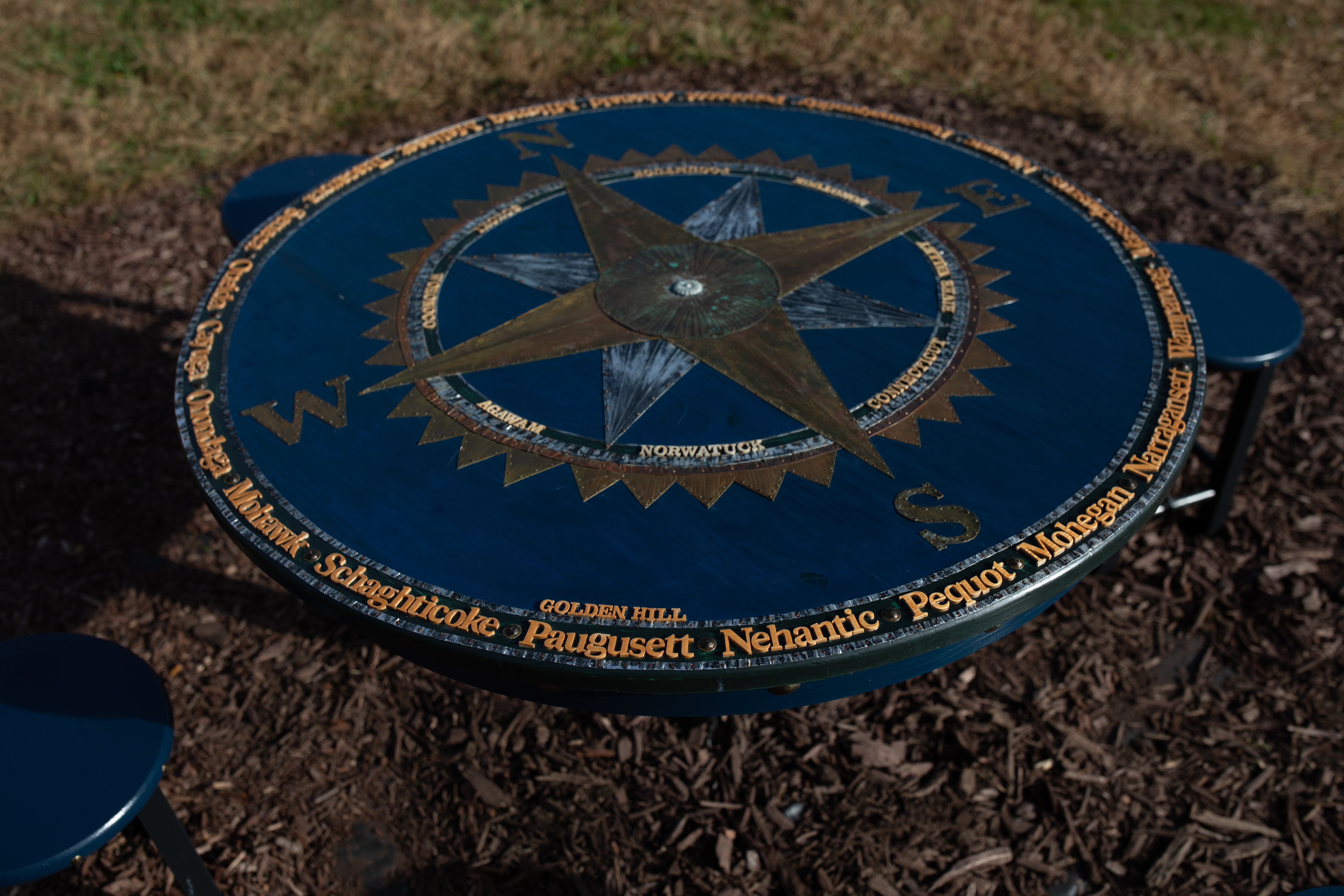
“Acknowledgement” “by Diane Travis of Northampton, MA, is a nod to “land acknowledgement.” You may have seen some signs or markers on the ground acknowledging “native land” or other forms of land acknowledgement (I’ve seen several of them in Boston and Salem, MA). This installation, made of a found table, brass copper, aluminum, paint and wood letters, is meant to be a tangible. interactive sculpture situated on the land people to refer to during “land acknowledgements” at meetings and gatherings. It also pays tribute to the original people of the land.

A compass rose set upon the table orients the viewer in the landscape of Mt. Tom, short for “Tomhoganompekut.” Say that three times fast. I dare you. This name roughly translates to “Tomahawk Stone Place.” For millennia, Indigenous people used the unique stone there to make tomahawks.

Stools set at North, South, East and West invite people to sit and contemplate the land in all directions. Visitors are encouraged to sit and contemplate the land and history in all directions. The compass has an inner and outer circle of names; the inner circle refers to the Ancestral names of original people in the area. The outer circle names and acknowledges the continuous and current presence of Native people in the wider region of Dawn Land now called New England. “Acknowledgement” is meant to confront tropes of the “Disappeared Indian”, asserting, “We are here.”

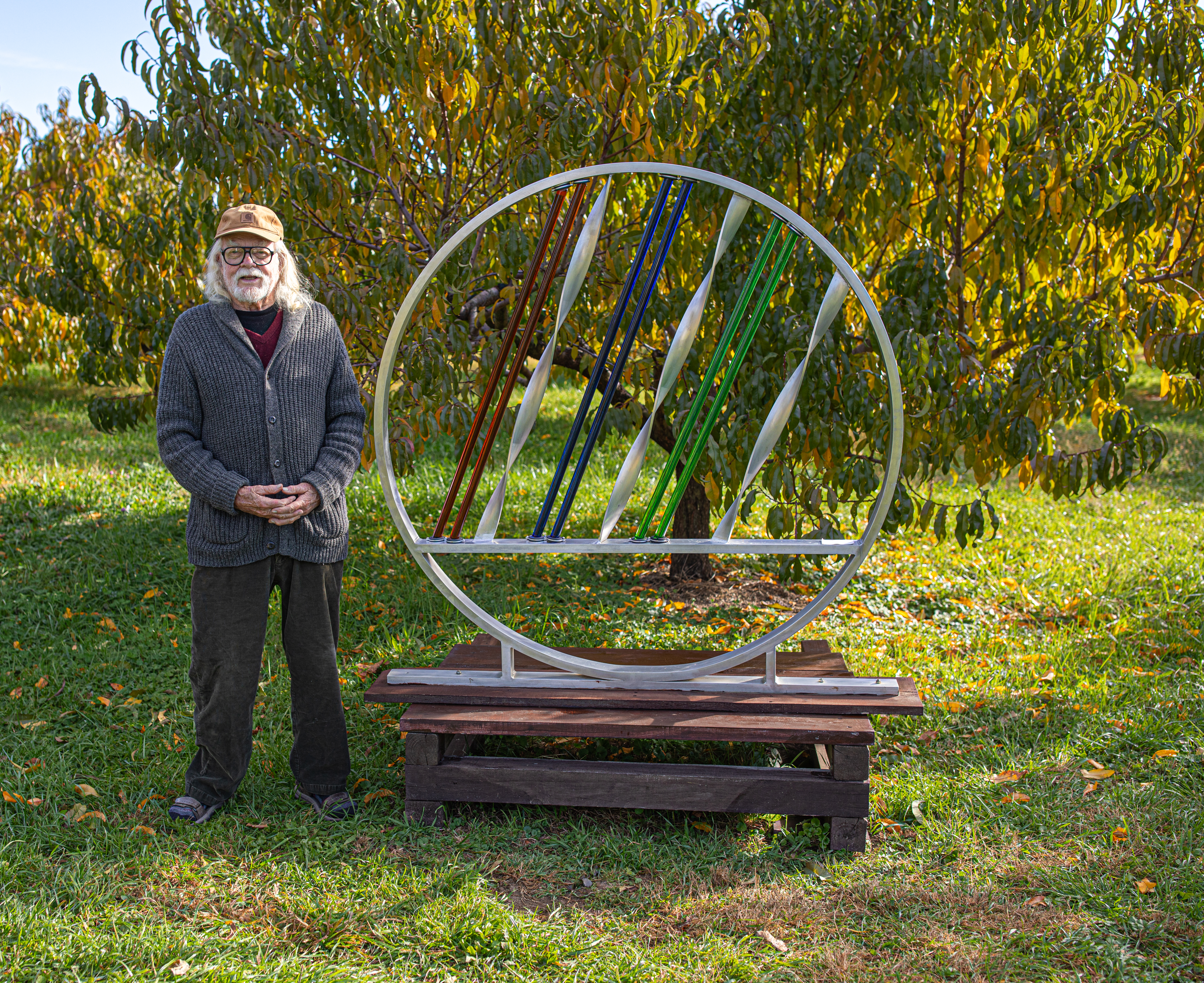
“Big Mama With Glass ” by Robert Osborne of Athol, MA is the next art installation. I was fortunate enough to meet the artist of this work of art during the event. Robert told me the “Big Mama With Glass”, which is made of solid aluminum bar and solid glass rods, was the largest of his “Mama” sculptures. He said the “Dia generation” which is Michael Kimmelman’s label for minimalists and conceptualists many of which are on view at the Dia in Beacon, NY, to be the most relevant today. Their work, according to Robert, is about optics, light, architecture and a unique philosophical approach to seeing and thinking. Robert is also intrigued by the string constructions of Fred Sandback because of his exploration of volume and space. Robert hopes to make people question and really look closely and think about the images and their interactions with his art.

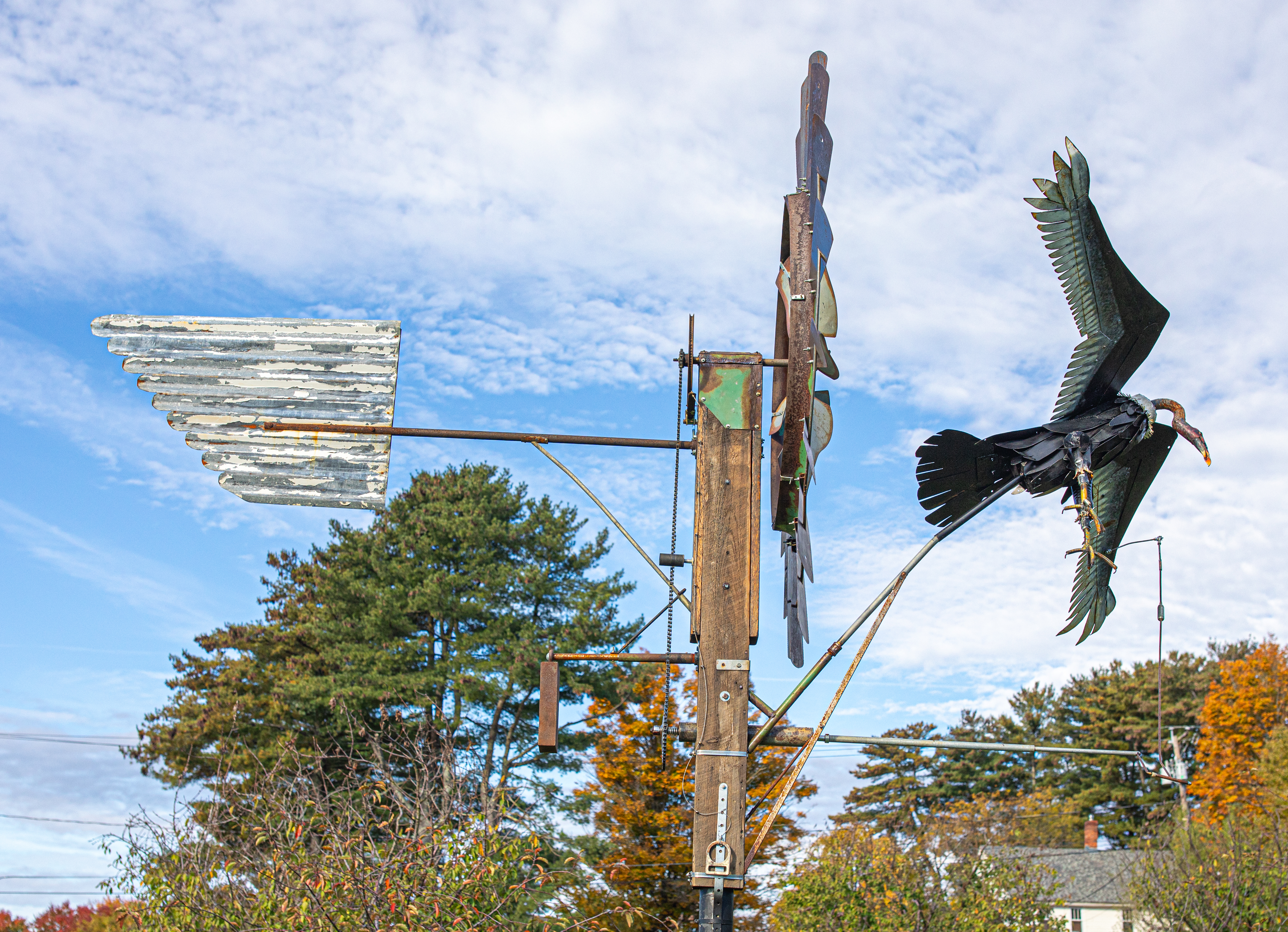
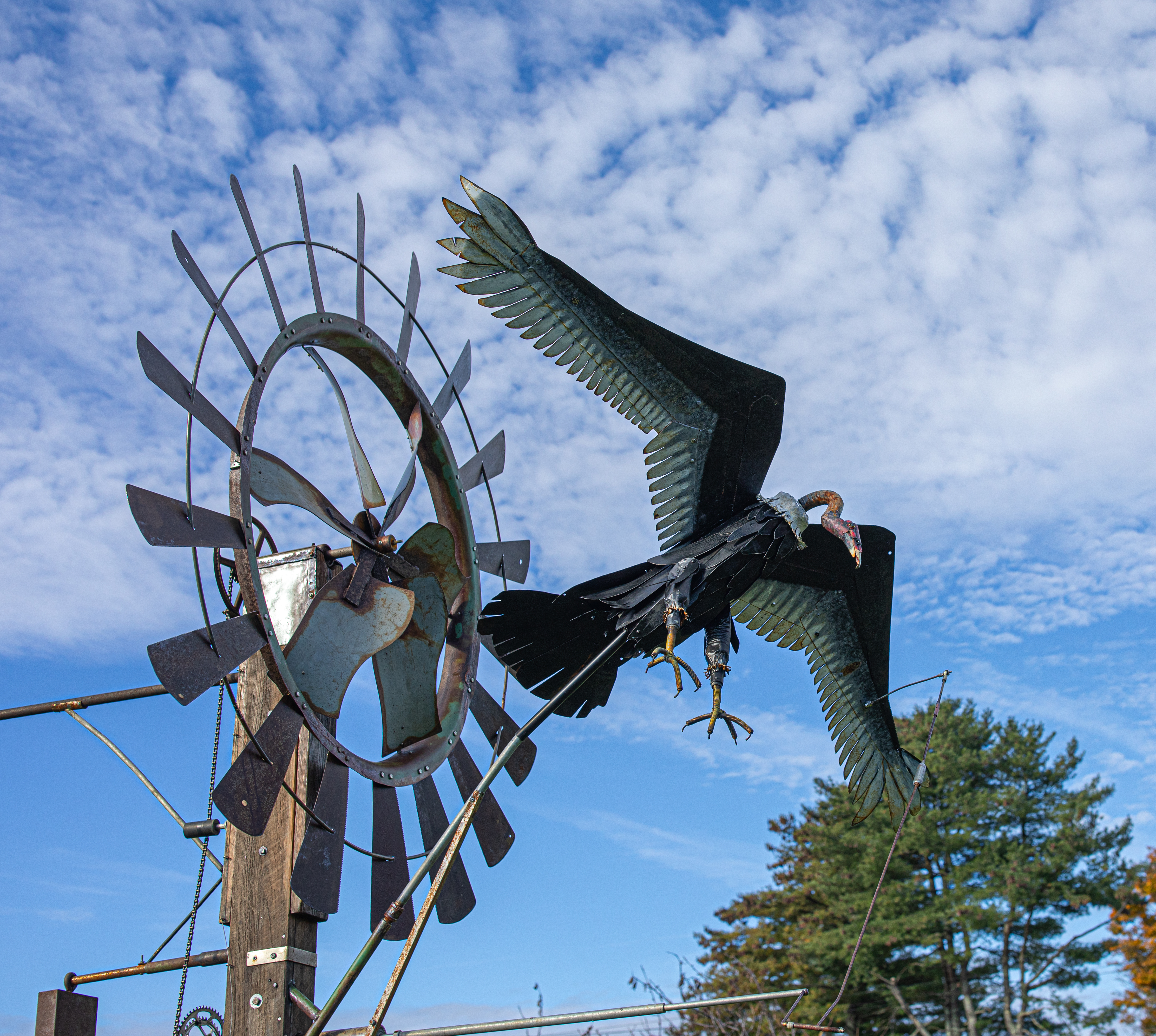
“Coming Home To Roost” by Easthampton resident Christopher Woodman was inspired by some unsavory looking guests in his backyard. The art installation, which is made of a factory fan hub, multiple hand saws and other found metals and wooden beams, was inspired by turkey vultures. The previous Fall, the trees in Christopher’s yard were the chosen home for dozens of turkey vultures. Christopher was taken by the calamity in their process. He observed that for masters of the wind, they don’t always stick their landings. At one point, Christopher counted 60 buzzards, which was close to 400 ft of wingspan.

When choosing a focal point for his piece, the vulture idea hit a lot of themes for Christopher. He especially liked using discarded parts and appreciated the balance of nature and renewal. He also wanted to show the ominous and foreboding specter of the future.

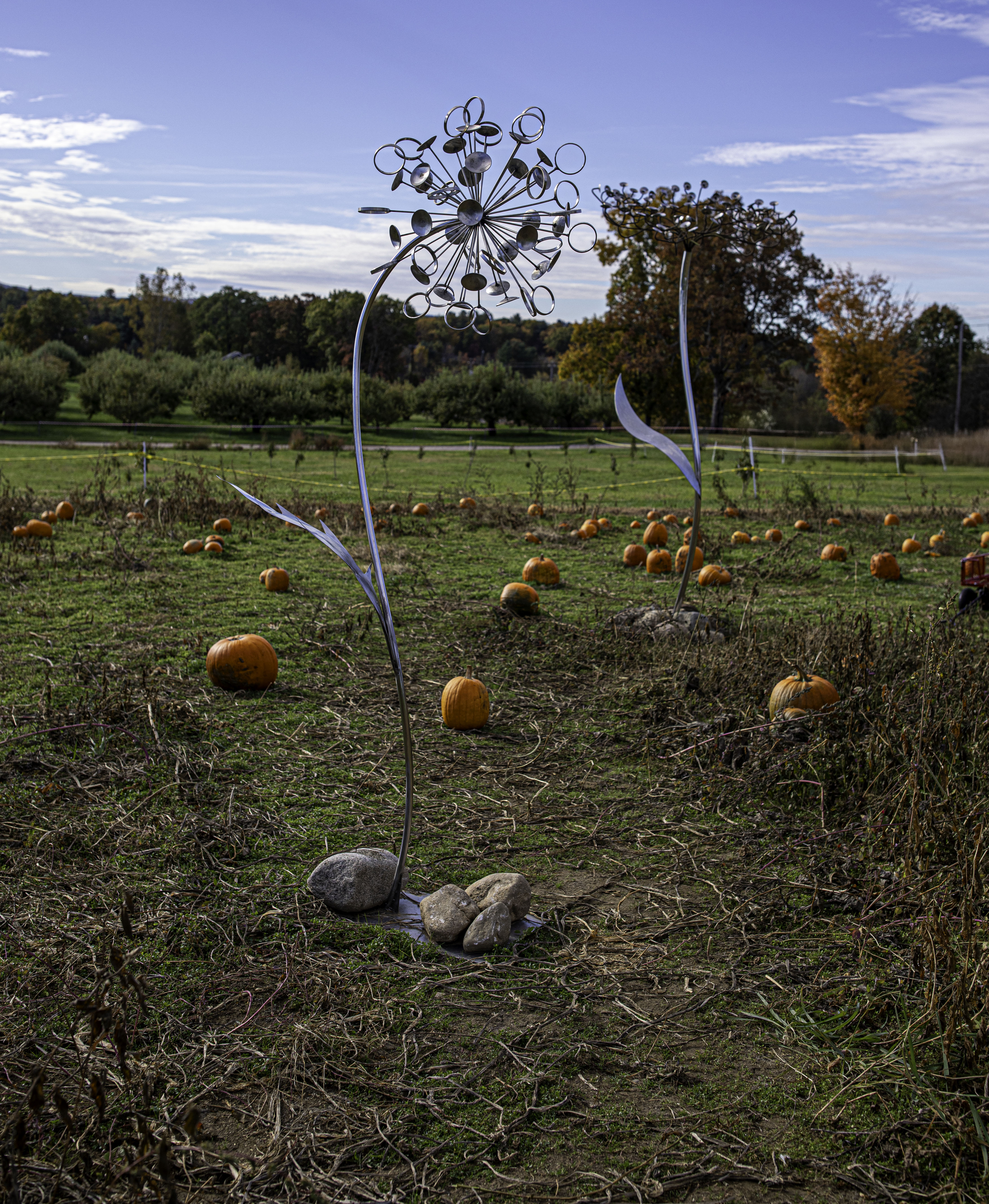
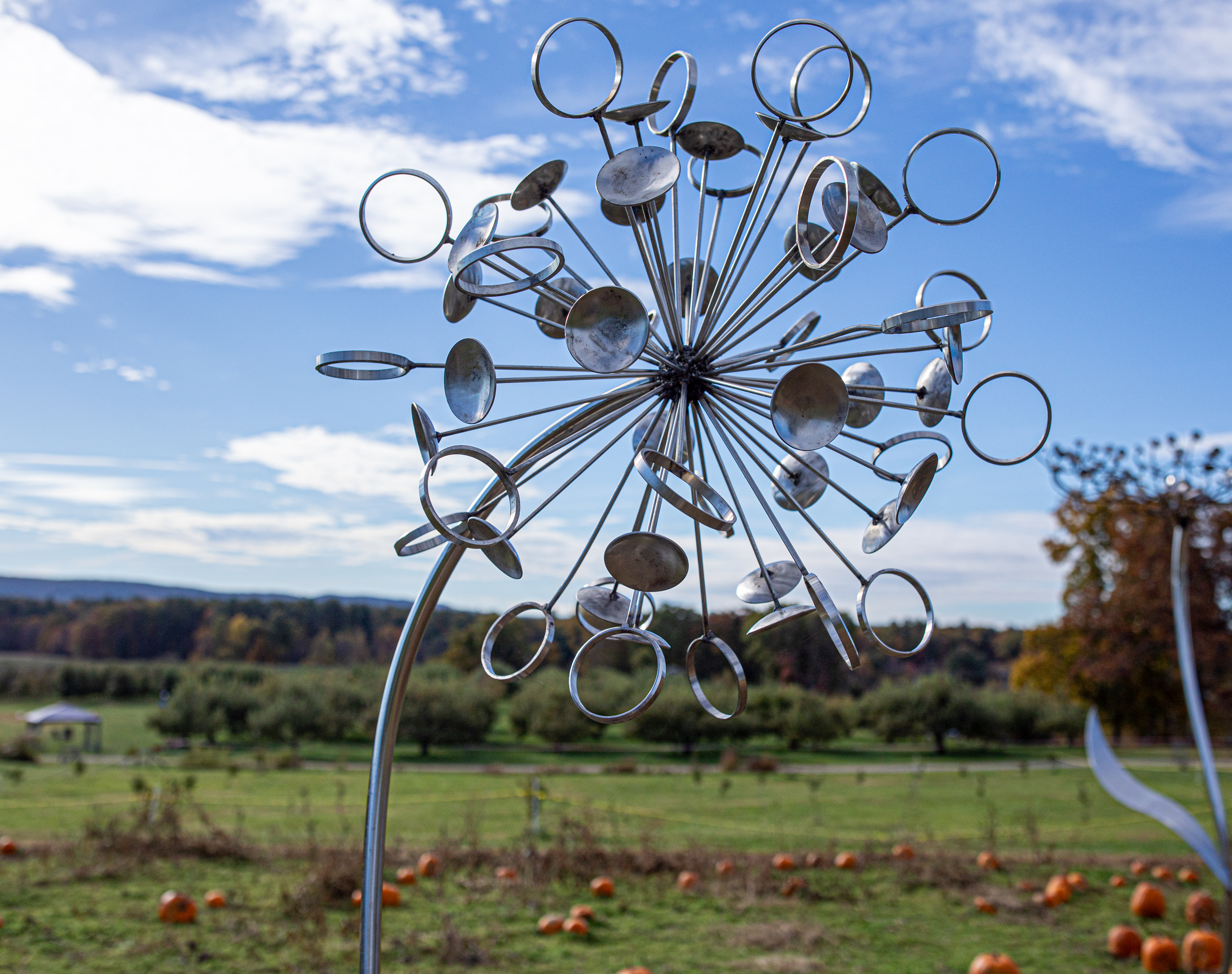
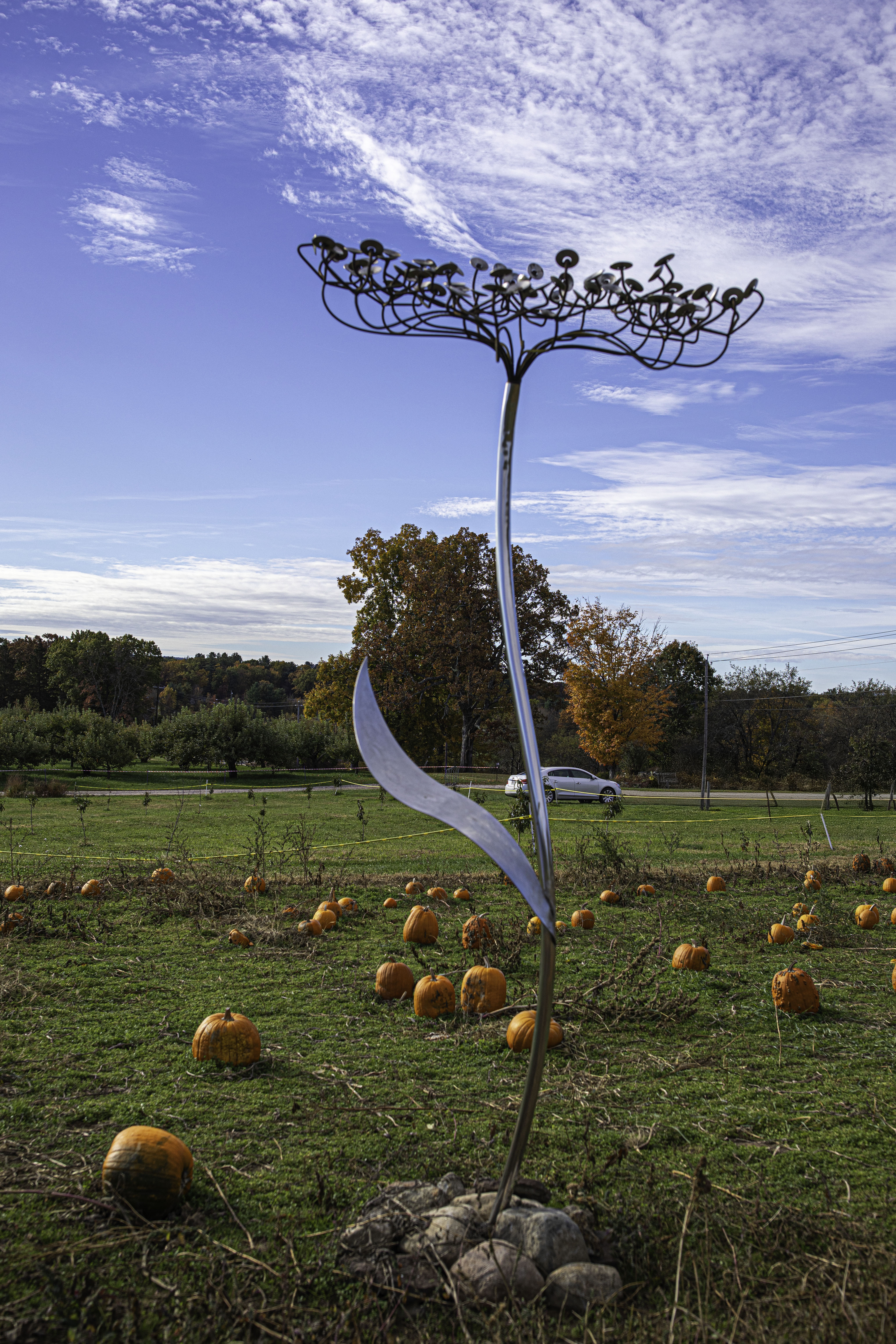
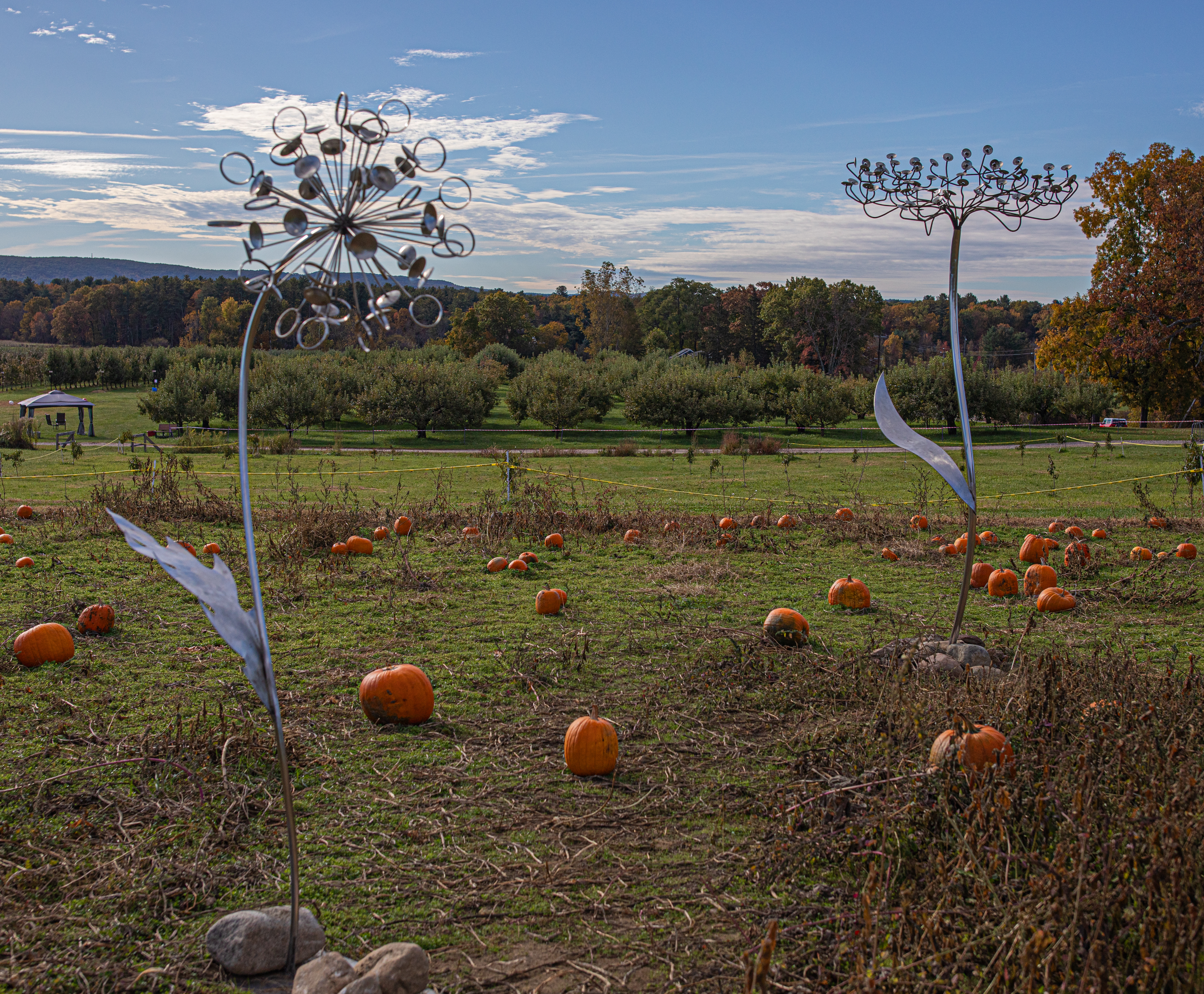
Gints Grinbergs of Dedham, MA created “Queen Anne’s Lace” with stainless steel tubing found metal rods, bent landscape spikes and cast off stainless steel washers. It strives to depict forms and structures found in nature as it reaches for the sky, turning it’s head towards the sun. The backdrop of foliage and pumpkins made the installation look prettier.

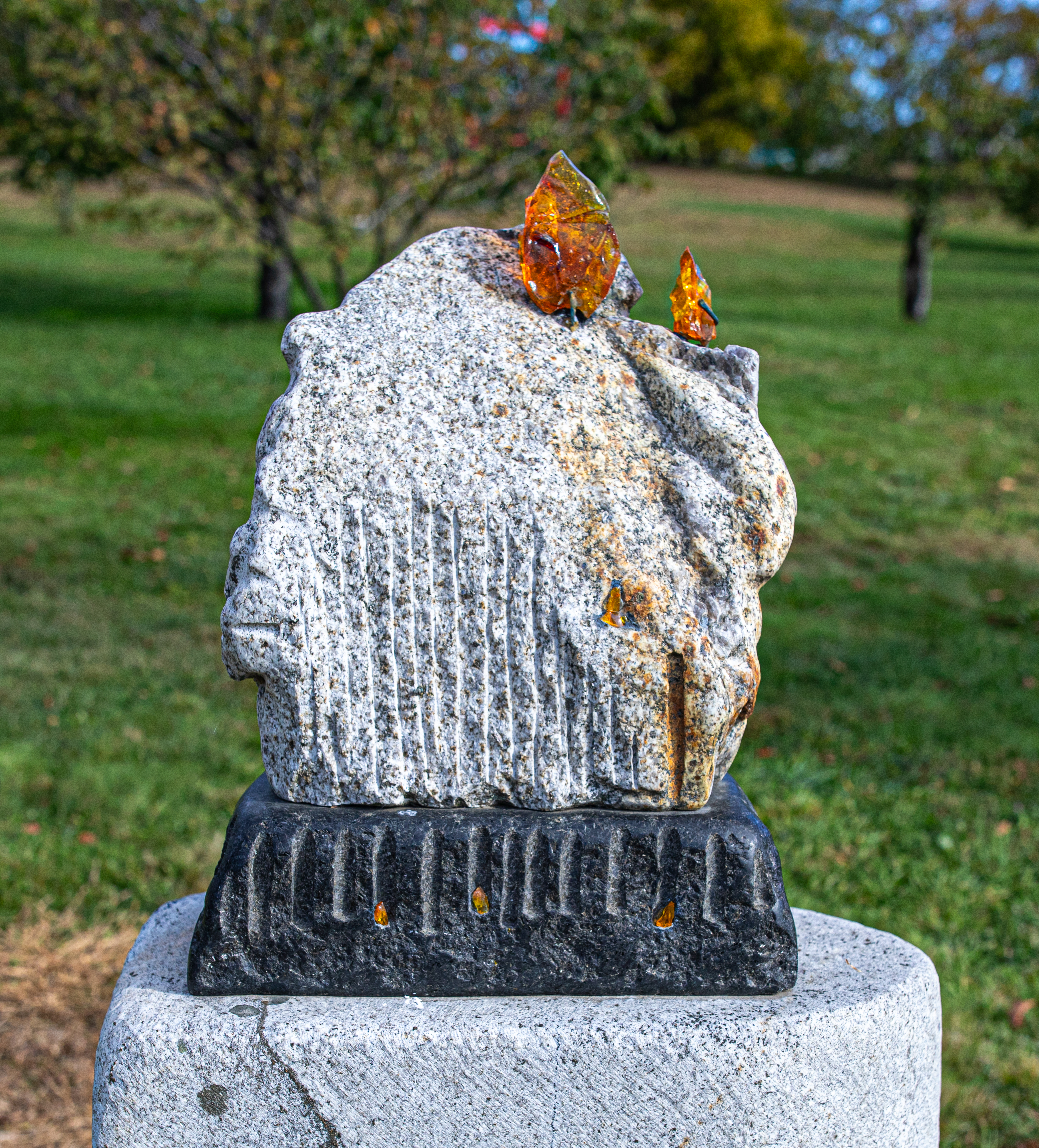
“Three Small Flames” by Antoinette Schultze of Eliot, ME, is the next art installation. The work of art, which was made of granite and glass, was a work of nostalgia. It represented her nostalgia for place, specifically home, with the candles burning. The three small flames can be found at the bottom of the granite installation.

Antoinette began her art career in 1961 when she auditioned for an Impressionist class at Columbia College in New York. Antoinette learned that an artist can express their feelings, not just copy nature. The materials and process of creating her sculptures are a manifestation of herself. Antoinette can carve stone and wood, coupled with glass into a marriage seeking light. Although the work is dirty, time consuming and laborious, Antoinette finds it to be meaningful and rewarding. The work brings order and insight into what she calls a chaotic world. Calling herself the “singing sculptor”, Antoinette said she often sings and speaks to herself as she works.

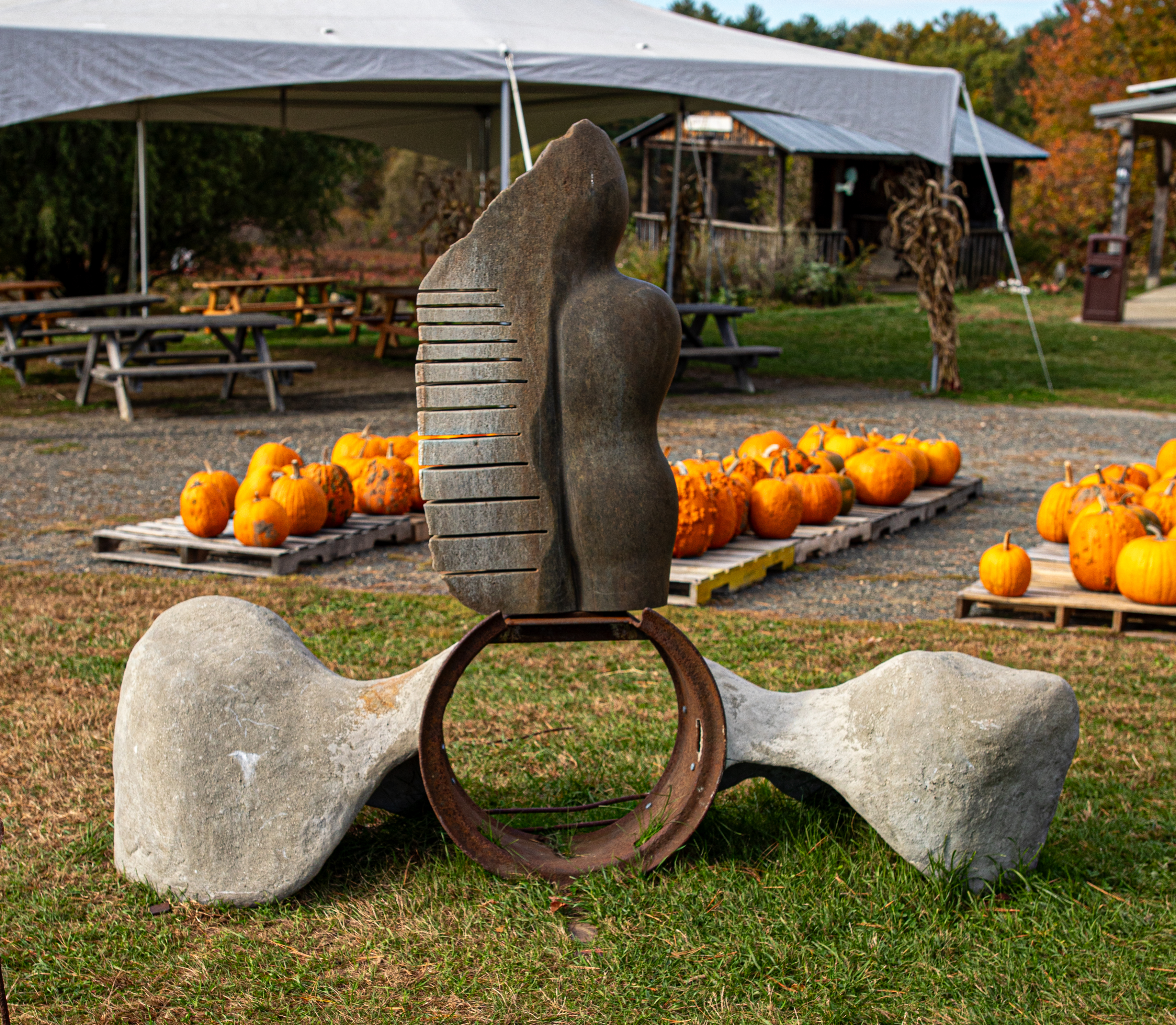
The next sculpture “River Siren” by Joshua Ruder of Greenfield, MA, is a little unusual. It is interactive. The sculpture made of stone, metal and concrete has a stone attached by a string to the other side of the sculpture. And yes, it does make a “siren song sound.

Joshua found the perfect curved contour in the stone while he was wading in a river. He felt compelled to carve the stone and continue the process of carving that nature had begun.

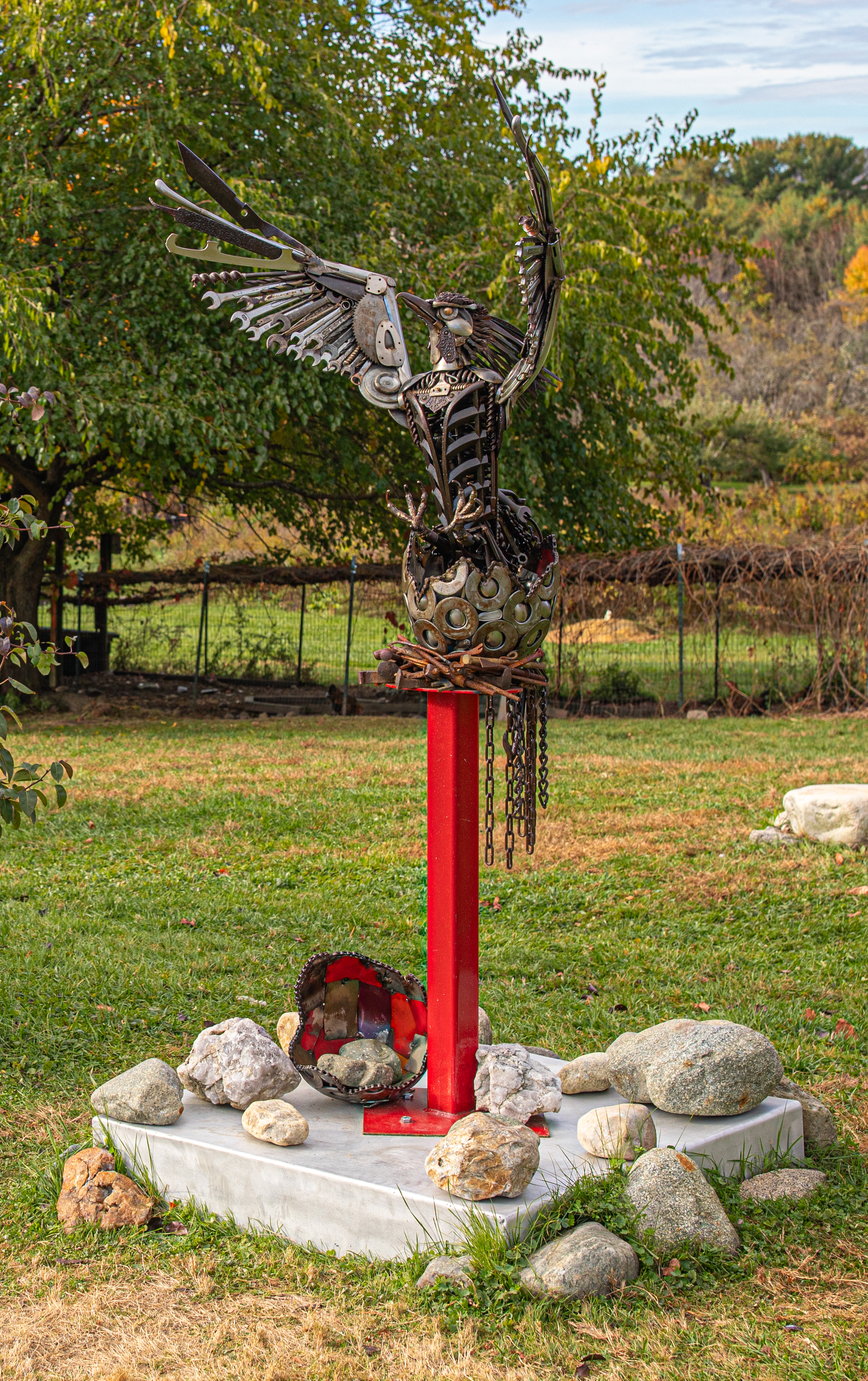
“Rebirth” by Gregory Didyoung of Wilmington, VT, is a sculptural interpretation of the phoenix myth. Reborn from its own ashes, the phoenix symbolizes renewal, resurrection and immortality. The sculpture was made of found metal and reused and reborn into something new. Cracking the nested egg into two halves the phoenix rises and flaps his wings for the first time.

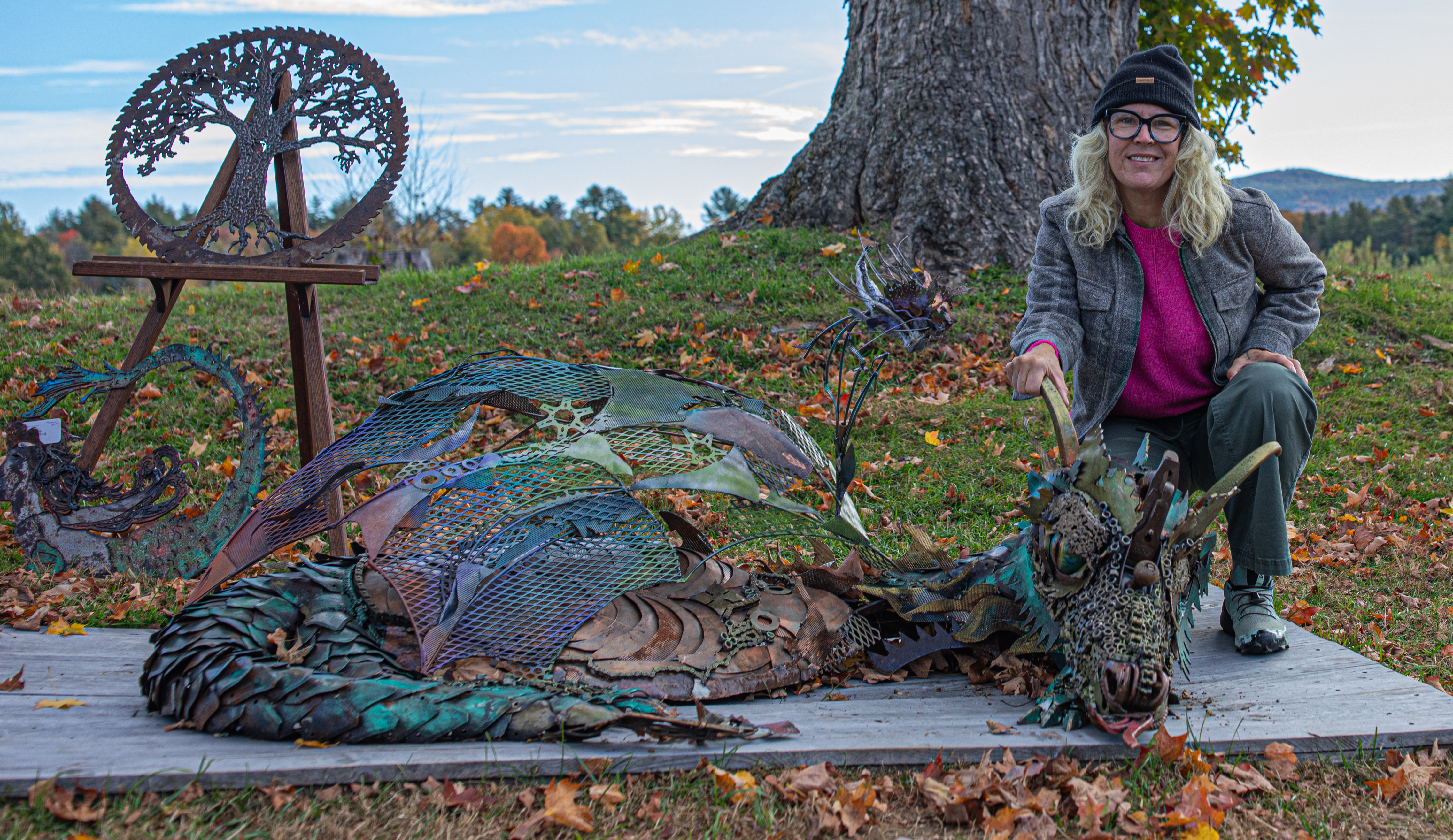
While the meaning of “Erebus” by Trisha Moody may seem straightforward, it has a deeper meaning. The sculpture which is made of steel, iron and recycled tools is actually a commentary of human beings. The sleepy dragon which looks beautiful and dangerous, is similar to how we are often asleep and how we all react differently when woken. The dragon is playfully being tapped by the fairy to join her in the woods. It shows how two very different creatures can play together. It also shows how we have the ability to act together in a community and how we can choose to be the gentle giant or the fire thrower.

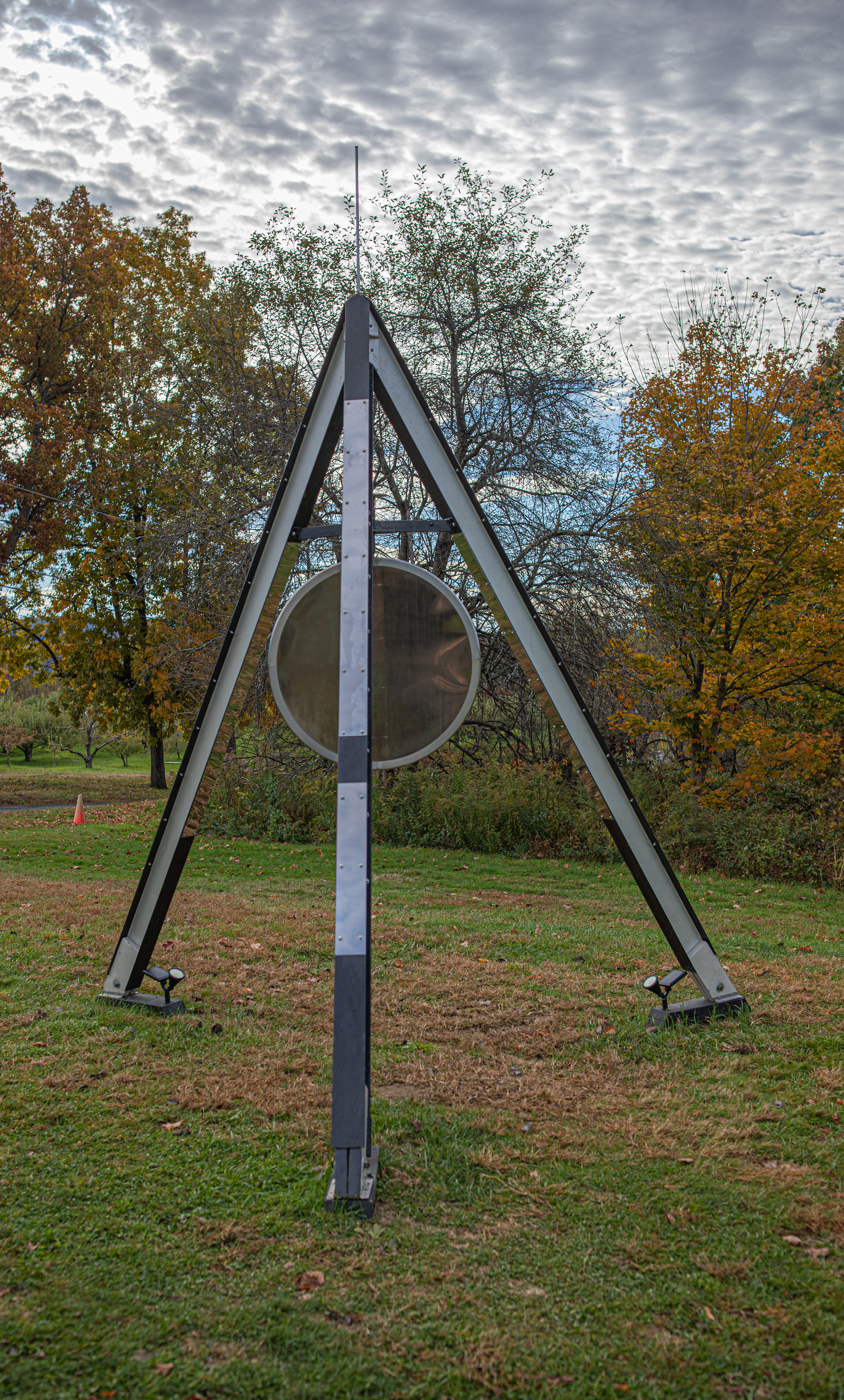
Brendan Stechini of Belchertown, MA, described his sculpture as being like a scientific instrument. He described it as being like a lighthouse with a round mirror that projects and reflects light, turning 360 degrees, oscillating like a weathervane. The mirrors on the outside legs capture the sky and the tops of the trees. The mirrors on the inside reflect the ground and our footprints. At the top of the sculpture, the steel rod points to the heavens. Brendan suggests looking at the sculpture with “new eyes” and “holding a mirror up to it” This sculpture represents how we can look at the same facts from an alternative perspective.

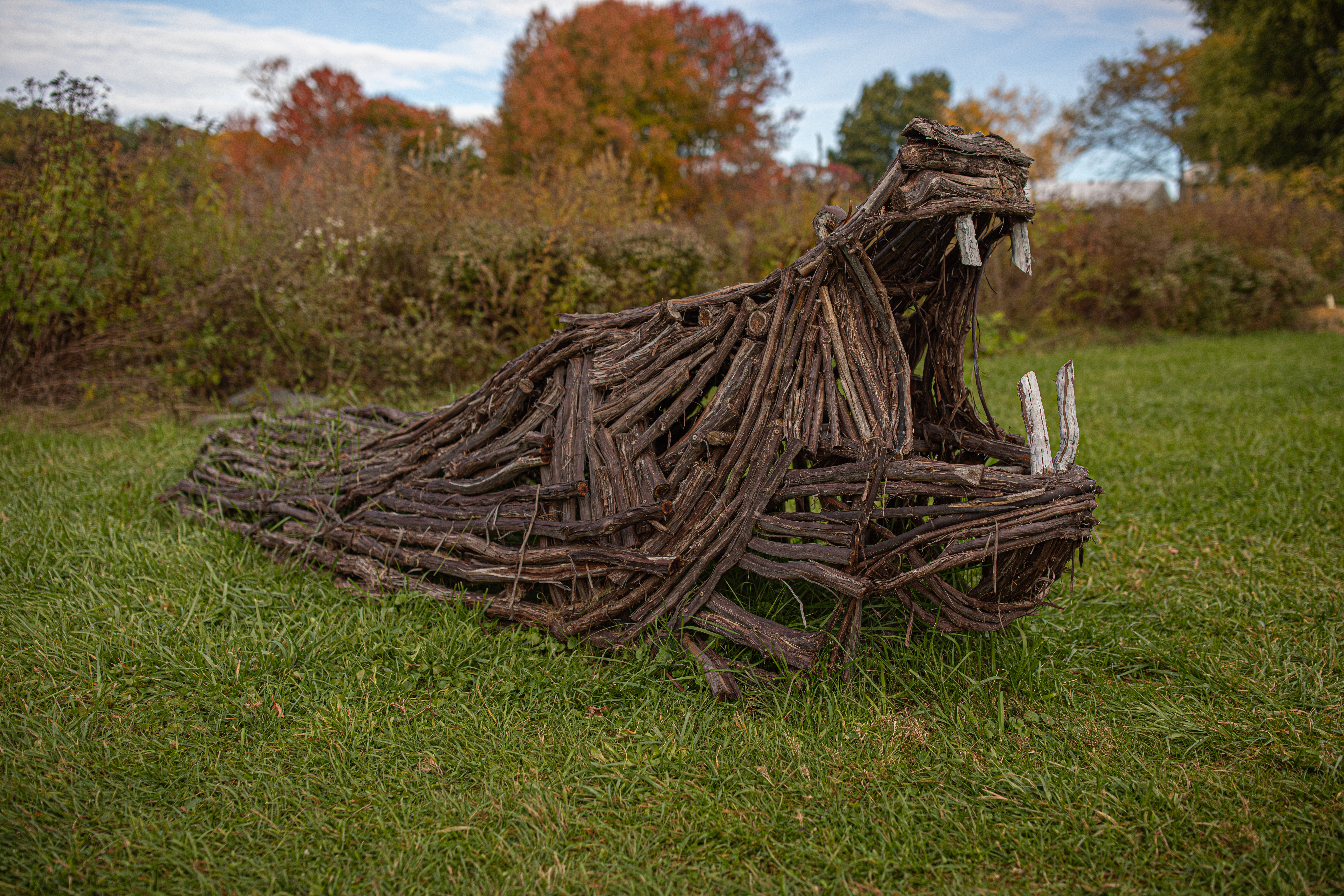
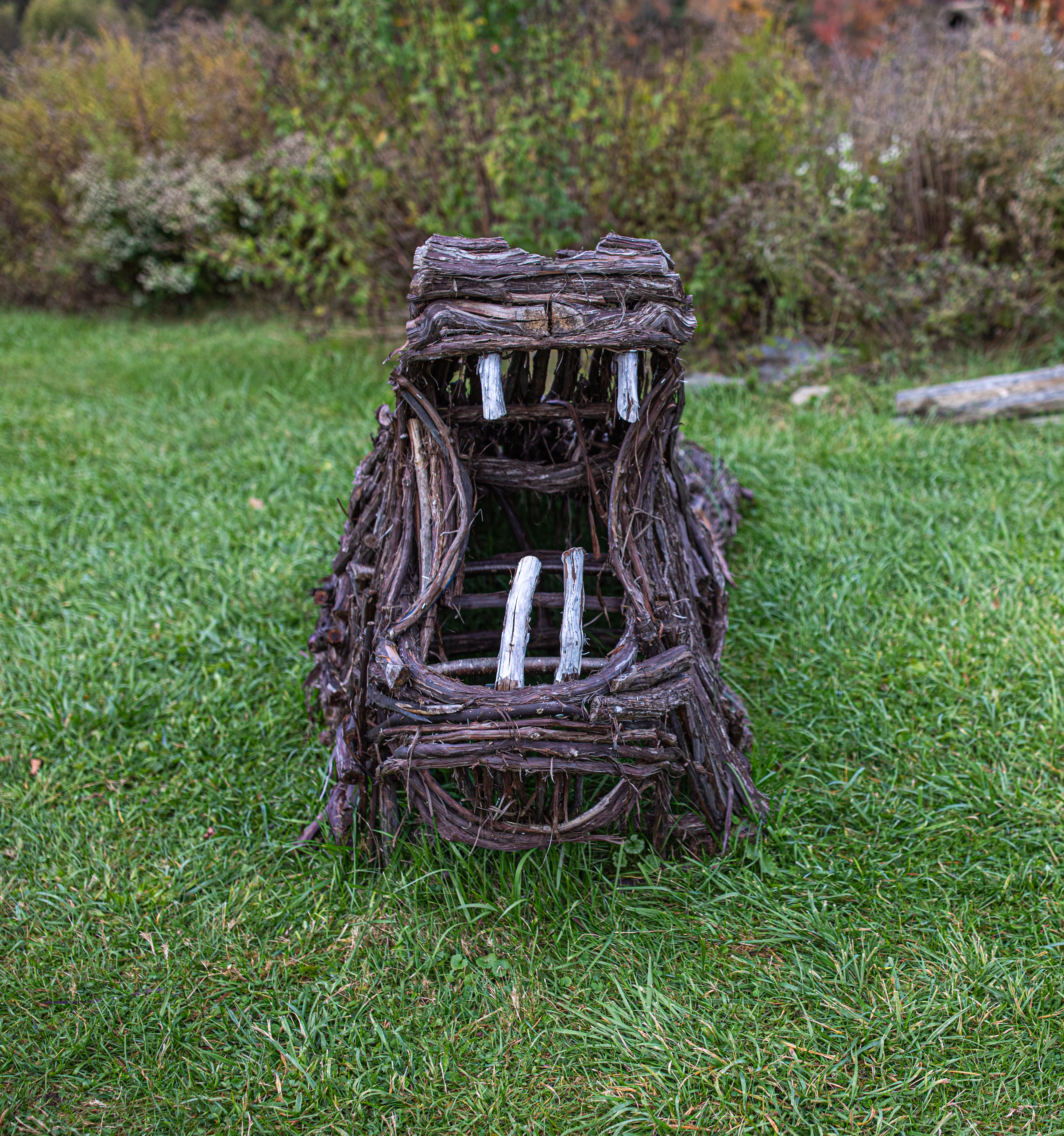
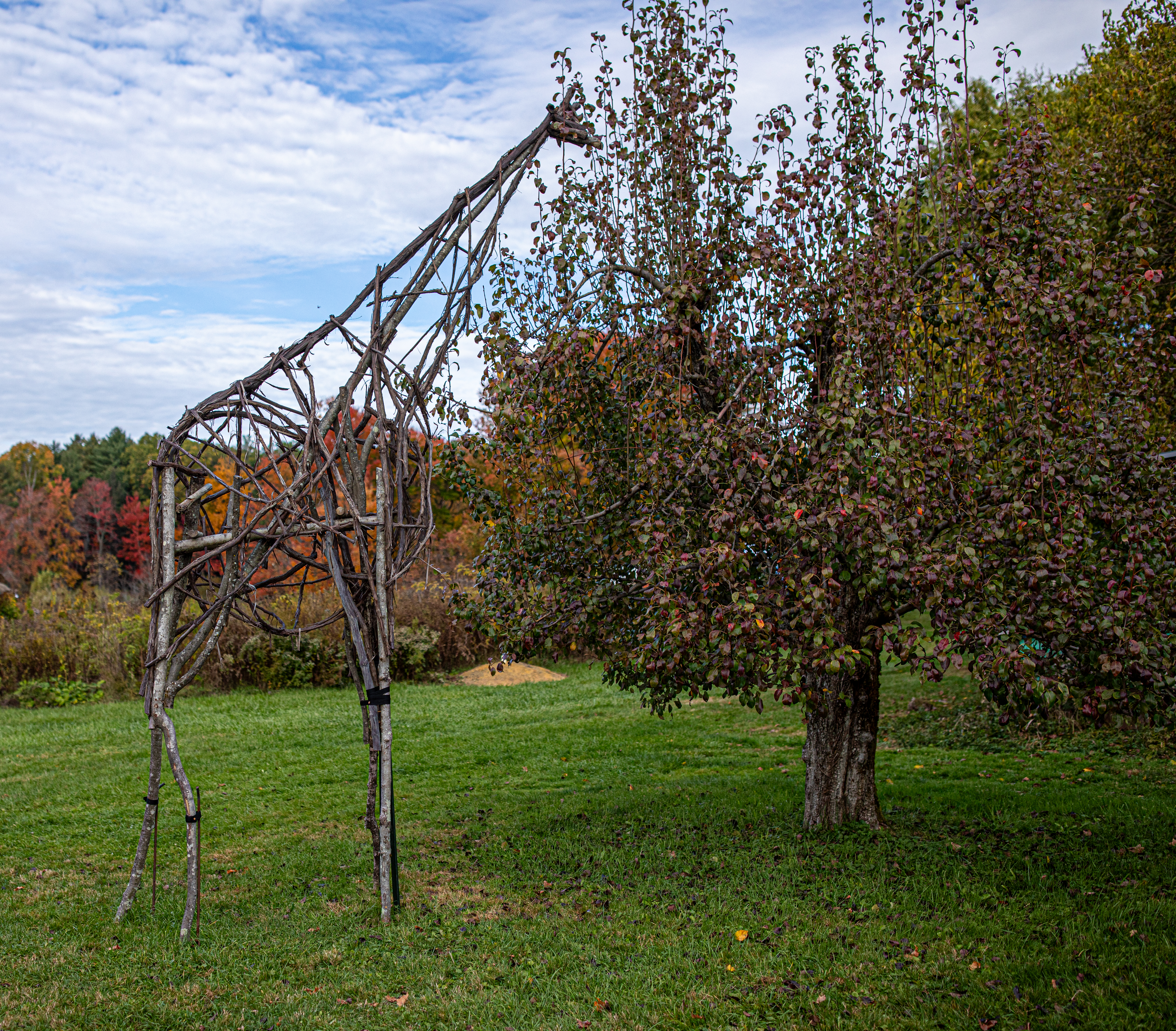
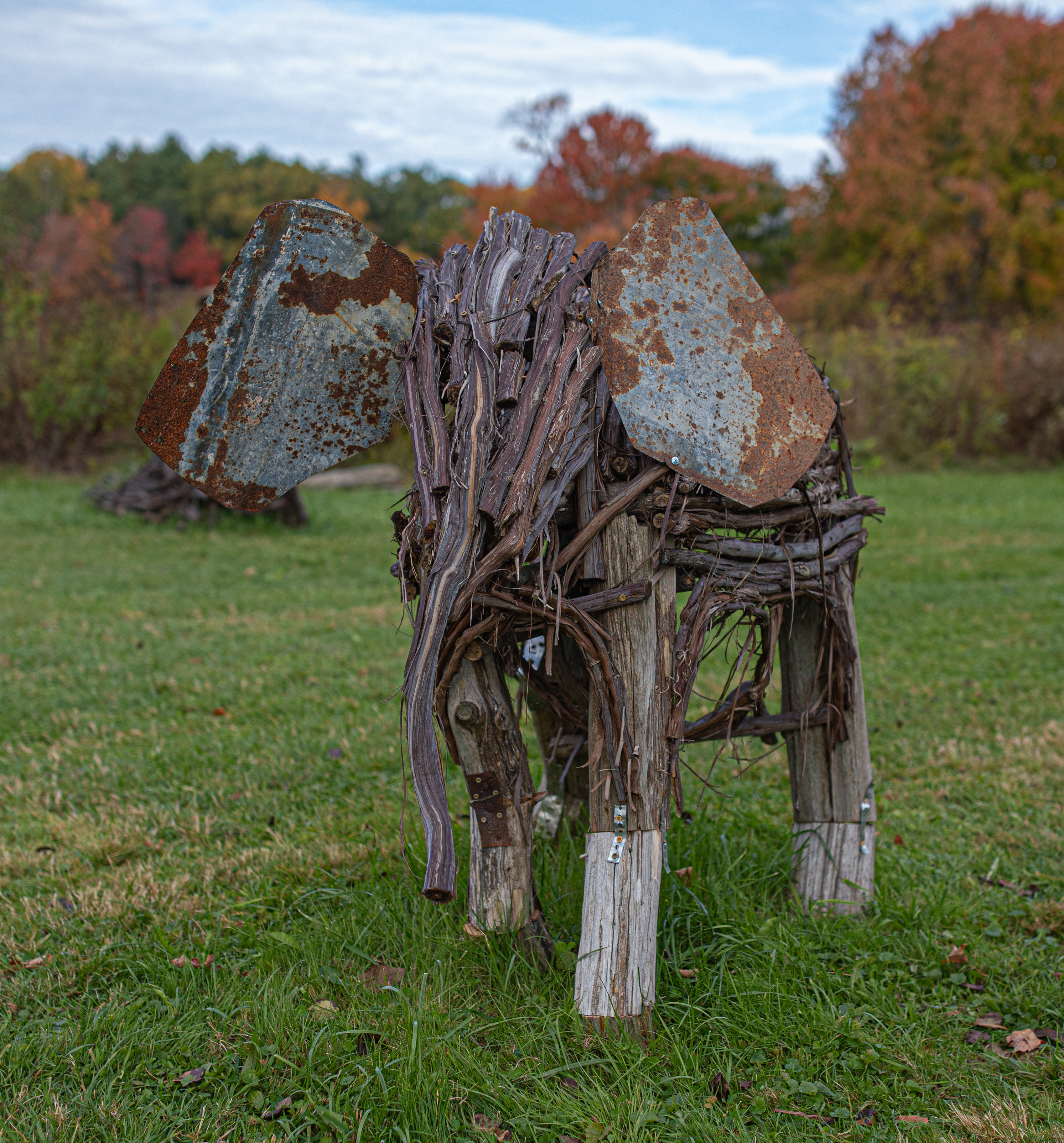
Malcolm White of Leeds. MA made some impressive sculptures all out of grape vine. Perhaps you heard about them through the…well you know.

Malcolm’s installations consisted of Pegasus the hippo, Long Tall Sally the giraffe and Atlas the elephant.

Malcolm has two objectives for his work: making a connection and bringing some joy to those who view his work. Malcolm uses material found in the landscape where he lives and which will decay into the same landscape without harm to the environment. He feels joy and a connection to the environment when he is making his works of art. If viewers feel the same connection and joy, Malcolm feels he has succeeded in his goals.

Malcolm was inspired by Greek mythology when making these sculptures. For instance, Pegasus was a flying horse from Greek mythology and hippos, or as the Greeks proclaimed them “river horses”, fly about in the watery world. So, the hippo is worthy of the name Pegasus. If you have seen a hippo gracefully swimming underwater you can see why he named it Pegasus.

Stay tuned for parts 2 and 3 (and maybe 4)!


2026 Ice Art Festival (Northampton, MA)

Date Of Event: Saturday, Jan. 31 and Feb. 1, 2026

Location: Northampton, MA (2 hours northwest of Boston, MA and 45 minutes north of Hartford, CT)

Cost: Free

Summary: Sculptors came to Northampton MA to show off their carving and sculpting skills. There were 16 sculptures with a variety of different themes.

The one good thing about winter in New England is ice! And there were many displays of ice in creative designs at the 15th annual Ice Art Festival in Northampton, MA.
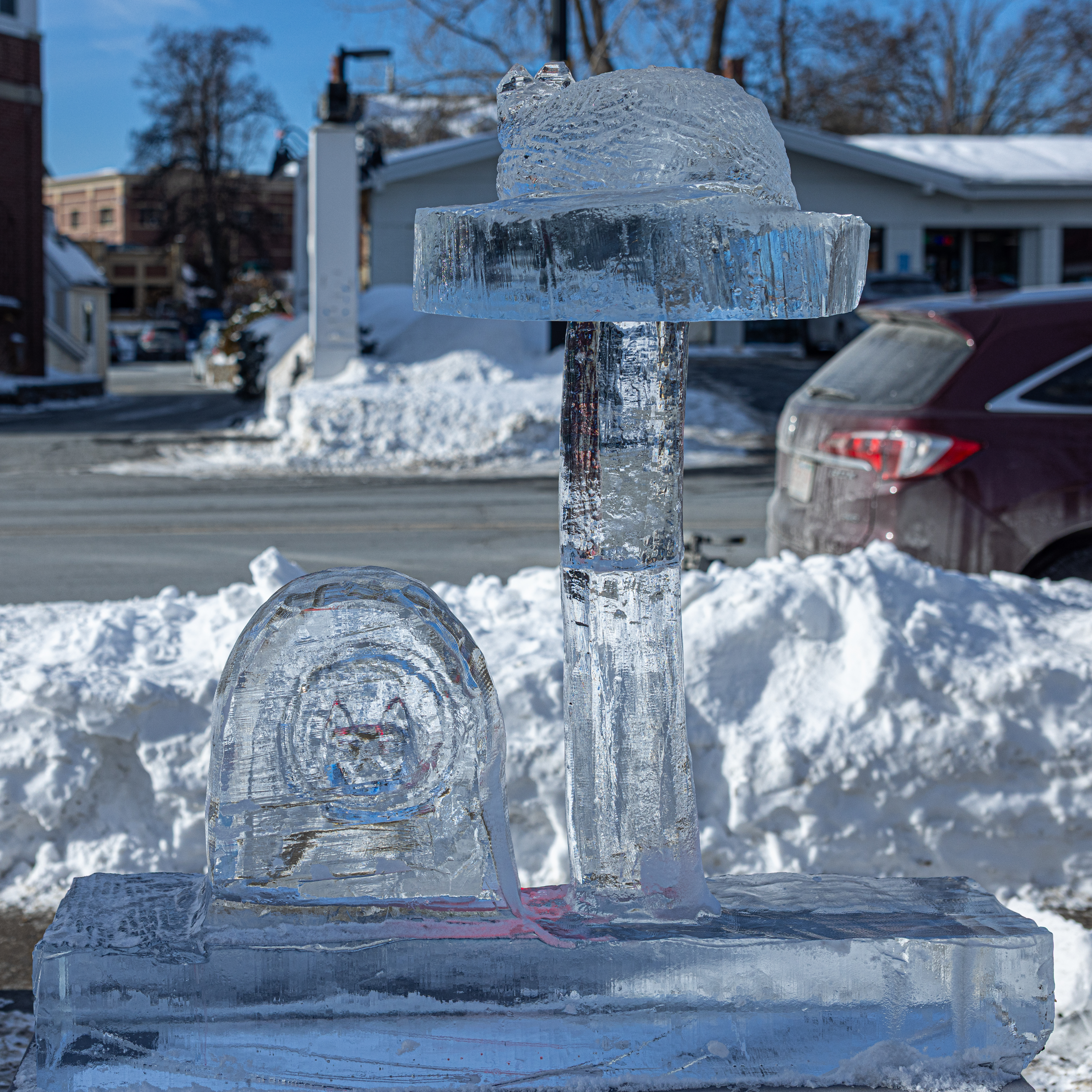
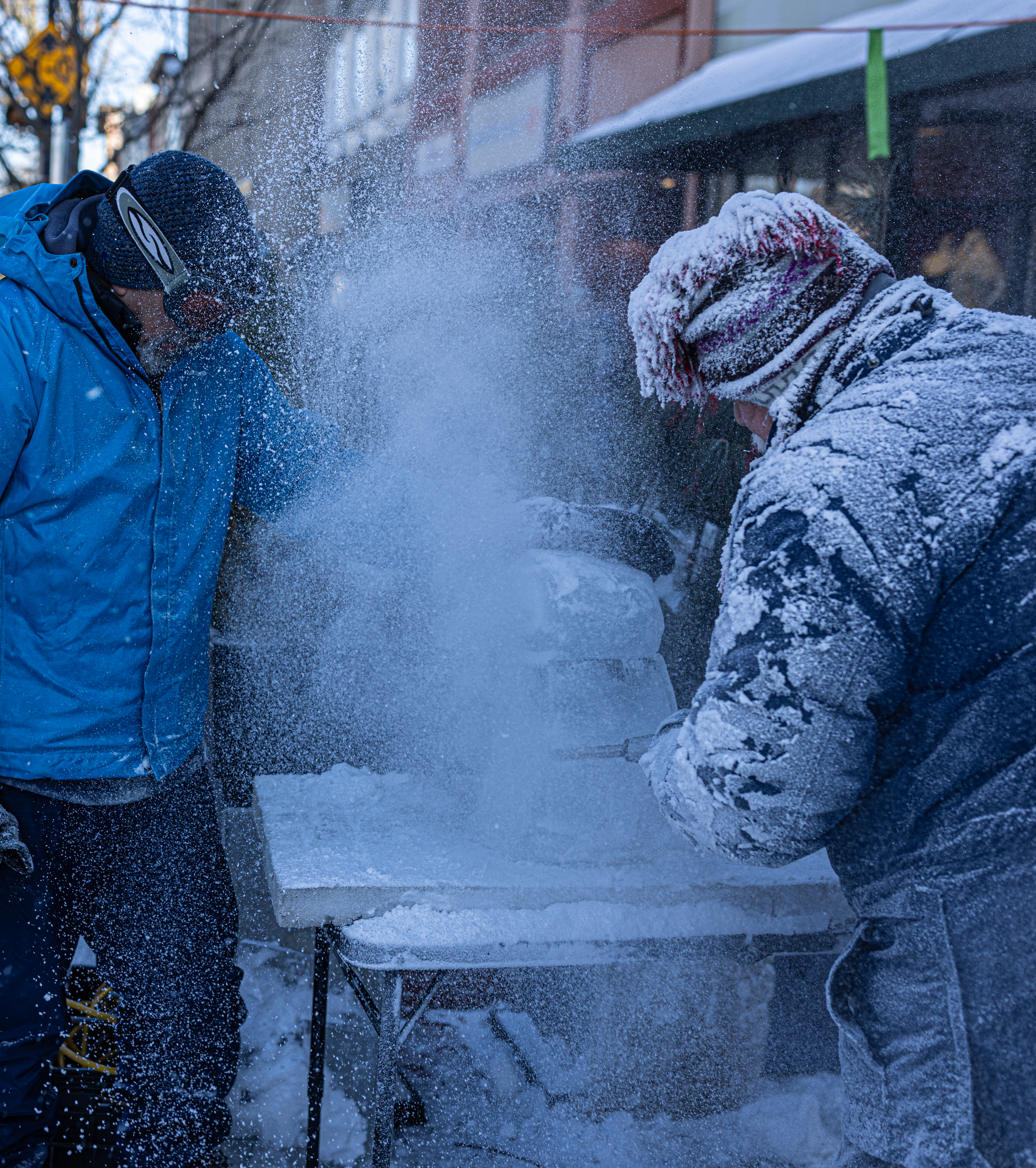
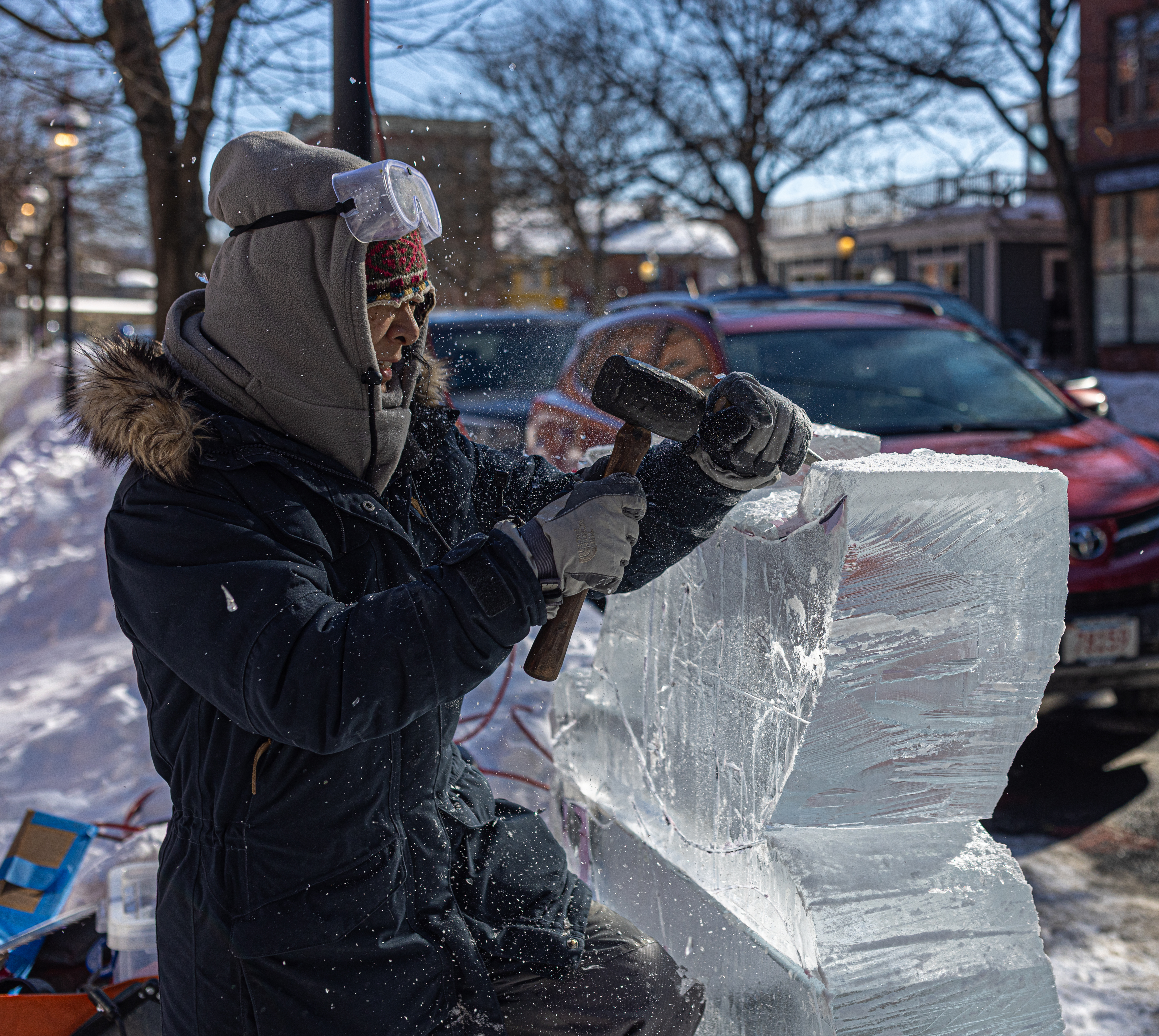
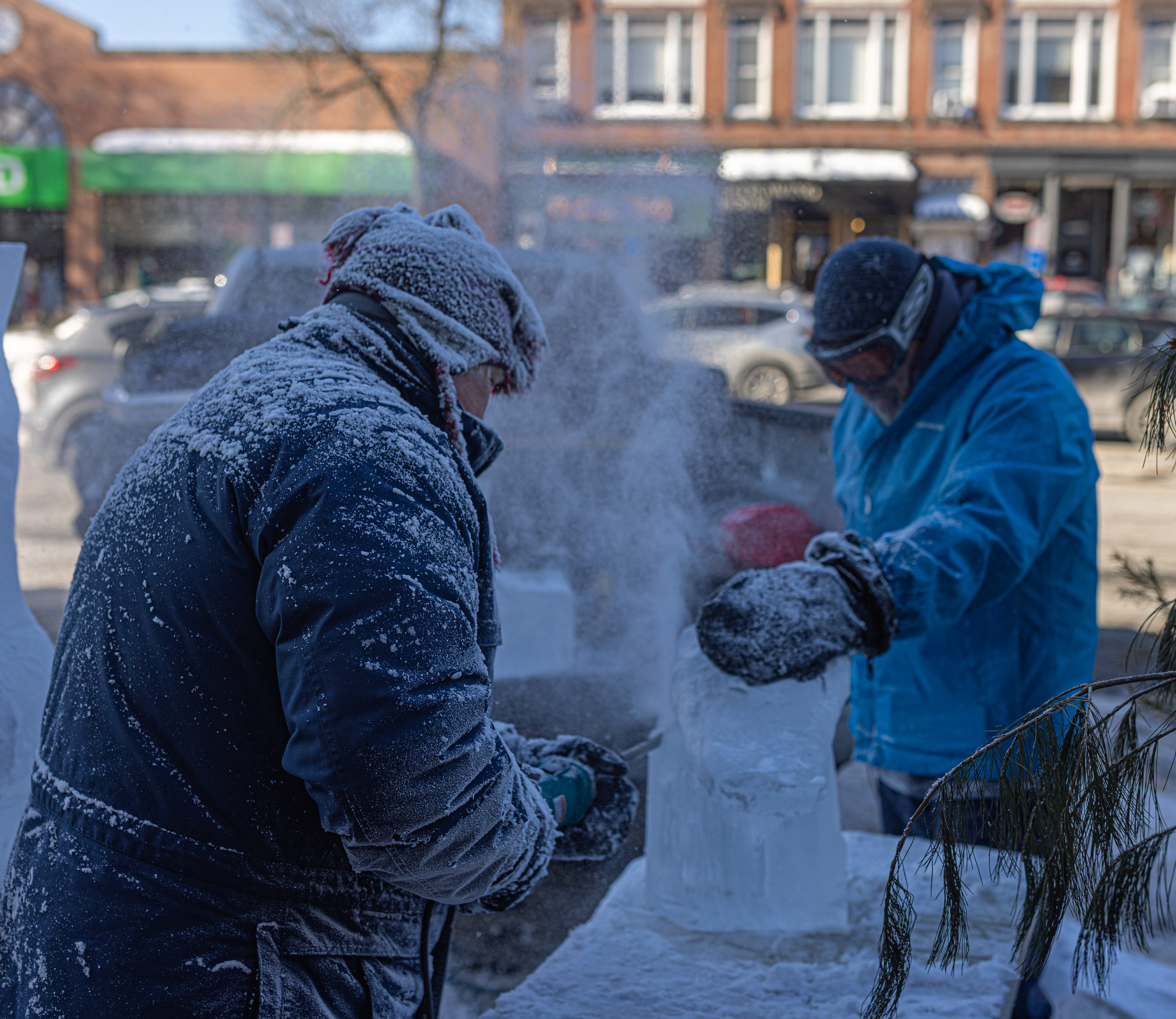
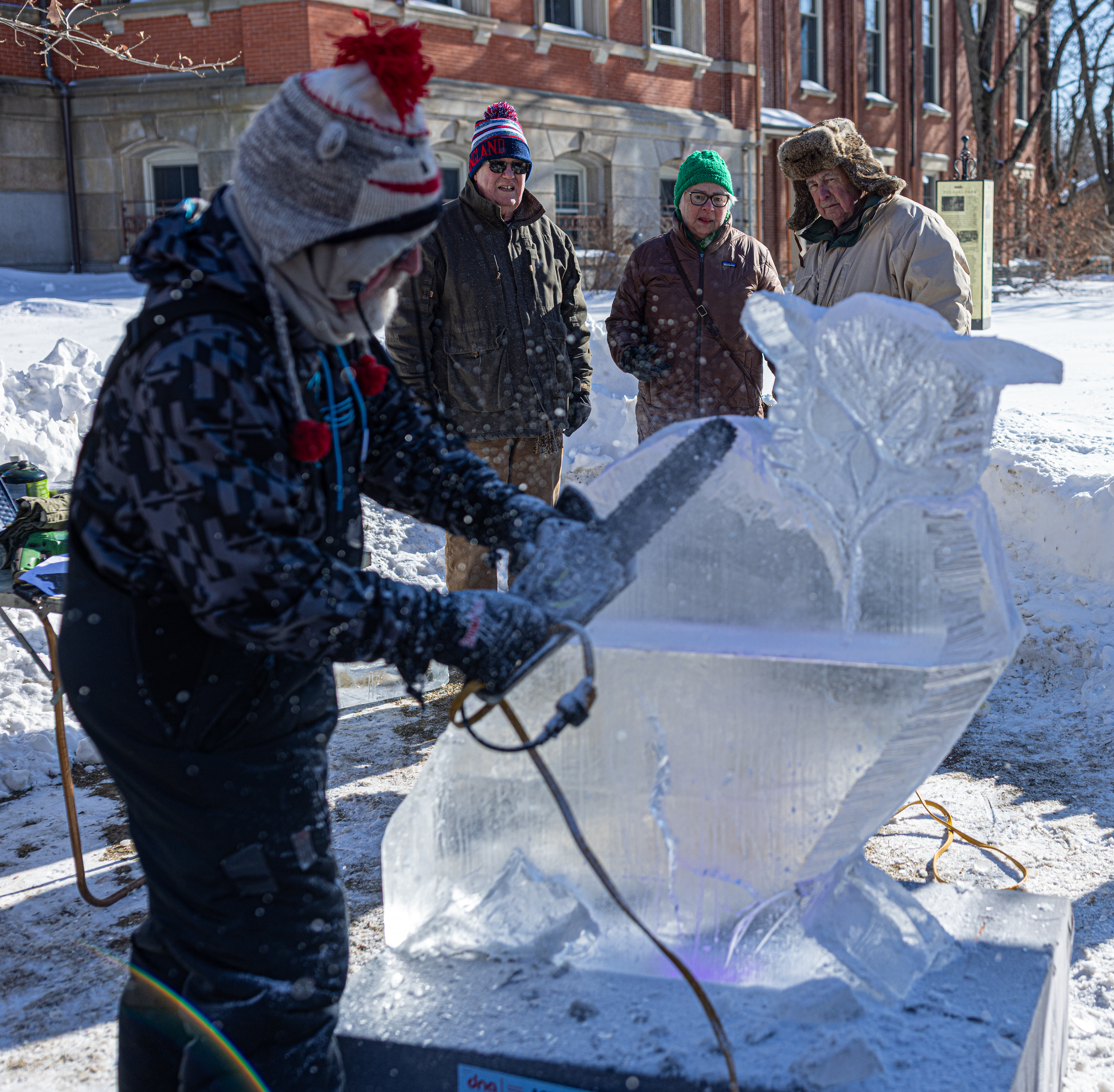
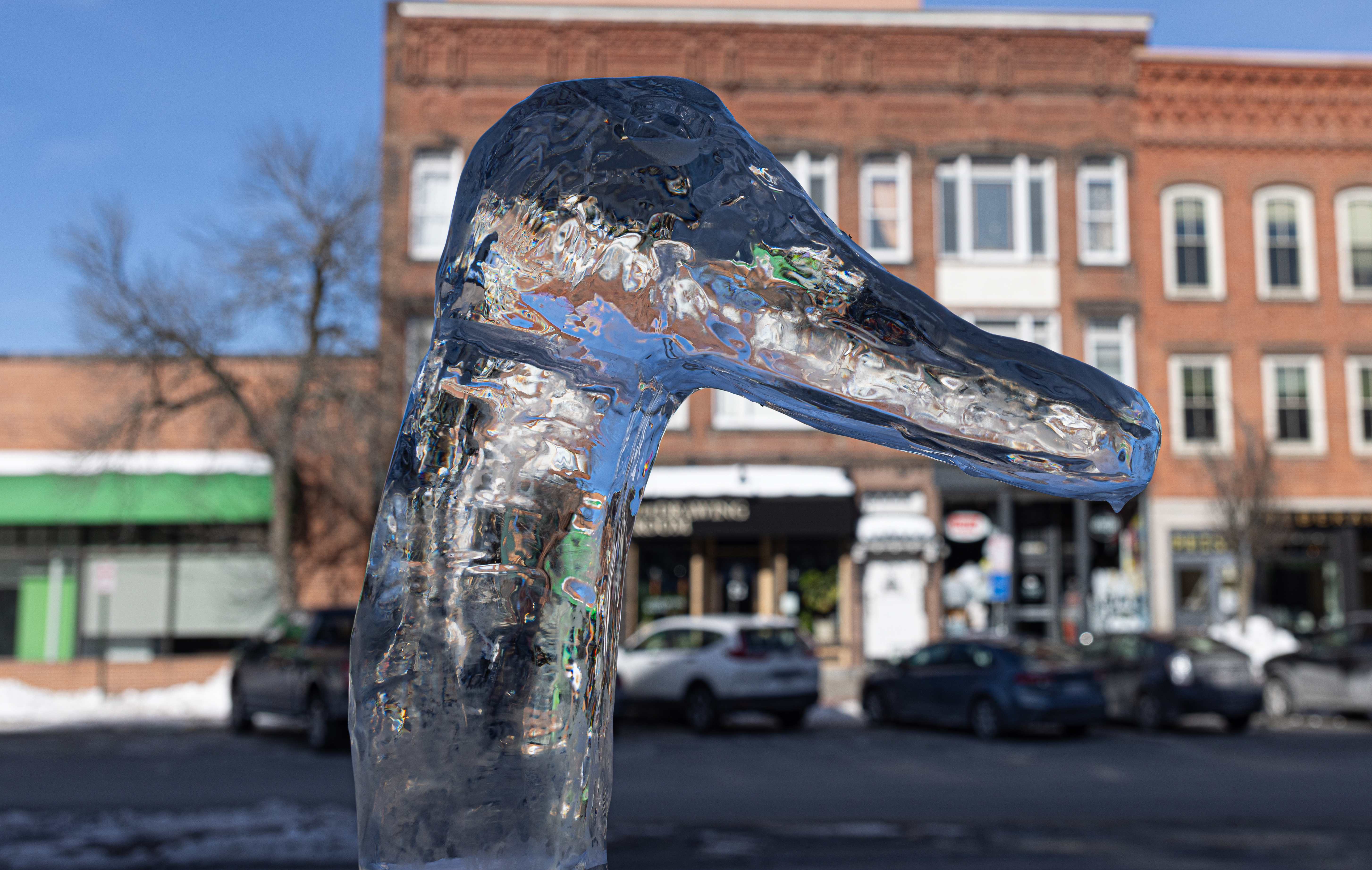
The sculptors were given  300-pound blocks of ice to work with. The sculptures ranged from a wolf to a free form design. Since the event was nearby, I went to the event on both Saturday and Sunday. So I was able to take photos of the sculptures being made and the finished sculptures on Sunday. There were 17 sculptures listed. But, I could only find 16 of them.

It was interesting watching the sculptors sculpt the ice sculptures with some primitive instruments such as hammers and chisels. Or watching them use more advanced tools like chainsaws.

There wasn’t any risk of the sculptures melting as the temperatures were frigid. In fact, instead of walking to all of the sculptures on Sunday, I drove to the sculptures because of the frigid temperatures and wind. The sculptures were located in roughly a mile and a half radius. And they looked incredible. The sculptures were illuminated at night. Unfortunately, I was not able to see them lit up at night this year. But, you can see a light at the base of some of the sculptures in some of the photos.

The first sculpture I saw was “Dashing Through The Snow” by Katrina Dressler

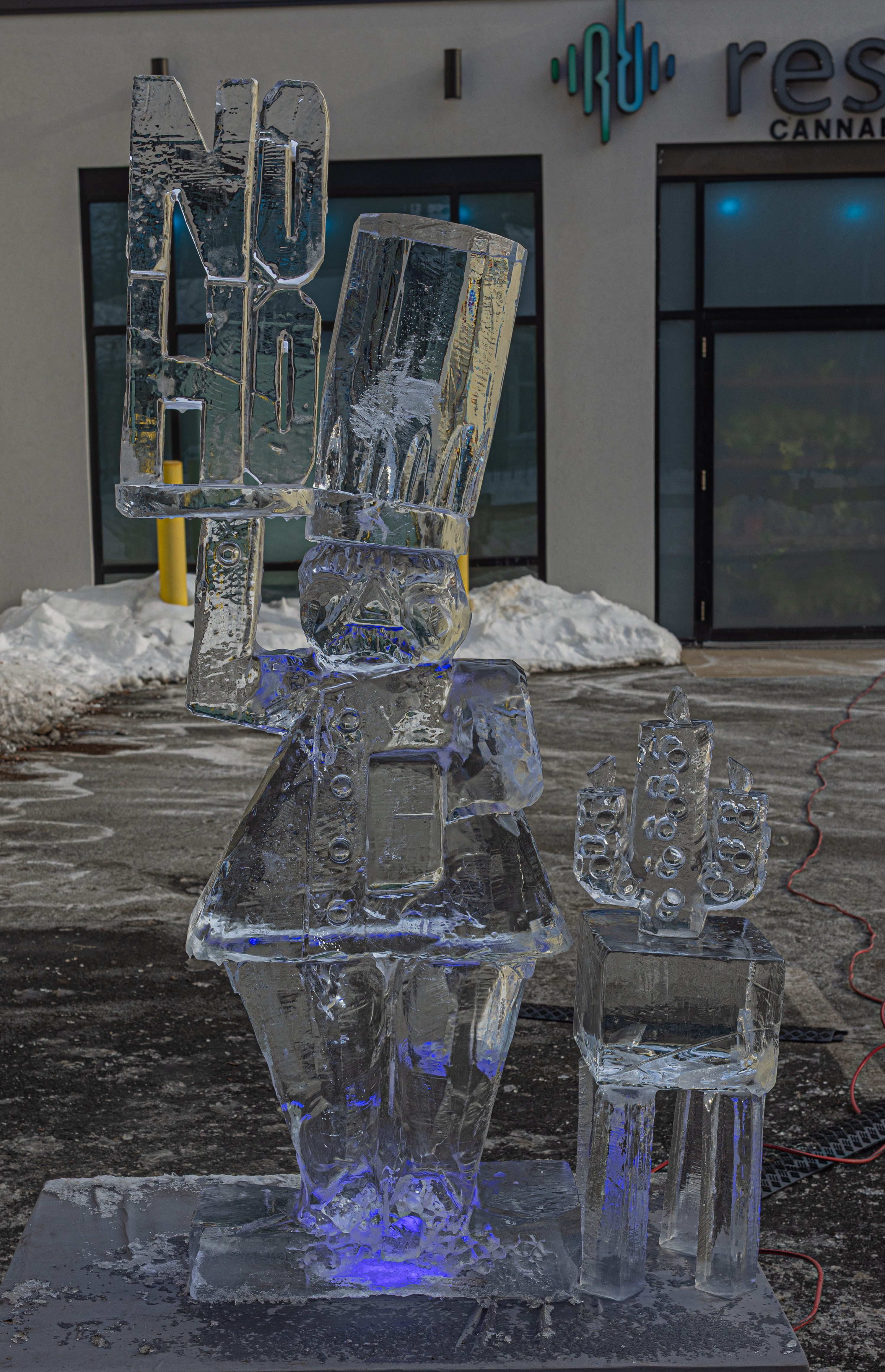
Michael Rondeau sculpted Bon Appetite.

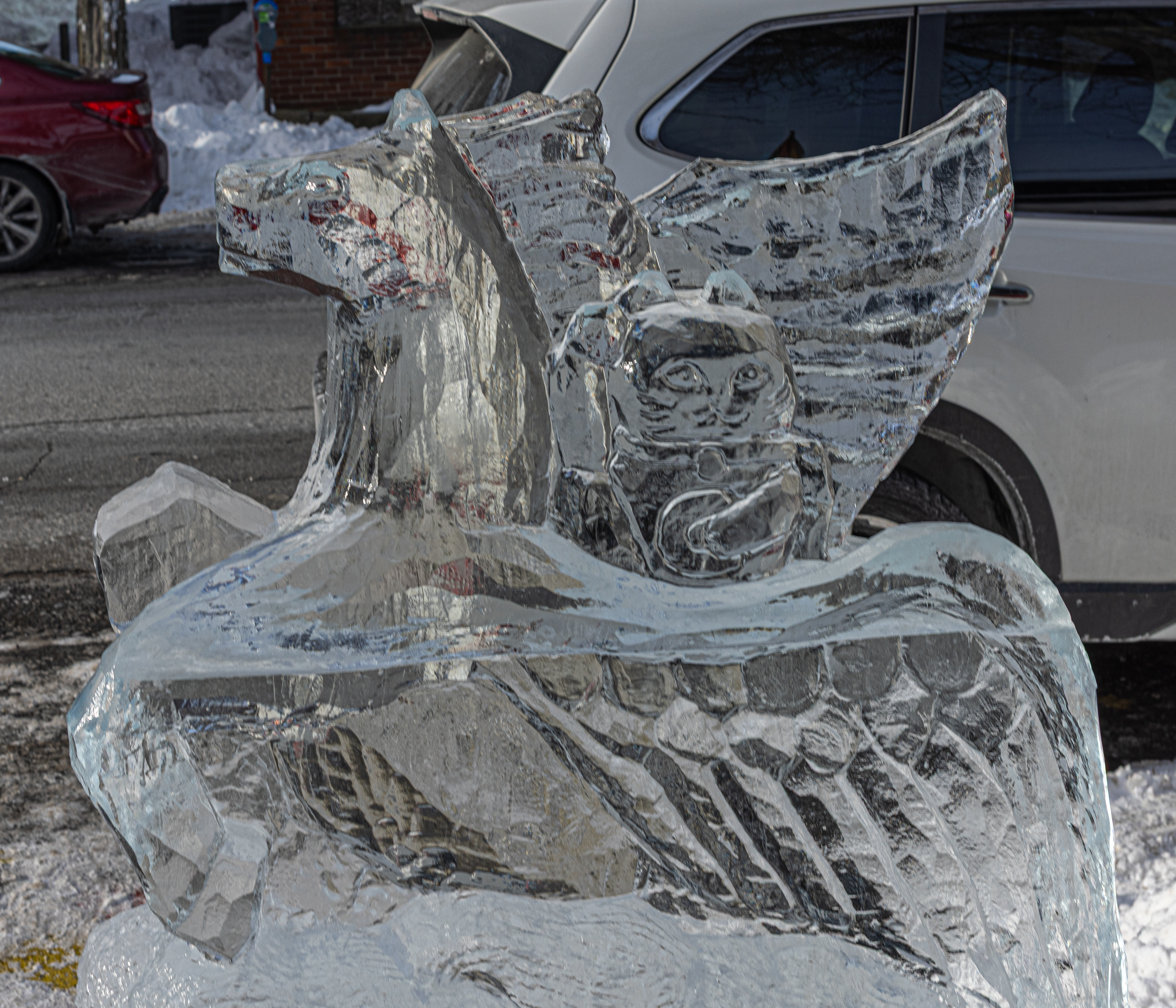
Soaring High With The Lucky Cat: 2026 by Marin Murakoshi was one of the more interesting sculptures. I think you can see the cat near the wings of the sculpture.

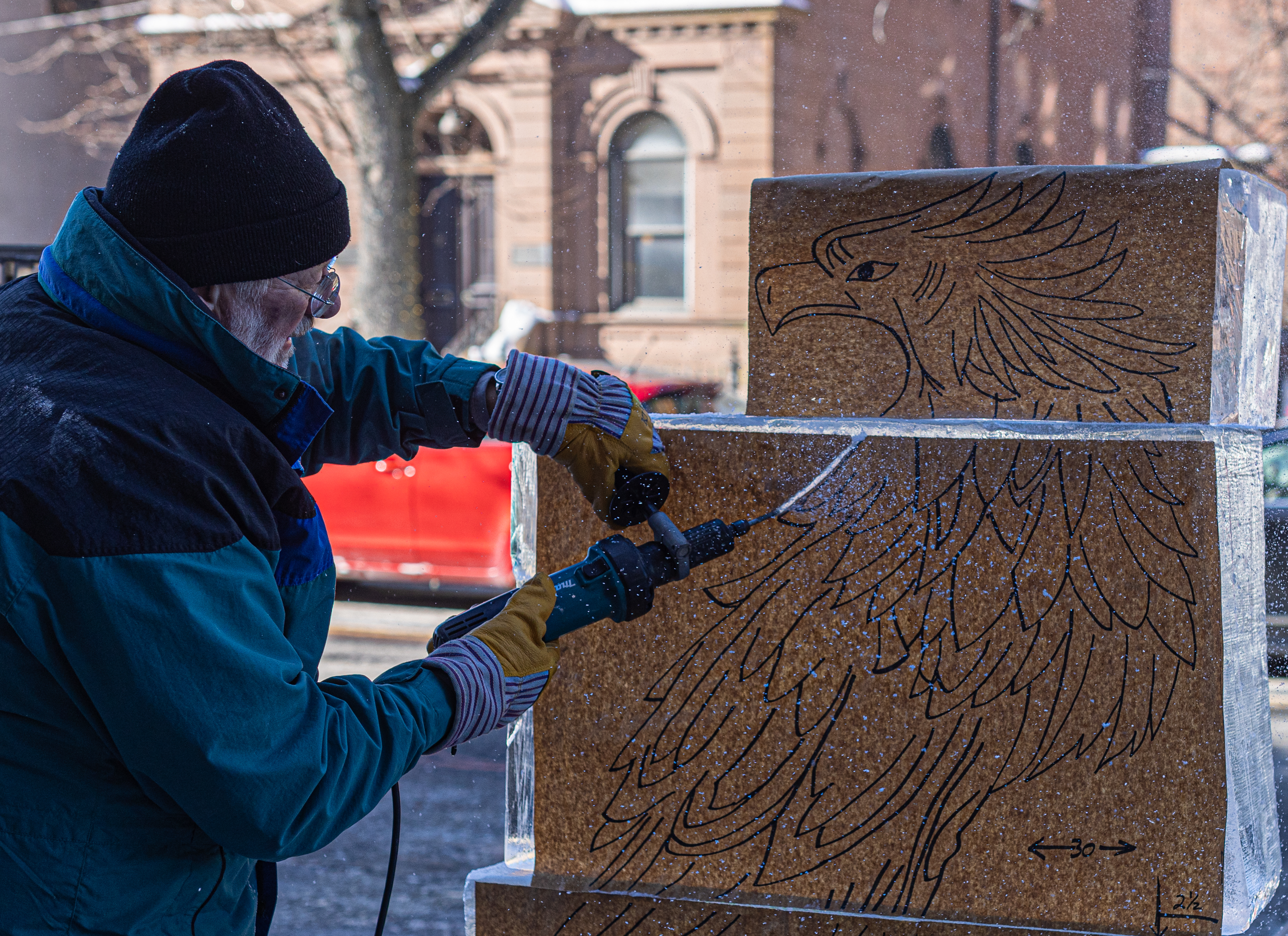
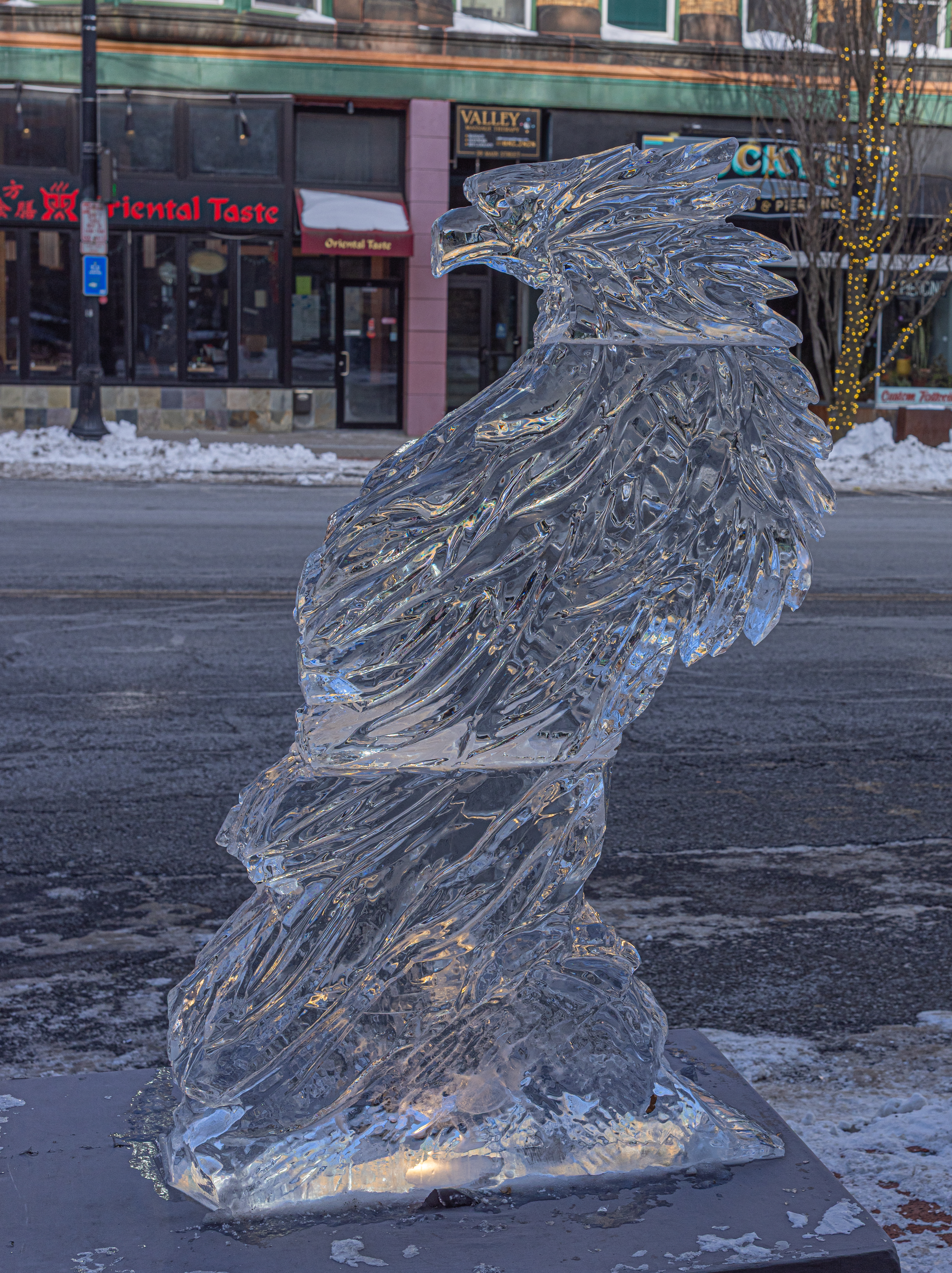
Eagle: Standing Tall by David Barclay had some very intricate details.

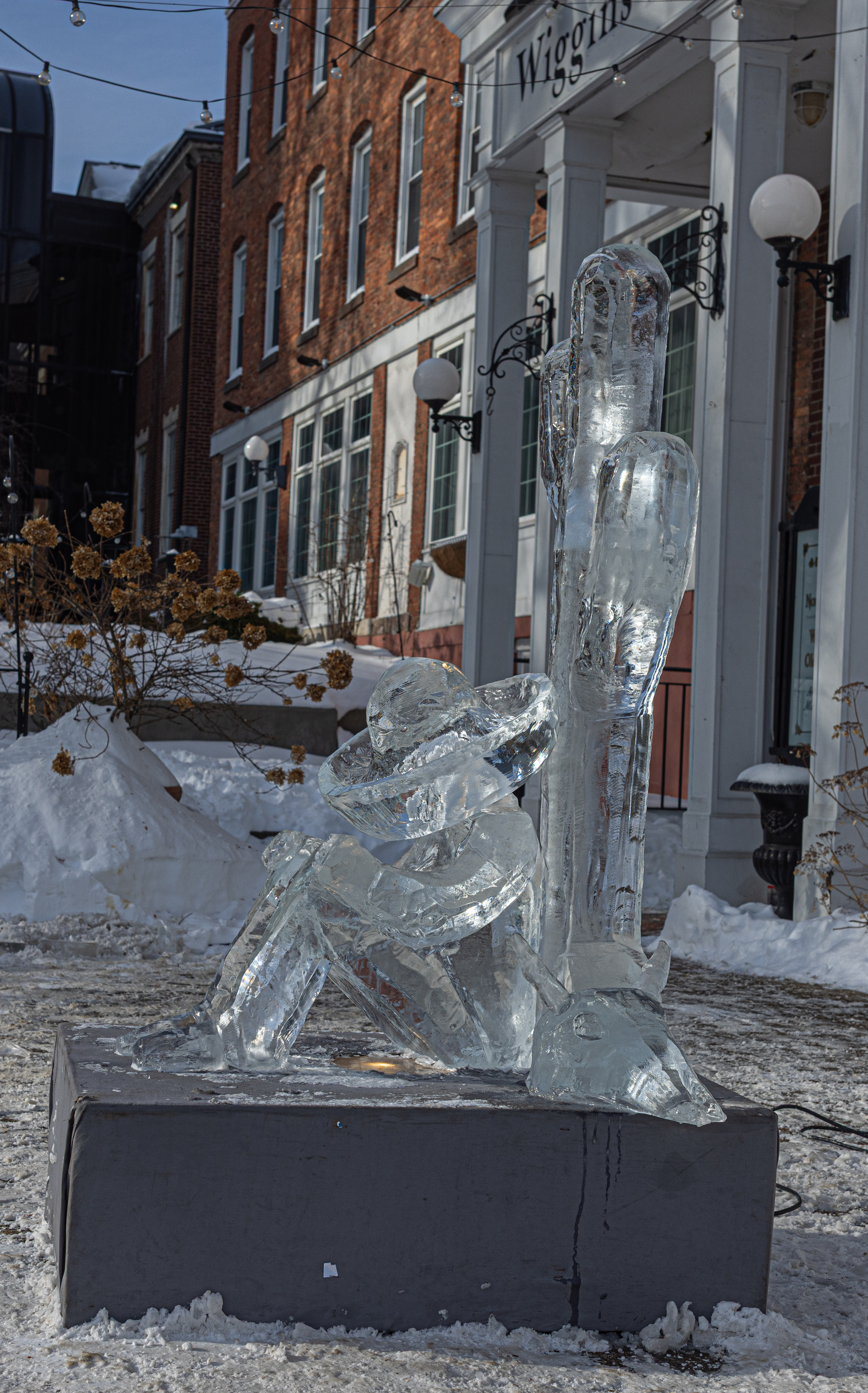
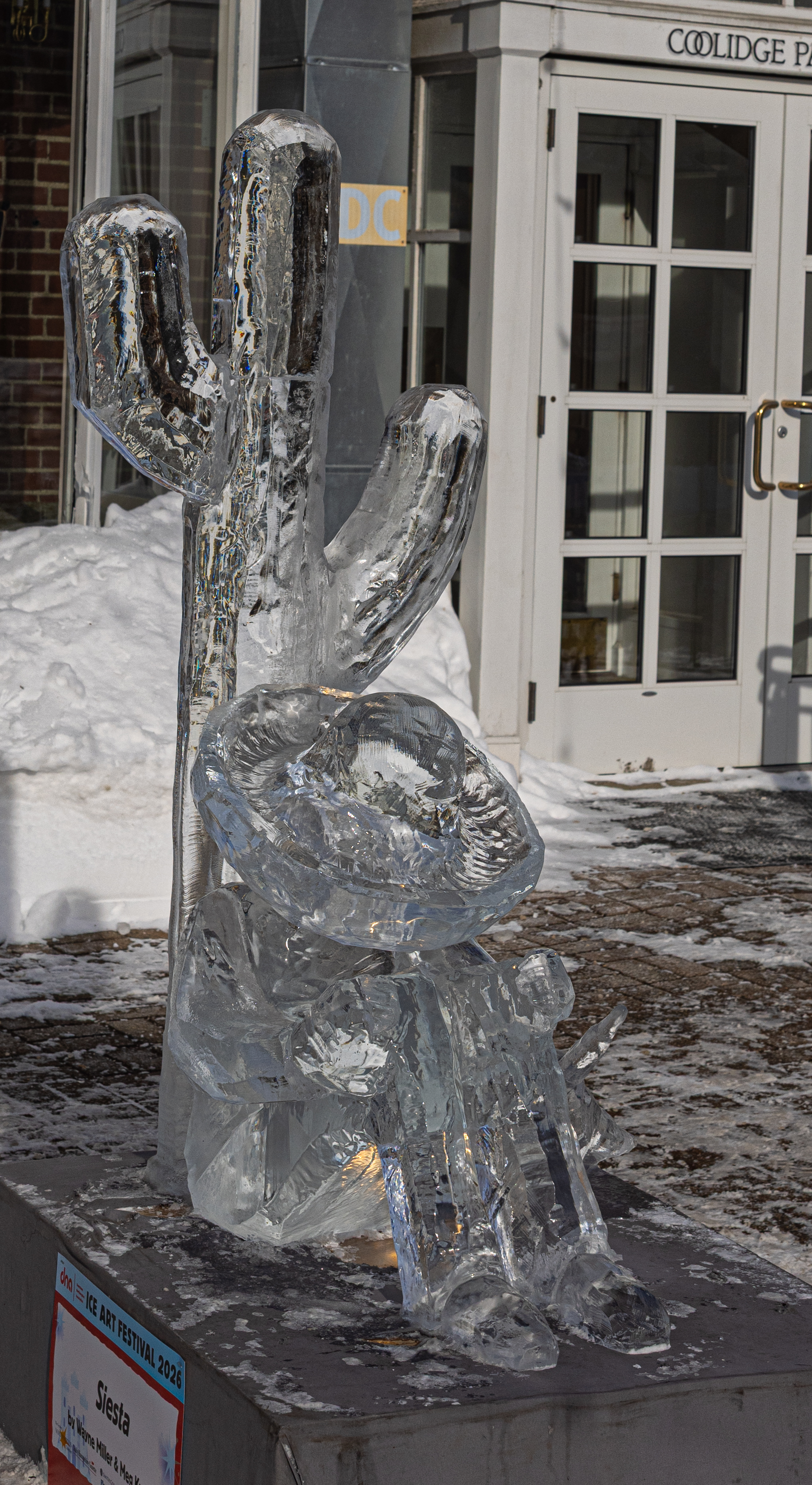
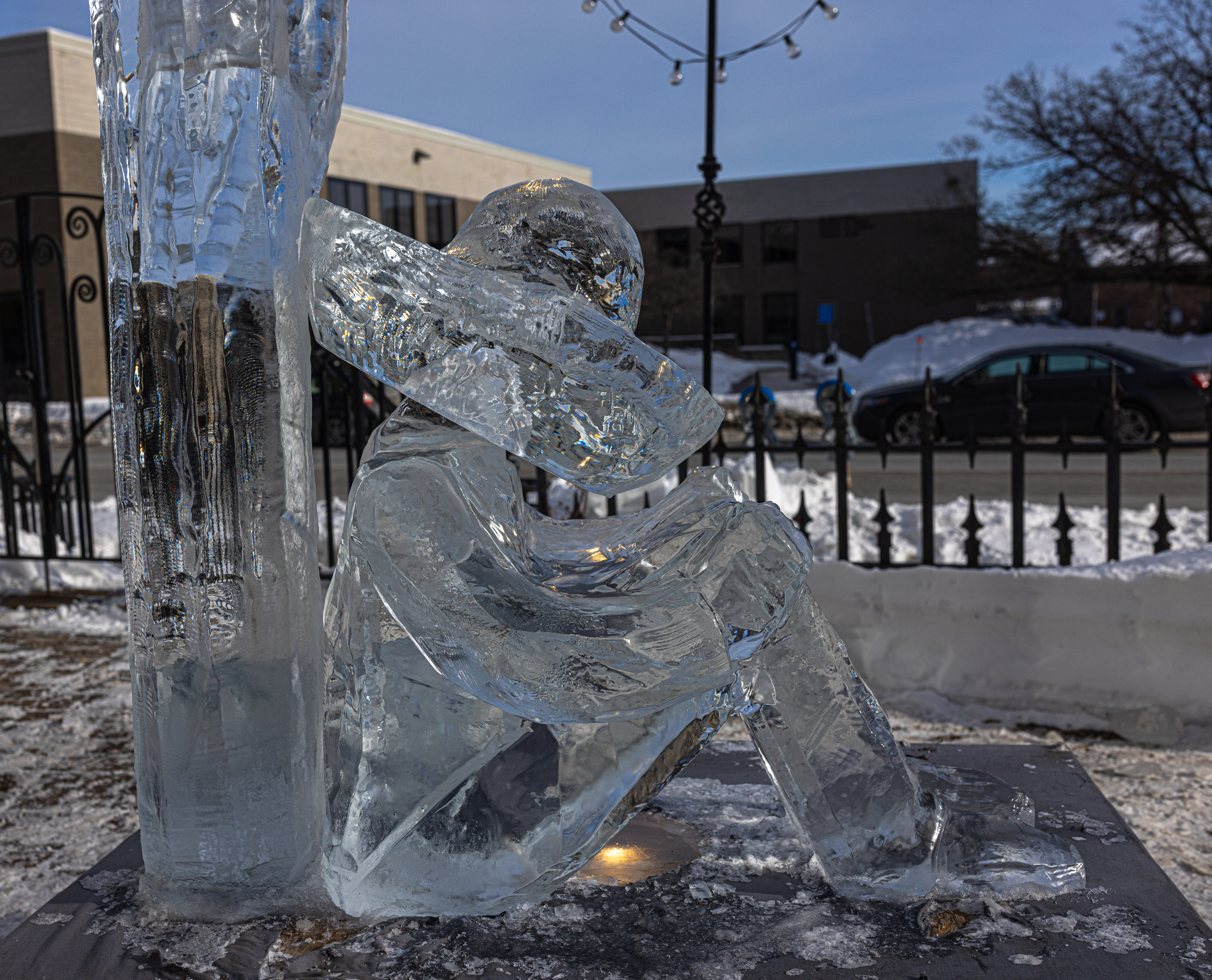
Siesta by Wayne Miller and Meg Kupiec was one of my favorites.

Time For A Nap by Marie Agresta featured a cat doing what else but taking a nap!
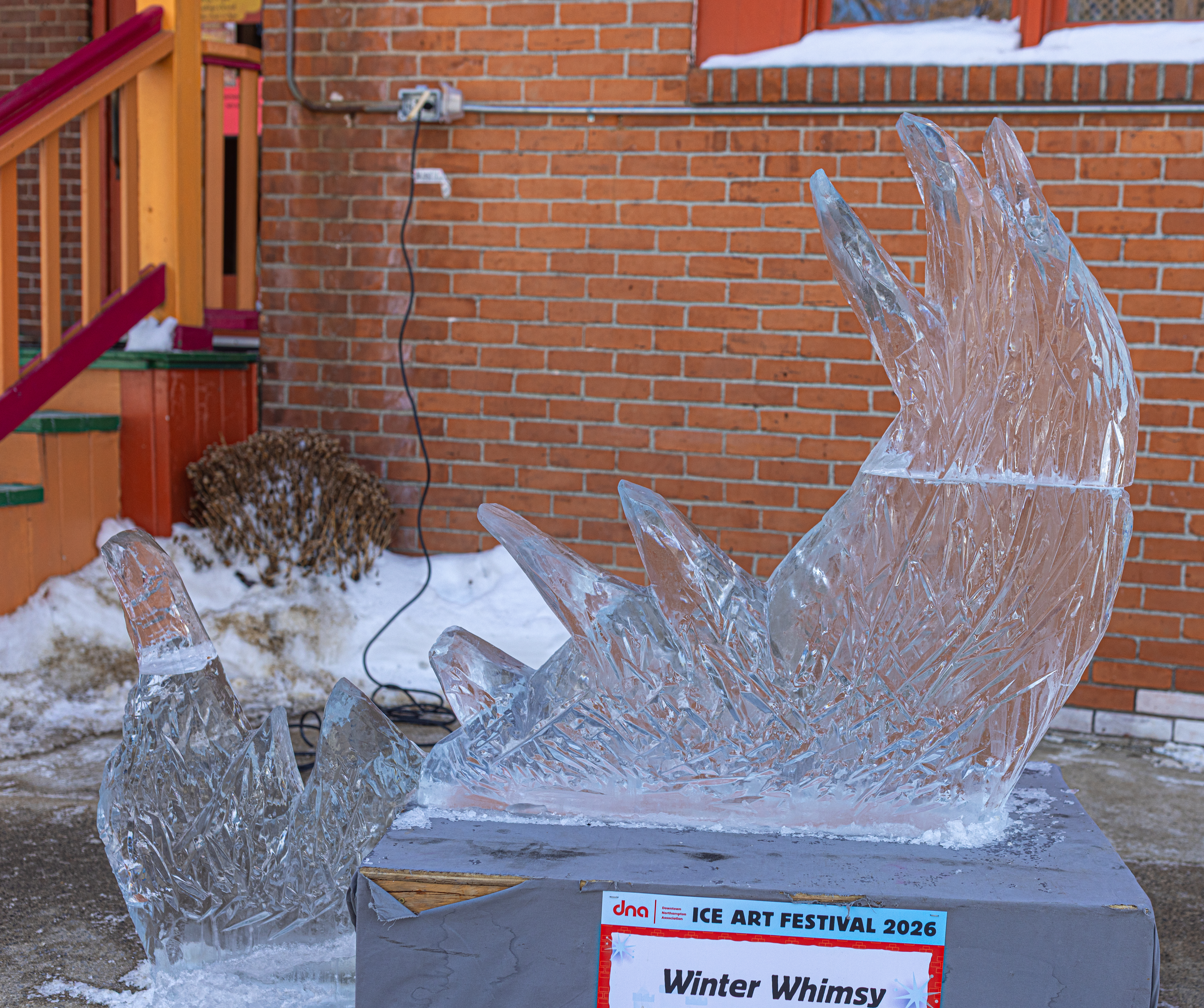
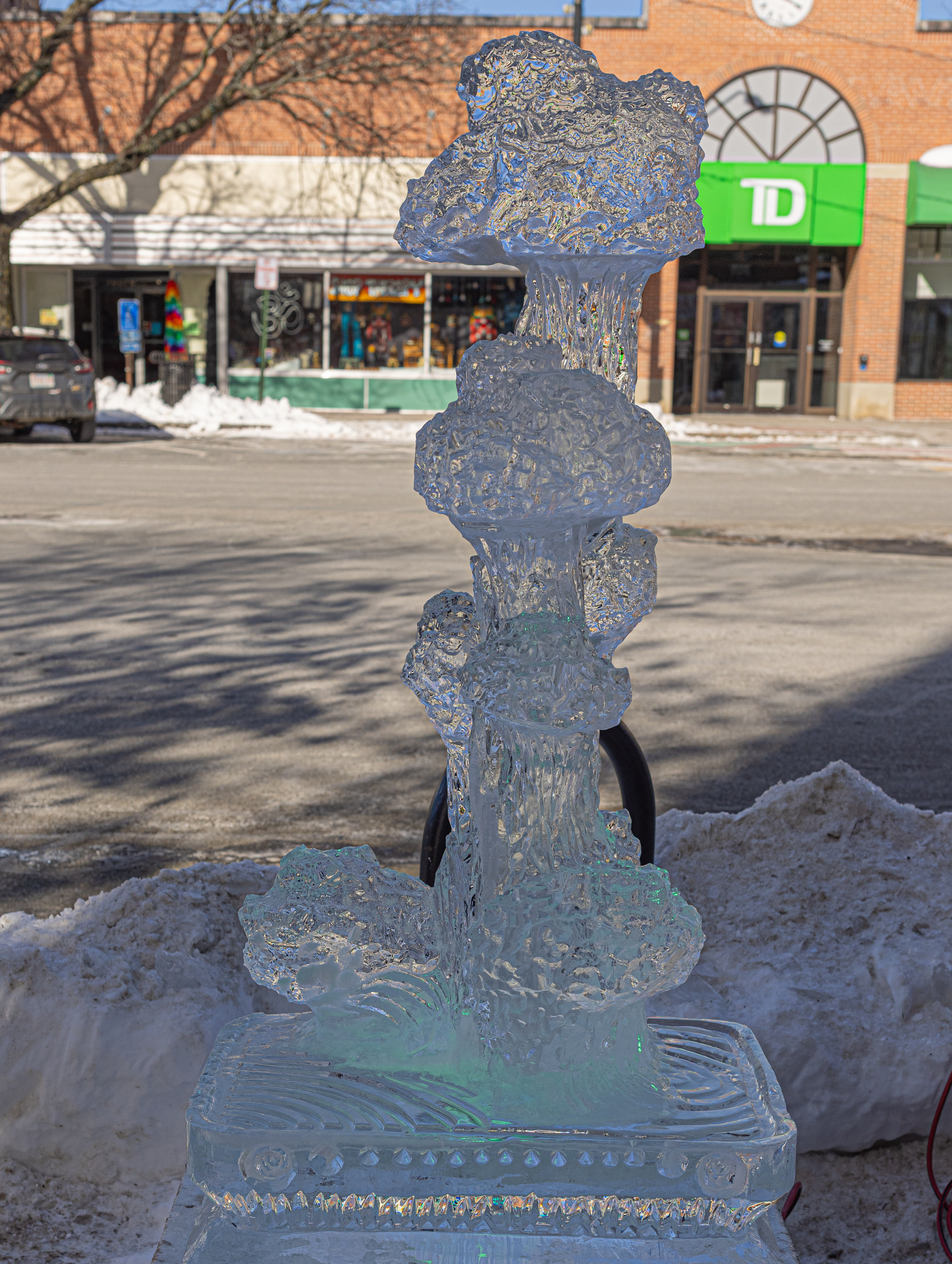
Winter Whimsy by Nathan Peterson had a more abstract feel to it.

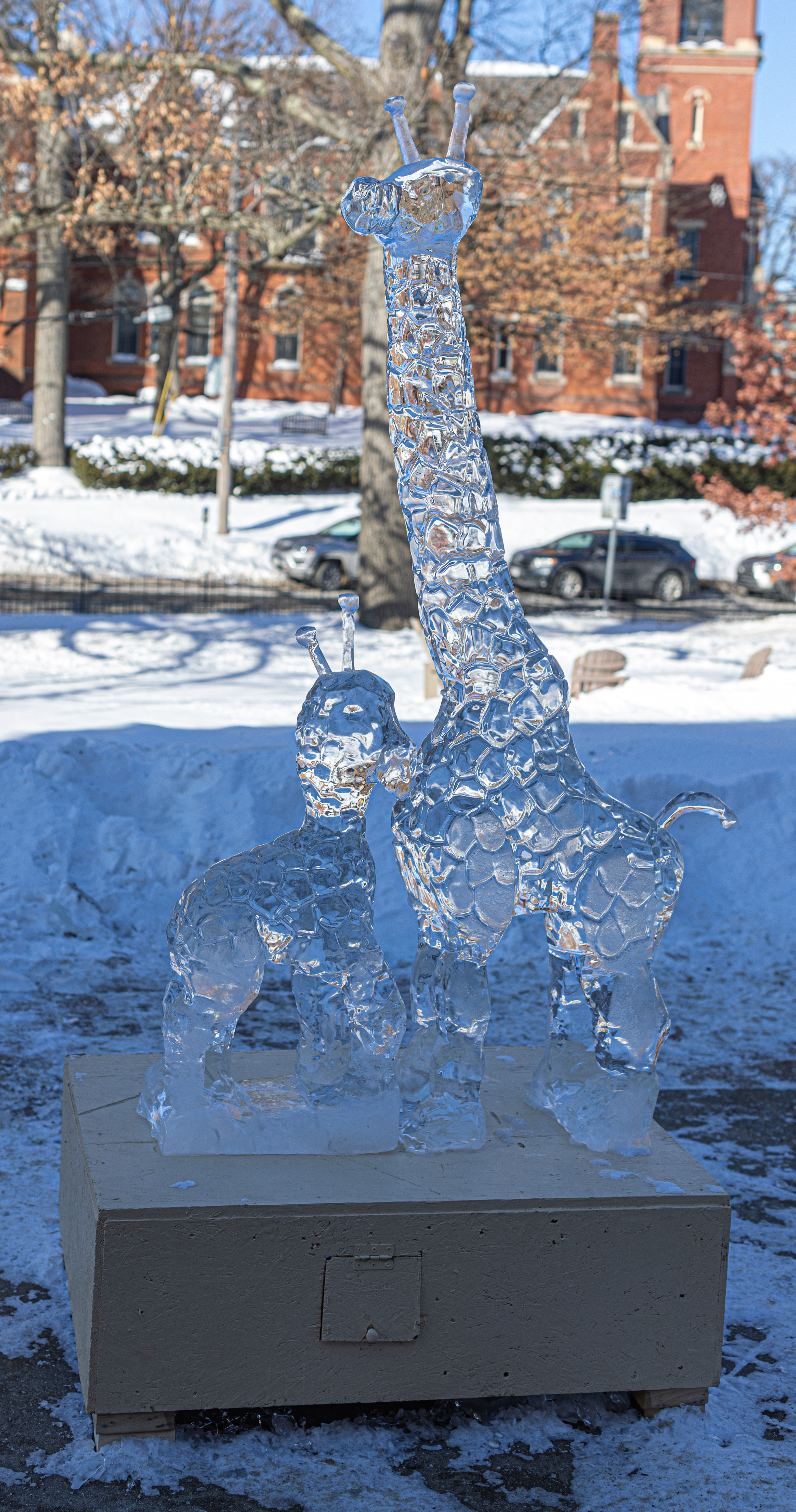
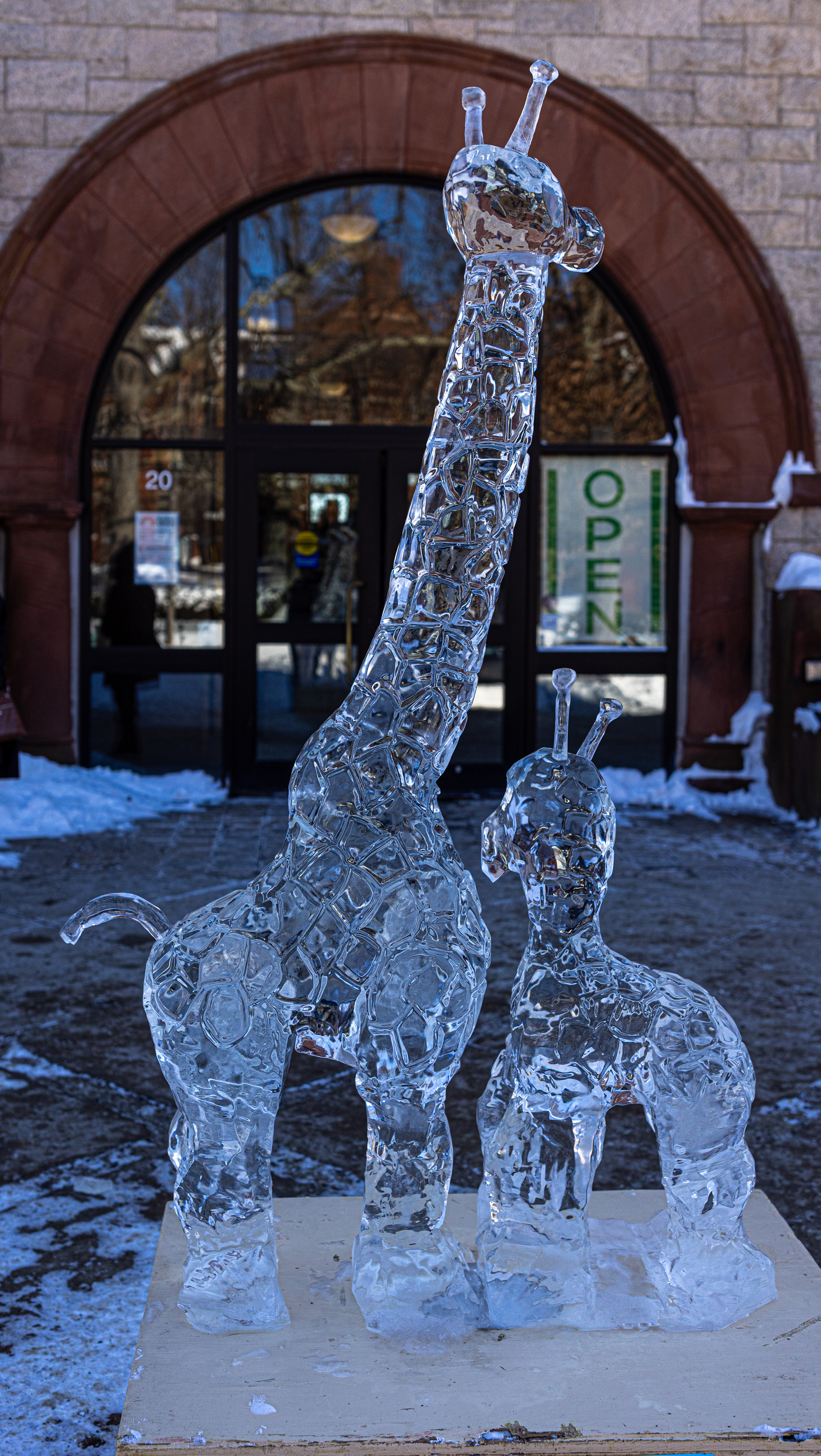
Who knew there were giraffes in Northampton!? Well, at least they are in ice! David Barclay made this sculpture called Giraffe Mother And Baby. This was David’s second sculpture of the event.
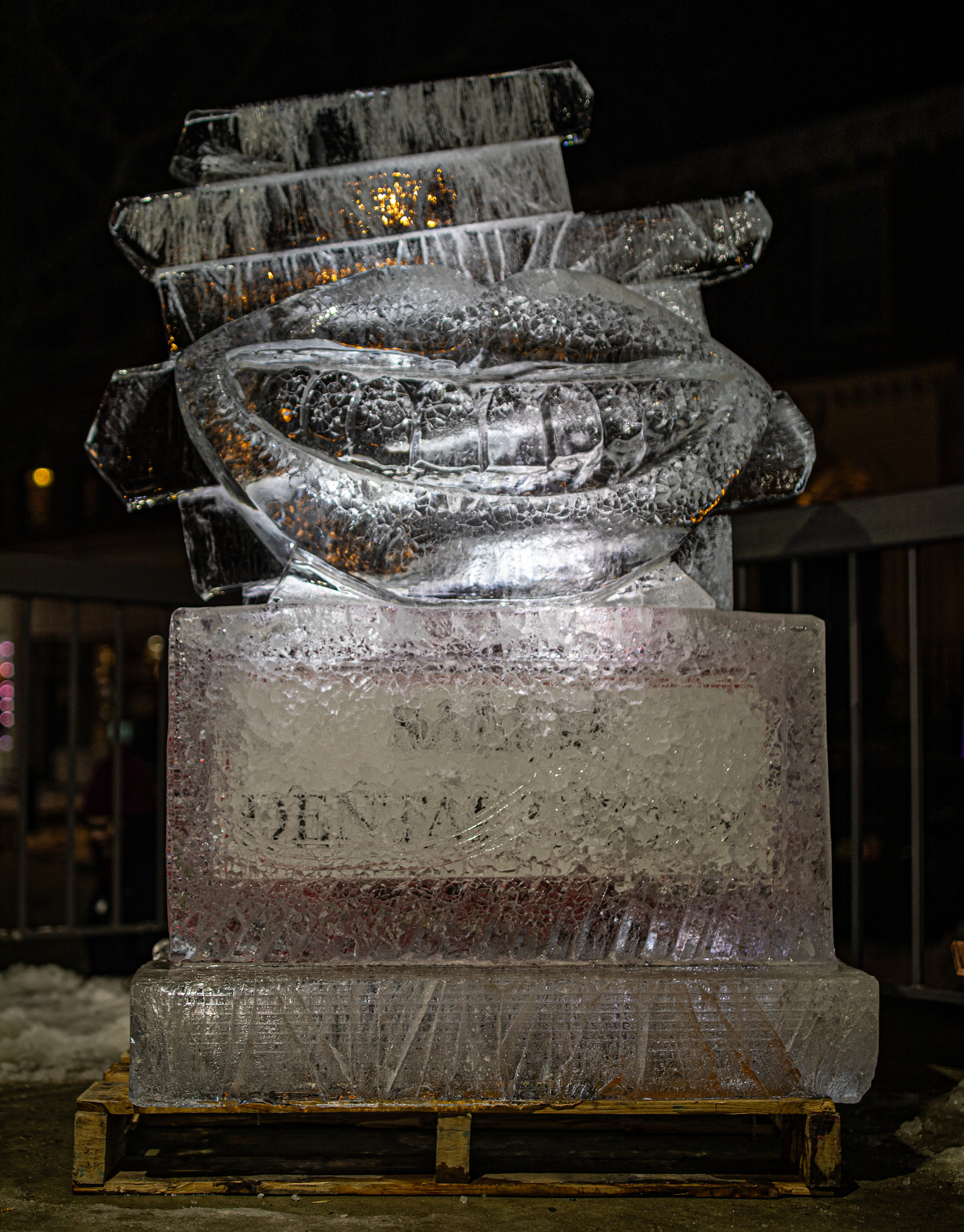
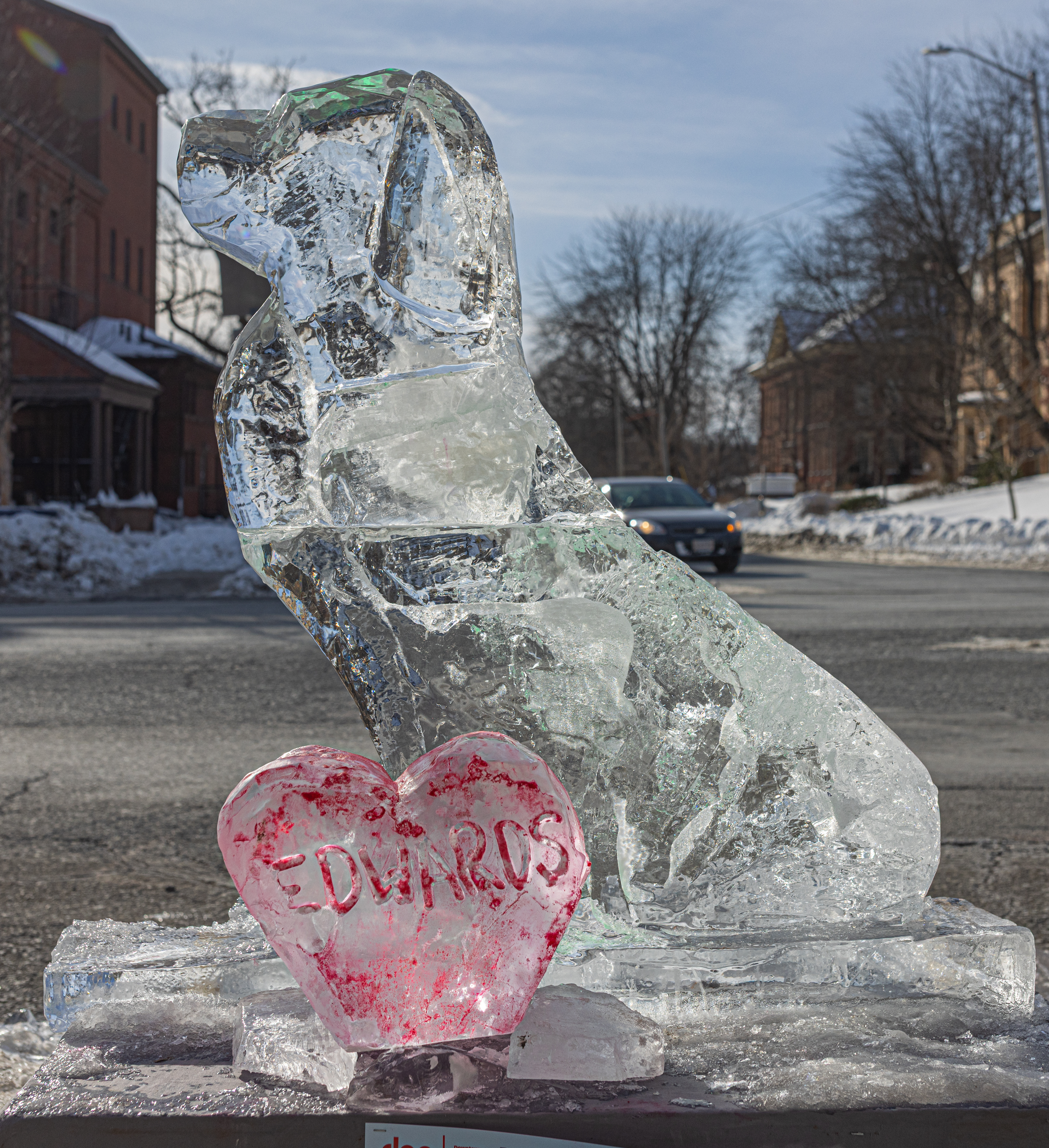
Man’s Best Friend by Peter Vacchina and Maeven Broderick was one of the more popular sculptures. The Edwards in the heart is a reference to Edwards Church, the church where this sculpture was located.

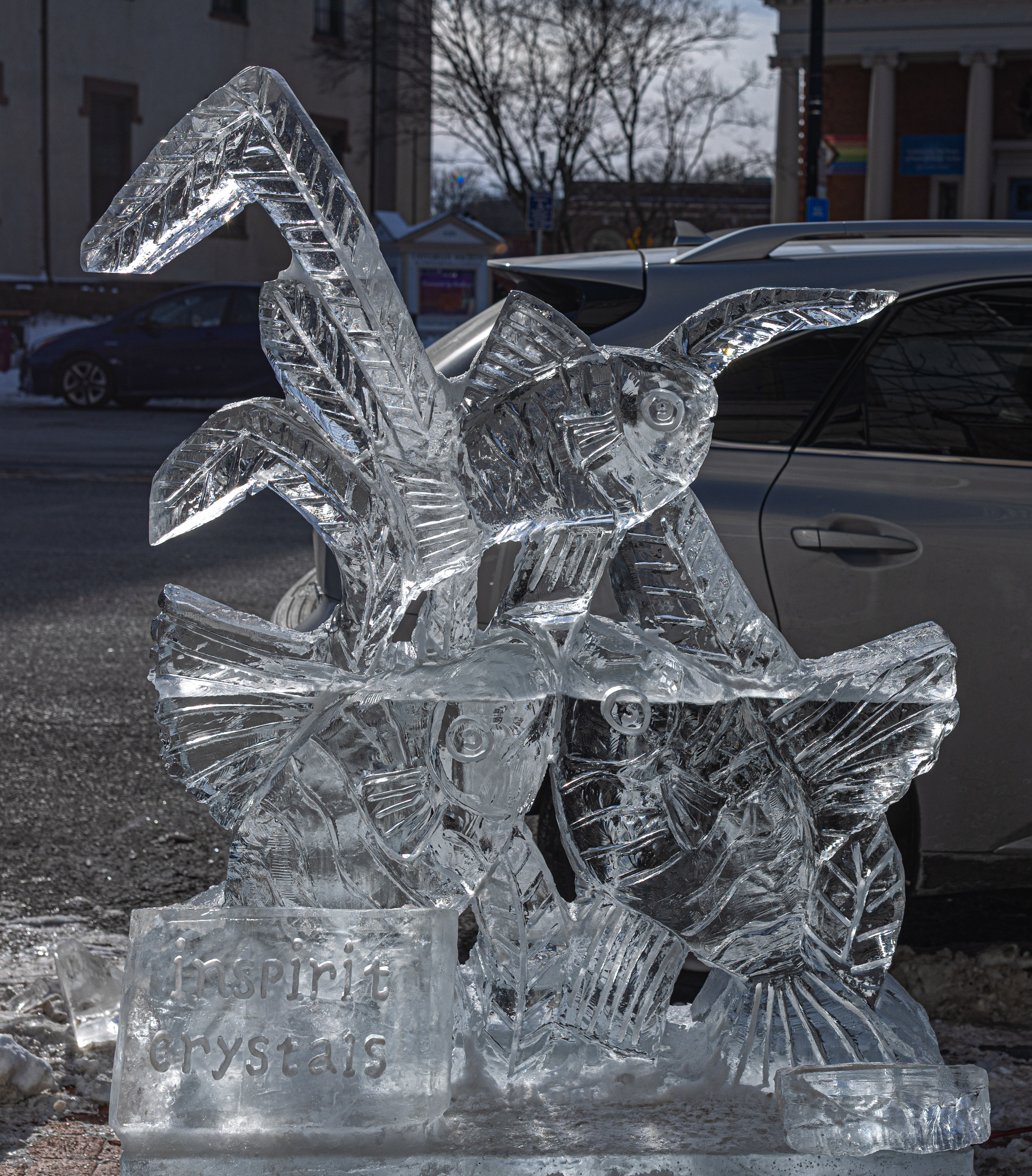
How many fish do you see in the sculpture The Fish by Billy Poe?

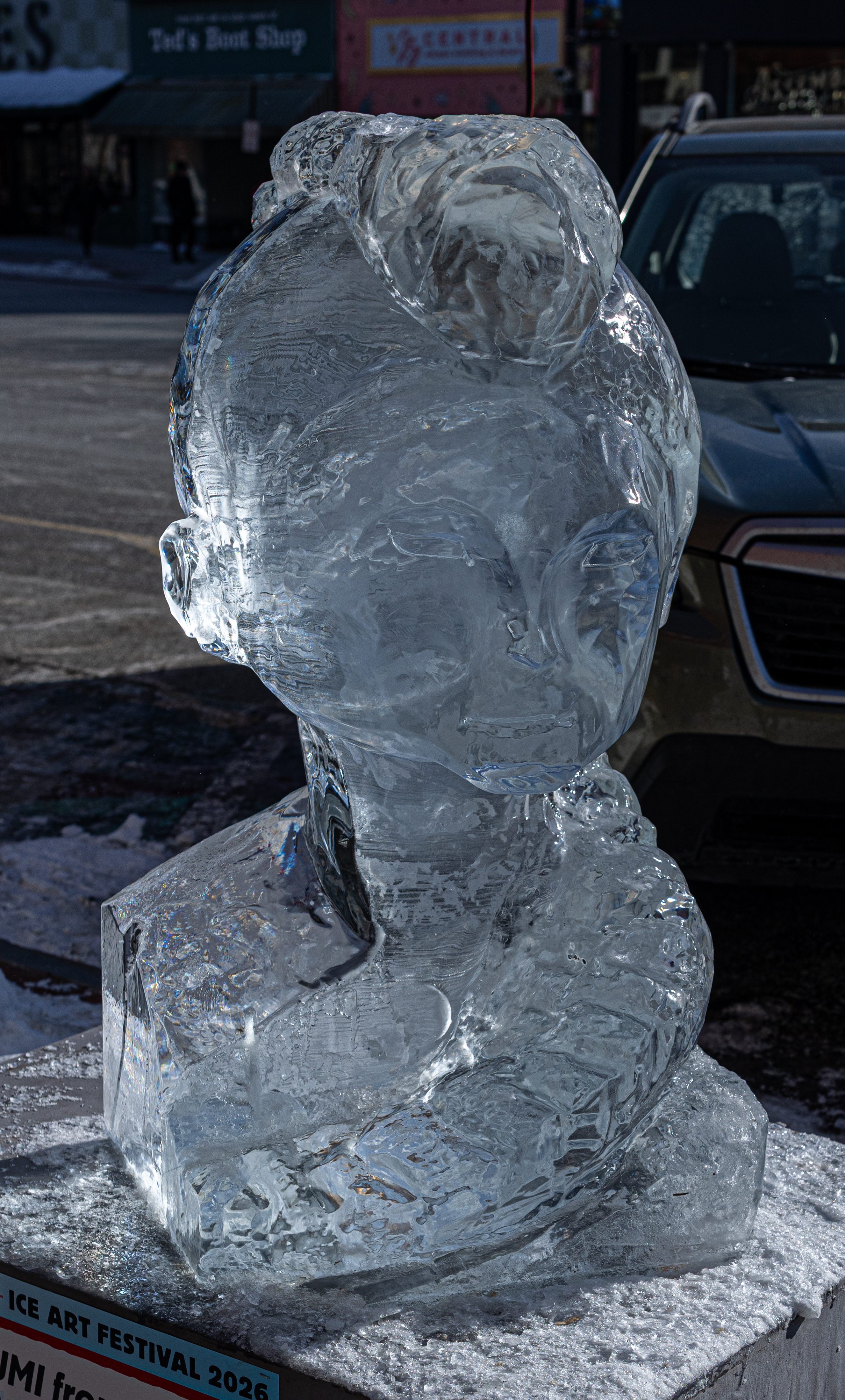
I’ve never heard of their music. But, I hear the music of the person in this sculpture called RUMI from K-Pop Demon Hunters by John Collins is pretty cool.

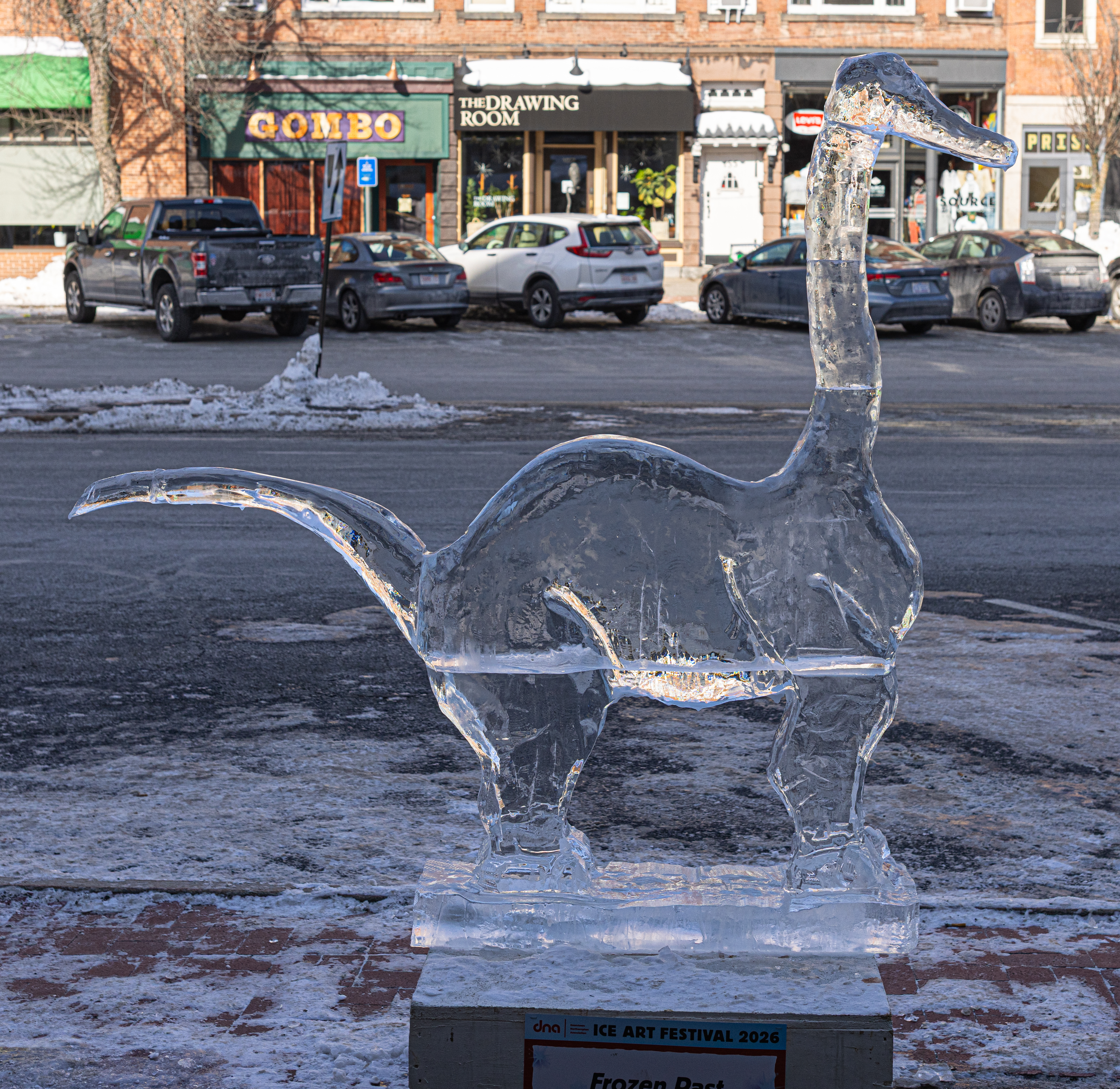
Frozen Past by Chip Koser was a blast from the past.

Free Form by Andrew Campbell is another abstract sculpture.

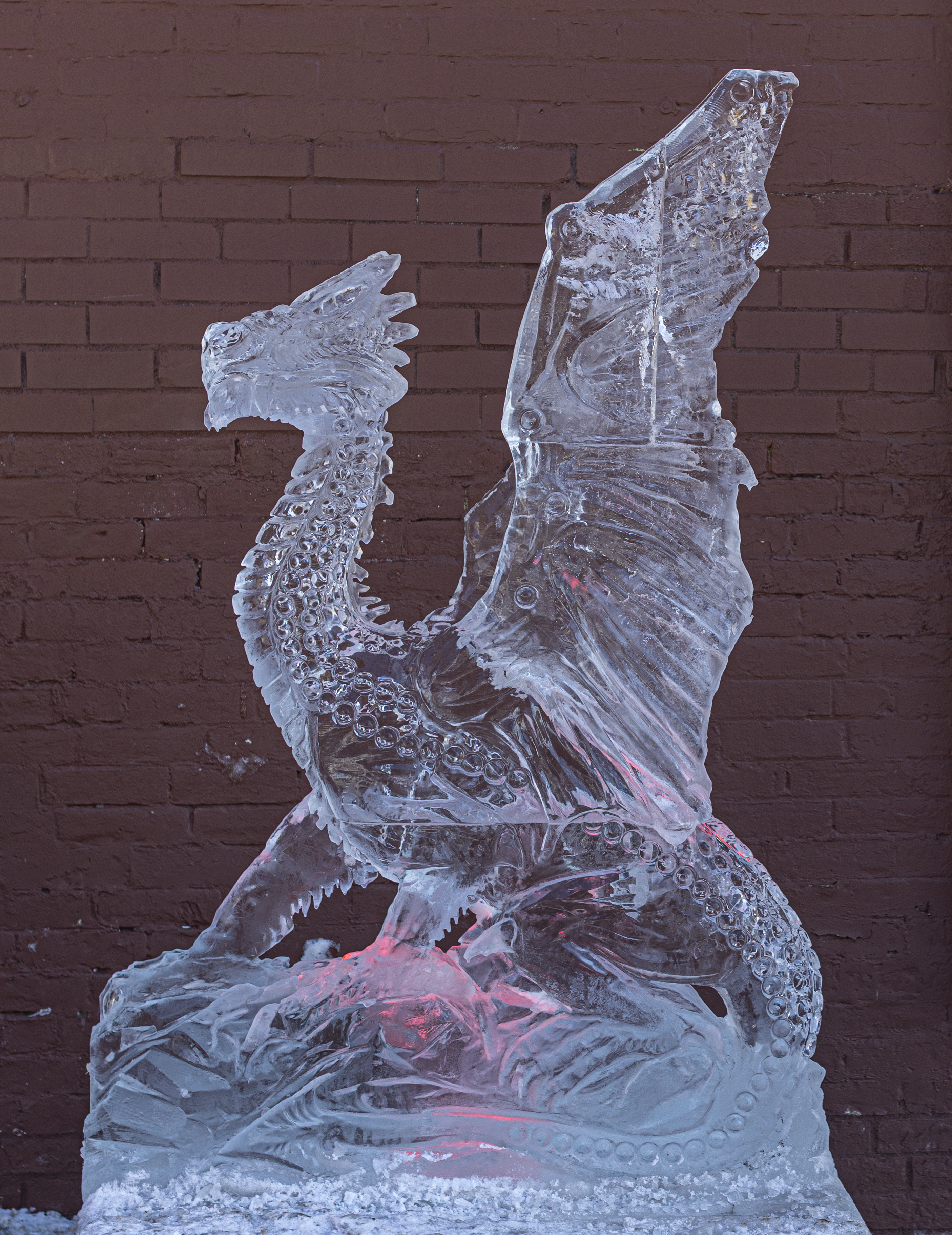
Mighty Wings by Mark Bosworth reminded me of Game Of Thrones, a show I’ve actually never watched. But, I hear good things about it.

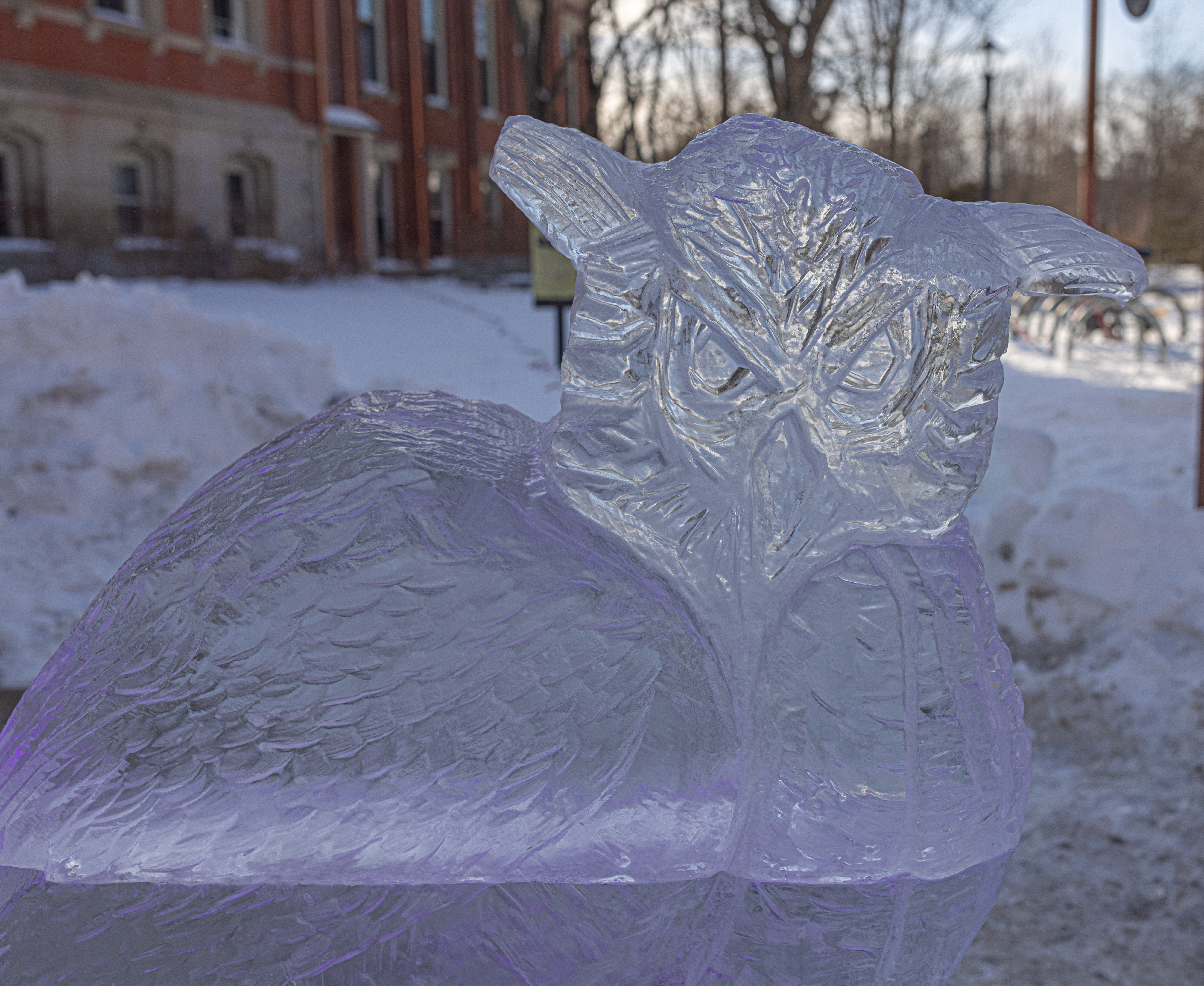
This owl sculpture by Brian McQuillan called Whoosie was very impressive.

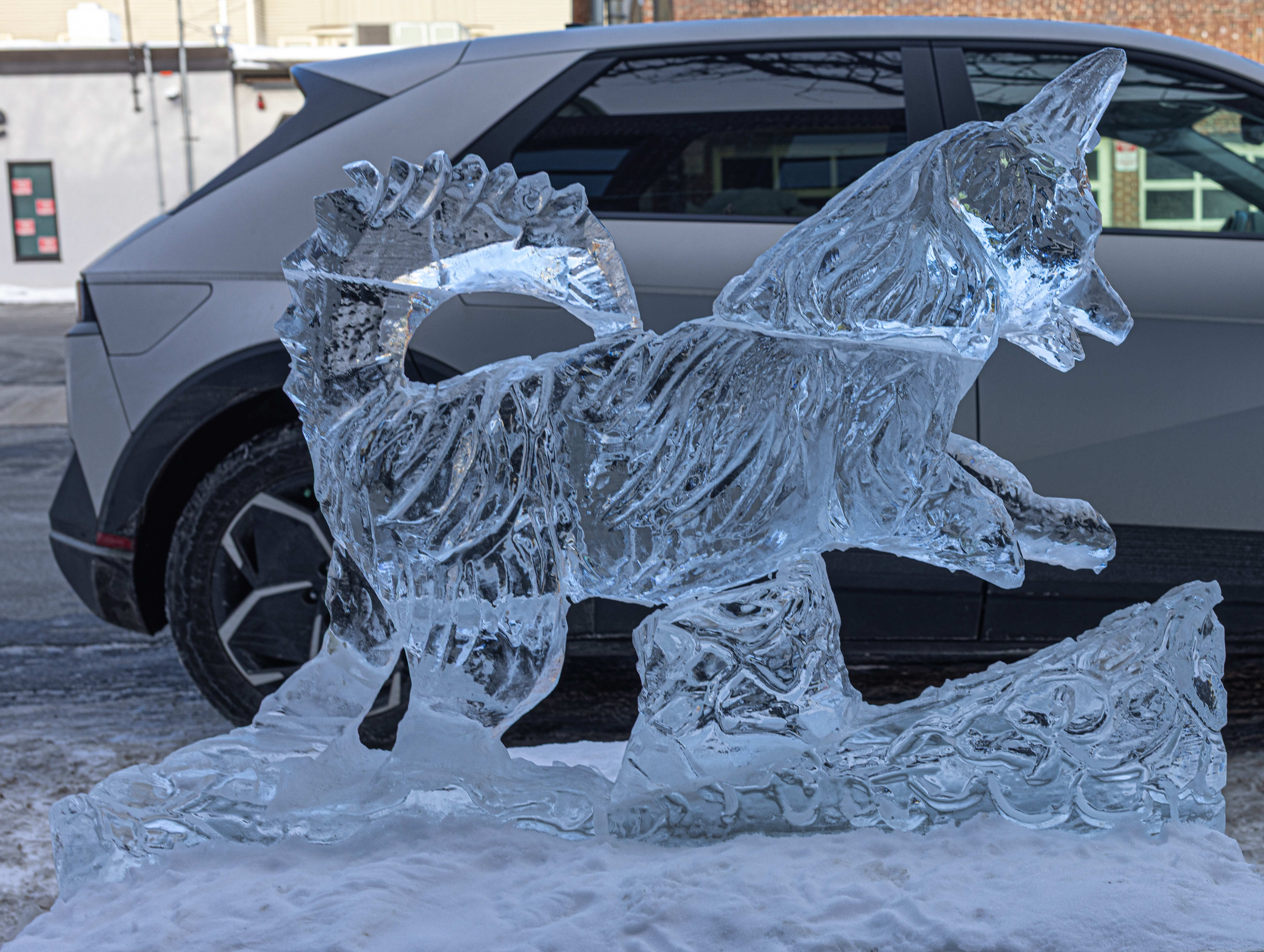
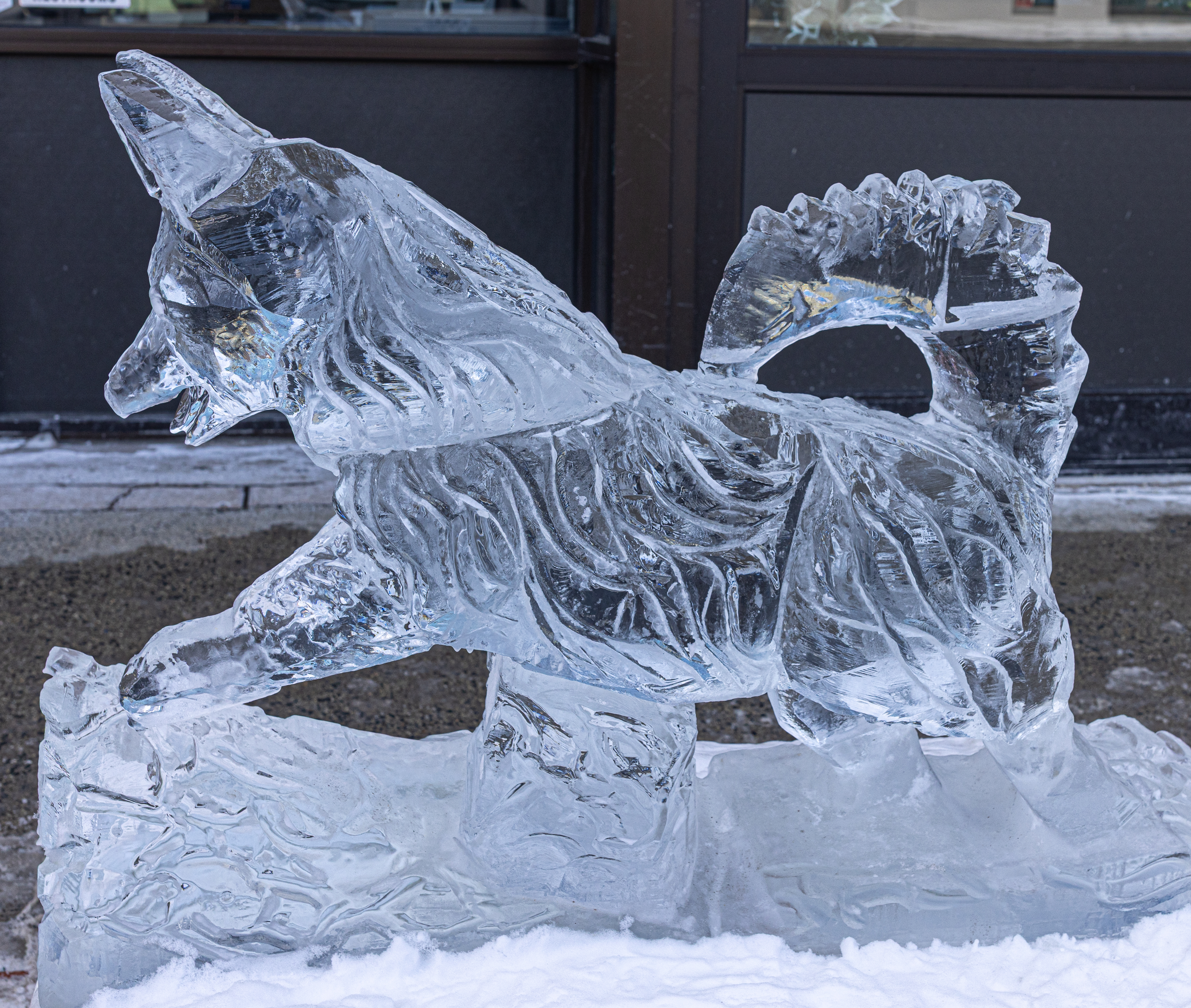
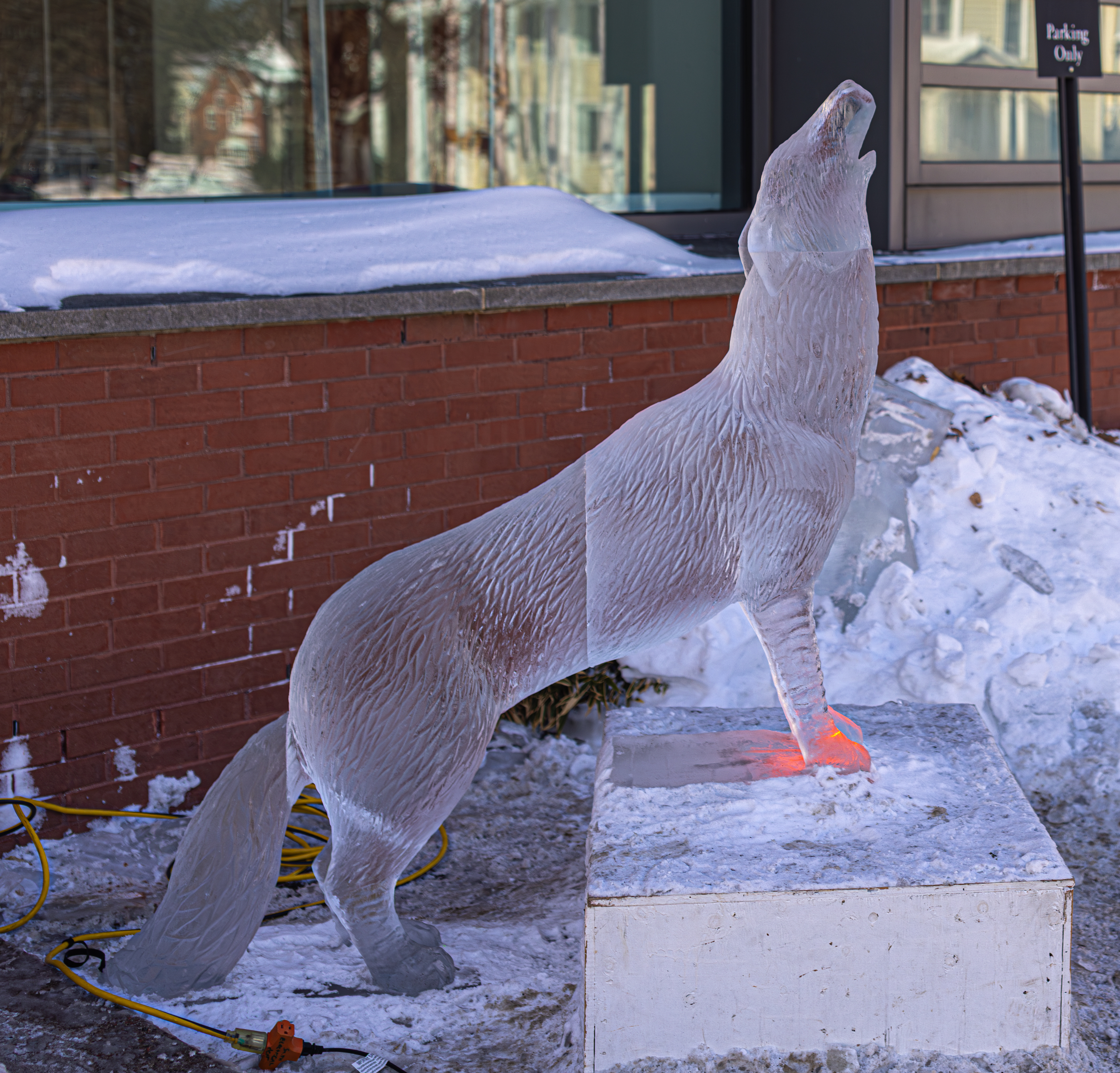
I wanted to pat Lone Wolf by Michael Legassey.

All of the ice sculptures were so creative and amazing. Hopefully, next year I can photograph them while they’re lit. If you have a favorite sculpture let me know in the comments!


2025 Hampton Beach Sand Sculpting Classic (Hampton Beach, Hampton, NH)

Date Of Event: June 12-14

Location: Hampton Beach, 100 Ocean Blvd, Hampton, NH (1 hour northeast of Boston, MA, 1 hour southeast of Concord, NH)

Summary: 10 sand sculptors from all over the world competed in the 25th annual Hampton Beach Sand Sculpting Classic

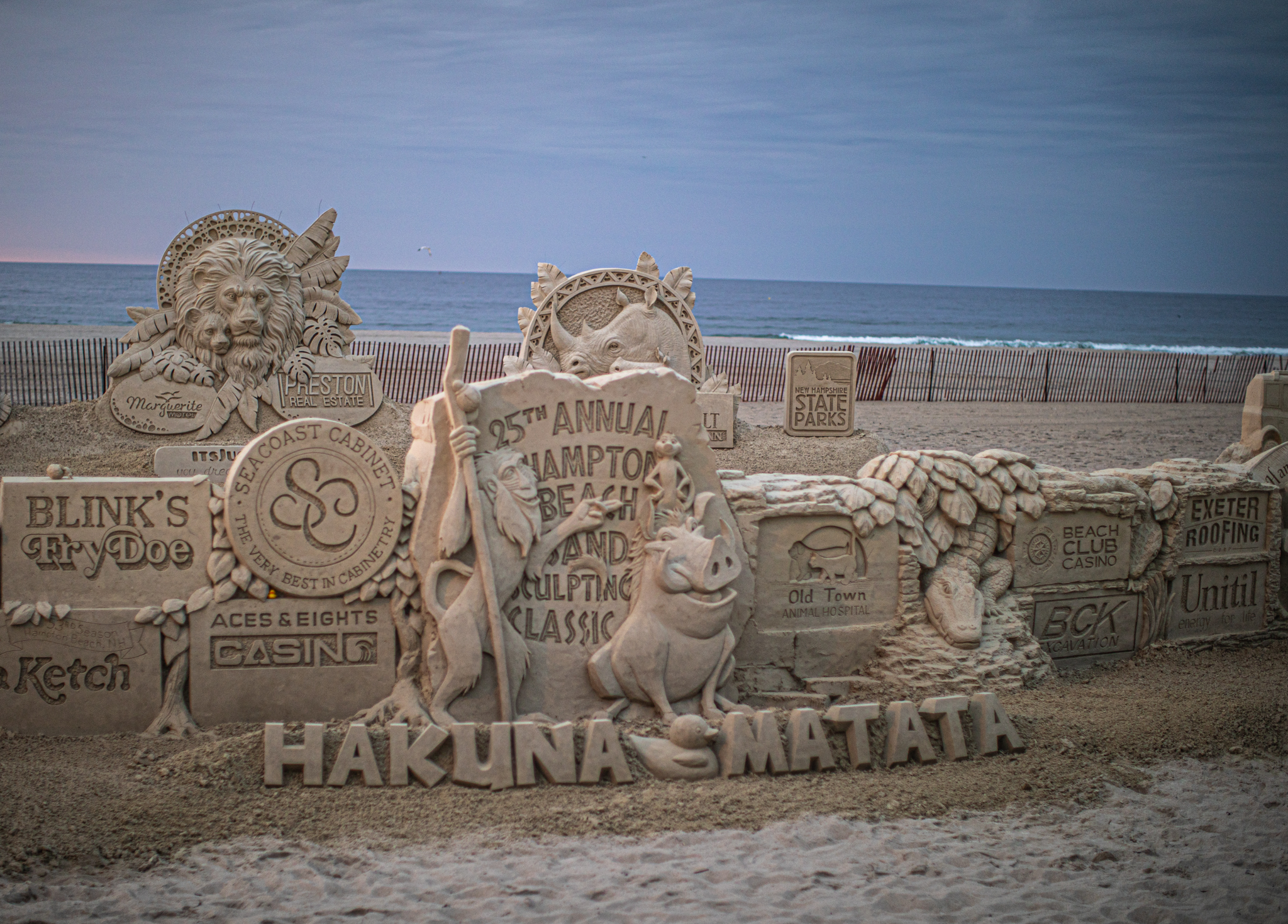
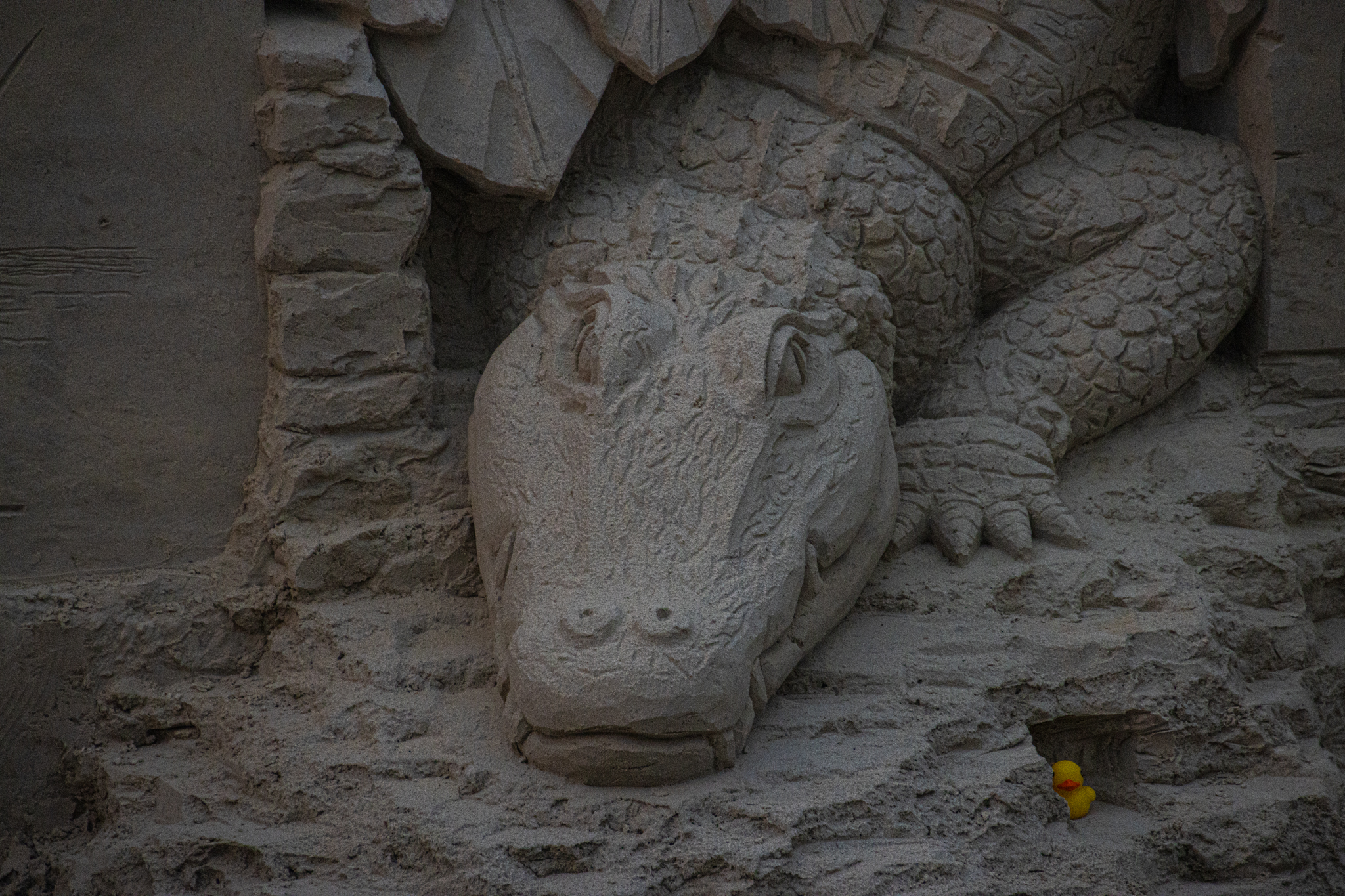
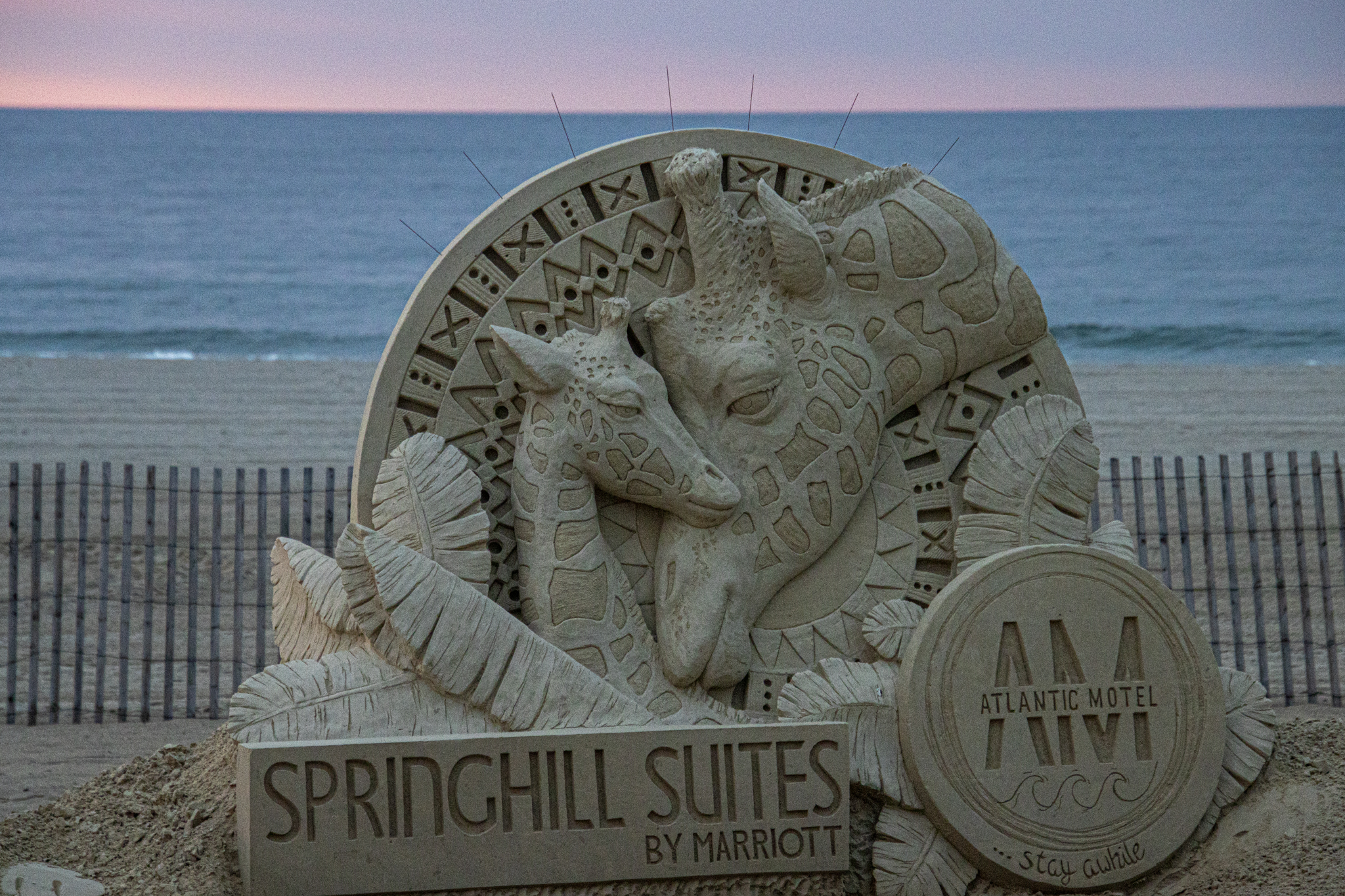
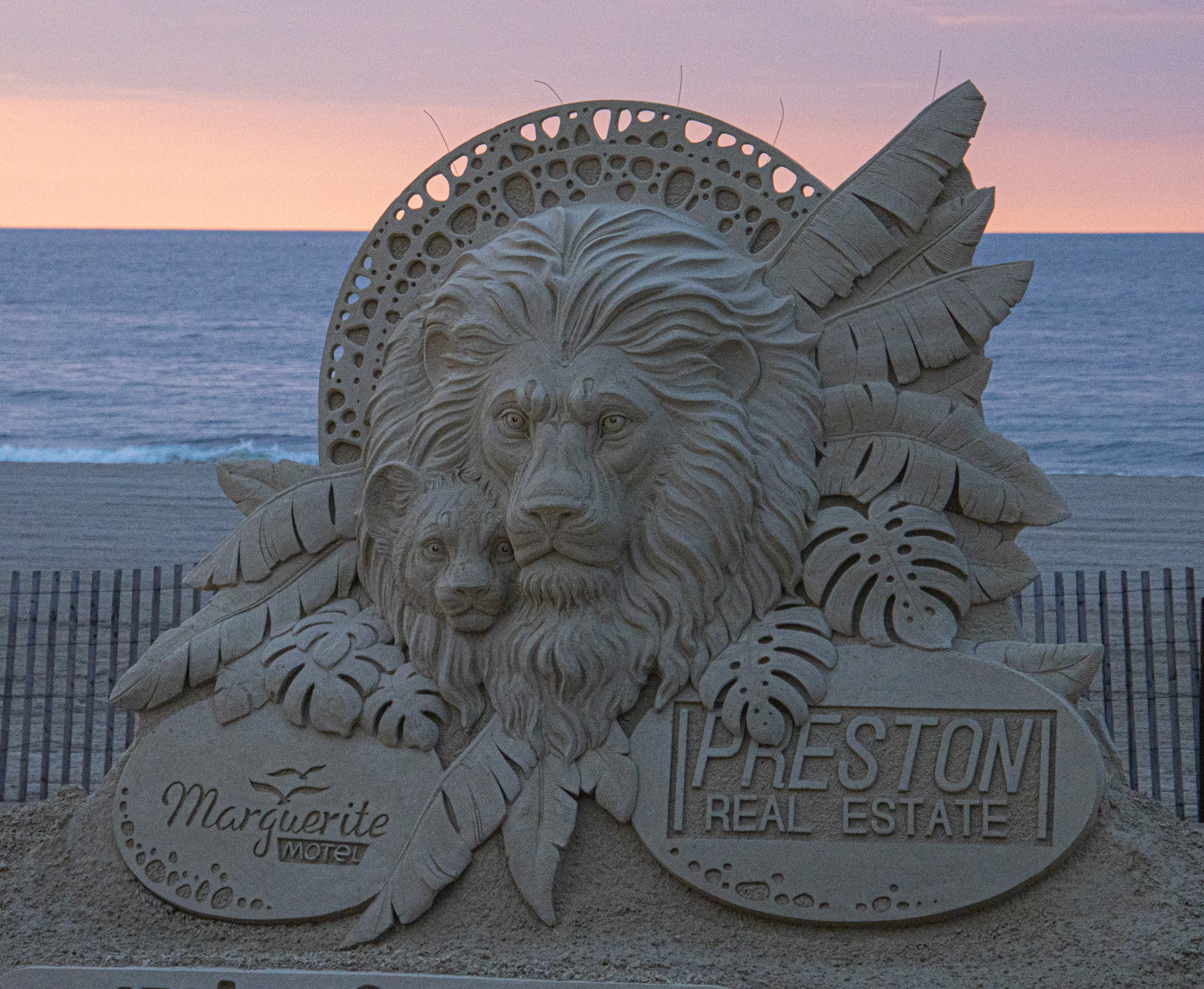
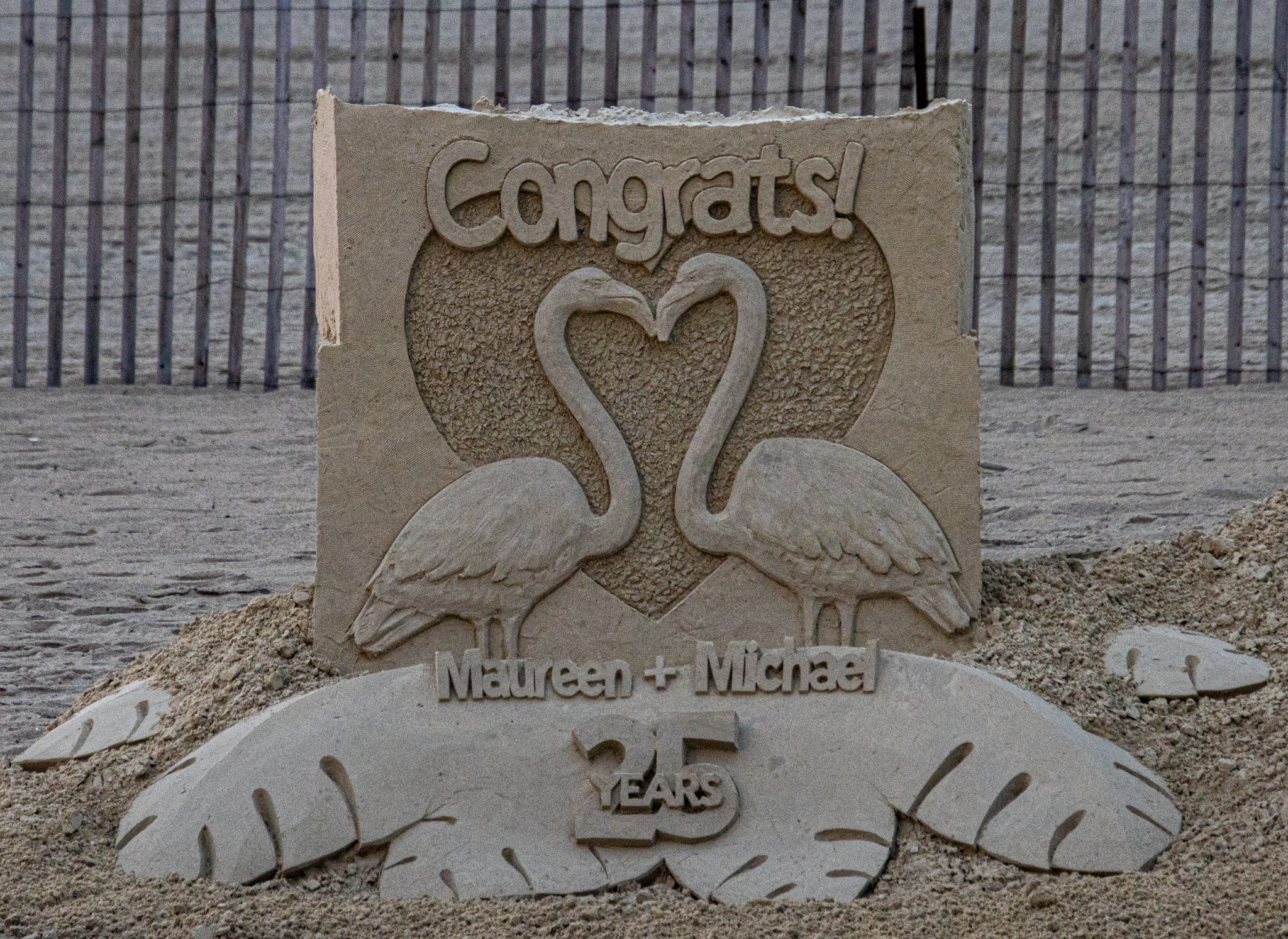
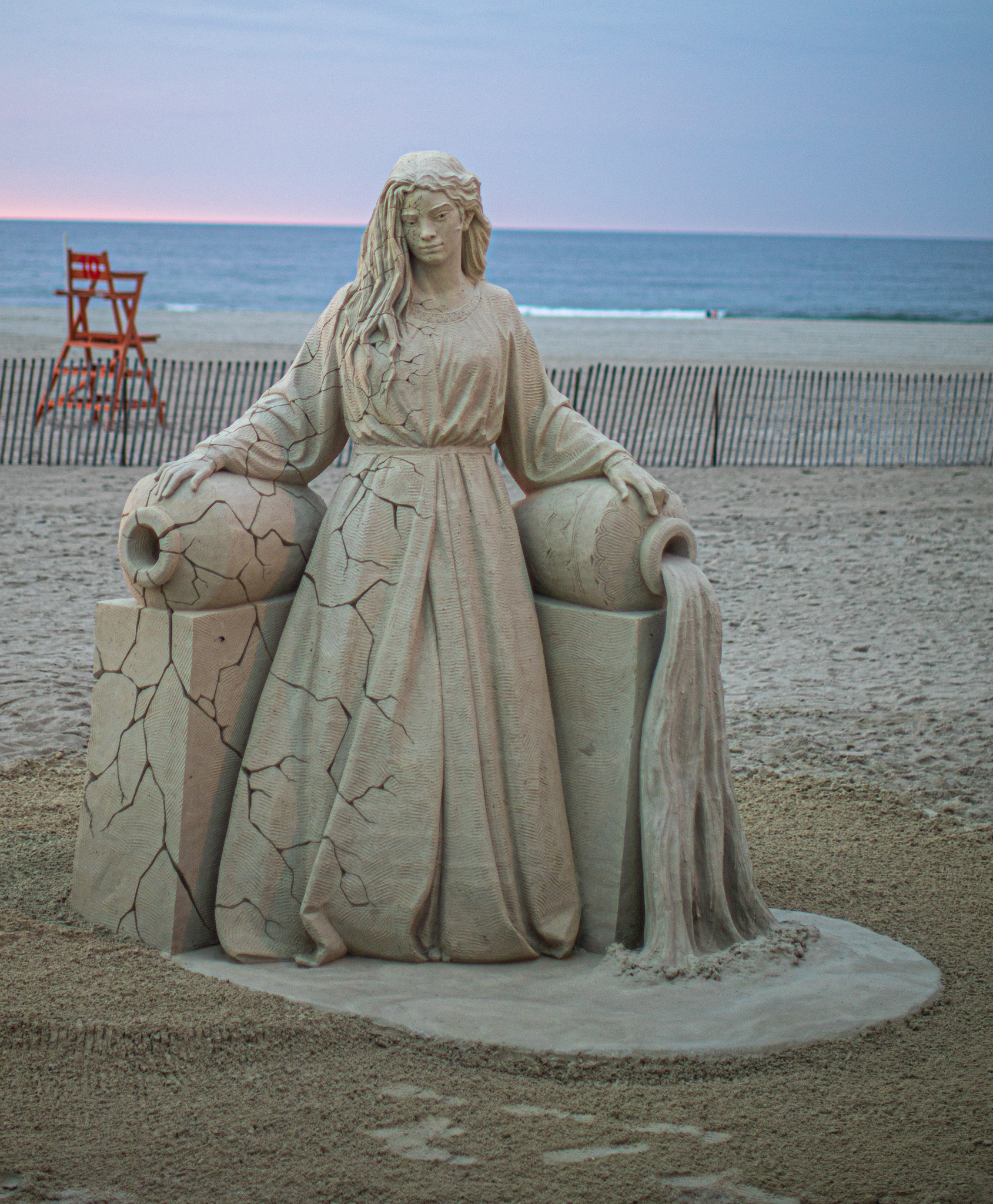
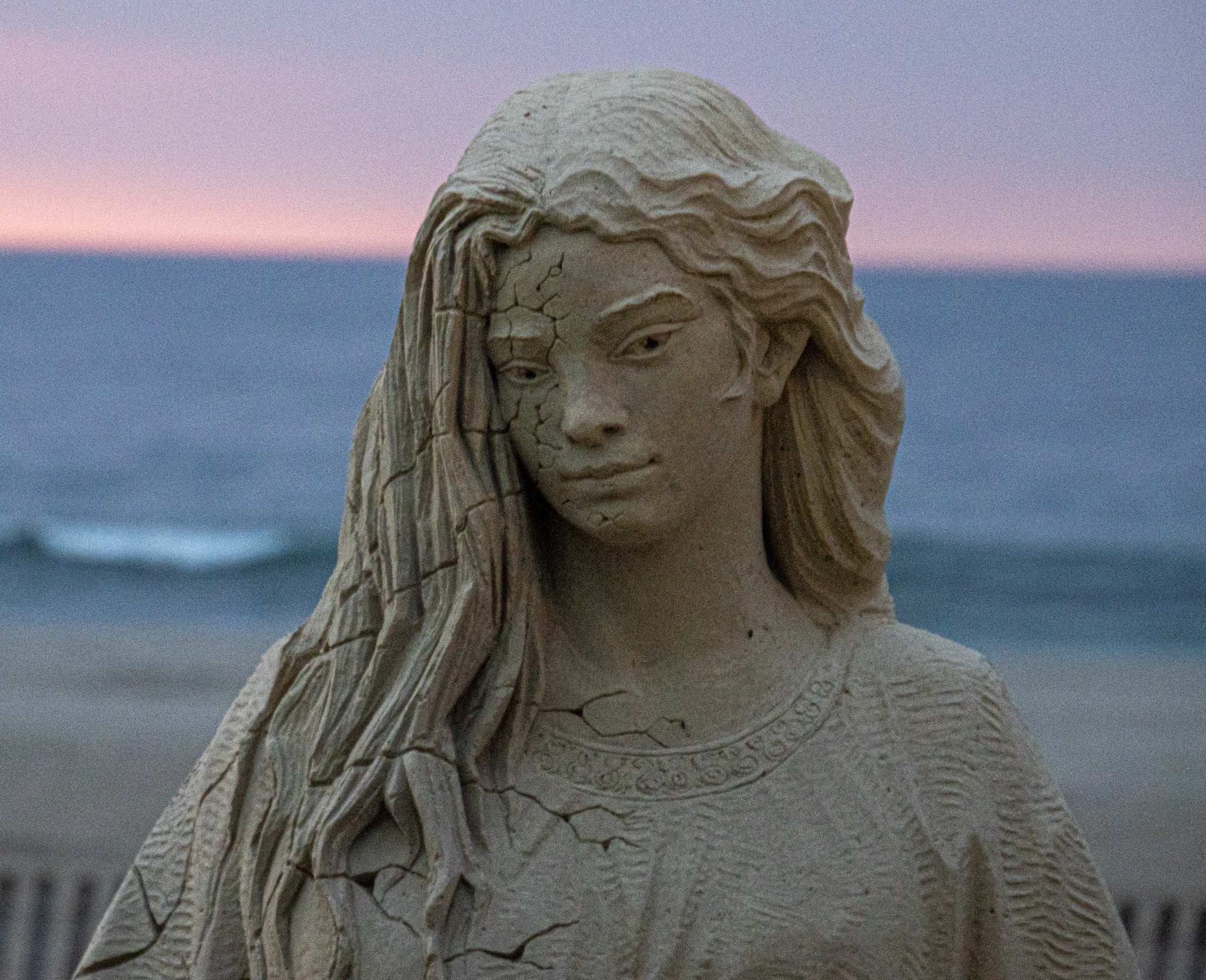
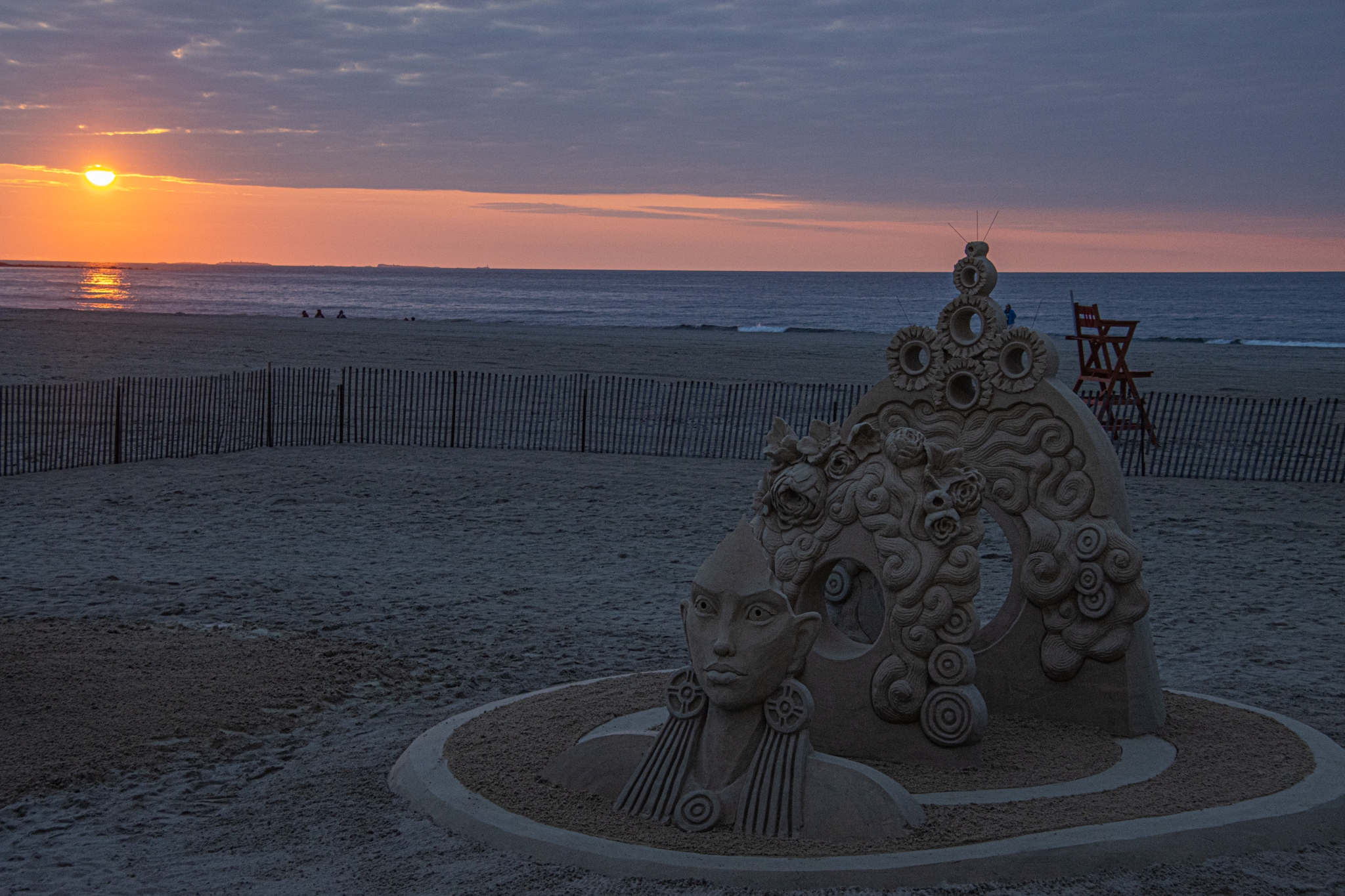
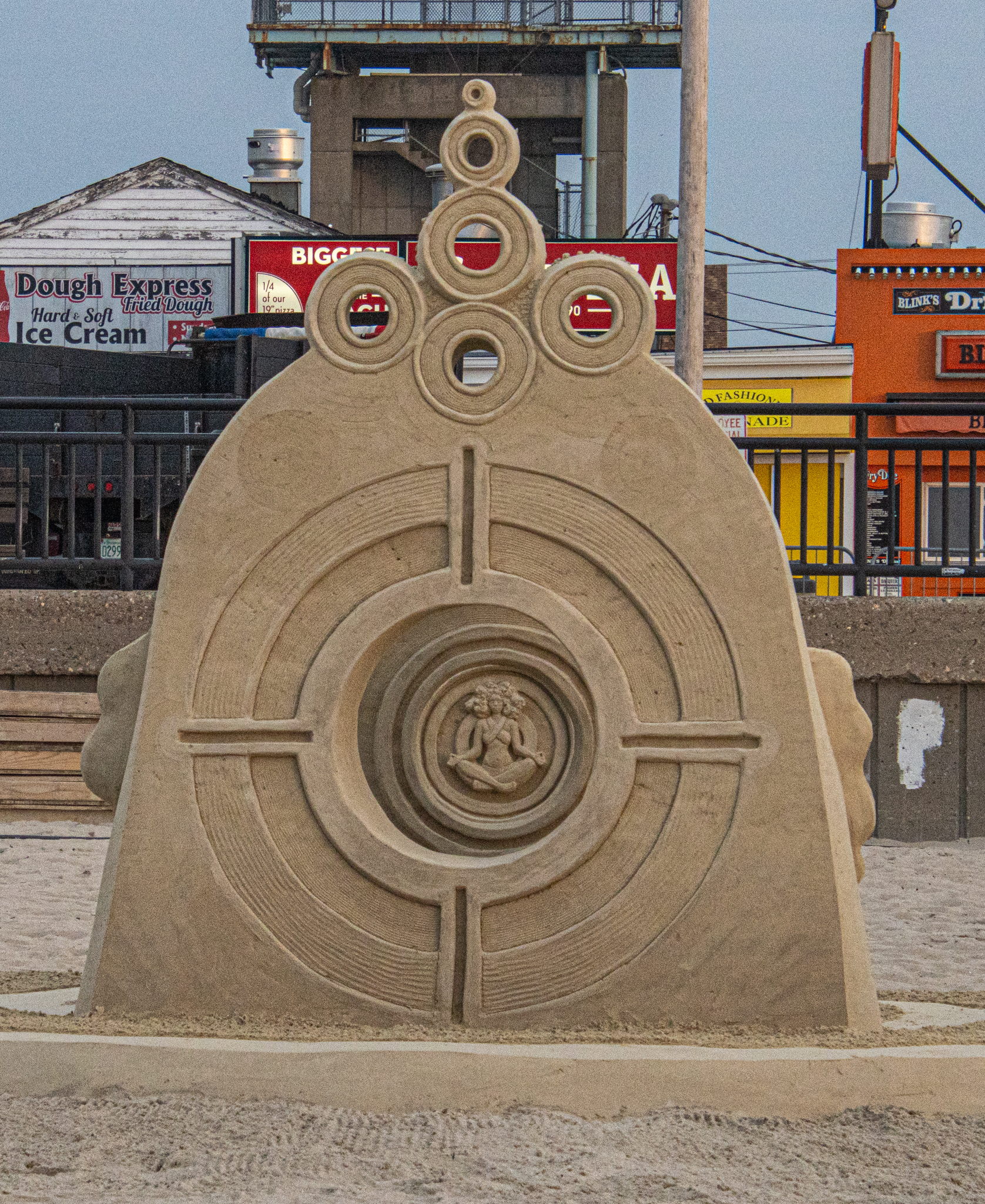
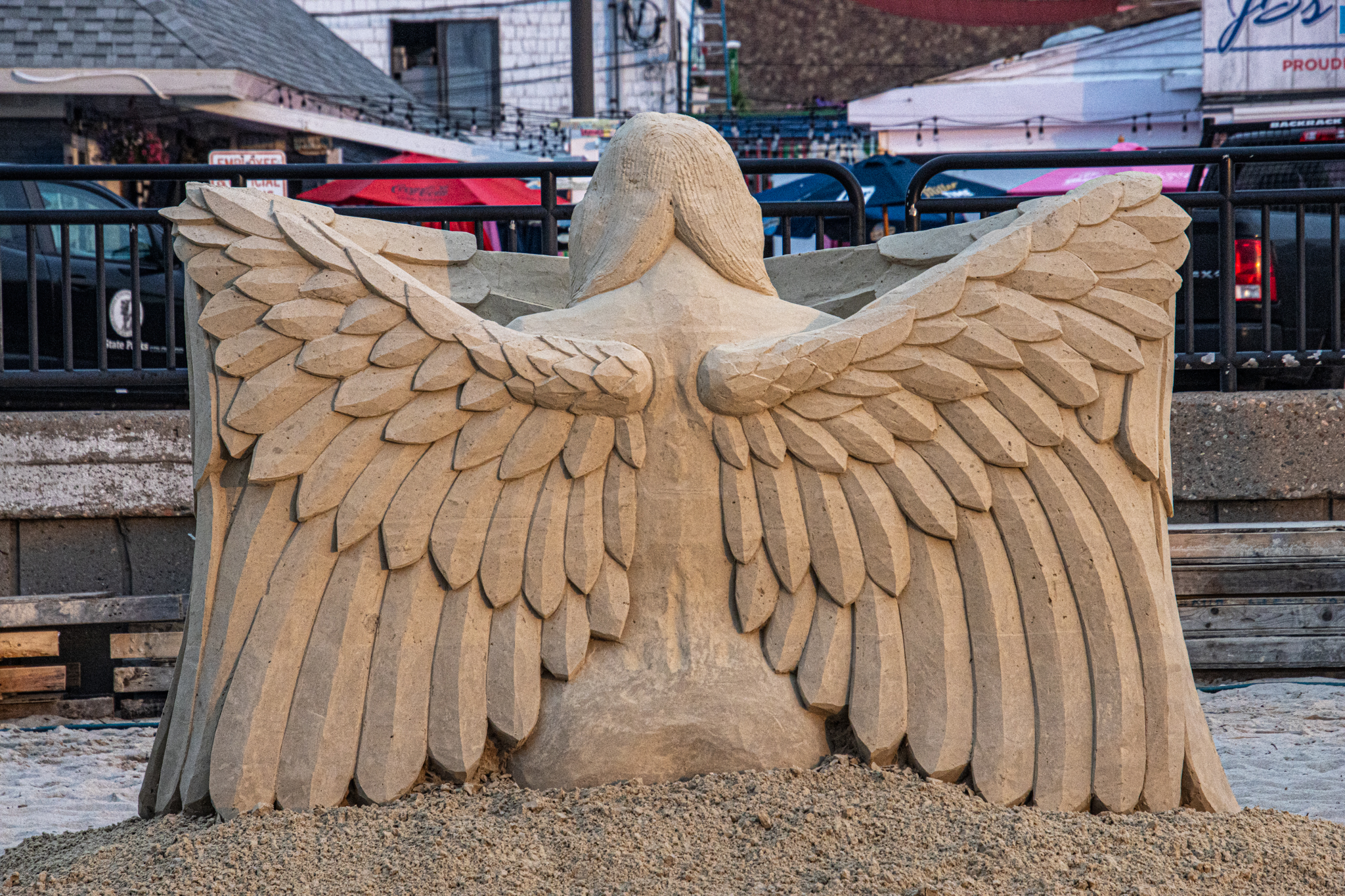
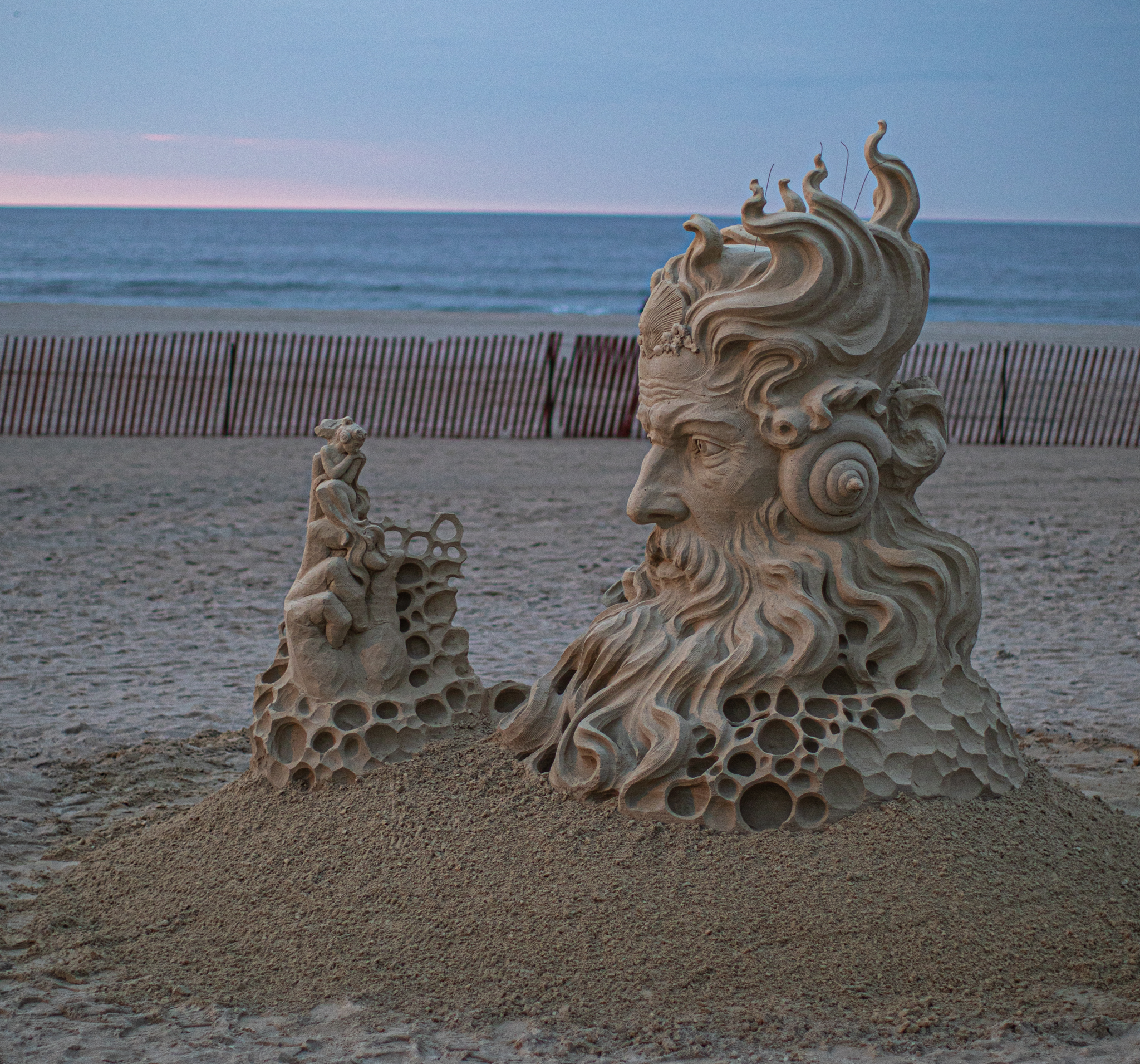
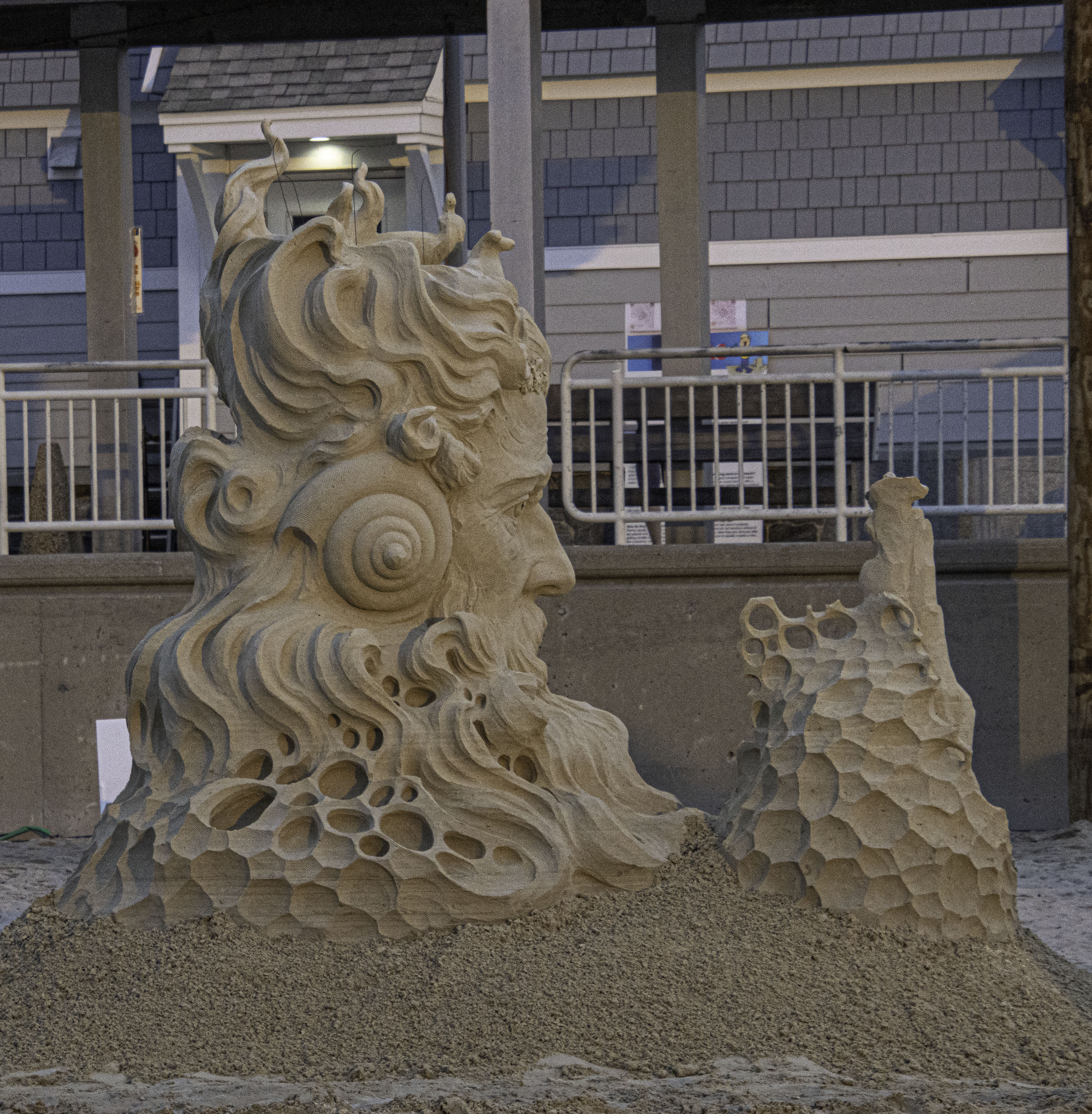
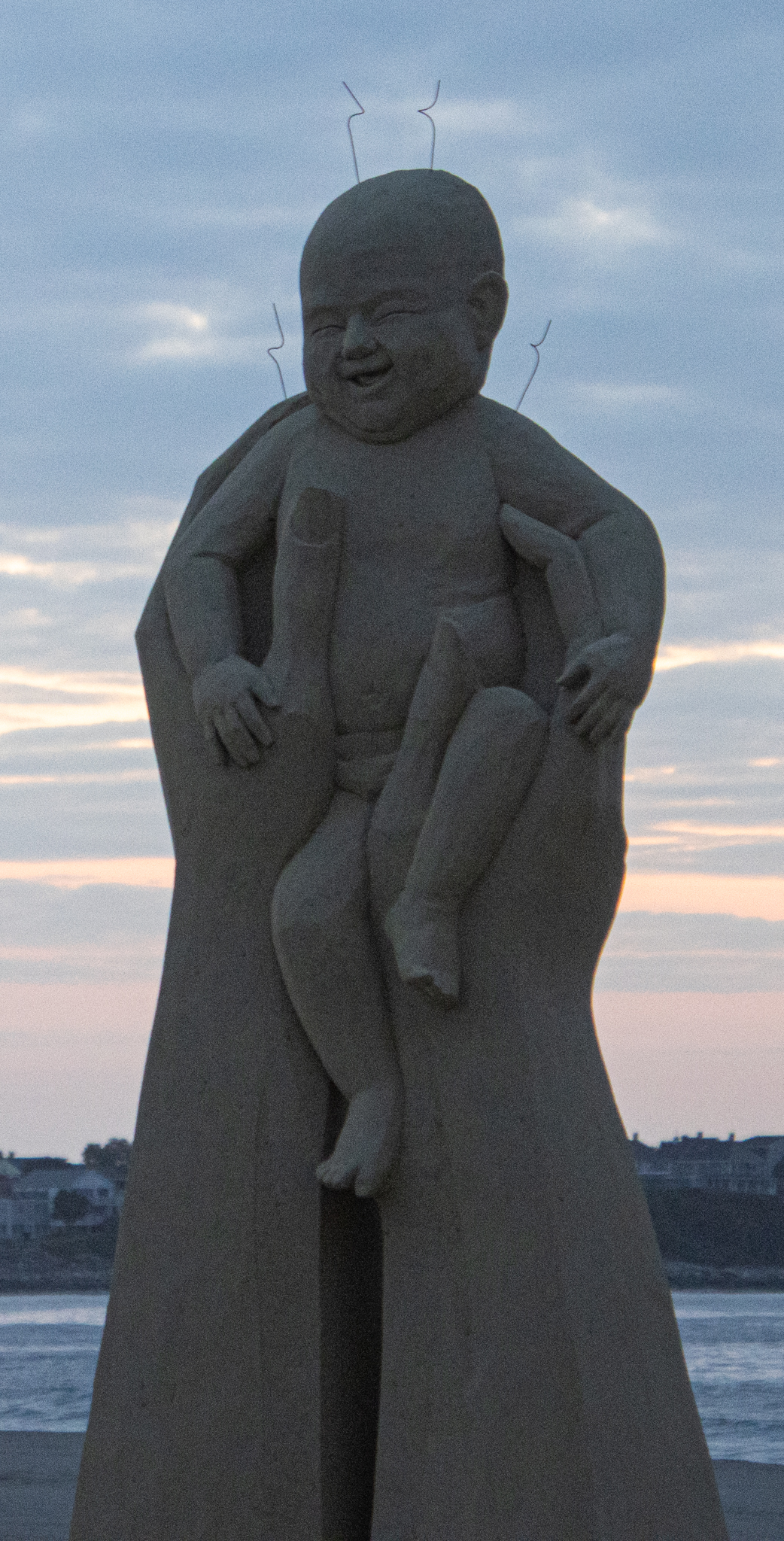
Turtles, dream homes and mermaids were just a few of the meticulously crafted sand sculptures on display during the 2025 Hampton Beach Sand Sculpting Classic at Hampton Beach, New Hampshire.

But, before the artists begin working on their grand sculptures, they all work together to make the center stage sculptures based on the theme of the competition along with a few sculptures for the sponsors of the event. The theme of this year’s event was “Sand Safari.”

Regardless of the theme of the event, the sculptors are free to make sculptures of any theme they wish. And, each sculpture had an interesting story behind them. Some of the meanings and messages behind the sculptures are fairly straight forward, like the first sculpture posted below.

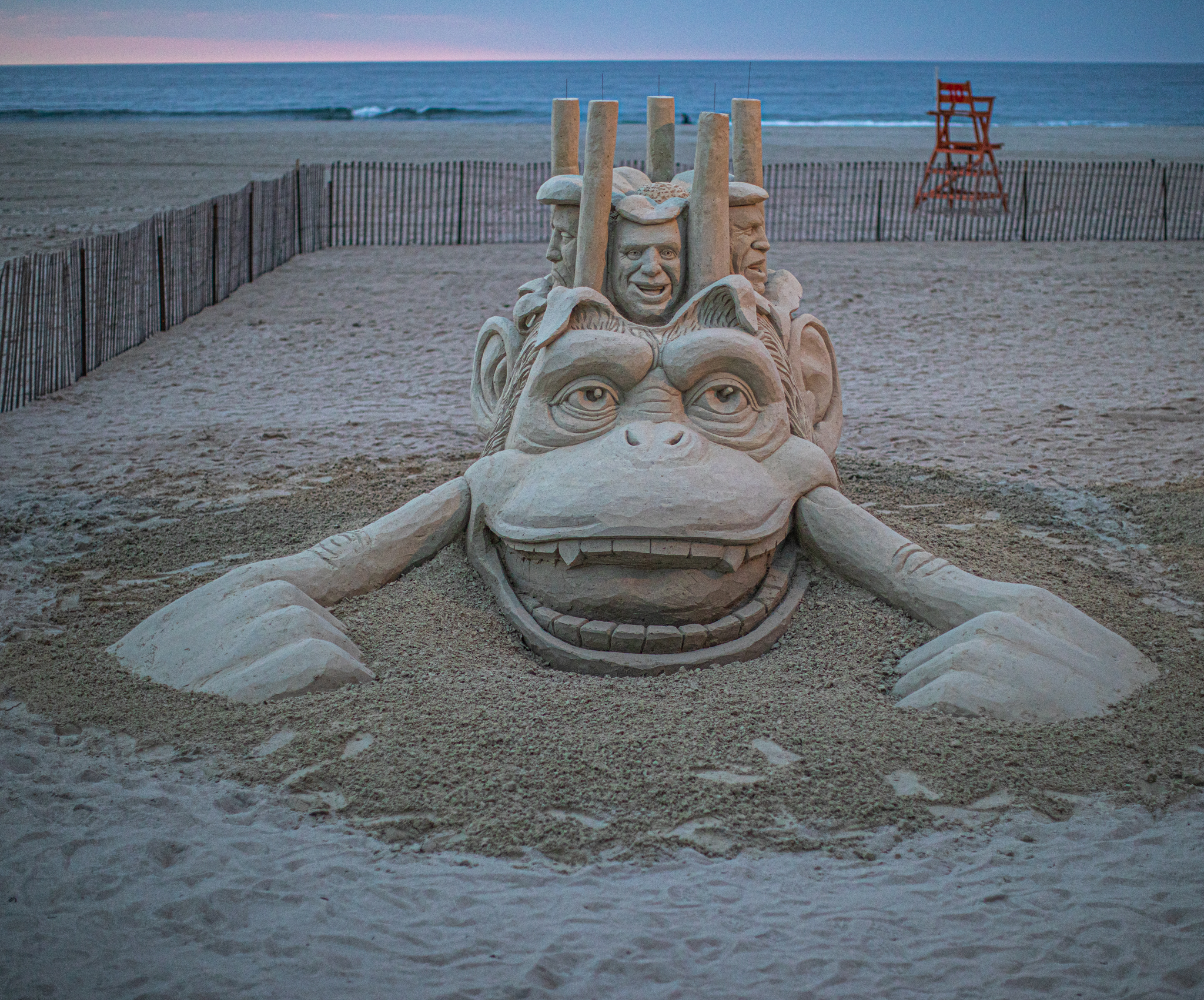
“Monkey Mind” by Andy Daily (Sarasota, Florida). When I first saw this sculpture I thought the face of the person was Fred Flintstone. Then, just some old guy. It’s actually someone much more well known. Apparently, I should watch the news more often.

“It Won’t Stay Forever” by Dmitry Klimenko (St. Petersburg, Russia) won third place in the competition.

“Resilience” by David Ducharme (British Columbia, Canada). Ducharme described its meaning as, “something that finds life in really a harsh environment” much like how seeds growing through pavement and how it mirrors how people can be strong during difficult times.

“Aligned” by Meliniege Beauregard (Captain Cook, Hawaii) won 1st place as well as the “People’s Choice Award” voted on by the visitors of the sand sculpting event and the “Governor’s Choice Award” voted on by Governor Kelly Ayotte.

Beauregard’s piece is about balance and being aligned your external and internal beauty and well being. She said it was about how when you’re centered and you can align your mental, emotional and physical elements so you can create beauty and be creative.

“Manitouk” by Carl Jara (Cleveland, Ohio)

Jara said “Manitouk” is an Ojibwe term loosely meaning “protector spirit.” According to Jara, this sculpture was a response to the big block of sand and how he saw something different in it than what he had initially planned.

“The Creation Of Mermaid” by Ilya Filimontsev (Moscow, Russia) won second place. Filimontsev said his sculpture was his playful take on the painting of the Creation of Adam by Michelangelo in the Sistine Chapel.

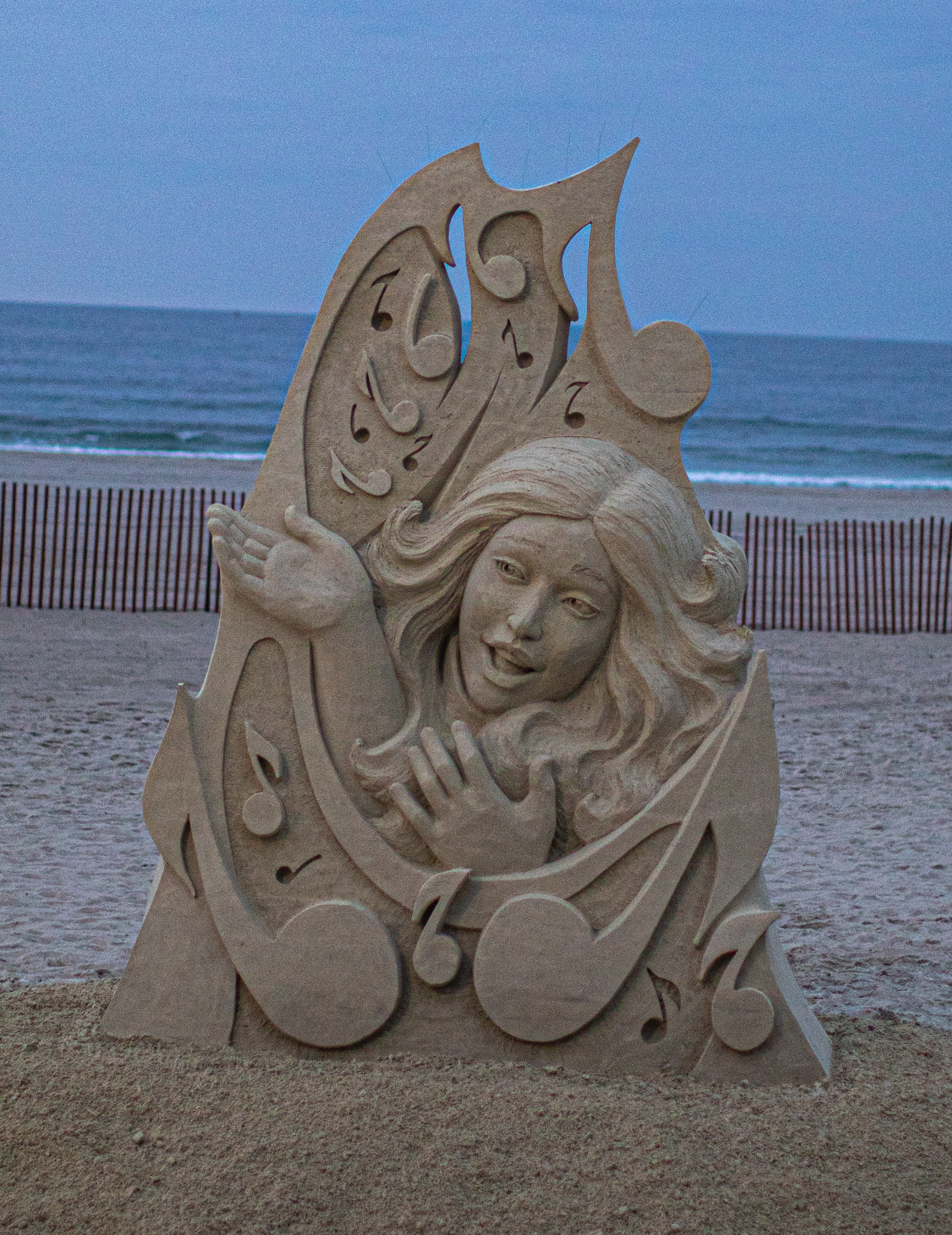
“Sing” by Karen Fralich (Ontario, Canada). Although this sculpture did not win an award or place in the competition, it was still a fan favorite. It was also one of the few sculptures that may have a better design on the back than the front. Fralich said “singing is important for everyone.” Even for non humans!

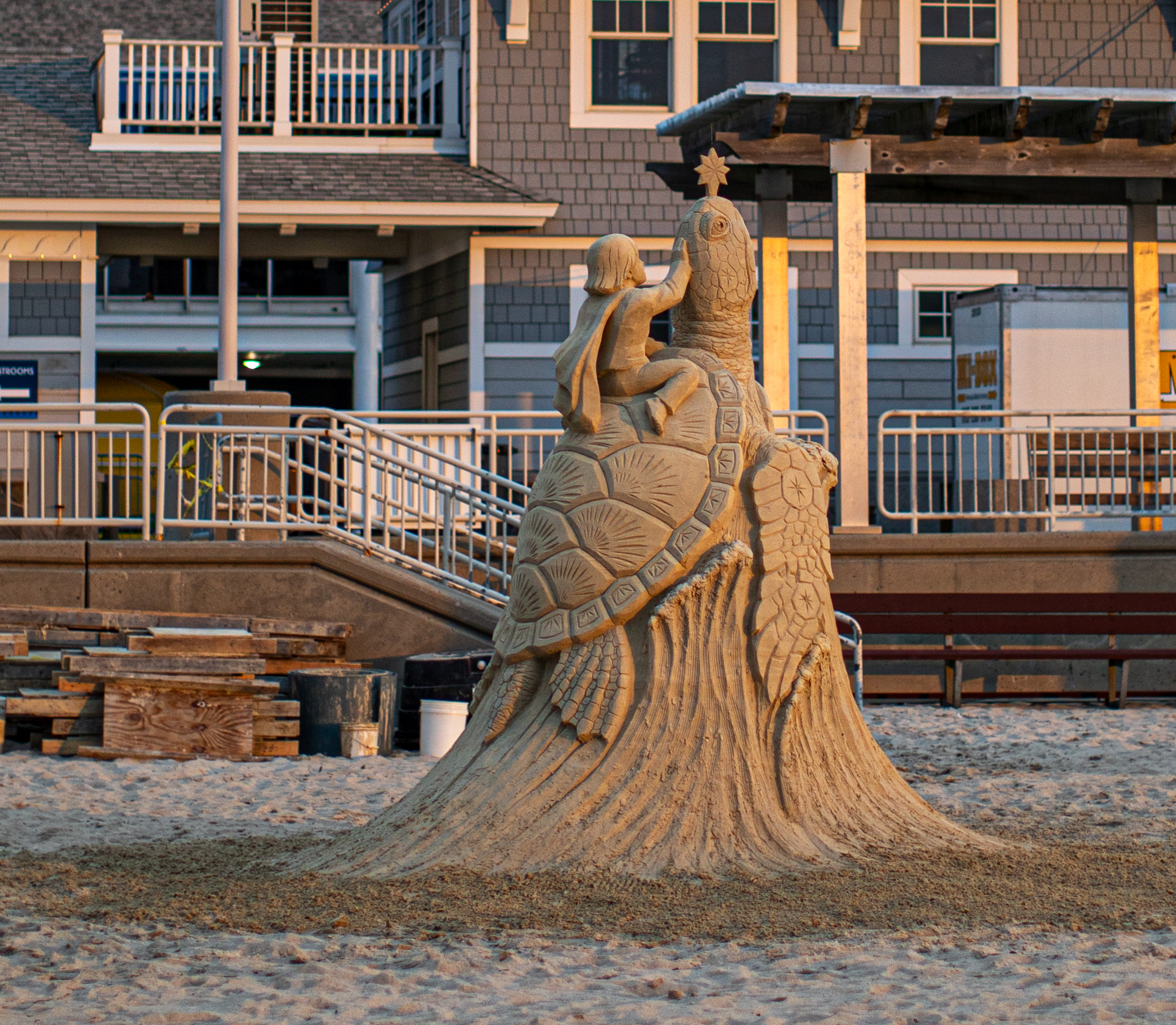
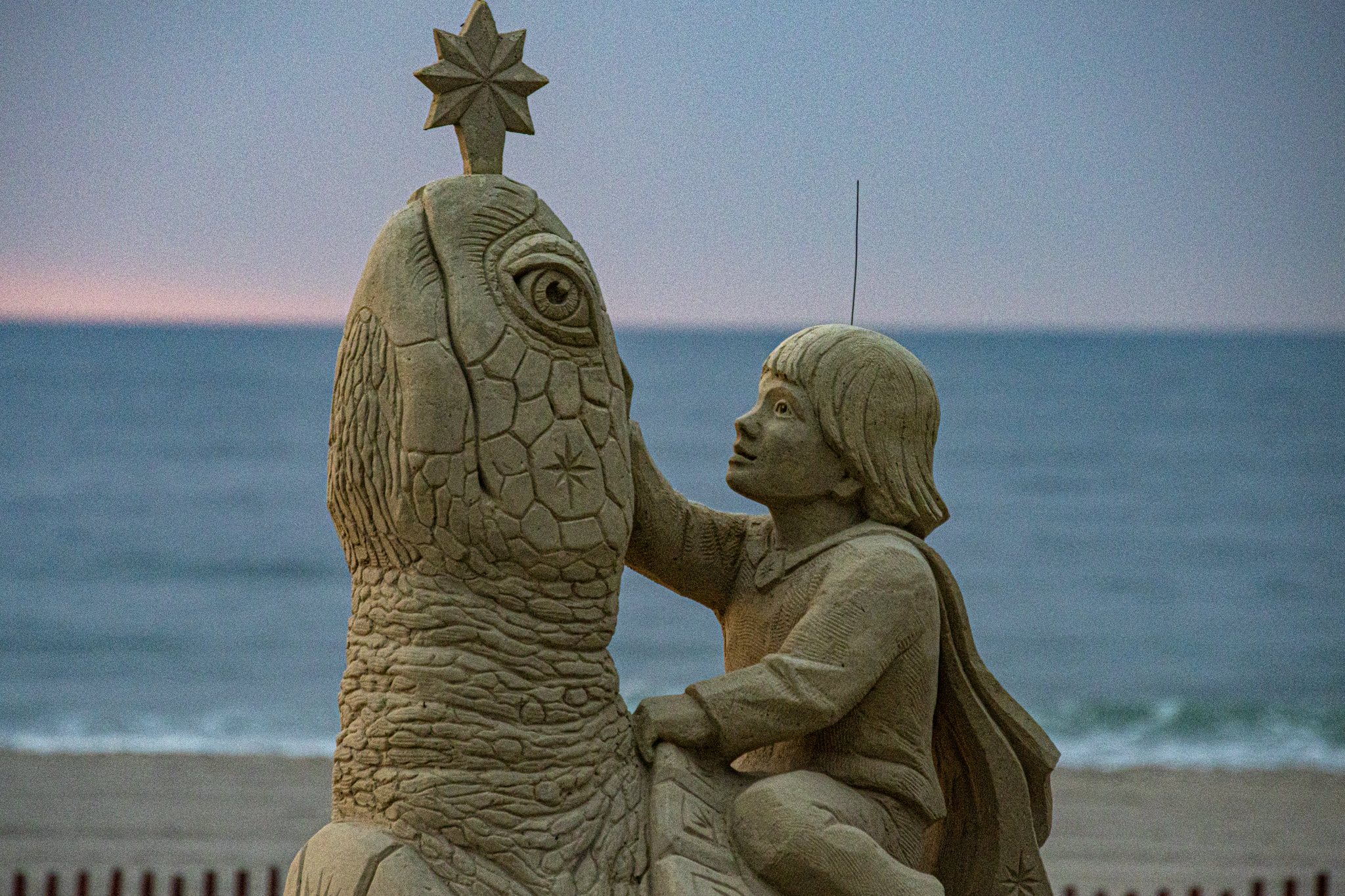
“To Touch The Stars” by Karlis Ile (Riga, Latvia) was a tribute to the artist’s son. This sculpture idea came from when he asked his son what he should make and his son answered a turtle.

“Dream Weaver” by Justin Gordon (Groveland, MA) is a reflection of the 25 years of the sculpting competition and all of the things he has learned during his 24 competitions. That’s right. He has competed in all but one of the sand sculpting classic competitions. Gordon said he combined things like open windows and scallops from his time in Kuwait as examples of things he has learned to sculpt over the years.

“VerTickle” by Abe Waterman (Prince Edward Island) won fourth place and, perhaps the most coveted award, the “Sculptor’s Choice Award.” Since the other sculptors know how difficult it is to make these sculptures, one could argue it is the most meaningful award. A play on “vertical”, the sculpture, in Gordon’s words, is “self explanatory.”

Like many people from New England, and, as I noticed from my interactions with people and the various license plates in the parking spaces, from all over the country, I look forward to this event every year. It is also the precursor to the official start of summer. And there may be no better way to kick off the season!

If you did miss the sculptures, don’t fret. They will be on display at Hampton Beach until Monday, June 23.


2025 Salem’s So Sweet (Salem, MA)

Date Of Visit: February 8, 2025

Location: Salem, MA

Summary: 29 ice sculptures were scattered throughout the downtown area of Salem, MA.

Turtles, shrimp and even Snoopy were just a few of the things on display earlier this month in Salem MA! Those are just a few of the ice sculptures included in the 23rd annual Salem’s So Sweet event.

The weekend event, which kicked off with a fundraiser Friday, February 7, included 29 ice sculptures, many decorated storefronts and a few surprise guests!

The ice sculptures arrived by Saturday morning. But, they only light them up around 5 o’clock on Saturday evening. Over the years, when I have photographed this event, I like to photograph the ice sculptures before and after they are lighted so you can see how they look both ways. Also, the weather was fairly mild. So, some of the features of the sculptures look better before they were lighted. But, for the sculptures that kept their structural integrity, they look much better when they are lighted.

I am posting the sculptures in the order they were listed on the map for the sculptures from the event.

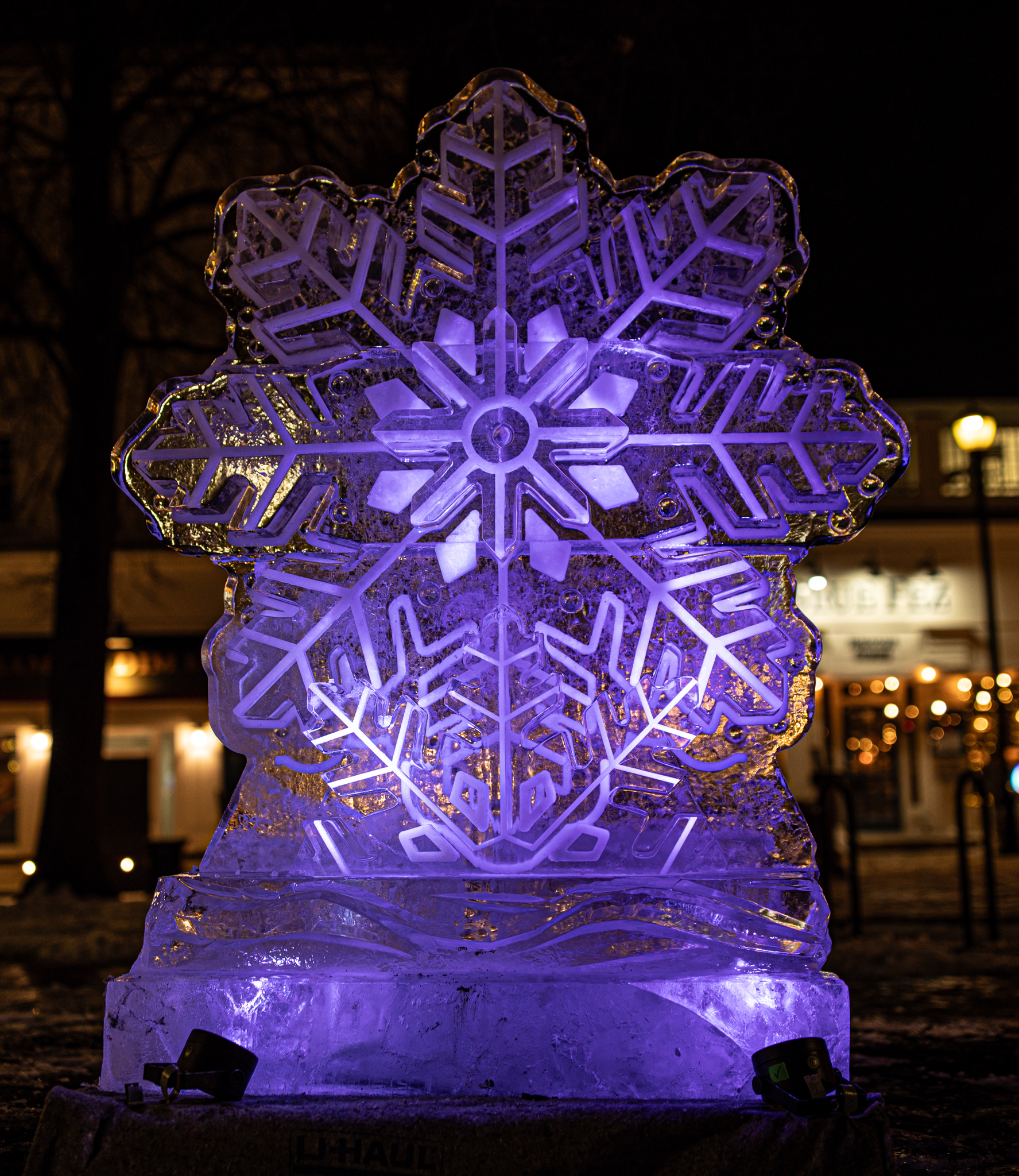
  1. Crystal Snowflake

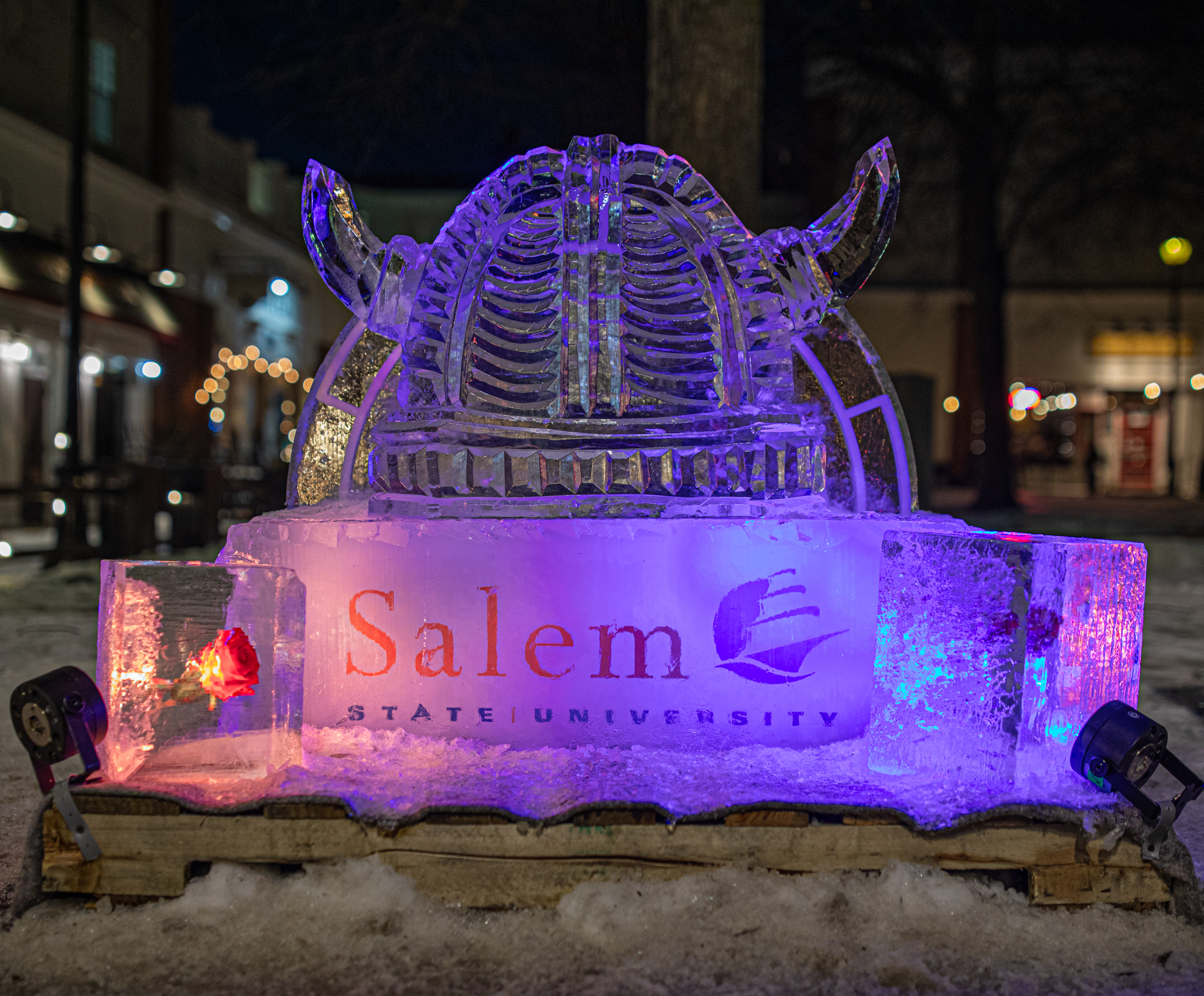
2. Viking (Salem State’s sports team’s name)

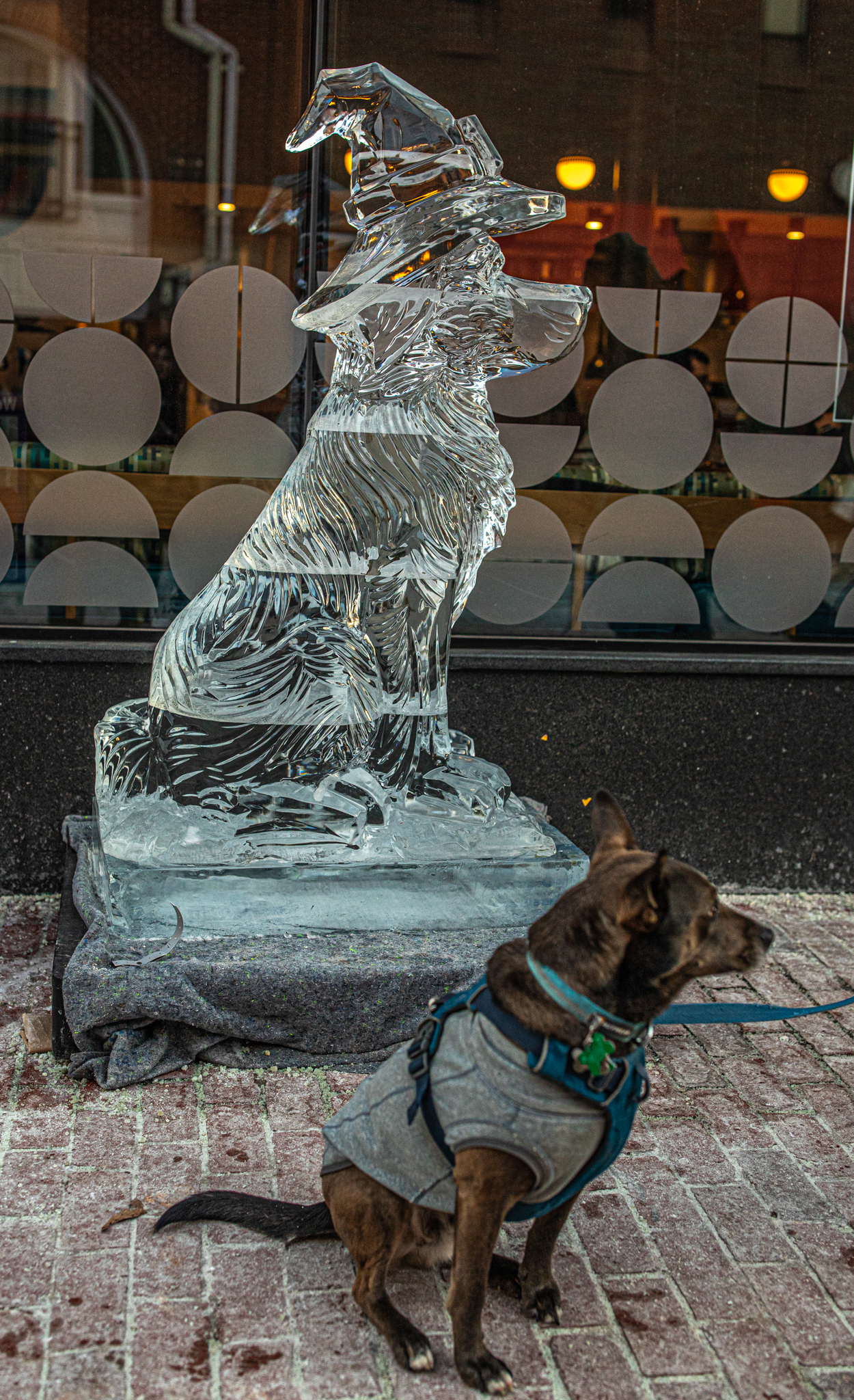
3 Dog – Buddy, a 4 year old mixed breed, posed the same way as the sculpture!

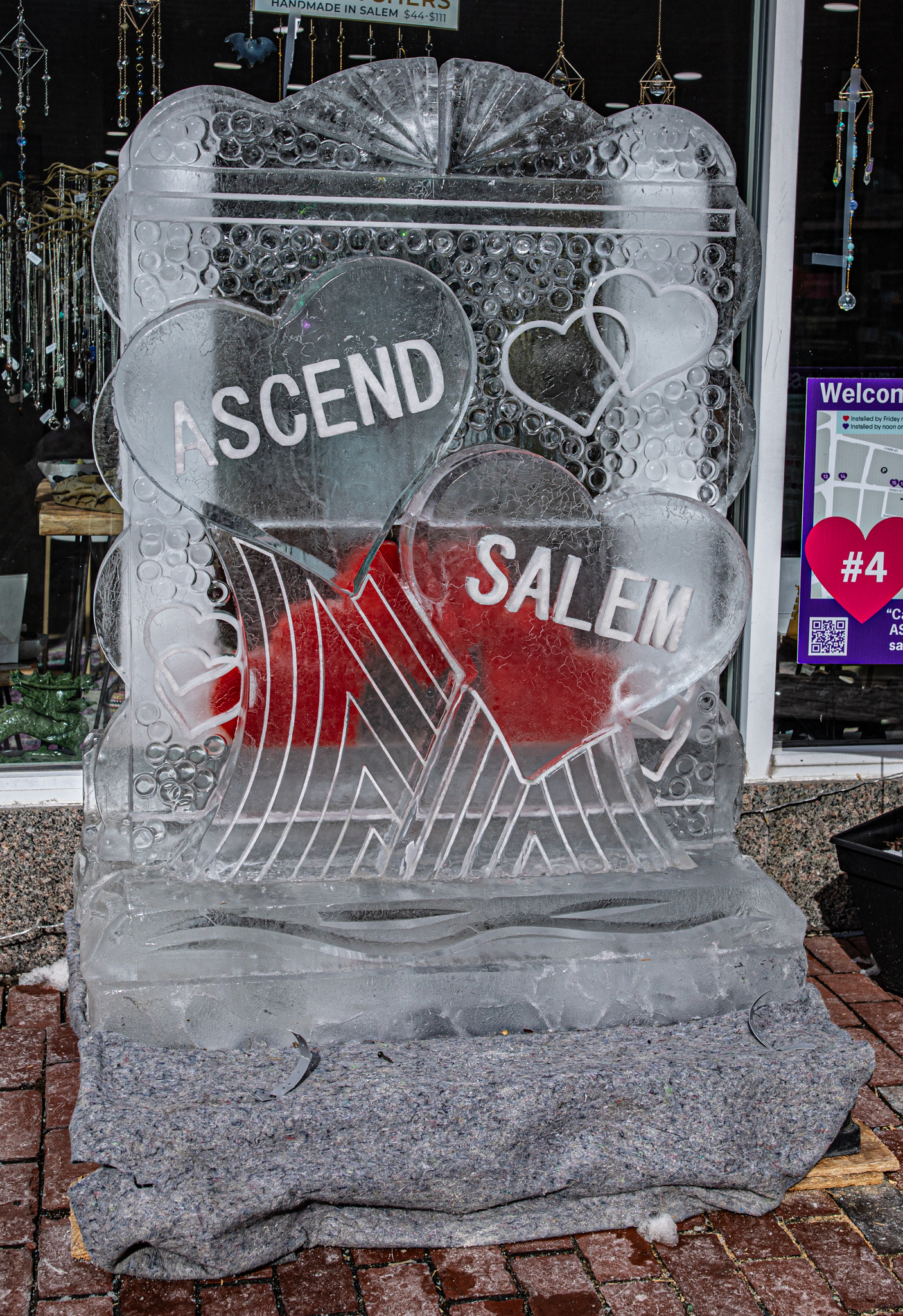
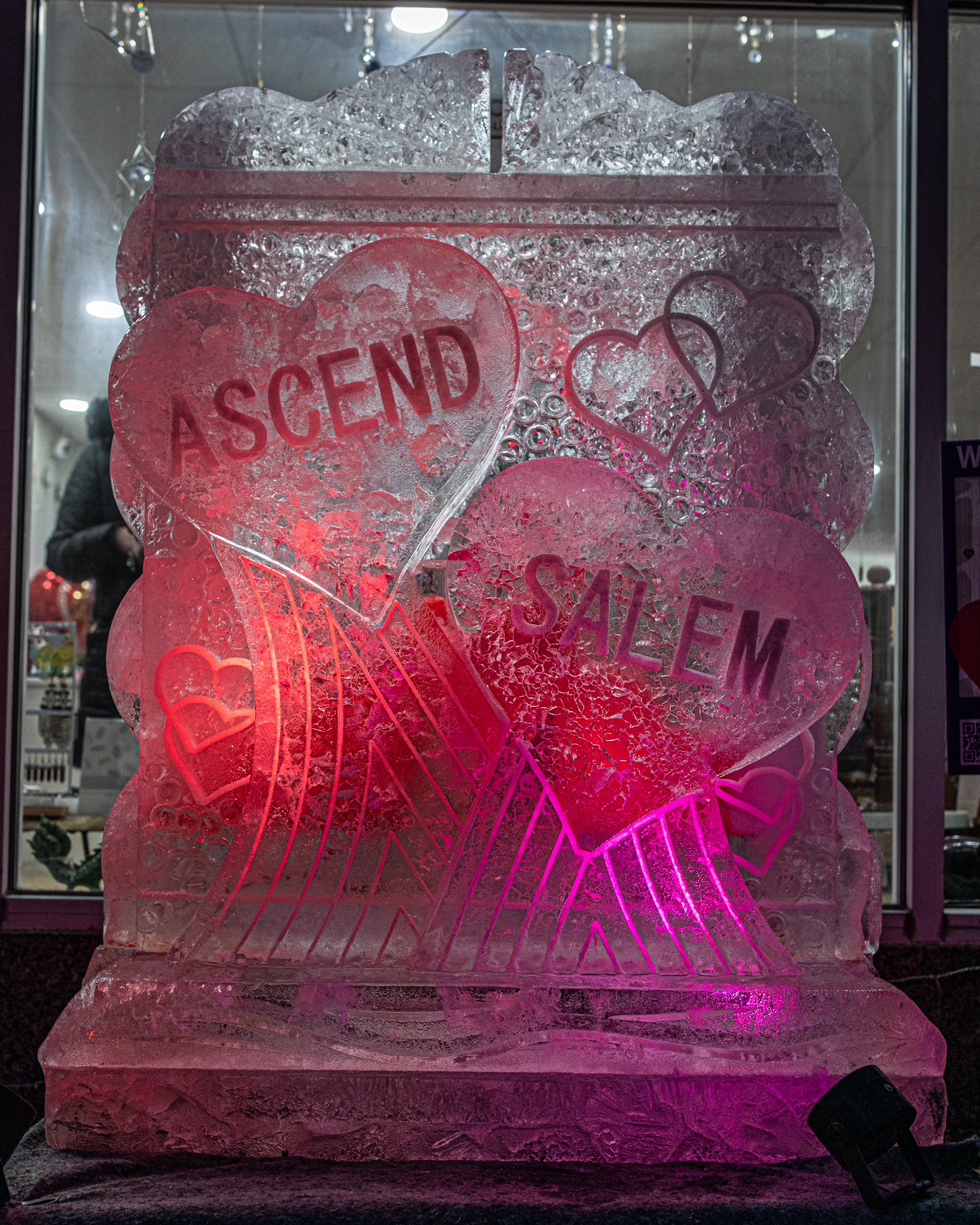
4 Candy Conversation Hearts

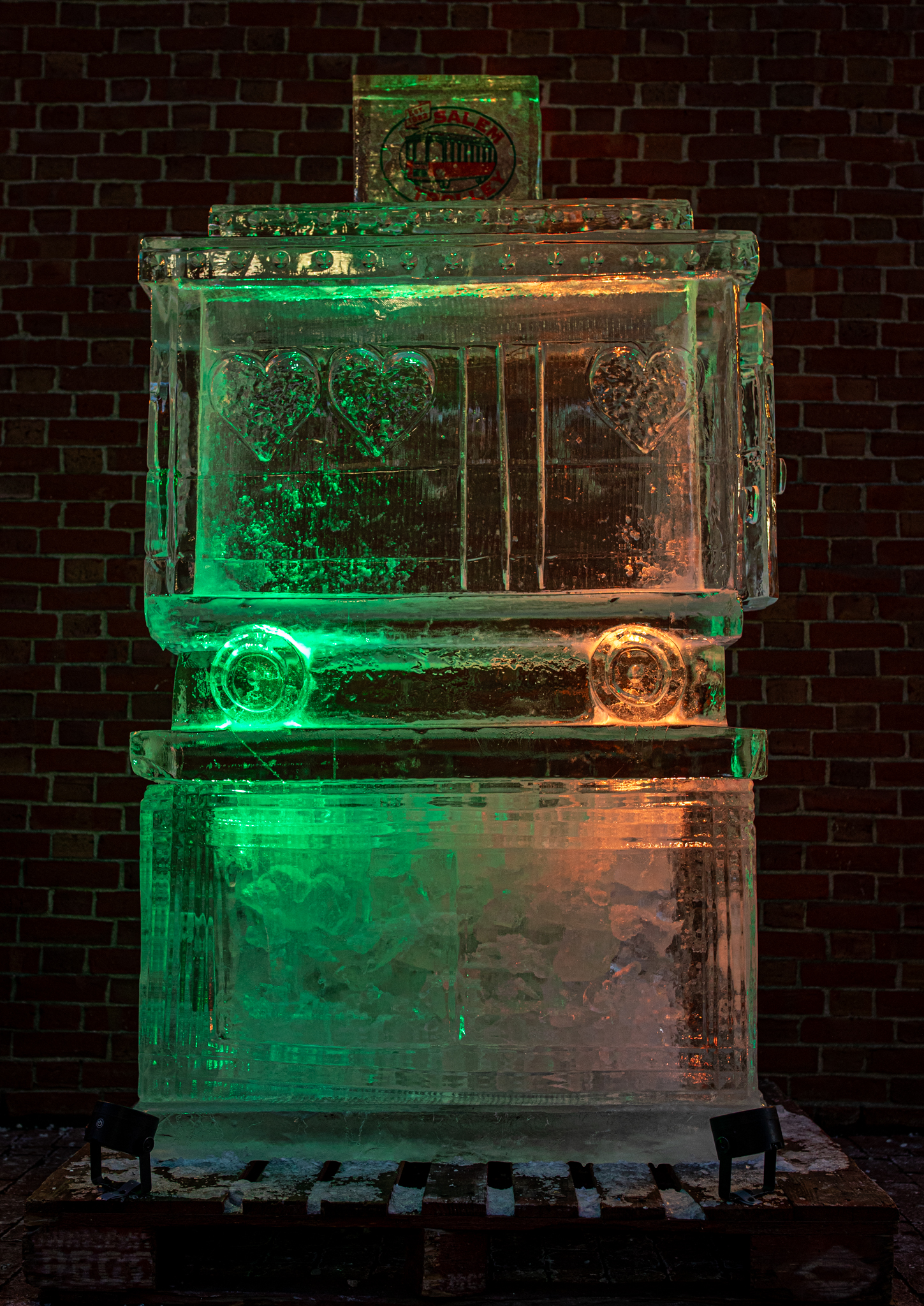
5 Salem Trolley

6 Smile

7 Catacombs

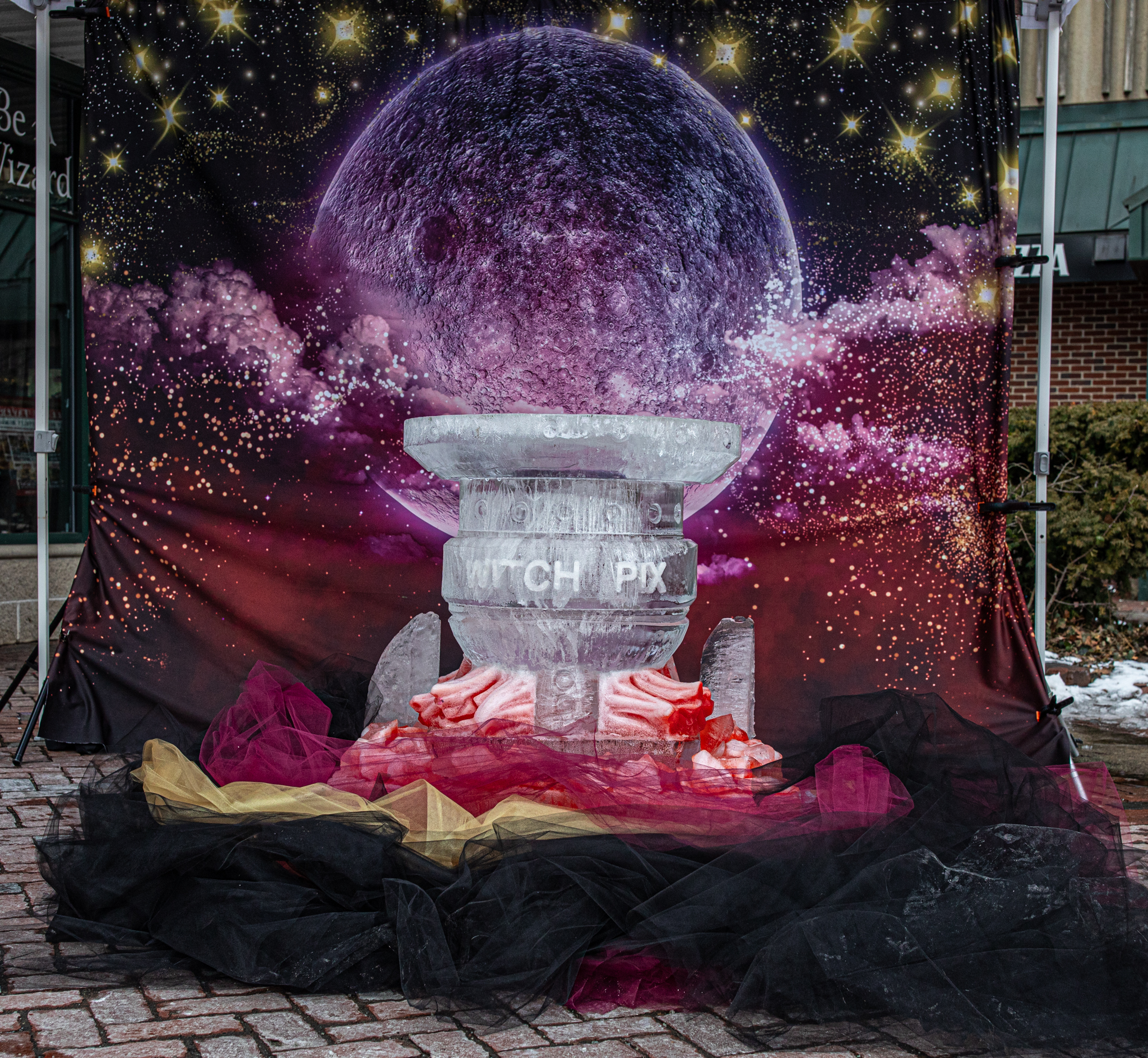
8 Cauldron

9 Piggy Bank

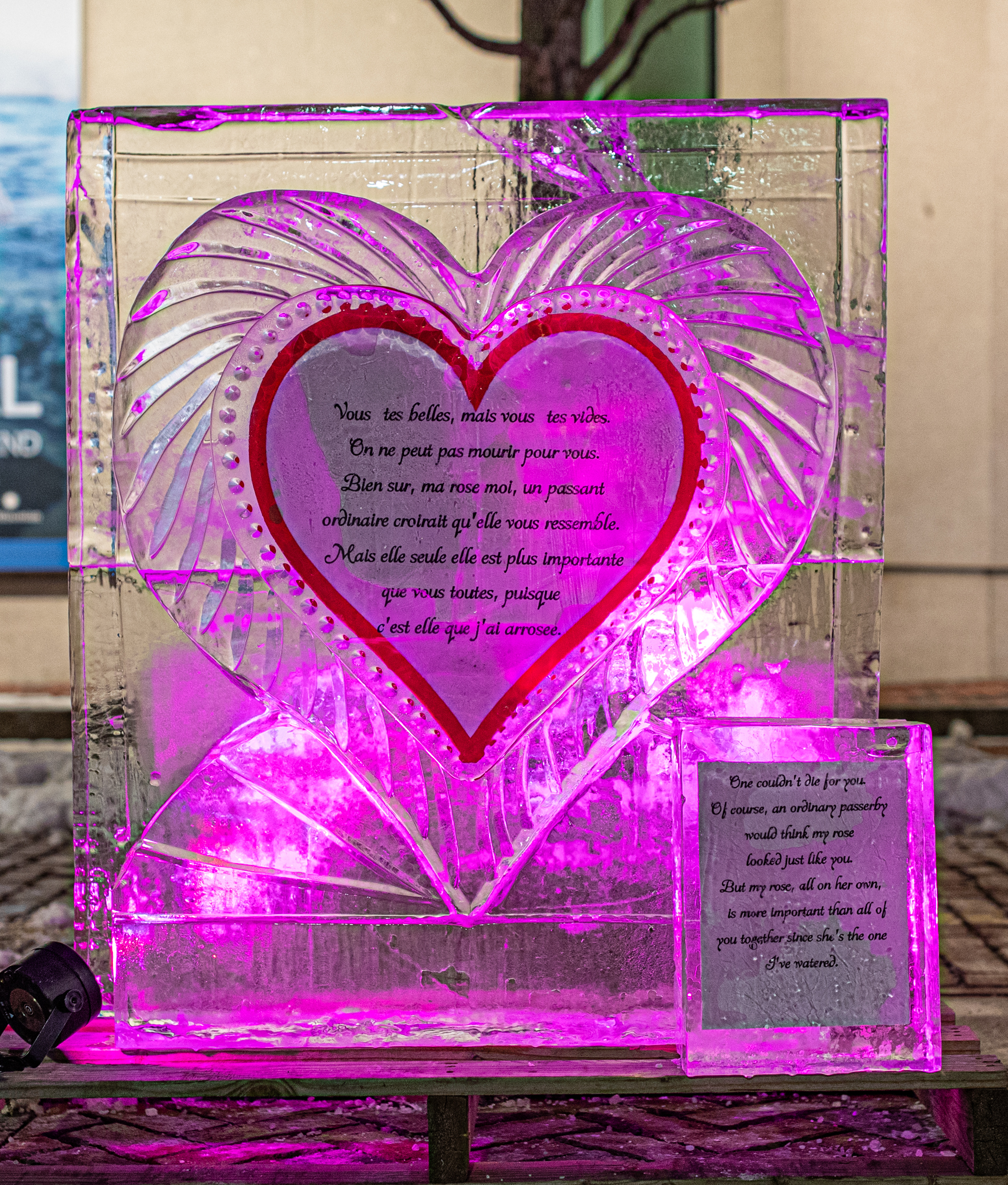
10 Love Letter Picture Frame – Written in French in the center of the sculpture, the translation, which you may not be able to read, is located on the right corner of the sculpture. According to Google Translate, the translation is different than the translation on the ice sculpture. According to Google Translate, it translates to: “You are beautiful. But you are empty. We can’t die for you. Of course, my soft rose, an ordinary passerby would think that it resembles you. But, she alone is more important than all of you since she’s the one I’ve watered.” How romantic.

11 Whale Tail

12 Pumpkin

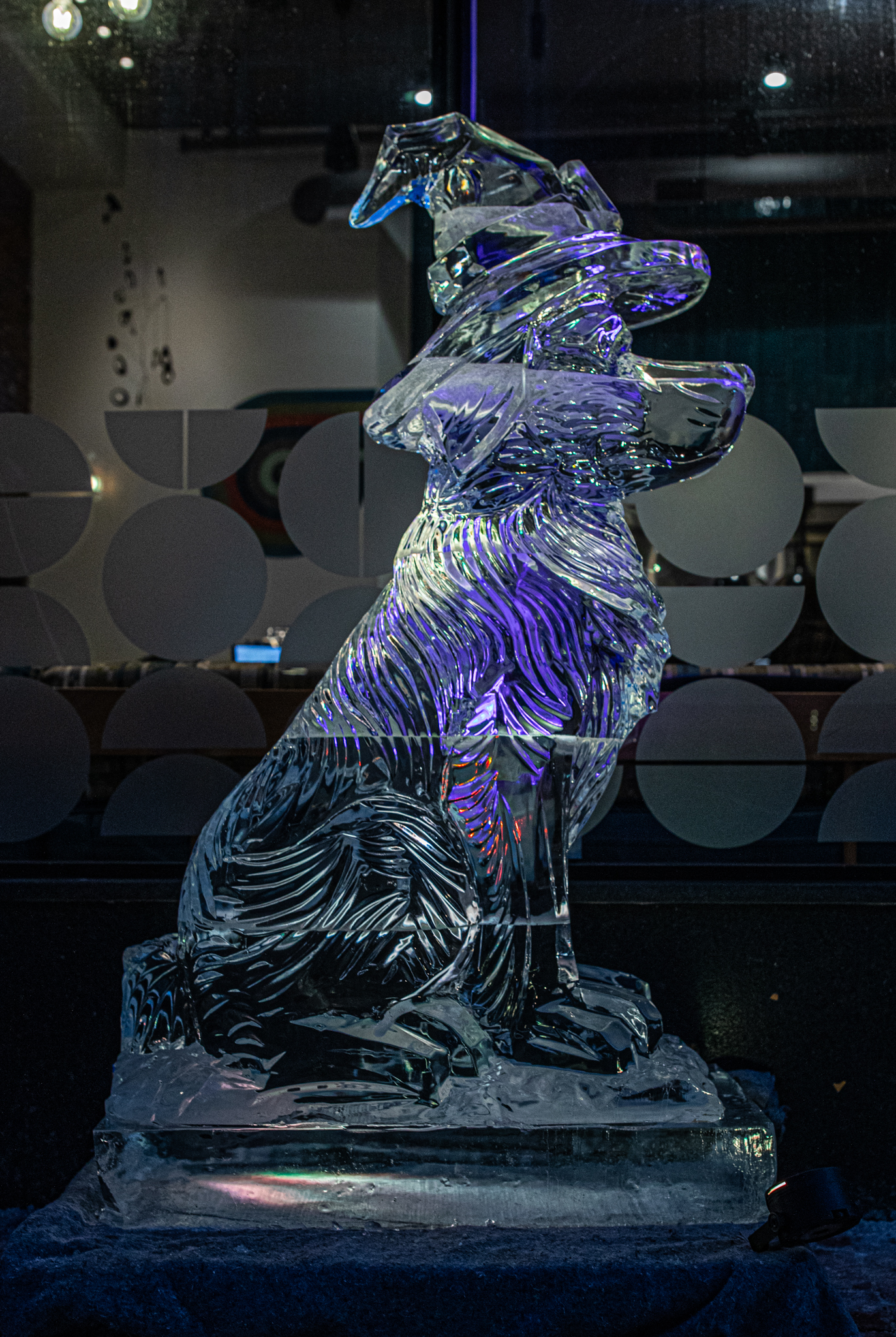
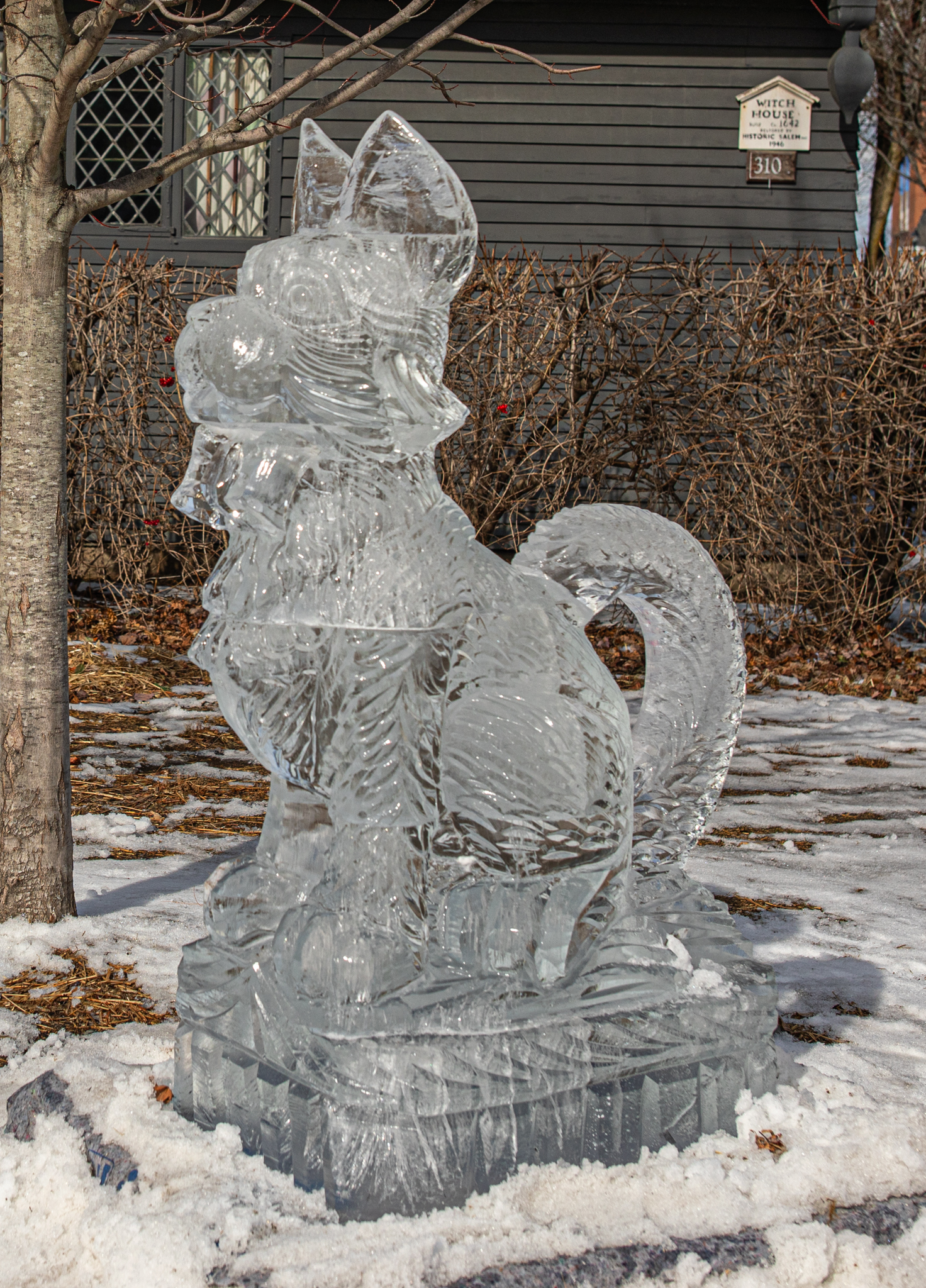
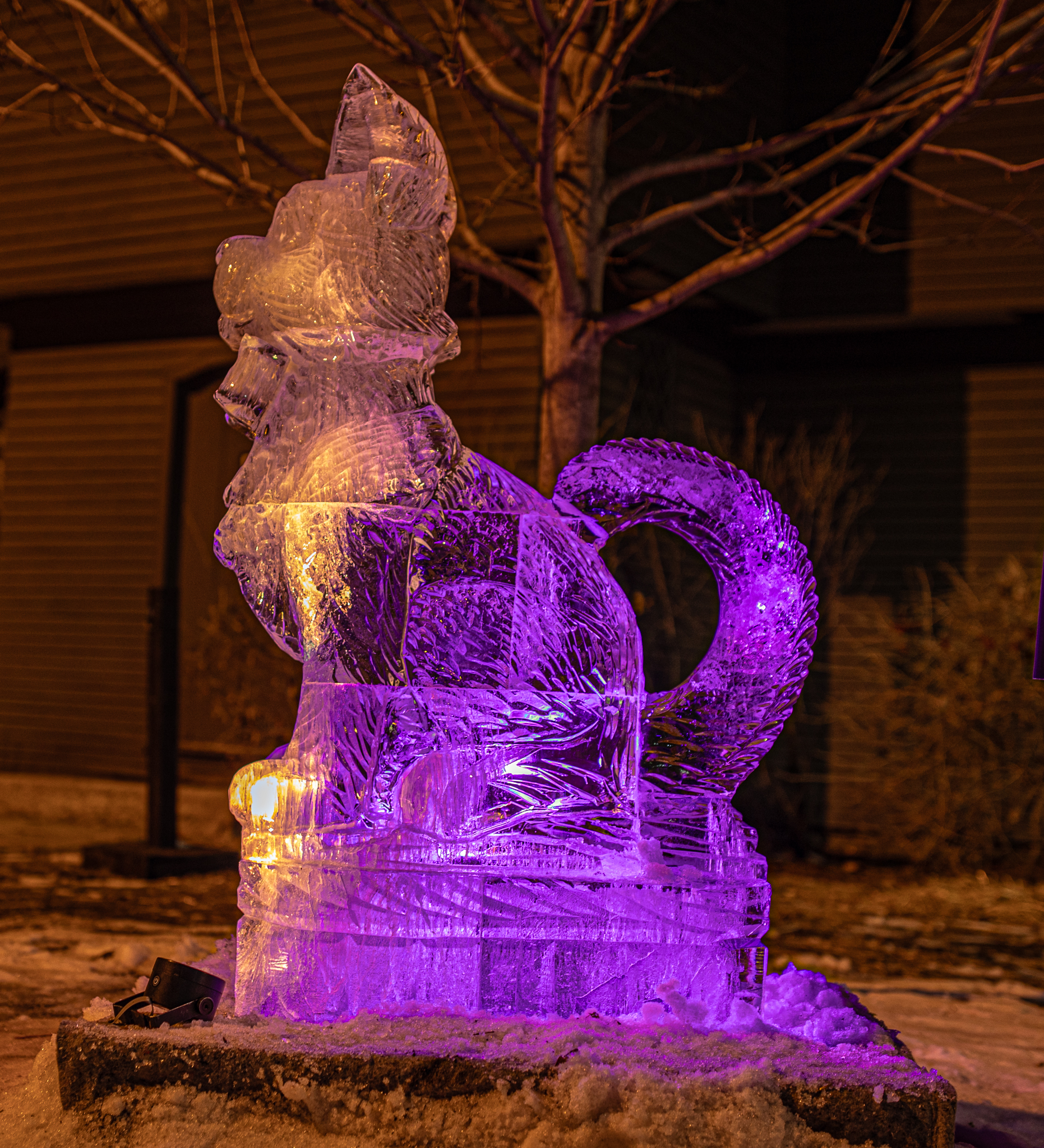
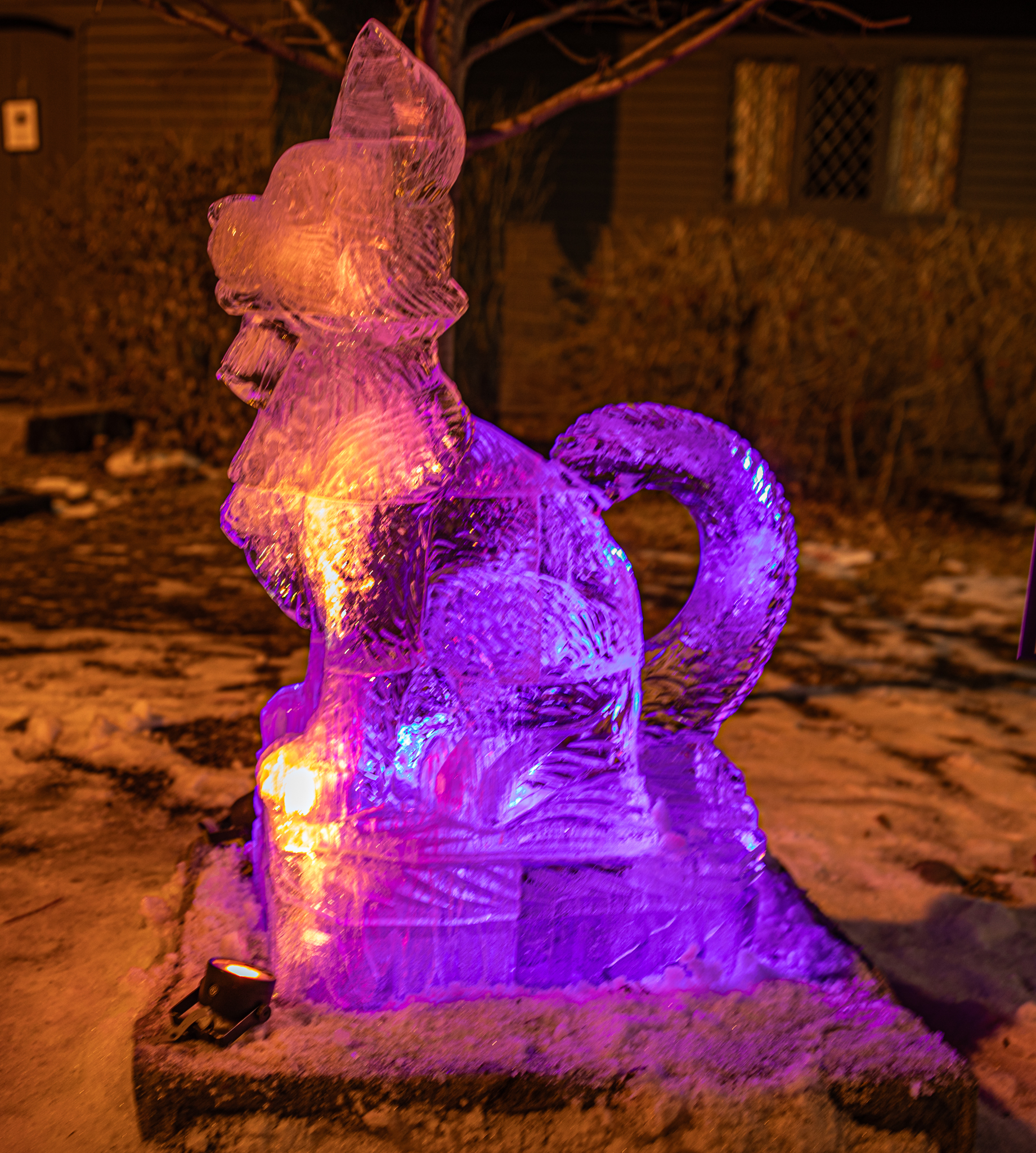
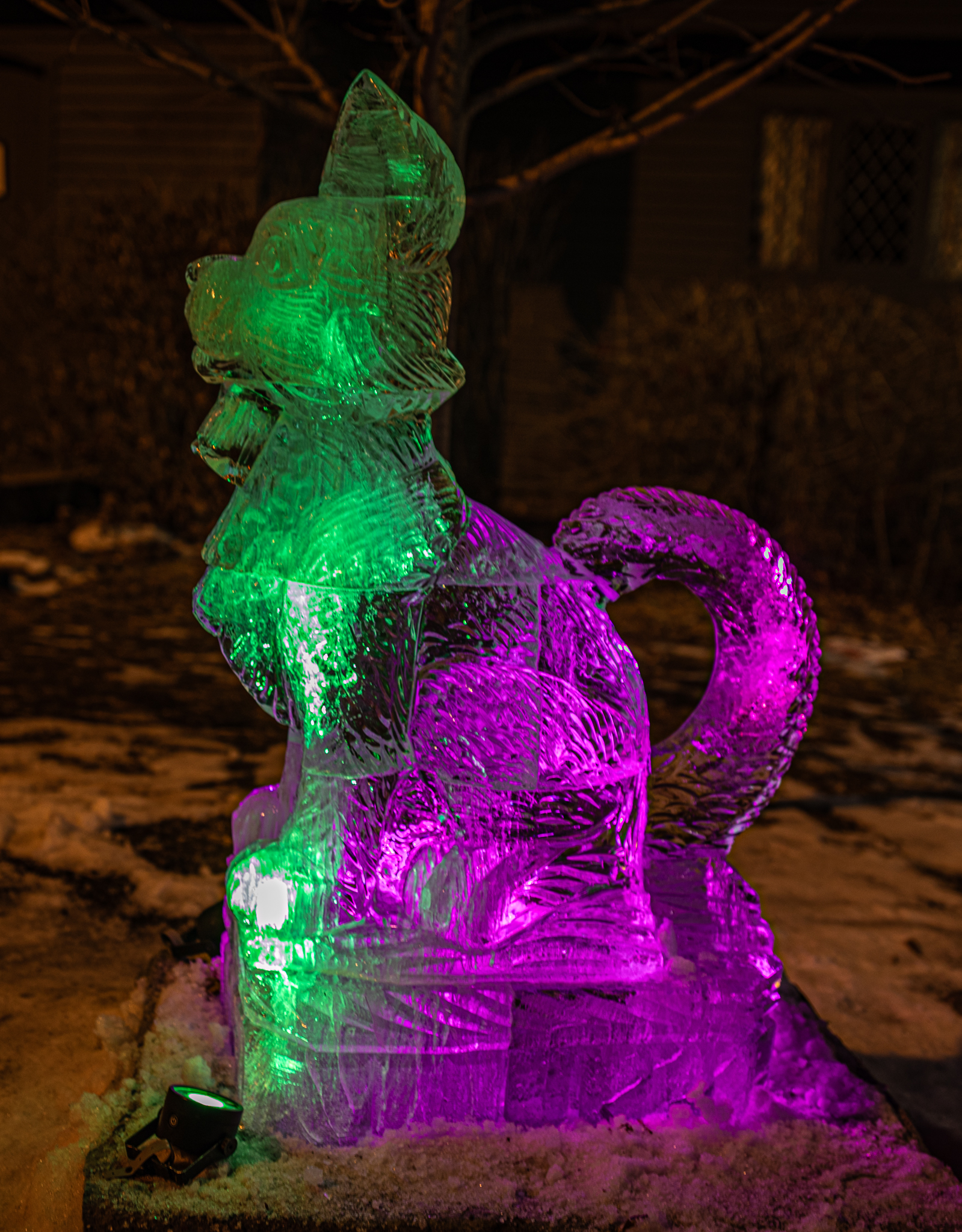
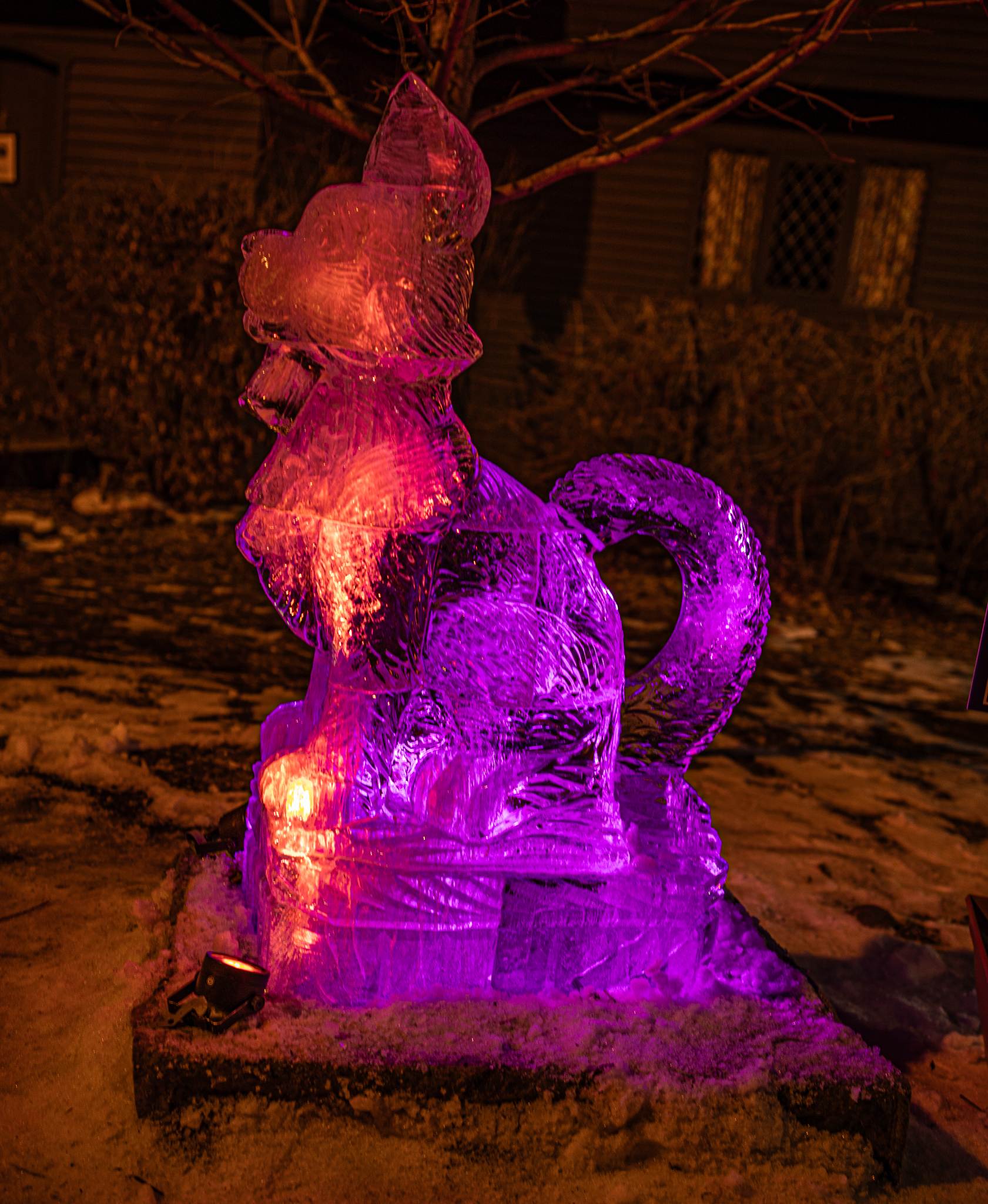
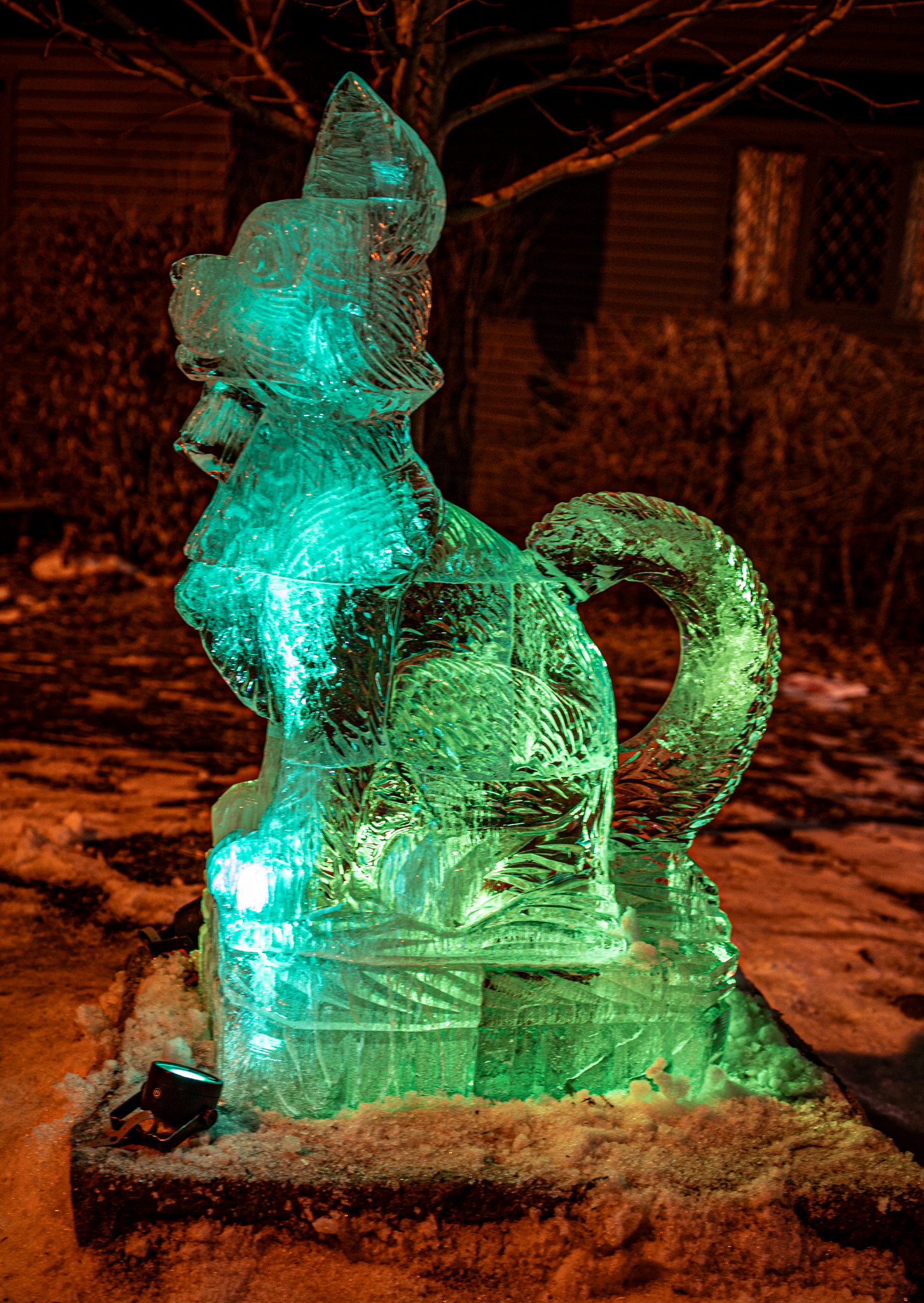
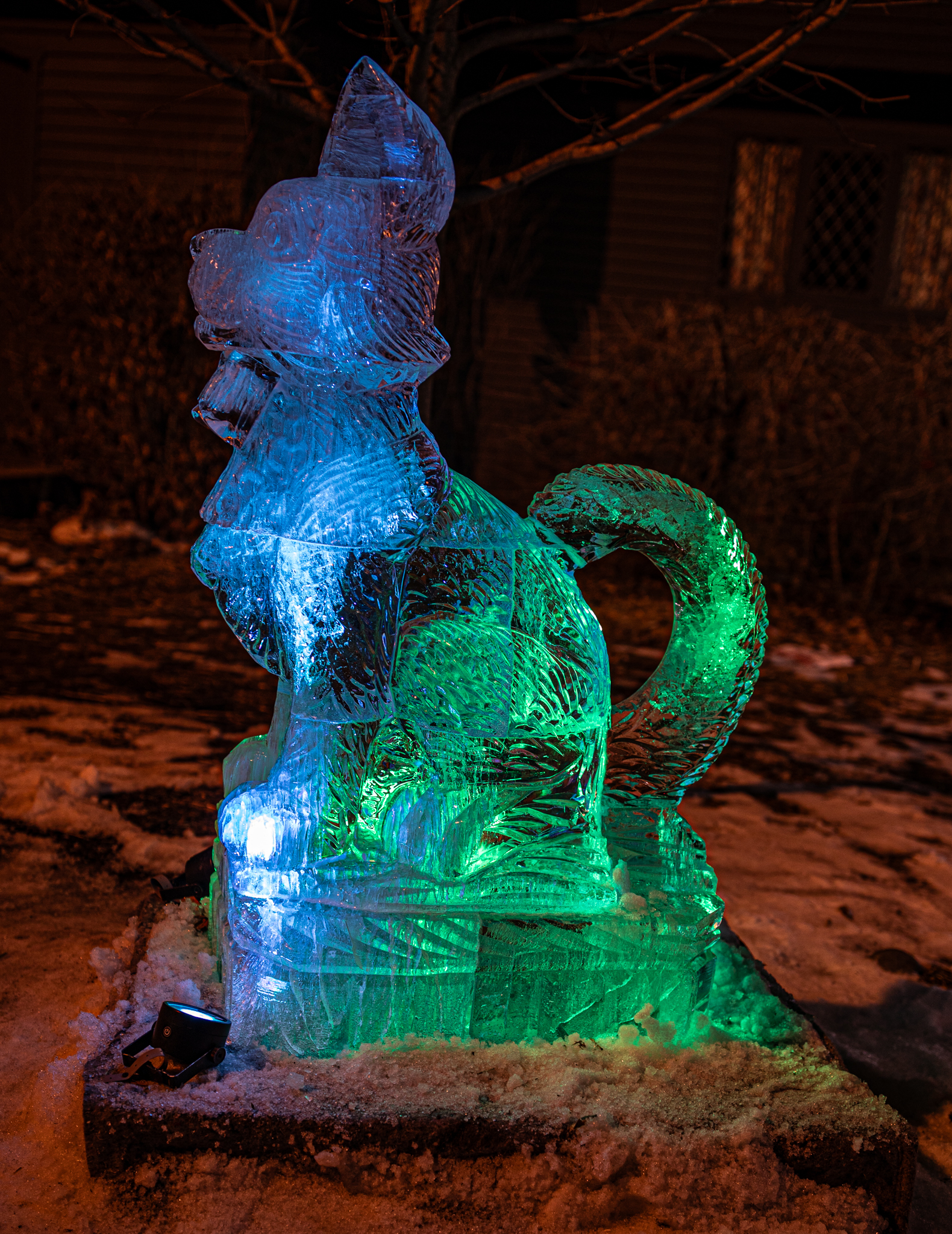
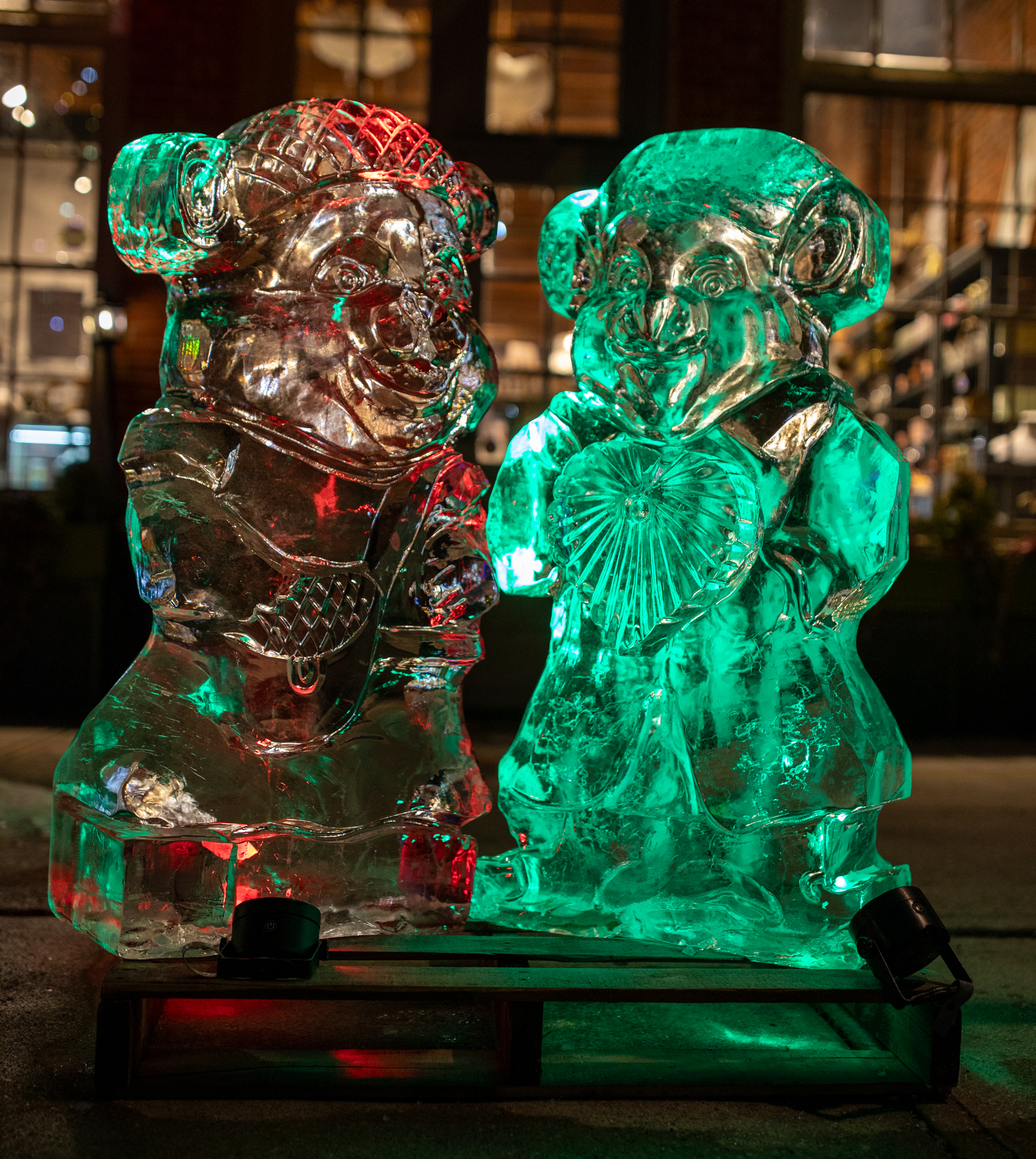
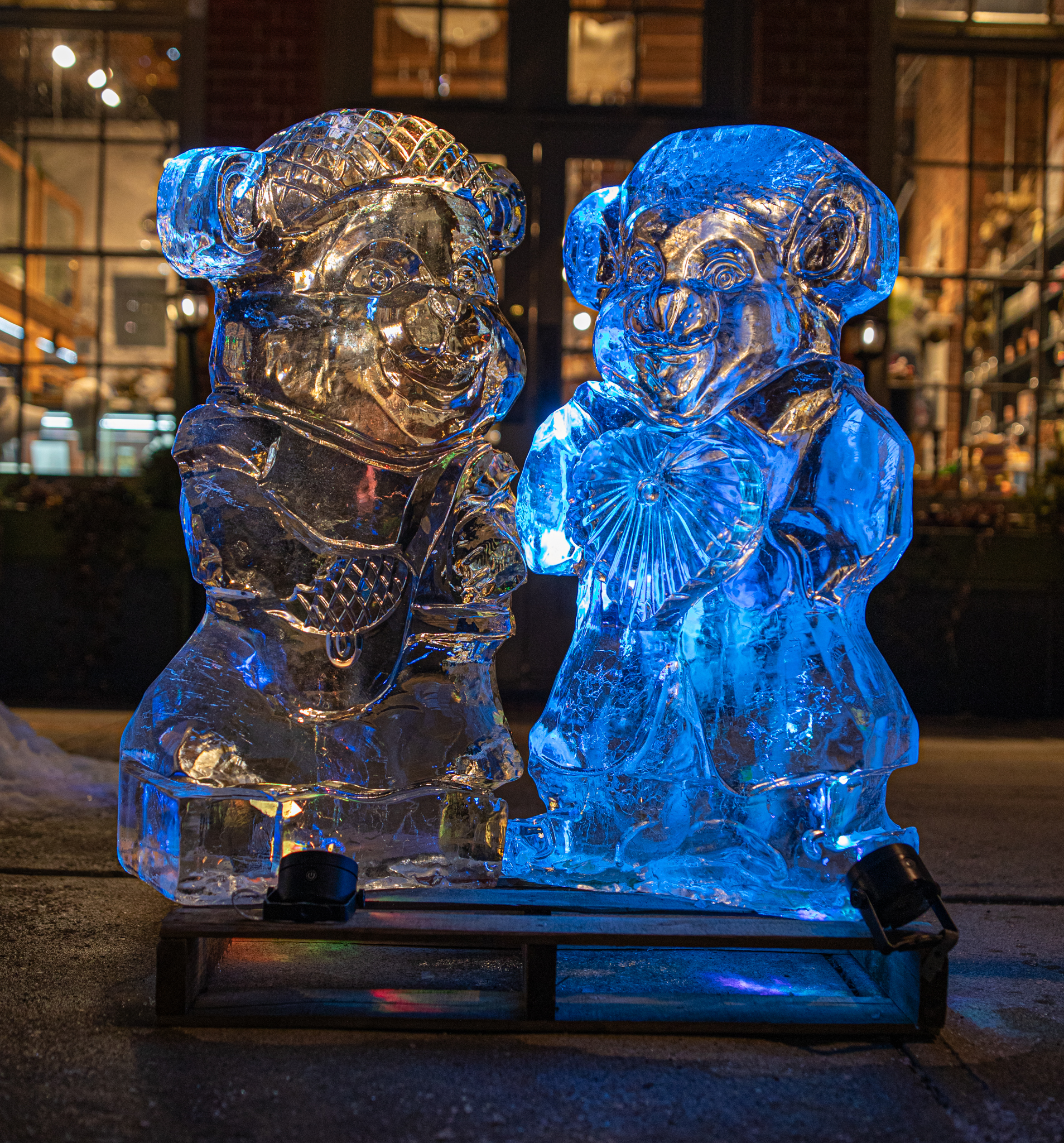
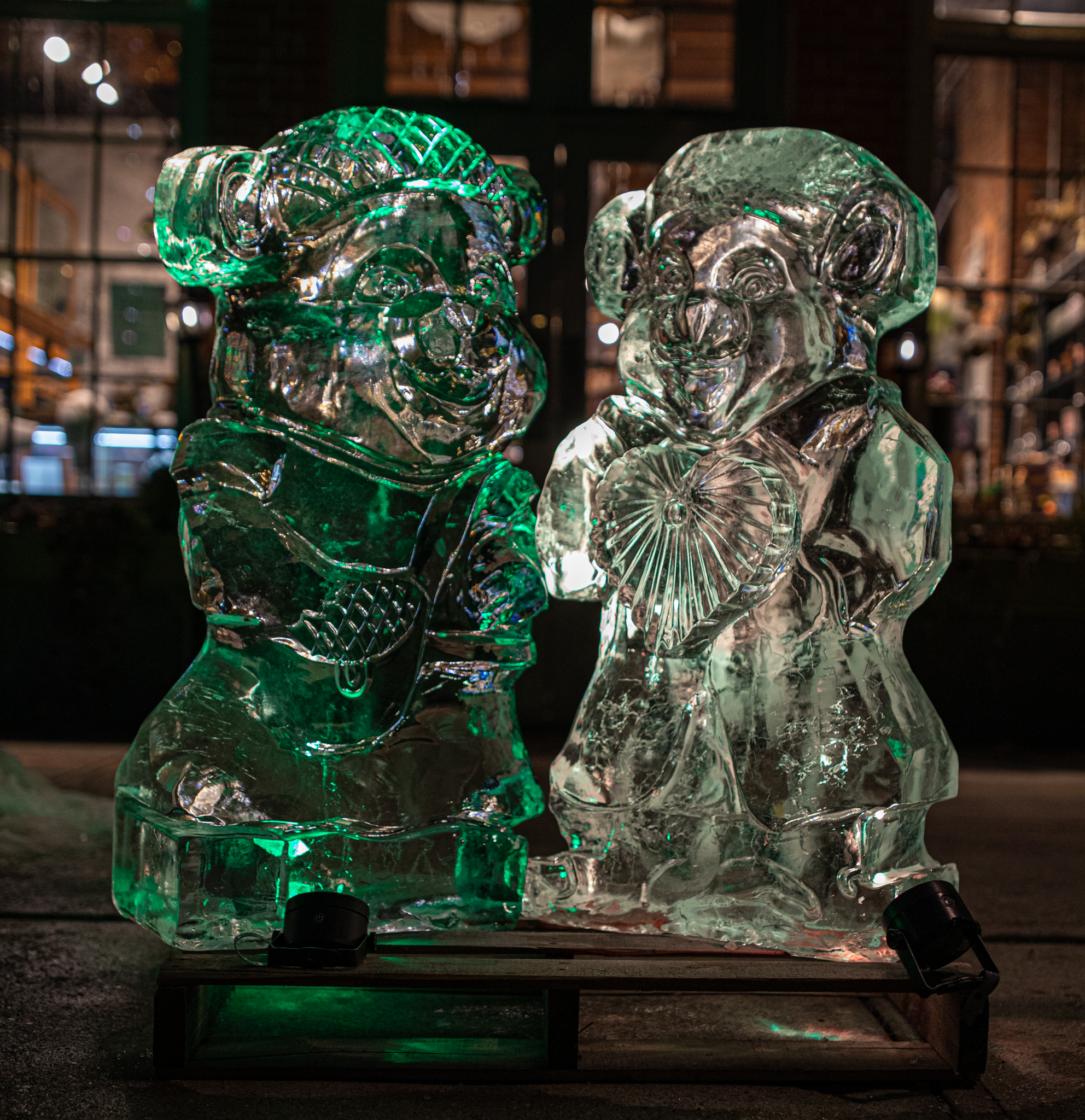
13 Cat – Some of the ice sculptures, like this one at the Witch House, were lighted by lights that changed colors. I took photos of the sculpture with the different colors of light

14 Gargoyle

15 World

16 Snoopy

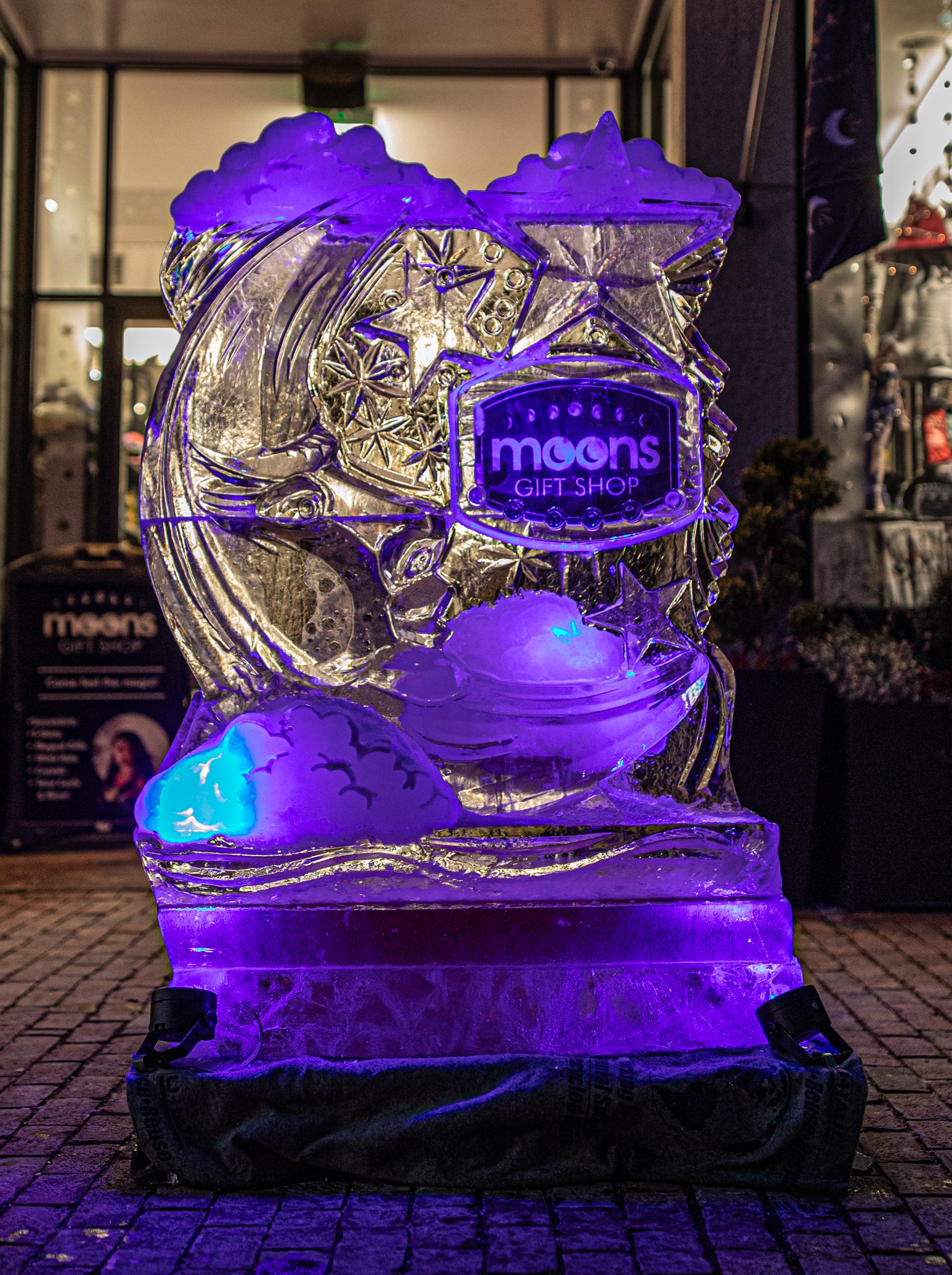
17 Moon & Stars

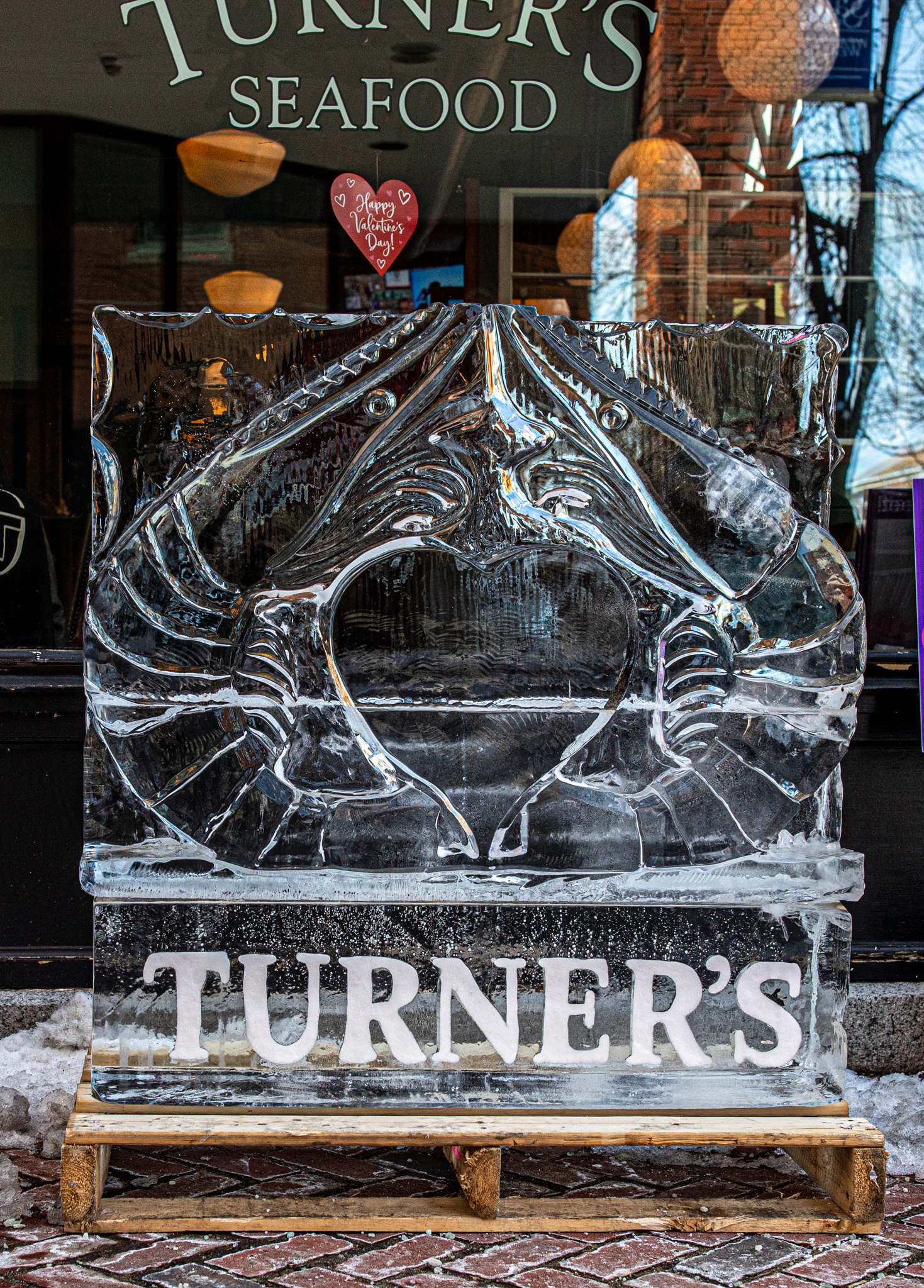
18 Shrimp

19 Skull And Boots

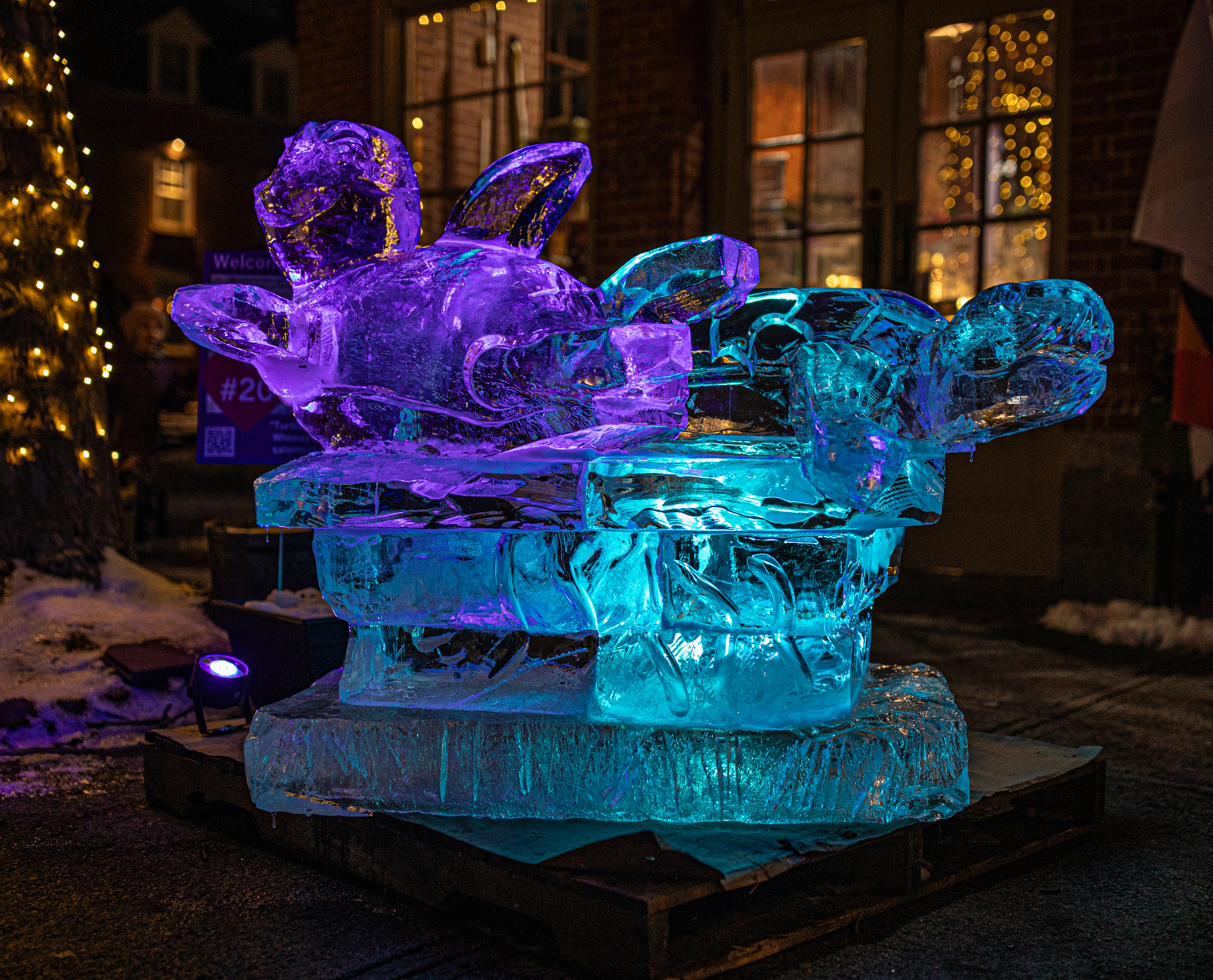
20 Turtles

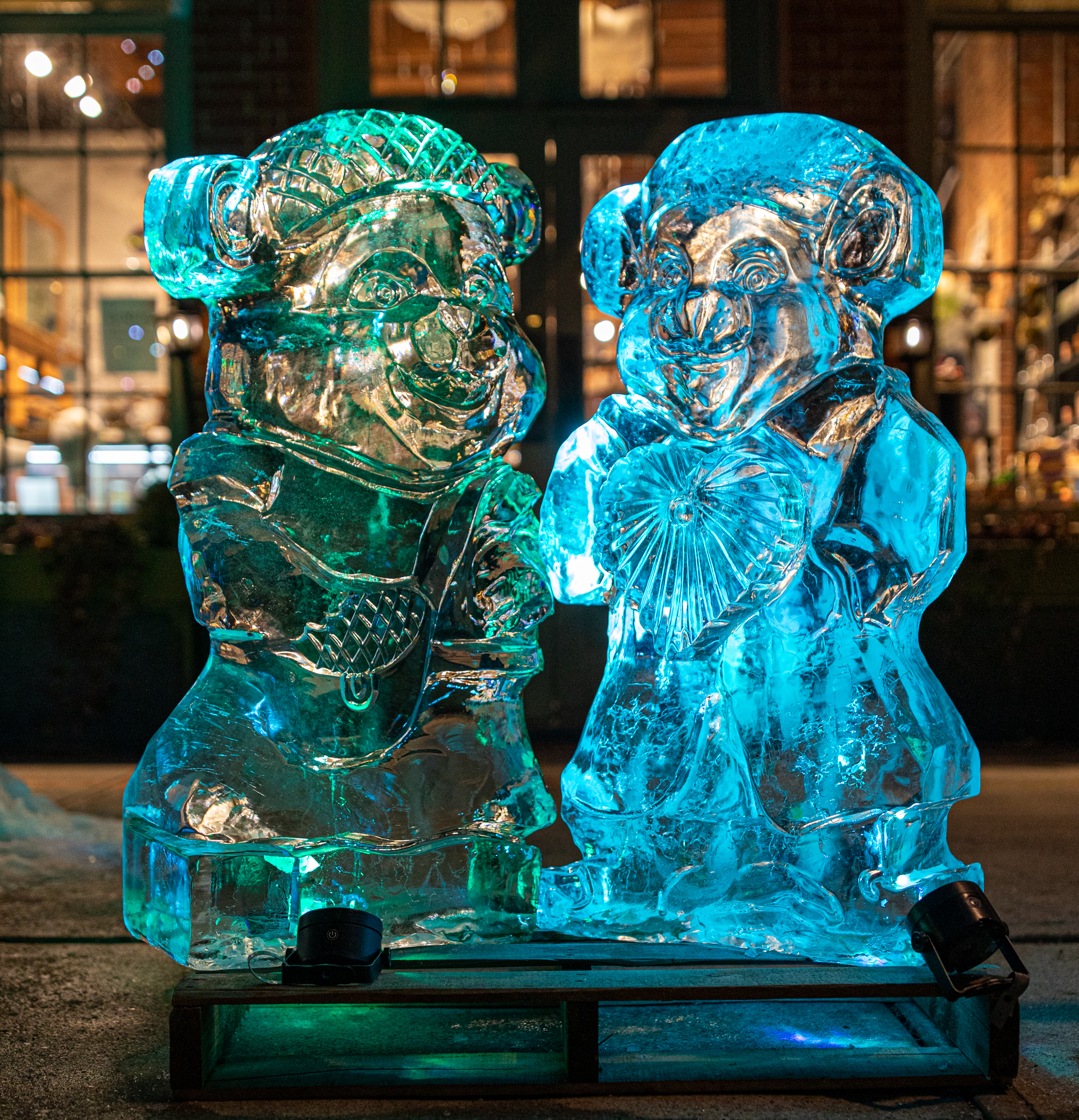
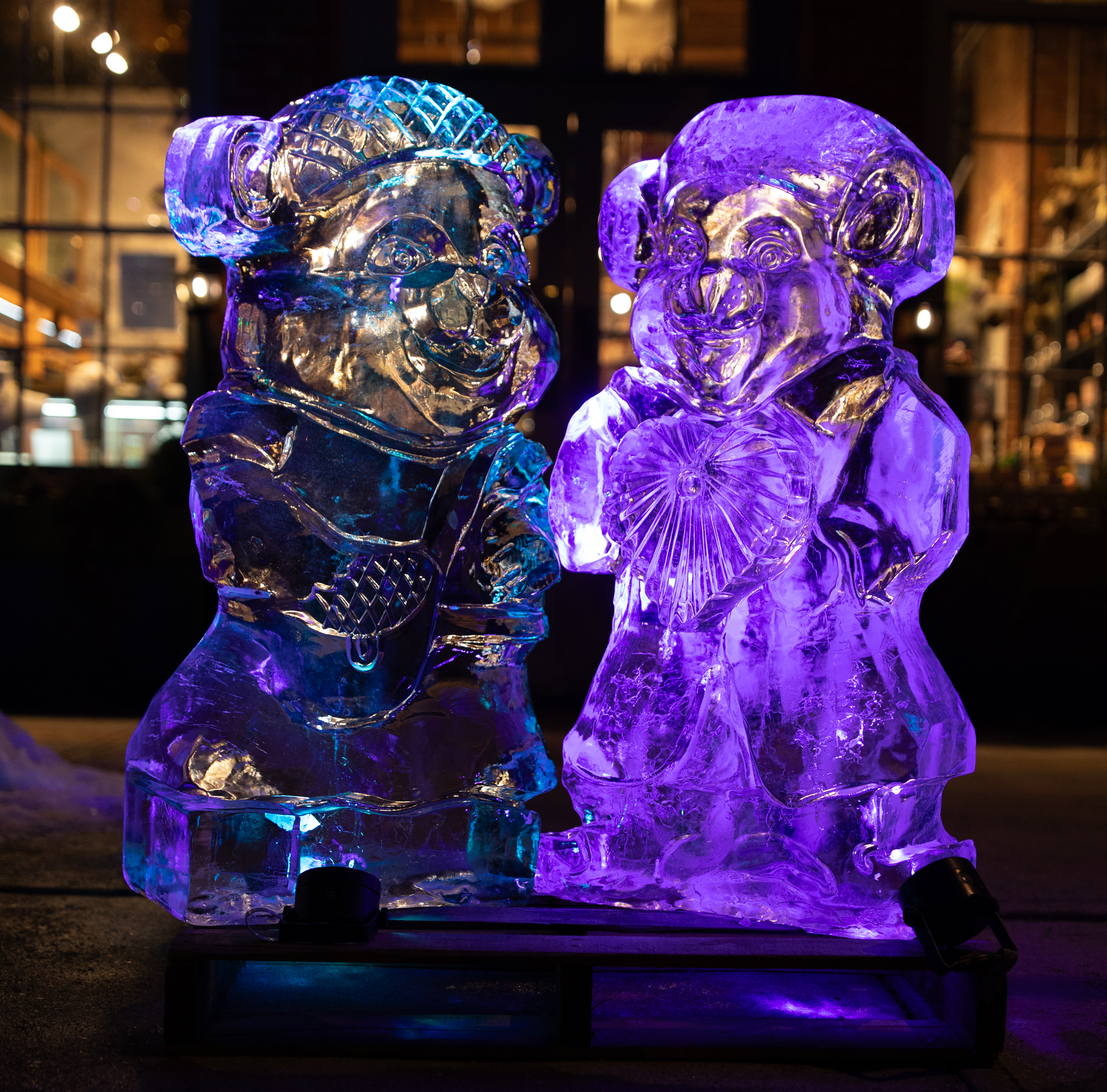
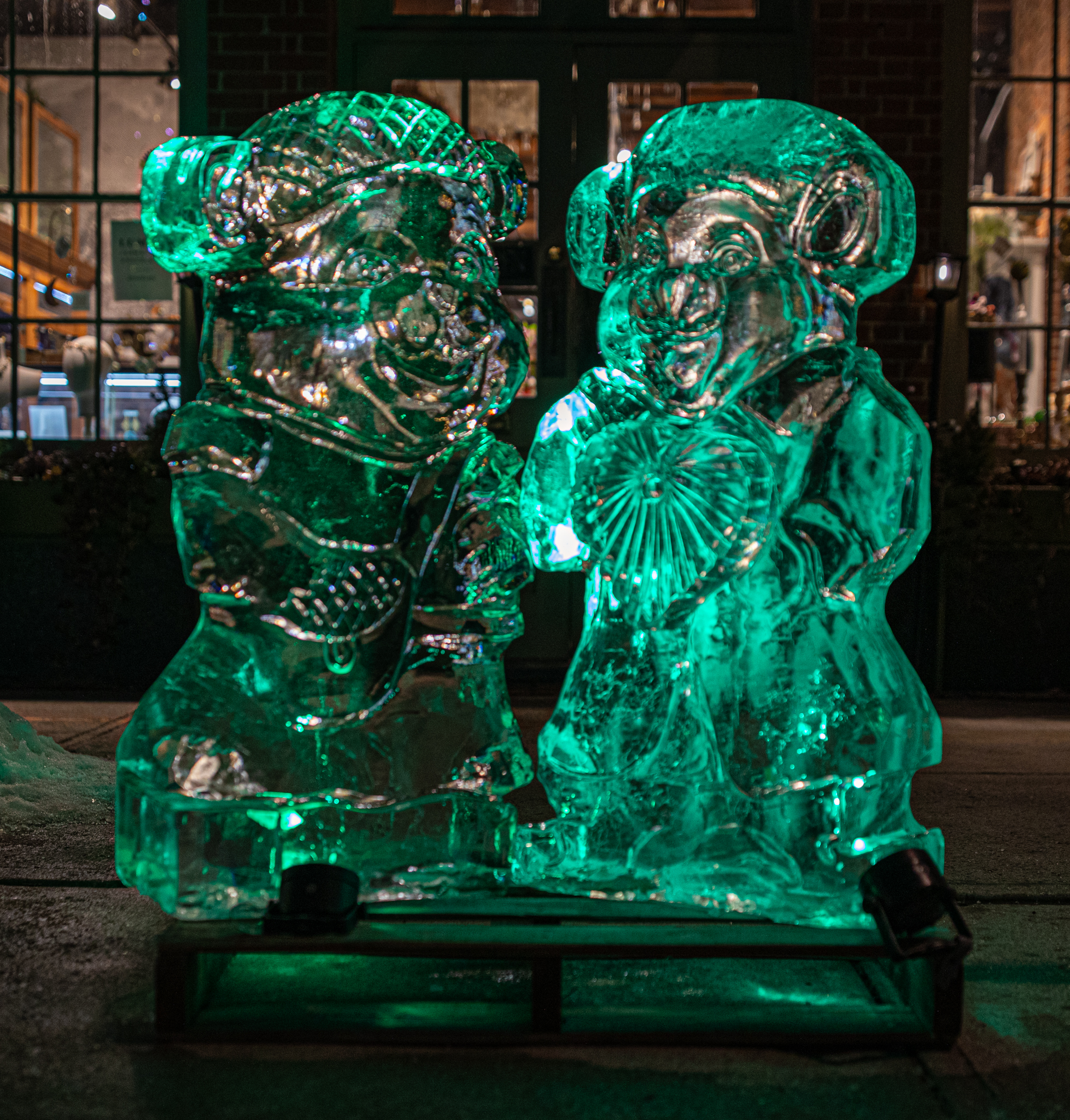
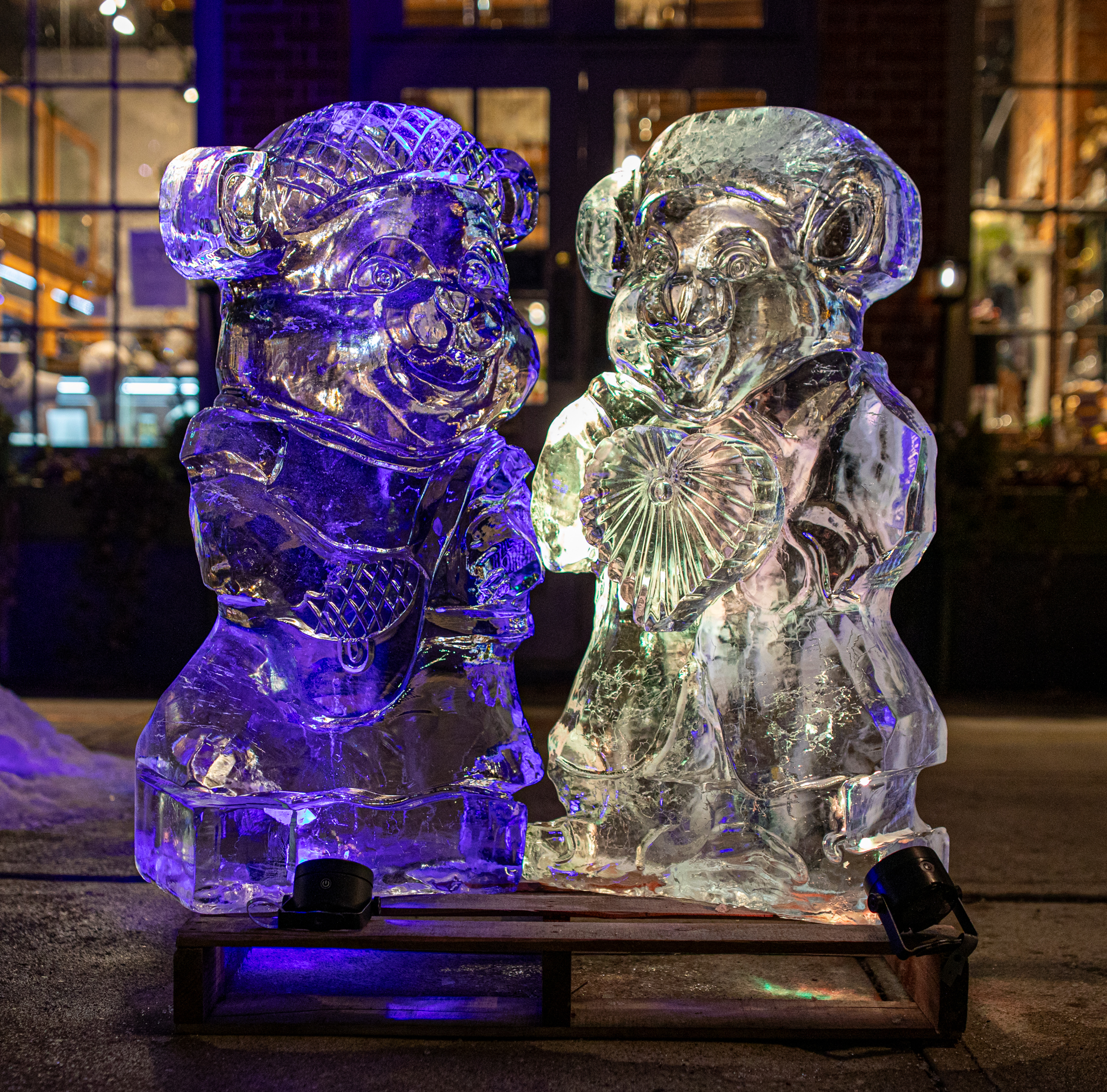
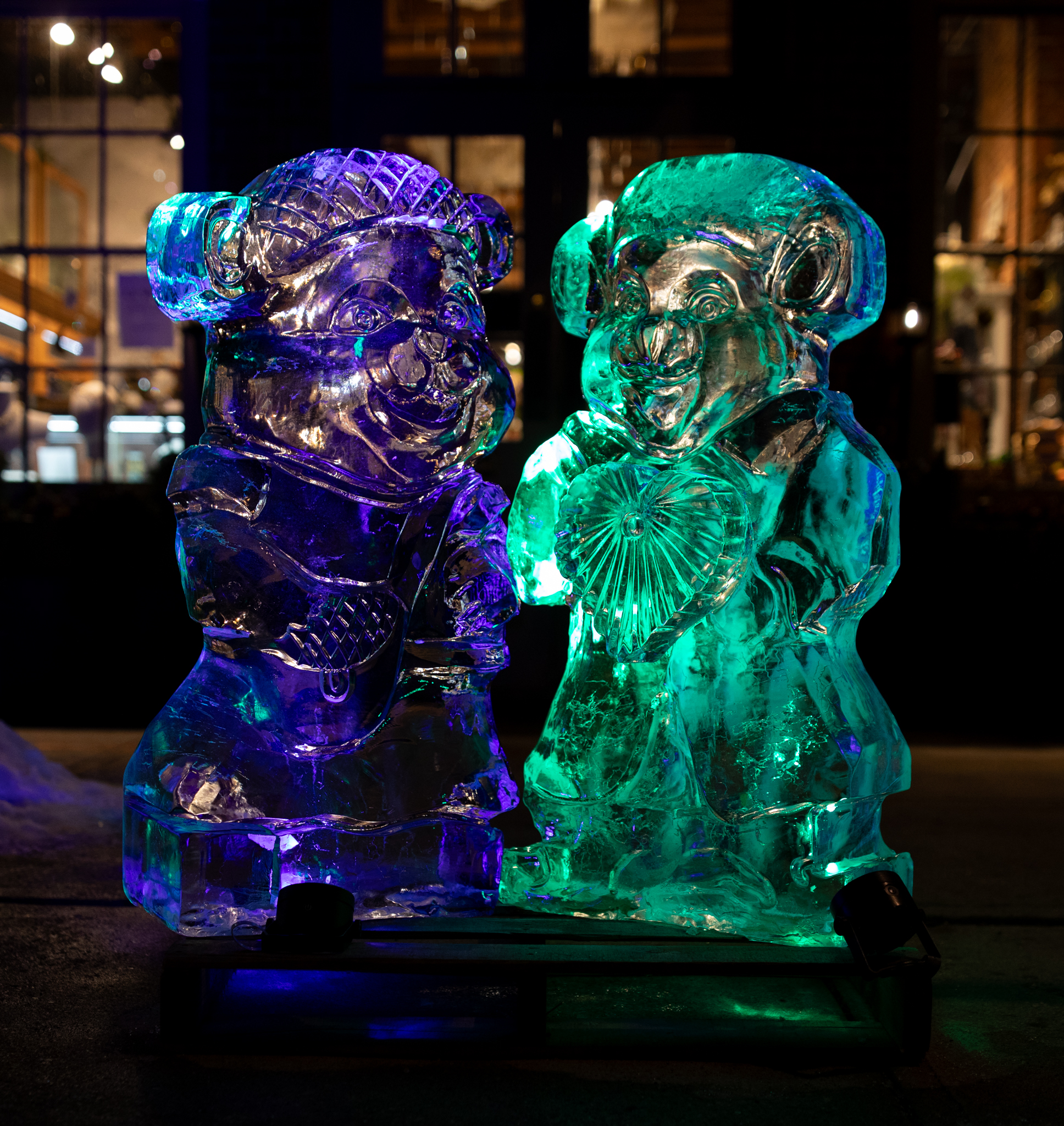
21 Mice

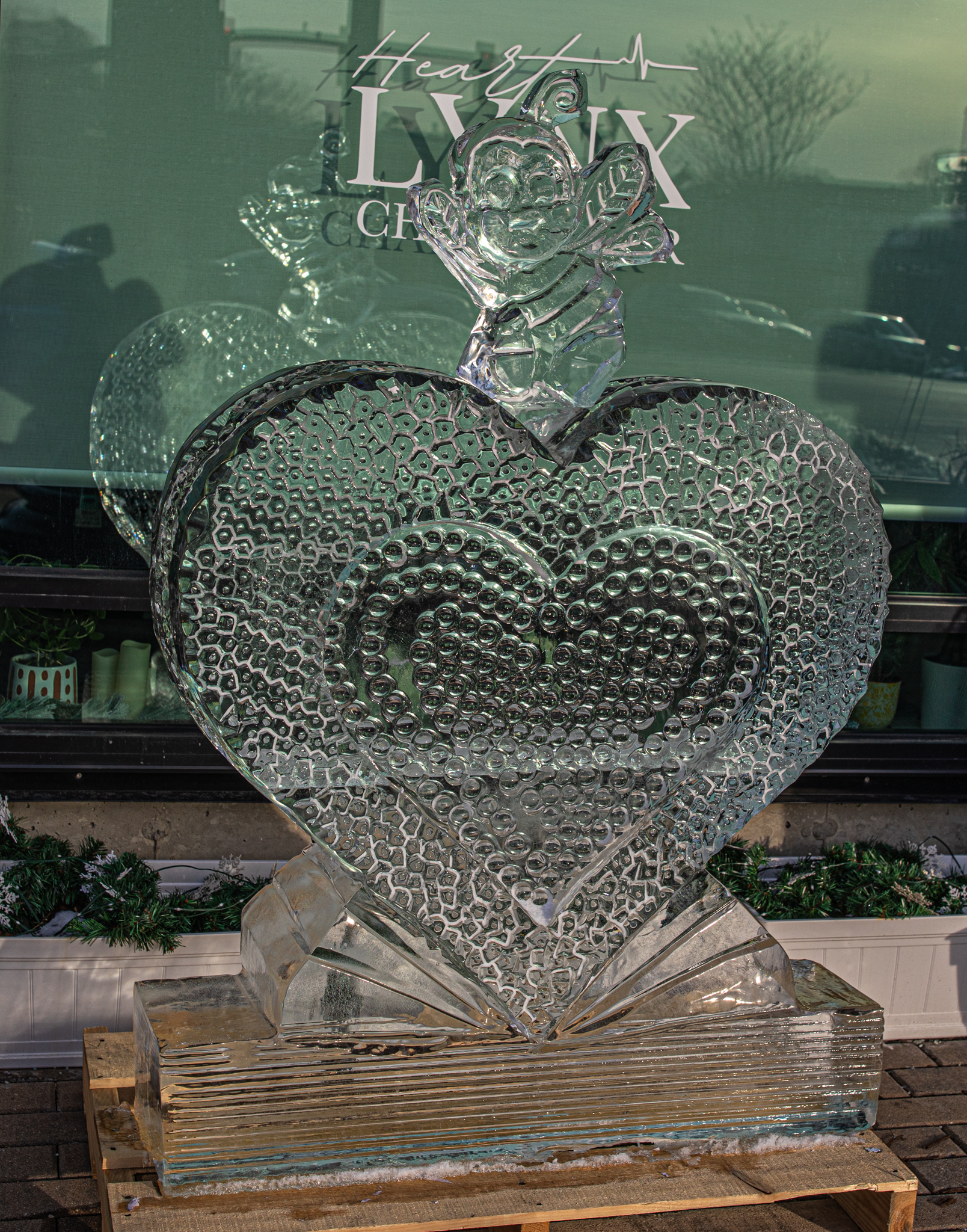
22 Honey And Hearts

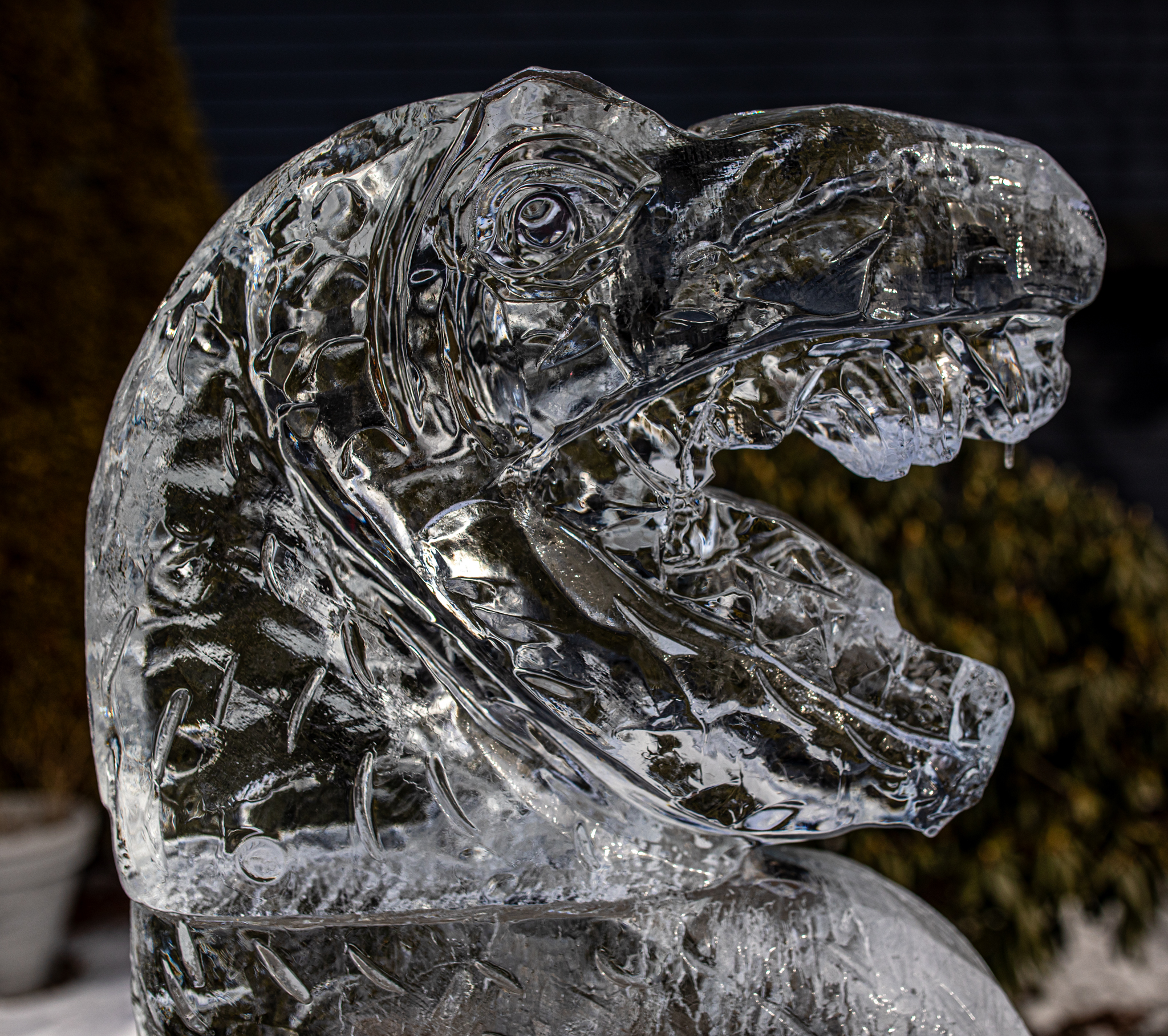
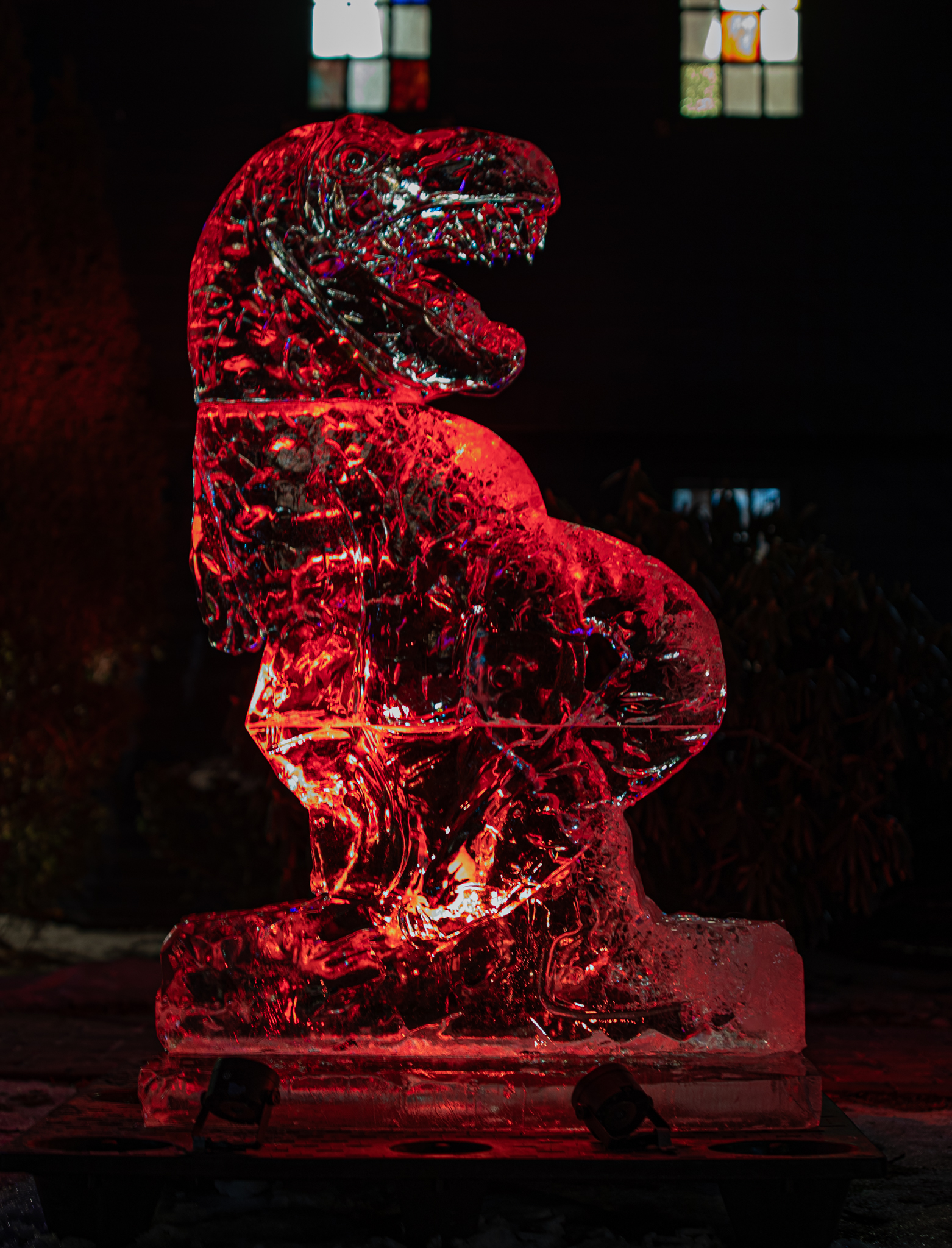
23 Heart T-Rex

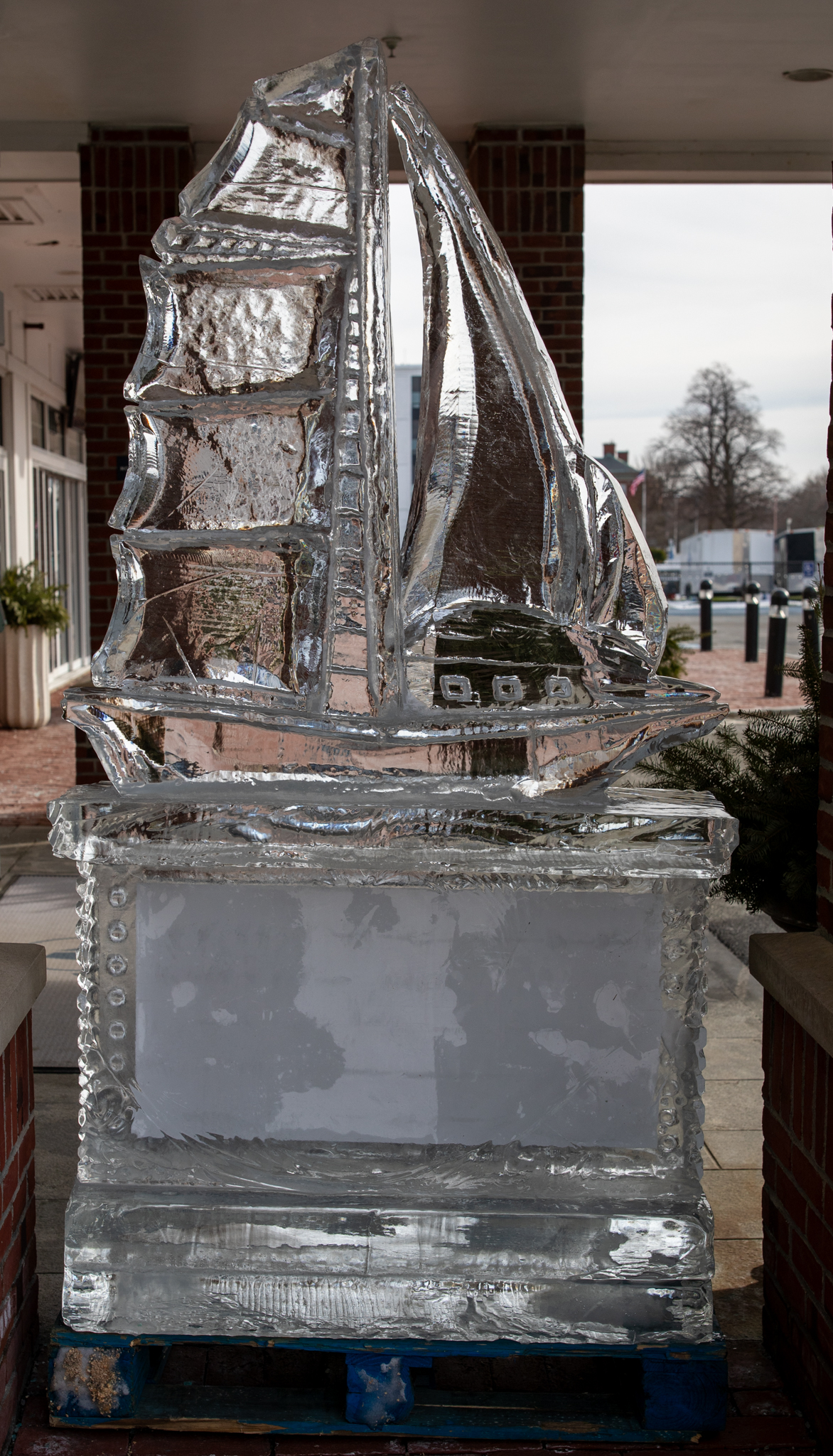
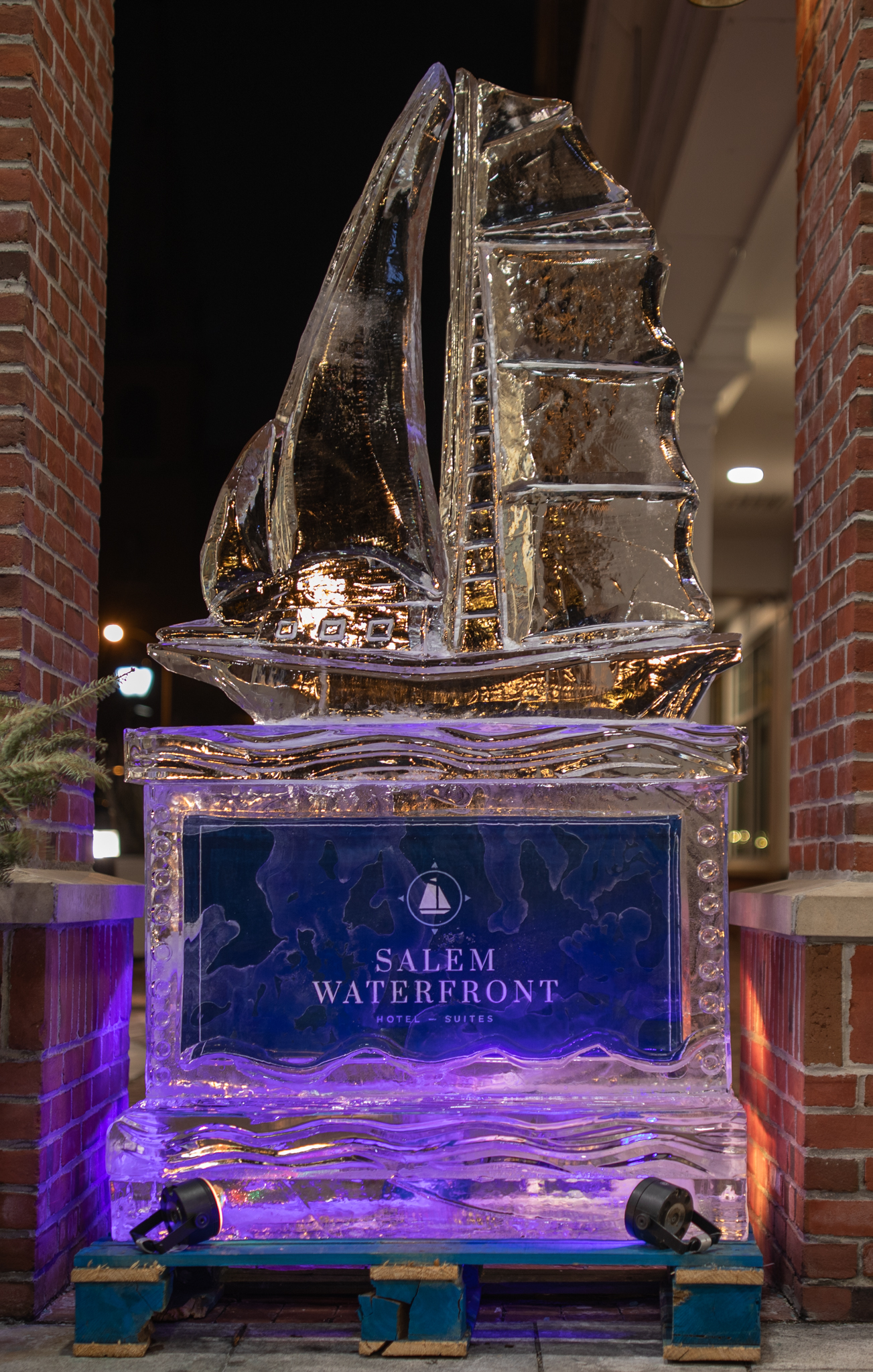
24 Sailboat

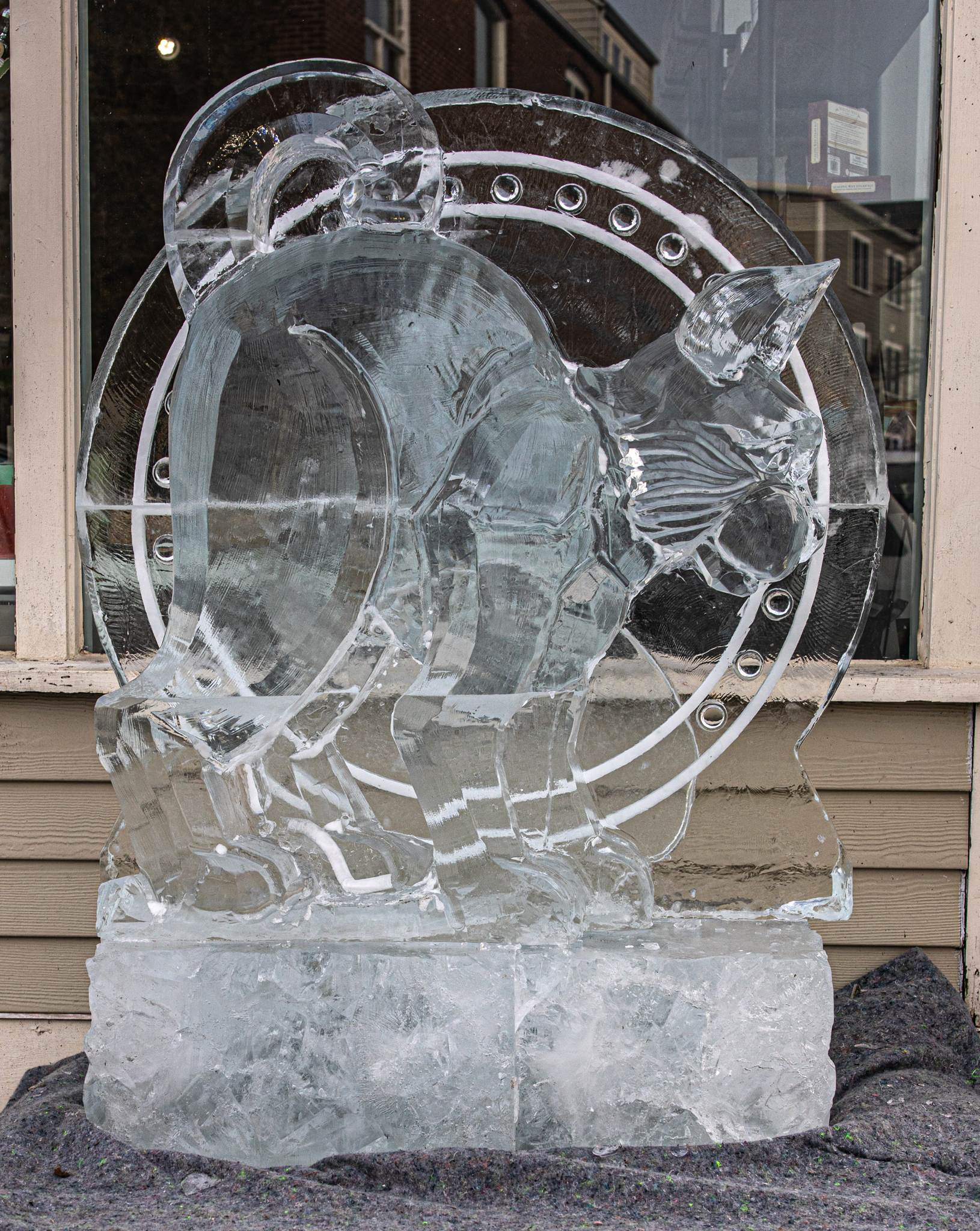
25 Halloween Cat

26 Black Flame Candle

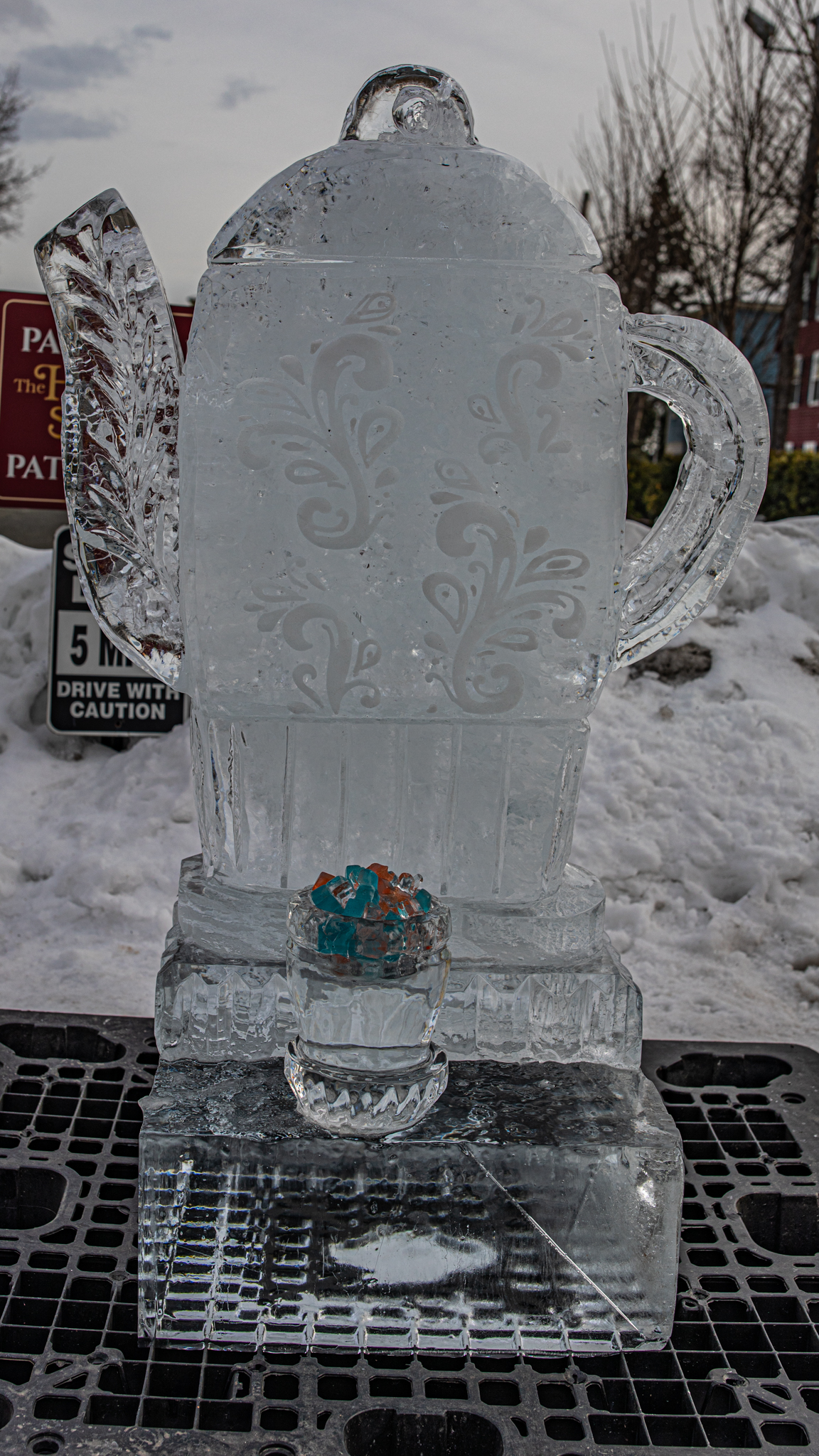
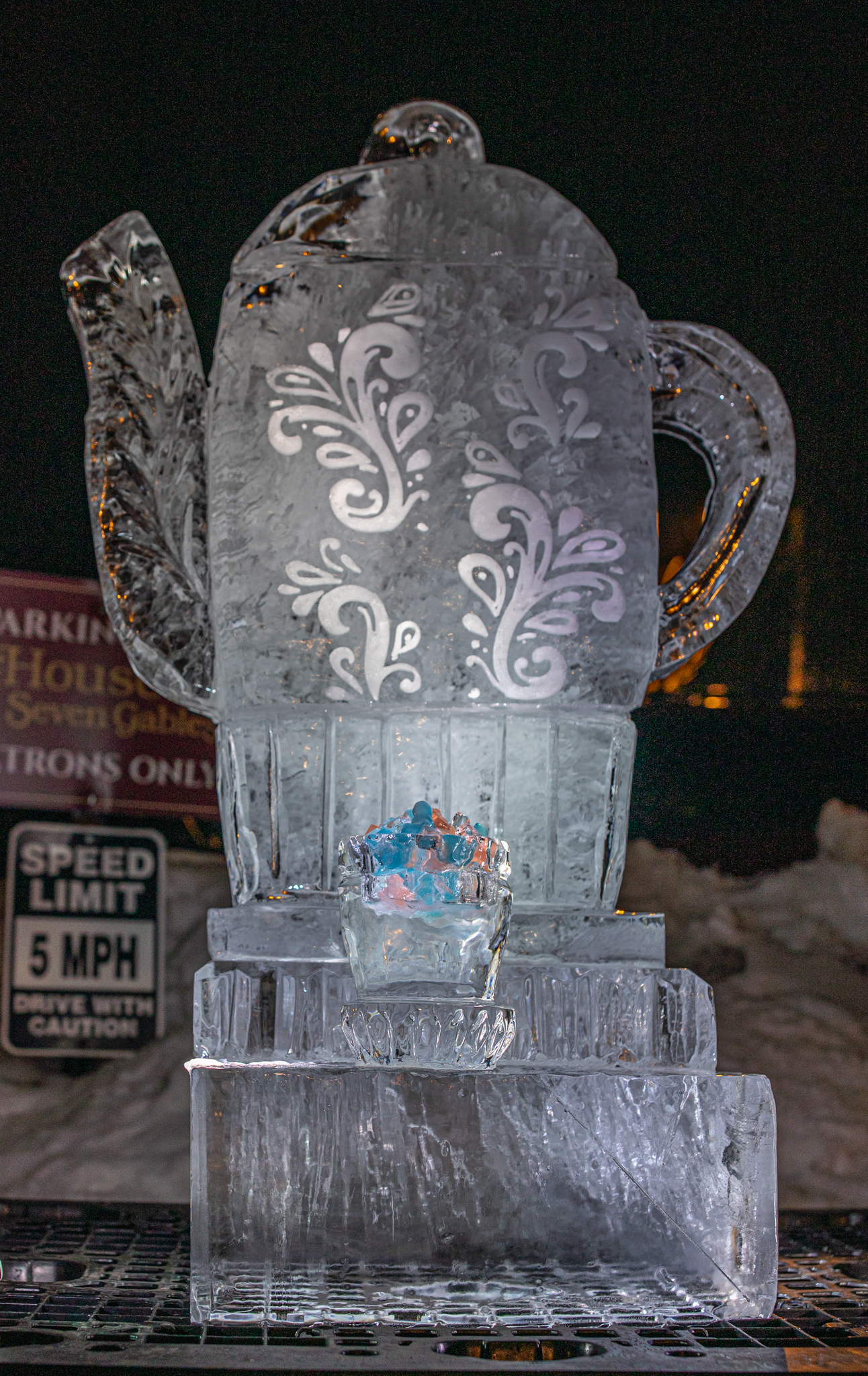
27 Teapot

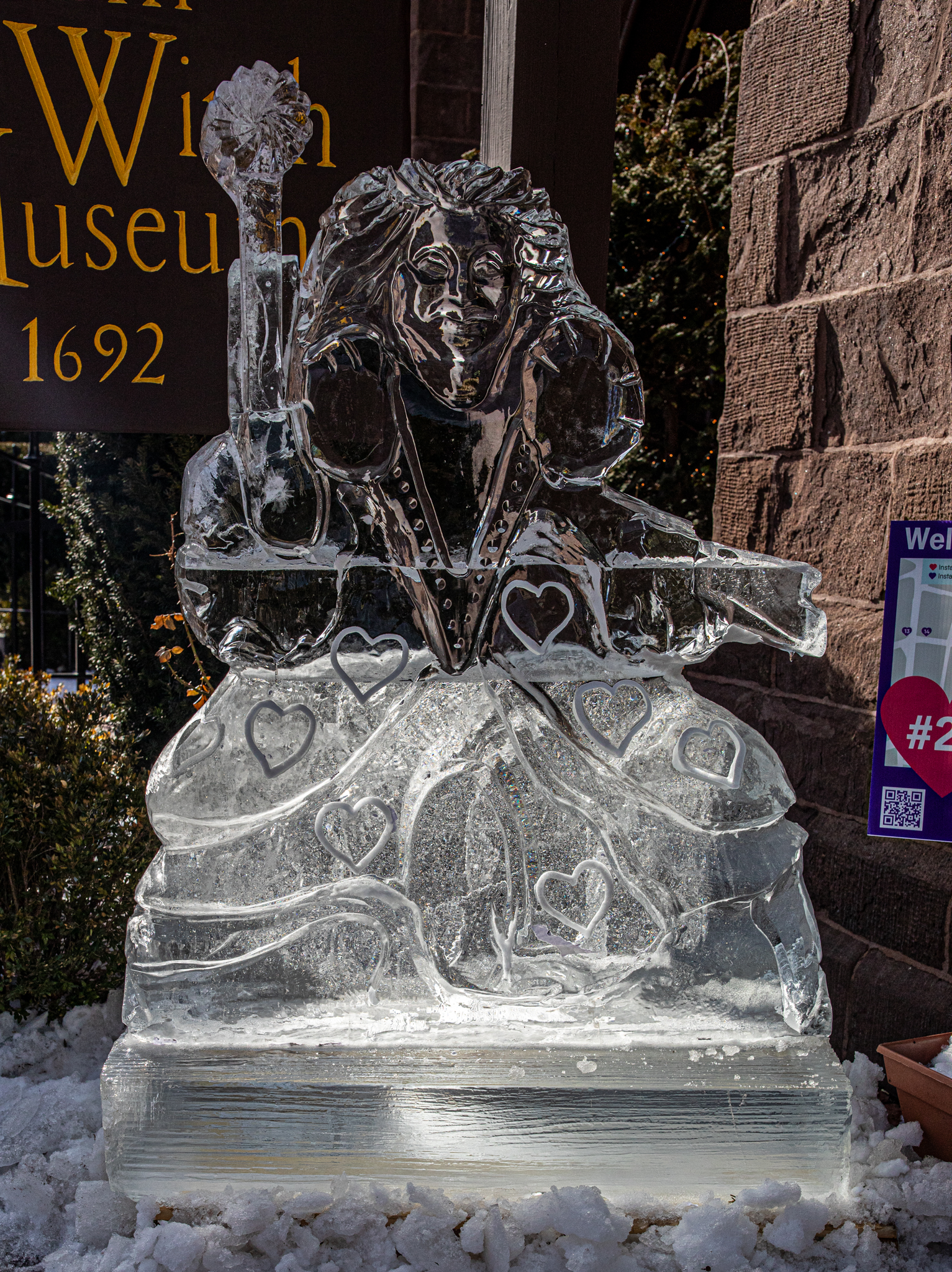
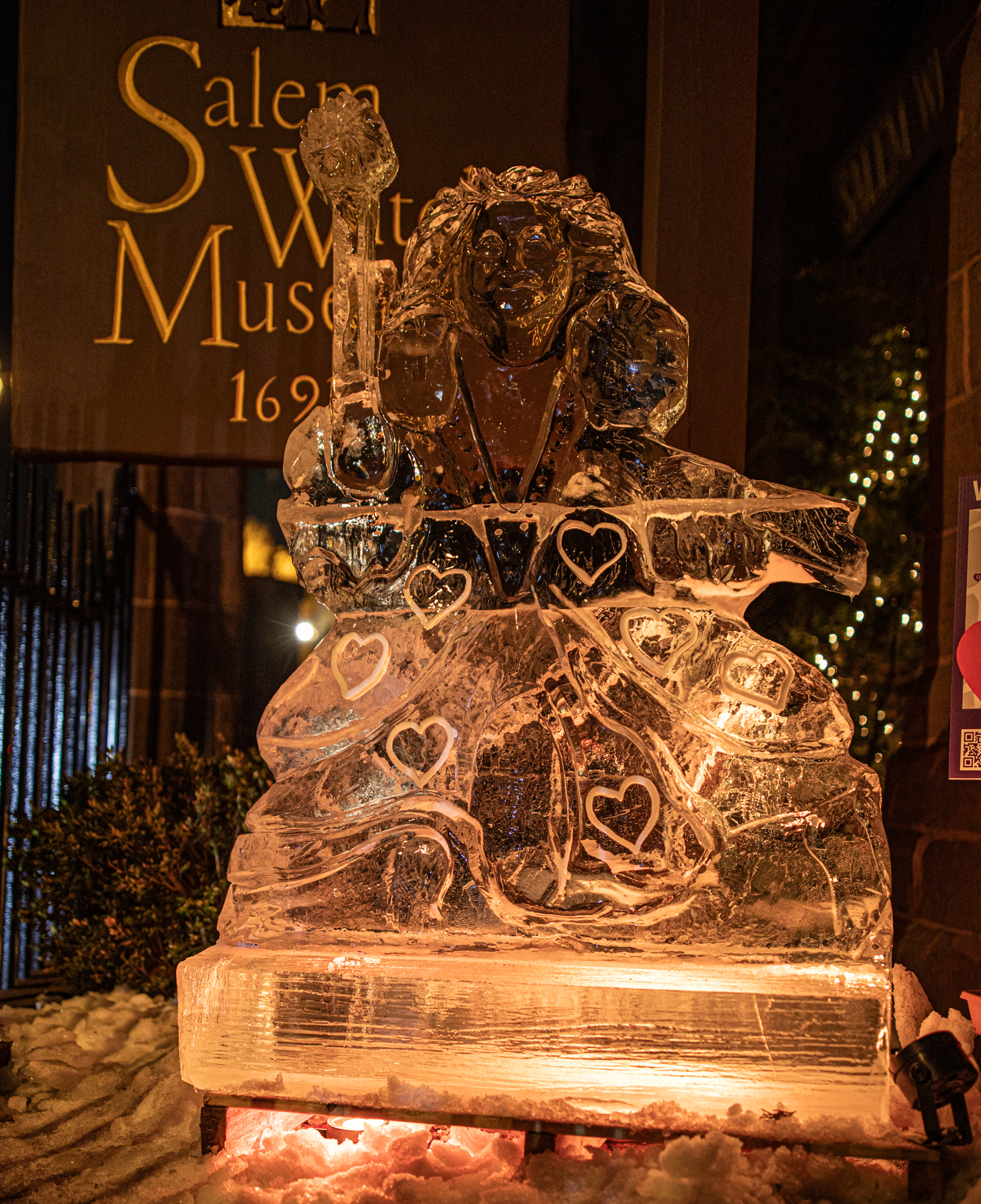
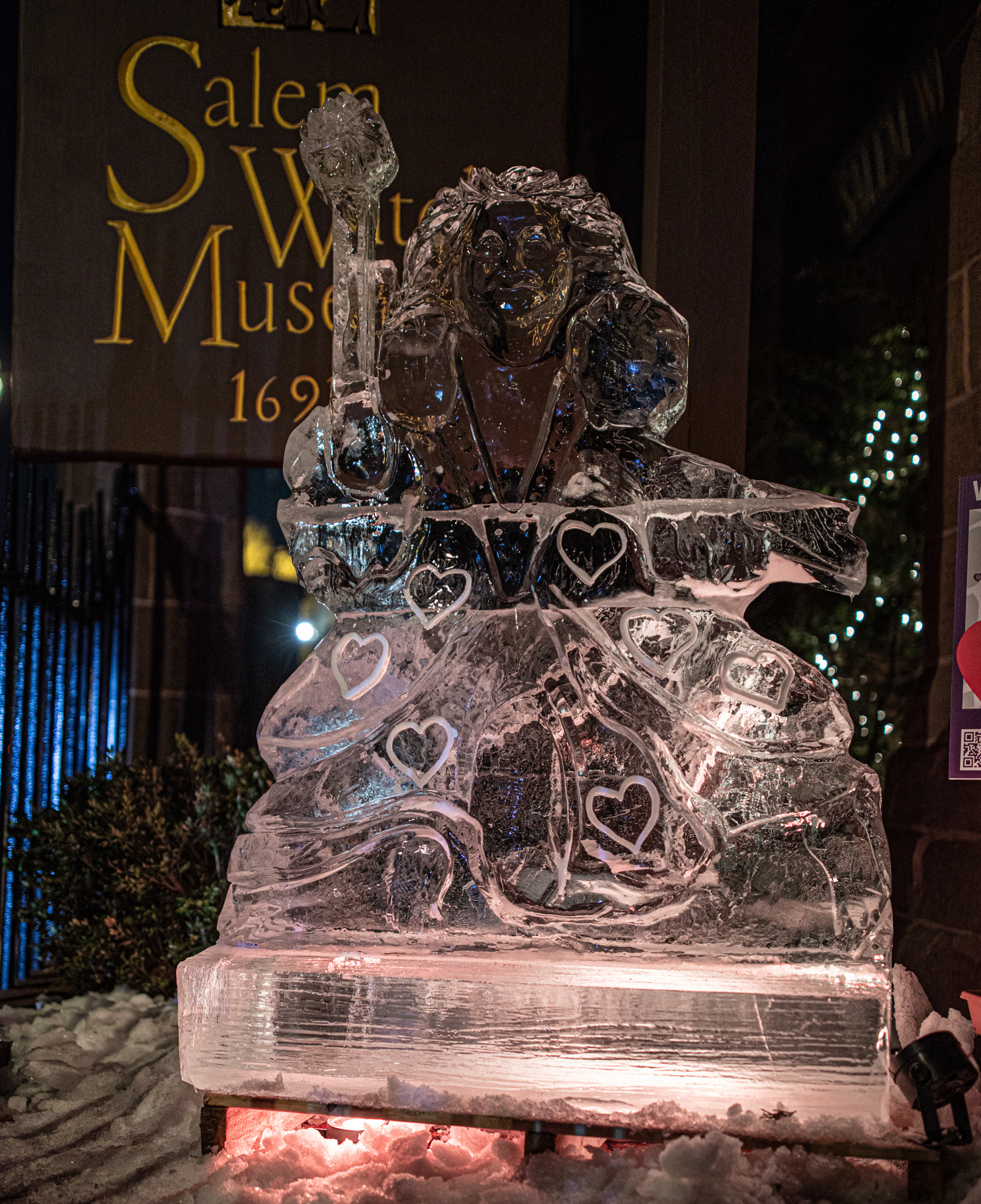
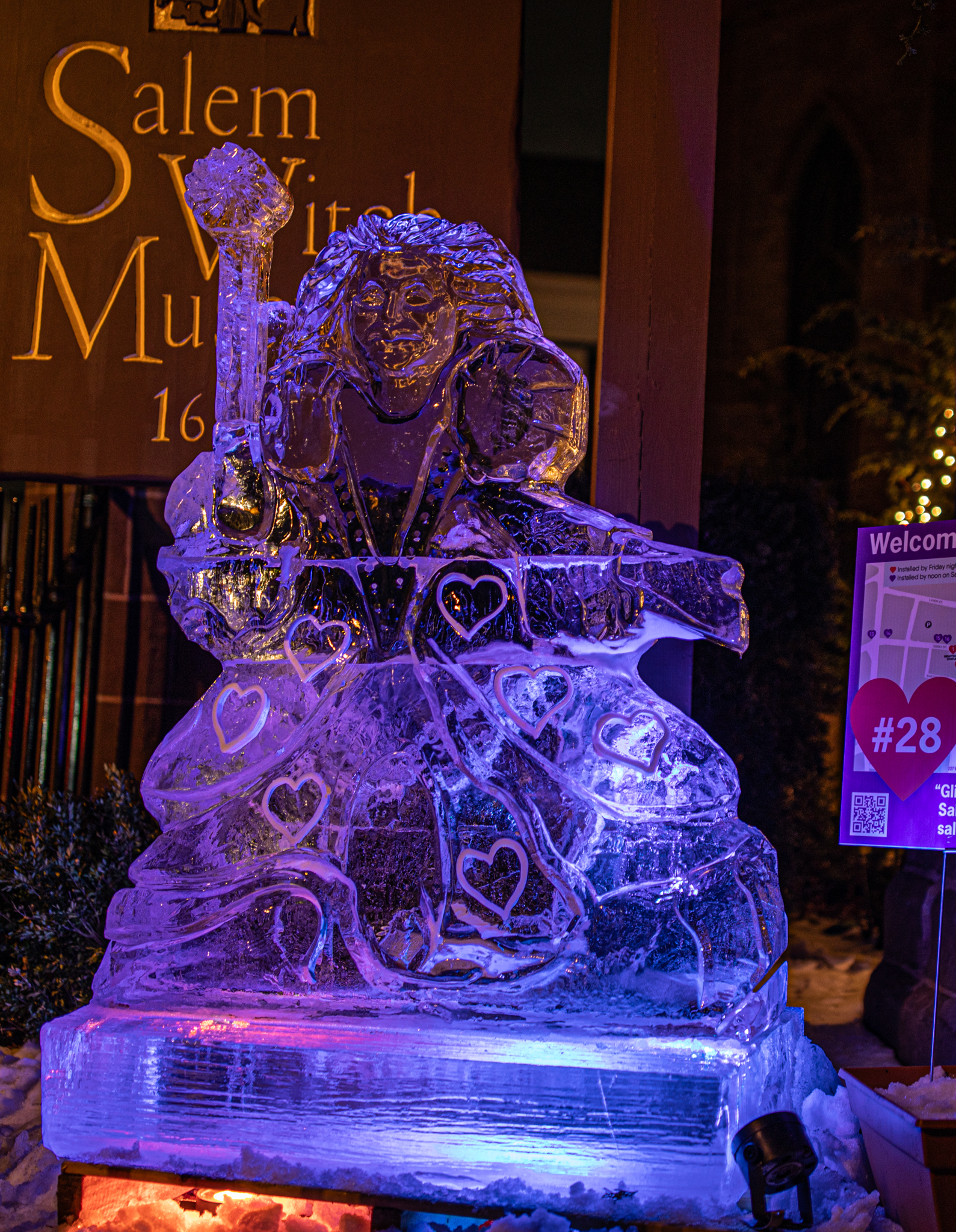
28 Glinda The Good Witch – The Salem Witch Museum, where this ice sculpture was located, always seems to have a Wizard Of Oz themed sculpture every time I have photographed this event! There are many connections one could make between the Salem Witch Trials (and witches in general) and the Wizard Of Oz. One connection between the two is that Frank Baum, the writer of the Wizard Of Oz books, was inspired by his mother-in-law and suffragist Matilda Gage. And Gage was very much inspired by Rebecca Nurse, one of the accused witches.

29 Bakery

There were some other ice sculptures not included in the official event.

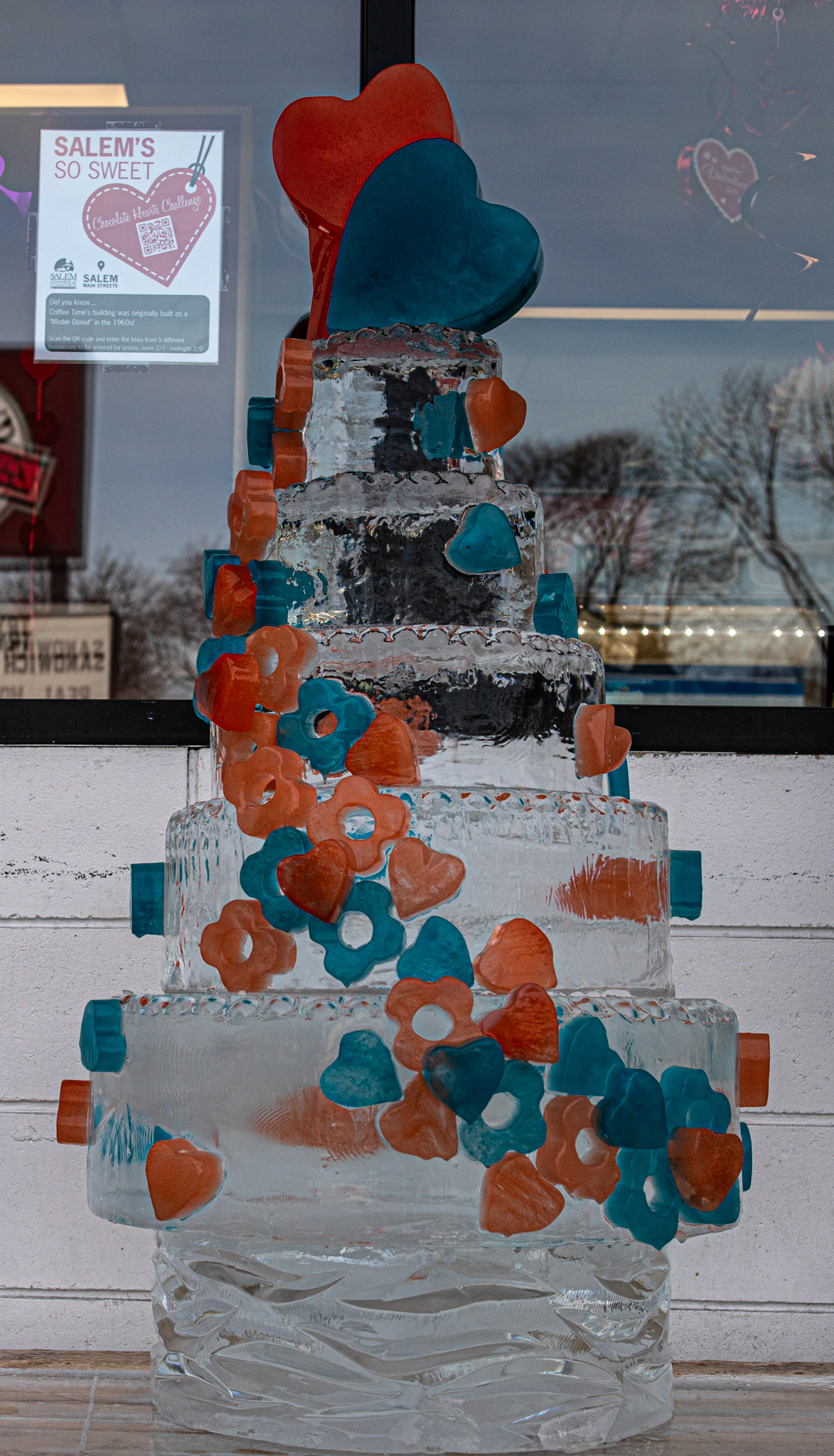
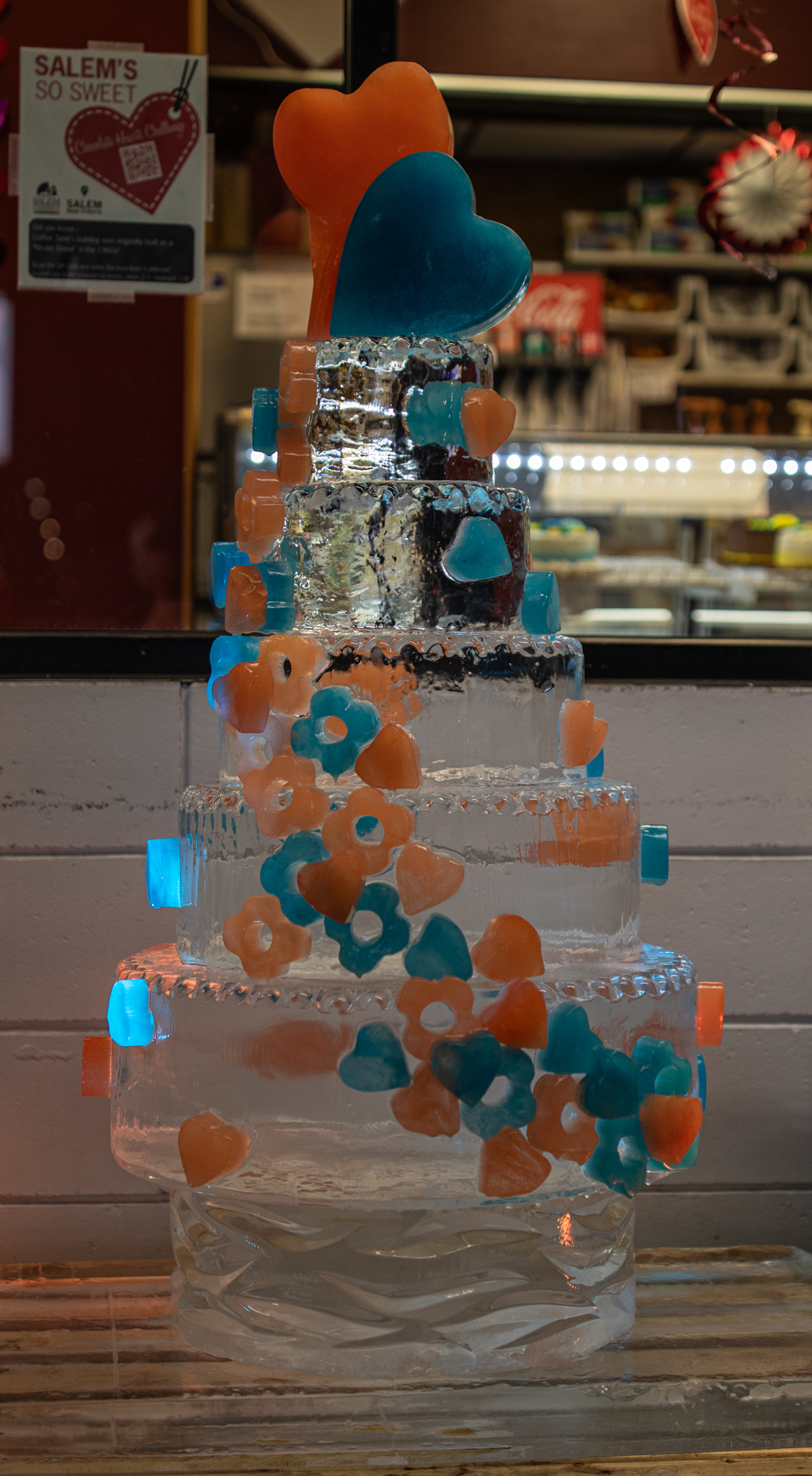
Re-Find has been putting their own mini sculptures in front of their store for the event the past few years. I always look forward to seeing their version!

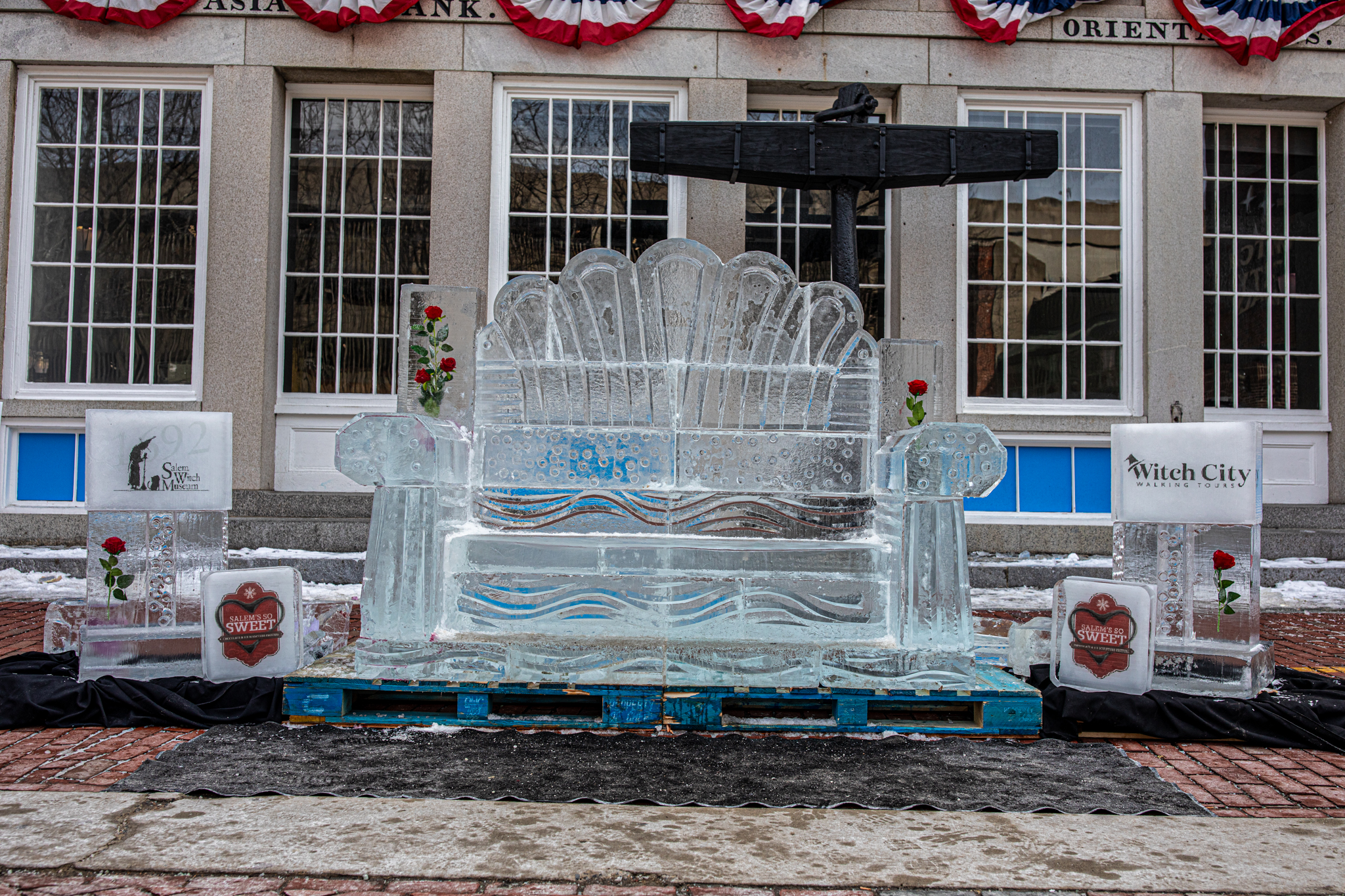
This ice sculpture was not included in the list of ice sculptures. But, it was a great sculpture for people to sit on and get their photo taken!

If you’re wondering how they get the sculptures to light up, I had the good fortune of seeing the workers install the lights. They have teams of workers who work on different installations throughout the evening. It only takes them a few mintes to install the lighting fixtures.

The city of Salem and the shop keepers really got into the spirit of the event. There were several shops and buildings that had Valentine’s Day decorations.

This house always has such festive decorations for all of the major holidays and special occassions.

There were also some special guests in Salem for the big event!

Borah may be familiar to some of you who visit Salem regularly.

And Mother Nature of Salem was there with Father Time!

Lastly, I am posting videos of some of the ice sculptures that change colors so you can see it in real time!


New Hampshire Marine Memorial (Hampton Beach, Hampton, MA)

Dates Of Visits:

Location: Hampton Beach,

Parking:

Cost: Free

New England has a long history of sea faring servicemen and women. Tragically, some of these people were lost to the sea.

These people may have been lost but they are not forgotten. Certainly not by the people of Hampton, New Hampshire or the people who visit the New Hampshire Marine Memorial.

Each year, thousands of people take selfies, admire the beauty of the statue or sit on the bench at the memorial.

I took these photos of the memorial on two different days. The first set of photos were taking after I took photos of the sand sculptures from this year’s Sand Sculpting Classic at Hampton Beach and the second set were taken on June 25. Since there are usually crowds there, I went early to avoid the crowds and to get the photos with the serene morning light.

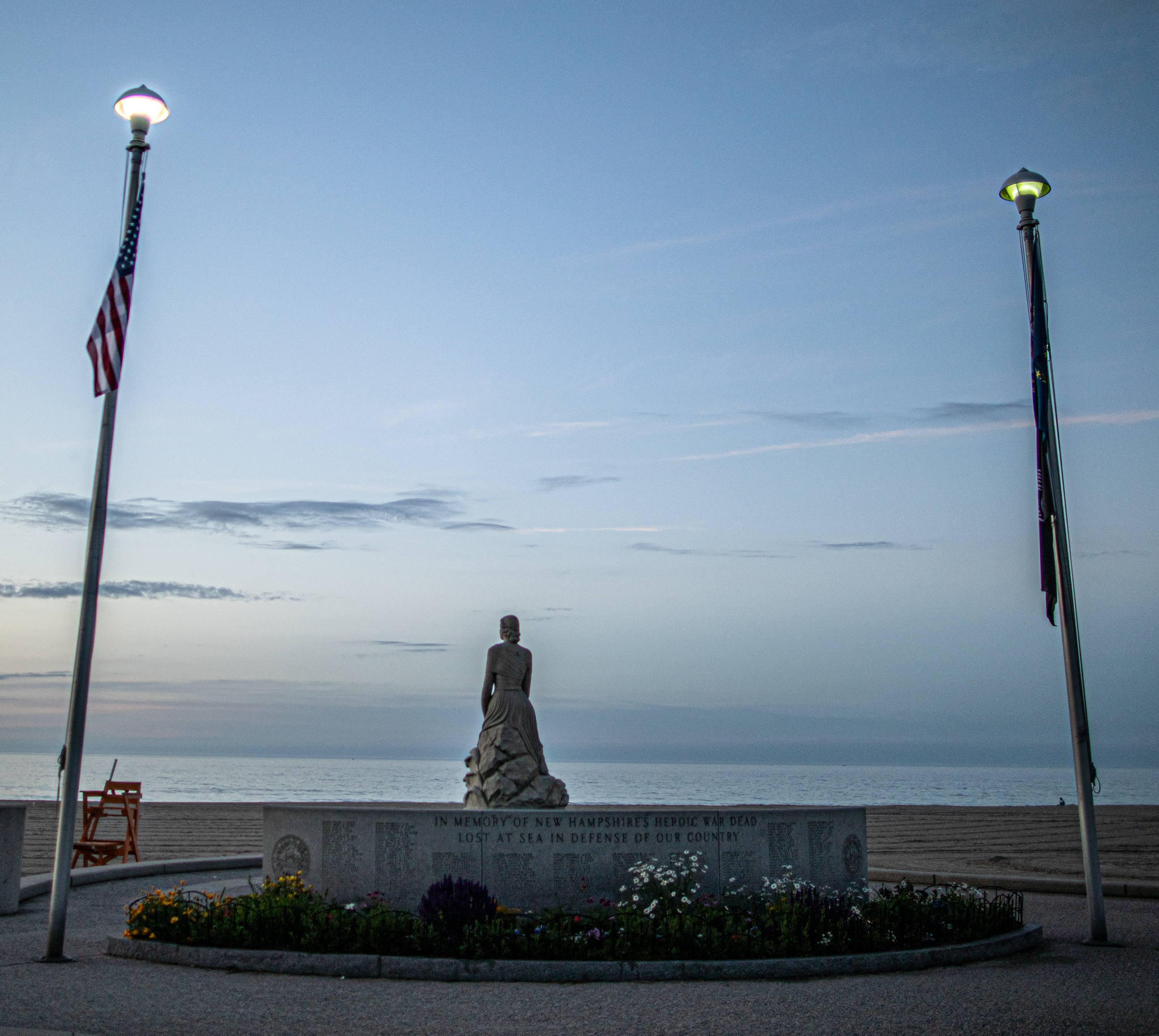
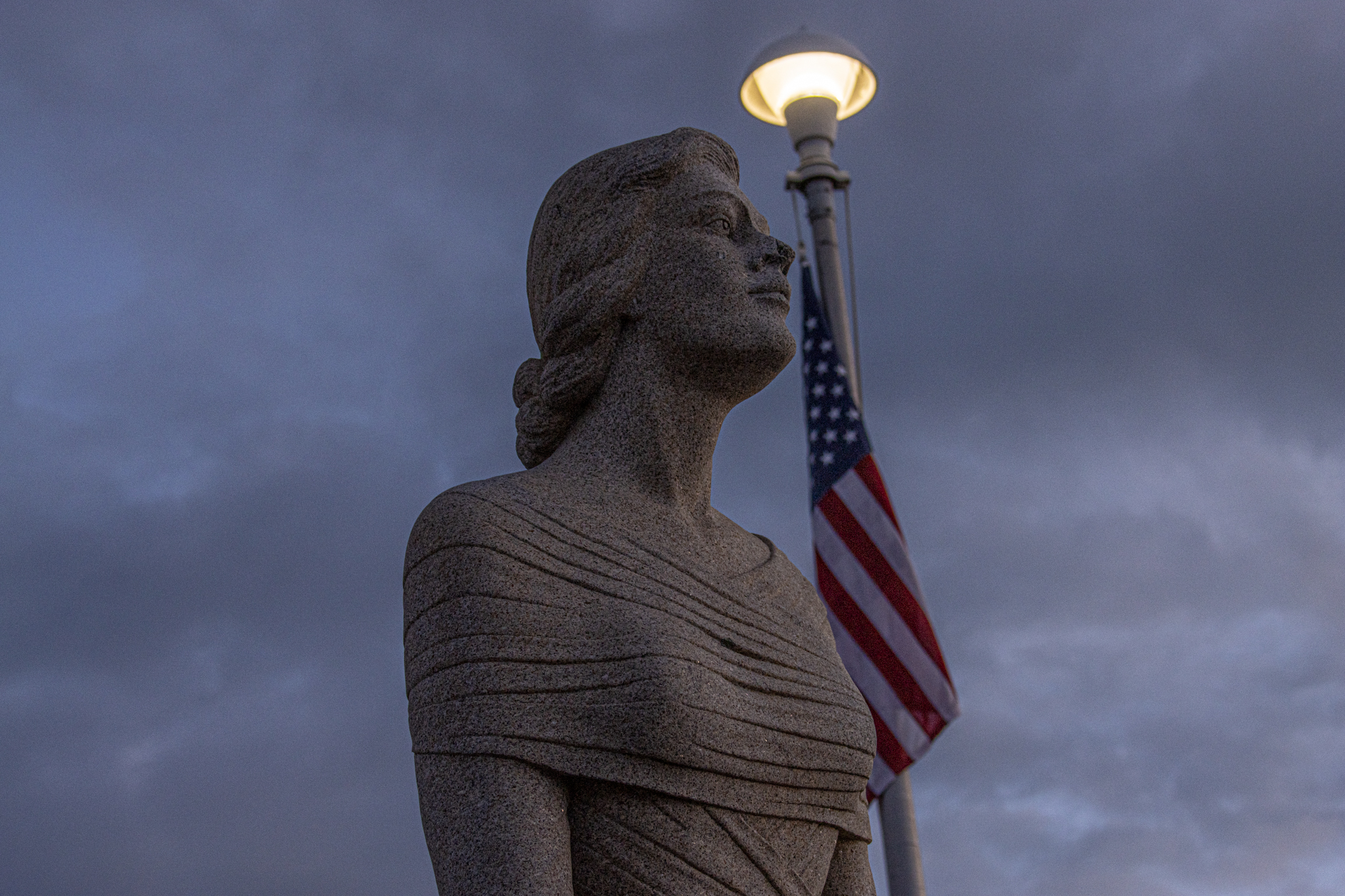
Dedicated to all New Hampshire servicepersons lost at sea due to warfare, the New Hampshire Marine Memorial is a mid-sized statue of New England granite on a tiered granite base. A woman holding a wreath casts her gaze along the water.

Inscribed on the upper (middle) step is the phrase BREATHE SOFT, YE WINDS, YE WAVES IN SILENCE REST. These words are from a poem by John Gay, written in 1714, in his “An Epistle to a Lady.” 

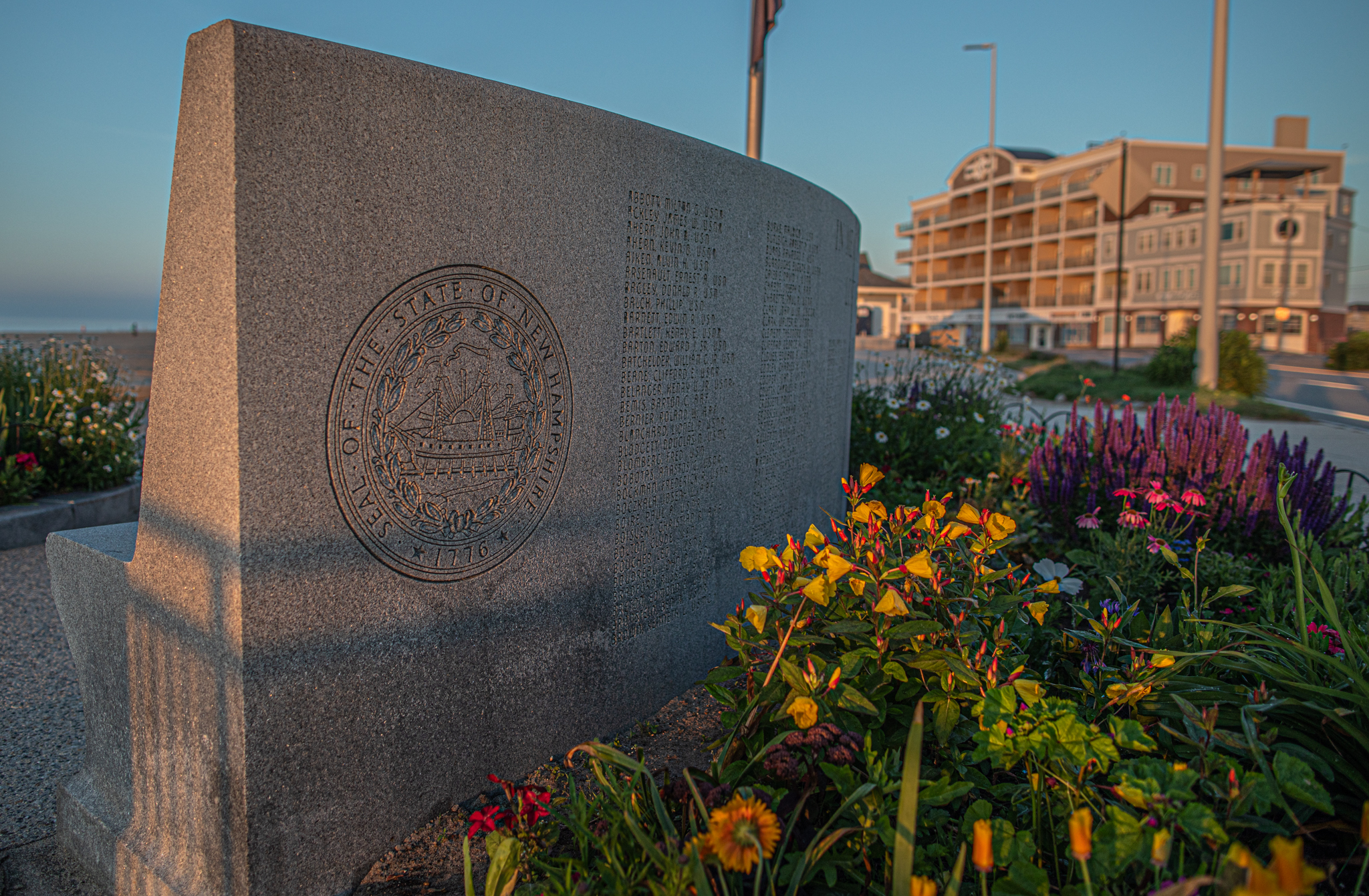
Originally, 248 names in 10 rows were added to the back of the memorial with the state seal at each end. Sadly, over time, names have been added. The last name added was on Aug 6, 2022 when Marine Cpl. Jonathan Currier’s name was added to the monument. The 21 year old Cpl. Currier, from the 13th Marine Expeditionary Unit, went overboard in the Sulu Sea off the Philippine coast on Aug. 9, 2018.

What few people may know is the memorial didn’t start out as a memorial. What would become one of the most recognizable memorials in New Hampshire, if not New England, originally began as a grave marker.

William E. Downs of Manchester, NH, had inquired see if the federal government would furnish a grave marker for his son, Captain William D Downs, who was buried at sea May 25, 1945. Little did he know at the time his request would result in such a well known memorial for all service people lost at sea. The memorial would go on to become a memorial to all New Hampshire sons and daughters lost or buried at sea during World War II. In fact, it would go on to remember those lost after World War II.

However, the quest to get the memorial built was a long one. Initially, Downs’ request to have a grave marker built was denied. But Downs did not give up. After many proposals, such as placing the memorial at “Pulpit Rock” at Rye Beach and, after that proposal fell through, “Ragged Neck” at Rye Harbor, Downs was able to gain the support of a memorial from Governor Sherman Adams in 1950. Eventually, the then Governor Hugh Gregg agreed to have the memorial built at Hampton Beach. The statue was dedicated on May 30, 1957 (fittingly Memorial Day). On Veterans Day, 1970, the American Legion Post 35 of the Hamptons, dedicated two flag poles at the monument, which fly the American and state flags.

As you can tell by the events and actions outlined below, there were a lot of people involved in the creation of this memorial.

A design by Concord (NH) resident Alice E. Cosgrove was approved for the 12 foot statue.

Cambridge, Massachusetts sculptor, Teodors Uzarins, was commissioned to model the life-size statue in clay at the Caproni Galleries in Boston. Uzarins, worked closely with Alice, to produce the features that everyone who has seen it remembers.

A 24-ton granite block from Swenson’s Granite Quarries of Concord to sculpt the memorial. That 24 ton granite block was then shipped to Barre, Vermont where it was shaped. It was then sent to Hampton after 17 tons of that block had been removed by Italian artisan, Vincenzo Andreani of Marr and Gordon, Inc., Granite Works. Andreani used a plaster cast of the lady in the memorial for point-by-point measurements.

All of this hard work paid off, as the memorial is not only a respectful tribute to those who have served the country honorably. It is also one of the most recognizable sculptures in New Hampshire.

Click on the link below to see my photos on my Facebook page

:New England Nomad

to see my updated website click below

New England Nomad

To view more photos like this from New England on Facebook click below

Photographers Of New England


Amy Toyen Sculpture (Avon, CT)

Date Of Visit: September 9, 2017

Location: parking lot of Avon Free Public Library, 281 Country Club Road, Avon, CT

Highlights: A life size sculpture of Amy reading a book and clutching a teddy bear

Tips:

  • The sculpture is located in the parking lot next to the left side of the library

IMG_1975

Sixteen years.  Who could imagine so much time has passed?

One hundred and fifty six people with ties to Connecticut died on that tragic day.  A memorial rests on the grounds of the Avon Free Public Library to memorialize one of these, and indeed all of the victims of this day.

Amy Toyen, a resident of Connecticut and employee of Thomson Financial in Newton, Connecticut.  As a side note, when I researched this memorial and Amy, I never knew she worked at the very same corporation I used to work at.  It’s amazing how we all seem to be connected in some way.

Amy, a 1995 Avon High graduate, was killed Sept. 11 while she set up her company’s display booth for a trade show on the 106th floor of the World Trade Center’s north tower.

Dedicated by the 2001-2002 Avon High School Student Government and the Avon community, the 22″ bronze statue depicts a young child, Amy Toyen, on a granite bench reading a book, a teddy bear resting in the crook of her elbow.

To help create the sculpture, Amy’s parents selected a group of photos that portray their daughter as they remember her.

The sculpture shows Amy in daisy print dress, her favorite sneakers and ponytails tied with pompom rubber bands


A scholarship was also started in Amy’s name. The first recipient of the annual Amy E. Toyen Memorial Scholarship went to Christine Bialaski, an Avon High senior and honors student who is active in community service, music and field hockey.

Coincidentally, the Bialaski family lives down the street from the Toyens. As a young child, Amy Toyen often waited for the morning school bus at the Bialaskis’ home after her mother left for her teaching job at Renbrook School.

The sculptor, Marilyn Parkinson Thrall of Canton, Connecticut, stops by every once in a while to polish and clean up the sculpture.

The statue, a reminder of all that was lost that day, remembers Amy in a younger, more carefree time.

Amy’s obituary can be found here.


SculptureNow (Lenox, MA)

Date Of Visit: June 4, 2017

Location: The Mount, 2 Plunkett St, Lenox, MA

Dates and Hours of Exhibit: June, 2017 – October, 31, 2017, The Mount is open daily from 10:00 am to 5:00 pm through October 31st, except on early closing days (please see below). The Mount is open from 10:30 am – 3:00 pm most weekends in November through February. Please call 413-551-5100 to confirm hours.

Cost: $18 for adults, $17 for seniors (65 and older), $13 for students, children and teens (18 and under) get in free, $10 for military personnel (cost includes a tour of the Edith Wharton house and if you return within 10 days you can get in free again with your receipt)

Parking: There is ample parking available at The Mount.

Handicapped Accessible: Yes.  The trail is dirt bit wide and even for the most part.

Dog Friendly: No, except for service dogs possibly

Highlights: art on a easy trail, scenic views

Website: SculptureNow

IMG_0549

As if the Mount wasn’t beautiful enough, there are 30 amazing sculptures to compliment its beauty.

There are 30 sculptures along the trail.  But, when I went to visit in early June, not all of the sculptures were up.  I did the best I could to photograph as many as I could find.  But, I didn’t have a map or any other guide at the time to find them.  So, it was something like a “scavenger hunt” when I did visit the sculptures.  It looks like I found 22 of the 30 sculptures.  The art has a modern feel to it.  All thirty sculptures should be up now for your viewing pleasures.

The numbers next to the descriptions correspond to the descriptions in the map of the trail where the sculptures are located.  The link to the trail map is attached above in the website link.

1. The first sculpture is called Stall by Nancy Winship Milliken.  Nancy describes her sculpture as the following:

“This site-specific memorial honors the activities and architecture of a New England past. The horsehair gestures towards the building at The Mount which was at one time Wharton’s stable.”

2. The second sculpture is called Day’s End by James Kitchen.  James says his sculpture this way:

“Does our fast-paced, distraction filled world allow time to think, read and reflect, enjoy art in all its forms? Exhausted, we let media affirm our feelings rather than inform us.”

3. The third sculpture is by Harold Grinspoon.  According to Grinspoon, his art is:

“Giving new meaning to objects that have aged out of their original purpose, I invoke nostalgia for the familiar and an appreciation of new forms of beauty.”

4. 3. “Fallen Sky” by Coral Penelope Lambert is the next sculpture.  Coral explains her art this way:

“My work explores forces of nature and seeks to address the darker issues related to Earth’s resources such as mining and contamination where traces of the process remain.”

5. Stack C by Lydia Musco is a combination of nature and architecture:

“Architecture and elements of nature, such the work of gravity, influence this work. The form is built in one additive action, line by line, like layers of stories within memories.”

6. James N Burnes’ sculpture Nine Piece Ring is the next sculpture.  Burnes described his art this way:

“I create forms from nature that express our intimate relationship with Mother Earth. I am drawn to the tension between the natural and organic, man and nature, time and decay.”

7. Biomorphic by Michael Thomas is the next sculpture.  According to Michael, Biomorphic is:

“An undulating, sensual, and playful organic form, often encountered on the periphery of the natural world, realized here in steel. Biomorphic is the fluid movement of mass, coupled together with the visceral experience of color and texture.”

8. Distant by Philip Marshall is, according to Marshall:

“The nude model at a figure drawing held his pose for hours, eyes fixed on a distant point, maintaining his mental distance under prolonged scrutiny; he and the chair becoming one.”

9. Off The Rails by Lucy Hodgson:

“Our country: how we got here and is there a way forward? This is a comment on the decline of infrastructure—among many other things.”

10. Sheep by Madeleine Lord is:

“A pile of galvanized scrap metal sheering implied the subject: Steel Wool. I work the skeletal to the surface and the surface to the skeletal. Pulse arrives after I finish.”

11. Joseph Carpineto’s Walkabout

“This sculpture is inspired by a memory of the coarse undershirts my mother made for me from flour sacks. The rough feel of the rope is reminiscent of those undershirts.”

12. Bench I by Peter Barrett:

“Please, have a seat! I’ve wanted to incorporate some stone into my work since visiting a friend’s marble quarry, and here you have my first attempt.”

13. Anabasis by Chris Plaisted:

“I like to work with steel for its strength and powerful emotion. The subject is the human spirit. I was inspired by the sea and the concept of an upward journey.”

14. Yellow Peril by Setsuko Winchester:

“In 2015 & 2016, these 120 handpinched tea bowls traveled to ten U.S. concentration camps where 120,000 persons (mostly U.S. citizens) were imprisoned during WWII. Their crime was to be Japanese.”

15. Reflective Change by Martina Angela Muller:

“The undulating lines of music and the sculptural force of the wind informed these shapes. Both are continuous game changers that generate inner and outer movement leading to reflective change.

16. Avoidance Attractor by Matt Crane:

“Avoidance Attractor in its first iteration explores structure and materiality with a shift in scale and orientation. An empty piece of signage that invites projection, while remaining stoic and silent.”

17.  Netting For Water by Ann Jon:

“My work is an adventure, exploring new forms and media, hoping the viewer’s eye, mind, and heart will experience the sculpture visually, creating their own narrative or message.”

18. Fenestral by William Carlson:

“This sculpture is intended to pull the audience into the small portals of light as the sun rises and sets. The piece acts like a clock while controlling the viewer’s perception of the landscape.”

19. Blue Pulse by Murray Dewart:

“I want my sculptures to convey both the momentum of ritual pilgrimage and the stasis of meditative mandalas. They gesture in their various ways as resolute guardian forms, protective and consoling.”

20. Gnomon 1 by Christopher Curtis:

“Much of my work seeks context for humankind’s place in the natural world. Gnomon 1, made with stone, stainless steel, and gold leaf, is a good example of this investigation.”

21. Waterstone by Dove Bradshaw:

“Waterstone is a time-sculpture: For a slow action of water boring a hole, limestone was used; for fast boring, salt boulders and granulated salt mounds. Outdoors in winter, vodka replaced water.”

22. Poet’s Cry by Colleen O’Donnell:

“Weepings of unsound. A poet’s cry of light. Reflecting back into herself.”

23. Bittern by Robin Tost:

“The Bittern is a marsh bird who, when alarmed, stretches up its neck so that the striations on its breast give it perfect camouflage in the reeds.”

24. Twelve Cuboid Stack, I by David Teeple:

“My work centers on water as a subject, a material, and an idea. In this sculpture, I am interested in how the reflections and refractions create a new perceptual experience.”

25. Yellow Dakota + River by Stuart Farmery:

“Through abstract forms I reference a passage of time combining art historical sources, such as stone circles and constructivist concepts, with my awareness of current political, environmental, and communal issues

26. Hedge by Gary Orlinsky:

“Inspired by the two rows of linden trees that link the Mount’s gardens, Hedge creates a provocative dialogue between the organic movement of the saplings and the geometry of the boxes

IMG_0887

27. Gilavar by William Brayton:

“This abstract sculpture developed in response to a range of sources, including indigenous wind patterns, Polynesian stick charts, wooden boat building methods, storm tracking data, and chance-based fabrication systems.”

28. Gene by Eric Stein:

“Representing cause and effect, the cast concrete units of molecular design are stacked, colliding randomly. They present an undetermined beginning and illustrate the natural selection of options of creativity, form, and life

29. Tree With Spheres Jacque Metheny

“My sculpture juxtaposes geodesic spheres with the yet more complex structure of a tree. Geometric systems are the foundation of all material form. In nature we understand this as beauty.”

30. Caterpillar Bridge II by Roe Osborn:

“My sculpture combines construction materials in contextual mathematical formulas. This piece joins sections of drainage pipe in a dimensional sequence that captures and defines space in an engaging, yet playful manner.


Irish Famine Memorial (Boston, MA)

Date Of Visit: March 17, 2017

Location: corners of Washington and School St, Boston, MA

Cost: Free

Hours: Accessible everyday, 24 hours a day

Parking:Street parking can be difficult is this neighborhood.  Finding a parking garage is probably the best option.  Also, the Park St train stop on the Red Line is within walking distance (about half a mile) to the memorial.

Handicapped Accessible: Yes

Dog Friendly: Yes

While we’re celebrating Saint Patrick’s Day with our green beer and corned beef (pause for the collective yuck) it’s easy to forget about the history of the Irish people and the hardships that brought so many Irish here, especially to New England.

The Boston Irish Famine Memorial is dedicated to the Great Famine that gripped Ireland in 1845.  Potatoes, a main crop in Ireland, stopped growing, leaving many to go hungry and suffer financially as they could not sell their crops.  Mold was the culprit.  Since potatoes were the main crop in Ireland, many of the poor in Ireland suffered from the famine, with about one-eighth of the population dying from hunger or disease related to the famine over the following years. As a result of the famine, Irish immigration to the United States spiked with over 1.5 million Irish arriving on our shores. Boston was one of the main destinations for these new citizens and the Irish remain a prominent part of our community.

Robert Shure’s Boston Irish Famine Memorial displays the pain and, conversely, pride of the Irish people who have suffered so much.  It is a somber, powerful and inspiring display of the suffering and, ultimately, the ability of the Irish to overcome their “troubles”.

DSC_0836

The first statue, located on School and Washington streets, shows three people, presumably a mother, father and child, in the throes of hunger.  Shure was meticulous in his sculpture.  You can see how thin the figures are and, from certain angles, you can actually see the ribs of the figures.

The second sculpture shows three people, presumably the very same family healthy and happy.  Standing up straight and proudly, the family looks happy and healthy.  It is most certainly a sign of how all of us can overcome adversity and how the Irish have been able to withstand so much.

As an aside, I love the diversity of Boston.  Traversing through the memorial, I witnessed people of all walks of life and ethnicities.

A wreath and flower was placed by the Charitable Irish Society at the sculpture of the suffering family and on one of the figures of the memorial to commemorate Saint Patrick’s Day.

A series of 8 plaques encircle the memorial.  One of the plaques, entitled “Let’s We Forget”, gives a nod to the suffering and famines across the globe and how we continue to watch as others starve helplessly.

The bronze and granite memorial was dedicated in June of 1998, marking the 150th anniversary of the famine.

On my way back to the train station, I saw Brig, a beautiful Bull Mastiff.

Please connect with me on Facebook: New England Nomad


Waterfront Park (Woods Hole, MA)

The last leg of our summer’s swan song at Cape Cod was spent at Waterfront Park in Woods Hole.  Waterfront Park has several statues and sculptures.  The most recent statue is a memorial to environmentalist Rachel Carson, the author of Silent Spring and the Sea Around Us.  Both books are considered influential books in the environmentalist movement.  Carson had worked with Marine Biological Laboratory (MBL) which is located in Woods Hole.

DSC_0902  DSC_0904

The waterfront also has a shaded sitting area for the weary traveler to rest their bones.

DSC_0864  DSC_0915 DSC_0914

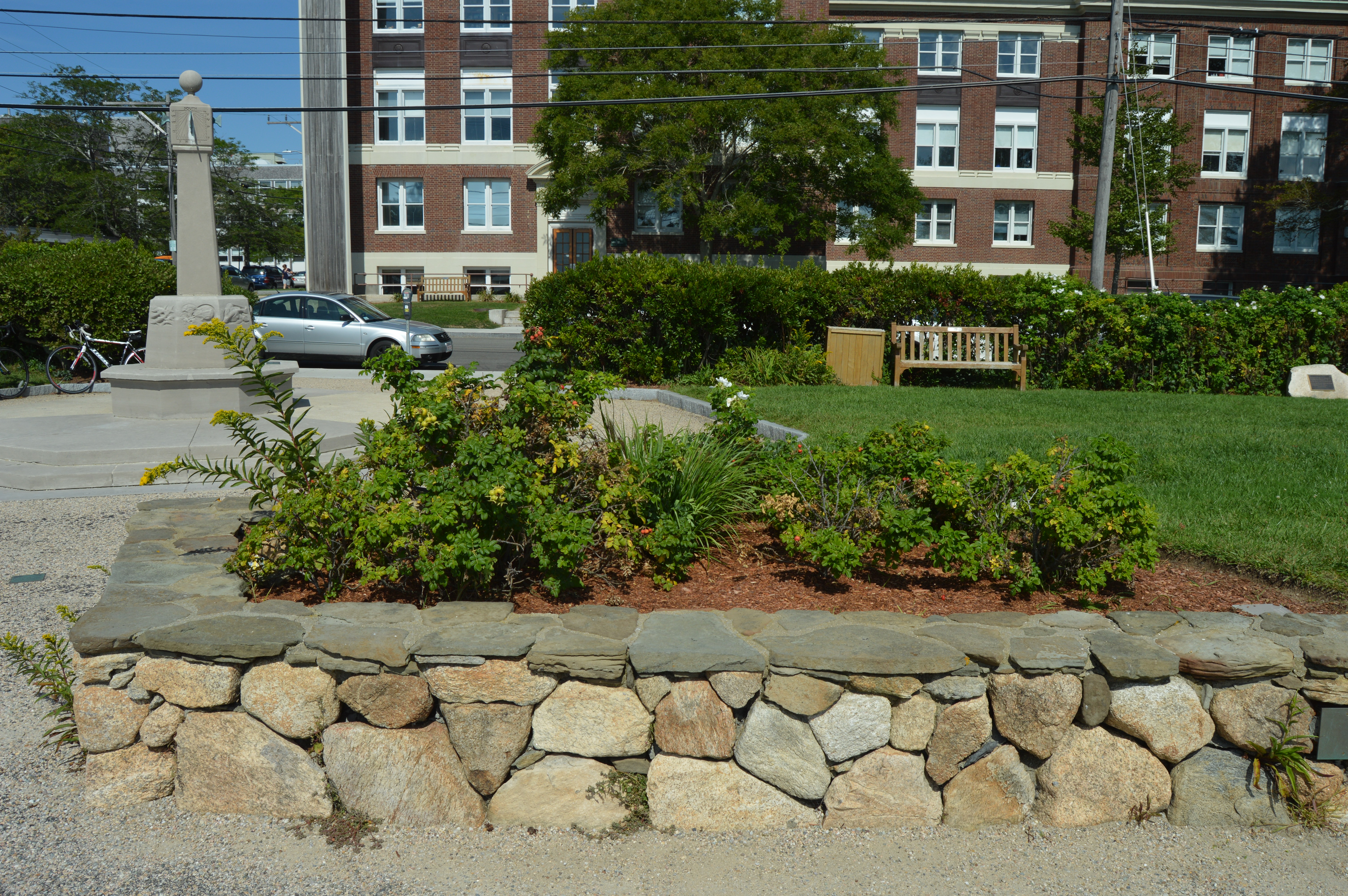
There is also a sun dial statue dedicated to Robert Crane, one of the original financial supporters of the Woods Hole Oceanographic Institution.  The sun dial was constructed so that you could tell what time it is from any direction.  And, yes, it is accurate. A somewhat elaborate explanation is included on the ground in front of the sun dial.

DSC_0887   DSC_0885  DSC_0883 DSC_0882

DSC_0888

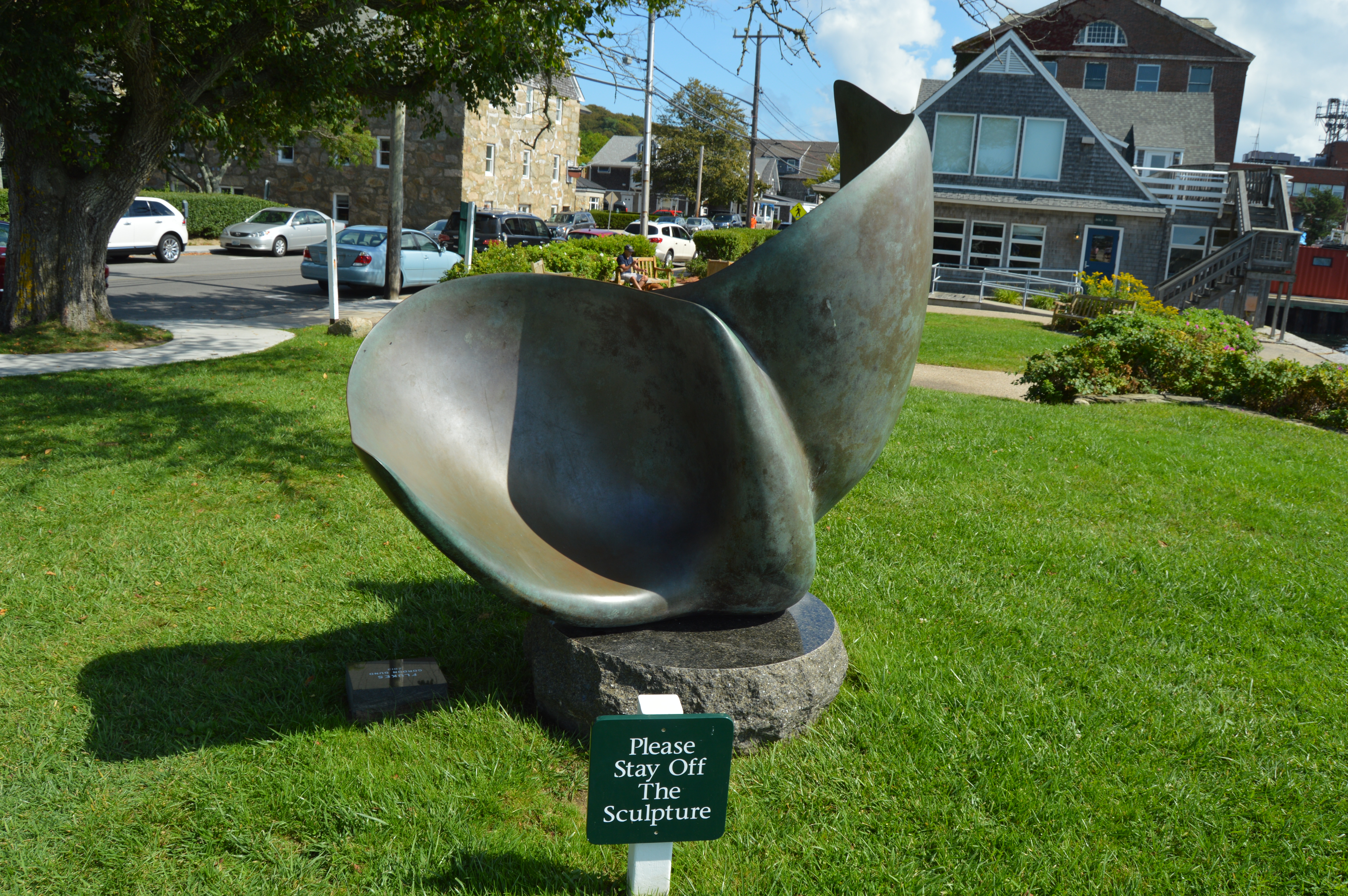
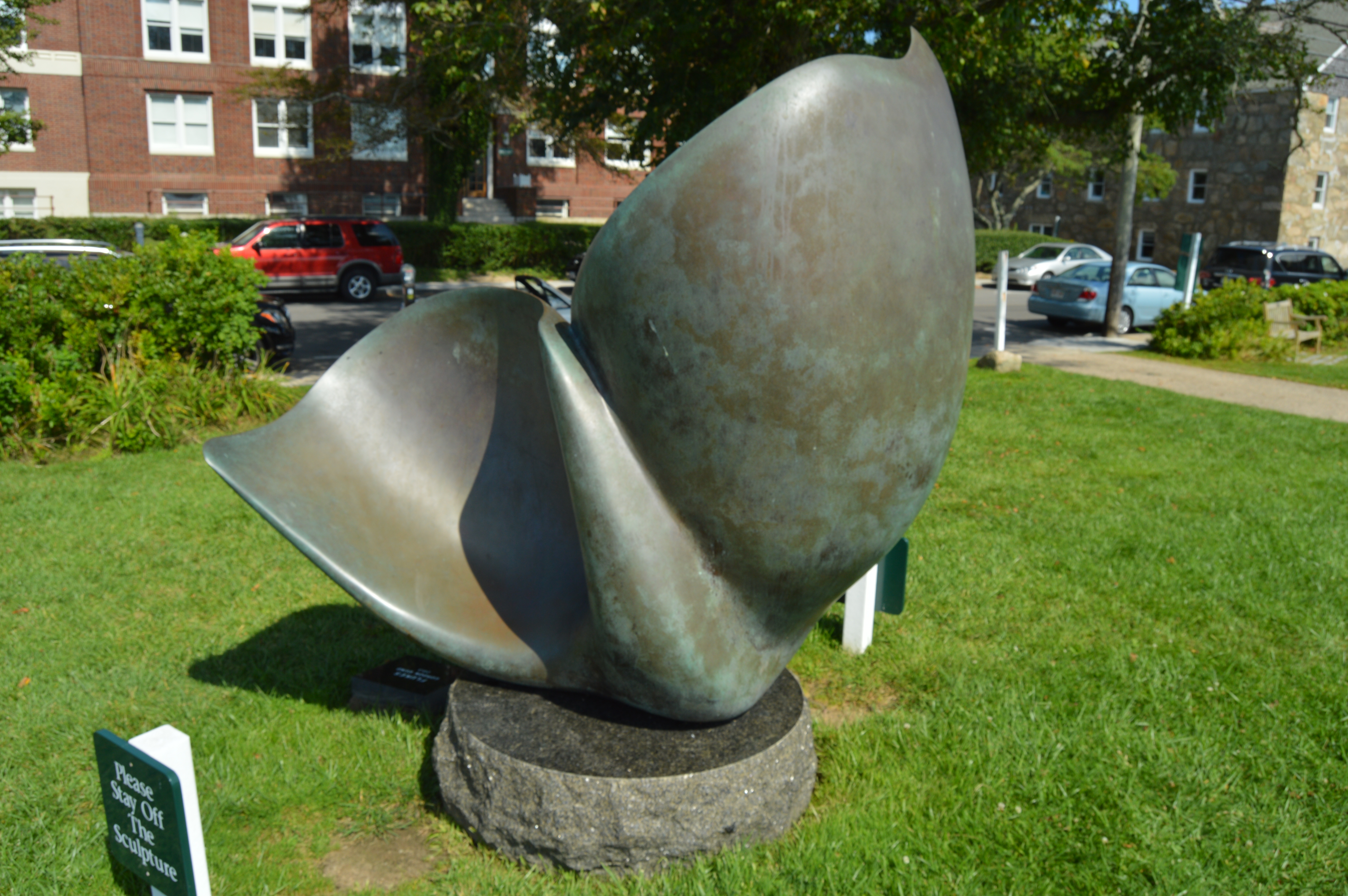
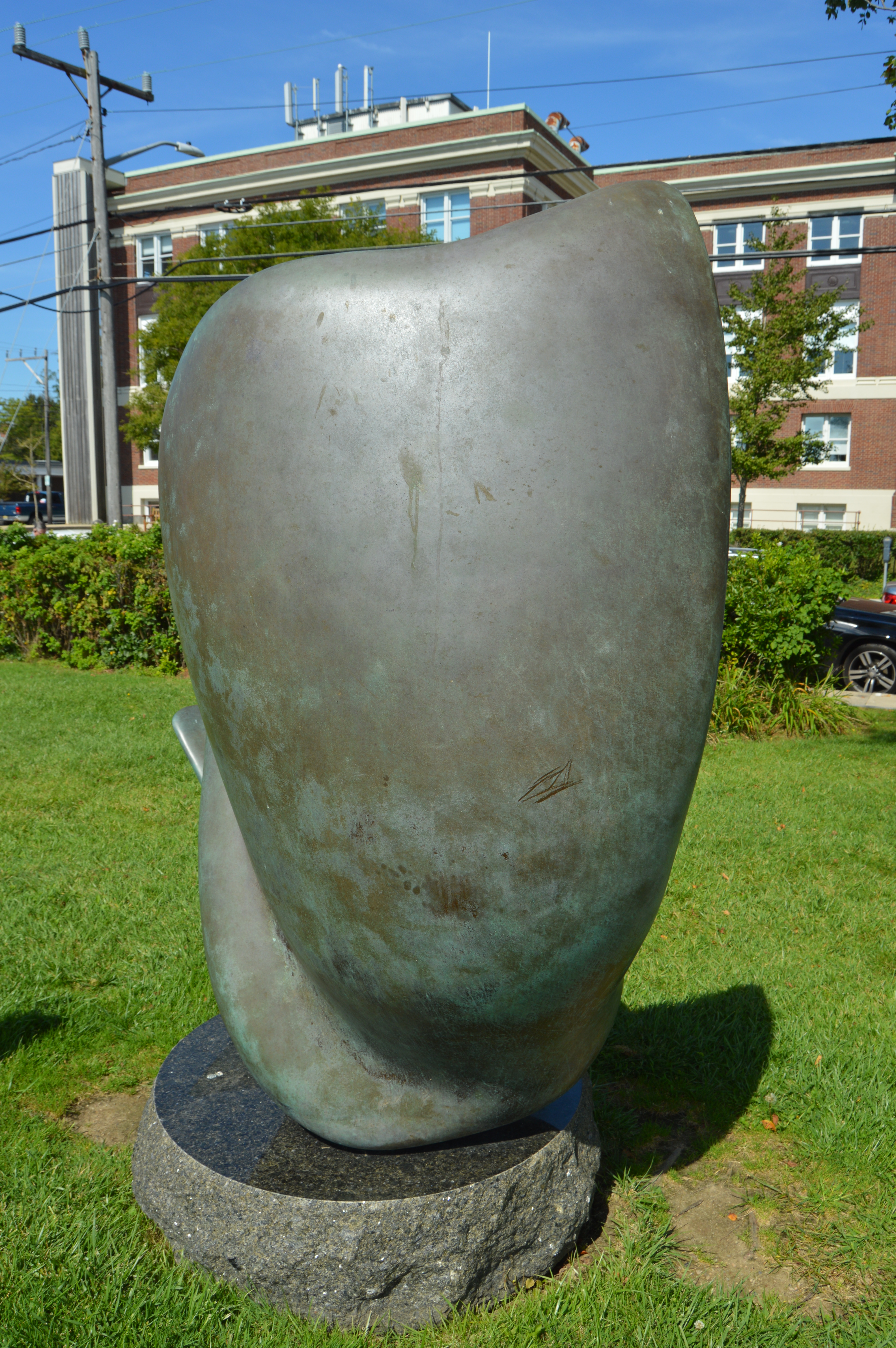
The “Flukes” is a bronze sculpture by Gordon Gund.  Gund, a successful businessman, was inspired to sculpt The Flukes after seeing pilot whales off the coast.  It looks like more of a slide or play thing which explains the sign in front of the sculpture.  I suspect it is not much of a deterrent.

DSC_0901

DSC_0899 DSC_0898 DSC_0897  DSC_0900

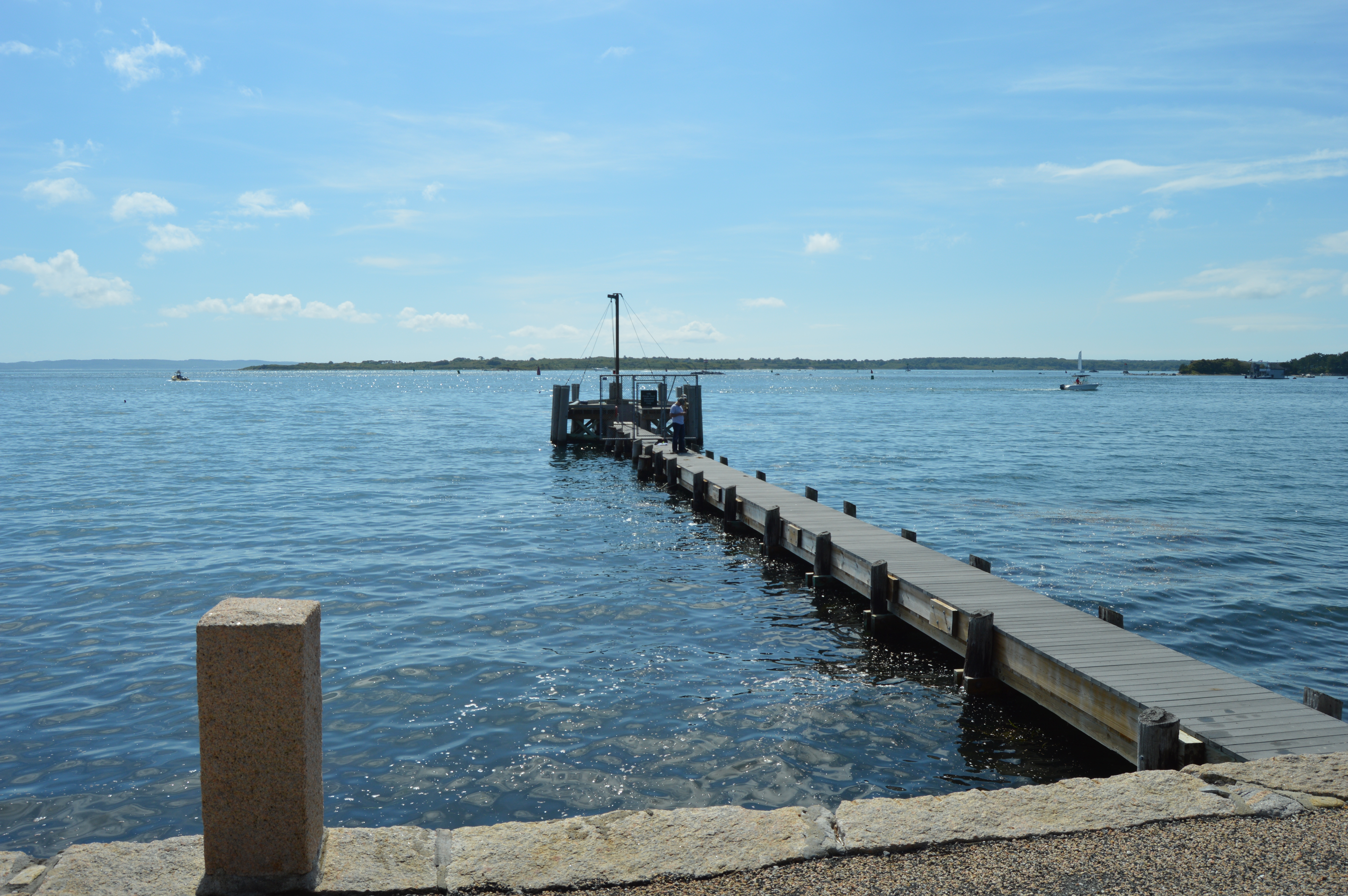
The Waterfront is also the main point of embarkment for the ferry to the islands of Cape Cod, mainly Nantucket and Martha’s Vineyard.

DSC_0893

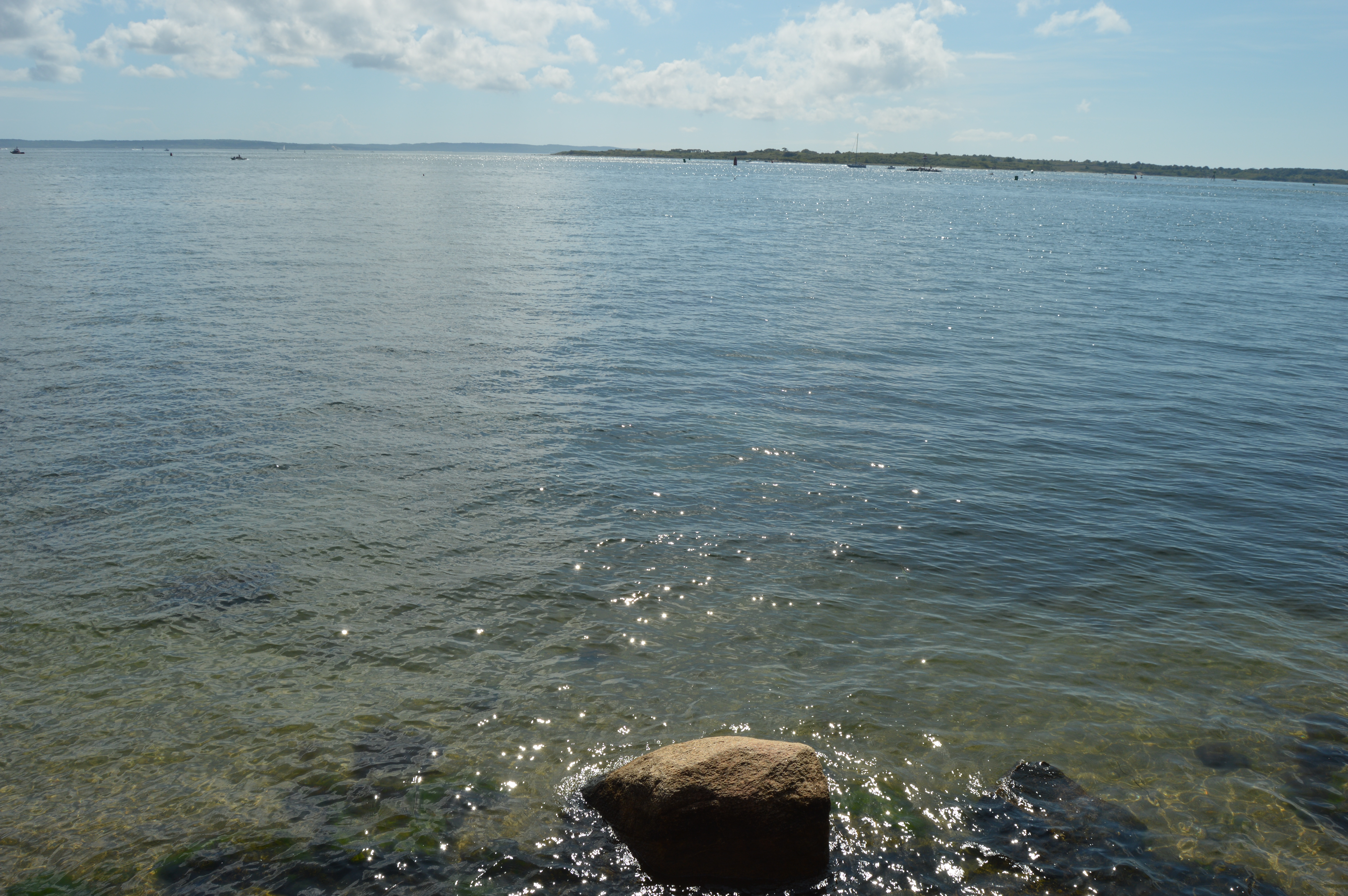
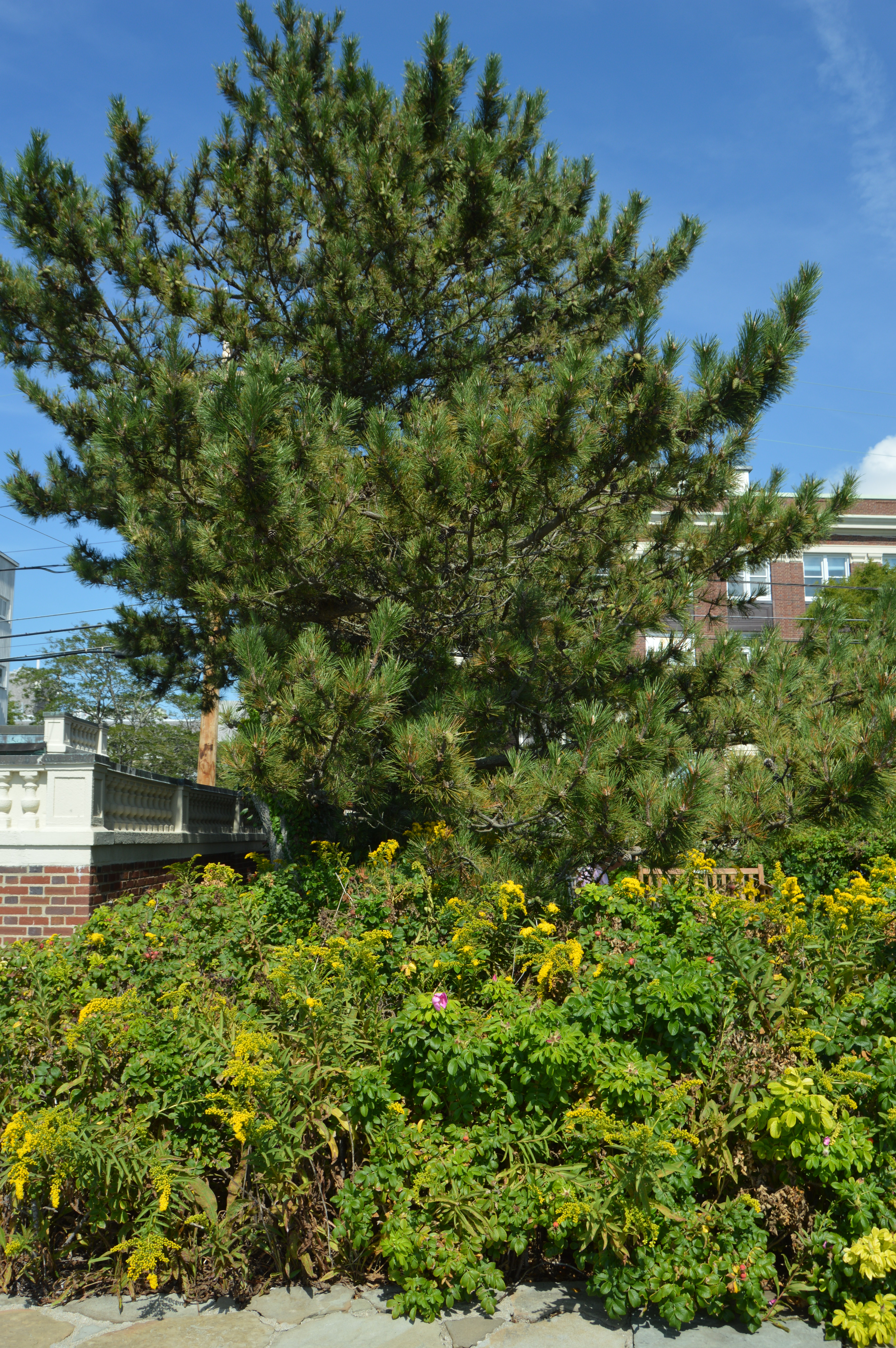
The waterfront also has some pretty views of the water and pretty flowers.

DSC_0871        DSC_0860         DSC_0912     DSC_0906  DSC_0854

DSC_0852 DSC_0878   DSC_0881 DSC_0880

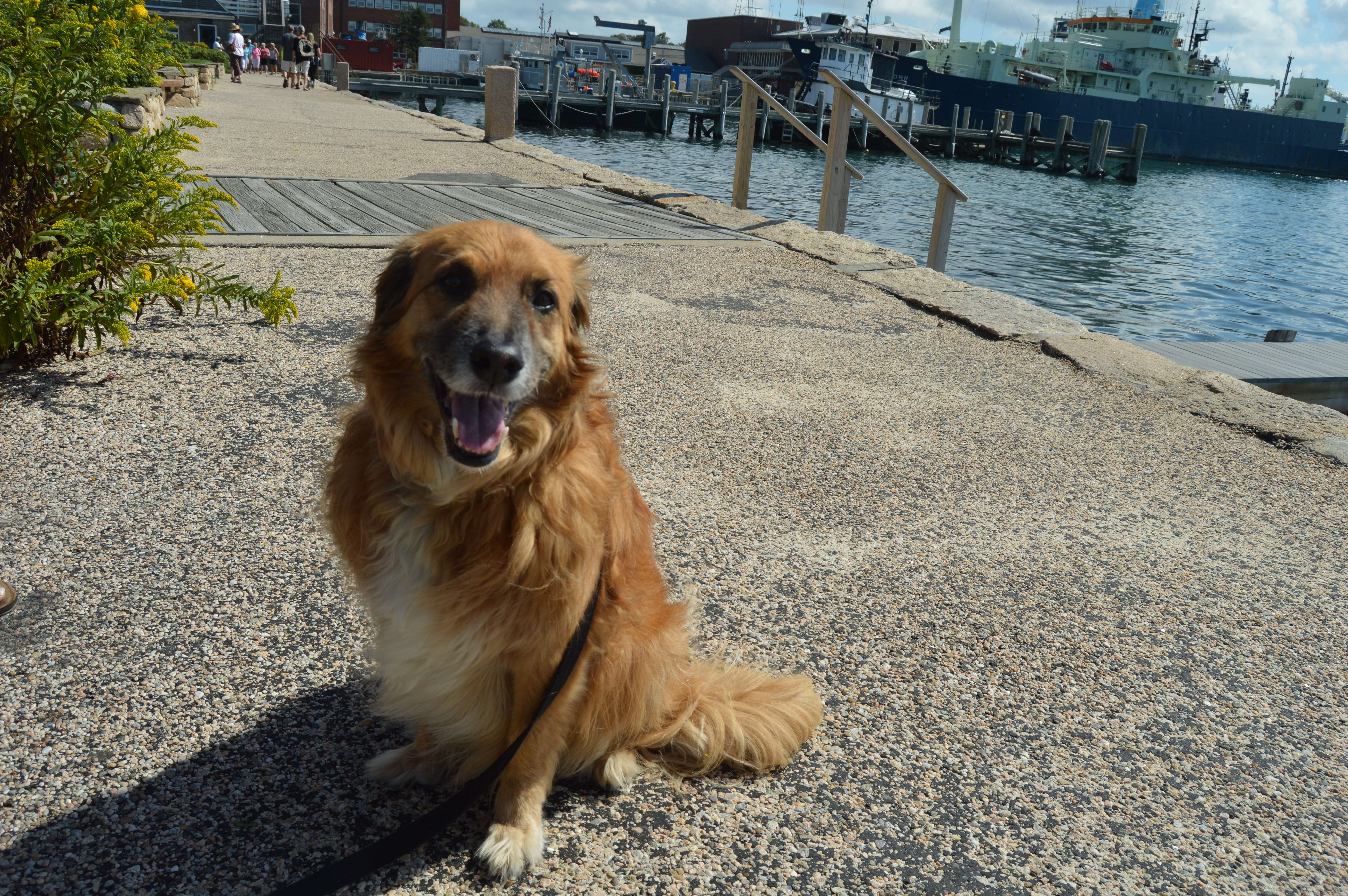
The waterfront park is also known for its friendly visitors.  I met this friendly guy named Charlie as I was leaving.

DSC_0876

Goodbye summer!  See you again in 2016.