Tag Archives: museum

ICA-Part I (Boston, MA)

Date Of Visit: August 25, 2017

Location: 25 Harbor Shore Drive, Boston, MA

Hours:

Tuesday + Wednesday: 10 AM – 5 PM
Thursday + Friday*: 10 AM – 9 PM
*First Friday of every month: 10 AM – 5 PM
Saturday + Sunday: 10 AM – 5 PM

Closed Mondays, except on the following national holidays, when admission is FREE for all: Martin Luther King Jr. Day, Presidents’ Day, Memorial Day, Labor Day, and Columbus Day.

Closed on Patriot’s Day, Independence Day, Thanksgiving, Christmas, and New Year’s Day.

Cost:

General Admission: $15
Seniors: $13
Students: $10
Youth 17 and under: FREE

Admission is FREE for all eve

Parking:There are several parking options that are listed at their ICA parking info

Highlights: creative art displays, info sessions about the art

Tips:

  • parking is very limited in this area.  The museum recommends using public transportation.
  • The museum only has art on the 1st and 4th floors of the building (mostly the 4th floor)

Website: ICA

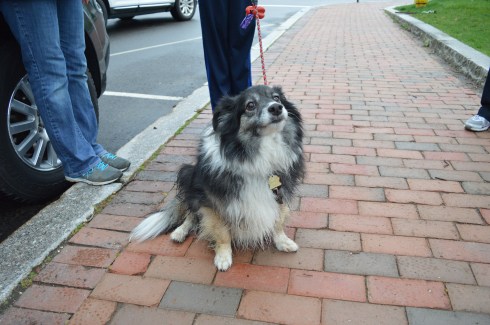
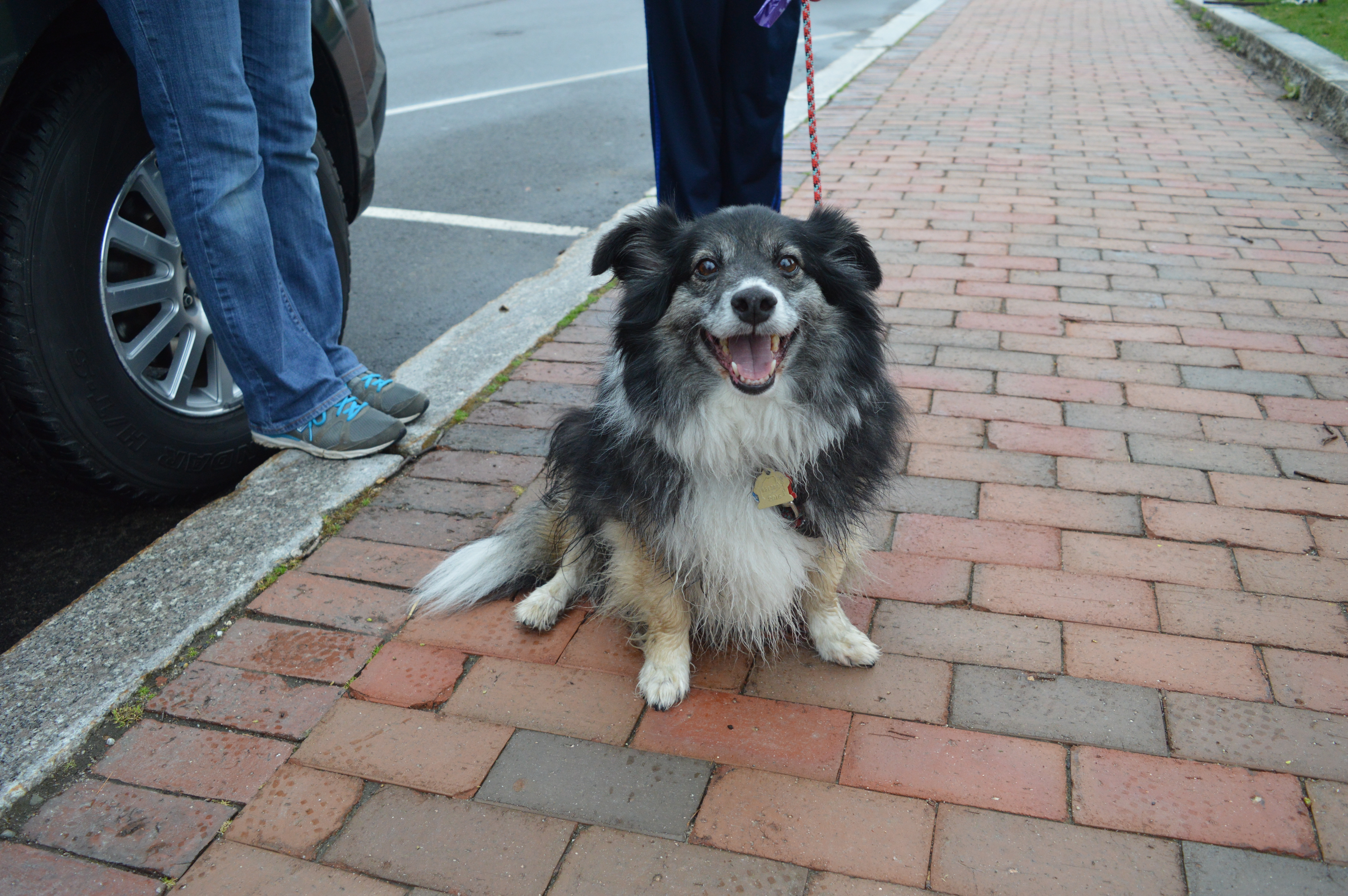
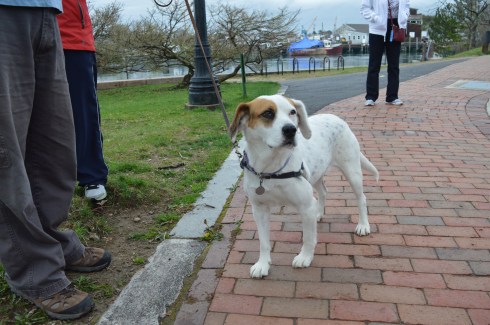
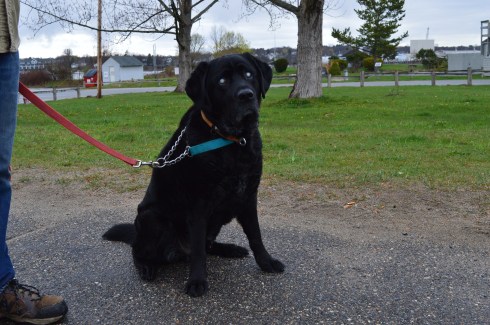
*I had to split this post into two parts, as it was too big for WordPress to save.  Part I of this post will center upon the works of the featured artist Nari Ward.  The second part of this post will focus on some of the other art at the museum.  I have also included half of the number of the cute dogs I photographed during this visit*
 

IMG_9998

Always at the intersection of art and social issues, he ICA (The Institute of Contemporary Art/Boston) recently highlighted the works of an artist who uses his art to make various statements about our social, economic and political climate.  Even if you may not agree with or see his points of view, I am sure you will enjoy his artistic aptitude.

During my visit, Jamaican and American Nari Ward’s work was being featured in his “Sun Splashed” exhibit at the museum.

IMG_0041

Sunsplashed, 2015, is the centerpiece of the art exhibit.  The second work of art is called, Scandal Bag: History Feeds Mistrust.

Nardi, born in 1963 in Jamaica and currently based in New York City, uses everyday items to create works of art that play on the history, economy and social issues surrounding his environment.  He also embraces cultural diversity.

Nari uses wood, metal, iron and other materials with everyday items such as soda bottles.  Nari hits on some hot button issues such as migration, citizenship and economic disparity in his works.

One of the things that struck me about these works of art is the thought and creativity that went behind all of them.

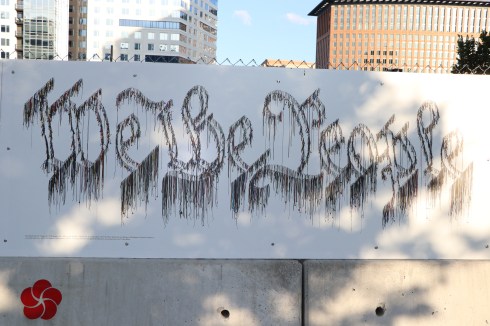
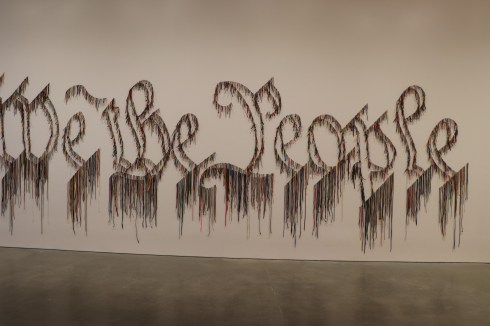
The We The People exhibit by Nari Ward was one of the main works of art at the ICA.  In fact, many of his works of art are being featured
IMG_0008

If you look very closely, you may notice it is not written in ink.  Rather, it is spelled out in artistic dangling shoelaces.  This exhibit was being displayed a block away from the museum.  It surely created a lot of interest and lured in quite a few visitors eager to learn more about Nari’s works of art.


Below are Nari’s works of art that were being displayed with a brief description and explanation of their meaning.  Sadly, his art is no longer there as the exhibit’s last day was September 3.  The first work of art is rather unconventional.  But, it was very interesting.


Jacuzzi Bed by Nari Ward is made of headboards arranged around heating lamps and fans.  The work of art is meant to produce an approximation of the Caribbean breeze.  The name is meant to conjure association with pleasure and comfort.  Nari says the work conveys his sense of nostalgic displacement.


Sky Juice, 1993, is made of an umbrella, iron fence, plastic soda bottles, photographs, Tropical Fantasy soda and sugar.  The soda bottles, hanging from the umbrella, have photos inside of them.  His goal was to create a work of art with disparate things from everyday life to create a work of art everyone can relate to.  “Sky Juice” is the name of a Bahamian drink made from coconut milk and gin (yum).

During my visit, one of the museum guides led an open discussion about the work of art where visitors and she discussed the deeper meaning of the work of art and what the work of art means to them.  She did this several different works of art during my visit.


Mango Tourist, 2011, by Nari, are “snowman-like” sculptures are made of burnt foam spheres that he decorated with mango seeds and small electrical parts.  The small capacitors bear traces of the economic and industrial history of New England and of course the snowmen are a staple of our winters.  The organic mango seeds resonate with his memories of Jamaica.


Happy Smilers: Duty Free Shopping, 1996, by Nari is made of awning, plastic soda bottles, fire hose, a fire escape, salt, sand, household elements, an audio recording, speakers and an aloe vera plant.  Party music and background conversation from the speakers gave the display a feeling of sitting on a fire escape on a hot summer night.

This exhibit was inspired by a candy store not far from where he lives in Harlem, New York.  While the store appeared to be a convenience store, it was really the site of a small scale gambling site.  This gave Nadir the idea of making an exhibit that shows you can’t judge a place, person or thing by outside appearances.

The name Happy Smilers was derived from a band that was led by Nadir’s uncle that entertained tourists in Jamaica in the 1970’s.  The fire escape and discarded furniture wrapped in fire hoses suggest an urban tableau.  The salt and sand, aloe vera plant, speakers and bright yellow walls are drawn from the cultural context of Jamaica.  The salt evokes a common Jamaican expression about the devil not being able to step over salt.  The succulent symbolizes healing.  Lastly, the soundtrack symbolizes one of the artist’s earliest childhood memories of lying in bed at night while he listened to rain fall on his tin roof in Jamaica.


The Naturalization Table is an exhibit based on Nari’s personal experience of becoming a naturalized U.S. citizen, this interactive artwork gives museum visitors a better understanding of that process. During certain days, visitors could add their photo to the display.


Radha Liquorsoul, 2010, is a metal and neon sign made of PVC tube, artificial flowers, shoelaces and shoe tips.  This was part of a work made from out of use liquor store signs that Nari removed from building facades in New York.  Ward was interested in the many uses and impact liquor has in our lives.  Nari also used shoe tips (which Nari considers a a signature material that symbolizes human presence), shoelaces and artificial flowers.  Nari was partly inspired by impromptu street or roadside memorials.


Homeland, Sweet Homeland, 2012, is made of cloth, plastic, megaphones, razor wires, feathers, chains and silver spoons.  The “Miranda Rights” which are listed on this work have appeared as a running theme on many of Nari’s works.  The combination of razor wire, megaphones, leather and gold thread with feathers were meant to evoke a kitschy domestic memento and a heraldic government edict.


Rock, Booked, Scissor, Vice, 2010, is made of book, rock, scissors and vice.  This exhibit was spawned from a mistake.  When Nari first saw the “Black’s Law Dictionary” as a child he thought there were different law dictionaries for white and black people.  Although his brother corrected, his initial thought stuck with him and inspired his work.    To create this work, Nari cinched the dictionary with a vice, pierced it with scissors and weighted it with a stone.  It is meant to symbolize a violent reenactment of the game “rock, paper, scissors.”  It is meant to represent the seemingly arbitrary application of the law experienced by people in many of the communities in America.


Savior, 1996, is made of a shopping cart, plastic garbage bags, cloth, bottles, metal fence, earth, wheel, mirror, chair and clocks.  Nari constructed the sculpture by utilizing the shopping cart, a common item, and using items to bling it up.  In the blue bag you can see clocks.  The sculpture had an accompany video titled, “Pushing Savior.”
IMG_0046

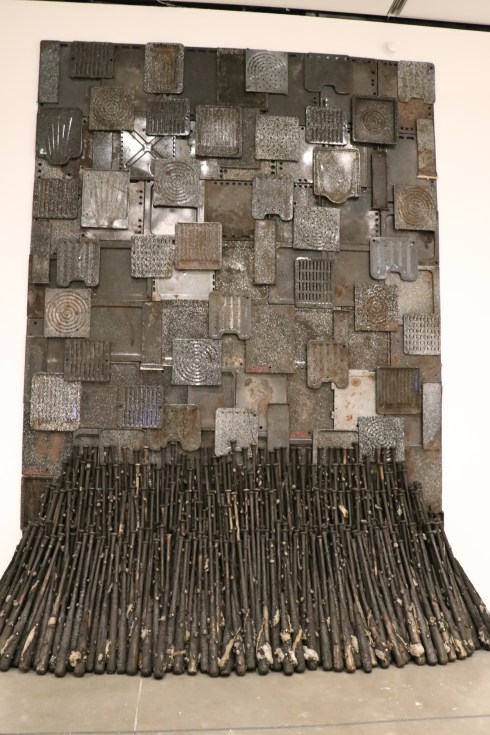
Iron Heavens, 1995, made of metal pans, cotton and wooden bats came from Nari’s observation that the holes dotting the the metal surfaces of certain baking pans look like stars.  Nari collaged pans together on a wall to evoke the night sky.

Nari used baseball bats to form a ground to the heaven above.  The bats were burned, sterilized and had cotton applied to their surfaces.  This was meant to convey violence and healing.  The materials were also used to signify the American South, especially the older south.  The cotton was used to signify slavery as that was the main crop slaves used to pick.  The baseball bats were used to signify the violence many blacks suffered.  The overall arrangement recalls the yard assemblages and sculptural folk traditions of the region.


Glory, 2004, consists of an oil barrel, fluorescent and ultraviolet tubes, computer parts, DVD audio recording, Plexiglas, fan, camera casing elements, paint cans, cement, towels and  rubber roofing membrane.

The tanning bed is made out of old oil barrels.  As this work of art was built one year after the Iraq attack, he used the oil barrels represent the political debates over the connection between oil and patriotism.

The oil barrel also signifies the issues related to identity and race.  While in some cultures, a tan is viewed as a mark of leisure and privilege.  However, “pigmentocracy” can ascribe a higher value to lighter skin tones in some societies.

As you stand by the Glory sculpture, you can hear recordings of voices and people talking in hushed tones.


Afroochase, 2010, made of ink, a found vinyl banner, cowrie shells, Afro picks and felt weatherstripping is built from a Chase Bank banner that he found mixed with various materials each of which have a symbolic meaning.

The cowrie shell has several possible meanings.  The shell has been used as a form of currency,  It is also used in divination ceremonies in African and North African and South African religious contexts.

Afro picks have been used as a symbol of black cultural identity and the shapes of the particular picks (the raised fist of the Black Power movement) refers to black nationalism and resistance.
IMG_0061

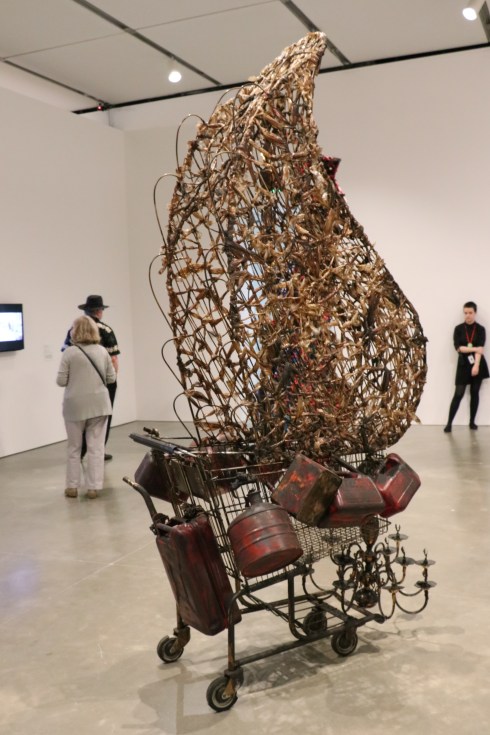
Crusader, 2006, is made of a shopping cart, chandelier, trophy elements, metals, plastic bags and plastic containers.

Crusader has been described as  a radiant poetic work that mixes the personal and political.  Nari used comedy to make a political statement about his feelings concerning the second Gulf War.  Oil plays a central theme in many of his works, evident by the oil canisters in this work.

IMG_0067

Beat Box, made of an old New York City payphone, a drum and a fire extinguisher was made as a way of showing the different ways people have communicated.  The old (the drums which have been used as nonverbal communication in some traditions ) with the modern (the payphone).  After Ward had modified the pay phone he put it back outside where it had originally came from.  Imagine the looks on the people’s faces when they tried to make phone calls!


I noticed how Nari likes to incorporate audio and videos into his exhibit.  This is only one example of this.  Those chairs look very comfortable!

IMG_0062

Den, 1999, made of wood, chain-link fence, metal pole, tacks, rug and wooden furniture legs

IMG_0063

Chrysalis, 2010, made of mirror, rope, foam, and a found paper bag

IMG_0065

Vertical Hold, 1996, made of yarn and bottles. This sculpture was made from old, used glass bottles Nari found at a dump site and some bottles he found while he was in residence at a Shaker community in Sabbathday Lake, Maine.  He wove the bottles together with string thus creating a web that he described as a quilt.  This work was inspired by bottle trees, a traditional African, Caribbean and Southern black sculptural form that was believed to protect against evil spirits.

IMG_0116

Canned Smiles, 2013, explores the intersection of art history and identity.  Nari was influenced by another artist, Piero Manzini.  Piero created Merda d’artista (Artist’s Shit) that consisted of 90 small cans labeled with the title that he sold.  The art exhibit by Piero was a sarcastic way of saying that anything that belongs to an artist is worth value.  It also was a commentary about how not all art may have merit.

Ward’s art display aims to question people’s perceived stereotypes and the reality of constructed values.  Nari used the Black Smiles idea to play on the minstrel shows which used to be popular in America during the 19th century.  The work inspires us to ask whether the notion of a smile trapped in a can is any more or less strange than the ideas we construct around identity.

During my visit, the ere was a social gathering on the desk of the museum.  Music, food and refreshments were being served and there were a number of therapy dogs at the event.

A “cuddle zone” was created by visual artist J.R. Uretsky.  The “Cuddle Zone” featured nine therapy dogs from Dog B.O.N.E.S. There was also quilted works for people to use as comfort aids.  You will also some of the dogs wore or sat on these quilted comfort aids.

IMG_0138

Hey, we all can use this kind of therapy!

In fact, the dogs were so popular and in such high demand, I was only able to photograph two of these special dogs.

IMG_0136

Spider is a 5 year old chihuahua.

IMG_0132

Ruby Pearl is a 4 year old pitbull.

Please connect with me on Facebook to view videos, links, articles, photos and other content not included on my blog.  Thank you!


American Clock And Watch Museum (Bristol, CT)

Date Of Visit: July 1, 2017

Location: 199 Maple St, Bristol, CT

Hours: April 1st through Nov 30th

10 a.m. – 5 p.m.

Closed Easter and Thanksgiving. Winter months by chance or by appointment.

Cost:

Adults $5.00
Seniors/AAA $4.00
Children (8-15) $2.00
Under 8 Free
Group tours available by appointment.

Parking: There is room for about 15 to 20 cars in the parking lot

Handicapped Accessible: Yes

Highlights: clocks, watches and other time measuring devices from various eras and places, outdoor garden with a sundial

IMG_8055

Storing more than 5,500 clocks, watches and other timepieces, the American Clock And Watch Museum has one of the largest collections of watches and clocks in the country.  They generally switch out their clocks seasonally which makes it a great place to visit continually throughout the year.  I had been clocking the place for a while but it was my first time visiting.

While their total collection of clocks and watches numbers over 5,500, thy only display about 1,500 at a time.  They switch some of the clocks and watches every few months.  I’m sure they do it in a very timely manner.

The collection of clocks range from the beautiful to the bizarre.  I wonder how many times people have stared at these clocks and watches.

The biggest current attraction at the museum now is the classic kitty kat clock.

I could spend all day there, especially in the room with all of the grandfather clocks (many of which are from the Bristol, CT area)

Each clock and timepiece has a story behind.  They all have a card explaining when and where they were made and some interesting background information about the time piece.  I found the information and history of the timepieces to be just as interesting as the clocks themselves.

For instance, this clock was called “the grip” because the clock’s movement was so small it could be fitted into a large pocket watch case.  As is the case with many of the timepieces there, it was made in Connecticut (Forestville to be exact).

IMG_7774

The clock below is a tribute to baseball.  If you look closely at the clock you can see the baseball players and coach in the design around the face of the clock.  This clock was sold in 1875 by the American Clock Company in New York, NY.  The movement was made Noah Pomeroy, of course, from Bristol, CT.

IMG_7745

“The Philosopher” is a brass mantel clock with an 8-day movement made by the Ansonia Clock Company in Brooklyn, NY in 1855.  This is another interesting bit of information I learned at the museum.  Some clocks, especially the older clocks in their collection, had to be rewound.  Generally, clocks had either one day or eight day movement.  Clocks with a one day movement, obviously, had to be rewound every day.  However, saying a clock had a 8 day movement is a bit of a misnomer as it would have to be rewound every week (not every 8 days).

IMG_7754

I know.  Who knew a clock and watch museum could be so interesting!?

The museum also has old pocket watches, wrist watches and stop watches on display.

As you can see by the photos, Ingersoll played a major part in the watch making business, particularly pocket watches.  Keeping with their Connecticut ties, Ingersoll watches were originally supplied by the Waterbury (CT) Clock Company.

There are also several displays of watch and clock related items and historical exhibits.

This particular exhibit shows all of the different parts in watches and clocks.

IMG_7826

These educational displays showed how watches were made and the evolution of timekeeping.

The biggest clock in the museum hangs from the first floor to the bottom (or basement) floor.  It is a Tower Clock built by Seth Thomas in 1915.  It still keeps time and it is wound every 8 days.

One of the best parts of the museum is not even in the museum.  Attached to the clock and watch museum, the sun dial garden typically has a sun dial (it was not installed in the garden during my visit), flowers and a bench to take a break from all of the clocks and enjoy the day. if you need to take a timeout.  It really is a great place to pass the time.

Today’s featured link is Rena Tobey’s  blog.

Rena is a creator, curator and teacher among her many talents.  She made a visit to the American Clock And Watch Musseum in April of 2015. As I mentioned before, they do often switch out their clock and watch collection.  So, you will see some different clocks and watched that I did not photograph (although I did see quite a few that we both photographed).


The Amazing World Of Dr. Seuss (Springfield, MA)

Date Of Visit: July 3, 2017

Location: 21 Edwards Street, Springfield, MA (2 hours west of Springfield, MA)

Hours:

Monday–Saturday: 10 am–5 pm
Sunday:
 11 am–5 pm

Holidays: Closed New Year’s Day, Easter, Memorial Day, Independence Day, Labor Day, Thanksgiving, Christmas Eve and Christmas Day.

Cost: One ticket gives you access to all 5 of the museum buildings (including the Dr. Seuss Museum).  You cannot buy one ticket for just one building.  Since it is such a popular attraction, tickets for the Dr. Seuss Museum are times for one hour and only 200 people during each hour time block are admitted at one time.  You can purchase advance tickets on their website (see below)

Adults: $25
Seniors (60+): $16.50
Youth 3–17: $13
Children Under 3: Free
Students: $16.50

Springfield Residents (with valid ID): Free – youth included

Parking: There is parking for about 50 cars in the main parking lot in front of the Springfield Museum and about 50 more in the lot across the street

Handicapped Accessible: Yes, there are elevators in the museum.

Highlights: art, statues and other items related to Dr. Seuss

Website: The Amazing World Of Dr. Seuss Museum

IMG_8324

Oh the places you’ll go and the things you will see at the Amazing World Of Dr. Seuss Museum in Springfield, MA.  The museum, which opened June 3 of this year, is like walking into a Dr. Seuss book.

The museum is a tribute to Theodor Seuss Geisel, more commonly known as Dr. Seuss, who was a Springfield, MA native.

From the moment you enter the museum, you are bombarded with vibrant colors, familiar characters and a sweeping sense of nostalgia.


The Amazing World Of Dr. Seuss is a two floors with a basement.  Each room on each floor has a theme. Fairfield St, Readingville and Oh The Places You’ll Go are a few of the rooms on the first floor.  The first floor of the museum is dedicated to many of Dr. Seuss’ characters and his books.  Children, and the occasional adult, get the opportunity to play games based on his works.


The first floor also has a section dedicated to Young Ted in Springfield which celebrates his time in Springfield, MA.


The basement floor has more Dr. Seuss memorabilia and artwork as well as an activity area where visitors can make their own Dr. Seuss works of art.


The second floor mostly has letters, mementos and photos from Dr. Seuss’ lifetime.  There must be hundreds of writings, cards, works of art and other memorabilia from his early days and from others writing to him  It’s very interesting seeing some of his early work before he became famous and hit his stride as an artist.


There is also a display that shows the process of how they make the statues located at the Dr. Seuss National Memorial Garden which is located just outside of the building on the museum’s property.


There is also a Dr. Seuss statue I missed when I first first photographed the statues at the museum.  This statue is tucked away to the side of the museum.

IMG_8671

Today’s Nomad link is Paper Clippings.  Paper Clippings is Denise Ortakale’s WordPress blog.  She recently had some of her work displayed at the Springfield (MA) Museum as part at the Cats In Hats exhibit.  I wanted to photograph this exhibit.  But, since it was the work of other artists and not their own exhibit, the museum did not permit people to photograph the exhibit.  I am glad that Denise has posted her work so I can share it with everyone else.


Candlelight Stroll at Strawbery Banke (Portsmouth, NH)


Dates Of Event: December 3-18 (weekends only), photos taken December 10, 2016

Location: Strawbery Banke Museum (14 Hancock Street
Portsmouth, NH)

Hours: Saturdays, 5-9 pm. Sundays, 4-8 pm

Cost: Tickets are $25/adults, $12.50/children (ages 5-17), and $60/family (covers 2 adults + 2 children age 5-17). Children under 5, free. Active duty military and their families, and veterans, free. Group and corporate rates are available

Parking: There are about 100 parking spots in the lot which fill up quickly.  The besgt bet is to park at one of the lots nearby (there are a couple on Court St within walking distance) or ake the Vintage Christmas Trolley

Handicapped Accessible: The main trail is but some of the houses are not handicapped accessible as they do not have ramps

Dog Friendly: No

Highlights: living history museum, ice skating rink, horse drawn carriage rides, musical entertainment, family friendly

Web Site: Strawbery Banke Candlelight Stroll

dsc_0645

Christmas in New England was once very different than the Christmas we celebrate these days.  The actors at the living history museum do their best to recreate  the life of Christmas during the 18th, 19th and early 20th centuries.

The festivites begin with a candlelight stroll in the Portsmouth neighbor.  We missed the candlelight stroll because we photographed the Nubble Lighthouse.

The houses are decorated with holiday decor and the actors explain what life was liked in colonial and post colonial America.  I love some of the little decorations that gave the museum a Christmassy feel.  It’s funny how a well place wreath or a colorful decoration can brighten up a room or doorway.

One of my favorite buildings is (of course) the old time candy shoope.  Candies, snacks and foods of all kinds are stocked on the shelves and you can even get some recipes for some of theese foods.

Another one of my favorite buildings was the lantern shop.  One of the lantern makers was at work when we visited the shoppe.  And, yes, all of the lanterns photographed were hand made and for sale.

In one of the houses, Mrs. Shapiro prepared a Hanukah celebration her 1919 Russian Jewish kitchen.

There was also a horse drawn carriage.

There is also musical entertainment at Strawbery Banke.  Carolers, a live band an a pianist are at Strawberry Banke.  If you’re lucky, they might even be serving hot apple cider like they were during our visit.

There is also an ice skating rink for skaters of all skill levels to enjoy.  The best part of the rink is when the living actors skate together (see video below).  The less experienced skaters can use “walkers” to help keep them on their feet which you may see in the video below.  A firepit is nearby to help keep the visitors warm.

Although dogs are not allowed at Starwbery Banke (service dogs may be an exception), we did see Meave, a 2 year old mixed breed dog.

dsc_0634

Below is a video ofsome of the skilled skaters at the living musuem.


Magic Wings (South Deerfield, MA)

Date Visited: May 29, 2016

Location: 281 Greenfield Rd, South Deerfield, MA 413-665-2805

Hours: presently open 9 a.m. – 6 p.m.

Fall, Winter and Spring hours: 9 a.m. – 5 p.m.

Closed Thanksgiving and Christmas

Cost:

Adults: $14.00

Seniors (age 62 and over): $12.00
Seniors pay $10.50 on Wednesdays.

Children (age 3 through 17): $10.00
Also for students up through age 22
with valid student ID.

Children under age 3: Free

Parking:  There are about 50 parking spaces.

Size: 8,000 square feet

Time To Allot For Visit: 1 to 2 hours

Dog Friendly: No

Highlights:butterflies, birds, reptiles and other animals, cafe

DSC_0155

Home to nearly 4,000 species of exotic and domestic butterflies, Magic Wings Butterfly Conservatory & Gardens touts itself as a center for butterfly-related education,
recreation, entertainment and gardening needs.  But, there is so much more than just butterflies there.

By far, the highlight of Magic Wings are the butterflies.  The range in colors and shapes of the butterflies is amazing.

This slideshow requires JavaScript.

Sometimes you will have a few butterflies land on you.  These “hitch hikers” are often attracted to your scent.

The layout of the facility is very decorative.  Designs of butterflies, benches, pretty flowers, a fish pond, walking bridge and even a gazebo are scattered throughout the lobby and butterfly museum.

Meet Akbar, a Senegal parrot, the resident parrot at Magic Wings.

DSC_0327

Akbar is not the only animal in the conservatory.  Turtles and birds also roam the conservatory.  In addition to the animals pictured below, there is also a room with reptiles, chicks and other animals but I don’t like seeing animals in cages, tanks or limited in those ways.  All of the animals I photographed for this post had some ability to roam.

Dogs aren’t allowed at Magic Wings, for obvious reason (although most dogs would love to chase the butterflies).  So, here are a few other pets for your viewing pleasure.

DSC_0417

DSC_0447

DSC_0303


Coggeshall Farm Museum (Bristol, RI)

Date Visited: June 18, 2016

Location: 1 Colt Drive, Bristol, Rhode Island (about half an hour from Providence and 1 hour from Boston, MA)  (401) 253-9062

Hours: presently open Tue-Sun 10 a.m. to 4 p.m.

December 15 – April 15
Open Weekends, 10 am to 4 pm
Open February 16 – 21, 2016 for February vacation

April 15 – December 15
Open Tuesday through Sunday, 10 am to 4 pm.

Closed Thanksgiving, Christmas and New Year’s Day.

Cost:

Weekdays

Adults: $5
Seniors: $3
Children (3–12): $3
Children under 3: Free

Weekends

Adults: $7
Seniors: $5
Children (3–12): $5
Children under 3: Free

You can also purchase a membership for unlimited visits, free access to special events and discounts at their gift shop.  If you plan on going more than once or twice a year and especially if you go with your family, the membership is probably the best rate:


Individual membership: $25

Couples: $35

Family: $50

Parking:  There is a space for about 4 or 5 cars across from Coggeshall Farm.  You can also park at Colt State Park, which is adjacent to the farm but you may have to pay a fee to enter the park.

Size: 48 acres

Time To Allot For Visit: About An Hour

Dog Friendly: No (except for guide dogs)

Highlights: living museum, character actors, farm animals, historic style homes

Coggeshall Farm Museum

DSC_0467


You often find the most wonderful places in the most unexpected places.  On an otherwise nondescript trail at Colt State Park used for cycling and running, lies a farm frozen in time.

Established in 1973, the Coggeshall Museum Farm features interpreters and authentic reenactments of farm life in the year 1799.  Every last detail from the tools they use to the bedding (mostly hay) is authentic to the time it represents.

I loved the houses and workshops at Coggeshall.  The homes and interiors were definitely the highlight of the trip for me.  The rooms were modest and fairly bare (and I thought my room was small).

This slideshow requires JavaScript.

Even the papers and bills in the houses are accurate to those days.  They don’t accept them as legal tender though, in case you were wondering.

Coggeshall Farm Museum also has a variety of animals.  When I came to visit there were 2 steer, 11 sheep and several chickens, turkeys and other fowl.  I also got to see some newly hatched chicks.

When I asked how long they keep the animals there I was told they usually live 6 to 8 years and then they have a “retirement plan.”  Yes, everything gets used at the farm.

This slideshow requires JavaScript.

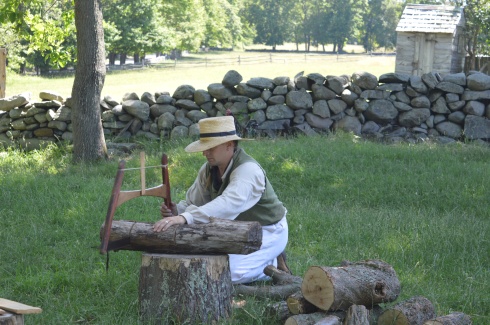
There were several character actors working during my visit.  This gentleman was cutting wood to store (it’s never too early to get ready for long, chilly winter nights).  When I asked how long it would take to cut all the wood he said, “util it is done”.  Where has that work ethic gone?

DSC_0380DSC_0372

The grounds are well kept and very pretty.  They also have a large grazing area for the animals.

Then there was Moe – the resident cat and pest control manager.  He was very friendly and playful as you can see.  Believe it or not, the chipmunk he’s hunting and carrying so gently escaped only a little worse for the wear.

This slideshow requires JavaScript.

Coggeshall Farm also lets the patrons partake in some tasks (such as cutting wood) as long as it is supervised and they  have many events throughout the year such as Arts On The Farm and Farm Camp.  Check their website for more details.


Strawbery Banke Museum (Portsmouth, NH)

Date Visited: April 23, 2016

Location: 14 Hancock St, Portsmouth, New Hampshire

Cost: $20 for adults, $10 for youths (5-17), kids under 5 get in for free according to the May – October price list (these prices may vary depending on the season because it costs us $20 for two adult tickets when I went in April)

Hours: Open 365 days a year from 10:00 a.m. to 5 p.m.

Parking: Free parking is available but it does fill up fast.  There is also parking available throughout the city.  There is free parking at Four Tree Island a block away on Mechanic Street and limited off street parking is available.  Just make sure to pay your meters and not overstay your parking limit as parking restrictions are strictly enforced.

Strawberry Banke

Strawbery Banke is a 12 acre outdoor history museum.  The houses are constructed in the same style and out of the same materials of the buildings of the 17th to mid 20th century.

This slideshow requires JavaScript.

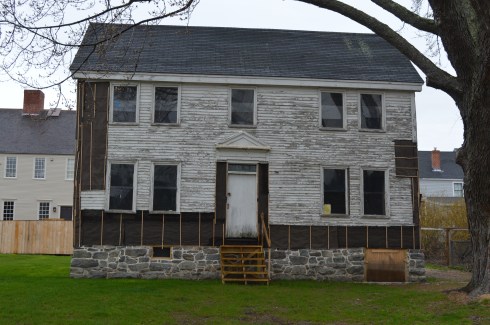
This house, which was being worked on, looked creepy

DSC_0915

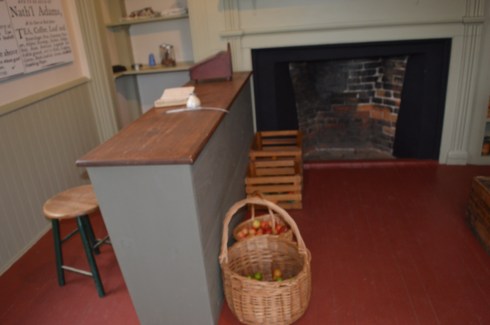
The inside of the homes are designed to be appropriate to the time the house was built or designed.  This is the grocery part of the building.  This is an example of how Strawberry Banke is a must-see for anyone interested in early New England history

DSC_0914

They have set up the grounds and museum to replicate the days of Colonial and post Colonial Portsmouth, once known as “Puddle Duck”.  More specifically, Strawbery Banke tells the stories of the many generations who settled in this Portsmouth, New Hampshire “Puddle Dock” community from the late 17th to the mid-20th century. The museum tells the stories of the people and the area of those times.  They hold events and themed presentations during different parts of the year.

When we went to Strawbery Banke it was the unveiling of the Spring Barnyard Baby Animals event.  It will be running through Sunday, May 1.  The New Hampshire SPCA is present at the vent to ensure all the animals are treated humanely and are as comfortable as possible.  All of the animals came from places in New England.

There was a wide variety of animals such as turkeys

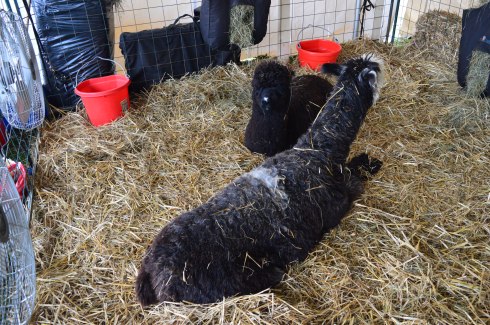
alpacas from Elf-Paca Meadows, Rochester NH

DSC_0939DSC_0938

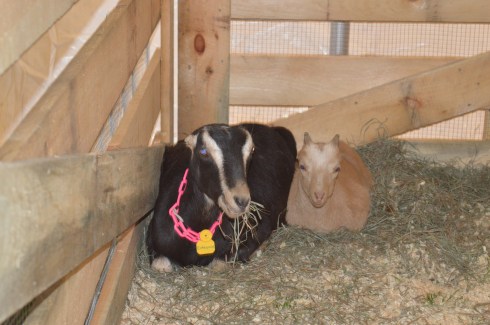
Mommy and baby Nigerian goats from Tiny Hill Farm, Milton Mills NH

DSC_0945DSC_0949

goats

DSC_0958DSC_0964

Jacob Goats from Hogwash Farm, Norwich VT.

DSC_0974

baby chicks from Yellow House Farm in Barrington NH.   You may notice some of the chicks are just lying face down.  They are just sleeping.  They tend to fall down and sleep right where they are when they get tired and the other chicks will often fall on top of them because they tend to cuddle or pile onto one another for safety and comfort.

baby ducks also from Yellow House Farm in Barrington NH.

Pigs and their babies from Double- H Pig Ranch in Berwick ME and Bittersweet Farm, Lyndeborough NH.

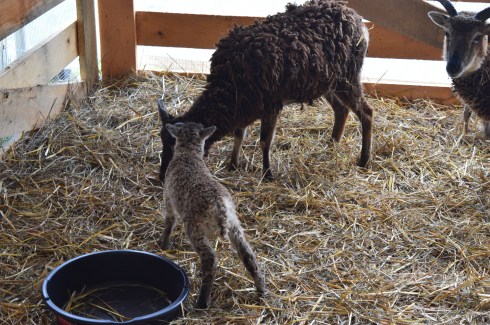
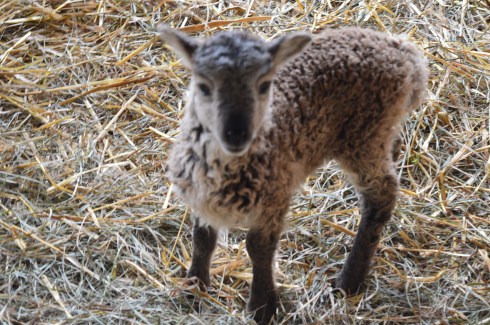
Soay sheep from New England Heritage Farm, Sandown, NH

DSC_1023DSC_1014DSC_0004DSC_1019

Guinea pigs and a rabbit.  This rabbit’s name is Bubbles.

and a pony named Polly.

DSC_0039DSC_0041

One thing I noticed in almost all of the photos is how the mommies, or parents, seem to be protecting or are near their babies.

The holidays are celebrated at Strawberry Banke and I’ll be back in the winter when they have an ice skating rink on the premises and decorate for the holidays.  It must be very festive!

Although dogs are not allowed at the museum saw a lot of dogs on our way to the museum.

DSC_0885

I saw Cody outside of the Breaking New Grounds coffee shop in Portsmouth Center.  If you’re in the area, go there!  Cody is a one year old Great Pyrenees and Husky rescue dog with one one blue eye and one brown eye.

DSC_0064DSC_0066DSC_0065

Chlodie is 9 months old.  Her name is derived from the Irish name “Chlodagh”.  She was very happy to be in Portsmouth!

DSC_0068DSC_0069

Bailey is an English Point Setter.  Love the marking over the right eye.

DSC_0887DSC_0886

Merle is a 9 year old rescue dog.


Springfield Museums (Springfield, MA)

Date visited: January 16, 2016

Hours: Tue-Sat 10-5, Sun 11-5, closed Mon

Price:


Adults: $18
Seniors: $12
Youth 3–17: $9.50
Children Under 2: Free
Students: $12

Springfield Residents (with valid ID): Free – youth included

There is a parking lot by the science museum entrance with about 50 or so spaces.  There is an overflow parking lot across the street.  Parking is free.

DSC_0381

The museums in Springfield, MA, are not your usual museums.  For one, there are four museums, rather than one.  Secondly, on the grounds of one of the museums is another perhaps bigger attraction, the Dr. Suess National Memorial Garden.

There are four museums are the Springfield Museums.  I spent most of the time at the  Springfield Science Museum

DSC_0622

and the Lyman & Merrie Wood Museum of Springfield History

DSC_0595

The two art and sculpture museums do not allow photography.

The Springfield Science Museum is bigger than it appears on the outside.  It is three floors (a first and second floor with a lower level).  The exhibits range from live animals (mostly fish and other smaller animals such as turtles) to dinosaur bones and artifacts.

There was so much to absorb in those few levels.  But, my two favorite parts of this particular museum had to be the Tyrannosaurus Rex and the demonstration put on by the staff in which the patrons, the children who were visiting, got to find out how fortune teller fish work.

DSC_0554

From the moment you enter the science museum your senses are attracted to all of the interesting items in the main entrance.  The main themes of the museum are the products of the Springfield, MA, area such as Dr. Seuss and Indian Motorcycles which were manufactured in Springfield.

Two former residents of Springfield reside in the museum.

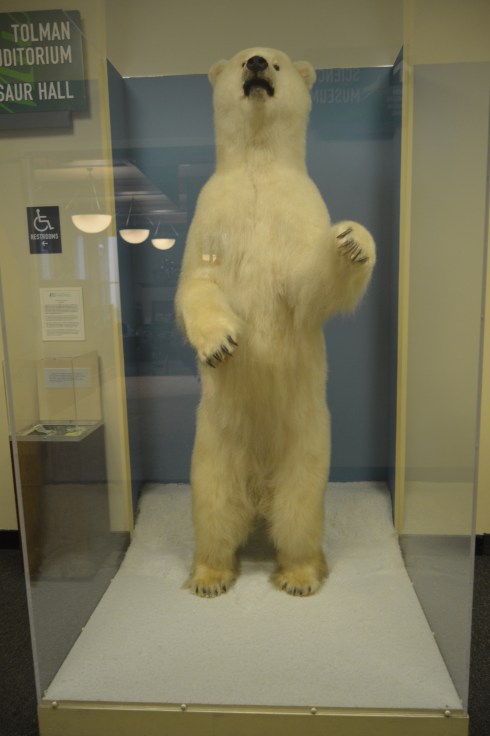
Snowball

DSC_0486

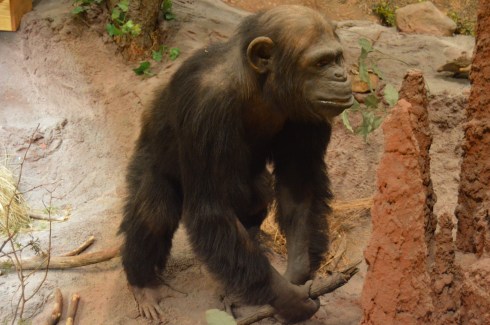
and Jynx

DSC_0591

These animals used to be part of the The Zoo In Forest Park (post about this wonderful park to come in the spring or summer).  When they died, they were stuffed and put on display.

There is a wide variety of fish and other animal life on the lower level.  You have to look closely but the first image is of a shy salmon camouflaged against the rocks.  In fact, many of the animals were shy.

This slideshow requires JavaScript.

There were also a variety of toys, art work and fun items for kids of all ages and sizes to enjoy like the skeleton with the Dr. Seuss hat on (note the tie-in to Springfield) and mirrors that make you look smaller and wider, just when I didn’t think I could feel worse about my weight ( :

The second and third levels of the museum have a dinosaur exhibit, planetarium, historical items, models of animals and a variety of other items.

This slideshow requires JavaScript.

The historical museum, located across the street from the science museum, is a little smaller but it also has a wide variety of displays.

During my visit, the museum was displaying the Better Angels tribute to the fallen firefighters from September 11, 2001.  The portrait artist who made the display is from nearby East Longmeadow.  The exhibit will be on display until June of this year.

DSC_0619

After seeing this touching tribute, some of the other attractions seem trivial.  There are a variety of old time cars and a fire exhibit in the main area.  There is also an educational play area for children (and adults if you’re inclined).

The Springfield Museums are a great place to visit.  Time seems to go by quickly while you’re there so it’s easy to lose track of time.  But, it is fun for the entire family.


Dr. Seuss National Memorial Sculpture Garden (Springfield, MA)

Date visited: January 16, 2016


Located on the grounds of the Springfield Museums, the Dr.  Seuss National Memorial Sculpture Garden pays homage to one of Springfield’s most famous people, Theodor Seuss Geise (aka Dr. Seuss), and some of his characters.

This slideshow requires JavaScript.

The grounds are accessible to the public during the museum’s normal hours without a fee.  You only need to pay if you want access to the museums.  The garden does not only have sculptures and art work related to Dr. Seuss’ characters.  There are statues and other pieces of art and buildings on the grounds.

This slideshow requires JavaScript.

I will be posting about the Springfield Museums in a later post.  Here is a quick preview:


Lizzie Borden Bed And Breakfast/Museum (Fall River, MA)

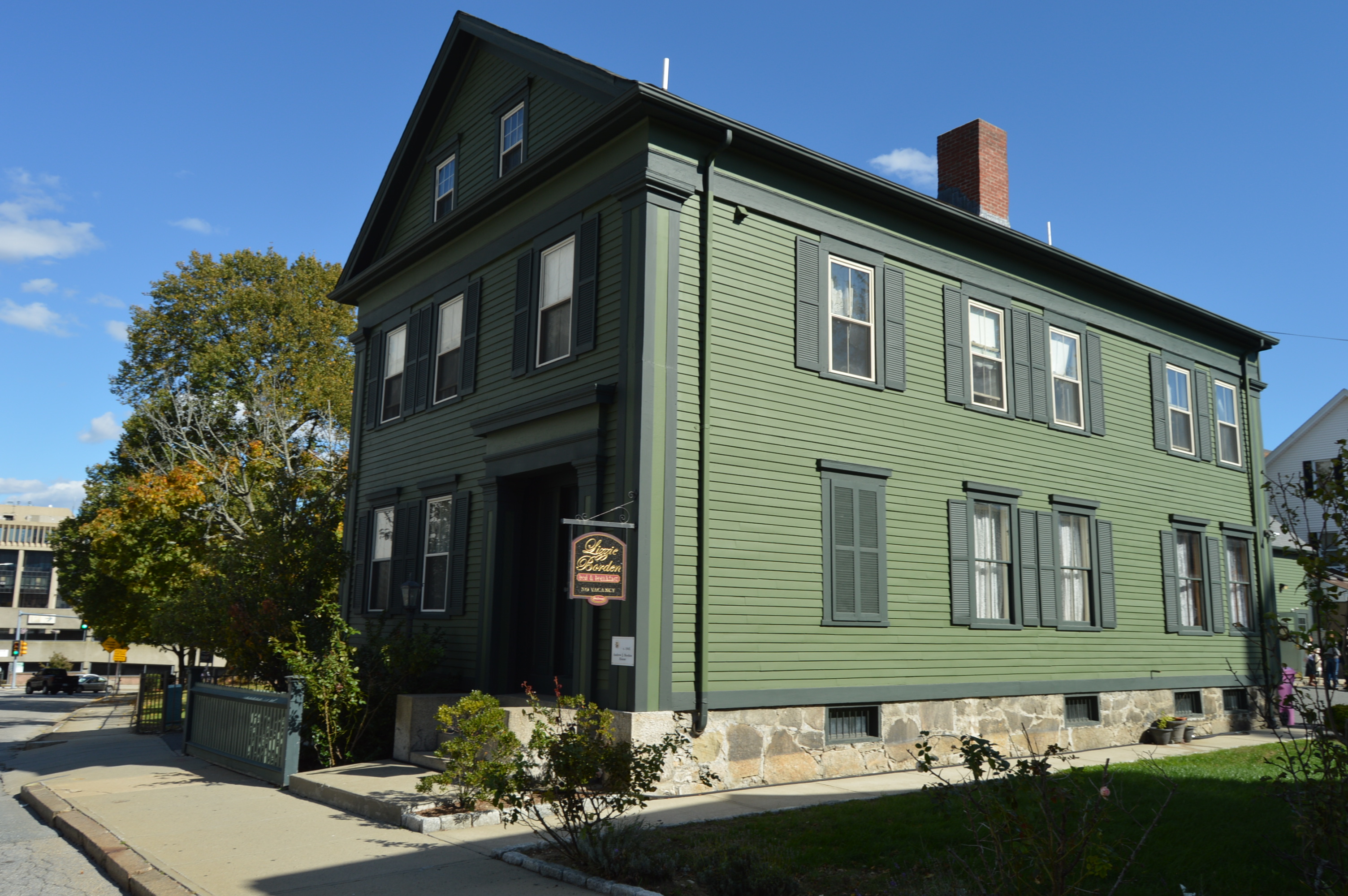
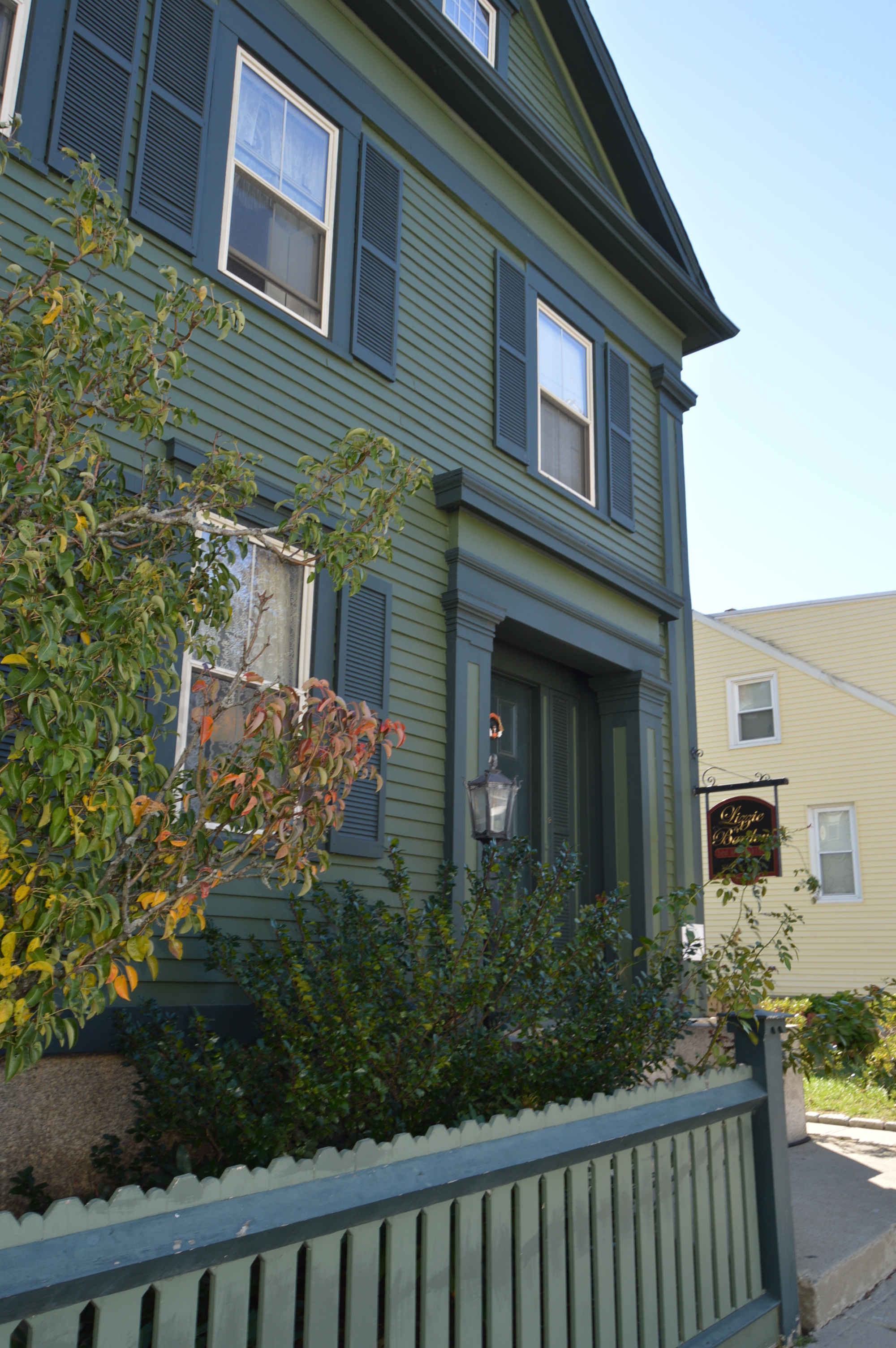
At first glance, it would seem to be any quaint, rustic bed and breakfast (or as we are prone to say in New England, “b&b”).  But, the Lizzie Borden Bed And Breakfast/Museum is no ordinary bed and breakfast.

DSC_0412

DSC_0416 DSC_0421 DSC_0277

DSC_0287

If only this seemingly ordinary inn could tell stories.  The bed and breakfast has been converted to an inn (stay at your own risk) and tours are offered for a paltry $18.  The hour long tour includes a history of the house, the denizens (which of course Lizzie Borden was one) and other trivia about the building and people associated with the house.

Of course, Lizzie is the main person of interest.

DSC_0372

For those who either lived under a rock for the past 120 years or aren’t a maladjusted historian who is fascinated with the morbid, Lizzie was the main suspect in the murders of her mother and father.  She was acquitted after the jury deliberated for an hour.  To this day, people are divided over whether she did commit these murders (she did).  The real life story plays out like an Agatha Christie mystery.

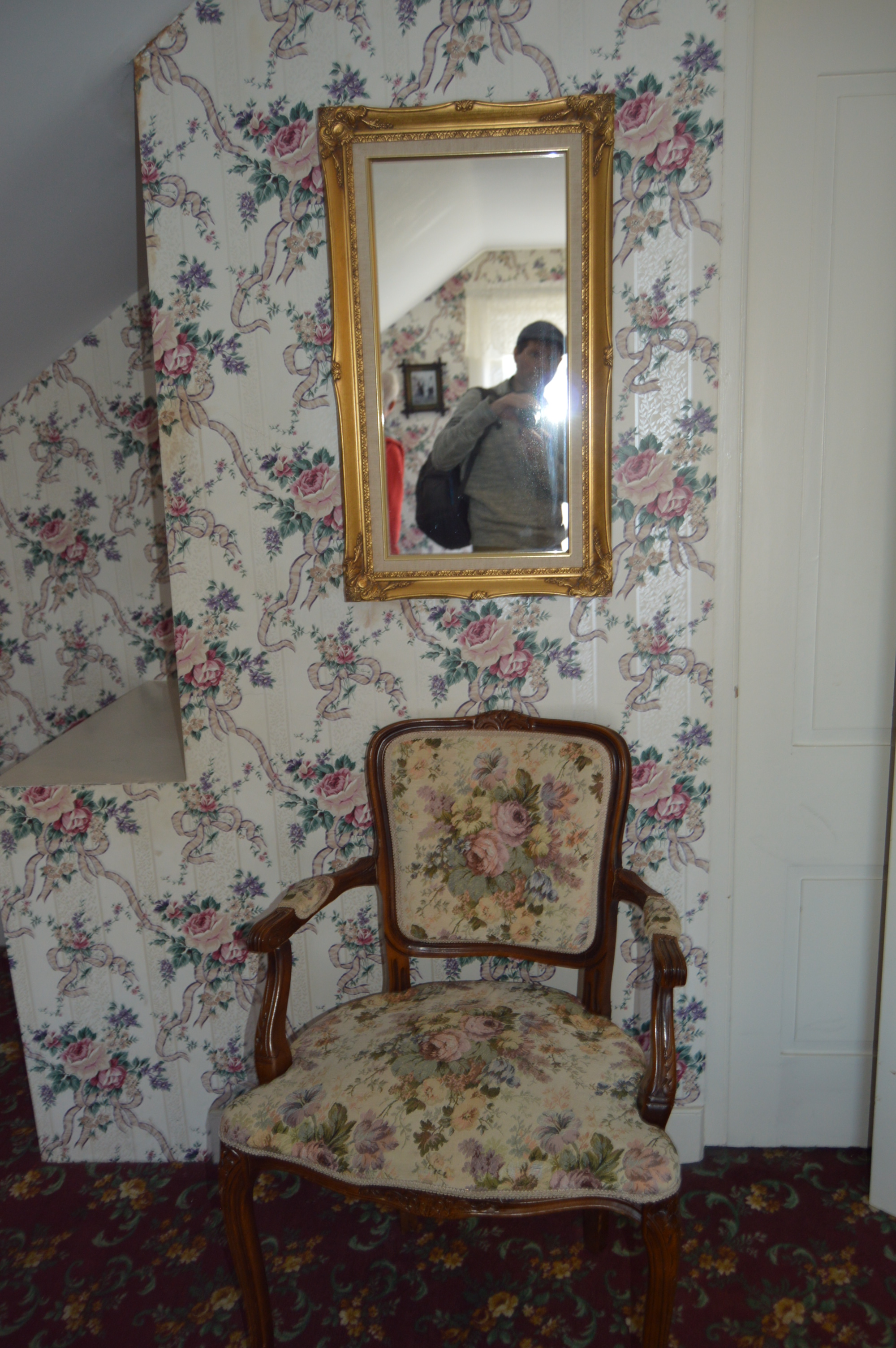
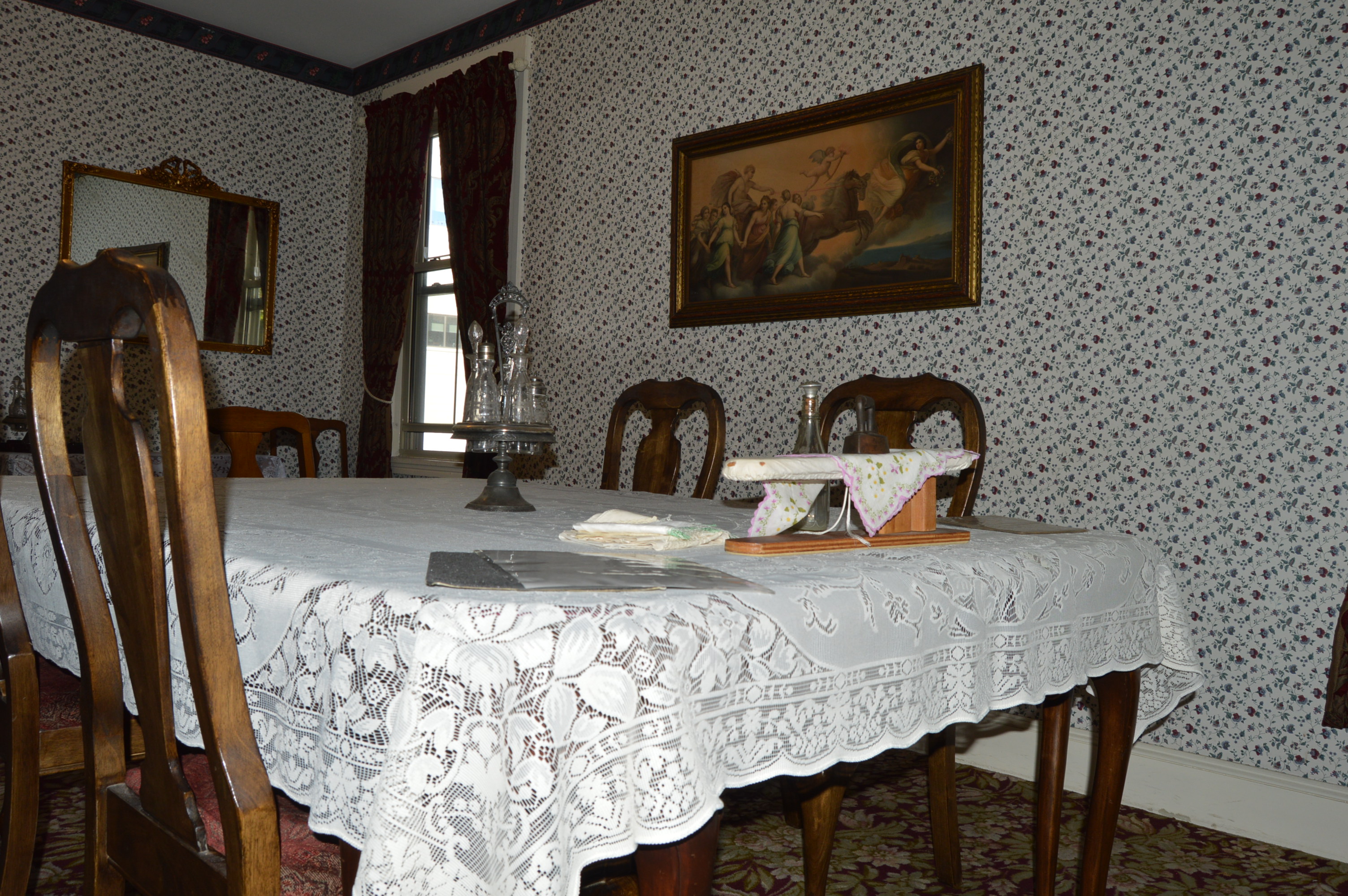
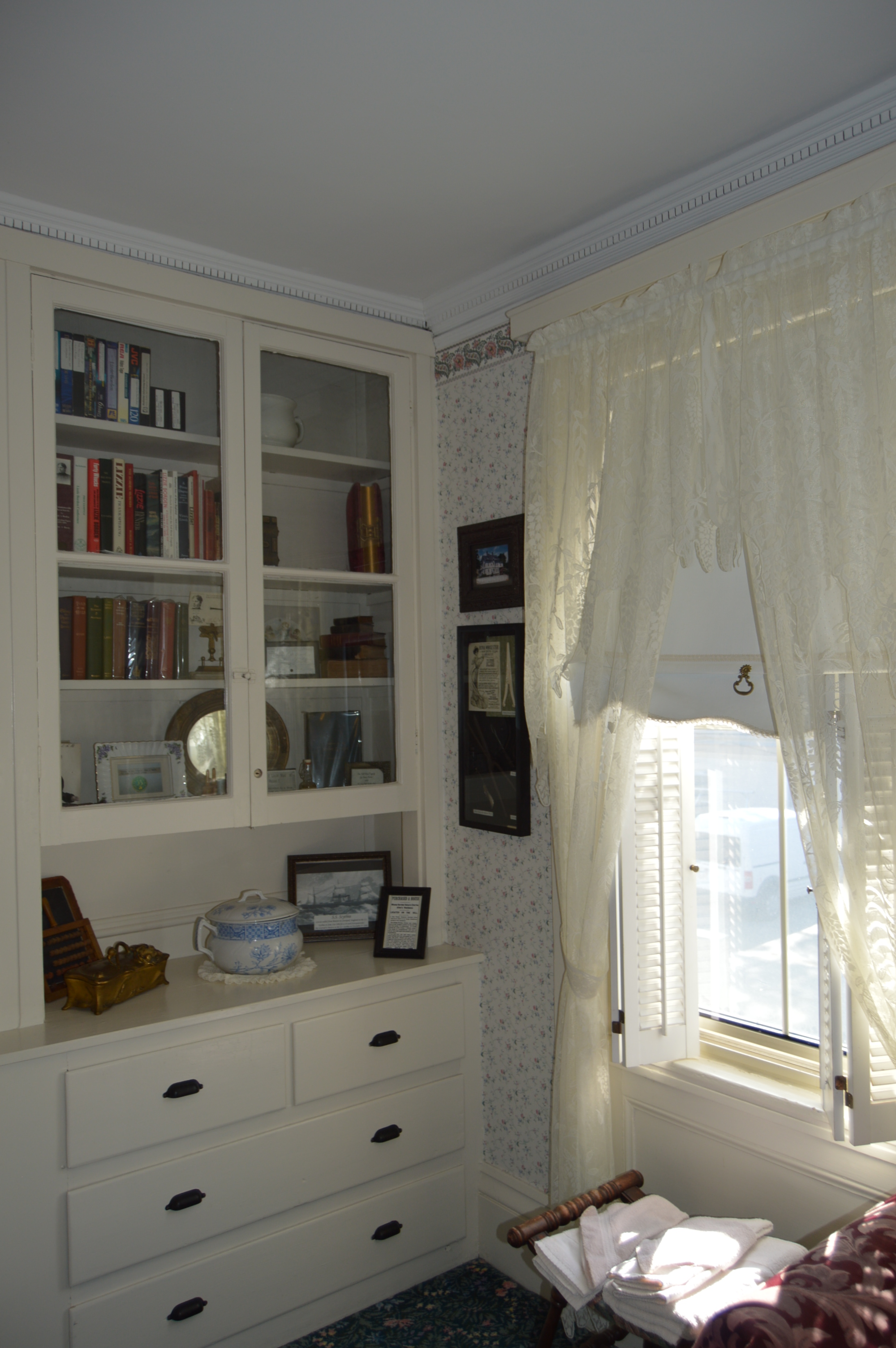
The house is three floors with 8 rooms.  The furniture is not the exact furniture from the house because the Borden sisters had to store their furniture and while the furniture was in storage the furniture was destroyed by water and fire damage.  Replicas of the furniture of that era are furnished throughout the house.  They also seem to want to keep the house as close to the original style as possible.  We also had a large tour group which made the rooms seem even more cramped and the lighting was dim.  That is not a ghost but rather the photographer’s reflection in the mirror.

DSC_0393 DSC_0394 DSC_0362 DSC_0350 DSC_0333 DSC_0330 DSC_0315 DSC_0309

DSC_0301

DSC_0299 DSC_0304

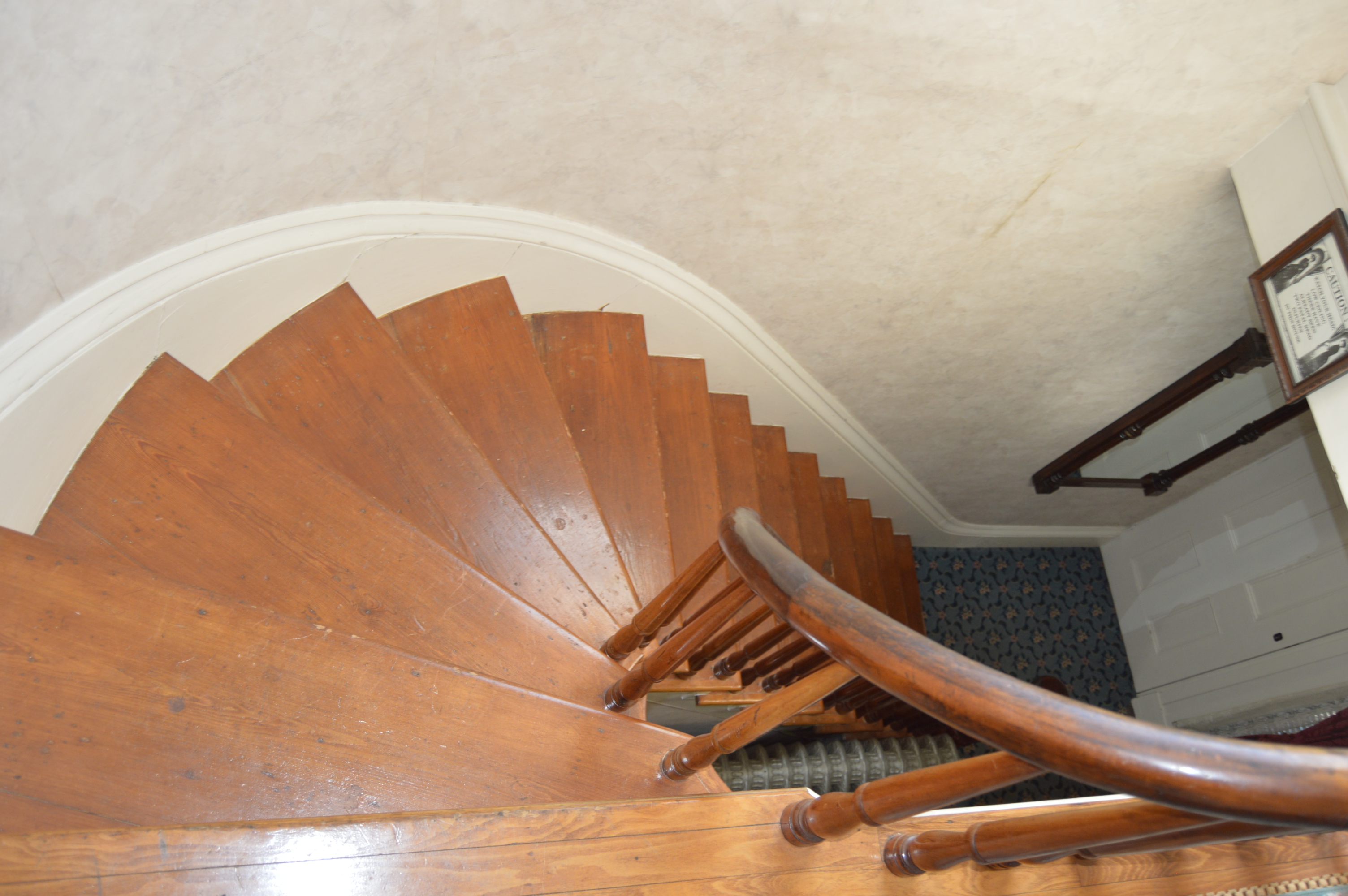
The staircases are narrow but fun to photograph.

DSC_0359

DSC_0410 DSC_0409

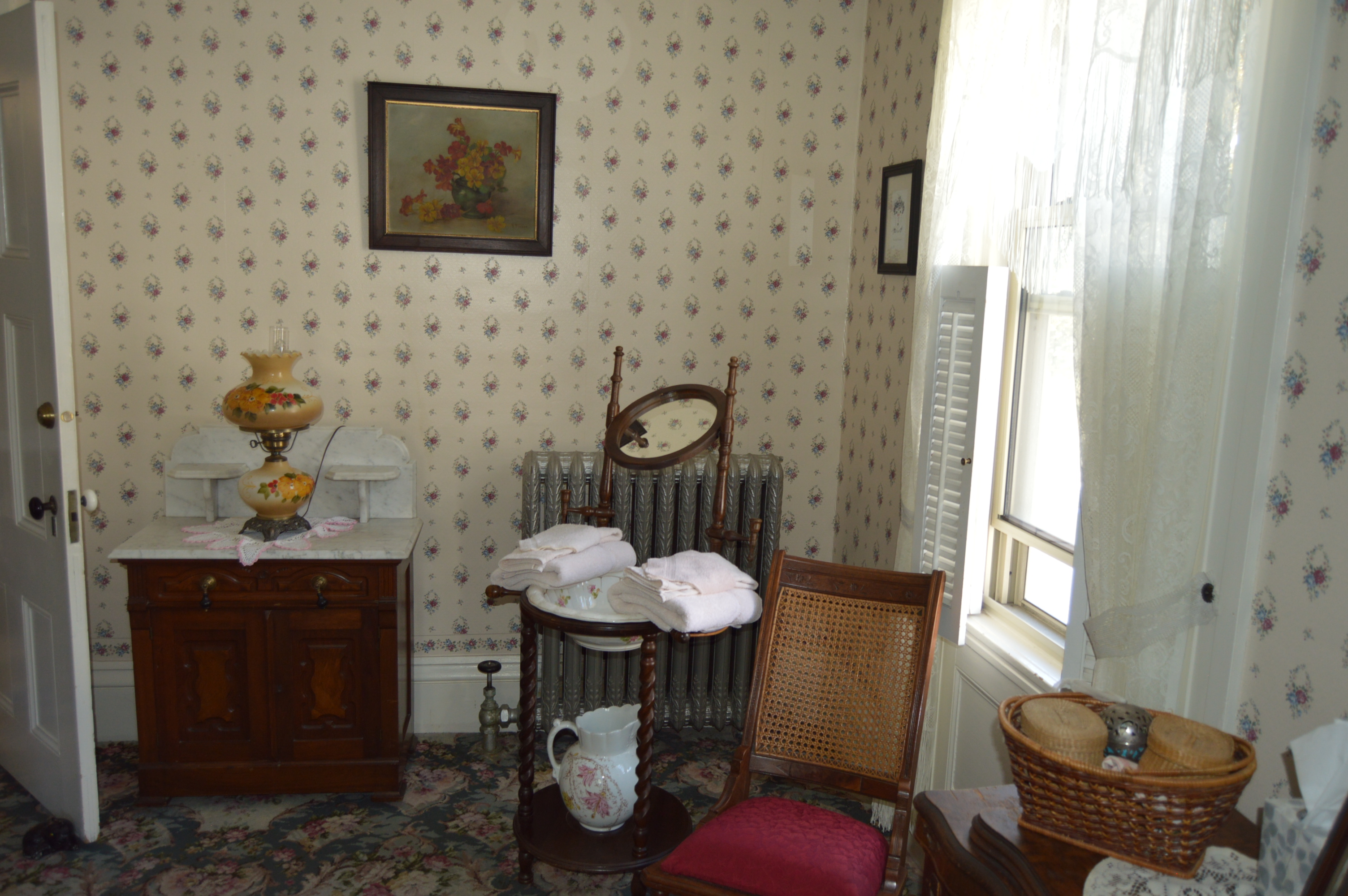
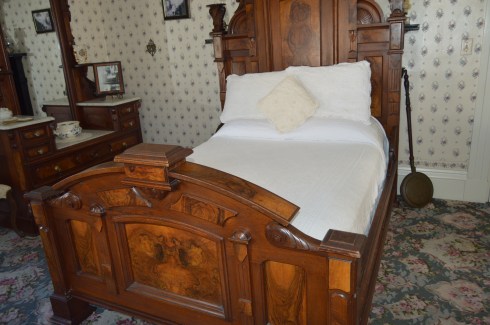
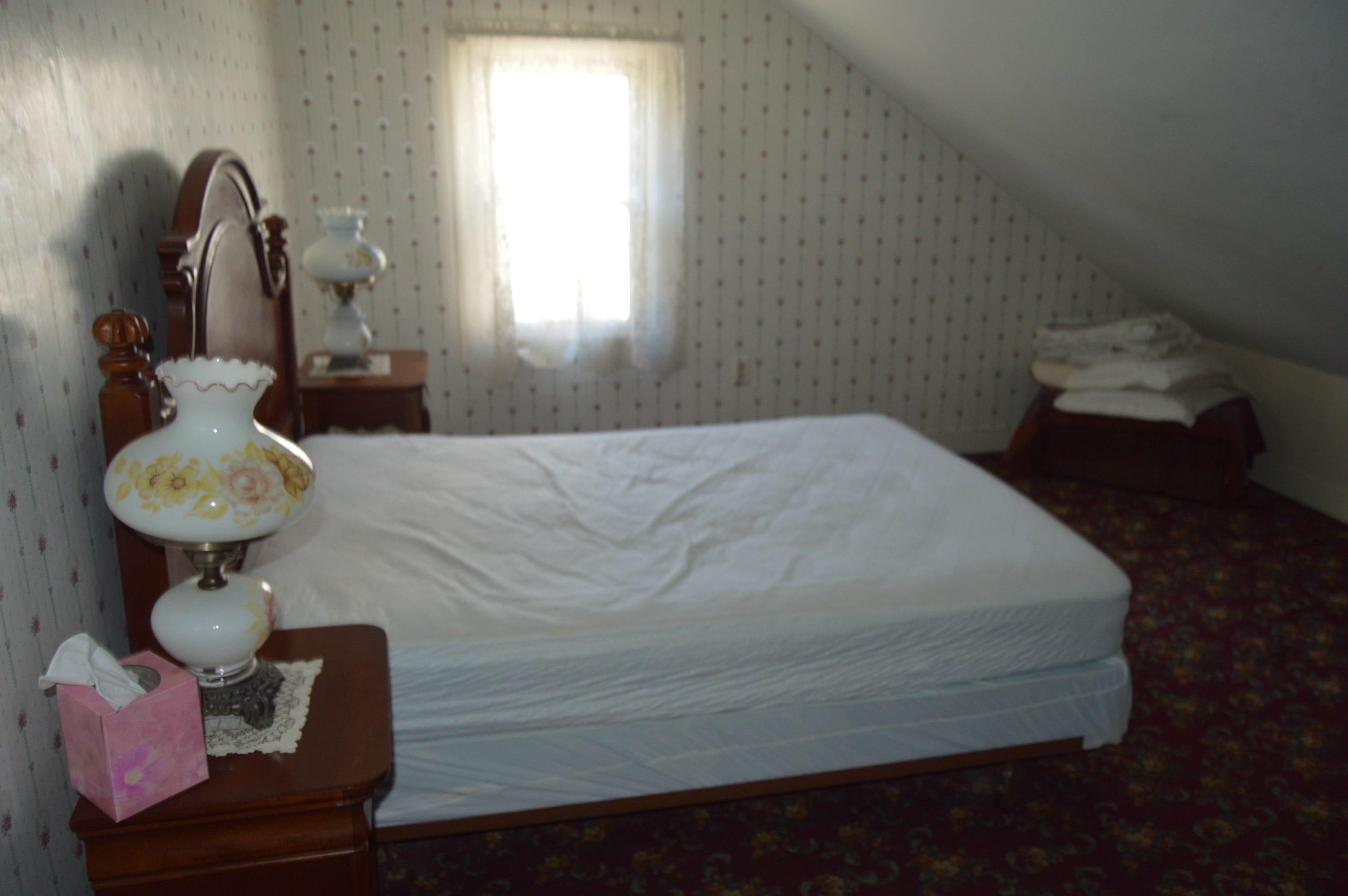
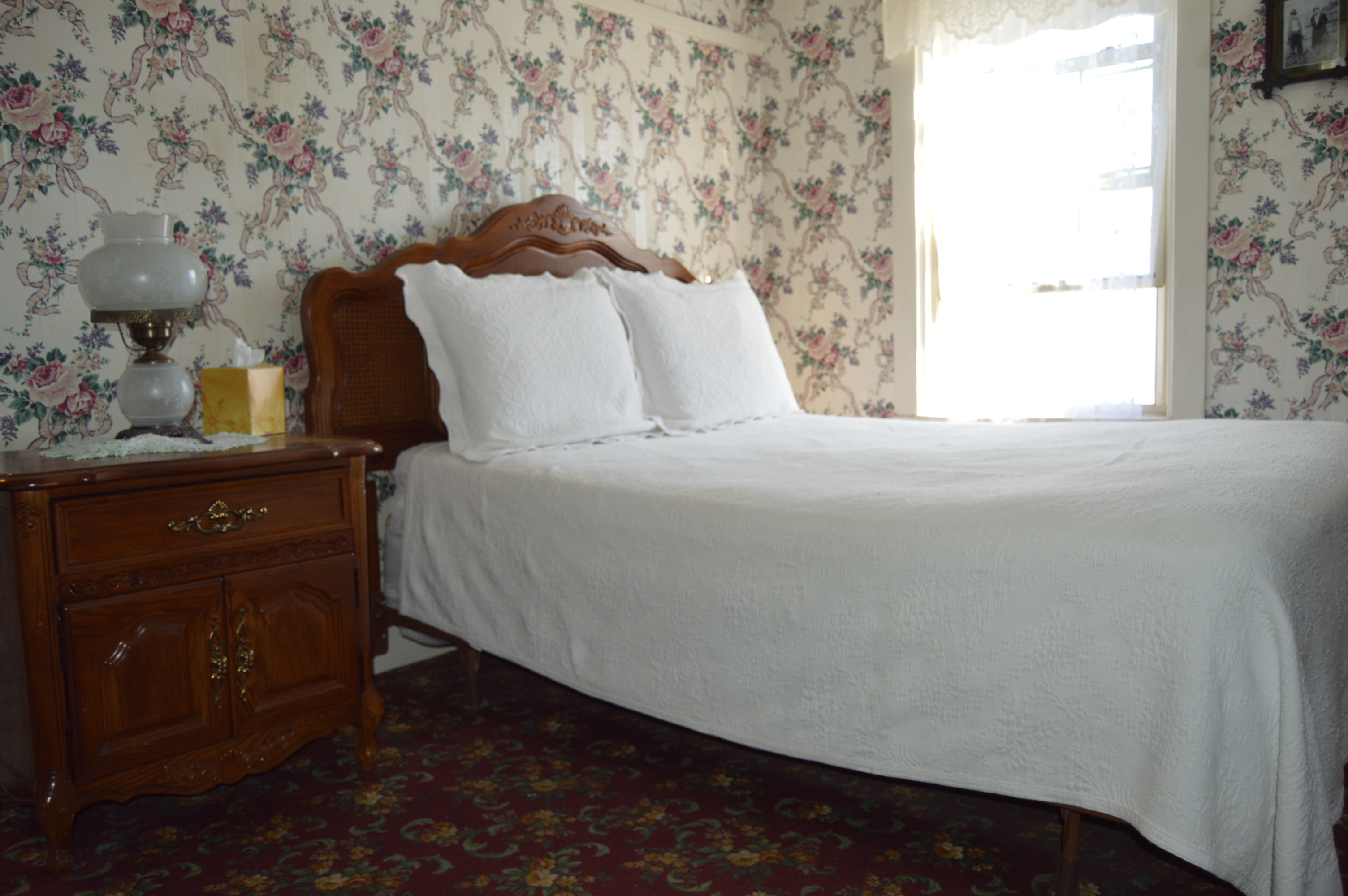
The bedrooms are basic with the bare necessities (you won’t find any flat screen tv’s or hot tubs there).  But, they are refreshing for the weary traveler who just wants to unplug and relax.

This is the room where Abby Borden was murdered.  Walking in the room can’t help but give you the willies.

DSC_0345

This is where Andrew Borden’s (Lizzie’s father) body was found.  I swear I had my camera trained on the entire sitting couch (I’d sooner blame in on Nikon than the photographer or any spirits, though)

DSC_0316

If you are considering a stay at the Lizzie Borden bed and breakfast, just remember that while it is cute and rustic, well keep in mind that it is rustic.

DSC_0350  DSC_0401

Is that Lizzie in the window?

DSC_0400            DSC_0365  DSC_0370   DSC_0378 DSC_0387  DSC_0398

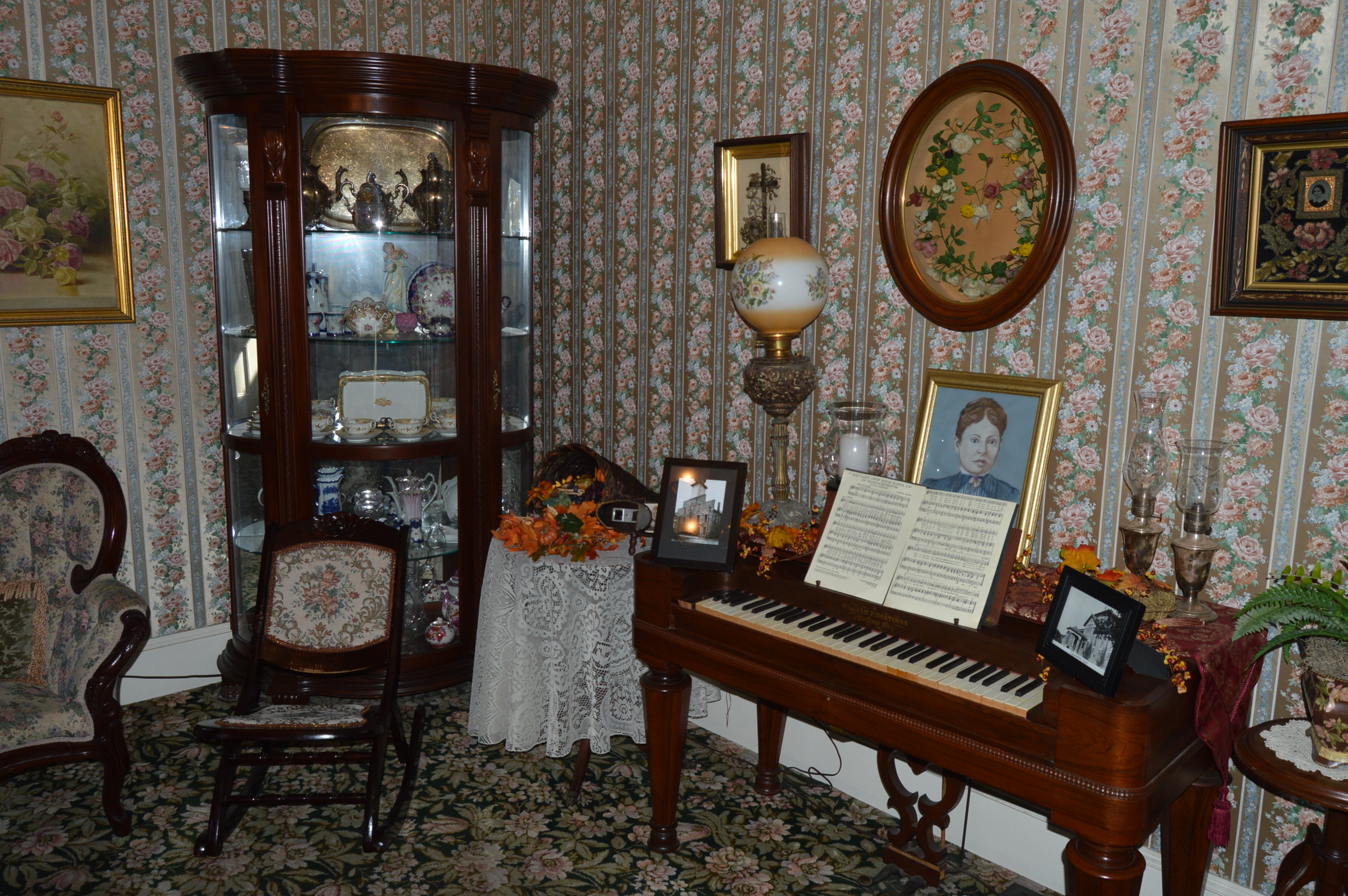
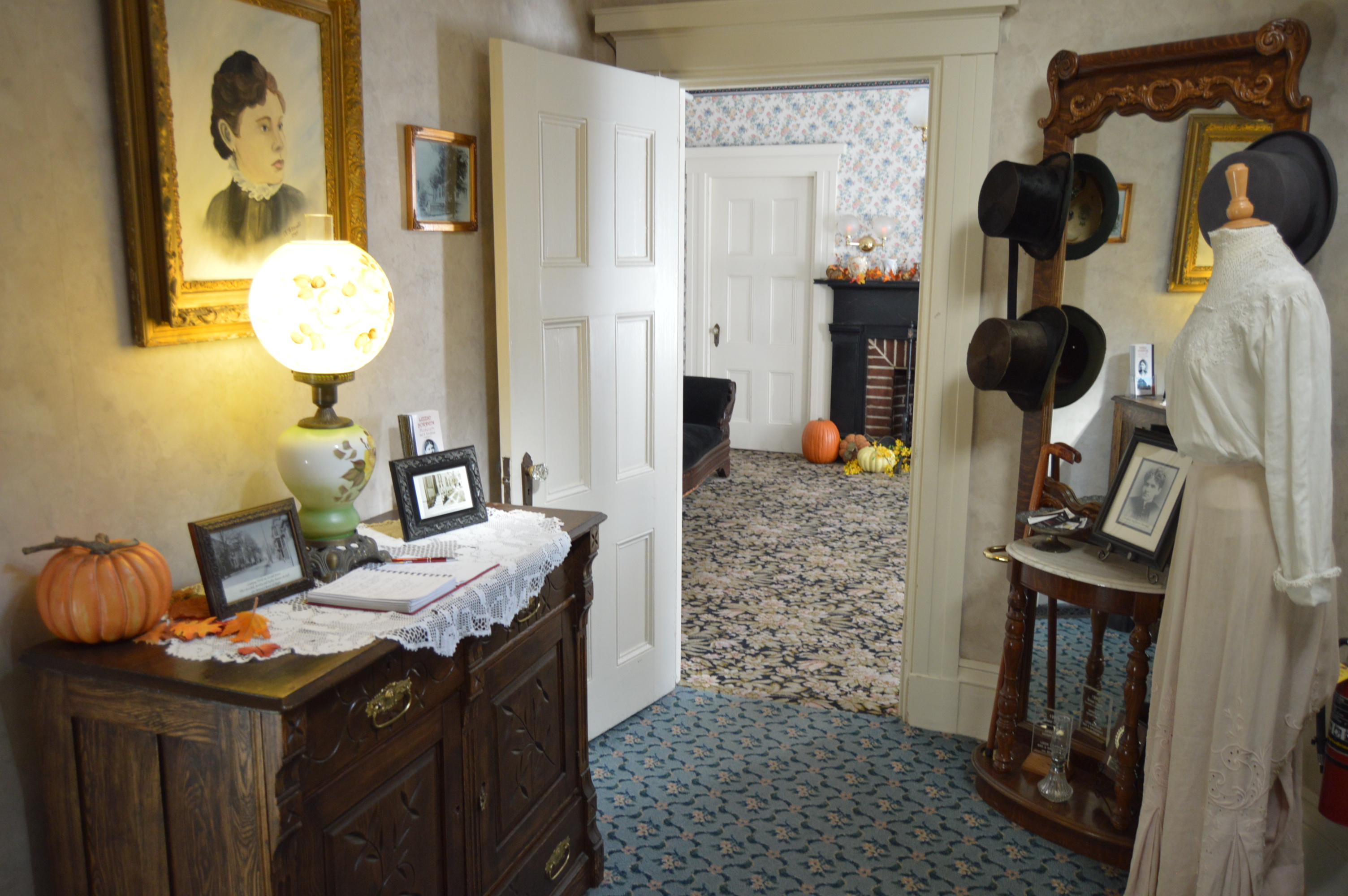
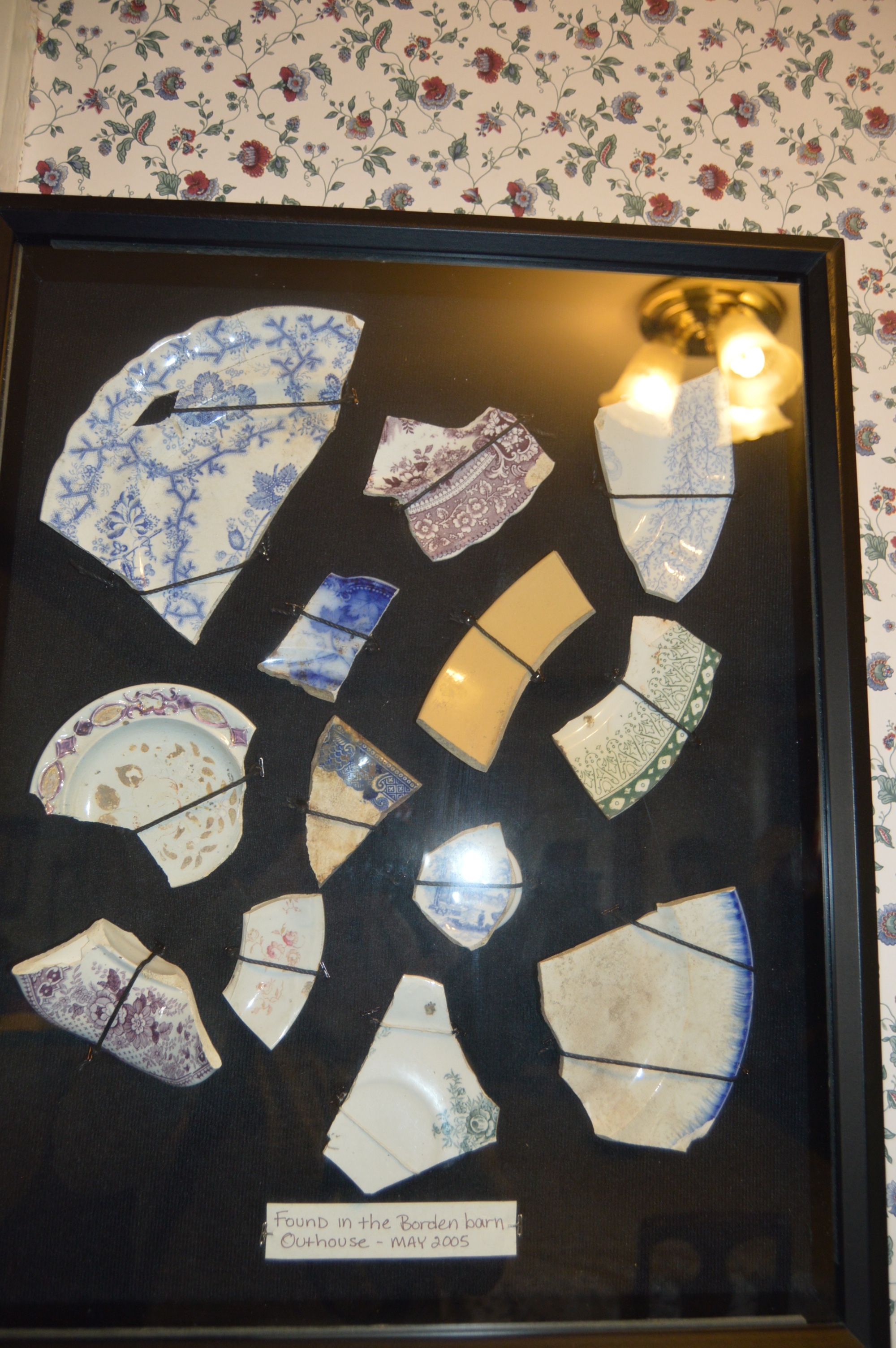
The inn also has a number of photos of the key players of the Borden case and the family hanging on the wall.  There is also the dress Elizabeth Montgomery wore when she depicted Lizzie Borden in the made for tv version of the murder and trial.  There are also artifacts hung on the walls that were found on the property that were discovered during recent renovations.

DSC_0347

DSC_0312 DSC_0320 DSC_0319

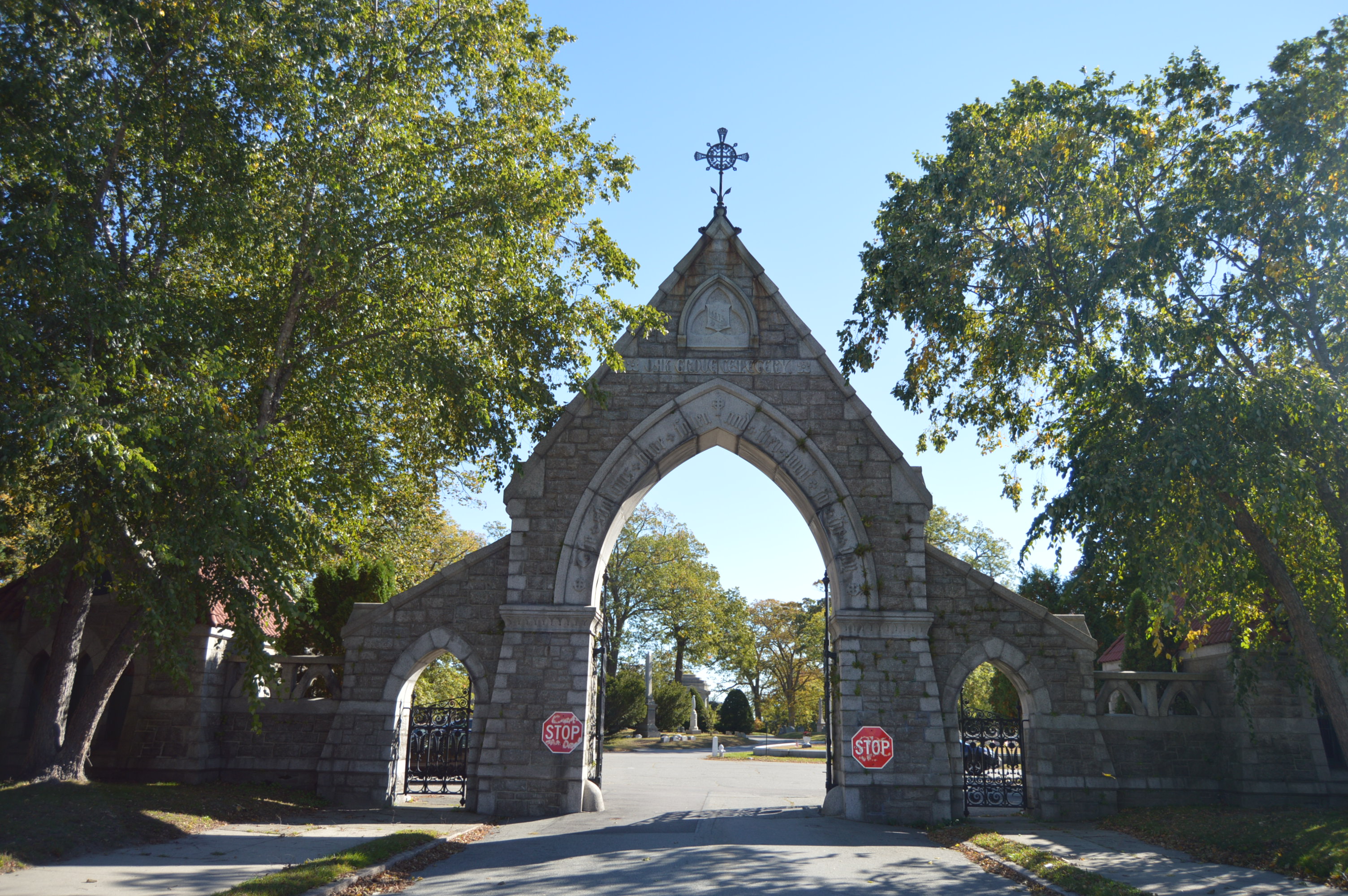
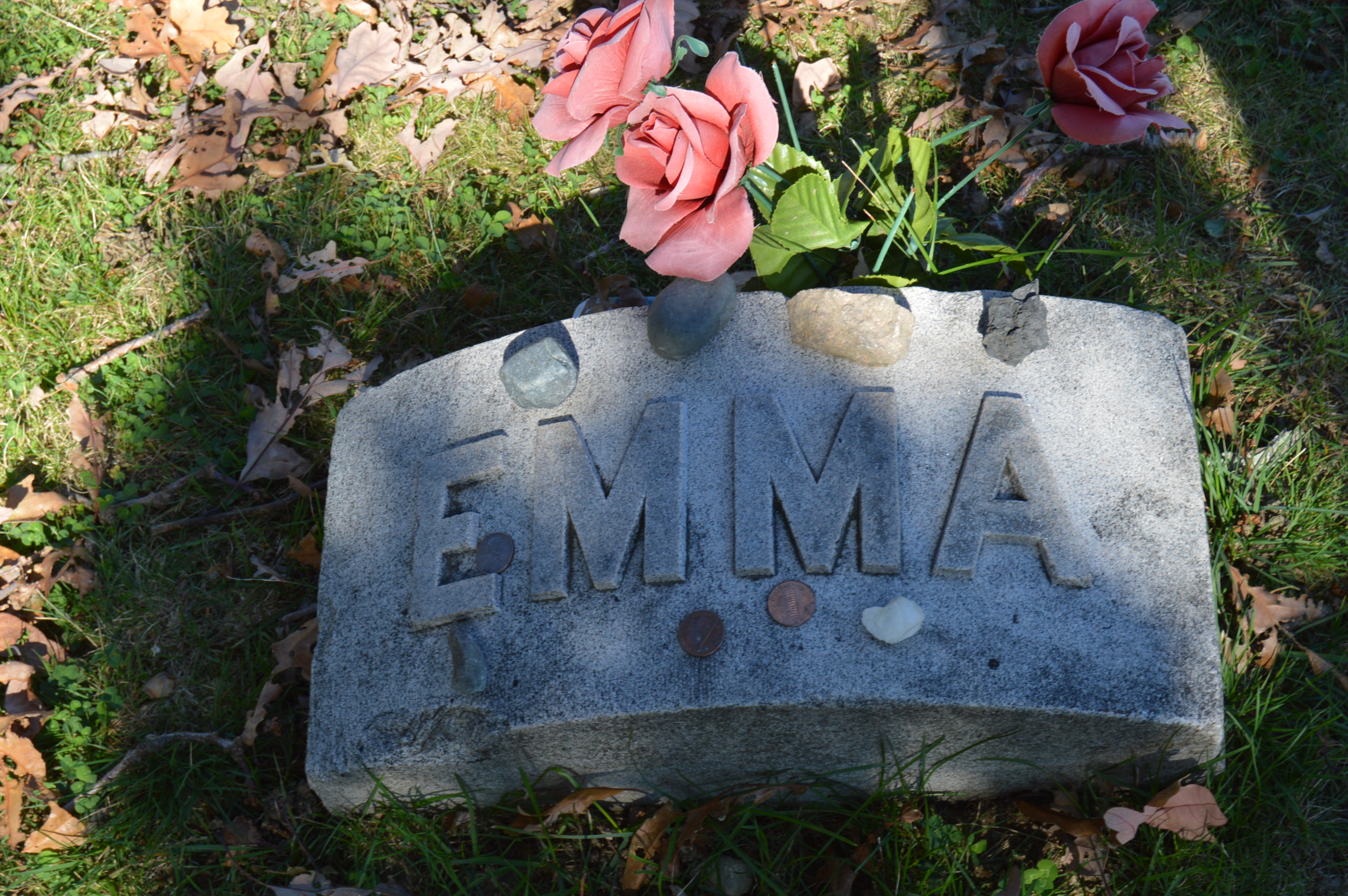
I had some time to waste before the tour, so I stopped by Lizzie’s (or Lizbeth’s) final resting place.  Lizzie is buried in Oak Grove Cemetery in Fall River, Mass.  She is buried next to her sister, Emma.  People regularly leave little mementos from flowers to rocks and even coins and other keepsakes on her gravestone, especially this time of year (even though the murders occurred in August and not around Halloween) .

DSC_0241  DSC_0254

DSC_0264