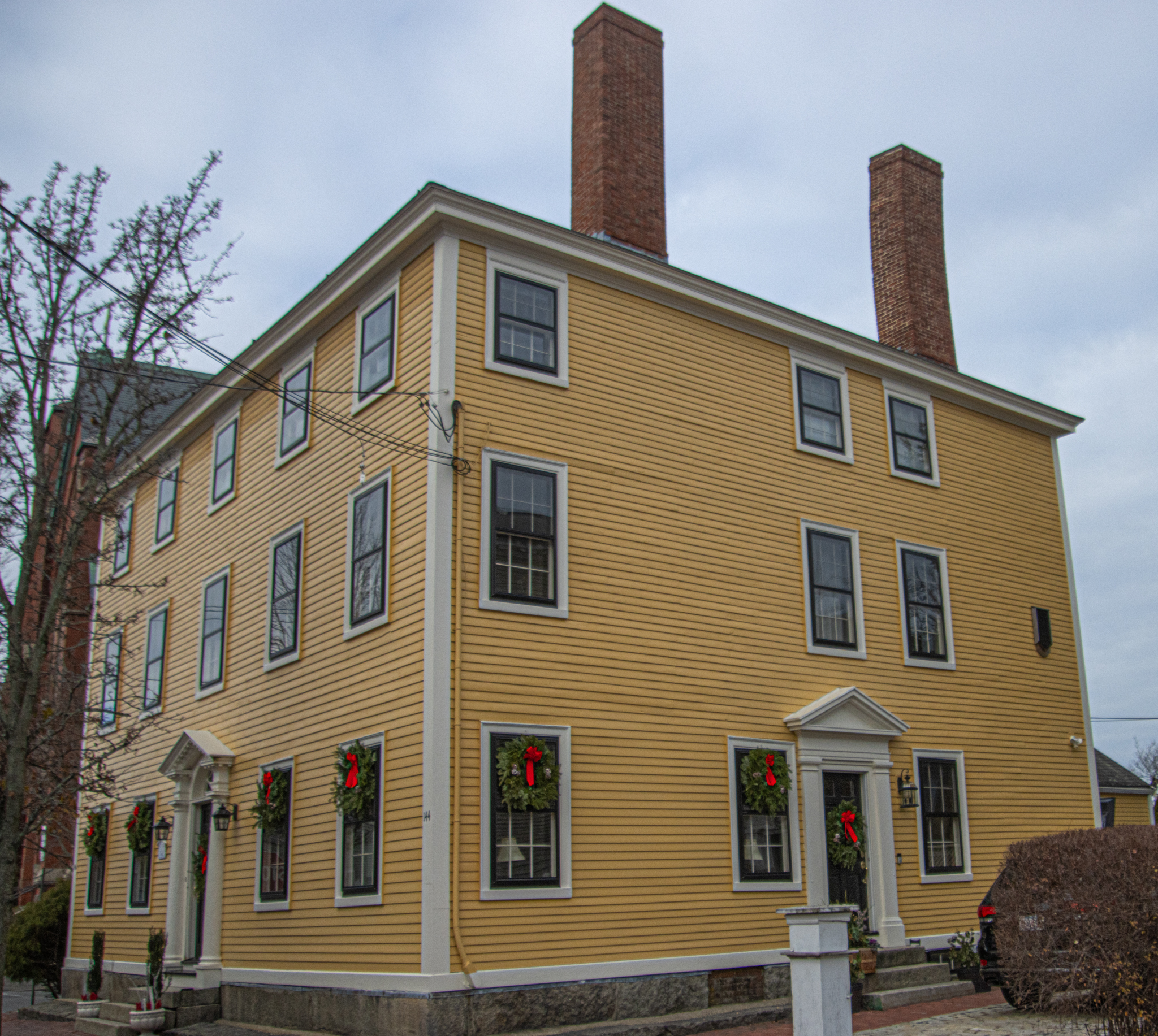
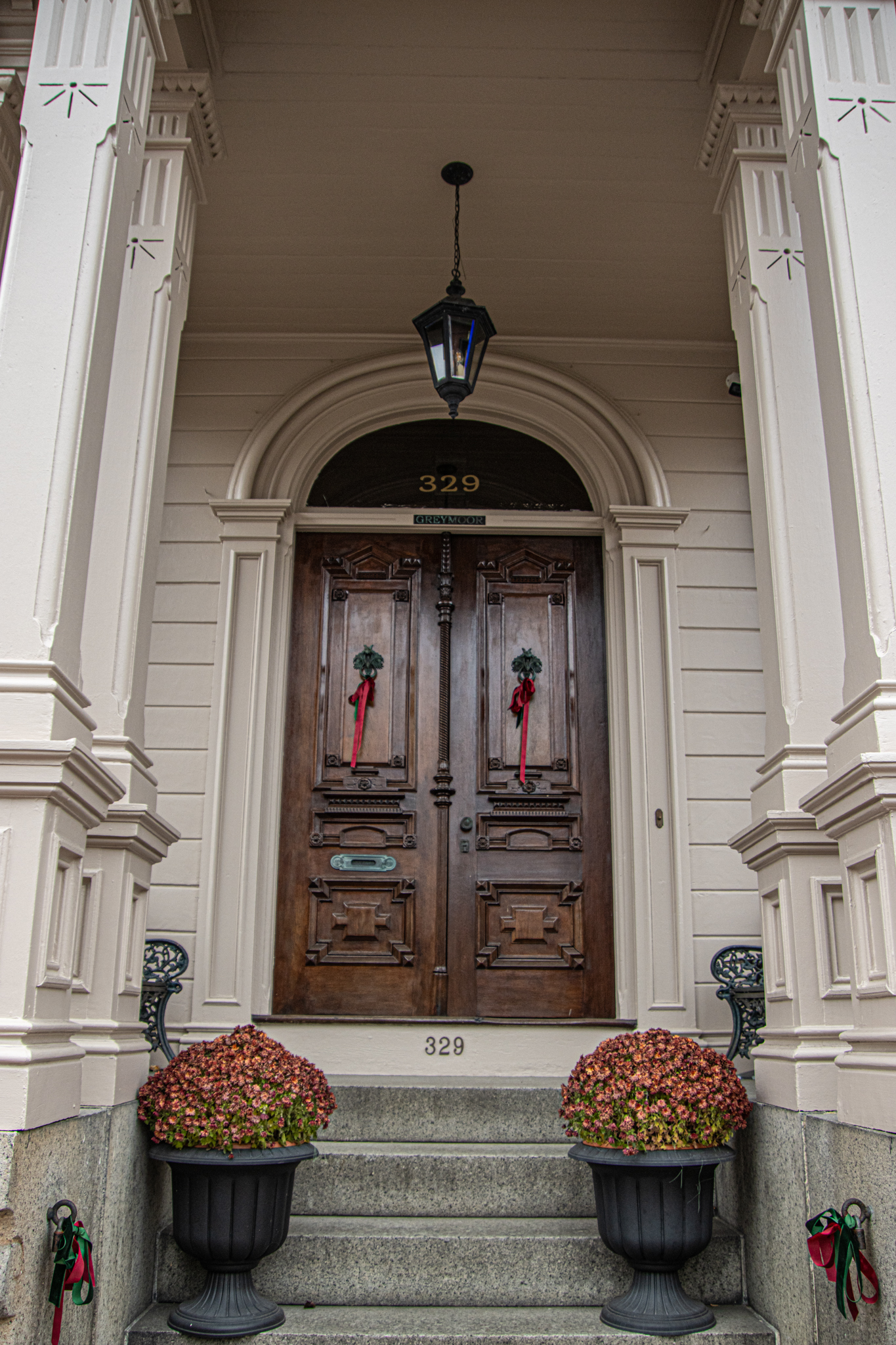
It’s easy to see why the Grey-Balch residency is considered “the most ambitious and outstanding residence of its era in Salem.”
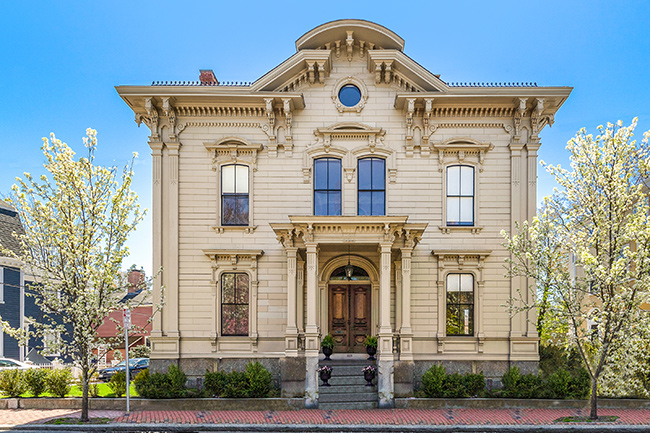
The Greymoor-Balch House boasts rusticated wooden sheathing, paired pilasters with fluted tops at the corners of the facade and an elaborate arched dormer window above the second floor which is enhanced by a heavily bracketed cornice. The front entrance porch is supported by eight square molded columns capped by a balustrade with corner posts supporting urns.
The house’s decor is modeled after the Second Empire and Italianate styles.
Greymoor was built by James S. Putnam in 1872 after he demolished a house on that site which was owned by Benjamin Marston, a former Essex County high sheriff and colonel in the state militia. In 1881 the property was by Frank Balch. Balch worked at the Naumkeag Steam Co. Balch’s son is said to have improved x-ray technology by inventing the Balch Roentgen Scopic screen in 1916 which reduced the time required for taking an x-ray picture from 20 seconds to 1/5 of a second. Balch’s company, Balch Roentgenoscopic Screen Co, was located in Salem, MA.
The house served as Salem’s American Legion headquarters between 1921 and 1979. Between 1971 and 1981, Donald Costin restored the house as a private home. More recently, the current owners have restored the house to its original decor. The 6,352 square foot included 3 floors with 2.5 bathrooms, 5 bedrooms and 8 fireplaces. When the house was listed for sale in June, 2019, the house was listed for just under a paltry $1.4 million.
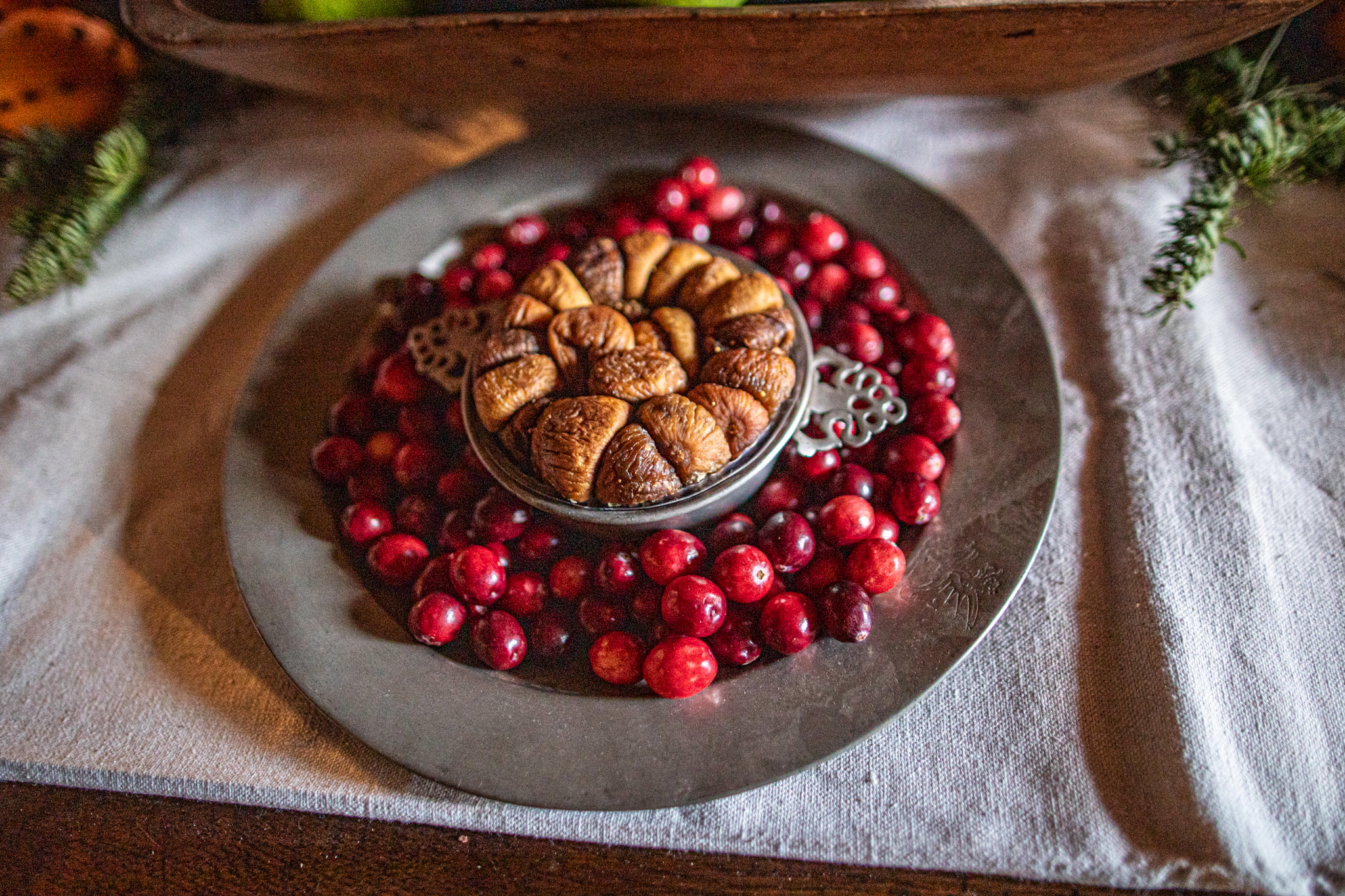
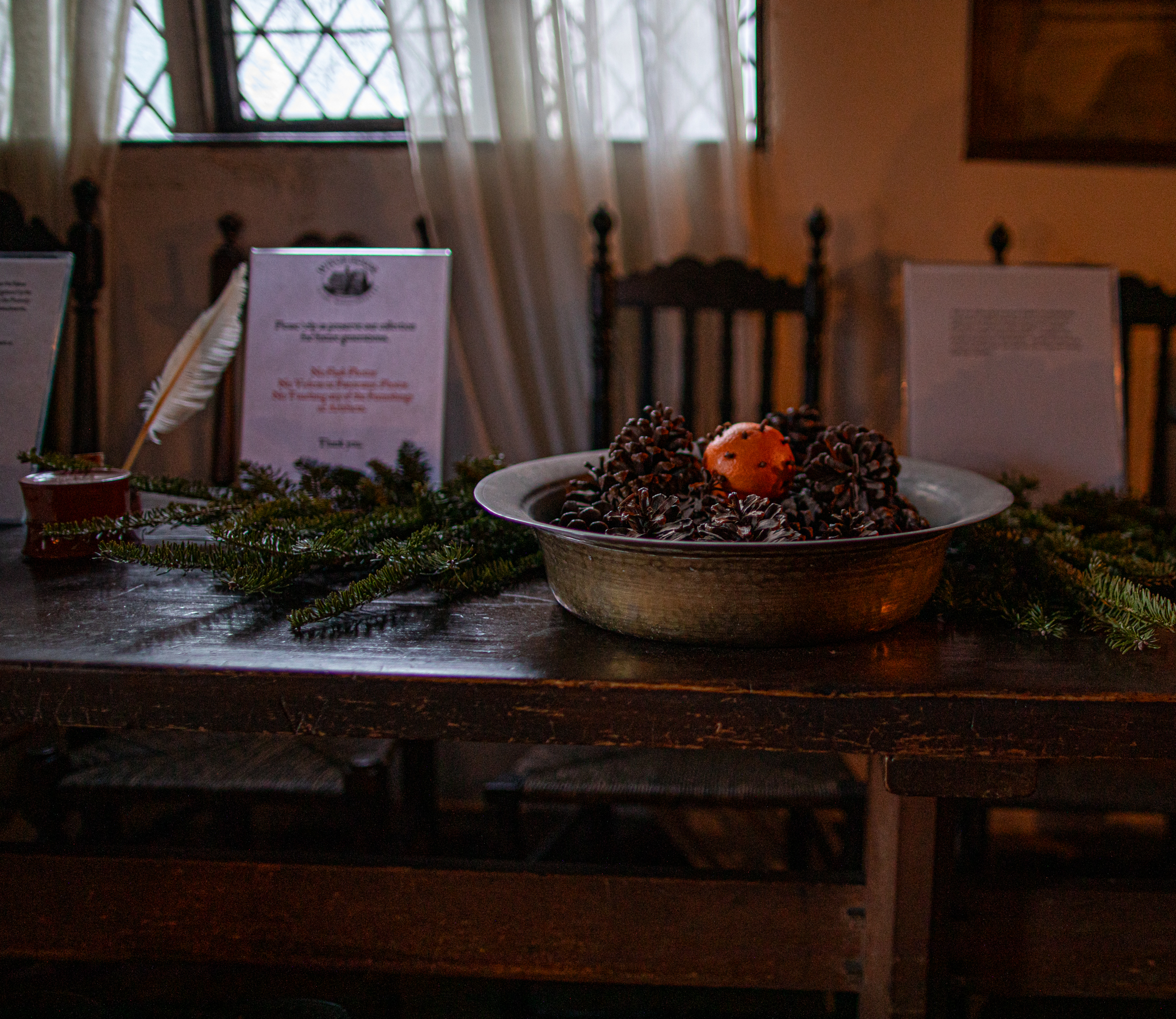
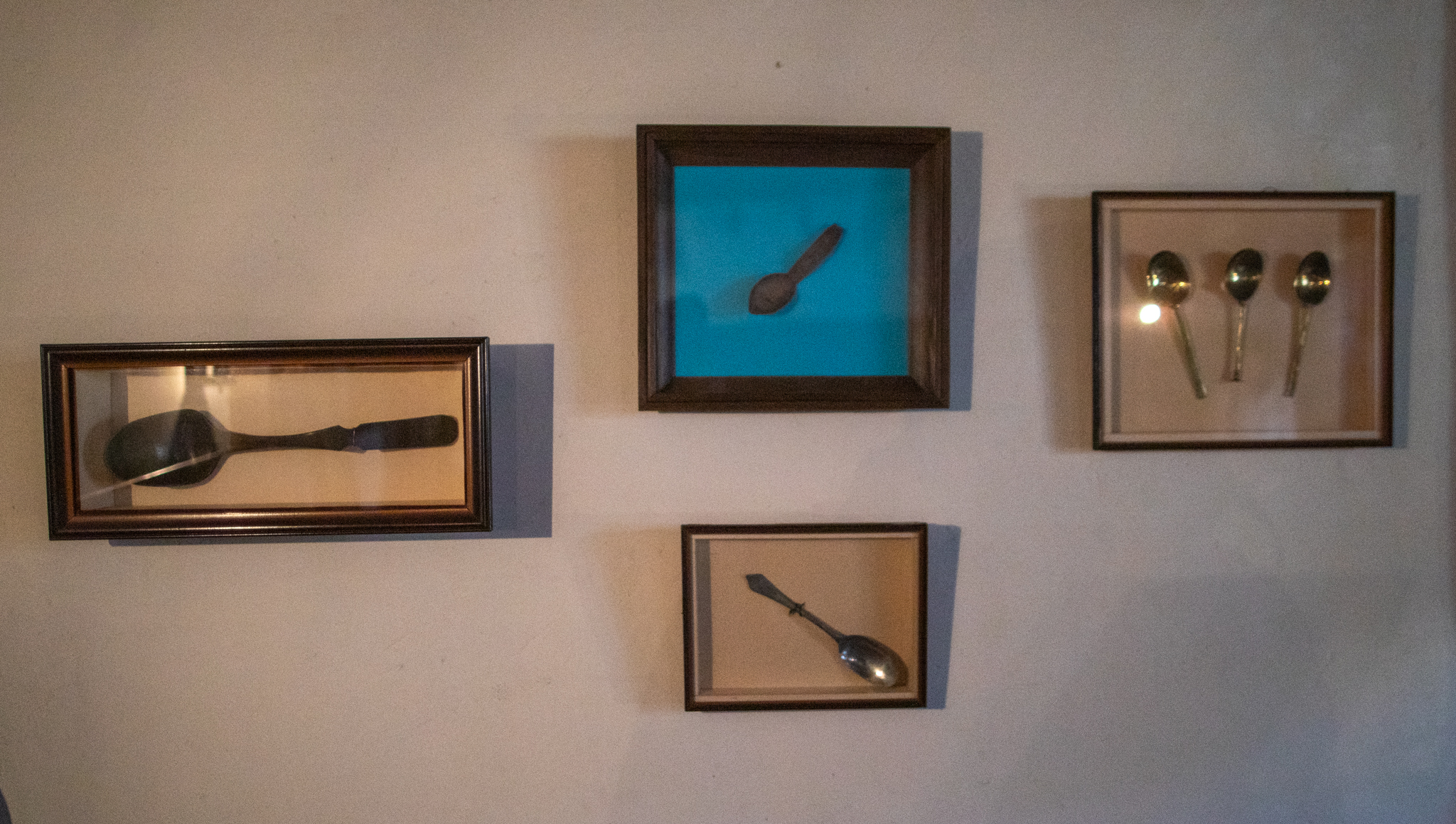
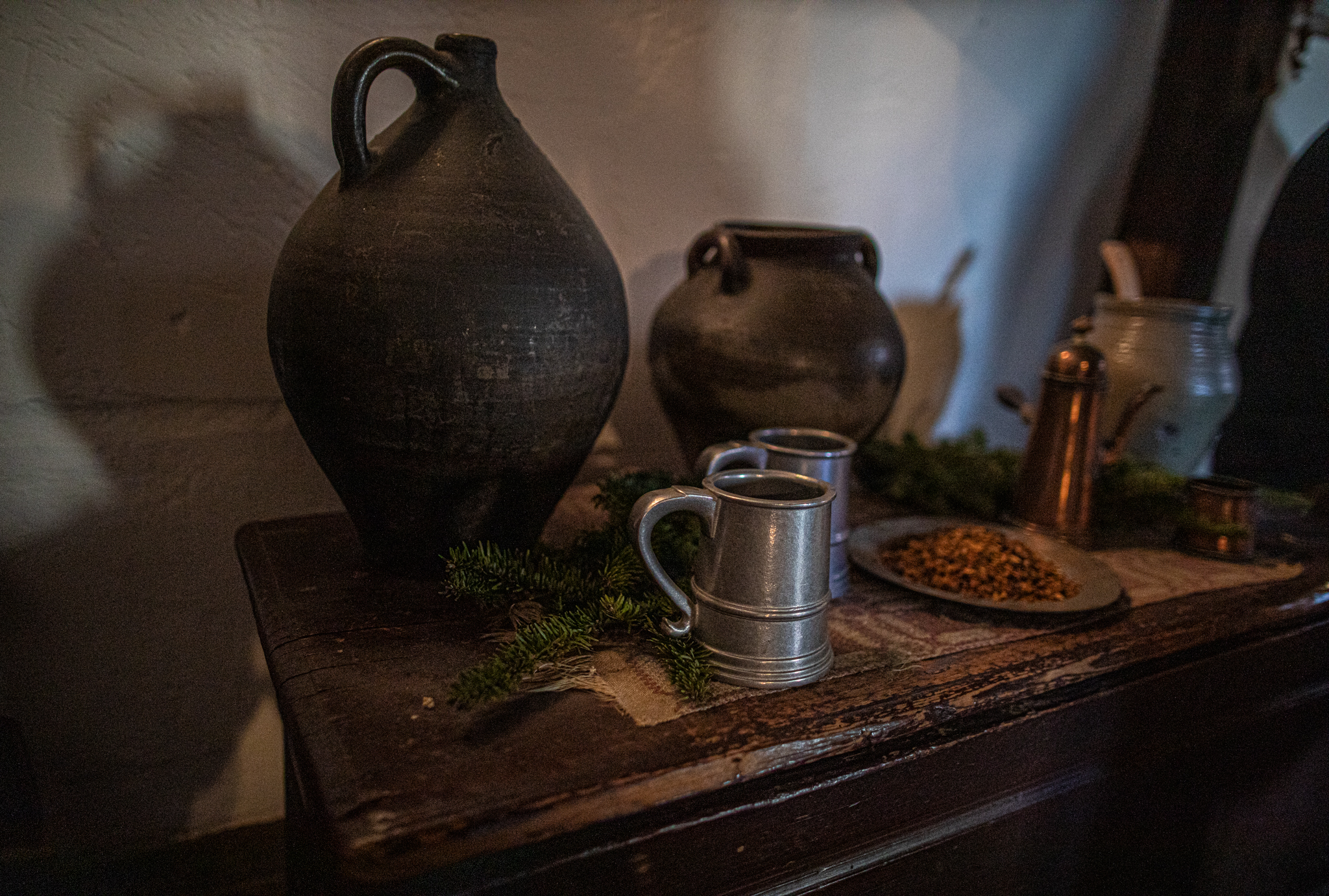
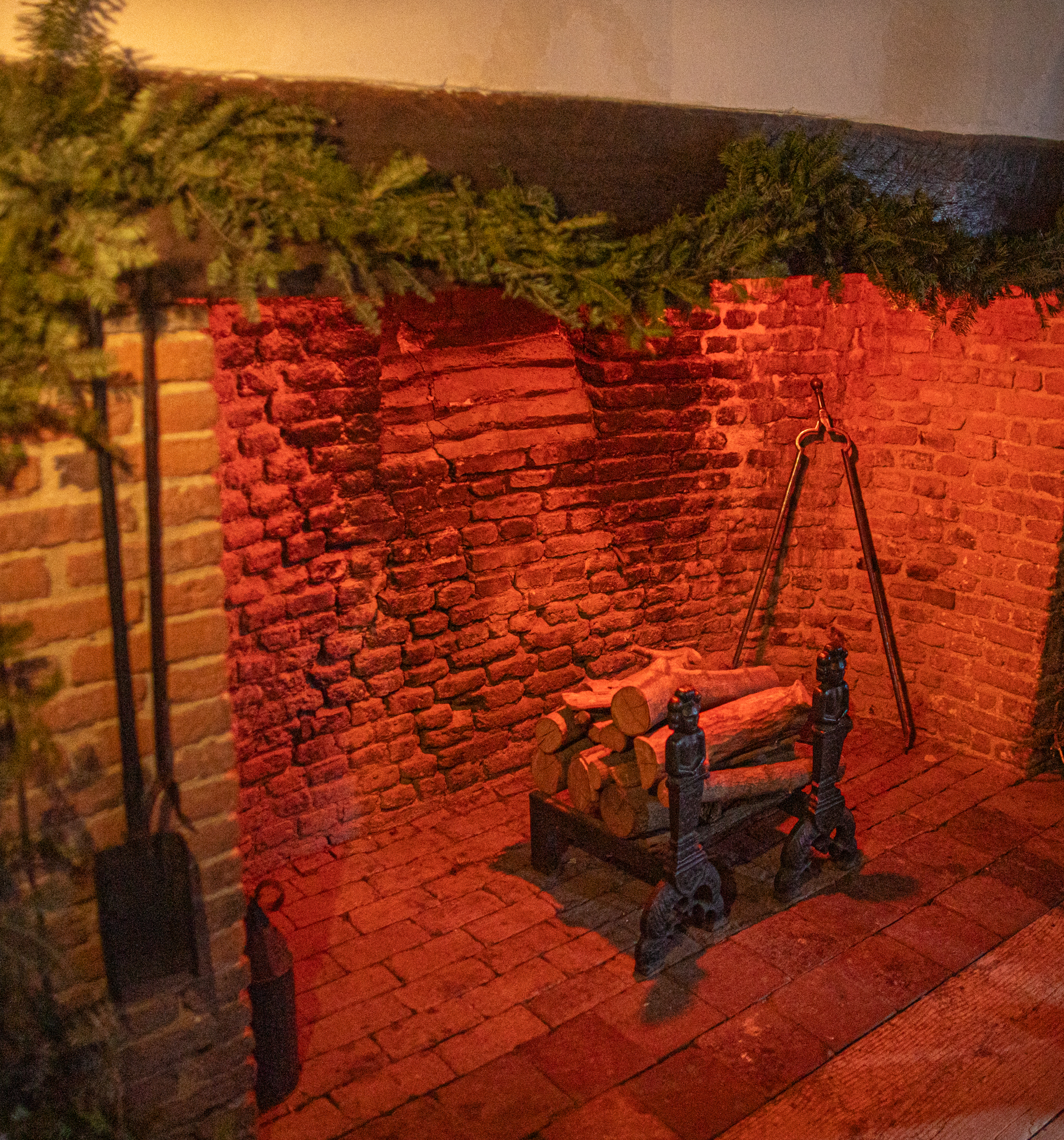
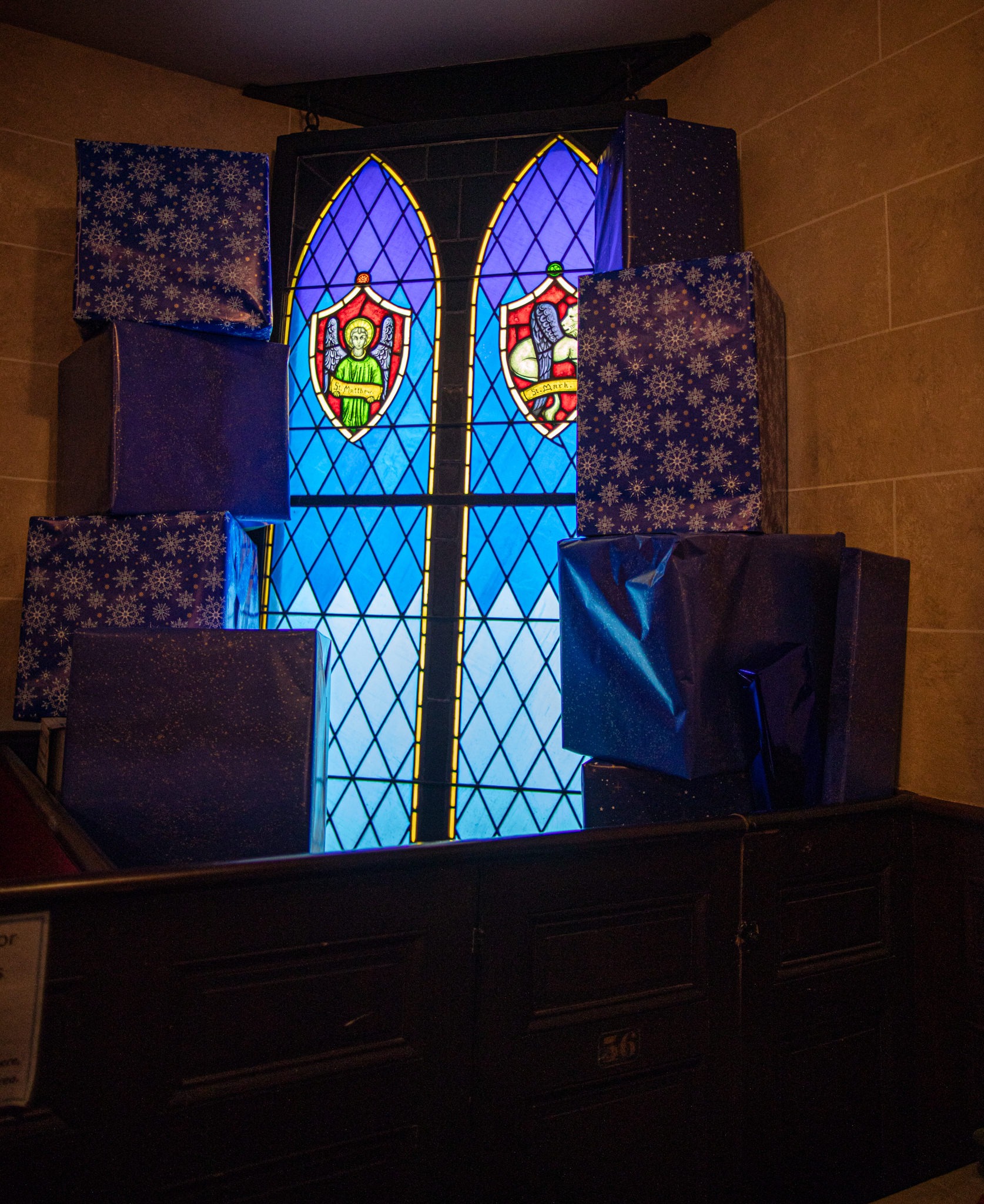
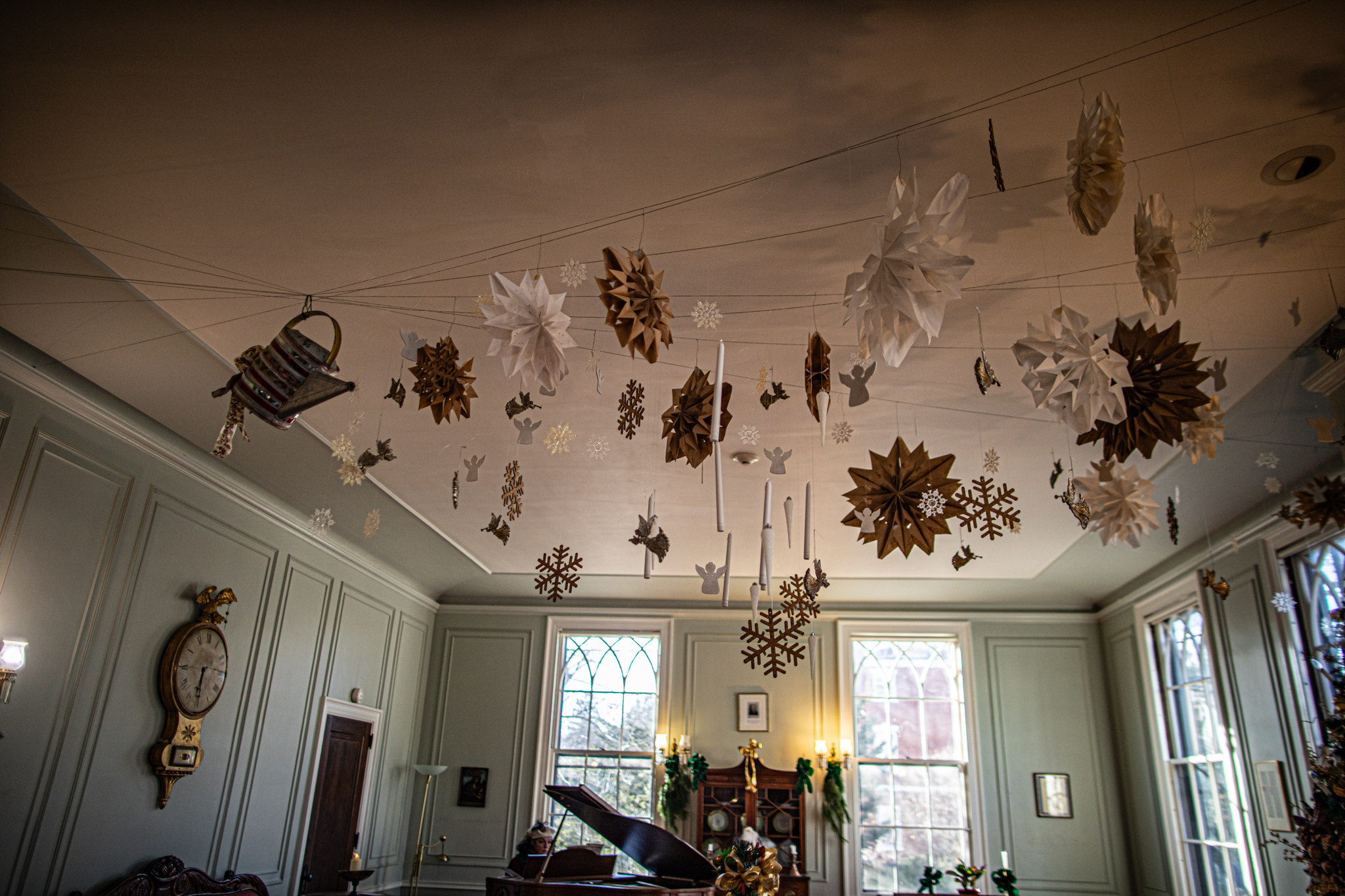
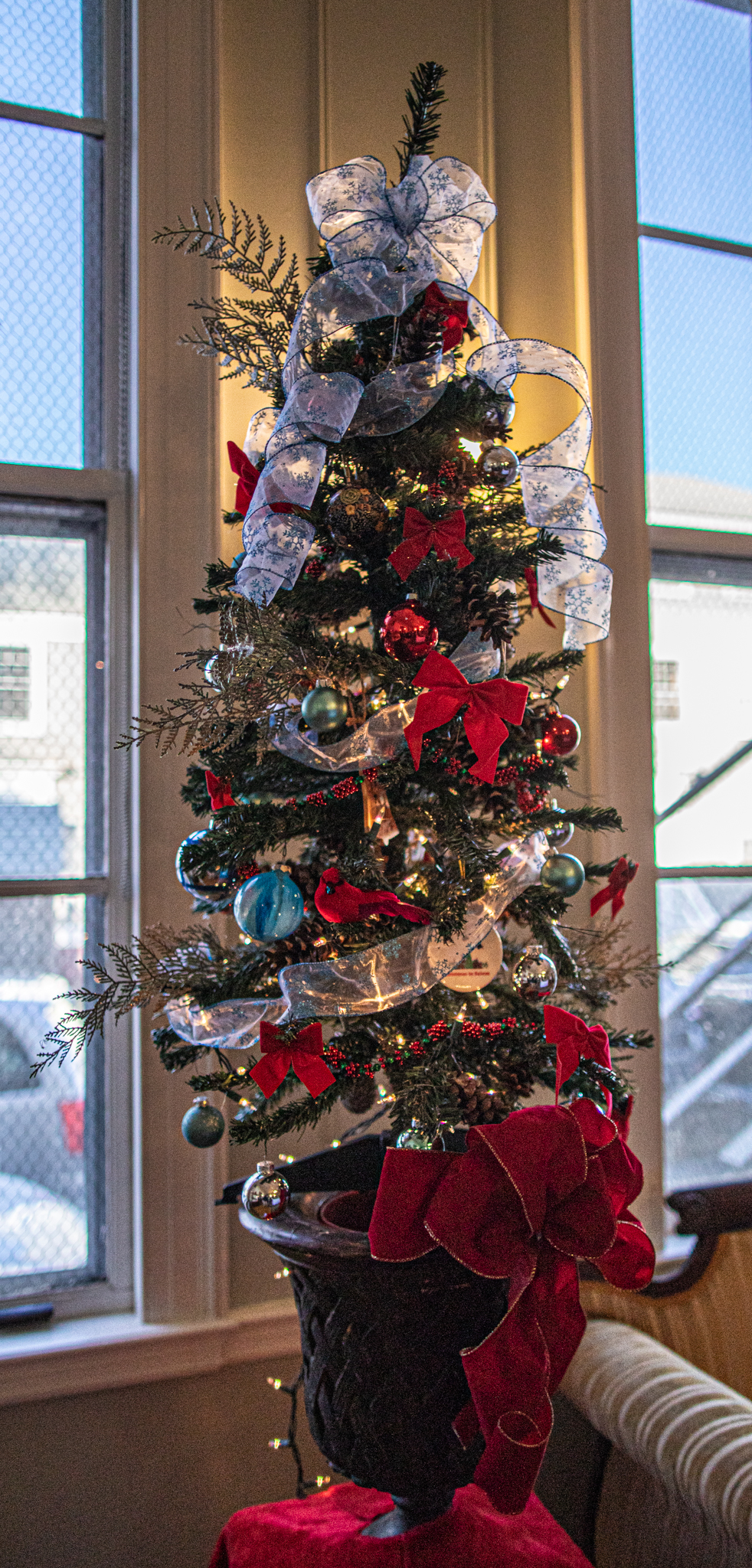
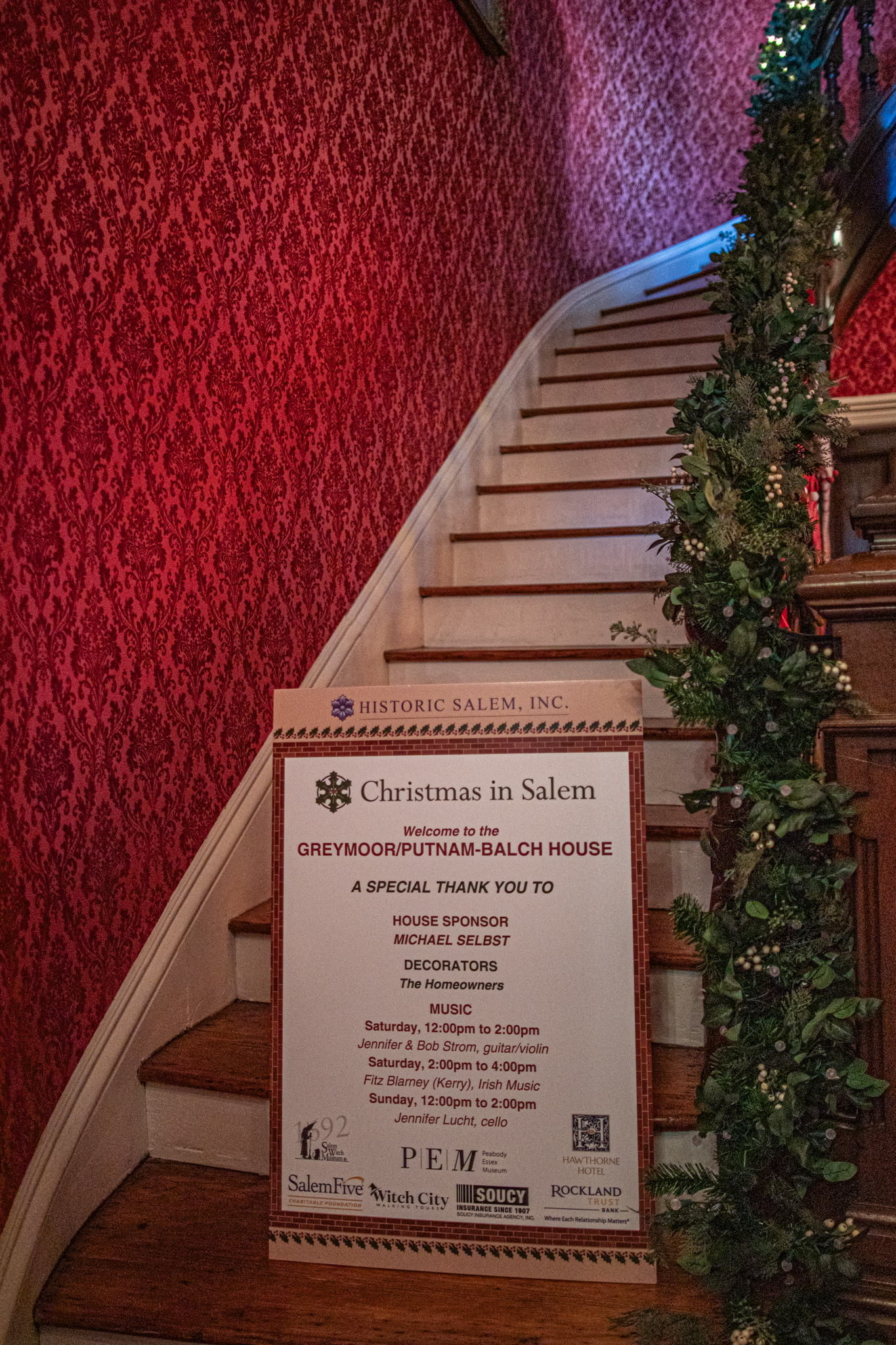
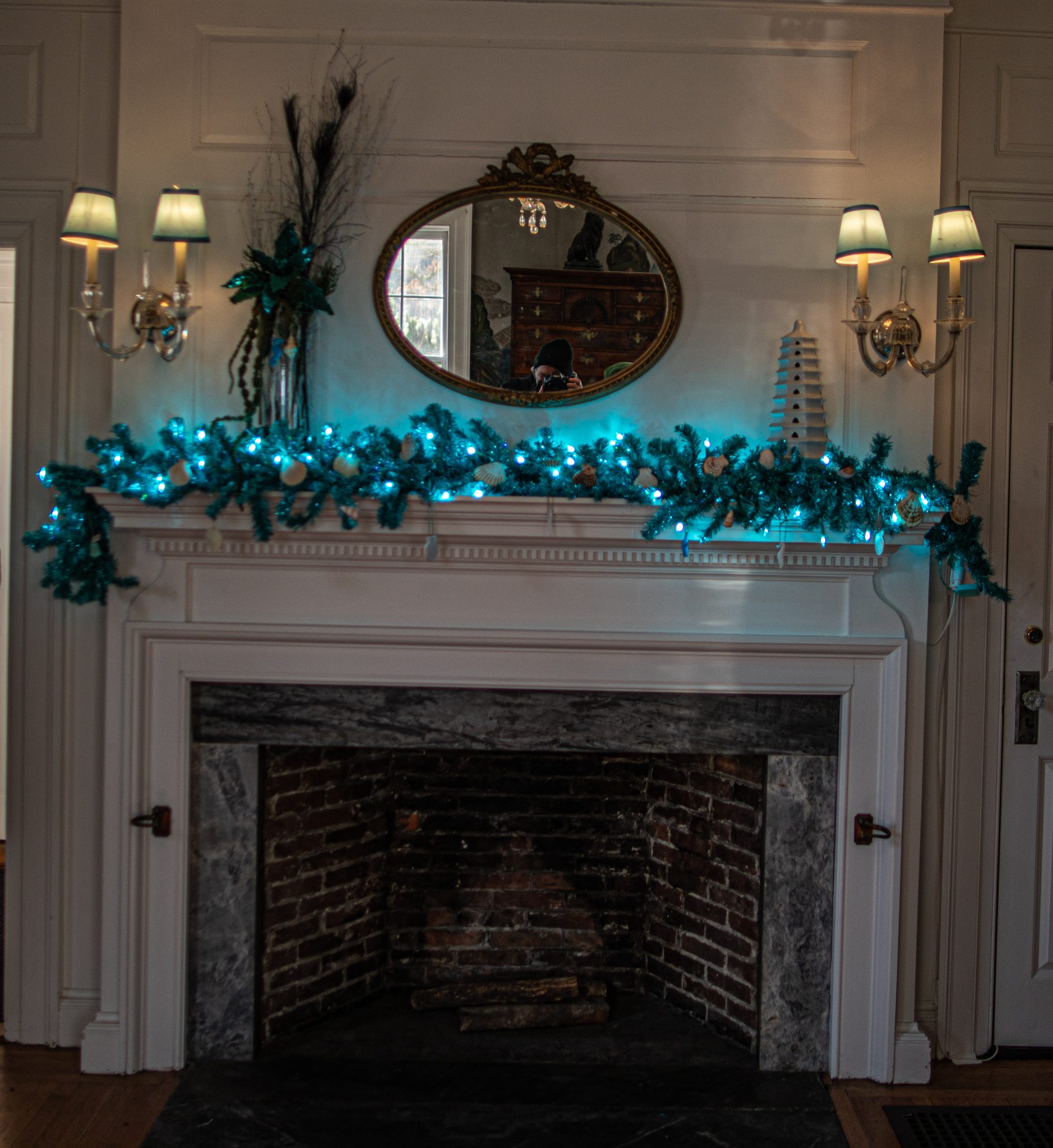
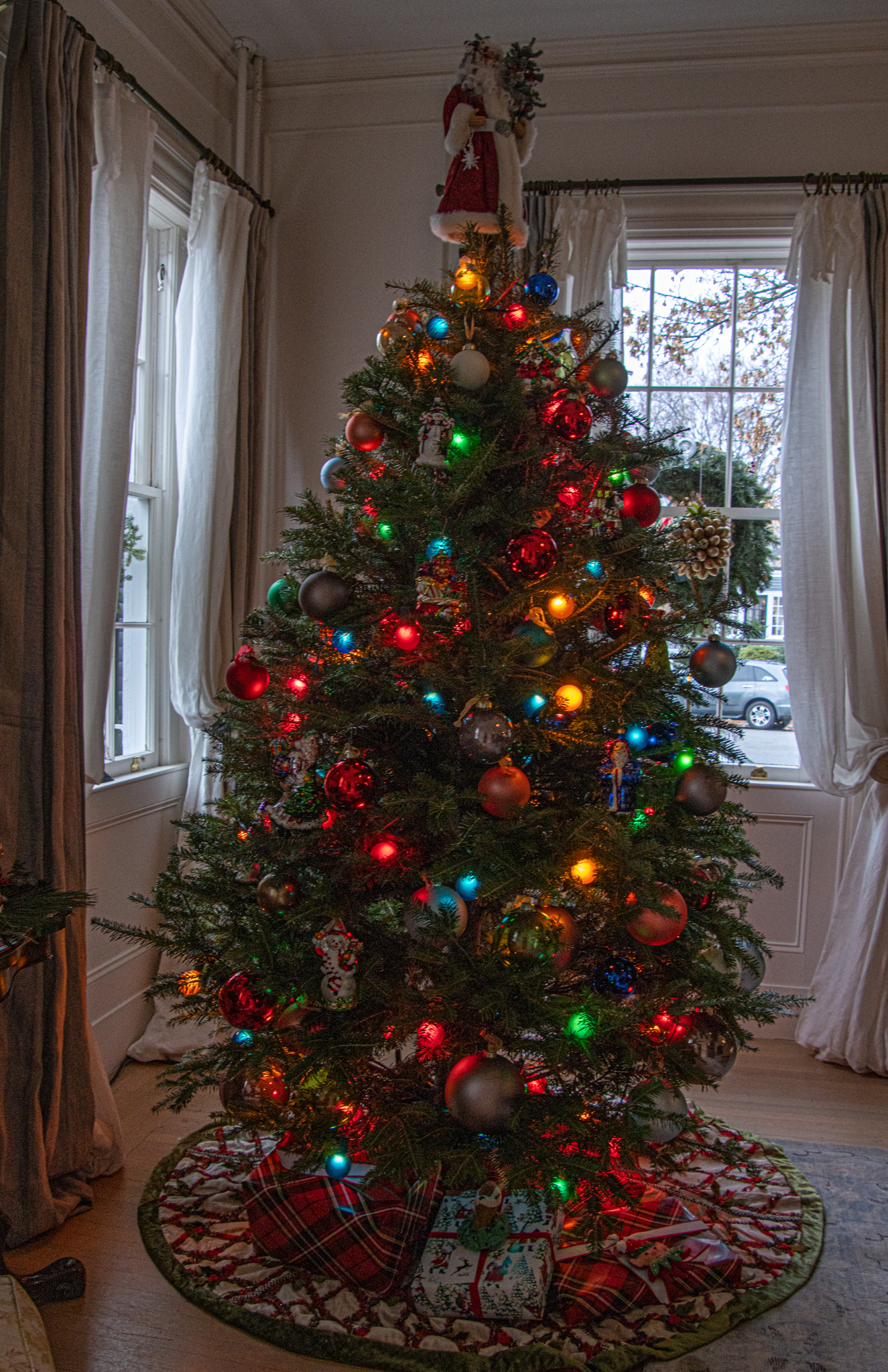
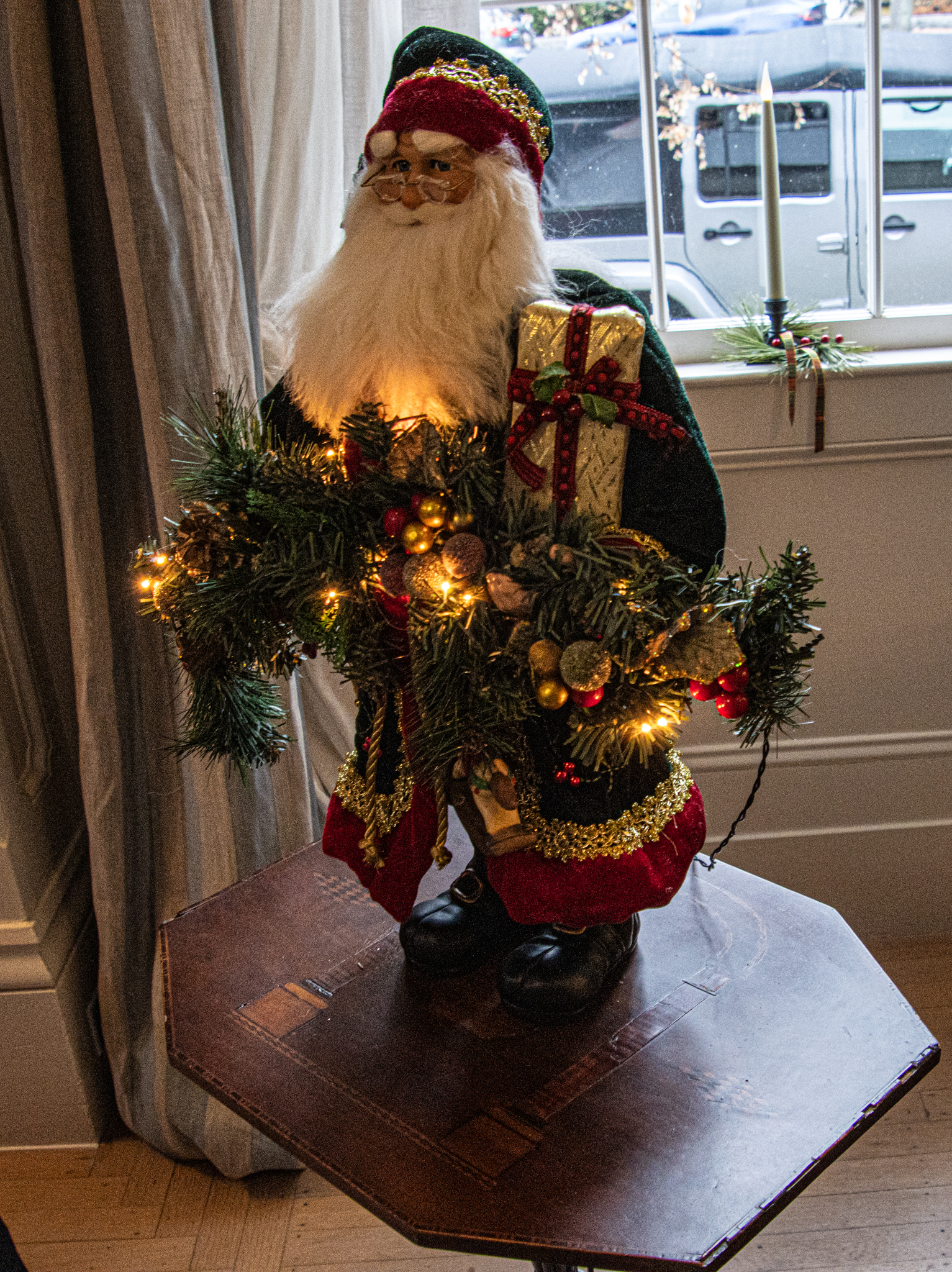
Upon entering the home, it was clear there was a lot of Christmas decor in the house.
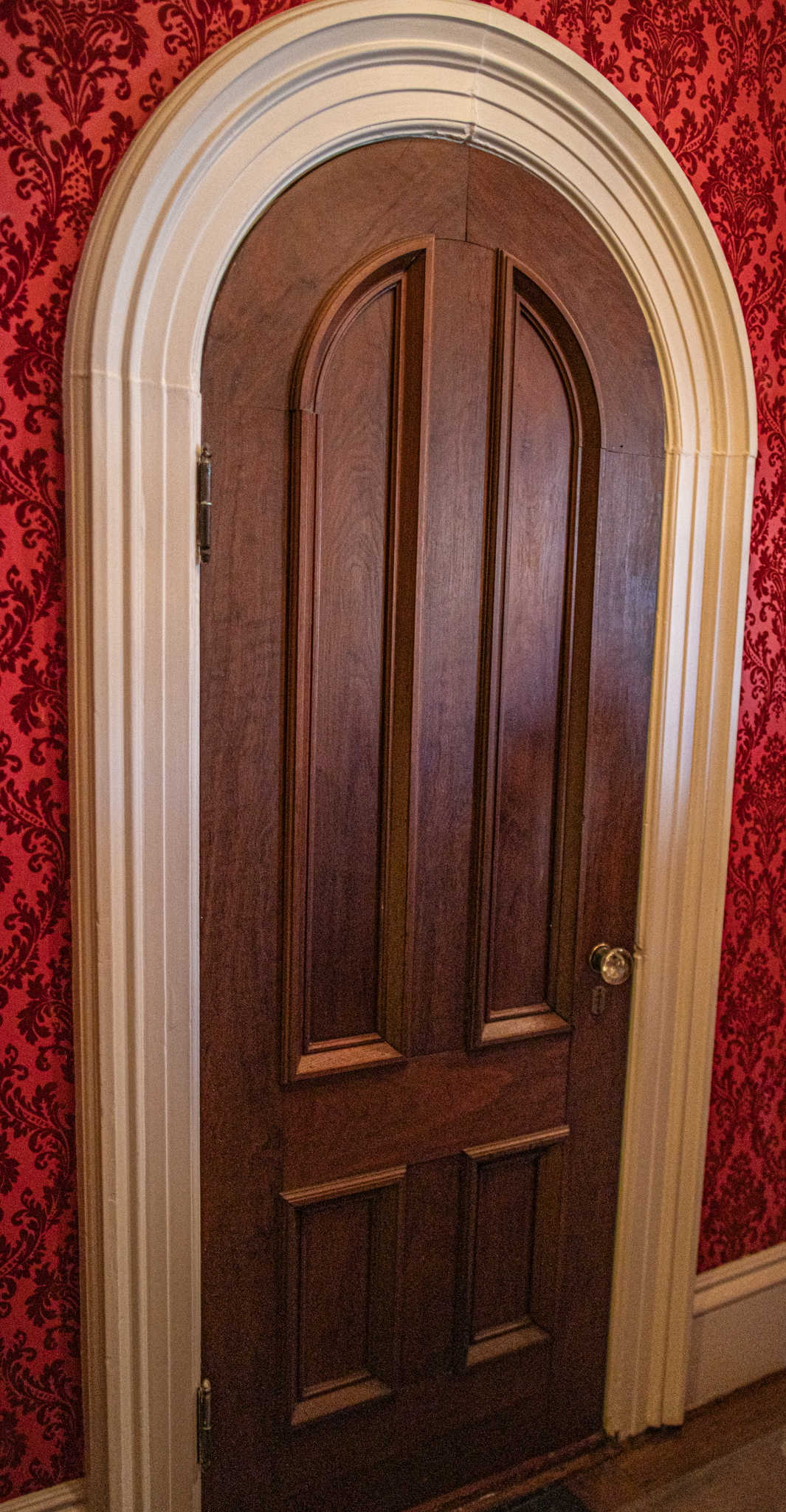
I thought this arched door was very elegant.
Of course, my favorite of any home is the kitchen. I always like to look at the kitchens of these old homes! This very old looking cast iron coal stove had 6 burners. I especially enjoyed the artwork and decor above the stove.
In the hallway, there was this painted window that could be opened.
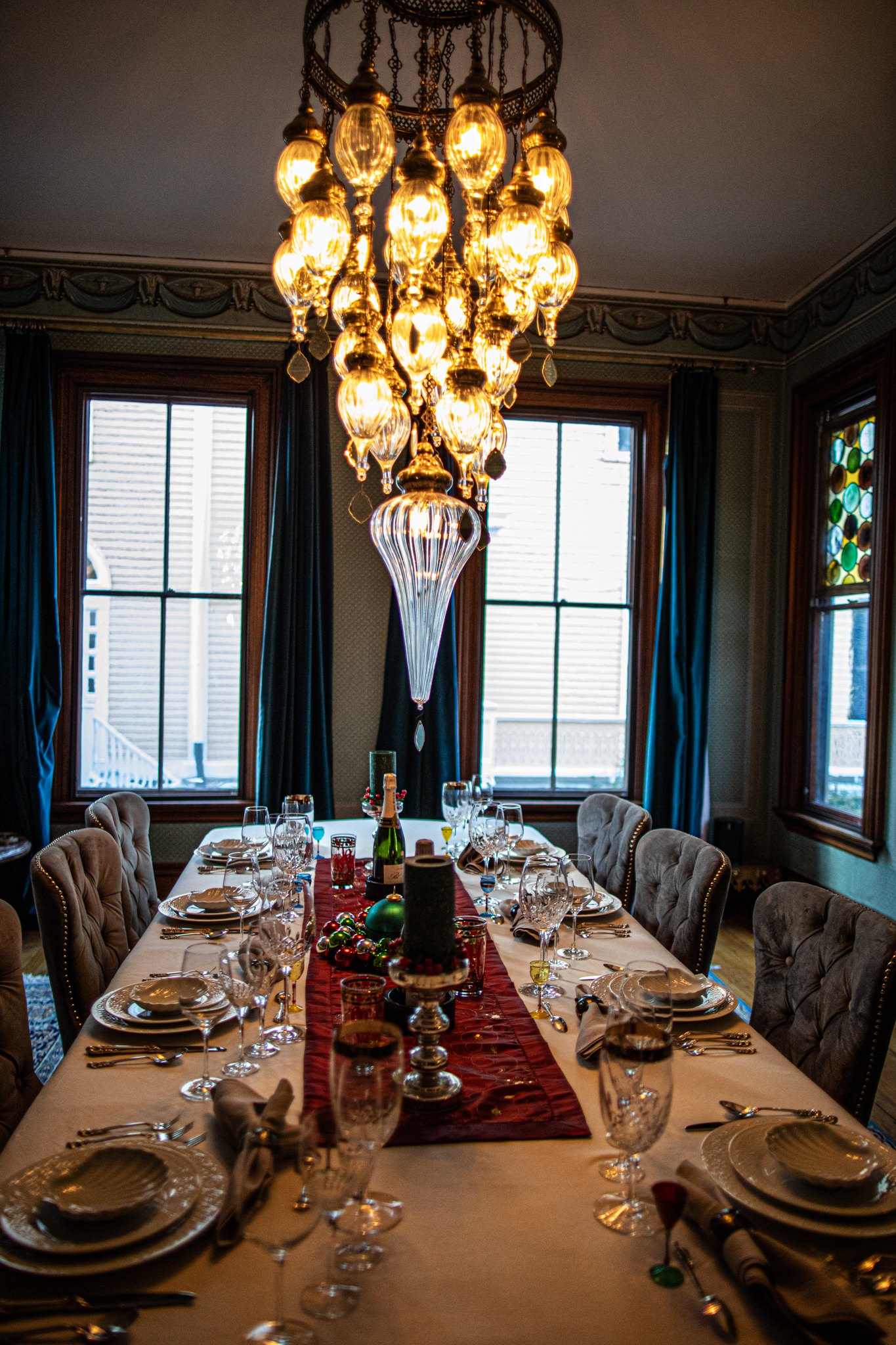
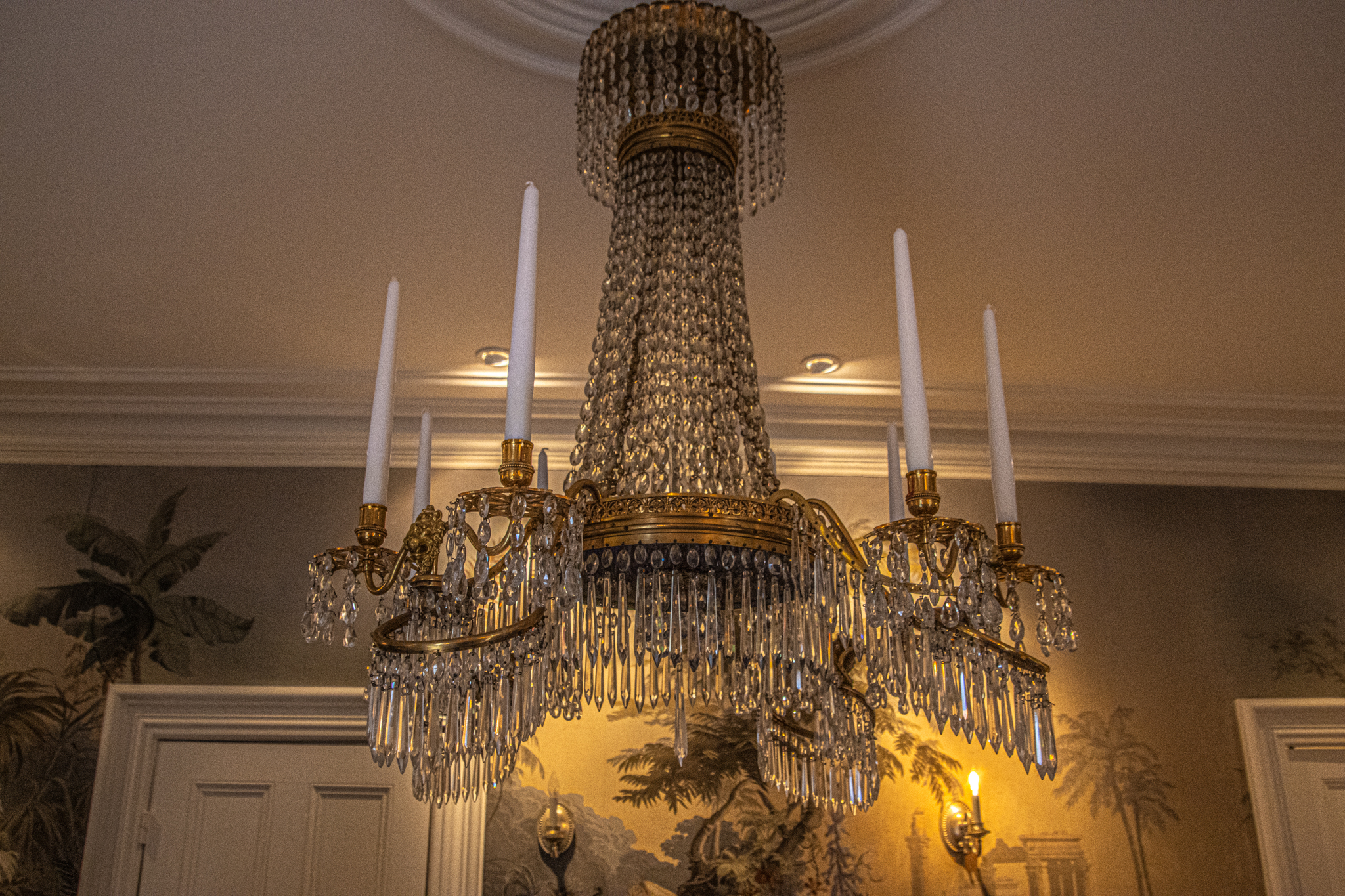
The home was tastefully decorated. I especially liked the lighting fixtures.
Fitz Blarney provided some holiday cheer.
I have a pet peeve about taking photos in general. But, especially with photos of homes. If there is a vehicle or some other obstruction, I won’t take head on photos of the building. So, I will often take photos from an angle or the side. However, this home is so pretty, I decided to include a front facing photo of the building from the real estate website when it was on the market (photo courtesy of priceypads.com).
Parking: There are several parking lots and garages in the Salem area
Universally Accessible: No, many of the homes do not have ramps or universally accessible entry
The second home on the Christmas In Salem tour is the Thomas Whittredge House. Thomas Whittredge, a shipmaster from Salem, purchased the land for the home on November 30, 1799. The house was finally built in 1802. The boundaries of the from the original deed have not changed an inch.
Fittingly, this home on Federal Street is built in the original Federal style which was popular from 1780 to 1820. The front facade is most noticeable due to its Doric pilasters elliptical fanlight above the door. Originally, there was a two story stable and a shed and outhouses on the property.
Whittredge was a master mariner who traded in the mid-Atlantic states. He owned two vessels that served as privateers during the war of 1812. He and his wife Sarah, a native of Danvers, were married in 1793. They lived in the home with their 4 children until Thomas’ death in 1829. Sarah lived in the house until 1841 when she transferred the deed to her daughter and son-in-law. The house, which was originally a single family home, was divided into a two-family home around 1885.
During the 1990s, a fire damaged the home. It would not be fully rebuilt until 20 years later.
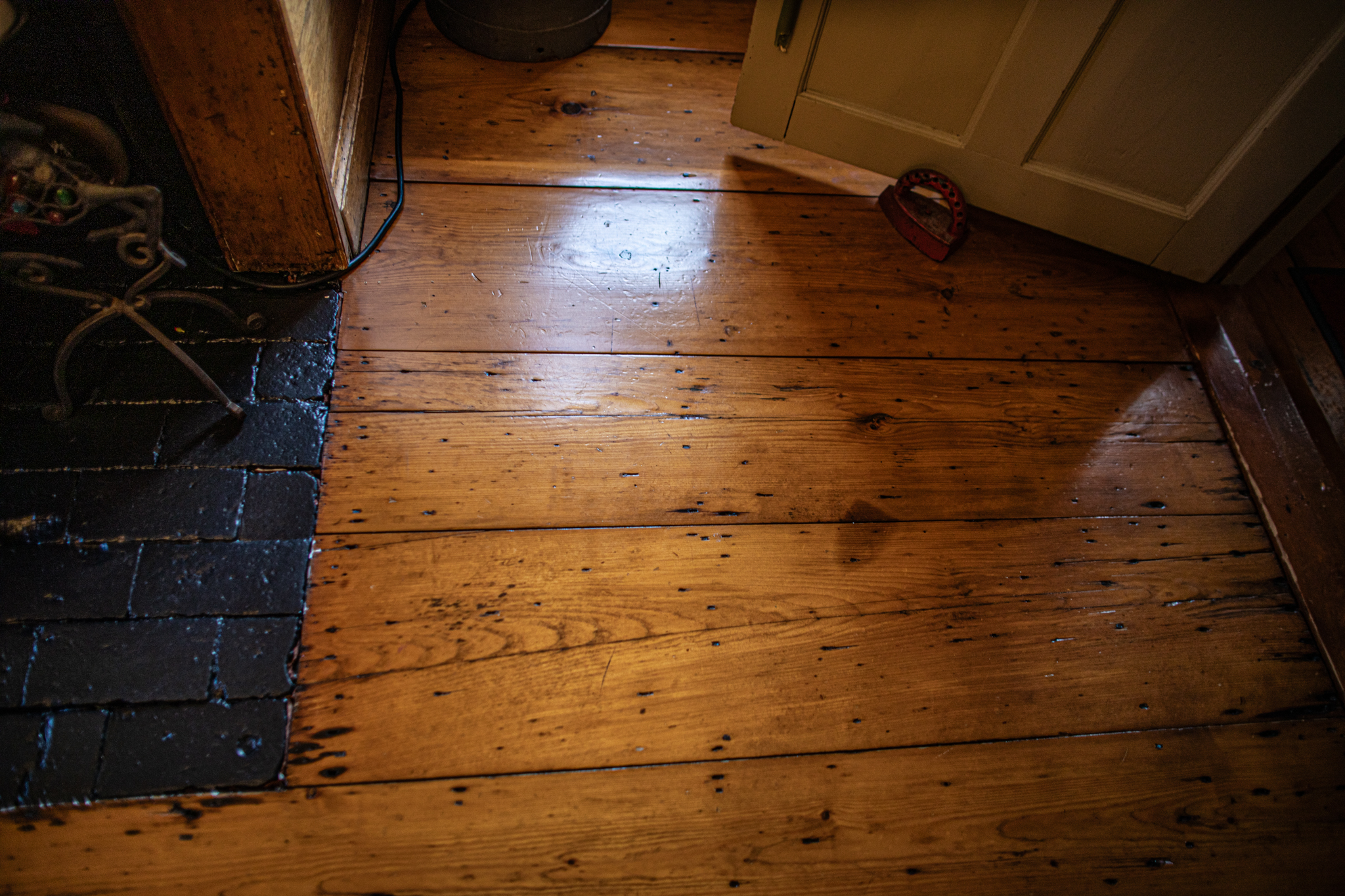
The home still has its original floors in the fireplace area.
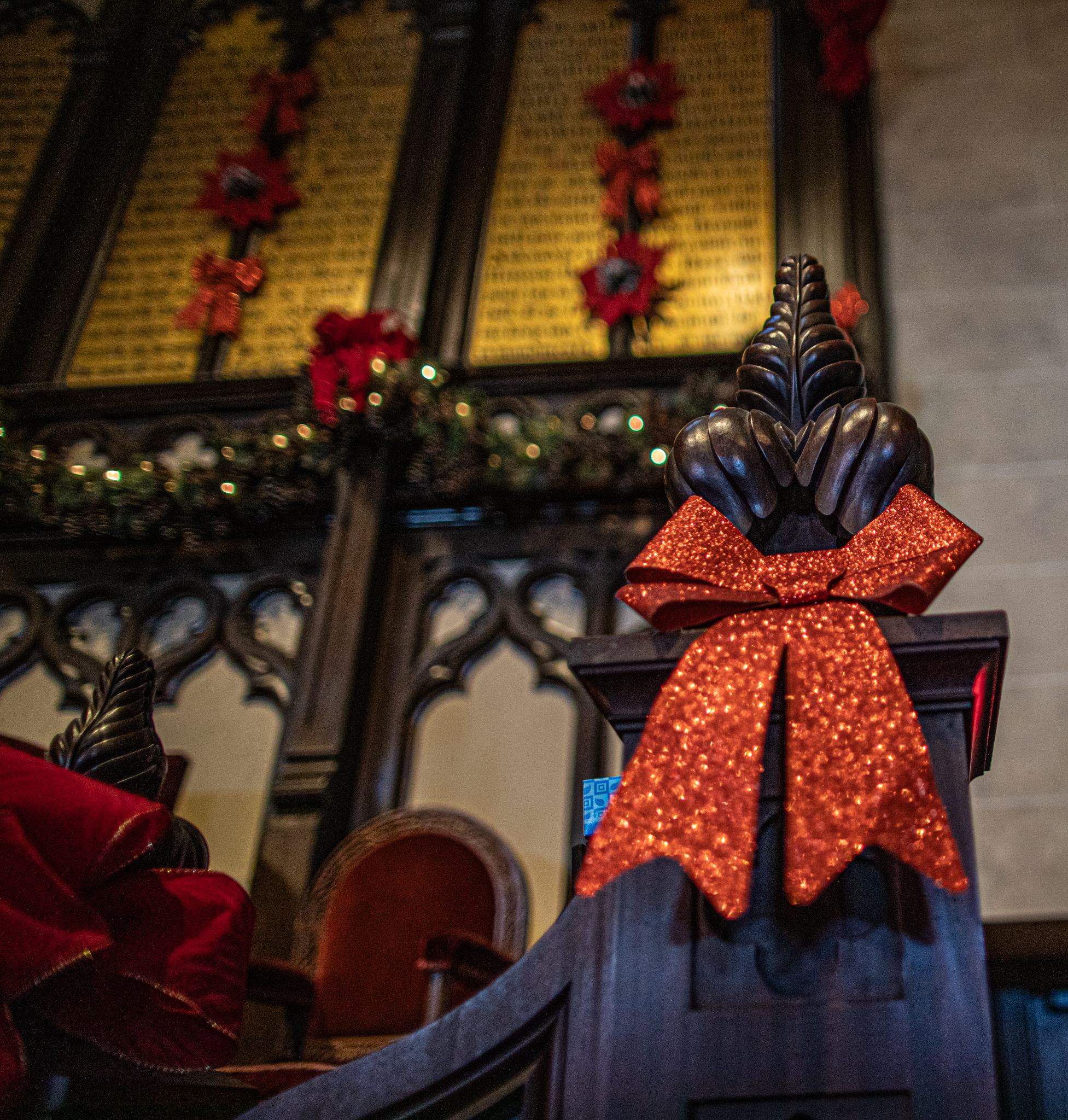
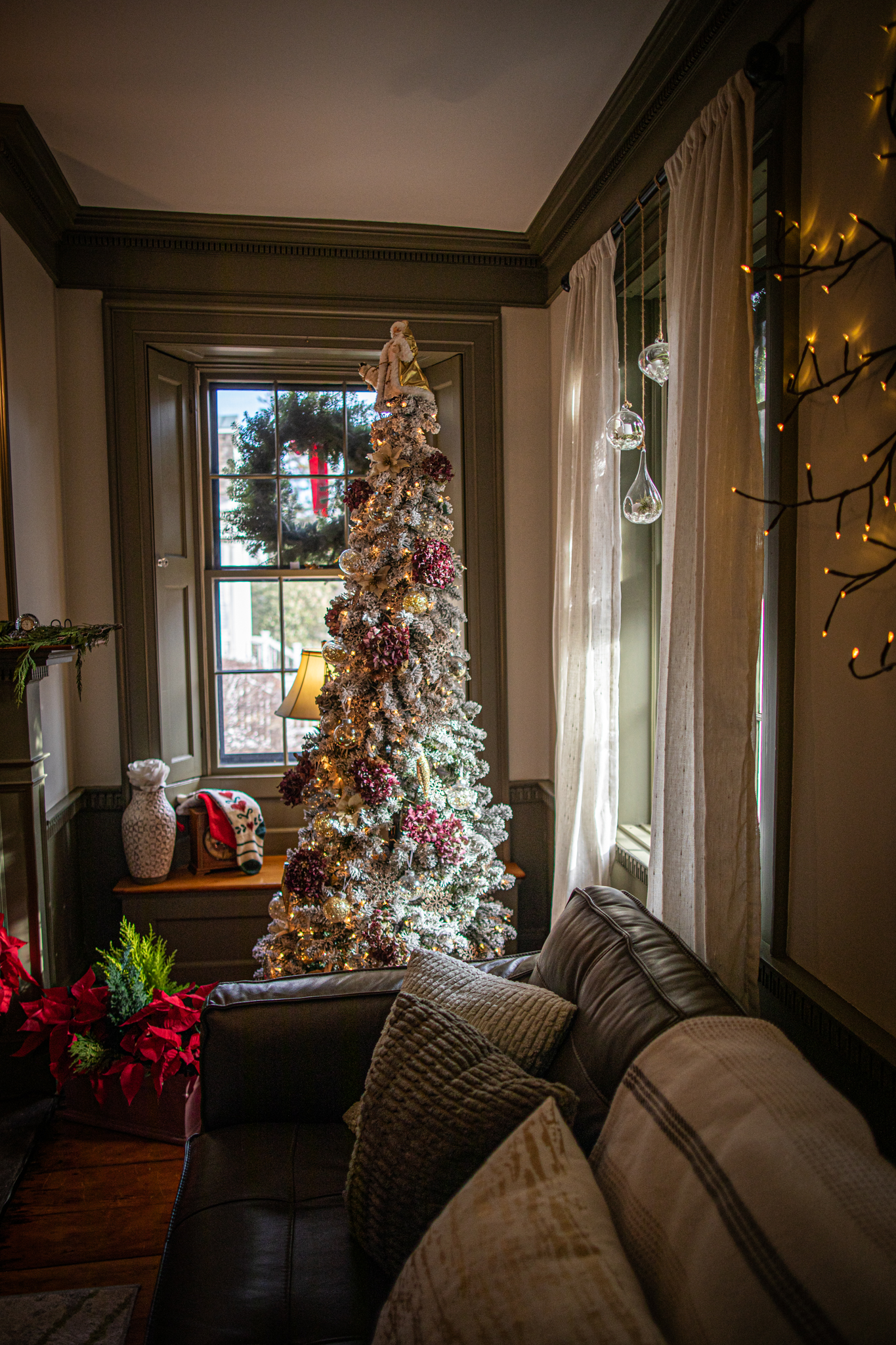
The house was dressed up for the holidays with bow, ribbons and a variety of lights!
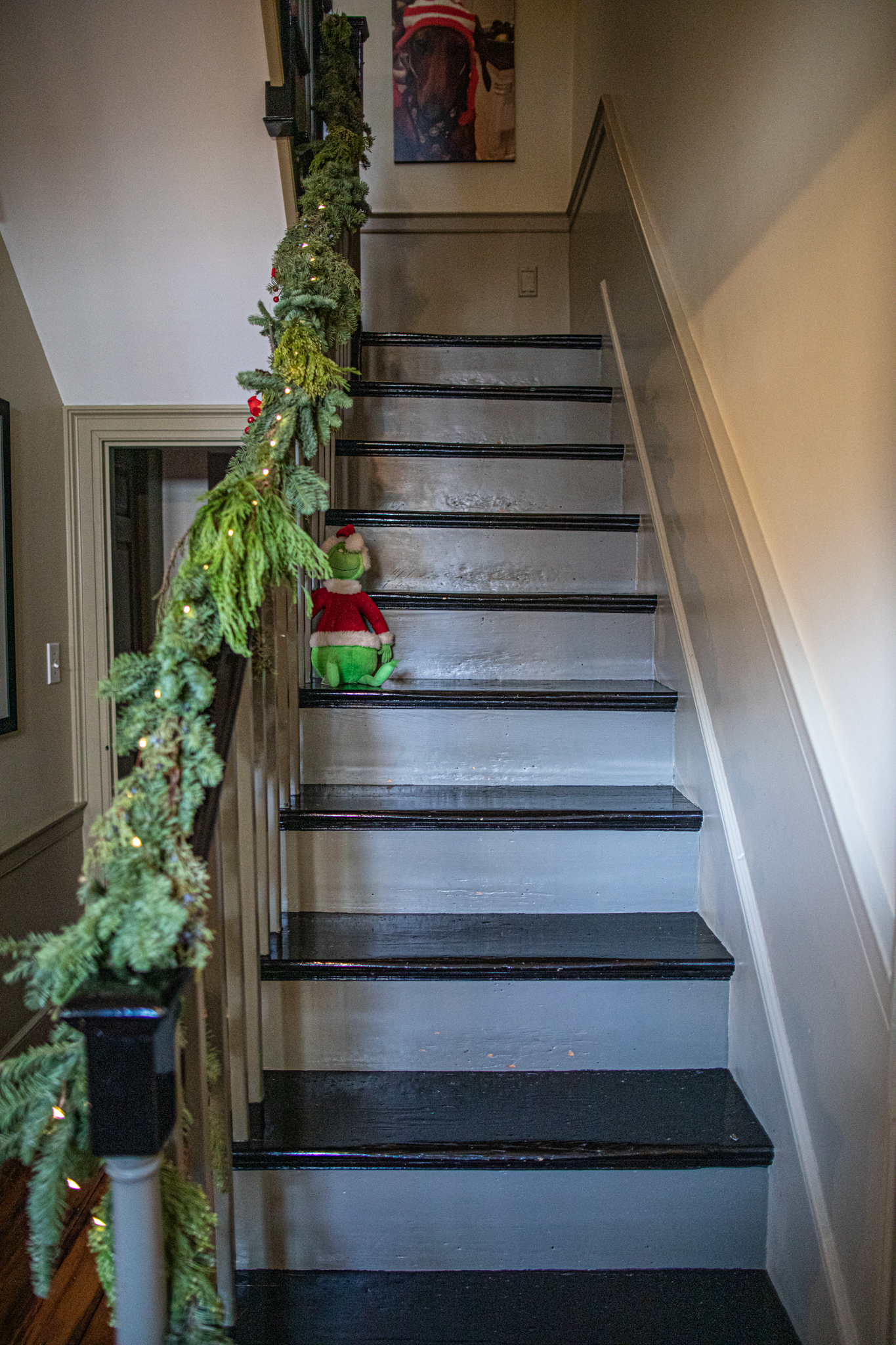
If you look closely up this stairwell, you might see a portrait of one of the family members!
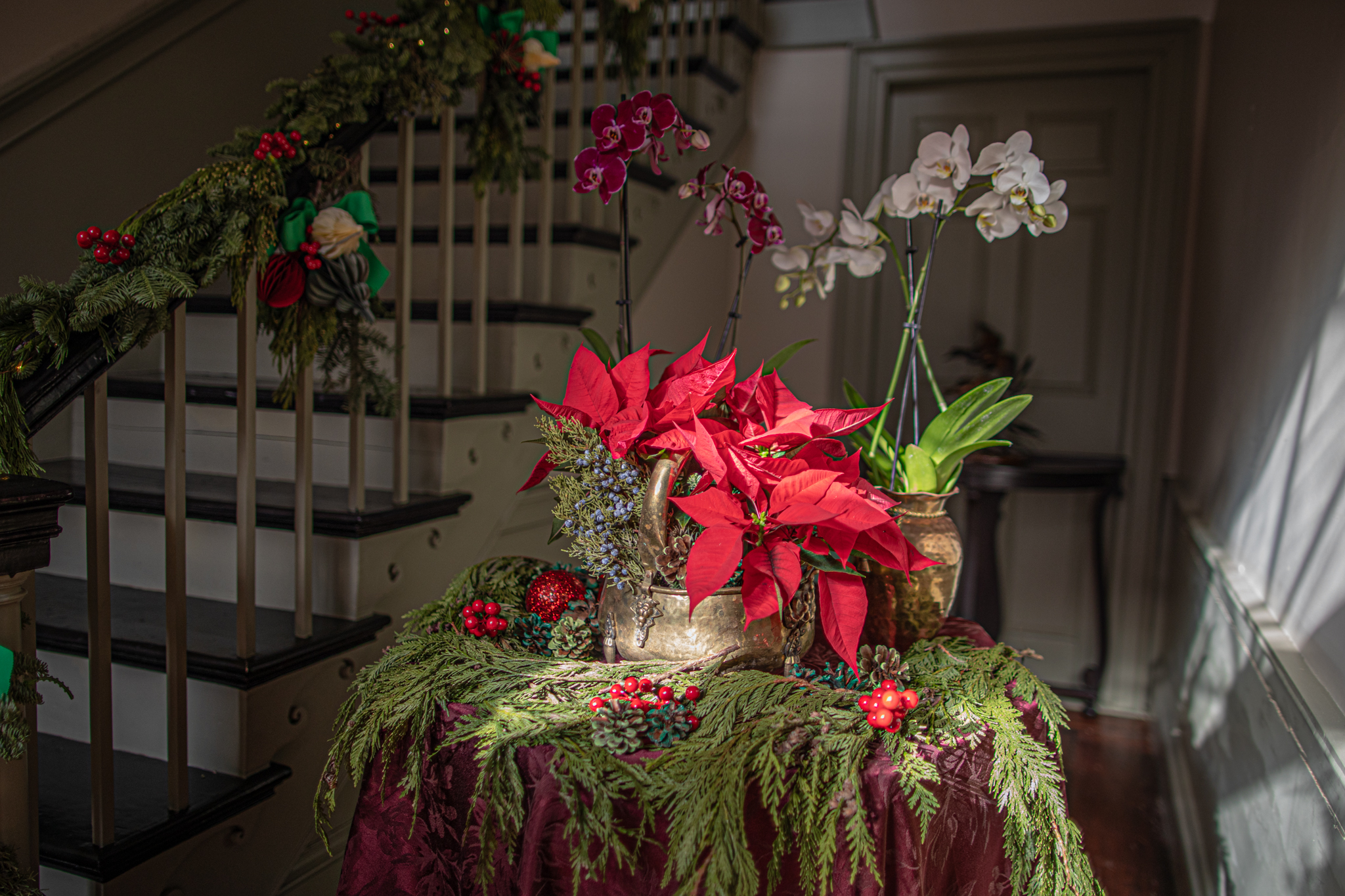
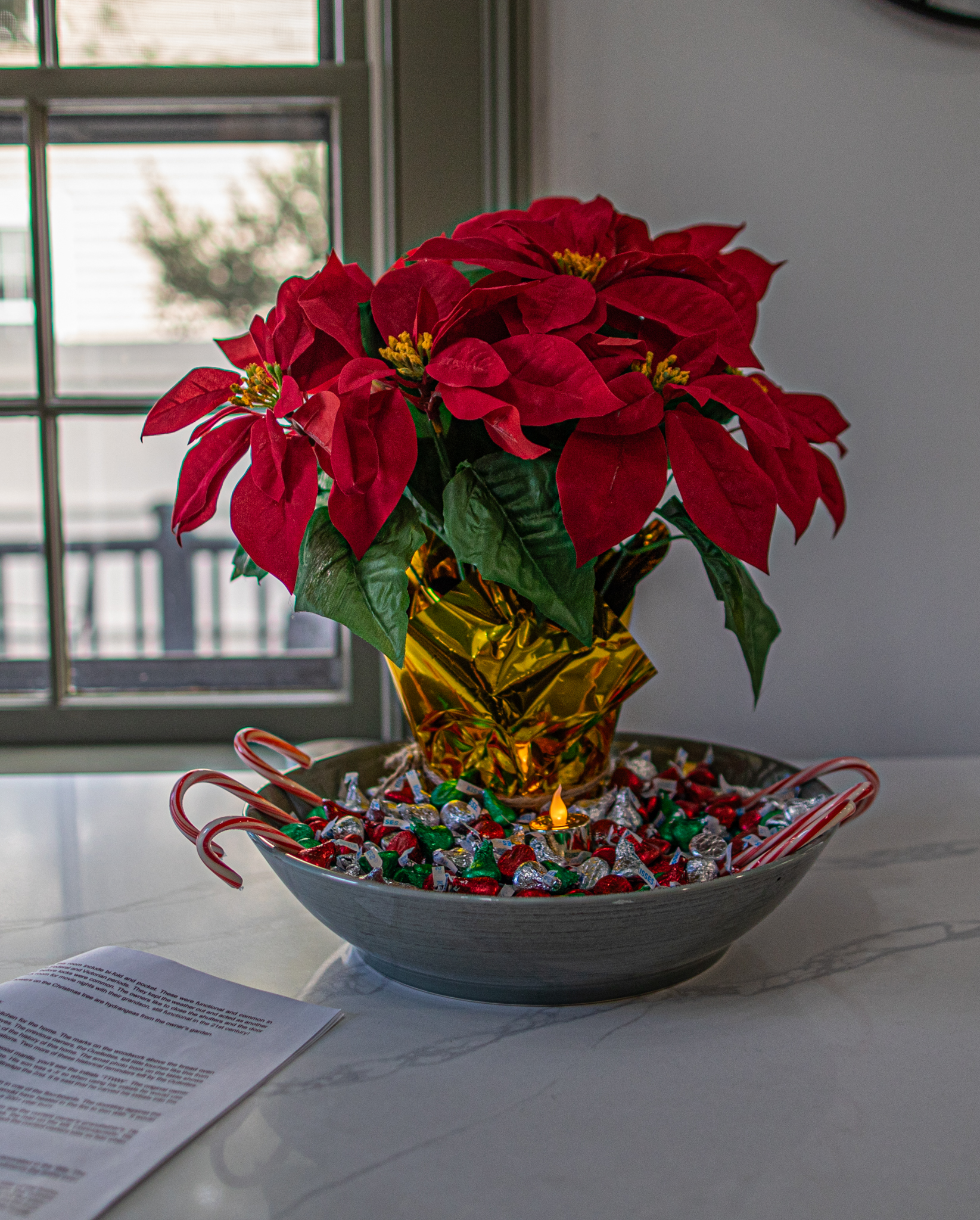
And what holiday home would be complete without a poinsettia! The best part were the free treats in the bowl!
Some of the visitors got into the holiday spirit and wore their best headwear for the event!
Parking: There are several parking lots and garages in the Salem area
Universally Accessible: No, many of the homes do not have ramps or universally accessible entry
When you ask most people what they think of when they think of Salem, MA they will most likely reply with something about Halloween and witches. However, Salem has become an all year round attraction. In fact, the Christmas in Salem event has quickly become one of the more popular events in Salem.
Christmas In Salem is a series of guided tours at 13 historic homes and buildings in Salem, MA. In these series of posts, I will take you all on these tours and give some observations from my perspective through my photos and the information provided by the informative tour hosts and the literature from this event.
The first home on the Christmas In Salem tour is the Cotting-Smith Assembly House (aka as the Assembly House) on Federal St. This house was used as the headquarters of the tour. People registered for the tour by showing their receipt and, upon registering, were given a handbook with the addresses and writeups for each building.
Built in 1782 as a “Federalist Clubhouse”, the Cotting-Smith Assembly House was used as a ballroom and concert venue as well as a place to host lectures and other events for Salem’s elite. The Marquis de Lafayette was said to have danced in that very house in 1784 and it is said that George Washington dined there in 1789. While the original documentation for the building is not available, it is believed the house was essentially plain and functional in its original state in 1782.
The building was originally funded as a joint stock venture. Once it was rendered obsolete in 1792, Jonathan Waldo, one of the original developers, obtained full ownership. Waldo then sold the house to Samuel Putnam in 1794. Either Waldo or Putnam hired renowned Salem architect and craftsman Samuel_McIntire to remodel it as a private home. McIntire added 4 pillar of iconic pilasters to the second floor facade and a pediment centered above. The Assembly House is said to the the only wooden structure designed by McIntire with a pavilion front. The house was later remodeled during the 1830s or 40s. During this time the Greek Revival portico was added to the front of the house featuring an ornate frieze of carved grape vines by master carpenter Joseph True. The Assembly House, which is now owned by the Peabody Essex Museum, is listed on the National Register of Historic Places.
The building acted as the meeting place for visitors to get their handbook of houses to visit and map of all of the buildings on the tour. So, there wasn’t much decor at this particular home. However, I did see some photo worthy things.
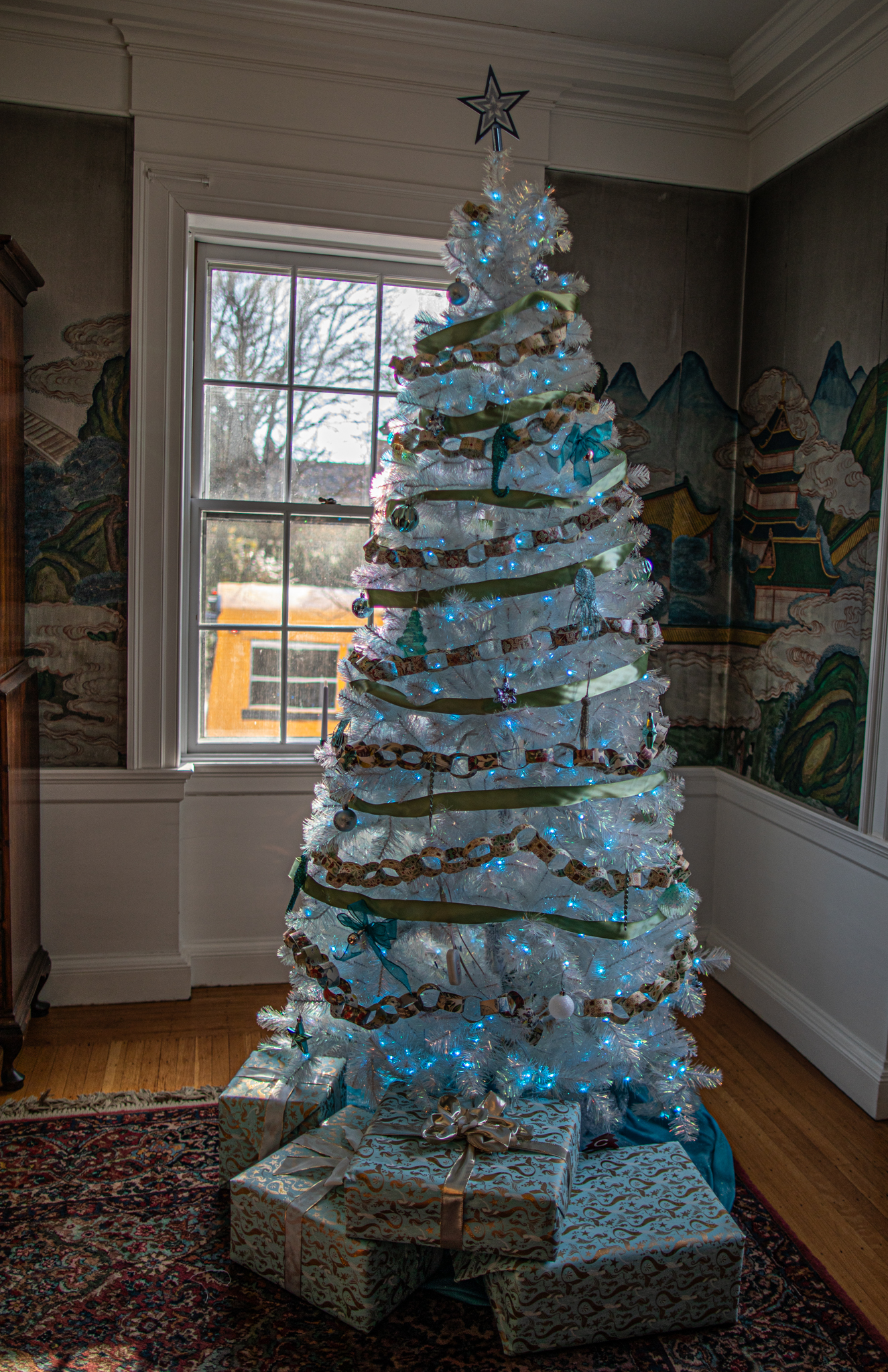
Sometimes the little things can tell a lot about a home. For instance, this wallpaper spoke to the trade relations between Salem and other countries. This wallpaper, which shows what looks like a rendition of life and culture of the people of Asia, may have been an example of how the owners traveled to certain parts of Asia. It was not unusual for people to put up wallpaper that reminded them of places they traveled to or traded with.
This is not an original print, though. It is a stylized representation of wallpaper from that time.
While wallpaper may not be in vogue now, it was a treasured possession of the wealthy at the time this house was built.
According to Historic New England, the earliest record of wallpaper in America is in the estate inventory of a Boston stationer in 1700, where “7 quires of painted paper and three reams of painted paper” were listed. But, only one wallpaper in Historic New England’s collection with a history in New England dates back to the 1700s. Like all early references, this was more descriptive of quantity than of design. Only one wallpaper in Historic New England’s collection with a history in New England dates to this early period. This wallpaper was later used to cover a copy book of poetry in 1783.
Initially, paper hangings, as wallpaper was called in the eighteenth century, were only available from stationer and book sellers. Or they could be custom ordered from merchants who specialized in importing luxury goods. Eventually, wall paper could be purchased from upholsterers.
Prior to 1760, only the wealthiest colonists in urban areas in New England could afford wallpaper. Wallpaper was expensive because of the process involved in making it. The rolls the wallpaper was printed on had to be made of individual sheets of paper. These sheets were glued together. Then, they were hand printed with wood blocks, one block for each color of the design.
That is what makes the Christmas In Salem event so interesting. You can learn so much about the history of wallpaper just by touring a historic home!
Please join me on my tours of all of these historic homes!
Date Of Event: December 2, 2023 (event is held annually the first weekend of Dec)
Location: 23 Winter St, Salem, MA
Cost: Tickets for Christmas in Salem are available online at www.historicsalem.org at a cost of $40 for non-Historic Salem, Inc. members and $35 for HSI members. Tickets purchased the day of the tour are $45. Tour tickets including the Friday night candle-lit preview are $120 for non-HSI members and $100 for members of Historic Salem, Inc. Christmas in Salem proceeds support the preservation mission of Historic Salem, Inc.
Hours: Sat & Sun 10-4
Parking: there are several parking lots and metered street parking throughout the city.
Summary: The Christmas In Salem event consists of a tour of historic homes and buildings in Salem, MA. Each year, home owners and building management open their doors to visitors to get a glimpse into what these historic homes look like and what stories they may have.
Update – some of these photos may look familiar to you if you have been reading this series of posts. I mistakenly posted photos of this home (the Samuel Roberts House) in my previous post for the William Roberts House (there are too many Roberts homes in Salem!) In any event, I have updated that post with the correct photos which you can find at this link: Christmas In Salem 2023 Part 4 – The Williams Roberts House (Updated). Trust me, you’ll want to check it out!
The Samuel Roberts House on Winter Street is the fifth stop on the Christmas In Salem tour. The Greek Revival home with vertical flashboard plasters was built in 1827. A wide frieze with two-part architrave and modillions (an ornate bracket, more horizontal in shape and less imposing than a corbel if that helps) wrap around the house. The entrance, which was decorated beautifully for the holidays is covered with louvered panels and is capped by a semicircular transom.
Samuel Roberts, who was a mason by trade, built the the home 1827 and immediately deed the house to his son Nehemiah Roberts, a mariner. Nehemiah, who died at sea in 1841, sold the home to his brother David in 1835. David, who was a Harvard graduate and lawyer, would go on to have an illustrious career as a state representative in 1833 and mayor pf Salem from 1866-1867. The house remained in the Roberts family until 1912 when it was sold to Dr. Martin Field who was considered one of the leading surgeons in the North Shore of Massachusetts.
You can see that before you even enter the home the home and property was decorated with a tasteful touch. Based on the many beautiful plants around and inside the property, it may not be surprising to know the The Salem Garden Club decorated the house for the event.
The interior of the house kept up with the plant and horticultural theme. It was just as pretty and festive.
The house has some really interesting decor. I am always fascinated by the fancy decor and architecture of these historic homes, especially their walls and ceilings. I thought this was a very interesting type of decor in the ceiling.
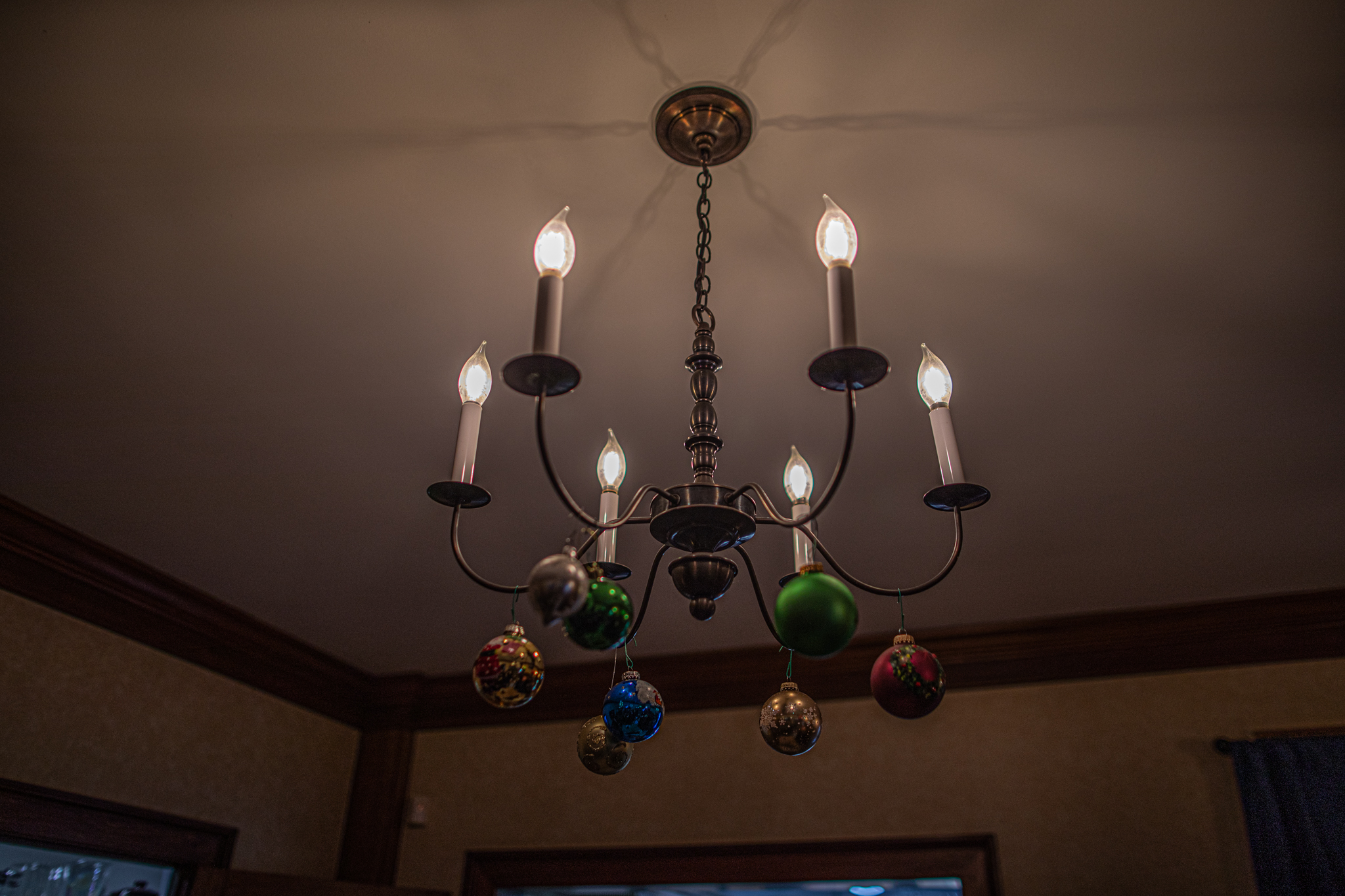
In the dining area there was a very interesting lighting fixture. Believe it or not, this ornate chandelier does not turn on. It was never set up to have any current sent to it. Instead, the home owners use candles to light the room.
You may notice the wallpaper has an interesting pattern. The home owners wanted the wallpaper to show places they like to visit such as France and Africa I believe so they could still feel like they’re traveling even though they’re in their dining room.
As we entered the kitchen area, we found something interesting and unusual. This stove. It’s always on. Always.
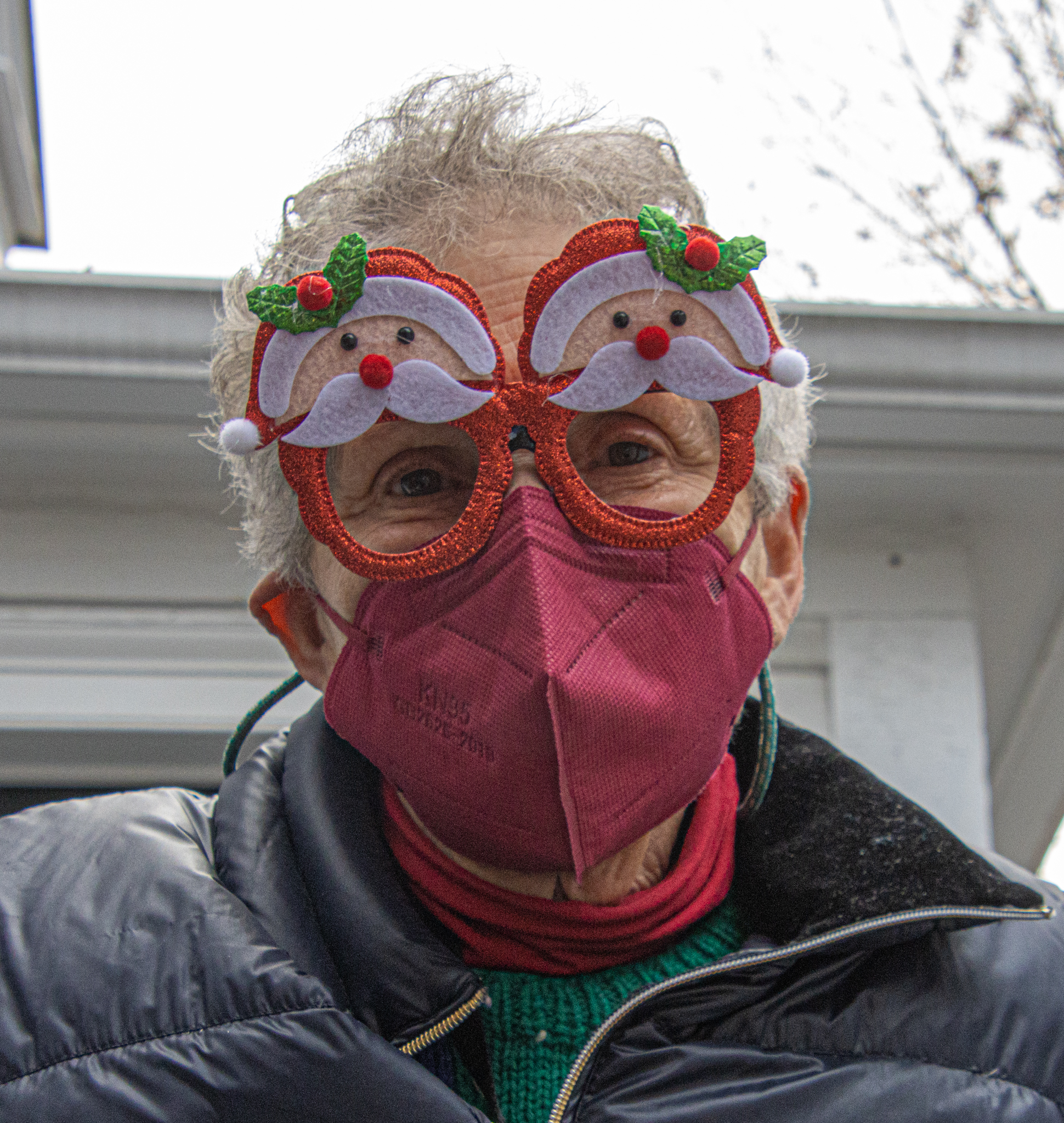
The visitors on this tour wore their own holiday best! This nice lady was wearing very decorative glasses for the tour.
So, we’ve made it half way through the 2023 Christmas In Salem tour! I hope you’ve enjoyed the tour so far and I hope you join me on the second leg of the tour!
Date Of Event: December 2, 2023 (event is held annually the first weekend of Dec)
Location: 24 St. Peter St, Salem, MA
Cost: Tickets for Christmas in Salem are available online at www.historicsalem.org at a cost of $40 for non-Historic Salem, Inc. members and $35 for HSI members. Tickets purchased the day of the tour are $45. Tour tickets including the Friday night candle-lit preview are $120 for non-HSI members and $100 for members of Historic Salem, Inc. Christmas in Salem proceeds support the preservation mission of Historic Salem, Inc.
Hours: Sat & Sun 10-4
Parking: there are several parking lots and metered street parking throughout the city.
Summary: The Christmas In Salem event consists of a tour of historic homes and buildings in Salem, MA. Each year, home owners and building management open their doors to visitors to get a glimpse into what these historic homes look like and what stories they may have.
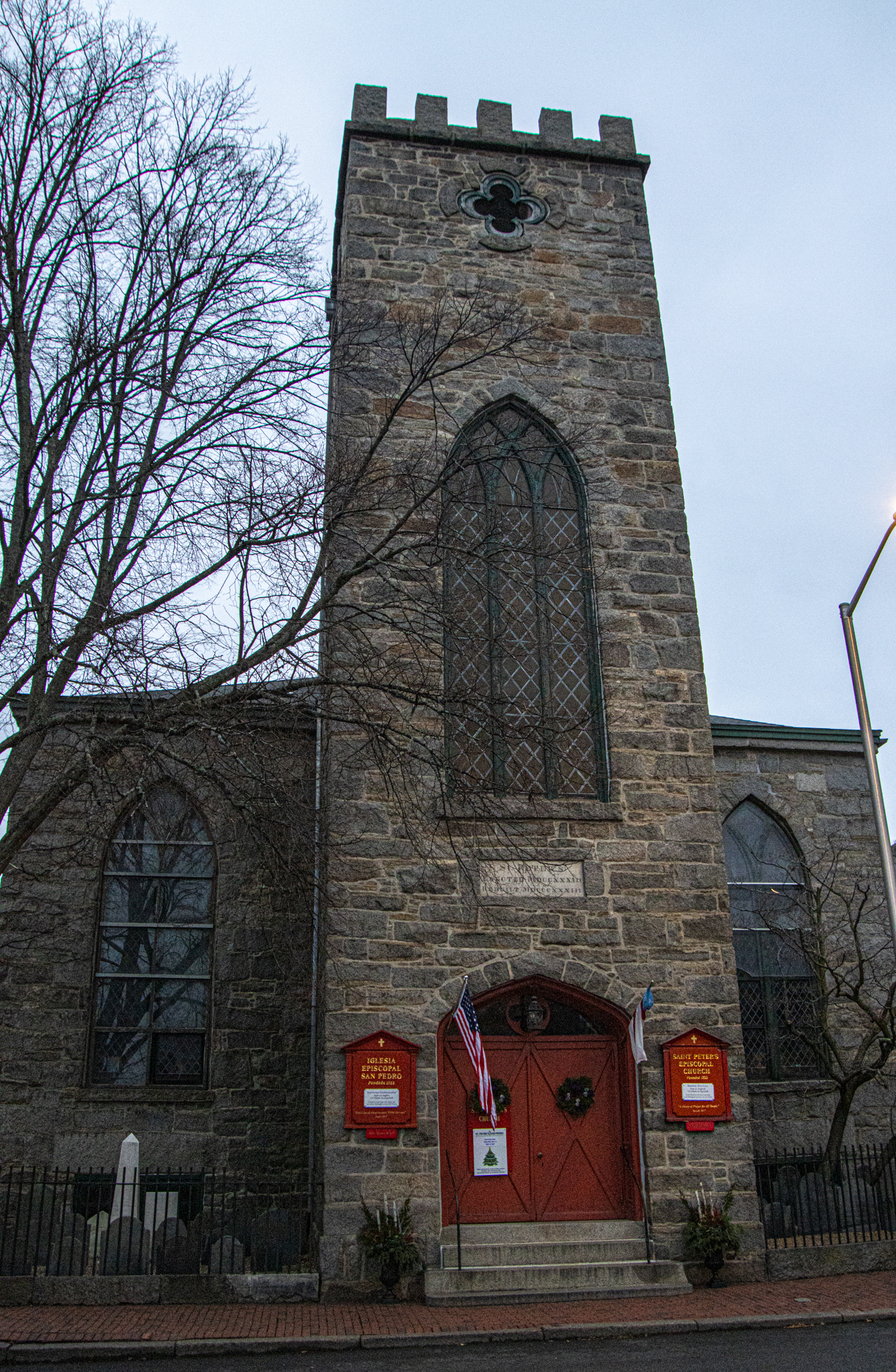
If you’ve traveled to Salem, MA, you’ve undoubtedly passed by the historic St. Peter’s-San Pedro Episcopal Church. Yet, you may not know it’s secret history.
As luck would have it, this church was the first stop of the Christmas In Salem event. An annual event for the 44 years, Christmas In Salem showcases historical homes and buildings which are tastefully decorated for the tours. The homes and buildings also display historical and seasonable appropriate items. Tour guides inform the visitors of the historical significance and background of each building.
Because of all of the information disseminated at this event and the number of photos taken, I have decided to break this event up into a series of posts. There were 10 houses on this tour. So, there will be 10 posts for this event. I hope you join me on this tour of some of the most historical and beautiful buildings in Salem, MA!
St. Peter’s Church was established on St. Peter’s Day, June 29th, 1733, on land given by Phillip English and was built by parishioners and their slaves. From then it has grown and changed dramatically. The present church, which is constructed of Cape Ann granite, is our second church building and replaced the original yellow wooden church exactly 100 years later, on June 29th, 1833.
Although this church was built in 1873 from Cape Ann granite sourced from Rockport, MA, the St. Peter’s-San Pedro Episcopal Church, the history of the church in other forms, stretches back to St. Peter’s Day, June 29, 1733. The current church, which has 1733 pews, is said to have been constructed by parishioners and enslaved Africans according to the historical guide for this event. But, a different church in this location existed back to 1733. In fact, the original church at the location is said to have been a small wooden church built in 1733. It was demolished and the current church was built in 1833.
There are many stories and facts within the walls of this church. For instance, the bells of the church, which were being repaired during my visit, have rung for every President of the United States. It is the oldest bell in the United States.
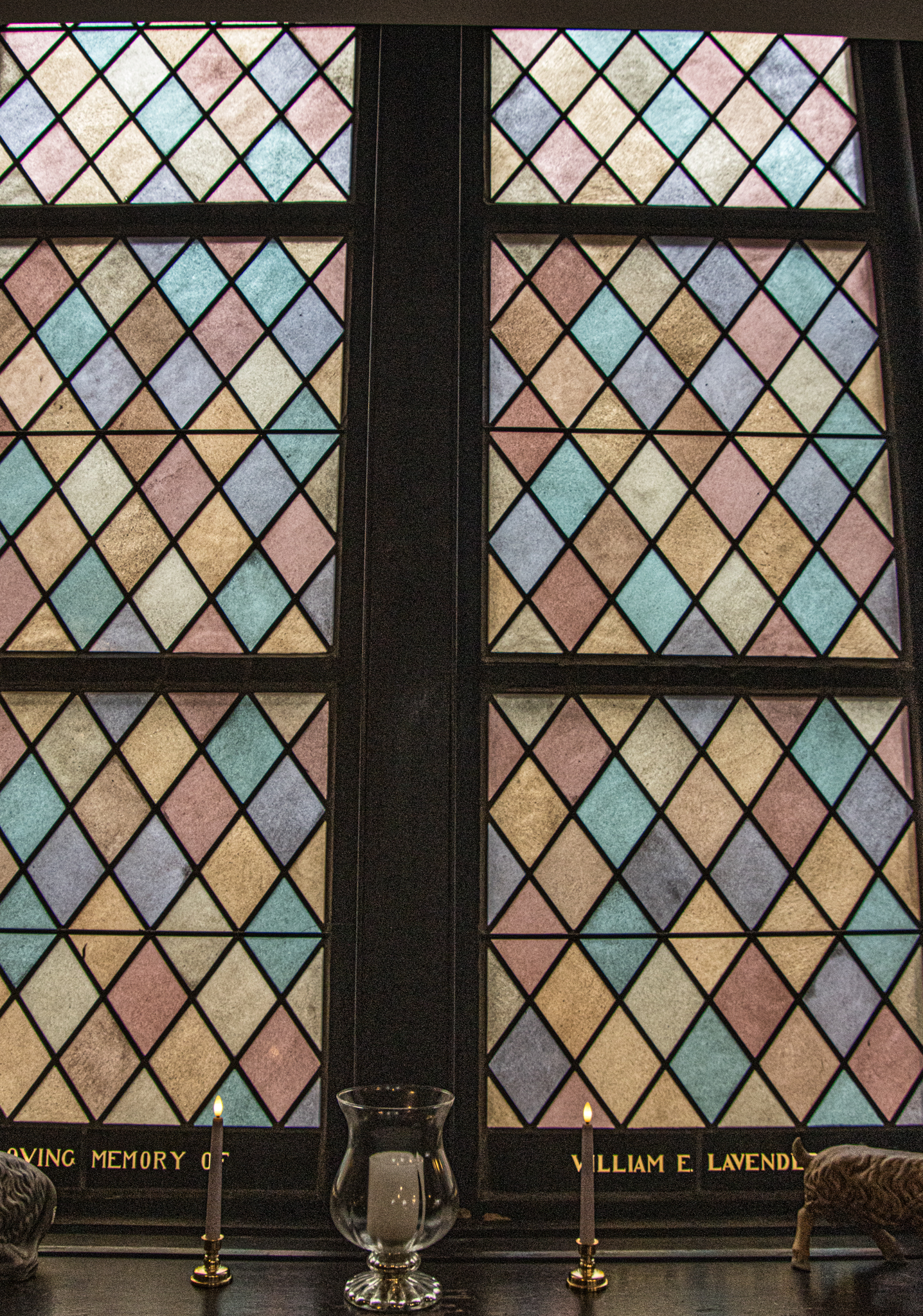
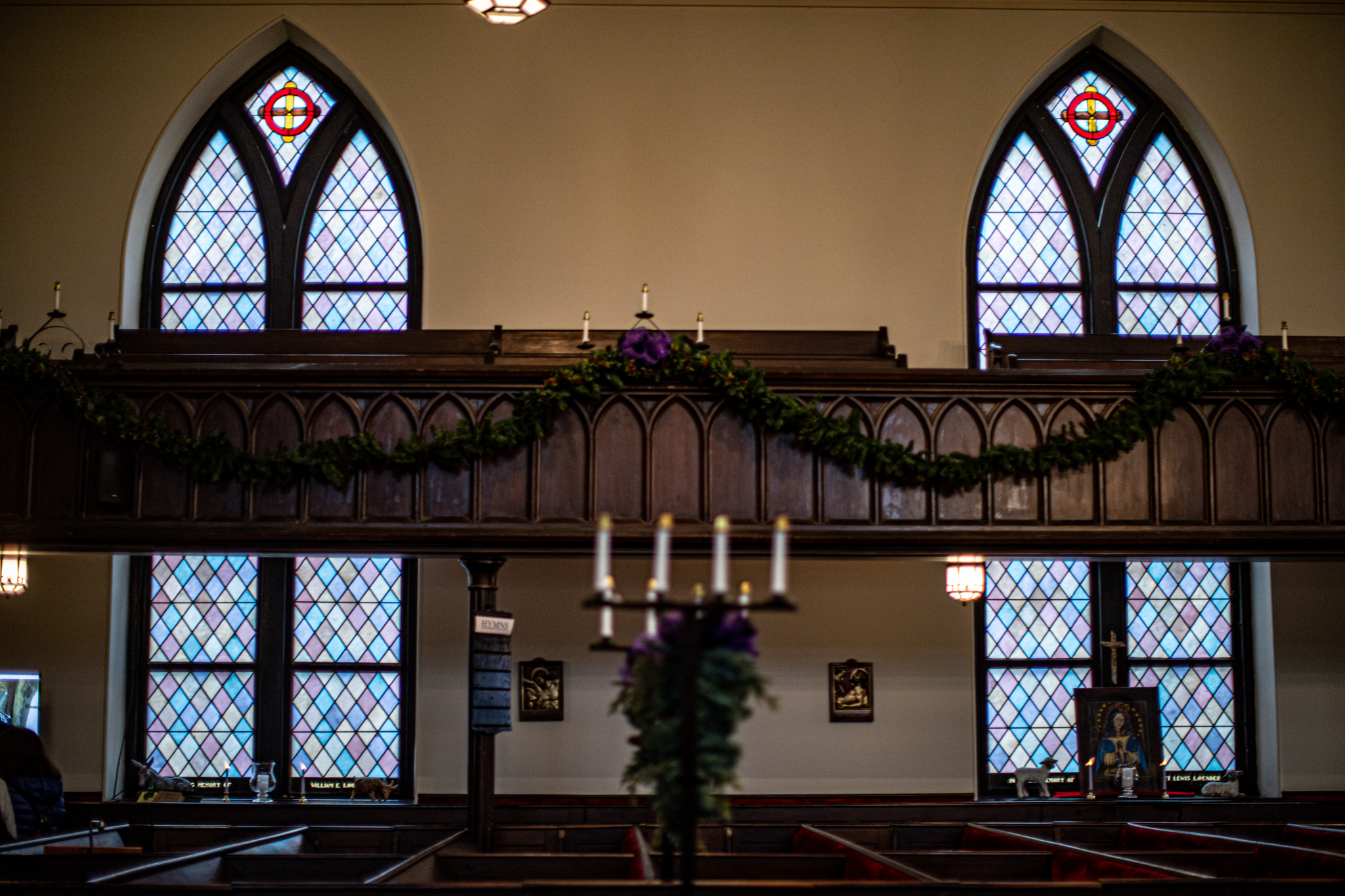
Another interesting fact about the construction of the church is these stained glass windows. The stained glass windows are the original windows. Yes, according to the tour guide, these windows are 190 years old.
Also, the organ you may see on the balcony in the background of these photos is Salem’s first organ acquired in 1743. It is said Puritans were alarmed by these Earth shattering advancements. Imagine what they would think of TikTok.
Another interesting historical fact about this church has nothing to do with religion. Written by Salem native Nathaniel Bowditch, American Practical Navigator which was first published in 1867, is still said to be on every Naval vessel to this day. It also acts as good cure for insomnia. Fun fact: the ferry which some of you reading this may have used to travel from Salem to Boston’s Long Wharf, is also know as the Nathaniel Bowditch.
Some of the more interesting stories and facts about this church and the changes that have occurred dealt with some of the policies of the church.
Before the break of the colonies from the British government and before the church found its current location, it was required for the church to say a prayer for the British crown. This did not go over well as one could imagine during and after the American Revolution. However, while some loyalist ministers fled to Nova Scotia and other parts, some loyalist ministers still wished to say this prayer. You will see in the photo below it was actually scribbled over in the prayer books and replaced with a prayer for the state of Massachusetts and the new country called the United States of America.
The church was not without its conflict and strife, however. Because of the harassment many of the parishioners felt by loyalists, some of the patriots would spit upon the loyalists from the balcony and rocks were sometimes thrown at the church because of its support of the British government.
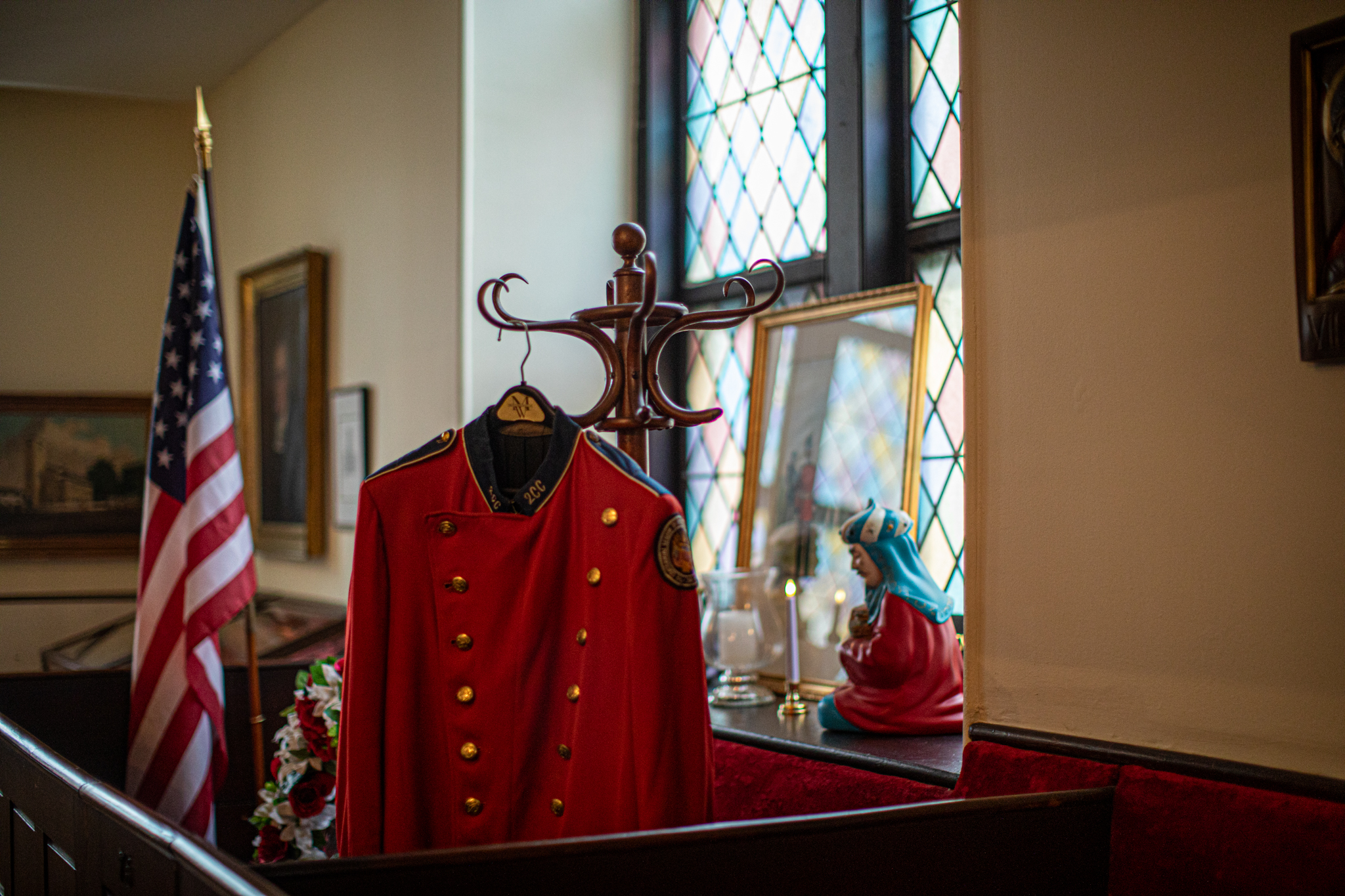
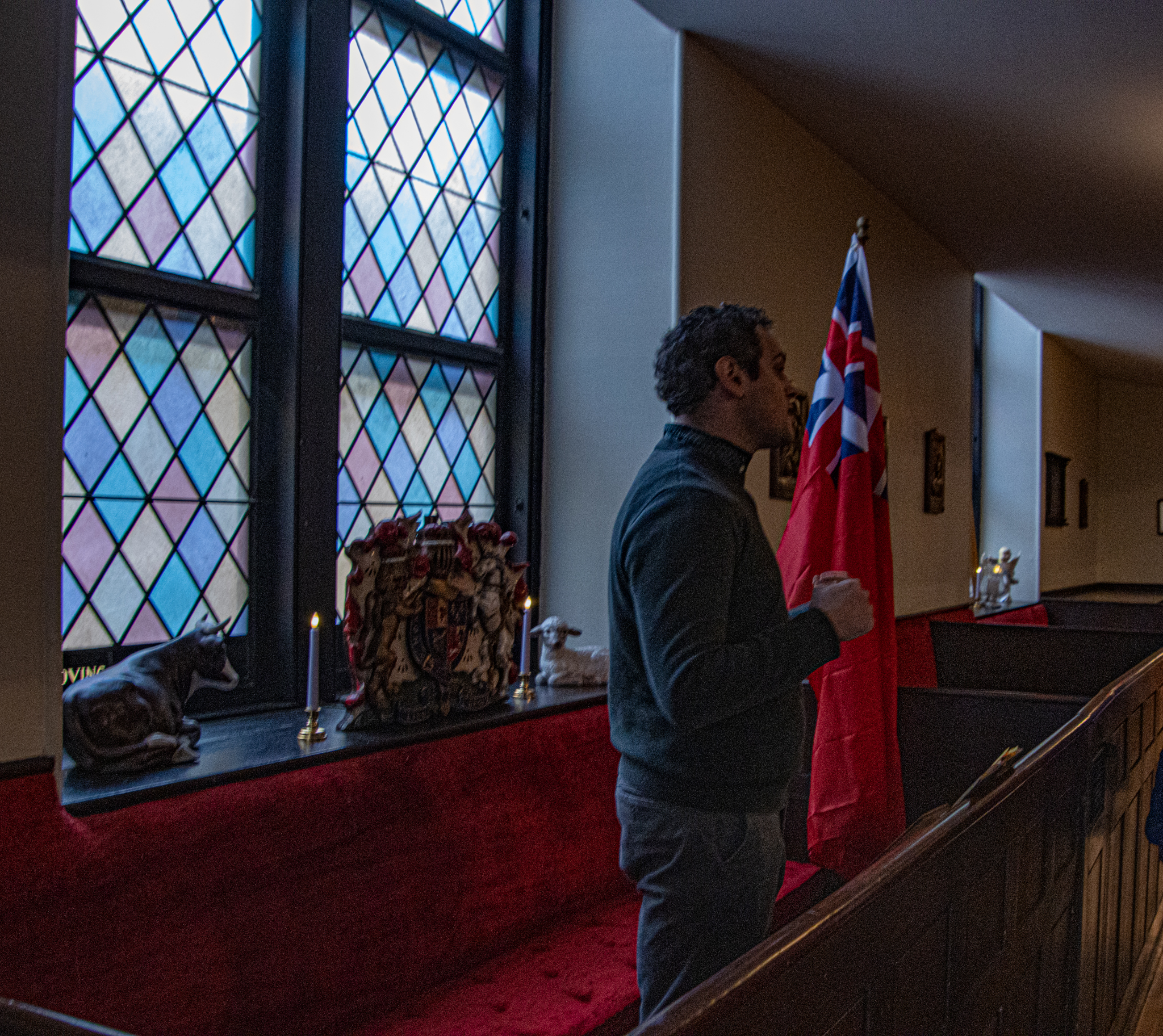
There was an also a pew (which the tour guide is standing in) was dedicated to the British crown. This tradition was stopped of course after the American Revolution. But, as a lark, former Massachusetts Governor Deval Patrick sat in the pew during a service. The photos below show some of the items which were on display at the church throughout the years.
There are certainly many more facts and stories from this church. But, it would take up the whole day and time was of the essence if I was able to make it to all of the houses for this event.
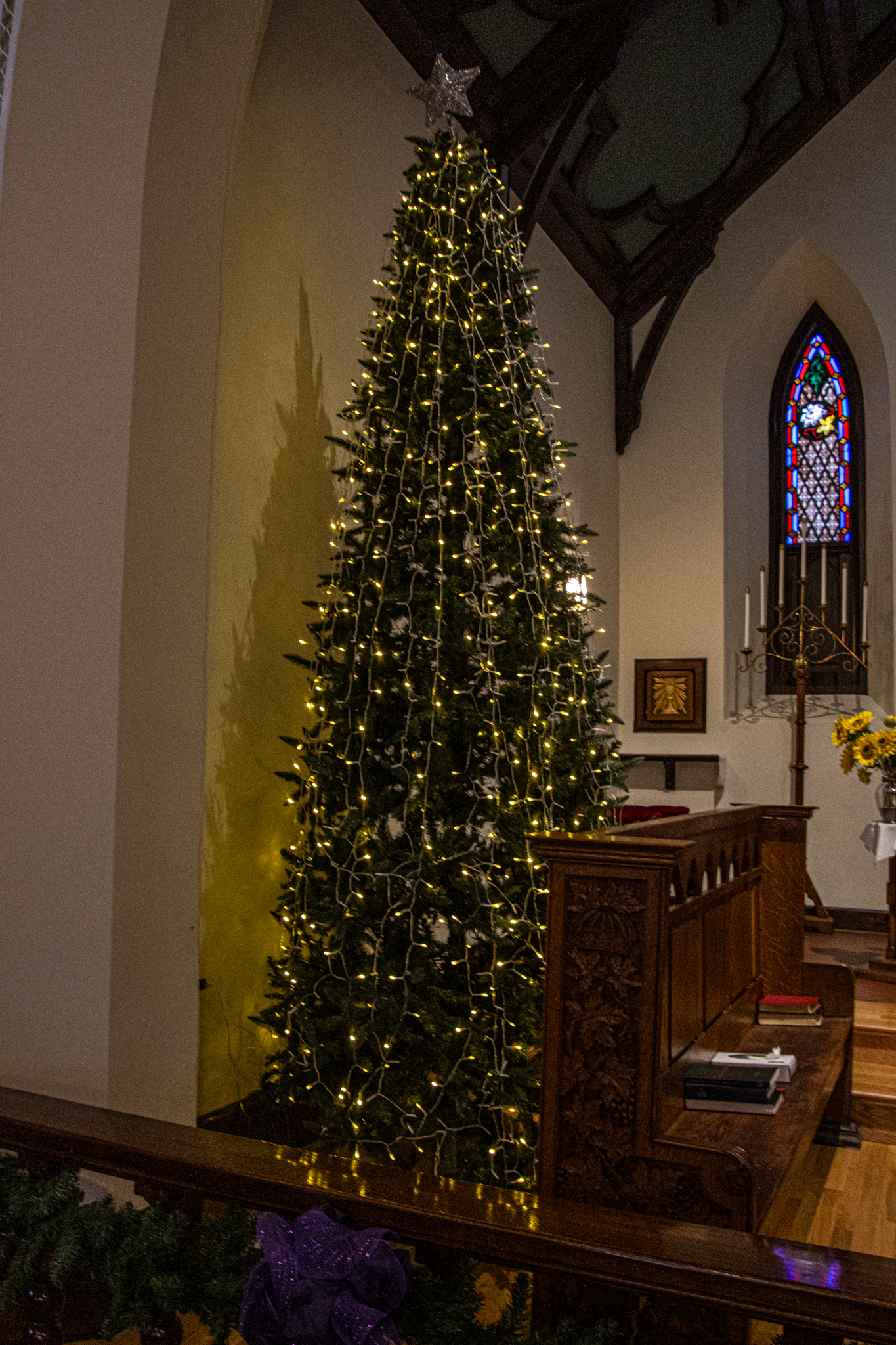
As I was leaving, I noticed how the church was decorated tastefully for the event. There was also a band playing Christmas tunes in the basement. I could have stayed there all day listening to their melodies. But, there were many more stops for the Christmas In Salem event.
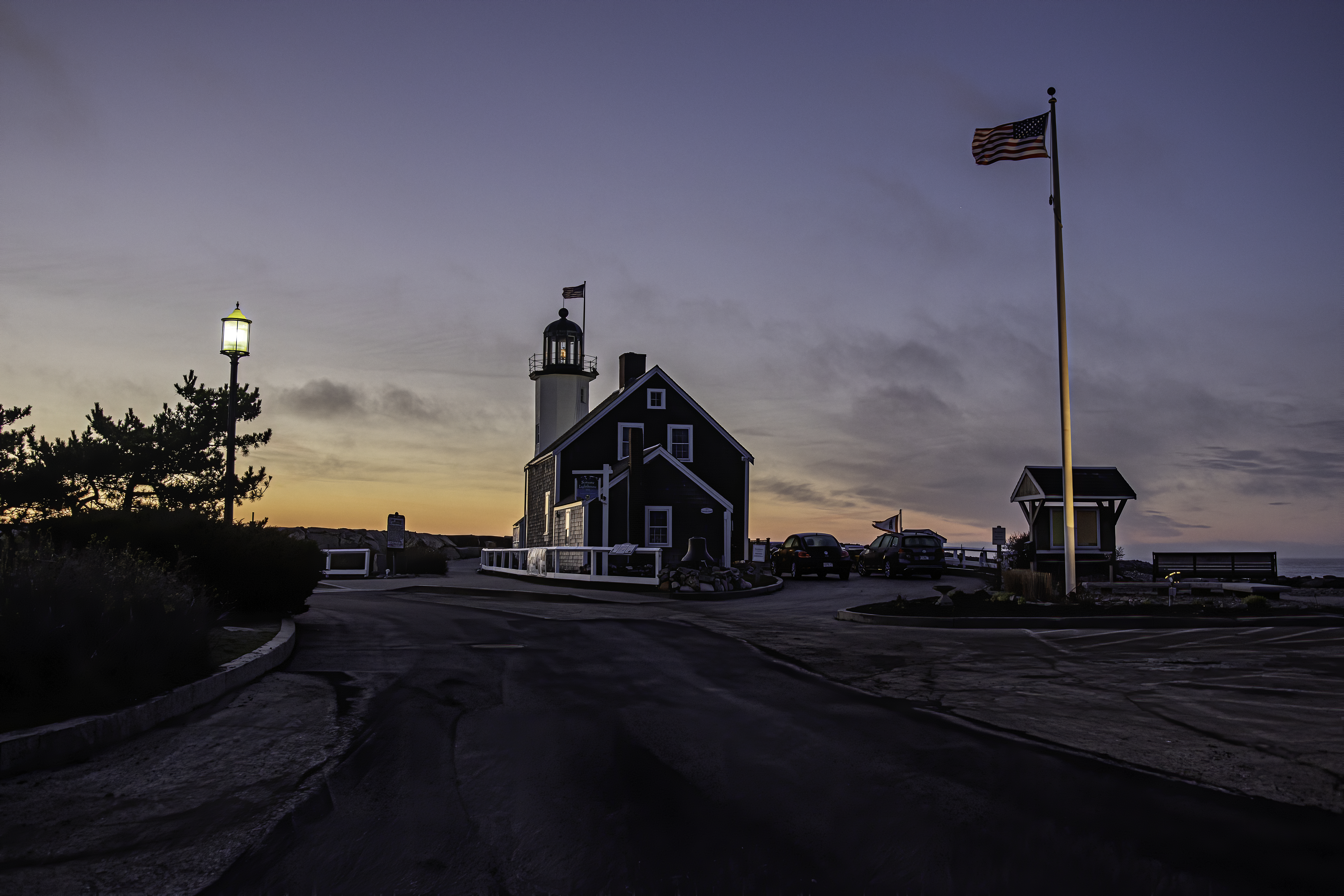
Summary: Built in 1810, Old Scituate Light is the 11th lighthouse lit in Massachusetts. The lighthouse is on the registry of historic landmarks in Massachusetts and is reportedly open for tours during certain periods of time during the year (see link above for more info). A rock jetty and rocky beachhead is a popular spot for sunrise watchers and tourists. The lighthouse has a rich history dating back to the early 1800s.
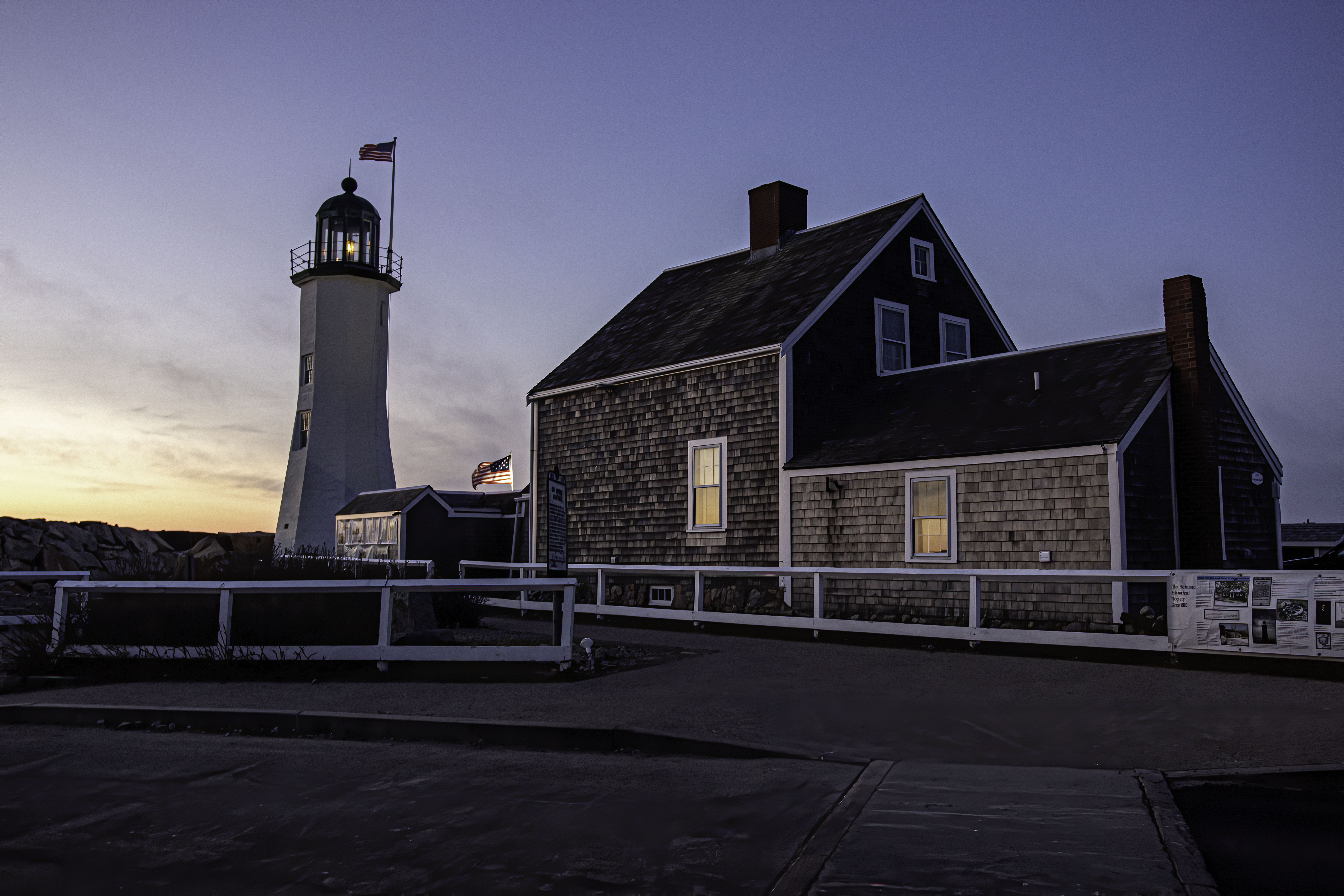
New England has no shortage of lighthouses and breath taking views of seascapes. In fact, due to the plethora of beautiful destinations along the water, some destinations seem to get overlooked. Old Lighthouse in Scituate, MA, is one of these overlooked destinations.
Built in 1810 for $4,000, Old Scituate Light played an important, but little known, role in the War Of 1812. After observing two British barges approaching the Scituate harbor, Abigail and Rebecca Bates, the daughters of the original keeper of the lighthouse (Simeon Bates) hid among a cluster of cedar trees which were once prominent in the area and played their fife and drum in an attempt to ward off the would be attackers. The two girls created such a loud din the barges were said to have retreated fearing an army was preparing for their attack. Their efforts are said to have saved Scituate from being sacked as there was, in reality, no standing army ready for a British attack. The girls went on to become known as the “American Army of Two.”
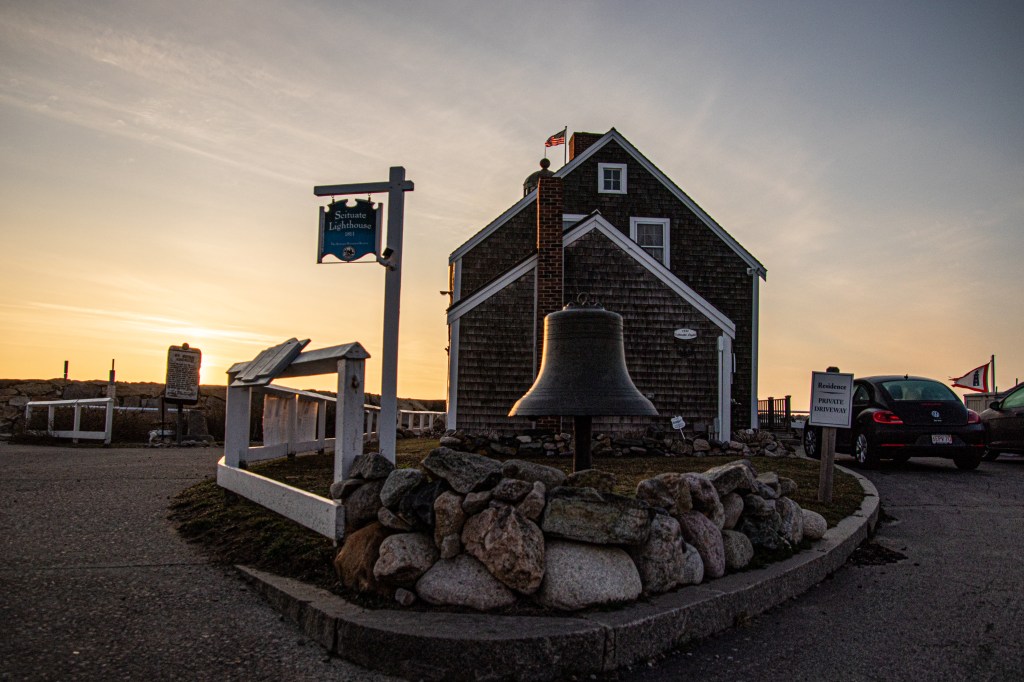
The 25 foot lighthouse (70 feet above sea level) has a natural/emplaced foundation. The light is a replicated lantern and the keeper does stay in the attached home. A bell, perhaps more for decor than function, stands outside the housekeeper’s residence. The lighthouse keeper is a teacher at nearby Marshfield High School.
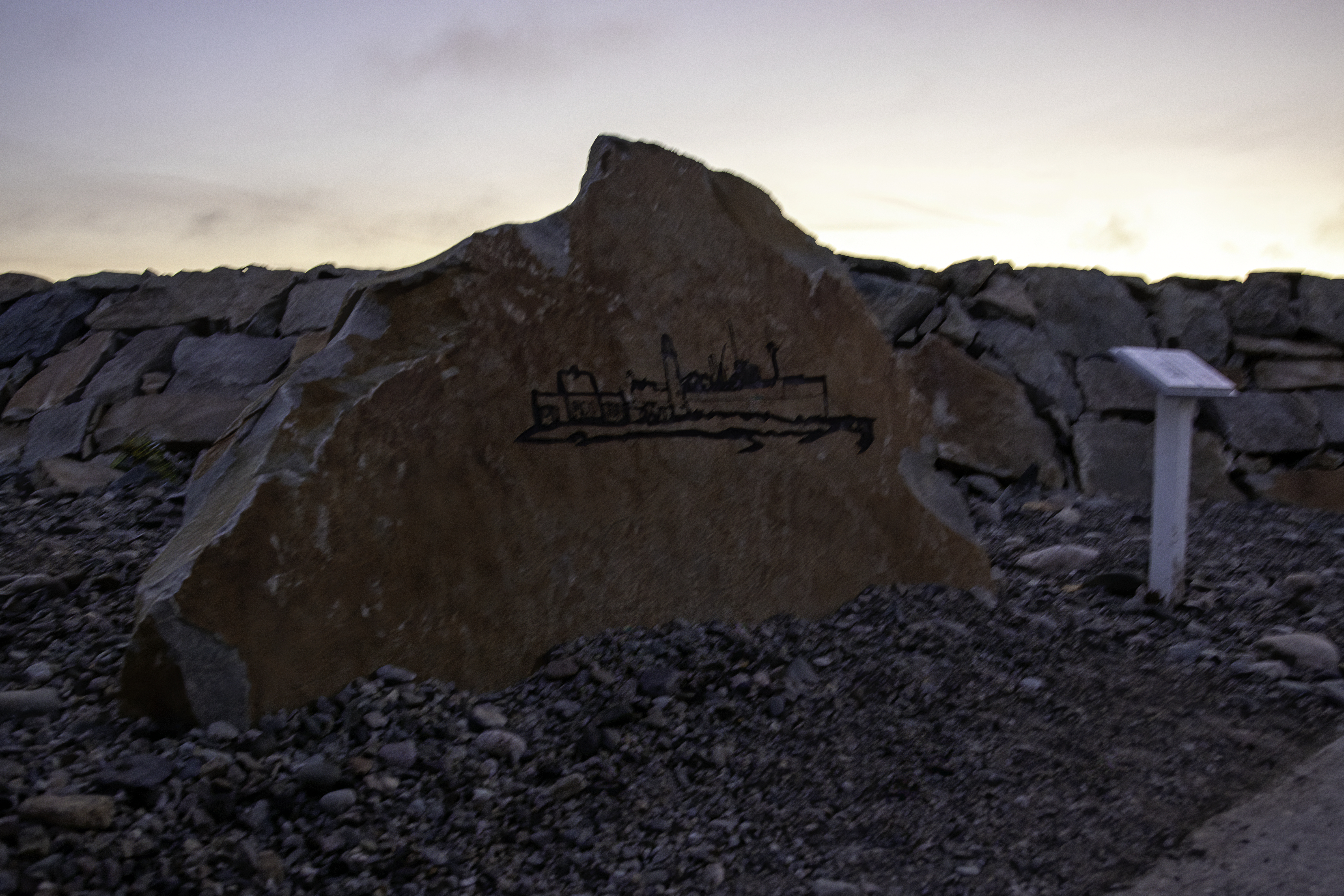
There is also a memorial dedicated to the grounding of the Etrusco and the rescue efforts from that accident. On March 16, 1956, the ship came aground at Cedar Point during the St. Patrick’s Day Blizzard (it is New England after all). After the grounding of the freighter, five Scituate residents (all members of Scituate’s Civil Defense Communications Team) sprang into action and, despite blizzard conditions, kept in communication with the Coast Guard, providing key details and information to the Coast Guard. The Coast Guard would eventually rescue all 30 men from the grounded ship.
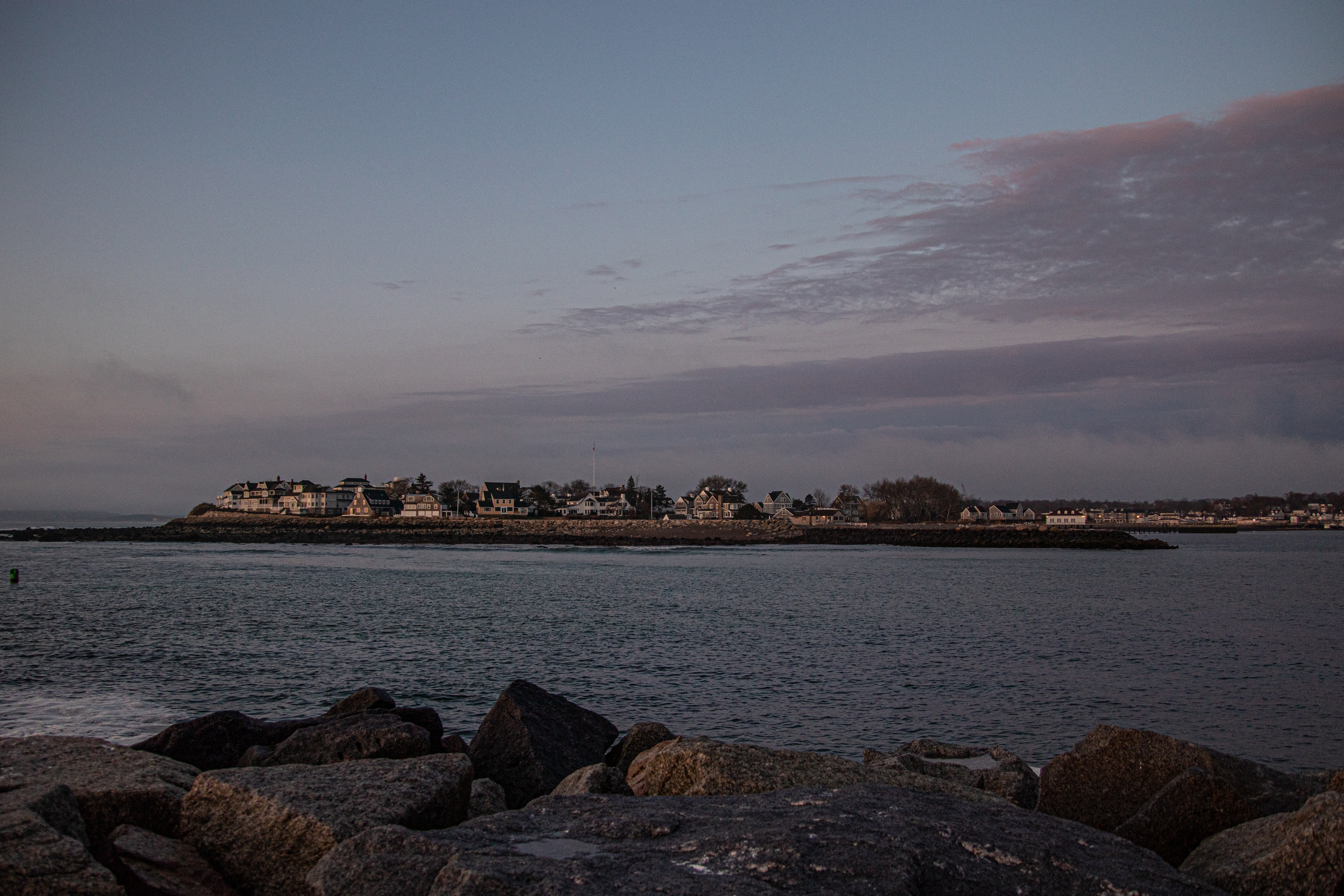
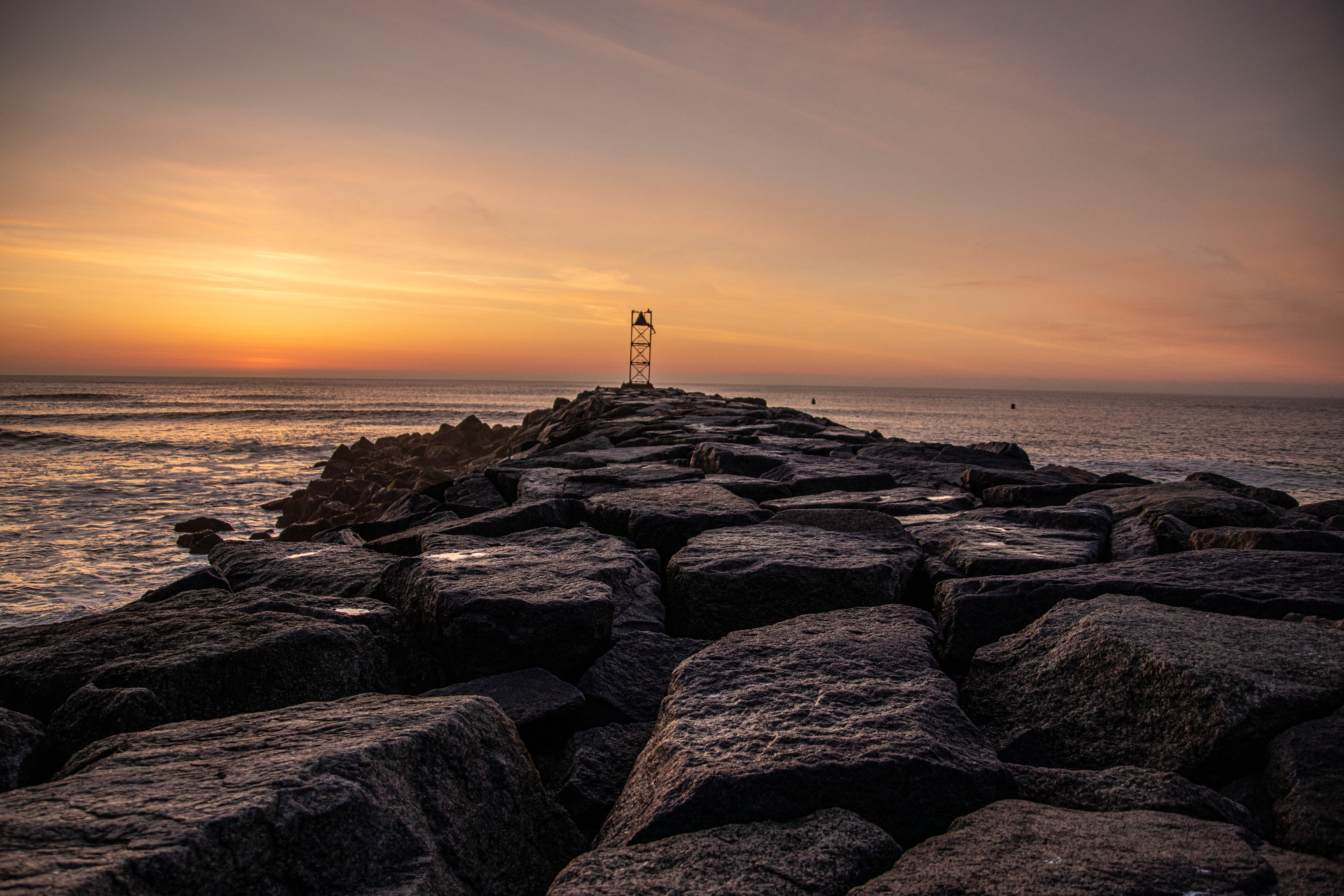
The surrounding grounds of the lighthouse provide for great photo opportunities.
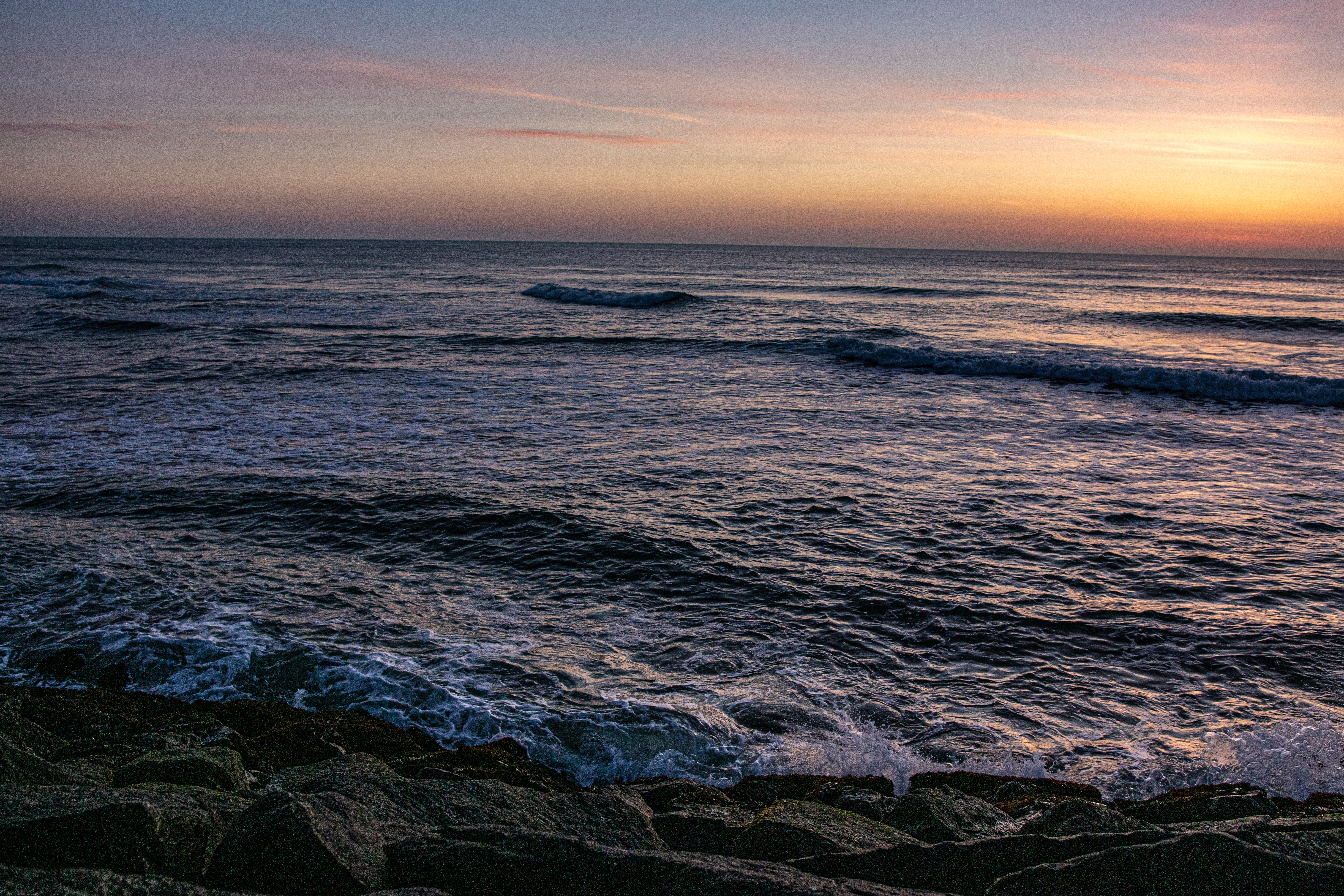
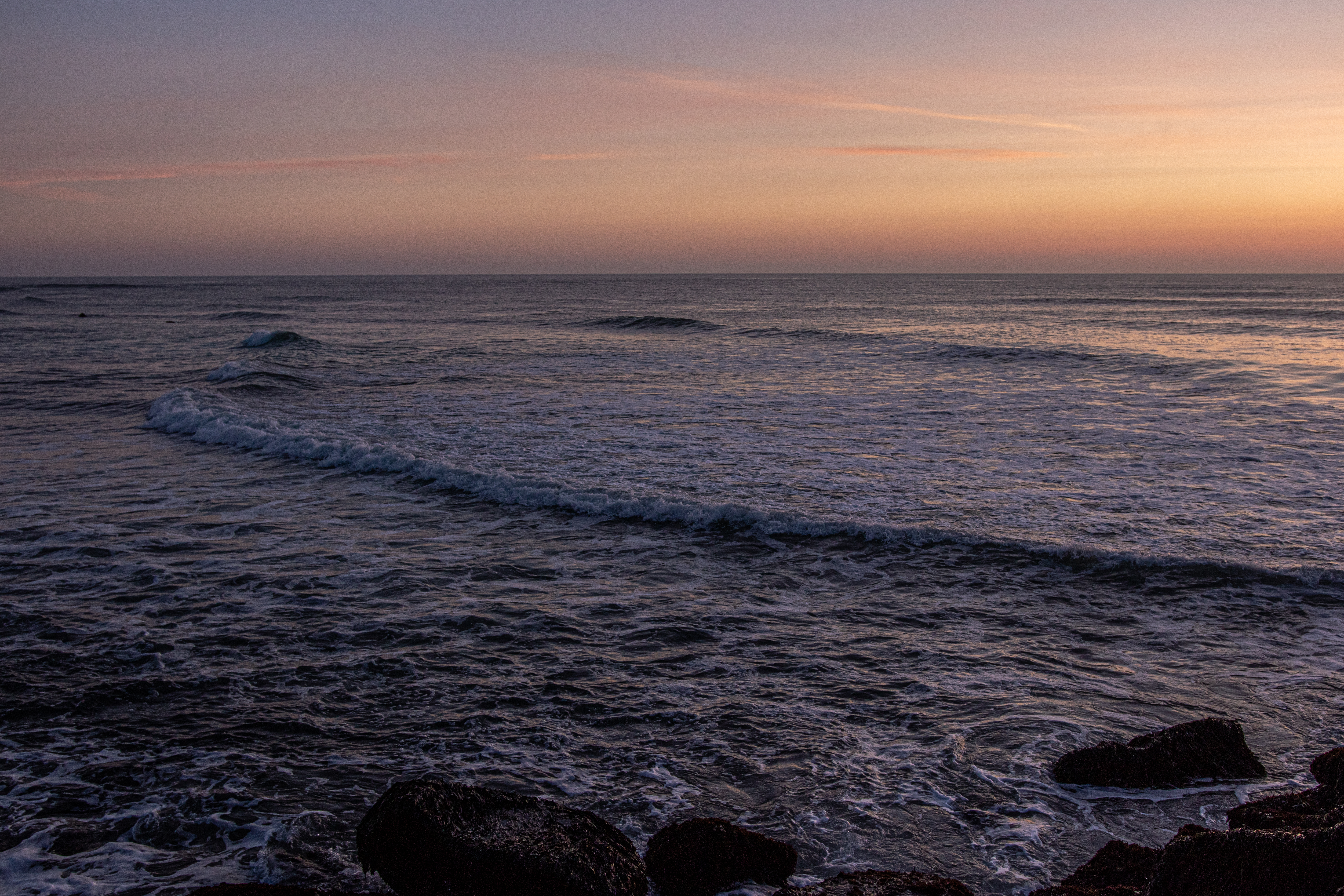
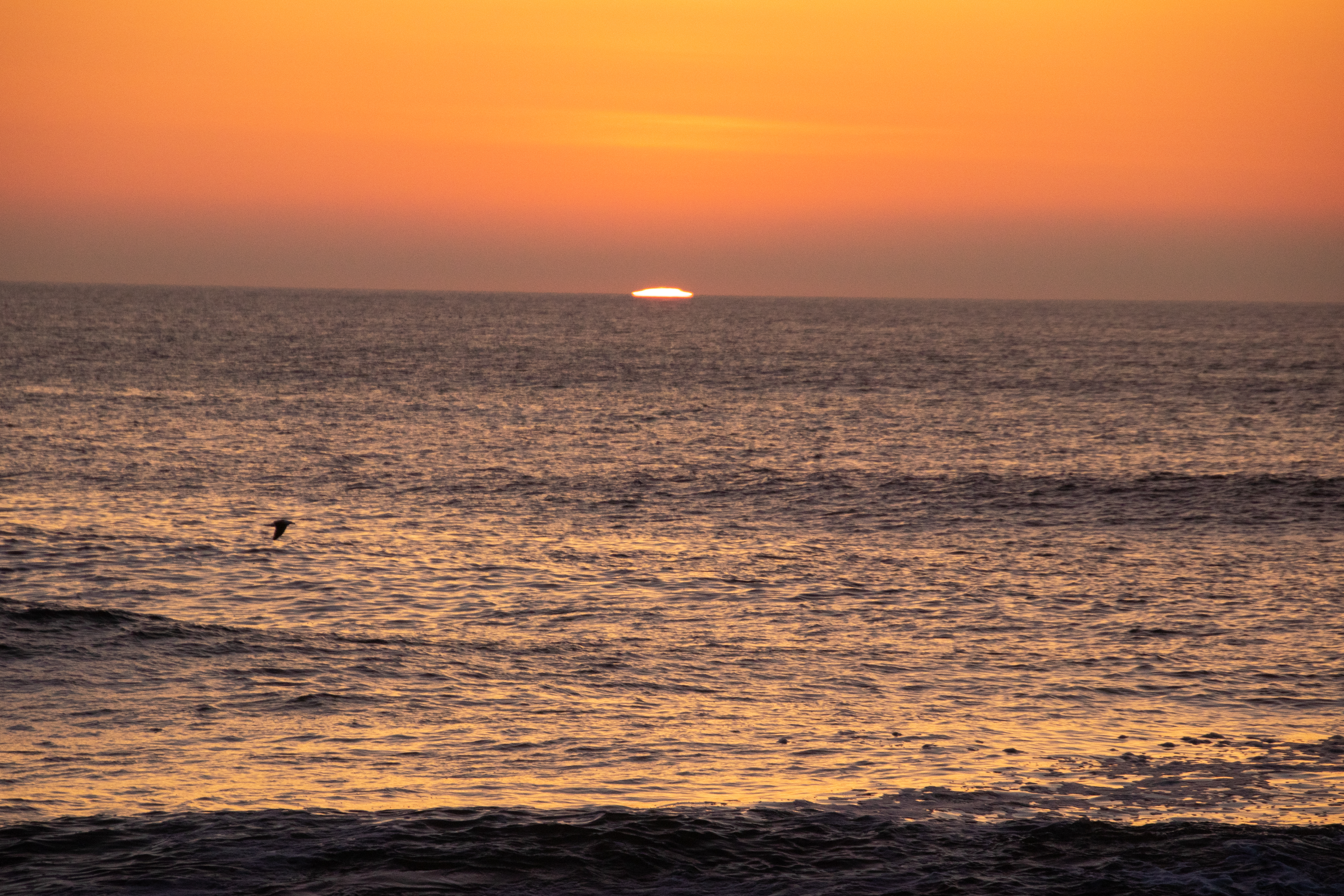
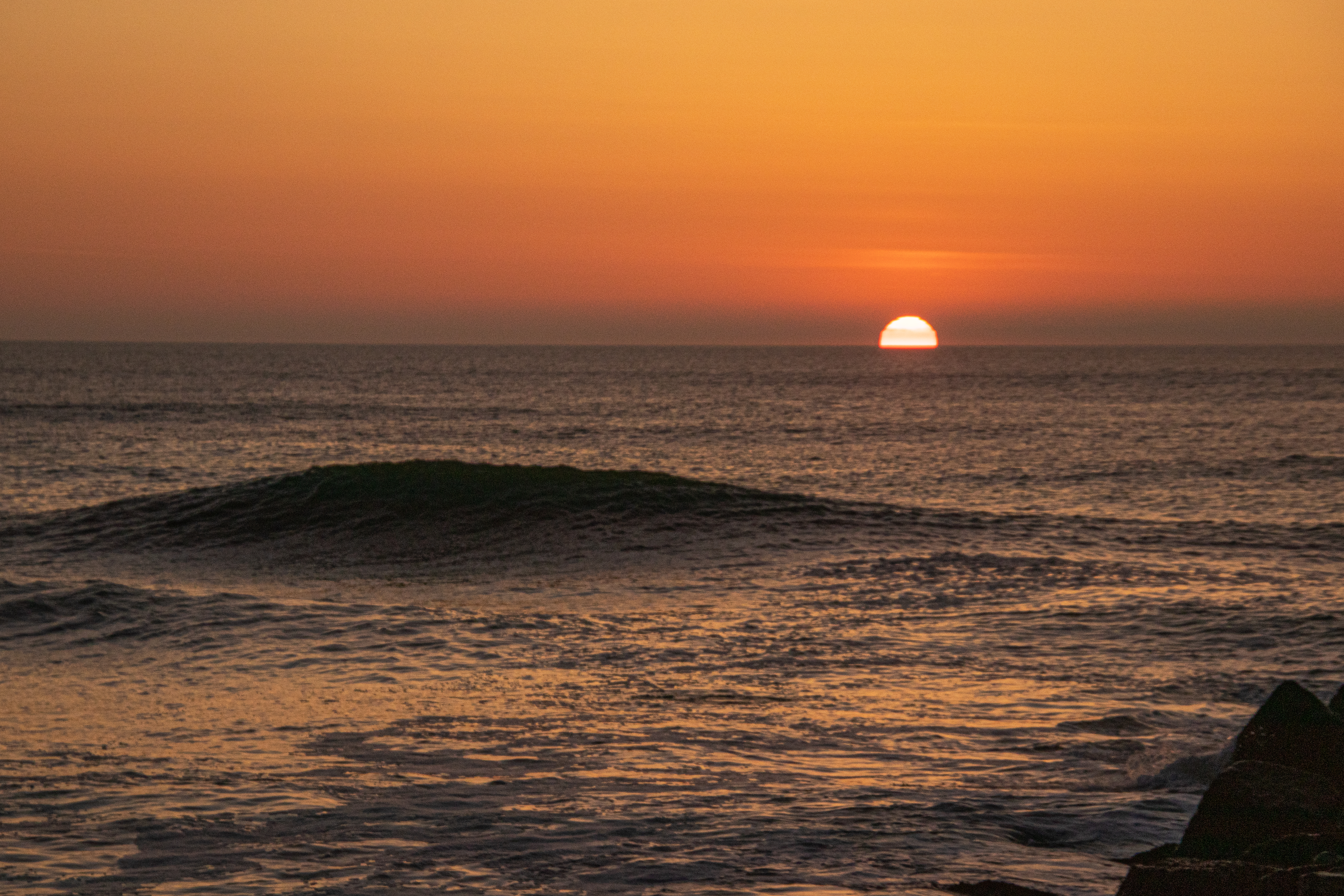
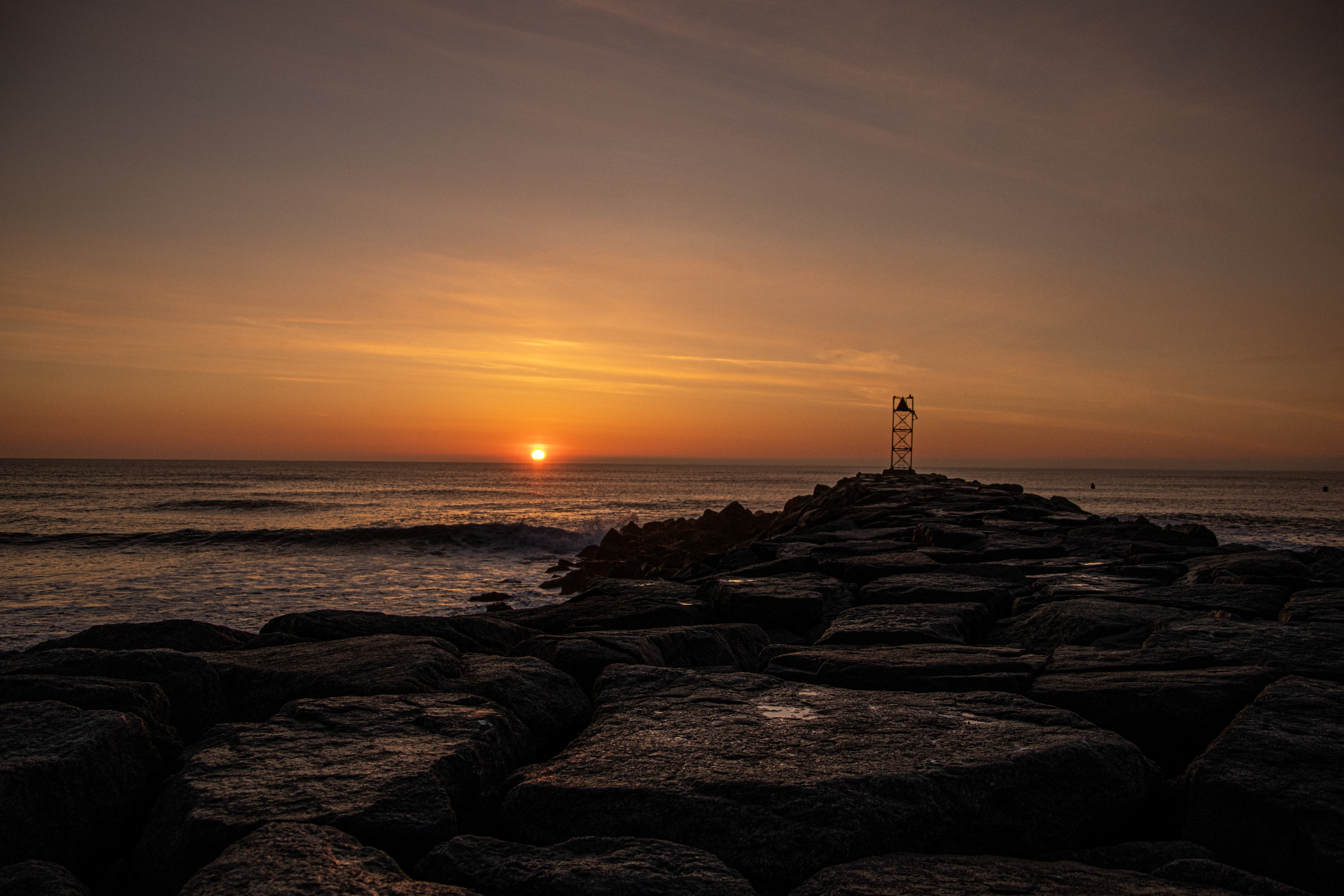
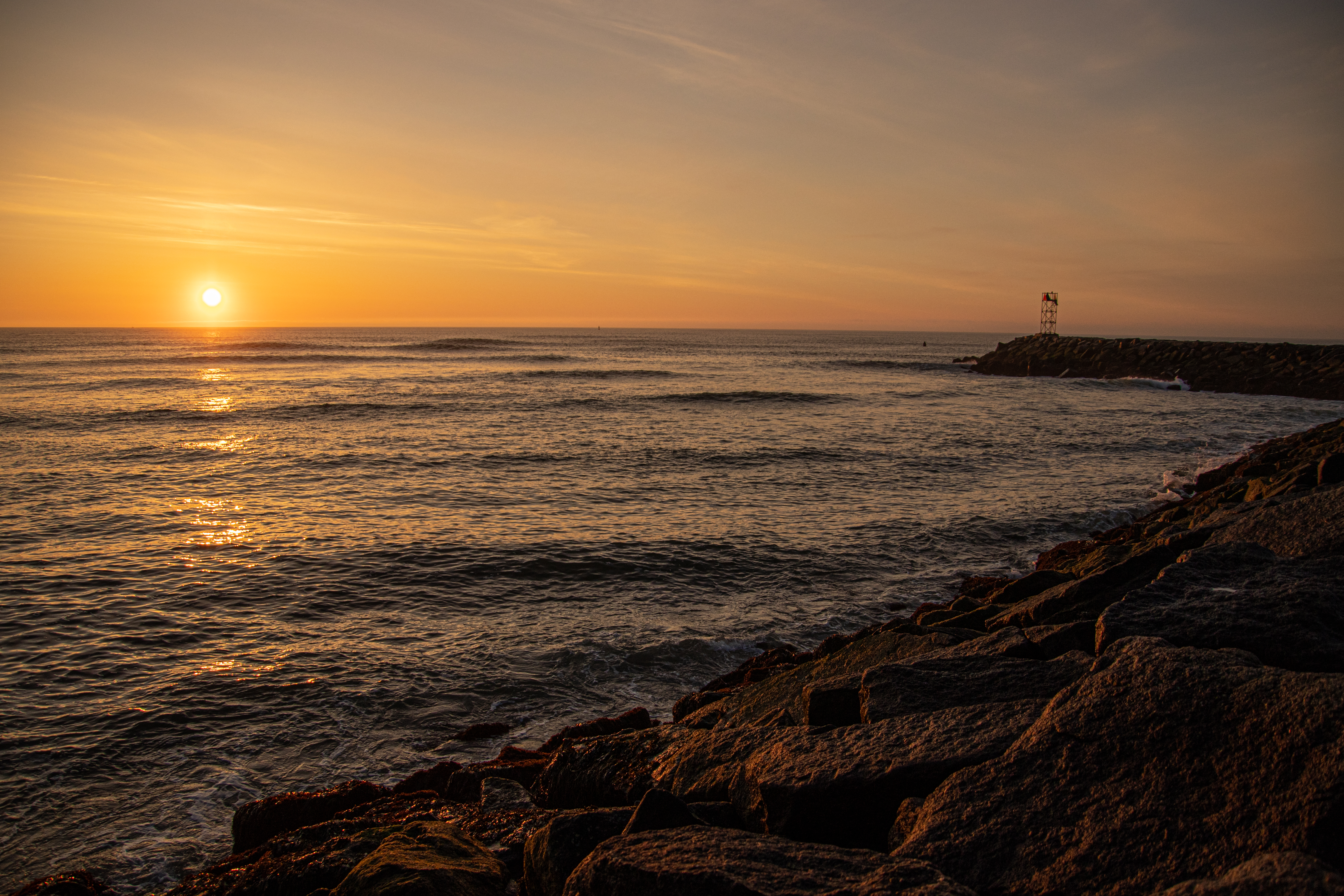
The highlight of the lighthouse and the surrounding area is the beautiful views it offers which are especially spectacular during sunrise and sunset
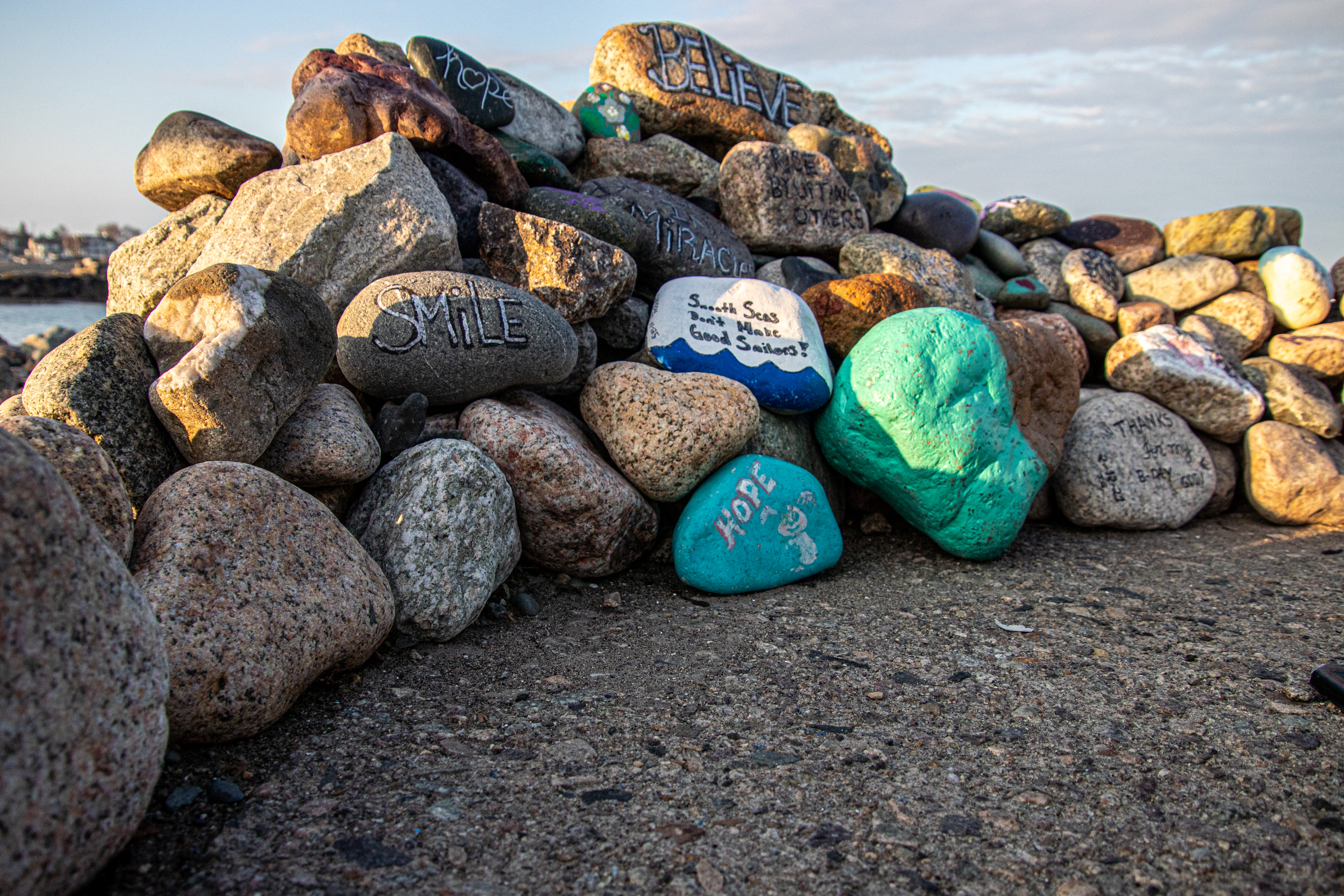
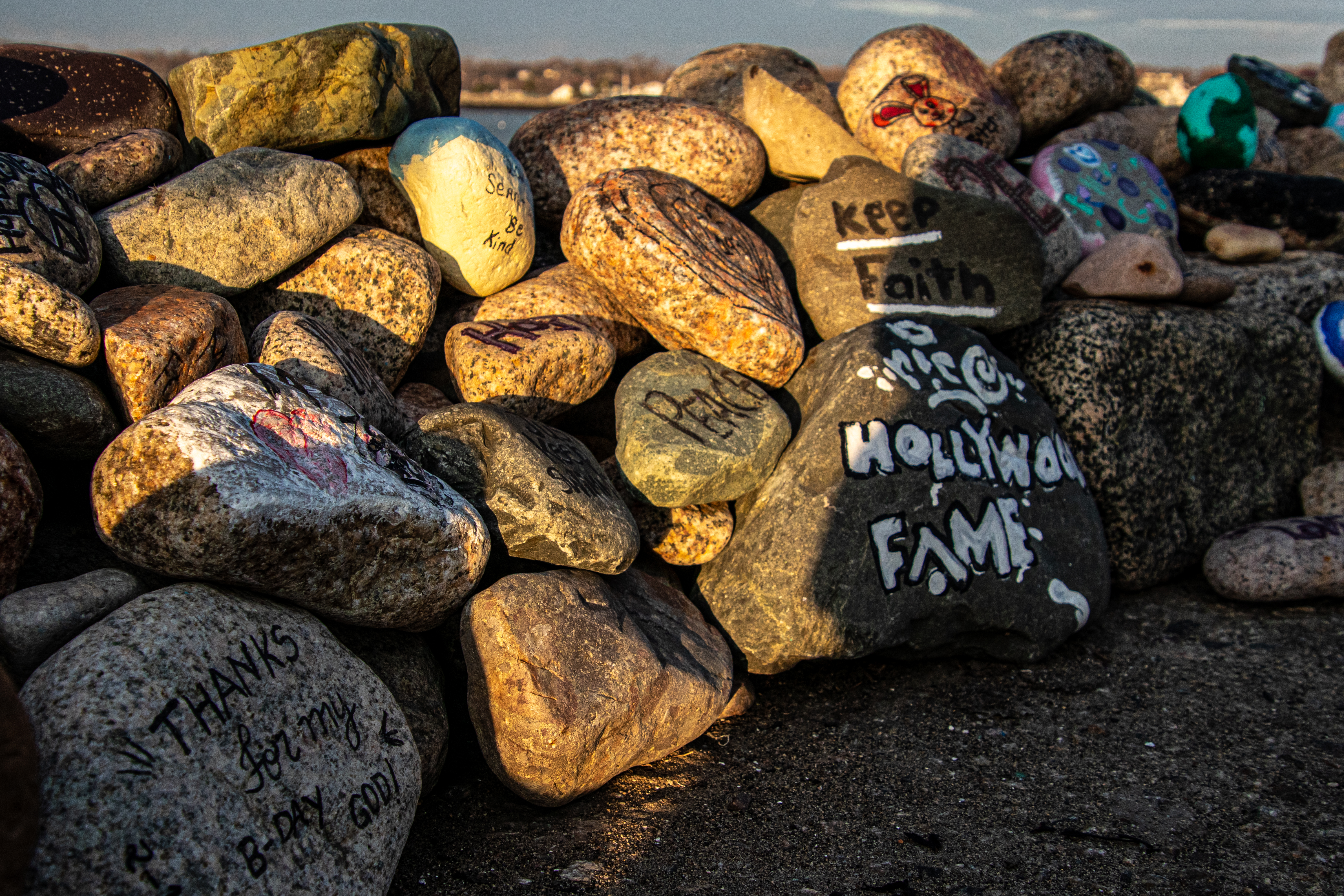
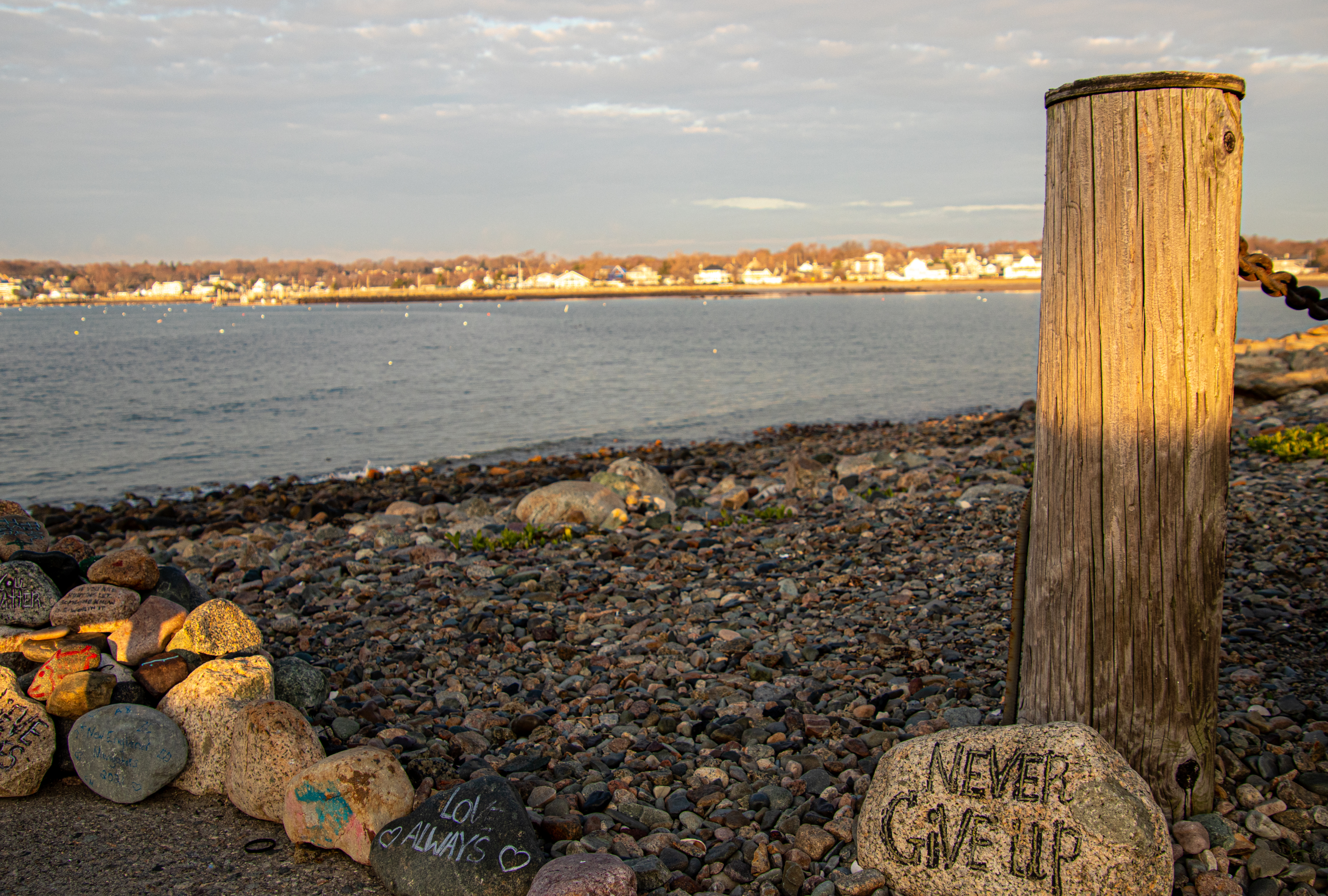
As I was about to pack up and head to my next destination, I noticed this group of painted rocks with hopeful messages. Many of them seemed to have a special personal meaning. But, I think we call can derive some inspiration from their messages.
A limited number of wheelchairs are available in the Welcome Center and the lobbies of the D’Amour Art Museum, Wood Museum of Springfield History and GWV Smith Art Museum.
Due to ongoing construction, please ask our Welcome Center staff in advance for assistance in accessing the GWV Smith Art Museum.
Summary: A collection of memorabilia which showcase the women’s labor movement.
The Taking Care Of Business exhibit at the Springfield Museums in Springfield, MA, pays tribute to some of our unsung heroes. The exhibit shows how women have played an integral role in the work we do and how their roles have changed over time.
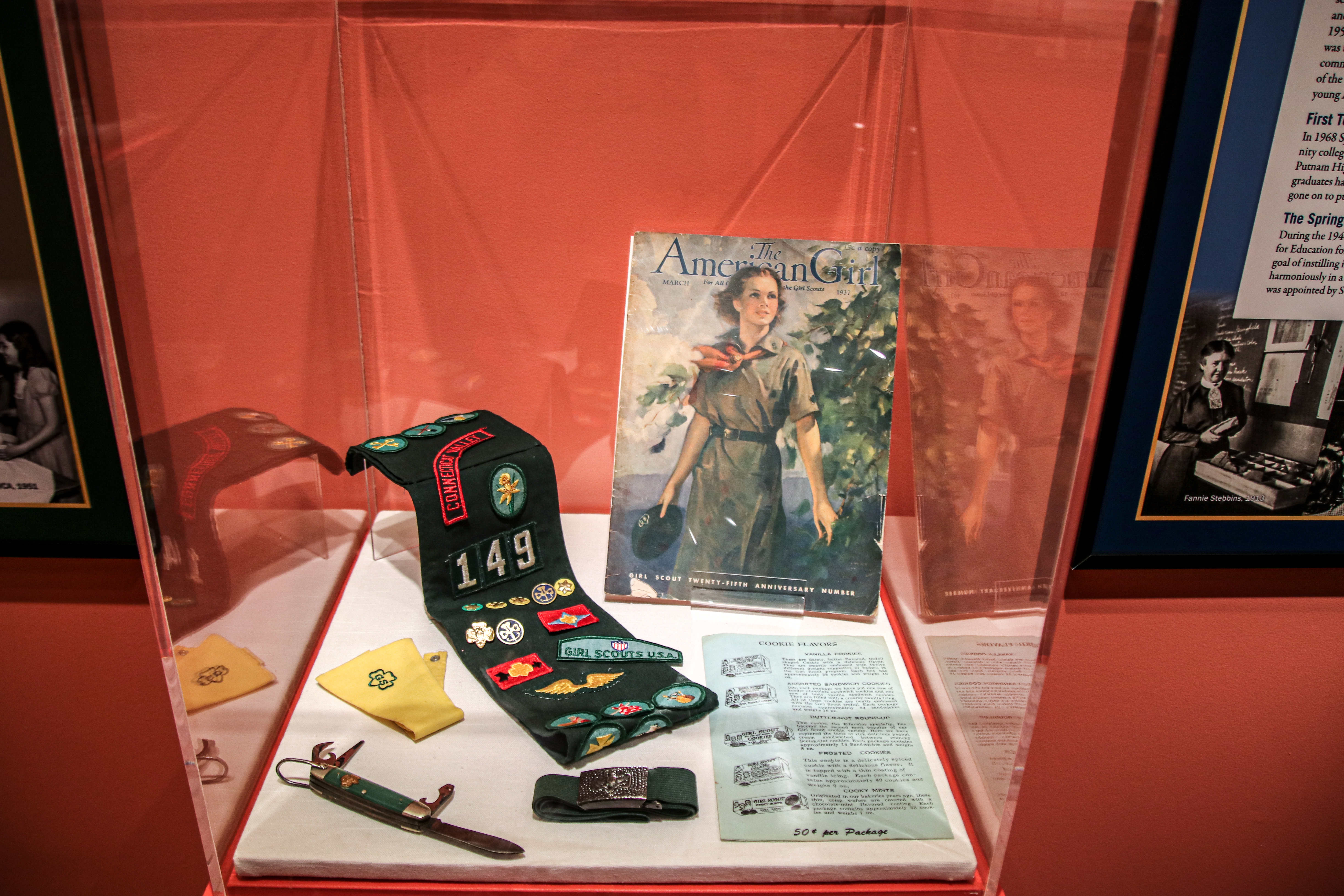
One of the first exhibits at the museum has a collection of Girl Scout ribbons, patches and literature.
The Girl Scouts patches, ribbons and other memorabilia are from a Connecticut Girl Scout the 1930s. One interesting thing about the Girl Scouts and their badges is how much they have changed over time. Badges were once earned for sewing and domestic skills. Now, Girl Scouts can earn badges in such areas as computer skills, robotics, entrepreneurship and outdoor activities. The magazine is from 1967.
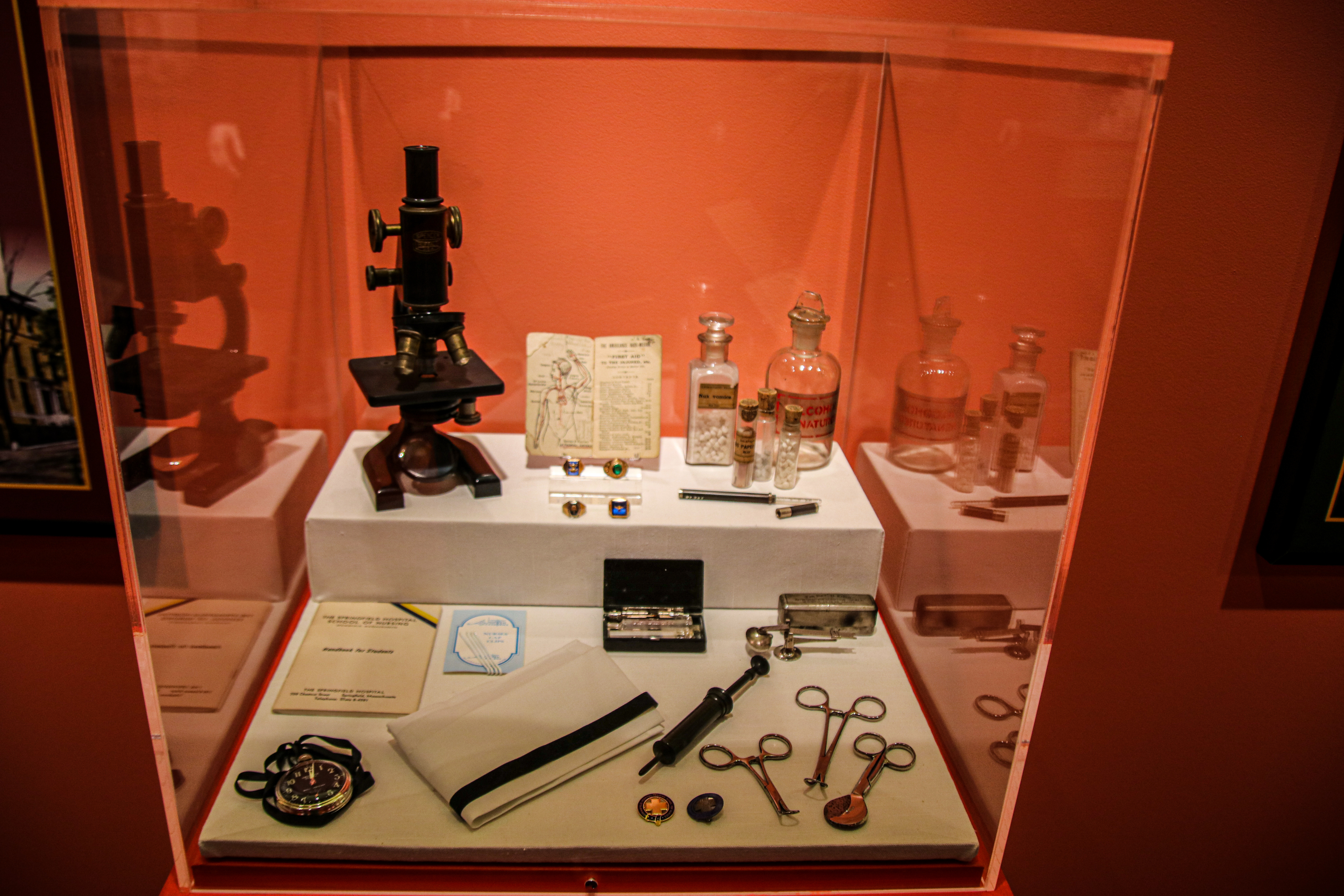
Since the museum is located in Springfield, MA, many of the items have a tie to the area. These medical instruments and memorabilia from the school pictured below are from the Springfield Hospital School of Nursing.
The items included in the display are a 1920s microscope, Springfield School of Nursing class rings from 1931, 1946, 1949 and 1959. There are also bottled medicinal pills and alcohol, a cased thermometer, a nurse’s watch, cap and cap clips, a cased hypodermic needle, miniature balance scale for weighing medicines, ear irrigator, nursing school graduation pins dated 1895 and 1946, clamps, birthing scissors to cut umbilical cords, a Springfield Hospital School of Nursing handbook and a first aid guide.
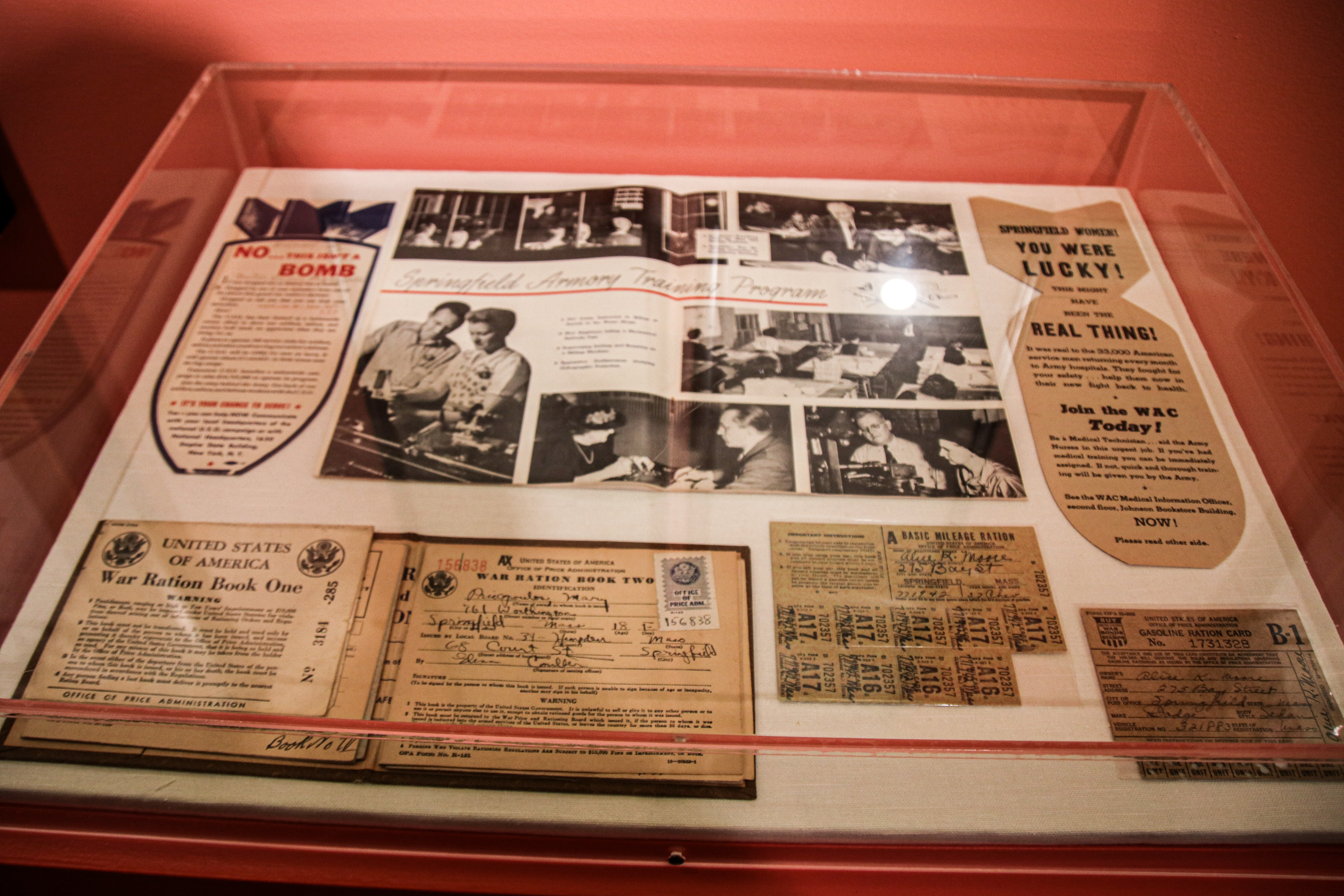
The exhibit didn’t exclusively focus on the advancement of women in the workplace. The exhibit below displays the efforts of women during war time. From helping to recruit people for the war effort, rationing supplies and working at the USO, women contributed greatly to support the war effort and the troops who served and came back. In the display below there are rationing books, fundraising and recruitment literature and rationing stamps.
Styles have also changed over the years. The display below contains a variety of the headwear that women wore during the earlier part and middle part of the 1900s.
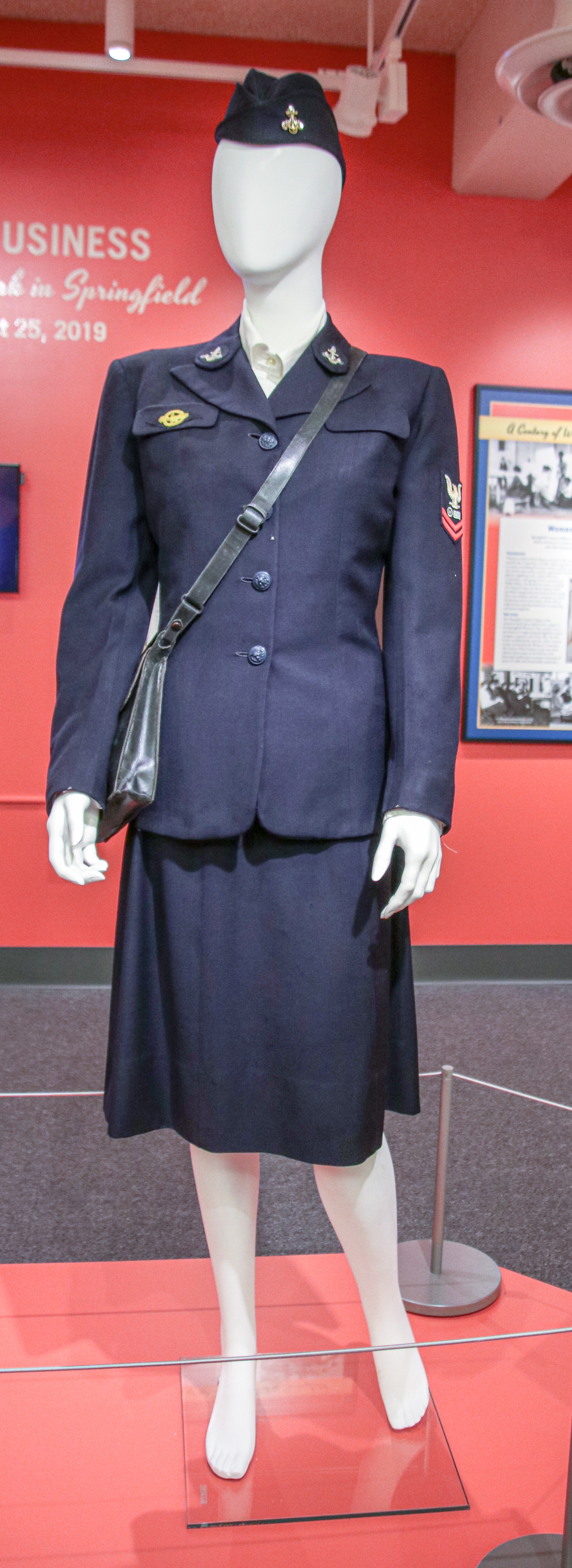
Speaking of style, the styles of the women who served their country have also changed over time. This uniform, a Pioneer Valley WAVES (Women Accepted for Voluntary Emergency Service) uniform (circa 1944), was worn and gifted to the museum by Jean Fillion (Bates), Mailman Second Class U.S. Navy Reserve. The purse was a nice touch. At times, as I put this post together I had to keep reminding myself, “this was the 40s.”
This uniform is the Springfield School of Nursing Cadet Corps uniform (circa 1945-48).
Even before they were eligible to serve during wars, women have played a pivotal role in the military. One of the groups of women who were mentioned in the placard at the museum were “The Sisters Of The Holy Cross” who were aboard the Confederate steam ship the “USS Red Rover.” Women also served as Navy Yeomen during World War I.
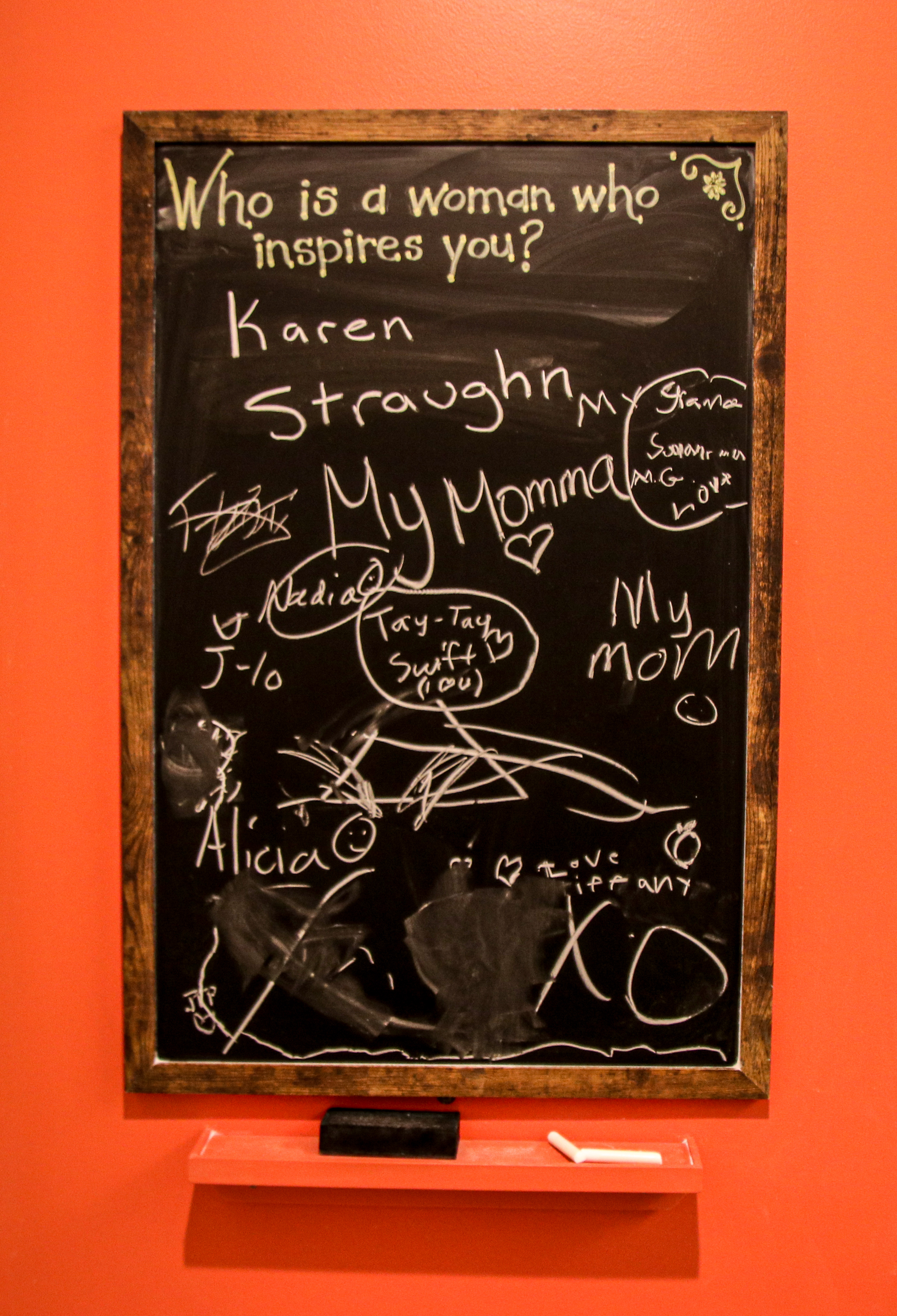
As you exit the exhibit, there is a blackboard for visitors to write the name of a woman who they are inspired by. What name would you write on the board?
The “Taking Care Of Business” exhibit is scheduled to be on display until August 25 of this year.
Summary: An annual event that allow s visitors to tour the inside of historic homes throughout the historic Salem, MA, area
How many times have walked by the many historic homes of Salem, MA, and wondered what they look like on the inside?
The Christmas In Salem event in Salem, MA (held annually the first weekend of Dec) lets you see for yourself.
The 39th annual self-guided tour, which began at the House Of The Seven Gables, included tours of 15 homes. Some of the homes featured on the tour are historic buildings run by the park service, some are actual home residences. Tickets can be purchased on the day you visit, or (and I highly recommend it) you can purchase your tickets in advance online. There is also a trolley that can take you to some of the homes.
One of the perks of the tour was the photography policy was relaxed and photography was allowed at most of the homes and buildings, even in buildings where photography is not usually allowed (namely, the House of the Seven Gables). In fact, it is one of the reasons I finally made it to the House of the Seven Gables. They usually don’t allow photography in that building.
As there are so many buildings included in the tour (15 in total, but only 11 that allowed photography), I will give a brief description and background of each building with links for additional information when available. I took a variety of photos from each building, depending on the size and beauty of the building.
As mentioned above, there are 15 homes or buildings (with a “bonus” second tour of your favorite home or building). You may also split up your visits so that you can go on 2 separate days rather than trying to visit all of the homes or buildings in one day. I will list all of the homes and buildings in the order they are listed on the tour map you are given when you check in at the House of the Seven Gables.
House Of The Seven Gables (houses 1 and 2 on the tour)
The House Of Seven Gables has always been one of my favorite historic homes in all of new England. I have always loved the narrow, almost secret passageways and its history.
The House of the Seven Gables has The verse written on the wall in the first photo is from Hawthorne’s work The Marble Faun. Some of the tour guides, such as the woman shown in the final photograph, read holiday stories or or other related works. The woman shown in the portrait is Susanna Ingersoll, Hawthorne’s cousin.
There was also a Christmas tree in one of the rooms at the home. Fun fact (except for those alive at the time): Christmas was banned by the Puritans in the MA colony from 1647 until 1681. Rather than being a time for celebration and festivity that included some of the pagan origins associated with the holiday, the Puritans thought the holiday should be a time for fasting and humiliation. Another fun fact: the first Christmas tree, similar to the tree shown below, in America is said to have been in the home of Cambridge resident and Harvard College professor Charles Follen in 1835.
There was a wine tasting area, as well as a place to view the food and toys of this era. The food shown below on the far right of the table is a common delicacy of that time, cod.
The outside of the House of the Seven Gables is as pretty as the interior.
Another fun fact: Although he visited his relatives at the Turner-Ingersoll Mansion (aka House of the Seven Gables), Nathaniel Hawthorne never lived in the house. He was born on Union Street. But, it may not seem that way when you visit. The Union Street house where Hawthorne was born was purchased by The House of the Seven Gables Settlement Association and moved to the museum campus in 1958.
This building, located a short walk from the Salem Witch Museum at 14 Mall St, is one of the homes where Hawthorne lived in Salem. This building is not included on the tour.
The third home on the tour, the Captain William Lane House, and the fourth home, the Josiah Getchell House, did not allow photography.
The fifth home of the tour was the Thomas Mogoun House, 58 Derby St. As you will notice from the photos from the homes and buildings in the photos is that while they do have the original, or close to the original frame and structure, they were indeed more contemporary inside, unfortunately. I was hoping to see rustic beds with hay instead of mattresses. No such luck.
One of the more serene and peaceful places on the tour was the Saint Nicholas Orthodox Church at 64 Forrester St. A choir of men and women were singing traditional Christmas songs (not contemporary or radio songs of course). I really could have stayed and just listened to them because of their beautiful voices. I didn’t take any photos inside of the church and this is actually a photo I took of the church from 2015 when I first began my blog.
The seventh home on the tour was the Ives-Webb-Whipple House at 1 Forrester St. This house, which was built originally in 1760, was being shown and is still on the market.
The house was staged very tastefully.
The Captain John Hodges House at 81 Essex St was the 8th home on the tour.
The 9th home on the tour was the Richard Manning House located at 10 1/2 Herbert St.
The 10th building on the tour was the Immaculate Conception Church at 15 Hawthorne Blvd. Although there was some pretty and interesting architecture and decor in the church, I didn’t take any photos there.
The 11th building on the tour, the Captain Simon Forrester House at, 188 Derby St, and the 12th home, the Benjamin W. Crowninshield House at 180 Derby St, did not allow photography.
Another building I had walked past countless times without visiting until this year (I stopped in during the summer and hope to post that shoot…someday) is the 13th building on the tour, the Salem Custom House at 176 Derby St. Interestingly, Nathaniel Hawthorne worked here for some time. He worked on a little book you may have heard of during his tenure there.
The 14th home on the tour, The Derby House at 168 Derby St was not available for tours during my visit.
The 15th and last home on the tour was the Captain Edward Allen Mansion House at 125 Derby St.
Not all of the historic homes are available for tours and the particular homes that are available for tours may change from year to year. Since many of the homes are fairly small to average size and only so many people can enter a home at one time, the wait can be long to get into some houses. But the homes are all located near each other and the map lists them in a way that is makes them easy to find. I was able to hit each home in about 4 to 5 hours. If you’re not in the Christmas Spirit, the mix of historical background and Christmas decor is sure to get you into it!
Mon – Thurs:
10 am – 9 pm
10 am – 7 pm (Winter) Fri – Sat:
10 am – 9 pm Sun:
11 am – 7 pm
Noon – 6 pm (Winter)
Cost: Free
Parking:
There are several parking garages in the area and some street parking. There are also several routes to take on the MBTA to get there. Parking, transportation and driving directions can be found here.
Handicapped Accessible: Yes
Dog Friendly: Yes
Highlights: shopping, family friendly activities, dining, statues, historical
Fall has descended upon New England. Big time. It seemed like it was just last week that I was sweating in 80 degree weather. Probably because it was. Yes fall seems to come with a thud. But, it also means sweater weather and foliage. So, it’s a fair trade off as far as I’m concerned.
In an attempt to play catch up before the very busy fall season, I am trying to post as many photo shoots from the summer as I transition into fall.
This particular photo shoot was from Faneuil Hall, the most visited marketplace in Boston. It is a mix of art, history, entertainment, commerce and more.
Faneuil Hall has a long and storied history. Since 1743, Faneuil Hall has served as a market and meeting place. One of the more famous stops on Boston’s Freedom Trail, it has been called the “Cradle Of Liberty.”
Faneuil Hall has two major buildings at the sight. The first one, Faneuil Hall Marketplace mostly sells wares from a variety of top name shops.
Located behind Faneuil Hall, Quincy Market serves up a variety of foods. From Thai to tacos, Quincy Market has pretty much any type of food you can imagine. I prefer Quincy Market naturally.
Fanueil Hall Marketplace has a variety of statues on their premises. One of the first statues you may see depending on which way you travel to the marketplace is the statue of former mayor Kevin Hagan White.
One of the lesser known, or at least less talked about mayors of Boston, Kevin White served as mayor during a pivotal time in Boston’s history. The 51st mayor of Boston, Kevin White may be one of the least talked about mayors (particularly in a positive sense), yet he has a very interesting story and he governed Boston during a very tumultuous time. Elected at the age of 38, Mayor White would hold office from 1968 until 1984 (so much for term limits). During his time as mayor, White would govern during the racially divisive era of school busing. Tensions about his handling of busing and race relations in the city during this time so much that his critics derisively called him, “Kevin Black.” Race relations have always been a blemish on our past and Mayor White had his difficulties in this realm. But, he also governed during a time of immense growth and development for the city. The fact that White isn’t well known positively or negatively shows he was a steady hand during a difficult time.
A bronze statue was dedicated to Mayor White on November 1, 2006. The statue, sculpted by Pablo Eduardo, shows Kevin White walking down the street.
The over-sized statue of White is meant to suggest he was a “larger than life” mayor. He does have some pretty big shoes to fill.
There are quotes from Mayor White’s inaugurations inscribed on the grounds.
There are other statues at Faneuil Hall. In front of Faneuil Hall, at the entrance to the marketplace is a statue of politician and activist Samuel Adams.
The bronze statue was sculpted by Miss Ann Whitney in 1876 (although it was erected initially in 1880).
There are several inscriptions on each of the four panels that read as follows: ‘Samuel Adams 1722-1803 – A Patriot – He organized the Revolution, and signed the Declaration of Independence. Governor – A True Leader of the People. Erected A. D. 1880, from a fund bequeathed to the city of Boston by Jonathan Phillips. A statesman, incorruptible and fearless.’
The pedestal for the bronze statue is ten feet high. The statue sits upon a polished Quincy granite base and cap and a lower nine-feet square base of unpolished Quincy Granite.
In stark contrast to Mayor White, Mayor Michael Curley was not overlooked nor was he without his share of notoriety. Curley was re-elected while under indictment for mail fraud which he would eventually be convicted of in 1947 (he would later receive a full pardon for this and an earlier conviction in 1904 by President Truman). He even technically remained mayor while in prison (his position was served by City Clerk John B Hynes while he was locked up).
Despite all of his escapades, Curley was a beloved mayor and was often thought of as a warrior for the working class.
Technically, these statues are across the street from Faneuil Hall Marketplace and not technically on the grounds of the marketplace.
This statue is sure to be less controversial. At least in New England.
Clutching a cigar (from his tradition of lighting a cigar when he thought his team had the game won before the final buzzer) and a book in another hand, Red Auerbach sits proudly on the walkway in Faneuil Hall Marketplace. A plaque espouses his accomplishments.
Two other Boston sports figures are memorialized at Faneuil Hall. Bronze sneakers of “Legend” Larry Bird, Hall of Fame Forward and 3 time NBA MVP for the Boston Celtics, and Bill Rodgers, a 4 time Boston Marathon winner (including 3 in a row from 1978-1980) and former American record holder for running the Boston Marathon (2:09:27 or a 4:56 average mile – not too shabby).
There are also a variety of family friendly activities at Faneuil Hall. Over the years, Fanueil Hall has transformed itself from just a shopping center and tourist hub to a place where people of all ages and backgrounds can have fun.
Each weekend during the summer they have special family friendly events such as puppet shows.
There are chess tables set up for people to test their skills. There is even a Chess Blitz Tournament for more skilled players to compete against other worthy opponents. I’m definitely not on that level.
Of course, the biggest attractions at Faneuil Hall are the stores and historical tours. Scores of stores line the cobblestone walkways. When it gets busier in the day, especially during the summer and holidays, the narrow walkways can get crowded.
With the pretty flowers and tall buildings, the best part of Faneuil Hall may be the views.
Part of Faneuil Hall Marketplace, Quincy Market is home to dozens of restaurants and food takeout establishments. There are no shops in that building. They only serve up food and beverages. There are also areas to eat your food and people watch. Signs from old businesses from that area.
There is also a piano. But, this is no ordinary piano. It is a piano from the Play Me I’m Yours piano playing program from 2016. As an aside, I sometimes cringe when I look at my older posts. I didn’t use photoshop and I posted way too may photos of the very same thing (even more than I post in my current blog posts). But, I’ve also noticed I wrote more than I do now and I am trying to add more commentary, especially as a way to include facts and context to the photos.
During my visit there was an exhibit of old colonial style clothing and rifles. There are a lot of these types of exhibits, particularly during the summer and patriotic holidays.
Fanueil Hall is chock full of history. One could post a series of blog posts aboutthe history of the buildings and the area and still not do it justice. One nugget I am aware of is about a grasshopper. Specifically, this grasshopper.
There are many stories about this grasshopper weathervane. One tour guide mentioned it played a role in identifying patriots rather than loyalists.
Another story holds that that Shem Drowne, a wealthy merchant who had been discouraged by his many failures in colonial New England, was inspired by a grasshopper. Contemplating his losses and failures, Drowne laid down in a field where he saw a boy chasing a grasshopper. He and the boy became friends and when he later met the boy’s parents they adopted him thus enabling him to live a more prosperous life. The grasshopper was meant to commemorate a turning point in his life. The truth may be much less interesting and exciting.
According to this article, the grasshopper simply was a sign of commerce. Since Faneuil Hall Marketplace was on the shore (the area has changed a but over the years) and it was visible to ships coming ashore it gave a clear signal they were open for business. I think this is most likely the true story behind the grasshopper.
Dogs are also welcome at Faneuil Hall Marketplace.
This cutie had her eyelashes done for her trip to the marketplace. You might be able to see her lashes better in the second photo.
Below is a video of a quick walk-through of Quincy Market. The foods smell as good as they look!
There are also lots of entertainers and shows at Faneuil Hall during the warmer seasons. The Flying Hawaiian Show is one of these shows. She is amazingly talented and such a great entertainer!
Handicapped Accessible:The museum is wheelchair accessible and guests may request a wheelchair at the front desk (a photo ID must be left). Wheelchairs are available on a first-come, first-served basis.
Highlights: historical items, photos and videos from John F Kennedy’s life. There is also a special Kennedy 100 Milestones And Mementos exhibit which is scheduled to be on display until May, 2018.
“What could have been?” is probably the most common phrase people come away with after their visit to the John F Kennedy Presidential Library And Museum
You can’t help but feel inspired while walking through the museum. Even if you’re not an admirer of the man or his family, just looking at the historical items of the era and seeing how much he accomplished at such a young age is bound to make you feel motivated. By the time he died at the age of 46, he had been a senator, war hero and President. I’m approaching that age and I’m not quite there in my career accomplishments. Yet.
The first room you enter after paying your admission is a room with many of the items from JFK’s younger school days. I actually used to use JFK’s less than stellar grades in his early education as an excuse when I didn’t always do well on my report card…it didn’t work out well for me, though.
There is also a photo of JFK with hsi favorite boat, the Victura, and his U.S. Navy dog tag. During the summer, the Victura can be found on the lawn of the Kennedy Library. However, during the winter months, and when I was visiting, it is kept at the Crosby Yacht yard in Osterville, Massachusetts where she was built.
Next to the first room of the museum is an auditorium where you can watch a quick film (about 20 minutes) about the life of President Kennedy.
After the film ends, visitors follow a stairwell into the heart of the museum where many of the historical items from Kennedy’s Presidency can be found.
The museum displays historical memorabilia and videos and photos in chronological order. In the beginning of the museum you can view videos of the senator and presidential candidate Kennedy.
I especially liked the examples of shops and other memorabilia from that era.
Looking at the electoral map from the night of the election shows a sharp contrast to what it would look like these days.
The states in red show states the Republican candidate (Richard Nixon) won. The blue states are states Kennedy won. The chief reason behind this, besides the changing political landscape, is that Nixon was the senator from California which would explain in part why he did so well on the west coast. Kennedy’s running mate, Lyndon Baines Johnson (who was from Texas), helped Kennedy carry many of the southern states. In fact, the whole Kennedy/Johnson relationship is full of dichotomy and complexities. It has been believed, and essentially proven, the two men did not like each other very much before the election (and not the first time a president and vice president didn’t like each other). But, Kennedy and his people thought they needed Baines on the ticket to help deliver the south.
The book shown below, an 1850 edition of the Douay English translation, is the Kennedy family bible that was brought over from Ireland by his forebears. It is the bible JFK was sworn in on during his inauguration.
After viewing the historical items from his campaign and early days of his presidency, there is a larger area with memorabilia from his presidency can be found. There are also letters, memorabilia and other items from the Kennedy’s and not just John Kennedy. There are also historical items from Robert Kennedy and Sargent Shriver, John’s brother-in-law. The historical displays include an exact replica of the Oval Office while Kennedy was president.
In the photo below are two whale teeth etched with portraits of King Christian VI of Norway and Frederick William, the Great Elector of Brandenburg. These whale teeth were used as book ends in the Oval Office.
Next to the whale teeth, to the right, is a whale tooth scrimshaw inscribed with a full rigged ship. This was a gift from his close friend and class mate at Choate School, Lem Billings. Kennedy kept this on his desk. So much for saving the whales.
The section with Jacqueline’s personal items is wonderful also.
One of the more interesting things I found at the museum were gifts other world leaders had given Kennedy and Jacqueline Kennedy, the first lady.
This stucco head of Buddha (circa 2nd century A.D.) was given to the president and his wife by the king of Afghanistan, Mohammed Zaher Shah.
This gilded metal kris and sheath, decorated with ivory and precious stones, was given to the president by President Achmed Sukarno of Indonesia on April 24, 1961.
This congratulatory message was sent to President Kennedy on his inauguration in 1961 from the surviving crew and captain of the Amagiri. What makes that so interesting? The Amagiri was the Japanese destroyer that on August 2, 1943, rammed PT 109, the boat Kennedy and his men were on during World War II.
This Carrickmacross lace napkin was presented to President Kennedy by Prime Minister Sean Lemass of the Irish Fianna Fail party.
While President Kennedy’s assassination is acknowledged, there is not much on exhibit about the assassination. Rather, they focus on how the world responded to the tragedy. Fittingly, a darkened hallway leads to an area with photos of memorials dedicated to the slain president from all over the world.
There is also an area dedicated to the Kennedy family after President Kennedy’s death. There are books written about John Kennedy, mementos that were made in his honor (such as the half dollar piece that was issued after his death) and the rest of the Kennedy family. There are also historical artifacts such as a piece of the Berlin Wall which signify way the world has changed and how John Kennedy and other members of his family, specifically Ted, had possibly helped shape these changes.
There are also short films that play in small cinemas throughout the day at various locations in the museum.
The biggest attraction at the museum, however, is a special exhibit called JFK 100 Milestones and Mementos.
This exhibit is on display to celebrate what would have been the 100th birthday (his birthday was May 29, 1917). Everything from the hat and gloves he wore on his inauguration day, his first baby photo to hiss iconic Rayban sunglasses that he popularized are on display in chronological order of his life. The exhibit is planned to be on display until May, 2018.
There are far too many items to post photos of. Below are a few of the items that stood out to me.
Pictured below is the Profile In Courage Award that has been awarded annually since 1990. Past recipients include John McCain and Russell Feingold (co-winners in 1999), Gerald Ford and John Lewis (co-winners in 2001), Gabrielle “Gabby” Giffords (2013) and former President Barack Obama (2017)
Behind the museum there is a path used by joggers and people just going for a walk. There are some pretty views of the Boston skyline and the water. There is also a pier you can walk out onto and look out at the bay. It is a quiet place to ponder all that you have seen at the museum.
Sadly, we will be observing the death of this notable president later this month. But, rather than focusing on his tragic death, it is much better to focus on his life and not his death. This museum is a powerful reminder of his life and legacy.