Highlights: Items and people in costume from various eras
Hello fellow bloggers and readers, I have been out of commission for a while due to a back injury. But, I am recovering and I should be back to my normal blogging schedule soon. Thank you for your support and I look forward to posting more of my adventures!
The Eastern State Exposition Center in West Springfield. MA, was in a time warp the last weekend of February.
The Northeast Reenactors (formerly the New England Reenactors) descended upon the Big E to show off their attire, sell their era-appropriate merchandise and celebrate the days of yore.
There were reenactors of every era in costume at the fair.
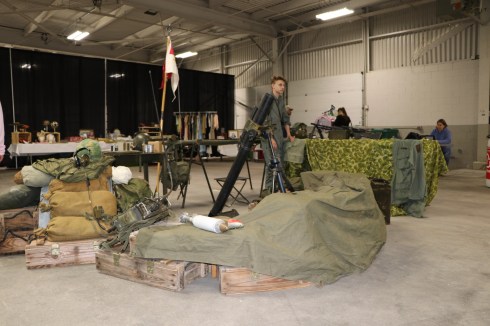
While there were reenactors from every time period, there were quite a lot of Vietnam War era reenactors.
The weapon in this photo, an M29 Mortar, is still used today, with some slight modifications. If you never thought you would ever use geometry, think again. The trajectory of the projectiles use a lot of geometry and other mathematical formulas to direct the mortars accurately. Also, it took five people, yes five people, to operator (the squad leader, the gunner, the assistant gunner, first ammunition bear and the second ammunition bearer). One of the projectiles can be seen to the right of the M 29.
There were also vendors selling their wares. Many of the products being sold were home made replicas of the items of previous eras.
There were also various displays of the popular attire, books and other items from the various eras.
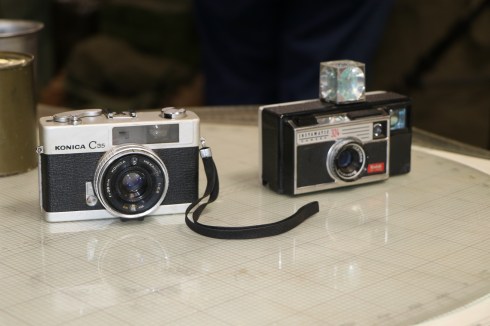
Check out the cameras used during the Vietnam era. Maybe I should consider trading in for one.
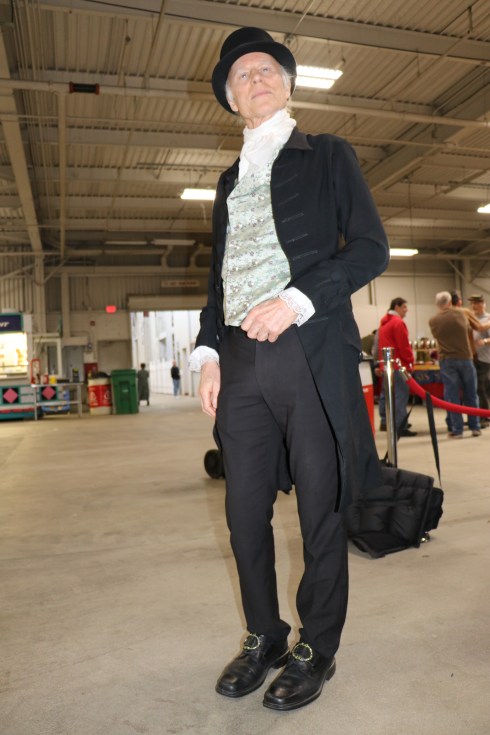
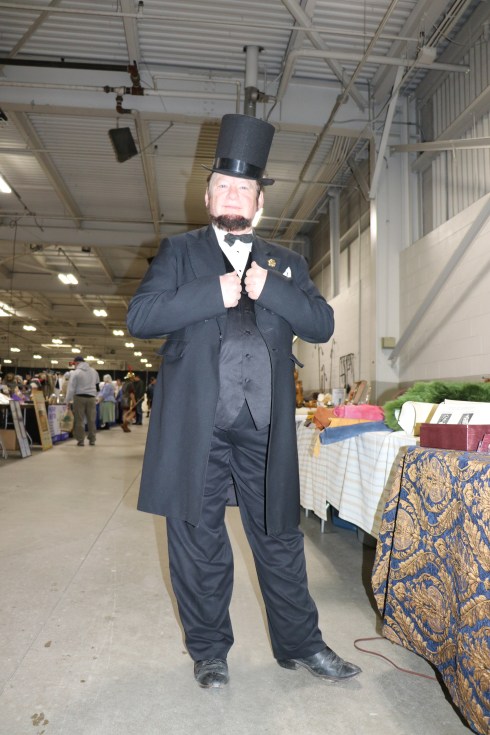
It was such a big event, even two presidents showed up.
President Madison
And, of course, President Lincoln.
If all that wasn’t enough, there was also entertainment at the reenactors fair. Singers performed a variety of songs from the past.
Below is a video of one of the talented performers.
Please follow me on Facebook to view photos, video and other content not included on my blog.
Handicapped Accessible:The museum is wheelchair accessible and guests may request a wheelchair at the front desk (a photo ID must be left). Wheelchairs are available on a first-come, first-served basis.
Highlights: historical items, photos and videos from John F Kennedy’s life. There is also a special Kennedy 100 Milestones And Mementos exhibit which is scheduled to be on display until May, 2018.
“What could have been?” is probably the most common phrase people come away with after their visit to the John F Kennedy Presidential Library And Museum
You can’t help but feel inspired while walking through the museum. Even if you’re not an admirer of the man or his family, just looking at the historical items of the era and seeing how much he accomplished at such a young age is bound to make you feel motivated. By the time he died at the age of 46, he had been a senator, war hero and President. I’m approaching that age and I’m not quite there in my career accomplishments. Yet.
The first room you enter after paying your admission is a room with many of the items from JFK’s younger school days. I actually used to use JFK’s less than stellar grades in his early education as an excuse when I didn’t always do well on my report card…it didn’t work out well for me, though.
There is also a photo of JFK with hsi favorite boat, the Victura, and his U.S. Navy dog tag. During the summer, the Victura can be found on the lawn of the Kennedy Library. However, during the winter months, and when I was visiting, it is kept at the Crosby Yacht yard in Osterville, Massachusetts where she was built.
Next to the first room of the museum is an auditorium where you can watch a quick film (about 20 minutes) about the life of President Kennedy.
After the film ends, visitors follow a stairwell into the heart of the museum where many of the historical items from Kennedy’s Presidency can be found.
The museum displays historical memorabilia and videos and photos in chronological order. In the beginning of the museum you can view videos of the senator and presidential candidate Kennedy.
I especially liked the examples of shops and other memorabilia from that era.
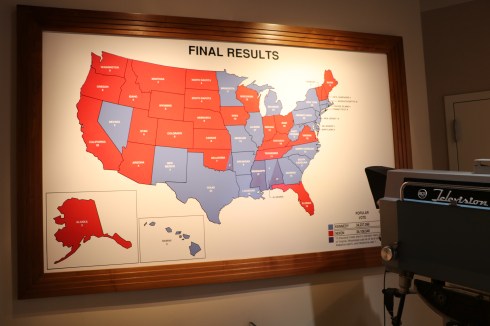
Looking at the electoral map from the night of the election shows a sharp contrast to what it would look like these days.
The states in red show states the Republican candidate (Richard Nixon) won. The blue states are states Kennedy won. The chief reason behind this, besides the changing political landscape, is that Nixon was the senator from California which would explain in part why he did so well on the west coast. Kennedy’s running mate, Lyndon Baines Johnson (who was from Texas), helped Kennedy carry many of the southern states. In fact, the whole Kennedy/Johnson relationship is full of dichotomy and complexities. It has been believed, and essentially proven, the two men did not like each other very much before the election (and not the first time a president and vice president didn’t like each other). But, Kennedy and his people thought they needed Baines on the ticket to help deliver the south.
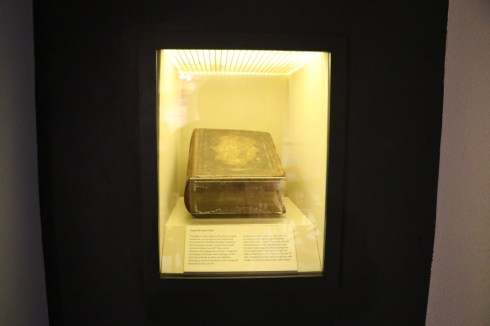
The book shown below, an 1850 edition of the Douay English translation, is the Kennedy family bible that was brought over from Ireland by his forebears. It is the bible JFK was sworn in on during his inauguration.
After viewing the historical items from his campaign and early days of his presidency, there is a larger area with memorabilia from his presidency can be found. There are also letters, memorabilia and other items from the Kennedy’s and not just John Kennedy. There are also historical items from Robert Kennedy and Sargent Shriver, John’s brother-in-law. The historical displays include an exact replica of the Oval Office while Kennedy was president.
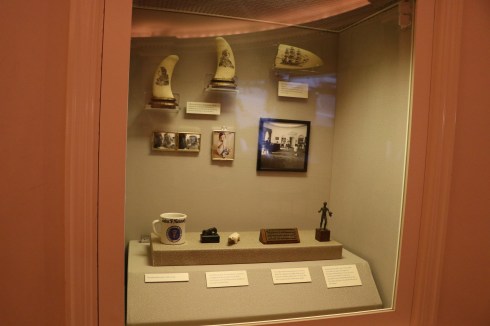
In the photo below are two whale teeth etched with portraits of King Christian VI of Norway and Frederick William, the Great Elector of Brandenburg. These whale teeth were used as book ends in the Oval Office.
Next to the whale teeth, to the right, is a whale tooth scrimshaw inscribed with a full rigged ship. This was a gift from his close friend and class mate at Choate School, Lem Billings. Kennedy kept this on his desk. So much for saving the whales.
The section with Jacqueline’s personal items is wonderful also.
One of the more interesting things I found at the museum were gifts other world leaders had given Kennedy and Jacqueline Kennedy, the first lady.
This stucco head of Buddha (circa 2nd century A.D.) was given to the president and his wife by the king of Afghanistan, Mohammed Zaher Shah.
This gilded metal kris and sheath, decorated with ivory and precious stones, was given to the president by President Achmed Sukarno of Indonesia on April 24, 1961.
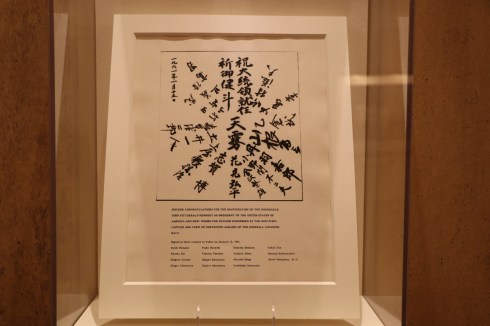
This congratulatory message was sent to President Kennedy on his inauguration in 1961 from the surviving crew and captain of the Amagiri. What makes that so interesting? The Amagiri was the Japanese destroyer that on August 2, 1943, rammed PT 109, the boat Kennedy and his men were on during World War II.
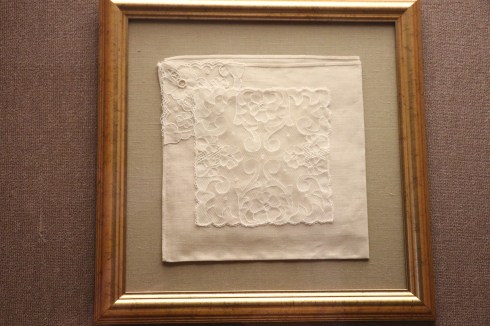
This Carrickmacross lace napkin was presented to President Kennedy by Prime Minister Sean Lemass of the Irish Fianna Fail party.
While President Kennedy’s assassination is acknowledged, there is not much on exhibit about the assassination. Rather, they focus on how the world responded to the tragedy. Fittingly, a darkened hallway leads to an area with photos of memorials dedicated to the slain president from all over the world.
There is also an area dedicated to the Kennedy family after President Kennedy’s death. There are books written about John Kennedy, mementos that were made in his honor (such as the half dollar piece that was issued after his death) and the rest of the Kennedy family. There are also historical artifacts such as a piece of the Berlin Wall which signify way the world has changed and how John Kennedy and other members of his family, specifically Ted, had possibly helped shape these changes.
There are also short films that play in small cinemas throughout the day at various locations in the museum.
The biggest attraction at the museum, however, is a special exhibit called JFK 100 Milestones and Mementos.
This exhibit is on display to celebrate what would have been the 100th birthday (his birthday was May 29, 1917). Everything from the hat and gloves he wore on his inauguration day, his first baby photo to hiss iconic Rayban sunglasses that he popularized are on display in chronological order of his life. The exhibit is planned to be on display until May, 2018.
There are far too many items to post photos of. Below are a few of the items that stood out to me.
Pictured below is the Profile In Courage Award that has been awarded annually since 1990. Past recipients include John McCain and Russell Feingold (co-winners in 1999), Gerald Ford and John Lewis (co-winners in 2001), Gabrielle “Gabby” Giffords (2013) and former President Barack Obama (2017)
Behind the museum there is a path used by joggers and people just going for a walk. There are some pretty views of the Boston skyline and the water. There is also a pier you can walk out onto and look out at the bay. It is a quiet place to ponder all that you have seen at the museum.
Sadly, we will be observing the death of this notable president later this month. But, rather than focusing on his tragic death, it is much better to focus on his life and not his death. This museum is a powerful reminder of his life and legacy.
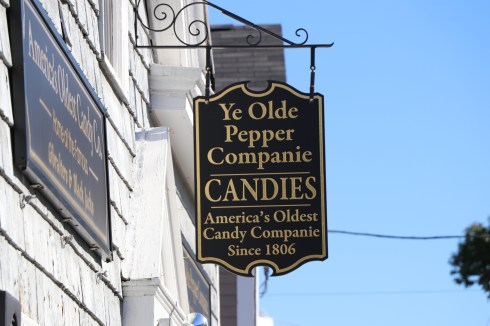
While driving along Derby St in historic Salem, MA, you might drive past the nondescript, white building with shuttered looking windows and think it”s just another building. You would be wrong, though.
Two popular candies are said to have been popularized by people associated with the company.
The story of this historic company dates back to the early 1800’s when John Pepper, who is considered by some to be responsible for creating “The Black Jack” candy according to the company’s web site, began selling his candies in Salem and the nearby communities. Although there is some debate over who is responsible for creating this candy, it would go on to be considered the flagship candy of the store.
The other story holds that the Spencer family from North Salem were left destitute after a shipwreck. In an effort to help the family, neighbors and friends donated supplies to help them in their time of need. Mrs. Spencer used this sugar to create what would become known as “Salem Gilbratars” which are sold in the store to this day.
The company has come a long away from these simpler days. The companie sells a variety of candies. From the divisive candy corn, which people seem to hate or love but has become a staple of the Halloween season nonetheless, to the wide varieties of fudge and chocolate,
The companie remains one of the most popular spots to visit in Salem (MA) particularly during Halloween. This photo was taken the weekend before Halloween (Oct. 28).
The line would grow even longer during the day. Good thing it wasn’t too cold out, not that it would have deterred the shoppers.
It’s funny how the exterior of the building seems to scream dull and boring but the inside of the store, particularly during the various holidays (they also hold candy cane making demonstrations during the Christmas season) and Halloween has so much character and decor.
This woman who was working at the shop during my visits even got dressed up for the season. Rumor has it, she may be the original Mrs. Spencer. And people say Salem doesn’t have ghosts.
If you’re in the Salem area, or you just get a sweet tooth for some historic candy, stop by! Ask for Mrs. Spencer.
Parking: there is some metered street parking available (good luck this time of the year) and two main parking garages on Congress St. and Church St. Parking this time of the year is $20 for the day, regardless of how long you stay there if you park in most of the garages and lots in Salem during the month of October. After Halloween it is much more affordable.
Handicapped Accessible: Yes
Dog Friendly: Yes
Highlights: historical wharf, pretty views, great place for dogs and children to play
Tips:
great place to catch sunrises and sunsets if you can plan it
don’t forget to look along the side of the trail to the lighthouse for signs with historical info about the wharf
don’t forget to visit the cute shops and dining establishments at nearby Pickering Wharf
Once the site of an active trade port and a thriving market area that included warehouses with goods from around the world, Derby Wharf is just as busy and thriving but not because of its imports and trade.
Built during the 1760’s by Richard Derby, Derby Wharf, the wharf attracts tens of thousands of visitors each year (if not more), each year to learn about its rich history, get some exercise and, mostly, enjoy the views from the wharf.
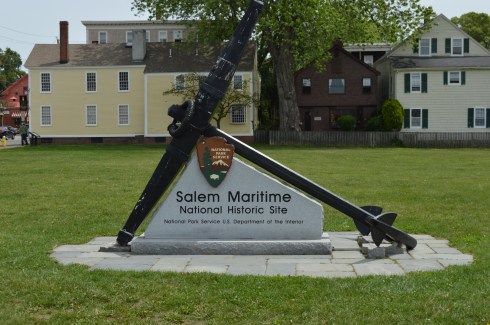
The first thing you’ll notice at Derby Wharf, after the marker signalling the Salem Maritime National Historic site, is the Pedrick Store House. The Pedrick Store House is a three-story building, constructed around 1770, is a historic rigging and sail loft, which was relocated to the Salem Maritime National Historic Site from Marblehead, MA in 2007. They don’t allow visitors inside. At least they didn’t during my visits to the area.
The ship The Frienship is usually docked next to Pedrick House. But, now, for some reason, it was anchored a little farther away from the wharf.
Perhaps the highlight (no pun intended) of the wharf is Derby Wharf Light.
Built in 1871, Derby Wharf Light was meant to “mark the main channel leading into this anchorage, with the view to its becoming a harbor of refuge which may be safely entered at any time,” The lighthouse is about twelve feet square and about 20 feet high to the top of the cupola.
Derby Light originally used an oil lamp shining through a Fresnel lens (a lens with a large aperture and short focal length). The lighthouse is now solar powered and the light flashes red every six seconds.
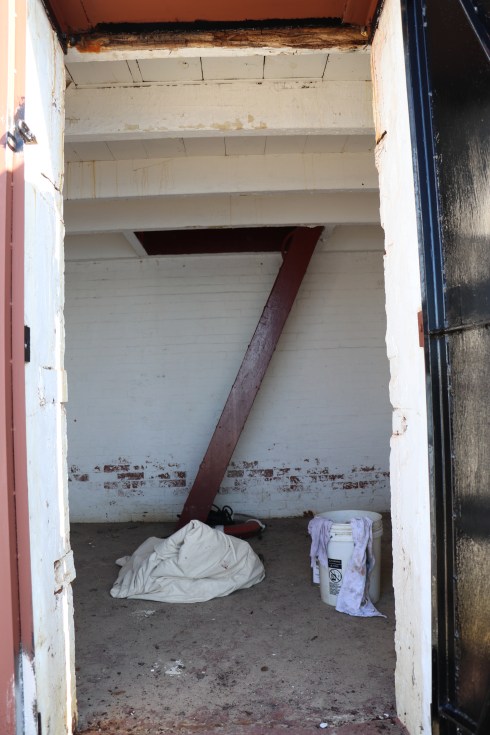
During my second visit to the lighthouse this month (I always make a trip there whenever I visit Salem), some of the workers were painting the door of the lighthouse and they were kind enough to let me shoot a photo of the inside from the outside of the lighthouse (visitors are not allowed inside).
Recent archaeological research has shed some light on how the wharf was built. in 1992, the archaeological dig revealed that Derby Wharf was built by laying timbers on the mud flats at low tide, and then filling between the timber walls with dirt and stones. Later in the 19th century, the wharf was encased with large granite blocks.
The main goods which were imported to Salem, often arriving at Derby Wharf, are indigo, textiles (mainly silk), spices (particularly cinnamon), ceramics and decorative arts and artificial flowers.
The pier at Derby Wharf includes a roughly half mile walk to the lighthouse along a flat, wide dirt trail.
Along the path to the lighthouse, there are signs and displays with various fun facts about the history of the wharf and Salem.
Because of its storied past, all of the people who died at sea or on the wharf and the role it played in the slave trade, the Wharf is said to be haunted.
However, Derby Wharf mainly serves as a peaceful place to go for walks, run or ride your bike. It is also a nice place to sit and look out at the views.
Derby Wharf is a great place to take the dog and let him and her play. We have been fortunate to have some really nice weather fecently. So, there have been dogs everywhere these past few weekends in Salem!
Tiro is a 5 year old mixed breed dog. I had a lot of fun photographing him. He was very playful!
Cody is a 9 year old Tri-Color Collie. Look at those colors!
I also saw several dogs while I was walking to and from the wharf.
Bradley is a 4 and a half year old mixed breed. I was so very impressed with how Bradley and all of the other dogs posed for me. There are a lot of distractions in Salem, especially this time of the year. Yet, they all posed wonderfully.
Luna (on the left) is a 6 year old Sato from Puerto Rico. I am very glad Sato is here and not caught up in the aftermath of the hurricane. Grimm (on the right) is a 2 year old American Bulldog.
Location: 310 1/2 Essex Street, Salem, MA (about 10 minutes north of Boston, MA)
Hours: Open March 15-November 15, daily 10am-5pm
Call for Winter Hours / Extended Hours in October
Cost:
Guided House Tour
Adult $10.25 Senior $ 8.25 Child (7-14) $ 6.25 Self-guided House Tour
Adult $8.25 Senior$6.25 Child (6-14) $4.25 Children Under 6 are free
Parking: there is street parking (75 cents for a maximum of 4 hours) if you get there early. Otherwise, there are several parking lots and garages that charge $20 for the entire day of parking. Generally, I park at the Museum Place Mall at Church St since it is closest to all of the attractions in Salem and within walking distance to the Witch House
Handicapped Accessible: No
Dog Friendly: No, although service dogs may be allowed
Highlights: historical artifacts, knowledgeable staff, actual home of “with hunter” Judge Johnathan Corwin
Tips:
The entrance is in the rear of the building (off North St)
“It’s October”, a passerby yelped to a disgruntled driver as he barely squeezed his sedan into the last available street parking spot.
Yup, it’s that time of the year again in Salem, Mass.
Although Salem has proven itself to be so much more than just an autumn destination, fall is still Salem’s biggest time of the year.
It’s unfortunate much of the draw to Salem is related t the witch hunt of 1692. However, it does provide a learning opportunity and it also gives us a chance to remember the past in the hopes it won’t happen again.
One of the best places to get a no frills education about the Salem Witch Trials is the Witch House on Essex St., just one mile away from the actual hanging spot of these accused witches.
The last standing building directly related to the Salem Witch Trials, the Witch House has a dark, storied history.
As I walked around the house I couldn’t help but think of the innocent people who had been tortured into confessing and the backdoor deals that were made to avoid being accused or convicted of being a witch. In this very room, John and Elizabeth’s (his wife) parlor or best room, people’s fates were sealed. In total, 24 people would either be hung (19 in total), 1 person was pressed to death and 4 people died in prison.
The home was bought in 1675 by Corwin, a local magistrate, and his wife Elizabeth (Gibbs). Elizabeth was a wealthy widow having been previously married to Robert Gibbs. They would have 10 children together. Six of their children would die before the age of 25. Only 2 children lived long enough to have families of their own.
The other room on the first floor showcases many of the tools and herbs used during that time. As you can see in some of the photos, each historical artifact has a sign or placard next to it with an explanation or story behind the piece being displayed.
The Witch House has six rooms (if you count the foyer areas on two floors. While not all of the items in the house are directly from that time, many of the items in the building closely mimic the items of that era.
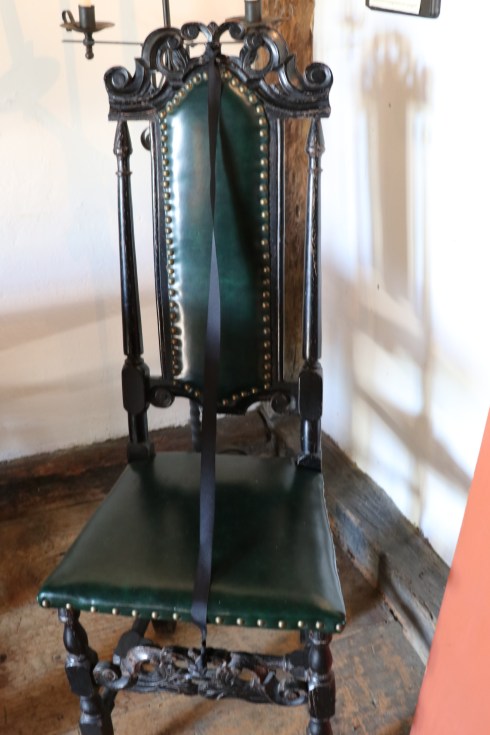
These chairs, for instance, are very similar to the chairs and tables used that time. In fact, the 5 chairs at this table are symbolic of the 5 judges (out of 9) needed to convict someone of being a witch at that time.
On the table are copies of the pages of journals, diaries and court records of the inquisitions and court proceedings.
Judge Johnathan Corwin, who resided here, was said to have questioned the accused at times using extreme measures such as tying people’s arms behind their backs to a chair similar to this one. It forced more than one innocent person to confess.
The windows and furniture featured in the house are very well crafted.
In the first room of the first floor there is a sealed off area that shows the inside of the walls. The architecture of that day may be outdated but it still holds up to this day.
Up a short, narrow, windy staircase, the second floor has two bedrooms.
In one of the rooms sits a machine for sewing or knitting.
This doll, also known as a poppet, which was found in the wall of Bridget Bishop’s home, was said to have been a voodoo doll. The catch is that most people at that time left these types of dolls in their walls as a sign of good luck. Instead, In Bridget’s case, it was said to have been used to curse others. Cute little fella, isn’t he?
Dogs are not allowed in the Witch House (exceptions may be made for service dogs). But, I met Abita, a 3 year old Lab mix, on my way to the house. Abita was adopted from the Northeast Animal Shelter in Salem, MA. What a cutie.
The video below comes courtesy of samuelaschak. It gives a more detailed historical background of the building and the historical highlights of the Corwin family and Salem.
Hours: Open daily, 9:00 – 5:00 (hours may vary depending on the season)
Cost:
Adult – $28.95
Senior (ages 65+) – $26.95
Youth (ages 4-14) – $18.95
Children (3 and younger) – Free
Parking: there is a free parking lot across the street from the Seaport Museum. There is also additional parking across the street from the parking lot for overflow
Handicapped Accessible: Yes, but not all of the buildings are accessible to the handicapped. Approximately one-third of our buildings have wheelchair-accessible entrances; interior access varies. The village’s unpaved roads are generally firm and stable suitable for wheelchairs and strollers. All roads are basically level with a few slight inclines located near the Children’s Museum, Treworgy Planetarium and Membership Building. (see link below for more info)
Highlights: living museum with character actors, boats, replicas of historic homes, figureheads, lighthouse replica, play area for children
Tips:
For an after museum viewing treat, Mystik Village, an open area shopping mall is a mere.9 miles away on Coogan Blvd
the museum’s main parking lot can fill up quickly if you don’t get there early. Additional parking can be found in the lots off Rossie St on the other side of the main parking lot
In my previous posts about Mystic Seaport, I shown you the figureheads and the ships and boats of Mystic Seaport.
In this final installment, part three, I am going to focus on some of the buildings and historical items at the museum. I hope you enjoy!
The first exhibit room at the Thompson Exhibition Hall has many interactive exhibits and artifacts and exhibits from a bygone era.
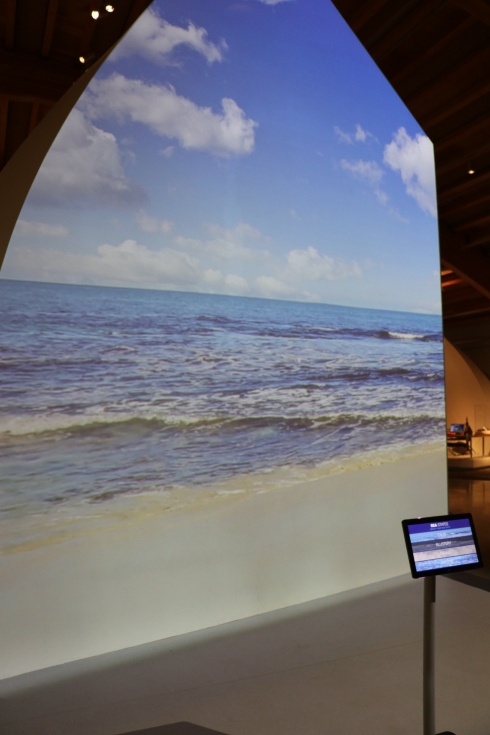
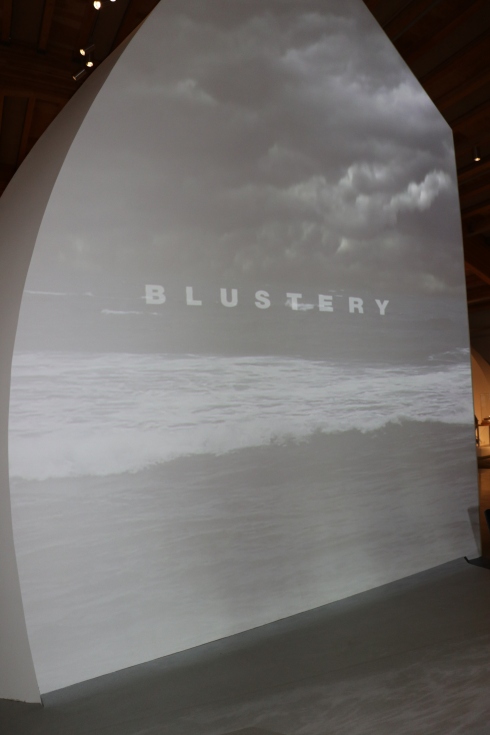
The first interactive exhibit is called “Sea States.” At this exhibit, you can watch video of the water from calm
to blustery
and every other weather condition you can think of.
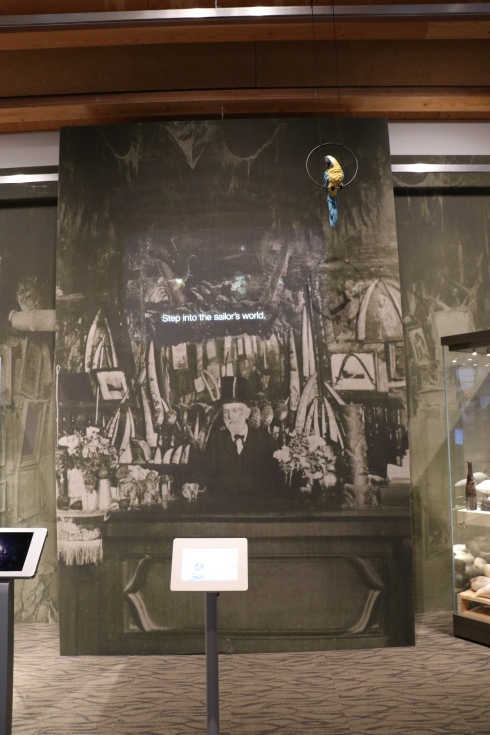
In the Thompson Building is a very large room packed with lots of historical items. And many of these exhibits and items have interactive devices that give more information and historical context to the items.
These carved etchings were made on teeth and bones of whales.
People may think captains and other sailors were not attached to their families, being away from them for so long and because of traditional family dynamics. However, nothing could be further from the truth. Sailors seemed to have a very strong connection to their families, especially their children.
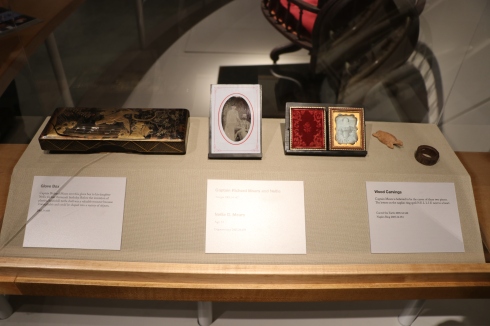
Pictured below are a glove box, photo of Captain Richard Columbus Mears and his Nellie, his daughter (Nellie Goodsell Mears Van Valkenburgh) and some wood carvings he made.
Captain Mears, born in Accomack County, Virginia in 1829, was a merchant ship captain based mainly out of New York.
The black and gold item on the left is a glove box that Captain Mears sent to Nellie for her 13th birthday. Believe it or not before plastics were invented people made these objects out of turtle shell. This particular glove box was made out of a hawksbill turtle shell.
The photo next to the glove box is a photo of Captain Mears with Nellie. To the right of the display are wood carvings by Captain Mears. The napkin ring, also carved by Captain Mears has the letters N E L L I E with a heart next to it.
This crib also has turtle shell in its design. In the second photo you can see the turtle shell reflected in the mirror under the crib.
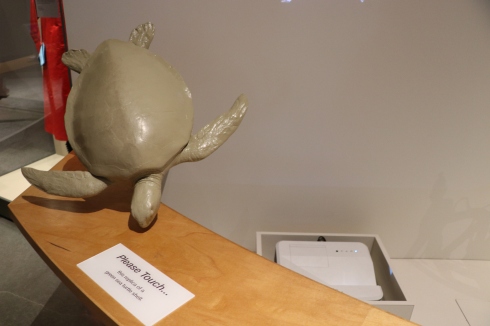
Most museums do not want you to touch their exhibits. But, the Seaport Museum has this replica of a turtle for people to touch to see what they felt like that. It was smooth and silky. I want one. A real one.
This bed from that era, pictured below, had some interesting designs on it.
These carvings are miniature figureheads. They are models of life sized figureheads that adorned ships of those days.
There are also several models of boats from the earlier days of the seaport.
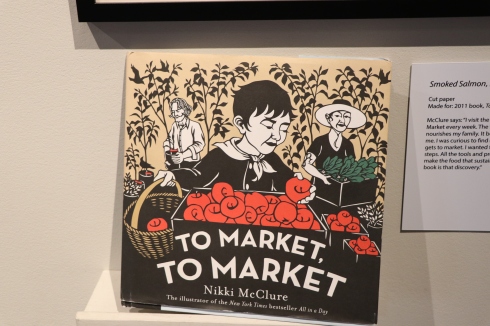
Nikki McClure’s book To Market, To Market was on display at the Mallory Building. McClure, a papercut artist based out of Olympia, Washington, is an author and illustrator who mainly writes children’s books with an environmental theme. I love her art!
The were other works of art from her books Waiting For High Tide and Life In Balance.
I liked these pieces from her exhibit best.
I also loved the educational historical buildings with the re-enactors. The people in these buildings are very knowledgeable and friendly.
In this building, The Cooperage, coopers (barrel makers) were making barrels. The old fashioned way.
This is the Nautical Instruments Shop. They have many clocks and timepieces as well as nautical devices such as compasses in this building.
The Mystic Print Shop is a true to life replica of the print shops of the 1800’s. If you look closely at the photos in the corner, you will see how the template or blocks on the metal pad match up with the words on the printed sheets.
The people at the Shipsmith Shop and Hoop Shop reenact ship and mast builders.
There is also a replica of a lighthouse that you can enter. A short documentary plays on a loop in the lighthouse.
There are also several shops that are replicas of the buildings of the 1800’s.
The Geo. H. Stone & Co store is a replica of the stores of the time.
Of course no living history museum would be complete with a school house.
The drug store had some interesting remedies of the time.
The Seamen’s Friend Society was a place the seamen could go to read, learn to read or have a book read to them. Since sailors spent a lot of time at sea and began working at a very early age sometimes they were not literate. They came to places like to be tutored or just to have someone read to them.
Formerly located in Saybrook, Connecticut, the Buckingham-Hall House is a two story building with two bedrooms and several sitting and family rooms. Being self-sufficient people, there was also a sewing and quilting area with a variety of fibers. The house was owned by William Hall Jr., from the estate of Samuel Buckingham. I love how they used to design the windows in those days. They weren’t big as many windows are these days. But, they were much more fancy and, despite their small size, allowed for a good amount of light. There was also an open hearth cooking demonstration in the kitchen during my visit.
One of the other homes at the Seaport Museum is the Thomas Greenman House. The house was originally built for Thomas and Charlotte Greenman in 1942. THomas Greenman was originally from Westerly, Rhode Island but made his way to Mystic later in his life.
The kitchen and the second floor are not accessible to visitors. But the rooms on the first floor are decorated and furnished in the Victorian style of the 1870’s. I always think I want to live in these types of houses because of their ornate designs and their charm. Then I realize just how oppressive it must have been during the hot summers and frigid winters. Not to mention they didn’t even have WI-FI.
The Burrows House is a very small home, yet almost as big as my apartment, that stands as an example of many of the homes of that era. The house, which is said to have been built between 1805 and 1925, was the home of storekeeper Seth Winthrop Burrows and his milliner wife, Jane. That is some tight stairwell.
The Stillman Building has a variety of interactive displays and historical items collected over the years of the seaport’s history. My favorite part of their exhibits in this building are the notes children wrote about whales and the sea.
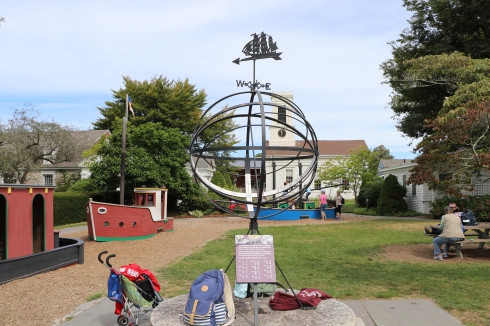
This timepiece, found by the children’s play area, acts like a sundial and gives precise times throughout the day. But, people seemed more interesting in using it for coat and backpack storage. I was tempted to check out that boat there.
Lastly, the walkways to the different buildings is level and handicapped accessible (although some of the older historic buildings are not). And there are lots of pretty views along the way. I love the old pumper, which had to be moved manually.
Mystic Seaport is a dog friendly museum (although they are not allowed in the buildings). These two cute curly dogs were hanging out by the bench with their guardians.
Fuzzy (the white dog on on the left) is a 4 year old female Goldendoodle.
C-Doo (short for Colossus of Doodle), on the right, is a 1 year old Goldendoodle
Hours: Open daily, 9:00 – 5:00 (hours may vary depending on the season)
Cost:
Adult – $28.95
Senior (ages 65+) – $26.95
Youth (ages 4-14) – $18.95
Children (3 and younger) – Free
Parking: there is a free parking lot across the street from the Seaport Museum. There is also additional parking across the street from the parking lot for overflow
Handicapped Accessible: Yes, but not all of the buildings are accessible to the handicapped. Approximately one-third of our buildings have wheelchair-accessible entrances; interior access varies. The village’s unpaved roads are generally firm and stable suitable for wheelchairs and strollers. All roads are basically level with a few slight inclines located near the Children’s Museum, Treworgy Planetarium and Membership Building. (see link below for more info)
Highlights: living museum with character actors, boats, replicas of historic homes, figureheads, lighthouse replica, play area for children
Tips:
For an after museum viewing treat, Mystik Village, an open area shopping mall is a mere.9 miles away on Coogan Blvd
the museum’s main parking lot can fill up quickly if you don’t get there early. Additional parking can be found in the lots off Rossie St on the other side of the main parking lot
Once a major seaport, Mystic Seaport no longer functions as the busy hub of commerce and fishing or transportation. But, they have preserved some of the historical atmosphere while still incorporating modern technology.
Since Mystic Seaport is such a big attraction, I am posting my blog posts in three or possibly four installments. My first installment deals with the Viking ship display which was being featured at the museum as well as the figureheads, decorations and other sculptures at the museum.
During my visit, there was a Viking ship docked at the museum. Tours were being provided for a small charge.
By far, my favorite part of the museum is the figurehead museum. The dimly lit room, which made photography challenging, in the Wendel Building added to the mystique of these treasured works of art.
This scroll billethead figurehead is the oldest one in the museum. Many ships used these billetheads in lieu of figureheads because they were easier to carve and less expensive than the full sized figureheads.
There are several other figureheads in the museum which stood out to me.
This scary cat timber was used while lifting the anchor and keep it away from the ship so it would not damage the vessel.
Most of the figureheads are of people, though.
This figure titles Woman With A Comb. Although it’s hard to tell when some of these figureheads were made, it appears this figurehead was made during the 1820’s. This figurehead shows a hairstyle and clothing style that was popular during the 1820’s. Unlike some of the figureheads you may have seen previously where the figurehead leans forward and under the bowspirit, this figurehead stands upright, which was common until the 1840’s when they changed to the design that leans forward.
Woman With Roses has an interesting historical background. This figureheads, which resembles a portrait more than an actual figurehead, was originally called Belva Lockwood when it first came to the seaport museum. Belva Ann Bennet Lockwood, who this figurehead resembles, was a leader in the women’s suffrage movement during the late 1800’s. She was nominated for President of the United States in 1884 and 1888. Despite her historical significance and the likelihood that a ship would have been named after her, there are no records that show her name on any vessel.
Donald McKay is a figurehead made for the 1855 clipper ship Donald McKay. Named and designed after the famous ship builder and designer Donald McKay, this figurehead was broken off its vessel and stood unprotected, outdoors in the Cape Verdes islands off the coast of Africa. It was restored and repainted but it still shows the effects of being exposed to the conditions. The first figurehead for the vessel was lost at sea and this figurehead which replaced the original one was believed to have been carved by the ship’s carpenter while the ship was out at sea.
Seminole decorated the ship vessel of the same name for over 40 years. The figurehead, which was built by Maxon Fish & Co in 1865 in Mystic, CT, is believed to have been carved by James N. Colby and James Campbell. Colby and Campbell were prominent ship and sign carvers and decorators in the Mystic area from the 1850’s until 1877. Seminole, an offshoot of the Creek Confederation, means “separatist” or “runaway.”
Seminole carried cargo from New York to San Francisco and vice versa for over 20 years. It was captained by another Mystic, CT, native Joseph Warren Holmes. Holmes would go on to make 84 passes by Cape Horn, a record among captains at that time. Eventually, the Seminole ended up in the west coast lumber trade and was finally broken up at Port Adelaide, Australia, in 1904. The figurehead was salvaged and, 50 years later, Mystic Seaport acquired it.
Magdalena is the largest figure of the collection. Magdalena once adorned the bow of the 421 feet long British Royal Mail steam packet Magdalena which launched in 1889 in Glasgow, Scotland.
Iolanda is considered the second figurehead for the steam yacht of the same name. The industrialist Morton F. Plant of New York and Groton, Connecticut, had this figurehead adorned to his yacht when he made his 33,000 mile voyage to India, China, Japan and the Mediterranean.
After Plant, the figurehead had many more owners including a Russian Princess and the British Navy where she saw service in both World Wars.
The figured pictured above called Aleppo could not be identified since there are no records or photographs to match it to any vessel. I find this makes the figureheads even more mysterious and interesting.
This figurehead once adorned the Rhine shipping vessel which was built in Scotland in 1886. The harp and caduceus necklace are said to portray her as a classical figure rather than a portrait or national symbol. It is typical of the British sail and steam vessels of the late 19th century.
The Rhine transported laborers from India and China, jute from Calcutta and lumber from Boston. After being damaged by a fire after World War I, she was sold to a junk dealer for $925. Shen then became a barge in New York.
This ghost-like carving called White Lady is not a figurehead, despite its strikingly similarities to other figureheads. One of the reasons the museum was able to determine it is more likely a decoration or sign are because the posture is too erect. Figureheads were carved to fit the curving shape of the vessel’s bow. Another reason this was not a figurehead is that her outstretched arm would have been particularly vulnerable to damage at sea. Also, her elaborate scrollwork base is very unusual for a figurehead. Lastly, there is no evidence of the wooden or iron fastenings that would typically have held the carving to a ship’s bow. You know, the obvious reasons.
Cover your eyes! This unidentified figurehead which has been named Women With Goblet by the museum is said to have been the victim of well intentioned but overdone restoration. The flowers around the bae were reconstructed and the outstretched right arm with the goblet is not original. Typically, carvers made the arms close to the body because it reduced the possibility of damage by the sea.
This figured, The Great Admiral, was craved in the honor of and dedicated to Admiral David G. Farragut. Farragut was an Admiral in the United States Navy during the Civil War. In 1869, a new clipper ship, The Great Admiral, was commissioned in his honor with this figured on the bow.
The figurehead was eventually salvaged after the ship was wrecked off the coast of Oregon in 1906 and it eventually made its way all the way to Mystic.
Woman With Beads was carved in the classical British figurehead style. It is said to represent one of Victorian England’s literary or historic characters.
Abigail is believed to have been carved for the vessel of the same name which was named after the ship’s owner’s wide, Abigail Chandler. The figurehead was found after the ship crashed along the coast of Massachusetts in 1817.
Great Republic once adorned the largest American ship of its day, if only for a few weeks. This figurehead was once on Donald McKay’s clipper ship The Great Republic. Built in 1853, the 335 feet long The Great Republic is the largest cargo ship ever built in the United States.
The eagle, which was carved by S.W. Gleason & Sons of Boston, was on the ship for a few weeks when the ship was damaged by a fire. The eagle was then removed and kept by Captain Nathaniel Palmer of Stonington, CT. Captain Palmer had the burned out hull of The Great Republic removed and built into a smaller ship. A new bow carving was replaced on The Great Republic when it was repaired.
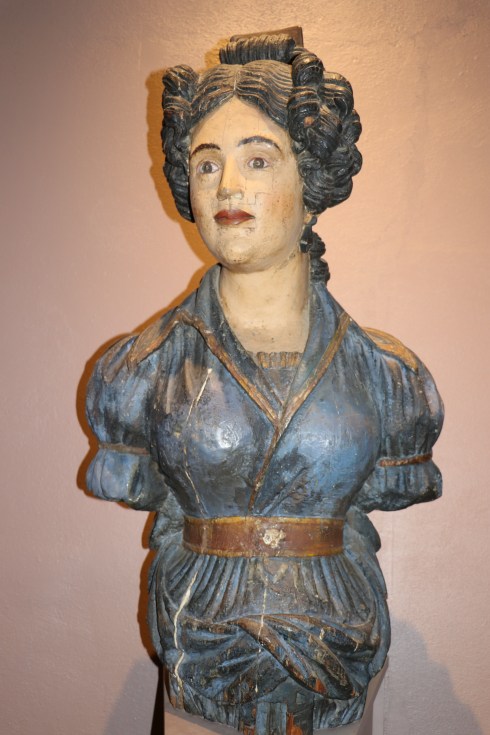
This bust of a woman is believed to be from the mid 19th century. Although it is not clear who the woman is portrayed in this bust, it is most likely a wife, girlfriend or relative of a captain or ship builder.
The Gray Man is a bust of a man from around the 1830’s. It really isn’t a bust. It was originally a figurehead on a ship. However, after it was removed from its original vessel, it was painted blue-gray and the base was altered which makes it look more like a marble statue than a figurehead
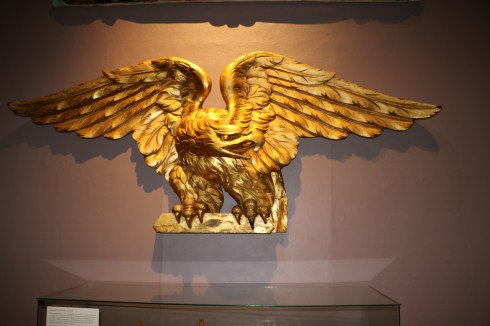
This carved gold leafed pine eagle pictured above is believed to be carved by William Rush but this claim has yet to be verified.
While this eagle with its arms extended may have been originally intended to be posted on the flat transom at the stern of the ship, it is also very similar to the décor on public buildings during the 1800’s. It is something that looks familiar to me as I have noticed decorations and sculptures like this on or inside older buildings while visiting the historic homes and area of New England.
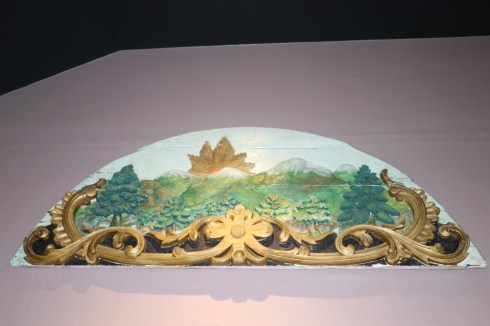
This carving of a mountain sunrise, Mt Washington Lunette once adorned the steamship The Mount Washington, a steamship on Lake Winnipesaukee in New Hampshire. This fan-shaped panel, called a lunette, was located at the center of one of the boxes that covered the steamboat’s paddle wheels. The half round paddle boxes served two purposes. They helped to protect the wheels from damage while shielding passengers from the turning wheels as well as the water that was thrown up by their blades.
There are other statues and decorations scattered through out the living museum.
These sculptures above, I believe of a sea mammal, were located outside one of the buildings.
This horsehead, located outside one of the historical homes, may have been used to tie the reigns of your horse.
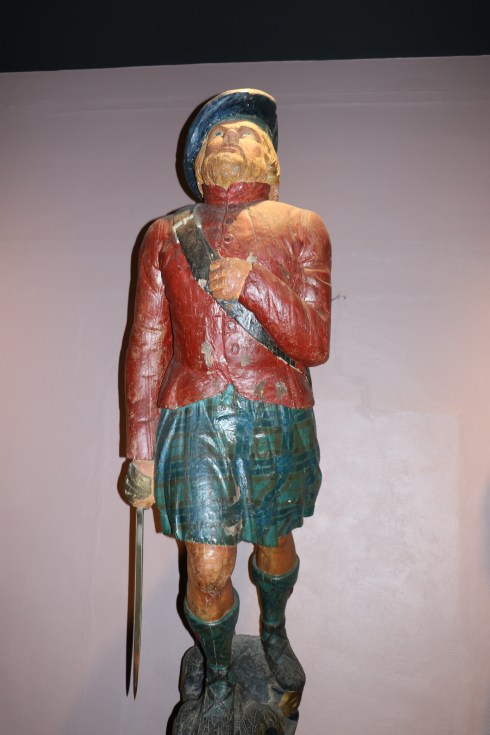
This outdated statue was located outside a cigar and supply shop. It is displayed, I am sure, simply to give an accurate display of what the shops at that time looked like. The craftsmanship is impressive regardless.
The Carver’s Shop is one of the shops replicated to show how statues and other carvings were made and sold. The carving in the last photo (bottom right) may look similar to the cat carving at the figurehead museum.
These are two other cute decorations I noticed at the museum during my visit.
There were several dogs at the museum. Who knew dogs were so fond of the sea?
Since I am posting these blog posts as a series, I will post one set of photos for each dog or group of dogs I saw there.
I saw Brandi (On the left) and Colby (on the right) sitting by a bench with their guardian before I entered the museum. They are both 6 year old Chihuahua and Japanese Chin mix breeds.
See you soon with the next installment from my visit here!
Below is a short video of the figureheads and the restoration of figureheads from Mystic Seaport’s website.
Location: 1 Old Bridge Rd, Simsbury, CT (about half an hour northwest of Hartford, CT)
Hours: Available 24 hours a day
Cost: Free (but donations are appreciated)
Parking: There is room for about a dozen or so cars in the parking lot off Old Bridge Rd
Handicapped Accessible: No, There are some poles at the entrance to the bridge to prevent vehicles from driving onto the bridge and I am not sure if wheelchairs could get past them (see photo below).
Dog Friendly: Yes
Highlights: flowers strategically placed on a bridge, scenic, historical landmark
parking is located on located on Old Bridge Rd off Drake Hill Rd. There’s no parking located at the entrance by Riverside Rd
popular place for weddings, engagements and portrait photography
There’s more than one “bridge of flowers” in New England.
Inspired by the Bridge Of Flowers in Shelburne, MA, the Old Drake Bridge Of Flowers, is by no means as long or as flowery as the Bridge Of Flowers in Shelburne, MA. Yet, what it lacks in length and variety of flowers it makes up for in charm.
Each panel of the bridge is decorated with various flowers. The bridge has 32 baskets and 48 boxes, some of which were built and added by an Eagle Scout, filled with flowers of an array of colors. The flowers bloom from late May to October.
During my visit, I met a woman who stops by every other day to water, trim and keep after the plants. Clearly, she’s doing a wonderful job.
The bridge, originally built in 1892, is an example of 19th century metal-truss bridge construction. It spans 183 feet and includes a 12-foot roadway suspended 18 feet over Farmington River. And it has been much traveled over the years.
The Old Drake Flower Bridge was originally built to be a one lane, one way bridge for vehicular traffic. It was later replaced by a 2 lane bridge in 1992. Finally, in 1995, it was restored as a pedestrian bridge. It was added to the National Register of Historic Places in 1984
There are also plants and flowers by the sides of each entrance to the bridge.
At the entrance to the bridge, off to the left side, there is a memorial dedicated to the original bridge (the Weatogue Bridge) that was built there before it was replaced by the Old Drake Flower Bridge.
The inscription on the historical marker reads reads:
A toll bridge was built here in 1734 by order of the General Assembly it was the first highway bridge across the Farmington River
The Old Flower Bridge is a popular place for weddings, portrait photography shoots and engagements. In fact, I turned around from the parking lot the first day I went there because there was a wedding or wedding shoot taking place and I didn’t want to disrupt them. The second day I went I ran into a couple who had just gotten engaged. The beaming couple asked me to take their photo and went on their merry way of future bliss.
The Old Flower Bridge is dog friendly.
Lisa (on the right) is a 5 year old Havanese. I love seeing how happy and proud dog guardians are in their photos.
Tucker Jones is a 2 year old Corgi.
Leila is a 9 year old Bernese and Beagle mix.
Below is a link to The Flash Lady Photography. The Flash Lady Photography conducted an engagement photo shoot on the bridge in 2015. You may notice many of the flowers are not on the bridge when these photos were taken as it was the end of October when the photos were taken. I hope they’re both very happy now!
I made two visits to Bare Cove Park. The first time I visited the park was July 28th. I got there late on the 28th and the lighting was poor. So, I stopped by two days later, Sunday, July 30.
As you can see by the photos, there are some beautiful sunsets at Bear Cove. Unfortunately, the lighting wasn’t very good, though.
Once the site of a U.S. Naval depot (more on this later), Bare Cove Park now is the home to a variety of wildlife. I found many birds during my visit. There are also supposed to be fox, deer and other animals at the park. I didn’t see any of them. But, I did see evidence of them.
If you look closely at the little bird photo at the end, the bird has his or her lunch.
There was a crisp pre-autumn chill in the air when I made my way to Bare Cove Park. It reminded me of the mornings you whittle away before the college and pro football games start. But, I’d rather spend my day at Bare Cove anytime.
The views are simply amazing.
The thing that stood out to me mostly are the variety of pretty trees and flowers at the park.
Bare Cove is only 484 acres and it’s very easy to get around, even without a map of the park. Trust me, I didn’t even get lost and I always get lost. The trails are easy with hardly any inclines and they are mostly paved if you stay on the main trail.
Because of its proximity to Boston, Hingham was considered an important location for the military to produce ammunition and other supplies during World War II. The magazines, or manufacturing buildings, ran 24 hours, 7 days a week and employed thousands of people at is peak.
The dock house (only open Sunday from 12-2) has a variety of items from World War II that were manufactured in this very same area.
There are also two memorials outside of the dockchouse as well as other items from the days of the hey day at Bare Cove. The ammunition depot was closed in the early 1970’s.
The memorial to the left, lying vertically on the ground, is dedicated to the men and women who worked at the ammunition depot during World War i, World War II and the Korean Conflict.
The memorial to the right standing up is dedicated to naval crew members who were lost when some ammunition exploded on a ship they were loading.
While dogs are allowed at Bare Cove the park is not considered a “dog park” per se. All dogs are expected to be leashed or respond immediately to voice commands. In my visits there all of these dogs fit into both or either category.
Here are a few of the cute four legged visitors at Bare Cove that I ran into during my visits.
Hickory is a 7 year old tree walking coon hound.
Bronn, named after a Games Of Throne charcater, is a 9 month old Newfie. His mommy was teaching to fetch.
Gracie is a super friendly 2 year old pitbull.
Tundra (on the left), a 2 year old Golden Retriever, just got finished with his swim and was getting ready to go home. His sibling, Piper (on the right), didn’t want to leave..
During my first visit, on the 28th of July, I met a very nice lady with three dogs.
America is a 10 year old mixed breed dog who got that name because the dog is a mix of many breeds, kind of like how America is a mix of all kinds of people.
Sophia is a 6 year old chihuahua.
Lily is a 10 year old Lab and Collie mix.
Bruiser is a 6 year old part pitbull.
Below is a video of fireflies at Bare Cove Park. The lack of light and various animal aand bird noises give it a little bit of a spooky feel.
Please consider joining my Facebook page for updates, additional photos, news and other fun stuff not included in my blog!
Today’s featured link is a link to a 30 minute documentary that explains the history of Bear Cove Park. The documentary was put together by Scott McMillan, the very same man who gave me a detailed tour of the dockhouse.
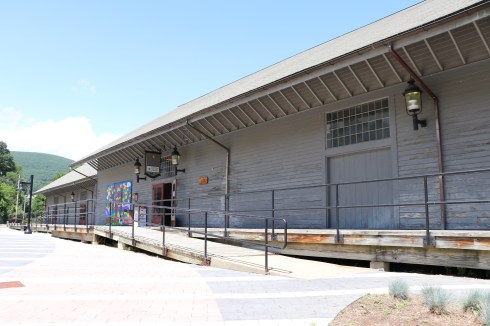
Tucked behind the busy streets of North Adams in an otherwise nondescript office building complex stands a museum highlighting the hidden history of the North Adams area. It was truly a hidden surprise. Just be aware if you do visit, you have to walk a short distance into the commercial space area to find the museum. In fact, the museum/visitor center is so hidden that I accidentally walked into some office building in the front of the parking lot. The man working there was understanding and said it “happens all of the time” and he promptly gave us the directions to the museum which he must have memorized backwards and forwards by now.
More of a visitor center than an actual museum (and certainly not a park), the Heritage State Park museum chronicles the history and development of the Hoosac Tunnel, a 4.75 active railroad that runs through the Hoosac Range, a mountainous region of Vermont as well as other historical events of the area.
Much of the visitor center is dedicated to the Hoosac Tunnel which was built 1851 and 1875 (and you thought construction projects took a long time these days). The museum had many. exhibits on display that range from what the area looked like before the construction began to documenting what was involved in the construction of the tunnel. As an fyi, the lighting was very dim and I think they frown upon using your flash. So, some of the photos came out a little dark.
The museum also has some of the tools, equipment and vehicles used to create the tunnel and transport goods.
One hundred and ninety five people were killed during the construction of the Hoosac Tunnel which has added to its lore. The section of the visitor center that deals with the mining history of the area, with its dim lighting adds to this spooky history. There are also examples of rocks that prevalent in the area where the Hoosac Tunnel was built and had to be blasted or removed during the construction of the tunnel.
There is one section pf the visitor center that befuddled me a bit. Apparently, there have been reported UFO and alien sightings in the area. Apparently, Western Massachusetts and the Berkshires are a hot bed for extraterrestrial activity. However, many of the documents and exhibits had to deal with Area 51 in Roswell, New Mexico. I know. My sentiments exactly.
The last section of the visitor center has travel guides, books and exhibits with information about the area.
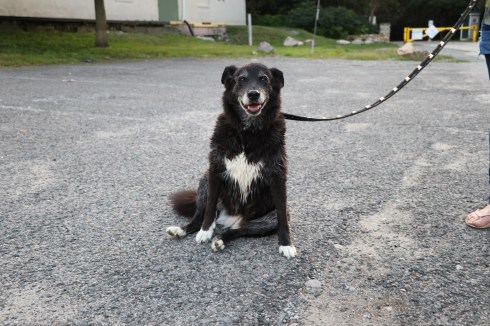
As I walked to my car from the visitor center, I noticed Prada, a 5 year old Siberian and wolf mix, being walked near the Heritage State Park. She was nice enough to pose for a few photos for me.








































 New England Nomad