Tag Archives: photograhy

Thanksgiving at Old Sturbridge Village (Old Sturbridge Village, Sturbridge, MA)

Date Of Event: Nov. 18, 2025

Location: Old Sturbridge Village,

Cost: $30 for daytime events. There are discounts for seniors, military personnel and college students. See their website for additional info

Website:Old Sturbridge Village

Summary: Old Sturbridge Village celebrated Thanksgiving

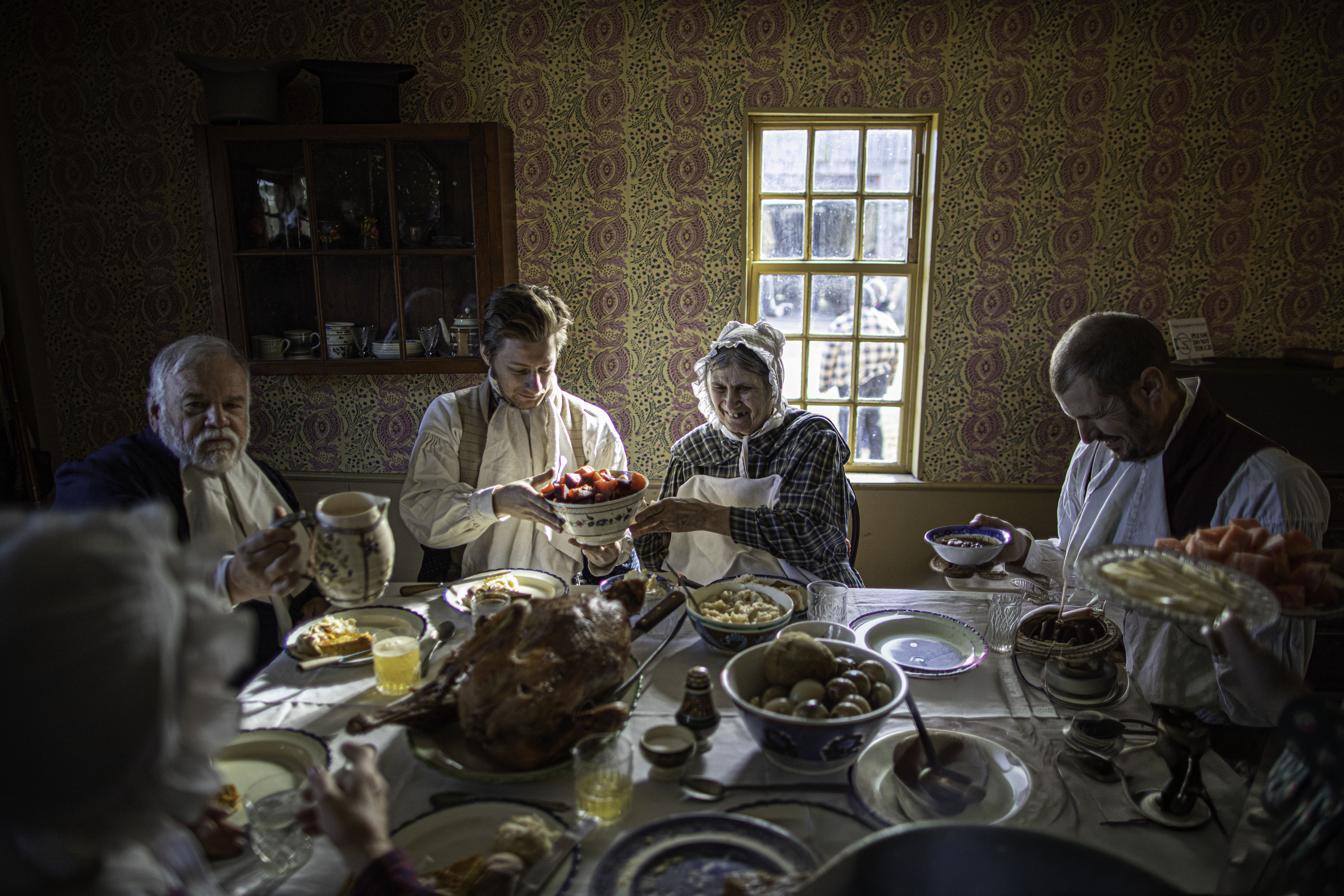
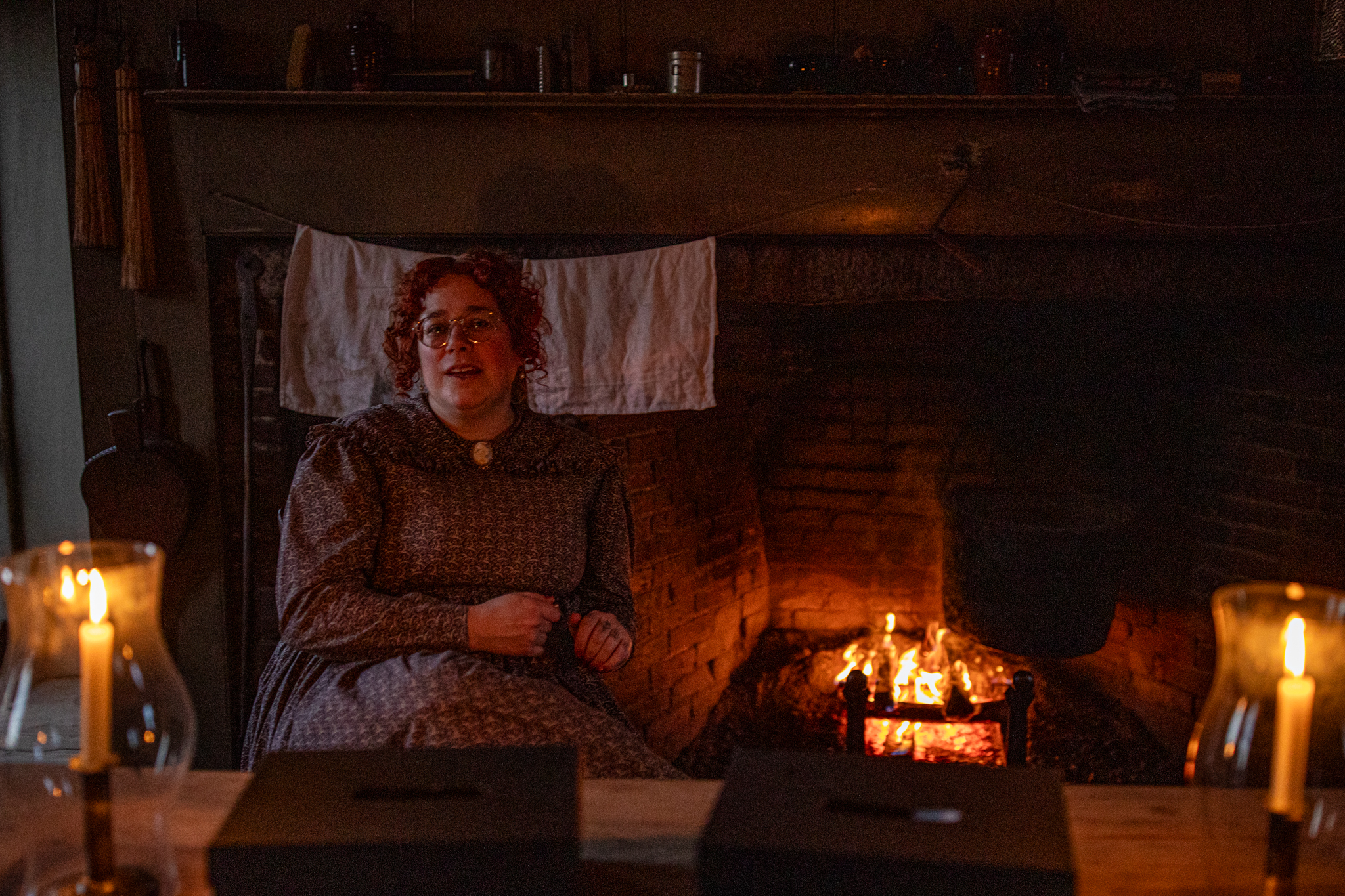
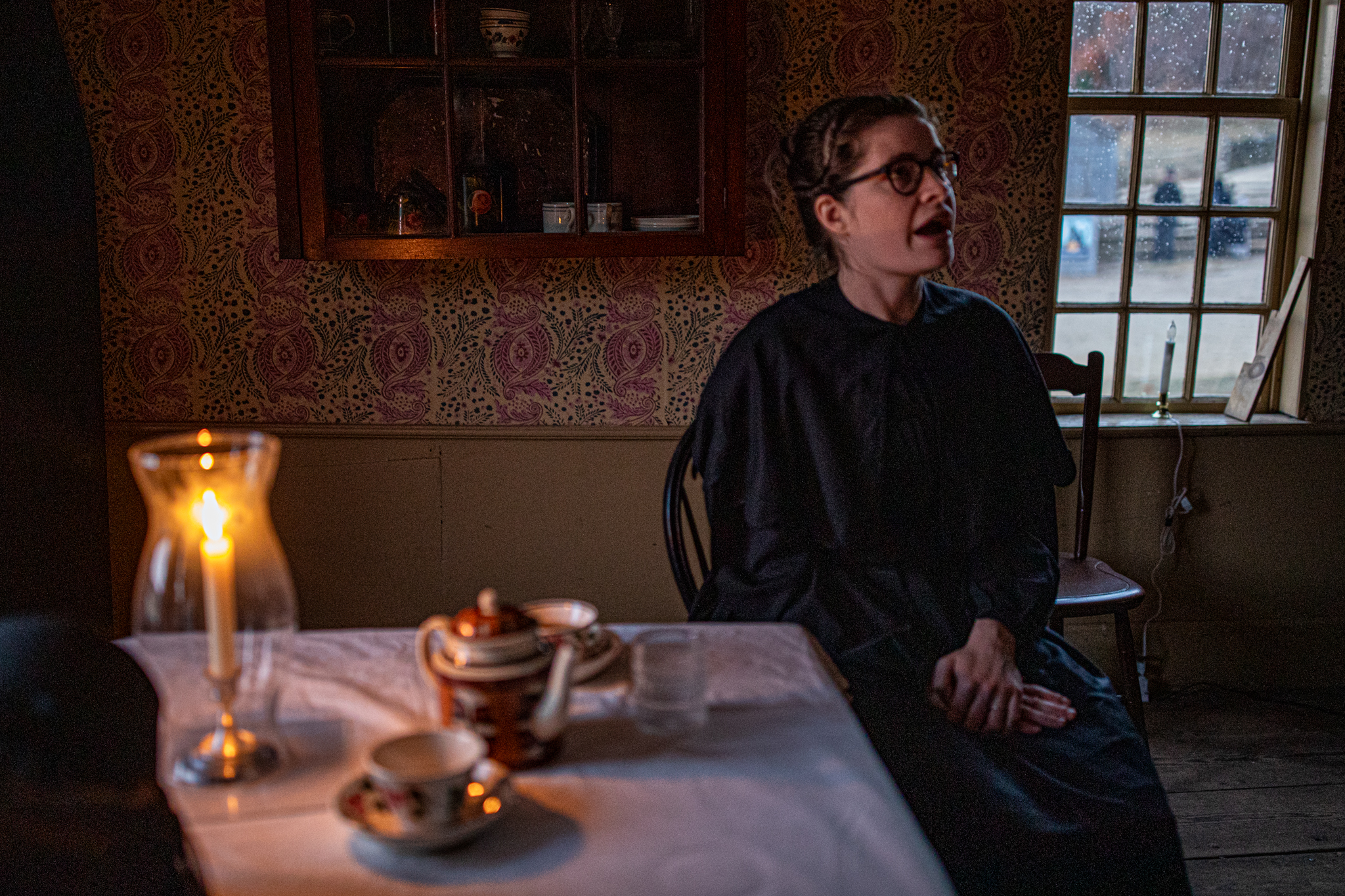
The week before Thanksgiving, Old Sturbridge Village replicated Thanksgiving in the early United States. From Thanksgiving dinner (more like lunch) and turkey shoots were just some of the highlights of the festivities during my visit.

Thanksgiving was celebrated very differently in New England during the late 18th and early 19th century. Instead of watching football and shopping online for Christmas presents, people went to turkey shoots and cooked some unusual dishes (more on that later).

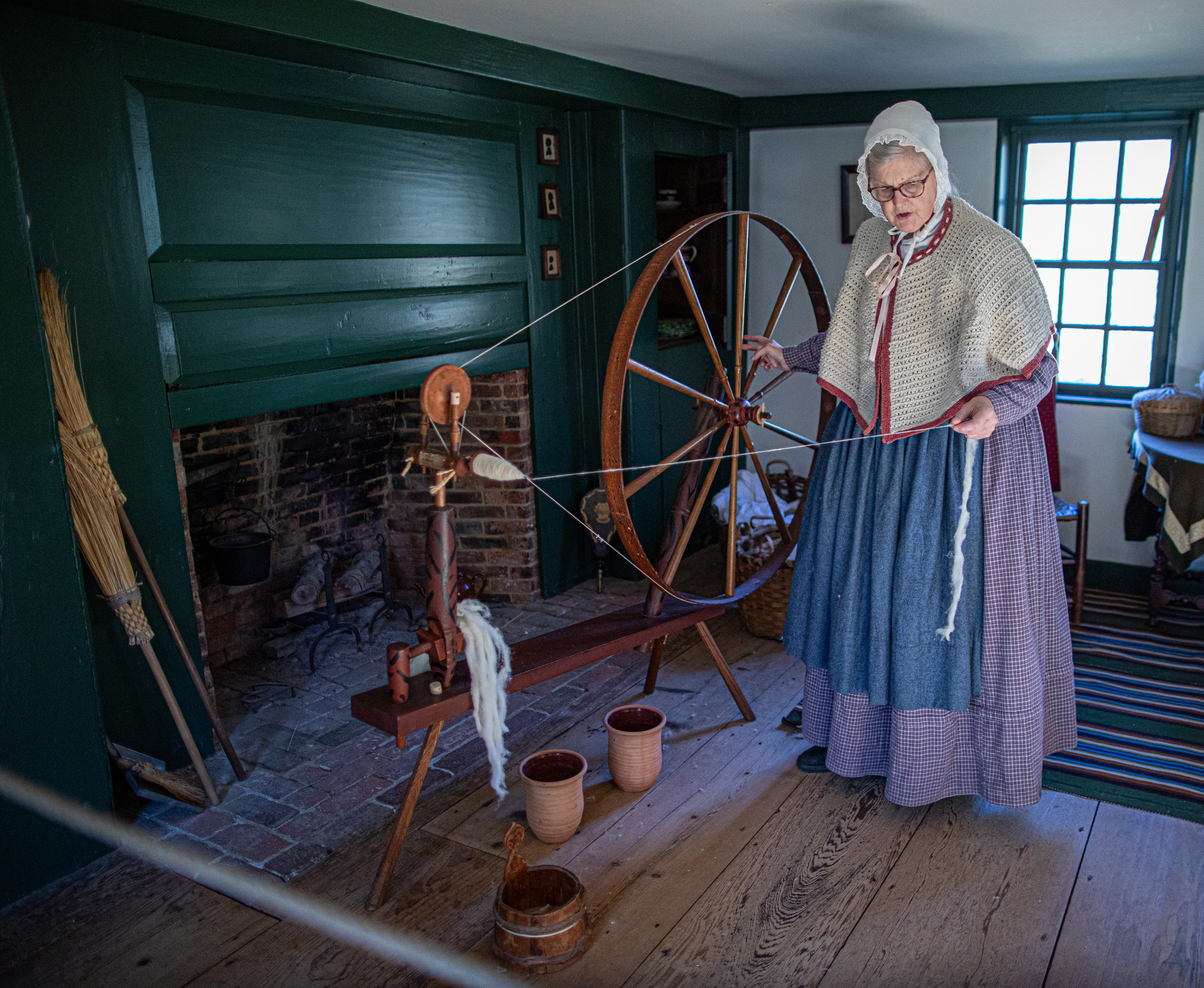
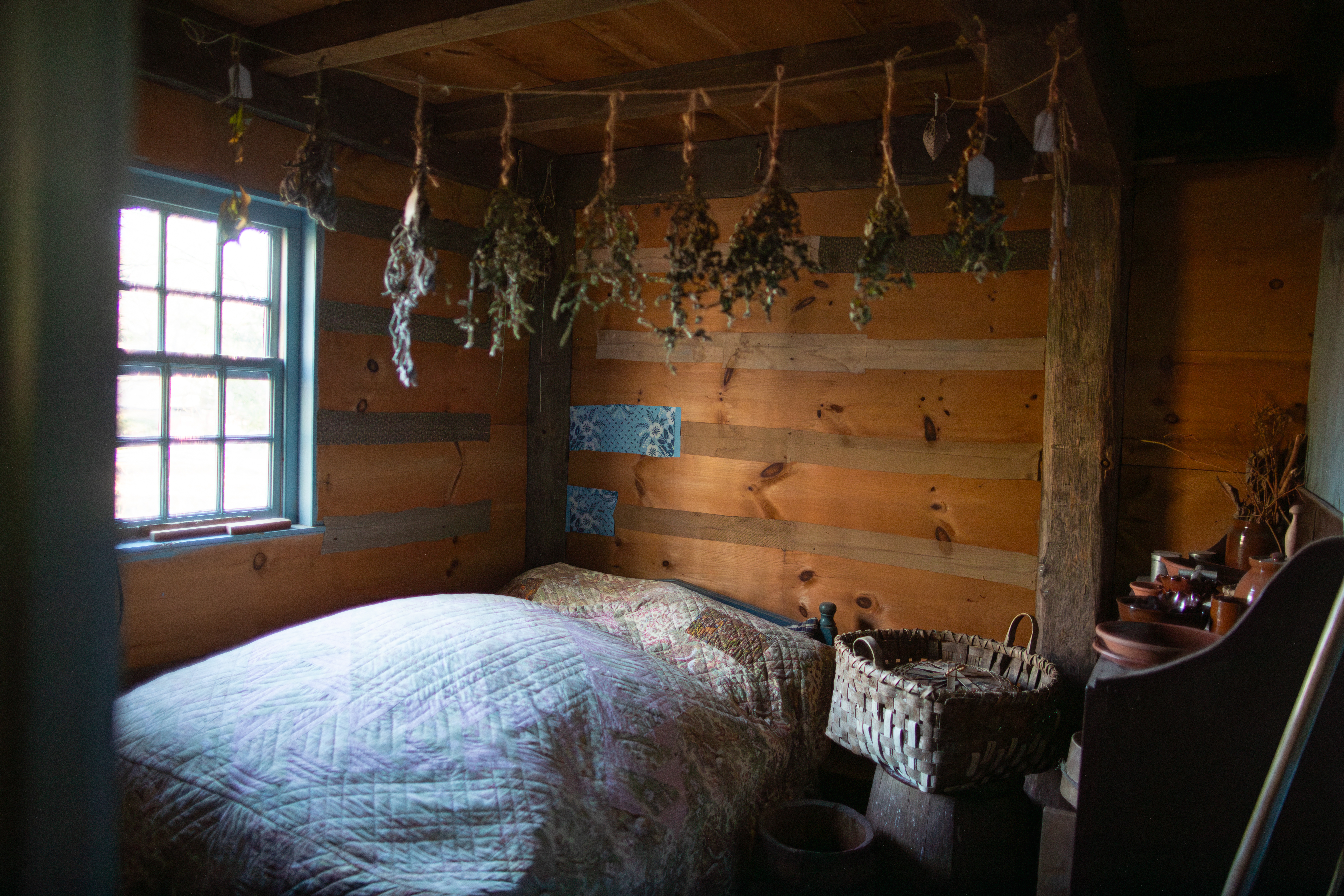
The first stop was to the small home and garden. I had never noticed before during my many but there is a room located adjacent to the fireplace. It is a very cozy accommodation.
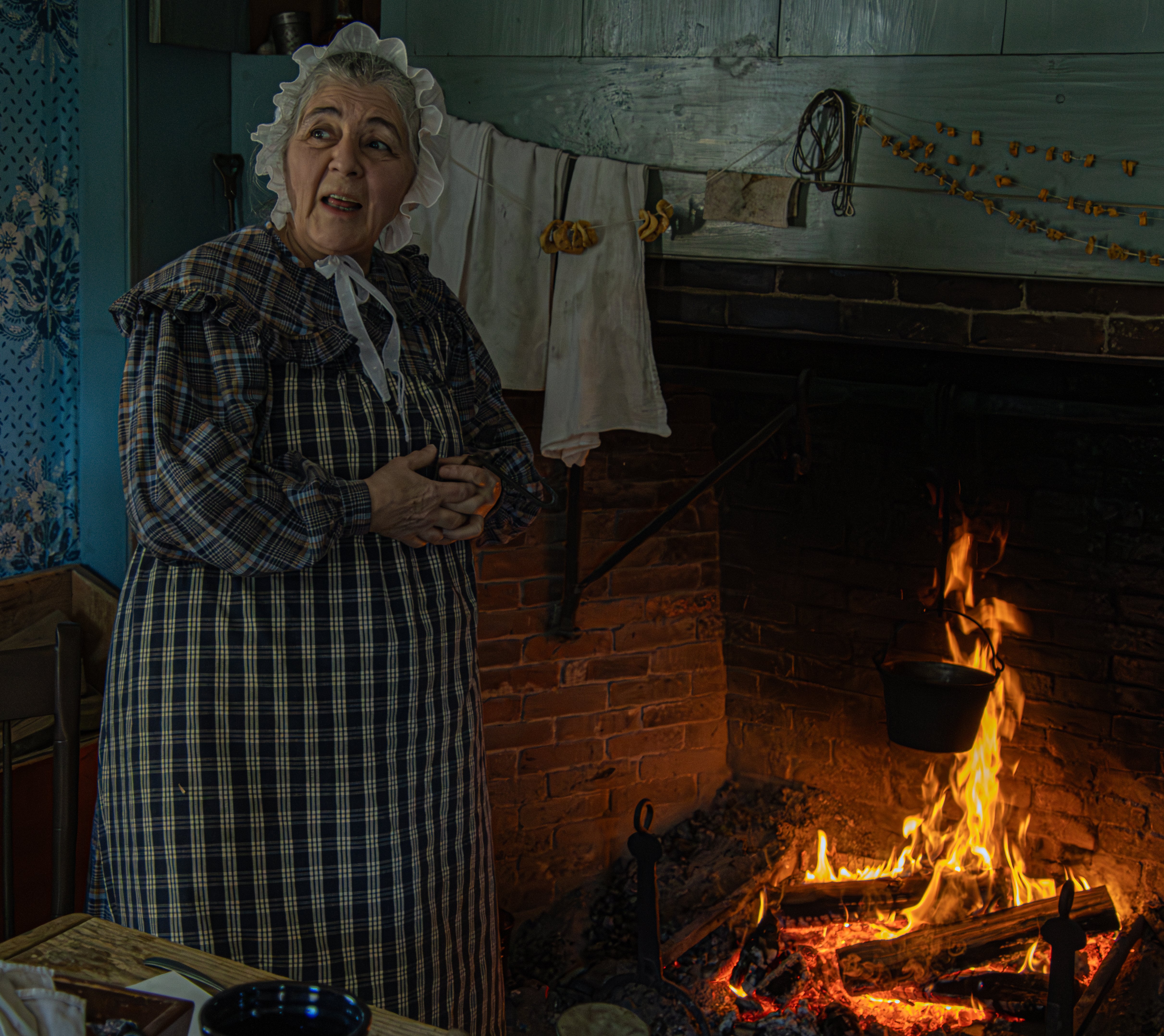
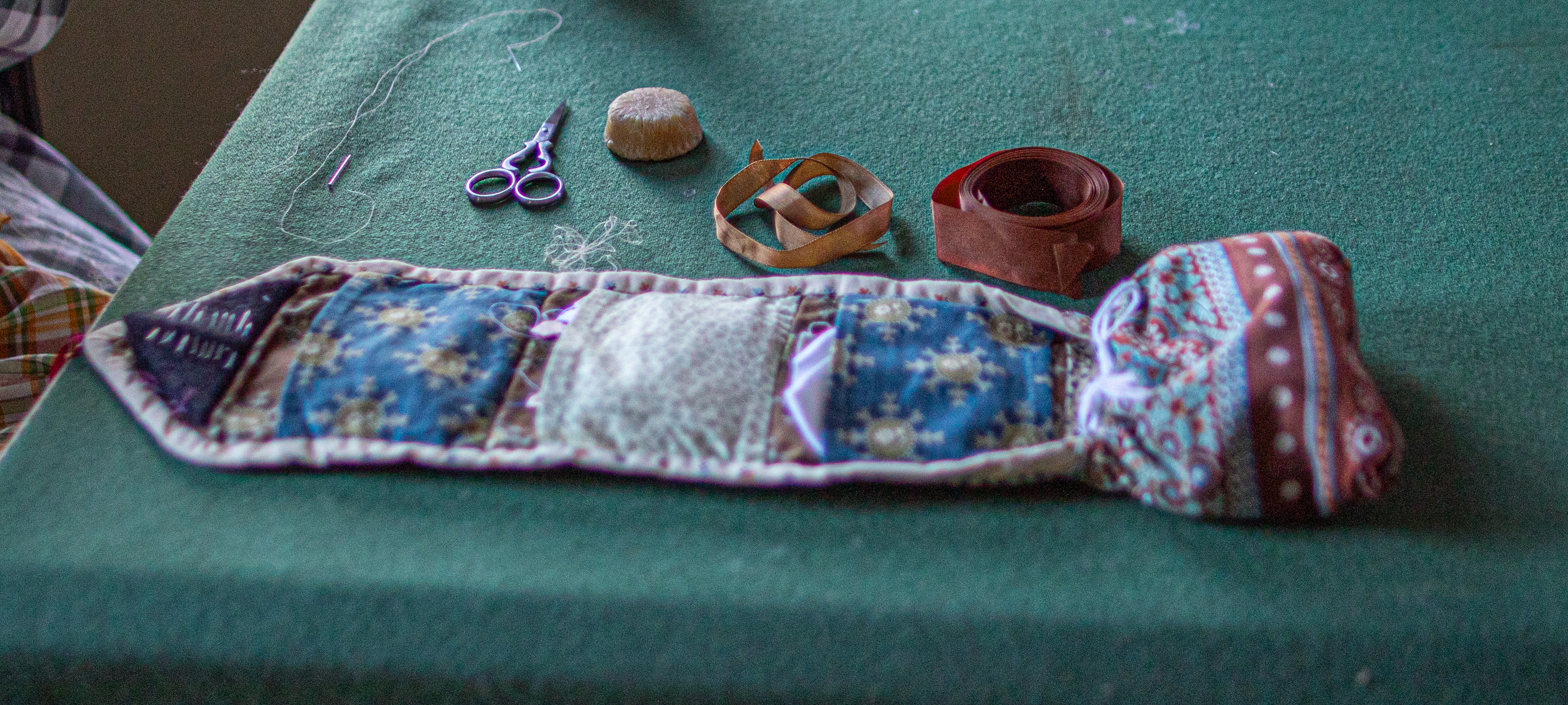
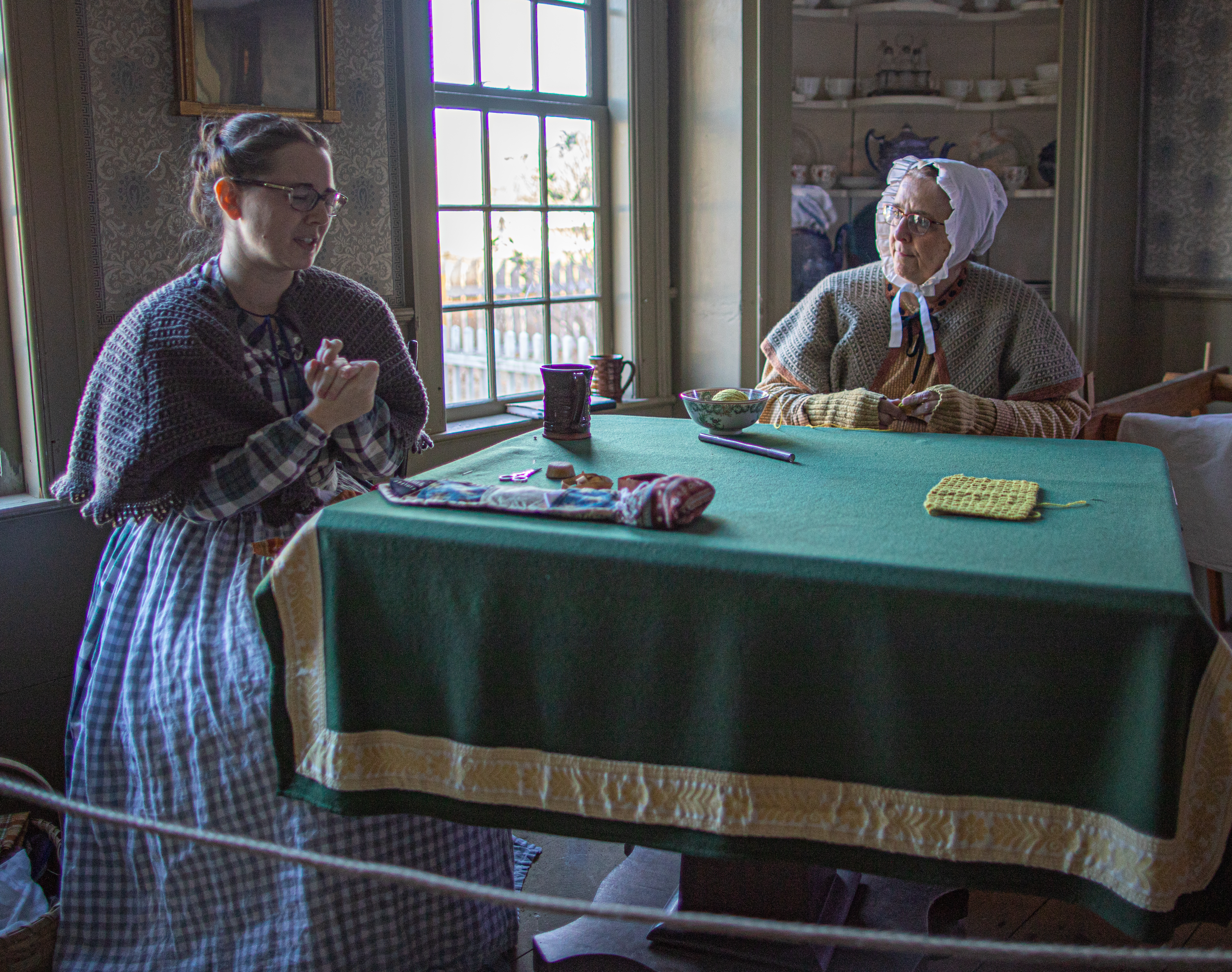
Some of the workers were busy quilting stockings and clothing for the coming winter season. .
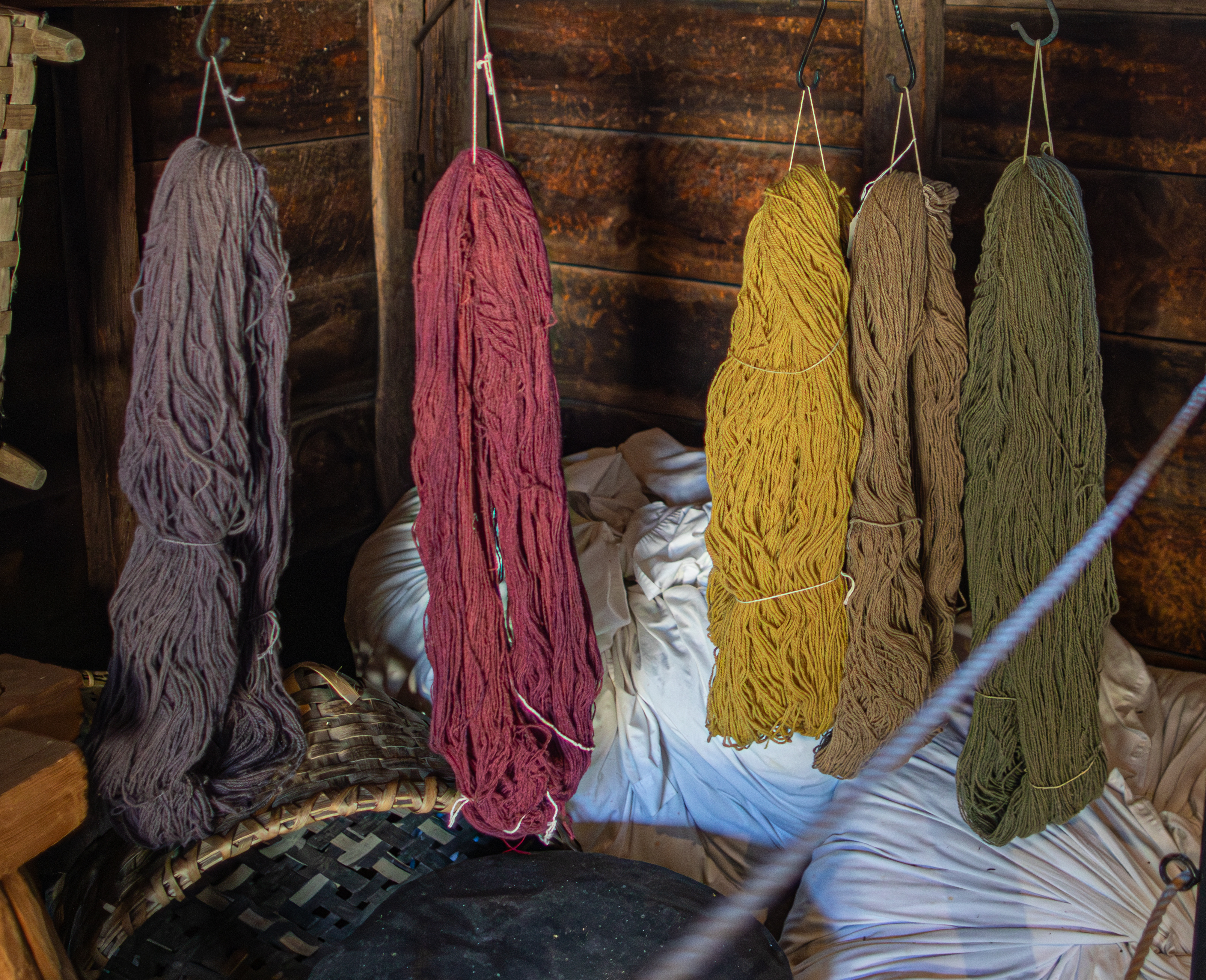
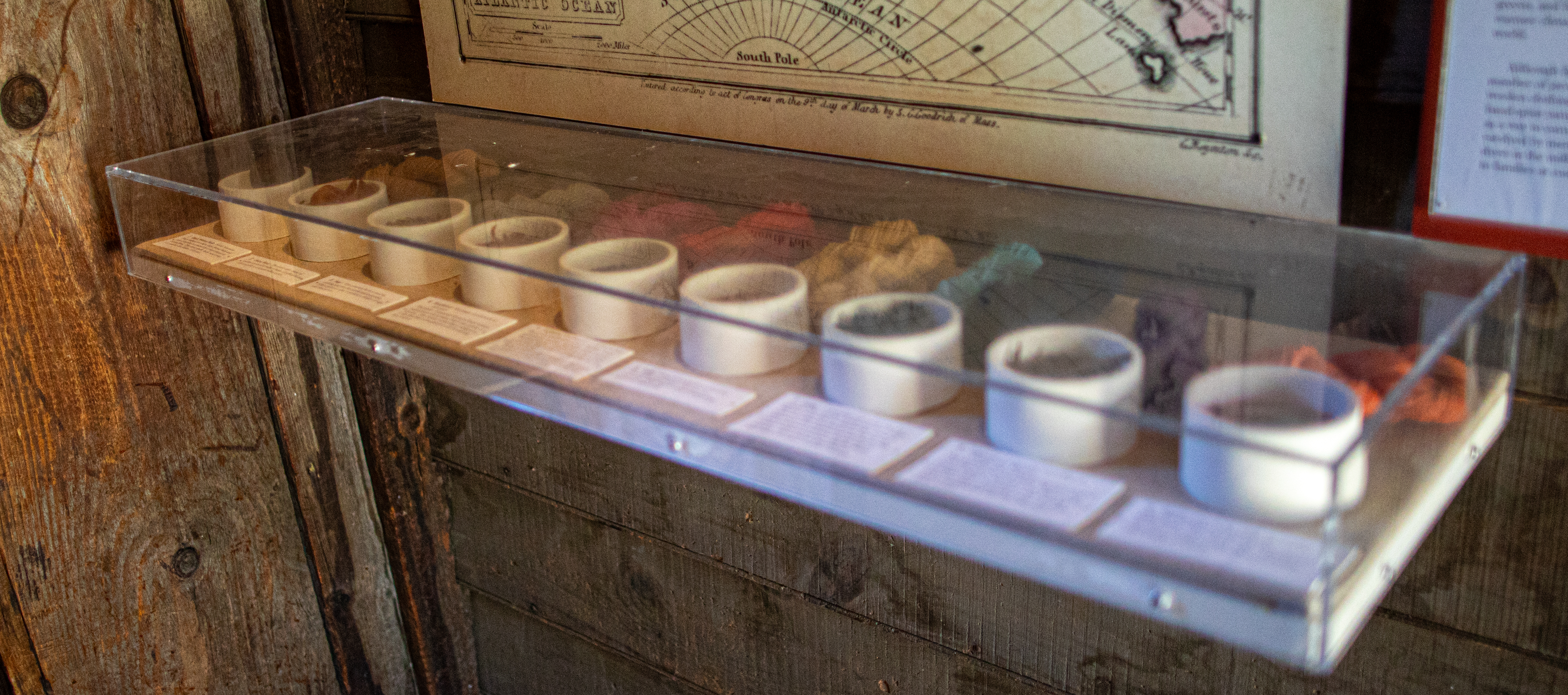
The fabric below was dyed using the method from the late 1700s and early 1800s. Dyers in the 19th century used natural materials to make their colors. Housewives gathered black walnuts, oak galls and goldenrod from the countryside. They cultivated plants used for dying like sage in their kitchen gardens. Local New England dyestuffs produced a range of yellows, greens and browns. More vibrant colors usually came from dyestuffs grown in warmer climates. Many country stores stocked imported dyes all over the world.
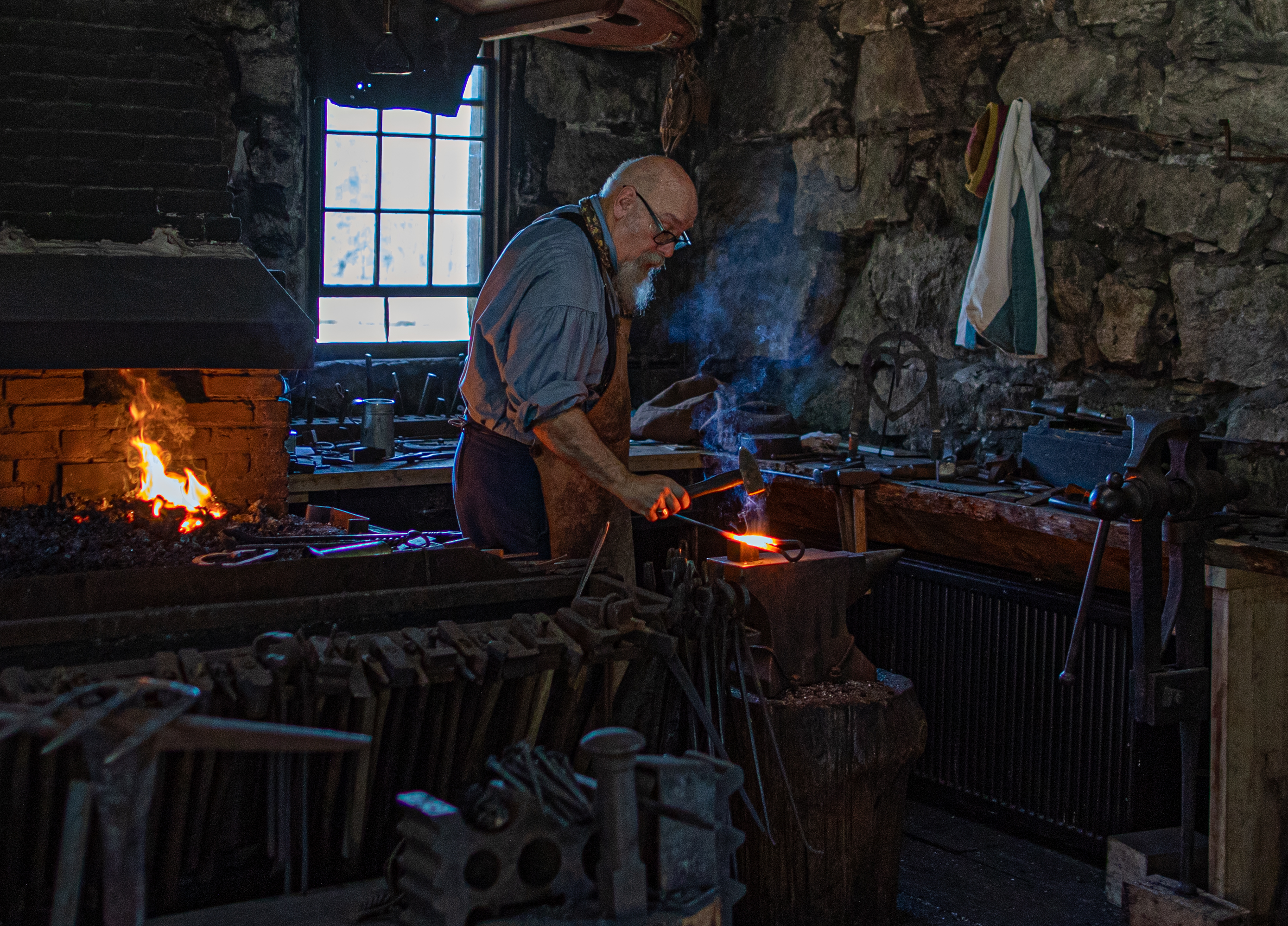
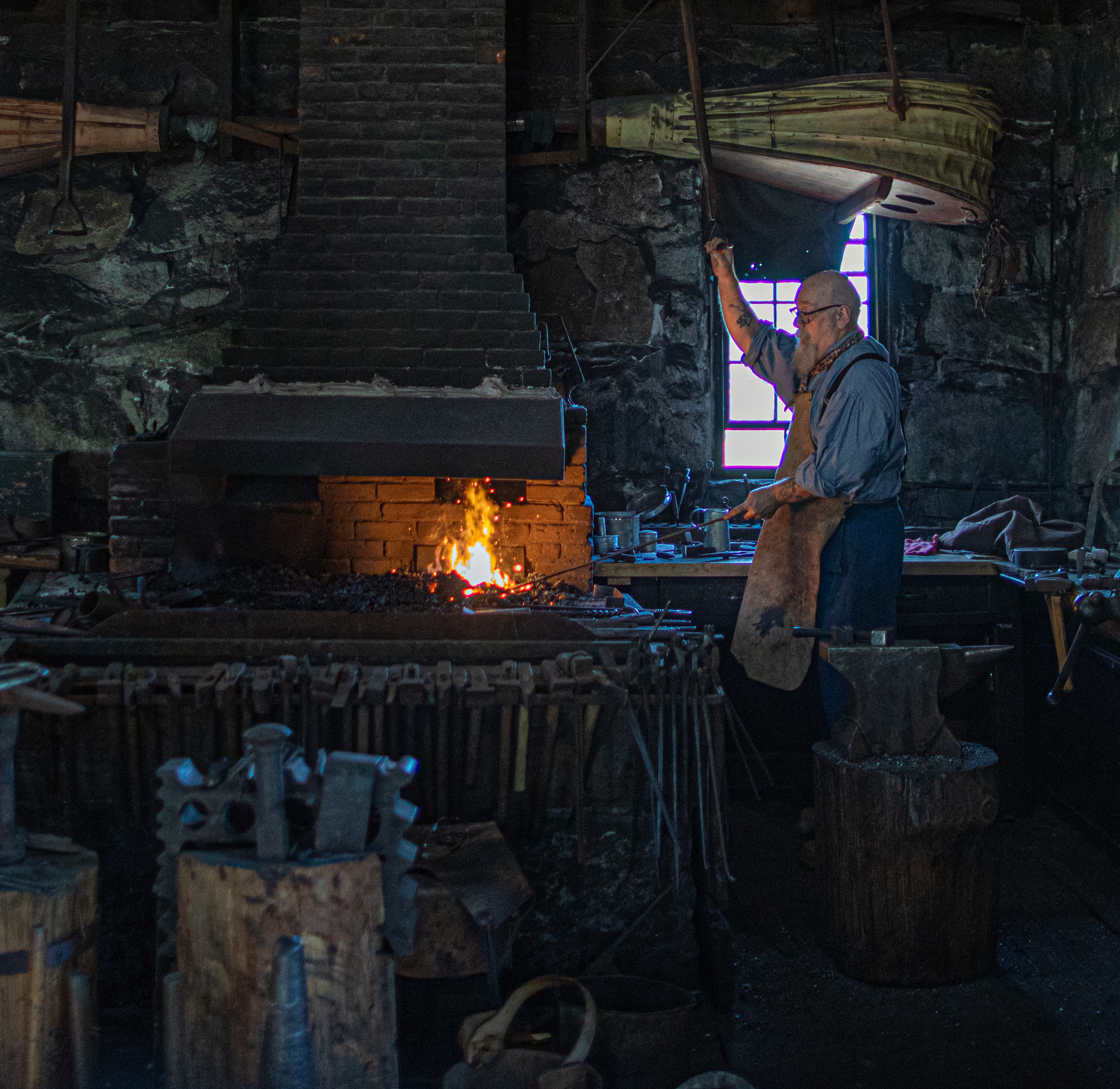
One of my favorite places to visit at the village is the Blacksmith Shop. The blacksmith always seems to be working on something interesting.

This Blacksmith Shop was originally located in Bolton, MA around 1810. It was relocated to the village in 1957.

Blacksmith Moses Wilder owned land that adjoined a stone quarry operated by his wife’s cousins in Bolton, Massachusetts. Wilder built the Blacksmith Shop using some 400 granite stones from the quarry to form the walls. He was able to maintain a prosperous business making and repairing tools used in the neighboring quarry. His son, Abraham, later took over the business.

Neighborhood blacksmiths undertook several different kinds of work in rural New England, and most towns had several blacksmiths. Some specialized in producing edge tools or machinery. Others shoed horses or turned to wheelwrighting and repairing vehicles. Many did general iron work, repairing manufactured and imported tools, shoeing horses and oxen, and making hardware and other metal items needed in the community.
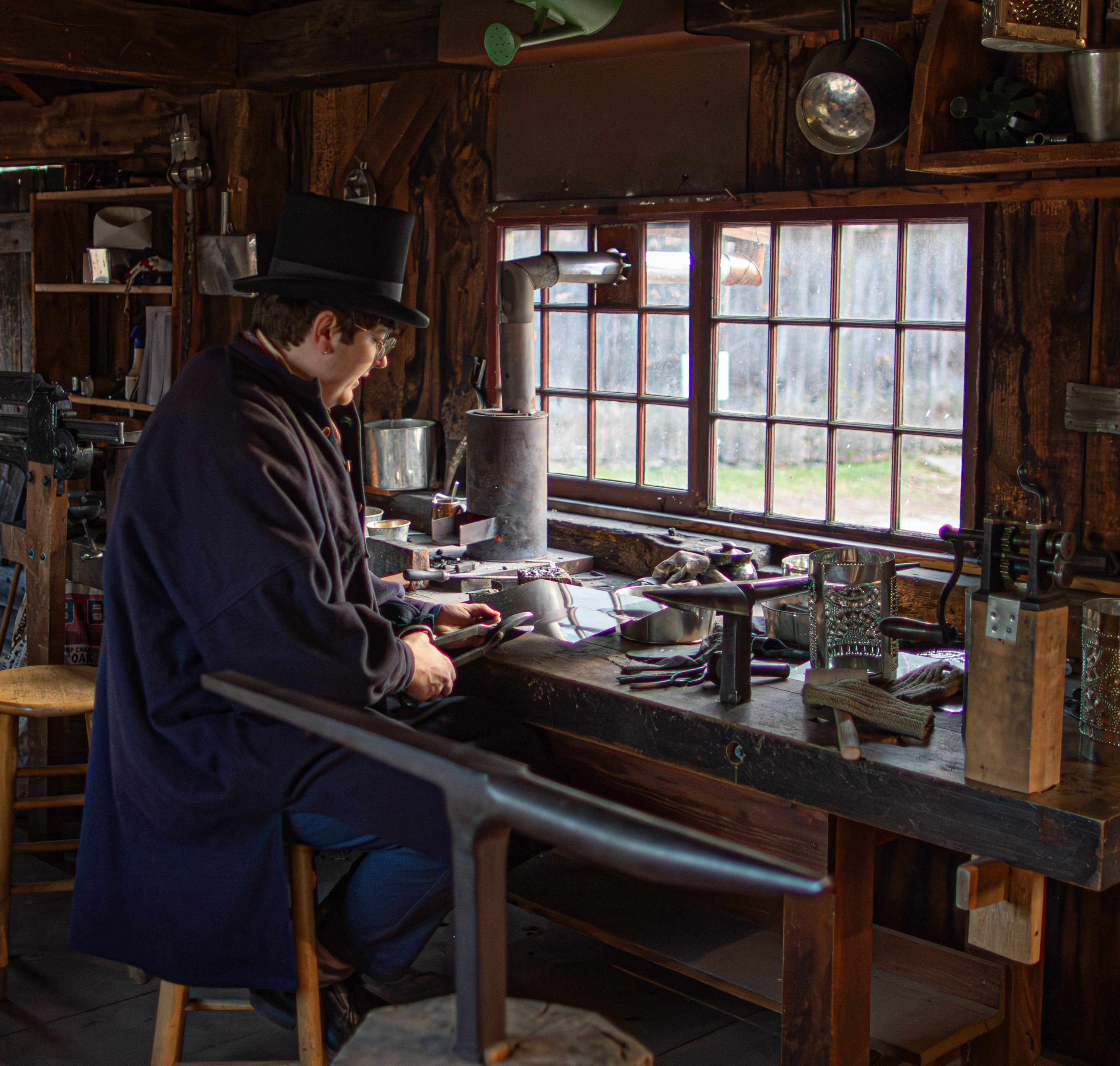
This tin shop, which was reconstructed in 1975, is believed to have been in operation around 1800 to 1850.

The tin business in New England grew rapidly after 1820. Tin shop owners imported tinplated sheet iron from Great Britain, shaped it into a variety of forms, and distributed their finished goods through peddlers and country stores. They also sold tinware in their shops. Colanders, dippers, dish kettles, funnels, measures, and pans were in greatest demand. Other common items included lanterns, foot stoves, teapots, coffeepots, “tin kitchens”, skimmers, and sconces.

The Tin Shop at Old Sturbridge Village is a reconfigured the early 1800s shed. Here, “tinners” work with hand tools as well as machines that were new innovations in the early 19th century. These machines turned tinplate, made grooves and folds, and inserted wire, increasing a shop’s production.
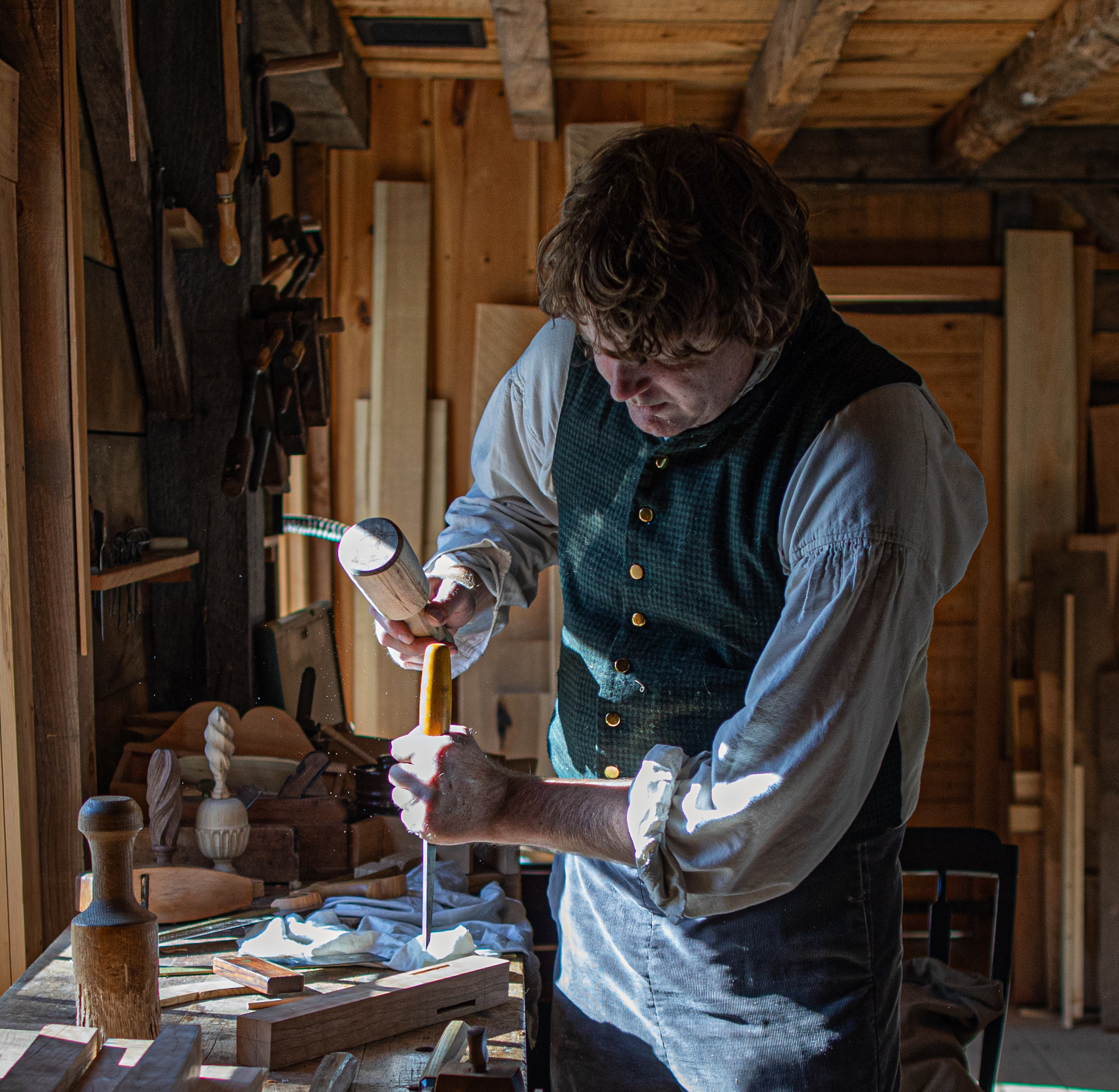
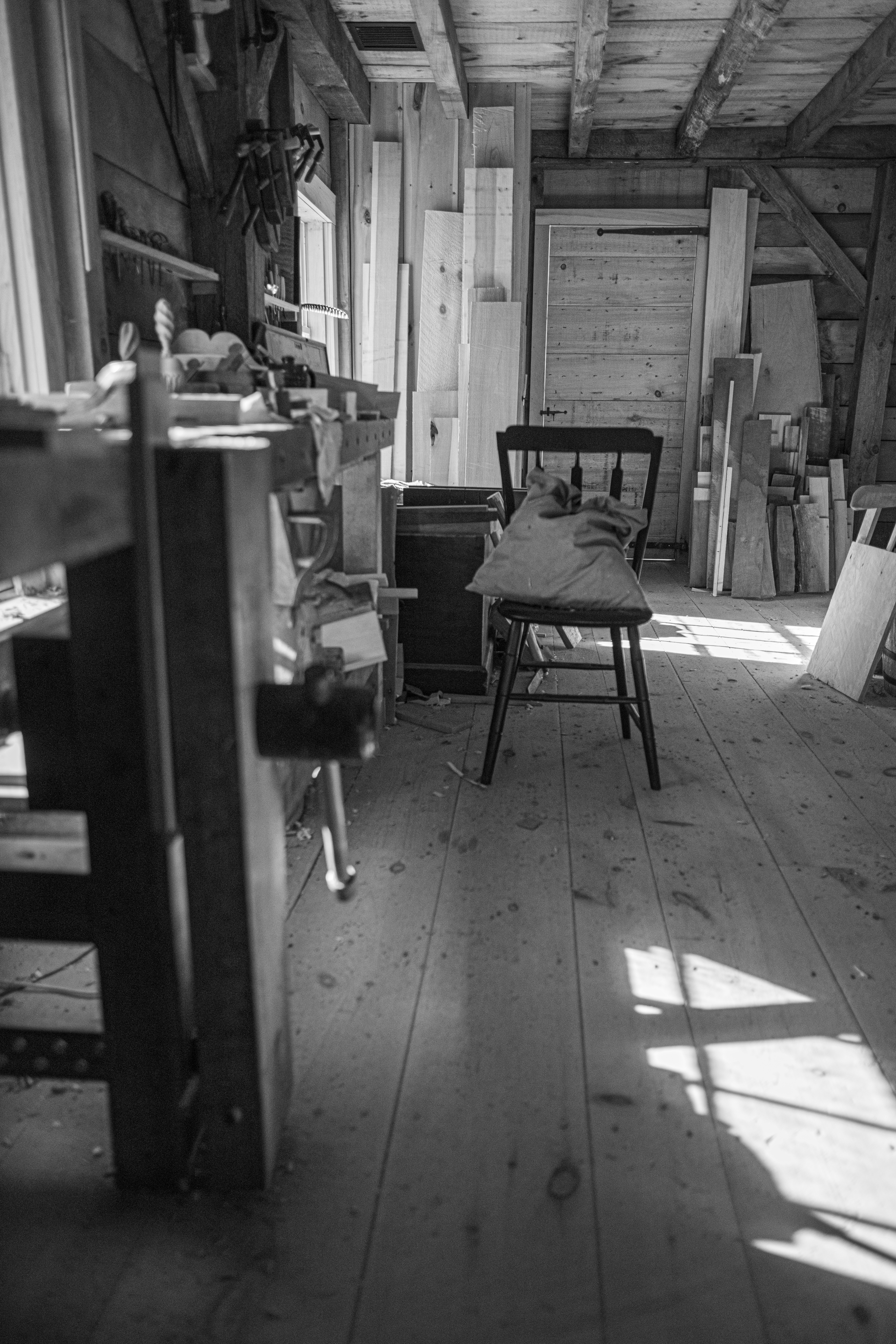
Sturbridge and the surrounding region were home to some of the foremost rural cabinetmakers of the early 19th century, including Nathan Lumbard and Oliver Wight. These craftspeople, as well as others like them, were integral to 19th-century rural New England communities. In 2017, Village staff and Trustees began working on a plan to create a permanent home for cabinetmaking at the Village. The Cabinetmaking Shop opened in October, 2021, as a highlight of the Village’s 75th anniversary.

In the new cabinetmaking shop,  cabinetmakers discuss the tools and techniques used in period furniture construction, including turning demonstrations on a treadle lathe, preparing stock with hand tools, and Federal-style table construction.

The Cabinetmaking Shop is a hybrid building, built using both historic and modern building methods in the construction of the Shop. The shop is patterned after period structures operated by early 19th-century New England craftsmen. Many elements of the final Cabinetmaking Shop will be created by craftsmen and interpretive staff working in the Village, including reproduction period tools, doors, shelves, and the box stove. The large timbers for the construction of the shop were even cut by the Village Sawmill.
The sawmill was one of the most important buildings in the village. This sawmill was reproduced in 1984.

This rare water-powered sawmill—erected on the millpond site that David Wight, Jr. first created in the 1790s—is used to cut lumber for Old Sturbridge Village and other historic sites. The Sawmill is based on what had been one of the oldest surviving sawmills in the area: the Nichols-Colby Sawmill of Bow, New Hampshire, which was destroyed in a 1938 hurricane.

Although the Village demonstrates sawmilling in spring, summer, and fall, rural mills were busiest during late winter and early spring, when waterpower was most abundant and the demands of farming were less pressing. Sawmill account books suggest that since it was so difficult and expensive to transport logs and lumber, mills like this one concentrated on custom production for local customers.
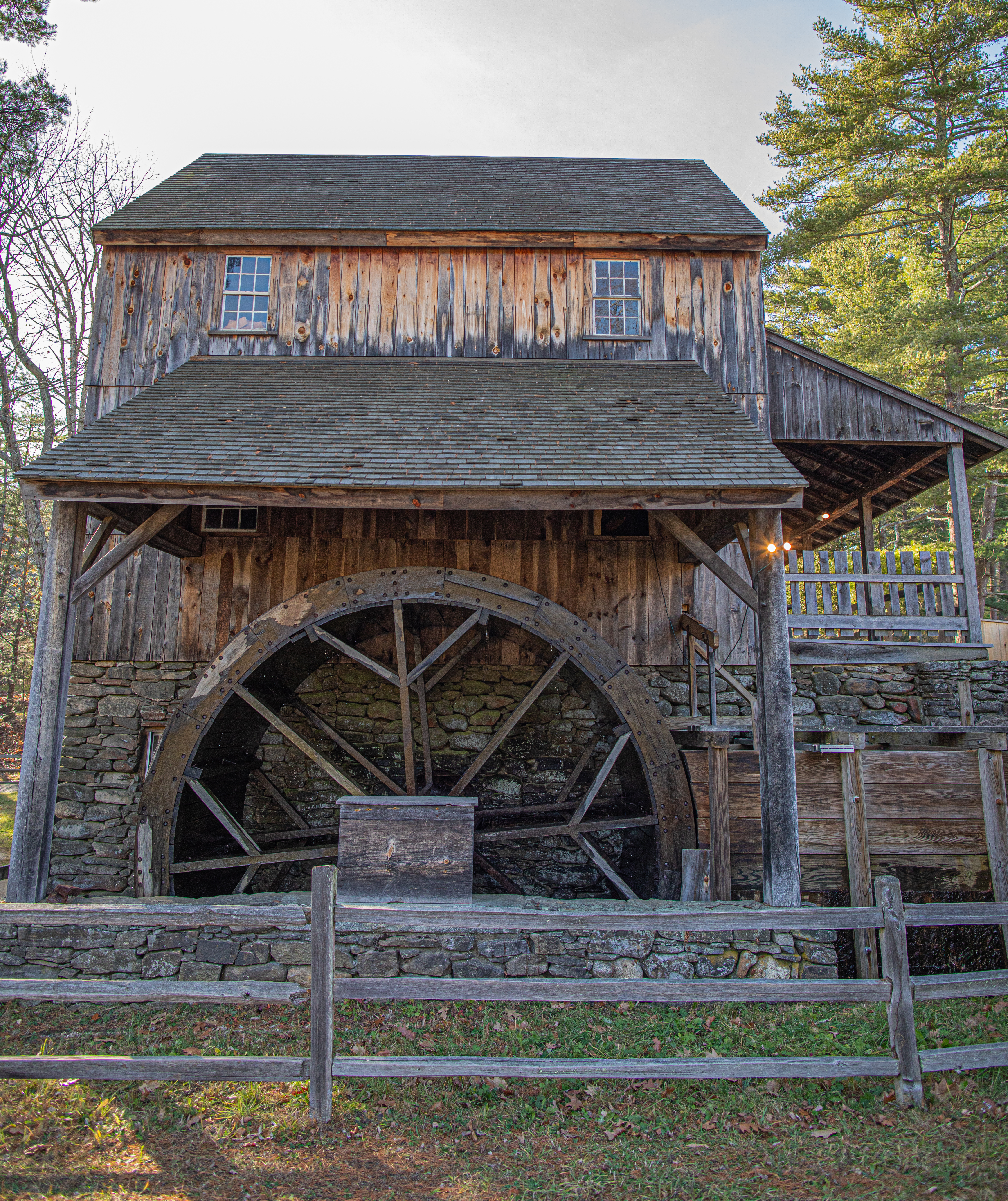
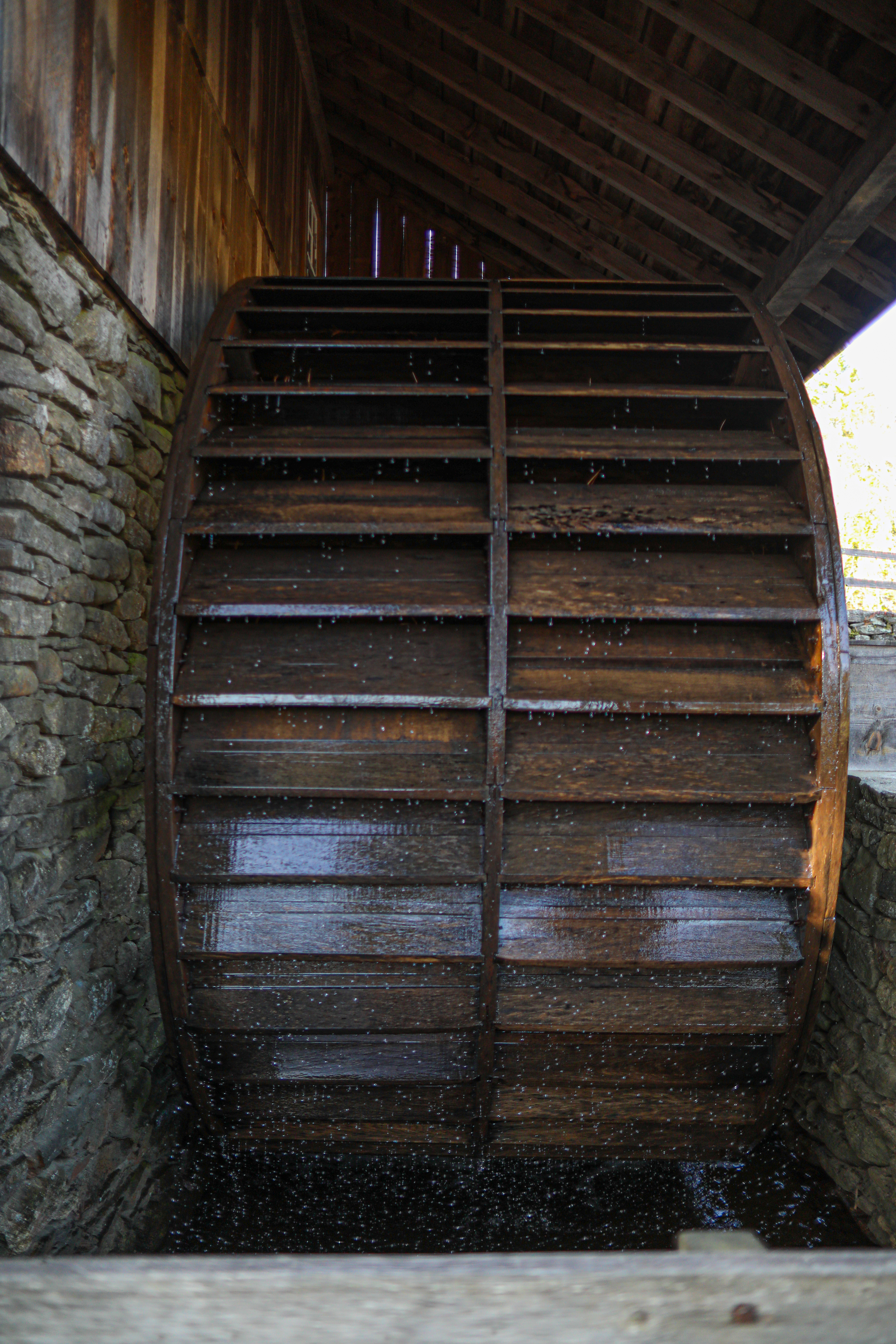
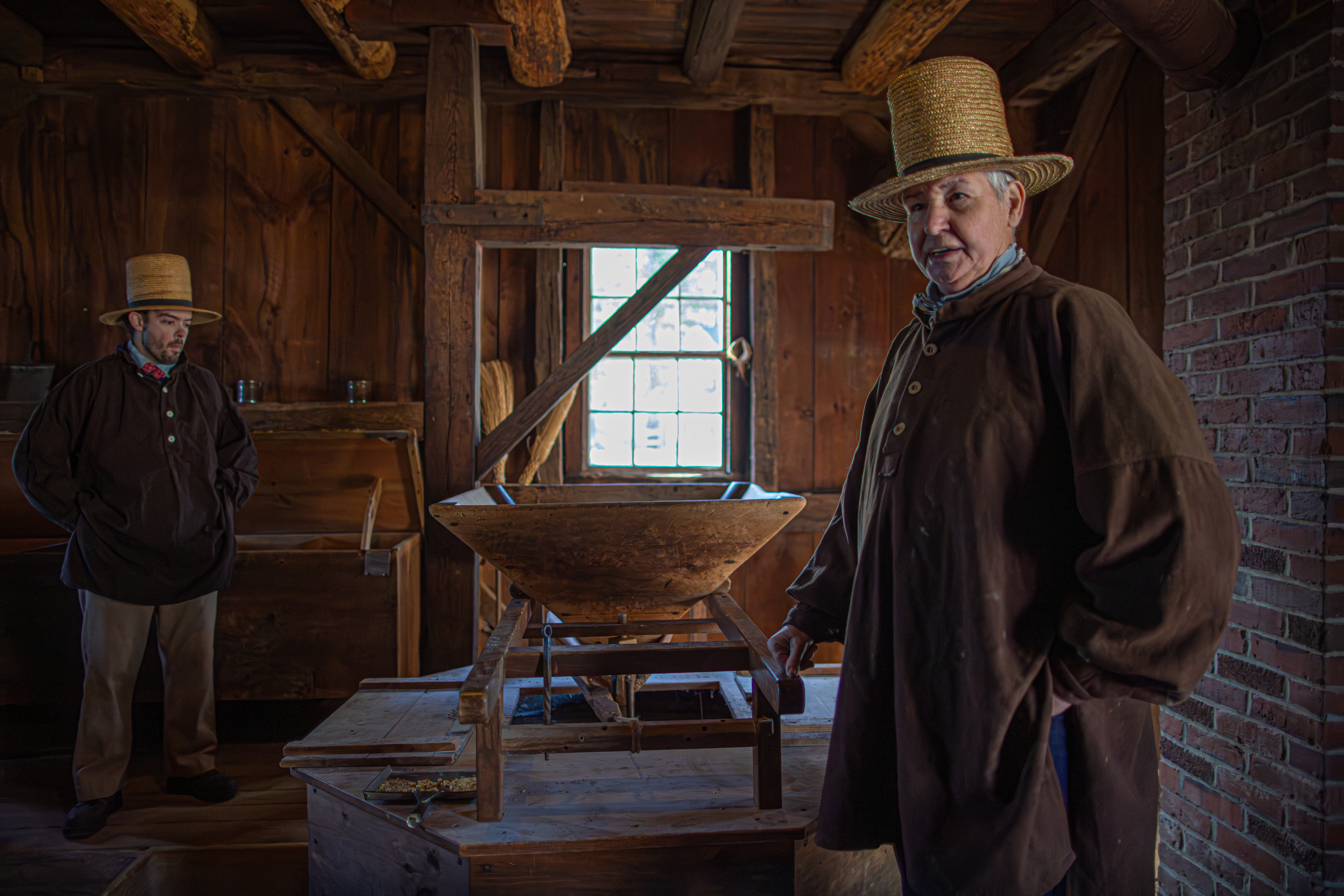
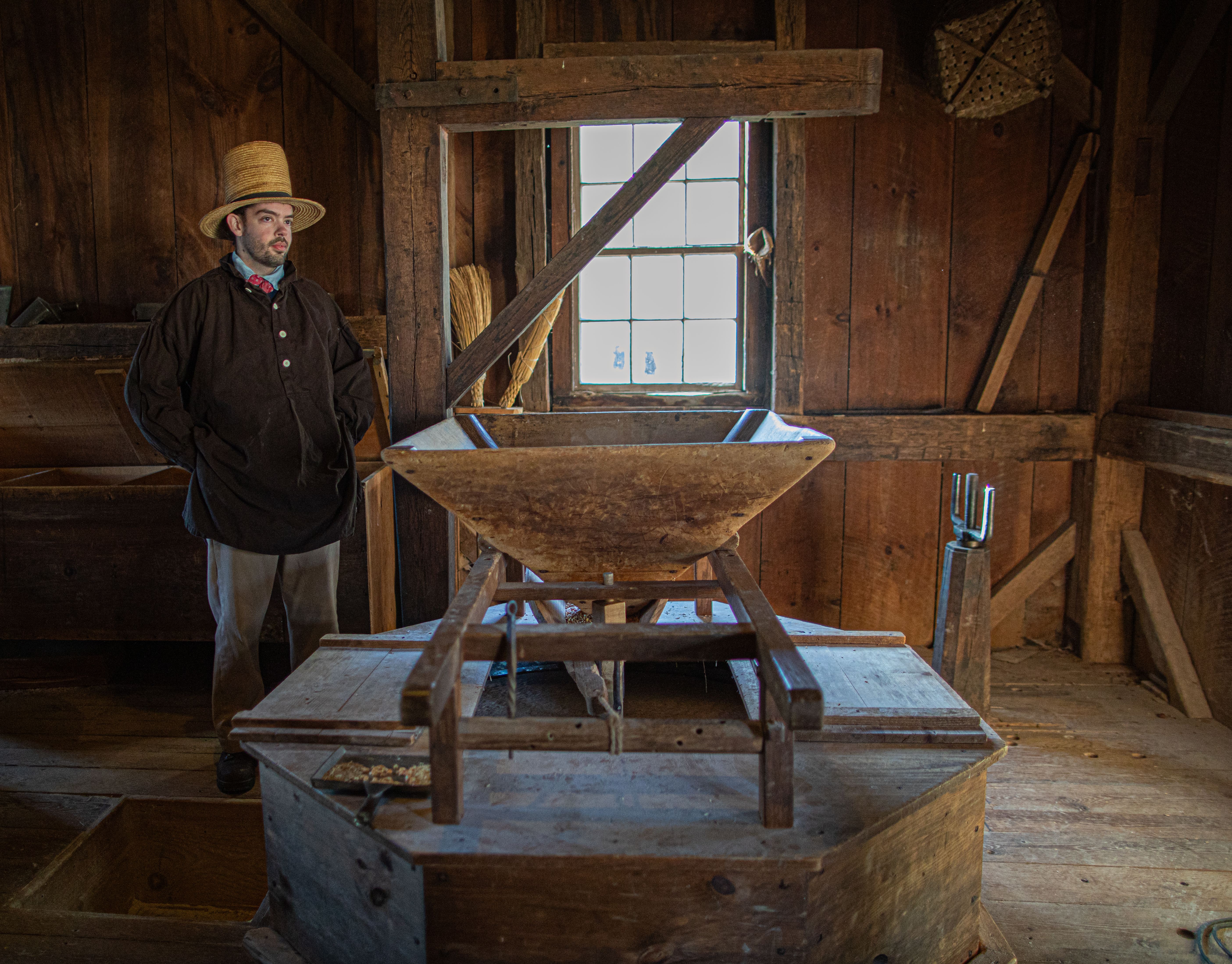
The Gristmill was also active during my visit.

The Gristmill was one of the first buildings constructed at Old Sturbridge Village. Built on the site of the Wight family’s original gristmill, the mill is made of recycled old timbers and new lumber. The mill’s massive millstones and other parts came from the Porter Gristmill in Hebron, Connecticut.

Gristmill owners served their customers by grinding grain into flour and meal for baking or provender for feeding livestock. By Massachusetts law, a miller could charge a fee or toll of 1/16th of the grain bought to him as payment for milling the rest. But rural milling was changing along with the rest of the economy; even in the countryside, cash fees were beginning to replace traditional tolls.
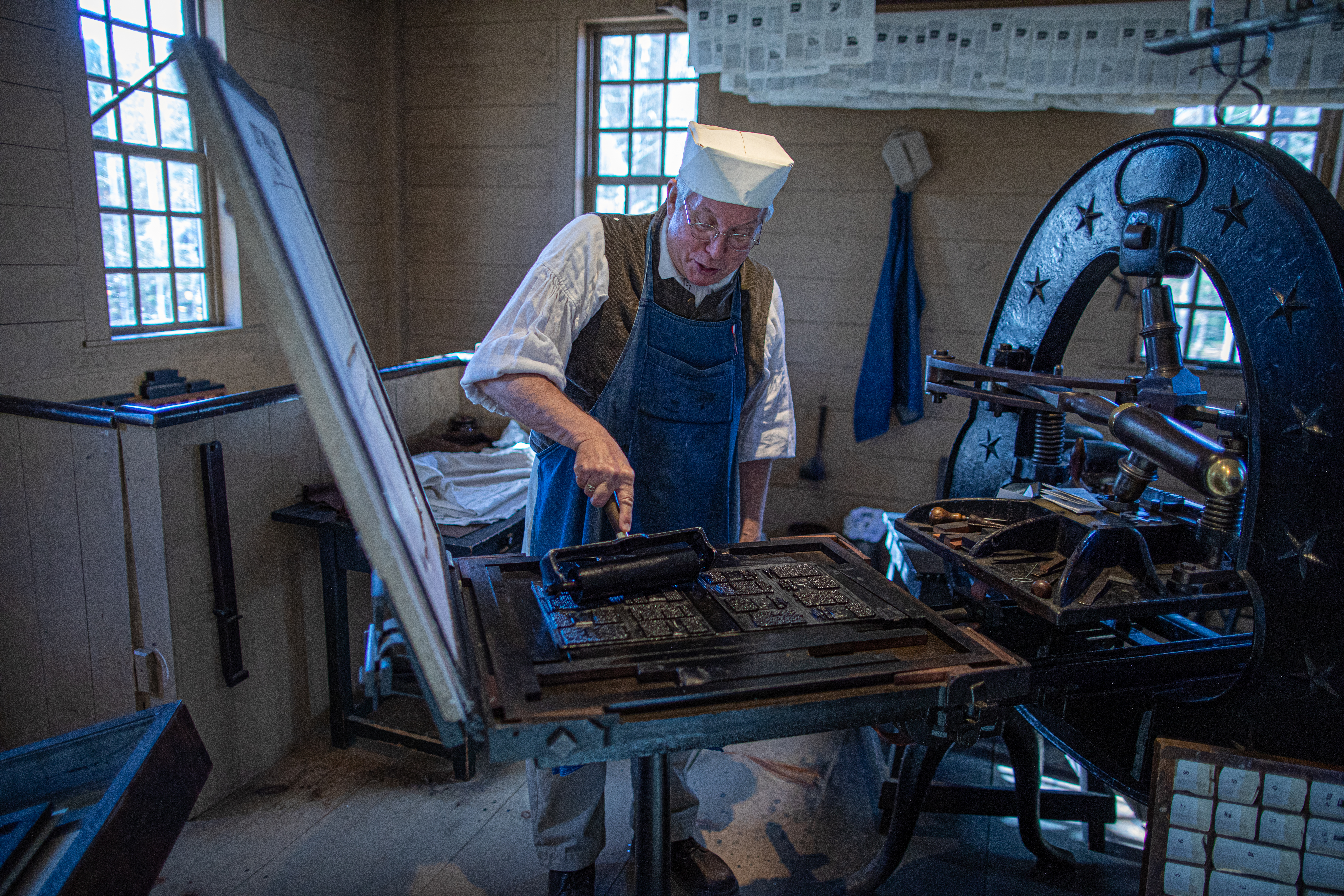
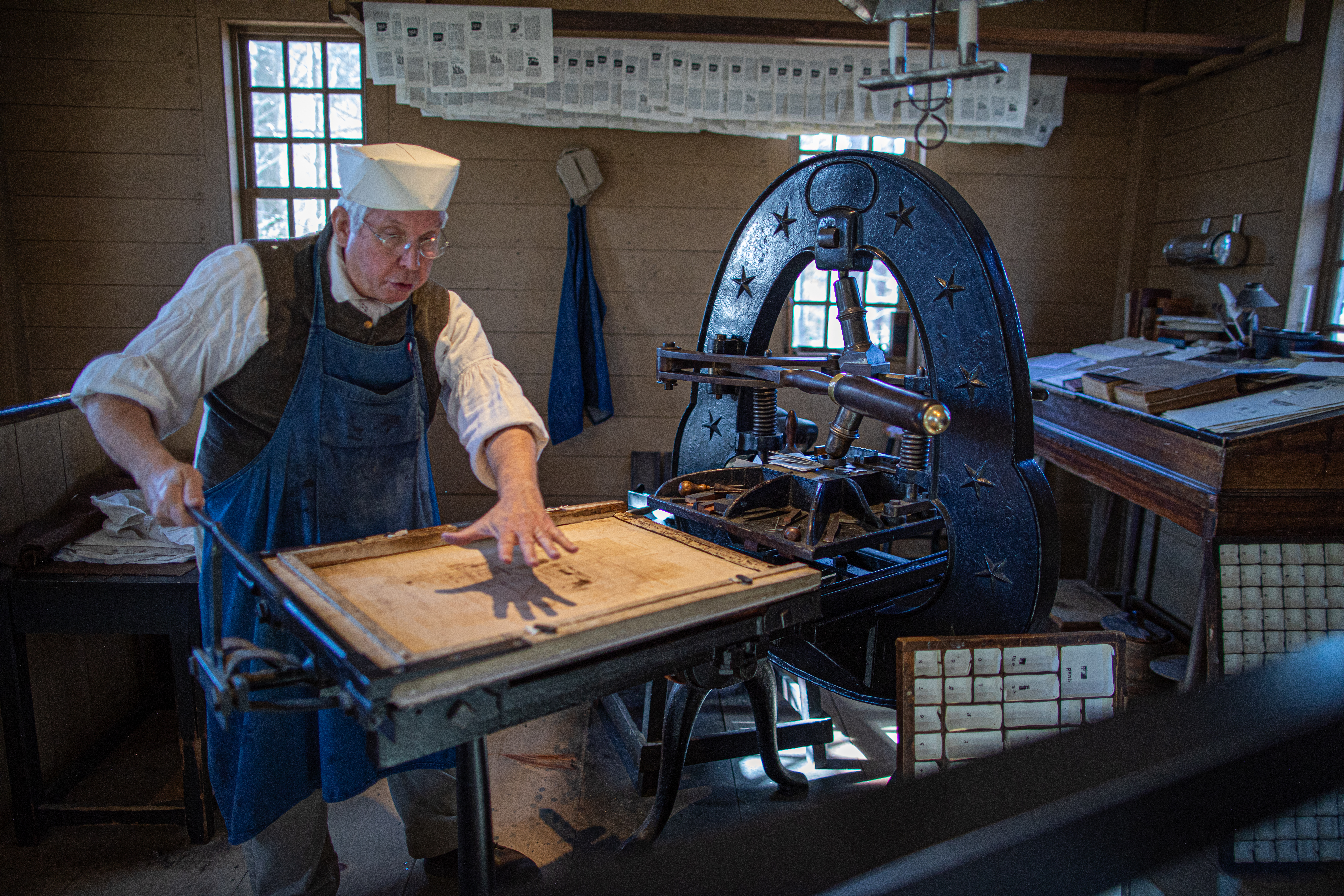
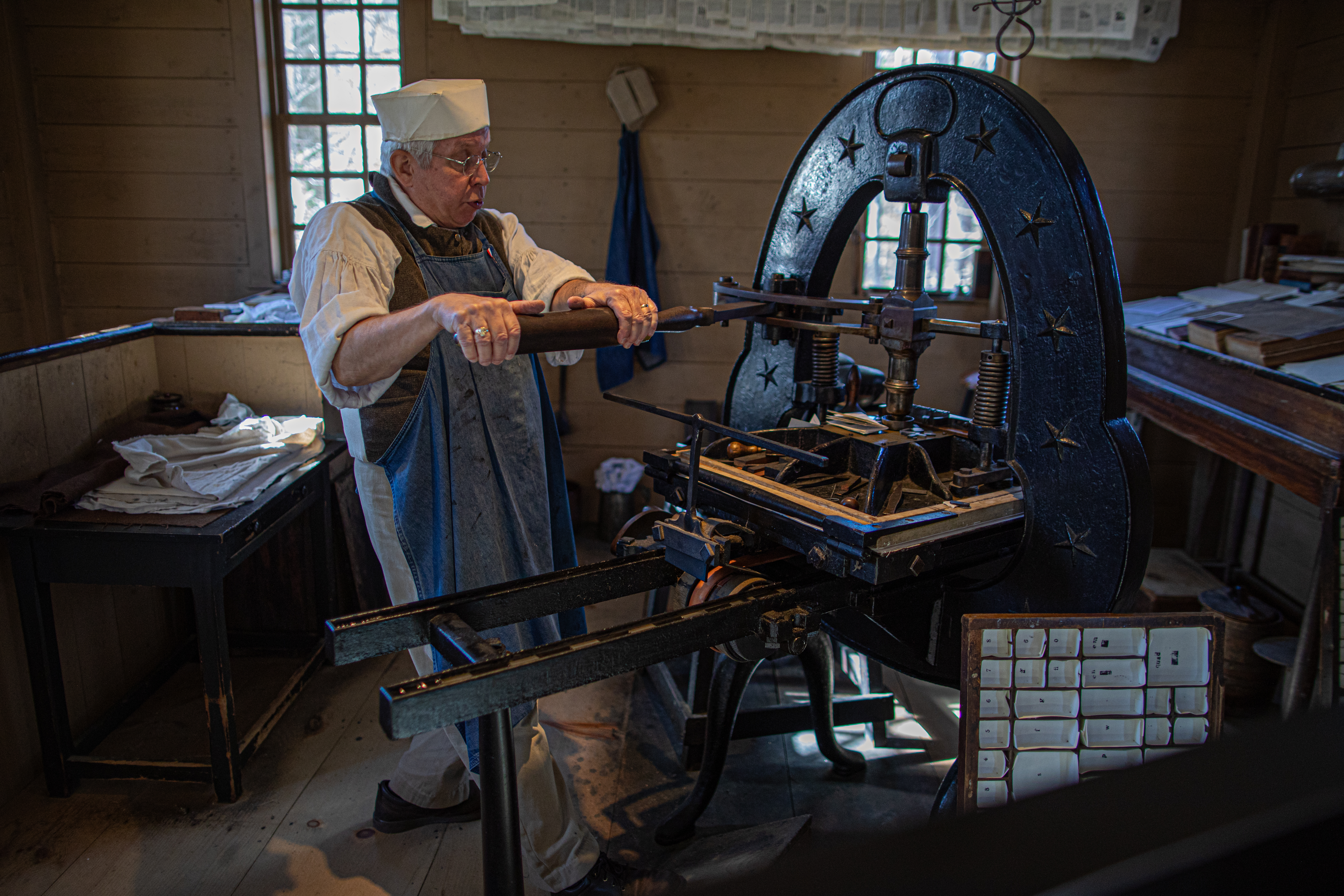
Originally built in Worcester, MA around 1780, the Printing Office was moved to Old Sturbridge Village in 1951.

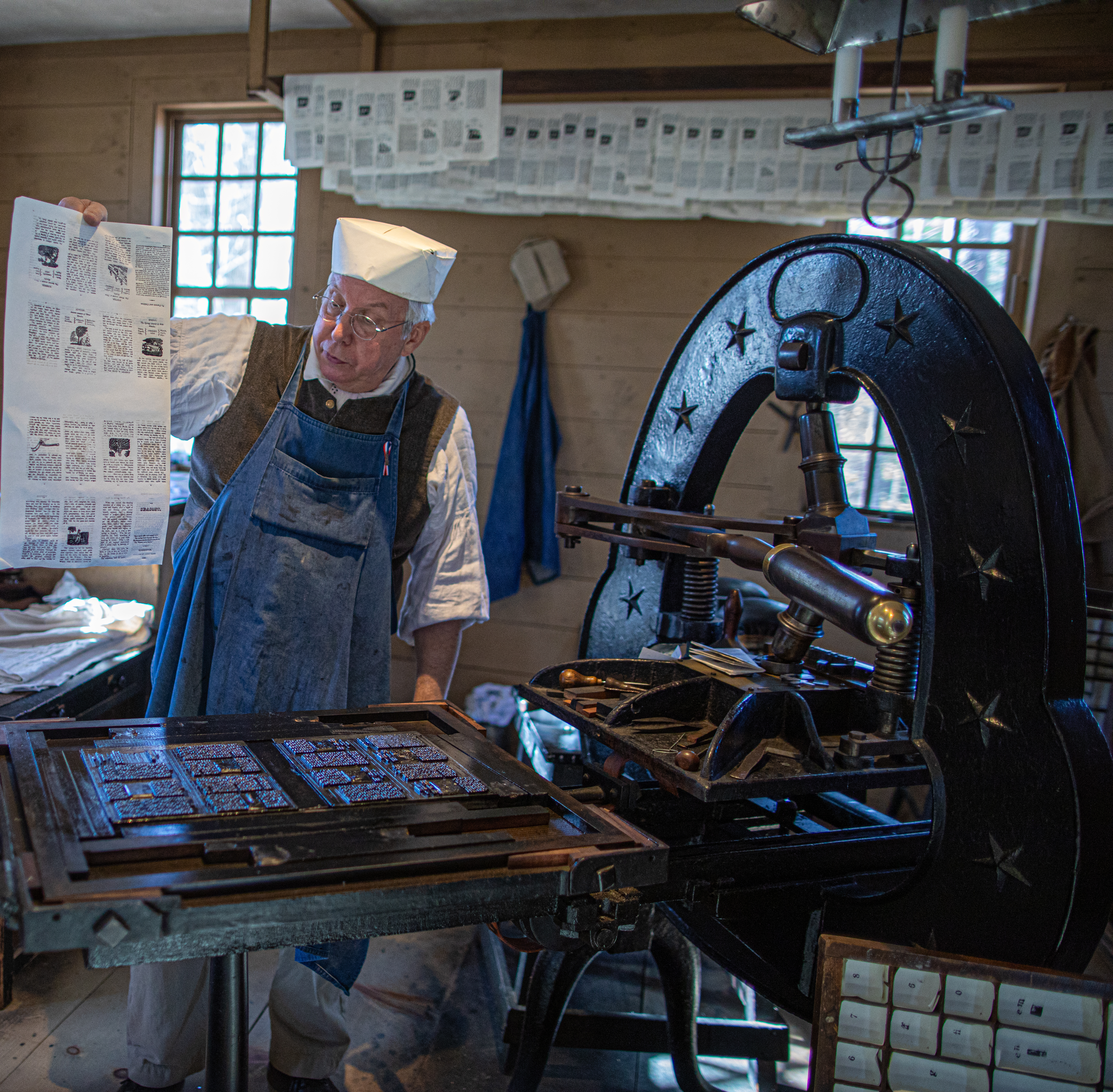
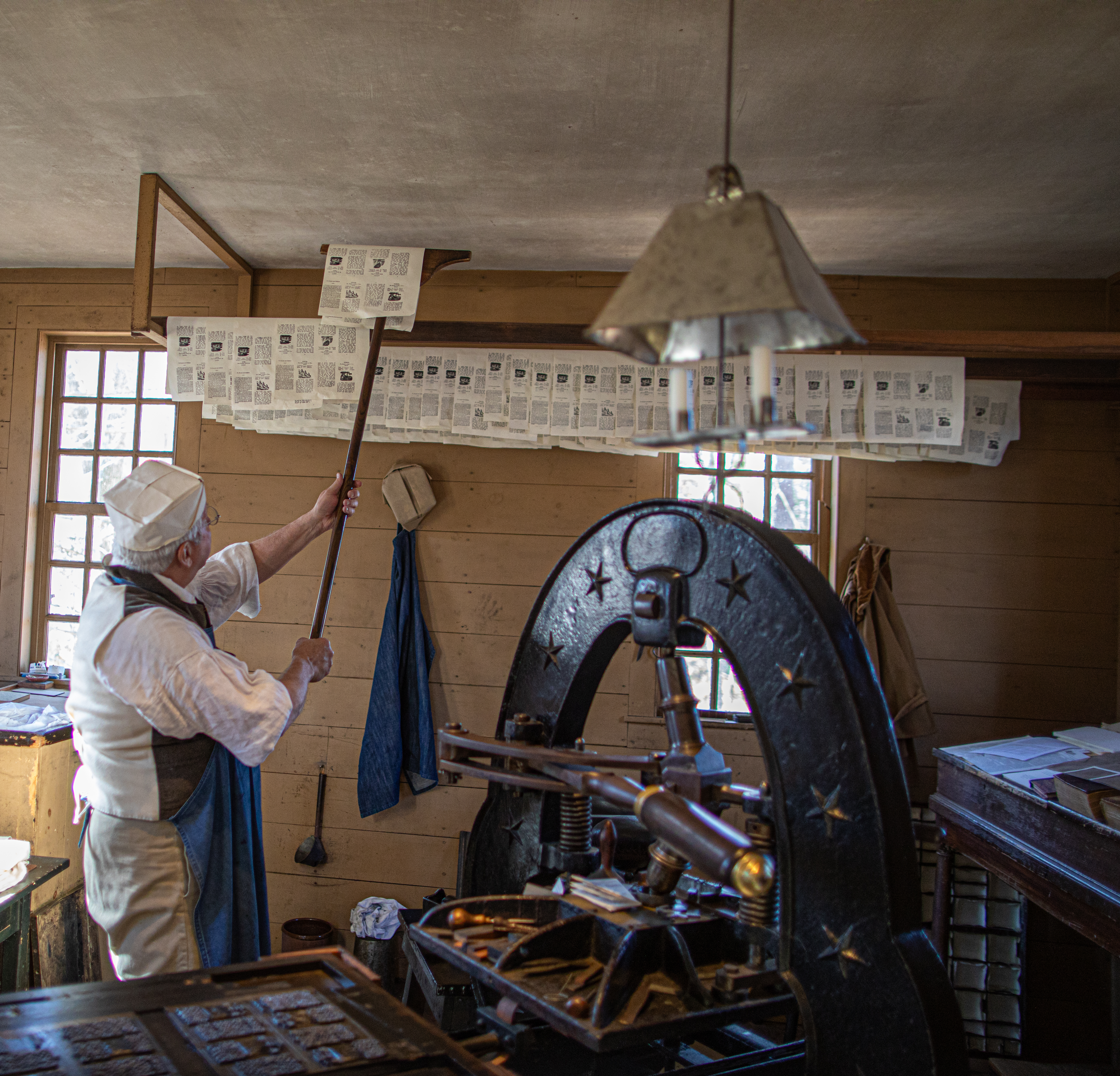
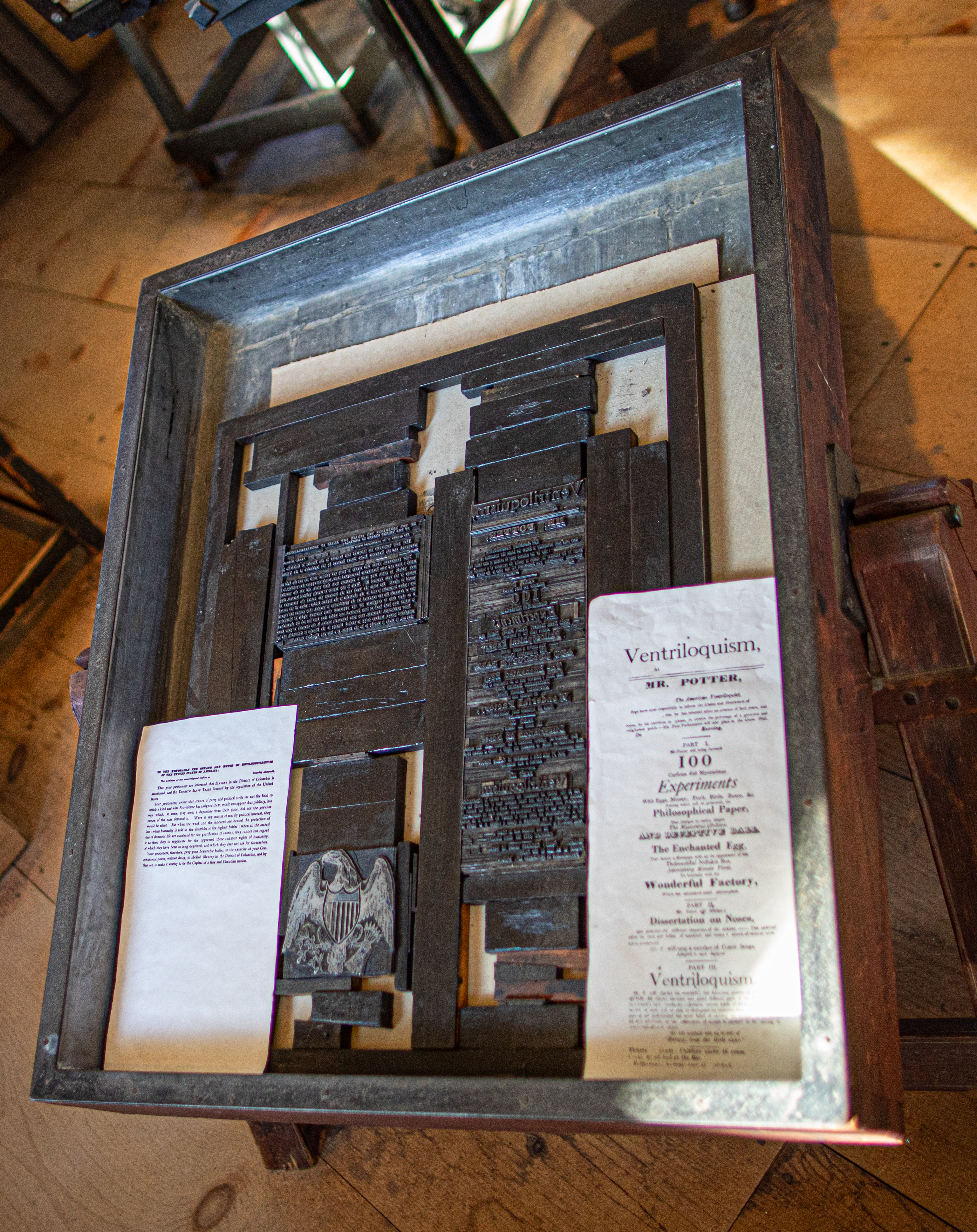
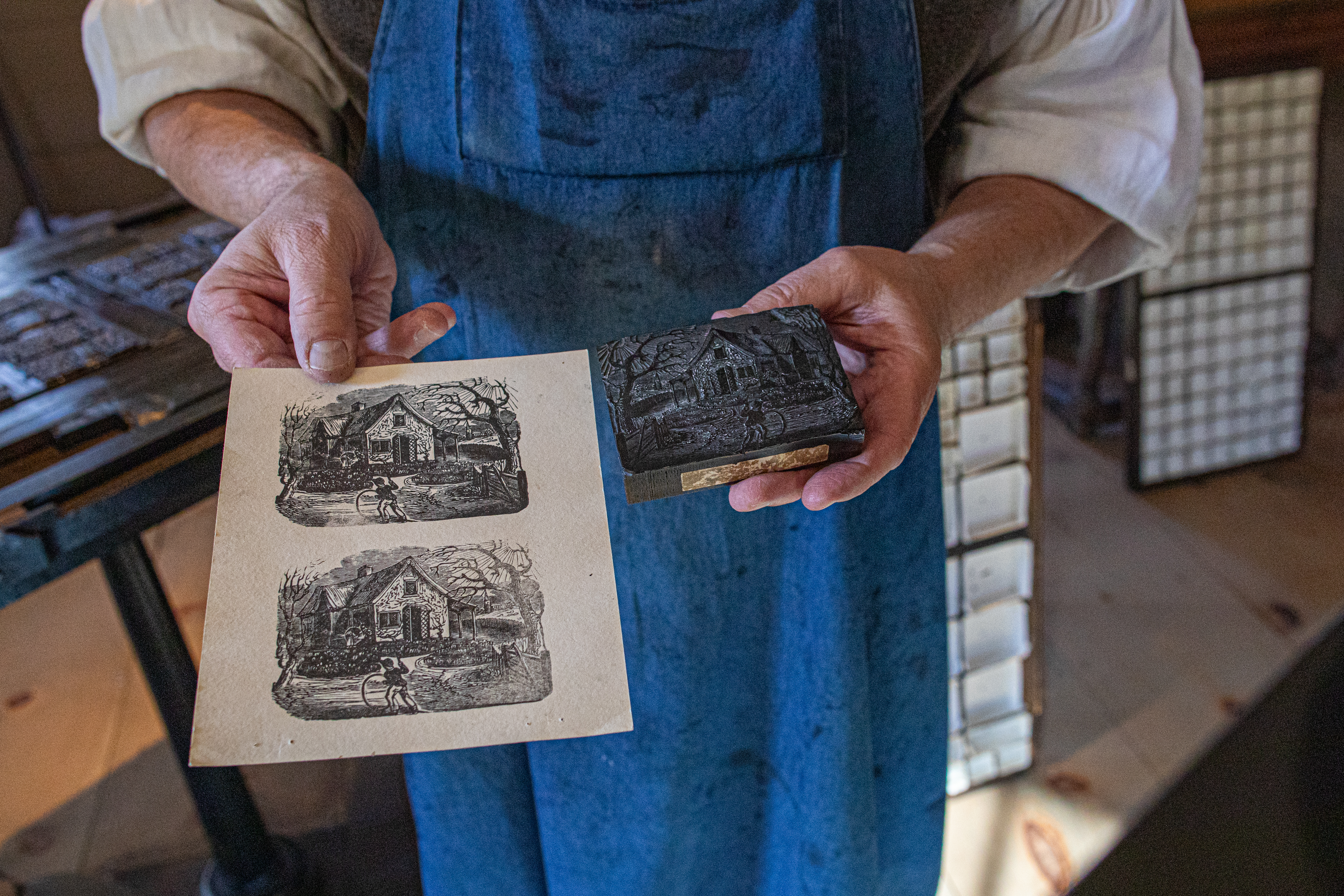
Printing required speed, dexterity, and strength. Setting type and printing were generally the work of men and boys, but women were employed in stitching and binding books. Country printers concentrated on books, pamphlets, broadsides, and forms. Newspapers were seldom profitable in small towns, but many rural printers tried to make money from them. In order to have a variety of titles for their customers, rural printers exchanged large quantities of books with printers throughout New England. Then they sold the books to country merchants, often taking store goods in exchange. By 1820, many were printing books for publishers in Boston, New York, and Philadelphia.

The Printing Office at Old Sturbridge Village was owned for a time by noted printer Isaiah Thomas. Thomas moved from Boston to Worcester during the Revolutionary War to preserve his freedom to publish. It is unlikely that Thomas printed in this building, but the association with him is important. As one of America’s most successful printers, he trained many craftsmen, who influenced the trade for two generations.

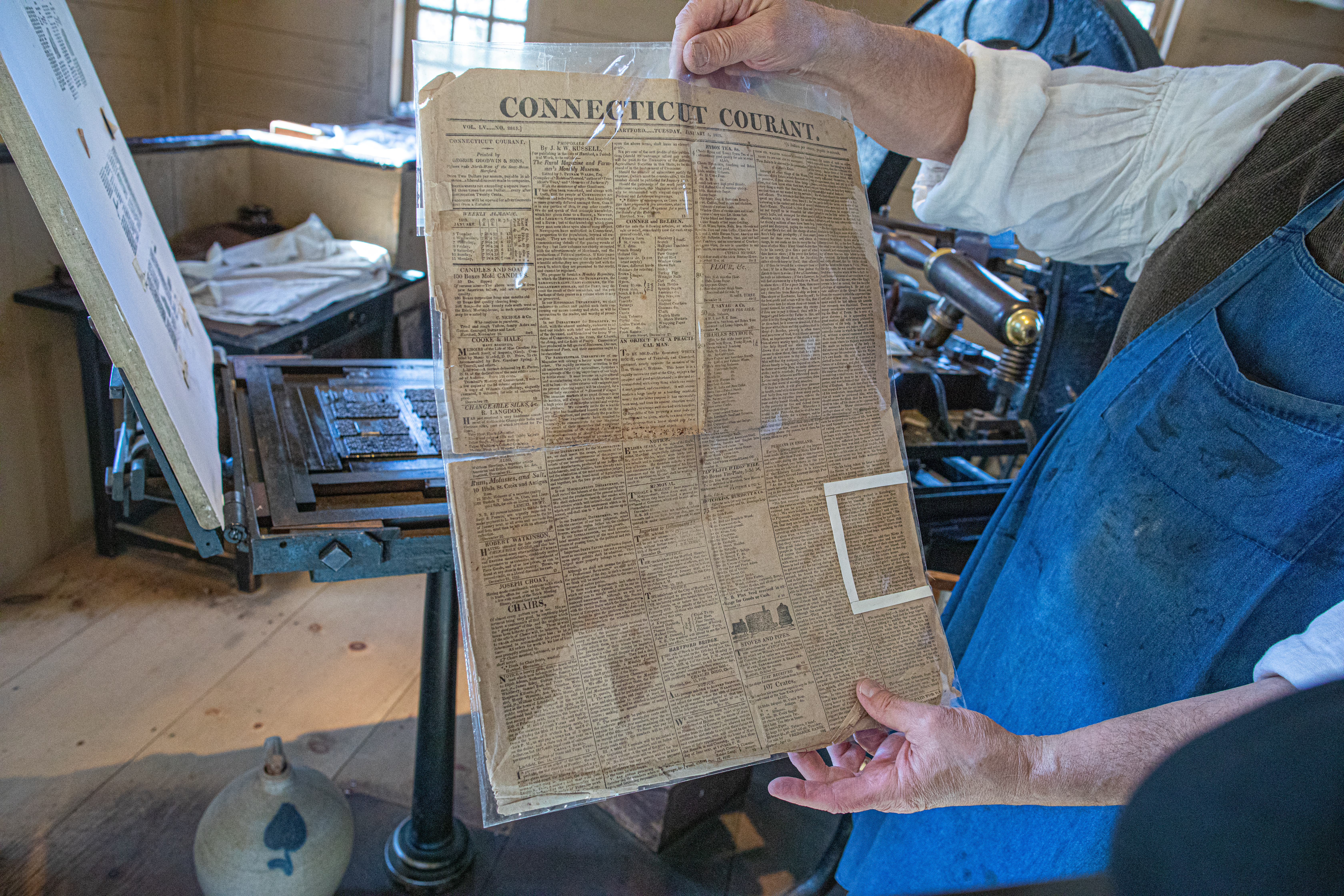
The printer showed off the tools of the print shop as well as how the papers were printed on. This copy of the Connecticut, which was printed on the printer in the office is an original from the 1800s.
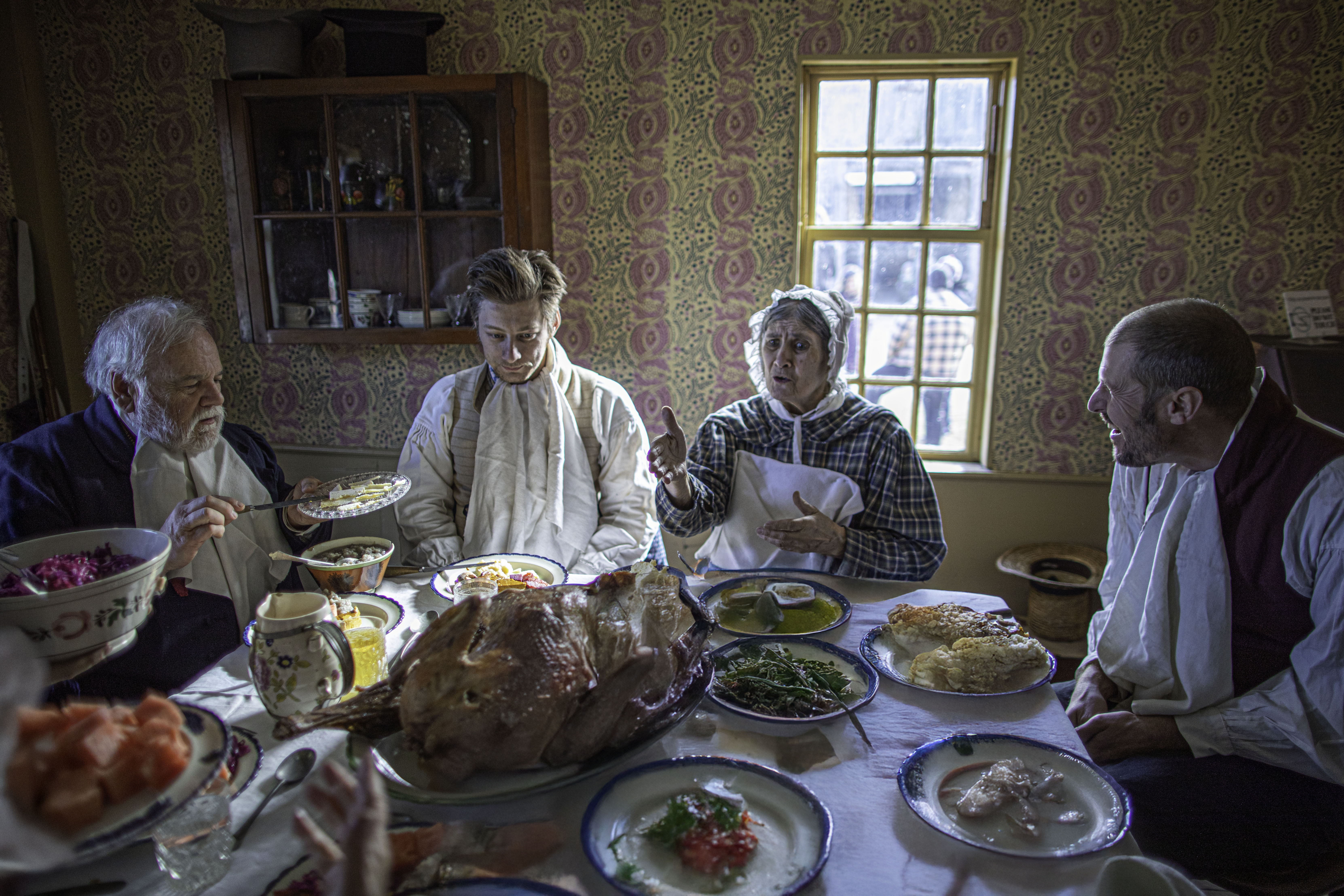
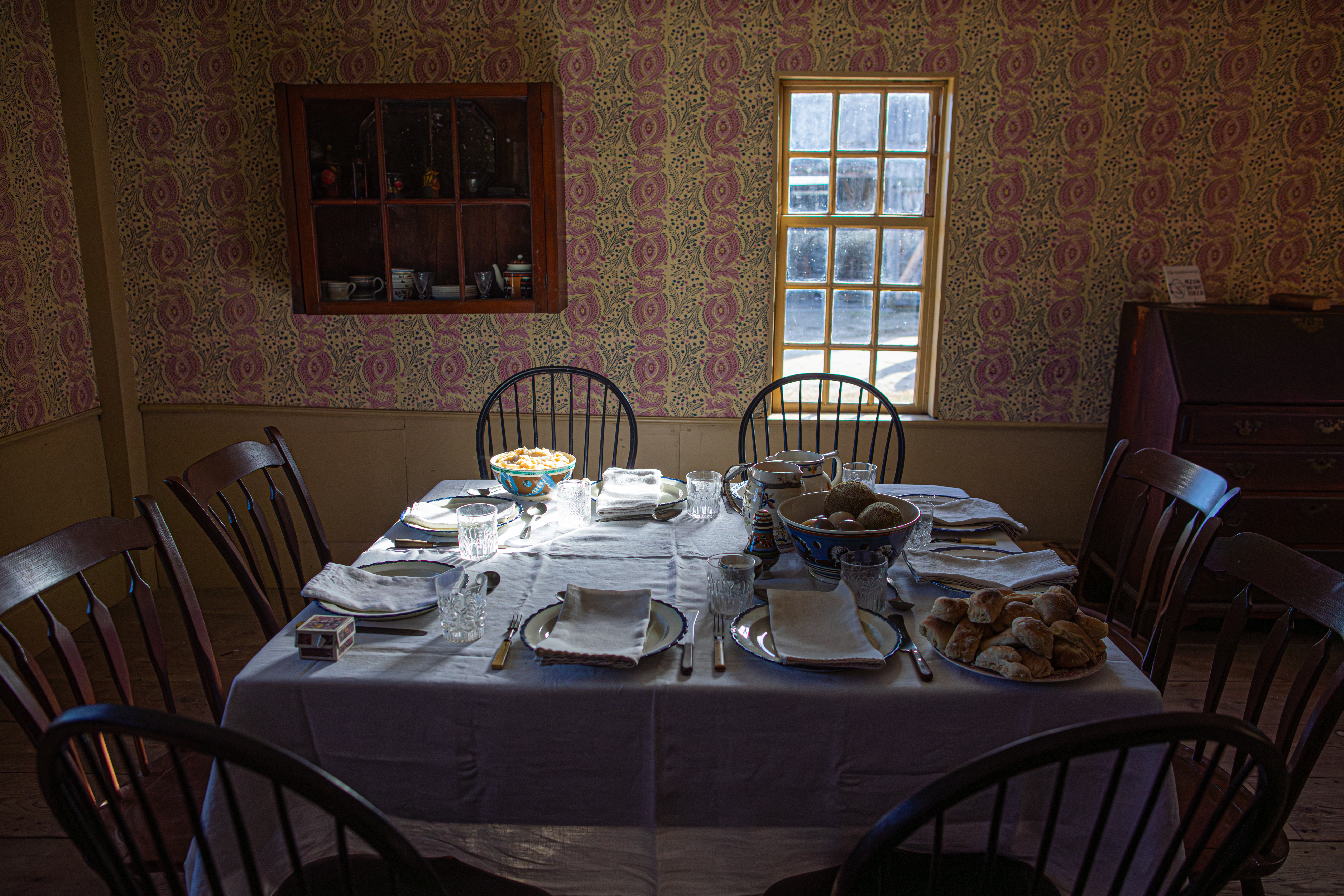
Of course, what would a Thanksgiving celebration be without a feast?

Thanksgiving was the biggest holiday in 19th century Sturbridge. While the turkey is usually the biggest part of the Thanksgiving meal in modern day America, it was not the case in 19th century Sturbridge. And, other parts of the meal were considered more important. es were baked weeks ahead of time and stored in unheated attics and bedrooms where they would freeze and keep for months. Pies not consumed at Thanksgiving would sometimes last until April. Also, while many people might be surprised to read this, prayer was not said before the big meal. Grace, or a proclamation of gratitude, was often said before the meal.
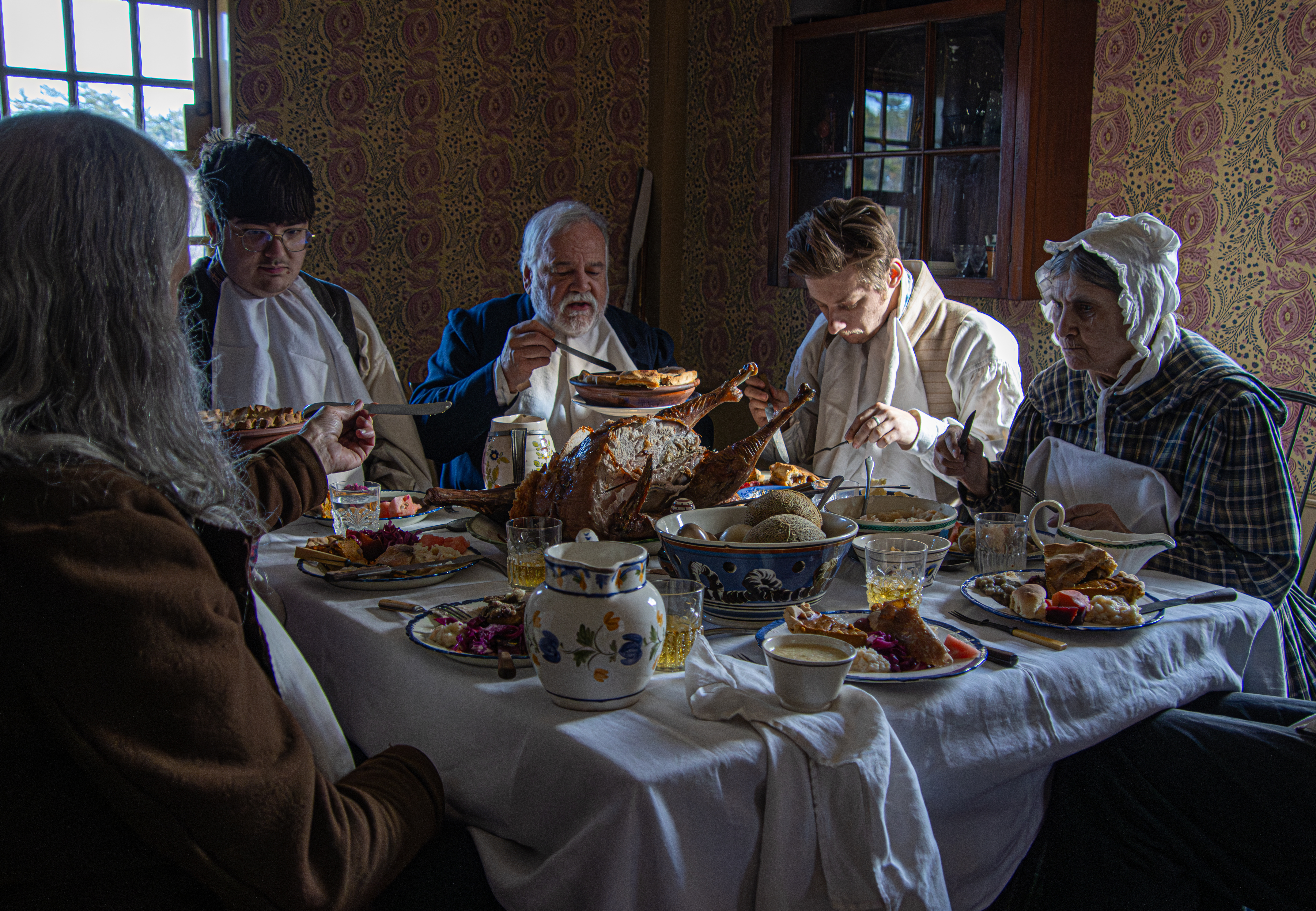
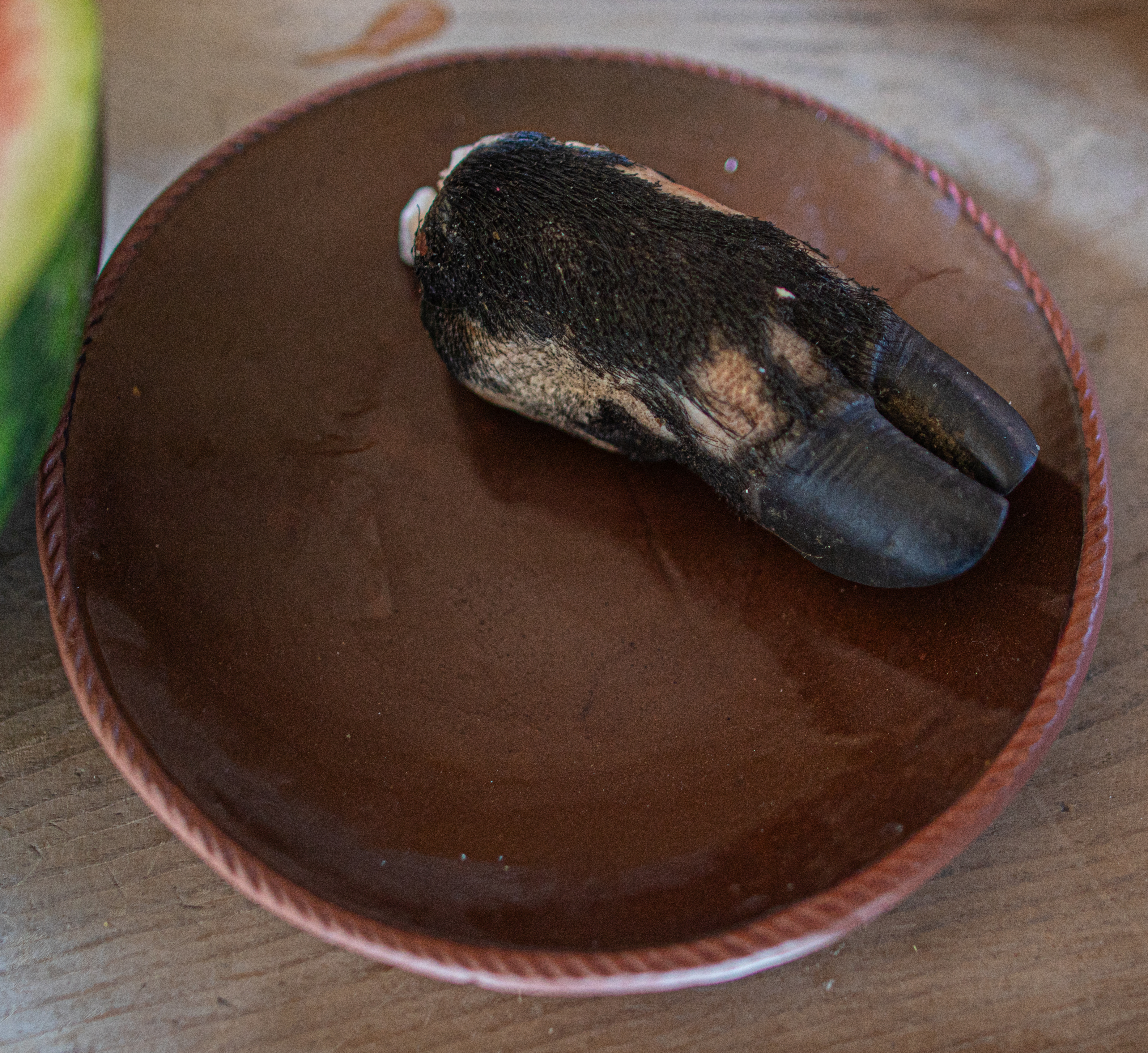
Turkey wasn’t the only thing on the menu. This hoof (possibly from a boar, sheep or deer) was a common delicacy of these meals.
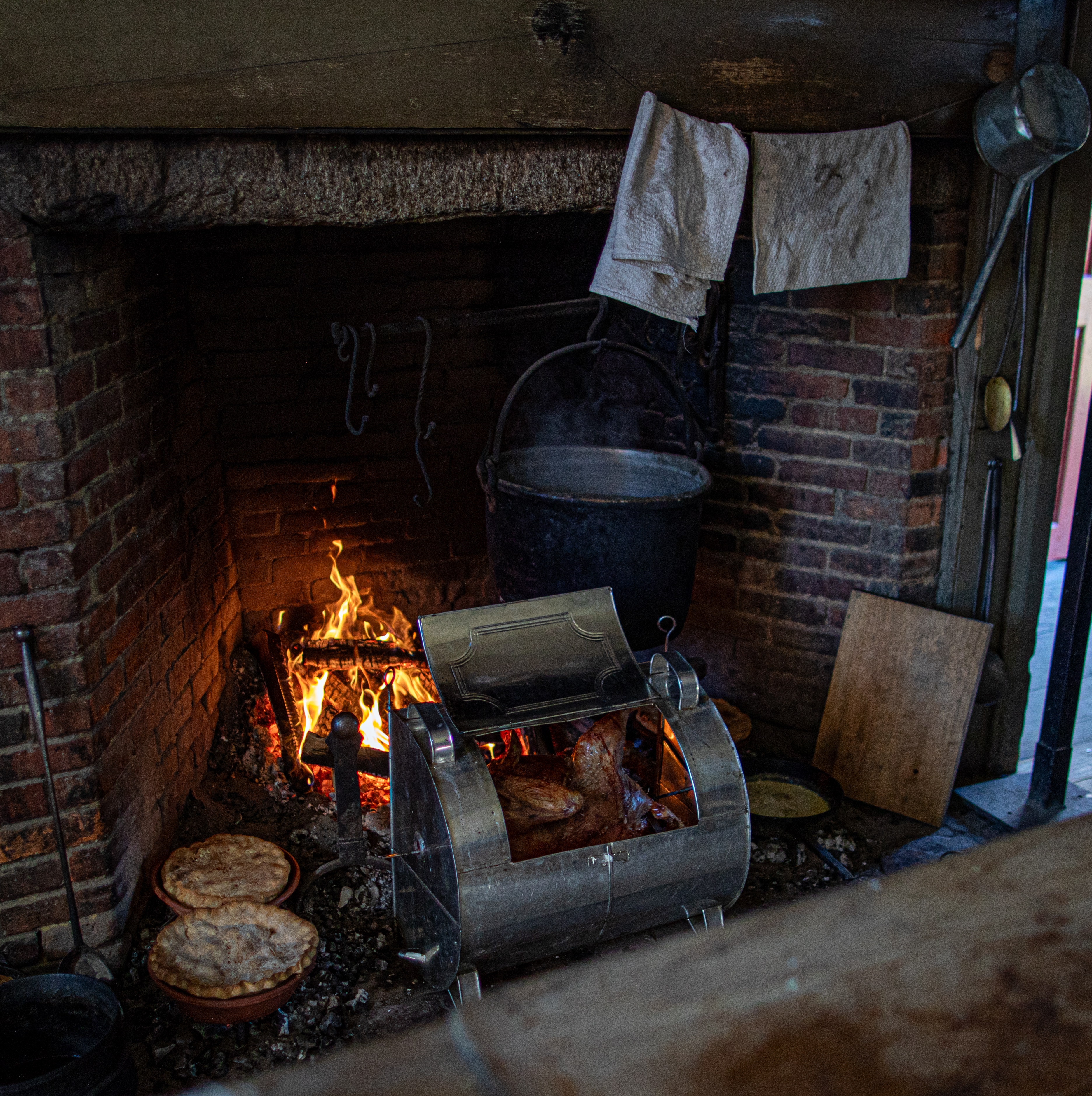
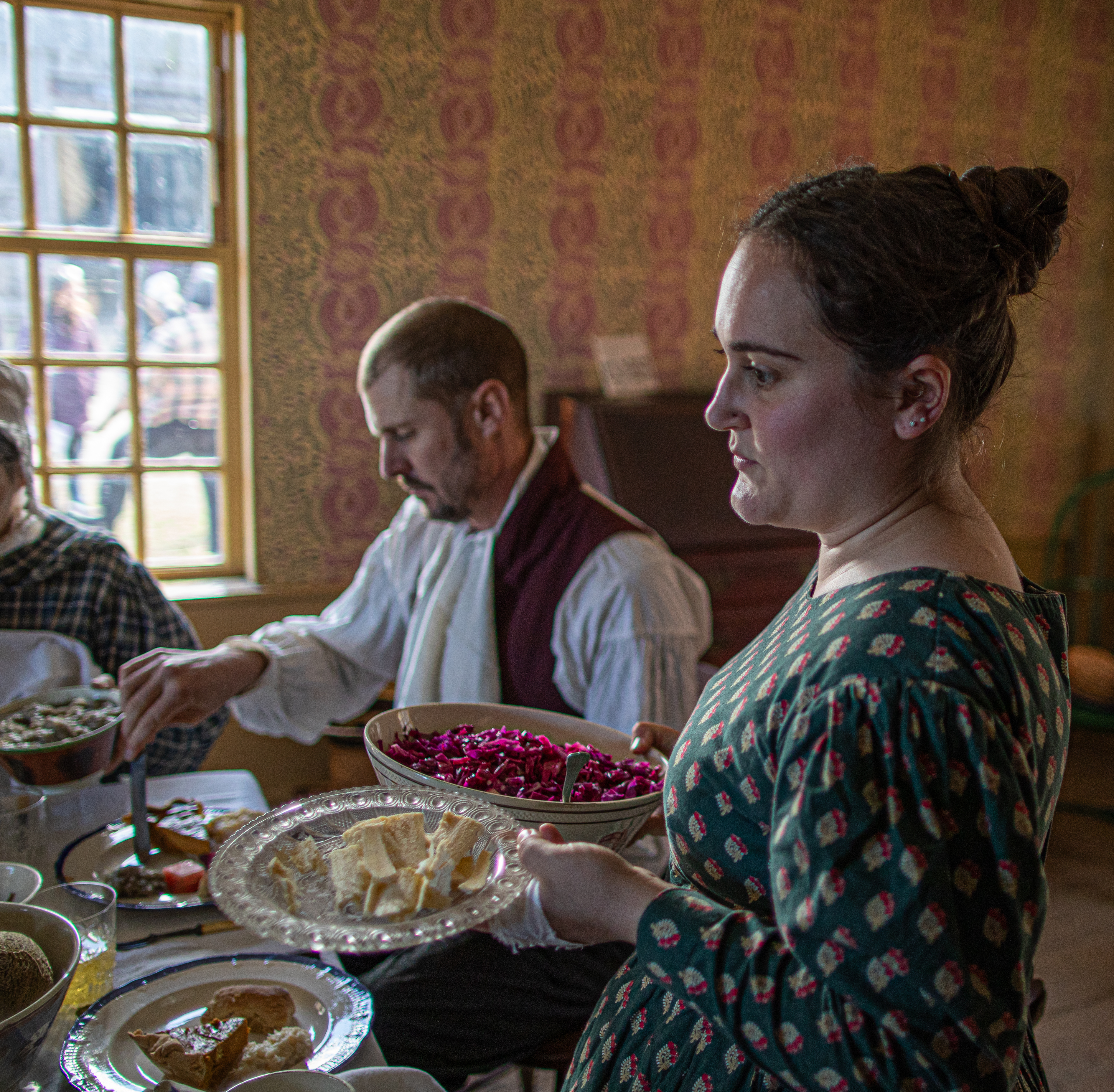
But there were also more savory items like pies, cake, vegetables and a turkey cooking near an open flame.
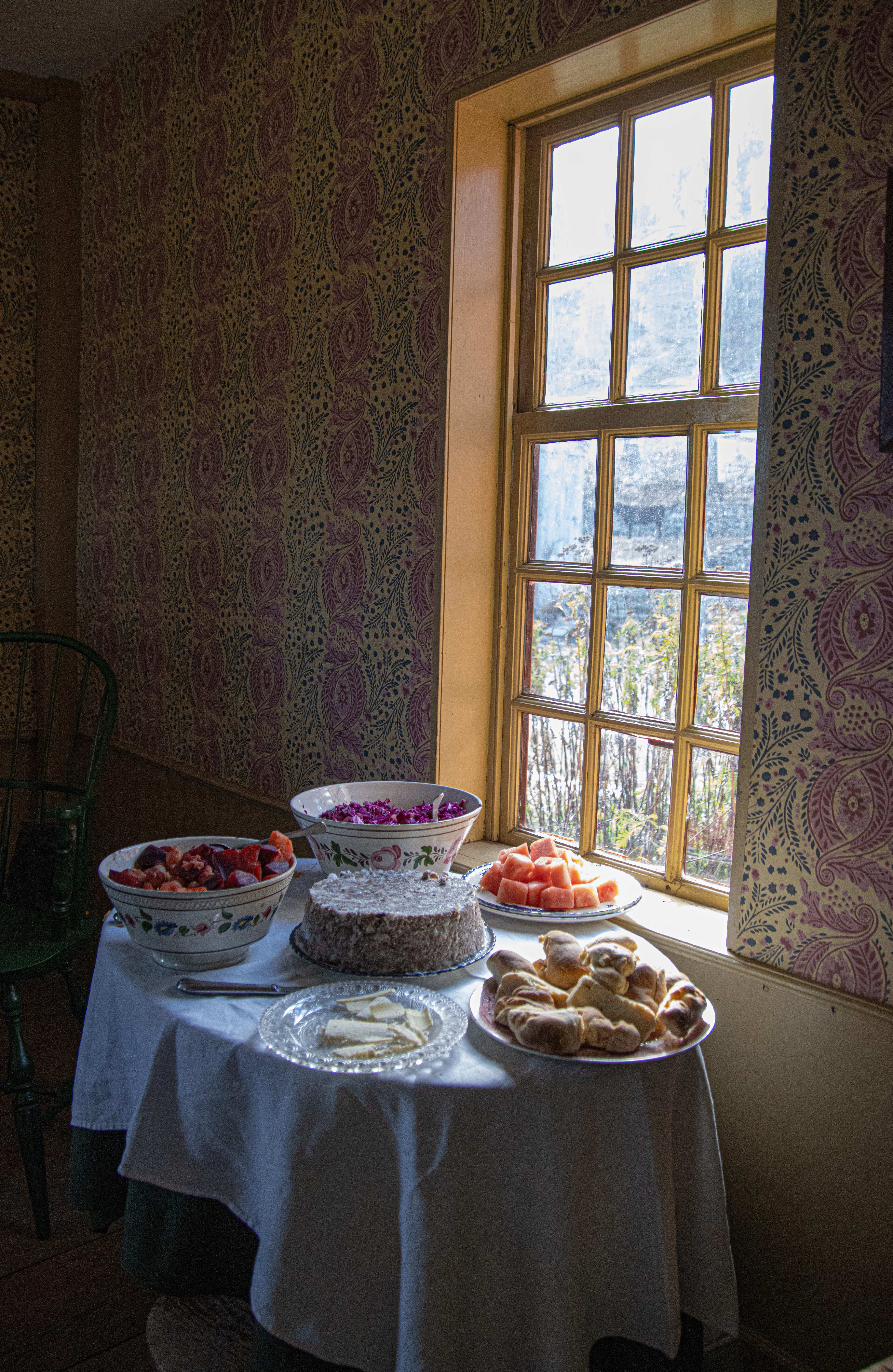
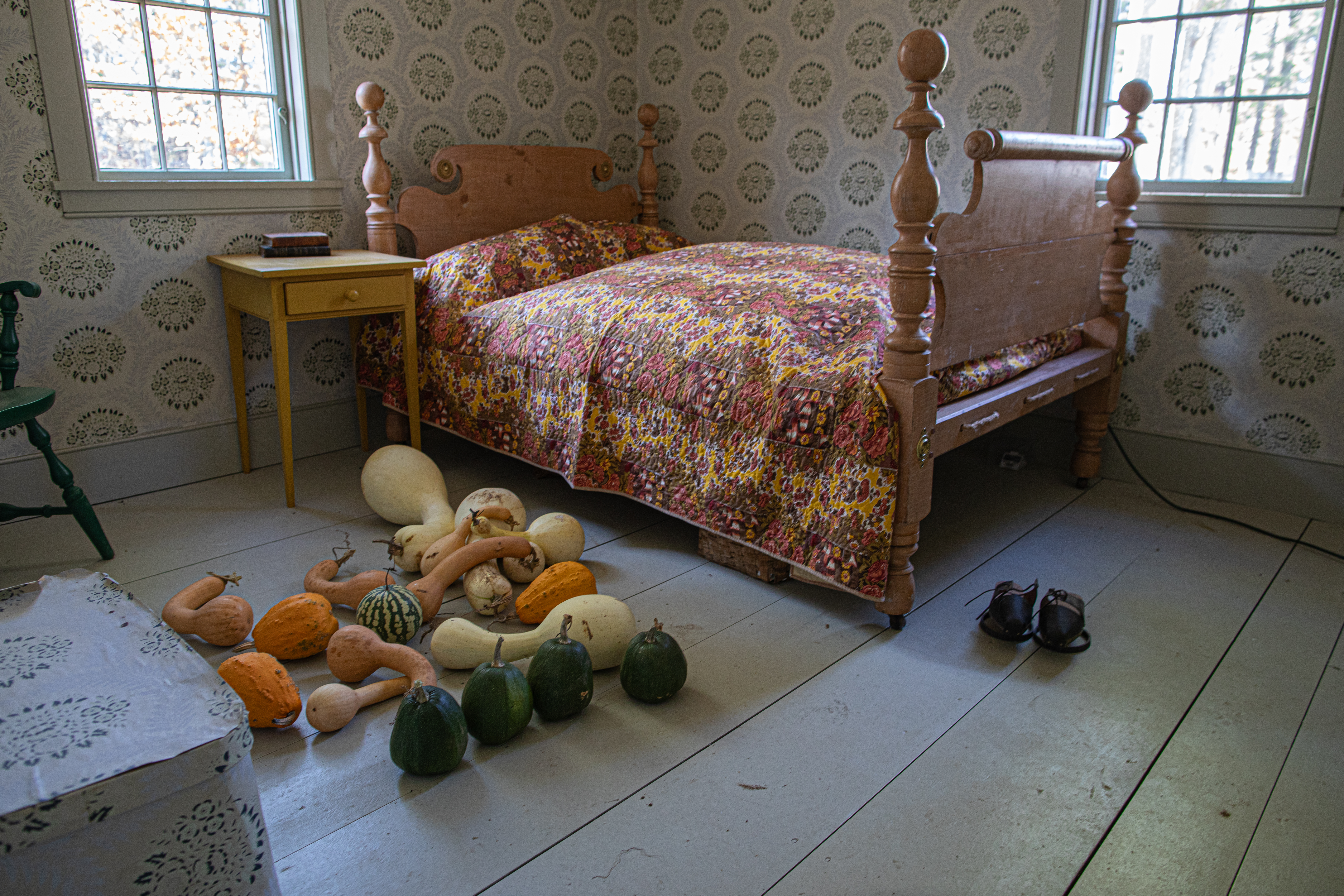
Sometimes, they would store extra vegetables in unusual places!
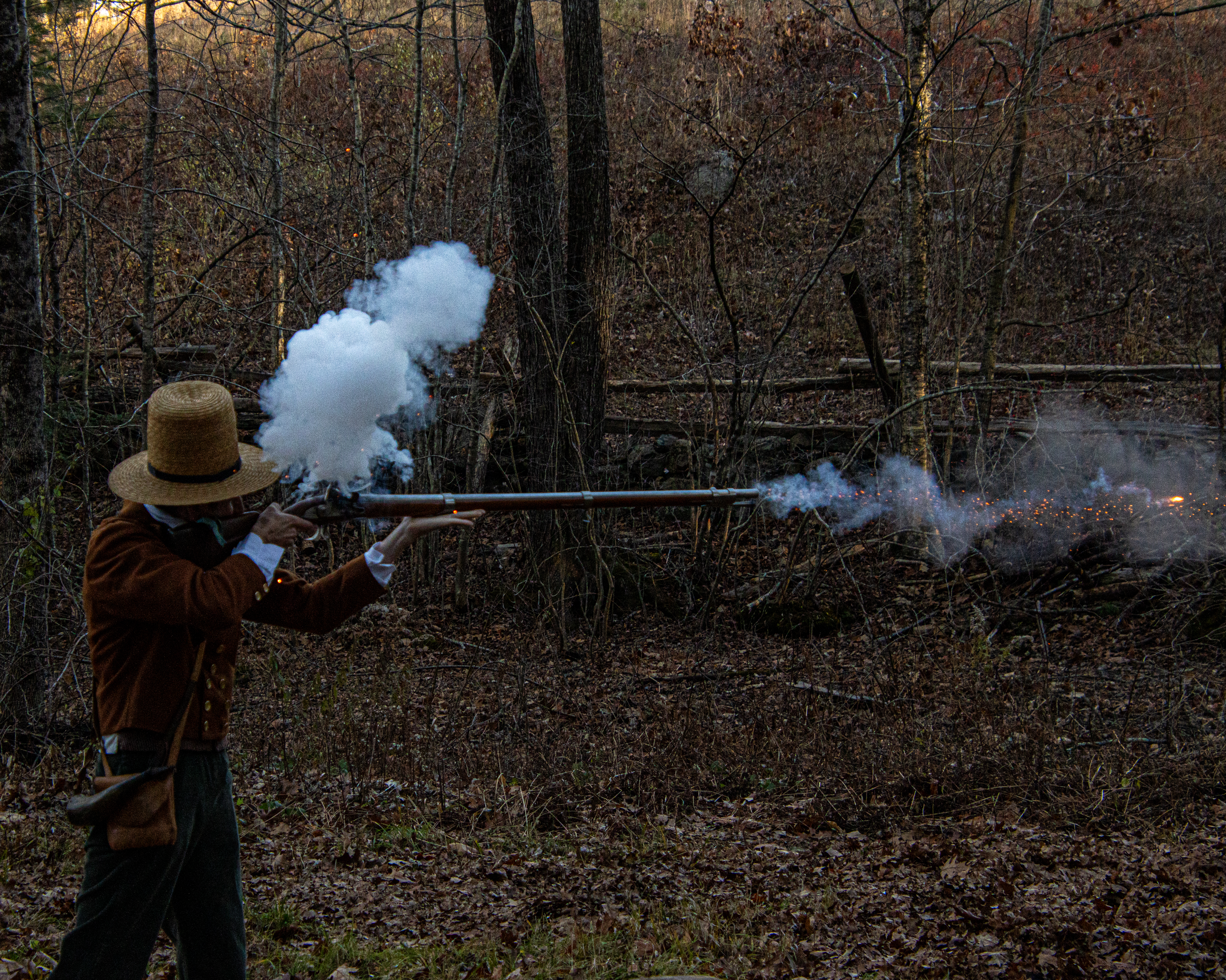
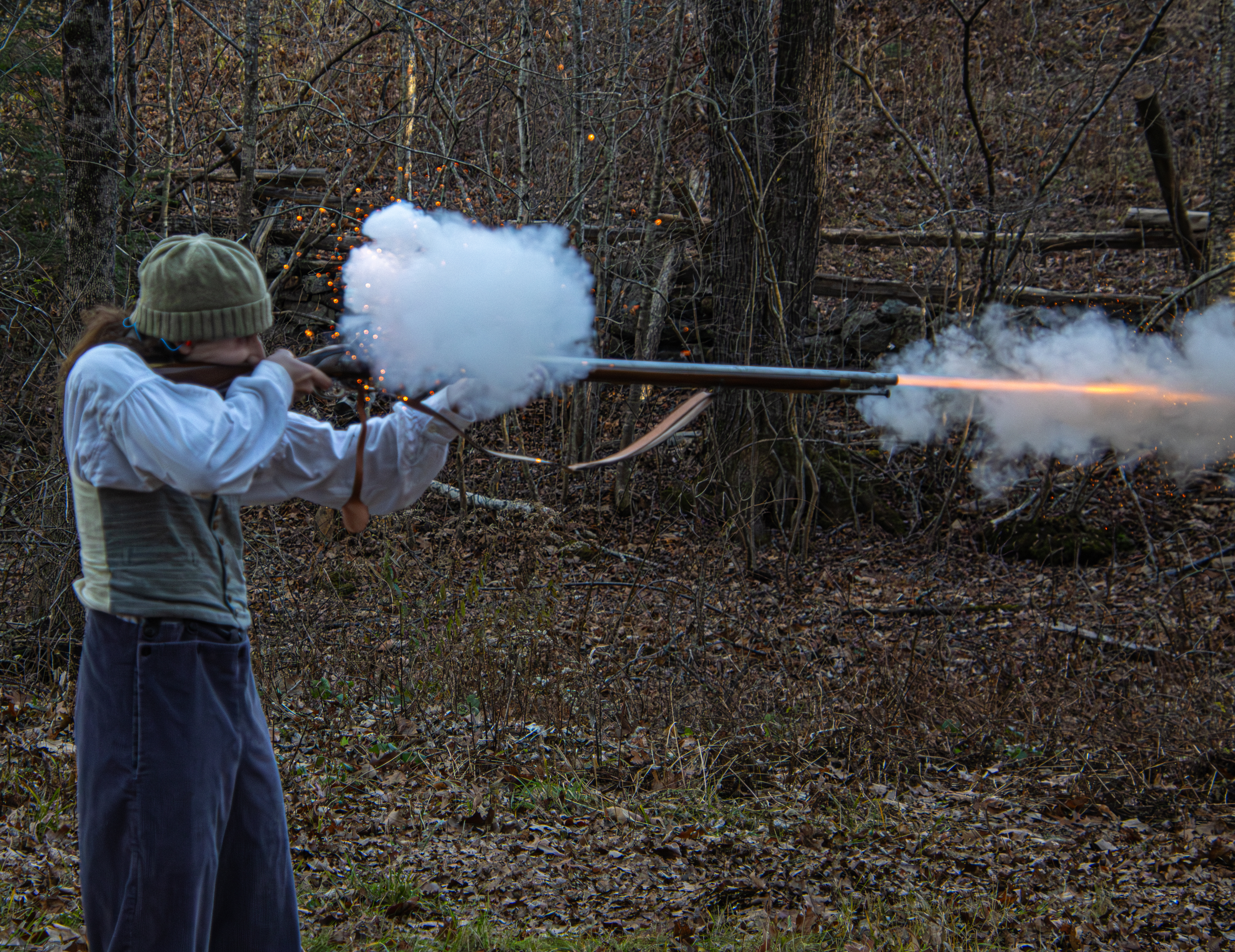
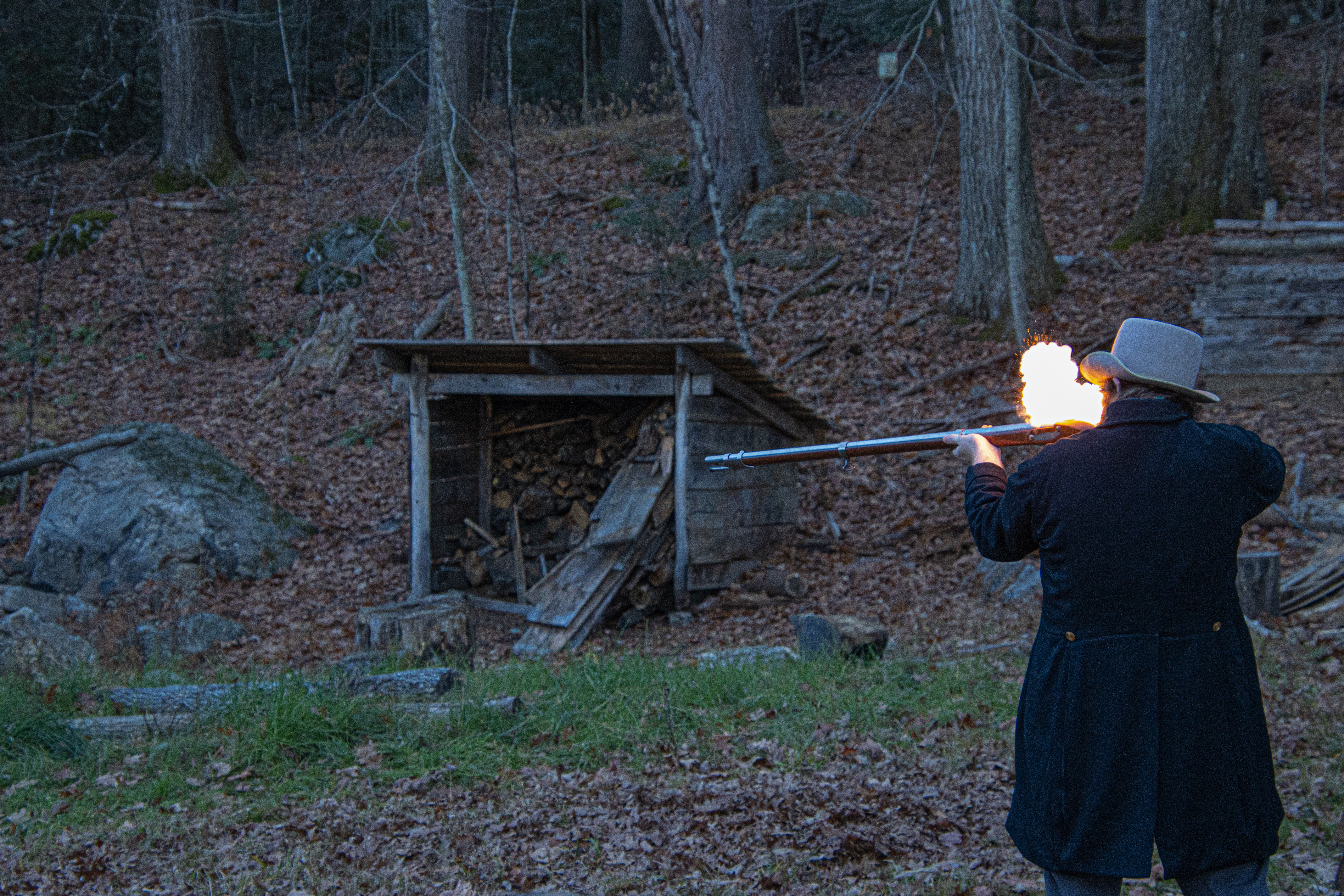
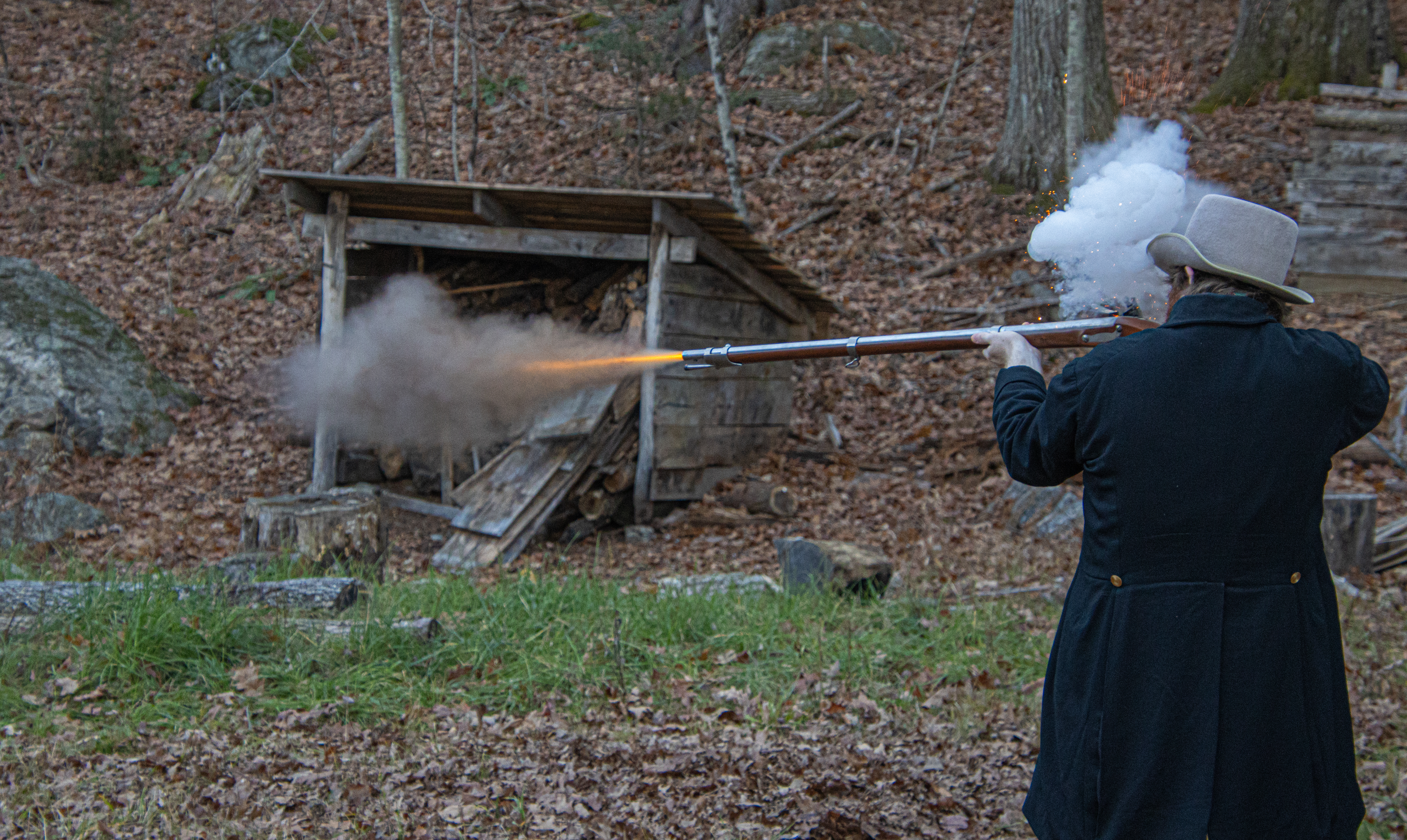
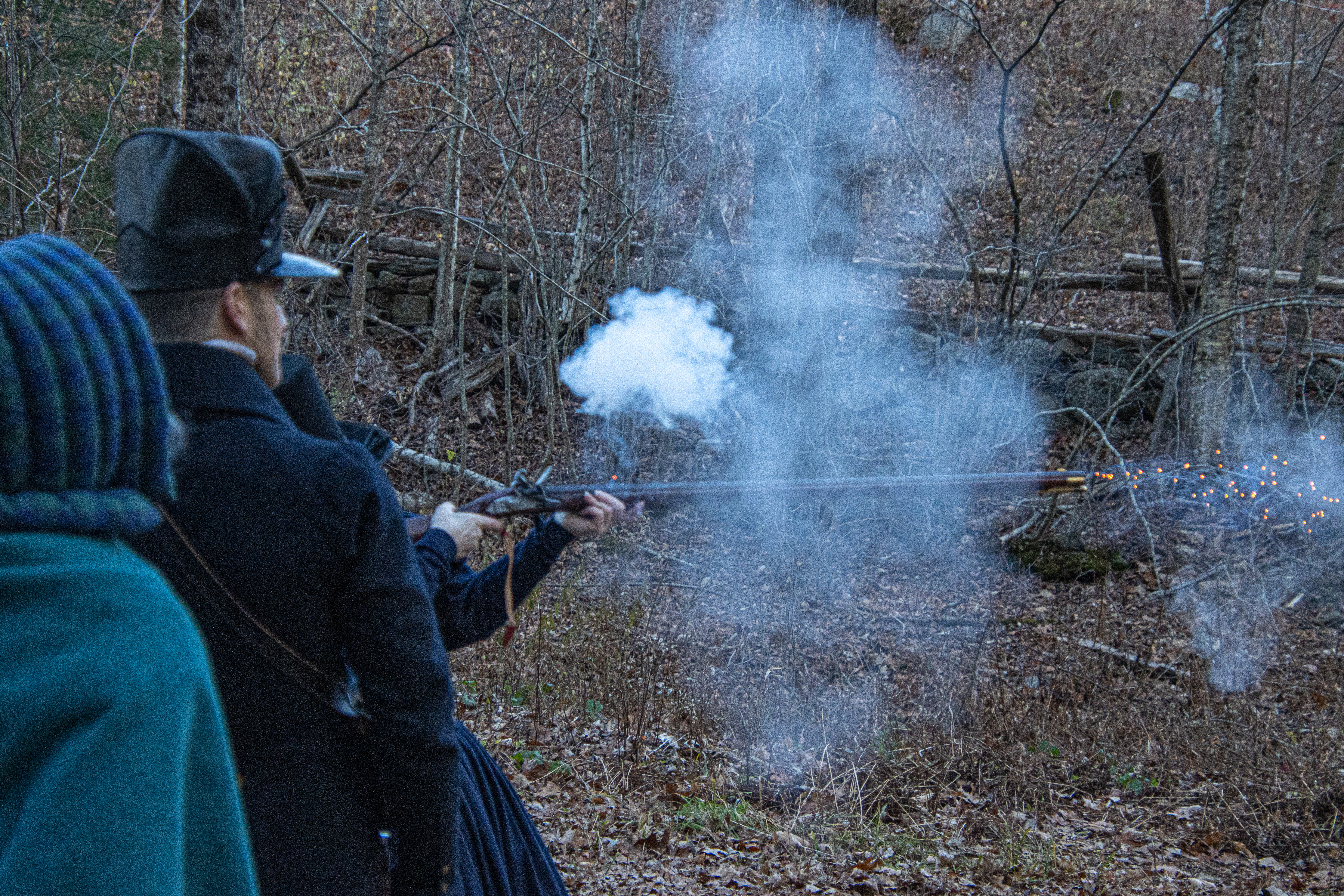
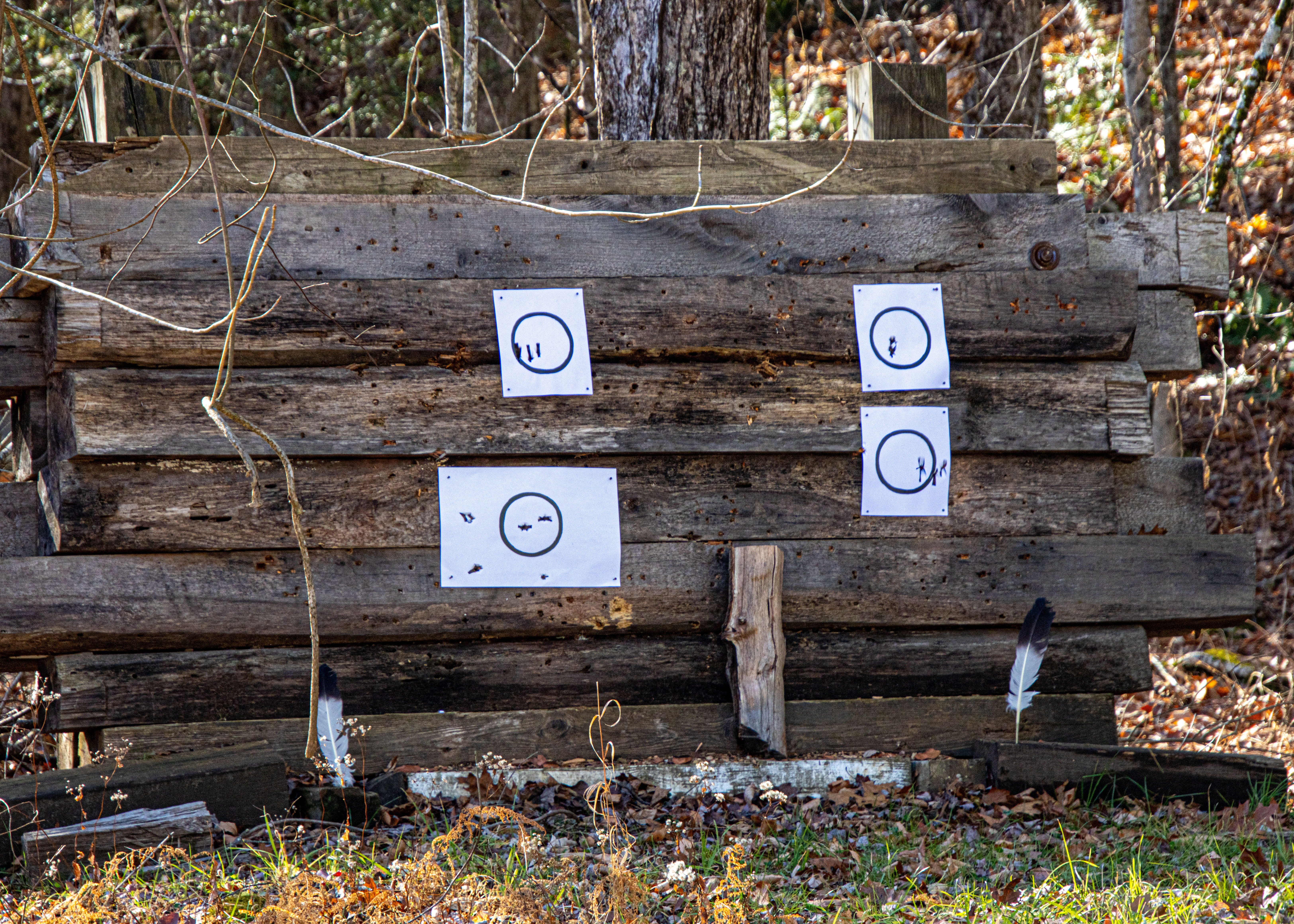
The highlight for most, though, was the “turkey shoot.” But, no turkeys were harmed during this event. Men and women from the village took their turns at trying to hit the targets. While beginning to fall out of favor by the 1830s, competitive turkey shoots were still fairly common New England events in the fall and early winter. Participants would pay cash to shoot at nearly impossible ranges to try to win their own bird.
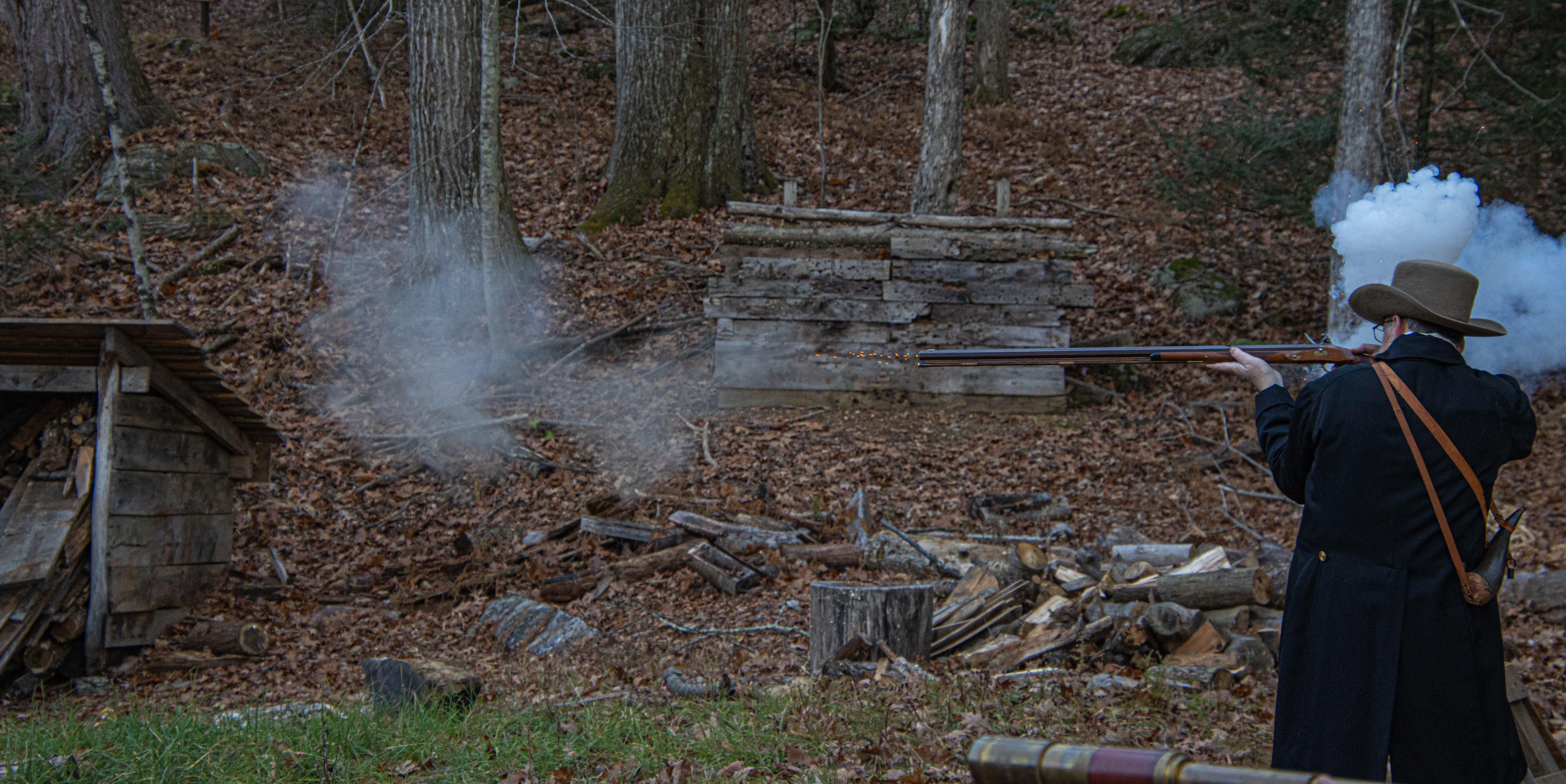
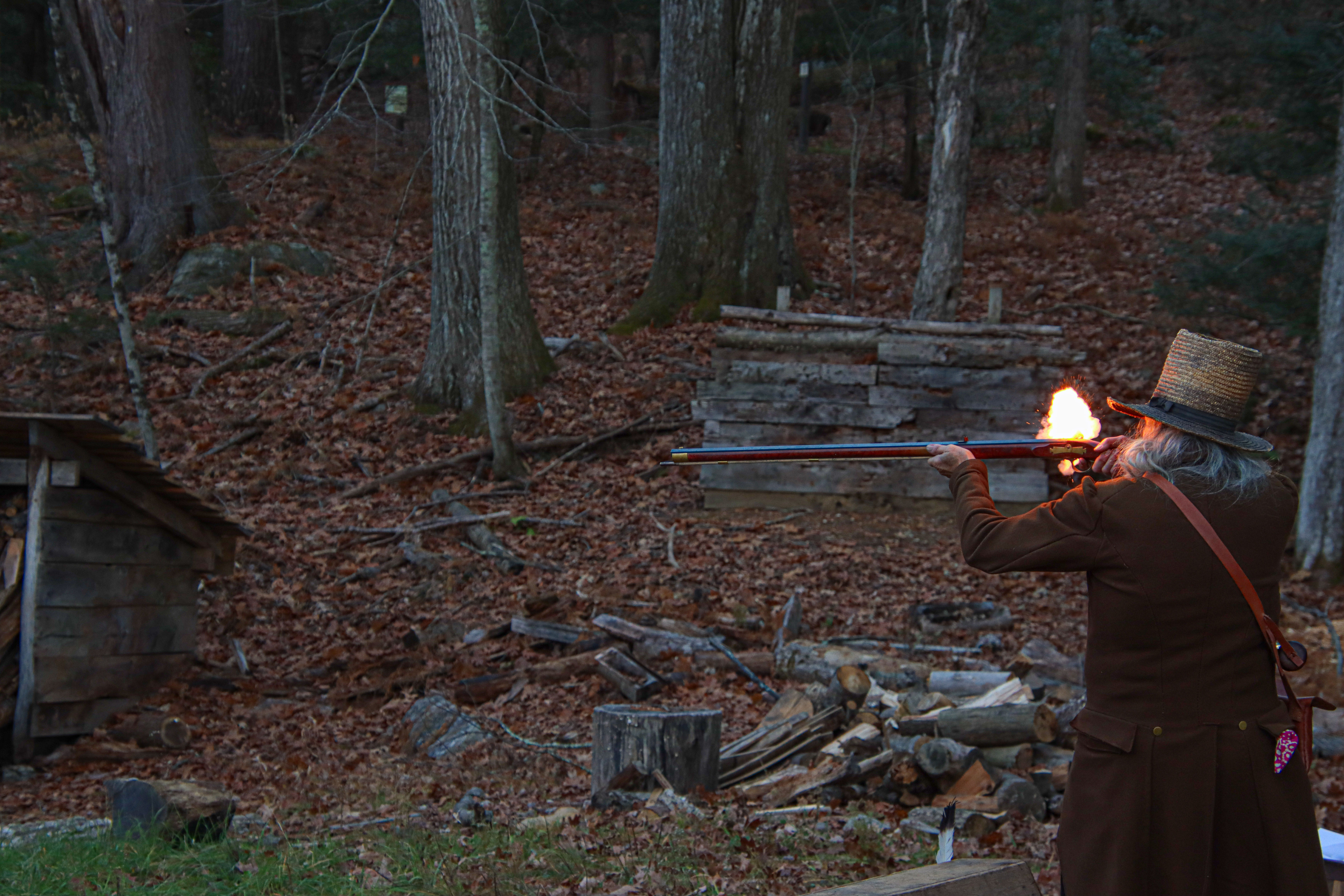
While no animals were used or harmed during the shoot, there were other targets used in the shooting. Instead of turkeys or other living things, the shooters aimed at the paper targets, jugs and bowls.
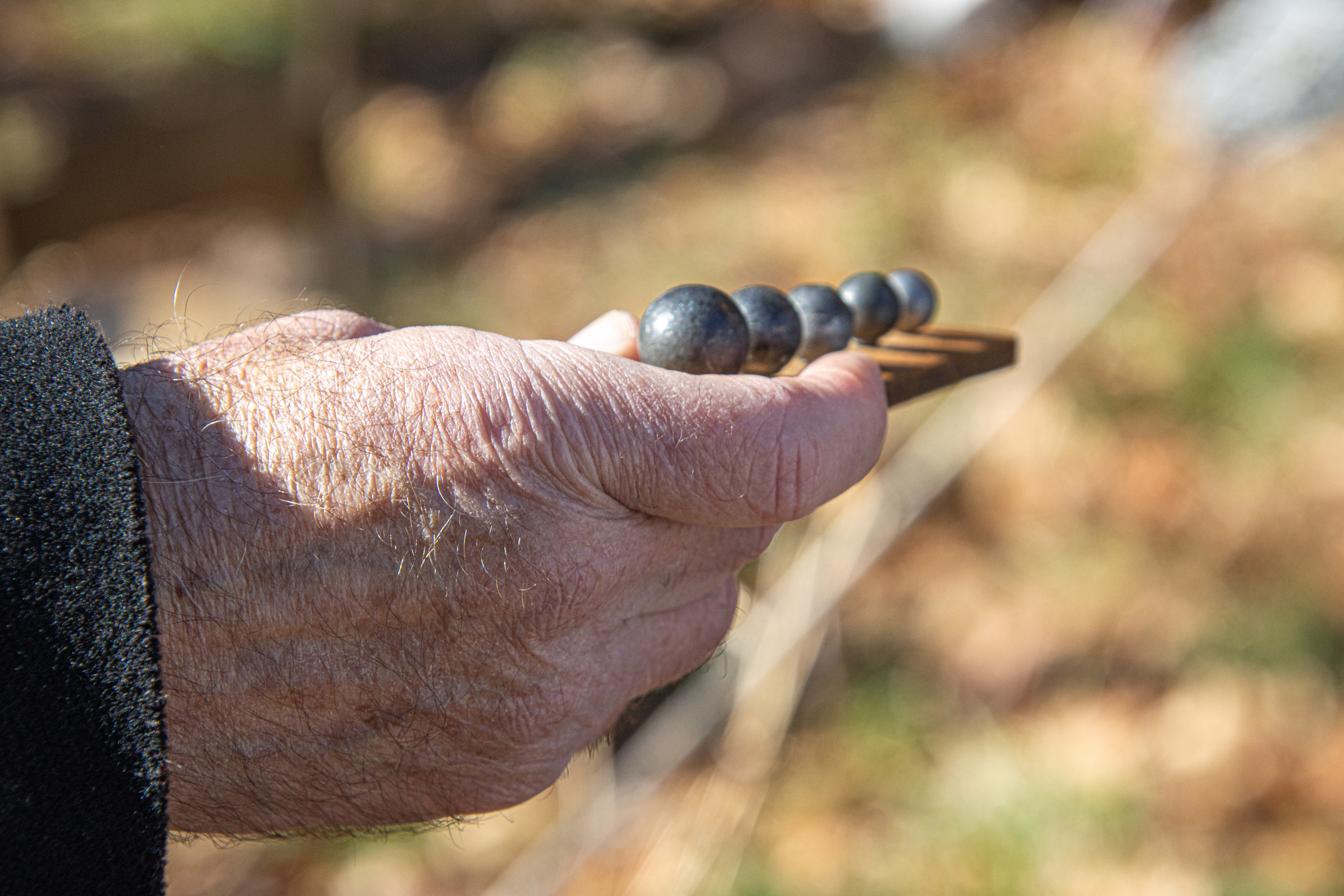
These are the rounds used during the time of the turkey shoot they were recreating. The shooters used the largest projectile to the left for the target practice. Imagine getting hit by that bullet, or any of these bullets for that matter. Ouch.
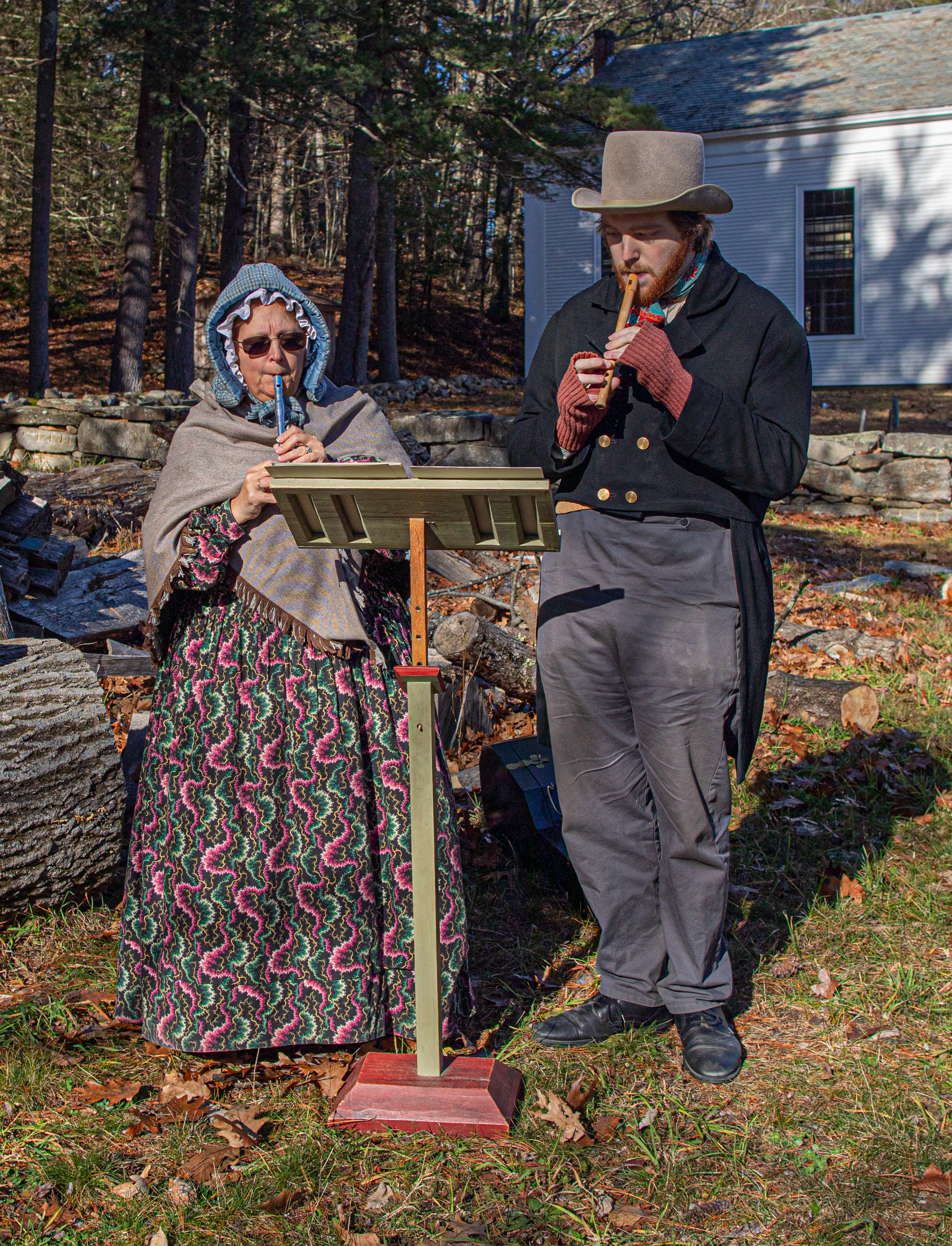
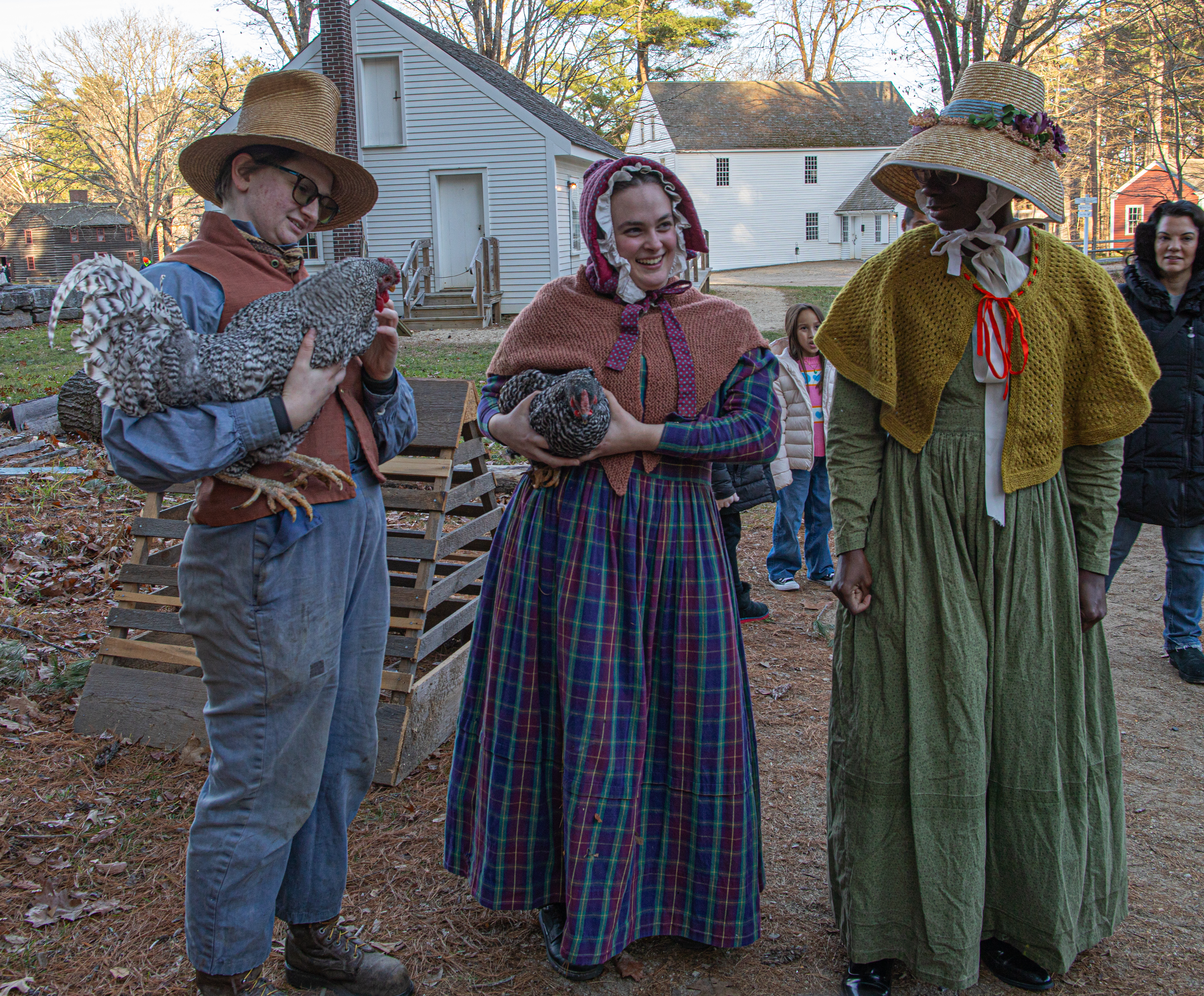
There were musicians and a few roosters at the turkey shoot.
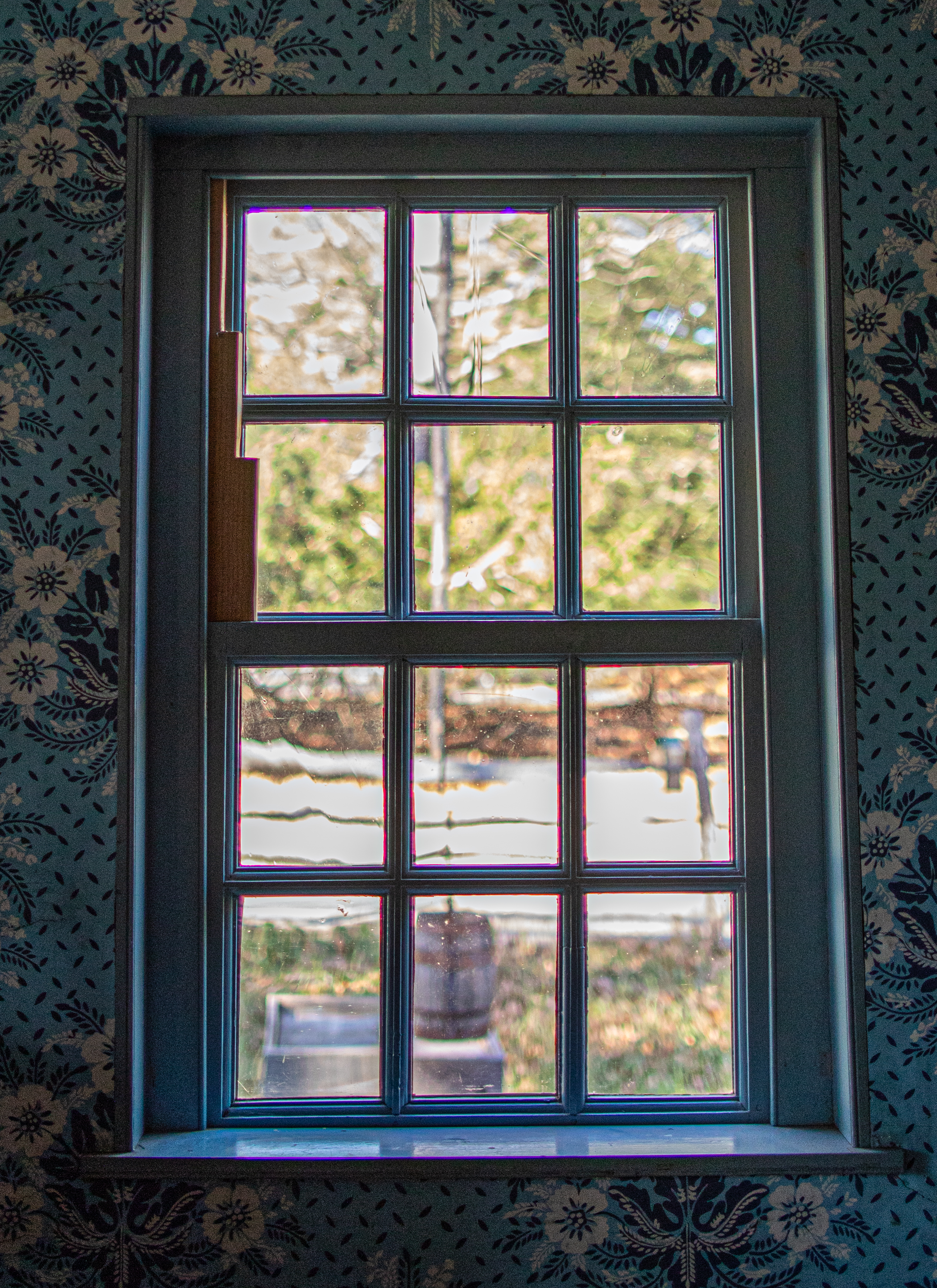
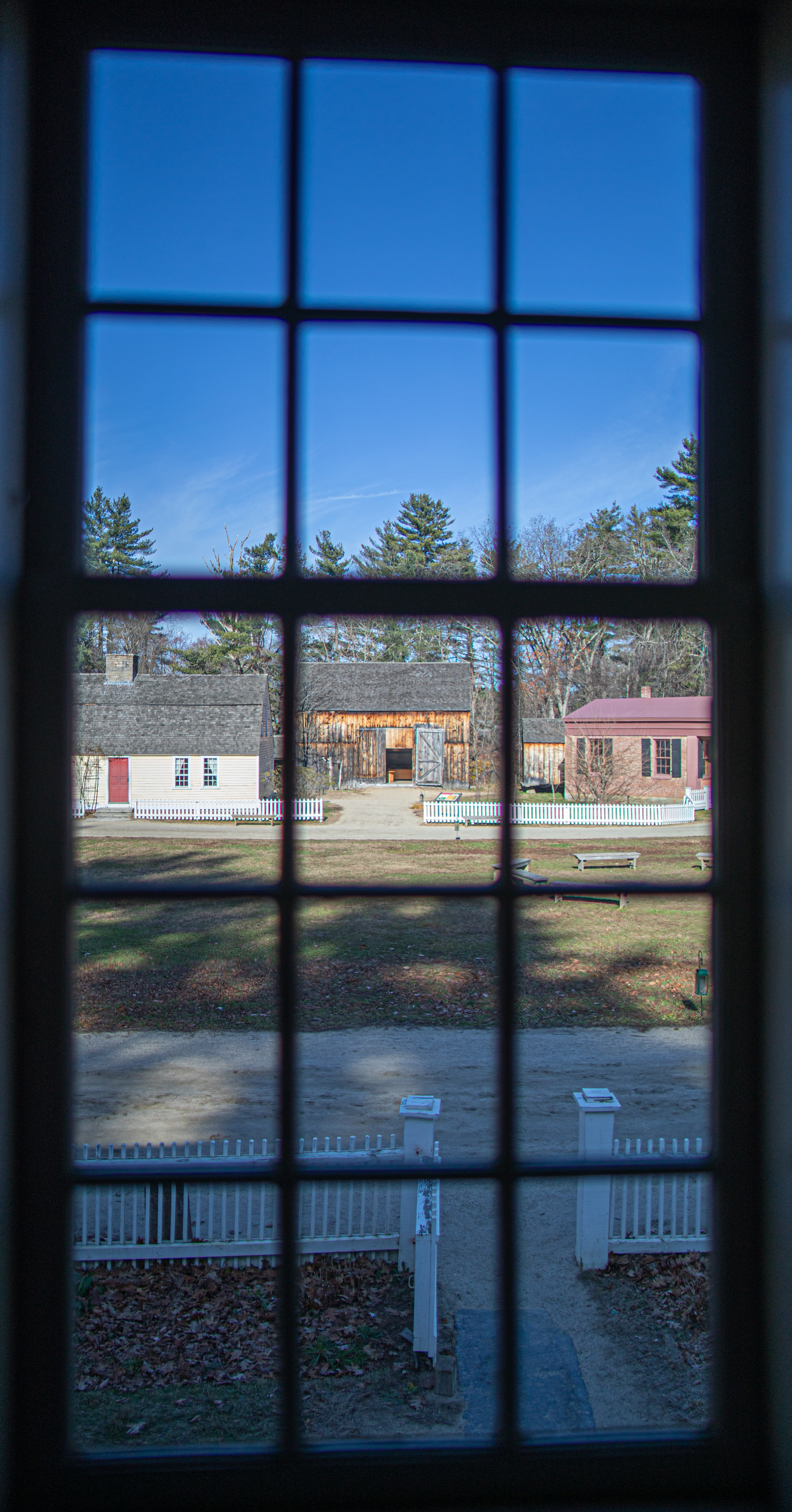
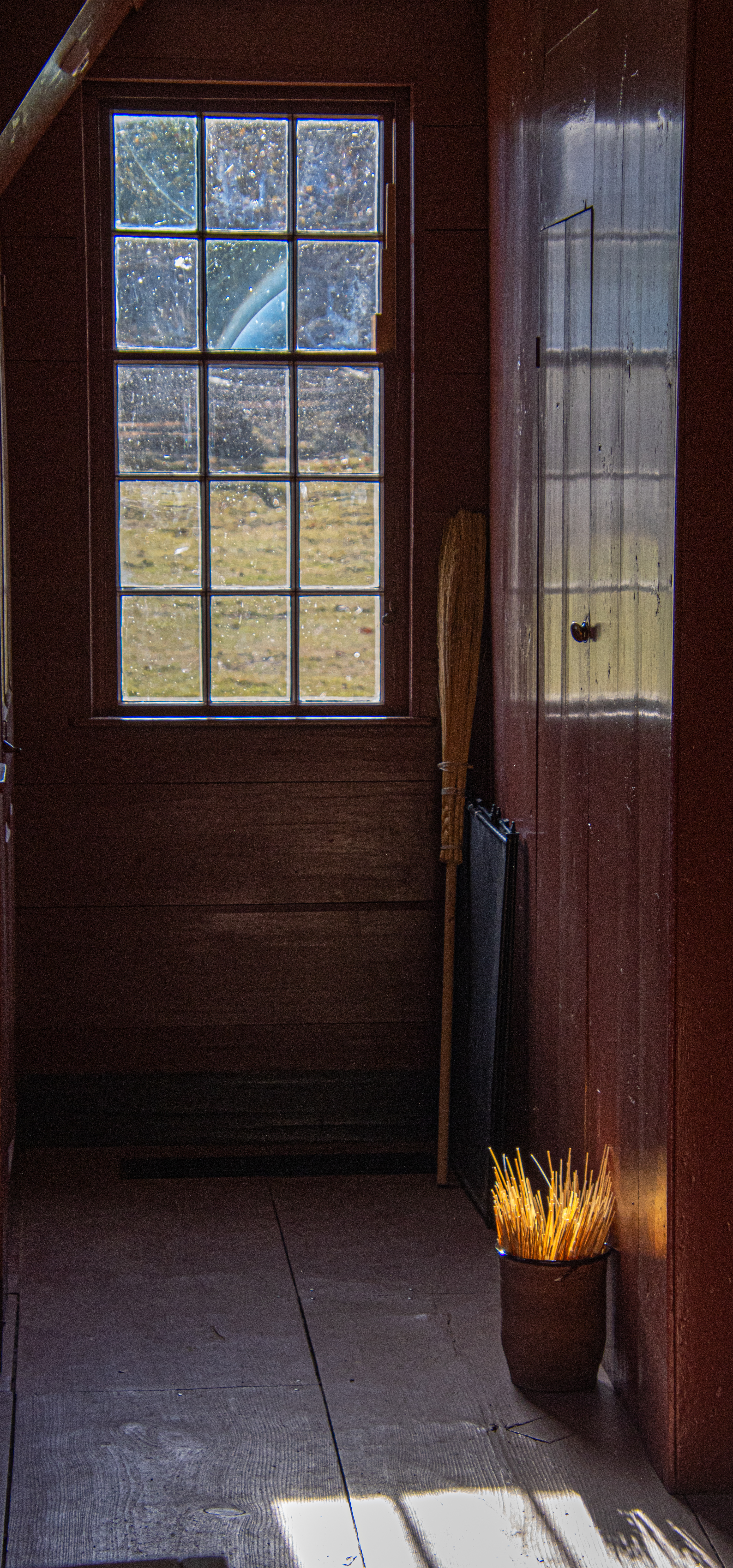
I couldn’t end my post without adding some of my favorite artsy photos. One of the things I like to photograph in the village are the windows. If you get it the right time of the day when the light is shining just right, you can get some pretty photo opportunities.
Roots | Raíces (Salem, MA)

Date Of Visit: September 28, 2025

Location: Peabody St, Salem, MA

Cost: Free

Parking: There is both metered parking and parking garages and lots in the area.

Summary: 17 new works of art adorn the walls on Peabody St in the “punto” area of Salem, MA

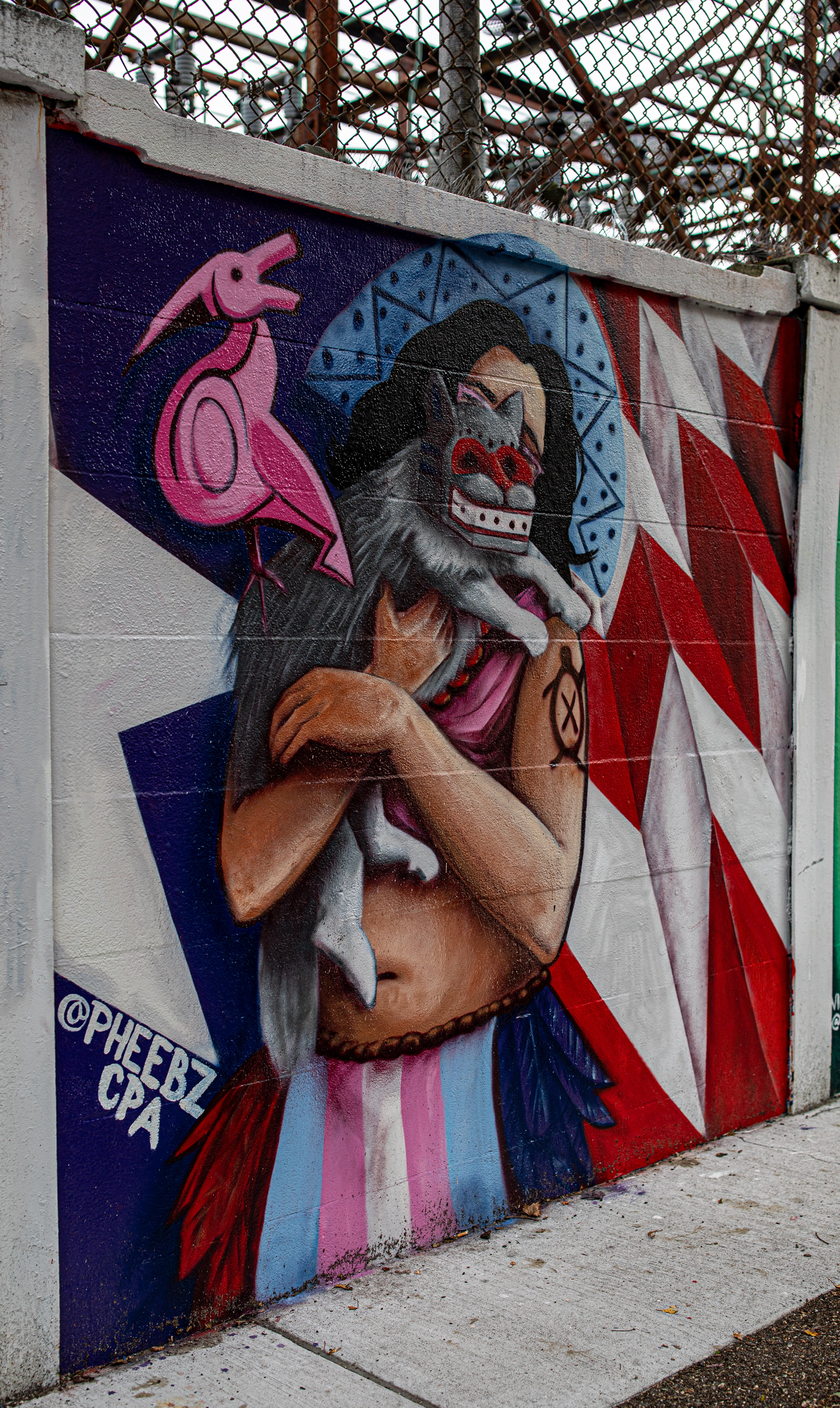
Salem, MA, is a diverse community . And the “El Punto” (“The Point”) neighborhood is proof of this diversity. Comprised largely of Latinx and other new immigrants, El Punto is the sight of many art projects by the Punto Urban Art Museum (PUAM), a program of North Shore Community Development Coalition.

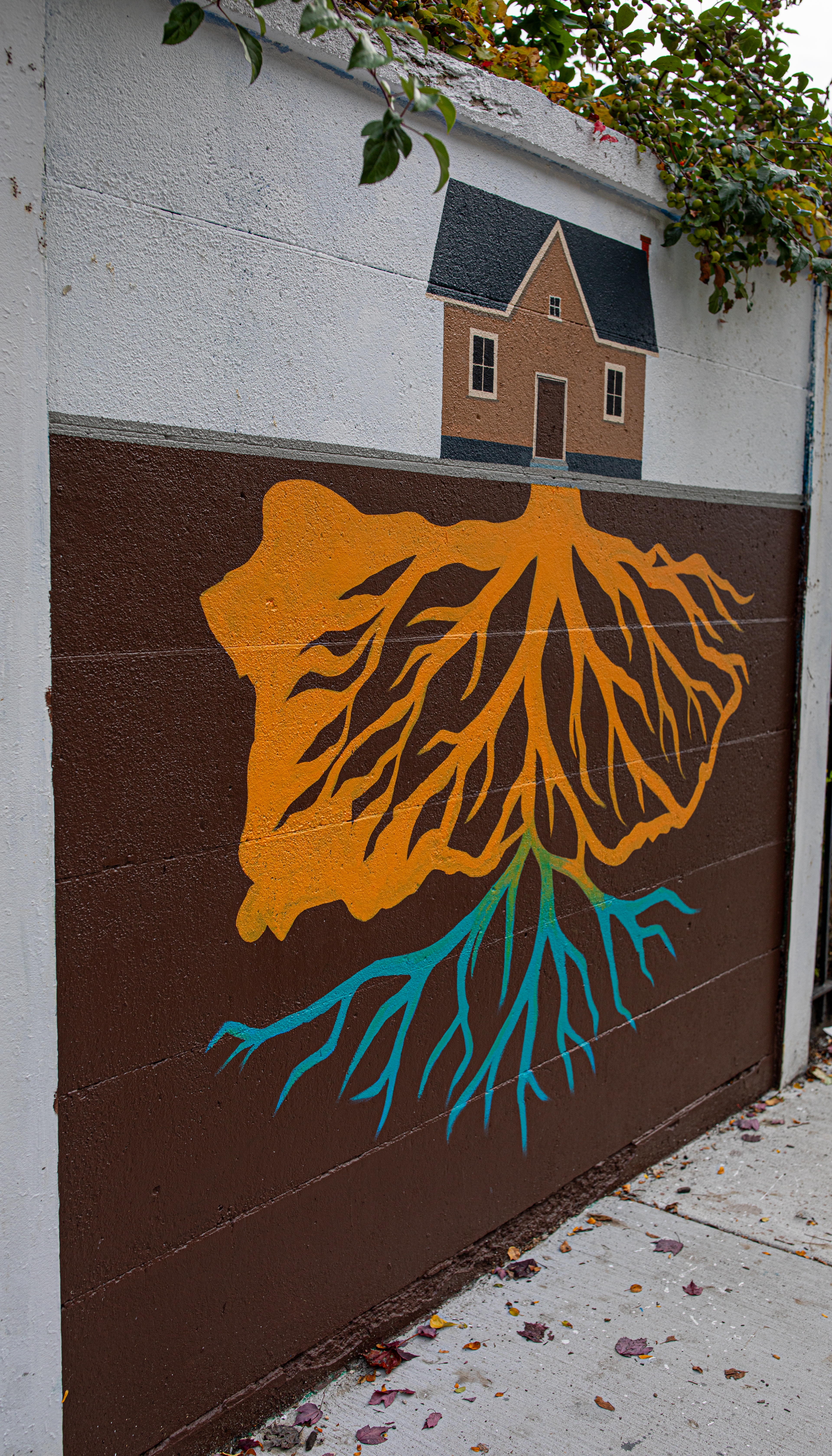
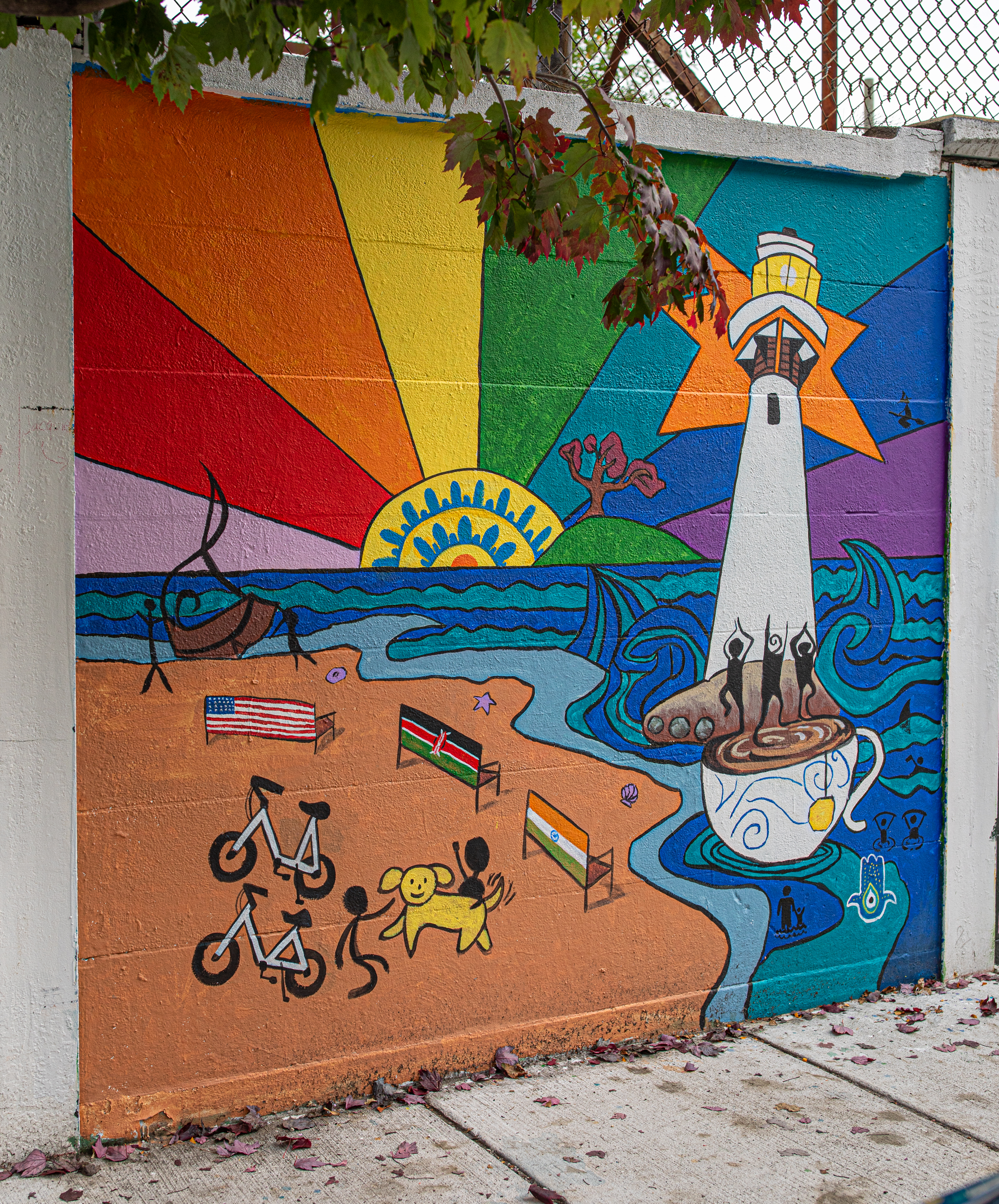
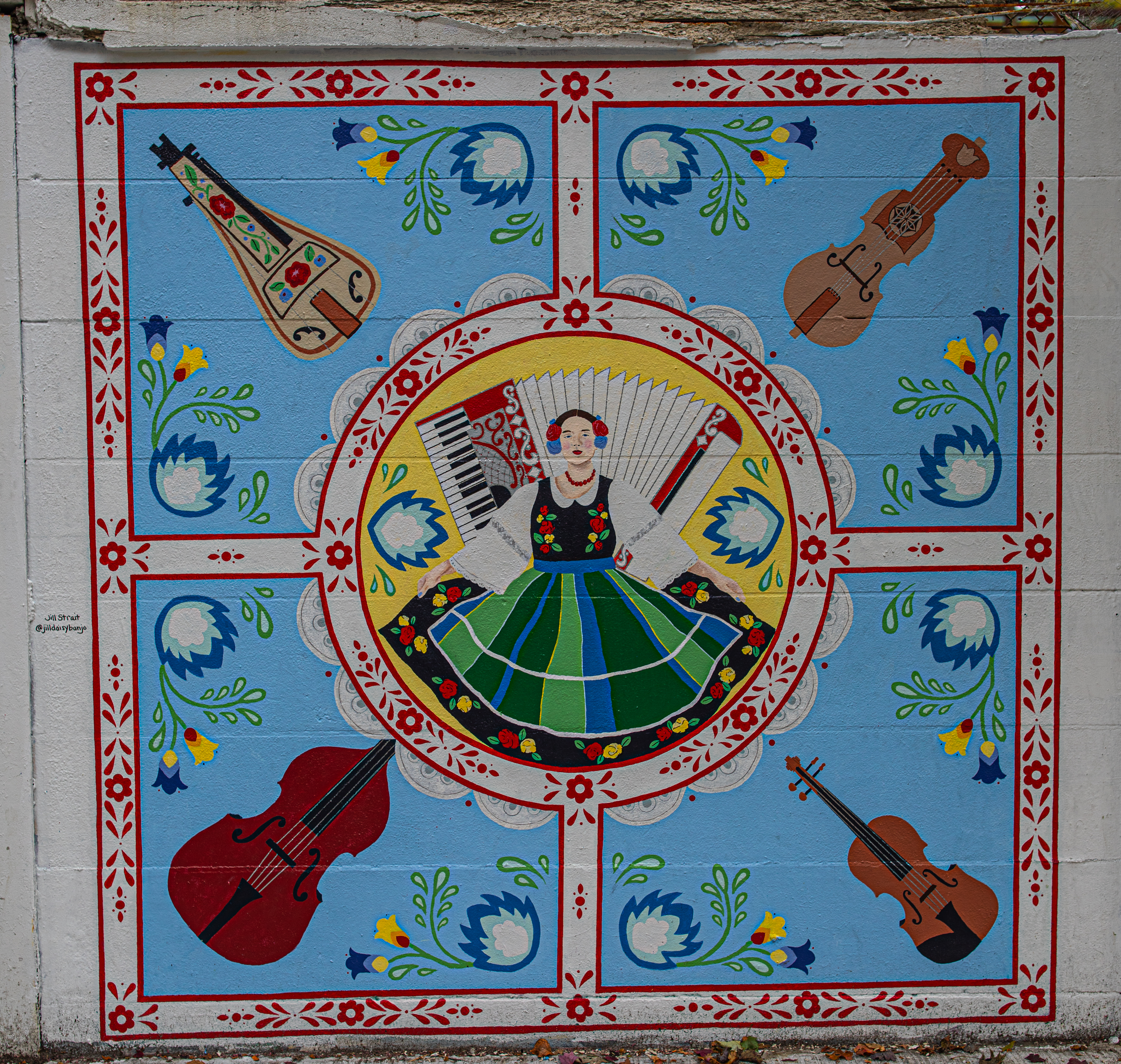
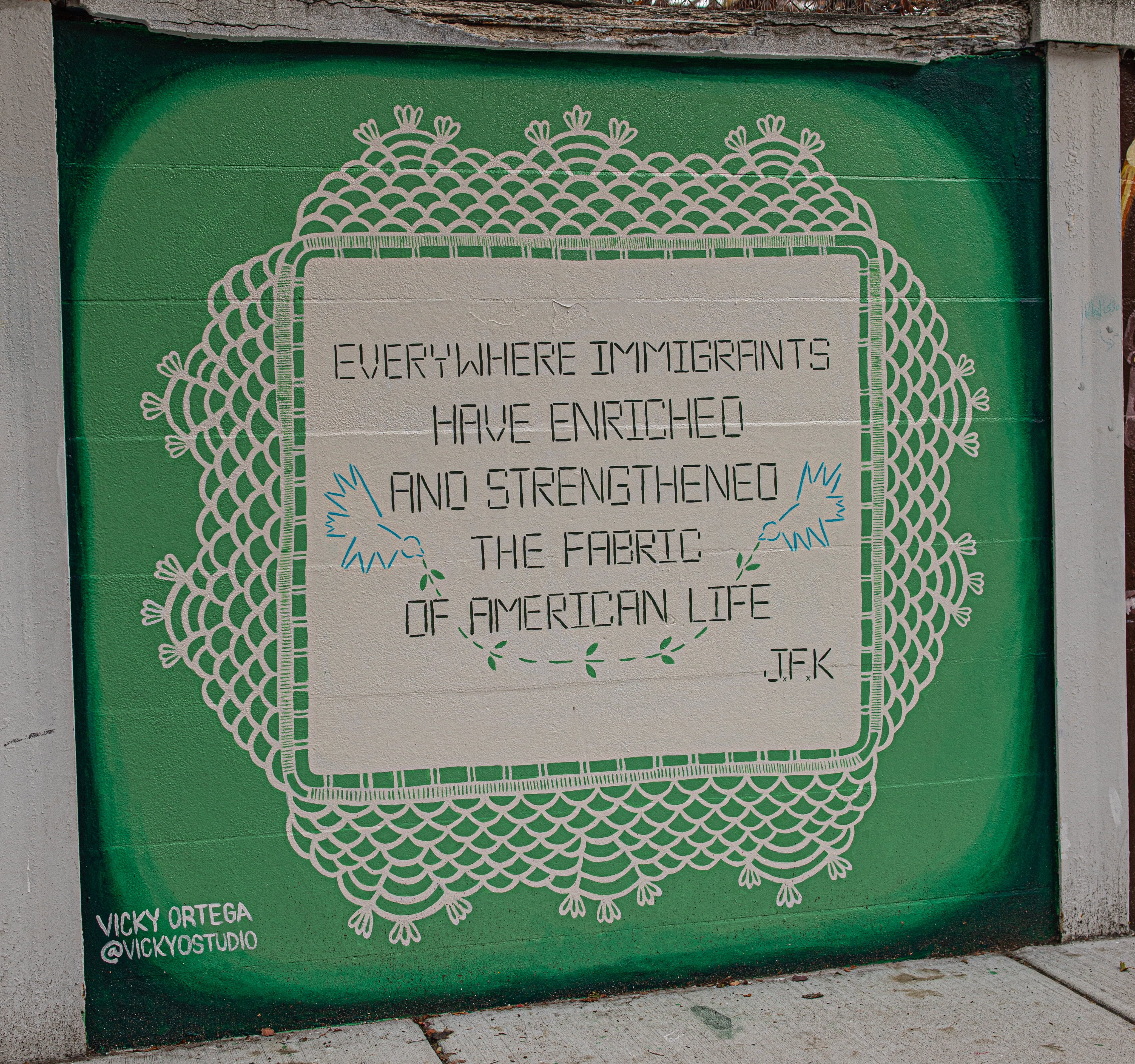
The Roots/Raices mural art project is meant to reflect on the layered histories of place and people. The aim of the project is to honor both the original inhabitants and the newer generations who have made Salem home.

The project, which is presented in partnership with Salem 400+, Salem Maritime National Historic Site, and the Peabody Essex Museum, unites arts, history, and community to honor Salem’s past while envisioning its future. Selected artists received a $1,000 stipend to create 8-by-8-foot mural works that will become part of PUAM’s semi-permanent outdoor collection. Artists were asked to share their stories and to seek out and bring together their different experiences and beliefs.

These murals are usually painted every year or few years. In fact, I photographed the last group of murals there which were part of a project called A Dream Called Home. The works of art do not have titles. But, most of the artists left their Instagram or other contact info in the artwork.

From the Old Salem Depot, the old Salem train that used to run through the center of the city, to the famous lighthouse (Fort Pickering Light) and the trolley which takes its passengers past all of the historical sites in Salem, some of the works of art pay tribute to parts of Salem and its history.


2024 Christmas In Salem Part 5 – Salem Athenaeum (Salem, MA)

Date Of Visit: December 7, 2024

Location: 337 Essex St, Salem, MA

Website: Salem Athenaeum

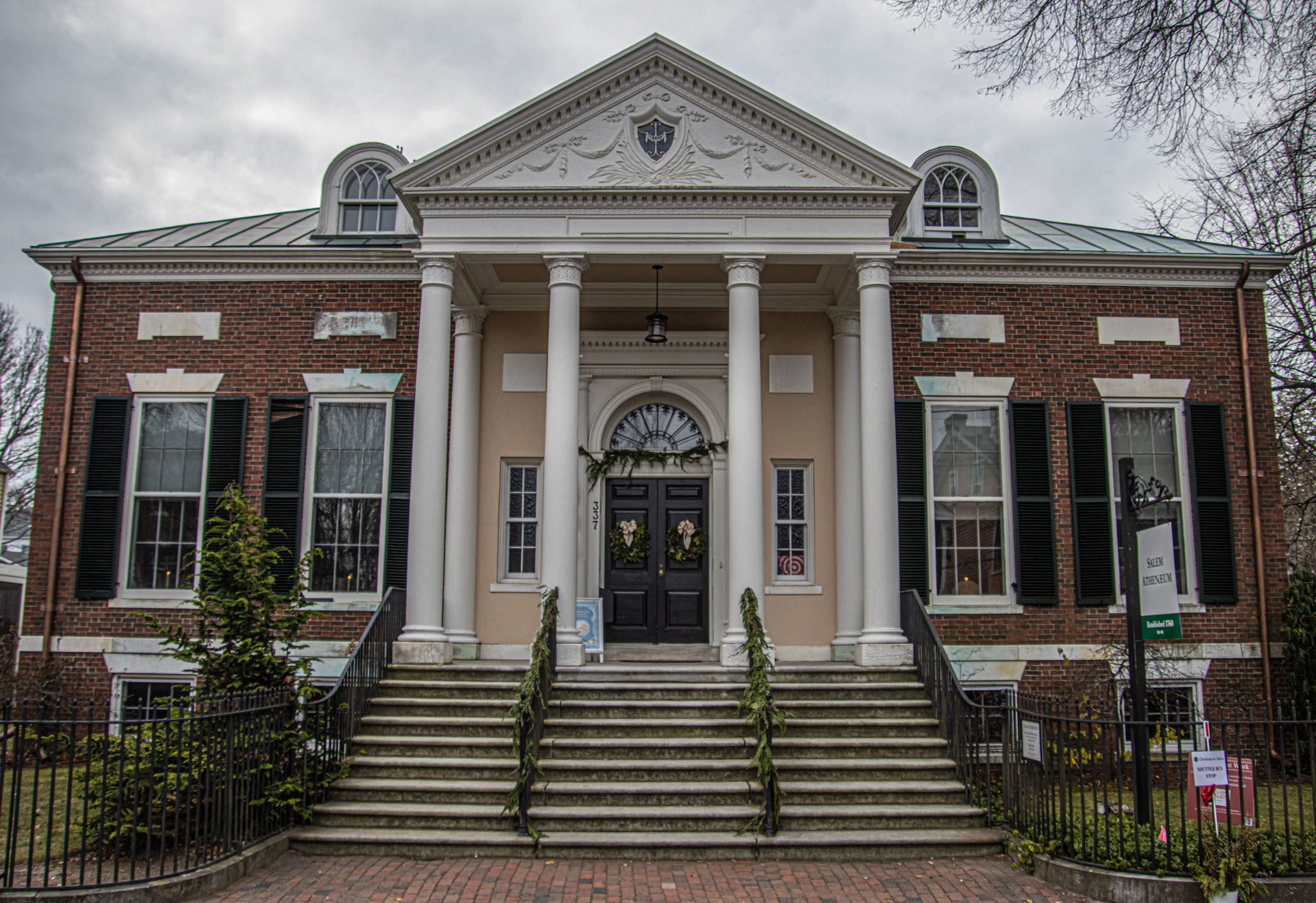
The Salem Athenaeum has a rather storied history.

While it’s unofficial history can be dated back to 1760 when members of two institutions started combining the latest scientific works into a joint collection, it wasn’t until 1810 when they decided to merge together to form the Salem Athenaeum.

There was no permanent location for the athenaeum for many decades. Then, in 1850, at the bequest of Caroline Plummer, a philanthropist and founder of Plummer Professorship of Christian Morals, a brick building was constructed in the Italianate style at 132 Essex St. The Athenaeum stayed at this location for 50 years. Then, in 1905, the Athenaeum sold the building to the Essex Institute. It would later become what is now the Peabody Essex Museum.

With the proceeds from the sale of the building at 132 Essex St, the Salem Athenaeum was built at at its current location of 337 Essex St. Dedicated in 1907, the current red brick building was modeled after the Homewood Estate in Maryland which was built by Charles Carroll one of the signers (and longest living survivor) of the Declaration of Independence.

Over the years, many people of note have been members of the Salem Athenaeum. Nathaniel Hawthorne, mathematician Nathaniel Bowditch, former Supreme Court Justice Joseph Story, Impressionist painter Frank W. Benson and Charles Grafton Page, an early inventor of the electric motor, have all been members of the Athenaeum.

The name “Athenaeum” is derived from the Greek goddess of wisdom, “Athena.” And, according the tour guide, the translation for “Athenaeum” is loosely “private library.”

From time to time, the athenaeum will feature speakers, presenters and other people of note to speak. This book tree consists of books written by people who have spoken at the athenaeum.

Because of a certain famous theatrical release from last year, there were a few exhibits dedicated to The Wizard Of Oz and other related works.

The Athenaeum has many interesting pieces of decor.

This may look familiar to some. It is a drawing taken from the Chronicles of Narnia (The Last Battle). I got the feels when I saw that as it was one of my favorite books I read as a younger person. This is one of the treasures of going to a library like this. It can not only open doors of learning. It can also revive old dormant feelings.

The athenaeum also has a special vault where books, pamphlets and other publications with high appraisal values are kept. But, the small climate-controlled storage area can only hold a fraction of the highly prized documents.

While the library is open and free to everyone during their normal hours of operation, members get perks such as borrowing books or magazines without overdue fines, advanced notice and reduced fee or free admission to programs and events and other bonuses.


Winterlights (Stockbridge, MA)

Dates Of Event: Nov. 29, 2024 -Jan.4, 2025

Location: Naumkeag, 5 Prospect Hill Rd, Stockbridge, MA (2 hours west of Boston, MA)

Cost: $25 for adults, $12 for children

Universally Accessible” No, the trail includes stairs and some hilly inclines

Summary: Hundreds of thousands of lights lit up Naumkeag in Stockbridge, MA

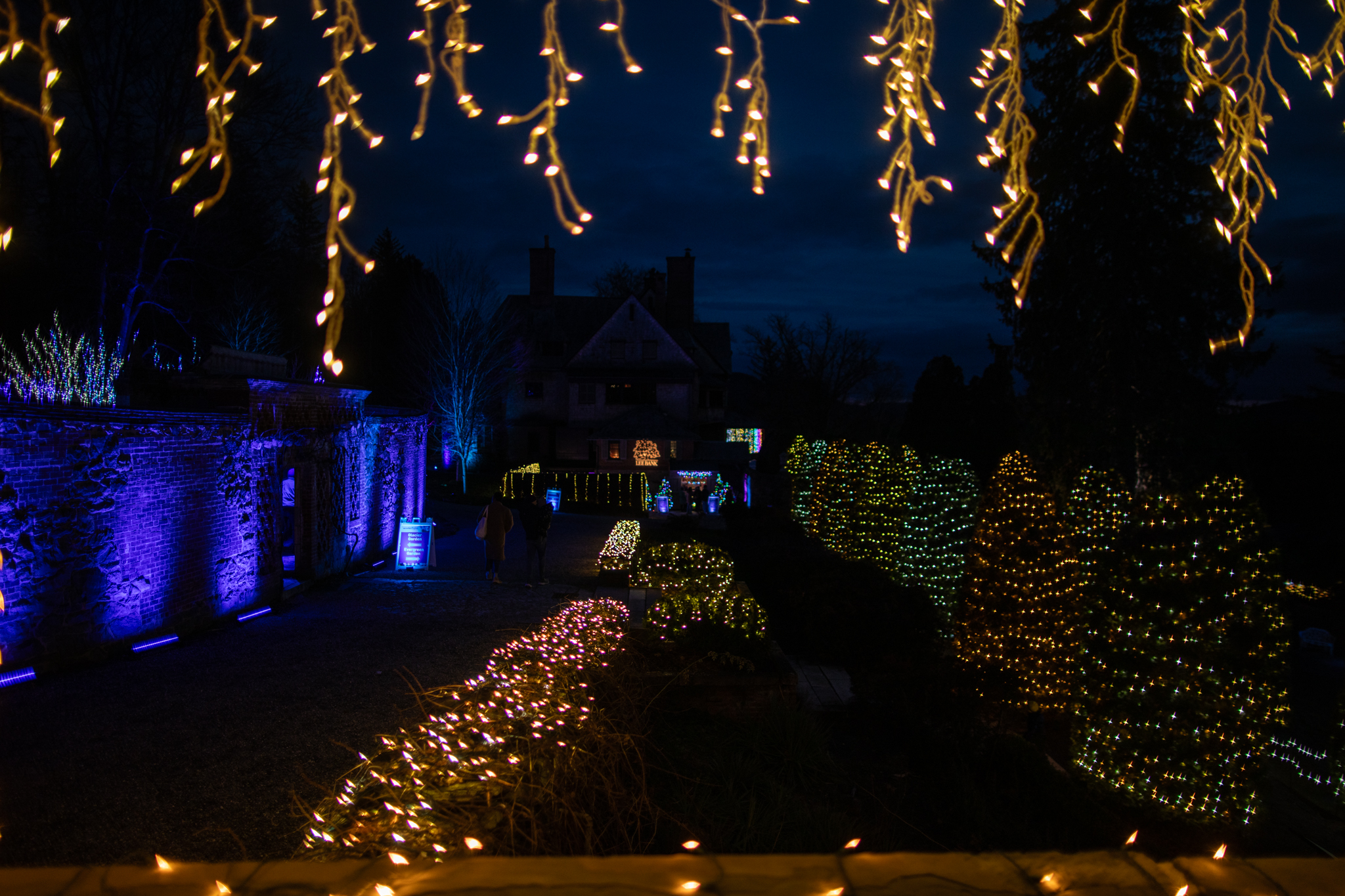
Ranked one of the top 10 winter attractions in the country, Naumkeag’s Winterlights display lived up to its hype this year!

The estate, which boasts a home with a 44 rooms and 40 acres of land, kept visitors in awe with its grandeur.

Every time I photograph a low light event like this I wish I could take my tripod with me. It would be easier from a technical standpoint and the photos would look better. But, for good reasons, they are not usually allowed on the grounds. So, I did my best with my Canon 5D Mark IV with my 24 mm prime (1.4 aperture).

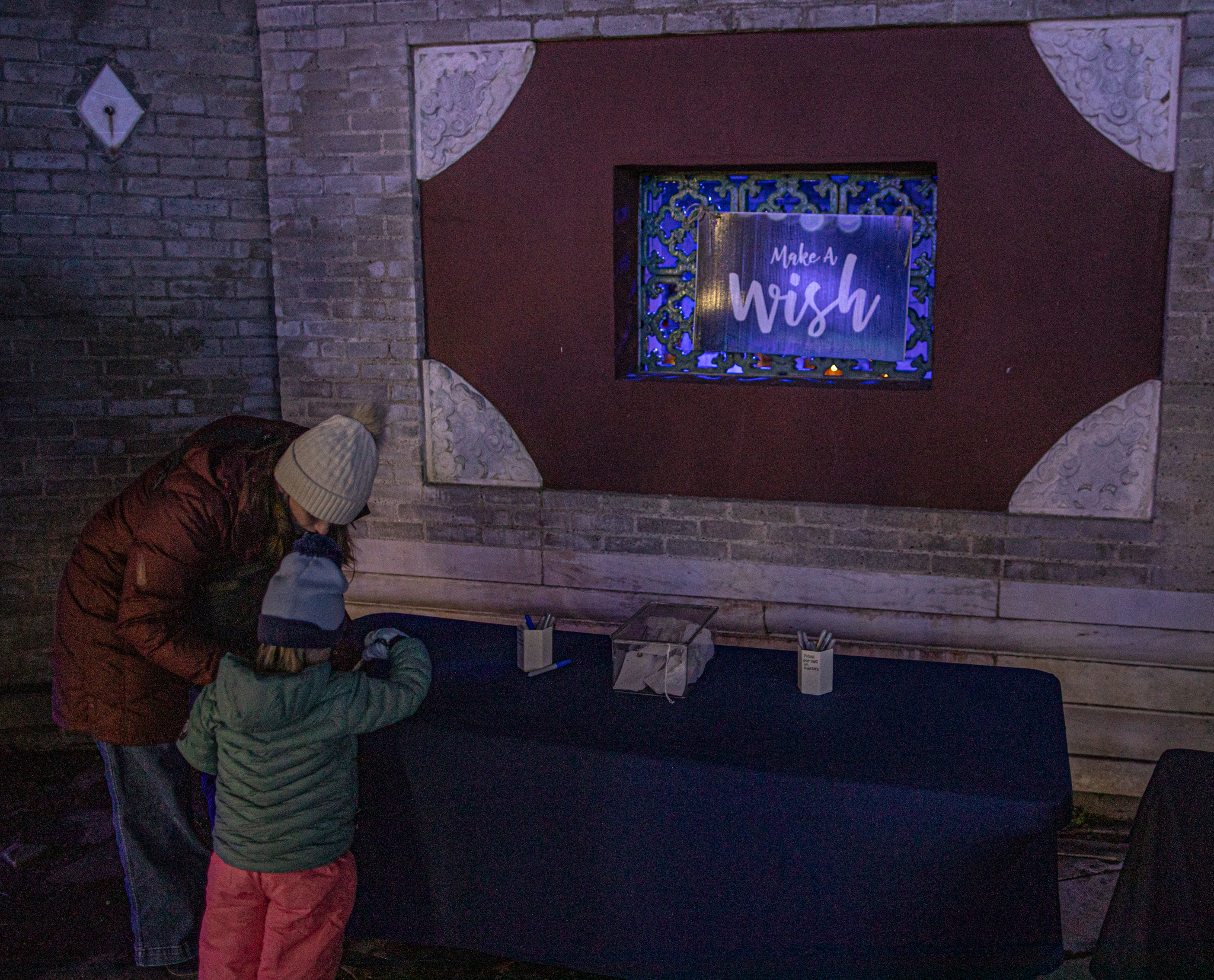
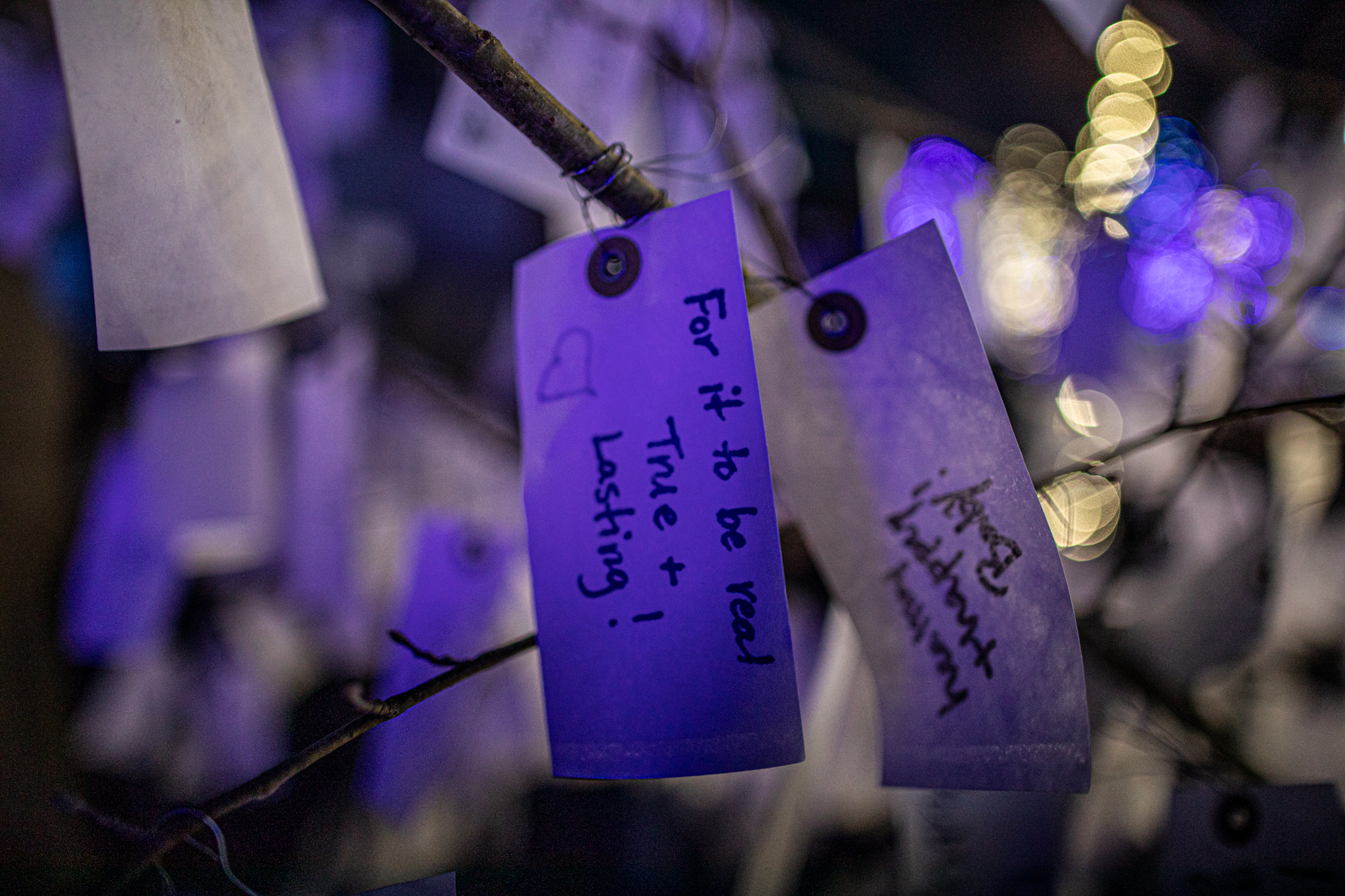
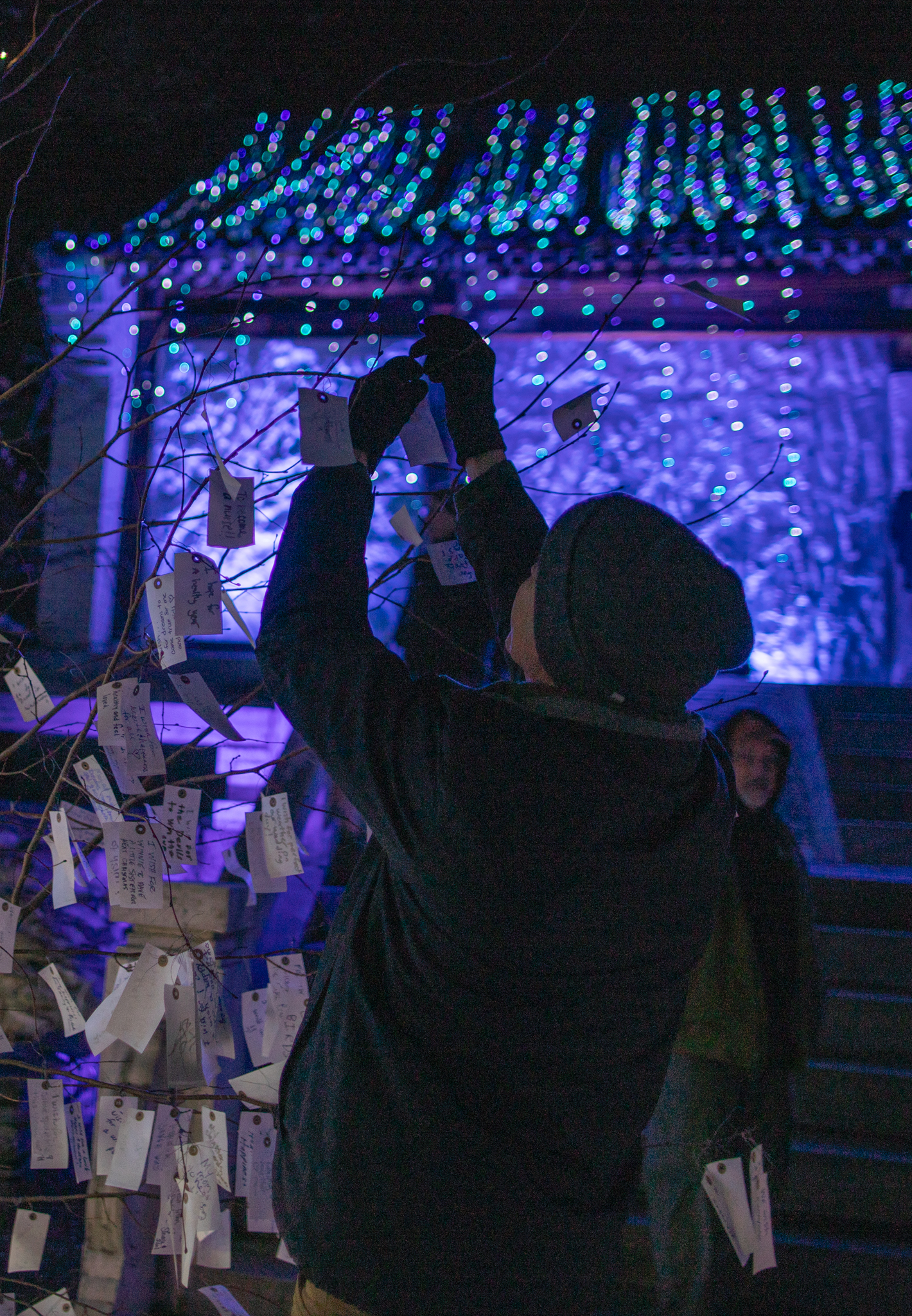
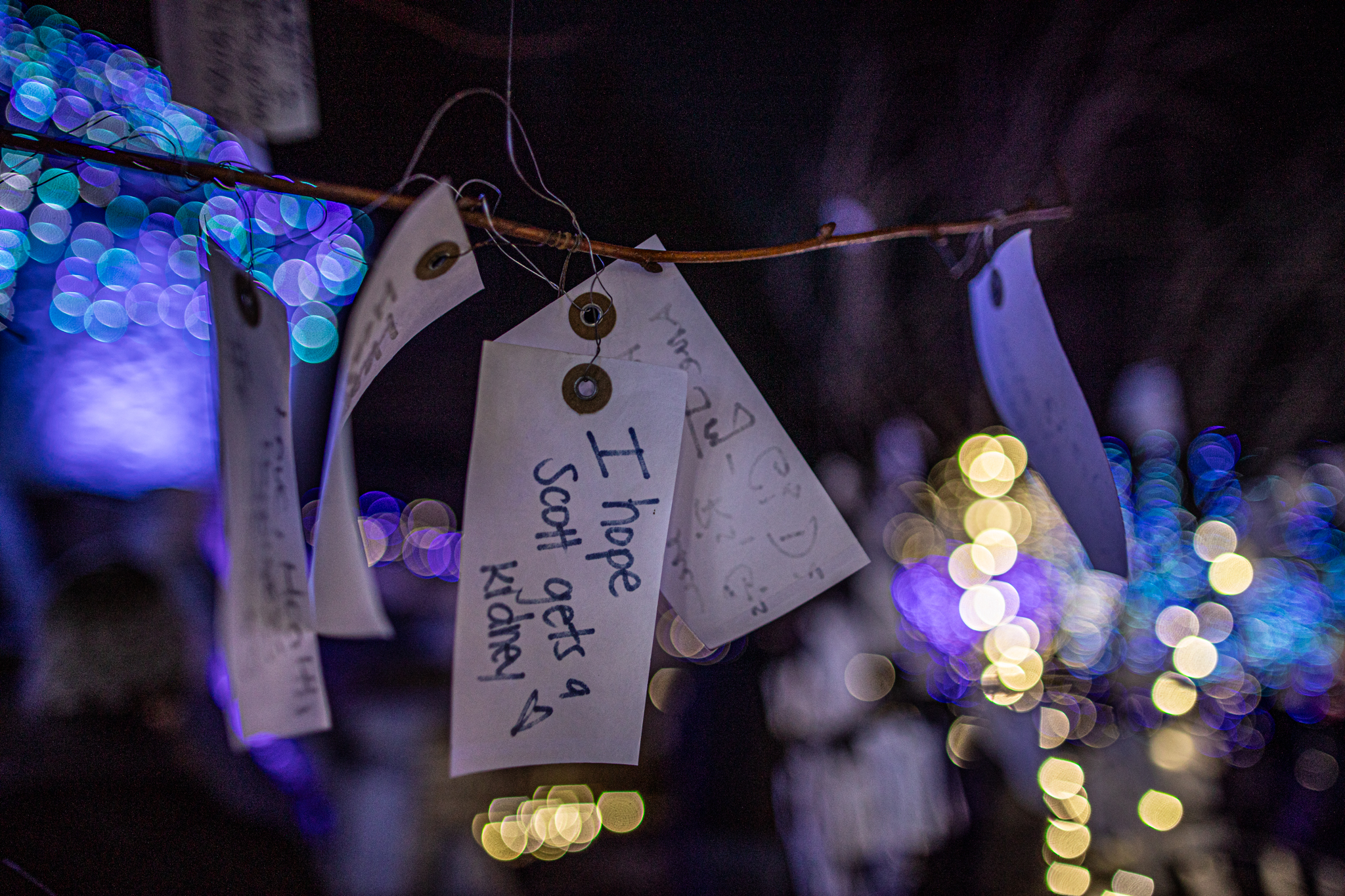
In the garden area, there was a “wish tree.” People could write their wishes for the upcoming year and hang them on a tree.

I wouldn’t mind extra pizza rolls either. And best wishes, Scott.

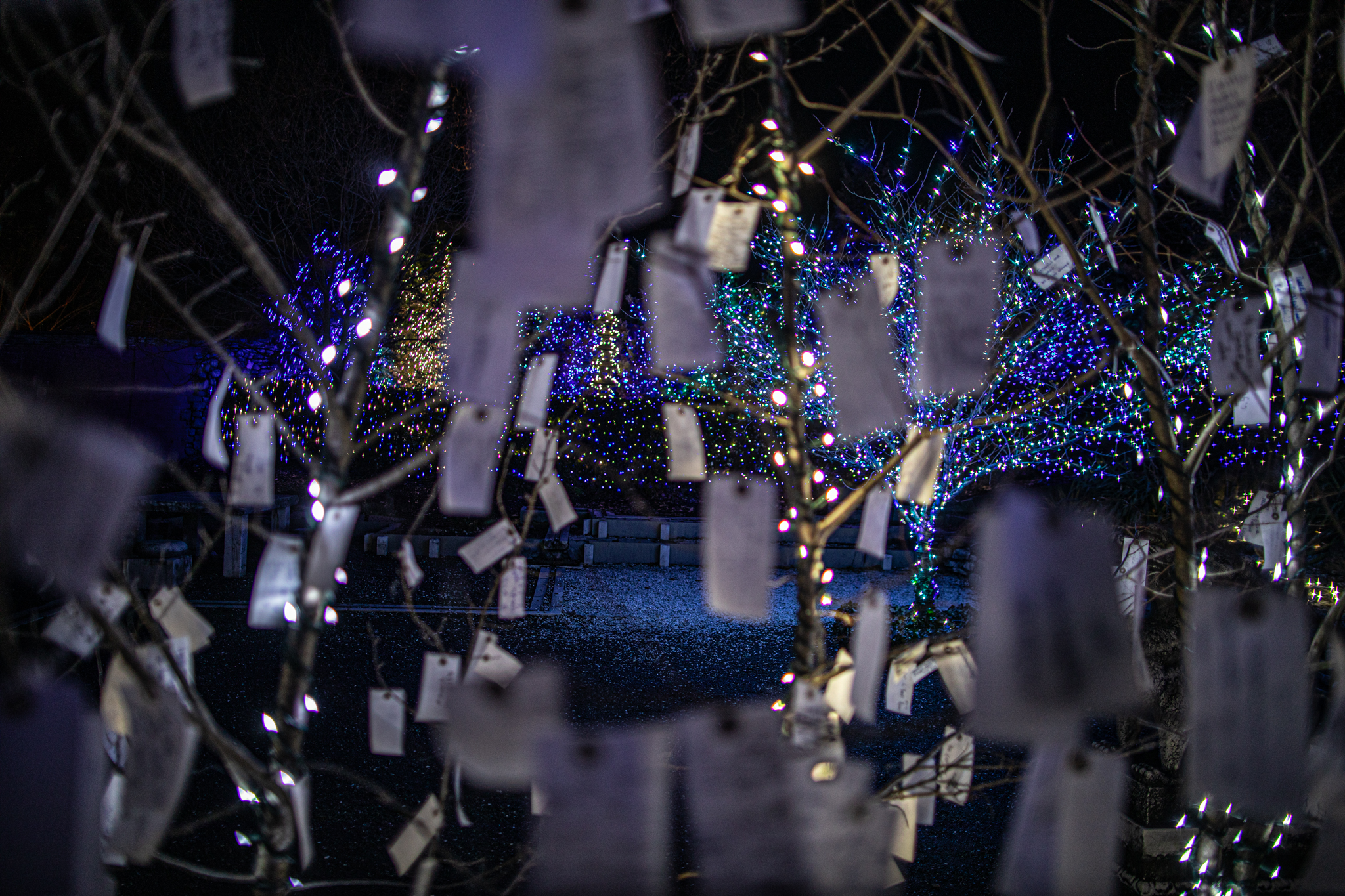
So many wishes…

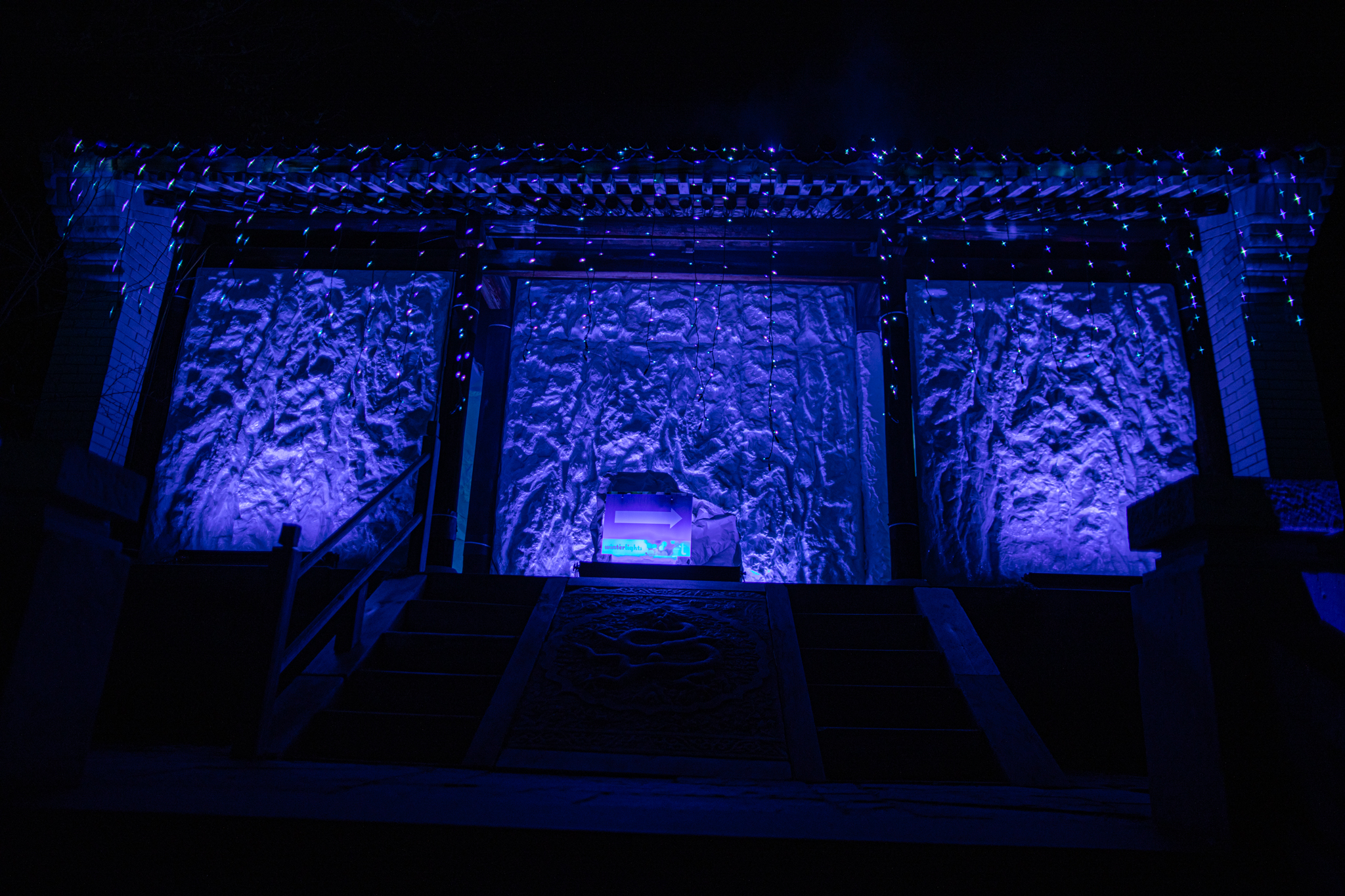
There was also an igloo like structure in the garden. You may see some fog that was piped into the area. (to the left of the third photo)

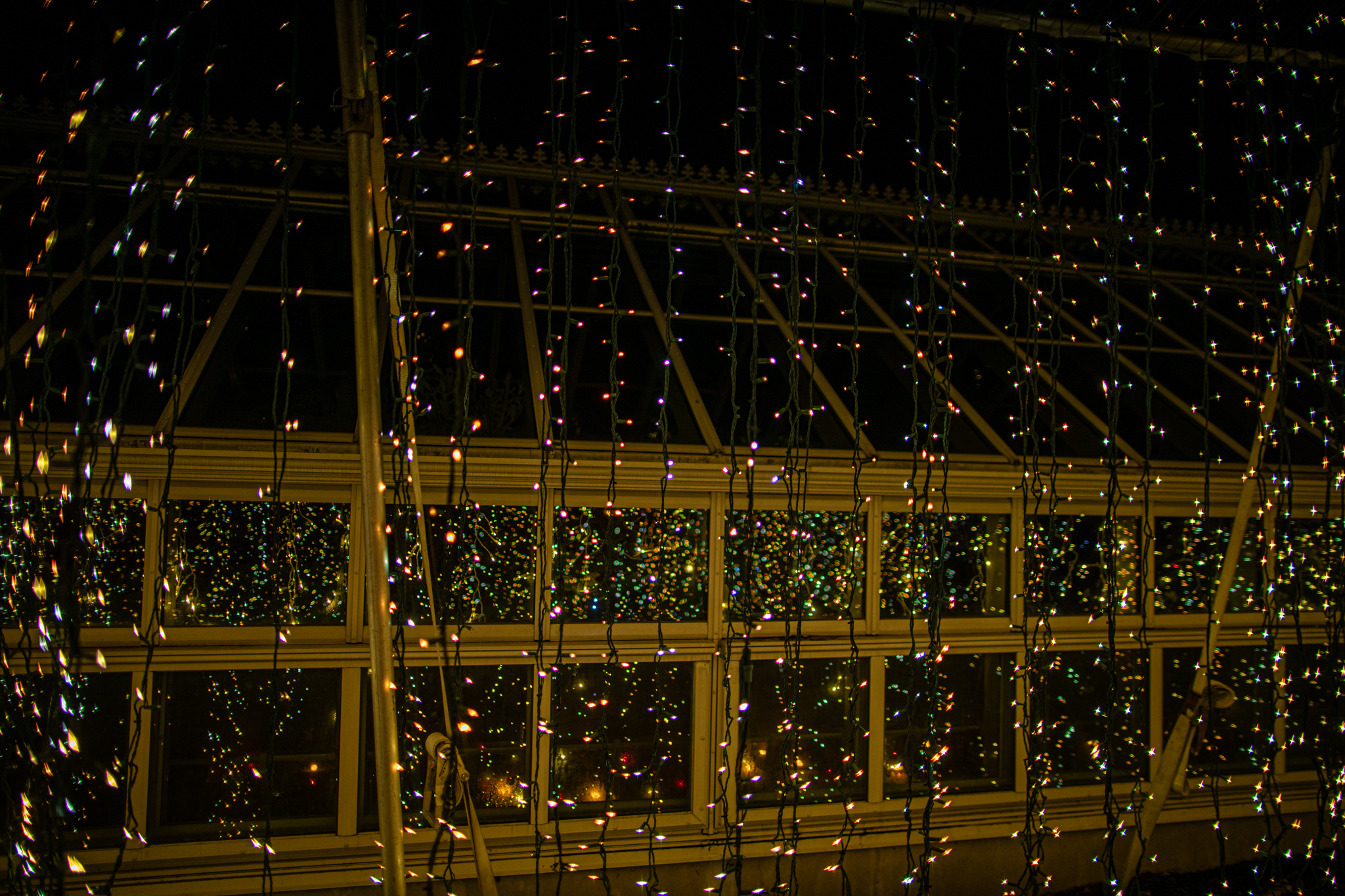
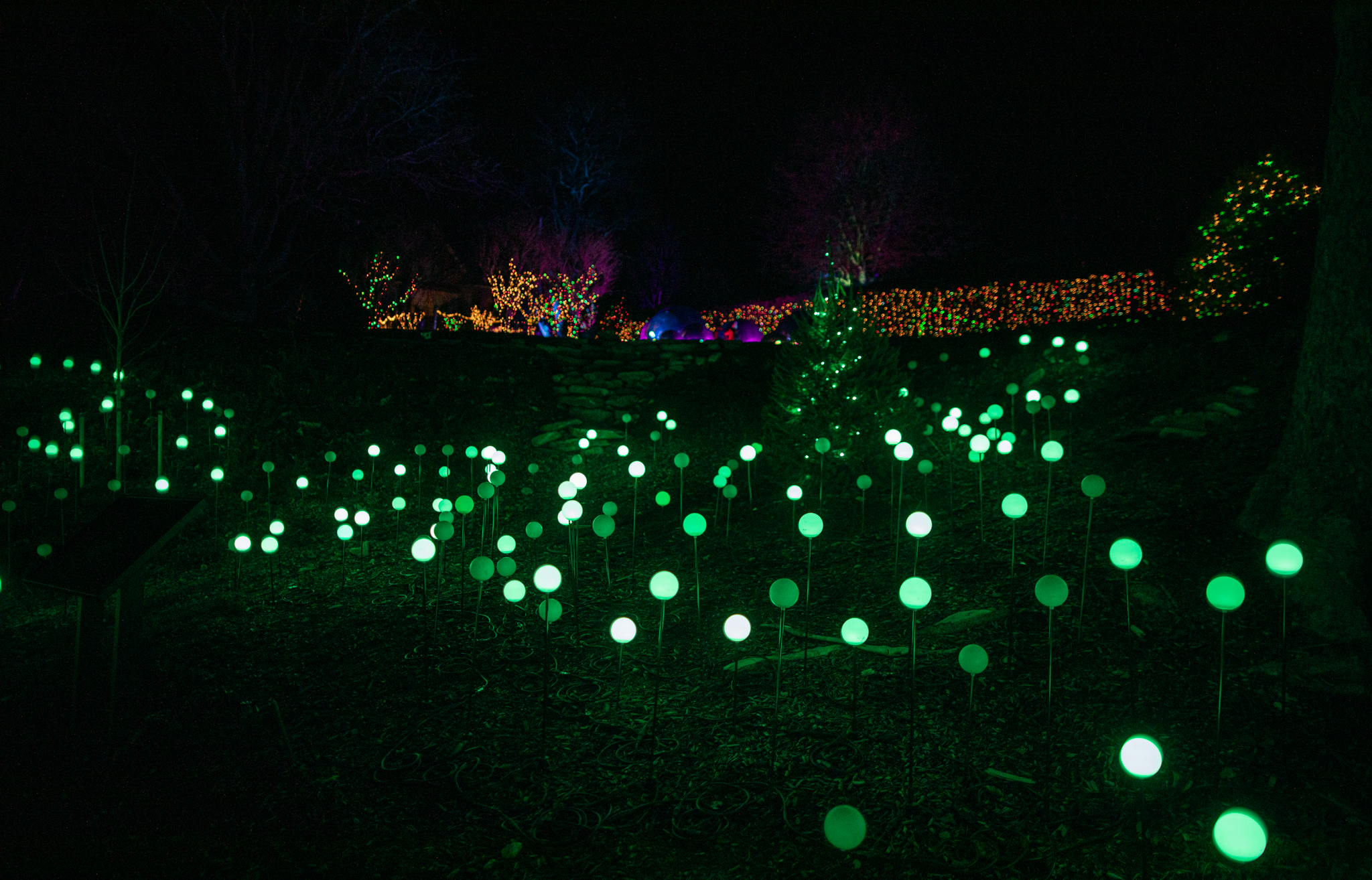
Everything was lit up and very festive looking!

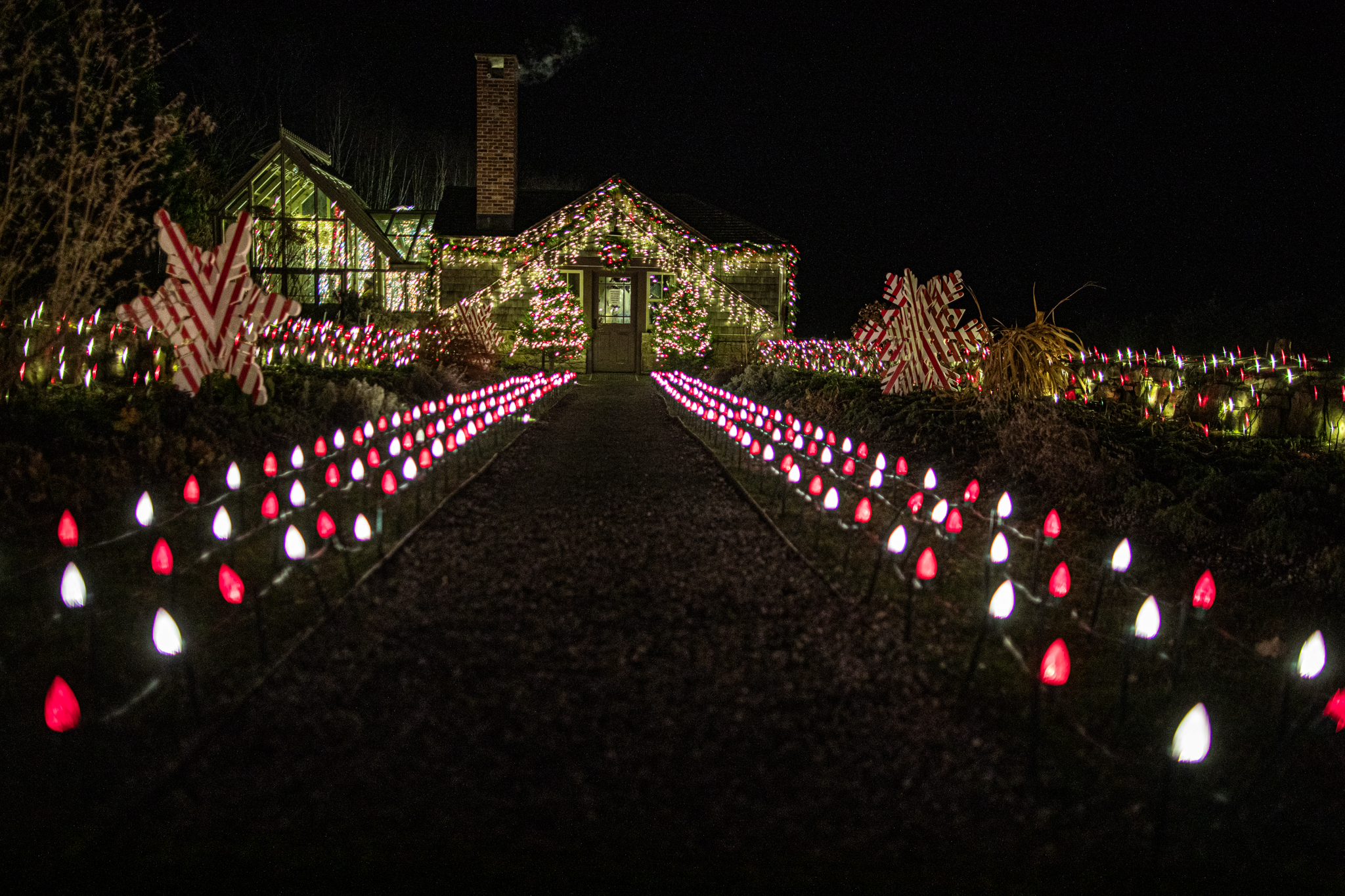
Along the trail there was a cute little greenhouse that was decorated for the holidays!

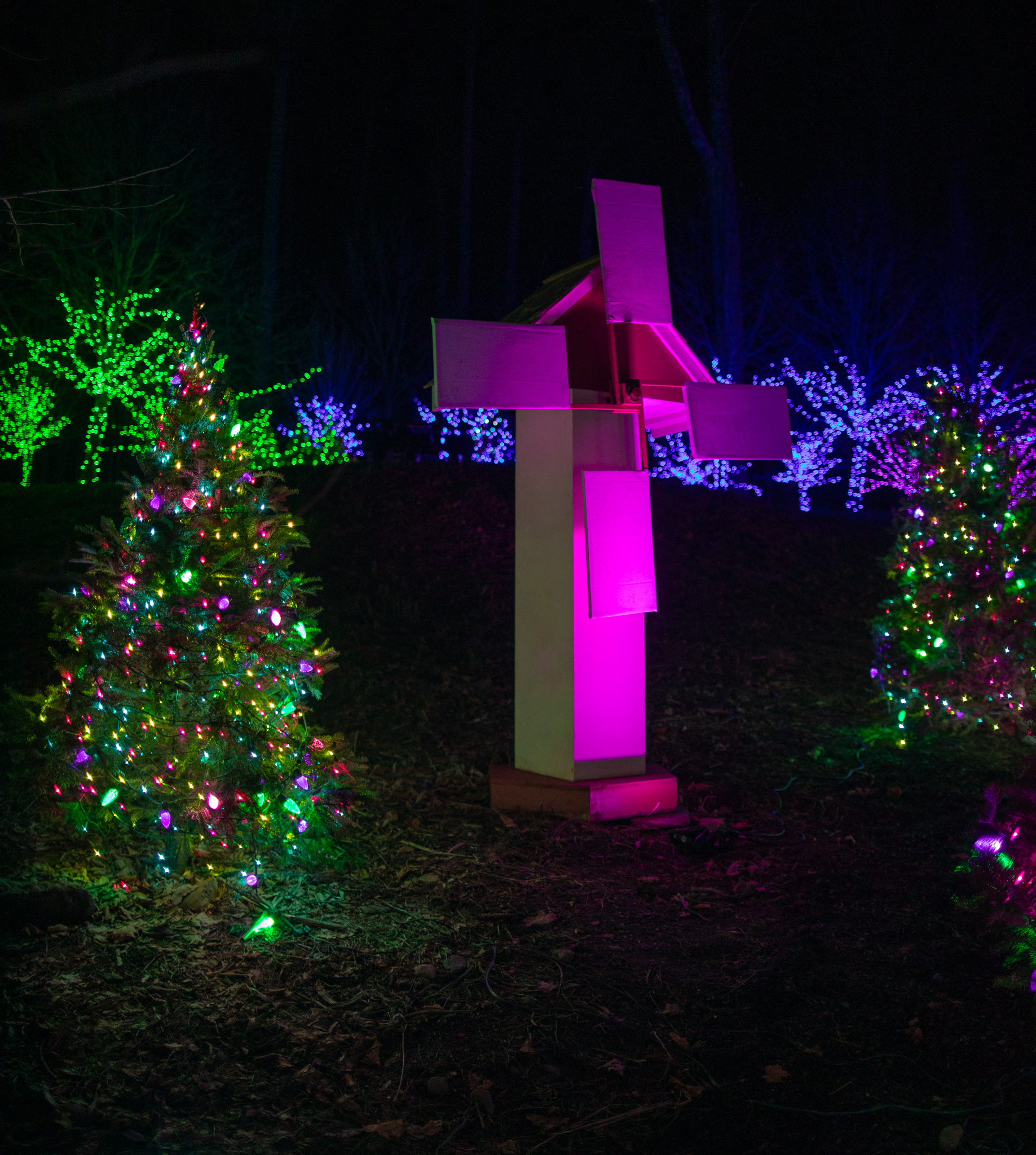
Along the main trail, there were a variety of lights and objects that were lit up!

This tree to the right of the photo reminded me of the trees un the Wizard Of Oz for some reason!

These very unique lights looked like insects.

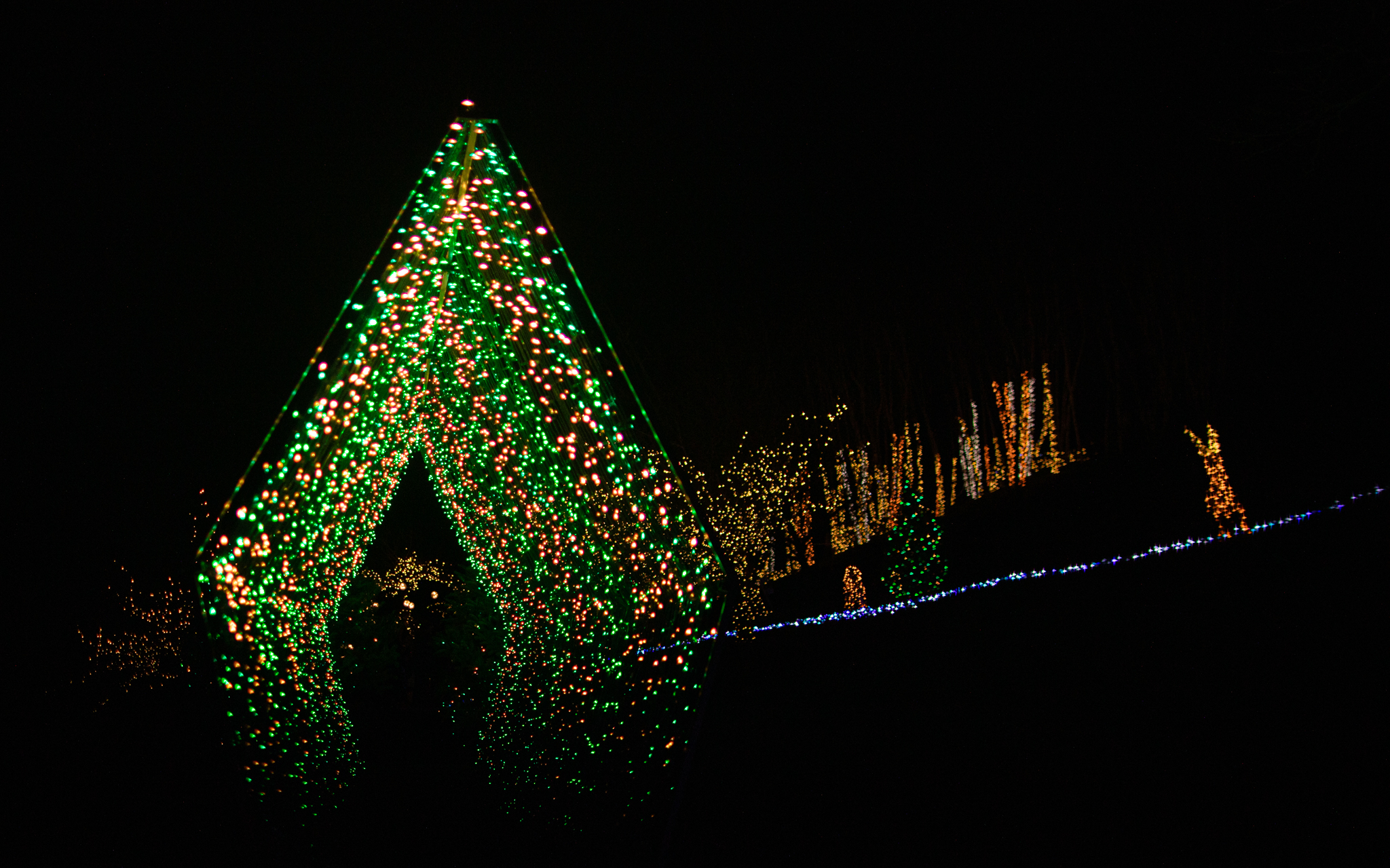
There were also these brightly lit hut like structures you could walk through.

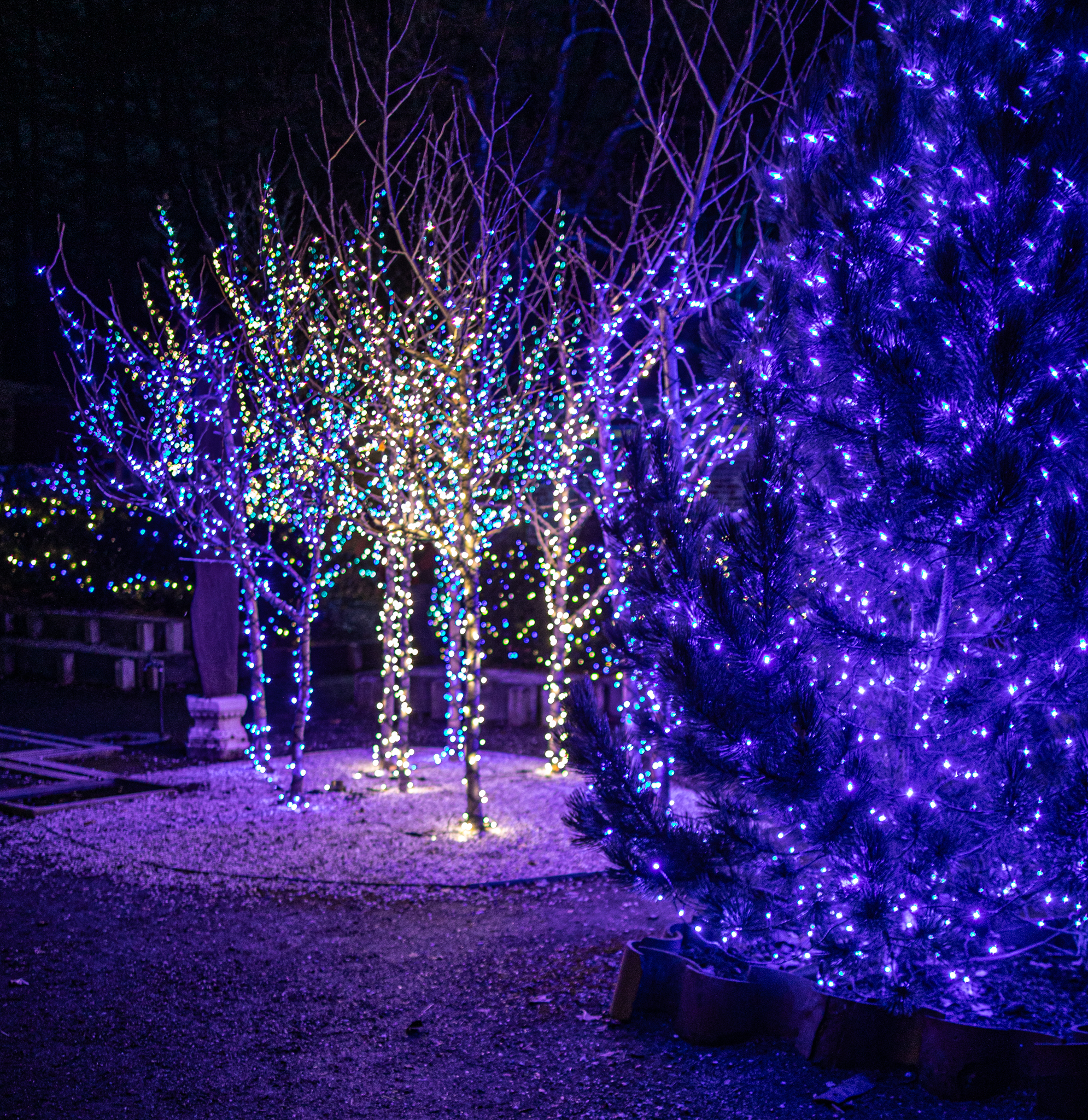
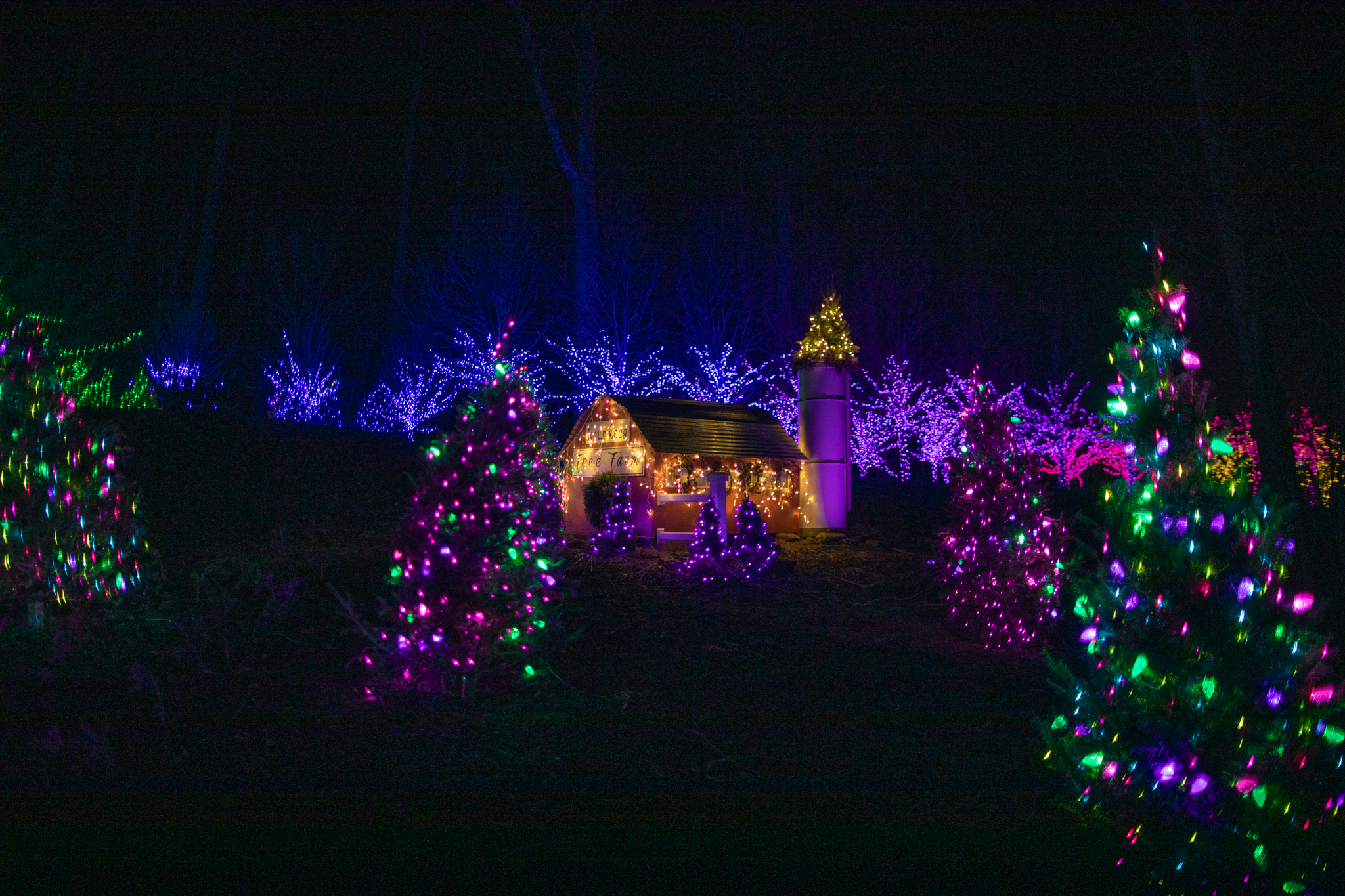
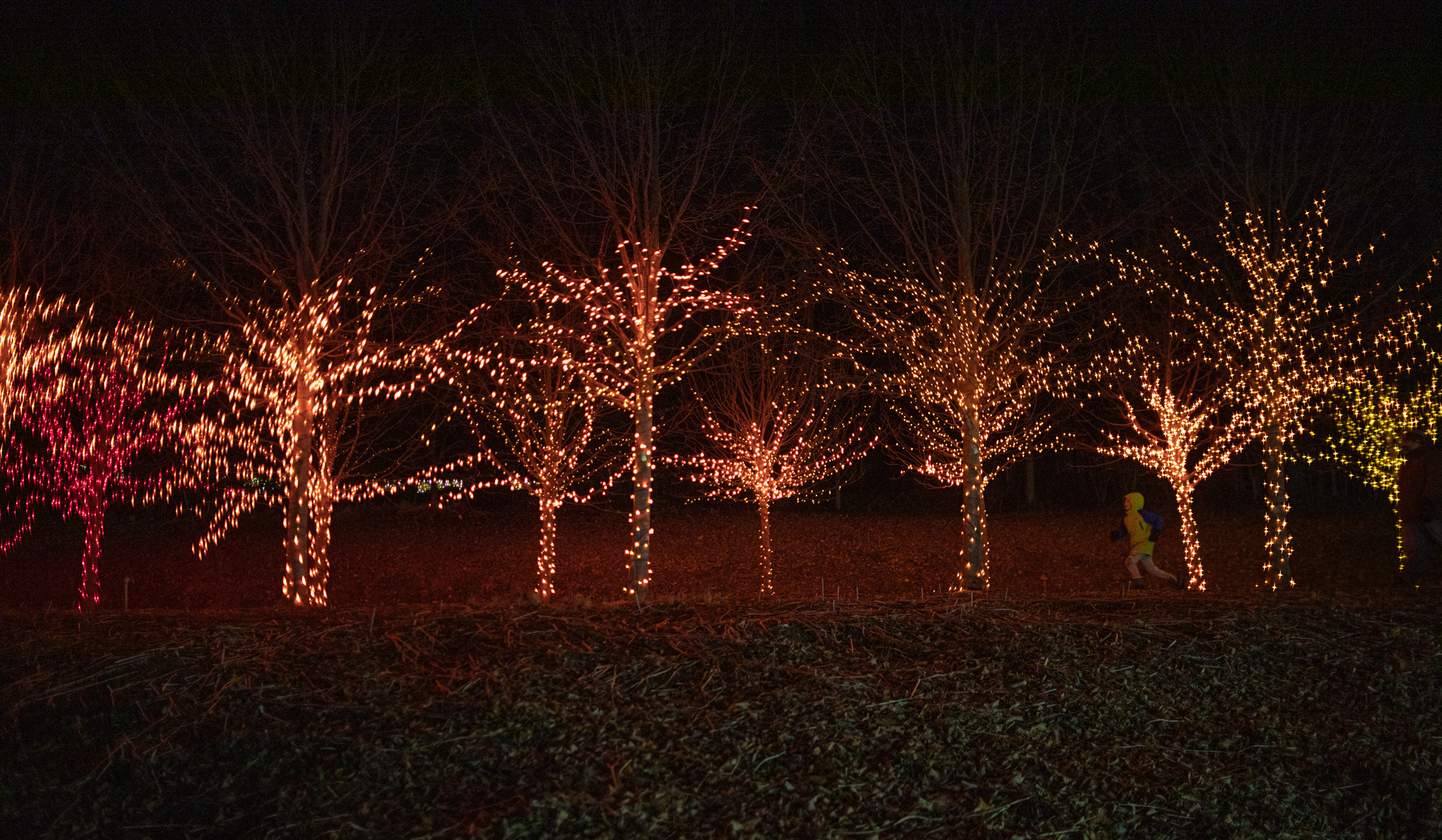
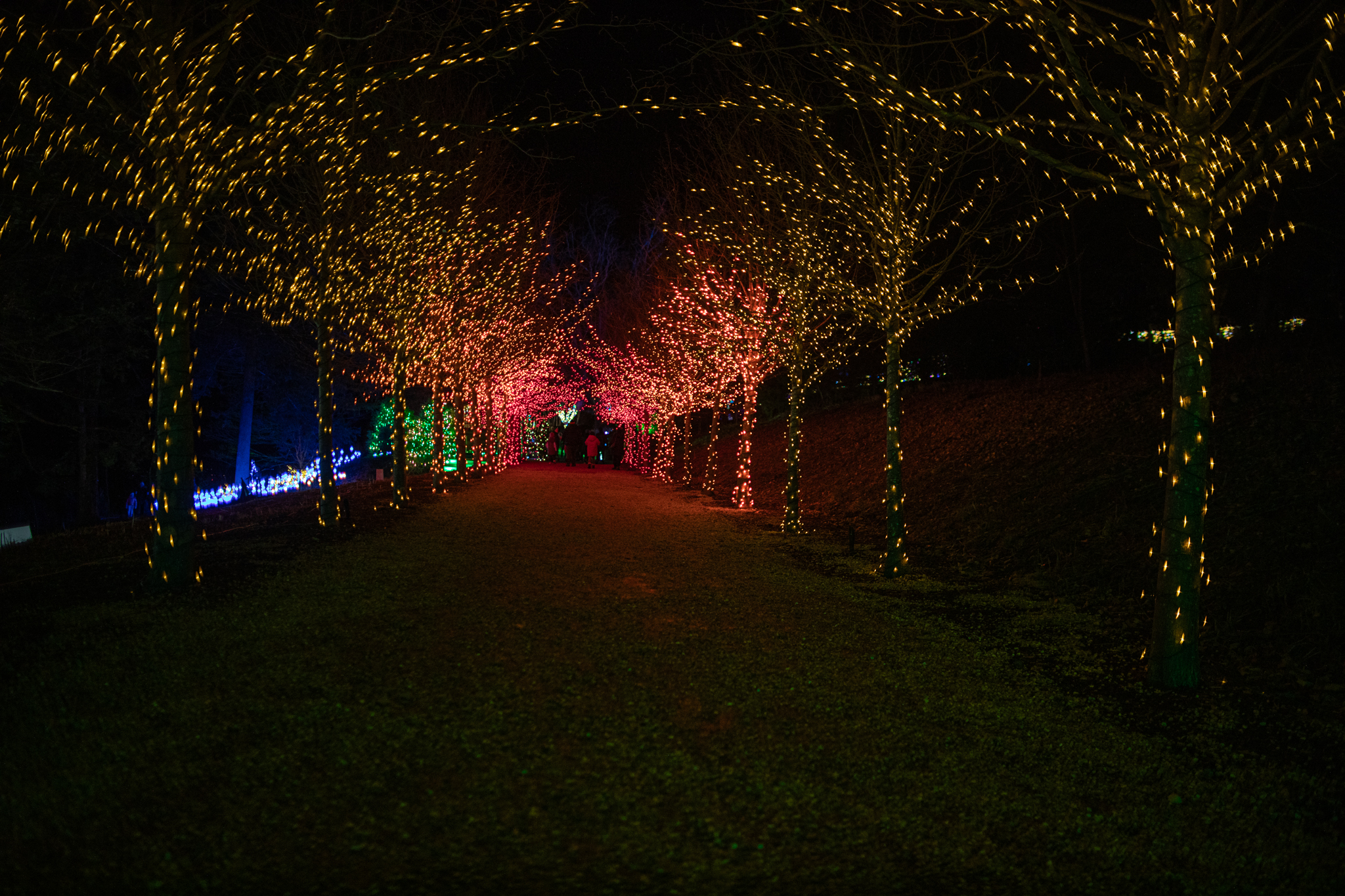
From a distance, the main attraction of the display, the trees along the path looked majestic all lit up!

But, they looked even better up close.

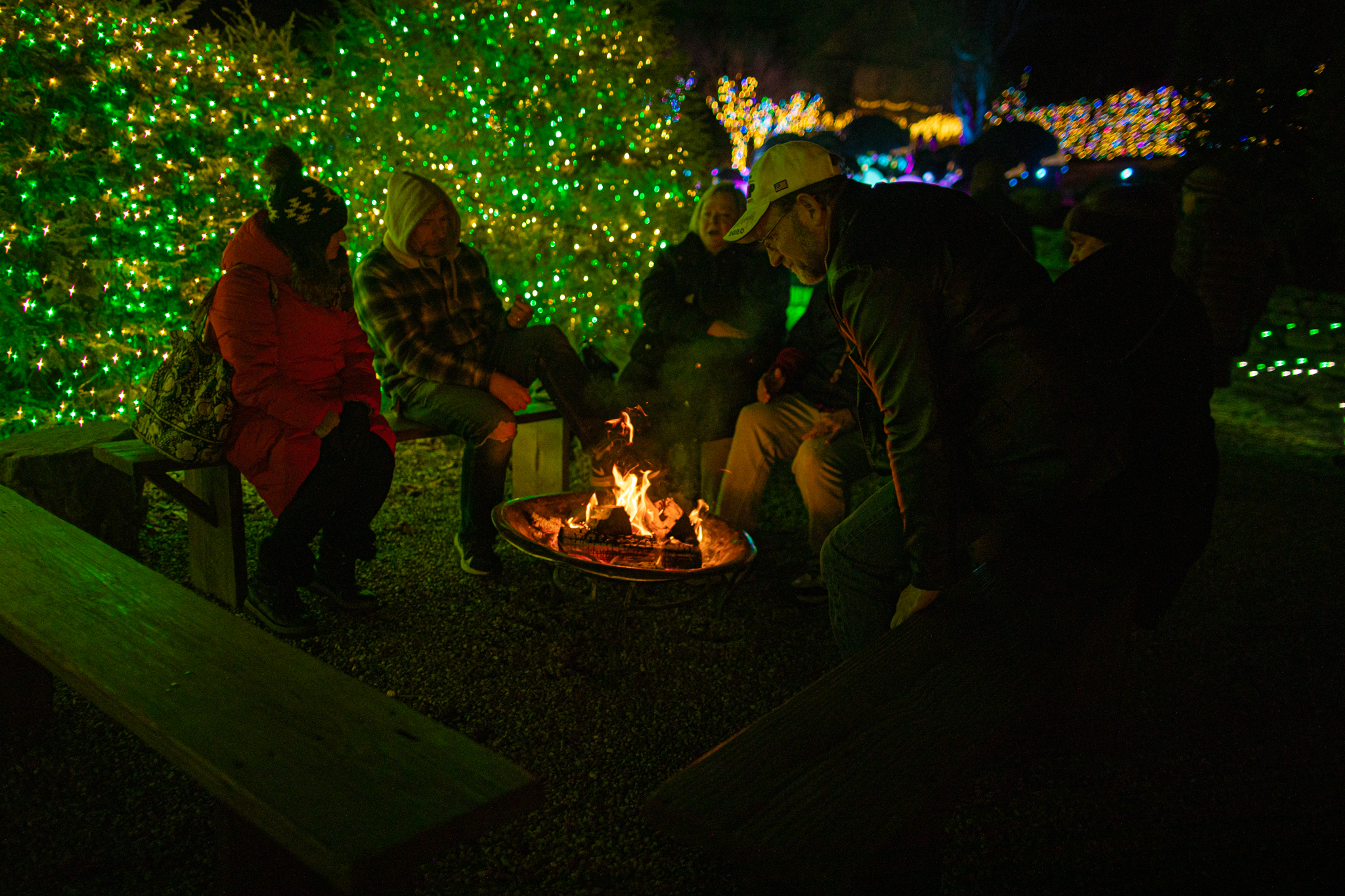
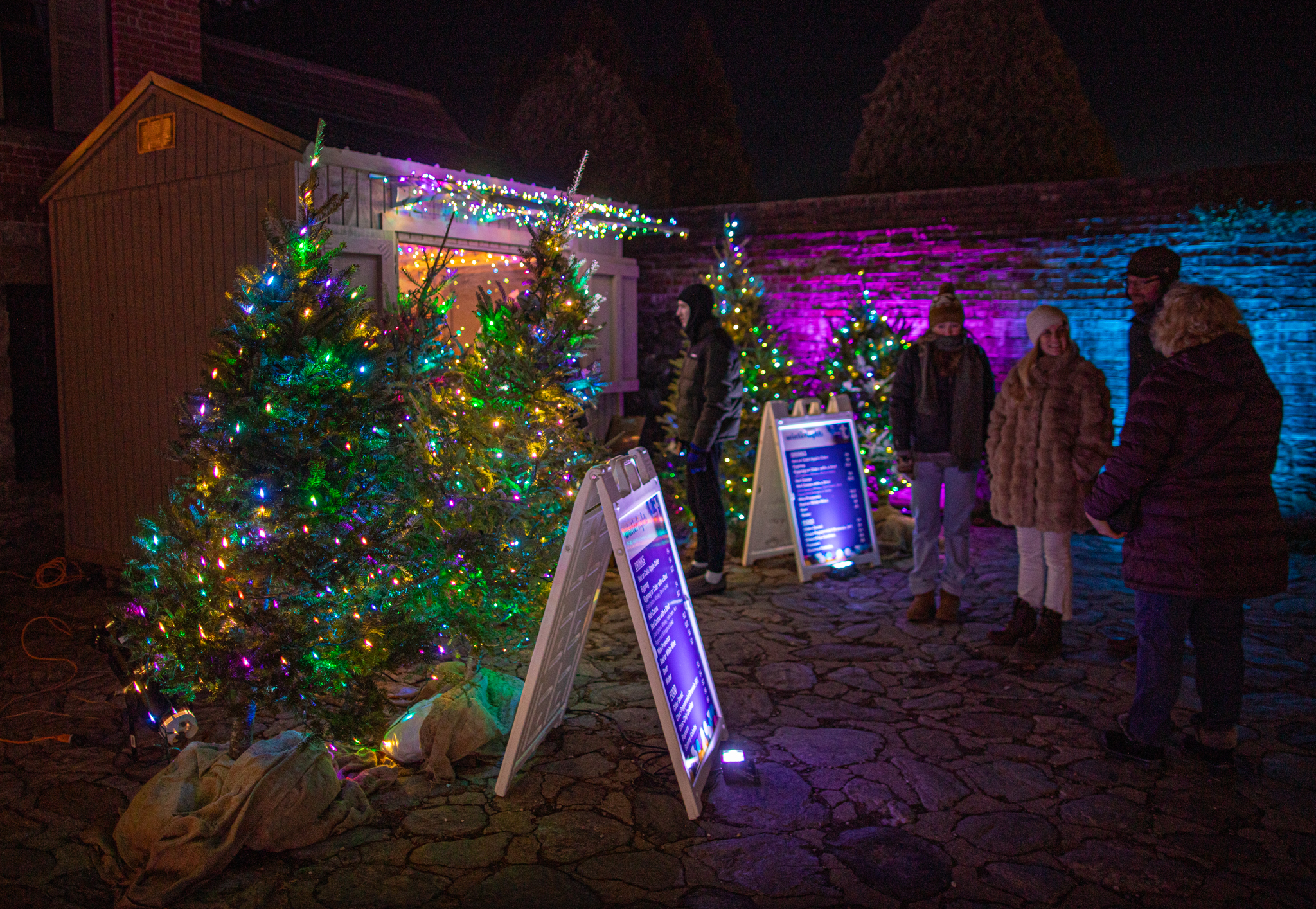
There were also places to sit by the fire and get a beverage or two.

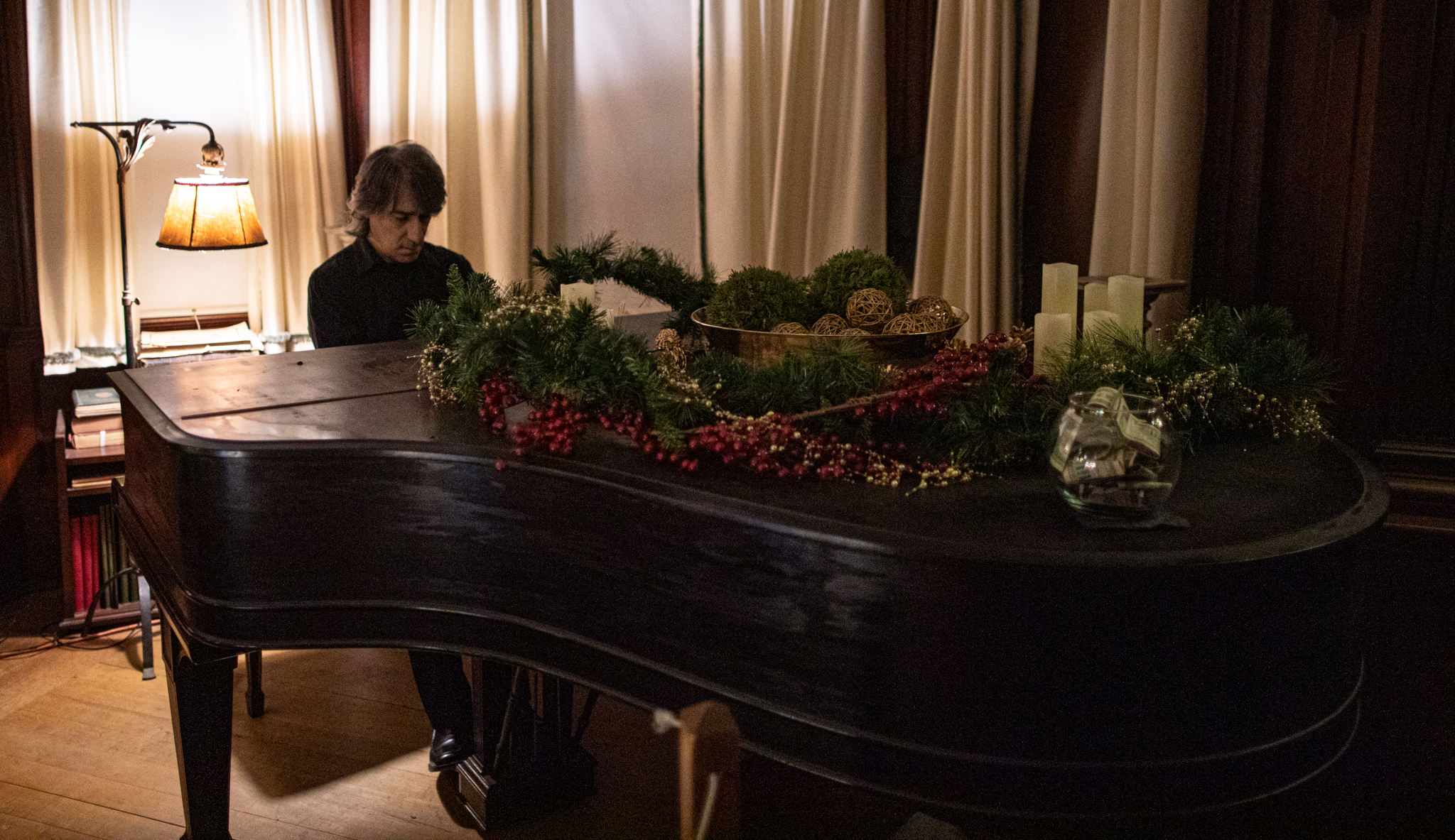
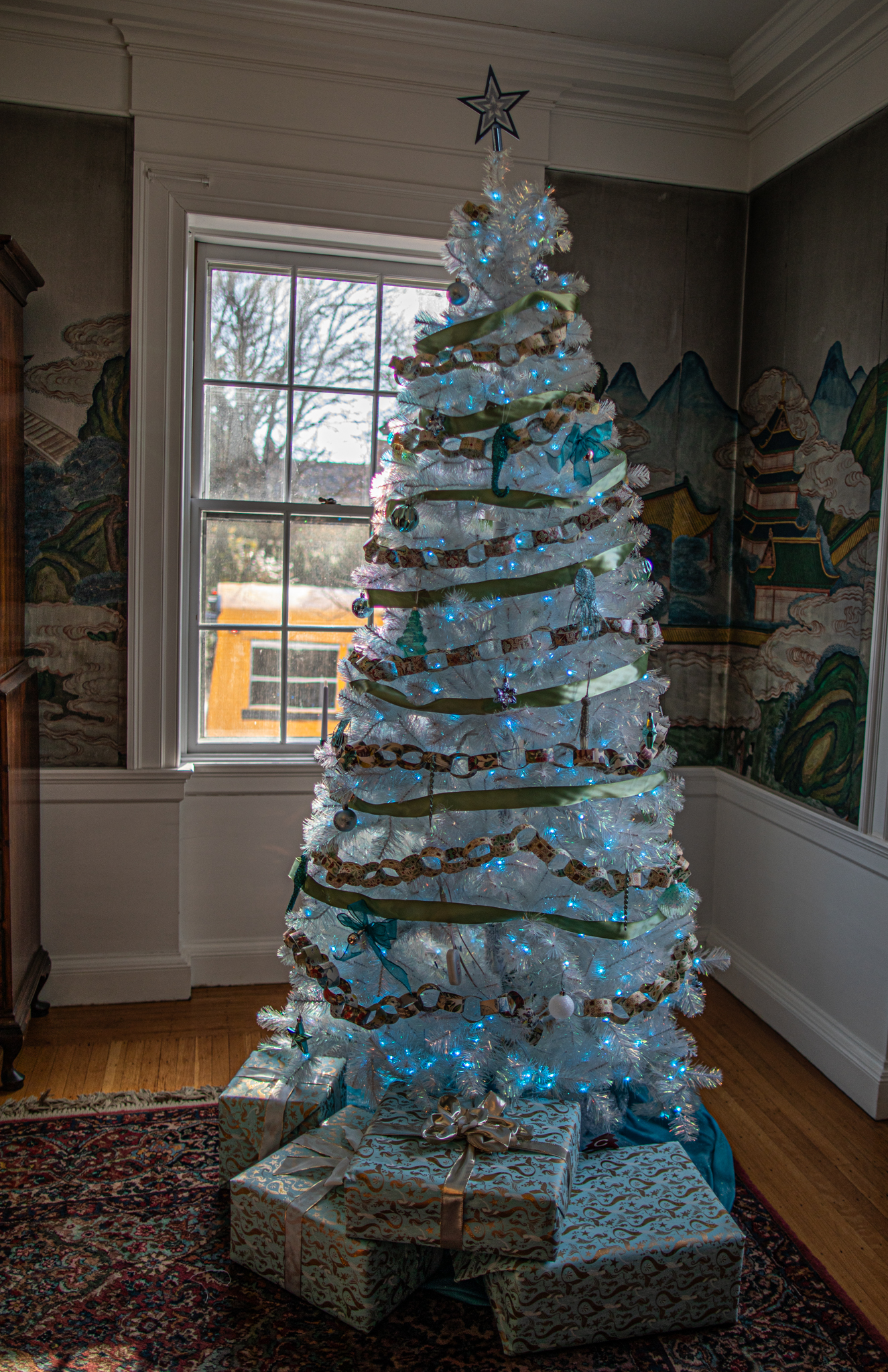
There were also decorations and a piano player at the home at Naumkeag.

The case in the photo below has a special collection of nutcrackers.

It’s hard to believe yet another holiday has come and gone! But, don’t fret! If you’re in New England, you only have 3 or 4 more moths of bone chilling weather!


2024 Christmas In Salem Part 1 – The Cotting-Smith Assembly House (Salem, MA)

Date Of Visit: December 7, 2024

Location: 138 Federal St, Salem, MA

Parking: There are several parking lots and garages in the Salem area

Universally Accessible: No, many of the homes do not have ramps or universally accessible entry

When you ask most people what they think of when they think of Salem, MA they will most likely reply with something about Halloween and witches. However, Salem has become an all year round attraction. In fact, the Christmas in Salem event has quickly become one of the more popular events in Salem.

Christmas In Salem is a series of guided tours at 13 historic homes and buildings in Salem, MA. In these series of posts, I will take you all on these tours and give some observations from my perspective through my photos and the information provided by the informative tour hosts and the literature from this event.

The first home on the Christmas In Salem tour is the Cotting-Smith Assembly House (aka as the Assembly House) on Federal St. This house was used as the headquarters of the tour. People registered for the tour by showing their receipt and, upon registering, were given a handbook with the addresses and writeups for each building.

Built in 1782 as a “Federalist Clubhouse”, the Cotting-Smith Assembly House was used as a ballroom and concert venue as well as a place to host lectures and other events for Salem’s elite. The Marquis de Lafayette was said to have danced in that very house in 1784 and it is said that George Washington dined there in 1789. While the original documentation for the building is not available, it is believed the house was essentially plain and functional in its original state in 1782.

The building was originally funded as a joint stock venture. Once it was rendered obsolete in 1792, Jonathan Waldo, one of the original developers, obtained full ownership. Waldo then sold the house to Samuel Putnam in 1794. Either Waldo or Putnam hired renowned Salem architect and craftsman Samuel_McIntire to remodel it as a private home. McIntire added 4 pillar of iconic pilasters to the second floor facade and a pediment centered above. The Assembly House is said to the the only wooden structure designed by McIntire with a pavilion front. The house was later remodeled during the 1830s or 40s. During this time the Greek Revival portico was added to the front of the house featuring an ornate frieze of carved grape vines by master carpenter Joseph True. The Assembly House, which is now owned by the Peabody Essex Museum, is listed on the National Register of Historic Places.

The building acted as the meeting place for visitors to get their handbook of houses to visit and map of all of the buildings on the tour. So, there wasn’t much decor at this particular home. However, I did see some photo worthy things.

Sometimes the little things can tell a lot about a home. For instance, this wallpaper spoke to the trade relations between Salem and other countries. This wallpaper, which shows what looks like a rendition of life and culture of the people of Asia, may have been an example of how the owners traveled to certain parts of Asia. It was not unusual for people to put up wallpaper that reminded them of places they traveled to or traded with.
This is not an original print, though. It is a stylized representation of wallpaper from that time.

While wallpaper may not be in vogue now, it was a treasured possession of the wealthy at the time this house was built.

According to Historic New England, the earliest record of wallpaper in America is in the estate inventory of a Boston stationer in 1700, where “7 quires of painted paper and three reams of painted paper” were listed. But, only one wallpaper in Historic New England’s collection with a history in New England dates back to the 1700s. Like all early references, this was more descriptive of quantity than of design. Only one wallpaper in Historic New England’s collection with a history in New England dates to this early period. This wallpaper was later used to cover a copy book of poetry in 1783.

Initially, paper hangings, as wallpaper was called in the eighteenth century, were only available from stationer and book sellers. Or they could be custom ordered from merchants who specialized in importing luxury goods. Eventually, wall paper could be purchased from upholsterers.

Prior to 1760, only the wealthiest colonists in urban areas in New England could afford wallpaper. Wallpaper was expensive because of the process involved in making it. The rolls the wallpaper was printed on had to be made of individual sheets of paper. These sheets were glued together. Then, they were hand printed with wood blocks, one block for each color of the design.

That is what makes the Christmas In Salem event so interesting. You can learn so much about the history of wallpaper just by touring a historic home!

Please join me on my tours of all of these historic homes!

You can find me on Instagram here, new.england.nomad_

You can follow me on Facebook here.

If you want to see more photography from New England, click here to join my Photographers of New England Group on Facebook.

I don’t do Twitter and I’m too old for TikTok!


2024 Feztival Of Trees (West Springfield, MA)

Date Of Event: November 30, 2024

Location: 1080 Riverdale, St West Springfield, MA (an hour and a half west of Boston, MA)

Website: Feztival Of Trees

Summary: The Mehla Shriners hosted their annual Feztival of Trees to raise funds for their charitable causes.

Trees were aglow in Springfield at the 2024 Feztival of Trees. As the name suggests, the festival was run by the Melha Shriners.
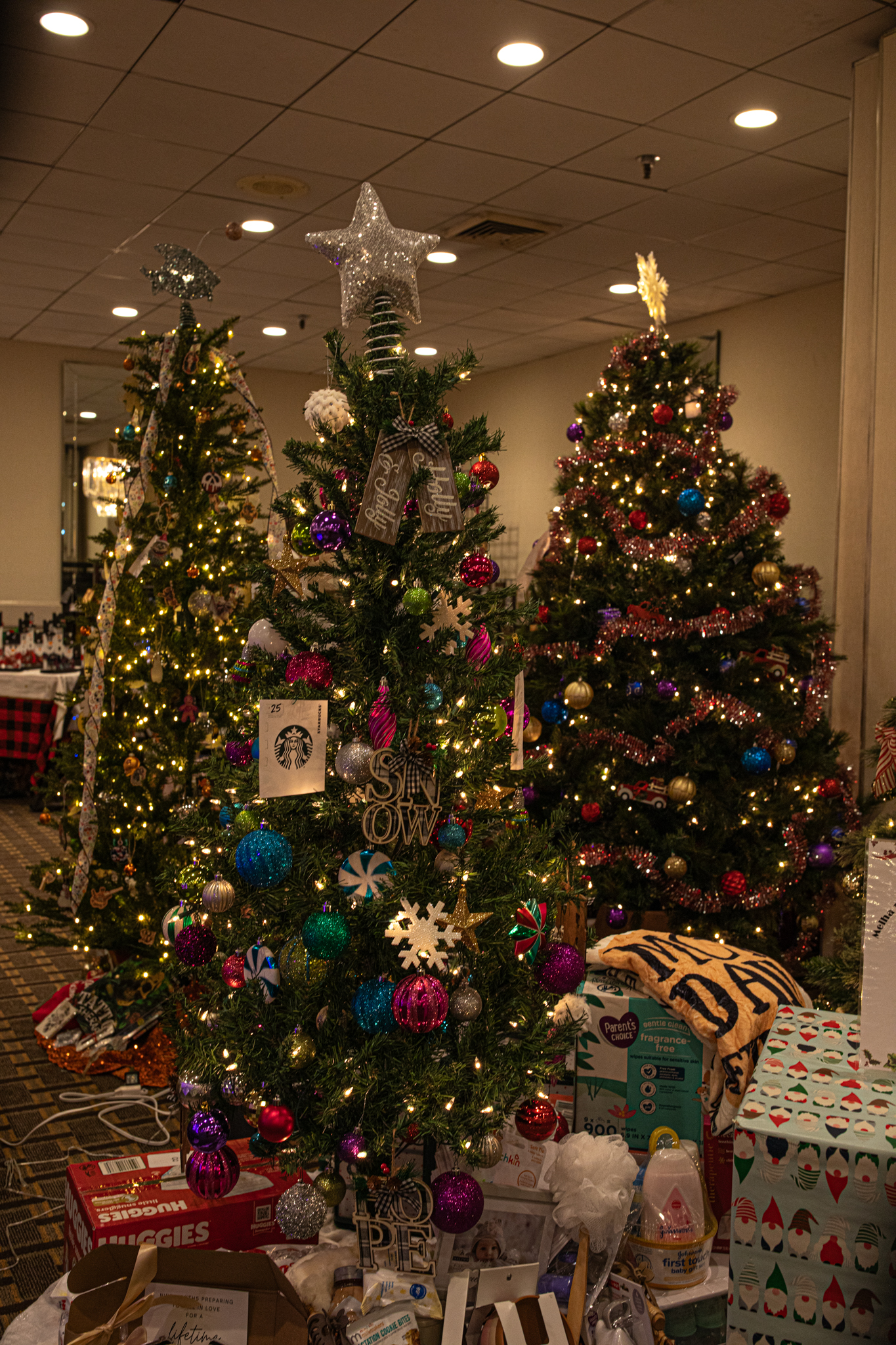
There were an array of different trees and wreaths to see.

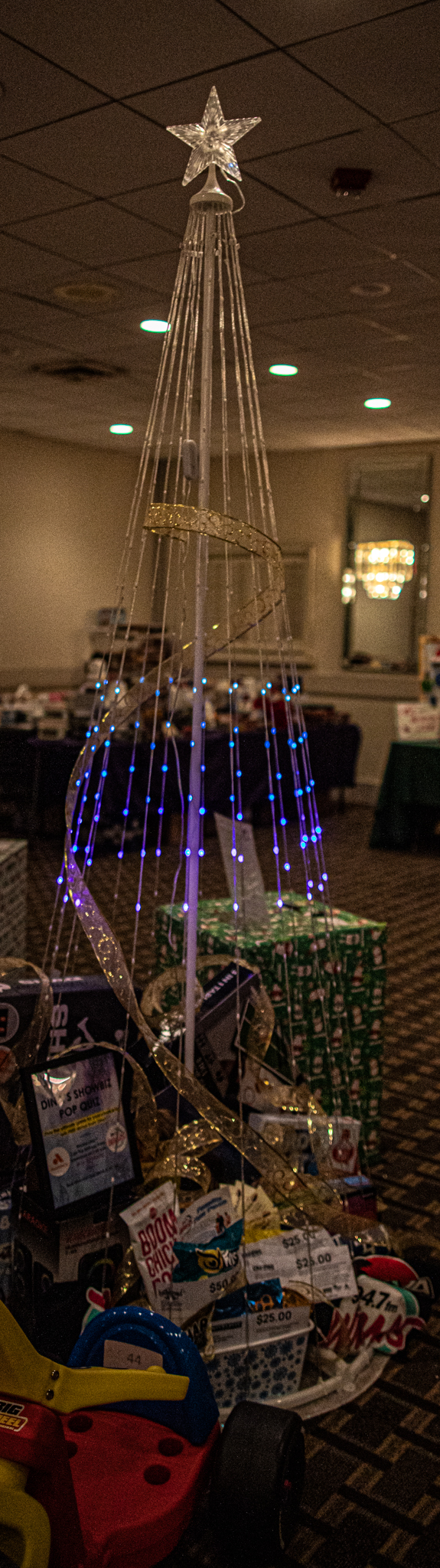
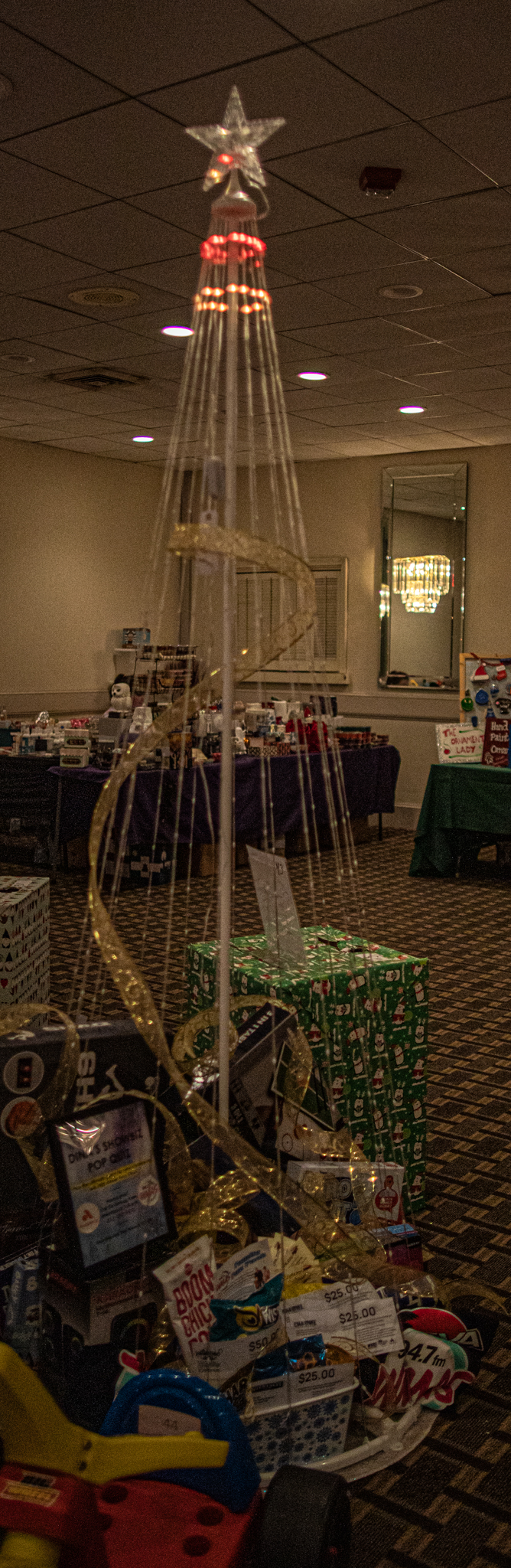
The trees that lit up were fun to watch!

Visitors could enter a raffle for their favorite trees. And there were many to chose from!
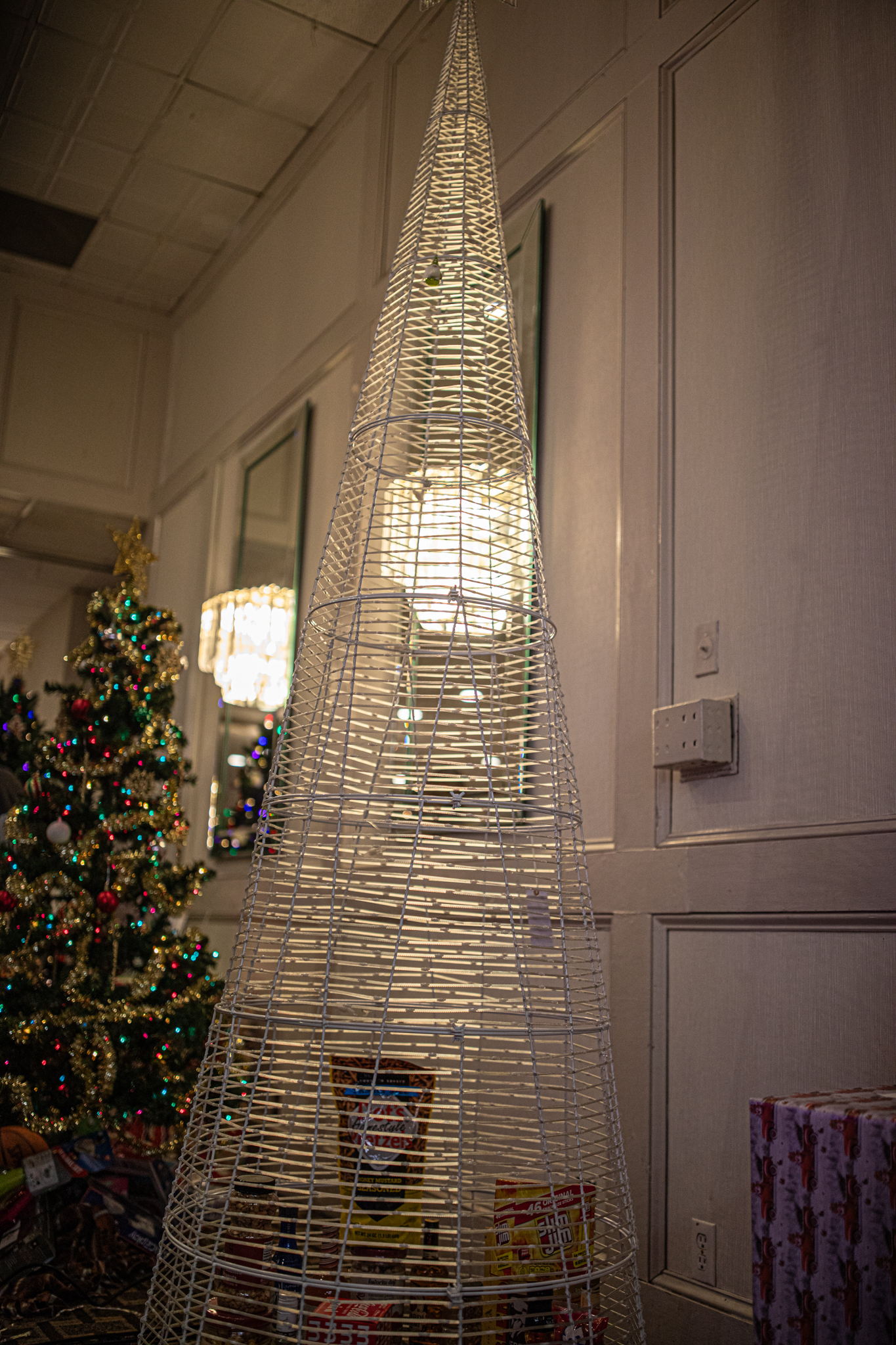
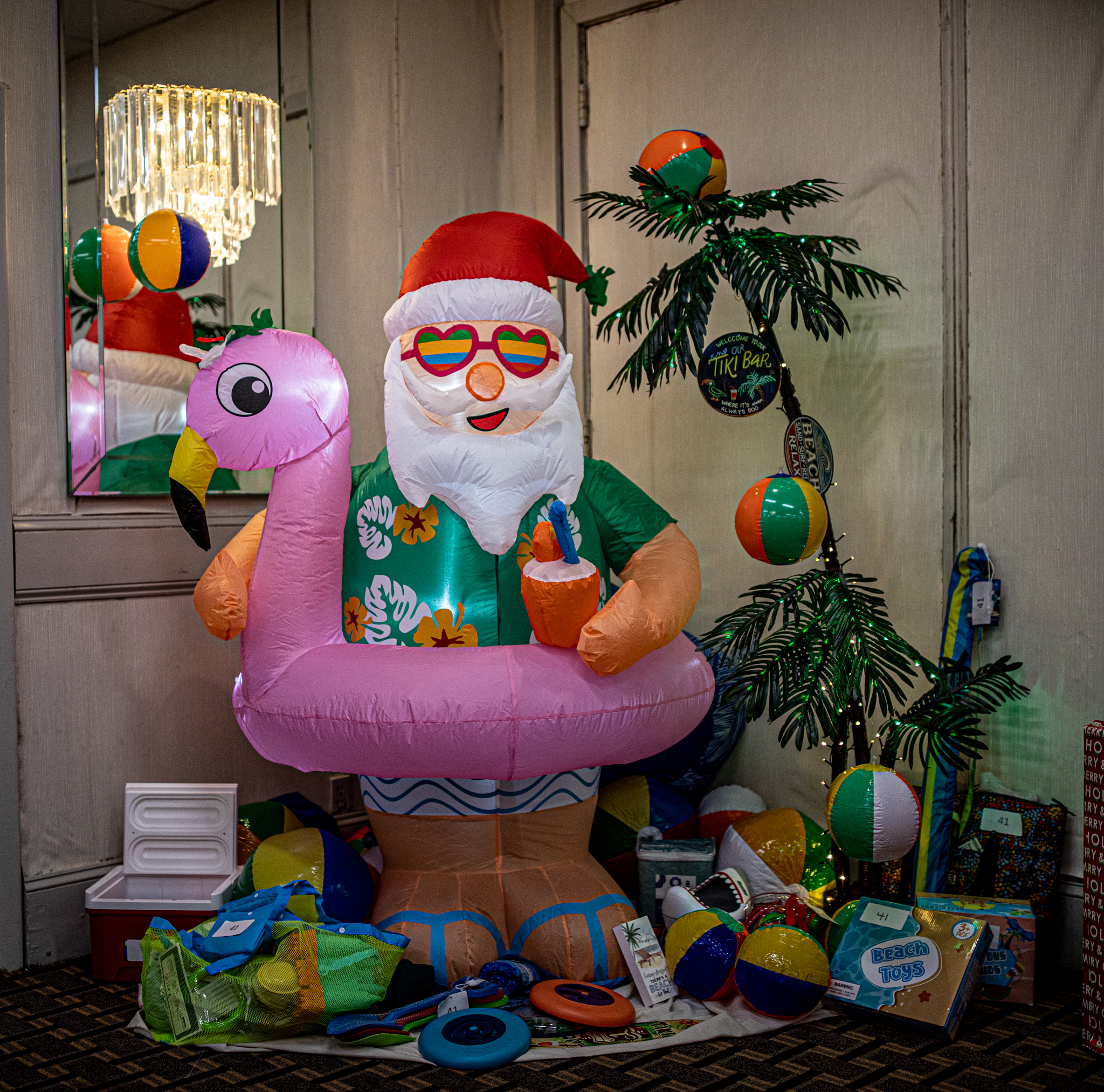
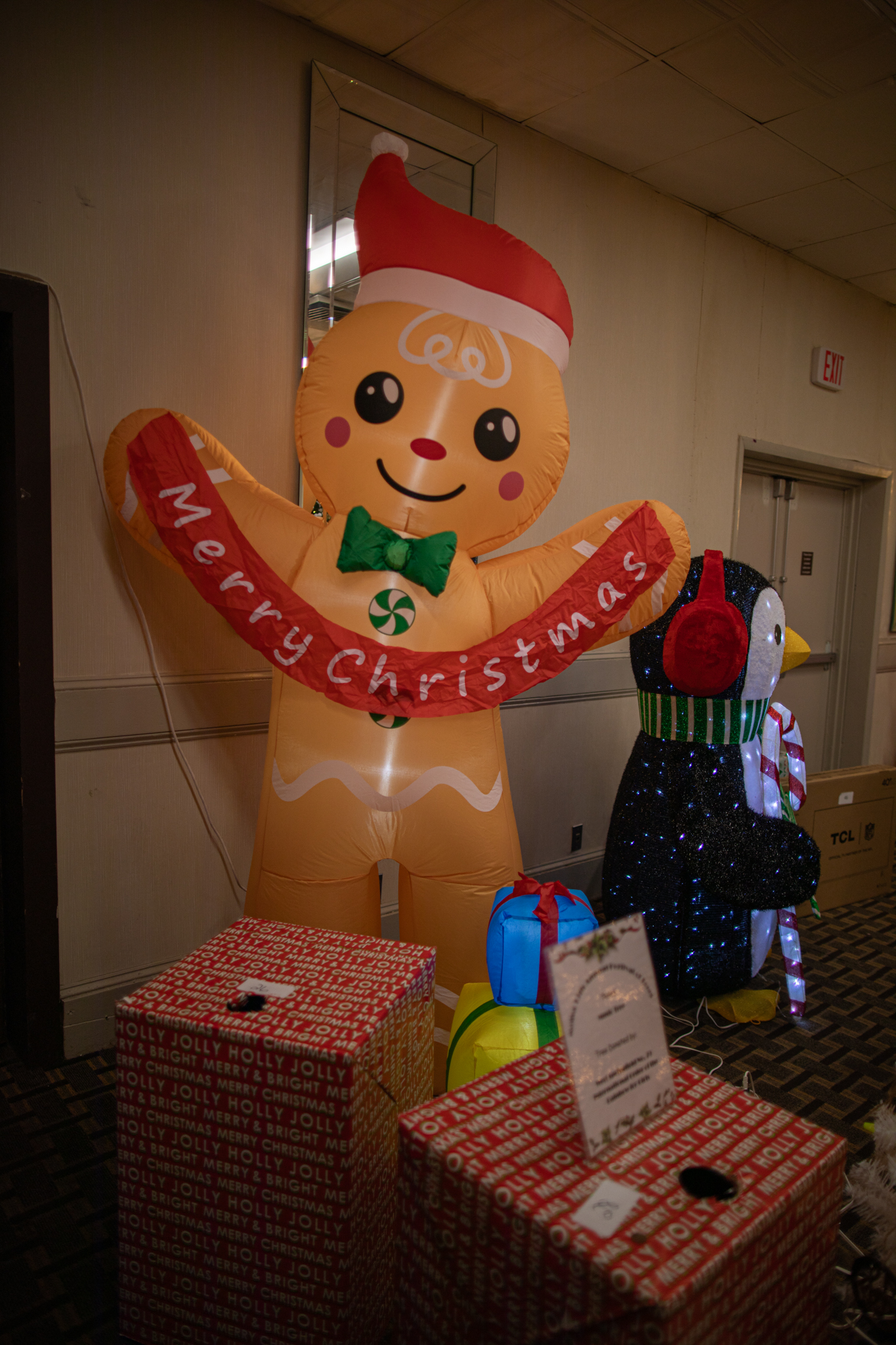
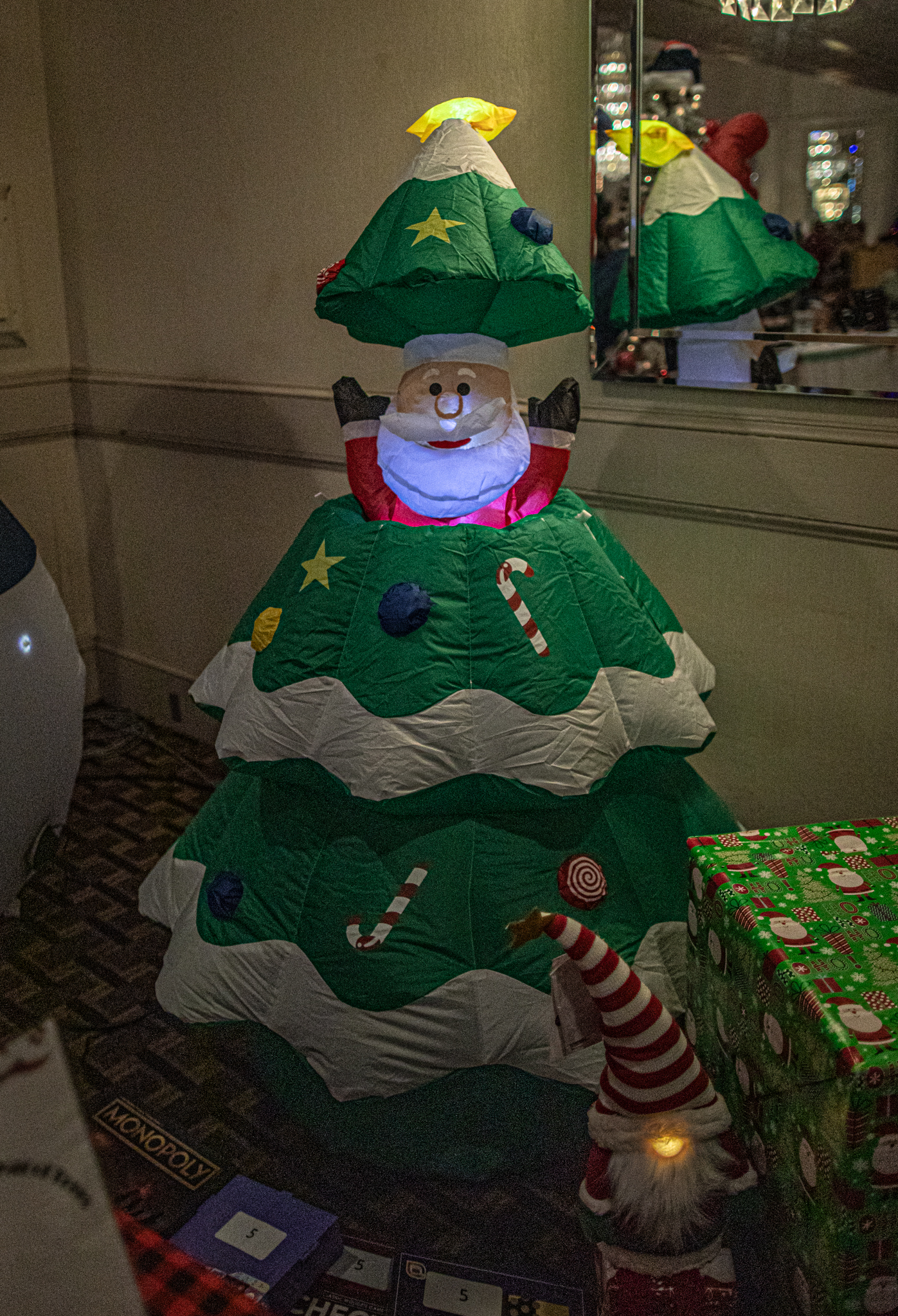
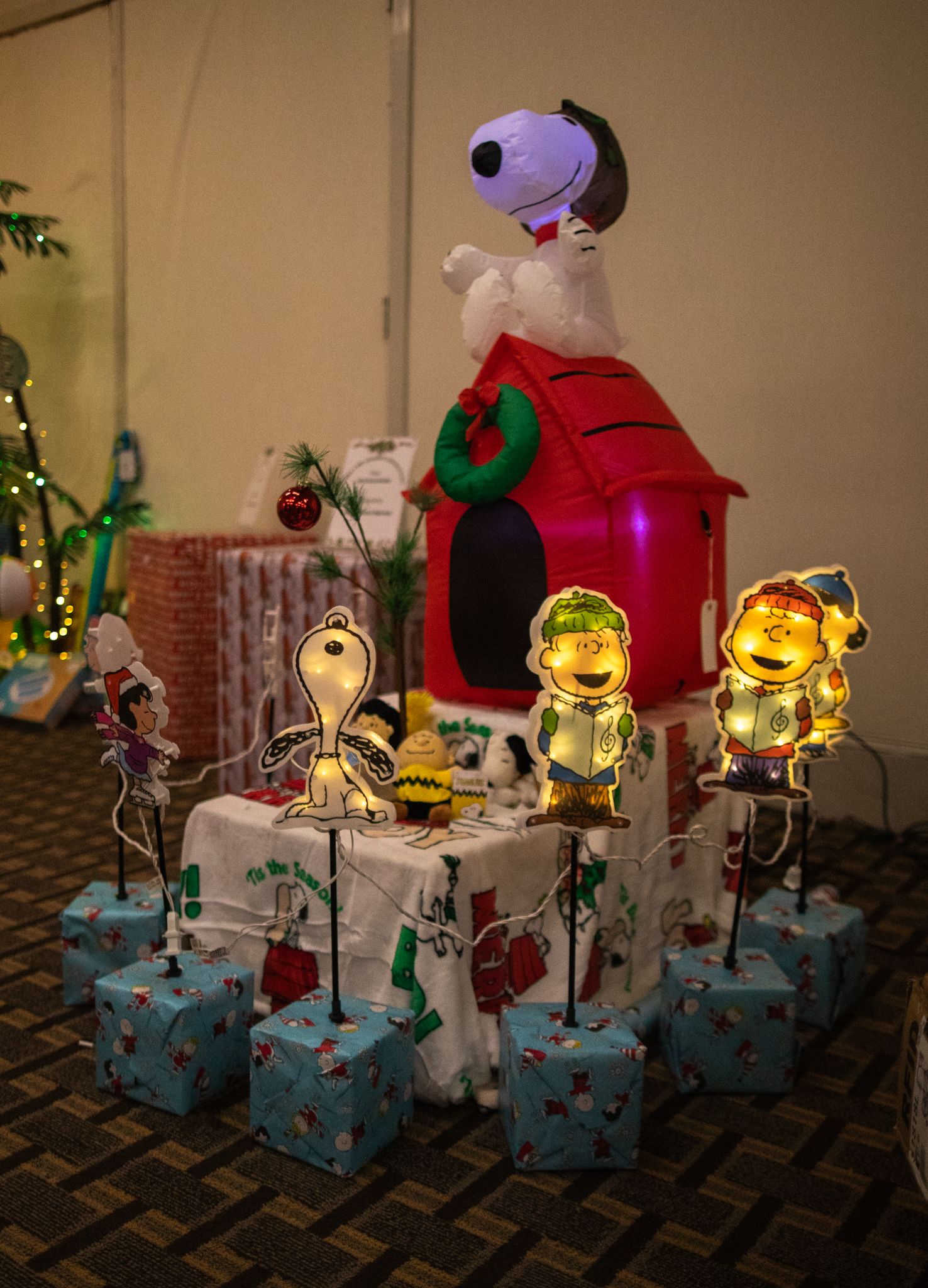
Some of my favorite decorations were not traditional trees or not even trees at all like this “ladder tree” and some of the inflatable decorations.

The ornaments and decor were very festive and at times inspiring!

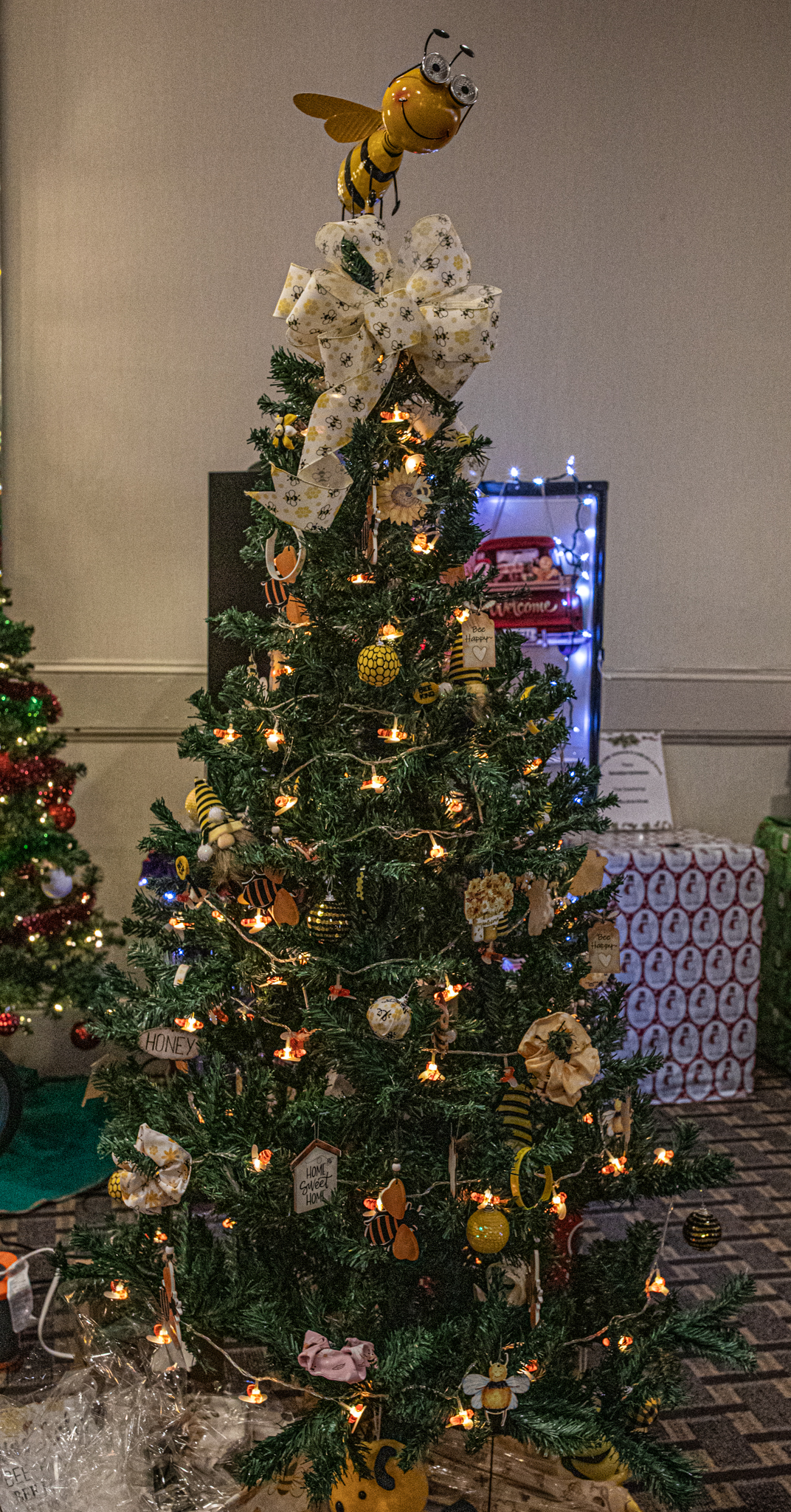
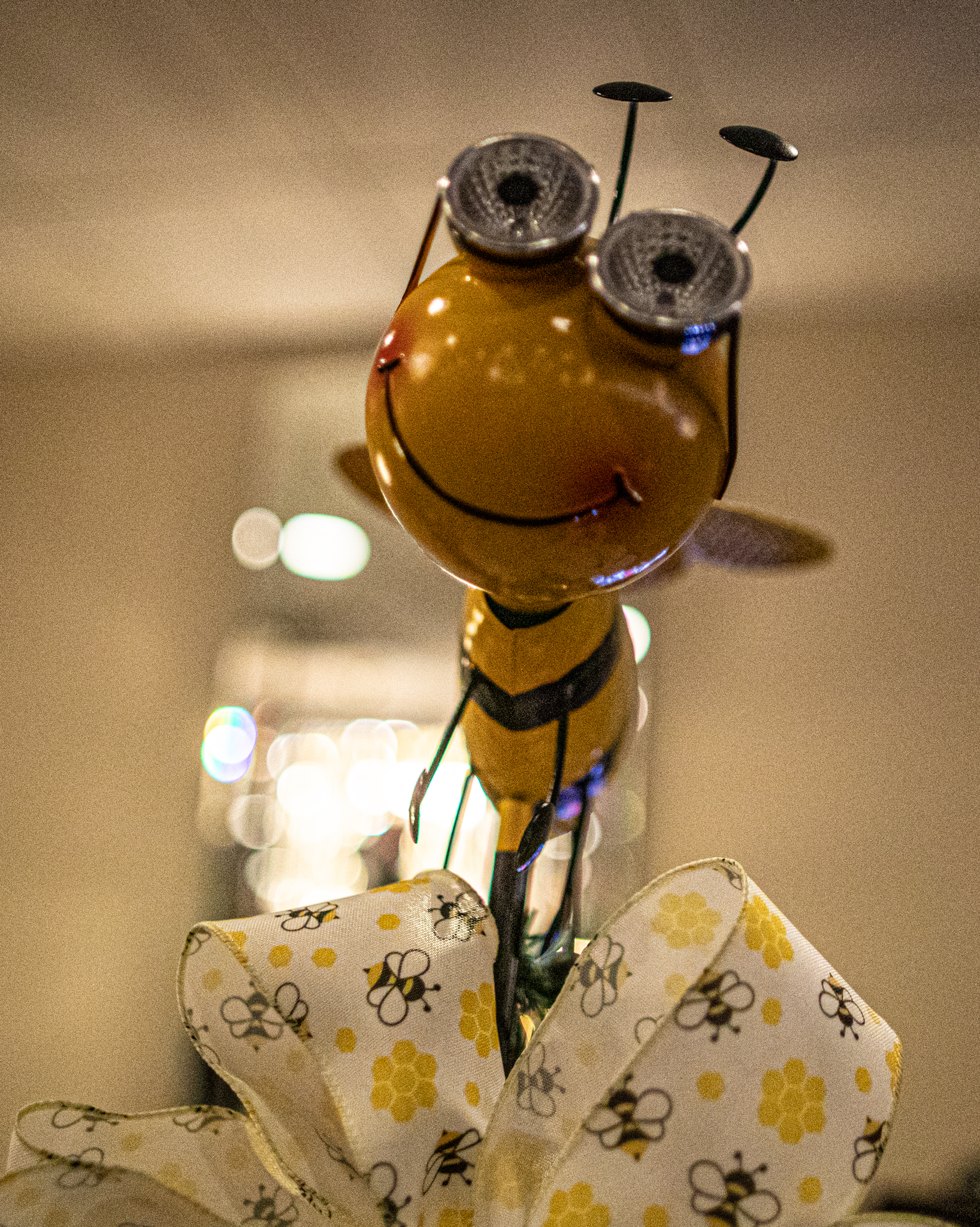
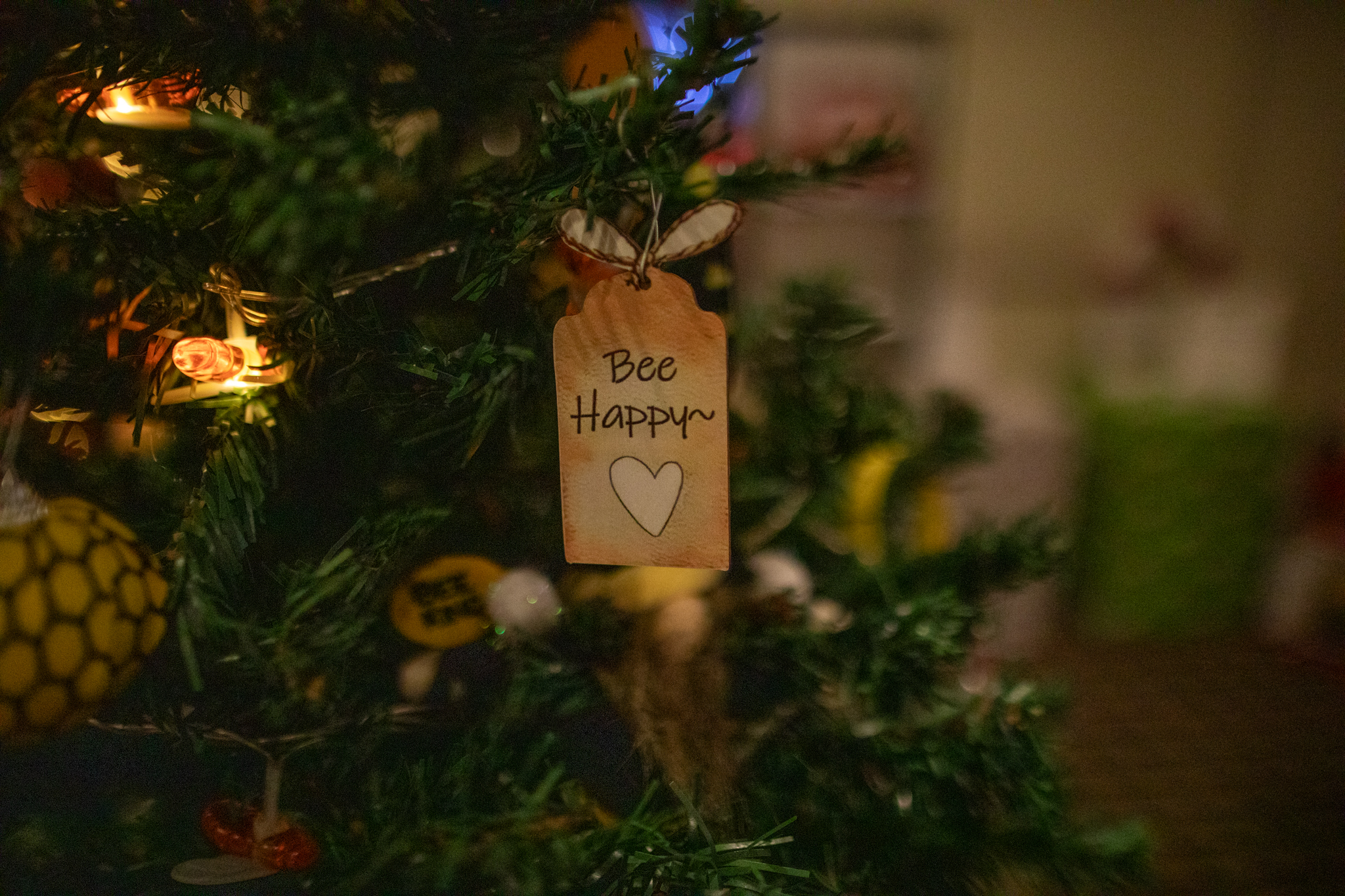
Some of the trees had themes. This tree had a bee theme.
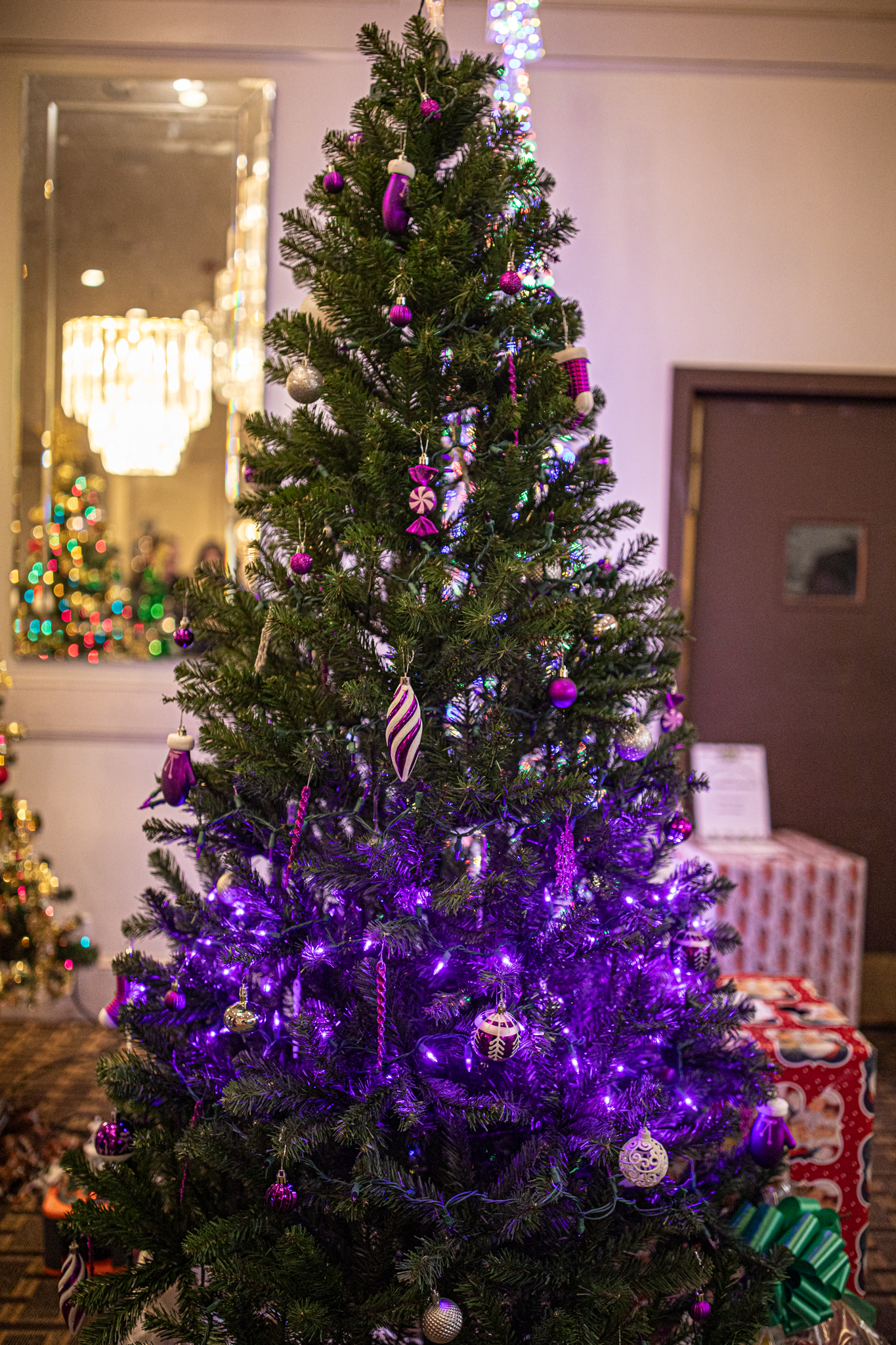
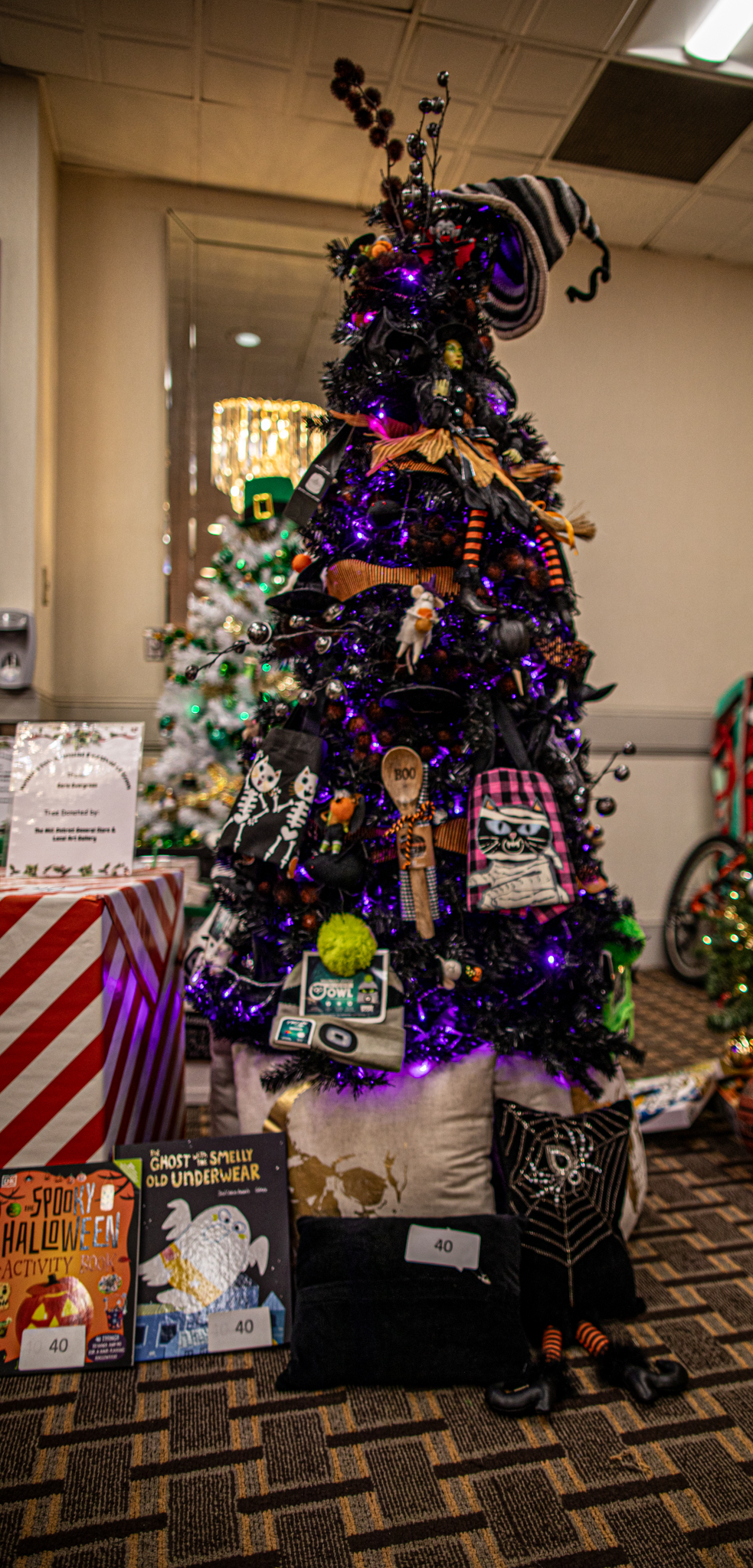
This was a Halloween tree!

And there was this Irish/St Patrick’s Day tree!

One particular themed tree stood out. “Snacking Around the Christmas Tree” was decorated by Ed Lyons in memory of his wife of 49 years. A variety of snacks such as M&M’s, Lay’s potato chips and Frito’s (his wife especially liked chips) hung from the tree. Ed used to jokingly call them “stinky snacks” because of their strong odors!

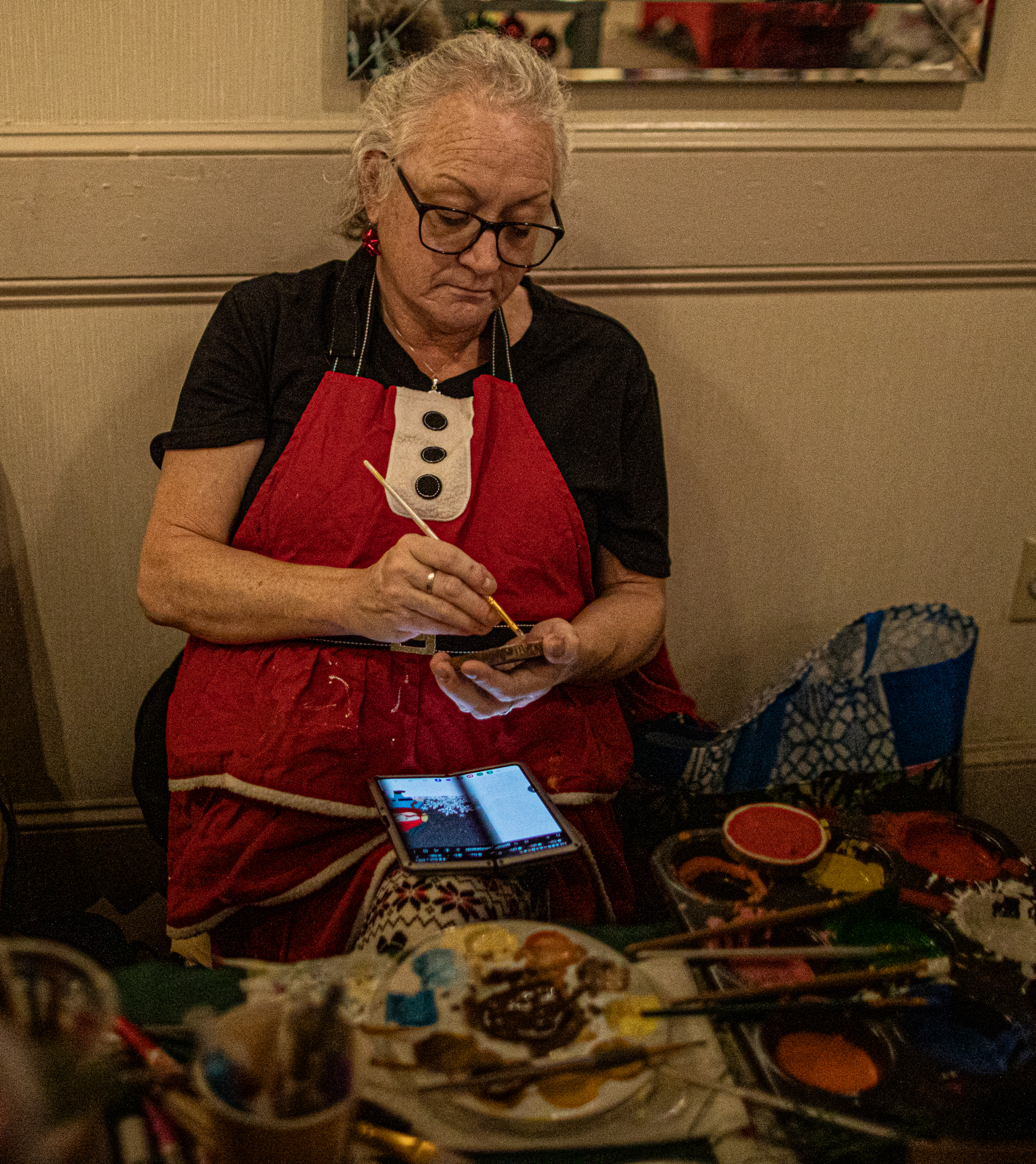
The Ornament Lady was taking orders for handmade ornaments…unless you wanted a Yankees ornament!

Mr. and Mrs. Clause stopped by to make sure everyone was still on the “nice” list! But, don’t worry if you’re not on the list! You still have a few more weeks to get on the list!

All of the proceeds generated from the event went to the Mehla Shriners to assist with their charitable endeavors!


Phantoms By Firelight (Old Sturbridge Village, Sturbridge, MA)

Date Of Event: October 26, 2024

Location: Old Sturbridge Village, 29 Stallion Hill Road, Sturbridge, MA (1 hour southwest of Boston, MA)

Cost: Prices tanged from $14 to $45 depending on your age and when you bought them. More information can be found at the link below

Ticket prices

Universally Accessible: Yes

Parking: Free parking is included in the ticket price

Website: Phantoms By Firelight

Summary: Performers entertained visitors with gravity defying acts, fire breathing and other jaw dropping tricks!

Fiery frights awaited all at this year’s Phantoms By Firelight event at Old Sturbridge Village.

An array of performers, dare devils and acrobats entertained countless visitors last month at Old Sturbridge Village.

Perhaps this event should have been titled, “don’t try this at home.”

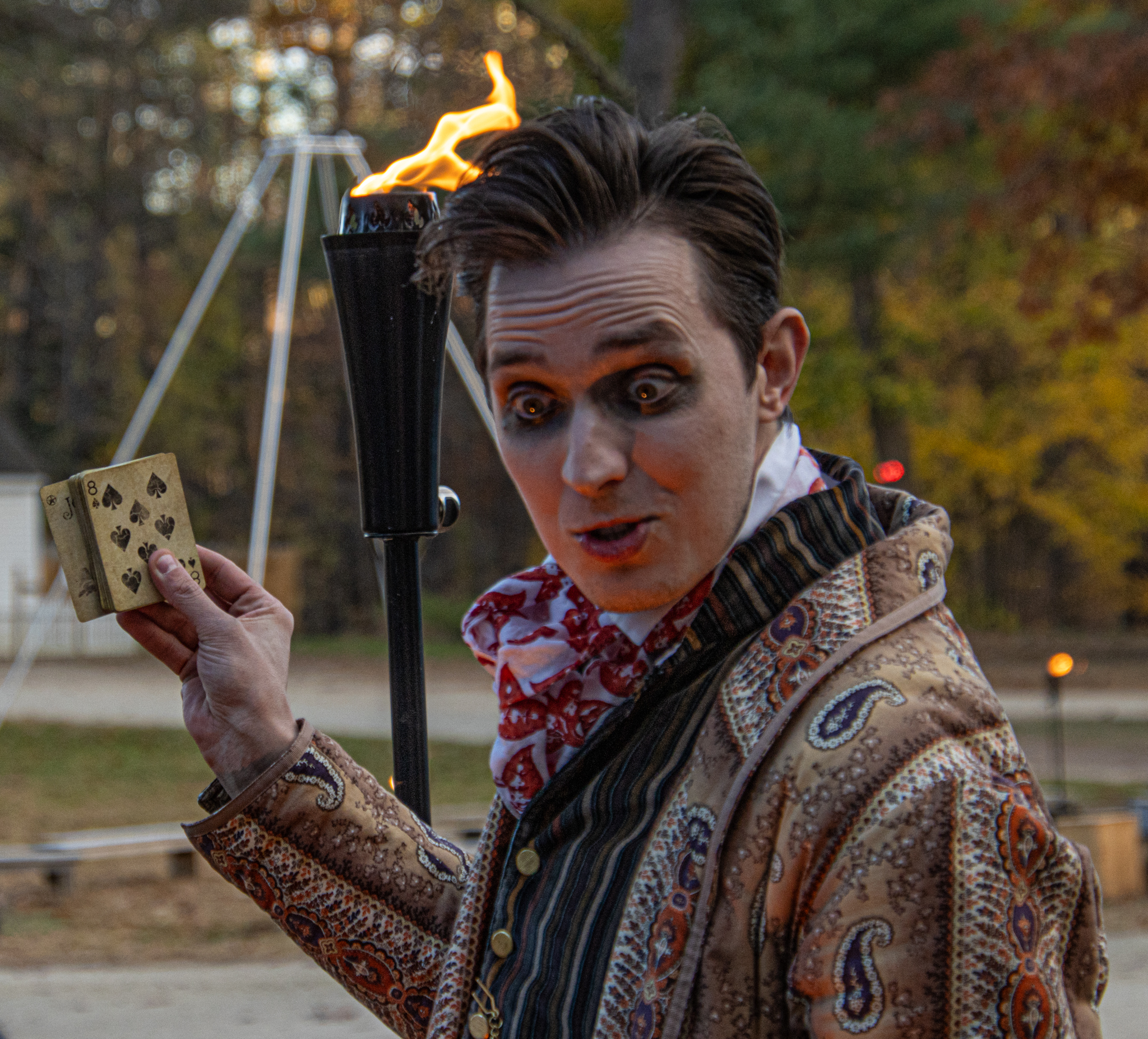
The family friendly event included card tricks by Magnus The Magnificent.

There were also games like this World Scramble game. Can you guess the phrase hidden in this world scramble?

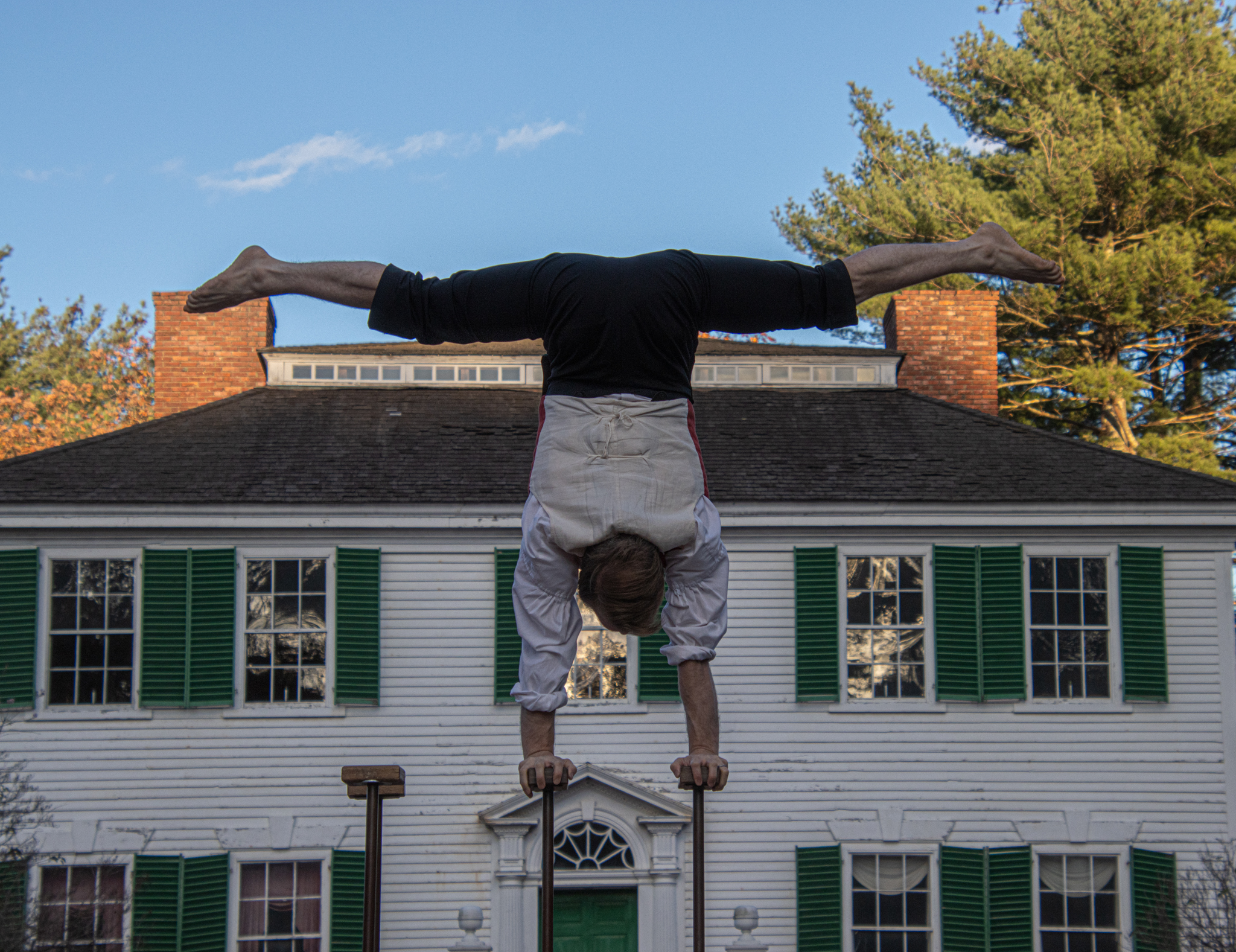
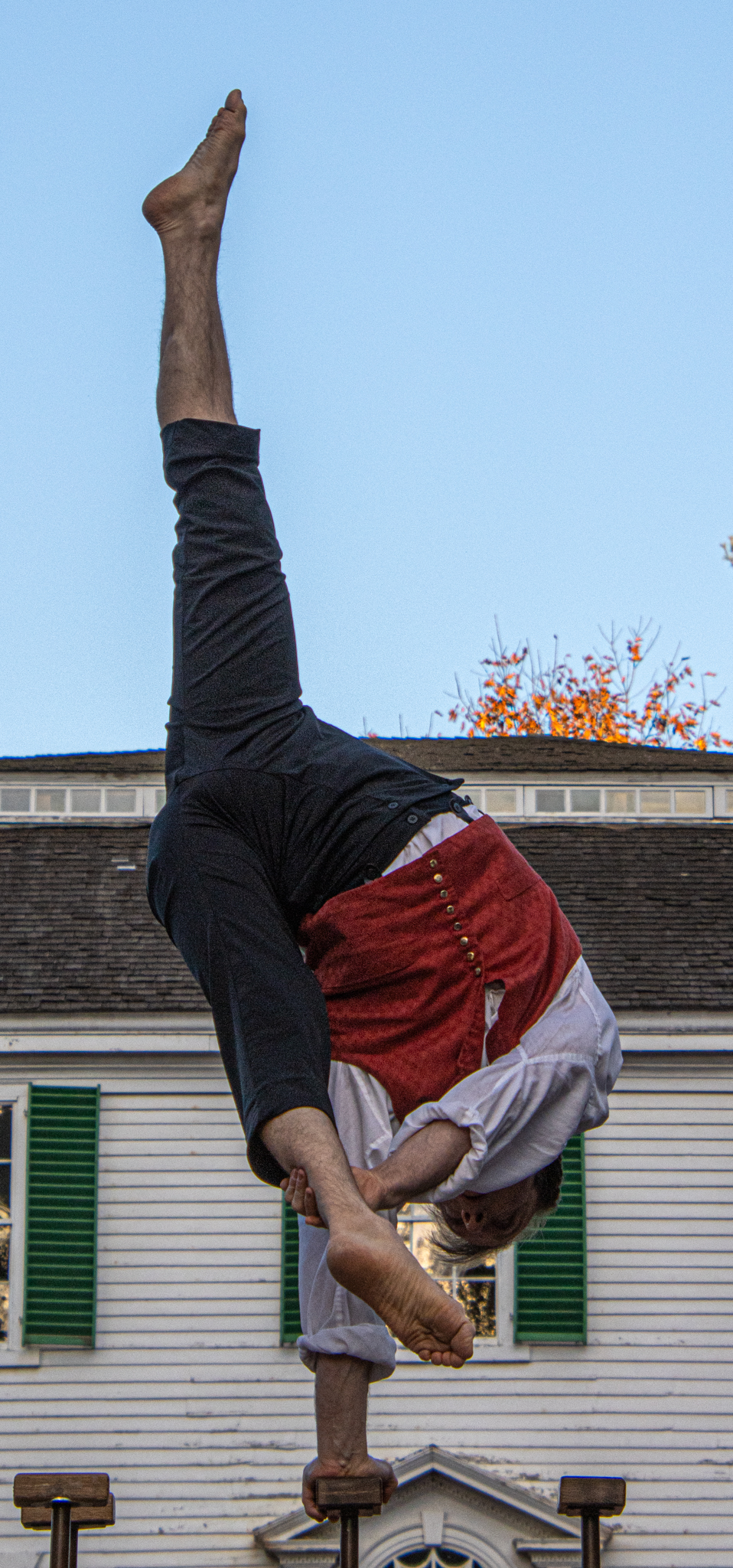
After all the fun and games, it was off to the Village Common to watch Alexander the Upside Down Man.

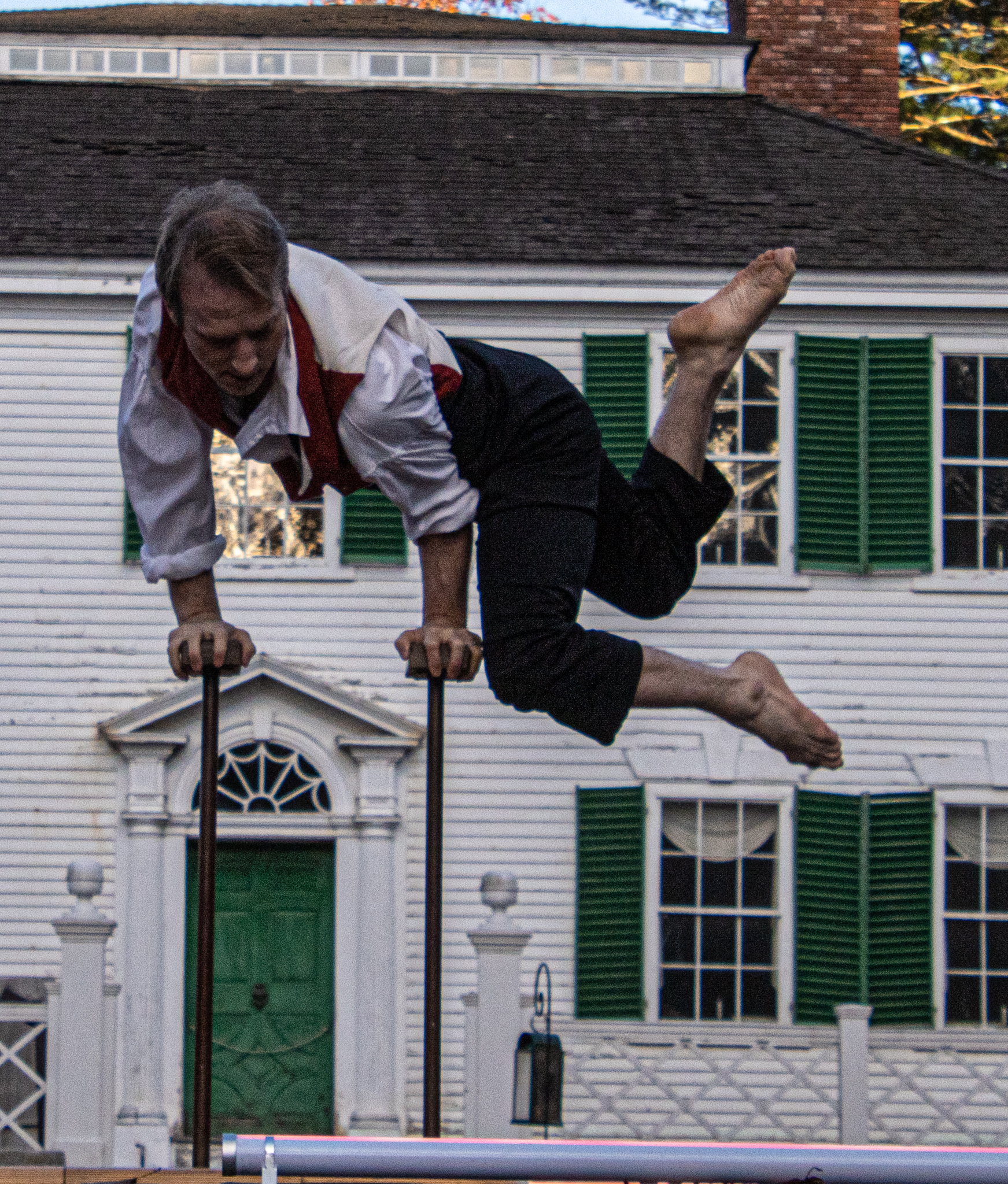
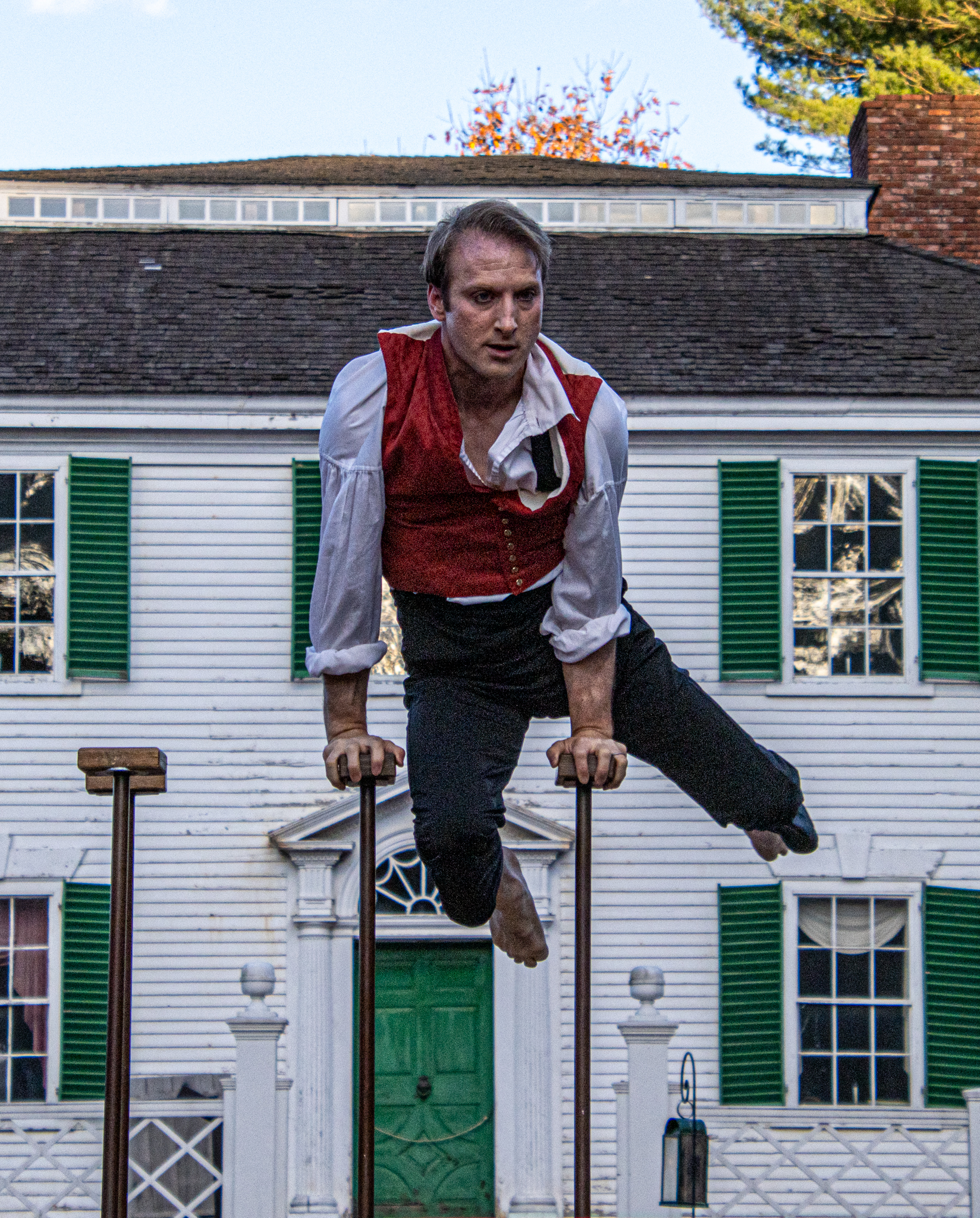
The feats of strength by Andrew were very impressive!

Whew! I got sore and tired just watching Alexander!

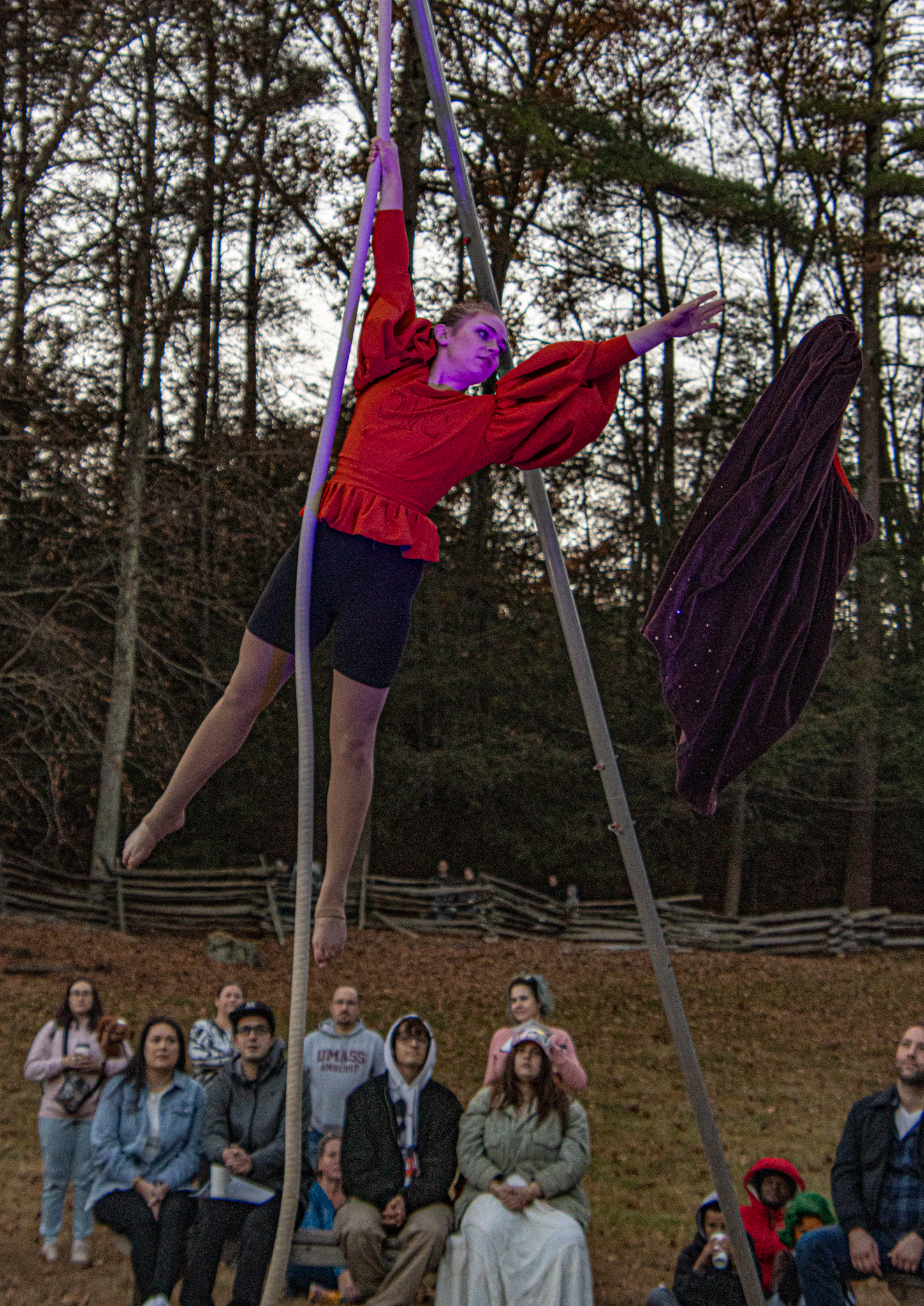
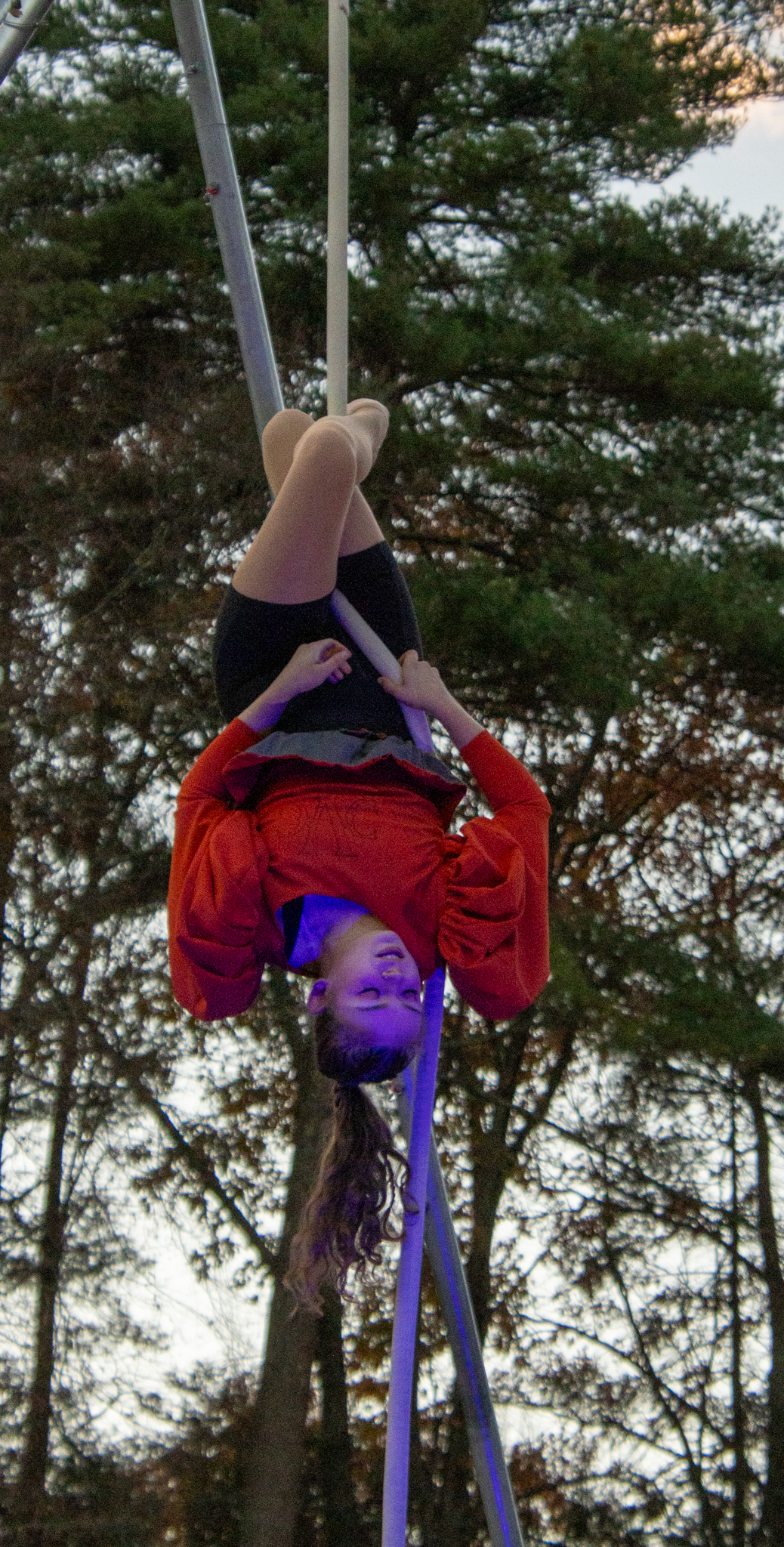
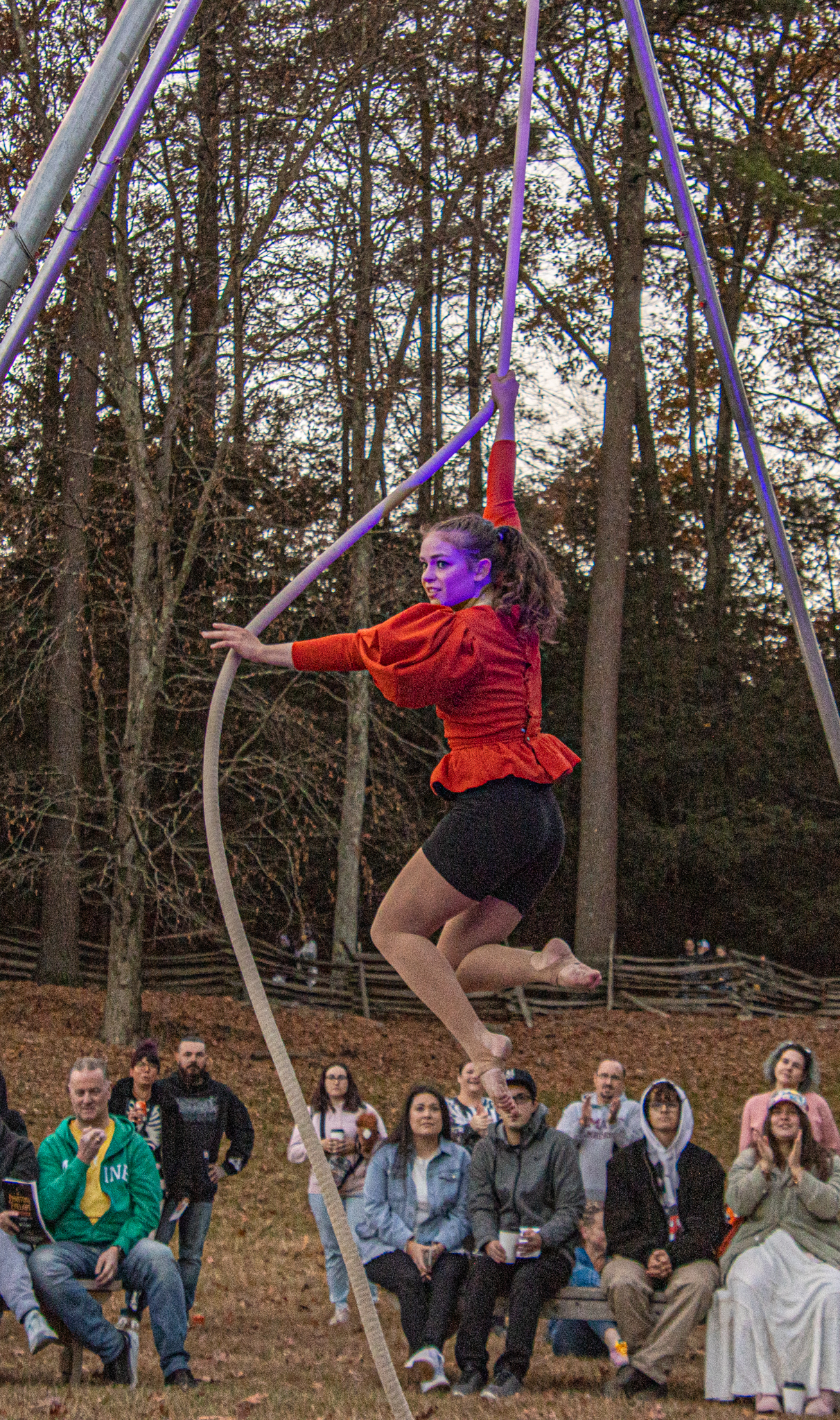
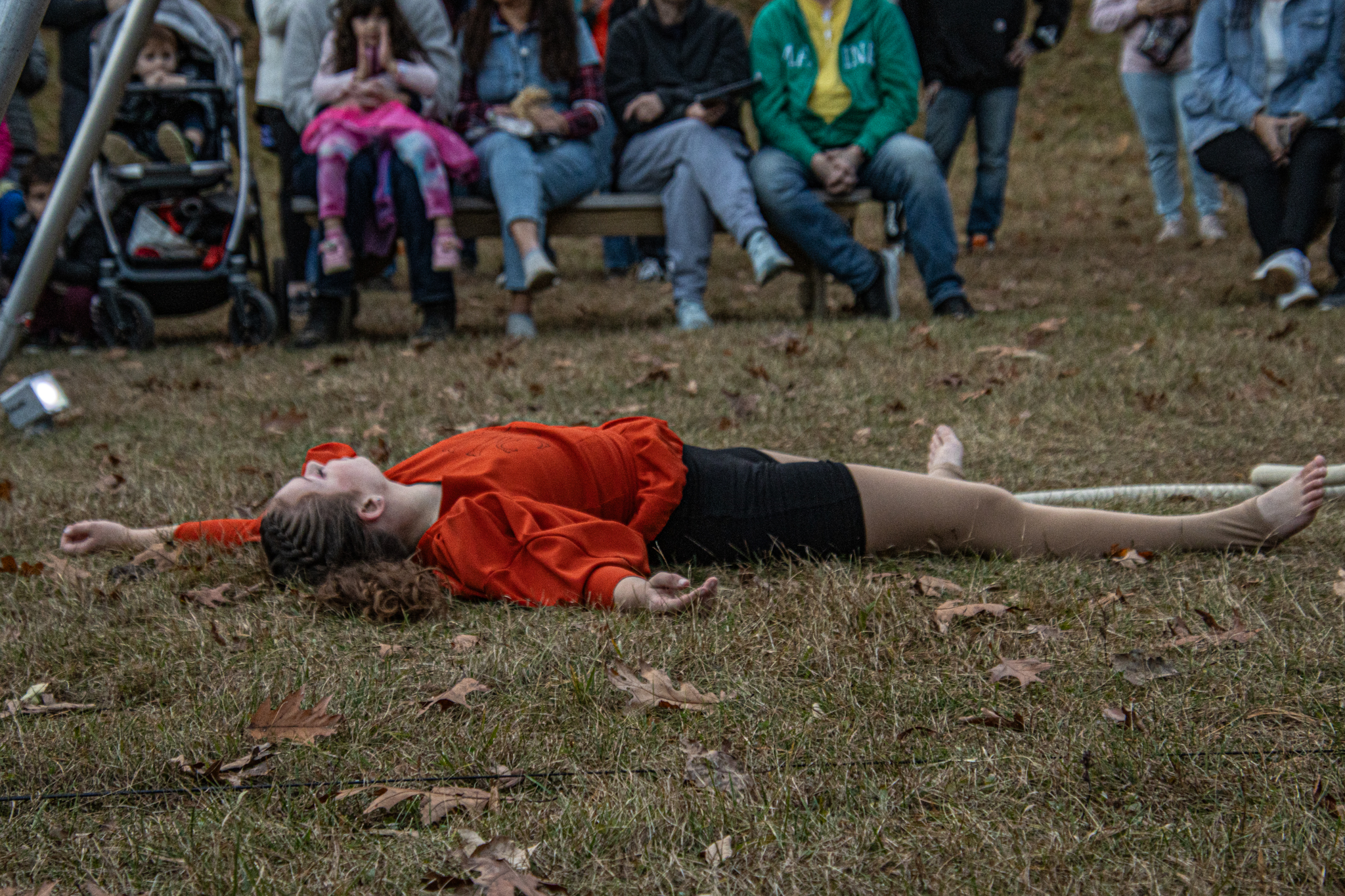
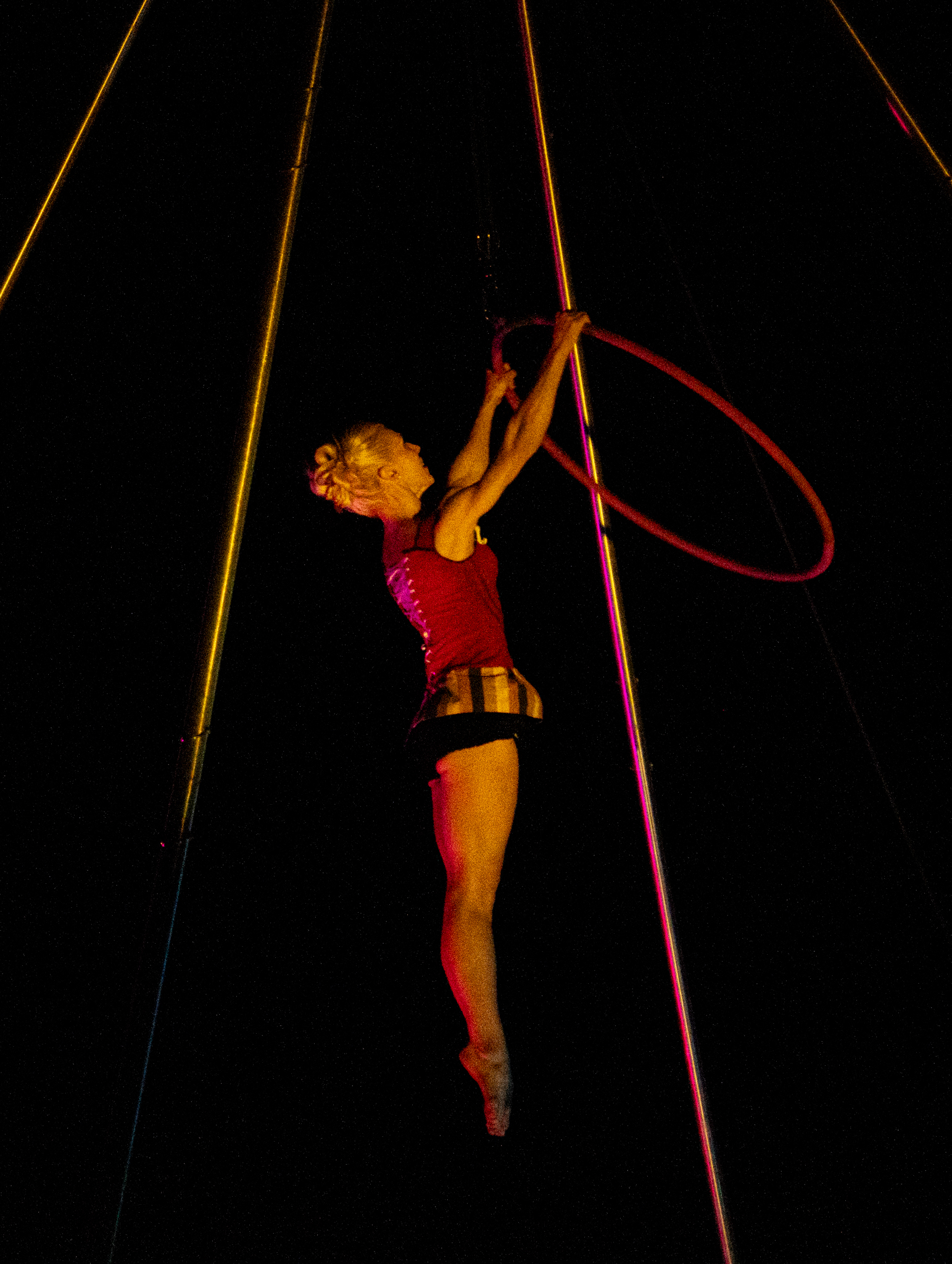
Next on the list of things I’ll never be able to do was the rope climbing extraordinaire Philomena.

But, before the show got started, the ring master got the crowd pumped up for the event!

After all that climbing, Philomena took a well deserved rest!

After the show, I was able to take a photo of the star of the show!

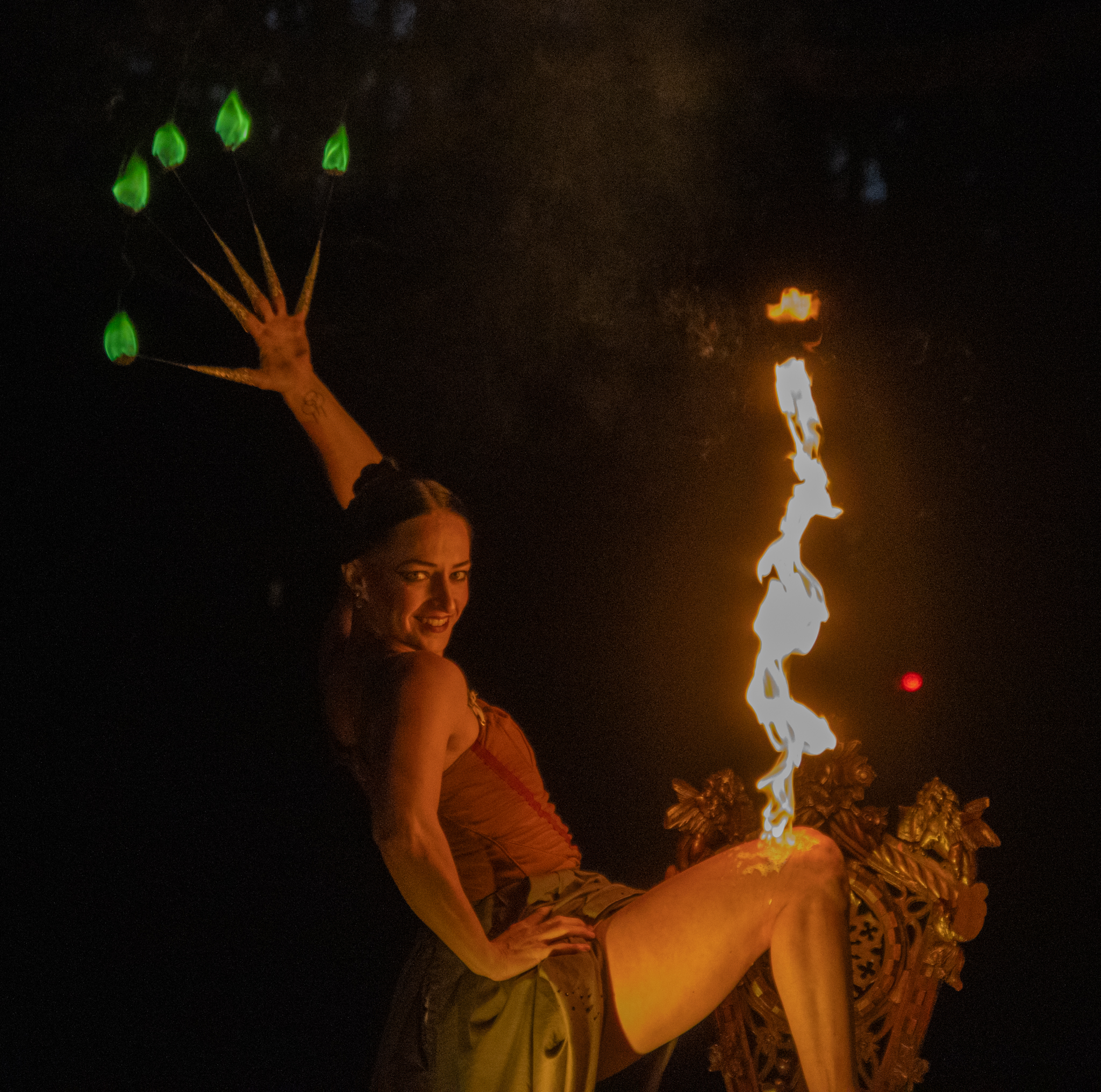
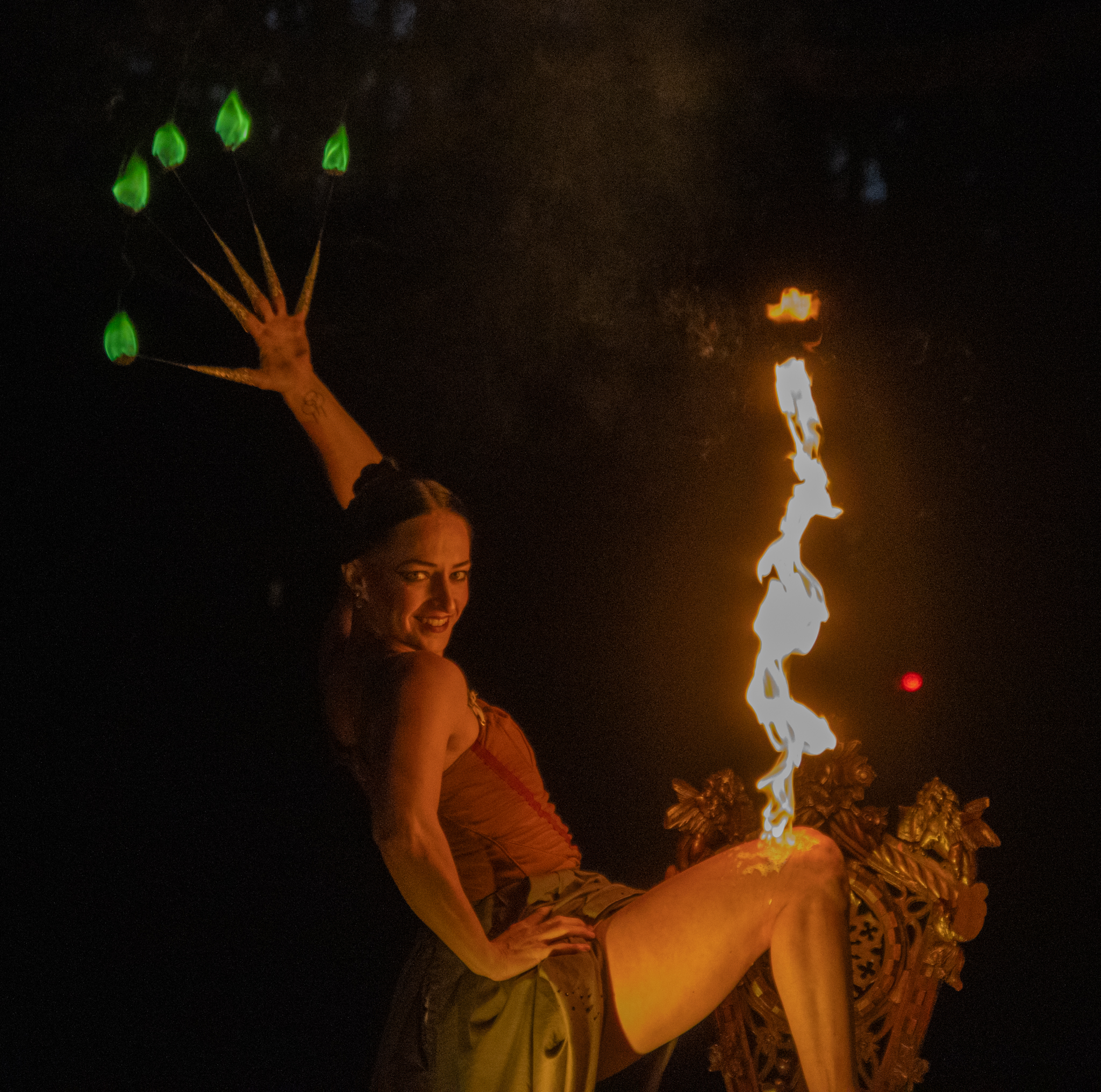
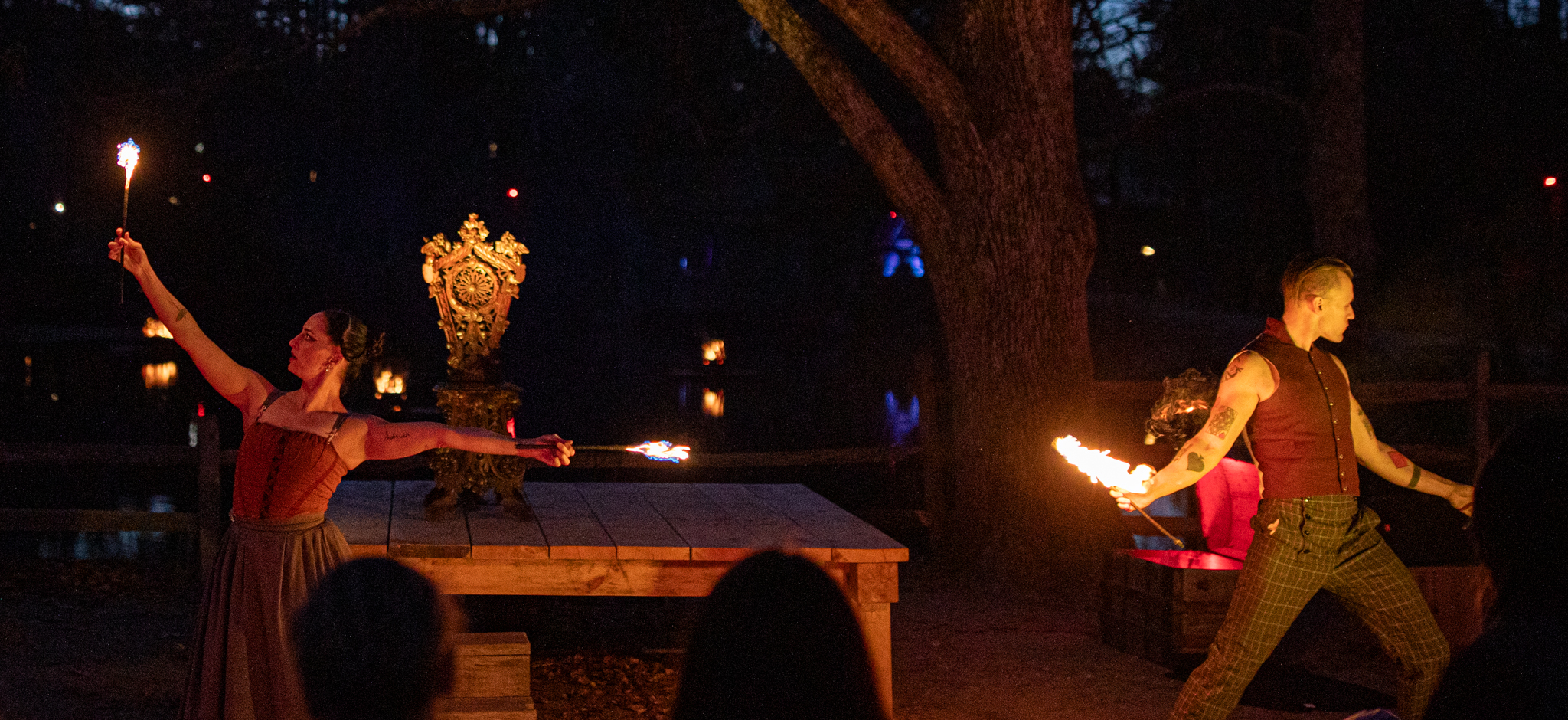
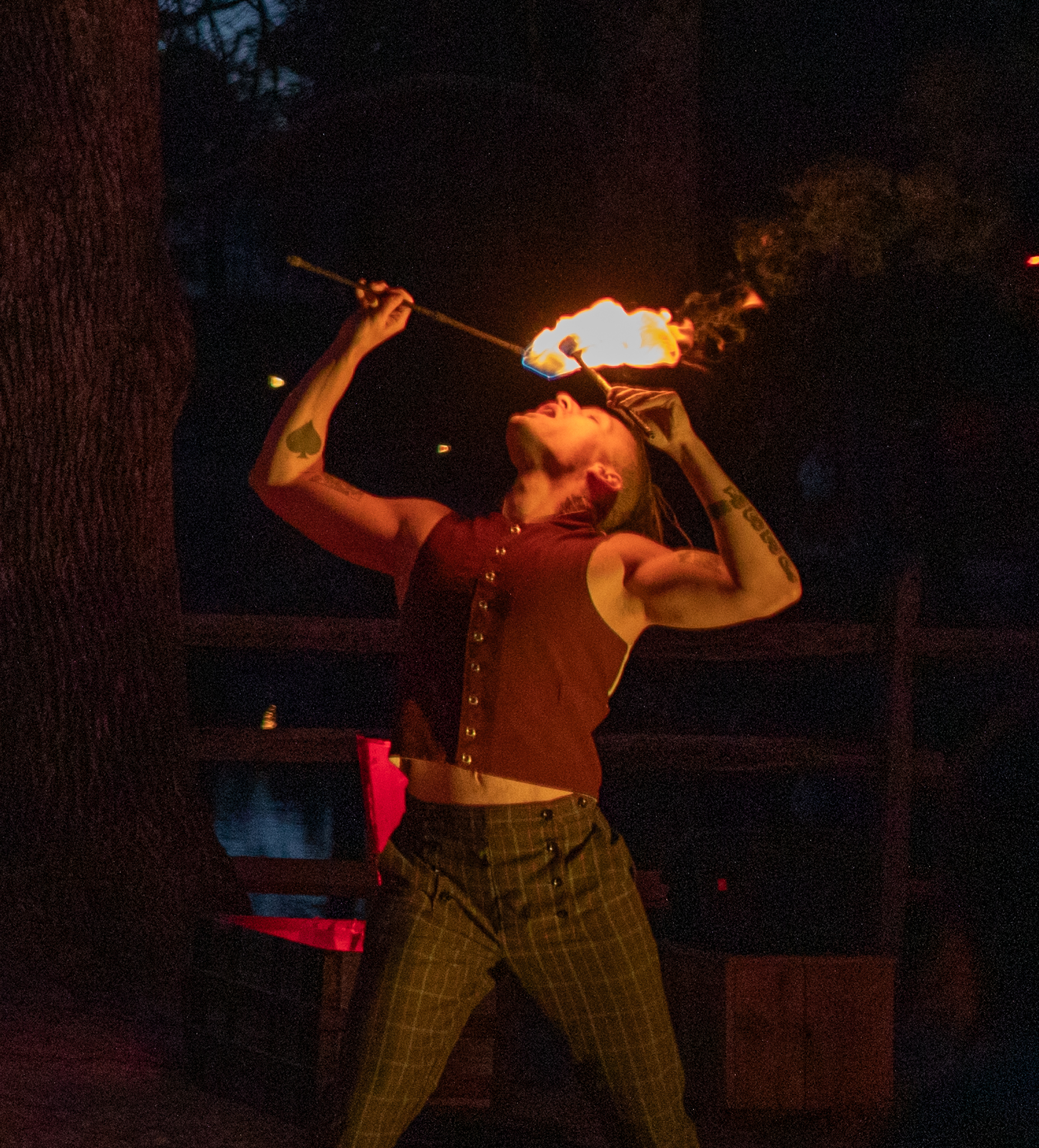
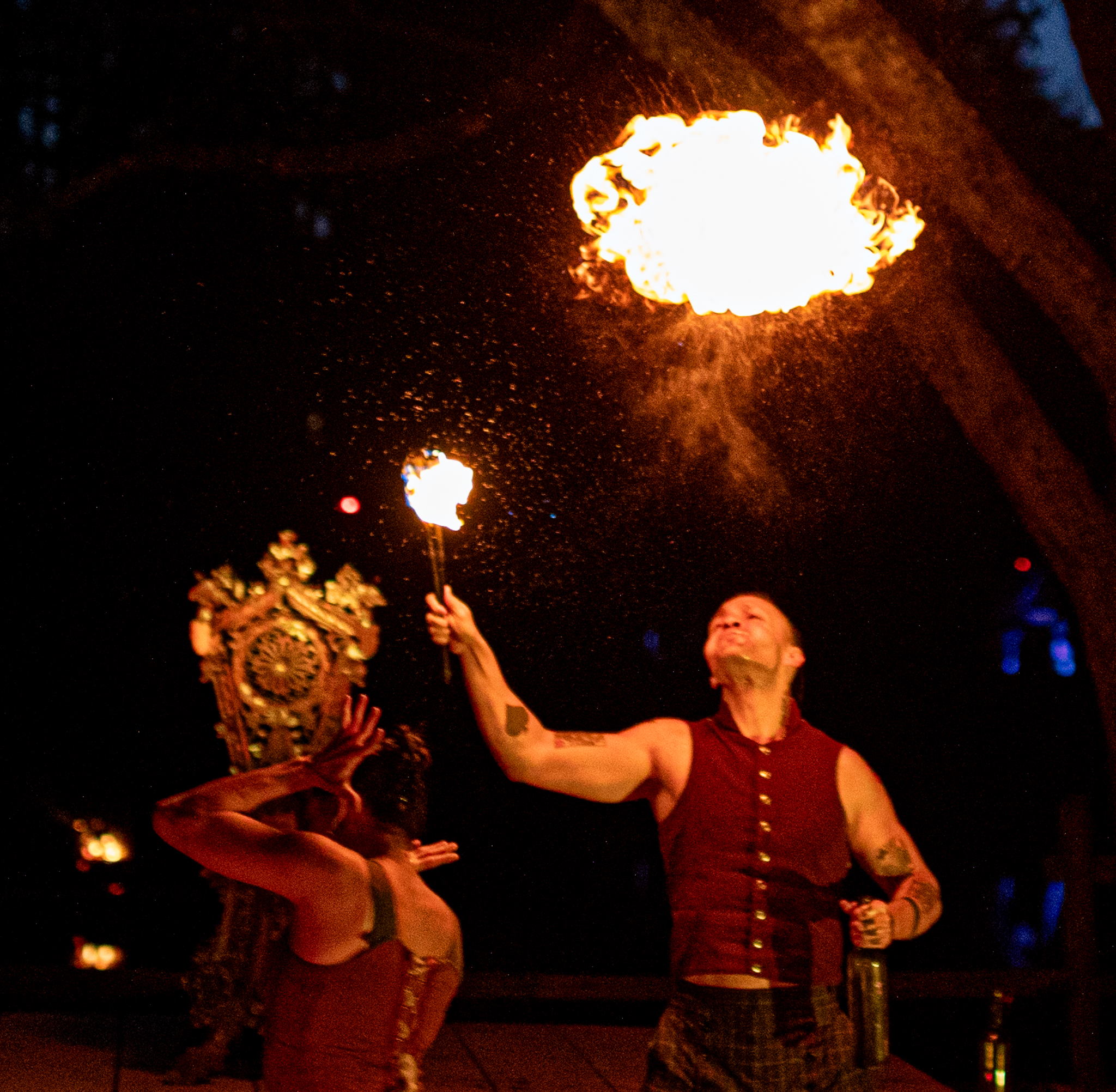
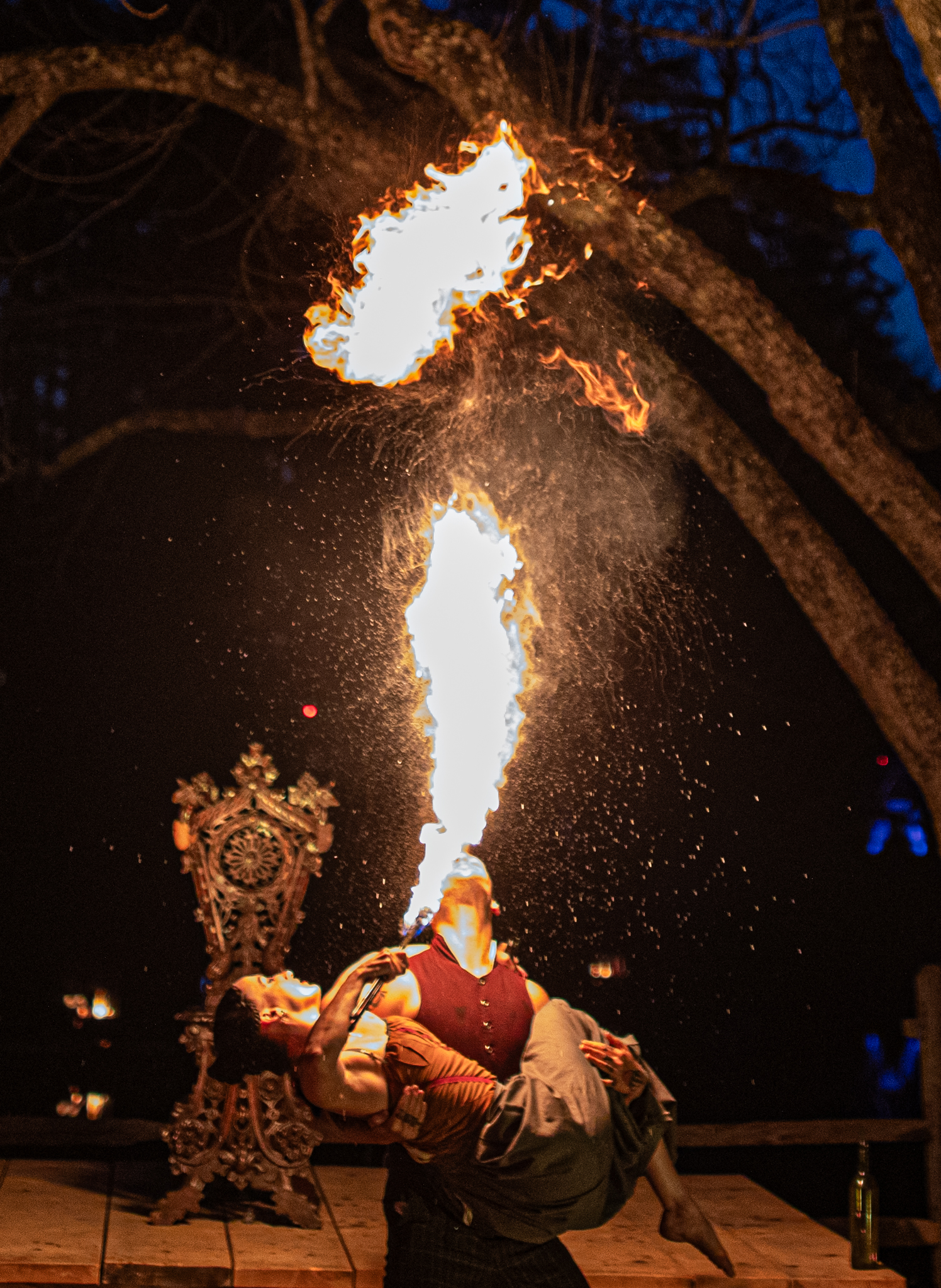
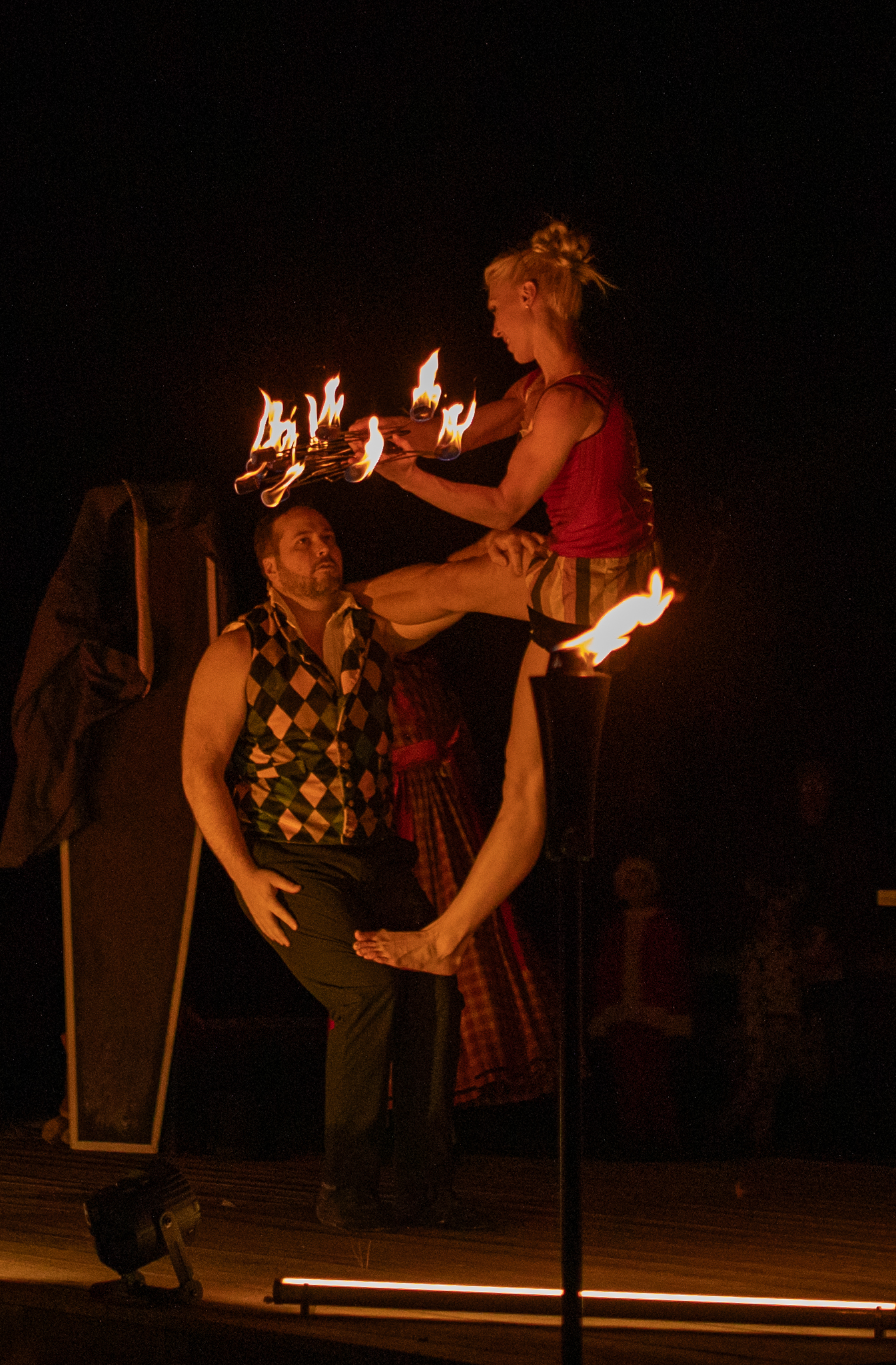
As the evening wore on and darkness fell upon the village, The performers kept everyone warm and entertained! Ignatius and Anastasia, aka the Masters Of The Flame, kept everyone enthralled with their fiery tricks! I liked the contrast of the agility and graceful of Philomena and the pure rock and roll daredevil action of Ignatius and Anastasia!

After that breath taking display, it was on to the Cyrkus Vampyr Finale Ultimo. As the name would seem to suggest, this was the finale of the evening.

This performance included some awesome acrobatics and more fun with fire!

There were also additional shows at the event. In the spirit of the Halloween season, there were some macabre events like this re-enactment and info session about wakes. This event was both respectful and informative.

There was a lot of differences from wakes during the early 1800s. For instance, during the early 1800s, which is the time frame Old Sturbridge Village is based, people didn’t take visitors for wakes. People’s wakes were very different. People mourned and reflected on their own. A casket with a mannequin represented how the people would mourn.

The lighting and decor added to the atmosphere of the event.

The performers at the event were not the only people who dressed up! Some of the visitors also wore costumes or other decorative items.

In addition to all of the performances, there was a Clues & Candy game where they had to collect stamps to complete a picture. The lucky ones who completed the tasks were rewarded with a treat pick up! There were also demonstrations of casket making, musicians and spooking story telling!

Despite all of the fire and death defying acrobats (or maybe because of it), the Phantoms By Firelight event was a big hit with both old young!

Please see below for videos from the event!


6th Annual Salem Vintage Lawn Party (Salem, MA)

Date Of Event: September 14, 2024

Location: Salem Commons , North Washington Square, Salem, MA (35 minutes northeast of Boston, MA)

Cost: Free

Dog Friendly: Yes

Universally Accessible: Yes

Summary: Salem Commons transformed into the days of the 1920s for a very special event.

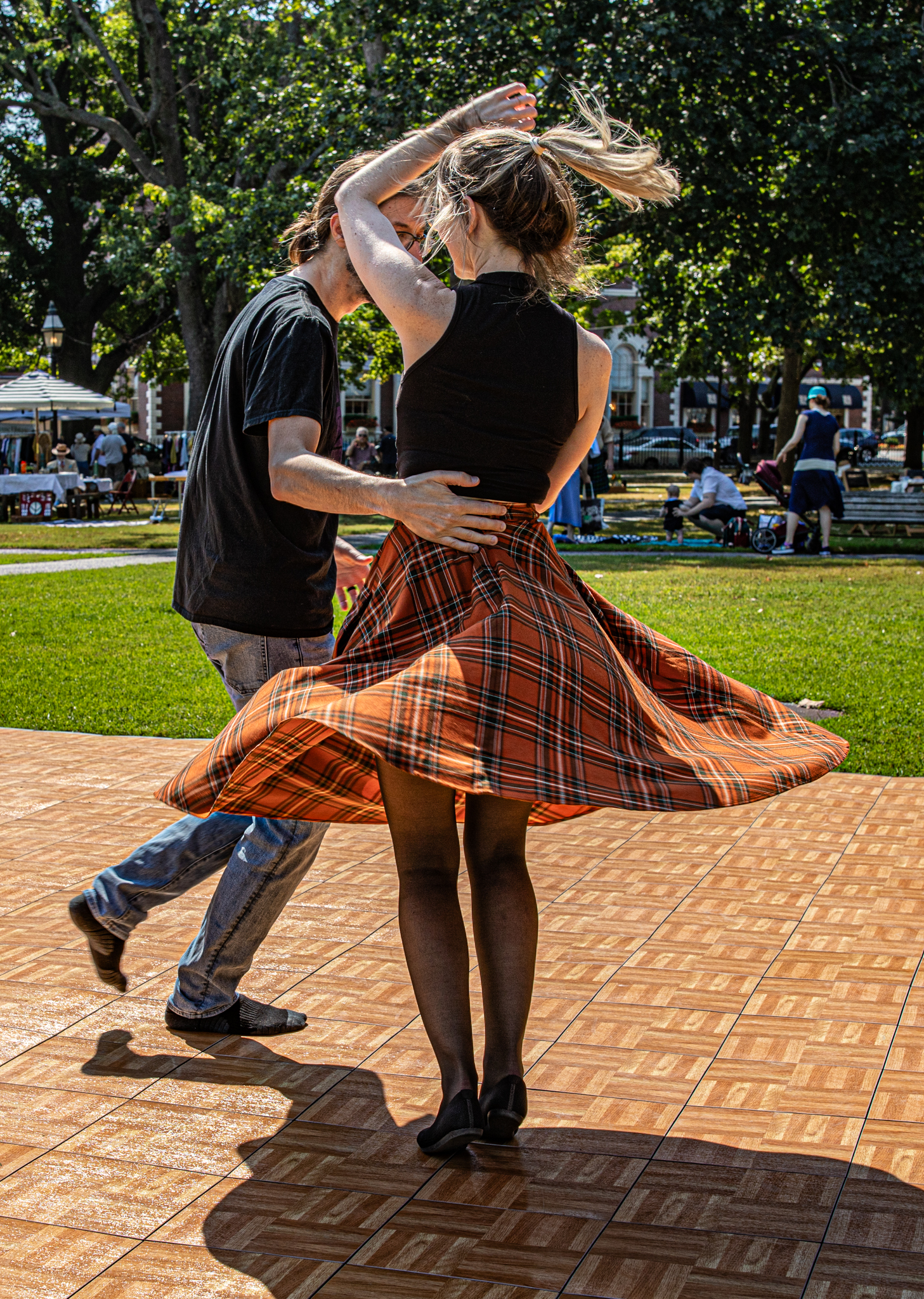
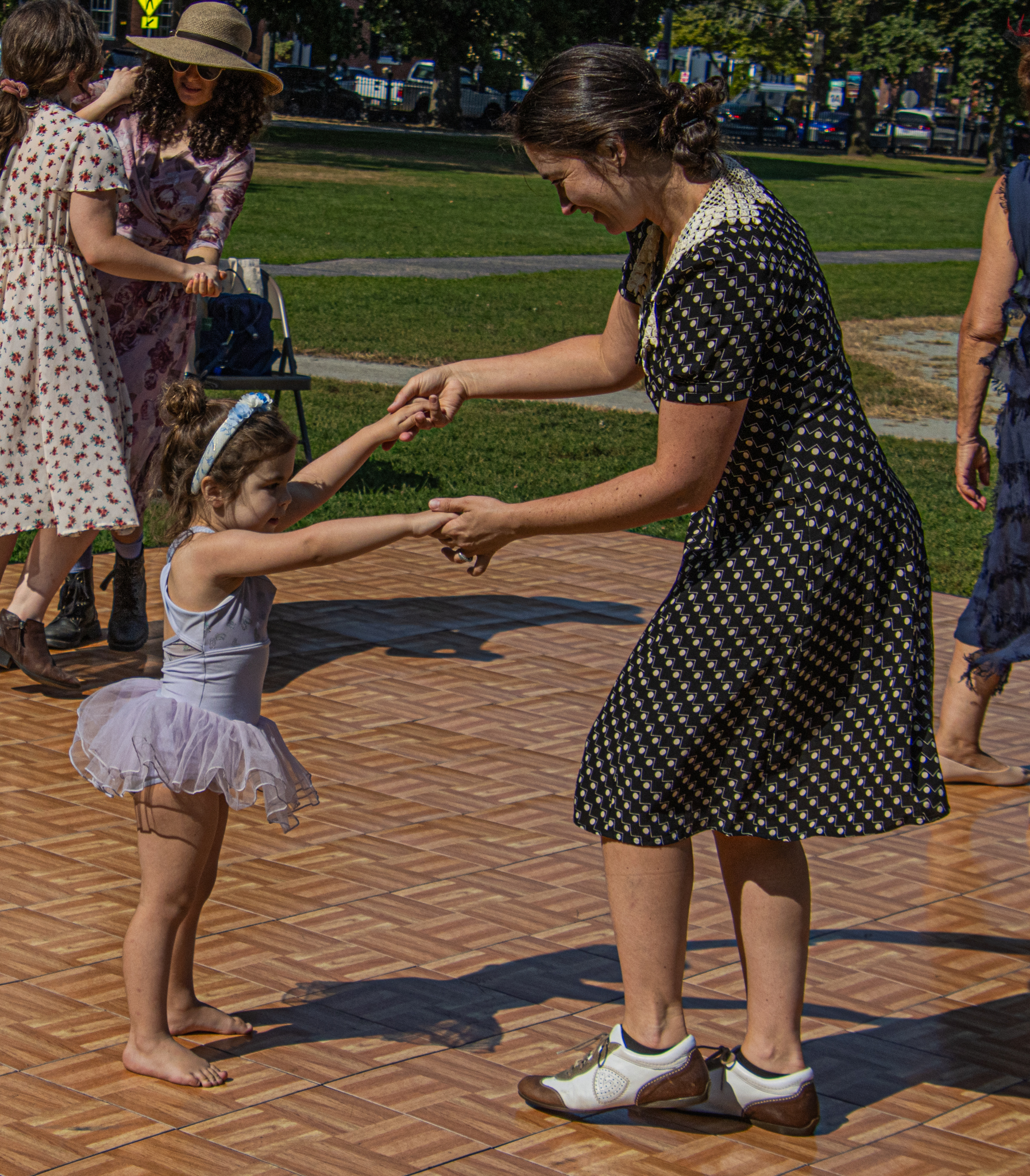
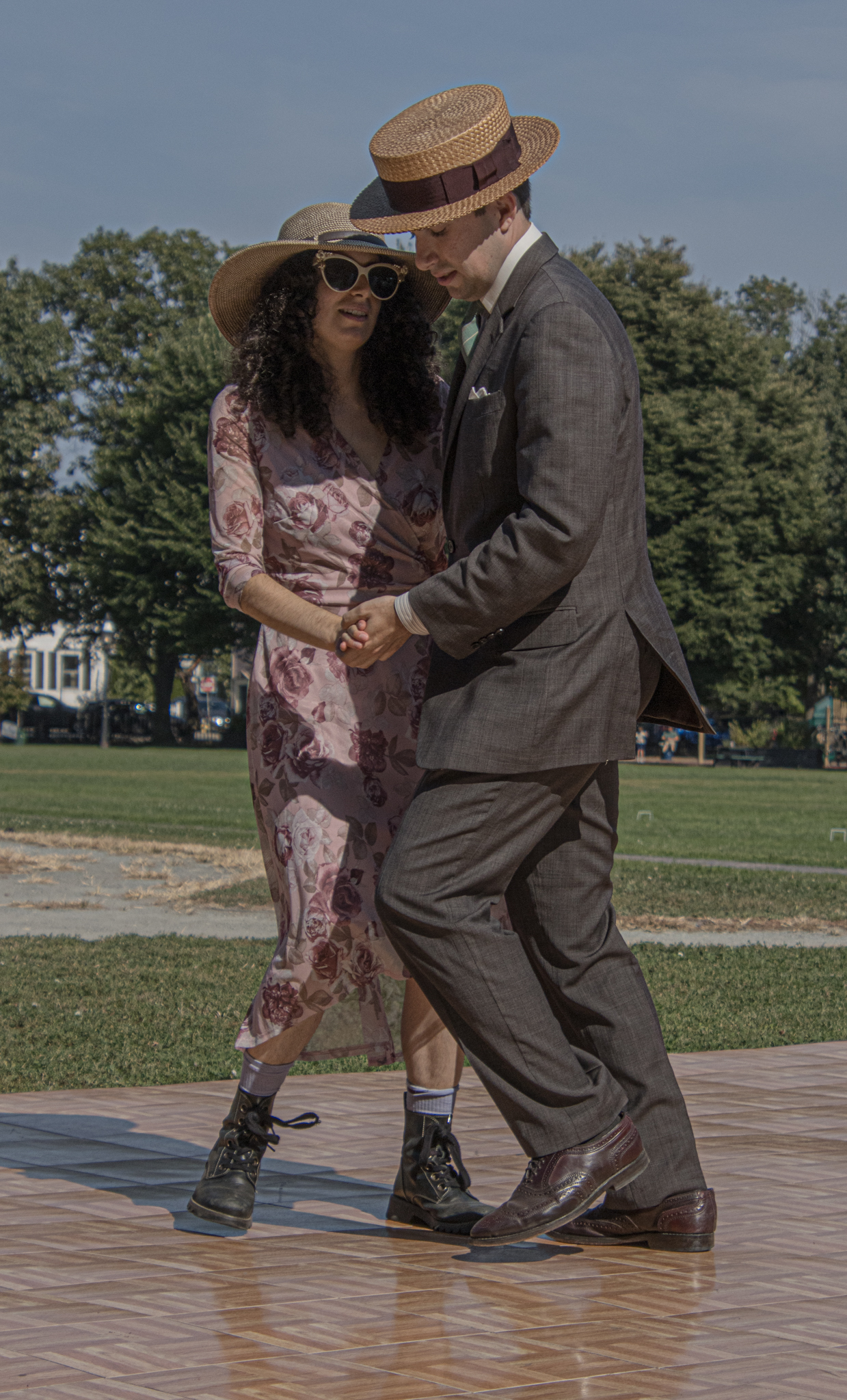
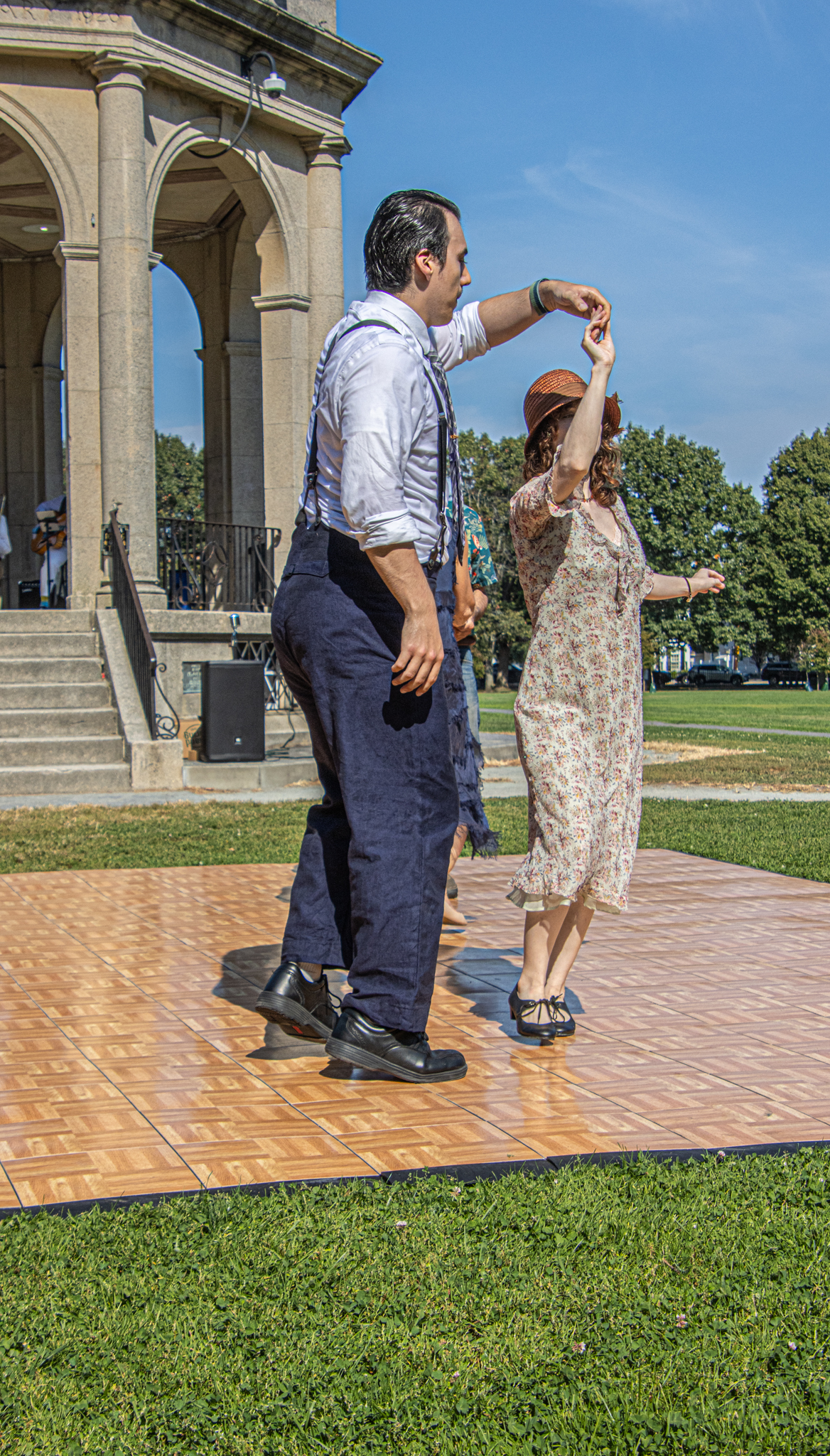
It was a swinging good time last weekend at Salem Commons.

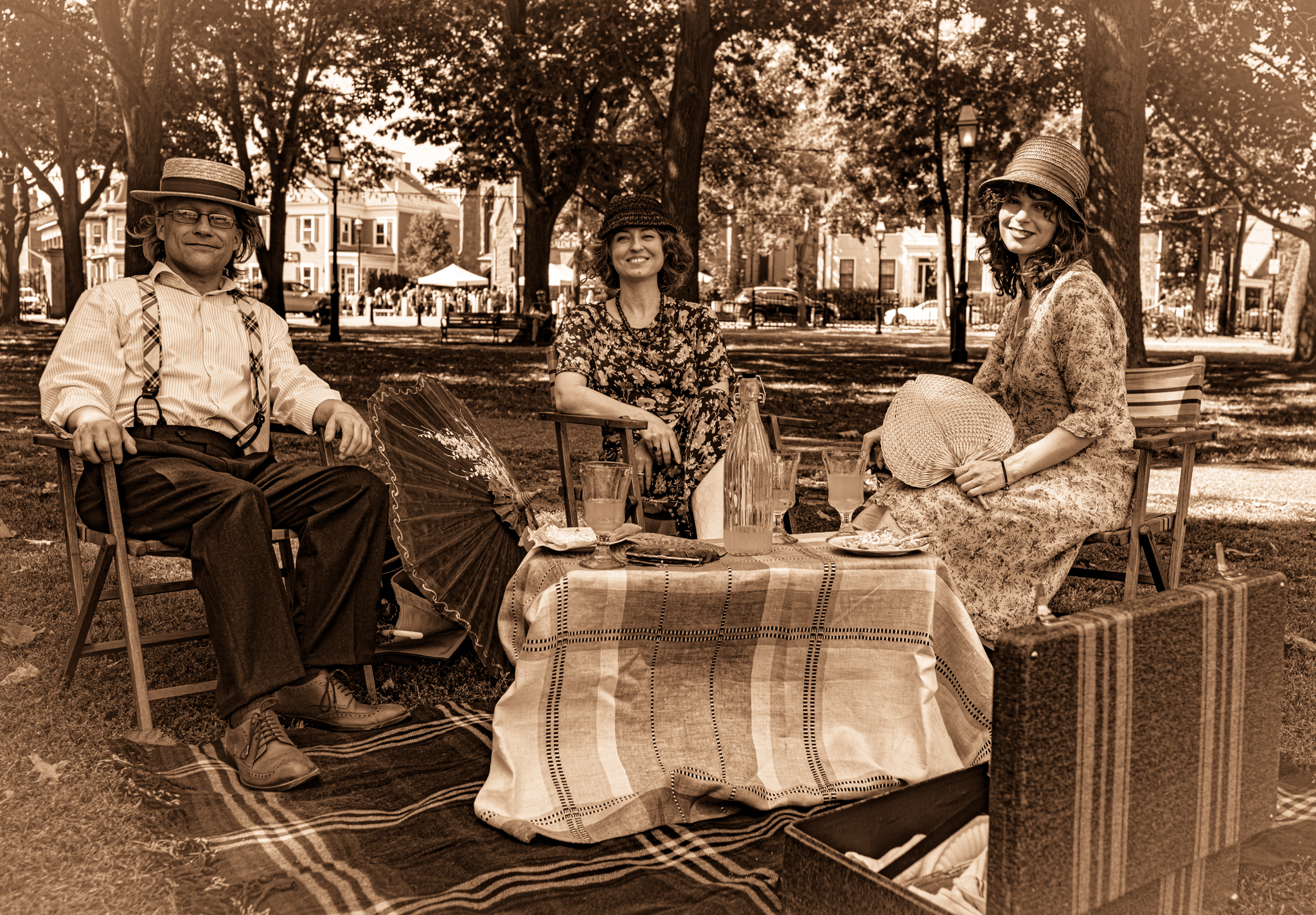
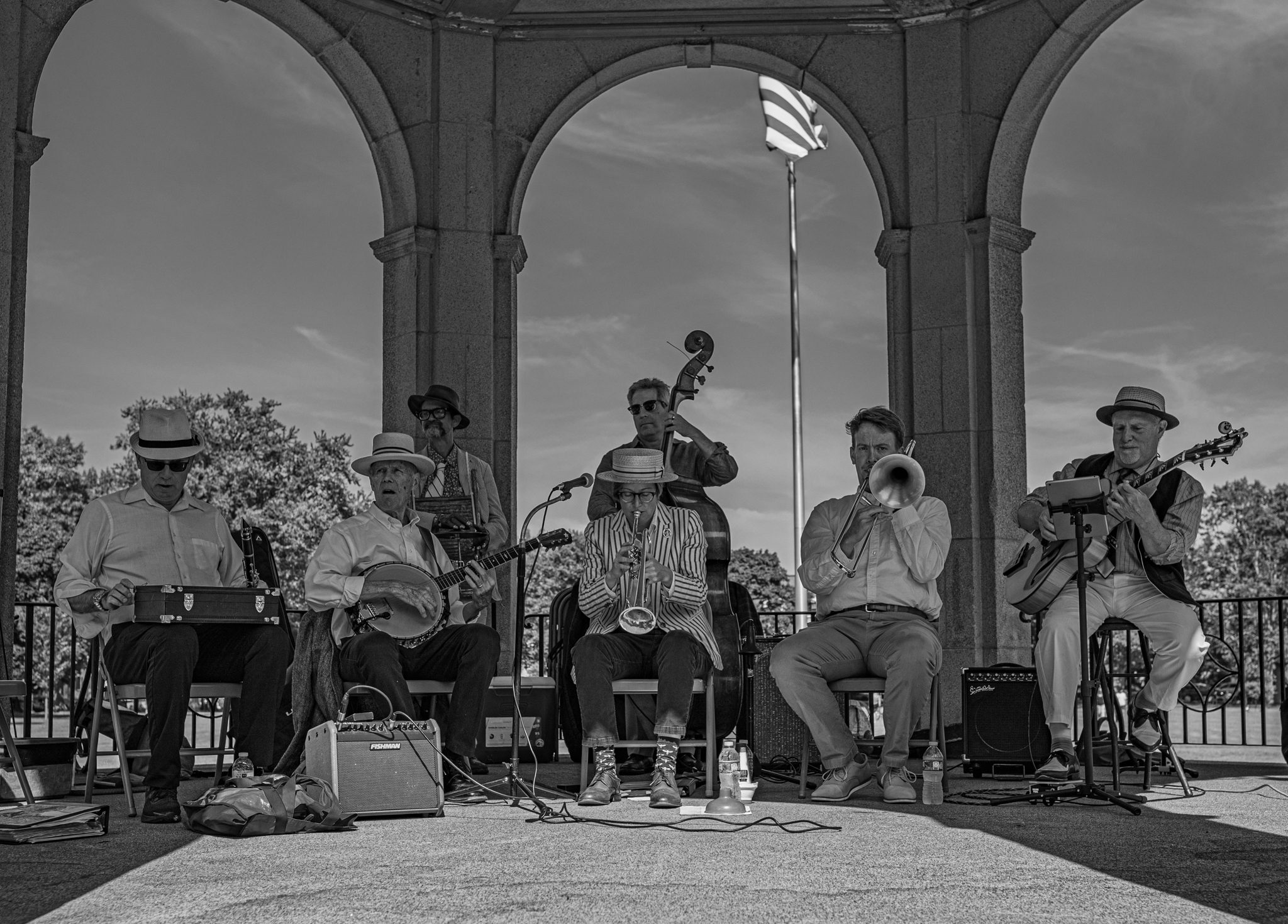
For the past 6 years, the Salem community Neighborhood Association has hosted the Vintage Lawn Party. The party included dancing, antique cars, music and vendors selling all things vintage.

On my way to the event, I noticed this sky writer. Only in Salem!

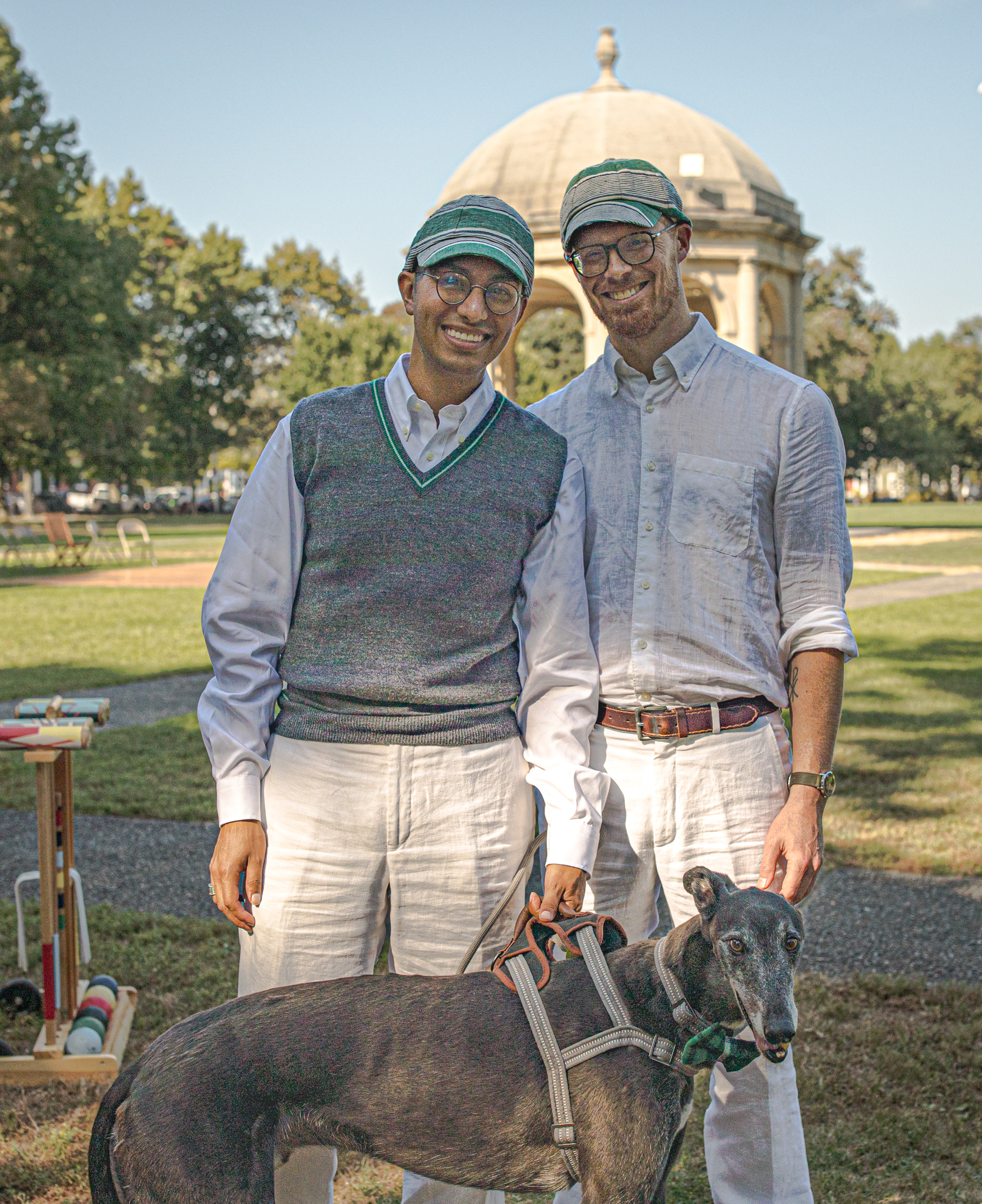
While dressing up for the event is not required, it is encouraged and appreciated! Many people came dressed up in their best vintage wear! In fact, it seems like each year more guests decide to don their best attire. I used some special settings such as black and white and sepia to give some of the photos an old timey feel.

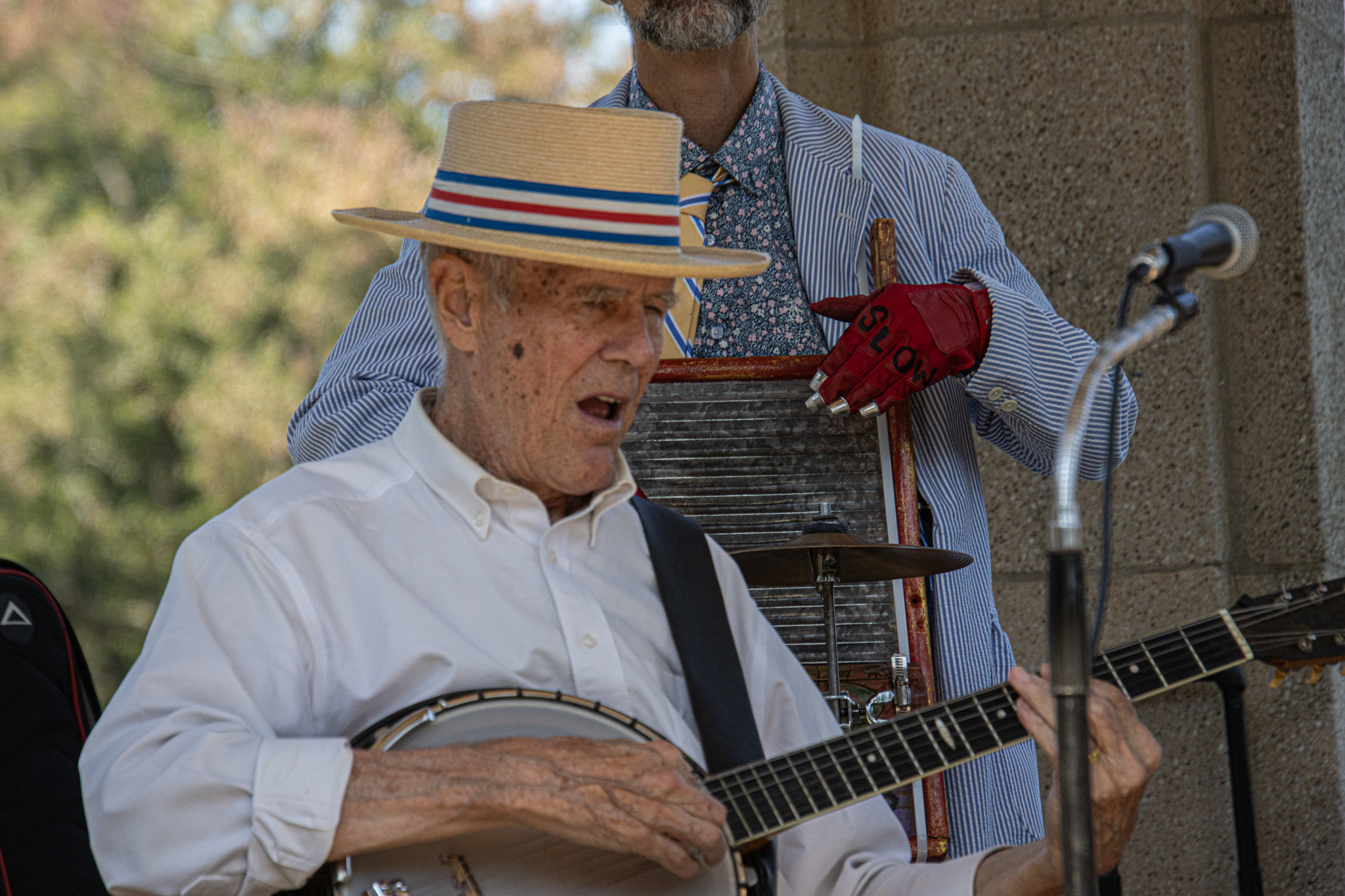
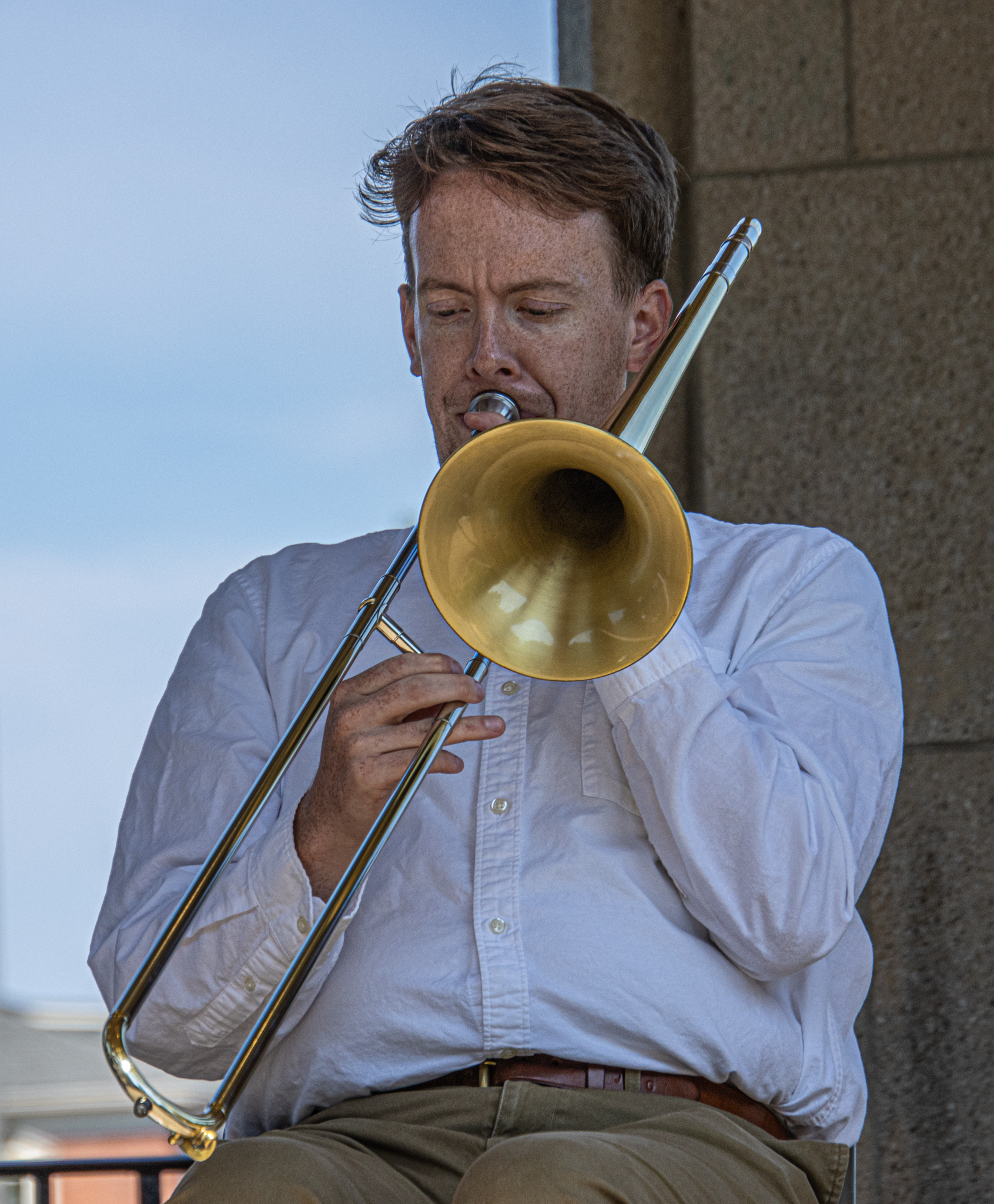
Annie and the Fur Traders kept the people dancing with their swinging sounds.

And, of course, there was dancing.

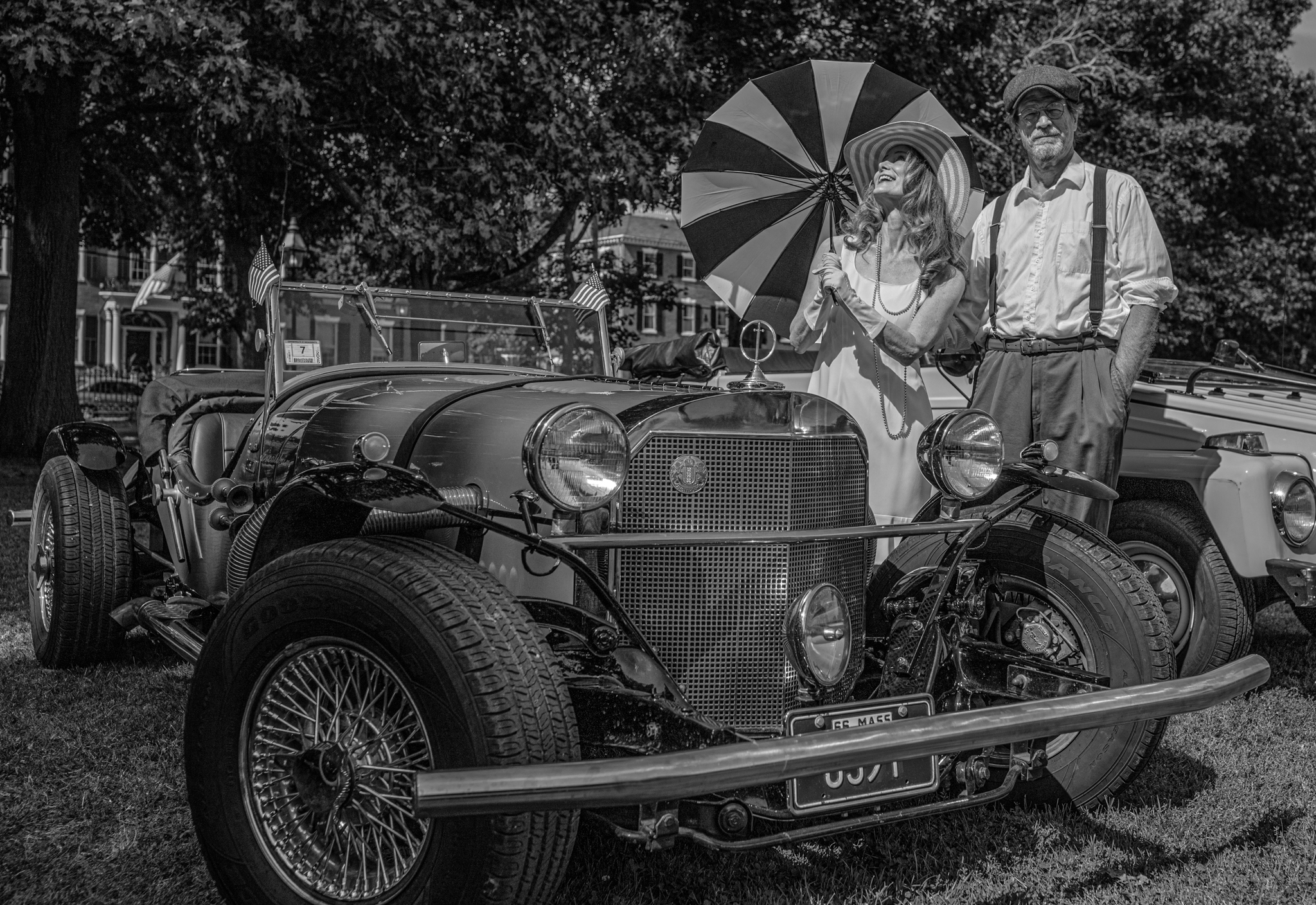
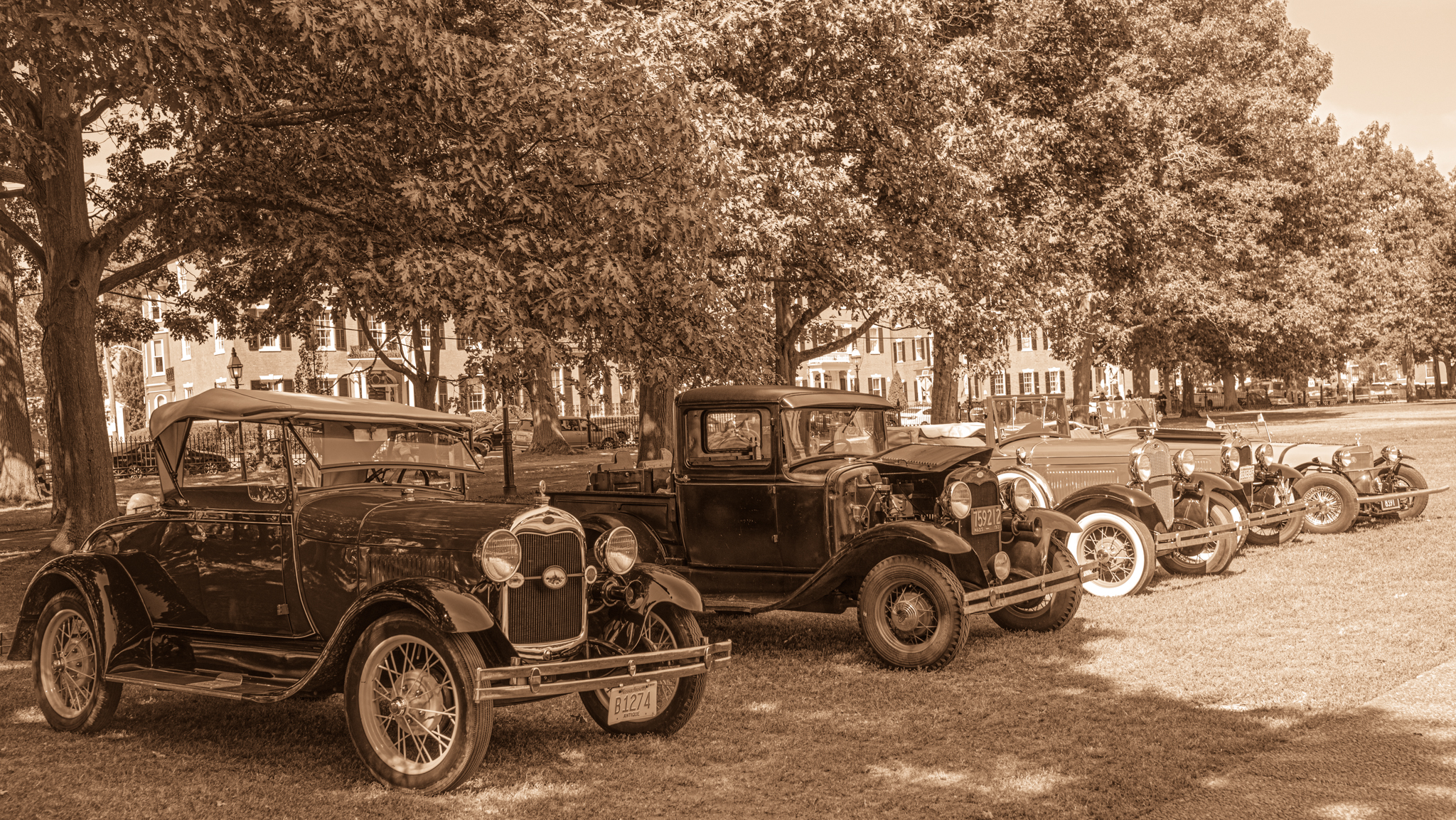
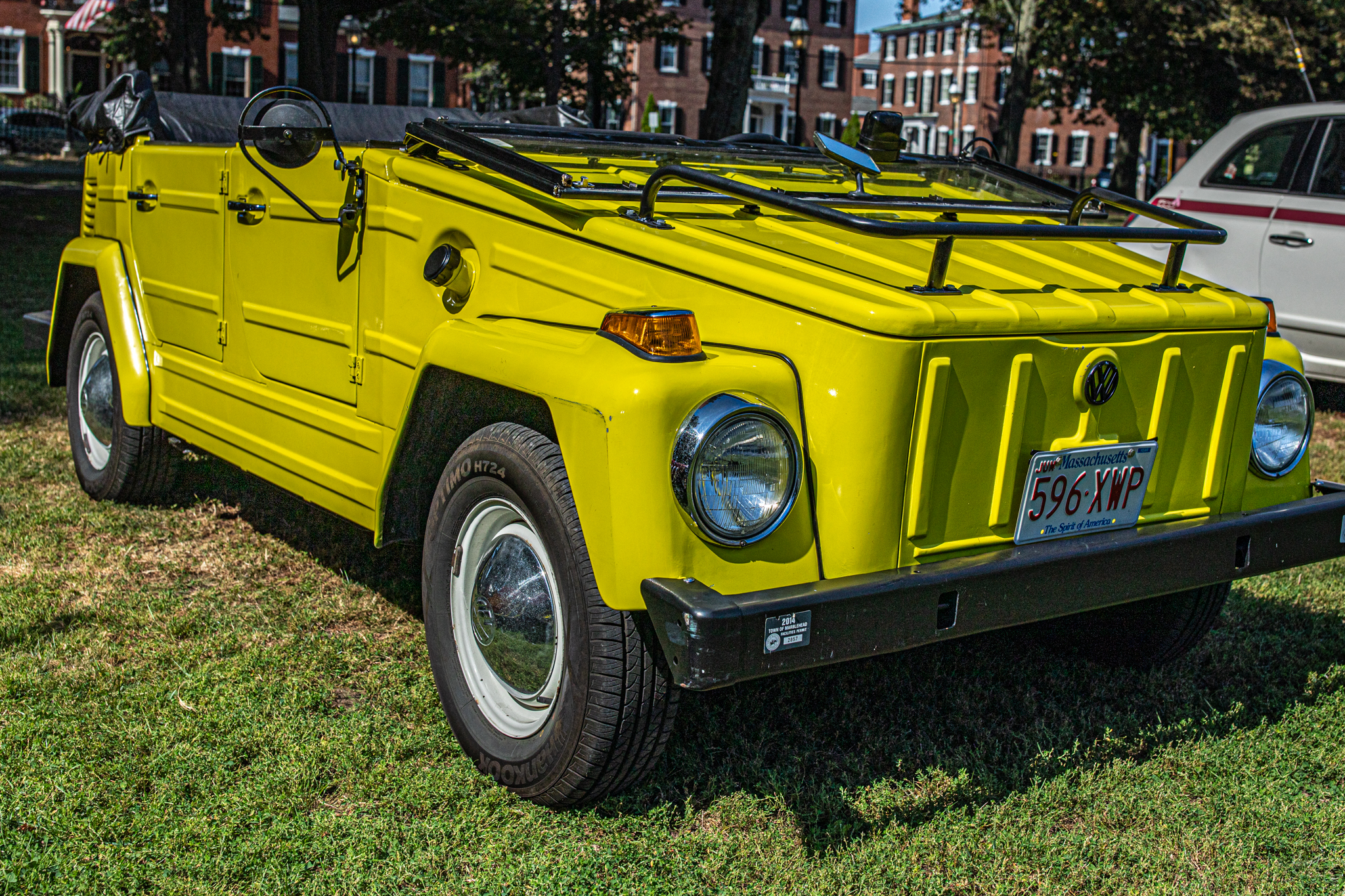
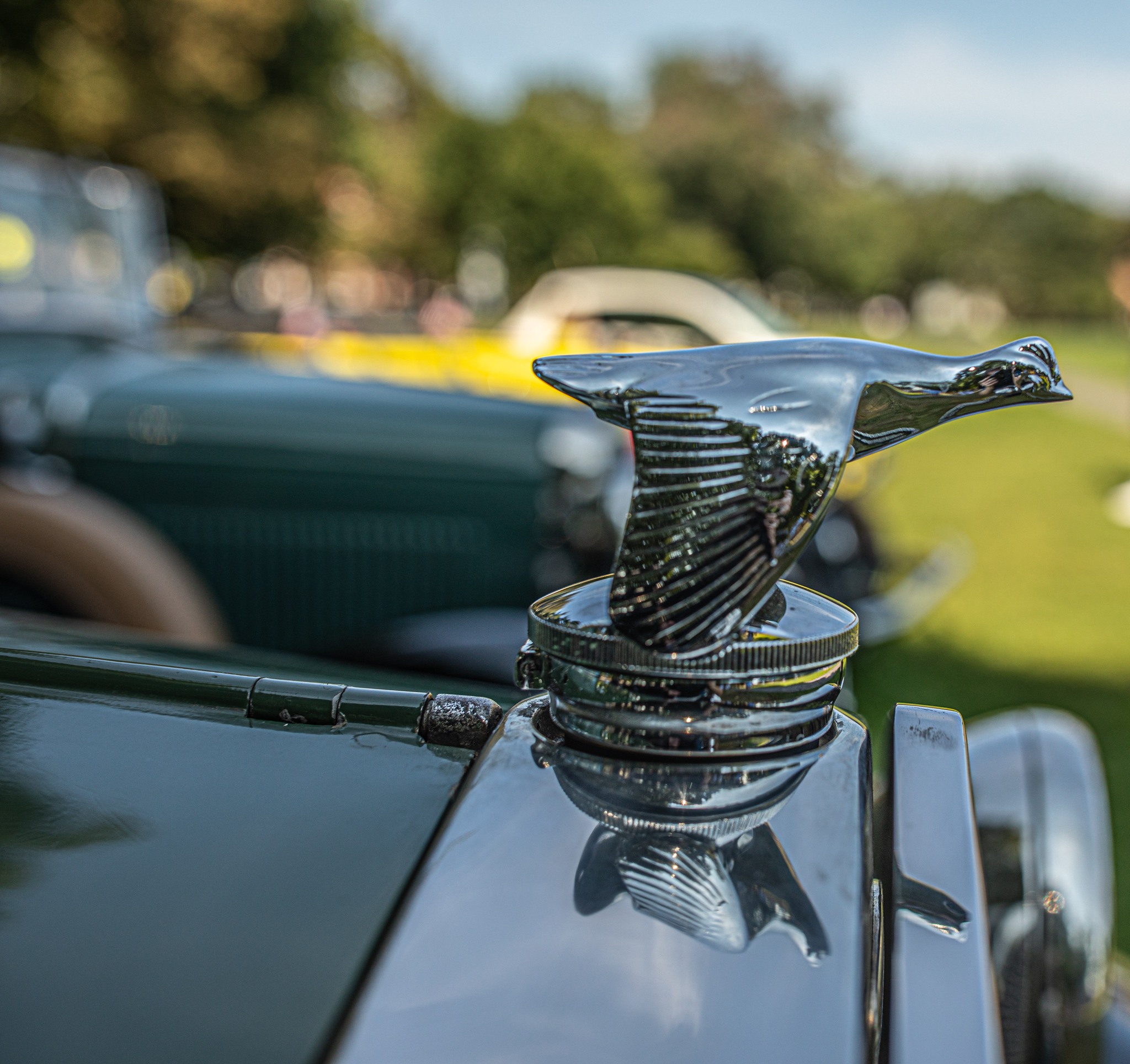
If dancing isn’t your thing, there were some cool cars to check out. In previous years, there was only one or two cars at the party. But, over time as word about the party spread, more and more cars began to show up. I love the curves, shape and sleekness of the cars.

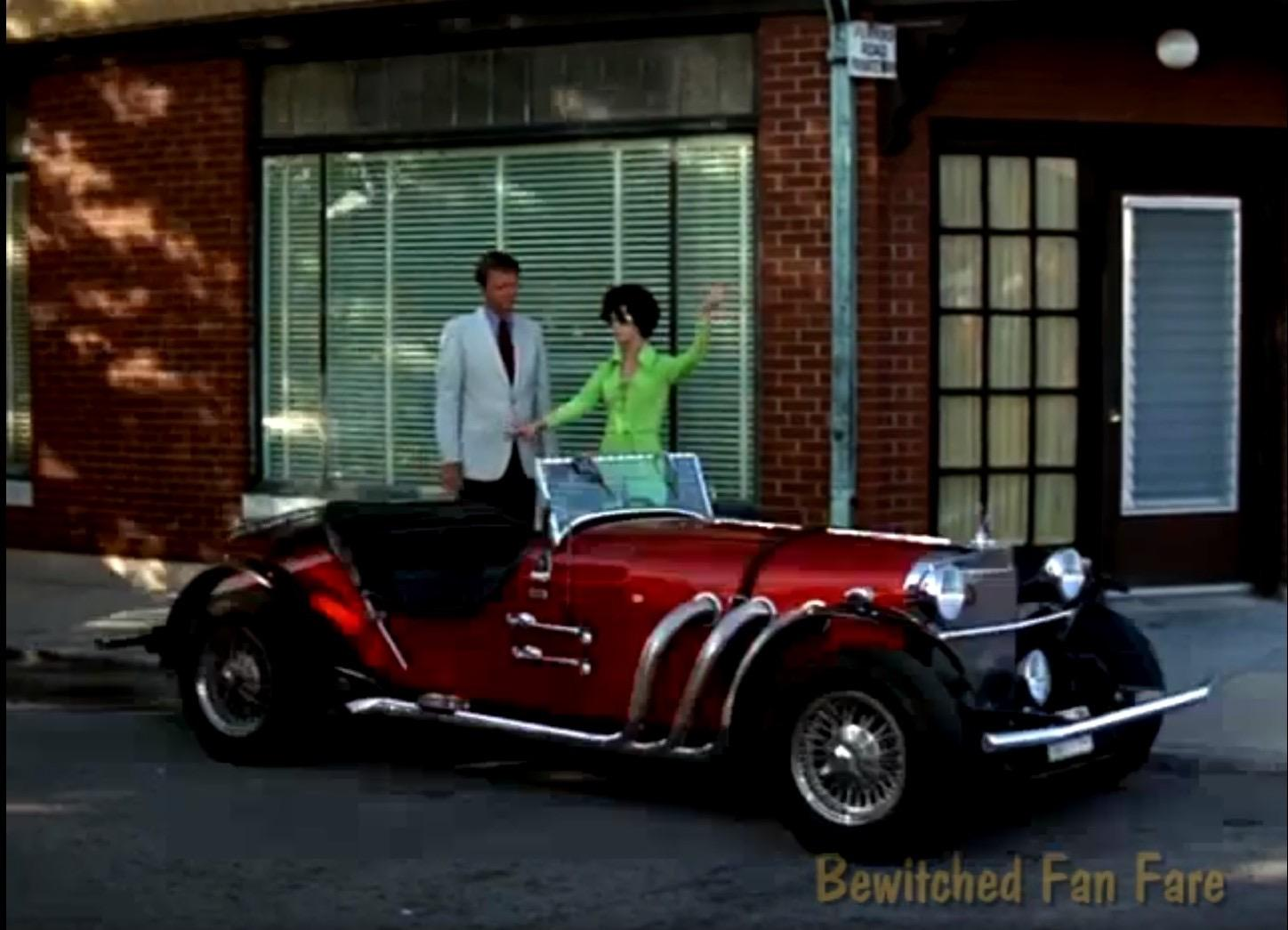
This 1966 Excalibur has a special connection to Salem. It was the very same car used in the Bewitched episodes filmed in Salem, MA. The owner of the vehicle, “Sid” posed with his car.

Below is a photo of the very same car from the Bewitched episode filmed in 1970.

There were also lawn games for everyone to enjoy. Although it may seem like a new sensation, cornhole has existed since the 1880s in different forms.

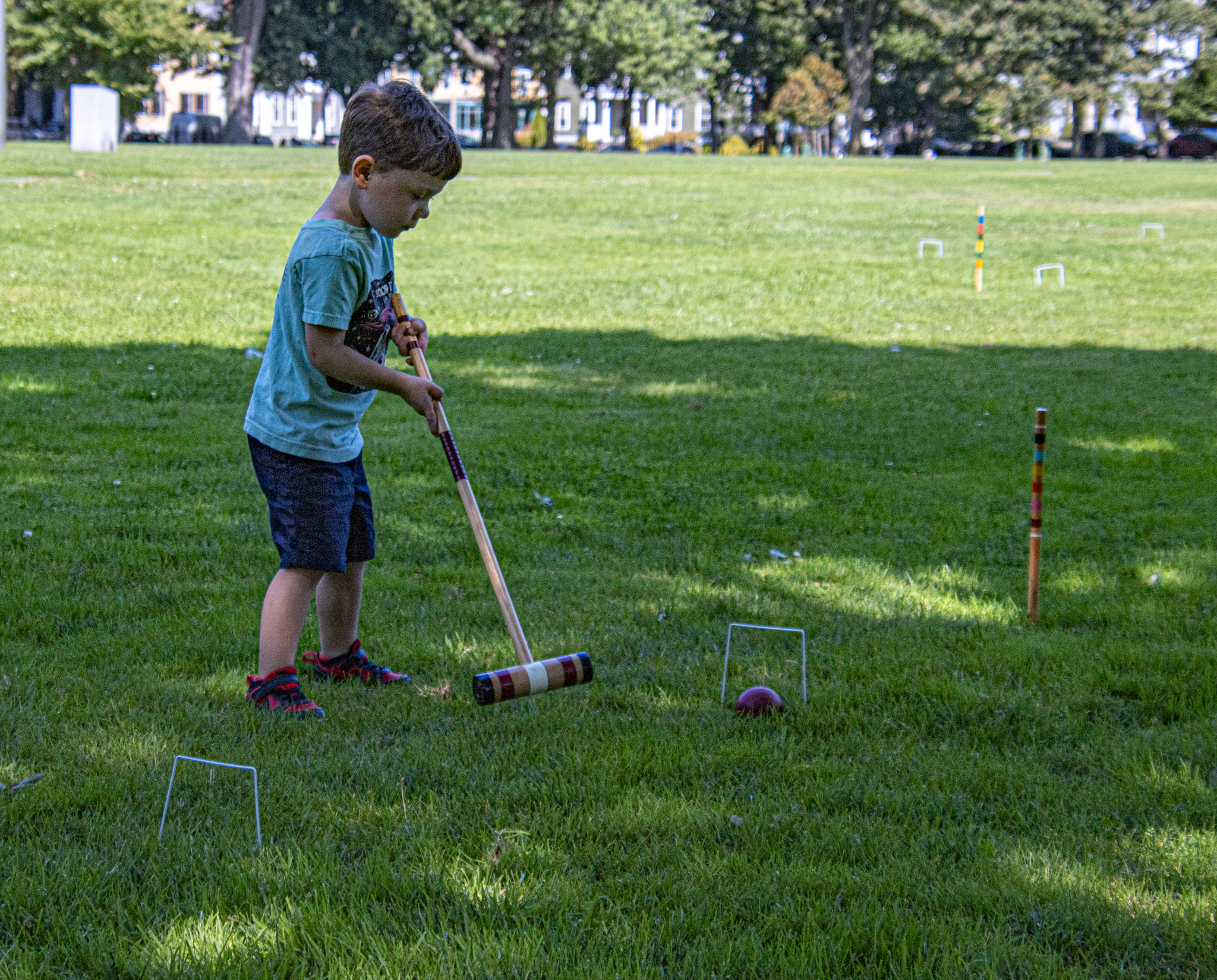
Croquet, another game that has been around since the 1800s, was also a popular game played by both the young and old.

This 5 year old is quite the croquet prodigy.

There were a number of merchants selling everything from clothing, art ceramics and everything in between.

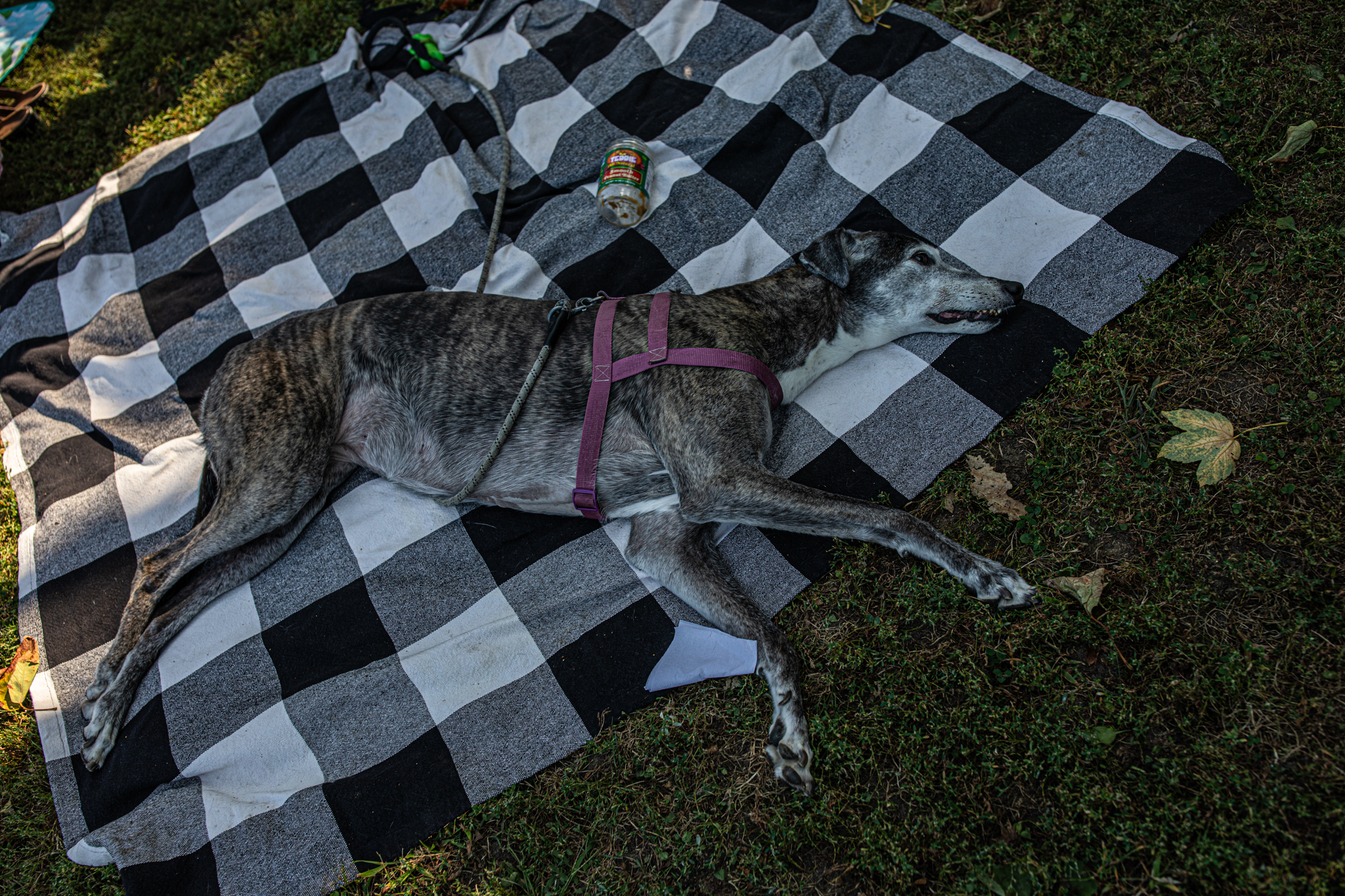
After a long day of partying and dancing, this pooch was all partied out!


2024 Revere Beach International Sand Sculpting Festival (Revere, MA)

Date Of Event: July 19-22, 2024

Location: Revere Beach, Revere, MA (15 mins of Boston, MA)

Cost: Free

Parking: Visitors are encouraged to take public transportation or park at the Wonderland T Station.

Dog Friendly: Yes (dogs are not allowed on beach but you can view the sculptures from the sidewalk)

Summary: 15 sand sculptors from around the world came to Revere Beach to compete to be the winner of the sand sculpture festival.

Website: 2024 Revere Beach International Sand Sculpting Festival

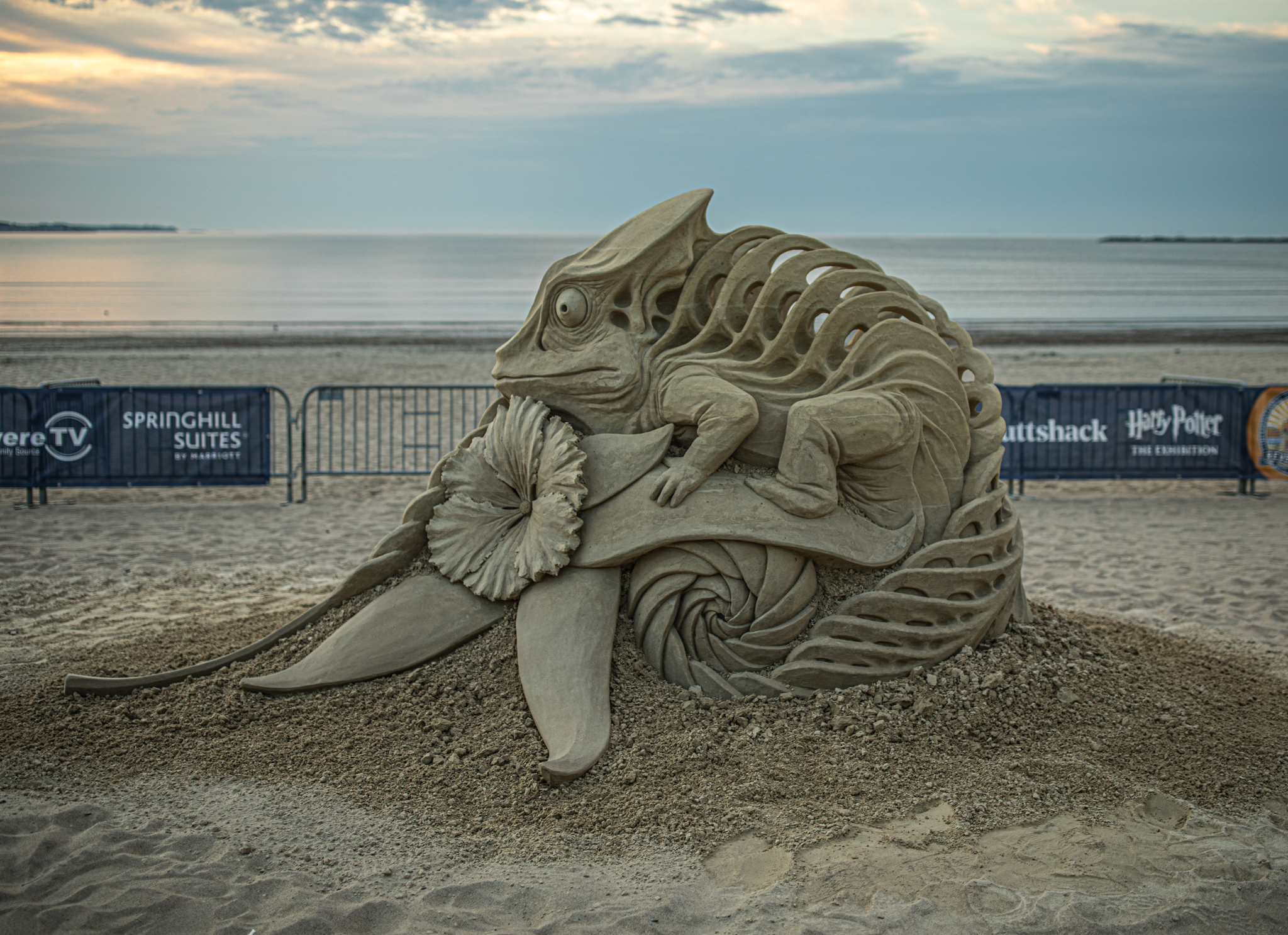
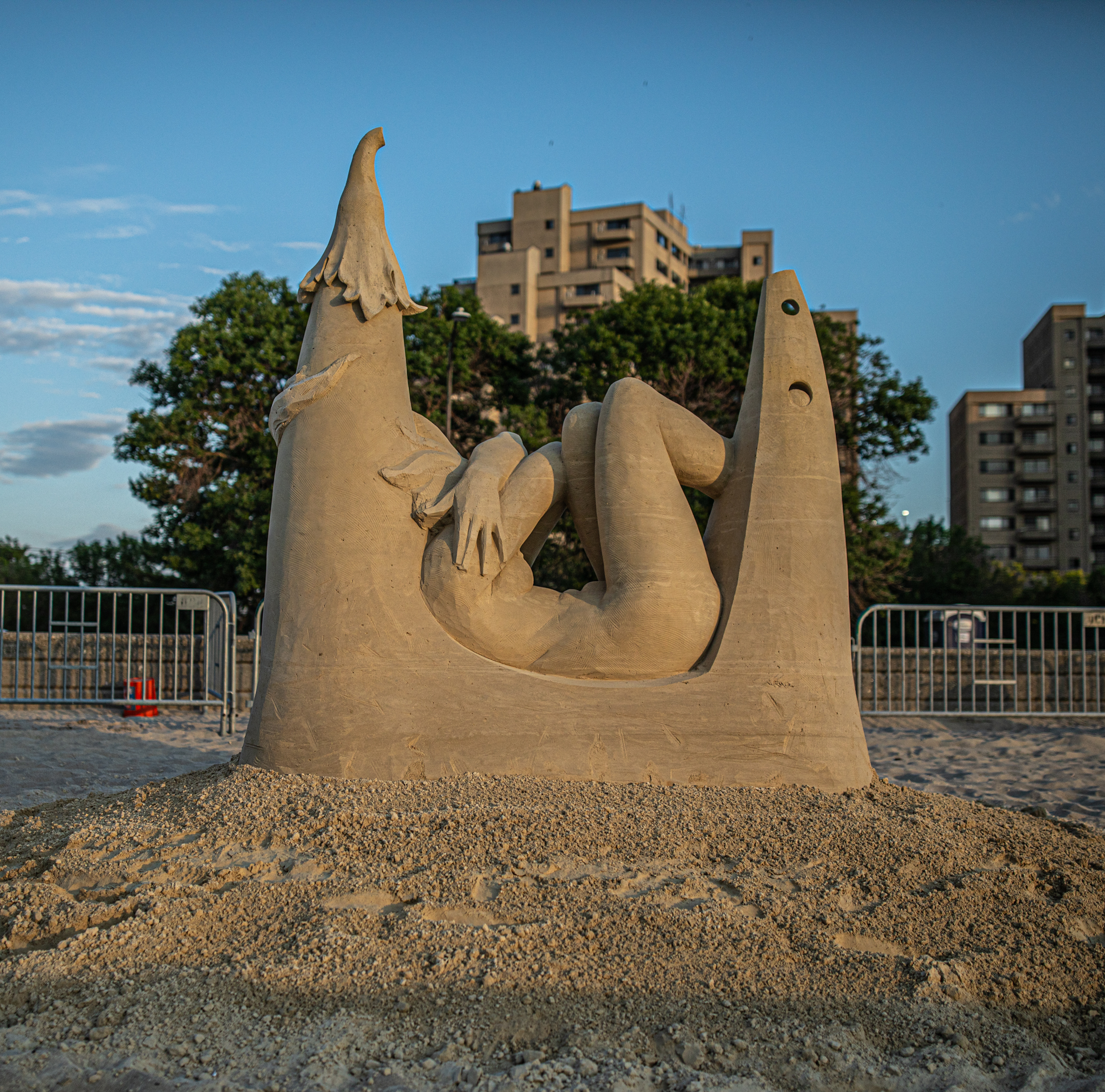
During one weekend in July, fifteen sand sculptors from all over the world showed off what they can do with sand at Revere Beach Sand Sculpture Festival.

To celebrate the 20th annual festival, there were sculptures of, of course, cake.

This sculpture incorporated themes and elements of previous sand sculptures at the event, and, of course, some of the sponsors.

While there were sculptors from all over the world at the event, there were also some familiar faces there. If you go to the Hampton Beach Sand Sculpture Classic or read my posts about that festival, some of the names of the sculptors from this competition may sound familiar. In fact, 4 of the participants in the Revere Sand Sculpture Festival also participated in the Hampton Beach Sand Sculpture Classic.

The 3 day festival, which includes entertainment acts, food stations and carnival rides, took place from Fri, July 19 until Sunday, July 21. The awards were presented Saturday evening. Speaking of awards, I am going to list the sculptures with the award winning sand sculptures first.

1st Place & Sculptor’s Choice – “Blend In” by Jobi Bouchard (Canada)

2nd Place – “Untitled” by Slavian Borecki (Poland)

3rd Place – “Dinner” by Susanne Ruseler (The Netherlands)

4th Place – “Barn Swallow, Swallow Barn” by Bouke Atema

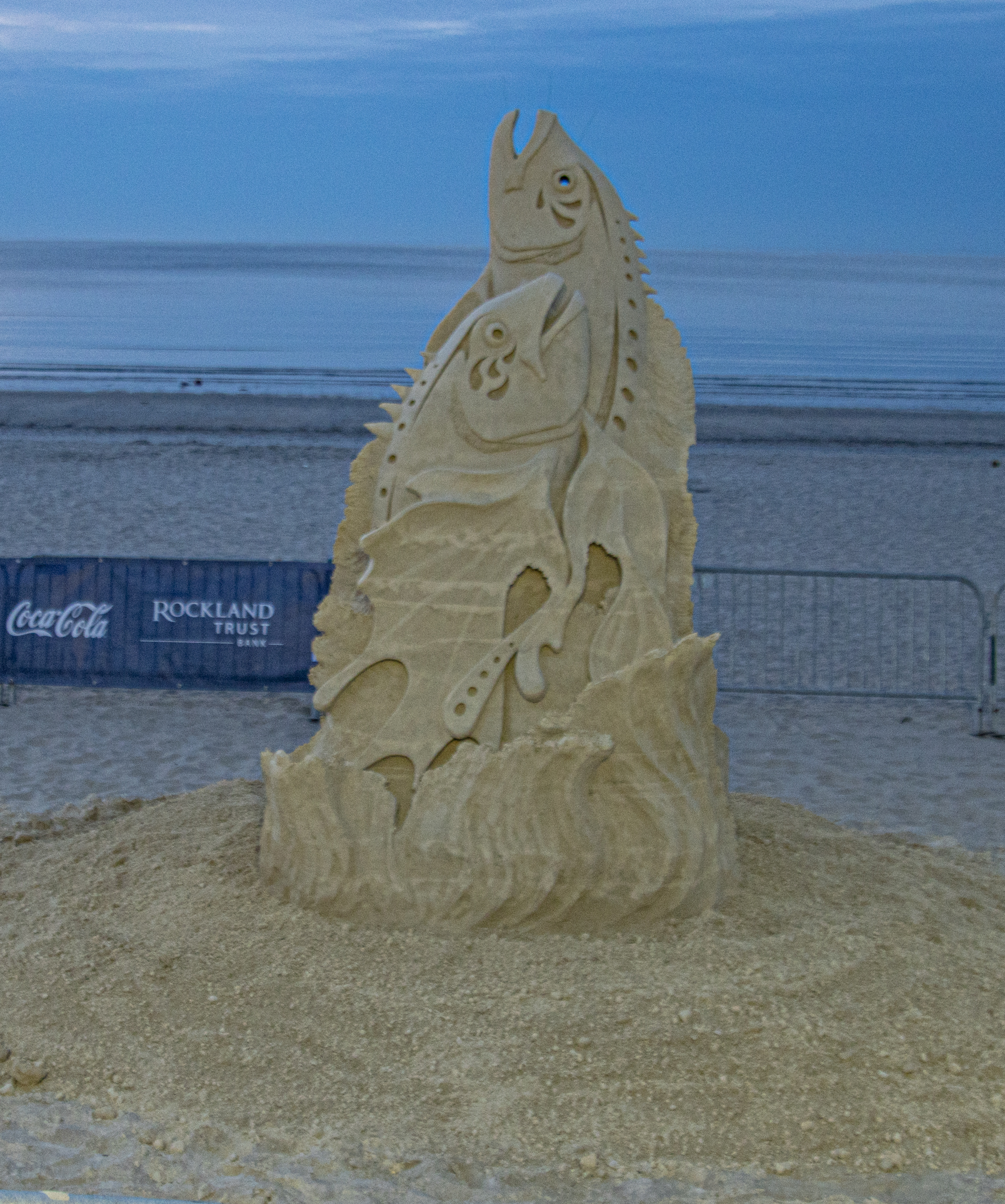
5th Place – “Fish Fantasy” by Karen Fralich

The remaining sand sculptures that did not win any awards but were still very impressive are listed below.

“Pray” by Matsu Yoshi (Japan)

“Reflower” by Abe Waterman (Canada)

“Embrace Your Shadows To See Wholeness” by Hanneke Supply (Belgium)

“Say More” by Morgan Rudluff (California)

“Phoenix Rising” by Bruce Philips (California)

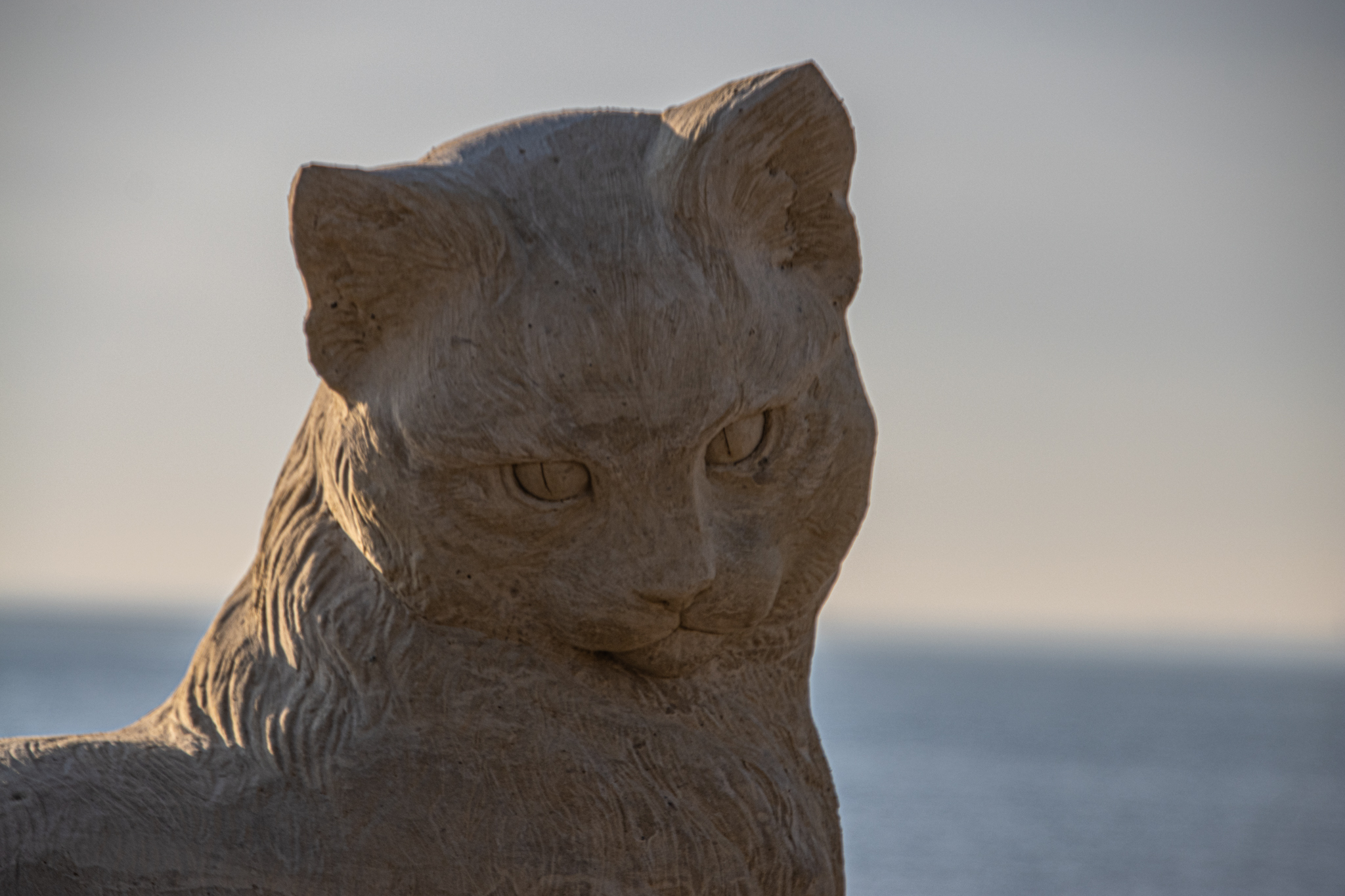
“Cat Burglar” by Patrick Harsch (Florida)

“Dice Of Destiny” by Greg Grady (New Hampshire)

“The Special Selfie” by Ndricim (Jimmy) Bejko

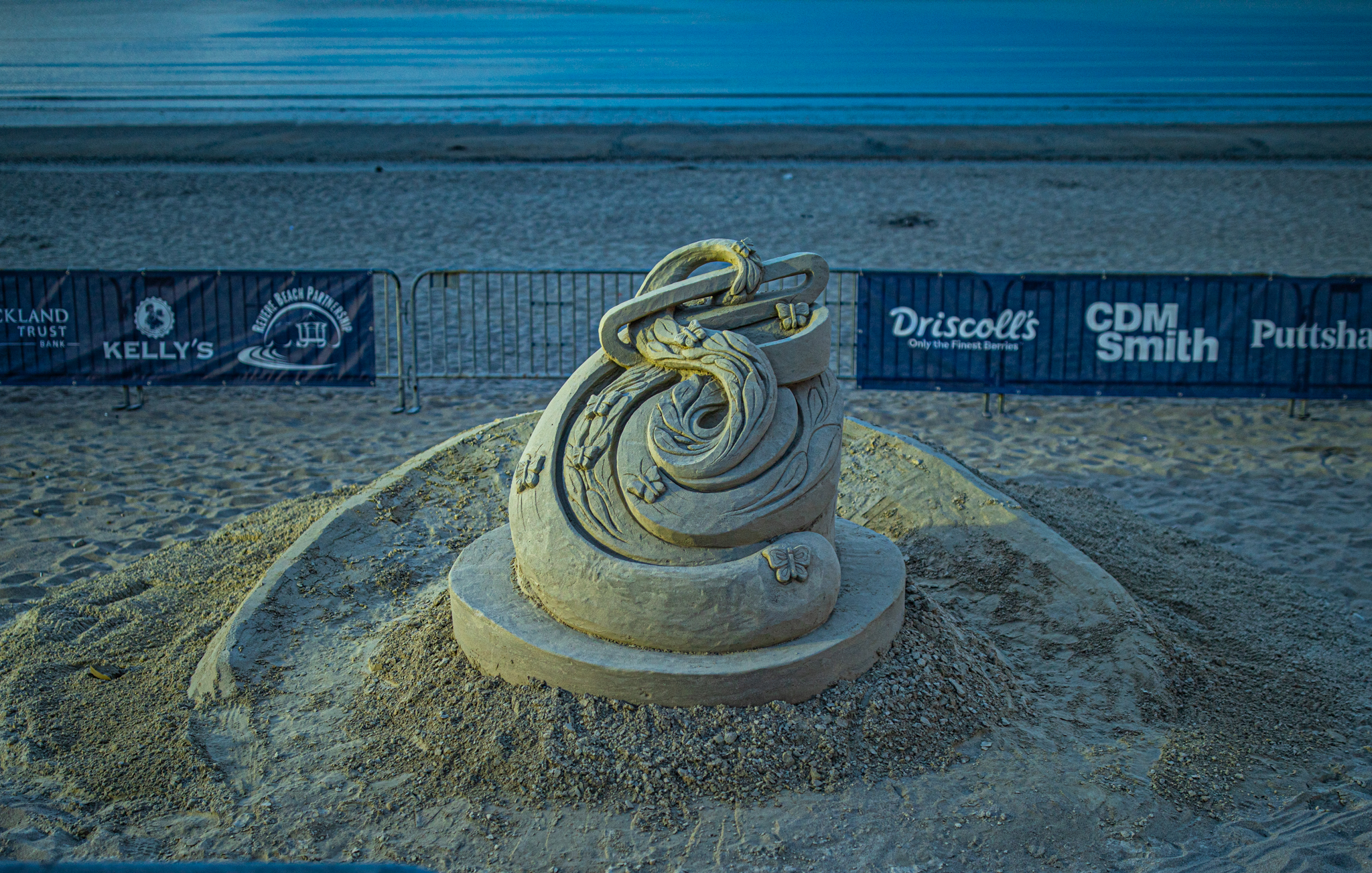
“A Butterfly’s Playground” by Deb Barret-Cutulle (Saugus, MA)

“Space Child” by Jeroen Advocaat (The Netherlands)

While all of the sculptures were great, everyone usually has a favorite. For what it’s worth, “The Cat Burglar” won me over. Which sculpture is your favorite?


Winteractive (Boston, MA)

Date of Event Currently on display (Jan 17 – Apr 15)

Location: Downtown Boston (MA)

Cost: Free

Parking: There are several parking garages in the downtown Boston area.

Universally Accessible: Yes

Dog Friendly: Yes

Website: Winteractive

Summary: 16 art exhibits are located throughout downtown Boston.

While this winter weather may have been a difficult one for many of us, there was a bright spot in the downtown Boston area. The walkable art exhibit known as Winteractive brought some color and fun to what can be a dreary and frigid Boston winter.

The exhibits, which were inspired by the winter art festivals in Quebec, Canada, are located throughout the downtown Boston area. However, they are mainly located near Downtown Crossing train station, City Hall Plaza and High Street as well as Summer St. near the South Station train station. You can view the locations on this map. While it is possible to walk to all of the exhibits, it may be a good idea to use public transportation or rideshare services to view some of the exhibits off the beaten path.

As you will see, some of the exhibits are interactive. Whenever possible, I got some friendly people to help use the interactive devices for filming. I am listing these exhibits in the order of their locations. Eleven exhibits are are located in or near the Downtown Crossing area. Two more are located in or near City Hall Plaza and the last 2 are located in the Financial District on or near Summer St. Consult the map on the attached link above if you plan on visiting these exhibits.

Echoes: A Voice From Unchartered Waters

1 Franklin St

Mathias Gmachl (United Kingdom)

Steel structure on base

As you emerge from the Downtown Crossing train station, the first exhibit you will see ifs Echoes: A Voice From Unchartered Waters. This exhibit in the shape of a whale is meant to ask us to consider our everyday activities on nature and the environment and to make us be more aware of its fragility. The exhibit not only lights up. It also makes sounds that you can only hear if you’re very close to it.

The artist Mathias Gmachl said he wanted to create a space for people to discuss the future of our planet.

The next 5 works of art were all completed by the same artist; Mark Jenkins. These are all listed below. Mark uses common household or personal items such as tape, wigs, fabrics, fishing rods (yes fishing rods) and rope among other items in his work. Although there is not ,more information available for all of these exhibits, I have included some info when I can find it. Since some of the exhibits relied on their lighting to add to their artistic value, I only went either at night or just before night time. I did like how the sunset or pre sunset light reflected on some of the installations.

Fisherman (Untitled #1)

Summer St at Chauncy St

It is not fish, but love, this person is trying to catch. Good luck, there!

The Swing (Untitled # 2)

Winter St at Tremont St

Woman Suspended (Untitled #3)

Temple Pl

*this exhibit is temporarily unavailable

Stairwalker (Untitled # 4)

31 Bromfield St

Clothesline (Untitled #5)

9 West St (the site of the outdoor lot at Brattle Book Shop)

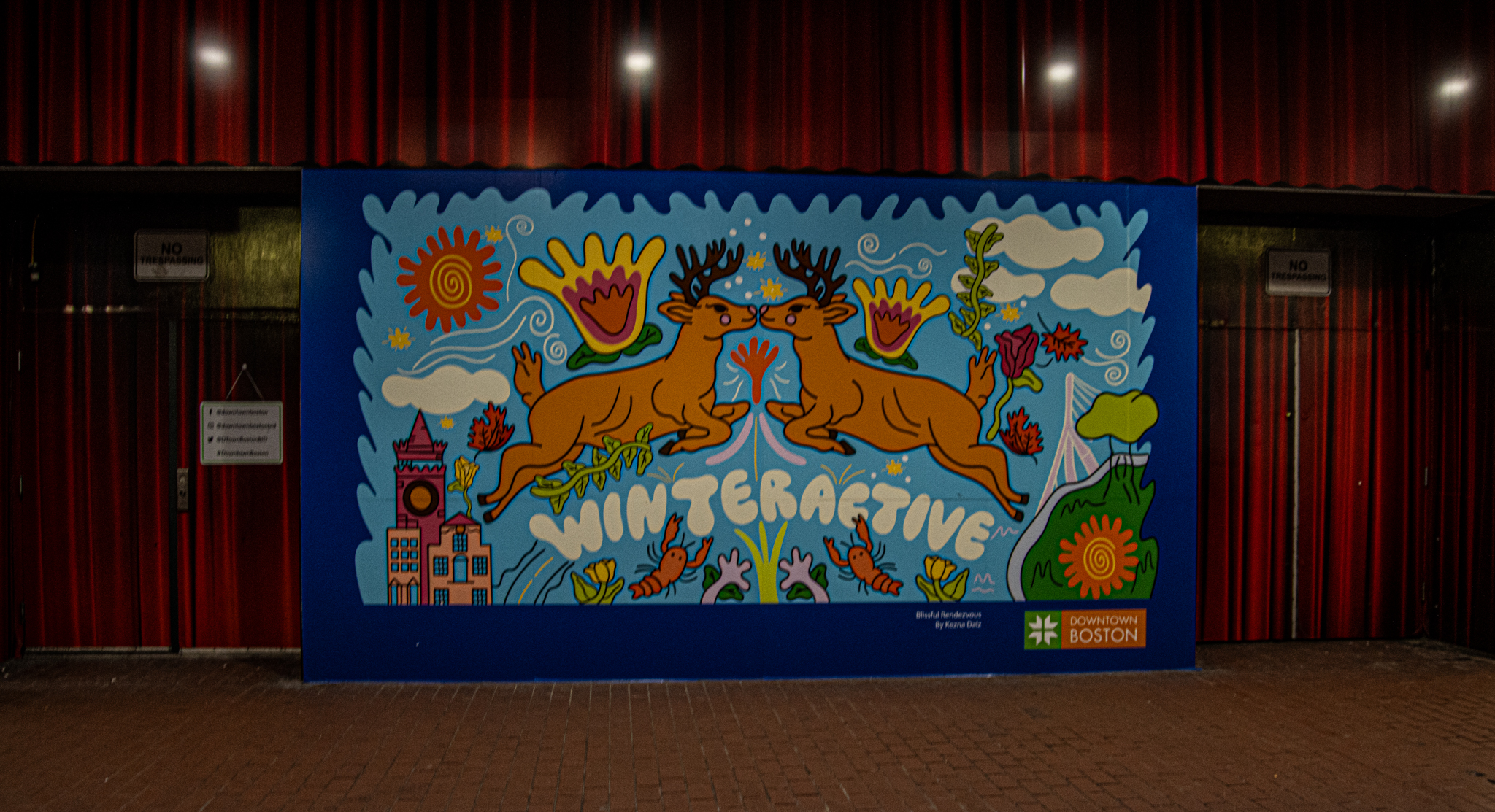
Blissful Rendezvous

Summer Street Pedestrian Plaza

Kezna Dalz

Vinyl digital print

This exhibit was meant to show the commonalities between the Boston and Quebec provinces by including the flora and fauna of both locations and using Boston as its backdrop. You may notice some of the more notable landmarks and things common in Massachusetts and New England such as lobsters, deer and colorful flowers.

There are also 5 “play feature” exhibits made by LeMonde Studio. They make sounds, light up or do some other fun things based on user interaction.

Light Lane Bikes

Summer Street Pedestrian Plaza

I tried to get someone to ride these bikes so I could display the way the lights change but I had no takers. The colored lines on the bikes light up and moved as people pedal. That’s it!

Guitar Slide

City Hall Plaza

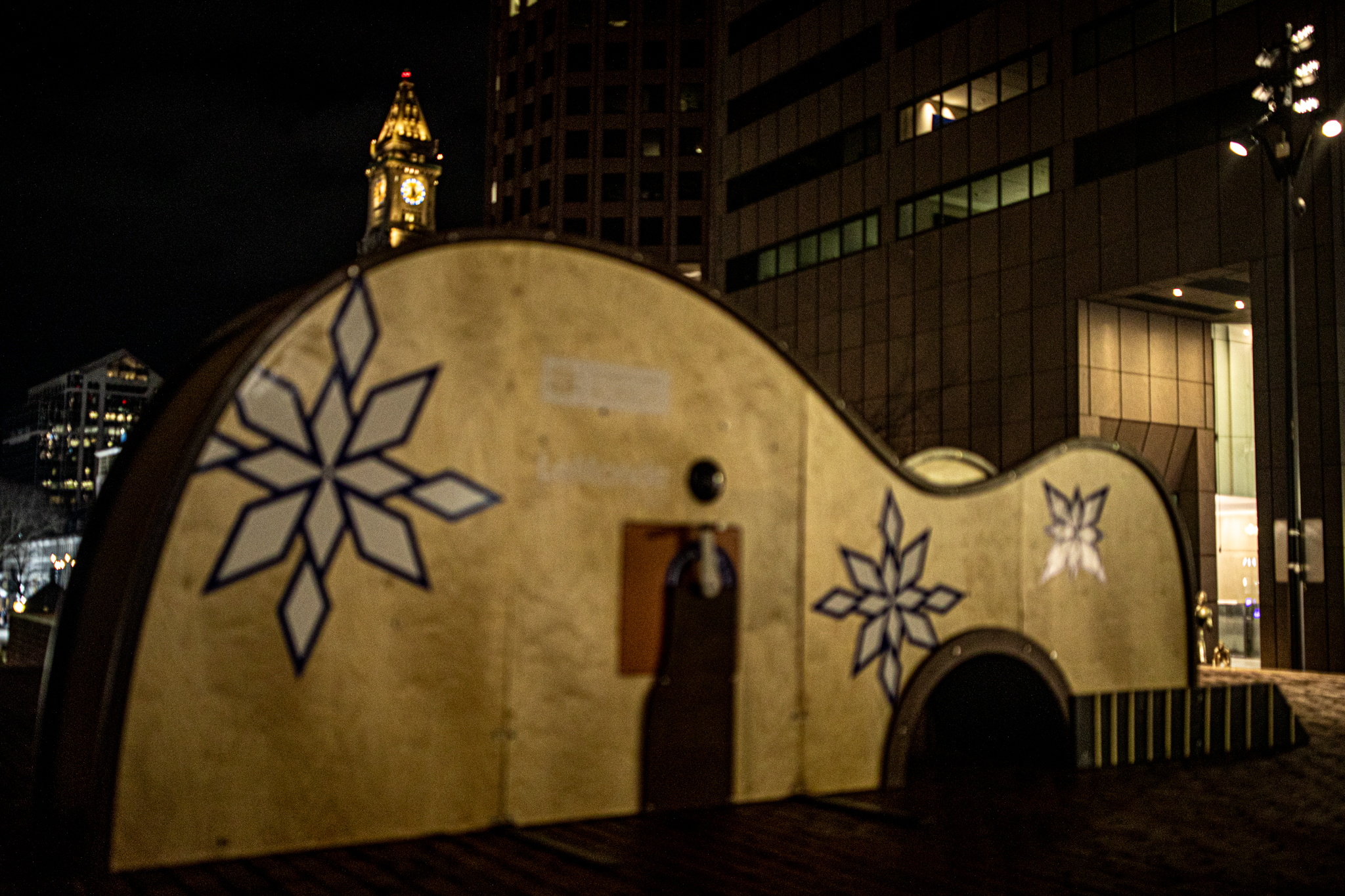
As the name suggests, there is a slide on the neck of this guitar

Music Box

High Street Place Entrance

Photo Frame

Summer Street Pedestrian Plaza

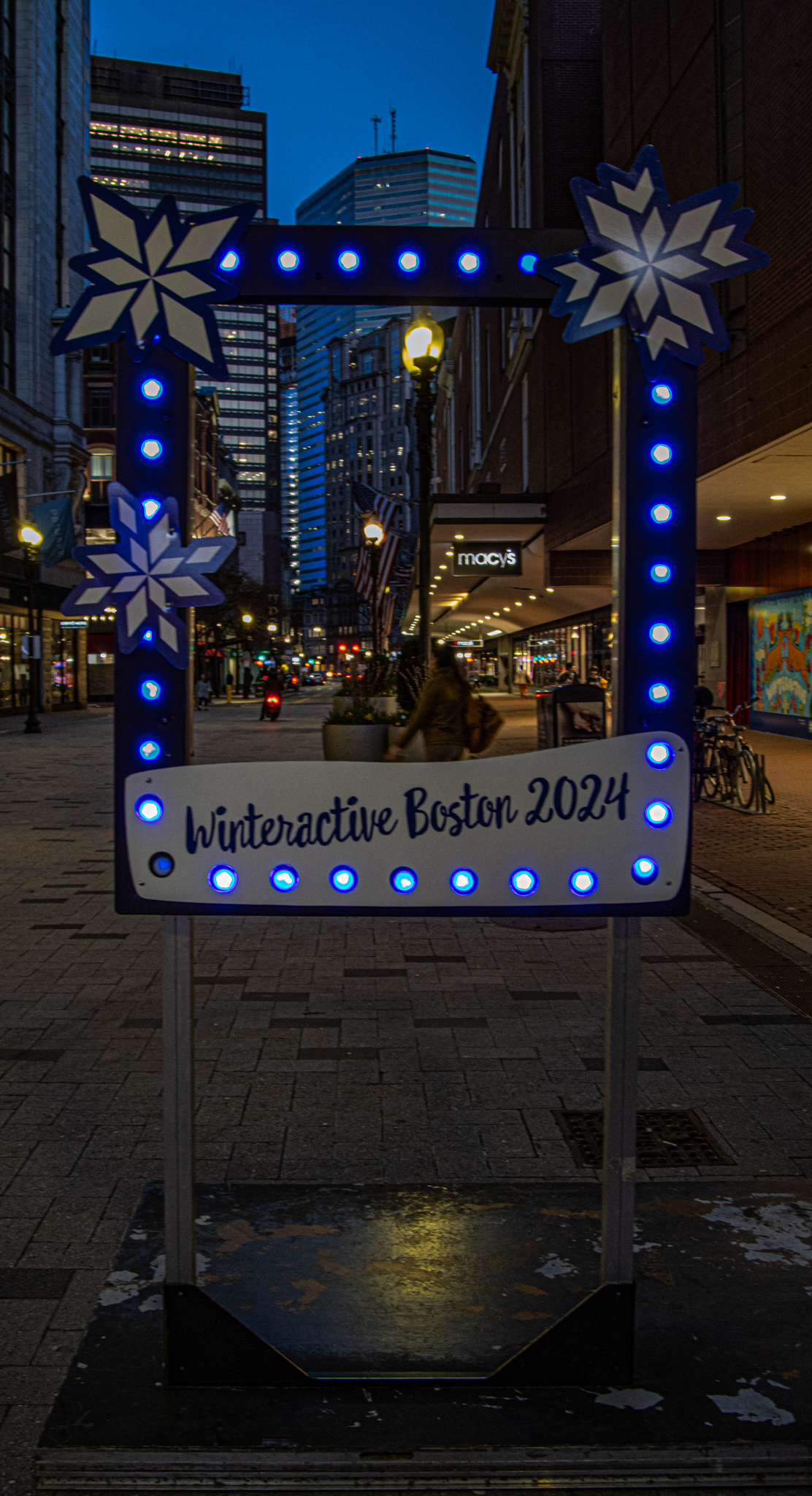
I was able to persuade someone to crank the lever on the device next to the frame and light up this picture frame!

Bird House

Hyatt Regency, One Avenue De Lafayette

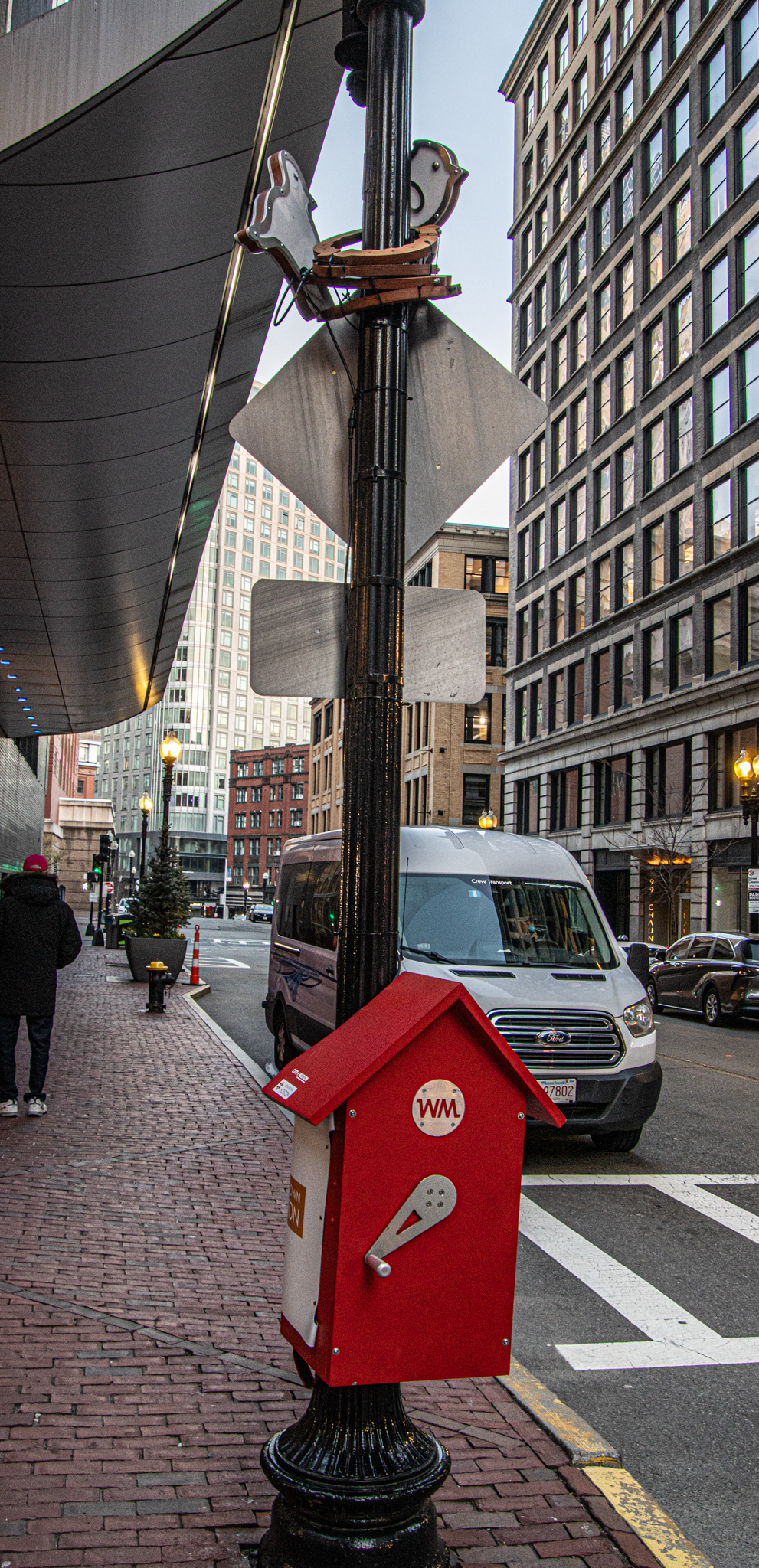
This is another interactive exhibit. You simply crank the lever on the box and the bird makes some interesting sounds!

“End Game” (Nagg & Nell)

Max Streicher

Recycled vinyl signs, fans, steel cable

This was certainly my, and many other people’s, favorite exhibit. There were always a group of people stopping by to photograph it whenever I passed by the area. However, the back story of the characters in this exhibit is pretty grim. The inflatable heads are based on characters in the play by Irish novelist Samuel Beckett; End Game. In this play, the characters Nell and Nagg are forced to live out their lives in a dumpster after losing their legs. Yikes.

Myth And Evidence

Washing St and Court St

Mathieu Valade

Urethane animal shape, faux fur, metal, polycarbonate, plywood, wood

The mythical unicorn stands behind a frosted glass display. This was a tricky photo to take. I wanted to photograph it at night to show off the light in the display. Yet, the display did tend to reflect the glare from the street lights and lights from the storefronts. In retrospect, I should have photographed it from the other side.

Island Of Warmth

125 Summer St

ATOMIC3

Steel and light elements

Two hundred and twenty bulbs light up intermittently on this visual, musical and luminous display. The Island of Warmth is a tribute to Montreal’s festive tradition. But, despite the name, it’s not going to keep you warm. So, don’t try to warm up by it!

Territories 2.0

175 Federal St

Olivier Roberge

Steel, polycarbonate, paint, miniature models, LED lighting

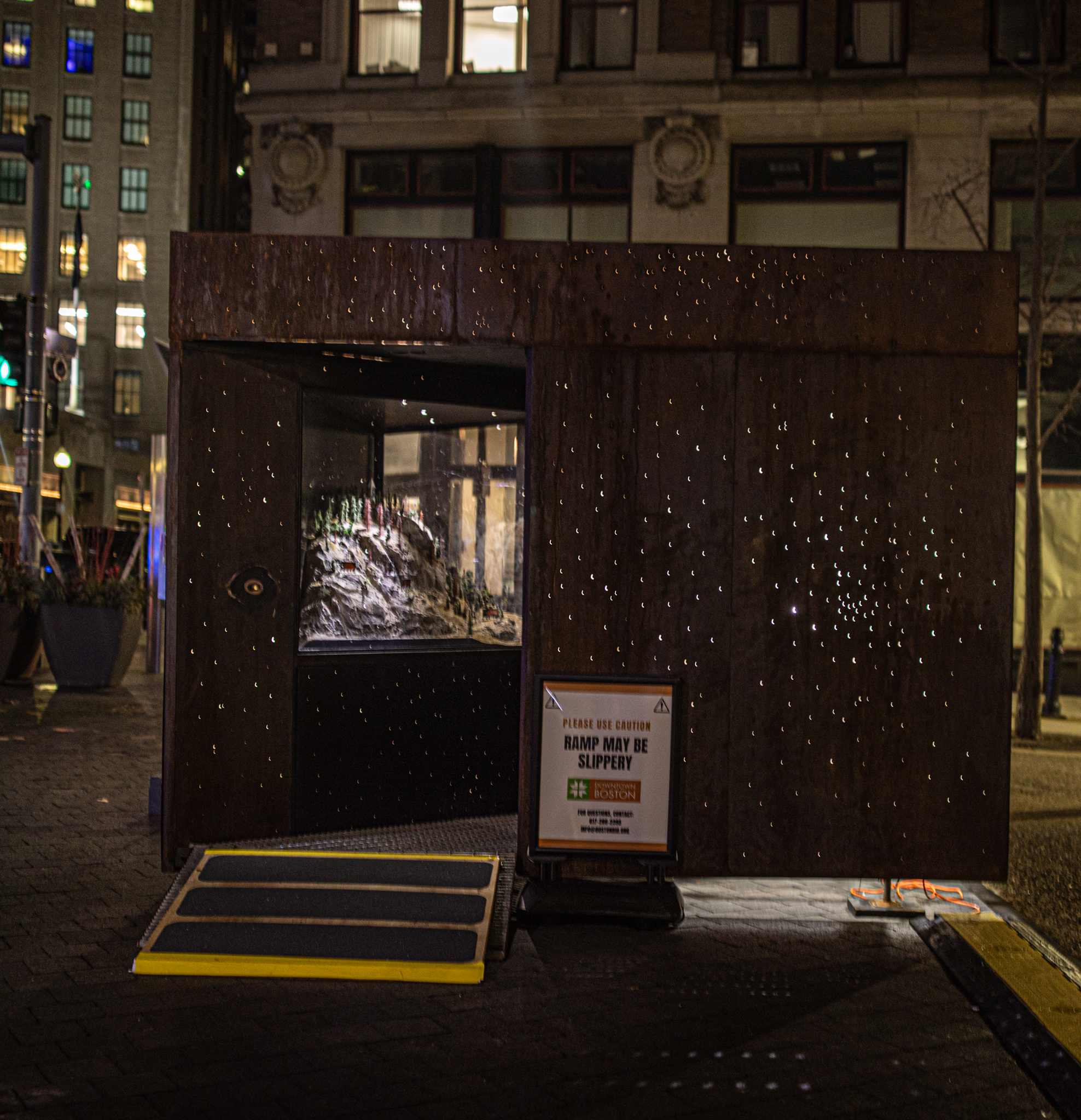
Described as a “true narrative microcosm”, this walk in exhibit is a diorama which depicts a natural environment that has been abundantly transformed by human intervention and climate change.

Although it’s more like Springactive at this point, this exhibit is a must see if you’re in the Boston area! But, don’t wait. The displays will only be up until April 15!