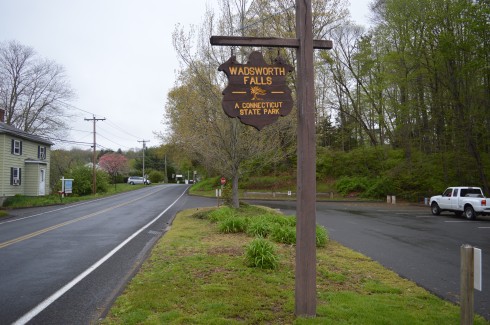
Location: 701 Wadsworth St, Middletown, CT or Cherry Hill Rd, Middlefield, CT
Cost: When I went to visit, it was free. I think they begin charging a fee starting Memorial Day weekend. There is no fee entrance fee during the weekdays. It costs CT residents $9 and it costs non Connecticut residents $15 to get in to the park during the weekend. You also may be able to access the park for free at the Cherry Hill Rd entrance.
Hours: Open everyday from sunrise until night time.
Parking: There are about 30 parking spots at the main entrance at Wadsworth St and another 20 or so at the Cherry Hill Rd entrance in Middlefield (pictured below)
We entered at the main entrance on Wadsworth St. There is a sandy beach area (there is a lifeguard on duty during the summer season). Since it was an overcast and chilly day, there weren’t any people swimming but there were a lot of birds congregating near the water.
The highlight of the park, of course, are the falls. The two waterfalls at Wadsworth Falls are creatively named “Little Falls” and “Big Falls.”
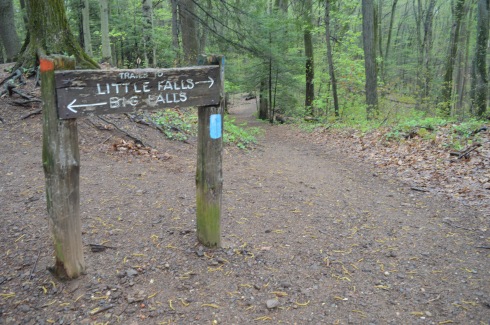
Once you get on the main trail, you will eventually see the sign for the falls (after about a 3/4 to one mile hike). From this sign, it is about a half mile hike to the Little Falls and a mile hike to Big Falls if you enter from the entrance on Wadsworth St. There are also lots of trails that branched off the main trail and would be fun to explore if you have the time.
You can avoid the longer hike by parking on Cherry Hill Rd. Big Falls is accessible from a short walk down a well defined path from the lot on Cherry Hill Rd. But, the parking lot at Cherry Hill Rd is smaller than the lot on Wadsworth St.
Little Falls is actually a pretty big fall, even if it isn’t the biggest one at the park. But, the height of this waterfall may actually surpass the height of Big Falls. The last few shots in the slideshow are from our trek back to the main parking lot. The falls seemed much less rapid on our way back and you can see the ledges of the falls better.
This slideshow requires JavaScript.
There are a few different ways to get to Big Falls, the main attraction. The safest, but longest way, is to follow the trail until you reach the edge of the park which filters onto Cherry Hill Rd. The park is a short walk on a sidewalk to the right. Or, you can cross the railroad tracks and follow trail along the tracks for quicker access. There really isn’t a defined trail but there is space to walk a safe distance from the tracks. The railroad is still in operation but we didn’t see any trains while we were there.
There are two places I photographed the waterfalls from but there are probably even more places to view the waterfalls. The first place is a little tricky to get to and potentially dangerous. There is a path that goes off the trail across the tracks and up to ta cliff that offers some decent views of the waterfall. I did take some photographs from there but I would bypass it and go to the parking area of the entrance on Cherry Hill Rd to get a safer, closer and less obstructed view of the waterfalls. The first two photos are from the cliff area the rest are views from the entrance to the park.
This slideshow requires JavaScript.
From the main entrance on Wadsworth St it is about 1.5 mile hike to the falls and it is a 3.4 mile trail loop to walk the entire park. There were bicyclists, walkers and other photographers along the trail. Because of the inclines and, in some areas, rocky terrain, it would be a challenging place to go for a run. I would describe the trails as being easy to slightly moderate because of the inclines and rocky trails.
There are also pretty trees, bridges, plants, brooks and streams along the trails.
This slideshow requires JavaScript.
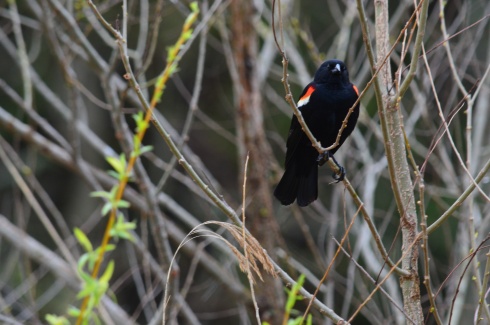
There was a lot of bird activity at Wadsworth Falls such as this male red-winged blackbird.
There are a variety of bird life at Wadsworth including bats. This is a bat house. It was built and maintained as part of an Eagle Scout project to help restore the bat population. It was good to see that it’s not only the cute animals that are being helped.
Toads and other amphibious life is also abundant at Wadsworth State Park. It was still pretty cold out so these toads seemed out of sorts. We gently picked them up and tried to find a warmer place for them under some leaves.
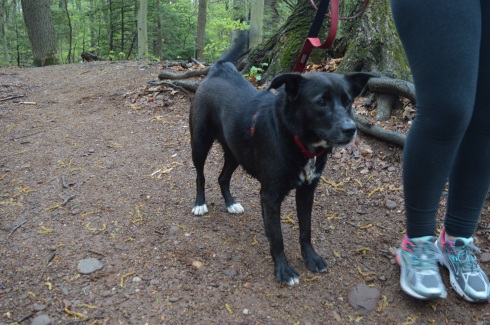
Leashed dogs are allowed at Wadsworth State Park. It is a great place for dogs to play and roam around. Caesaris (pronounced Kay-sar-is), a friendly 1 year old female Labrador and Australian Sheep Dog, enjoyed the unseasonably cool weather with his mom.
Below are some videos I took of the falls. The power, crispness and sound is much more evident in the videos.
As the name suggests, there are lots of birds to watch at Francis William Bird Park. Either there are lots of robins at the park or I photographed the same one over and over.
There are more than birds at the park to catch your attention.
Such as trees and flowers
This slideshow requires JavaScript.
the ponds and streams
and the bridges (each bridge is made slightly differently)
The trails are easy and branch off to side trails. But, since it is all concentrated in one area it is hard to get lost there.
The tree below was planted in memory of Charles Sumner Bird, a paper manufacturer, candidate for governor of Massachusetts, resident of Walpole MA and the son of William Francis Bird.
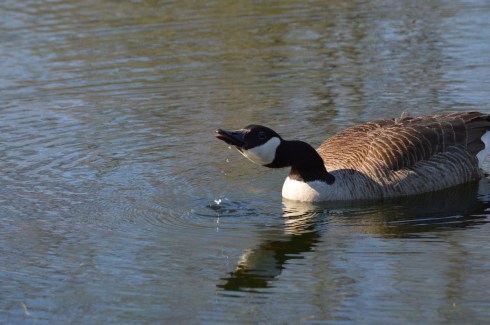
Tip of the day; don’t get too close to a goose and his or her Cheetos.
You’re not supposed to feed the birds at William Francis (and you’re especially not supposed to feed them Cheetos). It’s not good for them physically and it creates more messes on the trail. But, of course, people still do.
Along the trails, there are benches and places to enjoy the outdoors. Or, you can just chill on a rock or log. There is also a restroom (open seasonly)
Charlot (pronounced Char-lo) is a local (local to Walpole) artist, storyteller and cultural and historical expert. He specializes in Haitian art and culture. He likes to go to the park to paint and relax. He was kind enough to let me photograph him painting. He calls the first painting Silhouette Of The Drum. he was also touching up a painting he had finished previously.
Charlot is very talented. You can find out more about him here.
There are also a variety of attractions for sportsmen and sportswomen. The trails make for great running surfaces. There are four tennis courts as well as a basketball backboard (but not a court) . There are also musical and other types of events during the summer by the main field.
Birds aren’t the only animals you will find at Francis William Bird Park. The park is also popular spot for dogs. The trails and open spaces make it a great place to take your pooch.
Henry is a 3 year old Basset Hound. Cute freckles on his left front paw!
Sophia is a 5 year old Newfoundland. Sophia reminded me of a Newfoundland we had. Beautiful dog.
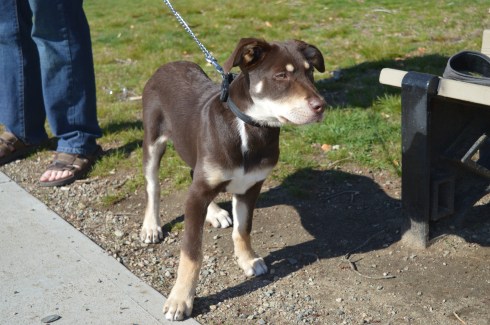
Buddha is a 3 month old Hound mix. I love the eyebrows!
Parking: 2 hour off street parking is available, but limited. There are also a few parking areas near the beach.
A common destination for weddings, dog walkers and beach goers, the Hartley Mason Reservation is a small park with benches, memorials and other works of art. Perhaps the most popular attraction to this site is the rock with the tiny figures, titled, “Pleasure Ground”. The sculpture was made by Sumner Winebaum, a York resident, in 2011. He titled it “Pleasure Ground” because Mason had described the reserve as a “pleasure ground”. The sculpture is built on a rock nearly 8 feet long, 4 feet wide, and weighs three tons,. The bronze figures range in height from 10 to 12 inches tall. Winebaum said his goal was to show people enjoying the park such as the two boys wrestling, the person reading and the two women debating (which he has described as his favorite part of the sculpture).
Tiny people doing all the things regular people do. I wonder what book that tiny figure on the edge of the rock is reading. Perhaps, “Little Women”.
An easy, clearly marked path leads down to the beach.
Along the trail, there are also benches dedicated to people who have passed.
There is also a memorial dedicated to those lost at sea. The York Fisherman’s Memorial is
The inscription on the front reads: O HEAR US WHEN WE CRY TO THEE FOR THOSE IN PERIL ON THE SEA.
On the back of the monument, there is an inscription that states: Dedicated to those who lost their lives at sea & for those who work and love the ocean…
The memorial is dedicated to Captain Daniel A. Donnell who died at sea hauling traps. He was 78 at the time of his death.
The trail is also a great place to take photos of the beach from afar.
From the moment I pulled up to the parking in front of the Hartley Mason Reservation, the view of the water struck me, especially with the weather conditions as they were. A misty cloud covering filled the afternoon sky reaching all the way to the water making it hard to discern where the water ended and the sky began. For most people, this is hardly ideal beach weather. But, I, and my sensitive Irish screen, have always preferred this weather to the scorching unabated sunlight.
The trail eventually leads to the beach (there are also side trails, or if you’re feeling spry you can just walk down the rocky or grassy areas off the trail). Due to time constraints, we just stopped at the beach head and took photos from there. There were some modest waves and some pretty views. The beach does have a lot of rocky areas that wouldn’t be very comfortable to walk around in on sandals. Wear comfortable footwear.
This slideshow requires JavaScript.
Although the beach area is much larger and may have more accommodations (I will visit again later to capture the beach in its entirety), the section I visited had very little room for lying out. There really was just rock and a concrete slab to stand, sit or lie on. The parking is also pretty sparse at this section of the beach. There are only a few parking spots and some are designated for certain people. There is also an outdoor pool near the beach.
The beach was very busy with not only human visitors but cute furry ones as well (I suppose some of the human visitors were furry as well but that is neither here nor there).
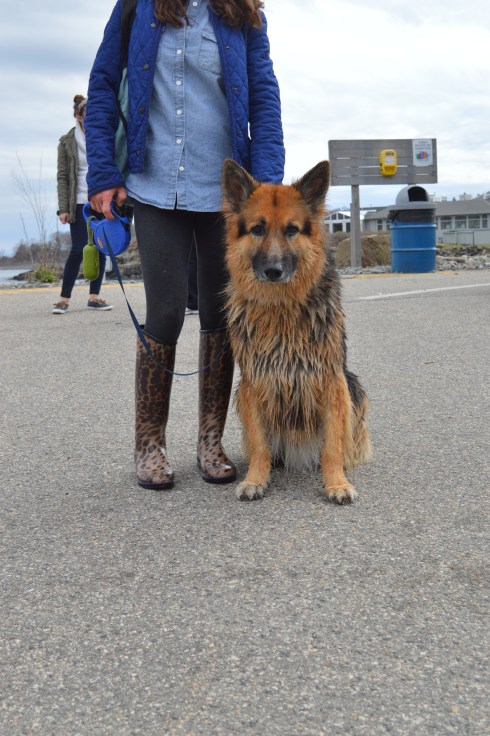
Kipper is a 9 year old German Shepherd. He got to play in the water and he loves to play catch. And his mom’s boots were pretty cool.
Gracie is a 7 and a half year old Boxer with a very broad smile.
Below is a video of the waves at York Beach Saturday.
Please stop by and like my Facebook page for extra photos and videos:
Located next to the New Hampshire Holocaust Memorial on Main Street across from a strip mall and busy roadway, the Rotary Common Park is a most unlikely place to find an art display. But, the Rotary Common Park is just that; an outdoor art museum. And this isn’t just some tourist attraction. The art here is very thought-provoking and amazingly crafted.
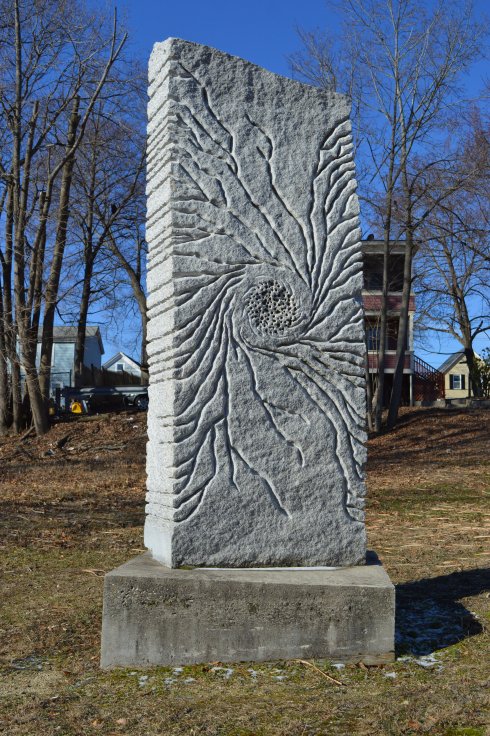
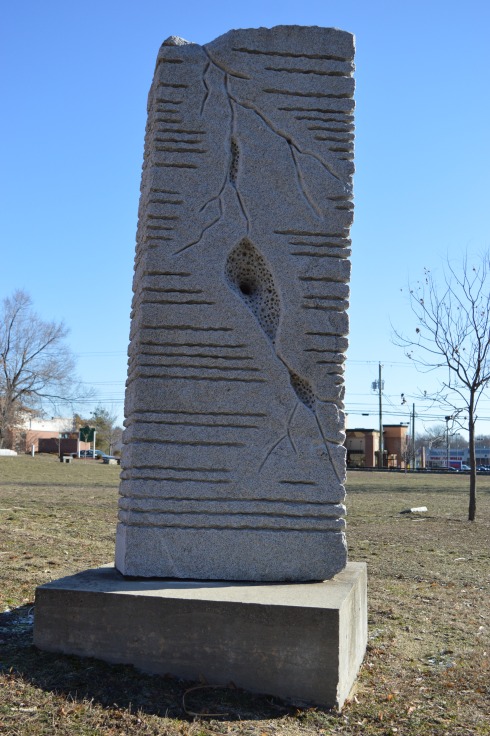
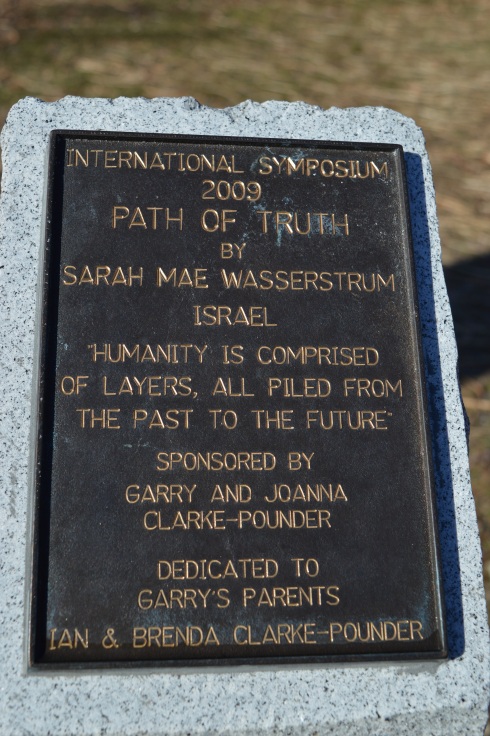
The “Path Of Truth” is a memorial to the “layers of humanity”. Or, as Sarah Mae Wasserstrum said;
“From the Origin layers of Humanity, we are connected by a common denominator.”
She imagines humanity as like layers, some thicker and some modest, all plied from the past to the future. The stone signifies the immense power of people and our ability to grow and change.
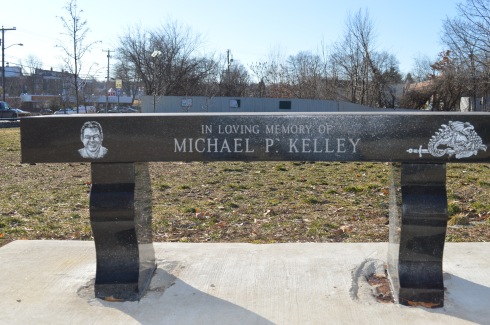
A bench dedicated to Michael Kelley. Who was Michael? What was he like?
Since it is located directly across from the Holocaust Memorial, the Reflection Garden & Labyrinth is the most popular spots at the park. Benches, sculptures, tiles with words of inspiration and works of art dot the circular reflection area.
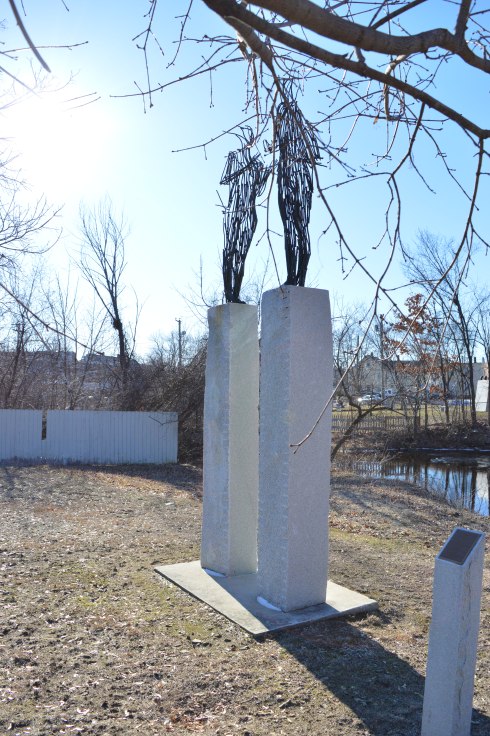
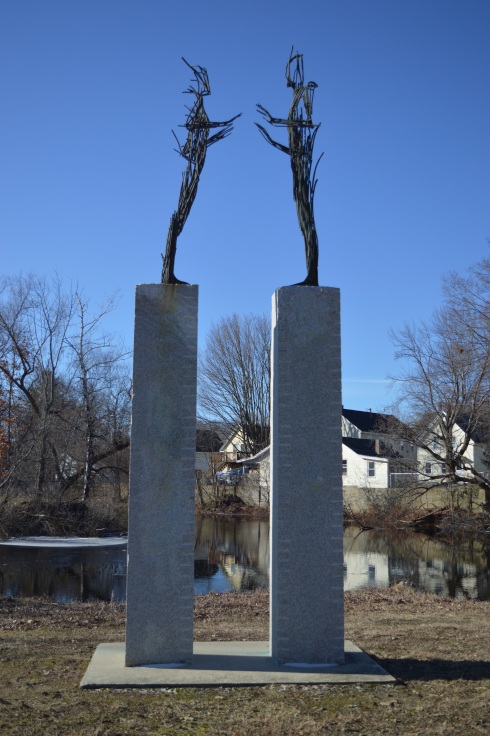
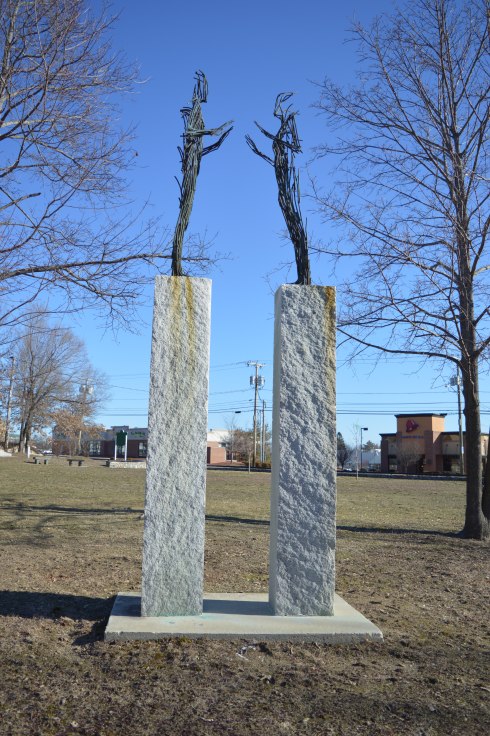
The “Encounter” sculpture by Luben Boykov,
Boykov described it as, “The present moment of meeting becoming a place in the future.”
Boykov explains the sculpture as a moment just before people meet that are so quick but also last forever. It represents an encounter that can begin a lasting relationship.
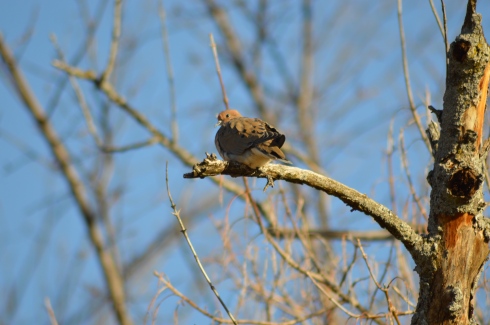
There was also a surprising amount of animal activity in the area like this bird and a thirsty cat.
The displays at the Rotary Park change on a regular basis so keep an eye out if you’re in the area!
Cost: Free since I visited during the off season. It costs $8 for MA vehicles and $10 for out of state vehicles once the main season begins (around early May)
Parking is limited. Since it was not the peak of the season, I found a spot without any trouble. But, there are only 20 or so spots in the main parking areas. There are some additional parking areas off the main trail to the lake.
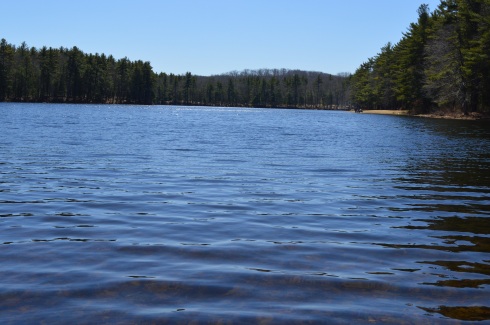
Boats are not allowed in the water, although fishing is allowed. Trout and bass are the most common fish in the water.
I had been interested in visitng Rutland State ever since I heard about the remnants of the state prison camp and the views of the water.
There was a strong wind, evident by the ripples in the water.
This slideshow requires JavaScript.
The gates at the entrances to some of the trails prevented some vehicles from entering the trails. This is because during this time of the year it rains a lot and bikes and other vehicles can get stuck on the trails. So, it was a pretty empty trail when I went. Which was just fine by me. Miles of near solitude in nature with a cloudless, cold blue sky on a bright New England morning….yes please!
The main trail I stayed on was easy with some moderate includes. The only thing you may find annoying is the long stretches of nothing but trees and water on each side of the trail. This was heaven for me, though. I was also pleased to see a dirt trail rather than gravel or, gasp, paved road.
As I continued on the main trail, I began to see signs of ruins of structures frozen in time. A stairwell and frame of a building, now adorned with graffiti (get used to it as it is a constant theme), stood on the outskirts of the trail.
At around the 2 mile mark of the trail there are remnants of a prison camp. The camp was constructed in 1903 for housing petty criminals. It would later be converted into a farm. The first structure, again riddled with graffiti, was used for solitary confinement.
When you consider just how small and confining the spaces in the building are you can only imagine the distress it caused some of the prisoners.
Something happened when I visited the remnants of the prison camp. What I had once considered “cool” and interesting, seemed dank and sad. In fact, it wasn’t until after I left the structure and cave that it really sunk in. It seems like a grim existence at the least. When you realize people lived in these conditions and suffered, largely for committing petty crimes (such as drunkeness), it makes you think we should be more cognizant of the history of the building and area. If it wasn’t so tragic it would be more interesting. Rather than being “cool”, it just made me depressed.
Farther along the trail is an arch that appears to be a root-like cellar. I am not sure what it was used for but my gut tells me nothing good.
There are also some interesting tunnels and holes in the ground at the old prison site. I decided to investigate.
Given the architecture of the structures and the history of the area, it is easy to see why the park is considered haunted. Disembodied voices and apparitions are said to have been witnessed by visitors. There are even claims the area was once used for satanic worship. The area was the subject of the book The Soul Collector, written by Joni Mayhan.
On a brighter note, I saw lots of four legged friends at Rutland State Park.
(left to right) Grayson, 7, an American Pit Bull Terrier and Gamble, 6, a Pit Bull and Boxer mix.
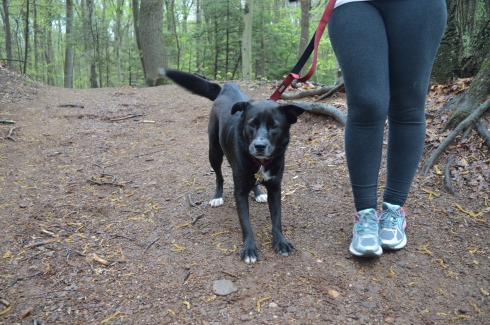
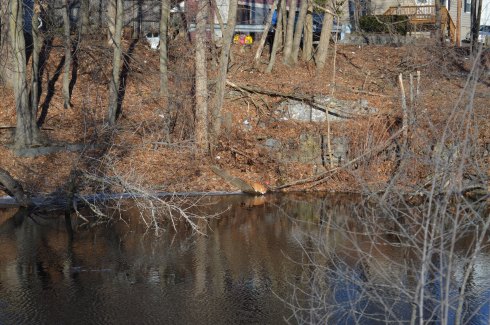
Blackie, 4 years old, a part husky.
I also saw some other four legged friends.
Panda, in front, is a training horse. Calvin is the horse on the right and the horse in the back left (who is difficult to see) is Jack.
There were also a few kids playing on their motor bikes and ATV’s.
The videos below are some videos from my visit. Thank you for reading!
Location: Balance Rock, Rd, Pittsfield, MA (about 2.5 hours west of Boston, MA or 1 hour east of Albany, NY)
Hours: Sunrise until 6 p.m.
Parking: There is parking for about up to 50 cars or so at the Balance Rock entrance.
During the last ice age, some 12,000 to 100,000 years ago, rocks were haphazardly pushed to and fro, creating this unusual formation. Or, someone put one rock on top of another. Either the product of glacial movement or an elaborate hoax, the namesake of Balance Rock State Park is a huge attraction.
But, before you view the impressive rock, there are rocks and beauty aplenty at the entrance to Balance Rock Park.
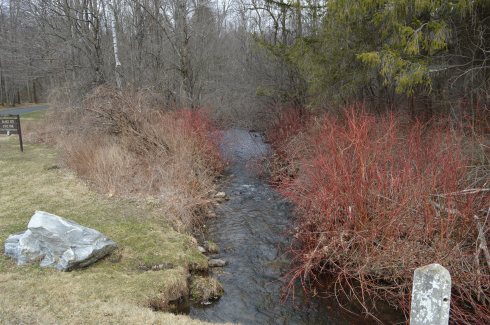
By the entrance, there is a stream that runs along the side of the park
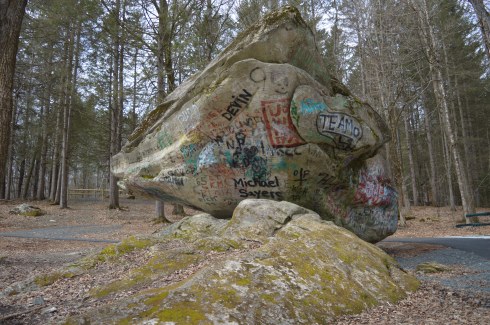
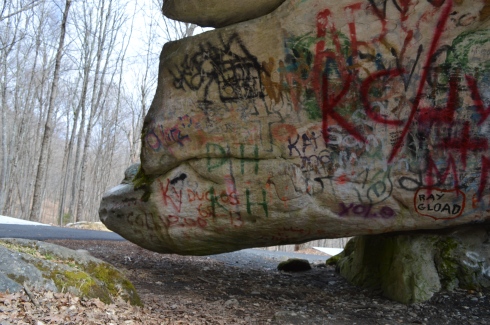
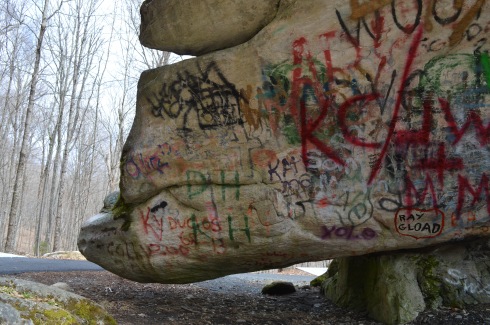
After a short drive up the main entrance road (about half a mile), you will reach Balance State Park’s main attraction; the rock. We were a bit disappointed to find the rock right there next to the parking lot. While it is convenient and easy for visitors to find, it would have been nice to have to hike to it. It would have built up the anticipation. Despite the journey being anticlimactic, the rock was impressive. As you can tell from the photos and attached video, the rock never touches the ground. Unfortunately, it has been vandalized which was very disappointing to see.
The rock is 30 feet long and 15 feet wide. It is resting on another much smaller rock. This, the story goes, is the product of the last glacial age. It also goes to show that no matter how big and seemingly powerful someone or something may be, the rock and we wouldn’t be the same without the help of a little friend.
I noticed how some of the rocks seem to have eyes and lips. I am not sure if this was due to nature, erosion or the work of mankind.
It turns out, there are many rocks in the area
The residents of Balance Rock State Park are very photogenic. He was shy at first. But, eventually, he came out and I was able to get some close ups of him.
Video of the stream at the entrance to Balance Rock State Park
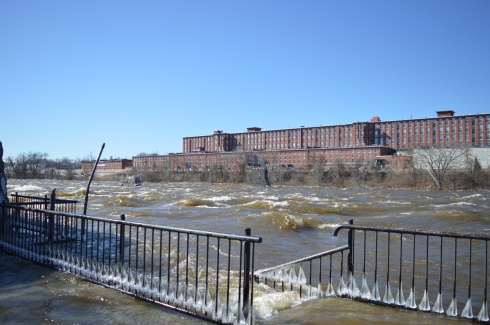
Arms Park is a unique kind of park. In fact it’s not really a park at all. A stream, fed by the Amoskeag Fishways, runs parallel to the park. It is the perfect place for people who love the sound of water and watching waves (and based on my previous posts I know you’re out there). There’s not much to Arms Park. A parking lot takes up most of the area (which has led some to call it “Arms Parking”) and a few office buildings dot the landscape. It’s certainly not one of the most picturesque landscapes but the stream and walkway does have a certain charm. It is often used for observing important important days such as the annual Pearl Harbor Day observance event and the Fourth of July fireworks display.
The river is usually pretty rough and could consequently be dangerous if anyone got caught up it in.
This slideshow requires JavaScript.
It was still fairly cold when I went to visit, so the water which did splash on the railing quickly turned to ice.
A variety of birds like to seek refuge at Arms Park. I saw a bunch of gulls there during my visit.
Arms Park has a short walkway along the river with benches along the way.
The video below gives a better representation of the choppy water at Arms Park.
New Hampshire isn’t known as the “Live Free Or Die” state for no reason. The quote, which is said to have French origins and adorns license plates and other kitschy souvenirs, is directly attributed to General, and former New Hampshire resident, John Stark. It was at John Stark Park in Manchester, NH, that I found this historical tribute to the revolutionary warrior.
The remaining of the “live free or die…”quote is lesser known, yet just as poignant.
For someone who is so heroic and brave, General Stark is not someone who many of us are familiar with. But, heroic he is. As the plaque in front of his statue explains, after being kidnapped by a Native American tribe and eventually ransomed, Stark joined the American Revolution and became a general. His most notable achievement was in 1777 when he commanded his troops to prevent British troops and supplies from connecting with the main army in Saratoga, New York, which was considered a key point which led to the American victory in the war.
Crisp blue skies awaited me at the park. It almost felt fall-like. What struck me most about the park was how peaceful it was. The gazebo is a nice touch also. The statue of General Stark was sculpted by Richard Recchia in 1948. The park is one of the older parks in New Hampshire, dating back to 1893 (it is the second oldest park in Manchester).
This slideshow requires JavaScript.
General Stark his, wife and a few of their children are buried at the bottom of the hill from the entrance.
One of the interesting things about Stark Park is the loop behind the park. It’s only about a quarter of mile and it is a great place to take your dog for a walk. But, there is a trail that branches off to a bridge and some other trails which eventually lead to the Heritage Trail. But, apart from some interesting trees and some wildlife, there isn’t much on the trails. Most of them lead to residential areas. I walked most of the narrow trails as far as I could go before they ended, rather disappointingly, at roadways and residential areas.
The big payoff to walking the loop behind the park was meeting Bennie. Bennie is a Chinook which is the state dog of New Hampshire.
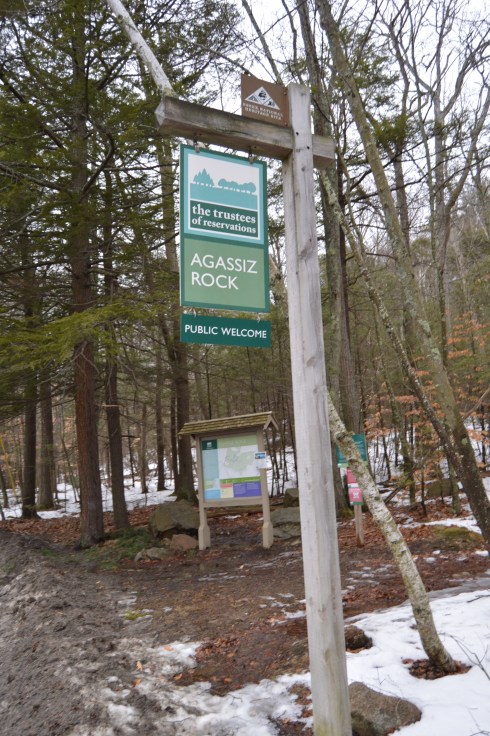
People travel far and wide to Agassiz Rock (pronounced “A-ga-siz”)to visit a rock. Yes, a rock.
Actually, they travel to see rocks. Lots of them.
Agassiz Rock is a deceiving name. There are actually two main rock structures that are the highlights of the park creatively named “Big Agassiz” and “Little Agassiz.”
The trail is not difficult. At least it’s not too bad when there’s not ice and snow on the ground. There are a few sharp inclines but mostly it is a fairly easy trail.
This slideshow requires JavaScript.
Along the trail, there are many eye catching rocks and streams.
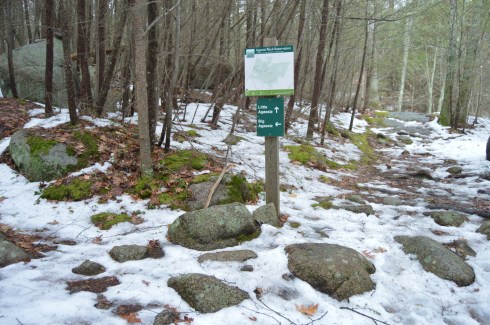
The trails are clearly marked and signs point to the two rocks.
Left to “Big Agassiz.” Stay straight on the trail to get to “Little Agassiz.” The trail about a 2 mile loop. So, you can see both rock locations if you take the trail in its entirety which is what I did.
Big Agassiz is only a quarter mile or so from the sign.
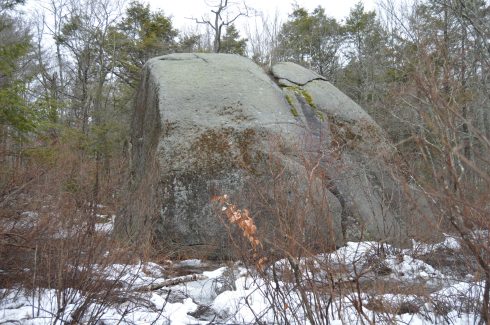
Yup, that’s “Big Agassiz” it all its glory.
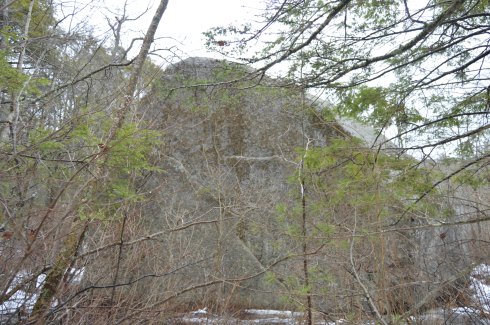
A trail leads to “Little Agassiz.” Ironically, the “Little Agassiz” is the better part of the attraction.
Along the way, I had a feeling I wasn’t alone based on the paw prints or hoof prints I saw in the snow. I quickly made my way up to “Little Agassiz.”
A short hike that includes one of the few inclines leads to the top of the Beaverdam Hill where “Little Agassiz” is.
There are several rock formations, trees and a area to just sit and chill. If I brought a book I would have been right at home. I could have stayed all day. But, I was a little disappointed in the views or lack thereof. There are mountains or other wonders of nature to look at. You do get a nice view of the roadway, though. Just a few tips: it can get pretty windy up there and if you do go in the morning during the winter be aware the rocks and the surfaces can be slippery.
This slideshow requires JavaScript.
You get a pretty good view from on top of the rocks.
I found one more rock formation of notice on my way out.
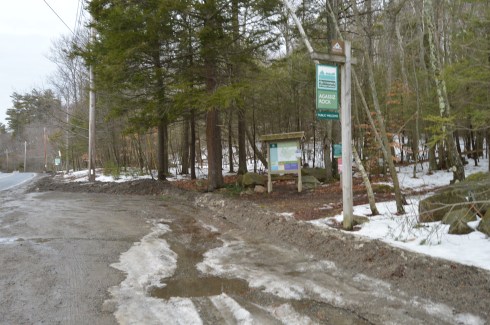
The parking area for Agassiz Rock is off a busy roadway and while I didn’t have any problems finding a spot I think it would be a little tough during the summer. There is probably room for a dozen or so cars if people park normally.
Below is a video of Little Agassiz.
Please connect with me on Facebook for additional photos and videos at New England Nomad
Once a seasonal campsite for Native Americans as well as the site for a fertilizer factory and a missile launcher warehouse, Webb Memorial State Park has gone through many changes over the years. It has since been cleaned up and developed into one of the lesser known jewels of the South Shore of Massachusetts.
Named after William K. Webb, a World War II and police officer from Weymouth, Webb Park is a popular spot for joggers and other outdoor enthusiasts. There are many different paths that offer various pretty views of the skyline of Boston and the surrounding cities.
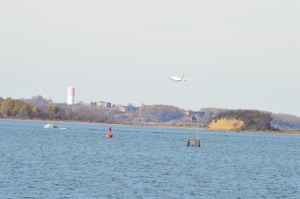
You can see planes flying to and from Boston’s Logan International Airport. They are so loud you can hear them clear across the harbor.
There are also several monuments at Webb State Park.
This memorial is named after John Cole, a former resident of Weymouth, MA.
This memorial is dedicated to Chief Engineer Donald F. Haviland. Haviland was on the Henry Bacon which took heavy damage from enemy bombers. He refused to take a seat on one of the lifeboats because the lifeboats were running out of room and not everyone could fir on the lifeboats. Haviland gave up his seat on the lifeboat to a younger person and he died when the ship sunk. He is certainly worthy of our admiration and this token of our appreciation. This memorial certainly makes you think.
Another monument memorializes the Grape Island Alarm which was a Revolutionary War battle where a Weymouth militia fought back the British Navy.
This slideshow requires JavaScript.
There is also a memorial dedicated to Domenic J. Sansone.
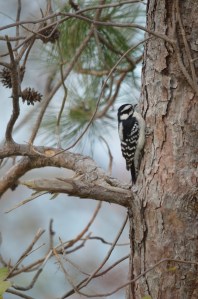
There are a variety of birds in the area. I was lucky enough to photograph this woodpecker
a sparrow
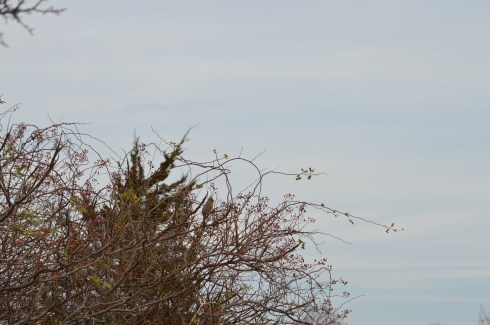
and this female cardinal. You might have to enlarge the photo at the top of one of the branches toward the right side of the tree.
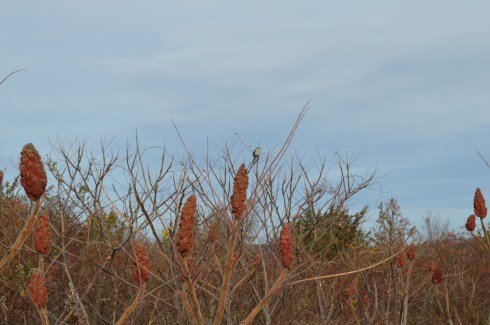
I also spotted this bird. Another one that might be a little hard to see unless you zoom in.
There were many additional land animals at the park during my visit. (top left to right – Nandi, Molly and Ziggy, bottom left to right – Ellsbury, Louie and Olly)
There were so many beautiful spots at Webb Memorial Park. I have included a few more miscellaneous images in the slideshow below.





















 Blackie, 4 years old, a part husky.