Location: Shelburne Falls, MA (2 hours northwest of Boston, MA)
Cost: Free
Parking: Free parking was available at various lots in the city. On street parking was available in the city. Shuttle service was provided if you parked in one of the lots.
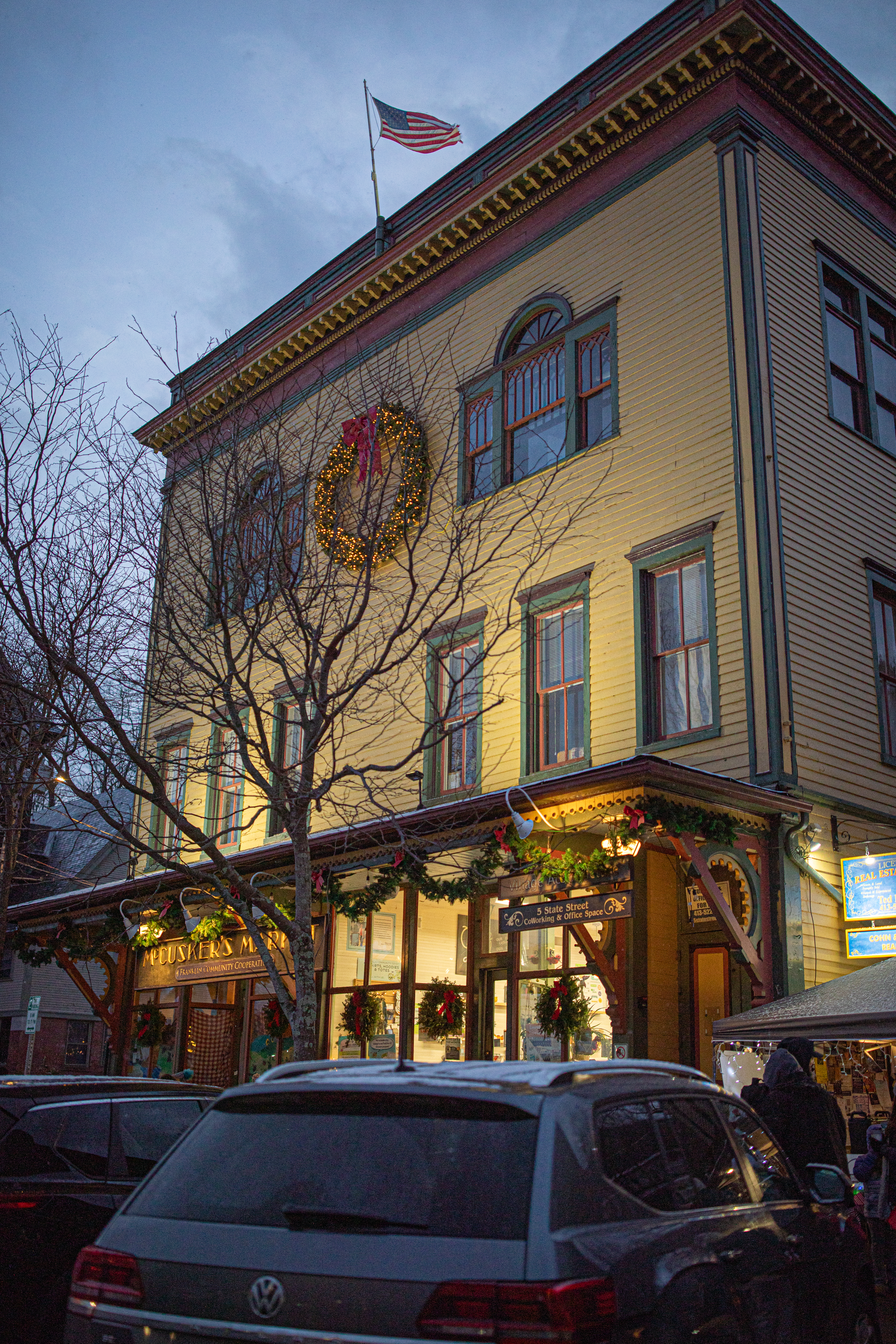
Summary: Shelburne Falls celebrated their 40th annual Moonlight Magic festival near the Bridge Of Flowers. Musicians, clowns and, of course, Mr. and Mrs. Claus were just a few of the people who walked in the parade.
A trip to the Bridge of Flowers usually involves looking at, and photographing lots of beautiful flowers! But, this trip to the bridge was different.
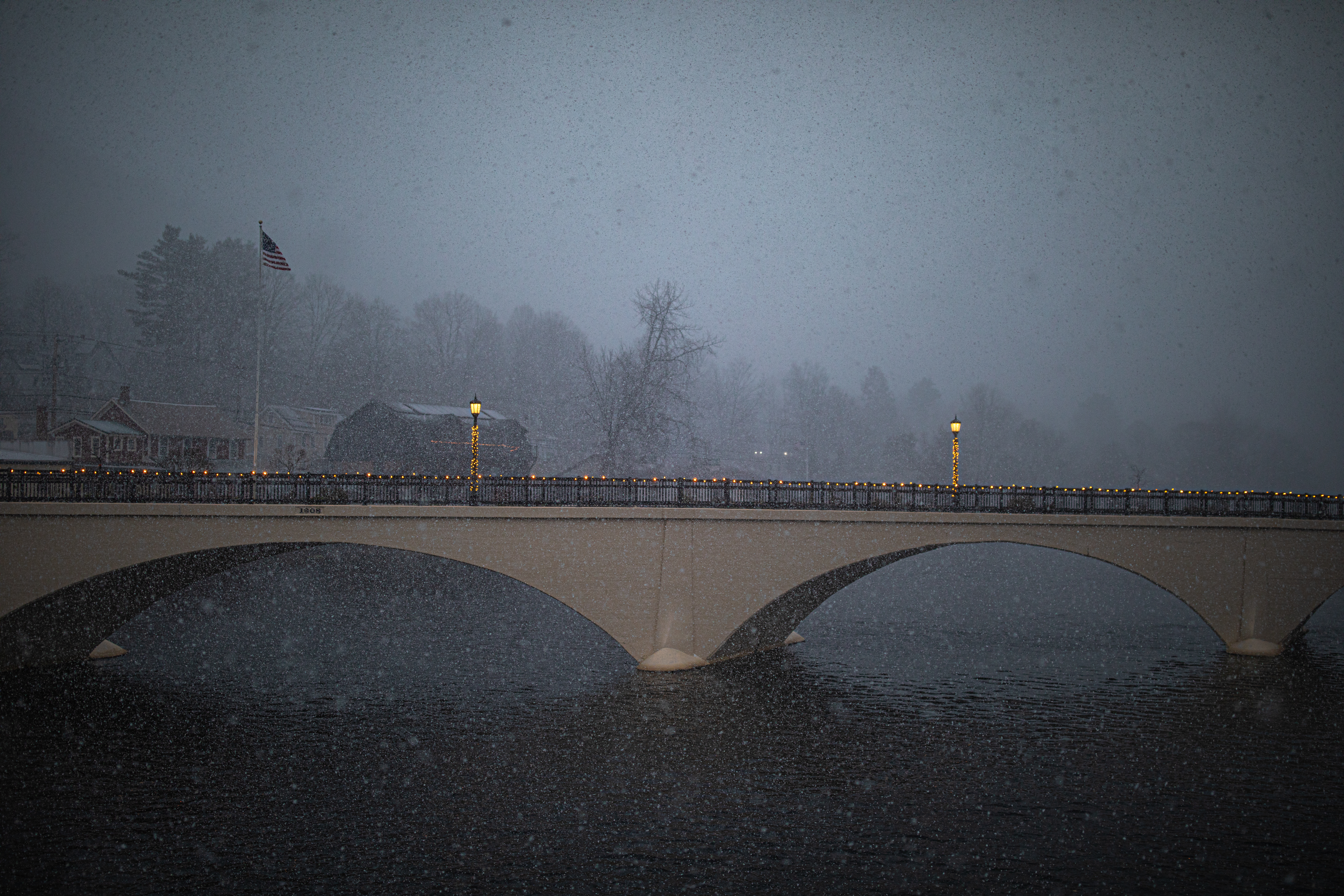
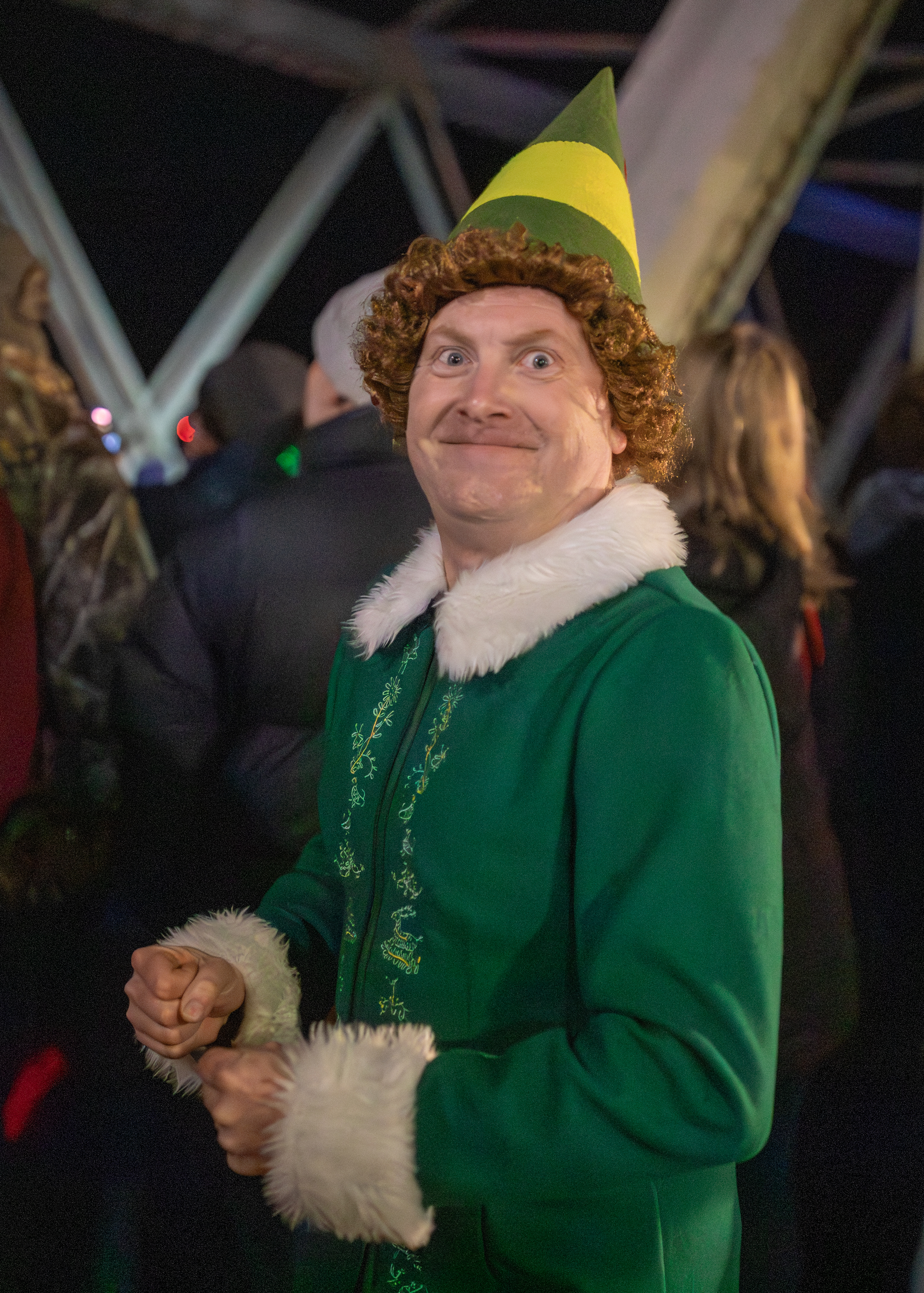
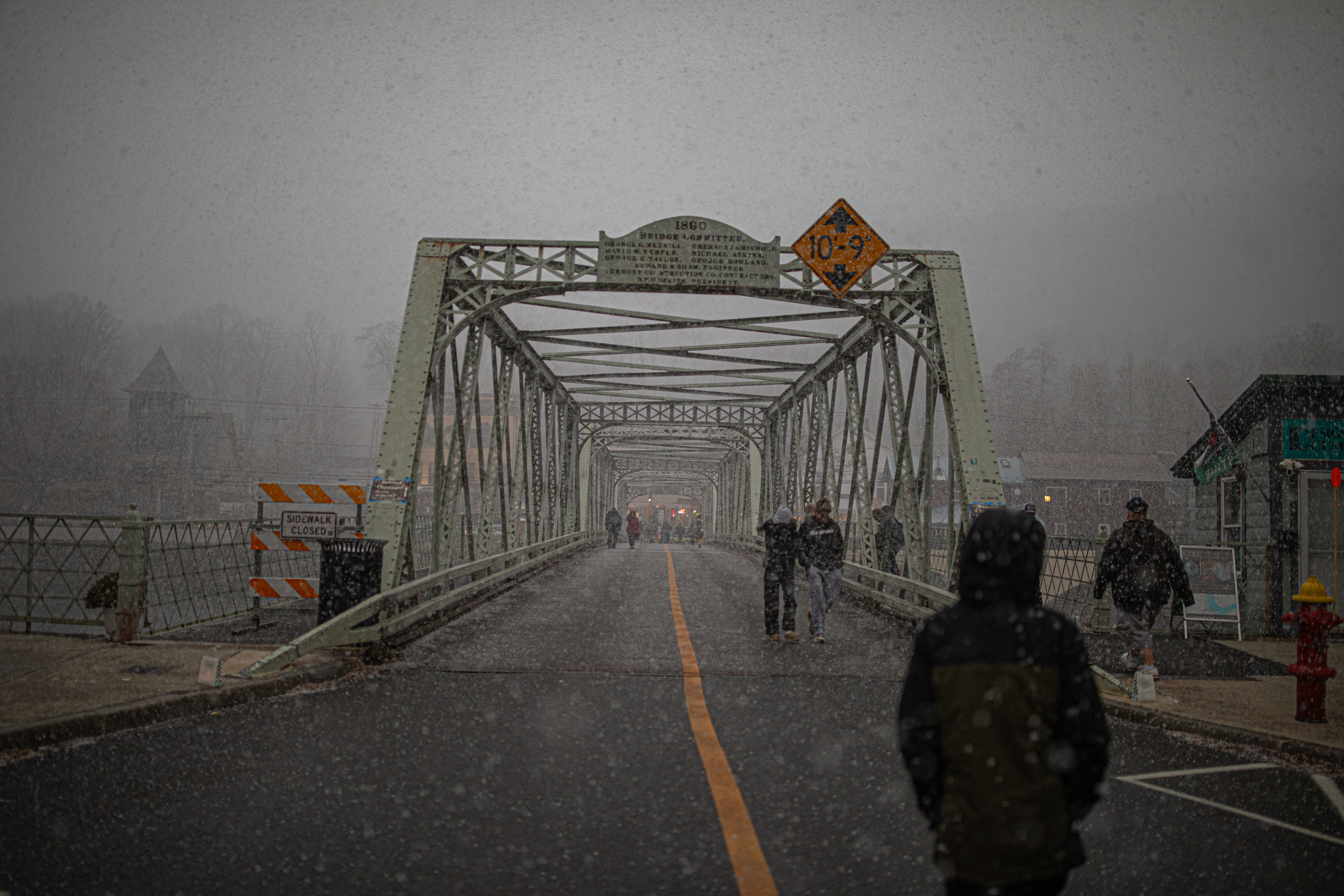
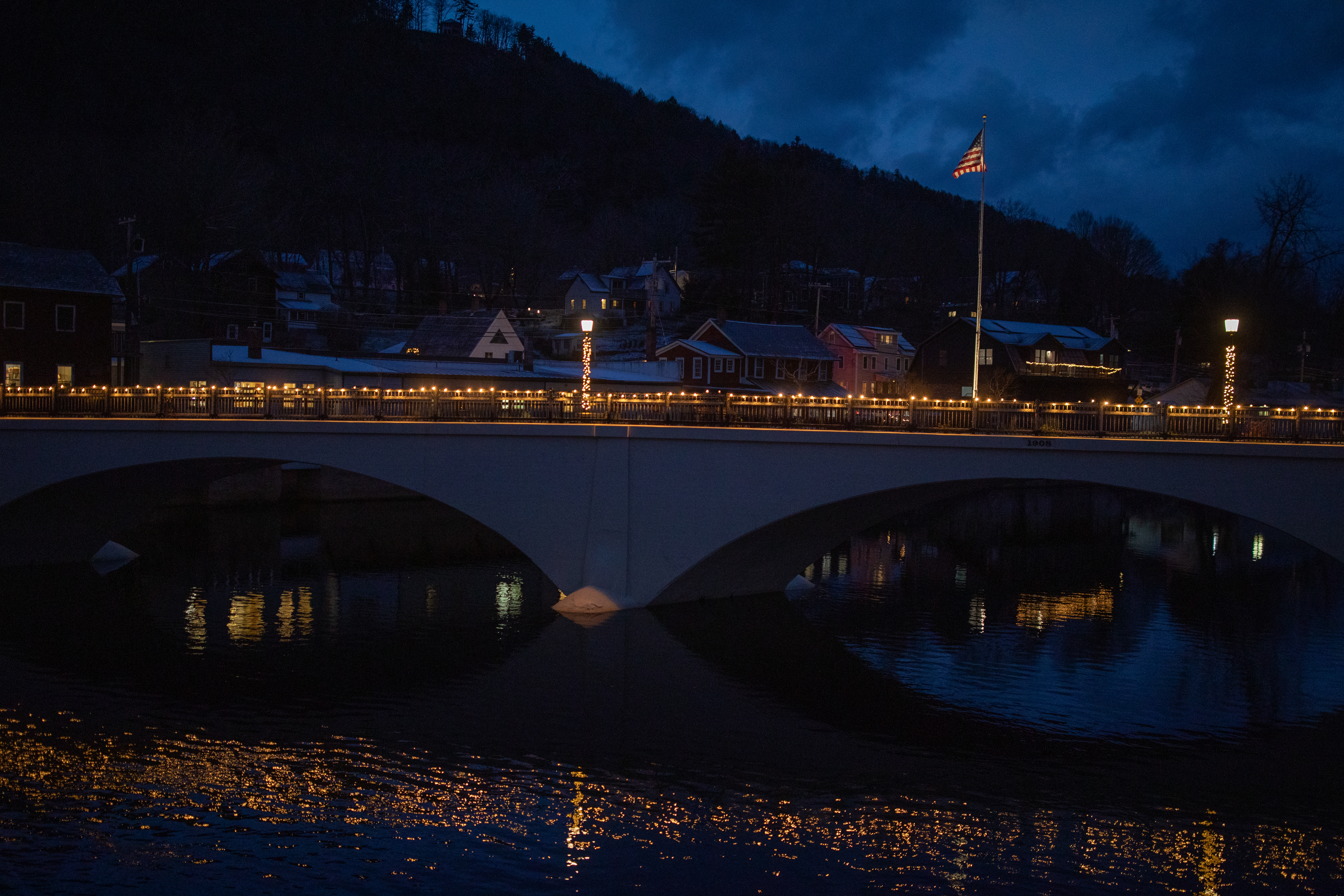
Each year for the past 40 years, Shelburne Falls has been hosting the Moonlight Magic event. Held the day after Thanksgiving, technically along the Iron Bridge located next to the Bridge of Flowers, the event includes clowns, a Buddy look-alike (or the real one?) who was very happy to see Santa and the main event; the Parade of Lights!
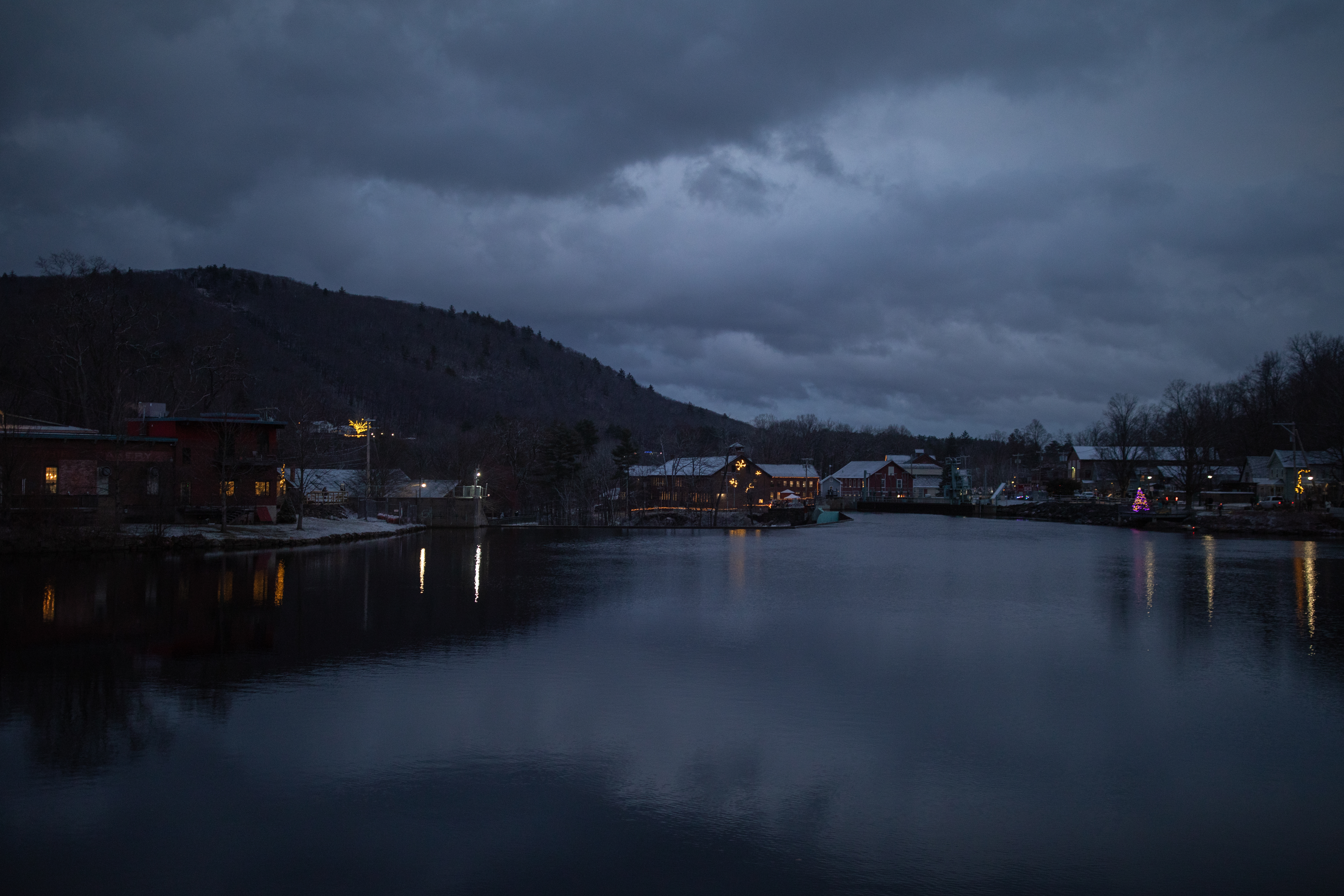
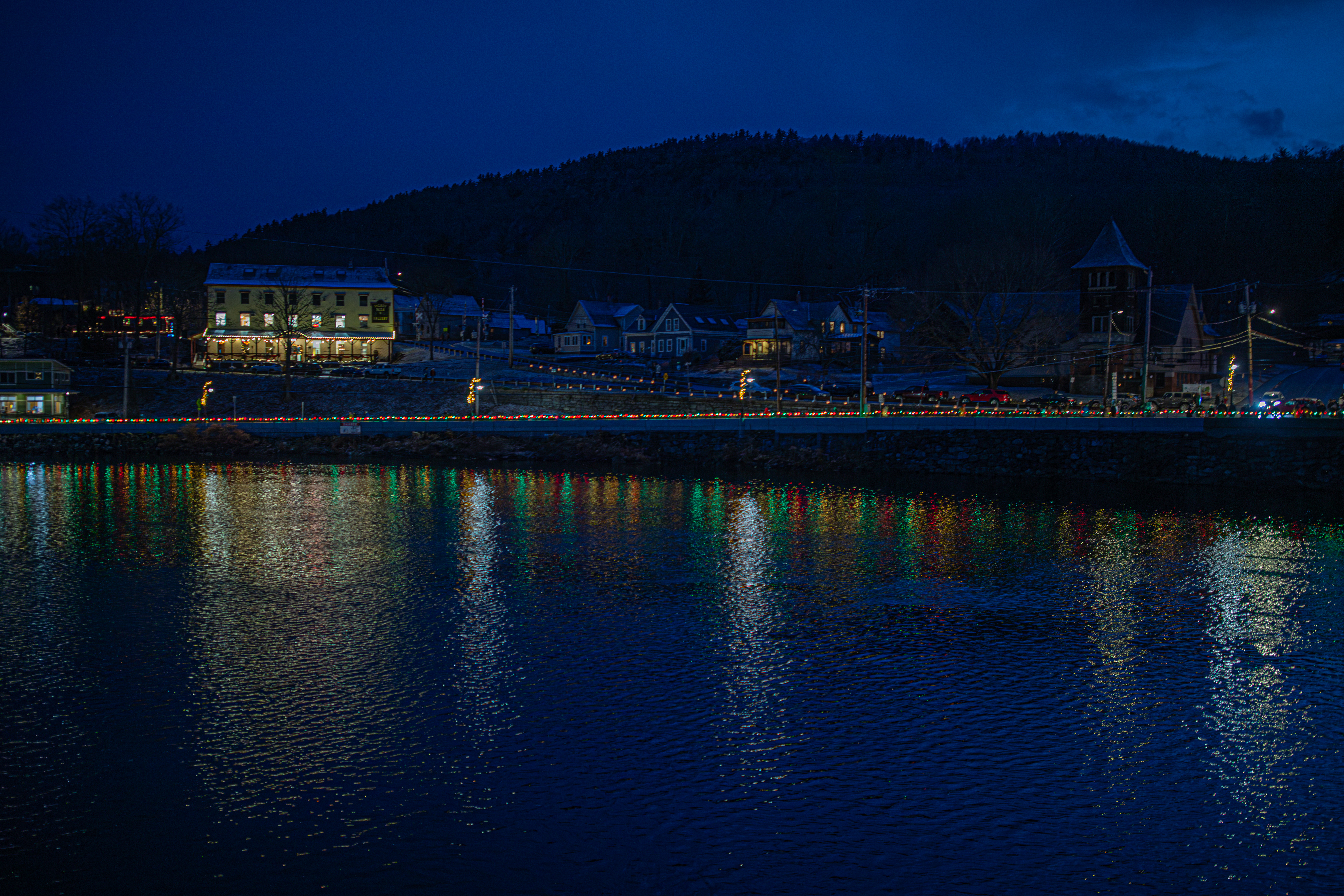
On cue, as the festival began it began to snow. The bridge, city scape and water gave a great backdrop for some late night photos, especially with the snow.
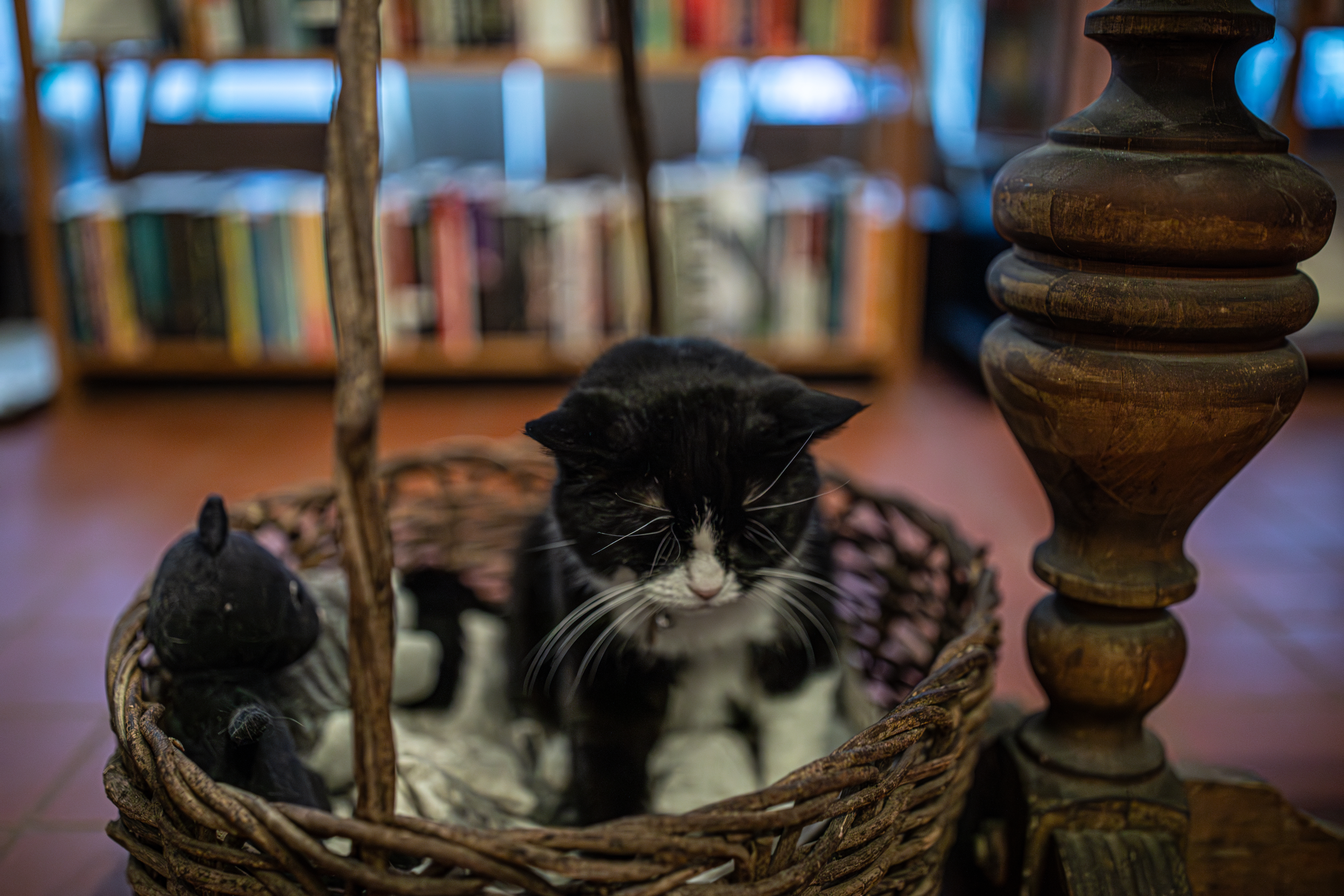
Before the parade began, visitors were welcome to visit the diverse group of stores and vendors on the street. What visit to the area would be complete without a visit to see Boswell at Boswell’s Books? Technically Boswell the 5th, he seemed a little worn out from all of the pats and traffic in the store!
There were lots of decorations, lights and candles lit in bags that illuminated the city and stores and gave off a real Christmas feel.
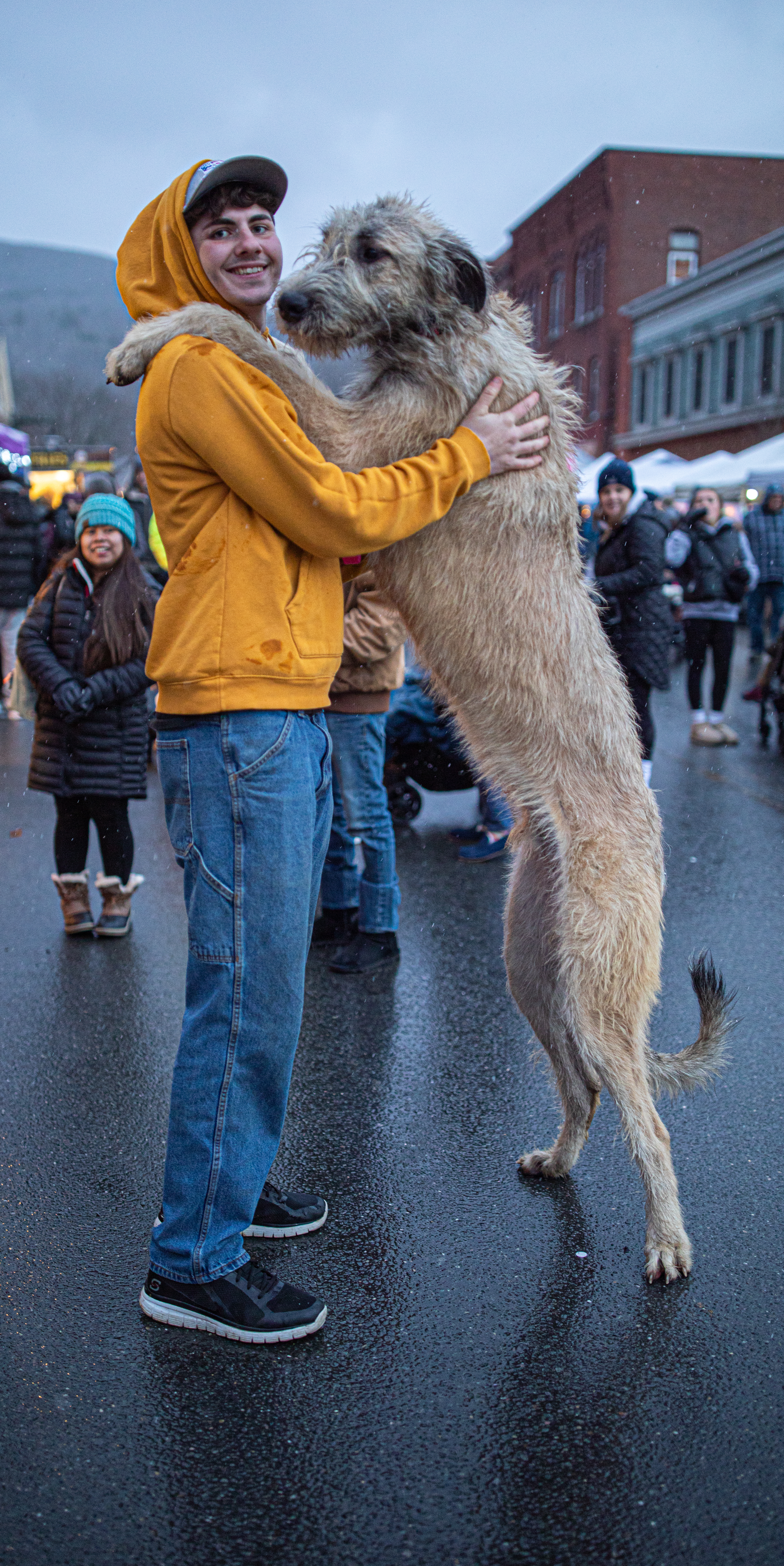
While I was setting up for the parade, I came across this big fella named Goose (a one year old Irish Wolfhound).
Although he’s only 1, this dog is almost as tall as his dad who is 6 feet 4!
As the sky grew dark and people began to congregate along the parade’s path, I made my way to the start of the parade. Initially, I was going to photograph the participants as they crossed the bridge. But, it was too crowded and dark. So, I settled under a street light near the starting point of the parade.
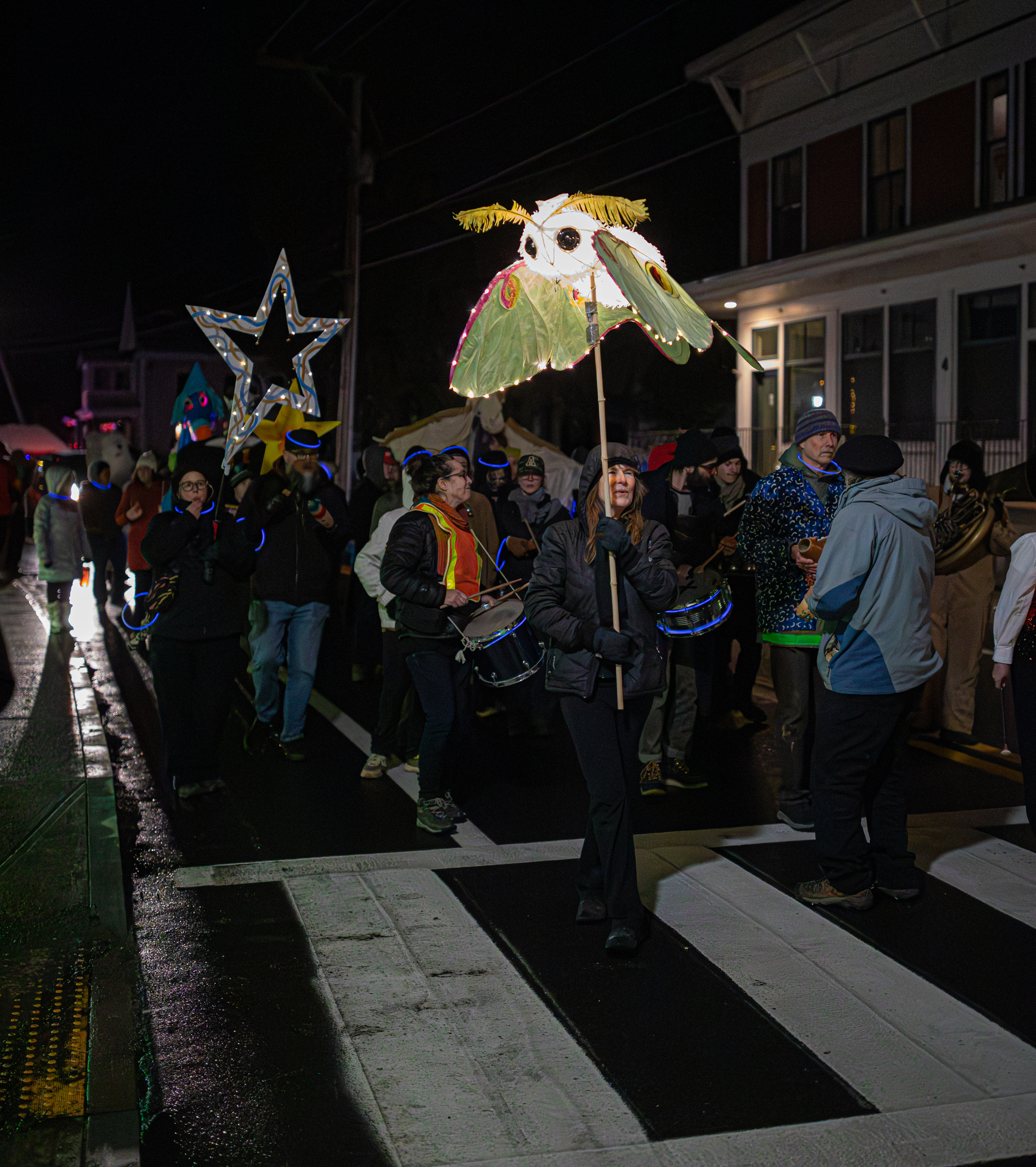
The parade started with lighted decorations!
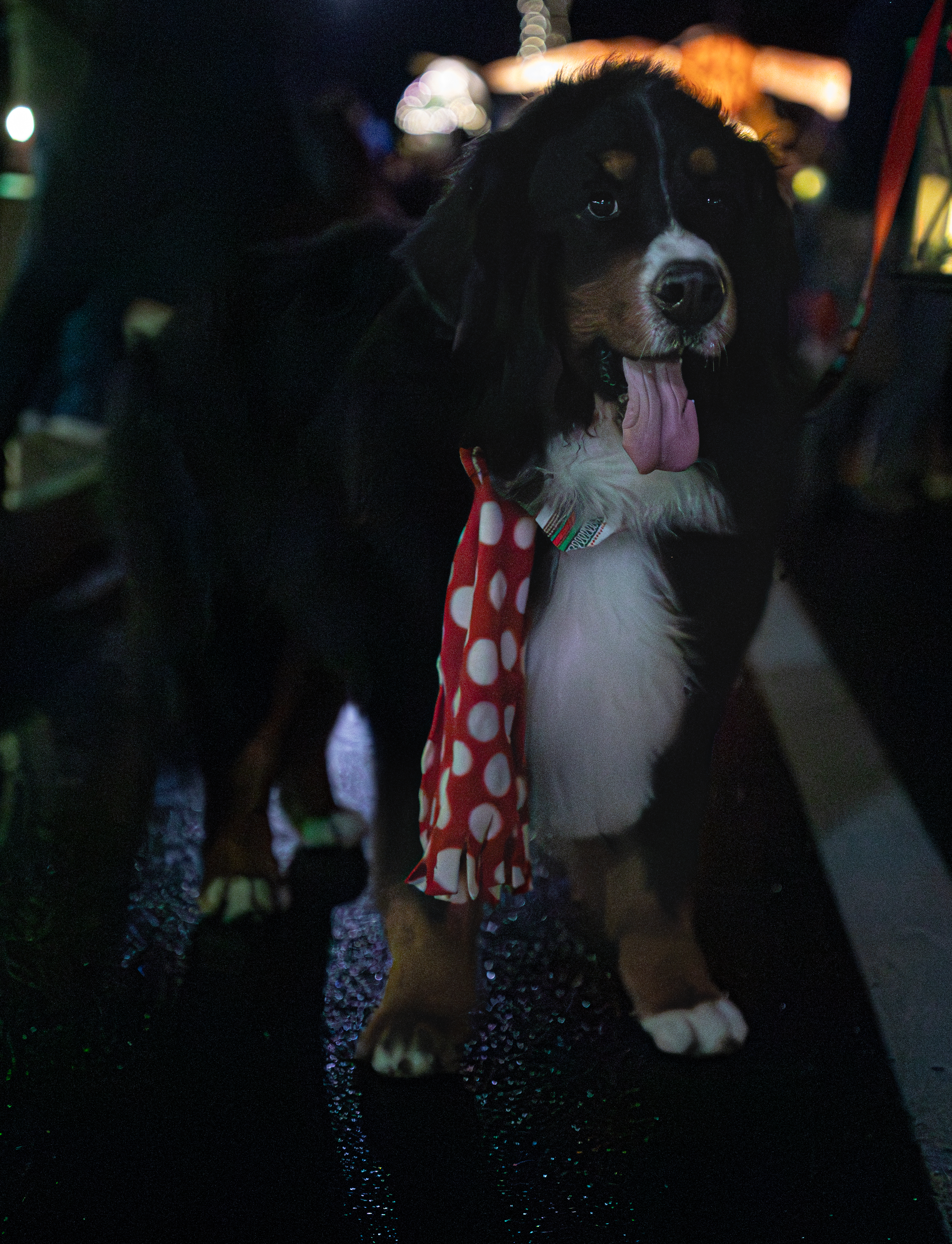
Following not far behind were some cute Great Pyrenees dogs!
These “chickens” were clucking as the rode by.
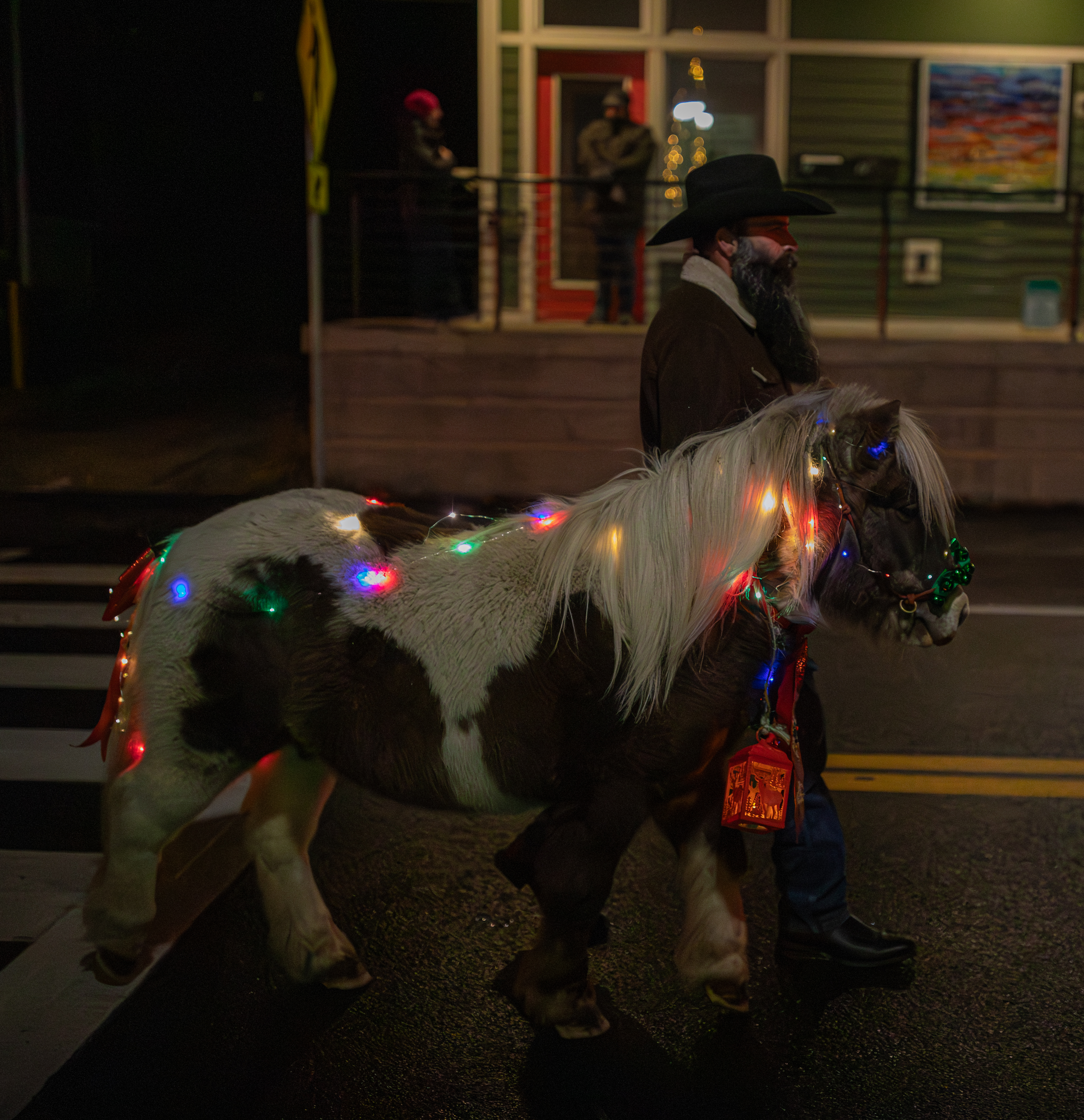
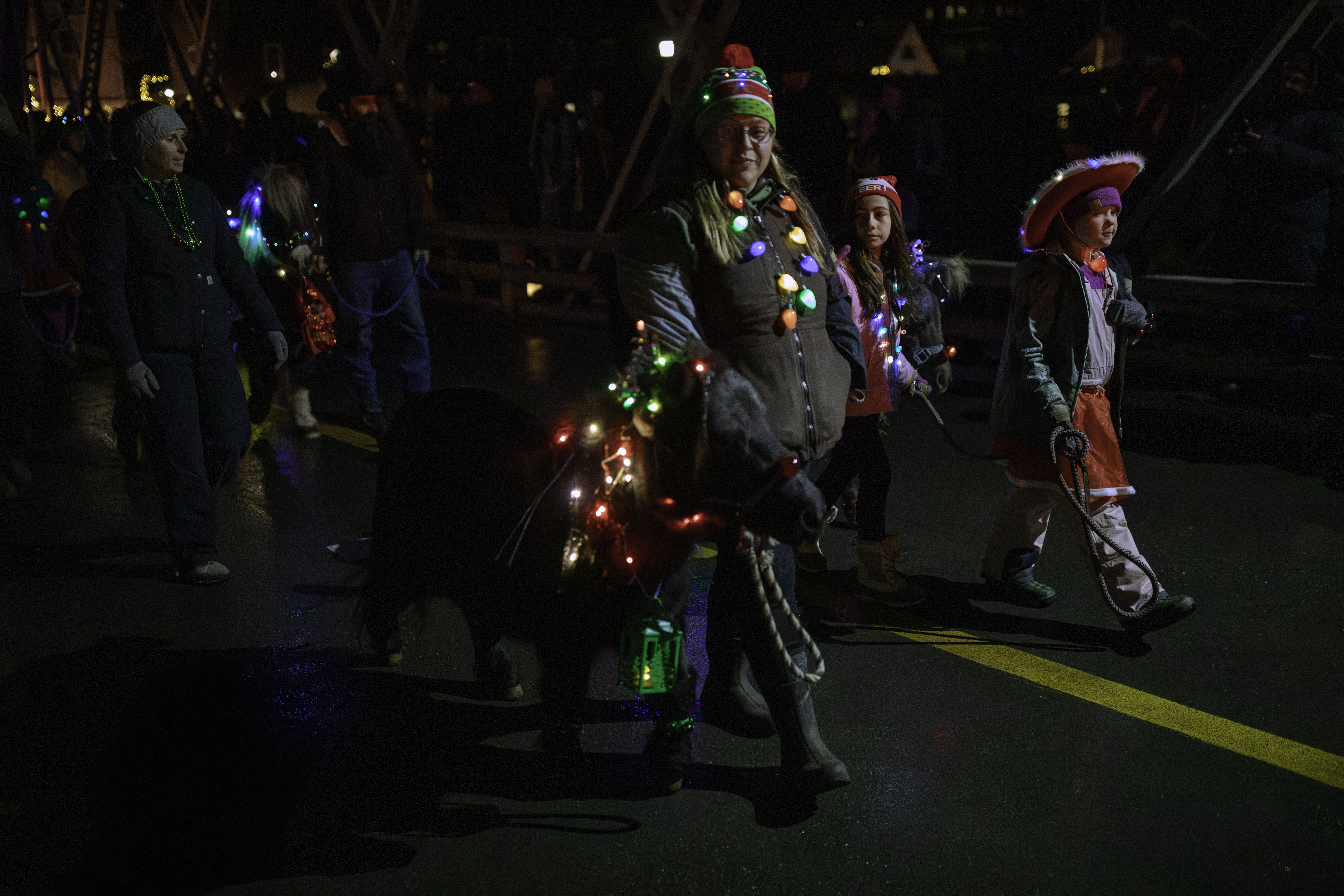
Those weren’t the only animals in the parade. These miniature horses also walked in the parade!
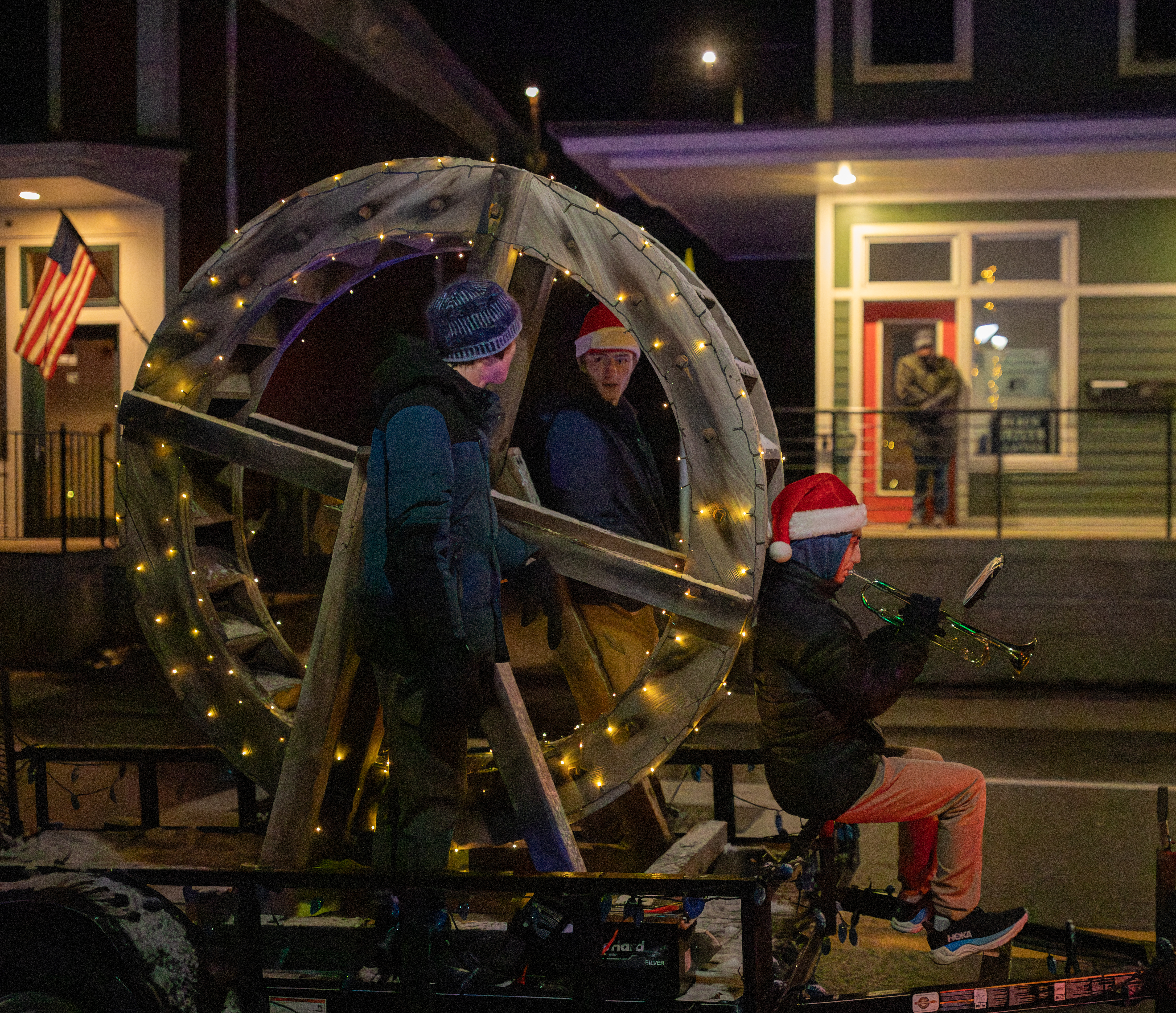
There were also some musical participants!
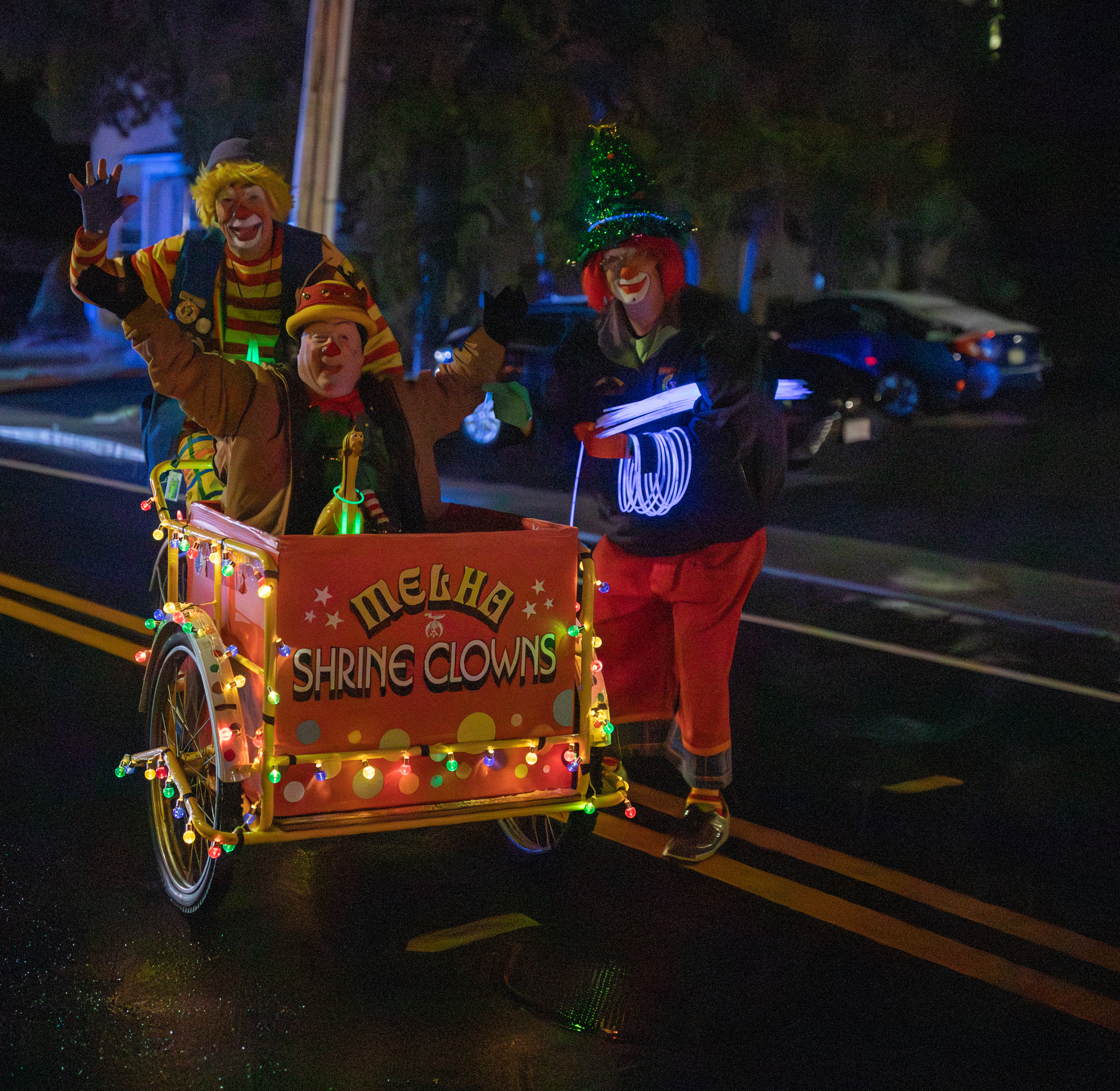
The Melha Shrine Clowns also made an appearance!
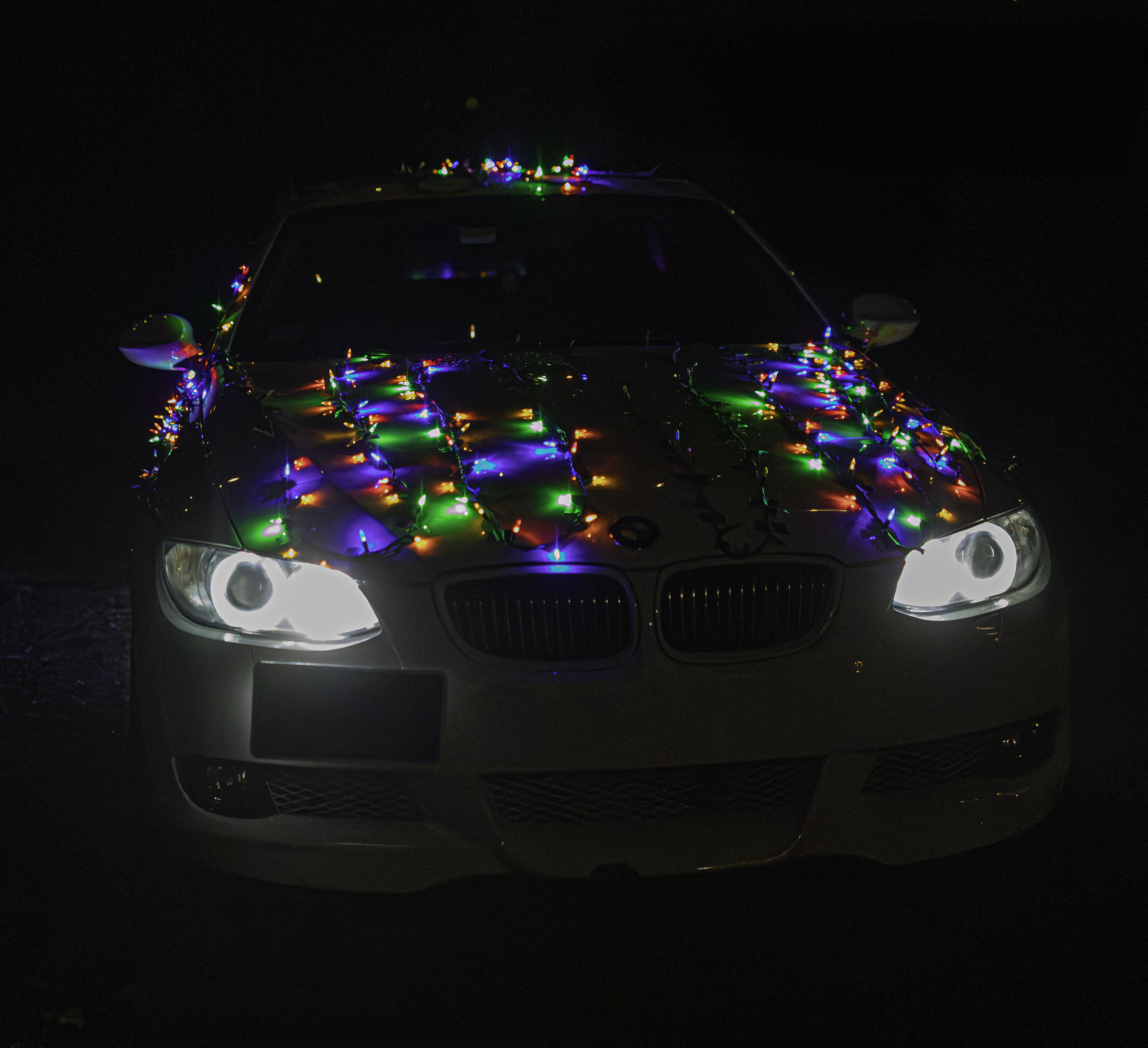
This lit up vehicle featured a light up Rudolph whose nose blinked!
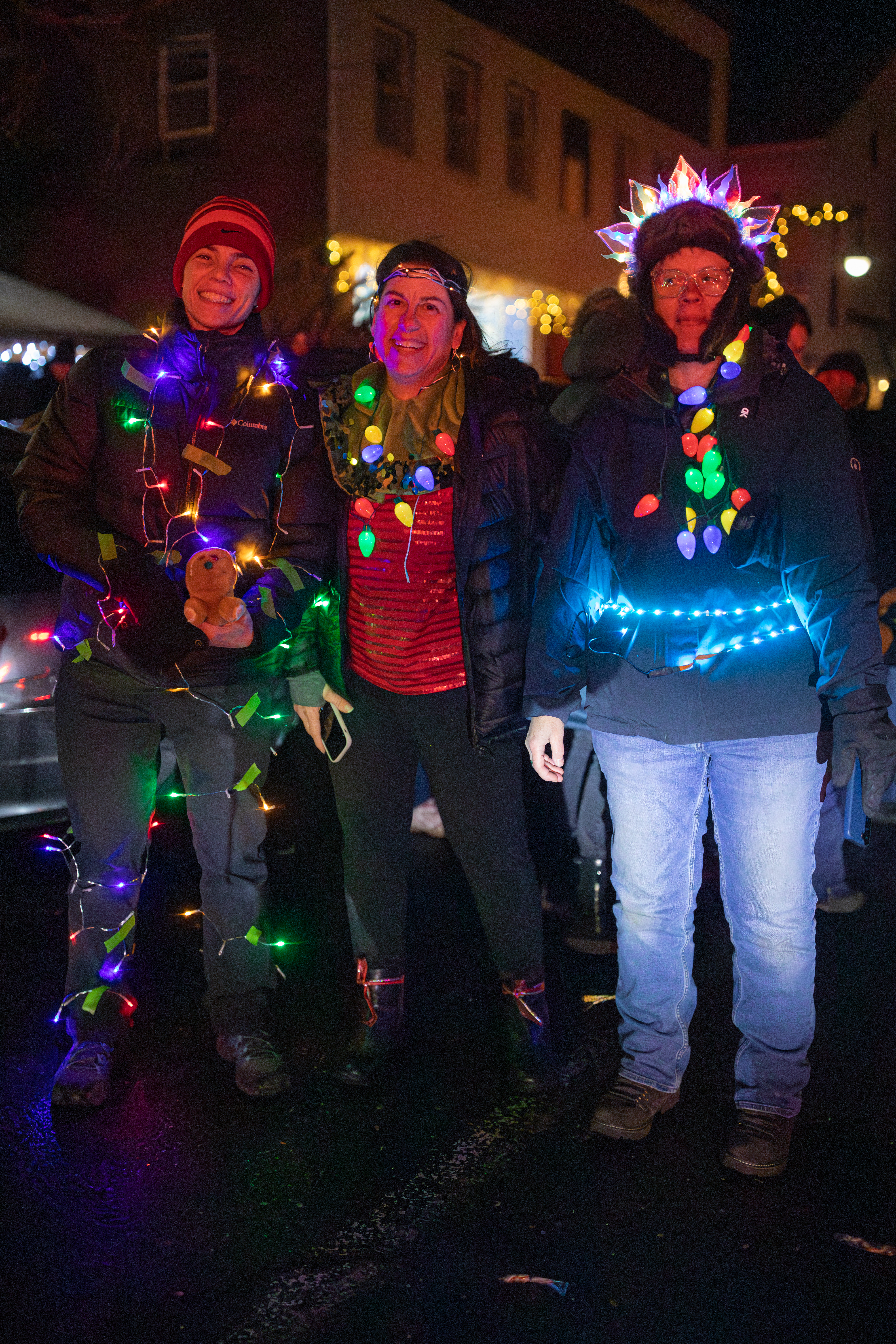
The vehicles weren’t the only things all lit up. These spectators were adorned in colorful lights for the parade!
And what parade would be complete without Santa and Mrs. Claus!
The Christmas spirit was certainly in the air during Moonlight Magic!
Location: Witch City Mall, 186 Essex St, Salem, MA
Cost: $15 for Adults
$9 for Children 12 & under
Hours: The International Monster Museum opens at 11:00 am daily (call for closing times, as they change seasonally).
Parking: There is parking available in the parking garage at Witch City Mall. There are additional parking lots and garages as well as metered on street parking in the city
Summary: Dozens of monsters, trolls and other scary creatures come alive at the International Monster Museum
Salem, MA, isn’t just known for witches. In fact, one stroll down the Essex Street Pedestrian will reveal monsters, zombies and goblins, And not just during October.
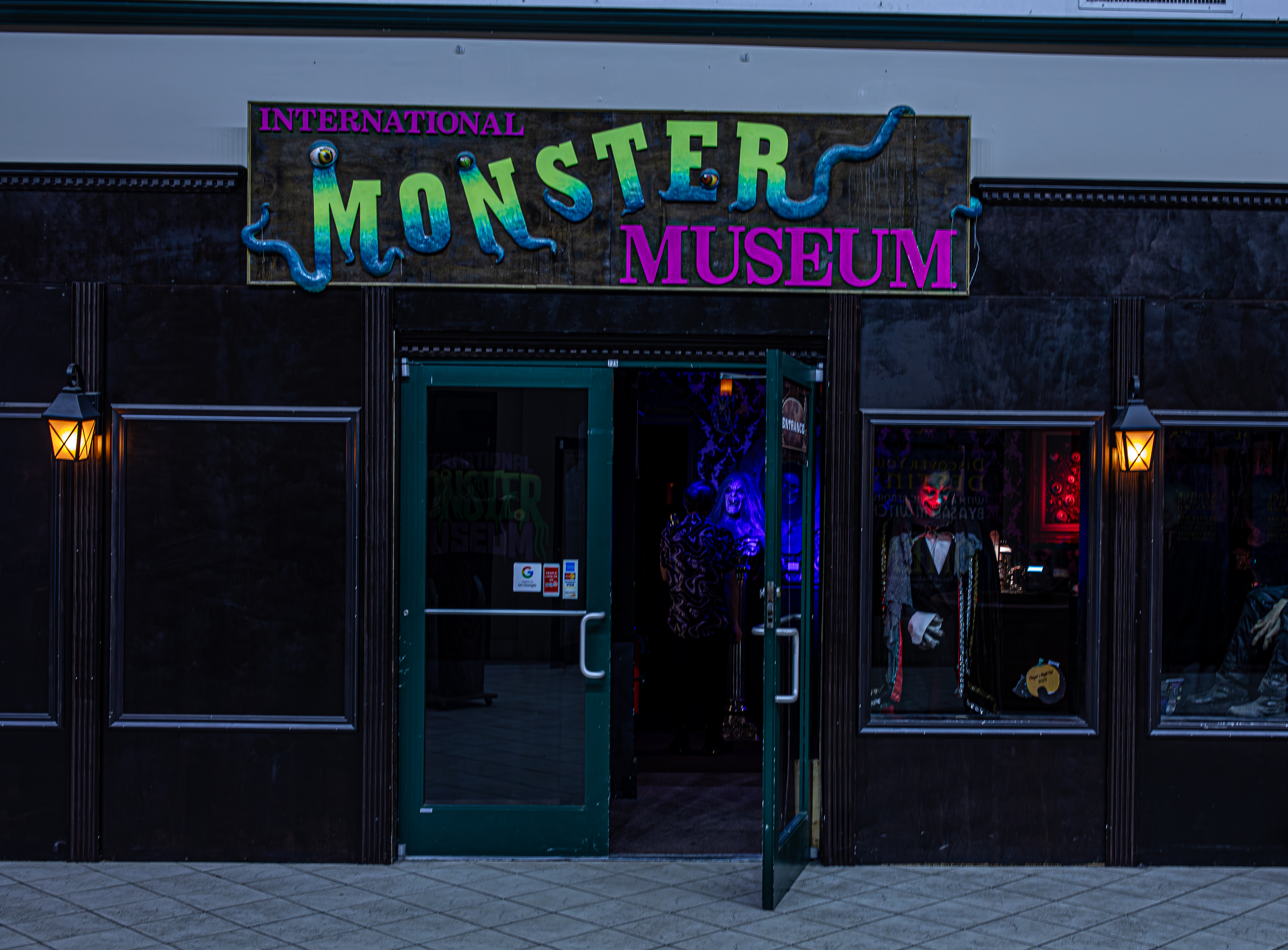
The International Monster Museum on Essex St has become one of the hotspots to see some of these spooky creatures.
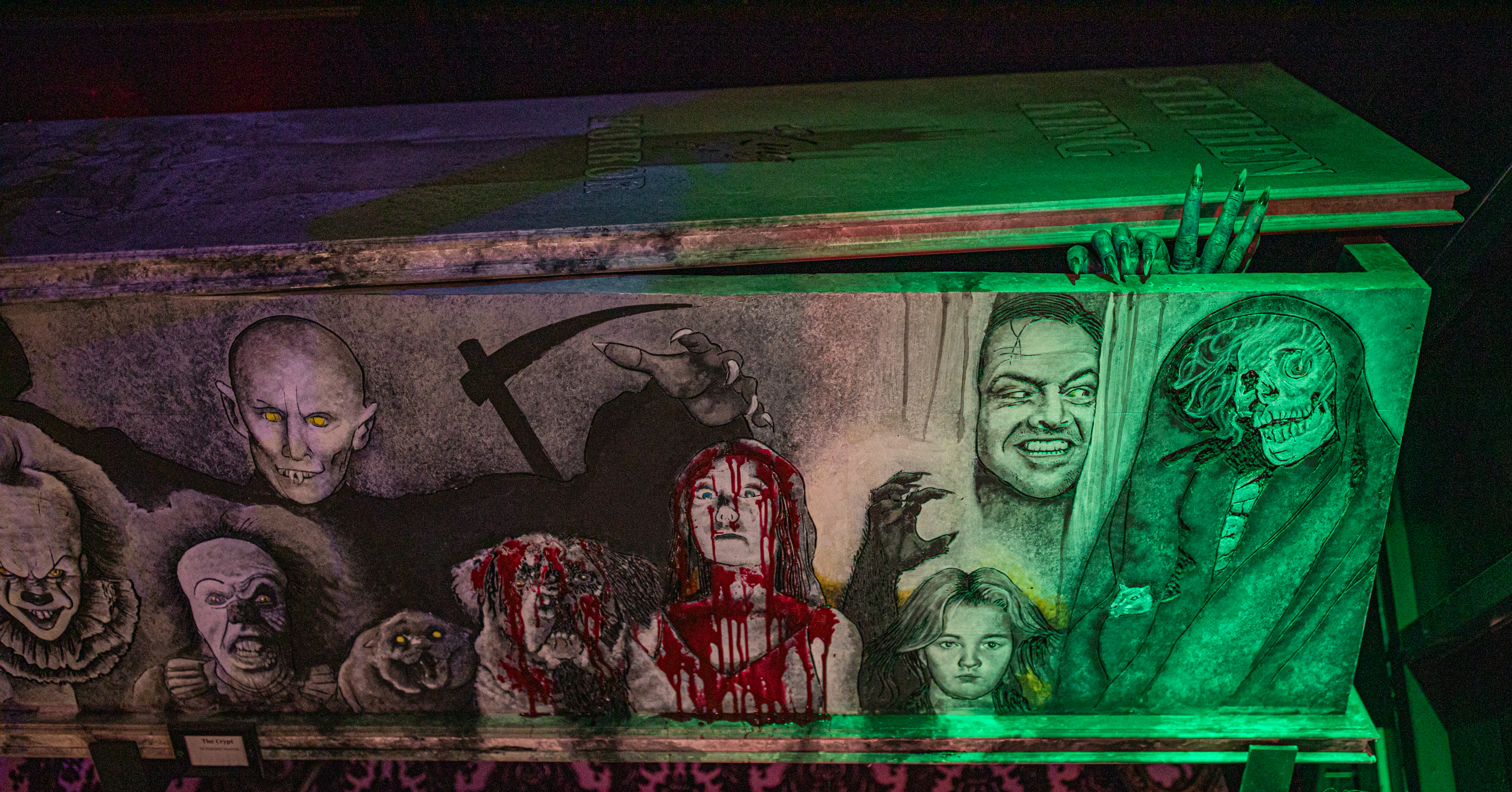
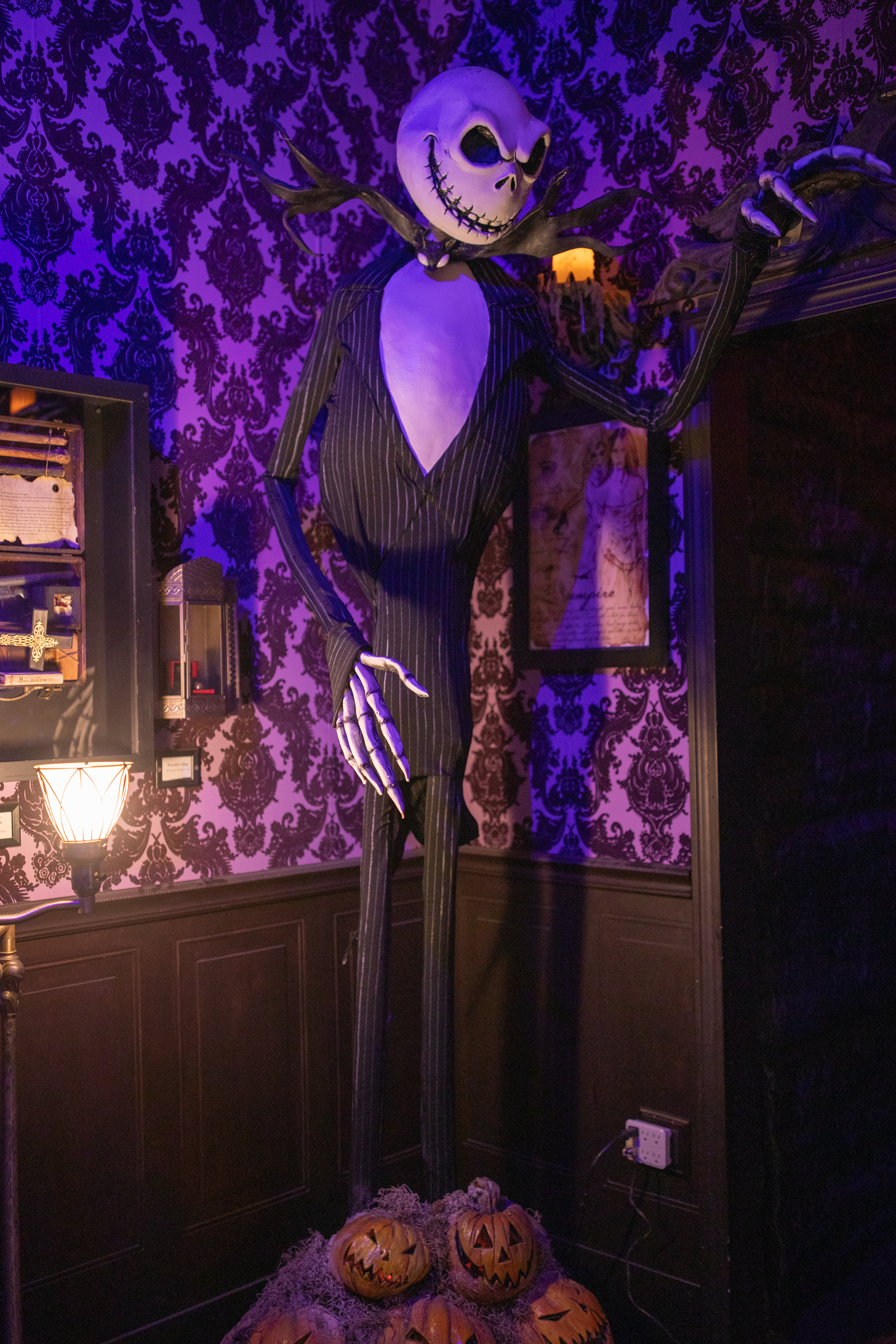
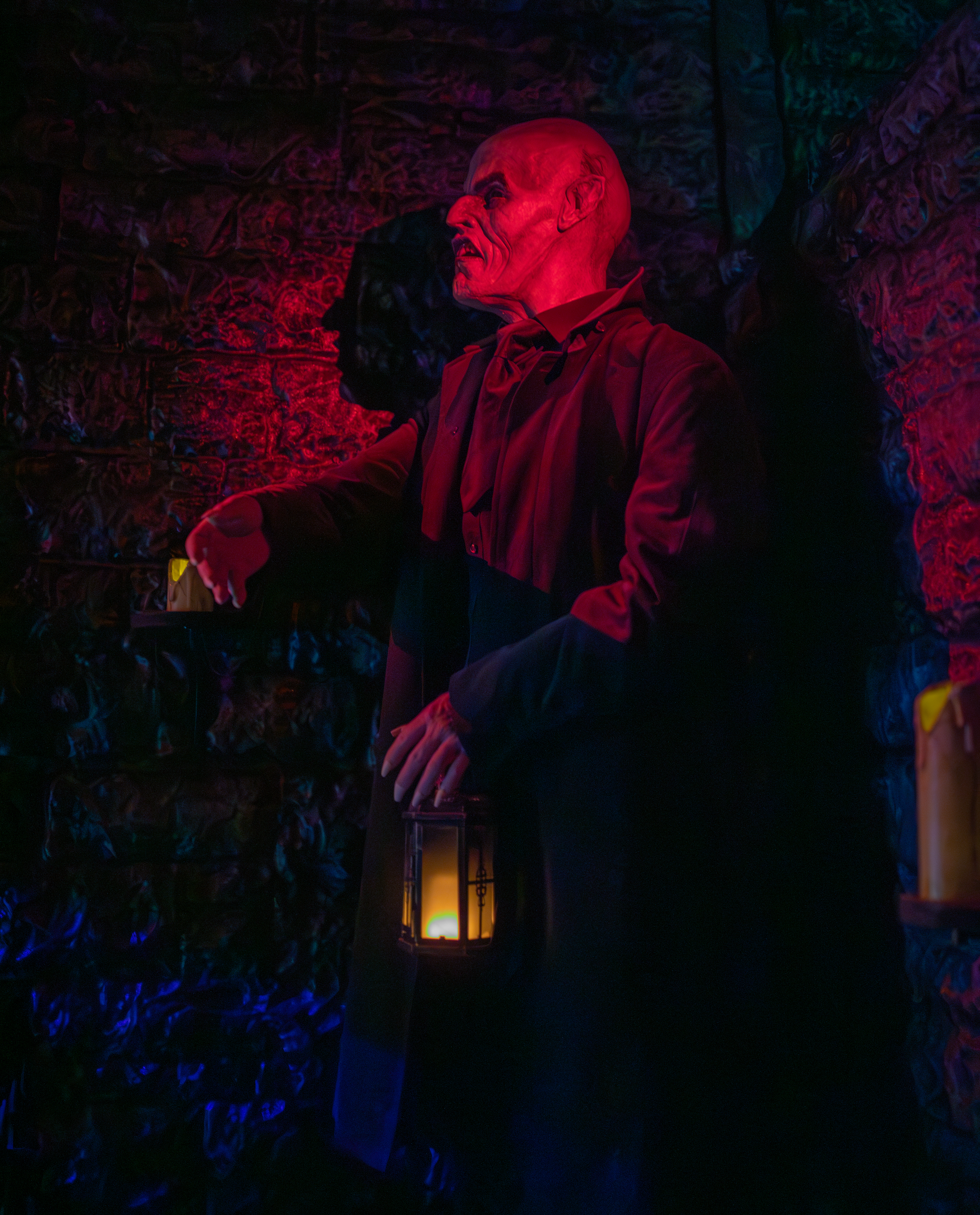
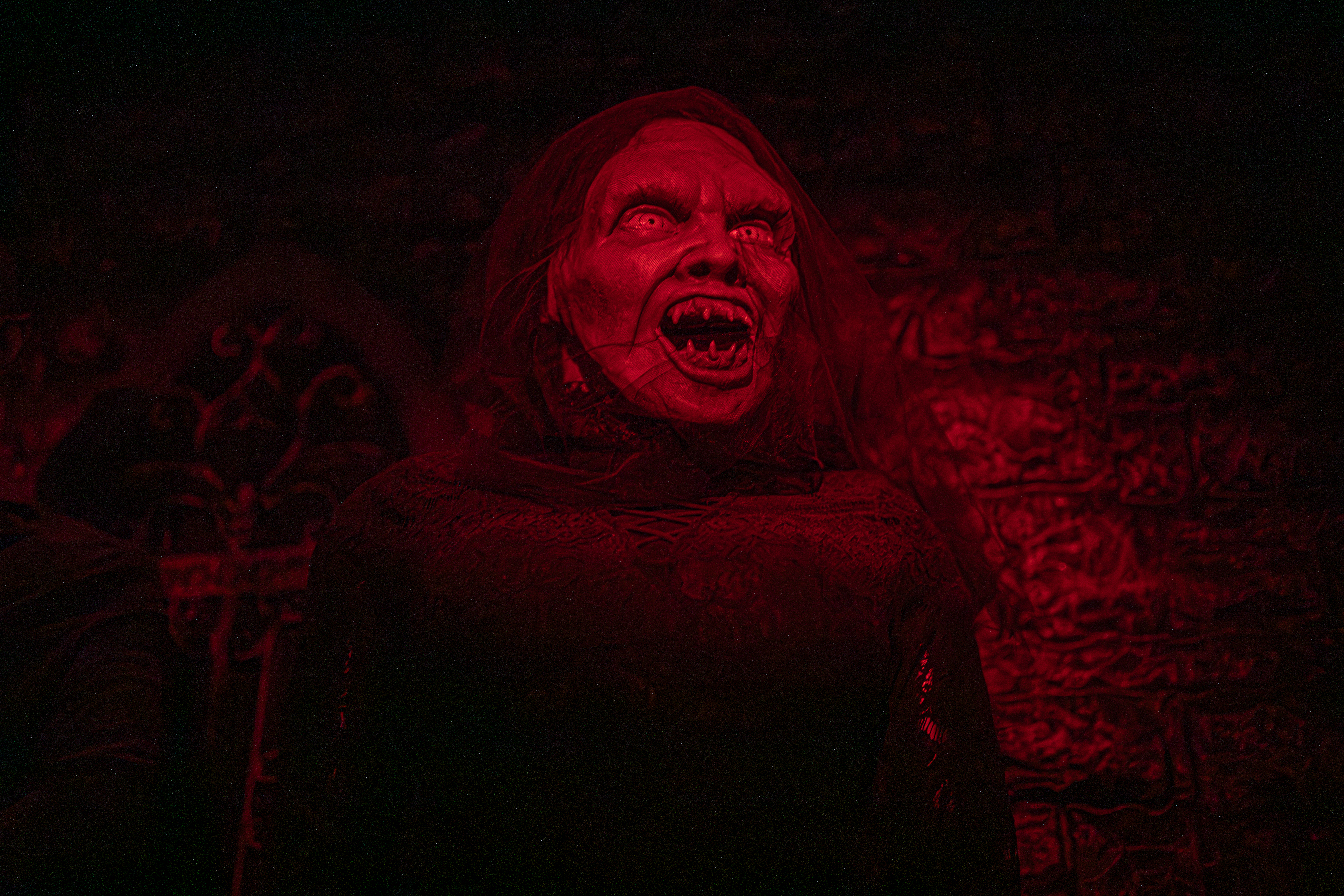
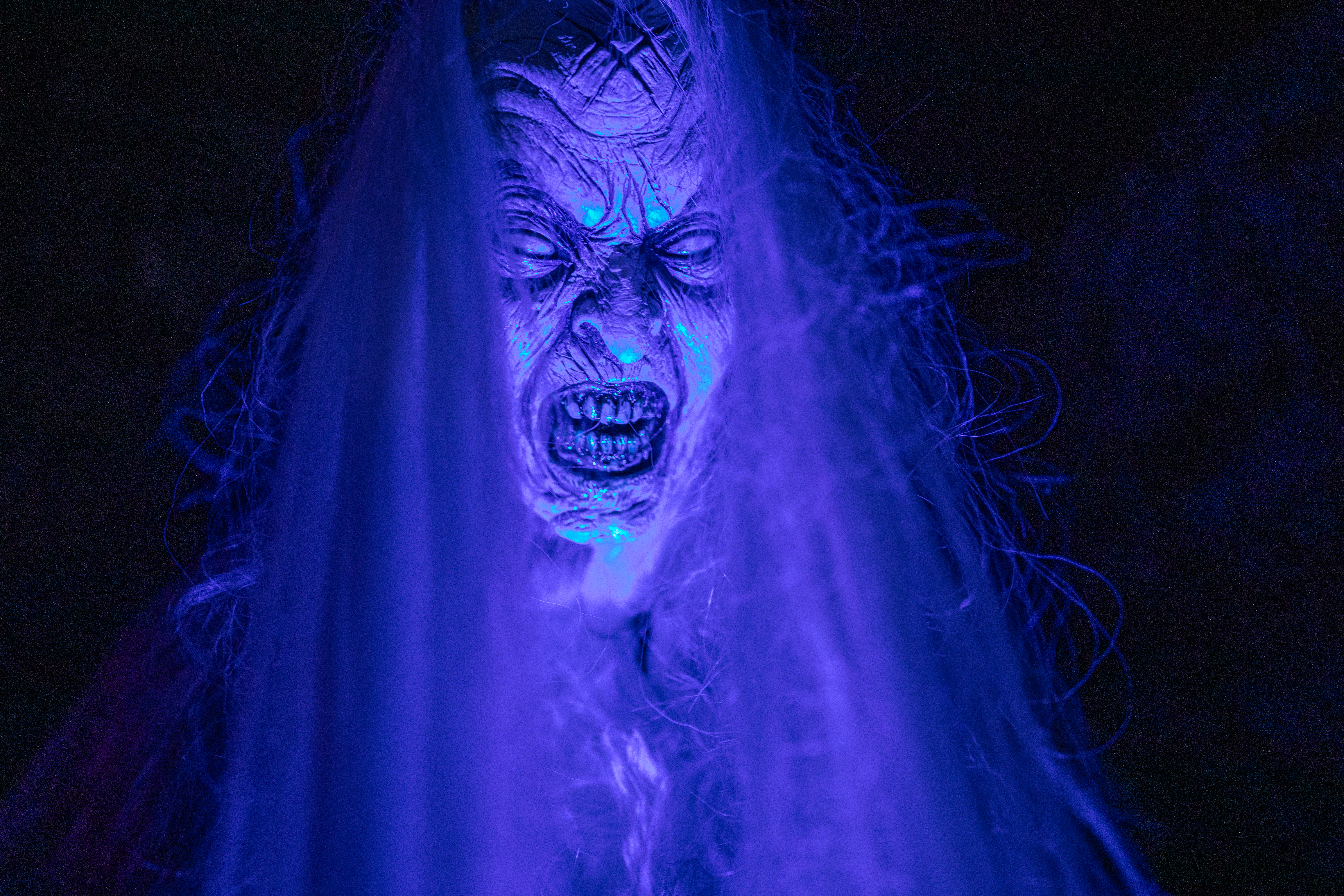
Upon entering the museum, you are struck by a variety of famous and not so famous characters.
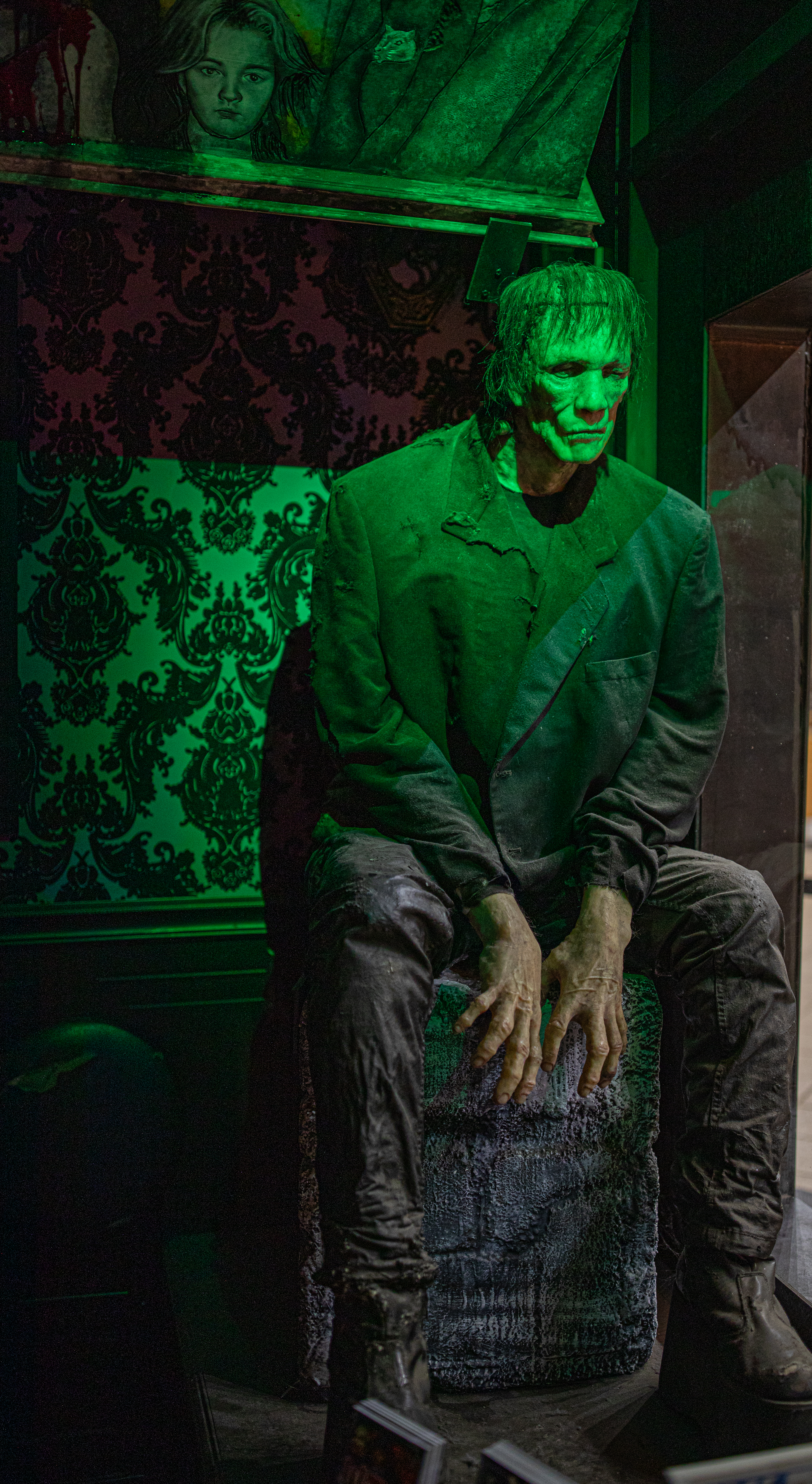
The attention to detail in the making of the monsters is impressive.
There were also artifacts such as this vampire hunter kit.
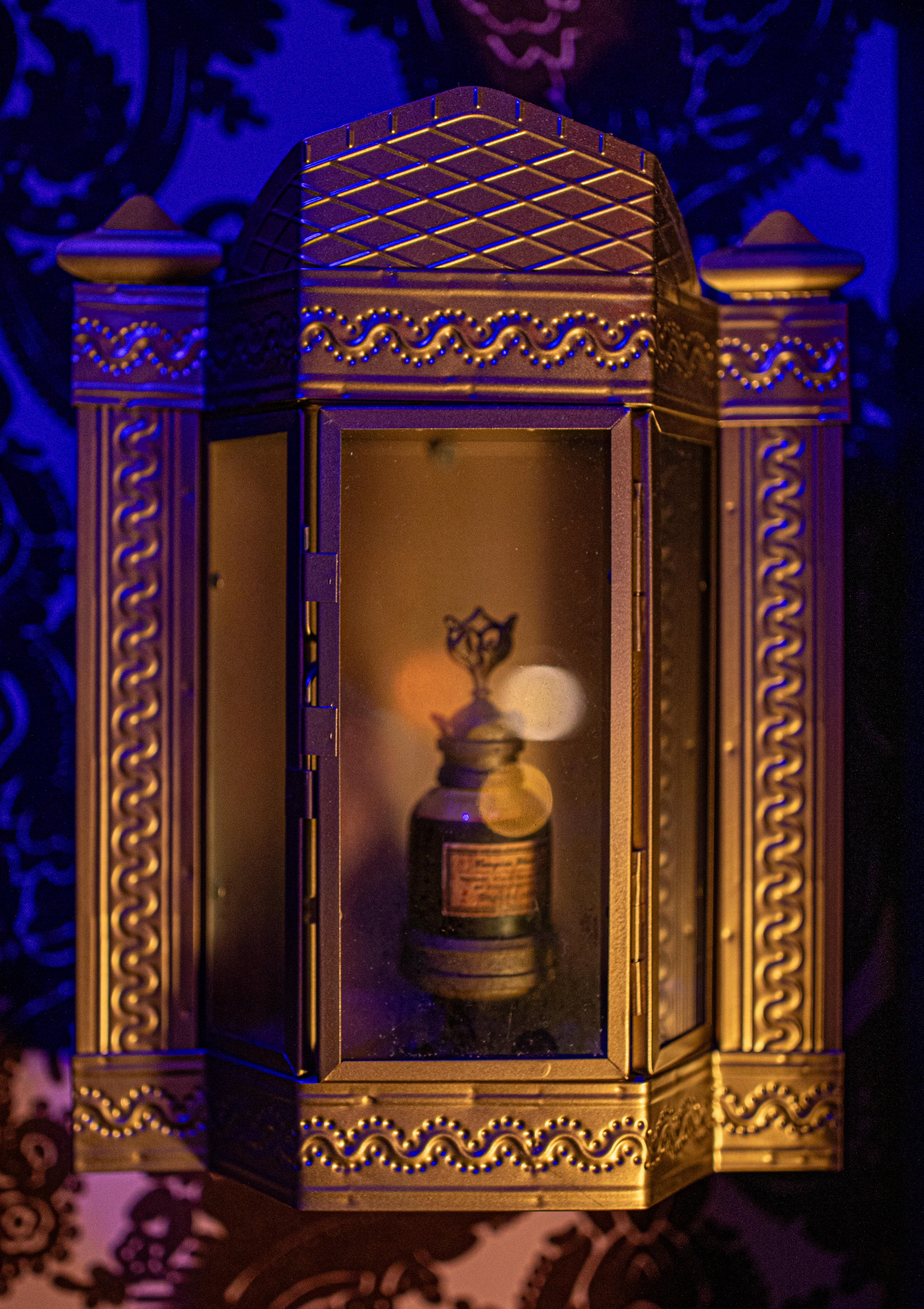
And this bottle of vampire blood.
Once you enter the dimly lit maze of monsters (don’t worry, they give you a lantern to help you see), you are surrounded by creepy characters of all kinds. Be ready, though, as some of the statues and figures are animatronics.
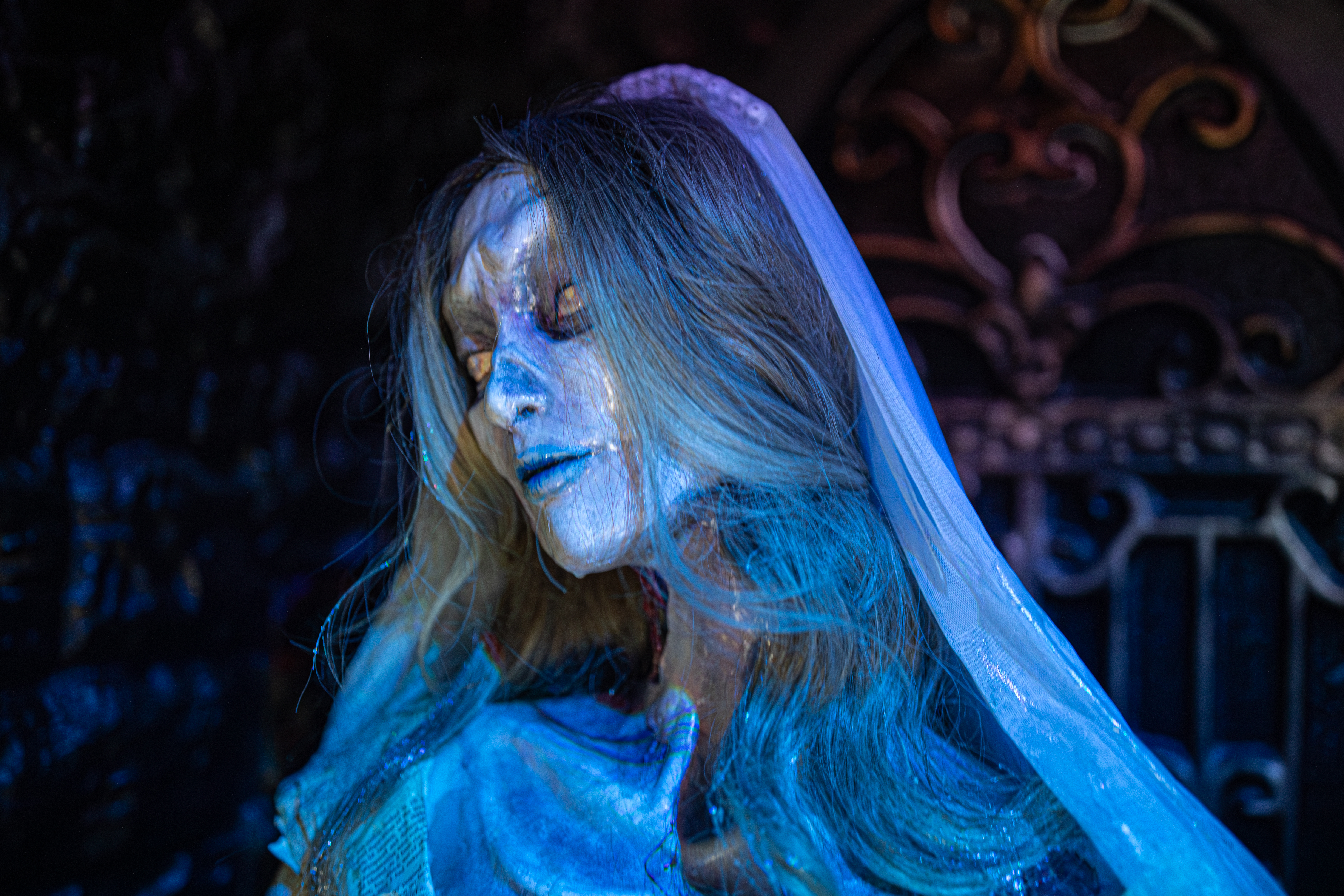
The life like statues come in all shapes and sizes.
It can be scary at the museum. So, don’t lose your head during your visit!
Not all of the figuresd are standing upright!
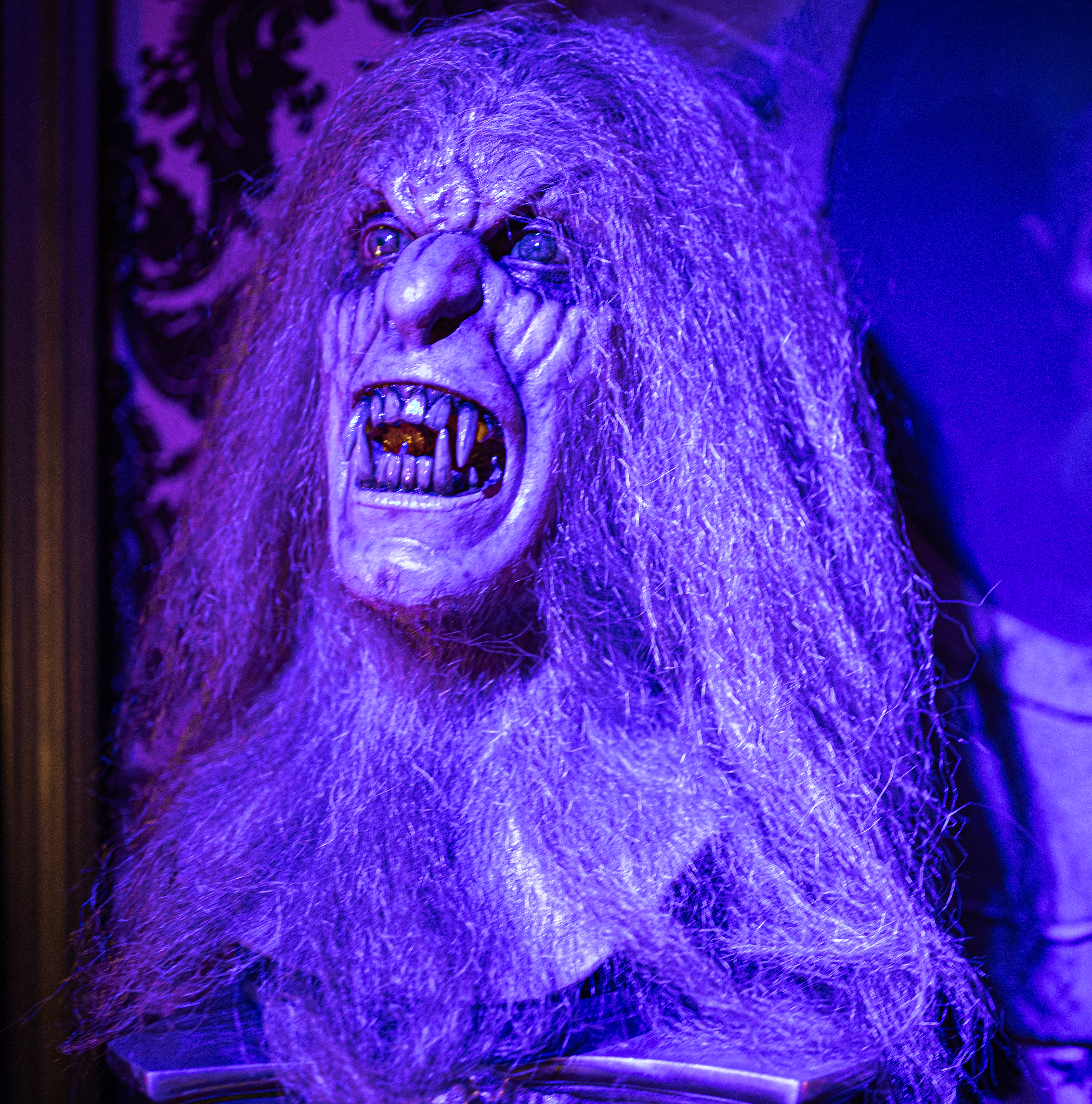
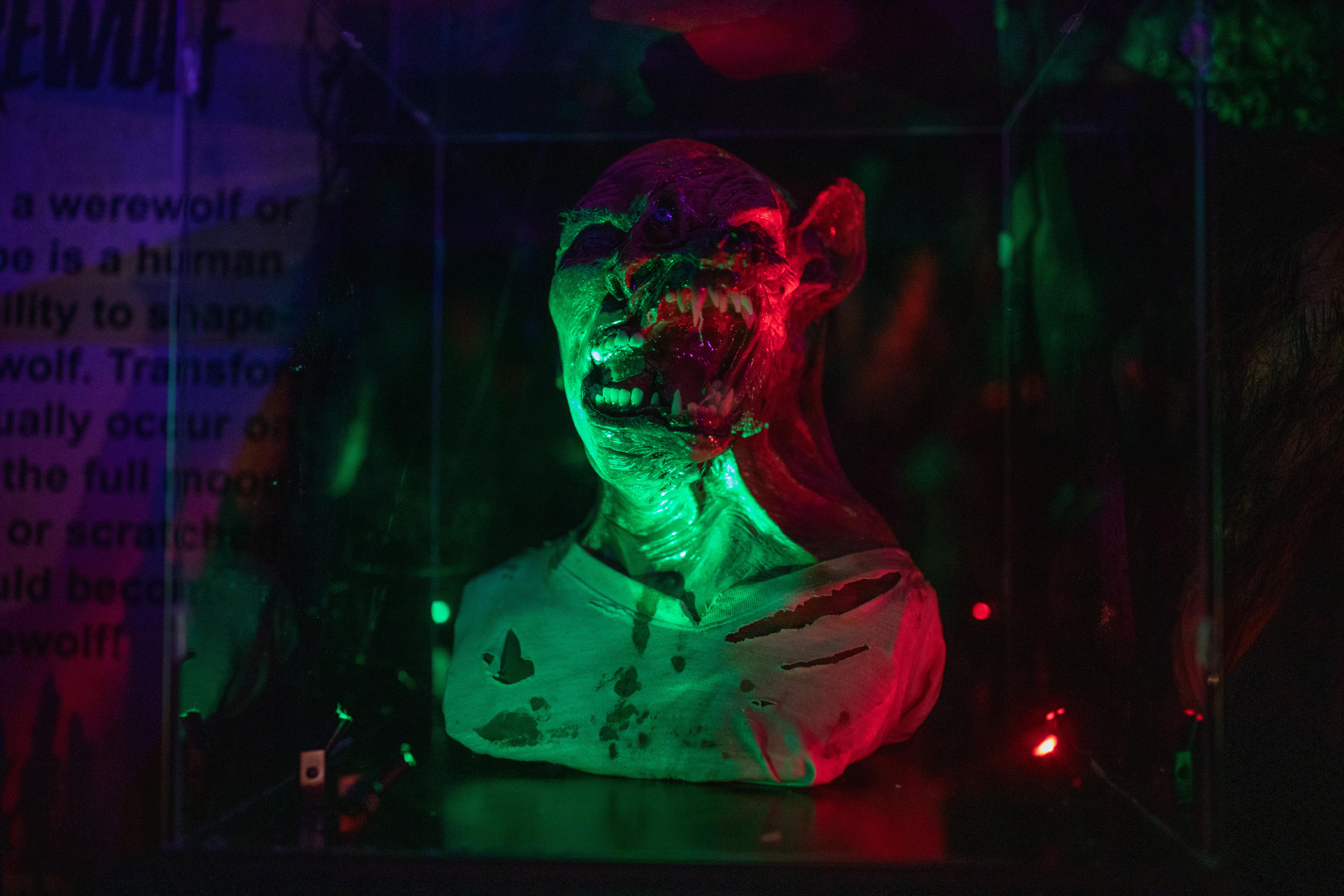
There are many twists and turns in the museum. And you never know what you’ll find around any of those corners! Some of the statues, like this one of a werewolf, have signs that give a description and the origins of the creature.
Old person alert. I always think of Wolfman Jack whenever I see depictions of a werewolf, especially when he’s dressed.
I like how the used the lighting to both give you light to see while still giving an eerie feel.
The museum thought of all of the different types of monsters, creepers and whatever these are!
Fans of the movie Leprechaun, both of you, may enjoy these statues!
As random as it may seem, this ghoul is supposed to be eating the entrails of Edgar Allen Poe, Uhm, yuck.
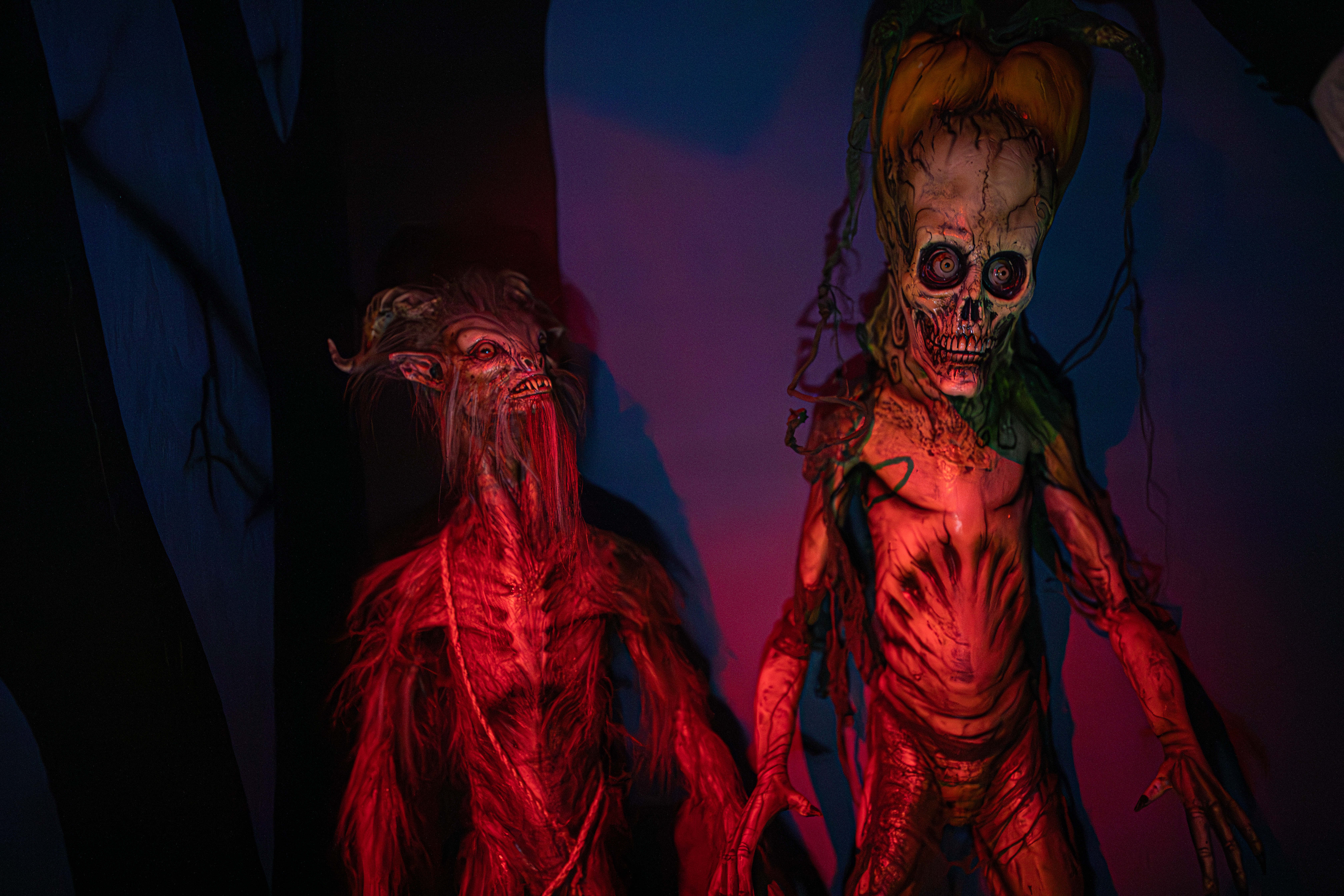
Just when you think you’re about to leave and the horror has ceased, these monsters lurking by the exit!
Even though I visited in September, the museum had a real Halloween feel to it. Halloween season is beginning sooner each year it seems. In fact, I mentioned to one of the staff that September is basically “pre-Halloween season.” Before you know it, they’ll start decorating and celebrating in August!
If you missed the museum this past Halloween season, don’t worry it is open all year round. Because it’s always spooky season in Salem!
I have been reading and reviewing books about New England or written by people from New England. Today’s review is about a book that has recently turned into a movie; The Long Walk by Stephen King (339 pages). I read the story from the Bachman Books, a collection of Stephen King book. But, you can also purchase the book as a stand alone.
On its surface, the plot for The Long Walk seems both cruel and unpalatable. And it is both of these things. But, in Stephen King fashion, it is also very readable. The name basically says it all. I did find it hard to believe I could be so engrossed about a story of this nature.
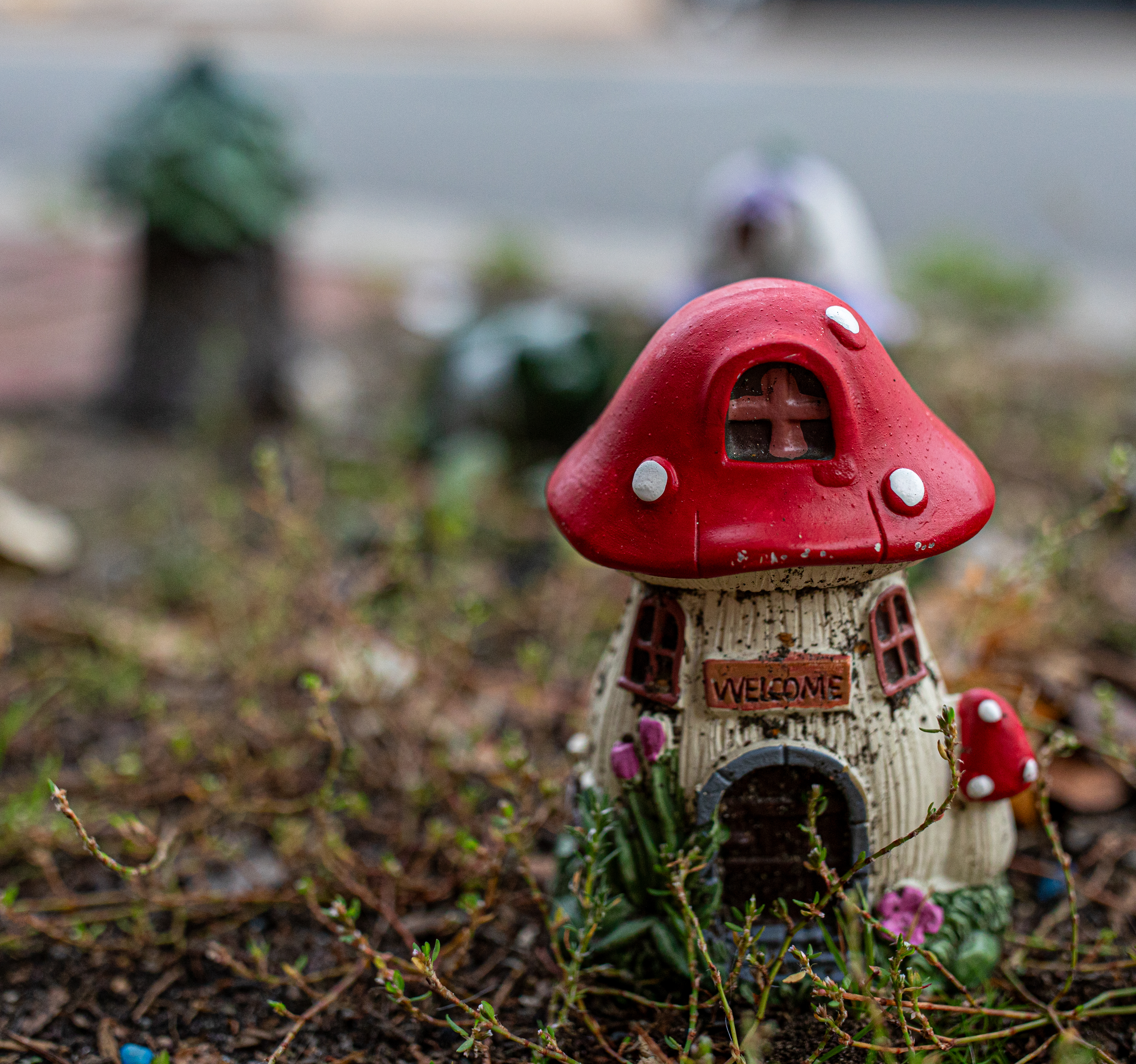
Summary: On Essex St in Salem, MA, there is a hidden gem; a special, hidden gnome village on Essex St.
If you’re not looking for it you could easily miss a special village in Salem, MA. But, this place is not any city, town or hamlet in the city. In fact, sometimes it doesn’t even stay in one area!
While the village does indeed stay in one area, figurines, homes and other parts of the village are moved from time to time. Or, maybe they move on their own!
The villagers like to relax with their instruments.
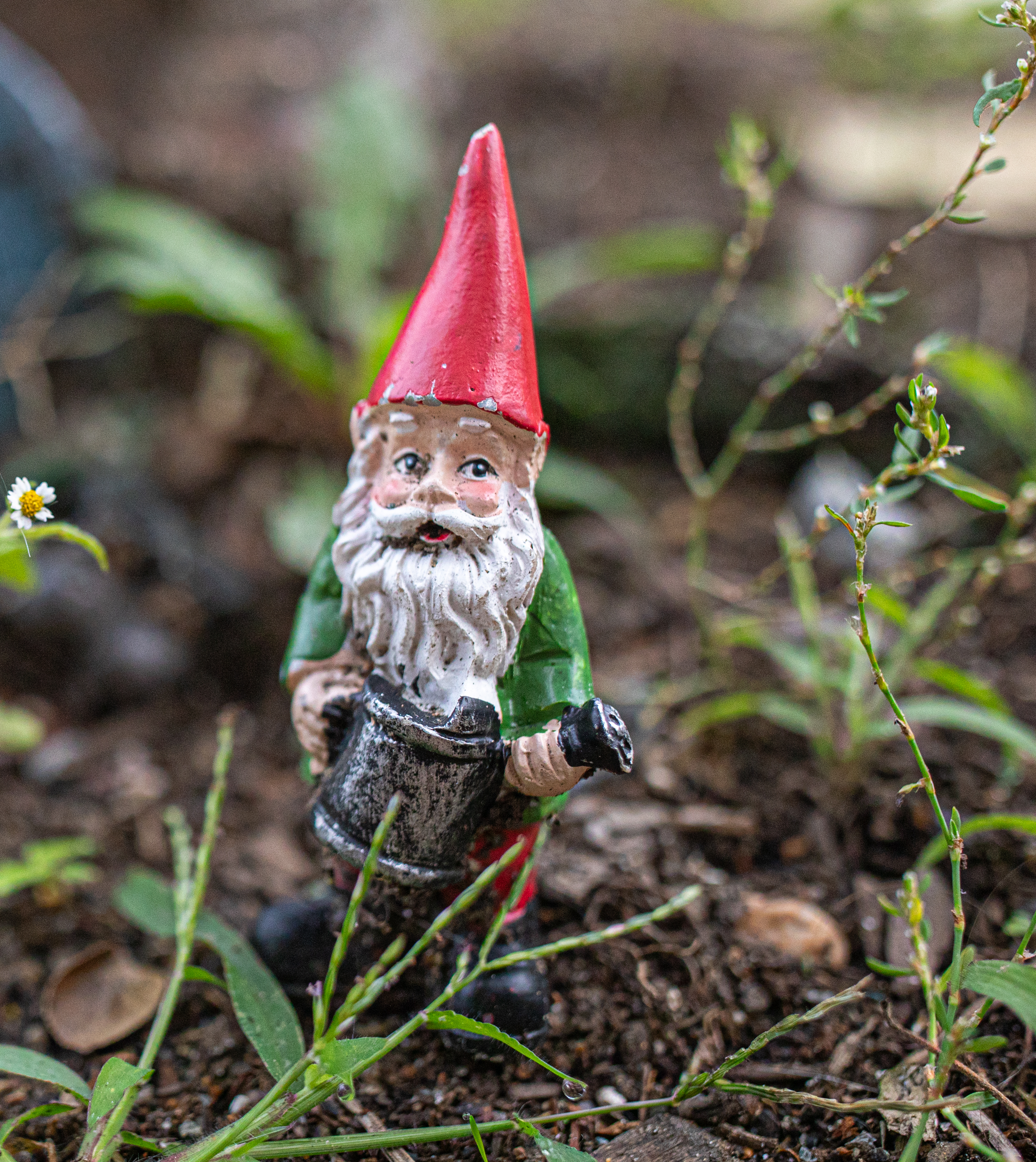
But, it’s not all fun and relaxation at the village. Keeping up the village takes a lot of work. So, the gnomes are hard at work watering plants and flowers and doing other upkeep!
Although I’m not exactly sure, I think these gnomes began appearing a few years ago when the city had a gnome or fairy trail. Small displays were placed in various locations around the city and people were encouraged to find them all. It appears this village has lived on from that earlier display.
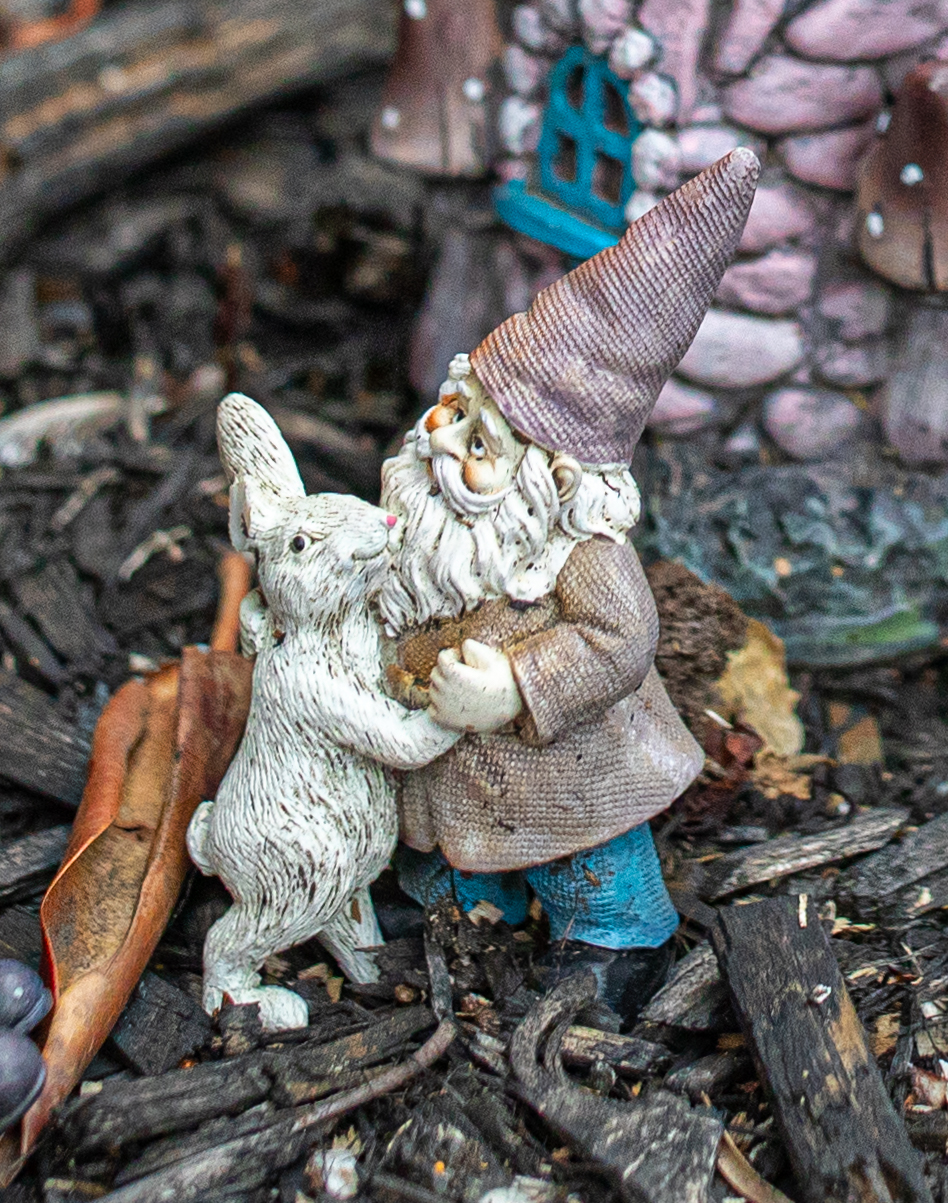
Sometimes, the gnomes get up to some questionable behaviors! But, we all like to cut loose sometimes.
The gnomes have a simple, happy life except for one luxury. They do like their castles and specialty homes! These may look like simple, small dwellings. But, with the price of rent these days, I’m sure they are not so cheap!
I am not sure how long the gnomes will remain in their present location. So, you may want to see them before they go south for the winter!
Location: Mass Audubon Ipswich River Wildlife Sanctuary. 87 Perkins Row, Topsfield, MA (30 minutes northeast of Boston, MA)
Cost: $7 for adults, $4 for children seniors. Memberships are also available.
Hours: Trails are open dawn until dusk
Parking: There are about 50 free parking spots for visitors
Dog Friendly: No
Universally Accessible: Yes, while some trails may be challenging, the Audubon has an ADA-compliant, universally accessible All Persons Trail. Also, a rollator is available for loan upon request
Summary: The Mass Audubon Ipswich River Wildlife Sanctuary in Topsfield, MA, has many features and natural beauty. But, it’s an especially magical this time of the year when they\ hungry birds enjoy hand fed treats.
As the temperatures dip and food becomes less available, you may be surprised by how friendly the wildlife can be. Especially our feathered friends.
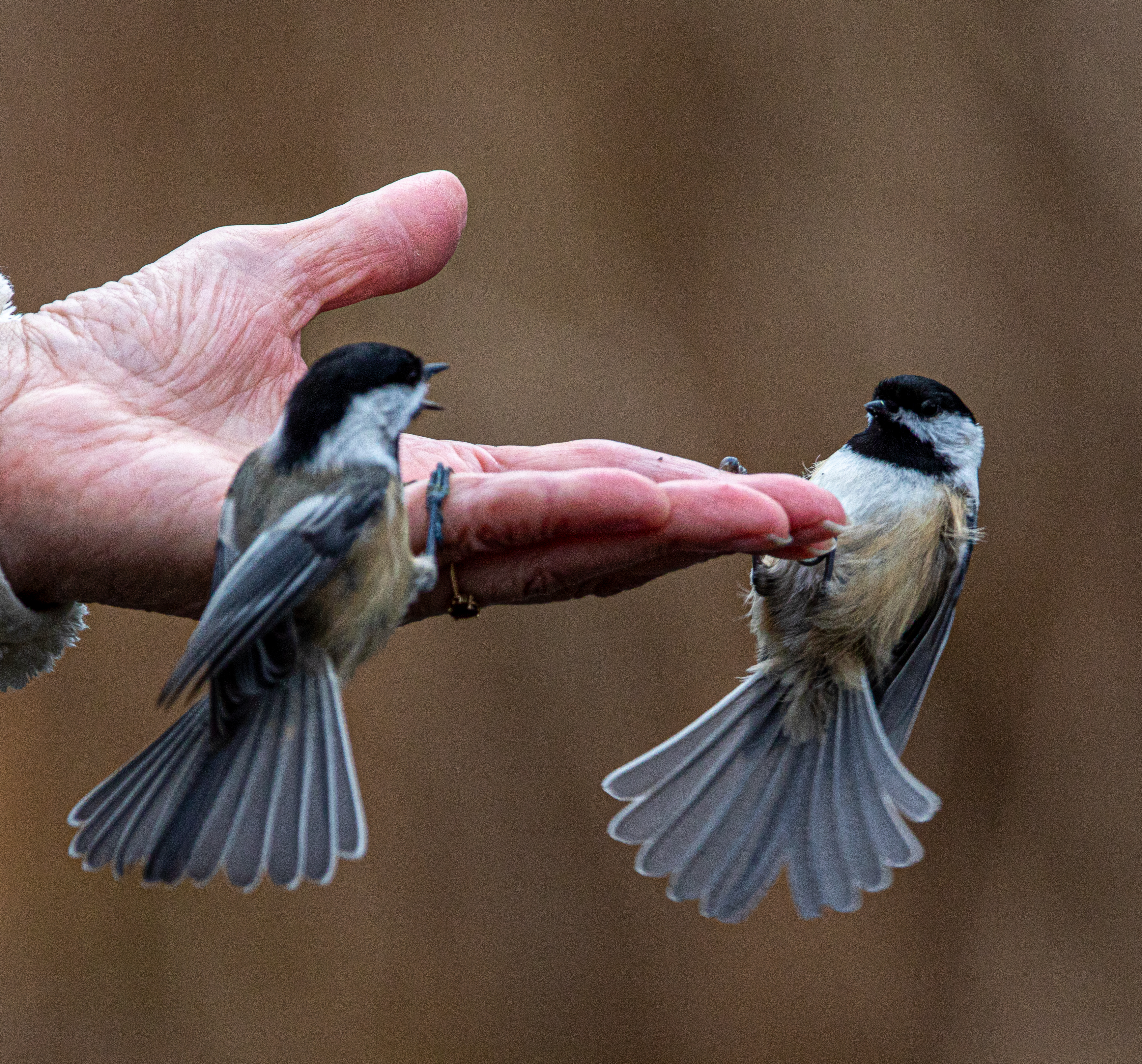
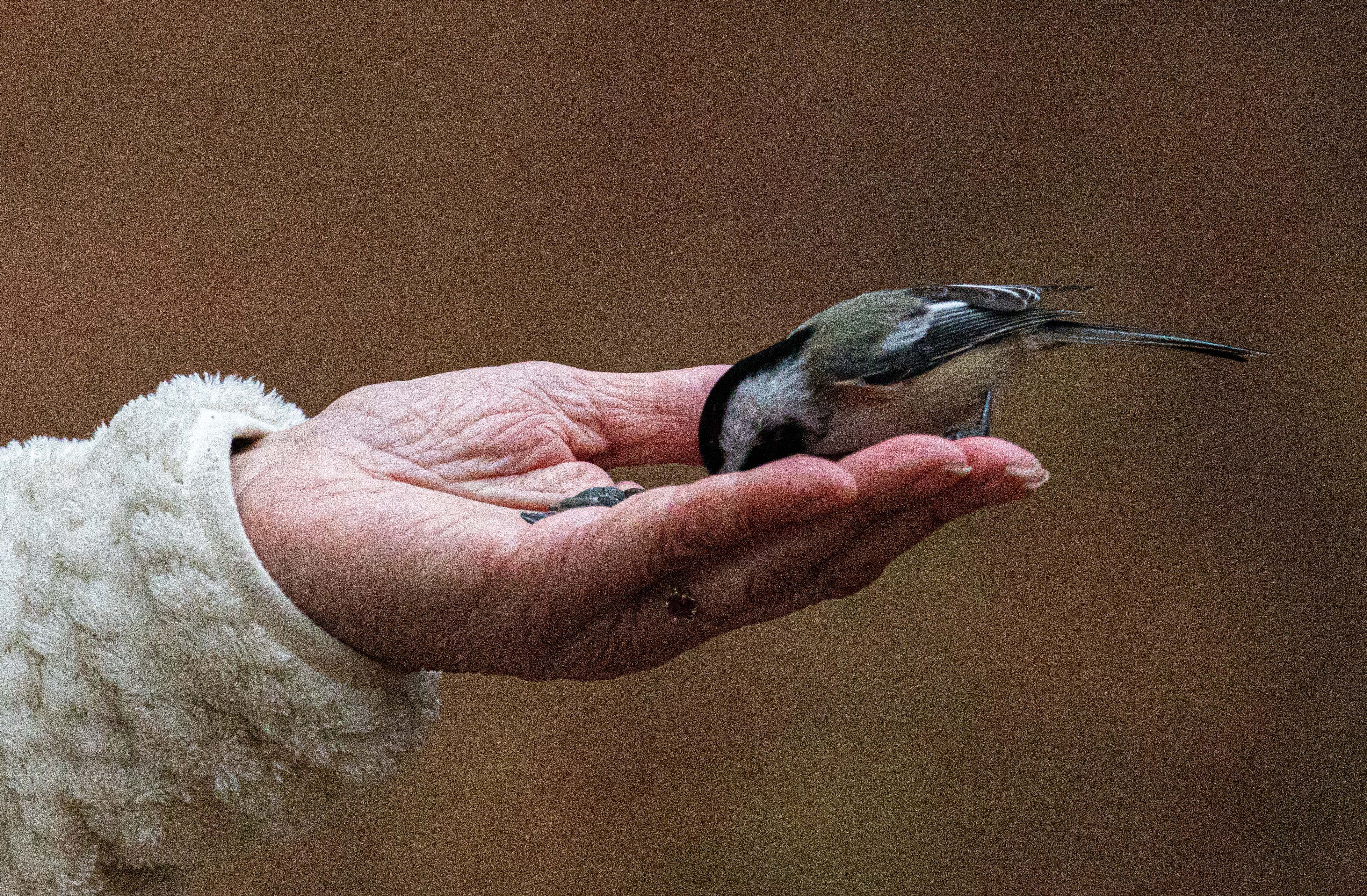
There are only a few spots in Massachusetts where birds will eat of your hand. And, only a few birds that will be bold and trusting, or hungry, enough to do so. In fact, some of the birds are so bold it almost feels like you’re in a Alfred Hitchcock movie (I’m looking at you, Black-Capped chickadee).
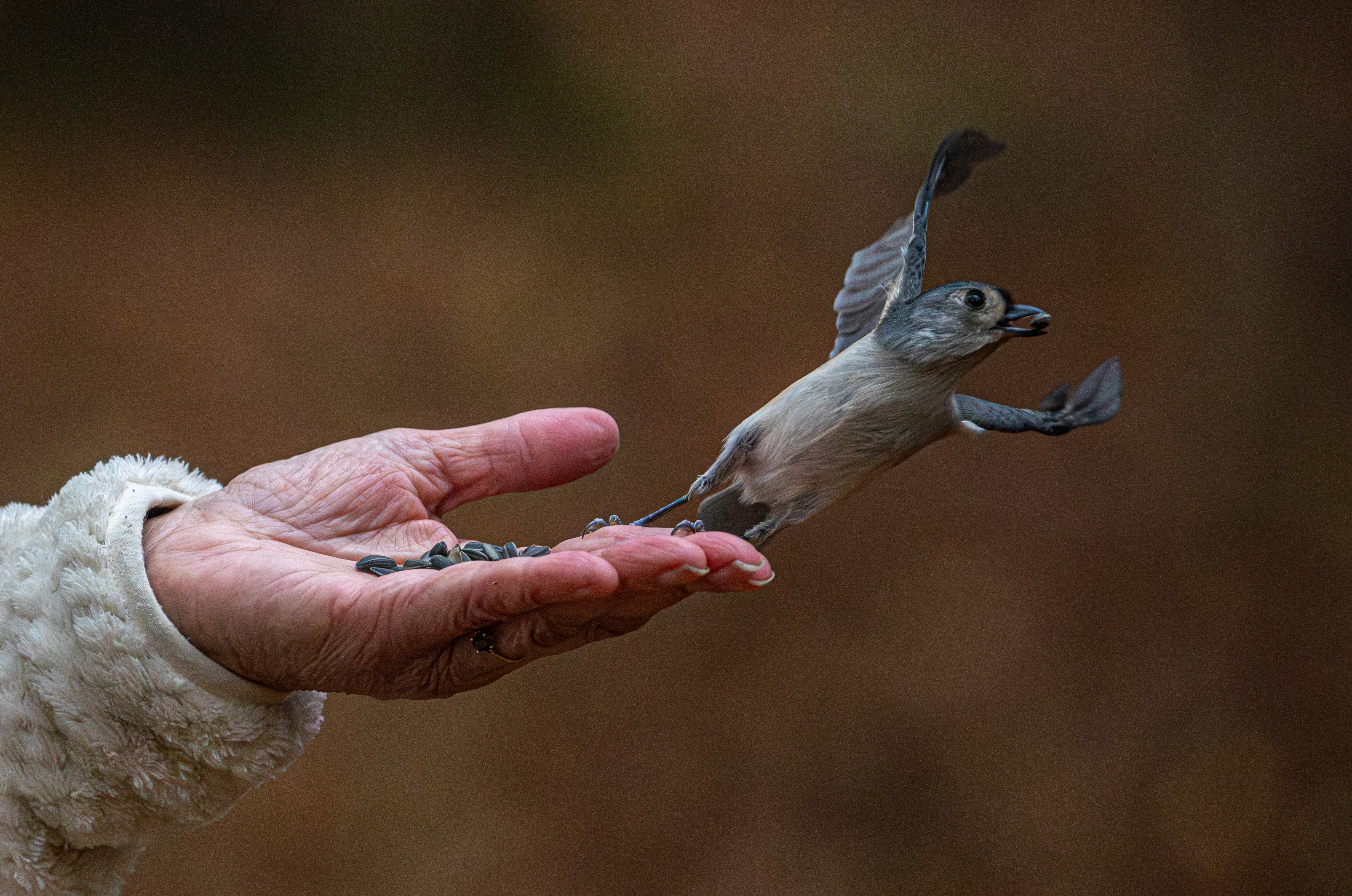
The Nuthatch, like the one featured above, is one of these birds that will eat right out of your hand. I especially like how they show you the seed before they begin their takeoff from your hand. As if to say, “Look what I have!” or “Thank you!”
If you enlarge the photo below, you can see the tongue of the Nuthatch picking up and bringing the seed into their mouth,
The Black-Capped Chickadees at the sanctuary are very friendly and not very shy. In fact, one of them landed on my cellphone as I tried to photograph the bird. This one had to tell a fellow Chickadee, “I was here first!”
But, my favorite and at times the most elusive bird there is the Tufted Titmouse.
While their claws may look sharp, and they can be, the birds don’t hurt the people feeding them. At least not usually. The person I photographed feeding the birds said they felt soft and light and you could barely feel the claws. And don’t bring just any seeds. The birds seed of choice is the Black-oil Sunflower seed which provides significant energy for the birds due to their high oil content. They won’t even touch some of the other types of seeds. In fact it can’t be just any Black-oil Sunflower seed. Some of the Black-Capped Chickadees would pick through the Black oil Sunflower seeds just to find the right one.
This sanctuary, which I may not be able to photograph much longer (more on this later in the post), has been my go to sanctuary for the past few years. In fact, there always seem to be something interesting to photograph there, like this Red Tailed Hawk I saw during my visit.
Also there was a little mist on the water during my photo shoot.
You may have noticed I haven’t been posting as often as usual. Which brings me to my big news! I am in the process of moving which has been a long and time consuming process. But, I will still remain in the New England region (western MA to be more specific)!
I have still been out there photographing things. So, I do have a lot of photos to process and post. I hope to post more frequently once the move is complete, hopefully in December!
Parking: There is both metered parking and parking garages and lots in the area.
Summary: 17 new works of art adorn the walls on Peabody St in the “punto” area of Salem, MA
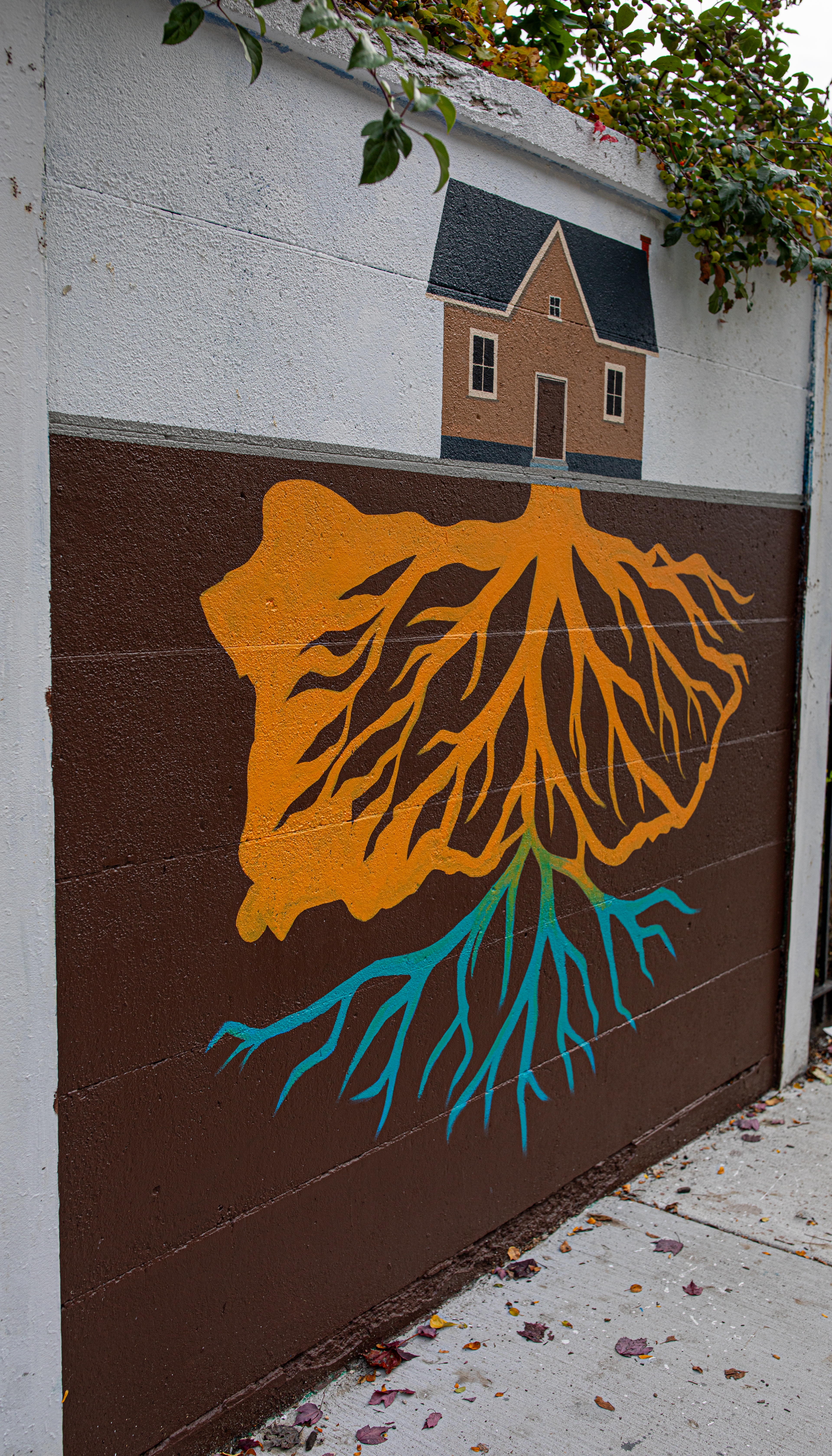
Salem, MA, is a diverse community . And the “El Punto” (“The Point”) neighborhood is proof of this diversity. Comprised largely of Latinx and other new immigrants, El Punto is the sight of many art projects by the Punto Urban Art Museum (PUAM), a program of North Shore Community Development Coalition.
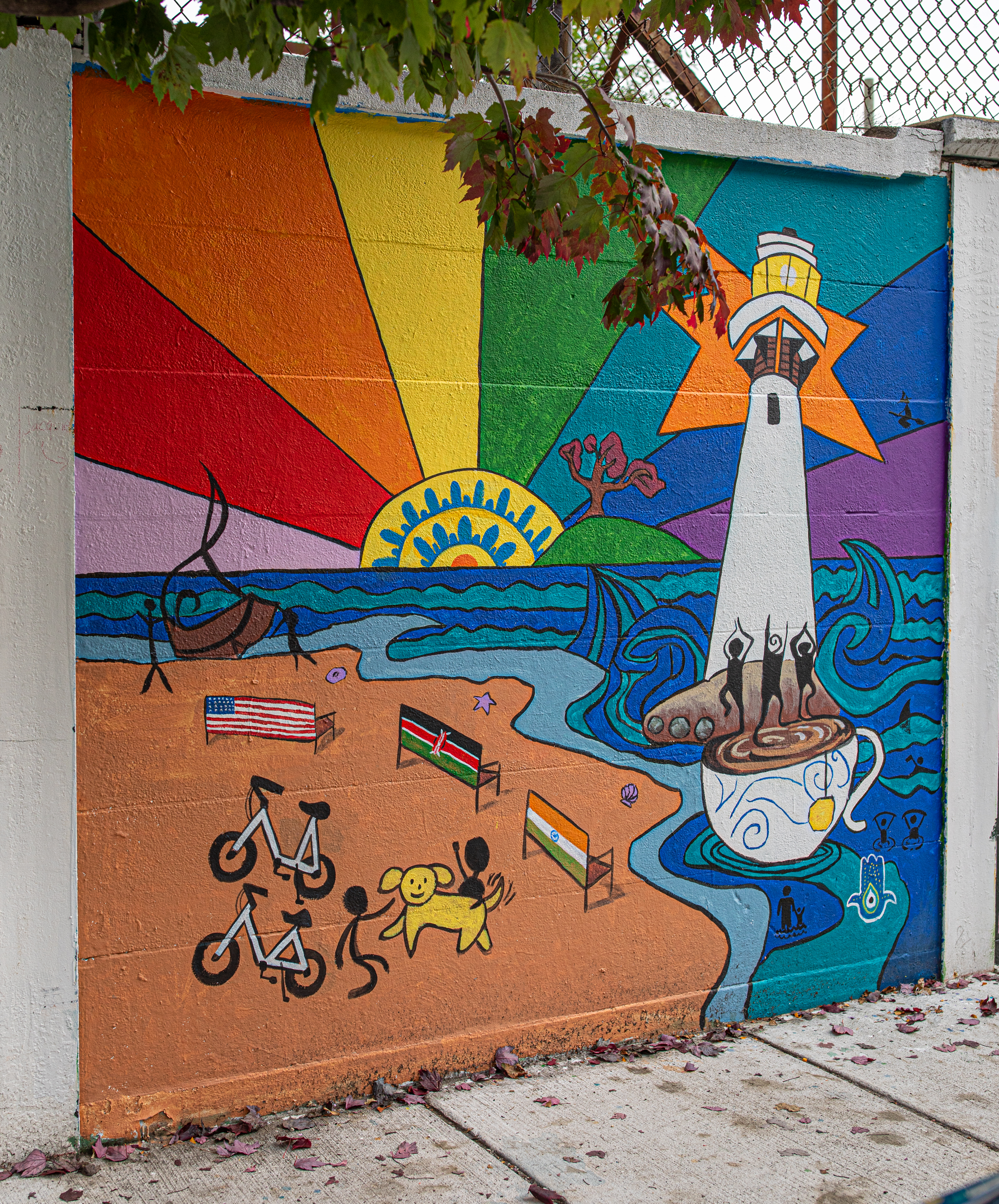
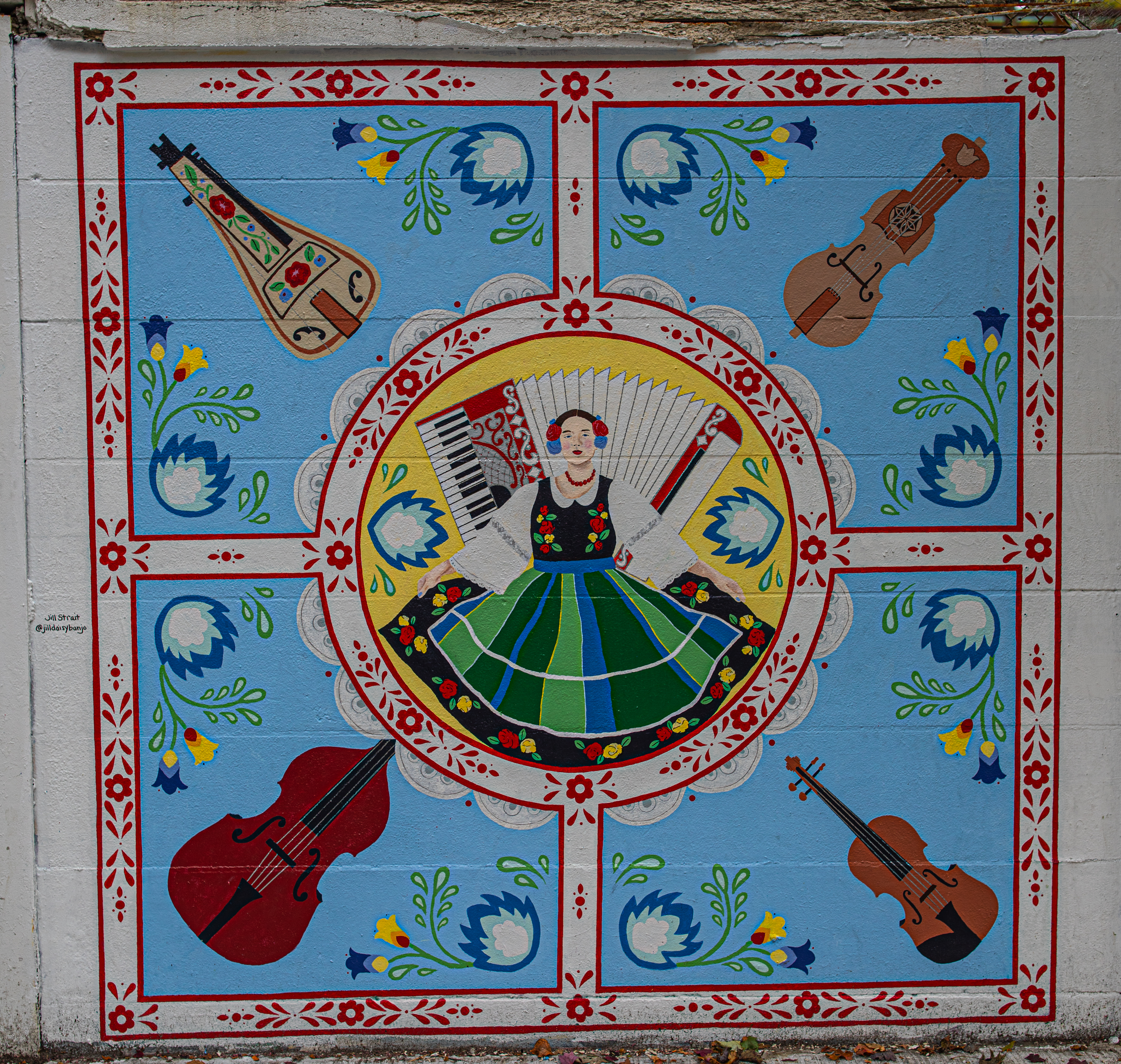
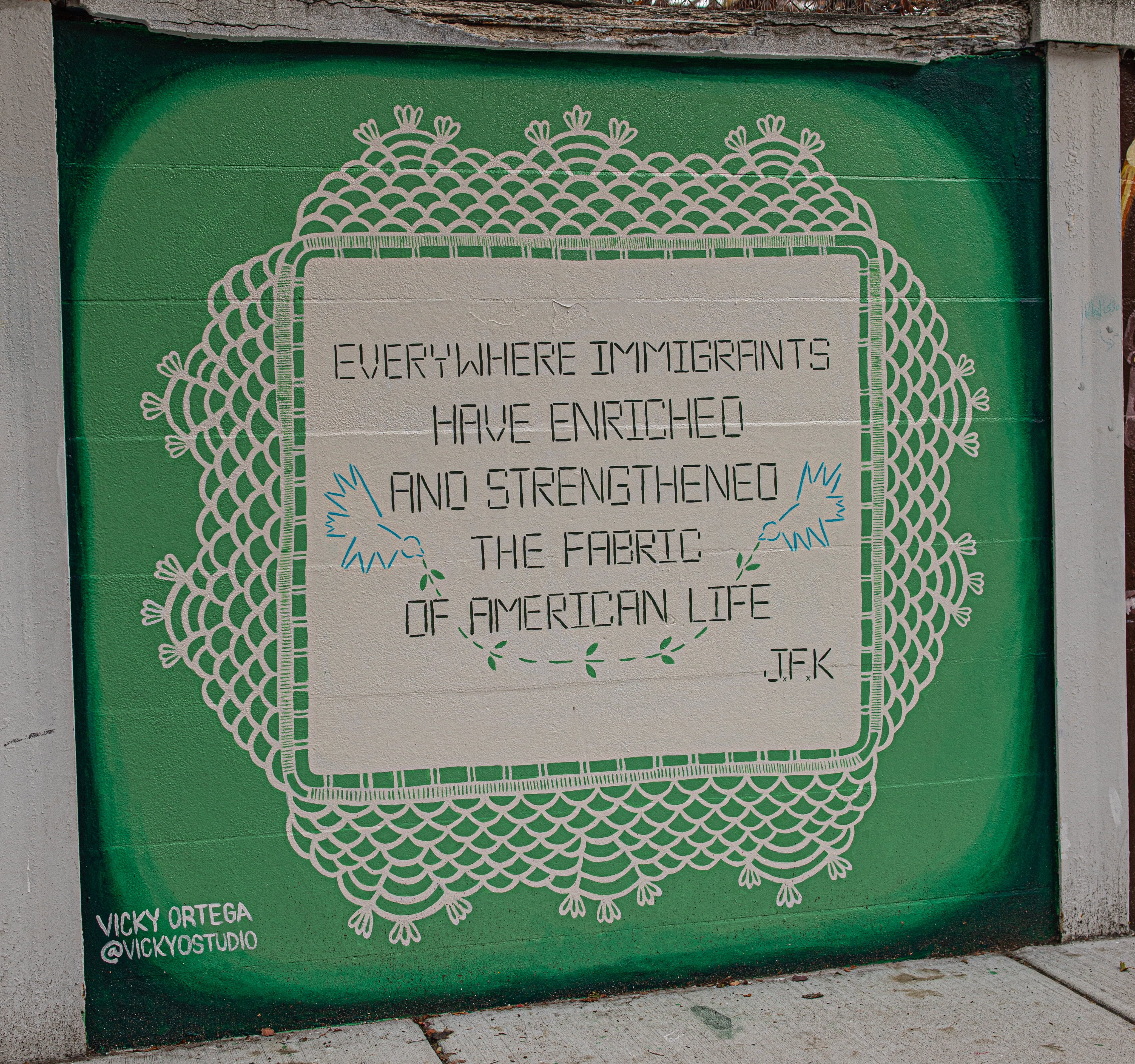
The Roots/Raices mural art project is meant to reflect on the layered histories of place and people. The aim of the project is to honor both the original inhabitants and the newer generations who have made Salem home.
The project, which is presented in partnership with Salem 400+, Salem Maritime National Historic Site, and the Peabody Essex Museum, unites arts, history, and community to honor Salem’s past while envisioning its future. Selected artists received a $1,000 stipend to create 8-by-8-foot mural works that will become part of PUAM’s semi-permanent outdoor collection. Artists were asked to share their stories and to seek out and bring together their different experiences and beliefs.
These murals are usually painted every year or few years. In fact, I photographed the last group of murals there which were part of a project called A Dream Called Home. The works of art do not have titles. But, most of the artists left their Instagram or other contact info in the artwork.
From the Old Salem Depot, the old Salem train that used to run through the center of the city, to the famous lighthouse (Fort Pickering Light) and the trolley which takes its passengers past all of the historical sites in Salem, some of the works of art pay tribute to parts of Salem and its history.
Location: Salem Commons, N, Washington Square, Salem, MA (about 40 mins northeast of Boston)
Cost: Free
Dog Friendly: Yes
Summary: People enjoyed dancing, music, lawn games, classic cars and a vintage marketplace at Salem Commons earlier this month.
The annual Salem Lawn Party was the tops! People celebrated in their best vintage clothing and dusted off their dancing shoes! In fact, if you didn’t know any better, you might think it was the 1920s. But, the biggest attraction wasn’t the dancing nor was it the other activities such as the lawn games. No, one other thing took center stage.
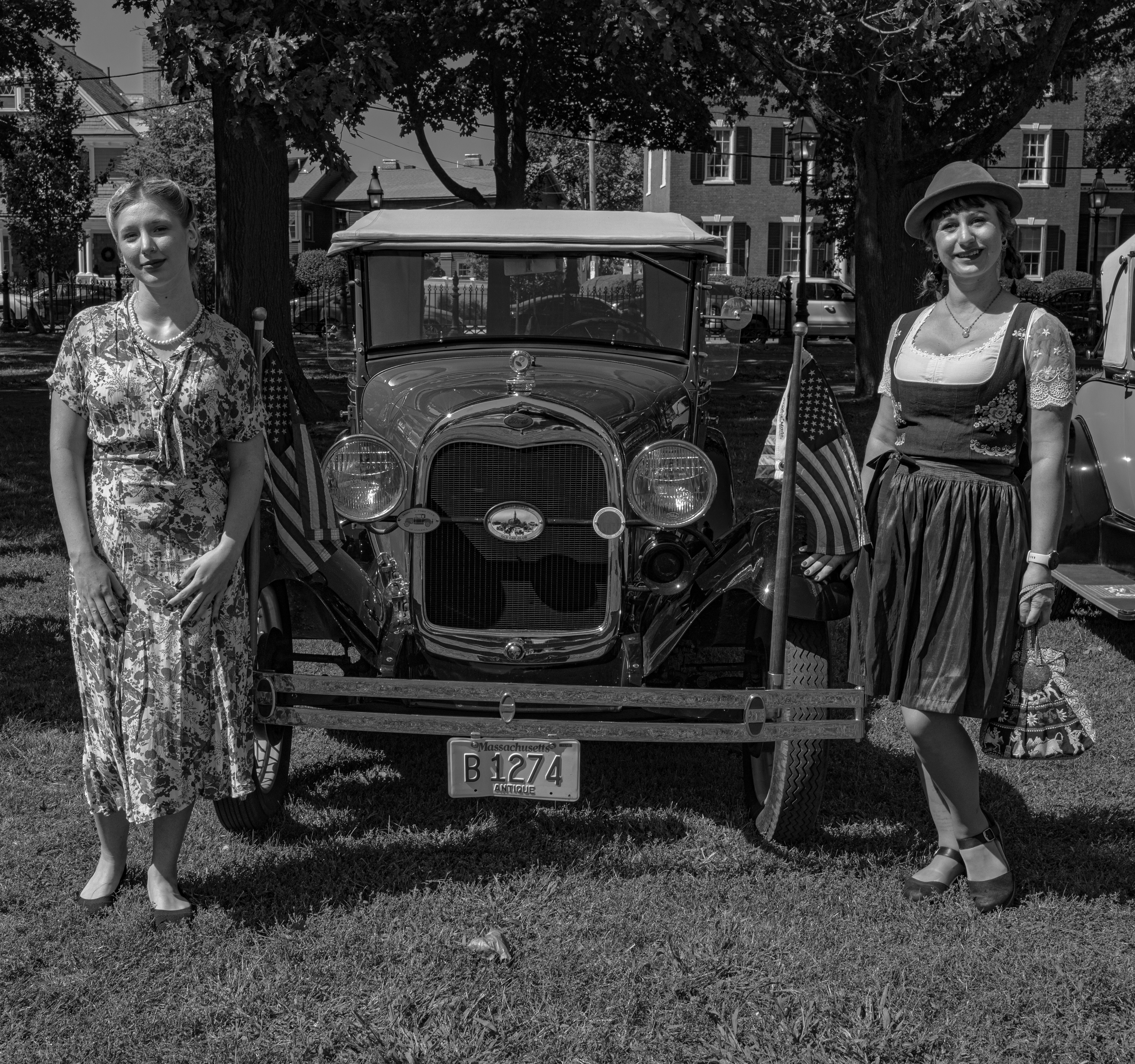
The cars are always a popular attraction at the event! People love to walk around the cars, sometimes even being able to sit in them. So, it took me a long while to be able to take this photo without people being in the way.
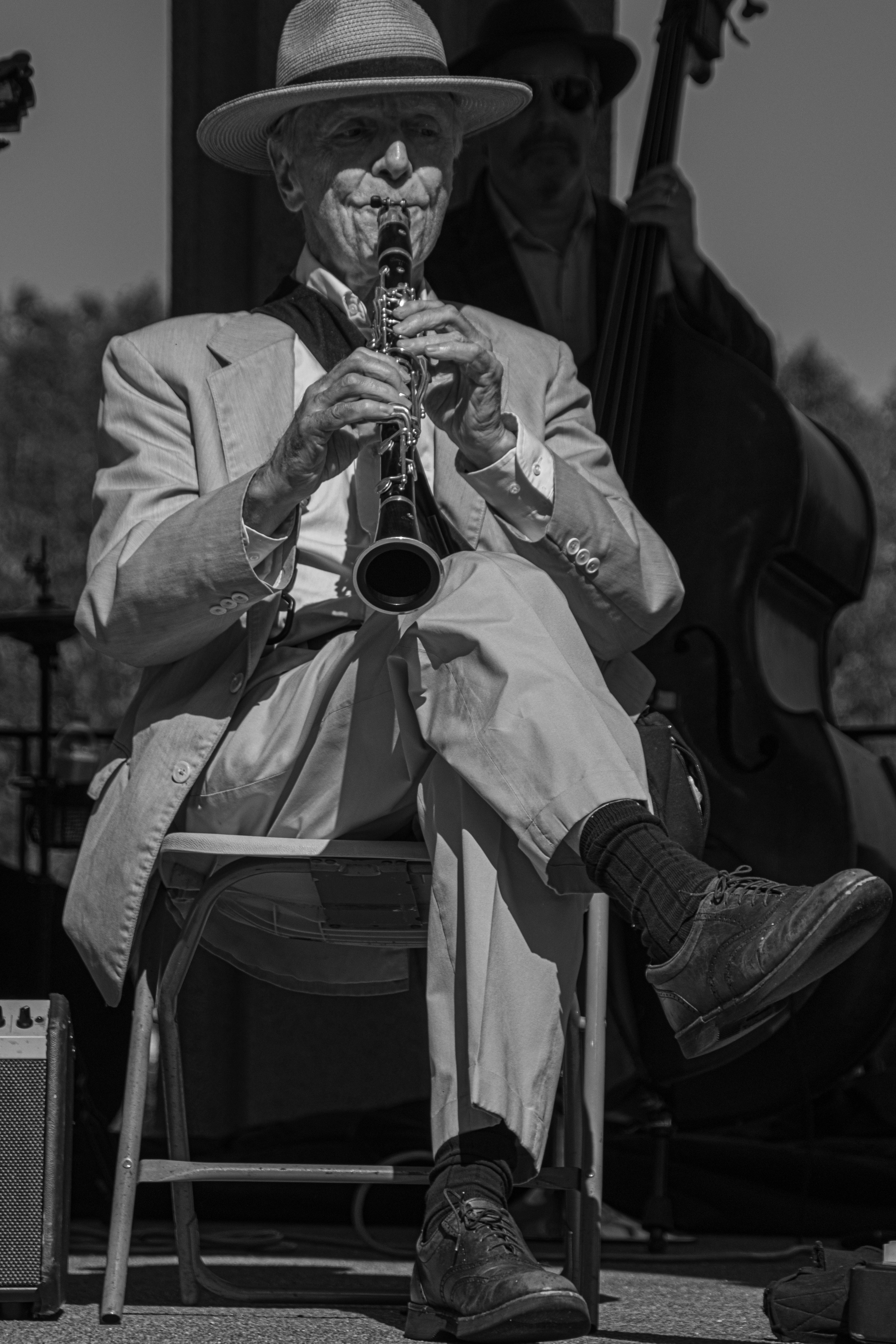
What would a vintage lawn party be without some swinging music? Annie and the Fur Trappers provided the musical entertainment and kept the party going.
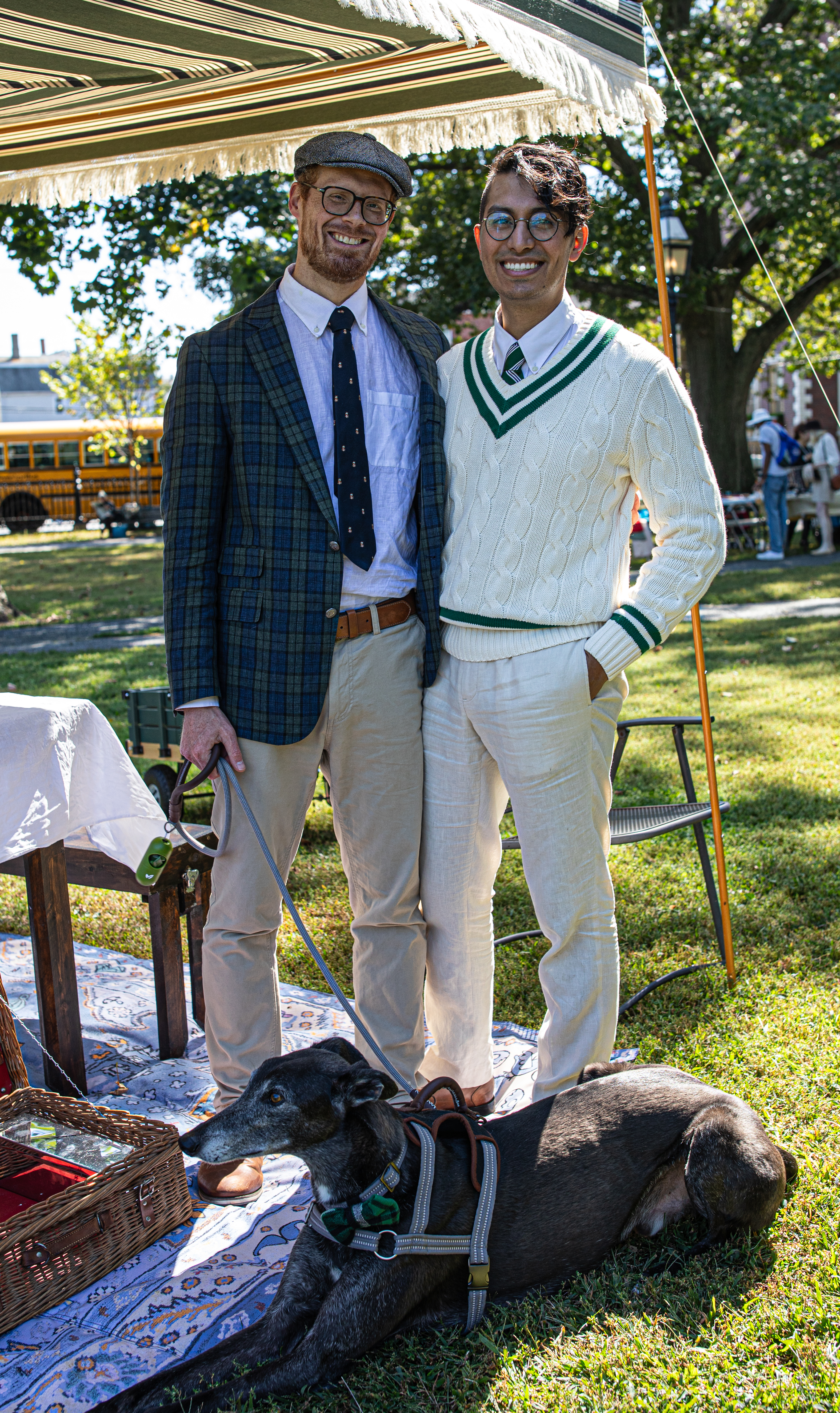
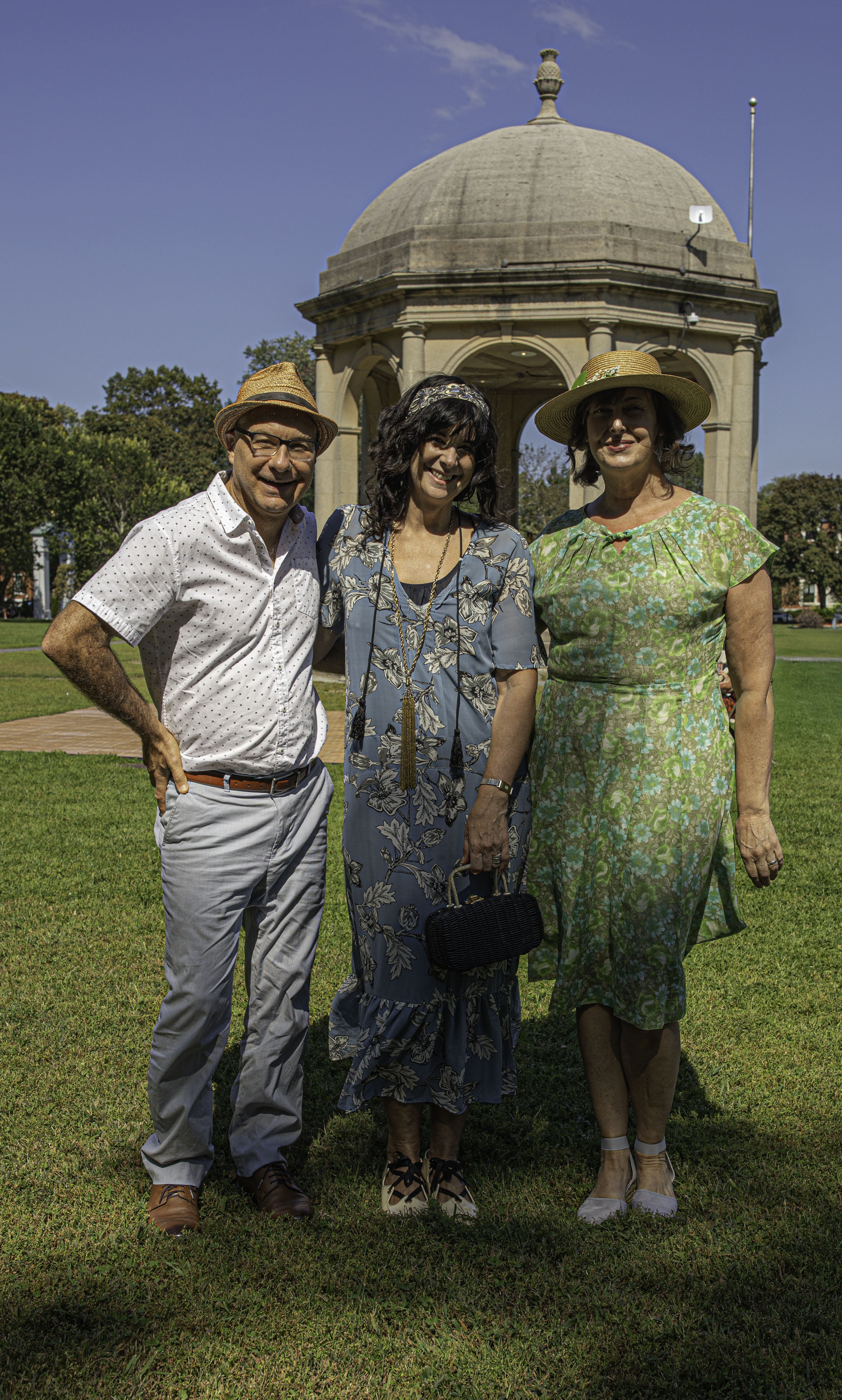
People were dressed to the nines in their finest vintage wear.
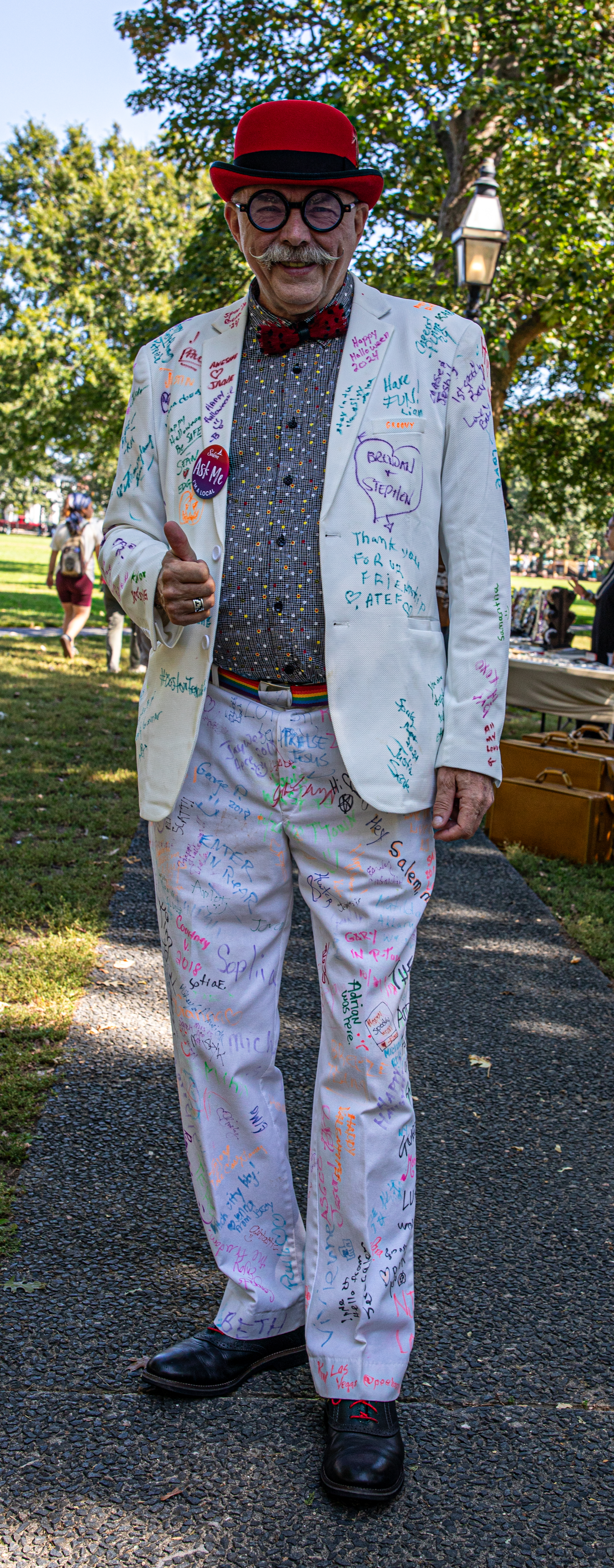
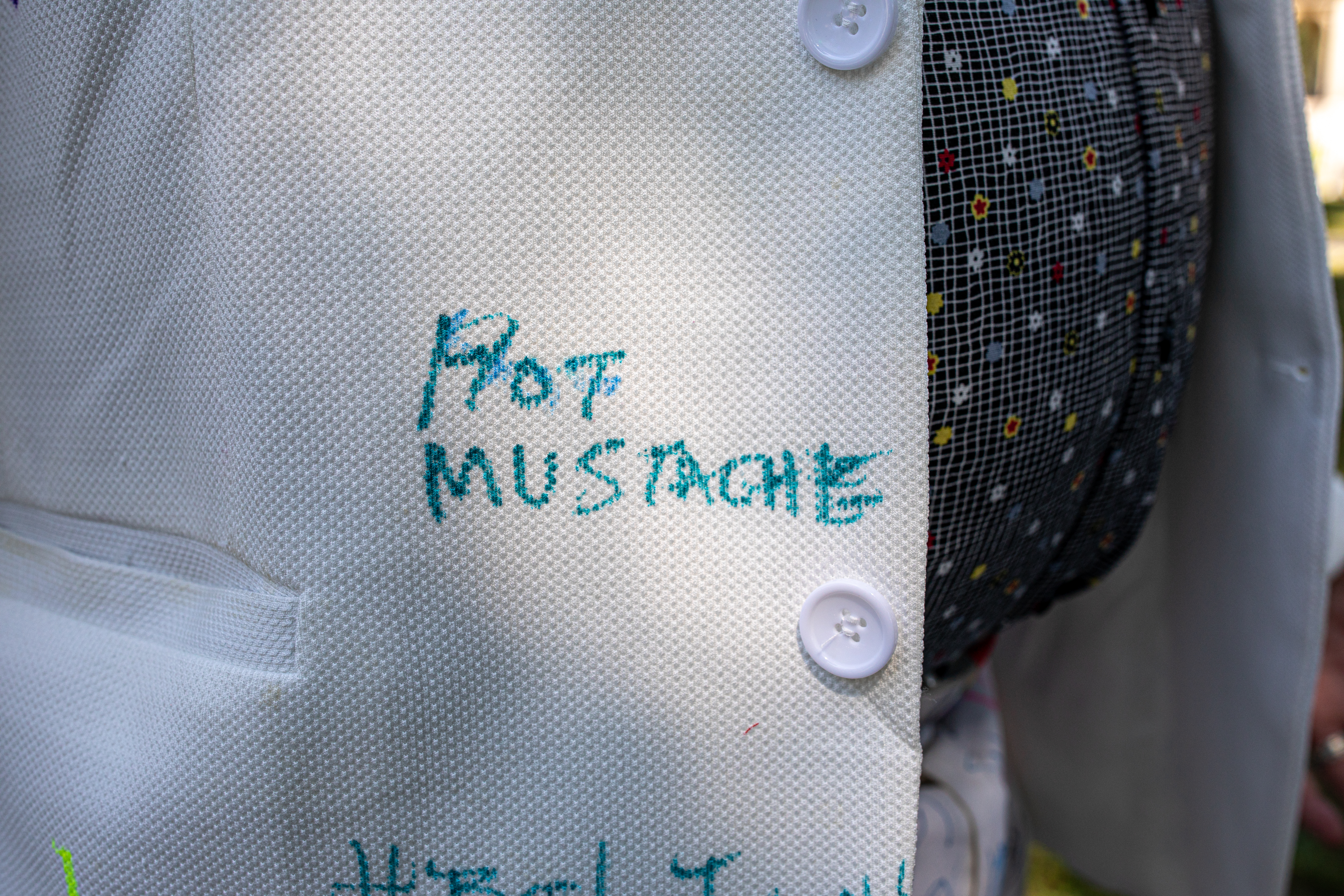
One of the more nattily dressed people at the party was Moustache Mike. Mike’s suit was slightly different than most suits, though. People could write on his suit. In fact, he encouraged it!
In addition to all of the positive and fun messages on his suit, there was some signatures from some very popular with ties to Salem. The famous Addams Family of Salem signed his suit!
Of course, there was also dancing! As someone with two left feet, I’m always impressed with their agility, grace and talent.
Even dogs like to dance!
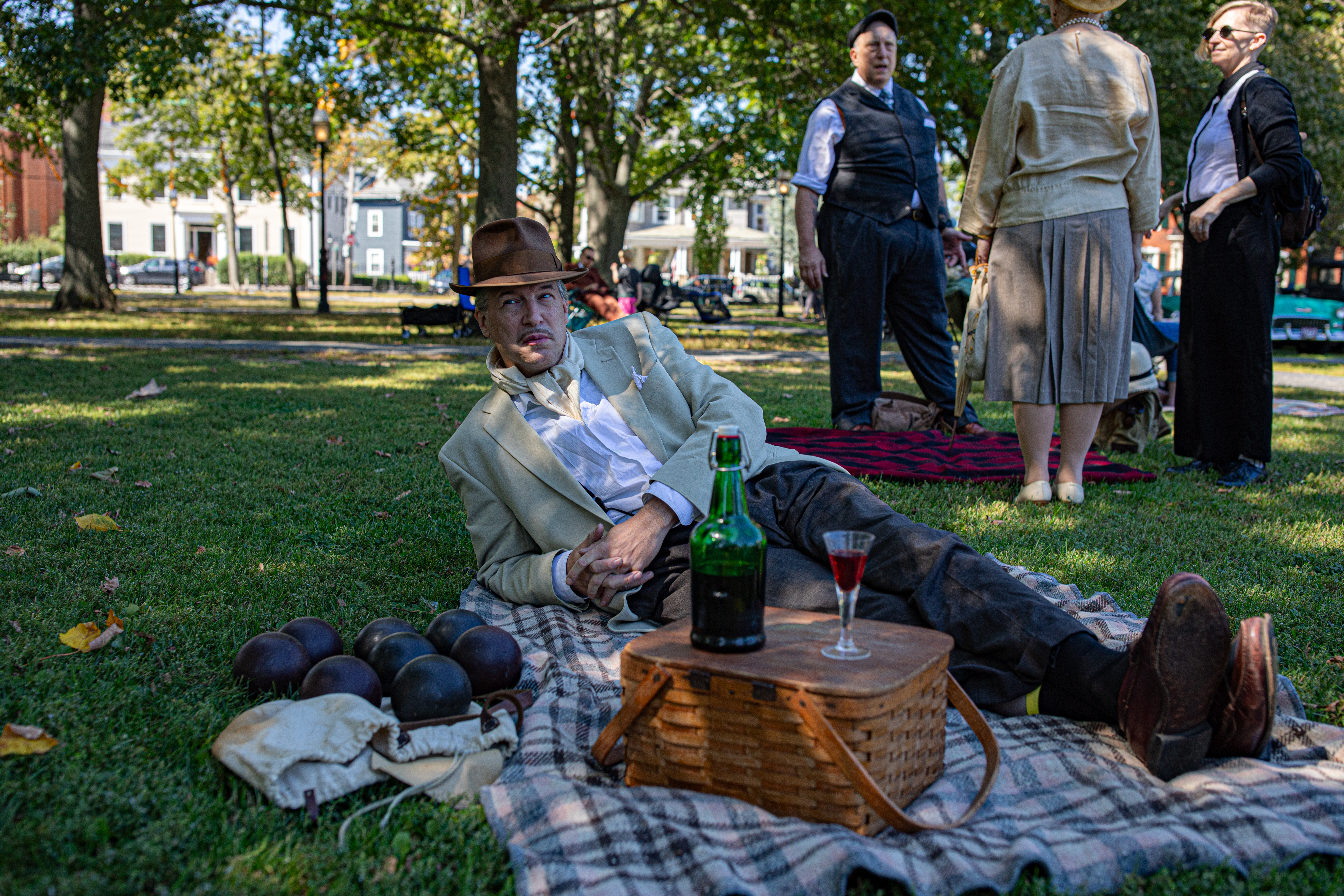
There were also lawn games such as Cornhole, bocce and outdoor bowling!
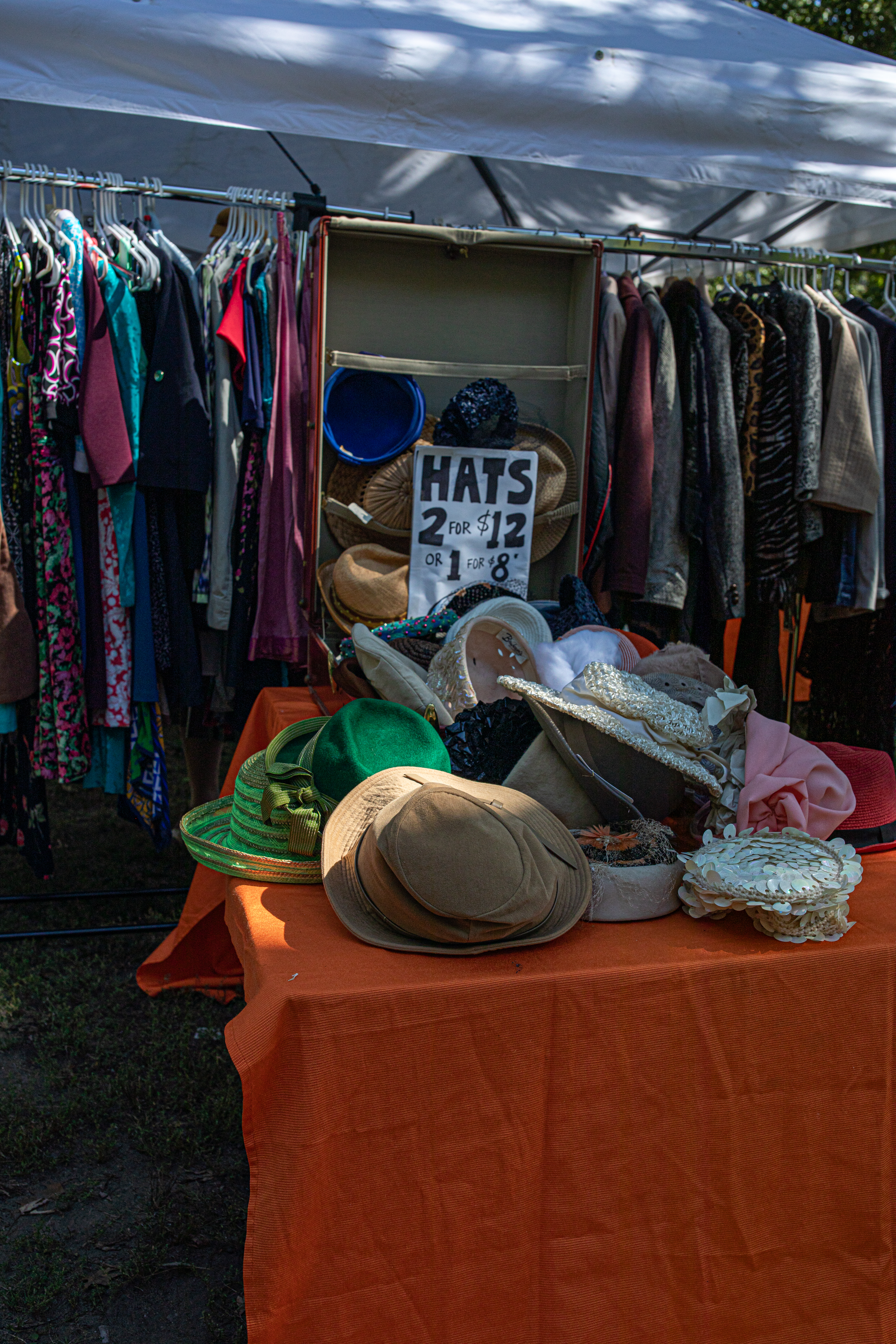
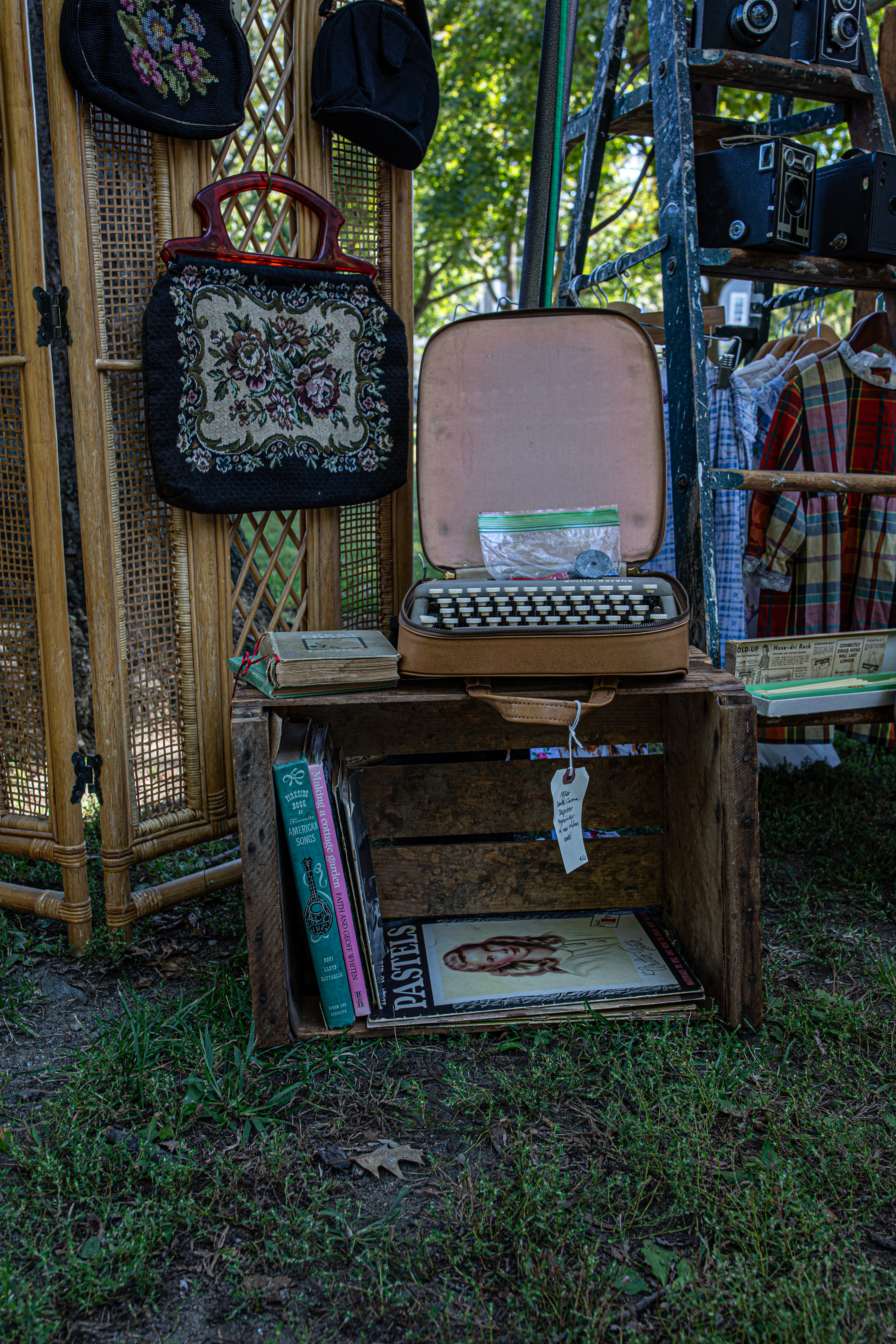
The vintage market sold items that were popular during the olden days!
The party isn’t just for humans. Dogs like Penelope, a 5 year old pit mix, had fun at the party!
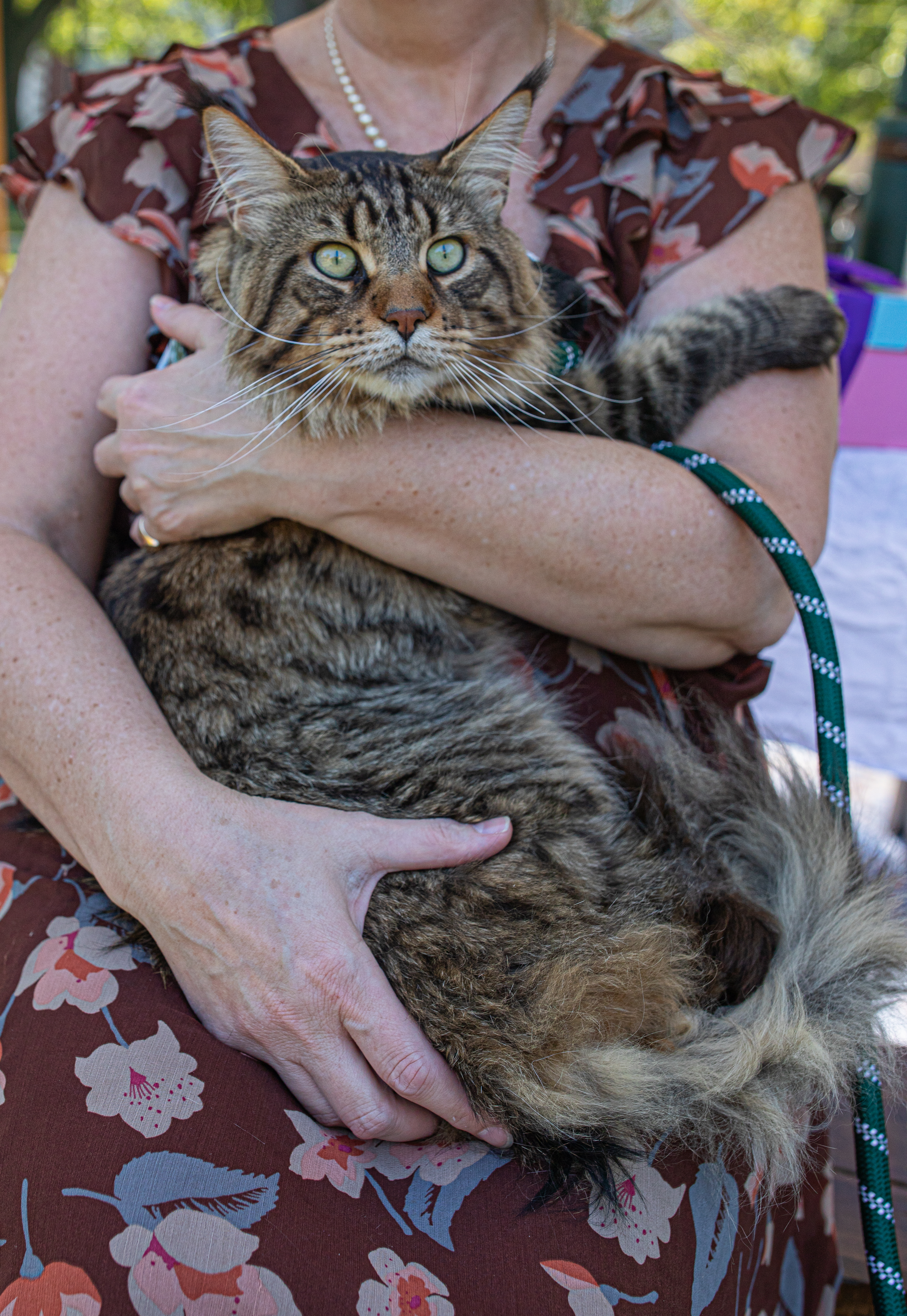
Cats also liked the event! Sal, a 2 and a half year old Maine Coon cat, had a fun time, while still keeping an eye out for the dogs!
While this year’s party is over, there’s plenty of time to work on your dance moves for next year’s party!
Location: Palmer Cove Park, 38 Leavitt St, Salem, MA (about 40 minutes northeast of Boston, MA)
Cost: Free
Universally Accessible: Yes
Dog Friendly: Yes
Parking: There is a small parking lot at the park for about 7 cars. There is also local on street parking and several parking lots and garages in the area.
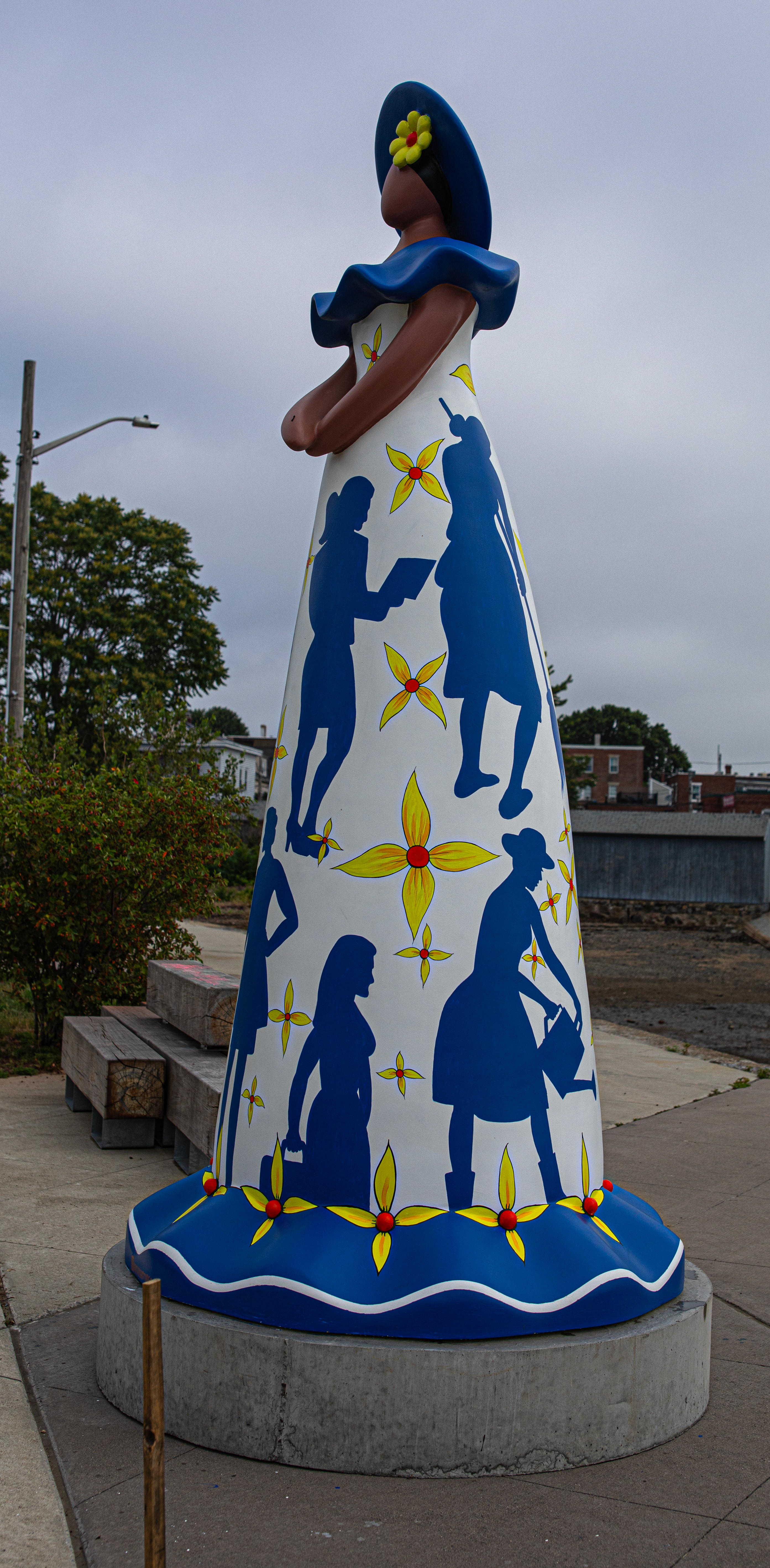
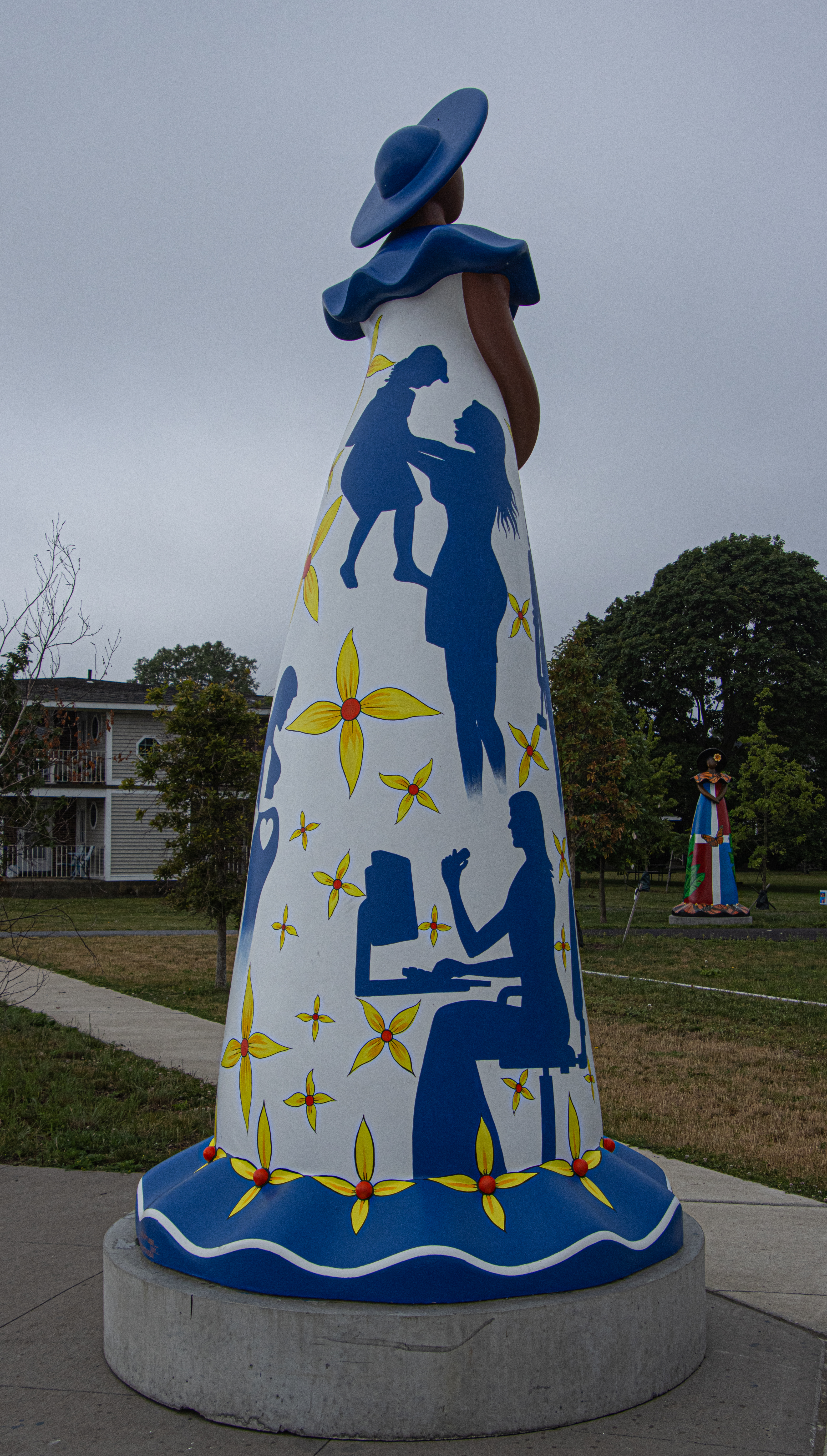
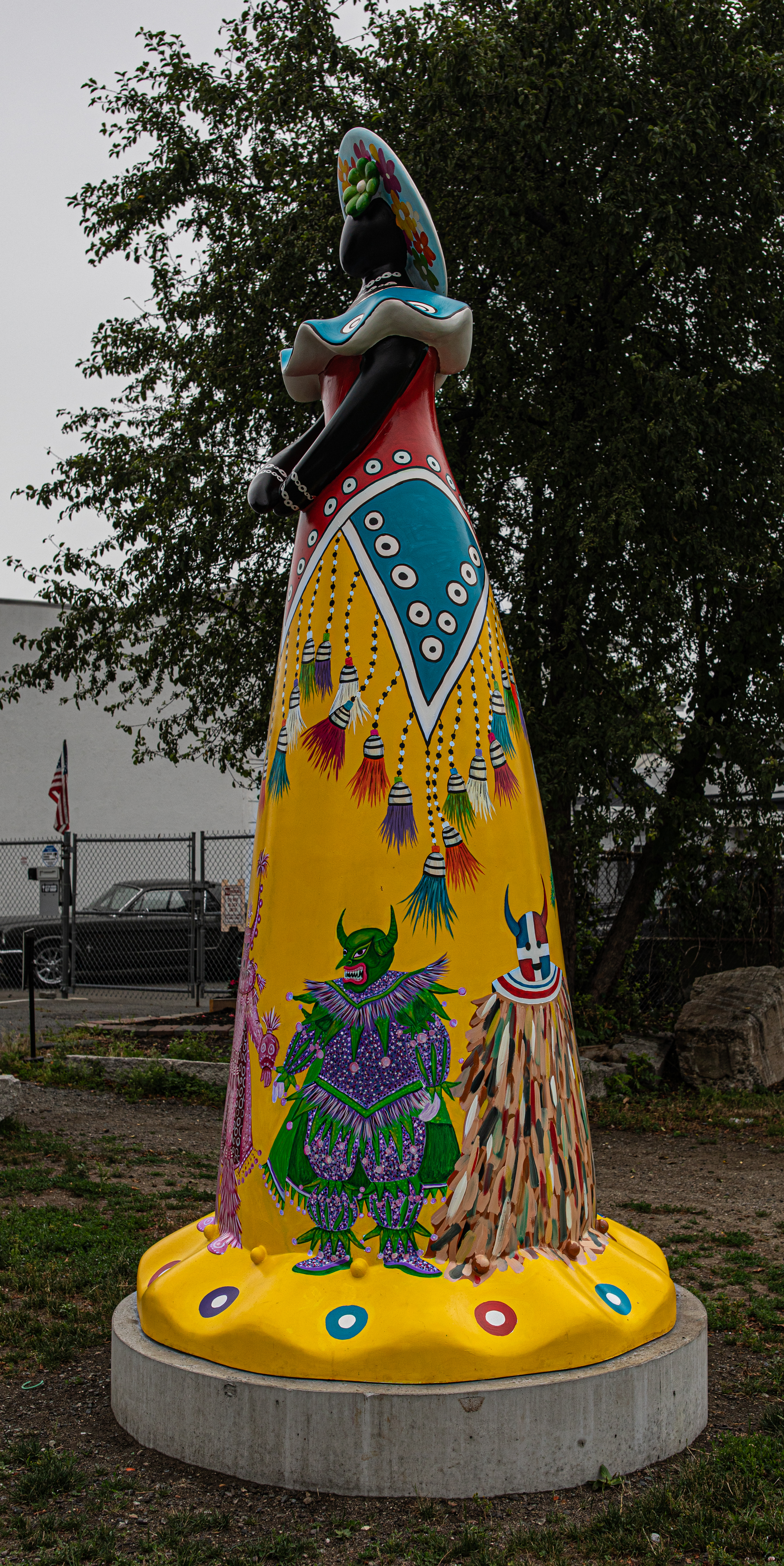
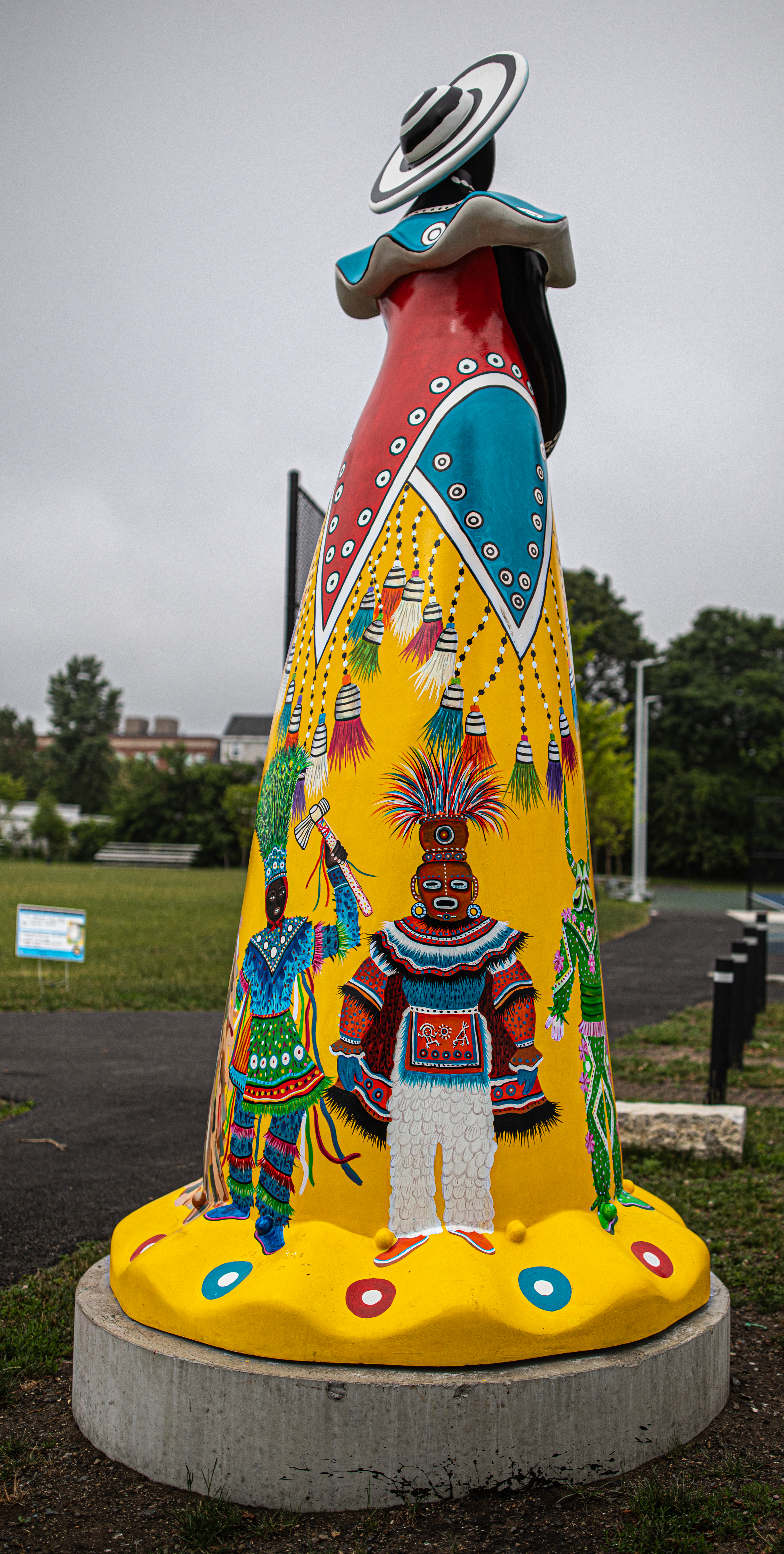
Summary: 7 “faceless dolls” (Muñeca Sin Rostro) have been installed at Palmer Cove Park and Pioneer Terrace, Salem, MA. And, a special path has been installed to view the statues and reflect.
The Punto Urban Art Museum (PUAM) have found a way to mix art with an education. The seven 12 foot fiberglass statues were painted by a group of artists who used the statues for expression and storytelling.
The ceramic Muñeca Sin Rostro (“faceless dolls”) were originally created by Liliana Mera Lime in 1981. Liliana, a pottery worker in the town of Moca, a province in the Dominican Republic, wanted to depict a small figure of a woman. However, she lacked the tools and molds to make a small ceramic figure. This would prove to be a blessing in disguise. The doll was handcrafted by hand on a potter’s wheel with elements like ruffles, baskets and hats and one distinct feature, or lack of a feature. The dolls all had a head with no facial features. These full-sized dolls, which were originally smaller figurines, have been replicated with each artist’s interpretation and messages.
There are 7 statues at Palmer Cove Park. I did have a hard time finding the 7th one on my list. In fact, I had to make 2 visits to find them all. So, don’t forget to go to the area by the public garden to find them all!
Another special part of the park is a walkway that was installed earlier this year as a memorial to those lost from Covid-19.
Salem
The first Muñeca Sin Rostro is fittingly called “Salem.” Created by painter and sculptor Ramon Santiago, a native of the city of Moca, Espaillat province in the Dominican Republic, “Salem” is a representation of the city bearing the statue’s name. Ramon said his work of art is dedicated to the hardworking people of Salem. Examples of the hardworking people of Salem can be found not only in elements of people working at a job, in their yards and, most importantly, with their families. The various bold colors are meant to represent how diverse and vibrant the city is.
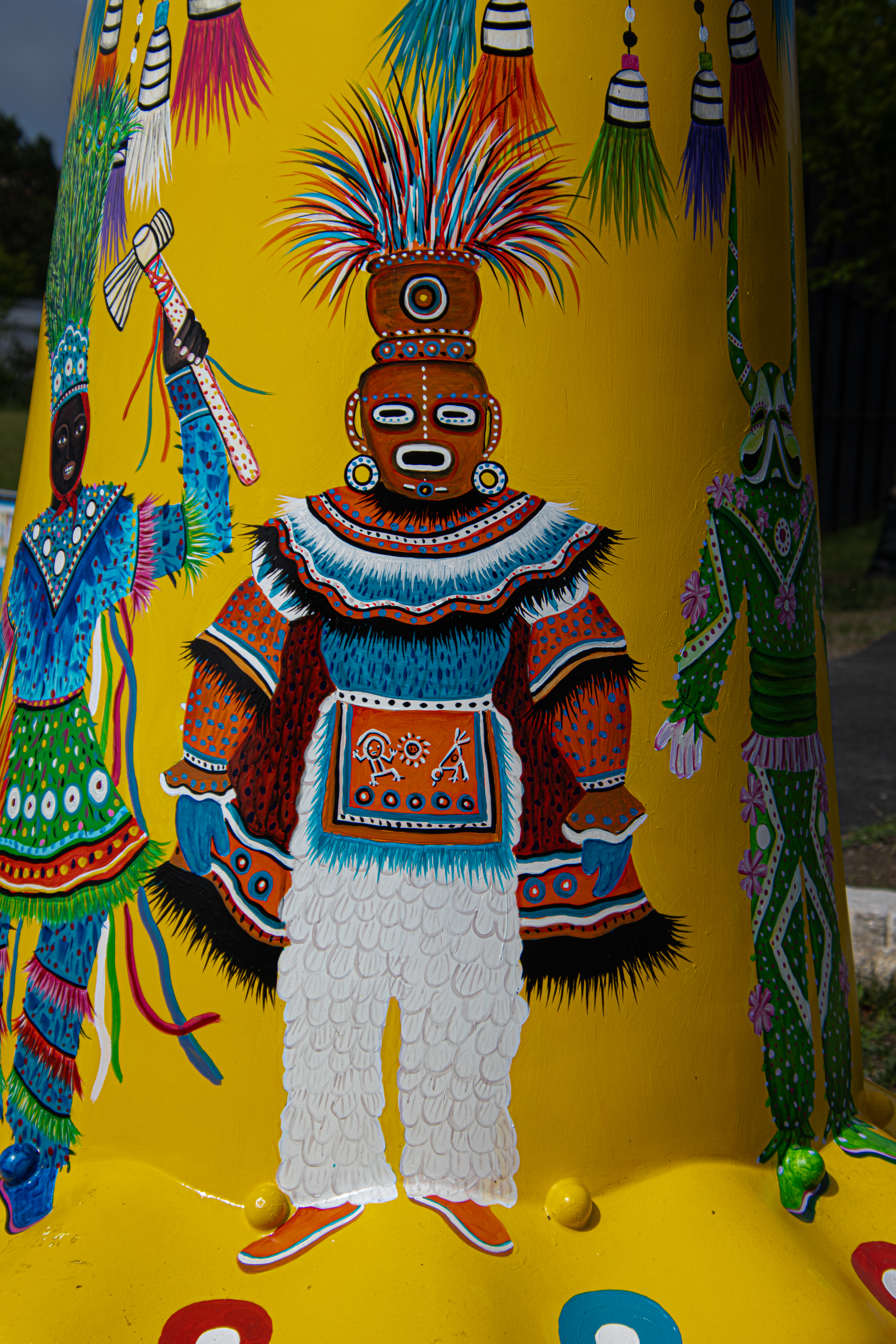
Los Ninos Y El Carnaval
“Los Ninos La Carnaval” represents children and their participation in the Dominican Republic’s carnival. The statue, made by Luis Rivera, a native of San Cristobal, displays the most representative costumes from different regions of the country: the Lechones of Santiago, the Ecol Devils of San Cristóbal, the Devils of La Vega, the Plátanus of Cotuí, and the Taimácaros of Puerto Plata, among others. The flowers represent the joy of the Dominican people. The flowers symbolize the diversity and racial mix that define us as a nation which is a fusion of Indigenous, African, and Spanish heritage. A graduate of the Universidad Autónoma de Santo Domingo and the Escuela de Diseño de Altos de Chavón, Luis has developed a versatile artistic style that spans sculpture, stained glass, jewelry, and carnival costumes. Luis is the co-creator of Urbelconica, a project that has helped reimagine the traditional Muñeca sin Rostro, beloved Dominican symbol of resilience and shared heritage, into large-scale public sculptures brought to life through the talent of many Dominican artists.
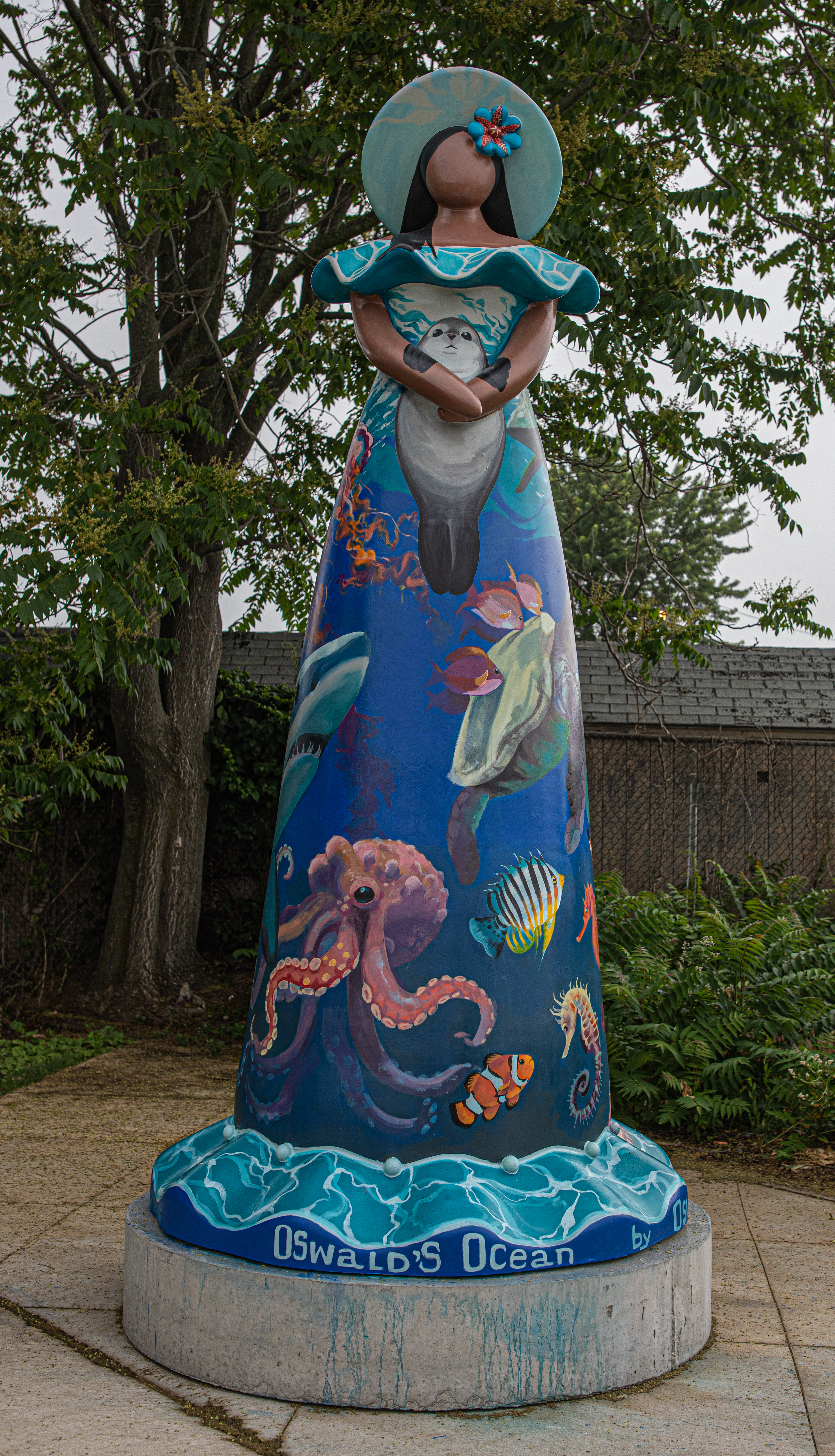
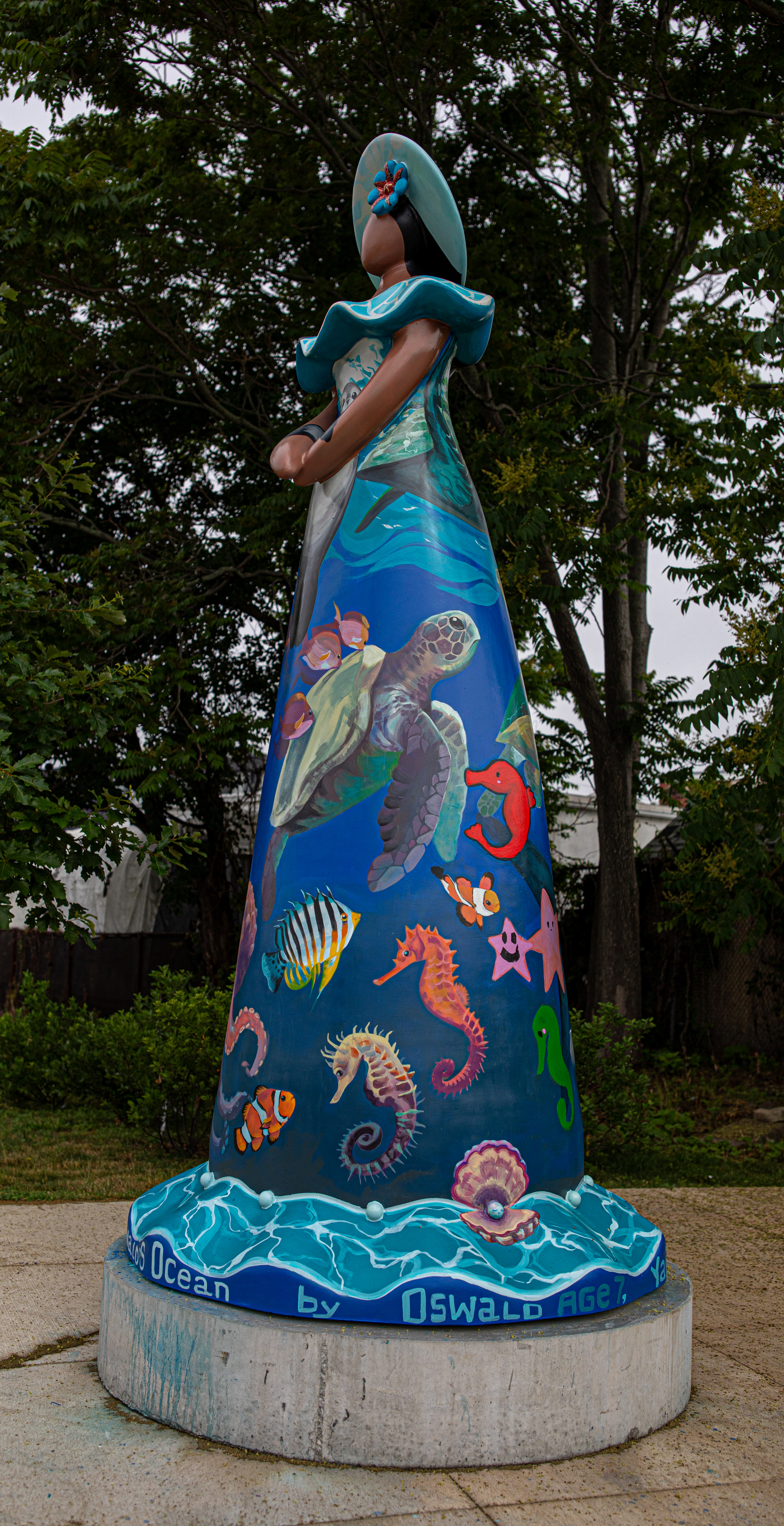
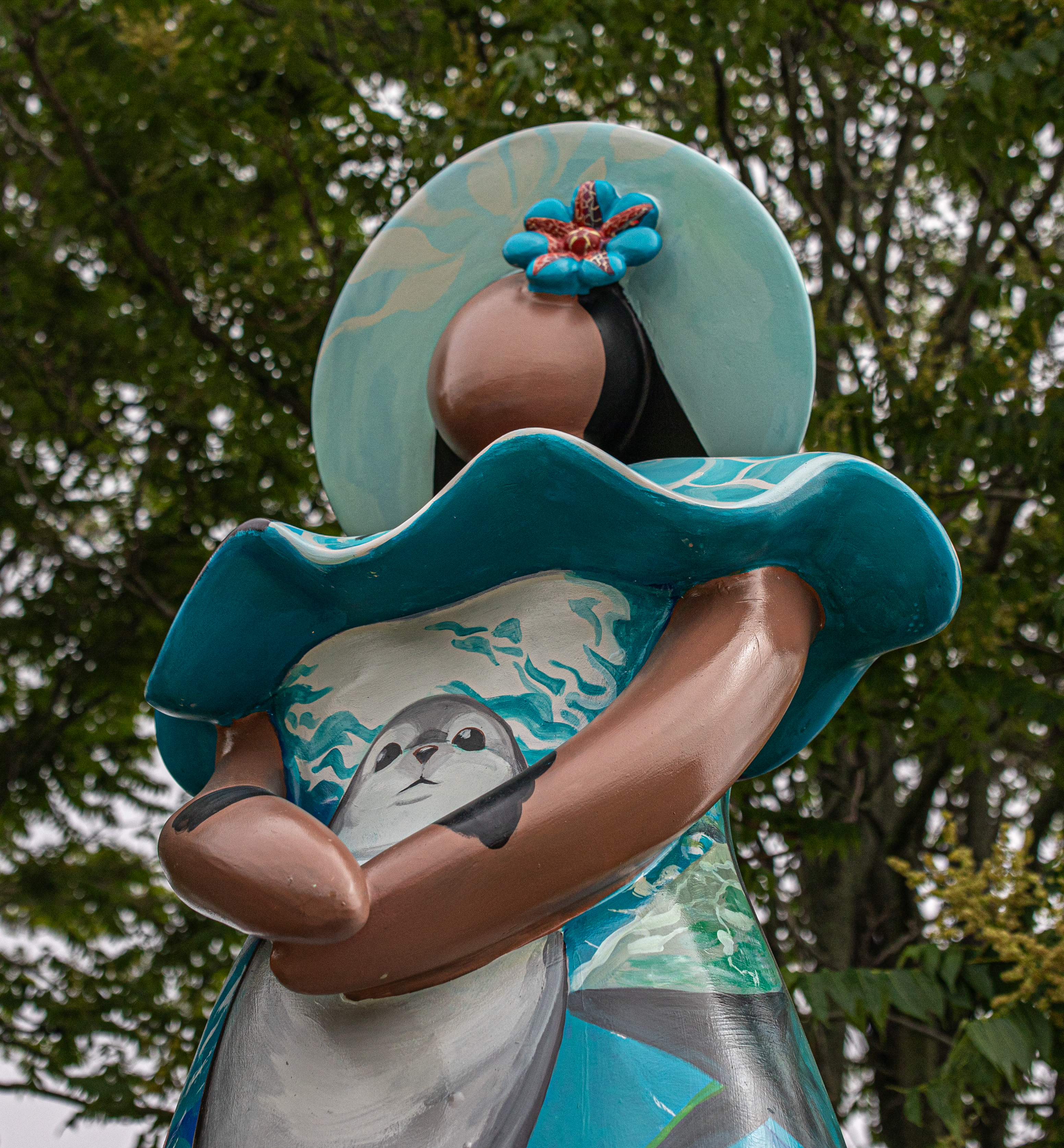
Oswald’s Ocean
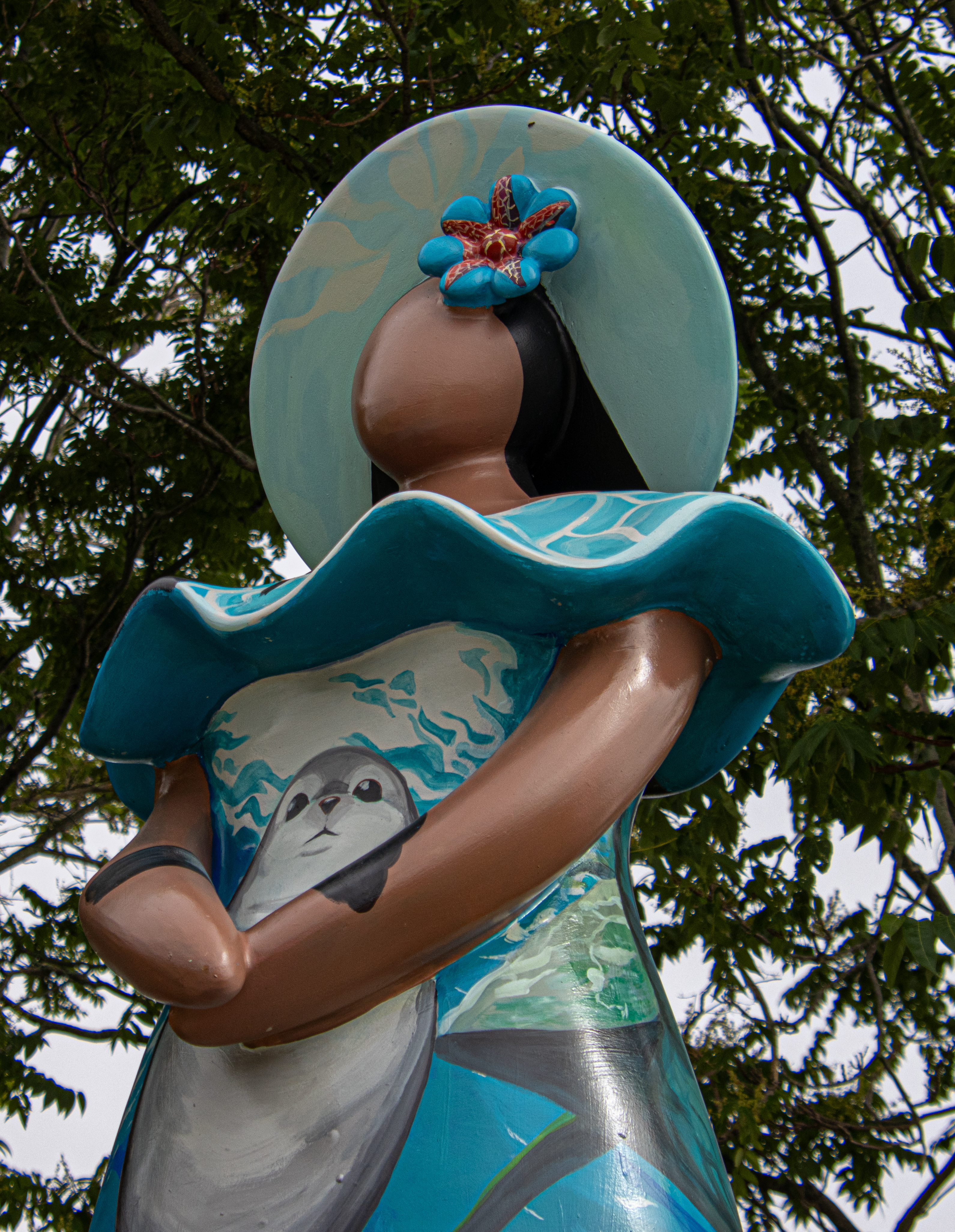
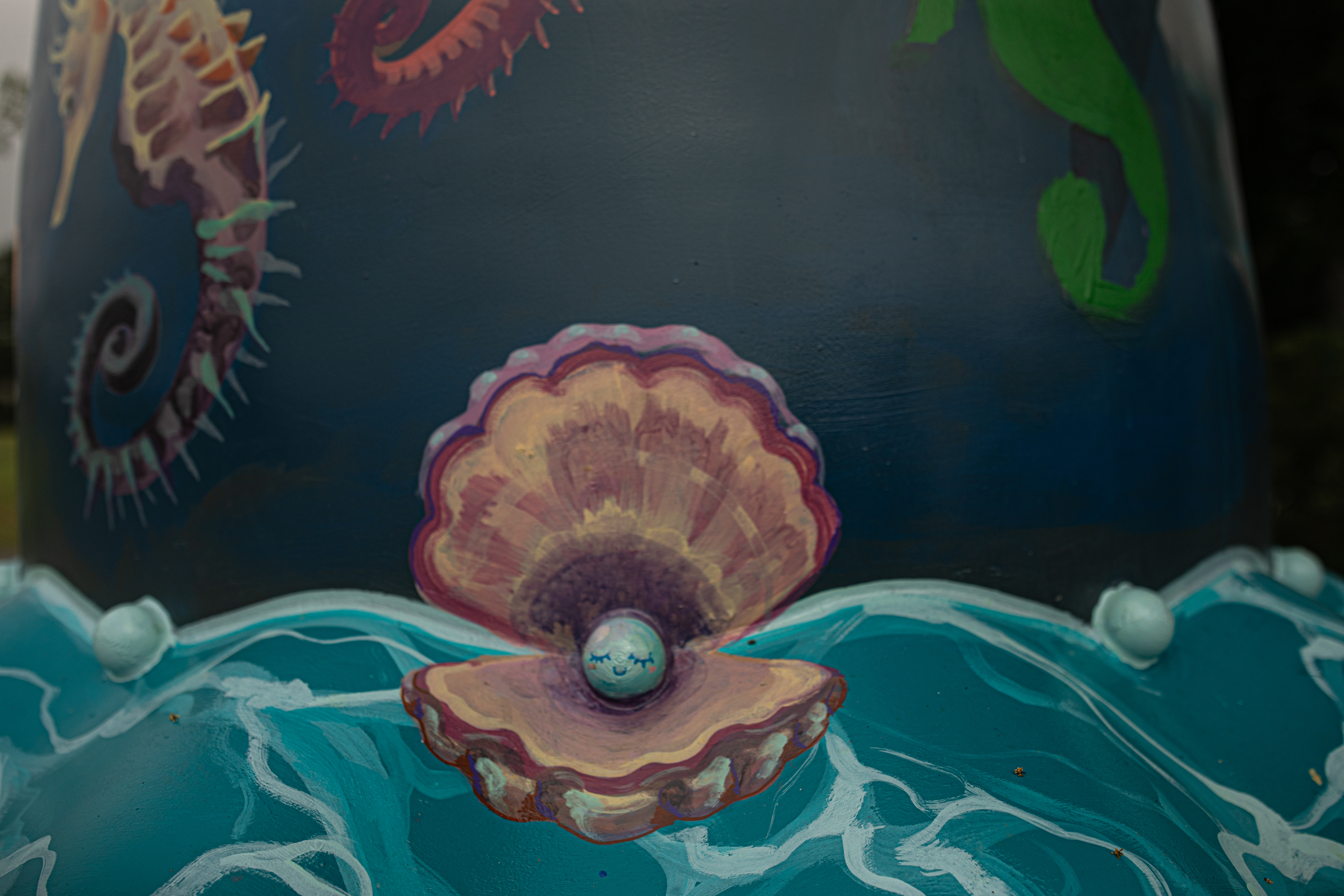
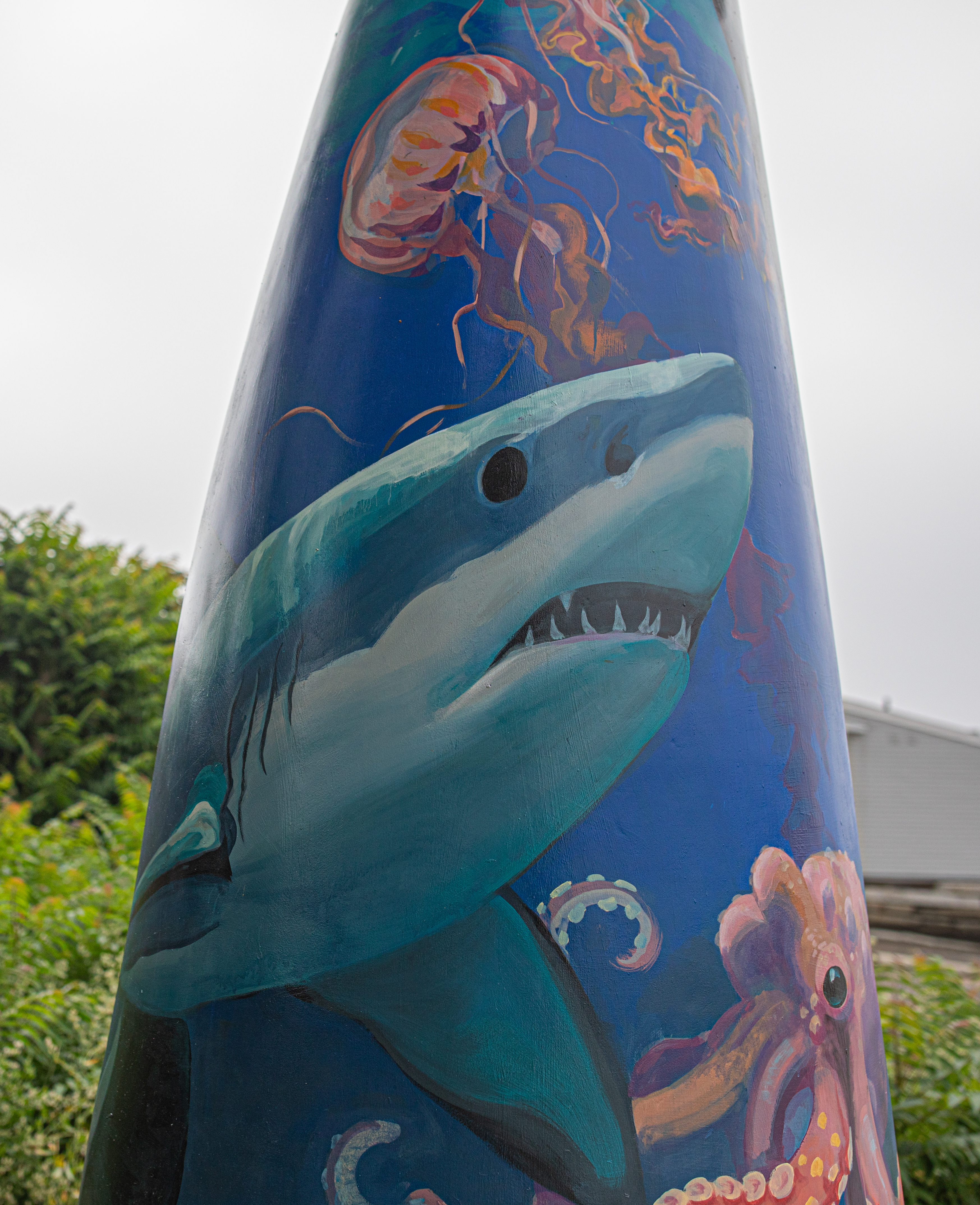
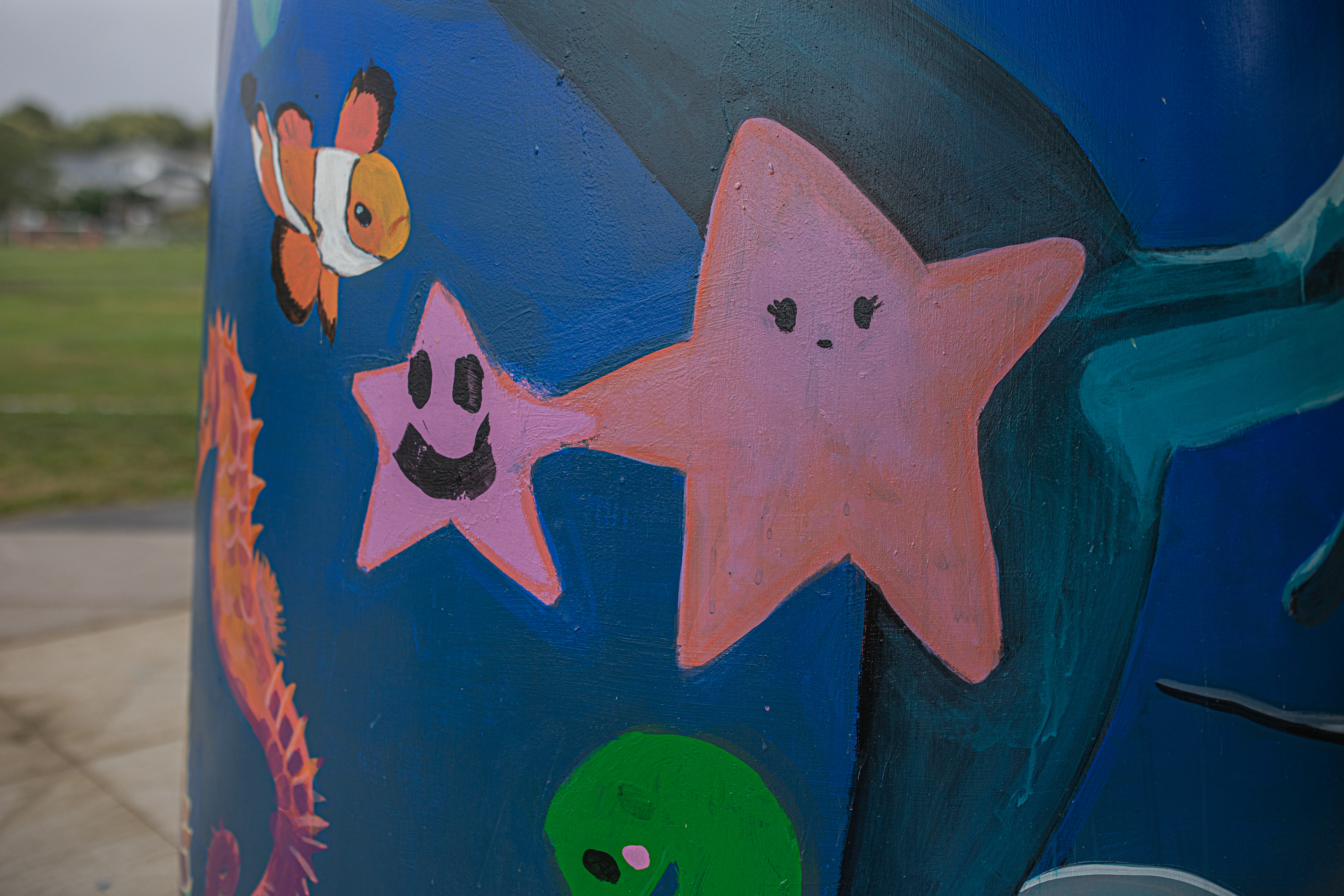
“Oswald’s Ocean” was created, or at least conceived, by a 4 year old; Oswald. The artist, Yixuan Zeng, was captivated while reading Oswald’s design for the doll. Yixuan said the faceless doll designs reminded him of Chinese porcelain figures. Yixuan was inspired by Oswald’s passion for the color blue and sea life. He enjoyed making the sea creatures Oswald had described and envisioned the dress as being a dynamic sea scene beneath the waves.
Oswald said he is 4 years old and loves the color blue and sea life. Oswald did contribute beyond designing it. He added blue glitter to the hat.
MariposaCibaeña
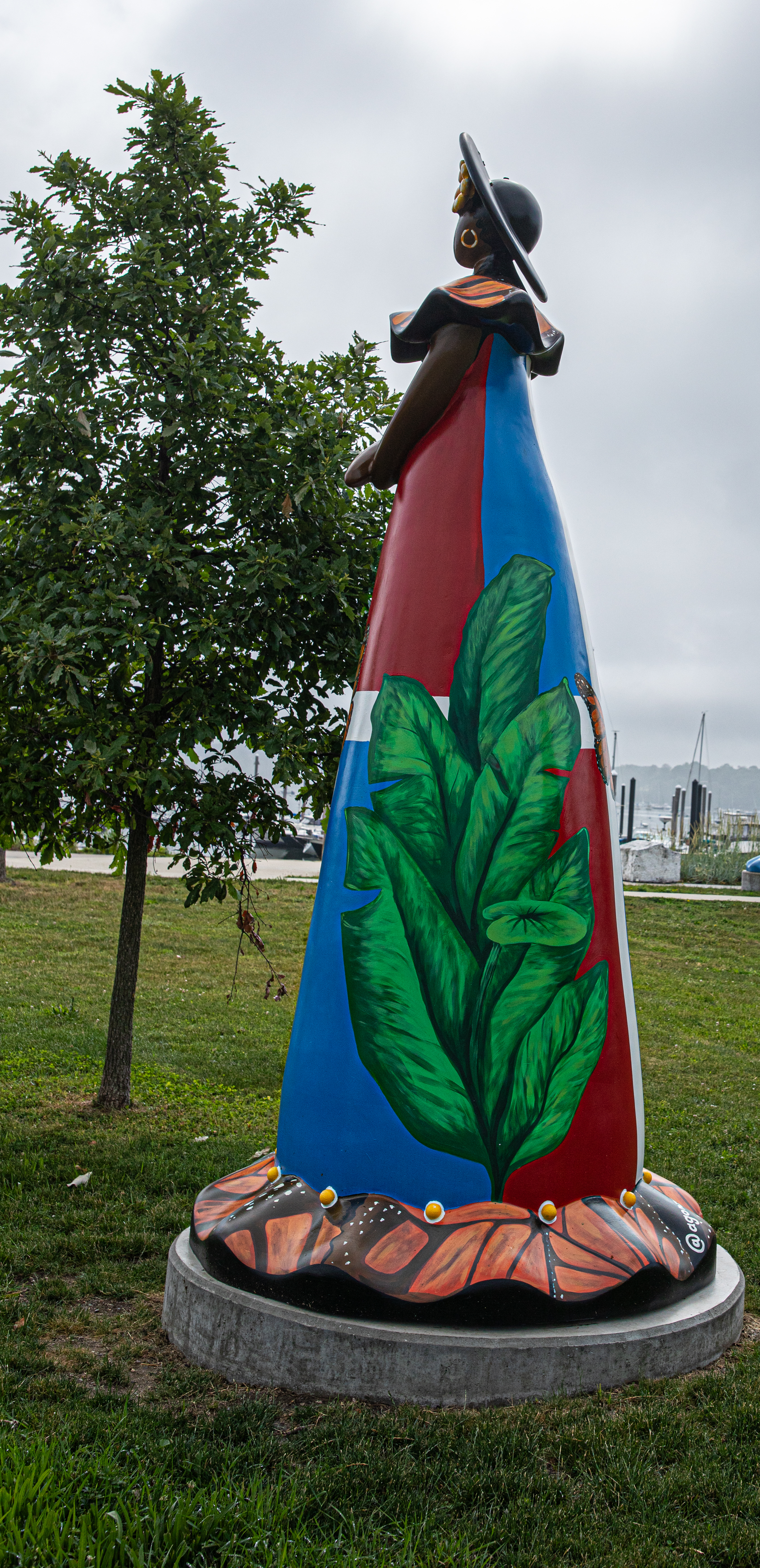
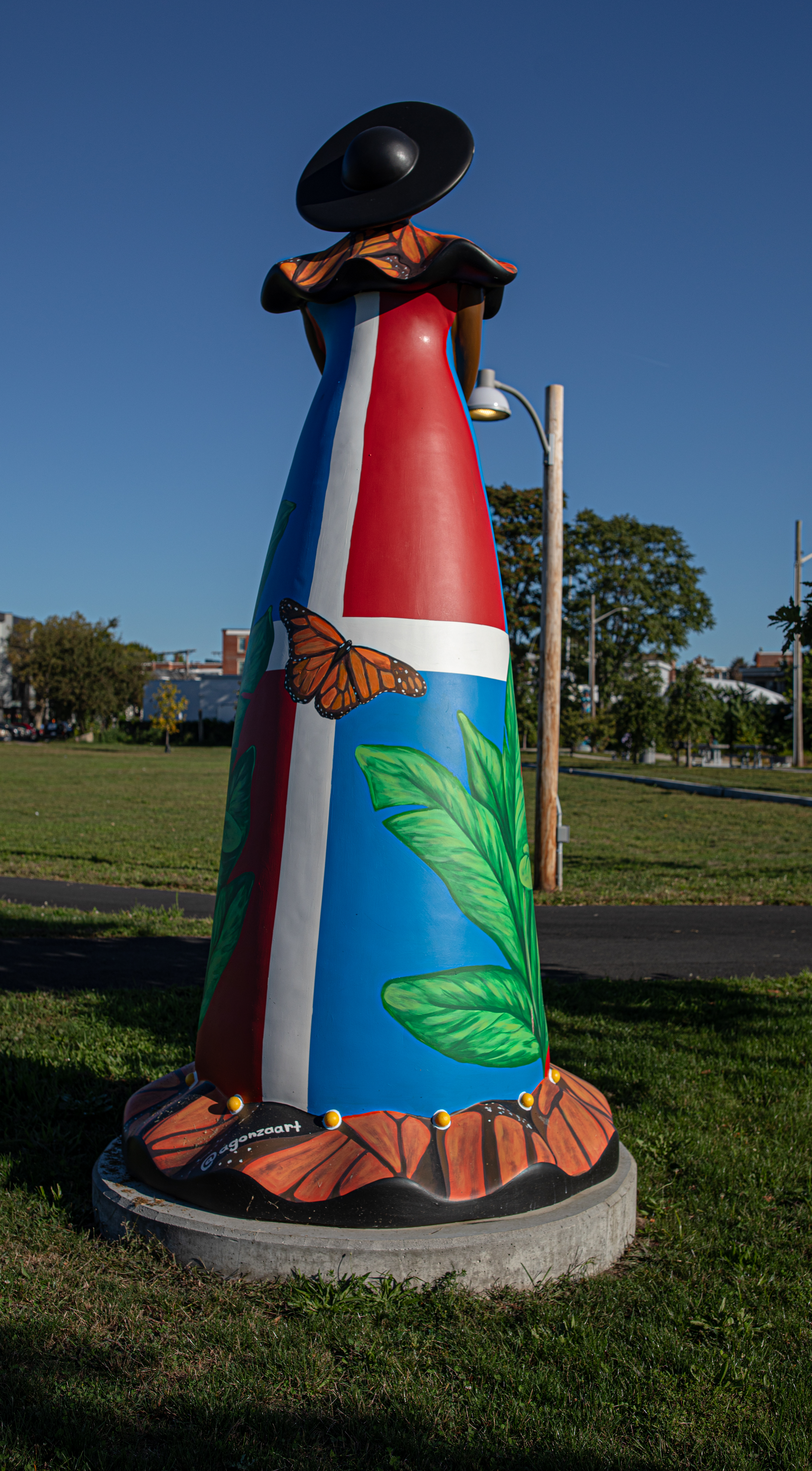
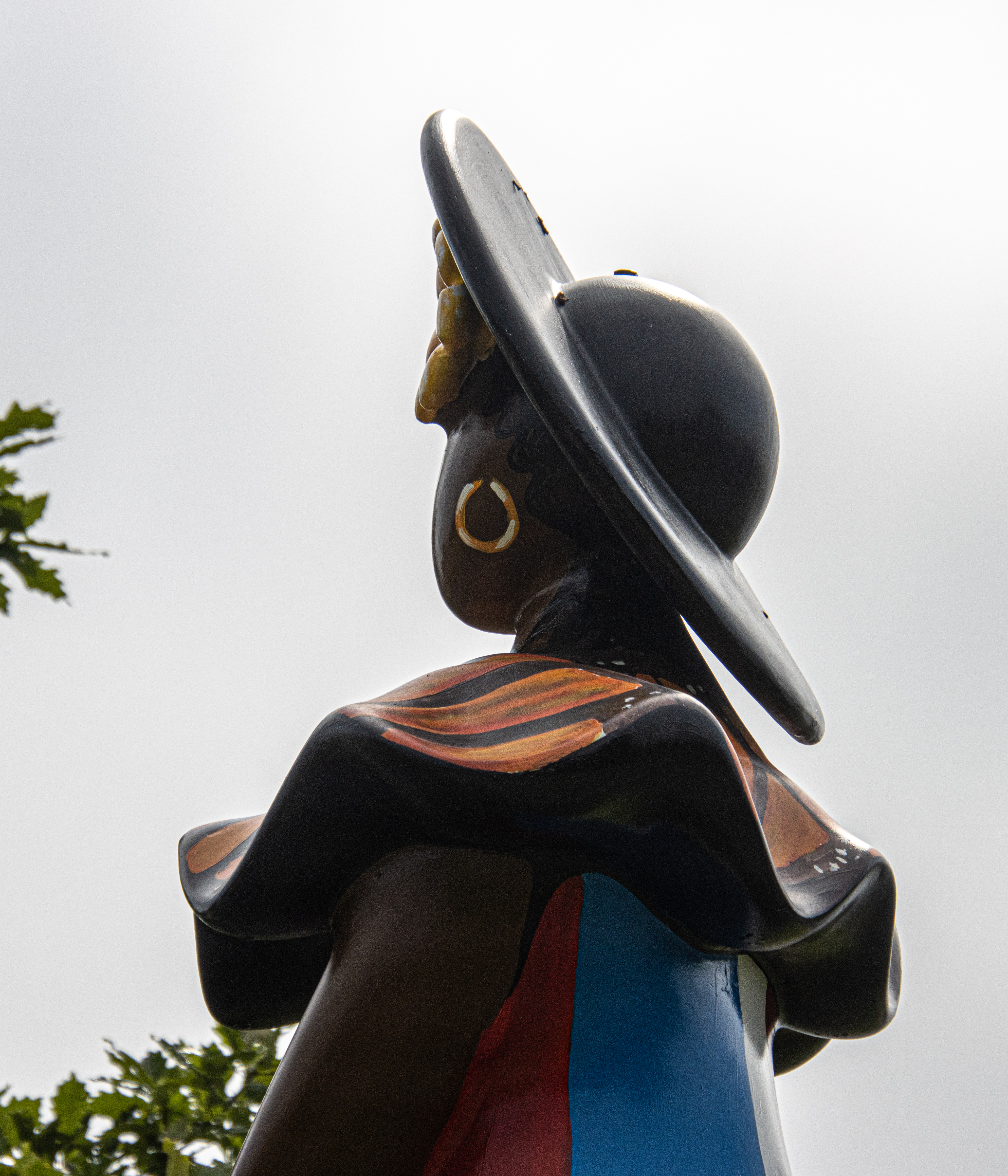
Angela Gonzalez, a Dominican artist, wanted to highlight Las Hermanas Mirabal (more commonly known as the “Butterfly Sisters”), the sisters who fought for women’s rights. They were the only women who stood up to the last Dominican dictator. Angela chose to feature the Dominican flag as the main background design. She also added the national plants and, of course, a butterfly.
Angela said her doll represents the flavors, music and nature of the Dominican Republic, The bottom of the dress is made from plantain leaves which were used to make pasteles en hojas, a leaf-wrapped plantain pocket. You may have to look closely, particularly at the bottom of the statue, to see other objects that represent the Dominican Republic such as tropical plants such as coconut, bananas, sugar cane and eggplant. Musical instruments and other foods are also included.
Harmony
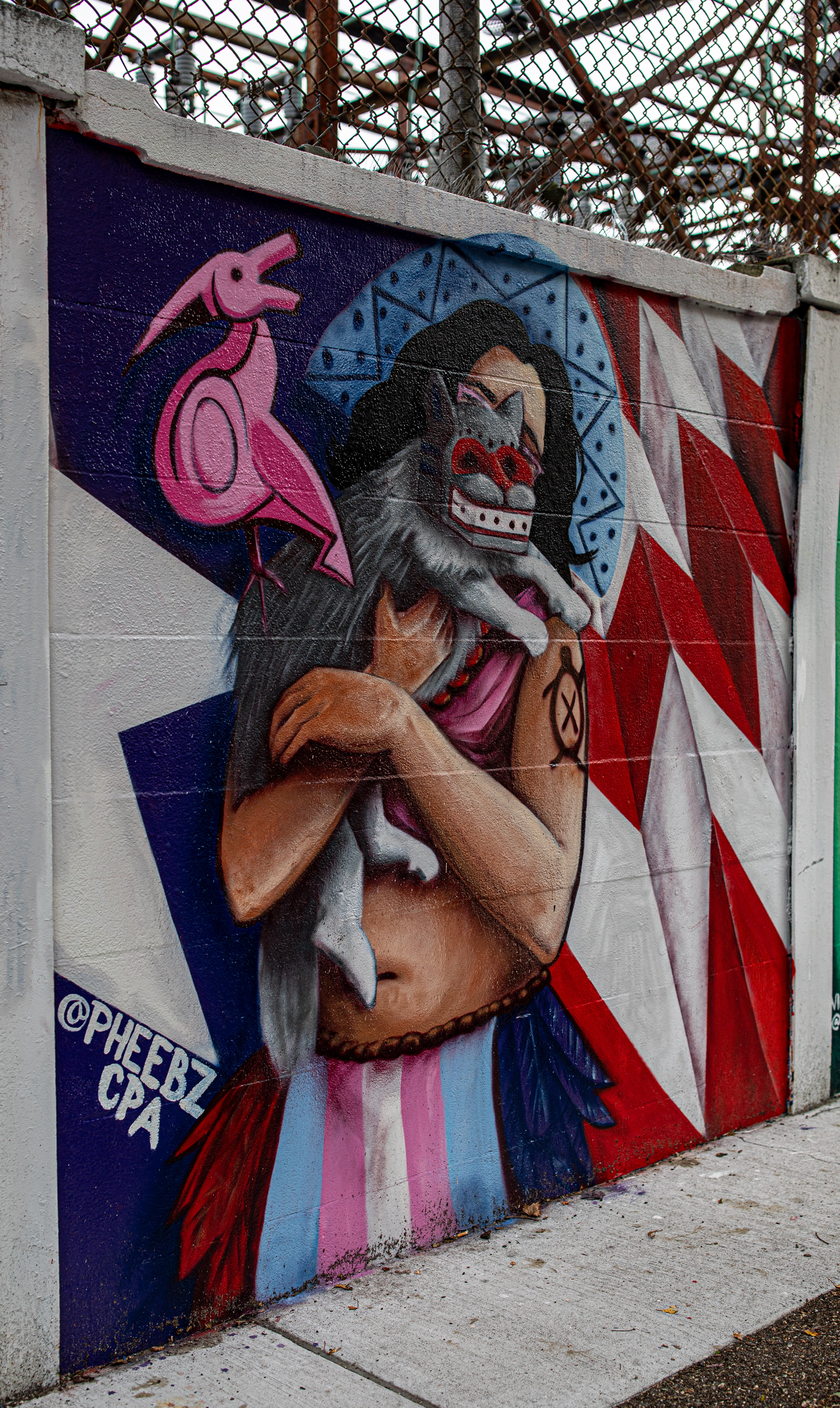
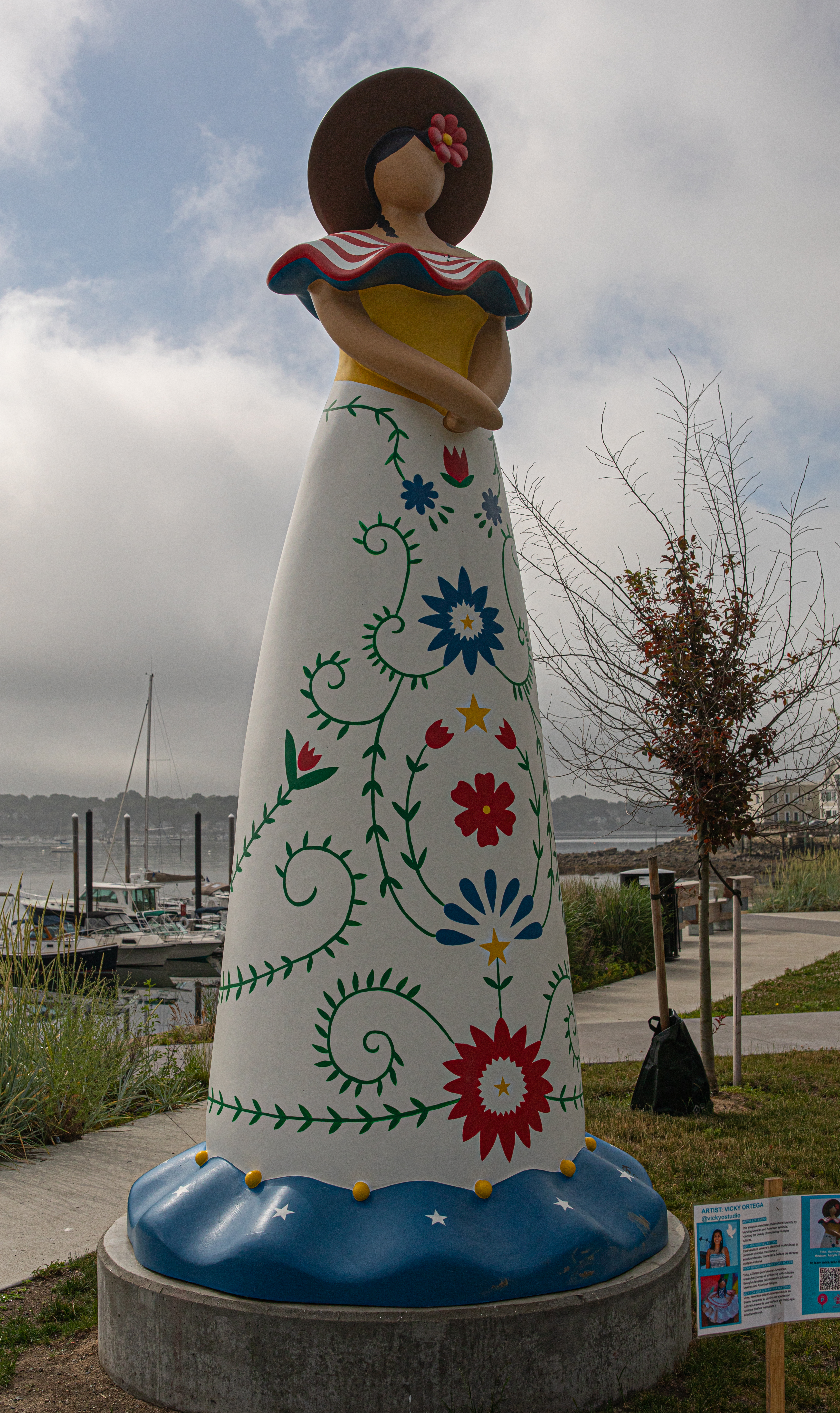
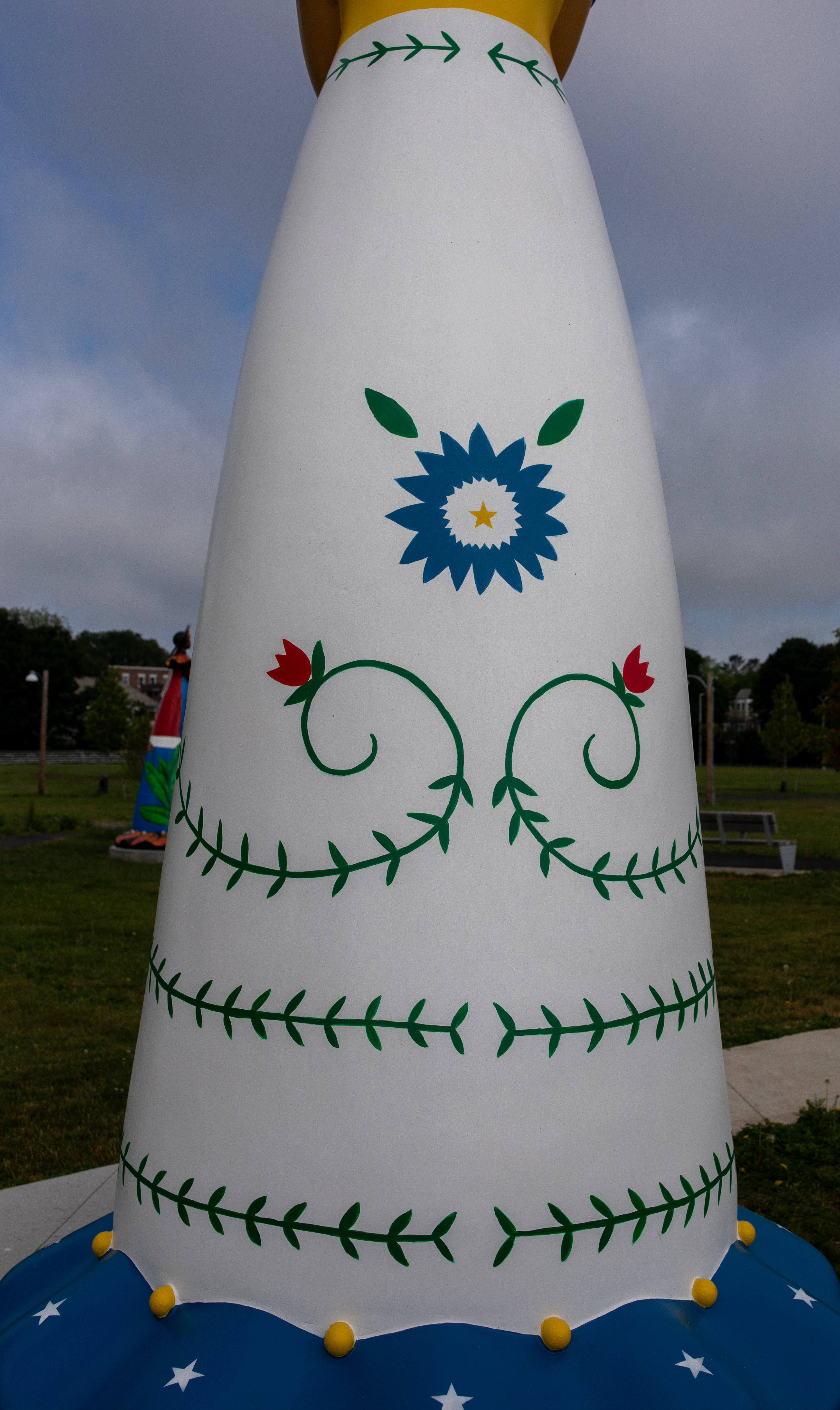
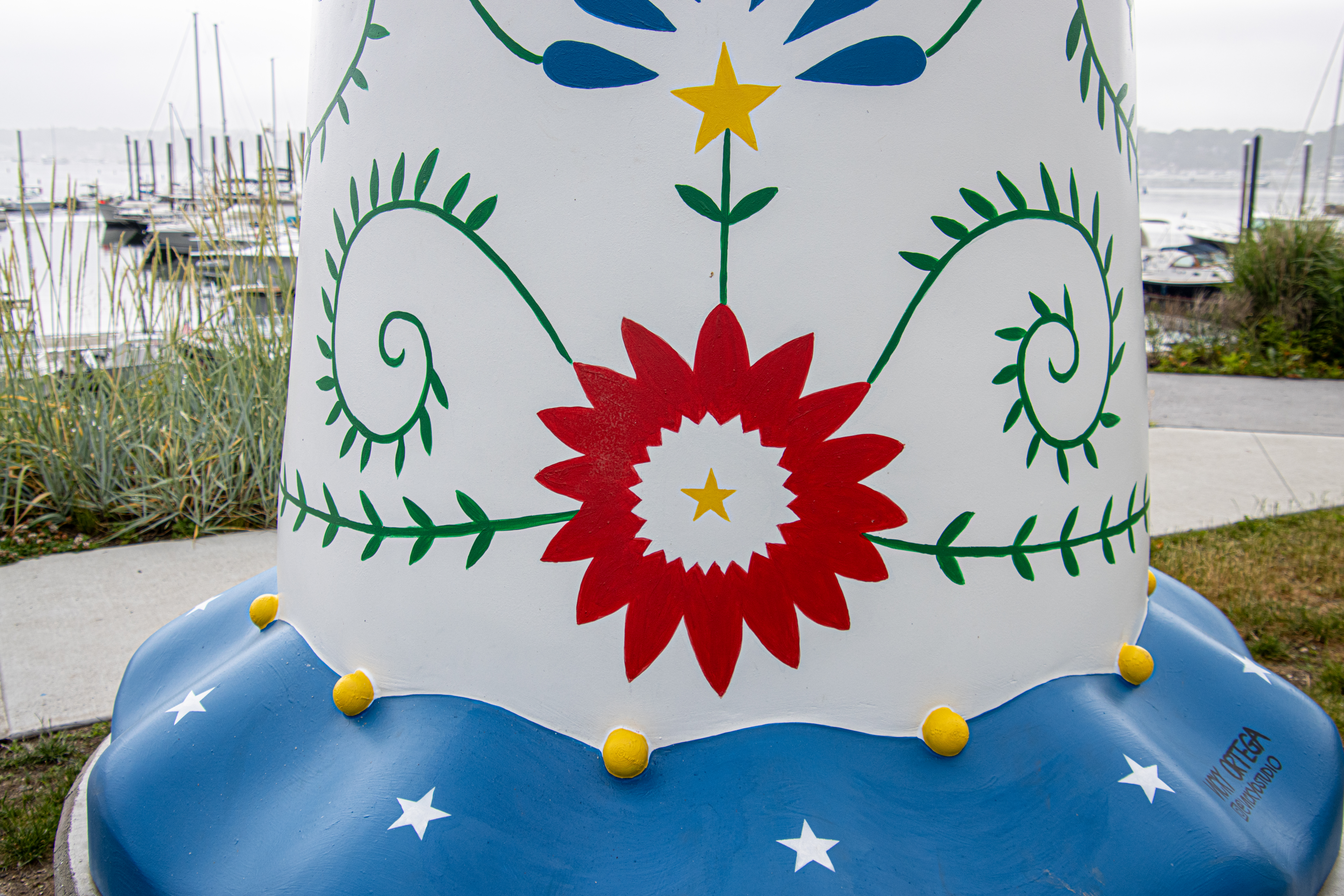
The artist for this statue, Vicky Ortega, said her doll was meant to serve as a celebration of those who represent the multiple cultures and as an homage to the strength of our multicultural community. The statue illustrates her own cultural blend by combining traditional Mexican dress embroidery with features of the American flag. Vicky wanted to express the strength of a new identity that draws from multiple traditions.
As a Mexican-American, Vicky often felt she didn’t belong in either culture. However, over time she learned to embrace both her heritage and nationality which helped shape who she is.
Lift Each Other Up
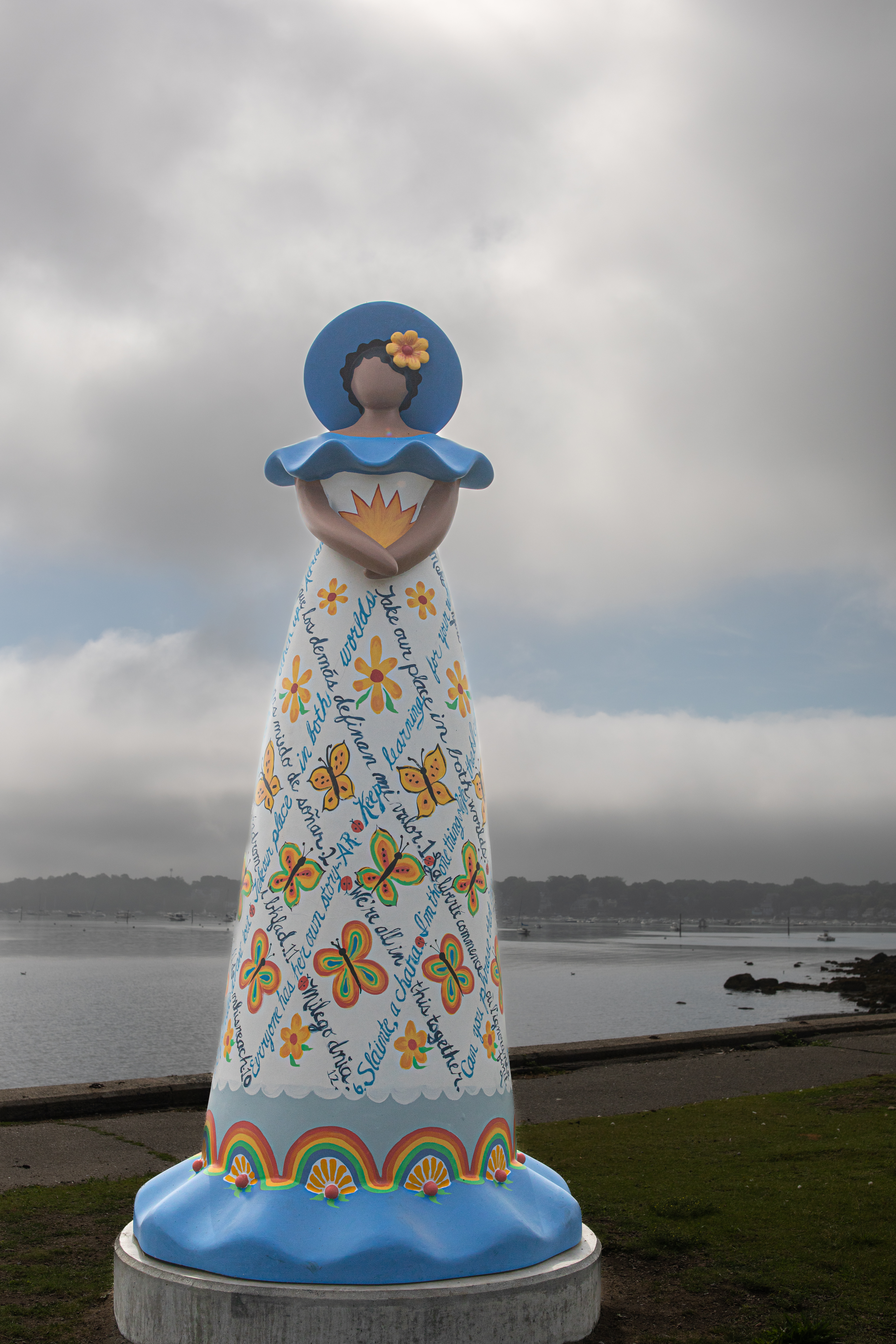
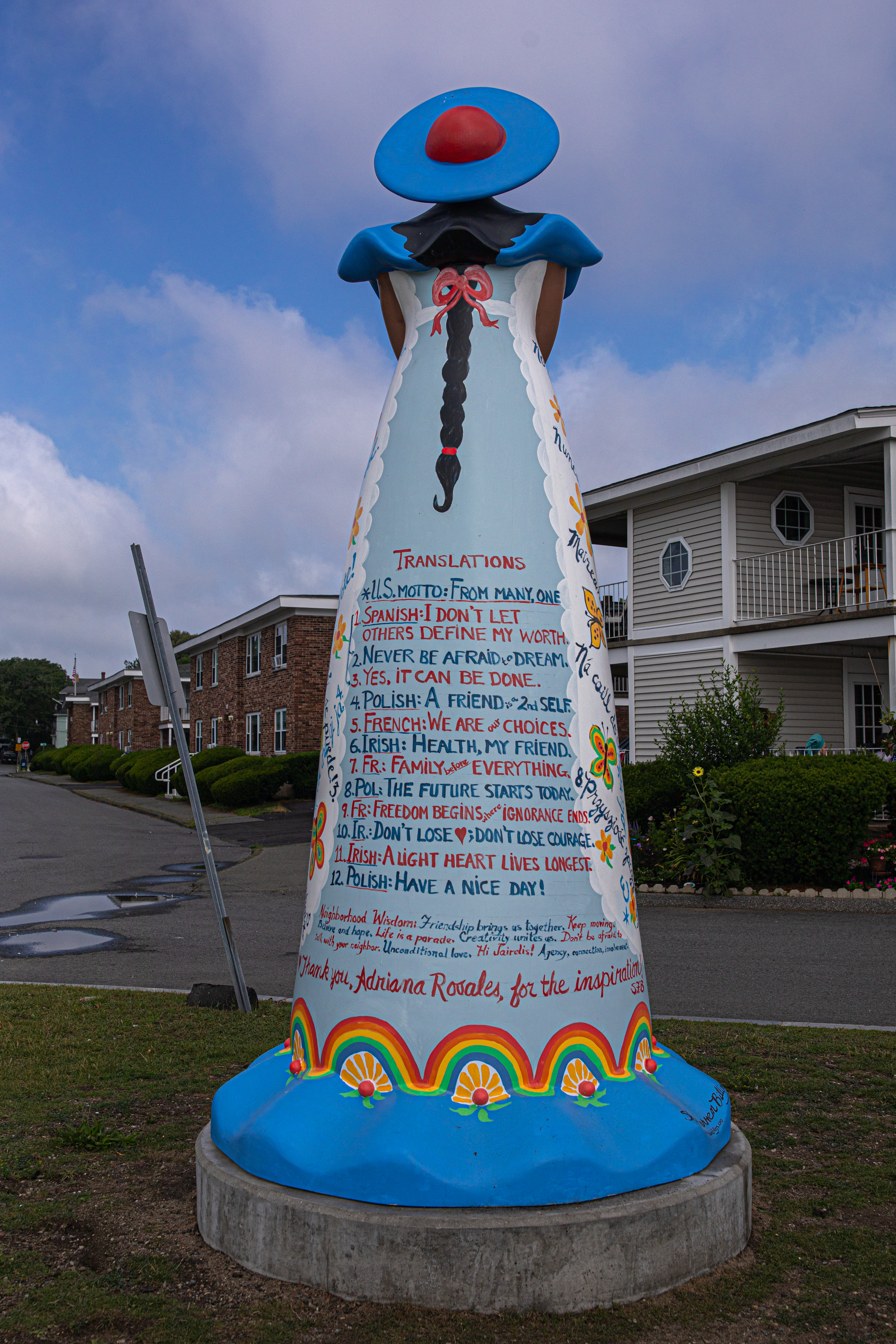
Created by Sheila Farren Billings, My Muñeca, “Lift Each Other Up”, is meant to express how language can either divide us or bring us together. Sheila says it is up to us to use language wisely and well. Sheila included quotes from remarks that neighbors made at a meeting about the project, with translations of course.
La Reyna De La Cosecha
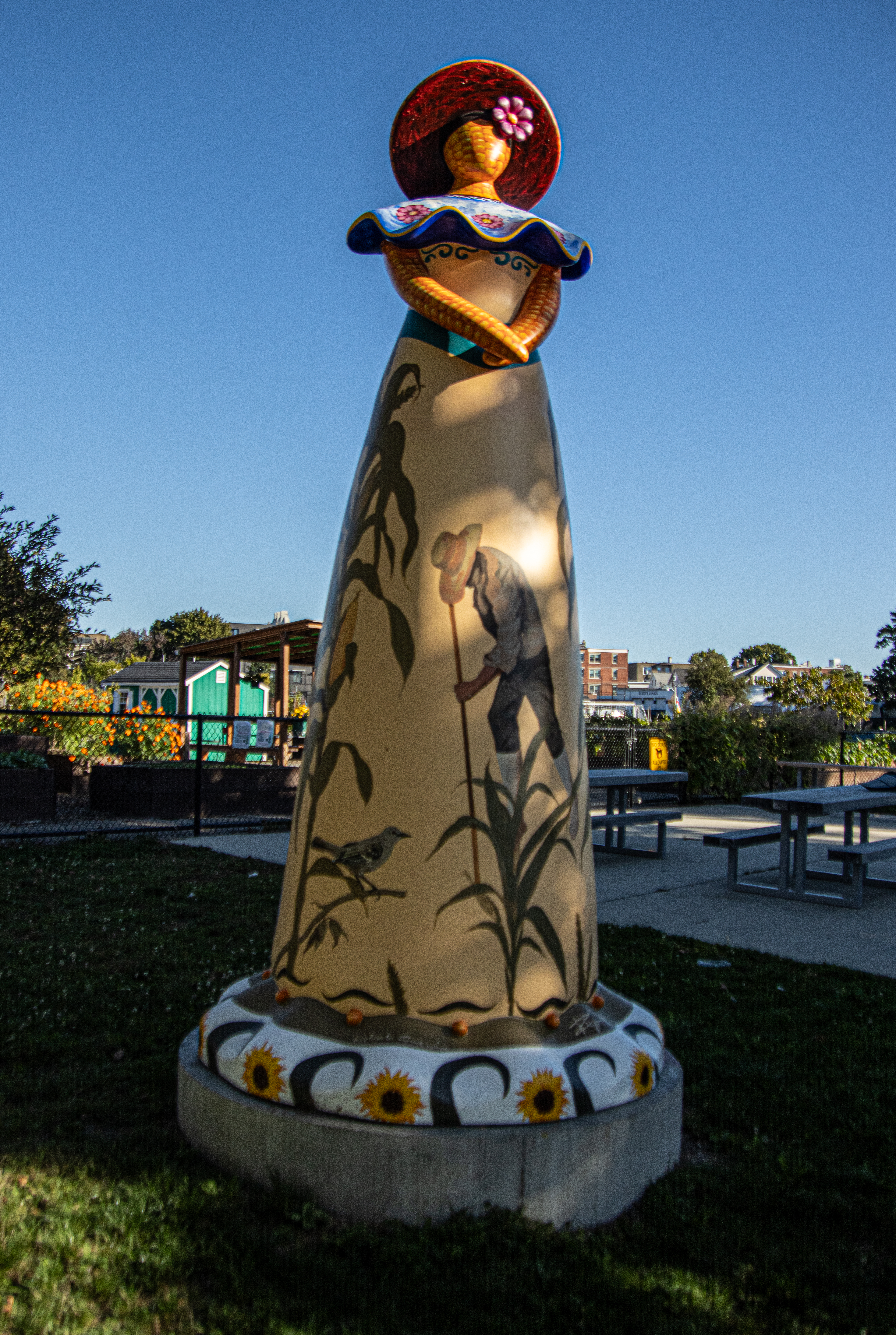
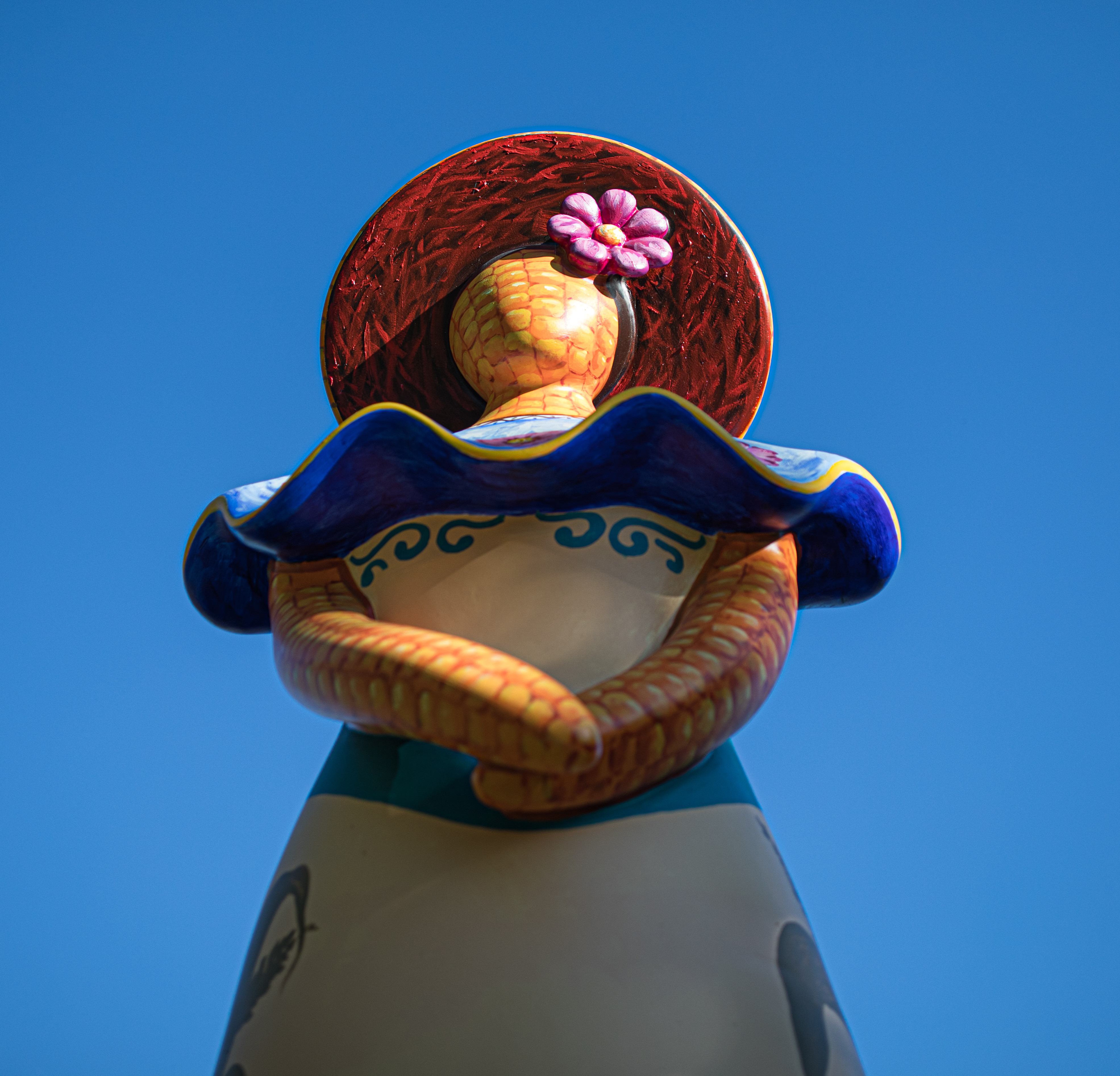
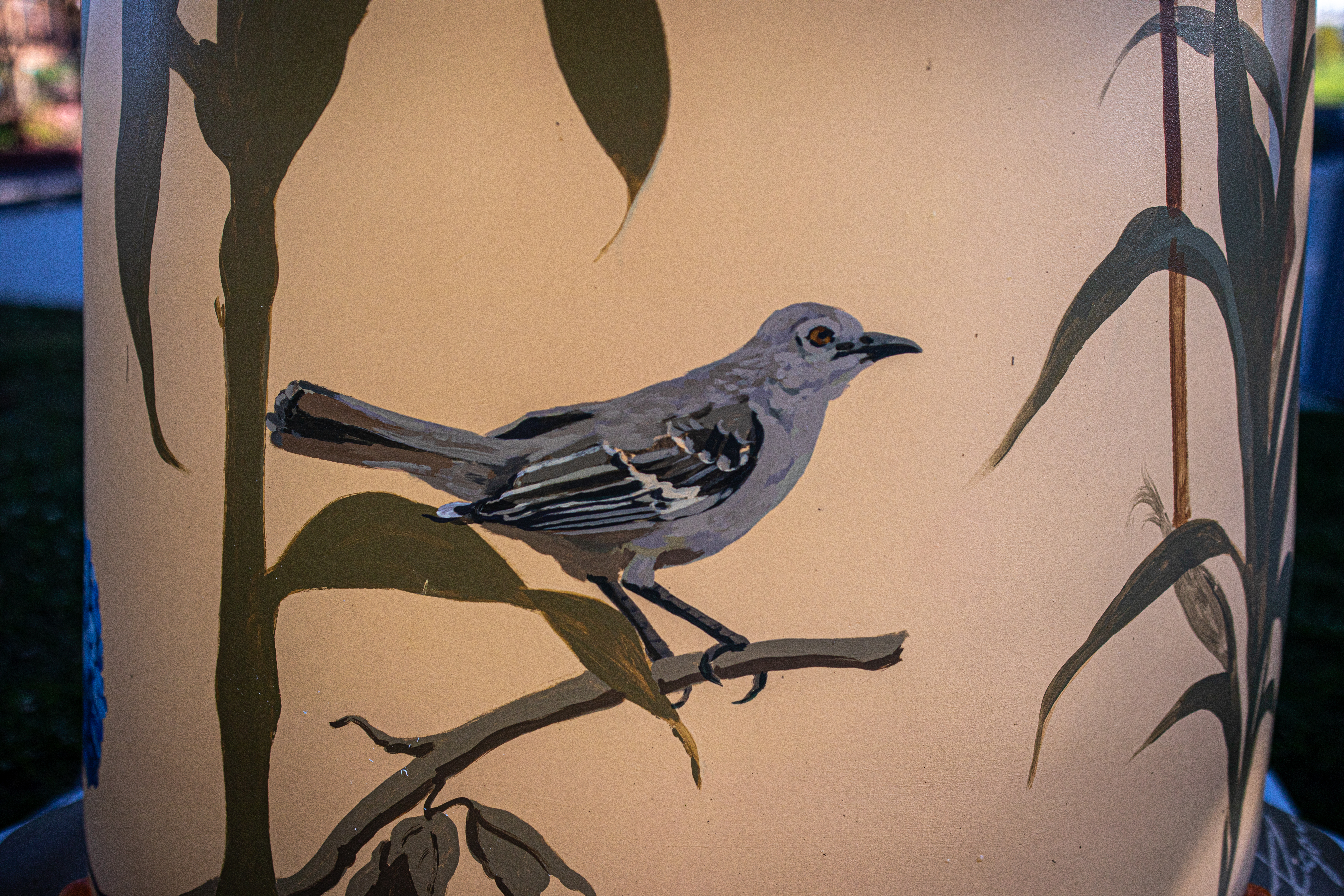
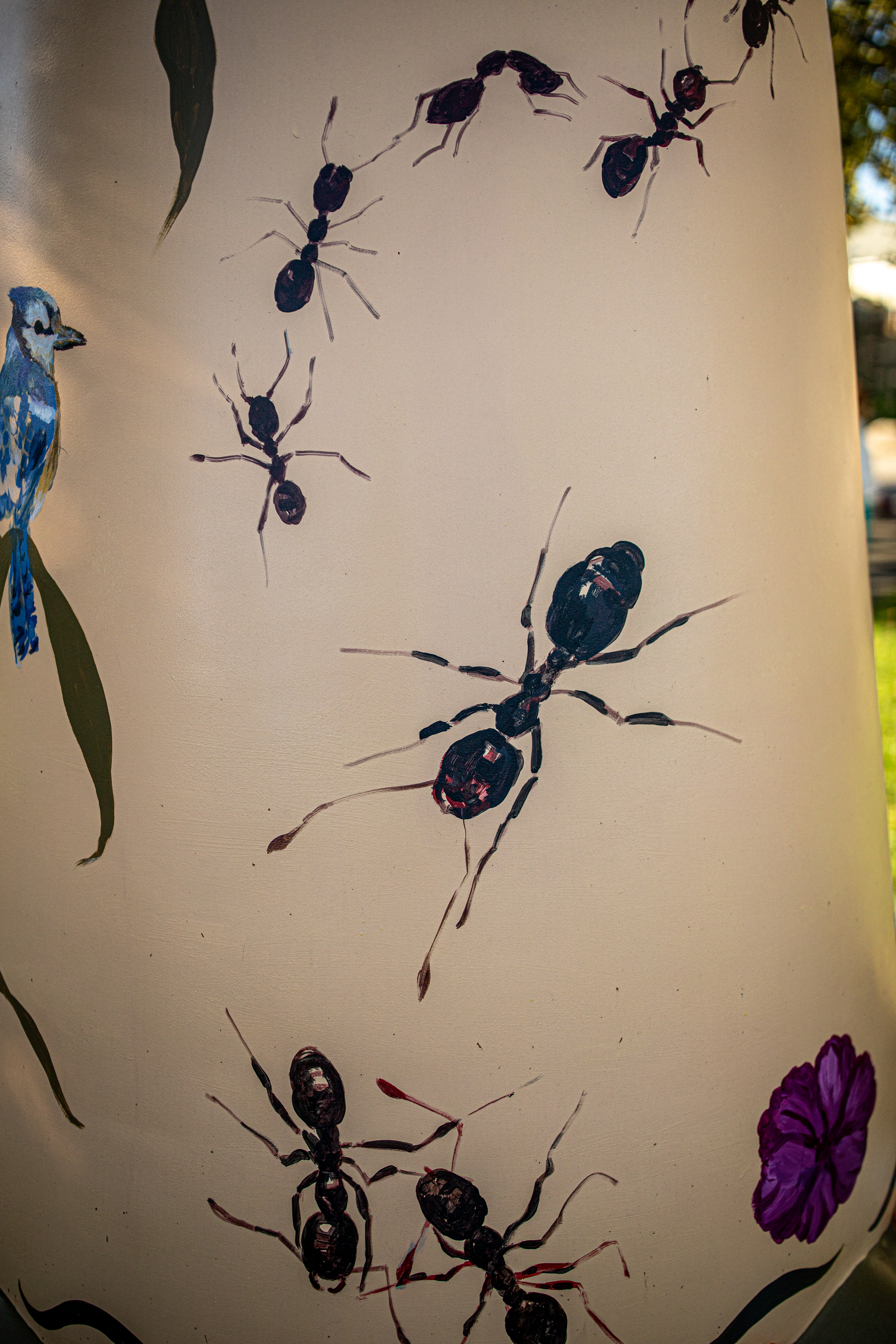
The artists for this statue (Rigo Peralta and Melanio Guzman), said this sculpture honors the deep roots of agricultural labor as well as the cultural legacy of muñecas de tusa, traditional Honduran corn husk dolls. They said the corn husk dolls, which Melanio’s grandmother used to make and sell at Honduras flower festivals, is a reminder of the hard worker of the field laborers. It was fittingly located by the community garden.
Along the newly paved walkway, there is a memorial remembering the 140 Salem residents who lost their lives from Covid-19. The walkway is meant to give people a space to wander, reflect and enjoy the statues and park. It also gives people an easier and more accessible way to enjoy the park. It’s hard to imagine the park was just all grass without paths to allow people an easier access to move around. Benches give visitors a chance to sit and reflect while they enjoy the scenic views of Palmer Bay Cove.
Summary: There is a new multi-use art installation on the Rose Fitzgerald Kennedy Greenway
“Door knockers” or swings? That is what many people have been been asking themselves when they see the new art installation on the Rose Fitzgerald Kennedy Greenway.
The answer is both!
The artwork, “Big Hoops To Fill”, features two “door knocker” earrings made of steel, resin and fiberglass composite, epoxy paint and polyurethane.
But, this is not just a work of art. People use the “door knockers” as a swing. In fact, that was the highlight of the art. Many people, both young and older, enjoyed swinging on it. This dual function of the art has made it one of the most popular attractions on the Greenway.
According Ja’Hari Ortega, the Boston-based sculptor and jewelry-maker, the “door knockers”, which are cast from fiberglass with steel interior supports, are reminiscent of swings she used to swing on as a child.
The art is also a cultural statement. According to Ja’Hari, this work of art draws upon the cultural weight of bamboo hoop earrings which are considered an iconic style of jewelry worn by many women of color that originated from early hip-hop culture and fashion. Artists such as Salt-N-Pepa, MC Lyte, Roxanne Shanté, and Queen Latifah (they were definitely on my playlists or “mix tapes” when I was younger) have been known to include these types of ear rings in their fashion.
According to Ja’Hari, “Big Hoops to Fill” creates opportunities to “heal one’s inner child, cultivate and encourage healthy multigenerational relationships, and foster confidence in one’s identity and culture.”
“Big Hoops To Fill” is set to be on display along the Greenway Until October, 2026. So, stop by for a swing!
Parking: There are several parking lots and metered street parking in the area
Summary: Dozens of bricks representing people, places and things related to Boston (and some of the surrounding areas such as Cambridge) are installed on the ground of the alley way on Winthrop St.
Watch where you’re stepping on Winthrop St in Boston, MA! You may be stepping on history.
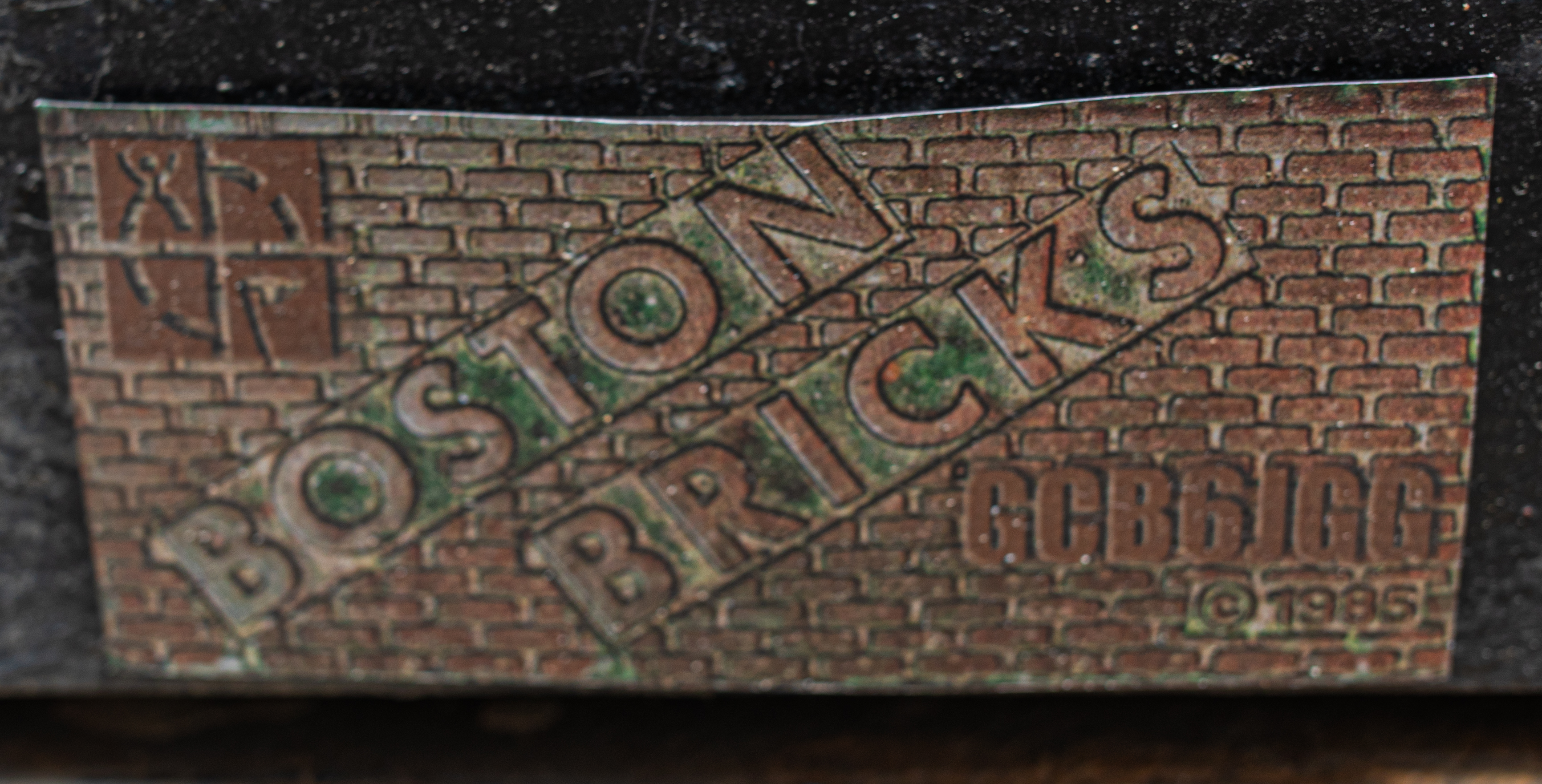
The roughly 100 bricks scattered along Winthrop St (don’t worry, I won’t include them all), which were created by sculptors Kate Burke and Gregg LeFevre in 1985, depict something related to Boston. The alleyway is easy to miss. So, you do have to pay close attention. It is located between Otis and Arch Streets
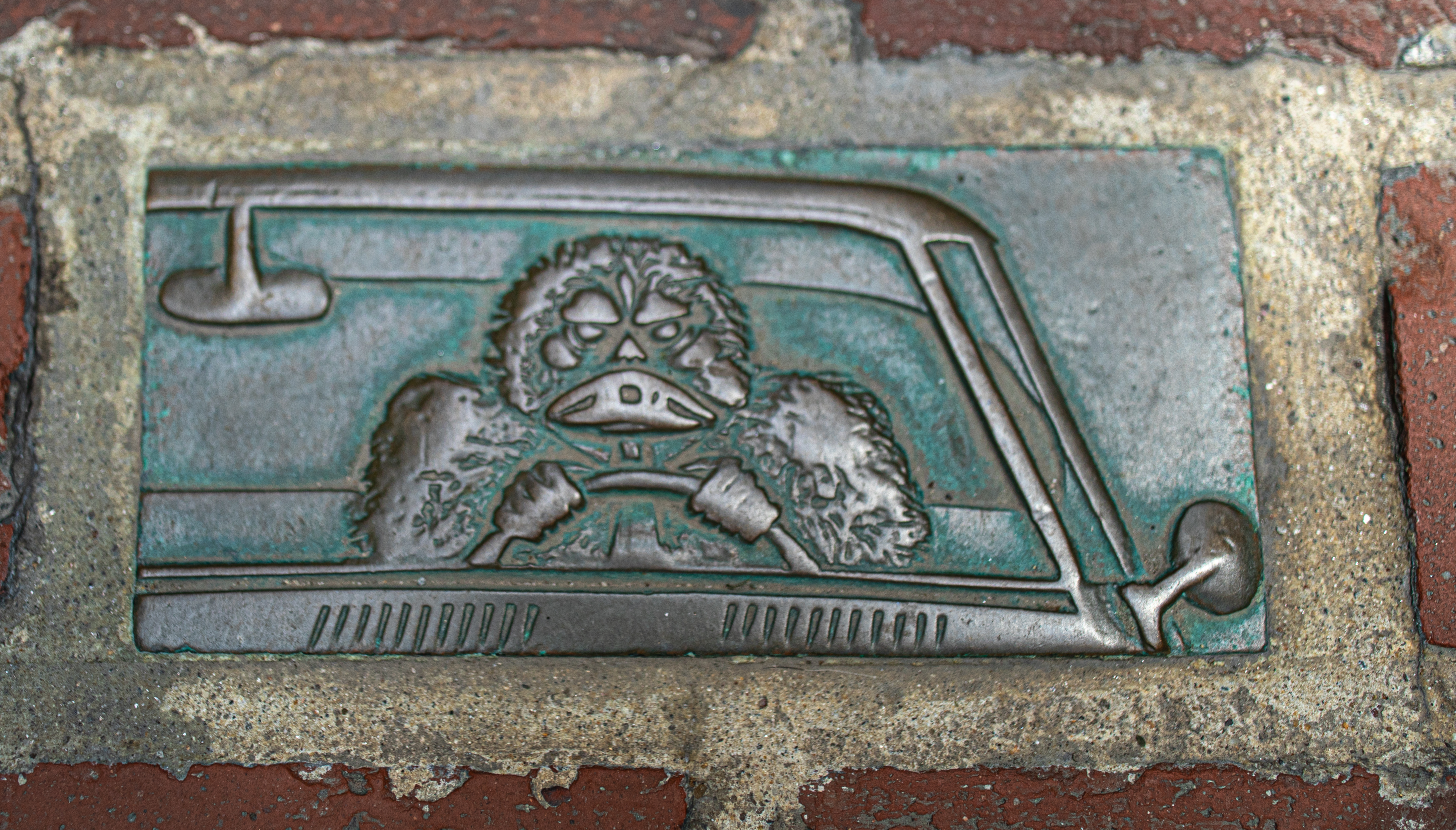
One of the bricks, which were funded by the Edward Ingersoll Browne Fund, is something any Boston driver can relate to. In fact, I think he cut me off the other day.
Yes, Boston drivers can be animals at times. At least he’s using the “10 and 2” steering wheel method.
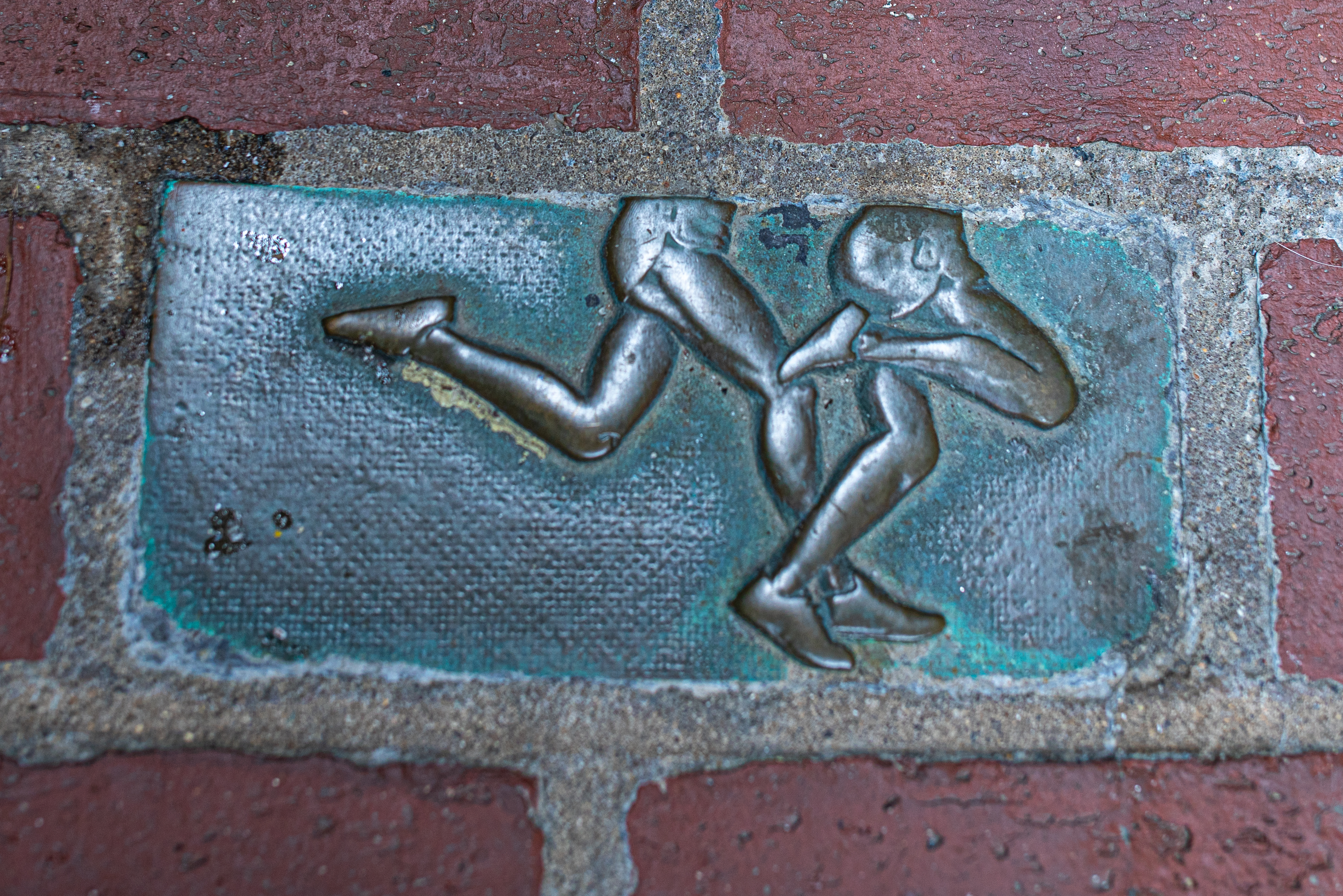
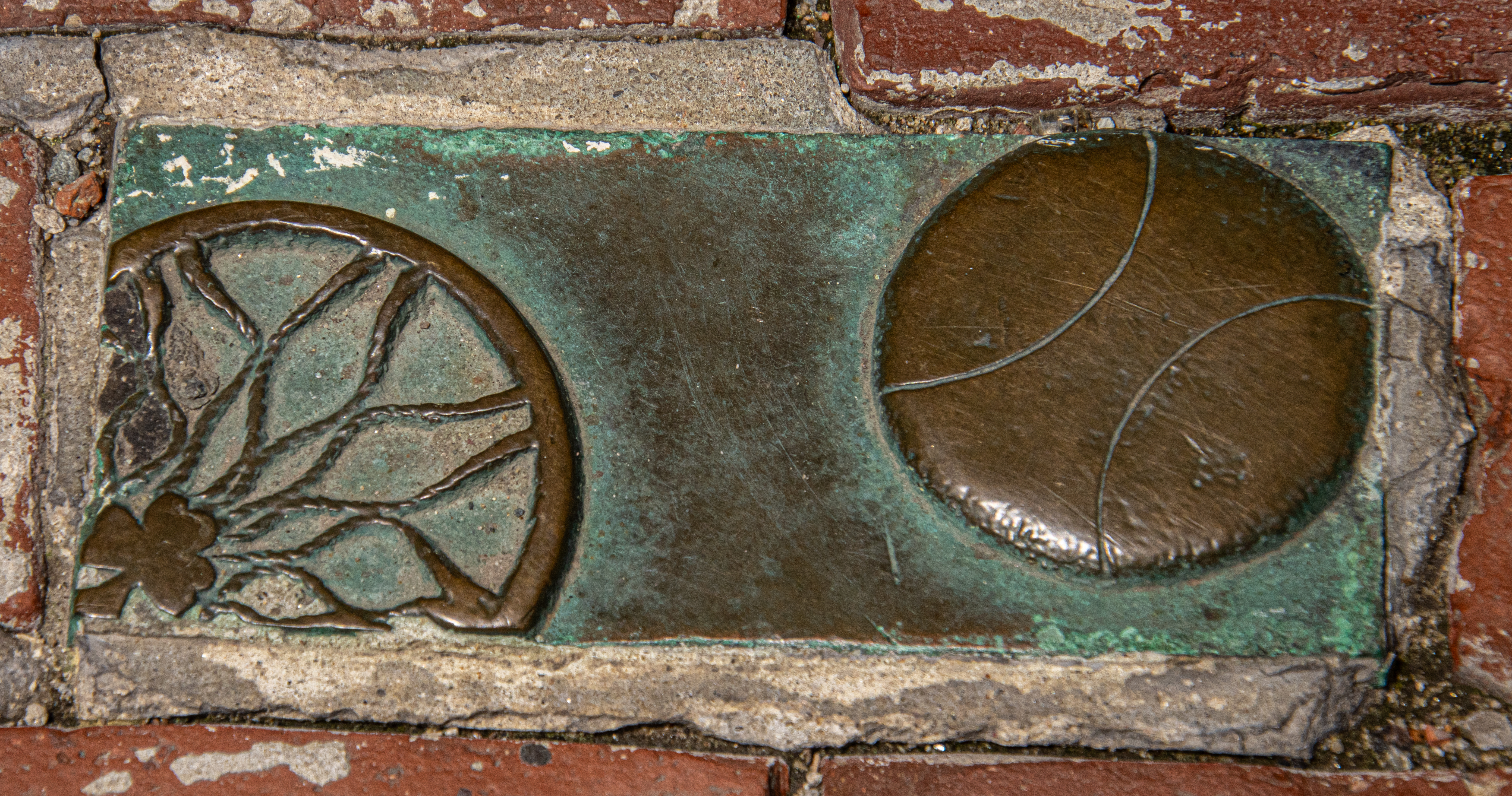
Like them or hate them, Boston is also known for its sports teams and sports in general. These bricks represent everything from the Boston Marathon (the longest active marathon in the United States) to the oldest Major League Baseball park in the states (Fenway Park) as well as some rowers and the most winning team (in terms of championships); the Boston Celtics.
This Boston Bruin logo was included in this brick which also contains logos of the MBTA (Massachusetts Bay Transportation Authority, or more commonly known as “the T” in Boston) as well as the logo for the New England Sea Aquarium in the left hand corner. “I can walk like a penguin.” If you got that reference your AARP card is in the mail.
Of course, Boston is a city of firsts. These bricks show off some of the firsts the city may or may not be known for. For instance, did you know the first wooden golf tee was invented in 1899 by Dr. George Franklin Grant in Boston, MA?
Another sports first is the claim to the use of the first baseball glove. Although it is debated (one historical reference states the first “buckskin” gloves, which were more like actual gloves, were worn as early as the 1860s). But, the first gloves that resemble what we use now are said to have been worn by first baseman Charles Waitt in Boston.
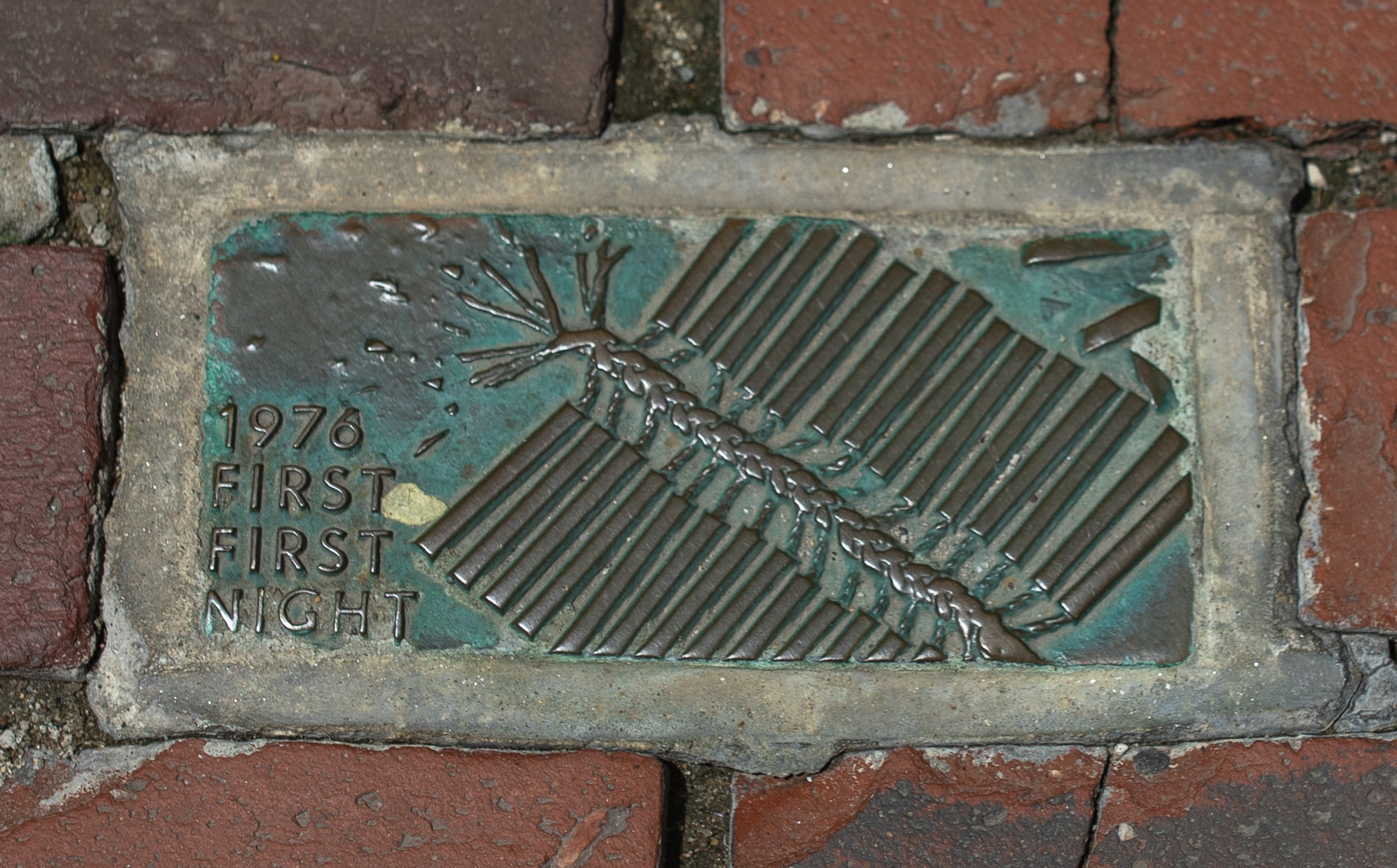
One more first represented by the bricks on Brick Alley is the first First Night which should really be called “First Morning” or “Last Night”. But I digress.
Boston held its first (and the country’s first) First Night December 31, 1976. I guess people just went to bed at a reasonable hour before then.
Another first in Boston is the first resident. After all, it had to be someone. And that someone was Rev. William Blaxton (also spelled Blackstone). He moved to what would later to Shawmut Peninsula which would later become known as Boston in 1625.
Since it is an area so rich in history, there were also several bricks dedicated to the history of the city.
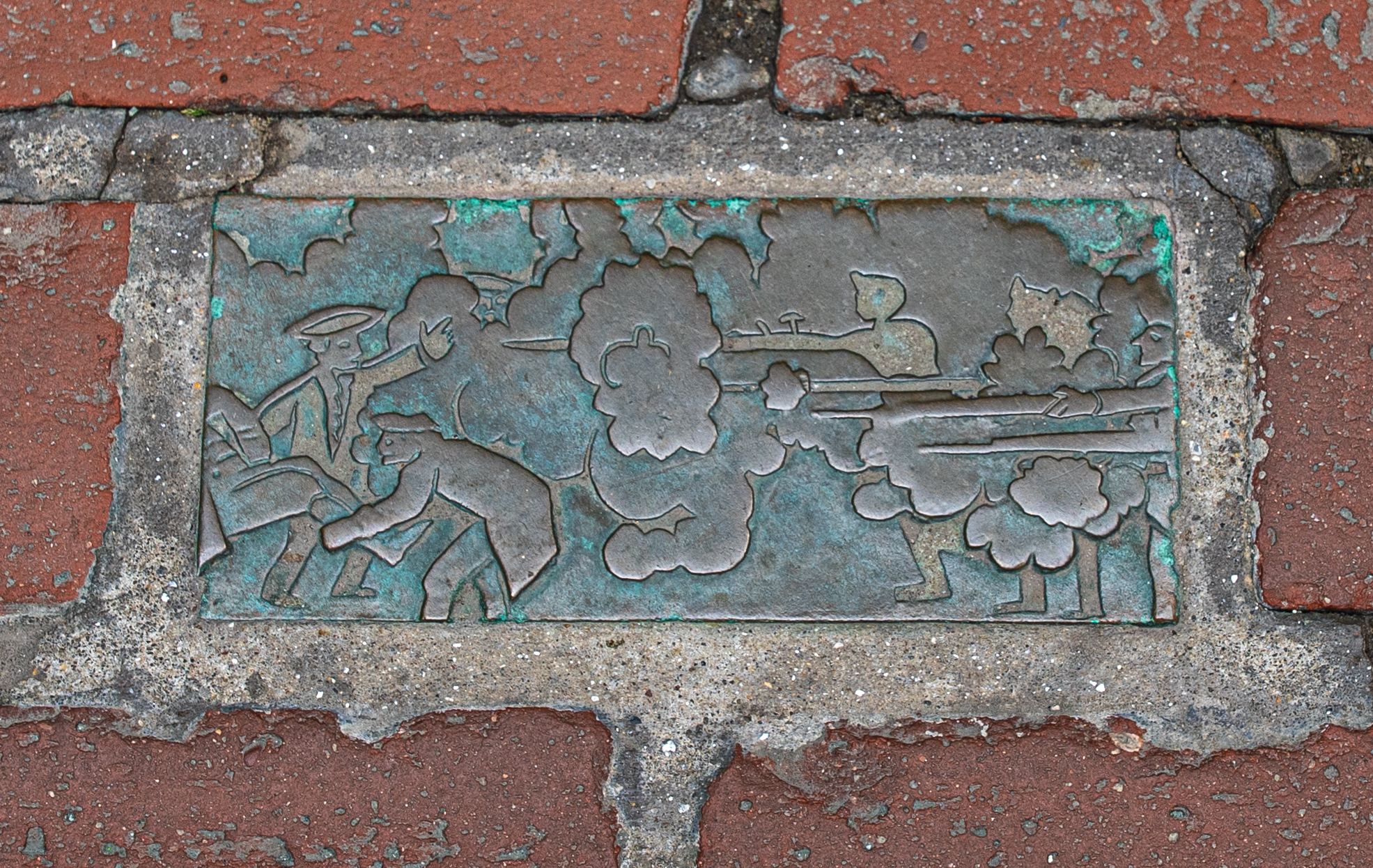
This brick could signify a few different battles or clashes in Boston or were part of the “Boston Campaign” of the American Revolutionary War. But, I am assuming this brick pays tribute to the “shot heard around the world” and the subsequent Battle of Lexington and Concord just outside of Boston. I’m not saying who shot first, though.
The first public park is indeed in Boston. Boston Common was established in 1634 by the Puritans to serve as meeting place for public, military and recreational purposes. A lot of effort and care were used to show all of the paths in the park.
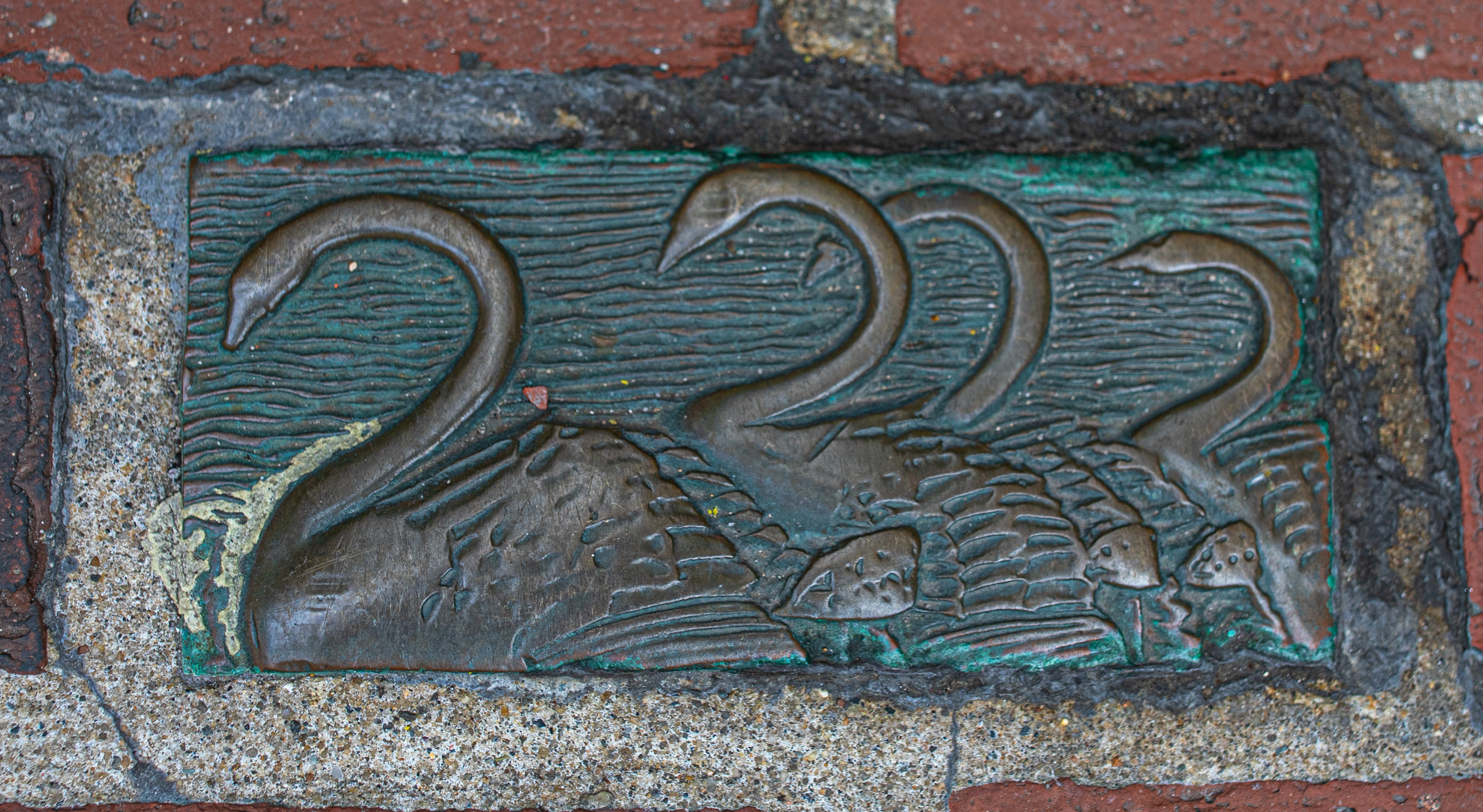
These swan boats which are in use every summer in the public garden adjacent to the Boston Commons,. They have been in operation in one form or another since 1877 when Robert Paget, a ship builder in Boston started making them.
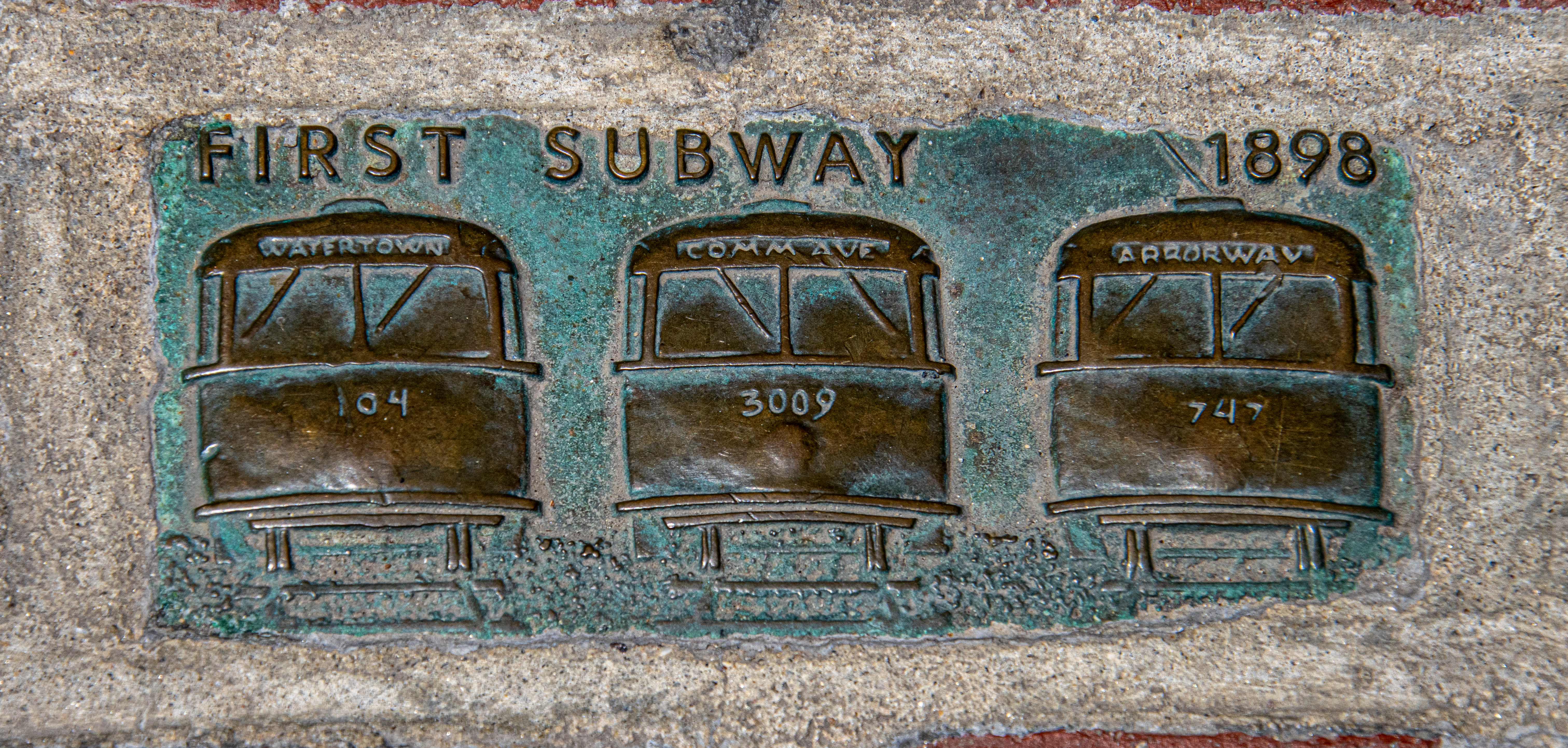
Another first is the Boston subway system. The subway system in Boston is the first in this country (the first subway stops were Boylston and Park Street). The first trains began operating in 1898 and I think they’re still in use today. At least it feels that way,
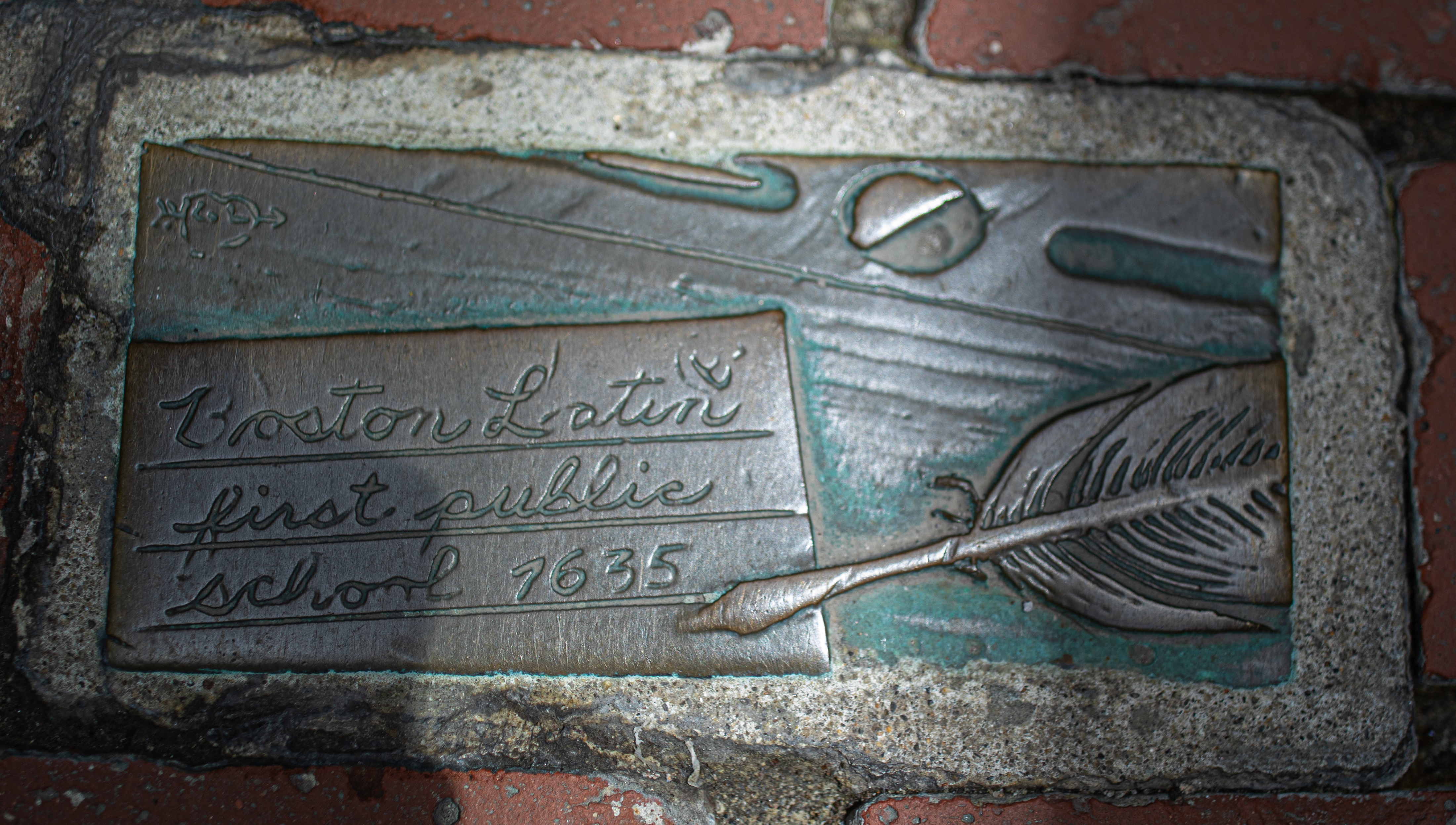
The Boston Latin School, which was founded in Boston in 1635, is the first public school in the country. It has been in continuous operation since it formed on April 23, 1635. And, no, I wasn’t in attendance. I’m not that old.
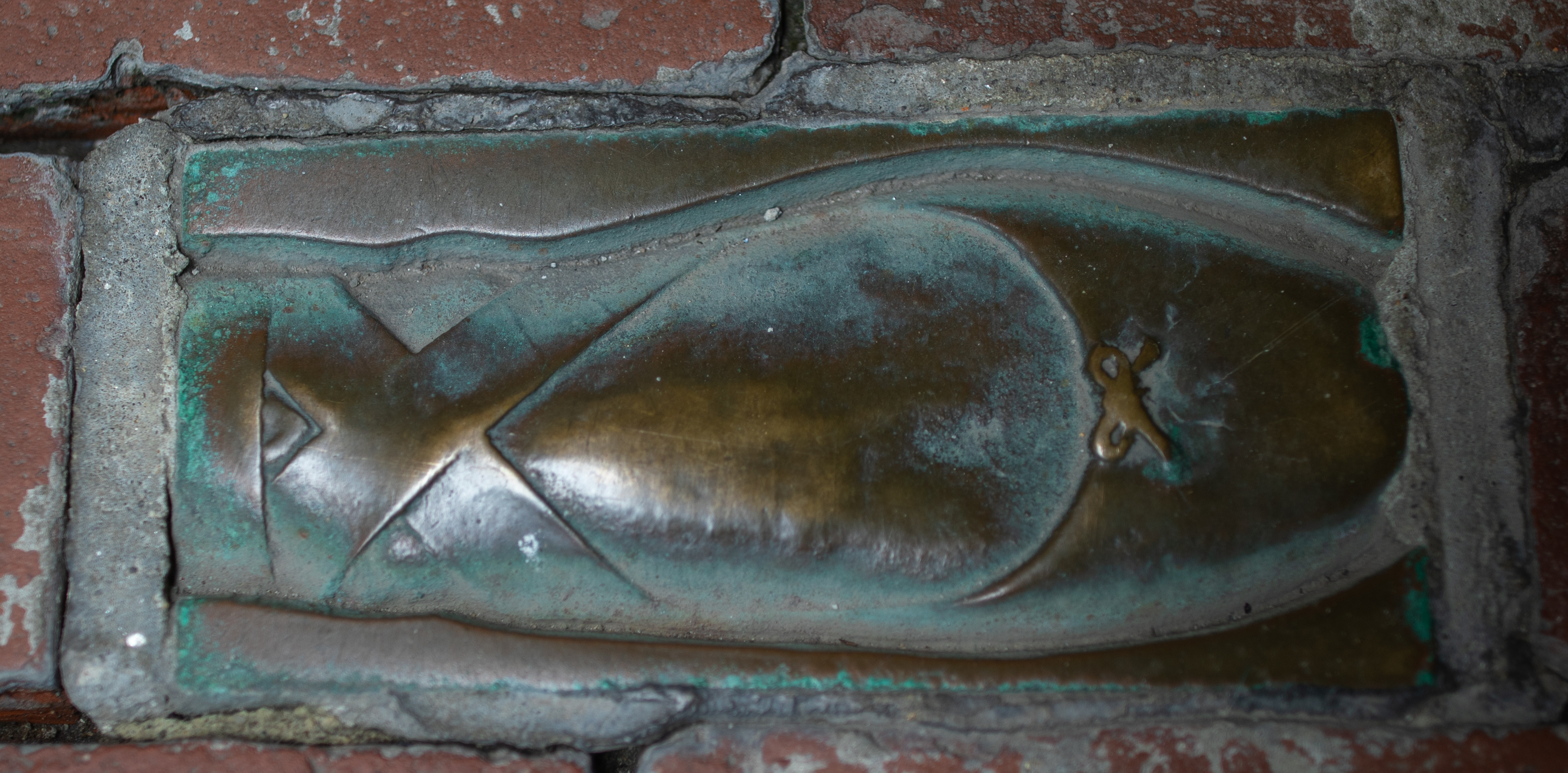
While the sewing machine is in its earliest forms was not invented in Boston, the inventor of the first practical and commonly used sewing machine was a mechanic from Boston named Elias Howe. Elias invented the first modern lockstitch sewing machine in 1845. The underlying lockstitch design Elias invented became the foundation for most modern day sewing machines and is still used to this day in most sewing machines.
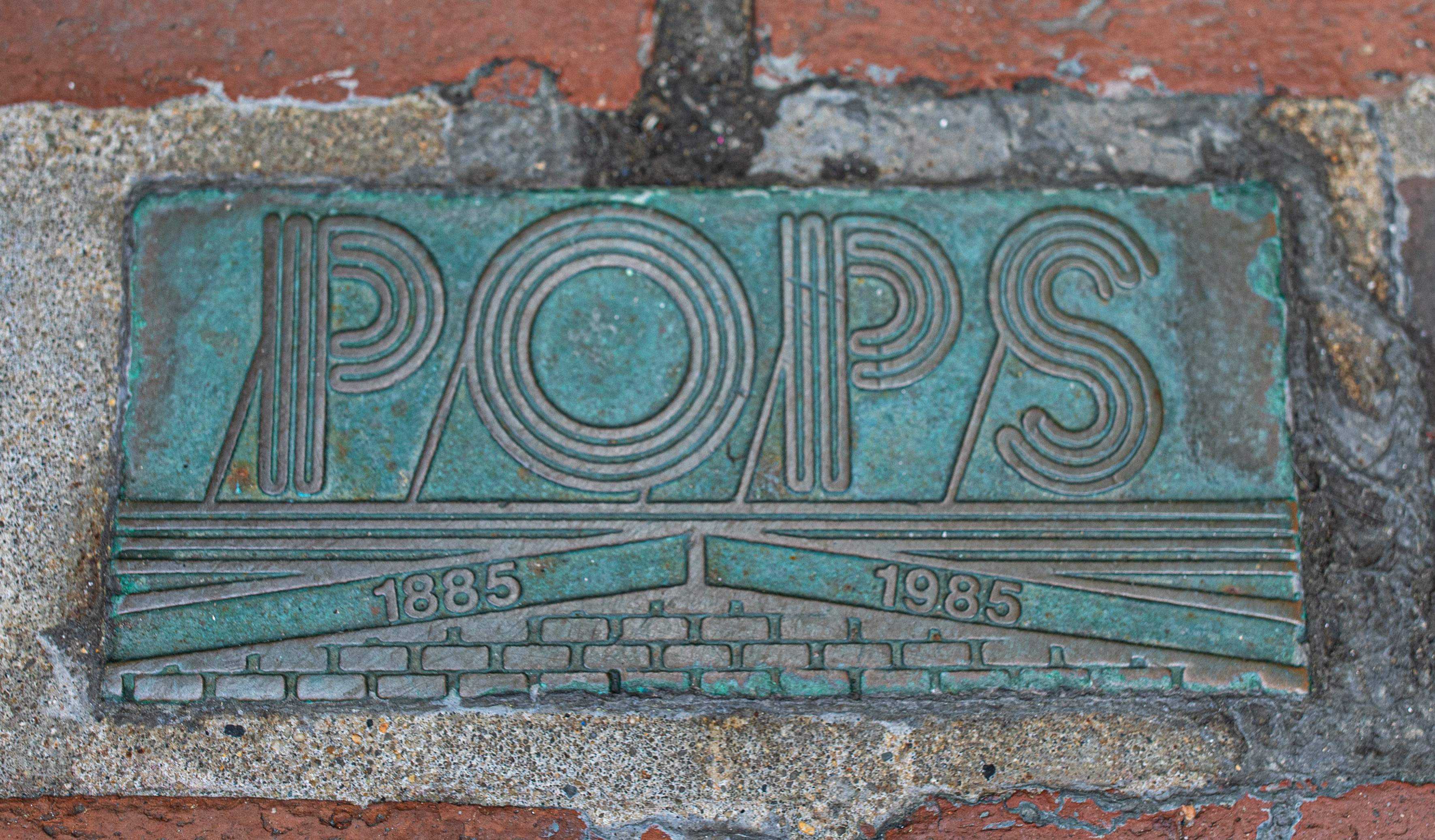
Boston is also known for its many arts and entertainment. These bricks include the POPS (the Boston Pops). Although they’re most famously known for their performances during the 4th of July celebrations on the Charles River Esplanade, they perform on many other occasions at many other venues.
This brick is a tribute to the ballet dancers that perform at the many events throughout the year. But, I will always get Nutcracker vibes when I see them.
The opera is also a staple of the art which is plentiful in the area.
This brass instrument is commonly used in the Boston Pops concerts and at other concerts throughout the city.
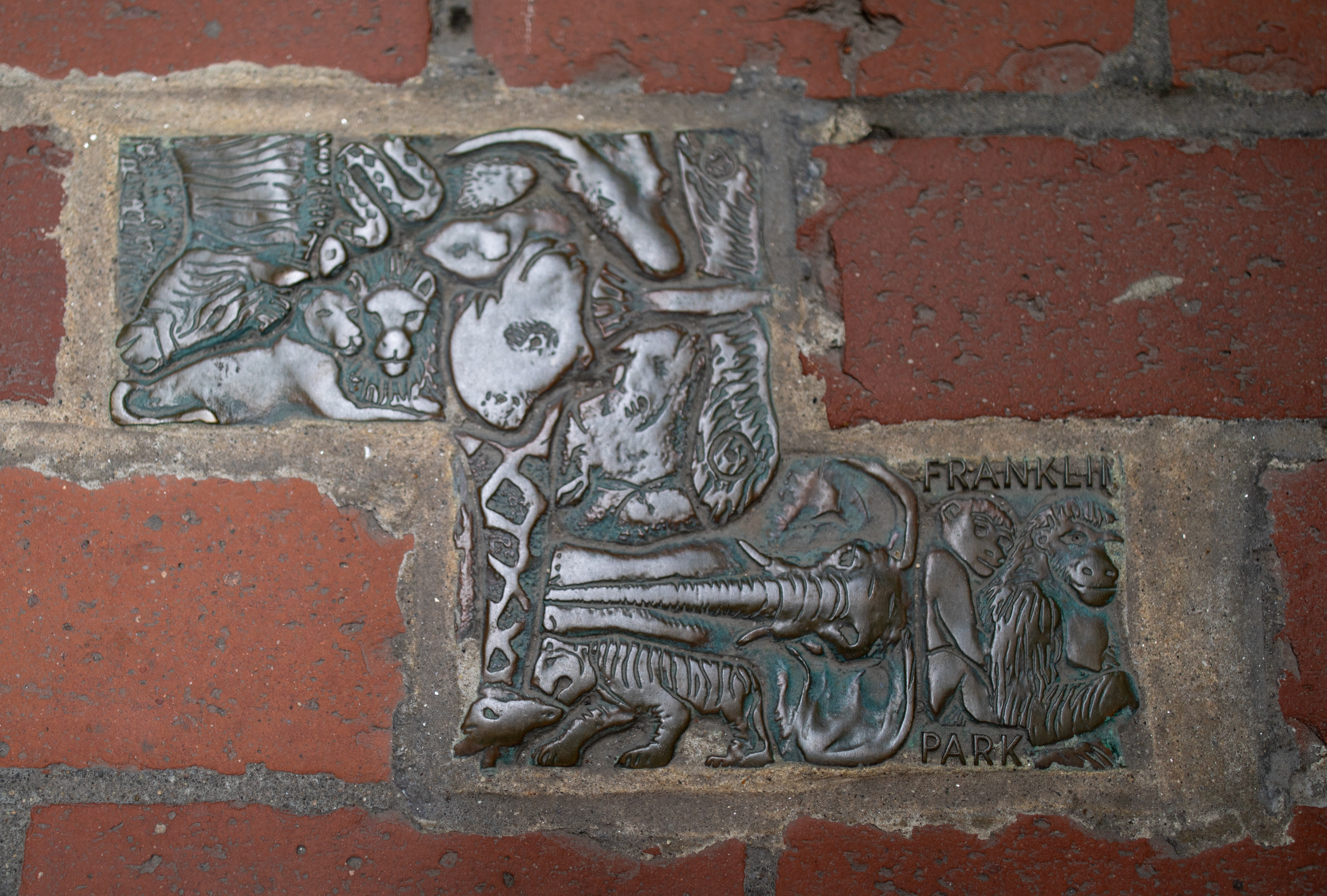
The Franklin Park Zoo in Boston, MA, is one of the oldest continuously running zoos. But, not the oldest in the country. The 72 acre zoo opened on October 4, 1912.
Boston is proud of its history and accomplishments. One of those accomplishments championed by President Kennedy, from Boston, was sending astronauts to the moon by the end of the decade, although he was not alive to see it to fruition. This brick shows both the moon and the approximate distance to the moon.
This brick shows some of the most famous people from Boston in their final resting places.
Speaking of final resting places, many of these newspapers no longer exist. A few, like the Boston Herald, the Boston Globe and Christian Science Monitor are still in operation, though.
This historical event was a real mess. The Molasses Flood of 1919 was just that; a flood of molasses. On January 15, 1919, a 58 foot tall and 98 foot diameter molasses storage tank in Boston’s North End burst, releasing 2.3 millions of molasses into the streets. The dark brown syrup is said to have reached speeds of 35 miles per hour and left a 10 foot deep, 100 yard tidal wave that destroyed everything in its path. Twenty one people were killed and 150 more people were injured. Wen the air is just so and the breeze is just right, it’s said you can still smell the thick scent of molasses.
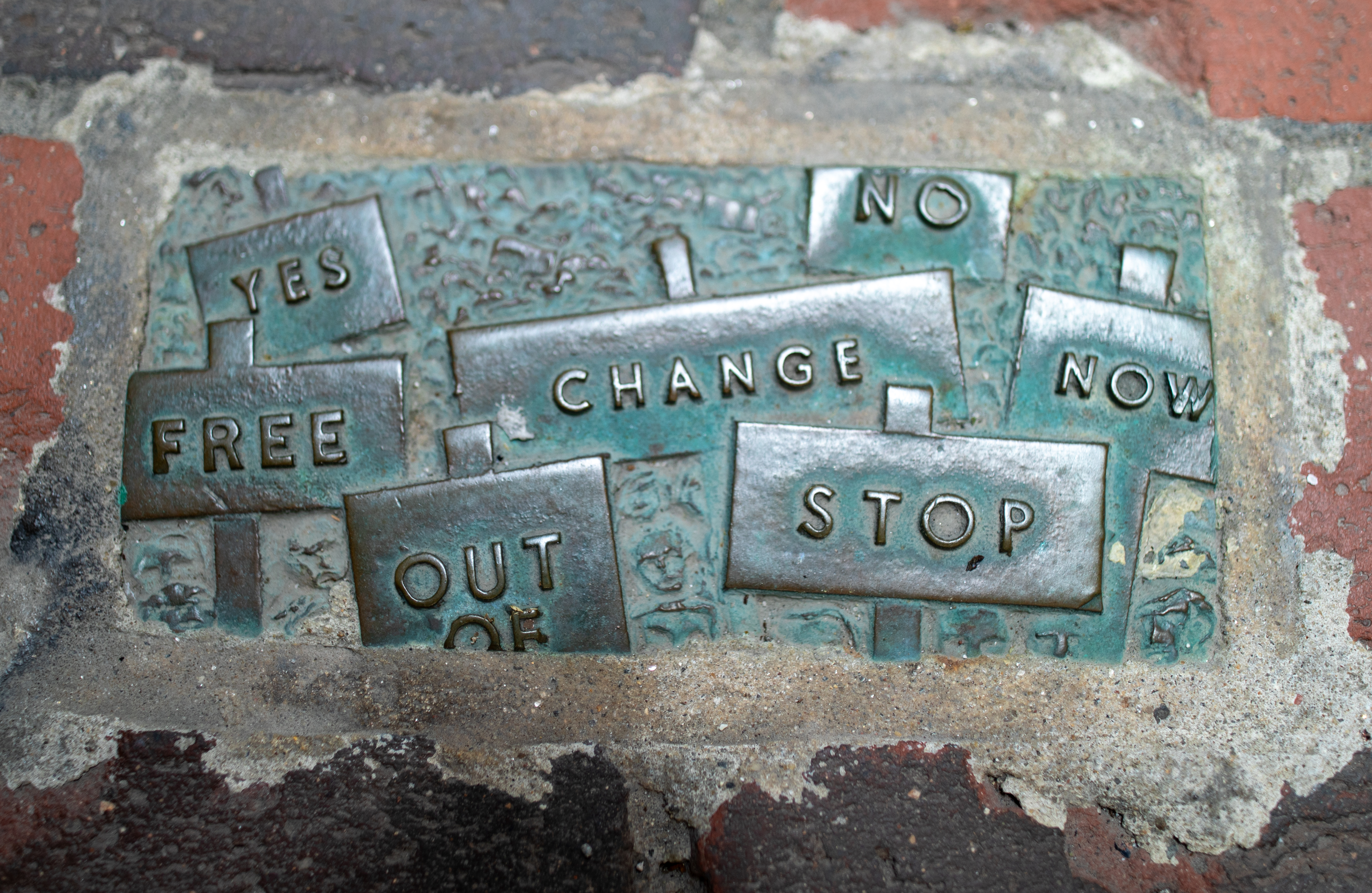
These bricks are representative of the protests and how we have worked to make the world a little bit better.
I never liked tea anyway.
“Yes”. “No.” I wish they’d make up their minds.
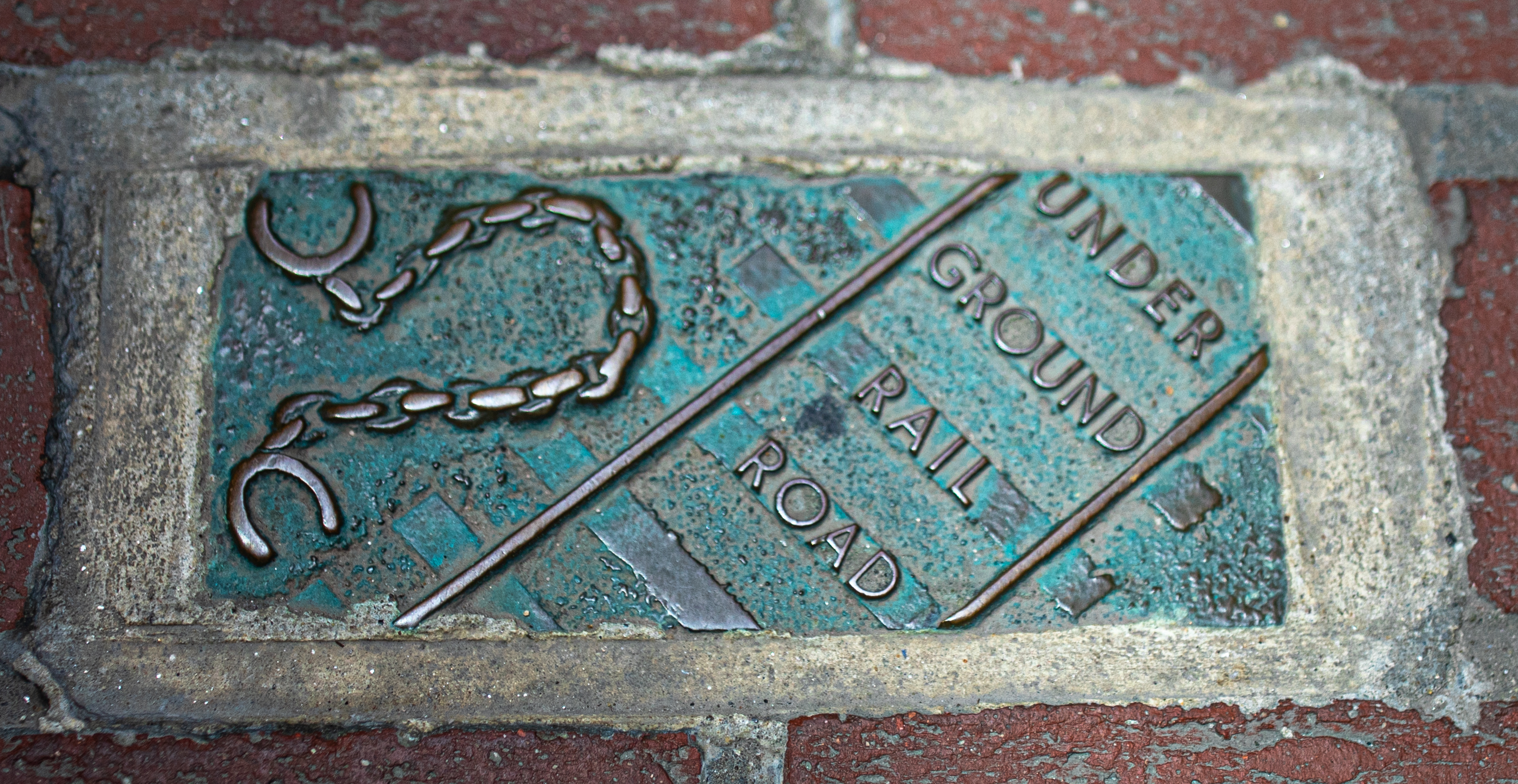
The Underground Railroad did include parts of Boston, specifically the north slope of Beacon Hill and other areas in Boston.
The Stamp Act was another political issue that was hotly debated and protested. If only things were still so simple today.
We have a lot of famous landmarks and buildings. A few of them were represented in the alley.
As it is stated clearly on it, this brick is a depiction of the State House in Boston, MA. Yes, the dome is really covered in real gold leaf. And you wonder why we’re so grumpy.
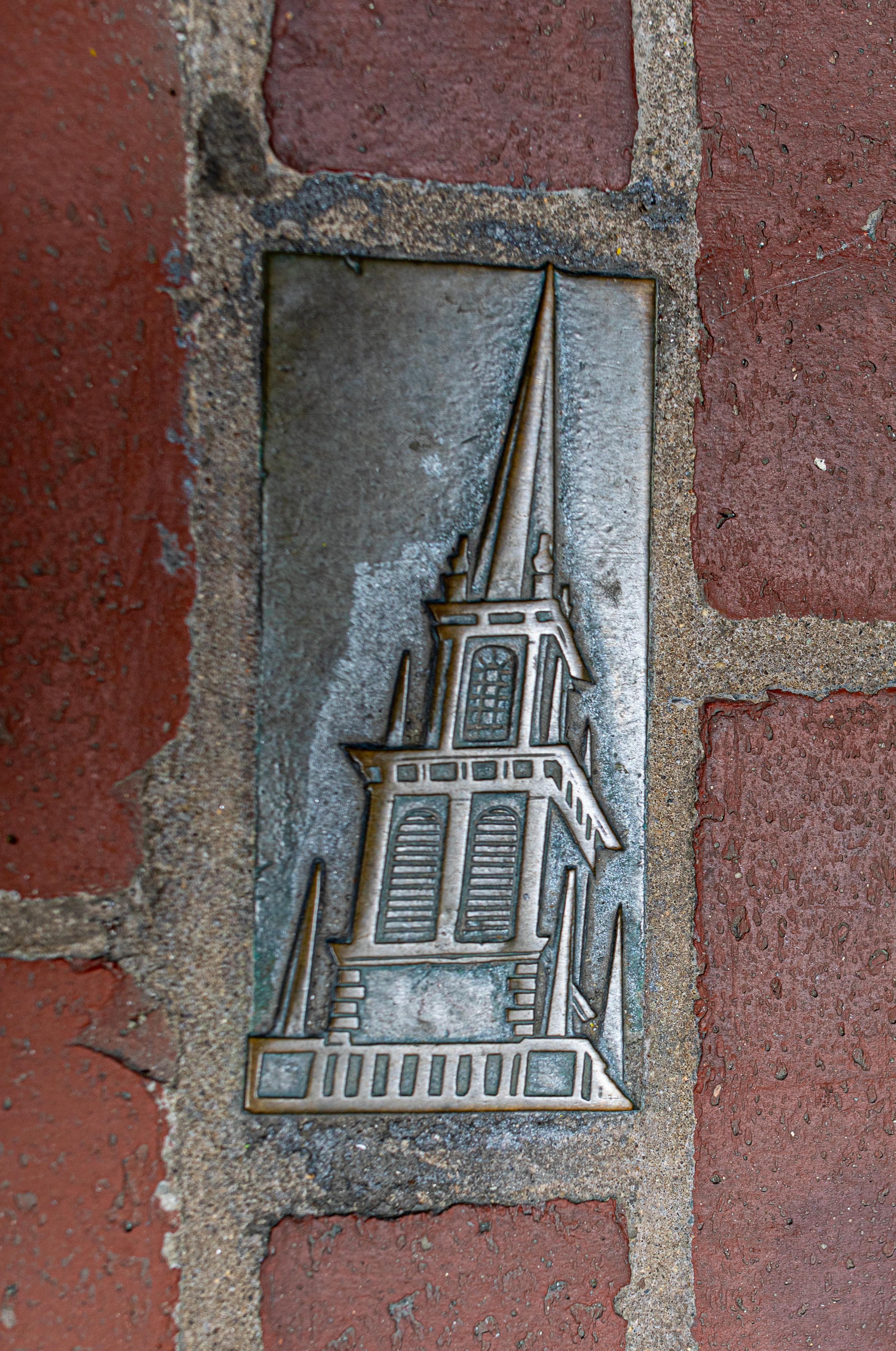
This brick is an artful design of the Old North Church in Boston, MA
The Custom House Tower, also located in Boston, MA, is also on one of the bricks.
Some of the bricks would need a little explaining. So, what’s a “Smoot”!?
A “smoot” is a non-standard unit of measurement (defined as 5 ft 7 inches). This measurement perfectly fits Oliver Smoot, an MIT fraternity pledge from 1958. The fraternity members used poor Oliver to measure the Harvard Bridge in Cambridge, MA (it measured 364.4 smoots long). The fraternity brothers measured him, made him lie on the bridge, marked his full body length and continued the process until they had covered the entire length of the bridge. And I thought I had a lot of free time. The “smoot” has remained a tradition at MIT and a well known landmark (by locals at least). And each year the fraternity repaints the yellow markings.
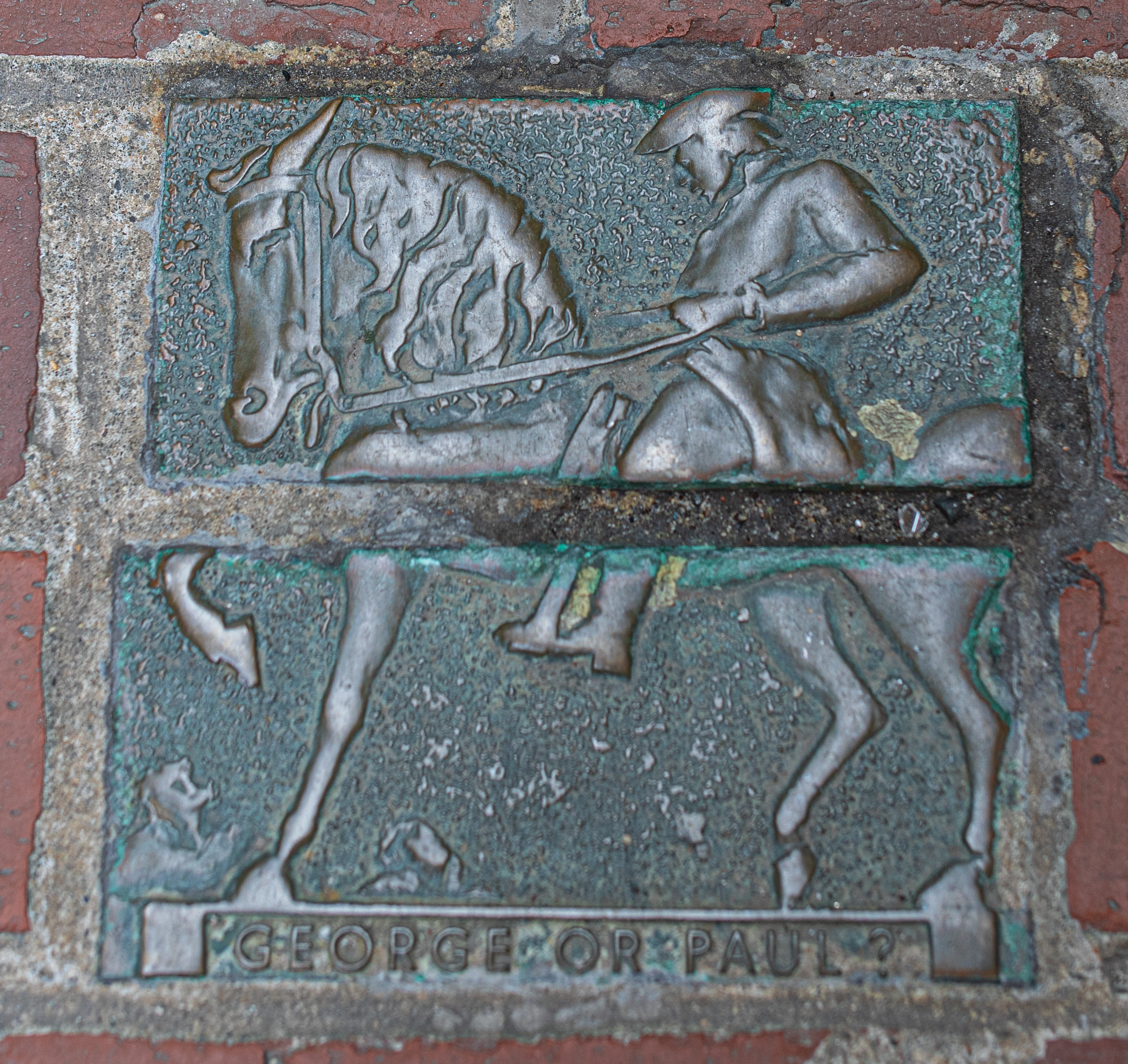
Another brick that may need some explaining is this brick that has “George or Paul?” No, not those George and Paul. There are two statues in Boston of two pretty famous people. One statue with George Washington on a horse is in the Boston Public Garden. The other statue is of Paul Revere, undoubtedly on his ride to warn us all about the British, is located in Paul Revere Mall in Boston’s North End.
This may seem like a pretty straightforward design on the brick below. It is the Longfellow Bridge which spans the Charles River and connects Boston’s Beacon Hill to the Kendall Square area of Cambridge, MA (or vice versa). The bridge has an interesting history and background. The S and the P are meant to represent “salt” and “pepper” as it is also known as the “Salt” and “Pepper” bridge because the shape of the central towers on the bridge resemble salt and pepper shakers. Great. Now I’m hungry.
When it was originally built in 1845, the bridge was named the West Bridge. It was rebuilt in 1906 and eventually it was named the Longfellow Bridge after a certain writer penned a poem about the original bridge (West Bridge) entitled “The Bridge.”
These two seemingly random creatures actually have a very close connection to our history. They are both located on a very old and important historical building; the Old State House. Located on Washington St in Boston, the original State House is also near the site of the Boston Massacre. In any event, this lion and unicorn are located on the exterior of the building near the roof. These are the same figures used in the coat of arms for the United Kingdom which are reminders of its past.
These are only roughly half of the bricks on the alleyway. So, there are many more for you to find on your own! Just don’t forget to look down!
Location: Salem, MA (about 30 mins northeast of Boston, MA)
Summary: Artists from the Salem, MA, area showed off their talents at the 2025 Salem Arts Festival.
Welcome to part 2 of my blog post about the Salem Arts Festival!
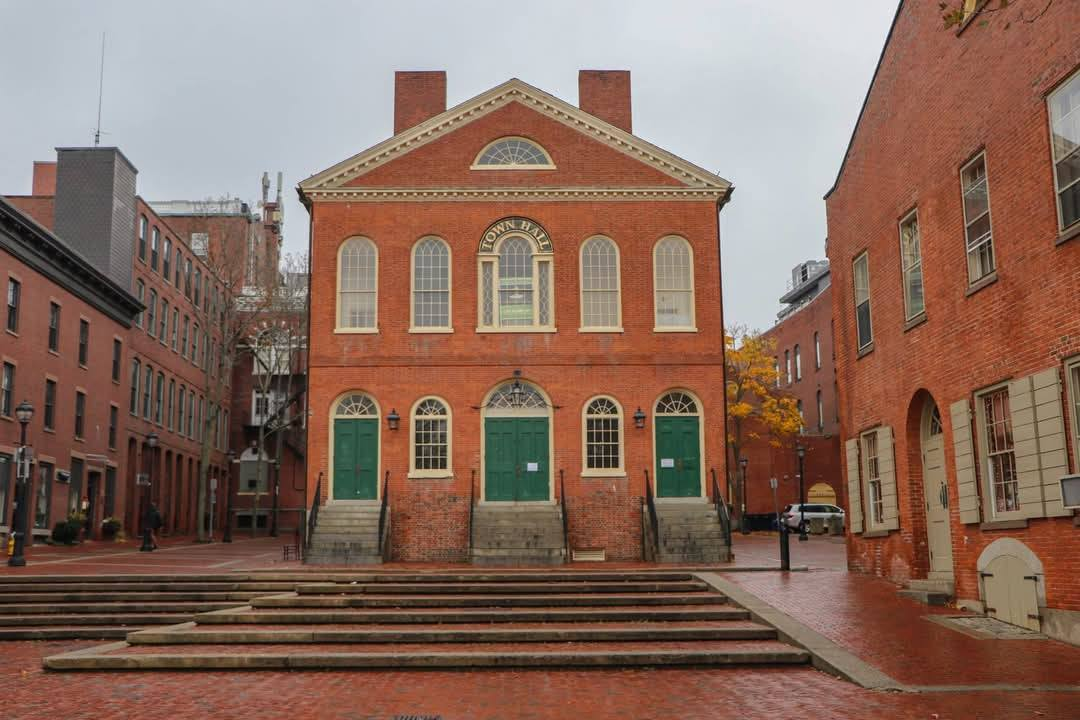
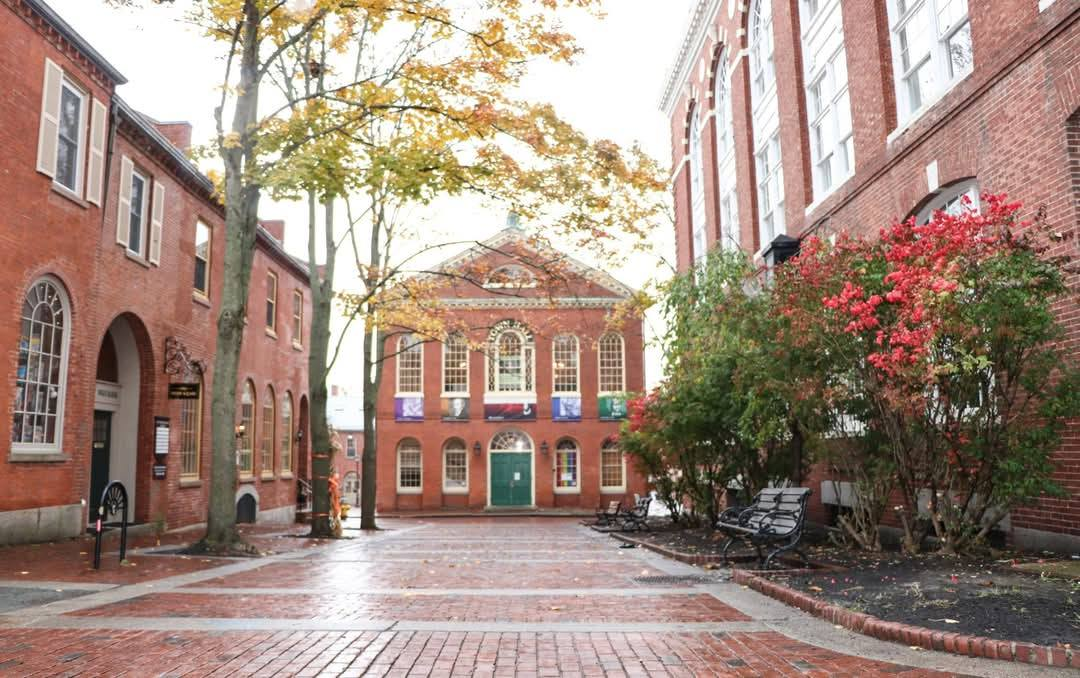
One of the more interesting parts of the Salem Arts Fair was the art from local artists that were on display in the Old Town Hall. Yes, that town hall. The Old Town Hall in Salem, MA, is the very same building that was used in the filming of Hocus Pocus.
Yes, this very same building was the home to the works of dozens of artists in the Salem, MA area.
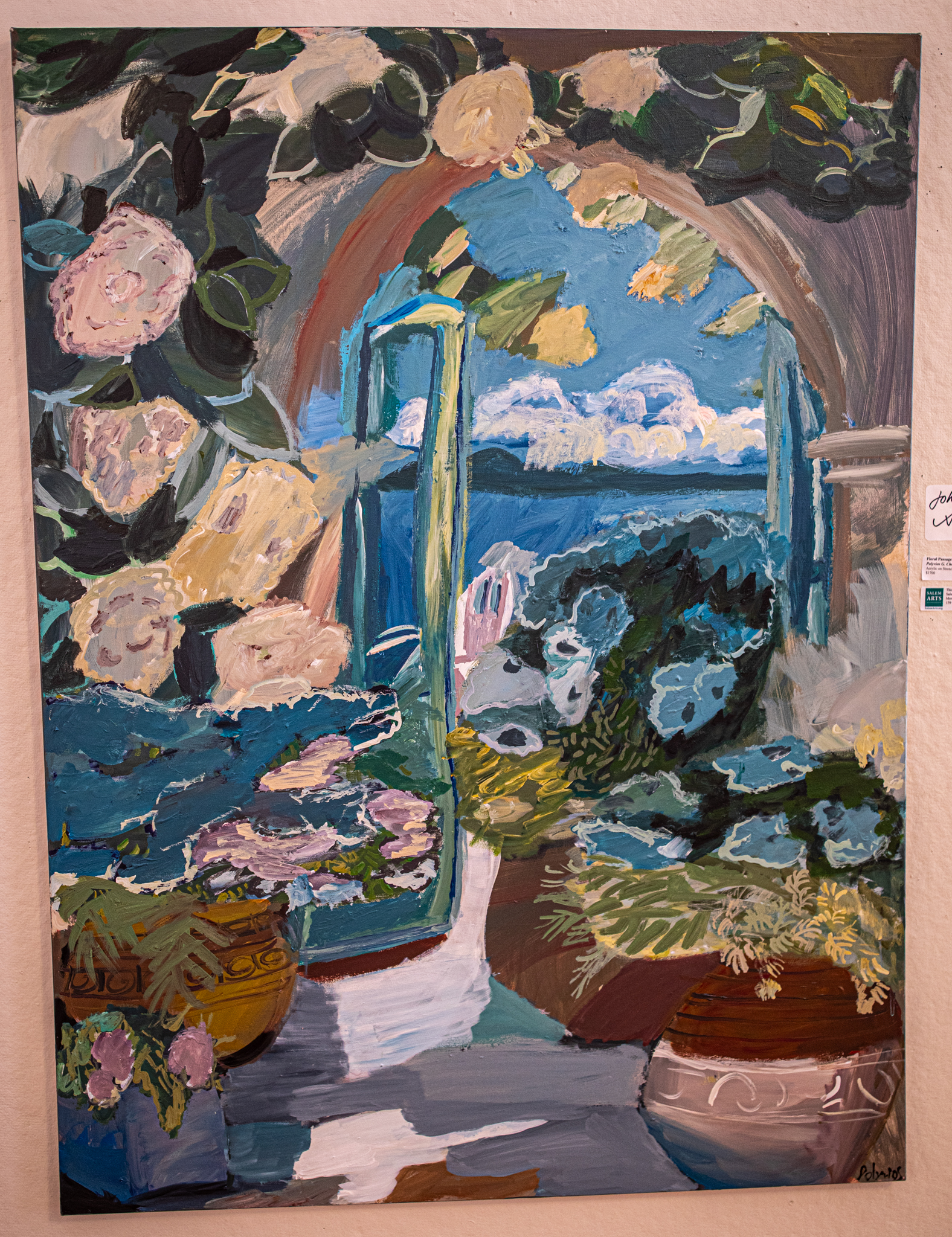
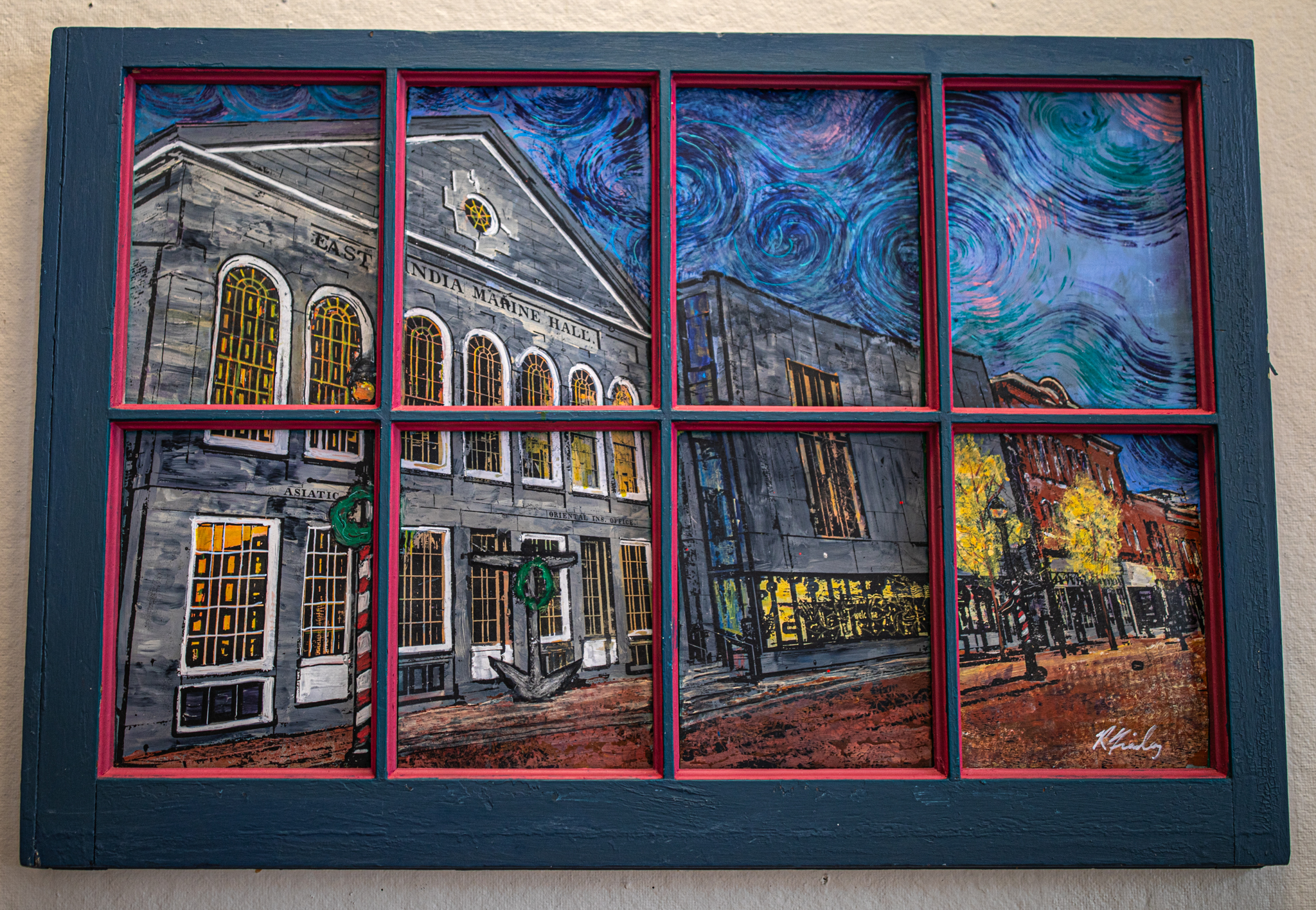
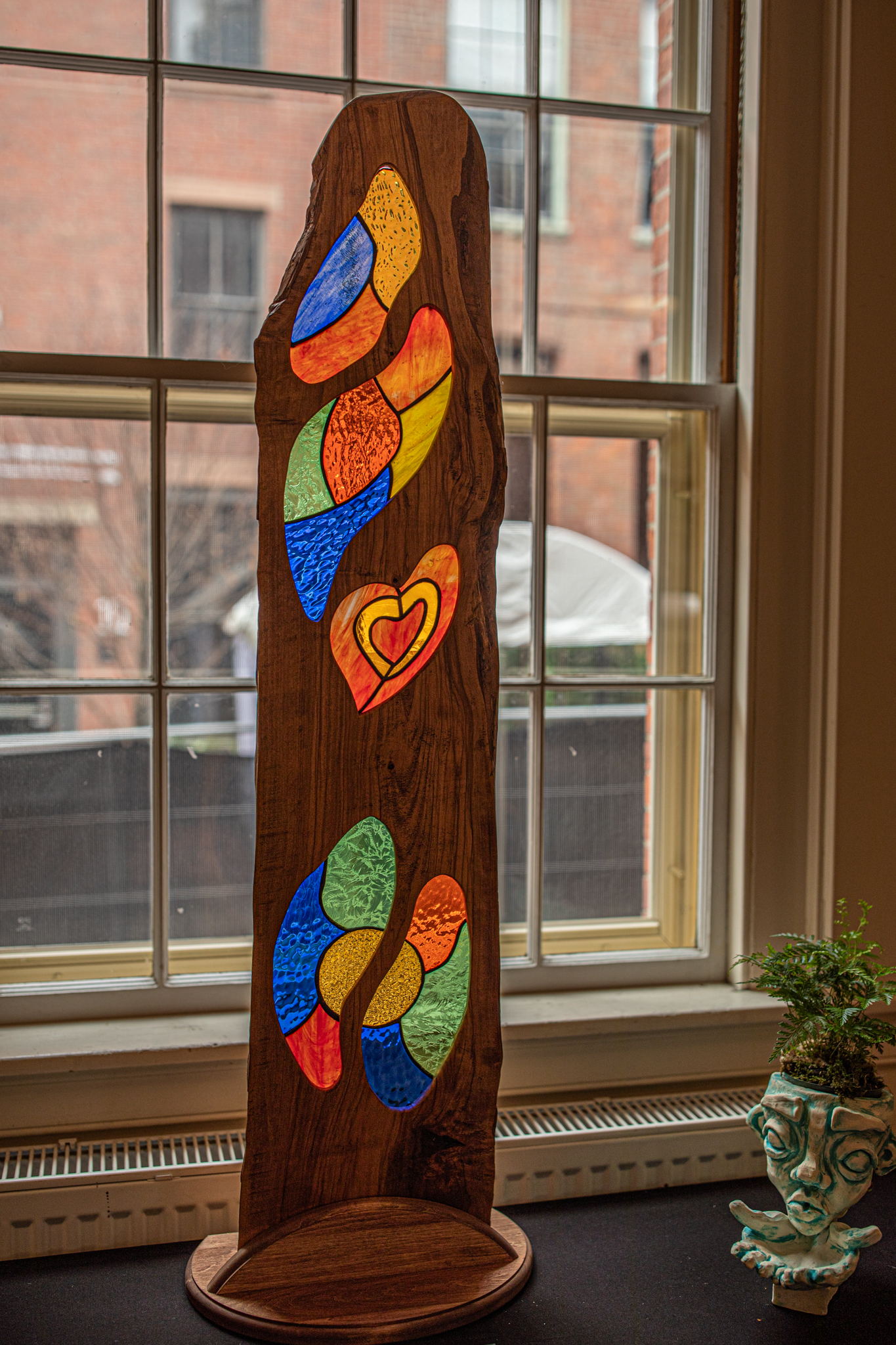
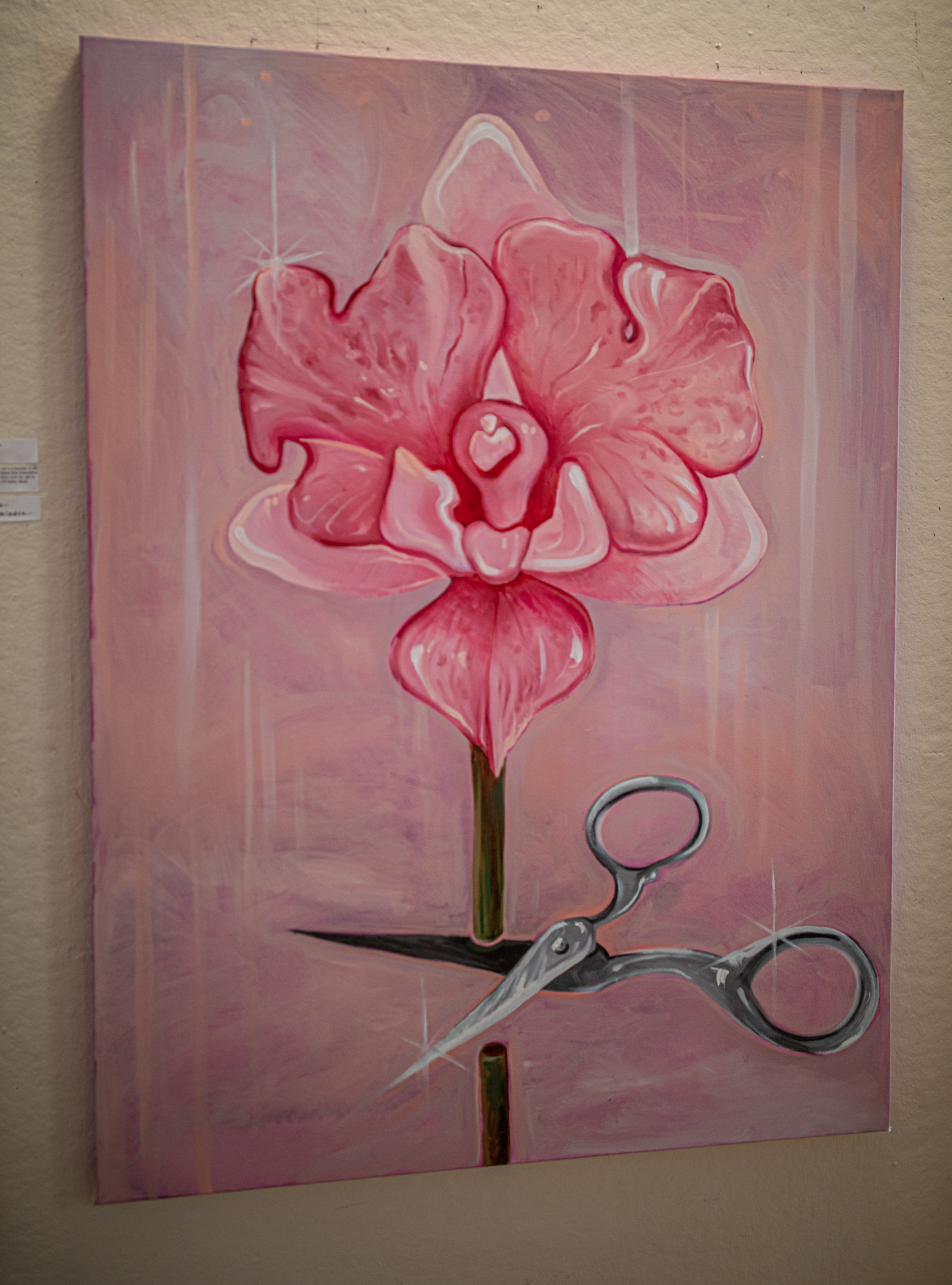
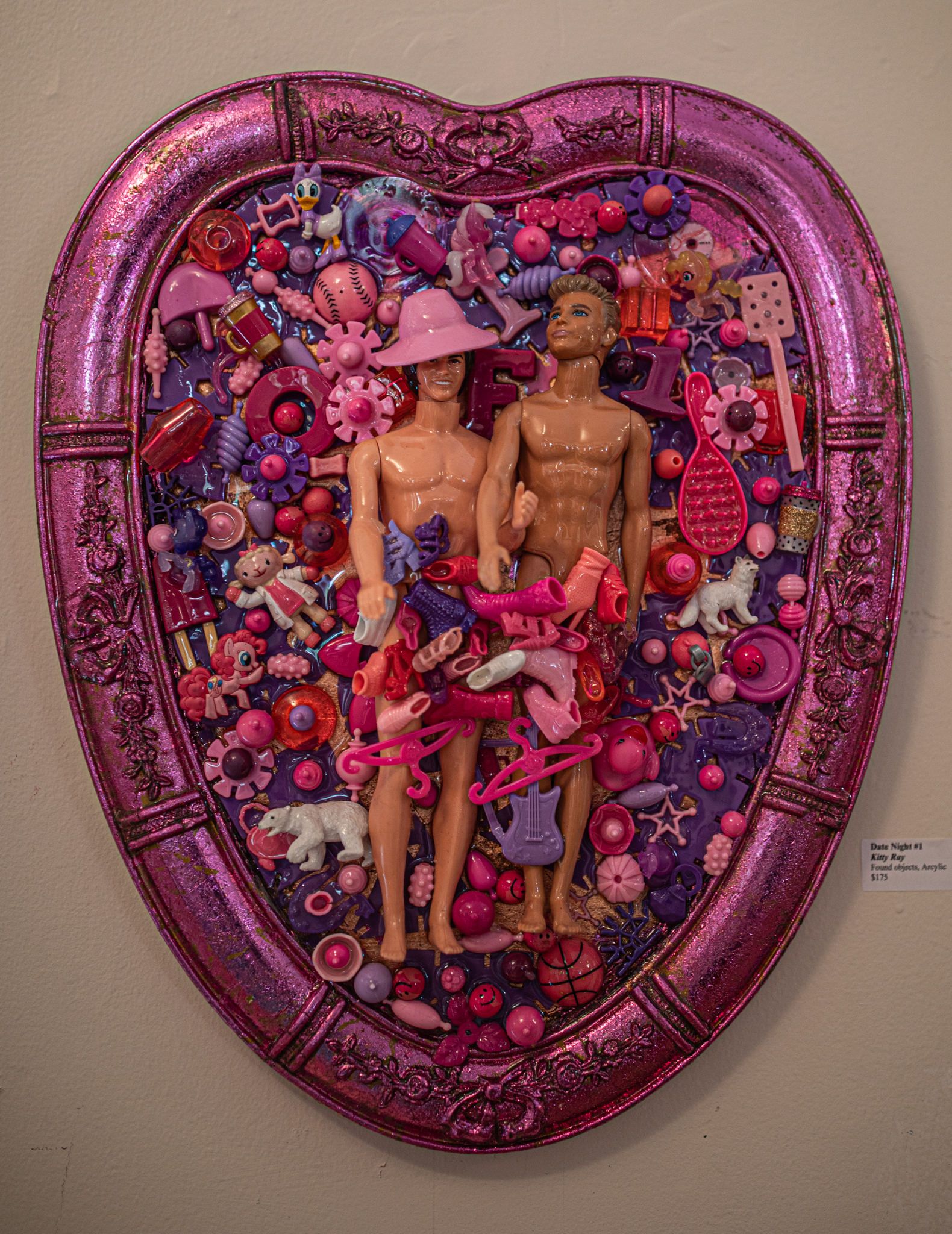
Everything from paintings and sculptures to photographs were on display during the festival. These are some of my favorites from the event!
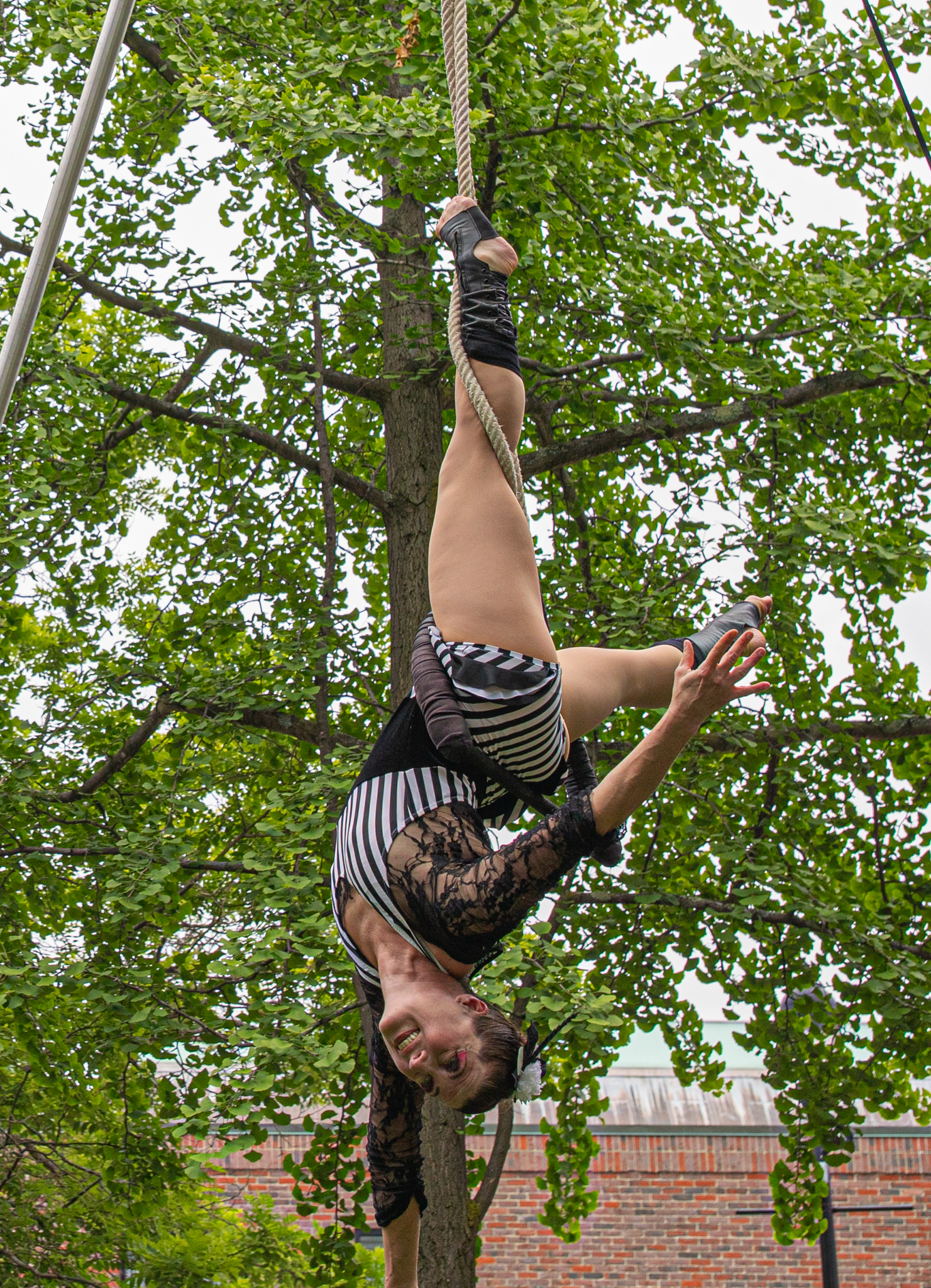
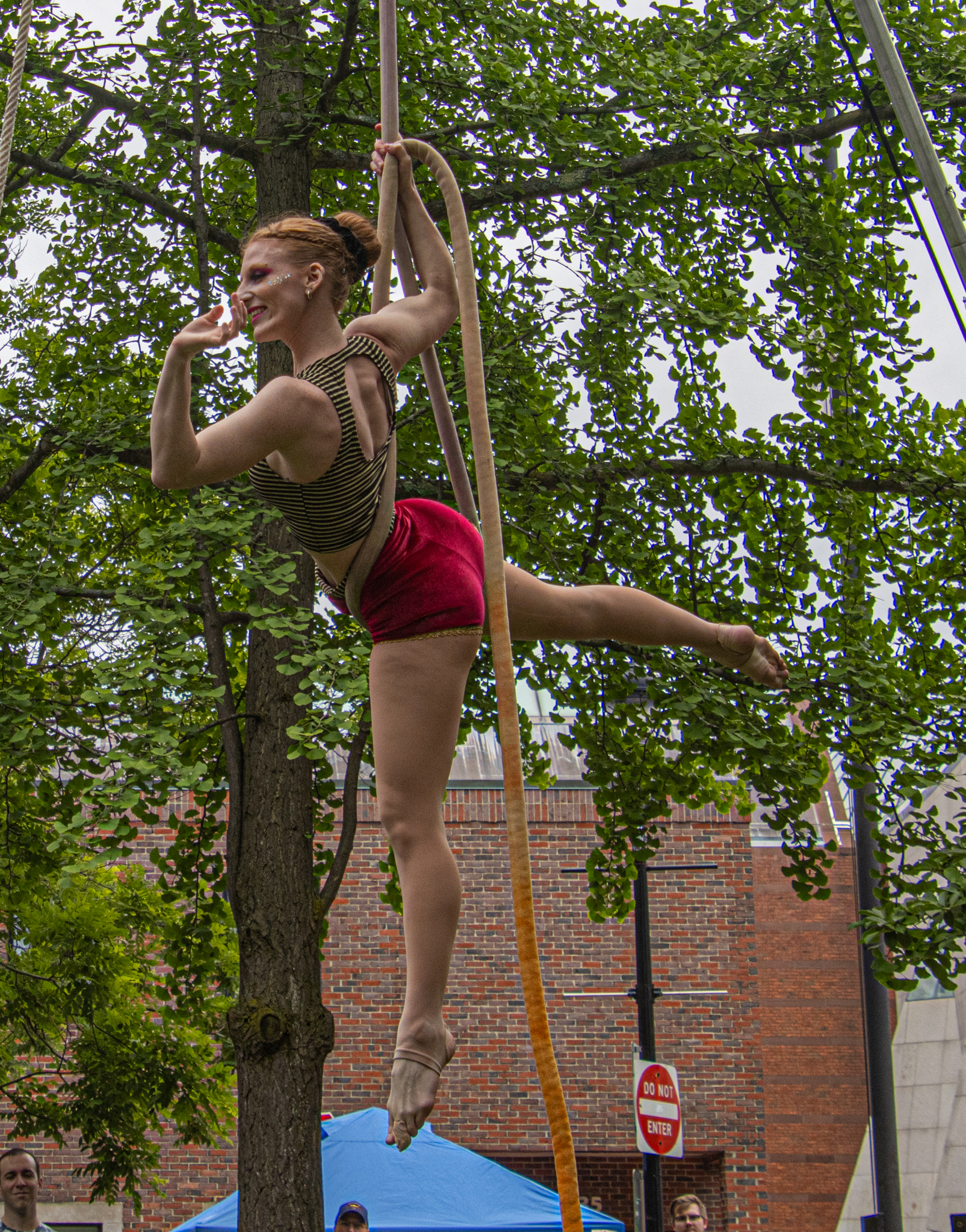
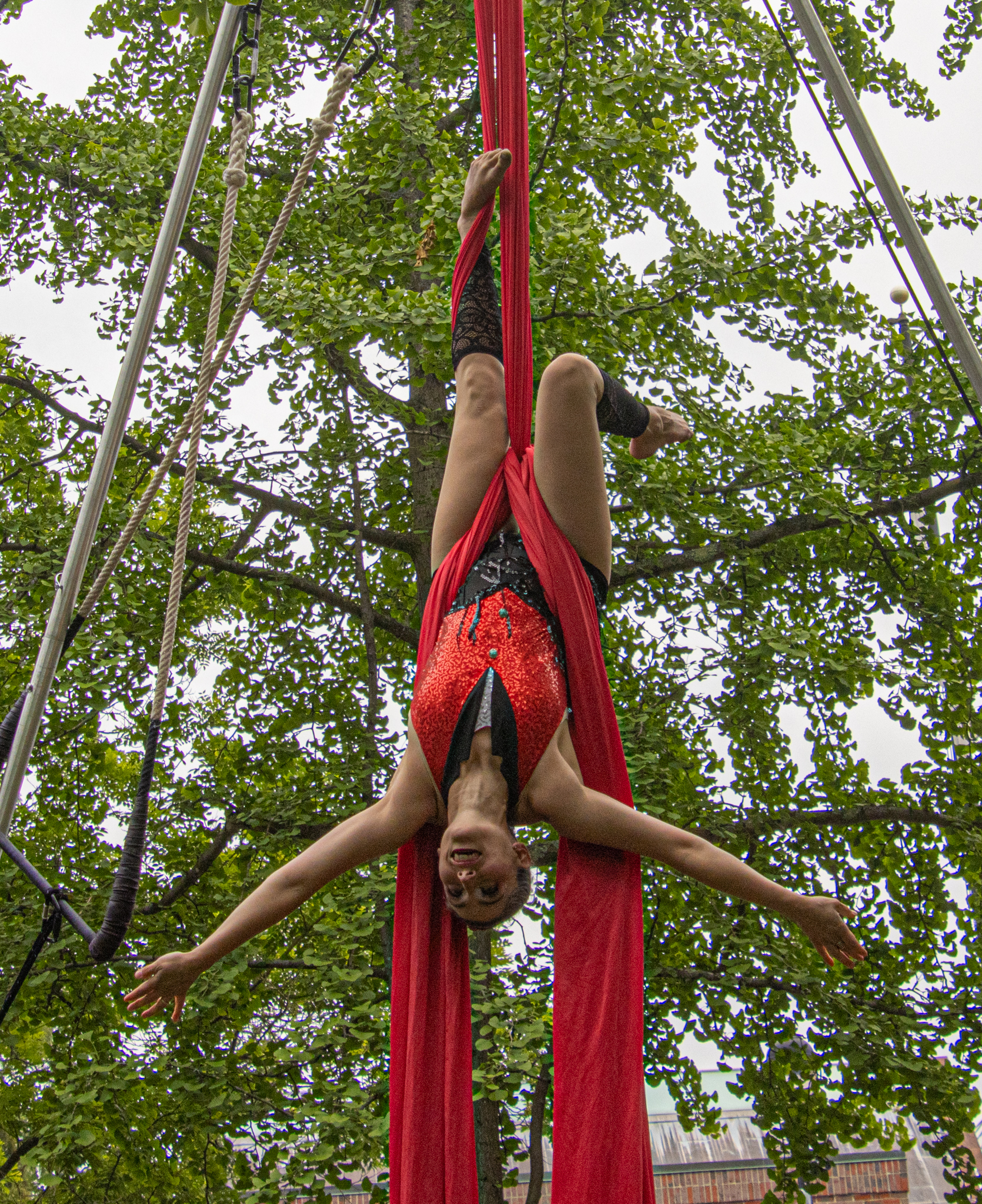
After viewing the art in the Town Hall, I was surprised to see a group of acrobats setting up on the lawn of the visitor’s center! The acrobats entertained the crowd with gravity defying tricks!
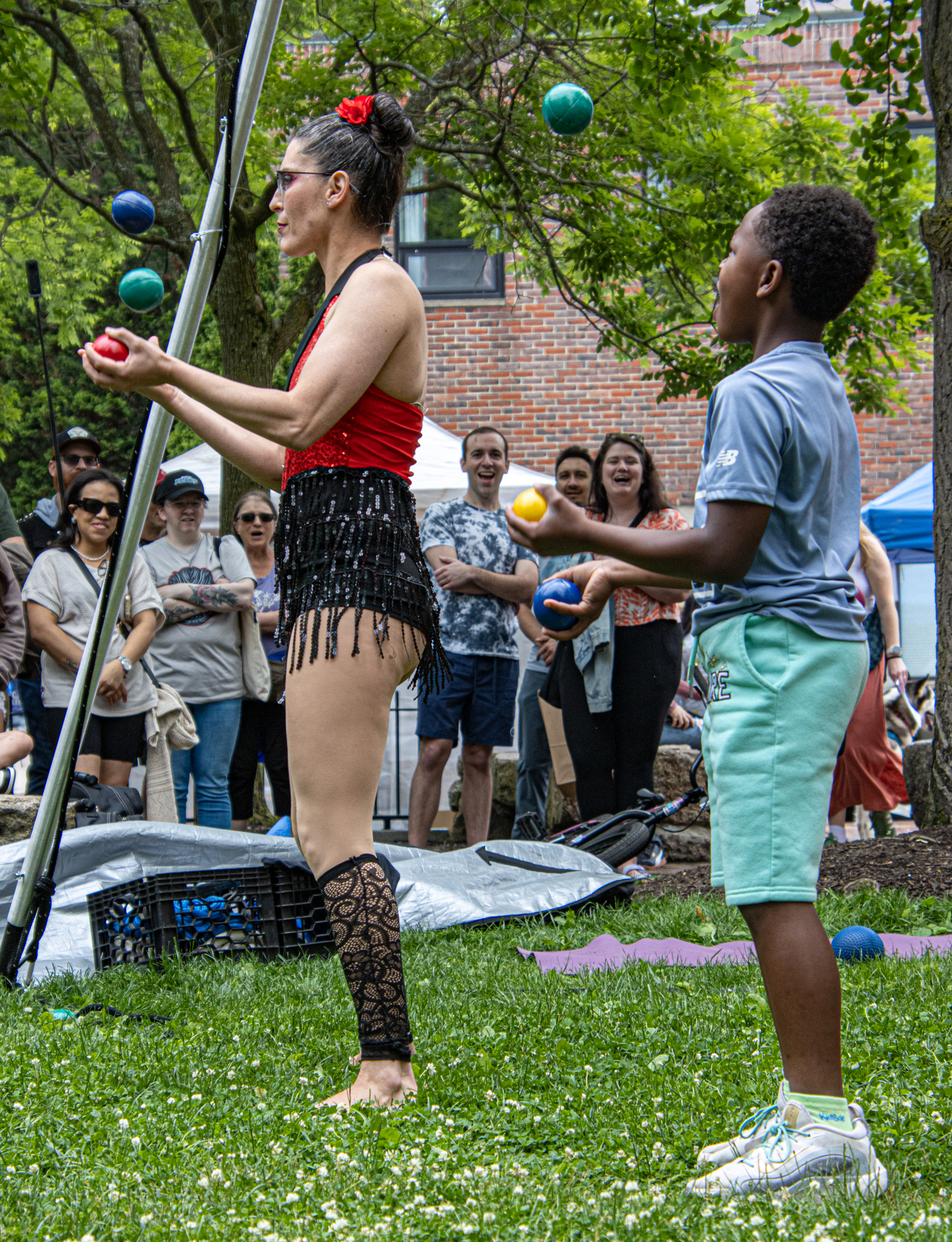
During a break in the action, one of the performers picked a spectator from the crowd to challenge him to a contest. Although it was pretty obvious her “random choice” was not very random at all, it was still fun to watch, especially when she acted like she thought everyone was clapping for her and not him! It was very cute and entertaining! In fact, watching the spectators’ reactions were just as fun to watch as the young juggler was to watch.
What a way to end the festival! The Salem Arts Festival definitely didn’t disappoint, although I do wish the weather was nicer, particularly since it was in June! But, that’s New England for you!




































































































 New England Nomad