Tag Archives: art

SoWa (Boston, MA)


Date of Event: October 30, 3016

Location: 375 Harrison Blvd, Boston, MA

Hours: Every Sunday, May 1 – October 31, 10-4 with special events throughout the year

Cost: Admission is free

Parking: There is limited free parking on Thayer St for up to 90 minutes.  There is also metered on street parking and garages on Albany and Harrison streets and other garages in the area.

Handicapped Accessible: Yes

Dog Friendly: Yes

Highlights: Graffiti artists, vendors, dj, costume contest

Web Site: SoWa Boston

SoWa, South of Washington (Street), is an outdoor entertainment/shopping/food festival held in Boston on every Sunday from May until October (weather permitting).  I made it to the last SoWa of the season on October 30.  There will be another SoWa Winter festival scheduled for the weekend of Dec 2-4 at the Harrison Ave venue.

Before I entered the venue, I saw lots of graffiti on the exterior of the area and on some nearby buildings.

SoWa was held in an empty lot off Harrison Blvd, a busy side street in Boston.  You could see views of the skyline from the parking lot.

For a small area, they had a lot to do there from pumpkin decorating, a costume contest and a dj with dancing.  Bon Me, Sante and Chik Chak had food trucks there, providing a variety of food choices.

As a side note, it is really so much more than a shopping festival.  I really had  alot more fun than I had expected.  The people are very friendly and the entertainment, as you will see, was very, well,…entertaining.

People,as well as dogs, came dressed up on costume to SoWa.

The great thing about SoWa and other local shopping and entertainment festivals is that you get to promoted and support local artisans.  I found a few interesting shops there.

Another thing that really stood out to me was how it is such a family friendly atmosphere.  I didn’t hear one person swear or do or say anything unruly.  In fact, many of the artists had their children stop by and spend time with them as they worked on their piece.

Also, the camaraderie they have for each other was noticeable.  It didn’t seem like they were competing against each other, even though they took a great deal of pride in their work.  Artists shared spray cans, complimented each other and jokes with each other.

The artists worked on blank canvases and started with their own sketches from pictures or diagrams they had on sheets of paper.  I am not sure but I think they added their own flavor to some of the artwork.

The tools of the trade.


As they kept working, you could see the art coming together.  They worked fast.  Most started at 11 and were done by 4.  I appreciated how they kept adding tone and contrast too the art in an effort to perfect their piece.  They weren’t satisfied until every piece was just so.  In fact, I had to leave a little after 4, after being there for several hours.  So, some of the pieces may not have been completely finished by the time I left.

As they kept working, you could see their art come together.  it’s very cool how they seem to work so casually and yet, at the same time, so deliberately.

The completed versions of their art works contrasted sharply from the begining of their art or the way it looked half way through.

SoWa is a pet friendly event.  Since this particular event took place the day before Halloween there were quite a few dogs in costume at the event.

I actually met a few cute dogs before the event started.

dsc_0216

Eloise is a 2 year old YorkieTerrier rescue dog with an Instagram account!  You can follow her on her travels at @eloisethedog (https://www.instagram.com/eloisethedog/).

Penny is  French bulldog.  I had to stand next to her mommy so she would look at me!

At the actual event, I met a variety of dogs.

Fitz, a Yorkie, looked very patriotic in his red, white and blue outfit.

Otis, a 9 month old and 90 pound bullmastiff/bulldog mix, was helping his mom sell collars.  You can check out his mom’s store at Wiggle Collars.

Lyla is a 7.5 month shark, I mean mixed breed.  I like how everyone stood around her as I photographed her as though it was a real photo shoot.

Twain, dressed as a pumpkin, is a 4 year old terrier mix.

Gus, dressed as Tootsie Roll, is a one and half year old Lagotto Romagnolo.  There, say that three times fast.  Lagotto Romagnolos are better known as Italian Waterdogs.

dsc_0689

Sissy (the dog on the left) and Lilly (on the right) are 10 month old Yorkies.

Zoey, a 7 month old chihuahua, wore her spider outfit to the festival.  Her pet parents, Kyle and Jessica, were working at Intrinsic Journeys when I saw her.

Birdie, a golden retriever, was one hot dog!

Rogue, a 1 year old Shih Tzu mix, wore a very creative costume.

And there was this wonder dog whose name and breed I did not get.

Below are two videos.  The first video is of the artists working on their art.  The second video is a video of the works of art in their final or near their final stages.


Please connect with me on Facebook to view photos, videos and other content not included in this blog.  Here is a sneak peak at something that I posted from my Facebook page:

Creepy or cool? You be the judge.

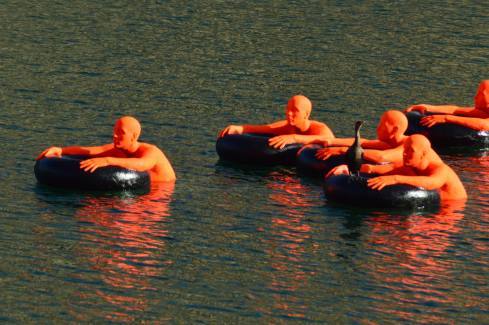
Periodically, the Fort Point area in Boston by the Congress St Bridge will host different floating art works. Last year, there were (floating) sheep in the water. Now, there are orange people in the water.

Created by Ann Hirsch and Jeremy Angier (known as A+J Art + Design), “S.O.S.” (“Save Our Swimmers”) is a statement on the immigration and refugee crisis. The 22 orange “people” are said to be refugees clinging on for dear life.

Most seem creeped out by it, except the cormorant who found a nice place to rest.

(photos taken 10-12-16)

cormorant-orange


Plymouth Lobster Crawl (Plymouth, MA)

Dates of Visitis: October 8, 2016 & October 16, 2016

Locations: All over Plymouth MA (see attached map for exact locations)

Cost: Free

Parking: There was surprisingly lots of parking, metered and unmetered and several lots in the area (hint – you can park at Jenney Grist Mill for free and hoof it or so I hear)

Dog Friendly: Yes

Highlights: decorative lobsters made out of fiberglass

Web Site: Plymouth Lobster Crawl

Lobster Craw Map: Lobster Crawl Map

dsc_0160

The lobsters have come to Plymouth.  And they’re everywhere.  Well, at least, everywhere in Plymouth.

The “Lobster Crawl” is a great activity, especially for families.  There are 29 (26 after some were vandalized and others removed).  There is also a handy map to help you locate them.  But, even with the map, it is no easy task.

Each lobster is sponsored by a different business or organization and they are painted with their own distinct theme, usually a theme related to the business or organization sponsoring the lobster.

The lobsters are 5 feet high and made of fiberglass, similar to the buoys that are in the harbor.  They can weigh up to 150 pounds.

If you haven’t seen them yet or if you are not sure when you will be able to get over to Plymouth to check them out, take your time.  The lobsters are expected to remain on display for 2 years.

As you can tell by the map, the lobsters are scattered all over Plymouth.  There is only one that is not in walking distance which is the last one I am posting.  The backgrounds made the lobsters look even more pretty.

Most, if not all, of the lobsters were painted on both the front and back.  I was unable, or unwilling, to photograph both sides of some of these lobsters, though.  I have added the corresponding number of the lobster from the map in paranthesis after the description to make it easier to find.  I’m not sure how the decision to number the lobster statues was made but they don’t go in order based on location.

If you want to see all or the majority of the lobsters in one day, the best idea is probably to park near Pilgrim Memorial State Park (near Plymouth Rock) and start with the first statue on Water St.  Then, you can make basically walk all of Water St and then see the lobsters on the other side of Water St and on the side streets of Main and Court St. , on your way back to your vehicle.  You can then drive to the remaining lobster statues.

This is the first lobster on Water St, the main road in Plymouth, MA.  There are several accessible on or off a side street from Water St. (I counted 13).  This lobster is called “Ed #Endalz” at Pilgrim Memorial State Park.  It was created by Mary Johannesen (24).

The lobster pictured above, “”Rocky”, is sponsored, appropriately, by Plymouth & Brockton Street Railway.  “Rocky” was created by Kate Vannata. It is also located off Water St, just past Plymouth Rock along the harbor (25).

This lobster, also located off Water St, is sponsored by Plimoth Plantation and is called “Celebrating Living History”.  It was made by Vincent Crotty.  It is located on State Pier by the Mayflower II (26).

Farther along Water St is “Lu-Sea”.  It is sponsored by J.F.  Carpenter Construction Corp and was made by Jennifer McCarthy (27).

“Childhood Memories” was sponsored through an anonymous donation, always the best kind.  Terry Cole is the artist for this lobster (28).

“Clawdia” is the next lobster statue on Water St.  It was made by Andy Driscoll and is sponsored by Wood’s Seafood and Plymouth Cruises (2).

Some of the lobsters are harder to find than others (hence my second trip to find the ones I had missed during my first visit).  The next lobster statue, “Louie”, is  located on Town Pier.  It is sponsored by the Plymouth Bay Lobster Co (3).

The lobster “Bugsby Bibs” is sponsored by Cabbyshack and is located in front of the restaurant at 130 Town Wharf, off Water St.  It was created by Chickie Celli and Beatriz Whitehill.  Theere is also a cardboard replica of a lobster for people to have their photo taken next to Bugsby (4).

dsc_0899

“Ms. Clawmerce” is located by the jetty off Water St.  It is sponsored by the Plymouth Area Chamber of Commerce and it was created by Donna Ann Secour (5).

This is one of my favorites.  “Sea Horses” is located along the path to the Ms. Clawmerce statue.  It is sponsored by SmartPak and was created by Tamara Tagg.  There is a huge piece of driftwood behind it (6).

There were 3 lobster statues located at Nelson Park.  However, one of the lobsters was damaged.  So, the city decided to remove all of the lobster statues from this venue, at least for the time being.  They are listed on the map but they are not there. So, the 7, 8 and 9 numbered lobsters are not available for viewing at this time.

There are more lobsters located on the other side of Water St.

Another one of my favorites, “Luigi The Lobster” is located at 1620 Winery and Wine Bar at the Village Landing Marketplace, 170 Water St.  The artist for Luigi is Genevieve Visser (10).

“Rasta Lobstah”, created by Heather Ritchie Casey, is located at The Blue-Eyed Crab Carribbean Grill & Rum Bar.  It is also located at the Village Landing Marketplace at 170 Water St (11).

The next closest lobster is probably located at the Plymouth Visitor’s Information Center at 130 Water St.  It is the last lobster on or in the vicinity of Water St.   It was made by Samantha Shields and it is sponsored by RE/MAX Spectrum (1).

As an aside, I stopped in to the visitor center for some help finding the last lobster ( I tried to do it on my own but the last one is a little complicated).  Anyway, they were very helpful and excited to help me.  So, they are a great resource to utilize if you do need help.

From the visitor center, you may want to drive, although I walked the entire area.  It’s just easier to walk than to find a parking space and getting your bearings all over again (although parking was plentiful when I visited).

From the visitor center, the closest set of statues is S. Park Ave.  Hopefully, you won’t run into Kenny on your way.

This lobster statue is called “Grace” and it was created by Kate Wilkins.  It is sponsored by WH Cornerstone Investments (12).

“Lobsta Love” is another popular lobster statue, for obvious reasons.  The bright colors and designs make it hard to miss.  it is located next to ERA Belsito & Associates at 100 Court St.  But, it is actually located on the side of the building on Samoset St.  It was created by Heidi Mayo and Wendy Reiffeiss (13)

From here, many of the remaining lobster statues are located south on or off Court St and Main St.

“Brewster” is located in front of the Pilgrim Hall Museum (75 Court St).  It is sponsored by 1620 Capital LLC and the artist who sculpted it is Andrew P. Linde.  Stickers with 1620, the American flag and other historic symbols are stuck to the front and back of the statue (16).

If you continue on Court/Main St, there are a cluster of statues.

“Rocking Lobster” is located on the corner of North and Main St.  It was sculpted by Marla Gratta-Pagnani and Monica O’Brien and it is sponsored by King Collision Center.  My favorite photo is the one that shows the reaction of the baby in the stroller (17).

“Big Blue” is located on North St, a short distance from the “Rocking Lobster.”  It is sponsored  AS you can tell by the photos, it is a pretty neighborhood and the older, historic looking homes give a great backdrop for photos.  This sculpture is sponsored by Brabo Benefits (18).

“Welcome” is located on Leyden St.  It was sculpted by Frances McLaughlin and is sponsored by Plymouth Lions & Leos.  You’ll note the map has the 16th and 19th lobster statues switched.  They both have lobsteers at each location but they misidentified these two on the map (19).

On Sandwich St (Main turns into Sandwich St) is the destination of the next statue, “Clawdia-Woman Of Gold.”  It is appropriately located in front of Verona at 89 Sandwich St.  This statue was sculpted by Marion Carlson.(21)

You will find the next two lobsters across the street from Verona on Lincoln St.

Another one of my favorites (as you can probably tell based on all of the photos I took), “Lynx The Lucky Lobster” is located in the parking lot aarea of the Cat Clinic of Plymouth( 80 Sandwich St).  I especially like the little paw prints at the base of the sculpture.  The lobster is actually on Lincoln St behind the clinic.  It was sculpted by Jill Voelker (22).

“Oceanus” by Marissa Scola is also located a little farther down Lincoln St on the other side of the cat clinic at Town Hall (11 Lincoln St).  This lobster is sponsored by Kerr Dental Associates.  There are 10 hidden toothbrushes on the lobster.  I found a few for you.  Can you find the rest? (23)

At this point, it is point, it is easiest to drive to the remianing lobsters.  After arriving back at your vehicle, you can drive to the Jenney Grist Mill (48 Summer St) where you’ll find the next lobster.

“Claws Monet” by Jeannette Lyons Carney is sponsored by Laurelwood at The Pinehills & Stafford Hill.  Stop by the grist mill while you’re there (20).

The next 2 lobsters that are nearby are on Samoset St.  You can also stop by these places after you view the other lobster on Samoset St (the “Lobsta Love” lobster).  But, I decided to drive to these lobsters.  They are very close to each other and if you drive too fast you could easily miss one or both of them.

“Penny” by Jen Connolly is located in front of Cape Auto Body, 53 Samoset St (14).

“Personal Injury Law-bster” is located in front of the Winokur, Serkey & Rosenberg Law Offices at 81 Samoset St.  This lobster was created by Cheryl Greenwood.   At least they have a sense of humor (15).

The last lobster is not located in walking distance of the other lobsters.  In fact, I had to get on the highway and drive a considerable distance to get to it.  But, it’s worth the drive if you have 10 or so minutes to spare.

Another very pretty sculpture and display, “Cranberry” is located in front of the Meetinghouse in Redbrook, an A.D. Makepeace Community.  It is like a community or complex in and of itself.  The address for The Meetinghouse is 1 Greenside Way North.  But, I had better luck using their address at 237 Wareham Rd s the other address didn’t work in my GPS.

The remaining lobsters that have been removed because they have been stolen (and recovered) or damaged are from left to right “Cordage”, “Sid-Supporting Independence & Dignity” and “Sir-Loin The Lobster.”  They were all located at Nelson Park off Water St.

The days I went lobster hunting were perfect fall days and, yes, there were dogs, as well as lobsters, everywhere.

Harley, a 4 year old Goldendoodle, was visiting the Jenney Grist Mill with his mommy or sister.

Bear is a 6 month old Newfie and he’s already 90 lbs!

Rooney , a 6 year old Chocolate Lab, liked to look out at the harbor.

Please connect with me on Facebook to remain in touch and view videos, photos, links and other content not included on my blog.  Thank you!

Street Pianos – Play Me, I’m Yours (Boston, MA)

Dates Of  Event: September 23 – October 10, 2016 (photos taken Oct. 5 & 6)

Locations: Throughout Boston (see attached map below)

Dog Friendly: Yes

Web Site With Map: Street Pianos

dsc_0218

If you hear the faint sound of piano music along city sidewalks and parks, don’t be alarmed.  You’re not imagining it and, despite it being close to Halloween, it’s not some ghastly theme introducing an apparition.

Since 2008, the international tour group, “Play Me, I’m Yours” has been leaving pianos in public spaces for all to enjoy.  Part of street pianos and the brainchild of Luke Jerram, the “Play Me, I’m Yours” program has installed over 1,500 pianos in 50 cities worldwide.  The pianos have been artistically decorated by local artists and neighborhood clubs.  Many of the pianos, as you will see below, have artistic themes painted on then that are representative of the area they are located in.

With 60 pianos located throughout the city, you’re sure to find one in your travels if you do travel to the city.   I was fortunate enough to see a few of these pianos.  initially, my goal was to photograph all 60 pianos.  But, since this is the final weekend they will be in Boston, I wanted to post about them before they are gone.  Please note, some of the pianos are only out during certain hours, usually the same hours of the businesses they are located in front of.  The pianos will be donated to neighborhood groups and youth groups after the program is over.

I noticed this piano (with some help from a co-worker) on the way to work.  It is located on the boardwalk in front of the Children’s Museum (308 Congress St, Boston, MA).  The buildings in the background provide the perfect backdrop.


Since it was close to my place of business in the city, I was able to visit this piano during my lunch break.  It is a beautiful and actually a very peaceful area to relax, despite all of the construction and the busy street it is located off.  It is located at Seaport Green by District Hall, South Boston.


To get a change of scenery, I decided to go into the busier sections of the city Thursday.  This piano is located at the Massachusetts State House at Ashburton Park, Boston.  It was great to see so many people of so many backgrounds using the pianos.  The look of concentration on the pianists’ face below and the ease at which she plays is incredible.


The next piano I found was at Reader’s Park in front of a Walgreen’s, of all places, at 24 School St, Boston.  I waited around for  while to take some photos of the piano unoccupied but he played for a long while.  But, I think it is awesome to see someone be so focused!


The last piano I visited is next to the Macy’s at 450 Washington St, Boston.  Some people are camera shy.


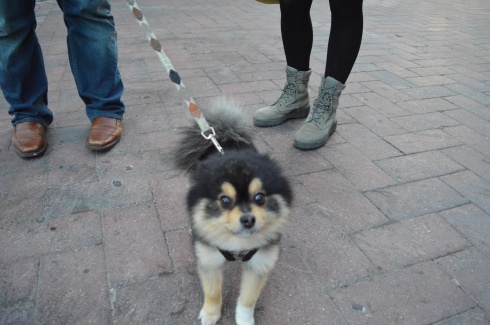
Even the dogs came out to see the pianos.  Charley is a 3 year old Pomeranian with beautiful markings.

dsc_0257

I am truly impressed by anyone who can make such beautiful music.


Kennard Park Sculpture Trail (Newton Centre, MA)

Date of Visit: September 24, 2016

Location: 246 Dudley Road, Newton Centre, MA (there is also an entrance on Farina Rd)

Hours: open daily, dawn to dusk

Cost: Free

Parking: There is a designated parking area for about 6-8 cars.  People park on the side of the entrance when the regular spots fill up (see below for photo of parking lot)

dsc_0742

Park Size: 100 acres (conservation area is 32.2 acres)

Trail Difficulty: Easy

Highlights: Easy trails, sculptures displayed around the park (until Nov. 11th, 2016), wildlife, pretty trees and flowers

Lowlights: small parking lot

Web Site: Friends Of Kennard Sculpture Trail

Trail Map: Newrown Conservancy Trail Map

As if Kennard Park wasn’t pretty and interesting enough on its own, sculptures have invaded the park.  The Kennard Park Sculpture Trail is a diverse display of art with social , personal and political messages.  But, hurry if you want to view it.  It is scheduled to be on display until November 11th of this year.

I want to give credit to 52 Sundays-Halpern Blog for posting a blog about this amazing exhibit.  Stop by and check out halperns’ blog!

The sculpture trail includes sculptures from 15 different artists.  There are sheets of paper hanging from the exhibits or near the exhibits which give information about the artist and some of his or her inspiration behind the sculptures or art.  The sculptures may not seem to go in order numerically if you start the trail from the parking area because there are several sculptures and works of art on the front lawn.  I am listing the sculptures and pieces of art in numerical order based on the map key which is available at the park.  Free handouts for the trail are located on one of the tables at the entrance.

The first sculpture by Jean Blackburn is called Kennard Web.  She states she is fascinated by the age of trees and their ability to adapt or effect their environments.  She also states she would like to create a “weave of connections” through this art work.  The work of art would make visible the singular configuration of the community of trees at this time and place.

The second set of sculptures, by Paul Walker, are called the Nattural Balance Benches and Bridge Bench.  These tables and bench are a combination of rough and refined, accordiing to Walker’s write up.  They are natural and hand made.  They are comprised of black walnut is in Newport Bay and sediment stone with stainless steel posts.

Murray Dewart’s sculptures are the third work of art on the trail.  His sculpture entitled, “Pavilion Of The Sun” is meant to convey something aspirational, both spiritual and monumental.  The Sun Pavilion has the promise of something ceremonial and celestial, open to the sky.

The welded aluminum 15 foot gate is powder coated and installed in three sections.  On the inner face of each column inside the pavilion is a mirrored surface of stainless steelthat reflects the sunlight with the faces and bodies of the visitors.

Dewart also has a bright red aluminum gate as part of his exhibit.

The Propeller Bench by Kit Clews is the fourth exhibit on the sculpture trail.  The Bench Propeller is an ultralight cooling station.    Kit imagined a tree branch with a gently spinning propeller in place of leaves which are create cooling breezes whilst they lounge together under the kinetic propeller tree.  As the spinning wheel turns, visitors are free to visualize “whirled peace” and perhaps, someday, “the wheel thing.”

The fifth exhibit is a “Reflection on the Ornithology of Naturalist-Conservationist Frederick Kennard and Memorial to Extinct Species” by Charlet Davenport.  As the name suggests, the exhibit honors Frederick Kennard’s interest in birds and to the extinct species of birds who used to roam these woods.

The exhibit includes eggs with names of extinct species on them (the very same eggs, except they are not real, that Kennard would collect) as well as porcelain forms in the shapes of Japanese lanterns which are meant to mimic the paper lanterns which were used as ornaments during the times of Frederick Kennard.  A stoneware birdbath is located next to each tree.

Biomimicry Rain Harvester by Allison Newsome is the 6th exhibit on the trail.  Her sculpture is made of steel, cast bronze rain chains, aluminized steel culvert and garden hose.  It is a functional sculpture that harvests rain water.  It holds up to 700 gallons of water and it has a hose attached that can be used for gardening and help in conserving the use fo town water by using the water it collects instead.  Biomimetrics is the immation of nature to solve complex human problems.  Biomimetrics is a combination of “bios” which is Greek for life and “mimesis” which means to imitate.

Marek Jacisin’s “Visual Playground” (the 7th exhibit) is meant to transform that part of the park into a visual playground.  The sculpture recreates elements of a board game.  The pieces of the exhibit are the player pieces of the game and the park is the board, according to Jacisin.  Jacisin was aiming (no pun intended) to provide a stark contrast with the black and white spinning circles and the asymmetrical shapes.  Jacisin goes on to explain that “nothing is ever as it seems.”

Once your eyes refocus, you can make your way to the next exhibit (exhibit number 8).  Zoe Friend’s exhibit may be hard to find if you don’t look hard enough.  Somewhat off the main trail, past the parking area and closer to the office, Zoe Friend’s exhibit “Bromeliads” is a tribute to her mother.  While researching charm bracelets, Zoe came across her mother’s old charm bracelet and she wanted to create something that would showcase some of the things her mother loved such as fuschia flowers.  Specifically, Zoe remembered how the rain cascaded off the flowers and how they clung to the very ends of the stamens after a shower, cementing them as the perfect crux between the rain chain and the her mother’s charm bracelet.

The ninth exhibit by Caroline Bagenal is called “Strata.”  If, like me, you begin the trail at the area closest to the parking area, this may be the first sculpture you see.  The elements of the Strata sculpture were inspired by the park itself.  Bagenal states she was first attracted to the land of the park and the apple trees in front of the house as she first came into the park.  She was also attracted by an old well on the corner of the property and the old stone walls she passed by while walking through the park.  She also learned part of the park used to be used as a landfill which lead her to the idea of making an exhibit with levels of both “man-made” and “natural” levels.   As you can tell the sculpture includes natural things as well as man made materials.  Layers of thought, time and place are included in her sculpture.  She specifically chose the perennial garden to display her art because it suggests a clearing but with encroaching woods.  Even the books she chose to include in the sculpture such as a book by Robert Frost and a building construction book seem to add meaning to the exhibit.

“Color Notes” by Anne Spalter is the tenth sculpture on the trail.  Spalter’s exhibit includes three pieces; digital wallpaper, video work and exterior sculpture.

Digital Wallpaper is meant to be a main conference room with a large-scale kaleidoscope composition that integrates images of the wooded area during winter.  The video work is a “color piano” video that uses color notes from winter and fall creating an abstract piece that calls attention to the changing seasons.  The exterior sculpture aspect of the sculpture are meant to highlight the transparency of the “keys” with the colors of nature showing through.

Peter Diepenbrock’s sculptures are the eleventh part of the trail.  Peter’s art consists of four pieces.  His collection, called “Buddhati’s Dream: The Transference”, includes

“The Lost Boy”

“Spirit Ship”

dsc_0229

Spectral Shift II

and “Pegasus”

Peter’s intent was to create a strange otherwordly environment of alien-esque artifacts with fragments of alien intelligence or presence set in an otherwise perfectly quiet, natural environment.

To my surprise and delight, Peter was there to discuss his art and some of the details about his sculptures.  In fact, the artists may be appearing from time to time at the park to meet people and discuss their works.

dsc_0235

The twelfth exhibit is “Totems” by Deborah Putnoi.  “Totems” is in part an interactive exhibit.  Rocks and signs with words and phrases of good advice such as “breathe”, “imagine and “be open” are strewn throughout the trail and on trees.   People are encouraged to draw their own art based on the nature they see on the totems and on paper which provided.

Putnoi, who grew up in Newton and presently lives there, wanted to make a piece that is subtle and doesn’t detract from the nature.  The stones are meant to reflect aspects of the layered and embedded history in the toen as well as the history of the trail and space.


The next exhibit (number thirteen on the sculpture tain) is by Marco Vargas.  Marco’s sculpture was inspired by Ehecatl; the Aztec god of wind whose breath gave movement to the sun and gives life to the lifeless.  His love is symbolized by a tree that grows in the place where Ehecatl arrived to Earth.  Since Kennard Park is a natural zsetting, Vargas wanted to use natural materials to his sculpture.  He used red mud where graffiti hexagons draw the god of wind.  He also used branches and logs.

The fourteenth exhibit on the trail is “Sacred Space” by Carolyn Kraft.  Carolyn’s work of art is a reflection the beauty of nature and how we can appreciate it in our life.  She loves to make dwellings of nature from nature.  Carolyn thinks we can find contentment and be more connected to earth through her art.  Inside the hut are chairs made of stone with moss on them.  The beads which hang in the area change color based on the direction of the sun.

The fifteenth and final work of art is “Silent Spring” by Mary Dondero.  As the title would suggest, Mary’s art is based largely on Rachel Carson’s ground breaking book, “Silent Spring” which revealed the indiscrimate use of pesticides and how it affected our environment, particularly birds.  Mary’s exhibit includes 200 shimmering white objects at the base of the tree, all silent.  Most of the bird objects are clustered near an almost dry brook or stream.  She included ceramic hands in the stream-bed.  The hands may appear to be ripples of water when the water returns to the area.  Her goal was to imply that it is by our own hands that these songbirds have diminished in population.  Although it is explicitly explained in the paper explaining the art hanging near the exhibit, I interpreted the cloths on the rocks on the ground to be dead birds, perhaps due to the use of pesticides and other detrimental human made causes.

Besides, the works of art, there were many other pretty and interesting things at the park.

And, of course, there were dogs at Kennard Park.  With its easy trails and spacious areas to roam, Kennard is an ideal place to take your dog for a quick walk.

Frederick, a 4 year old Chihuahua rescue, had to take a big stretch before he began his walk..

Sally, a 3 year old Golden retriever, walks the trail almost everyday.  She was more interested in playing with her stick than looking at the art.

Truffles, a 6 year old Italian Waterdog, lied down and took in the art at the park.

Pika is a 12 year old Border Collie.  The name Pika is derived from the name of the pica font style.

Below is a video of Peter Diepenbrock’s Spectral Shift sculpture.  In the background, you can hear him discussing his art.


Glacial Potholes & Salmon Falls (Shelburne Falls, MA)

Date Visited: September 6, 2016

Location: Deerfield Ave, Shelburne Falls, MA

Hours: Open everyday, 24 hours a day

Cost: Free

Parking: There is off street parking with a 2 hour limit and police do take notice

Dog Friendly: Yes

Highlights: waterfall, glacial potholes, flowers, birds, shops, attractions

dsc_0344

The Salmon Falls and Glacial Potholes attraction in Shelburne Falls, MA, is a beautiful “two-fer.”  “Three-fer” if we include the bowling alley adjacent to the Salmon Falls and Glacial Potholes attractions.  IN fact, it is more accurately described as a “many-fer”s there are many attractions and beautiful attractions to the Salmon Falls area.

Although it may be best known for The Bridge Of Flowers (post to come shortly), beauty and grandeur abound Salmon Falls/Glacial Potholes area on Deerfield Ave.

The glacial potholes were ground out of granite during the high water of the Glacial Age.  The whirlpool action of the waves and the gyrating stones created the prominent holes in the stones.  It is said some of the grinding mills can still be seen in the smaller potholes.  Over 50 potholes exist in the confined area known as “Salmon Falls” when the the Native Americans resided here.  The potholes vary in size from 6 inches to 39 feet in diameter.  The 39 inch diameter pothole is considered the largest pothole on record.  And you thought the potholes on our roads were bad.


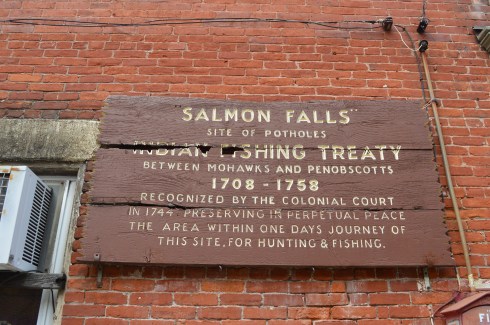
Salmon Falls, as it was dubbed by the Native Americans, was a common area for hunting and fishing.  The waterfall still gives some pretty views against a once industrialized scenery as the backdrop.

dsc_0248

What makes the Salmon Falls and Glacial Potholes area are the small shops and antiquated buildings that give the area a very old fashioned small town feel.  This is true for pretty much the entire community of Shelburne Falls.

There is a bench for sitting, feeding the birds and just taking in the beauty around you.

Almost as a prelude to the much heralded Bridge of Flowers (which is located only a short walk or drive from the Salmon Falls and Glacial Potholes area), flowers and trees bound the Salmon Falls area.

If you’re lucky you might even find a feathered friend to photograph.

dsc_0375

Deerfield Ave, the road that leads to Salmon Falls and the Glacial Potholes, still has the old town feel that adds tot he charm of the area.  In fact, the entire Shelburne Falls area still has many “mom and pop” shops and independent businesses rather than chain stores.  It was nice walking around without being bombarded by convenience stores and restaurant chains that seem to scar so many other towns.

The Shelburne Bowling Alley is one of the oldest bowling alleys in the country.  In operation since 1906 (and yes it is still open for business currently), the Shelburne Bowling Alley could easily be mistaken for a barn or some other structure from a different time.

dsc_0252

There is also a variety of art throughout the area.  Some of the art I noticed looked different from the art I have seen in previous visits.  So it appears they do change it up every so often.  The art honors the history of the area and gives information about the area.

Below is a video of the falls at Salmon Falls.  It was an overcast and somewhat windy day when we first arrived at the Falls so you may hear the wind in the video.  But, most of the sound is from the rushing waters of the Falls.

Similar Places In New England I have Visited:

dsc_0329

Wadsworth Falls State Park (Middletown, CT)


dsc_0913

Cascading Waters (Worcester, MA)

dsc_06561

Bash Bish Falls (Mount Washington, MA)


The Nature of Glass: Contemporary Sculpture at Chesterwood 2016 (Stockbridge, MA)

Date Visited: July 16, 2016

Location: Chesterwood, 4 Williamsville Rd, Stockbridge, MA (413)298-3579

Hours: Open Saturday of Memorial Day Weekend to the Monday of Columbus Day Weekend. May 28 – October 10 of this year from 10am to 5pm daily. Self-guided tours only. Residence closed daily from 12:30pm – 2:00pm

Cost: Adults, $18.00; Seniors, $17.00; Grounds ONLY fee, $10.00; NTHP Members, Military & Children, 13-17, $9.00; Friends of Chesterwood & Children Under 13, Free

Parking: There is ample parking in the various parking areas for at least a couple hundred cars

Time To Allot For Visit: 1 hour to 2 hours (less if you don’t appreciate art)

Dog Friendly: No

Highlights: lots of art, statues, scenic trails

Nature Of Glass: Contemporary Sculpture

DSC_0496

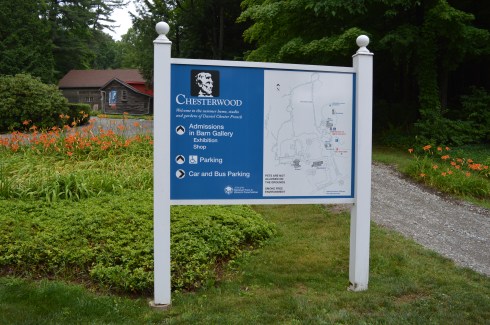
Named after one of America’s foremost sculptor, Chesterwood is home to  the works of Daniel Chester French.  French’s work can be found on multiple continents.  His most prominent works include designing the Abraham Lincoln and the Minute Man statue in Concord, MA among many other works of art.

In addition to statues and replicas of French’s work, Chesterwood also shows off exhibits on its spacious grounds.  The latest exhibit, on display until September 18, is a bit of a break from the traditional pieces of French.  The Nature Of Glass shows a variety of unusual works of art for the entire family.

This blown gas display called Optic Lens Installation (2016) is by Richard Royal.  Part of the Optic lens series, this art evolved from his fascination with water or being near water as well as lighthouses and the Fresnel lens.  On the description plaque for this design, Royal said safety and security are recurring themes.  he finds glass and light as instruments of safety to be inspiring and he finds the system of glass and light to be metaphor for simple concepts and a reminder that basic things in life are sometimes the most important and have the strongest impact.

Throughout the exhibition, I found the artists to have a such depth and insight into what may seem to be simple displays.  This is a recurring theme throughout the displays.  It does make sense that the artists would have a deeper meaning to their work.  One does not put so much time and effort into a work of art without having some deep significance to their work and inspiration.

This sculpture by John Kiley is called Clear Cut (2016).  Kiley made this 8 foot sculpture out of glass, steel and Douglas fir.  According to the information on the sign next to the display, Kiley described his work as using circular openings to show interior divisions of space to alter their sense of space and light.  Depending on your point of view, the overlapping circles can focus your attention in different ways.  The Douglas fir is meant to connect the ground through a natural material to the sky using material engineered by humans, evoking a sense of history, place and reflection.

Martin Blank created Crystal Reveil (2012) from hot sculpted glass. The segments of the sculpture are curled and hollow so you can look through the sculpture and see a different form of negative space. The individual forms are very delicate and skin-like, similar to the madrone tree which is prevalent in the pacific Northwest.

Depending on where you stand and the time of day that you view Time Of Day – Blue Moment (2016), by Richard Jolley, looks different.  As you can see by the photos above, you see different things from each angle.  The work of art is of a veiled form of a human figure that changes color at specific times of the day.  The passage of light through the small portal will shift the light transmission and wash the figure in a blue light referencing daily time sequencing and change.  The intent, according to Jolley is to not only mark a specific, finite time of day but also to address the significance of the passage of time and awareness.  He went on to say how it addresses in a deeper sense time and the effect it has on every aspect of our existence.

I did photograph Time of Day again later in the day after viewing the other sculptures about an hour later to see any changes in the work.  Unfortunately, it was an overcast and misty day.  So, since there was a lack of light, the changes in the art work were very minor.  The photos are shown below

One In One (2014) by Thomas Scoon is a cast glass and granite sculpture.  Just short of 5 feet (57 inches to be exact), the figures are meant to show people rising from the external landscape.  He tried to choose rocks that evoked the feeling and gesture of human forms, specifically torsos and heads.  The layering of kiln-cast glass and stone allows light to pass through the figures and embodies the spiritual and physical essence of human nature into the sculpture.  He felt the combination of the materials expresses both the fragility and the enduring qualities and humanity.

Scoon continued with his granite and glass theme with Companion Series I-IV (2016).  Similar to the One In One sculpture,this work shows human figures made of cast glass and granite.  I suppose he didn’t want his other sculpture to feel lonely.

Earth/Sky (2016) by Tom Patti is one of the more unusual works at the exhibit.  Patti wanted to show the ambiguous condition between the literal and the phenomenal.  Patti felt the unique quality of the reflection combines the transparency of glass in his design.  This combination results in an ambiguous sense of space that obscures any references to the physical solidity of the materials, revealing the natural essence of the environment.

This work of art, like many more in the exhibit, was not as provocative because of the lack of light on the day of my visit.  If the sun had been out the shadows would have played off the work of art more dramatically.

One of the more unique works of art, Remember What (2016) by Marko Remec is 128 thirty two inch dome acrylic mirrors.  Also made of aluminum, steel hardware and twine, Remec’s work is described as a “chess pattern gone awry.”  The mirrors reflect 180 degrees of Chesterwood.  The work is a reconfiguration of the installation Can’t Hear You that had been displayed at MASS MoCA in North Adams, MA.

Another piece of work that would have benefited from sunlight, Vitro Muralis (2016) by William Carlson is made of granite, metal and glass.  The sculpture shares a common area of overlap.  The edges have a visual noise as they collide into shared space.  The transparent components are meant to offer a language of design as a text of spiral repetition and marks that are more musical than linguistic, according to Carlson.

Another design by William Carlson, Sine Nomine (Without A Name) (2014) is another sculpture made of metal and glass. The “x” in the middle of the sculpture is meant to reference missing identity.  It has also been used as a mark for those who cannot sign their name or in equations in algebra as an unknown in the equation.  Other interpretations include a reference to something that has been eliminated from a list.  The historical use of the x also makes it a powerful graphic symbol universally understood.  The exact meaning is not made clear in the plaque next to the sculpture.

Icebergs and Paraphernalia 117 (2007) was inspired by traveling through the Polar Regions, specifically a small stranded iceberg off the shore of Greenland that looked like a bird.  Created by Peter Bremers, the work of art is made of kiln-formed glass cut and polished and outdoor glass.  The almost marble structure pays tribute to the marble sculptures of the French.

Also made of kiln-formed glass cut and polished and outdoor glass, Movement II (2007) depicts a window moving forward.  The concept of the work is that we perceive “reality” as a dynamic image that changes in time and as a result of the viewer’s change in perception as well as how we rewrite history as our understanding of the past transforms the present and vice versa.

Daniel Clayman’s North 41.47 West 71.70 Copper (2016) may just look like an ordinary rock but there’s much more to this boulder.  The name coincides with the GPS coordinates where the boulder was found.  Copper refers to the interior treatment of the piece.  While on a jobsite excavation, Clayman observed large boulders being carted away to make room for a new landscape design. Clayman was struck with the idea of reformatting an ordinary boulder into a magical object.   When the sun is out, the sun reflects off the copper boulder making it a highly detailed surface (I had to use a flash to gain the same effect).

Julia’s Garden (the pieces range from 2010 to 2016) includes pieces from Nancy Callan’s Orbs And Winkle’s signature series.  The design consists of geometric forms (spheres and cones).  Callan strived to create a sense of infinity complexity with lines that wrap and fold around the shapes.  Each orb is like a world in itself.  The shapes of the orbs are said to represent planets.  The cones are meant to be like stocking caps – a reference to Rip Van Winkle – which gave the name Winkle to the pieces.  The cones also add a vertical element that echoes the growth of plants and trees – straight towards the sun as in White Spiral Cone or gently unfurling as in Ivory Winkle.

DSC_0474

Trigonal  (2016) by Kait Rhoads was inspired by a trip Rhoads took to  the Joshua Tree National Park in California after her the mother’s death.  Rhoads was struck by the beauty in the contrast of the quartz seams running through the fields of granite rock in the landscape.  Her search for healing and cleansing within a natural habitat largely untouched by man drew her to create the work of art.  She placed the color of the desert sky onto the form of the quartz crystal in a wash of opaque white ranging to intense transparent blue.

There is another work of art that I somehow missed.  Sidney Hutter’s Louie’s Electric Two (1976, revised in 2016) is sandblasted mirror glass design.

Dogs are not allowed at Chesterwood.  But, I did find this friendly cat.

Connect with me on Facebook to view photos, videos and other posts not included in this blog

New England Nomad


Foxborough Street Painting Festival (Foxborough, MA)

Date Of Event: May 21, 2016

Location: Patriot Place, Foxborough, MA

Cost: Free (there may have been an entry fee to participate)

Parking: ample parking at Patriot Place, since the Patriots weren’t playing!

Dog friendly: Only if they’re service dogs.

Highlights: beautiful works of art

DSC_0725

Home to the New England Patriots and New England Revolution, Patriot Place in Foxborough, MA, was home to a different type of competition recently.

For the past two years, Patriot Place (an indoor and outdoor entertainment area that features a mall, bowling alley and a host of stores and restaurants located next to the home stadium of the New England Patriots – Gillette Stadium) has hosted a street art contest.  Squares on the walkway at Patriot Place were reserved for a number of competitors to display their best work of art.  The works of art ranged from flowers to cupcakes.  Mmmm, cup cakes.

DSC_0775DSC_0769

The artists ranged in all ages and backgrounds.

I was waiting to post this until after photos of the winning art works were posted on the web site for the event.  But, it has been almost a month and they still haven’t been posted yet, although the names of the winners have been posted.  So, I don’t know which pieces of art won.  But, they were all winners to me!  There were some very creative works there!

This slideshow requires JavaScript.

To see a list of the winners, and hopefully eventually the photos of the winning works of art, click here: Foxborough Street Art Contest.


Ross Parking Garage Murals (Quincy, MA)

Date Of Event: May 21 & May 22, 2016

Location: Ross Parking Garage, Ross Way & Parking Way, Quincy, MA

Parking: Not for long

Hours: Not many more left

DSC_0840

Like a lot of the biggish towns that many of us grew up in, Quincy, Massachusetts has seen a lot of changes over the years.  Businesses have come and gone.  But, the one thing that has remained a staple of the area for so long may seem rather mundane, a parking lot.  As funny as it may seem, it is the one place most everyone has been to, either in their car or their friend’s car.  Or, for some other reason people may not want to divulge.

The demolition of the garage, slated for the end of May, is just another example of the changing face of the Quincy landscape.  The three story garage, which has 700 parking spots and has been around since 1984, will be replaced by a hotel.  Even though it’s just a garage, and not a very state of the art or pretty one at that, it represents the changing of the city.  And some people are pretty shook up about it for some reason.

DSC_0983

Since the garage was blowing demolished sometime in the near future and  the garage was being closed for good May 23, the city organized a block party and let some of the artists in the area paint some murals and art work on the walls of the garage the weekend before the garage was officially closed.

I caught this artist working on his mural

Here is the end result of all of his work

DSC_0873

On the other side of this wall, I found this cool Quincy themed mural.

The road next to the garage was blocked off to traffic so people could congregate and enjoy the art work like the murals and art below.

DSC_0849DSC_0881DSC_0998DSC_0993DSC_0887DSC_0995DSC_0991DSC_0808DSC_0994DSC_0990

DSC_0804

Even the little kids at the block party got into the action.

The paintings in the upper levels of the garage were more graffiti than artsy.

“Be fearless in pursuit of what puts your soul on fire”(an unattributed famous quote)

I didn’t realize just how creepy abandoned parking garages can be until I went to photograph the Ross Parking Garage on its last day.  It just doesn’t seem right.

Goodbye, Ross Parking Garage.  You’ll be missed.  Well, not really.

Please connect with me on Facebook: New England Nomad


Nashua Dodgers Mural (Nashua, NH)

Date visited: February 27, 2016

Location: 31 West Hollis St., Nashua, New Hampshire   The mural can be seen on the east side of the Maynard & Lesieur building

DSC_0049

DSC_0003

Most baseball fans know the Dodgers were the first American professional baseball team to integrate baseball in decades.  However, few people know it was the Nashua Dodgers (the farm club of the Brooklyn Dodgers) and not the Brooklyn Dodgers that were the first pro team to integrate an American baseball team in the 20th century (Jackie Robinson, who would later become the first African American to play professional baseball in the United States during modern era, was playing for the Montreal Royals of the International League at this time).

It is said that Branch Rickey and his executive, Buzzie Bavasi, chose Nashua as the location for this New England League team partly because the city had a large French Canadian population and they felt the French Canadian people would be more receptive to an integrated team.

Along the side of the building with the Nashua Dodgers mural is another work of art.  The mural celebrates the earlier days of Nashua.  Holman Stadium, which is prominently displayed in the mural, is the stadium the Nashua Dodgers played in.  It is still in use to this day.  It is now the home of the Nashua Silver Lights of the Futures Collegiate Baseball League.

The mural is such a pretty work of art.  Unfortunately, it has sustained some damage due to people defacing the artwork.

DSC_0031

DSC_0036

DSC_0040

DSC_0018

DSC_0010DSC_0016DSC_0012DSC_0021DSC_0022DSC_0028

Below is a walk through of the mural on the side of the building.


Haunted Decorations (Salem, MA)

There’s something magical about Halloween.  It’s a time when adults can still pretend to be a kid again, even just for one night.  Even the most mature, sober person can forget their responsibilities and relive their carefree days just a little.

For the remainder of the week, I will be posting the remaining photos from my trips to Salem, MA.  In this edition, I am posting photos of the various decorations, some other miscellaneous things and, of course, a few dogs from my travels in Salem.

Salem is known world wide for getting into the spirit of Halloween.  Everywhere you look, there are decorations of the season.

DSC_0087

DSC_0269DSC_0266DSC_0262DSC_0259DSC_0257DSC_0261

Besides the vendors selling merchandise there are also games and other fun types of activities.  This particular activity was meant to see if people could maintain eye contact with a complete stranger and possibly make a connection, even on just a platonic level.  It sounds like a good ice breaker to me.  The comments about the activity on the board are very interesting and humorous.

DSC_0884

DSC_0880

Salem is also creative in how they tie the season to other causes like this witch who encourages people to keep Salem “wicked” clean.

DSC_0028

Even Witch’s Brew Cafe got into the mix.

DSC_0089

Other stores and attractions, many open only for the Halloween season, decorate for the season.

DSC_0302DSC_0301DSC_0297  DSC_0294

Some stores have humorous names without even realizing it.  Of course, this is a name of a hole in a barrel that often contains alcohol.  But, it may have a double meaning..

DSC_0170

This is why Salem is so great.  The people even  get into it.  This resident decorated his or her residency and put out a can for donations for the Lion’s Club.

DSC_0157DSC_0158 DSC_0154

This ghostly figure was seen in Salem harbor.

DSC_0079

Salem is also known for its art and not just during the Halloween season.  There is art everywhere it seems.  These paintings on Essex Street portray a mermaid and a fish-type creature.

DSC_0291DSC_0999DSC_0002DSC_0001

The dogs in Salem also get into the Halloween spirit.  It’s hard to tell from a front view but Astro had tarantulas drawn on his fur.

DSC_0306

Molly was quite the cute pumpkin.

DSC_0305

Oz was dressed as a Cadaver dog for Halloween.

DSC_0311

I will continue my Halloween in Salem themed photoblogs throughout the week.  Thank you for stopping by and Happy Halloween!

Please stop by and “like” my Facebook page:

New England Nomad