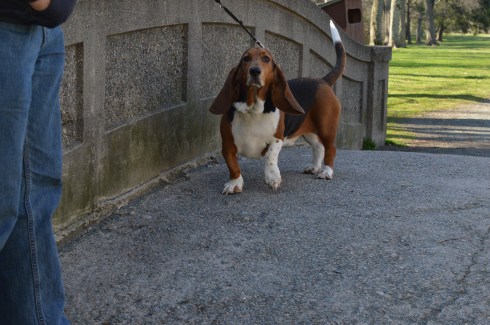
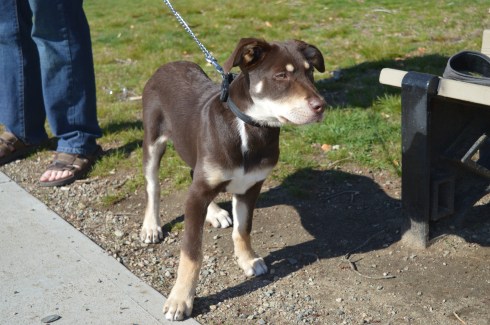
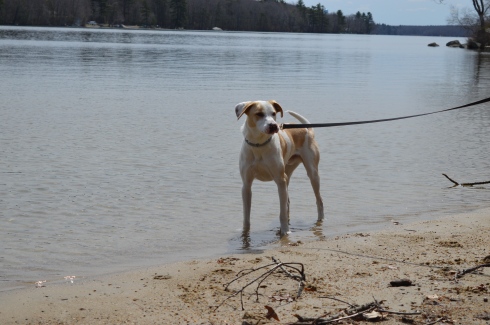
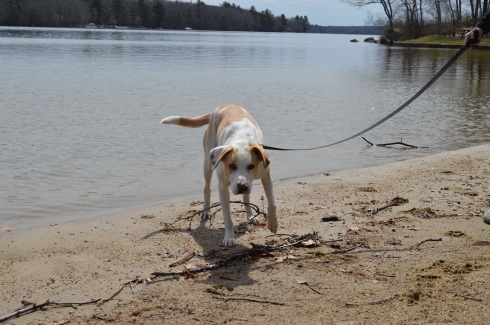
The beach, dogs and summer-like weather. Who could ask for more? Not me. Usually, I do most of my photography and trips during the weekend. But, with unusually high temperatures for this time of the year (60’s and low 70’s) and later sunsets, I decided to head to the local beach in the hopes of photographing some cute dogs. I wasn’t disappointed. There are so many distractions at the beach, especially for our furry friends. But, they all posed so well and made my job easy.
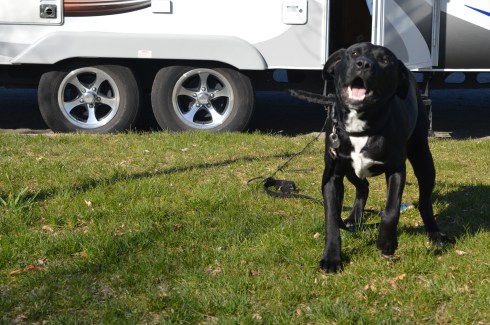
I met Tooko, 4 years old, in the parking lot. Tooko was a barker, but a friendly barker. His bark was much worse than his bite (he really doesn’t bite). But, he sure does likes to play. We played for a while and I continued on the way to the beach.
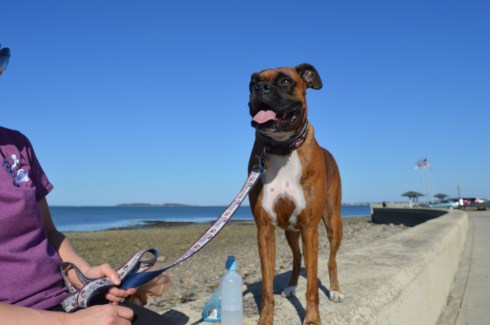
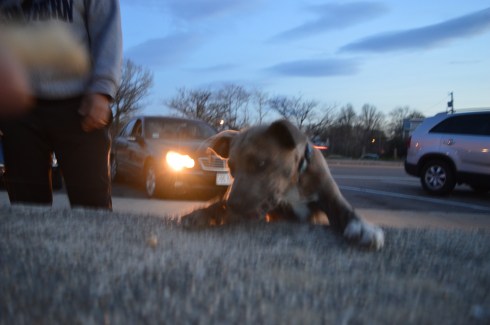
Pedro is a 3 year old boxer. Loved his markings.
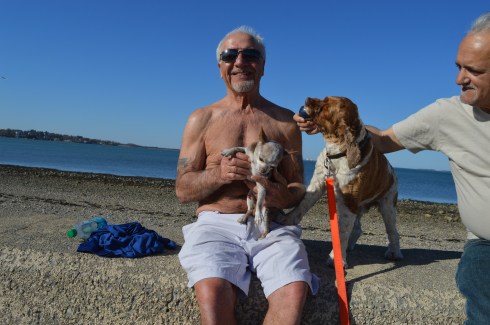
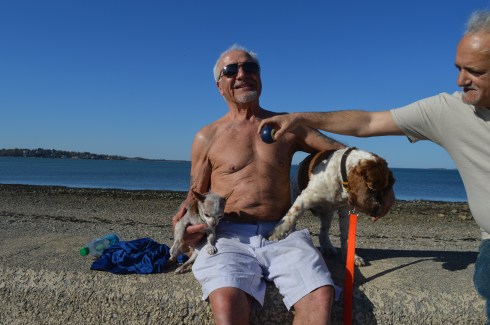
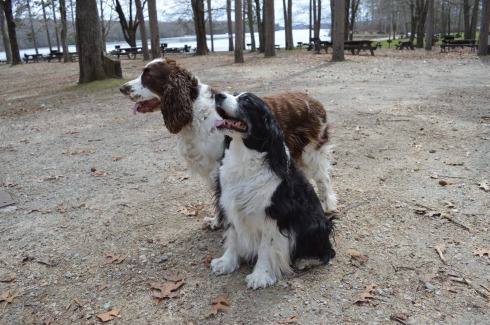
Chuckles (on the left), that is the name of the dog not the man – at least I hope it is, is am 11 year old Chihuahua. Buddy is a 7 year old Cocker Spaniel. They were a little camera shy but I still thought they were cute dogs.
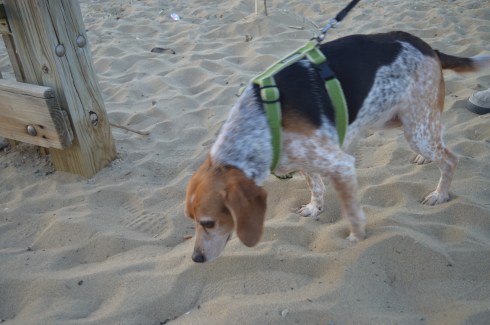
Marley is an 8 year old Beagle. Her guardians also think she might have some fox hound in her. I have always been a sucker for Beagles! So, I had to get her photo.
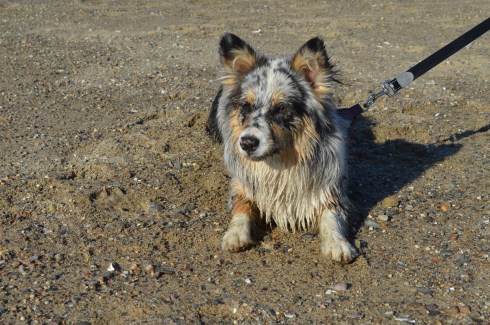
Penny (short for Penelope) is an 8 month Corgi and Australian Sheepdog. As if on command, Penny lied down on the sand and struck a pose. Her markings were very striking. You go, Penny!
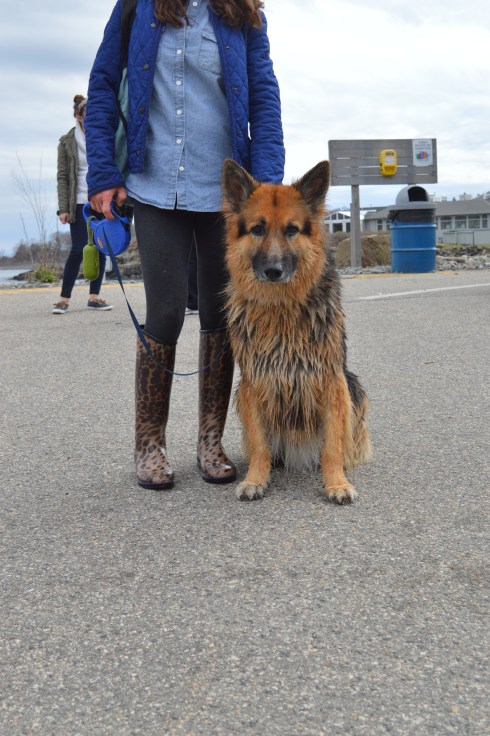
Kayser is a 4 year old German Shepherd and a Massachusetts native. The color of his coat and his sharp features caught my eye. He clocks in at 110 lbs.
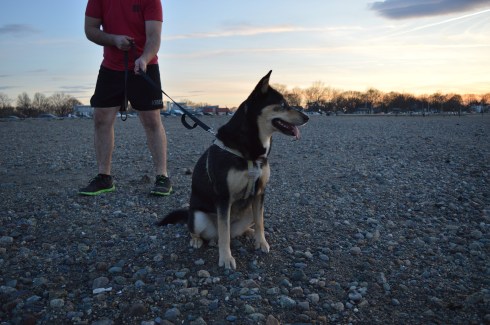
Annie is a 3 year old Shepherd Husky. Her sibling is Oakley. Get it…Annie Oakley. Annie is from Tennessee. She’s the only ten I see in the photo! Love the one ear up and one ear down pose and she looked very pretty against the rising sunset.
Located next to the New Hampshire Holocaust Memorial on Main Street across from a strip mall and busy roadway, the Rotary Common Park is a most unlikely place to find an art display. But, the Rotary Common Park is just that; an outdoor art museum. And this isn’t just some tourist attraction. The art here is very thought-provoking and amazingly crafted.
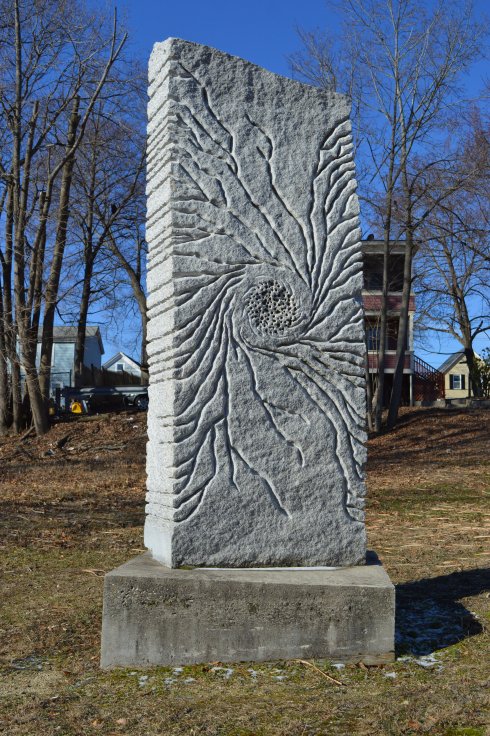
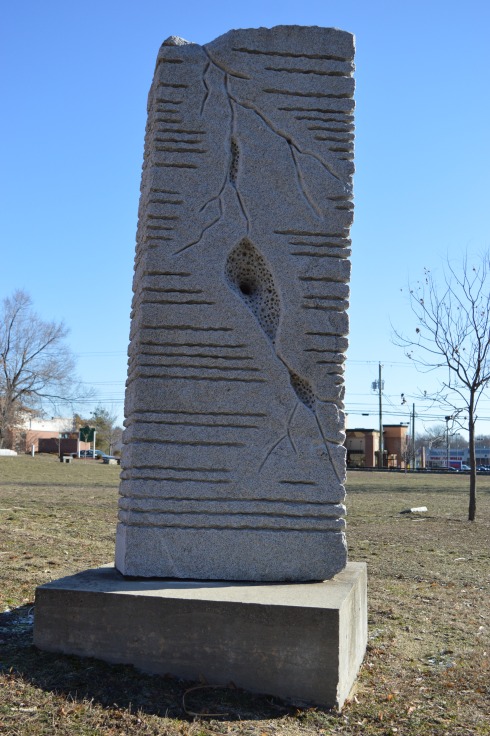
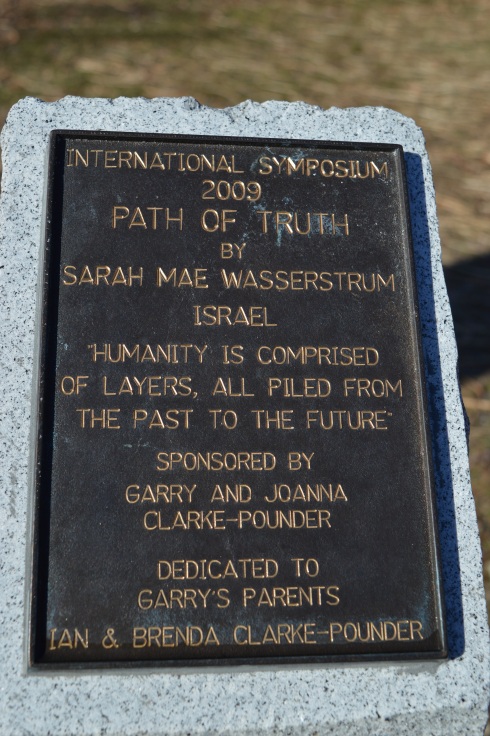
The “Path Of Truth” is a memorial to the “layers of humanity”. Or, as Sarah Mae Wasserstrum said;
“From the Origin layers of Humanity, we are connected by a common denominator.”
She imagines humanity as like layers, some thicker and some modest, all plied from the past to the future. The stone signifies the immense power of people and our ability to grow and change.
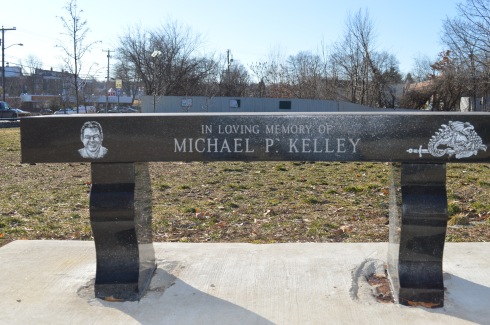
A bench dedicated to Michael Kelley. Who was Michael? What was he like?
Since it is located directly across from the Holocaust Memorial, the Reflection Garden & Labyrinth is the most popular spots at the park. Benches, sculptures, tiles with words of inspiration and works of art dot the circular reflection area.
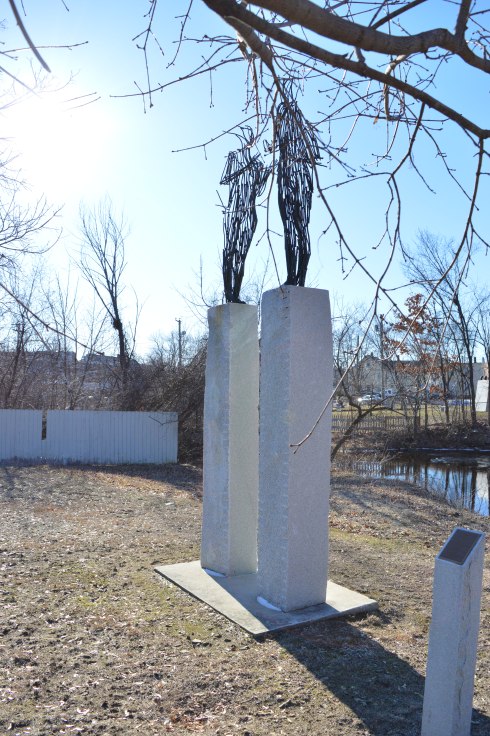
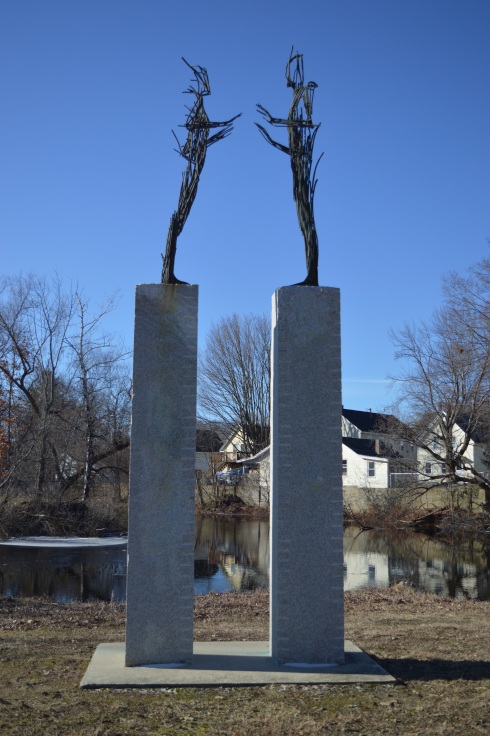
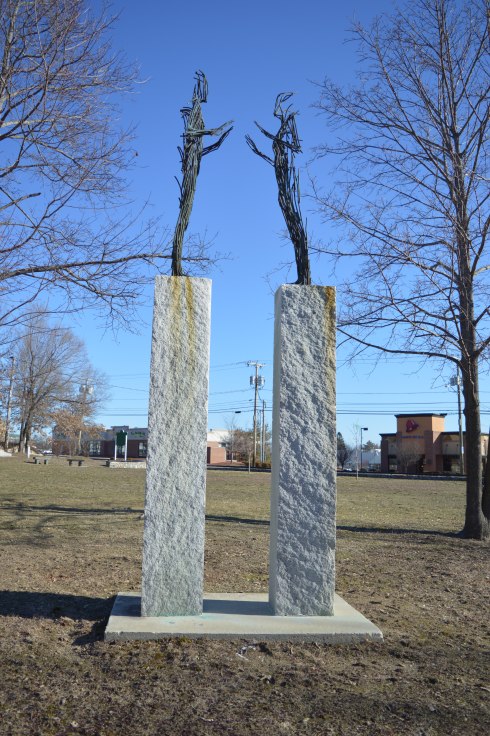
The “Encounter” sculpture by Luben Boykov,
Boykov described it as, “The present moment of meeting becoming a place in the future.”
Boykov explains the sculpture as a moment just before people meet that are so quick but also last forever. It represents an encounter that can begin a lasting relationship.
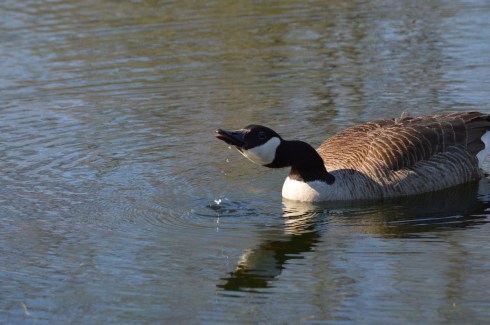
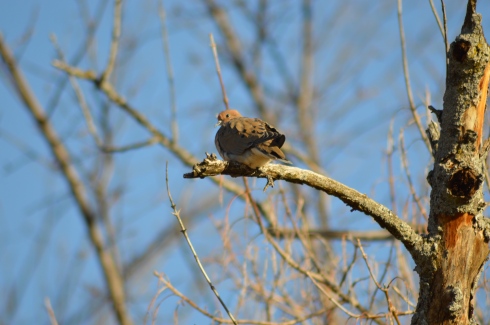
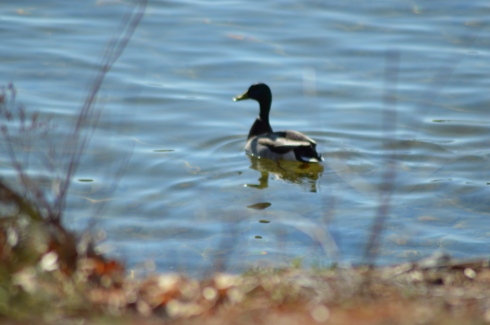
There was also a surprising amount of animal activity in the area like this bird and a thirsty cat.
The displays at the Rotary Park change on a regular basis so keep an eye out if you’re in the area!
Each year hundreds of kayak and canoe racers come to the Western Massachusetts to test their mettle against the rapids of the Westfield River.
The Westfield River, one of the longer rivers in Western Massachusetts, runs 78.1 miles and has a 497 square miles drainage area consisting of several tributaries. It attracts enthusiasts, recreational competitors and people who just like to challenge themselves. It also attracts an array of boating fans.
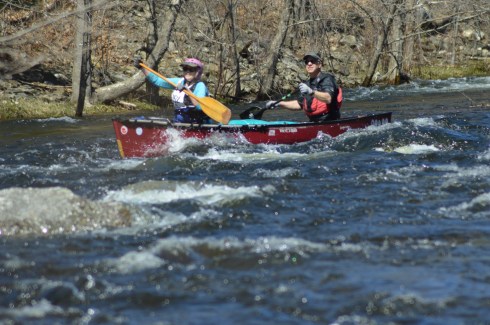
The Westfield River Whitewater Races, which have been held every year since 1953, are the oldest consecutively run canoe races in the US. People come from all over New England and farther to participate in the races. The races consist of novice and expert divisions. The novices race lasts 8 miles and the experts race for 12 miles. The participants race in two person canoes or one person kayaks. As if the rapids weren’t challenging enough, the race officials have the water behind the dam held for three days before the race to give more momentum to the current.
I never knew how popular kayaking, canoeing and boating was in Western Massachusetts. It was hard enough to find a good place to pull over or park along the route of the race. I was able to find a place on the side of the road to catch some of the novices who had already started.
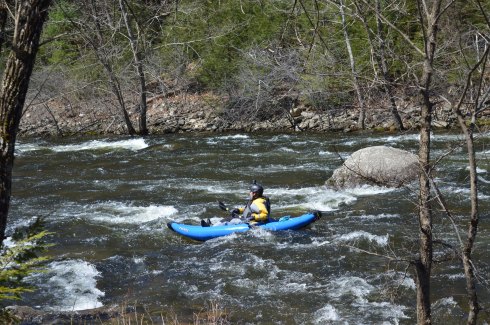
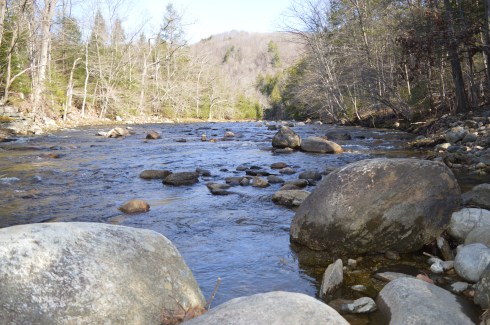
Since the river wasn’t very active here, we drove to the Knightville Dam, the launch point for the race. The area was very pretty and the river was more active here. I even caught some enthusiasts who weren’t participating in the race.
At the main parking area, one of the racers let me photograph his boat.
Still not happy with my location, I found a better spot along the side of the river past a precarious rocky decline. Watching the racers expressions was fascinating. Some were determined. Others looked focused and even a bit bewildered. Others just looked like they were having a grand time. Then, there were others who didn’t seem to be having fun at all.
This slideshow requires JavaScript.
Not every racer made it to the end.
Eventually, they were able to wade across the river to the other side, no easy task given the strength of the rapids.
Monty, an 8 year old Siberian Husky, came along to watch the race.
Below is a video of a canoe racing tandem fighting the rapids. You can hear the strength of the tide. Rumor has it that it gets even rougher farther down the river.
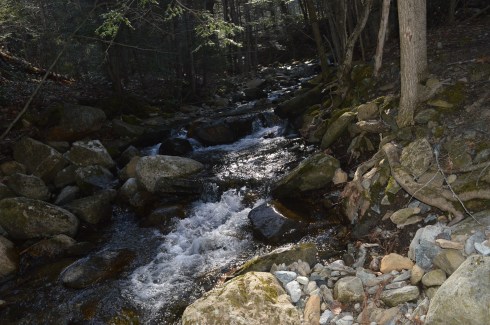
The Keystone Arches Bridge Trail is full of surprises. One of these surprises is a waterfall which is only a short jaunt down the main trail (about quarter of a mile from the entrance).
This slideshow requires JavaScript.
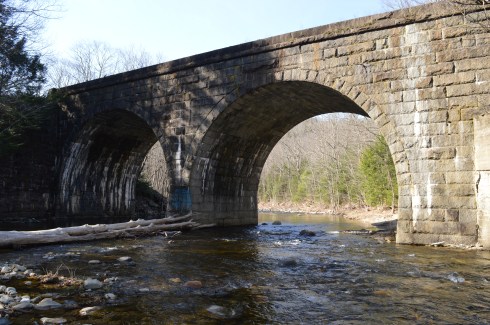
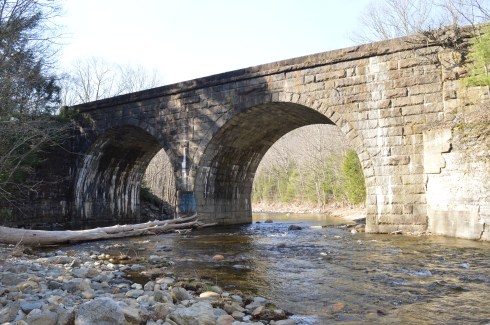
Another short walk brings you to the main attraction, the Keystone Arch Bridge.
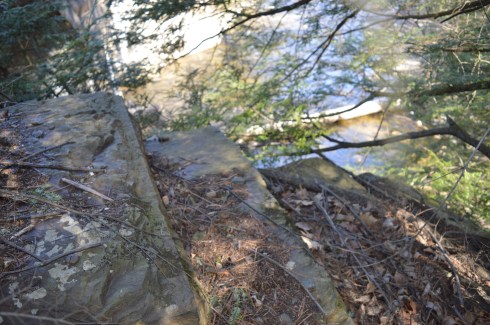
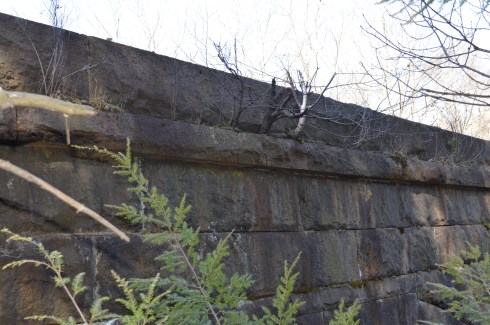
The bridge was made from local Chester blue granite and reach up to 70 feet. There is a weathered, crumbling stairway up the side of the bridge. Bear in mind, the stairs are a little tricky if you do take this route. I took this stairway as far as I could. The views were very pretty.
There is a train railroad that continues on to the bridge
The Keystone Arches Bridge Trail encompasses area that used to be an artist colony. There are remnants of the colony present off the main trail
There was a clock tower
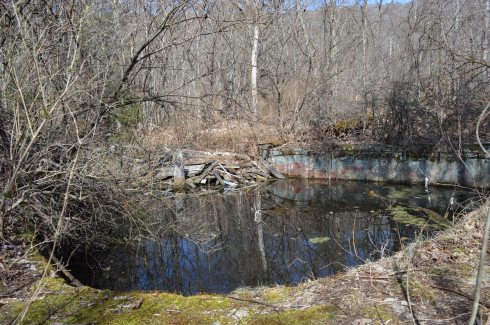
and the remnants of what used to be a swimming pool. Anyone want to take a quick dip?
and some other foundations of what were once buildings
Along the trail there are many pretty trees, plants, waterfalls and other interesting structures and rocks.
The Keystone Arches Bridge Trail boasts a variety of wildlife such as moose, bobcats, fox and a variety of other animals. I found this critter during my travels.
The 5 mile loop at Keystone Arches Bridge Trail are dirt trails with some jutting rocks and holes which often form puddles and dirt which must make it challenging for the cyclists who frequent the trail. The trails are easy to moderate with some challenging inclines. The website cautions the trail is not suitable for novice cyclists.
There are other arches and bridges at the Keystone Arches Bridge Trail and it is not unusual to see people climbing up some of the arches. However, we only went about a couple miles before turning back because of time constraints (see future blog post). The kayakers who frequent the stream at the Keystone Arches Trail, were absent due a white water race that particular day. But, normally they are present in large numbers.
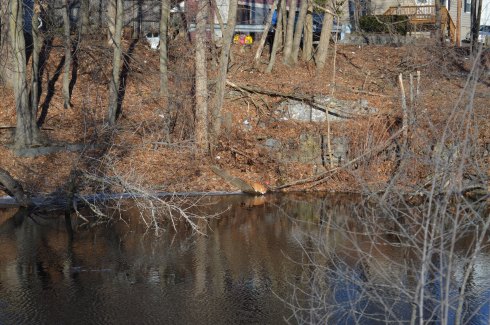
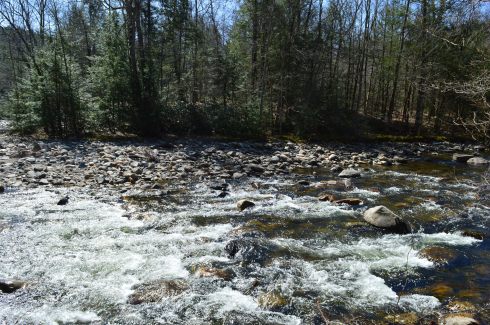
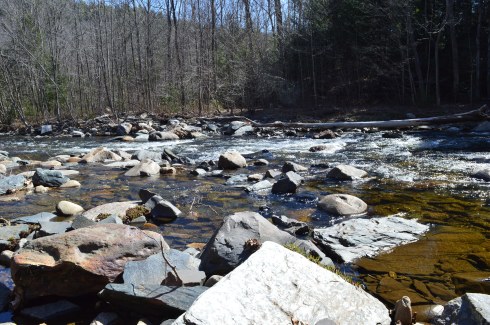
Along the trail are some impressive rapids.
I couldn’t help notice how the rapids mirror our own lives: rapid and frenzied activity one moment, calm, serene the next.
The video below gives a glimpse of the power, beauty and serenity of the rapids.
Durango, a 12 year old Australian Sheepdog, is the mascot of the Chester Railway Station And Museum and he’s a great tour guide. The Chester Railway Station Museum had organized a tour of the trail and Durango went along with them.
Parking: Parking is available at the entrance, before the gate and there is a big parking lot where you can also launch your watercraft at the head of the beach.
Cost: There are a variety of different fees established for visitors to Lake Chargoggagoggmanchauggagoggchaubunagungamaugg. For instance, if you walk in or ride your bicycle to the lake and you are 17 or younger it is free. If you walk to the lake or ride your bike and you are 18 or older it is $1 to get in. A resident (of Webster) motor vehicle costs $5 for entry. A resident motor vehicle with a water craft is $25, etc. See the link below for all of the fees and regulations.
Lake Chargoggagoggmanchauggagoggchaubunagungamaugg. Try saying that 5 times fast. I dare you!
Originally named Lake Chaubunagungamaugg or “Fishing Place at the Boundary”, Lake Chargoggagoggmanchauggagoggchaubunagungamaugg (meaning, “Englishmen at Manchaug at the Fishing Place at the Boundary”) is actually broken into two parts; a lake (Lake Chargoggagoggmanchauggagoggchaubunagungamaugg) and beach (Memorial Beach).
For the purposes of this post, I will call Lake Chargoggagoggmanchauggagoggchaubunagungamaugg Lake Webster as it is now more commonly called.
At the main entrance ofWebster Lake, there is a memorial to our veterans. It is a fitting tribute for those who have gave so much.
Upon arriving at Webster Lake, you will see the lake.
Memorial Beach is dedicated to the veterans of all of our wars.
As beautiful as the lake is, I found the beach, located just beyond the lake to be even more beautiful. To me, it’s basically one large body of water and I am not sure why they have separate names.
This slideshow requires JavaScript.
Webster Lake and Memorial Beach are a boaters/kayakers/fisher person’s dream.
Lake Webster also has a variety of bird life.
Dogs are not allowed at the lake or beach.
There is also a basketball court and play area.
The beauty of the beach and the sound of the water could only be captured in a video
Please check out my Facebook Page and like my page by clicking on the link below!
Cost: Free since I visited during the off season. It costs $8 for MA vehicles and $10 for out of state vehicles once the main season begins (around early May)
Parking is limited. Since it was not the peak of the season, I found a spot without any trouble. But, there are only 20 or so spots in the main parking areas. There are some additional parking areas off the main trail to the lake.
Boats are not allowed in the water, although fishing is allowed. Trout and bass are the most common fish in the water.
I had been interested in visitng Rutland State ever since I heard about the remnants of the state prison camp and the views of the water.
There was a strong wind, evident by the ripples in the water.
This slideshow requires JavaScript.
The gates at the entrances to some of the trails prevented some vehicles from entering the trails. This is because during this time of the year it rains a lot and bikes and other vehicles can get stuck on the trails. So, it was a pretty empty trail when I went. Which was just fine by me. Miles of near solitude in nature with a cloudless, cold blue sky on a bright New England morning….yes please!
The main trail I stayed on was easy with some moderate includes. The only thing you may find annoying is the long stretches of nothing but trees and water on each side of the trail. This was heaven for me, though. I was also pleased to see a dirt trail rather than gravel or, gasp, paved road.
As I continued on the main trail, I began to see signs of ruins of structures frozen in time. A stairwell and frame of a building, now adorned with graffiti (get used to it as it is a constant theme), stood on the outskirts of the trail.
At around the 2 mile mark of the trail there are remnants of a prison camp. The camp was constructed in 1903 for housing petty criminals. It would later be converted into a farm. The first structure, again riddled with graffiti, was used for solitary confinement.
When you consider just how small and confining the spaces in the building are you can only imagine the distress it caused some of the prisoners.
Something happened when I visited the remnants of the prison camp. What I had once considered “cool” and interesting, seemed dank and sad. In fact, it wasn’t until after I left the structure and cave that it really sunk in. It seems like a grim existence at the least. When you realize people lived in these conditions and suffered, largely for committing petty crimes (such as drunkeness), it makes you think we should be more cognizant of the history of the building and area. If it wasn’t so tragic it would be more interesting. Rather than being “cool”, it just made me depressed.
Farther along the trail is an arch that appears to be a root-like cellar. I am not sure what it was used for but my gut tells me nothing good.
There are also some interesting tunnels and holes in the ground at the old prison site. I decided to investigate.
Given the architecture of the structures and the history of the area, it is easy to see why the park is considered haunted. Disembodied voices and apparitions are said to have been witnessed by visitors. There are even claims the area was once used for satanic worship. The area was the subject of the book The Soul Collector, written by Joni Mayhan.
On a brighter note, I saw lots of four legged friends at Rutland State Park.
(left to right) Grayson, 7, an American Pit Bull Terrier and Gamble, 6, a Pit Bull and Boxer mix.
Blackie, 4 years old, a part husky.
I also saw some other four legged friends.
Panda, in front, is a training horse. Calvin is the horse on the right and the horse in the back left (who is difficult to see) is Jack.
There were also a few kids playing on their motor bikes and ATV’s.
The videos below are some videos from my visit. Thank you for reading!
Cost: Since I visited during the off season, it was free. The web site states it costs $9 for MA vehicles and $11 for out of state vehicles. Prices may vary if you bring your boat.
Location: 107 Wallum Lake Rd. Douglas, MA
Parking: Parking is limited at the main entrance. It probably fills up quickly during the summer weekends. There is also additional parking for boaters farther down the road to the entrance. There is also additional areas to park near the forest.
I wasn’t sure what to expect when I arrived at Douglas State Forest. It just happened to be in the area of another attraction I was visiting. But, I’m a firm believer in spontaneity, no I really am, so I decided to give it a whirl. I’m glad I did.
Douglas State Forest has a few different entrances besides the main entrance at Wallum Lake Drive. I passed some of them on the way to the main entrance. It may be a good option to try these entrances (off Webster and Wallis Streets respectively). After viewing the map for Douglas State Forest, I have determined I only walked a fraction of the 5,525 acres of the park.
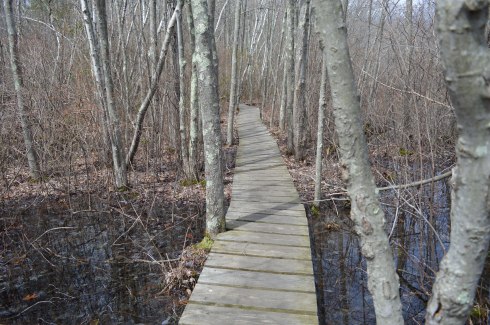
There are many hidden trails and long trails in the park. In fact, the Midstate Trail, a 95 mile hiking trail that extends through central Massachusetts to Mt. Watatic in the north, runs through the forest. I saw a group of walkers/hikers at one of the other entrances during my drive. I suspect they may have been gearing up to hike a section of this trail. There is also some rare Atlantic White Cedar swampland at Douglas State Forest. Boards are laid down to allow walking over these areas.
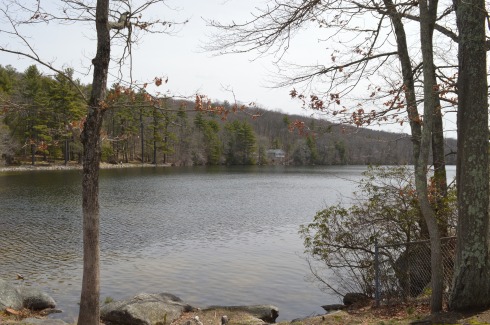
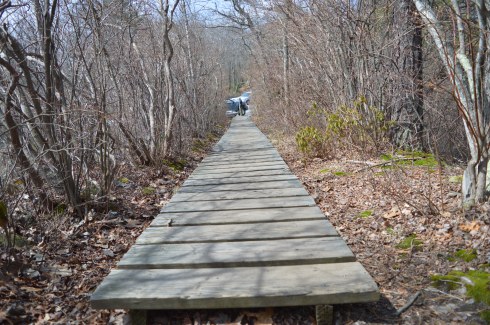
After arriving at Douglas State Forest, I walked the easy, half mile or so trail trail to Wallum Lake (the trail continues on much farther but I only walked to the boat launch and fishing area). A sure sign that spring is begrudgingly, well, springing was abundant. The trails are mainly like the one pictured below. I would describe the trails I took as being easy to moderate but the trail may get harder the farther you walk.
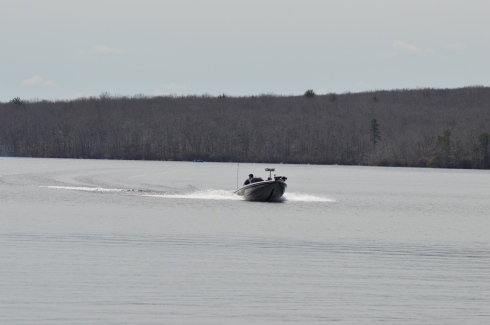
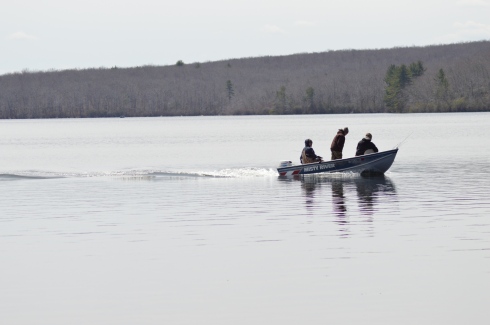
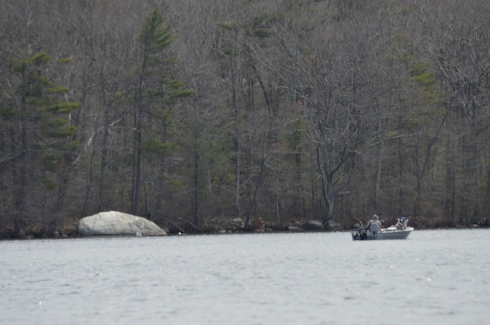
There were several people fishing and an assortment of boats in the lake. Boaters always seem to want to show off and speed around when they see someone with a camera!
Douglas Forest is a year-round attraction. Swimming, fishing and boating are allowed in the lake. In the winter snow shoeing and snowmobiling are popular activities at the forest. Horses and dogs are also allowed at the forest.
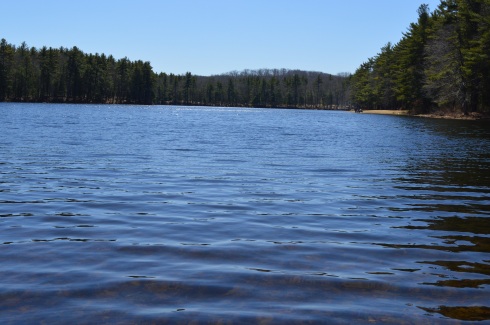
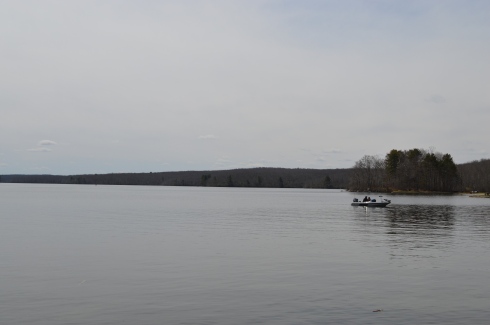
The views from the lake were beautiful.
This slideshow requires JavaScript.
What started as a gloomy, chilly, overcast day, typical of a true New England spring day, turned into a sunny, warm day. It was the perfect day to take your pooch out for a walk and they were in abundance at Douglas Forest.
Lloyd is a 3 year old husky and lab mix. He was adopted by his pet parent from a shelter and he loves to play in the water.
Delilah is a 5 year old Staffy (Staffordshire Bull Terrier). She was rescued one day before she was slated to be put down. She is also from England and loves to play with sticks. Welcome to America, Delilah!
Dixie and Monty, Irish Spring Setters, posed perfectly for their dad.
Central Massachusetts (where Douglas is located) had always been a place to drive through to get to Western Massachusetts and its plethora of mountains, forests and waterfalls. But, I have been spending a lot of time in Central Massachusetts. After my last few visits I have fallen in love with the area. I will have many more posts coming from my travels in the Central Massachusetts area. Stay tuned and thank you for reading!
Please check out my Facebook Page and “like” it for additional photos, posts and videos. Thank you!
In 1900, Stephen Salisbury II built a tower on what is now known as Salisbury Park as a tribute to his friend, historian and jack of all trades, George Bancroft. And to think, my friends only usually give me gift cards, wine and books for my birthday.
The park is has a wide variety of bird life.
As I was reviewing the photos, I couldn’t help feeling the tower was purposefully constructed to look as though it was incomplete. The sides are not rounded and seem almost as though they were cut off from the facade or the builder gave up half way through. But, as the photos show it was indeed constructed this way by design.
This slideshow requires JavaScript.
My favorite view from the tower was at the arched entrance.
The 56 foot tower is made of natural stone and granite. It was designed by Stephen C. Earle and Clellann W. Fisher.
The plaque at the memorial states:
BANCROFT TOWER
THIS TOWER WAS BUILT IN 1900
TO HONOR THE MEMORY OF
GEORGE BANCROFT
1800-1891
BORN AT THE FOOT OF THIS HILL
HE ROSE TO THE POSTS OF
SECRETARY OF THE NAVY
FOUNDER OF THE U.S. NAVAL ACADEMY
ANNAPOLIS, MARYLAND
U.S. MINISTER TO GREAT BRITAIN
AND GERMANY
THIS MEMORIAL WAS BUILT BY HIS
FRIEND AND ADMIRER
STEPHEN SALISBURY III
Jacks wasn’t impressed by the tower.
There were some views of the city from the parking lot.
During my visit and in my research after the shoot, I found out they let visitors inside the tower during October of each year. The views at the top are said to give 360 degree views of the area. The sorority and fraternity at the local college also holds a Halloween party for the kids in the area at the tower with mild scares. So, it looks like a visit in October is on my list!
A walking tour of the Bancroft Tower:
Please stop by my Facebook page and like my page for extra photos, videos and other fun stuff!
Just outside of Worcester Common, at 455 Main St, sits an unusual monument. Also known as “Turtle Boy”, the Burnside Fountain looks like a cross between a Roman sculpture and a high school prank gone wrong. But, this statue is no prank. It is a very real monument. In fact, it is a gift from Harriet Burnside, a philanthropist and the daughter of a prominent lawyer in Worcester; Samuel Burnside. In her will, Harriet donated $5,000 to the city to build a fountain in memory of her father. Harriet Burnside specifically requested the fountain be used as a drinking trough for horses and dogs.
Enter Charles Y. Harvey. Harvey was given the task of designing the fountain. For some reason that is still unknown, he chose a design called “boy with turtle”. Henry Bacon, who also worked on the Lincoln Memorial, designed the basin.
In an interesting turn of events, Harvey would take his own life, claiming before doing so that the half finished sculpture was telling him to do so. Sherry Frye finished the sculpture. The statue was completed in 1912.
The bronze statue sits on a pink rectangular basin. The basin has four bowls, two on each side of the statue.
Despite the various interpretations, the statue is not meant to be as controversial. It was just meant to be a statue about a boy and his turtle. It was a simpler time.
Driving home from Balance Rock State Park, I happened upon Lake Onota This is what is so great about New England, and really any area of the country. You can find the most beautiful places at the most unexpected moments.
A popular fishing spot, Lake Onota is a 617 acre pond located in Pittsfield, Massachusetts. It flows into the Housatonic River which eventually drains into Long Island Sound. Fishermen and women and boaters flock to Lake Onota for the bass, trout, walleye and crappie (yes they even fish for crappie fish).
A roadway bisects the lake. Of course, typical of New England weather, while it was very cloudy on one side, the other side had nary a cloud.
This slideshow requires JavaScript.
Dogs like Lake Onota as well. I met Becca, a happy 9 year old golden retriever,there.