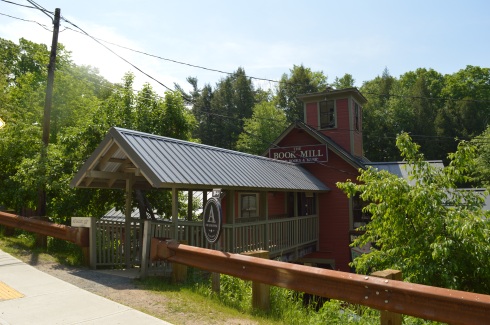
Do you like books? How about mills? Then I have just the place for you. But, this is no ordinary book store. A former gristmill now operating as a used book store, the Bookmill has gone through many changes throughout its history. But, it still keeps true to its beginnings. The structure is largely the very same one that operated as a mill so long ago and the brook that runs along the two floor book shop is the very same one they used to power the gristmill so long ago.
Upon arriving at the Bookmill, the first thing you notice is the brook fed by a waterfall adjacent to the shop.
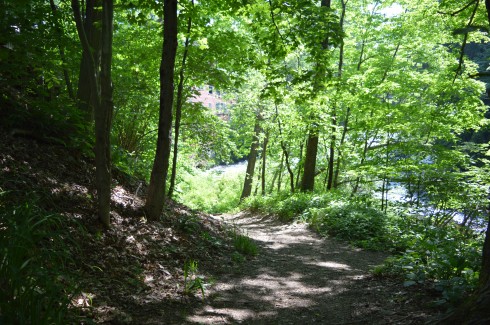
A short easy to walk path takes you to the source of the stream of water.
The short waterfall and stream can be pretty fast in some spots. But, when I came to visit it slowed down after it plummeted down the waterfall.
This slideshow requires JavaScript.
After the short walk back up the trail, you can access the bookstore by a wooden walkway with some more views of the waterfall and stream.
Or, you can just walk straight across (the easier route, less scenic route).
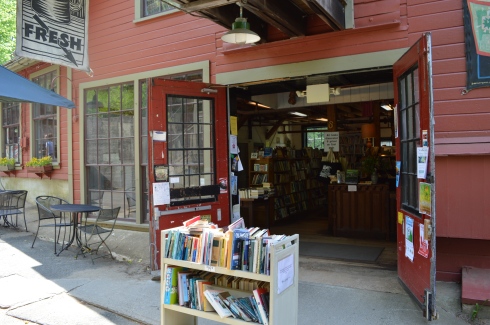
The great thing about the Bookmill is that it has kept much of the original charm and design of the past. Narrow stairwells and cozy corners are the hallmark of the shop. Memorabilia, such as old style typewriters, are scattered throughout the store. The staff doesn’t rush you nor do you feel a sense that profit is their main driver. Service and a respect for books seems to be the most important thing t the staff. It’s a great place for any book lover and anyone who loves to lounge around historic places.
This slideshow requires JavaScript.
They even have newspaper clippings and memorabilia along the walls in the more private areas.
The Bookmill is not the only shop in the area. In the shopping area there is also a cafe, The Lady Killigrew Cafe, located next to the book store and The Alvah Stone, a restaurant. There are also two art studios and an entertainment/media store called Turn It Up. Turn It Up specializes in selling cd’s, dvd’s, vinyl and even cassette tapes. They also sell other memorabilia. It’s a unique store in a very unique shopping area.
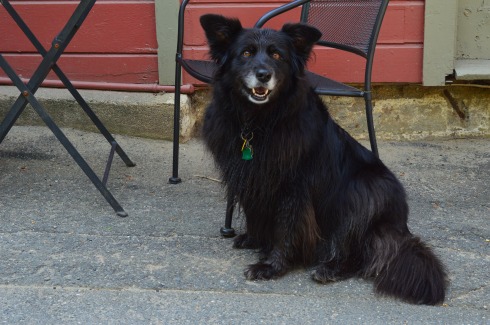
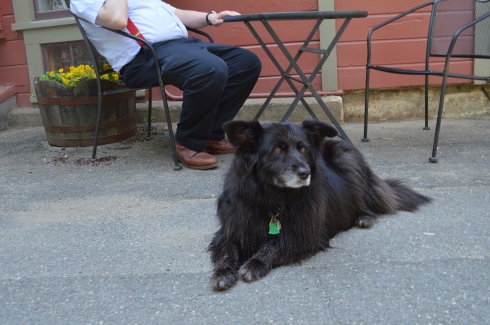
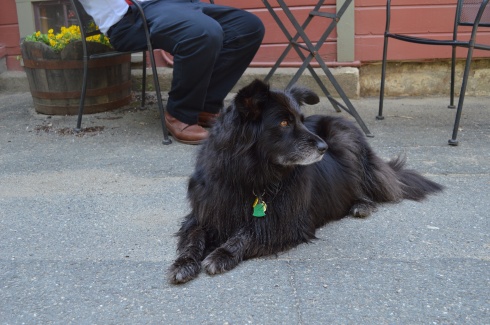
The owner of Turn It Up let me photograph his 10 year old dog and part owner, Daisy.
Below is a video of the waterfall and stream next to the Bookmill.
Please stop by and connect with me on my Facebook page: New England Nomad
Parking: There are about half a dozen parking spots next to the tower and they fill up quickly.(and they were all filled at 8 o’clock on a Friday morning). There is also parking at the gate of the entrance on Mountain Road for about another half a dozen vehicles. The walk to the tower from the main entrance is about a mile.
Cost: Free
Hours: Open 365 days a year from sunrise to sunset
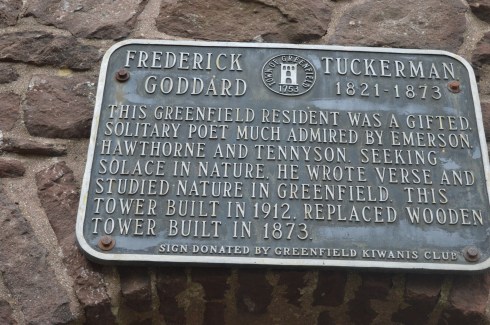
Perhaps it’s the unobstructed, sweeping views of the landscapes or maybe it’s the solitude of being in such an isolated tall structure. Whatever the reason, poets seemed to flock to this observation tower. It has since been known as the “poets seat tower” because of the long tradition of poets that have been attracted to the location. Frederick Goddard Tuckerman, a local poet at the time, is credited with bestowing this name on the structure in 1850. The tower, which was built in 1912, now attracts people of all walks of life, not just poets. Prior to the construction of the sandstone tower, a wooden observation tower had been built on the edge of the lookout in 1879. A plaque at the tower acknowledges Tuckerman’s role in the history of the tower.
Even before you reach the top of the tower, if you dare, there are some impressive views of the Greenfield (MA), Connecticut, Deerfield (MA) and Green River valleys. The ledge of the road where the tower is bult has a rocky ledge from where you can get some views of the Greenfield area below. It’s a long way down!
The highest point of Greenfield, the tower is 4 floors (counting the ground floor and top floor). The views from each floor are pretty stunning. After all the rain in the area, the greens were very vivid.
This slideshow requires JavaScript.
As I stood looking over the land below I couldn’t help but think of how the landscape has changed over the years. Many years ago people looked over farmlands and valleys. Now, we look over schools, houses, parks and businesses. I also thought about all of the people who came here to rid their mind and soul of their worries by taking in the beautiful views. It really can make you take a step back (and hopefully not forward) when you’re up so high and appreciating the nature around us.
The journey to the top is not difficult. A trip up one stairwell and one spiral staircase take you to the top.
The arches and architecture of the tower rival the beauty of the views from the top of the tower.
This slideshow requires JavaScript.
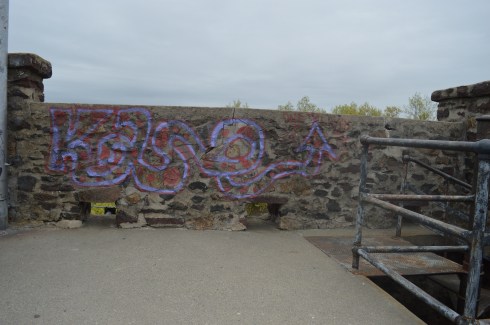
And what would a historic structure be without graffiti? As seems to be customary, particularly in Western Mass, there was graffiti on the walls of the sandstone structure. It did seem fitting that poetry lined the walls of “Poet’s Seat Tower”
“Jump off the cliff and build your wings on the way down”
The are also benches along the road to the tower which offer views of the area. There are also hiking trails that branch off from the road to the tower. The trails look easy to moderate but I could not walk on them because of time constraints. I did hear a lot of presumably animal activity in the woods.
Below is a video of the view from the top of Poet’s Seat Tower
If there is one thing Vermont and New Hampshire are known for, besides moose and lakes, it has to be covered bridges. But, of the 164 covered bridges listed for Vermont and New Hampshire one stands alone.
The Windsor-Cornish Bridge (or Cornish-Windsor if you like) is the longest covered bridge in all of New England. At 449 ft and 5 inches, the Windsor-Cornish Bridge is not only the longest covered bridge in New England it is the second longest wooden covered bridge in the entire United States just behind the Smolen-Gulf Bridge in Ohio (613 ft) which opened in 2008. It is, however, the longest wooden covered bridge as well as the longest two span covered bridge in the United States.
The bridge was originally framed at a nearby meadow northwest of the site and later moved to its proper location. As an aside, I didn’t see anyone cross it on a horse. But, if they did, they had better walk it across or be ready to pay their two bits.
It has been through three constructions and repairs due to being transported from another location and after being repaired due to flood damage and ice in 1977. In July, 1987, the bridge was closed to traffic due to deterioration and reconstructed in 1989. The bridge is listed on the National Register of Historic Places.
The Windsor-Cornish Bridge holds another unique distinction. It is one of the few bridges that used to be a toll bridge but no longer has a toll (usually it works the other way around in new England). The bridge was purchased by the state in 1936 and operated it as a toll bridge until June 1, 1943. The bridge does have two lane traffic but pedestrians traffic is not allowed.
The Windsor-Cornish Bridge is one resilient bridge. Previously, there have been three bridges built on this site in 1796, 1824 and 1828. All of these bridges were destroyed by floods. For now, though, the bridge still stands proudly.
The videos below show what driving through the tunnel (both ways) feels like.
In 1900, Stephen Salisbury II built a tower on what is now known as Salisbury Park as a tribute to his friend, historian and jack of all trades, George Bancroft. And to think, my friends only usually give me gift cards, wine and books for my birthday.
The park is has a wide variety of bird life.
As I was reviewing the photos, I couldn’t help feeling the tower was purposefully constructed to look as though it was incomplete. The sides are not rounded and seem almost as though they were cut off from the facade or the builder gave up half way through. But, as the photos show it was indeed constructed this way by design.
This slideshow requires JavaScript.
My favorite view from the tower was at the arched entrance.
The 56 foot tower is made of natural stone and granite. It was designed by Stephen C. Earle and Clellann W. Fisher.
The plaque at the memorial states:
BANCROFT TOWER
THIS TOWER WAS BUILT IN 1900
TO HONOR THE MEMORY OF
GEORGE BANCROFT
1800-1891
BORN AT THE FOOT OF THIS HILL
HE ROSE TO THE POSTS OF
SECRETARY OF THE NAVY
FOUNDER OF THE U.S. NAVAL ACADEMY
ANNAPOLIS, MARYLAND
U.S. MINISTER TO GREAT BRITAIN
AND GERMANY
THIS MEMORIAL WAS BUILT BY HIS
FRIEND AND ADMIRER
STEPHEN SALISBURY III
Jacks wasn’t impressed by the tower.
There were some views of the city from the parking lot.
During my visit and in my research after the shoot, I found out they let visitors inside the tower during October of each year. The views at the top are said to give 360 degree views of the area. The sorority and fraternity at the local college also holds a Halloween party for the kids in the area at the tower with mild scares. So, it looks like a visit in October is on my list!
A walking tour of the Bancroft Tower:
Please stop by my Facebook page and like my page for extra photos, videos and other fun stuff!
New Hampshire isn’t known as the “Live Free Or Die” state for no reason. The quote, which is said to have French origins and adorns license plates and other kitschy souvenirs, is directly attributed to General, and former New Hampshire resident, John Stark. It was at John Stark Park in Manchester, NH, that I found this historical tribute to the revolutionary warrior.
The remaining of the “live free or die…”quote is lesser known, yet just as poignant.
For someone who is so heroic and brave, General Stark is not someone who many of us are familiar with. But, heroic he is. As the plaque in front of his statue explains, after being kidnapped by a Native American tribe and eventually ransomed, Stark joined the American Revolution and became a general. His most notable achievement was in 1777 when he commanded his troops to prevent British troops and supplies from connecting with the main army in Saratoga, New York, which was considered a key point which led to the American victory in the war.
Crisp blue skies awaited me at the park. It almost felt fall-like. What struck me most about the park was how peaceful it was. The gazebo is a nice touch also. The statue of General Stark was sculpted by Richard Recchia in 1948. The park is one of the older parks in New Hampshire, dating back to 1893 (it is the second oldest park in Manchester).
This slideshow requires JavaScript.
General Stark his, wife and a few of their children are buried at the bottom of the hill from the entrance.
One of the interesting things about Stark Park is the loop behind the park. It’s only about a quarter of mile and it is a great place to take your dog for a walk. But, there is a trail that branches off to a bridge and some other trails which eventually lead to the Heritage Trail. But, apart from some interesting trees and some wildlife, there isn’t much on the trails. Most of them lead to residential areas. I walked most of the narrow trails as far as I could go before they ended, rather disappointingly, at roadways and residential areas.
The big payoff to walking the loop behind the park was meeting Bennie. Bennie is a Chinook which is the state dog of New Hampshire.
Holidays and mansions. Sounds like a pretty good combination to me. That is what the folks at the Newport mansions are offering all their patrons. As part of the holiday season, the Newport mansions have been decorated for the season. The $29 tour includes 3 of the mansions (The Elms, The Breakers and The Marbles). But, I was only able to see The Elms Mansion.
The mansions aren’t the only ornate buildings in the area. Some of the homes in the area are very pretty as well. Before you arrive at the mansions, you can peak at the pretty houses in the neighborhood.
When you enter the mansions, you are given an audio player with headphones to use as part of the self guided audio tour. Indoor photography is limited to certain rooms (usually they don’t allow photography at all in the mansions but they relaxed their policy slightly for the holiday tours). I might have sneaked in a few more photos from the rooms that weren’t authorized for picture taking. It’s actually kind of a good thing that they limit photography because you could easily be inundated with things to photograph. One room seemed more beautiful or interesting then the previous room.
This slideshow requires JavaScript.
Photo taking is allowed on the exteriors of the mansions and the grounds of the buildings.
The mansions are available for tours throughout the year. So, if you can’t make it there during the holiday try going another time when it is less busy. If you go to the holiday mansion tour, it is only during daylight hours. Parking can be difficult, especially if you arrive later in the day. But, you should be able to find parking somewhere in the area if you can’t find a spot in the parking lots at the mansions.
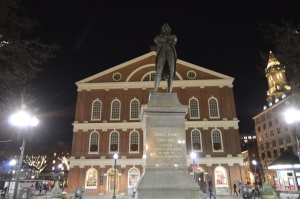
There may be nothing more festive than the holidays in the city. The city is so alive. Lights illuminate the dark city streets. Children gaze at all the trees and decorations. Even adults get into the spirit of the season. This was not more evident than at Faneuil Hall in Boston.
There are many statues and memorials at Faneuil Hall. This statue of Samuel Adams stands in front of Quincy Market. You can see some of the lights in the background. There is so much to photograph in the area and I will include other shots from the area in a blog post another time. I wanted to focus mainly on the holiday decorations and lights in this post.
Trees are lit up throughout Faneuil Hall.
Stores and restaurants also decorate for the season.
The main attraction has to be the tree, though. The lighting was not very good so I included a few different photos in the slideshow below.
This slideshow requires JavaScript.
Some of the lights blinked, which was hard to get in the photos. So, I have added a video below to show off the really cool display
Who would ever think people would travel from all over the country and all over the world just to see a rock? Yes, a rock. This is not just any rock, though.
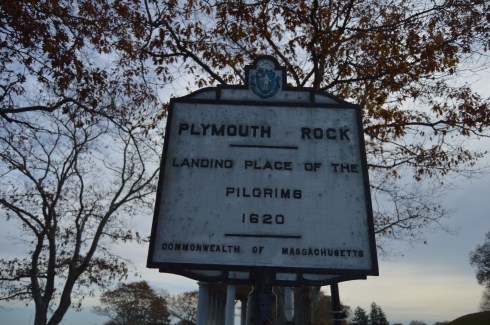
The rumored landing spot of the Mayflower, Plymouth Rock is one of the more disappointing yet often visited sites south of Boston, MA.
Despite it’s popularity, the rock at Plymouth Rock is not the actual rock the Mayflower struck. In fact, the rock has been said to have been moved at least three different times and the rock has been said to have been damaged several times, breaking in half at one point. Not only that, but the passengers of the Mayflower initially landed in Provincetown in Cape Cod.
While the rock itself probably isn’t the actual rock the Mayflower struck upon its landing and it’s not the actual initial landing spot of the Pilgrims, it is symbolic of the voyage the persistence of the people who landed there.
Located in walking distance of the Mayflower II, the rock is located at the bottom of a pit and protected by a fence.
The rock is located in a structure with pillar columns.
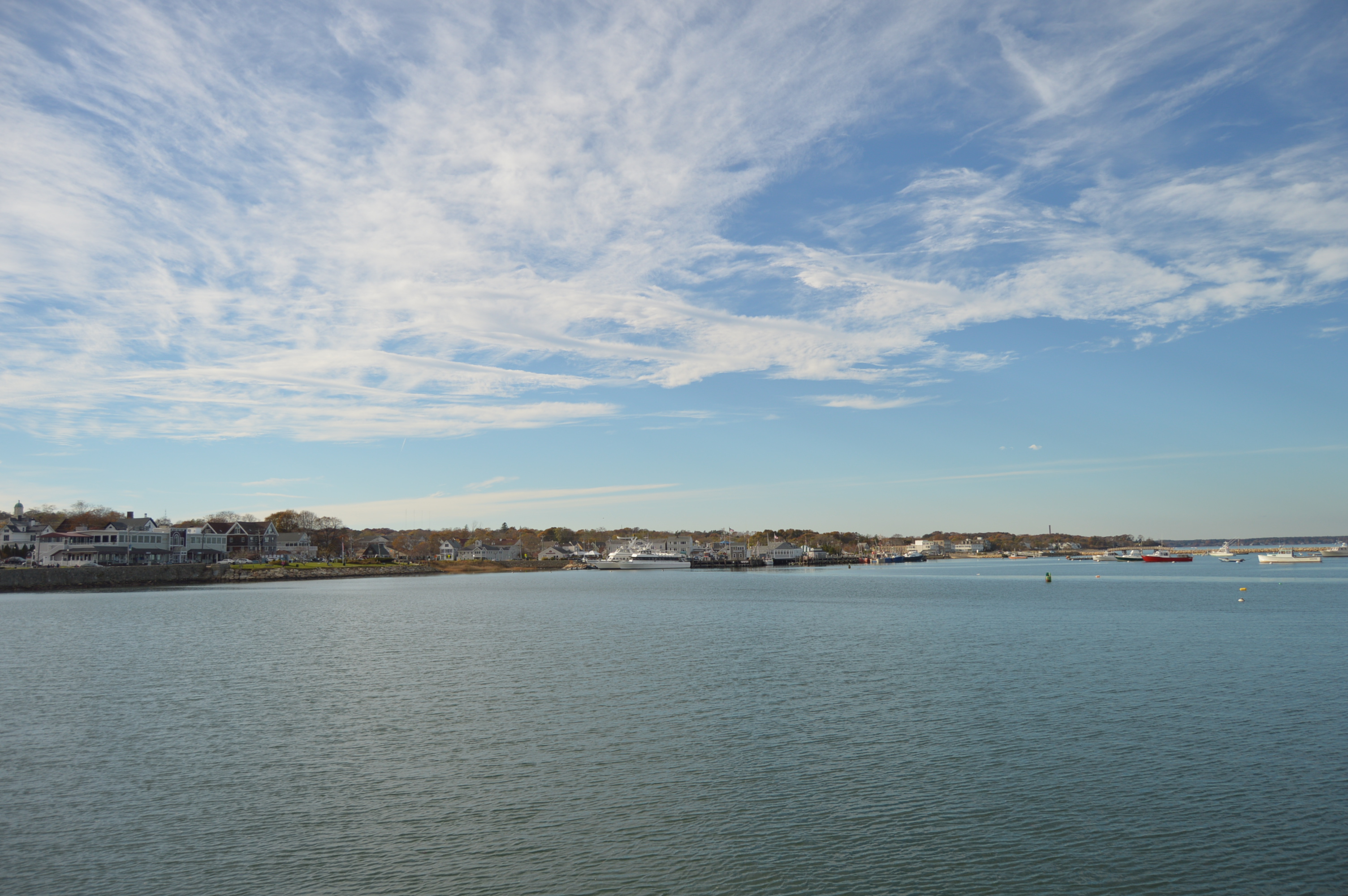
The harbor is usually teaming with activity.
There is also a monument located across the street from Plymouth Rock. The Pilgrim Mother was donated in 1921 to celebrate the Tercentenary of the Mayflower landing by the Daughters of the American Revolution.
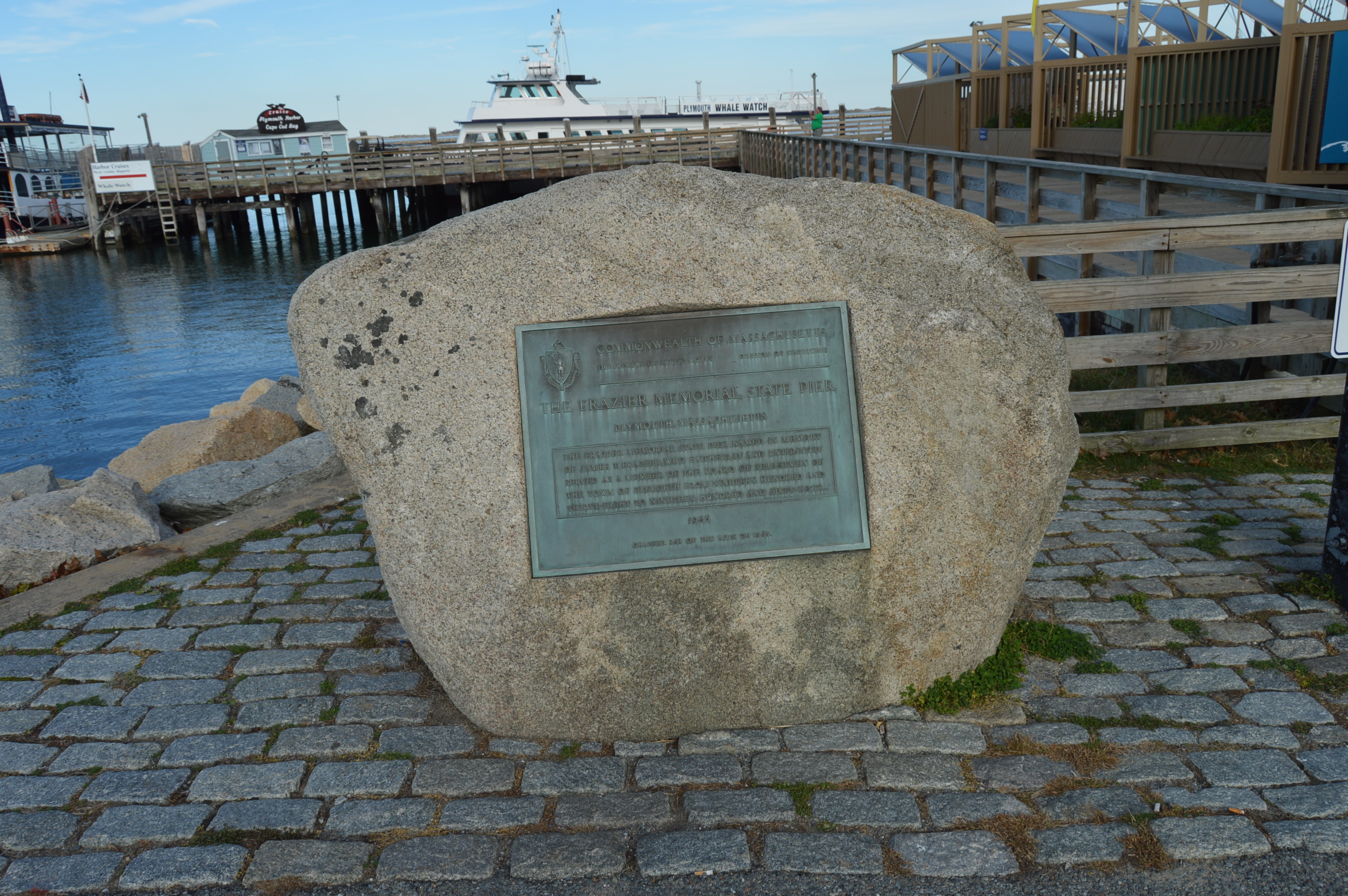
After visiting Plimoth Plantation, the next obvious destination was the Mayflower II. The Mayflower II, an exhibit of the Plimoth Plantation, is a replica of the original Mayflower. It is located only a few miles from Plimoth Plantation in the Frazier Memorial State Pier.
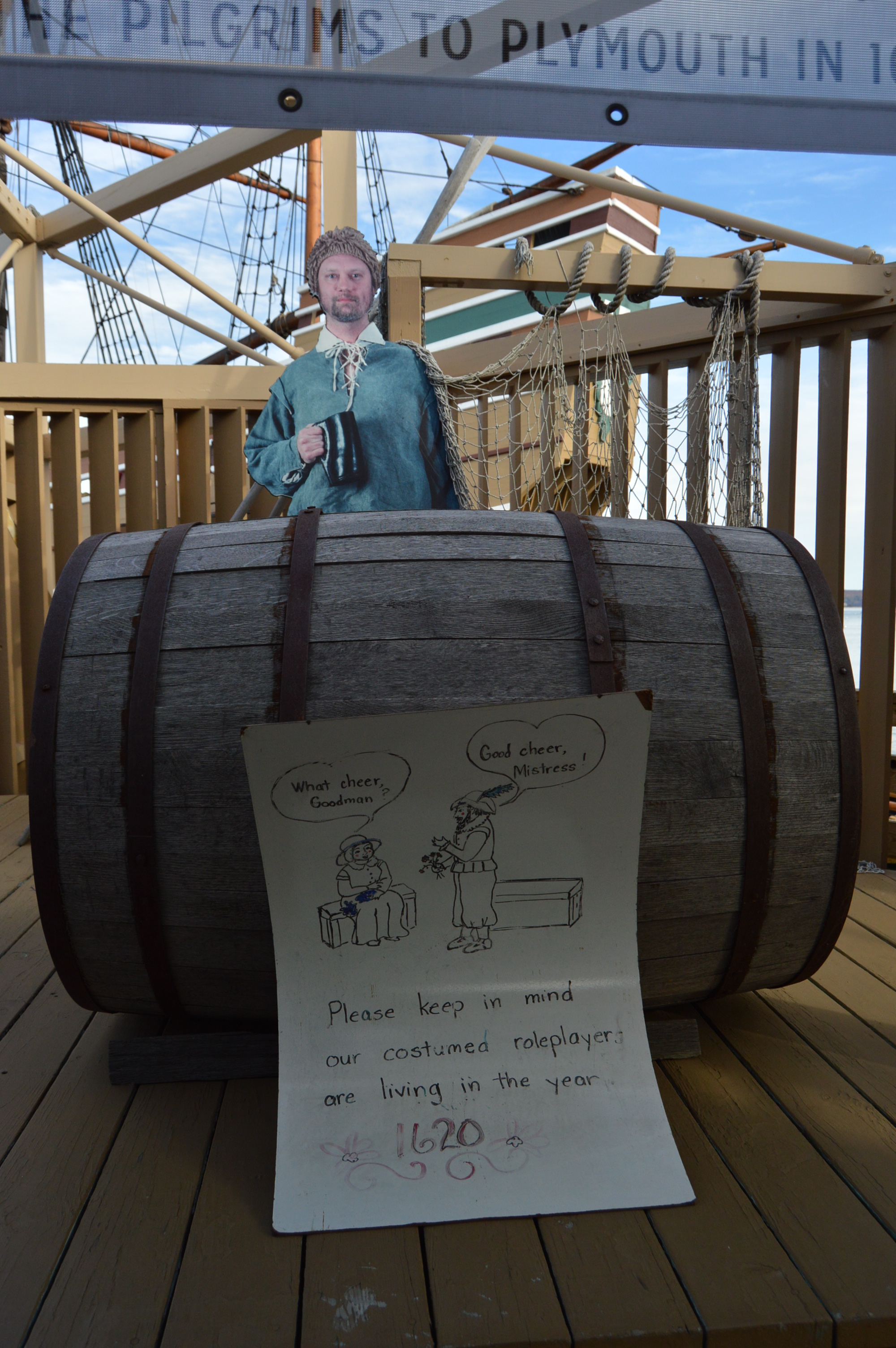
Before you board the boat, you are informed the people on the boat are still living in the 17th century. They are not aware of cellphones, automobiles or any other modern day comforts. There is a replica of the Mayflower Compact in the entrance to the boarding area.
Actors on the boat discuss the duties of crew members and portray people from that era. This man reminded me of James Franco, particularly because of his dry sense of humor.
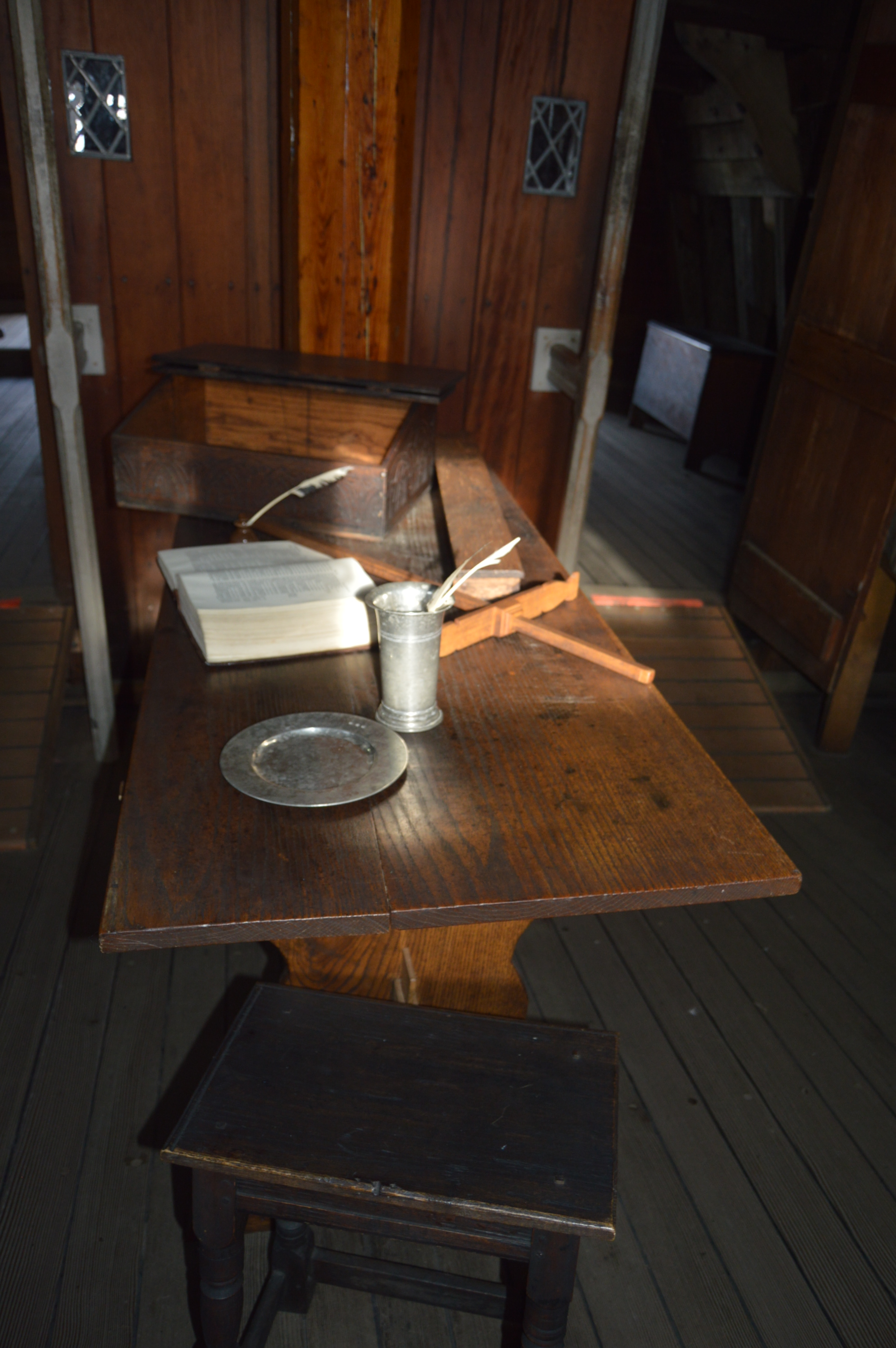
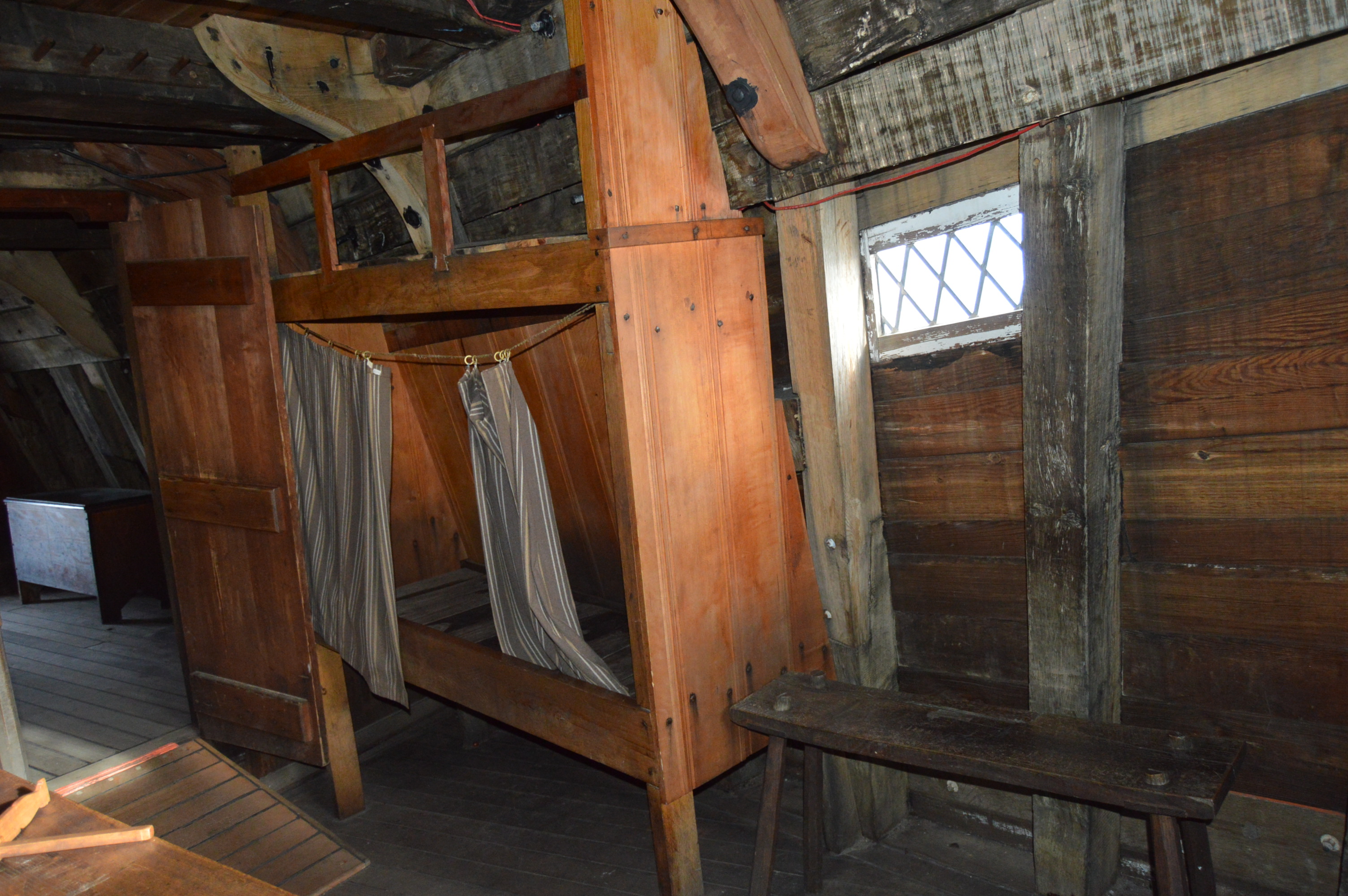
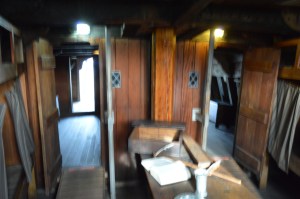
The quarters of the Mayflower were not the most comfortable. Not exactly Carnival Cruise.
The views from the harbor were very pretty.
Meet Porsche, a service dog I saw as I was leaving the pier.
Walking into Plimoth Plantation is like walking back in time.
The constructed plantation is both educational and entertaining.
A short video running in the visitor center runs on a loop and gives you some background of the plantation. It also gives a little history of the historical of the place a history of the area.
The plantation is divided into two sections: the Wampanaog Homesite and the Colonial English community of the 1600’s.
All of the people on the Wampanaog Homesite are Native Americans (they’re not actors or re-enactors). They are from the Wampanaog tribe or one of the other tribes indigenous to the Plymouth area. A cutout on the trail before you reach the Wampanoag Homesite reminds visitors that not every native American “is the same”. While most of the people residing at the Homesite are Wampanoag, not all of them are. Also, the cutout reminds people to not call the people “braves” or any other demeaning and sterotypical term as they are not considered compliments or polite ways to address the people there.
The views on the way to the Homesite and at the main visitor center are very pretty.
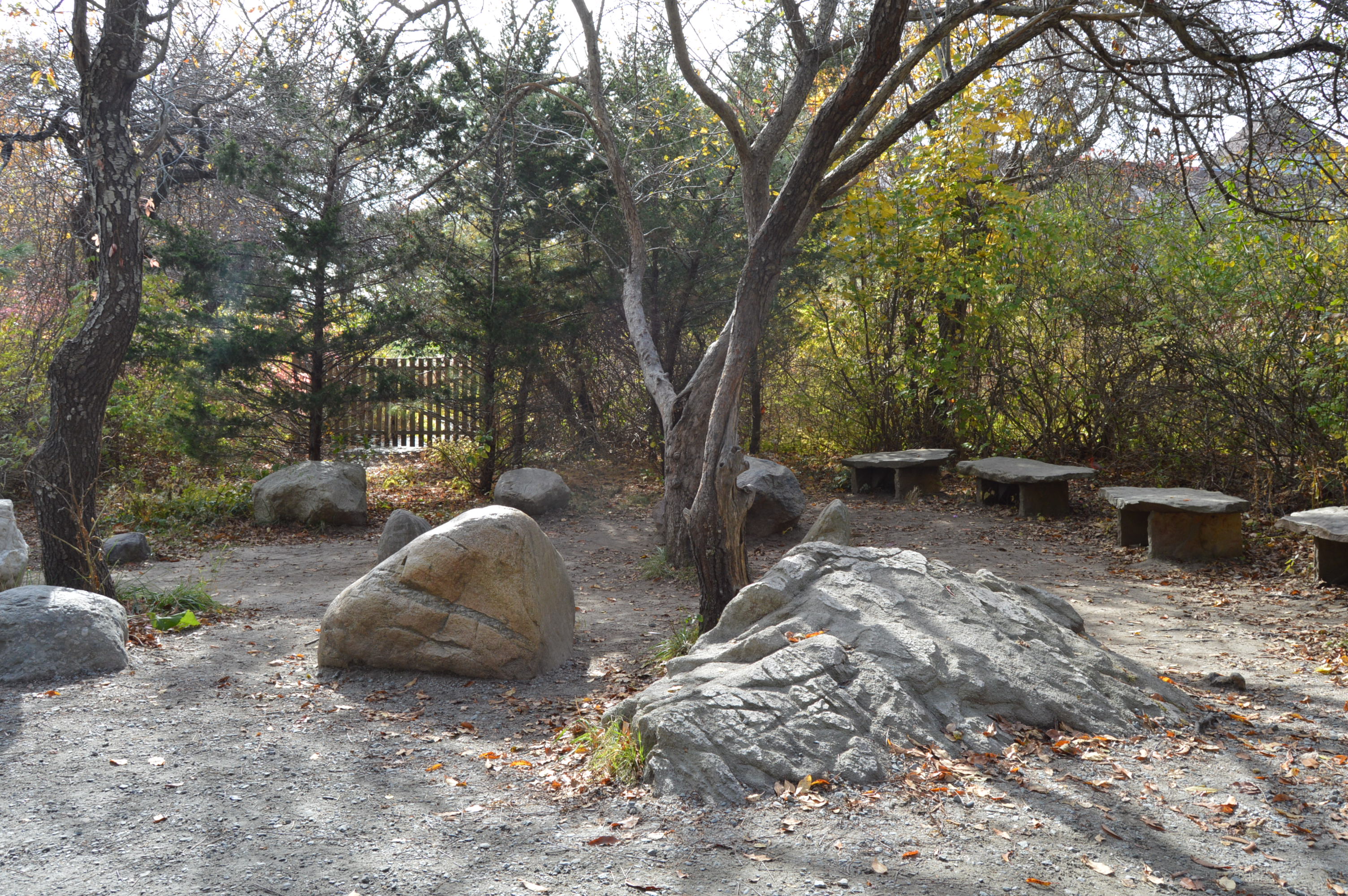
This is a Gathering Circle located on the trail to the Wampanoag Homesite.
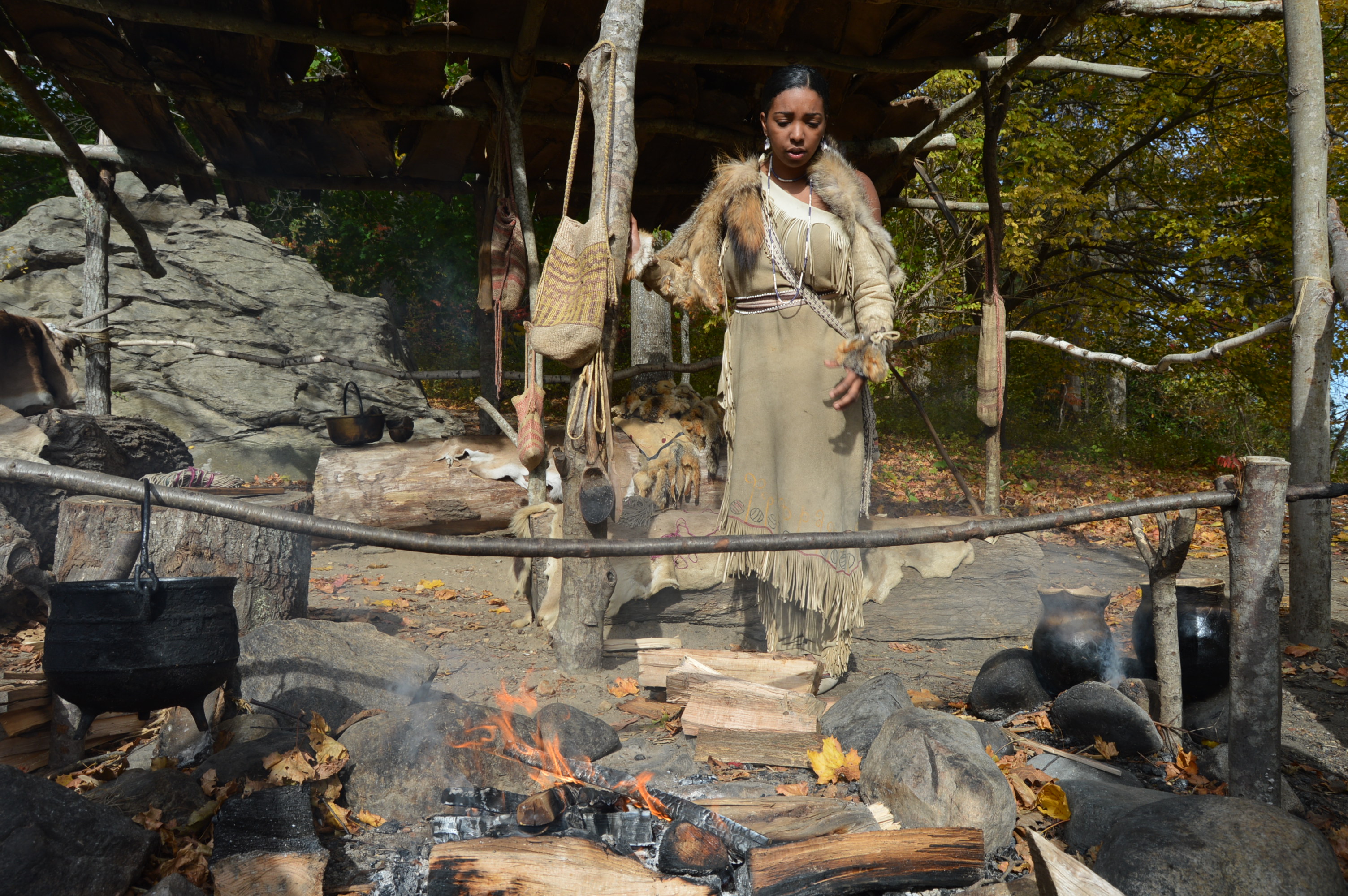
The Native Americans at the Homesite tell stories about their life there and describe what tasks they are completing.
This woman was showing how they cook their food and answering questions from the visitors.
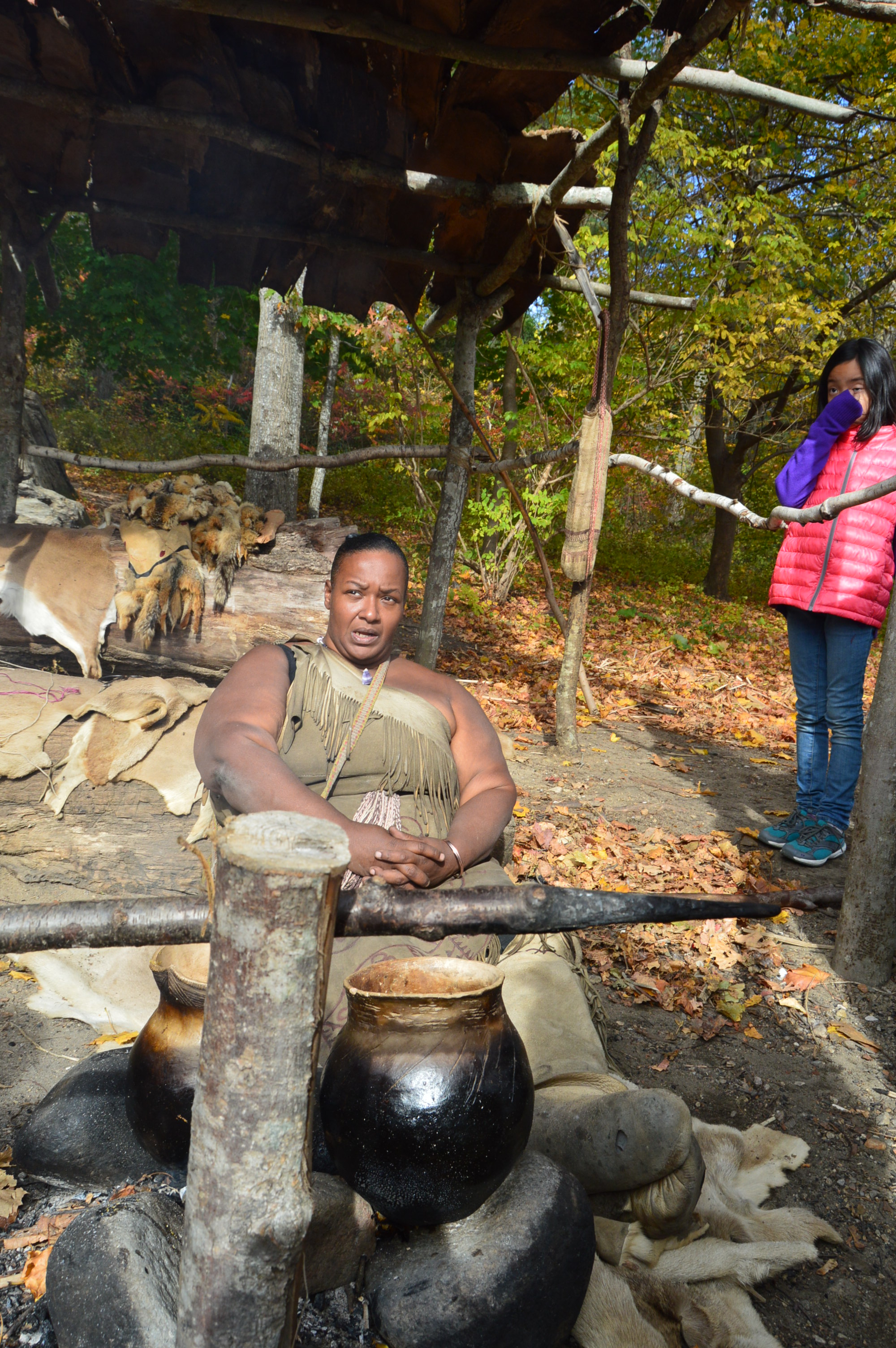
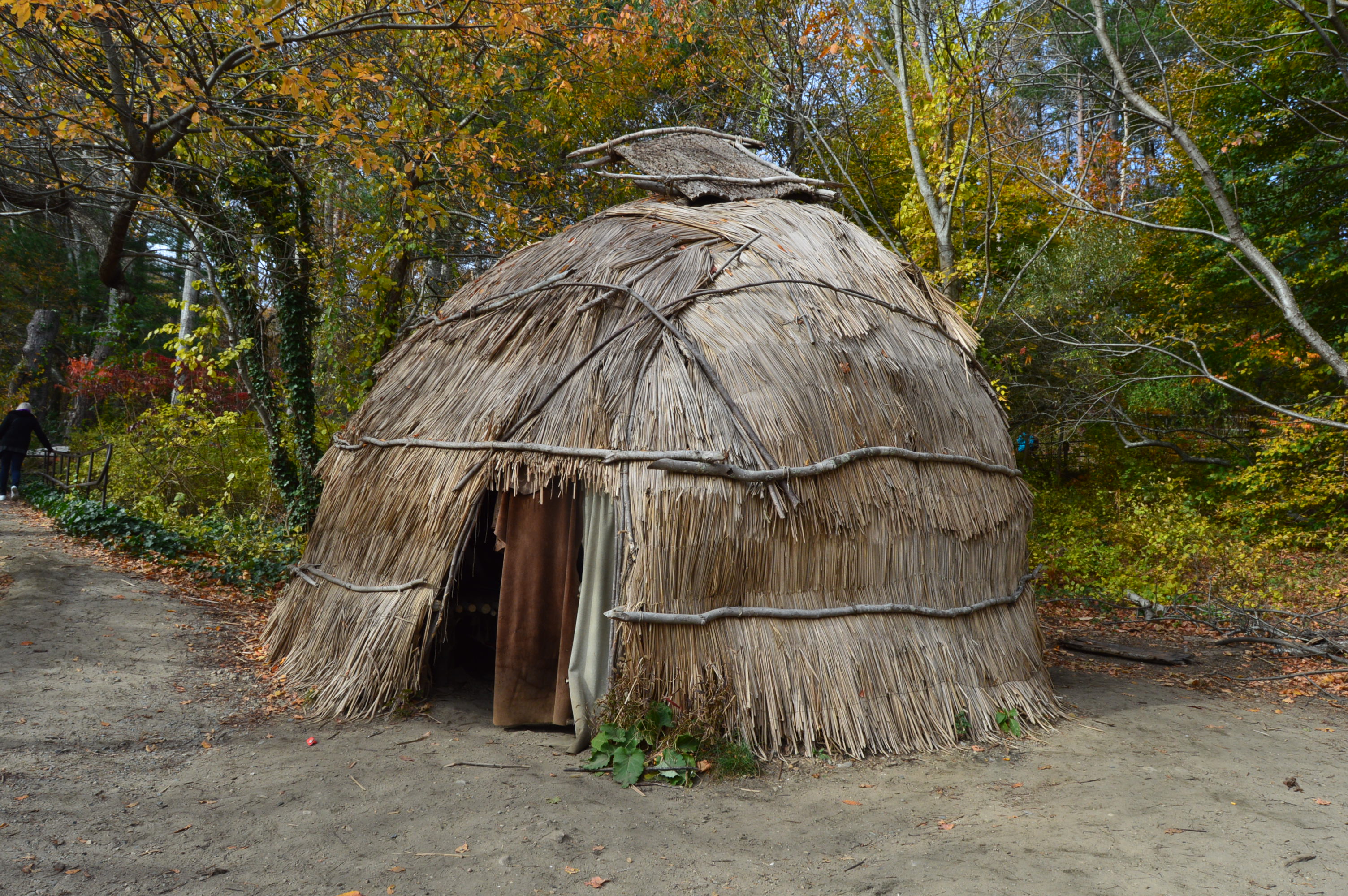
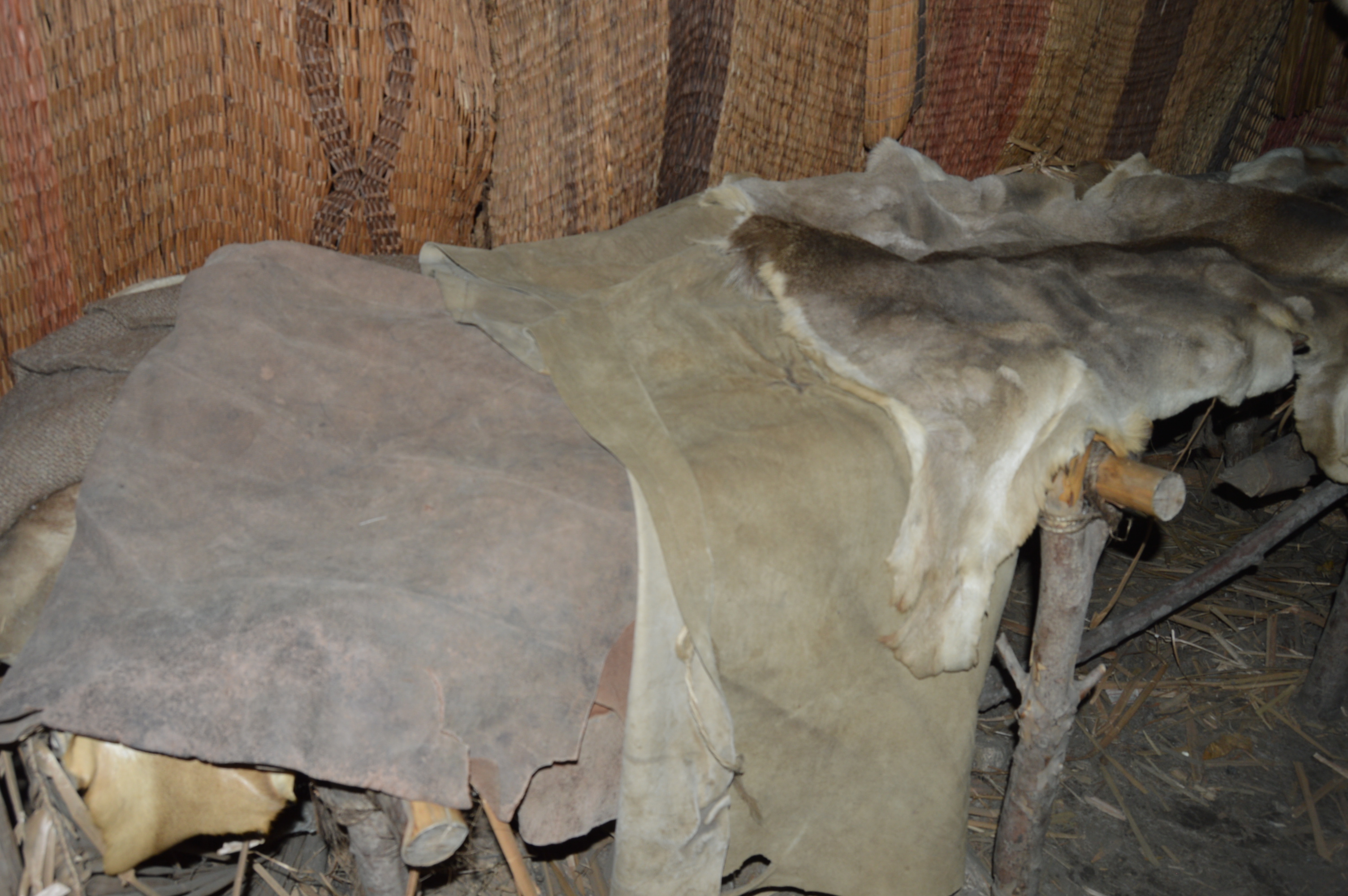
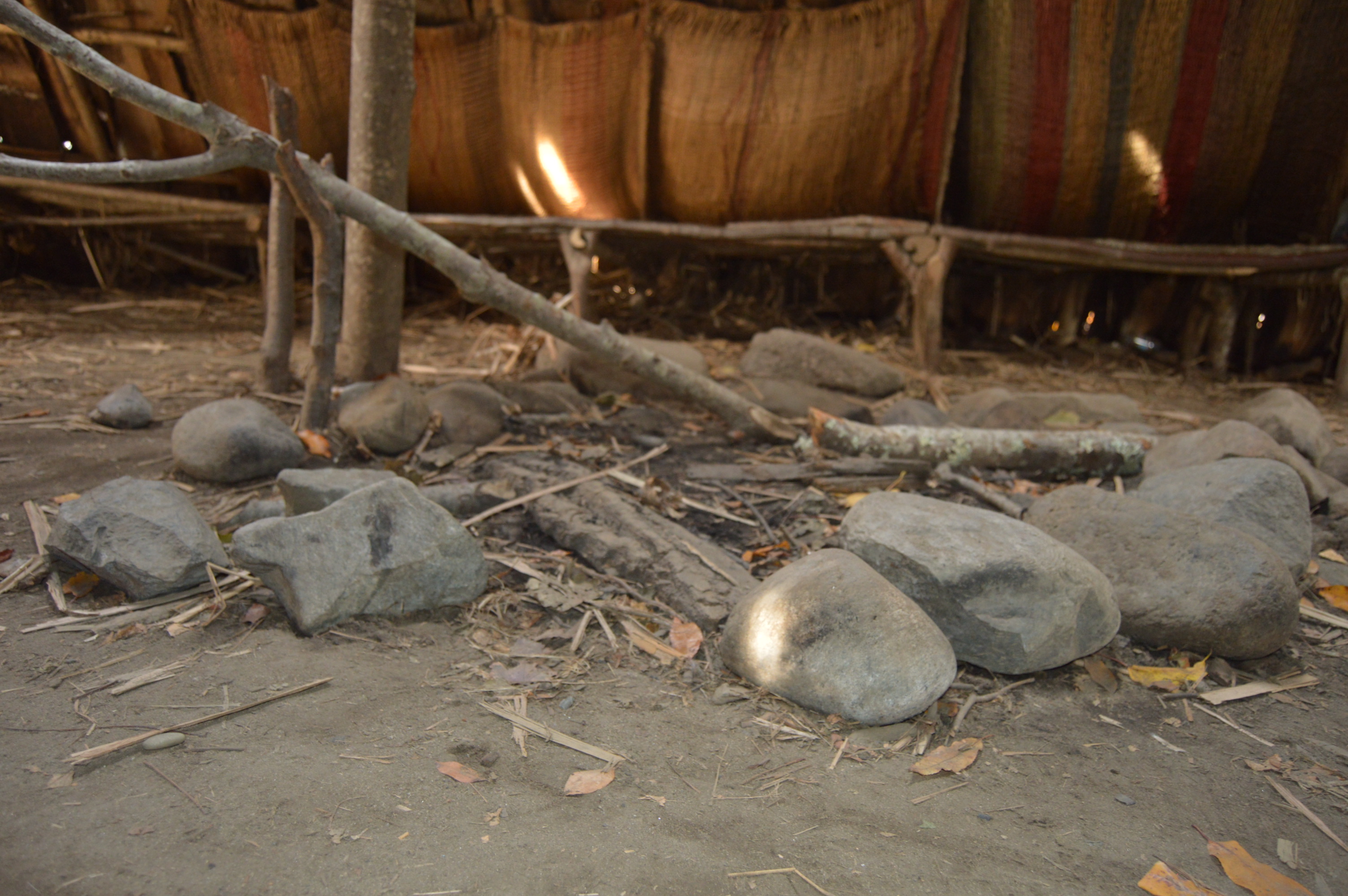
The Native Americans answer questions inside one of the wigwams at the plantation.
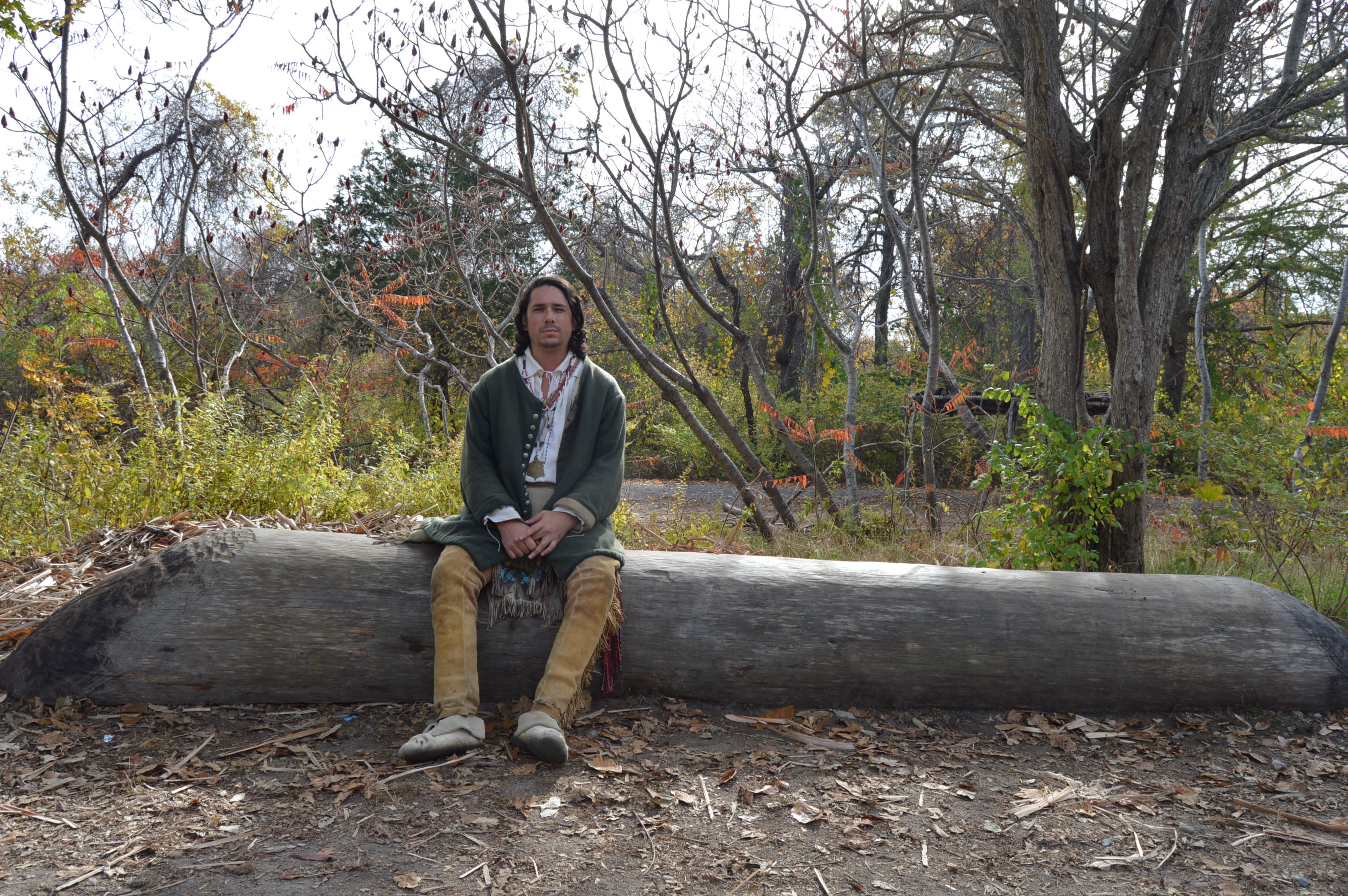
These men were hollowing out a boat.
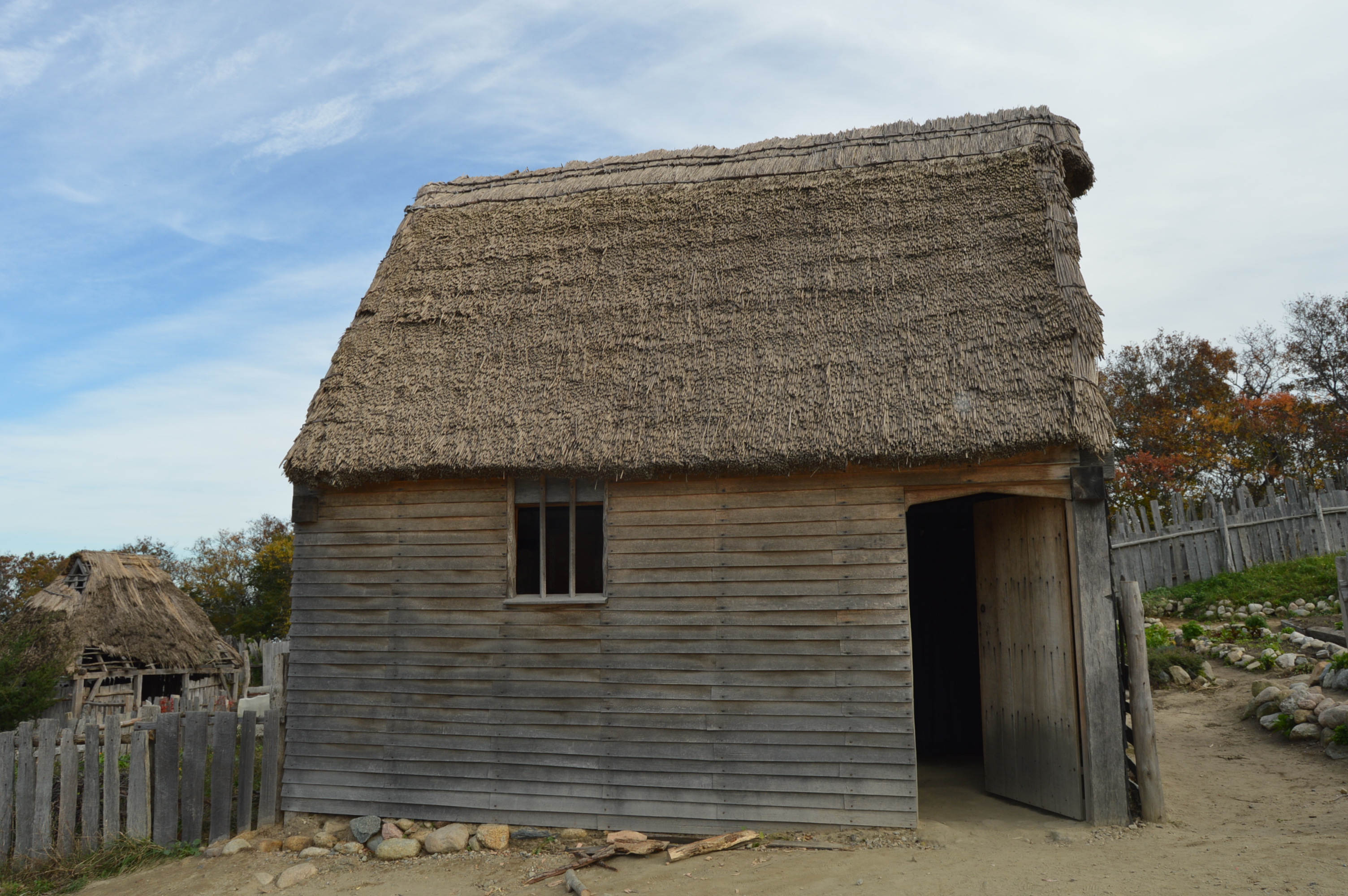
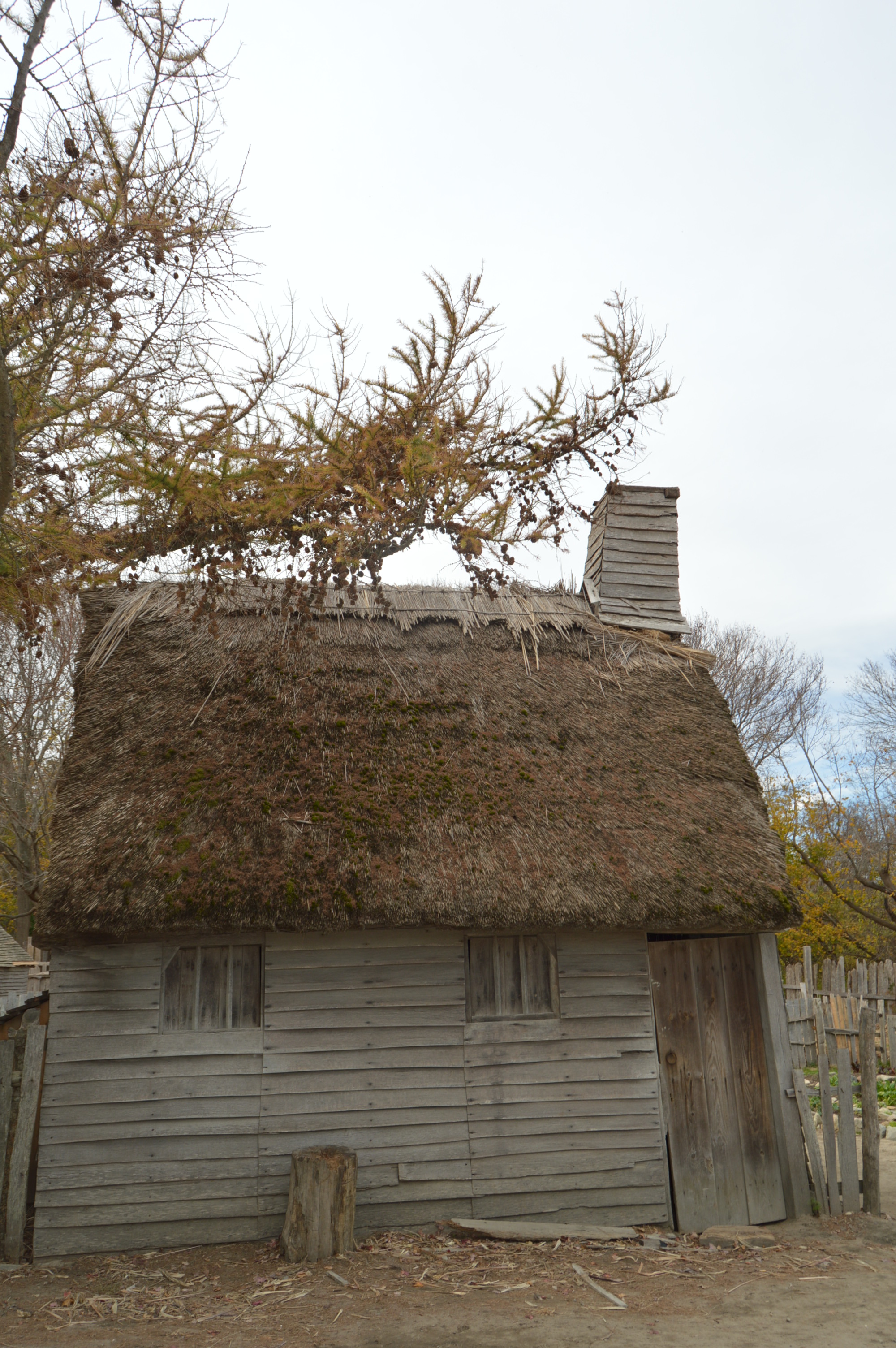
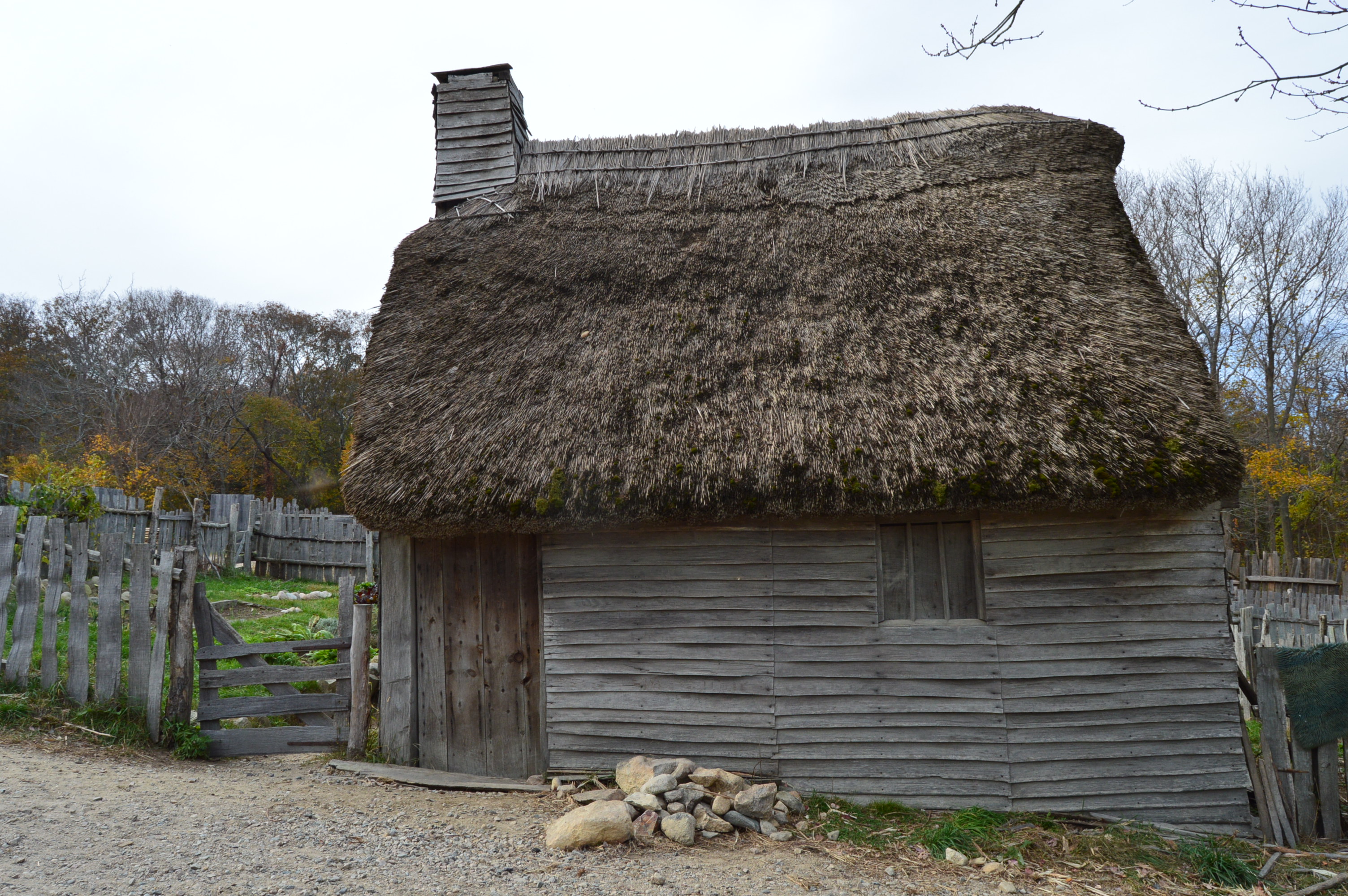
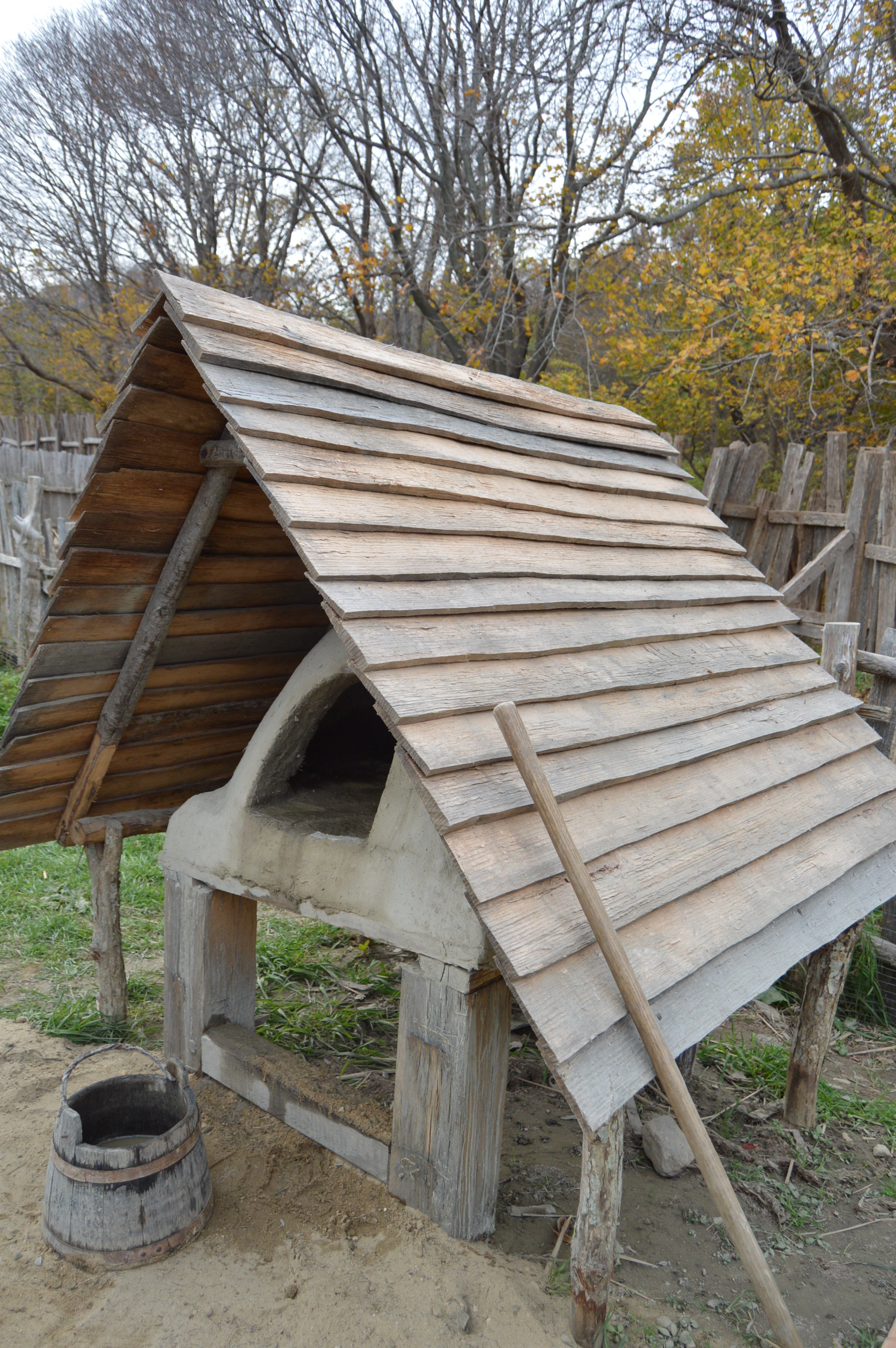
There are structures made with the same materials and the very same way they were built in the 1600’s and earlier.
This is a meeting room where elders and the rest of the people would meet to discuss issues affecting the community.
After exiting the Wampanoag Homeesite, a stairway leads to the English side of the plantation
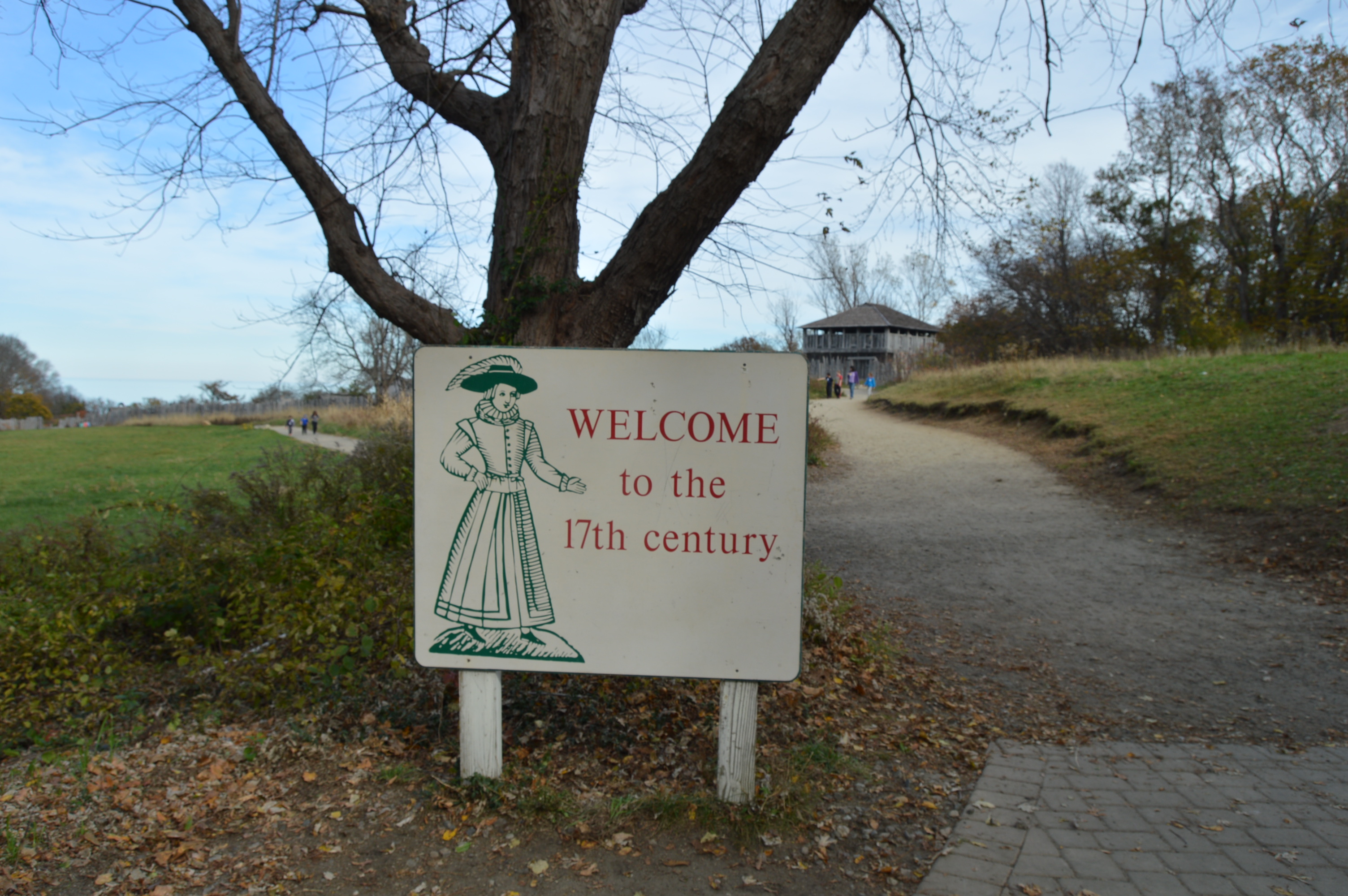
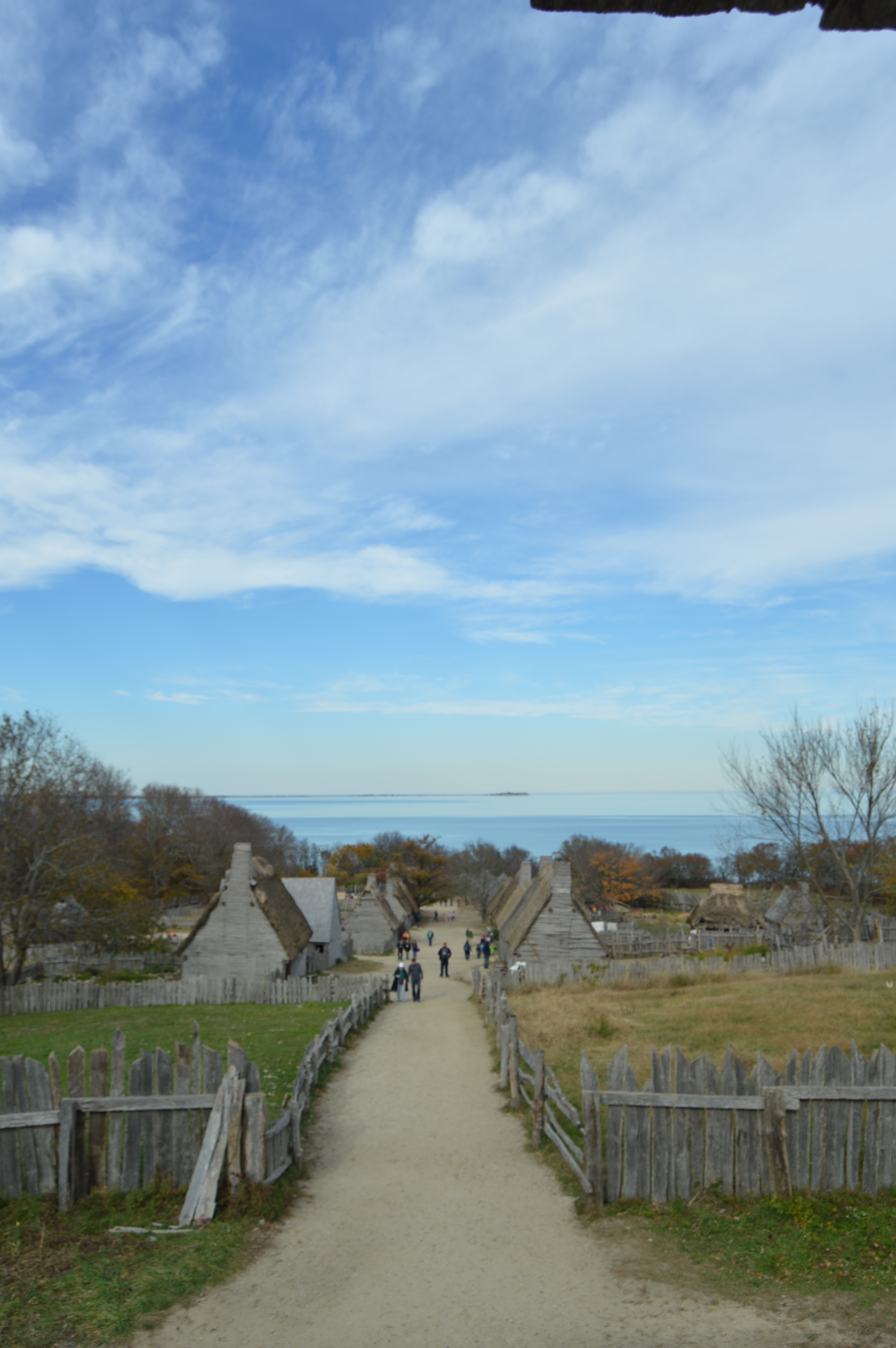
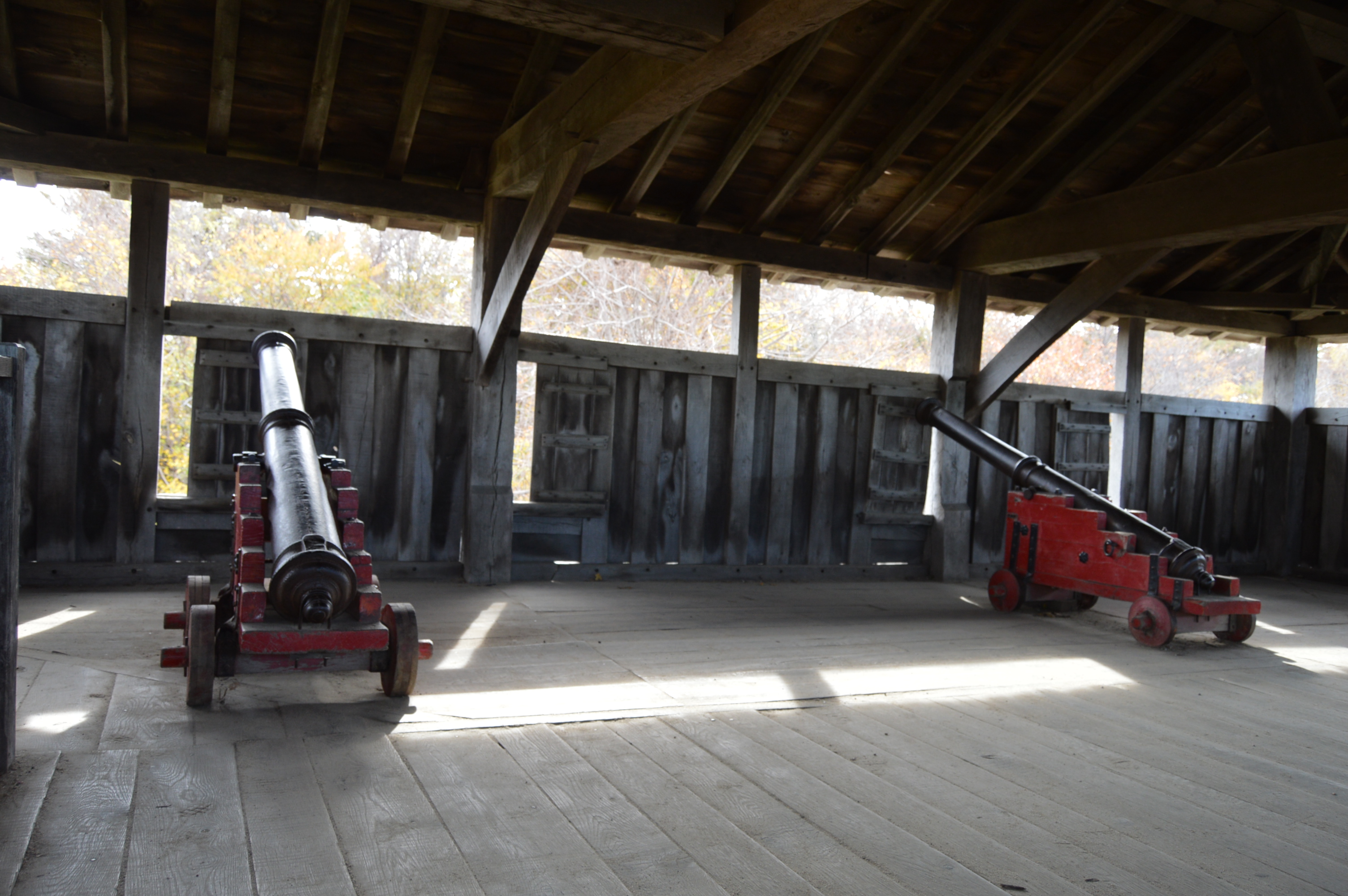
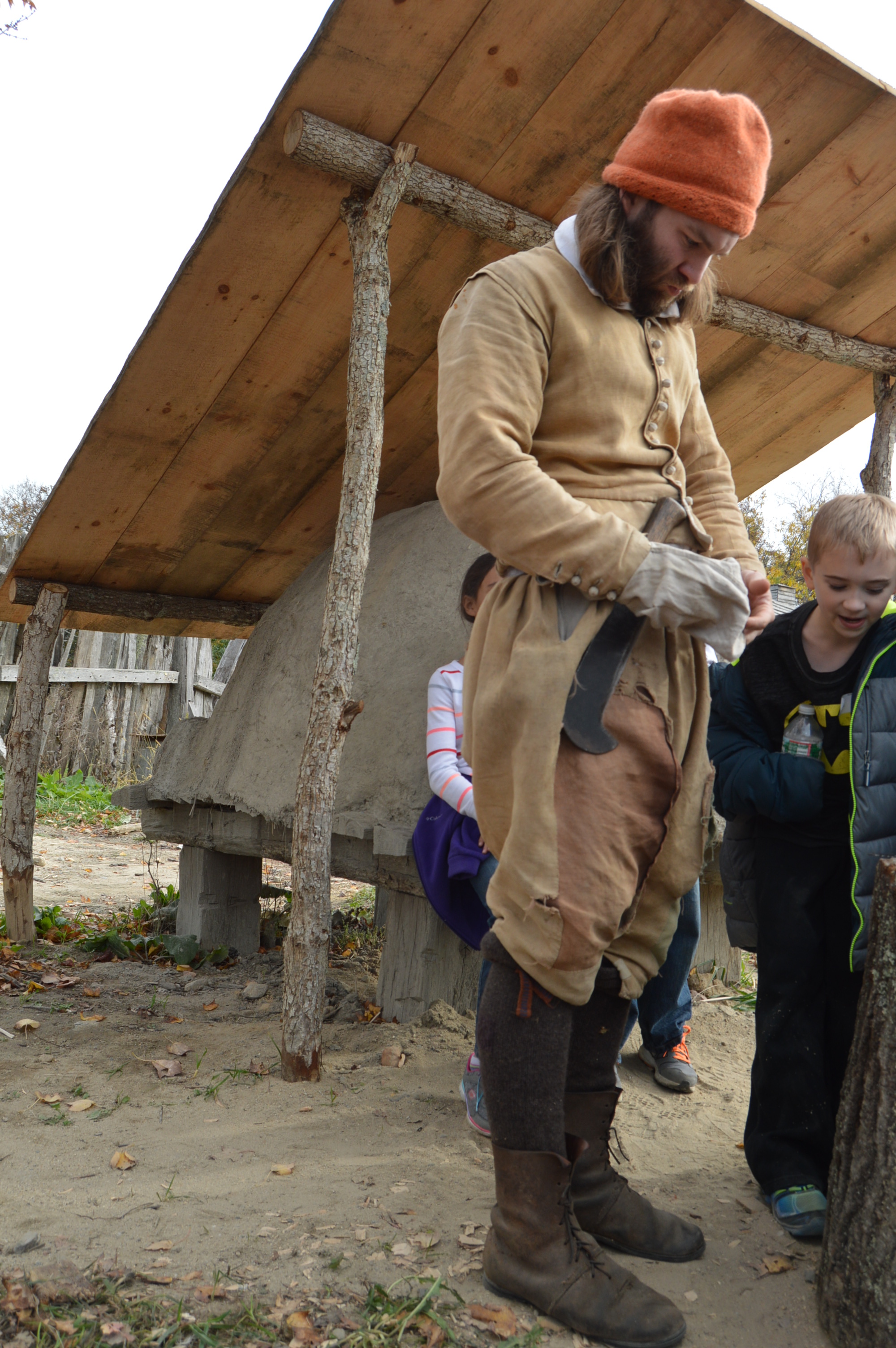
Everything past this sign is pure 17th century. The structures, the clothing the people wear and the way the people speak are all from the 1700’s. This fort acted as a lookout.
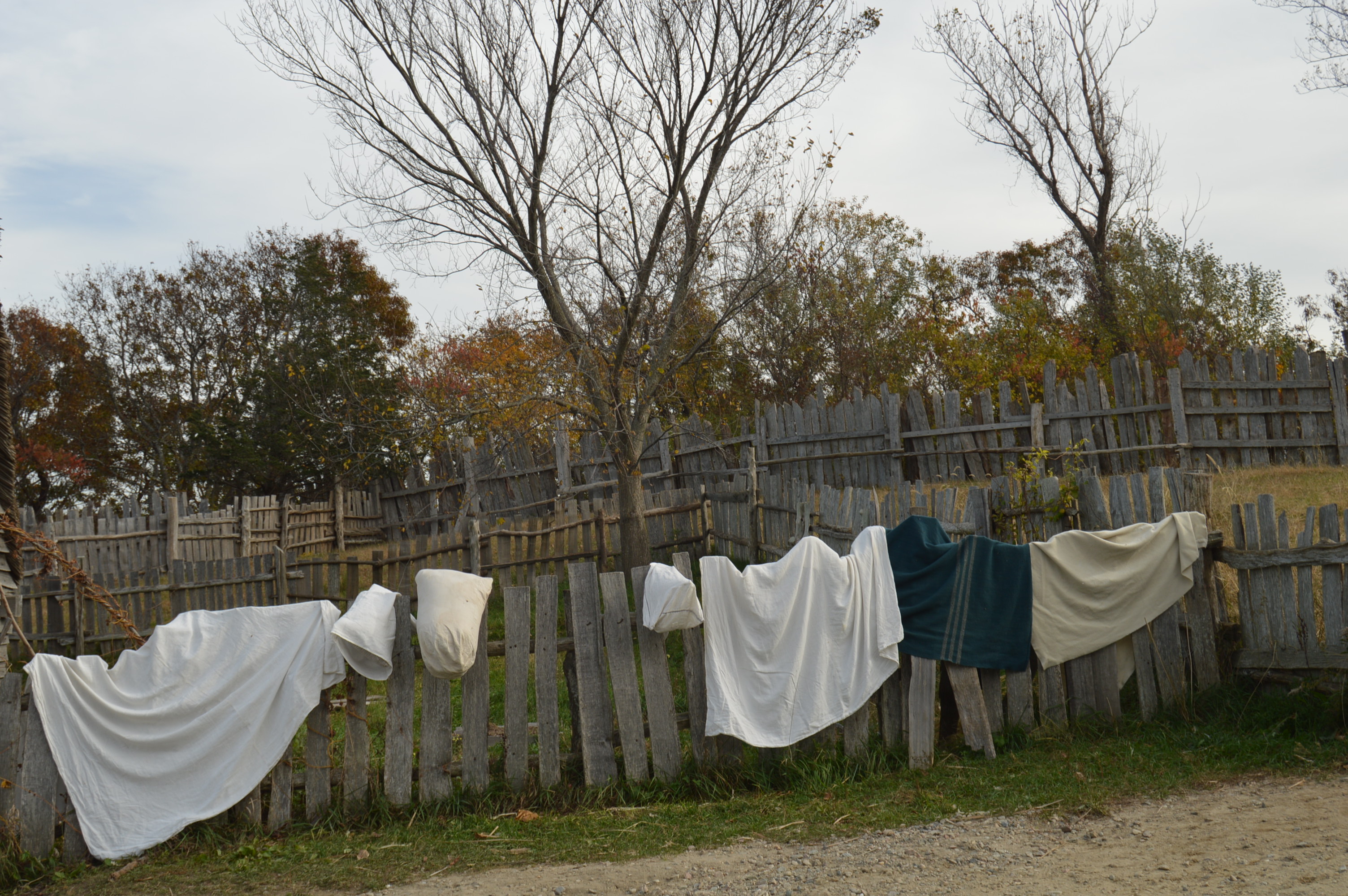
The people even wash their clothing the old way.
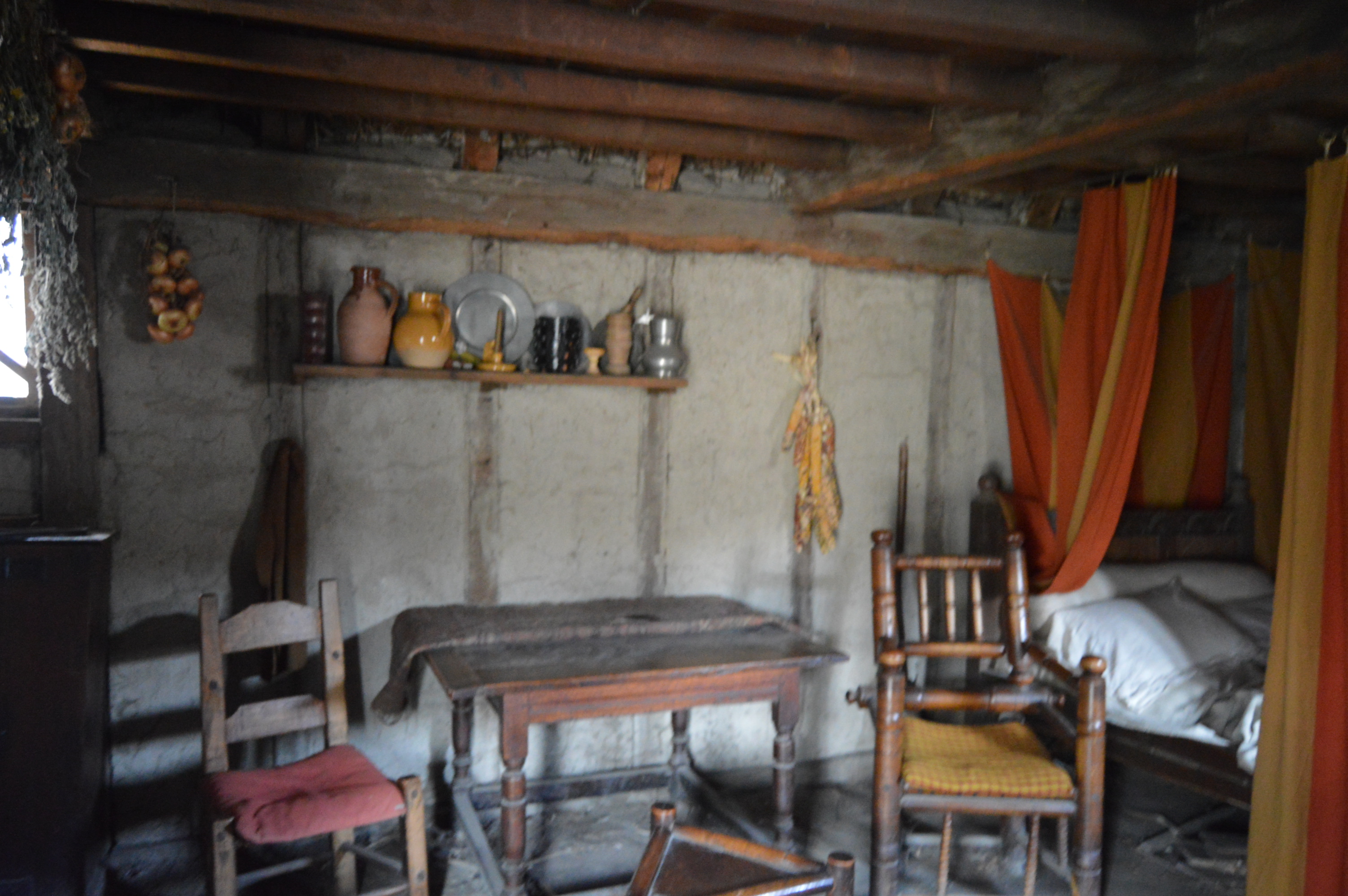
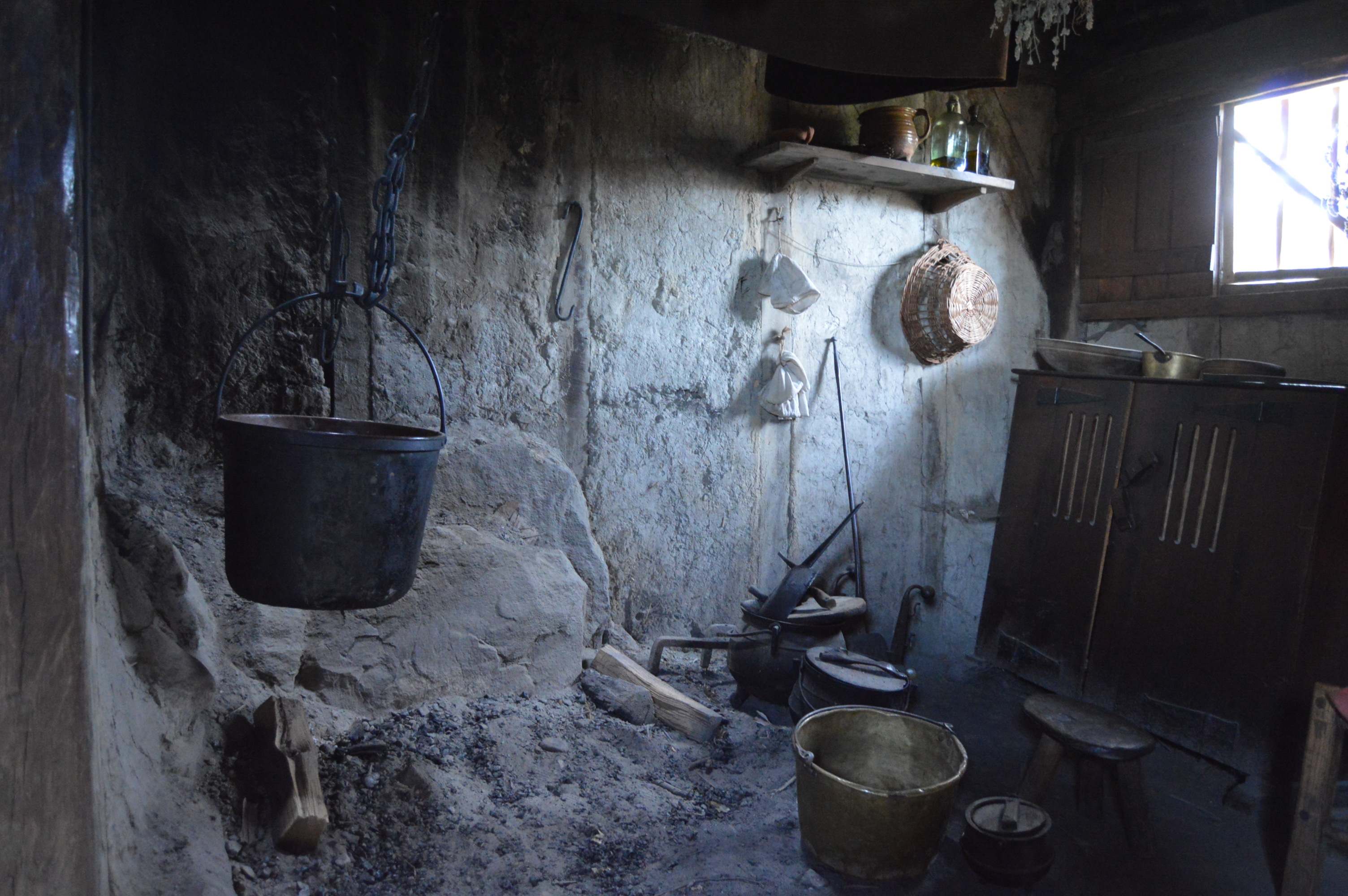
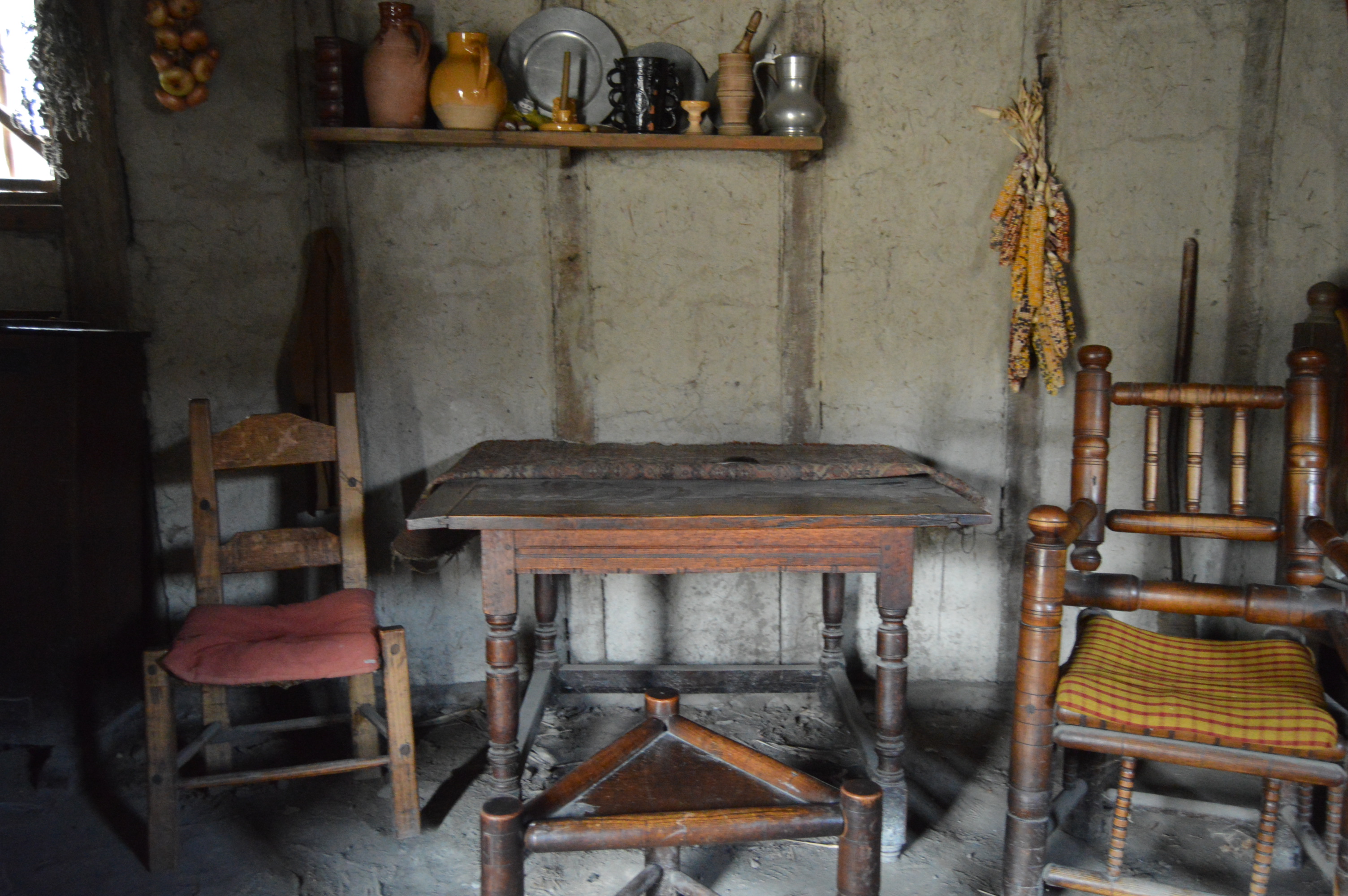
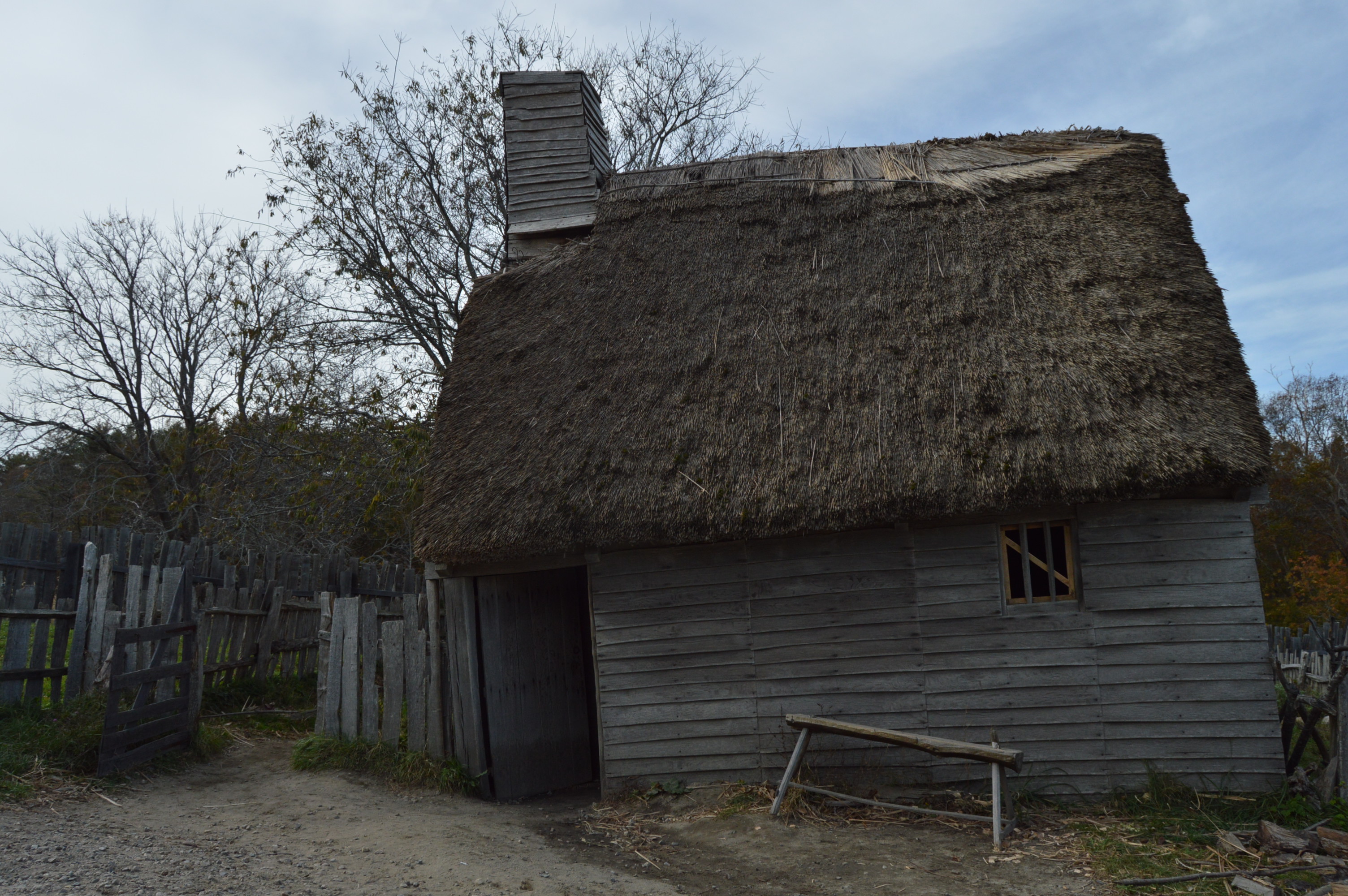
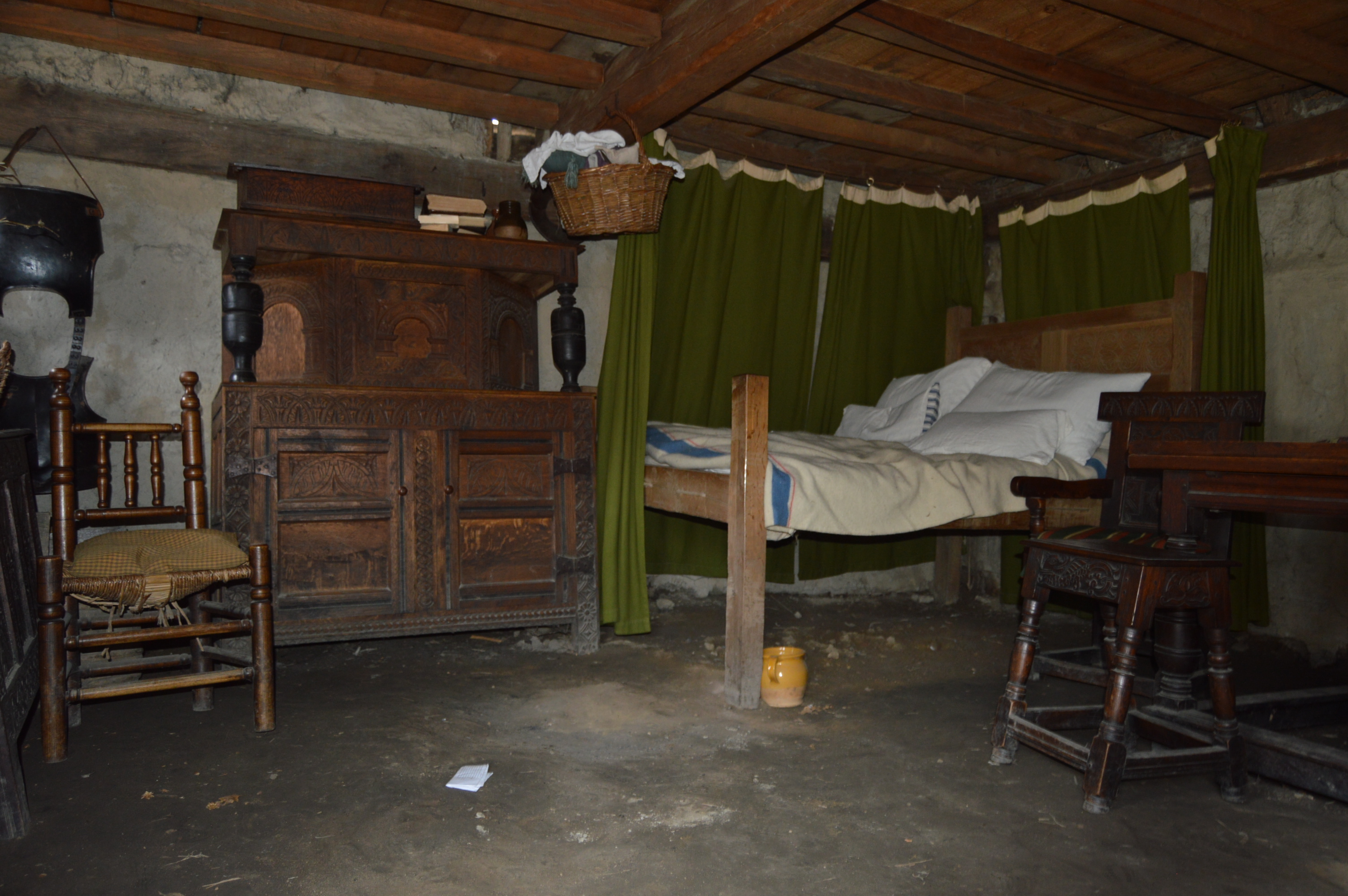
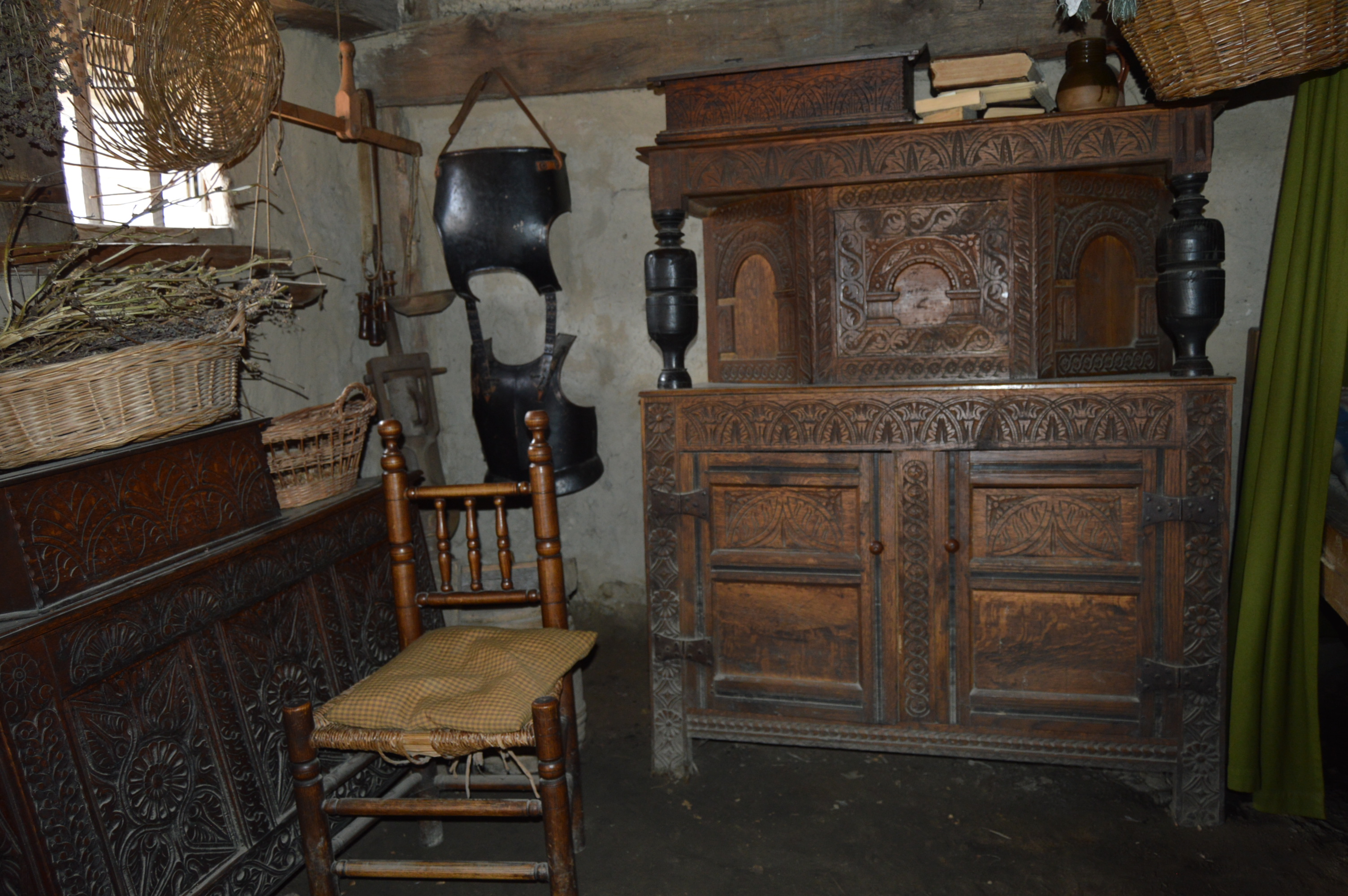
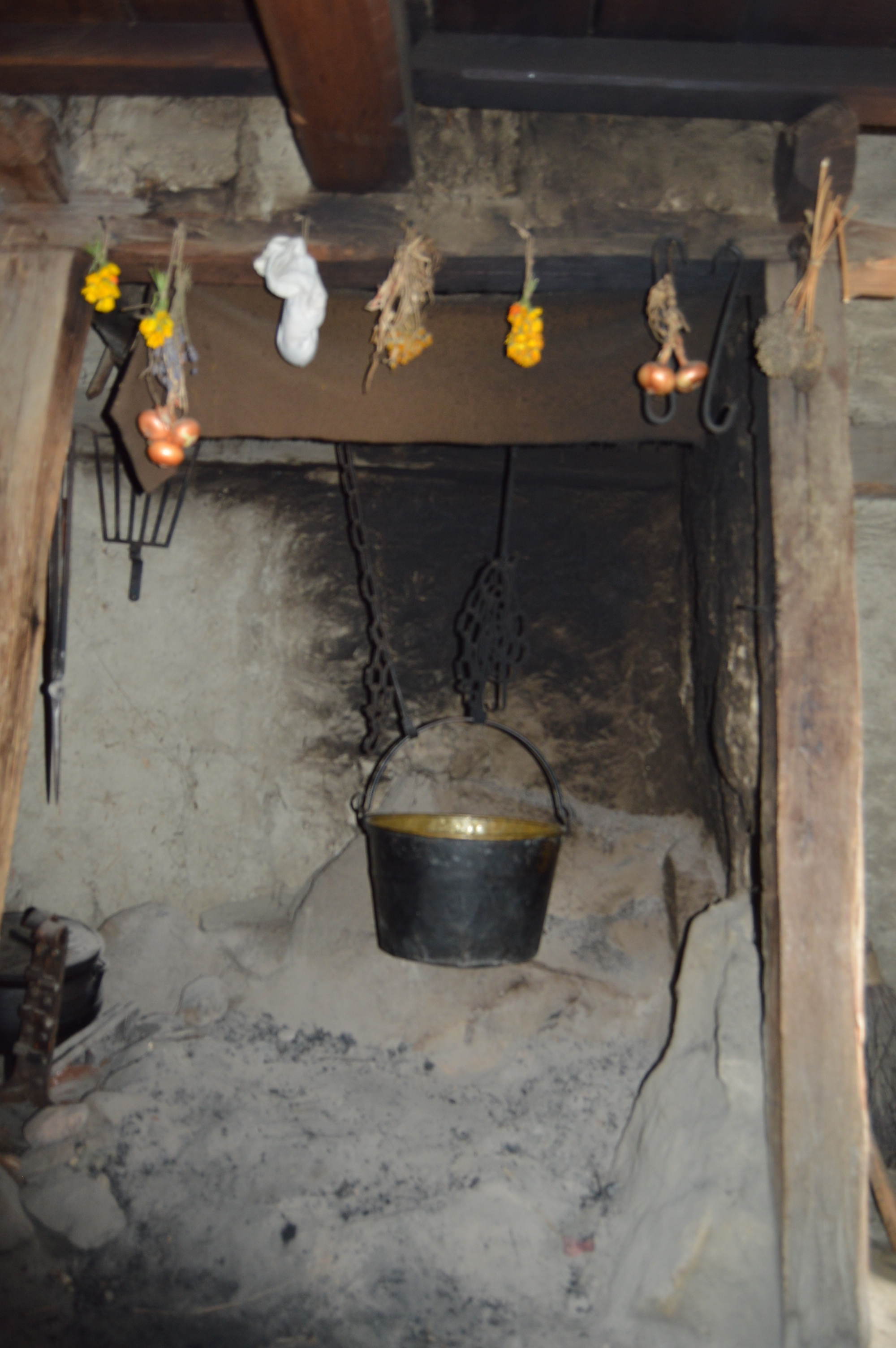
The inside and outside of the houses closely mimic the houses of the 1700’s
Actors inhabit the homes.
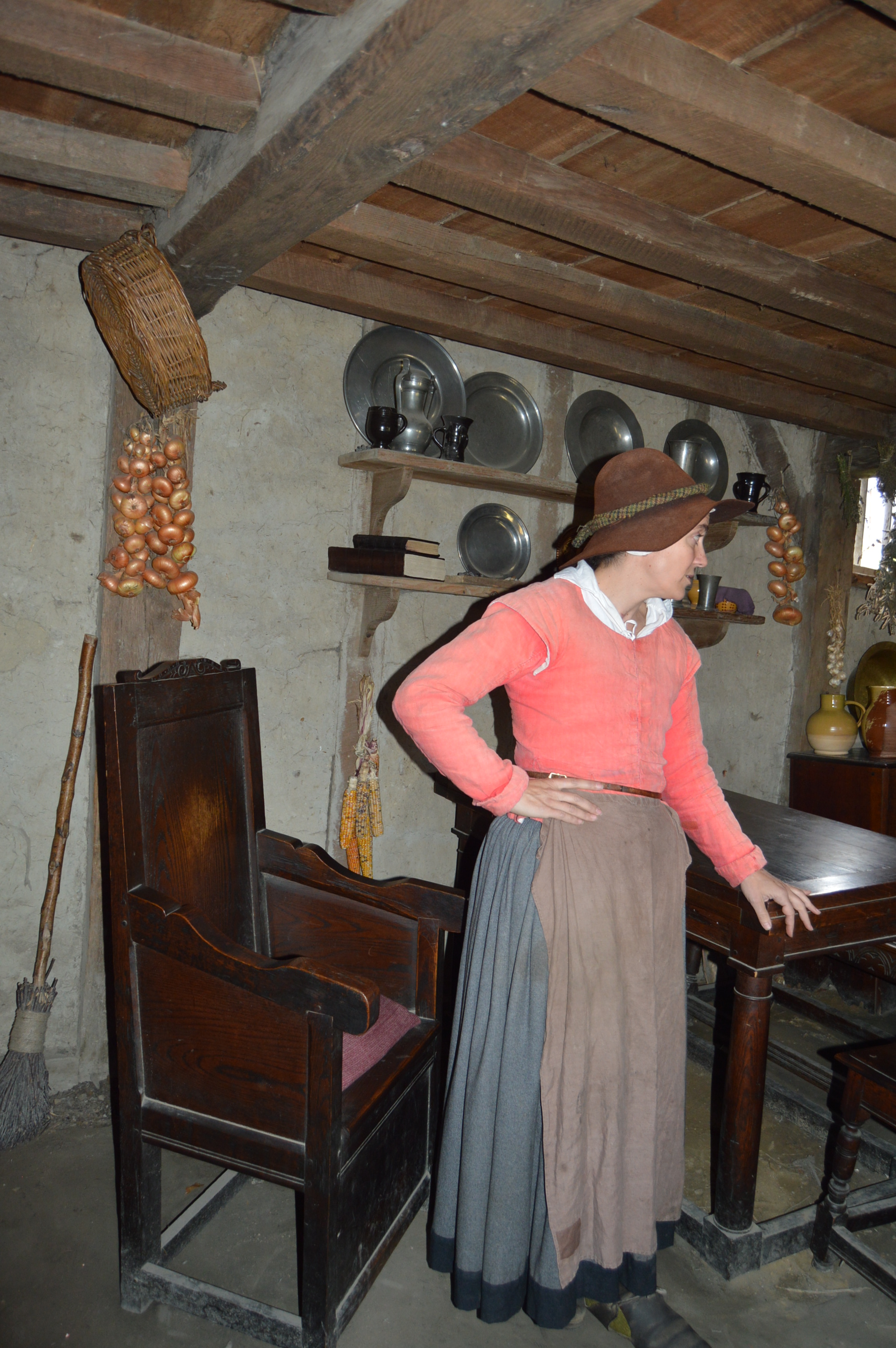
This woman said “My Christian name is Sarah” when I asked her what her name is.
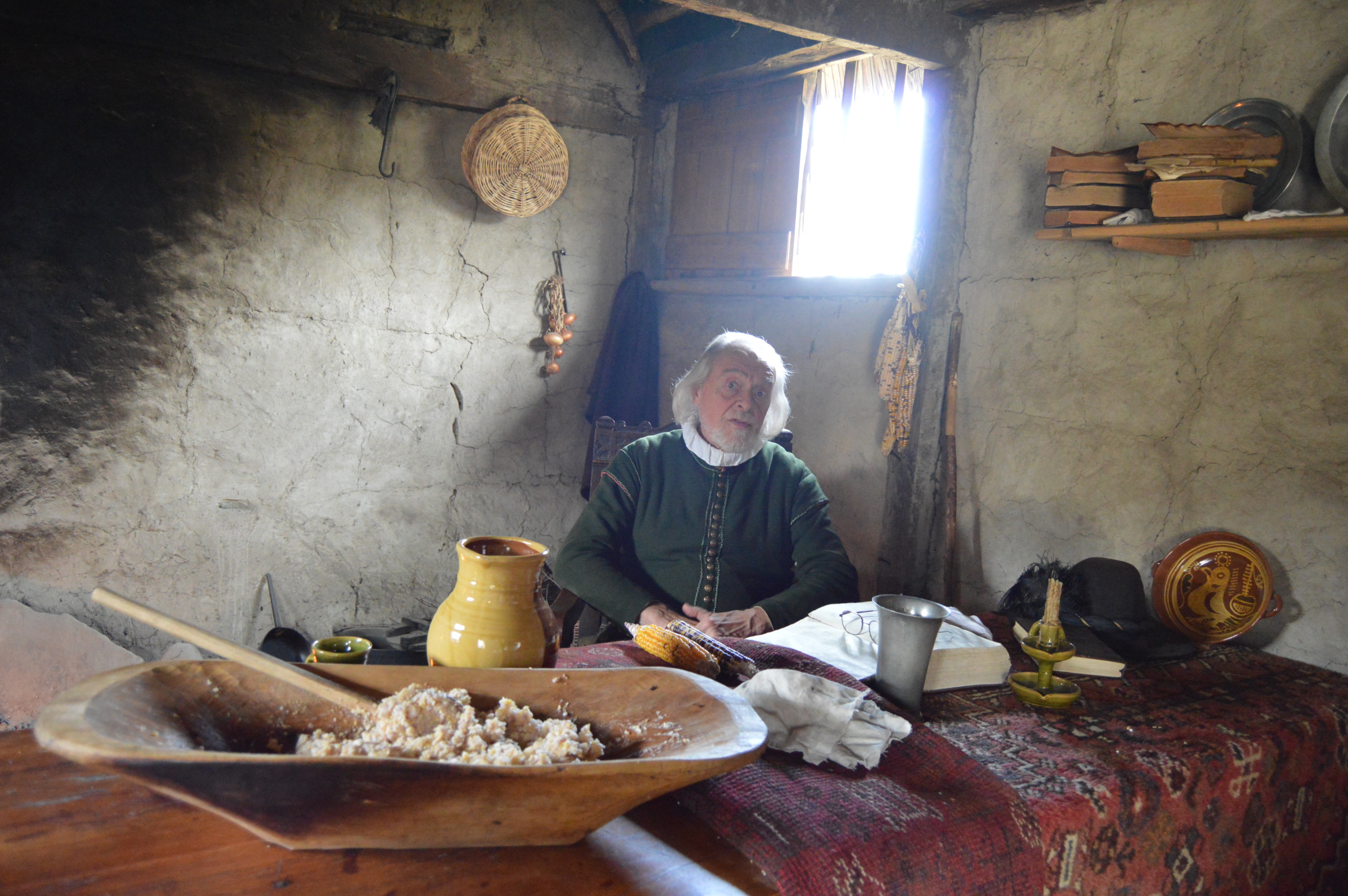
This man and his wife were getting ready for dinner when I stopped by. it looks like a cozy little place.
There are also actors walking throughout the plantation.
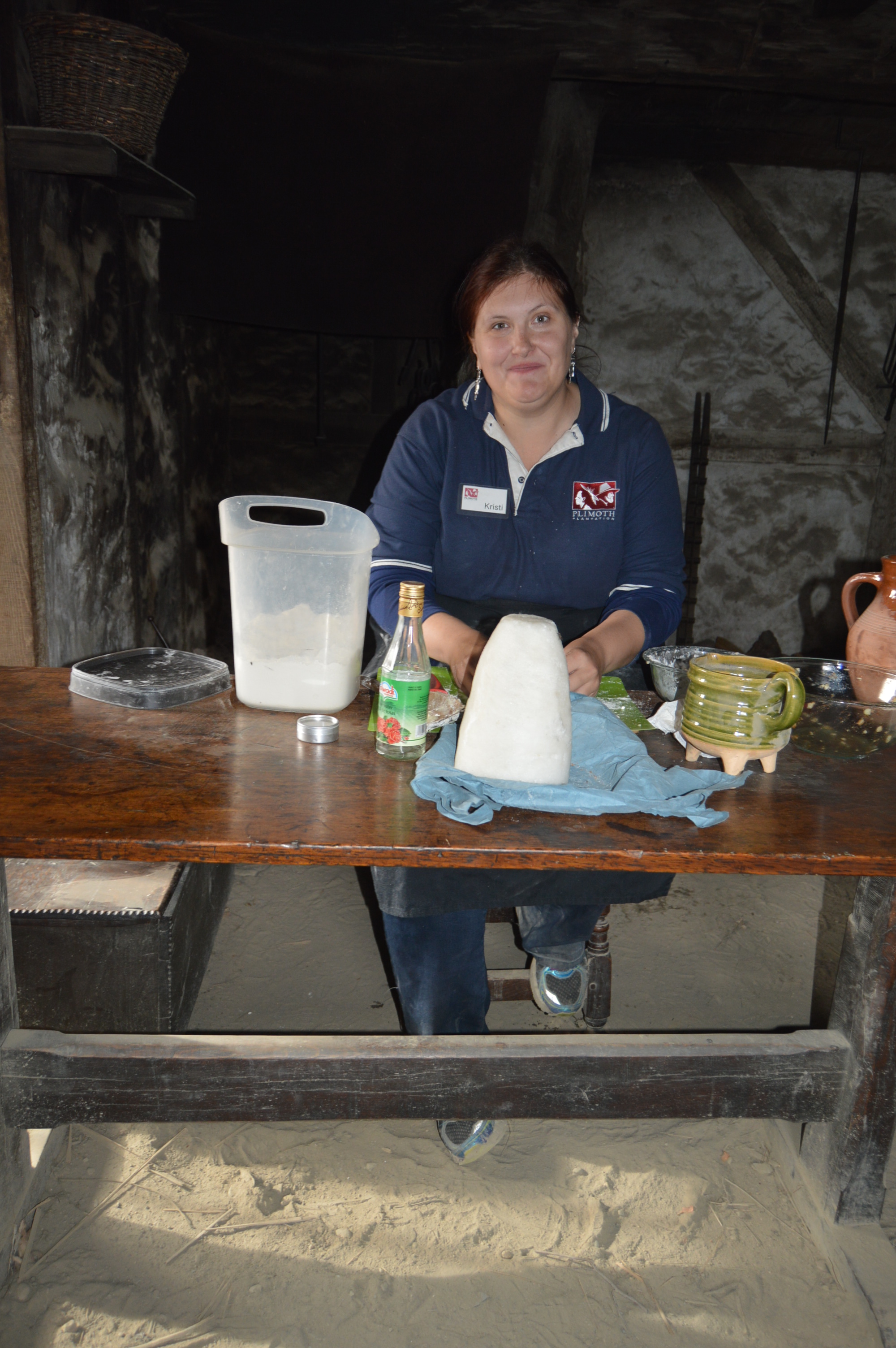
This woman was making apple tarts, the old fashioned way.
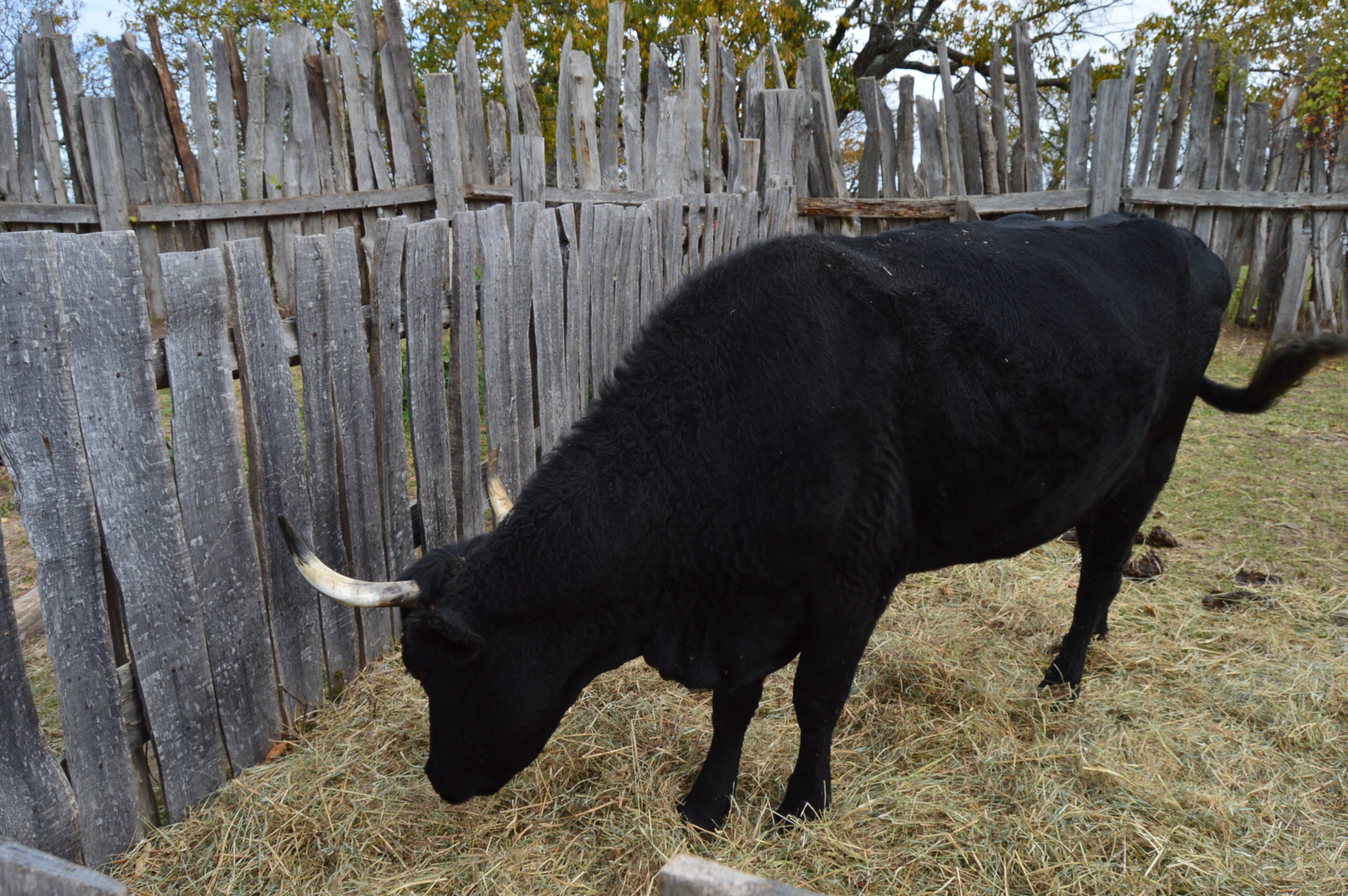
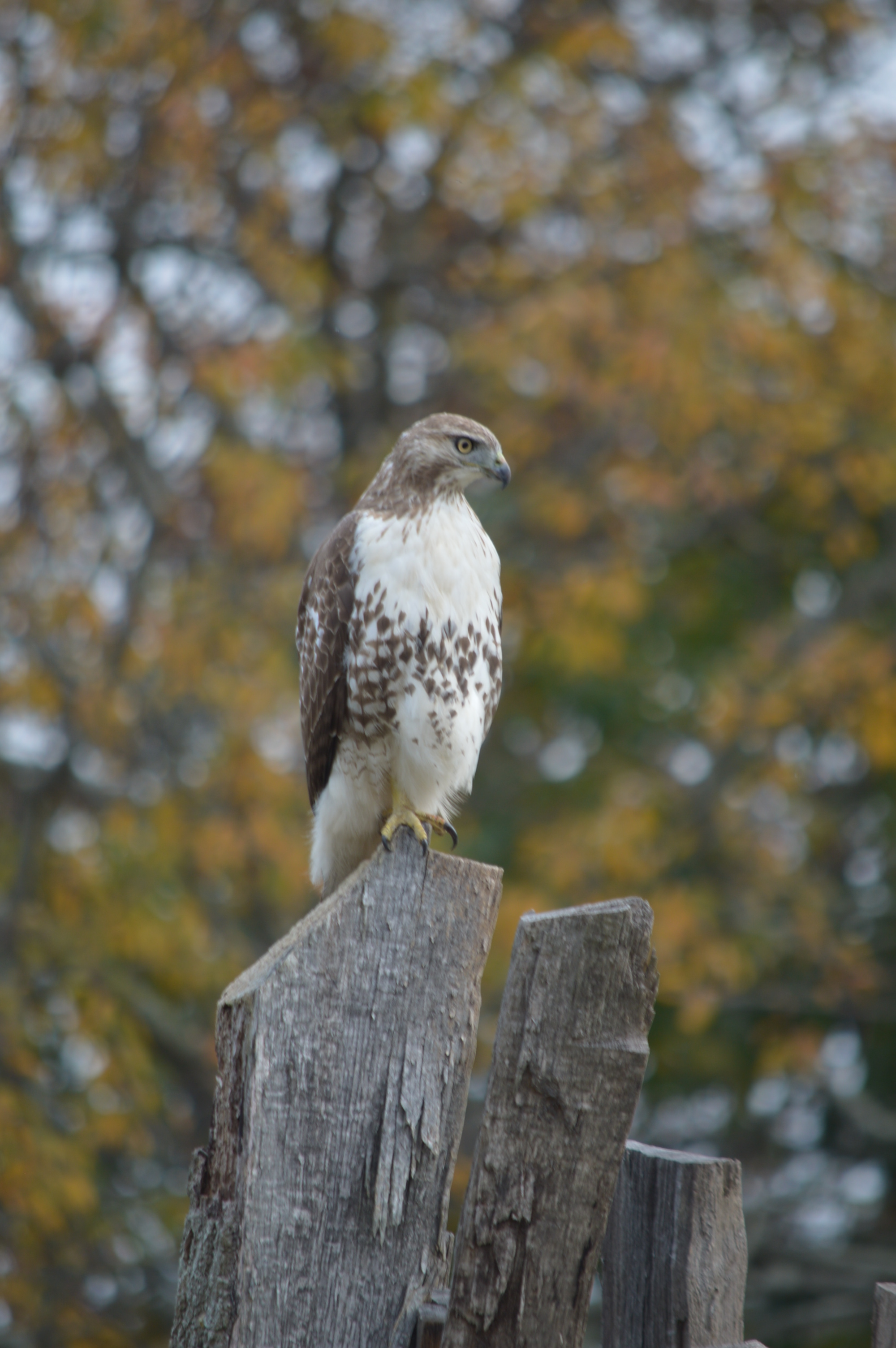
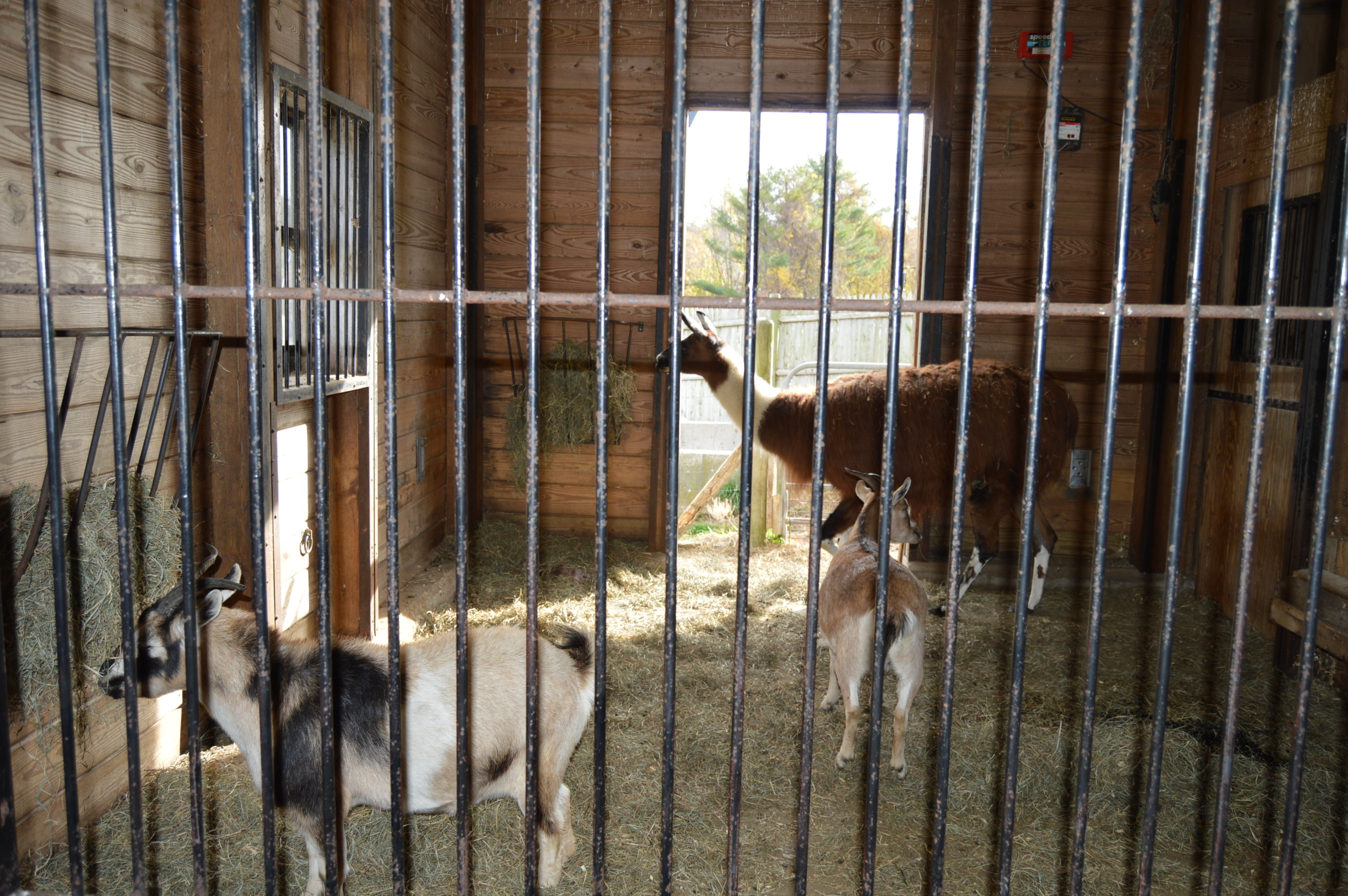
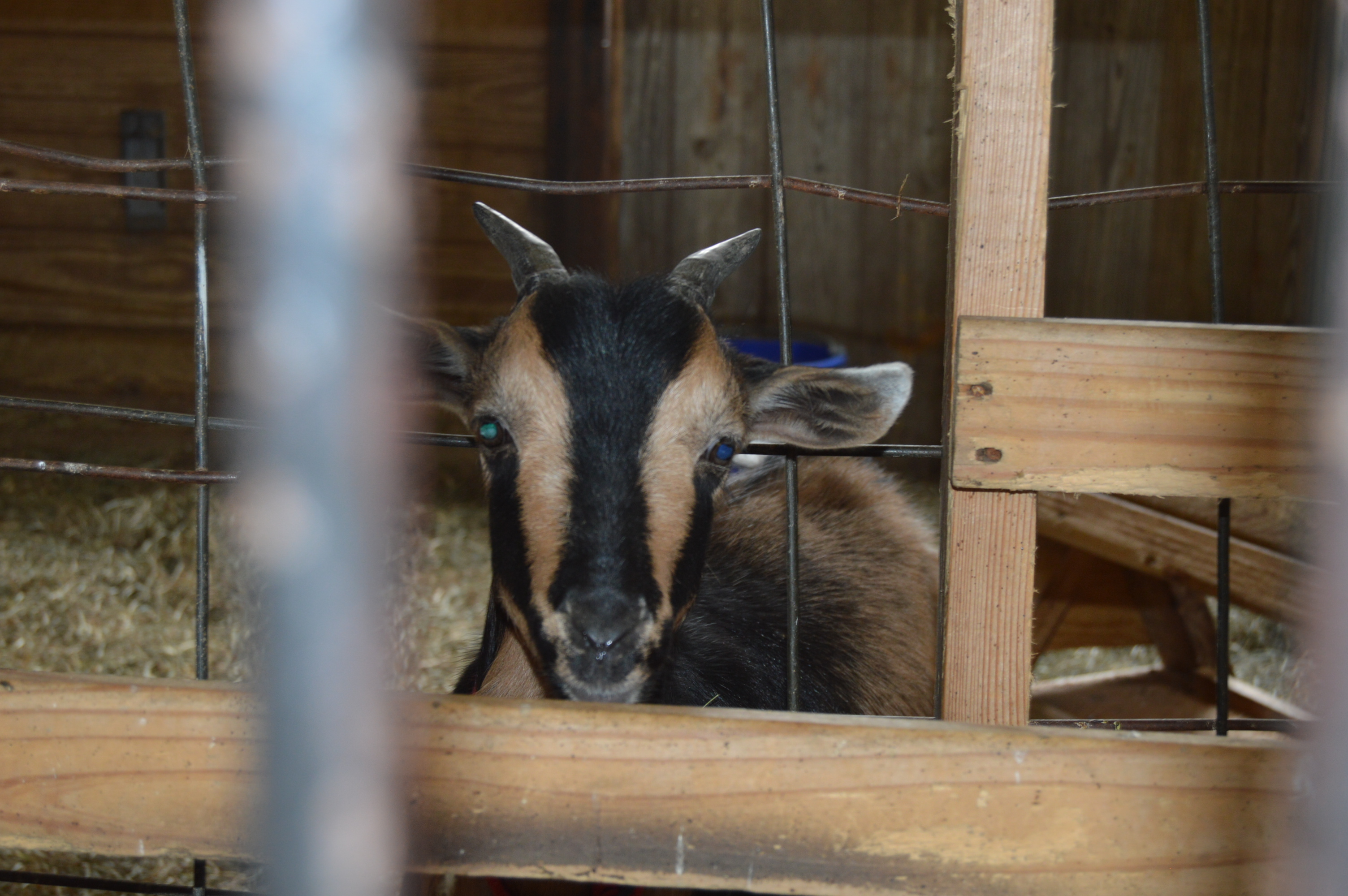
Plimoth Plantation has a limited amount of livestock. There is a bull and a hawk.
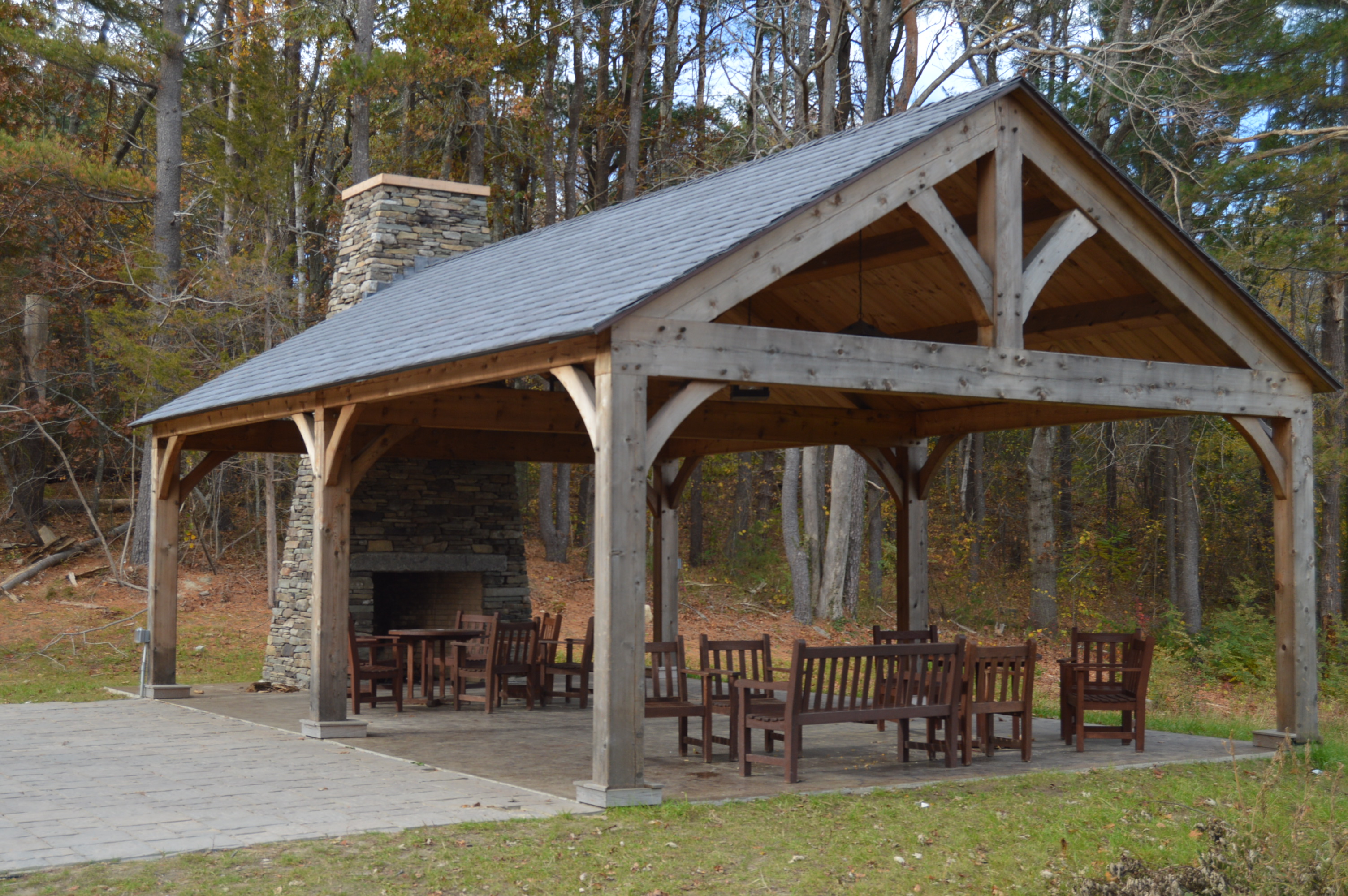
There is a dining and rest area outside of the plantation area.
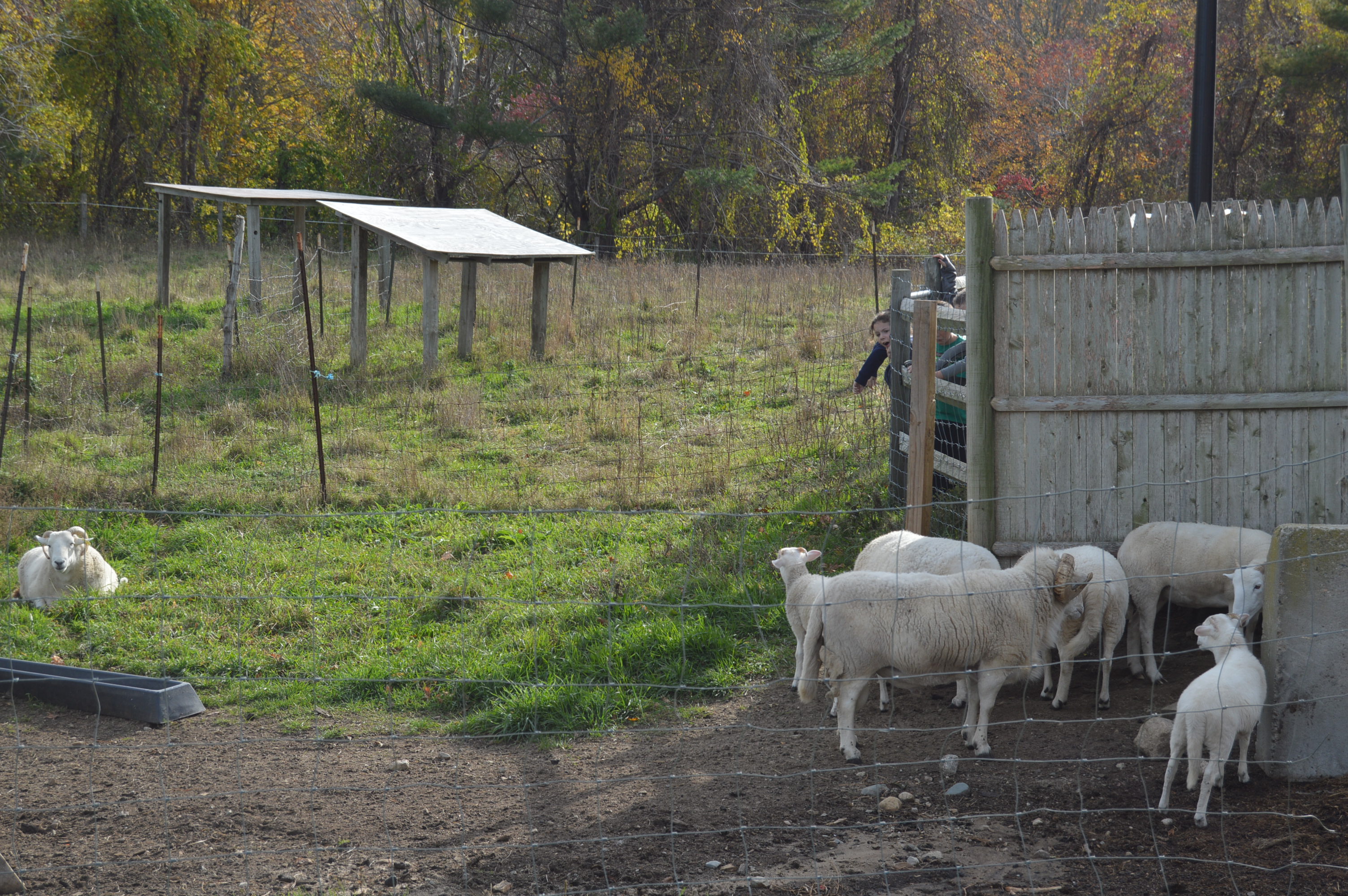
There is also Nye Barn located on the way out of the plantation.
In other news, I have been nominated for a Liebster Award on my other blogging profile (Mr. Wayne)! Please follow the link below to read about the nomination, see my answers to the questions sent to me and to see who I nominated for this award at Mr. Wayne’s Blog































































 New England Nomad