Date Of Event: Nov. 18, 2025
Location: Old Sturbridge Village,
Cost: $30 for daytime events. There are discounts for seniors, military personnel and college students. See their website for additional info
Website:Old Sturbridge Village
Summary: Old Sturbridge Village celebrated Thanksgiving
The week before Thanksgiving, Old Sturbridge Village replicated Thanksgiving in the early United States. From Thanksgiving dinner (more like lunch) and turkey shoots were just some of the highlights of the festivities during my visit.
Thanksgiving was celebrated very differently in New England during the late 18th and early 19th century. Instead of watching football and shopping online for Christmas presents, people went to turkey shoots and cooked some unusual dishes (more on that later).
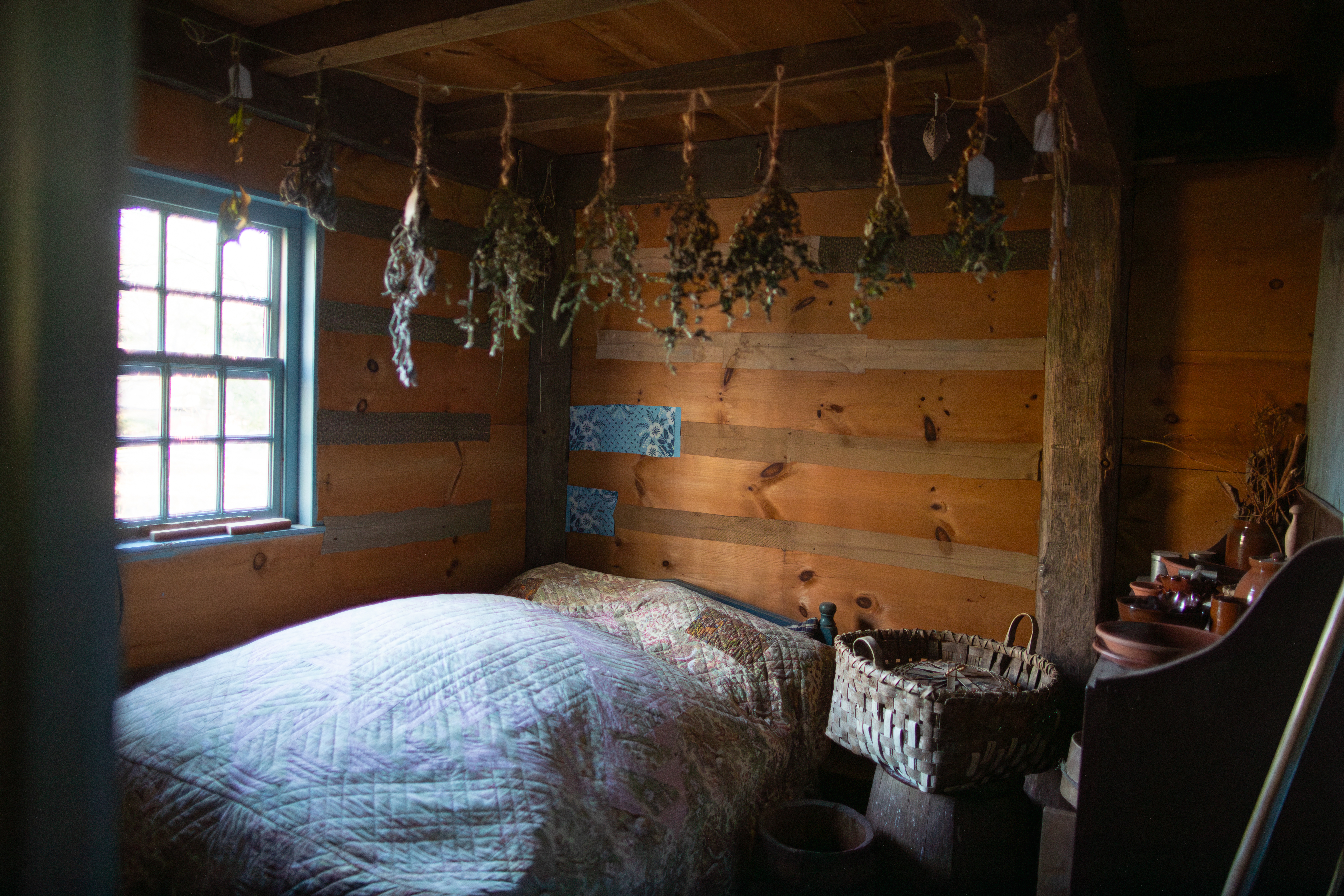
The first stop was to the small home and garden. I had never noticed before during my many but there is a room located adjacent to the fireplace. It is a very cozy accommodation.
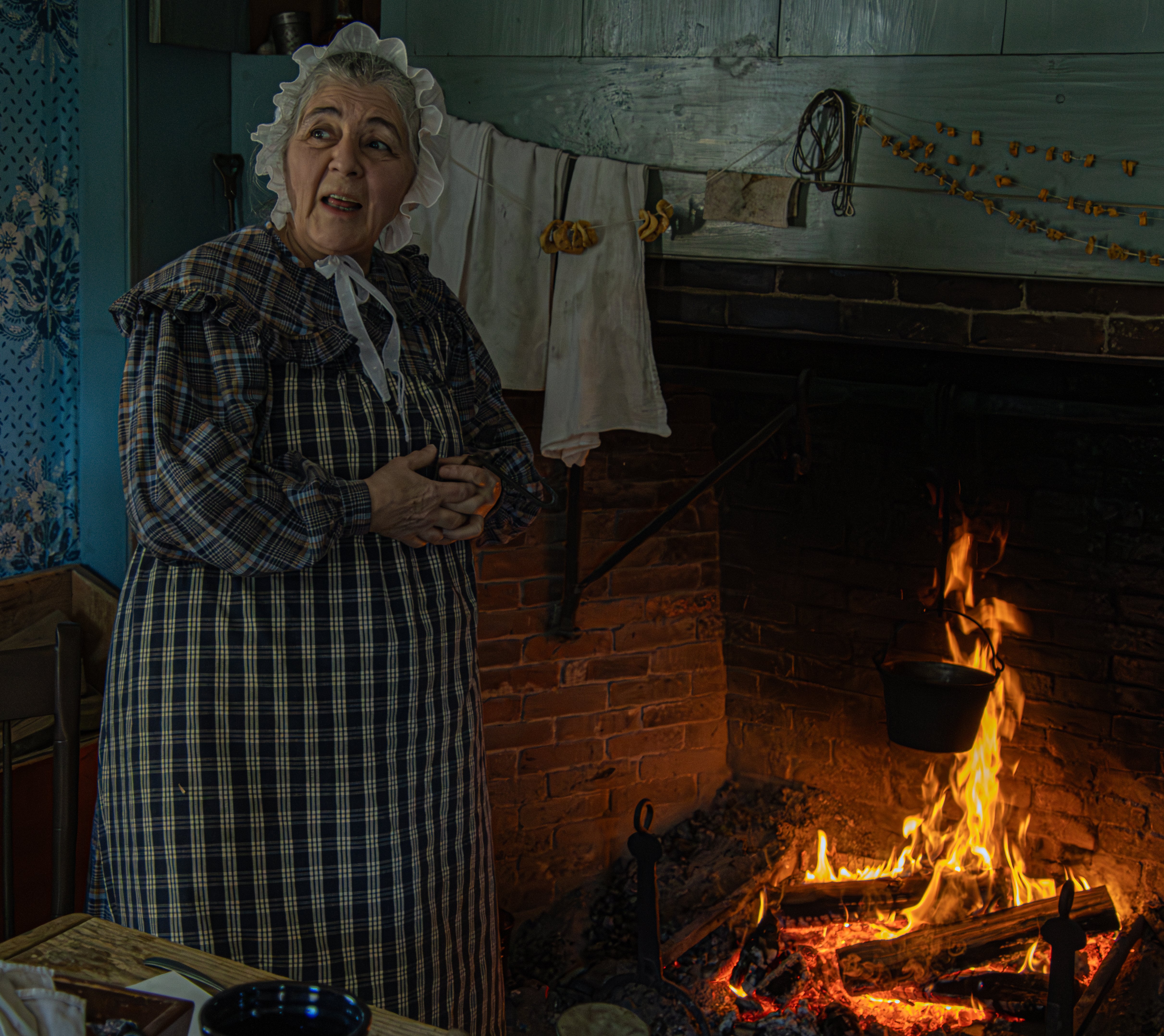
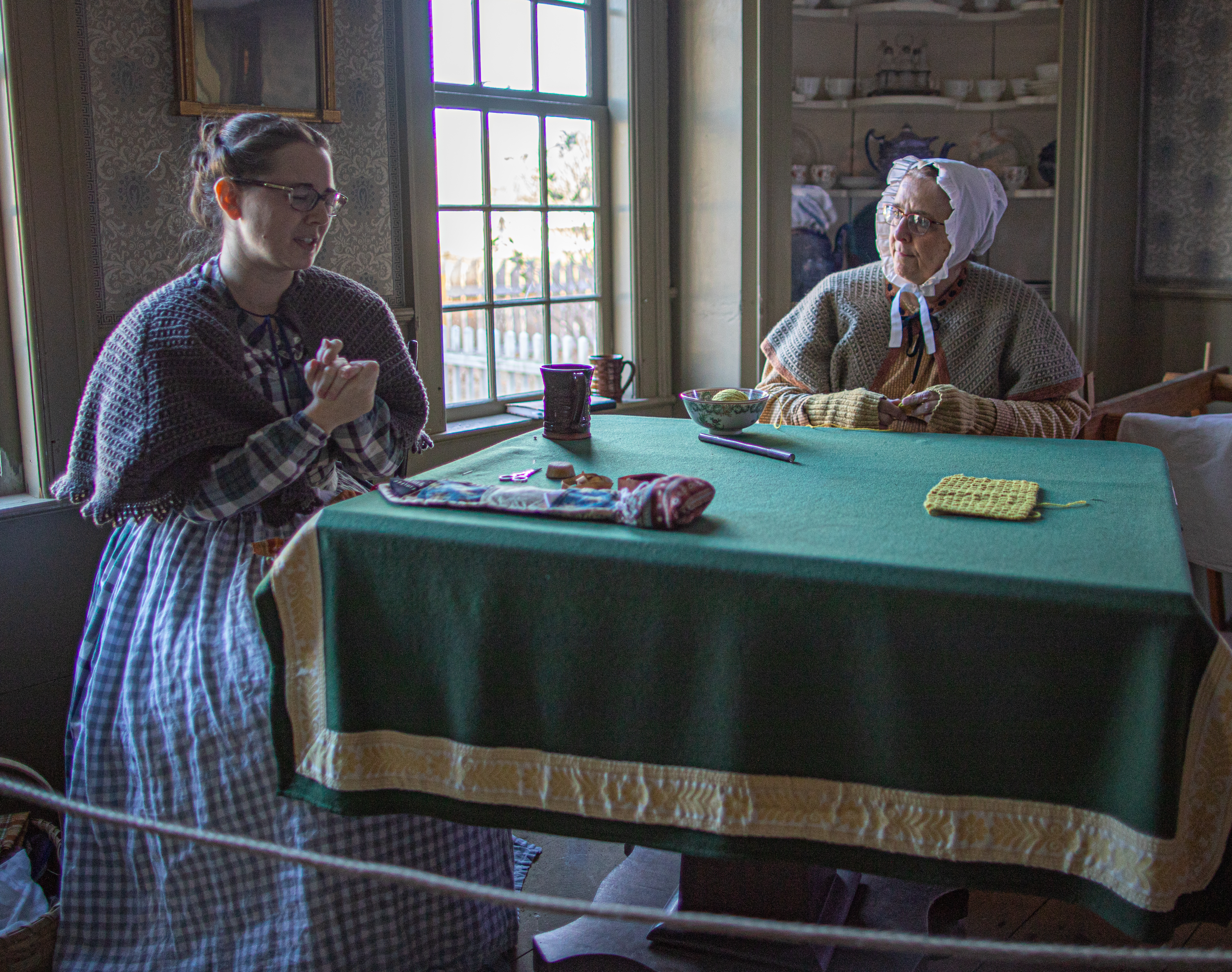
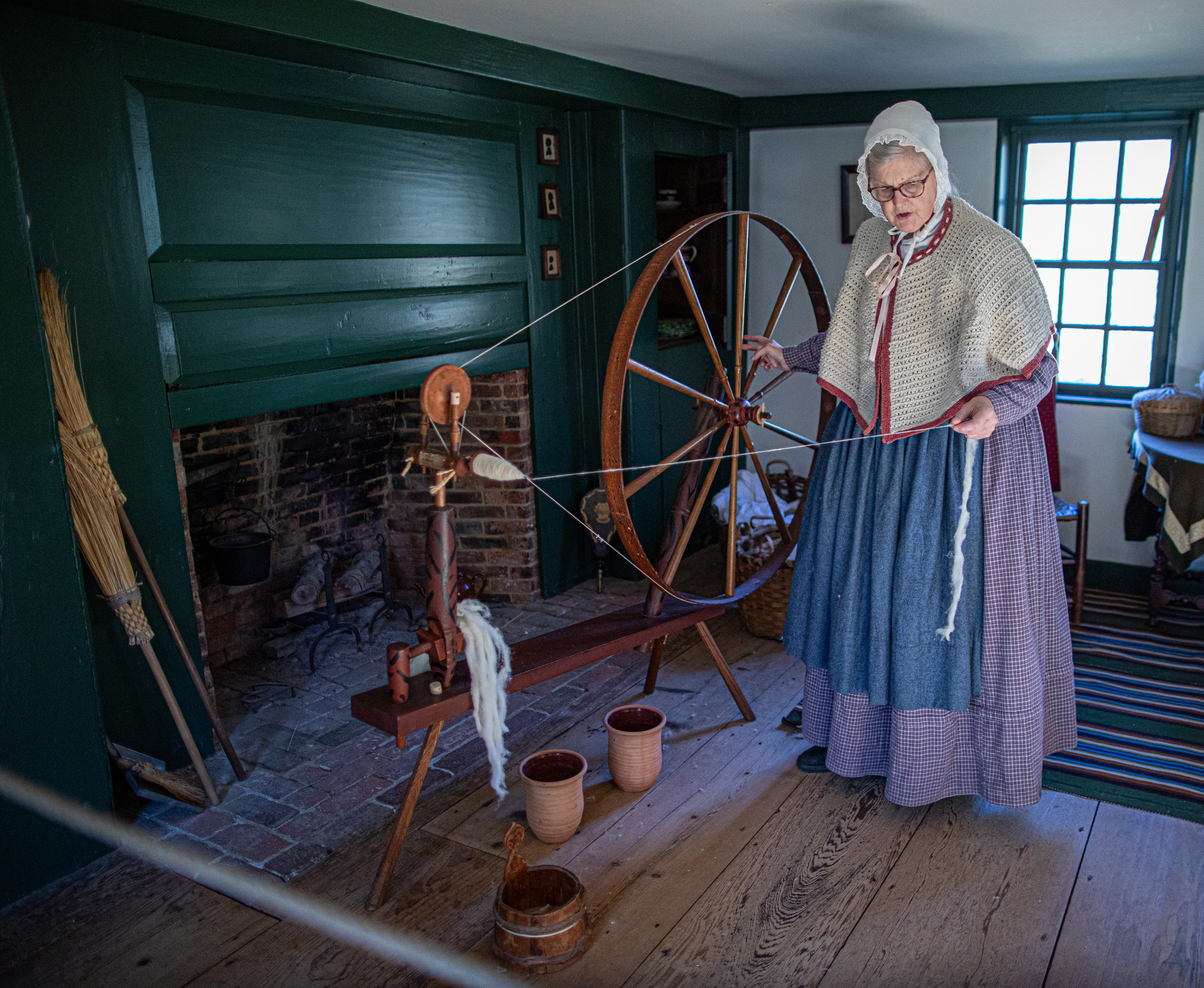
Some of the workers were busy quilting stockings and clothing for the coming winter season. .
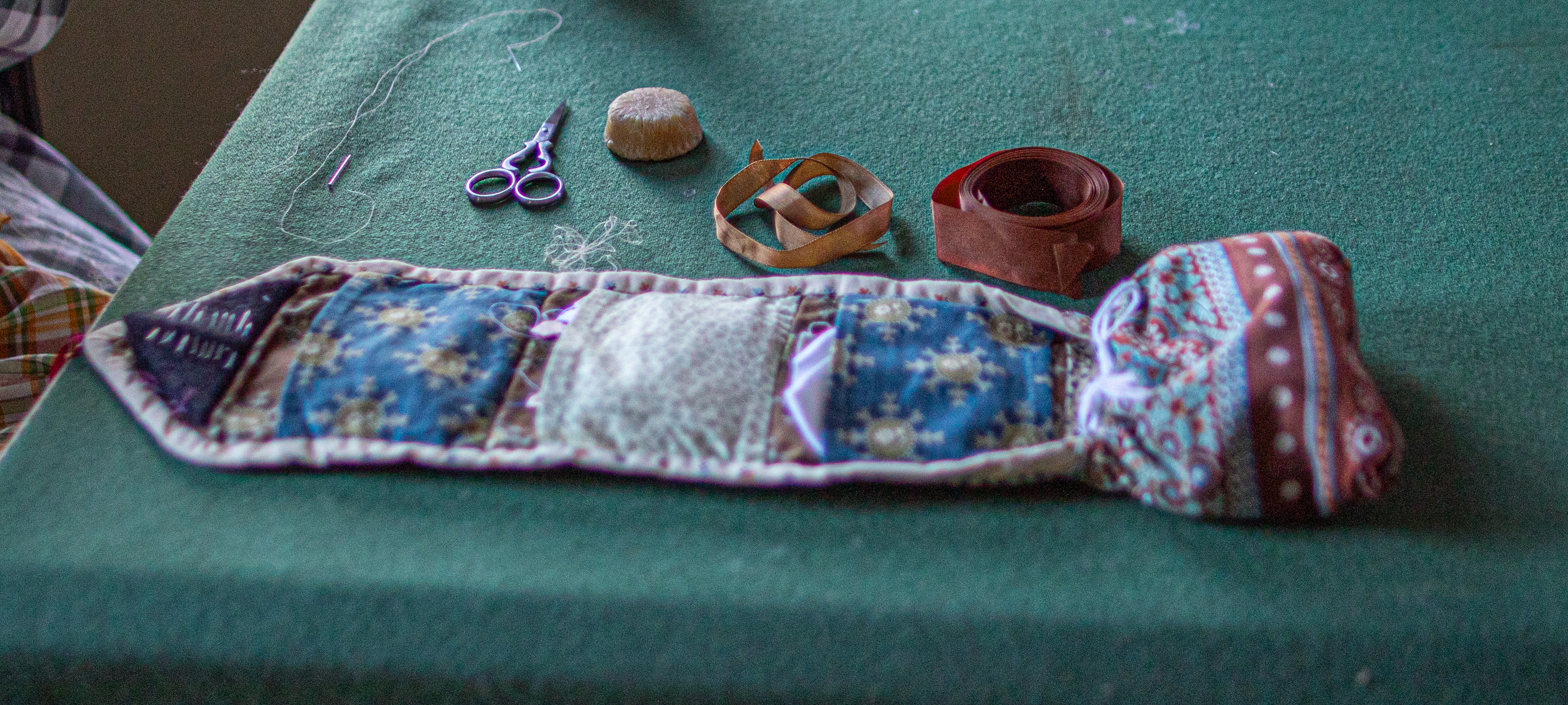
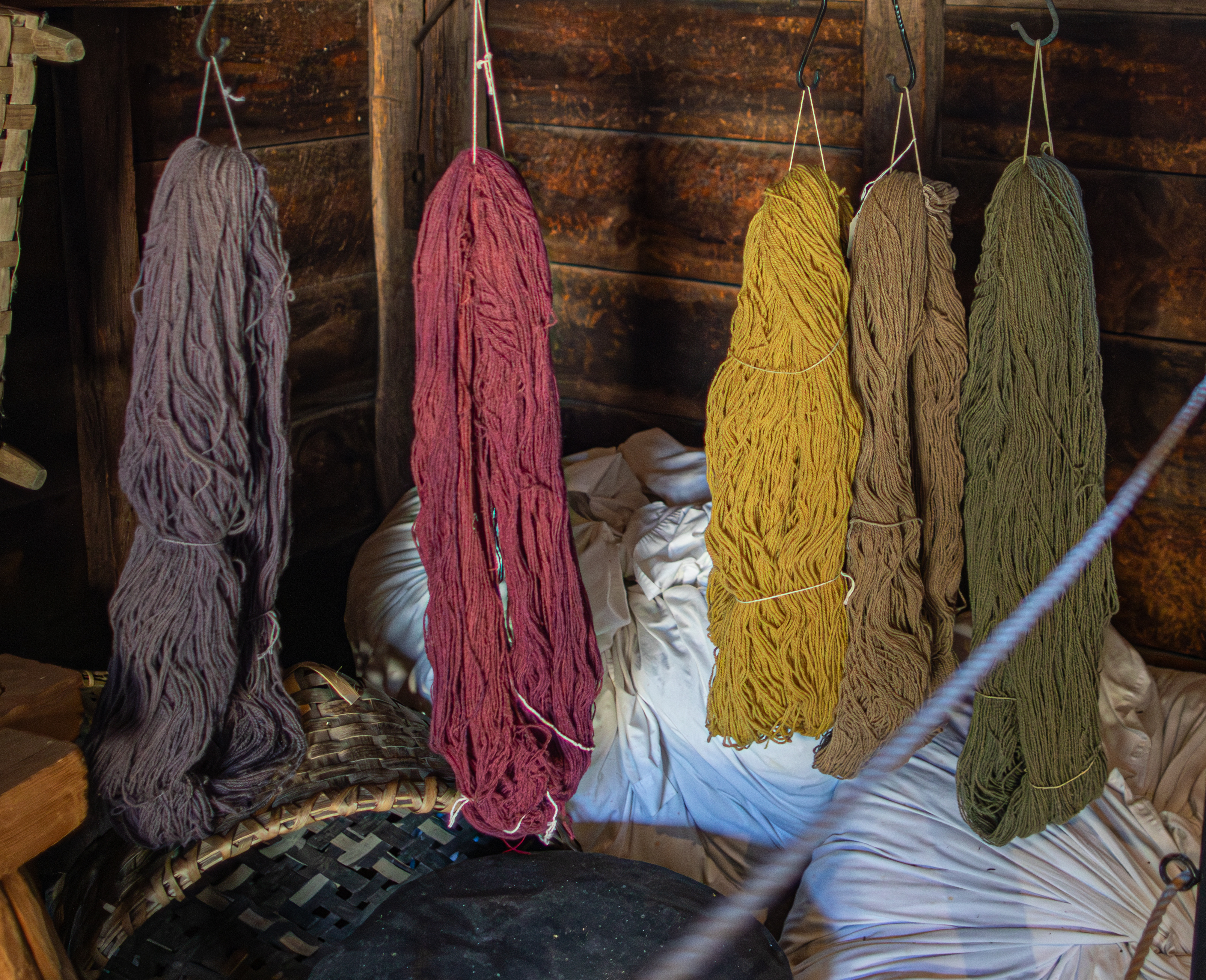
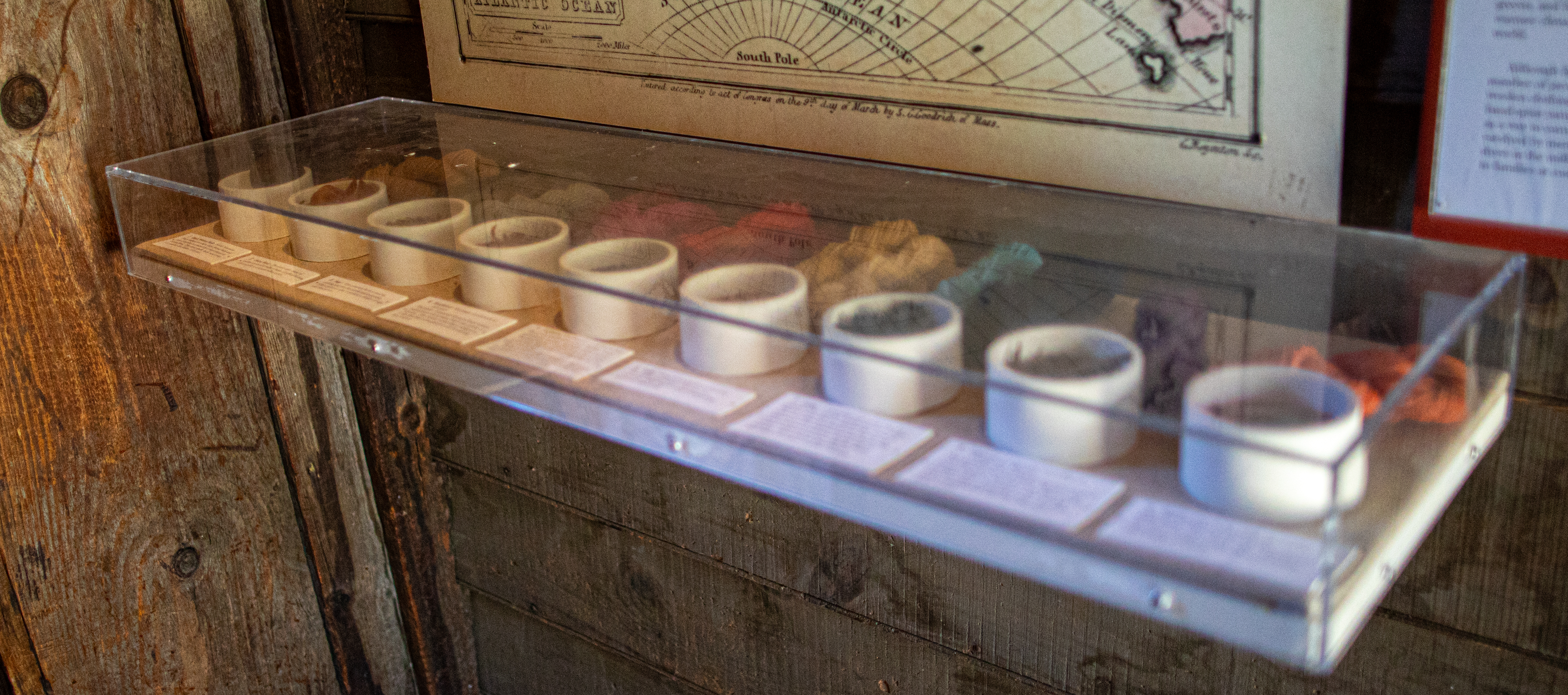
The fabric below was dyed using the method from the late 1700s and early 1800s. Dyers in the 19th century used natural materials to make their colors. Housewives gathered black walnuts, oak galls and goldenrod from the countryside. They cultivated plants used for dying like sage in their kitchen gardens. Local New England dyestuffs produced a range of yellows, greens and browns. More vibrant colors usually came from dyestuffs grown in warmer climates. Many country stores stocked imported dyes all over the world.
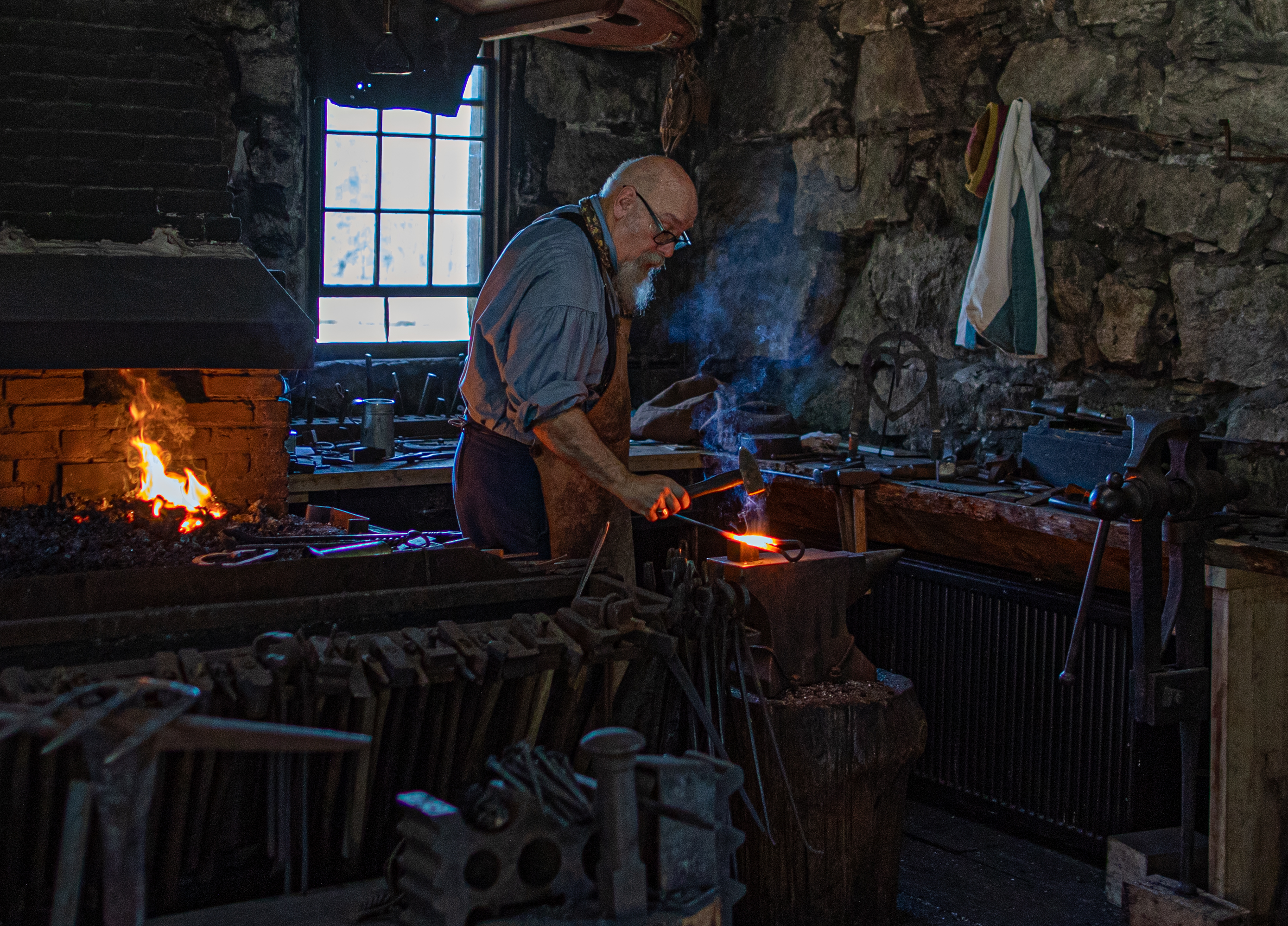
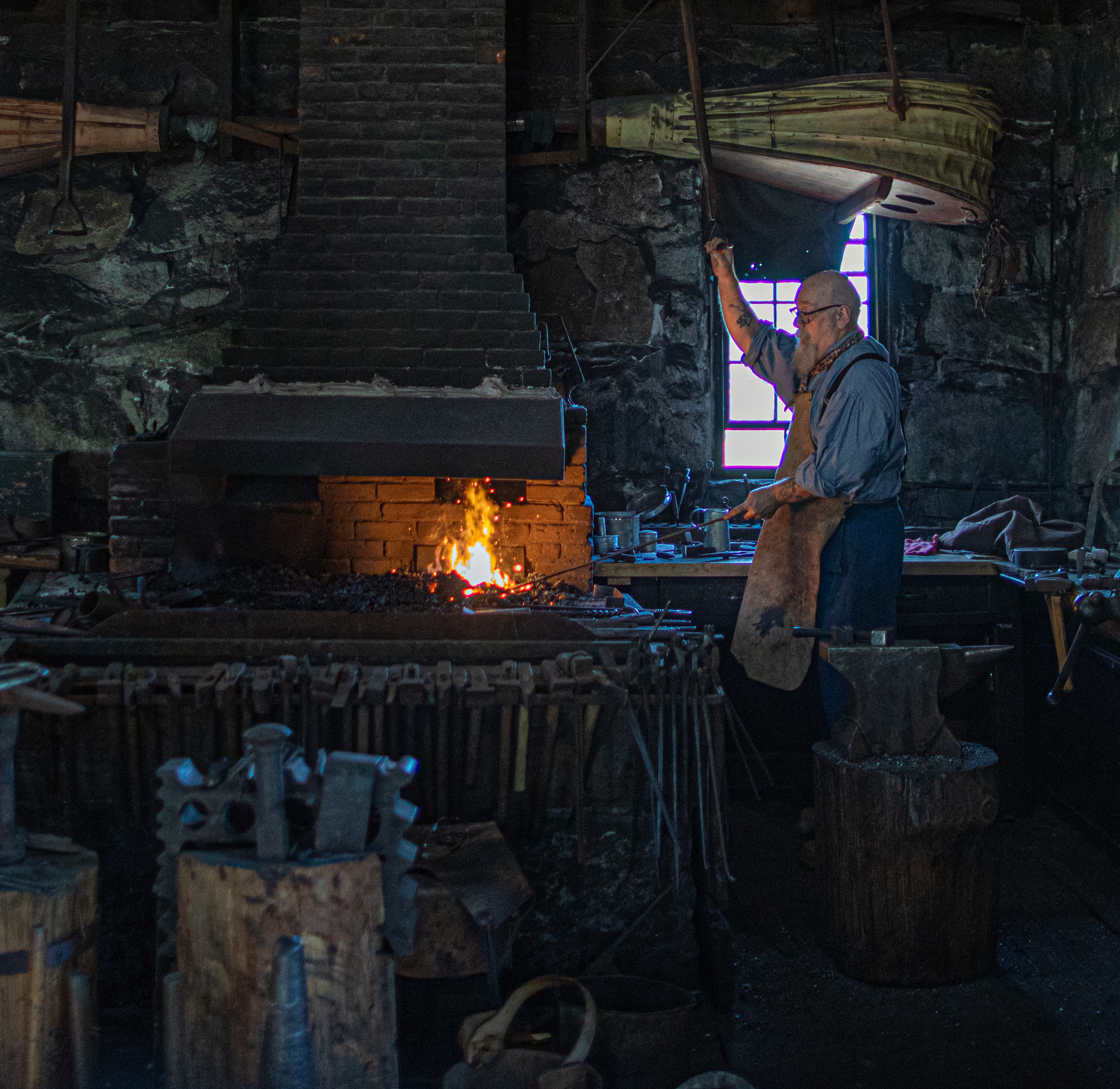
One of my favorite places to visit at the village is the Blacksmith Shop. The blacksmith always seems to be working on something interesting.
This Blacksmith Shop was originally located in Bolton, MA around 1810. It was relocated to the village in 1957.
Blacksmith Moses Wilder owned land that adjoined a stone quarry operated by his wife’s cousins in Bolton, Massachusetts. Wilder built the Blacksmith Shop using some 400 granite stones from the quarry to form the walls. He was able to maintain a prosperous business making and repairing tools used in the neighboring quarry. His son, Abraham, later took over the business.
Neighborhood blacksmiths undertook several different kinds of work in rural New England, and most towns had several blacksmiths. Some specialized in producing edge tools or machinery. Others shoed horses or turned to wheelwrighting and repairing vehicles. Many did general iron work, repairing manufactured and imported tools, shoeing horses and oxen, and making hardware and other metal items needed in the community.
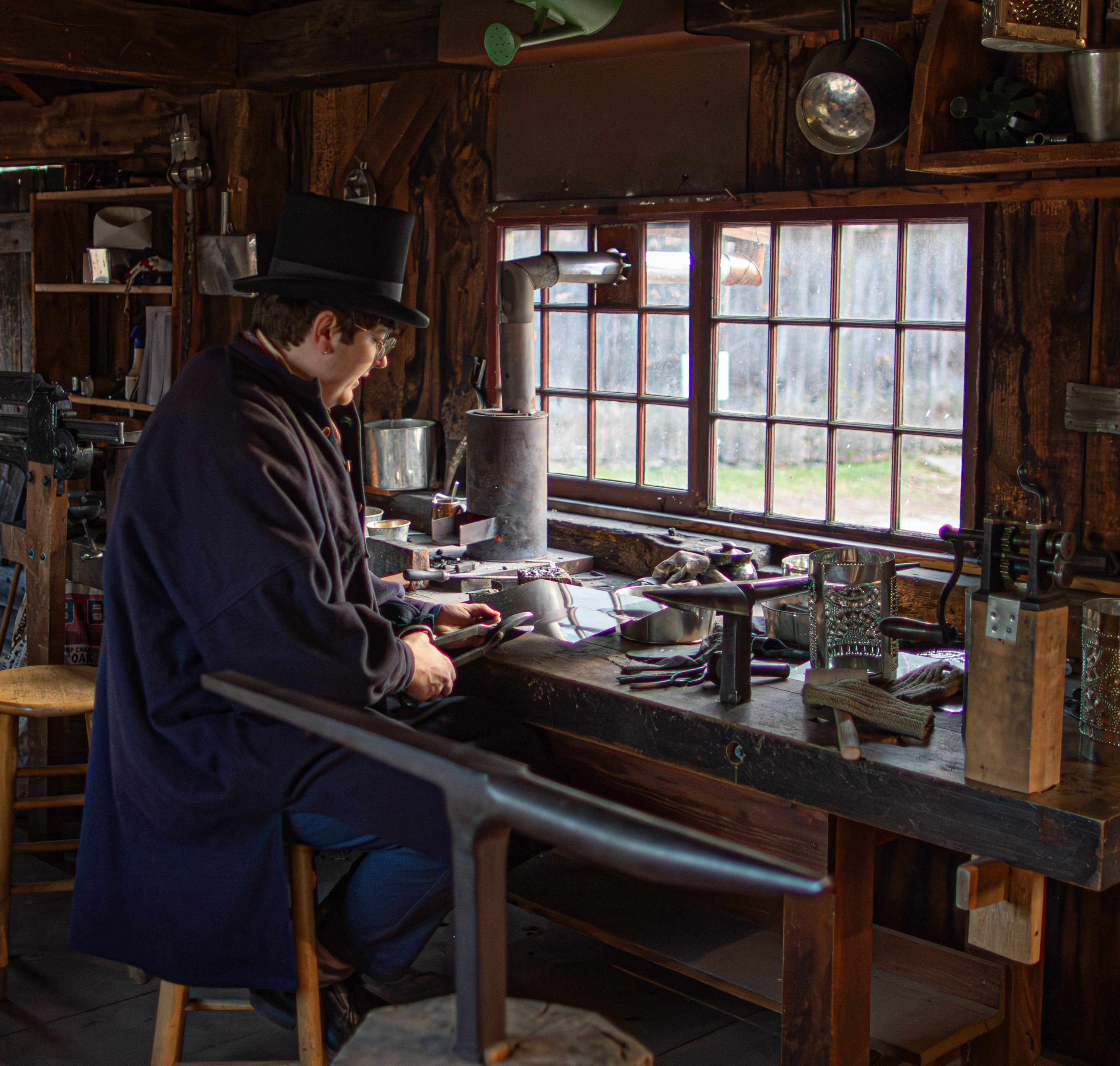
This tin shop, which was reconstructed in 1975, is believed to have been in operation around 1800 to 1850.
The tin business in New England grew rapidly after 1820. Tin shop owners imported tinplated sheet iron from Great Britain, shaped it into a variety of forms, and distributed their finished goods through peddlers and country stores. They also sold tinware in their shops. Colanders, dippers, dish kettles, funnels, measures, and pans were in greatest demand. Other common items included lanterns, foot stoves, teapots, coffeepots, “tin kitchens”, skimmers, and sconces.
The Tin Shop at Old Sturbridge Village is a reconfigured the early 1800s shed. Here, “tinners” work with hand tools as well as machines that were new innovations in the early 19th century. These machines turned tinplate, made grooves and folds, and inserted wire, increasing a shop’s production.
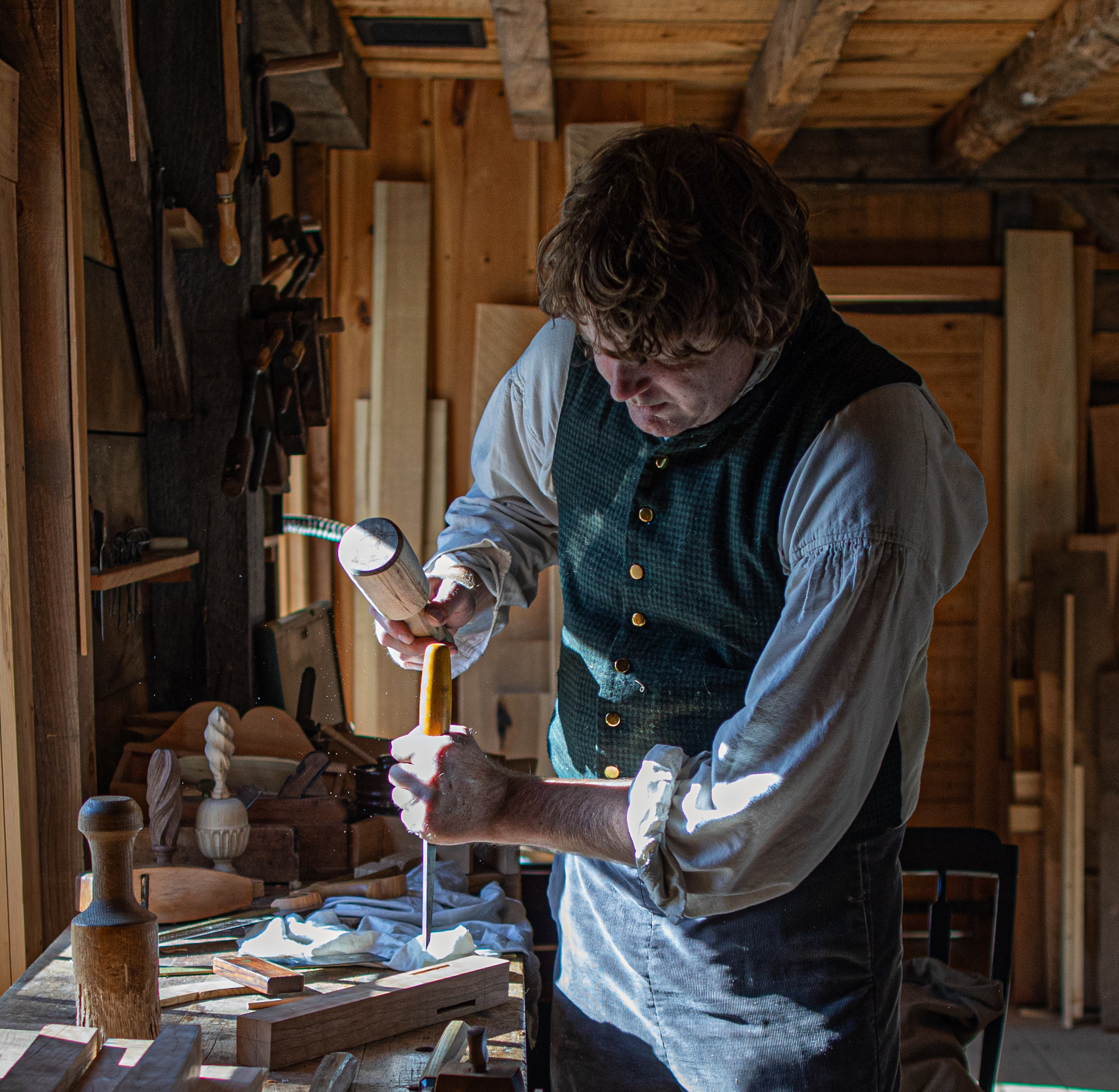
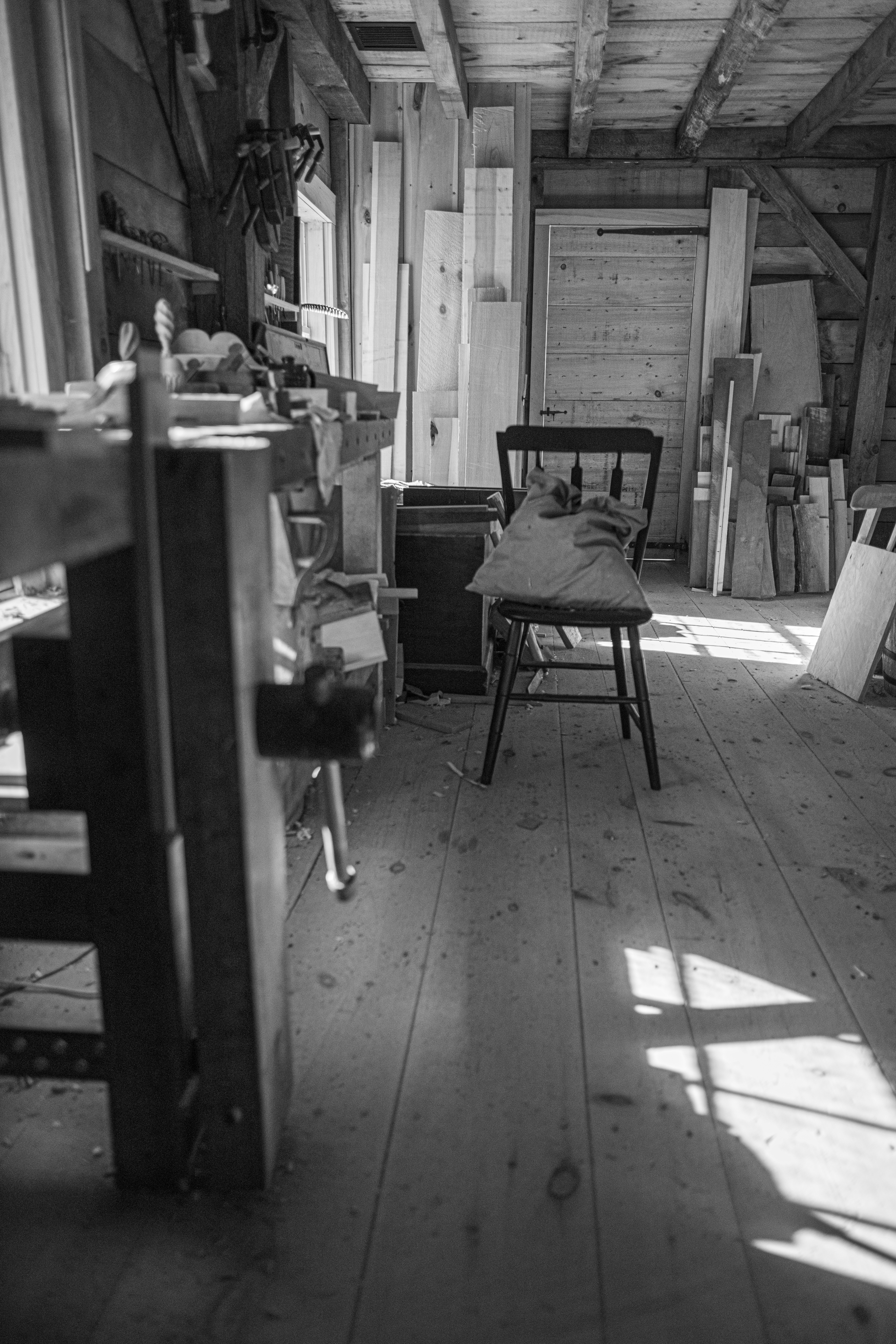
Sturbridge and the surrounding region were home to some of the foremost rural cabinetmakers of the early 19th century, including Nathan Lumbard and Oliver Wight. These craftspeople, as well as others like them, were integral to 19th-century rural New England communities. In 2017, Village staff and Trustees began working on a plan to create a permanent home for cabinetmaking at the Village. The Cabinetmaking Shop opened in October, 2021, as a highlight of the Village’s 75th anniversary.
In the new cabinetmaking shop, cabinetmakers discuss the tools and techniques used in period furniture construction, including turning demonstrations on a treadle lathe, preparing stock with hand tools, and Federal-style table construction.
The Cabinetmaking Shop is a hybrid building, built using both historic and modern building methods in the construction of the Shop. The shop is patterned after period structures operated by early 19th-century New England craftsmen. Many elements of the final Cabinetmaking Shop will be created by craftsmen and interpretive staff working in the Village, including reproduction period tools, doors, shelves, and the box stove. The large timbers for the construction of the shop were even cut by the Village Sawmill.
The sawmill was one of the most important buildings in the village. This sawmill was reproduced in 1984.
This rare water-powered sawmill—erected on the millpond site that David Wight, Jr. first created in the 1790s—is used to cut lumber for Old Sturbridge Village and other historic sites. The Sawmill is based on what had been one of the oldest surviving sawmills in the area: the Nichols-Colby Sawmill of Bow, New Hampshire, which was destroyed in a 1938 hurricane.
Although the Village demonstrates sawmilling in spring, summer, and fall, rural mills were busiest during late winter and early spring, when waterpower was most abundant and the demands of farming were less pressing. Sawmill account books suggest that since it was so difficult and expensive to transport logs and lumber, mills like this one concentrated on custom production for local customers.
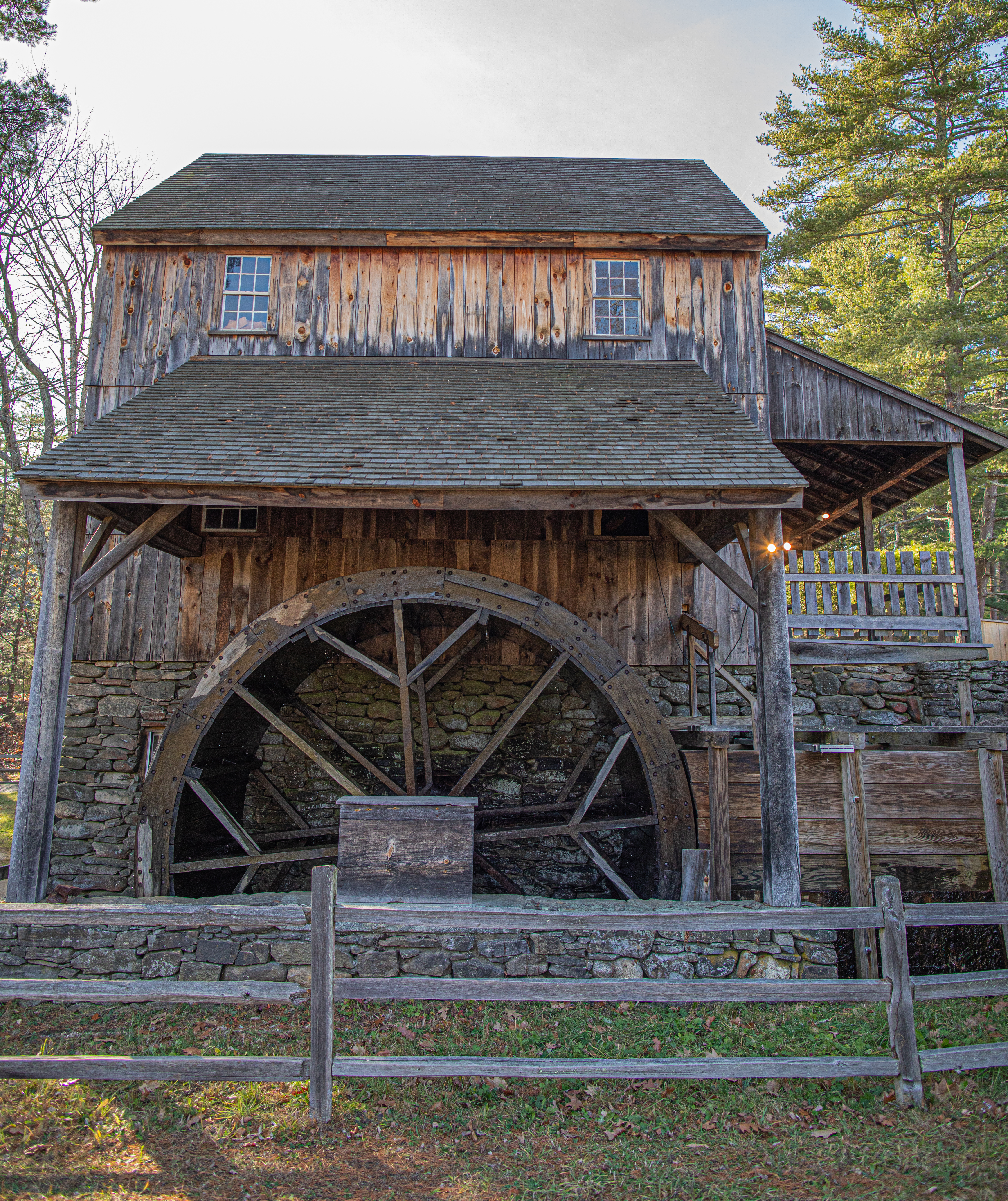
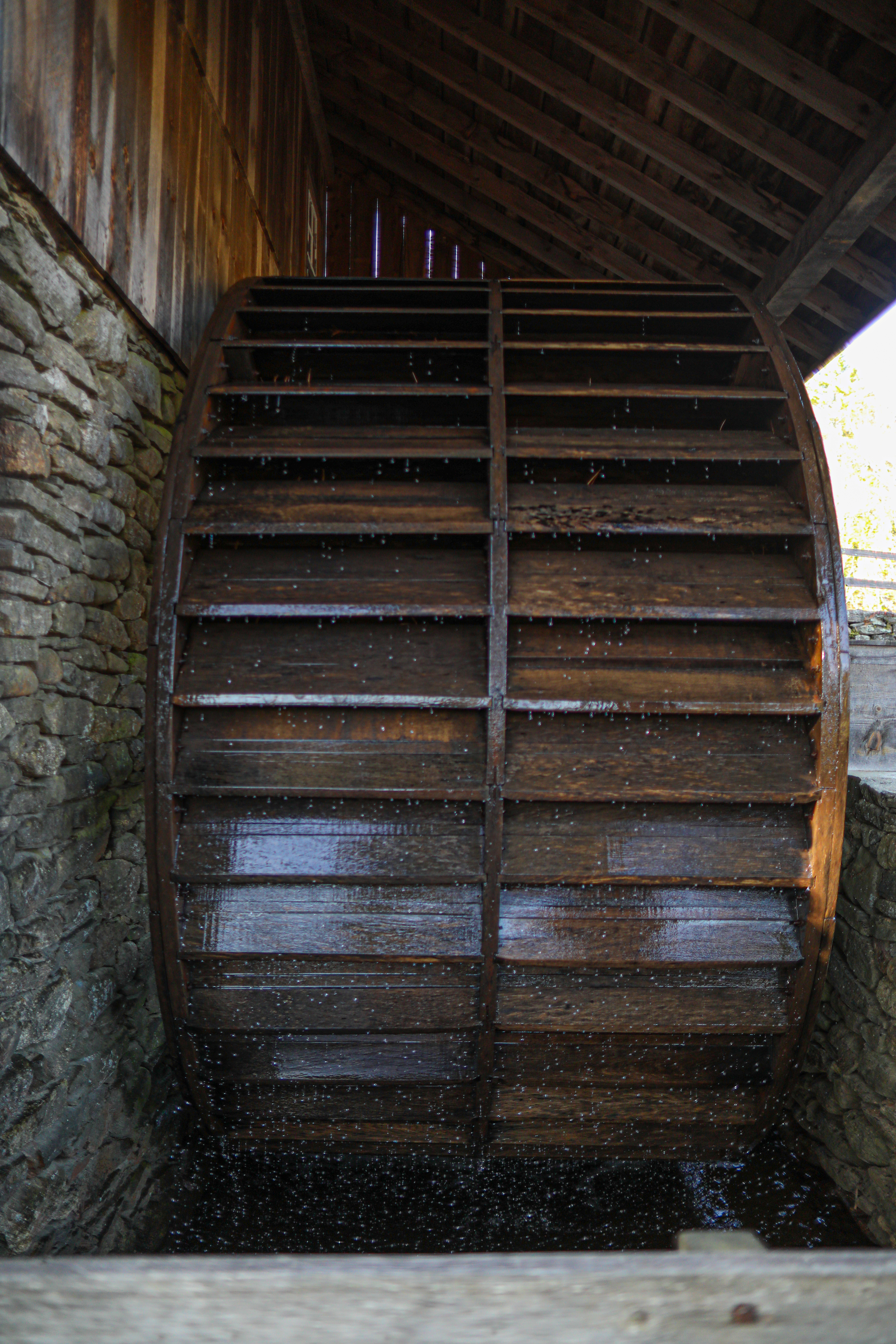
The Gristmill was also active during my visit.
The Gristmill was one of the first buildings constructed at Old Sturbridge Village. Built on the site of the Wight family’s original gristmill, the mill is made of recycled old timbers and new lumber. The mill’s massive millstones and other parts came from the Porter Gristmill in Hebron, Connecticut.
Gristmill owners served their customers by grinding grain into flour and meal for baking or provender for feeding livestock. By Massachusetts law, a miller could charge a fee or toll of 1/16th of the grain bought to him as payment for milling the rest. But rural milling was changing along with the rest of the economy; even in the countryside, cash fees were beginning to replace traditional tolls.
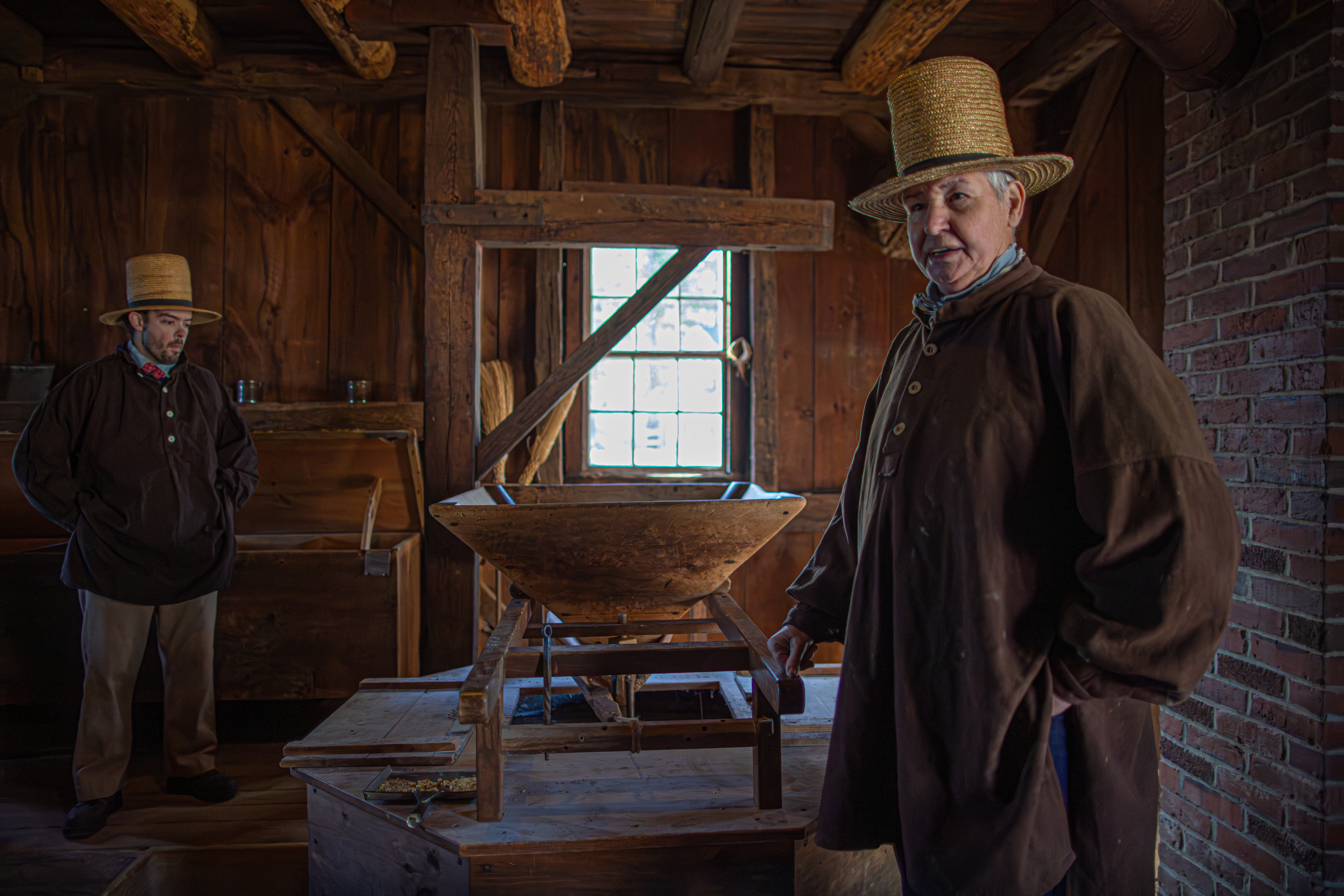
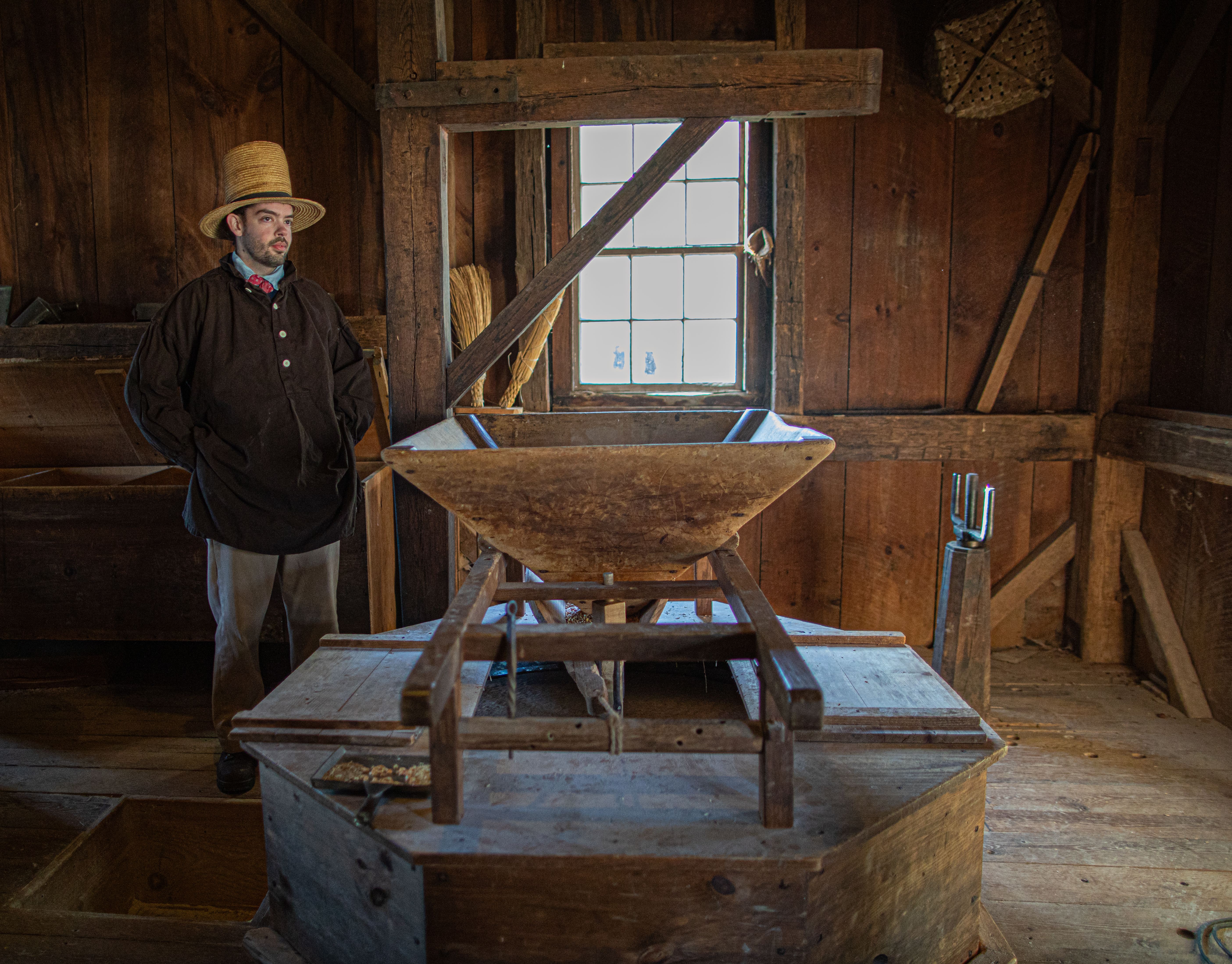
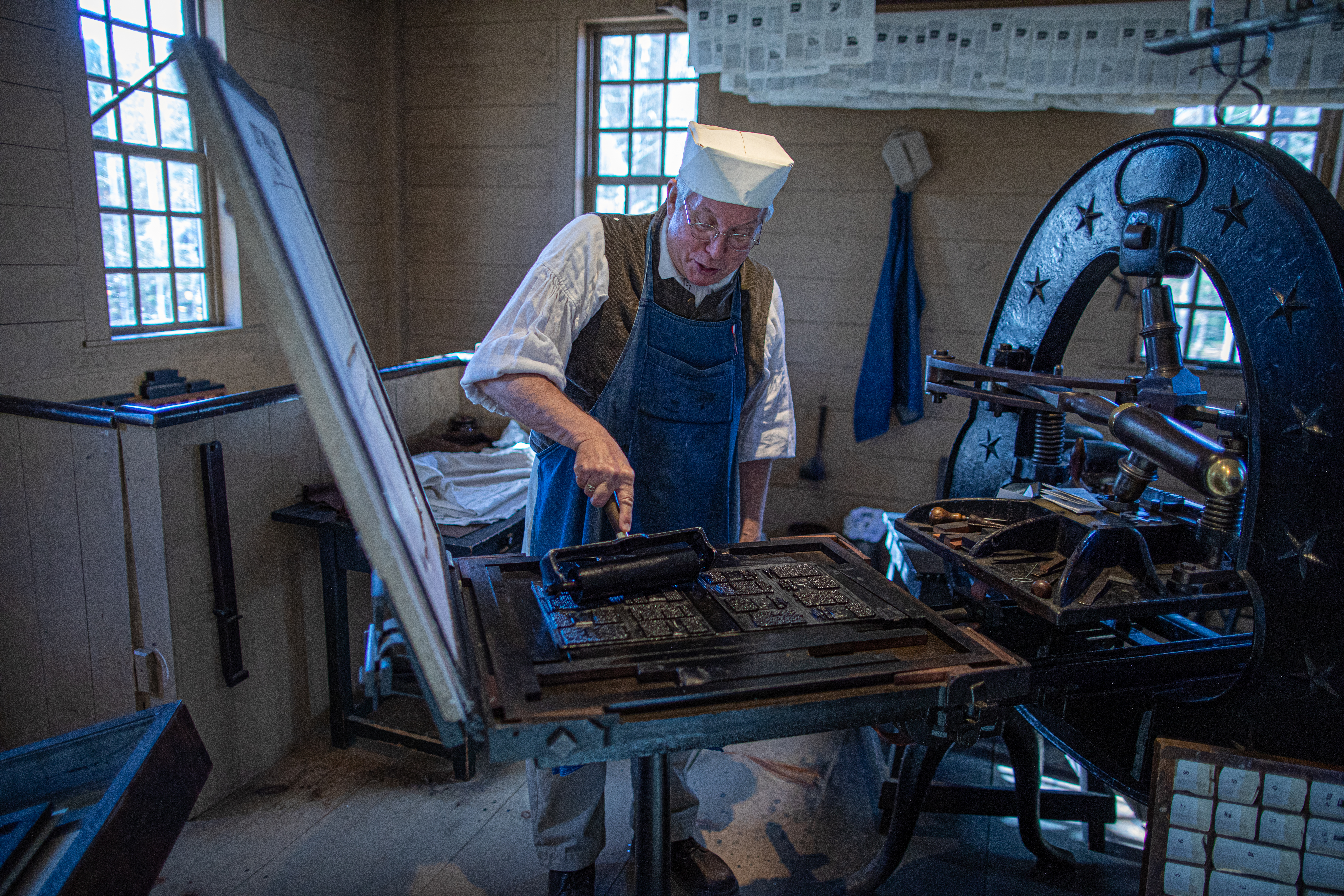
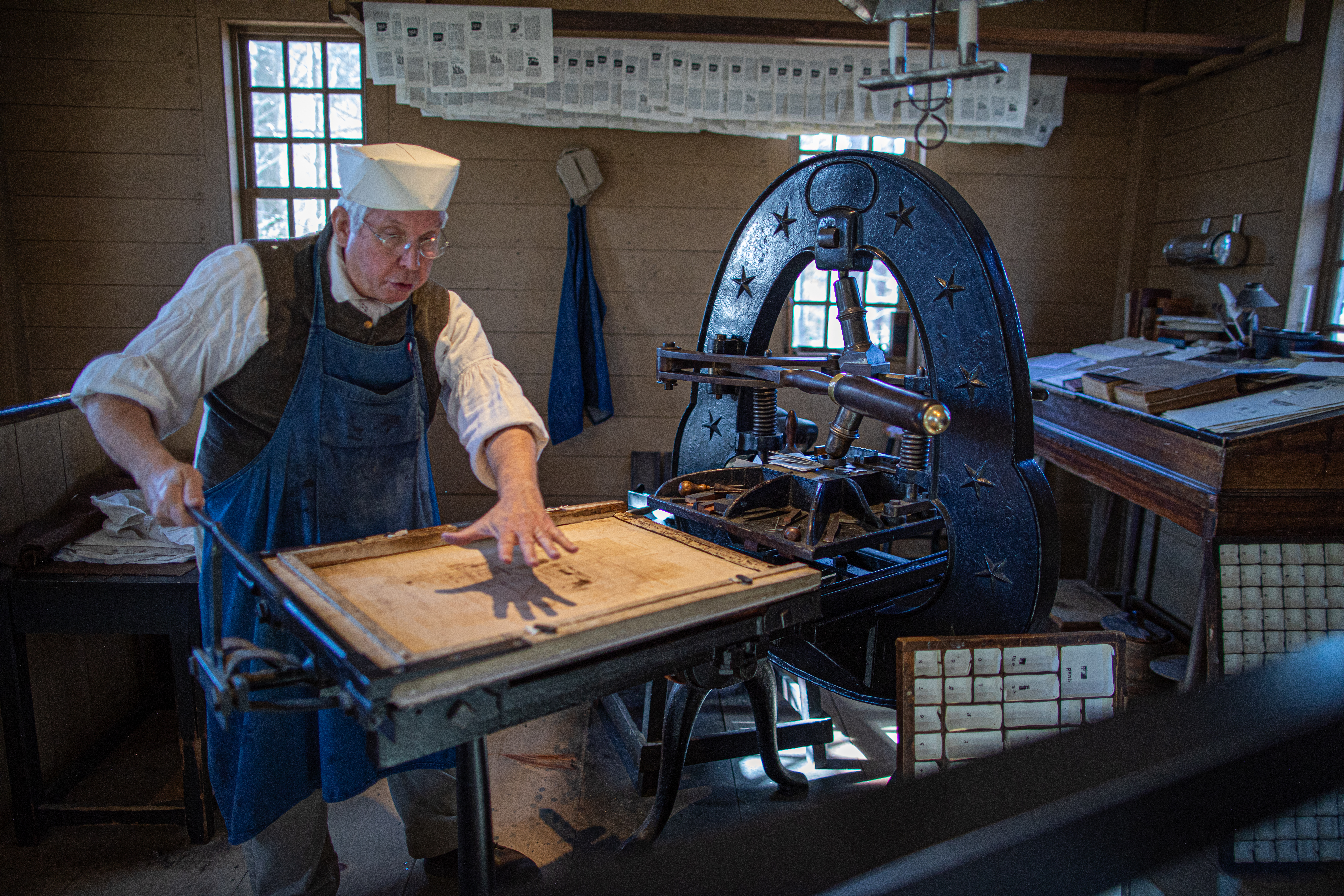
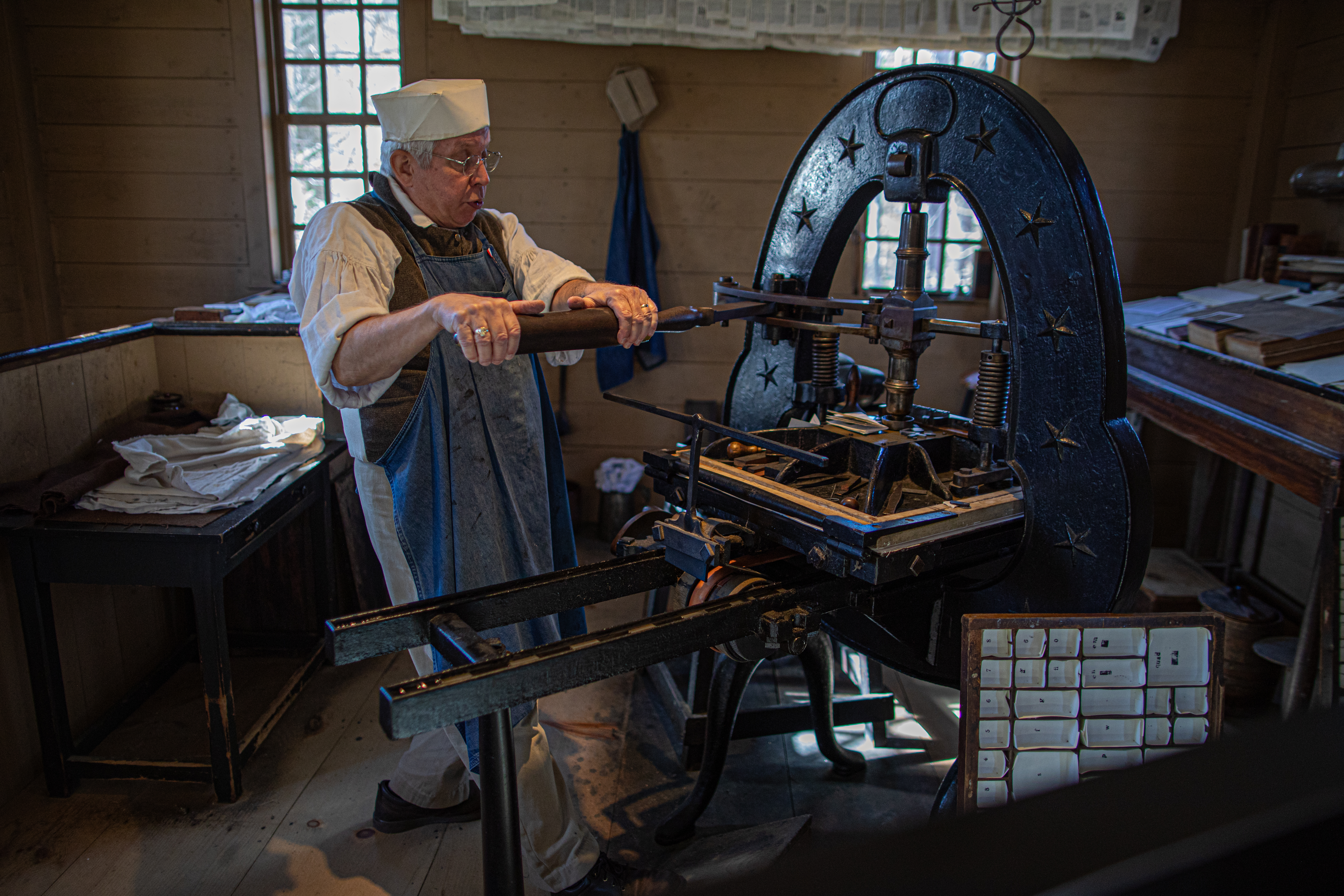
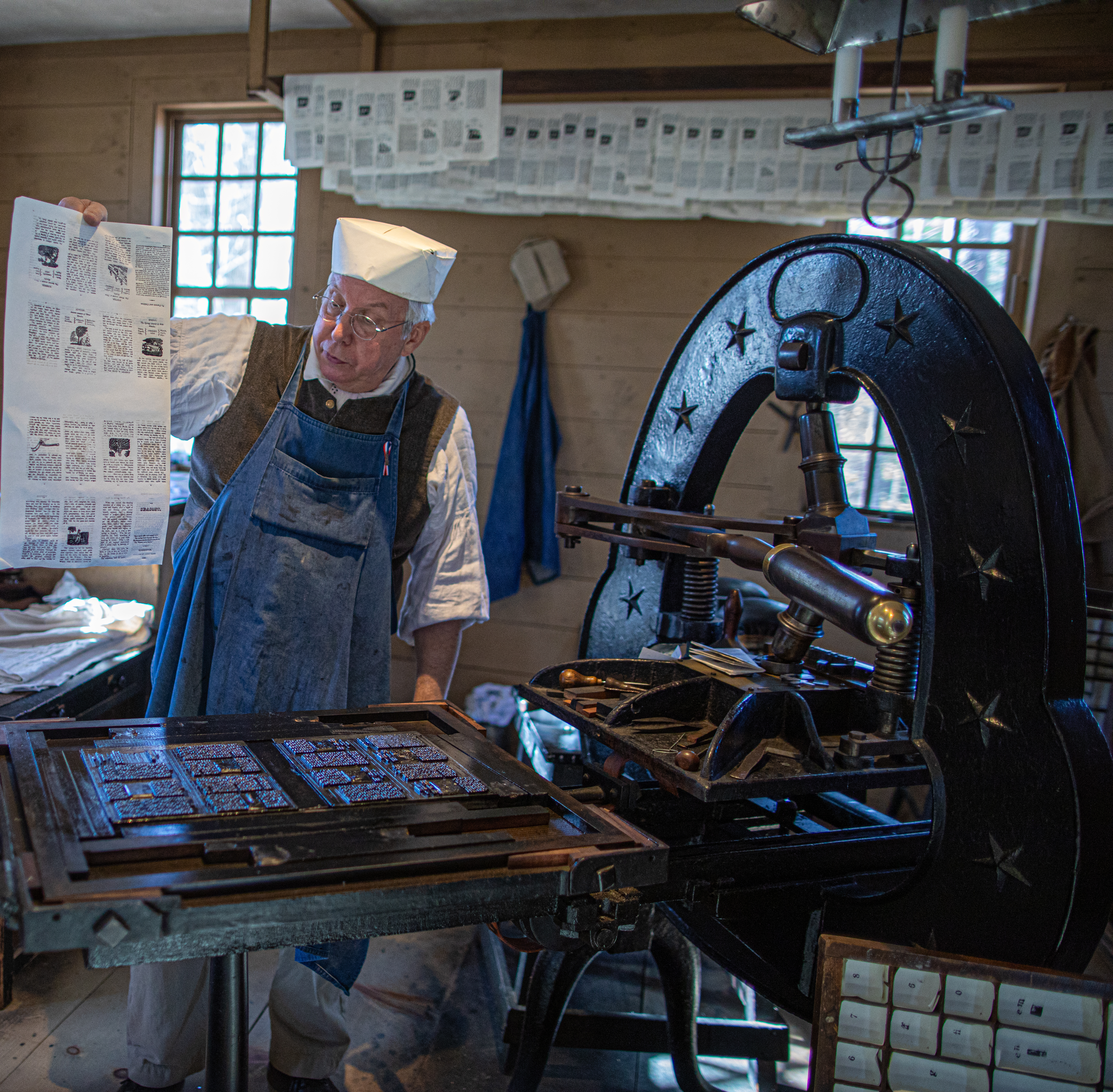
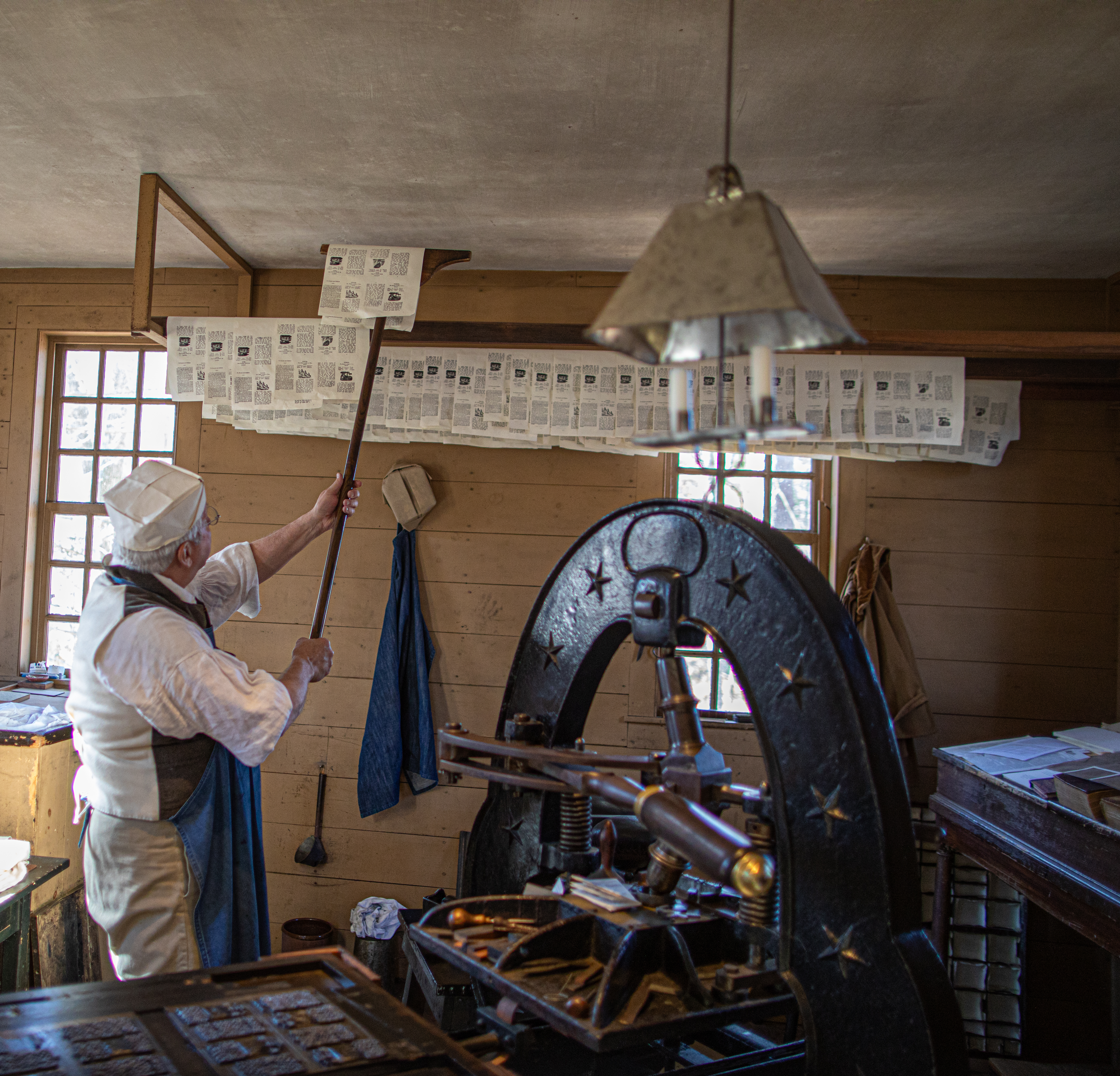
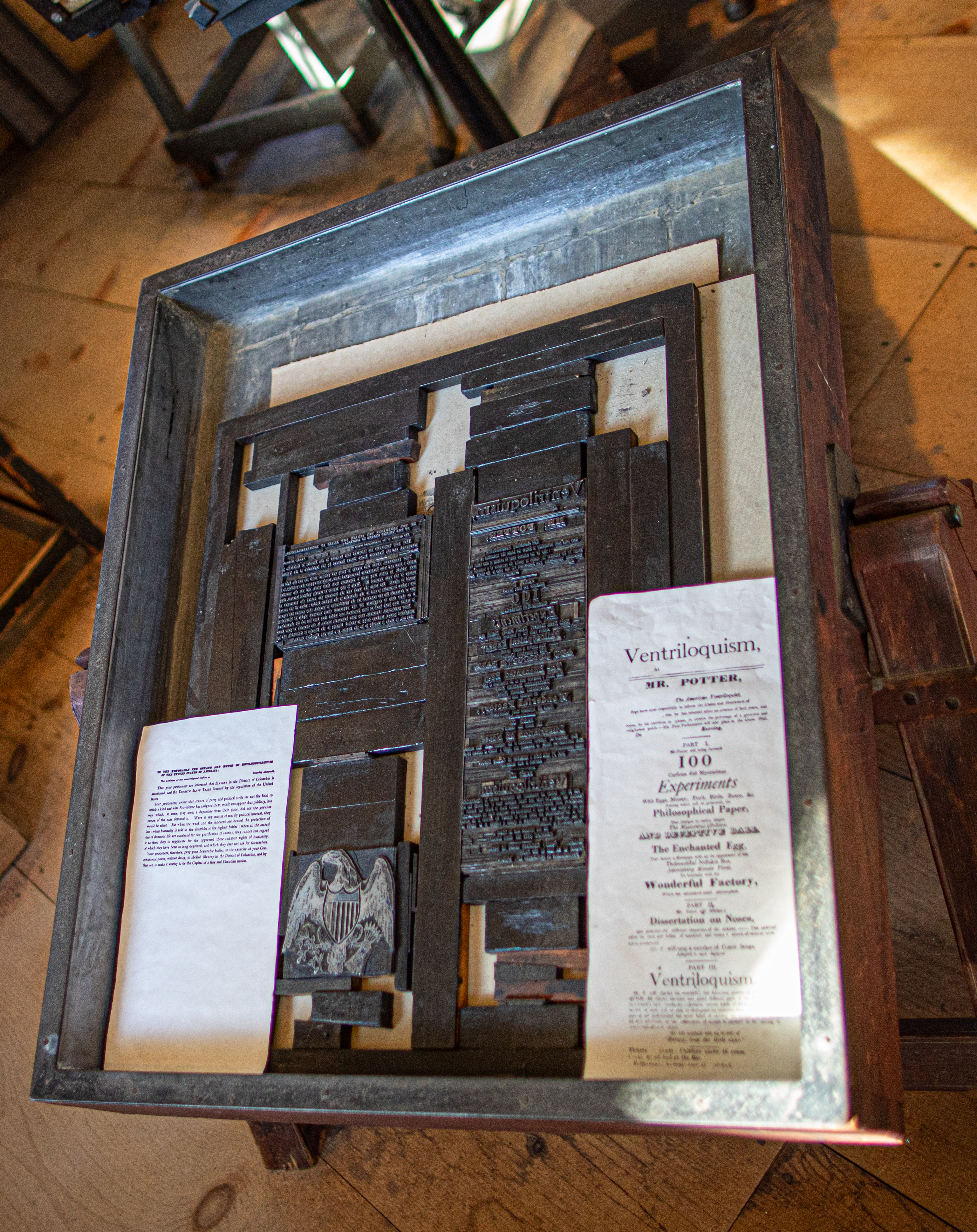
Originally built in Worcester, MA around 1780, the Printing Office was moved to Old Sturbridge Village in 1951.
Printing required speed, dexterity, and strength. Setting type and printing were generally the work of men and boys, but women were employed in stitching and binding books. Country printers concentrated on books, pamphlets, broadsides, and forms. Newspapers were seldom profitable in small towns, but many rural printers tried to make money from them. In order to have a variety of titles for their customers, rural printers exchanged large quantities of books with printers throughout New England. Then they sold the books to country merchants, often taking store goods in exchange. By 1820, many were printing books for publishers in Boston, New York, and Philadelphia.
The Printing Office at Old Sturbridge Village was owned for a time by noted printer Isaiah Thomas. Thomas moved from Boston to Worcester during the Revolutionary War to preserve his freedom to publish. It is unlikely that Thomas printed in this building, but the association with him is important. As one of America’s most successful printers, he trained many craftsmen, who influenced the trade for two generations.
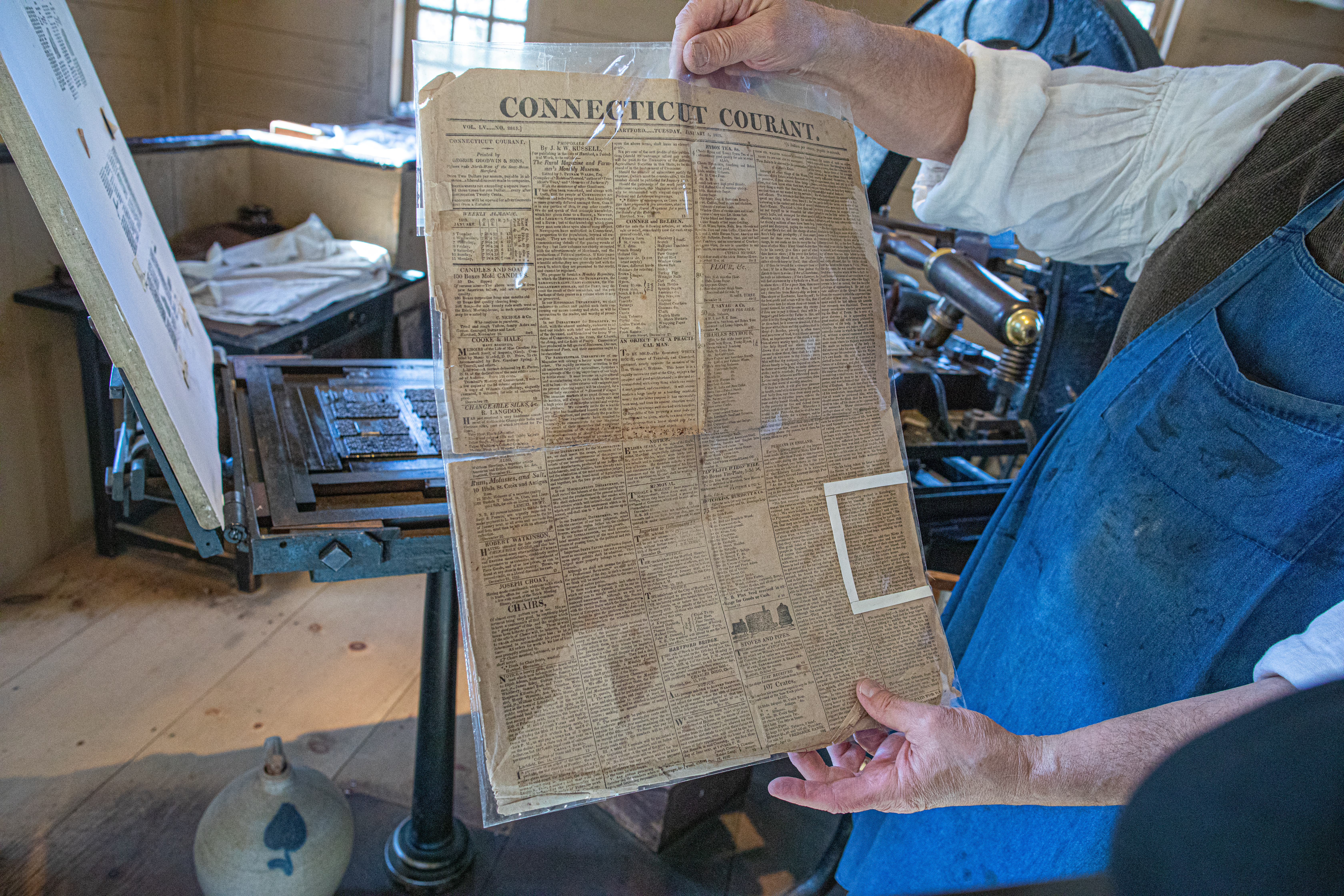
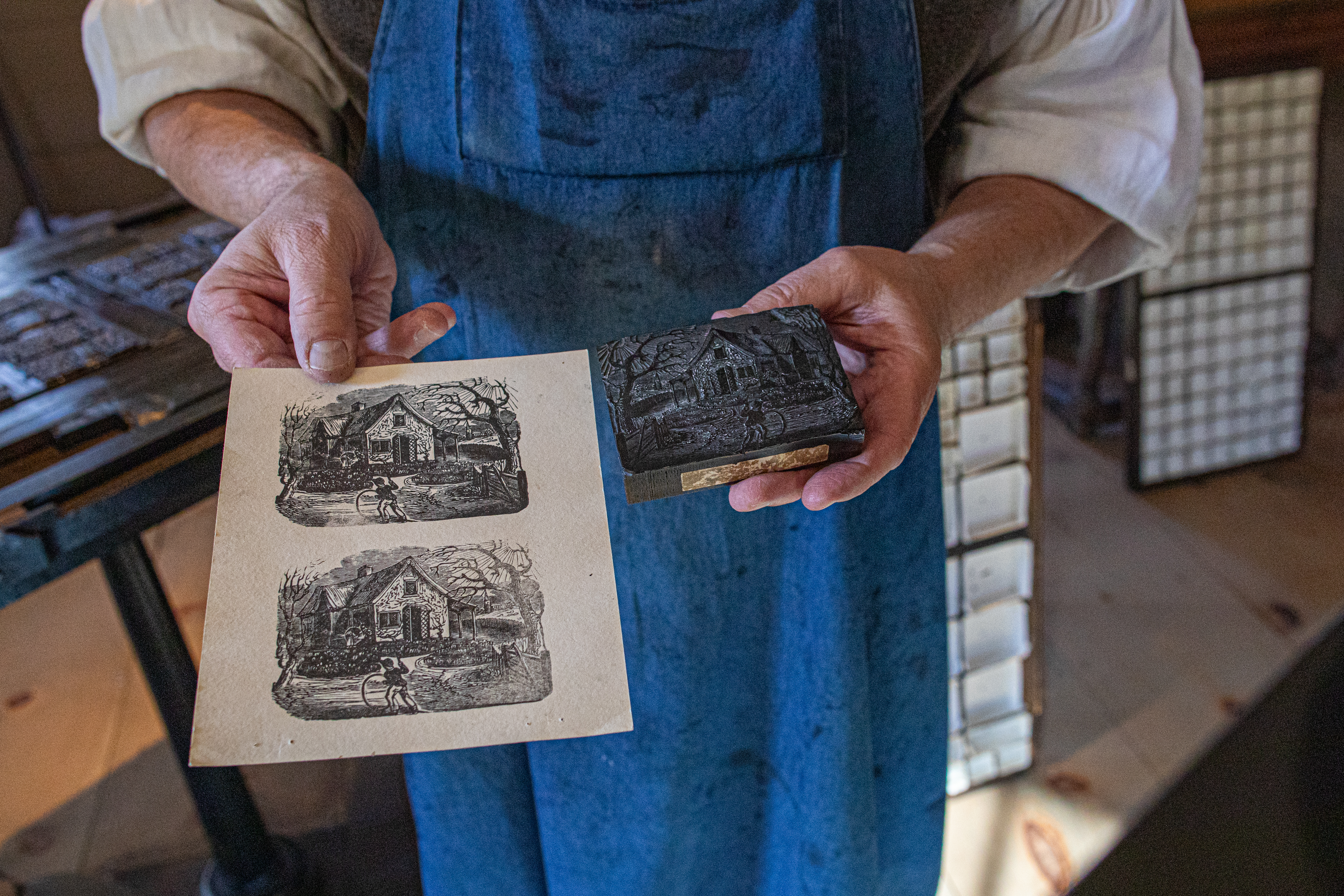
The printer showed off the tools of the print shop as well as how the papers were printed on. This copy of the Connecticut, which was printed on the printer in the office is an original from the 1800s.
Of course, what would a Thanksgiving celebration be without a feast?
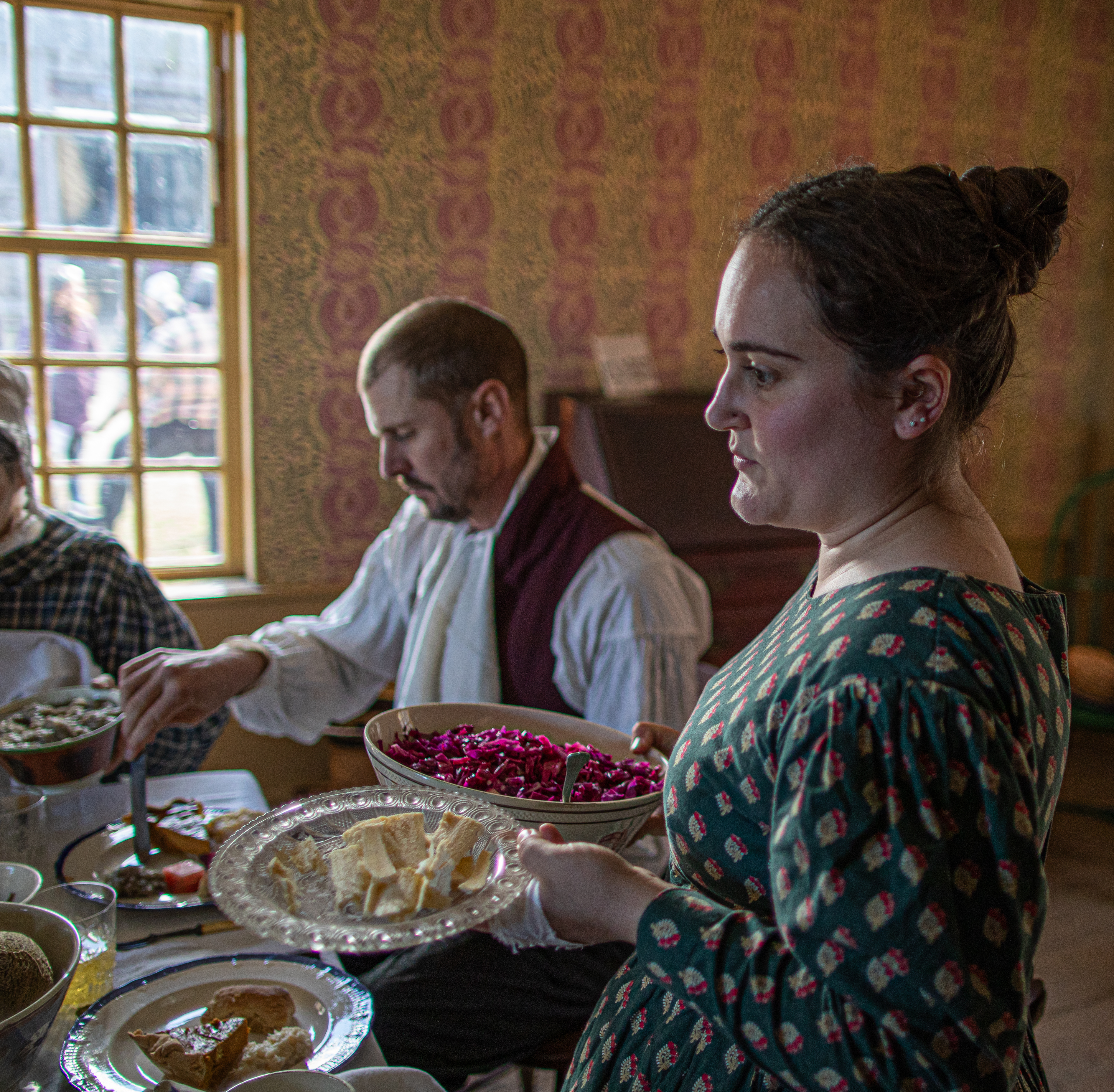
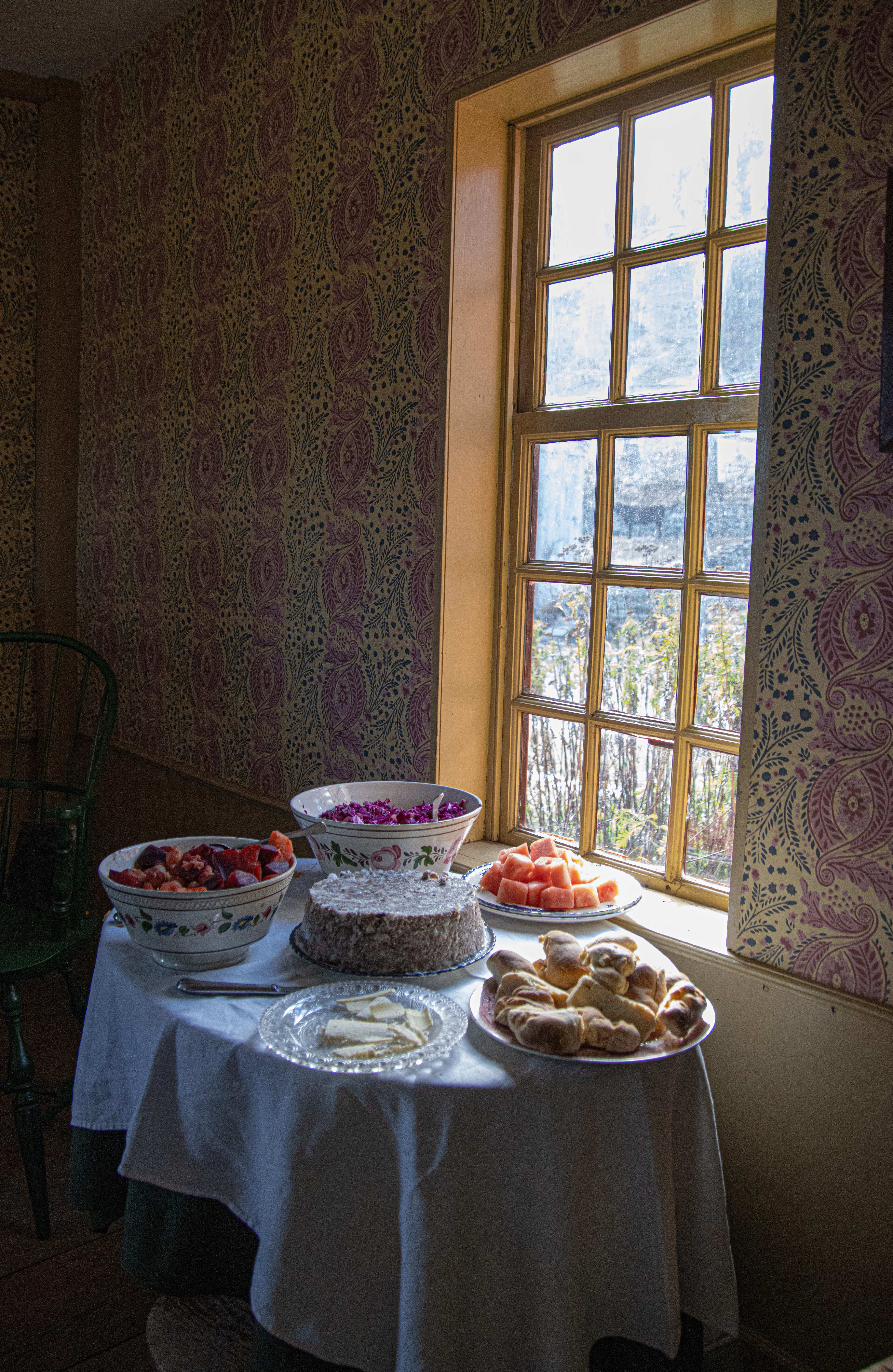
Thanksgiving was the biggest holiday in 19th century Sturbridge. While the turkey is usually the biggest part of the Thanksgiving meal in modern day America, it was not the case in 19th century Sturbridge. And, other parts of the meal were considered more important. es were baked weeks ahead of time and stored in unheated attics and bedrooms where they would freeze and keep for months. Pies not consumed at Thanksgiving would sometimes last until April. Also, while many people might be surprised to read this, prayer was not said before the big meal. Grace, or a proclamation of gratitude, was often said before the meal.
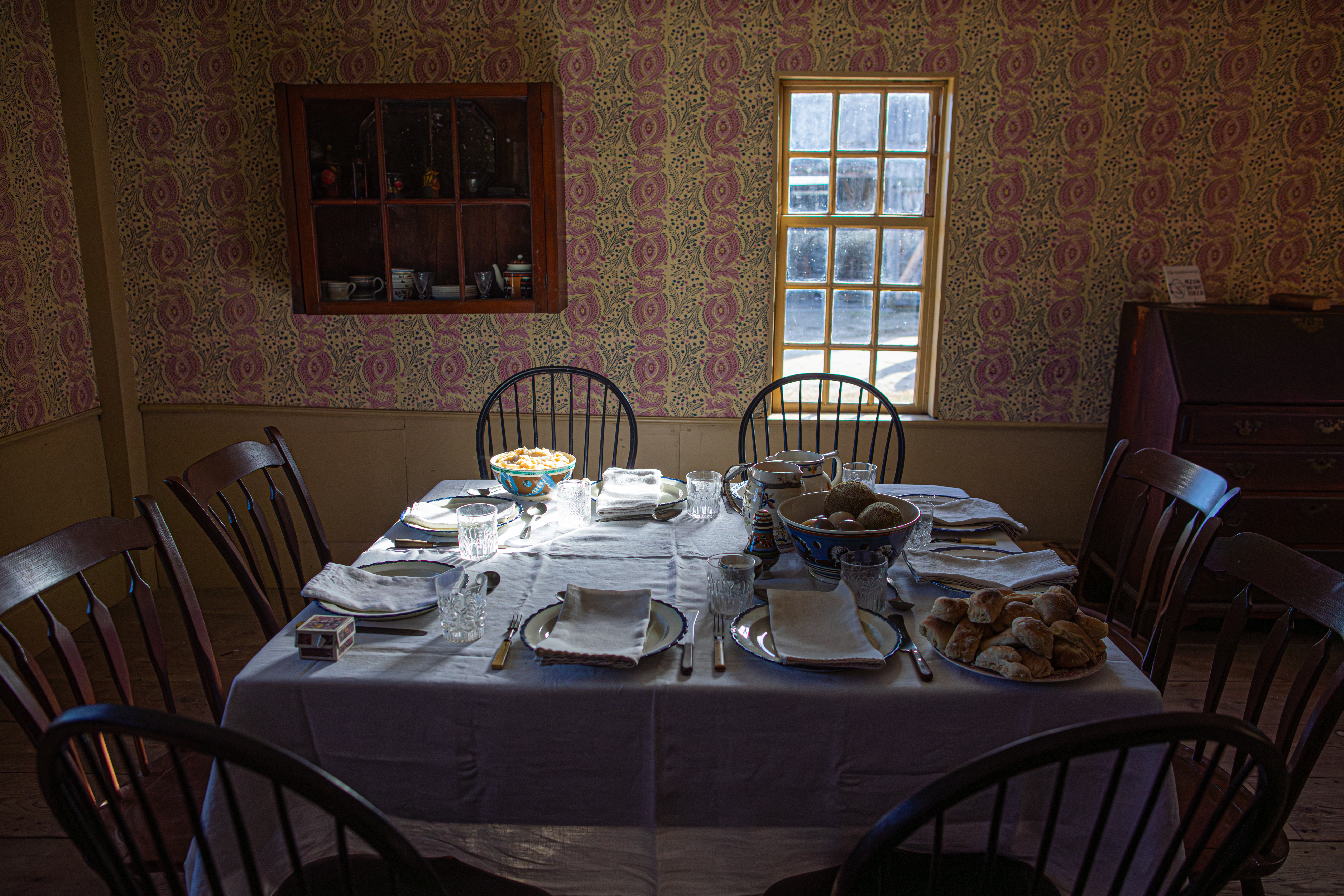
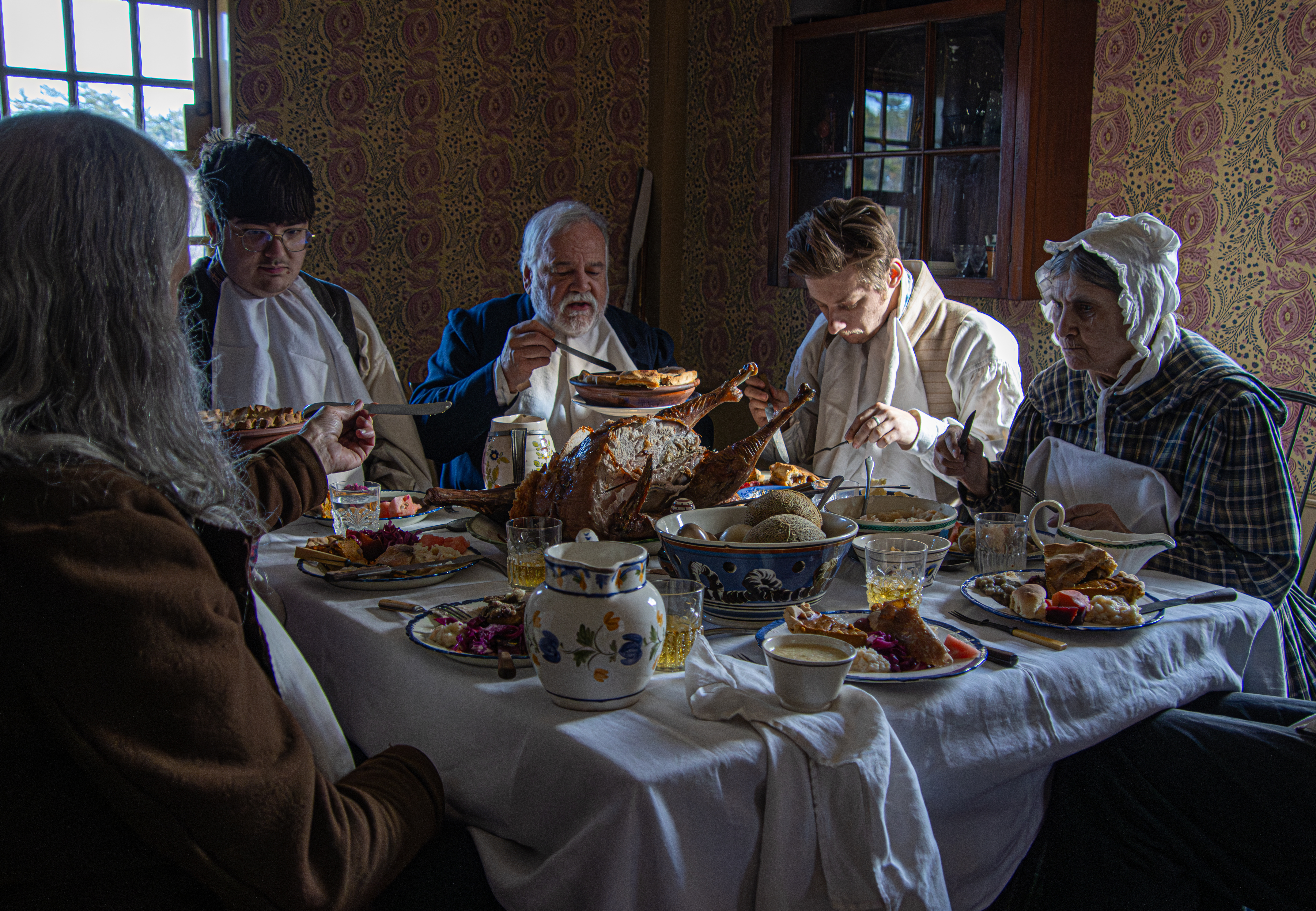
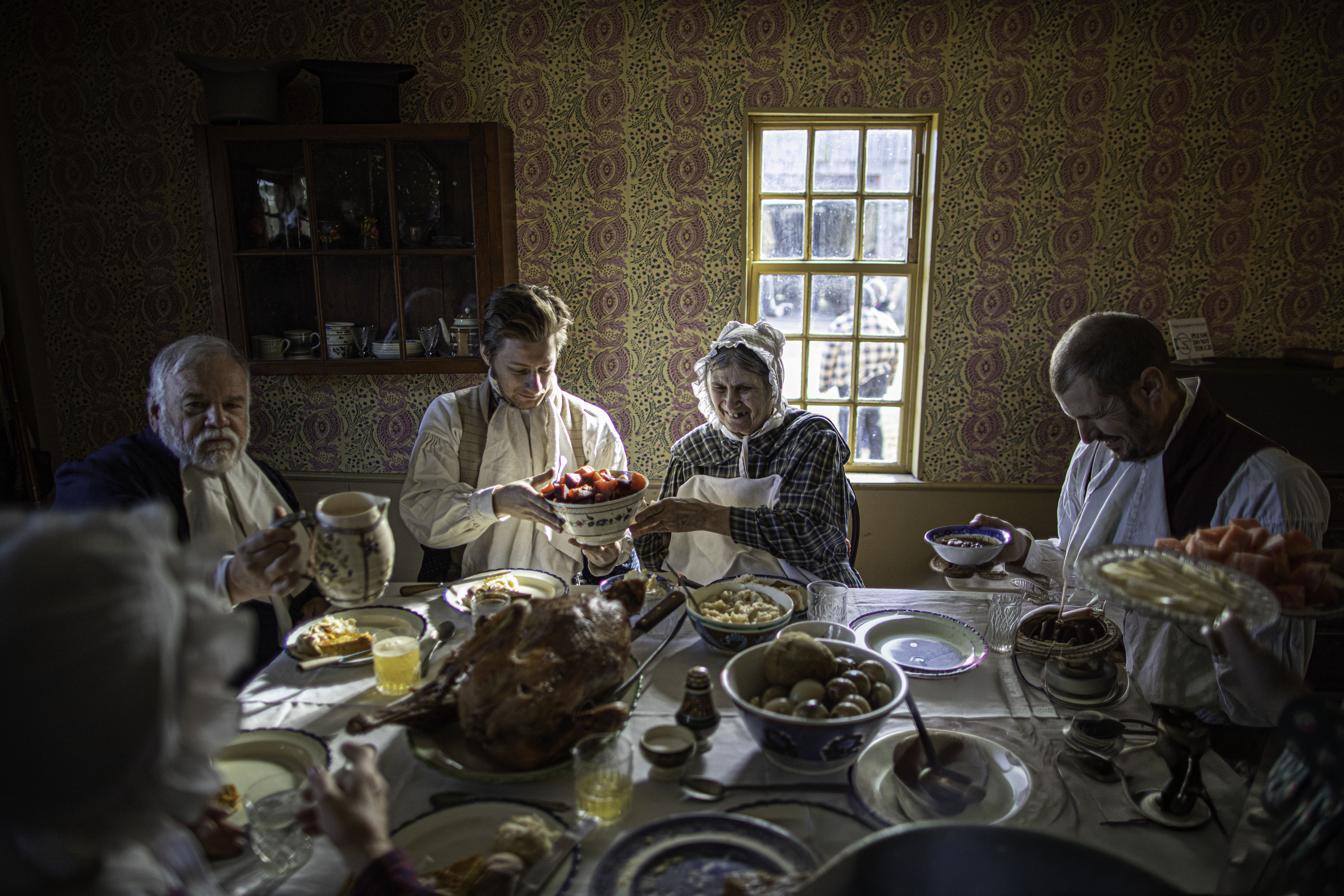
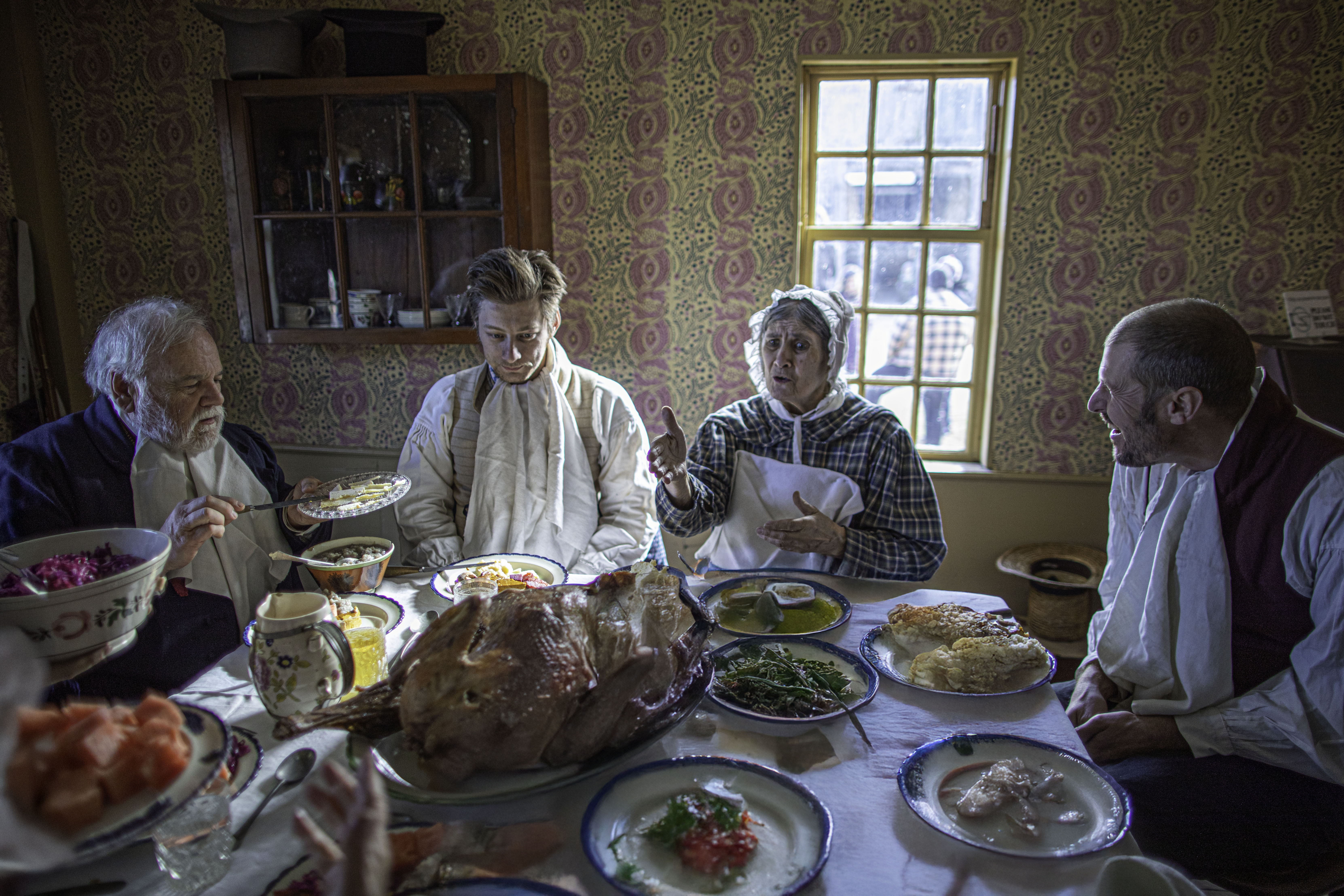
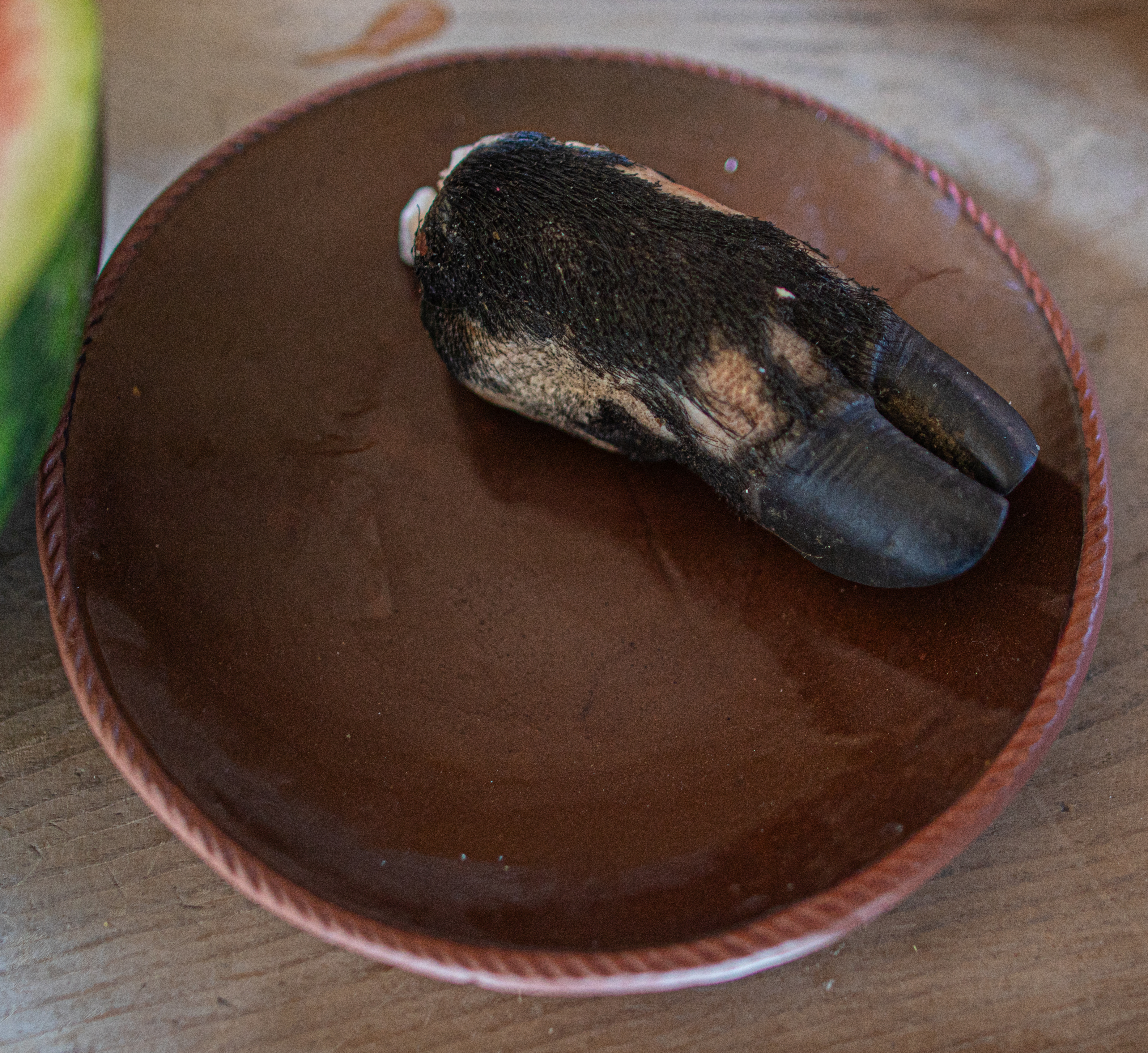
Turkey wasn’t the only thing on the menu. This hoof (possibly from a boar, sheep or deer) was a common delicacy of these meals.
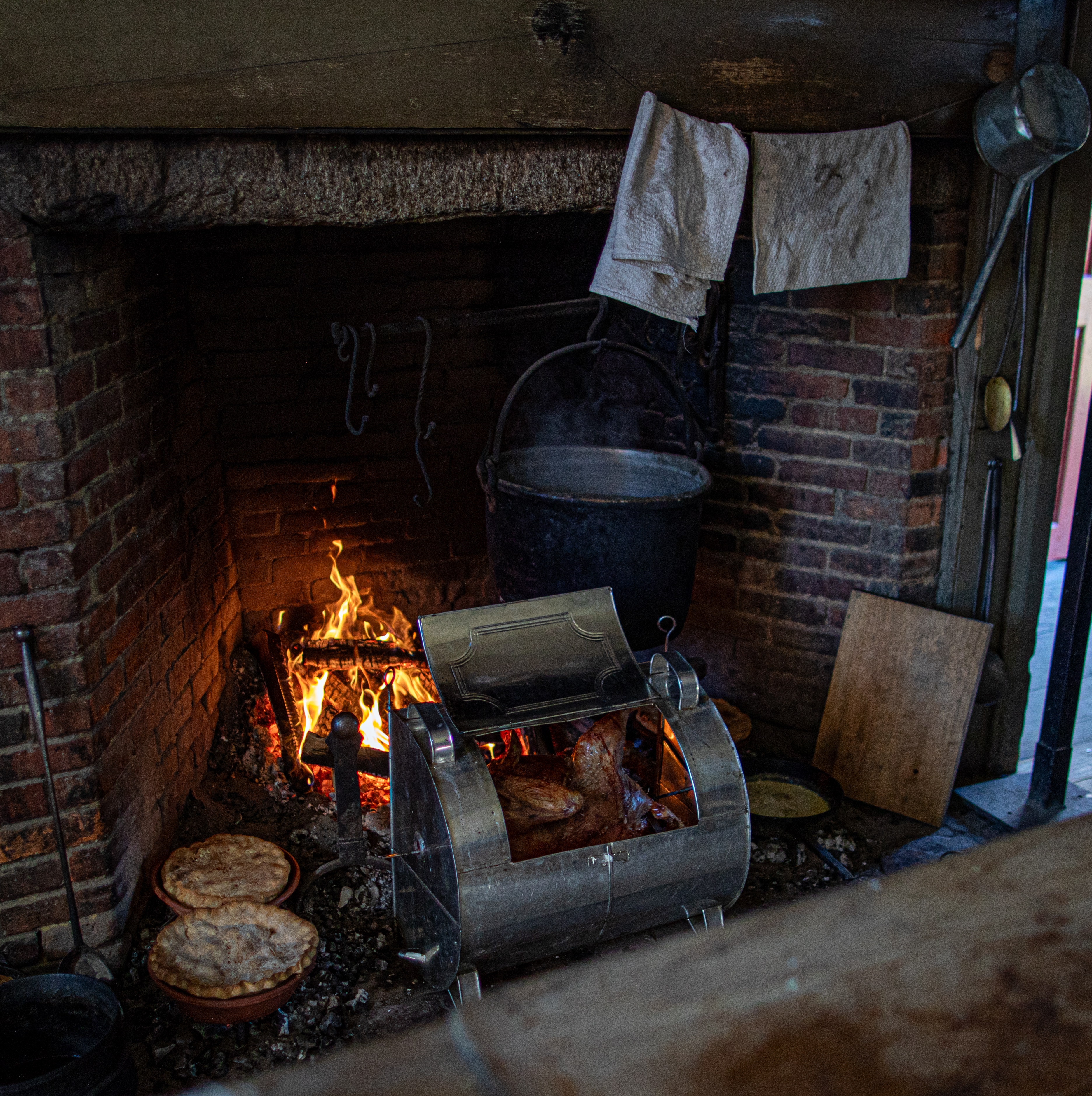
But there were also more savory items like pies, cake, vegetables and a turkey cooking near an open flame.
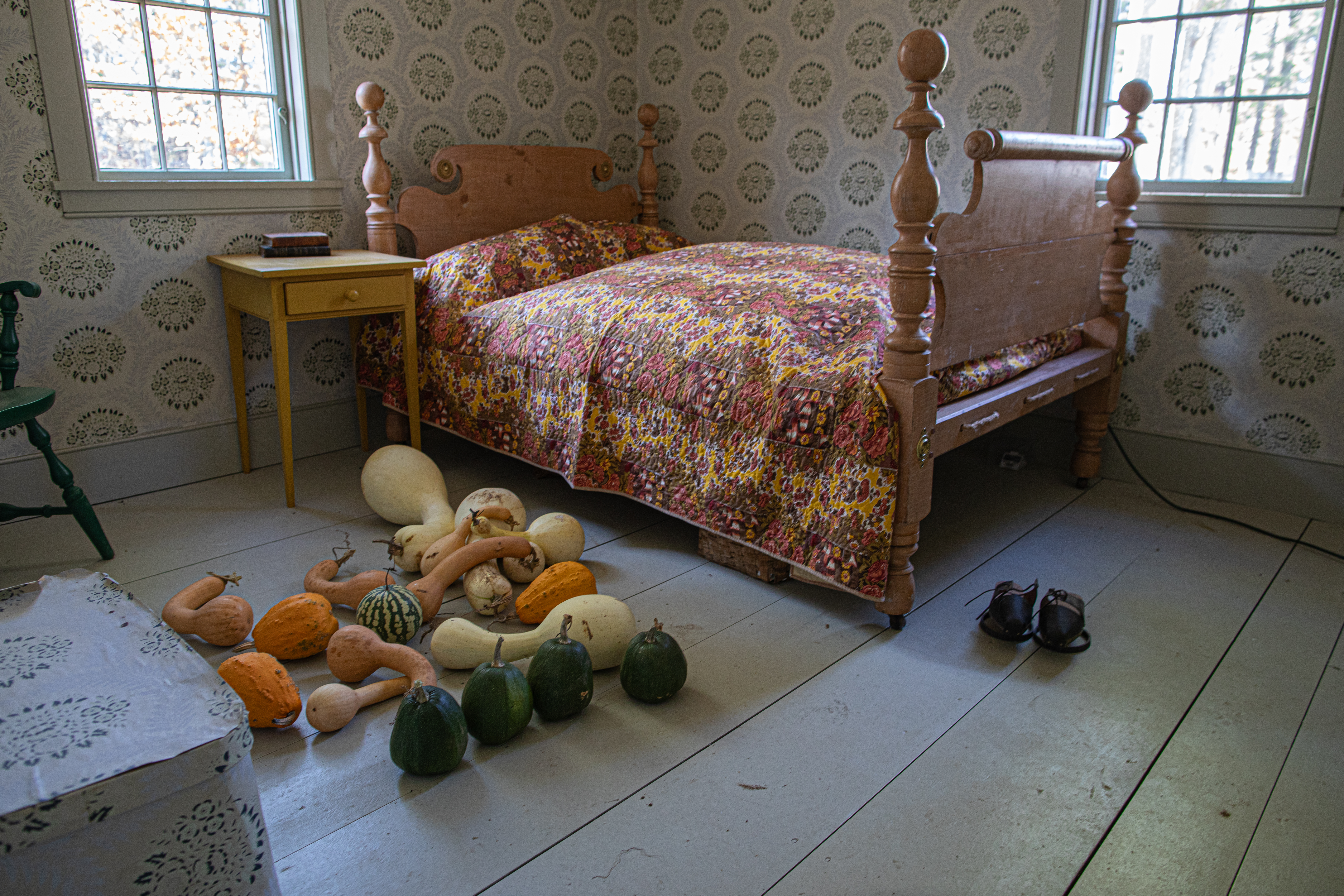
Sometimes, they would store extra vegetables in unusual places!
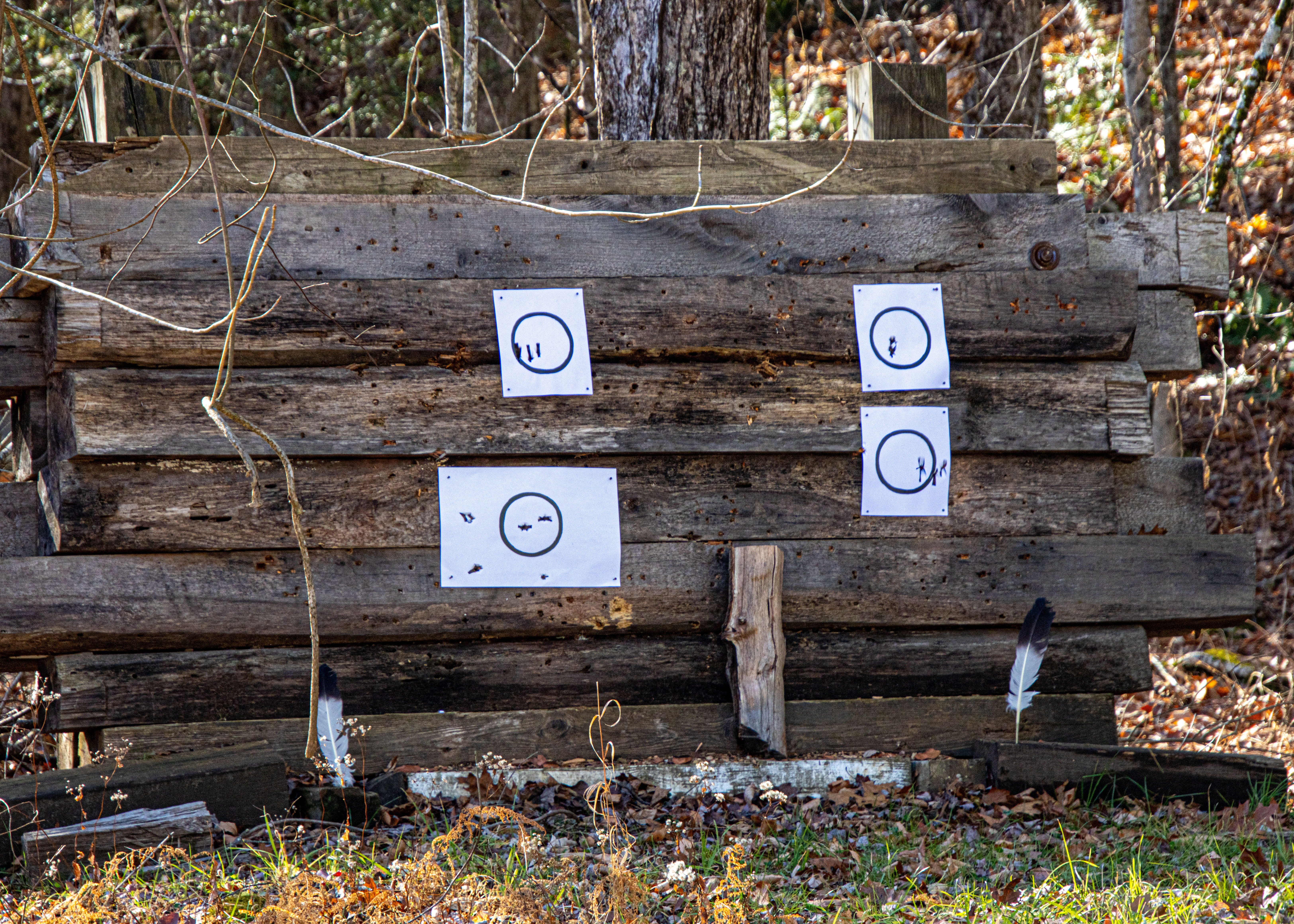
The highlight for most, though, was the “turkey shoot.” But, no turkeys were harmed during this event. Men and women from the village took their turns at trying to hit the targets. While beginning to fall out of favor by the 1830s, competitive turkey shoots were still fairly common New England events in the fall and early winter. Participants would pay cash to shoot at nearly impossible ranges to try to win their own bird.
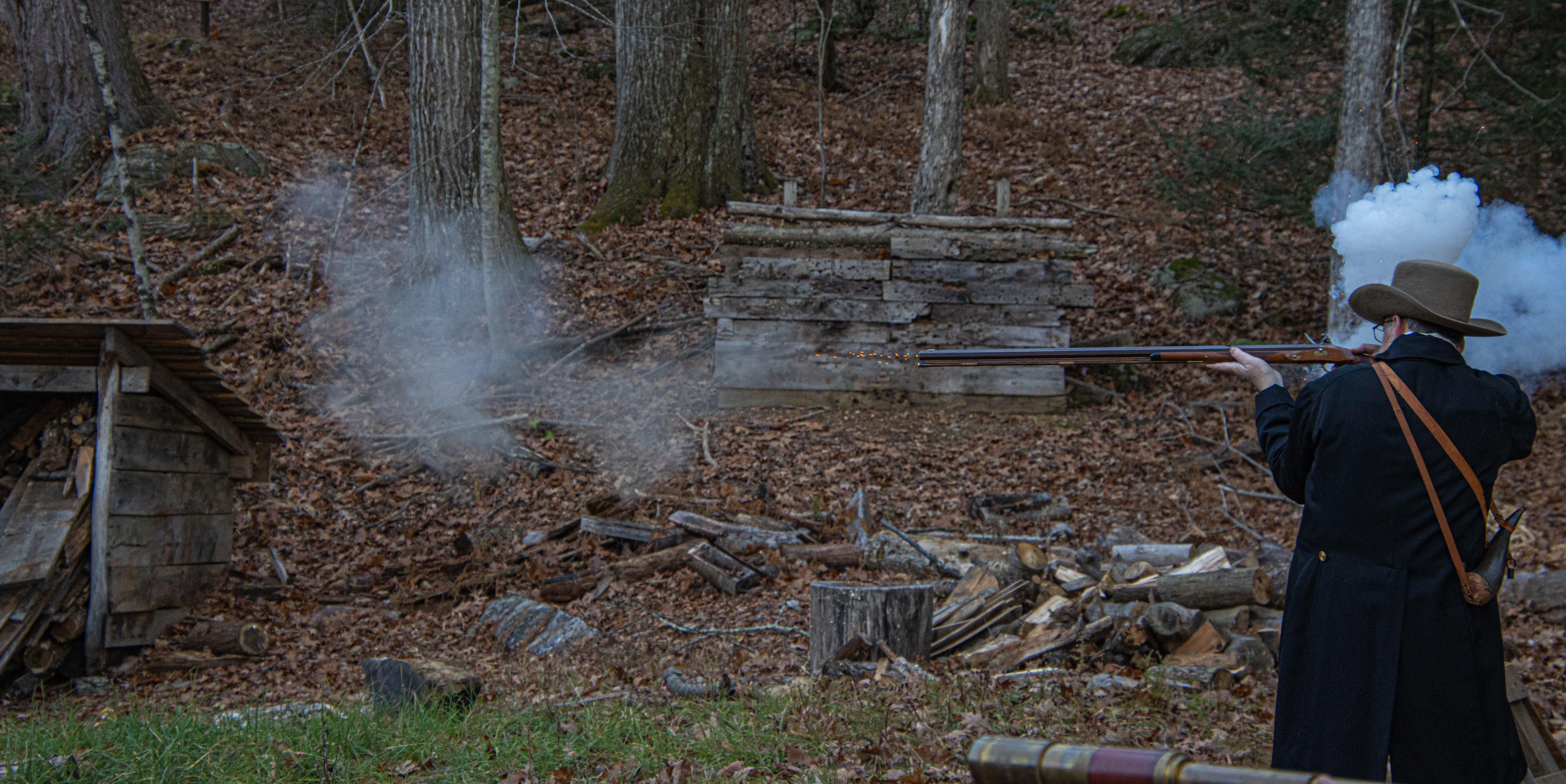
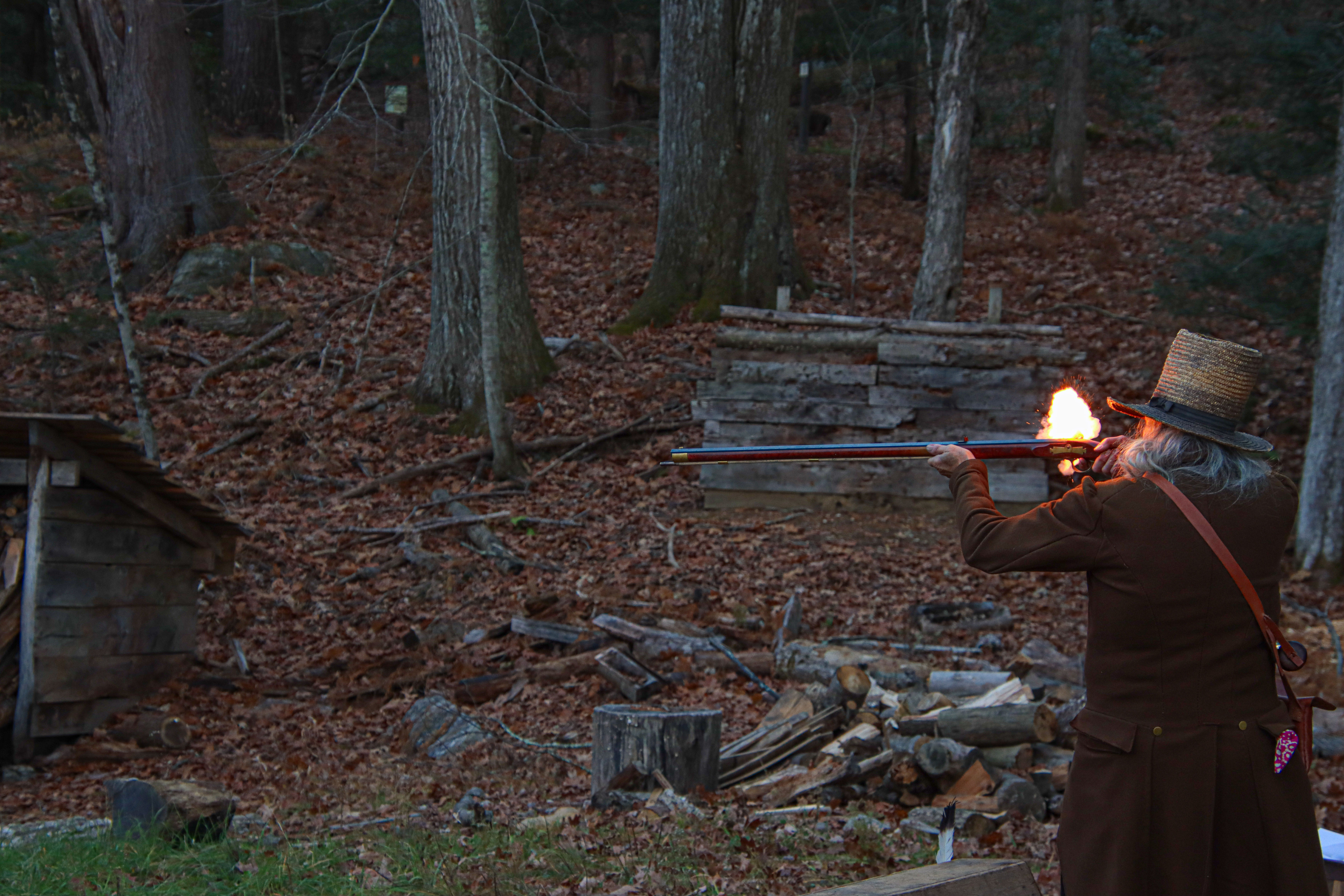
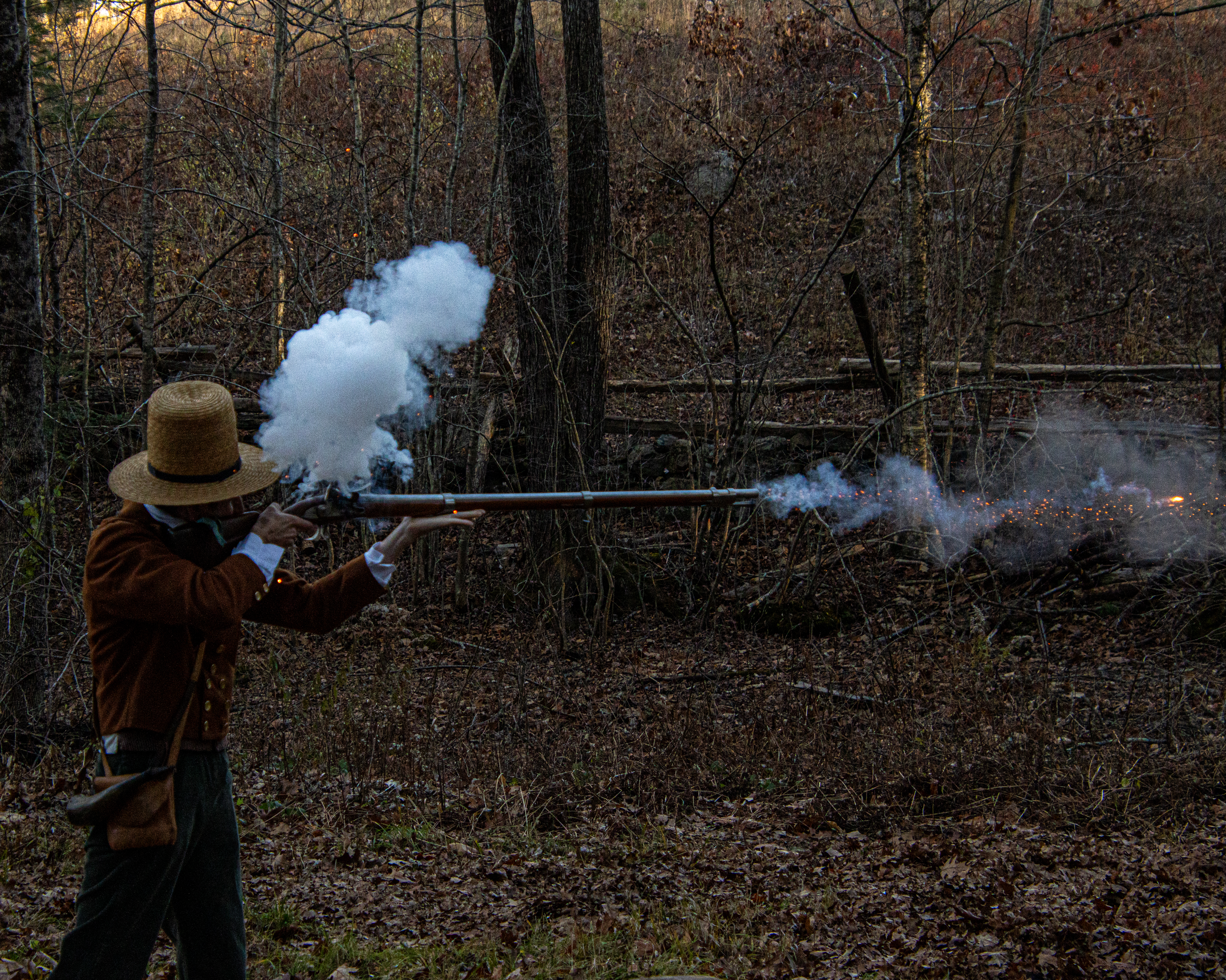
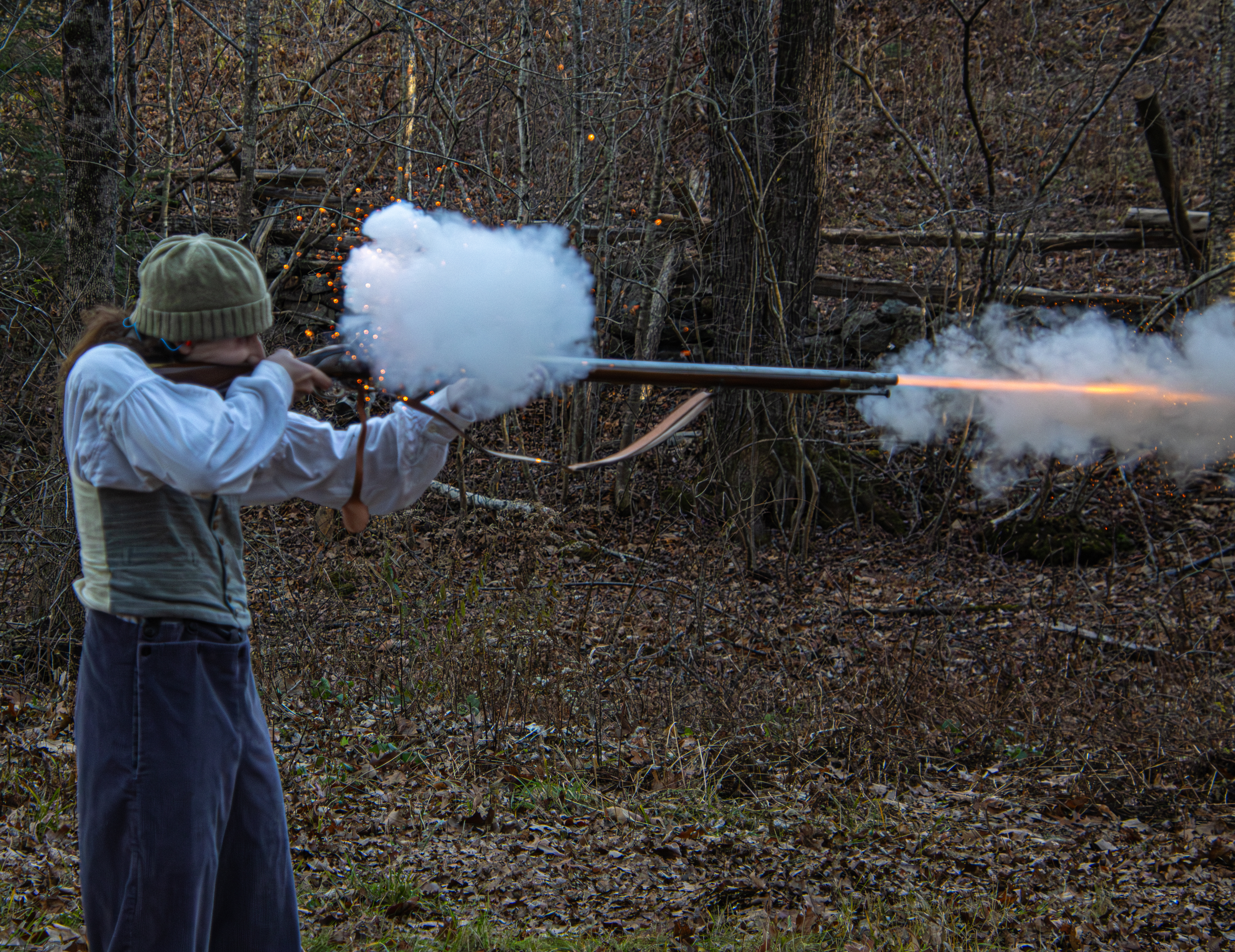
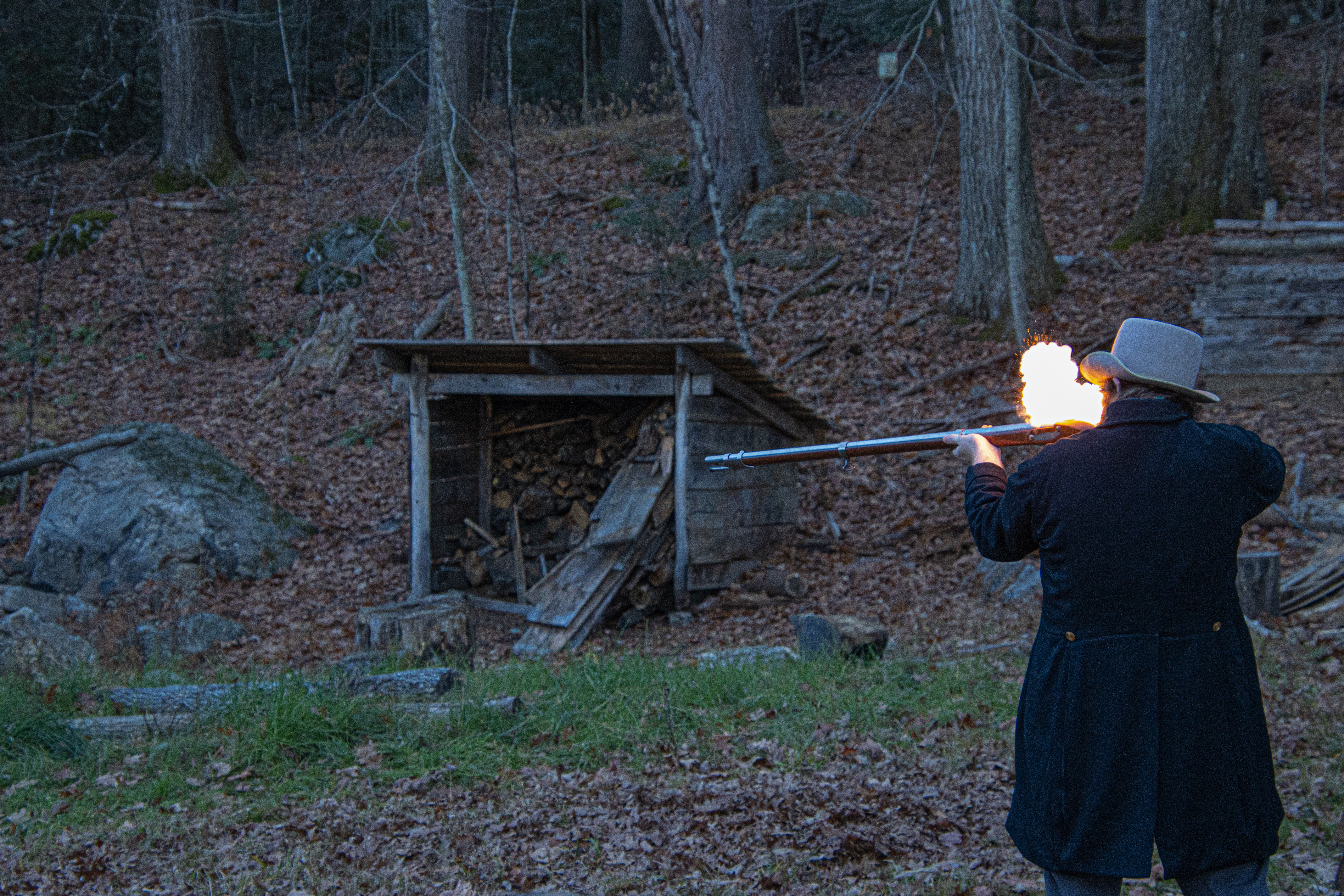
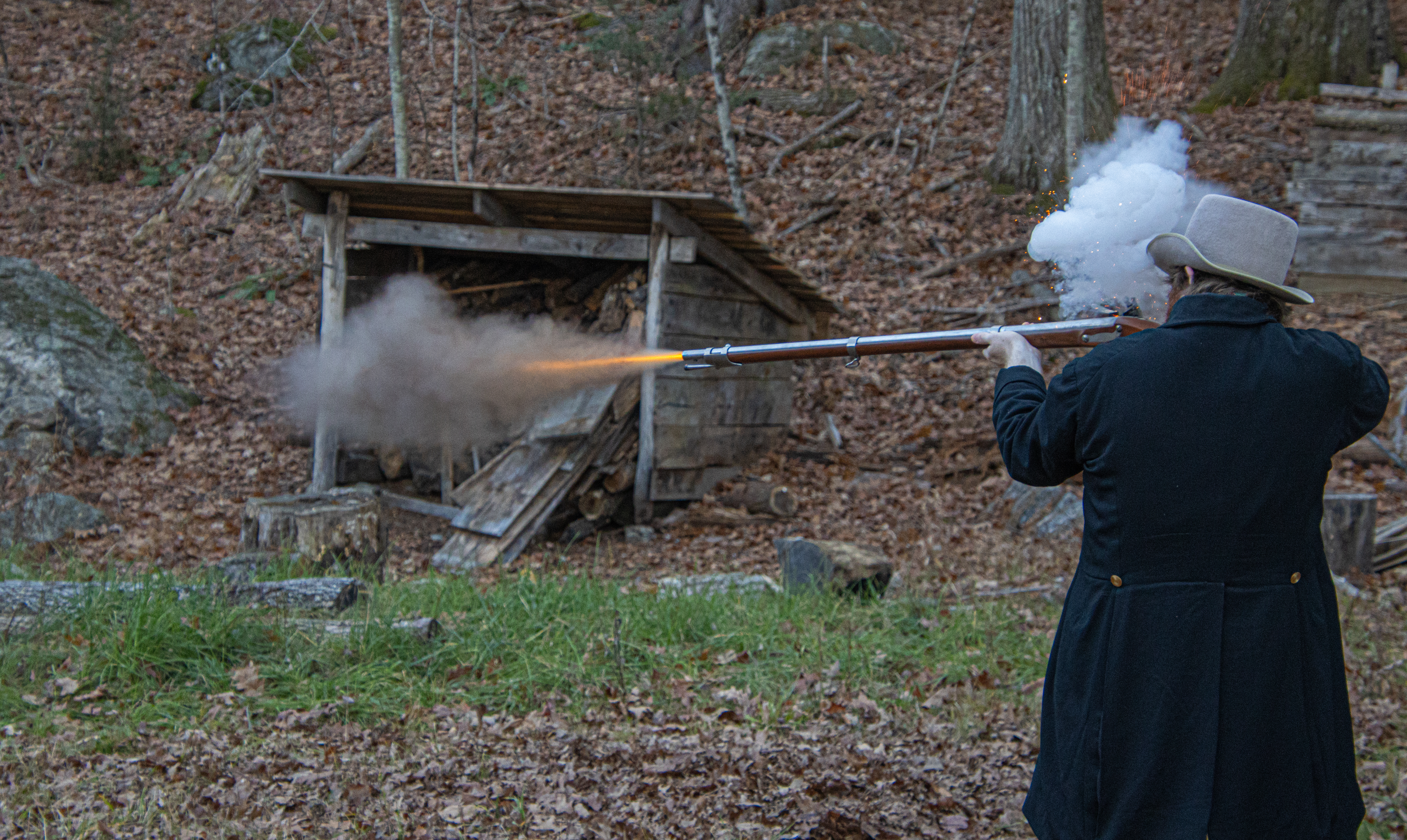
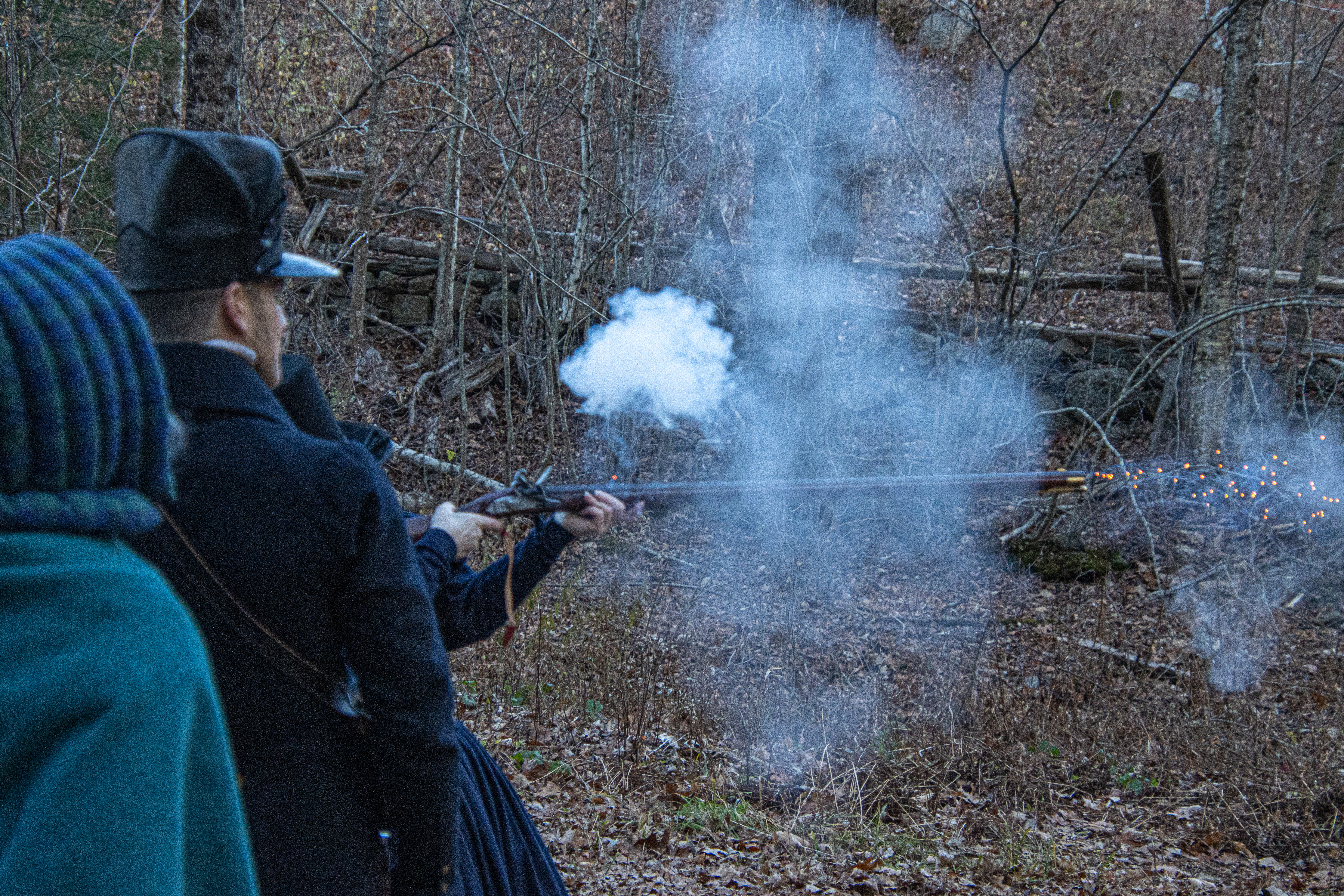
While no animals were used or harmed during the shoot, there were other targets used in the shooting. Instead of turkeys or other living things, the shooters aimed at the paper targets, jugs and bowls.
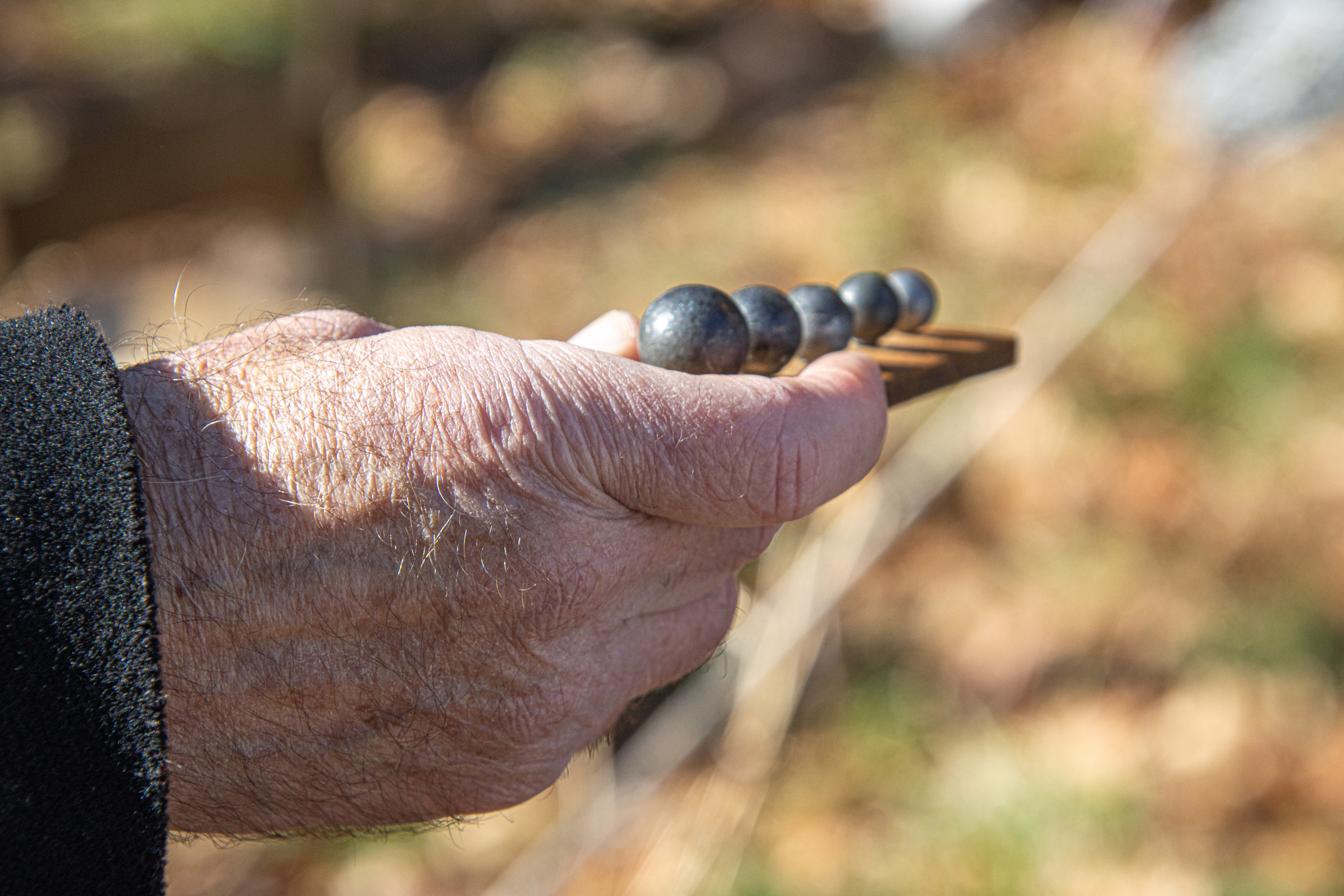
These are the rounds used during the time of the turkey shoot they were recreating. The shooters used the largest projectile to the left for the target practice. Imagine getting hit by that bullet, or any of these bullets for that matter. Ouch.
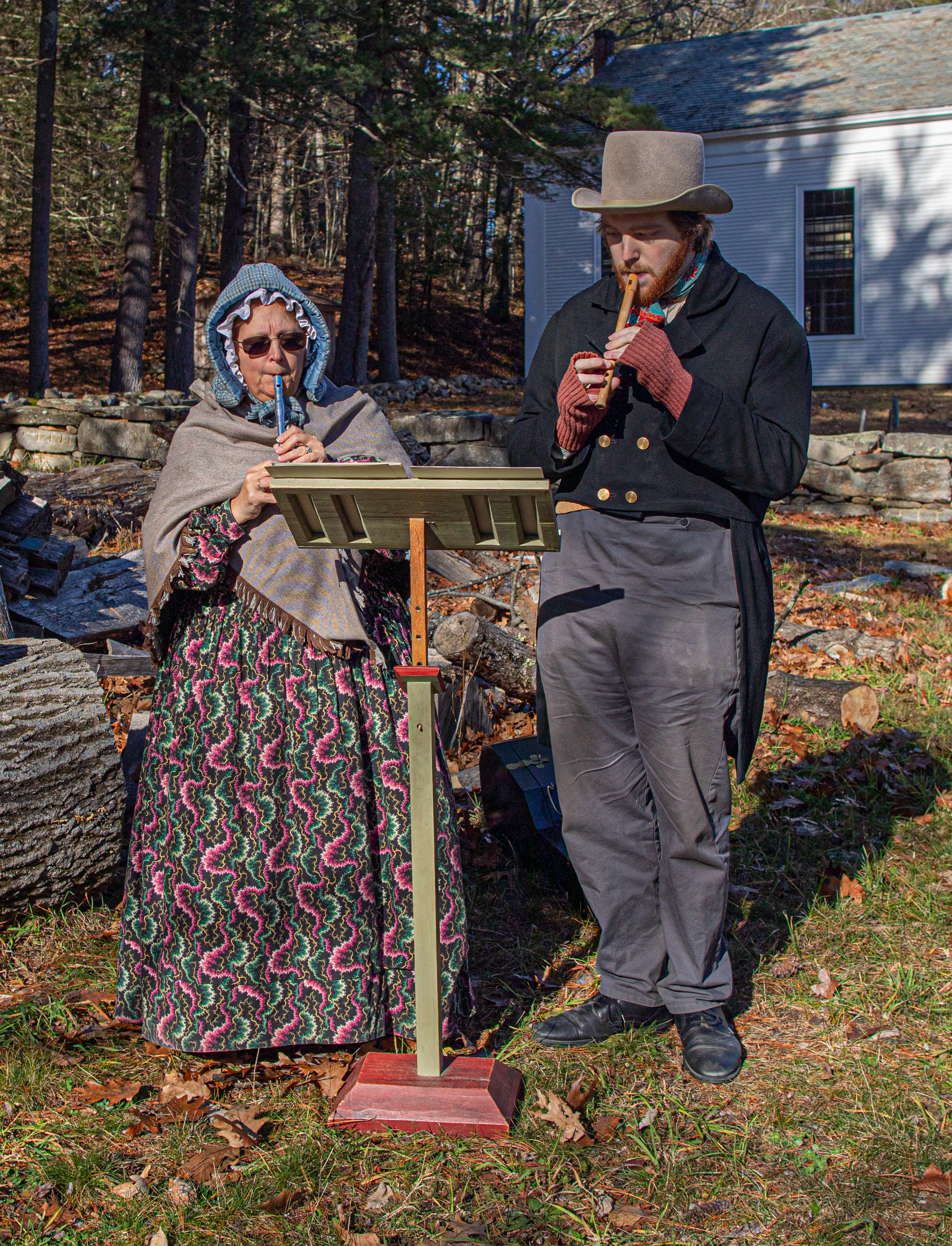
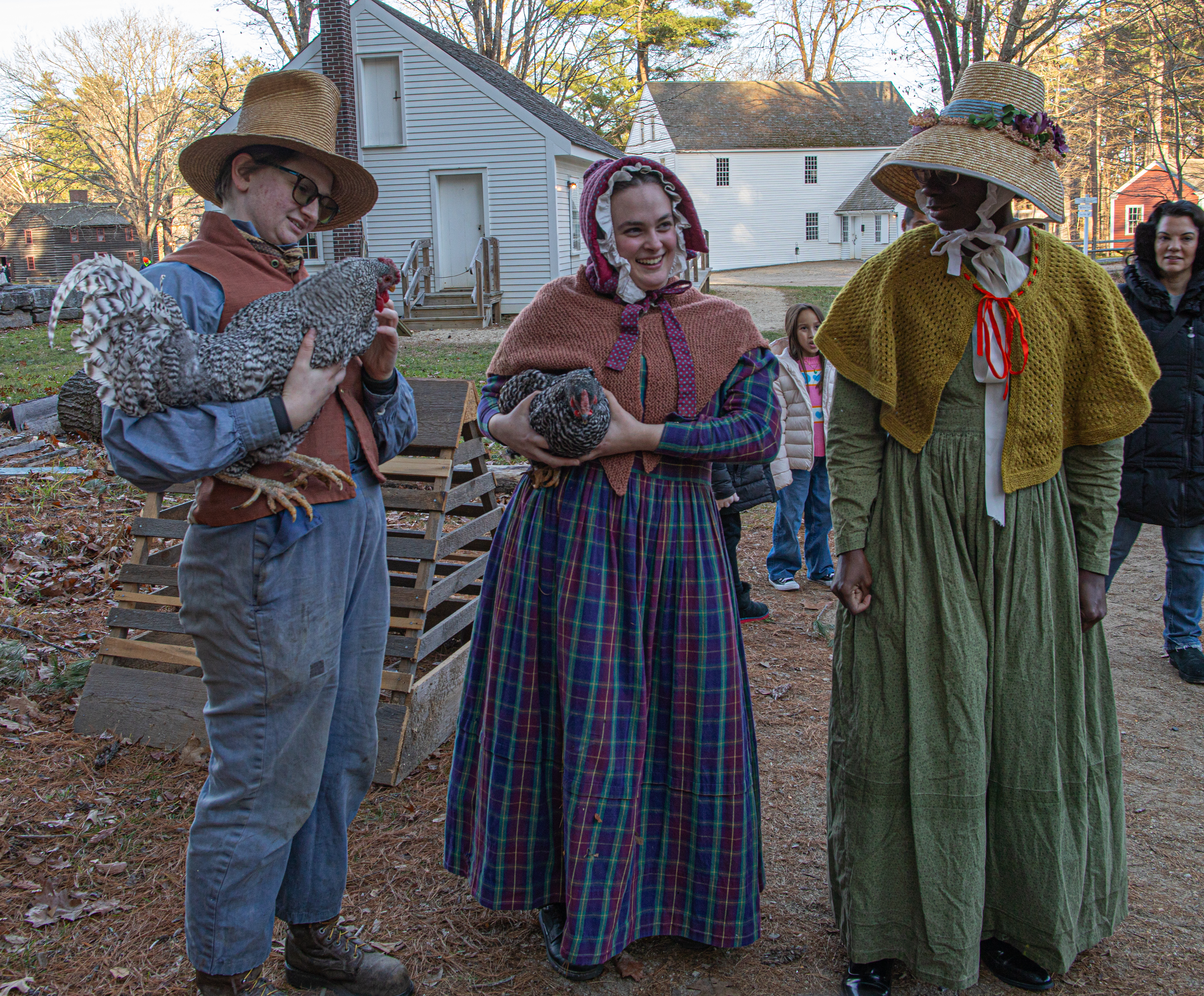
There were musicians and a few roosters at the turkey shoot.
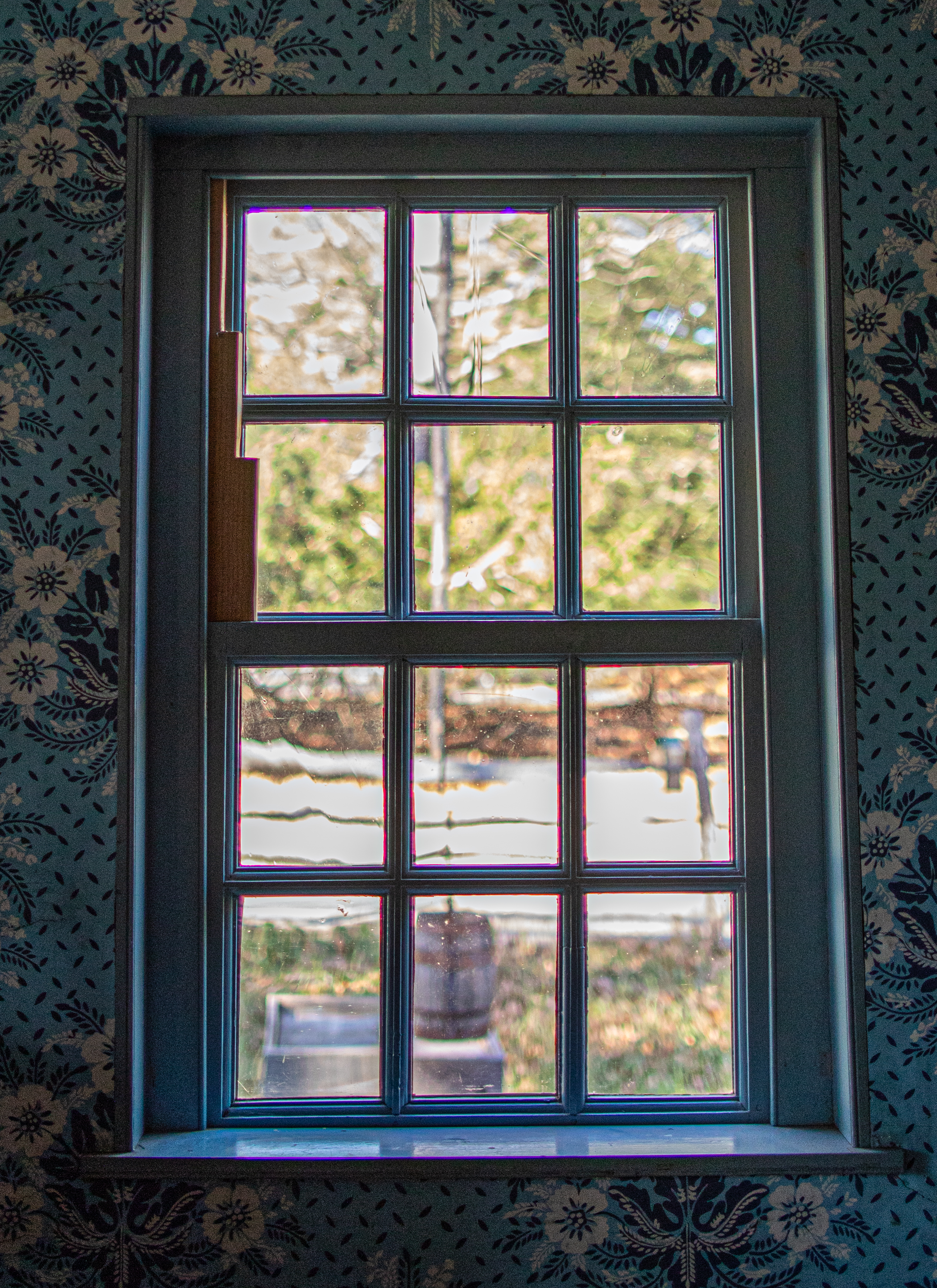
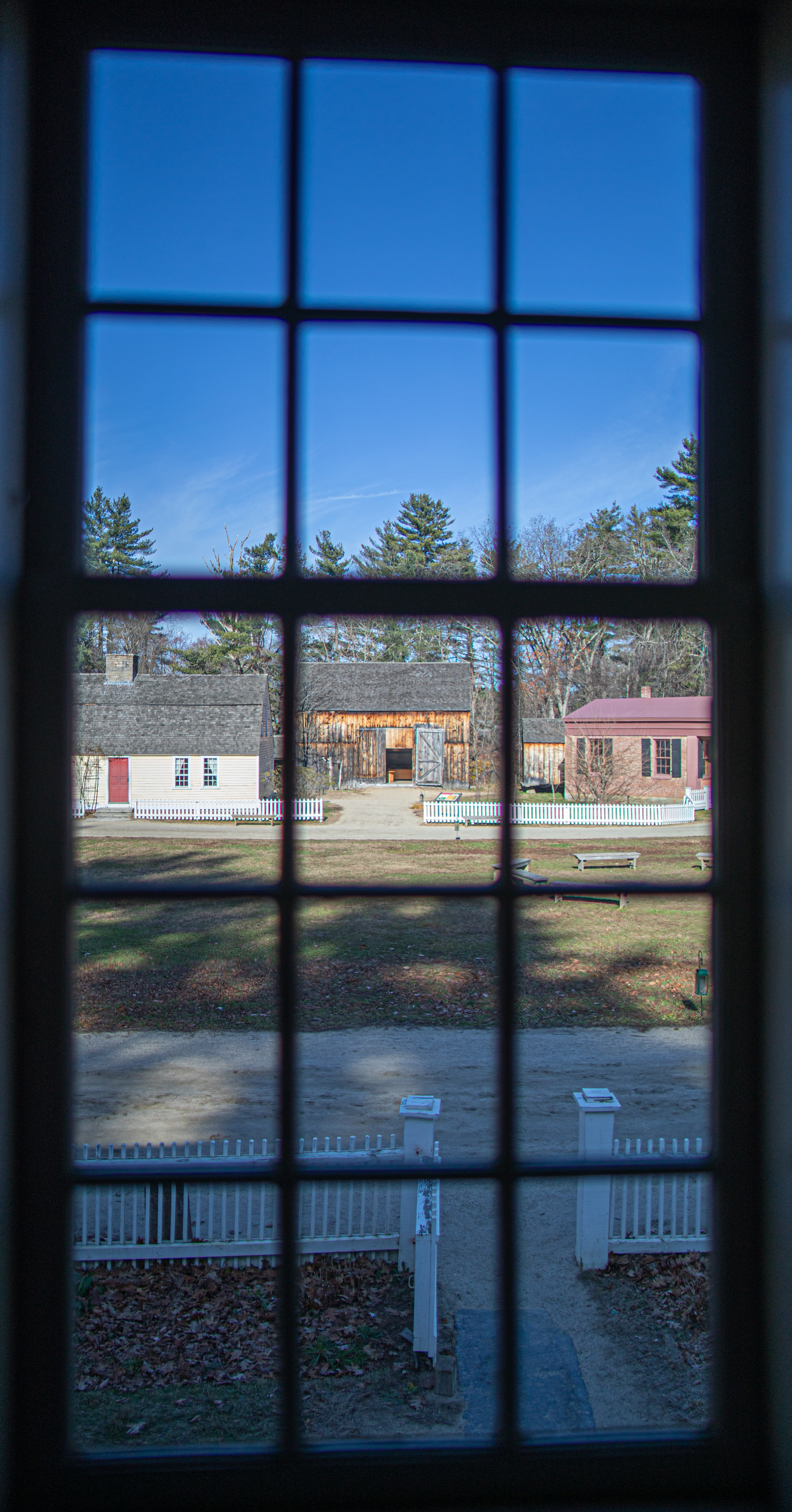
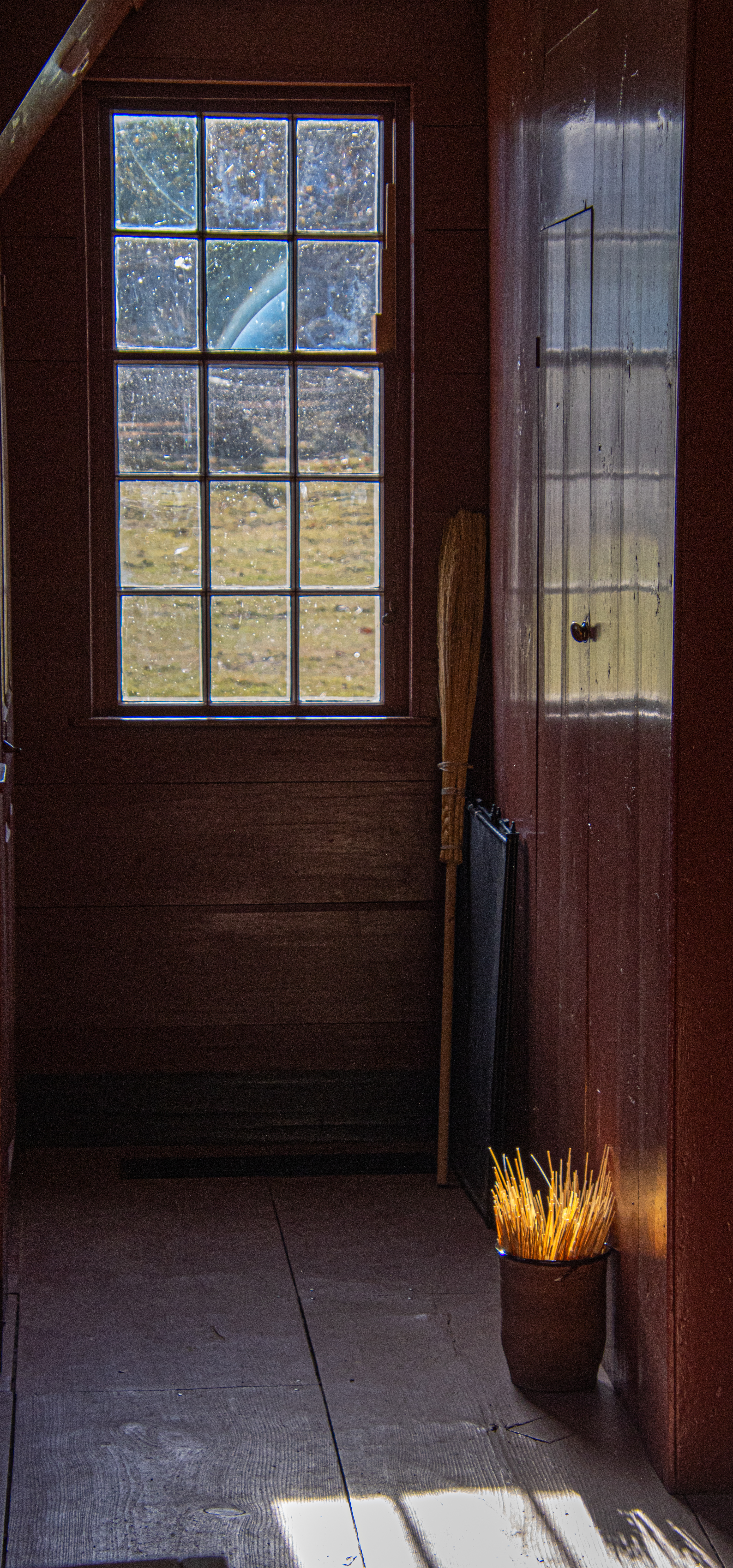
I couldn’t end my post without adding some of my favorite artsy photos. One of the things I like to photograph in the village are the windows. If you get it the right time of the day when the light is shining just right, you can get some pretty photo opportunities.


March 12th, 2026 at 12:32 am
I’m so glad some people are trying to preserve these skills from days gone by. I’ve always thought it was sad that no one knows how to make things from scratch anymore. Good to see some efforts made here. Great post, Wayne.
LikeLiked by 2 people
March 12th, 2026 at 8:51 pm
Thank you Anneli! I feel the same way. It’s great to see them preserving this history and educating people about it.
LikeLiked by 1 person
March 12th, 2026 at 10:43 pm
YES!
LikeLiked by 1 person
March 12th, 2026 at 8:54 am
One of my favorite New England places!
LikeLiked by 1 person
March 12th, 2026 at 9:22 am
I love seeing/knowing how artisans and crafts-people worked historically! Thanks for sharing your wonderful photos.
LikeLiked by 2 people
March 12th, 2026 at 8:35 pm
Thank you Teresa! They do work there during their regular schedule and during major events and they are all skilled and very knowledgeable about their trades.
LikeLiked by 1 person
March 12th, 2026 at 3:29 pm
Thank you for reminding me about this extraordinary place. How wonderful that all of these people are helping to keep alive important practices/technologies/traditions. I must go and visit there. Clearly one can spend an entire day and still have more to learn. Your photos are beautiful and your text is very informative. I like being reminded about how we used to do more things in relation to the seasons — such as milling lumber when the water power was stronger in the winter/spring (and there were fewer farming activities to attend to…) Hurrah for this blog post! I hope a lot of people find it and savor it (as I have).
LikeLiked by 1 person
March 12th, 2026 at 7:09 pm
Thank you for the comment! Yes, one could spend all day there and still not see everything! In fact, there are additional photos I took that I didn’t include for the sake of space and brevity!
LikeLiked by 1 person
March 12th, 2026 at 8:16 pm
Aside from some of the food this was a fantastic post. So interesting. You always manage to show me things I’ve never seen before. Thank you so much.
LikeLiked by 2 people
March 12th, 2026 at 8:26 pm
Thank you! I learned a lot during my visit! And, yes, a lot of the food was not very appealing to me either!
LikeLiked by 1 person
March 12th, 2026 at 8:32 pm
I can certainly understand that. LOL You always have such wonderful posts. Thank you again.
LikeLiked by 3 people
March 12th, 2026 at 9:05 pm
Thank you so much!
LikeLiked by 2 people
March 28th, 2026 at 7:25 pm
This is absolutely beautiful. So much care and attention. Beautiful photos and so educational.
LikeLiked by 1 person
March 28th, 2026 at 9:56 pm
Thank you Lori!
LikeLiked by 1 person