Dates Of Visit: June 29 and Sep. 20, 2025
Location: Palmer Cove Park, 38 Leavitt St, Salem, MA (about 40 minutes northeast of Boston, MA)
Cost: Free
Universally Accessible: Yes
Dog Friendly: Yes
Parking: There is a small parking lot at the park for about 7 cars. There is also local on street parking and several parking lots and garages in the area.
Website: Muñeca Sin Rostro
Summary: 7 “faceless dolls” (Muñeca Sin Rostro) have been installed at Palmer Cove Park and Pioneer Terrace, Salem, MA. And, a special path has been installed to view the statues and reflect.
The Punto Urban Art Museum (PUAM) have found a way to mix art with an education. The seven 12 foot fiberglass statues were painted by a group of artists who used the statues for expression and storytelling.
The ceramic Muñeca Sin Rostro (“faceless dolls”) were originally created by Liliana Mera Lime in 1981. Liliana, a pottery worker in the town of Moca, a province in the Dominican Republic, wanted to depict a small figure of a woman. However, she lacked the tools and molds to make a small ceramic figure. This would prove to be a blessing in disguise. The doll was handcrafted by hand on a potter’s wheel with elements like ruffles, baskets and hats and one distinct feature, or lack of a feature. The dolls all had a head with no facial features. These full-sized dolls, which were originally smaller figurines, have been replicated with each artist’s interpretation and messages.
There are 7 statues at Palmer Cove Park. I did have a hard time finding the 7th one on my list. In fact, I had to make 2 visits to find them all. So, don’t forget to go to the area by the public garden to find them all!
Another special part of the park is a walkway that was installed earlier this year as a memorial to those lost from Covid-19.
Salem


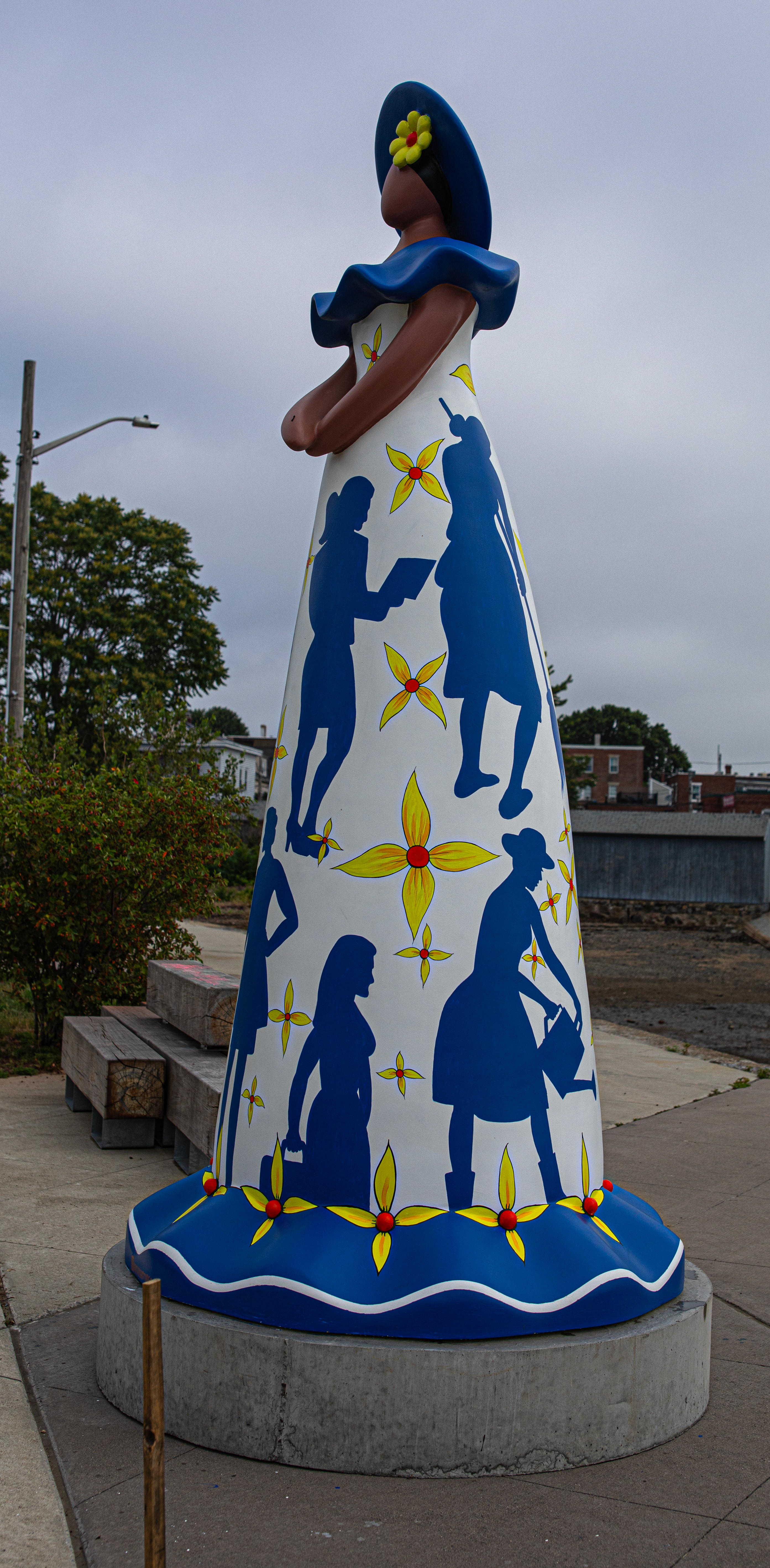


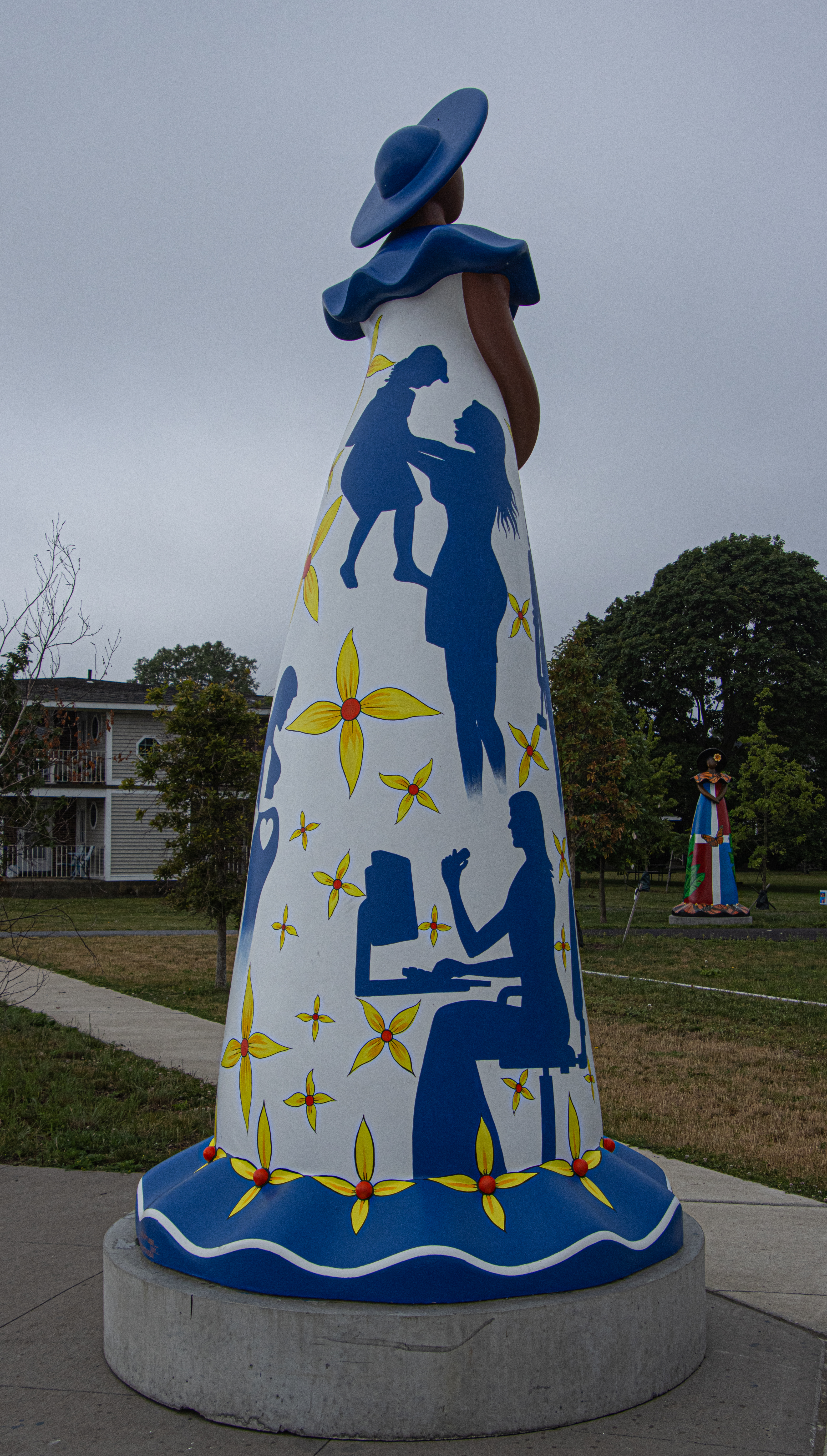
The first Muñeca Sin Rostro is fittingly called “Salem.” Created by painter and sculptor Ramon Santiago, a native of the city of Moca, Espaillat province in the Dominican Republic, “Salem” is a representation of the city bearing the statue’s name. Ramon said his work of art is dedicated to the hardworking people of Salem. Examples of the hardworking people of Salem can be found not only in elements of people working at a job, in their yards and, most importantly, with their families. The various bold colors are meant to represent how diverse and vibrant the city is.
Los Ninos Y El Carnaval

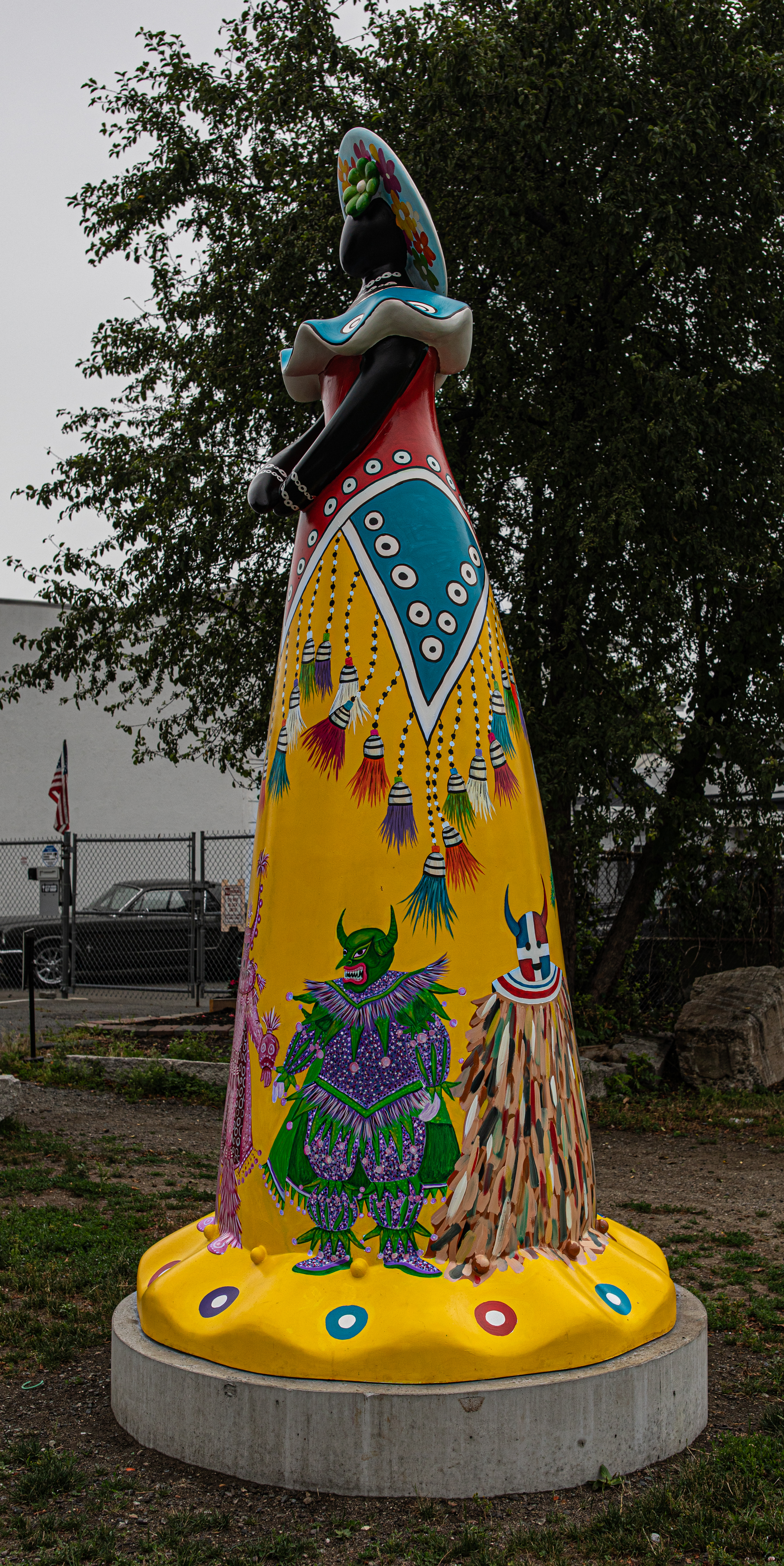
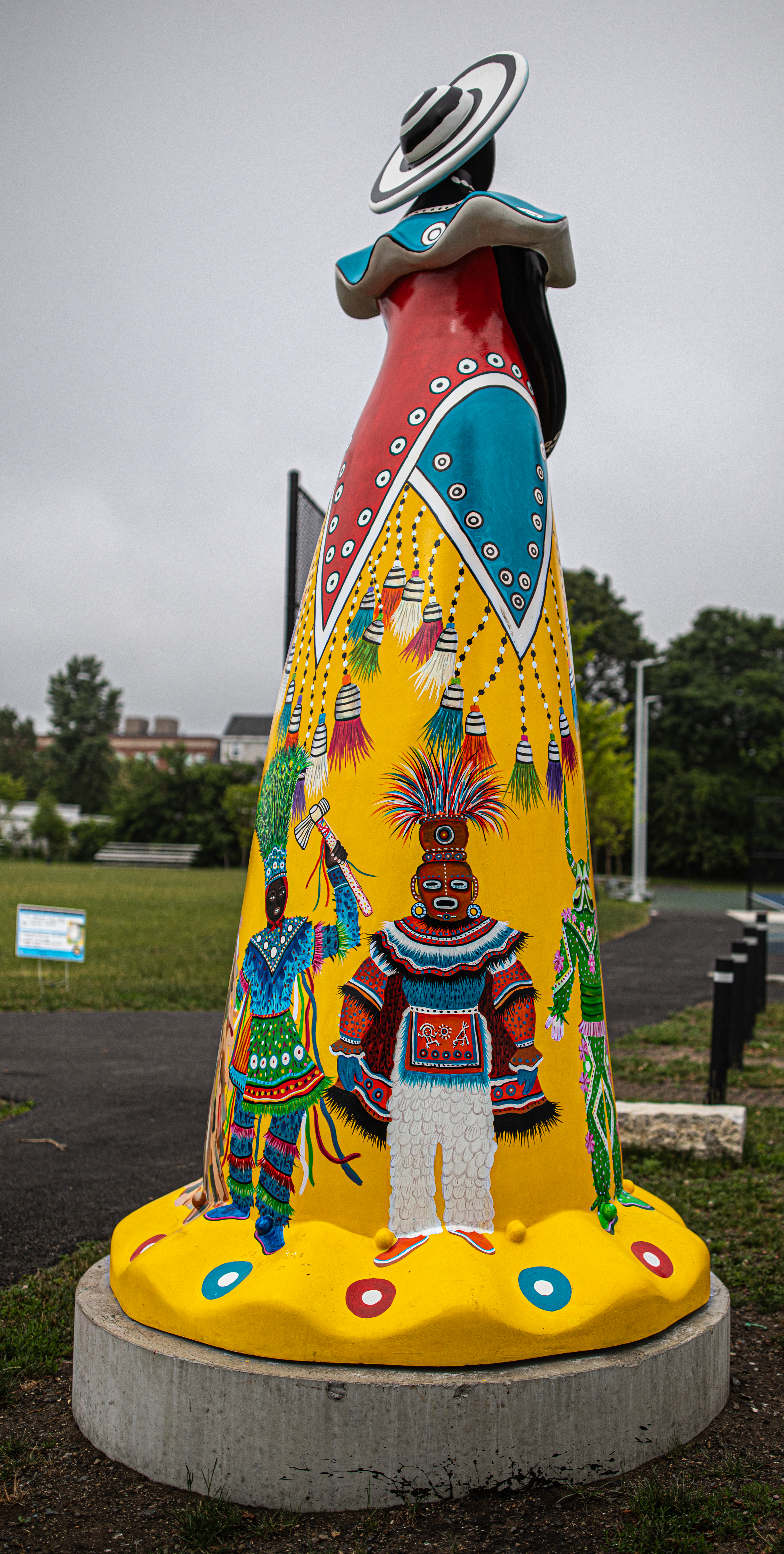



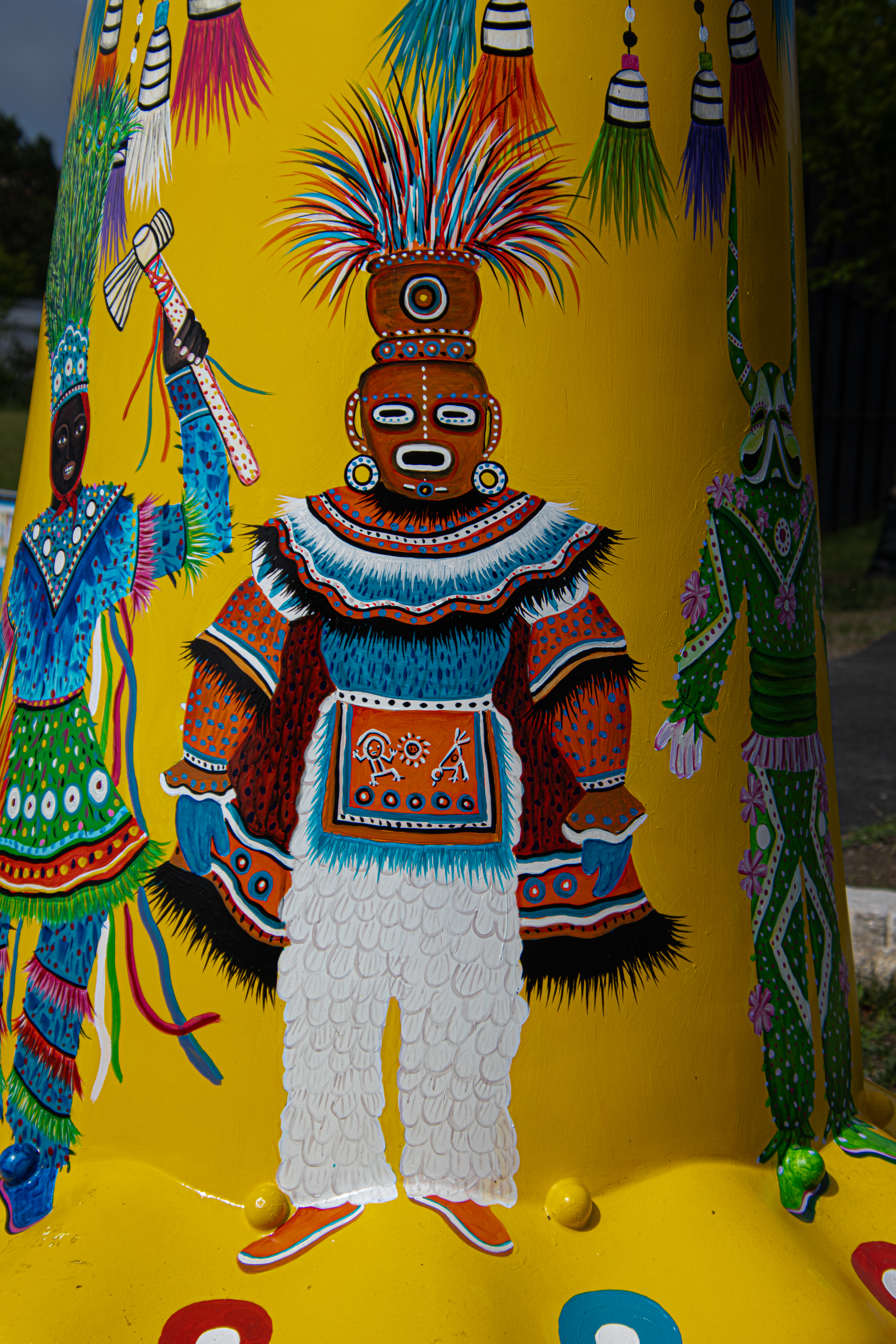
“Los Ninos La Carnaval” represents children and their participation in the Dominican Republic’s carnival. The statue, made by Luis Rivera, a native of San Cristobal, displays the most representative costumes from different regions of the country: the Lechones of Santiago, the Ecol Devils of San Cristóbal, the Devils of La Vega, the Plátanus of Cotuí, and the Taimácaros of Puerto Plata, among others. The flowers represent the joy of the Dominican people. The flowers symbolize the diversity and racial mix that define us as a nation which is a fusion of Indigenous, African, and Spanish heritage. A graduate of the Universidad Autónoma de Santo Domingo and the Escuela de Diseño de Altos de Chavón, Luis has developed a versatile artistic style that spans sculpture, stained glass, jewelry, and carnival costumes. Luis is the co-creator of Urbelconica, a project that has helped reimagine the traditional Muñeca sin Rostro, beloved Dominican symbol of resilience and shared heritage, into large-scale public sculptures brought to life through the talent of many Dominican artists.
Oswald’s Ocean
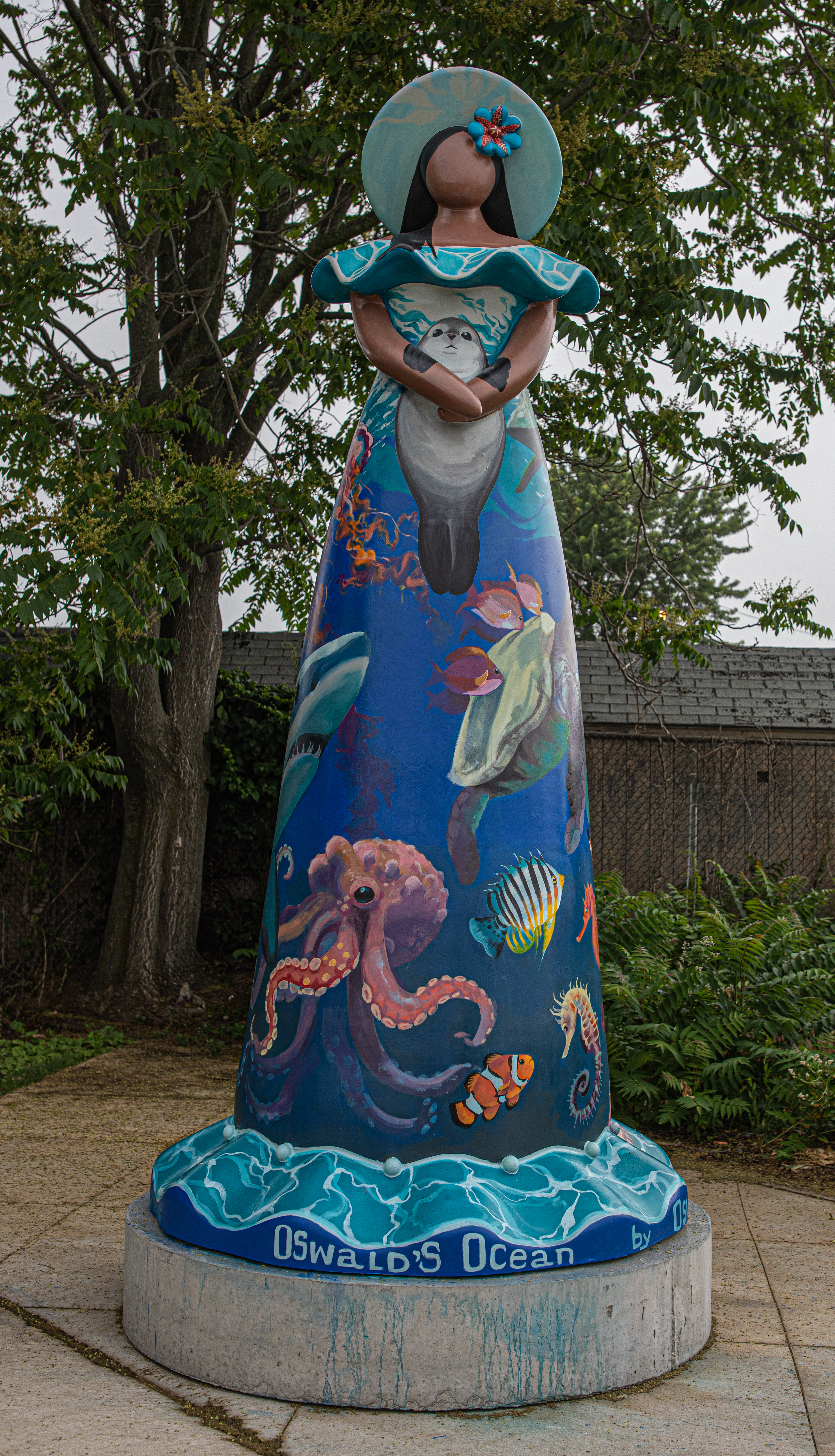
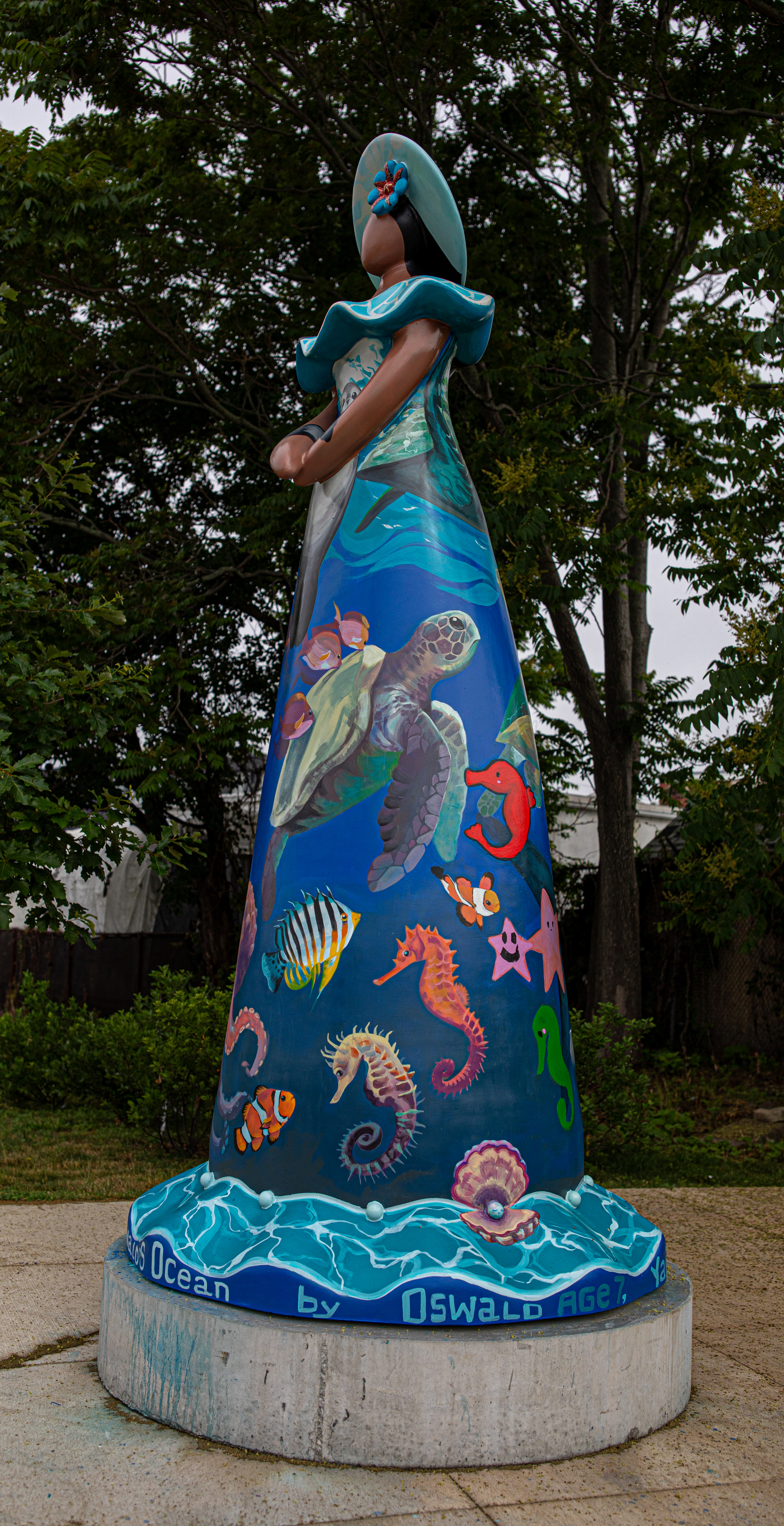
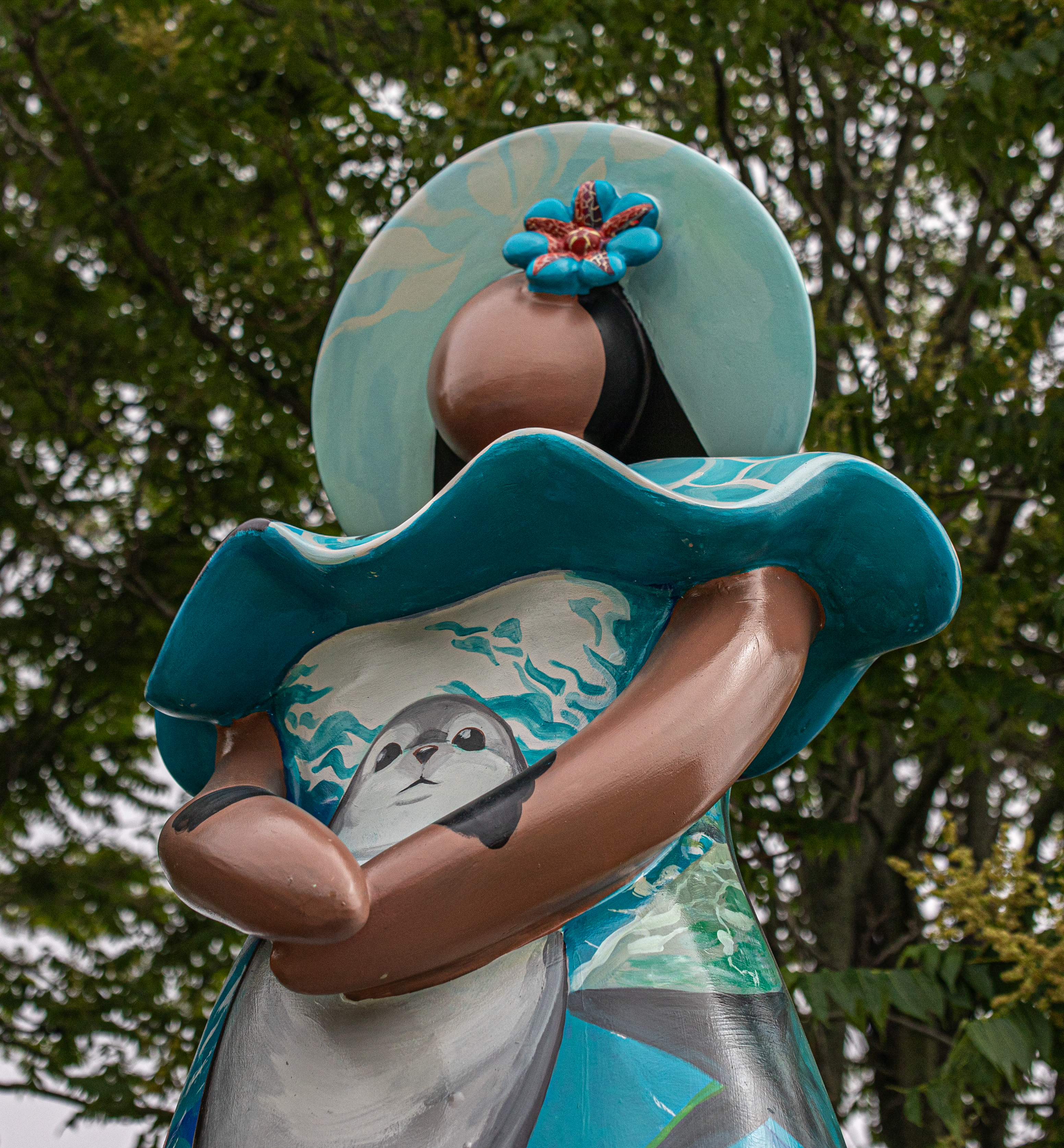
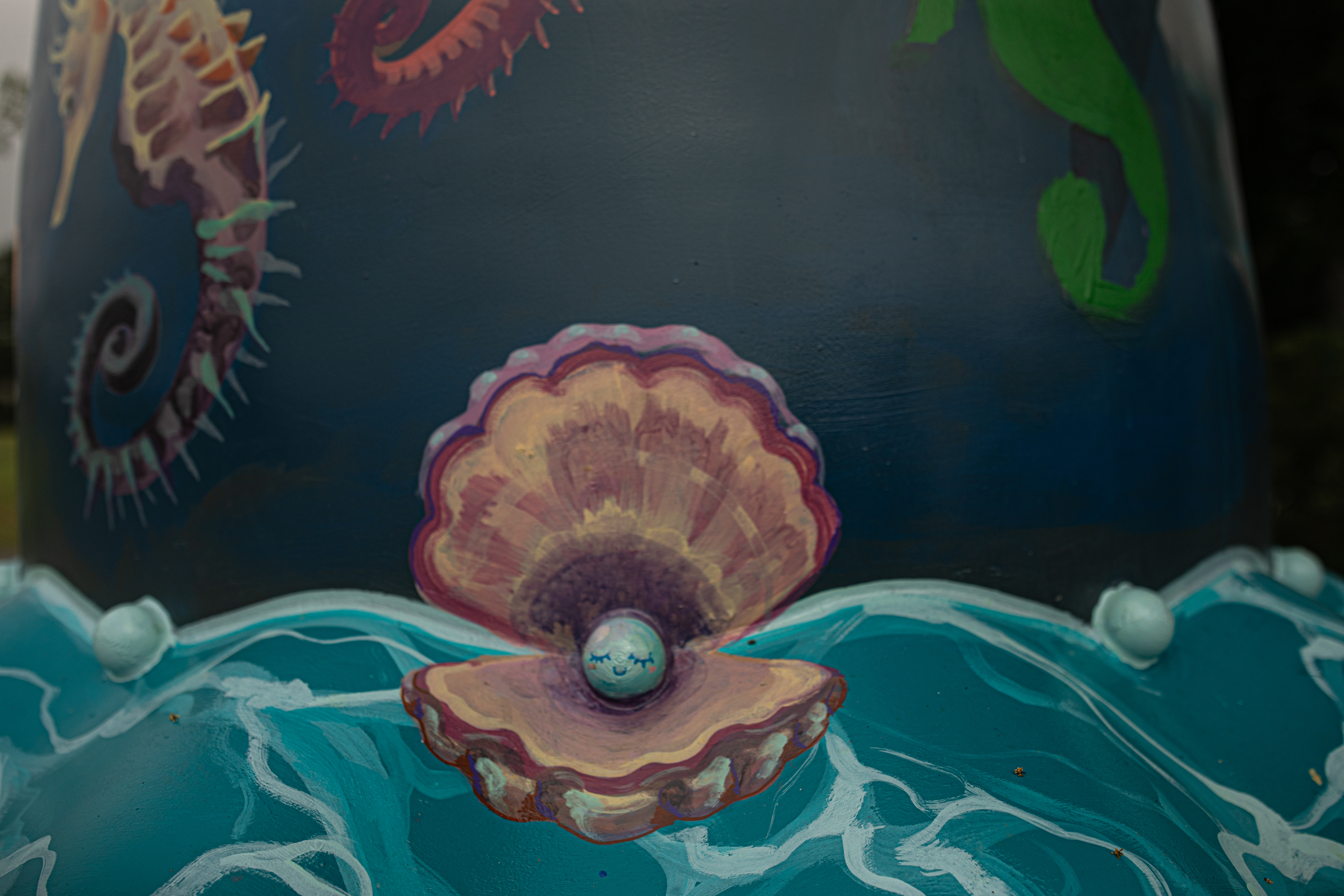
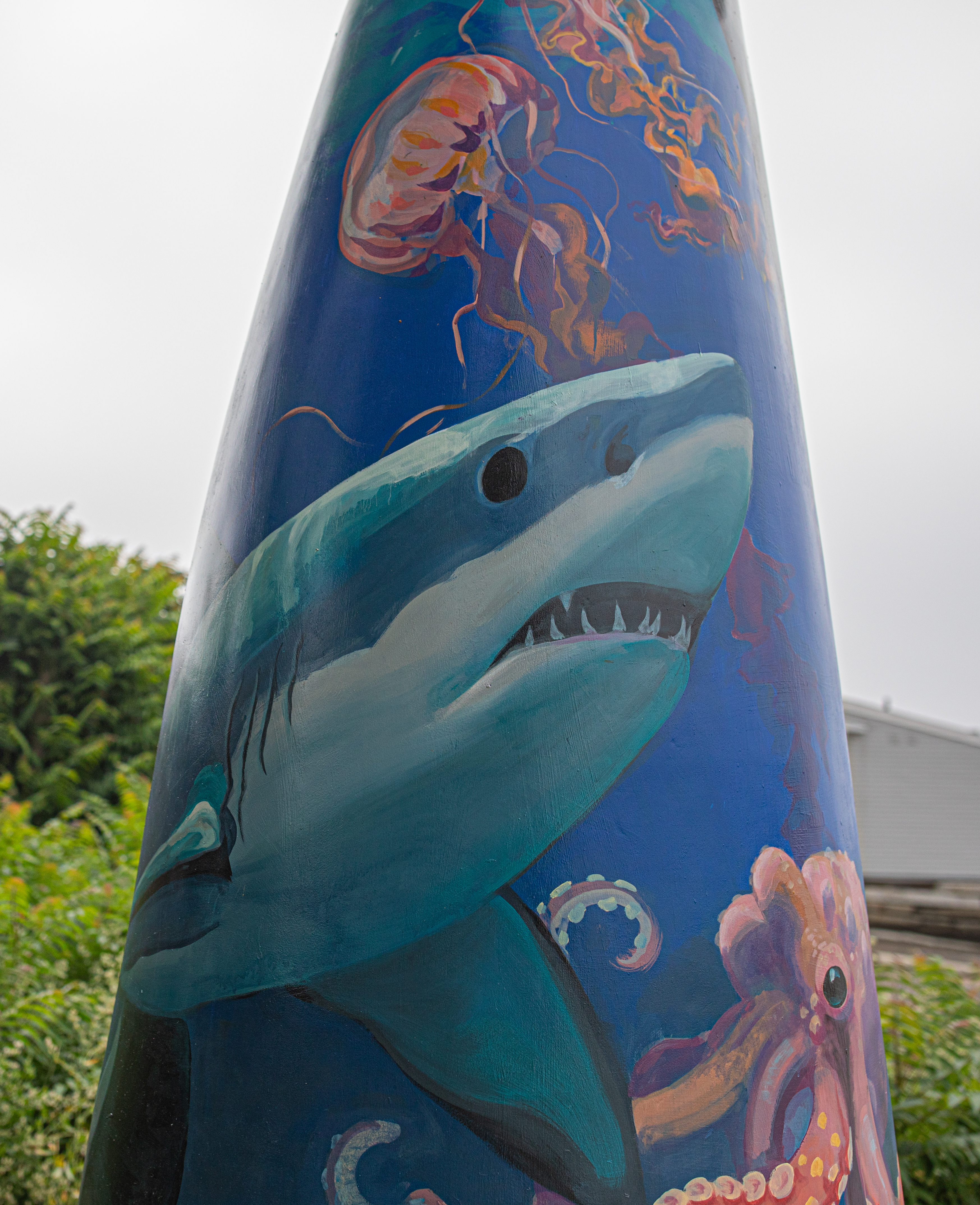
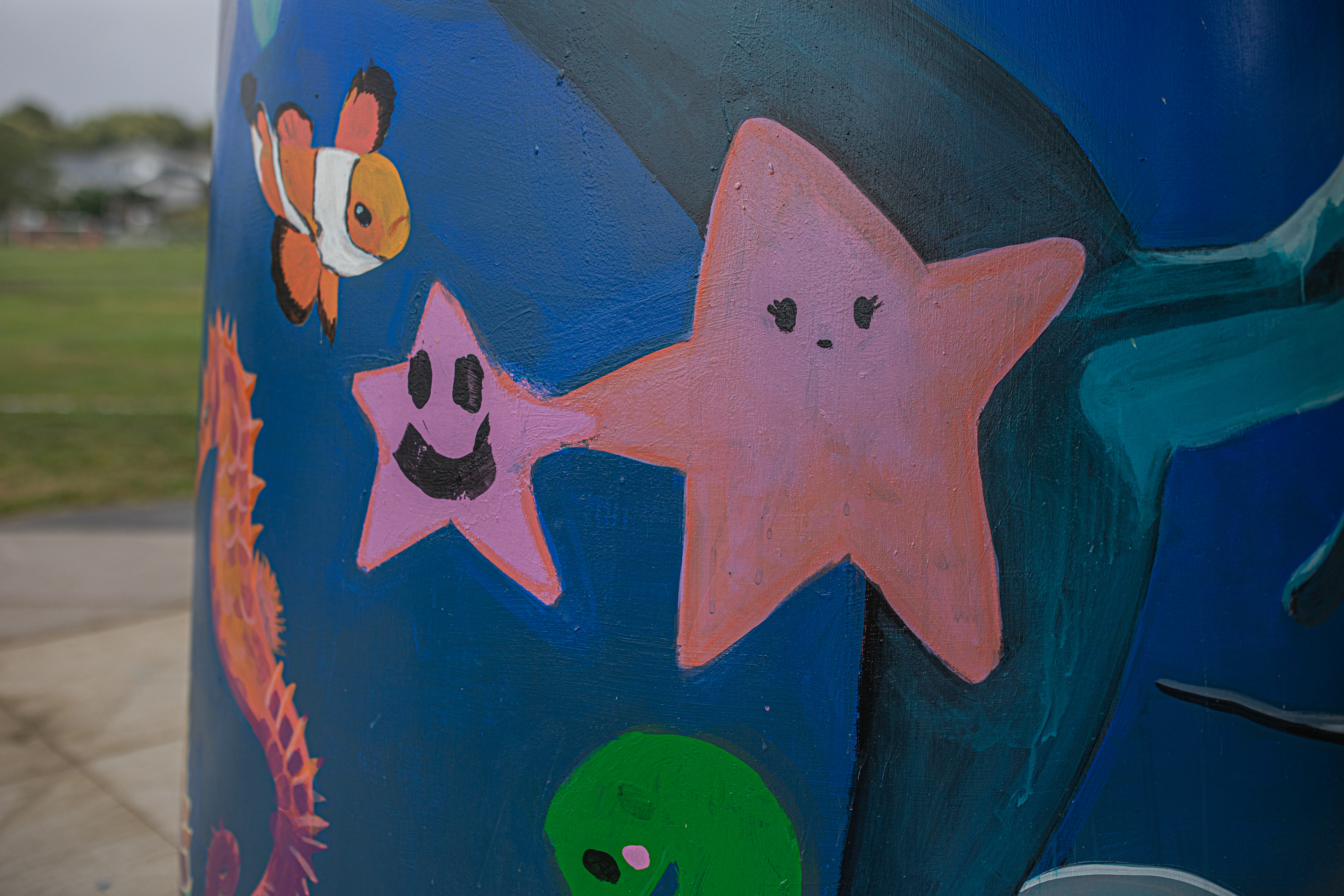


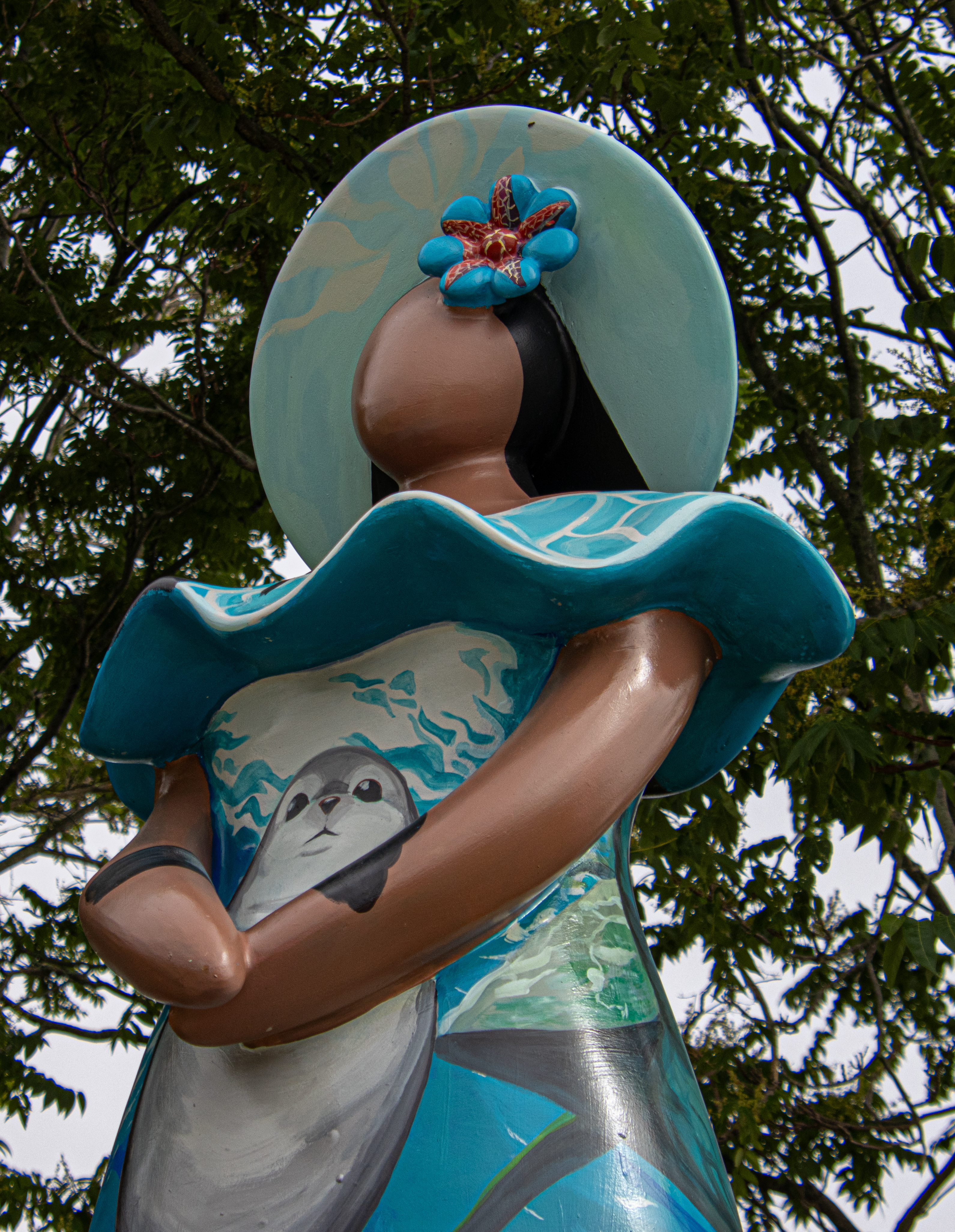
“Oswald’s Ocean” was created, or at least conceived, by a 4 year old; Oswald. The artist, Yixuan Zeng, was captivated while reading Oswald’s design for the doll. Yixuan said the faceless doll designs reminded him of Chinese porcelain figures. Yixuan was inspired by Oswald’s passion for the color blue and sea life. He enjoyed making the sea creatures Oswald had described and envisioned the dress as being a dynamic sea scene beneath the waves.
Oswald said he is 4 years old and loves the color blue and sea life. Oswald did contribute beyond designing it. He added blue glitter to the hat.
Mariposa Cibaeña

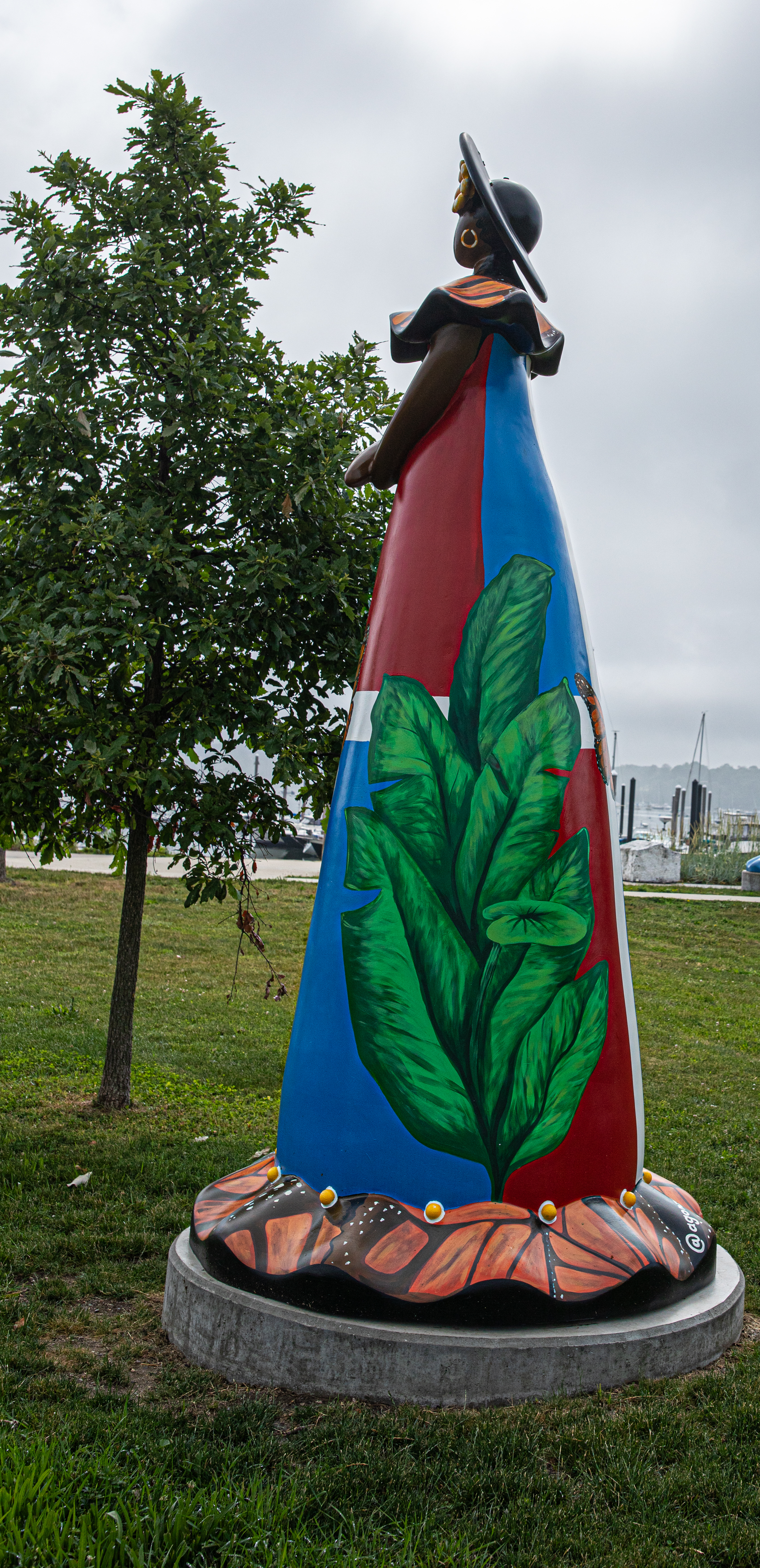

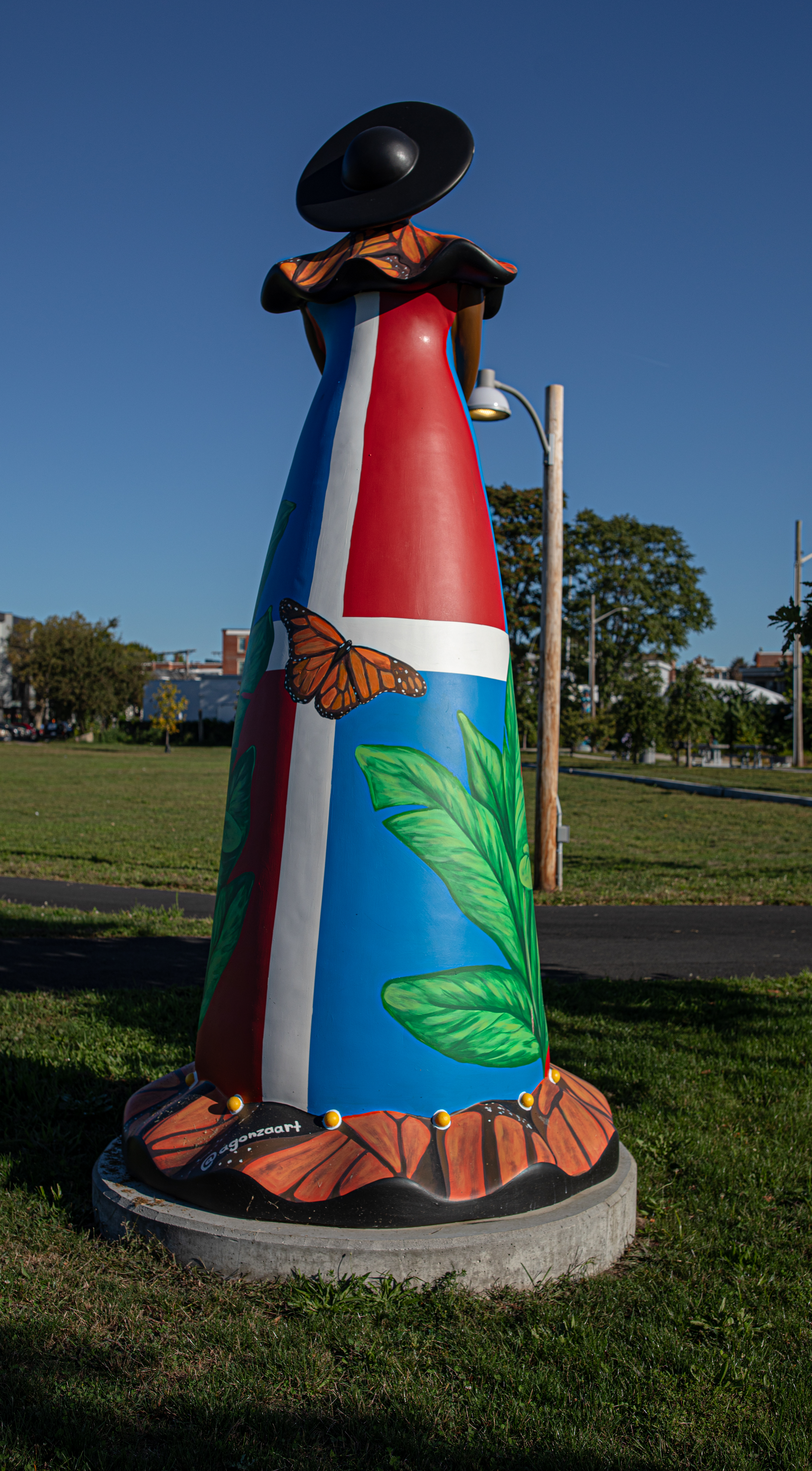

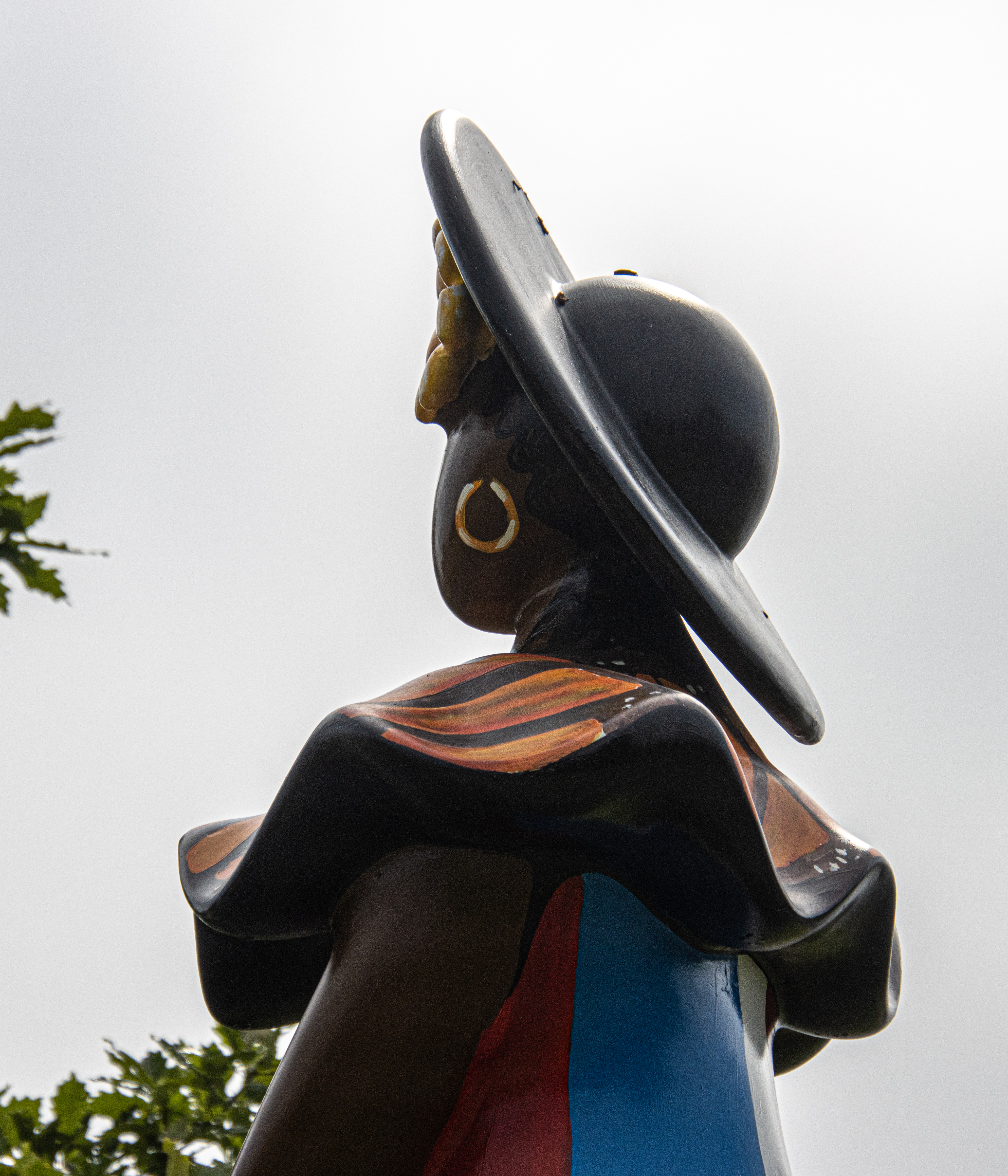
Angela Gonzalez, a Dominican artist, wanted to highlight Las Hermanas Mirabal (more commonly known as the “Butterfly Sisters”), the sisters who fought for women’s rights. They were the only women who stood up to the last Dominican dictator. Angela chose to feature the Dominican flag as the main background design. She also added the national plants and, of course, a butterfly.
Angela said her doll represents the flavors, music and nature of the Dominican Republic, The bottom of the dress is made from plantain leaves which were used to make pasteles en hojas, a leaf-wrapped plantain pocket. You may have to look closely, particularly at the bottom of the statue, to see other objects that represent the Dominican Republic such as tropical plants such as coconut, bananas, sugar cane and eggplant. Musical instruments and other foods are also included.
Harmony
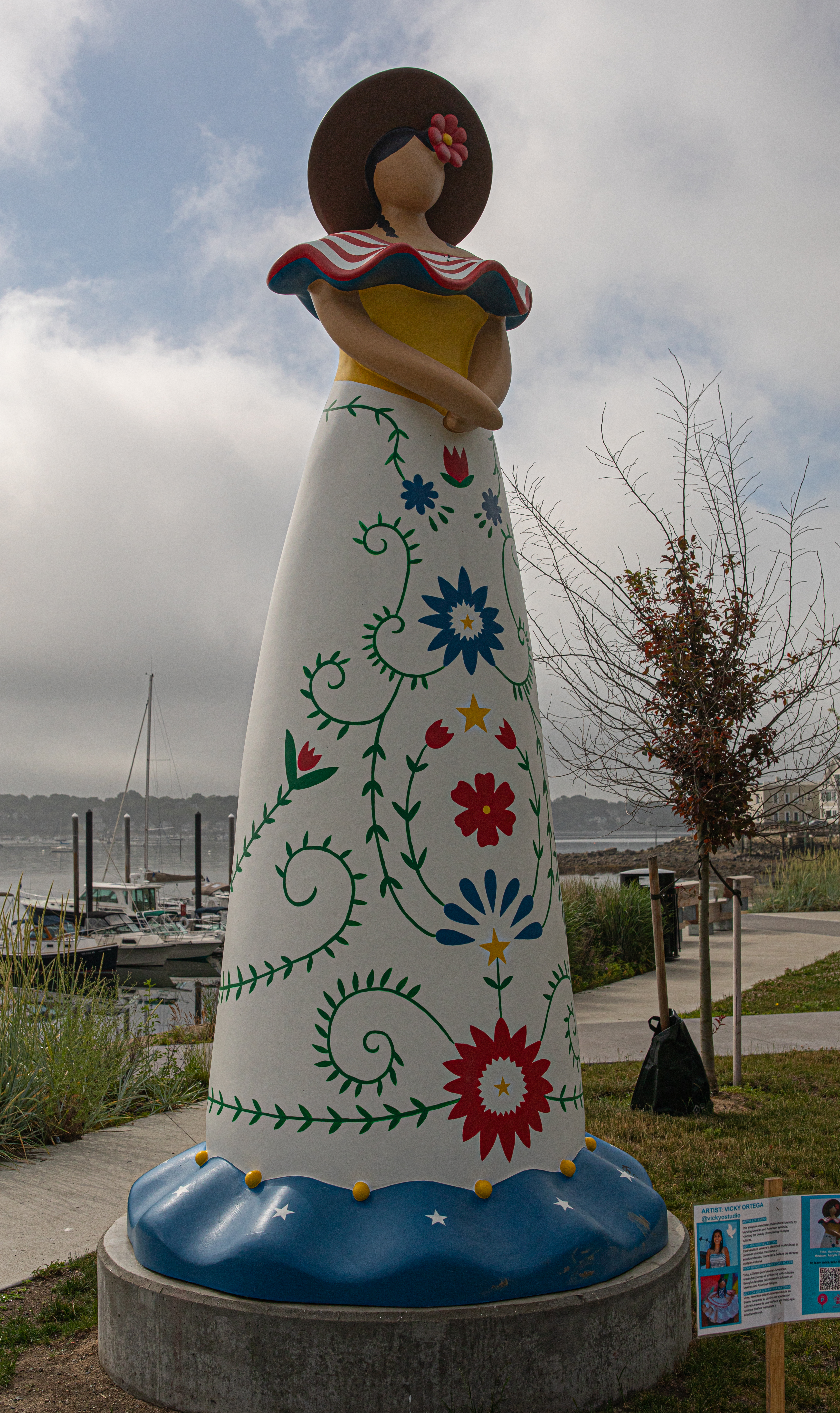

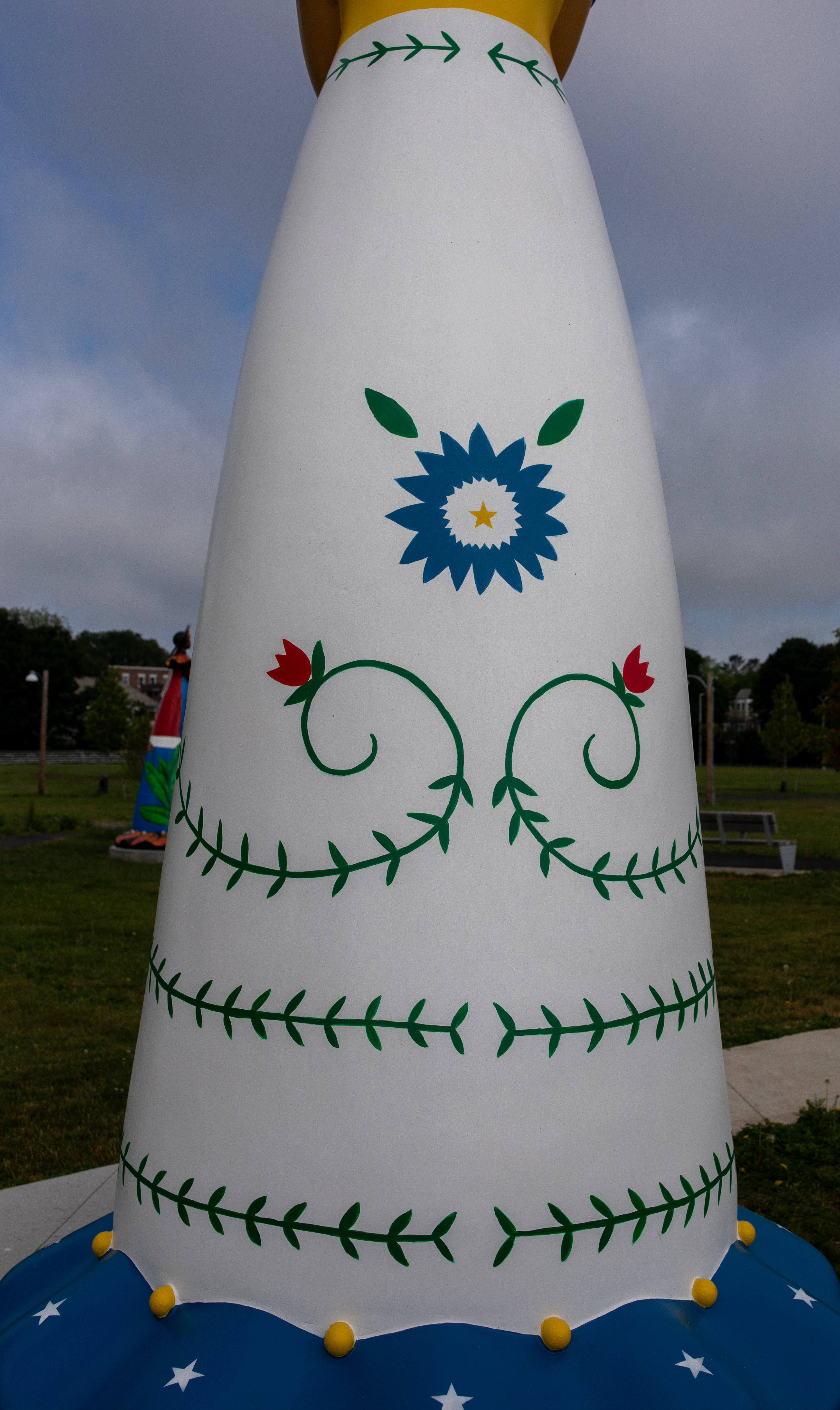


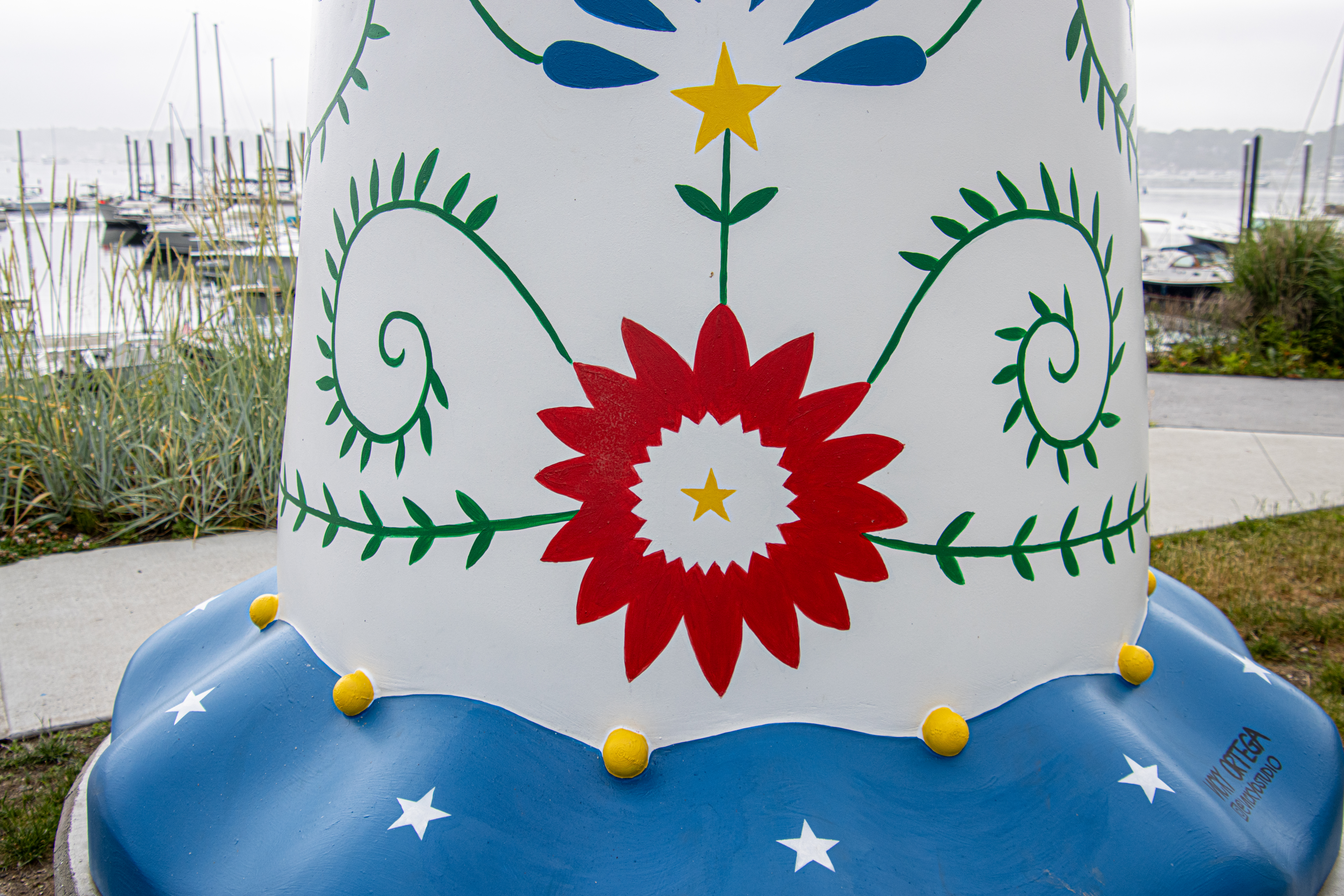
The artist for this statue, Vicky Ortega, said her doll was meant to serve as a celebration of those who represent the multiple cultures and as an homage to the strength of our multicultural community. The statue illustrates her own cultural blend by combining traditional Mexican dress embroidery with features of the American flag. Vicky wanted to express the strength of a new identity that draws from multiple traditions.
As a Mexican-American, Vicky often felt she didn’t belong in either culture. However, over time she learned to embrace both her heritage and nationality which helped shape who she is.
Lift Each Other Up
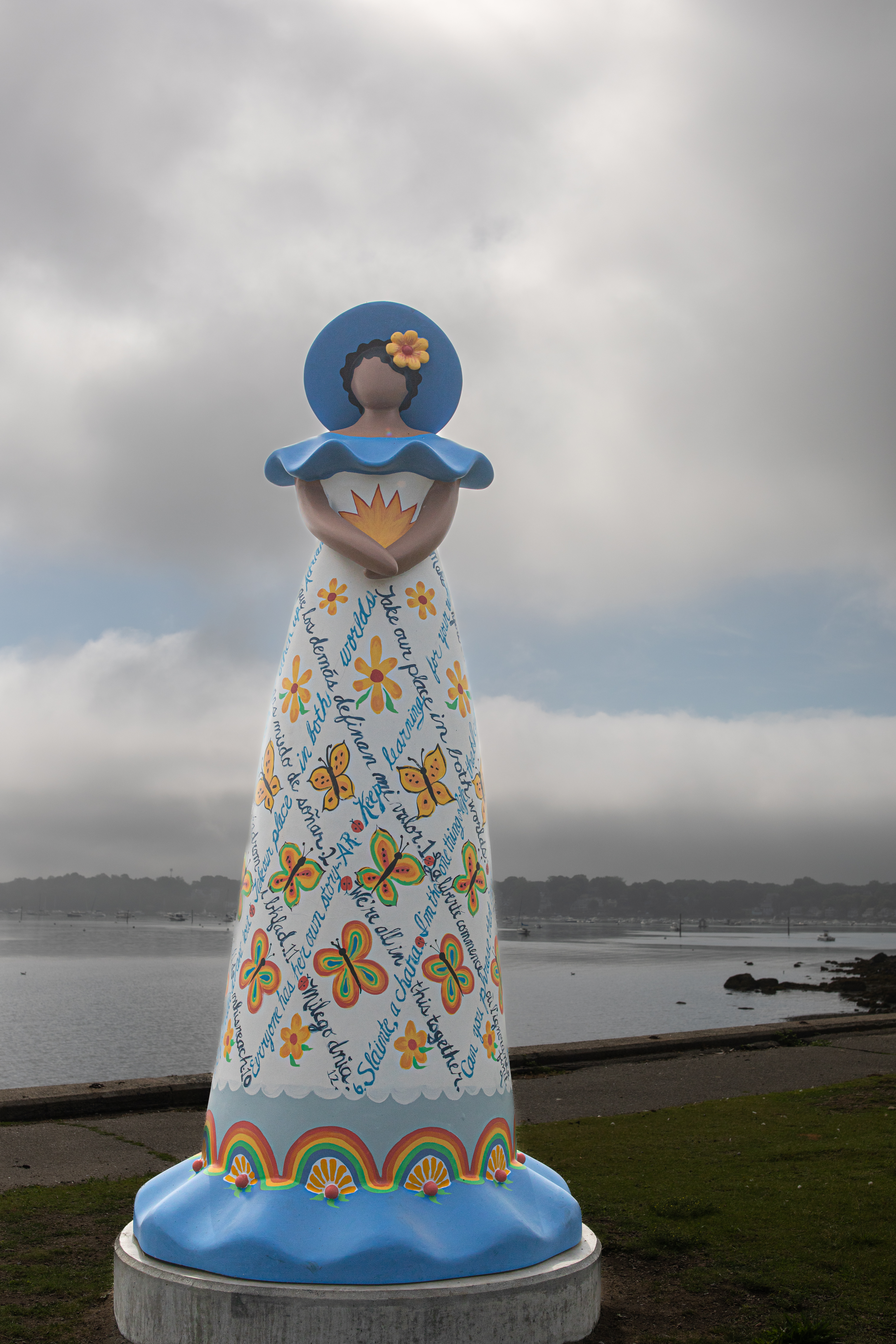
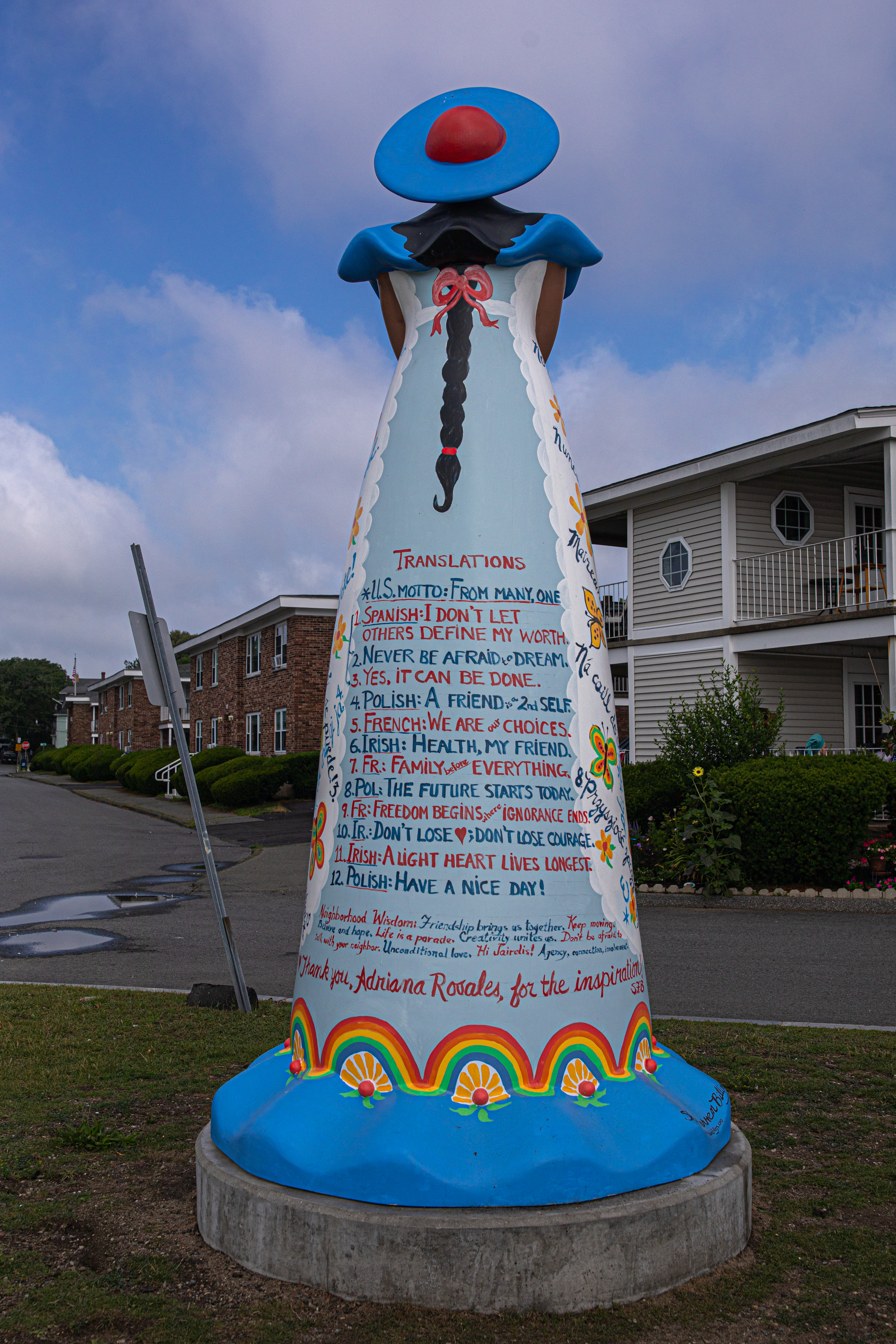


Created by Sheila Farren Billings, My Muñeca, “Lift Each Other Up”, is meant to express how language can either divide us or bring us together. Sheila says it is up to us to use language wisely and well. Sheila included quotes from remarks that neighbors made at a meeting about the project, with translations of course.
La Reyna De La Cosecha
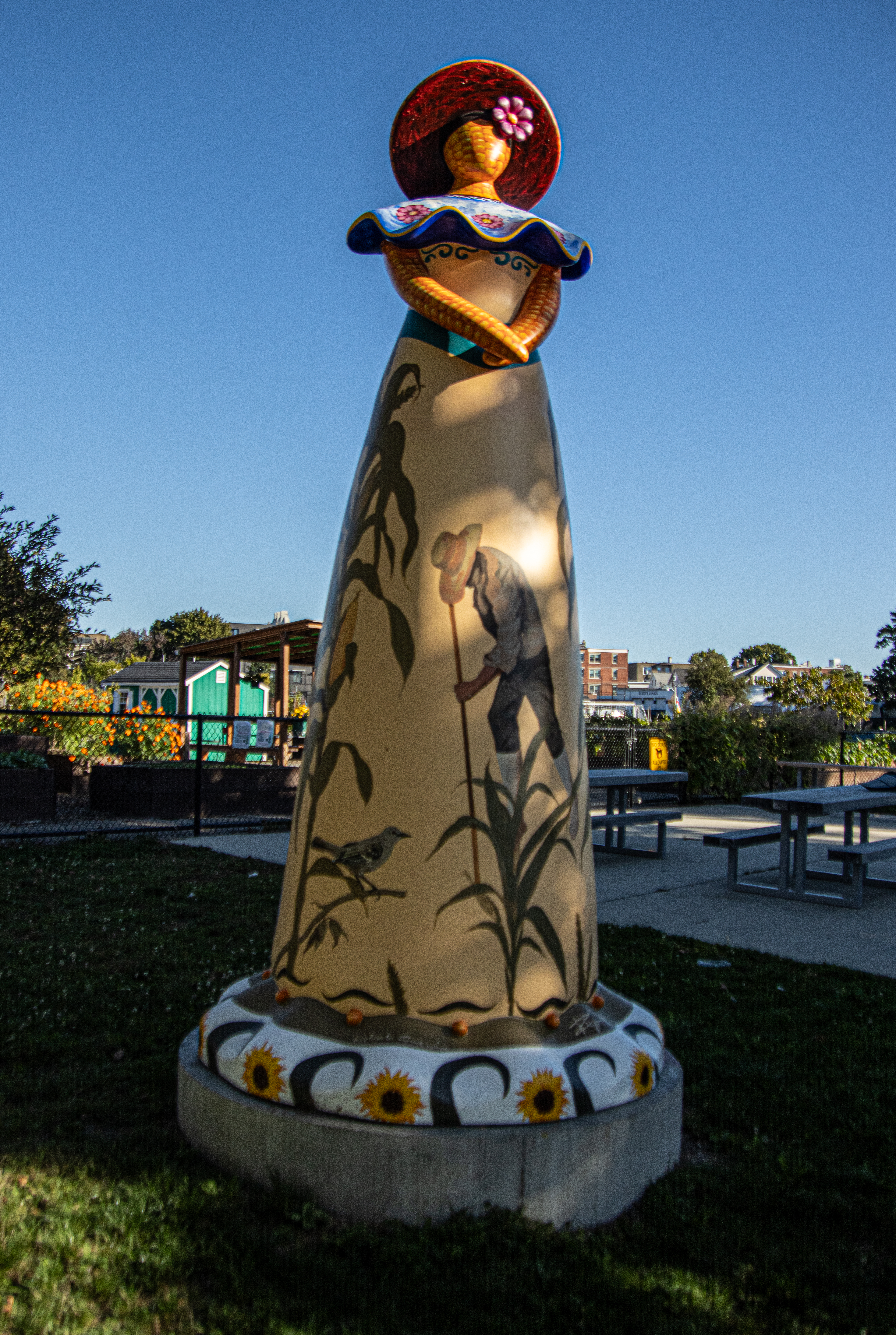


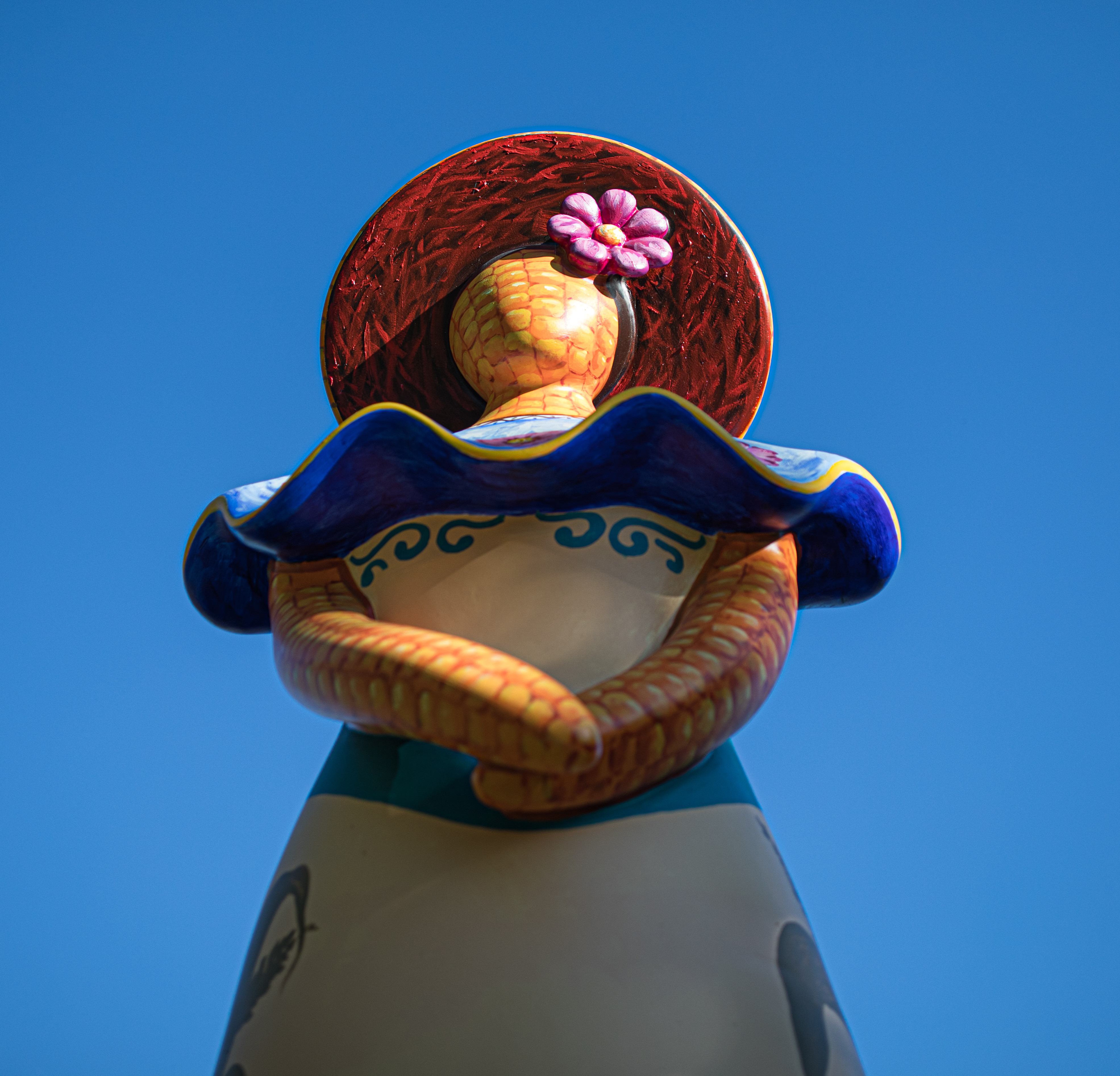
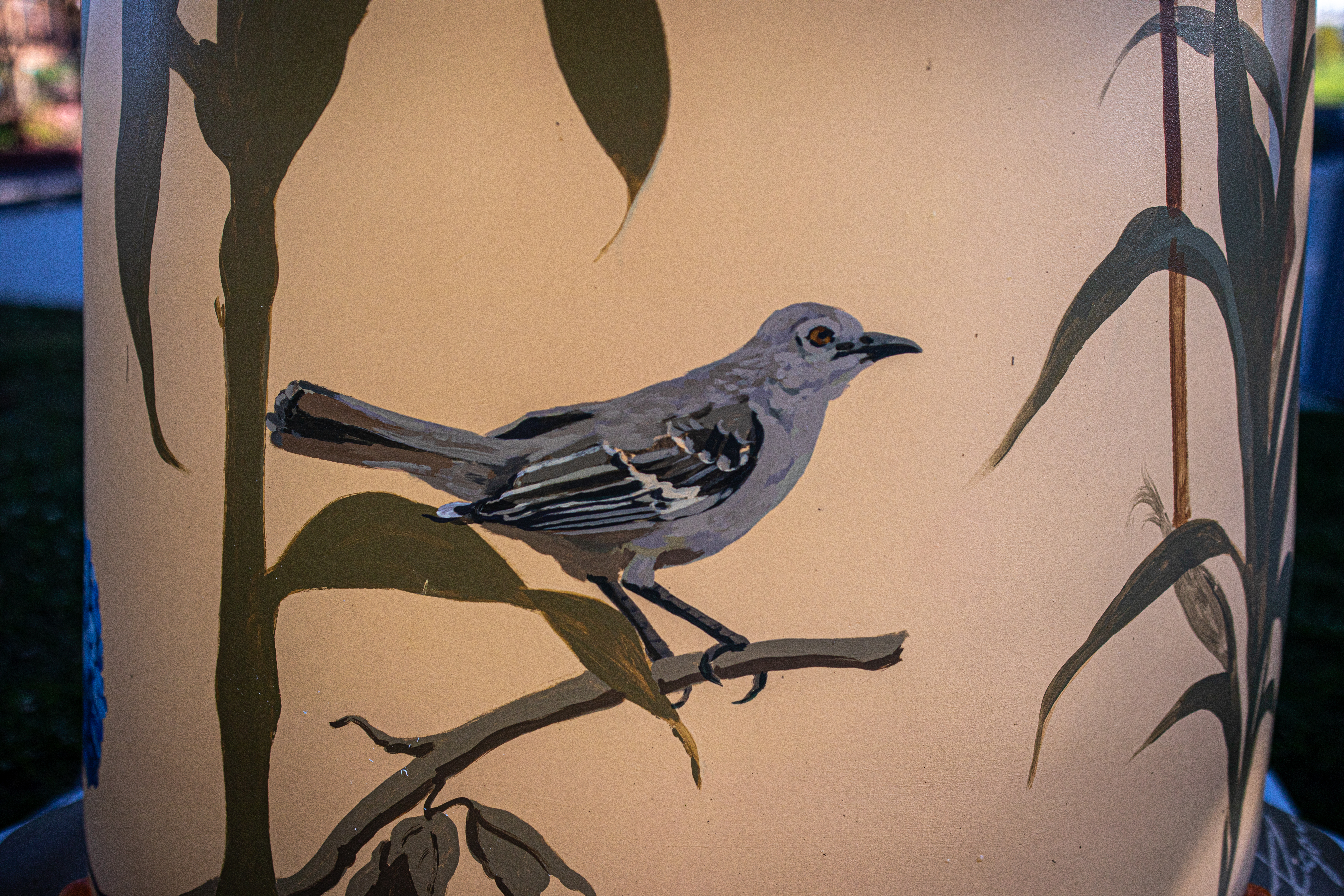

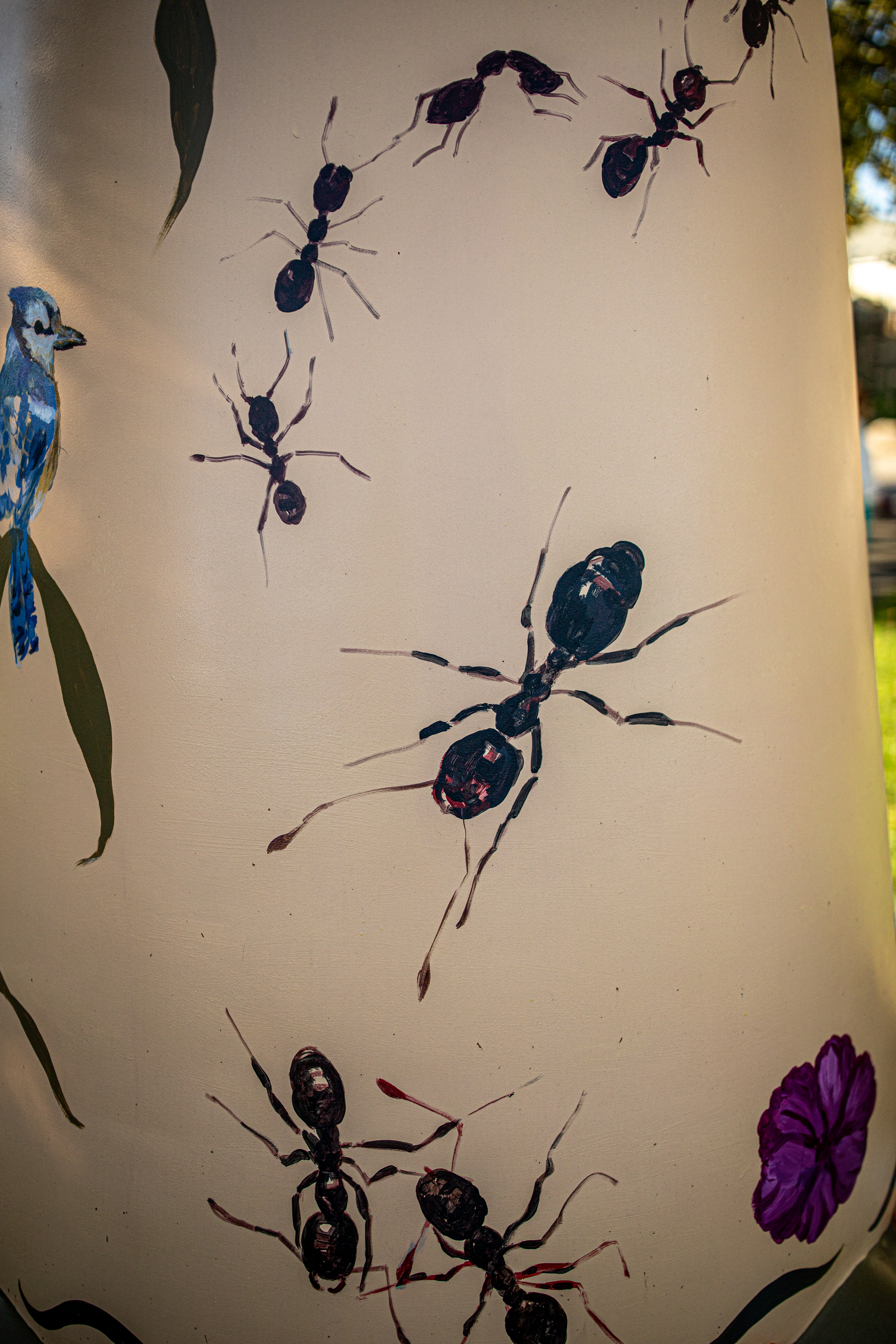
The artists for this statue (Rigo Peralta and Melanio Guzman), said this sculpture honors the deep roots of agricultural labor as well as the cultural legacy of muñecas de tusa, traditional Honduran corn husk dolls. They said the corn husk dolls, which Melanio’s grandmother used to make and sell at Honduras flower festivals, is a reminder of the hard worker of the field laborers. It was fittingly located by the community garden.
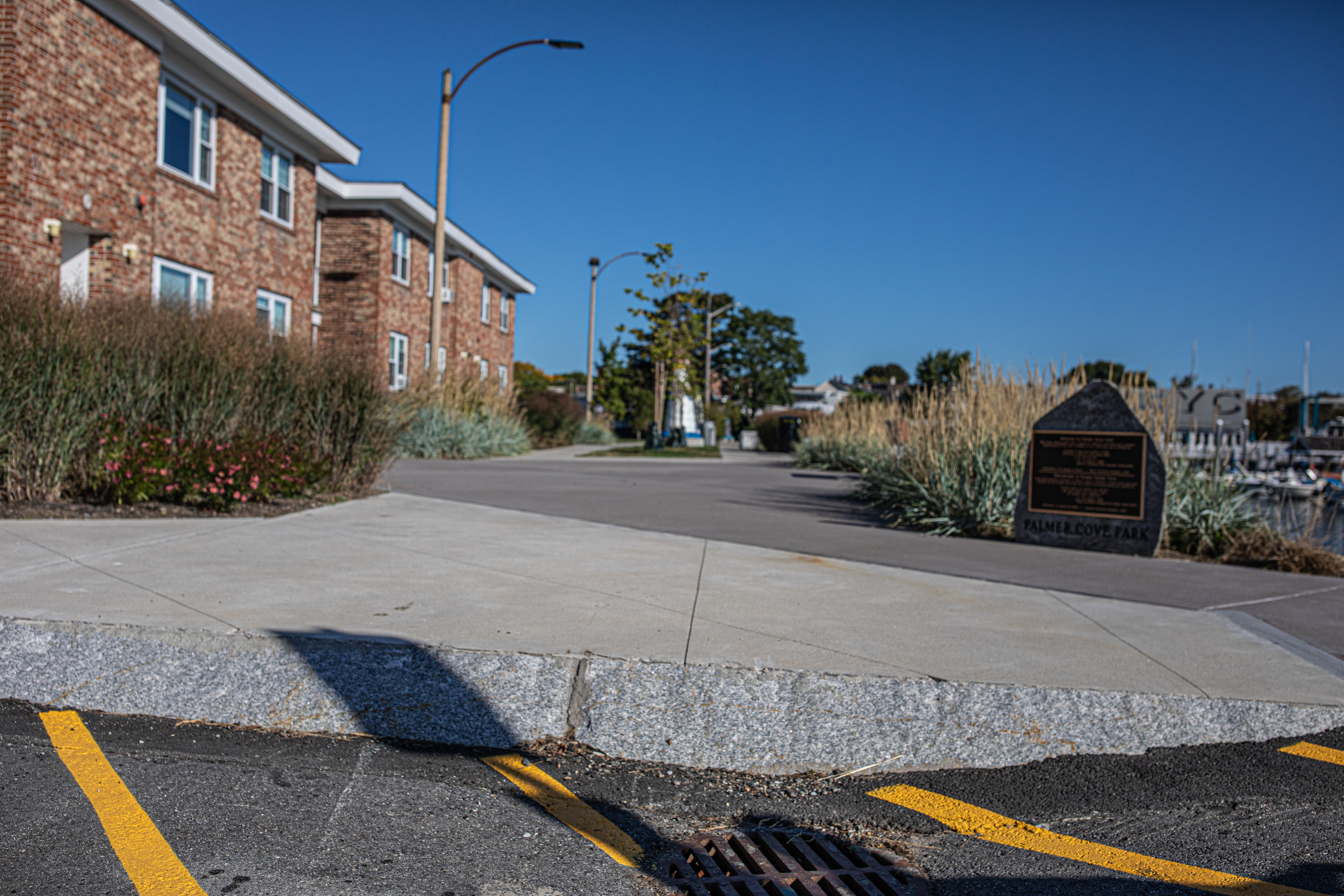
Along the newly paved walkway, there is a memorial remembering the 140 Salem residents who lost their lives from Covid-19. The walkway is meant to give people a space to wander, reflect and enjoy the statues and park. It also gives people an easier and more accessible way to enjoy the park. It’s hard to imagine the park was just all grass without paths to allow people an easier access to move around. Benches give visitors a chance to sit and reflect while they enjoy the scenic views of Palmer Bay Cove.



 New England Nomad
September 21st, 2025 at 8:39 pm
Gorgeous artwork. So large, beautiful and with messages for all. Just incredible.
LikeLiked by 1 person
September 21st, 2025 at 11:19 pm
It must have taken a long time for them to paint each sculpture. Another thing your comment made me think about is how the messages and meanings of the statues are very relatable. We all can relate to having tight knit families and connections to our own traditions. This exhibit definitely made me think and appreciate what I have.
LikeLike
September 21st, 2025 at 11:24 pm
I think many people will feel the same way. The statues are loving and kind, you can feel that. It’s a wonderful installation, with a loving message.
LikeLiked by 1 person