As part of the 10 year anniversary of the Rose Fitzgerald Kennedy Greenway, the workers at the Greenway Conservancy planned a very colorful event. Thirty dancers frolicked along the Greenway while seven different colored lights illuminated the fountains. New lights were installed specially for this celebration.
The event began with a pretty water display. Normally, the lights at the Greenway are white. But, for the first time, colored lights were installed at the Greenway for this special event. This event was held twice earlier in October. But those events weer held during the daytime without colored lights. I thought a night time display would be much more interesting.
After a few words from the creator of the event, Peter DiMuro of Public Displays Of Motion, there was a pretty fountain display.
Interpretive dancers began moving along the grassy greenway.
The highlight (no pun intended) of the event, was when the dancers made it to the brightly colored fountains.
The dancers, aged 14 to 75, were equipped with umbrellas while they danced along the fountains. They creatively used the umbrellas and light to make some very pretty colors.
There’s no word on whether the Greenway will conduct another display like this. But, if they do I will be there, umbrella in hand.
This one was particularly challenging to photograph. I used a higher than usual ISO (between 300 and 1,000) with a fast shutter speed (500 and higher) to capture the water as it shot up in the air and the dancers. While I did have a flash I used it sparingly. For one, I think the flash was frowned upon giving the fact the darkness mixed with the light from the fountains made the event so pretty. I also think it wasn’t necessary, especially since I could use PhotoShop to bring out the colors. I was also able to hide mistakes by utilizing the darkness ( :
Shoots like this are hard since you want to use a fast shutter speed to capture motion, yet you often want to use a slower shutter speed in low light situations. So, I compensated with a higher than usual ISO to capture as much light as possibly. While it varied throughout the shoot, I generally used a lower F stop (around 4.0).
Location: Springfield Armory. 1 Springfield Armory, Springfield, MA (1 Armory St for GPS location) (2 hours southwest of Boston, MA)
Admission cost: Free admission
Parking: Free parking was available at the event
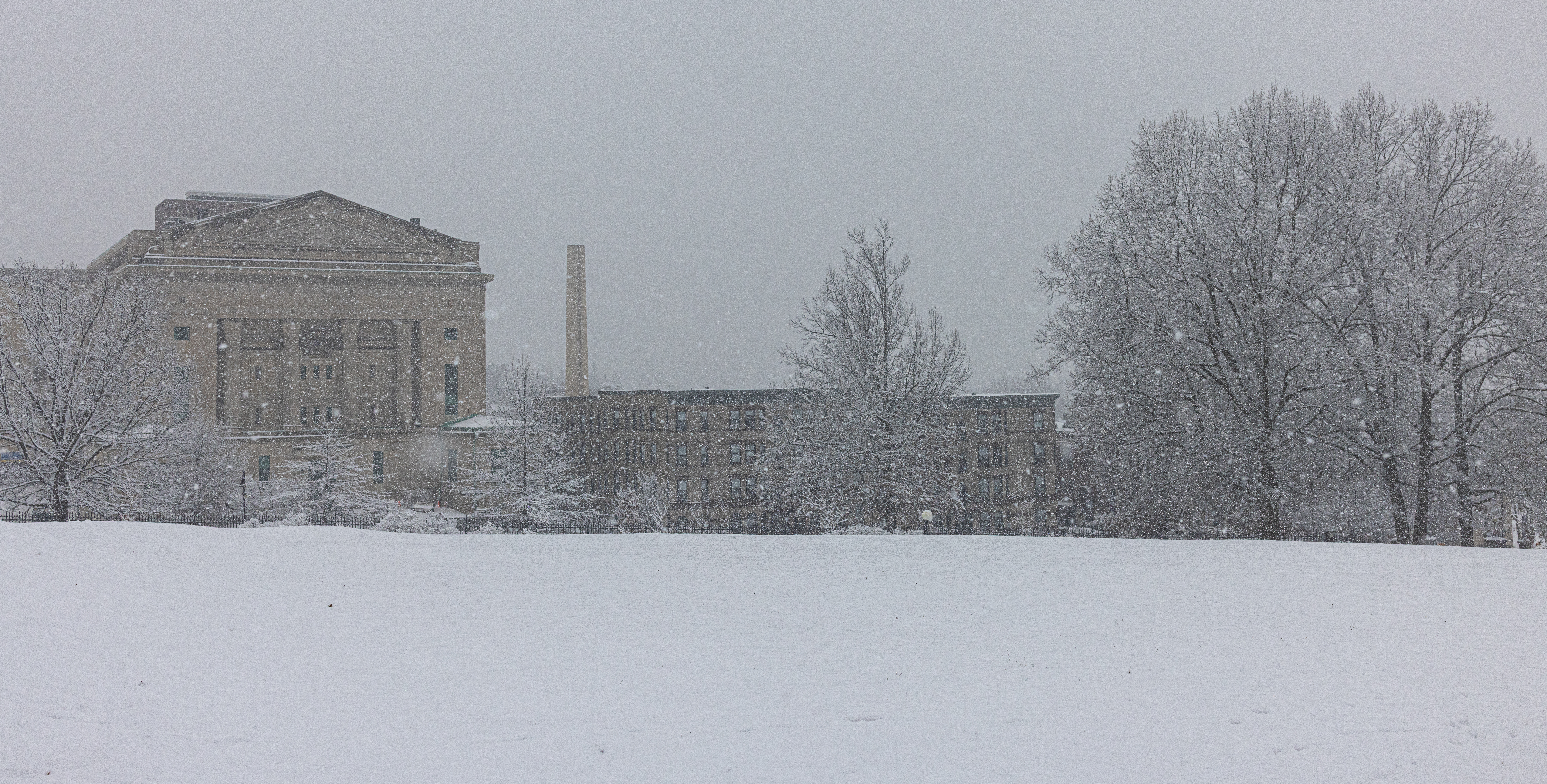
Summary: The Park Ranger Services at the Springfield Armory hosted a ceremony to commemorate Henry Knox’s journey across Massachusetts.
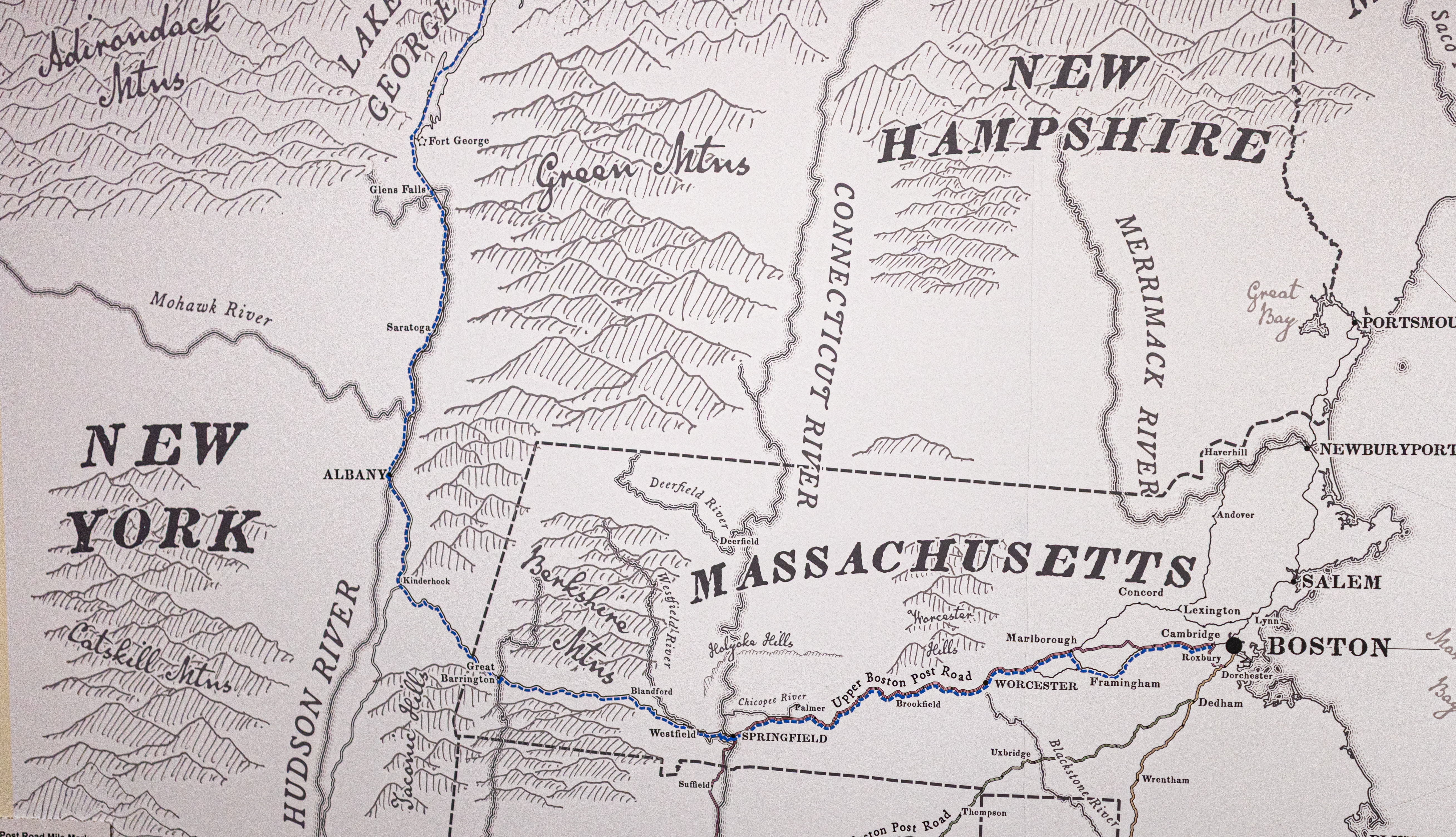
The Knox Trail, also known as the Henry Knox Trail or the Knox Cannon Trail, is a network of roads and paths which traces the route of Colonel Henry Knox’s “noble train of artillery” from Crown Point, NY, to the Continental Army camp just outside of Boston, MA. Knox and his team moved 59 or 60 tons of artillery. The trail, which was called a “Noble Train of Artillery”, was completed using primarily ox-drawn sleds (or sledges) and horses. It was completed in an impressive 56 days and spans approximately 300 miles. While the exact dates aren’t clear, it is believed to have taken place during the winter of 1775 to 1776. The map below shows the path they took. The blue line shows the exact path. It extends from the Lake George area to Boston.
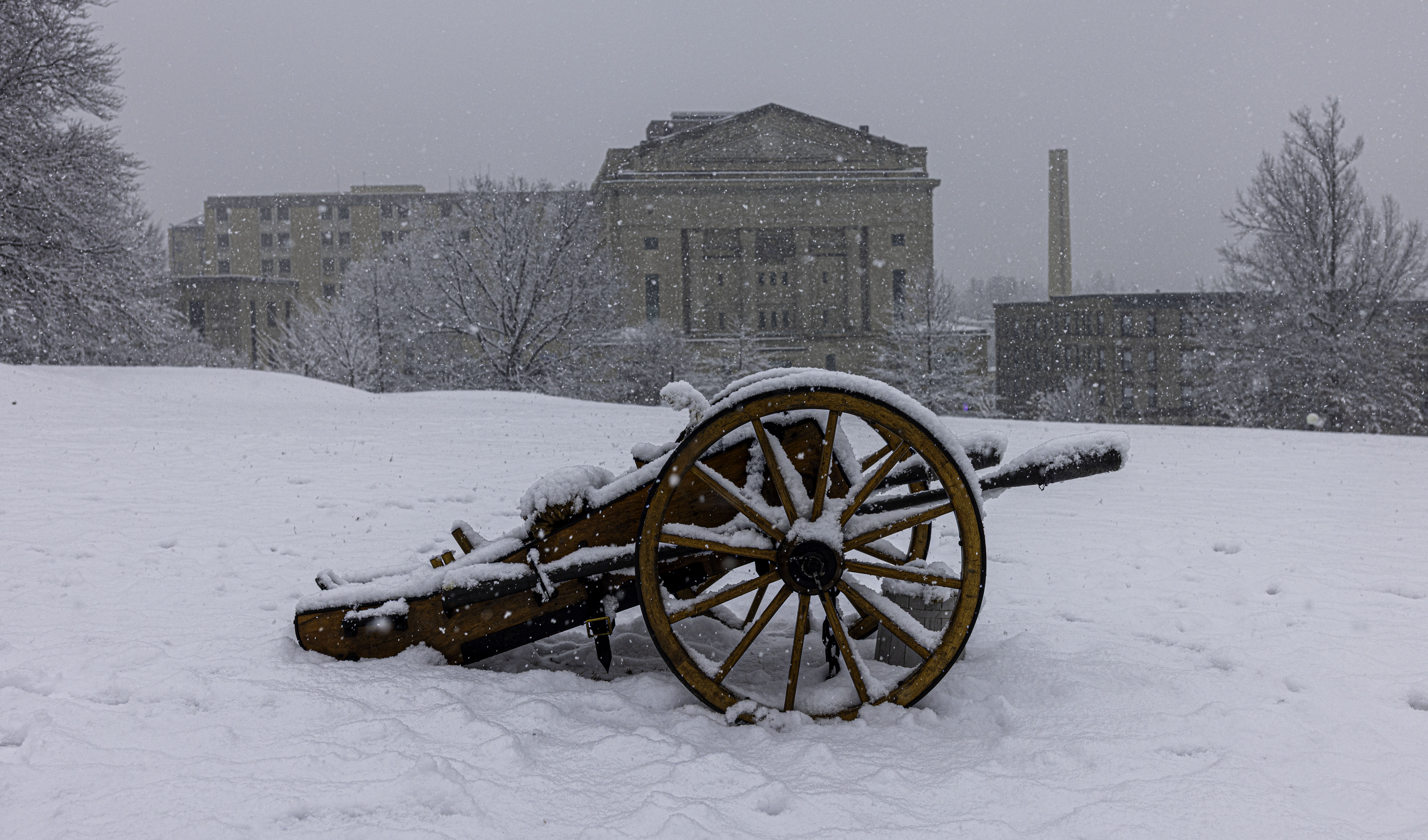
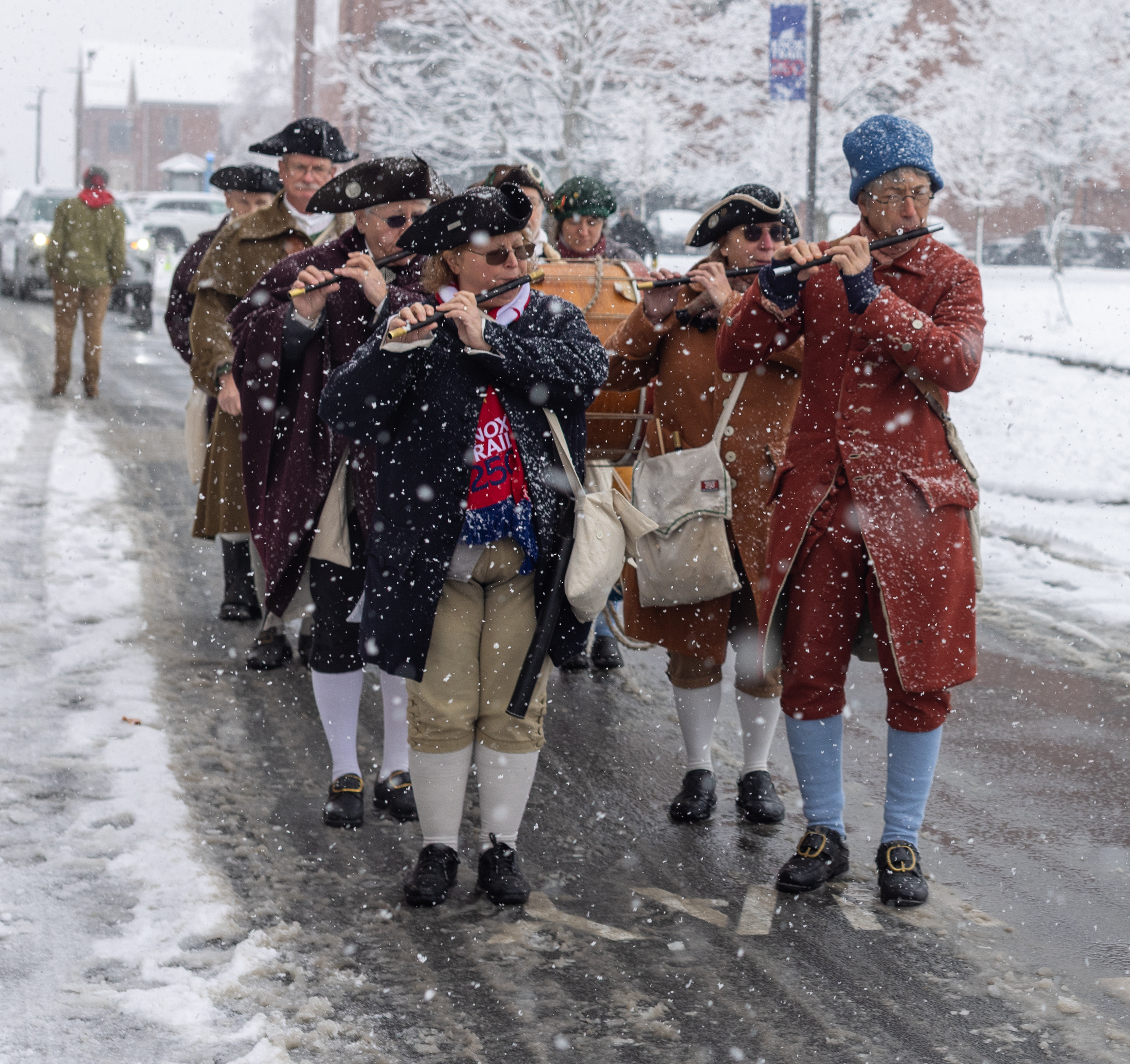
For better or worse, it has been snowing or it recently snowed during many of my trips lately. This day was no different. And wow did it provide for a pretty backdrop!
This was my first photo shoot using my Canon R5 mirrorless camera. I think the photos might look a little more crisp and clearer. One thing I did notice is the camera and lens I used (Canon 35 mm) was better at focusing on the people and their faces despite the snow. My older camera (Canon 5D) would tend to focus on the snow and not the people.
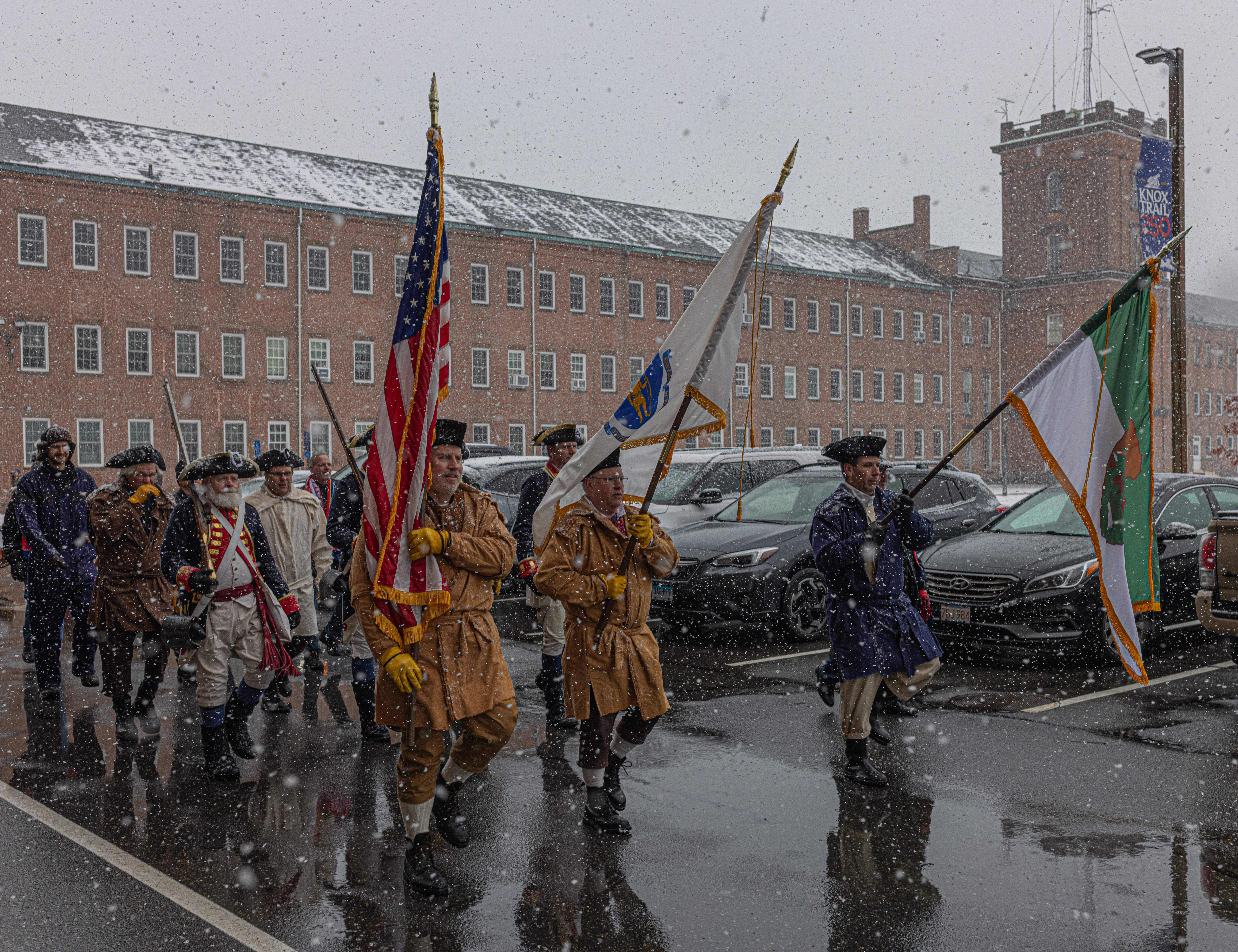
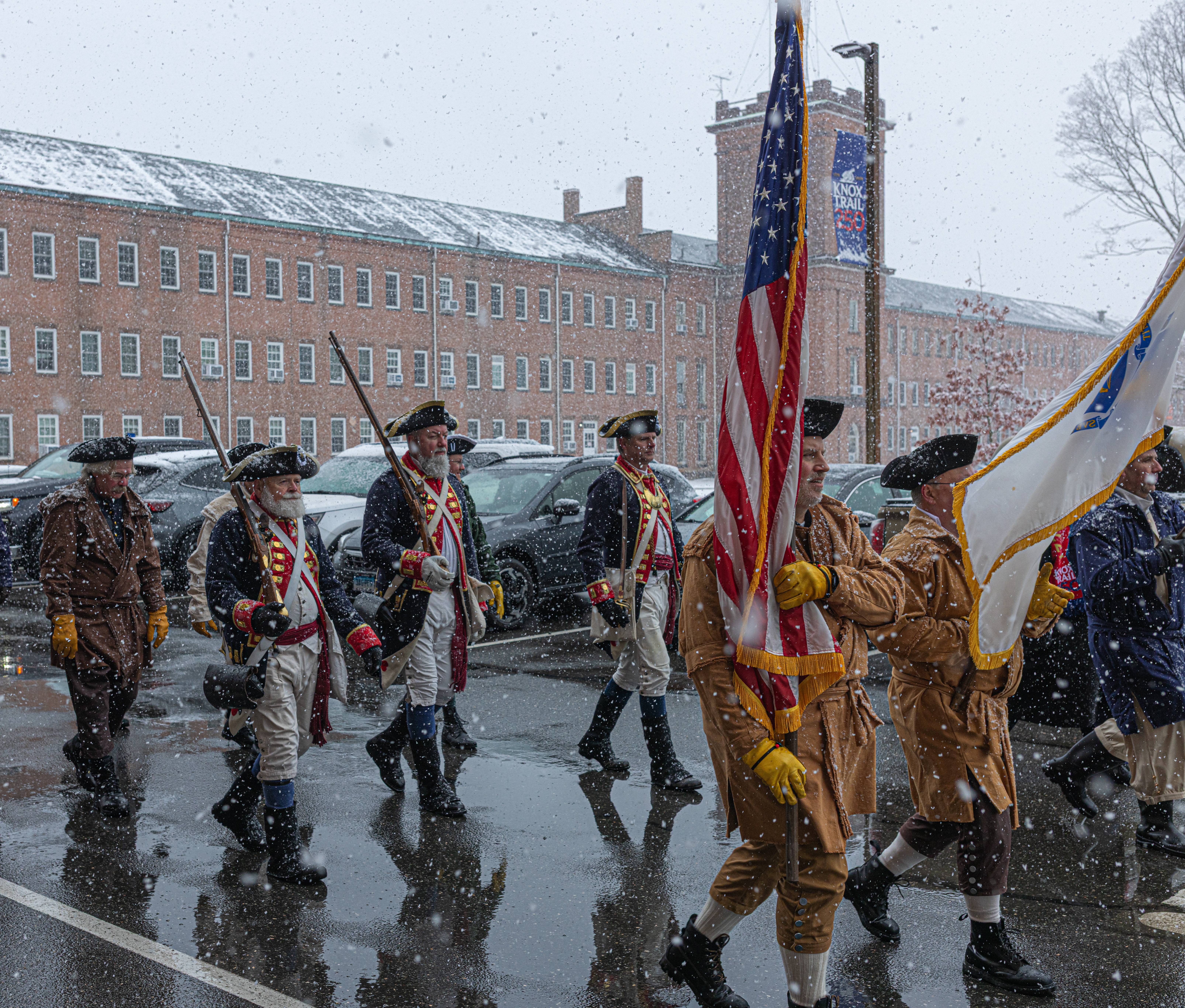
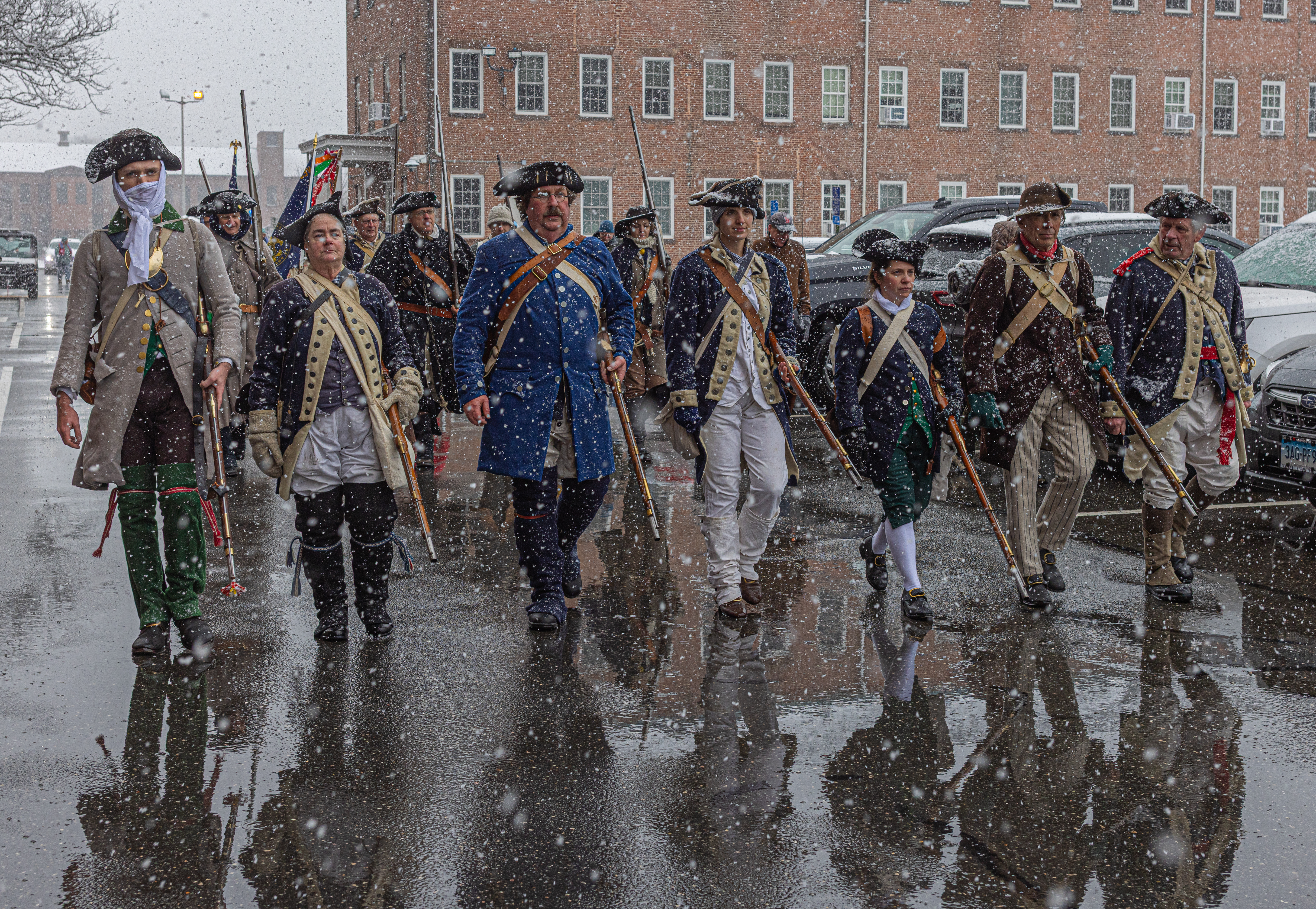
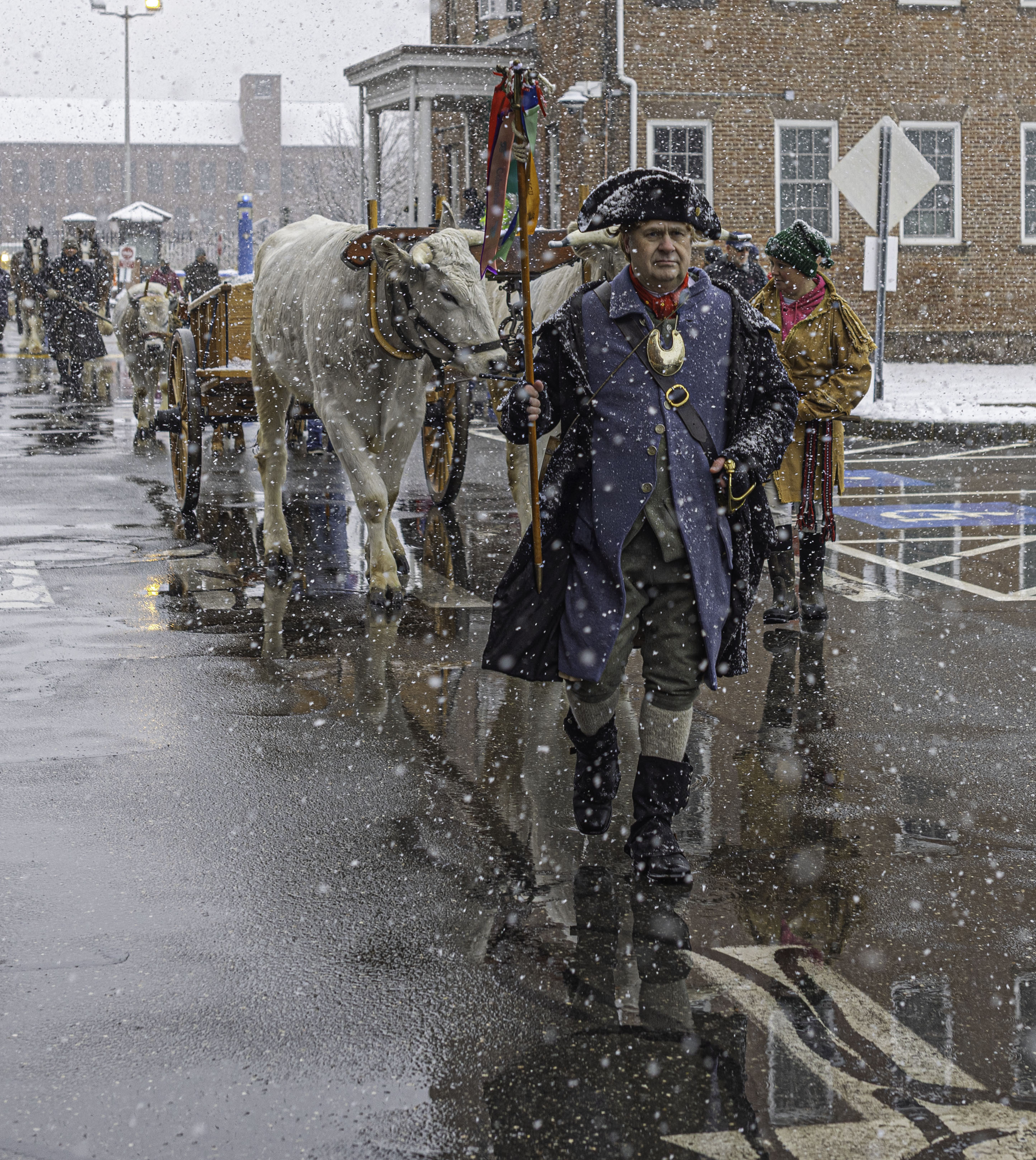
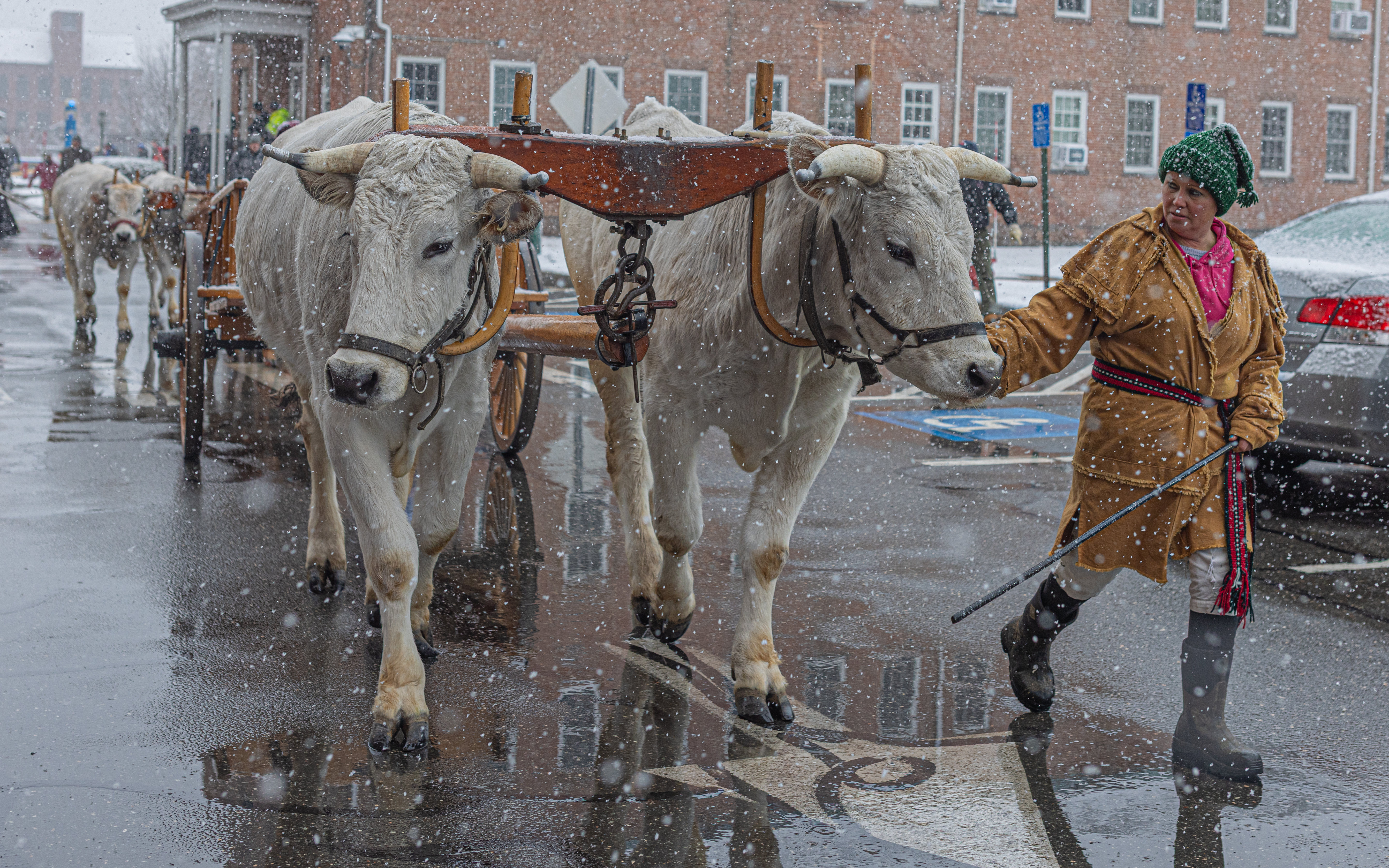
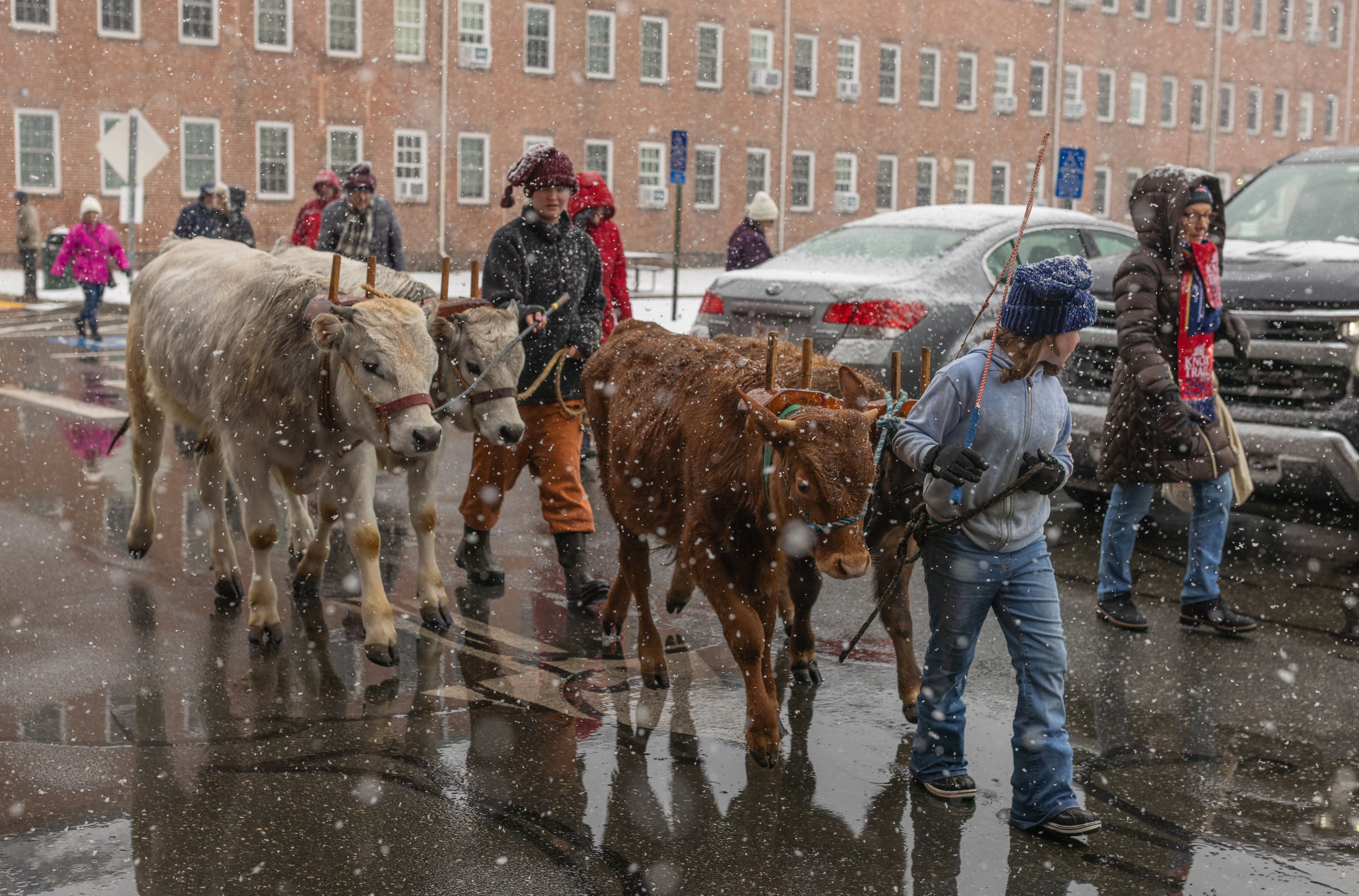
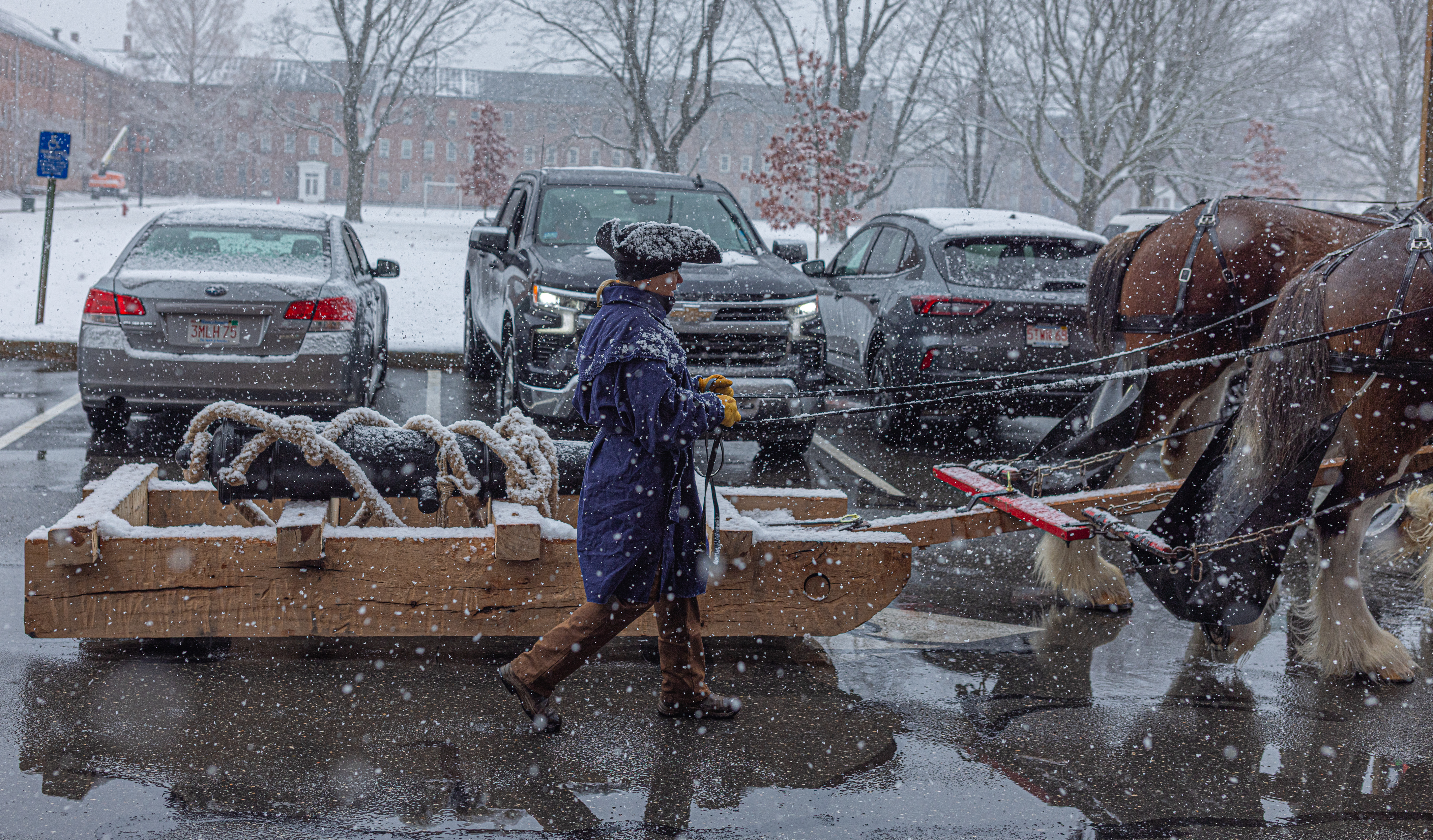
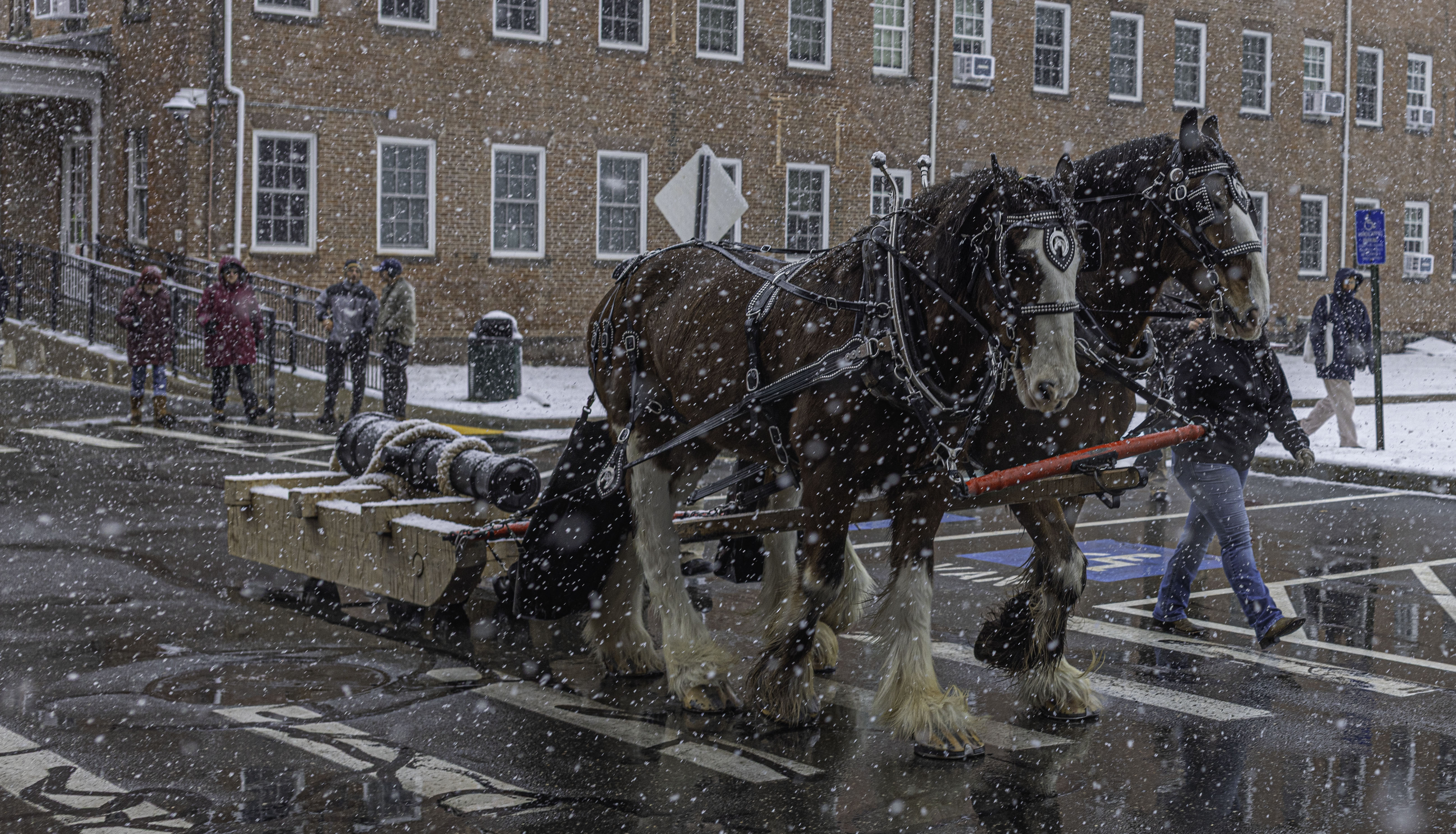
The ceremony began with a march on the grounds of the Springfield Armory which included reenactors and animals.
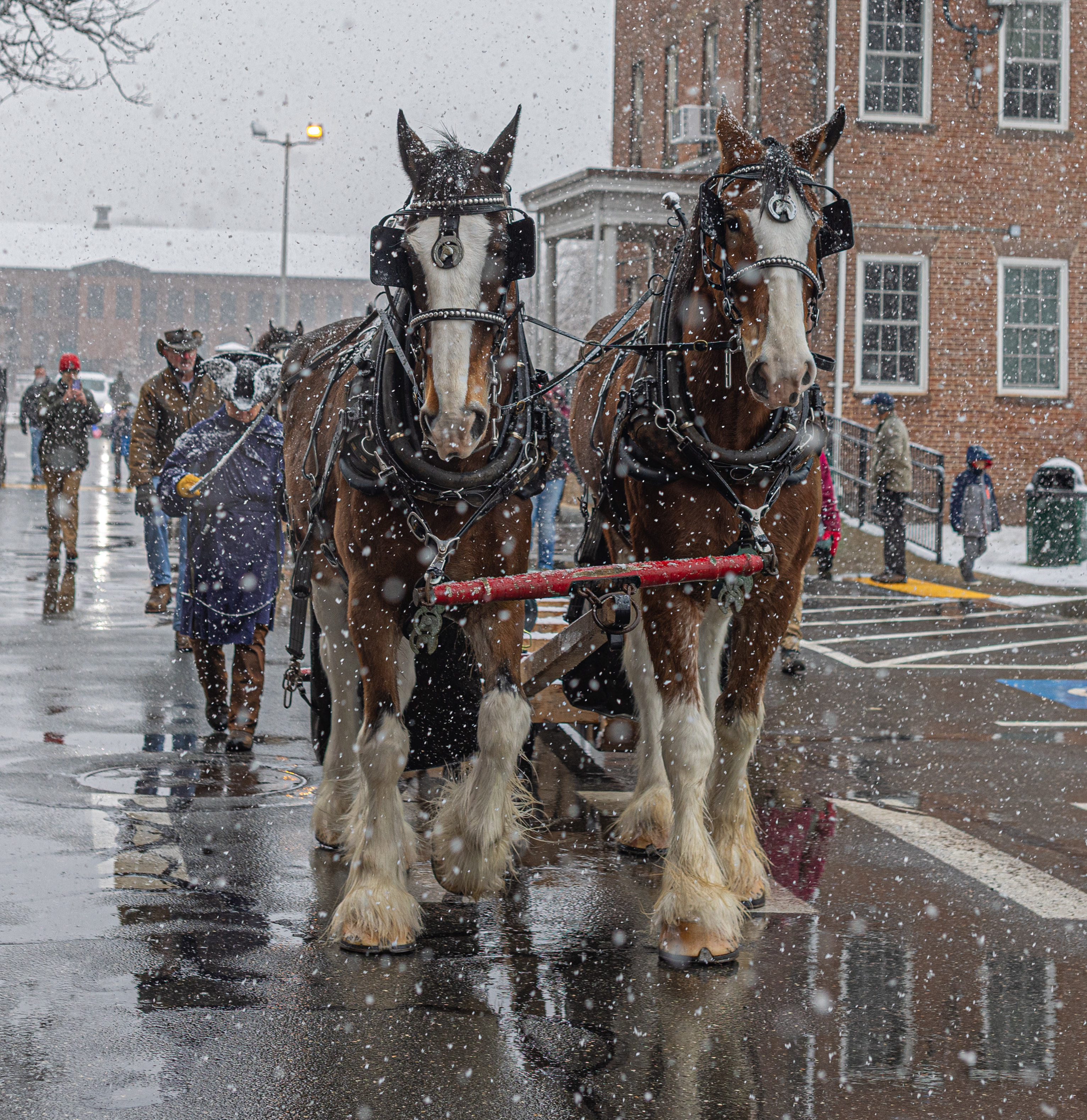
These horses were used to move some of the artillery. emulating the original Knox Trail.
The Springfield Armory didn’t just have military weapons and historical information Knox Trail. There were a variety of old firearms and gear from different eras and wars.
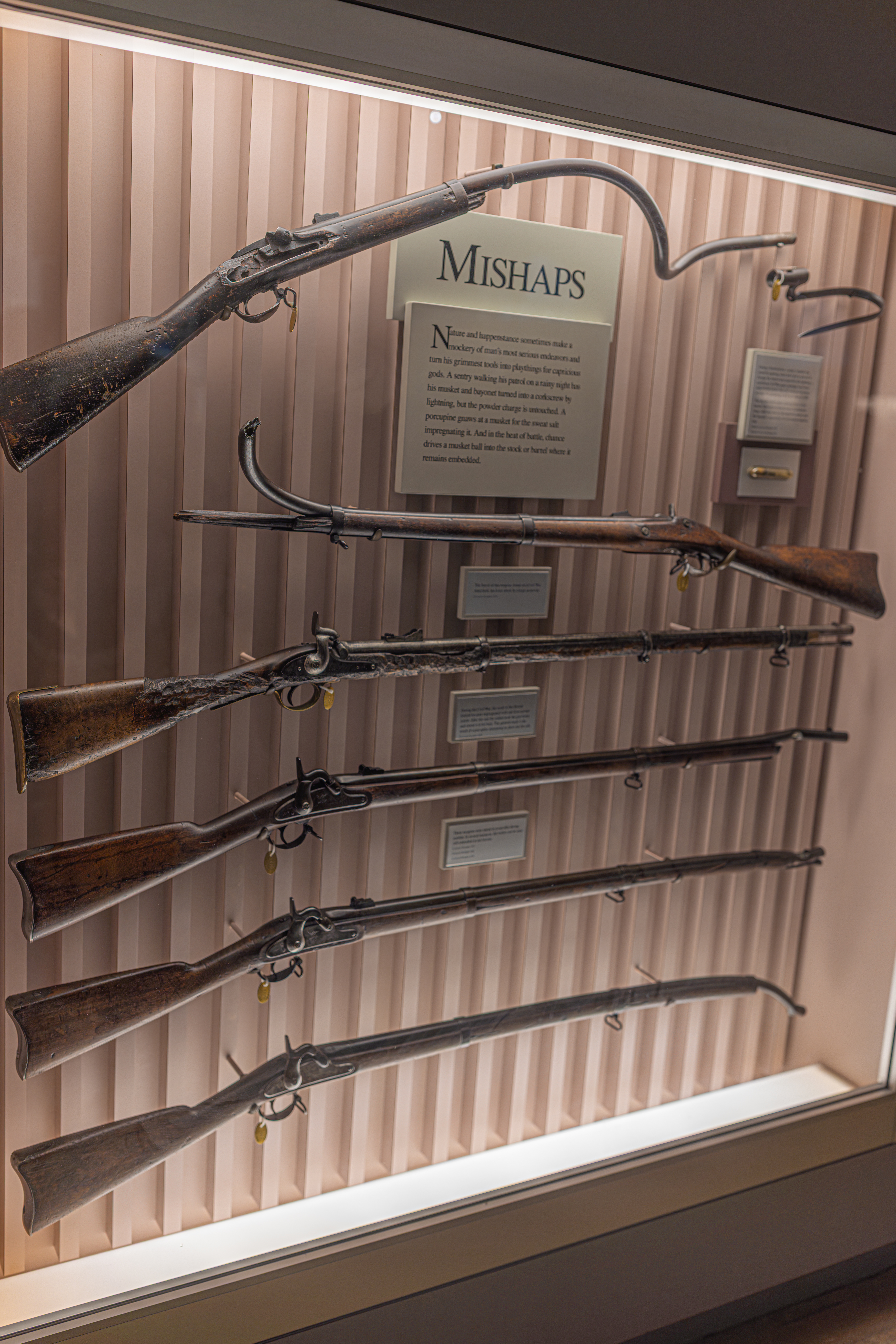
These weapons showed below were involved in different mishaps during battle.
The first musket was struck by lightning. Because of the intense hear caused by the lightning, a regulation Civil War paper cartridge (which can be found to the right in the photo) was found intact in the breech (the rear end of the barrel where the gunpowder is ignited and the projectile is loaded) when the weapon was disassembled for cataloging and preservation in 1981. While the identity of the sentry whose weapon this was is unknown, it is believed it was a Confederate soldier because the bayonet was from a Confederate manufacturer (although Union soldiers often took weapons, ammunition, clothing and other gear from fallen Confederate soldiers and vice versa).
The barrel of the second weapon, which was found on a Civil War battlefield, was struck by a projectile.

During the Civil War, the stock (the main structural component in this case made of wood) of the third rifle, a British Enfield rifle, became impregnated with salt from perspiration. After the war ended, the soldier took the gun home and stored it in his barn. While it was stored, a porcupine gnawed at the stock in an attempt to chew out the salt from the stock of the rifle.
The other guns in the display were struck by projectiles.
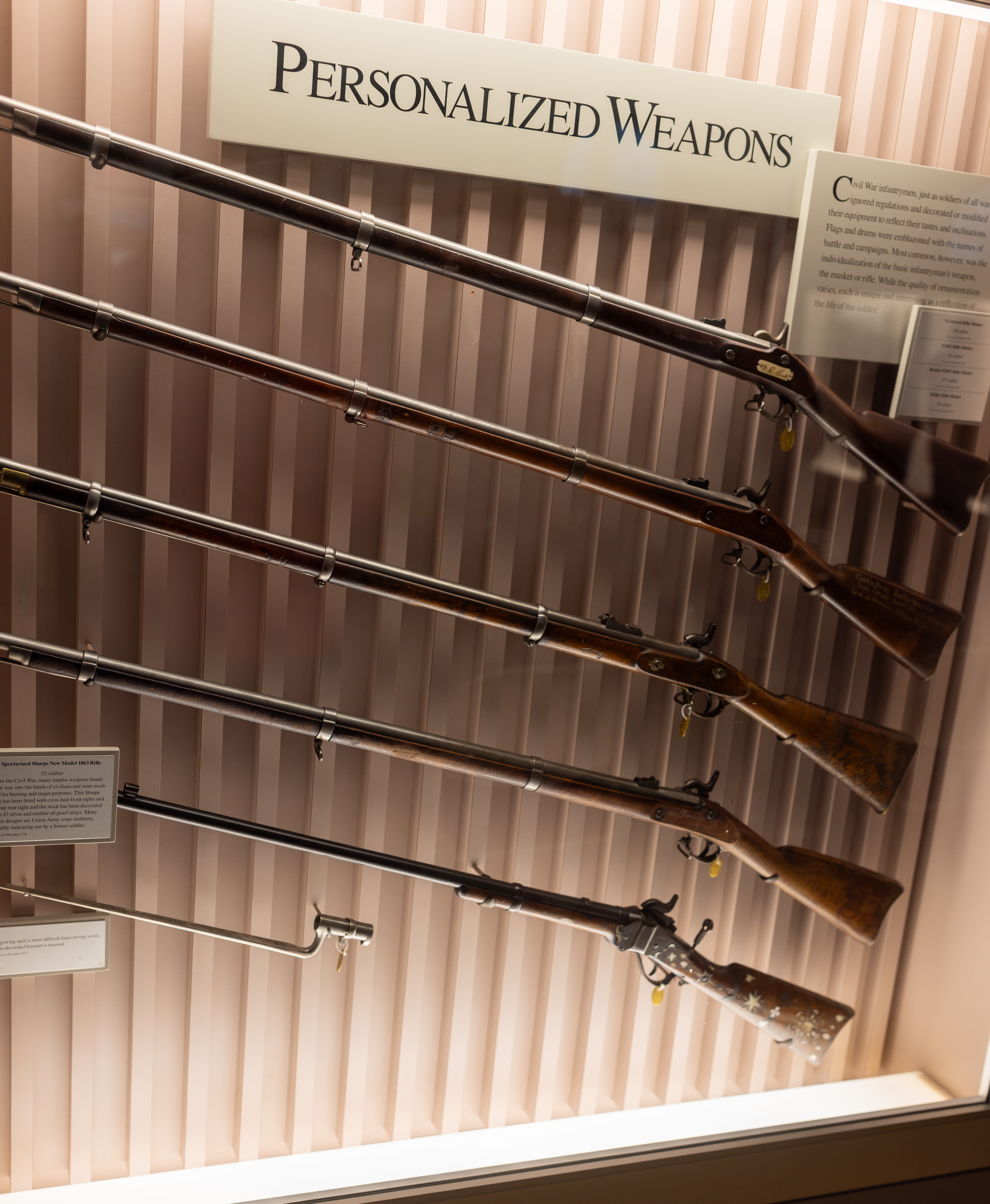
There were many other weapons on display like these personalized weapons.
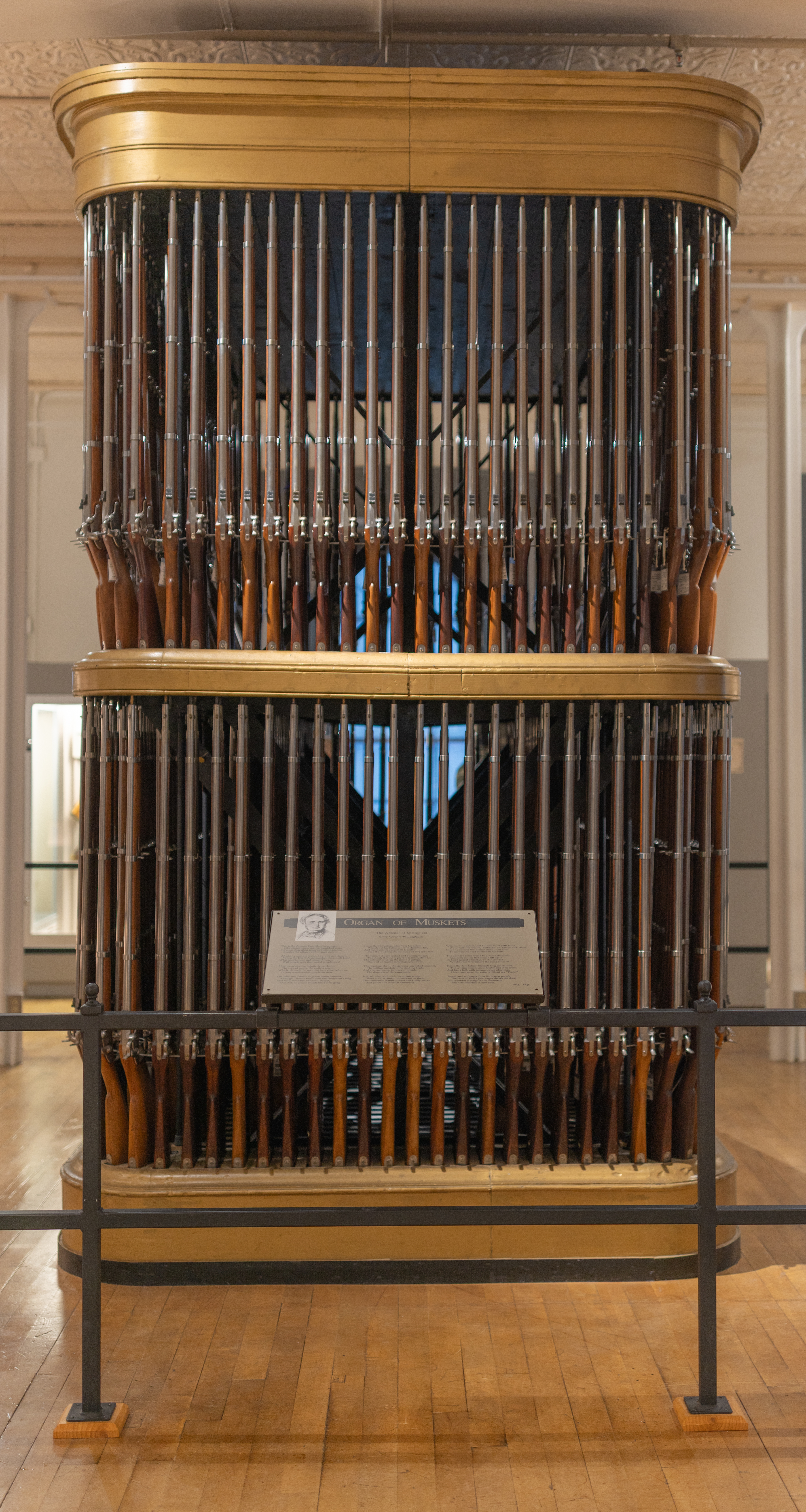
This Organ of Muskets is partially filled with 645 Springfield U.S. Model 1861 rifle muskets.
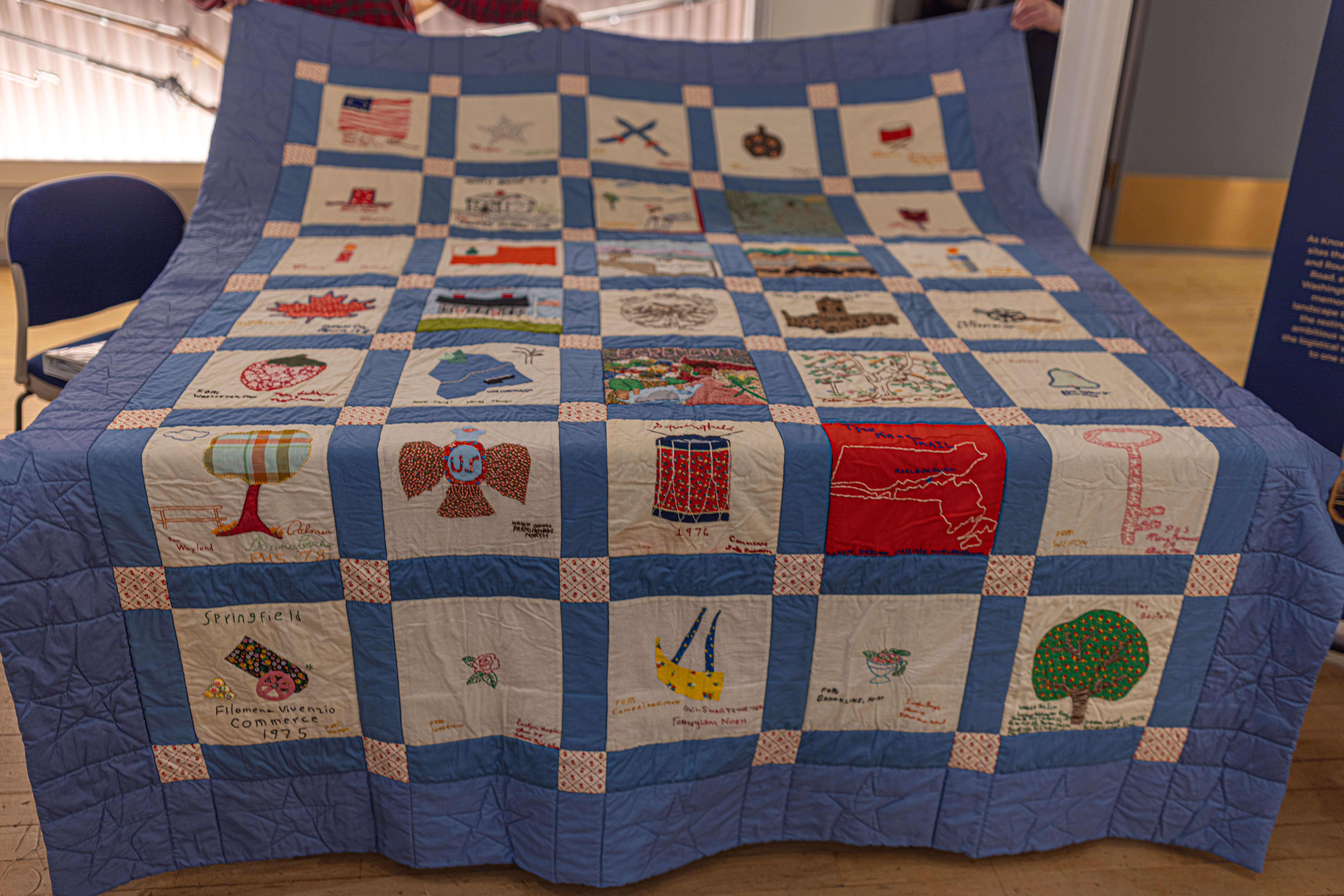
This quilt was made by various high school students in all of the cities and towns in Hampden county in Massachusetts to commemorate the 200th anniversary of Knox Trail. Another quilt from a different county in Massachusetts hangs in the Massachusetts State House. As an aside, 50 years ago, also to commemorate the 200th anniversary, reenactors hiked the original Knox Trail. Given our current weather conditions as we are expected 18-24 inches of snow and freezing wind chill temperatures today and tonight.
These are just a few of the weapons and military and gear with a historical background at the armory. It’s certainly worth another visit since I couldn’t spend too much time looking at all the exhibits in the armory.
There was also an activity learning area where people could make their own paper cartridges. Paper cartridges were a type of small arms ammunition used before the advent of metallic cartridges. To be clear, these were not dangerous on their own and no one was injured while making these cartridges. That I know of.
The main event, of course, were the cannon firing and rifle and musket firings.
The reenactors prepared for the cannon by priming the cannon before the firing.
A ranger gave some background info about the Knox Trail and what it was like to be in battle.
The reenactors did fire a canon. But, because of safety precautions, they had us stand far away and everyone was bunched up together. So I was out of position for the cannon firing. This was the aftermath of the canon firing.
But, I was able to get a photo of the firing of the rifles and muskets.
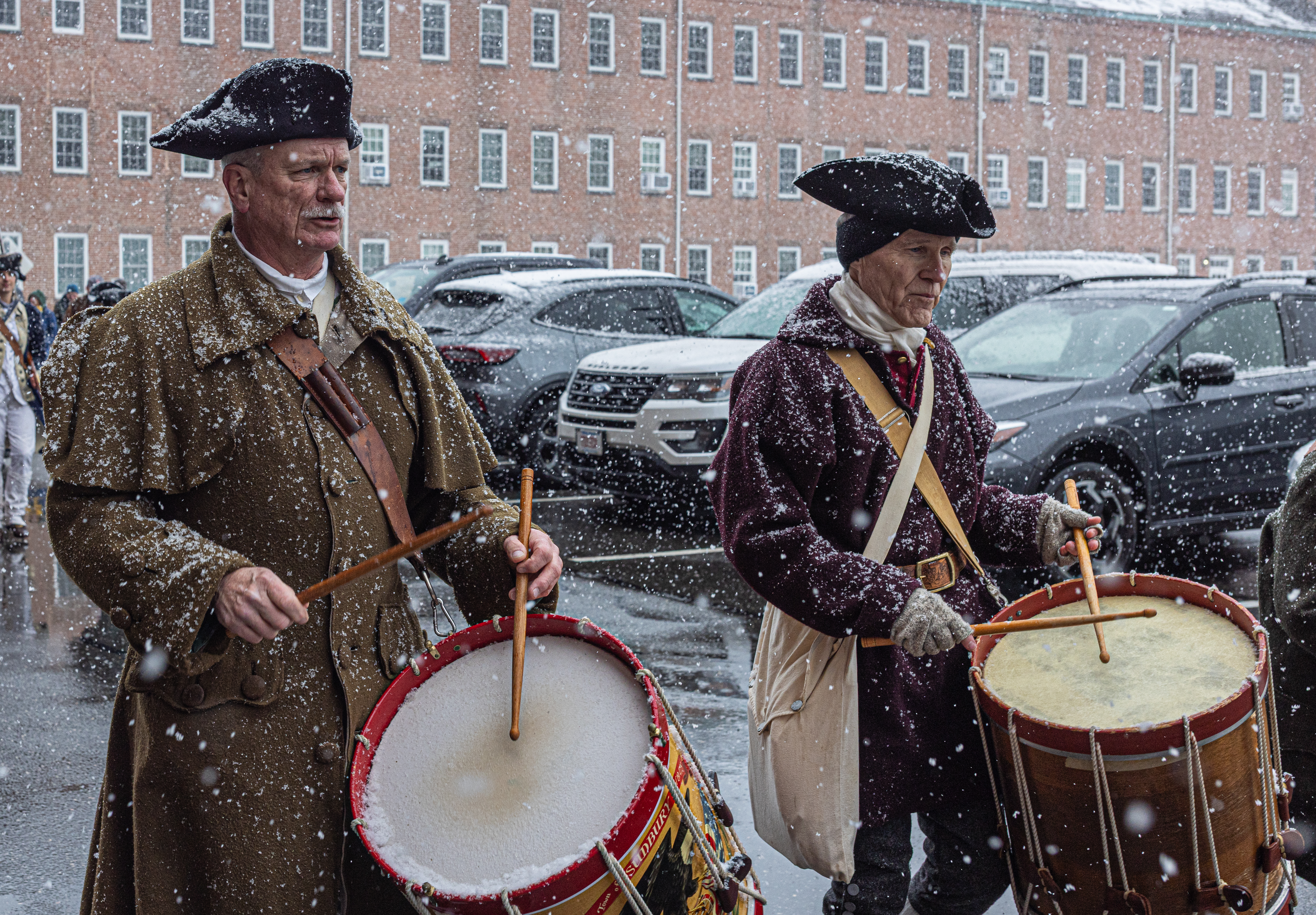
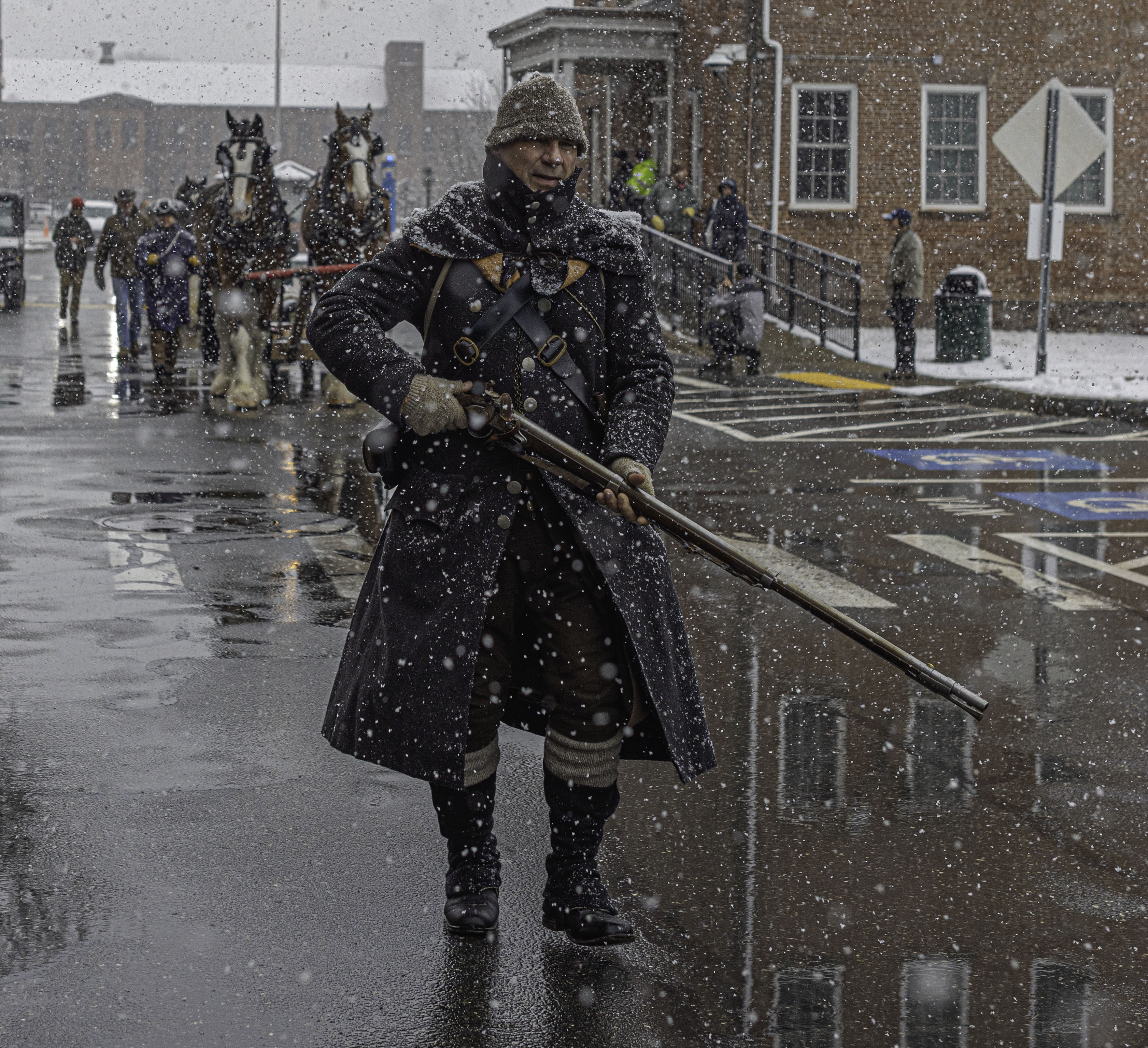
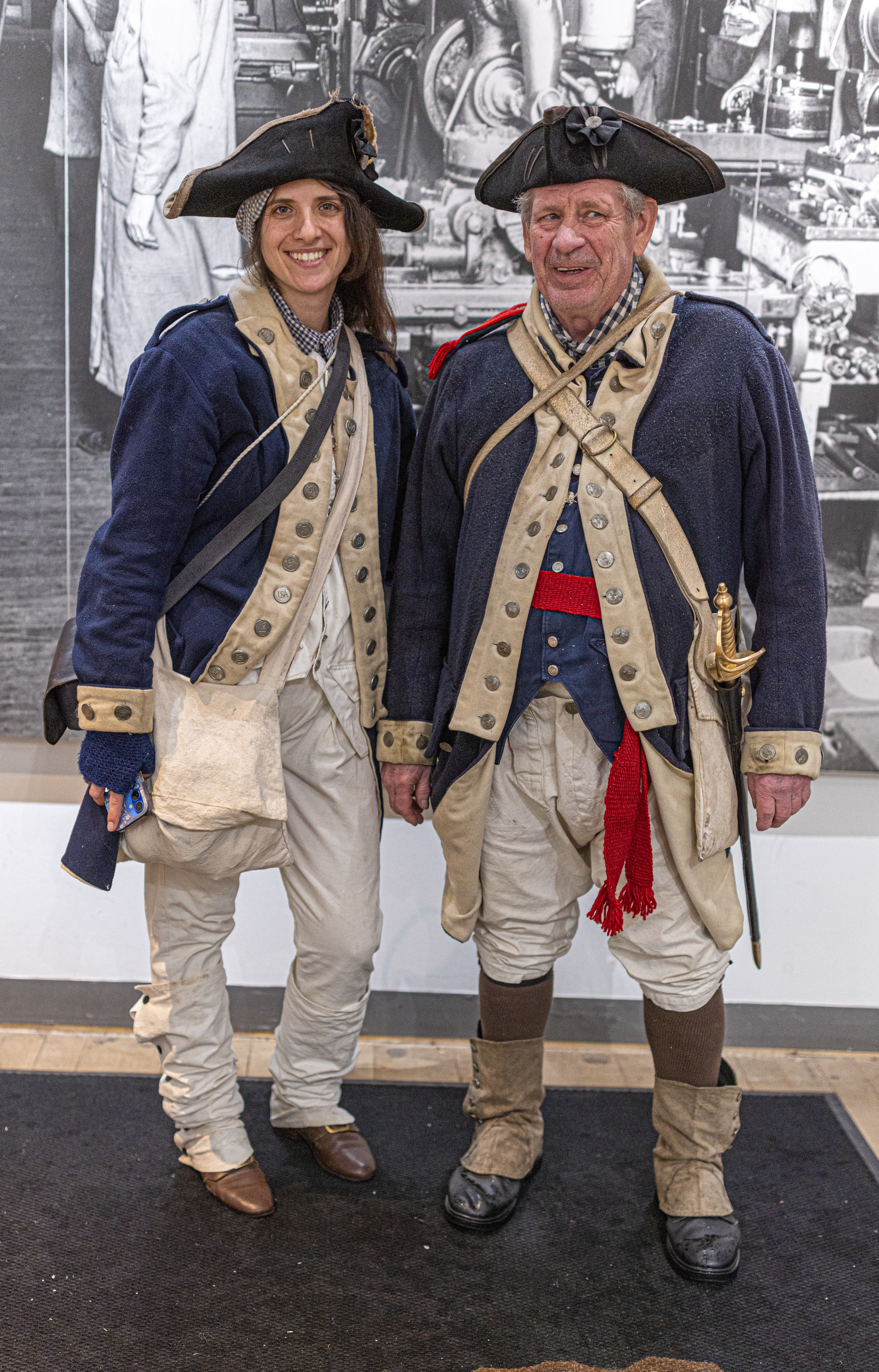
The reenactors were active and approachable at the event. I was able to take a few photos of them during the event.
There are bound to be many more 250th commemorations and celebrations this year. So, I’m sure I’ll be photographing more of these type of events throughout the year!
Summary: The Melha Shriners hosted their annual Feztival Of Trees to raise funds for the Shriners. People could bid on special trees with bonus gifts on or near them, purchase products from vendors, get their faces painted or just enjoy the festive at atmosphere.
It’s that time of the year again in New England. The time between the holidays and spring can be a little quiet, cold, dark and did I mention cold? It’s a pretty long timeframe. 60 days, 8 hours and 50 minutes. Not that any of us are counting.
But, fear not! I have lots of content from the holidays, and all of last year, to post until the weather turns for the better! Hopefully, posts like this will help bring back some cheery holiday memories!
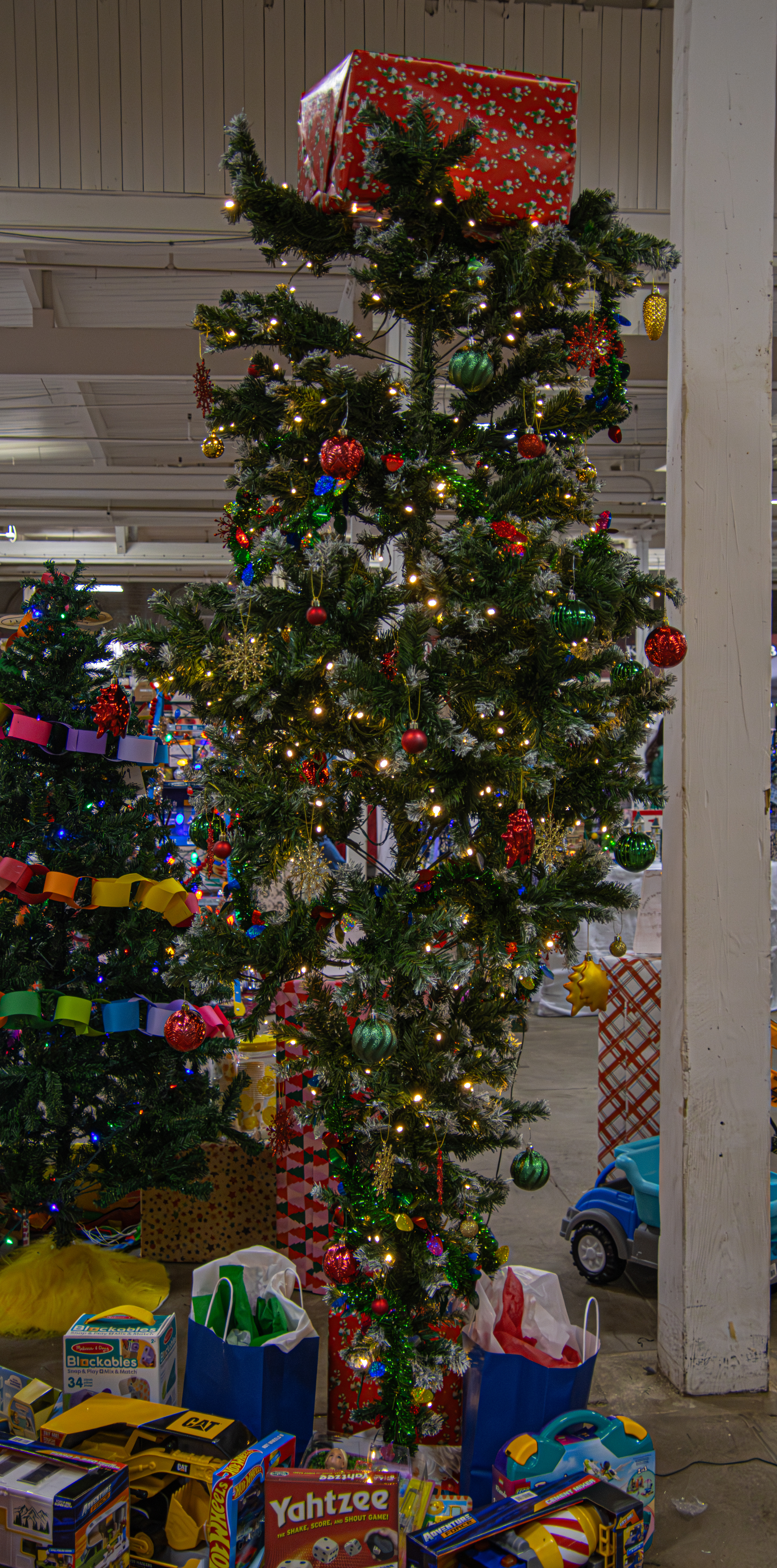
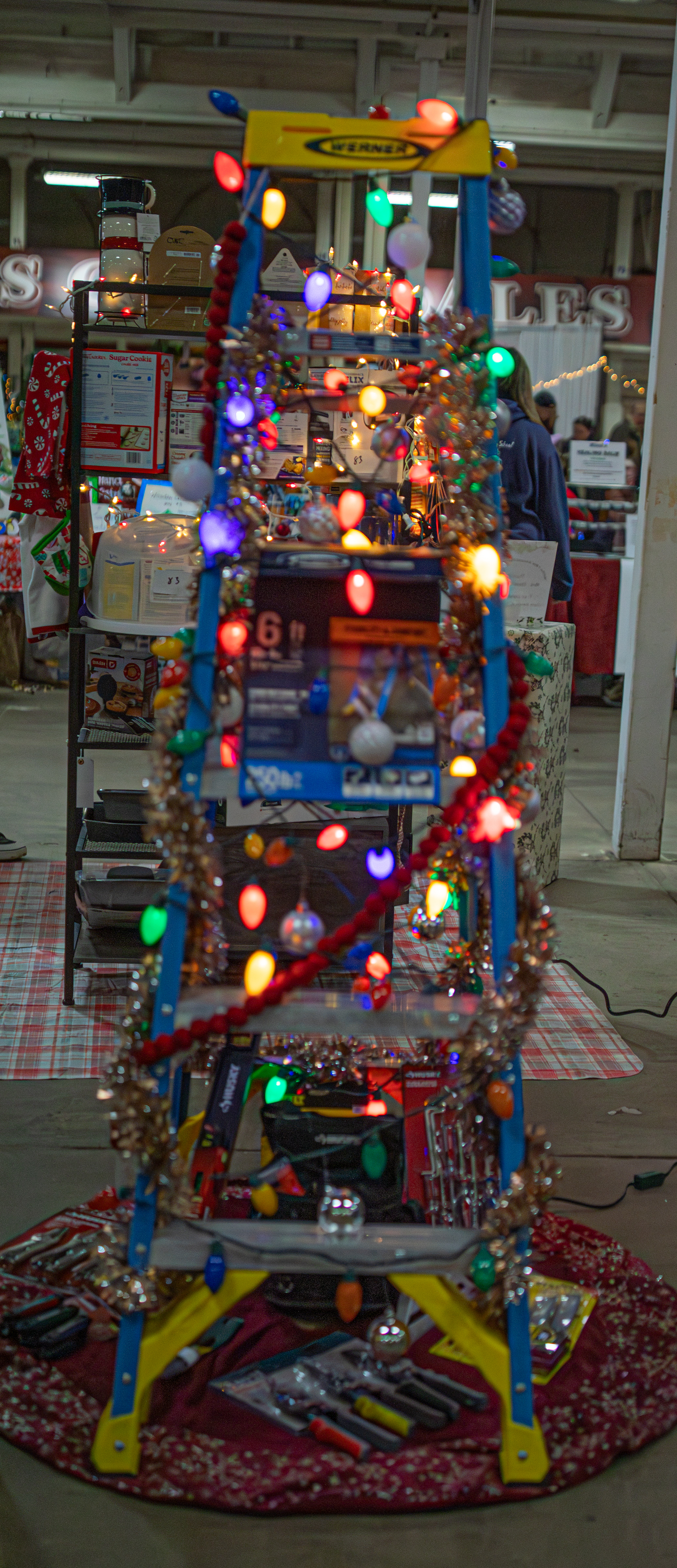
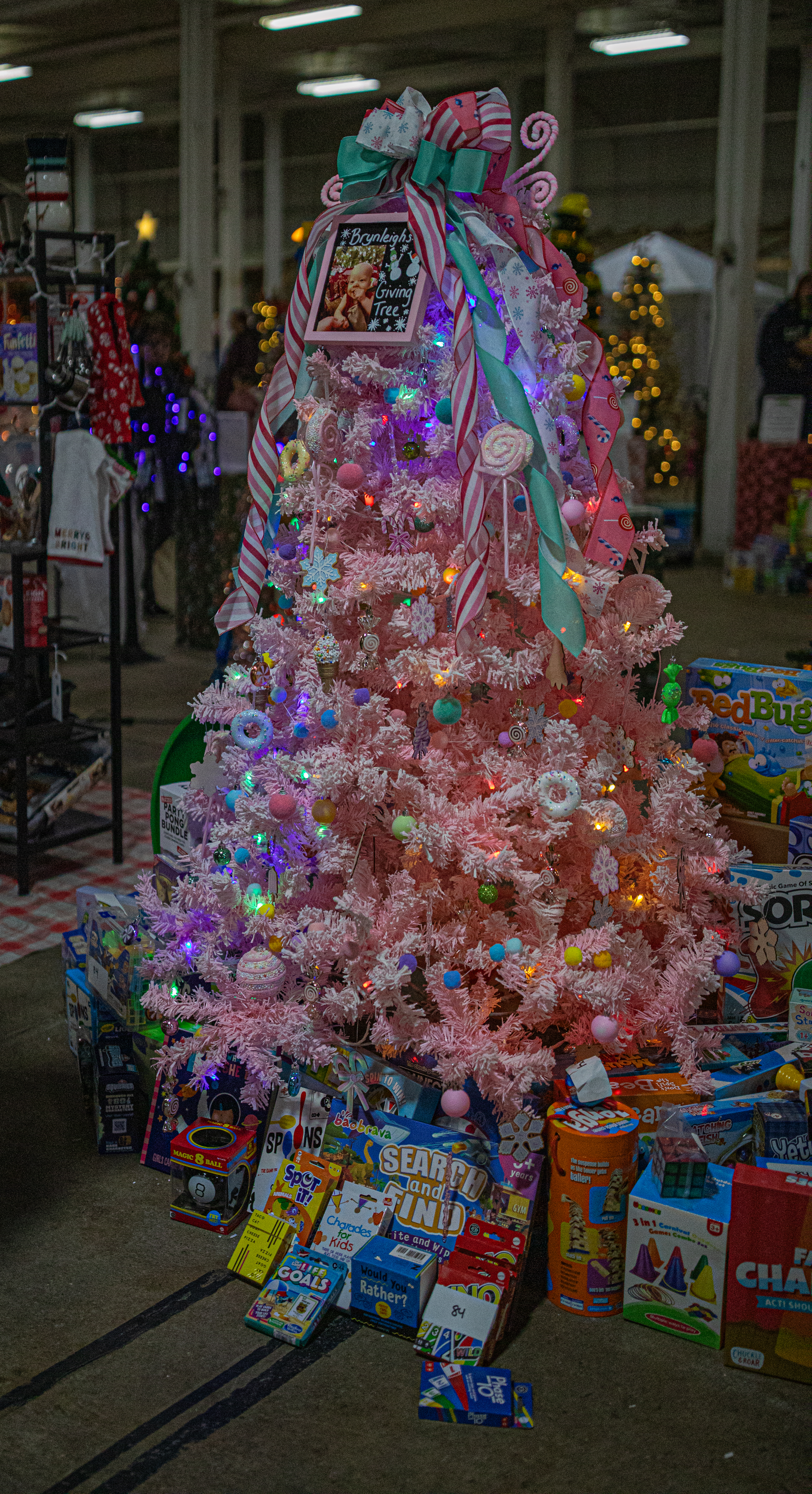
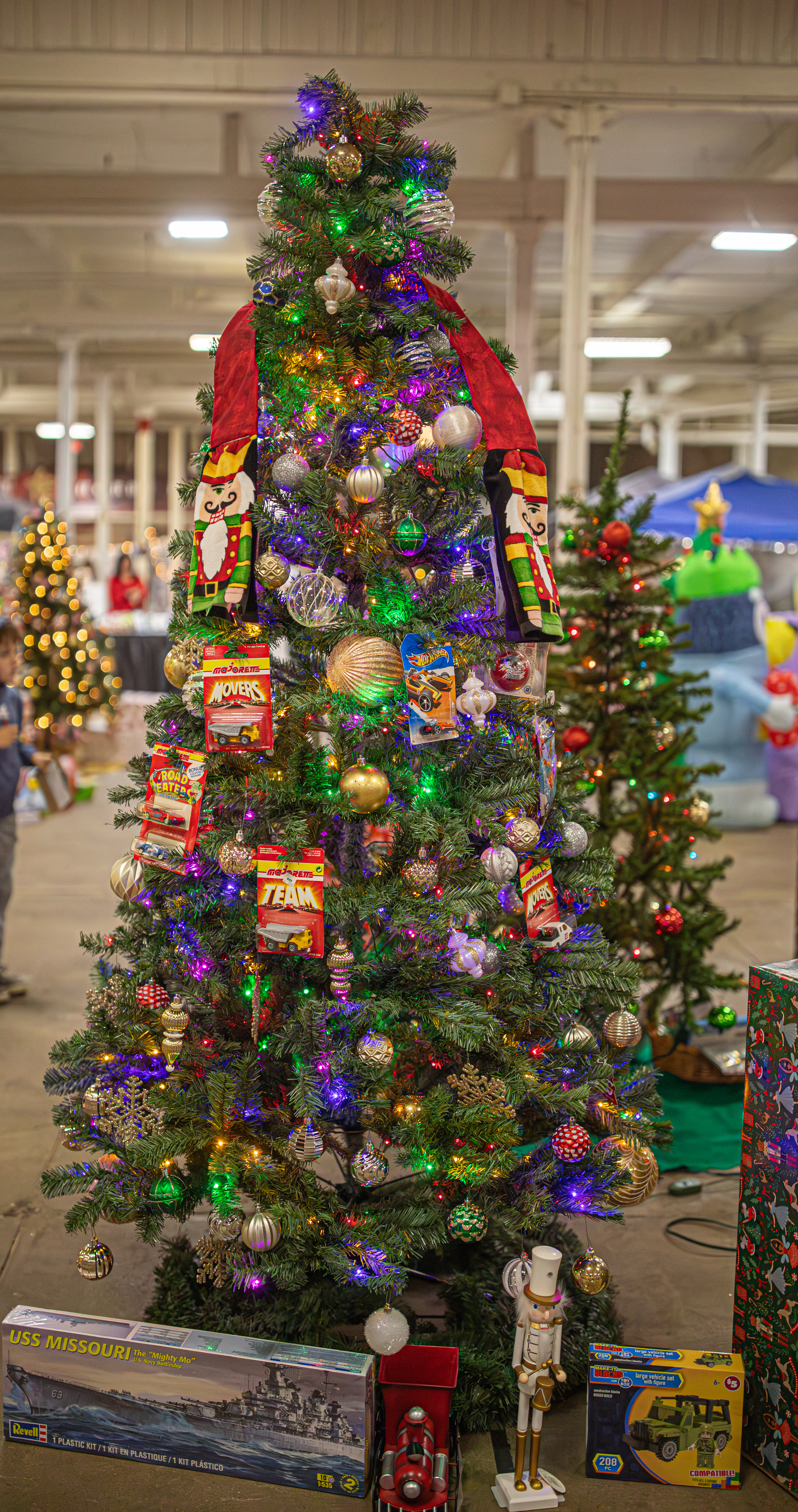
Upside down Trees, Halloween trees and ladder trees were just a few of the Christmas trees on display at the annual Feztival of Trees at the “Big E” in West Springfield, MA.
The event, which is held to raise funds for the Chicopee (MA) based Melha Shriners organization. Their main mission is to help raise awareness and funds for the Shriner’s Children New England in Springfield, MA.
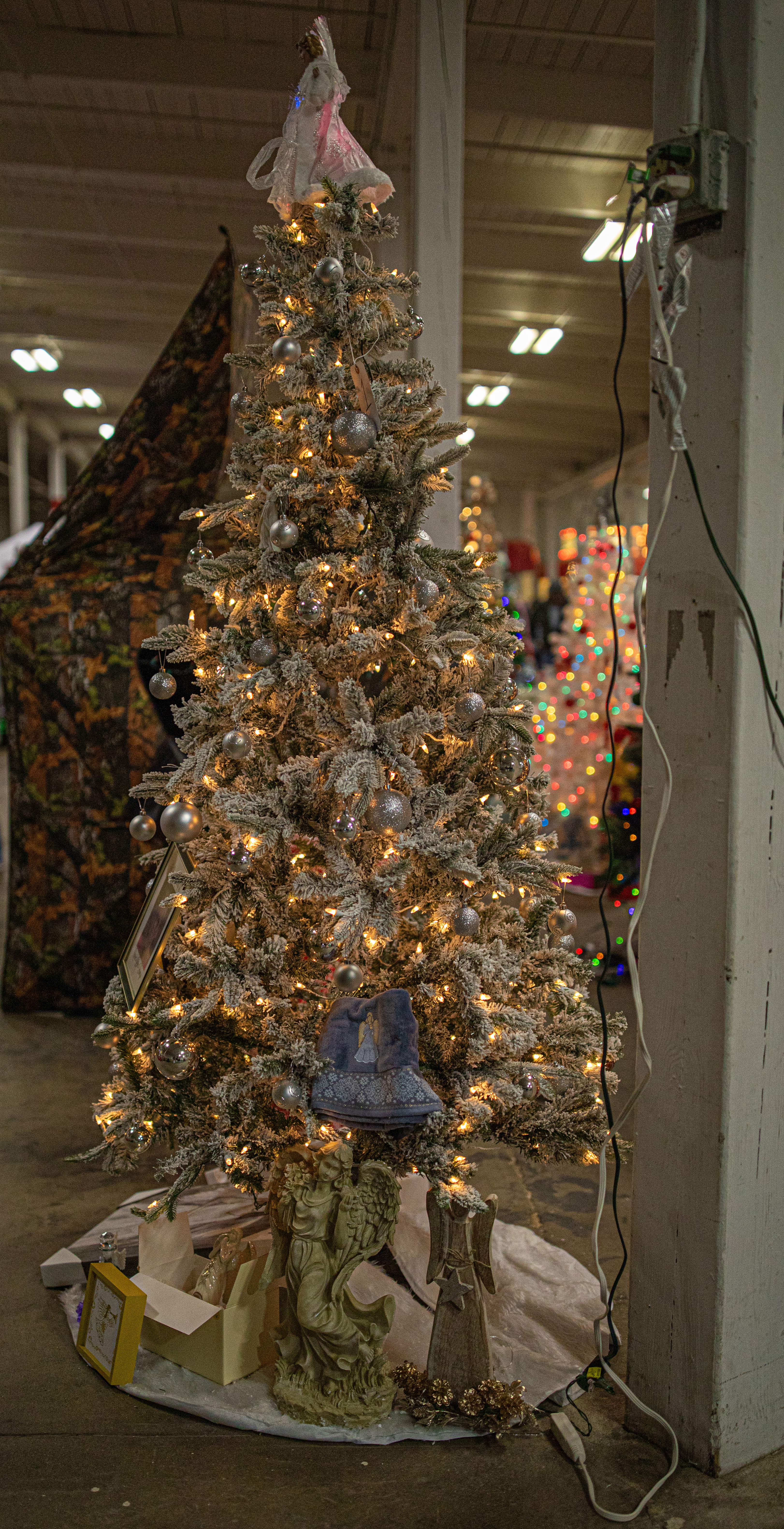
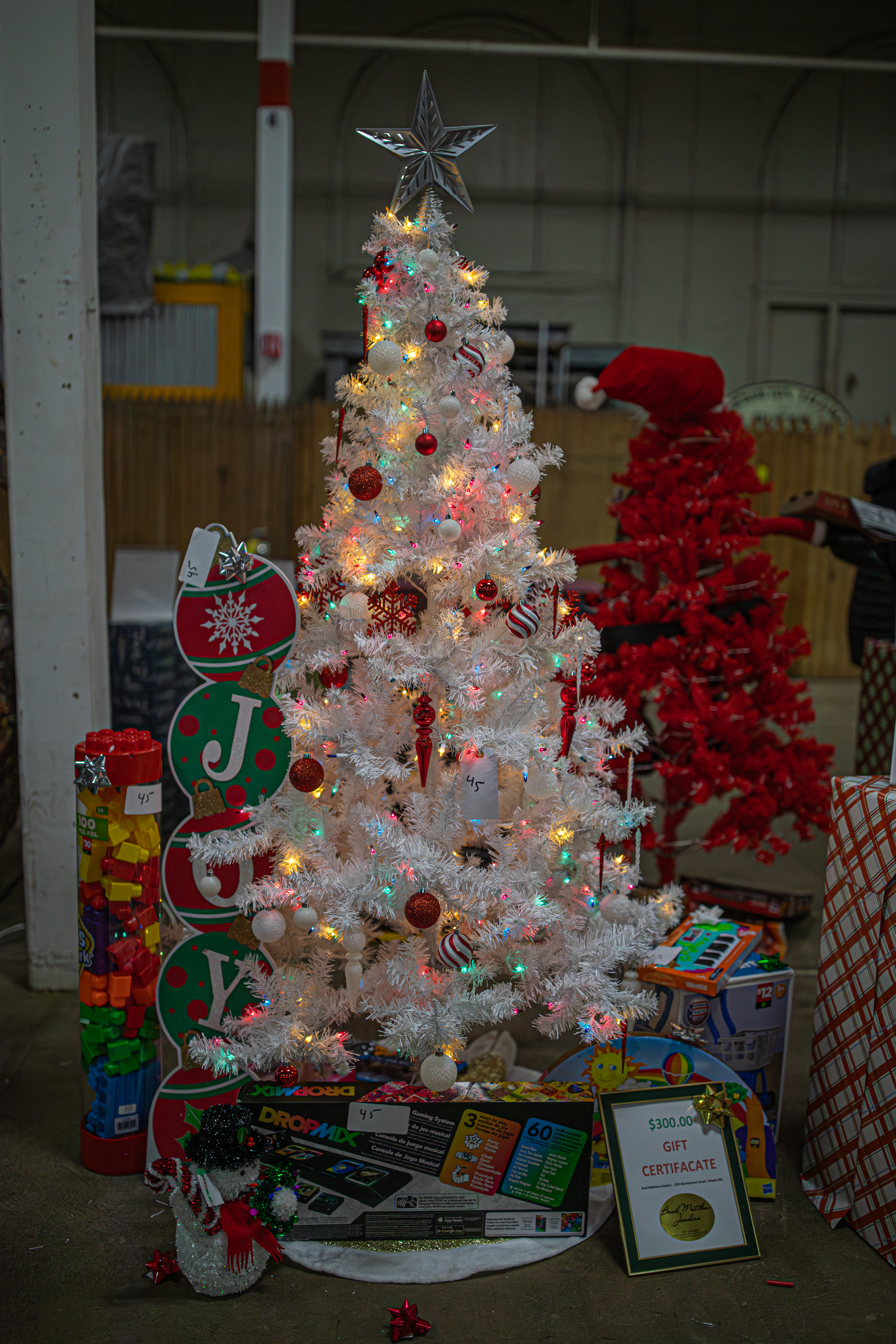
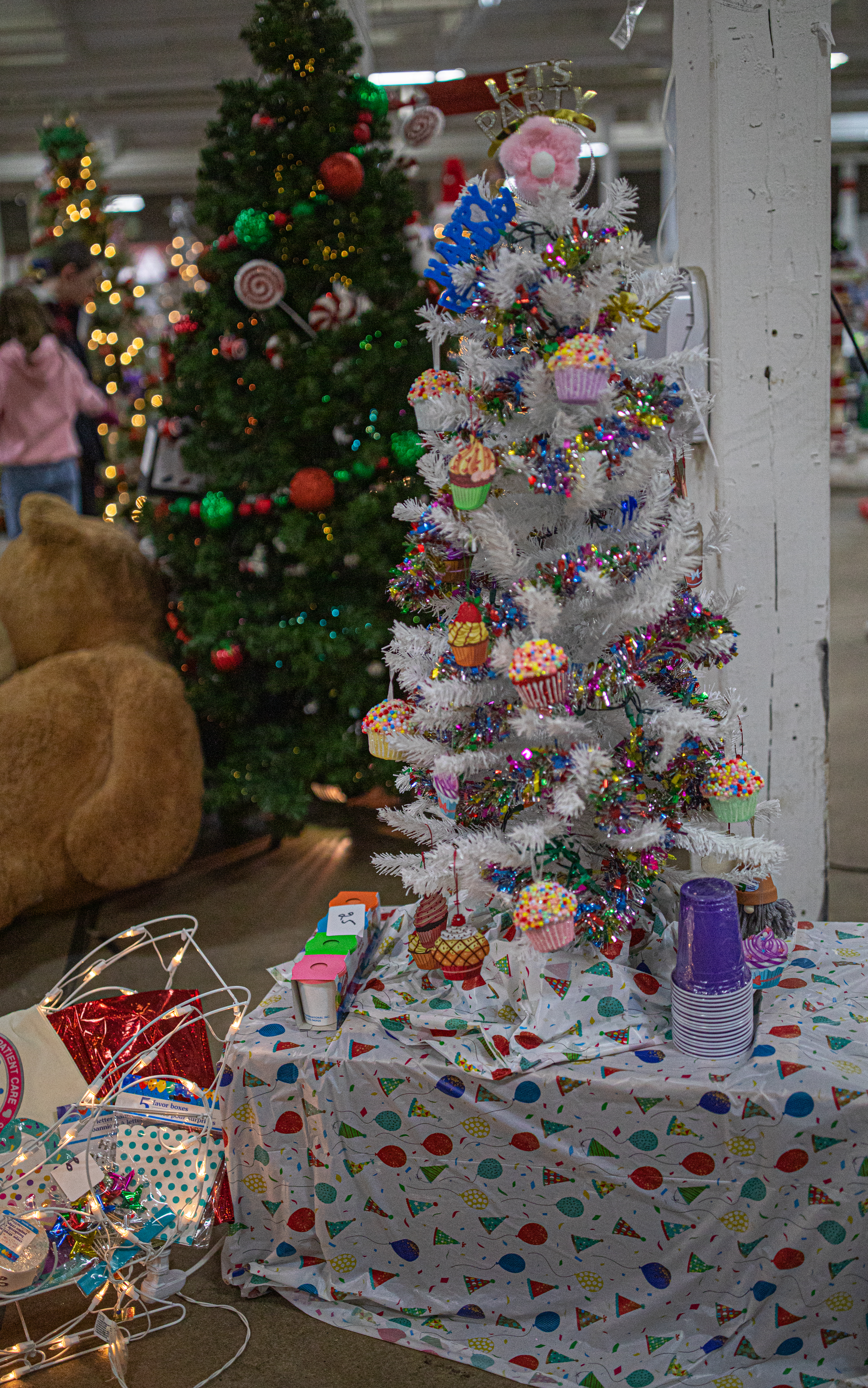
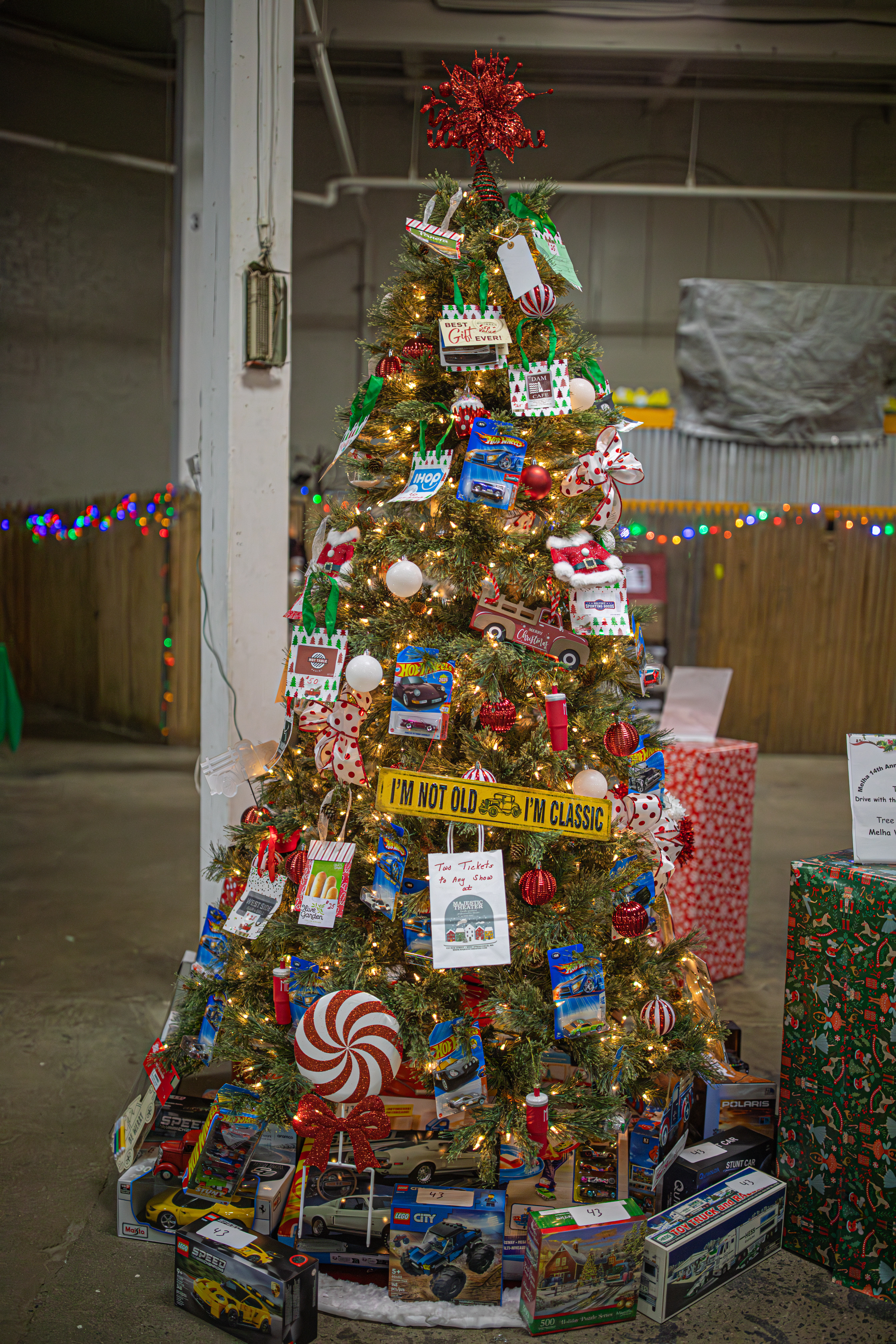
The biggest attraction of the event was the wide variety of Christmas trees. People could purchase tickets for any of the 86 trees and use the tickets to enter a raffle for the trees. The trees had everything from games to scratch cards on or under them. Any trees not claimed were donated to the Department of Children and Families.
This tree, and “upside down Christmas Tree” had toy trucks and games under (or above?) it.
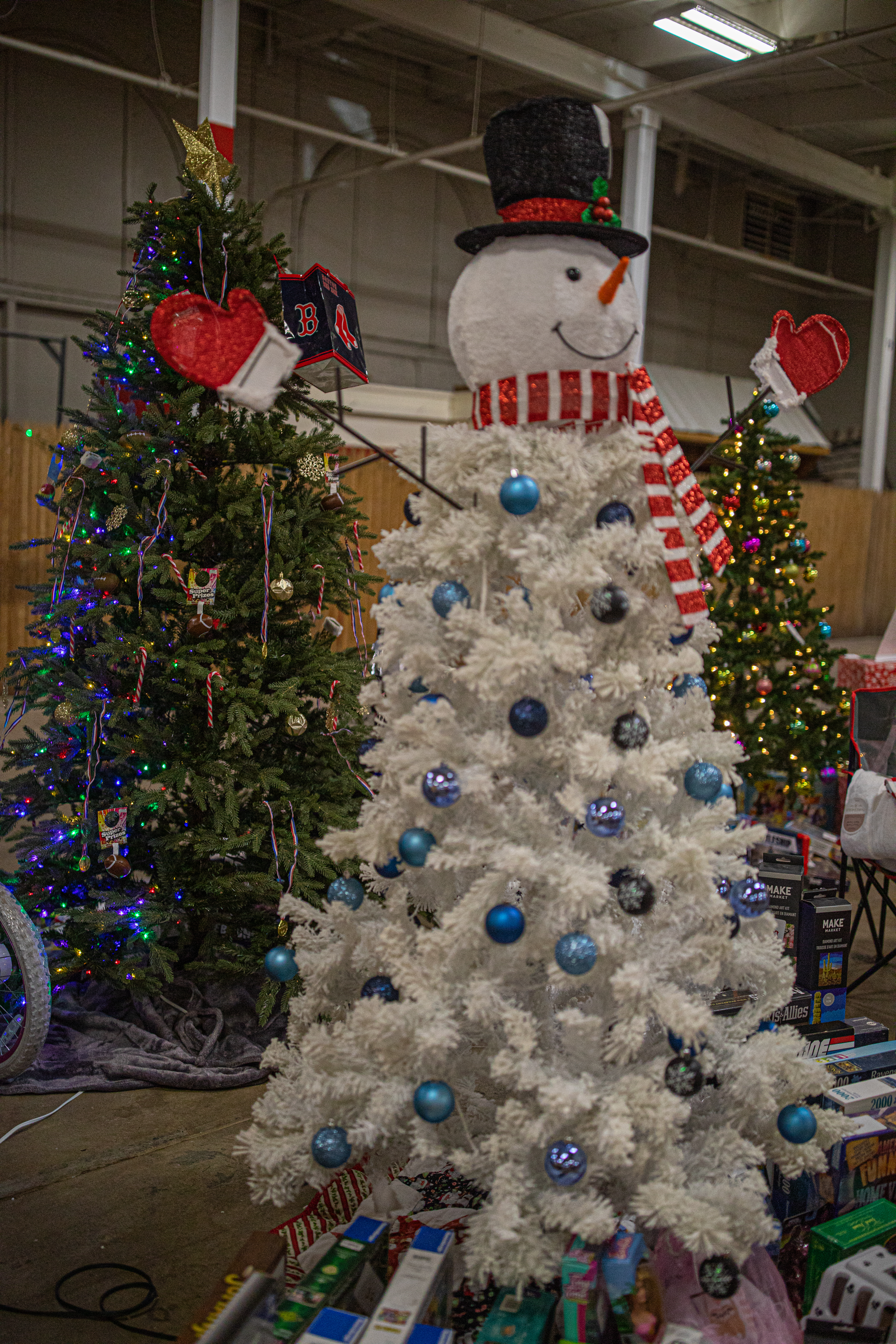
There were dozens of trees at the event. Some of the trees like this snowman tree, had lights that blinked!
This tropical tree was popular with the visitors. I’m sure it helped people think of a warmer time and climate!
This ladder tree had everything for the handyman!
As you can see, the trees were very impressive and festive!
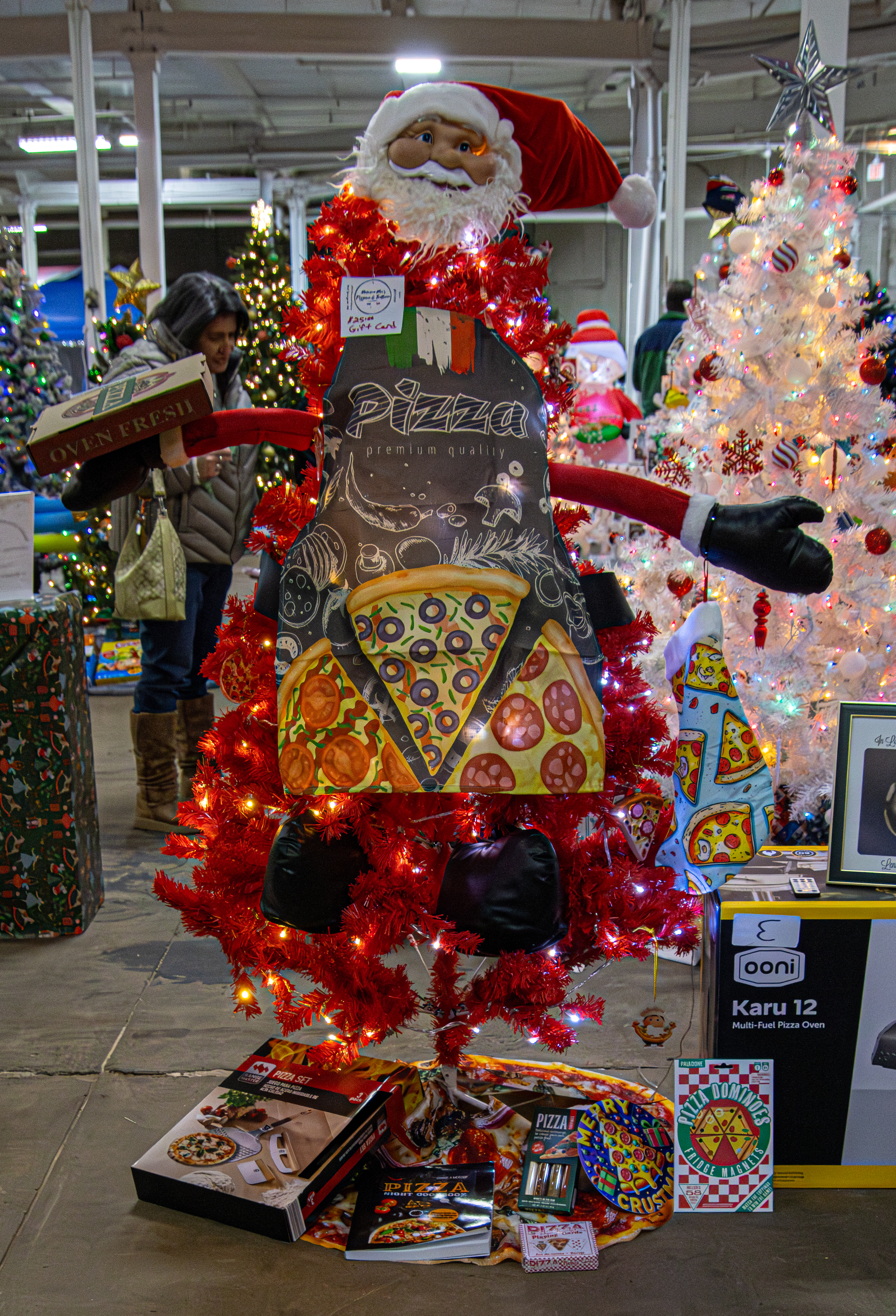
I especially liked this “Pizza Tree”! I mean, who doesn’t like pizza!?
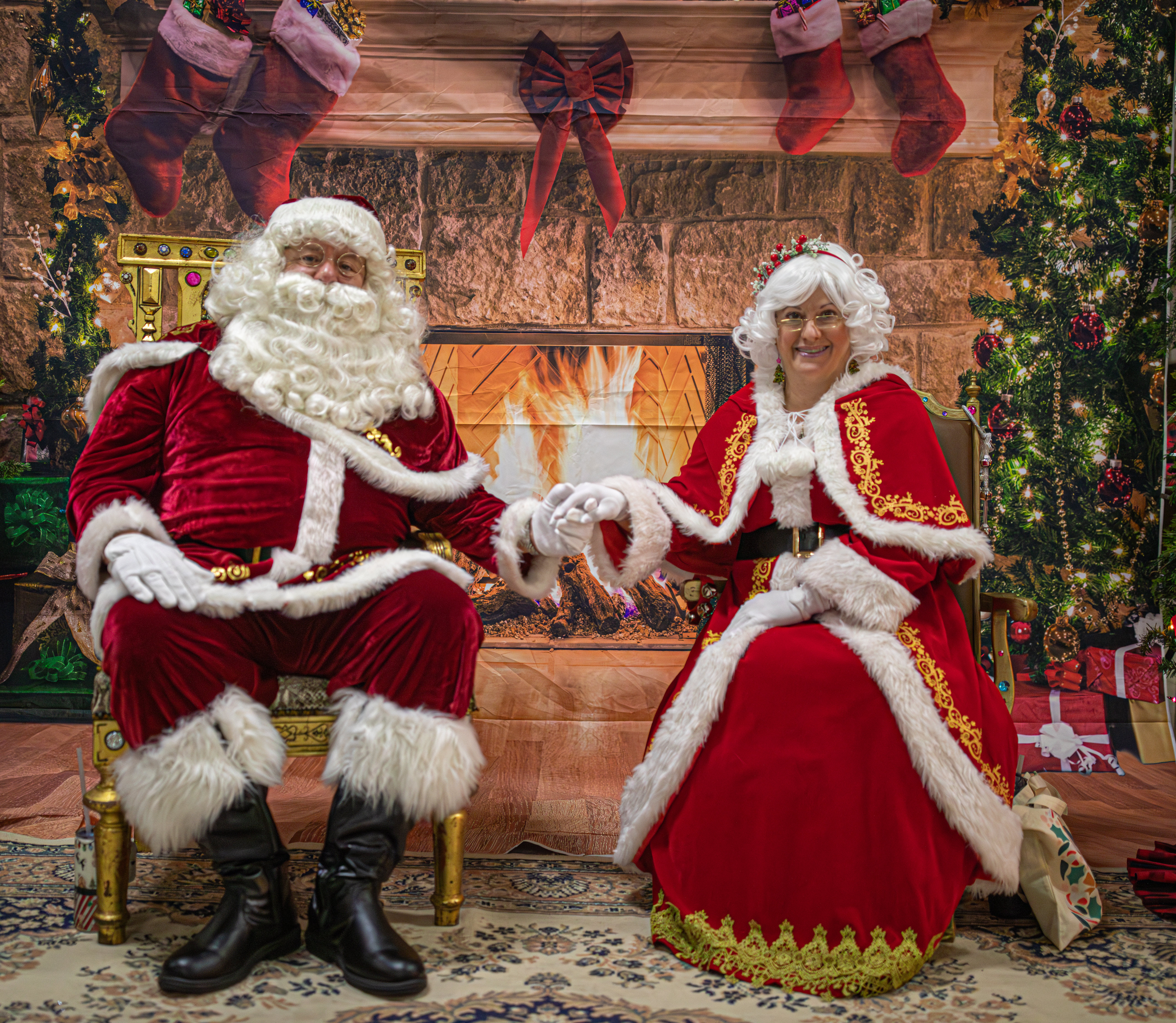
And what would a Christmas tree feztival be without Santa and Mrs. Claus!?
Or, for that matter, Tinsel!?
Some people got into the spirit of the event. This Melha Shriner put a little color in his beard to show his Christmas spirit!
Others put on their festive clothing!
But, if people didn’t feel comfortable putting decorative sprinkles or color on their face, there was a face painter at the event.
As is the case with every event I document, it is the people and the happiness they feel that make these events special. This visitor’s smile is proof of the joy people felt!
Location: 21 High St, Salem, MA (about 30 minutes northeast of Boston, MA)
Universally Accessible: No
Cost: $40 per ticket ($50 if you purchase day of tour tickets)
Parking: There are several parking garages in Salem, as well as metered on street parking.
Summary: By showing the architecture and “bones” of the home, the Gedney House serves as a model for what the historic homes of Salem look like on the inside.
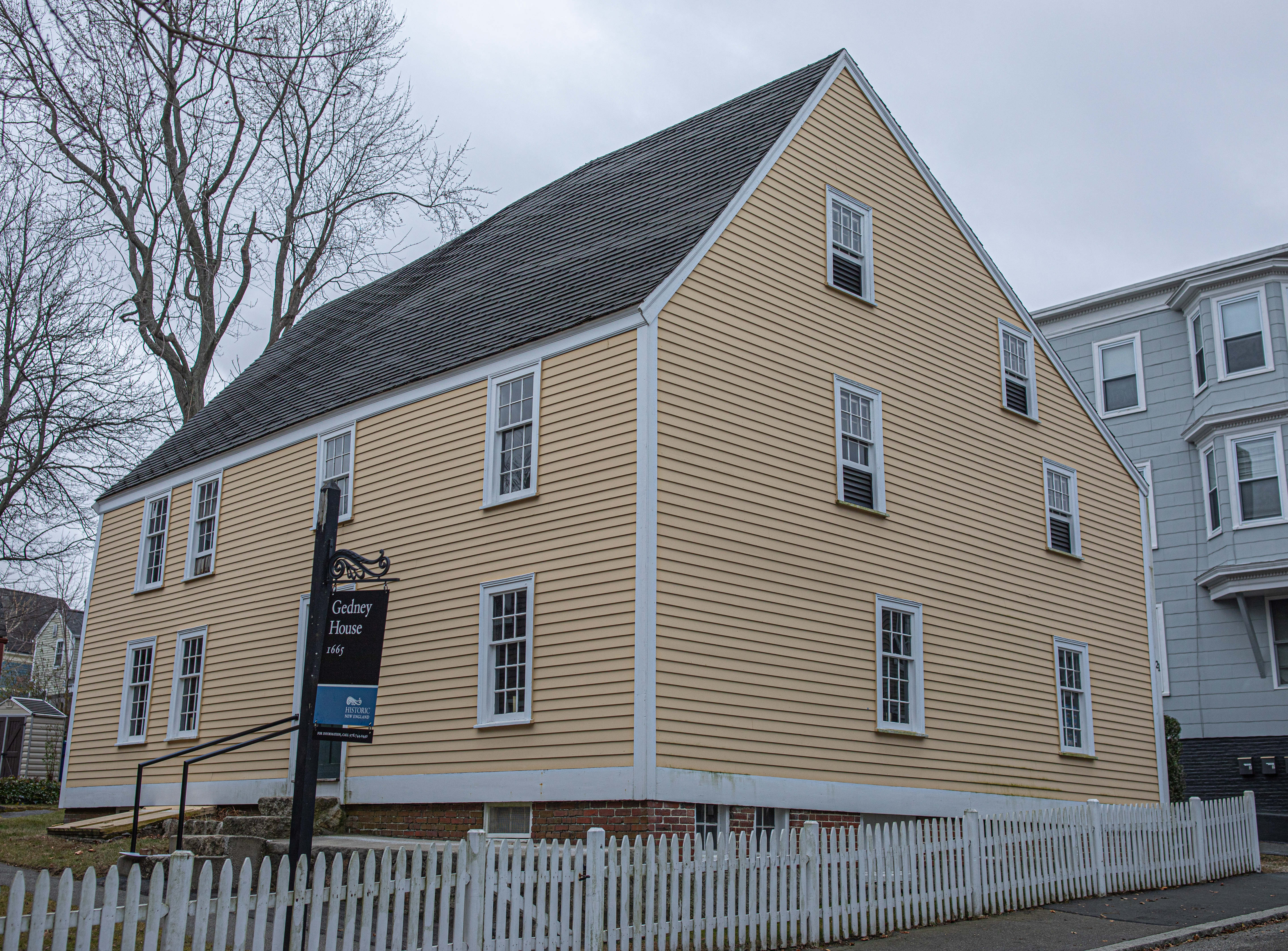
While we have seen all of the residential homes on the historic homes tour, there was one more building on the tour. But, it’s not a residential home. At least, not now. The Gedney House, once used for rooming, holding events and other occasions, the Gedney Home is now used to showcase the nuts and bolts, sometimes literally, of the homes of that era.
One of the oldest timber-framed dwellings in the country, the Gedney House was built by Eleazer Gedney, a wealthy shipwright whose family had arrived in Salem in 1637. The original structure was a basic post-Medieval center chimney plan consisting of a hall and parlor on either side of the chimney. The location of the house was near Eleazer’s shipyard on the South River. Gedney was married to Elizabeth Turner, sister of John Turner, who built the house of House of the Seven Gables. Although modest in size, the house had features which showed that it was built by a family of means; a spacious, decorative gable and two impressive summer beams (load-bearing building elements) in the main hall, an unusual feature as homes of this style typically had only one.
In 1733 a new owner expanded the house into a multifamily dwelling used as a rooming house. By the early twentieth century, when Salem was becoming home to successive groups of immigrants, the house was a tenement in the area which became known as Little Italy, reportedly once housing 25 people in four households. So much for building codes.
A local builder purchased the house in 1962 with the intent of turning it into apartments. An observant Salem resident, Elizabeth Reardon, noticed 17th century paneling in the trash as the renovations were beginning and alerted Historic New England, which subsequently acquired the house. Because of the halted 1960s renovations, much of the original framing is exposed for visitors to see today.
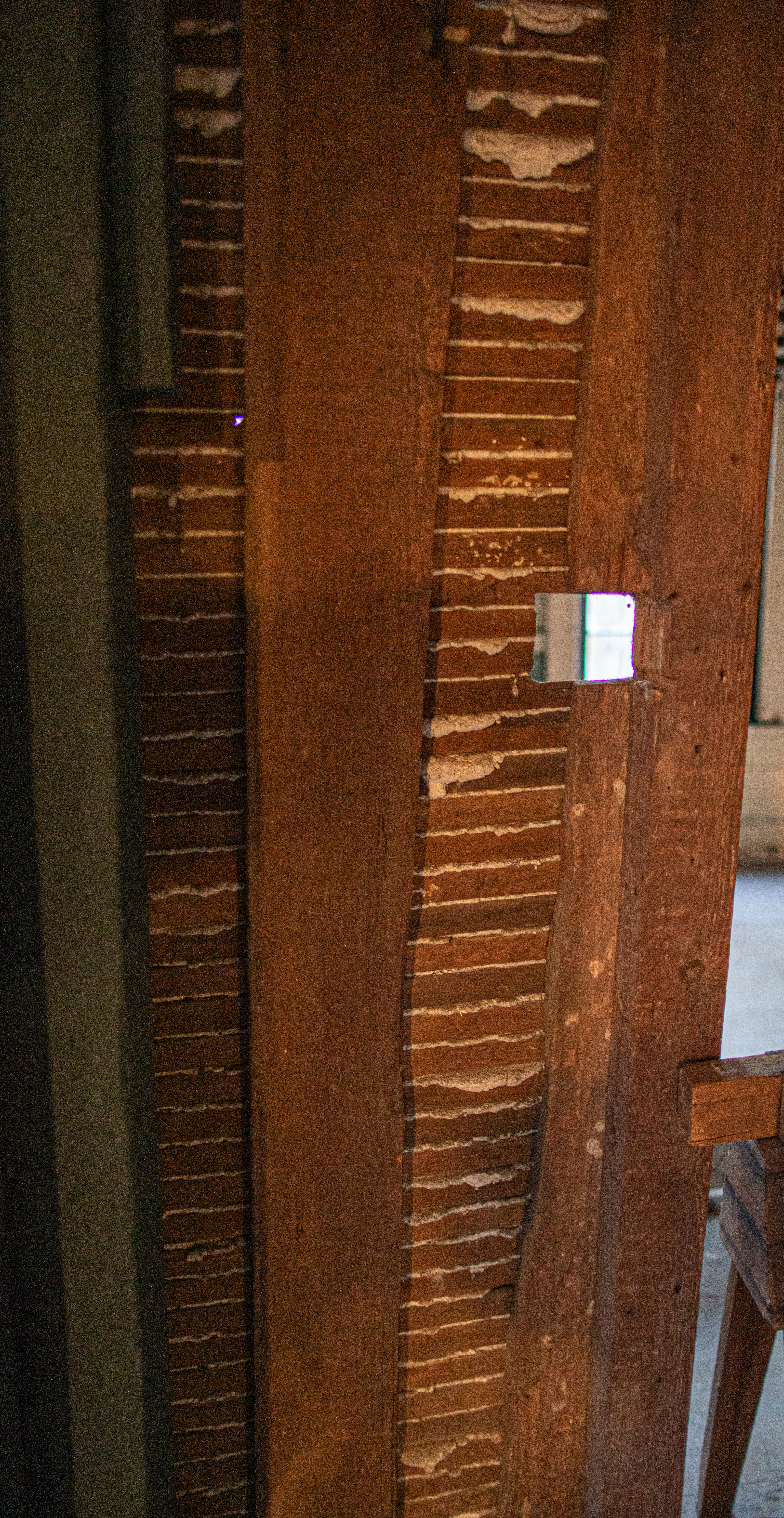
The exposed framing mentioned above can be found in the structure.
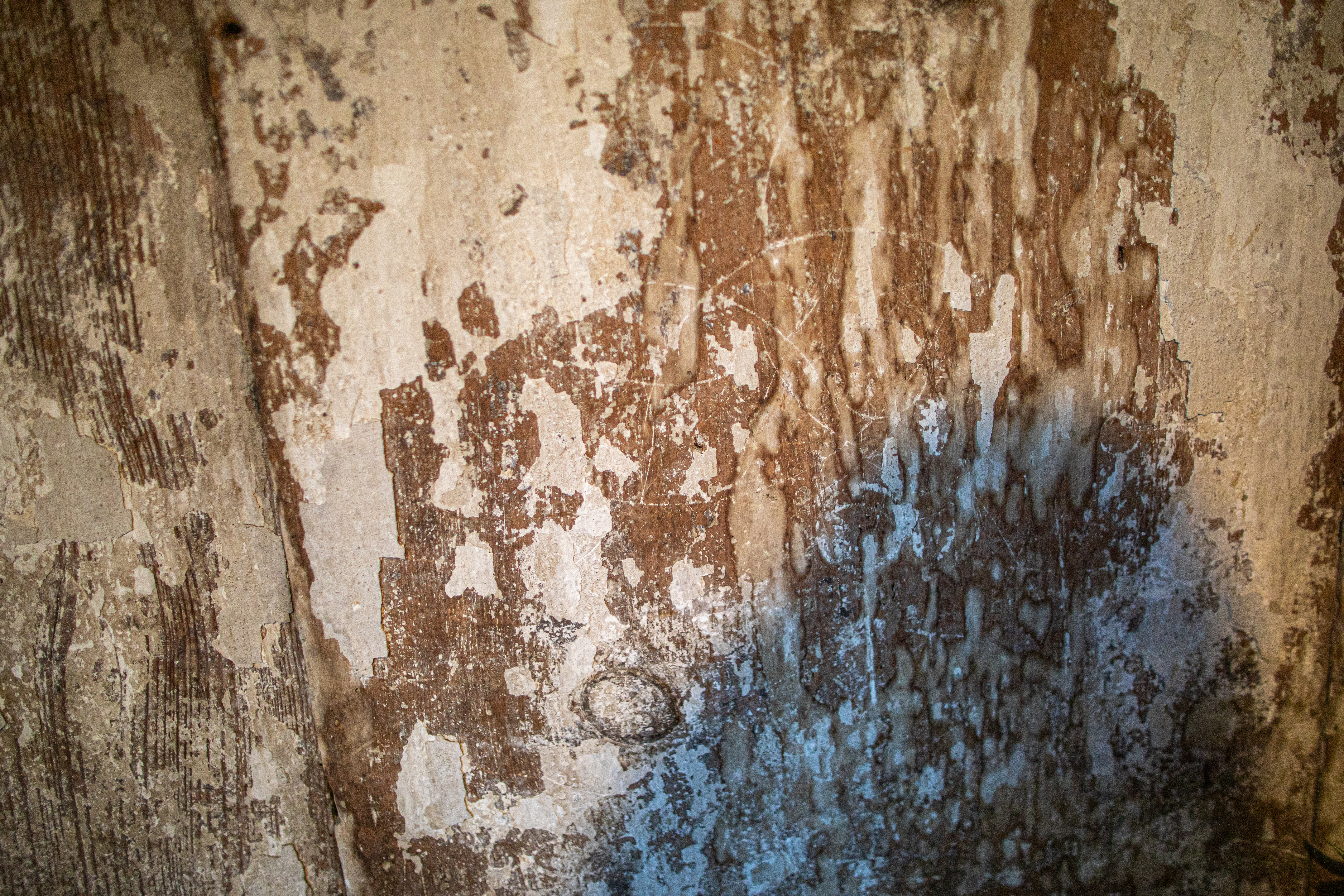
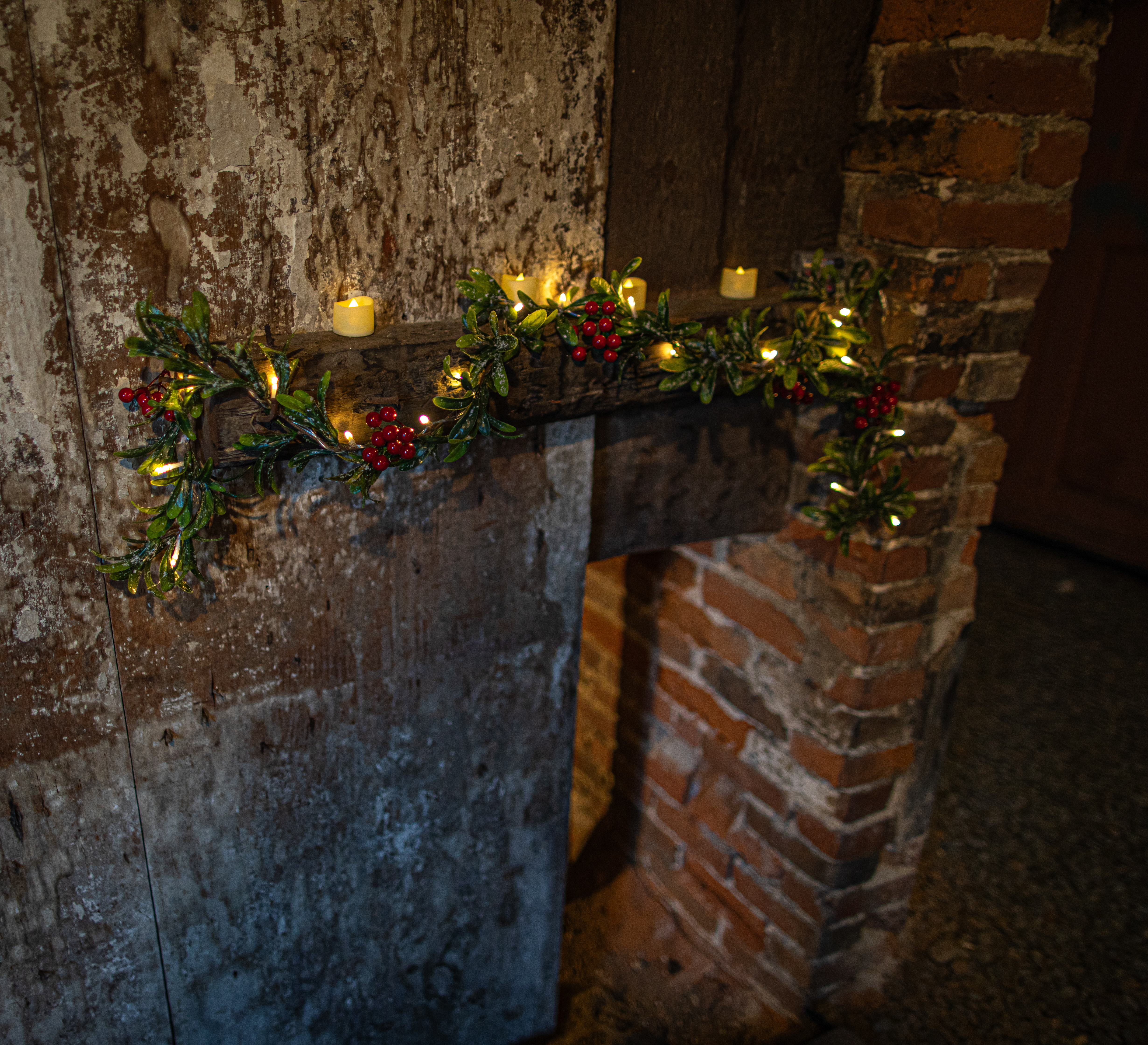
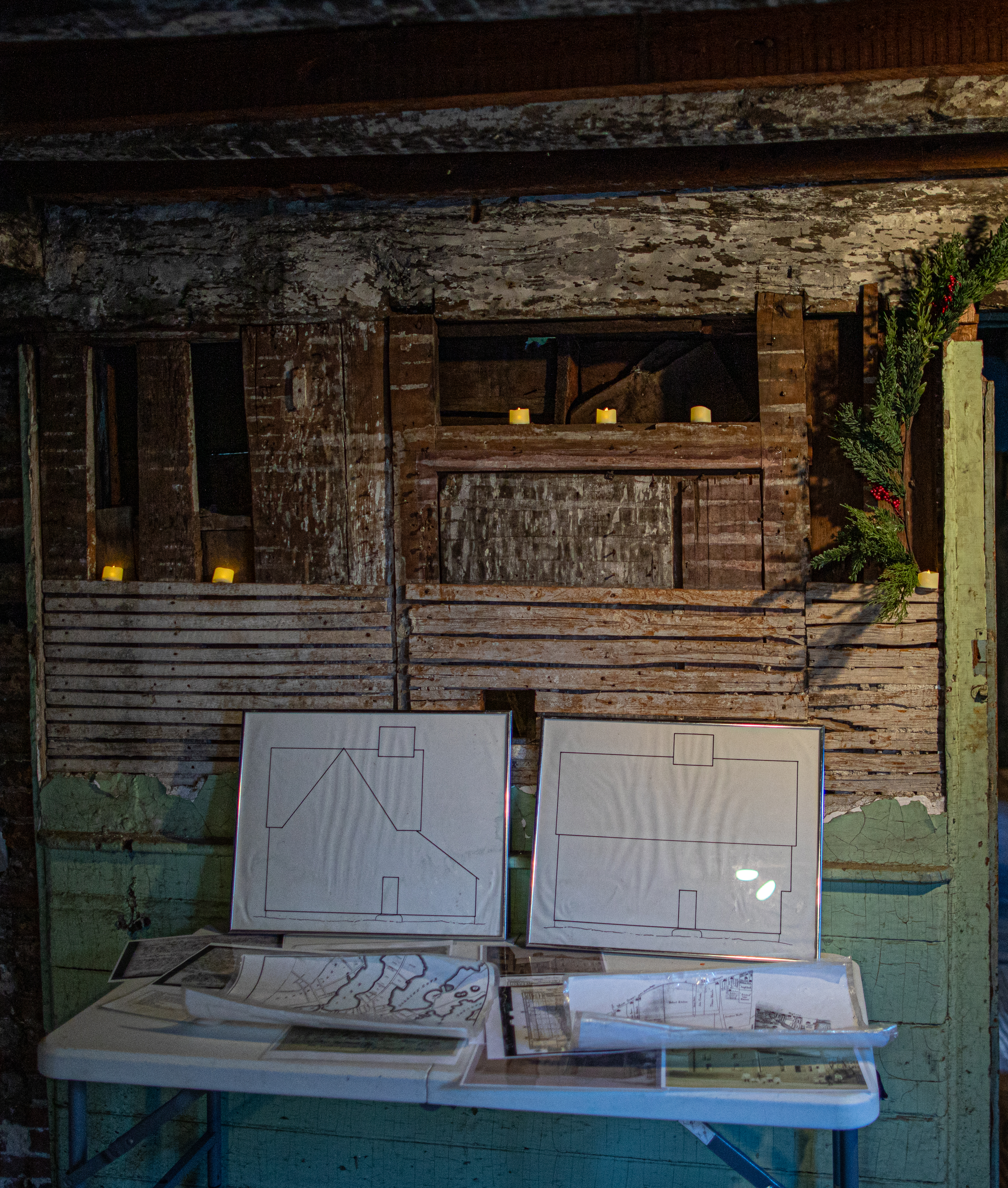
The house, such as it is a “home” is meant to serve as an architectural model to see the “bones” of these old historical homes. There were examples of the home’s architectural frame and design throughout the house. Some lit up for the holiday season. AS you can see, the paneling and wood covered a lot of the original str The photos at the bottom show the original designs of the building.
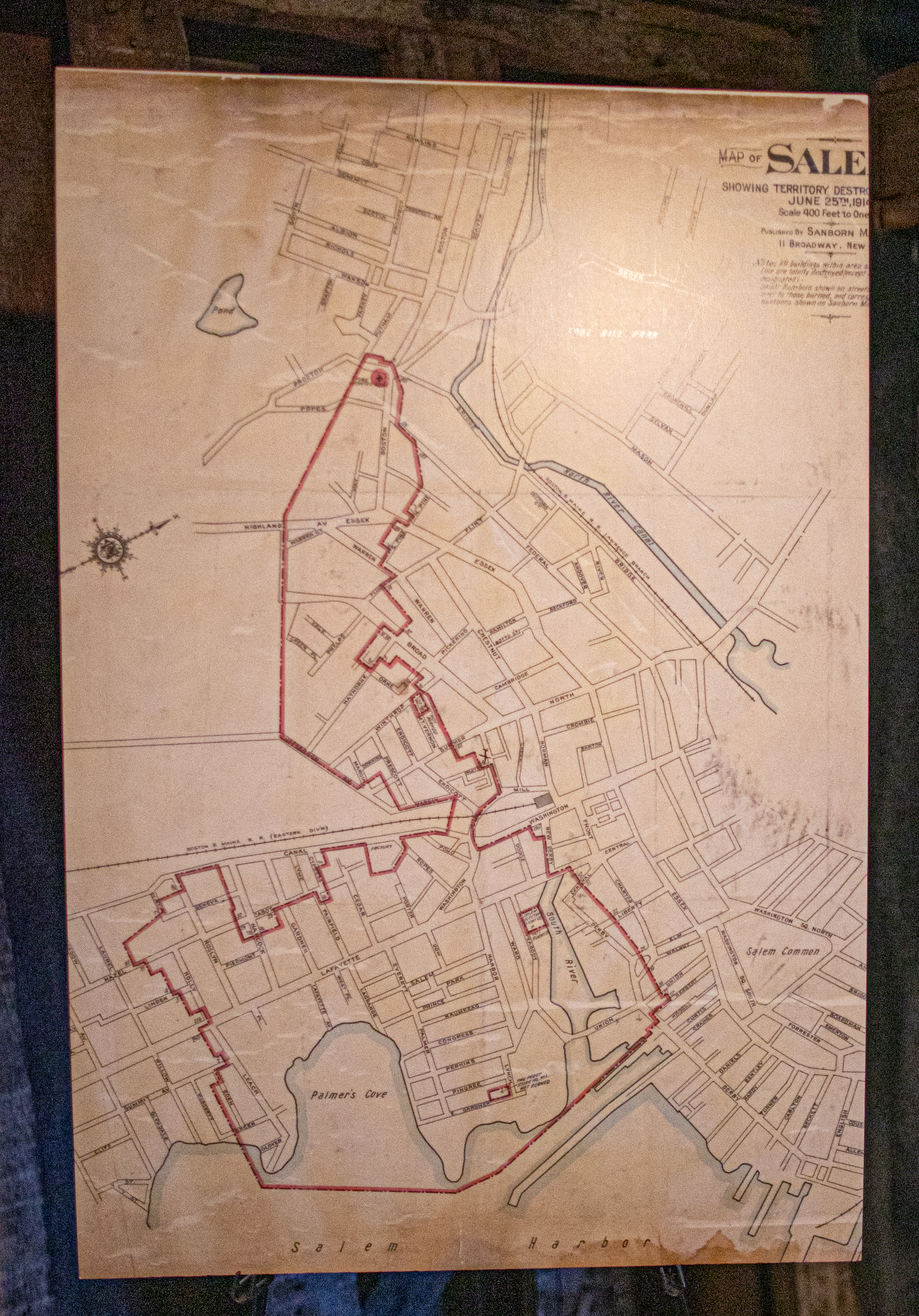
The “Great Fire Of 1914” in Salem took out much of the McIntire District. The Gedney House, however, was spared, barely.
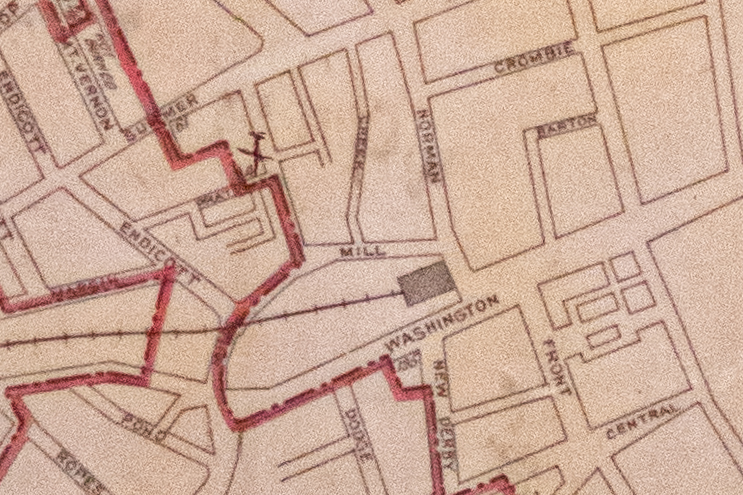
The map below shows the area the fire spread (in red). The Gedney House is the x on the map.
Here’s a closer look
This concludes the annual Christmas In Salem historic homes tour!
Location: 1 Chestnut St, Salem, MA (about 30 minutes northeast of Boston, MA)
Universally Accessible: No
Cost: $40 per ticket ($50 if you purchase day of tour tickets)
Parking: There are several parking garages in Salem, as well as metered on street parking.
Summary: The home at 1 Chestnut St had a lot of pretty decorations, an interesting history and quite a few nutcrackers!
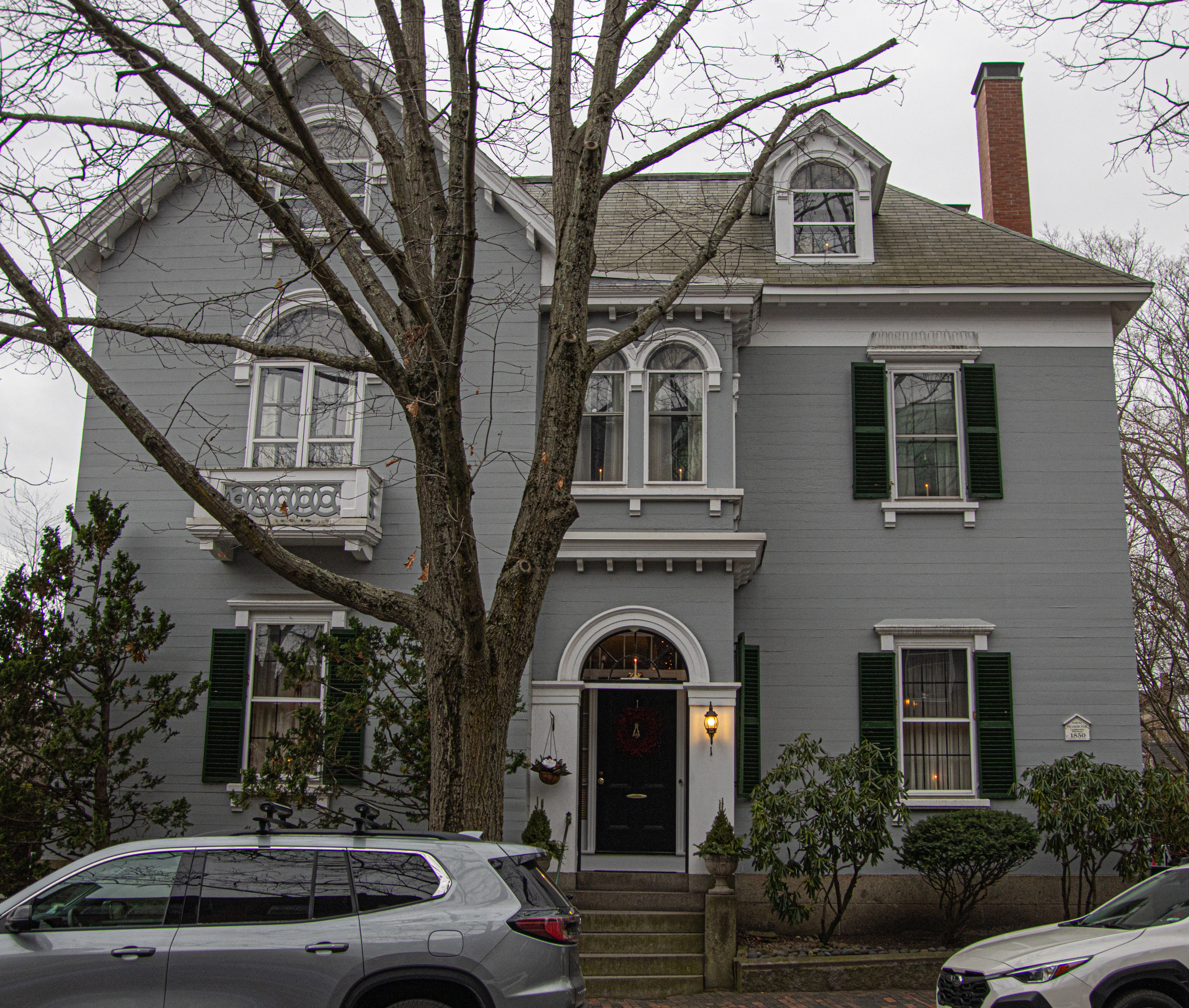
Constructed circa 1850 for Francis Cox and his wife, Ellen Barr, 1 Chestnut St exemplifies a blend of Italian Villa and Georgian/Federal styles. Cox began his career as a commission merchant in Boston supplying Cunard steamships (I had to Google that too!). Cunard steamships were those very long steam ships established by Samuel Cunard. Think of the Lusitania and Queen Mary. Or, better yet, “Steamboat Willie’s” boat. These steamships traveled between Boston and Liverpool, England. Following his retirement, he served as President of the Naumkeag National Bank, and Vice President of the Salem Five Cents Savings Bank.
Architecturally, the projecting entrance and bay windows of the home are believed to be the earliest examples of the Italian Villa style in Massachusetts. These elements contrast with the more traditional, boxy Federal features that align with the style of neighboring houses on the street, Prior to the home’s construction, the site was occupied by a bakery and vegetable patch.
Right from the entry and front stairway, the home at 1 Chestnut St was stunning.
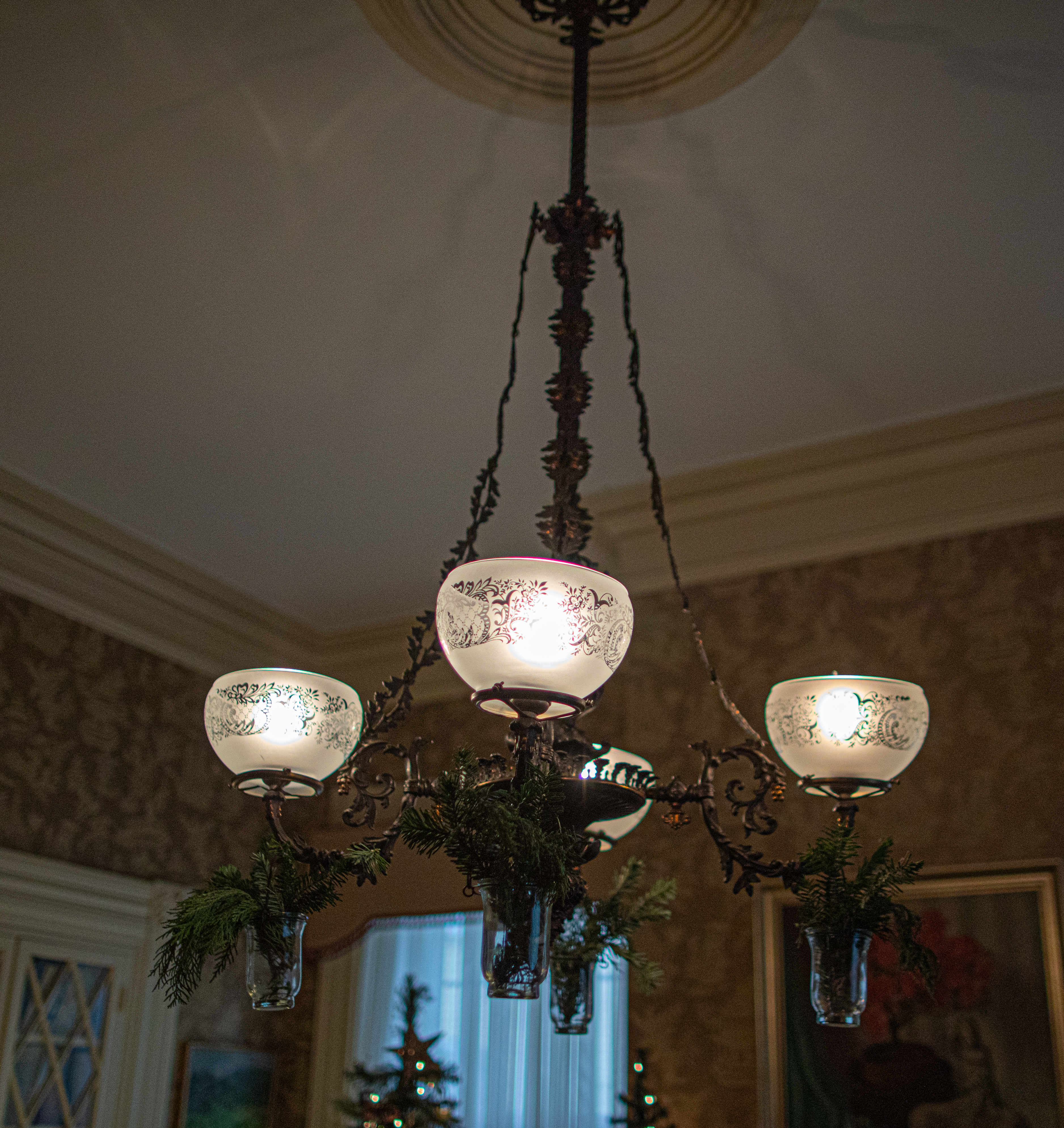
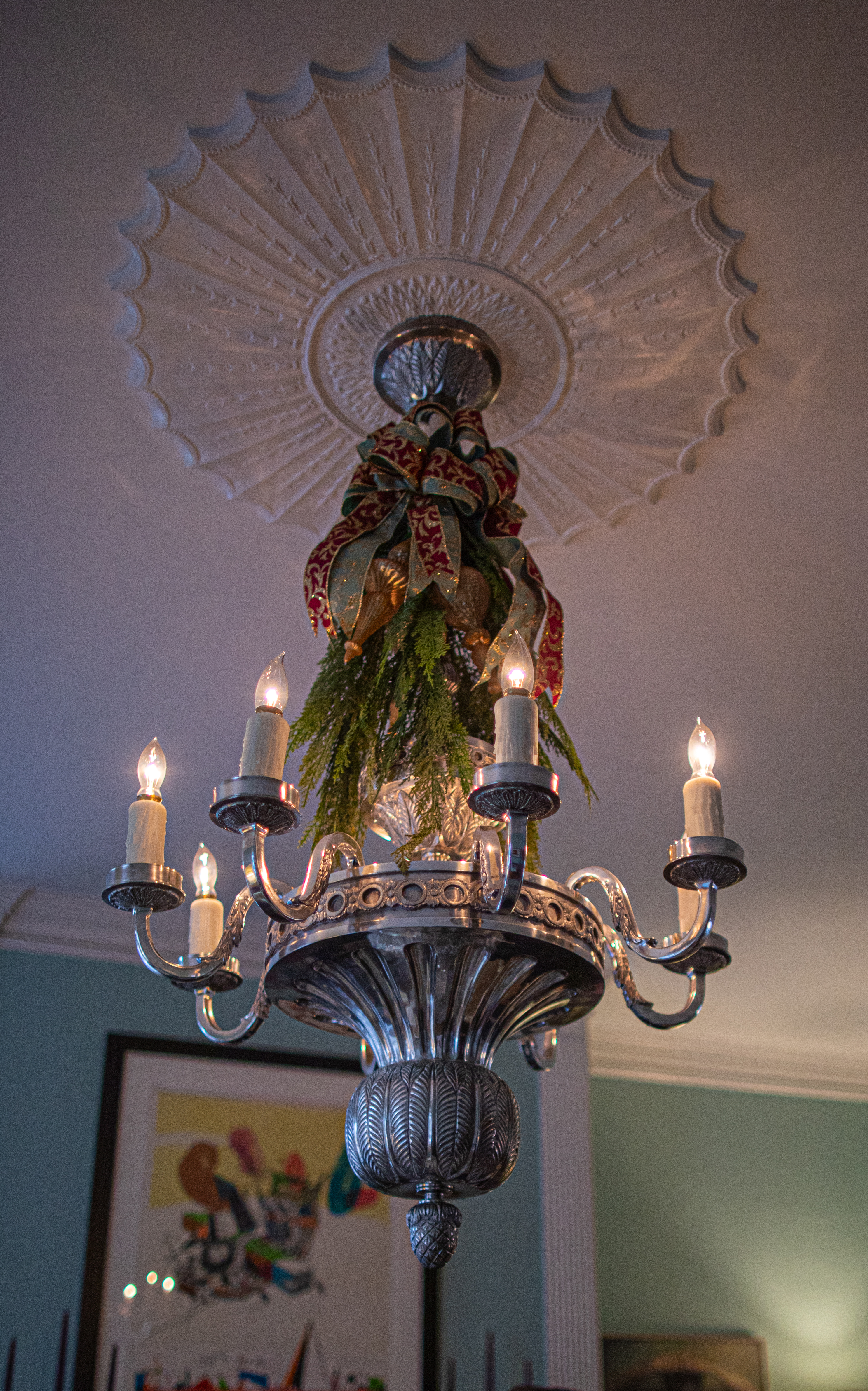
The lighting fixture also had some boughs, appropriate with the theme of the tours.
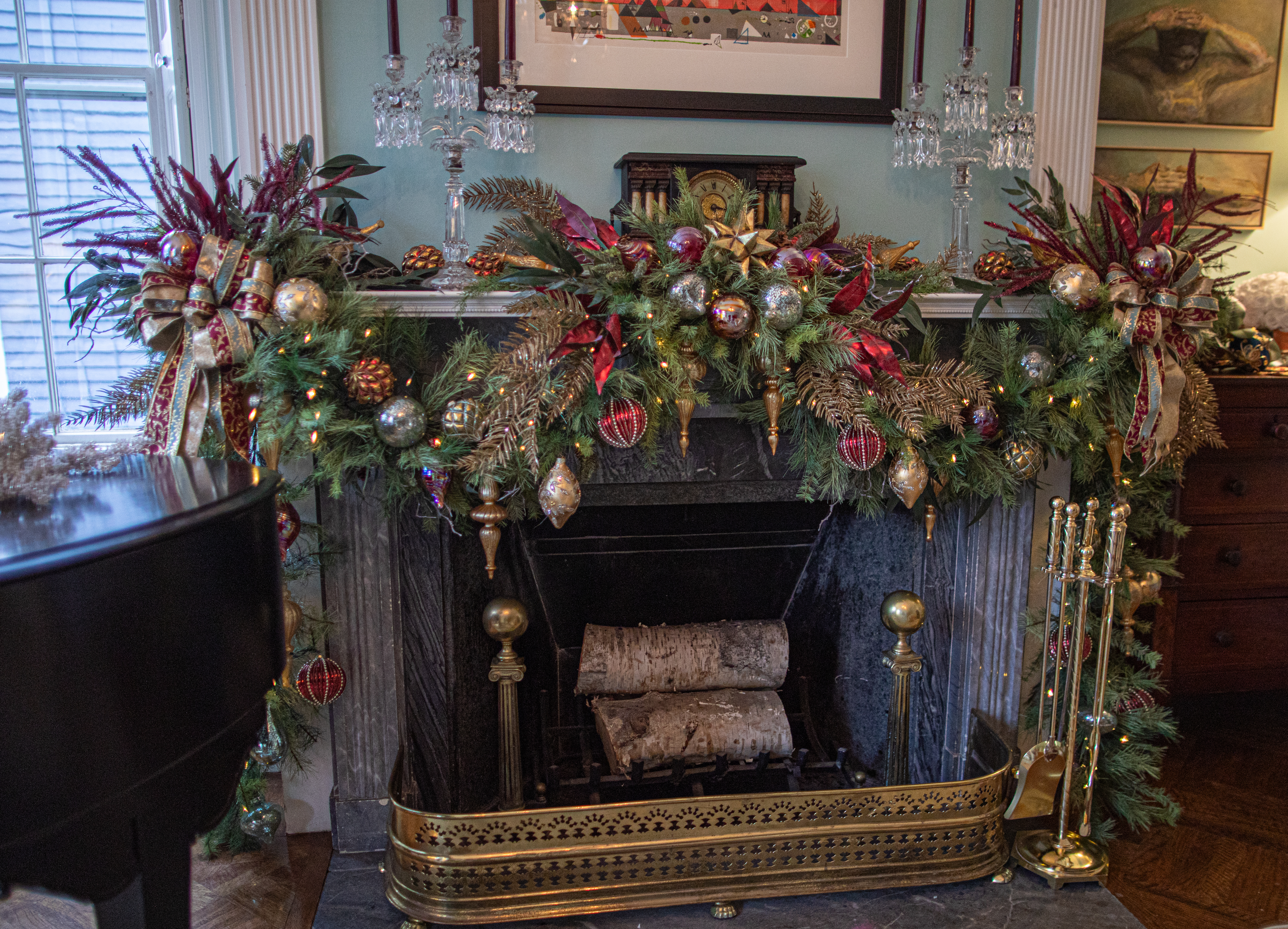
These fireplaces are both black Italian marble with gold striated decor.
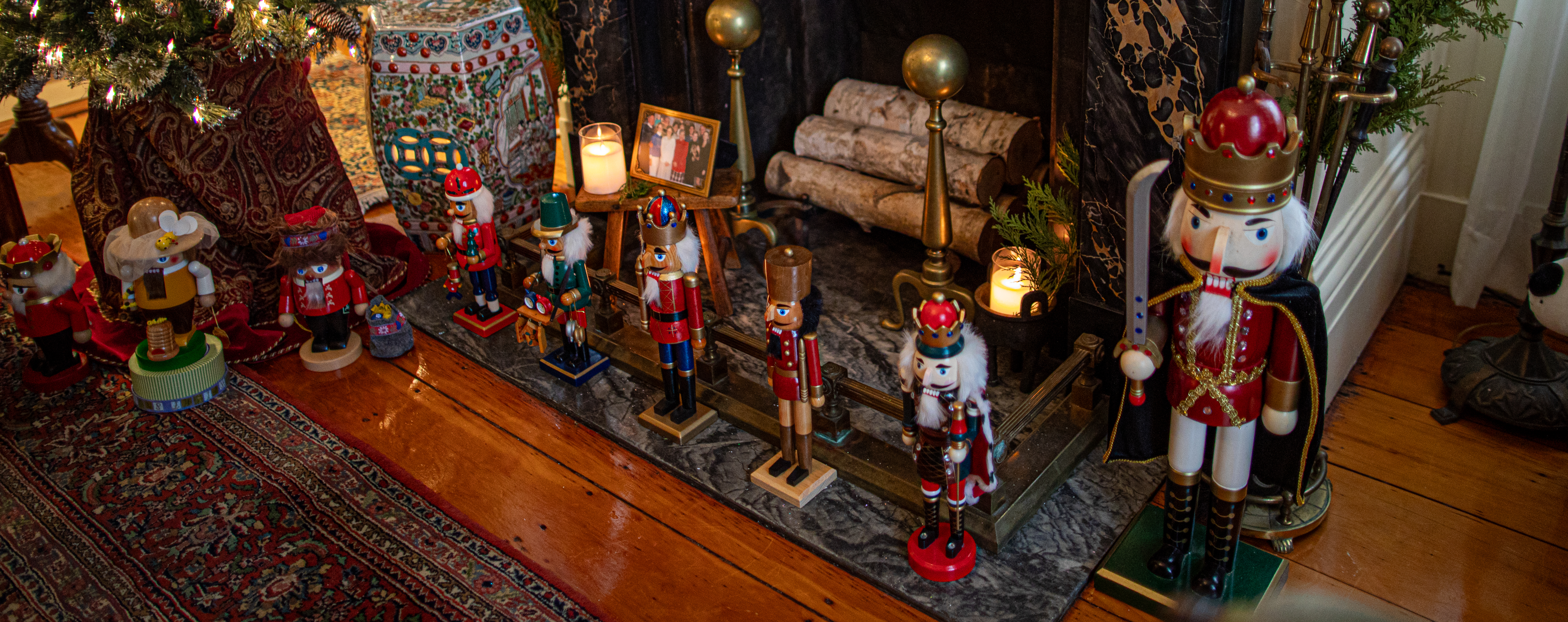
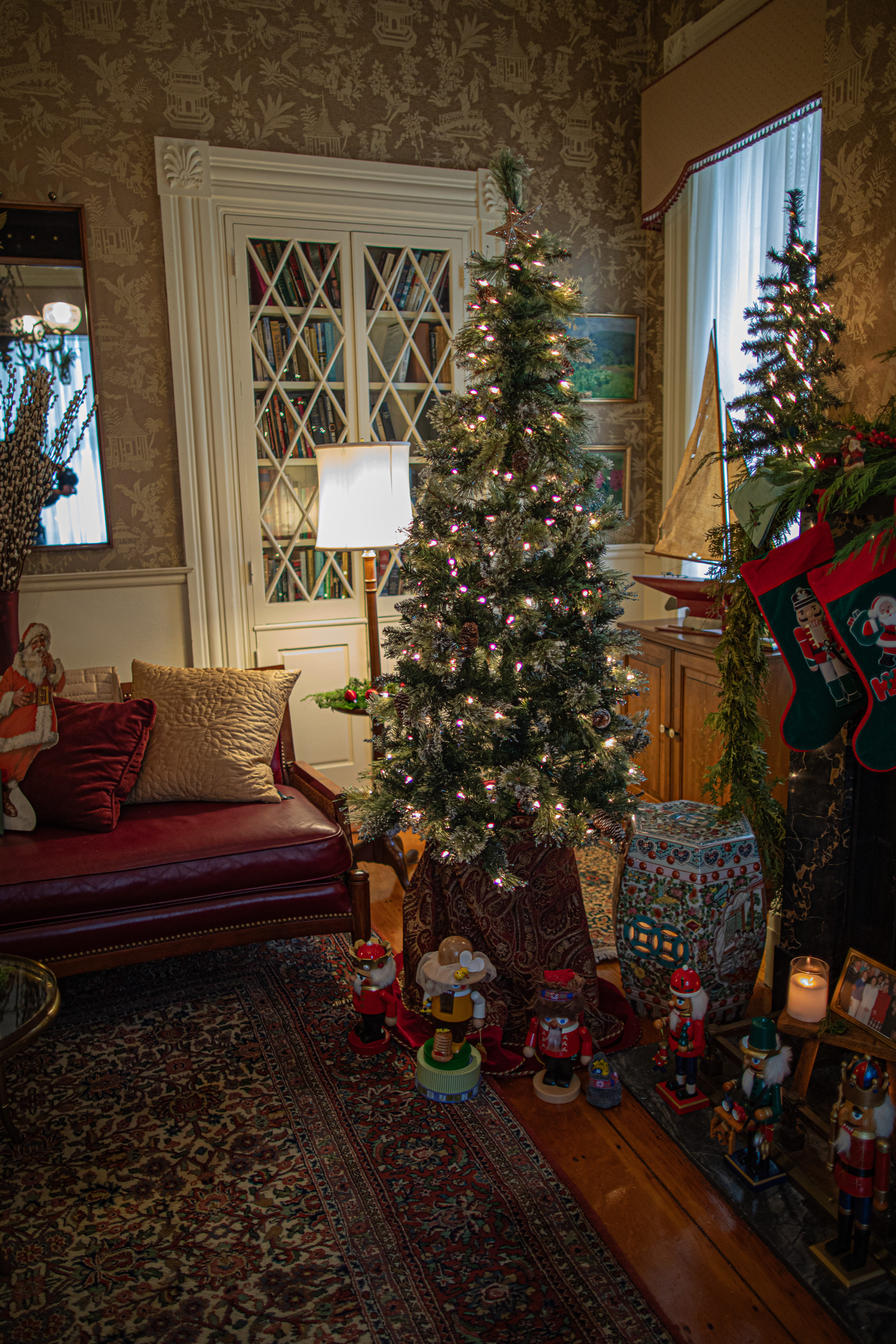
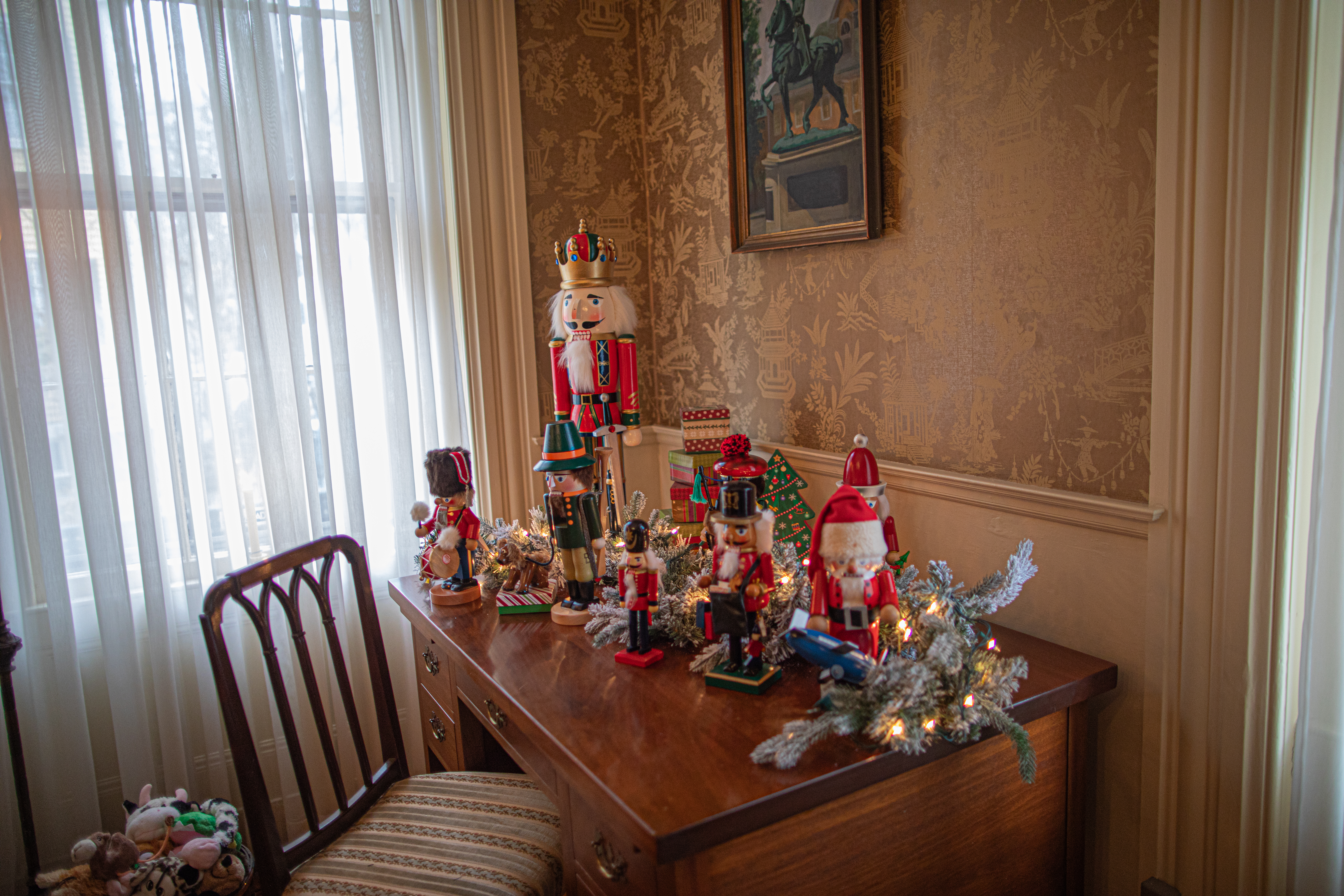
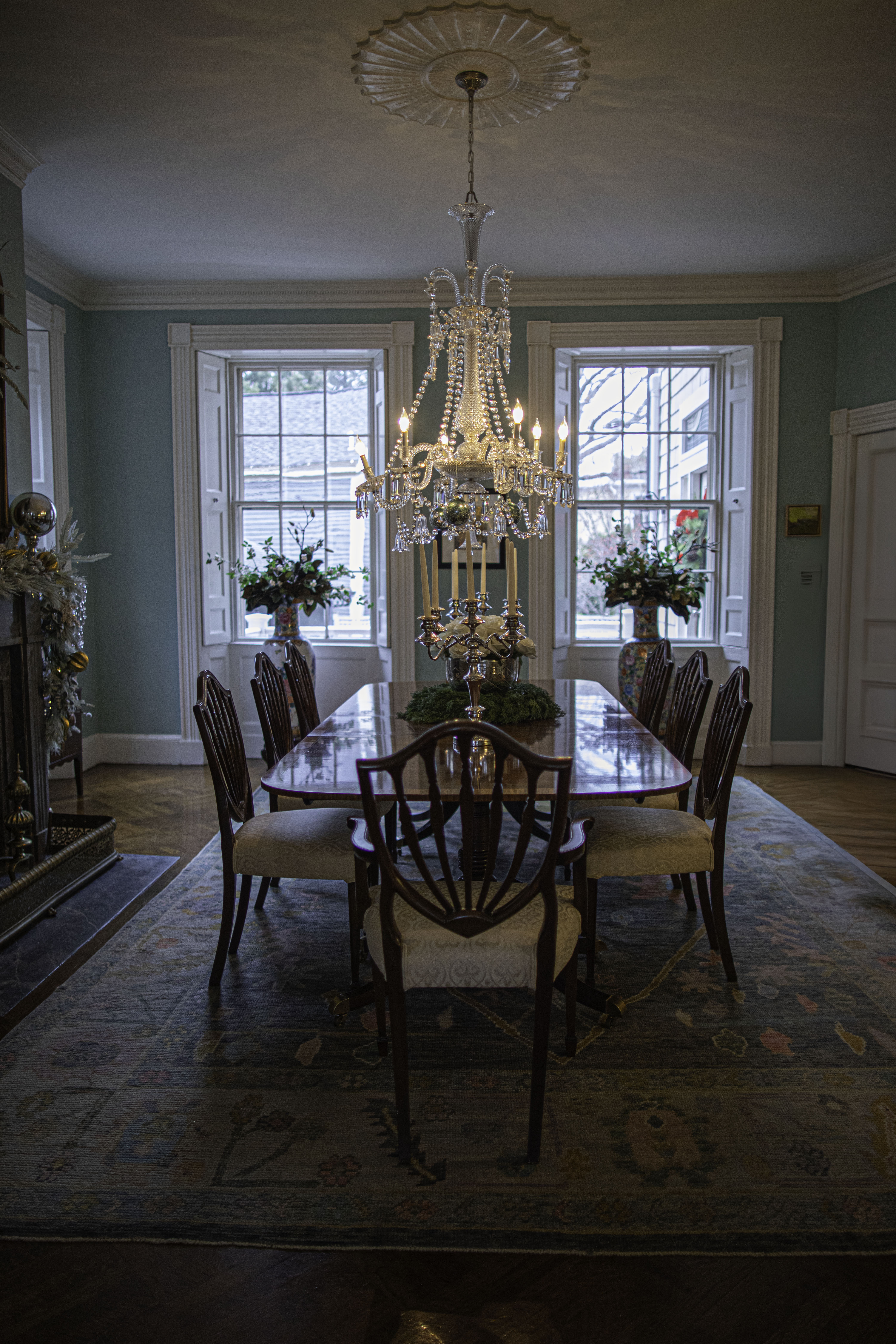
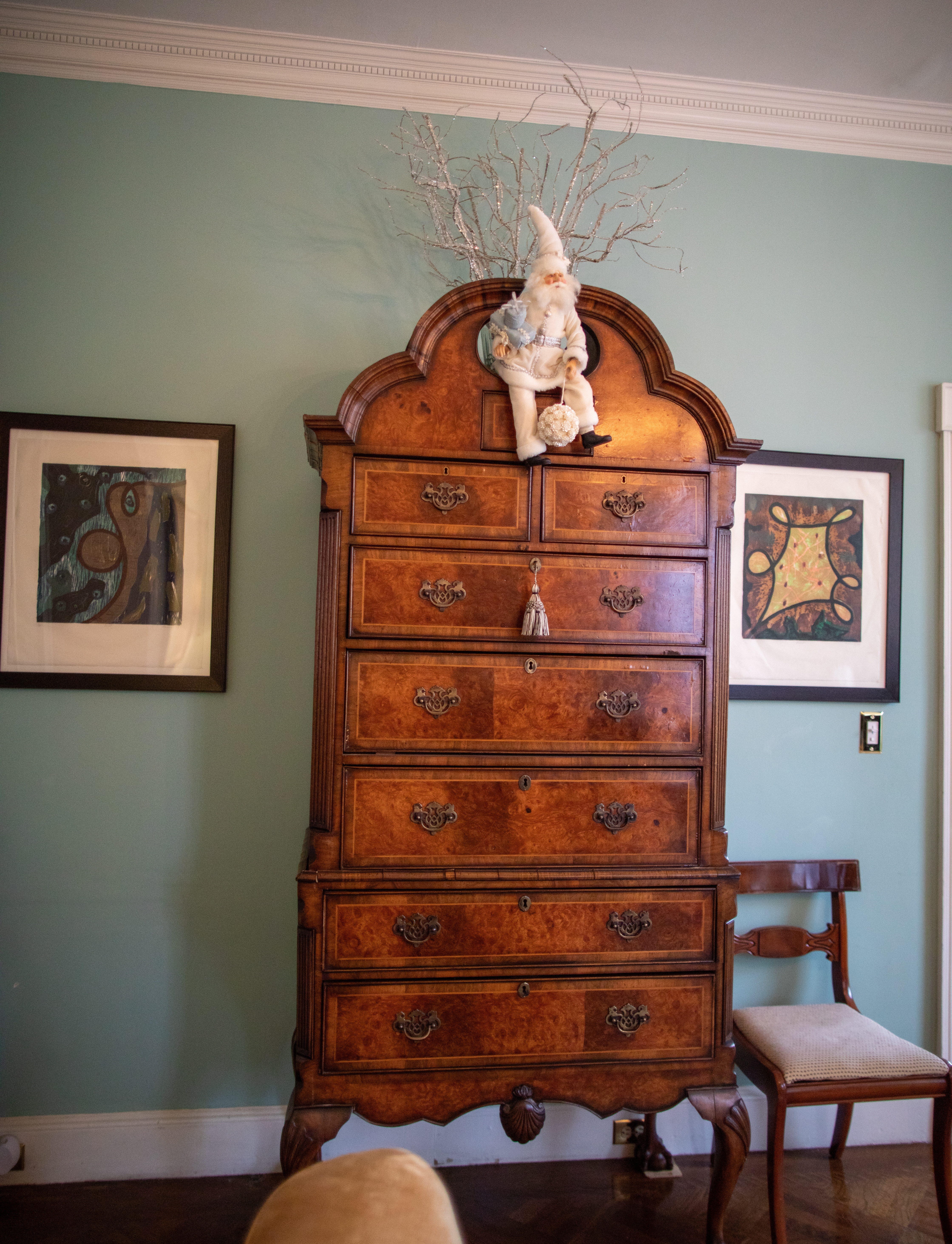
There were so many elegant and festive decorations around the home. Each home seemed to have one feature or theme that stood out. As you’ll notice in the photos, nutcrackers were prominent in the holiday decor of this home. And, quite a few Christmas trees! I wonder how long it takes to put all of these decorations up, and, even more daunting, how long it would take to take them all down.
Like many homes on this tour, this house has the original wallpaper. With a twist.
Do you notice anything different about it? The wallpaper was put on upside down! It’s a little hard to see. But, you can tell it is upside down by the flowers that seem to be growing in a downward angle.
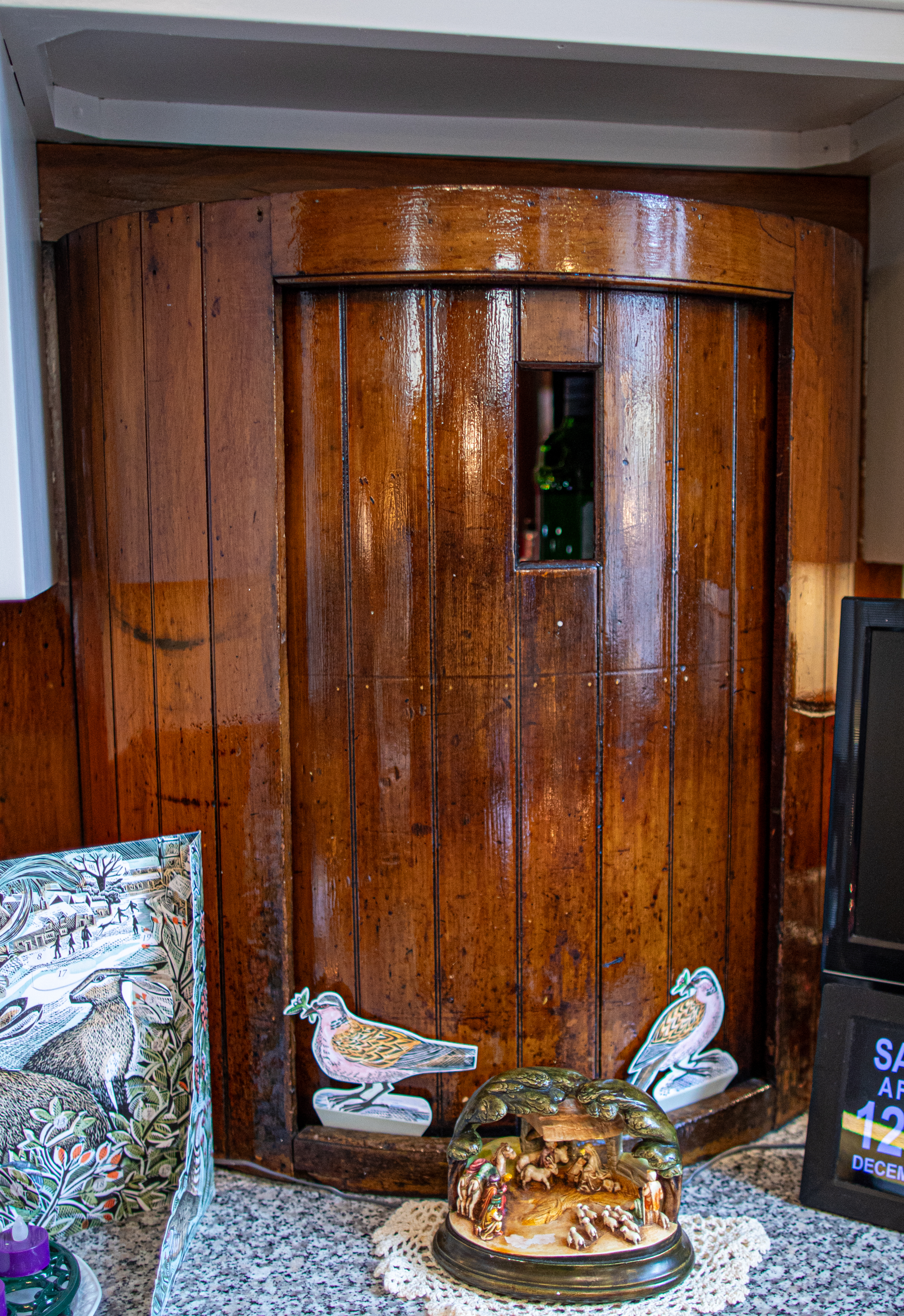
This liquor cabinet had a very cool style. If you went into the room next to the this liquor cabinet.
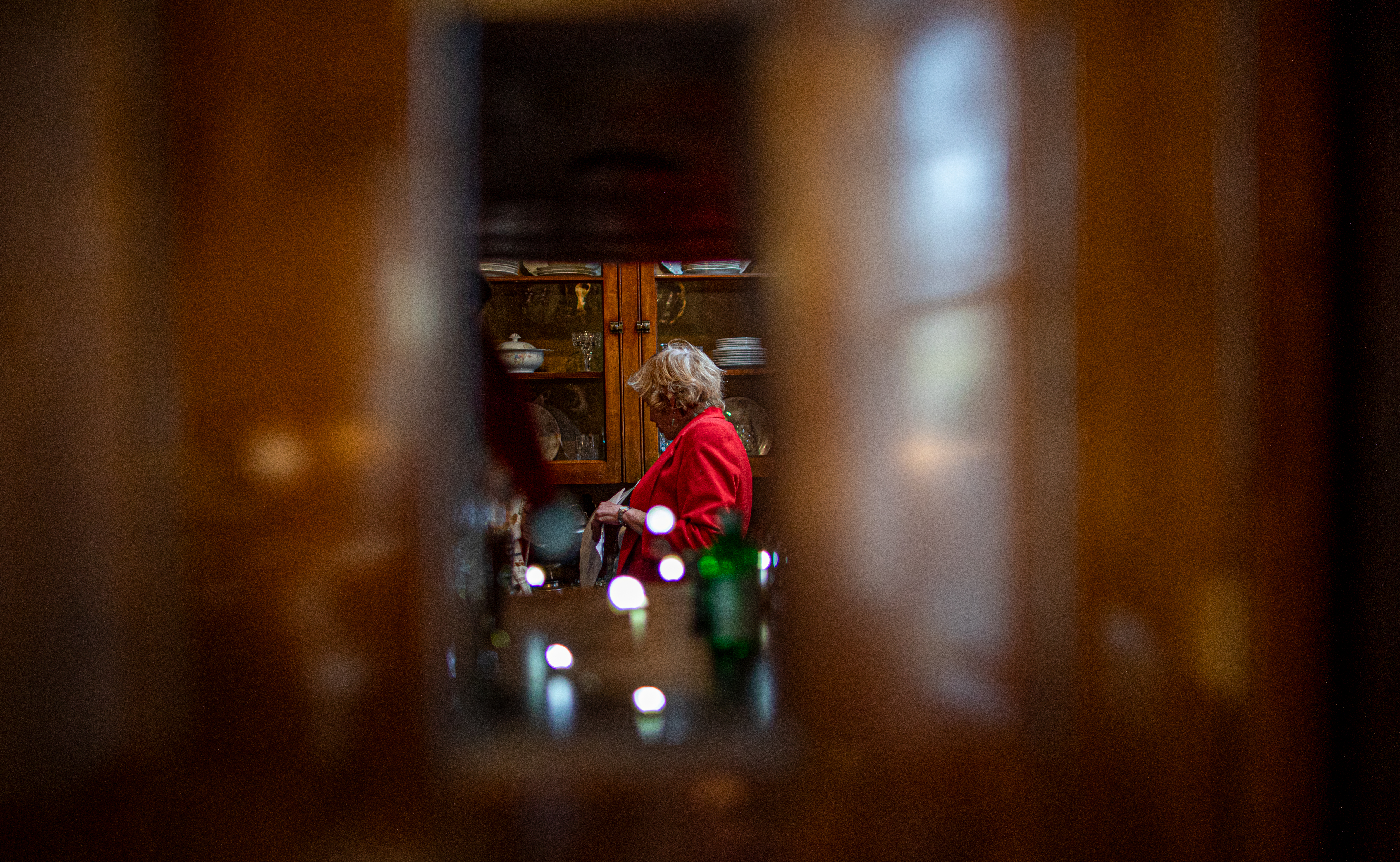
If you go into the room next to the liquor cabinet, you can look through the liquor cabinet from that room when the cabinet doors are open. It’s kind of like a peep hole in your apartment or hotel room!
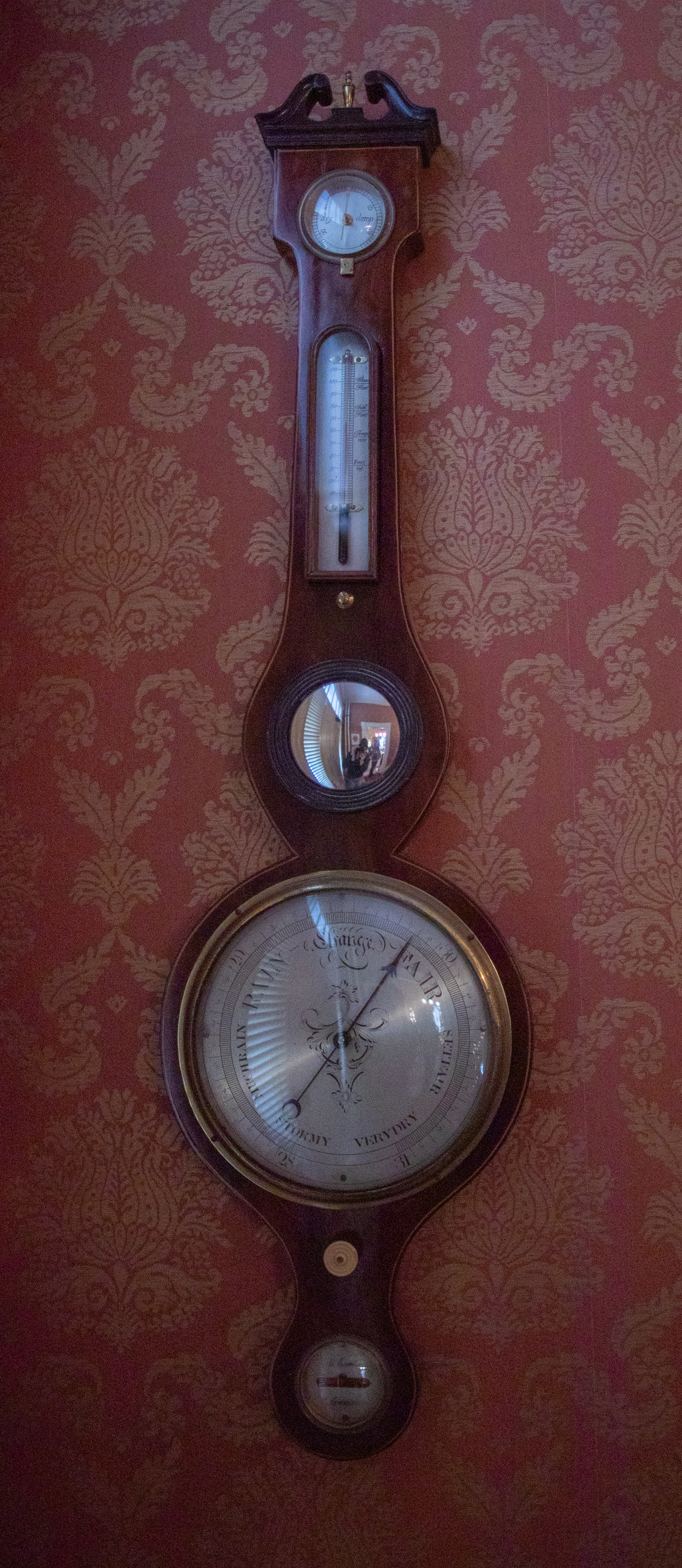
This is an antique English barometer from 1780.
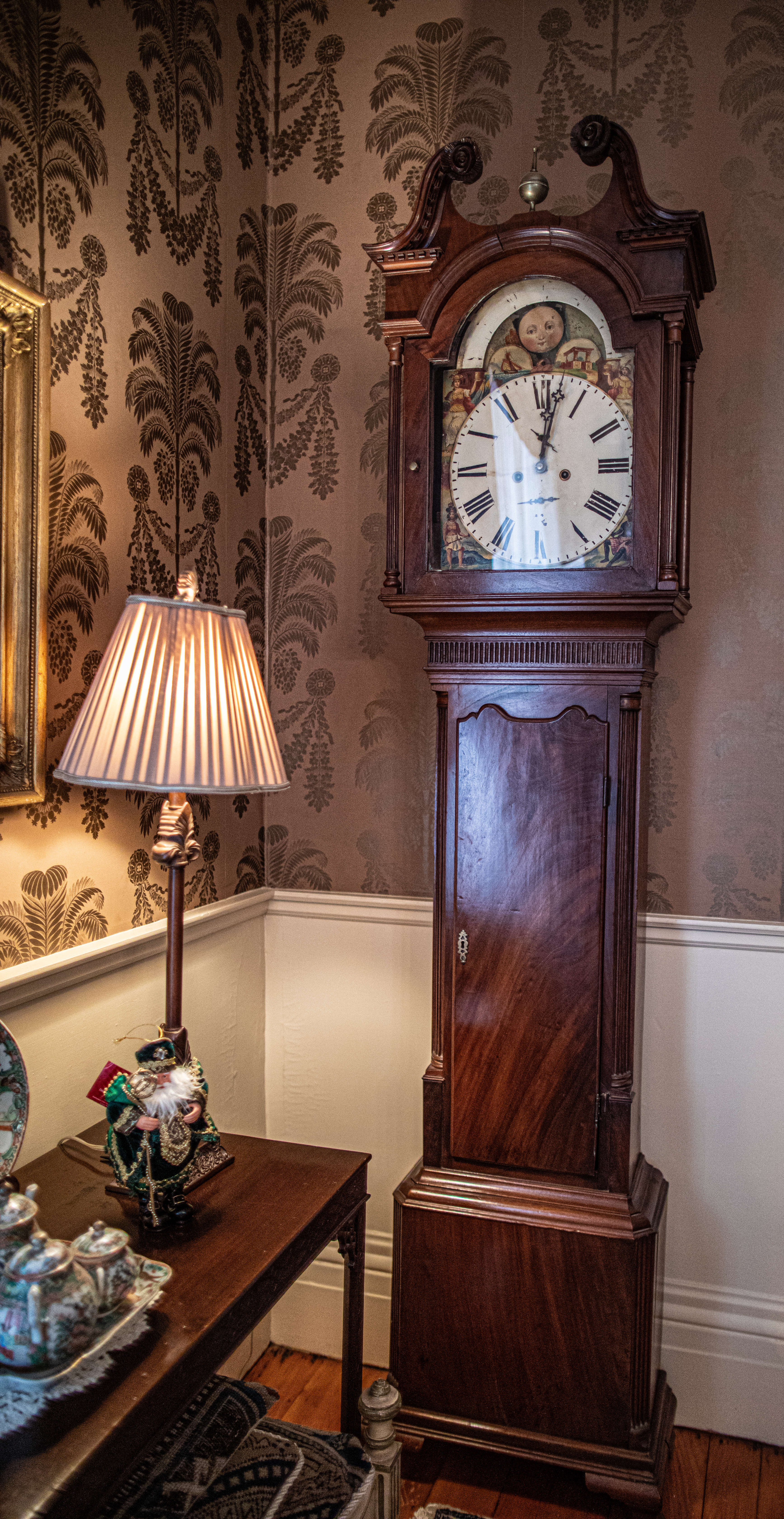
This 1780s grandfather clock had all of the moon phases and seasons.
This was the last actual lived in home on the tour. There is one more home on the tour. But, it is more of a model home and not furnished. So, I hope you’ve enjoyed the tours of the actual residential homes in the Christmas In Salem Boughs And Blossoms tour!
Location: 4 Chestnut St, Salem, MA (about 30 minutes northeast of Boston, MA)
Universally Accessible: No
Cost: $40 per ticket ($50 if you purchase day of tour tickets)
Parking: There are several parking garages in Salem, as well as metered on street parking.
Summary: The home at 4 Chestnut St, another home of Deacon John Stone, was decked out for the holidays. They also let people tour the second floor!
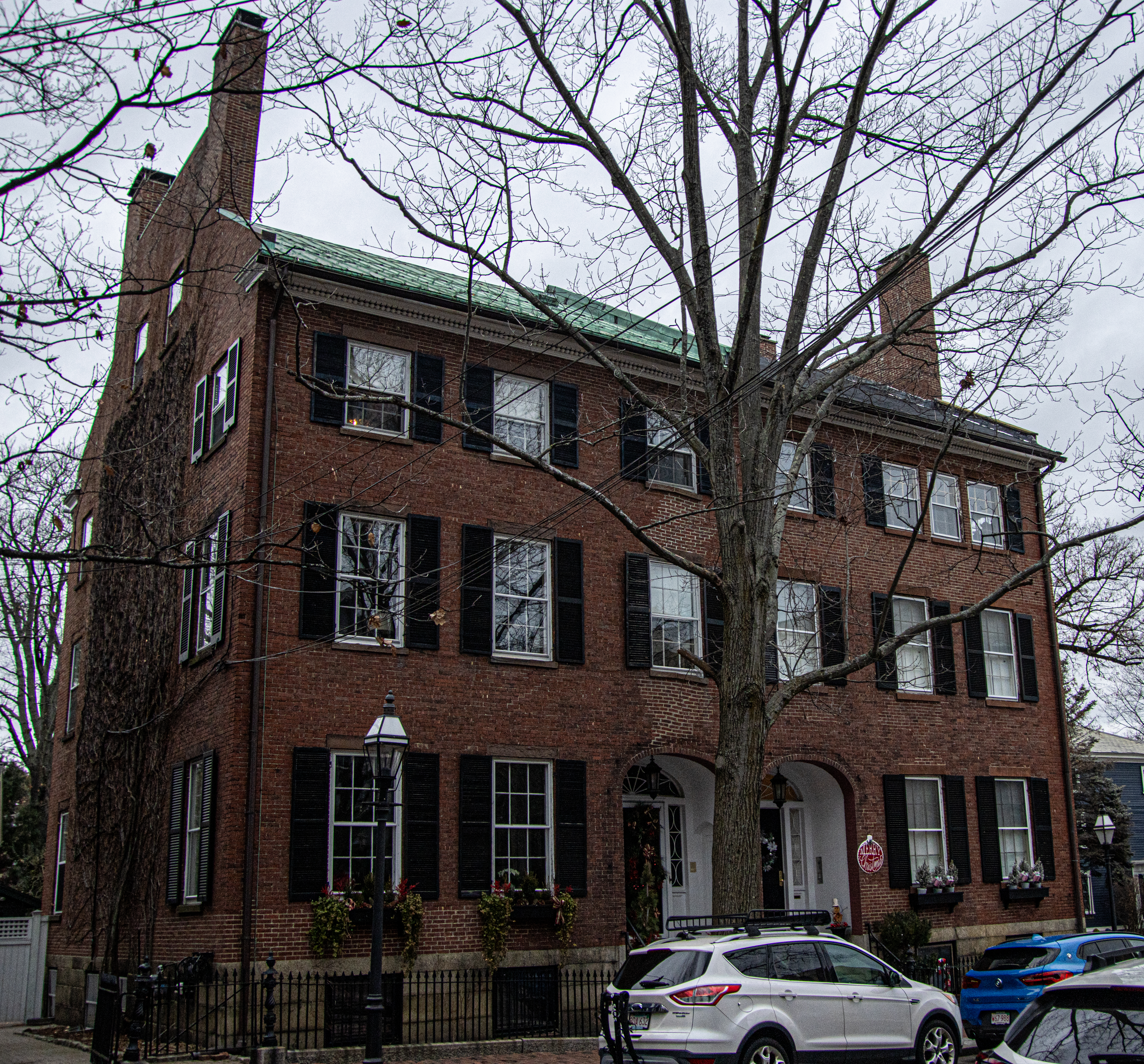
John Stone, a third generation distiller and a deacon in the First Unitarian Church in Salem, MA, built this three story brick double row house in 1827 on the former site of Mrs. Dowst’s Candy Store. An example of the late Federal style, the house boasts a pair of interior chimneys at either end and features semi-circular fan lights over the front doors as well as symmetrically placed windows along its facade. Of note are the somewhat unique two separate, recessed, semi-elliptical arched entrances located in the center two bays of the block, so that each townhouse appears as a mirror image of the other.
The Stone family resided in townhouse #4, the western, or left, side of the two residential units, until 1839 when the building was acquired by Stone’s daughter Lucy and her husband, Salem merchant, John Robinson. Because of their long-time occupancy of the eastern half, the house was often referred to as “The Robinson Block.” After the Civil War the double dwelling became known as “The Studio” when Salem artists Frank Benson and Phillip Little rented the studio space in it. In the 1880s the property was leased by two physicians. Then, in the early 1900s, the east side of the property (#2) housed Miss Howe’s School.
All joining walls and doors between the two units were closed off in 1923 as #2 Chestnut and #4 Chestnut Street were sold as individual properties. The house at #4 Chestnut St was designated a Massachusetts Historic Landmark in 1969.
So, as you can see, the home has a rich history, no pun intended, and has gone through quite a lot of changes over the years.
Fun fact: Chestnut St is the widest street (by a few centimeters) in Salem, MA (ironically, it’s also a one way street) . So, take that Essex St! Now, you have something to talk about at dinner parties and blind dates.
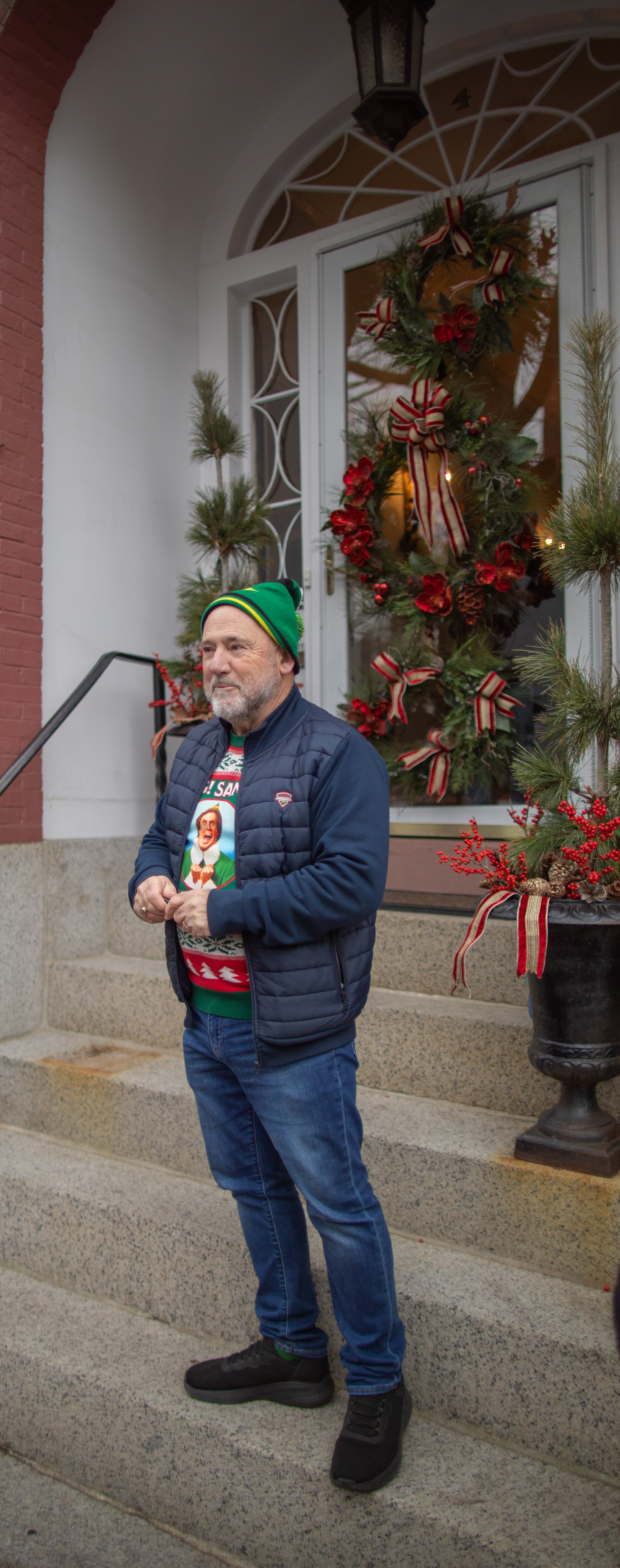
The charming home on 4 Chestnut is actually a two on the corner of Chestnut St. One of the tour guides gave a brief background and history of the home in front of a very festive front door.
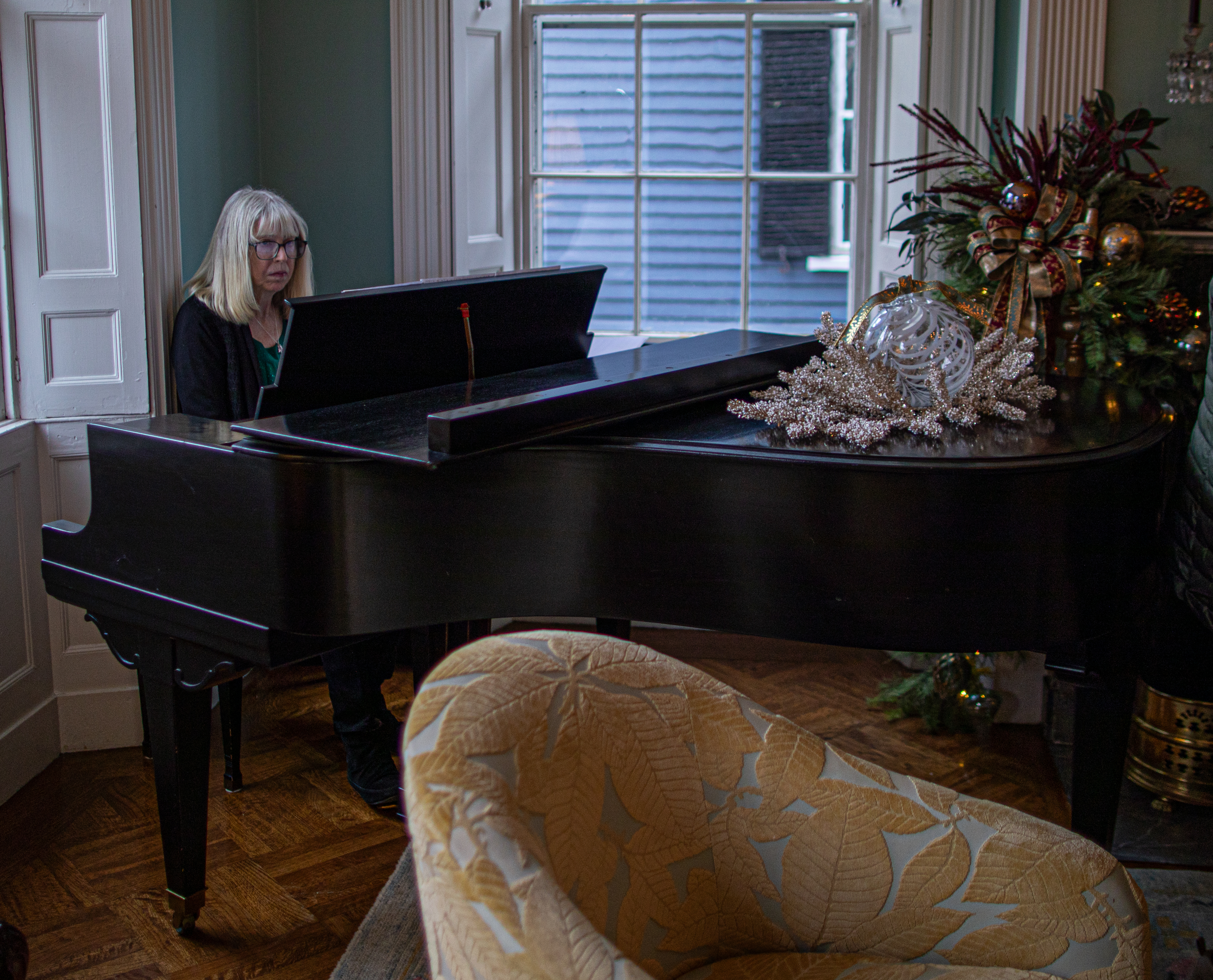
A pianist played traditional Christmas music in the living room.
The living room was designed by an interior designer from Atlanta. Of course, it was dressed up for the holidays.
As an added bonus, the Deacon John Stone home, one of a few he owned on the street, was the only home on the tour where they allowed you to visit the second floor.
The second floor had a game room with a pool table, elegant furniture and lots of photos and memorabilia on the walls.
I feel like I say this about every house I tour, But, 4 Chestnut St was a beautiful home with lots of charm!
Location: 9 Cambridge St, Salem, MA (about 30 minutes northeast of Boston, MA)
Universally Accessible: No
Cost: $40 per ticket ($50 if you purchase day of tour tickets)
Parking: There are several parking garages in Salem, as well as metered on street parking.
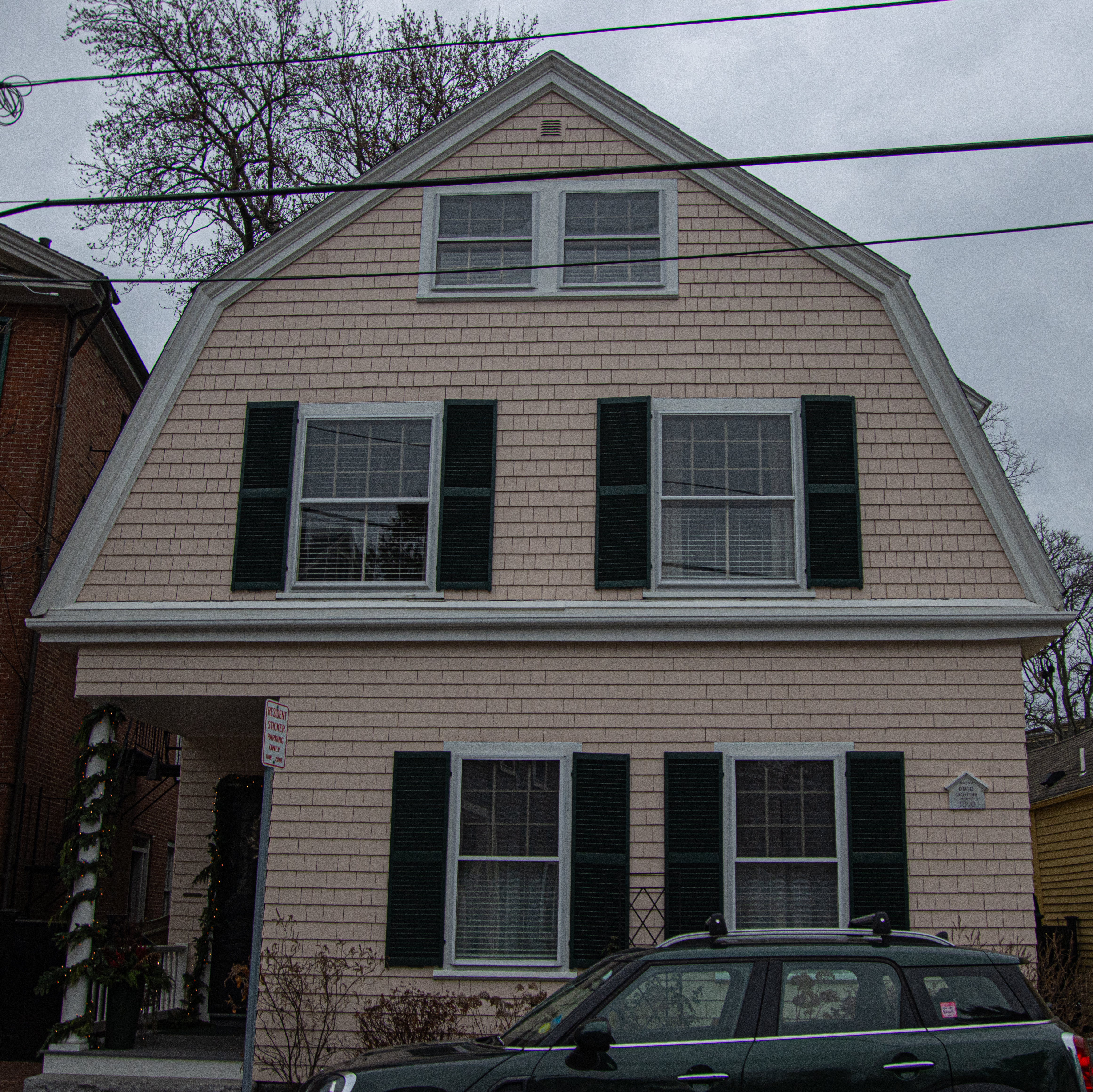
Summary: The house at 9 Cambridge St, aka the David Coggin home, has some interesting decor, artifacts and is cat friendly!
Like most of the homes in this neighborhood, this late 19th century, this late 19th century house was built on the site of an earlier building that was part of a larger parcel of land belonging to Jonathan Neal in the 1660s. The earlier dwelling remained in the family until the 1880s when tax records describe it as vacant and about to be demolished. Jonathan Neal’s name sound familiar to those of you who have been reading my posts. This home appears to have possibly been part of the parcel of land 10 Broad St currently stands.
Late in 1889 David Coggin, a renowned ophthalmic surgeon at Salem Hospital, had the current house constructed as a two and a half story residence with a gambrel rook in the Dutch Colonial Revival/Shingle Style. Coggin had another on nearby Chestnut St. But, he never resided there, selling the house soon after its completion to Nathaniel Osgood, a leather dealer, and his wife Eliza. Osgood was the son of the Salem portrait painter, Charles Osgood, whose well-known portrait of Nathaniel Hawthorne now resides in the Peabody Essex Museum. By 1900 the Osgoods had purchased a house on Chestnut St and rented out the house at 9 Cambridge St to a series of short-term renters, among them Charles C. Buffum, famed as the old “foxhunter” claiming to have killed more foxes throughout New England than anyone else. Buffum lives there from 192 until his death in 1915.
Like many homes on this tour, this home was deceiving in both size and style. While it may seem “cozy” and “quaint”, neither of which are inherently bad things, the home is bigger (over 1,900 square feet) than it may appear to be from the exterior.
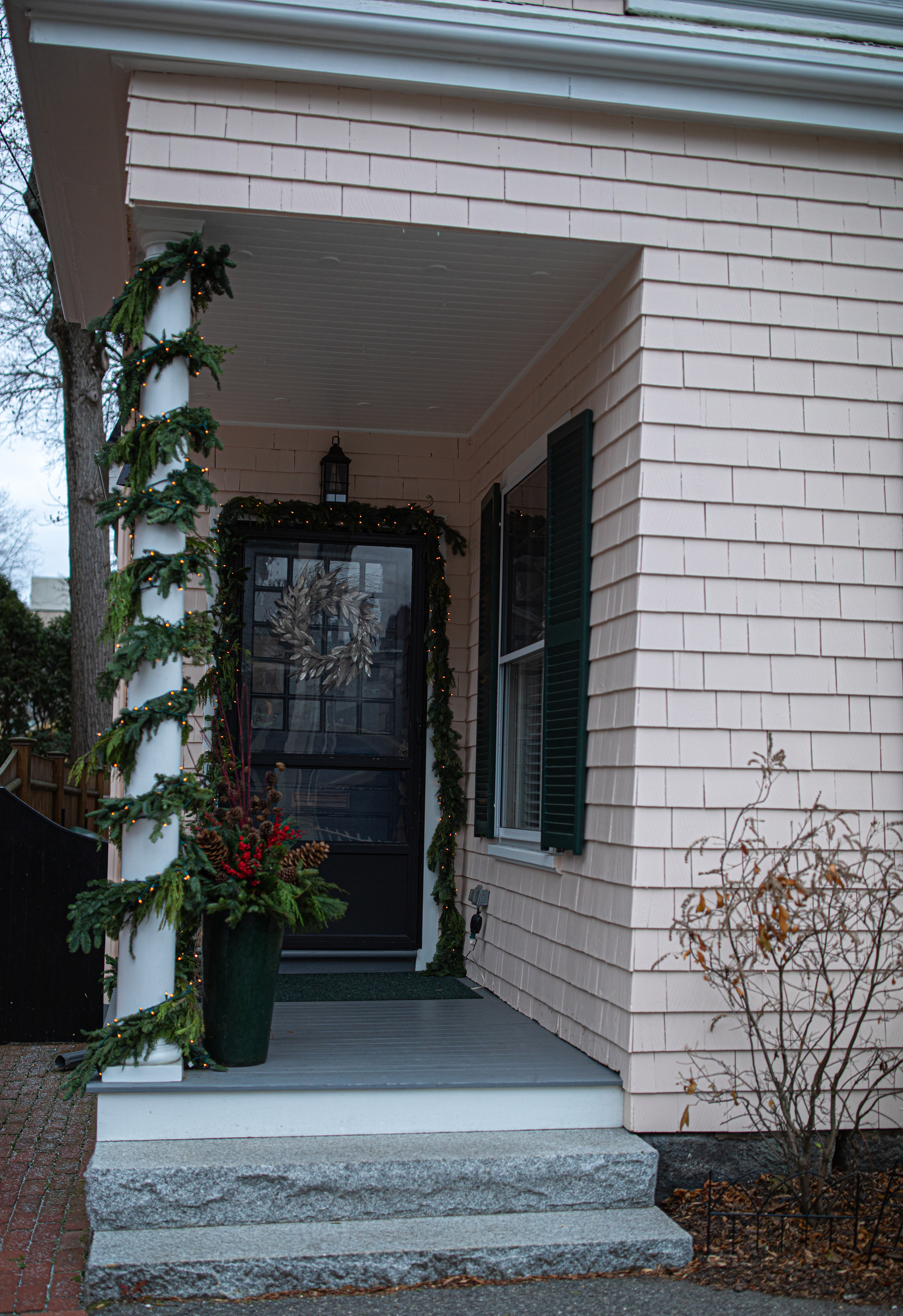
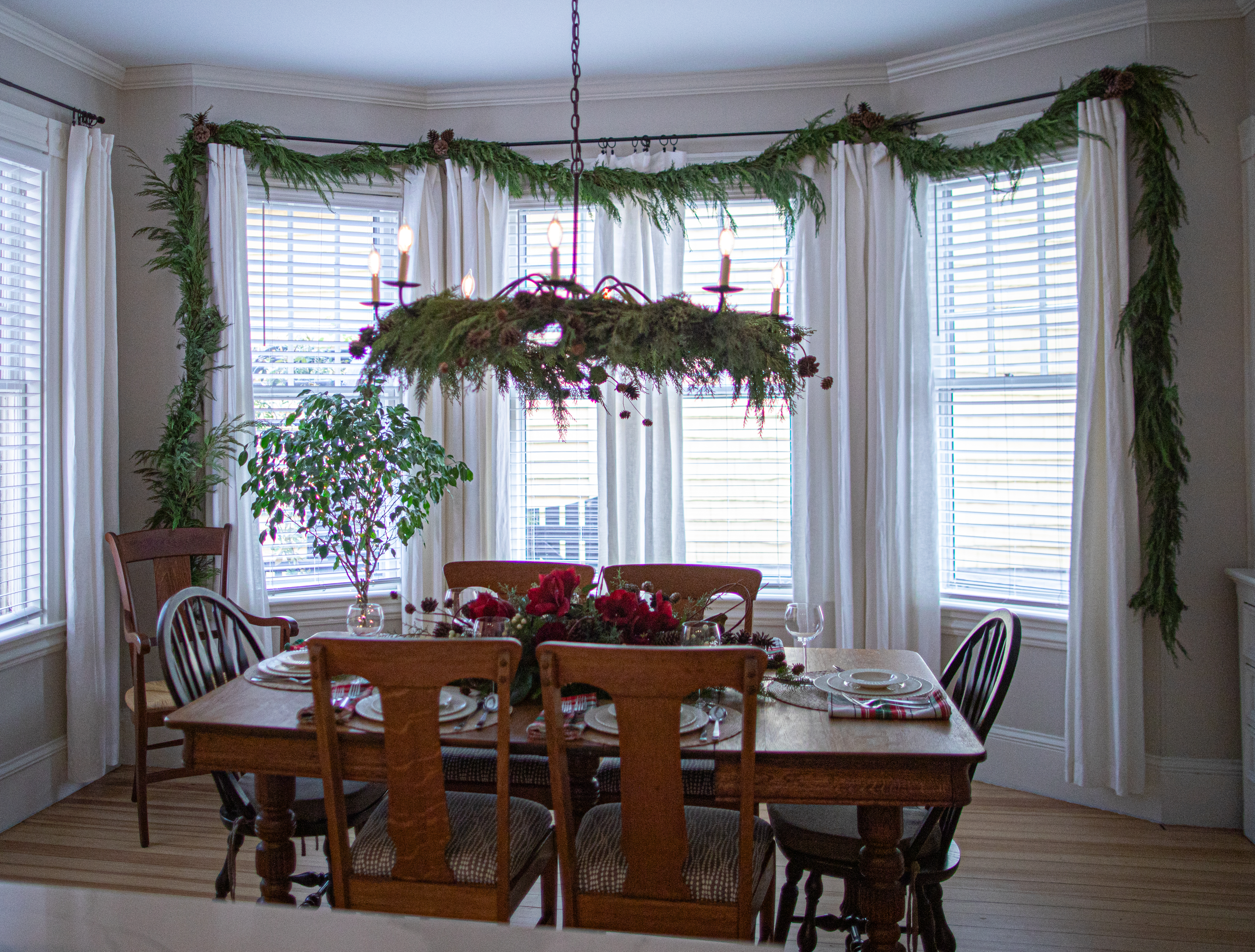
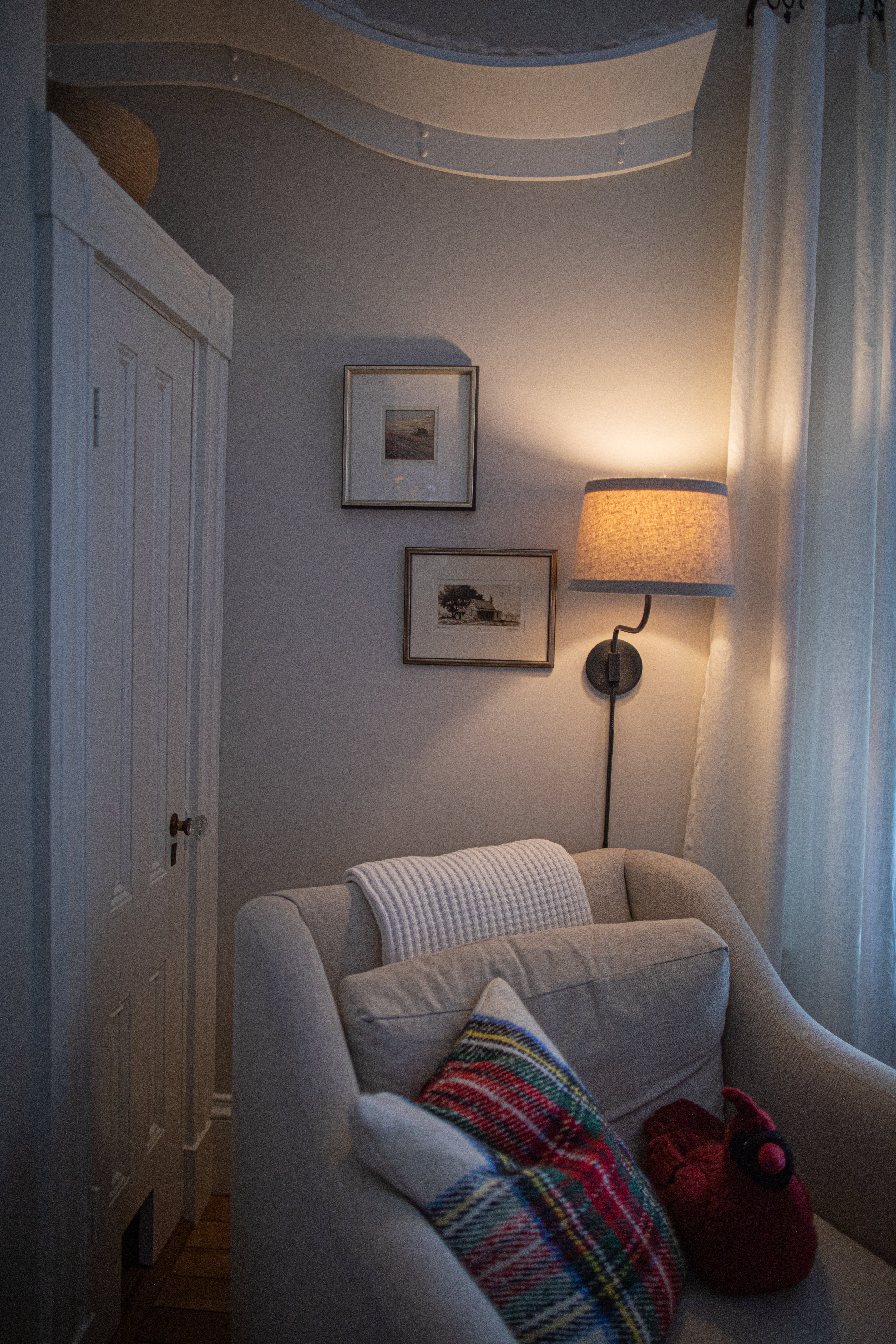
The home had a distinctive charm and holiday appeal.
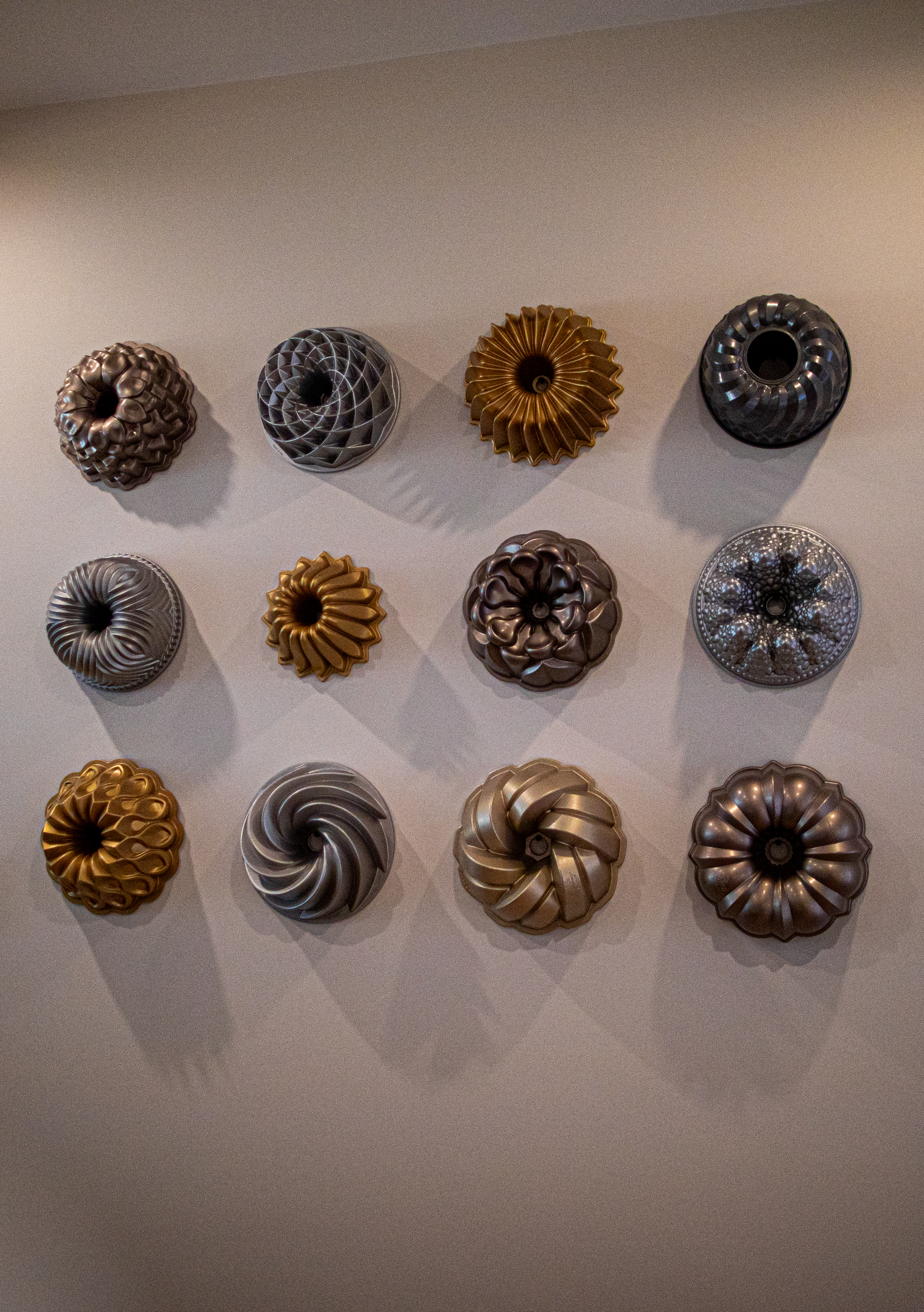
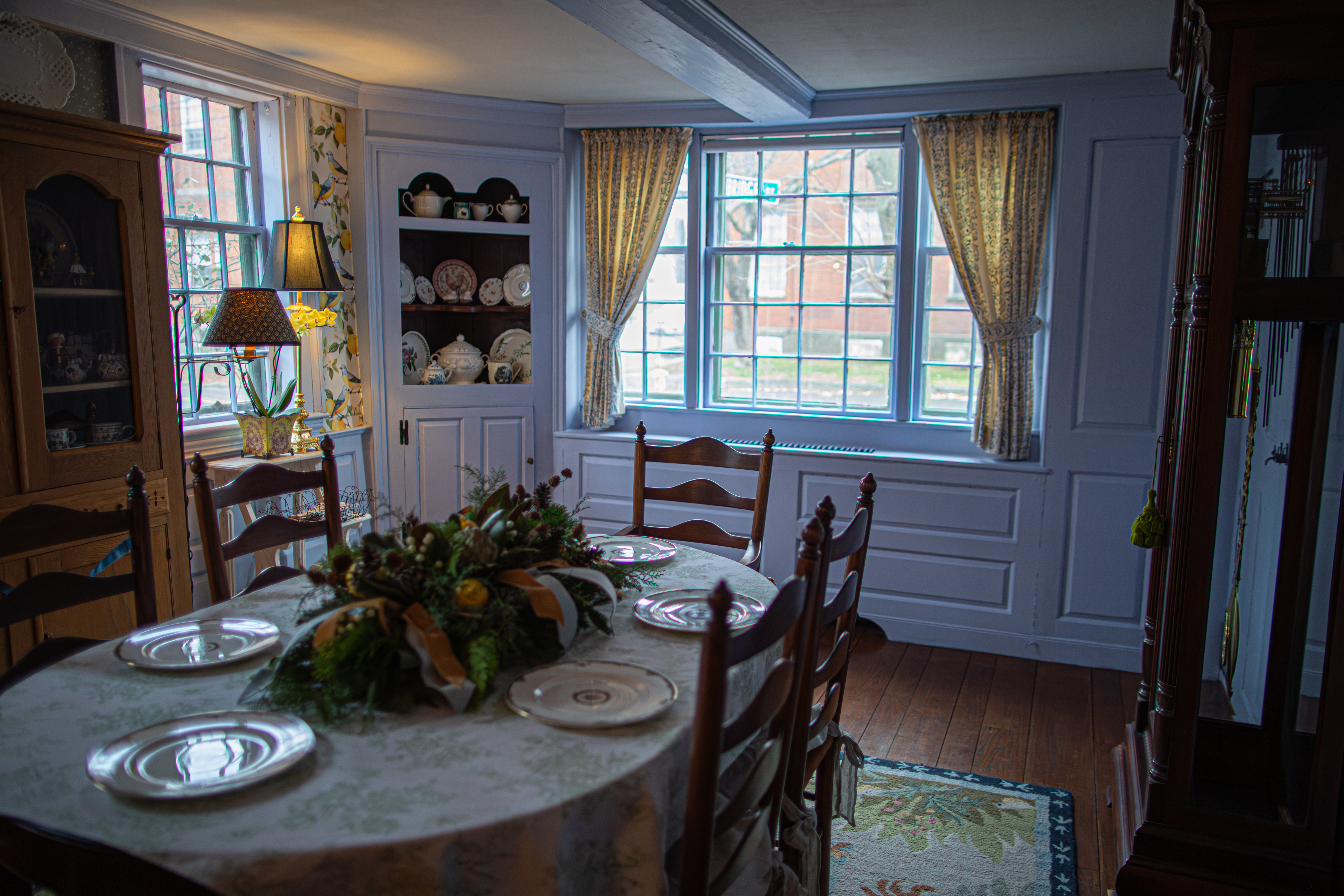
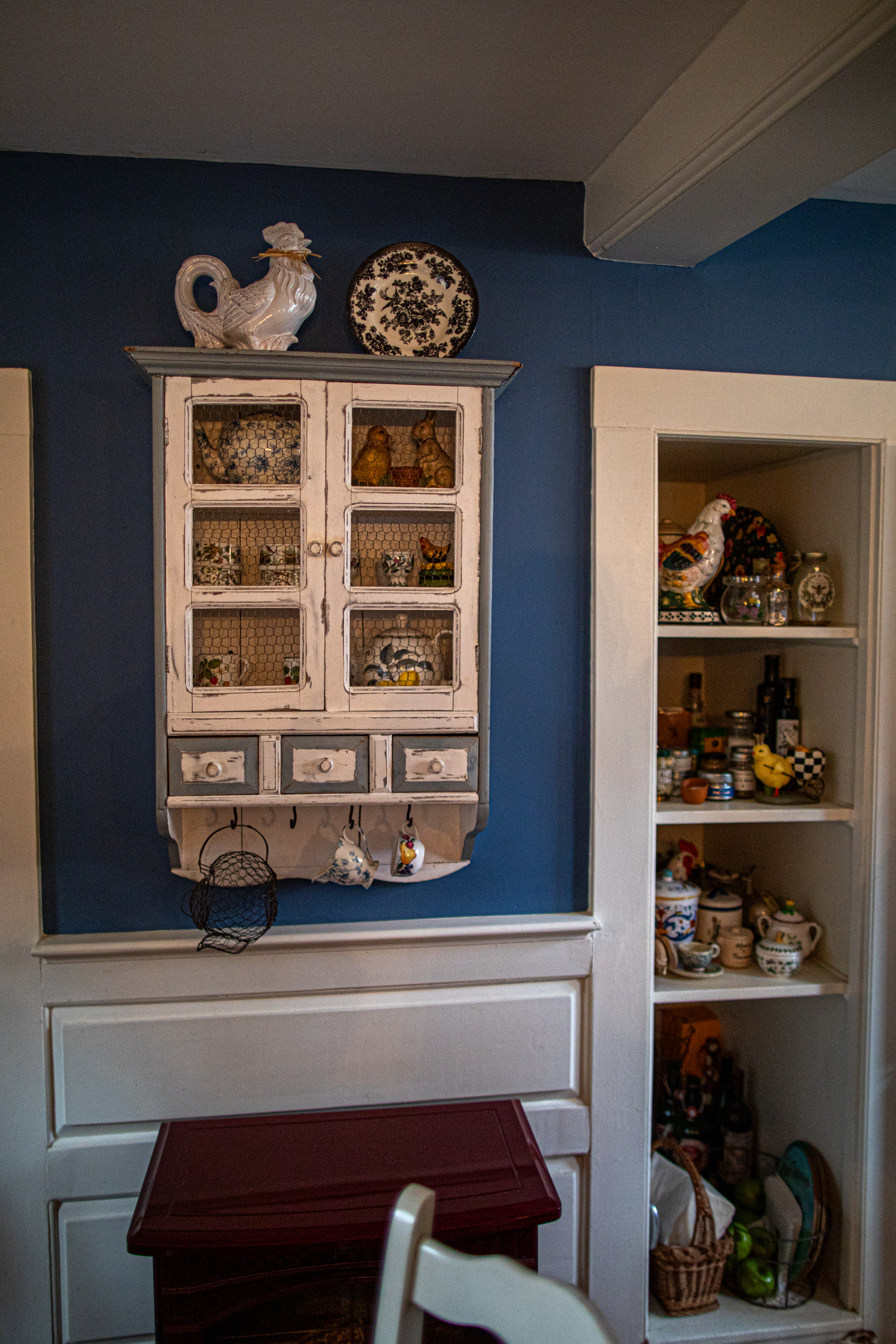
I adored the kitchen decor!
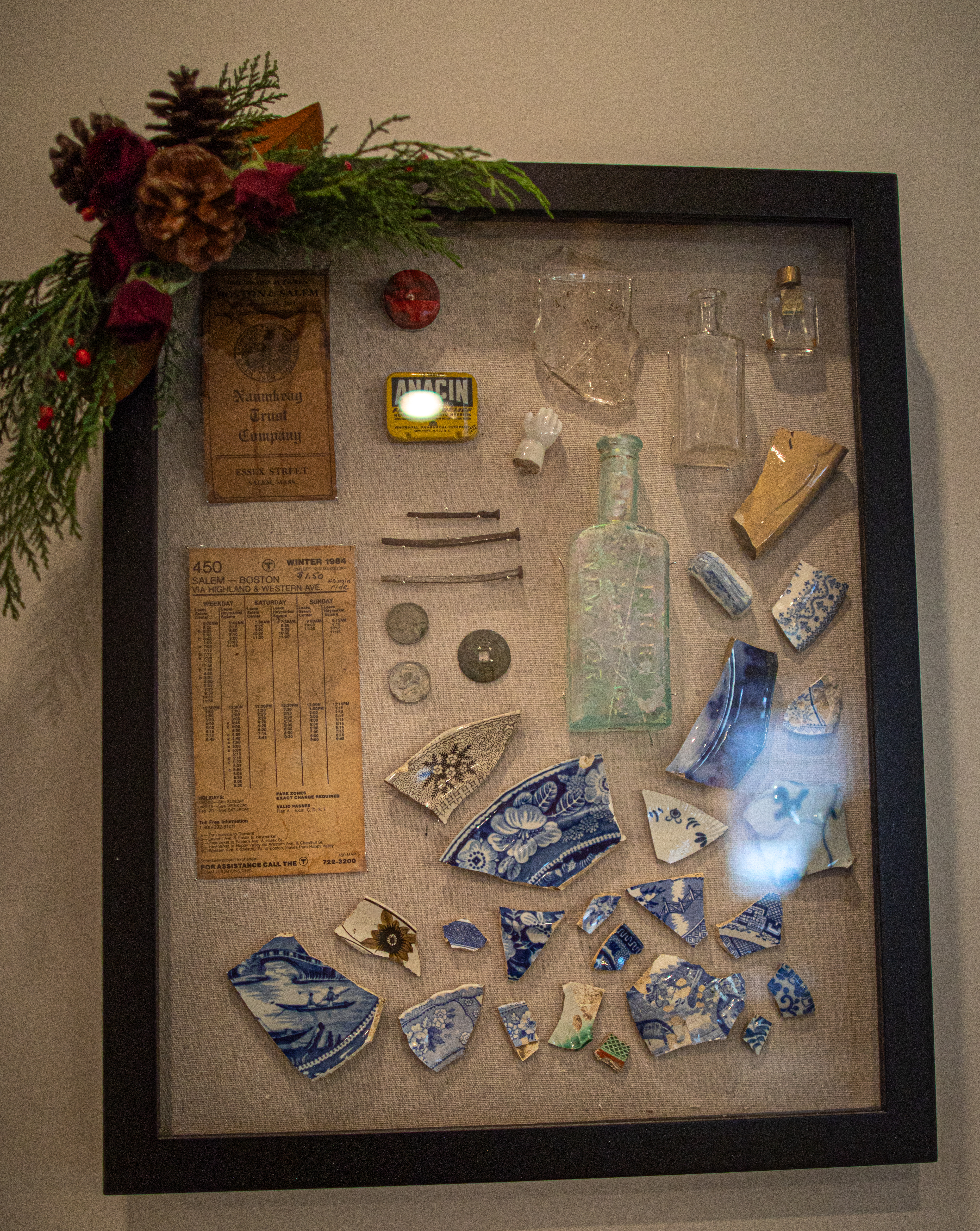
I thought this was very cool. When the home owners had work done on their home and grounds, the workers found some interesting materials. These pieces of dinnerware and other debris were found when the owners did remodeling and landscaping.
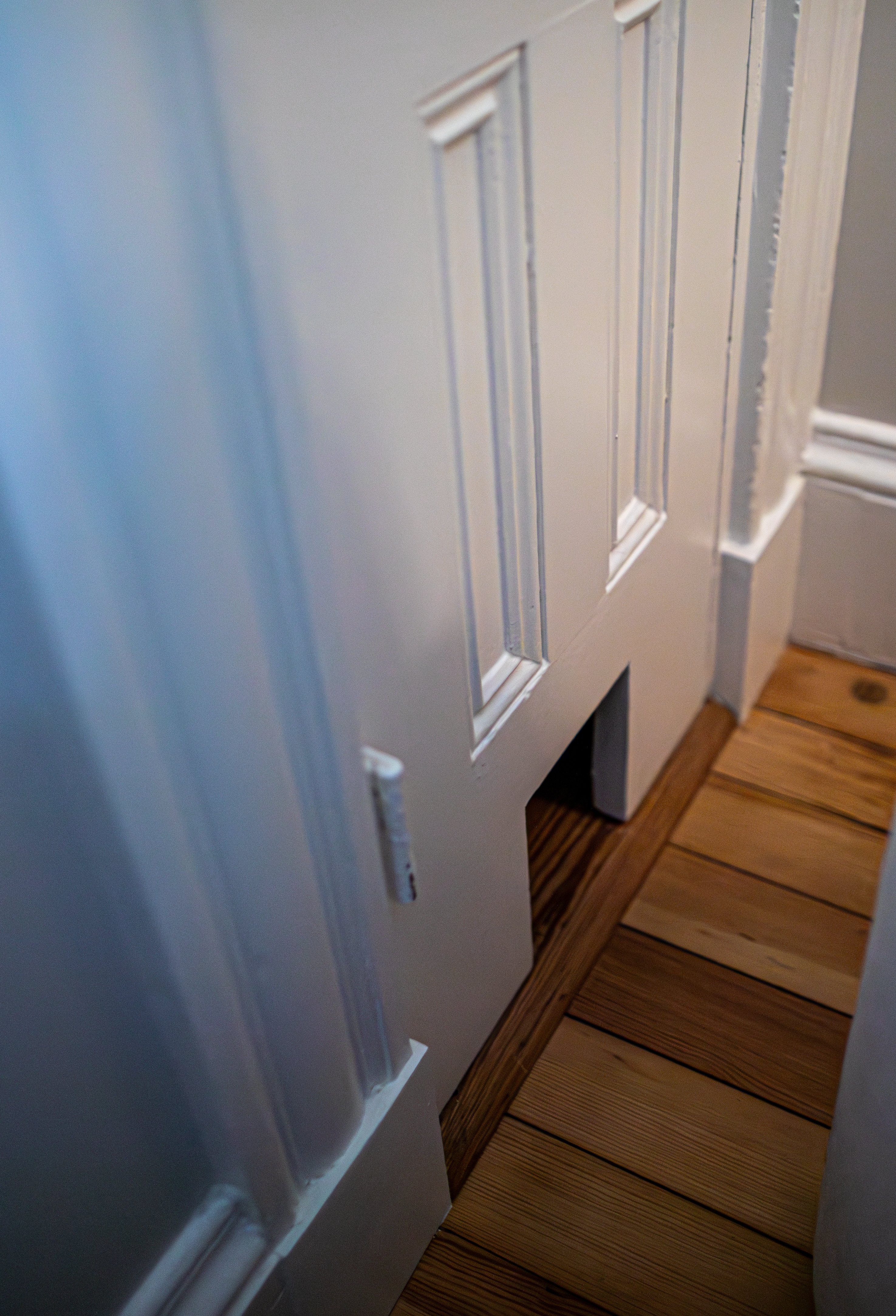
Something I’ve noticed in a few of the houses I toured was doors, holes and other entryways specially made for pets. This home not only had a walkway above the human furniture, it also had a hole for the cat to walk through. They have quite the life!
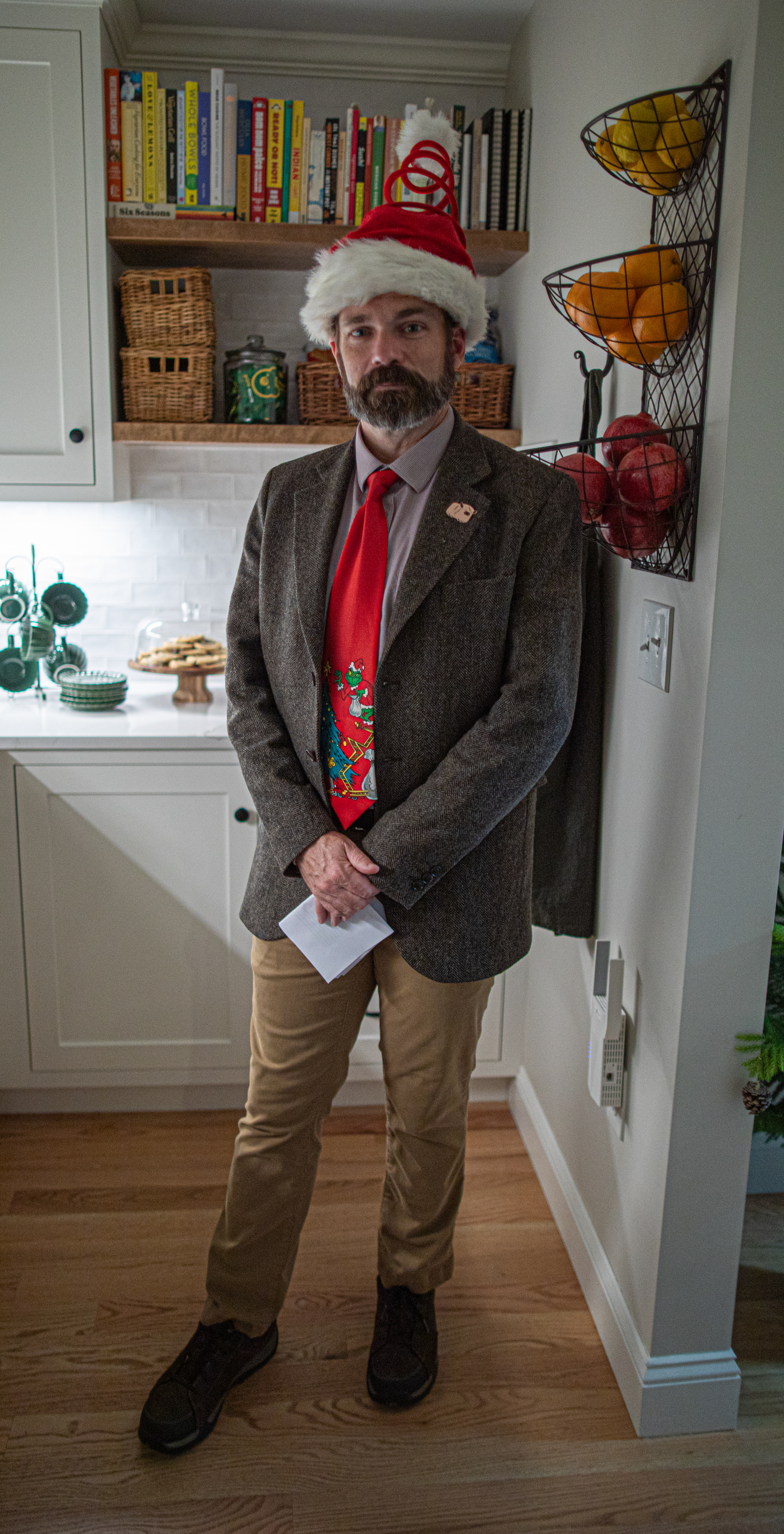
I liked how this tour guide got into the holiday spirit with his headwear!
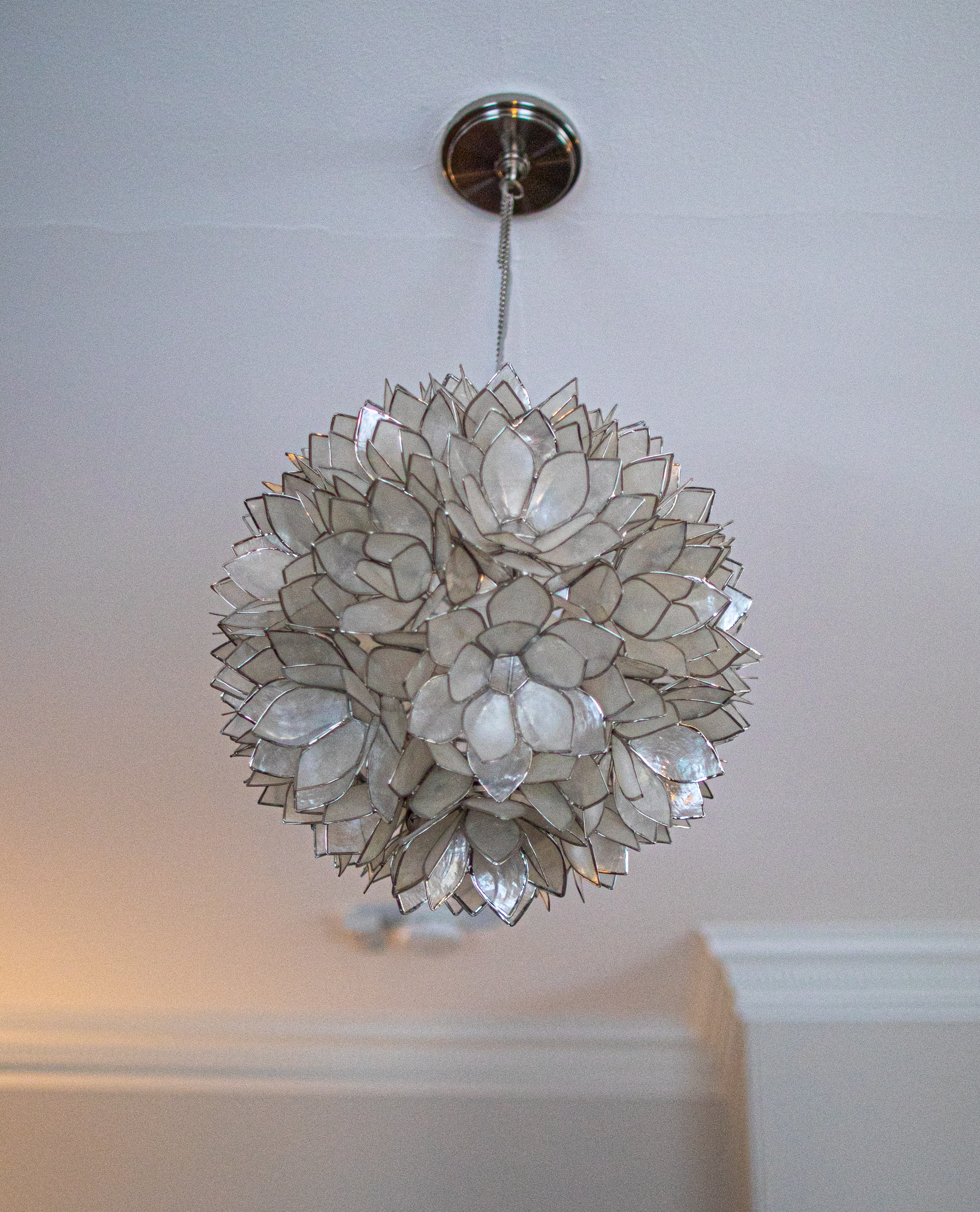
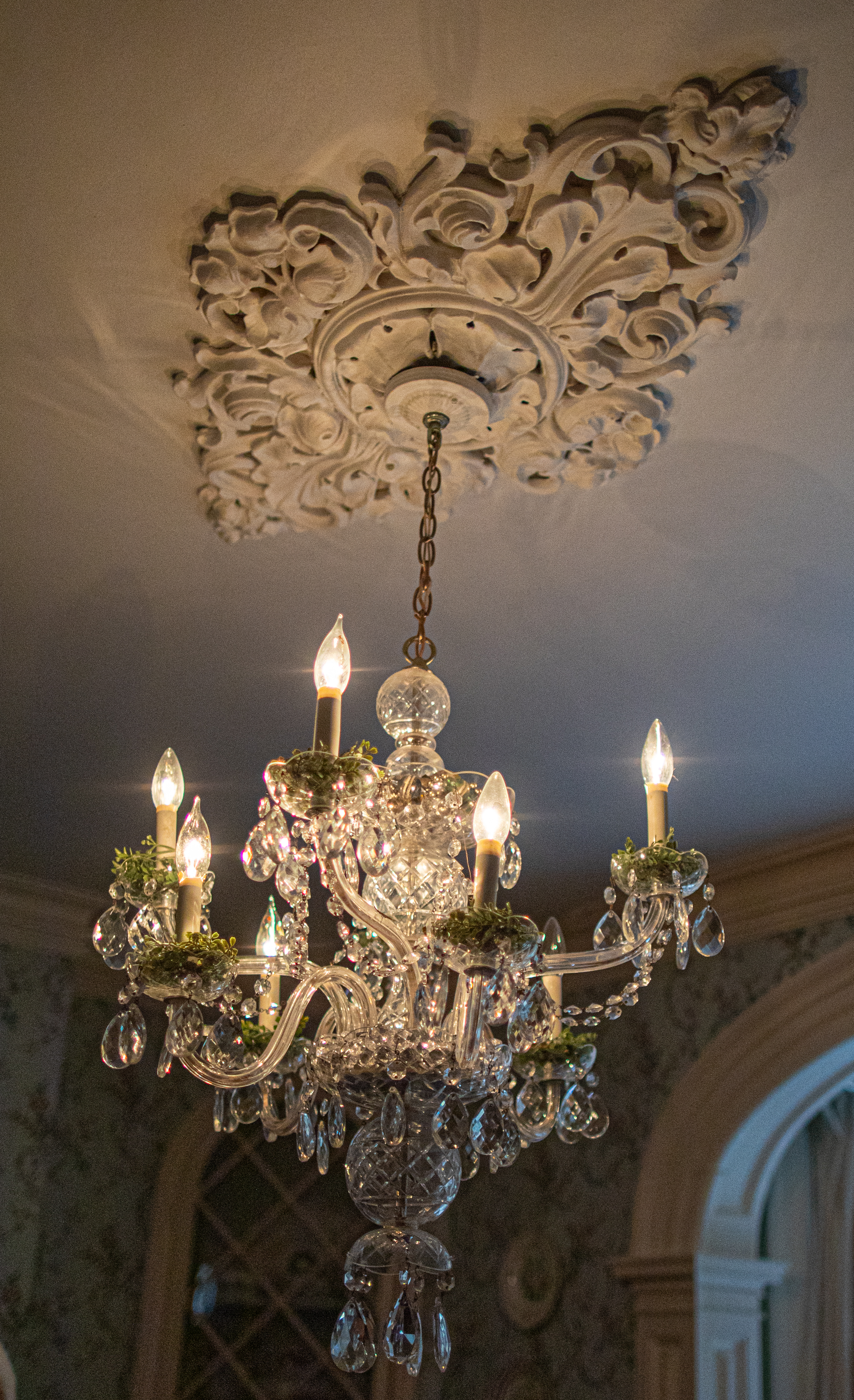
This lighting fixture was very pretty! I would have loved to see what it looks like when it is lighted! Maybe I’ll see that next time I tour the home!
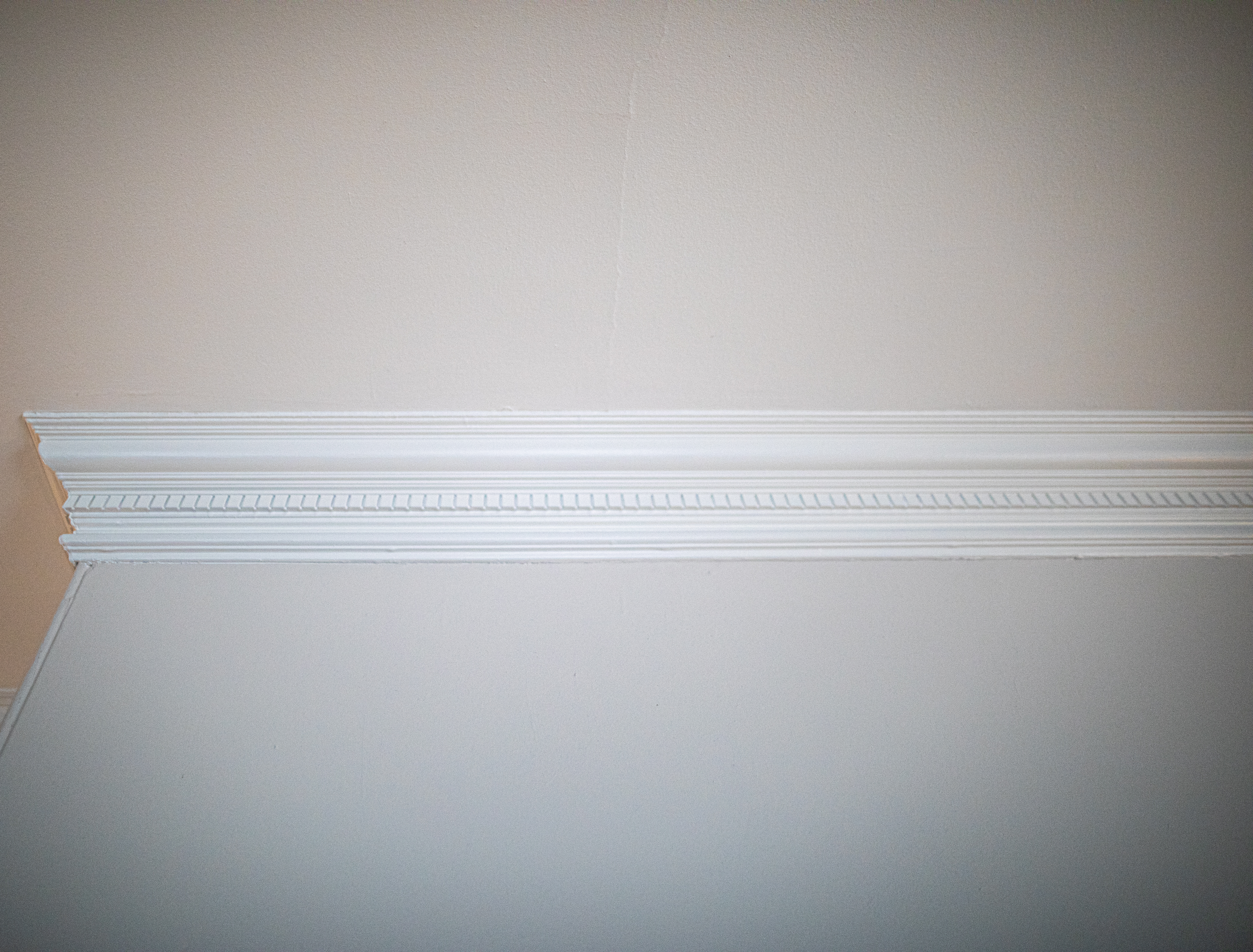
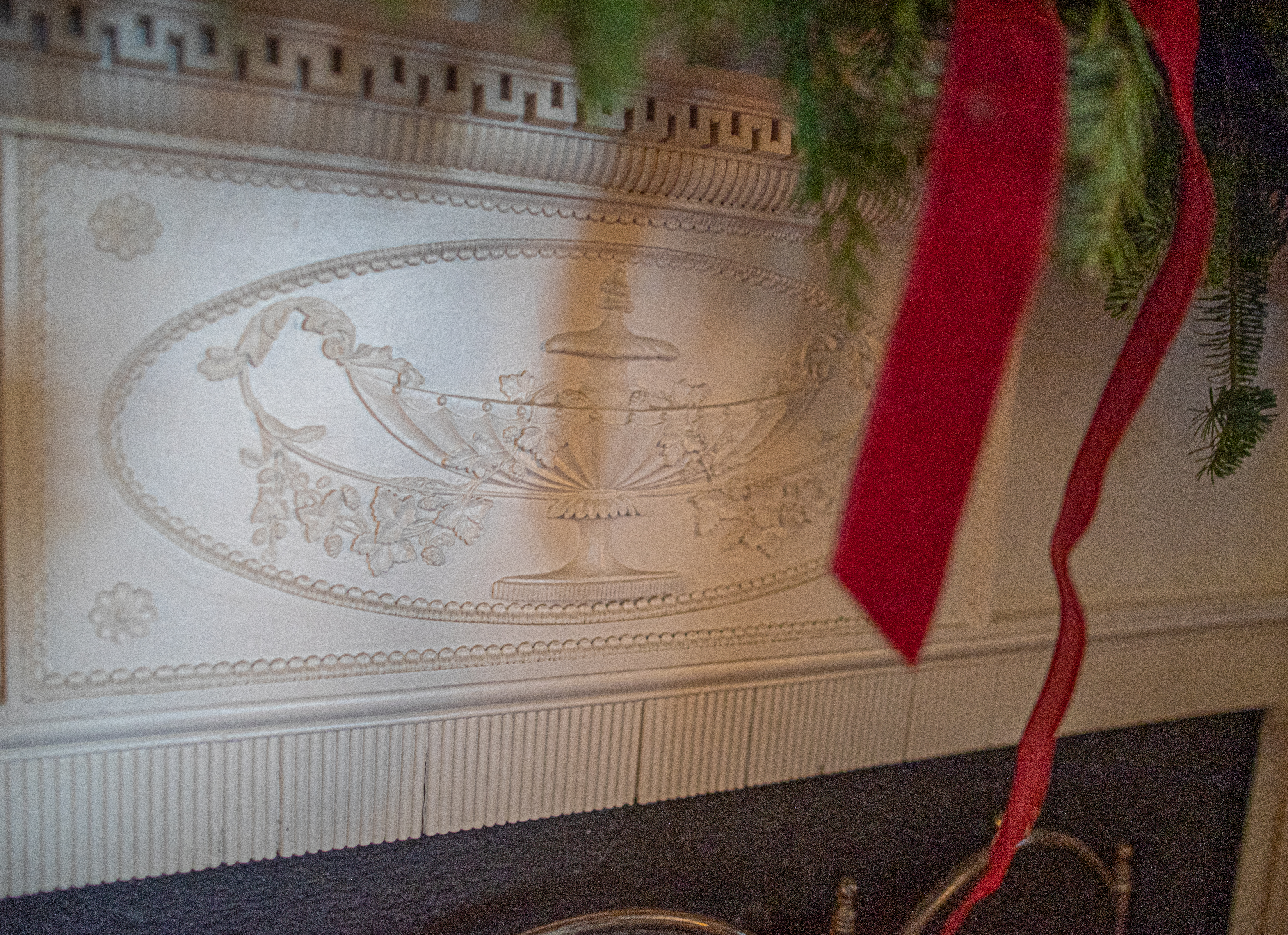
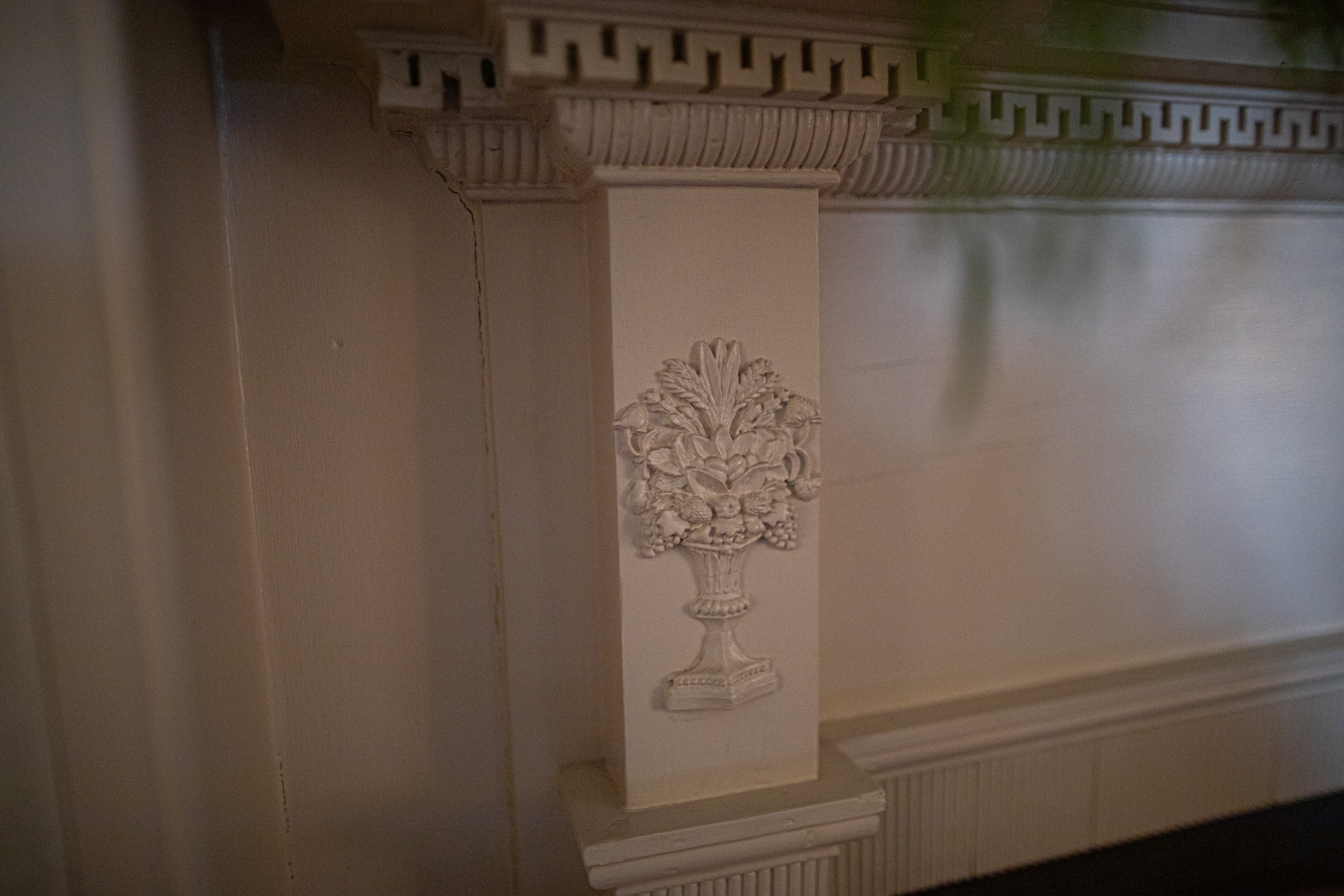
I always try to find something unique or different. Not necessarily anything different from the other homes. But, something that I haven’t posted about before. In this case it’s crown molding, or cornice.
Fun fact: While there may be some minor differences, wainscotting and crown molding are basically the same thing. The only big difference is location. The crown molding is located near the ceiling as shown above. Wainscotting is located low on the wall from the baseboard up to a chair rail.
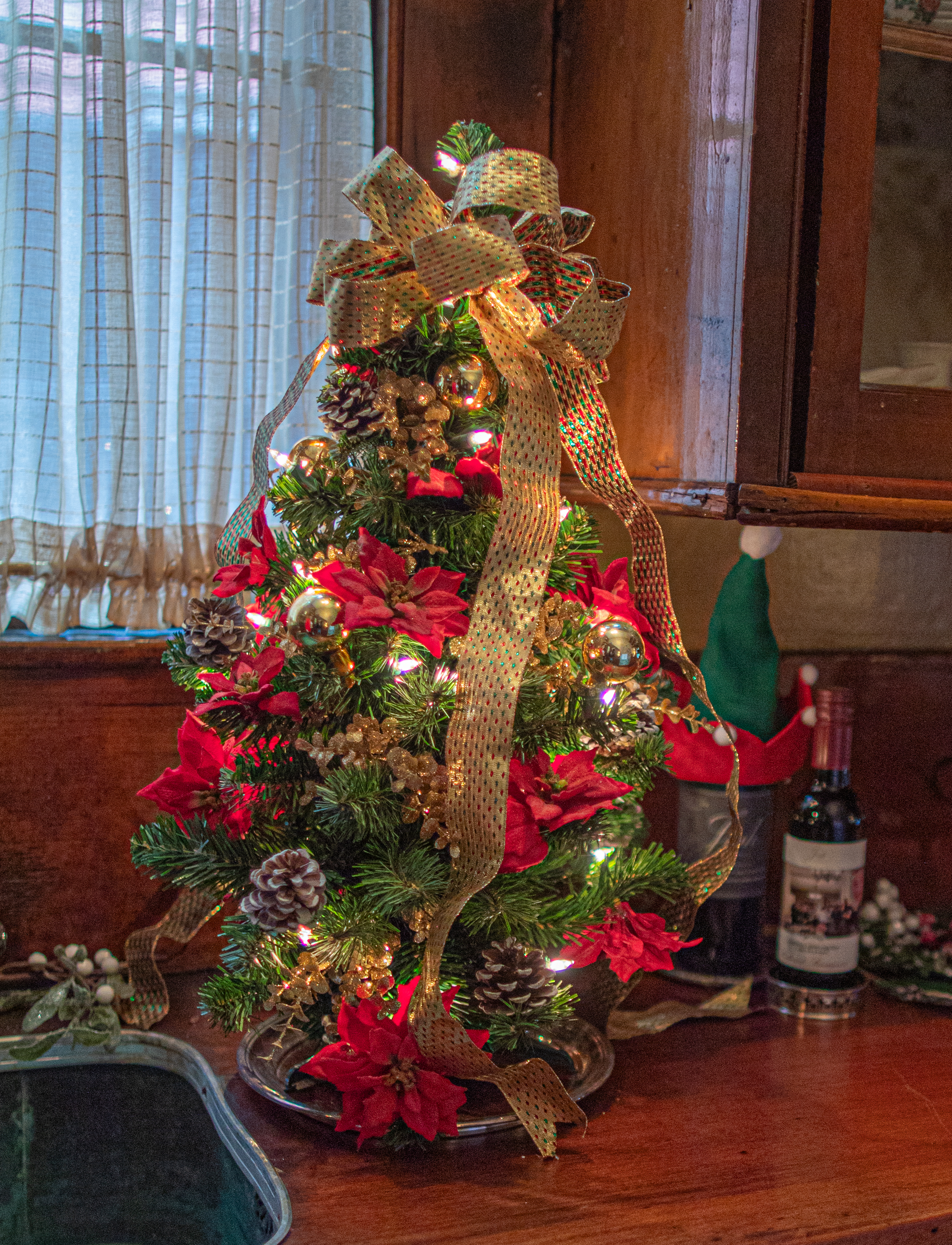
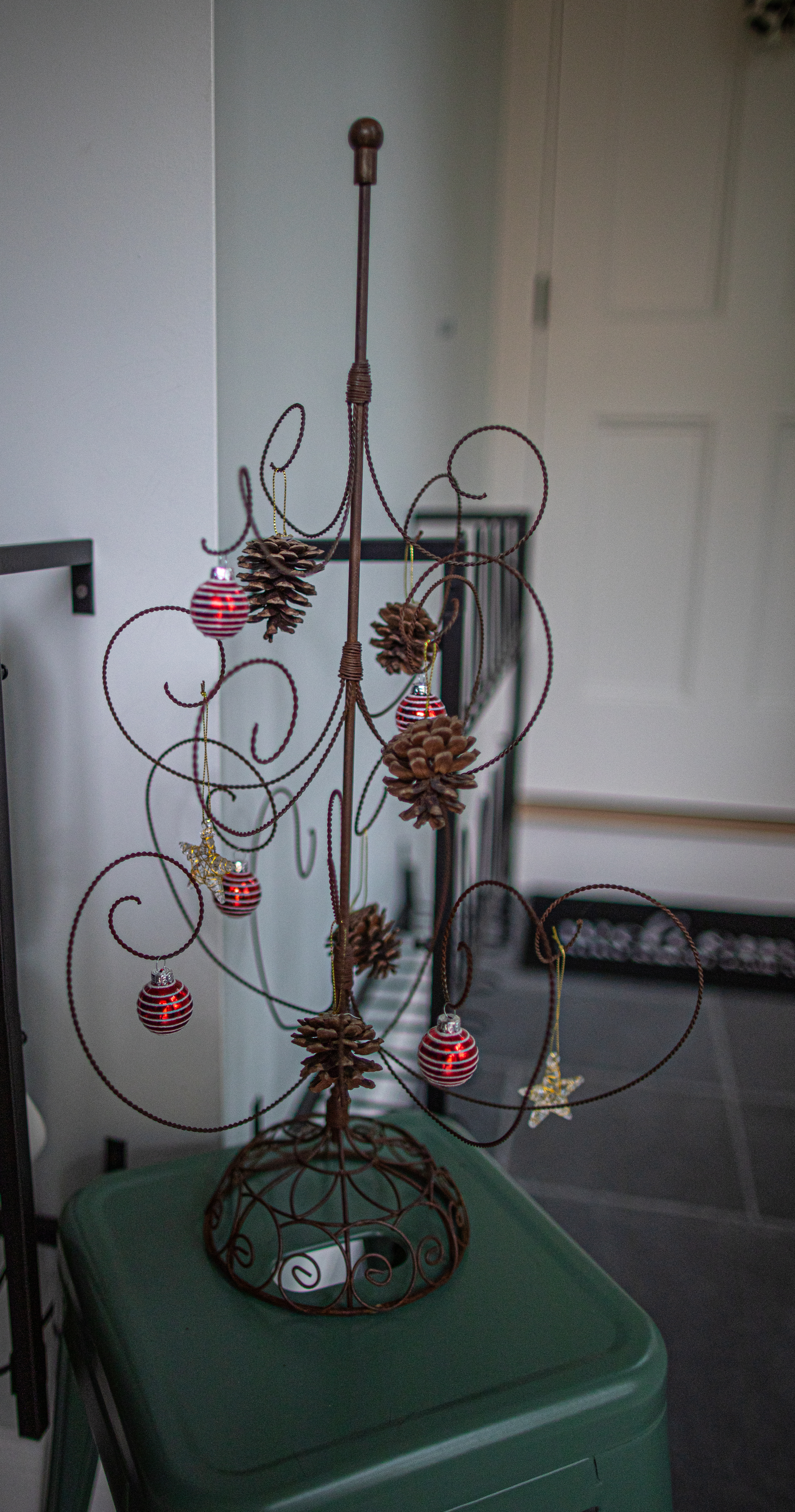
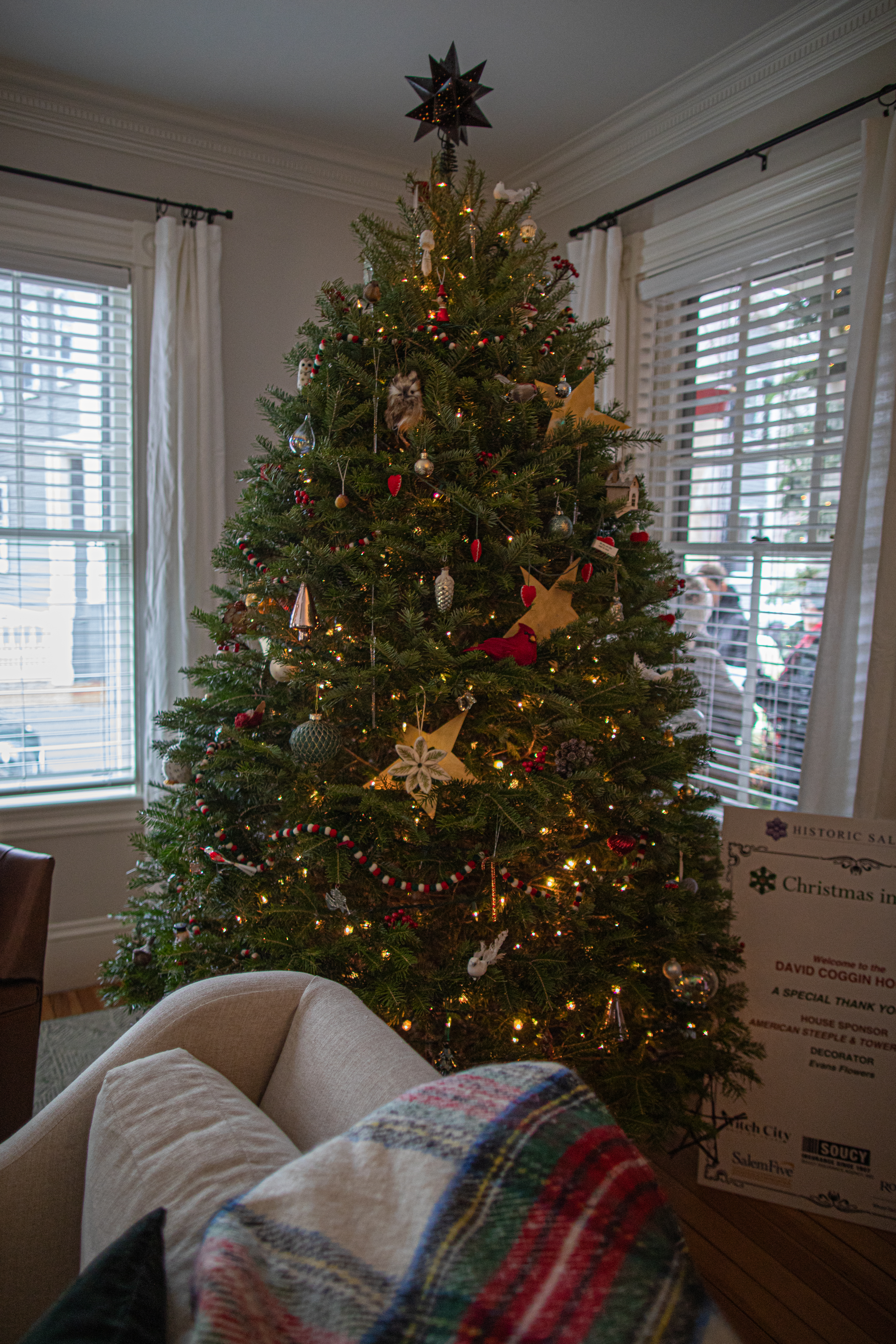
This was an interesting Christmas tree. At least it’s easy to set up and take down!
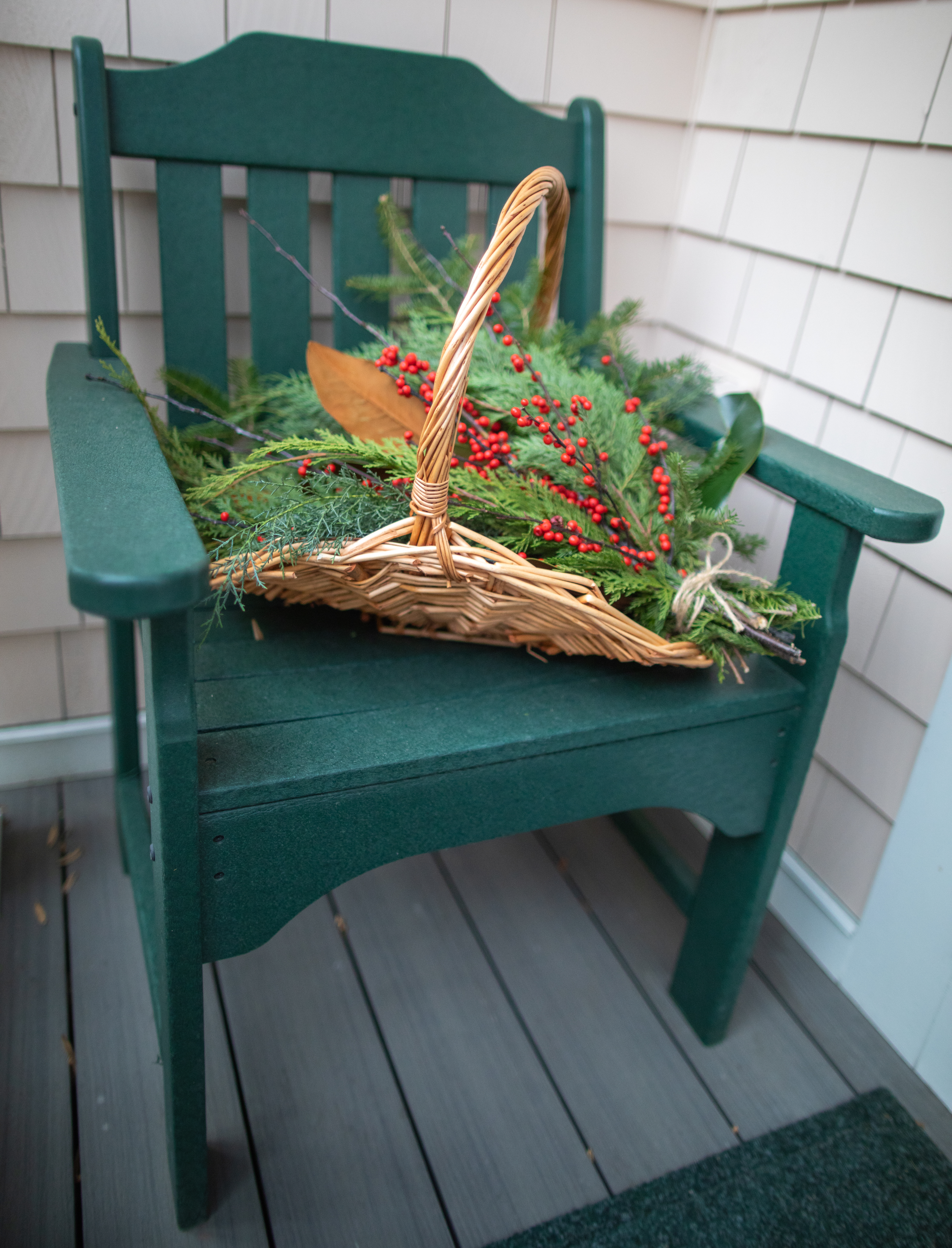
The decorations continued into the porch and yard.
I hope you’ve been enjoying these tours! Three more left!
Location: 7 Chestnut St, Salem, MA (about 30 minutes northeast of Boston, MA)
Universally Accessible: No
Cost: $40 per ticket ($50 if you purchase day of tour tickets)
Parking: There are several parking garages in Salem, as well as metered on street parking.
Summary: Home to Deacon John Stone, the home sat 7 Chestnut St had some impressive decor and many original pieces.
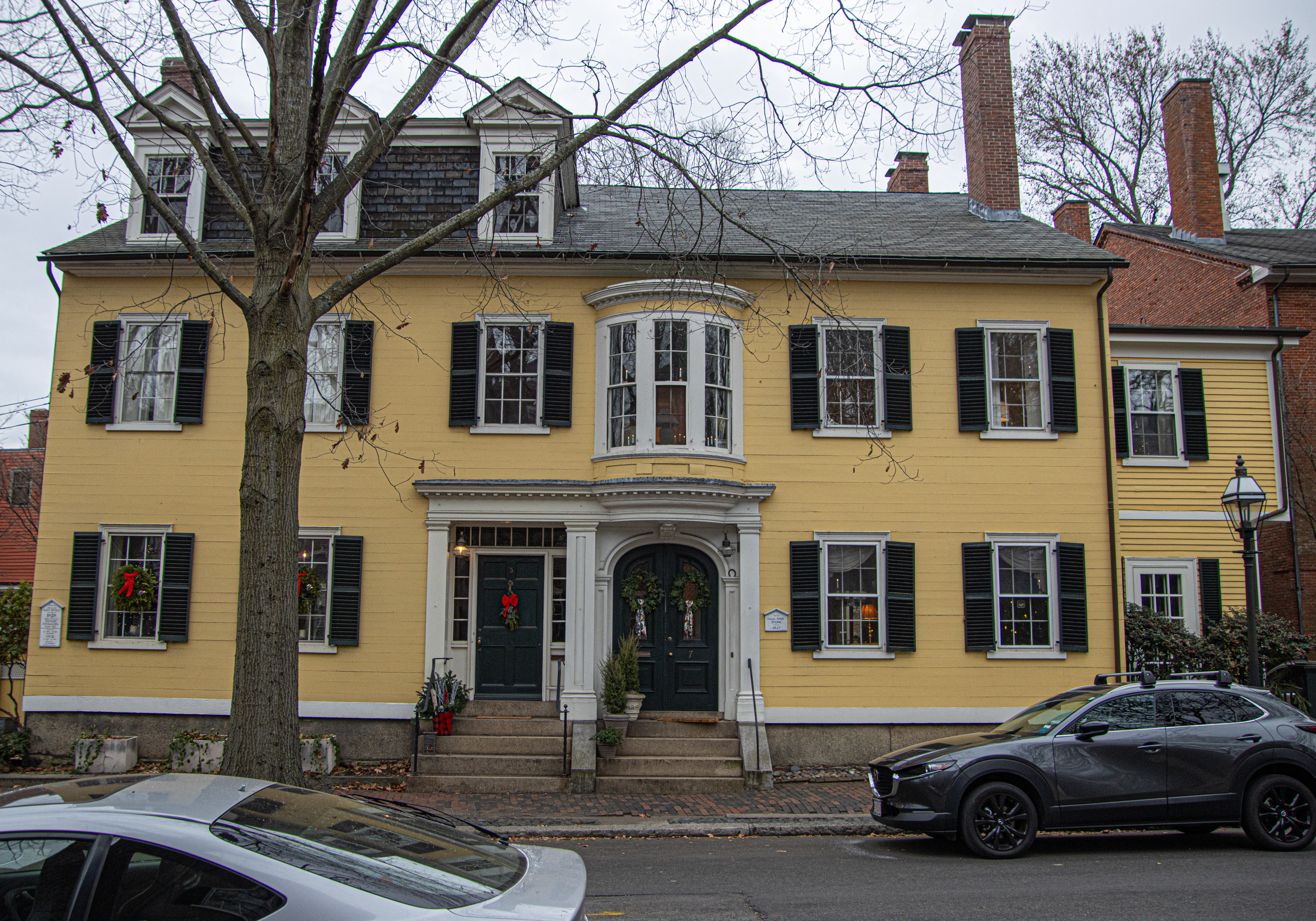
Built circa 1827 by architect William Lummus, 7 Chestnut St was commissioned by Deacon John Stone as a rental property while the Stone Family resided at 2 and 8 Chestnut St (the Deacon was doing very well for himself apparently). Early tenants included the Reverend W.R. Babcock, minister of the Baptist Church and, later, James E Sprague, the high sheriff of Essex County.
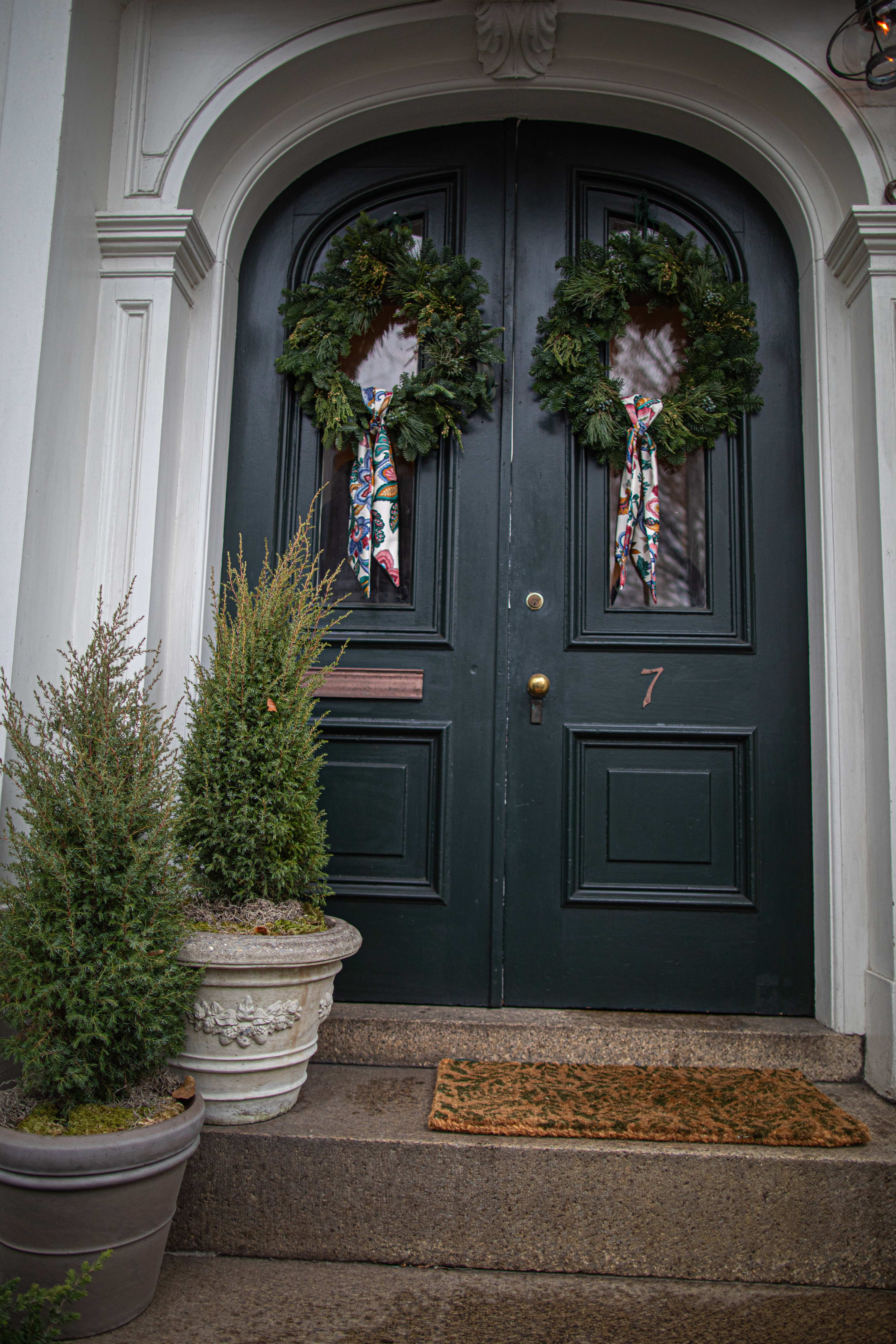
The house, located on the right side entryway, is known for both its yellow exterior and the asymmetrical double-house design – a rarity in its time. The left side of the house features 4/3 pane windows, dormers and a rectangular entryway, while the right side presents similar windows paired with an arched double-door entry. Above the entryway, a rounded bay window provides additional changes from the left side.
As mentioned above, the home has very unique characteristics from the outside. The exterior of the building was decorated for the holidays.
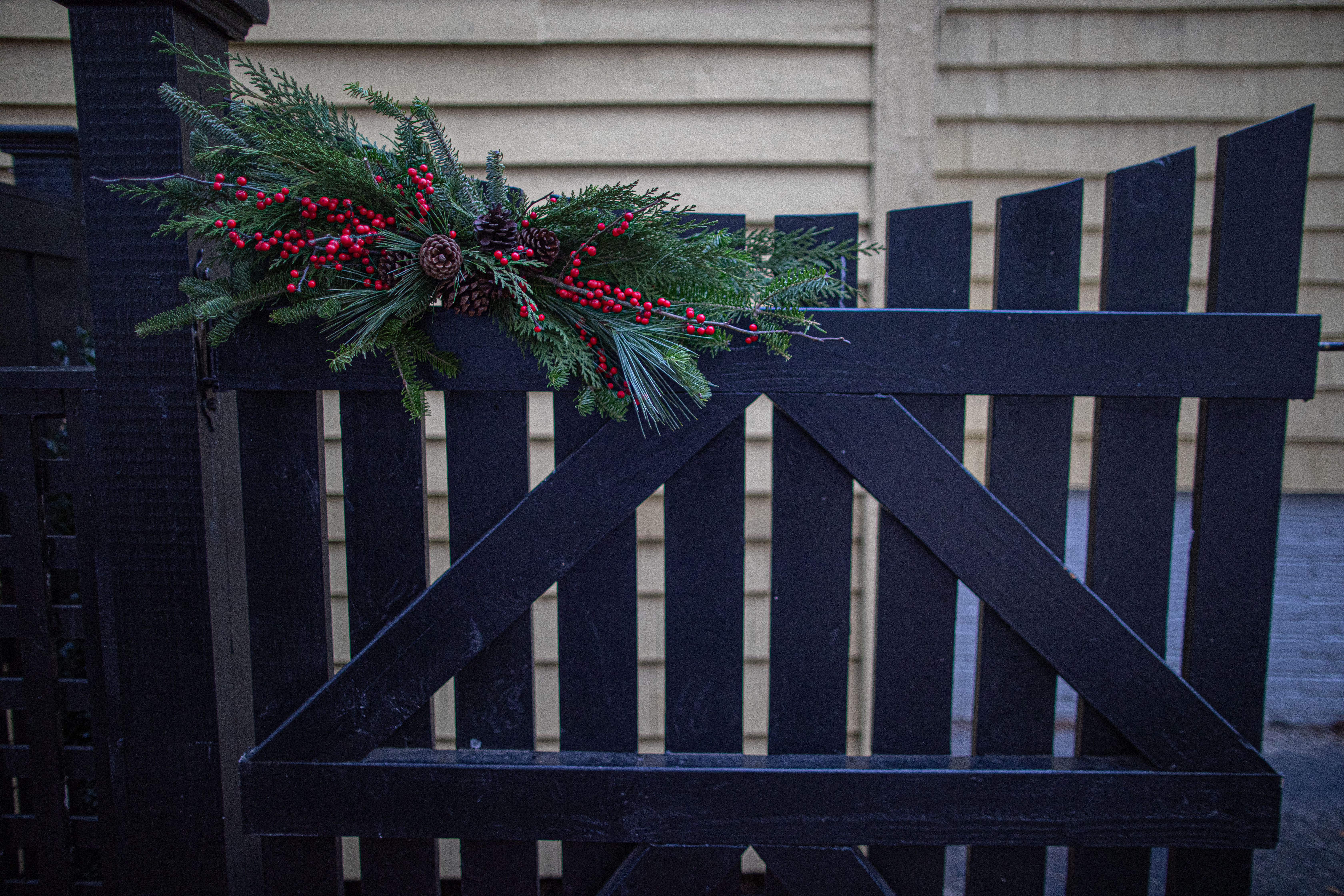
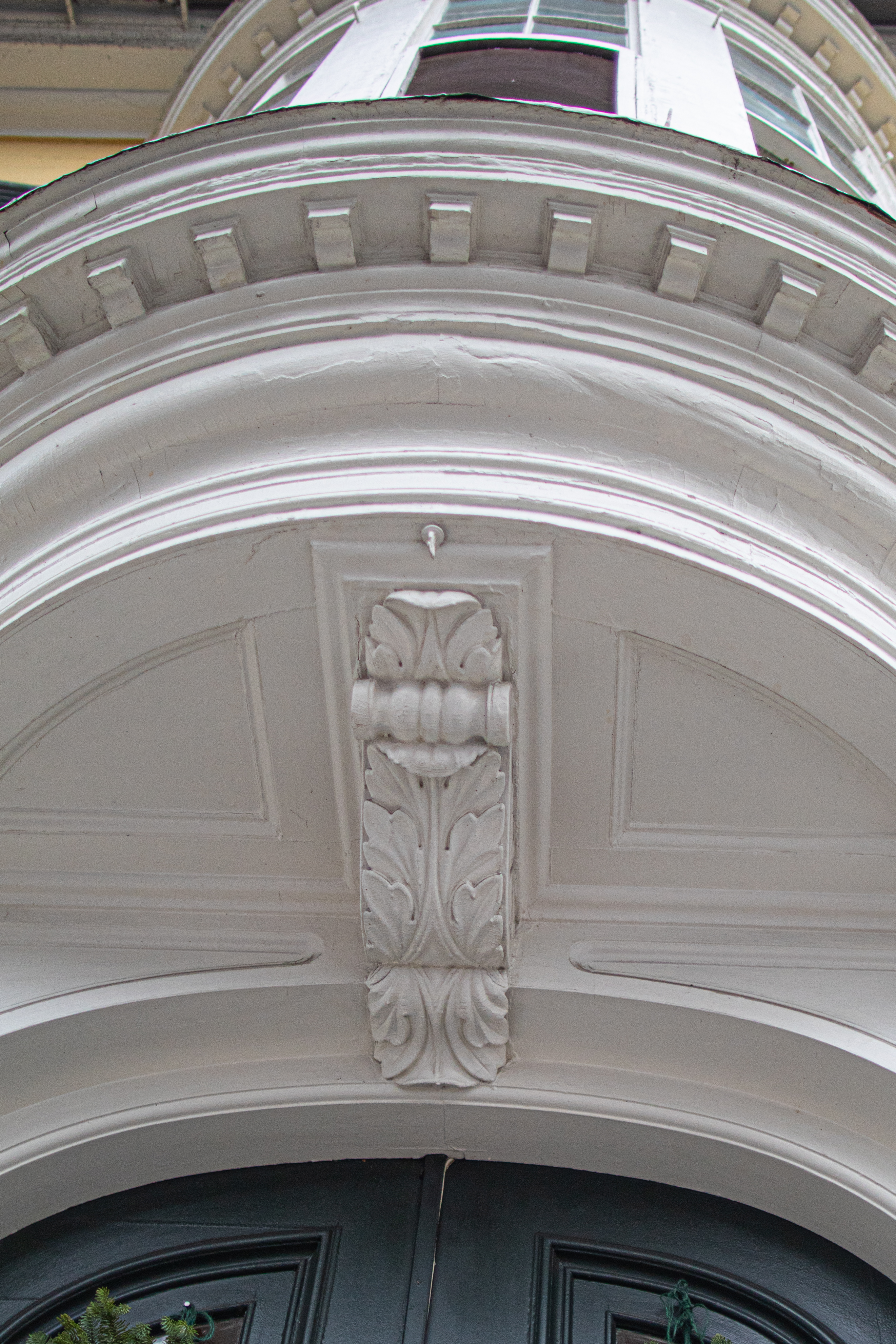
This decor above the door stood out to me.
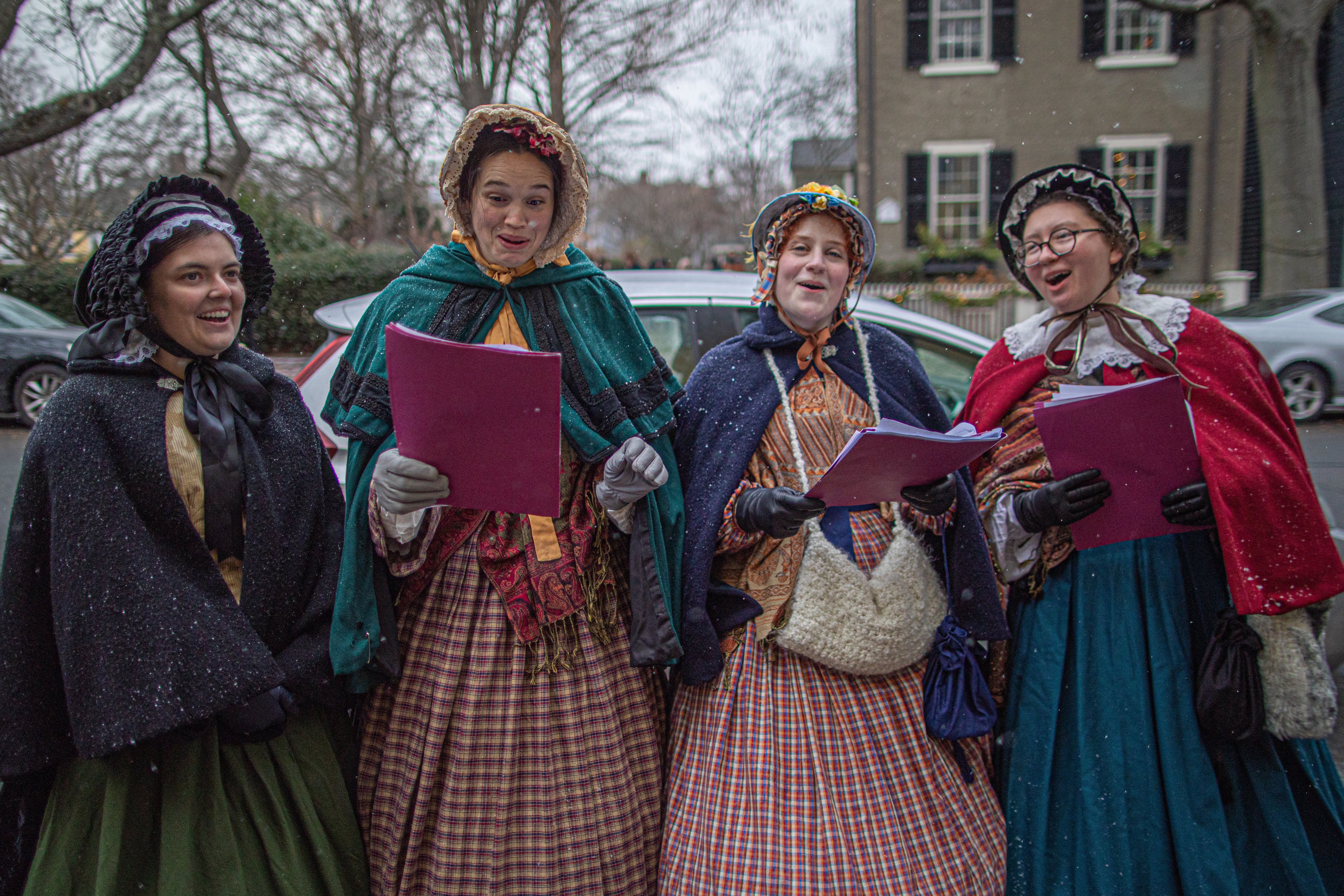
The line to get in to the houses can be long. So, we all took delight when these carolers stopped by. On cue, as the were singing, a light snow began to fall.
Eventually, we entered the home of Deacon John Stone, said to be the largest producer of rum in the area. The Deacon had his fingers in a lot of pots, apparently.
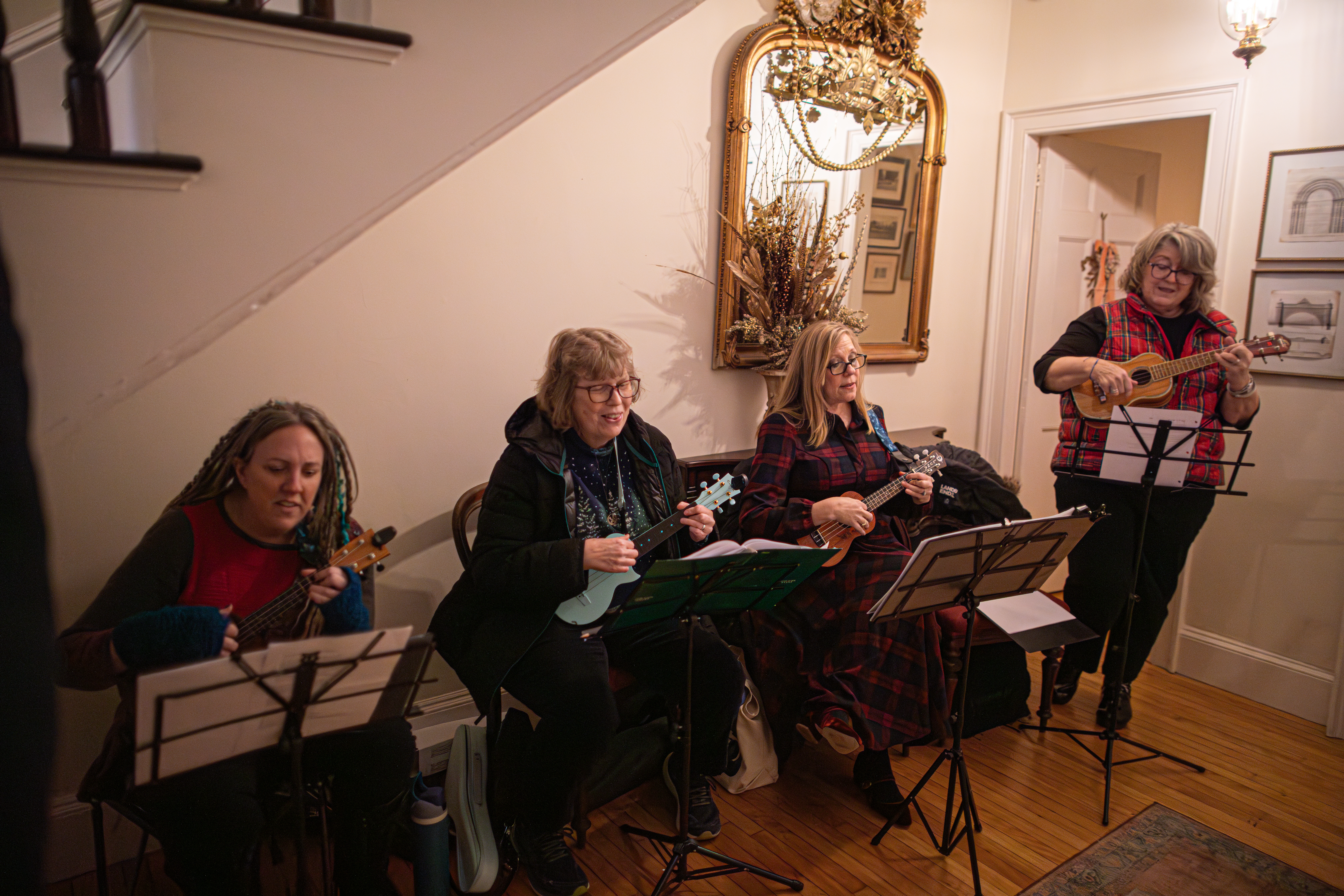
In the entryway, we were greeted by some musicians and signers playing holiday songs.
The home had a lot of vintage or original pieces.
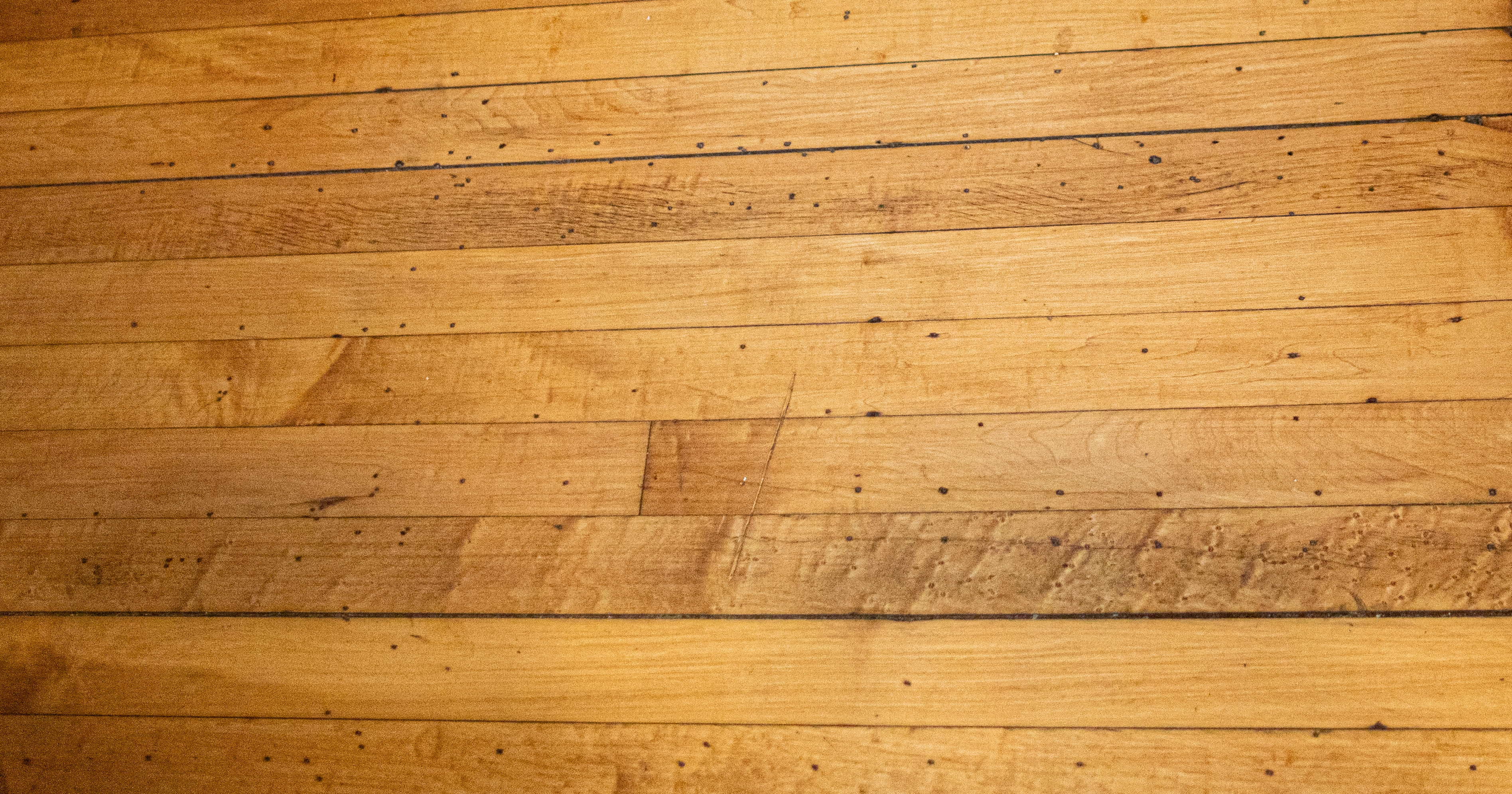
The floors were said to have been original to the home.
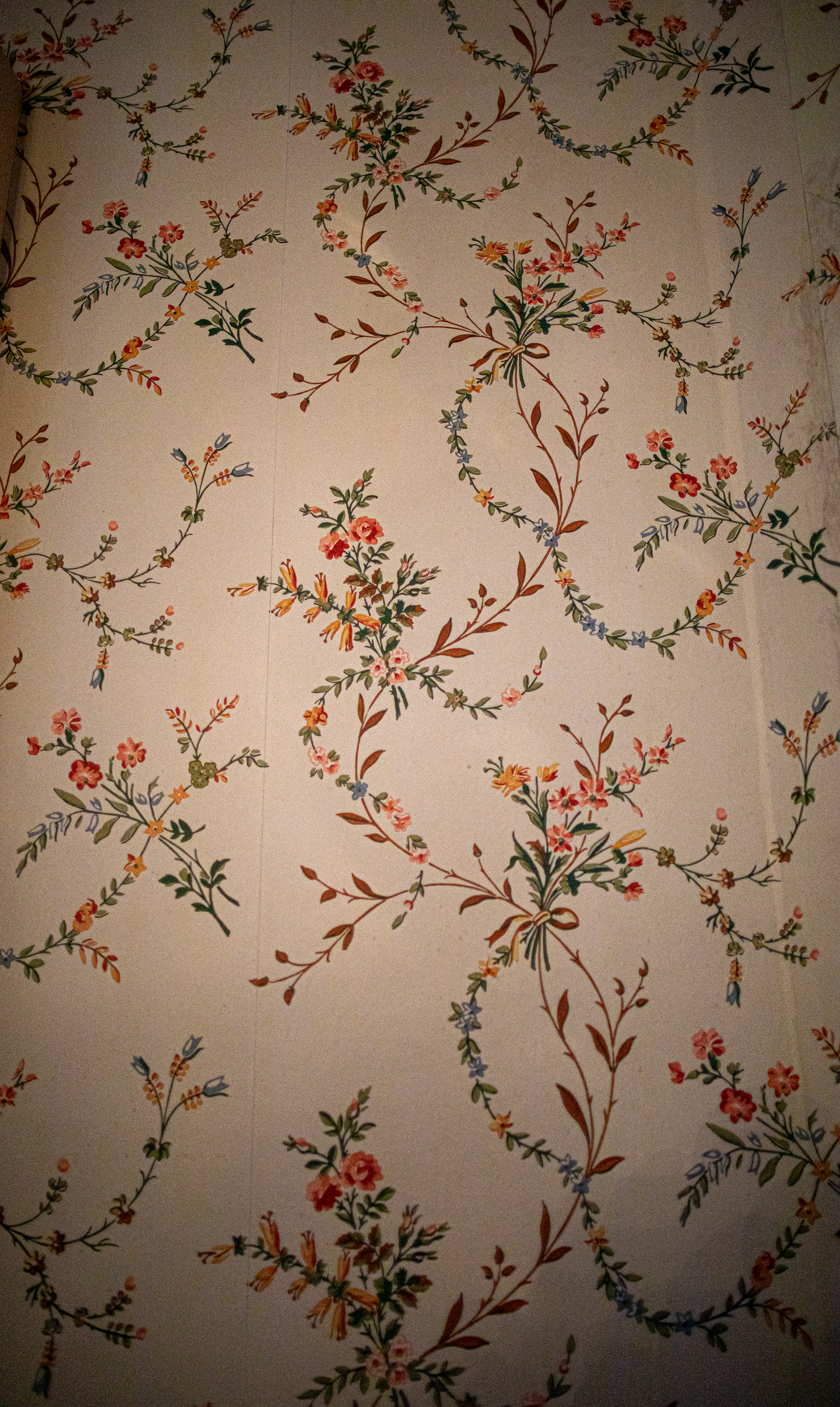
And the wallpaper was either the original or a replica of the original wallpaper. It never ceases to amaze me how the wallpaper on these homes have lasted so long, especially since people smoked in these homes in the past. I have to paint my walls every few years.
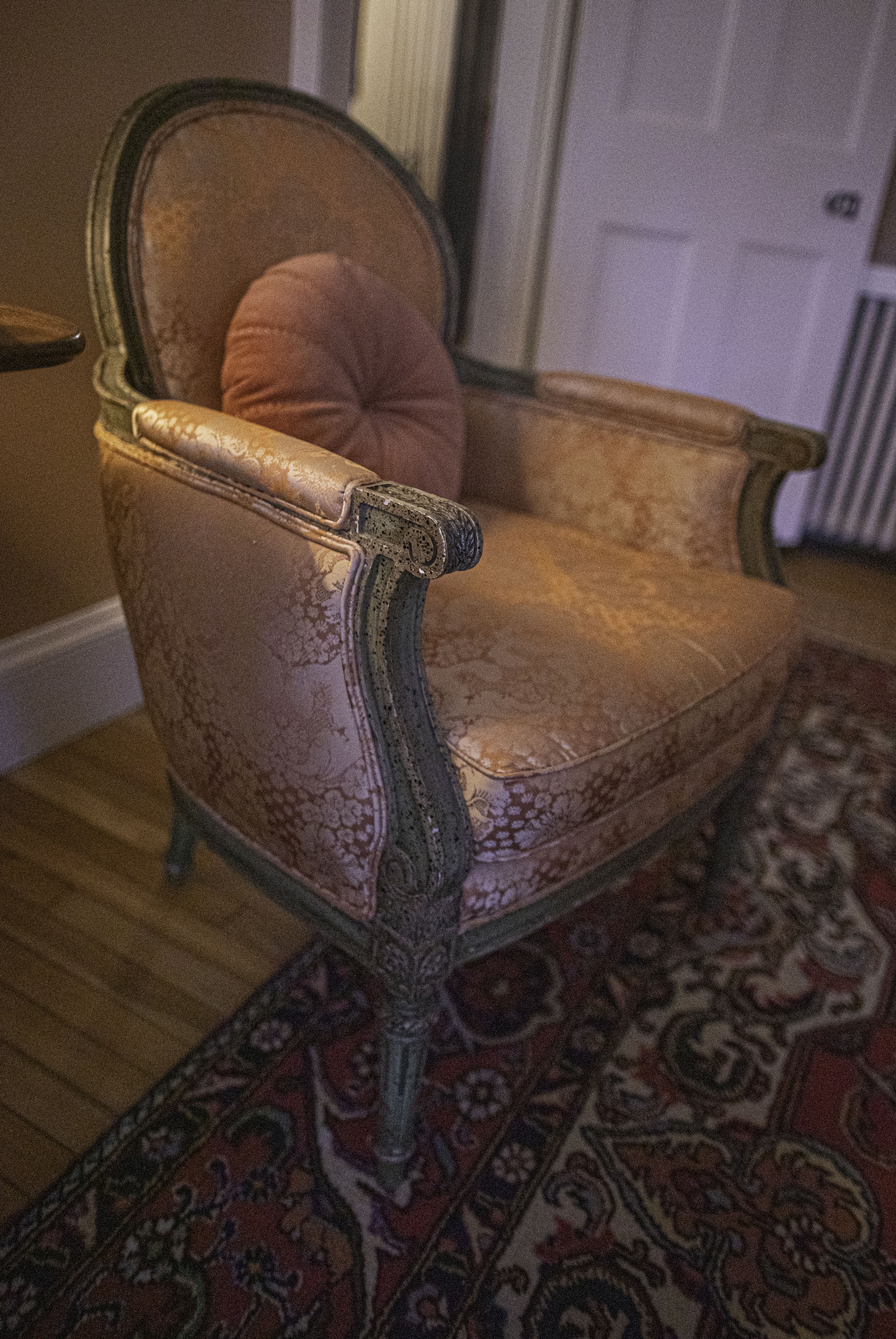
This Berger chair is a vintage piece that would have been common when this house was built.
And I thought my recliner was comfortable.
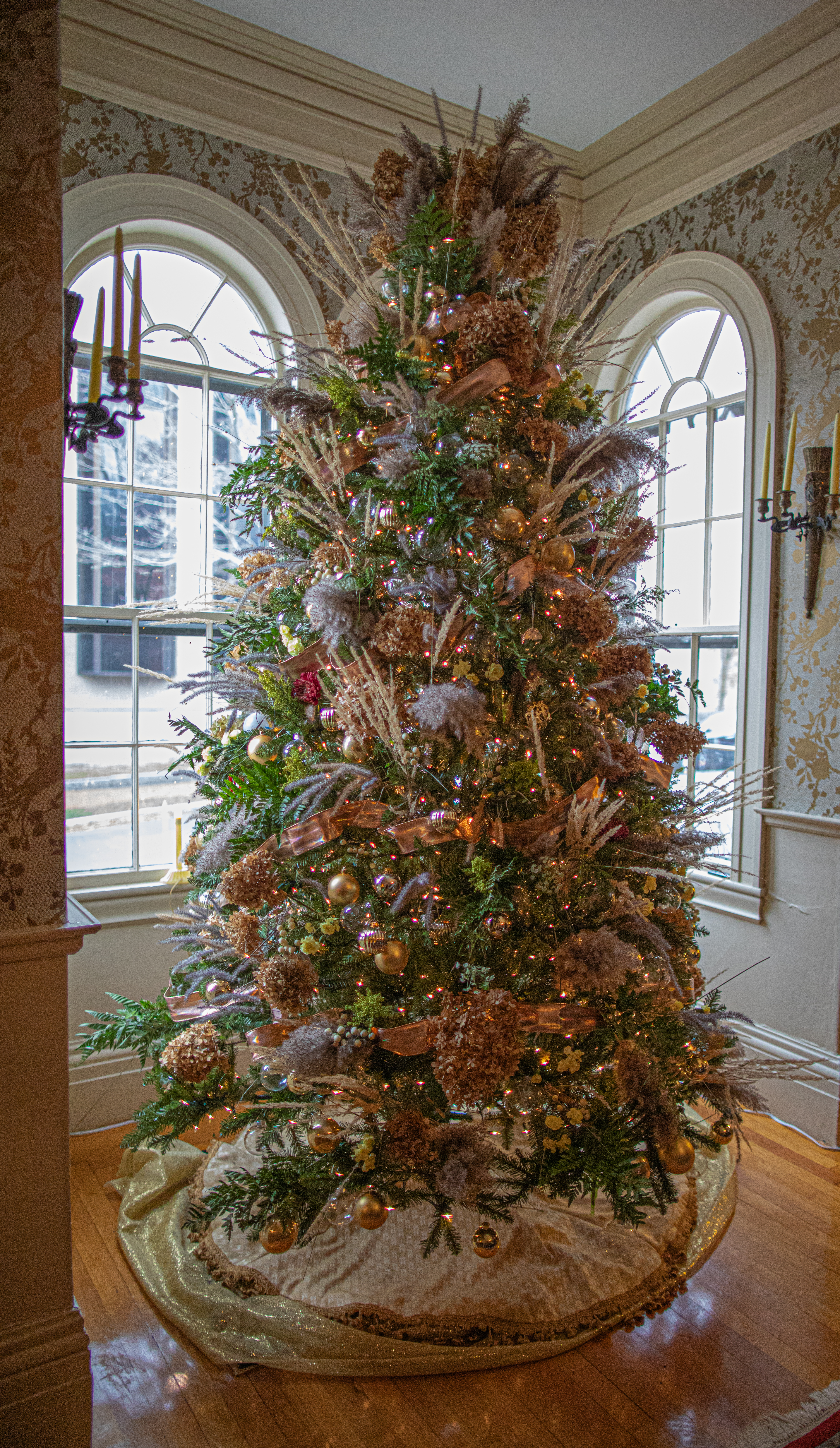
The house was decorated for the holidays.
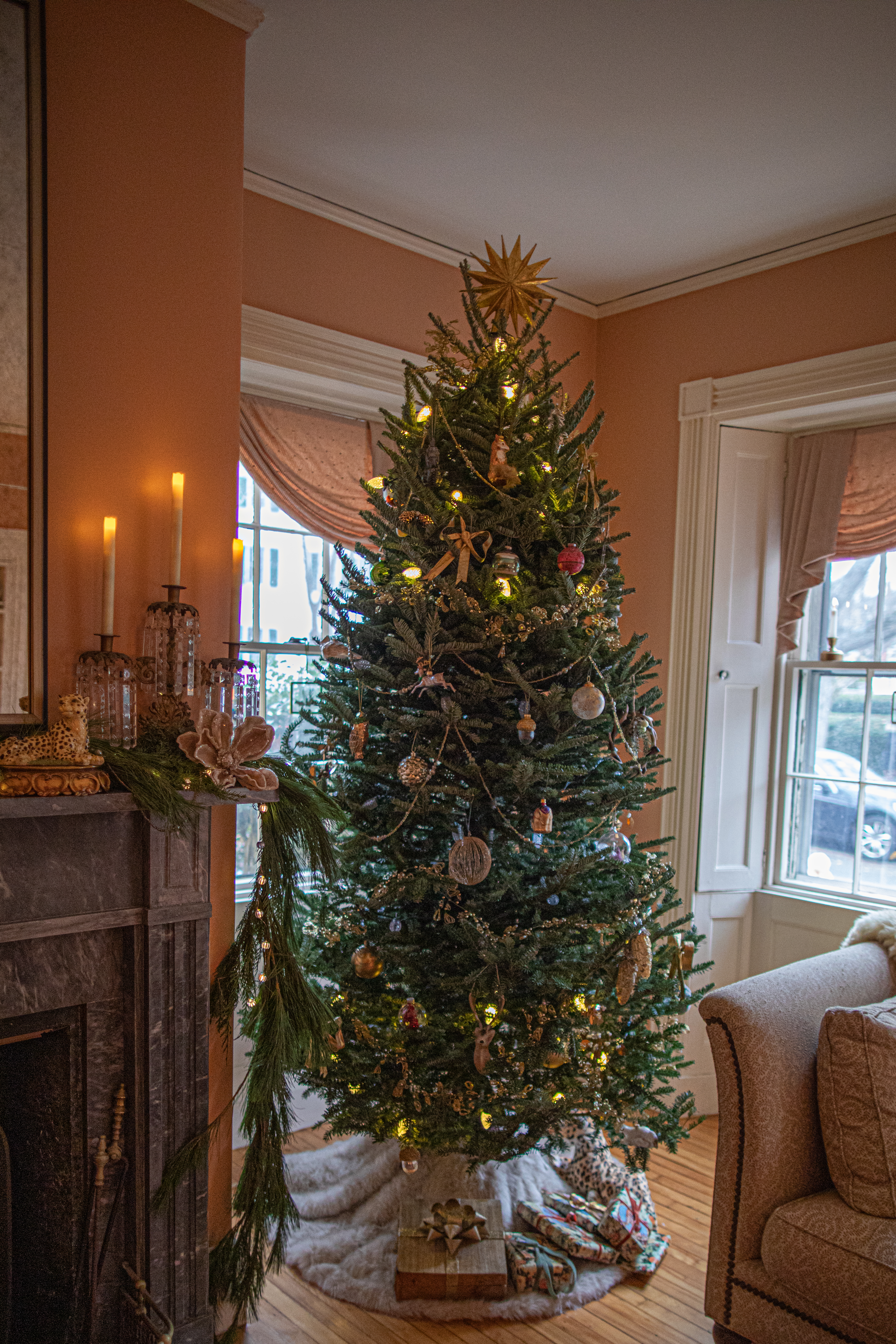
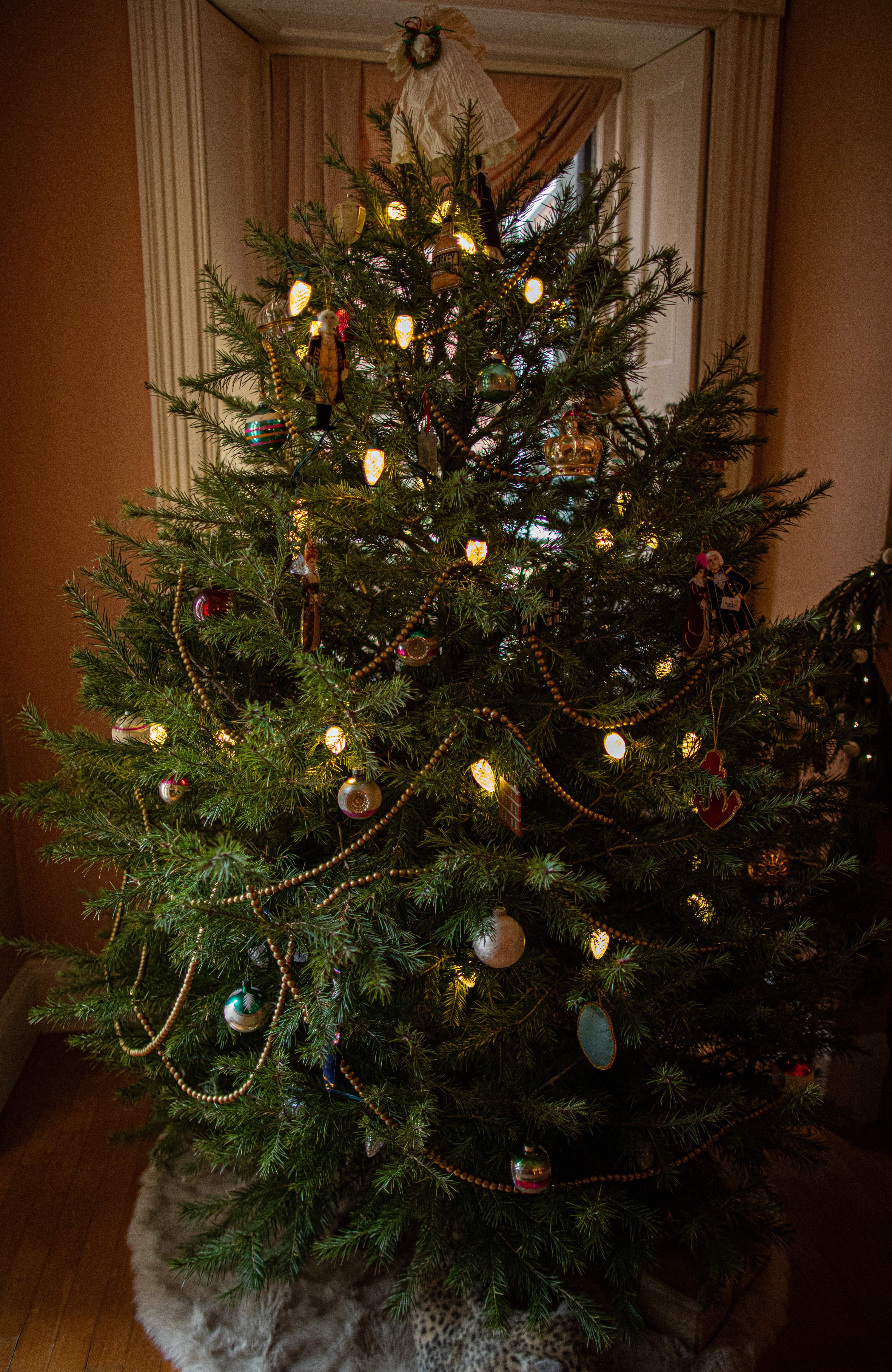
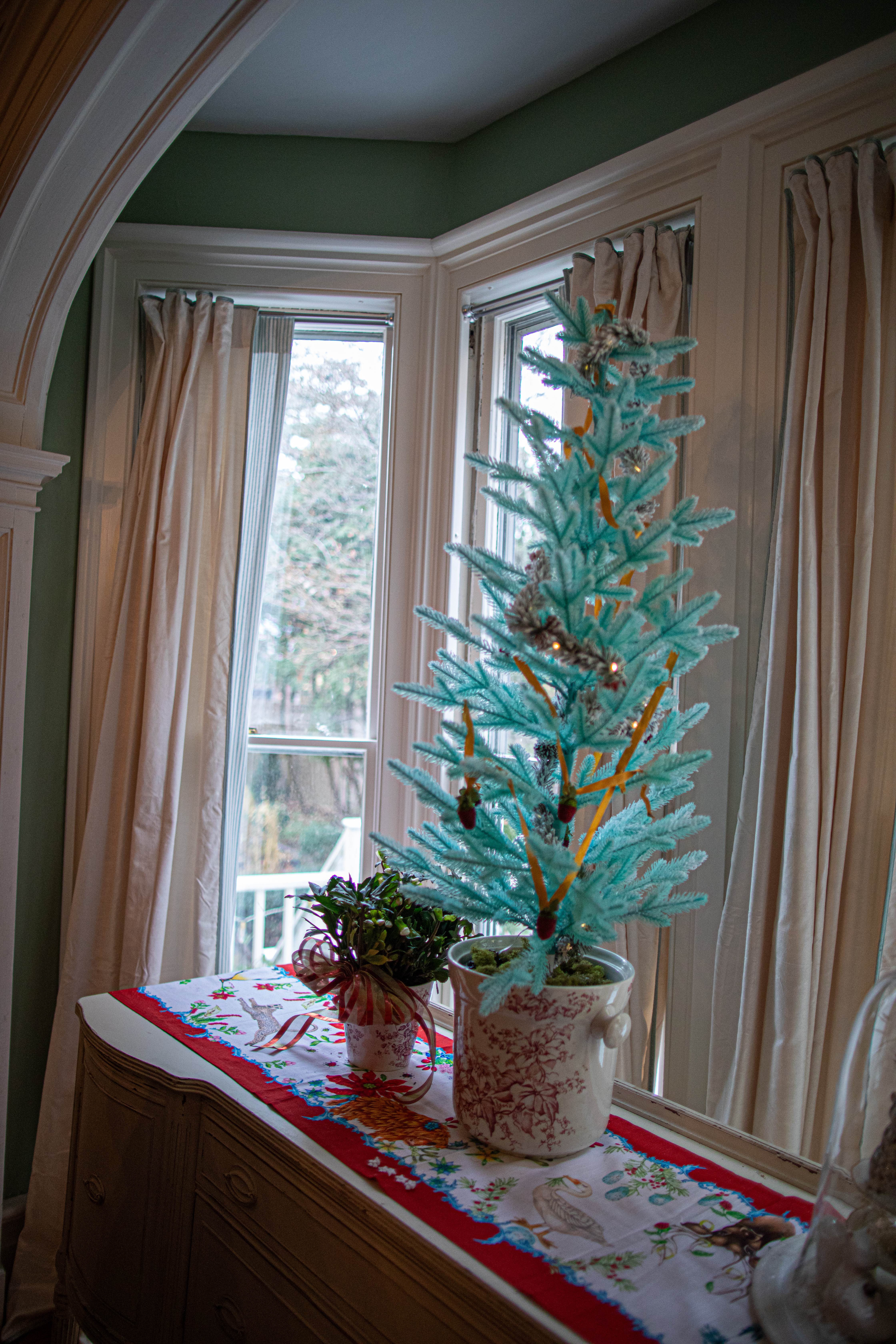
As the two trees suggest, there were indeed two separate rooms for dinner parties, festivities and other communal events. However, as was custom at the time, the men would congregate in one room while the women gathered in the other room. Some couples may still wish this custom was in vogue.
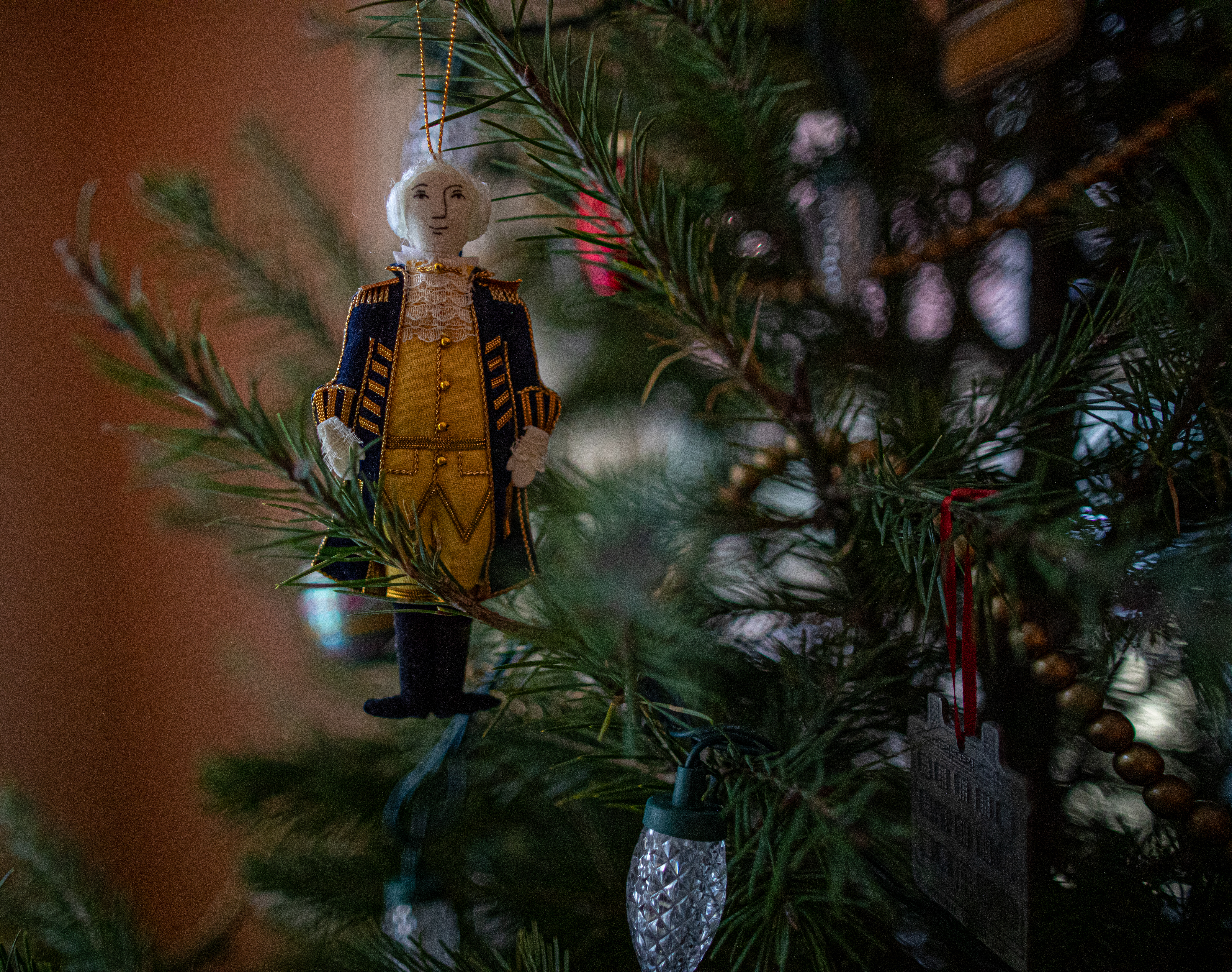
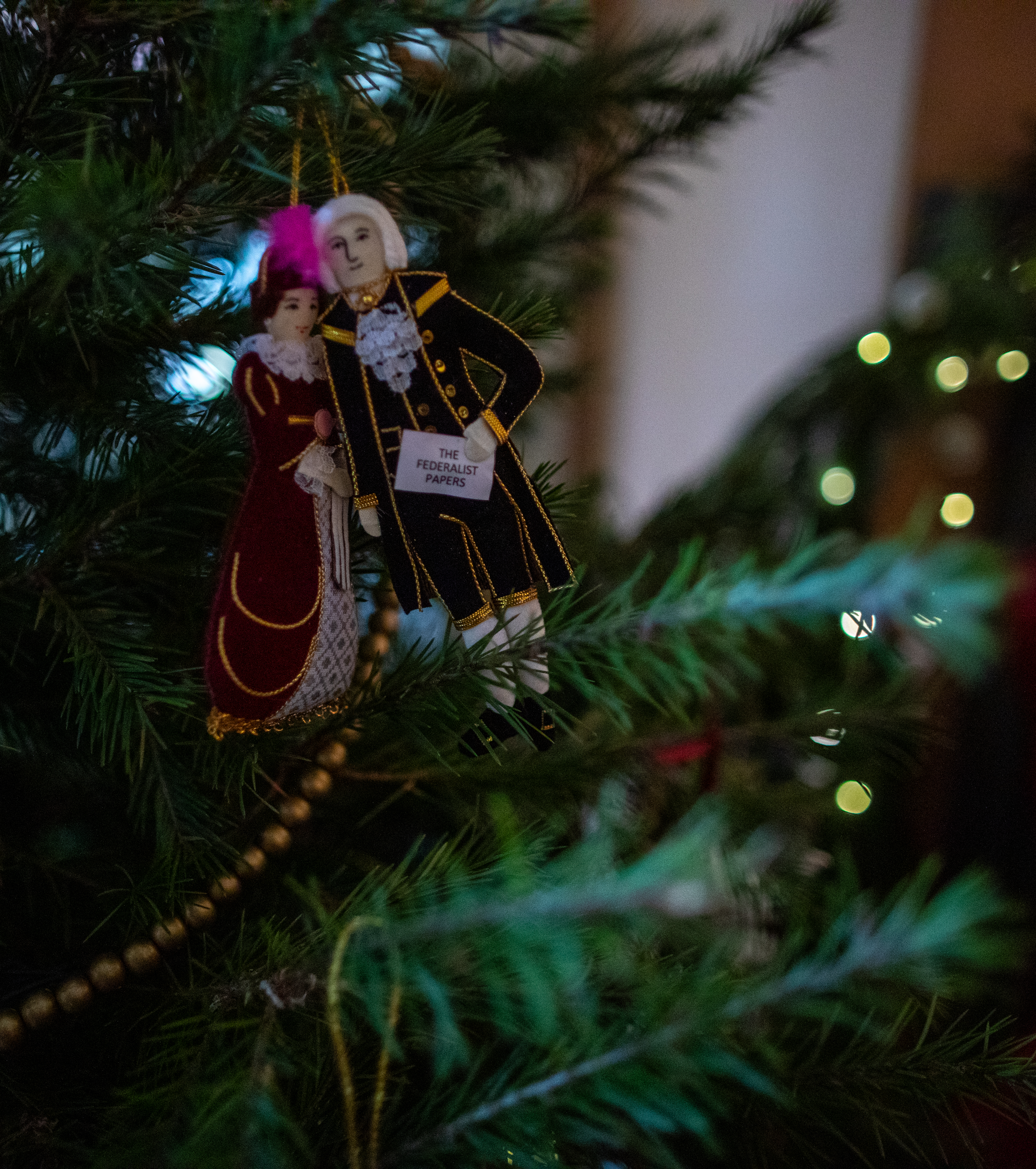
I had never seen ornaments of the early leaders of the country before.
Of course, the lighting fixtures caught my eye, especially since this one reminded me of a light we had in my childhood home sans the greenery.
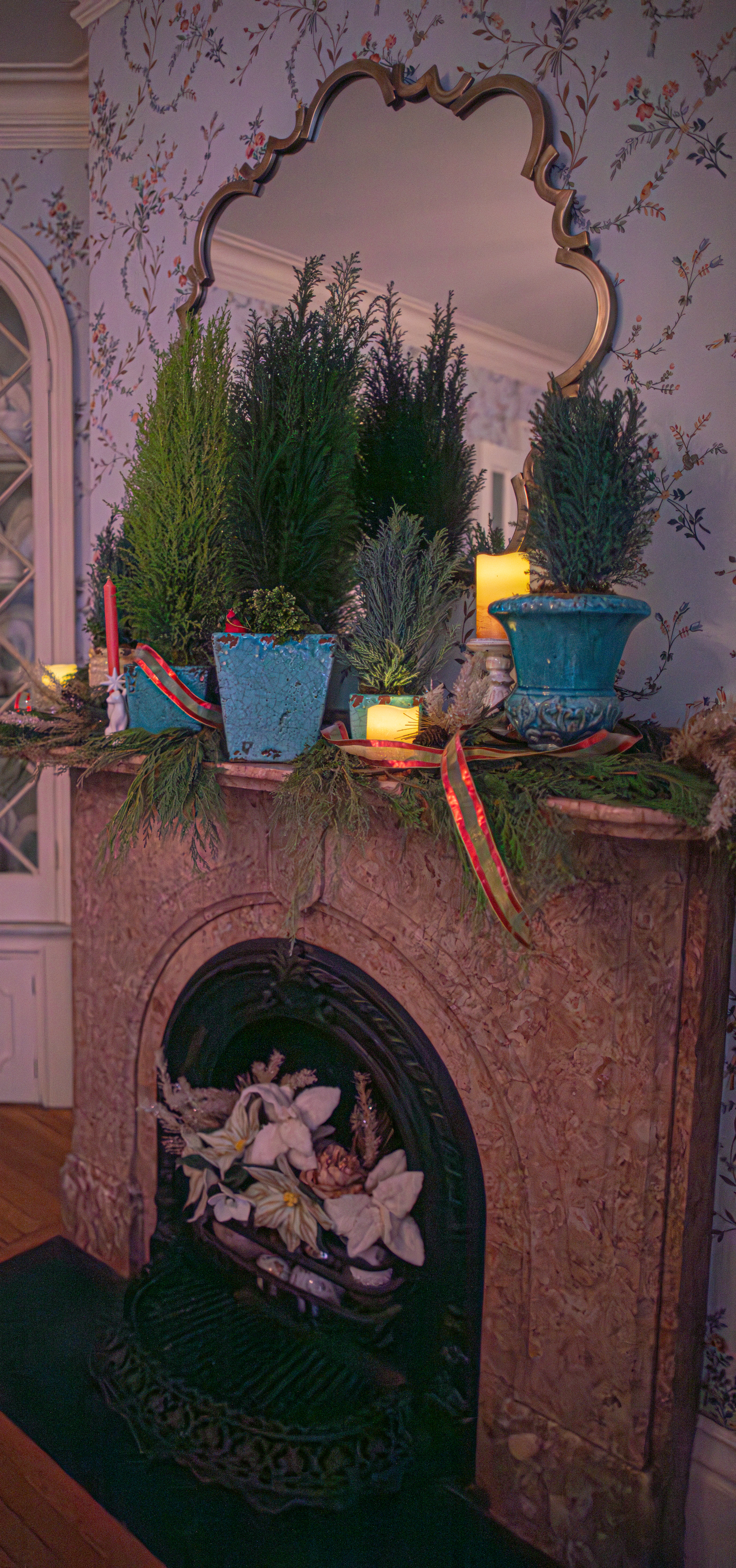
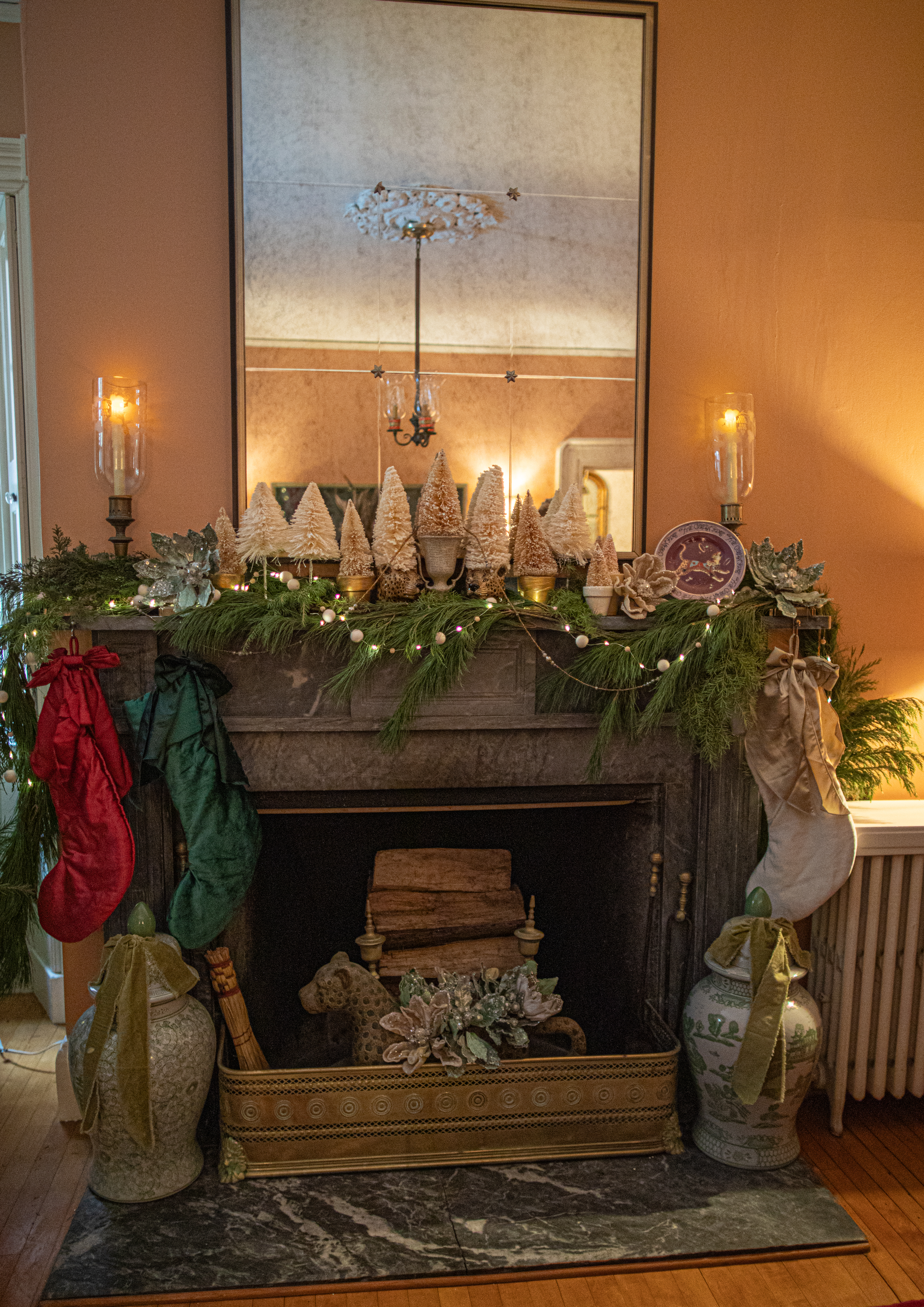
This original fireplace has a very rare marble.
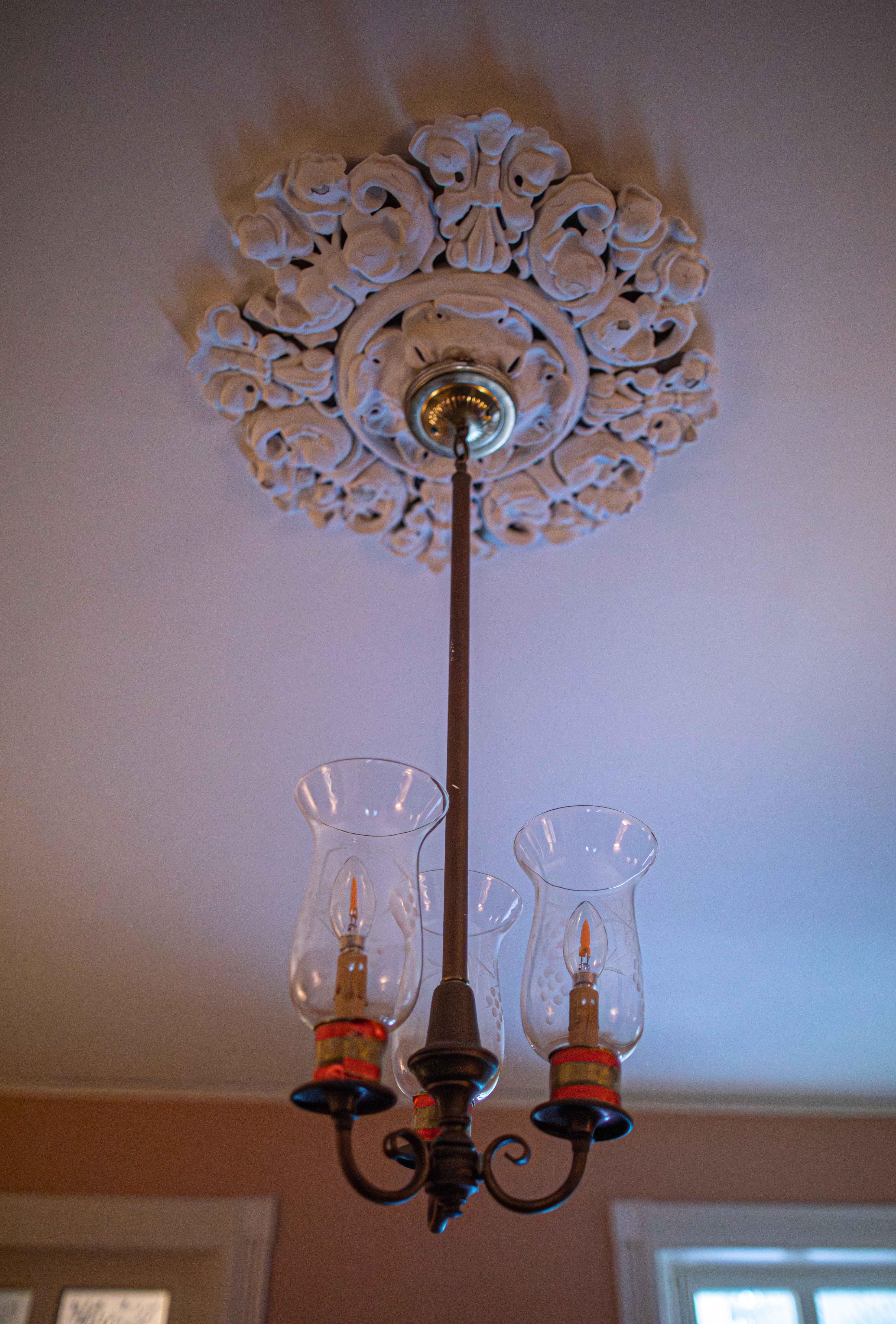
I always enjoy seeing the molding on the ceilings from which the lights hang from.
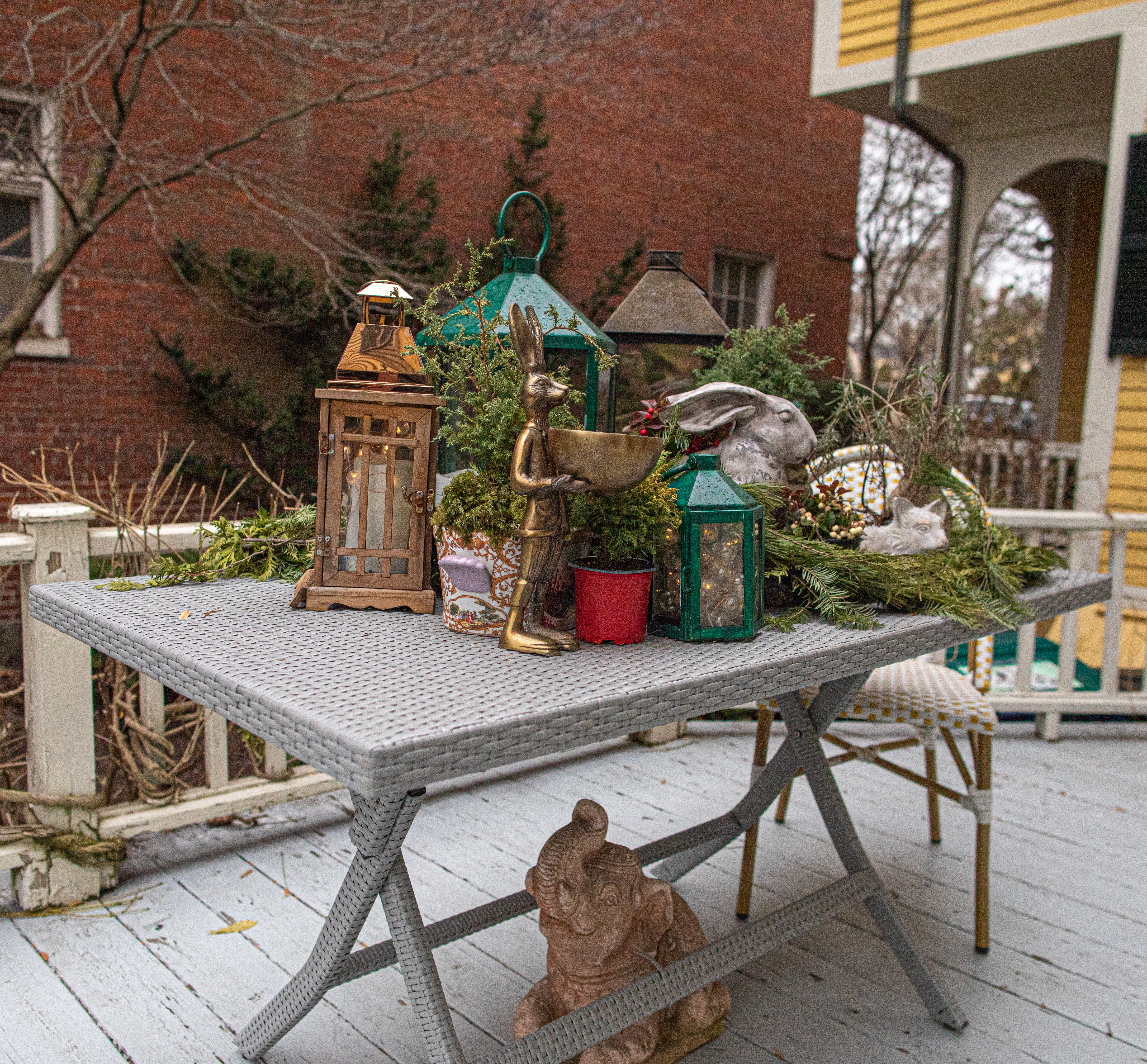
But, the holiday cheer didn’t end with the interior of the home. As we left the home, this decor was on the back porch.
Location: 18 Broad St, Salem, MA (about 30 minutes northeast of Boston, MA)
Universally Accessible: No
Cost: $40 per ticket ($50 if you purchase day of tour tickets)
Parking: There are several parking garages in Salem, as well as metered on street parking.
Summary: The Pickering House is both the biggest and perhaps most impressive homes on the tour!
The Pickering House was built in 1660 by John Pickering. From its construction until 1998, ten generations of the Pickering family lived in the home. Since 1998, it has continuously occupied by a caretaker family, making it the oldest continuously inhabited house in the United States. Over the centuries, the home has hosted numerous visitors including George Washington who is said to have dined at the very same table that is still in the house. The original portion of the home – the front living room – retains its exposed beams from 1660. Additional sections were added over time, with the most recent major renovation, the kitchen, completed in 1911. The exterior, a Gothic Revival Influence, was chosen by John Pickering VI to mirror European architectural trends during his time at the residence.
The most impressive building, at least from its exterior, the Pickering House is also the oldest home on the tour.
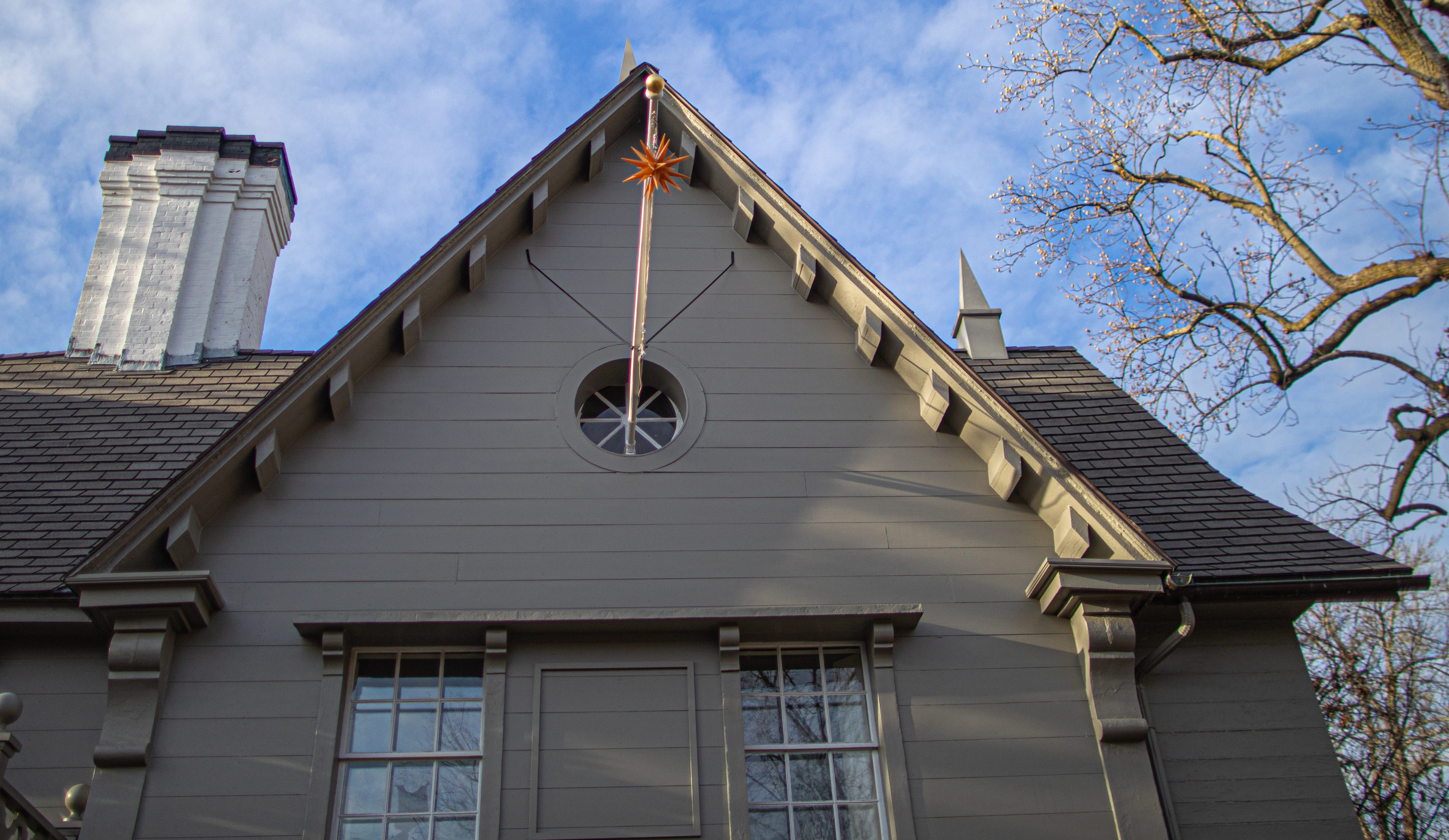
One of the features of the home that caught my attention was the chimney which is a group of flues from several chimneys.. You can see the chimney in the left of the photo below. The reason for the shape of the chimney was to allow for all of the flues from the various fireplaces in the home. When it was renovated, the home owners wanted to duplicate that look even if the home didn’t have as many fireplaces in it any longer.
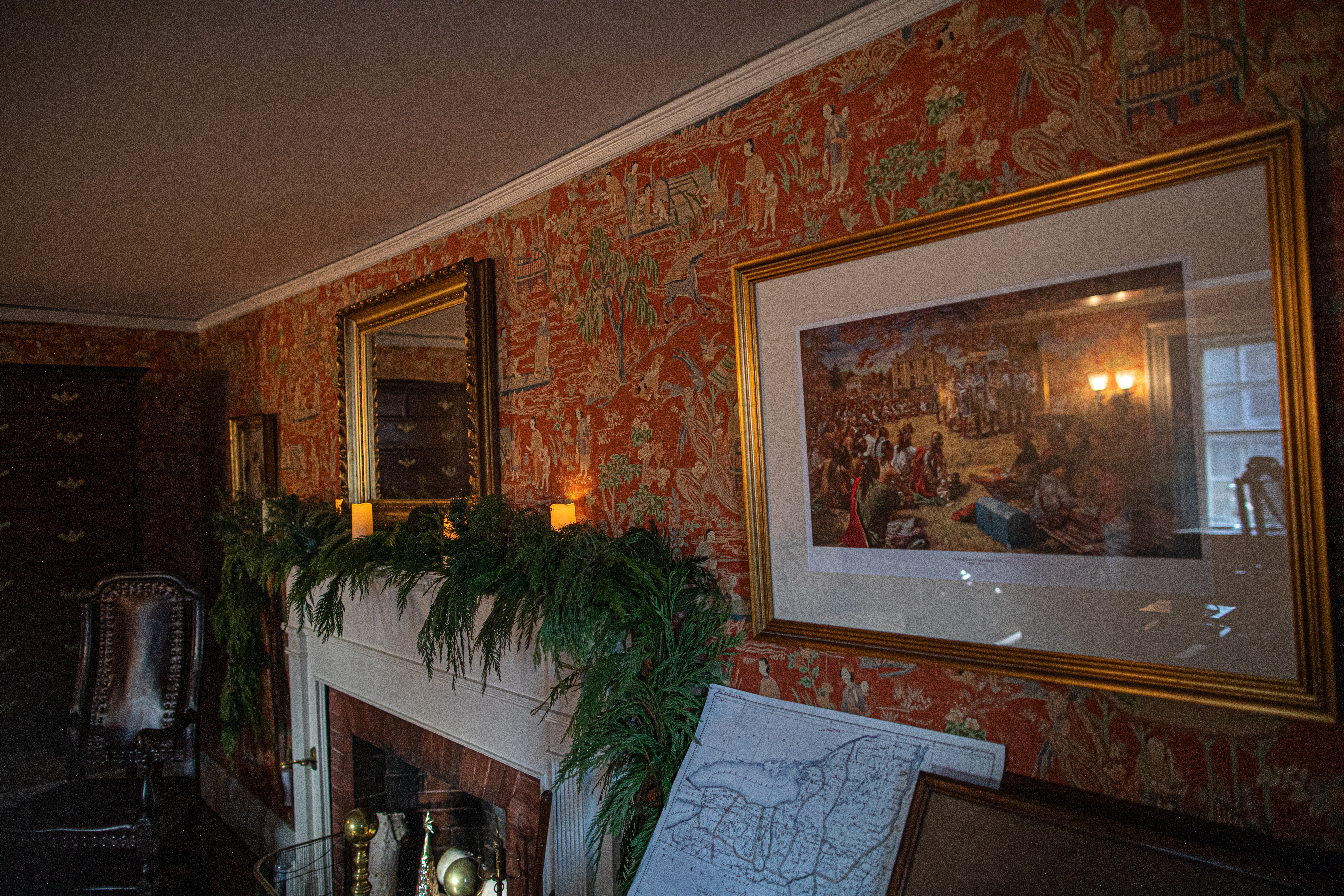
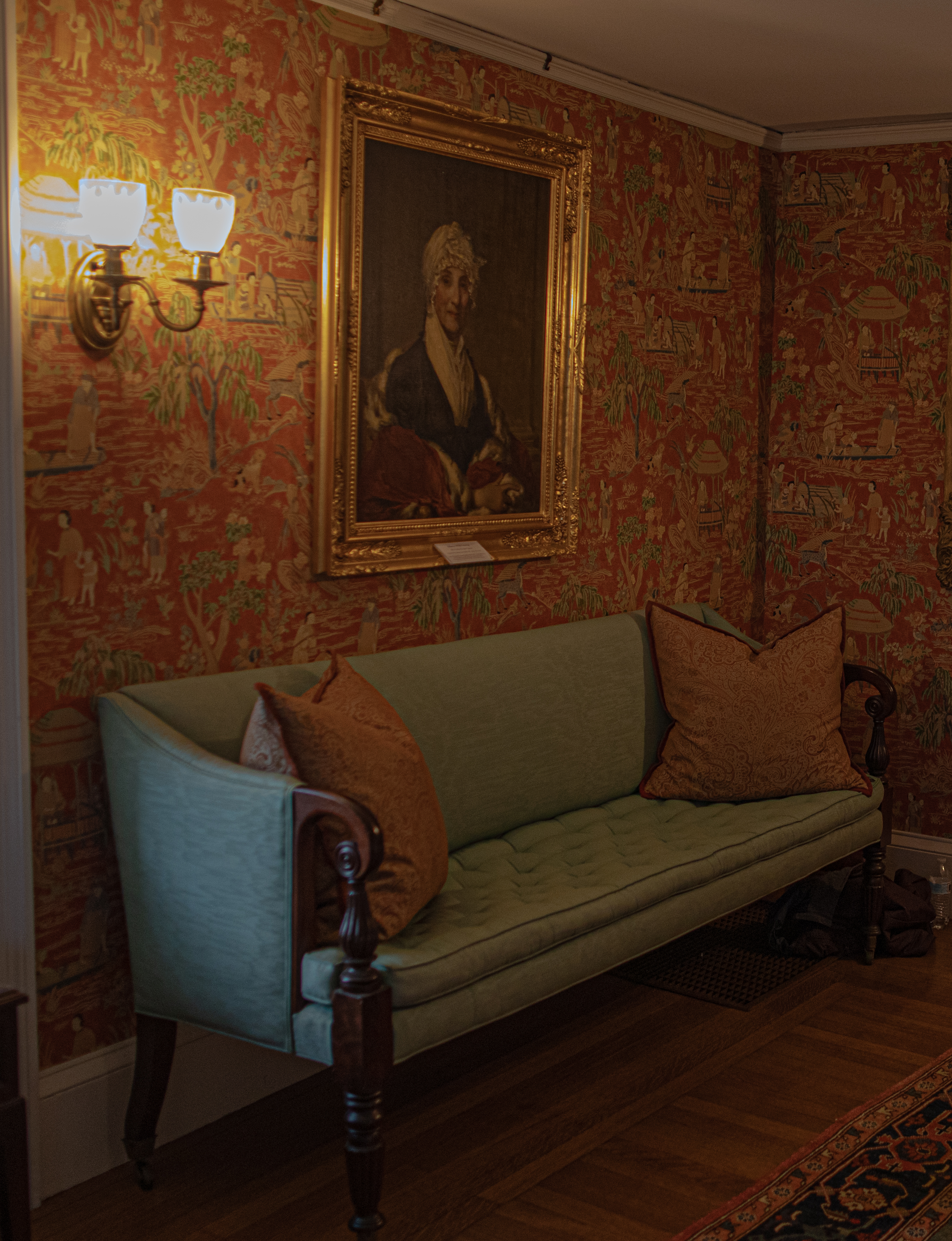
There is a lot of history inside the Pickering House. For instance, the home still has the original wallpaper.
And this couch which was a gift from Eleanor Roosevelt.
There were pretty decorations and furniture throughout the home.
To keep the large home warm, this fireplace was said to have been much bigger. The fireplace was originally from doorway to doorway. It was downsized during renovations.
Just like most historic homes in Massachusetts, and New England for that matter, George Washington slept in this home. It’s amazing how this rumor or legend has become a claim to fame for so many homes and inns. Legend has it George Washington slept in one of the second floor bedrooms. It is said that Washington stopped by the Pickering house and tied his horse to an old locust tree in the front yard when he visited Colonel Pickering in 1789. But, whether he slept there is still a bit of a mystery. Everywhere I looked for information to support this claim either didn’t mention anything to support it or used hedge words like “rumored” or “legend has it.” In any event, that’s their story and their sticking to it.
There also musicians playing Christmas music in one of the dining rooms. I could have stayed all day and listened to them.
As if that wasn’t enough, the Pickering House also had a barn that was lit up and decorated for the holiday season. It was a festive way to end the tour of the home.
Location: 10 Broad St, Salem, MA (about 30 minutes northeast of Boston, MA)
Universally Accessible: No
Cost: $40 per ticket ($50 if you purchase day of tour tickets)
Parking: There are several parking garages in Salem, as well as metered on street parking.
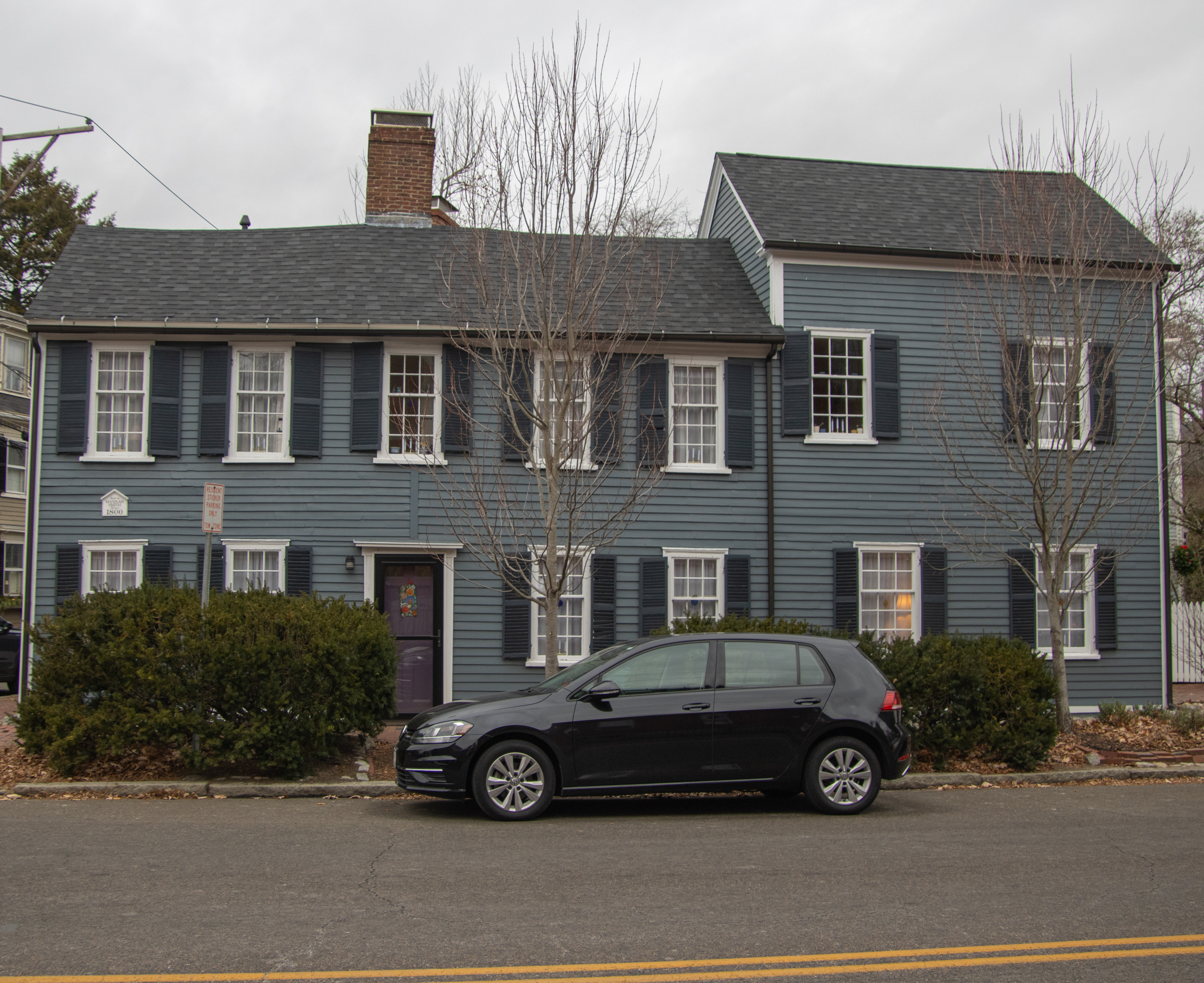
Summary: The home at 10 Broad St has a long history of changing ownership, construction (and deconstruction) and a lot of charm!
Like many of the houses on the Christmas In Salem tour, the home at 10 Broad St was part of the 17th century “homestead land” of Jonathan Neal (that name may ring a bell from my previous post) which was partitioned among the children and grandchildren. Hannah Smith, a 43 year old widow and granddaughter of Neal, inherited “Lot #7 and the small old house thereon” in 1799. Hannah razed the old house and built a new one in 1800, occupying the Broad St portion of the house and renting out the portion that front Cambridge St. After her death the property was partitioned again and divided into two parts by her heirs as two separate residences.
The Cambridge St section of the building was continuously occupied for much of the 19th century while the Broad St side was often vacant. One hundred years later, the two entities were united into a single-family residence by another widow, Hope Brown, in 1954.
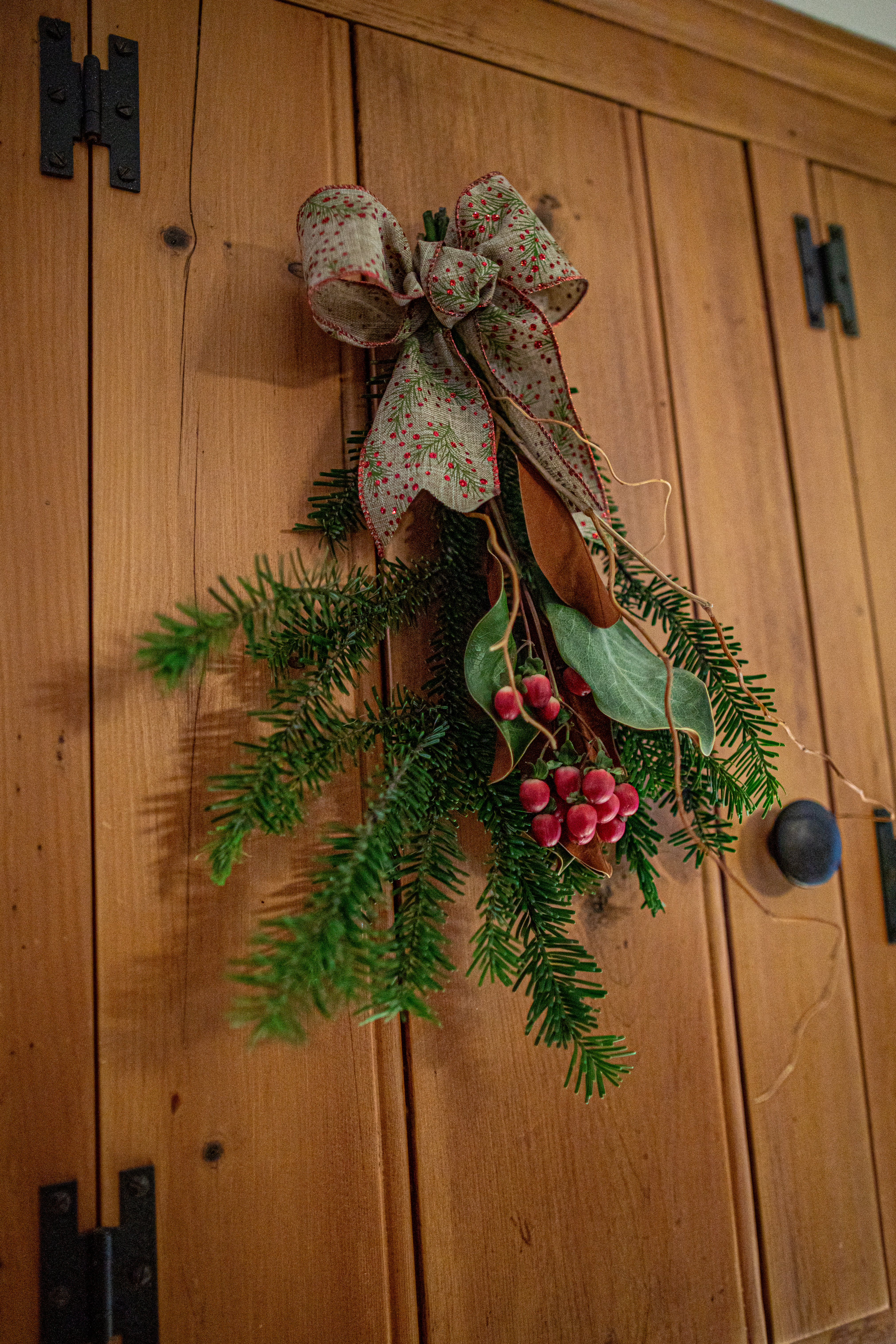
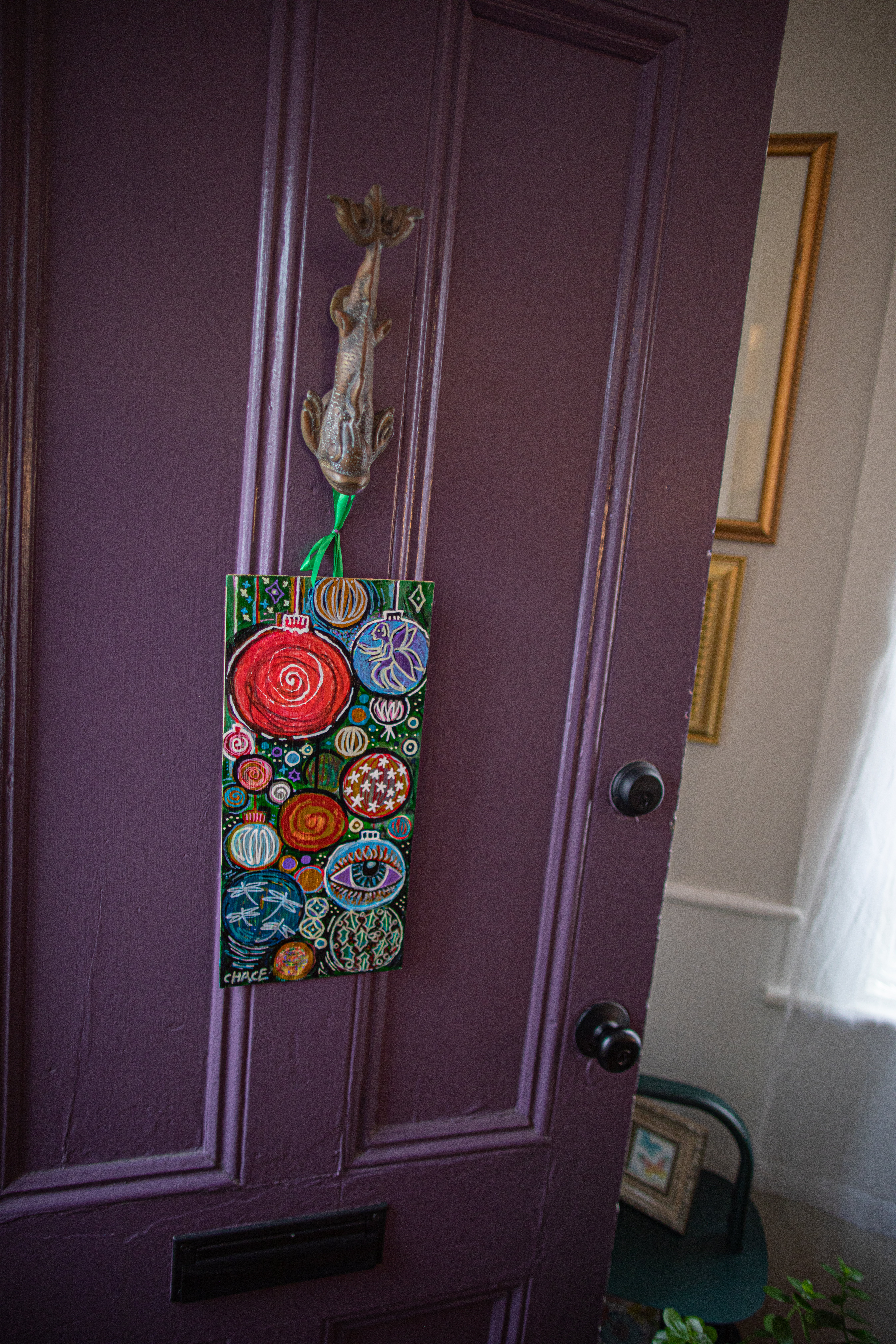
The entrance to the home is located at the side of the right of the building. There was some Christmas decor attached to a Neoclassical Style Dolphin Door knocker.
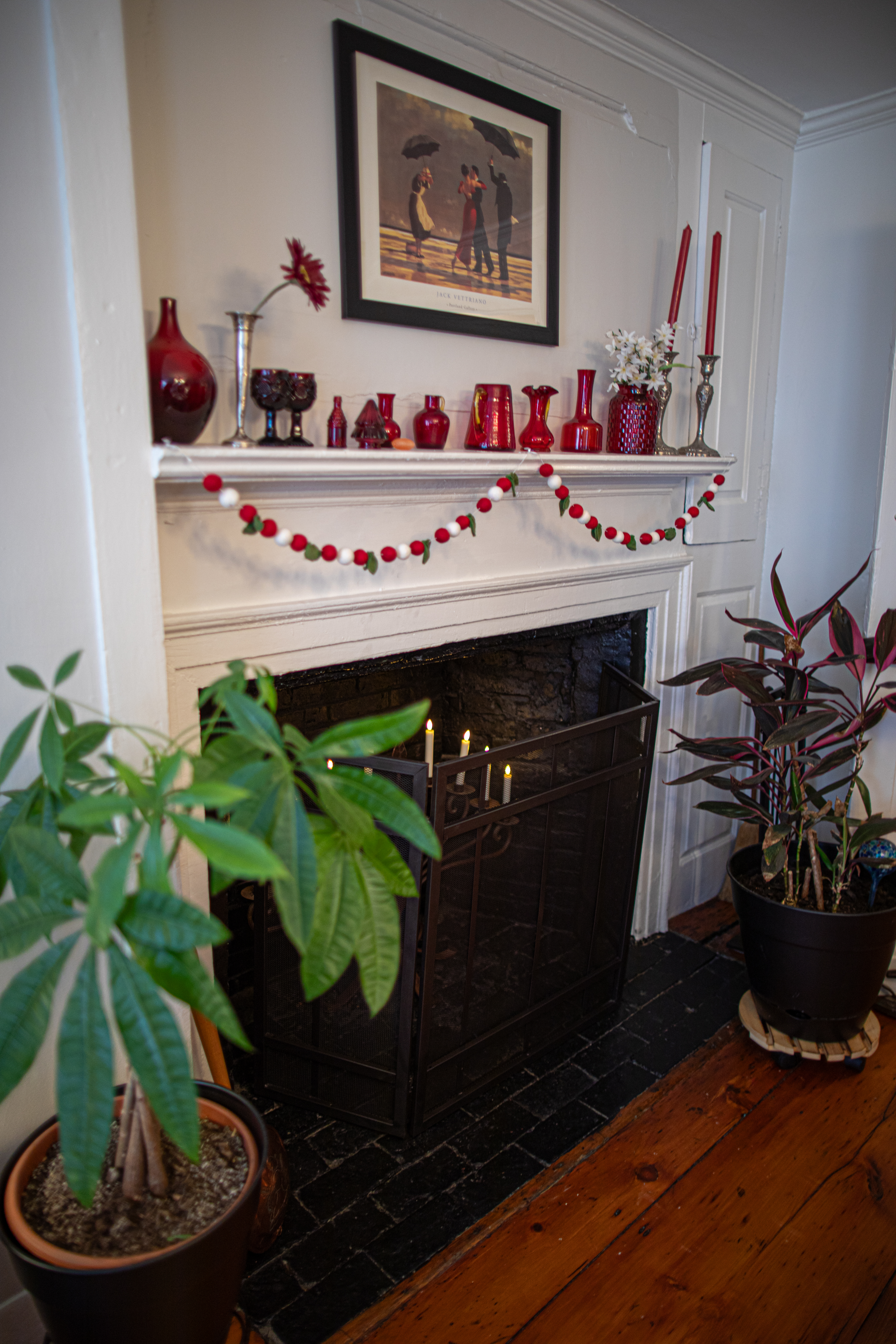
This fireplace had a holiday feel to it.
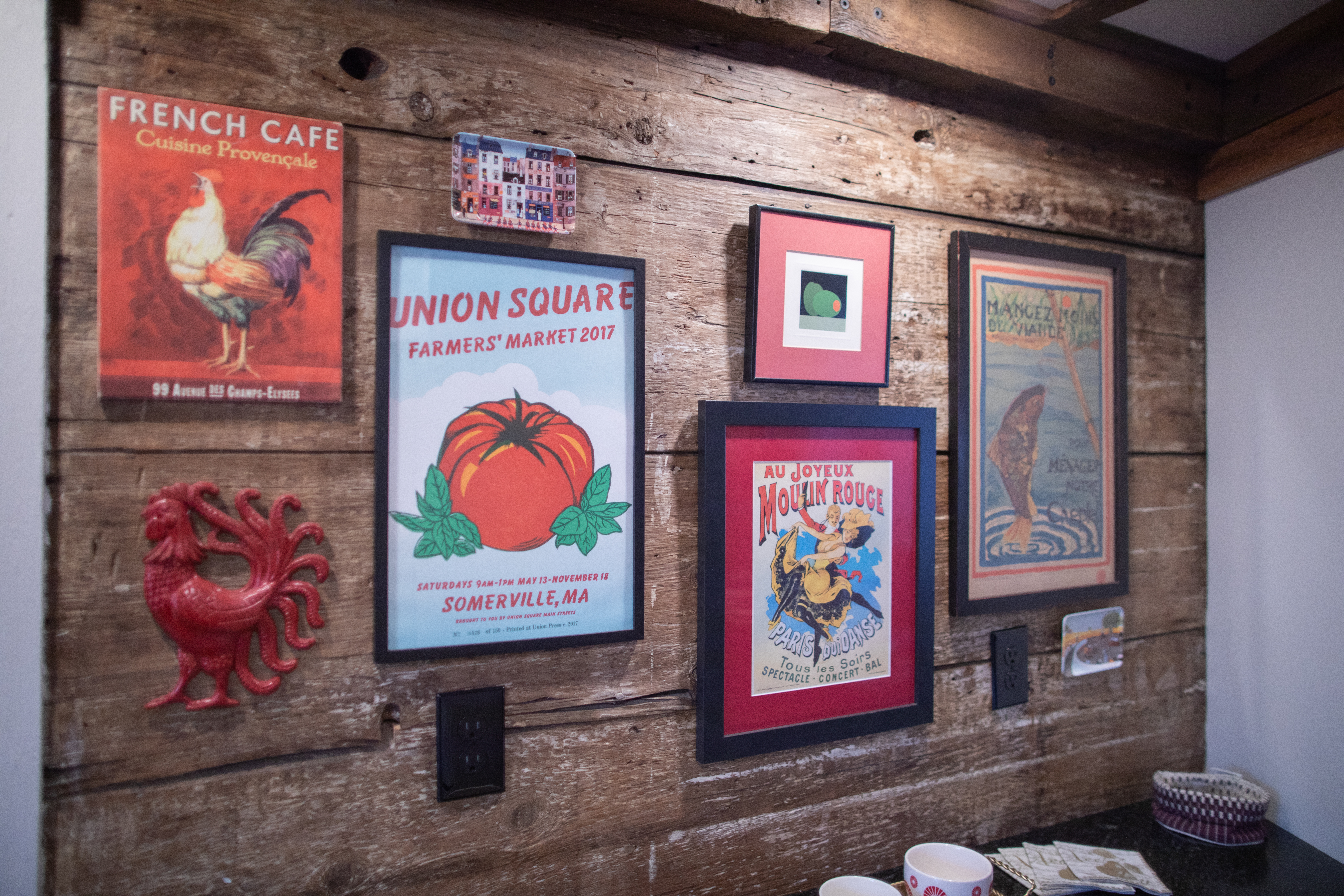
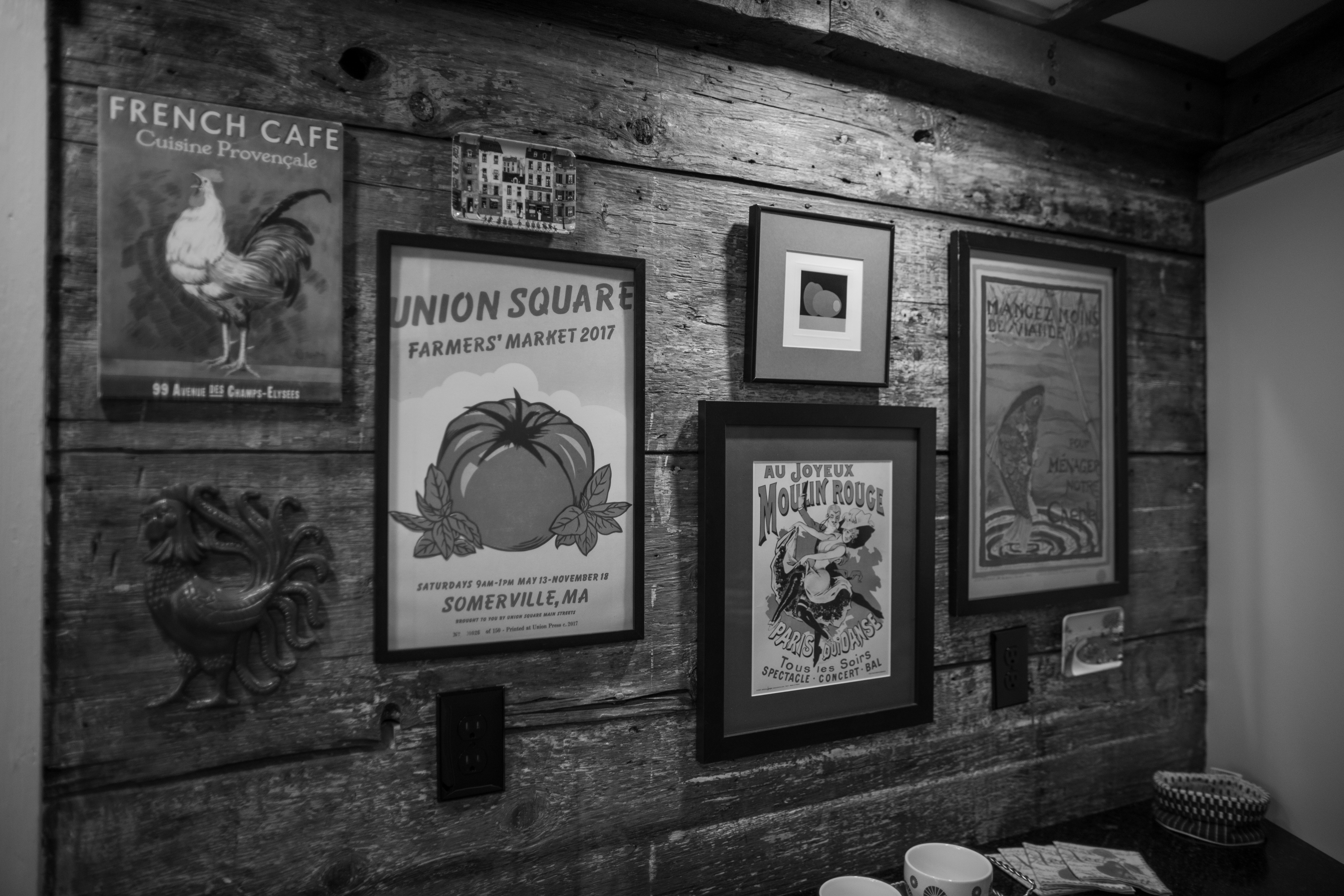
The house had a red and chicken theme. I liked the black and white photo better. But it didn’t illustrate the color theme as well as the color photo. So, I’ll attach the black and white photo below as well.
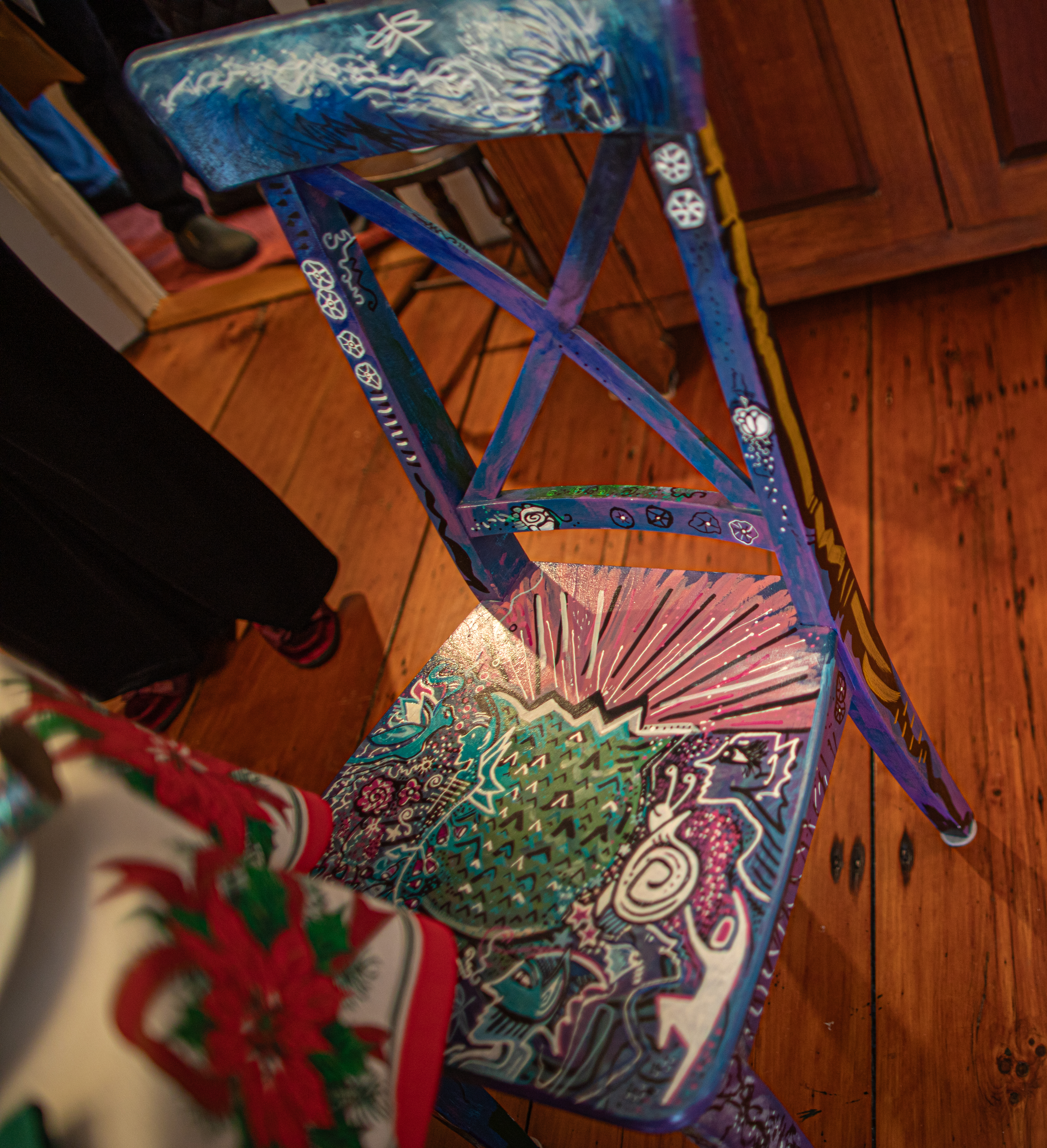
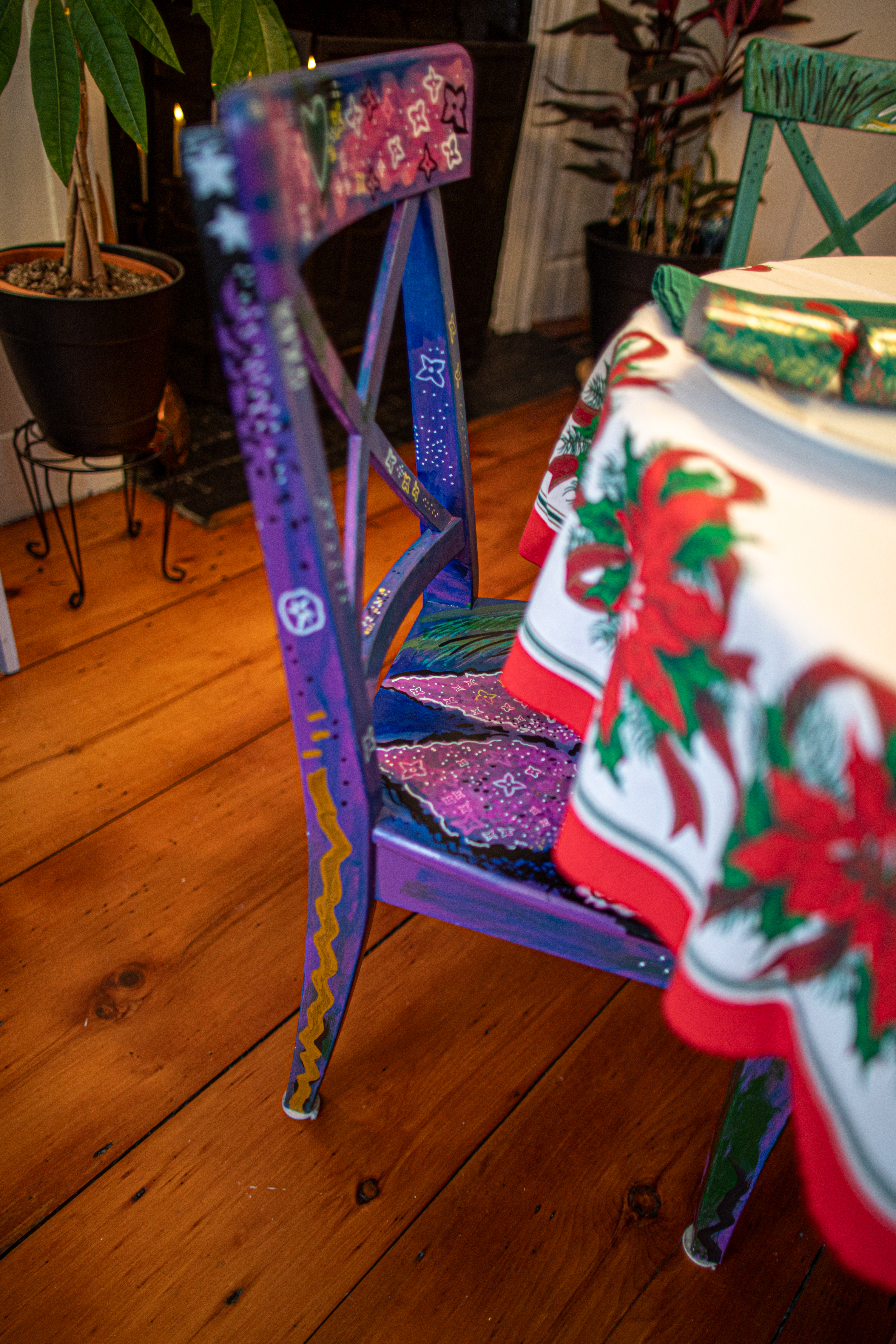
These chairs were originally Ikea chairs the owner bought and were decorated to represent important times, events and other things of their life.
The tour guide didn’t say specifically what events or things the decor represented. But, I think that adds to the secrecy and mystery of the decorations.
The home had a lot of Christmas cheer (and some extra cheer in the bottles of the last group of photos). I especially liked how they set up the dining room table as though they were expecting dinner guests.
I liked the stars hanging from the lighting fixture and, of course, the bokeh.
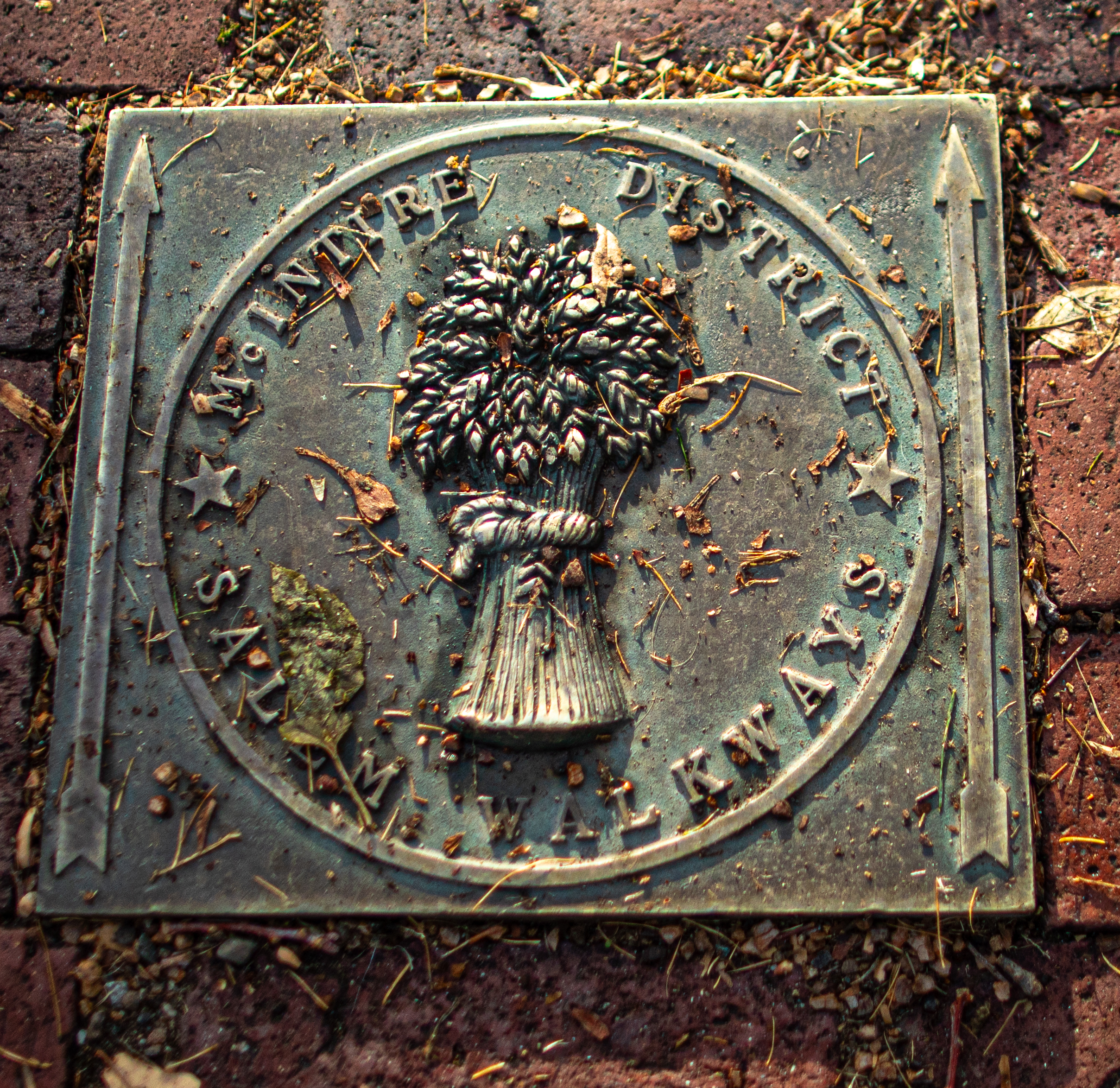
While I was walking along the trail to the various homes, I saw a few of these markers.
Since these homes are in the “Mcintire District), named after famous Salem architect, carver, sculpture and crafts worker Samuel Mcintire. A whole post or series of blog posts could be devoted to Samuel Mcintire’s work. But, the fact that an entire section of Salem has been dedicated in his honor says volumes. Even though he may not have had a part in the building or design of some of these homes, his influence can be noticed in all of the homes.
Location: 12 Broad St, Salem, MA (about 30 minutes northeast of Boston, MA)
Universally Accessible: No
Cost: $40 per ticket ($50 if you purchase day of tour tickets)
Parking: There are several parking garages in Salem, as well as metered on street parking.
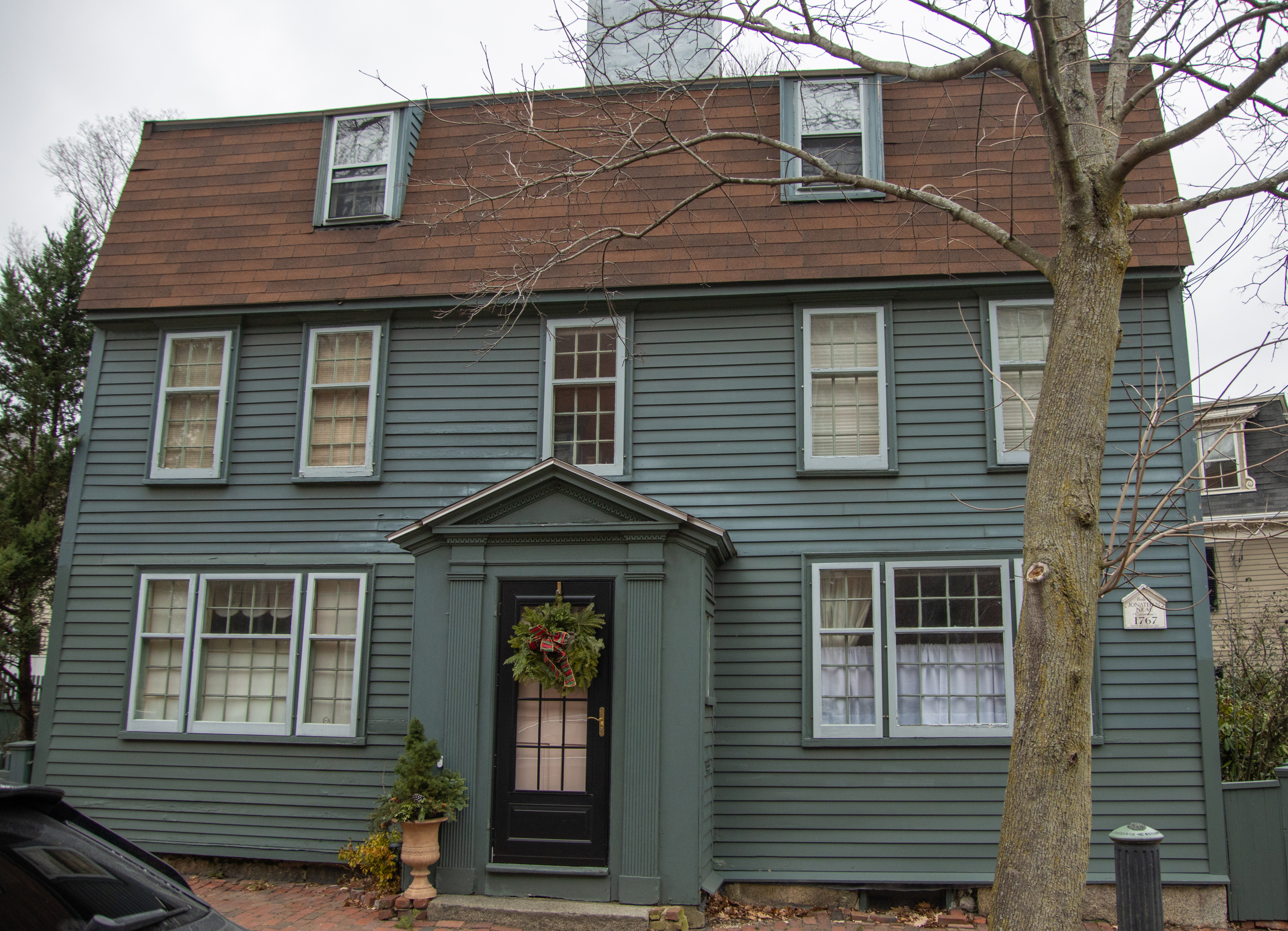
Summary: The home on 12 Broad St, built by Jonathan Neal, has some impressive decor, an interesting history and a connection to bees and chickens! I bet that got your attention!
In 1767 Johnathan Neal, a yeoman and carter, built this house on land owned owned by the Neal family since the 1600s; The house Jonathan built was described as two stories high and one room deep with a pitched roof which may have been a recycled from a previous house. Certain elements, such as a front-to- back summer beam on the first floor, suggest a possible pre-1730s date while elsewhere there is beaded box molding suggestive of post-1730s construction. The house is said to have had 6 working fireplaces. It was extensively renovated in the 20th making it difficult to determine which elements are original and which have been restored.
The area of Broad St where this house stands was not far from the town almshouse (a charitable residence, often endowed by a benefactor, providing housing of poor, elderly, disabled or otherwise disadvantaged people in a community) where indigent and very sick people were housed in the 18th century. Because of the location of the almshouses, the street was known as Almshouse Lane.
Neal died in 1790 after falling off the wharf near his almshouse after visiting a “house of intemperance.” Neal landed face first in the mud. Hey, we’ve all had bad nights. Unfortunately, Neal’s bad night was fatal. After his death, the house was divided among his children into four units occupied by the Neal family and in-laws. After the Civil War, the dwelling house became a two-family home and in 1925 it was a single-family home for the first time in over 25 years.
In 1885, Leverett Saltonstall, who grew up on nearby Chestnut St, recalled that Jonathan Neal’s sons had run a bakery at 12 Broad St where pigs were often slaughtered in the yard. The process was so grim and viscous screams and squeals from the pigs could be heard around the block. Because of the noises, Jonathan Neal Jr was taunted by the children as “Piggy Neal who makes pigs squeal.”
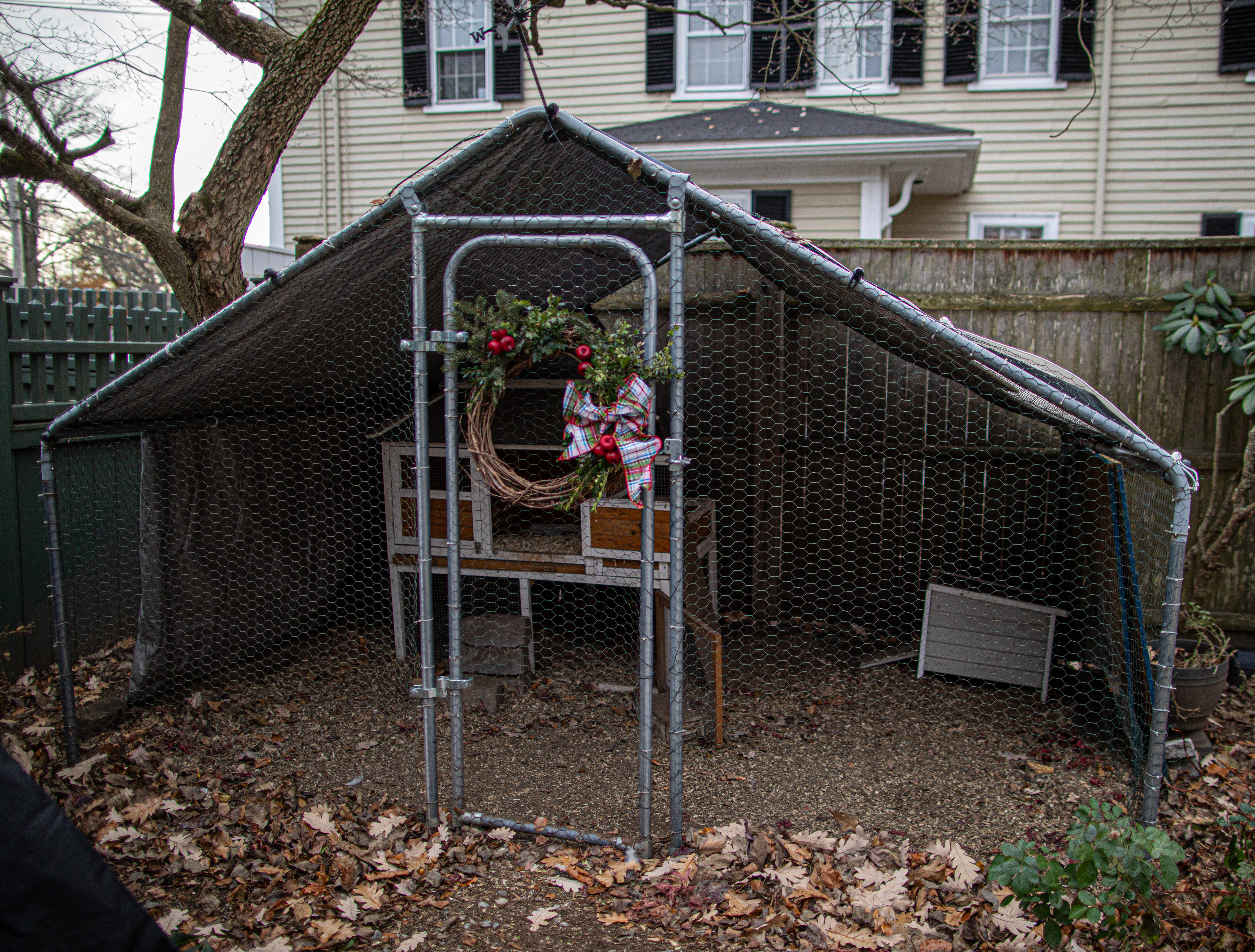
Instead of the pigs mentioned above, bees and chickens are now the themes of the house. The owners raise chickens and are beekeepers. There were beekeeping supplies outside of the house.
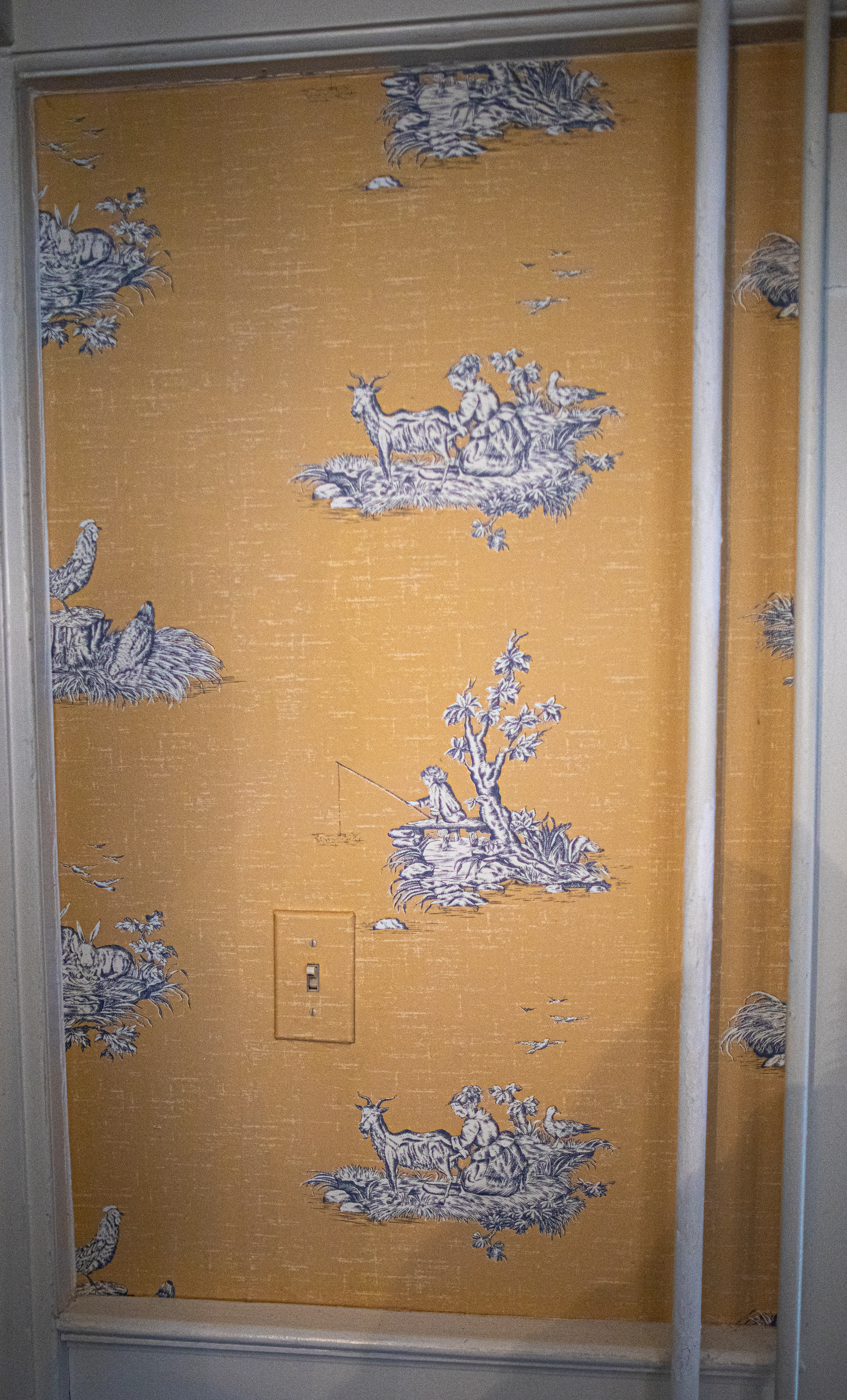
This is the original wallpaper from the 18th century. I know. I had to ask twice to make sure I heard that correctly.
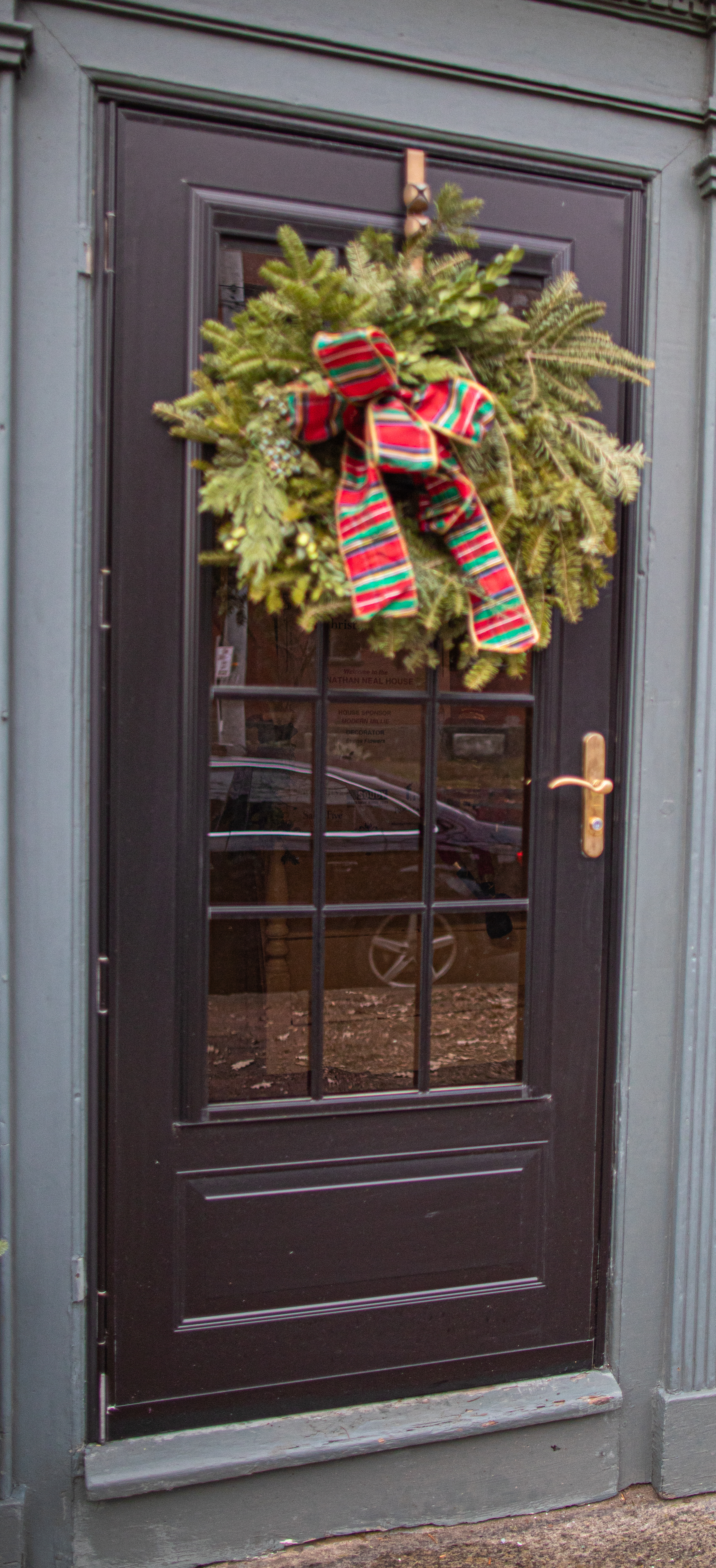
The home was decorated tastefully for the holiday season.
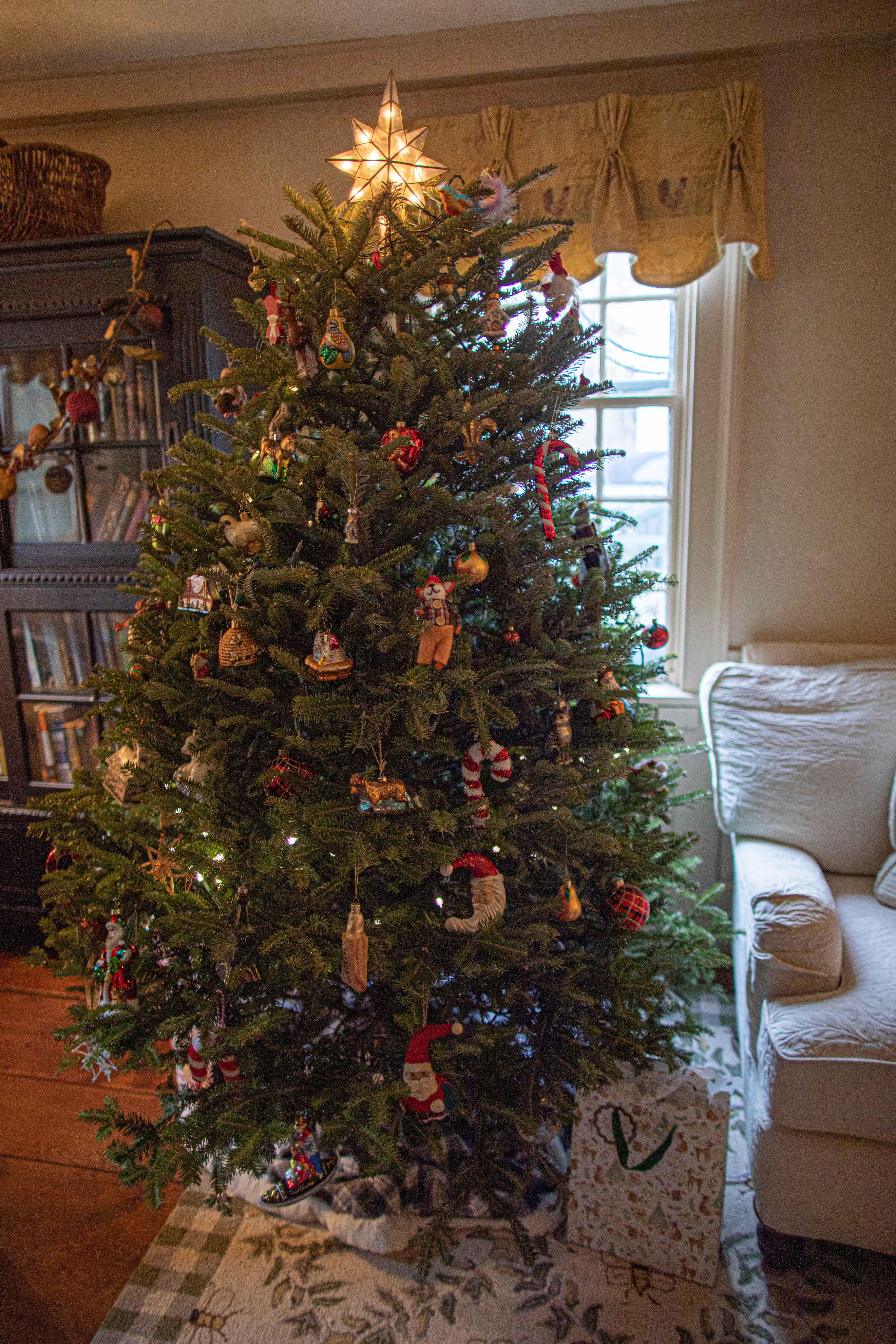
Keeping with the chicken and bee theme, this tree had chicken and beekeeper decorations (zoom in and look about 1/3 of the way from the top on the left)’
This was one of the fireplaces on the first floor.
I was particularly impressed by the artwork above the fireplace.
I particularly appreciated the wainscoting and traditional decor in the dining room.
I know Christmas is over. But, these posts serve as “left overs” from a holiday season I think we all wish lasted longer! Fear not. I have many more tours to take you all on!