Location: Dorrs Pond is part of Livingston Park which is located at 244 Hookset Rd, Manchester, NH (off Daniel Webster Highway)
Hours: Open 24 hours (use your best judgment if you go at nighttime)
Cost: Free
Parking: There are about 70 or so parking spots by Dorrs Pond. There is also additional parking by the play area and field by Livingston Park.
Dog Friendly: Yes
Size: 1.2 mile loop with some short side trails.
Time To Allot For Visit: 1 or 2 hours
Fun For One: Yes
Highlights: abundant wildlife, popular trails for runner, cyclists and walkers, pretty views, very well maintained, benches for sitting, skating on the pond during the winter
Lowlights: short loop (only 1.2 mile) so many runners have to complete the loop several times to get a good workout, some side trails end abruptly at parking lots or just stop without going anywhere
Once an artificial pond to serve the people of Manchester, Dorrs Pond now serves a scenic retreat for cyclists, runners, nature lovers and dogs.
“hidden gem” is a phrase that gets thrown around a lot. But, the photos below will show how this description is apt for Dorrs Pond. In fact, I, and many people I talked to about it, had never been to this pond or ever even heard about before I went there.
One of the great things about Dorrs Pond is it is not a particularly difficult trail. The trails are Dorrs Pond are pretty level with a few small inclines
The views at Dorrs Pond are beautiful. Vivid greens and a variety of green, purple and other vibrant colors dot the landscape.
One of the best parts of Dorrs Pond is the wildlife. There is a variety of birds, amphibians and other animals at the pond.
I also found this interesting shelter. Unfortunately, no one was home.
During the winter, skating is allowed on the pond. Also, there is a play area, playing field, restrooms and pool for children (and some adults) in addition to Dorrs Pond at Livingston Park.
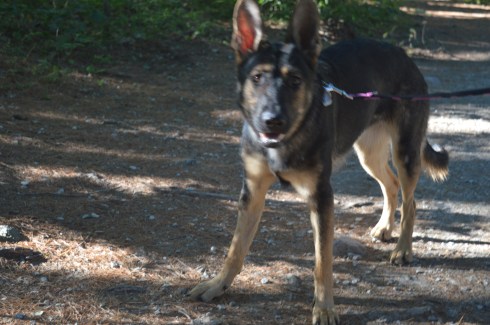
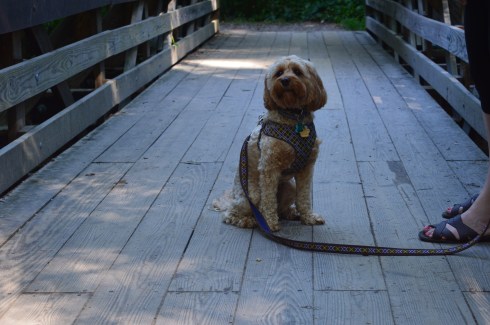
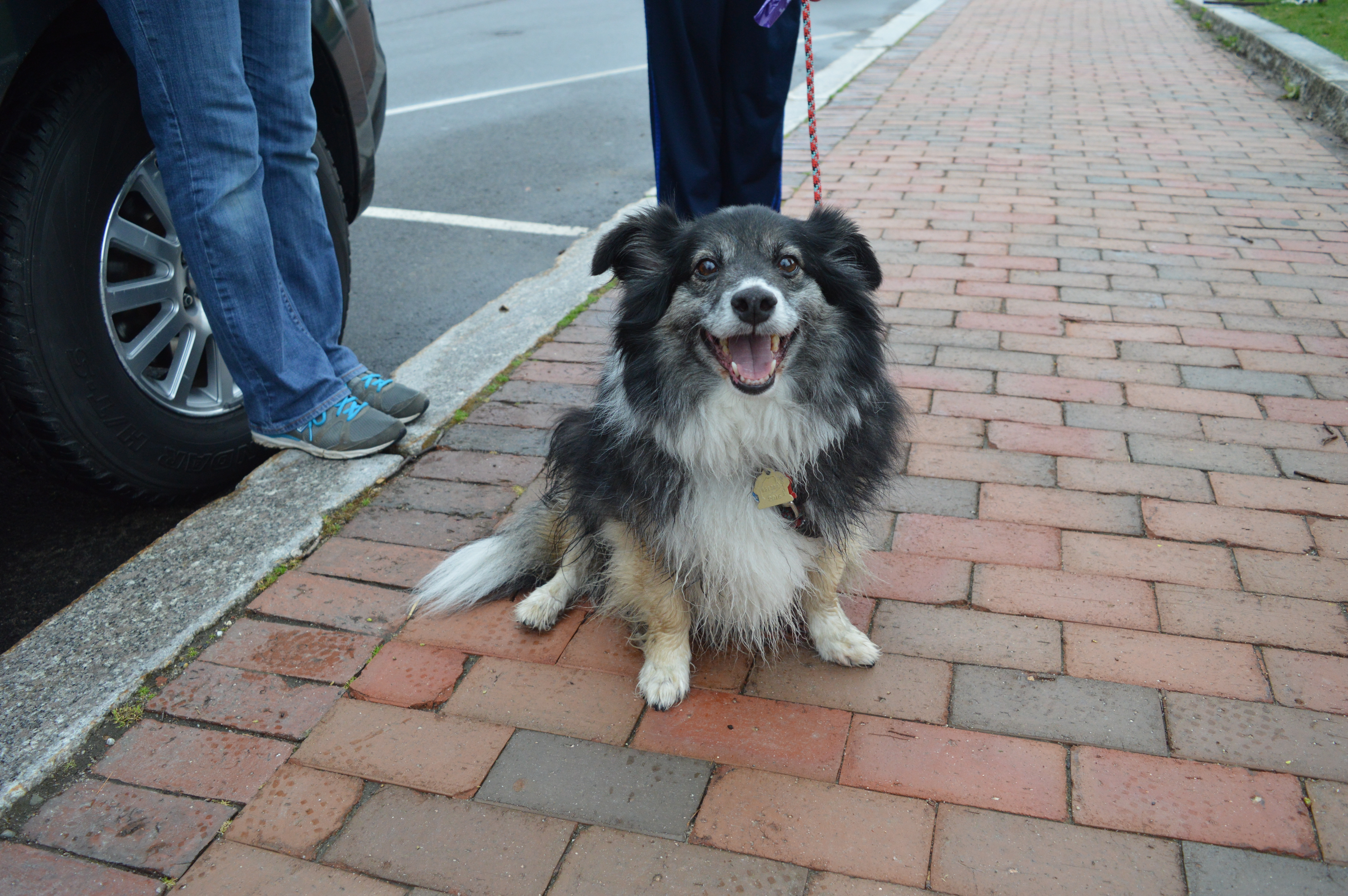
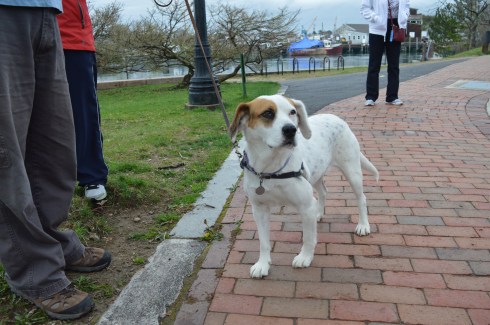
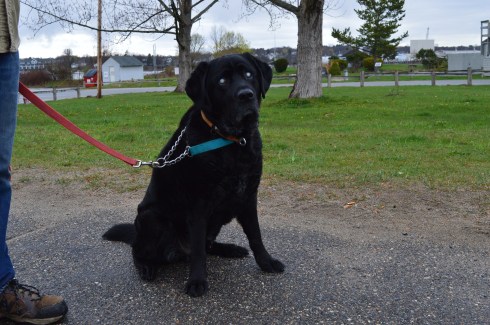
Doors Pond is a great place to bring your dog. The trail is not too long and the inclines are not very steep. And it was a perfect day for taking your pooch out for a stroll. I saw lots of dogs at Dorrs Pond. Here are a few of the cute dogs at the park Sunday:
Location: 180 Ocean Blvd, Hampton Beach, New Hampshire (an hour north of Boston)
Parking: There are about 100 to 200 parking spots in front of the beach – you pay at a parking metered machine. Or, you can find parking at parking lots on Ashworth St. The prices for parking vary depending on the season or month or when there is a special event such as the sand sculpting competition. In April, metered parking costs $1 and hour and it costs $2 an hour from May until Nov. Free parking begins Nov. 4. Parking on Ashworth St. can vary depending on the time and day during “beach season”. During my visit, parking was $10 in the morning but was increased to $15 in the afternoon for all day parking (until 2 a.m.) and $20 all day parking during the weekends in the summer.
Cost: The beach does not have an admission fee.
Dog Friendly: Yes, but not on the beach (at least not during beach season)
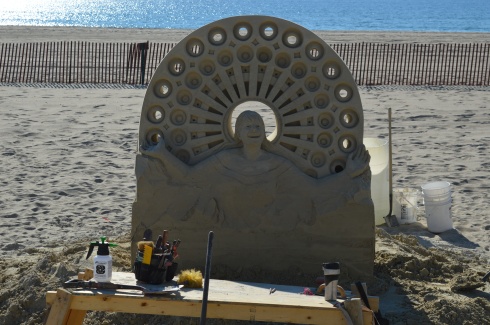
This time of year past 16 years, people flock to Hampton Beach to show off their sand sculpting skills. It may seem like child’s play. But, these are no run of the mill sand castles. They really are works of art.
It takes a long time to construct these complex sculptures. The photos below show the progression of the works of art. It’s hard to believe some of the photos of the works of art are the same as the final work of art. Some of these photos do not show the sculptures in their final phase.
“Emerge” by David Andrews (third place)
“Rising From The Abyss” by Guy-Oliver Deaveau of Quebec (first place and Sculptor’s Choice)
“She Loves Me” by Justin Gordon of Massachusetts (People’s Choice Award winner)
“Dada Read” by Carl Jara of Ohio (4th place)
“Let It Be Magnificent” by Mélineige Beauregard of Montreal
“Phoenix Rising” by Karen Jean Fralich of Toronto (5th place)
“Selfie In Sand” by Damon Langlois of British Columbia
“Hunters Of The Sky” by Michel Lepire of Quebec
“All Together Now” by Abe Waterman of Prince Edward Island (2nd place)
“It’s About Time” by Greg J. Grady of New Hampshire
There were also some sculptures that weren’t part of the contest like this sand castle (what would a sand sculpture contest be without one?) and a sand sculpture designed for the sponsors of the event.
There were some other cool things at the event like Ronald McDonald (ok, I said some cool things) and a cool car that was being raffled off.
Dogs love the sand sculpting competition also.
Tuckerman, a 9 year old Golden Retriever, looked like a teddy bear!
Caspian, whose name is made up of the first letter of his guardian’s relatives, is a 4 year old Siberian Husky. As you can see, he loved to be petted.
Minnie got dressed up for the event!
Lola’s smile was infectious.
Becca, a terrier mix who turned one in May, wanted to play in the sand.
As if one Burnese Mountain dog wasn’t enough, Brooksie, pitcured above, (3 years old) ran into his friend Guiness (5 years old)
Guiness is on the left and Brooksie is on the right in this photo.
As you can see from the photos, the sand sculpting competition is a big hit with both people and dogs!
Although they all look great, I liked the “She Loves Me” sculpture (the third one listed in the photos) best. What is your favorite sculpture?
Stop by my Facebook page to see photos, videos and other posts that I do not include on my WordPress blog: New England Nomad on Facebook
If there is one thing Vermont and New Hampshire are known for, besides moose and lakes, it has to be covered bridges. But, of the 164 covered bridges listed for Vermont and New Hampshire one stands alone.
The Windsor-Cornish Bridge (or Cornish-Windsor if you like) is the longest covered bridge in all of New England. At 449 ft and 5 inches, the Windsor-Cornish Bridge is not only the longest covered bridge in New England it is the second longest wooden covered bridge in the entire United States just behind the Smolen-Gulf Bridge in Ohio (613 ft) which opened in 2008. It is, however, the longest wooden covered bridge as well as the longest two span covered bridge in the United States.
The bridge was originally framed at a nearby meadow northwest of the site and later moved to its proper location. As an aside, I didn’t see anyone cross it on a horse. But, if they did, they had better walk it across or be ready to pay their two bits.
It has been through three constructions and repairs due to being transported from another location and after being repaired due to flood damage and ice in 1977. In July, 1987, the bridge was closed to traffic due to deterioration and reconstructed in 1989. The bridge is listed on the National Register of Historic Places.
The Windsor-Cornish Bridge holds another unique distinction. It is one of the few bridges that used to be a toll bridge but no longer has a toll (usually it works the other way around in new England). The bridge was purchased by the state in 1936 and operated it as a toll bridge until June 1, 1943. The bridge does have two lane traffic but pedestrians traffic is not allowed.
The Windsor-Cornish Bridge is one resilient bridge. Previously, there have been three bridges built on this site in 1796, 1824 and 1828. All of these bridges were destroyed by floods. For now, though, the bridge still stands proudly.
The videos below show what driving through the tunnel (both ways) feels like.
Location: 14 Hancock St, Portsmouth, New Hampshire
Cost: $20 for adults, $10 for youths (5-17), kids under 5 get in for free according to the May – October price list (these prices may vary depending on the season because it costs us $20 for two adult tickets when I went in April)
Hours: Open 365 days a year from 10:00 a.m. to 5 p.m.
Parking: Free parking is available but it does fill up fast. There is also parking available throughout the city. There is free parking at Four Tree Island a block away on Mechanic Street and limited off street parking is available. Just make sure to pay your meters and not overstay your parking limit as parking restrictions are strictly enforced.
Strawbery Banke is a 12 acre outdoor history museum. The houses are constructed in the same style and out of the same materials of the buildings of the 17th to mid 20th century.
This slideshow requires JavaScript.
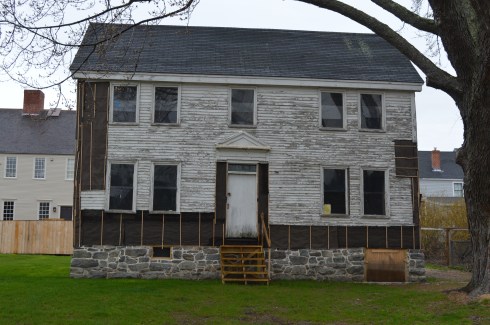
This house, which was being worked on, looked creepy
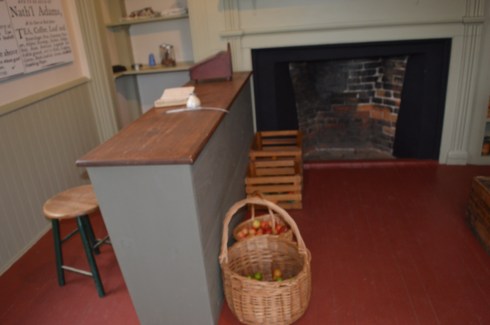
The inside of the homes are designed to be appropriate to the time the house was built or designed. This is the grocery part of the building. This is an example of how Strawberry Banke is a must-see for anyone interested in early New England history
They have set up the grounds and museum to replicate the days of Colonial and post Colonial Portsmouth, once known as “Puddle Duck”. More specifically, Strawbery Banke tells the stories of the many generations who settled in this Portsmouth, New Hampshire “Puddle Dock” community from the late 17th to the mid-20th century. The museum tells the stories of the people and the area of those times. They hold events and themed presentations during different parts of the year.
When we went to Strawbery Banke it was the unveiling of the Spring Barnyard Baby Animals event. It will be running through Sunday, May 1. The New Hampshire SPCA is present at the vent to ensure all the animals are treated humanely and are as comfortable as possible. All of the animals came from places in New England.
There was a wide variety of animals such as turkeys
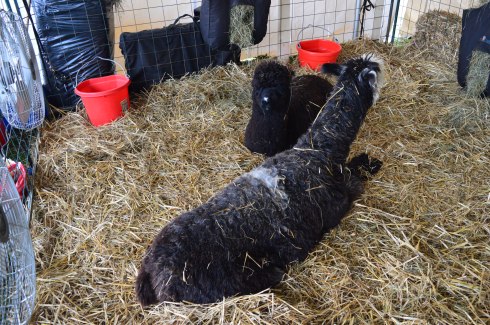
alpacas from Elf-Paca Meadows, Rochester NH
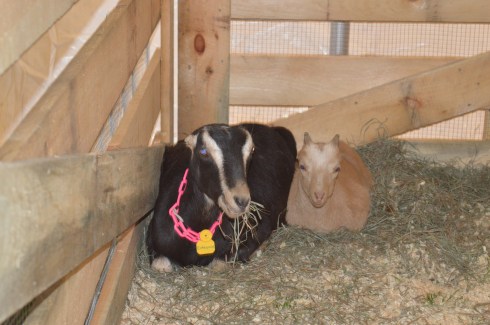
Mommy and baby Nigerian goats from Tiny Hill Farm, Milton Mills NH
goats
Jacob Goats from Hogwash Farm, Norwich VT.
baby chicks from Yellow House Farm in Barrington NH. You may notice some of the chicks are just lying face down. They are just sleeping. They tend to fall down and sleep right where they are when they get tired and the other chicks will often fall on top of them because they tend to cuddle or pile onto one another for safety and comfort.
baby ducks also from Yellow House Farm in Barrington NH.
Pigs and their babies from Double- H Pig Ranch in Berwick ME and Bittersweet Farm, Lyndeborough NH.
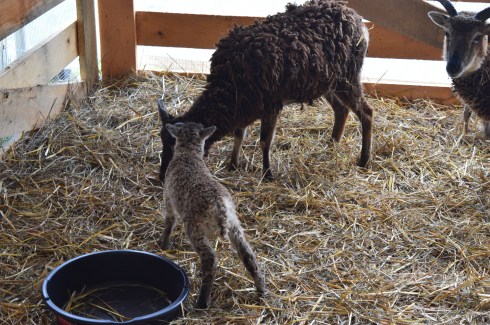
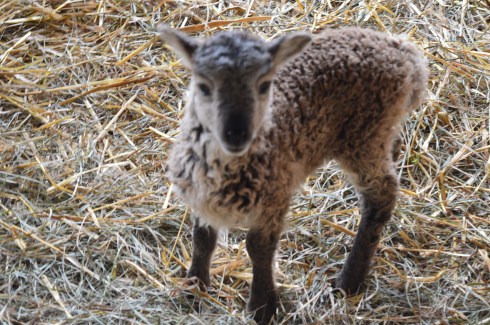
Soay sheep from New England Heritage Farm, Sandown, NH
Guinea pigs and a rabbit. This rabbit’s name is Bubbles.
and a pony named Polly.
One thing I noticed in almost all of the photos is how the mommies, or parents, seem to be protecting or are near their babies.
The holidays are celebrated at Strawberry Banke and I’ll be back in the winter when they have an ice skating rink on the premises and decorate for the holidays. It must be very festive!
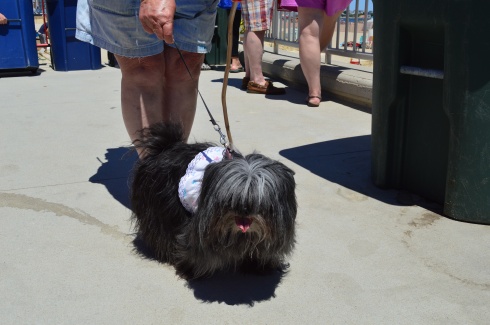
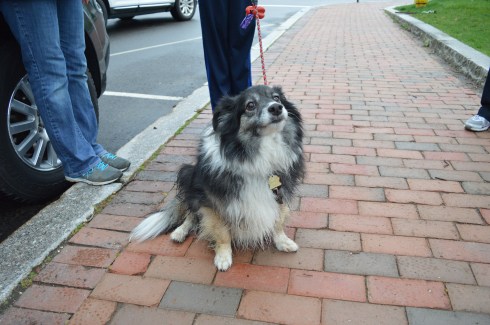
Although dogs are not allowed at the museum saw a lot of dogs on our way to the museum.
I saw Cody outside of the Breaking New Grounds coffee shop in Portsmouth Center. If you’re in the area, go there! Cody is a one year old Great Pyrenees and Husky rescue dog with one one blue eye and one brown eye.
Chlodie is 9 months old. Her name is derived from the Irish name “Chlodagh”. She was very happy to be in Portsmouth!
Bailey is an English Point Setter. Love the marking over the right eye.
Located next to the New Hampshire Holocaust Memorial on Main Street across from a strip mall and busy roadway, the Rotary Common Park is a most unlikely place to find an art display. But, the Rotary Common Park is just that; an outdoor art museum. And this isn’t just some tourist attraction. The art here is very thought-provoking and amazingly crafted.
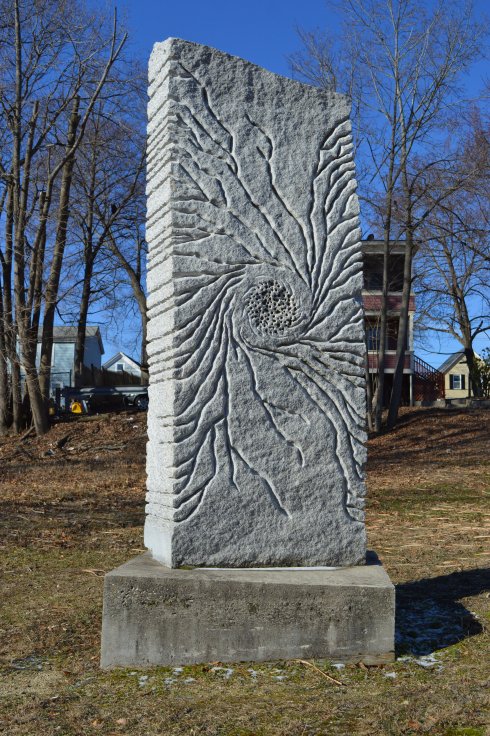
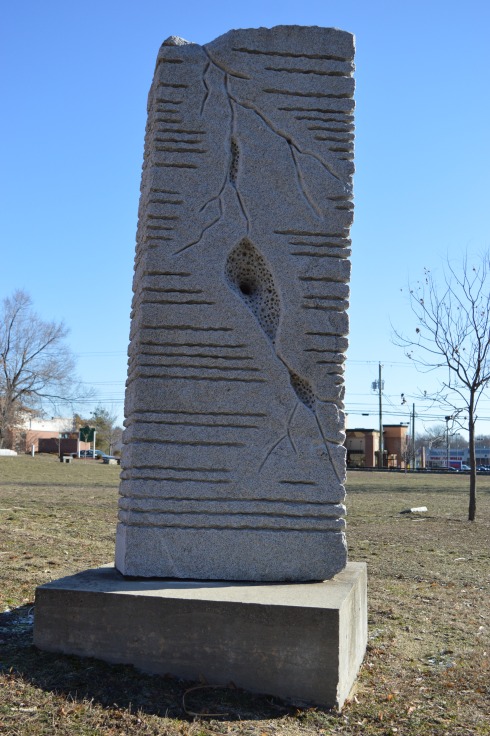
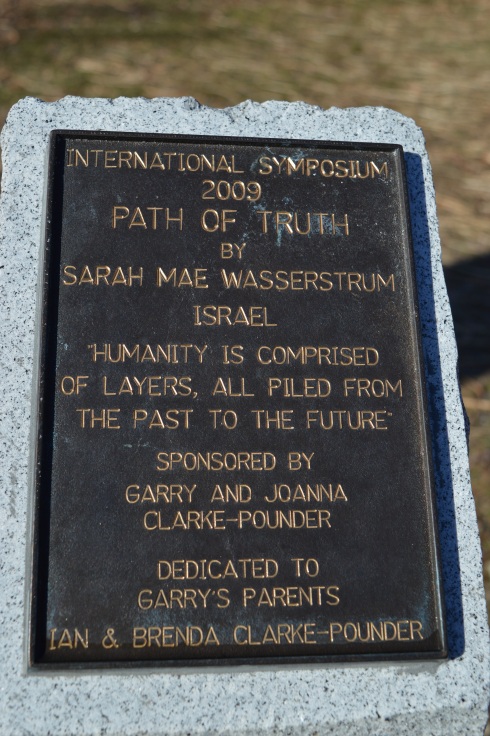
The “Path Of Truth” is a memorial to the “layers of humanity”. Or, as Sarah Mae Wasserstrum said;
“From the Origin layers of Humanity, we are connected by a common denominator.”
She imagines humanity as like layers, some thicker and some modest, all plied from the past to the future. The stone signifies the immense power of people and our ability to grow and change.
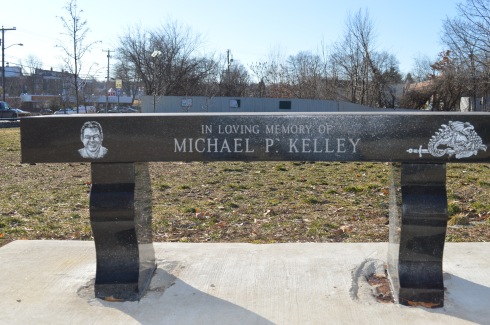
A bench dedicated to Michael Kelley. Who was Michael? What was he like?
Since it is located directly across from the Holocaust Memorial, the Reflection Garden & Labyrinth is the most popular spots at the park. Benches, sculptures, tiles with words of inspiration and works of art dot the circular reflection area.
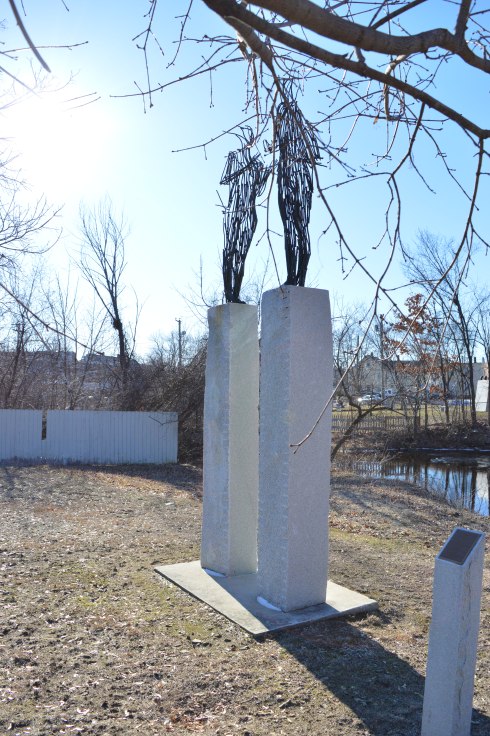
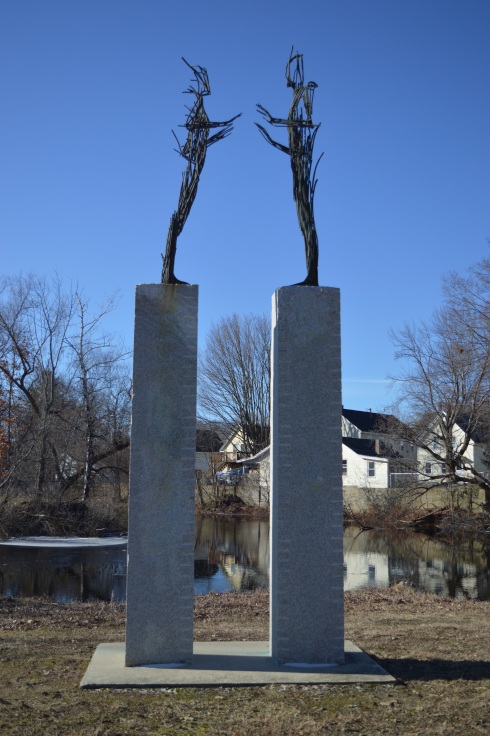
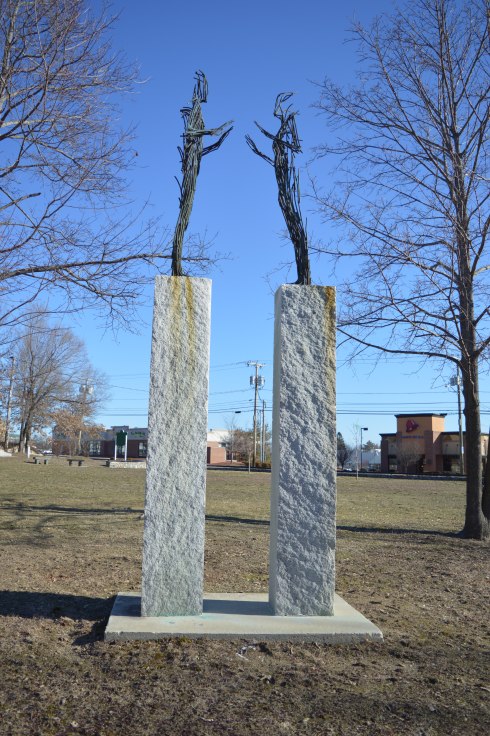
The “Encounter” sculpture by Luben Boykov,
Boykov described it as, “The present moment of meeting becoming a place in the future.”
Boykov explains the sculpture as a moment just before people meet that are so quick but also last forever. It represents an encounter that can begin a lasting relationship.
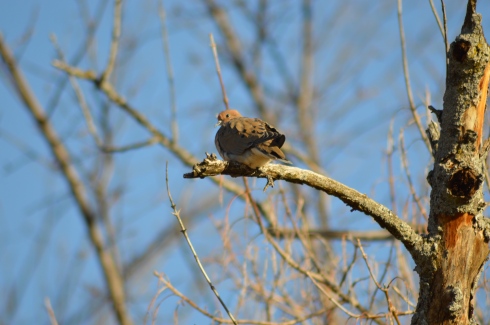
There was also a surprising amount of animal activity in the area like this bird and a thirsty cat.
The displays at the Rotary Park change on a regular basis so keep an eye out if you’re in the area!
Location: Rotary Common Park , 315 Main Street , Nashua, NH
Hours: Open every day, 24 hours day
Parking: Parking is limited. There are about half a dozen spots in the lot for the memorial. There is ample parking across the street at the strip mall.
Dedicated on June 1, 2014, the New Hampshire Holocaust Memorial is a thought provoking exhibit located off busy Main St in Nashua, New Hampshire, next to the Rotary Common Park.
Designed by John Weidman, the memorial is a somber reminder to never forget. The memorial does not have any religious symbols nor does it represent one particular race, nation or religion. This was done purposefully. The intent is for everyone of any background to be able to empathize with the victims, regardless of your own beliefs or lack thereof. According to the website for the memorial, the design was inspired “by the belief that to empathize with those who endured the horrors of the Holocaust, one must – on some small level – experience a concentration camp itself.” The memorial accomplishes this.
The railroad track used for the memorial is an actual railroad track that was donated by PanAm Railway.
There are several benches and monuments scattered around the area with quotes, phrases and names of those who sacrificed so that others may live as well as reminders of the war on children and homosexuals. You may notice the rocks on top of some of the memorials.
It was early in the morning and there were a lot of shadows as it was a cloudless, sunny day. I did my best to avoid casting shadows.
This slideshow requires JavaScript.
The main part of the memorial are the six engraved granite walls that encircle a brick column with a black granite cube. Each of the walls has a name for the six concentration camps (Auschwitz, Sobibor, Treblinka, Majdanek, Belzec and Chelmno). Each of the granite walls have barbed wire and steel on them.
The black granite cube is meant to show that we are all connected through space and time while making us pause and reflect.
This is an important memorial and reminder, especially during these difficult times.
Location: Beech St, Manchester, New Hampshire (with access points on Union, St, Amherst St and Hanover St)
Cost: Free to the public
Although a statue that is dedicated to the veterans of the Spanish American War, the Boxer Rebellion and the Phillipine-American War, Bronstein Park celebrates a hero from another war.
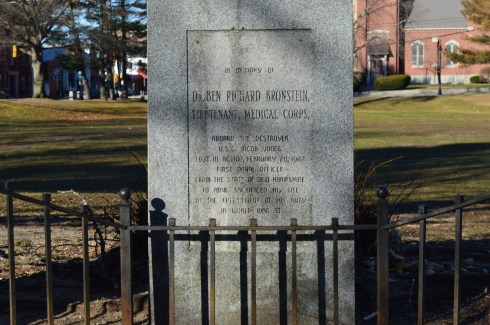
Although “The Hiker” stands prominently at the street entrance to the park, Bronstein Park (formerly known as Hanover Square) is actually named after a corpsman who died in World War II; Dr. Ben Richard Bronstein, the first Manchester, New Hampshire, resident to die during the war. Dr Bronstein’s brother, Maurice Bronstein, donated the memorial to the park in 1990.
The inscription on the memorial is hard to read in some parts. It states:
“in memory of Dr. BEN RICHARD BRONSTEIN, LIEUTENANT, MEDICAL CORPS, aboard the destroyer U.S.S. Jacob Jones Lost in Action, February 28, 1942 First Naval Officer From the State of New Hampshire To have Sacrificed his life in the fulfillment of his duty in World War II.”
Another memorial pays tribute to Dr. Bronstein’s brother, Stephen Max Bronstein, who also served during the war.
“The Hiker” was originally sculpted by Theo Alice Ruggles Kitson in 1906. The original statue was made for the University of Minnesota. However, 50 copies were made of her statue and were distributed all over America. Manchester, New Hampshire was the recipient of one of the copies of her statue. The statue is made of bronze on a base of granite, of course.
The name “hiker” was a moniker the American soldiers in the Spanish American War and Philippine-American War gave themselves because of the long hikes they took in the jungle. Kitson said the hiker, “depicts a hero stripped of his parade uniform and shown as a soldier reacting to the challenges of the battlefield.”
Leonard Sefing, Jr., a Spanish-American War veteran, was the model for the statue.
A close inspection of the statue shows a weary soldier clad in civilian type apparel.
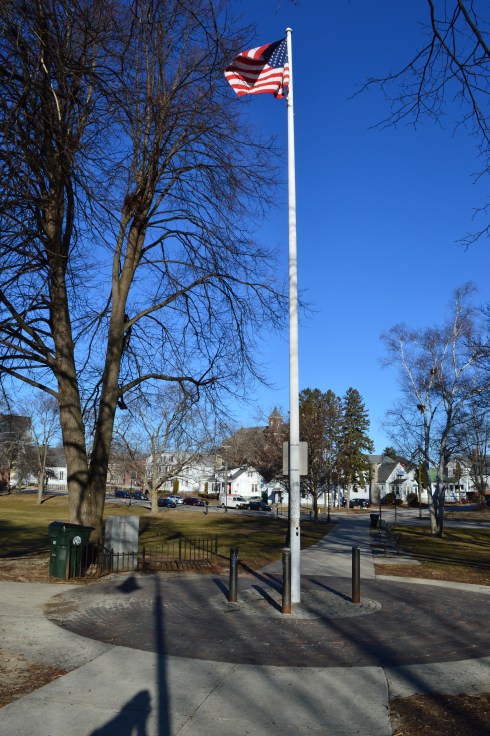
An American flag stands in front of the memorial for Dr. Ben Bronstein.
One strange thing I noticed is a warning posted that prohibits people from hanging out at the park during school hours. So that is something to bear in mind if you do visit. I’m not sure why this restriction is in place. I can only imagine you would be the talk of the town in prison if you ever got convicted of it “Don’t mess with that guy. He’s in here for loitering.” (I know it’s probably just a fine)
Below are some additional photos of the park from different angles.
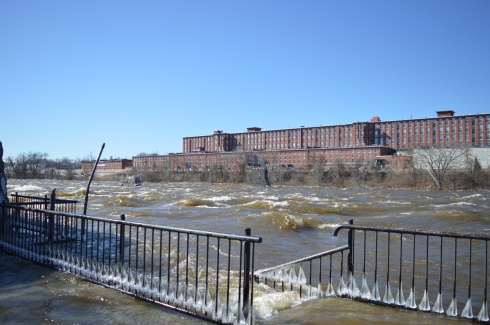
Arms Park is a unique kind of park. In fact it’s not really a park at all. A stream, fed by the Amoskeag Fishways, runs parallel to the park. It is the perfect place for people who love the sound of water and watching waves (and based on my previous posts I know you’re out there). There’s not much to Arms Park. A parking lot takes up most of the area (which has led some to call it “Arms Parking”) and a few office buildings dot the landscape. It’s certainly not one of the most picturesque landscapes but the stream and walkway does have a certain charm. It is often used for observing important important days such as the annual Pearl Harbor Day observance event and the Fourth of July fireworks display.
The river is usually pretty rough and could consequently be dangerous if anyone got caught up it in.
This slideshow requires JavaScript.
It was still fairly cold when I went to visit, so the water which did splash on the railing quickly turned to ice.
A variety of birds like to seek refuge at Arms Park. I saw a bunch of gulls there during my visit.
Arms Park has a short walkway along the river with benches along the way.
The video below gives a better representation of the choppy water at Arms Park.
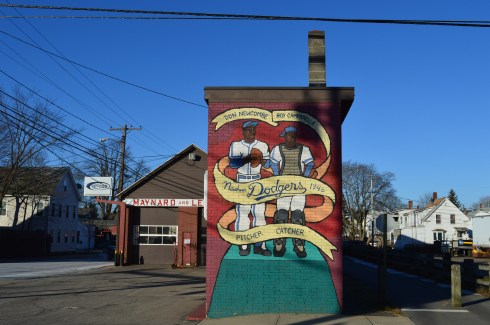
Location: 31 West Hollis St., Nashua, New Hampshire The mural can be seen on the east side of the Maynard & Lesieur building
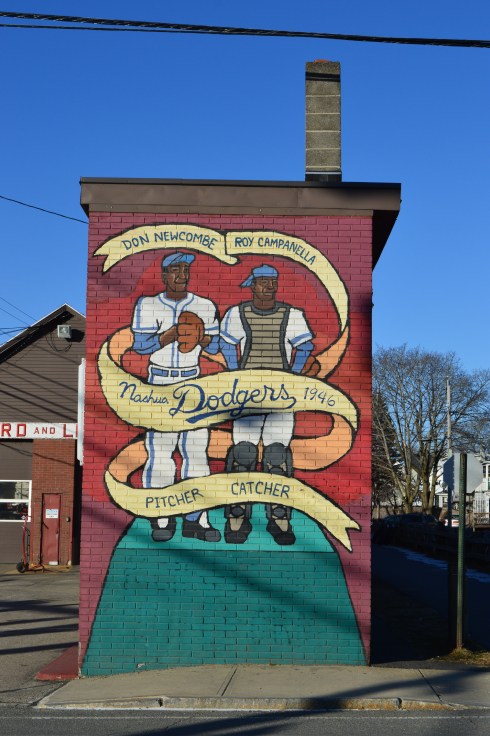
Most baseball fans know the Dodgers were the first American professional baseball team to integrate baseball in decades. However, few people know it was the Nashua Dodgers (the farm club of the Brooklyn Dodgers) and not the Brooklyn Dodgers that were the first pro team to integrate an American baseball team in the 20th century (Jackie Robinson, who would later become the first African American to play professional baseball in the United States during modern era, was playing for the Montreal Royals of the International League at this time).
It is said that Branch Rickey and his executive, Buzzie Bavasi, chose Nashua as the location for this New England League team partly because the city had a large French Canadian population and they felt the French Canadian people would be more receptive to an integrated team.
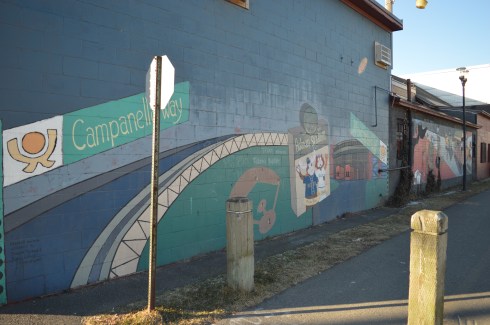
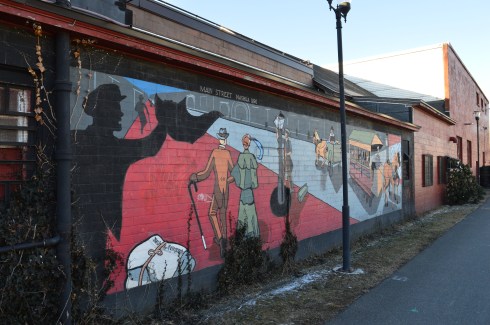
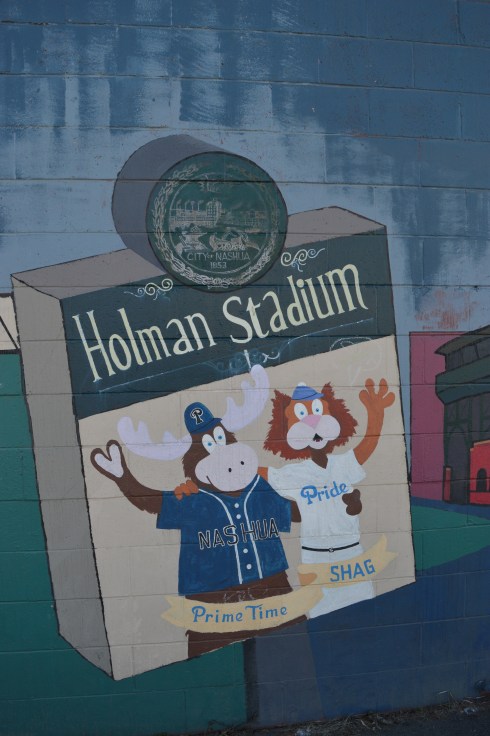
Along the side of the building with the Nashua Dodgers mural is another work of art. The mural celebrates the earlier days of Nashua. Holman Stadium, which is prominently displayed in the mural, is the stadium the Nashua Dodgers played in. It is still in use to this day. It is now the home of the Nashua Silver Lights of the Futures Collegiate Baseball League.
The mural is such a pretty work of art. Unfortunately, it has sustained some damage due to people defacing the artwork.
Below is a walk through of the mural on the side of the building.
New Hampshire isn’t known as the “Live Free Or Die” state for no reason. The quote, which is said to have French origins and adorns license plates and other kitschy souvenirs, is directly attributed to General, and former New Hampshire resident, John Stark. It was at John Stark Park in Manchester, NH, that I found this historical tribute to the revolutionary warrior.
The remaining of the “live free or die…”quote is lesser known, yet just as poignant.
For someone who is so heroic and brave, General Stark is not someone who many of us are familiar with. But, heroic he is. As the plaque in front of his statue explains, after being kidnapped by a Native American tribe and eventually ransomed, Stark joined the American Revolution and became a general. His most notable achievement was in 1777 when he commanded his troops to prevent British troops and supplies from connecting with the main army in Saratoga, New York, which was considered a key point which led to the American victory in the war.
Crisp blue skies awaited me at the park. It almost felt fall-like. What struck me most about the park was how peaceful it was. The gazebo is a nice touch also. The statue of General Stark was sculpted by Richard Recchia in 1948. The park is one of the older parks in New Hampshire, dating back to 1893 (it is the second oldest park in Manchester).
This slideshow requires JavaScript.
General Stark his, wife and a few of their children are buried at the bottom of the hill from the entrance.
One of the interesting things about Stark Park is the loop behind the park. It’s only about a quarter of mile and it is a great place to take your dog for a walk. But, there is a trail that branches off to a bridge and some other trails which eventually lead to the Heritage Trail. But, apart from some interesting trees and some wildlife, there isn’t much on the trails. Most of them lead to residential areas. I walked most of the narrow trails as far as I could go before they ended, rather disappointingly, at roadways and residential areas.
The big payoff to walking the loop behind the park was meeting Bennie. Bennie is a Chinook which is the state dog of New Hampshire.











































 New England Nomad