Trails:
Tues-Sun, & Mon holidays, dawn to dusk
Closed Mondays
Cost:
(MA Audubon) Members: Free
Nonmembers:
$5 Adults
$4 Children (2-12)
$4 Seniors (65+)
Parking: There are about 50 0r so parking spaces in the parking lot
Trail Difficulty: Easy to moderate
Size: 9 miles of trails
Time To Allot For Visit: 2 to 3 hours
Highlights: abundant wildlife, clearly defined trails, lookouts and bridges, several pond areas
Lowlights: One of the ponds (Little Farm Pond) is only accessible via motor vehicle and is not accessible from the sanctuary, according to one of the staff workers at the sanctuary
From the moment I drove into the parking lot for Broadmoor Wildlife Sanctuary (a MASS Audubon sanctuary), I could tell it was going to be a special place. The pretty trees and stocks of grass reminded me of some rural, country farm.
The 10 trails at Broadmoor are fairly easy to negotiate (the Charles River Loop is probably the most challenging). There are a few trails that cross over ponds and marsh land.
Overall, the trails are easy with a few moderately difficult trails such as The Charles River Loop. The trail on the Charles River Loop is somewhat narrow in some places and it can be hard to follow the trail (look for the yellow and blue marked trees).
There was a lot of activity, such as turtles, in the ponds. Can you spot the turtles in this photo? There are three.
What if I get closer?
How about now?
Broadmoor is teeming with wildlife. I found these critters during my hike.
There is also a lookout area where you can sit and look out upon the pond where I found this heron hiding.
There is a lot to see at Broadmoor. There are lots of turtles, butterflies, birds and evidence of other wildlife.
I found this beautiful swan as I was walking along the park.
All that swimming and looking for food can make you tired. So, she decided to take a nap.
There are also beautiful views of the park. The flowers, plants and trees make for a beautiful backdrop.
Broadmoor Wildlife Sanctuary is the perfect visitors of all ages (I even saw some visitors in strollers). It can be buggy but, as lucky would have it, that won’t be a problem for much longer in New England as fall descends upon us.
Cost: $6 for adults, annual memberships which include free admission are available for $47
Size: 4.5 miles of continuous trails, 251 acres
Parking: there are three parking areas with roughly 20 spots each. When I left at 1:00 p.m. the lot was full and there was a line of about half a dozen cars waiting to get into the park.
Time To Allot For Visit: 2 hours
Dog Friendly: Yes
Trail Difficulty: Easy to Moderate
Highlights: scenic views of the Boston skyline and surrounding area, wildlife, occasionally they display exhibits at the park, benches to sit along the trail, pretty trees and flowers, perfect for walkers, joggers, runners, cyclists and even horseback riders and anowshoeing during the winter
Lowlights: limited parking (if you follow the reservation Twitter they post alerts when the lot is full)
I “misunderestimated” World’s End. I figured it would be an “easy” quick jaunt (I usually save my easier treks for Sundays). So, I slipped on my Chuck Taylor All-Stars and figured I would be home in a few hours. Not the best choice of footwear in retrospect. The trails can be rocky (particularly if you go off trail) and deceivingly steep in some areas.
There are a lot of side trails and it’s easy to get confused and cover the same area twice (or more) which can add quite a bit of time to your journey. In fact, for a while, I thought World’s End would never end. It’s a good idea to take a map of the trails with you. But, the trails are clearly marked and easy to negotiate with some slight inclines.
Undoubtedly, the main attraction for many visitors at World’s End are the views of the Boston skyline. World’s End affords several views of the skyline and surrounding areas. From the shoreline views to the views atop the highest point on the top of one of the many views of the rolling, hilly trails, the views are majestic.
World’s End is teeming with wildlife, particularly birds. They’re very good at camouflaging themselves so you might have to squint to see a few of them.
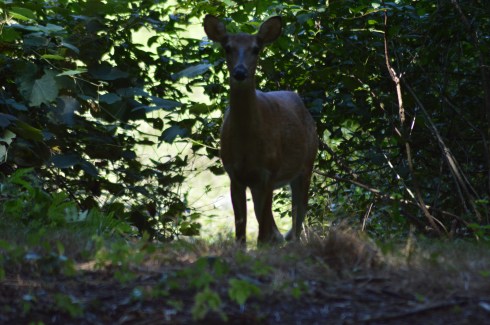
But, the real gem of my visit was this deer I spotted on my way to Rocky Neck, one of the more secluded areas. We stood mere feet away from each other staring, until she finally took off.
There are not just an abundant of bird life in the water. Being a picture perfect summer day with low humidity and a slight breeze and calm waters, it was ideal for many of the boaters, paddlers and other seafaring folks.
This boater wanted some privacy, apparently.
World’s End has many other charming features such as this huge rock and an elevated viewing area for bird watching.
Of course, sometimes the more simpler things can be the prettiest features of the park. These flowers, tress and views off the water caught my eye.
Some people took advantage of the shore to skim some stones.
If there is one photo that sums up a trip to World’s End it is this photograph of a hammock with a bicycle next to it. World’s End is the perfect place to lie out in a hammock with only the sounds of nature to keep you occupied and maybe a good book or your Itunes collection.
There is also an art exhibit on display until Oct. 31, 2017. The display was created by Jeppe Hein, an artist based out of Copenhagen and Berlin. He is known worldwide for his interactive exhibits. The exhibit is called, “A New End”. According to the website for the exhibit, Hein wants to invite visitors to reflect and to transform how we view a familiar place like World’s End.
There were dogs-a-plenty at World’s End during my visit. World’s End is a great place for dogs to play around in since there are many open, grassy areas and, of course, water to frolic around in.
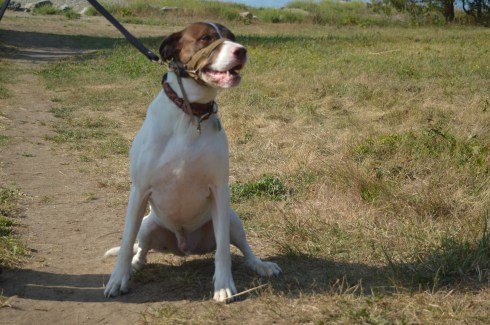
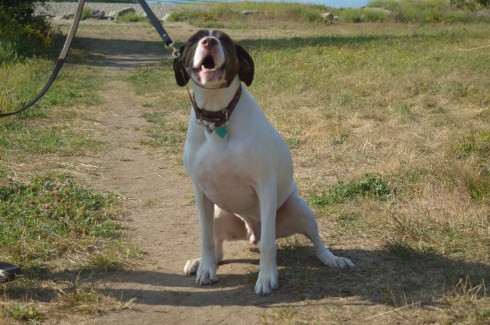
Casey is a happy, 8 year old English Pointer mix. He is a rescue.
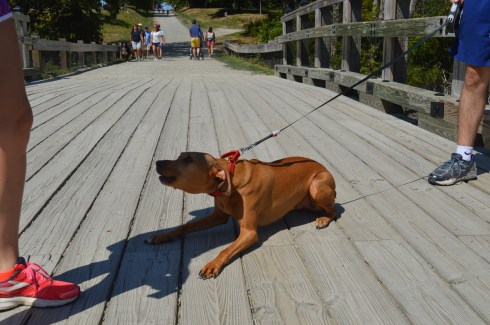
Gus is a 2 year old Ridgeback mix. He was very excited to be at the park!
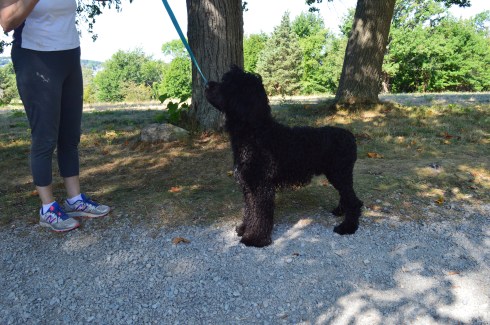
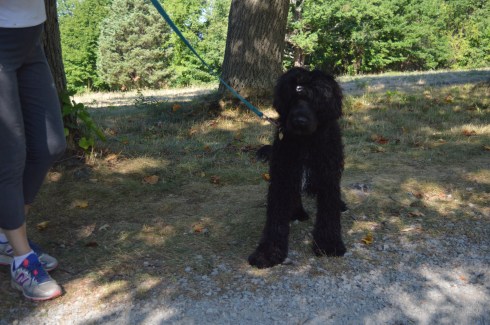
Tande is an 8 month old Portuguese Water Dog. If Tande looks familiar, you may have seen a similarly looking dog on the news. The President also has the same breed of dog. Tande came all the way from the Odysea Portuguese Water Dogs breeder in Colorado.
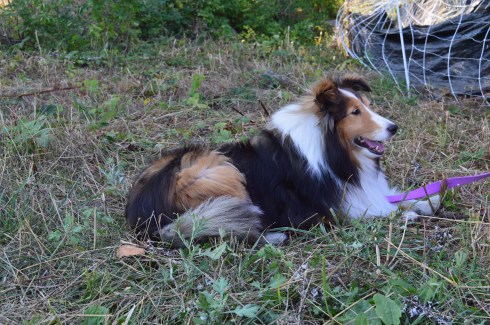
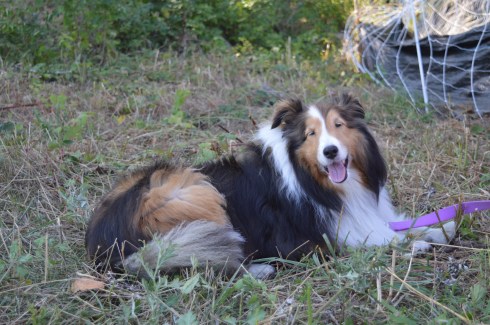
One of my easiest subjects to photograph ever, Bella is a gentle 7 year old Shetland Sheepdog.
I also saw a variety of other dogs playing in the water and running around.
viewsofanemergencyrn was kind enough to nominate me for the One Lovely Blog Award. Thank you! I usually don’t post about these awards but I figured I would play along since she was so nice to mention me and I wanted to acknowledge her. She is a sweet, strong person and a survivor (read her post to see what I mean).
So, the rues are I have to mention 7 random things about me.
I didn’t take up photography seriously until last year
I love dogs and all animals (big surprise there) but they also seem to love me – the key is to not show fear and be confident and friendly around them (they can sense fear)
I am a pescatarian (I only eat seafood and do not eat meat, primarily)
People often say I bear a strong resemblance to Donnie Wahlberg (but I can’t sing like him)
Although I love dogs, I don’t have one (I have a cat instead)
Until my work schedule got too busy, I had been an active literacy tutor at my local library
I run (and/or walk) 3 miles (at least) a day everyday
The rules say to nominate other bloggers to participate. But, I’m going to skip that part. In my experience, people have usually already posted a blog like this in the past and don’t want to do it again, or they don’t participate or they seem to be too busy. But, thank you, once again for the mention, viewsofanemergencyrn! I do appreciate you and I look forward to reading more of your posts. You all should also!
Summers bring to mind beach weather, vacations along the shore and, of course, fairs. In fact, fairs often mark the winding down of the summer vacation season. And no one may do city fairs better than Westfield, MA.
The 89th Westfield Fair had a very down home/country feel to it. From the sheep show (yes you read that right), to the arts and crafts fair and the tractor pull, everything seemed more like “country fun”than the city fun I am more accustomed to. I’m always game for new experiences, though, so I figured I give them a try.
Children from the Pioneer Valley (the section of the area that encompasses the Connecticut River in Massachusetts such as Westfield, Springfield and Chicopee to name a few cities and towns) showed off the animals they have been caring for. I was taken by surprise by how the sheep seemed to like to cuddle. It was remarkable how these little kids could handle and treat these animals with such care. They also seemed very proud of their animals and the work they put into caring for them.
The sheep were evaluated and prizes were awarded to the best in show.
There was also a cattle show. They take this show very seriously as you can tell by the care they were given.
The cows were also shown off and evaluated. Some of the cows did not want me to moove, though (sorry, I couldn’t resist that one). So, the children had to encourage them a bit. Prizes were awarded to the participants. Again, it is very cool to see some children who are barely as tall as the cows they were working with handle them so well. Many of the participants have grown up in families that farm so they have a lot of experience in husbandry. The pride they all take in their work is evident by their reactions.
Perhaps the most popular event during the day time was the tractor pull. The Western Mass Tractor Pullers Association sponsored the event which featured tractors of various styles and eras.
The highlight of the event for me was the petting zoo and alpacas.
The goats, pig and other animals took the food from everyone very gently and they were very friendly.
I’ve always marveled at the folksy ways of the Western MA community. Their down home, folksy ways are evident in so many ways, even their arts and crafts.
And no one knows how to bake like the folks in the western part of the state. Someone had the unenviable task of tasting all of the goodness on these shelves to decide the winner of the bake fair (the Hershey’s Perfectly Chocolate Cake won). Talk about pure drudgery!
There were several fun events and activities for children such as a climbing wall, a kiddie tractor pull event, musical performers, face painting (I went with the cat design), food trucks (the fries were to die for) and, of course, amusement rides (I declined). A play train was available to cart you around to the various events.
Vehicles, specifically trucks, are a staple of the fair. Everywhere you look there seems to be a souped up vehicle tricked out or a vehicle used for farming on display.
As we were leaving, we could see the participants of the scheduled demolition derby prepping for the event.
Dates Of Exhibit: August 18 – 21, 2016 (the exhibit will be making another appearance in New England October 20 when it arrives in West Haven, CT and will then go to New Milford, CT, Leominster, MA and the Mohegan Sun Casino in Uncasville, CT)
Location: Eastern States Exposition (Gate 9) , 1305 Memorial Ave, West Springfield, MA
Hours: 8 a.m. – 8 p.m.
Cost: Free
Parking: Parking was free for viewing the memorial (it is usually $5 to park there). There were about 70 parking spots.
Dog Friendly: No
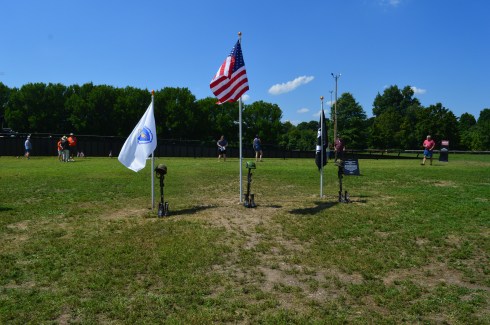
Highlights: Replica of the Vietnam Veterans Memorial Wall, Mobile Educational Center, military memorabilia and vehicles, helicopter liftoff
The traveling replica of the Wall That Heals spent the weekend of August 18-21 at the Eastern States Exposition in West Springfield, Massachusetts before continuing its tour. It is presently in Princetown, New York until August 28. Click below to see the entire 2016 schedule for the wall
A half-scale replica of the Vietnam Veterans Memorial in Washington, D.C., the Wall That Heals has been to more than 400 cities throughout the United States. It was dedicated on Veteran’s Day (November 11), 1996.
The Wall That Heals is meant to not only act as a reminder of all those who died in the service of their country during the Vietnam Conflict it also is meant to help veterans cope and heal from the pain they still harbor and hopefully help them heal.
There is also a mobile Education Center which has educational information on the walls of the truck. In one section of the exterior of the truck there was a list and photos of the people from Massachusetts lost in Vietnam. Another section showed the names and photos from the area where the truck was parked (Western MA) and a final video screen displayed all of the victims of the war. There is also timelines of the war and additional background information of the war.
You can’t help but to be moved by seeing all of the names on the wall. All of those names had dreams, hopes, futures that were snuffed out much too early. I kept thinking how much more they were meant to accomplish. They were supposed to fall in love and have children and outlive their parents. What really got to me was seeing the photos, notes, flowers and flags that were left behind. Even decades later, the wounds are still fresh for so many.
The 250 foot long wall has over 58,000 names.
On a lighter note, one thing I have always respected and admired about people in the service and veterans is their sense of humor and ability to turn just about anything into a joke. This signpost, presumably a replica of a sign at one of the American camps in Vietnam details the distances (from West Springfield, MA) to Camp Pendleton (2,494 mi), Ia Drang (8,599 mi), Vietnam Wall (371 mi) and, of course, Disney World (1,236 mi). Home is wherever you are so that shows 0 miles.
There were also tables with military gear from the Vietnam War era and military vehicles also from that era.
We were also treated to a helicopter liftoff (video of the liftoff follows below) by an Army Black Hawk Medevac. The things on the side are either gun pods or for launching torpedoes. Watching them prep for the liftoff showed me just how much care and preparation goes into every flight and just how meticulous they are about checking their flight gear.
Below are videos of a walking tour of The Wall That Heals (I only walked half of the wall with the video recording because it was a high traffic area) and the Blackhawk helicopter liftoff.
Places With Similar Monuments I Have Visited In New England:
Parking: There are about 30 parking spots at the entrance to the park. There is also off street parking and parking available down the street at Kasabuski Arena (201 Forest St).
Cost: Free
Hours: Open everyday sunrise to sunset
Size: 640 acres
Time To Allot For Visit: At least 1 to 3 hours
Trail difficulty: Easy to Moderate in some areas
Dog Friendly: Yes
Fun For One: Yes
Highlights: scenic views – especially from Eagle Rock, beach, play area for children, trails for cycling and running, fishing is allowed
Lowlights: side trails end without warning, some rocky terrain
Once a hunting ground and camp area for Paleo Indians as far back as the Archaic and Woodland eras (roughly 1000 – 2000 BCE), Breakheart Reservation boasts two grand lakes, scenic vistas, a beach, a play area for children and miles of trails.
The trails are mostly easy with some moderately difficult trails and inclines. The side trails can be challenging more because of the rocky and narrow terrain rather than the inclines. The one downside to taking the side trails is that some of the side trails end without warning, such was the case with the Saugus River Trail which is one of the first side trails you will see when you enter the park. The Cedar Glen Golf Course abuts the park. So, you’ll hear and see golfers whacking their golf balls around. Also, one side trail leads to the children’s camping site which you’re not supposed to access and yet another trail just ends near a store’s parking lot. So, you end up walking long distances only to have to turn around. If you want to avoid walking on trails that end suddenly, it’s best to stay on the main trail and the trails that loop around the lake.
The two lakes at Breakheart Reservation, Pearce Lake and Silver Lake, have trails that loop around the bodies of water.
Pearce Lake (considered the lower pond) has a beach and some very pretty views. It runs along the main trail and along some of the side trails. It is the larger of the two lakes and it is where the beach is loacted.
Although Lake Pearce is the larger of the two lakes, I found Lake Silver (the upper pond) to be more intriguing than Lake Pearce.
Lake Pearce has two smaller islands in the lake. One of the islands is accessible via a makeshift walking bridge of branches, sticks and anything else that you can walk on to get to the island. Except for some pretty views there wasn’t much on the island.
At an elevation of 206 feet, Eagle Rock offers scenic views of the Boston skyline and surrounding areas. One suggestion I would make if you do try to climb up to Eagle Rock (it’s a moderate climb) is to use the “back” way to the vista (aptly names Eagle Rock Trail). I went straight up along the rocky edge along the Pearce Lake Trail and it was more challenging than it would have been if I had gone up via the trail on Eagle Rock Trail. There are other points of higher elevation on other trails such as Castle Rock and Crow Hill.
There are many other beautiful and interesting things along the trails at Breakheart Reservation.
This slideshow requires JavaScript.
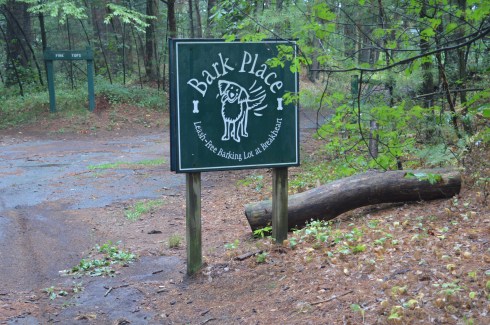
Breakheart has a paved main trail which is usually packed with runner, cyclists and people walking their dogs, especially at the Bark Place where dogs are allowed off leash for a section of the trail.
Breakheart Reservation stopped allowing vehicles on the trails some time ago. It was great not having to look over your shoulder or carefully turn a corner worrying if a car or other vehicle might be coming your way. It also allows lots of room for all the walkers, runners and, of course, the dogs that frequent the park.
These dogs had a great time at Breakheart Reservation during my visit…
Location: Zuber’s Ice Cream And Deli, 98 Southwick Rd, Westfield, MA
Hours: Saturdays, 5:00 p.m. – 8:00 p.m (until October 1)
Cost: Free (but make sure to stop in at Zuber’s for a cone or treat)
Parking: There are about 15-20 parking spots
Time To Allot For Visit: About 30 minutes to an hour
Dog Friendly: Yes
Fun For One: Yes
Highlights: Really cool antique cars, located in the parking lot of an ice cream shop/deli (Zuber’s)
Lowlights: Not a lot of cars
Summer means road trips, long days at the beach and car shows. Yes, car shows. Muscle cars and other hot rods are a staple of any summer road trip.
It was great seeing cars with the old gauges and front seat bench seating as opposed to the bucket seats we’ve all become accustomed to. It reminded me of the old Delta 88 I used to tool around in. I still miss that car.
Whenever I see older cars, I wonder what memories are attached to them. How many first dates were they driven on? How many times did different families pile in her en route to the destinations?
We attach so many memories and emotions to our cars. They’re more than just steel and iron to us (now they are more than just plastic and aluminum). Old cars, even if we never owned them or rode in them, bring us back to our earlier, more carefree days. I wonder how many special memories are attached to these cars.
This slideshow requires JavaScript.
There were only about a dozen or so cars. So, if you’re looking to see a wide variety of cars you might be out of luck. But, what the event lacked in quantity it made up for in quality of cars like this 1970 Roadrunner, 440 engine.
One of the things I really liked was how the owners of the vehicles dressed up their vehicles and added decor and dolls from the era or that have something in common with their vehicle. For instance, the owner of the Road Runner pictured above has a bunch of Road Runner and Wile E. Coyote dolls in the backseat of his car.
The owner of this AMC 1973 Javelin dressed up his car with Bettie Boop collectibles.
This Buick Series 60 went with the traditional fuzzy dice motif
I have no idea what the motif of this decor is
This race car, which the owner still races, has a Chevrolet frame. But, it is made of mostly custom parts.
It did the Kessel Run in 7.88. Oh, sorry that was Han Solo I was thinking of. This car actually did a quarter mile in 7.88 (the number light up in the back side back window of the car) for a not so shabby 137 miles per hour.
This ’32 Roadster was the oldest vehicle that I could confirm at the car show. The owner was especially proud of the license plate.
A lot of the car owners are very proud of their vehicles and they have lots and lots of stories of their experiences in their cars (driving and otherwise). Often times, just talking to these people can be as entertaining as looking at the cars. It gives the cars some personality when you can talk to the people who drive them and hear about their driving experiences.
As an added bonus, you can stop by Zuber’s and get a cone or sandwich after looking over the cars!
Since it opened in 2006, Zuber”s has been serving up sandwiches, ice cream and a variety of other items to people from Westfield and surrounding areas. What makes the shop so cool is that it doesn’t just sell sandwiches and a variety of sweets. You can get your food to go or you can eat it in their outdoor dining area. They also sell everything from birdhouses to toys in their bargain section. You never know what you’ll find when you visit. And, if you’re like me and you like to collect things, you never know what you’ll end up going home with.
Location: Three County Fairgrounds, 54 Fair St, Northampton, MA
Hours: The day I went there was an all day event, climaxing in a celebratory event in the evening at he fairgrounds. The events began at 10.
Cost: Free
Parking: There is a free parking lot across the way from the fairgrounds which holds about 40-50 cars.
Dog Friendly: Yes
Fun For One: Not so much, unless you really love horses
Highlights: horses, competitions, skilled riders of all ages
Lowlights: lack of concession stands, seating for most spectators is not close to the riding area (you can stand at the fence to watch though)
Every year, the New England Morgan Horse Association holds a special event to display the best riders in their organization (some come as far as Idaho and even farther away). The 5 day event displays riders of every age group and skill set. While the youngest riders stick to walking and a light trot, some of the more experienced riders showed off their advanced skill sets like this harness rider.
The poise and skills of all of the riders in every age group was remarkable. Just watching children smiling and having a fun time while riding such powerful and majestic animals was impressive. I felt a surge of pride for these kids I didn’t even know!
One class of riders was as young as 11 and under. But, they were great. At their ages, I was riding the coin operated horses outside of the department stores at the mall. Something I was not aware of is the riders will often make “clicking” or “kissing”sounds to communicate with the horse.
This slideshow requires JavaScript.
We could not stay for the all day event. But, the two hours we spent was jam packed with competitions, shows and riders trotting with their horses.
I didn’t see much along the lines of concession stands, except for a lemonade truck. But, since it is a free event, you could leave to get lunch at one of the many fine dining establishments in the Northampton area (try Jake’s or Sylvester’s) and re-enter at your leisure.
One of the great things about the event was the attire of the riders. From the glitzy too the more traditional, they all looked great.
And yes, they even let dogs into the event. In fact, I saw quite a few dogs at the horse show like Rylee, a 5 year old flat coated retriever.
And Annie, a Jack Russell mix. Annie’s mom saved her at a rescue shelter.
Similar Events In New England I Have Been To:
None
Similar Events In New England I Have Not Been To Yet:
Location: 8 Scott Tower Rd, Holyoke, MA, behind the Community Field Park at 51 Community Field Park, Holyoke, MA
Hours: Open everyday, no hours listed but it can be dangerous at night
Cost: Free
Parking: Roughly a couple of dozen parking spots are available at Community Field
Dog Friendly: Yes
Time To Allot For Visit: Between half and hour and an hour
Highlights: the tower, pretty views of West Springfield and the surrounding area, wildlife, plant life, easy mile hike
Lowlights: Graffiti all over the tower (all. over), a lot of broken bottles and other litter on the premises, some stairs to the top of the tower have holes in them or are missing, tower not accessible by car
Fun For One: Yes
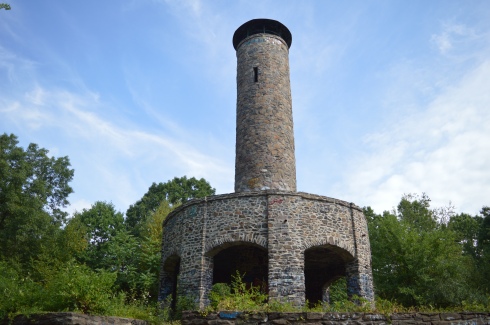
The walk to the tower is an easy mile walk with a few moderate inclines. An easy way to locate the trail to Scott Tower is to look for the overpass. Walk directly under the overpass and stay on the asphalt trail. There are a lot of side trails and trees, plants, graffiti and remnants of what looks like used to be a waterfall or wall. Now, the party days are way behind the Nomad but zig zags and 4:20? Well, I guess things don’t change that much after all. You crazy Holyoke kids.
Below is a side by side comparison of what the tower reportedly looked like in its heyday (July 16, 1972), a photo of what it looked like in May 31, 2004 and what it looks like now (July 30, 2016). Yes, it’s pretty cringe worthy.
As a footnote, the tower was originally built in 1942. Also, there used to be a fence around the tower which you can see at the bottom of the second photo taken in 2004. The fence seemed to work as there is very little if any graffiti on the tower in the second photo. Of course, the fence was torn down (presumably by visitors) and the graffiti and vandalism escalated.
July 16, 1972
May 31, 2004
July 30, 2016
There was also a lot of rustling in the brush from squirrels, chipmunks and other types of wildlife. The vulture on the pole we saw on the way to the tower seemed like a bad harbinger.
Once the main attraction of Craft Hill at Anniversary Hill Park, Scott Tower is now a shell of what it once was. Graffiti and litter cover the tower and it appears to be in disrepair. In fact, you can see some remnants of what look like what used to be tables or shelters. Even with all of the graffiti and litter, the tower is still impressive.
Not all of the graffiti was just messy chicken scratch. Whenever I go to a landmark in MA, especially Western MA, there is bound to be some artistic renderings. There wasn’t anything too artsy there but these images did catch my eye.
Scott Tower has two areas for observation. There is an observation deck on the second floor and there is an enclosed area at the top of the tower. The tower offers views of nearby Mount Tom and the Holyoke area. The views are pretty sweet. Just be careful if you do go to the top. Some of the stairs are missing or have holes in them.
It’s pretty far down from the second floor of the tower.
The tricky thing about accessing Scott Tower is you have to park at Community Field Park (use the entrance off Cherry St). The entrance is behind the park. There is usually a gate up that you can easily navigate around. You will have to pass under an overpass on your way to the tower. It is about a mile walk to the tower. You will see many side trails on your way to the tower but stay on the main trail for the easiest, most direct route.
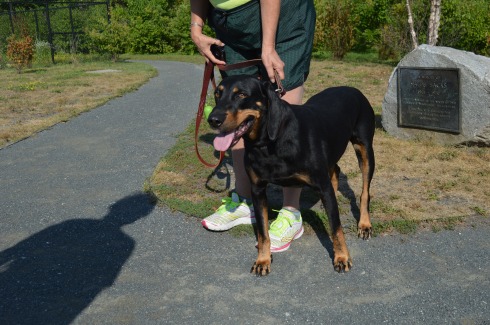
While I was at Community Field Park before we began the walk to Scott Tower, we saw this beautiful dog. Remy is a 4 year old Black and Tan Coonhound
Below are some videos of a walking tour of the tower. I really had to watch my step in the first video. So, it’s mostly a video of the stairs and me wheezing.
I had to stop the second video so I could take some photos of the openings in the tower and the walls.
Just as an aside, I am regularly updating my categories at the top and bottom of my posts. The “fun for one” category at the top simply means it can be fun to do by yourself. Being a single person, I often take this into account before I decide to photograph or visit places. I went with my mom this time so it was a lot of fun but it was something you could do by yourself or, better yet, with a dog!
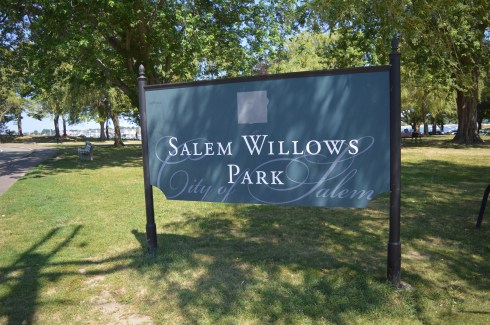
Hours: The website for Salem Willows shows their hours as being daily from 11 a.m. to 11 p.m. but you can get in to the park before 11. We got their just before 10 and there was already some people there. I think the hours are the hours of operation for the restaurants and other businesses in that area.
Cost: Free
Parking: There are about 60 metered parking spots. The meters cost 25 cents an hour. There is also about 50 additional free parking spots in a nearby lot and off street parking is available.
Dog Friendly: Yes
Highlights: Family friendly, arcades, restaurants, willow trees, harbor, scenic walking path, grassy areas to grill, relax and for kids to play, jetty, place to rent surfboards and other aquatic sporting goods
As I entered Salem Willows I couldn’t help but think of my childhood of carnivals and traveling shows. My friends and I would be so excited when the fair came to town. Now, the fair is always in town. In these days of sit down eateries and chain restaurants, it was refreshing. If you d go, try the slushies or get a cone at Cappy’s!
Salem Willows has changed so much since its original opening in 1880. Willows Pavilion which featured a skating rink and restaurant dominated the landscape. Now, the area where the takeout food vendors are located still keeps the name of “on the line”. But, the restaurants are much different. In place of the sit down, grand restaurants stand take out vendors and ice cream shops.
There is also a stage for bands and other entertainers to perform. Named after former Salem resident and veteran, the Robert F Hayes Band Stand holds a summer concert series every year as well as holding other events.
But, there is so much more to Salem Willows than nostalgic stroll past the smell of flour dough and the buzzing and ringing from the vendors and arcades. Salem Willows is also, as the name would suggest, known for all of the willow trees planted to offer shade and beauty to the area.
The mostly shady loop around the bay and back too the parking area is an easy half mile walk. Along the way there are benches to sit on and a jetty to fish off or just enjoy the views. The views from the bay were very pretty. A variety of flowers and scenic views frame the busy blue waterway.
There was a lot of activity on and in the water at Salem Willows. That is a man swimming in the last photos
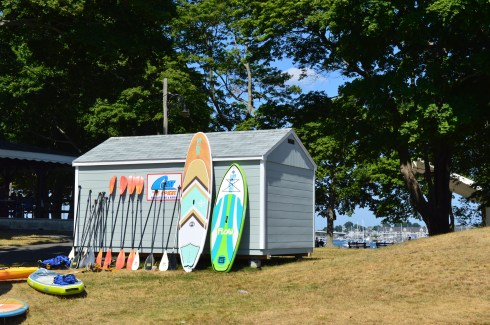
There is also a place to rent surf/paddle/body boards and other watercraft and flotation devices.
Salem’s love of art is evident even in the most unlikely places. These trash cans and rocks displayed some of the street art of Salem. I especially like the art on the rocks. Each block has a different symbol of the area painted on them.
This slideshow requires JavaScript.
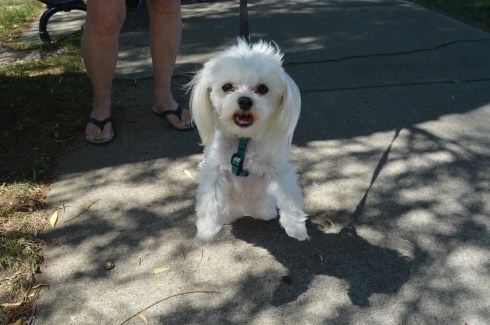
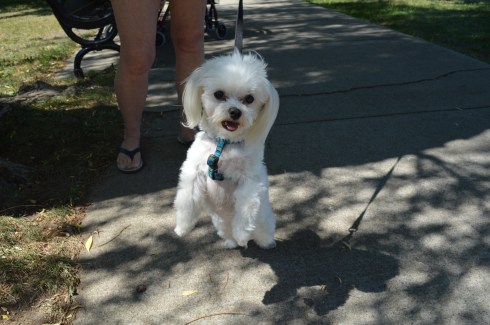
Salem Willows is a great place to bring your dog for a short walk. Dixie, a 4 year old Maltese, was enjoying the seasonal weather and cool breeze when she stopped to pose for photos for me.
Location: Revere Beach, Revere Beach Boulevard, Revere, MA
Hours:
The hours of the sand sculpting festival were:
July 22 and Sat. July 23 from 10AM to 10PM and Sun. July 24 from 10AM to 8PM
Revere Beach is open 365 days a year
Cost: No Admission Fee
Parking: One website states there is free parking on Revere Beach Boulevard where the beach is located. But, I noticed signs said read there is a 4 hour parking limit on the boulevard during weekdays. Parking is free on the boulevard during weekends and holidays. If you can’t find parking on the boulevard there is a $5 parking fee at the Wonderland Greyhound (1300 North Shore Road, Revere MA). You can also park at Suffolk Downs (525 William F McClellan Highway, Boston MA) about 20 minutes away. A free shuttle can take you to the beach on the weekends There are literally hundreds of parking spots on the boulevard.
Time To Allot For Visit: About 30 minutes to an hour to view all of the sand sculptures
Dog Friendly: Yes, on the sidewalk but not on the beach
Highlights: Sand sculptures, pretty beach, long, well kept beach
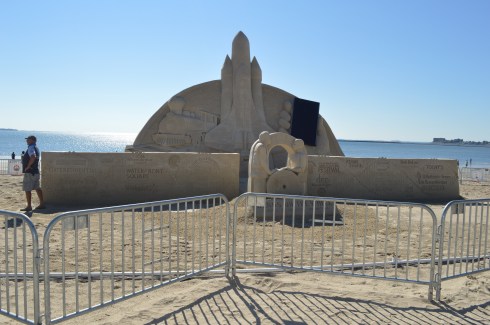
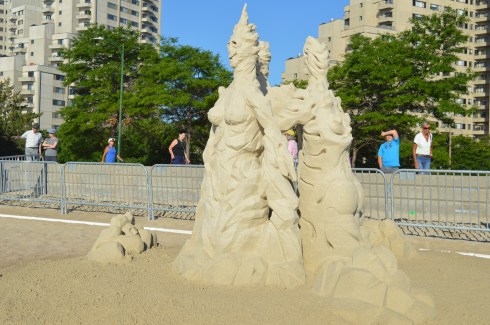
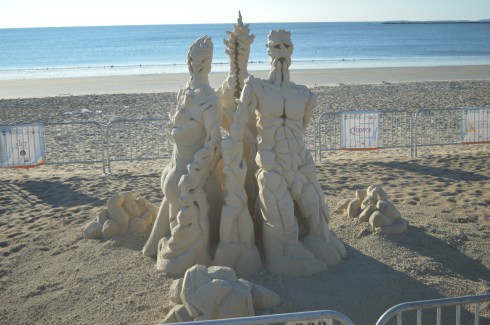
Each year, sand sculpting masters come to Revere Beach from all over the world to test their skills at the International Sand Sculpting Festival. The family (and dog) friendly event is usually held the 4th weekend of July. In addition to the intricate works of art and pristine beach, there are also many activities and vendors for the entire family to enjoy. The theme of this year’s main sand sculpture pictured above was “Hands On The Wheel” (a not so slight jab at texting while driving I would gather) and the gracious sponsors.
Being the early riser than I am (have become), the shading and sun was tough to work with. It’s actually easier in some ways to shoot when the sun is higher or when there is cloud cover, I have learned.
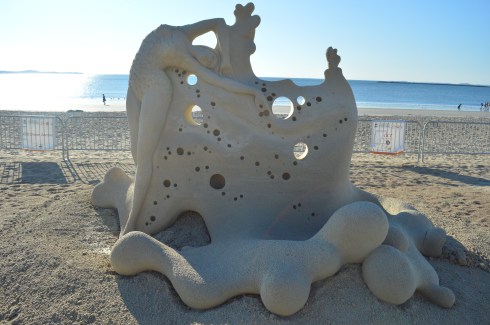
The big winner in the solo competition at this year’s festival was Melinage Beauregard of Montreal, Canada, for her “Go With The Flow” sand sculpture. This is the second year in a row Melinage has won this competition. She won both the overall competition voted on by the audience and she also won the sculptors choice award which was voted on by the fellow sculptors.
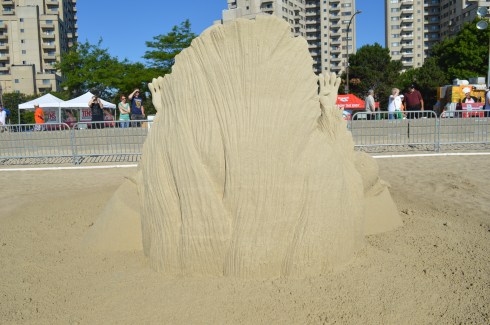
One thing I have noticed about these impressive sculptures is the subtle things that still must take an inordinate amount of time to create but make a huge improvement, like grading on the side of a sculpture.
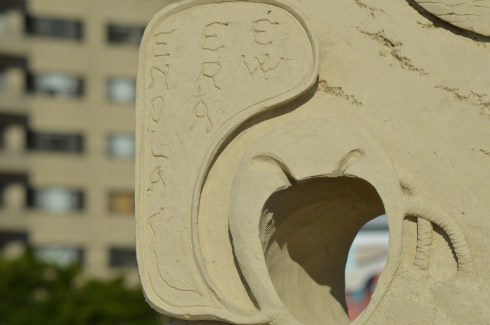
Second prize in the solo competition went to Italian sculptor Leonardo Ugolini for his work “Together.” Ugolini paid close attention to detail in his sculptuure. In the front, just above the astronaut’s head he etched “We Are Alone”. On the back of the sculpture, he etched “We Are Alone” backwards.
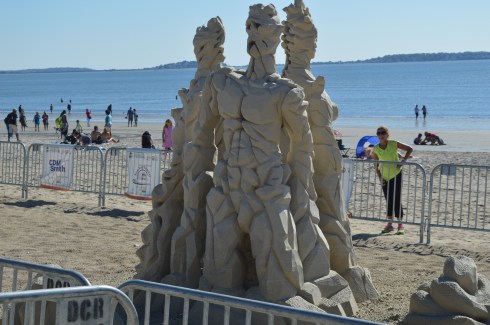
The third place winner in the solo competition was Guy-Olivier Deveau of Montreal, Canada, for his sculpture “Carcass.”
In the duo sand sculpting competition, the team of Dan Belcher of St. Louis, Missouri and Marianne van den Broek of Key West, Florida for their sculpture, “Body Art.”
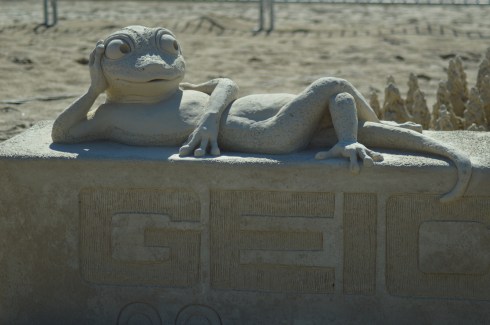
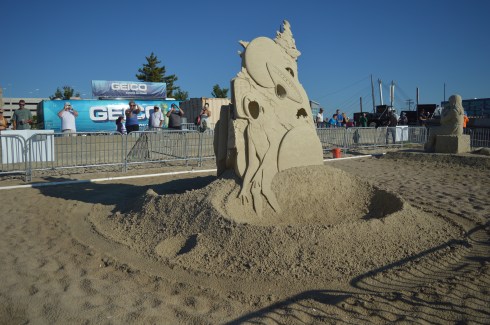
One of the interesting things about this sculpture is there is supposed to be a hidden image if you look at it from a certain angle (straight ahead), As the arrow and instructions in front of the sculpture directs you, you should see a frog in the sculpture.
Do you see it? Me neither.
Second place in the duo competition went, appropriately enough, to Abe Waterman of Prince Edward Island, Canada and Morgan Rudluff of Santa Cruz, California for their piece “Le Numero Deux” (the number two). This sculpture looks innocent and harmless enough until you take a closer look.
Well, you get the jist of it.
Third place in the duo competition was awarded to Deborah Barrett/Cutulle of Saugus, MA, and her partner Steve Topazio of Tiverton, Rhode Island. They also took home the People’s Choice Award. As a side note, you may notice that some of the sculptures seem grainier than other sculptures, this is because it rained Saturday night and when I took the photos on Sunday there was a different texture to the sand. I included a closeup of the sand in this group of photos for a better perspective of how the sand looked.
The other contestants'(there were 20 contestants total including the duo and solo artists) sculptures are posted below.
“I Love You So Much” by Marielle Heesels from the Netherlands.
“Always Connected” by Pavel Mylnikov from Moscow, Russia.
“Peaceful Dreams” by Nikolay Torkov of Moscow, Russia (maybe not so peaceful dreams?)
“The Last Flight” by Benjamin Probanza from Acapulco, Mexico.
“Redemption” by Jonathan Bouchard (aka “Jobi”) hailing from Montreal, Canada.
“How They View Us” – an interpretation of the Statue of Liberty holding a weapon. This was the only sculpture with any inkling of a political theme.
“Fractal” by David Durcharme of British Columbia and Enguerrand David from Brussels, Belgium.
“Little Owl”by Paul and Remy Hoggard of Bulgaria.
They also held a children’s sculpting lesson activity for ages 5 to 12. I am sure there were some future sand sculpters in that class.
Dogs like the sculptures also. Revere Beach is a great place to walk your dog. The long walkway along the beach will wear out even the most active dog.
Here are a few of the cute pooches I saw during my visit.
Neelix is a 4 year old pure breed Keeshond. Neelix is named after the Star Trek Voyager character and he is so cool he even has his own Facebook page which you can like and follow here. I did.
Darby is a 14 year old Boston Terrier Lab.
Lucy is a 10 year old Labradoodle.
James, a 6 year old French Bulldog, preferred to ride with his mom on her bicycle.
Below is a short video of one of the sand sculptors working on his sculpture.
Please stop by my Facebook Page and like my page to view content not included in my blog. Thank you.