Date Of Event: January 17, 2026
Location: Springfield Armory. 1 Springfield Armory, Springfield, MA (1 Armory St for GPS location) (2 hours southwest of Boston, MA)
Admission cost: Free admission
Parking: Free parking was available at the event
Summary: The Park Ranger Services at the Springfield Armory hosted a ceremony to commemorate Henry Knox’s journey across Massachusetts.
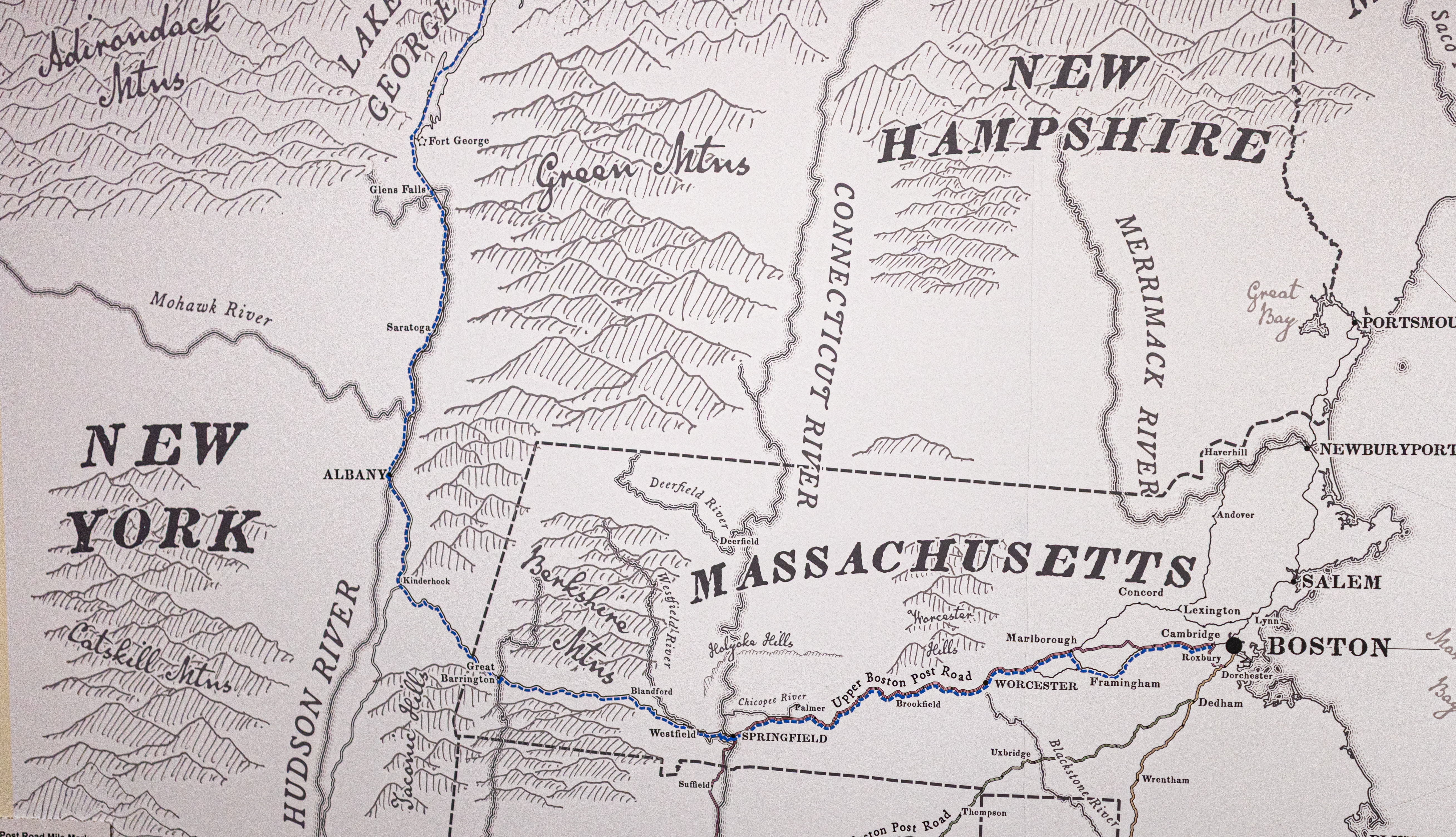
The Knox Trail, also known as the Henry Knox Trail or the Knox Cannon Trail, is a network of roads and paths which traces the route of Colonel Henry Knox’s “noble train of artillery” from Crown Point, NY, to the Continental Army camp just outside of Boston, MA. Knox and his team moved 59 or 60 tons of artillery. The trail, which was called a “Noble Train of Artillery”, was completed using primarily ox-drawn sleds (or sledges) and horses. It was completed in an impressive 56 days and spans approximately 300 miles. While the exact dates aren’t clear, it is believed to have taken place during the winter of 1775 to 1776. The map below shows the path they took. The blue line shows the exact path. It extends from the Lake George area to Boston.
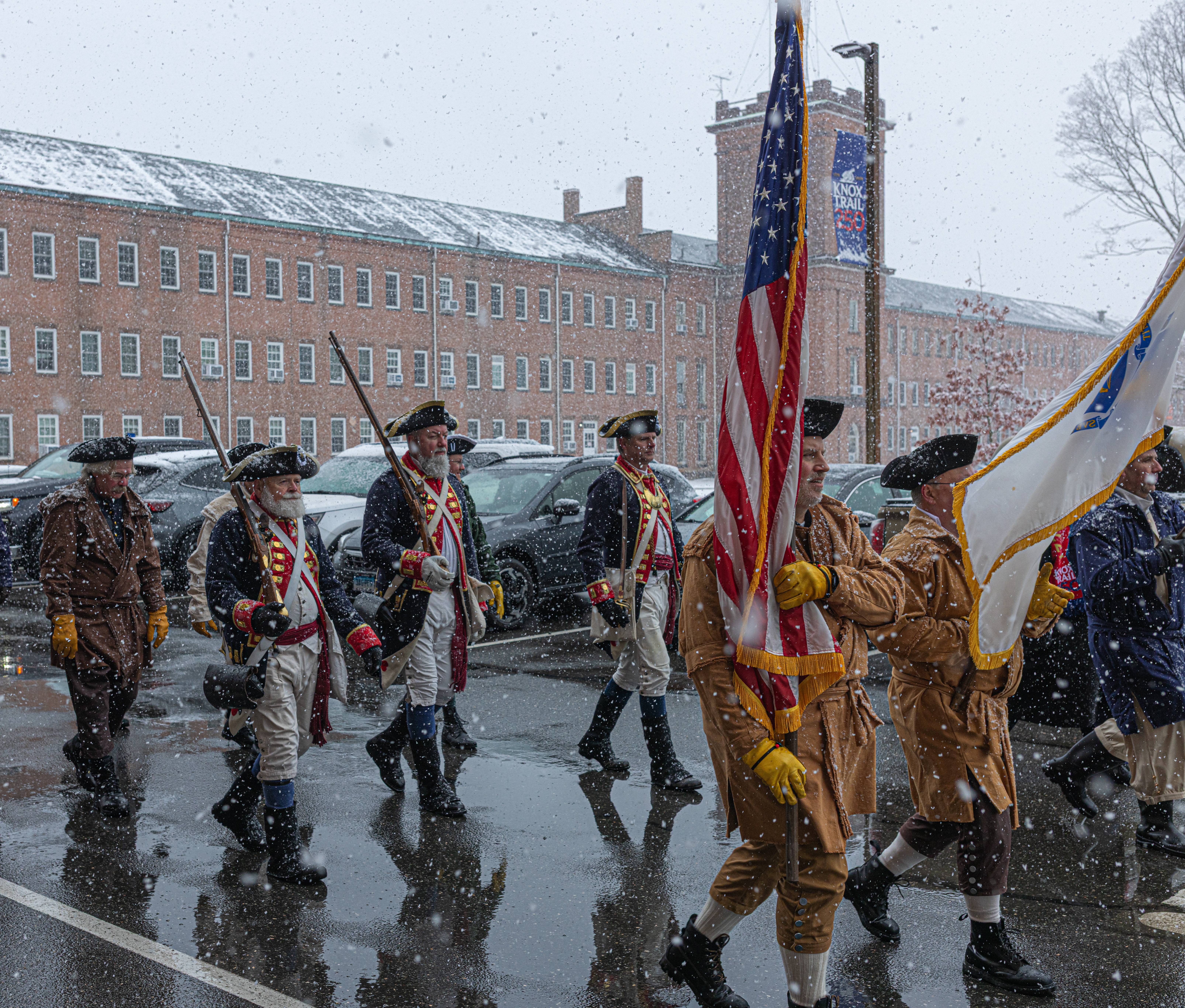
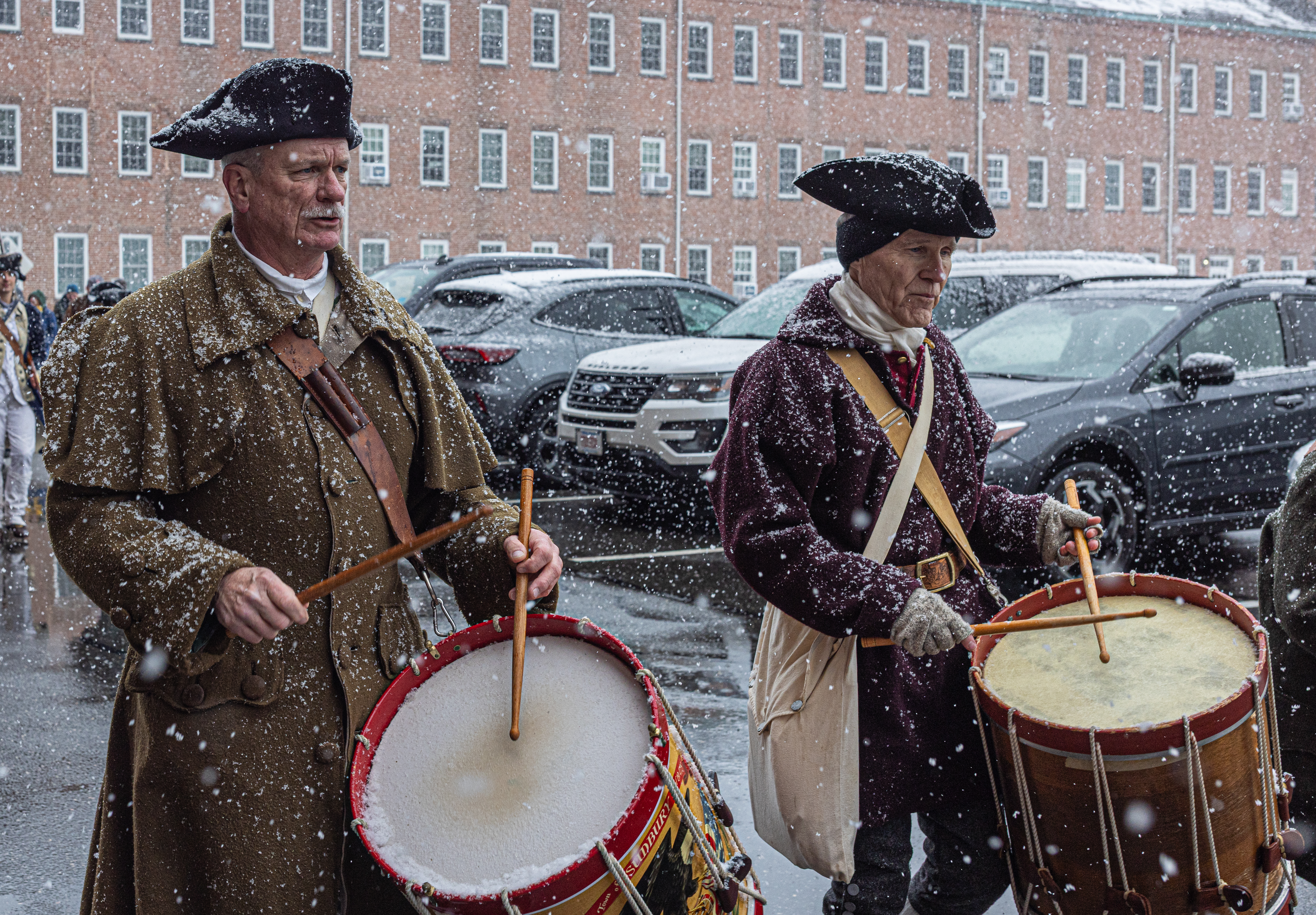
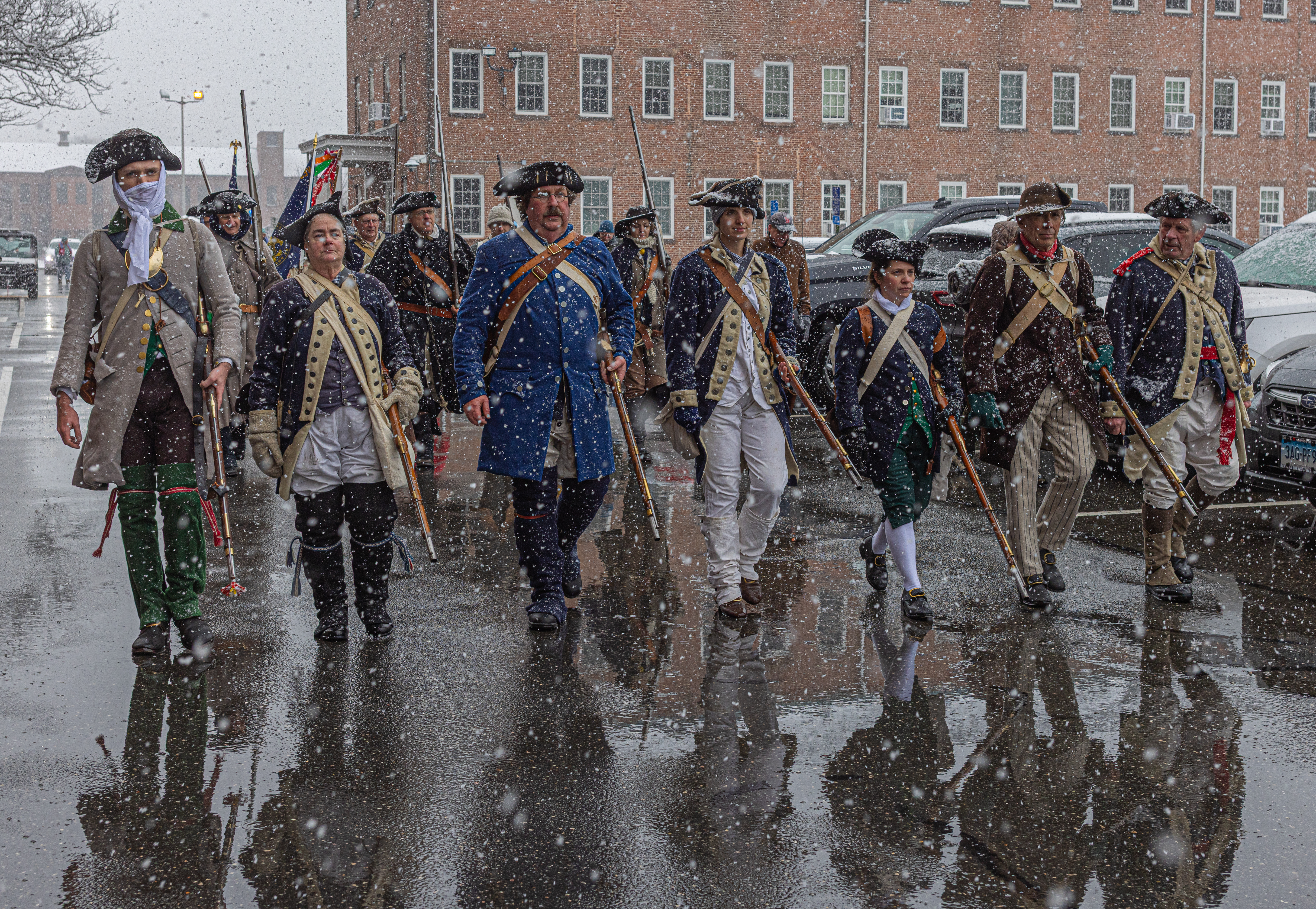
For better or worse, it has been snowing or it recently snowed during many of my trips lately. This day was no different. And wow did it provide for a pretty backdrop!
This was my first photo shoot using my Canon R5 mirrorless camera. I think the photos might look a little more crisp and clearer. One thing I did notice is the camera and lens I used (Canon 35 mm) was better at focusing on the people and their faces despite the snow. My older camera (Canon 5D) would tend to focus on the snow and not the people.
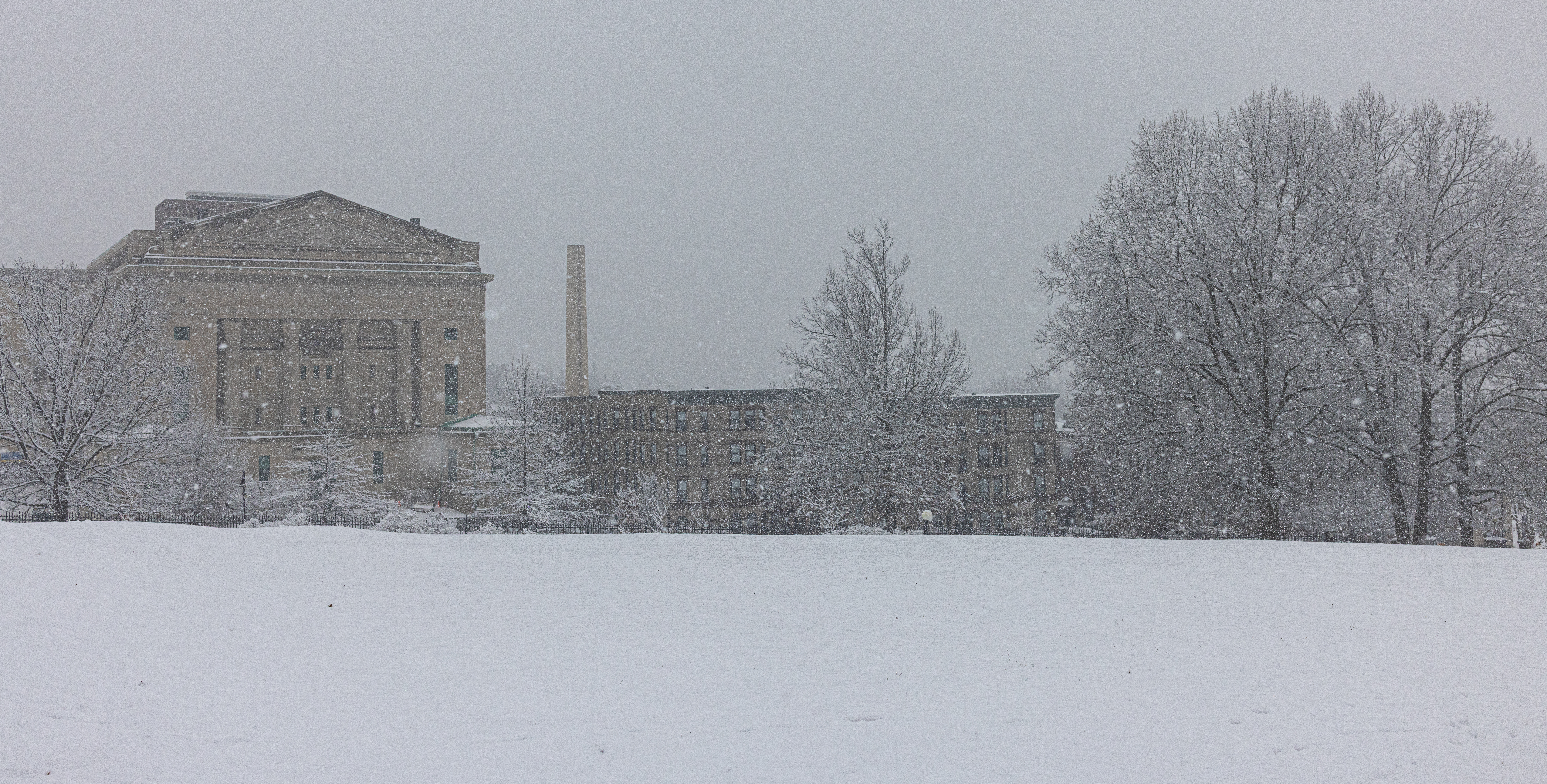

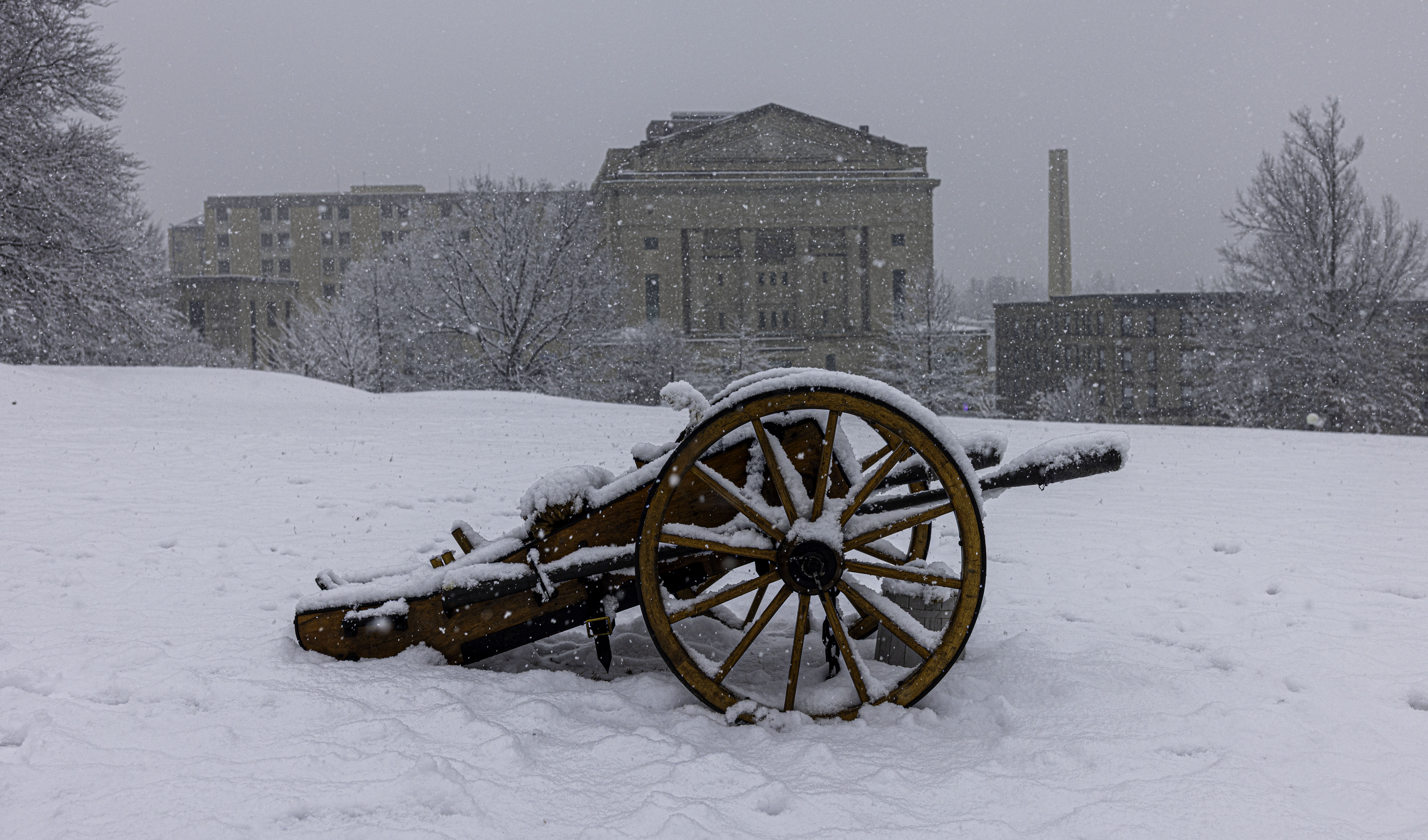
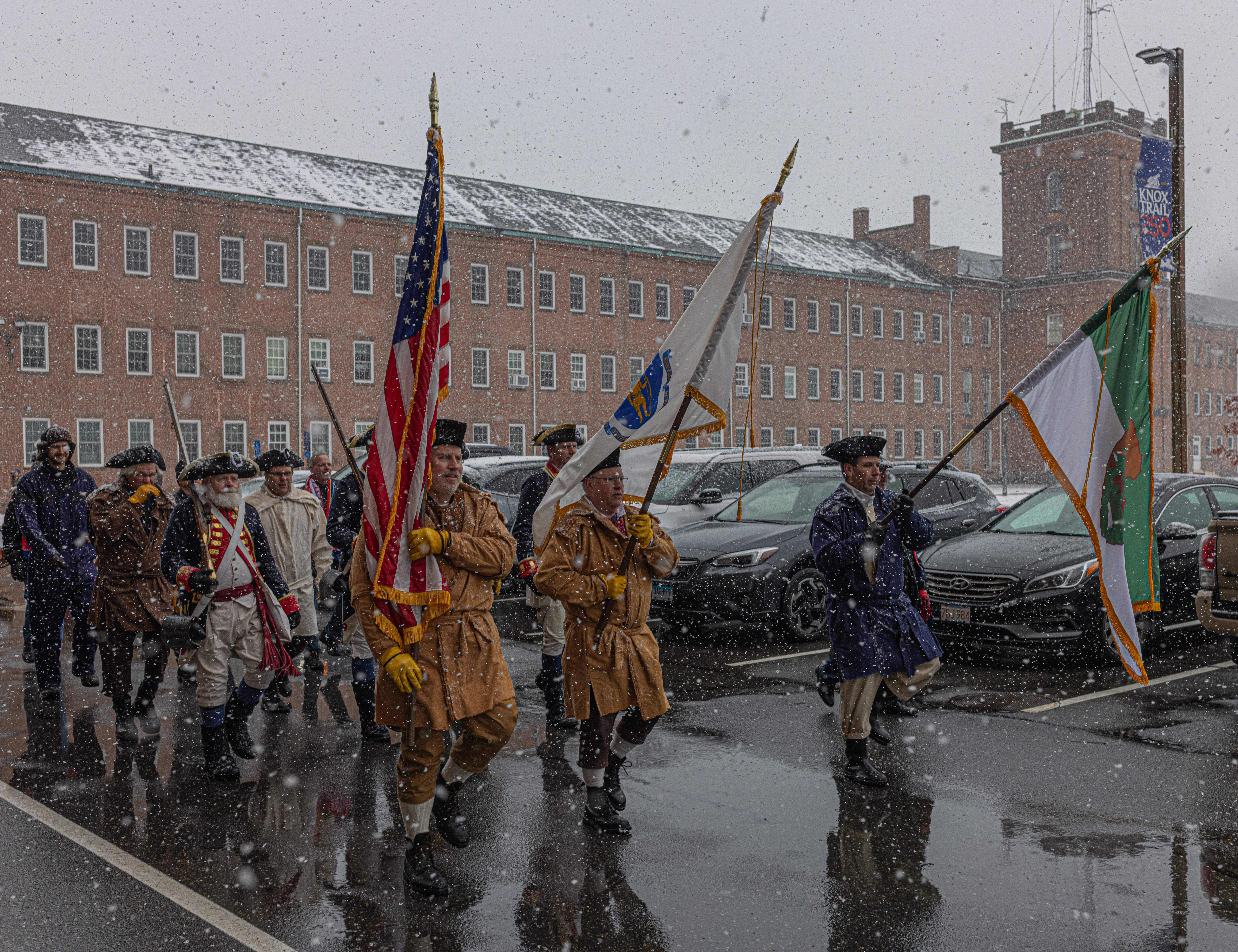
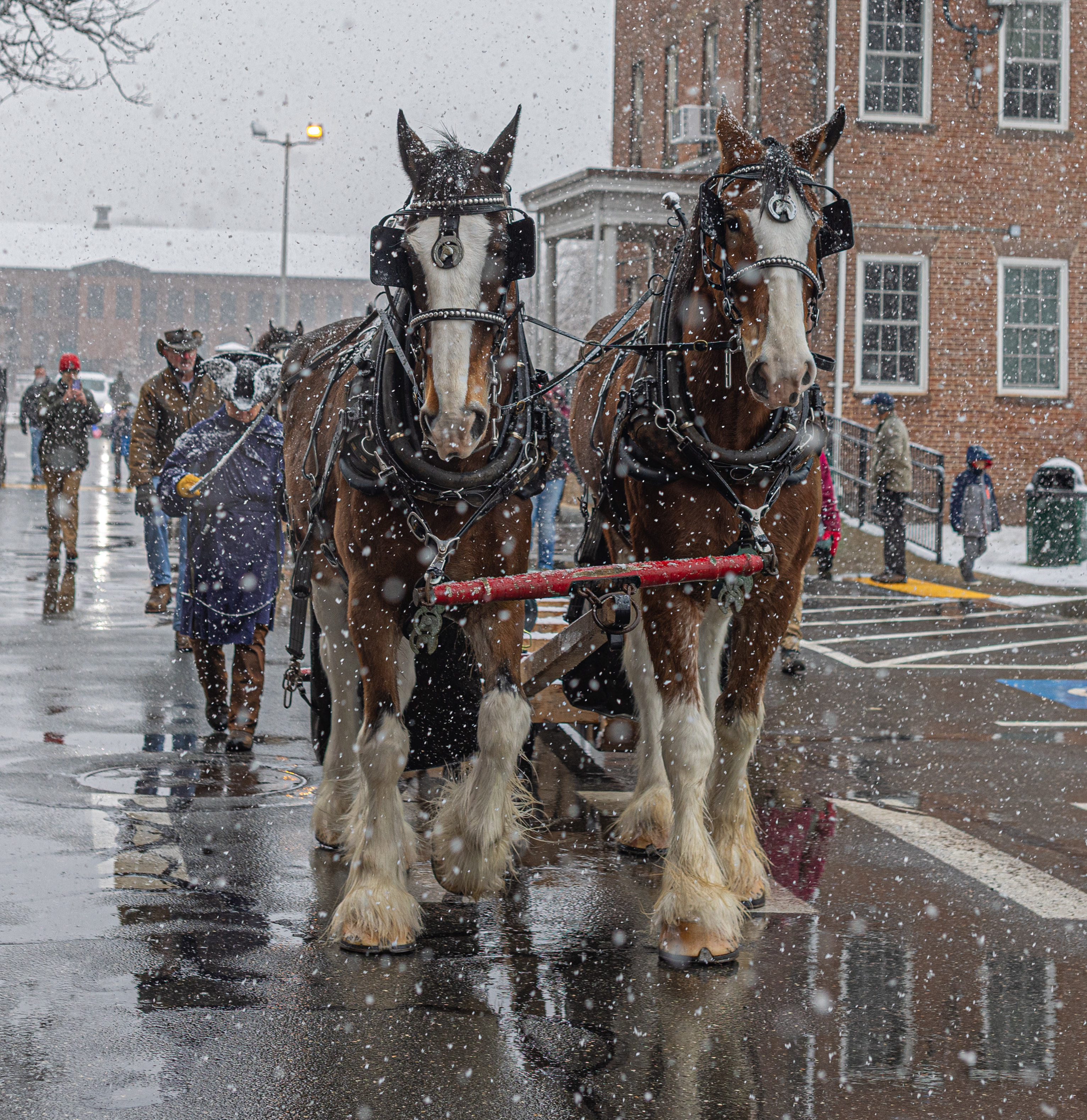
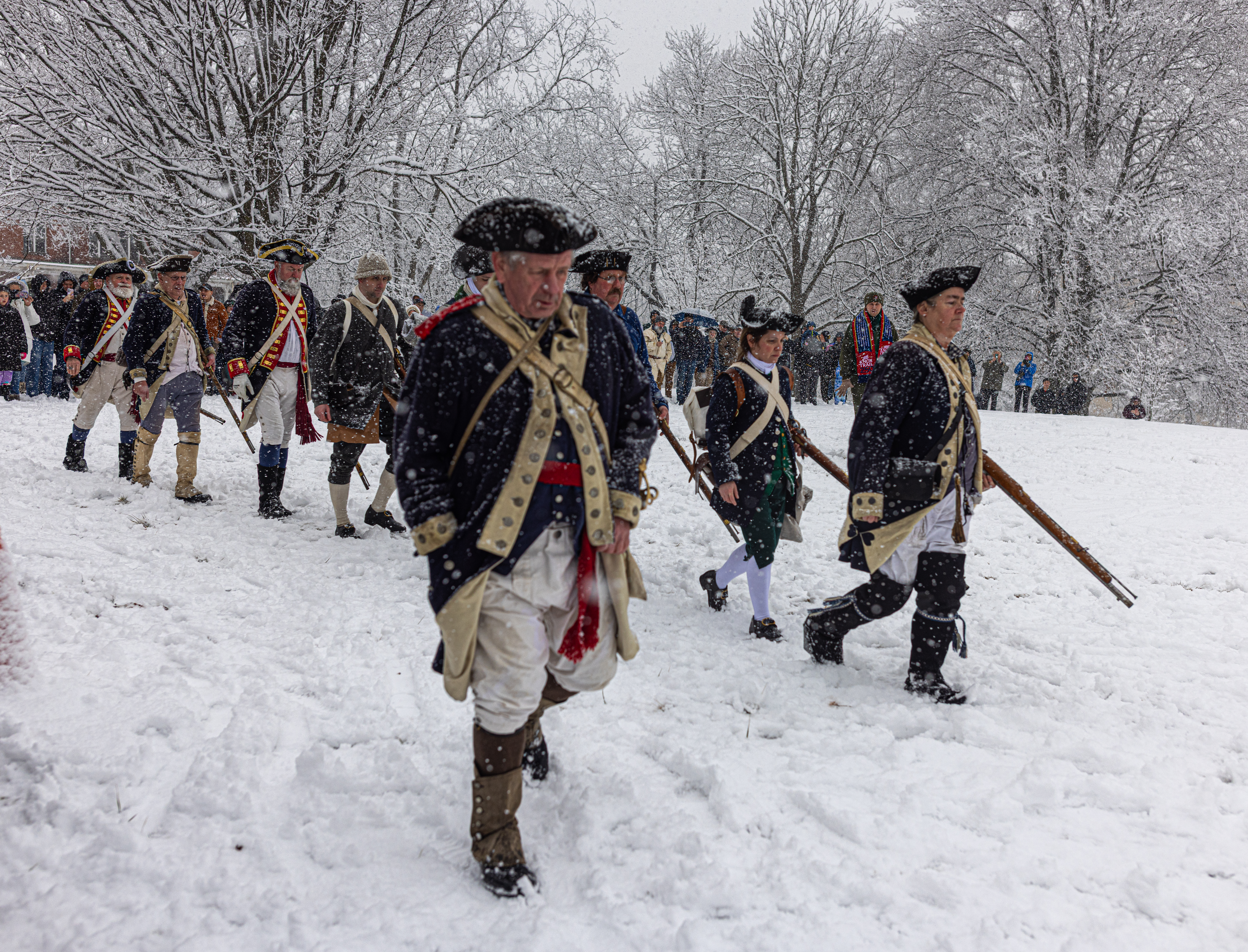
The ceremony began with a march on the grounds of the Springfield Armory which included reenactors and animals.
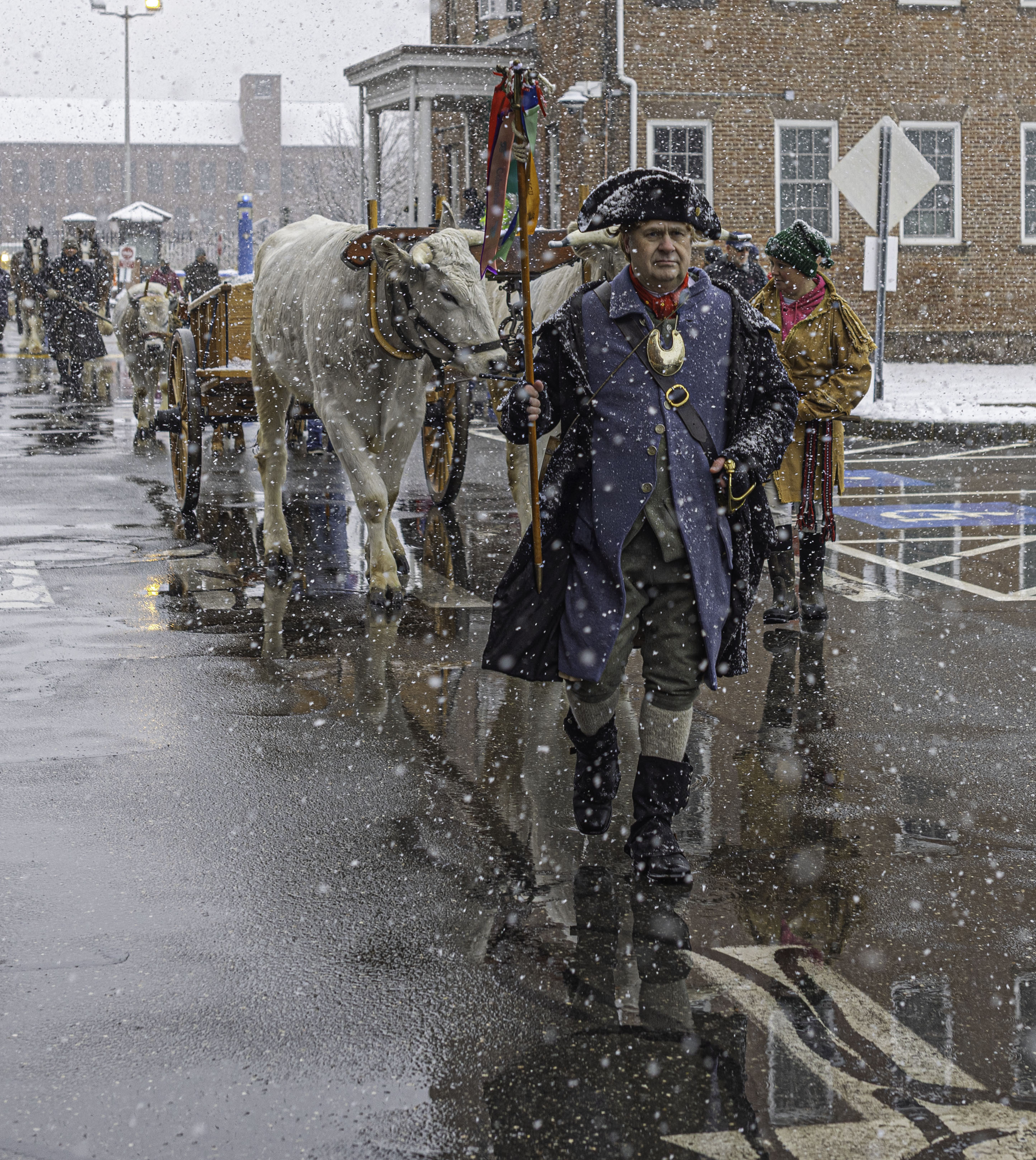
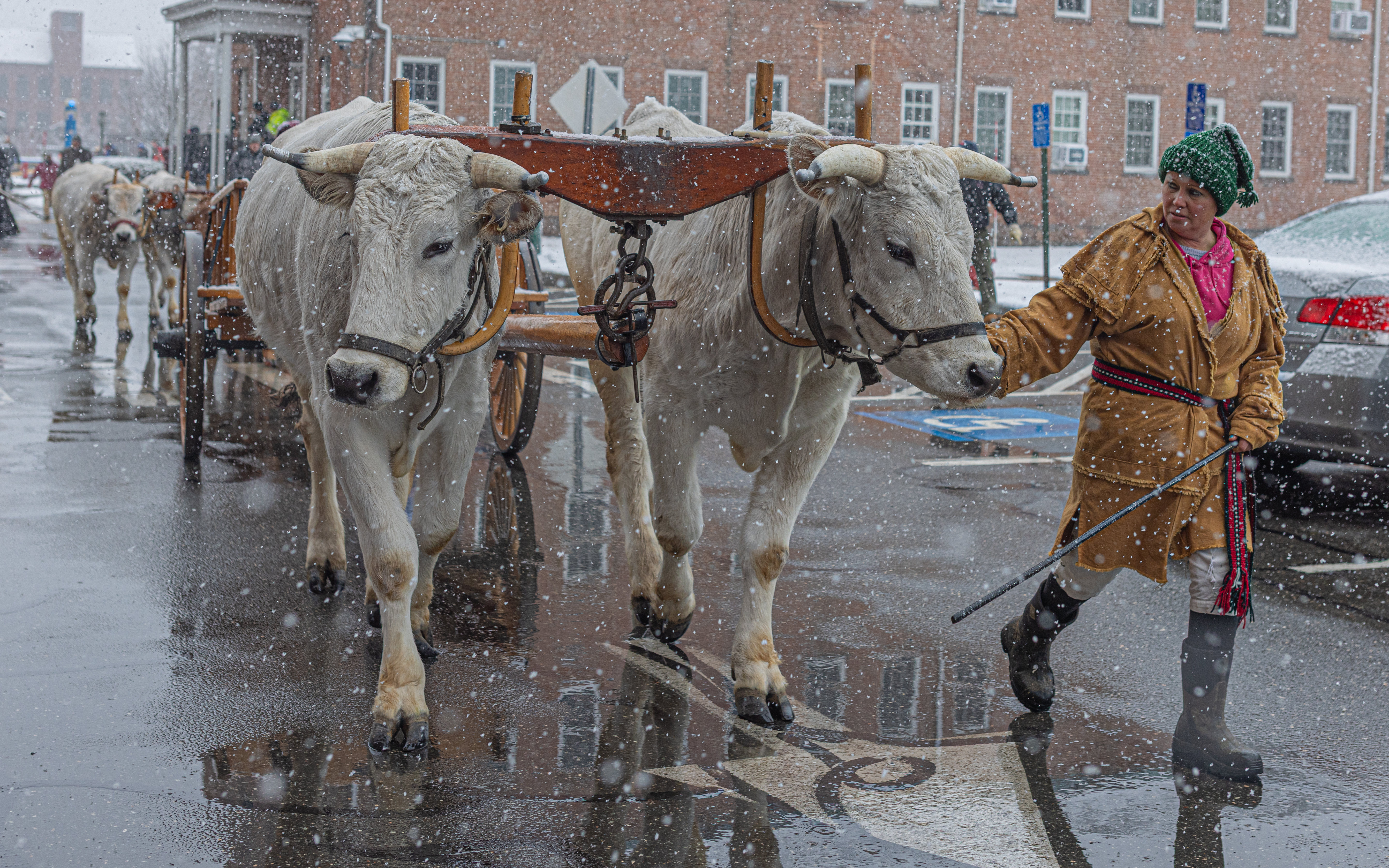
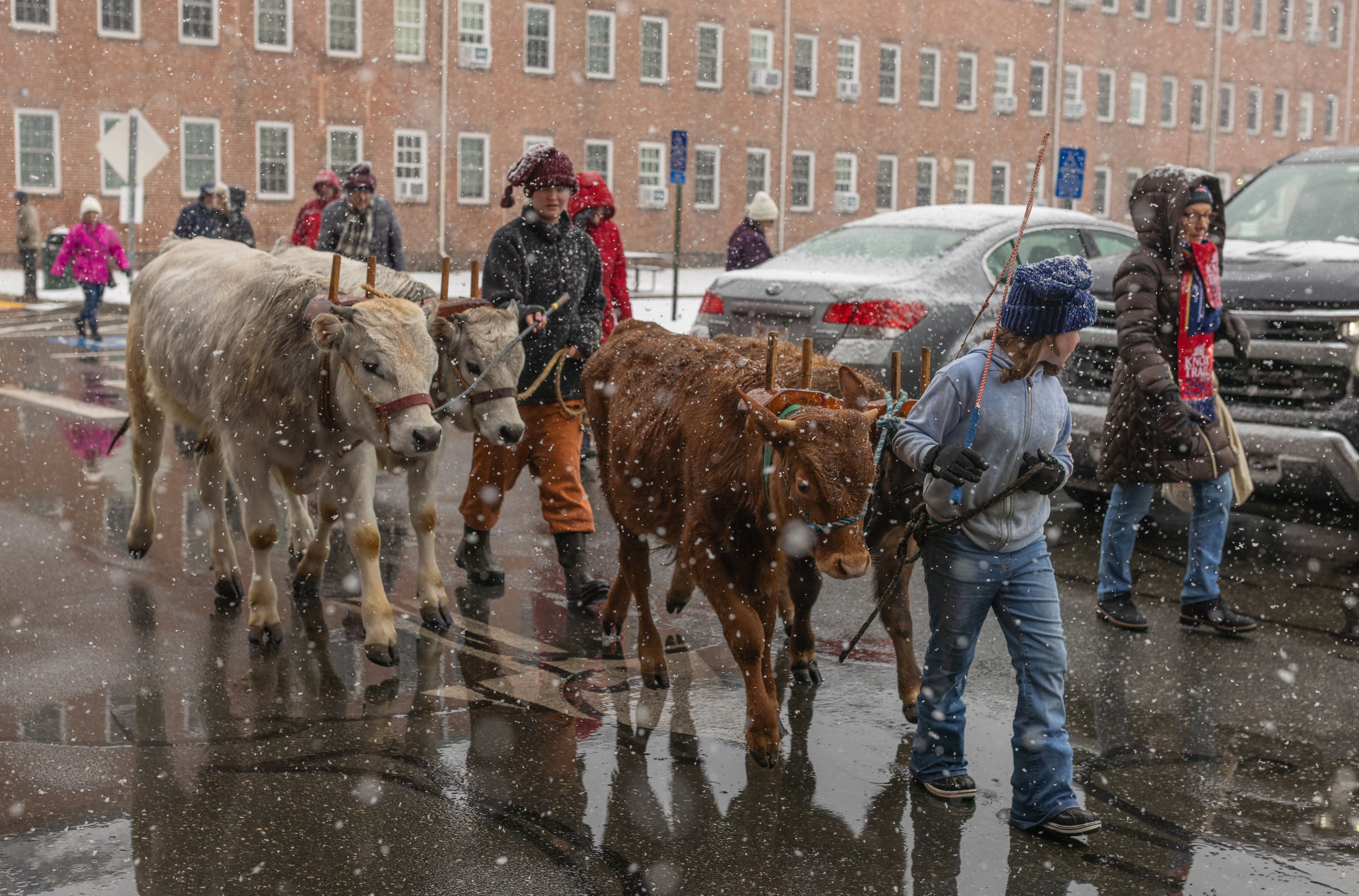
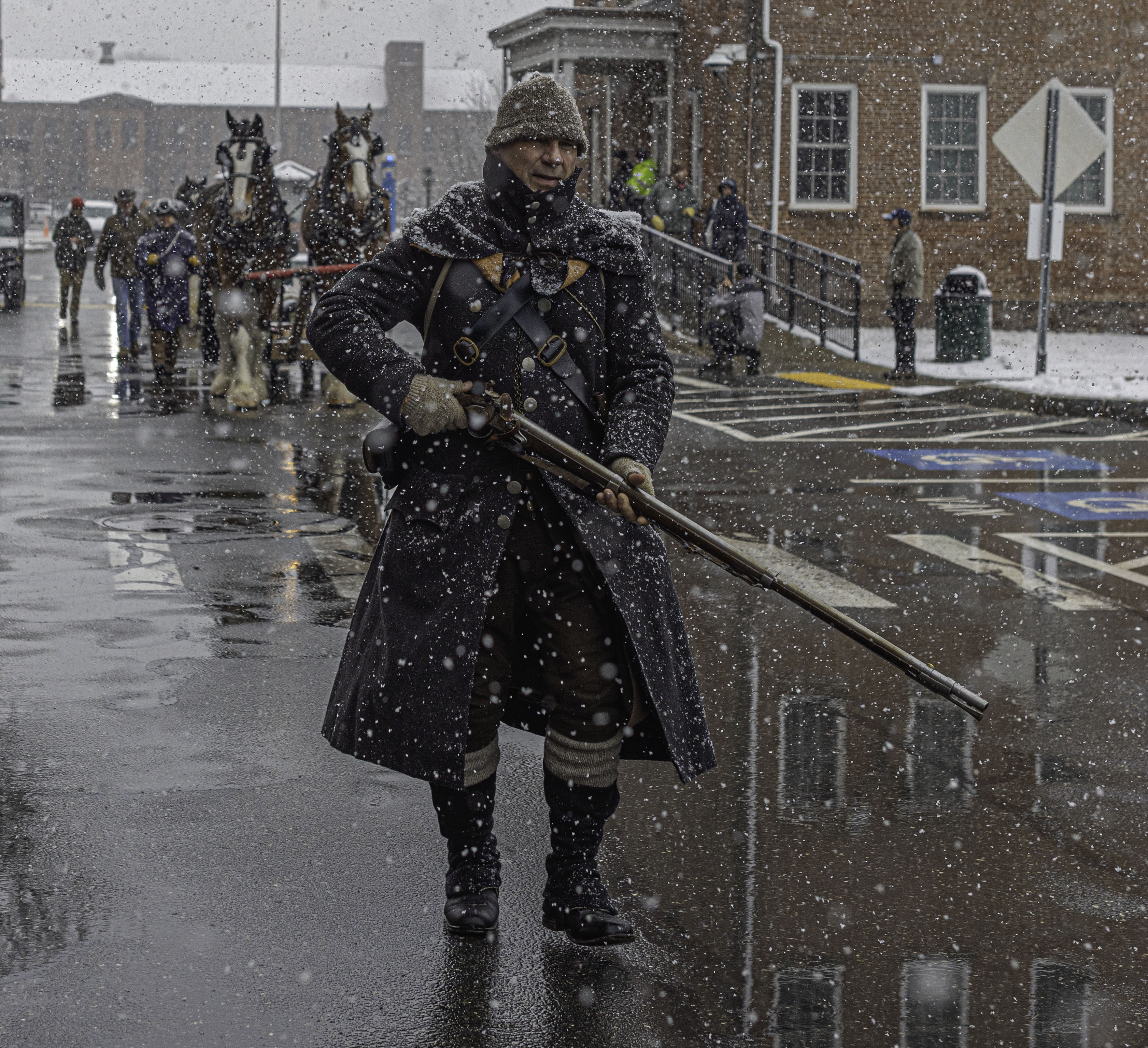
These horses were used to move some of the artillery, emulating the original Knox Trail.
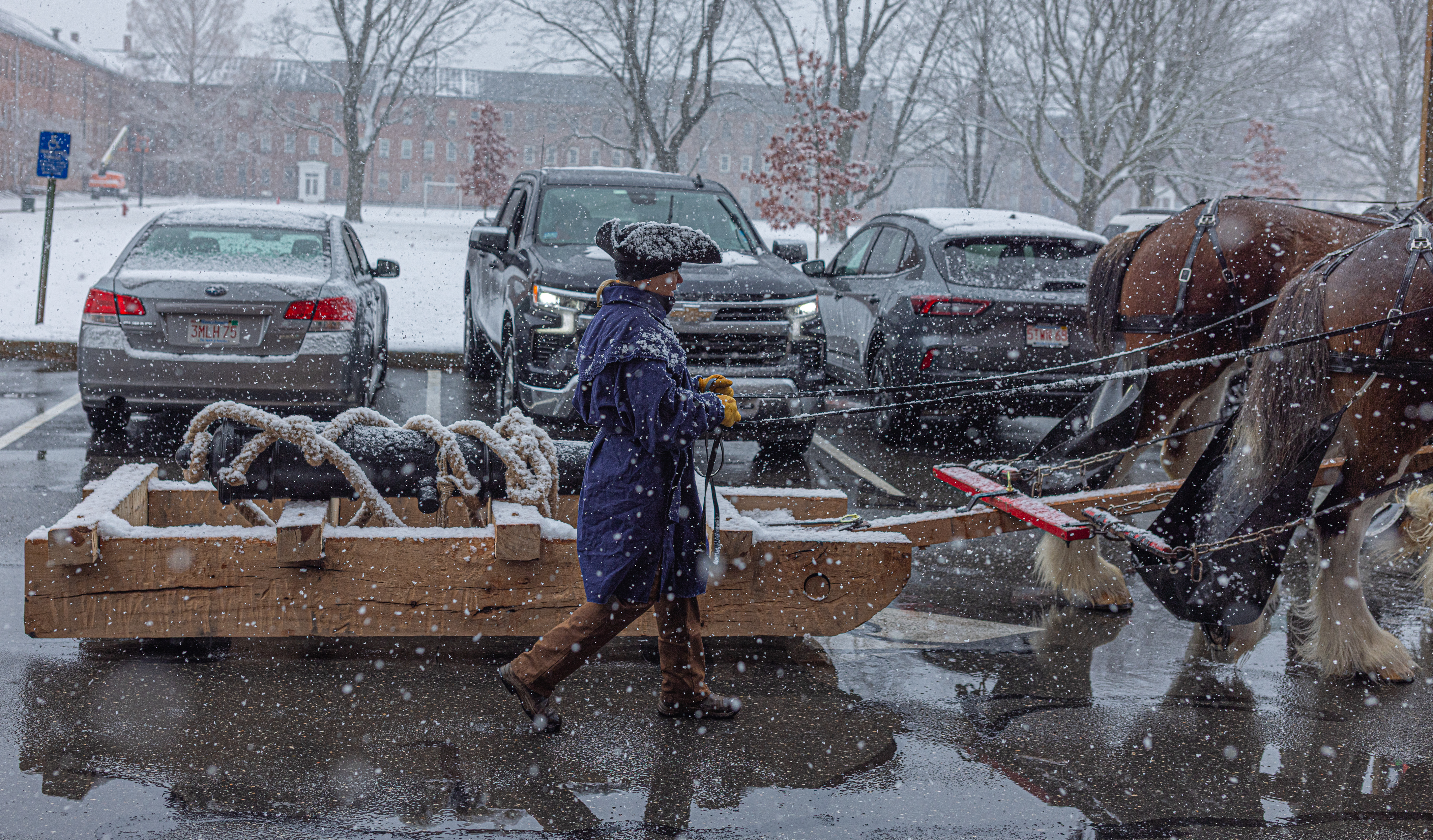
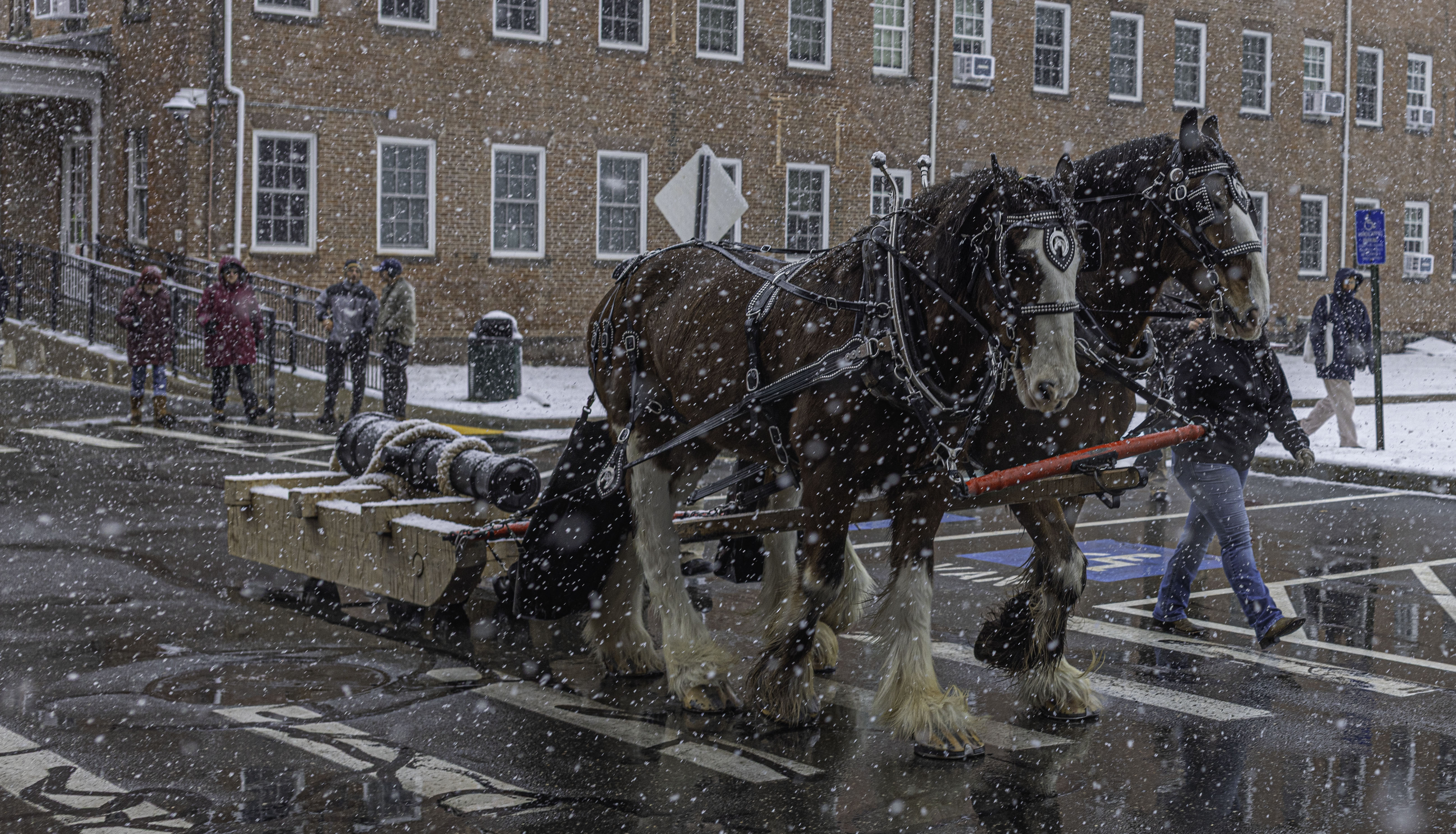
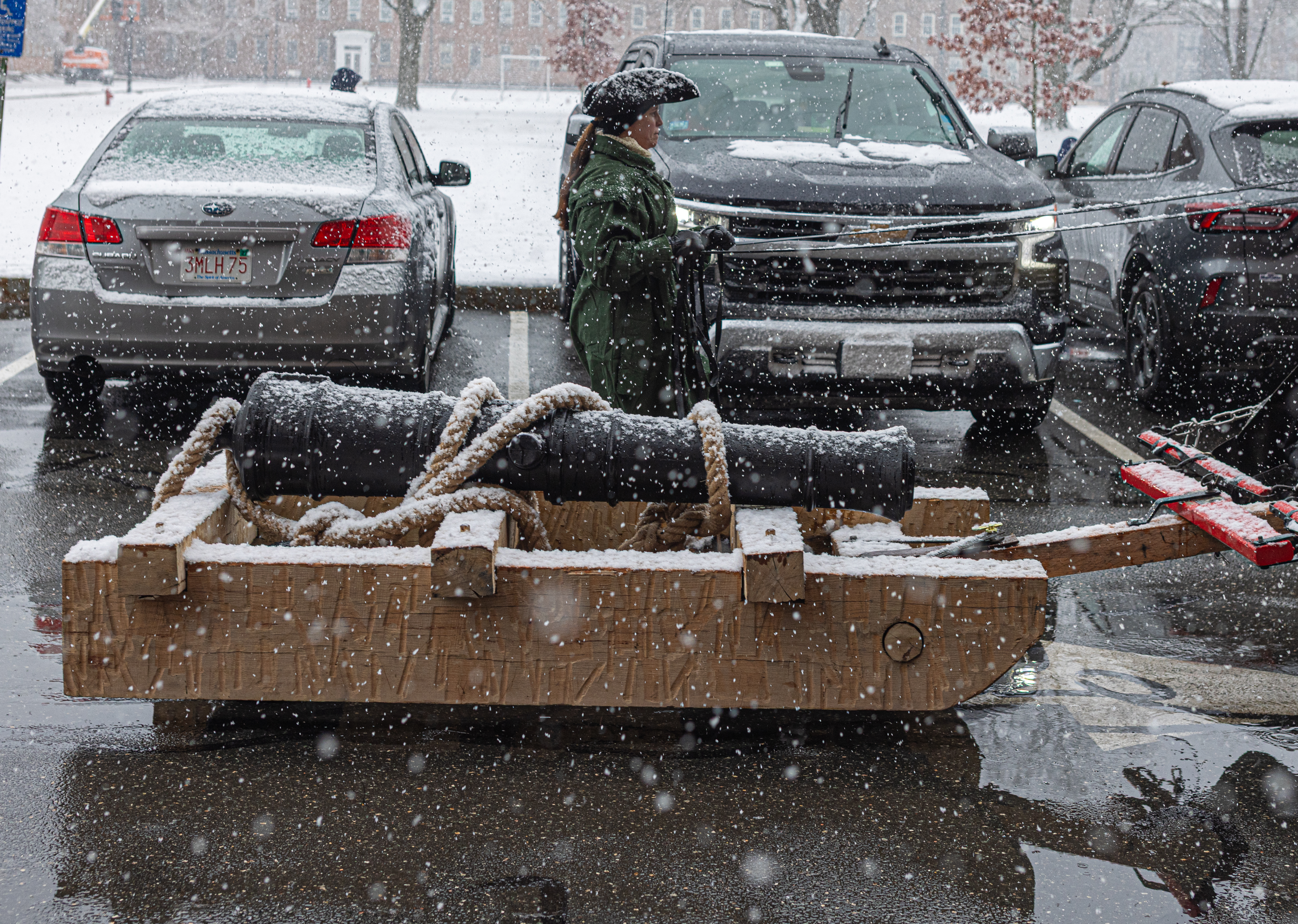
The Springfield Armory didn’t just have military weapons and historical information Knox Trail. There were a variety of old firearms and gear from different eras and wars.
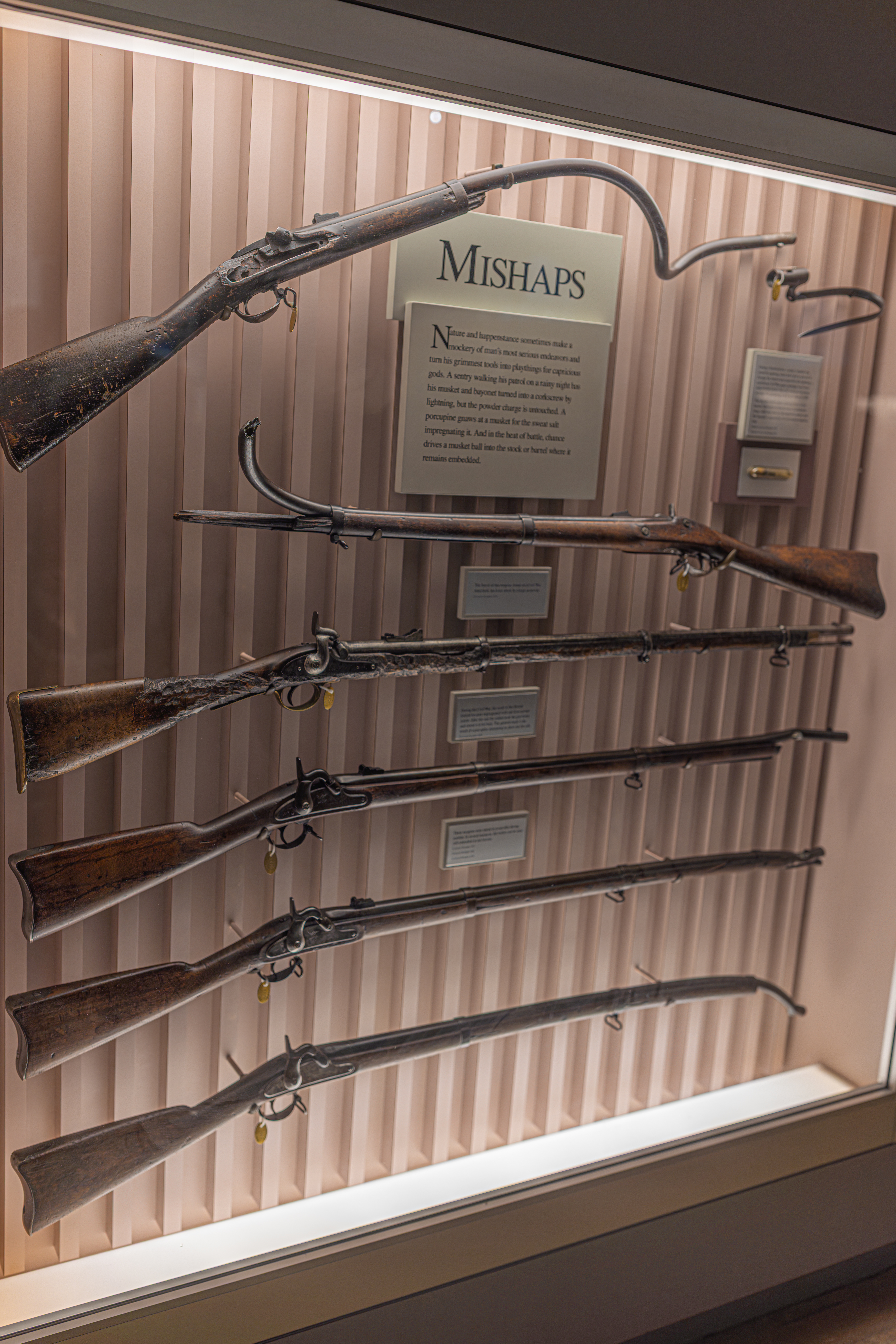
These weapons showed below were involved in different mishaps during battle.
The first musket was struck by lightning. Because of the intense hear caused by the lightning, a regulation Civil War paper cartridge (which can be found to the right in the photo) was found intact in the breech (the rear end of the barrel where the gunpowder is ignited and the projectile is loaded) when the weapon was disassembled for cataloging and preservation in 1981. While the identity of the sentry whose weapon this was is unknown, it is believed it was a Confederate soldier because the bayonet was from a Confederate manufacturer (although Union soldiers often took weapons, ammunition, clothing and other gear from fallen Confederate soldiers and vice versa).
The barrel of the second weapon, which was found on a Civil War battlefield, was struck by a projectile.
During the Civil War, the stock (the main structural component in this case made of wood) of the third rifle, a British Enfield rifle, became impregnated with salt from perspiration. After the war ended, the soldier took the gun home and stored it in his barn. While it was stored, a porcupine gnawed at the stock in an attempt to chew out the salt from the stock of the rifle.
The other guns in the display were struck by projectiles.
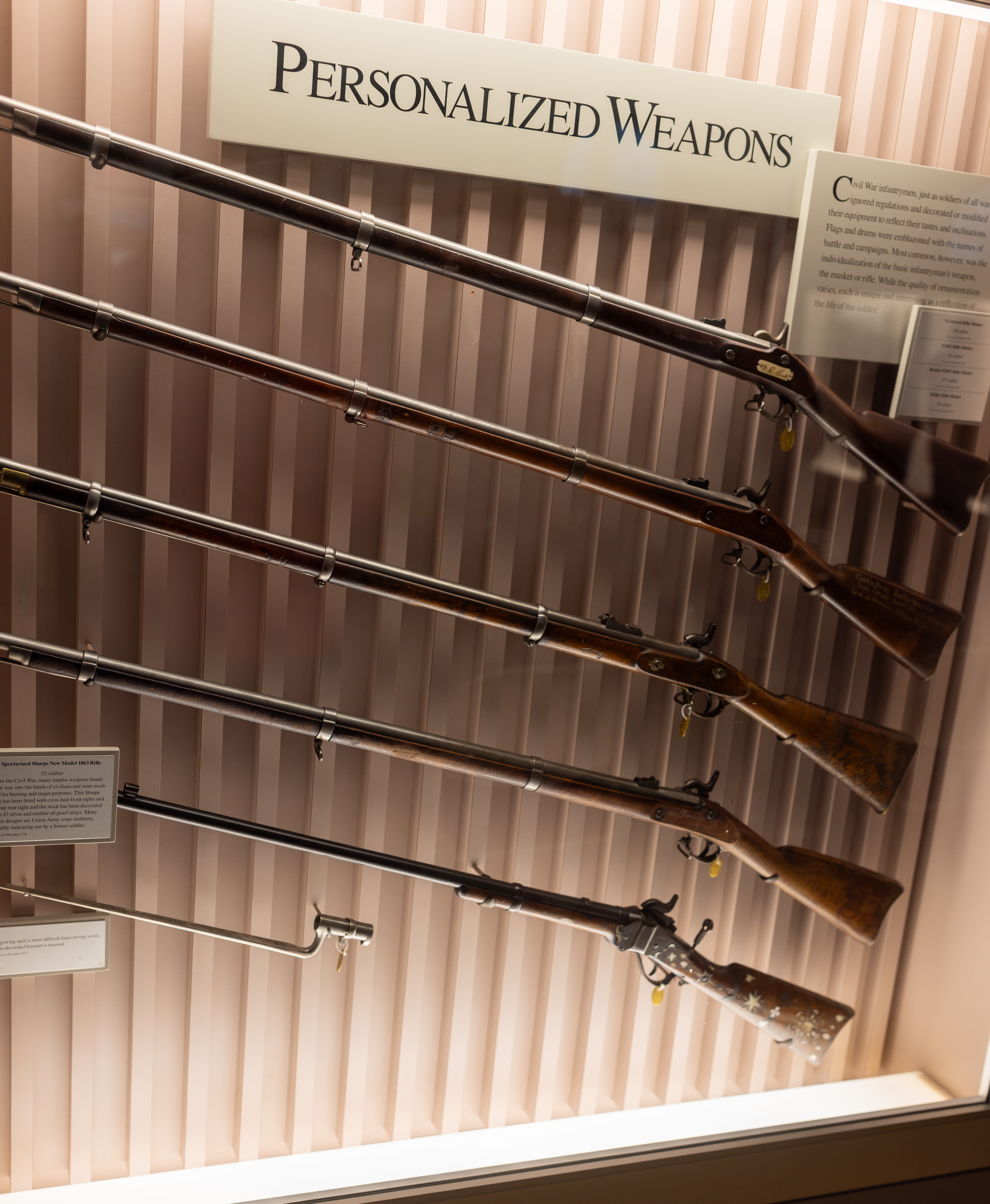
There were many other weapons on display like these personalized weapons.
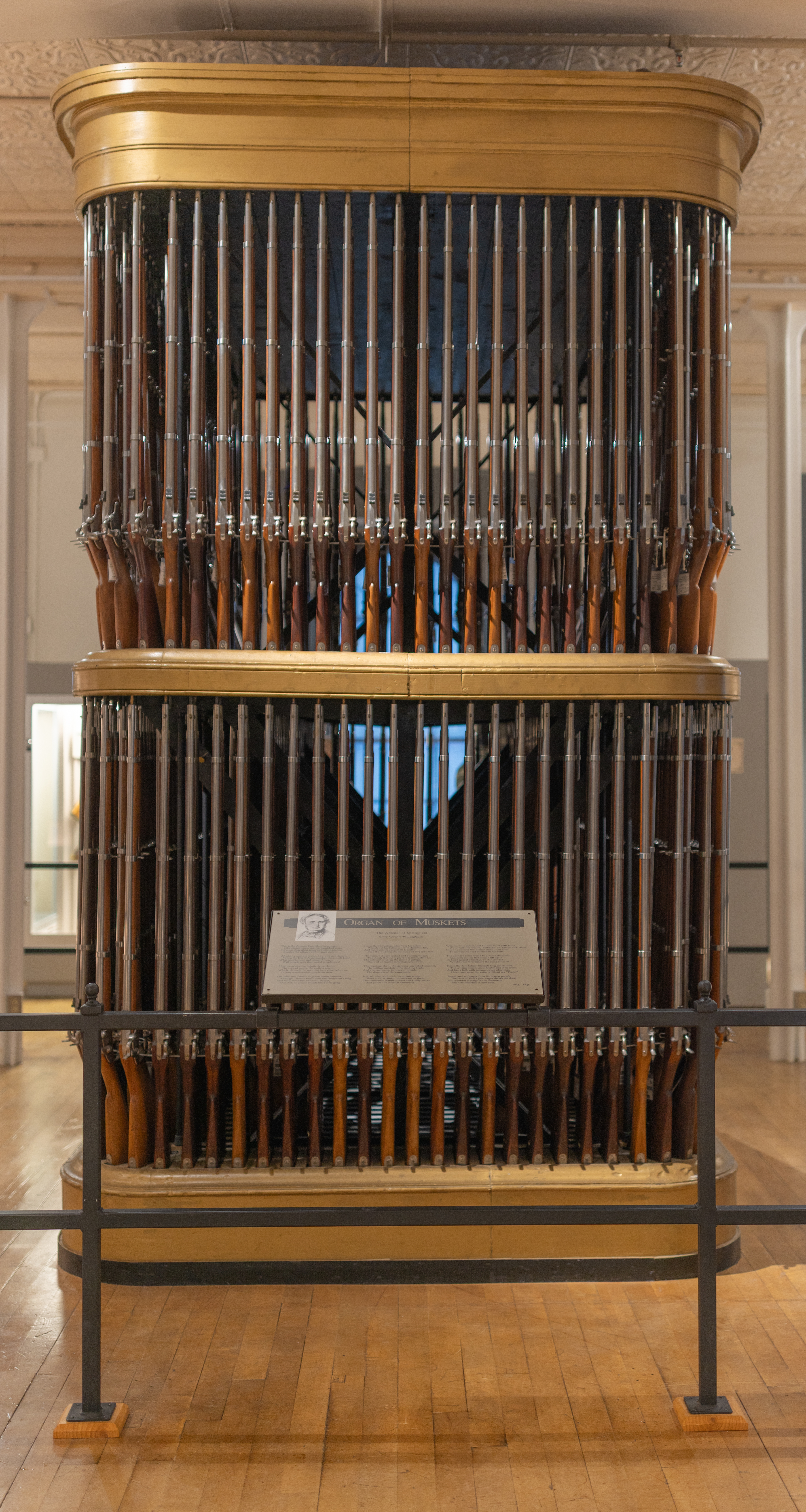
This Organ of Muskets is partially filled with 645 Springfield U.S. Model 1861 rifle muskets.
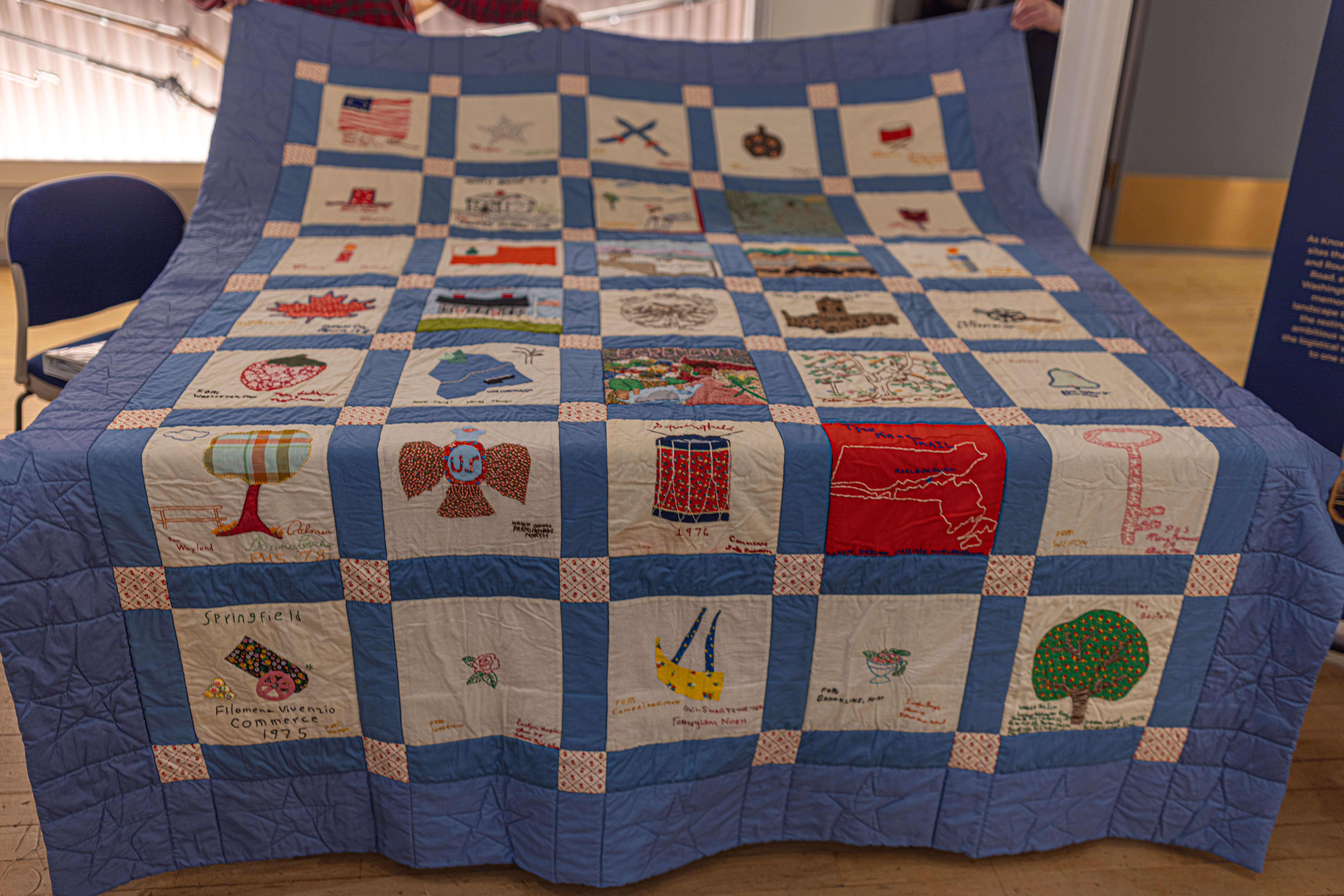
This quilt was made by various high school students in all of the cities and towns in Hampden county in Massachusetts to commemorate the 200th anniversary of Knox Trail. Another quilt from a different county in Massachusetts hangs in the Massachusetts State House. As an aside, 50 years ago, also to commemorate the 200th anniversary, reenactors hiked the original Knox Trail. Given our current weather conditions as we are expected 18-24 inches of snow and freezing wind chill temperatures today and tonight.
These are just a few of the weapons and military and gear with a historical background at the armory. It’s certainly worth another visit since I couldn’t spend too much time looking at all the exhibits in the armory.
There was also an activity learning area where people could make their own paper cartridges. Paper cartridges were a type of small arms ammunition used before the advent of metallic cartridges. To be clear, these were not dangerous on their own and no one was injured while making these cartridges. That I know of.
The main event, of course, were the cannon firing and rifle and musket firings.
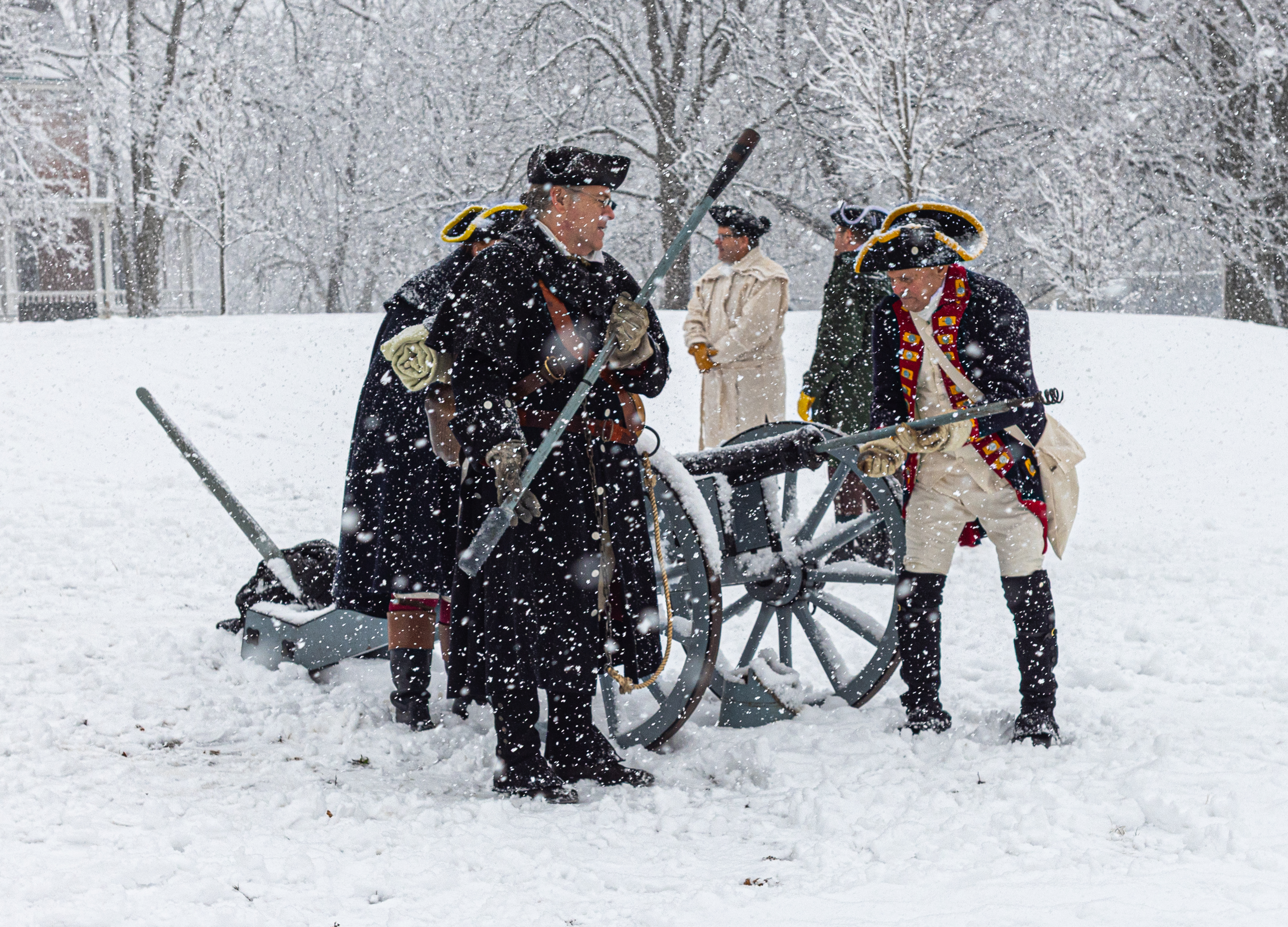
The reenactors prepared for the cannon by priming the cannon before the firing.
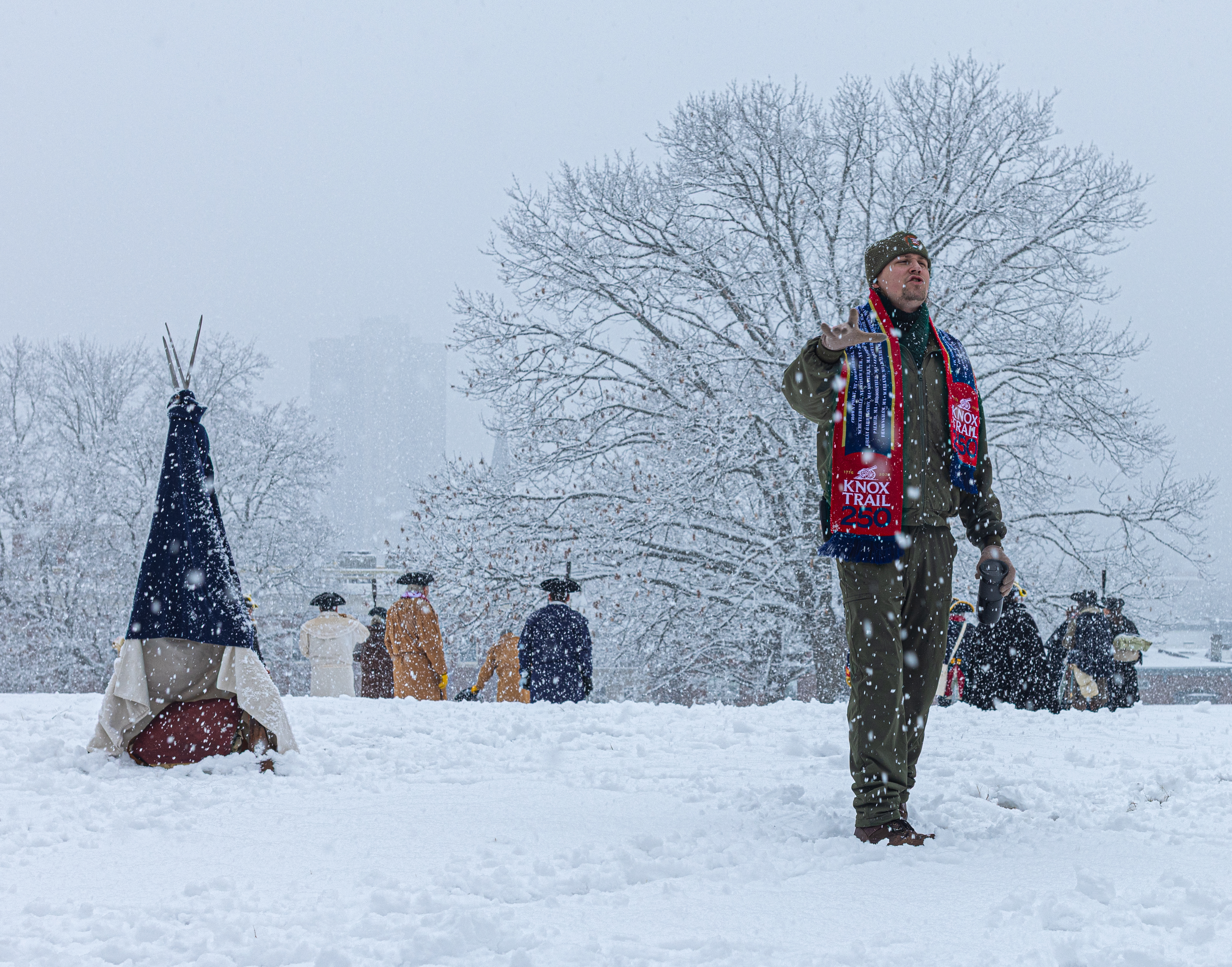
A ranger gave some background info about the Knox Trail and what it was like to be in battle.
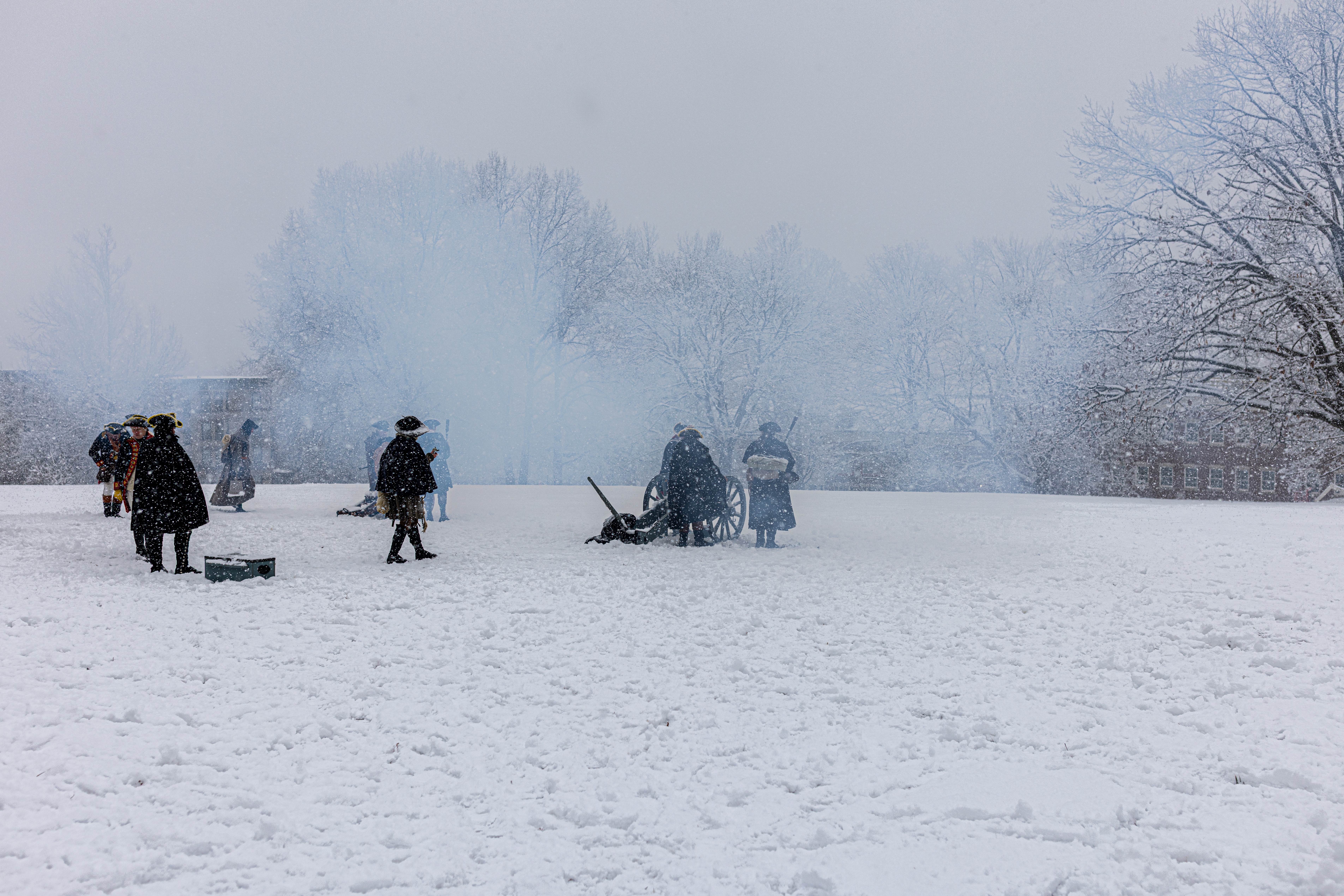
The reenactors did fire a canon. But, because of safety precautions, they had us stand far away and everyone was bunched up together. So I was out of position for the cannon firing. This was the aftermath of the canon firing.
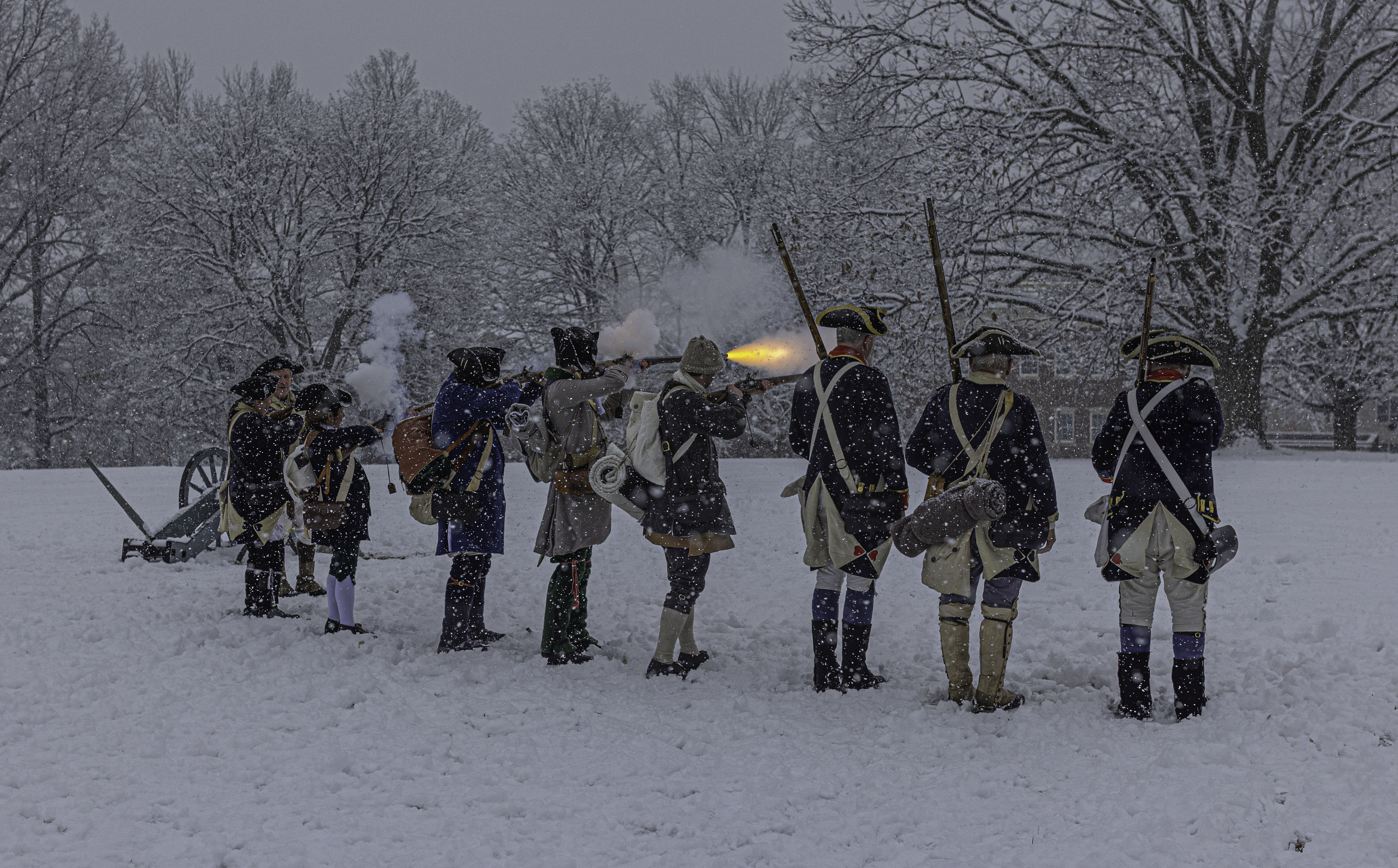
But, I was able to get a photo of the firing of the rifles and muskets.
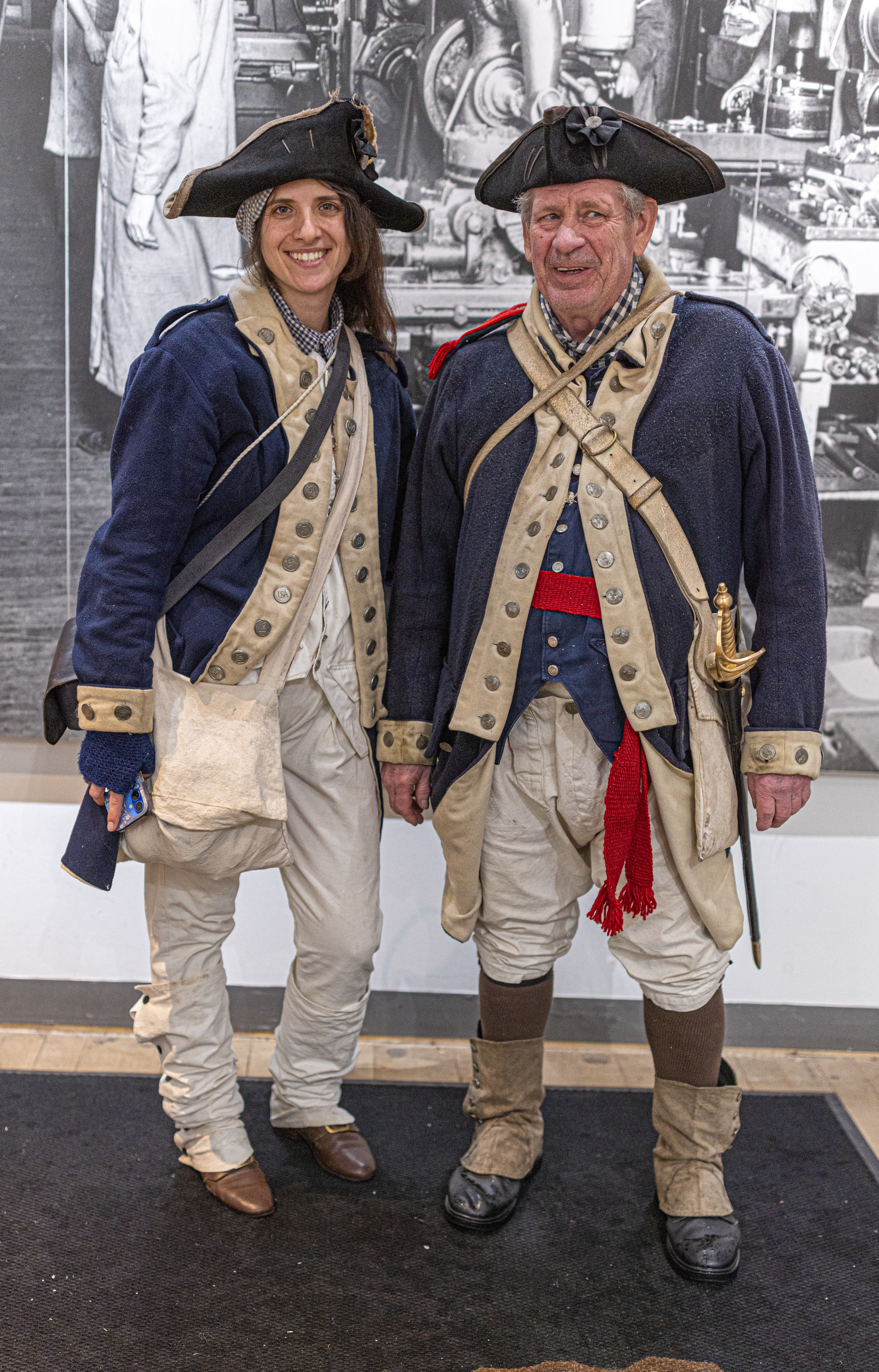
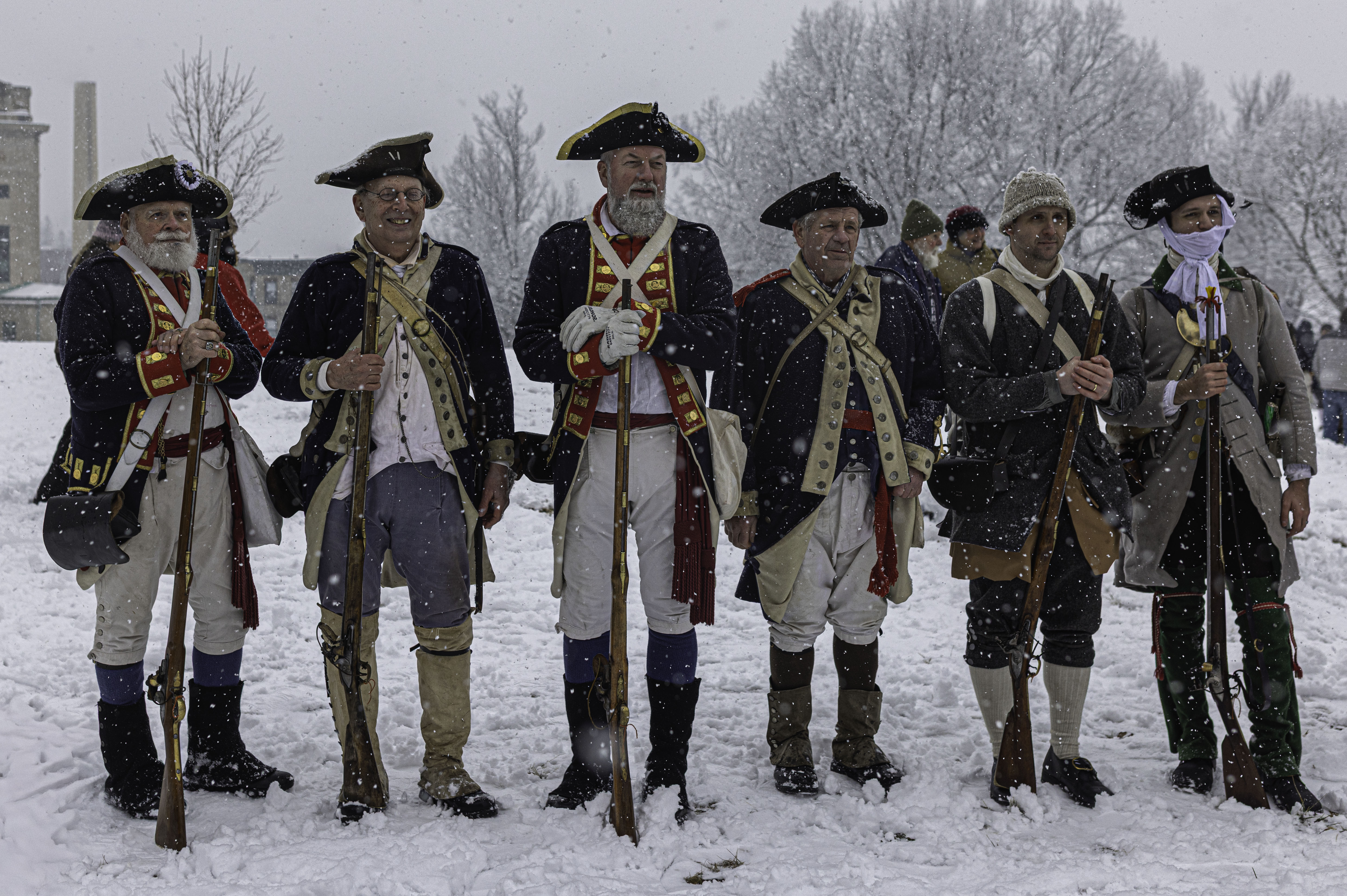
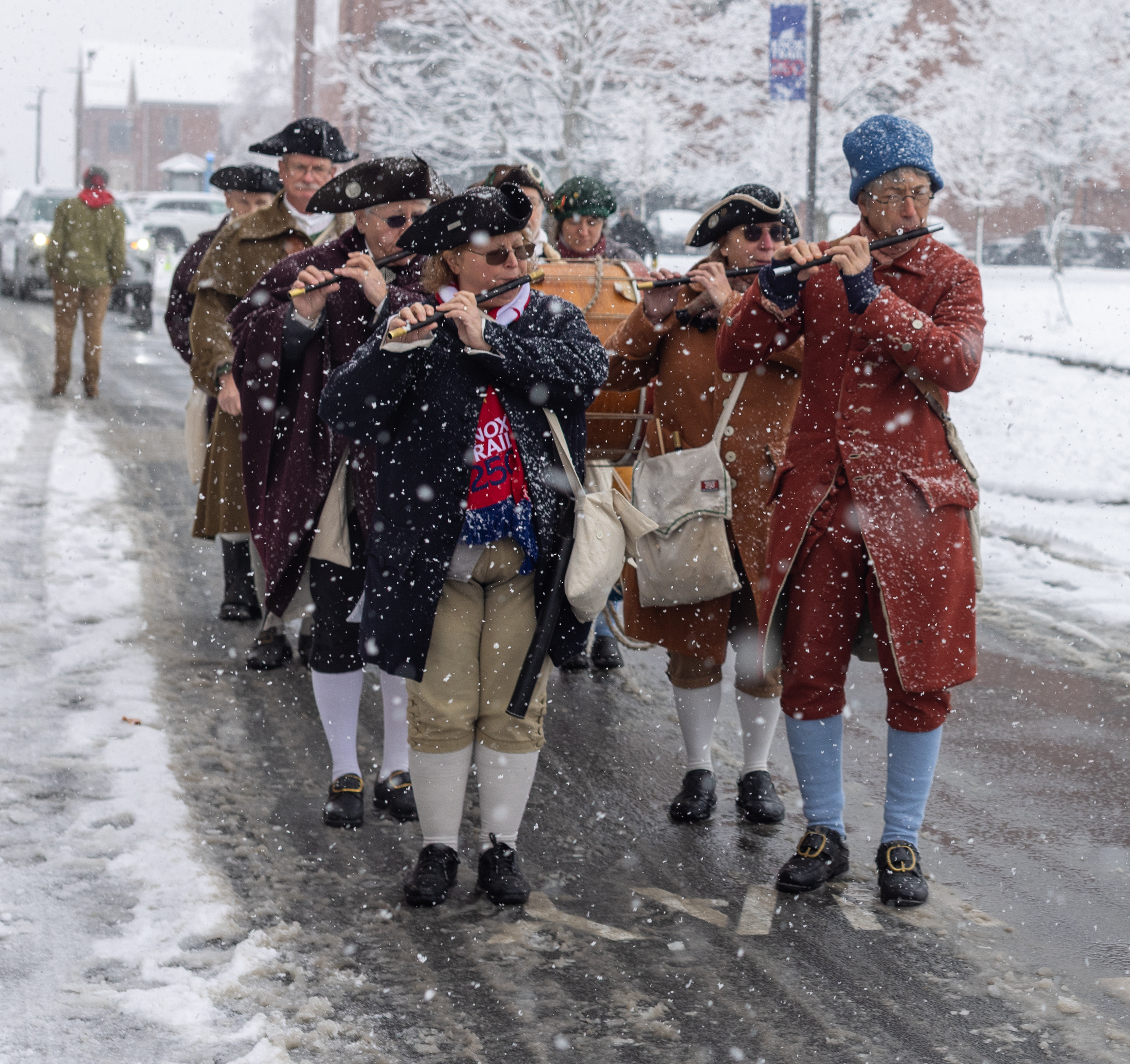
The reenactors were active and approachable at the event. I was able to take a few photos of them during the event.
There are bound to be many more 250th commemorations and celebrations this year. So, I’m sure I’ll be photographing more of these type of events throughout the year!
 New England Nomad