Date Of Visit: October 18, 2025
Location: Park Hill Orchard, 50 Payson Ave, Easthampton, MA (2 hours west of Boston, MA, 45 minutes north of Hartford, CT)
Cost: Free
Universally Accessible: Yes. The staff at Park Hill Orchard offer a Accessible Art Cart for those who need assistance.
Dog Friendly: Yes
Summary: Art In The Orchard featured dozens of works of art from local artists.
Welcome to the third and final post from the Art In The Orchard art exhibition.
Yes, believe it or not, this is the last post of the art work at the Art In The Orchard event. And there are a few extras at the end of this post from the event. I hope you have enjoyed the posts from this event!
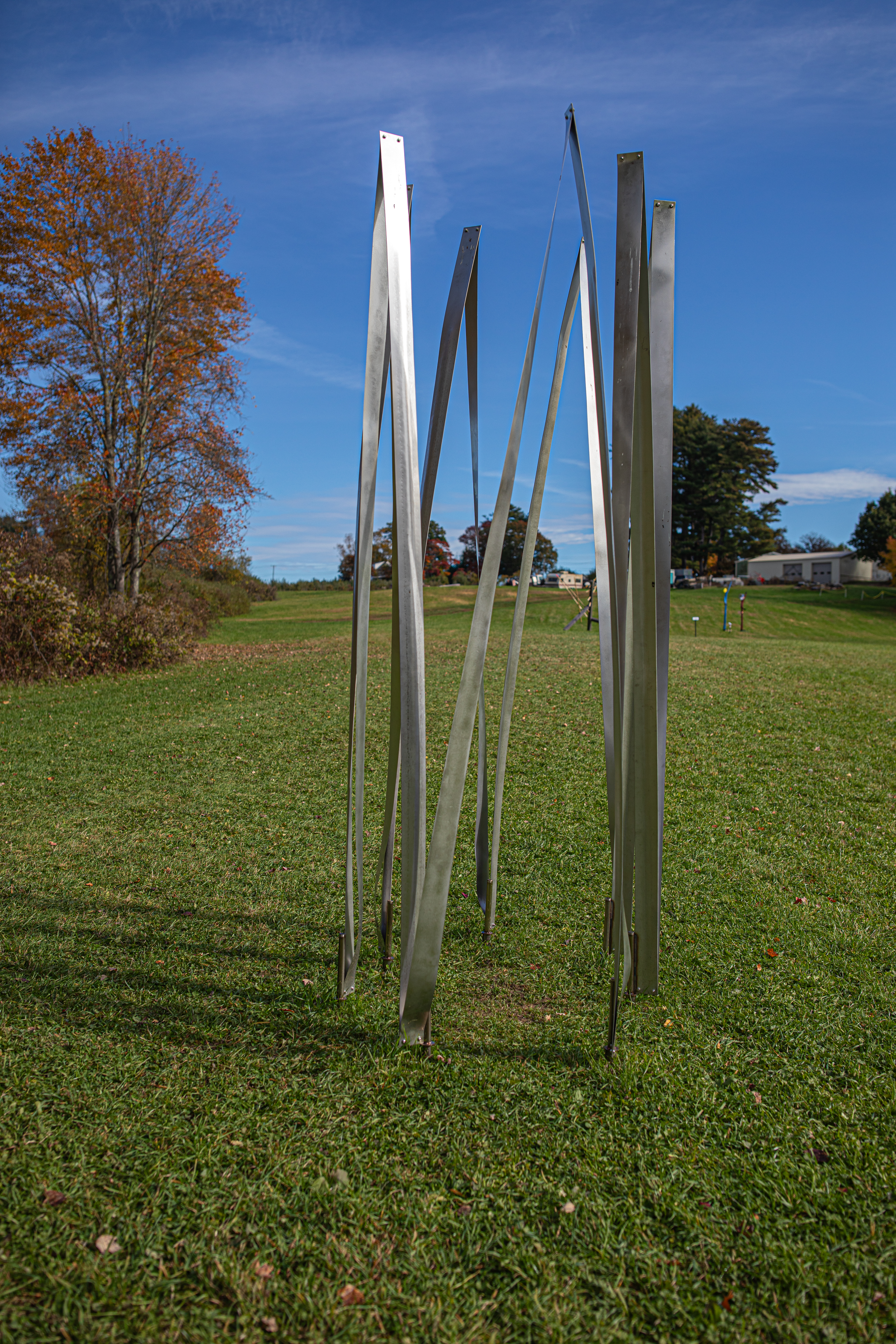
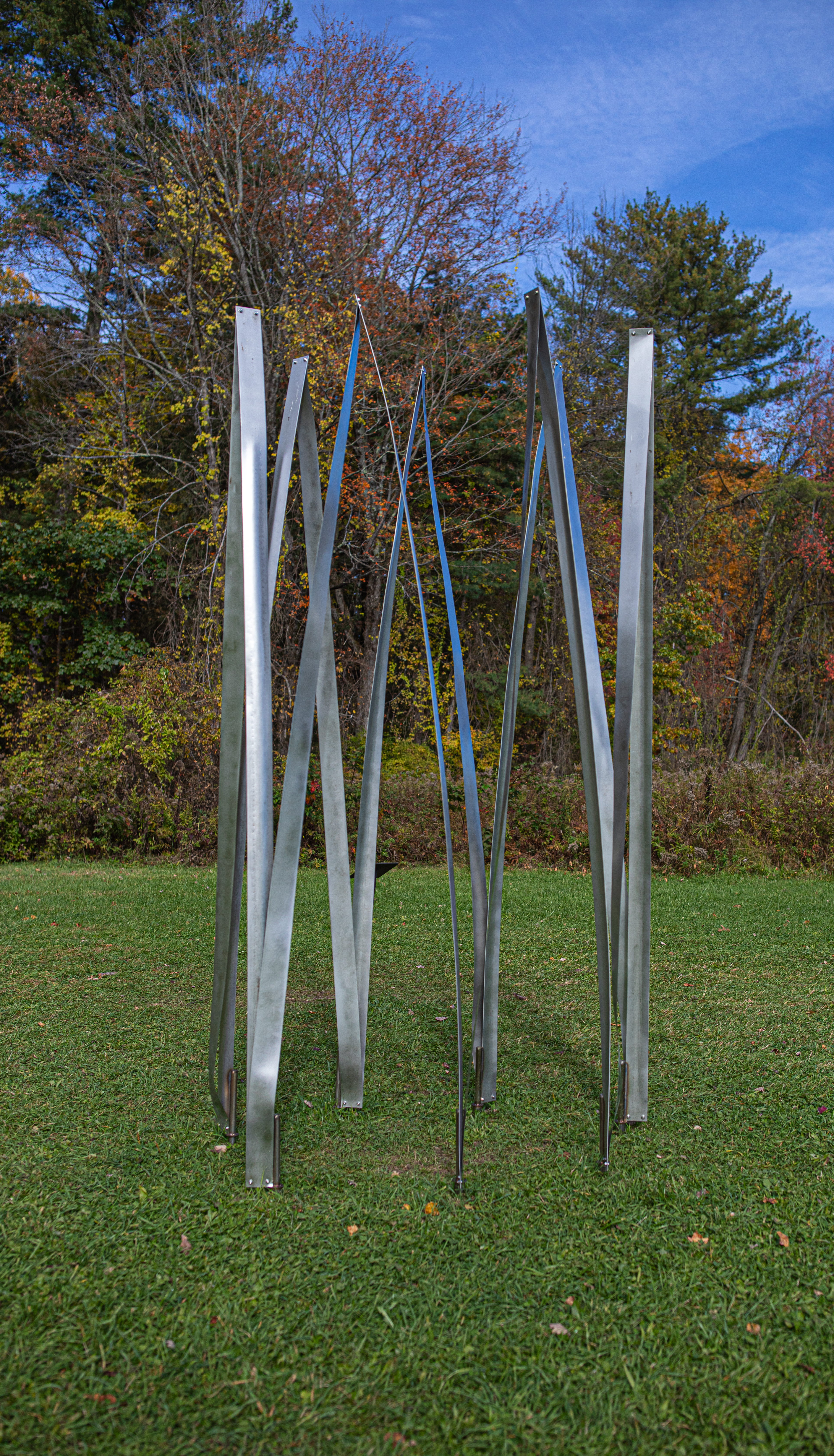
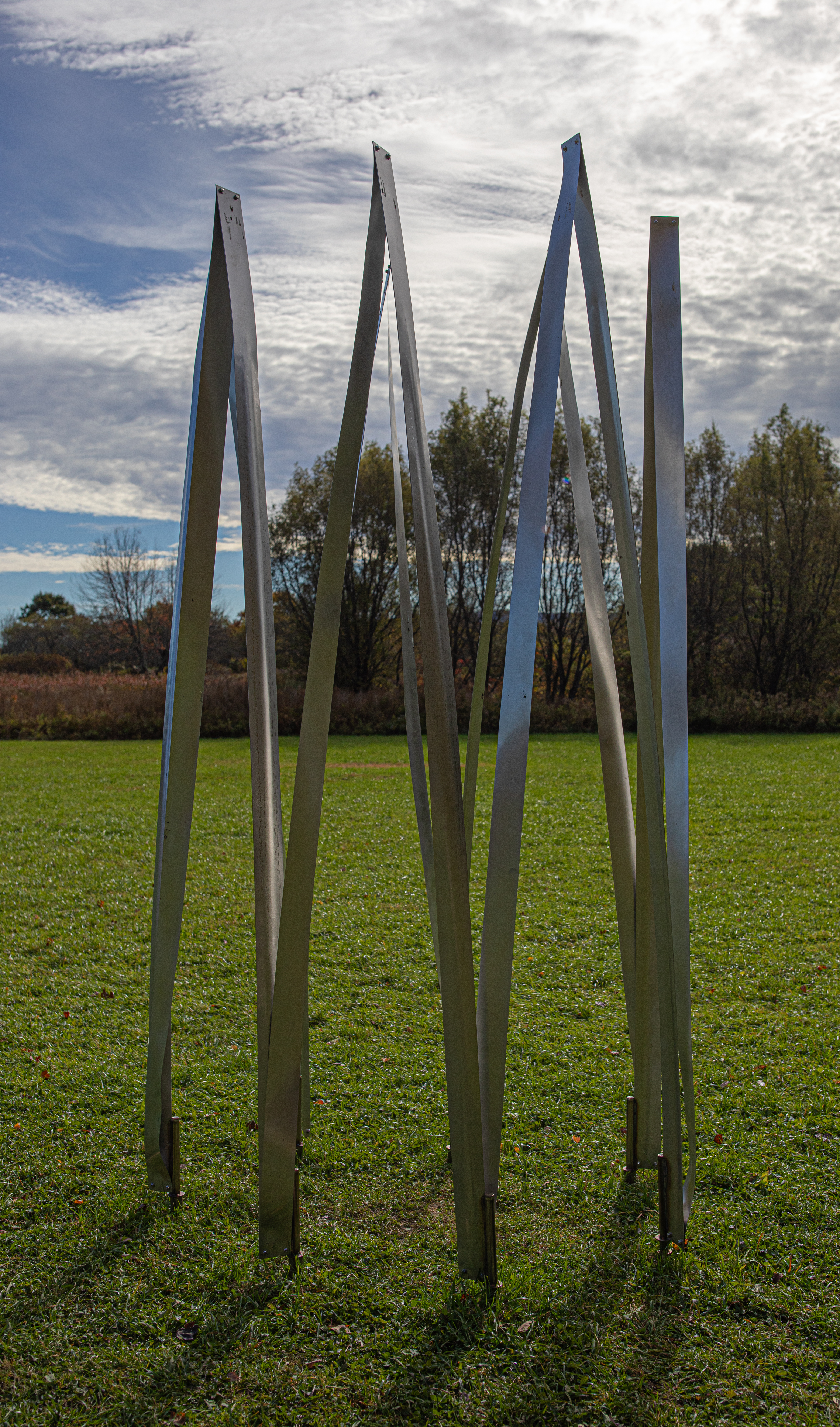
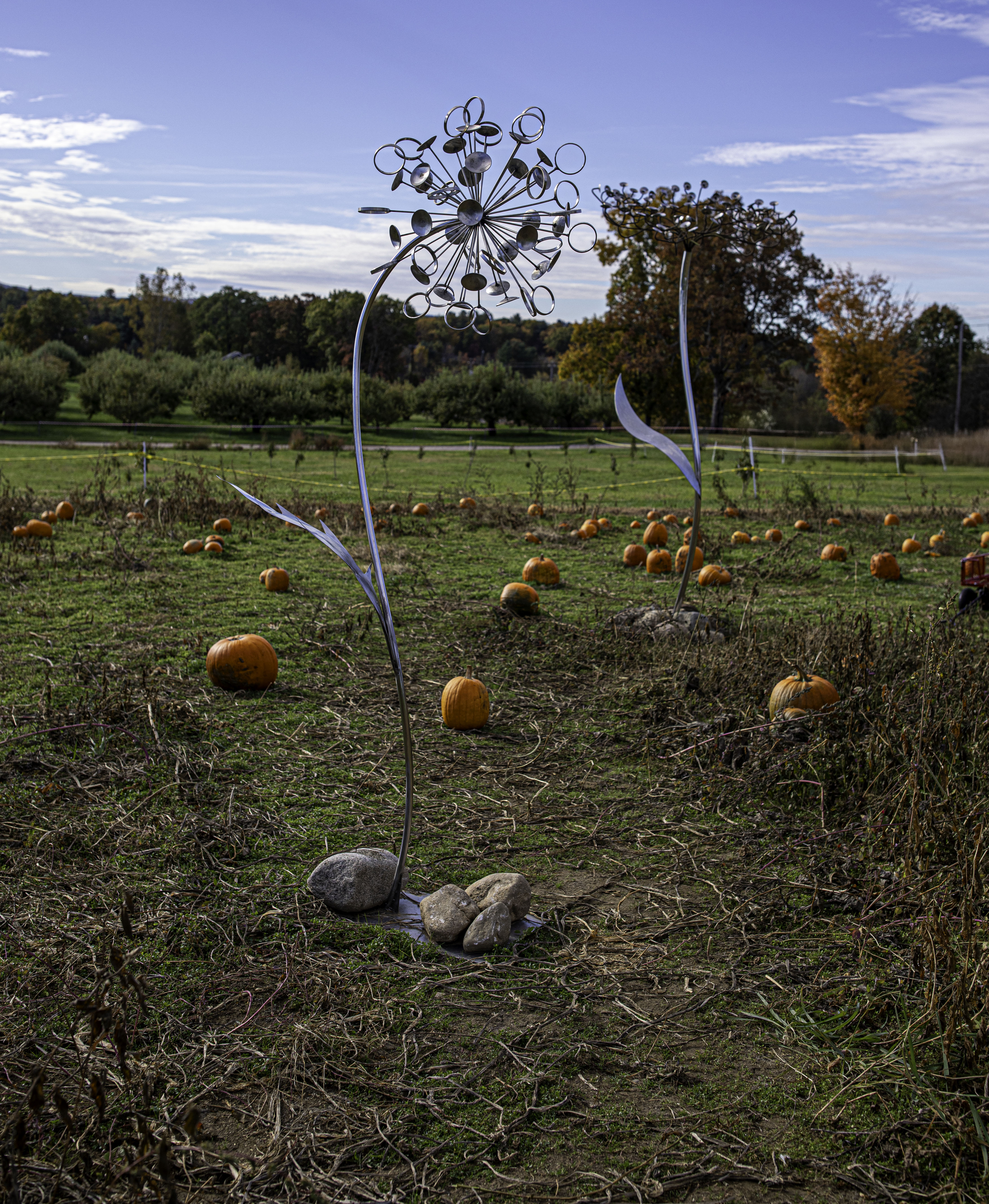
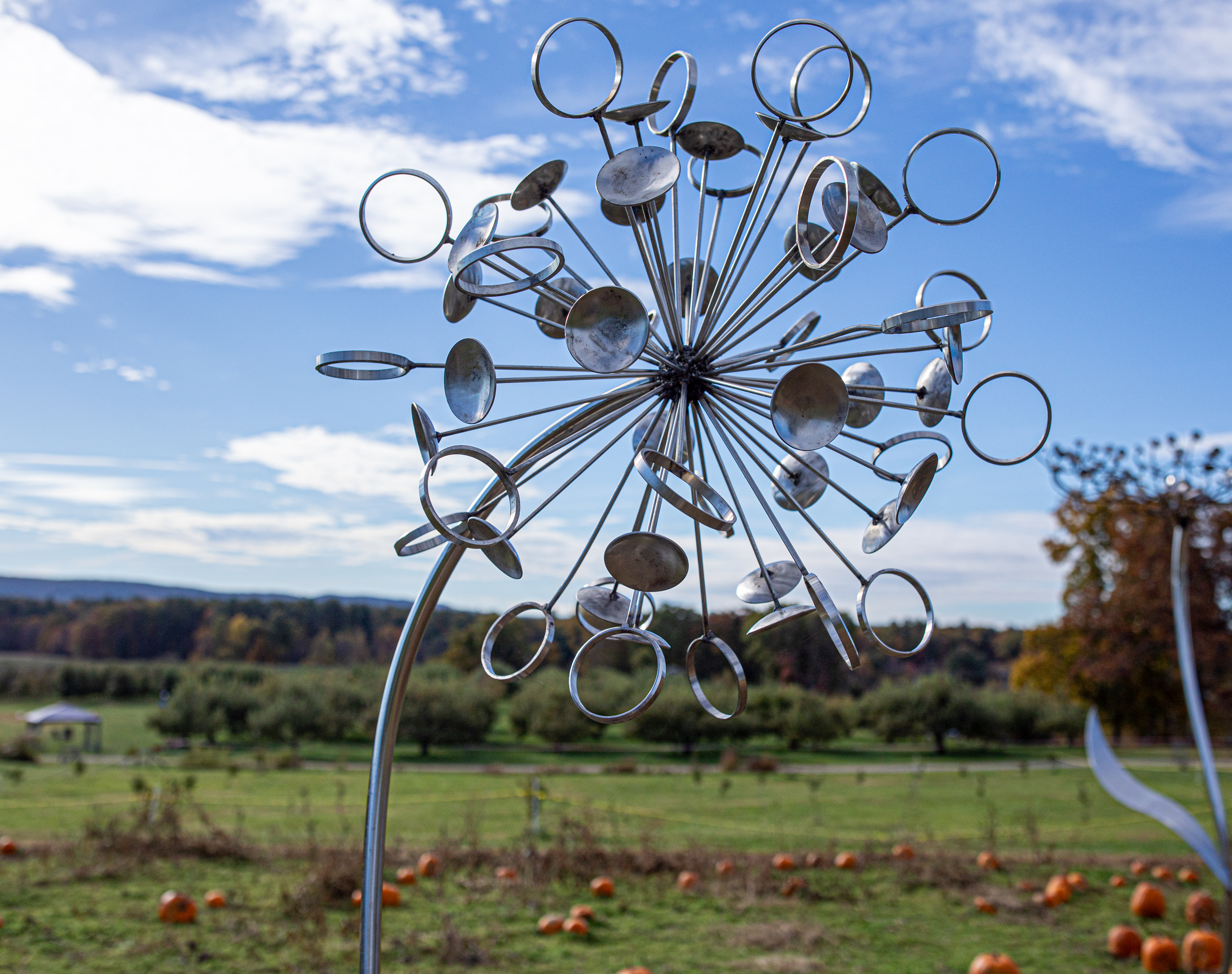
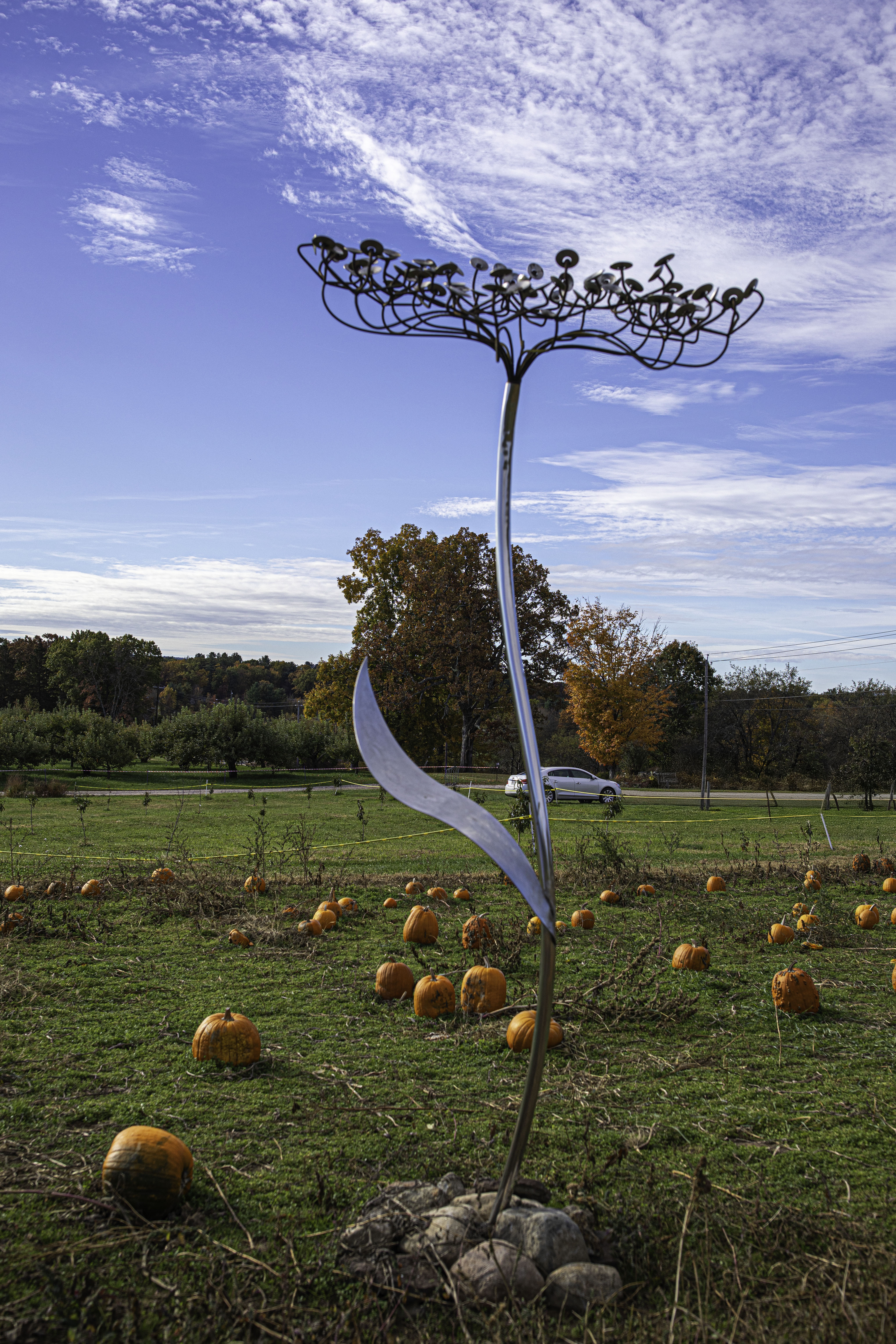
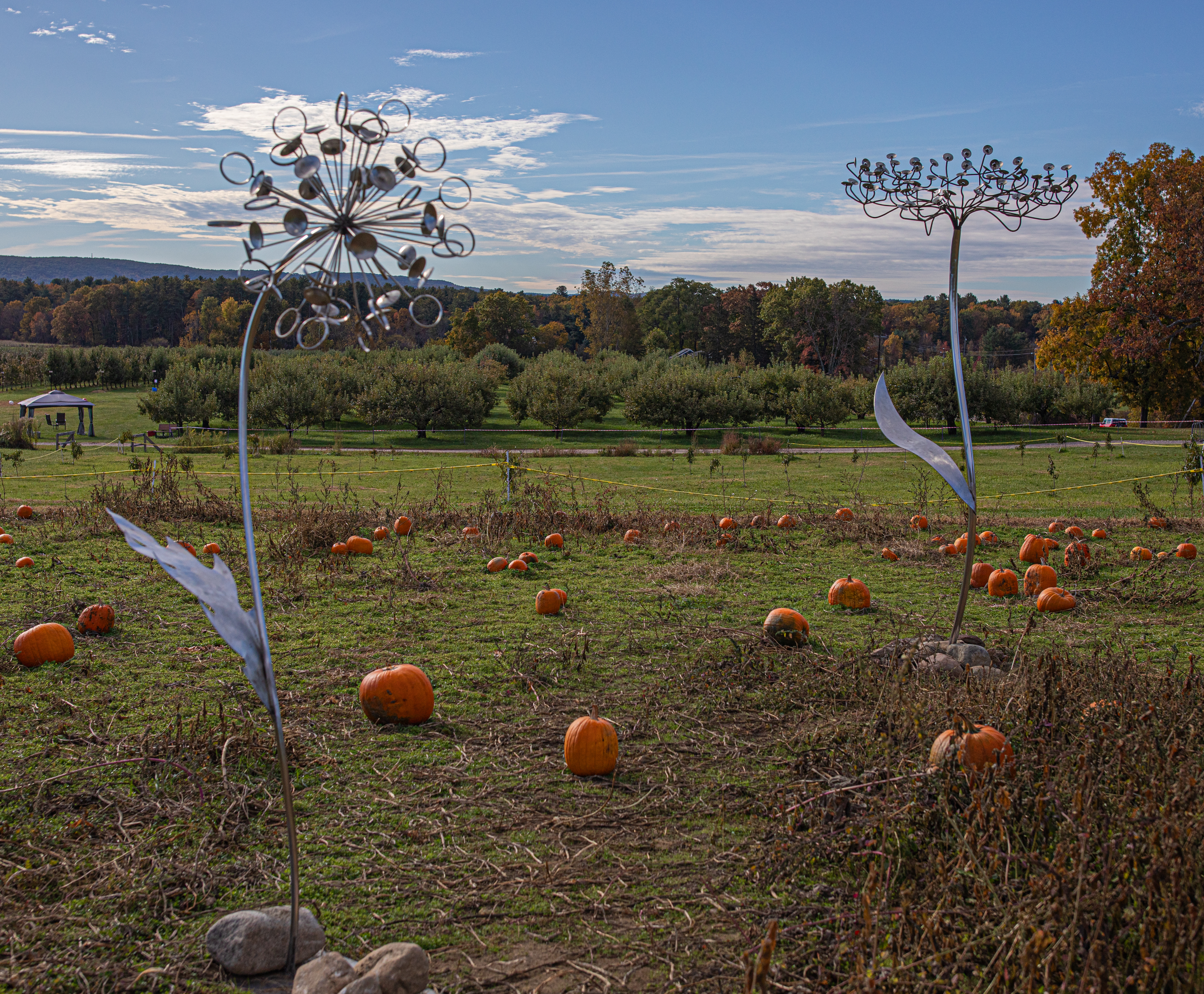
The first art installation in this post is “The Graces” by Ray Ciemny of Groton, MA.
Made of stainless steel, “The Graces” is an attempt to draw attention to the wind and the invisible world that envelops us all.
What captivates Ray and inspired the work of art is the notion of keeping the doors of experimentation and materials exploration open. The keys to these doors are Ray’s head and heart functioning together with an instinctual tension.
Ray tries to give new life to metal objects that were once useful and have become worn or obsolete. Ray endeavors to create a nirvana from scrap. Tension and movement whether physical or suggested has to be present in the work to make it worthy of existence.
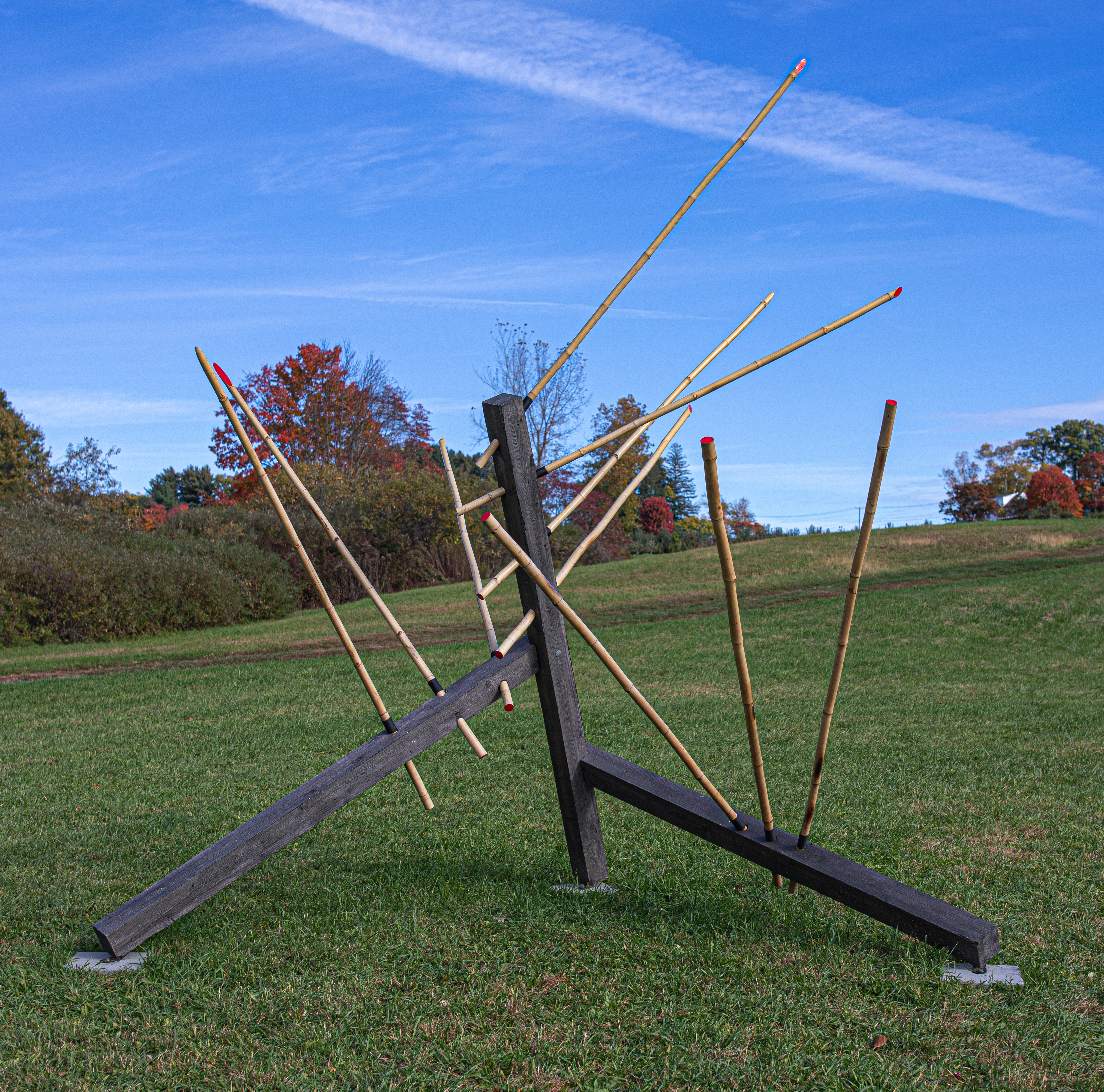
Bamboo has always fascinated Philip Marshall of Grafton, MA. For his work of art “Bamboo 2”, Philip used construction grade bamboo, Eastern white cedar, laquer, paint and cord to create an abstract piece similar to the ones he has made using steel.
Philip is a painter and sculptor based out of Massachusetts. But, he was born in Kent, England. He is drawn to public art for its freedom of scale and because he views it as “gateway art” for those who rarely visit a gallery or museum. Although Phillip takes painting and sculpture commissions, his primary focus has been creating outdoor sculptures for temporary public exhibitions. His varied life experiences, extensive world travel and the people he has encountered, provide a rich source of material.
Michael Tillyer of Conway. MA, used a fourteen foot pine tree and some metal to make “Totem.”
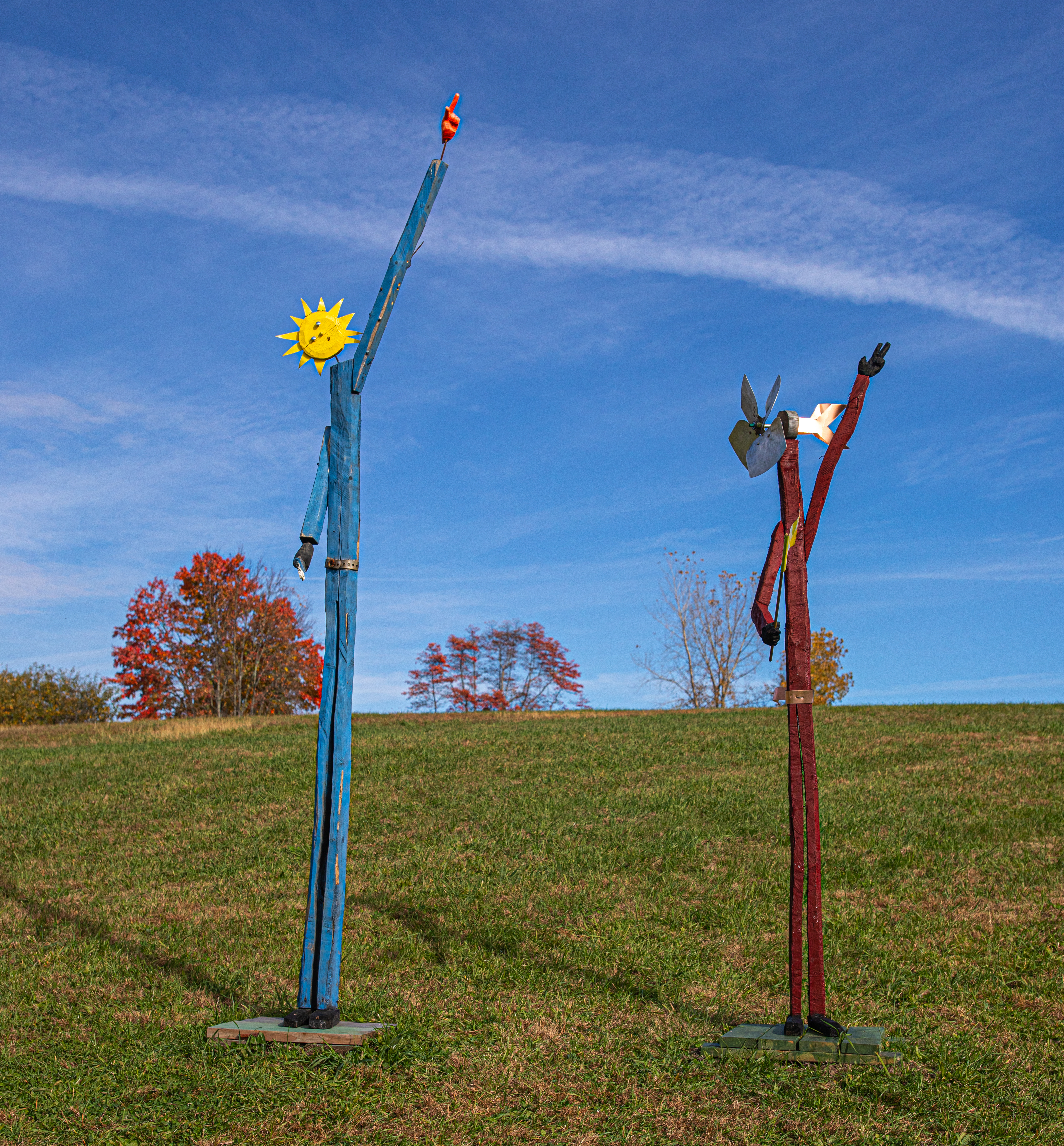
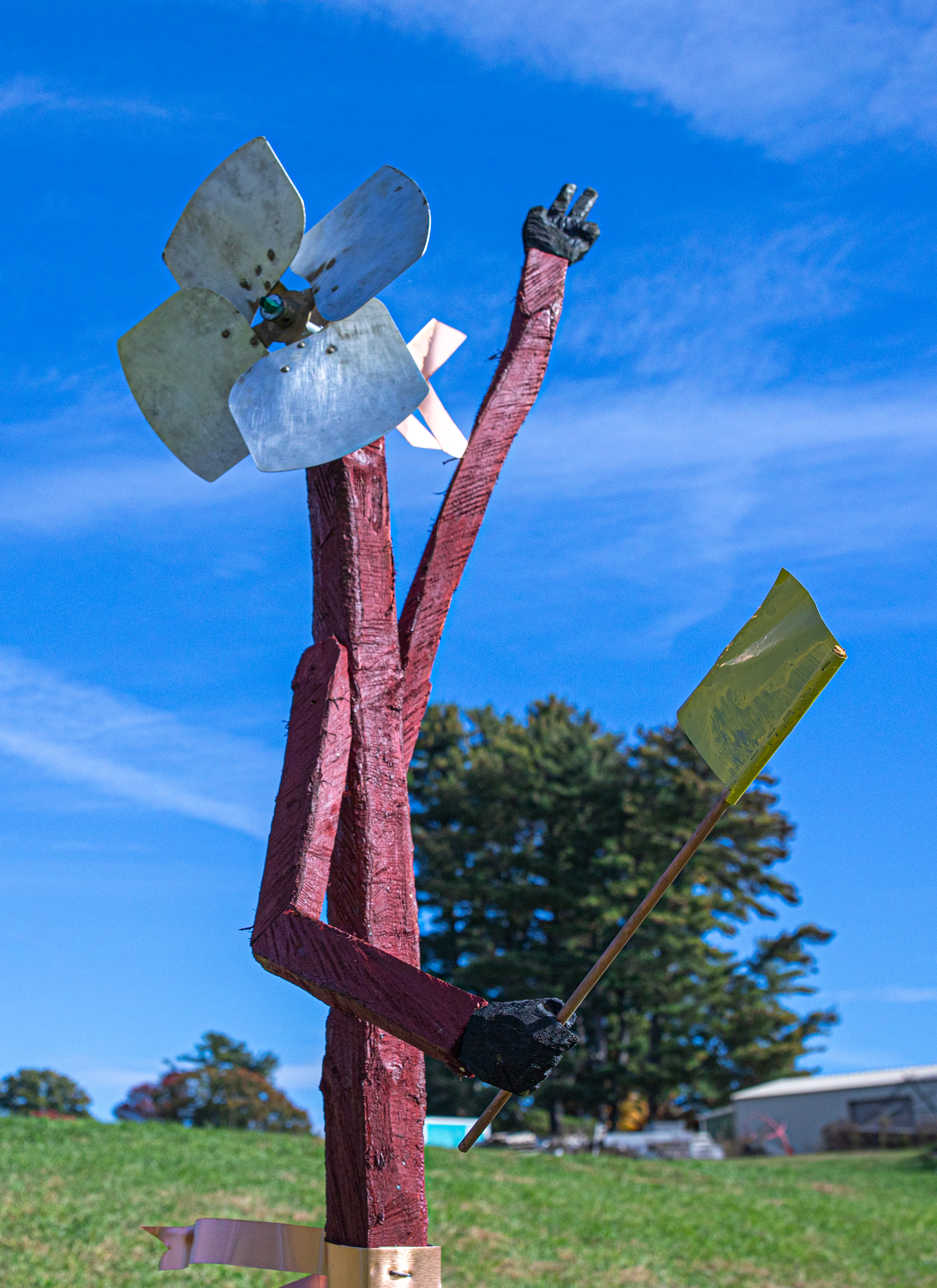
This sculpture did not have a sign identifying the work of art or artist. The birds liked it though.
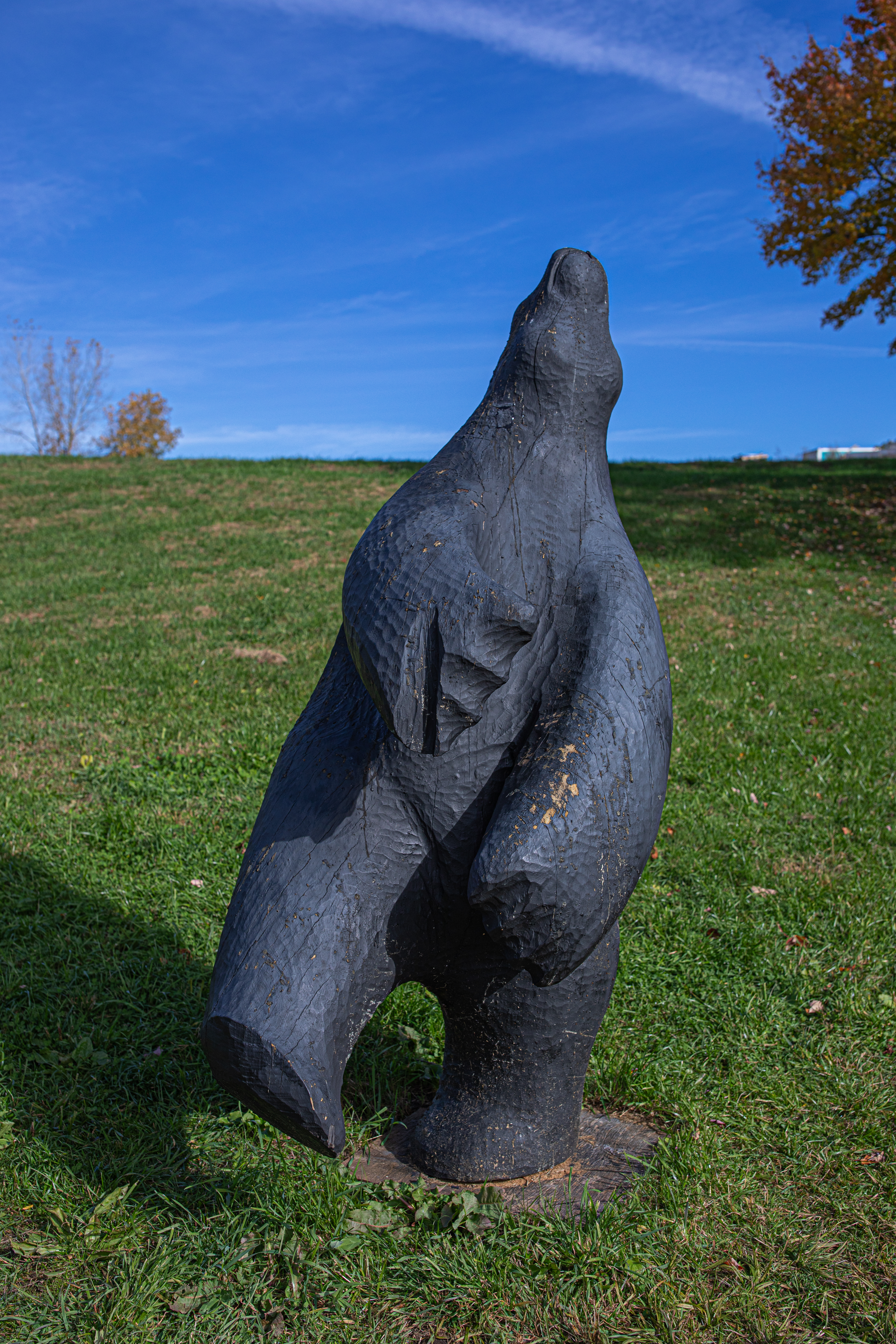

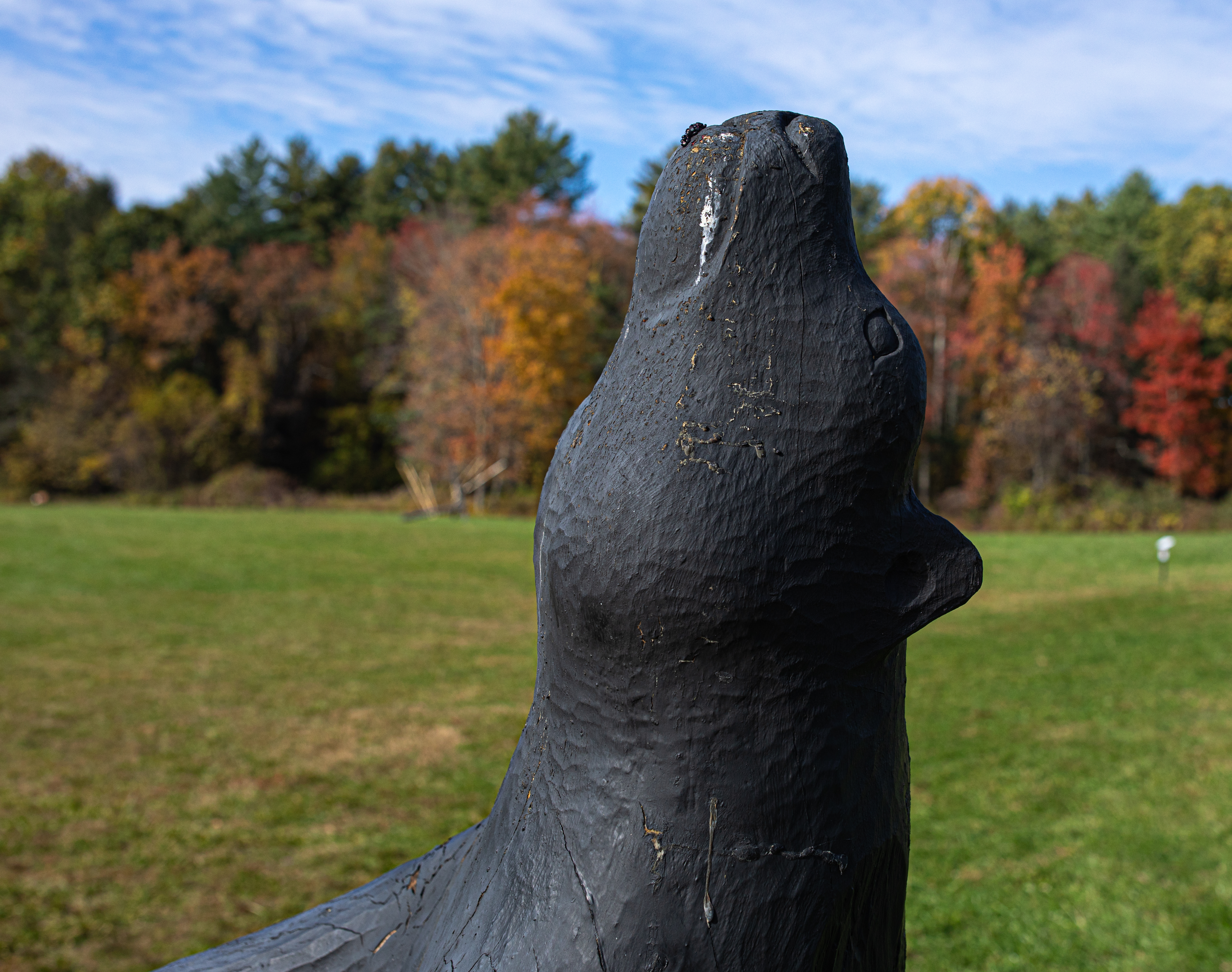
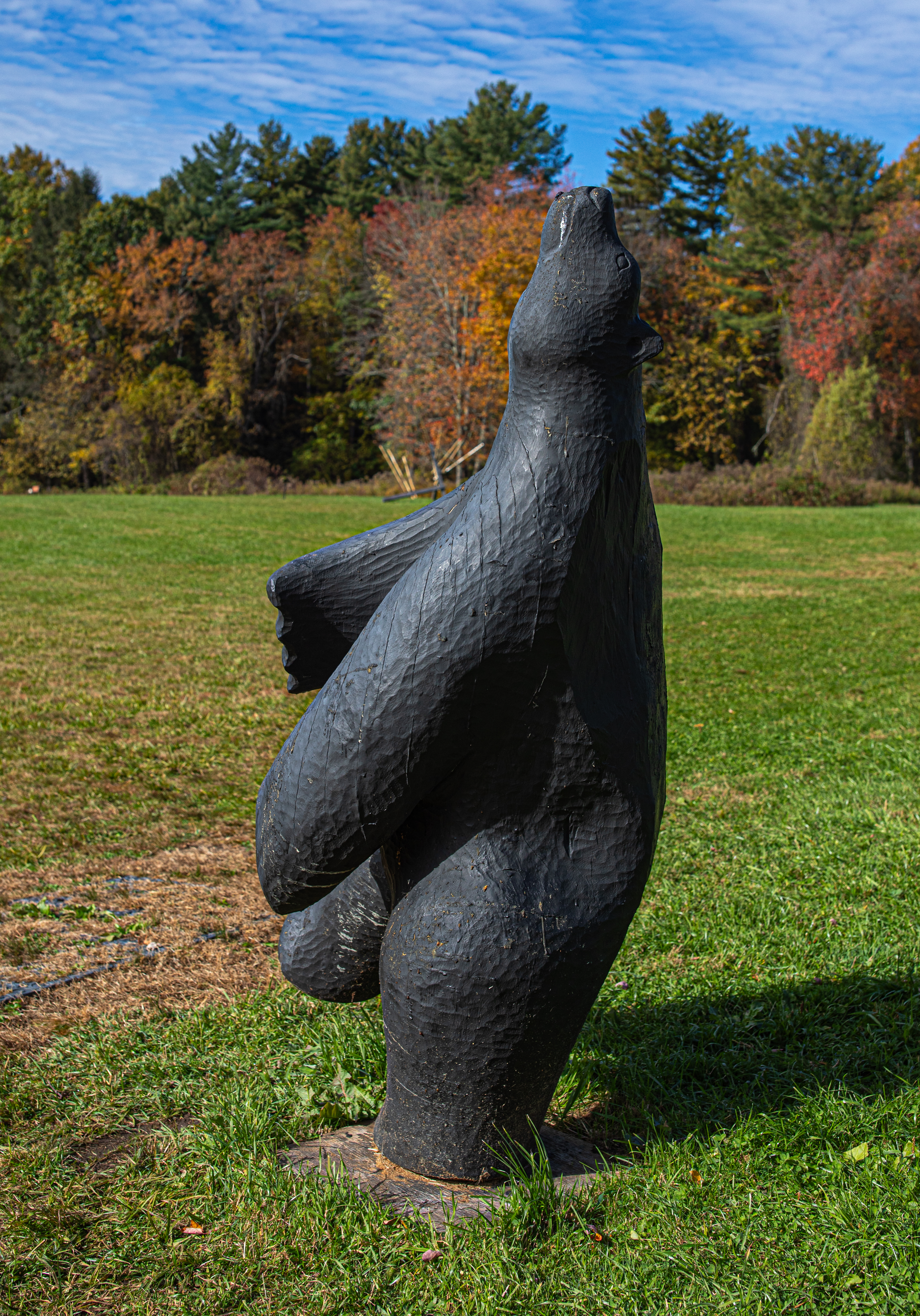
“Rabbit” by Tim MacKenzie of Hull, MA, was made of marble.
In an orchard, Velma stands proud – a stone rabbit sentinel with ears to the breeze and secrets to keep. Forever frozen mid-thought, she ponders the mysteries of morning dew and moonlight dreams.

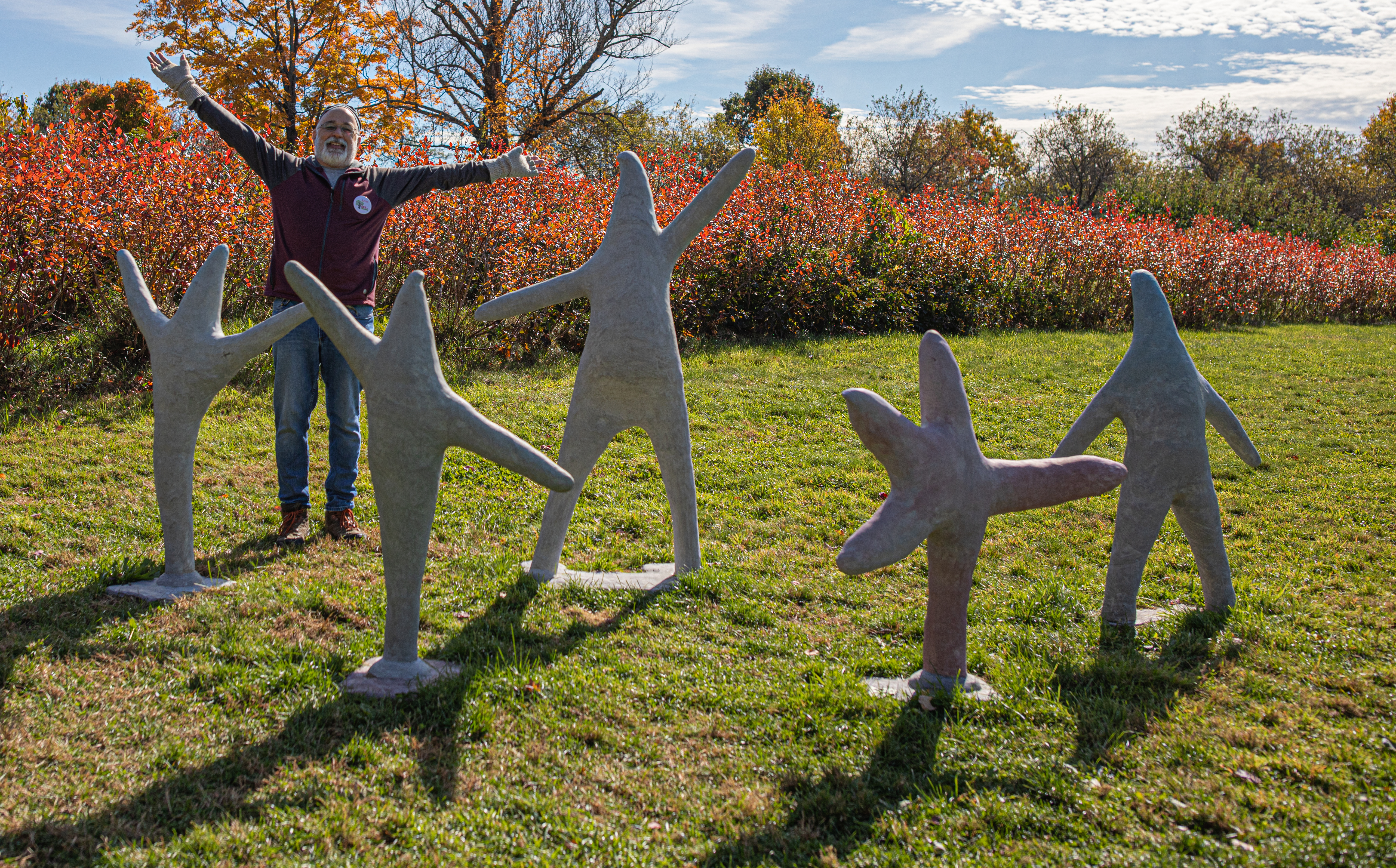
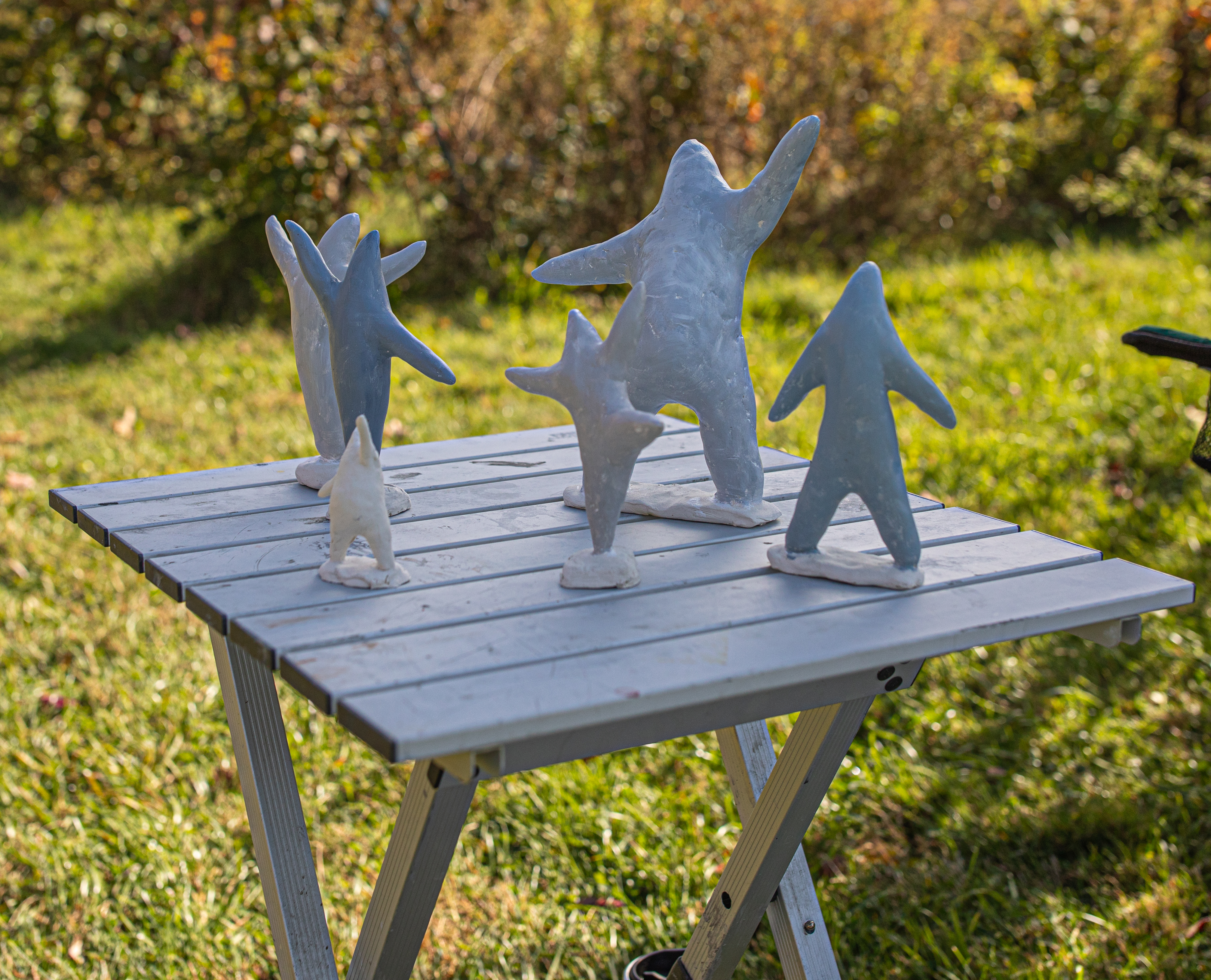
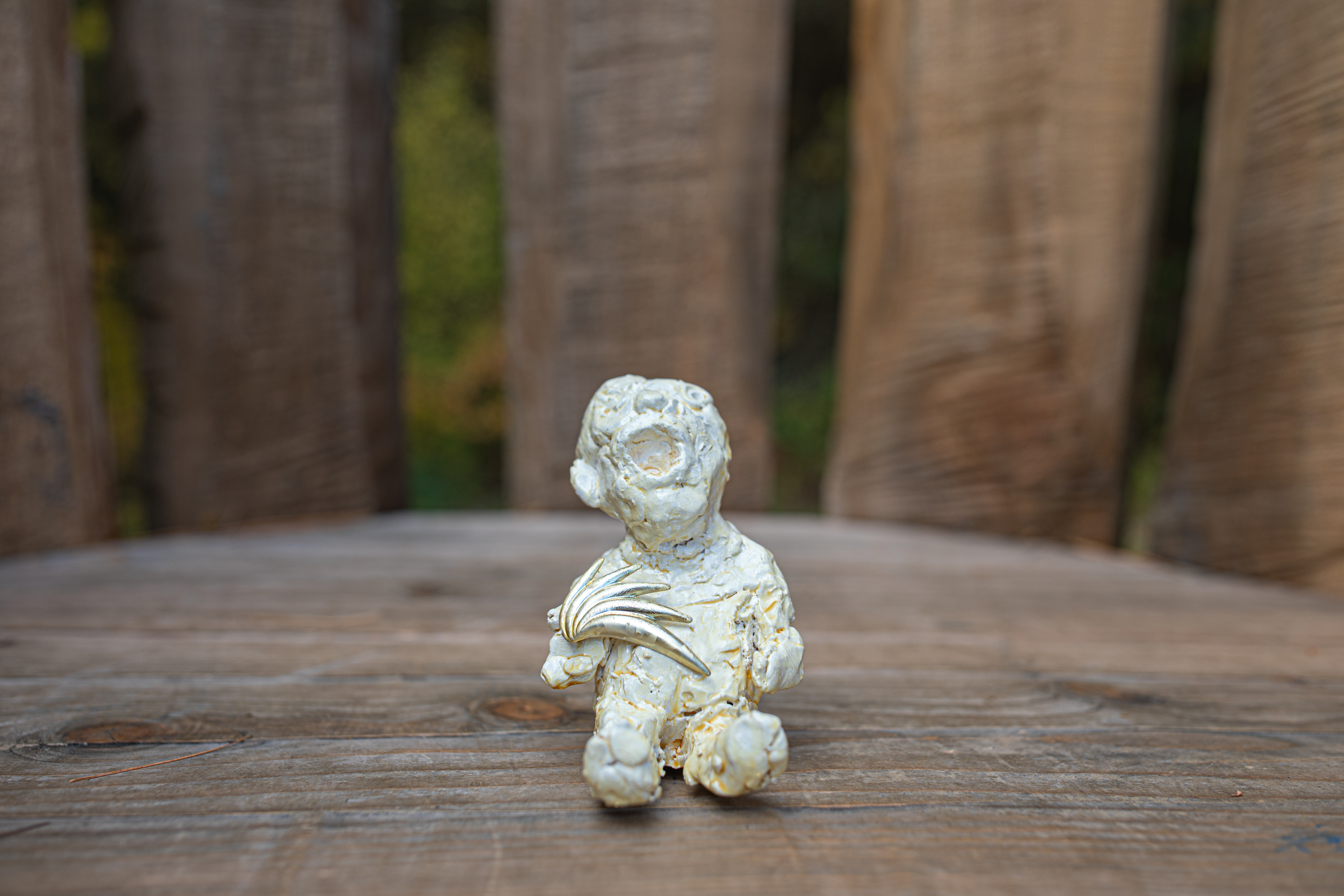
The sculpture “Joy” by Michael Perusse of Easthampton, MA, is a remembrance and reflection of moments of joy in our lives. The movement of the figures, which are made of Pal Tiya (a cement-based weatherproof sculpting medium that cures to a stone-hard finish without baking or firing which is ideal for durable indoor or outdoor sculptures) can be a moment of silliness, dance, sports achievement, a simple morning stretch in a ray of sunshine or as complex as finishing a law degree and everything in between. It’s that moment your body, heart, mind and soul are one in Joy within yourself or with others.
This is a miniature sized model of the work of art.
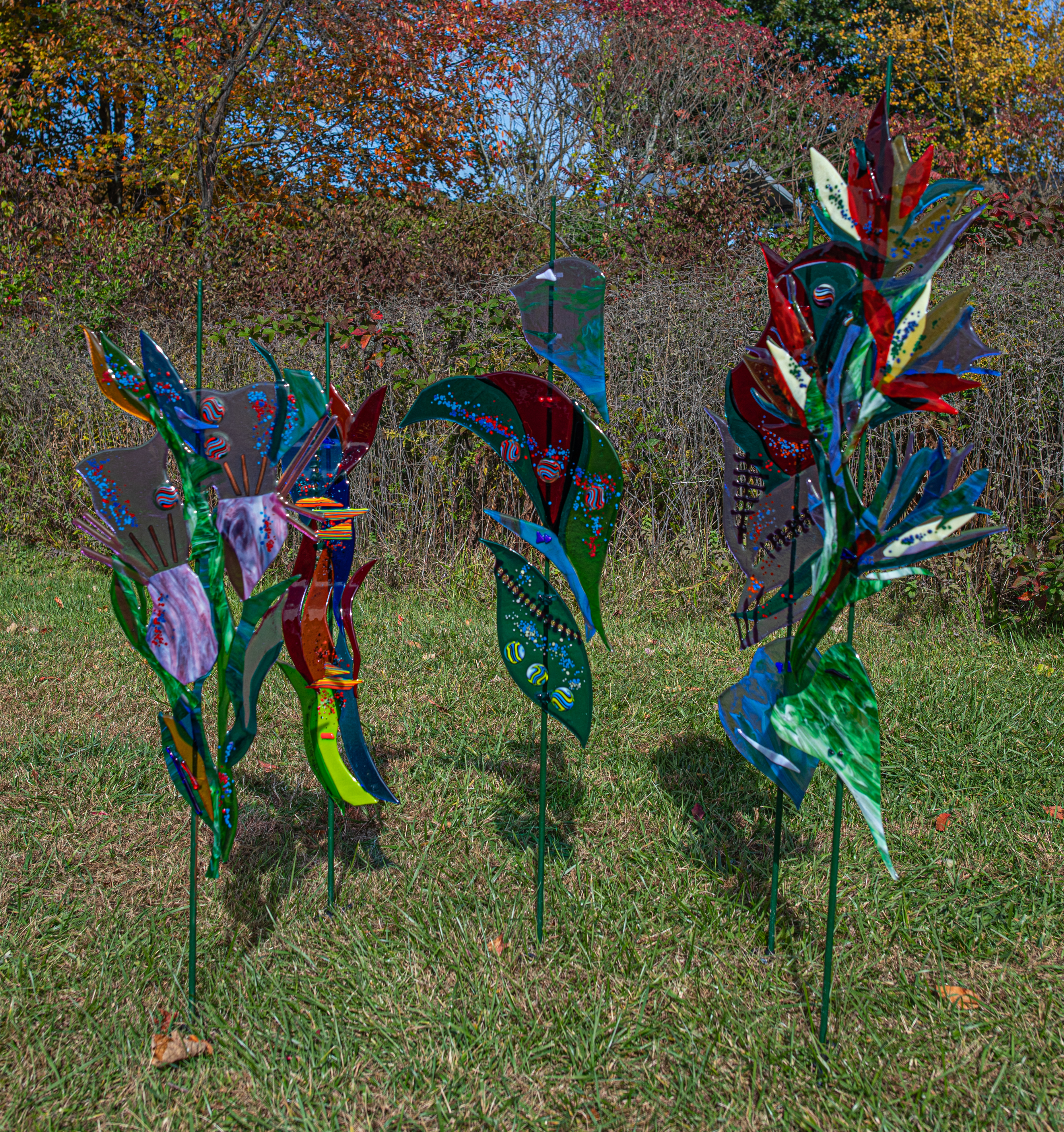
Lynn Richards of Sommerville, MA, is interested in how light transforms fused glass to create a dynamic viewing experience. After seeing a Georgia O’Keefe exhibit, Lynn was inspired to create a larger than life glass flower bouquet which would become “Flourishing Buds.” She used bullseye glass with steel rods to create the various flower elements. The glass was cut into realistic and abstract shapes that invite the viewer to interpret the bouquet. Finally, the flowers are designed to ensure wind can easily pass through the swirl on a steel rod.
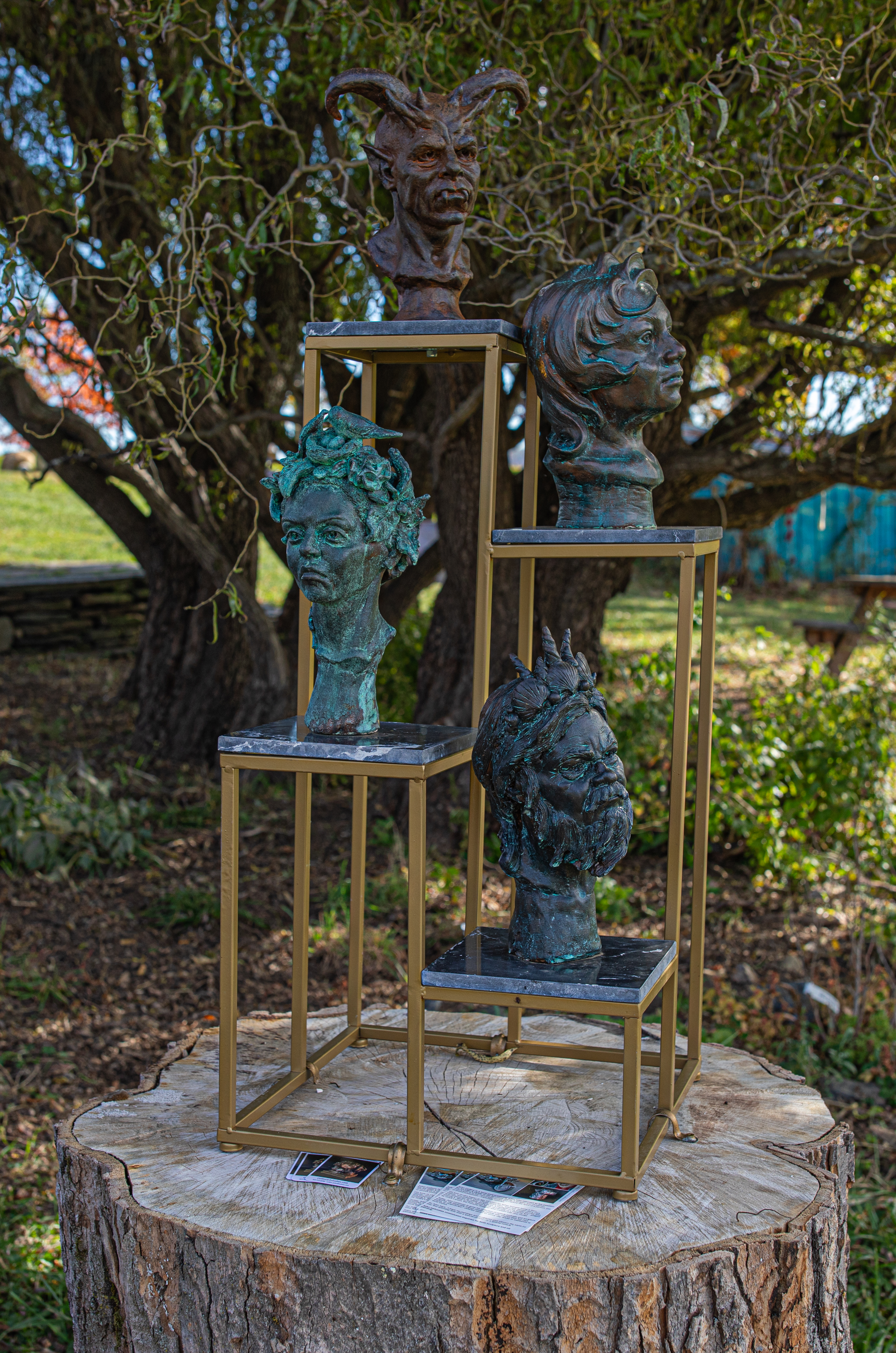
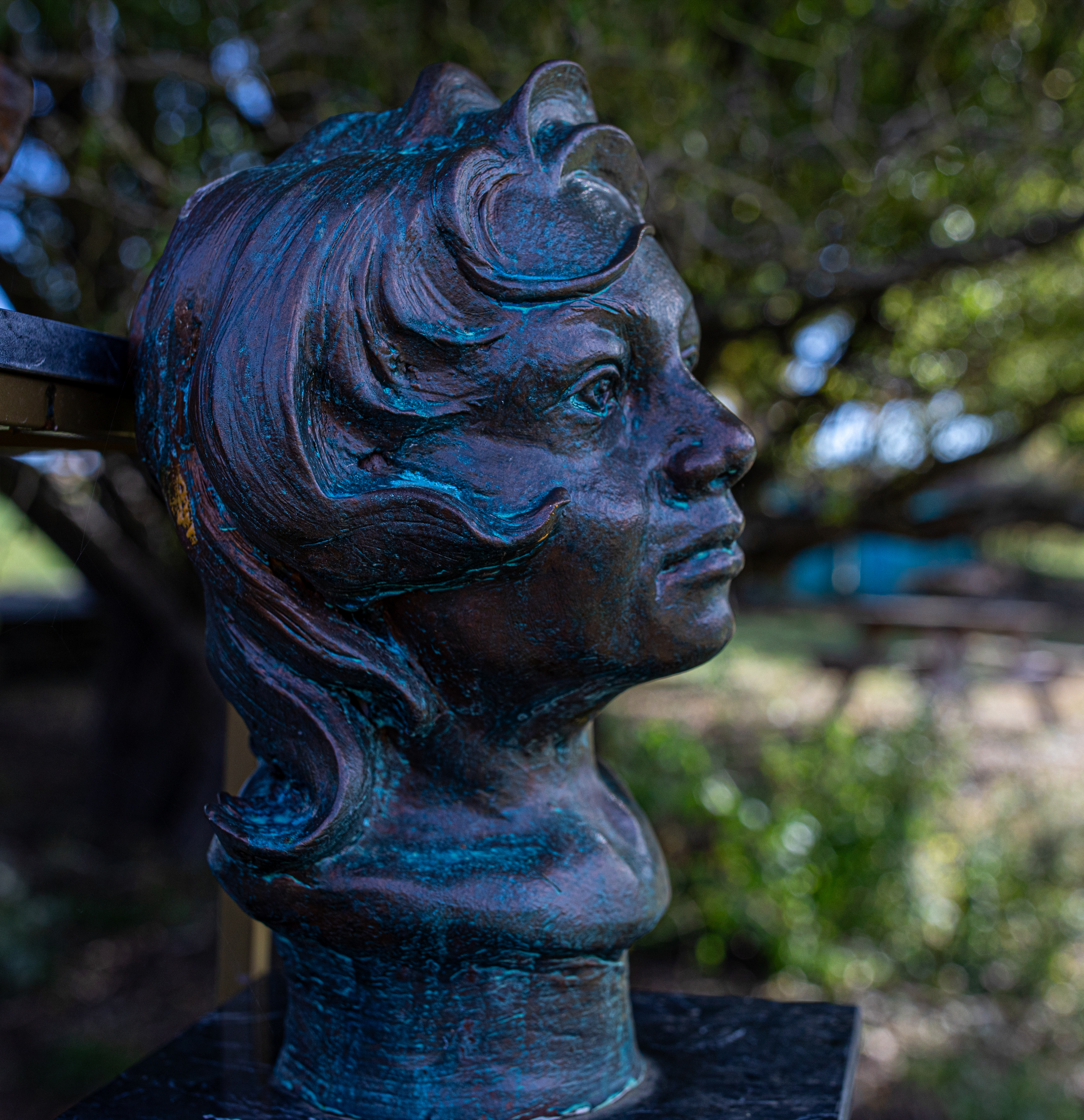
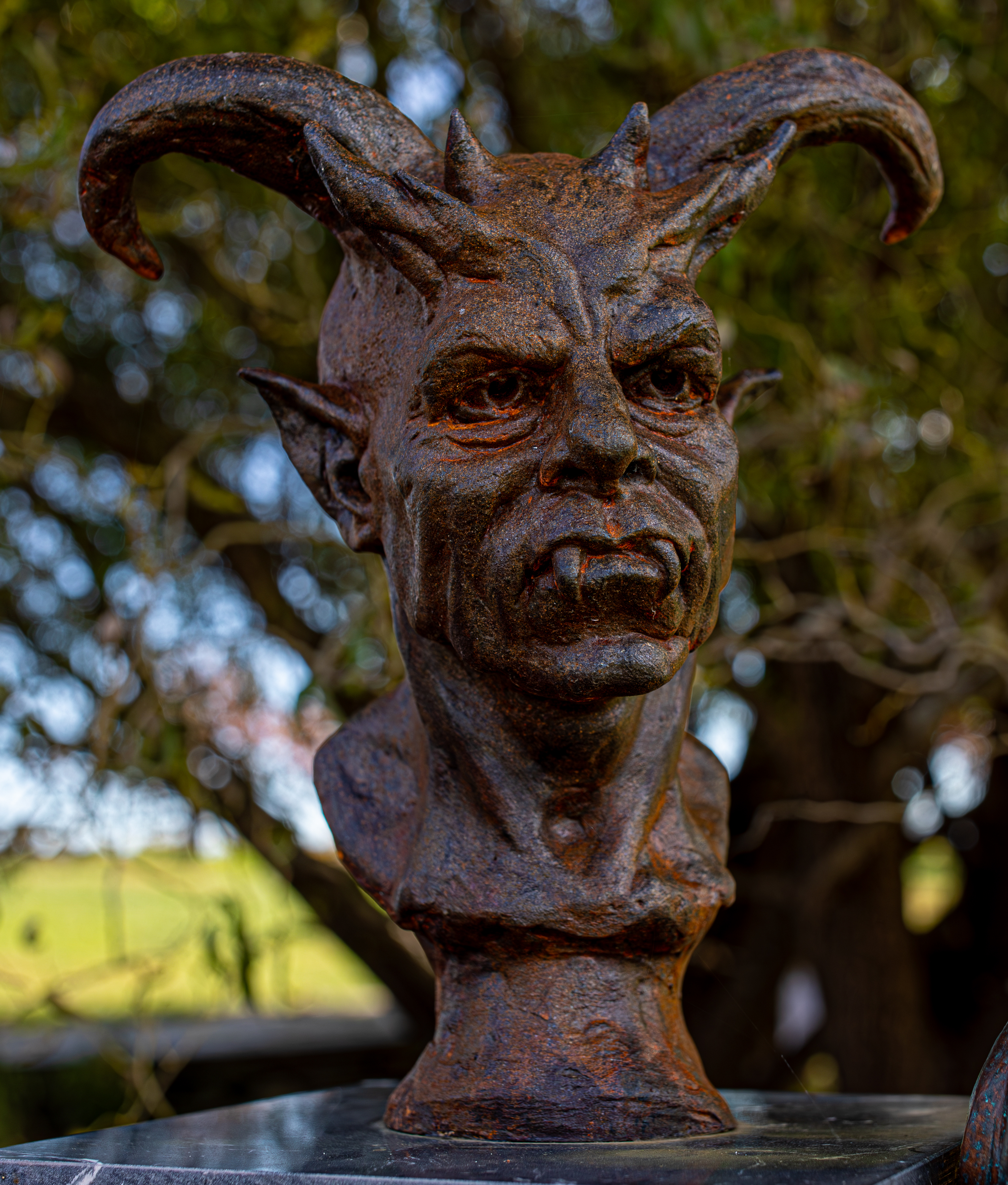
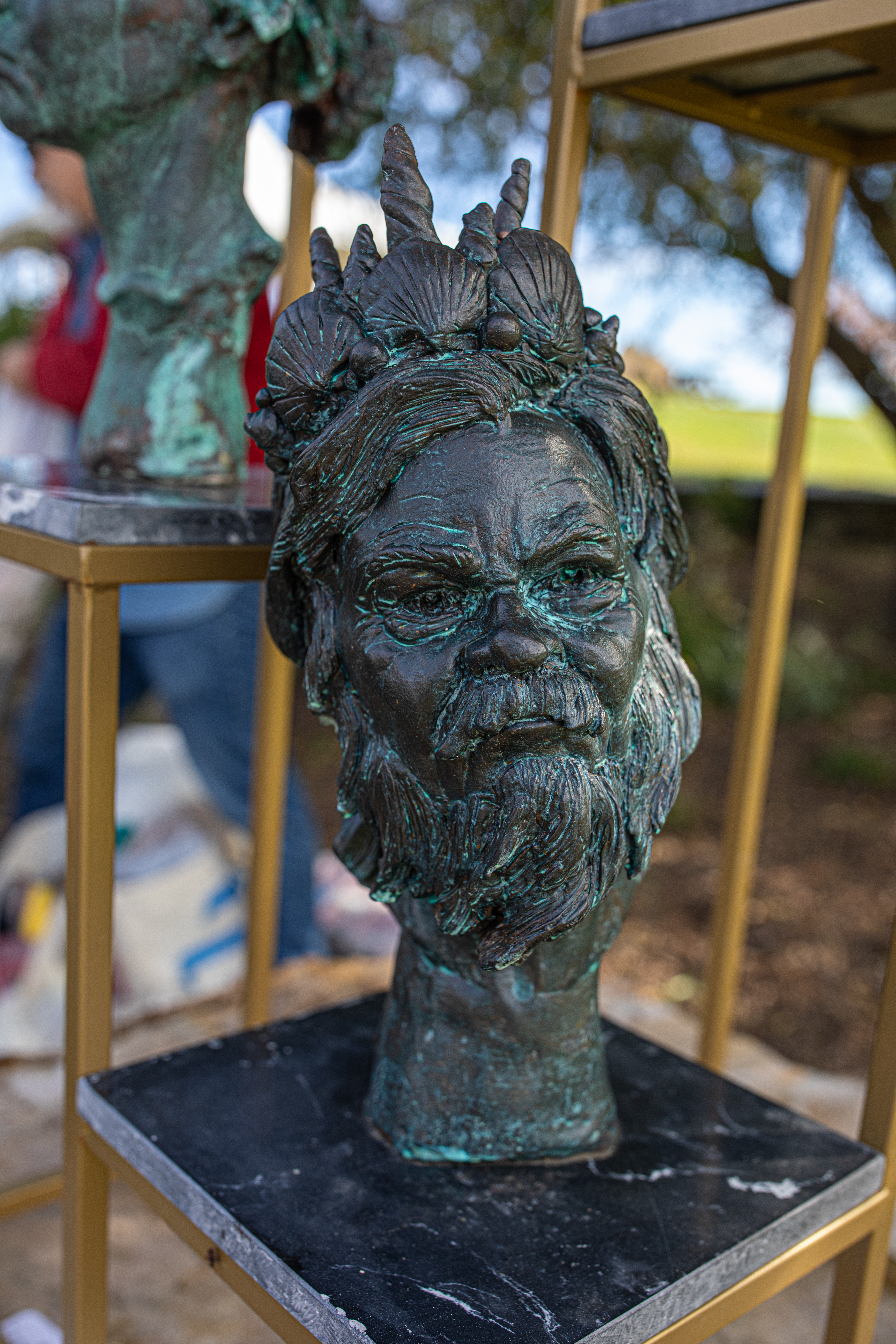
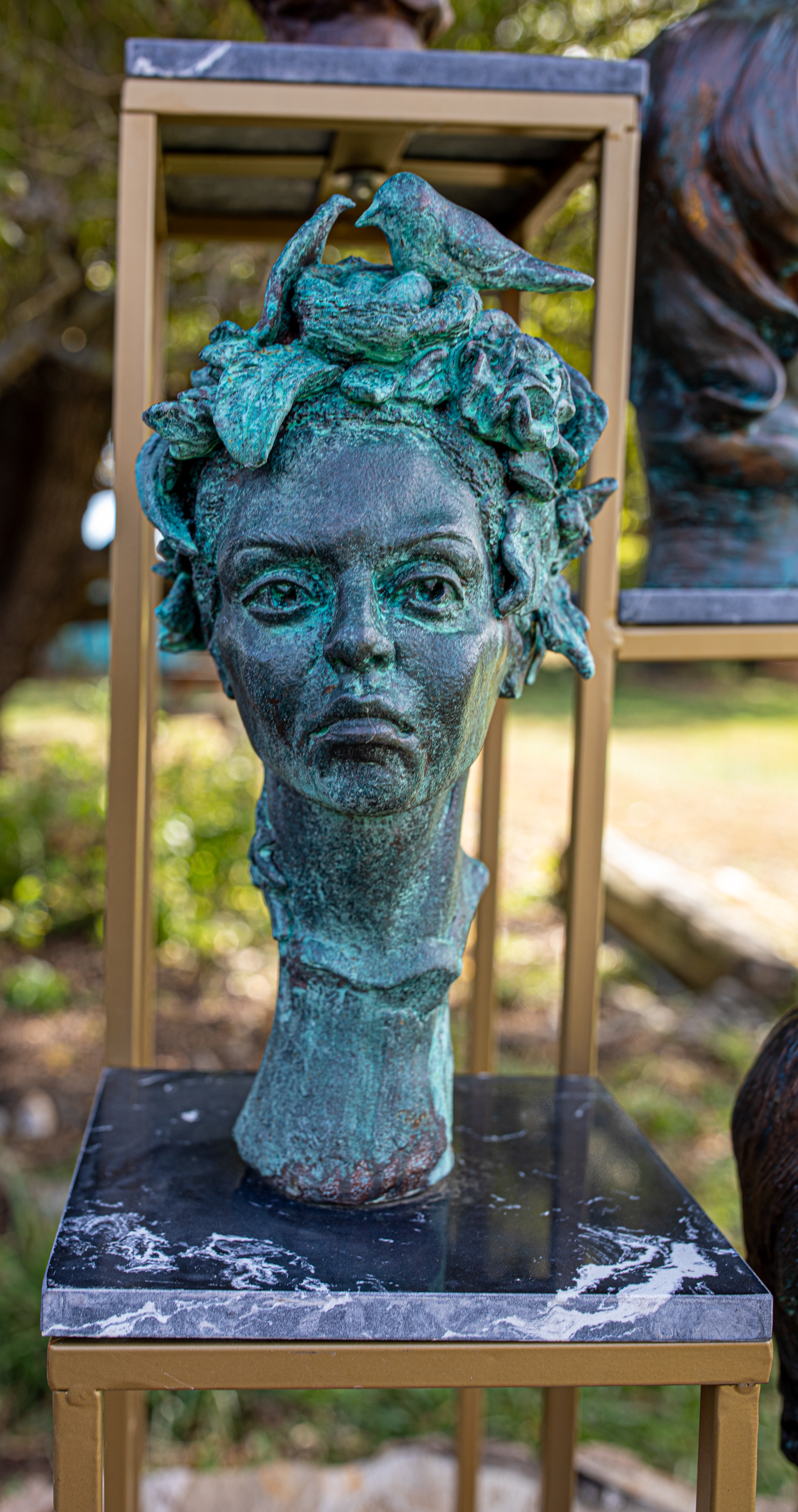
“The Four Elements Personified” by John Collins of Ware, MA, displays the four elements (water, Earth, wind and fire) as humans. Each bust made of fire clay with metal coating finish with a marble, cast iron stand, represents each element. Mounted on a four tier marble and steel base, the work unites the distinct energies of Satan, Lady Wind, Mother Earth and Poseidon.
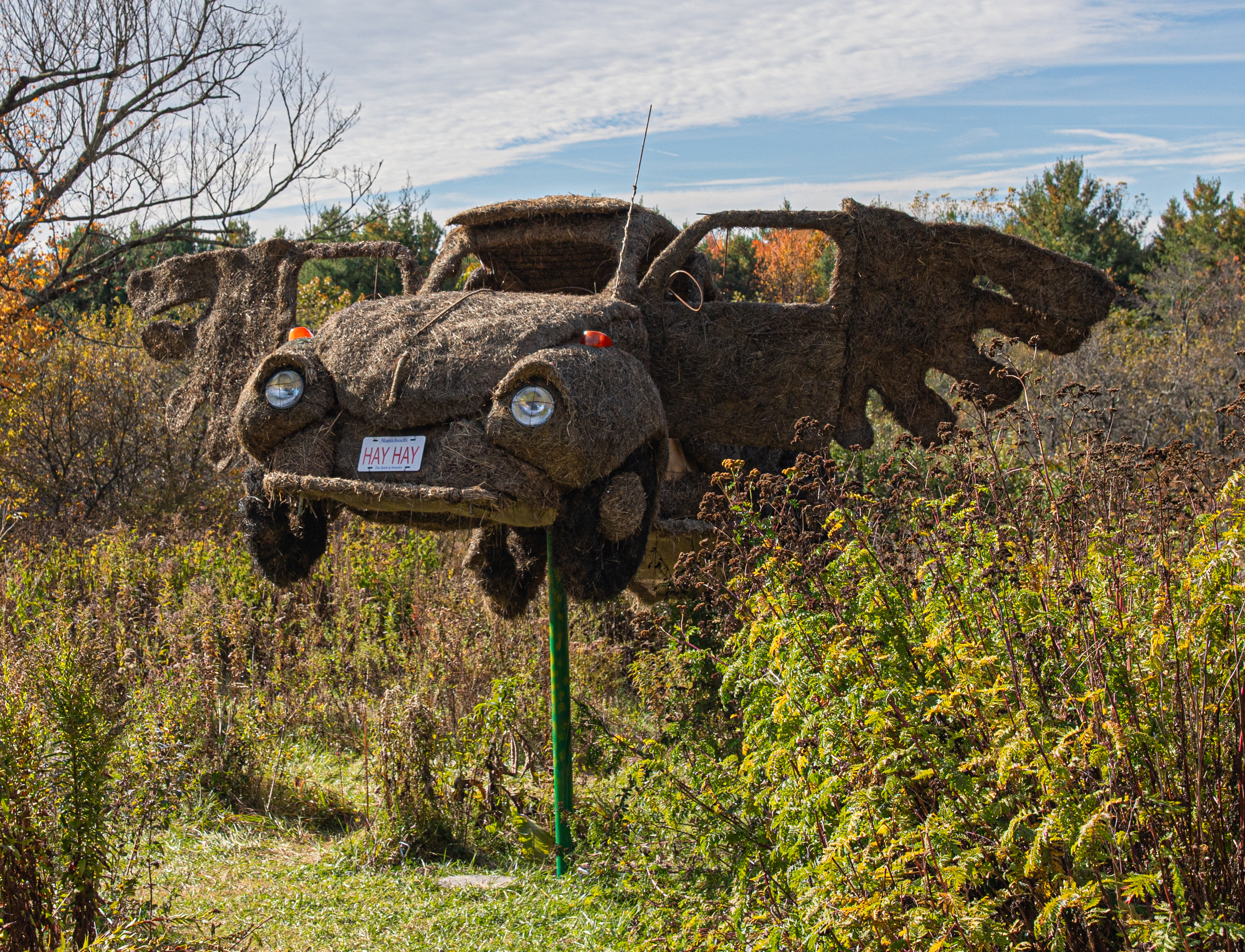
Dave Rothstein of Florence (Northampton), MA, used hay, straw, chicken wire, steel, aluminum and a lot of ingenuity to make “Beetle in a Haystack.”
The most beautiful things are often fleeting and right under our noses. But if we don’t take time to observe we often miss out. “Beetle In A Haystack” pays homage to the ubiquitous hay bales that blanket the New England landscape. They are so commonplace that we often take them for granted. So, the next time you’re driving by a far,m or other landscape in New England or some other rural area, pause and take a look (safely).
Most hay bales contain much more than hay. You’ll often find Goldenrod, native mints, bergamot (a fragrant citrus fruit native to southern Italy) and other plants.
So it’s no surprise that Beetle In A Haystack hovers over the “Harmonics Gardens Labyrinth” filled with native grasses and medical plants and abound with pollinators. Please experience its magic and maybe you’ll discover the elusive calm and peace we search so longingly for, See what you learn about yourself and the natural world in the process.
“Peace Pole: A beacon for hope and desire for peace” by Jane Pelton Andresen of Easthampton, MA, is the perfect work of art to end this series of posts. The pole, which is made of wood, acrylic panels and clay, is meant to connect people. She included indigenous languages from the region, in this case Mohawk (territory to the west) and Wampanoag (territory in what is now eastern MA, RI and parts of CT). Both languages are still spoken today. She also included Spanish as it is the most non-English language spoken here.
The rainbow stripes represent the fact that peace without freedom and equity is not true peace.
The symbols on the pole represent what Park Hill Orchard has given to our community.
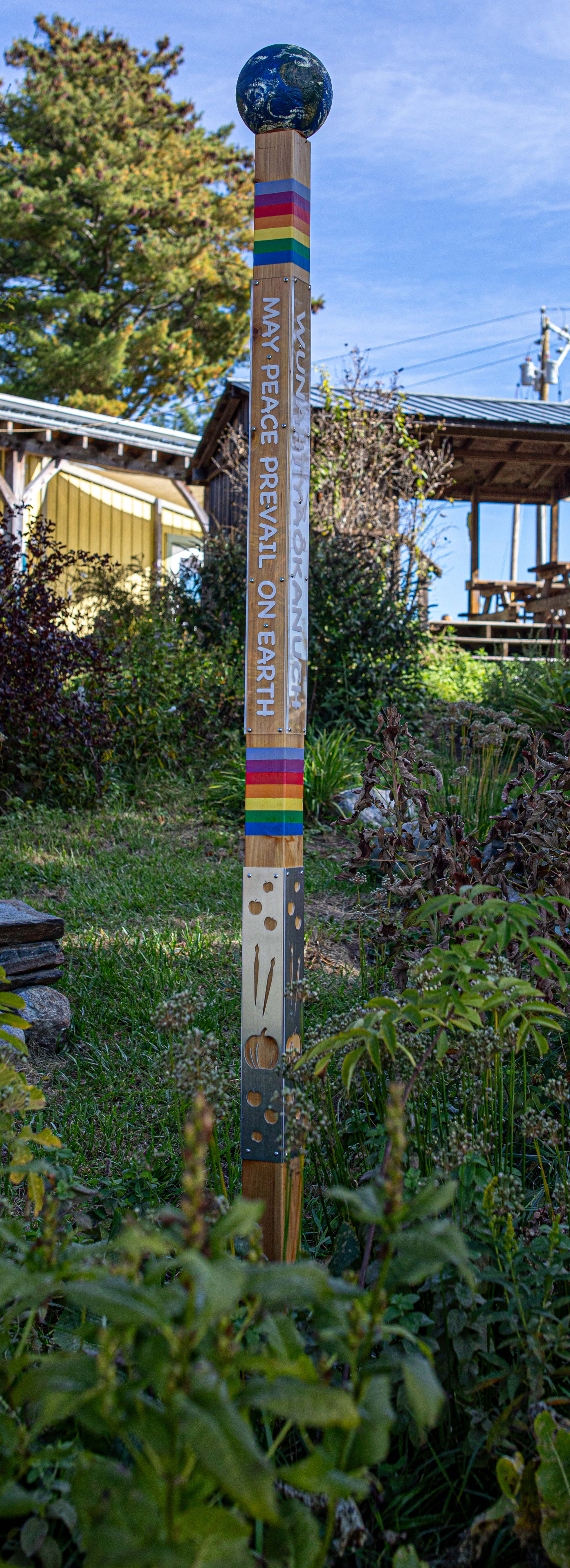
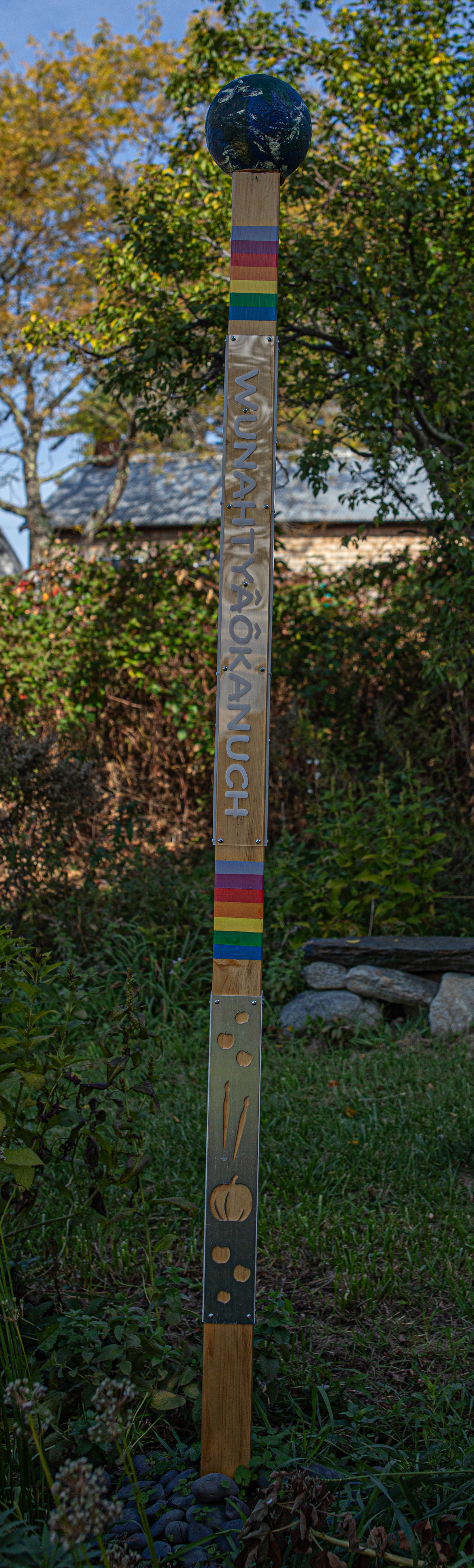
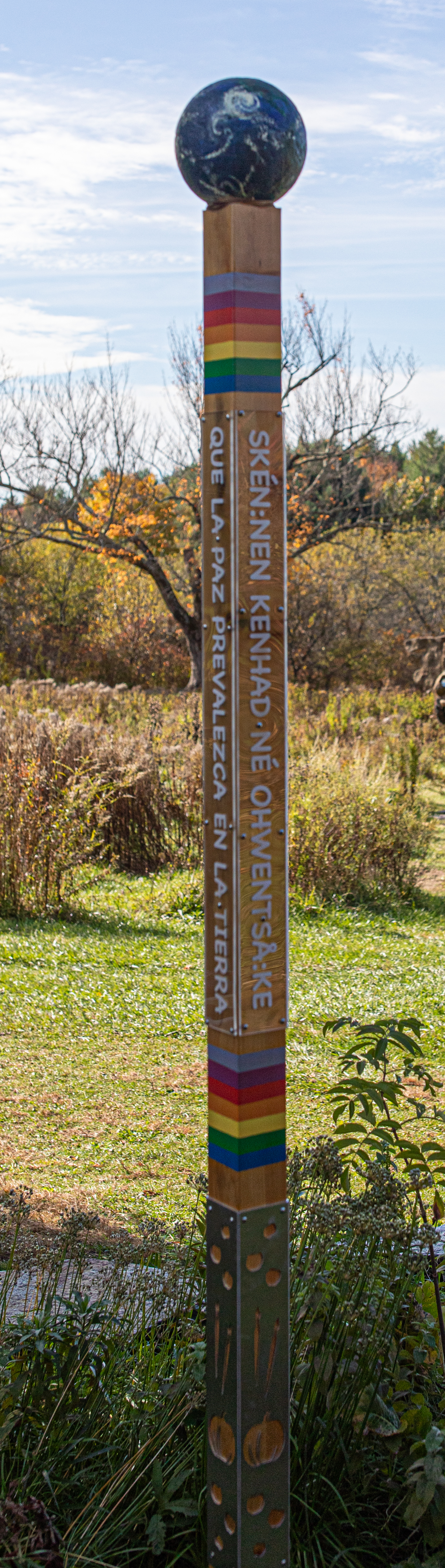
While the art from the artists was plentiful, there was additional art at the park.
There was this Poetree at the park. The Poetree included poems attached to the tree.
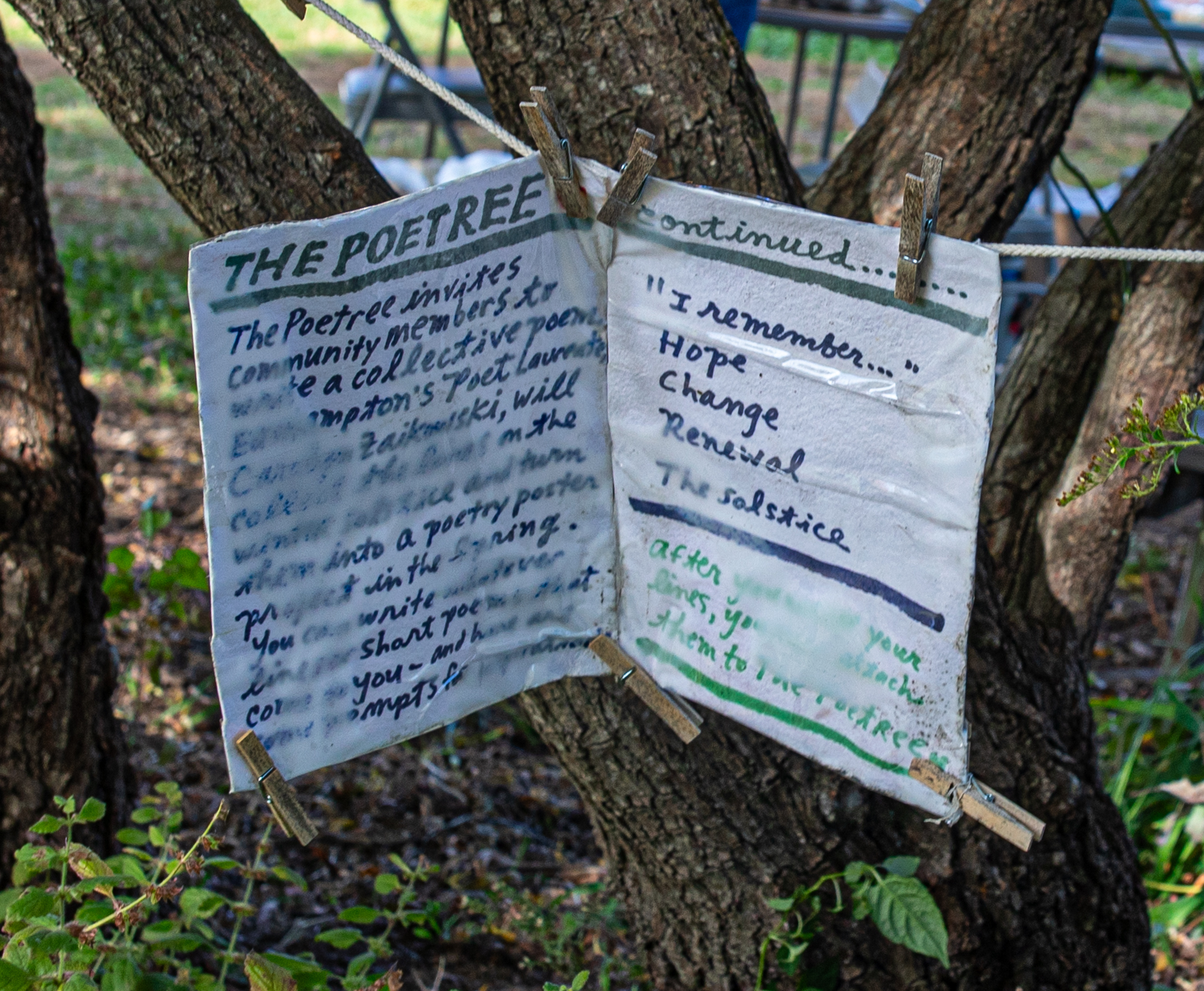
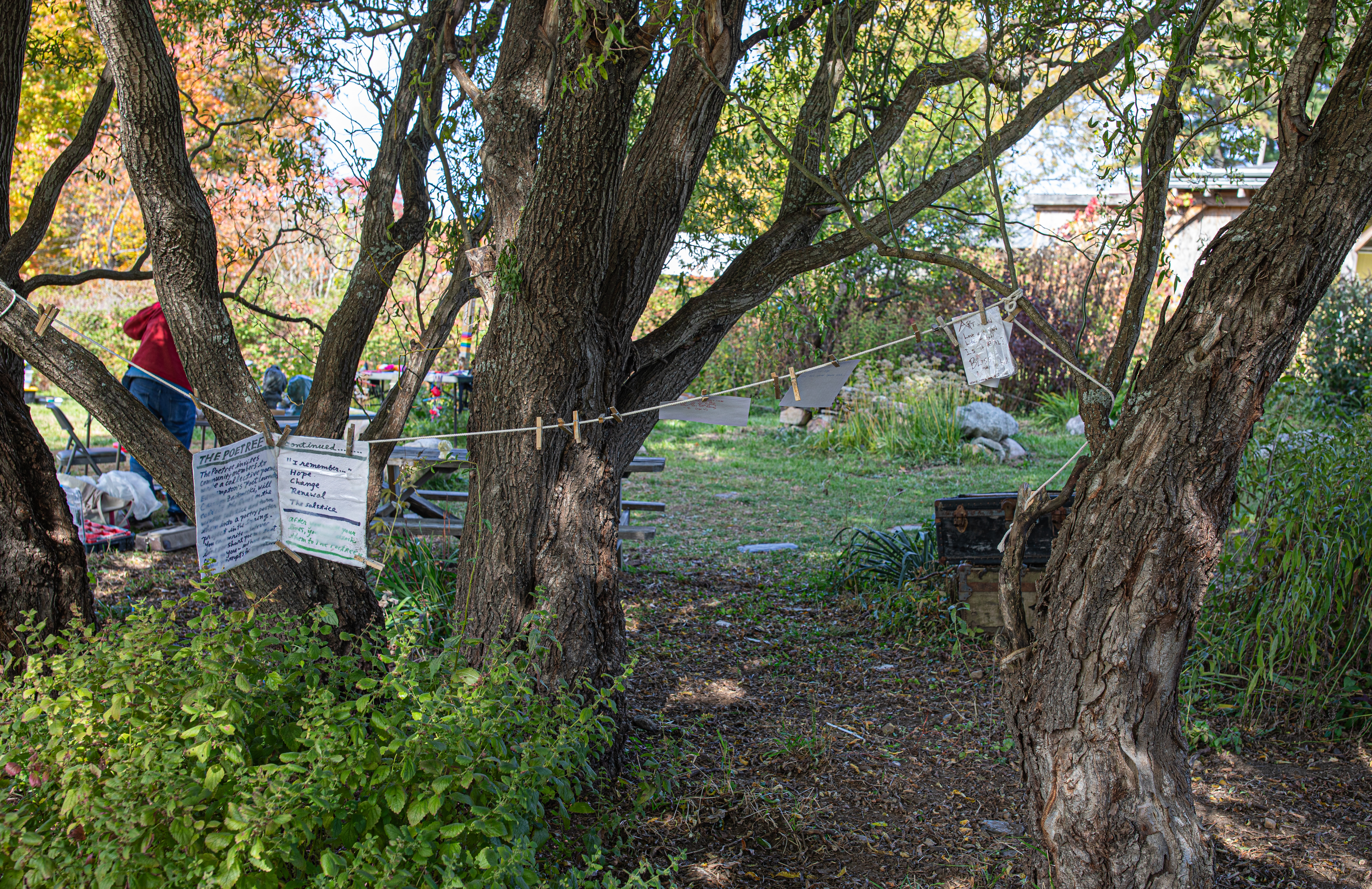
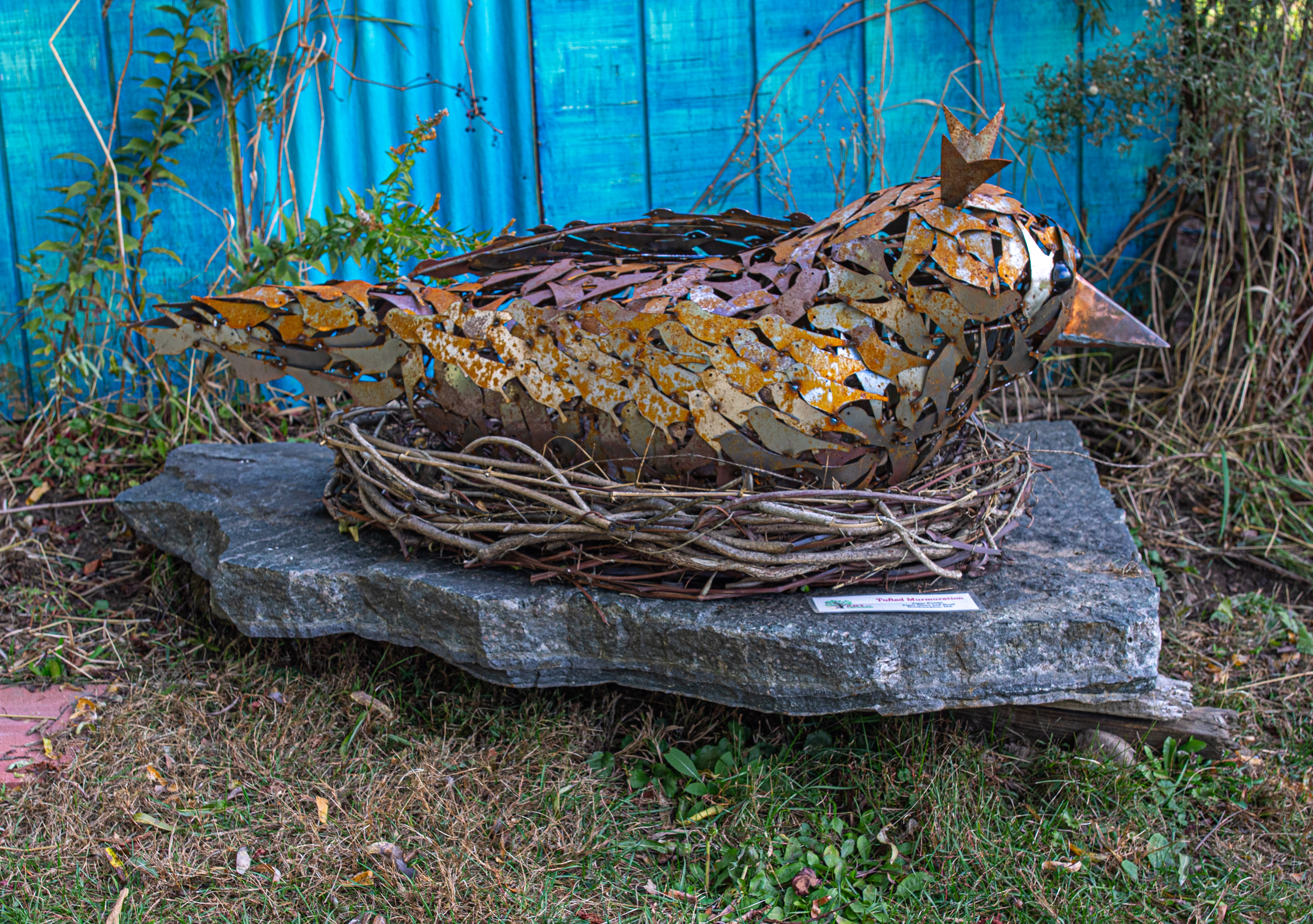
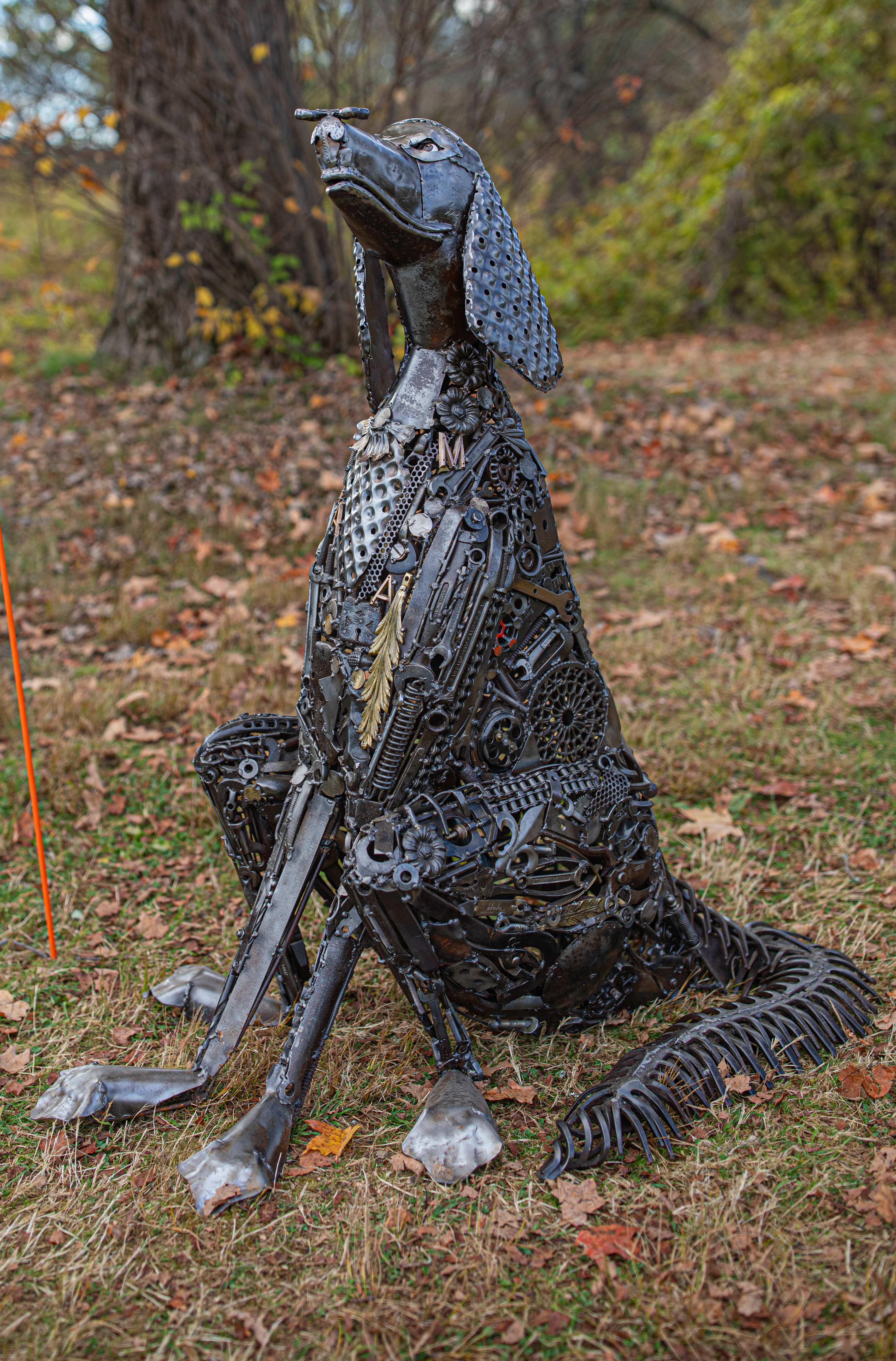
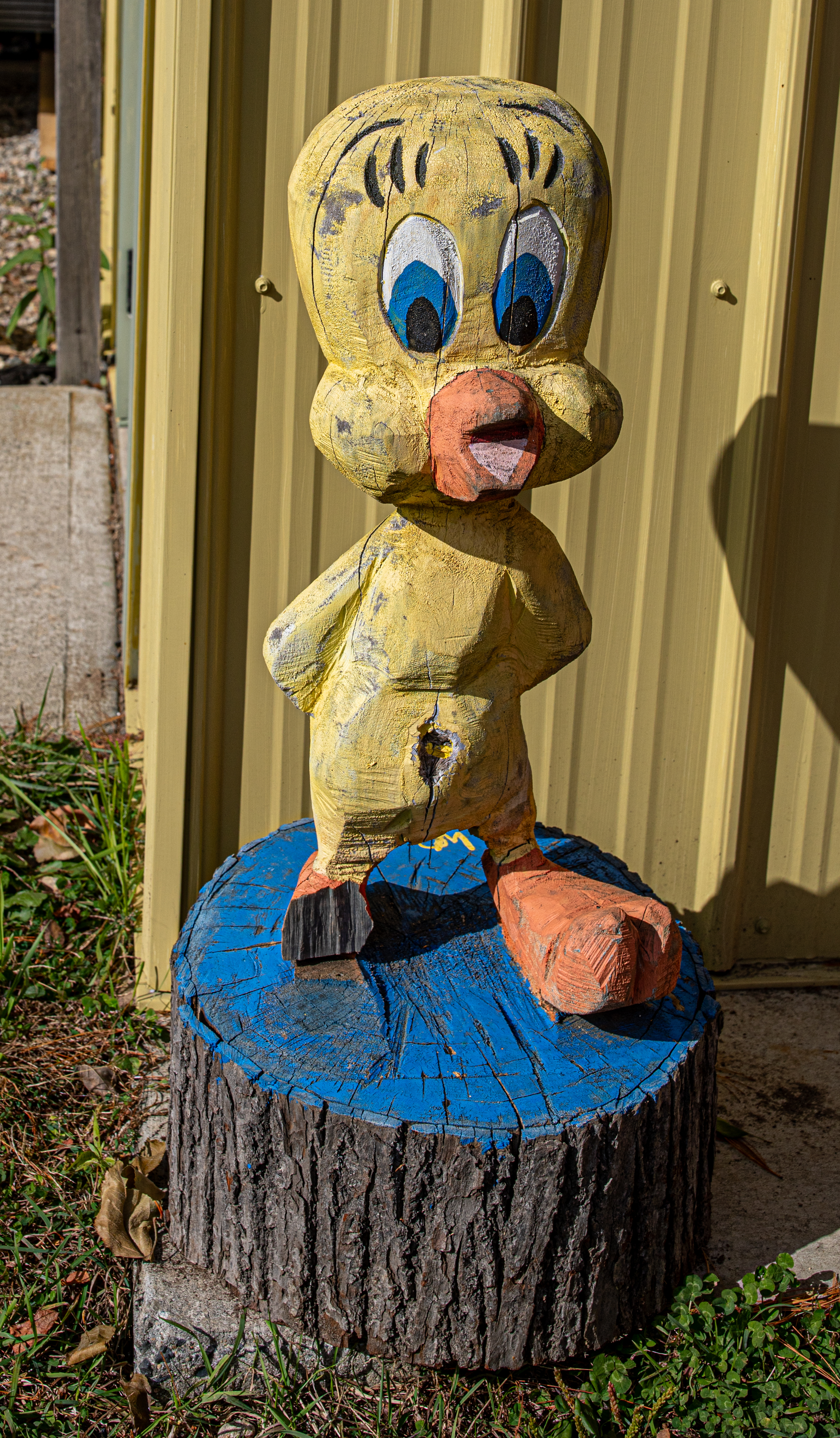
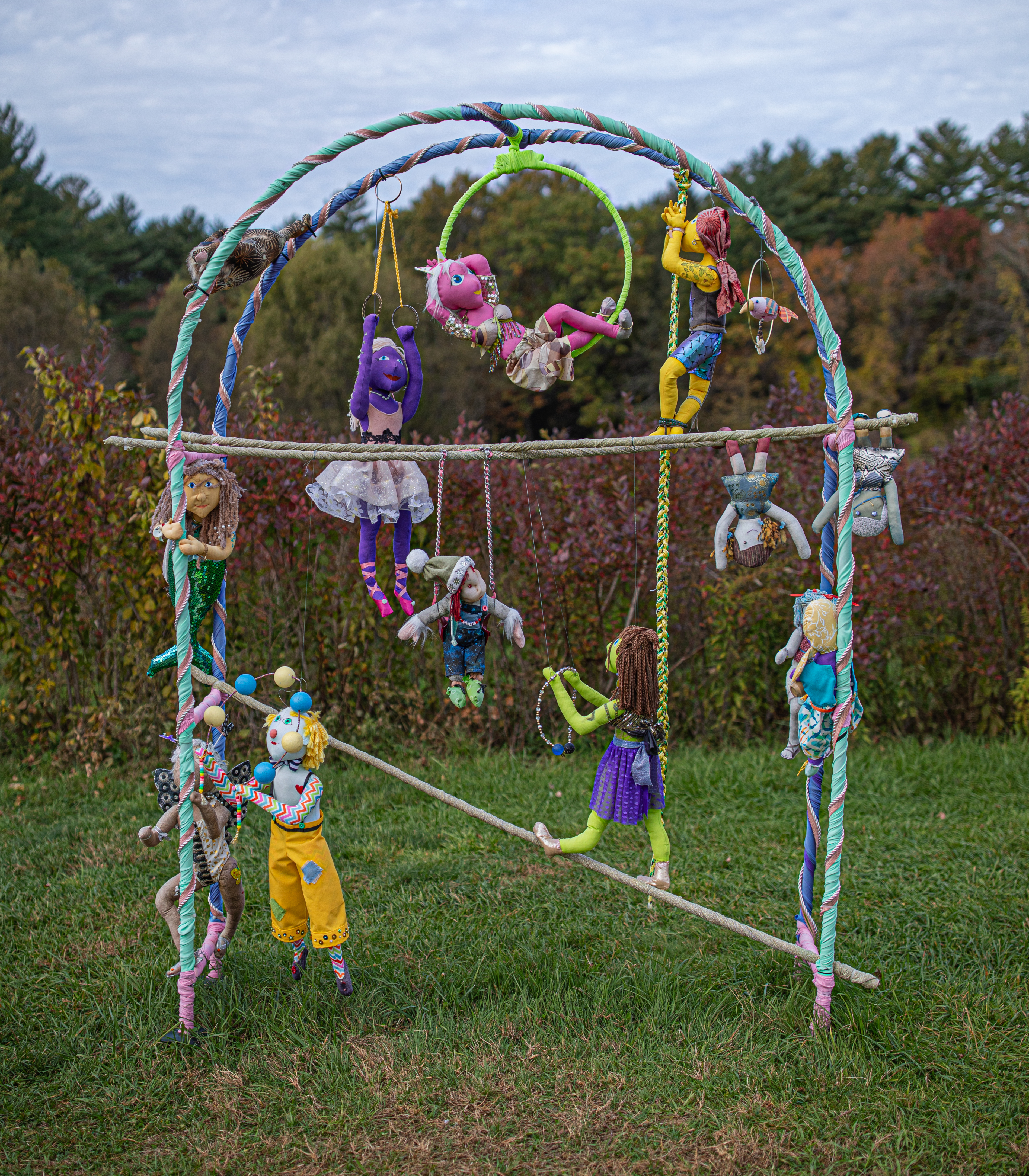
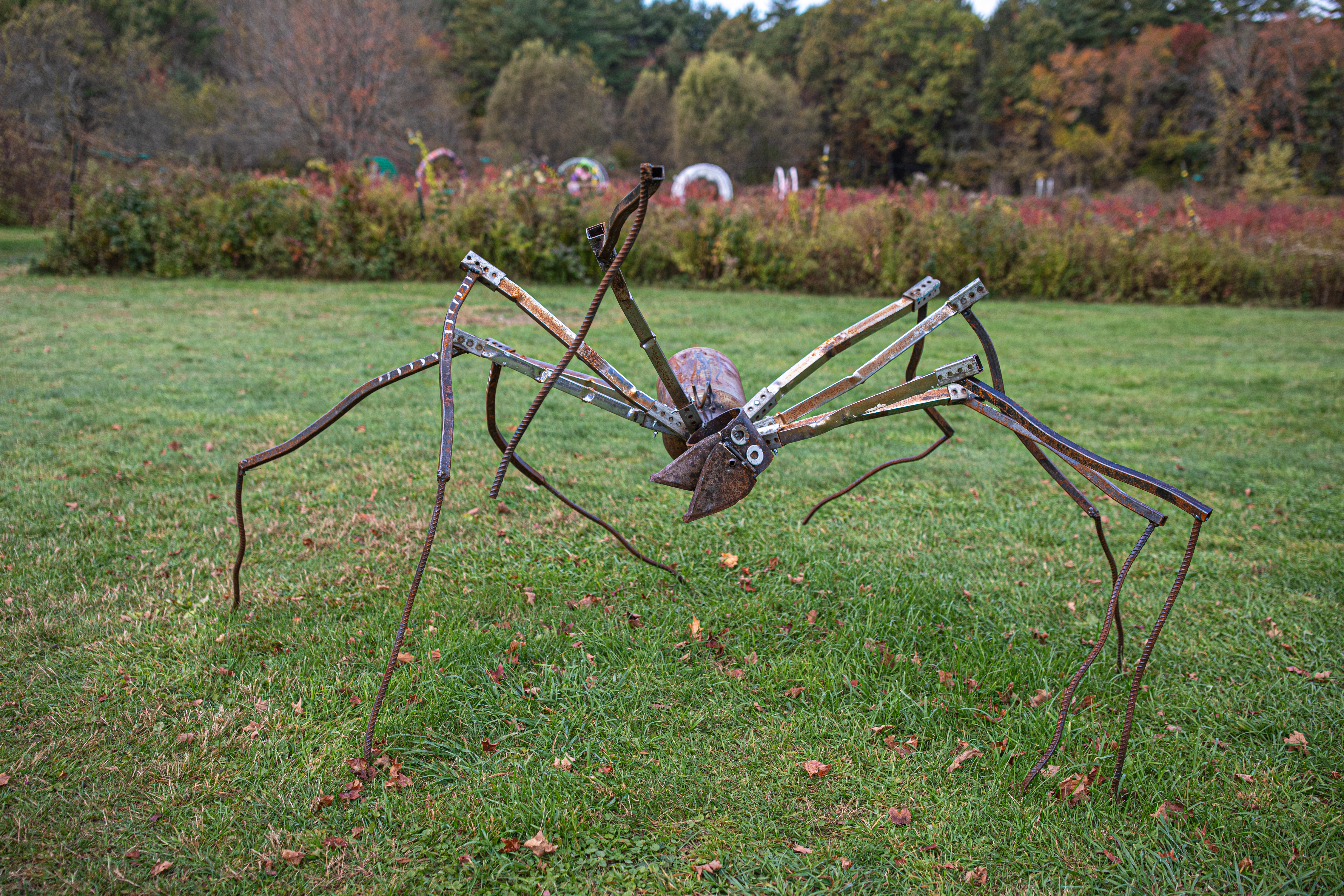
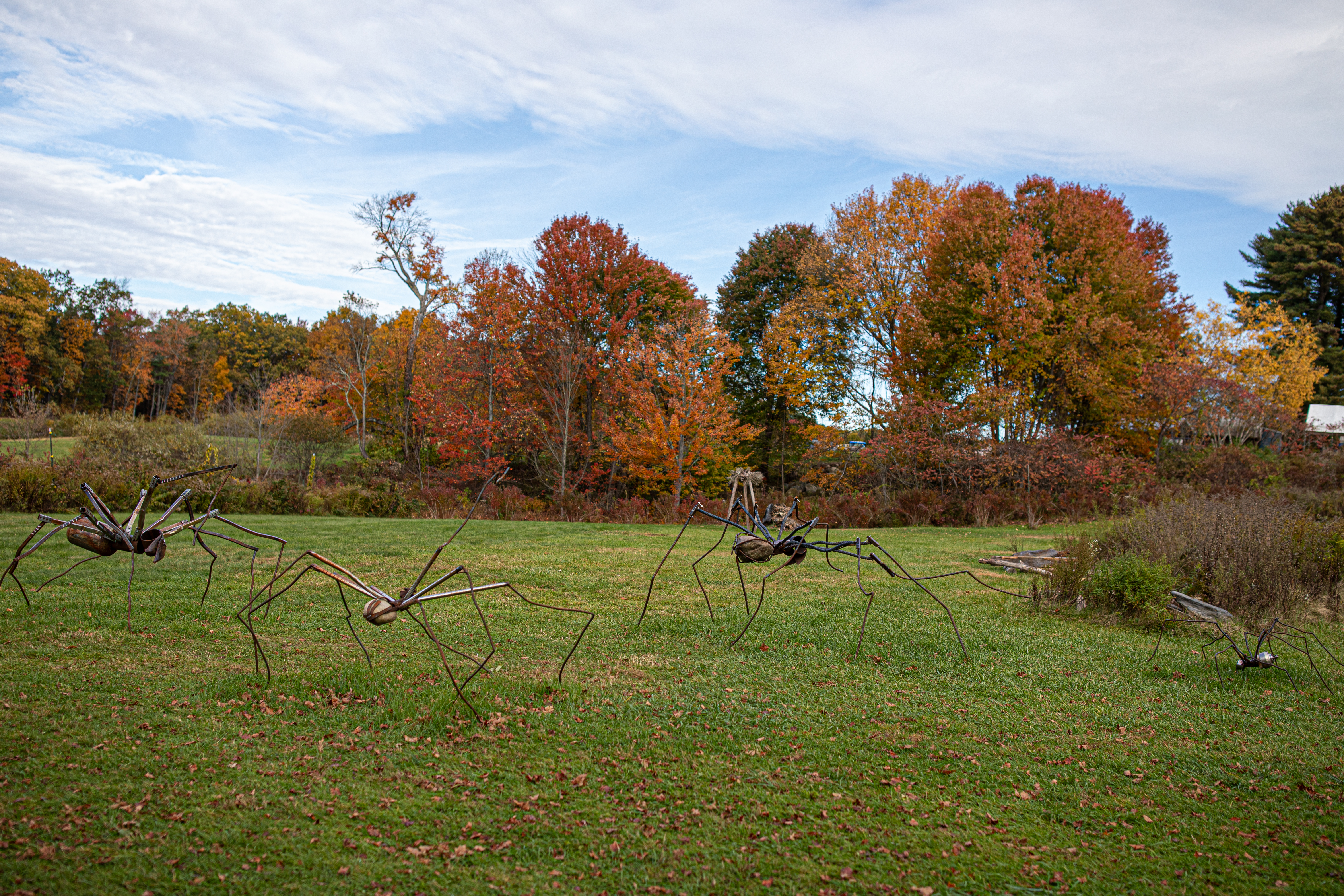
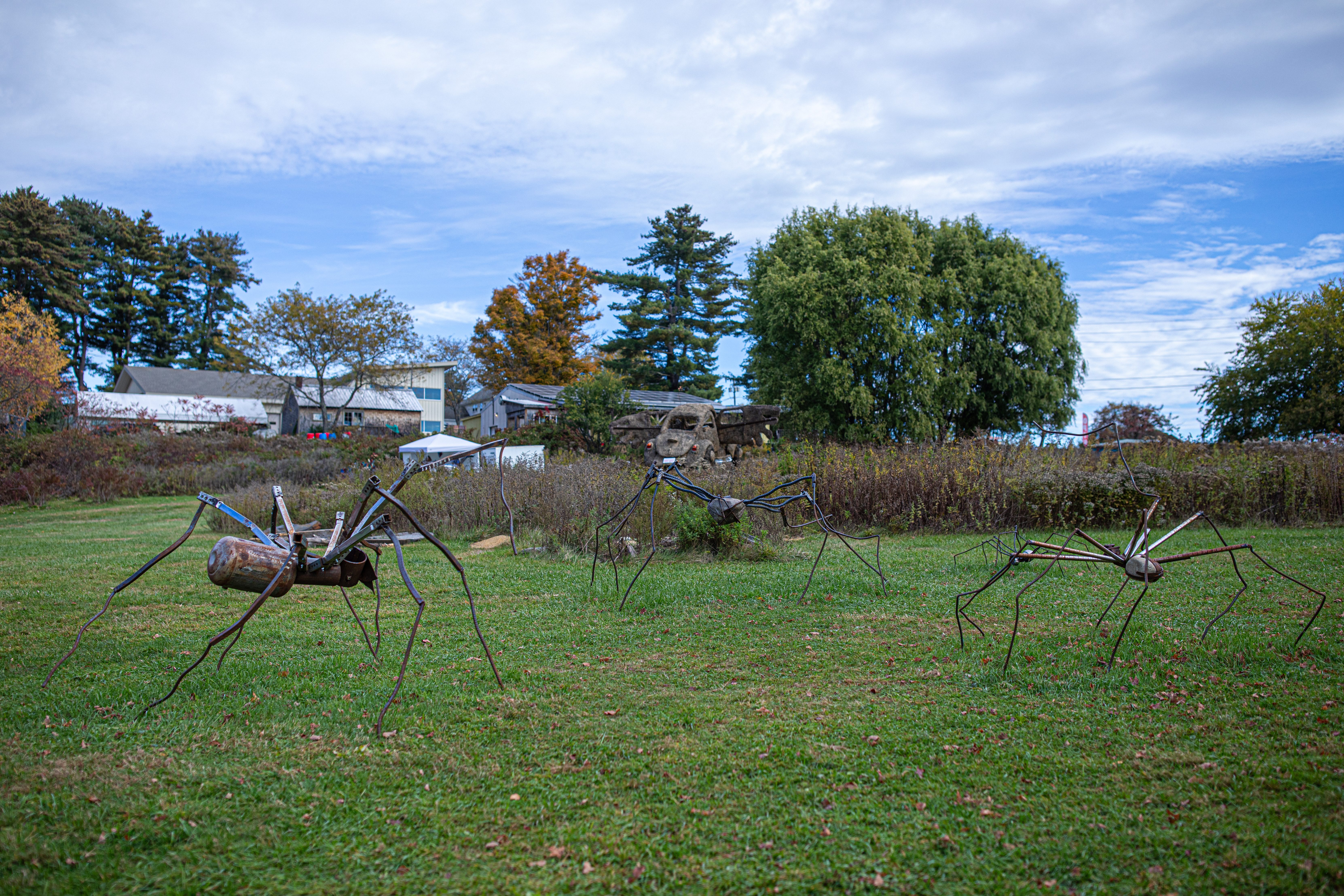
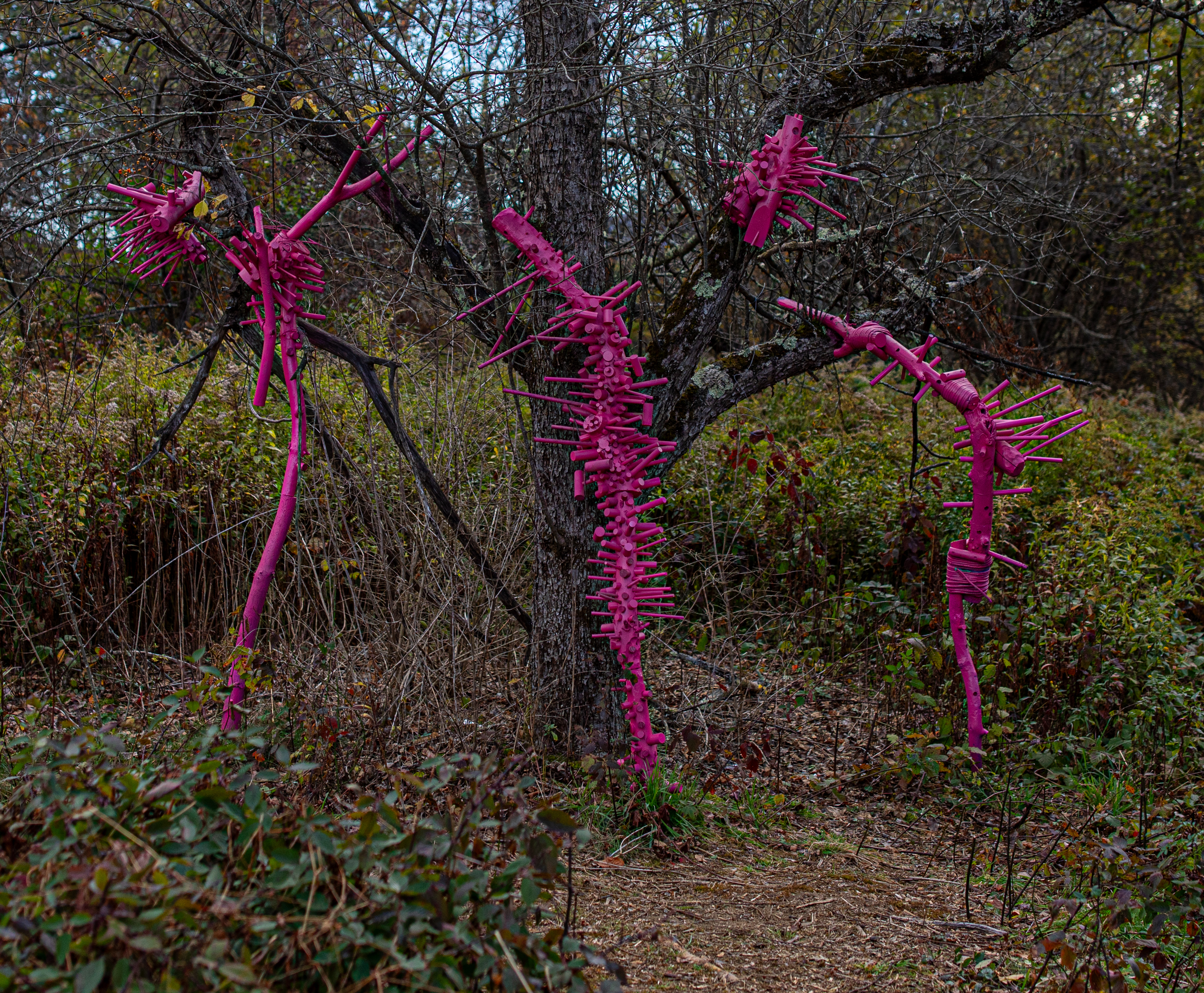
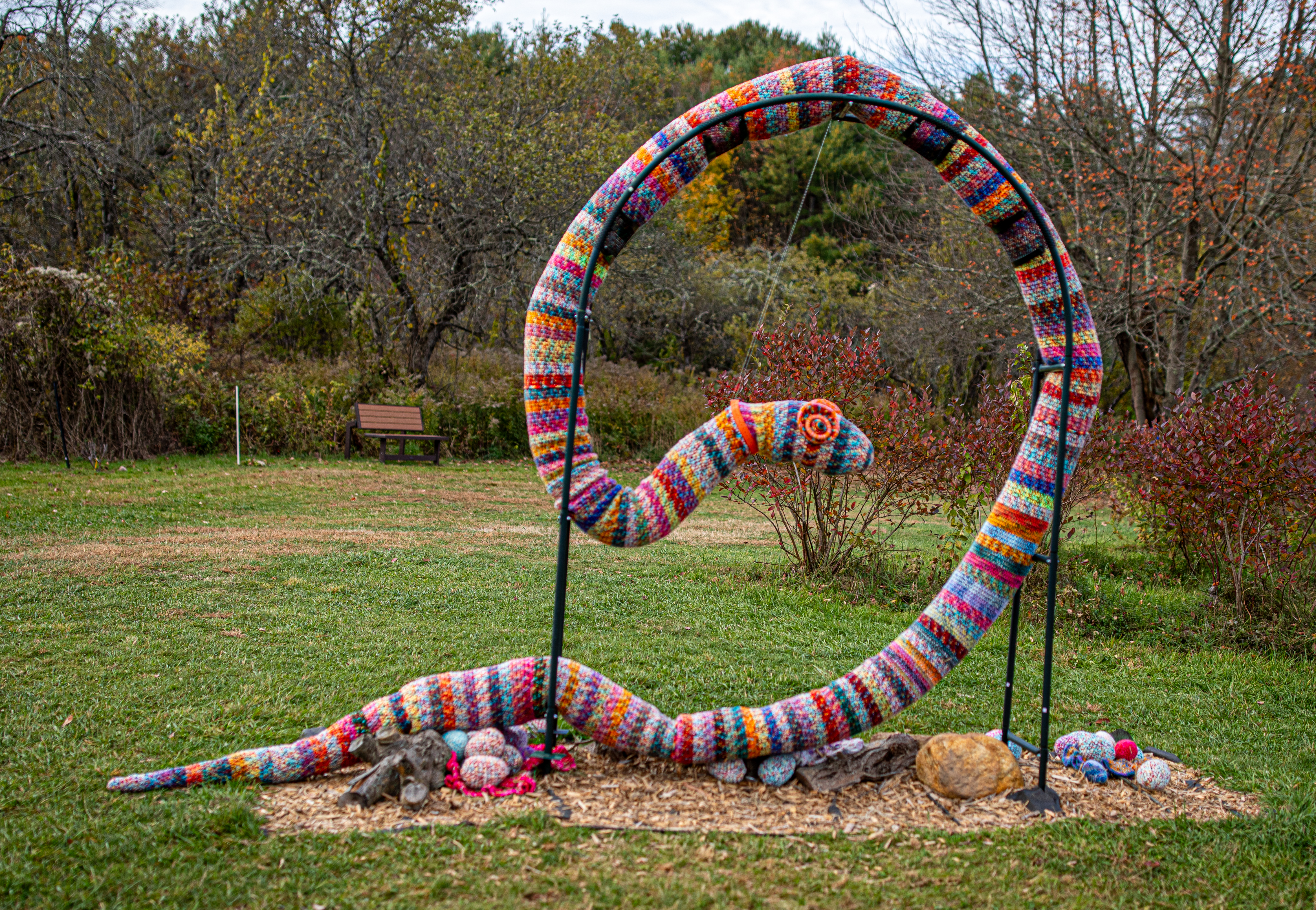
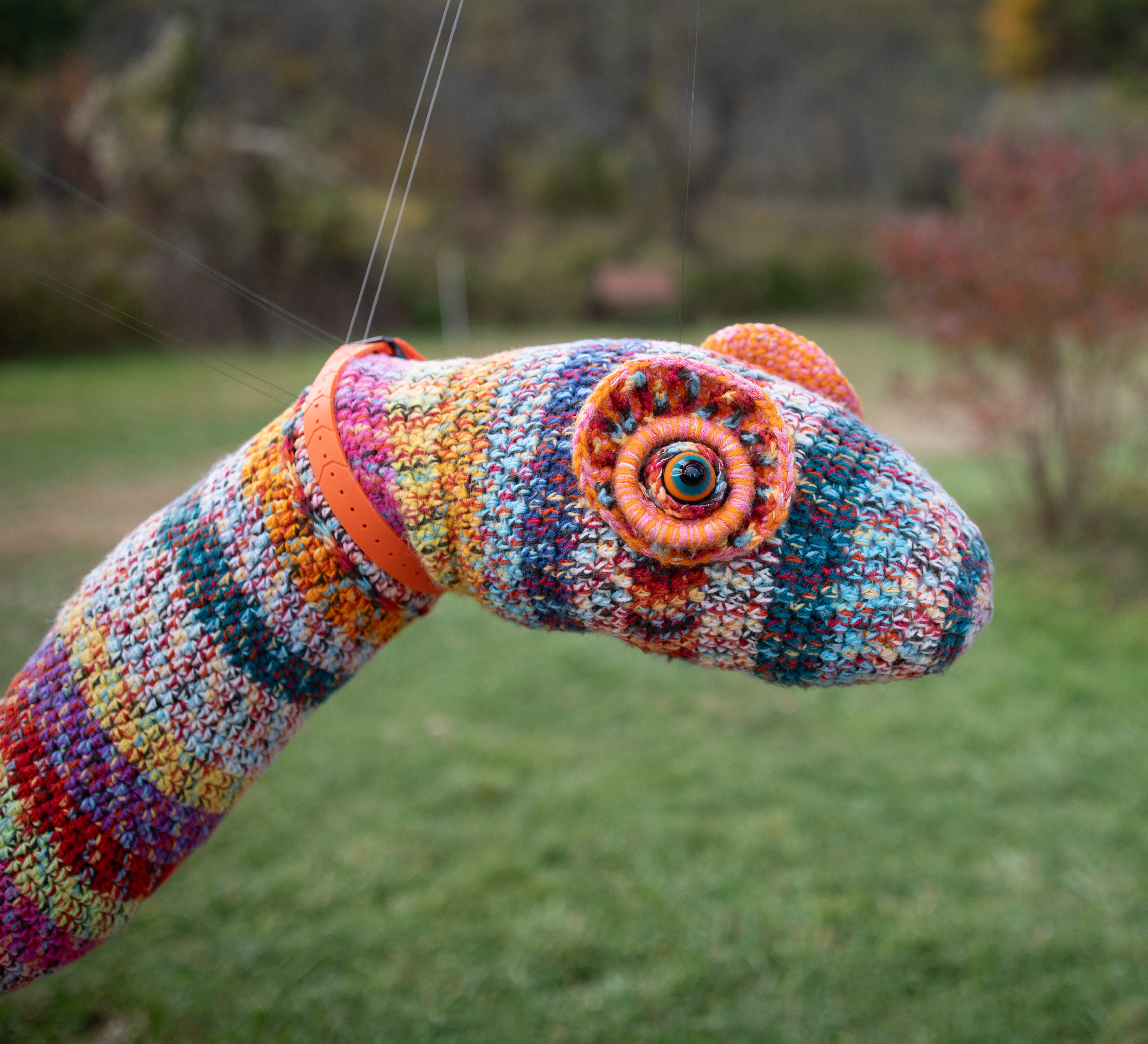
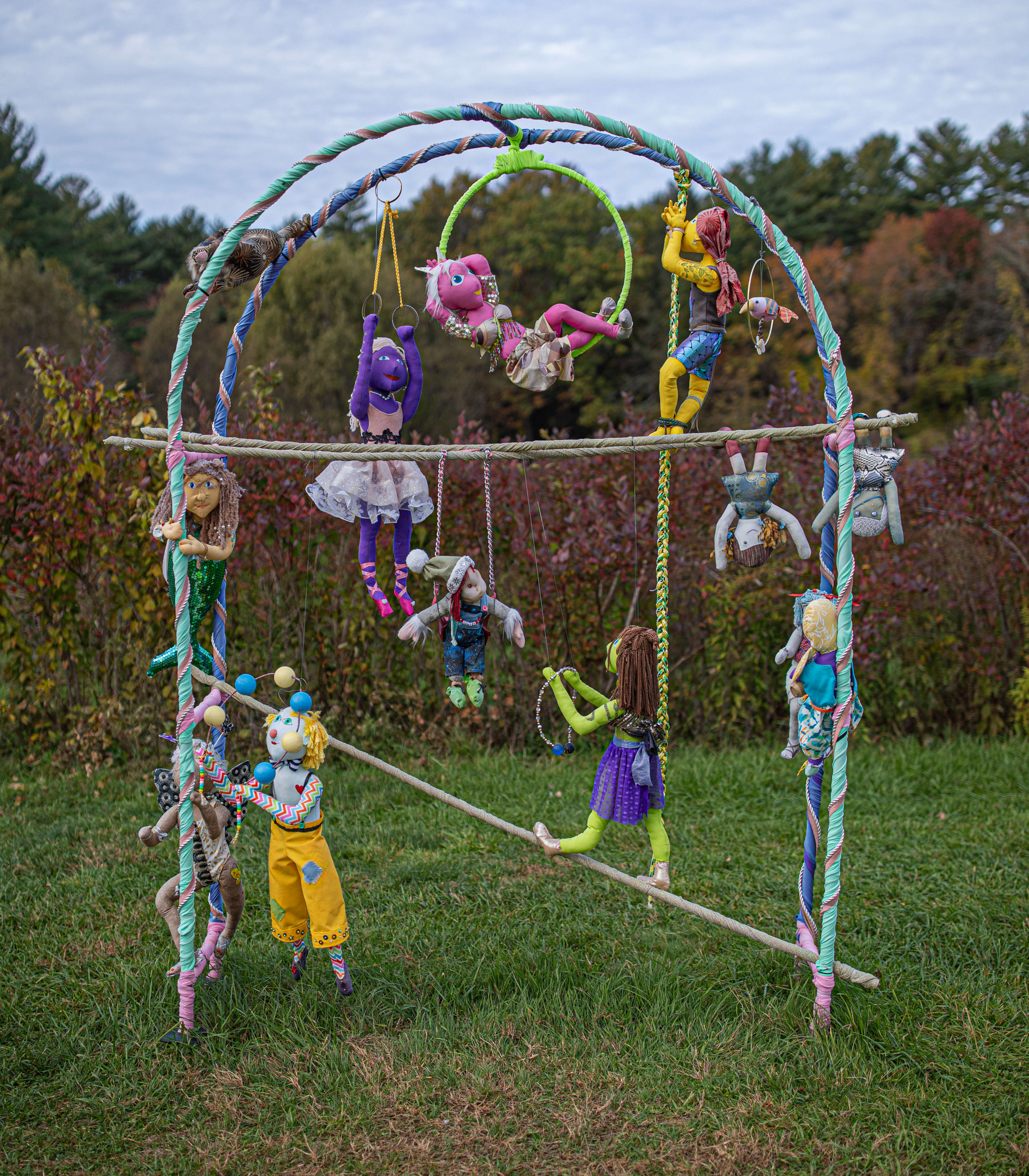
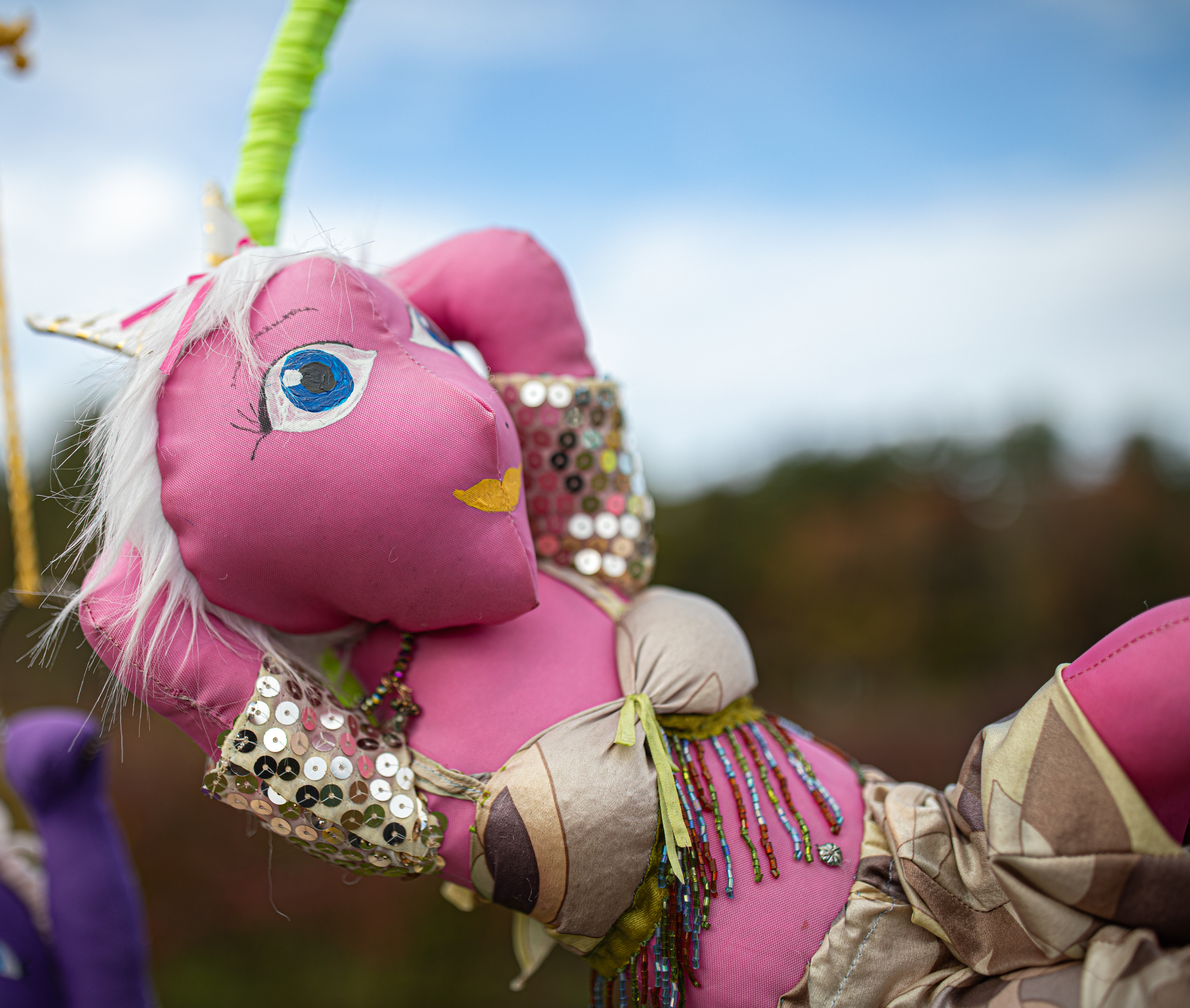
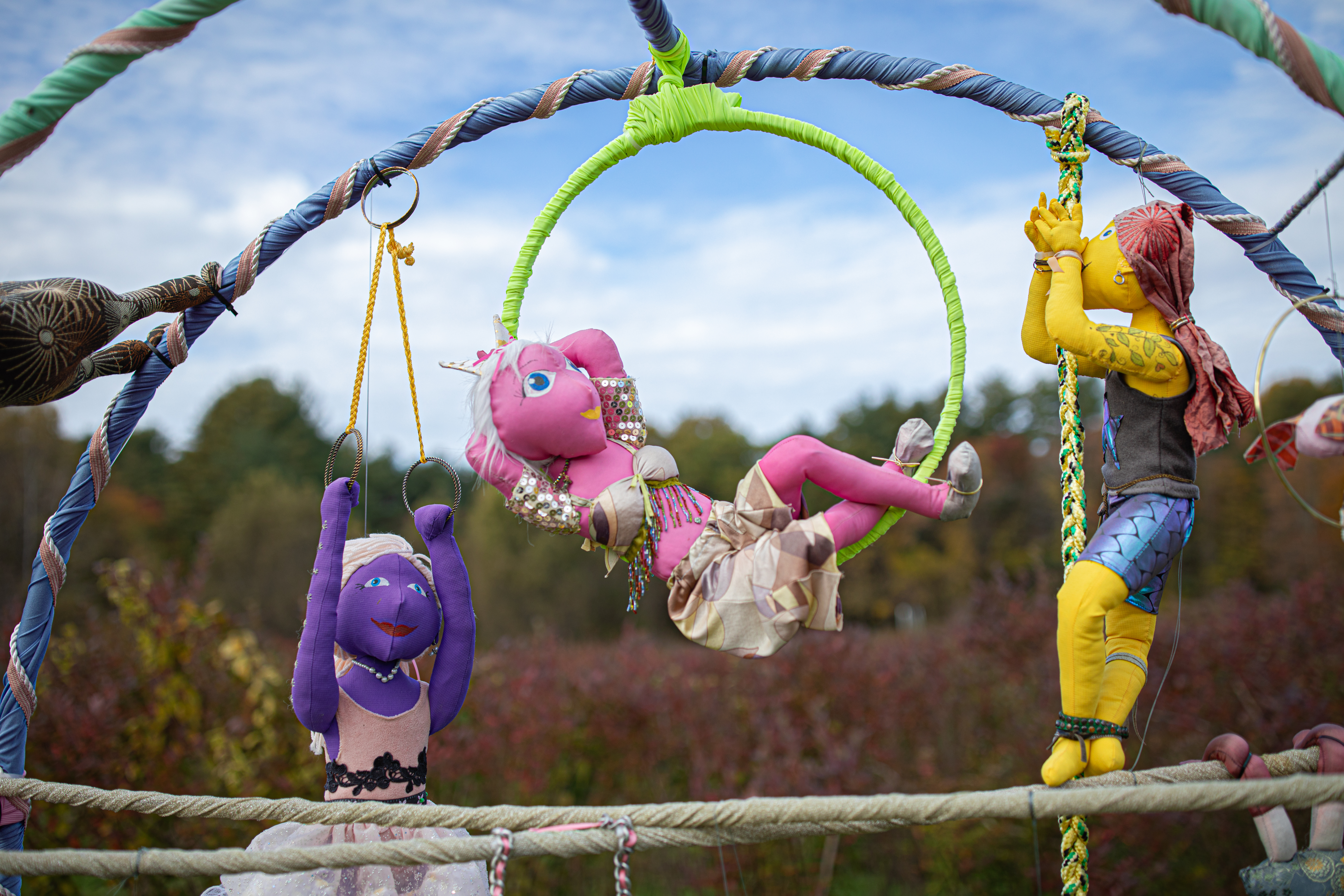
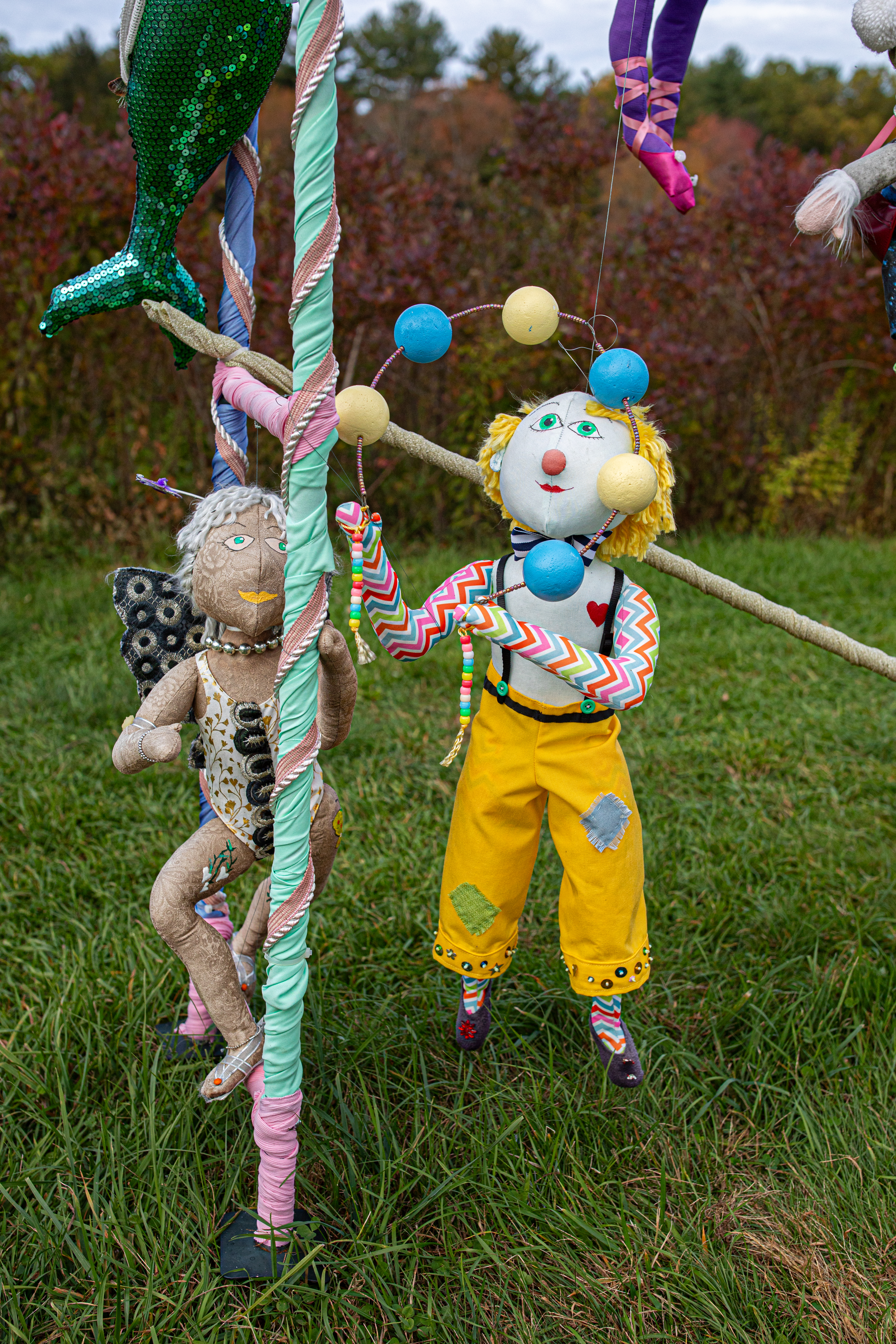
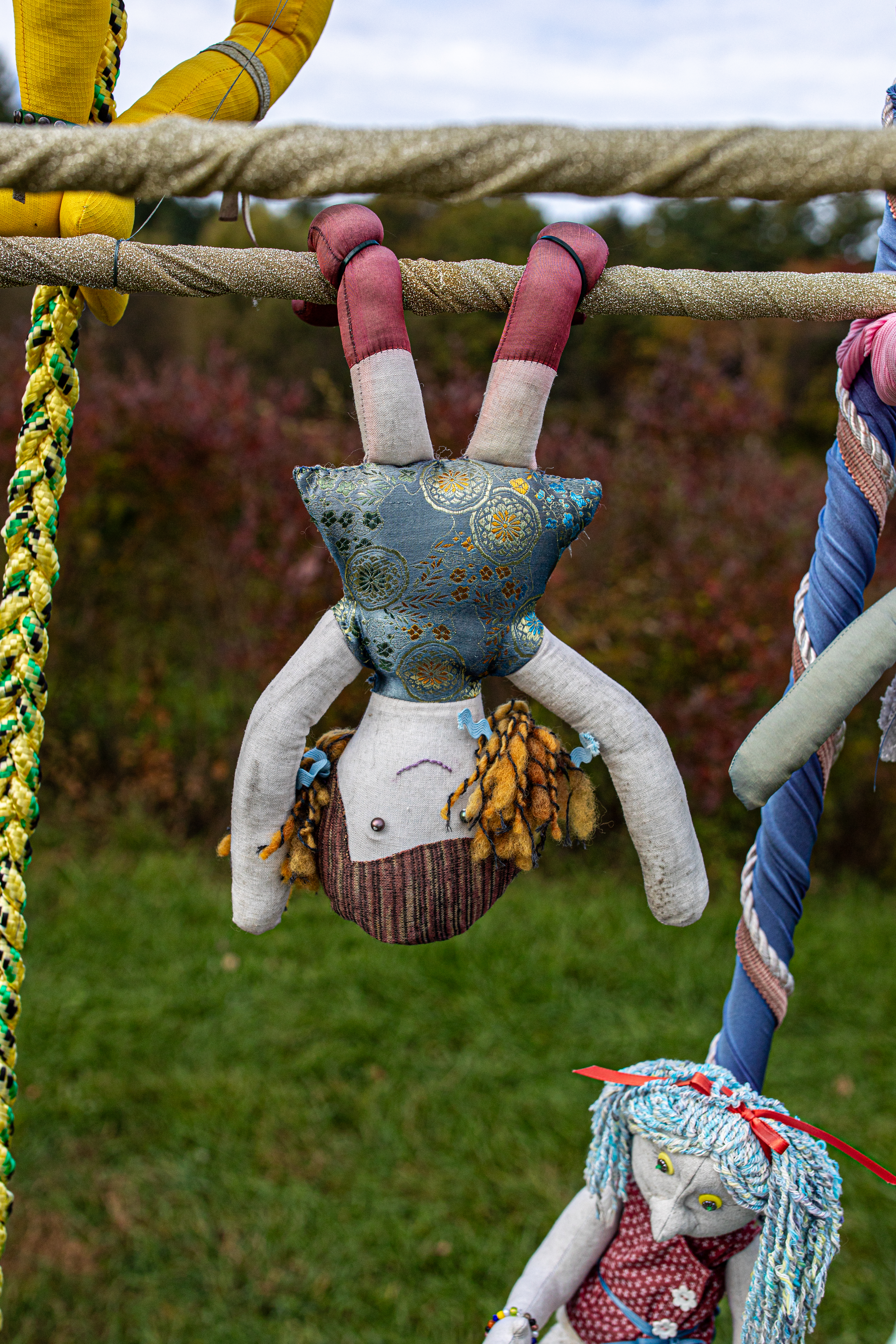
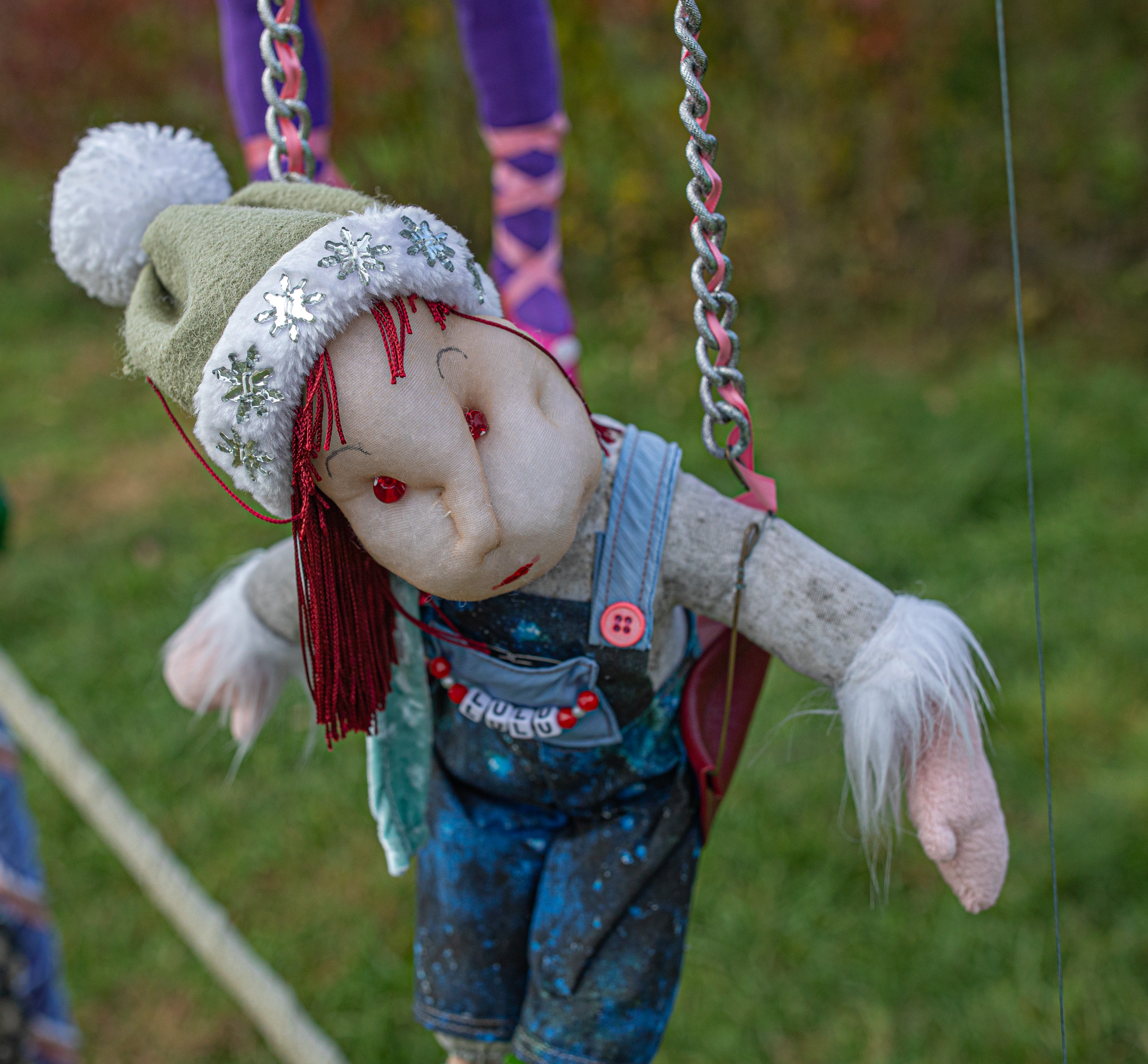
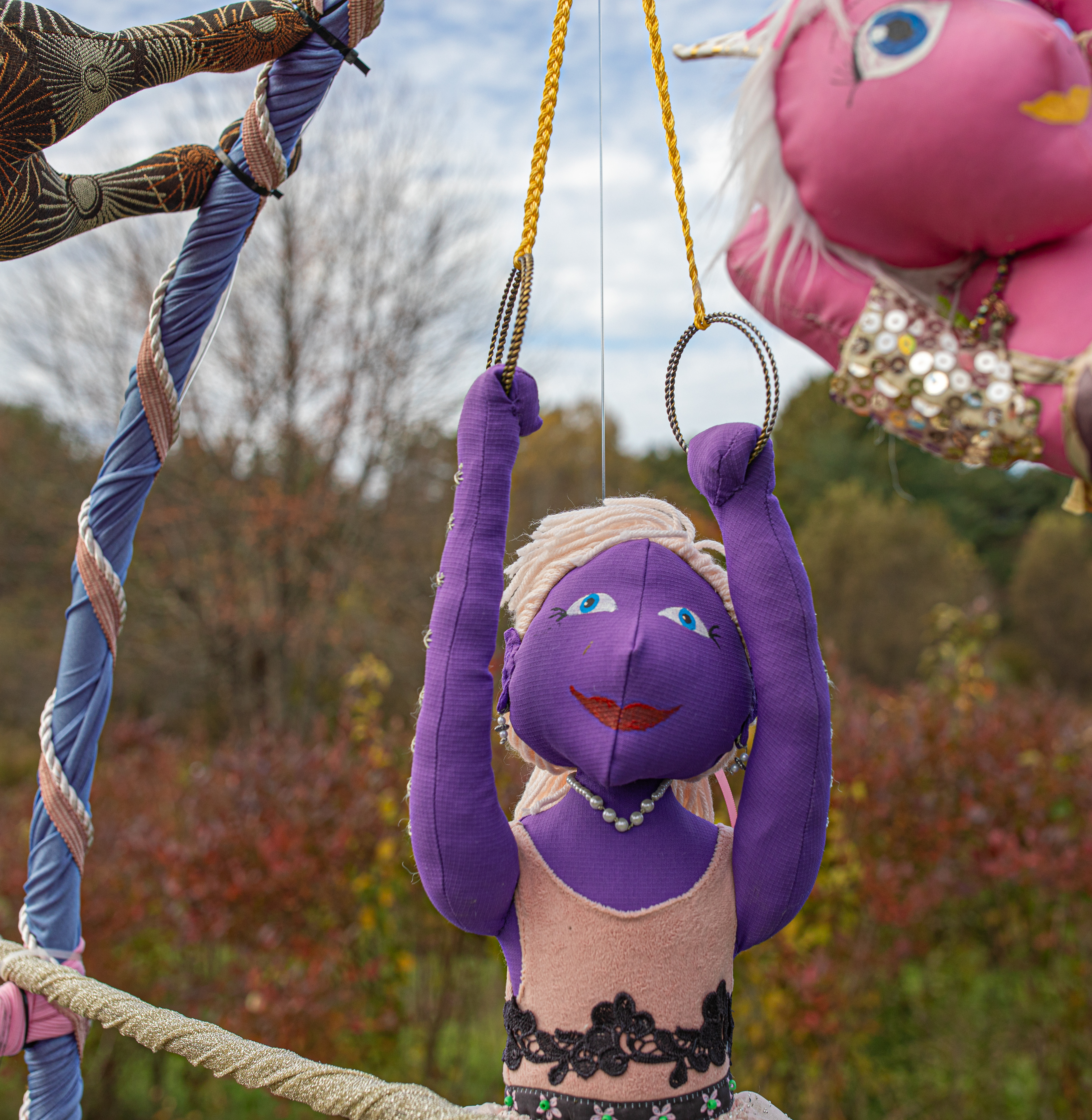
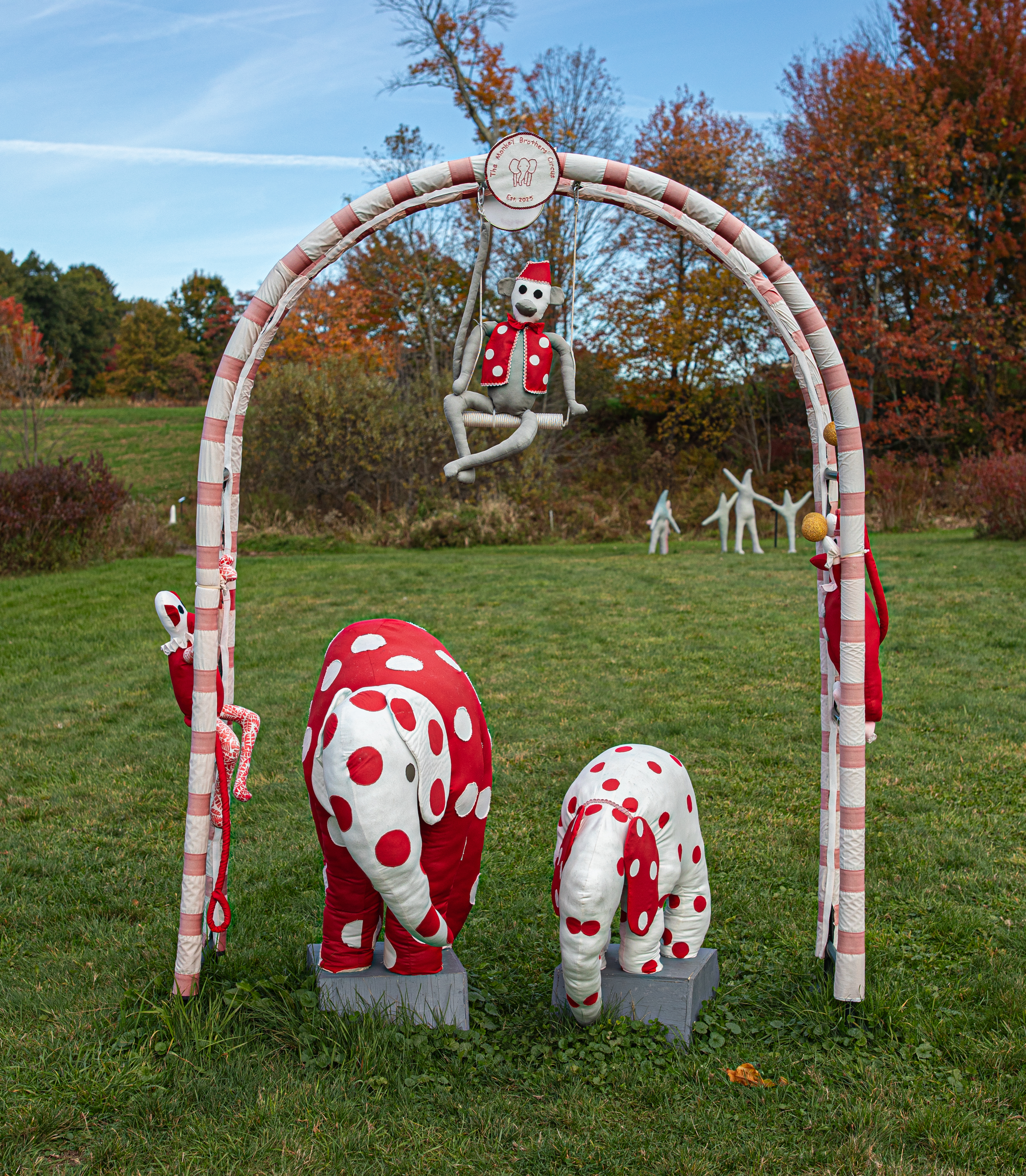
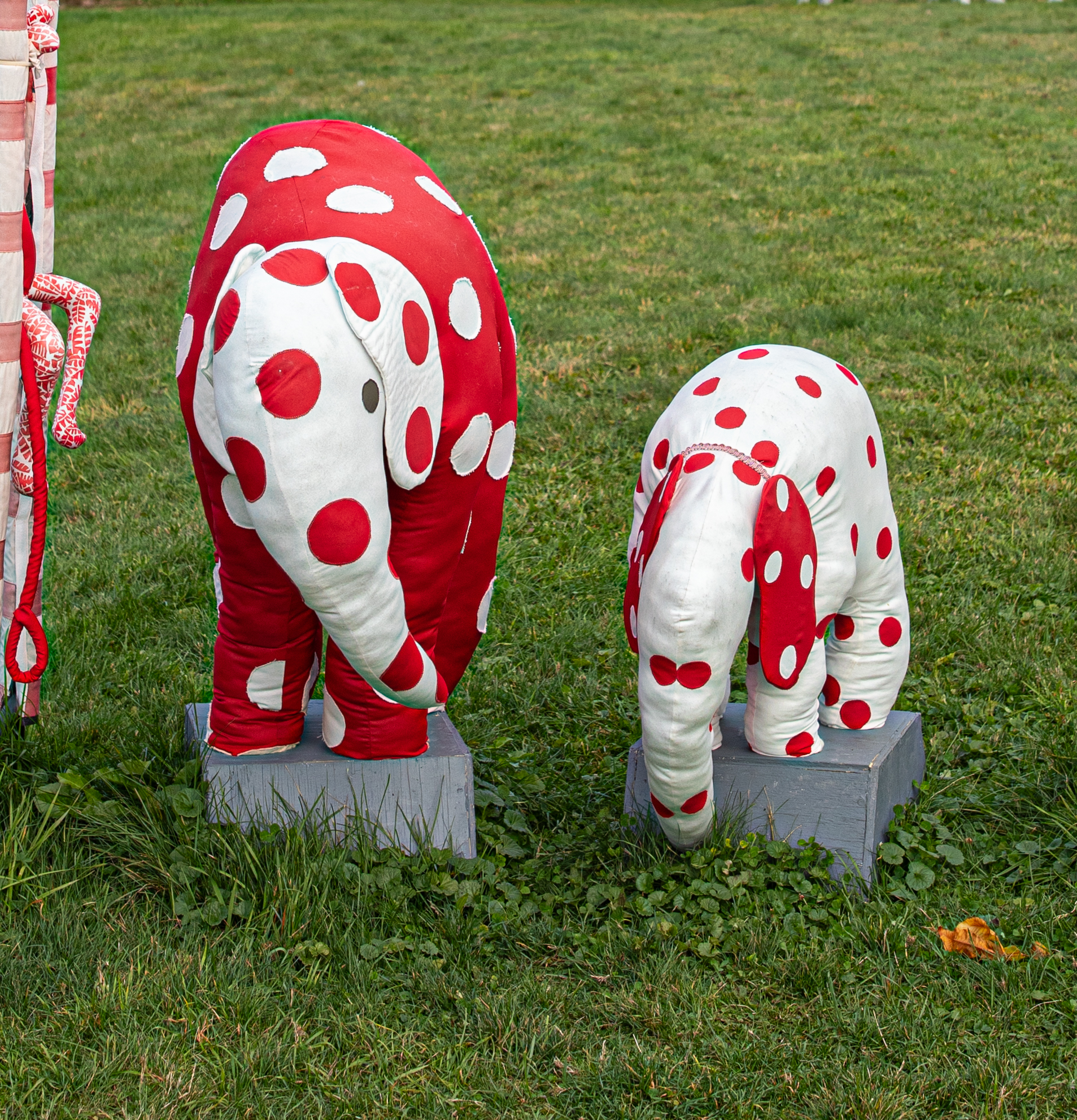
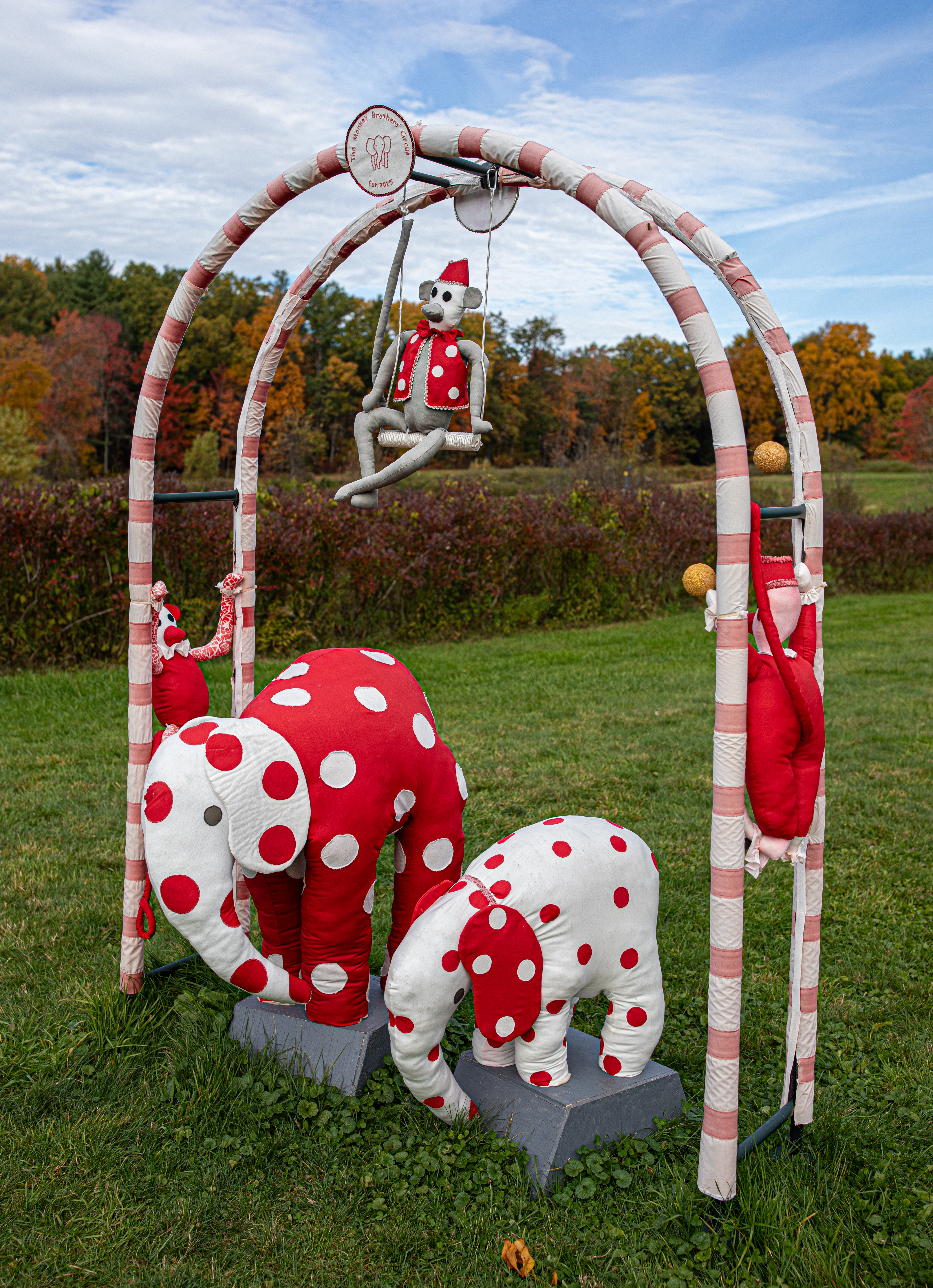
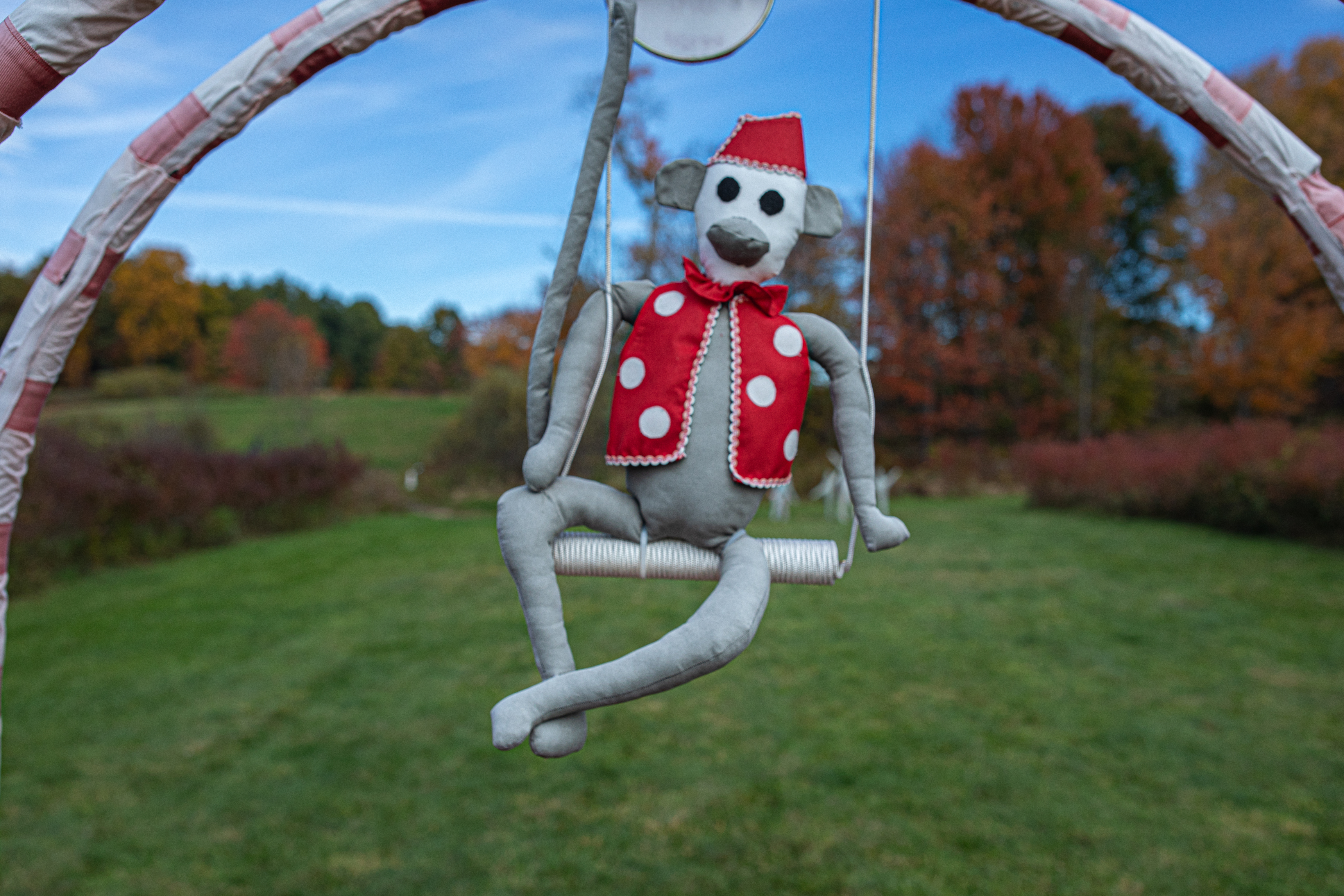
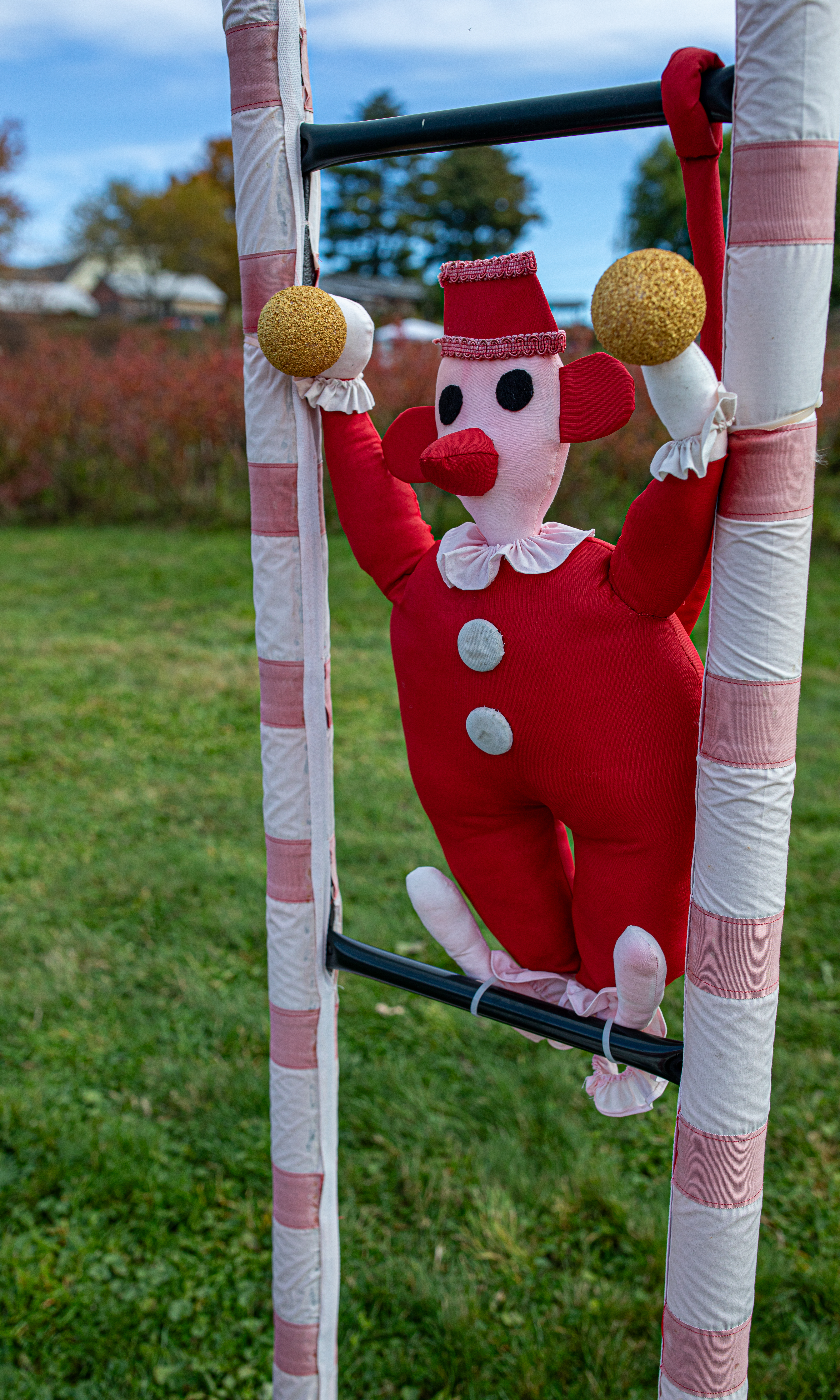
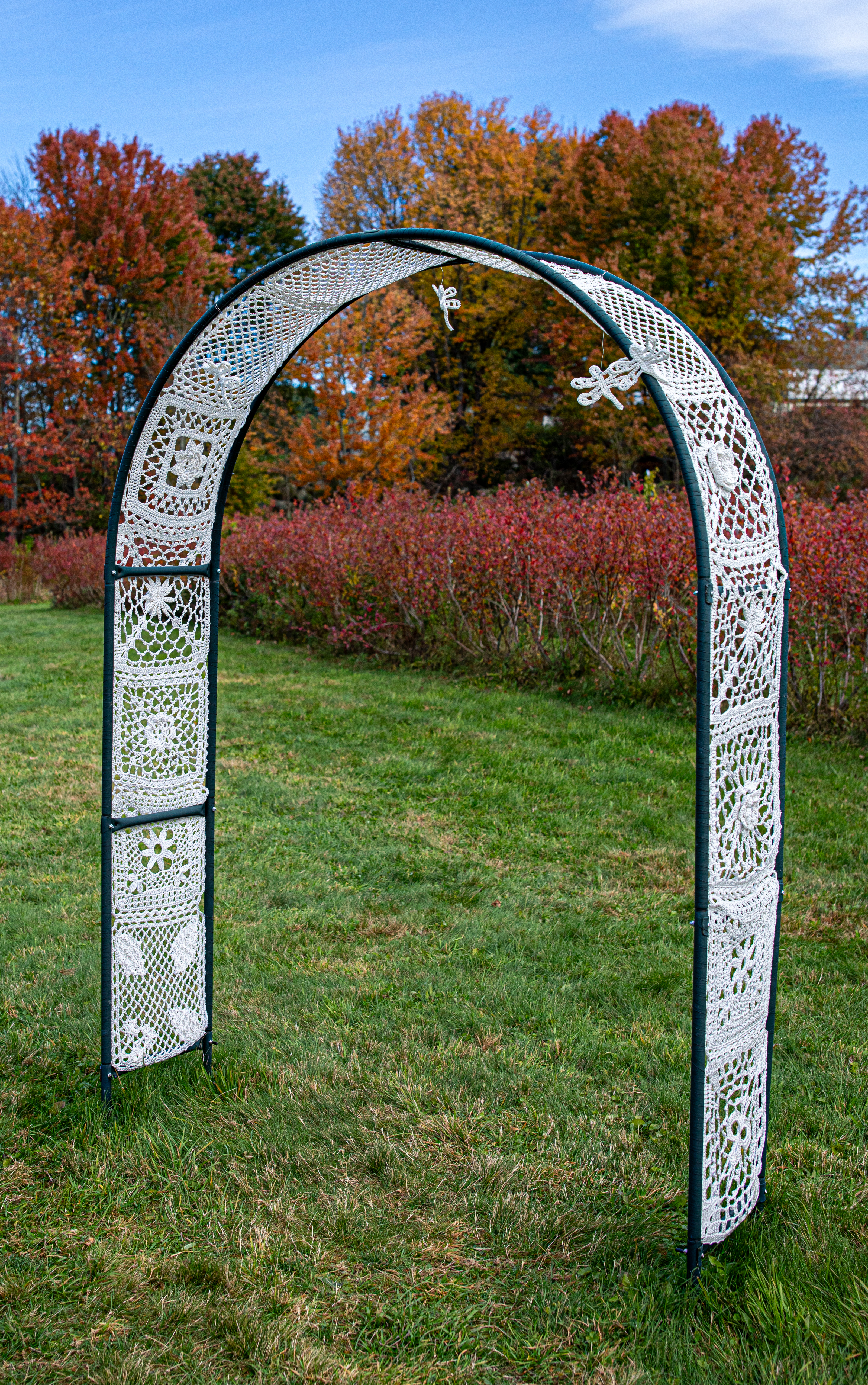
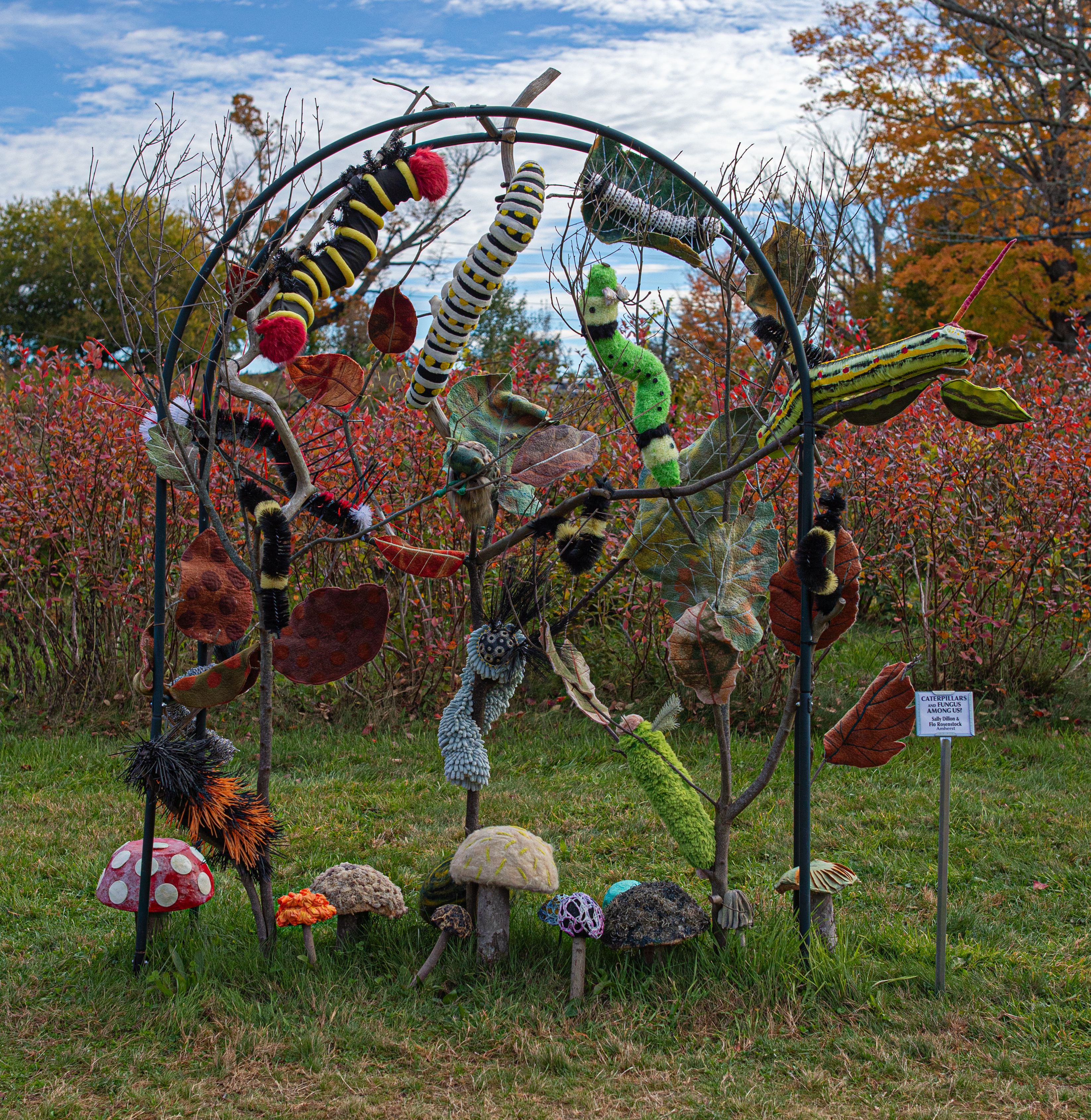
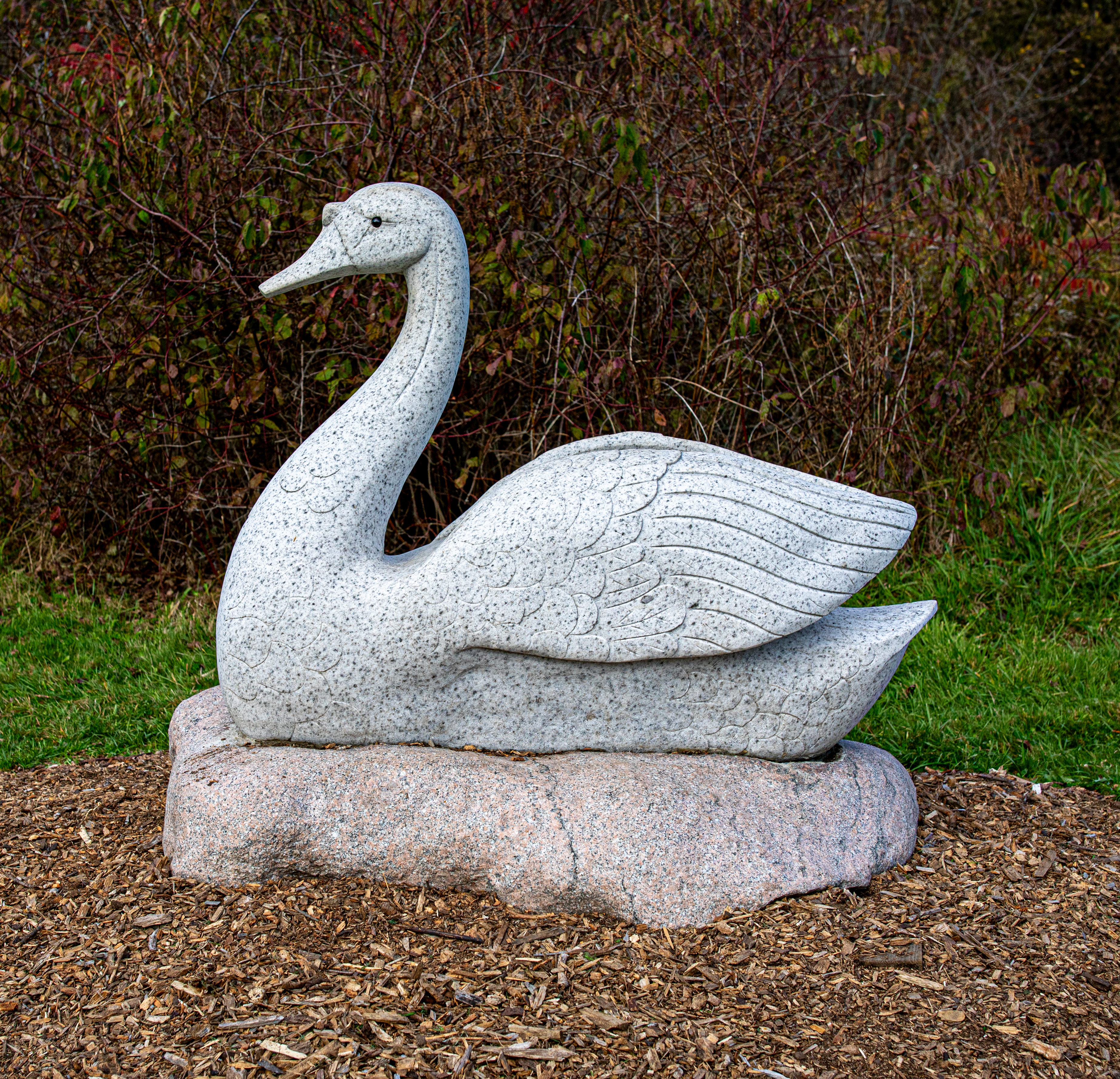
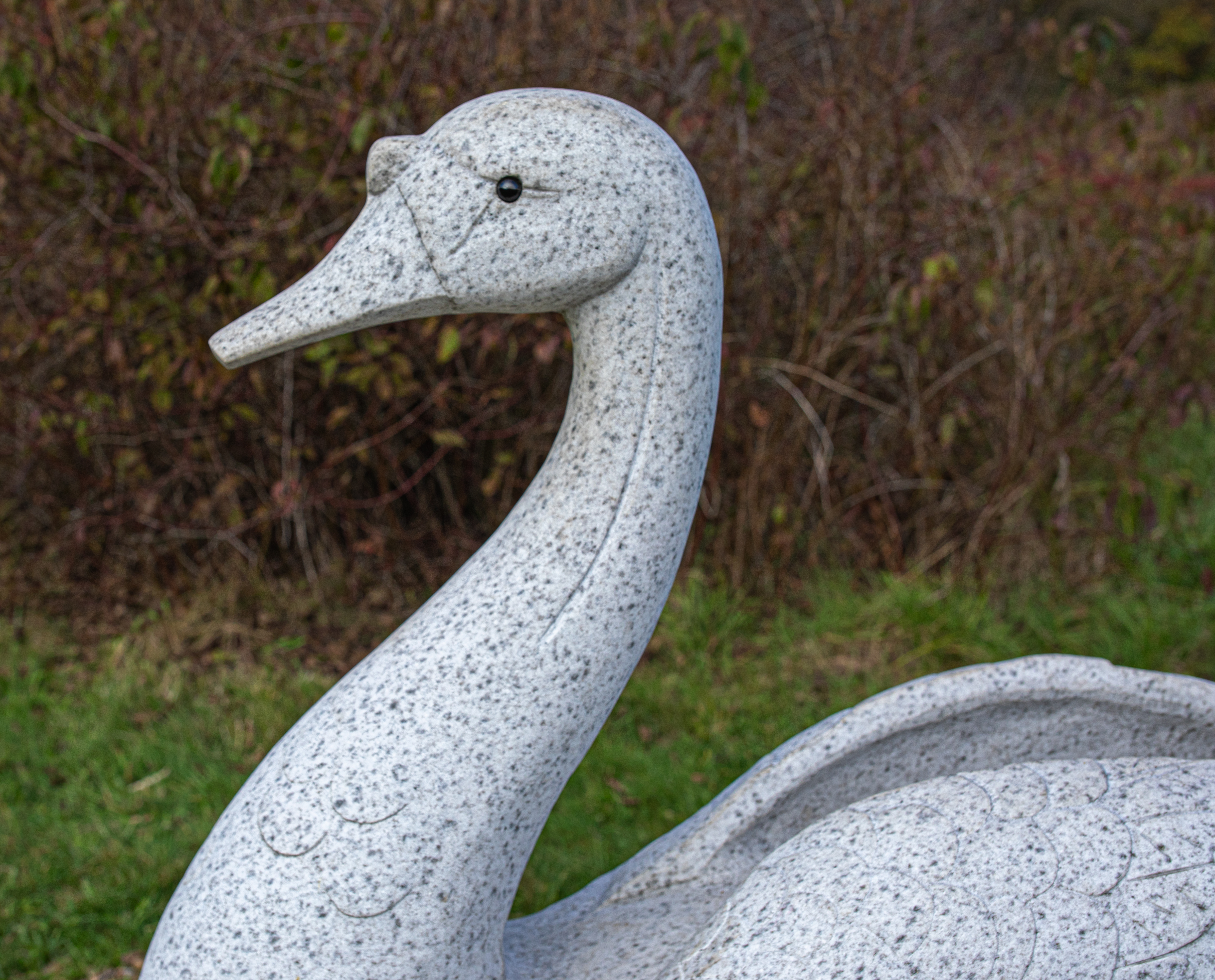
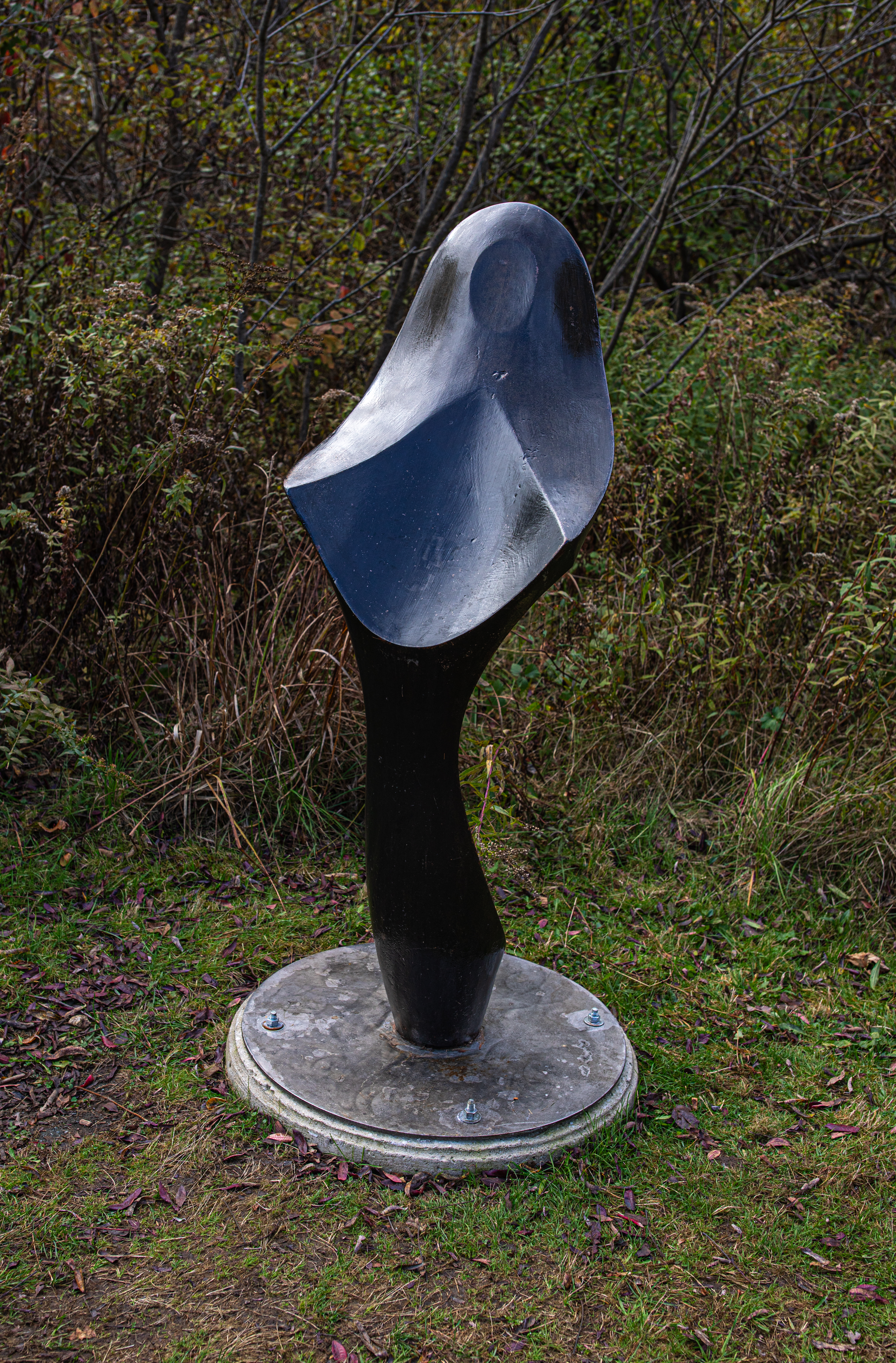
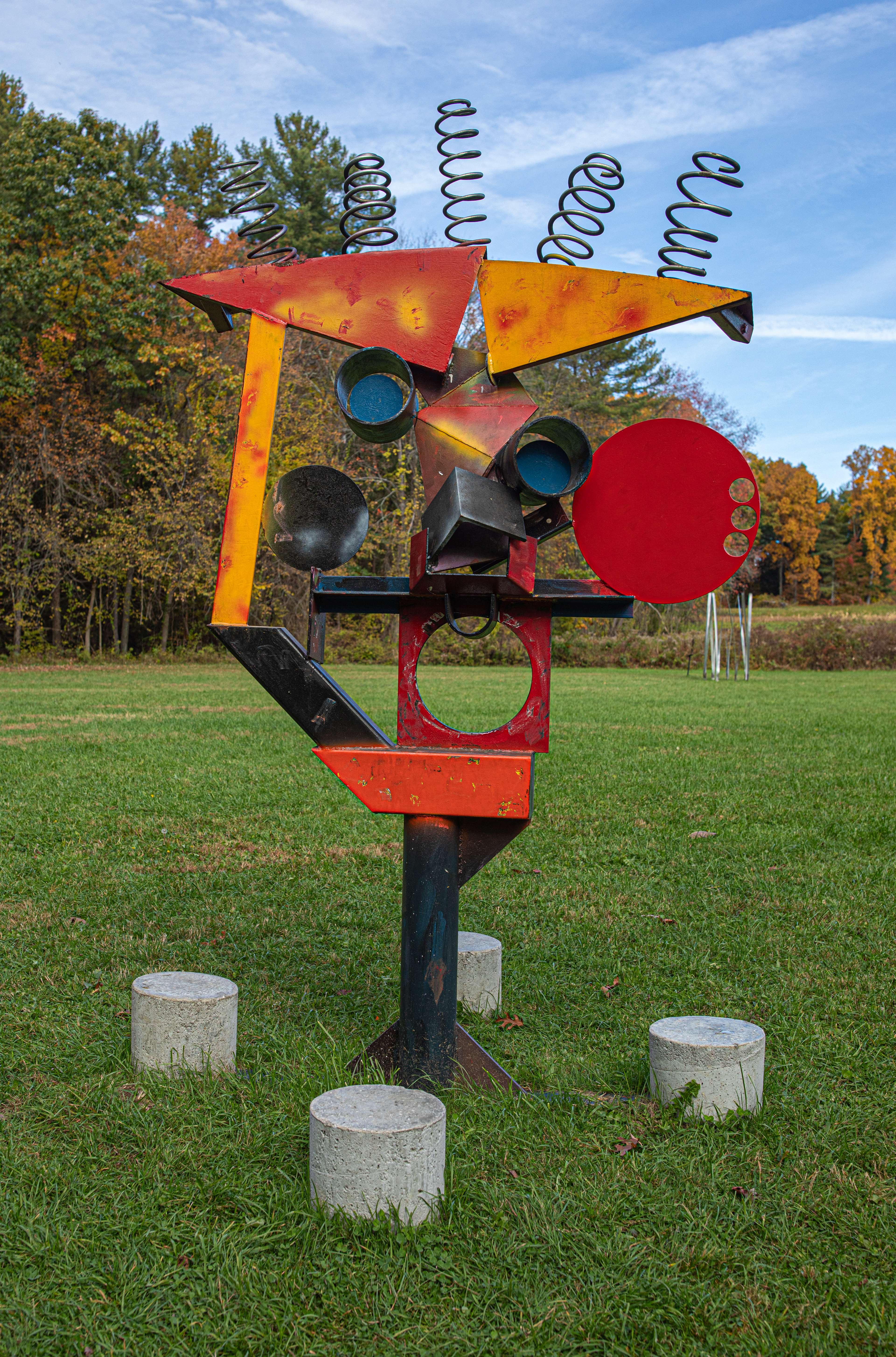
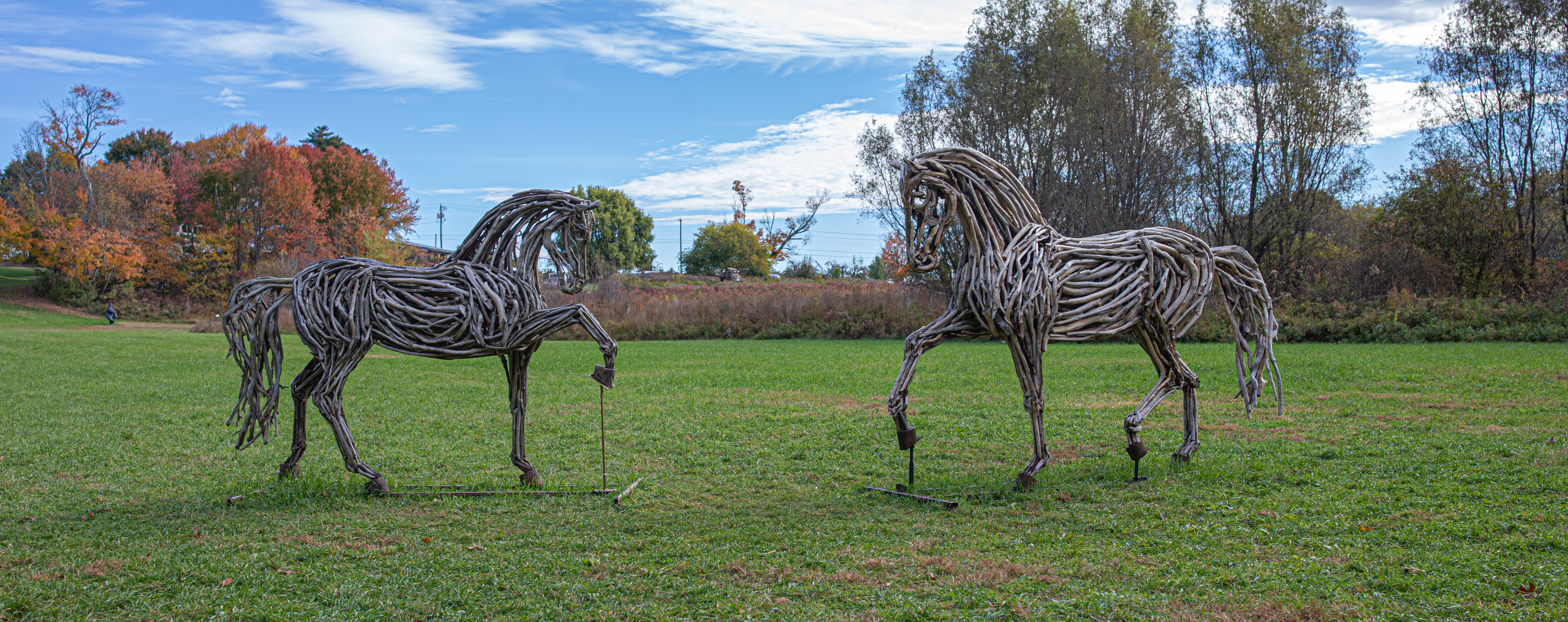
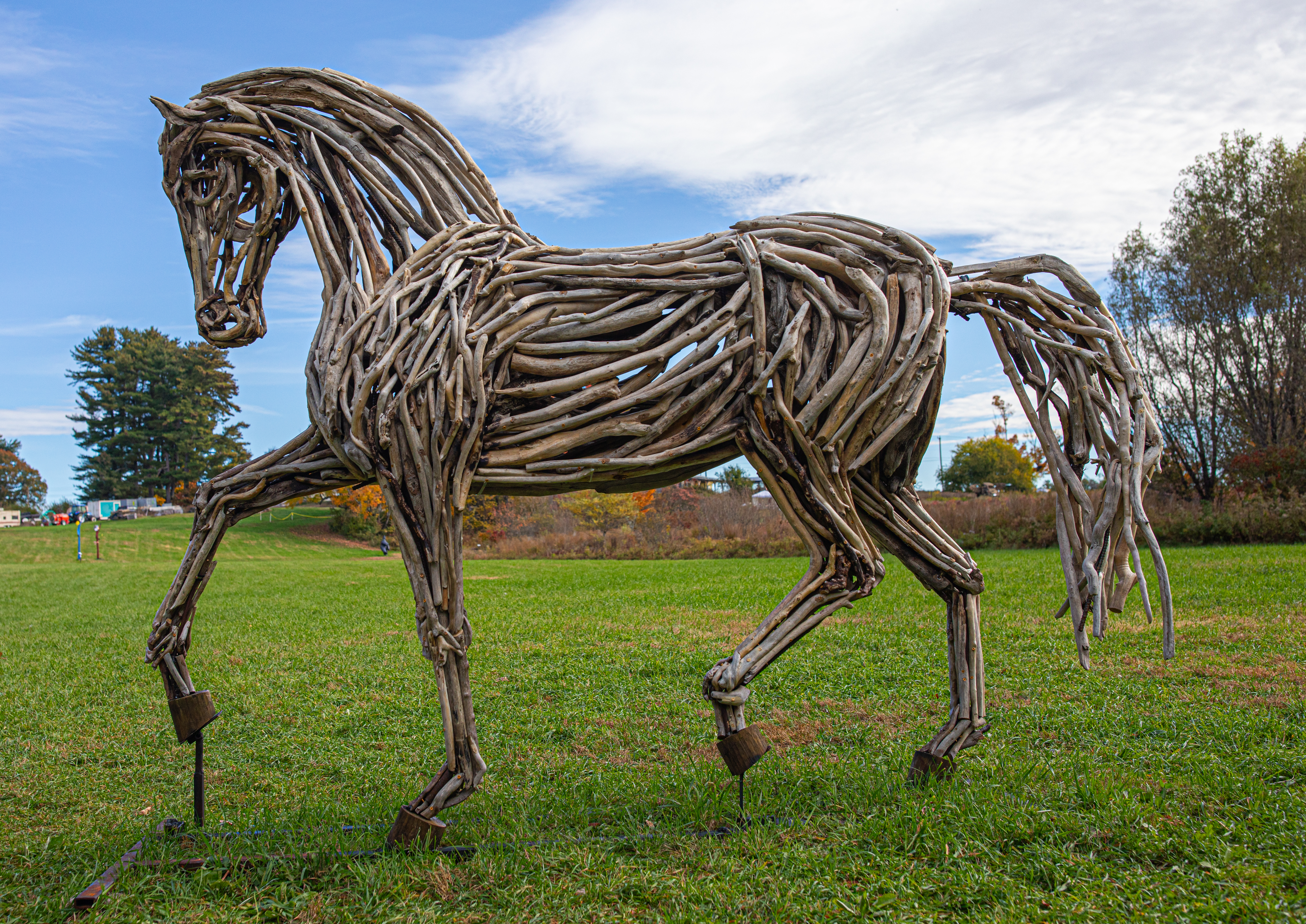
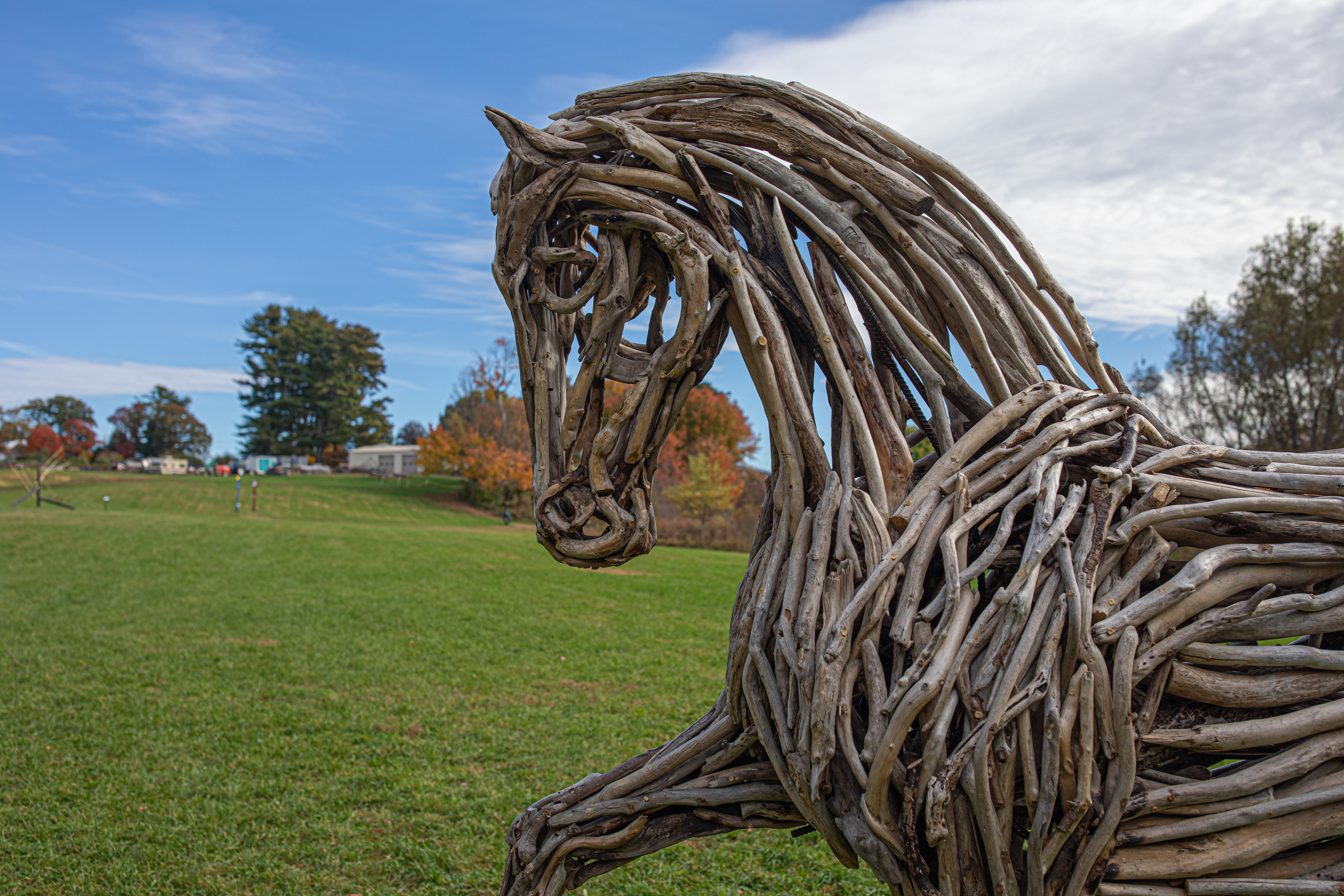
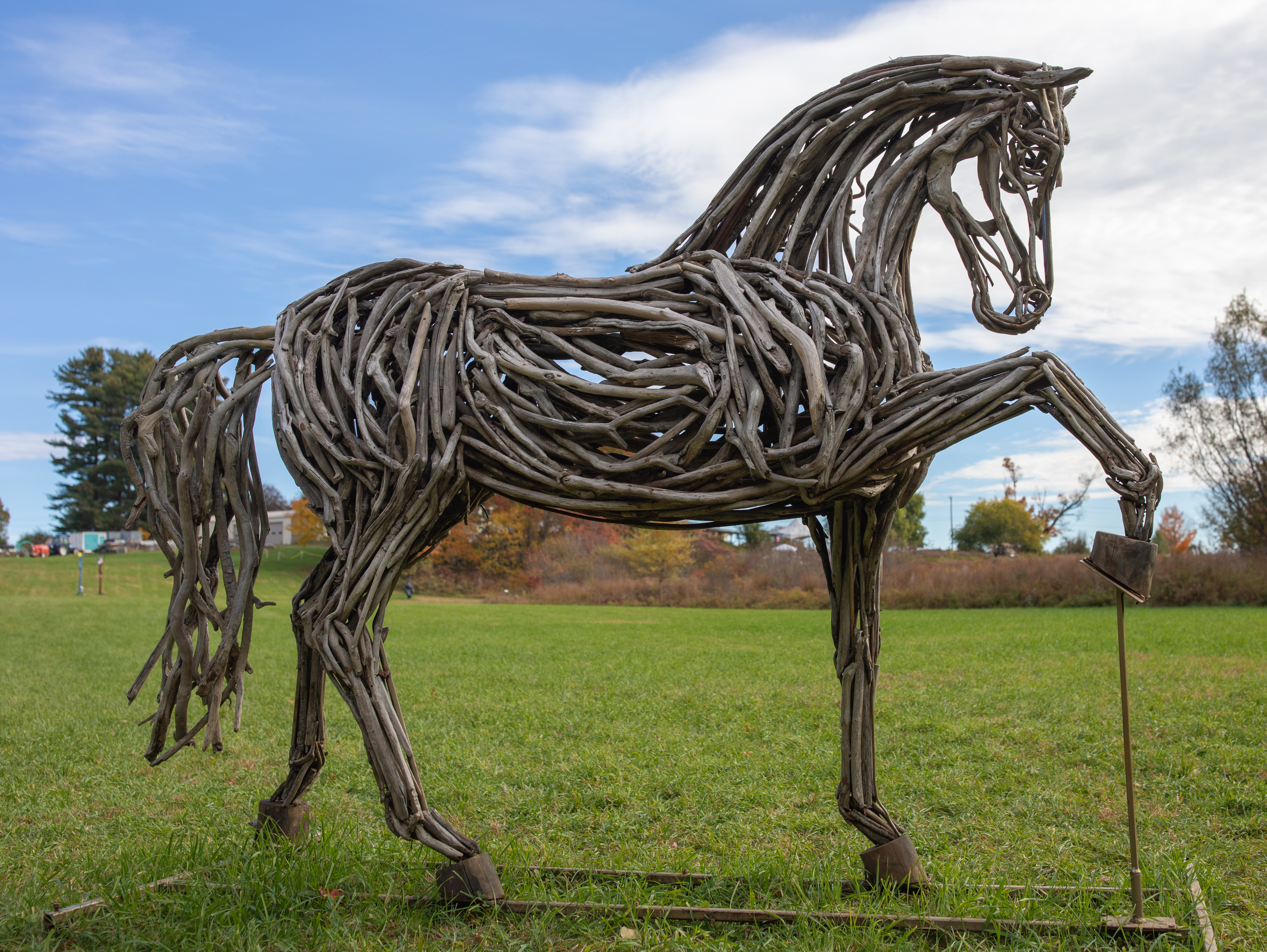
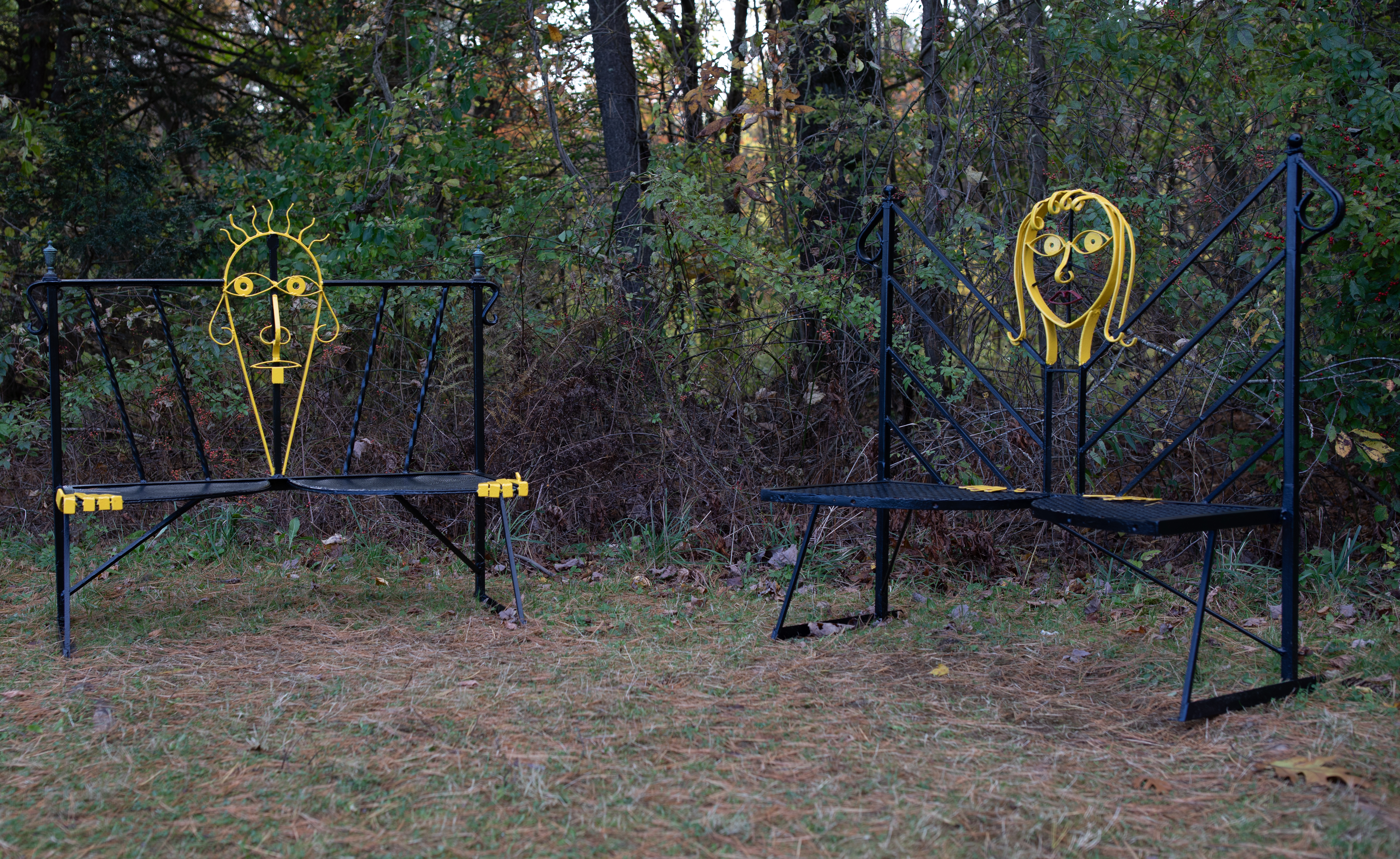
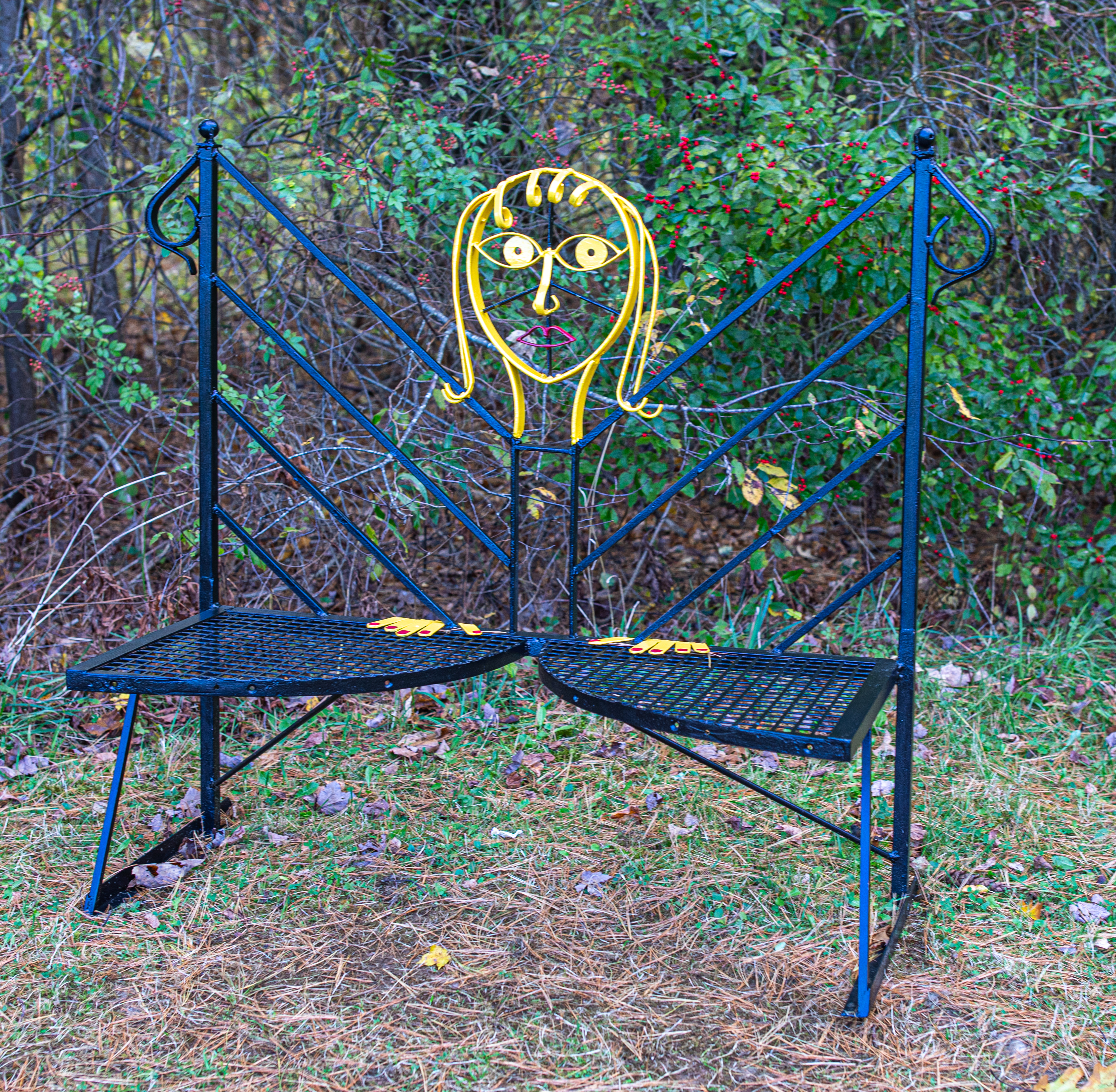
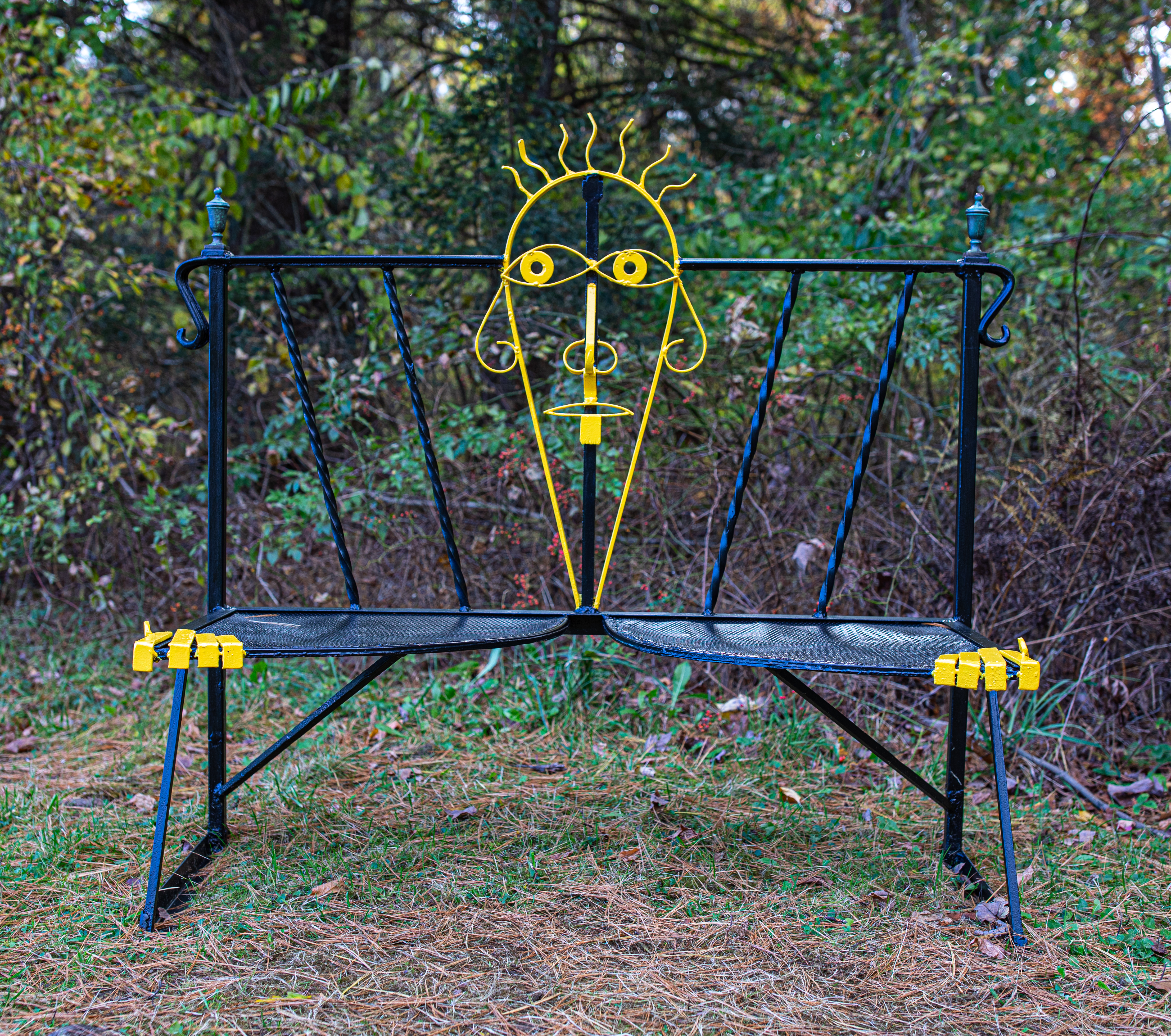
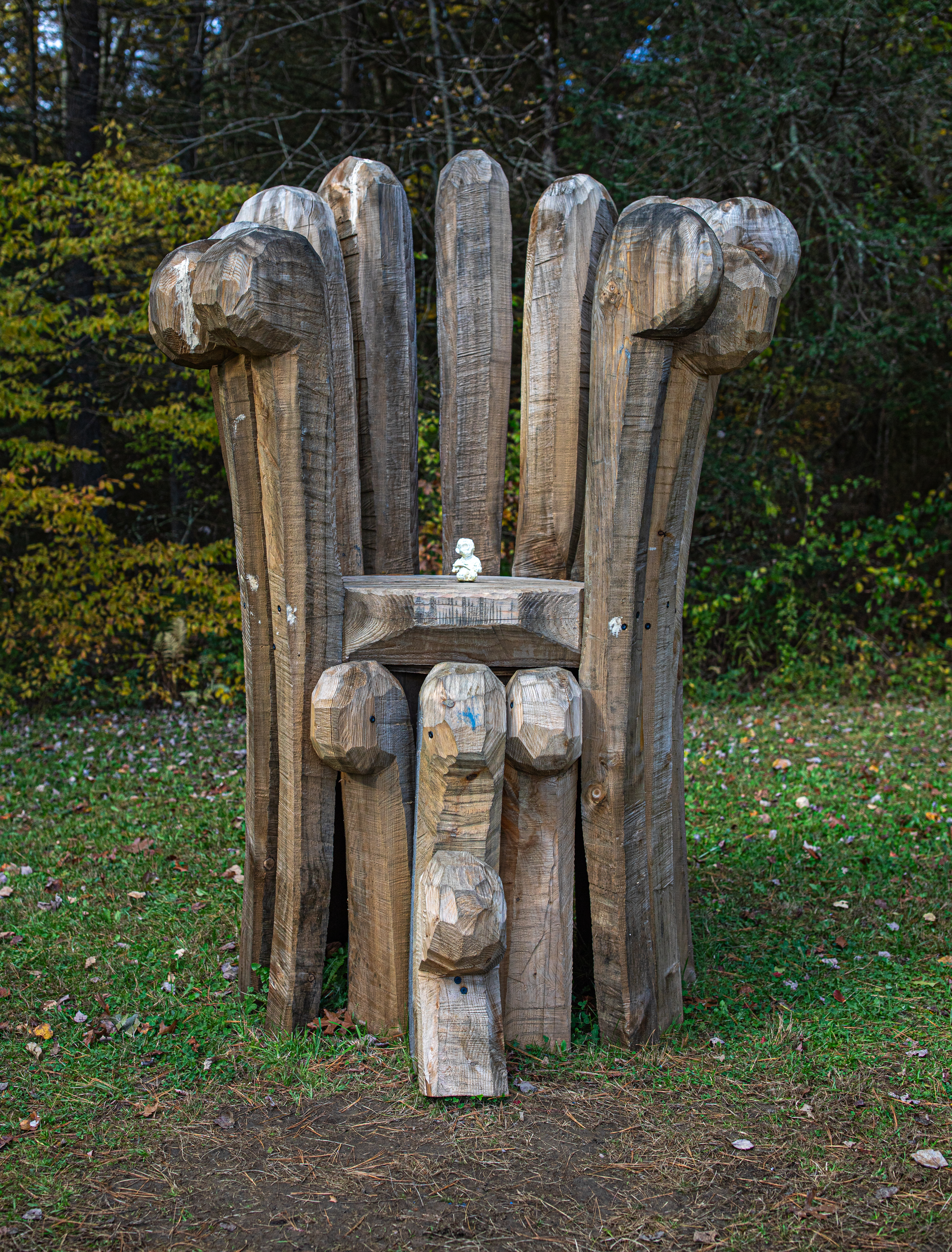
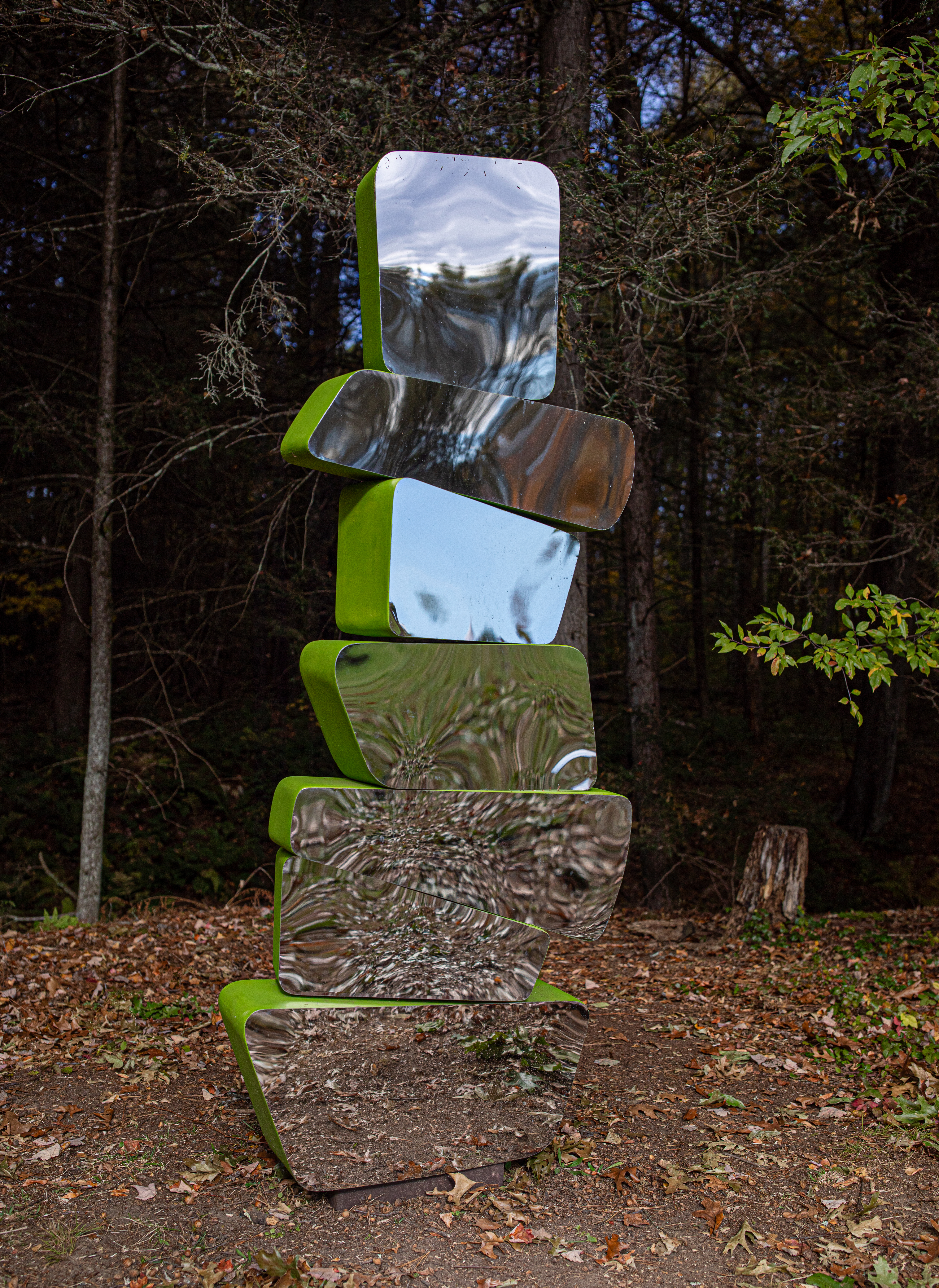
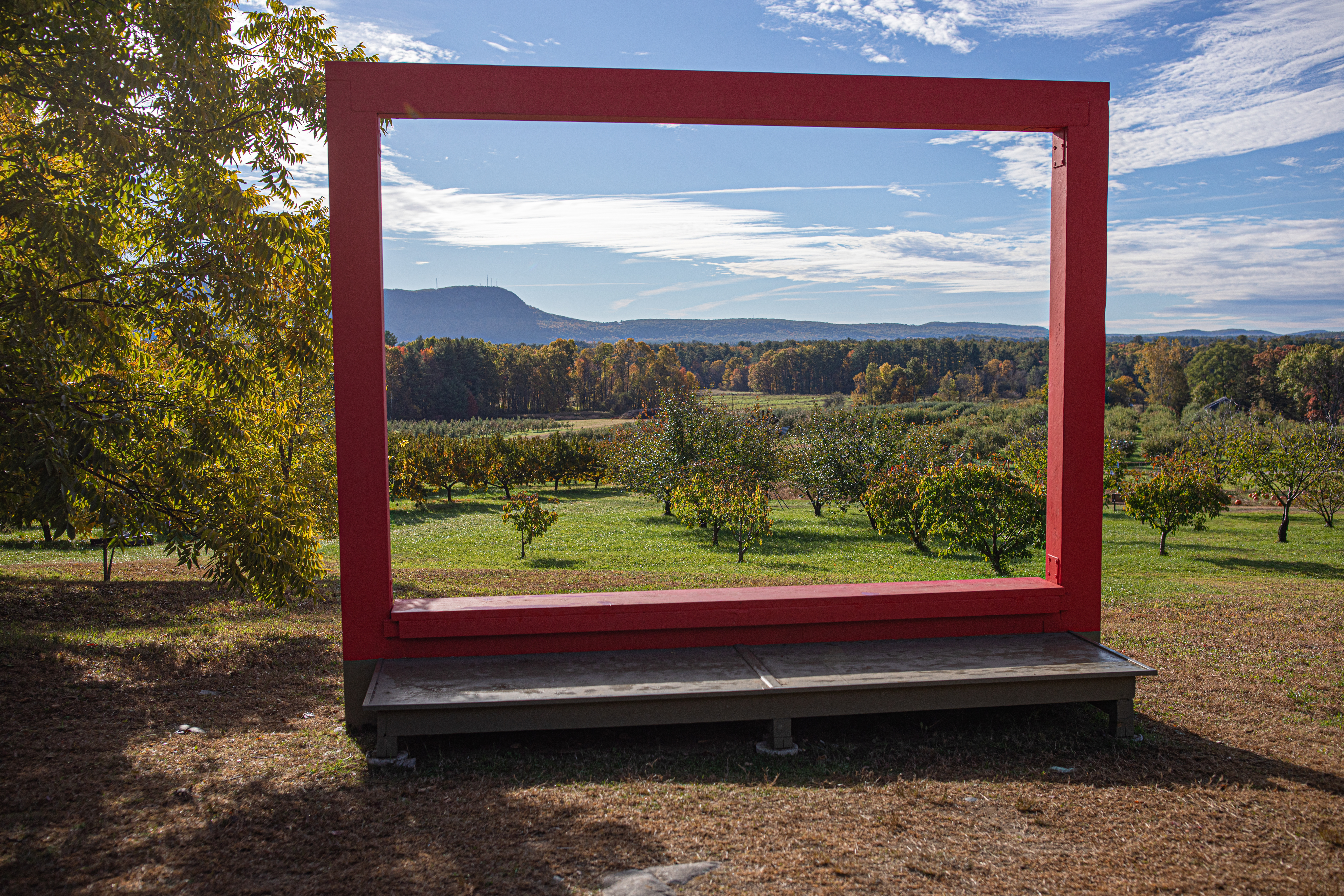
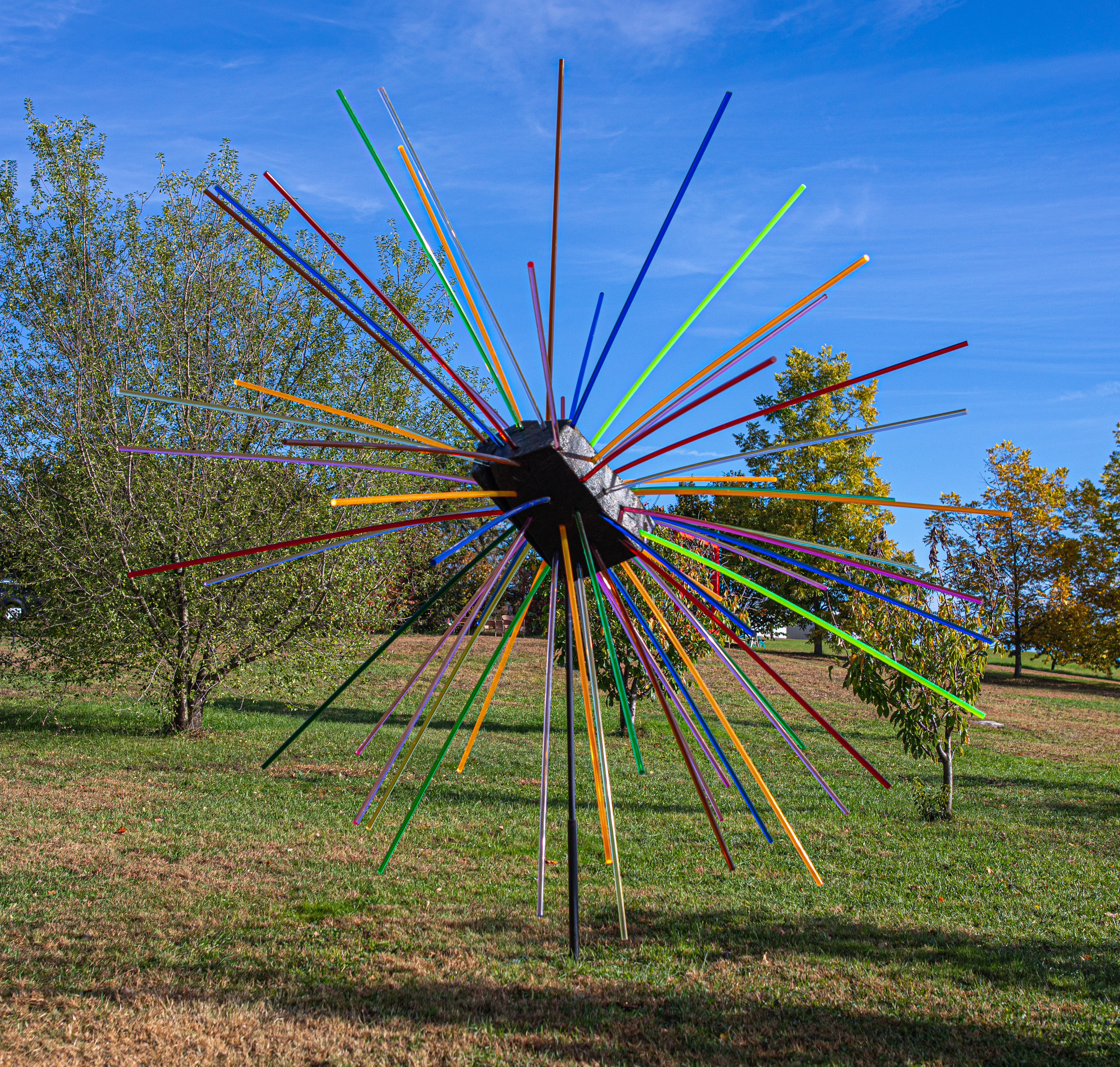
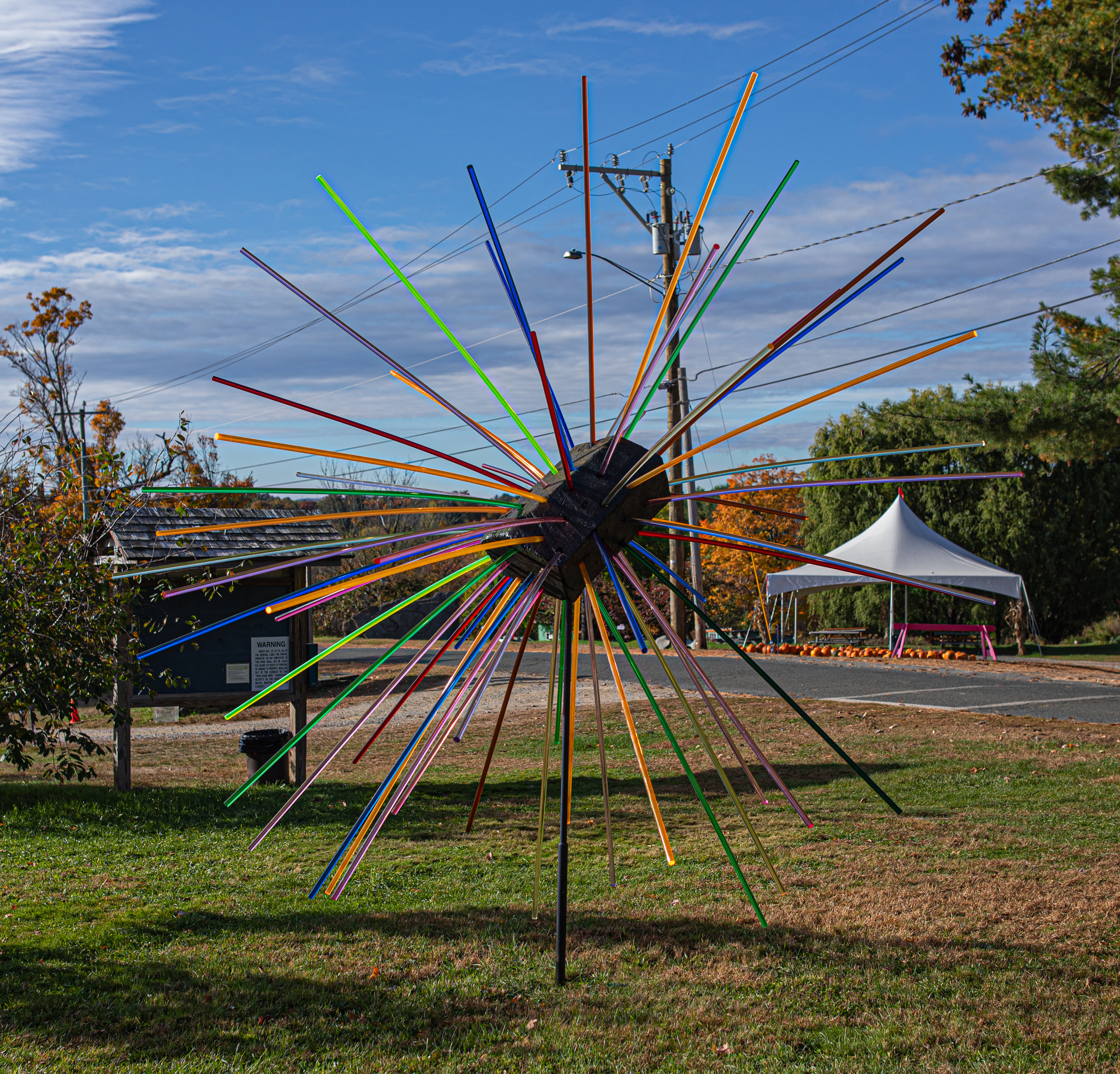
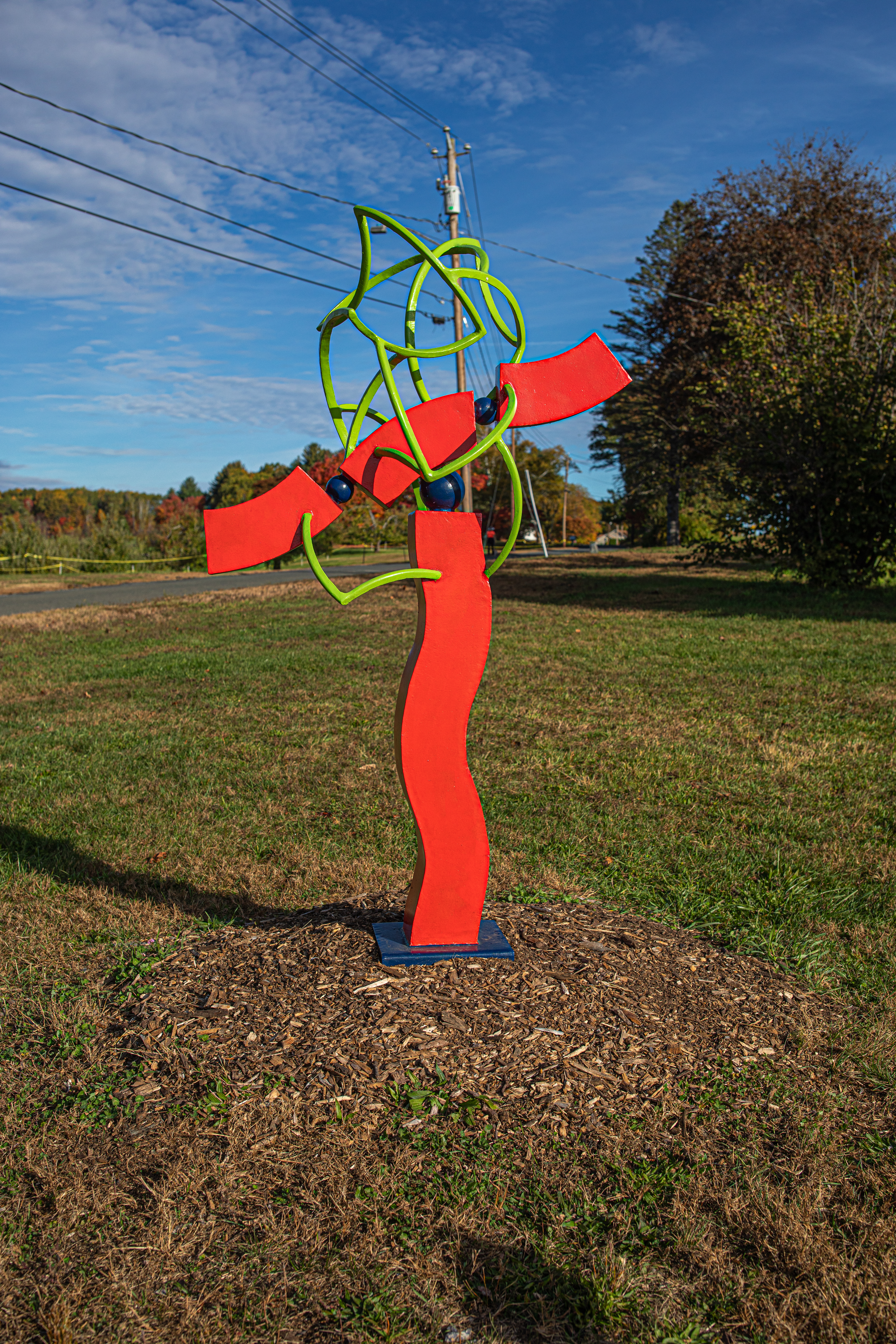
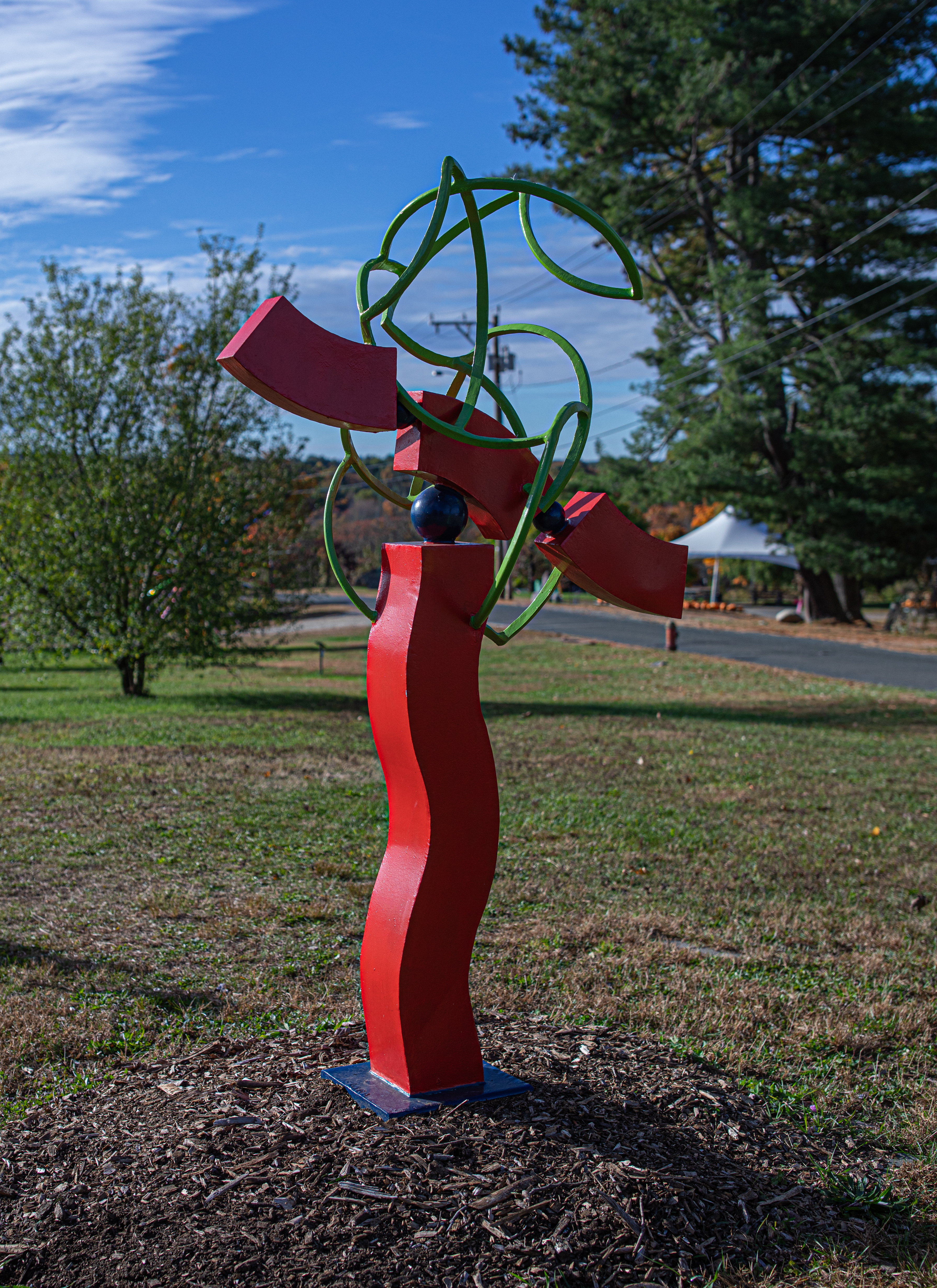
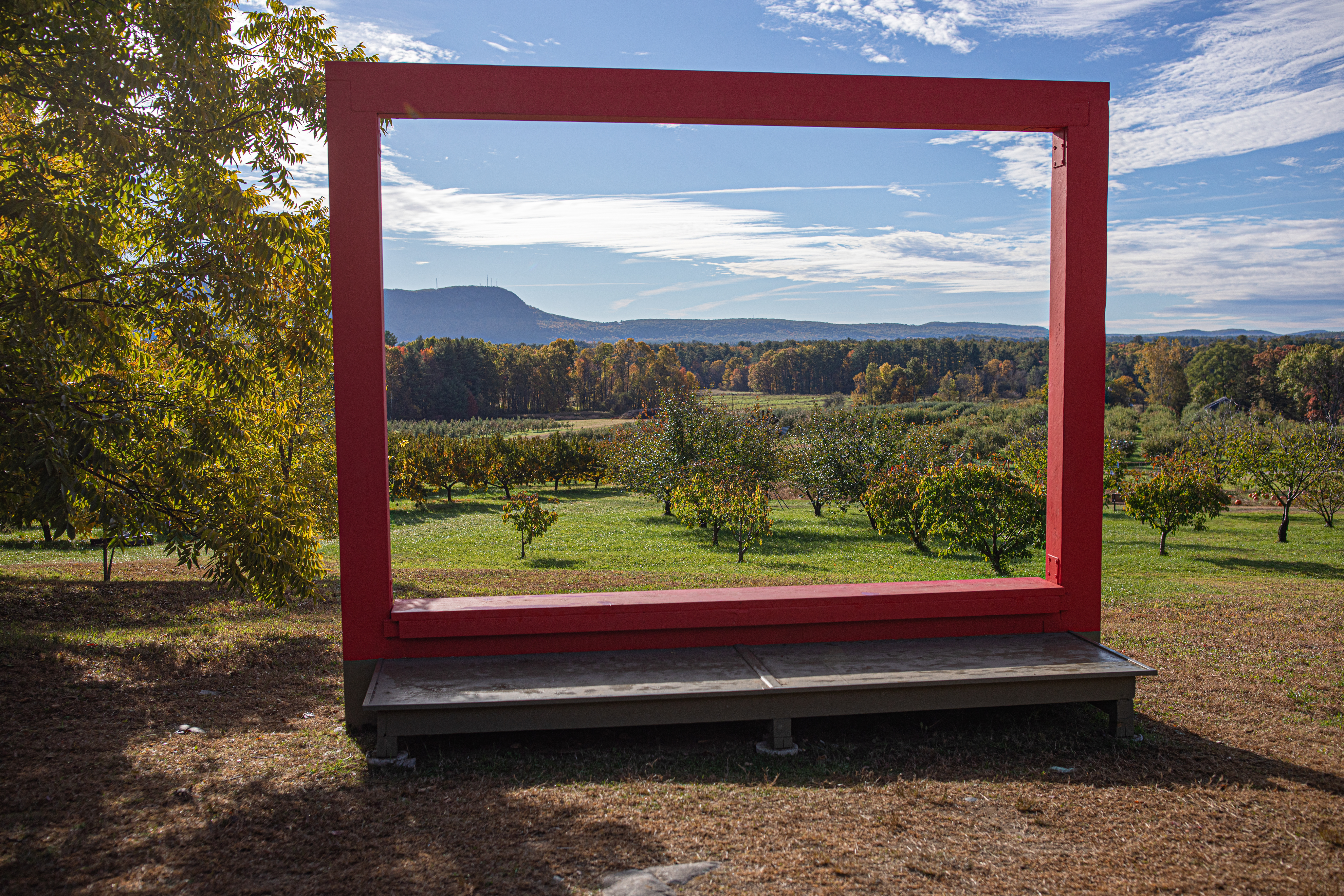
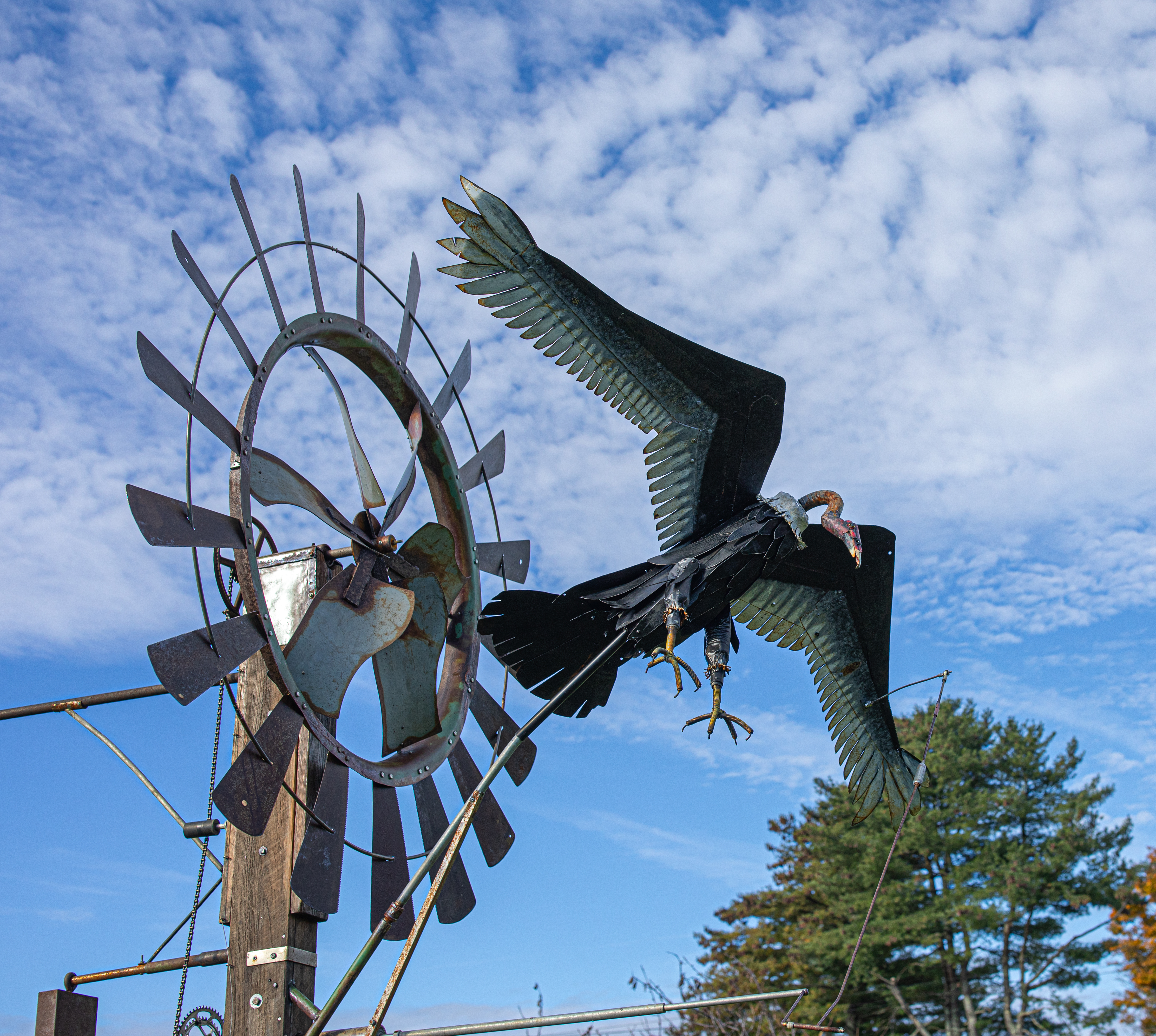
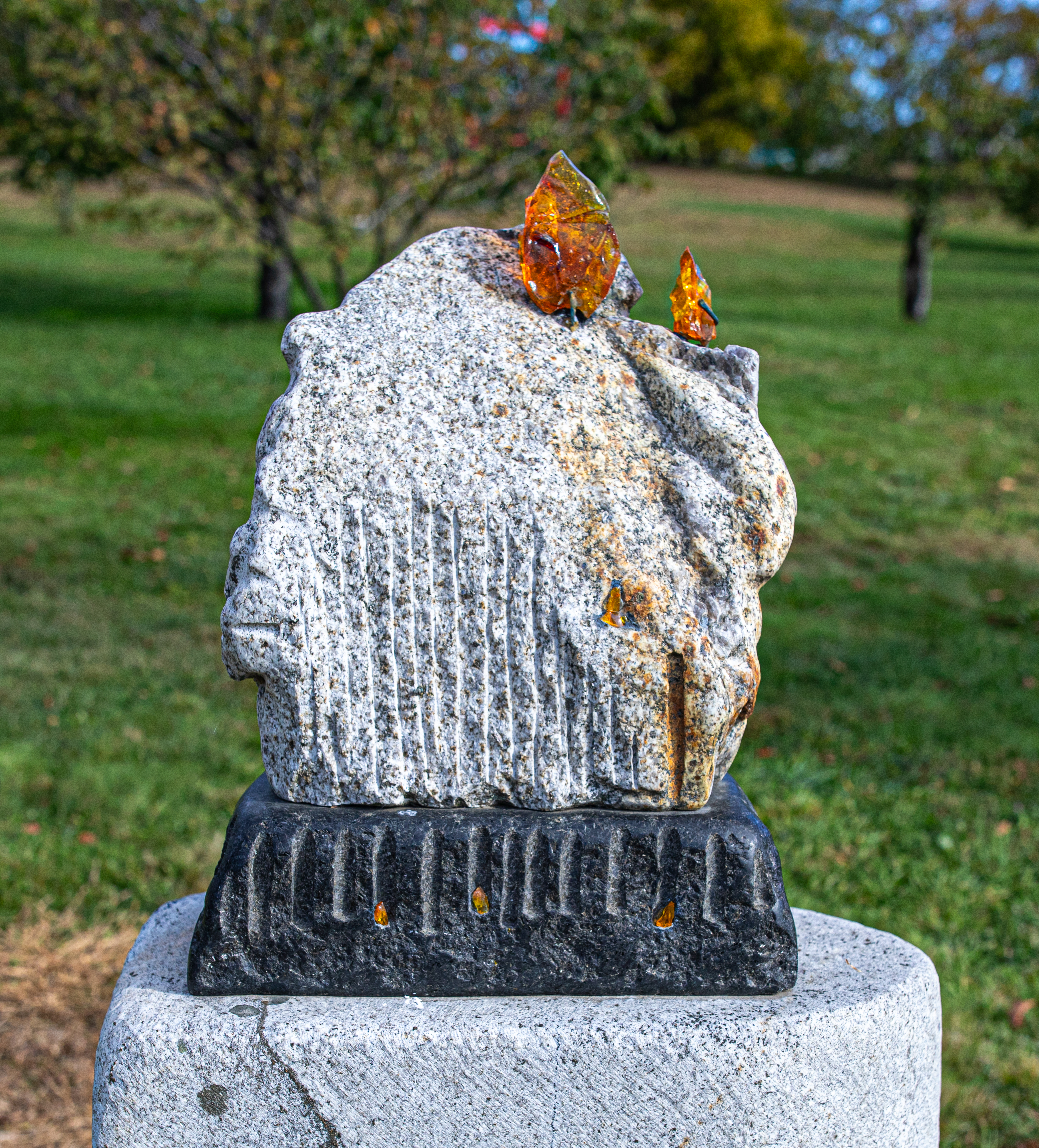
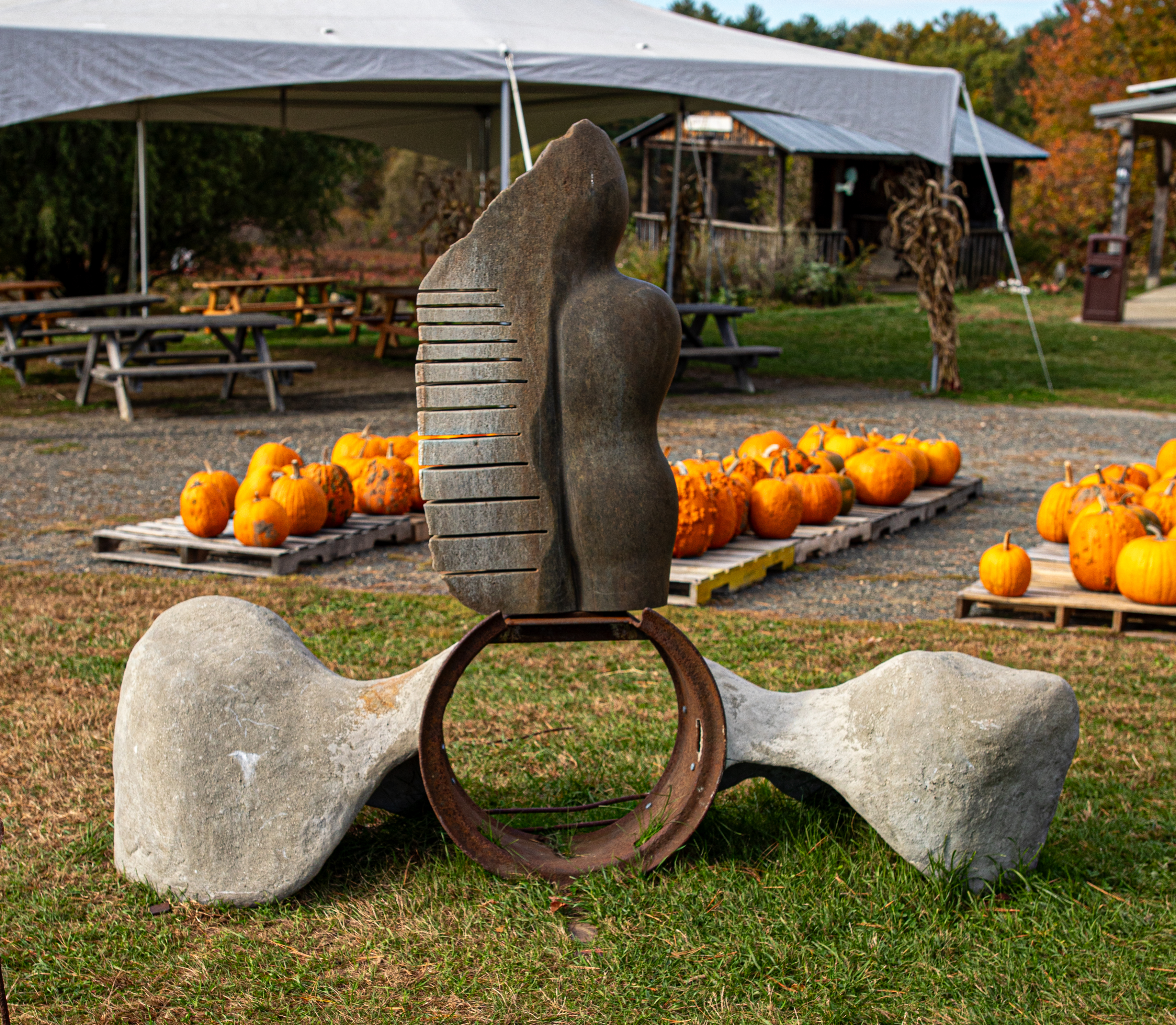
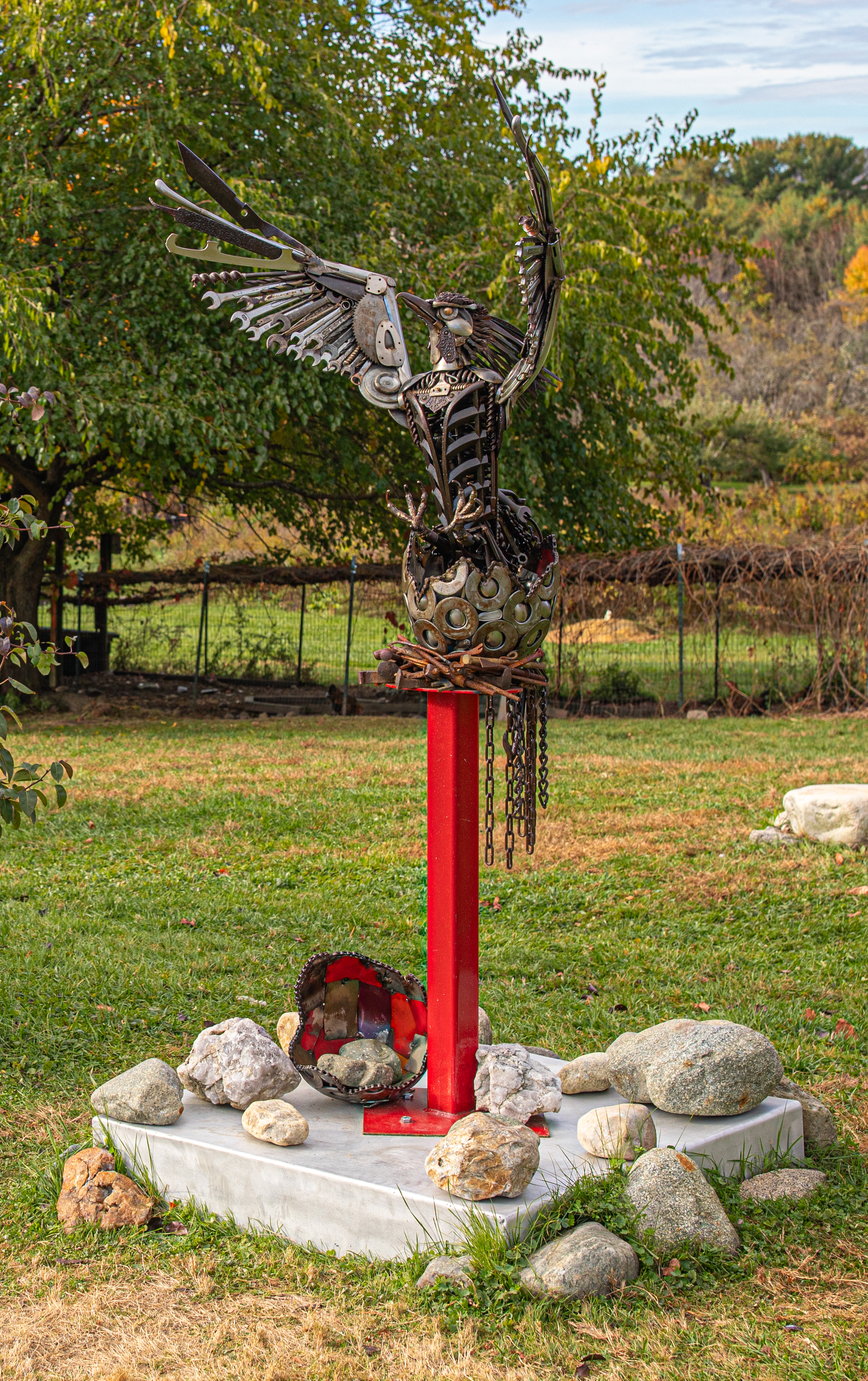
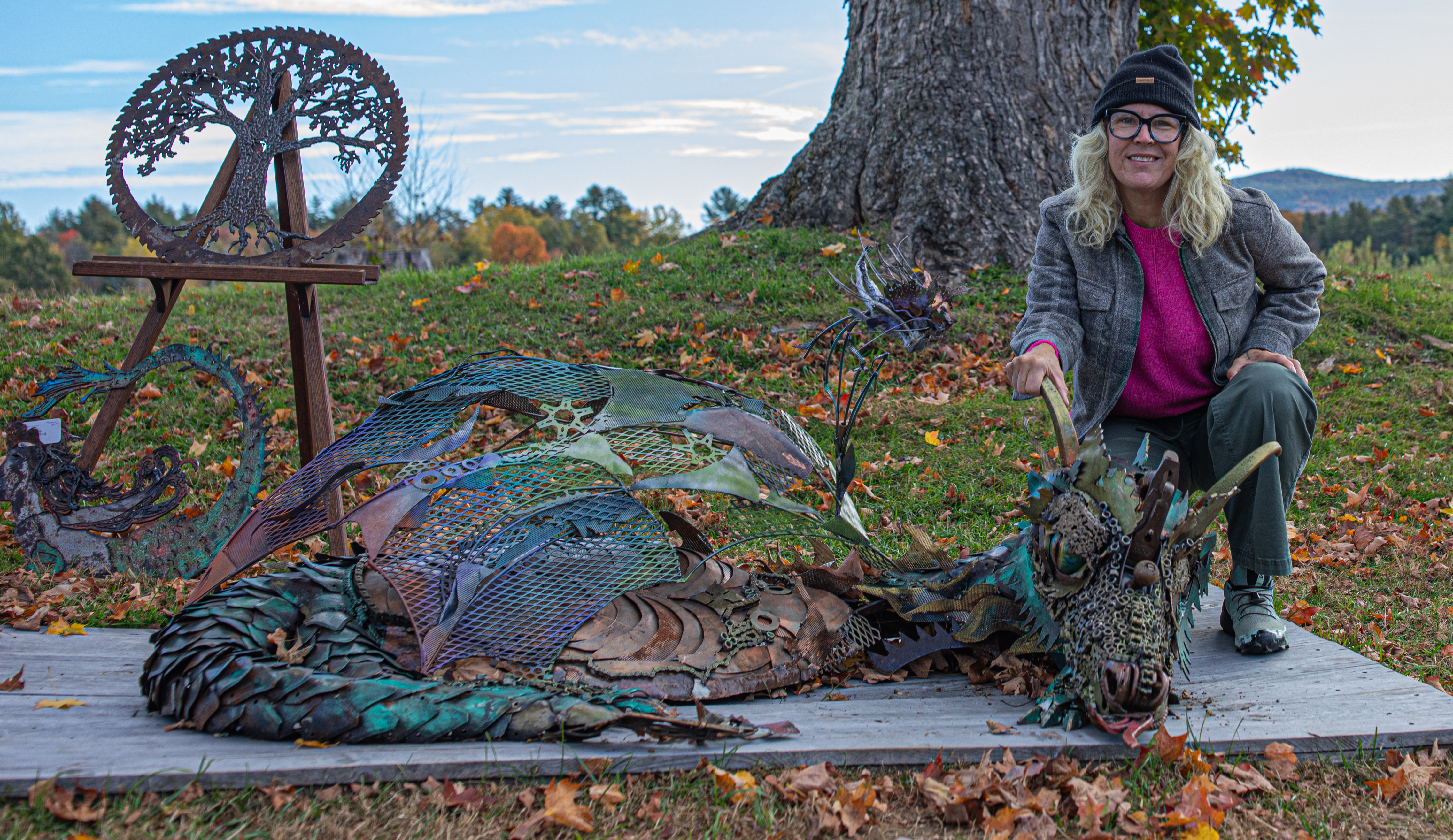
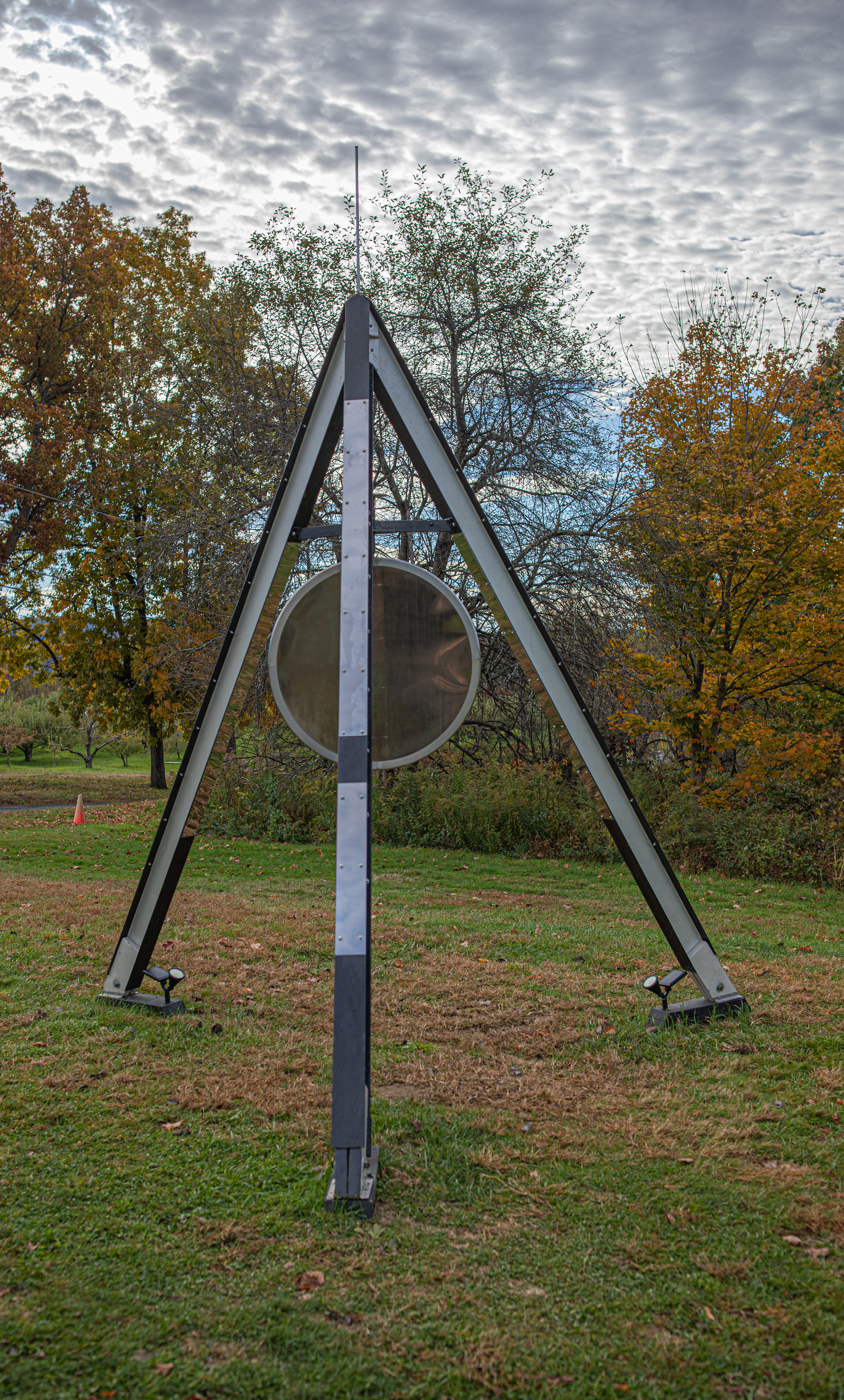
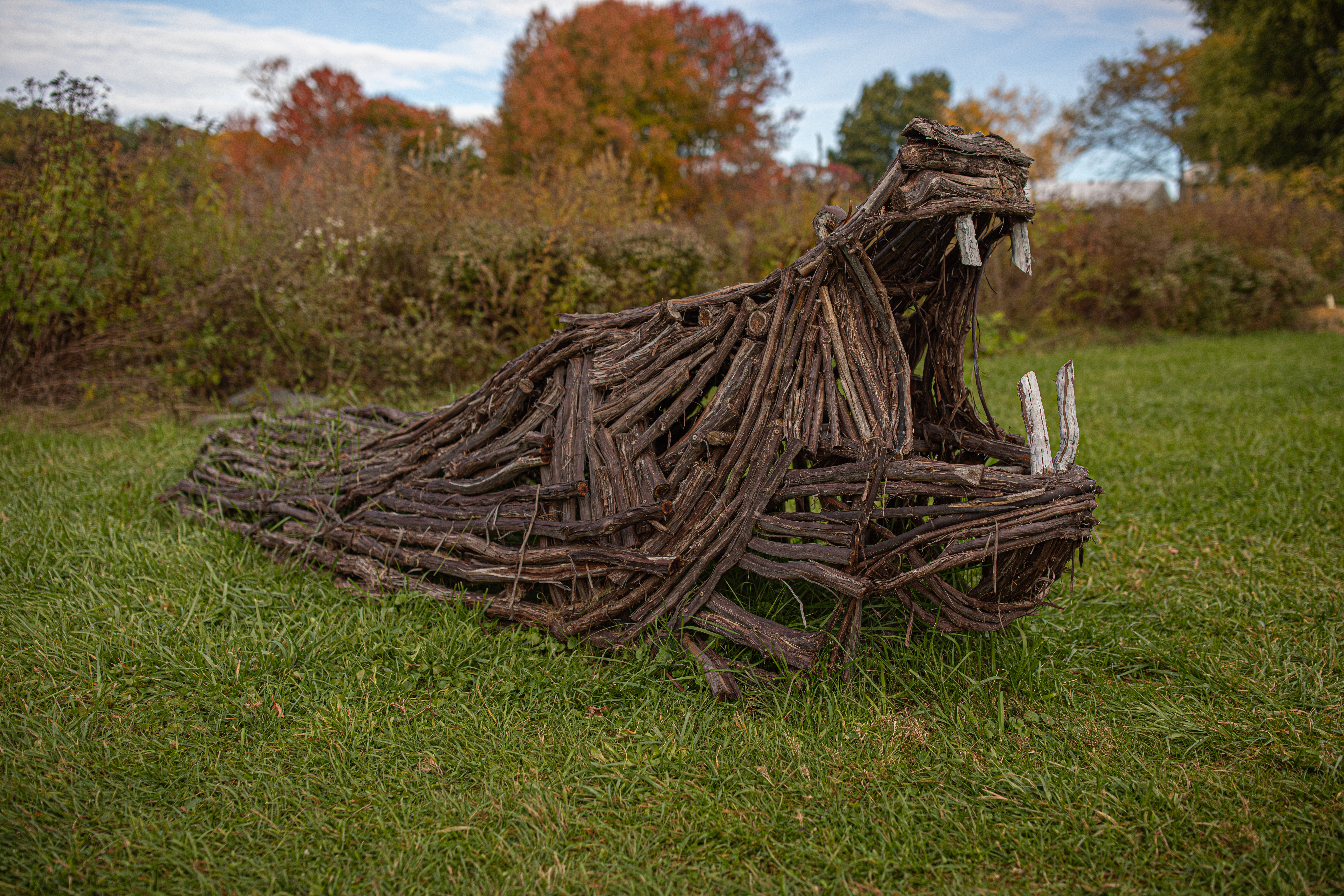
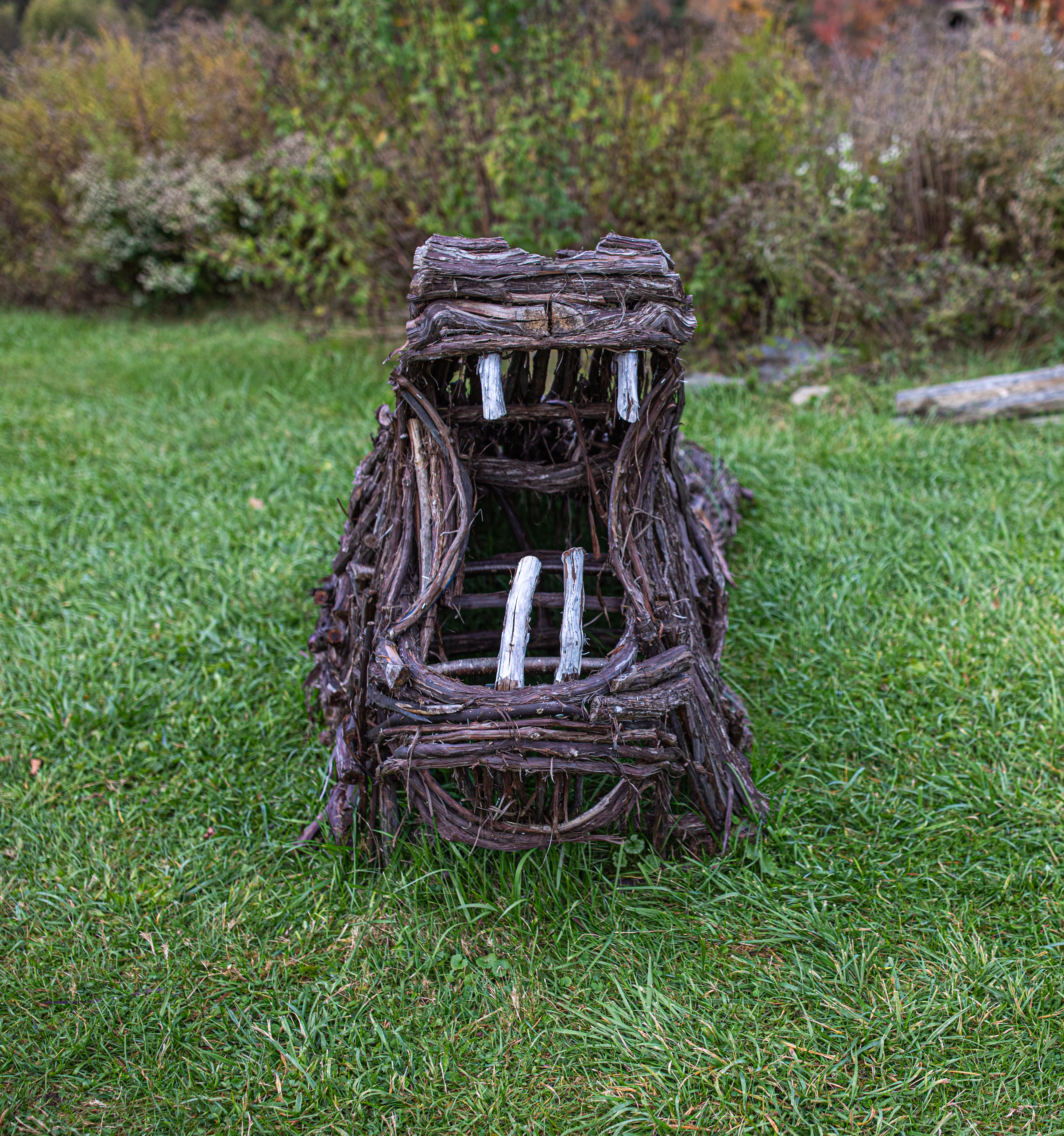
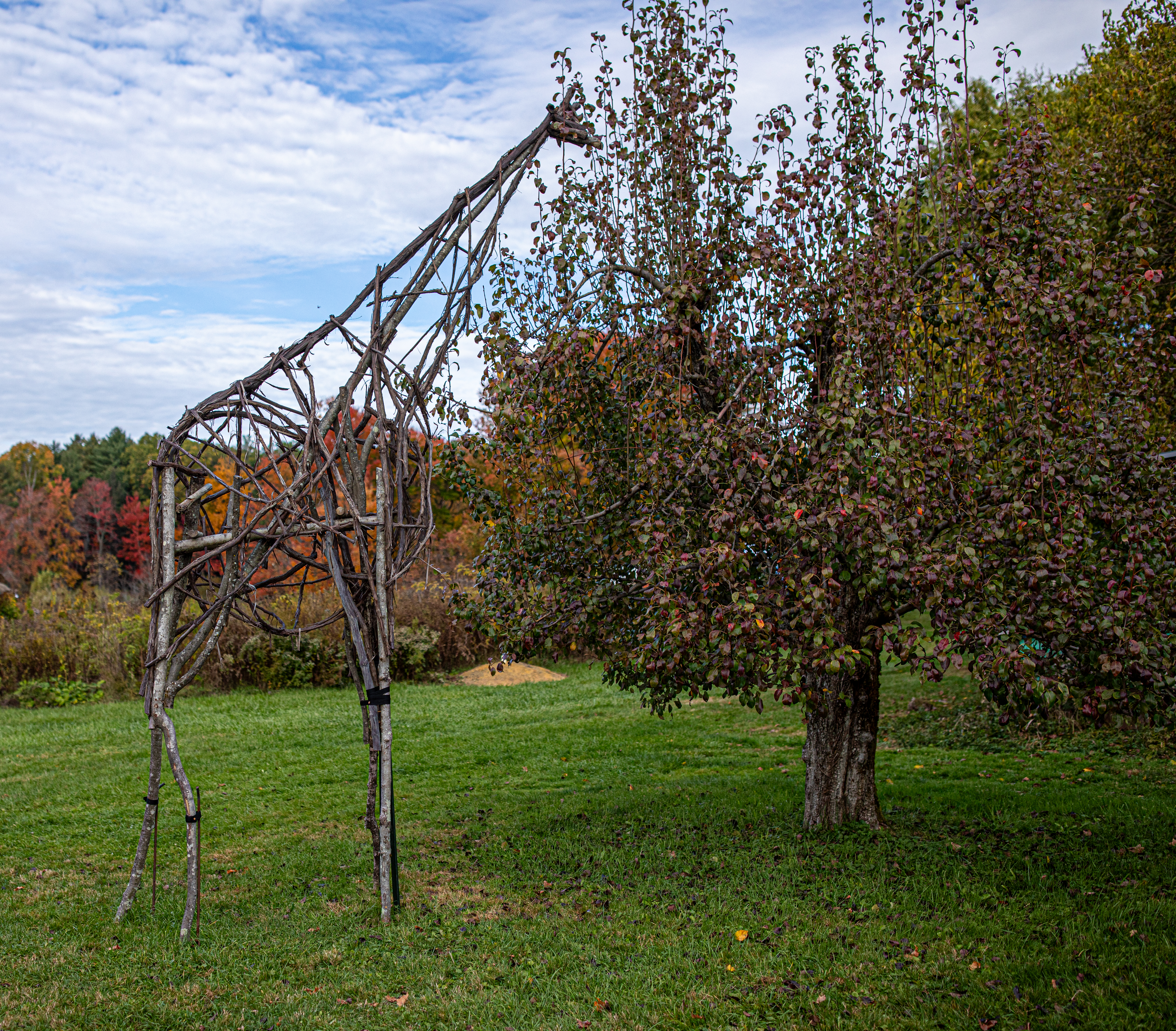
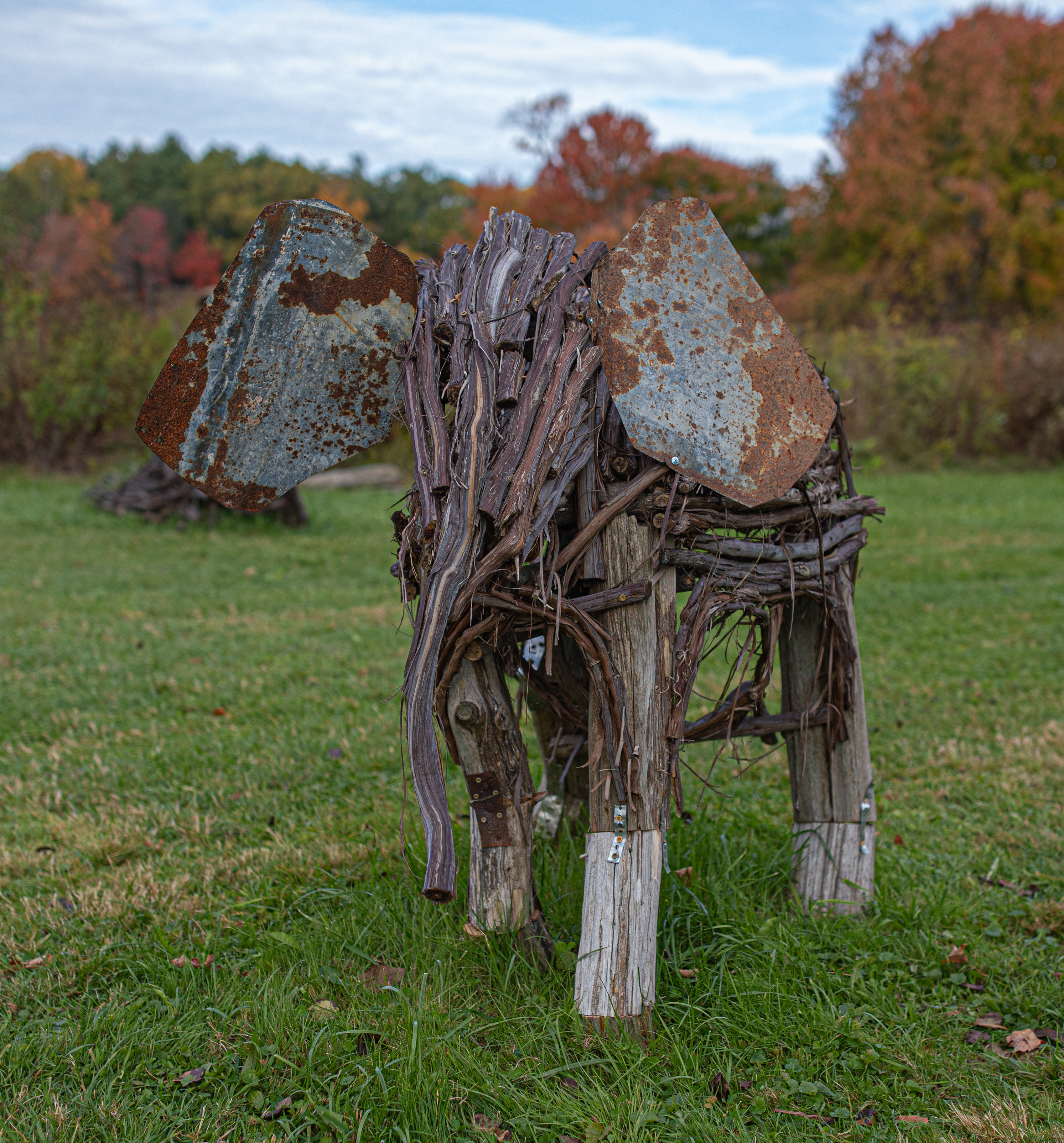
There were also other sculptures and works of art that were not part of the event. Some of them were sculptures the artists were selling and some were things I just noticed at the park.
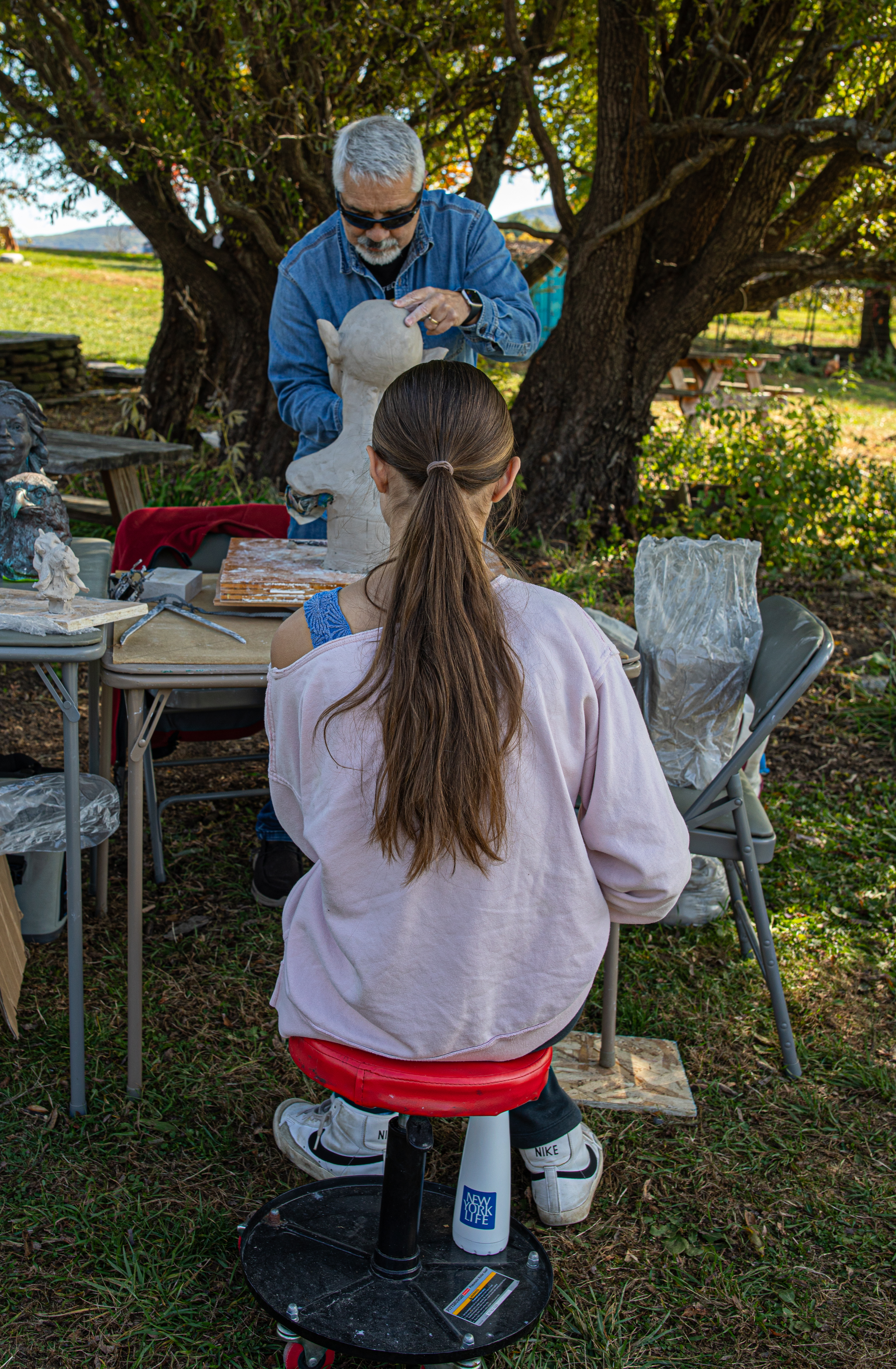
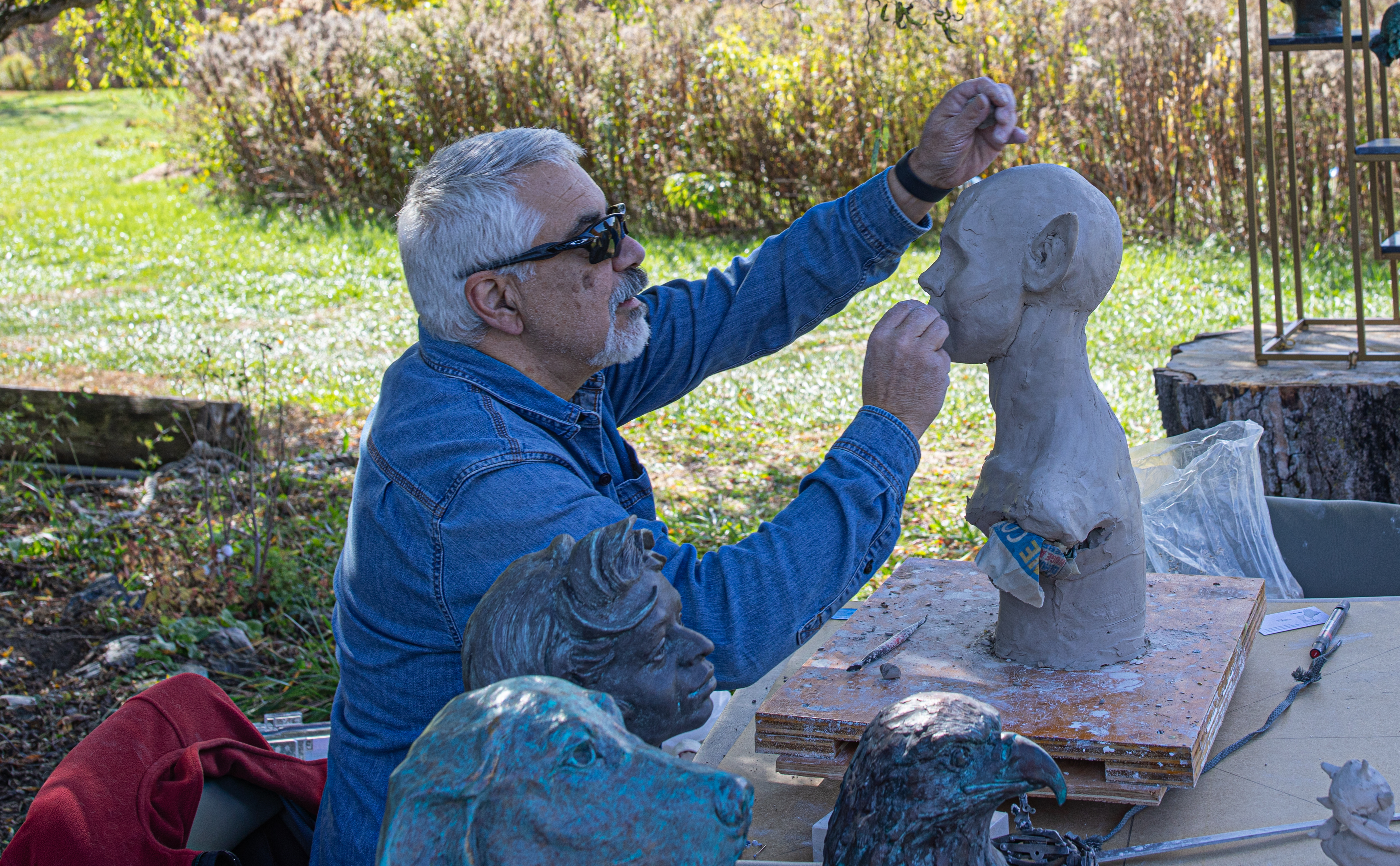
During the event, one of the sculptors, John Collins, was making a sculpture of a girl’s head.
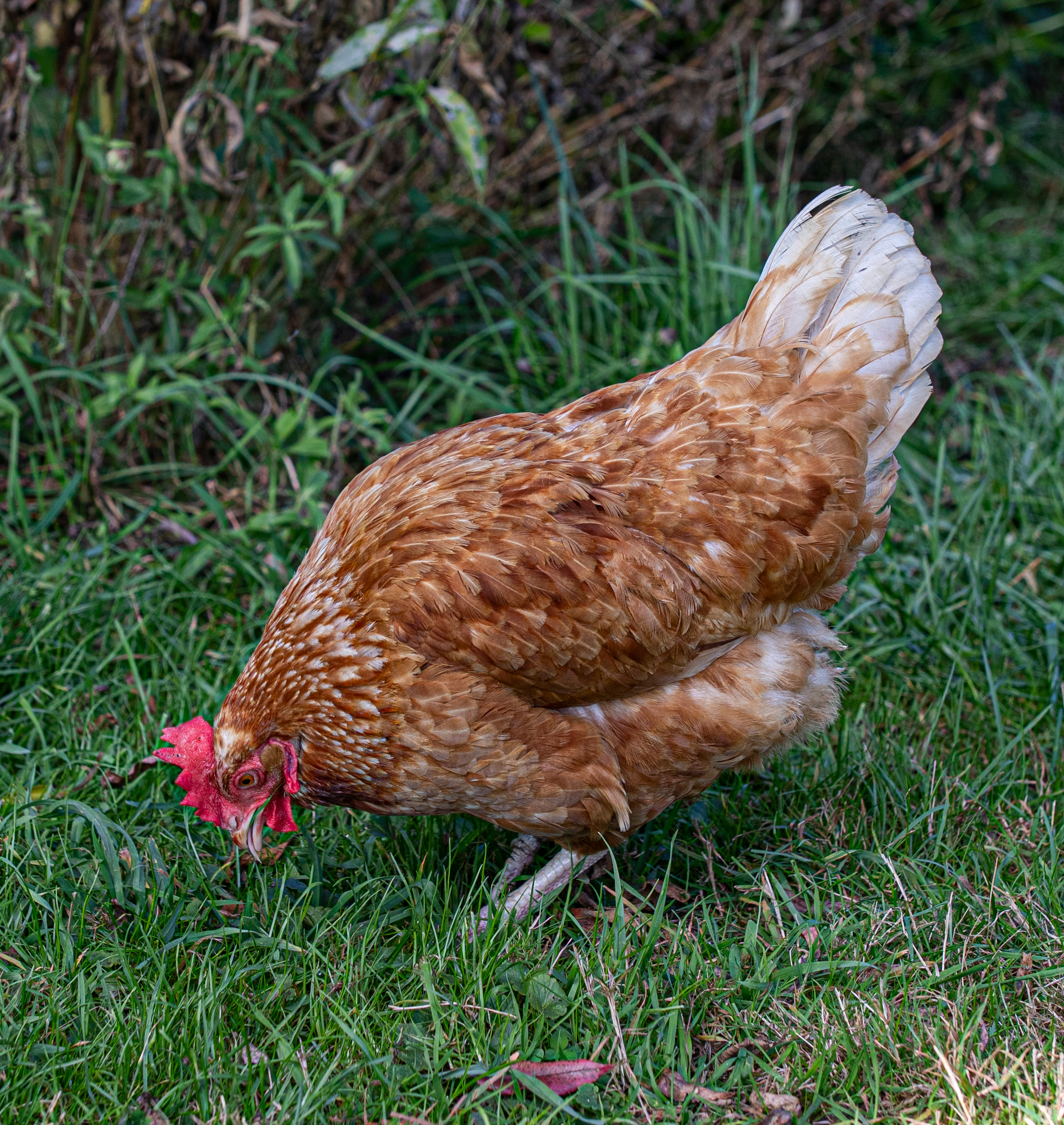
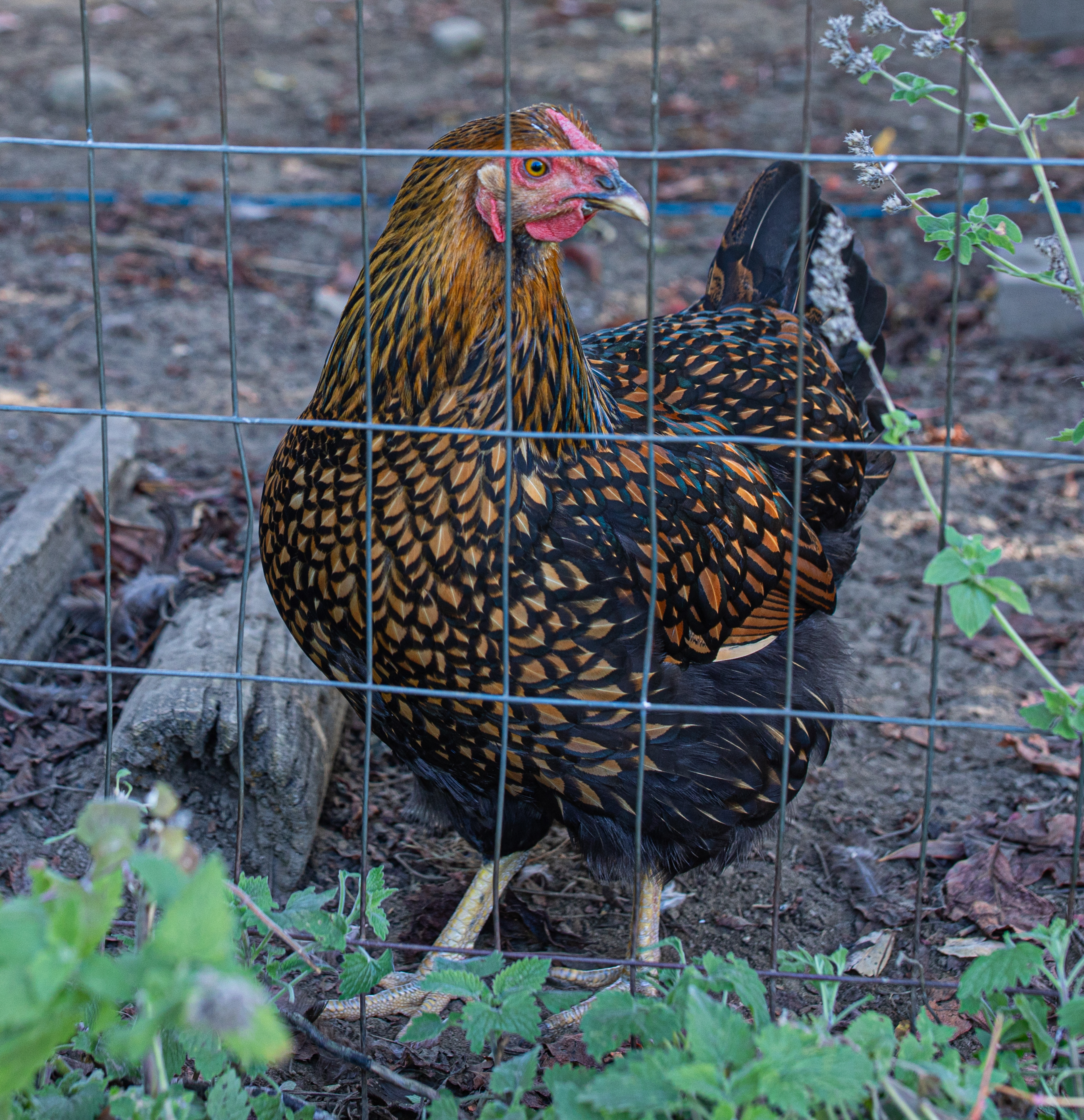
And, there was also a rooster and chicken, specifically a Golden Laced Wyandotte chicken.
AS you can see, there was lots of art at the event. But, what struck me most was the meaning and theme of the works of art. There were some very meaningful messages to some of the art! It also goes to show how creative people can be!
 New England Nomad