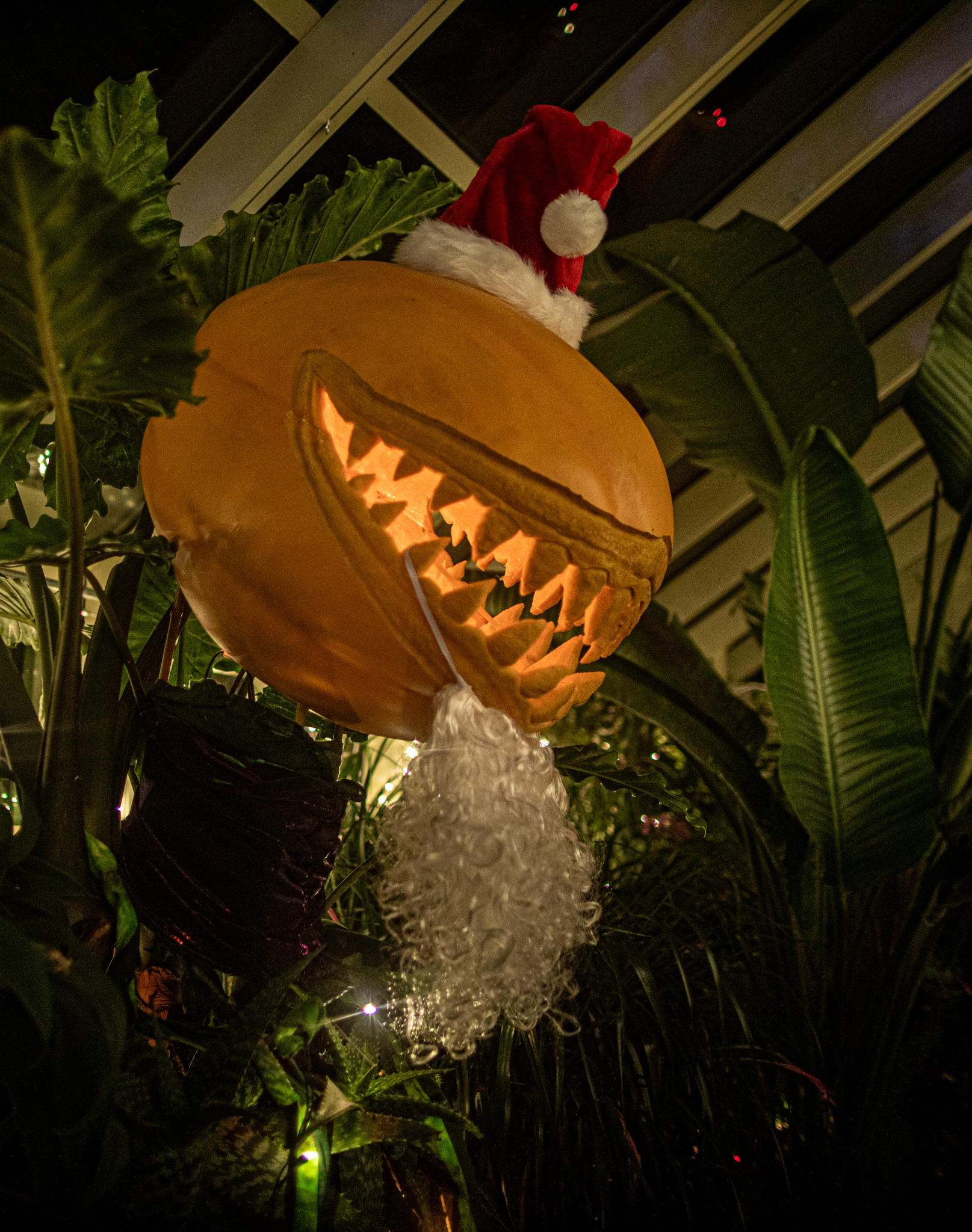
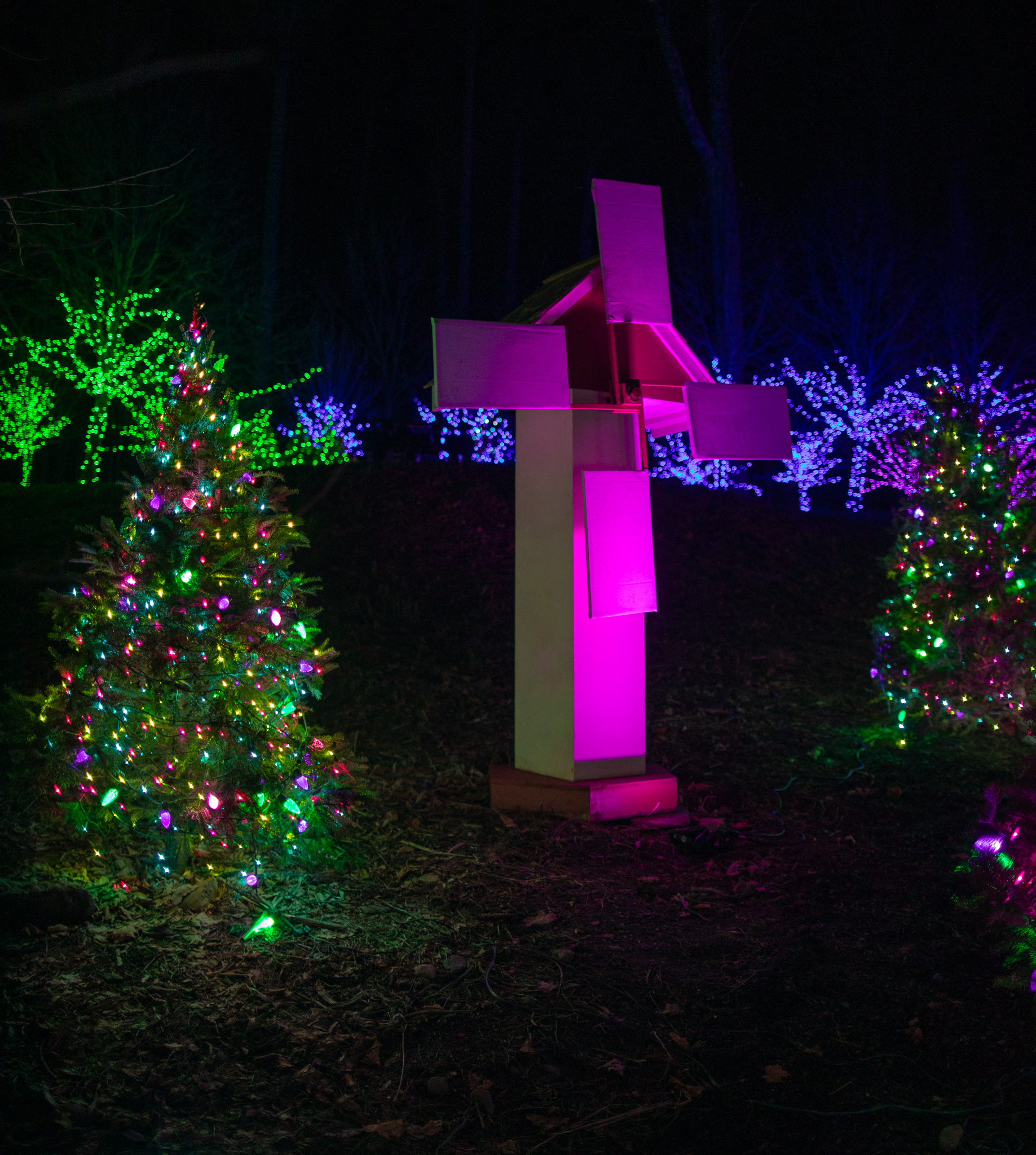
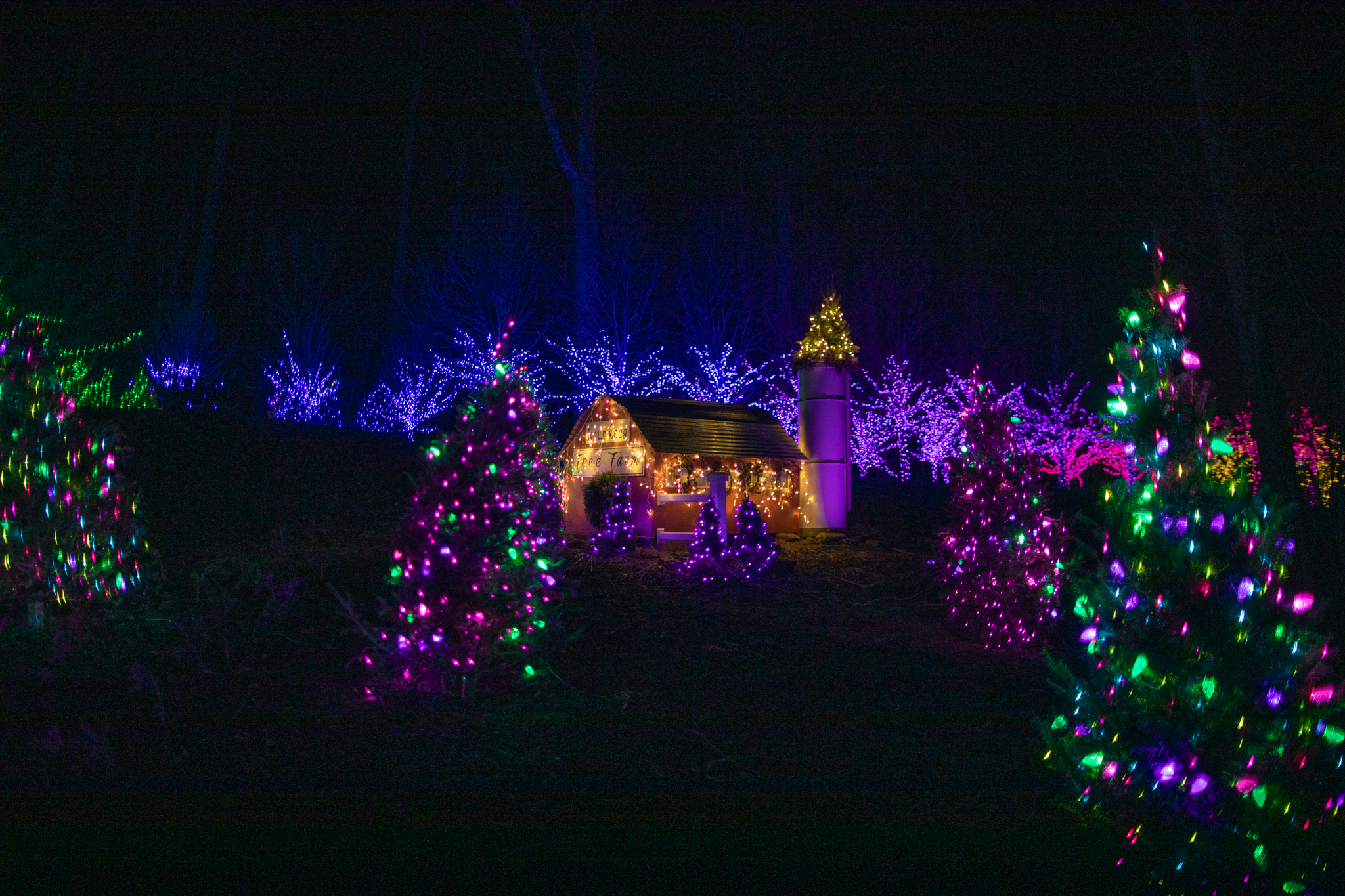
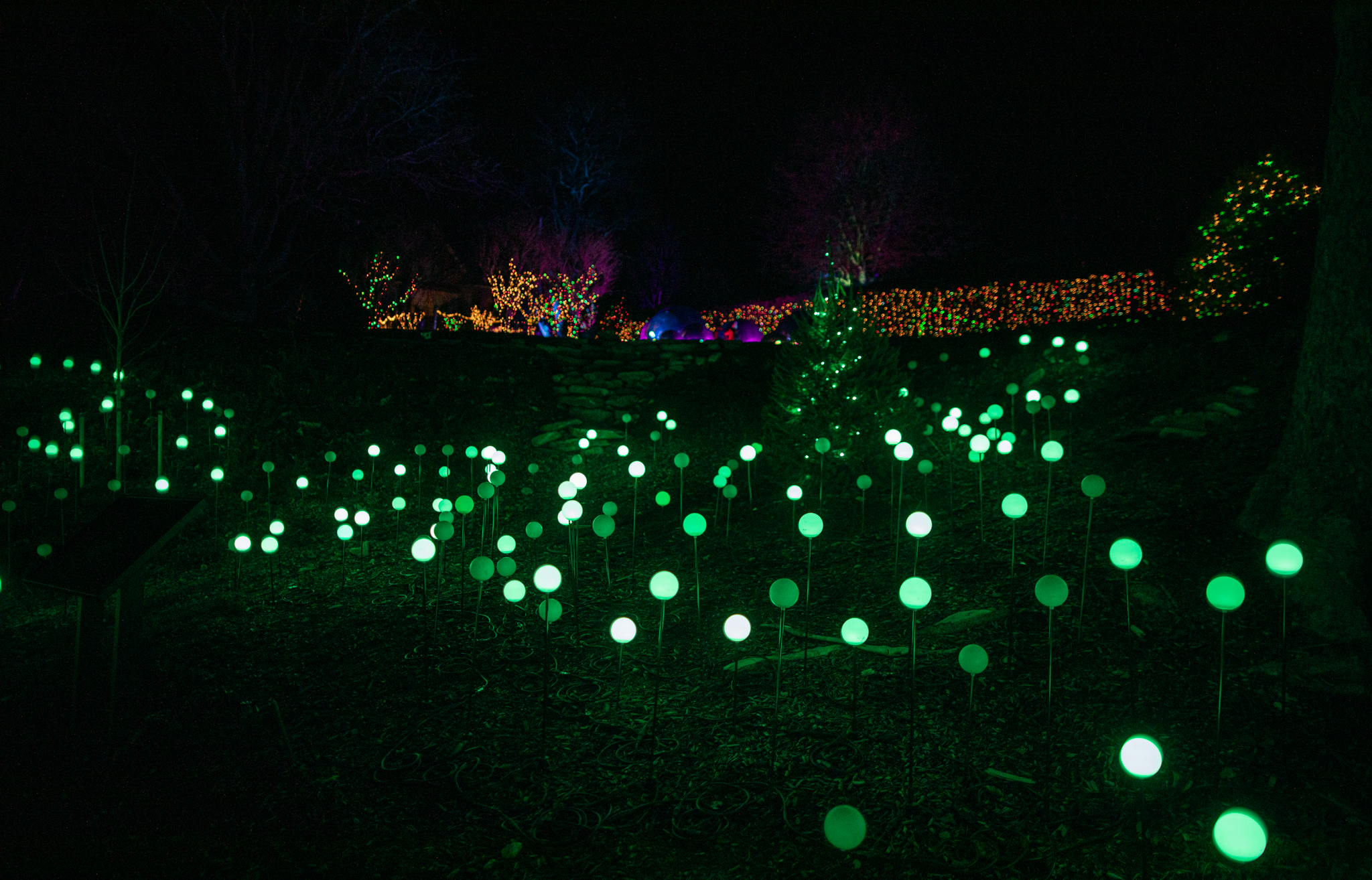
Location: Naumkeag, 5 Prospect Hill Rd, Stockbridge, MA (2 hours west of Boston, MA)
Cost: $25 for adults, $12 for children
Universally Accessible” No, the trail includes stairs and some hilly inclines
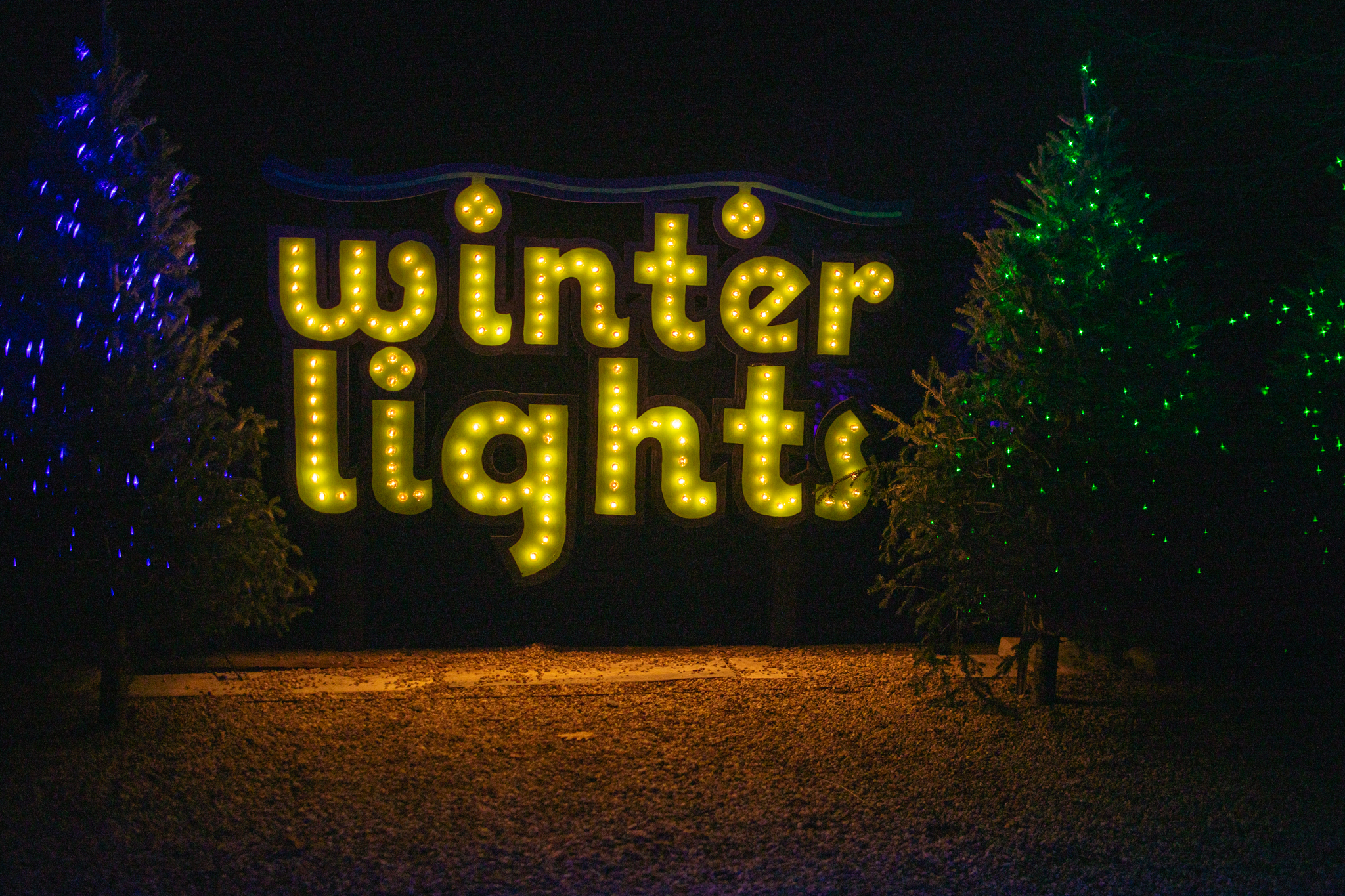
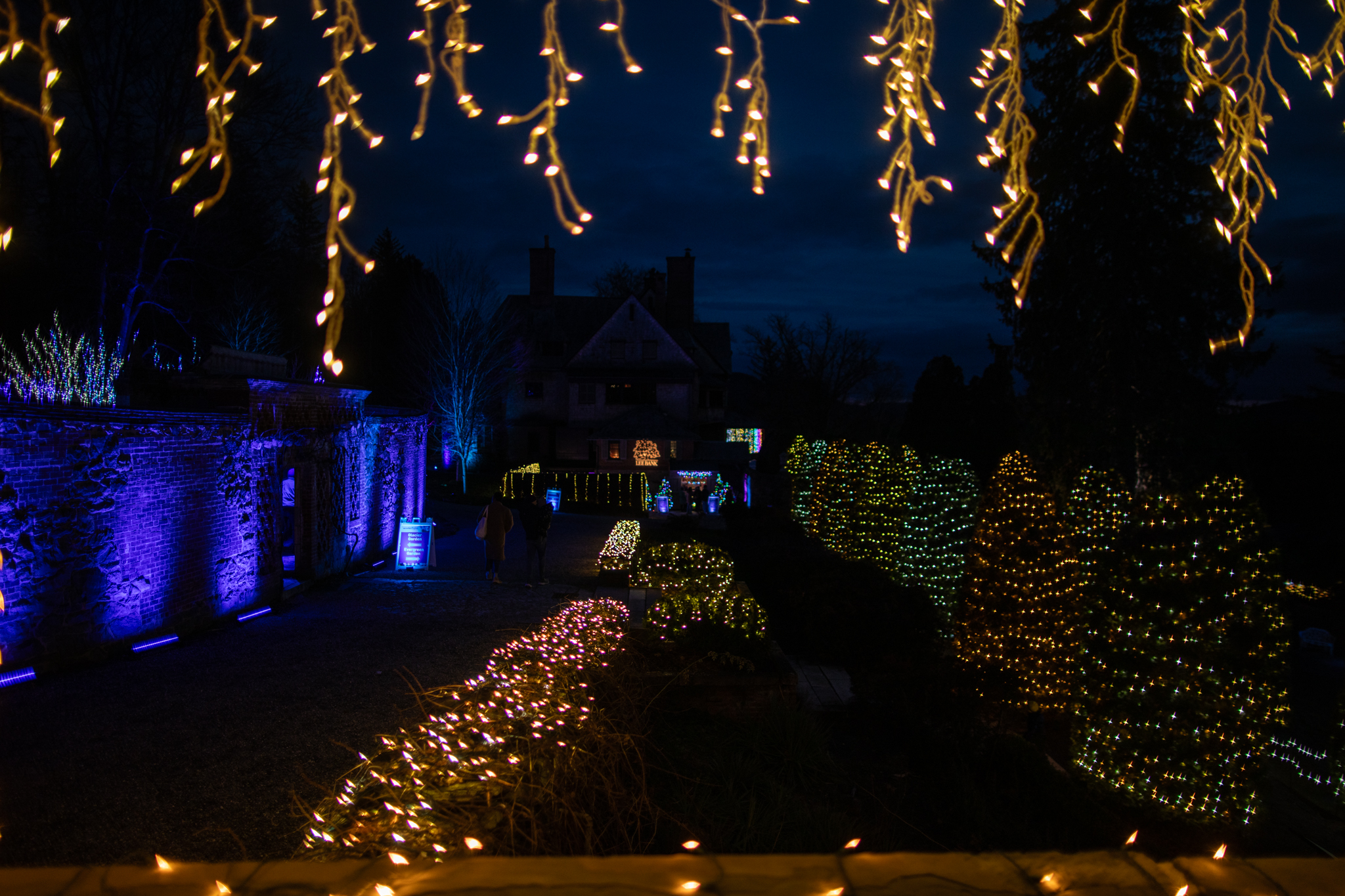
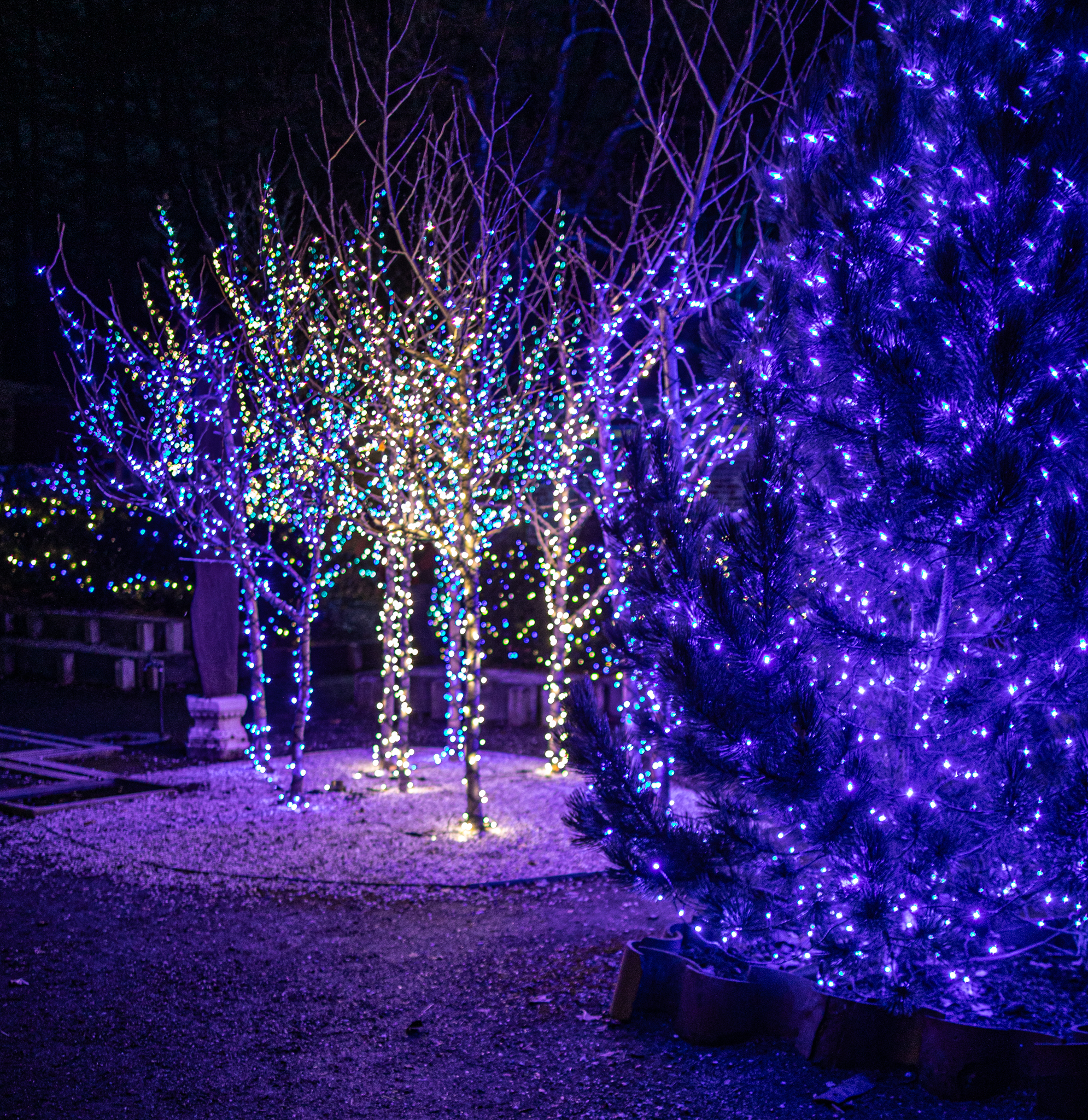
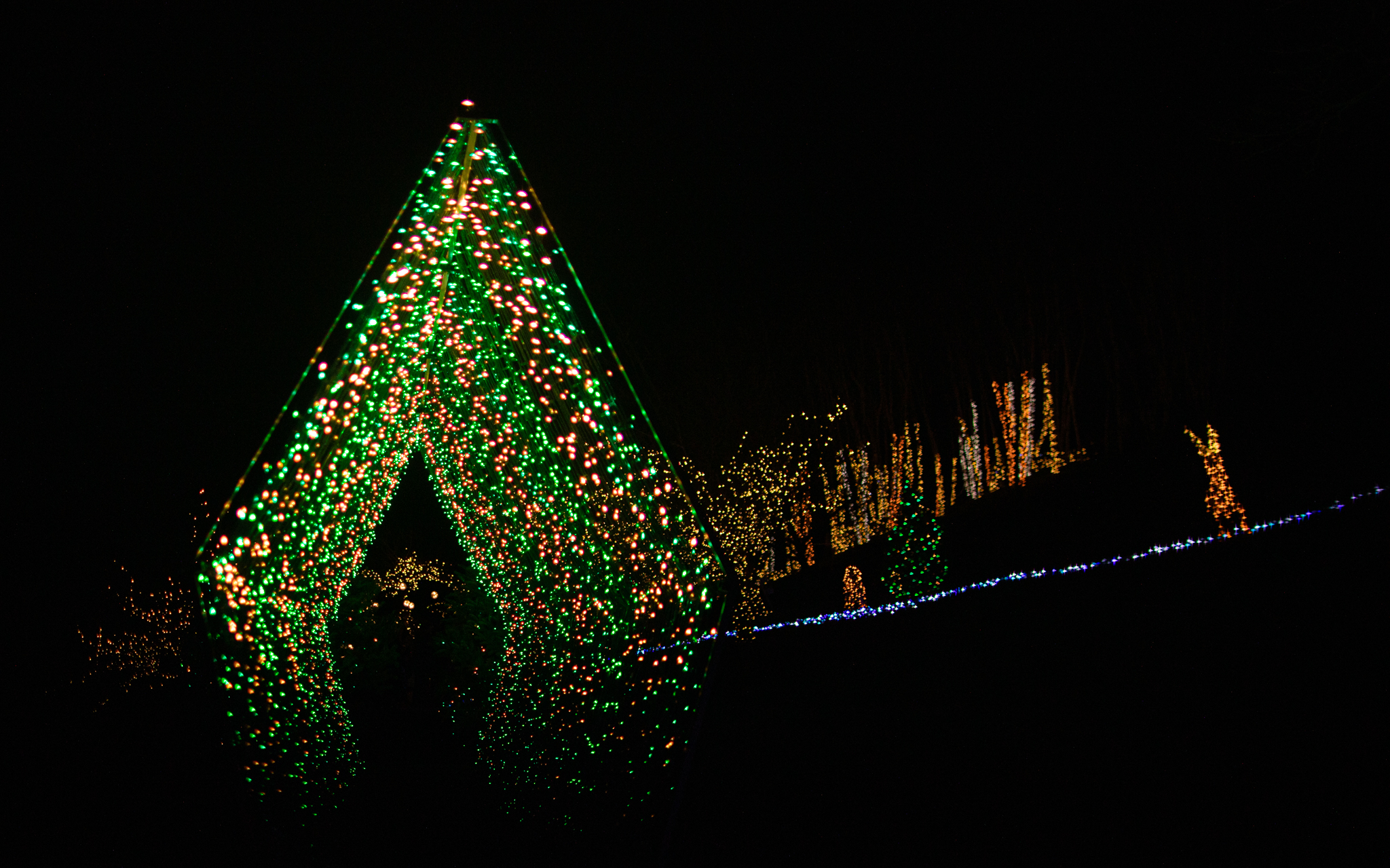
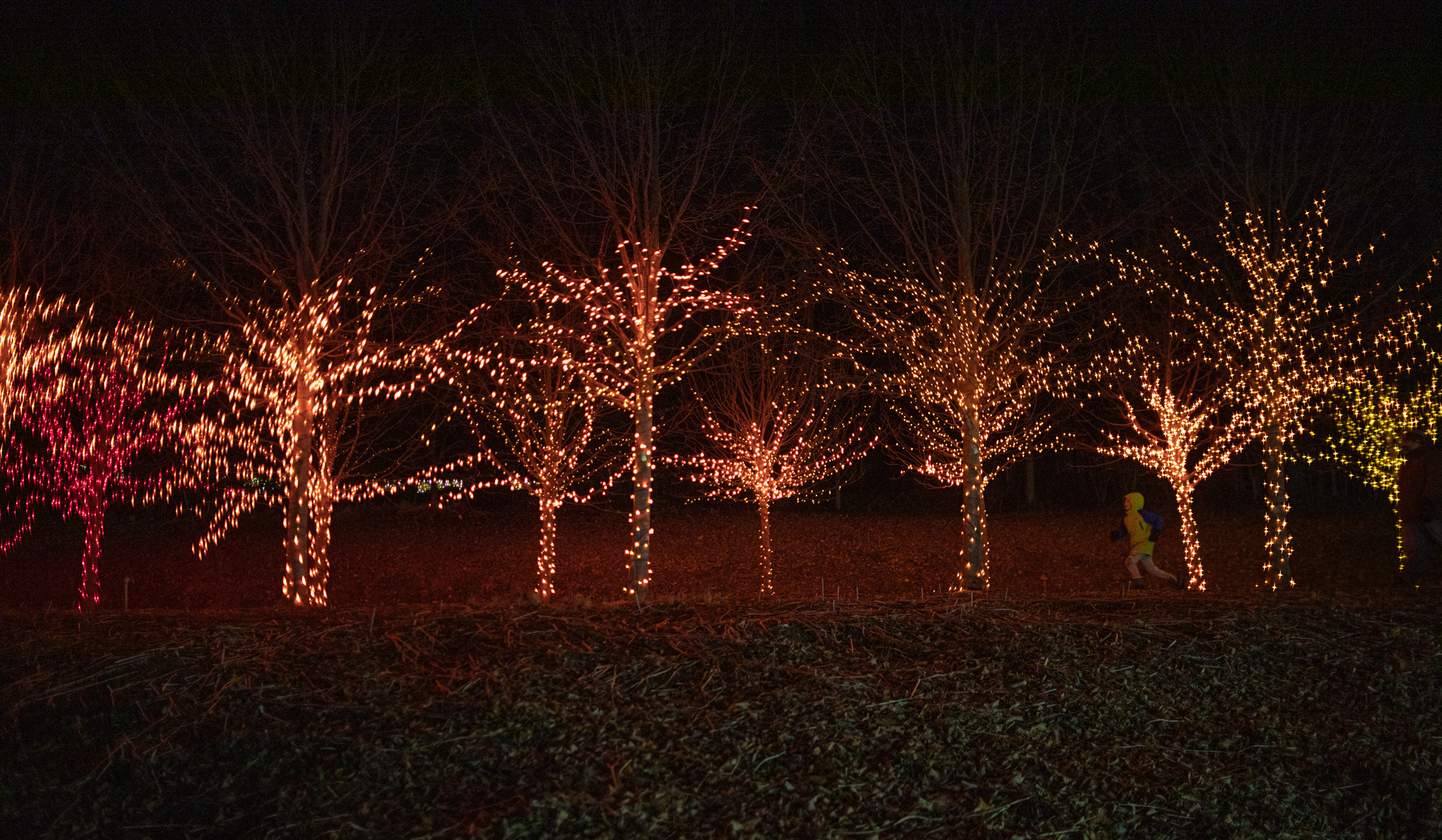
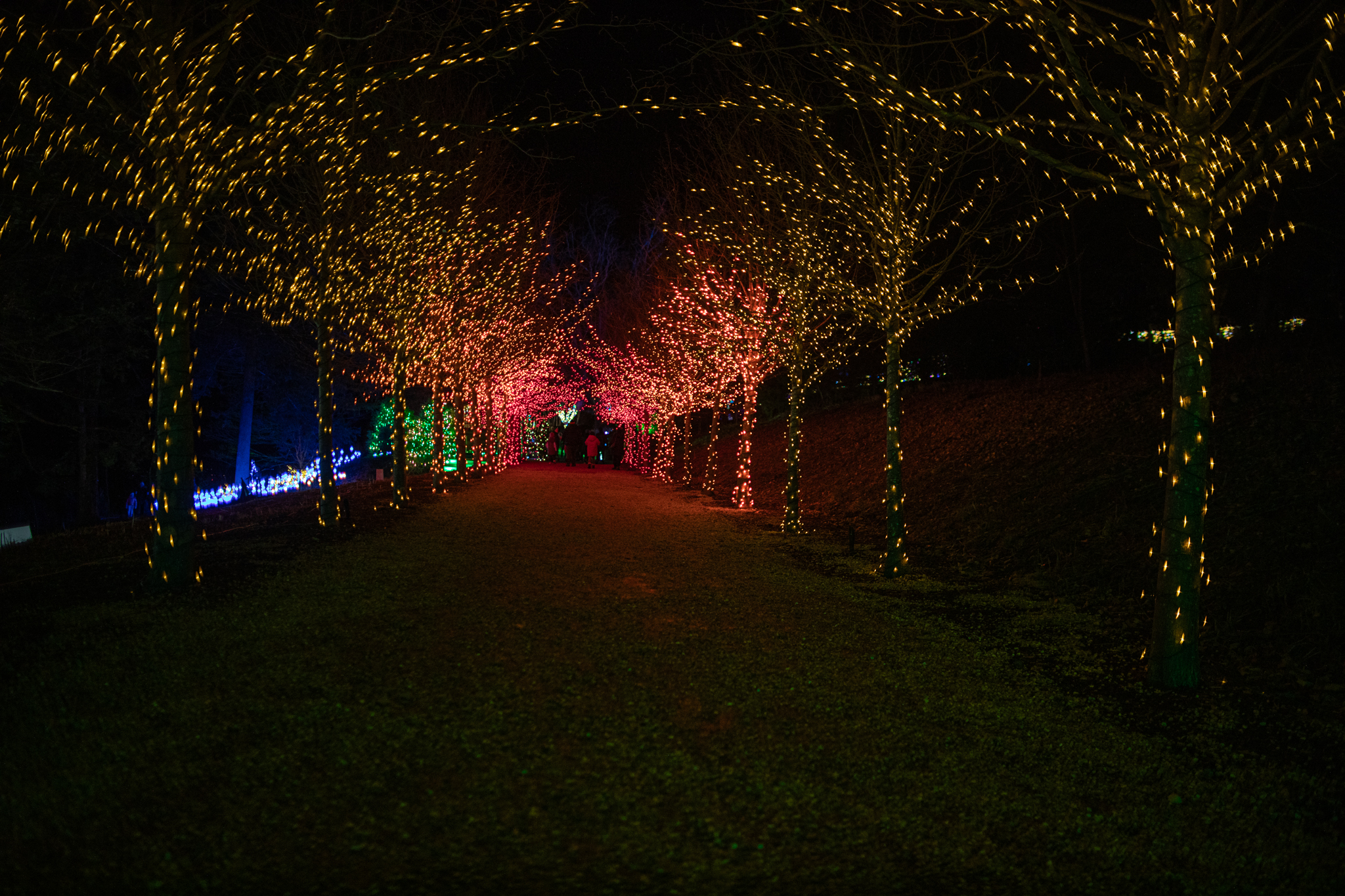
Summary: Hundreds of thousands of lights lit up Naumkeag in Stockbridge, MA
Ranked one of the top 10 winter attractions in the country, Naumkeag’s Winterlights display lived up to its hype this year!
The estate, which boasts a home with a 44 rooms and 40 acres of land, kept visitors in awe with its grandeur.
Every time I photograph a low light event like this I wish I could take my tripod with me. It would be easier from a technical standpoint and the photos would look better. But, for good reasons, they are not usually allowed on the grounds. So, I did my best with my Canon 5D Mark IV with my 24 mm prime (1.4 aperture).
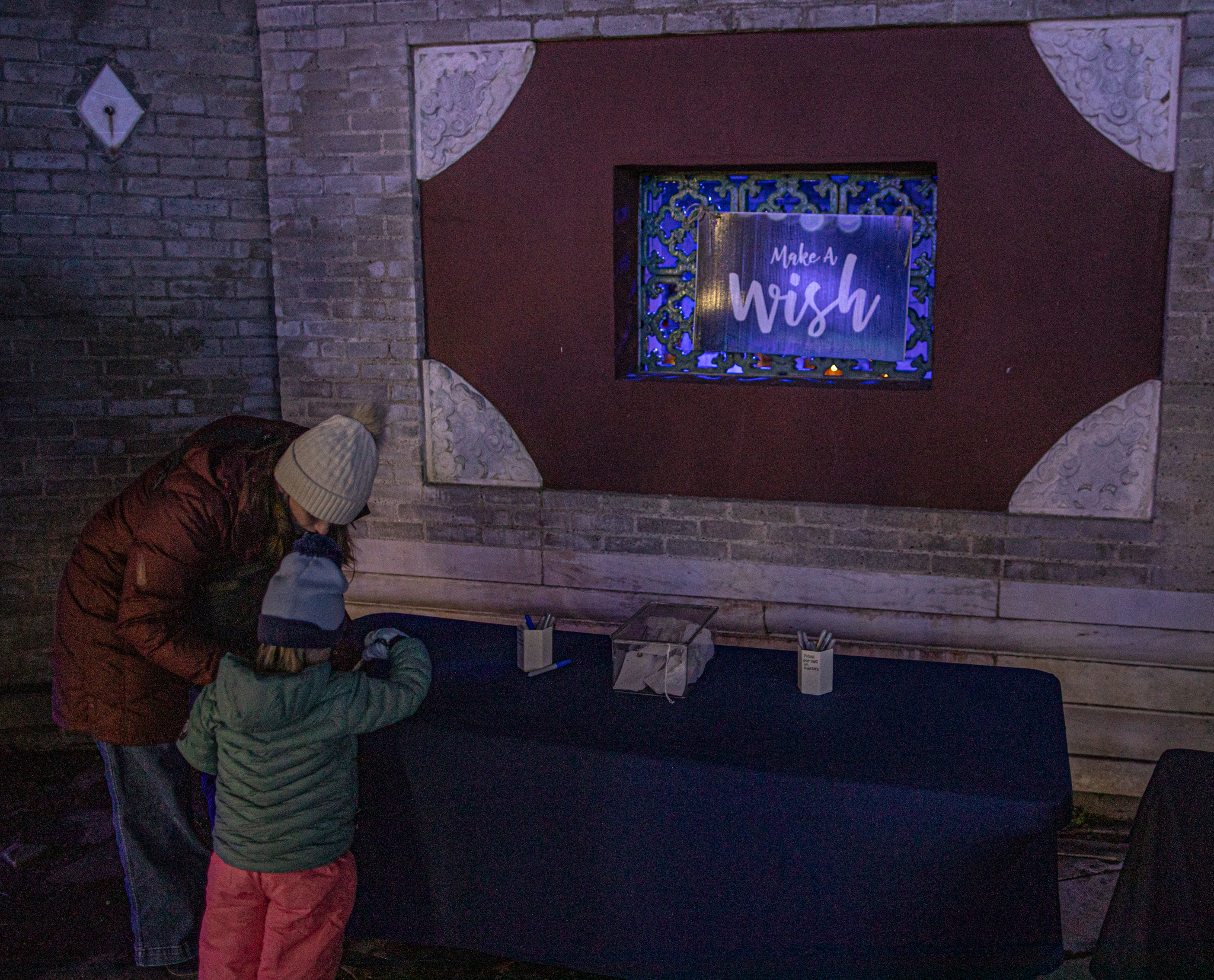
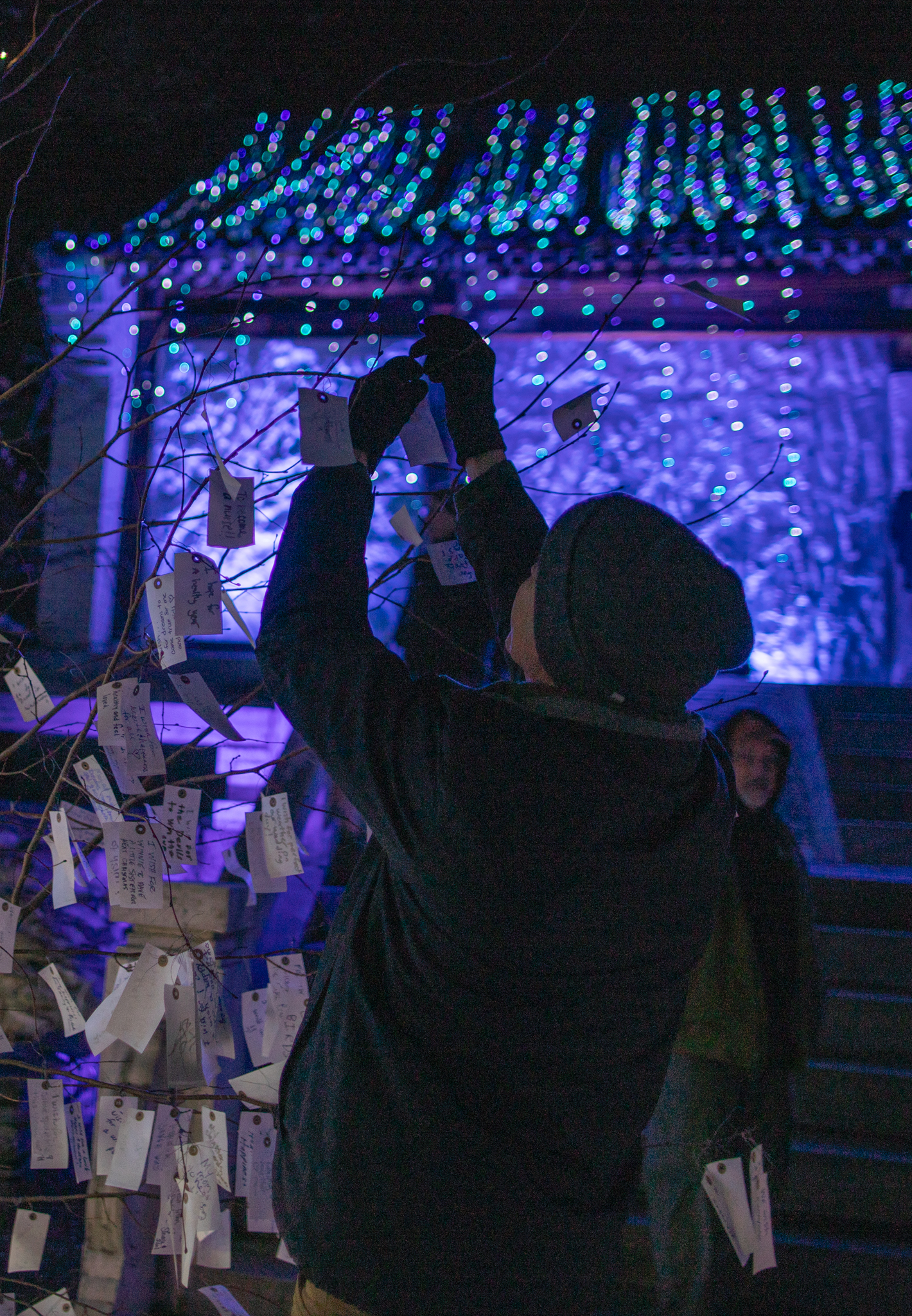
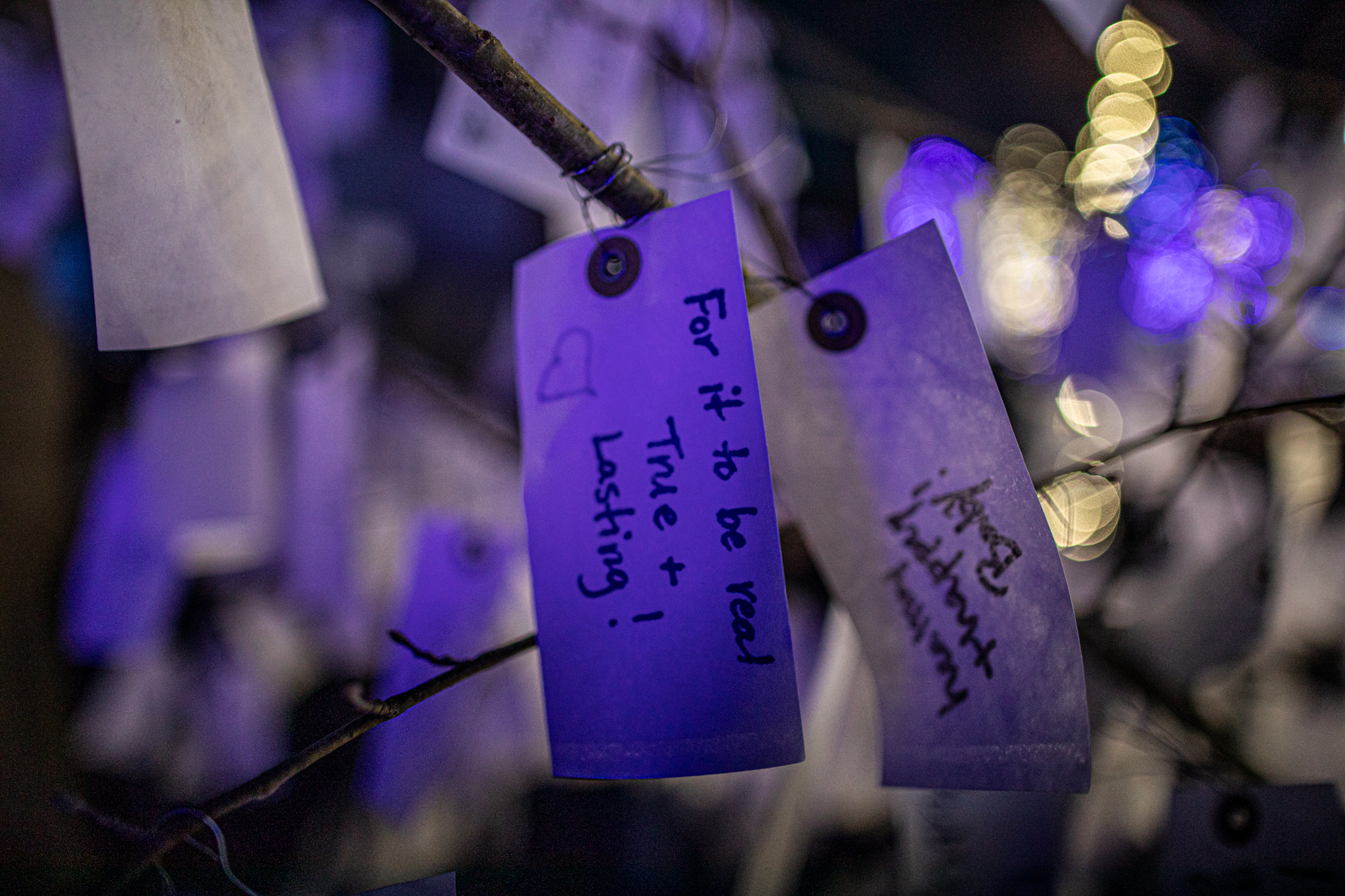
In the garden area, there was a “wish tree.” People could write their wishes for the upcoming year and hang them on a tree.
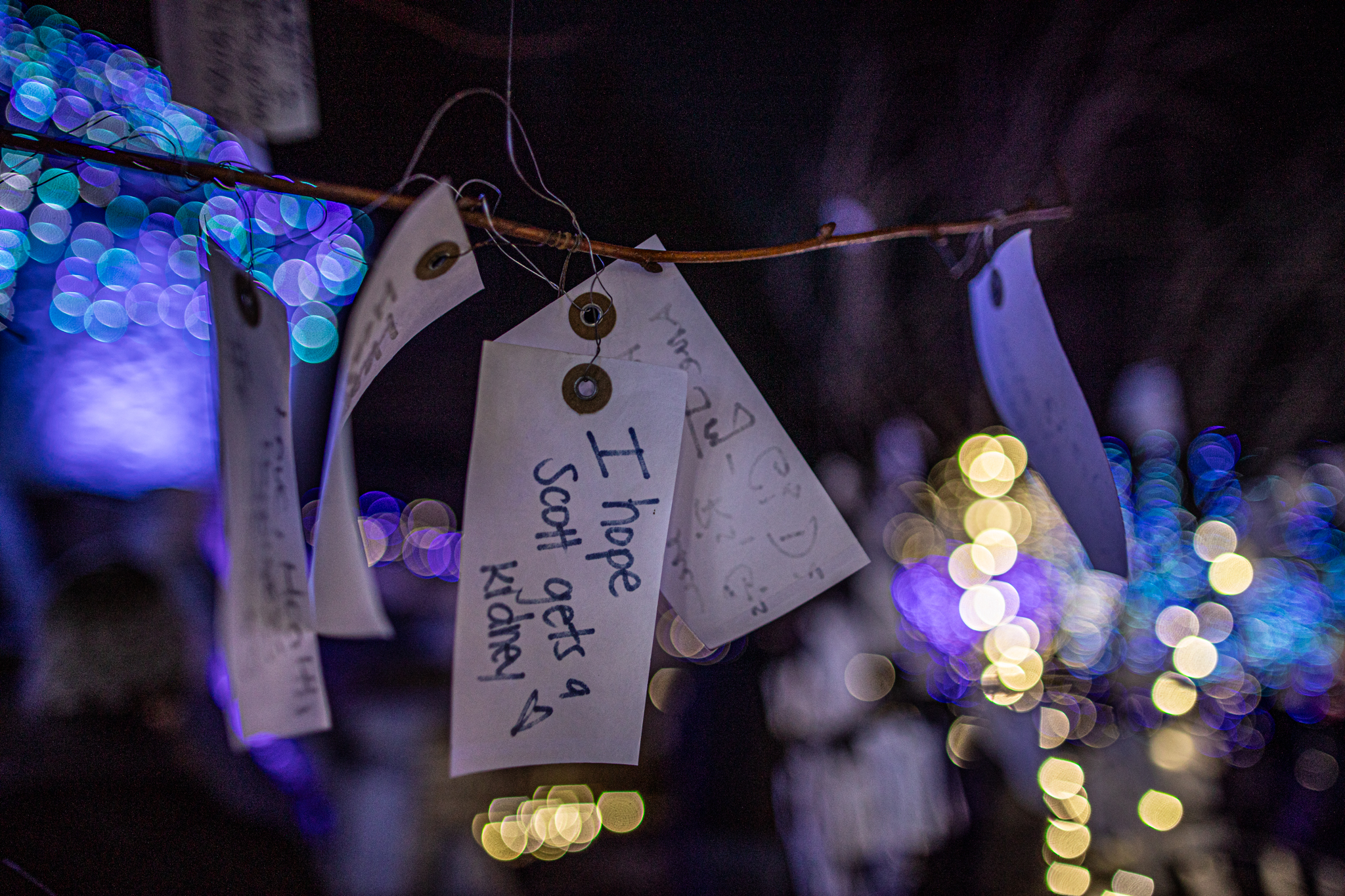
I wouldn’t mind extra pizza rolls either. And best wishes, Scott.
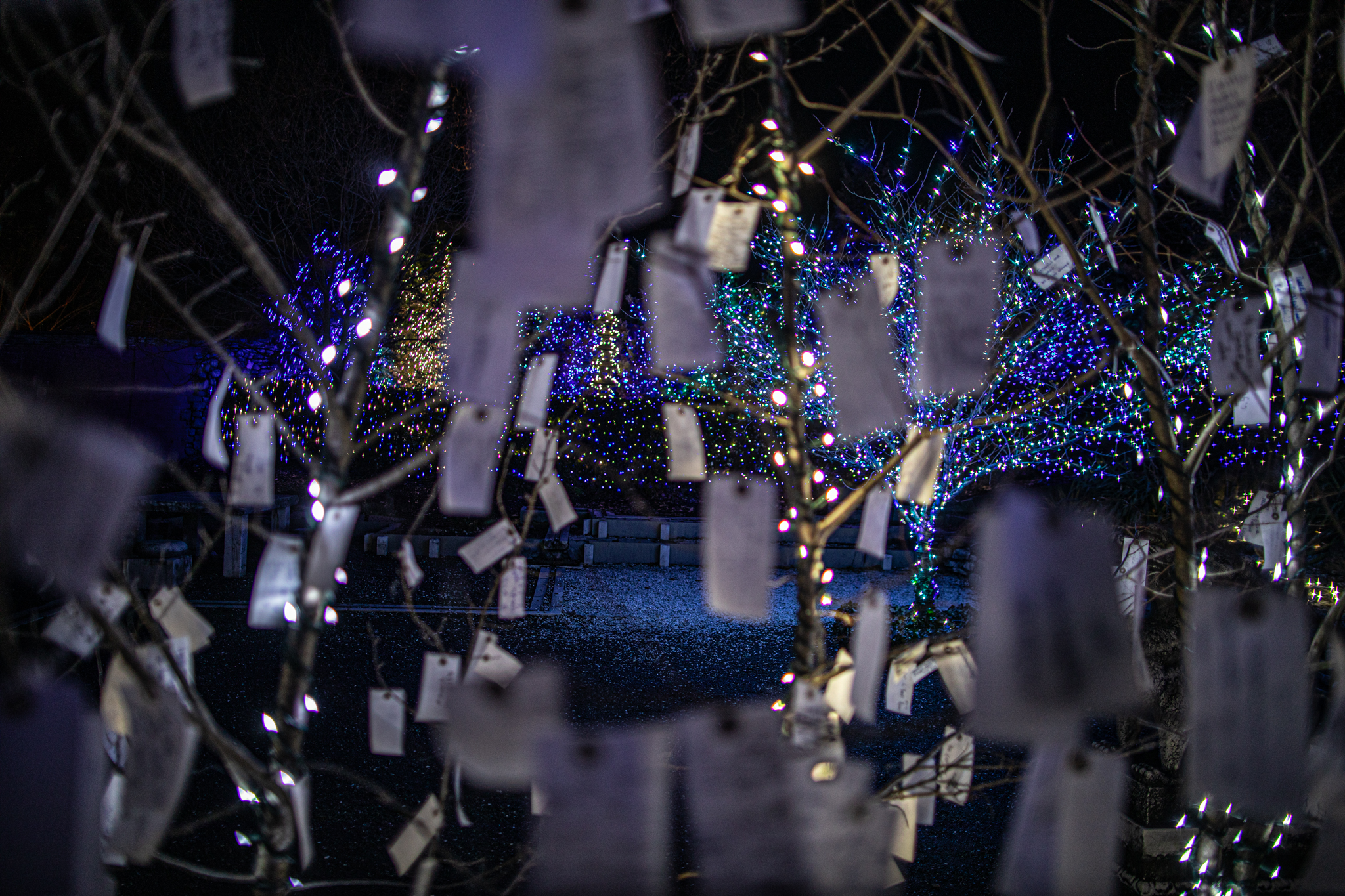
So many wishes…
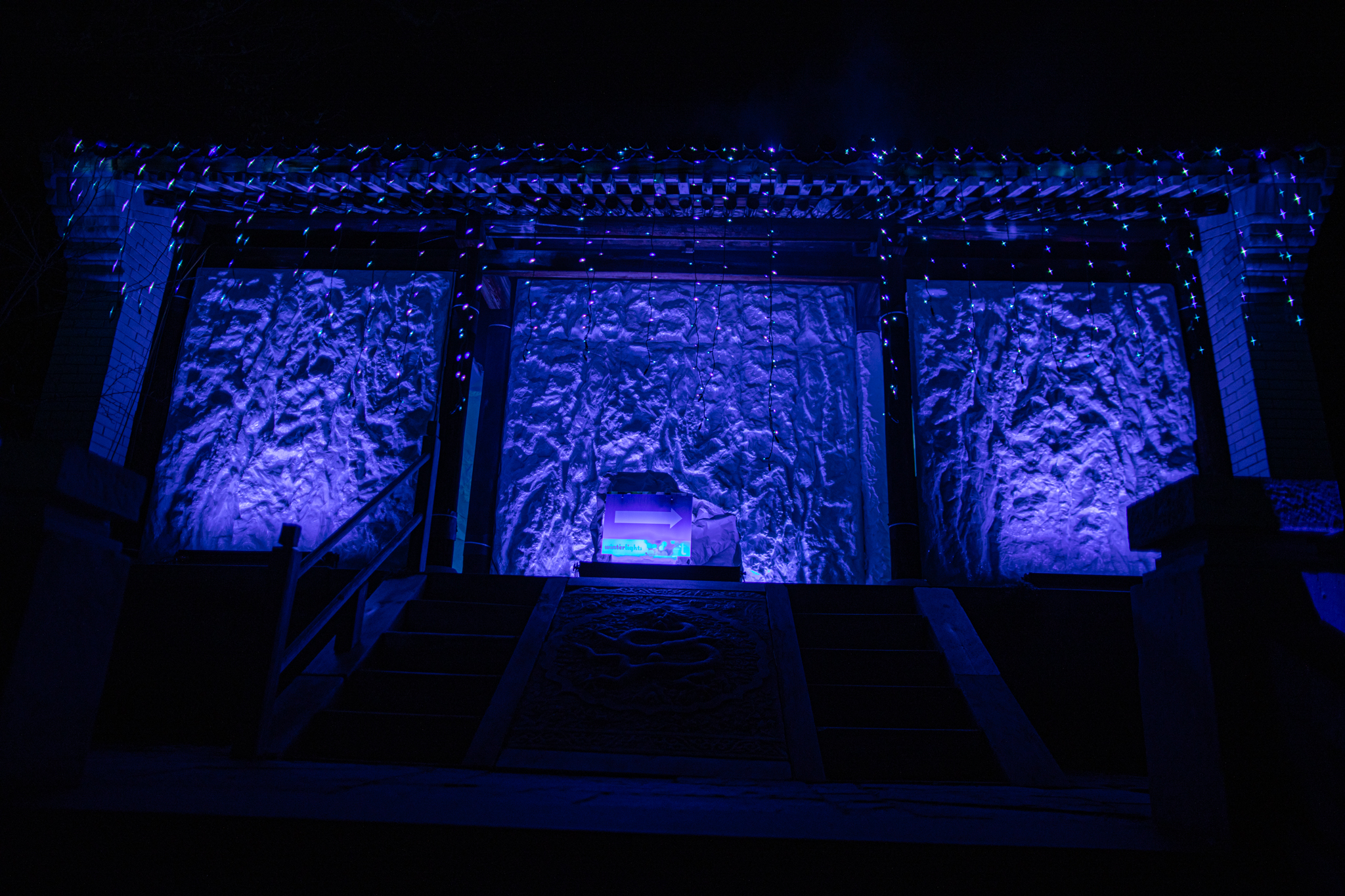
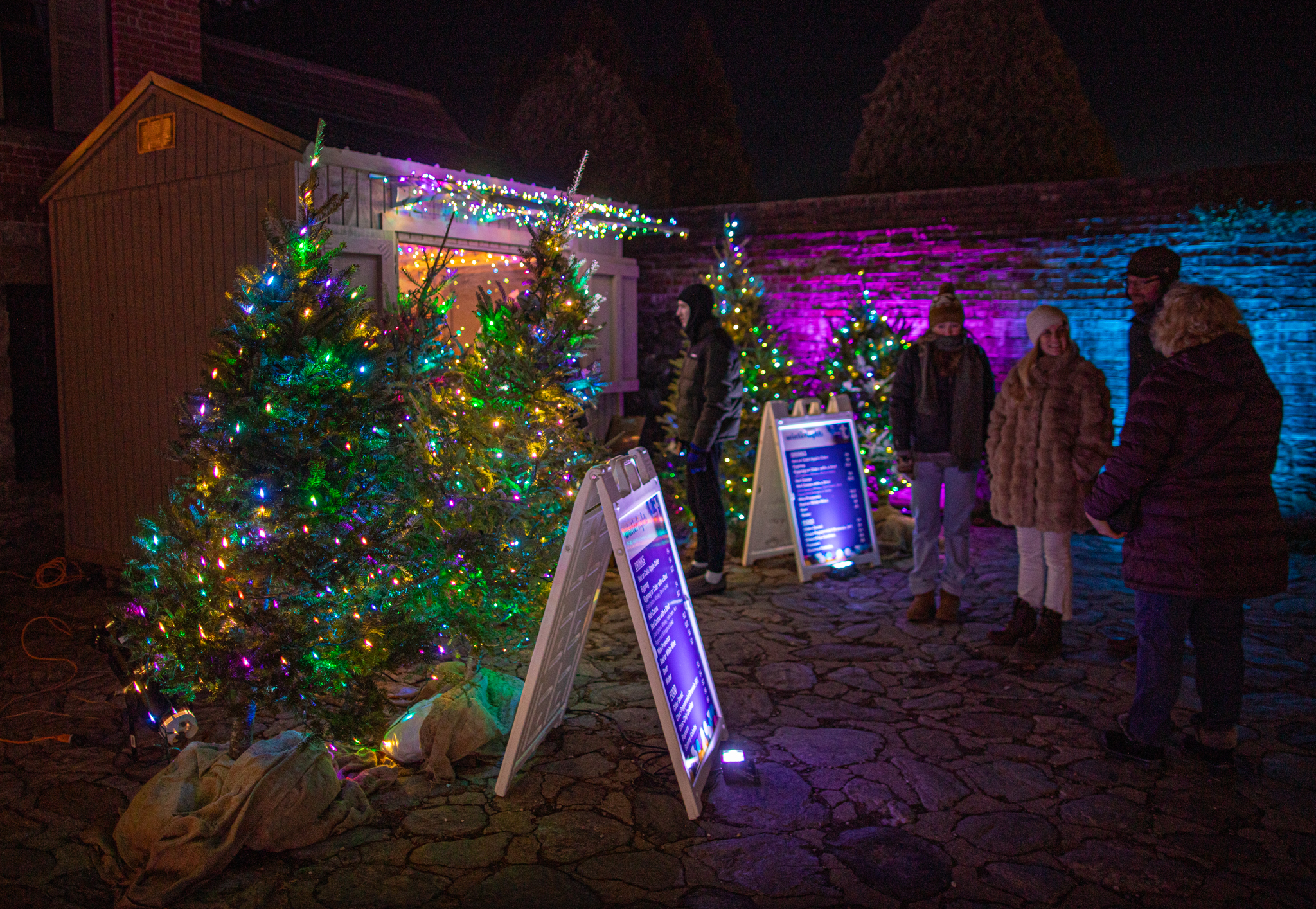
There was also an igloo like structure in the garden. You may see some fog that was piped into the area. (to the left of the third photo)
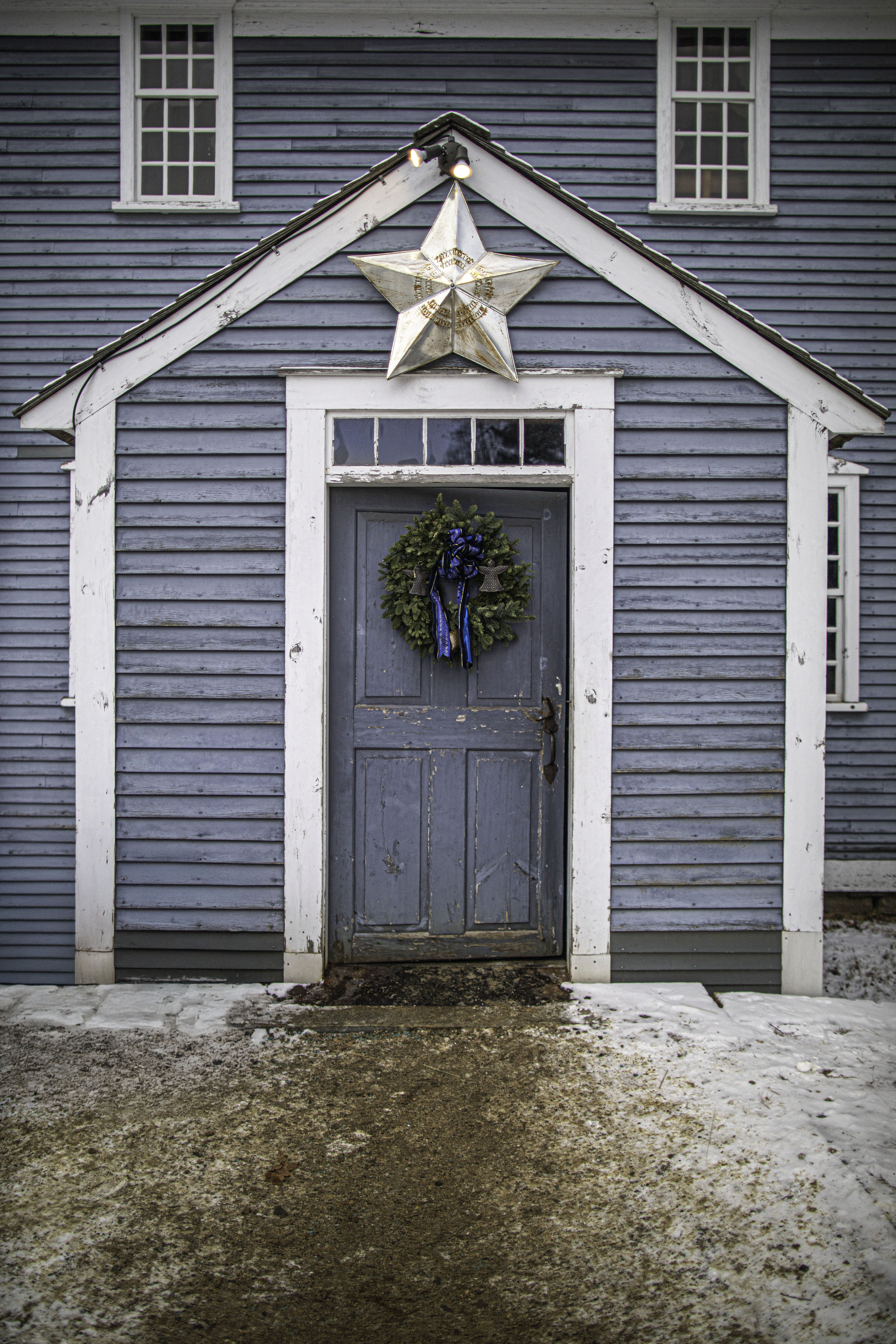
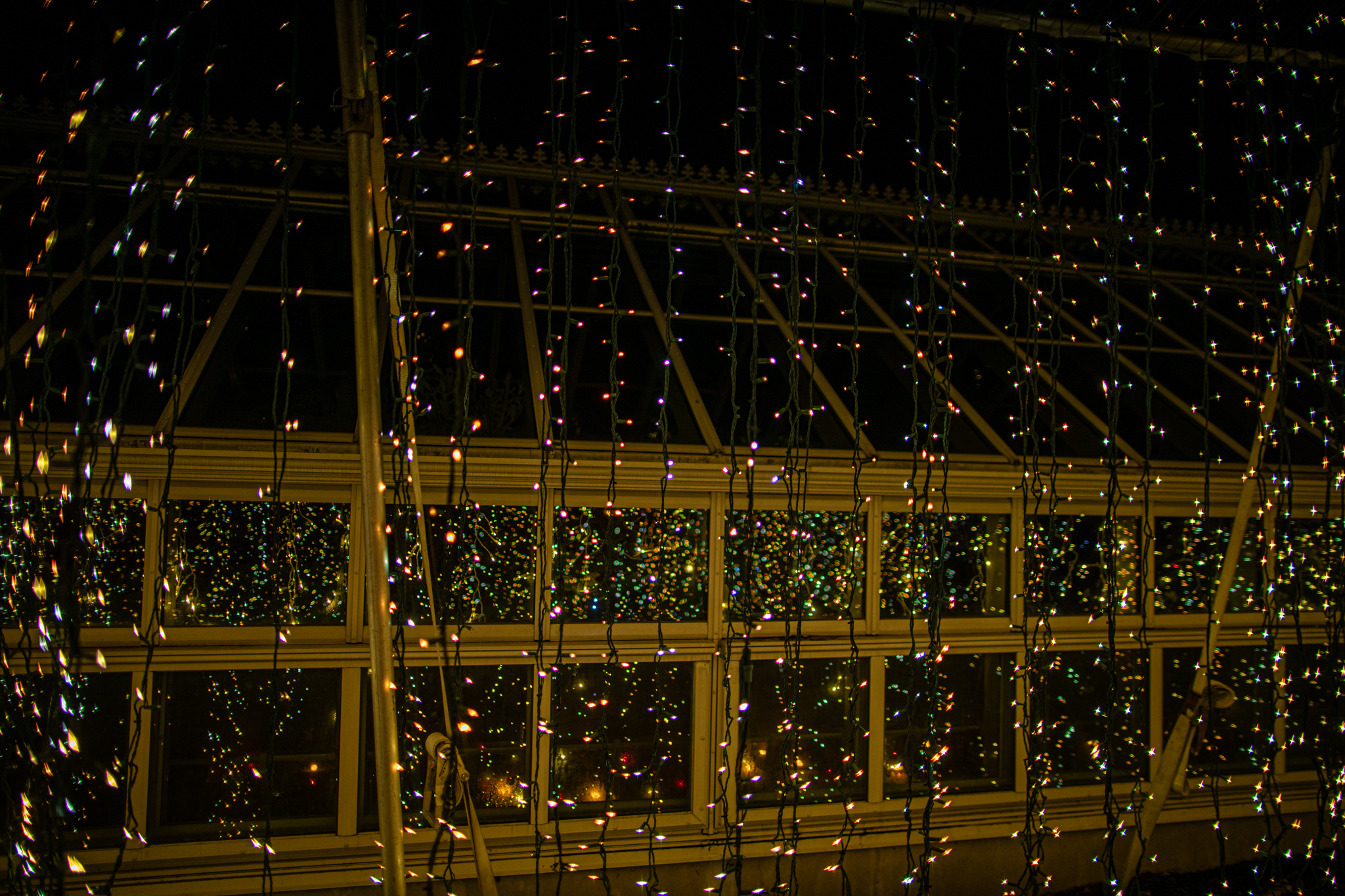
Everything was lit up and very festive looking!
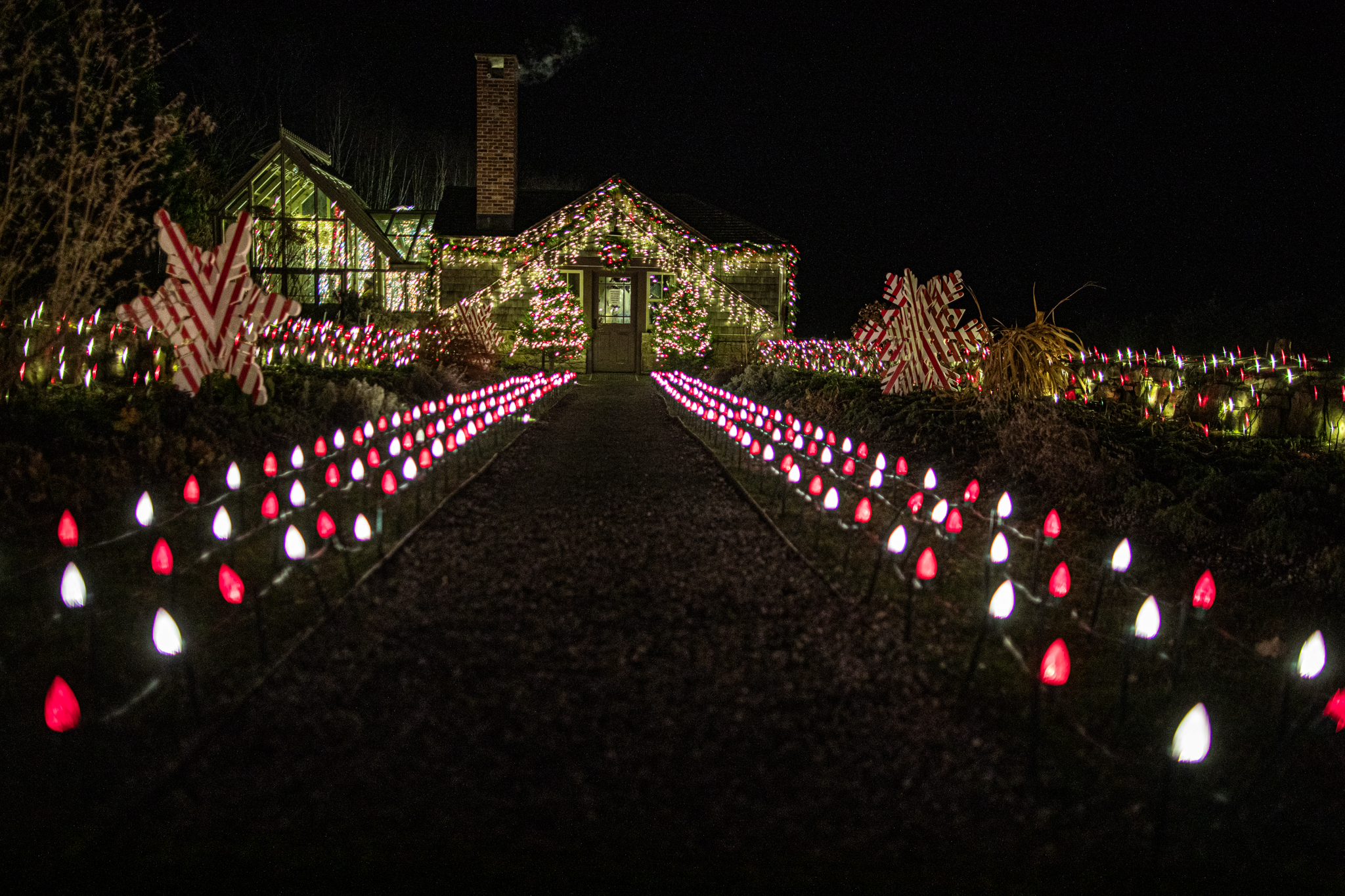
Along the trail there was a cute little greenhouse that was decorated for the holidays!
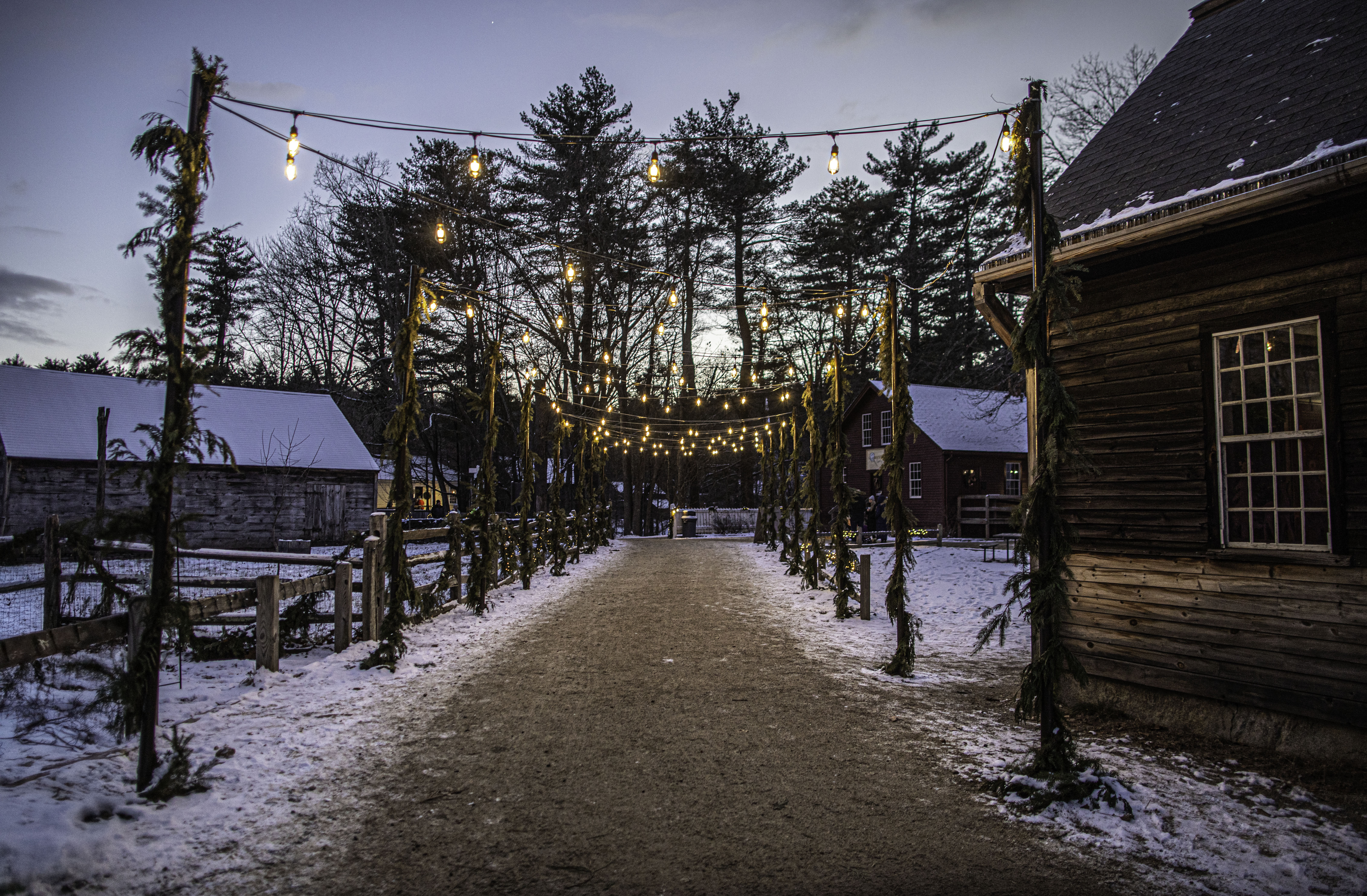
Along the main trail, there were a variety of lights and objects that were lit up!
This tree to the right of the photo reminded me of the trees un the Wizard Of Oz for some reason!
These very unique lights looked like insects.
There were also these brightly lit hut like structures you could walk through.
From a distance, the main attraction of the display, the trees along the path looked majestic all lit up!
But, they looked even better up close.
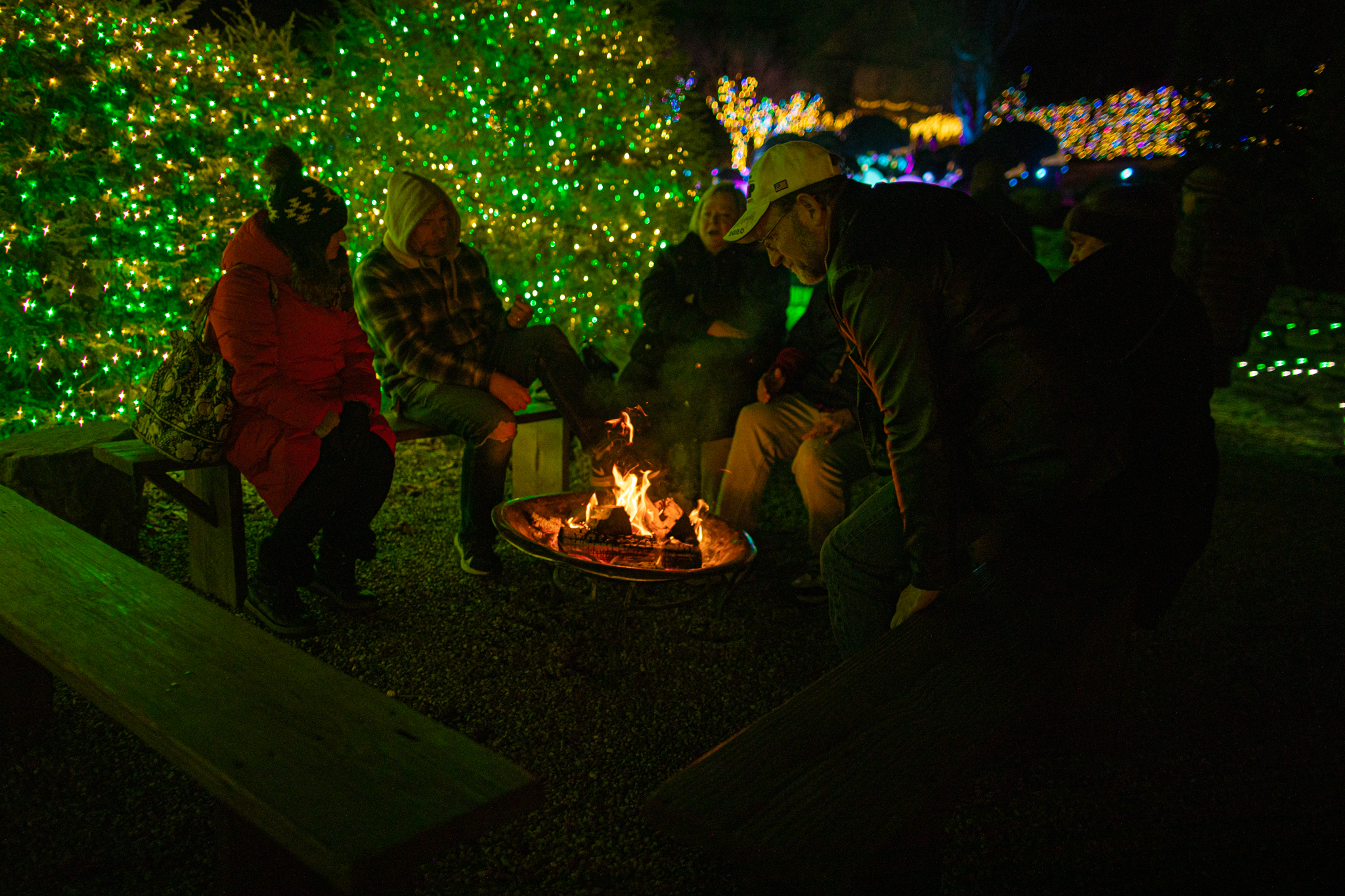
There were also places to sit by the fire and get a beverage or two.
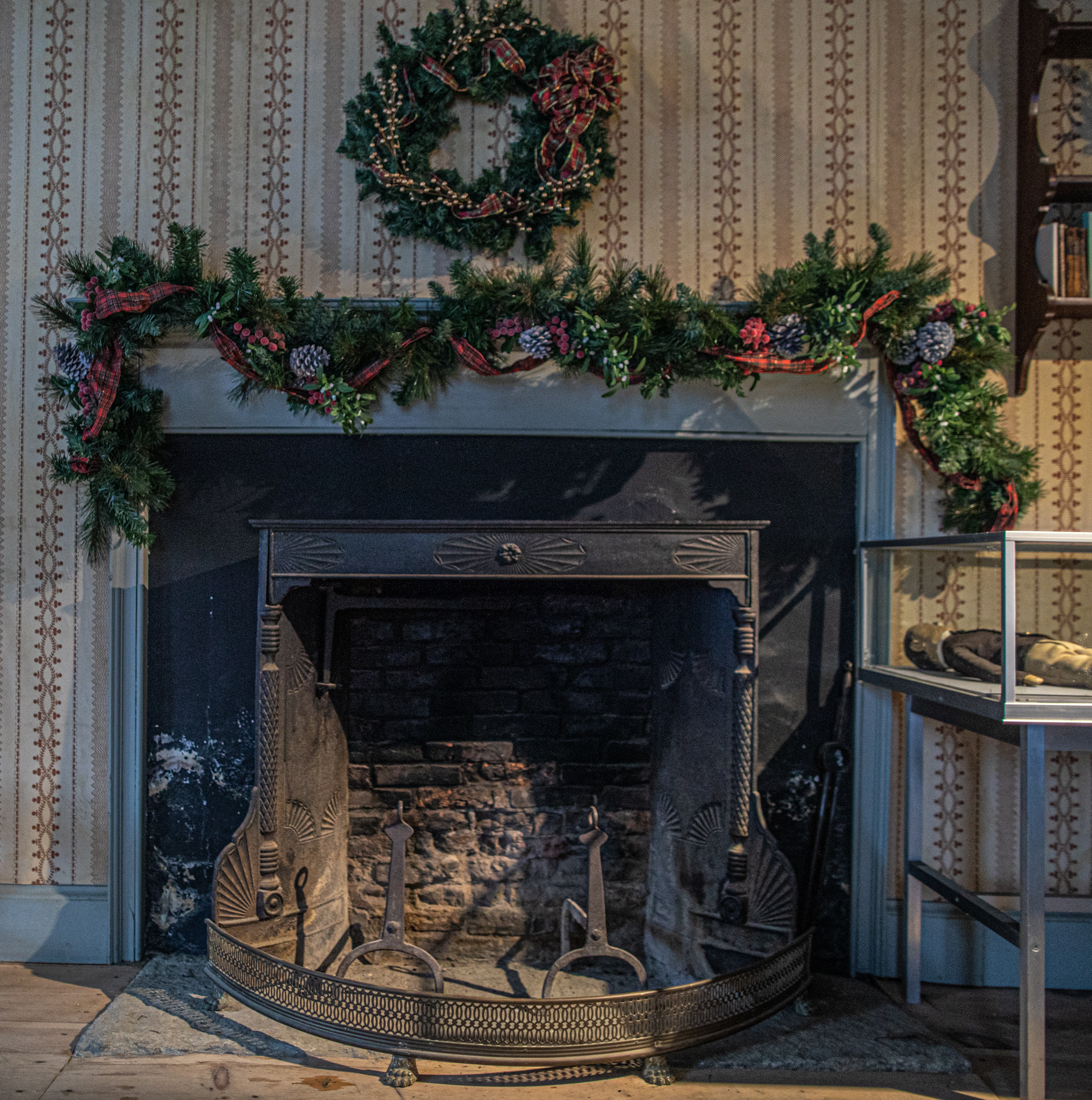
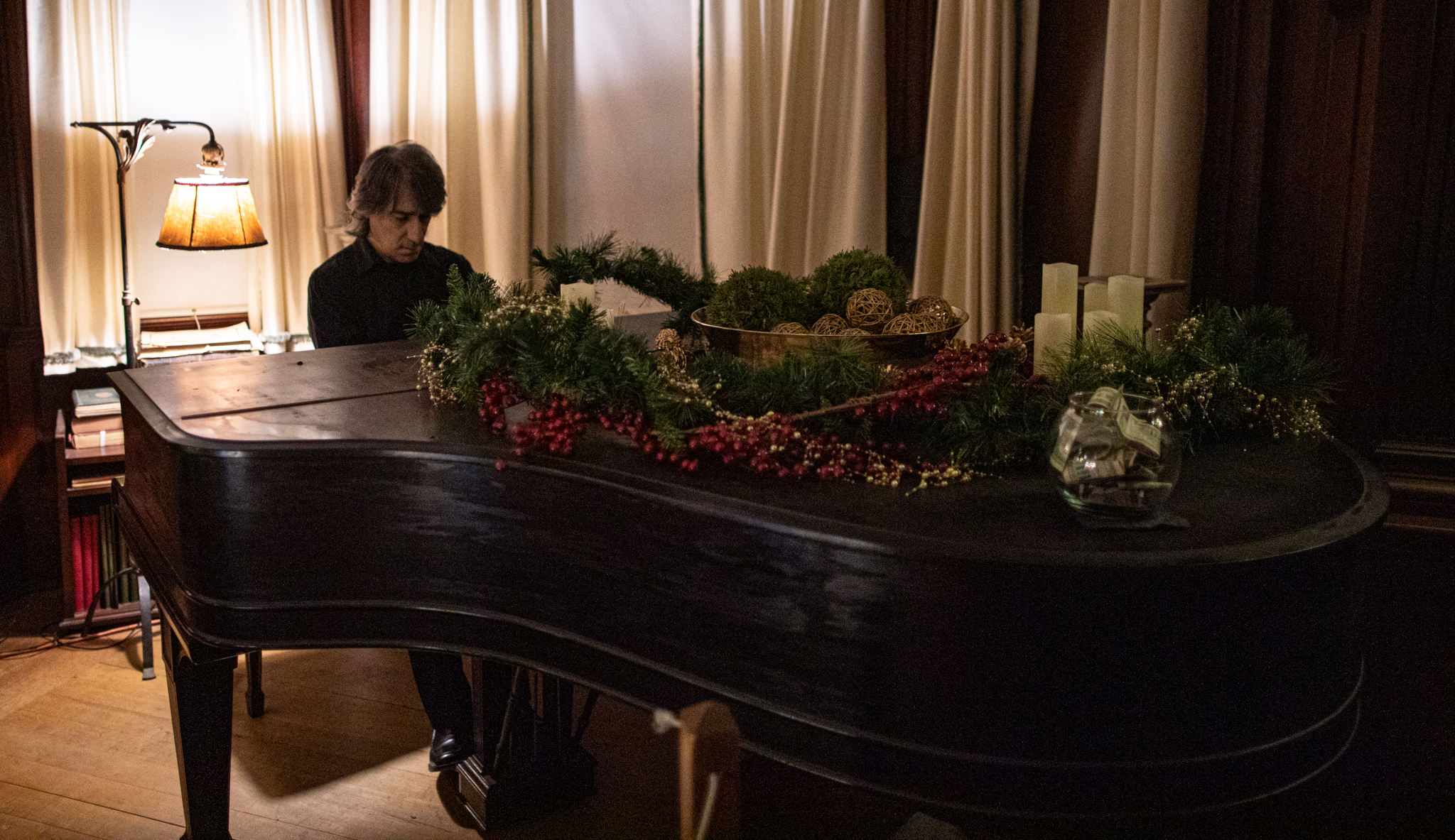
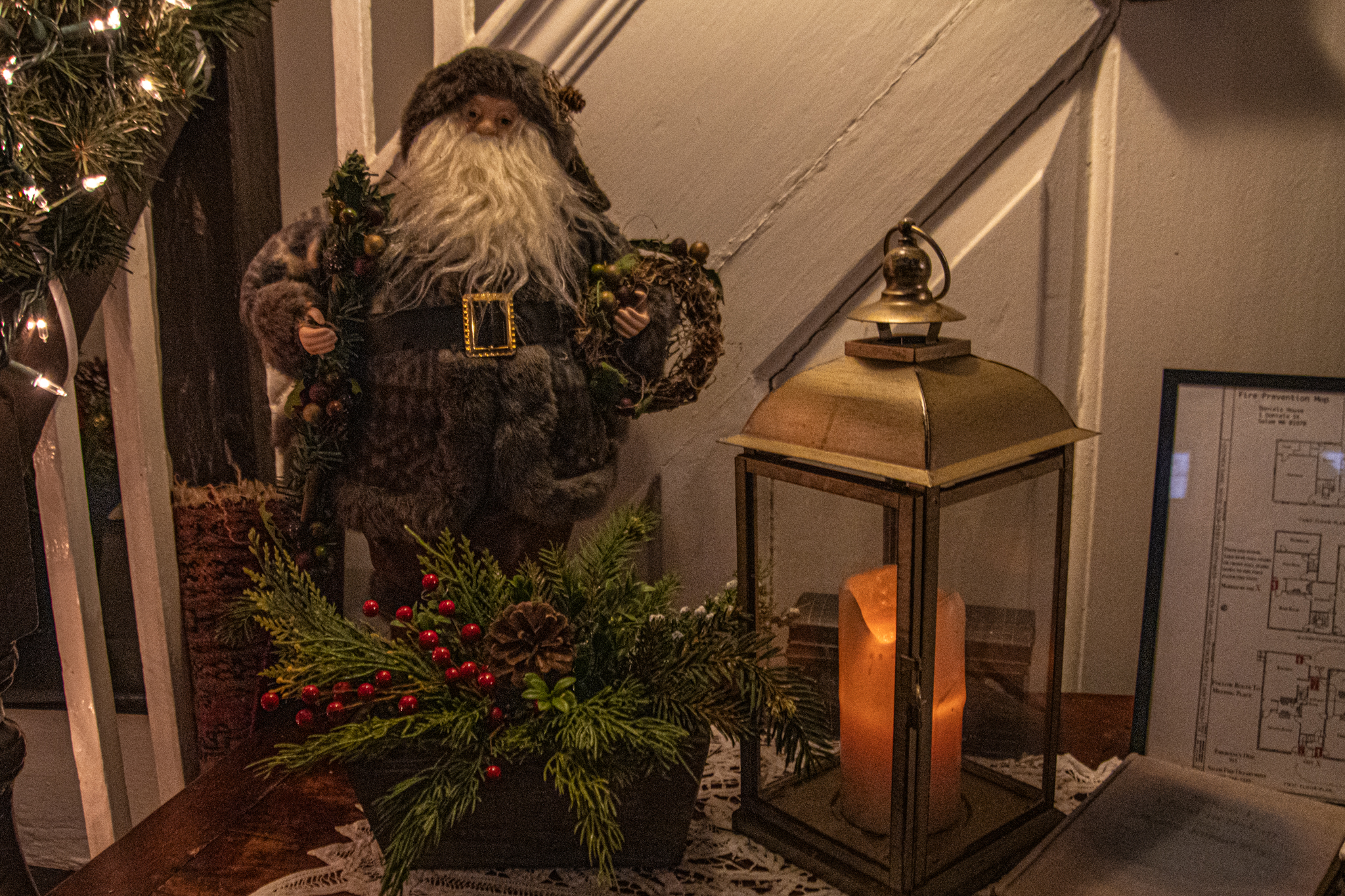
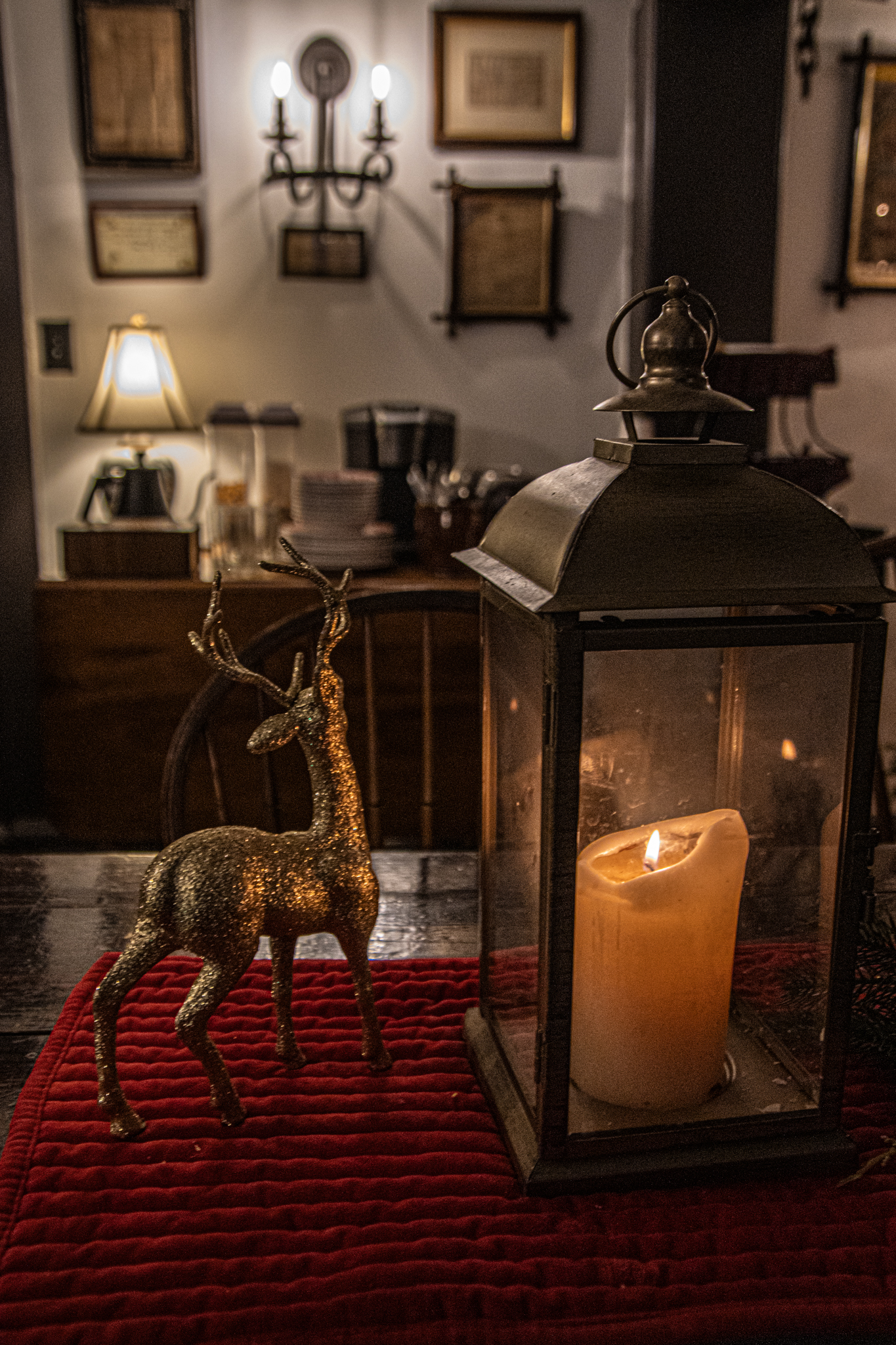
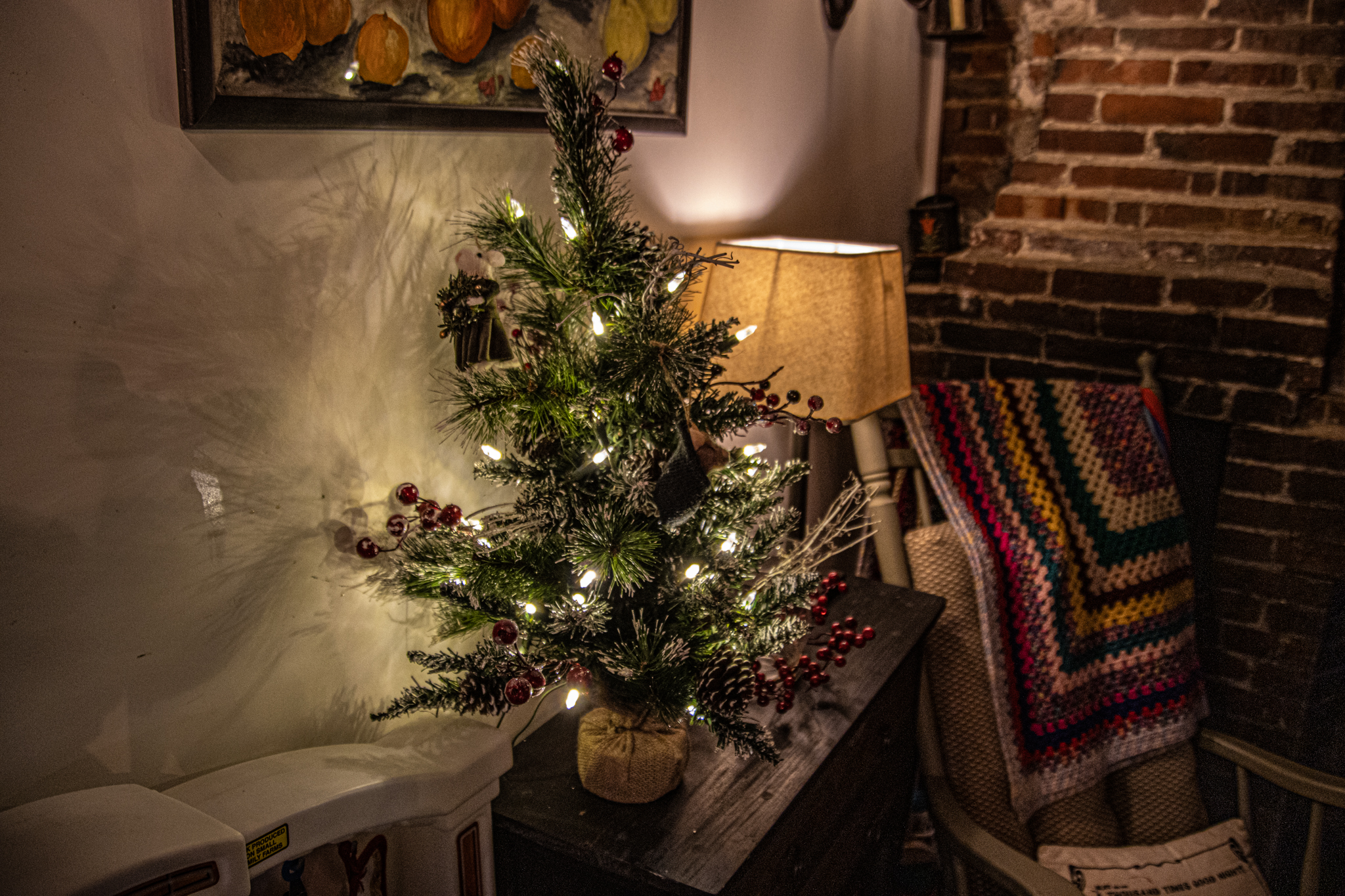
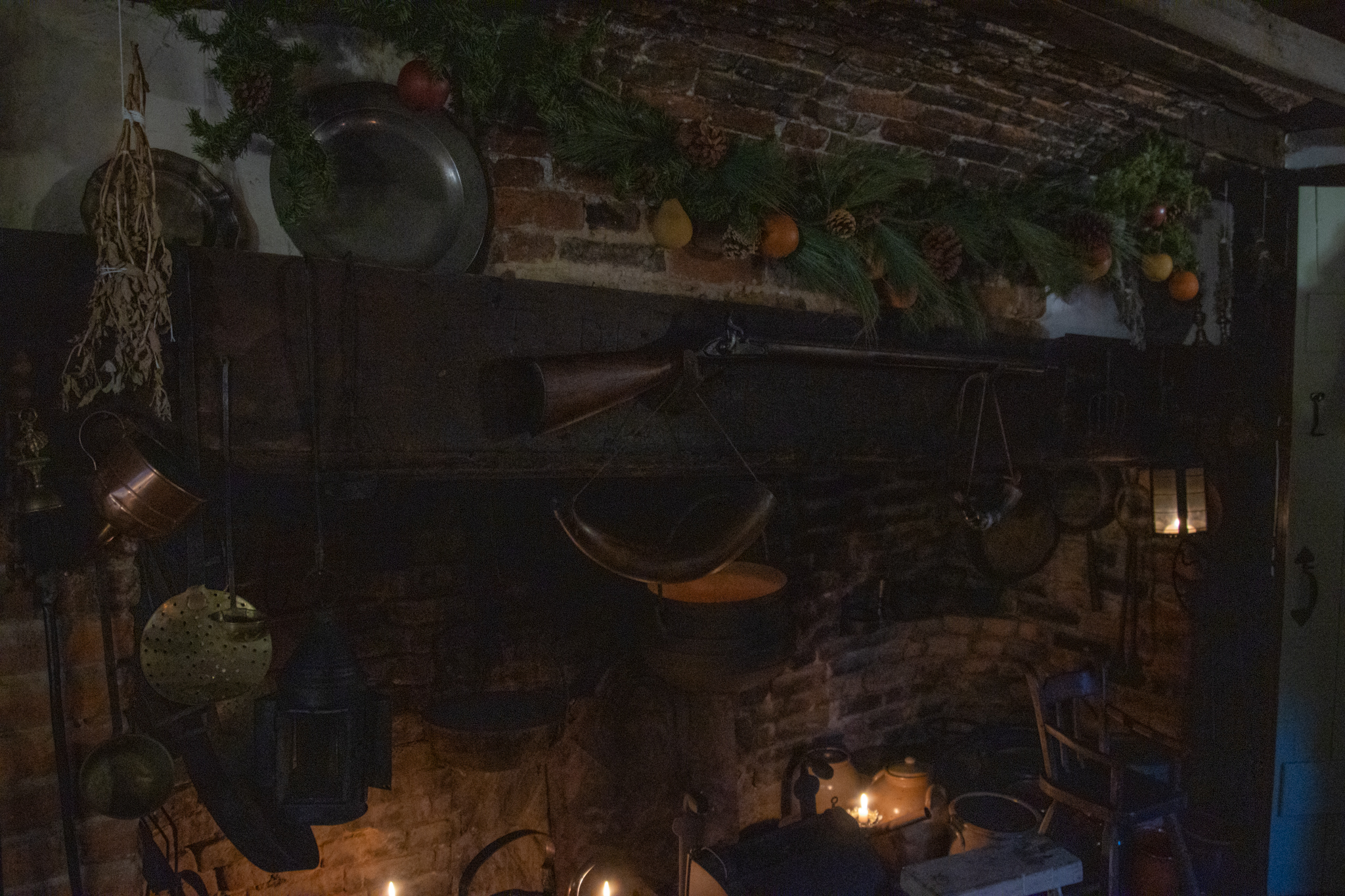
There were also decorations and a piano player at the home at Naumkeag.
The case in the photo below has a special collection of nutcrackers.
It’s hard to believe yet another holiday has come and gone! But, don’t fret! If you’re in New England, you only have 3 or 4 more moths of bone chilling weather!
Not all of the buildings in the Christmas In Salem tour are homes. This part of the tour took us to the Grace Church.
Grace Church has been at its current location since 1926. Previously, it was a wooden Gothic Revival building in 1869. The original church was demolished as it was deemed inadequate for the needs of the congregation. Philip Horton Smith and Edgar Walker, both architects of Salem, constructed the stone masonry late Gothic Revival structure that exists at the location today. Four of the stained glass windows in the church were transferred from the original 1856 structure, two of which are by Tiffany.
While the church was being built, Grace Church acquired the Burill House as a Parish House. The building has been remodeled and enlarged while adding a cloistered wing to the church.
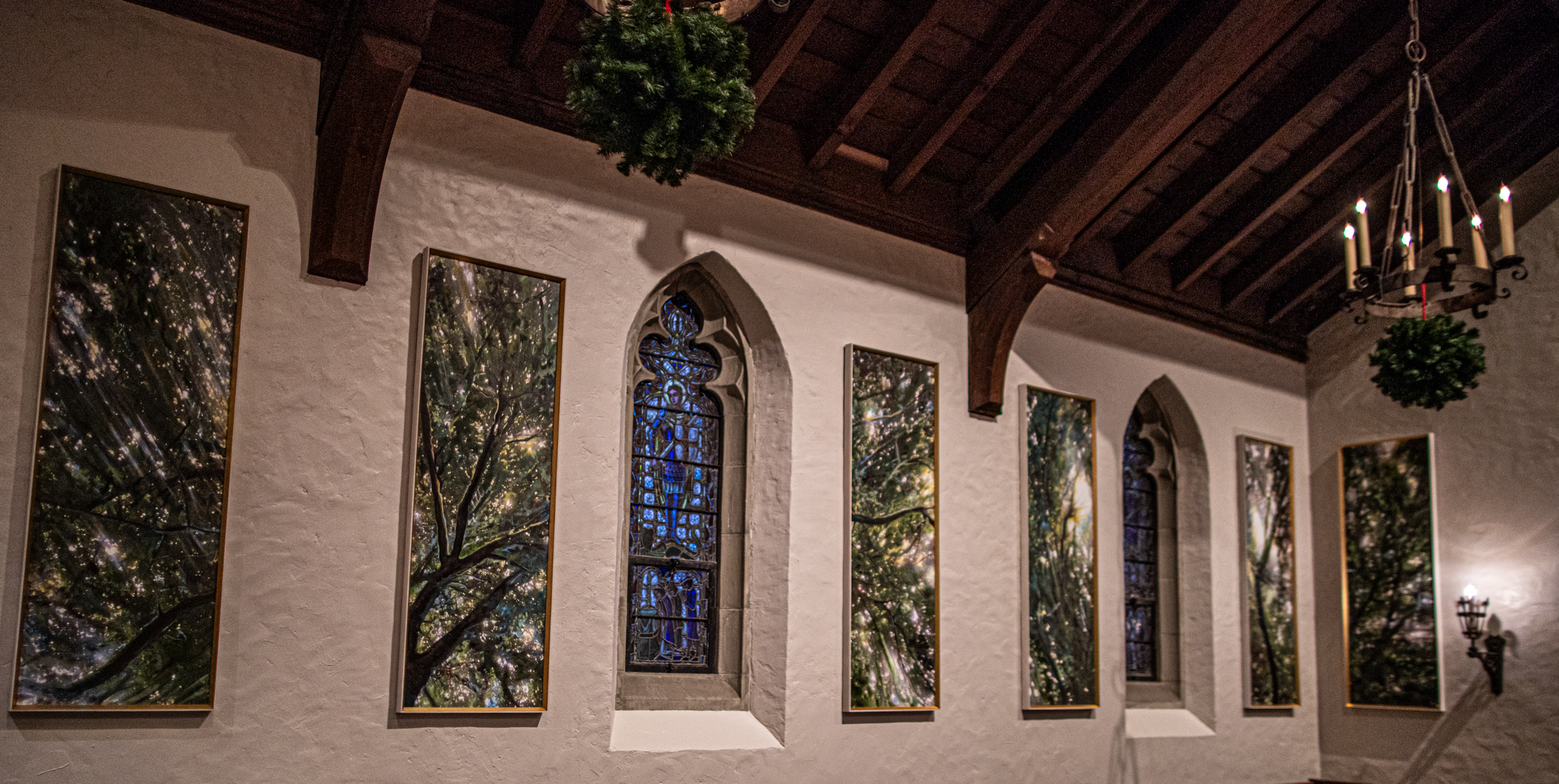
Susan Gentile’s “Heavenly Light” art project adorns the walls of the church.
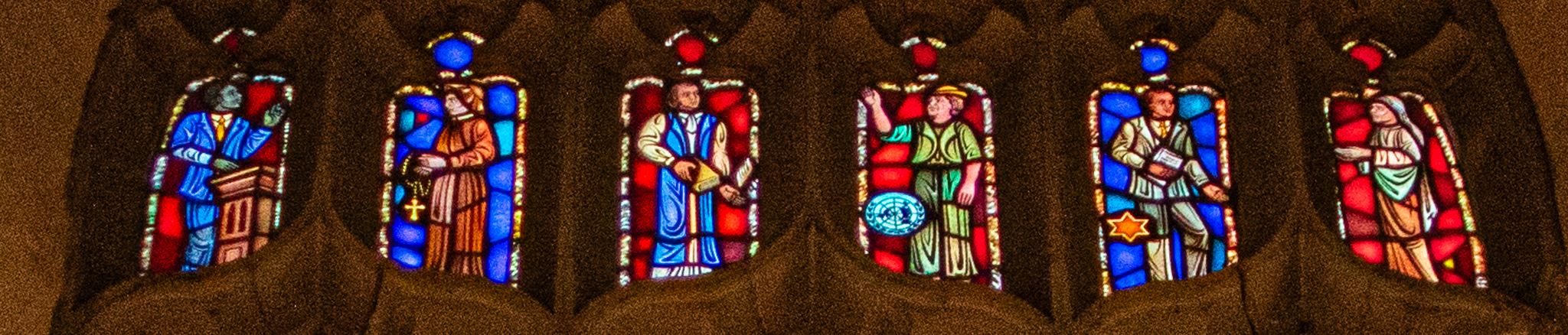
If you look closely at this stained glass window, you may see some historical figures (besides the obvious one).
In the second row of the stained glass window, there are images of Martin Luther King, Ghandi and Mother Teresa.
Grace Church is involved in many activities and causes such as the Abundant Life Garden which engages children in scripture and agriculture as well as many other causes.
Parking: There are several parking lots and garages in the Salem area
Universally Accessible: No, many of the homes do not have ramps or universally accessible entry
The second home on the Christmas In Salem tour is the Thomas Whittredge House. Thomas Whittredge, a shipmaster from Salem, purchased the land for the home on November 30, 1799. The house was finally built in 1802. The boundaries of the from the original deed have not changed an inch.
Fittingly, this home on Federal Street is built in the original Federal style which was popular from 1780 to 1820. The front facade is most noticeable due to its Doric pilasters elliptical fanlight above the door. Originally, there was a two story stable and a shed and outhouses on the property.
Whittredge was a master mariner who traded in the mid-Atlantic states. He owned two vessels that served as privateers during the war of 1812. He and his wife Sarah, a native of Danvers, were married in 1793. They lived in the home with their 4 children until Thomas’ death in 1829. Sarah lived in the house until 1841 when she transferred the deed to her daughter and son-in-law. The house, which was originally a single family home, was divided into a two-family home around 1885.
During the 1990s, a fire damaged the home. It would not be fully rebuilt until 20 years later.
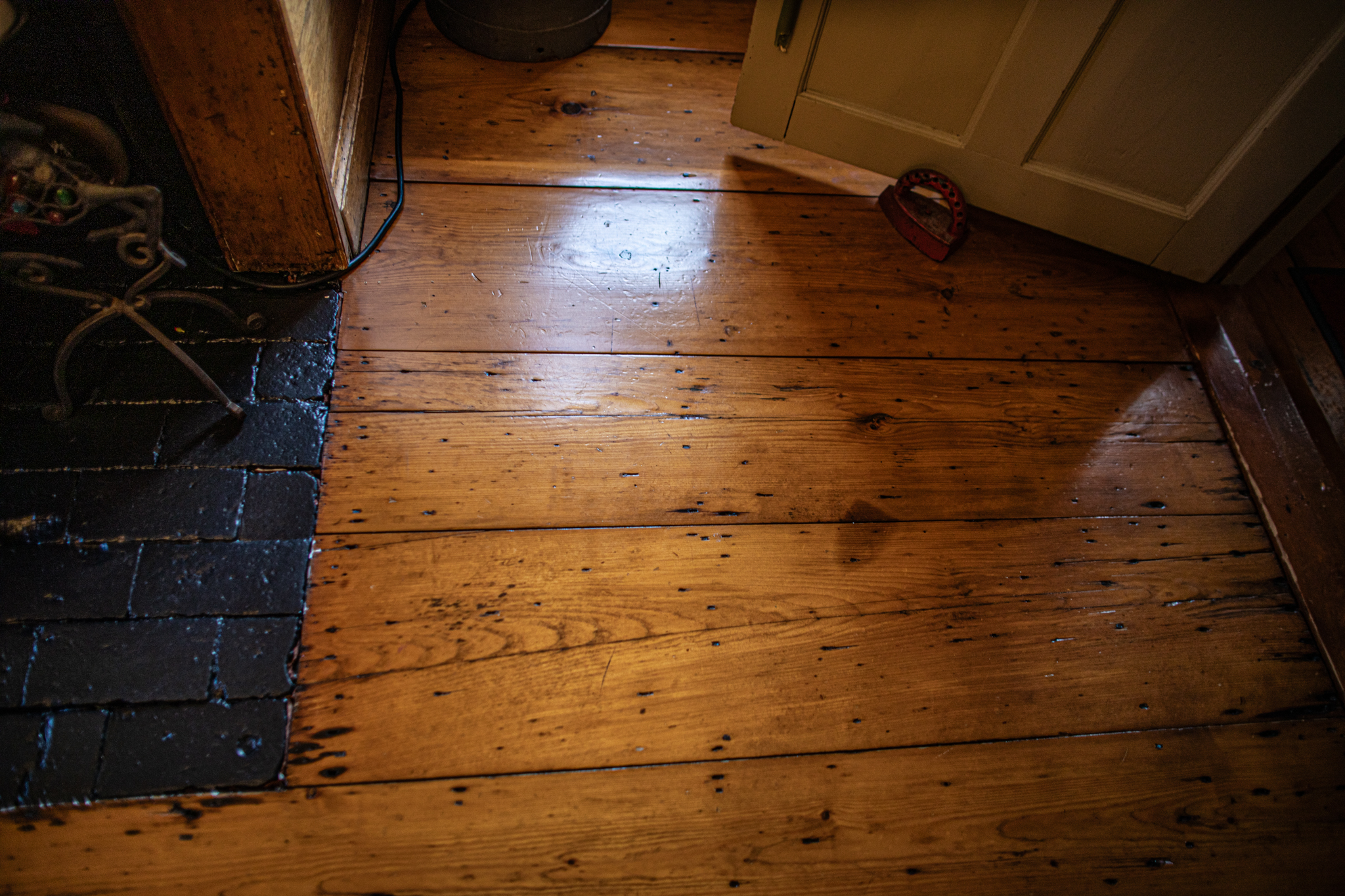
The home still has its original floors in the fireplace area.
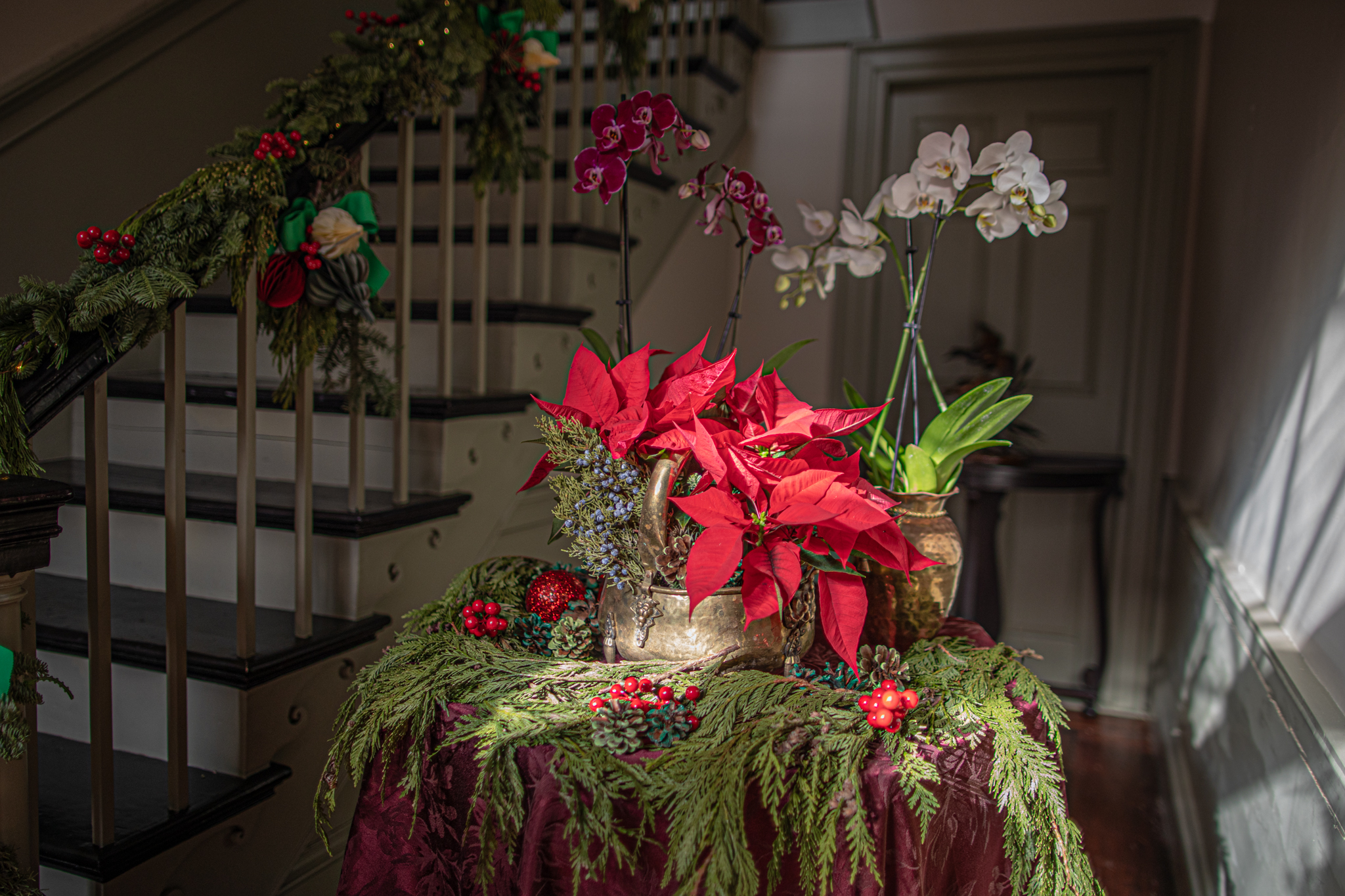
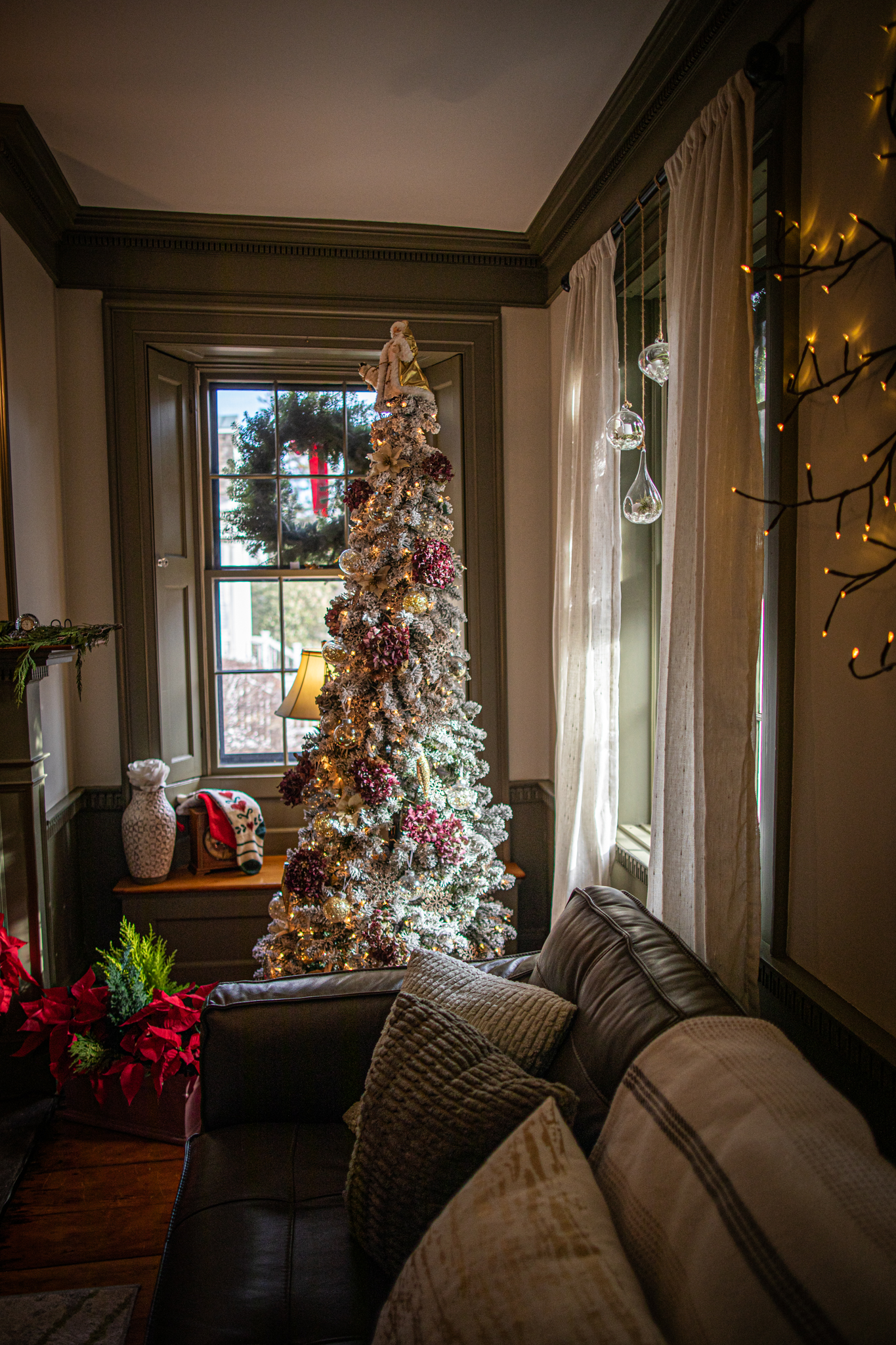
The house was dressed up for the holidays with bow, ribbons and a variety of lights!
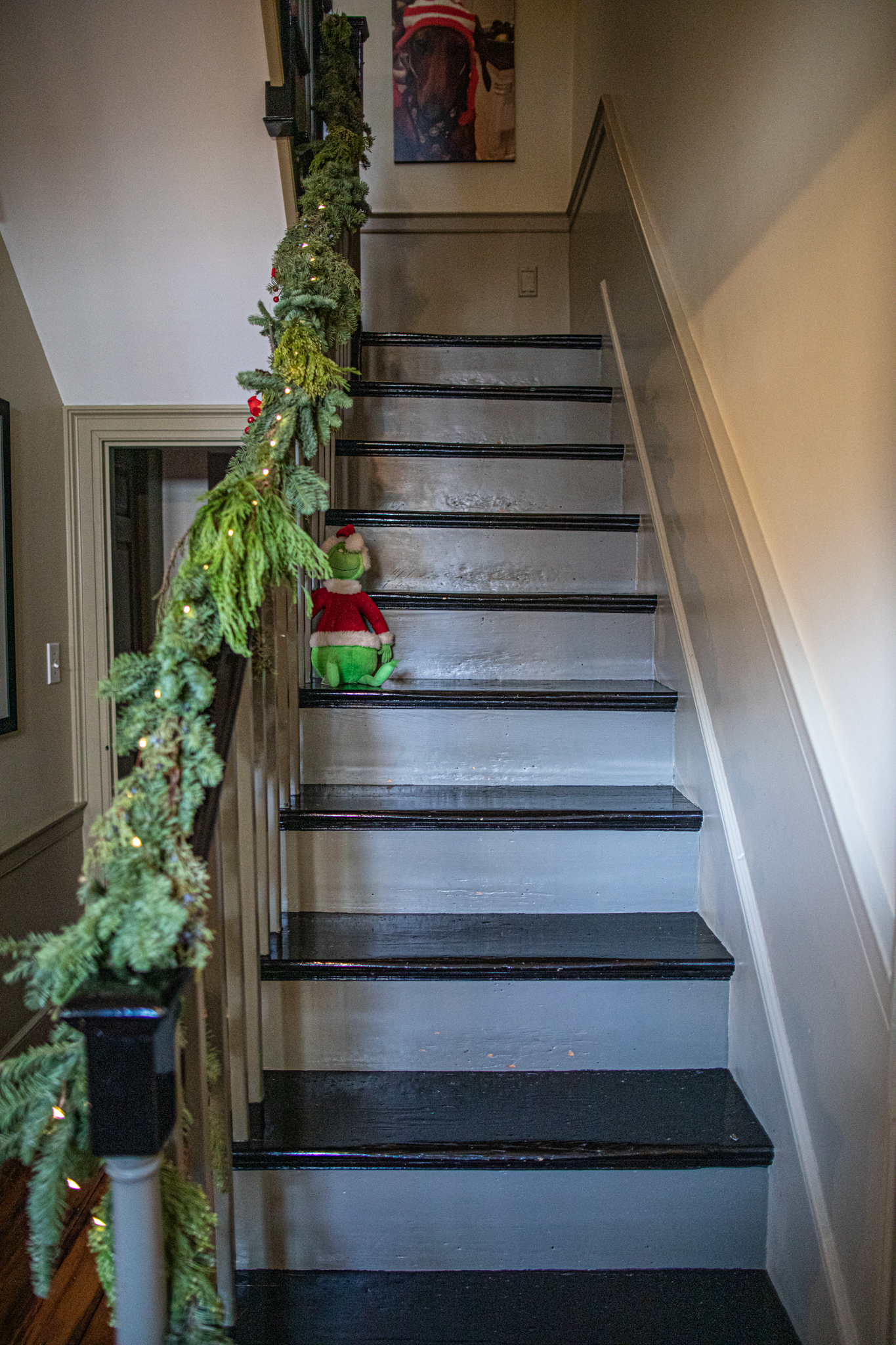
If you look closely up this stairwell, you might see a portrait of one of the family members!
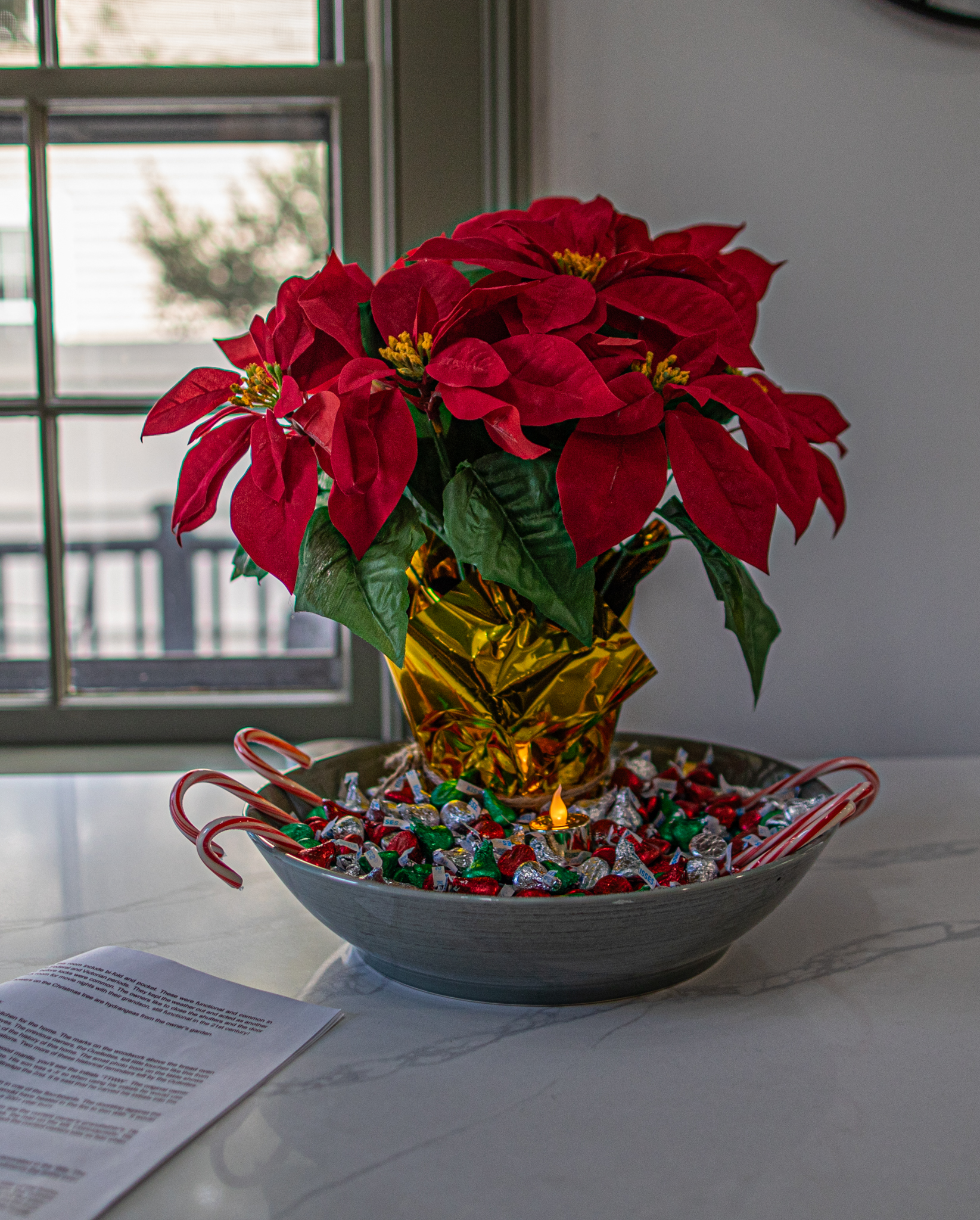
And what holiday home would be complete without a poinsettia! The best part were the free treats in the bowl!
Some of the visitors got into the holiday spirit and wore their best headwear for the event!
Parking: There are several parking lots and garages in the Salem area
Universally Accessible: No, many of the homes do not have ramps or universally accessible entry
When you ask most people what they think of when they think of Salem, MA they will most likely reply with something about Halloween and witches. However, Salem has become an all year round attraction. In fact, the Christmas in Salem event has quickly become one of the more popular events in Salem.
Christmas In Salem is a series of guided tours at 13 historic homes and buildings in Salem, MA. In these series of posts, I will take you all on these tours and give some observations from my perspective through my photos and the information provided by the informative tour hosts and the literature from this event.
The first home on the Christmas In Salem tour is the Cotting-Smith Assembly House (aka as the Assembly House) on Federal St. This house was used as the headquarters of the tour. People registered for the tour by showing their receipt and, upon registering, were given a handbook with the addresses and writeups for each building.
Built in 1782 as a “Federalist Clubhouse”, the Cotting-Smith Assembly House was used as a ballroom and concert venue as well as a place to host lectures and other events for Salem’s elite. The Marquis de Lafayette was said to have danced in that very house in 1784 and it is said that George Washington dined there in 1789. While the original documentation for the building is not available, it is believed the house was essentially plain and functional in its original state in 1782.
The building was originally funded as a joint stock venture. Once it was rendered obsolete in 1792, Jonathan Waldo, one of the original developers, obtained full ownership. Waldo then sold the house to Samuel Putnam in 1794. Either Waldo or Putnam hired renowned Salem architect and craftsman Samuel_McIntire to remodel it as a private home. McIntire added 4 pillar of iconic pilasters to the second floor facade and a pediment centered above. The Assembly House is said to the the only wooden structure designed by McIntire with a pavilion front. The house was later remodeled during the 1830s or 40s. During this time the Greek Revival portico was added to the front of the house featuring an ornate frieze of carved grape vines by master carpenter Joseph True. The Assembly House, which is now owned by the Peabody Essex Museum, is listed on the National Register of Historic Places.
The building acted as the meeting place for visitors to get their handbook of houses to visit and map of all of the buildings on the tour. So, there wasn’t much decor at this particular home. However, I did see some photo worthy things.
Sometimes the little things can tell a lot about a home. For instance, this wallpaper spoke to the trade relations between Salem and other countries. This wallpaper, which shows what looks like a rendition of life and culture of the people of Asia, may have been an example of how the owners traveled to certain parts of Asia. It was not unusual for people to put up wallpaper that reminded them of places they traveled to or traded with.
This is not an original print, though. It is a stylized representation of wallpaper from that time.
While wallpaper may not be in vogue now, it was a treasured possession of the wealthy at the time this house was built.
According to Historic New England, the earliest record of wallpaper in America is in the estate inventory of a Boston stationer in 1700, where “7 quires of painted paper and three reams of painted paper” were listed. But, only one wallpaper in Historic New England’s collection with a history in New England dates back to the 1700s. Like all early references, this was more descriptive of quantity than of design. Only one wallpaper in Historic New England’s collection with a history in New England dates to this early period. This wallpaper was later used to cover a copy book of poetry in 1783.
Initially, paper hangings, as wallpaper was called in the eighteenth century, were only available from stationer and book sellers. Or they could be custom ordered from merchants who specialized in importing luxury goods. Eventually, wall paper could be purchased from upholsterers.
Prior to 1760, only the wealthiest colonists in urban areas in New England could afford wallpaper. Wallpaper was expensive because of the process involved in making it. The rolls the wallpaper was printed on had to be made of individual sheets of paper. These sheets were glued together. Then, they were hand printed with wood blocks, one block for each color of the design.
That is what makes the Christmas In Salem event so interesting. You can learn so much about the history of wallpaper just by touring a historic home!
Please join me on my tours of all of these historic homes!
Just in time for the holiday season, 12 sixteen foot nutcrackers have been placed throughout in Boston’s Downtown Crossing area. But, these are not any regular nutcrackers.
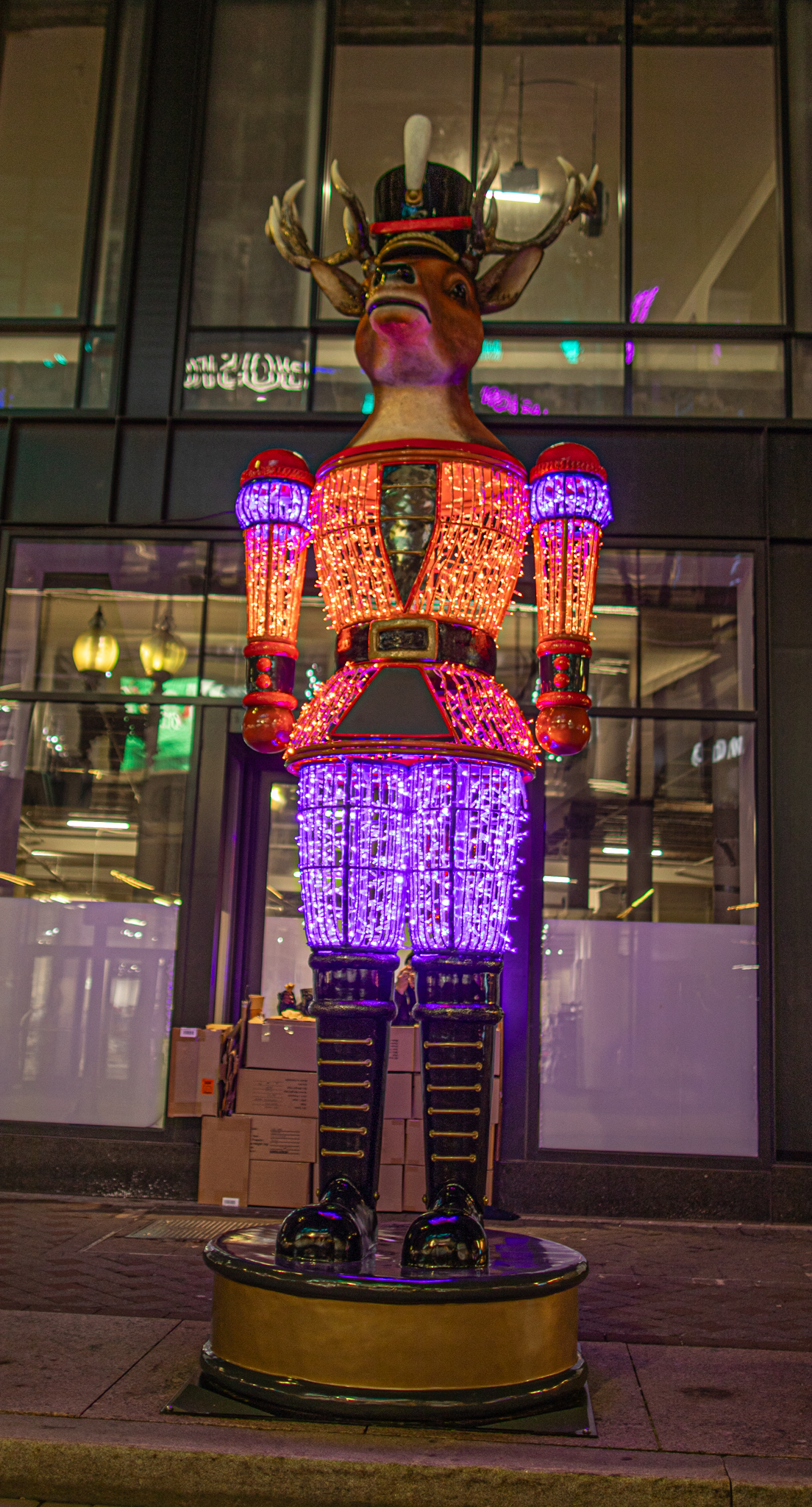
The nutcrackers, which are fashioned with similar attire one would find on an actual nutcracker, have one significant difference…they have animal heads!
The animals for the designs of the nutcrackers were selected by children during a visit with Downtown Boston Alliance President Michael J. Nichols at a local Boston day care center. Some of the animals they suggested using for that statues include an elephant, a bear, an eagle, a duck (specifically a mallard) and a dog among other animals.
Most of the nutcrackers, 7 to be exact, are located on Washington St. For a point of reference, I am showing the statues from the area of Washington St near the Paramount and going up Washington St. I’m including a photo of the Paramount just because, even though it’s arguably one of the most over photographed spot in Boston (I see you Acorn St and Fan Pier).
The first statue is a polar bear. It is located by the Suffolk University Modern Theater (and the Paramount Theater).
This cute little cat is located near the WINDR Museum on Washington St. I don’t like that smile. It looks like he or she got into some cat nip!
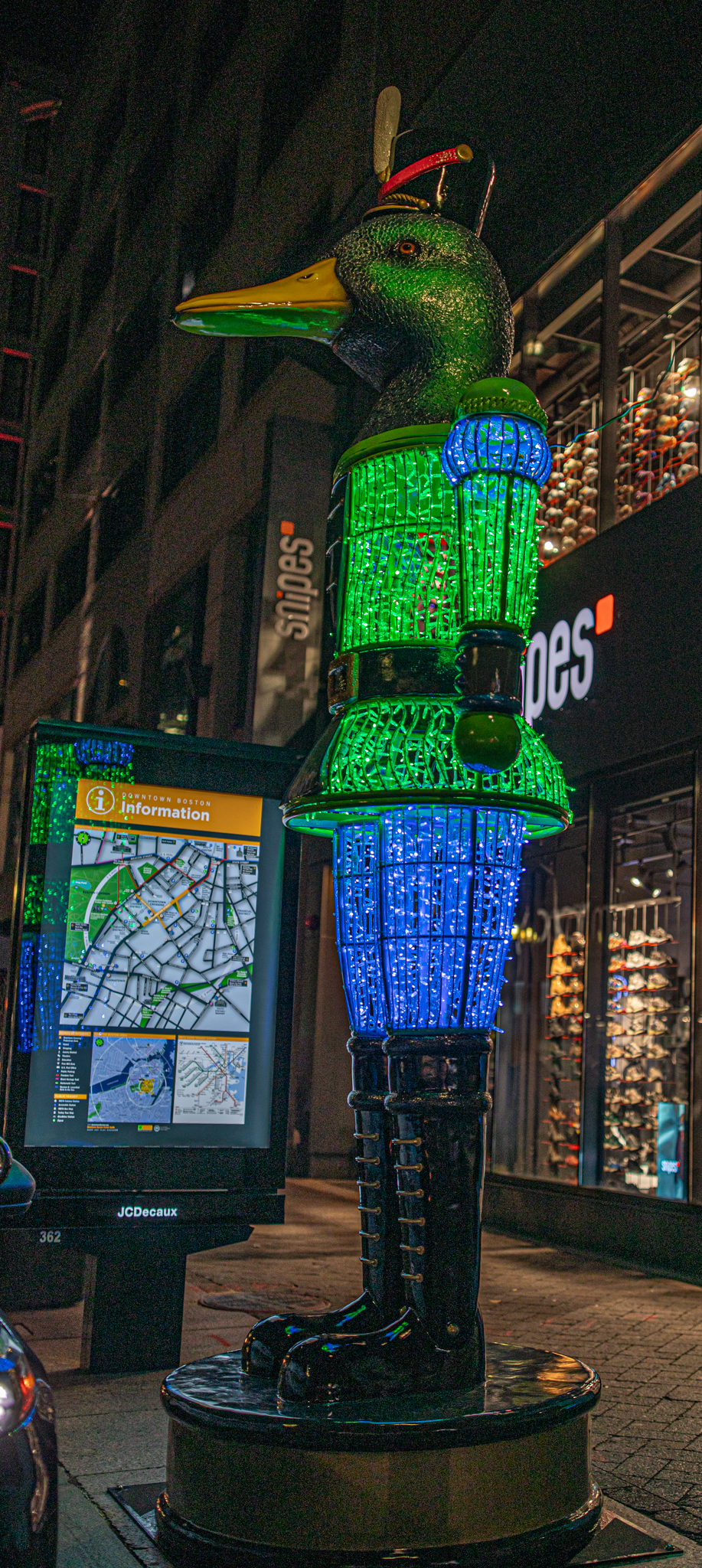
This mallard is located near Snipes (467 Washington St). Sometimes it was difficult to get a straight on photo of these statues because cars were parked in front of them. I actually just walked around and waited for the vehicles to move. But, taking a photo from an angle was a better option for this statue because the bill of the duck looks better from an angle.
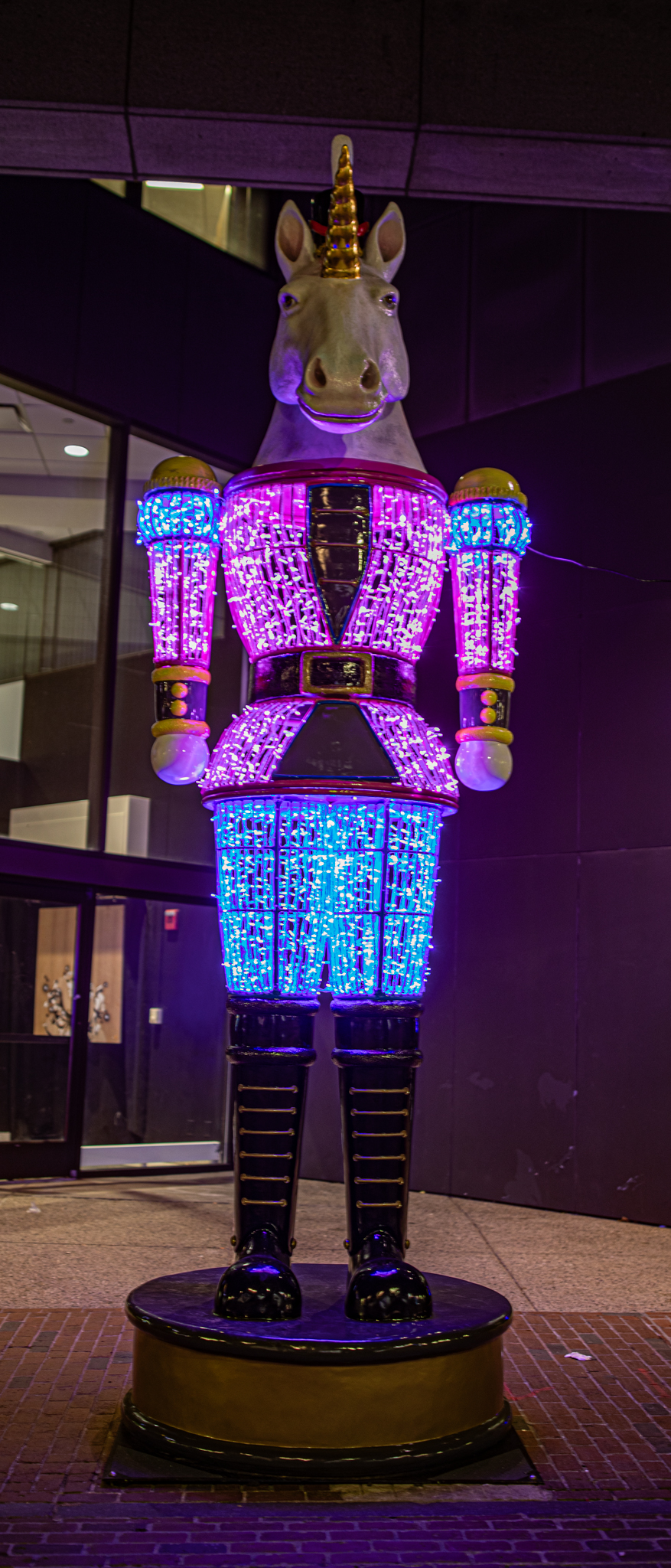
I found this unicorn on Winter St after I took the next left after the mallard.
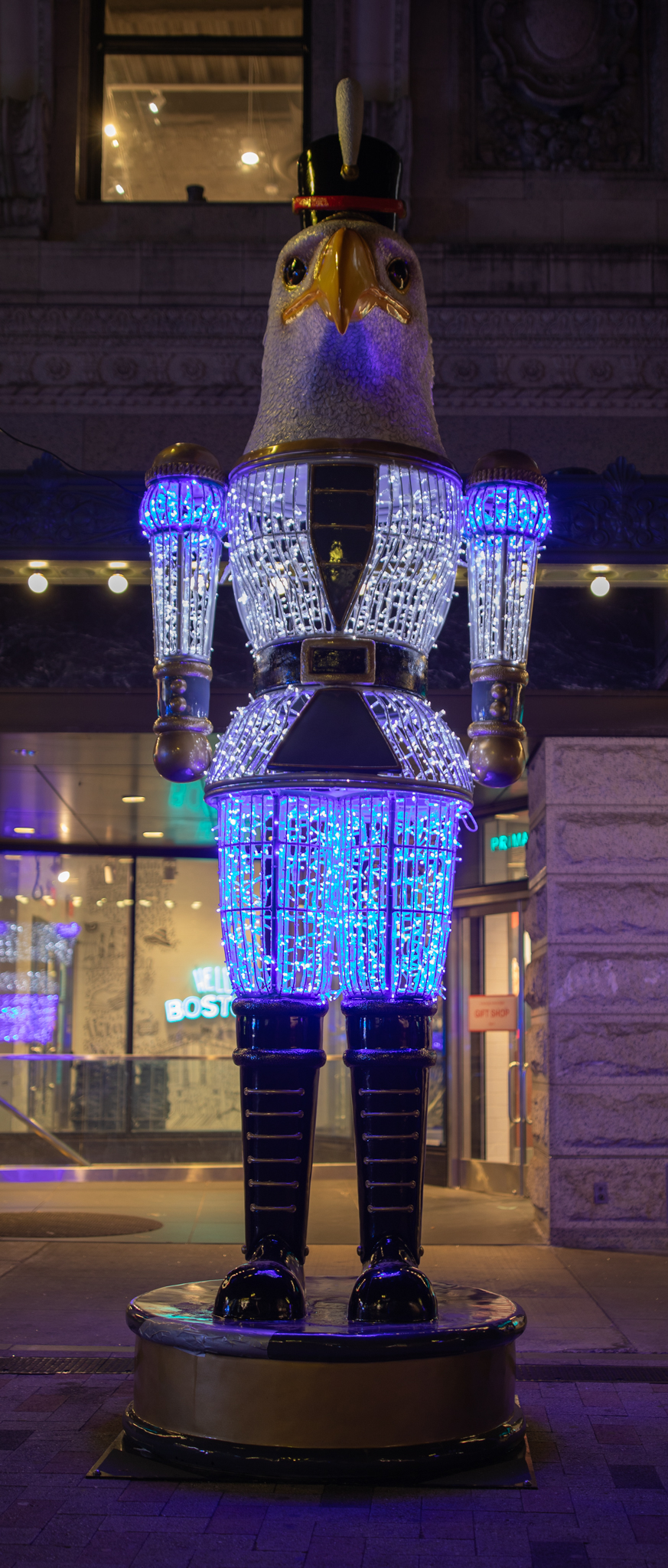
Then, I walked back towards Washington St and crossed over to Winter St where I found these 4 statues of a rhino, a horse, an elephant and an eagle near Macy’s (450 Washington St).
Then, I continued back onto Washington St to photograph the remaining statues. I found this deer near the Gap and DSW stores.
Just as an fyi, the attached map is not accurate. The map shows the dog as being at this location.
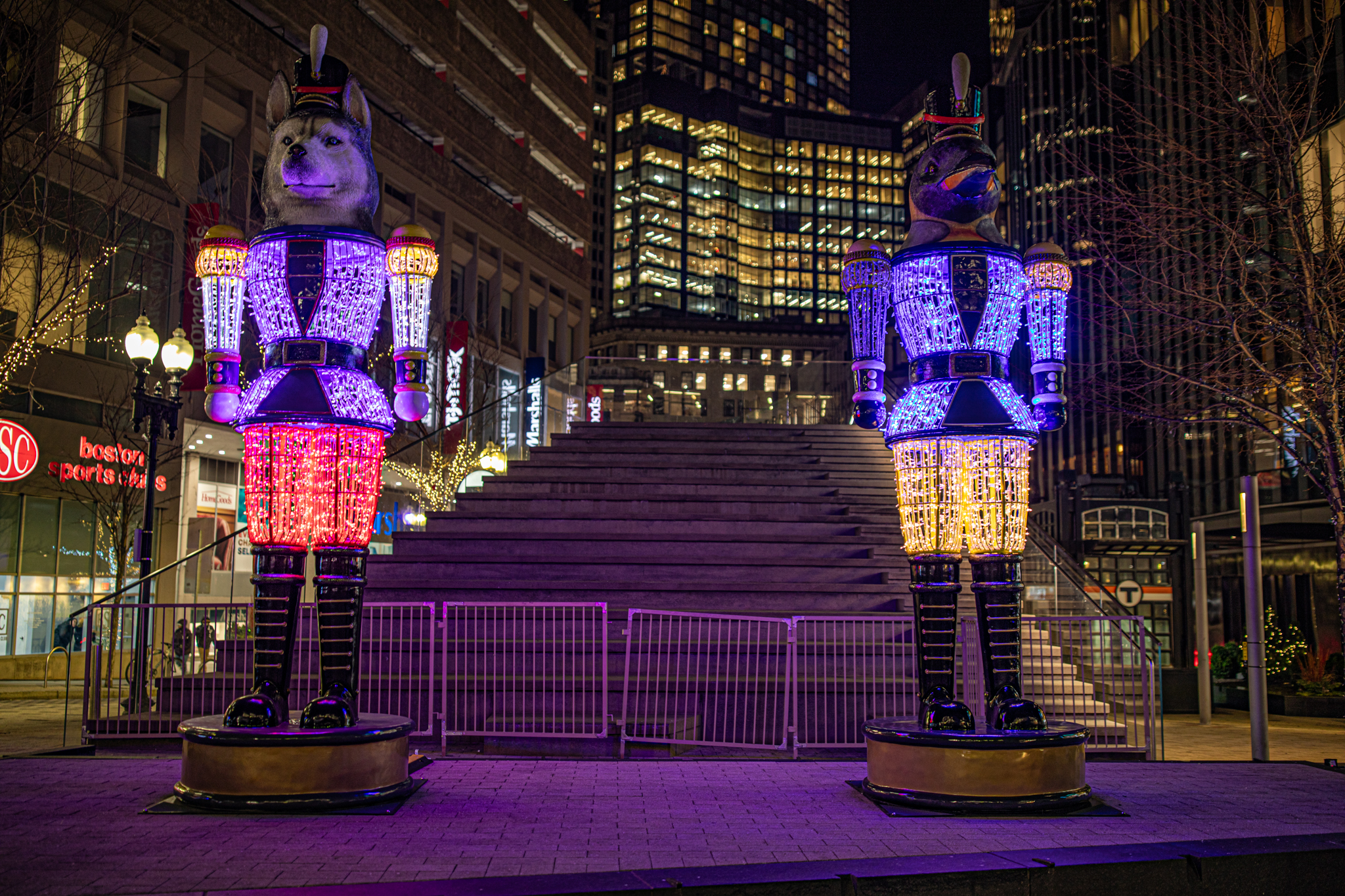
These 2 statues of a dog and another duck are located at the popular stairs between the TJ Maxx and Old Navy. I liked how the buildings looked in the background.
The last statue I found was of this beer near the Jewelers Building (333 Washington St)
All of the statues are easy to find and accessible to all. And I love the little accessories like the hats and the epaulets on their shoulders! I also appreciate how some of the animals seem to be talking or making faces in some cases. The best part, though, is the lights, of course. While you can view them day or night, the best time to view them is at night when the colors stand out more. However, the features may be easier to see during the daylight hours. But, don’t wait too long to see them. The statues will only be there until Jan. 2, 2025.
Of course, Boston was decked out with Christmas decor during my visit! So, as a bonus, I am adding this photo of one of the stars installed near one of the main streets in the city.
Summary: The Mehla Shriners hosted their annual Feztival of Trees to raise funds for their charitable causes.
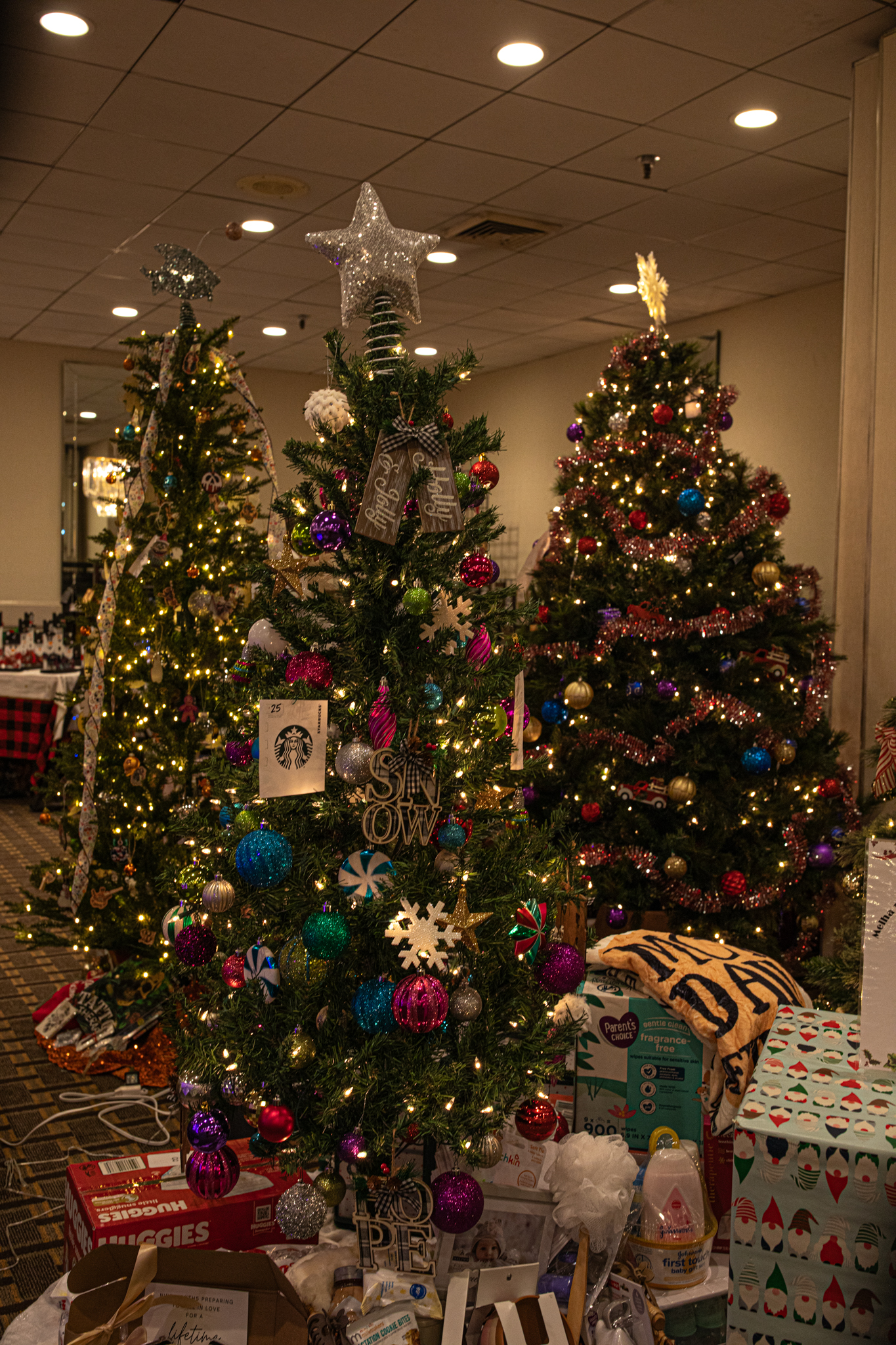
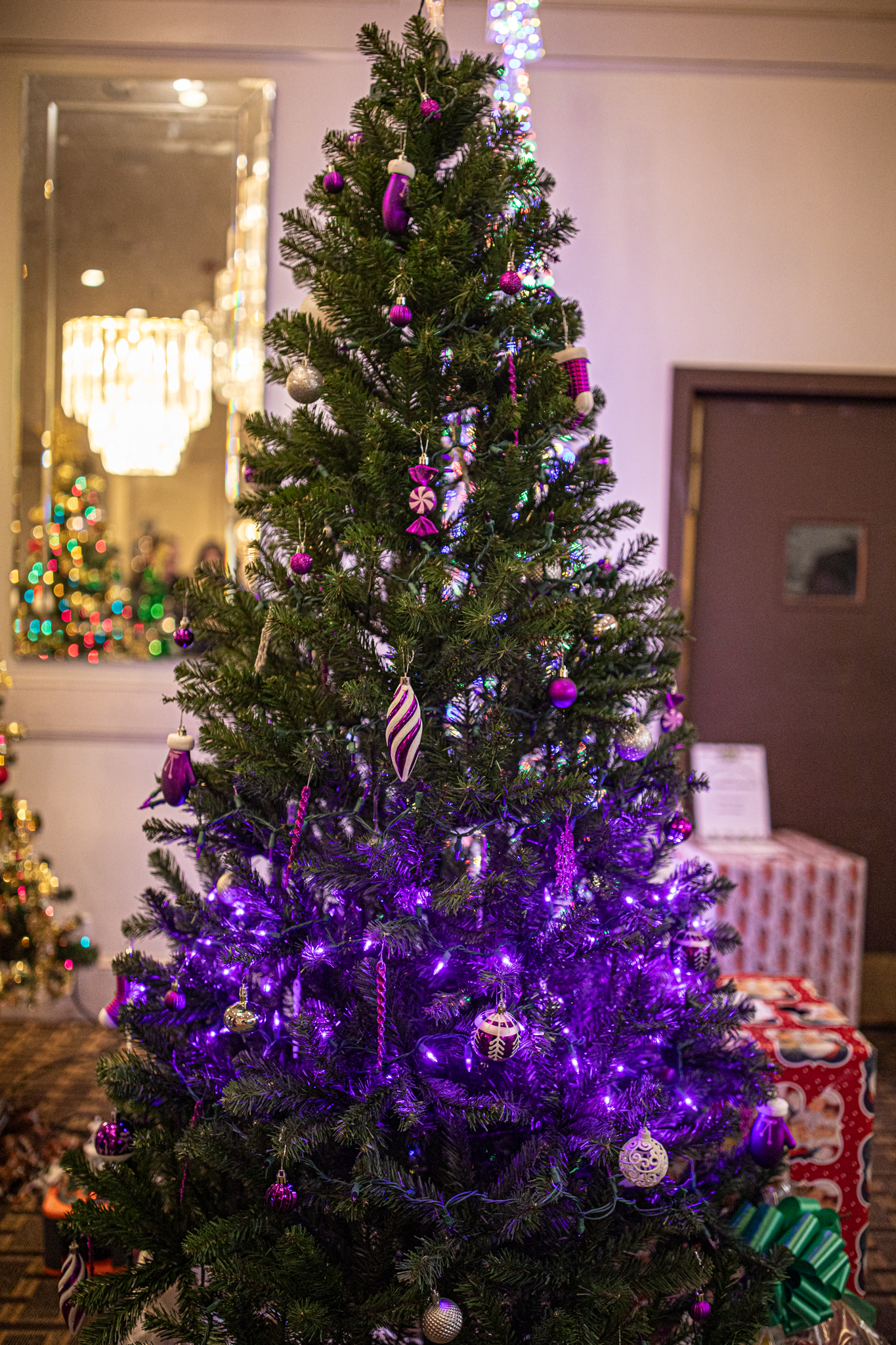
Trees were aglow in Springfield at the 2024 Feztival of Trees. As the name suggests, the festival was run by the Melha Shriners.
There were an array of different trees and wreaths to see.
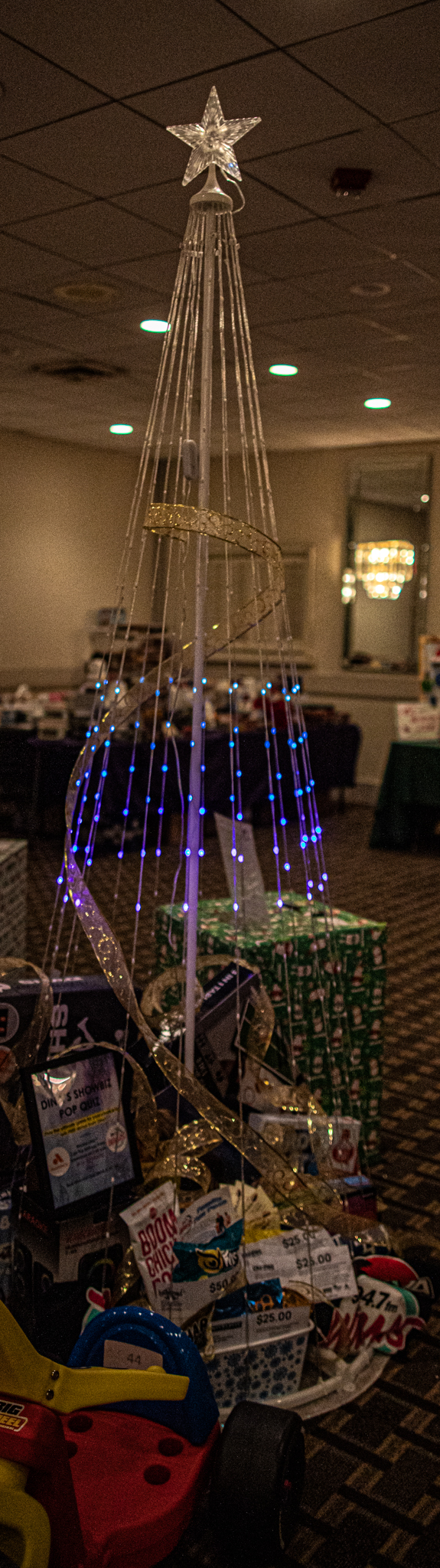
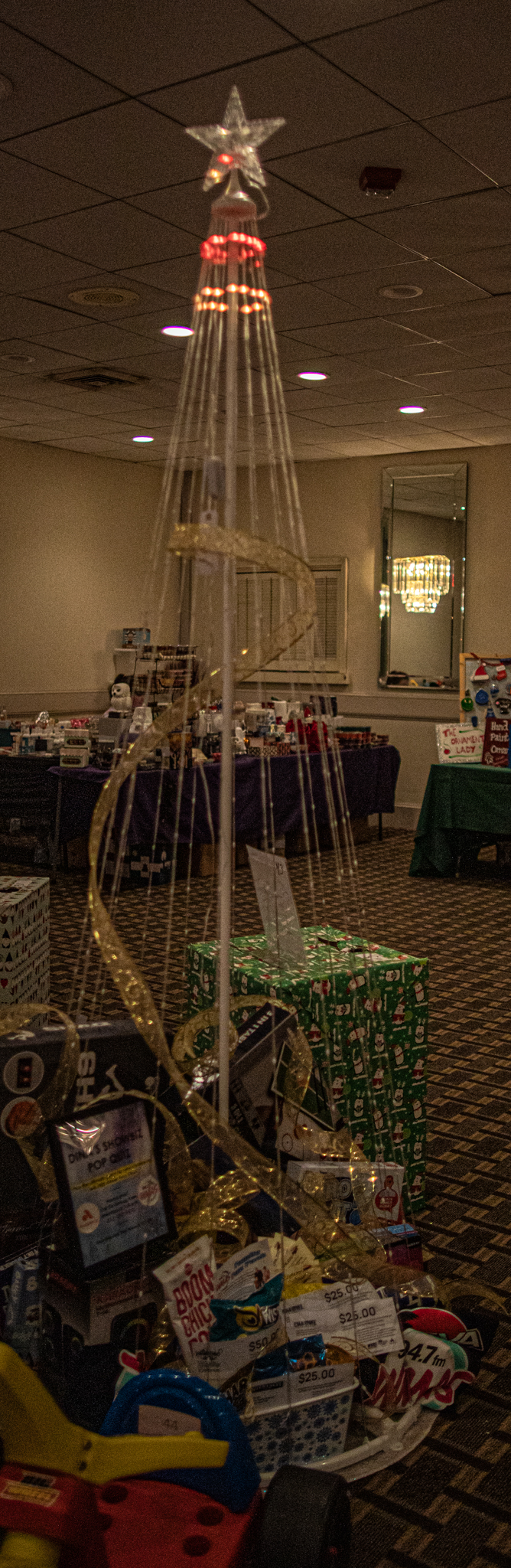
The trees that lit up were fun to watch!
Visitors could enter a raffle for their favorite trees. And there were many to chose from!
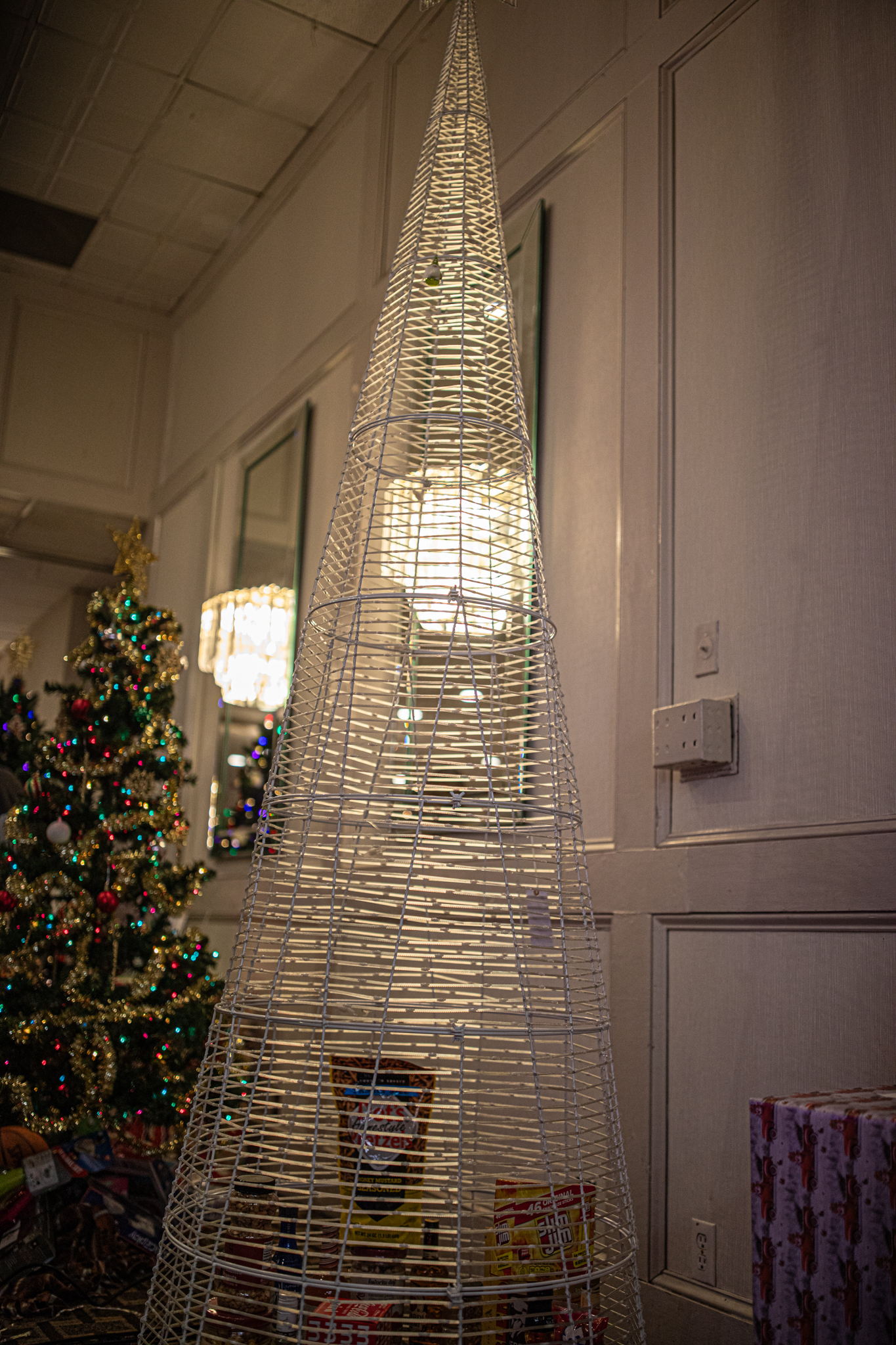
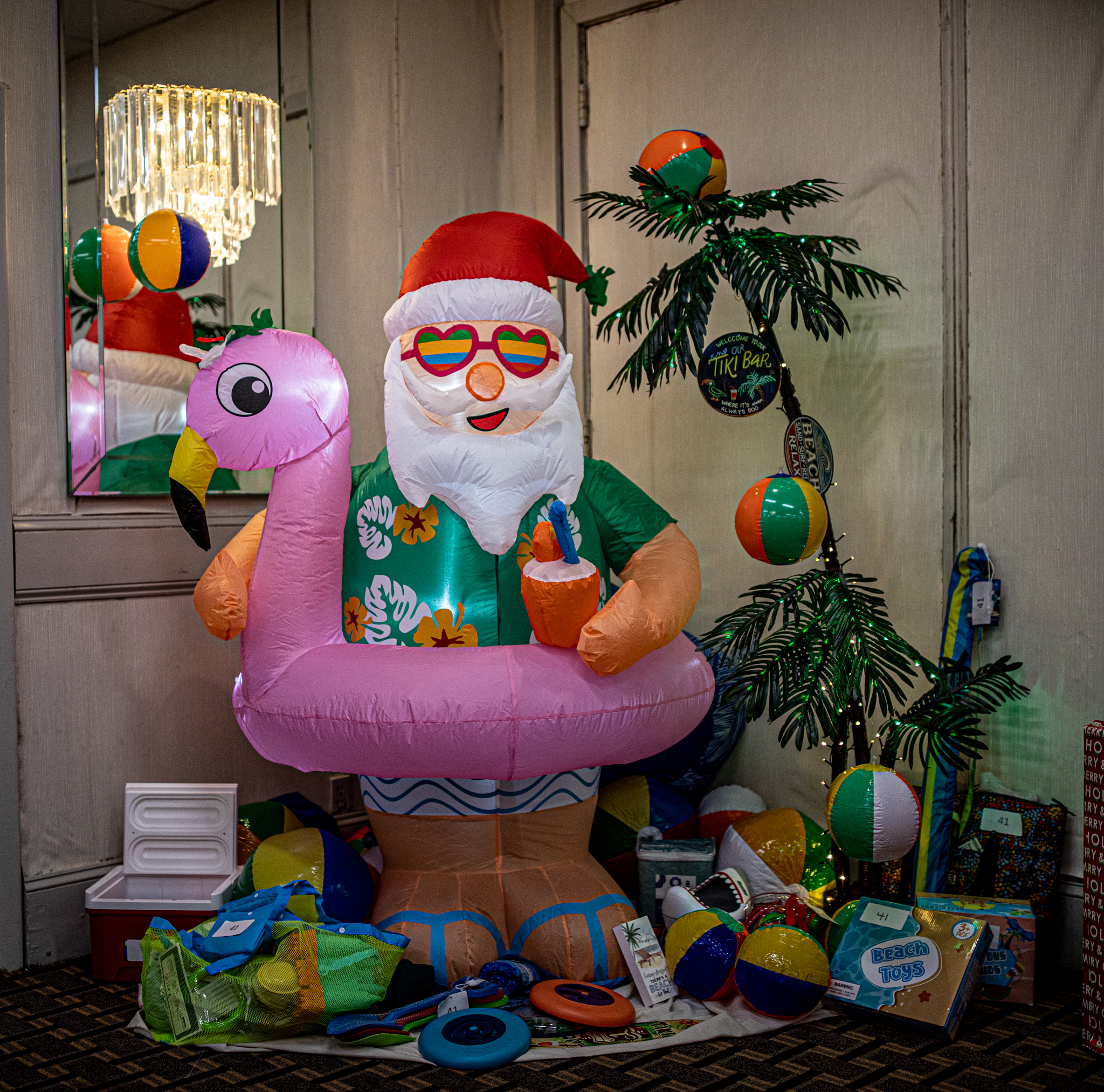
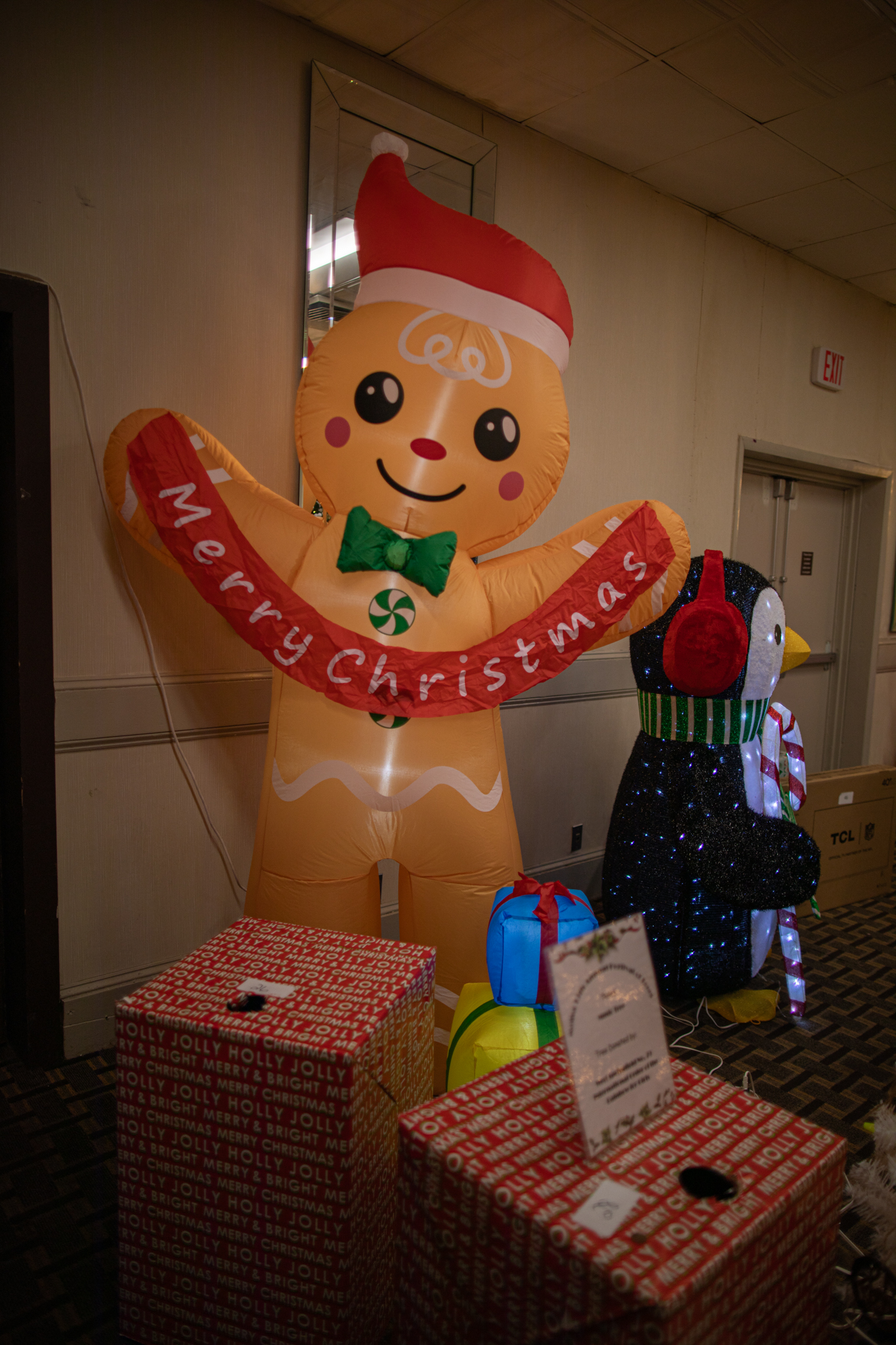
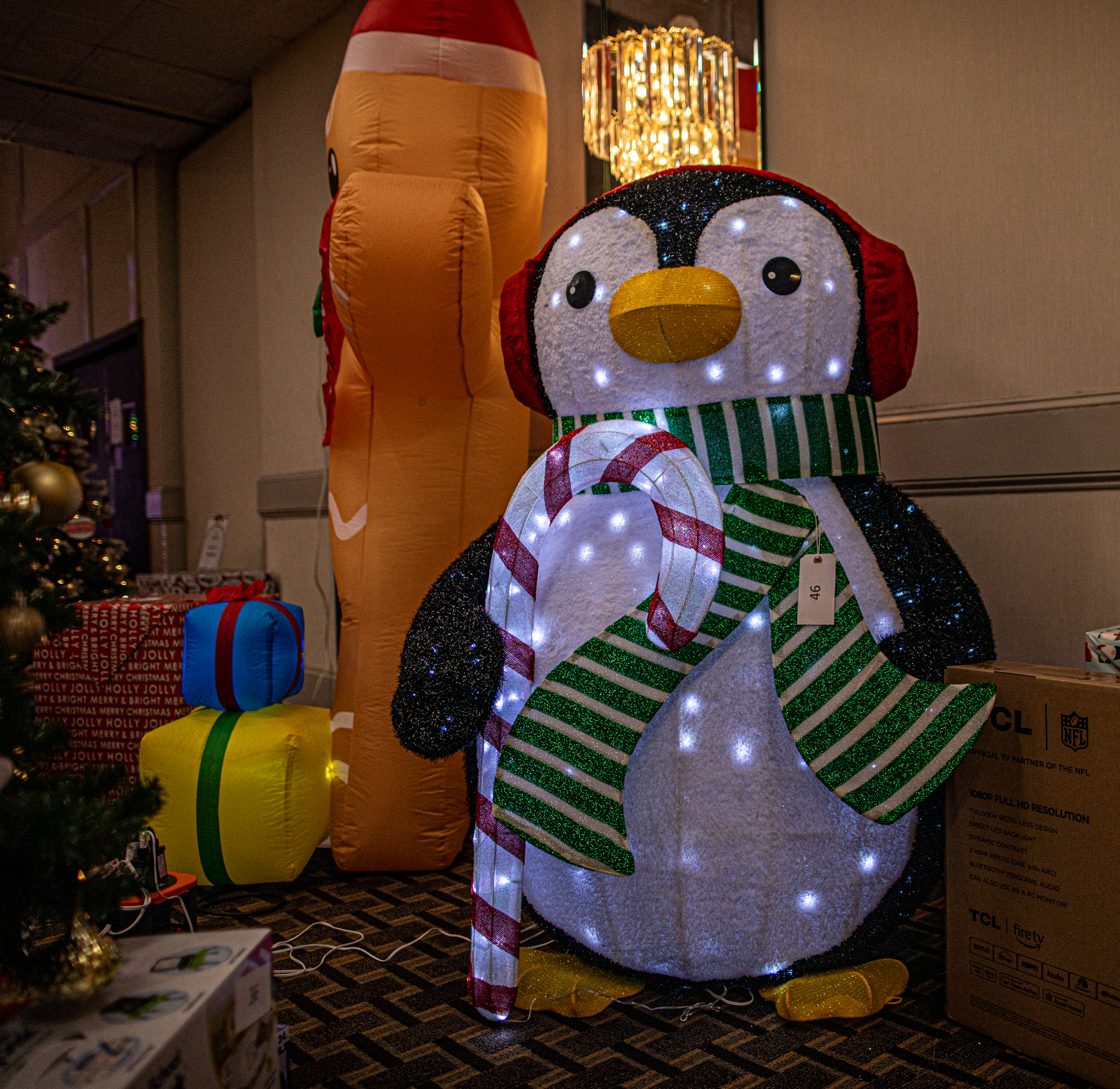
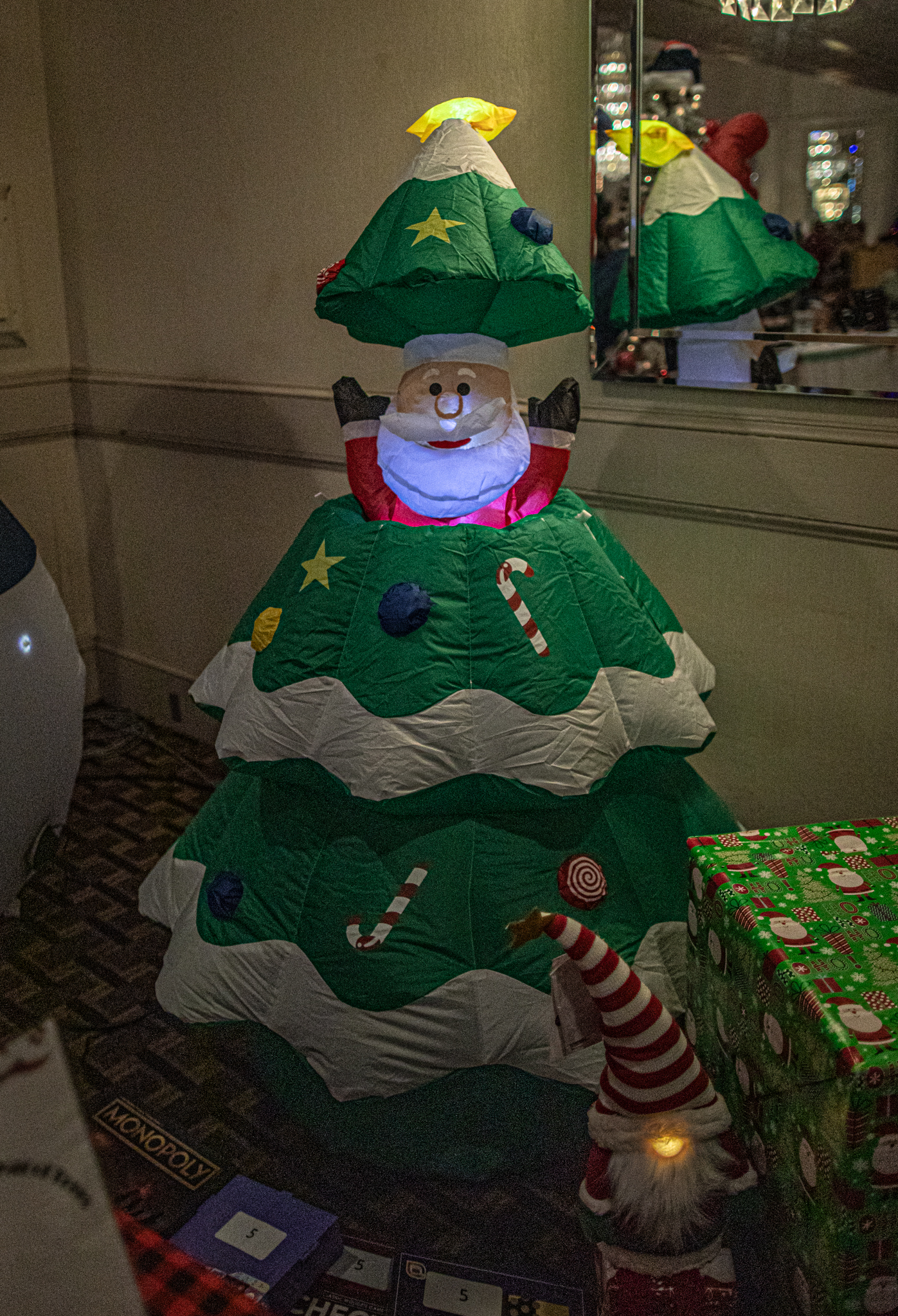
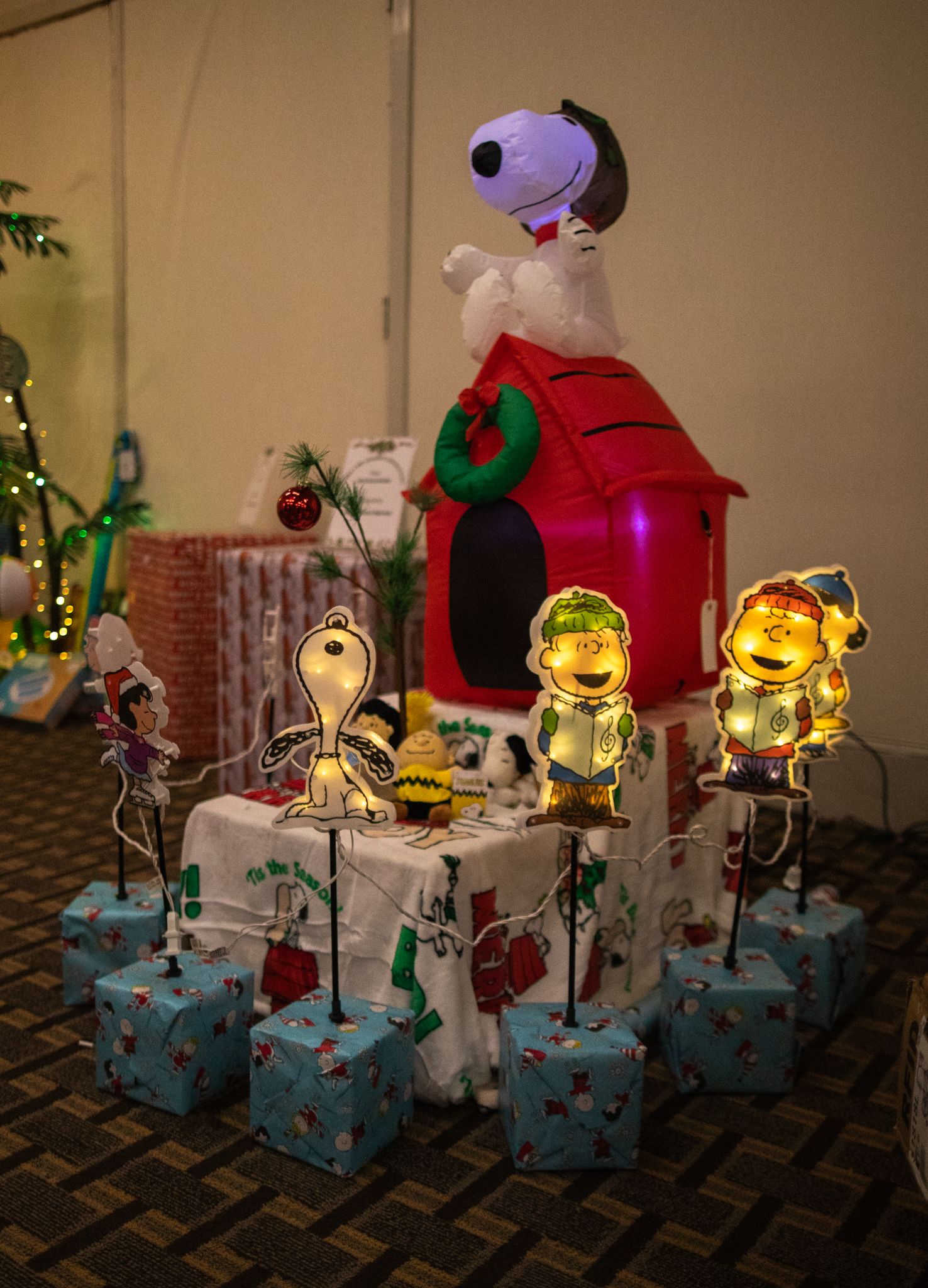
Some of my favorite decorations were not traditional trees or not even trees at all like this “ladder tree” and some of the inflatable decorations.
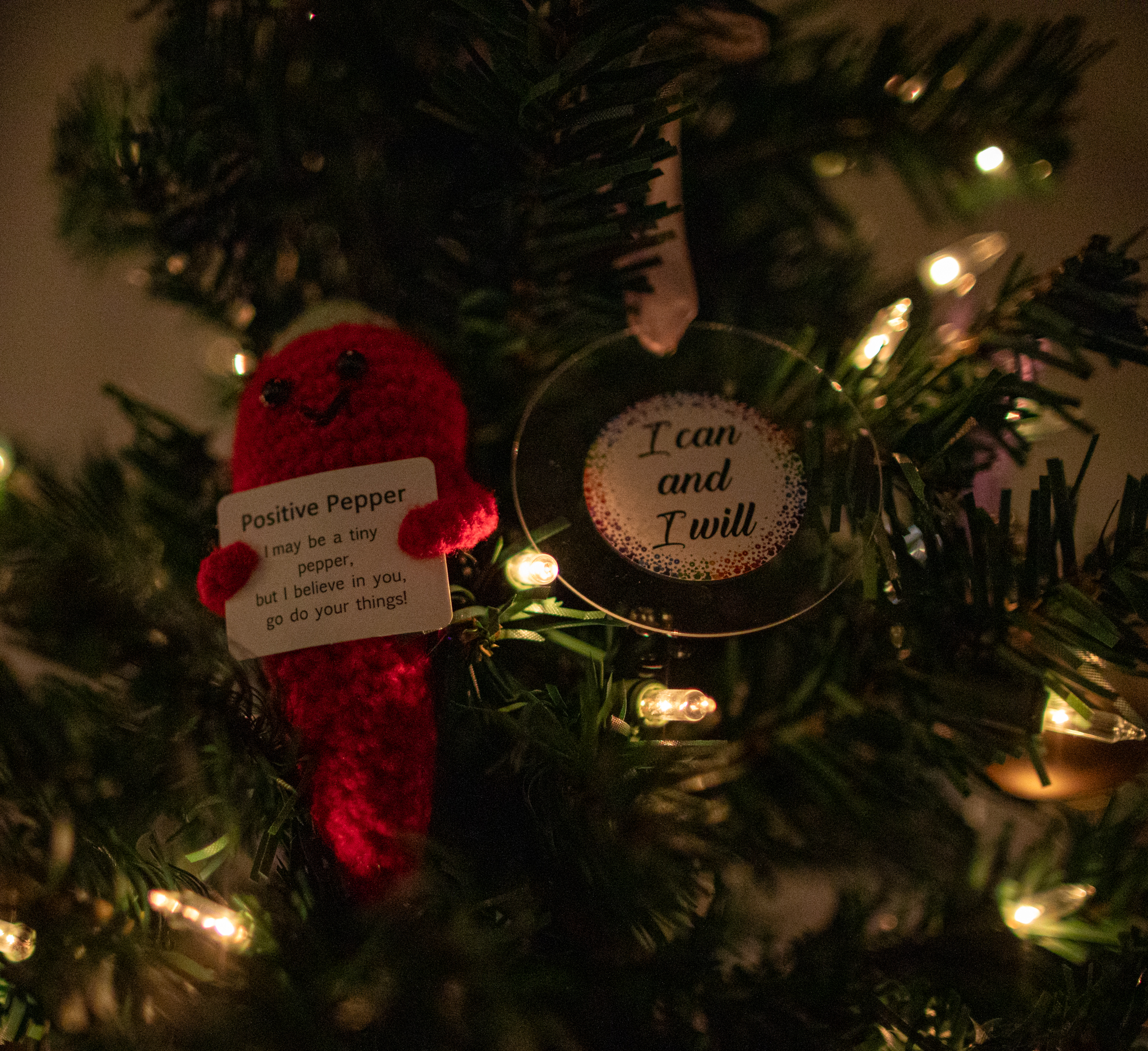
The ornaments and decor were very festive and at times inspiring!
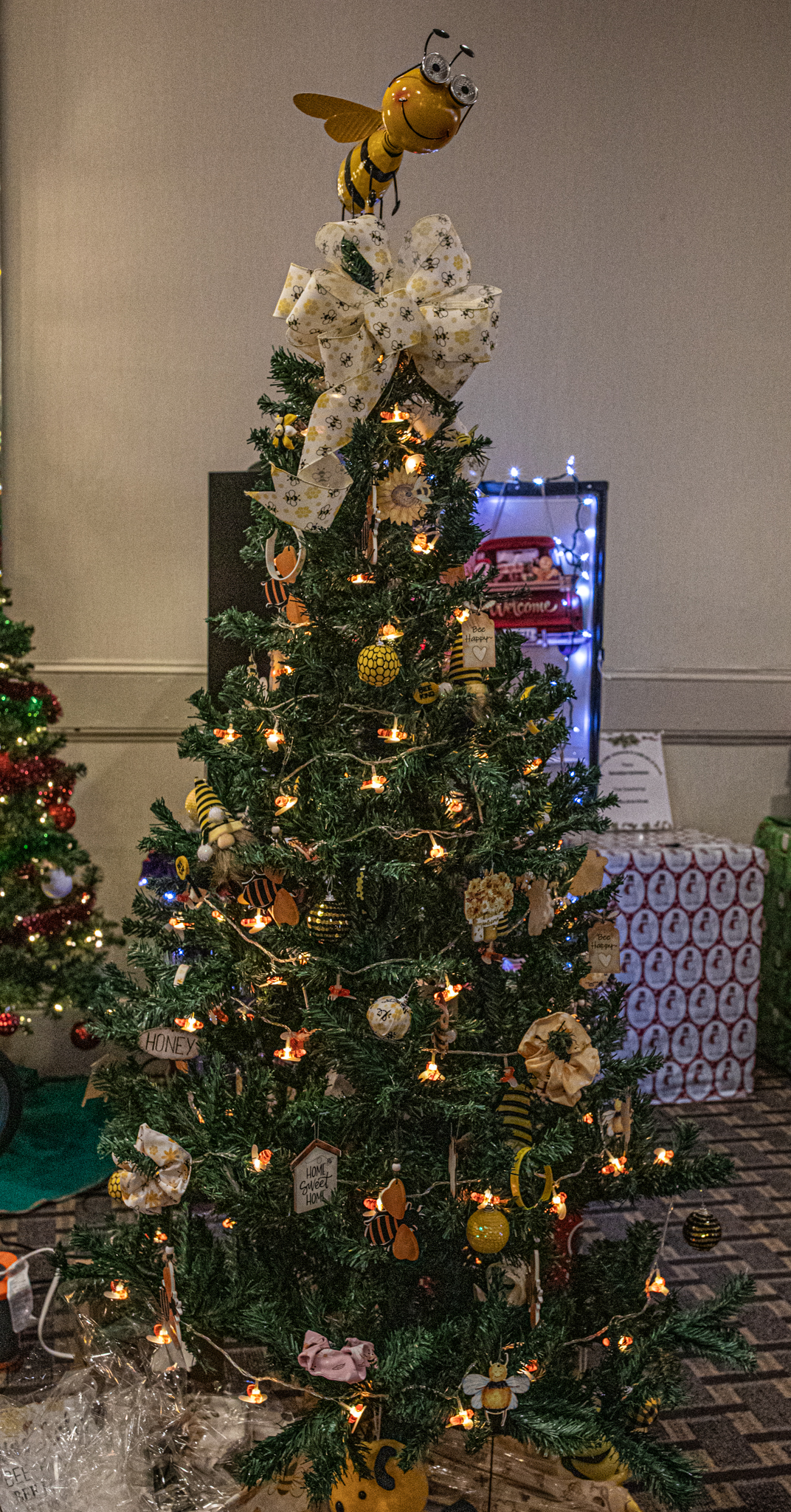
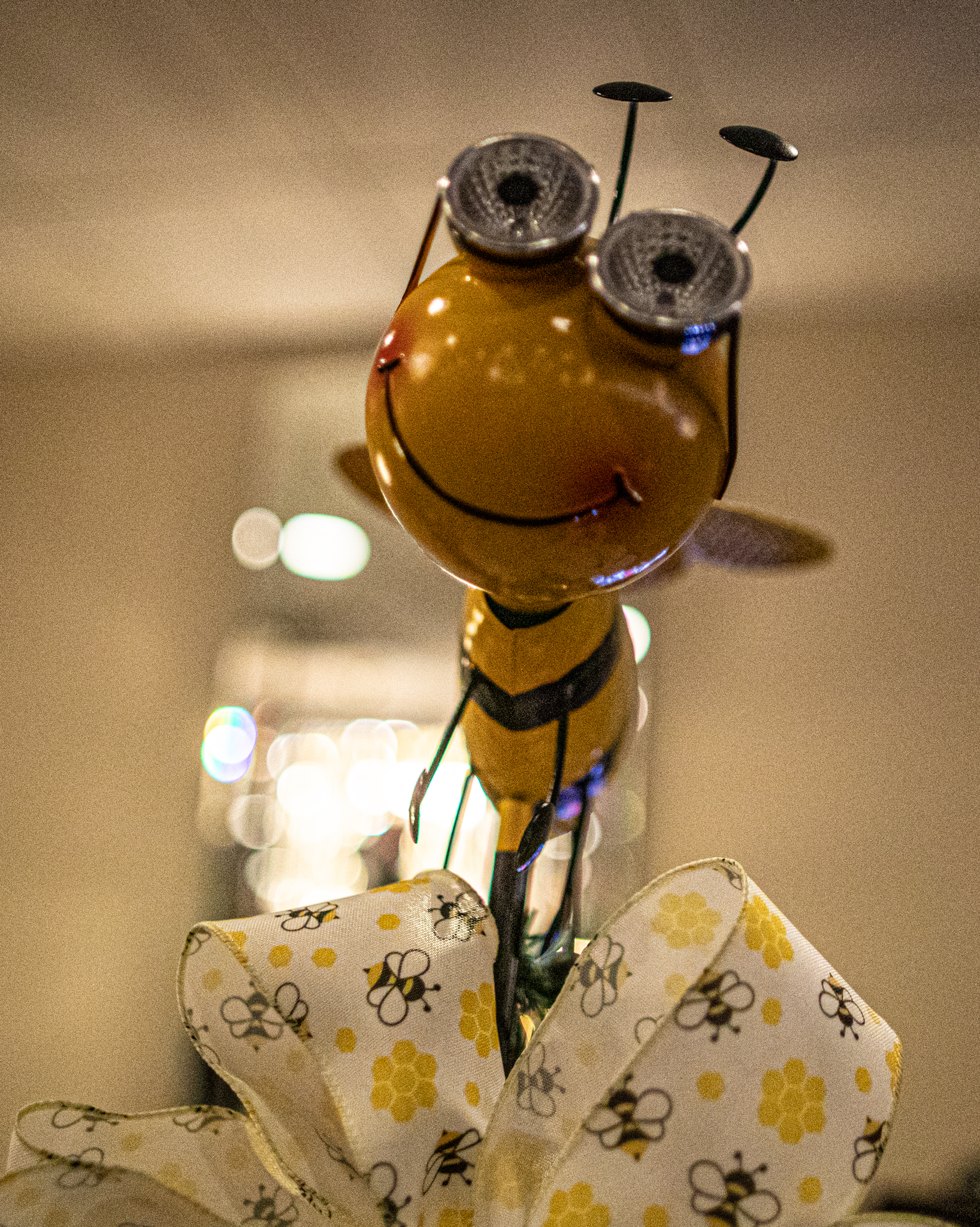
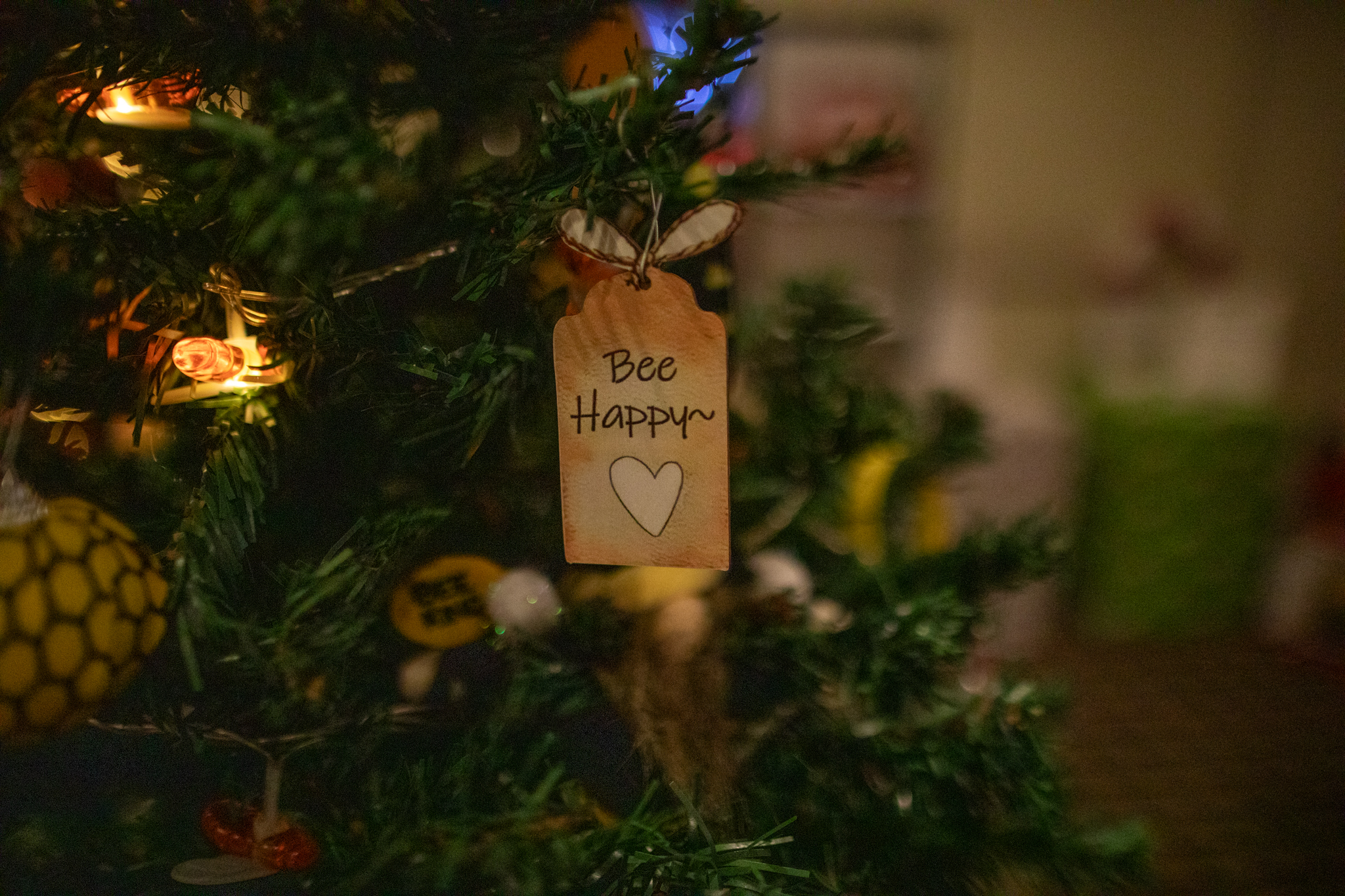
Some of the trees had themes. This tree had a bee theme.
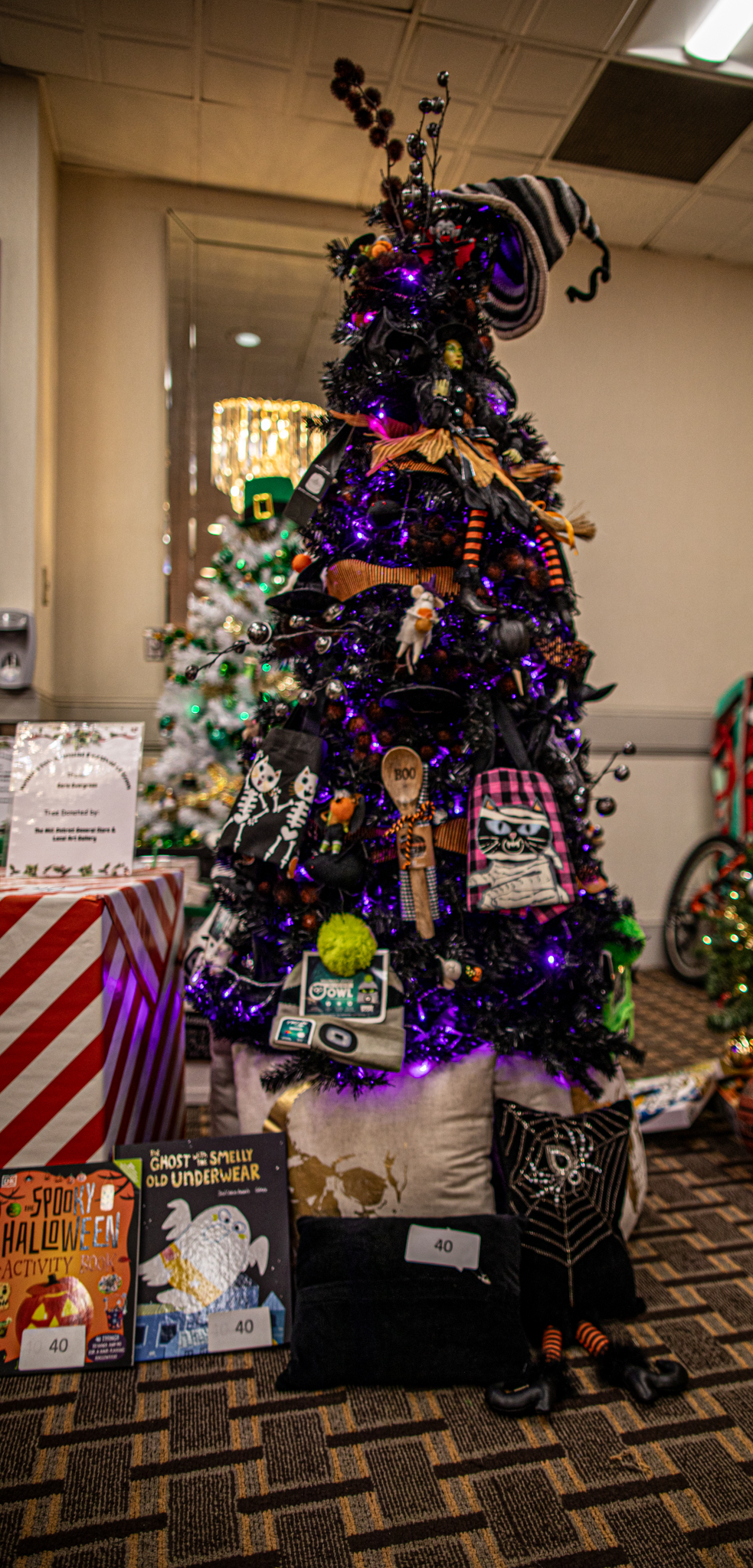
This was a Halloween tree!
And there was this Irish/St Patrick’s Day tree!
One particular themed tree stood out. “Snacking Around the Christmas Tree” was decorated by Ed Lyons in memory of his wife of 49 years. A variety of snacks such as M&M’s, Lay’s potato chips and Frito’s (his wife especially liked chips) hung from the tree. Ed used to jokingly call them “stinky snacks” because of their strong odors!
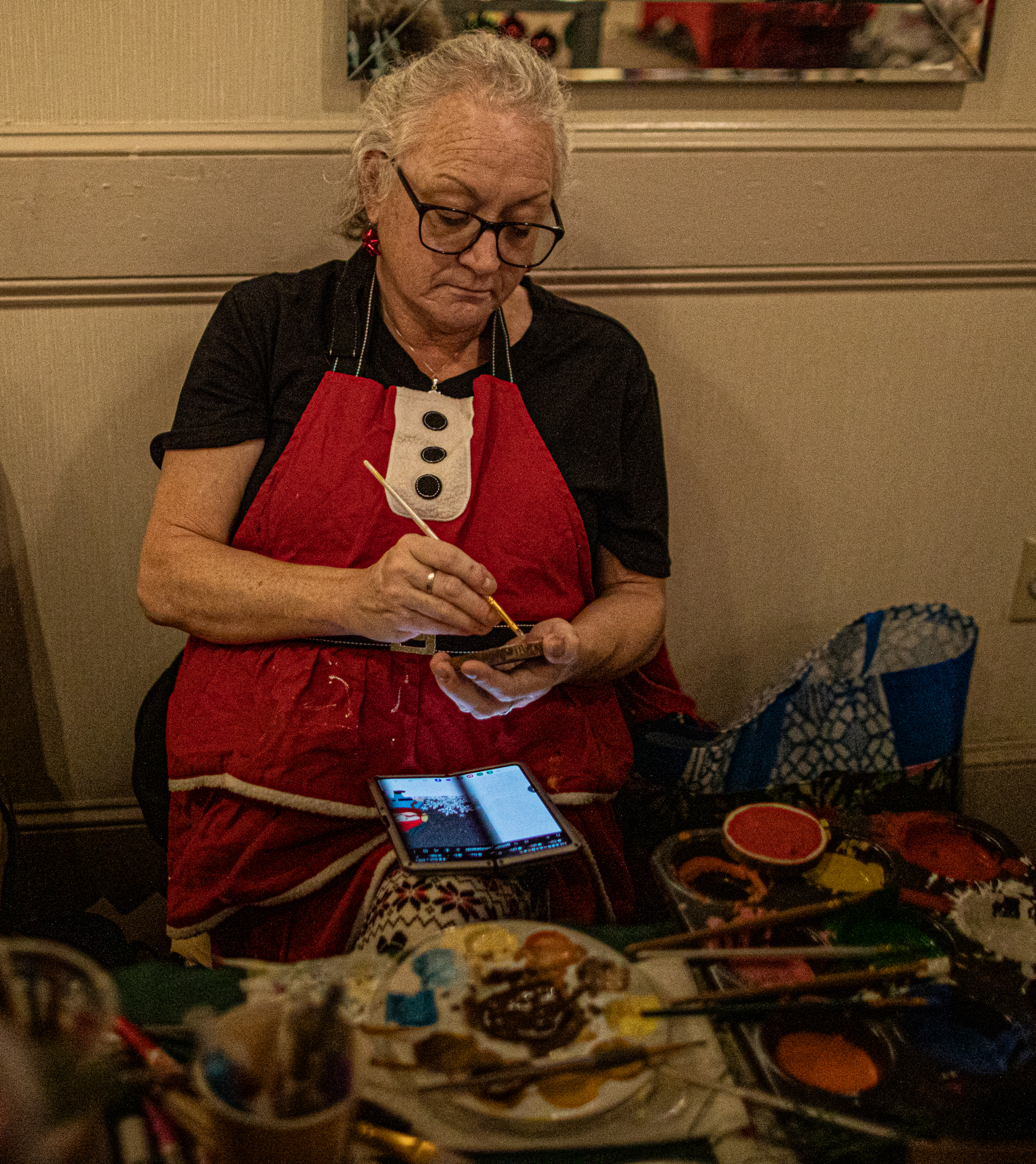
The Ornament Lady was taking orders for handmade ornaments…unless you wanted a Yankees ornament!
Mr. and Mrs. Clause stopped by to make sure everyone was still on the “nice” list! But, don’t worry if you’re not on the list! You still have a few more weeks to get on the list!
All of the proceeds generated from the event went to the Mehla Shriners to assist with their charitable endeavors!
Parking: There are a limited amount of parking spaces (about 5 total spots)
Universally Accessible: Yes
Summary: Each year at Christmas time, the First Harbor Company anchors a lit up Christmas tree in Marblehead Harbor.
For some people Christmas season begins right after they finish their last serving of sweet potatoes. I know…yuck!
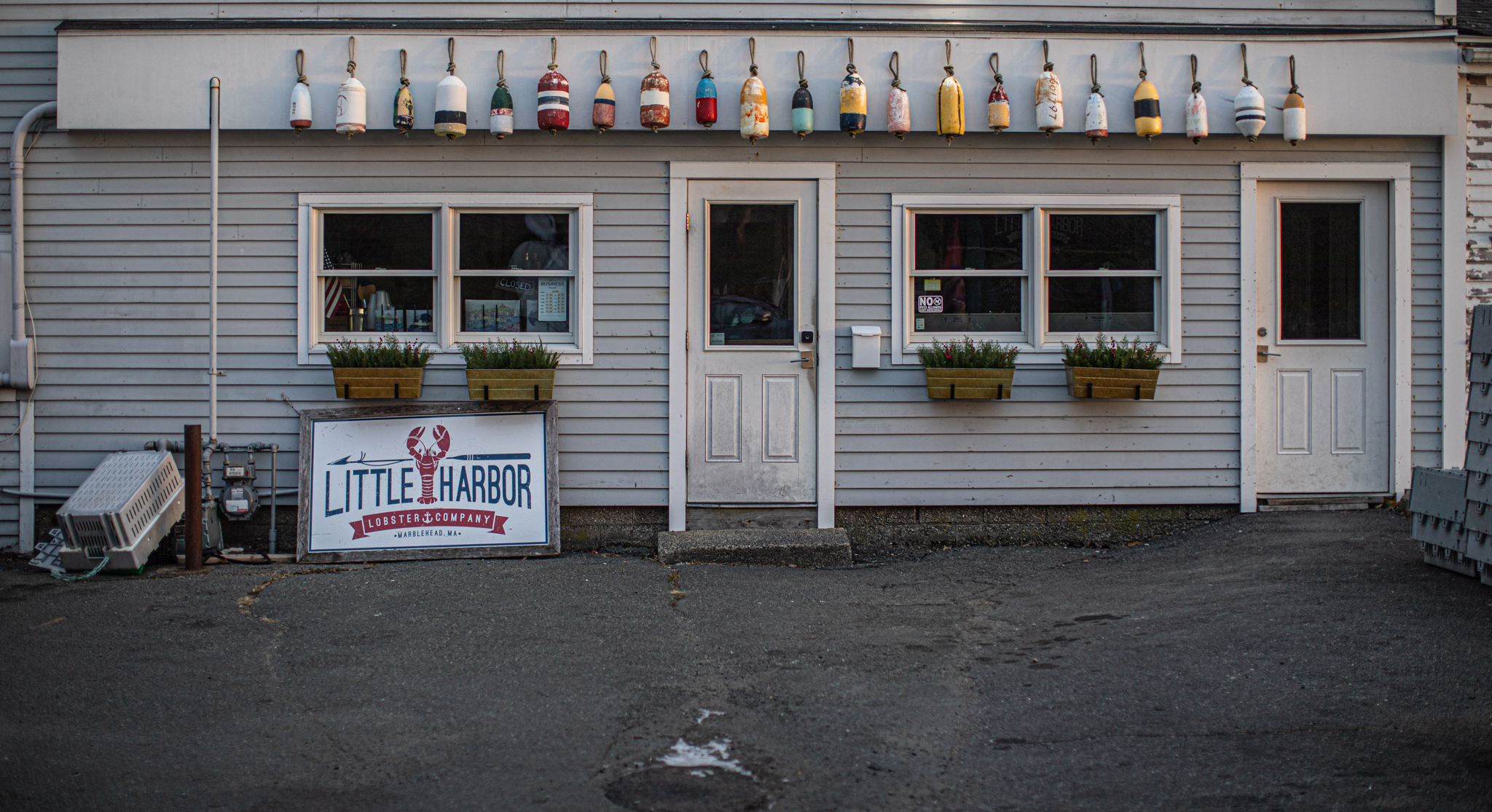
But for me, Christmas time starts when the First Harbor Company drops anchor on their Christmas tree dinghy in Marblehead Bay. The First Harbor Company makes a variety of hand made products such as wreaths, leashes and buoys. They also sell other products such as books and prints. The dinghy is owned by Tom and Samantha Peach. They decorate the tree and launch it from the launching area at the Little Harbor Company.
I planned my arrival early in the morning before the sunrise to get photos that would accentuate the lights on the tree. I loved how peaceful the water seemed.
I used the other boats and buoys in the harbor to give perspective and frame the photo.
As the sun began to rise, the colors made the landscape so pretty. The pink, black and blue colors in the clouds gave both a warming and ominous feeling.
During my previous visits, the lights on the tree usually went out shortly after the sun rise. But, during this visit the lights stayed on well past sunrise. Although, they do not stay on for most of the day light hours.
If you do plan on seeing the tree in all its splendor, keep in mind parking is limited and because there are trailers and boats sometimes parked near the parking area, it can be hard to find parking there. I parked on the side of the access road at the entrance to avoid being stuck in the narrow parking spots.
Date Of Event: December 2, 2023 (event is held annually the first weekend of Dec)
Location: 13 Washington Square West, Salem, MA
Cost: Tickets for Christmas in Salem are available online at www.historicsalem.org at a cost of $40 for non-Historic Salem, Inc. members and $35 for HSI members. Tickets purchased the day of the tour are $45. Tour tickets including the Friday night candle-lit preview are $120 for non-HSI members and $100 for members of Historic Salem, Inc. Christmas in Salem proceeds support the preservation mission of Historic Salem, Inc.
Hours: Sat & Sun 10-4
Parking: there are several parking lots and metered street parking throughout the city.
Summary: The Christmas In Salem event consists of a tour of historic homes and buildings in Salem, MA. Each year, home owners and building management open their doors to visitors to get a glimpse into what these historic homes look like and what stories they may have.
Well, we made it ot the 10th and final house in the Christmas In Salem tour. This house was decorated a little different than the other houses on the tour as you will see later in this post. But, the house does have a rich history, just like the other homes in this tour.
The Andrew Safford House was commissioned in 1818 by John Andrew. Andrew made his fortune trading with Russia. He was also a partner with Samuel Archer in the merchant firm Archer and Andrew. For many years it was unclear who designed the house until The Peabody Essex Museum (who we will discuss later in thsi post) confirmed it was designed by Joseph True. True was a master carver and protege of famed Salem architect Samuel McIntire. The home features 4 large pine columns on the southern side of the house. The front parlor has a marble mantlepiece, a plaster -work ceiling and woodwork by Joseph True. One of the most prominent features of the house is the early nineteenth-century French wallpaper which depicts scenes of Cupid and Pysche (I had to Google that too).
After Andrew died in 1829, the house was divided between his widow Catherine and his son John Forrester Andrew. After John Forrester Andrew died in 1845 his widow, Louisa, owned the house until 1860. Over the next decade, the house was owned first by Edmund Smith, treasurer of the Naumkeag Steam Cotton Company, and a merchant named Frederic M. Creamer. In 1871 the house was purchased by James O. Safford, a leather manufacturer. The house then passed through several generations of the Safford family before being acquired by the Essex Institute in 1947. The Andrew-Safford House is still maintained by its current organization, the Peabody Essex Museum.
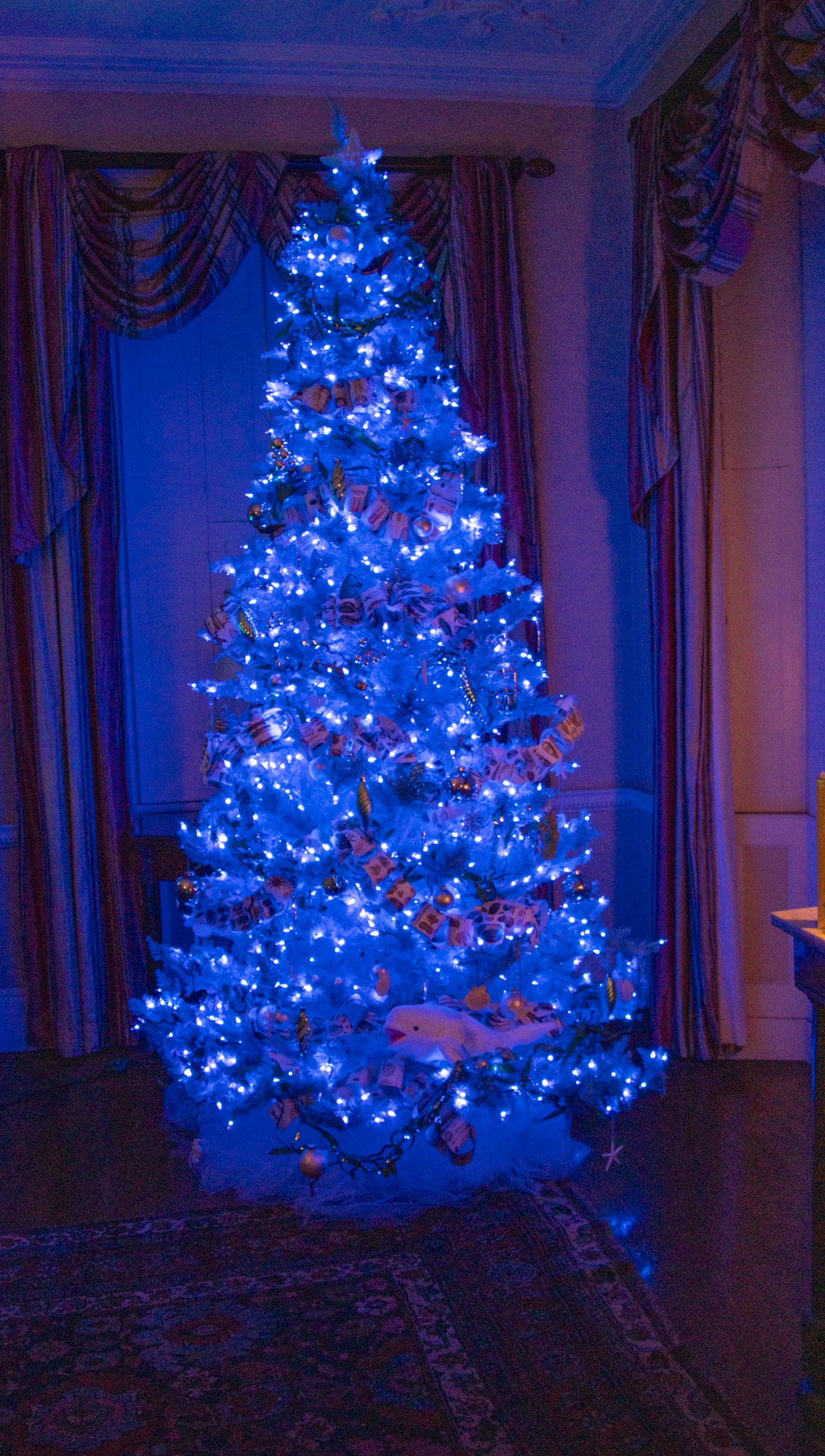
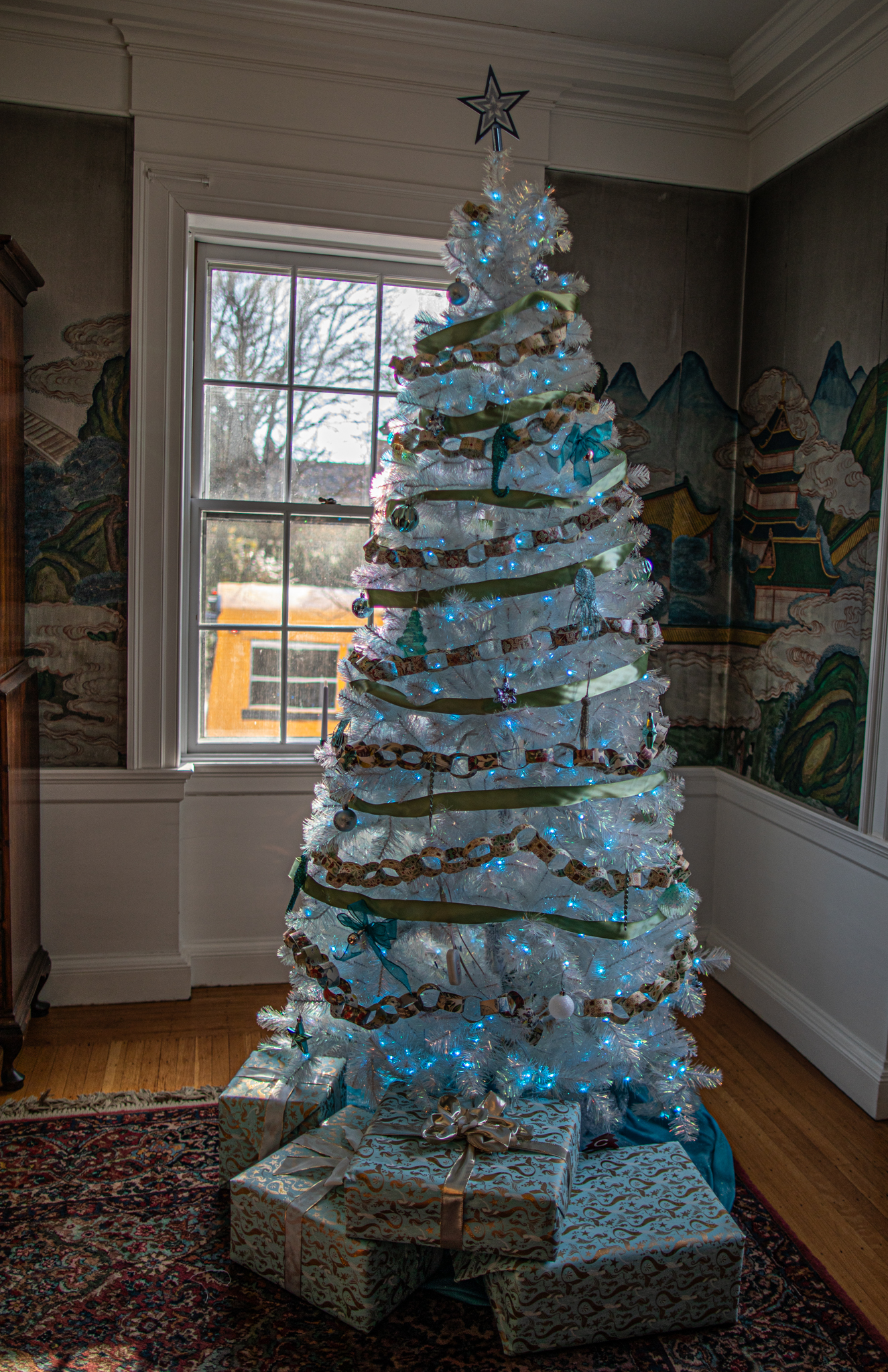
The Andrew-Safford House showcased both Christmas and Moby Dick decor. While that may seem like an unusual combination, it makes perfect sense.
Since the Peabody Essex Museum maintains the house, they decided to include elements of their upcoming exhibit Draw Me Ishmael: The Book Arts of Moby Dick which will feature artistic depictions of the novel. According to the museum, Moby Dick is the most continuously, frequently and diversely depicted American work of literature. So, take that 50 Shades of Grey.
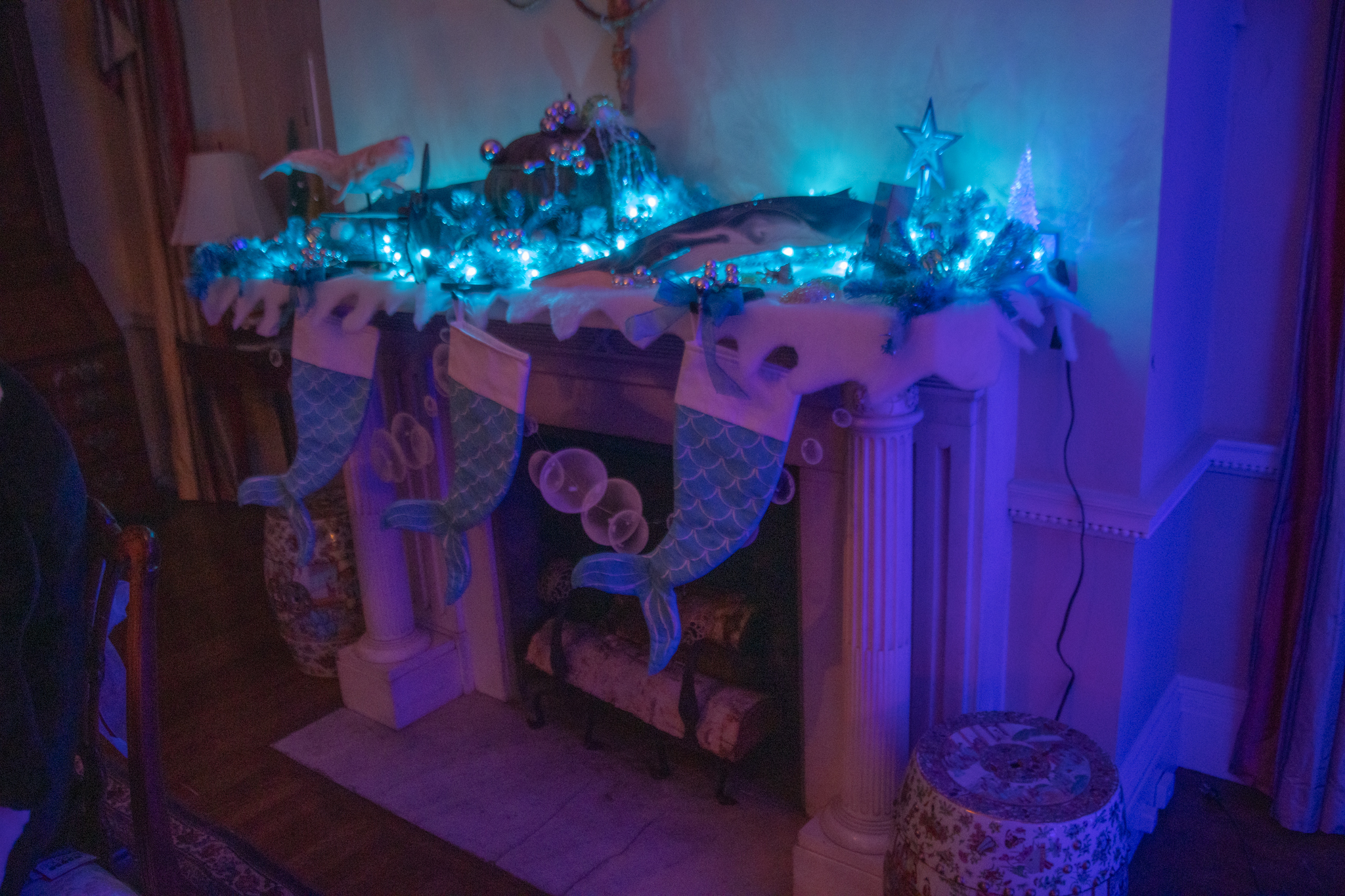
This was by far the most uniquely decorated home on the tour. The decor didn’t just include whale decorations (although there were some). There were also a penguin, jellyfish and whatever that pink thing is.
However, the main decor of the house was still Christmas and, of course, whale decor.
If you look closely at the Christmas trees (I know you must be thinking “my eyes” when you look at that blue tree) but you may see some marine life in the decorations such as sea horses and whales.
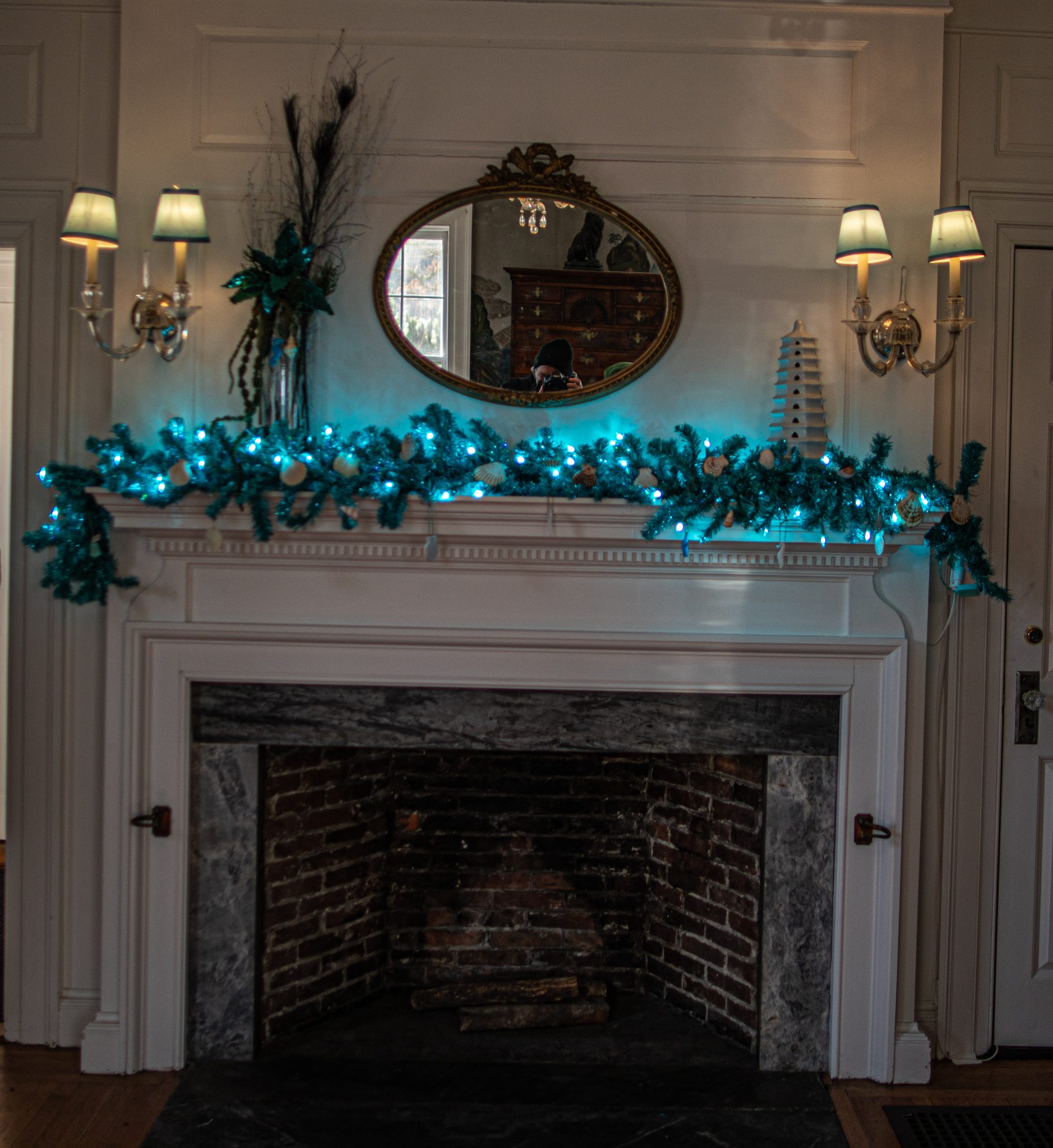
Another thing that I’ve mentioned in previous posts is how much I love the design, architecture and lighting fixtures of these historic homes.
The Call Me Ishmael exhibit will be on display at the Peabody Essex Museum from June 1, 2024 to January 4, 2026. You can find out more about the exhibit here
Thank you all for checking out my posts from this tour! I learned a lot about both these homes and how to photograph these beautiful homes in low light environments which can be challenging. I hope you join me later this year when I photograph this event again! And, of course, follow me here throughout the year on my many travels!
Don’t forget to check out my Facebook page for more content
You can follow me on Instagram at new.england.nomad_
Date Of Event: December 2, 2023 (event is held annually the first weekend of Dec)
Location: 1 Daniels St, Salem, MA
Cost: Tickets for Christmas in Salem are available online at www.historicsalem.org at a cost of $40 for non-Historic Salem, Inc. members and $35 for HSI members. Tickets purchased the day of the tour are $45. Tour tickets including the Friday night candle-lit preview are $120 for non-HSI members and $100 for members of Historic Salem, Inc. Christmas in Salem proceeds support the preservation mission of Historic Salem, Inc.
Hours: Sat & Sun 10-4
Parking: there are several parking lots and metered street parking throughout the city.
Summary: The Christmas In Salem event consists of a tour of historic homes and buildings in Salem, MA. Each year, home owners and building management open their doors to visitors to get a glimpse into what these historic homes look like and what stories they may have.
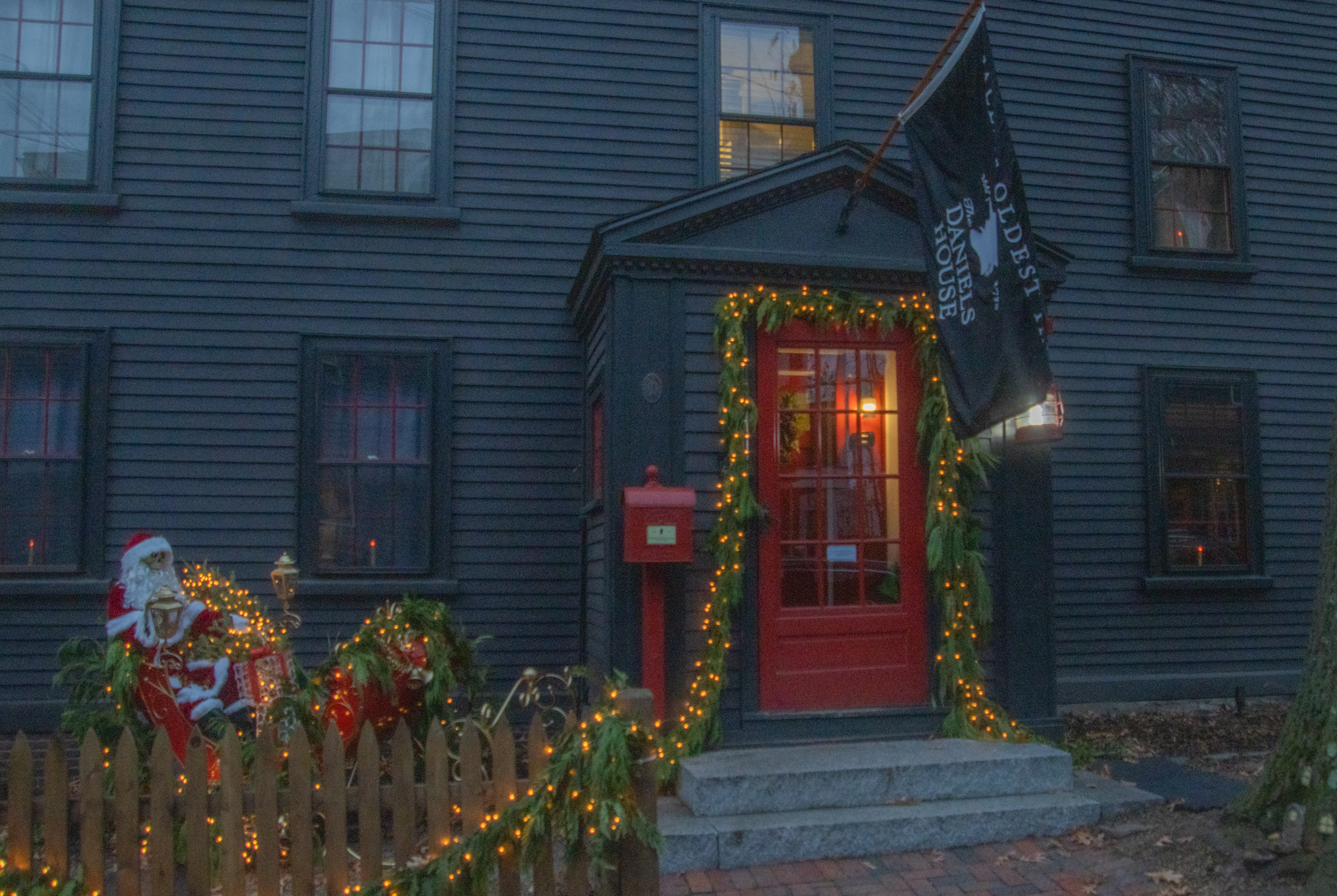
The ninth house, and really the *last* historic home on the tour (more on this later) is the Daniels House.
One of the oldest homes in Salem, MA, the Daniels House was constructed by Stephen Daniels I or Stephen Daniels II between 1667 and 1693. The home was occupied by mariners and shipbuilders until the mid 1800s. In the mid 1700s Stephen Daniel’s daughter Mary married into the Silsbee family and lived in the house until 1803. Mary’s son, Samuel Silsbee (who was a carpenter), remodeled and enlarged the house around the time of his marriage to Martha Prince in 1756
Silsbee’s heirs divided the house into two properties listed as numbers 1 and 3 Daniels Street in the mid 1800s. When Samuel’s daughters died in the 1860s, the properties were sold to other families. For about a century after the sale, the house went through what Samuel Chamberlain, a photographer who spent some of his life in Massachusetts, said was a period of “many vicissitudes. The house was subdivided into a double house of at least 4 apartments, served as a day nursery and boarding house. There was an ever rotating group of laborers, widows, railroad and shoe workers living in the house for the better part of 50 years. The house then went into foreclosure after the Great Depression and was vacant for almost 20 years. Eventually, the house was owned by Theodore Perry and Winifred Halter. They operated a historic tea room in the first floor. In 1962, the Halters sold the house to Thomas and Catherine Gill. Catherine “Kay” Gill operated the house first as a bed and breakfast and then an inn for 55 years until her death in 2018.
The house is a three story clapboard and wood frame home. It has a closed in front entrance that is covered by a half hipped roof. Over the years, the home has gone through a constant growth and changing architectural styles.
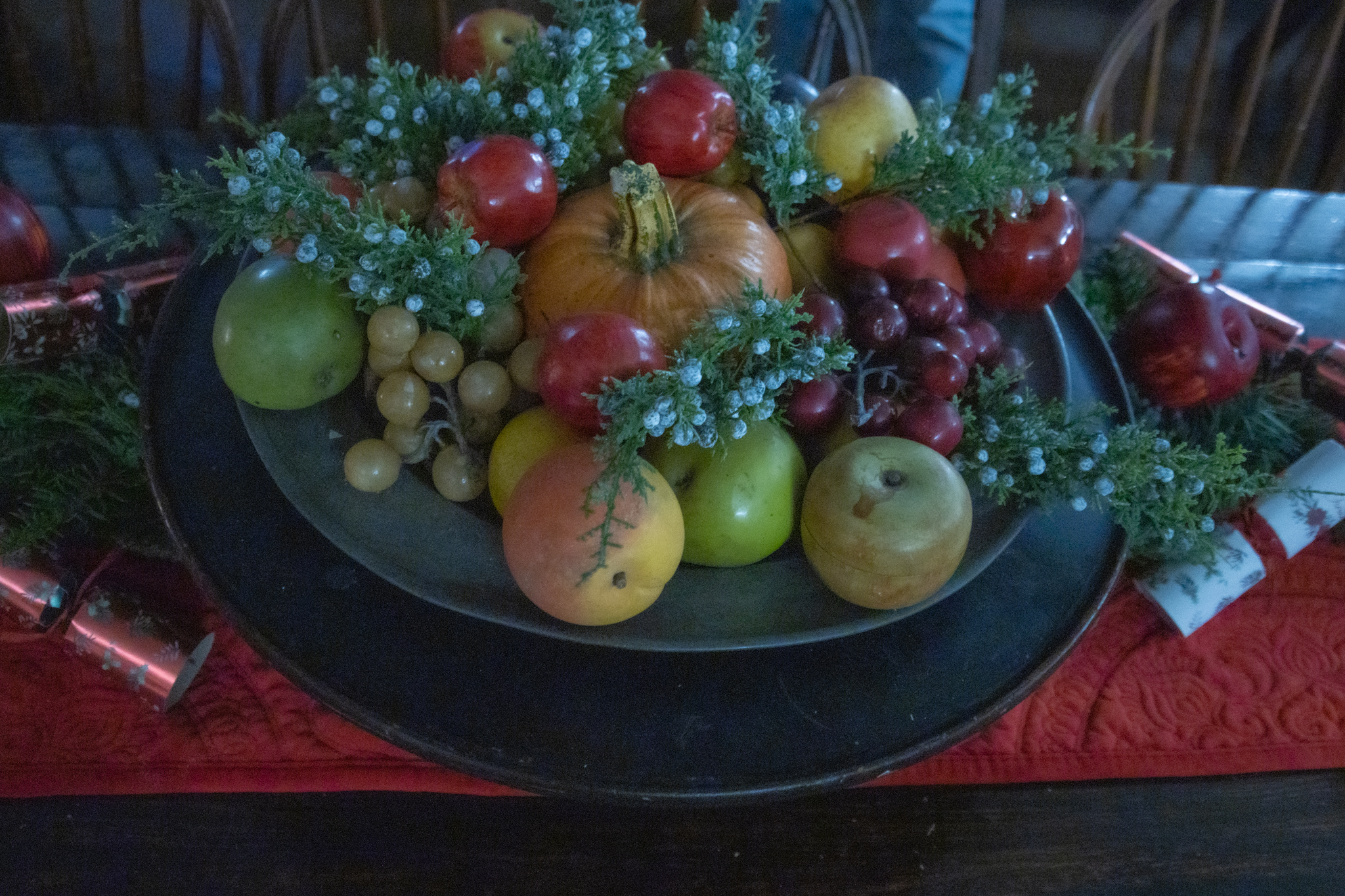
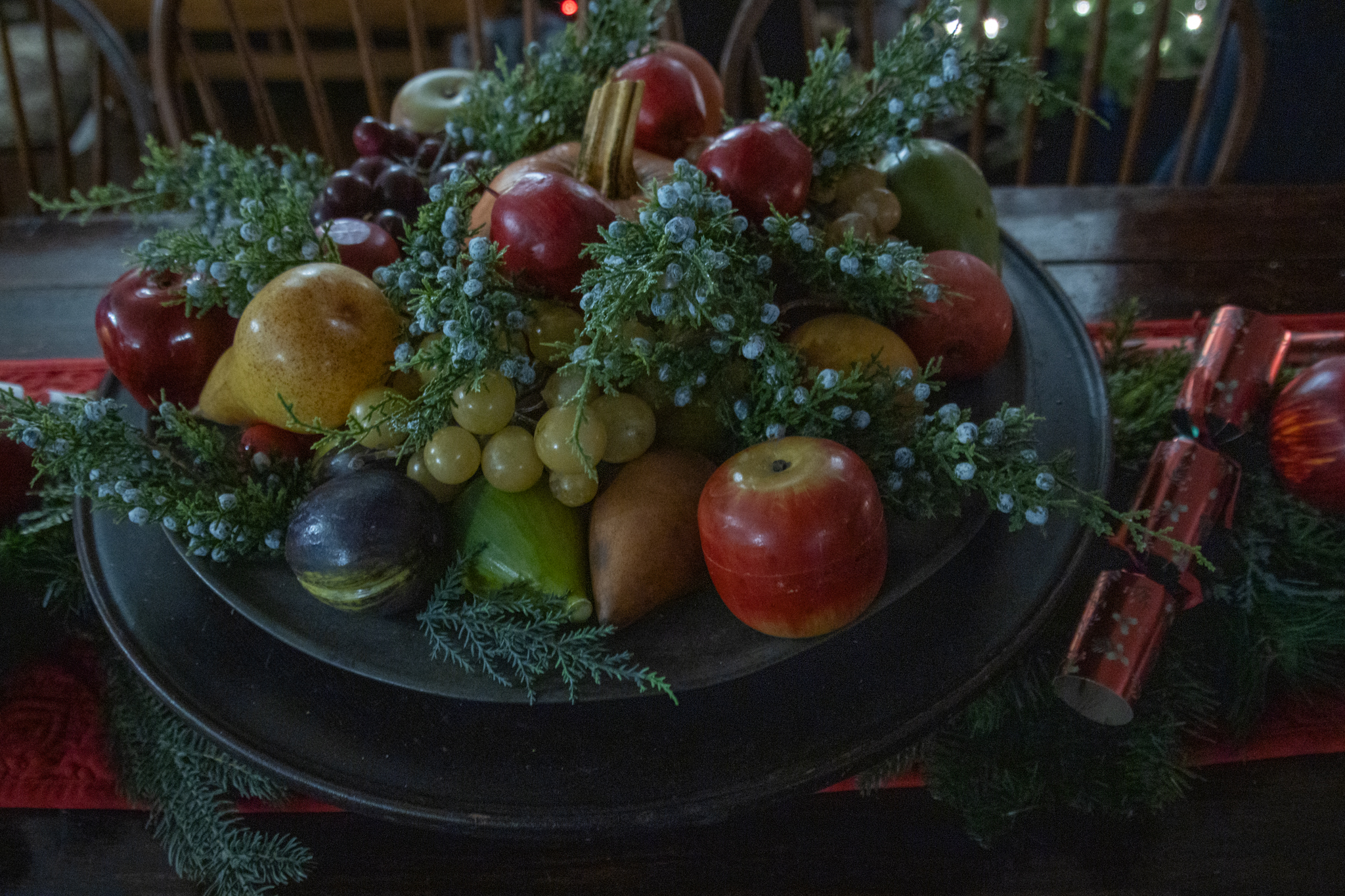
From the decorated Christmas tree to the tasteful decorations of the fruit bowls (no pun intended), the Daniels House was an especially fun home to photograph.
There was also an assortment of dolls, figurines and other holiday decor throughout the home.
This home had not one but two cozy fireplaces. I really wanted to sit by the fireplace and take in the warmth and history of this home.
As much as I wanted to stay there for a longer visit, I had to hurry off to the next and last home on the tour. Luckily, they did allow people to visit slightly after 4 pm which was the time the tours were supposed to end. In fact, I was one of the last people admitted to the last home on the tour. The tour lasts 2 days (Saturday and Sunday). But, I had plans for the following day. So, it all worked out! But, as I mentioned earlier, the last house on the tour was very…different. Hopefully, you’ll be able to see for yourself in the 10th and final installment of this series of posts!
Date Of Event: December 2, 2023 (event is held annually the first weekend of Dec)
Location: 1 Forrester St, Salem, MA
Cost: Tickets for Christmas in Salem are available online at www.historicsalem.org at a cost of $40 for non-Historic Salem, Inc. members and $35 for HSI members. Tickets purchased the day of the tour are $45. Tour tickets including the Friday night candle-lit preview are $120 for non-HSI members and $100 for members of Historic Salem, Inc. Christmas in Salem proceeds support the preservation mission of Historic Salem, Inc.
Hours: Sat & Sun 10-4
Parking: there are several parking lots and metered street parking throughout the city.
Summary: The Christmas In Salem event consists of a tour of historic homes and buildings in Salem, MA. Each year, home owners and building management open their doors to visitors to get a glimpse into what these historic homes look like and what stories they may have.
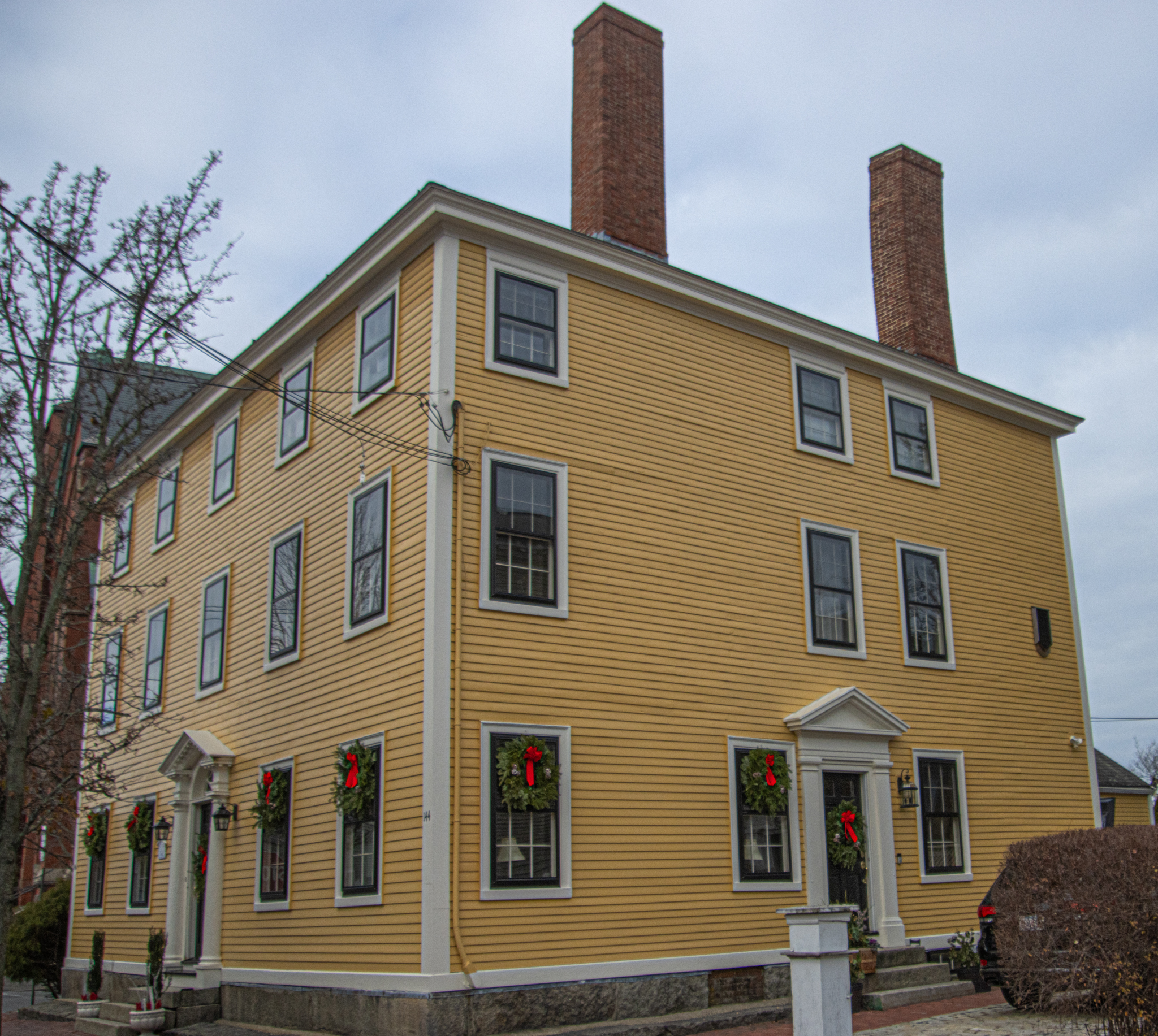
The eighth house (yes we made it to house number 8) on the Christmas in Salem tour is the the John Ives house. Before I even entered the home, I was struck by the old fashioned style (it is a clapboard style capped by a low hip roof in the “Pre-Federal” style). The John Ives house was constructed circa 1760. A brick walkway leads to a pedimented portico and is flanked by cabled, fluted pilasters. A 3 story-wing is stepped back slightly from the main house on the east side. A barberry hedge runs along the west and south sidewalks.
A tanner by trade, John Ives built the house somewhere between 1750 and 1760. A tan yard was established by the Ives family on land between their house and Collins Cove. Originally, Forrester St began as an access route through the Ives property. Forrester Street would become the official designation after 1860.
Apparently, Ives didn’t want to live there very long, though. By 1764, Ives had sold the “mansion house” and additional land to Captain Samuel Webb who occupied the house with his family until his death in 1808. The house would remain in the Webb family until 1879 when the house was purchased by Stephen Whipple, the owner of a gum copal works (gum copal is a resin used in making varnishes). The home remained in the Whipple family until the 1930s and was often referred to as the “Whipple House.” This is one thing that amazes me. Despite being hundreds of years old, many of these homes only have a few owners.
Not all of the homes on the tour allowed access to all of the floors. This was the case with the John Ives home. However there was plenty to see on just the one floor of this home,
In the kitchen area by the entrance, there were dried up flowers hanging from the ceiling.
These are flowers the wife and husband have bought for each other. They are hung as tokens of their love for each other.
As you may notice from each house on the tour, some homes are decorated more than others (just wait for the last house on the tour). And, even though the more decor can make for better photos, I personally like the less decorated homes. It can feel overwhelming when there are too many decorations. But, that’s just me.
There were cute little figurines and dolls places on the shelves and window sills as well as a beautiful wreath.
This home had some cool and perhaps familiar looking models of some famous Salem homes and attractions. In the first photo (from left to right) is The House of the Seven Gables, not sure what the yellow house is). In the second photo from left to right is the Ropes Mansion, Salem Town Hall (both featured in the movie Hocus Pocus), the bandstand at Salem Commons and the Hawthorne Hotel.
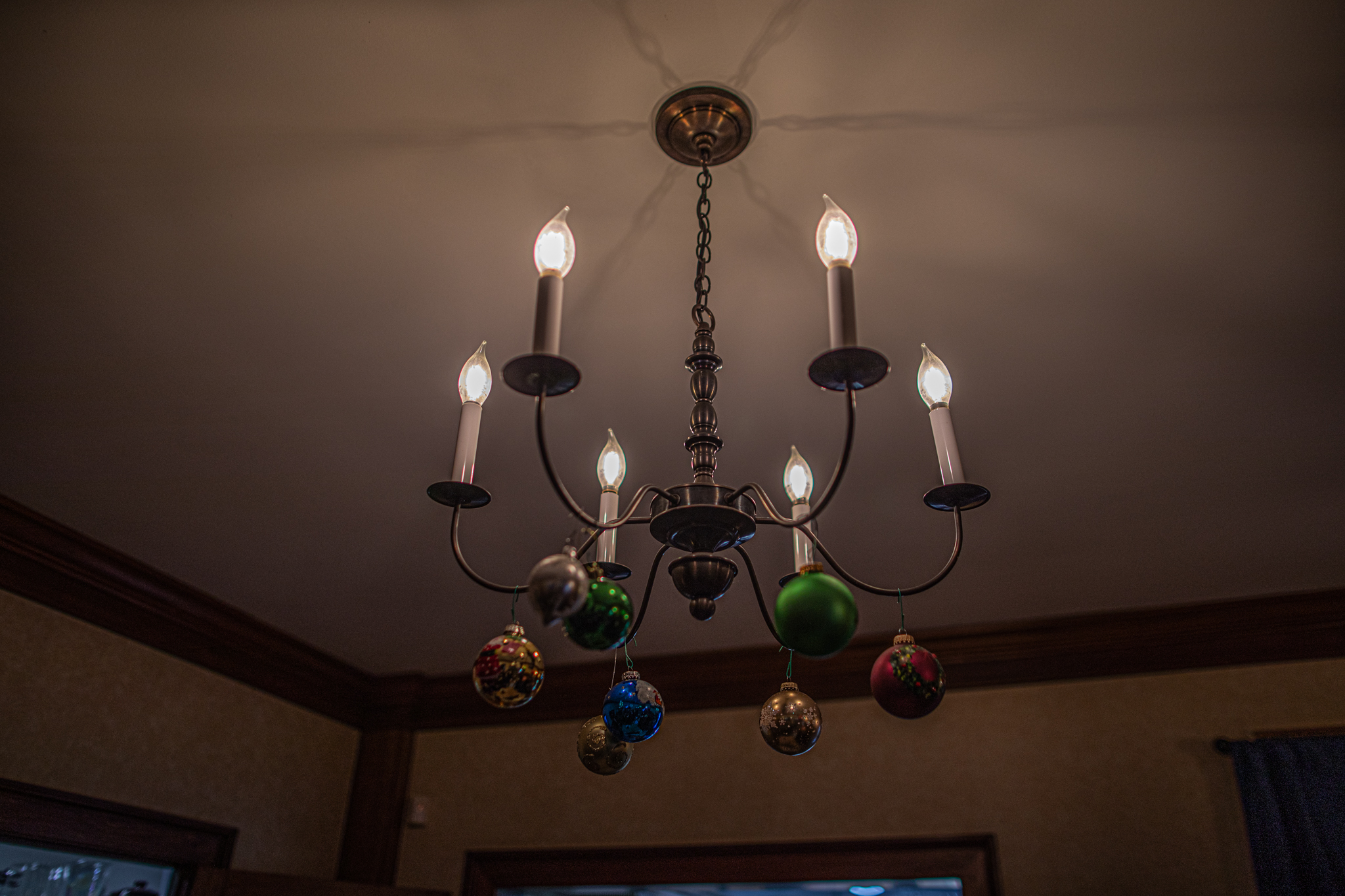
This light fixture located in the dining area caught my attention. Even though it was an electric light fixture, one could easily see a candle in place of that light bulb.
Something I noticed during these tours is that each house really is different. As likely as it may seem that each house would be decorated similarly or the same (unintentionally or otherwise), each house really does have a different feel. Please join me on this tour for the 9th house on the tour!