Parking: There are several parking lots and garages in the Salem area
Universally Accessible: No, many of the homes do not have ramps or universally accessible entry
After a short break from posting about the Christmas In Salem tours, I am resuming these posts.
The Christmas In Salem event reinforces how you can’t judge a book, or in this case house, by it’s cover or exterior. At first glance, the Captain Emery Johnson House looks like any garden variety historic home. Yet, as you will soon see, it’s interior is far from it.
Built in 1853, the Captain Emery S. Johnson house is an Italian Revival style residence. Decor of the Italian Revival style can be seen in the bay window frames and the scored corner boarding. Captain Johnson inherited the land for the house in 1845 when his father passed away.
After a successful career in maritime, Captain Johnson retied at the ripe old age of 22. Johnson’s travels included traveling to Brazil, Zanzibar and Madagascar. Shortly after his retirement, Johnson met Ann Elizabeth Creamer. They wed in June, 1850. After the death of both of Johnson’s brothers at sea, he became the sole heir of his father’s fortune. With his new found riches, he decided to have the house built.
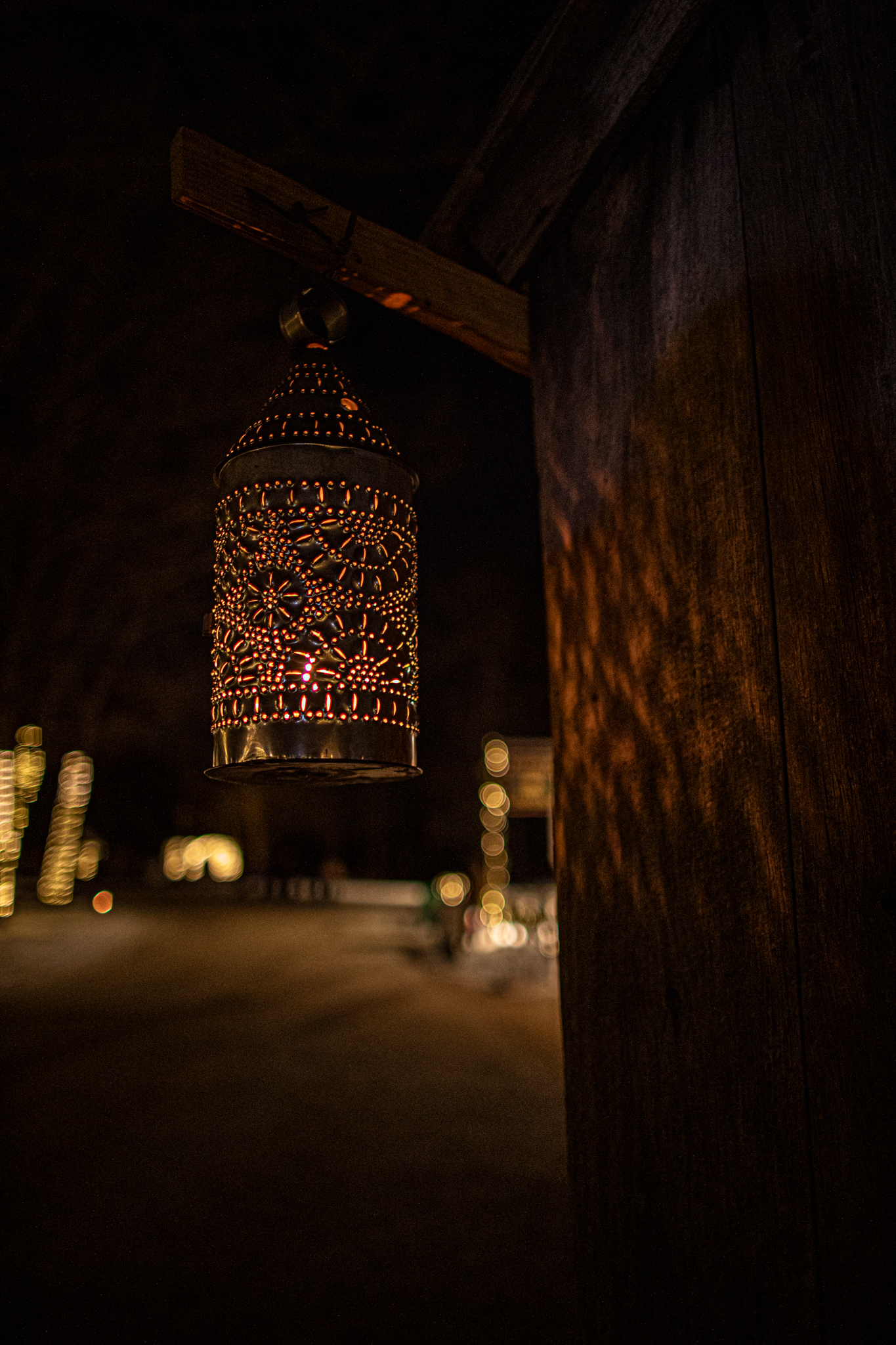
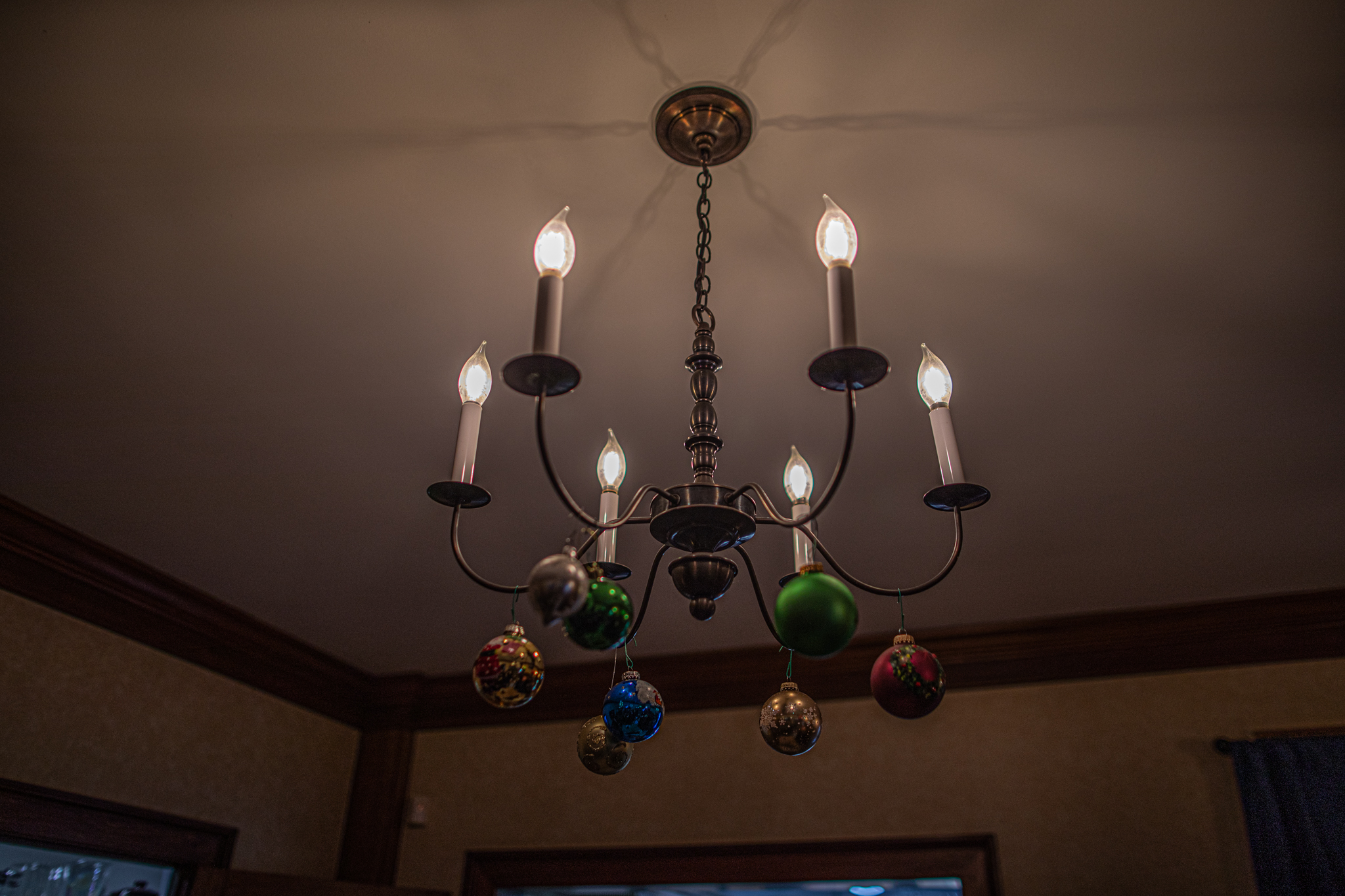
The lighting fixtures at the home were very pretty and unique.
A piano player provided some comforting Christmas music.
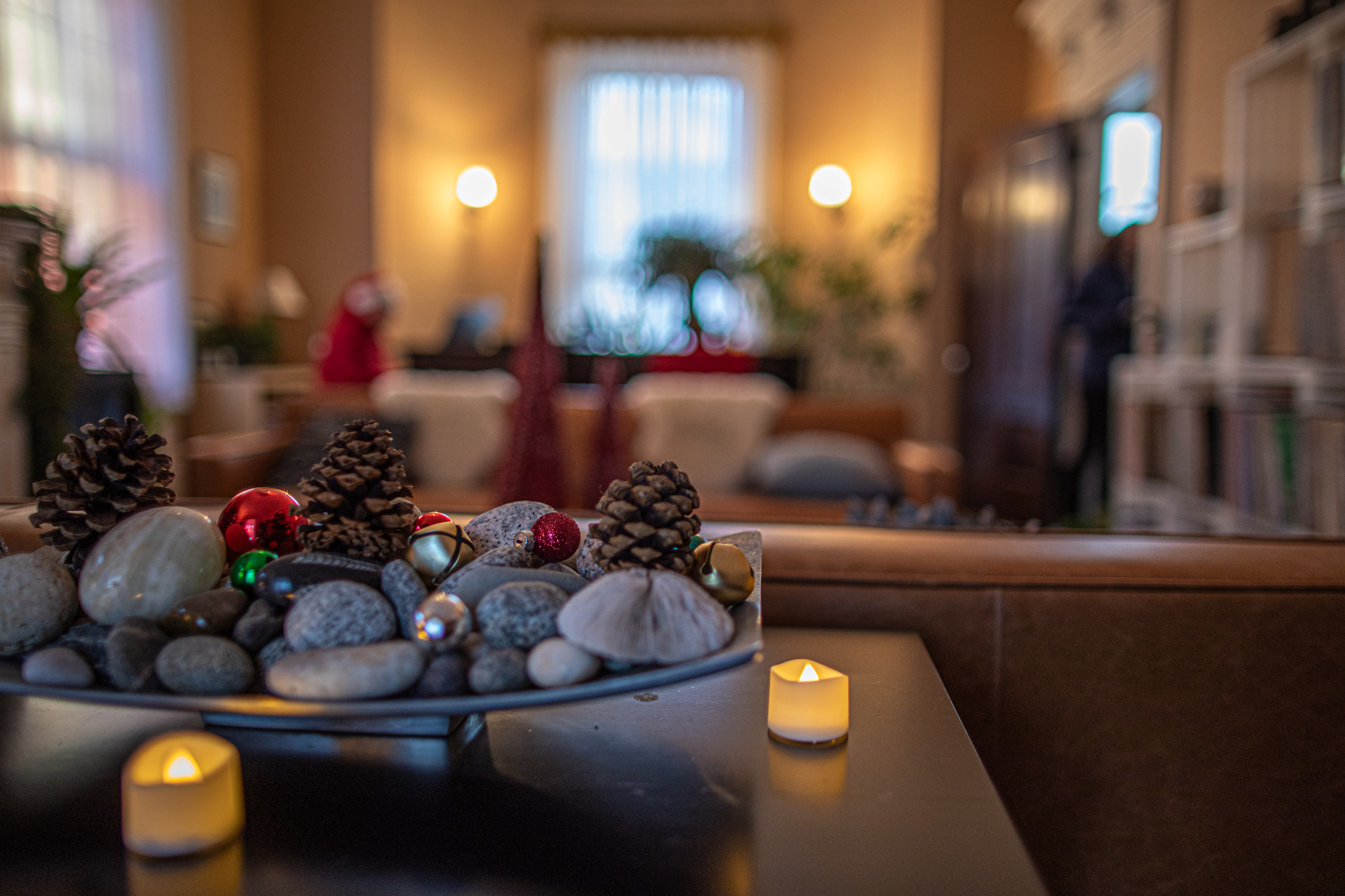
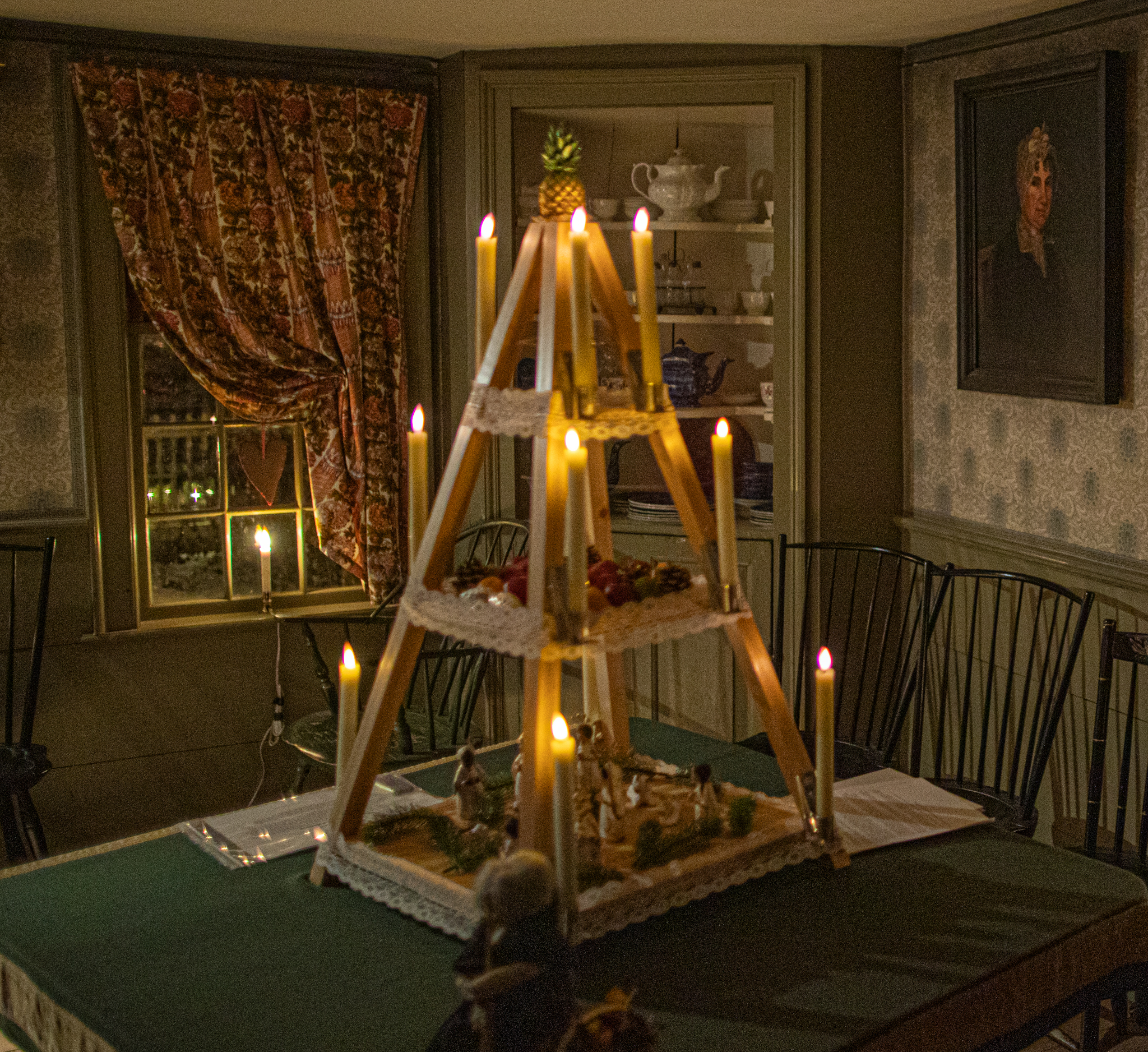
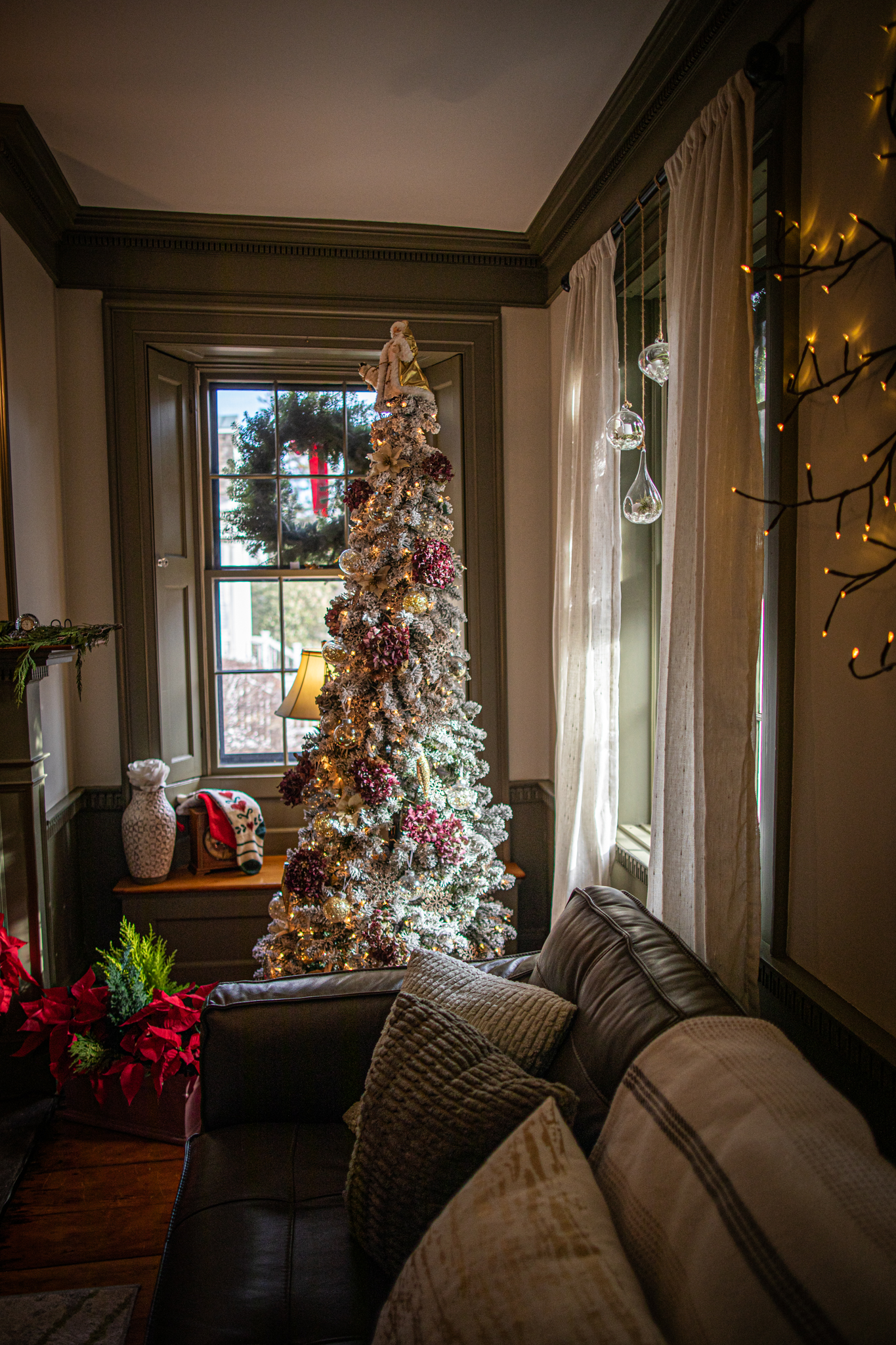
Christmas decor and other types of decor were abundant in the home.
There were small Christmas trees and a rather big one! You may notice something different about the background of this photo. More on this later.
This dinner table is not any normal dinner table. This dinner table used to be a billiards table! That’s right. People used to play pool on this table. It appears to have been modified for
Getting back to the background in the photo of the tree decoration posted above, this may look like some decorative wallpaper or painted decor. But, it’s not.
This wall decor was done by stencil! Incredible, yet true.
Another odd part of this home was the dining area. Specifically this table.
At some point during the ownership of the home, a Dr Friedman owned the house. And, yes, were that table is was possibly where he did his “research.” Of course, it’s not the exact same table. But, it’s still a little creepy.
Outside the home there was more cool decor.
Don’t forget to visit my Facebook page to see more photos I don’t post in my blog. And you can also find me on Instagram.
As the year winds down, I wanted to share some of my favorite photos from 2024!
Because of my schedule and commitments, I don’t always get to post photos from all of my travels around this beautiful region. I also noticed sometimes I will edit only a few photos from one photo shoot before going onto editing photos from a different photo shoot. So, I haven’t fully edited all of the photos from several of my photo shoots. I will make completing one task before moving onto another task a resolution so this won’t happen going forward!
Another thing I do sometimes is I post my photos from some photo shoots on my Facebook or my Instagram profiles instead of WordPress. So, I thought this would be a good opportunity to share them on here!
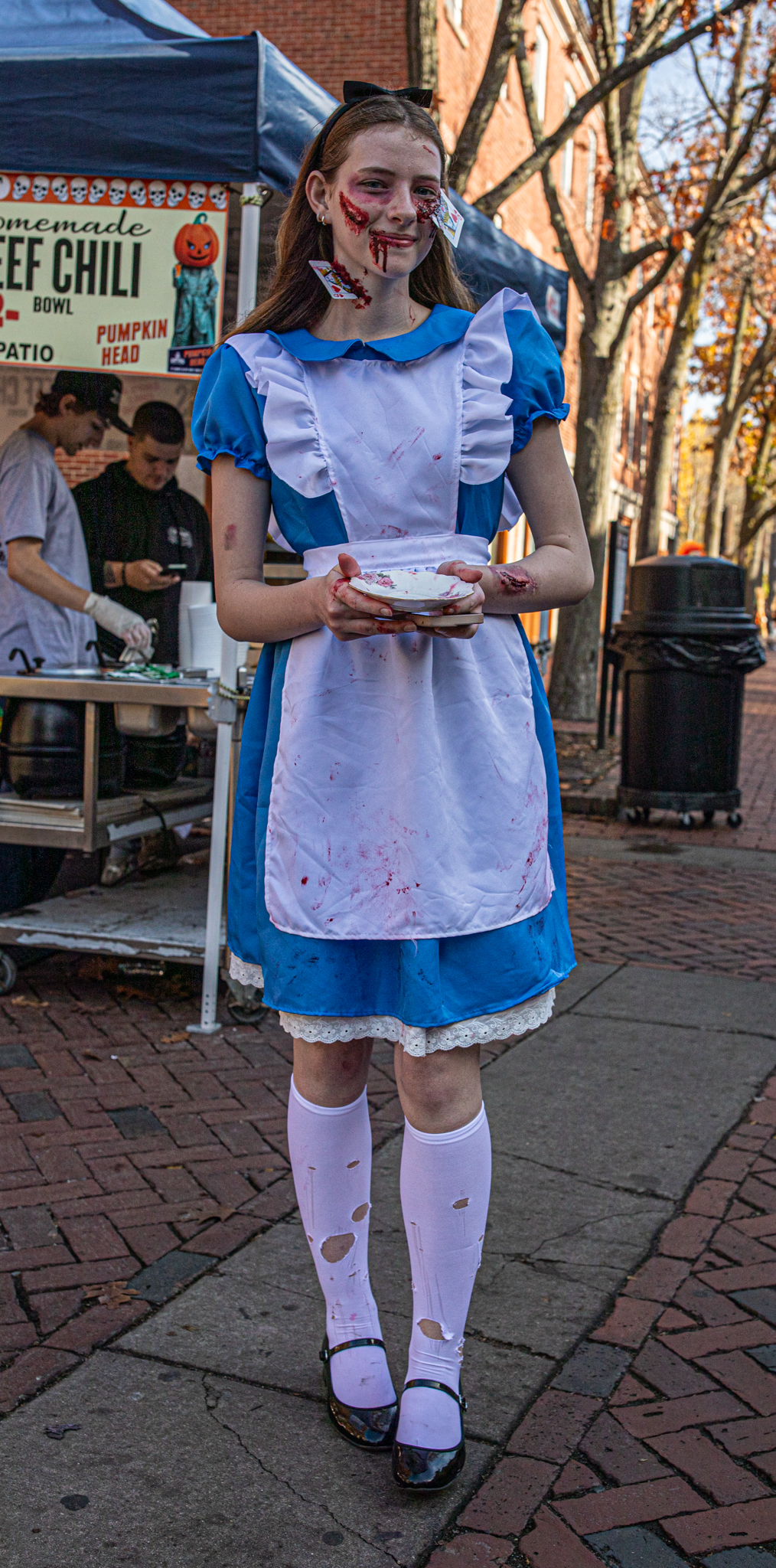
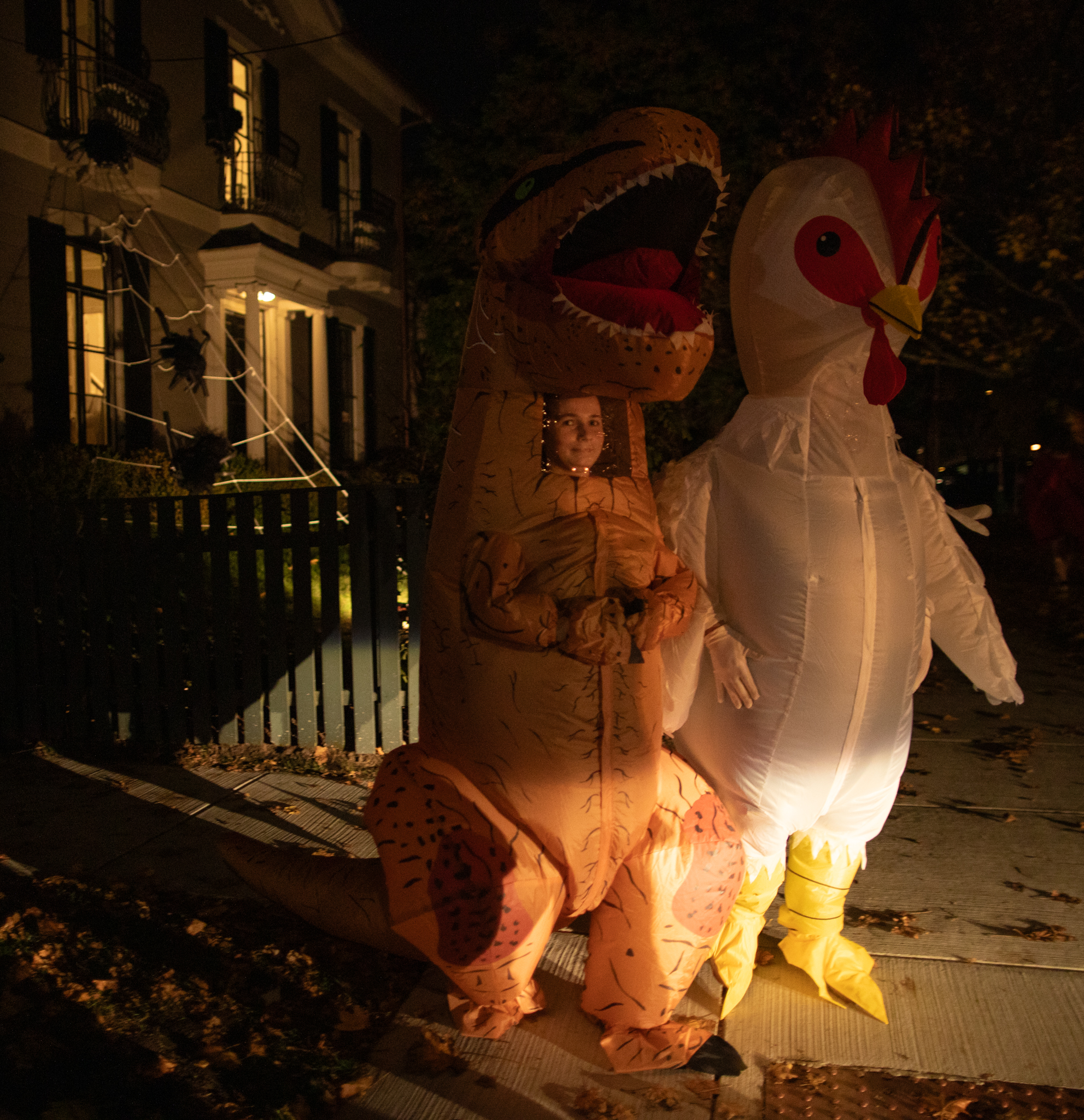
Each year, I make goals or plans for my photography. One of my plans for this year was to spend Halloween in Salem, MA. I was able to get a hotel room and stayed the whole day there! It was something I have always wanted to do! There were so many incredible Halloween costumes and decorations!
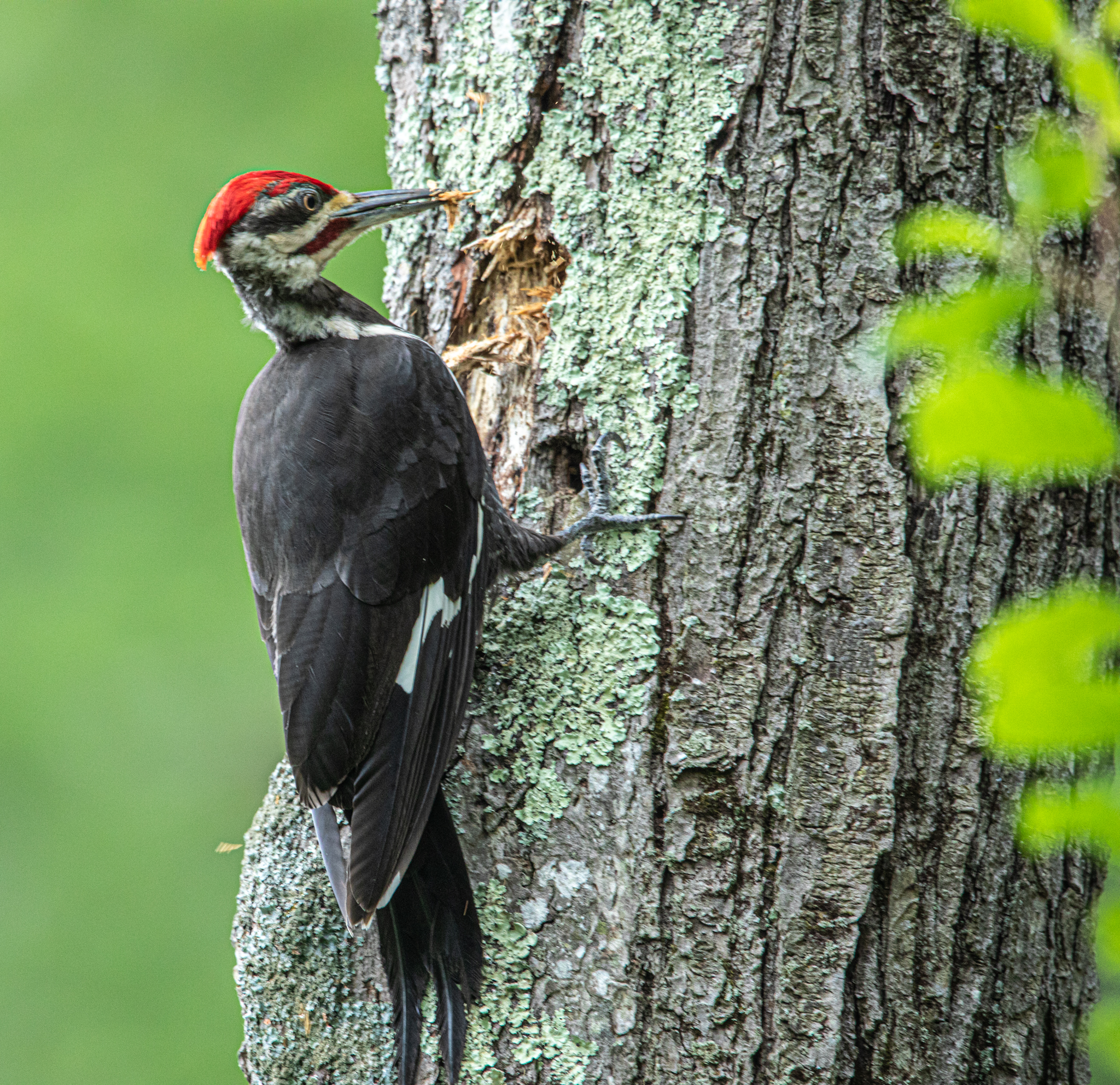
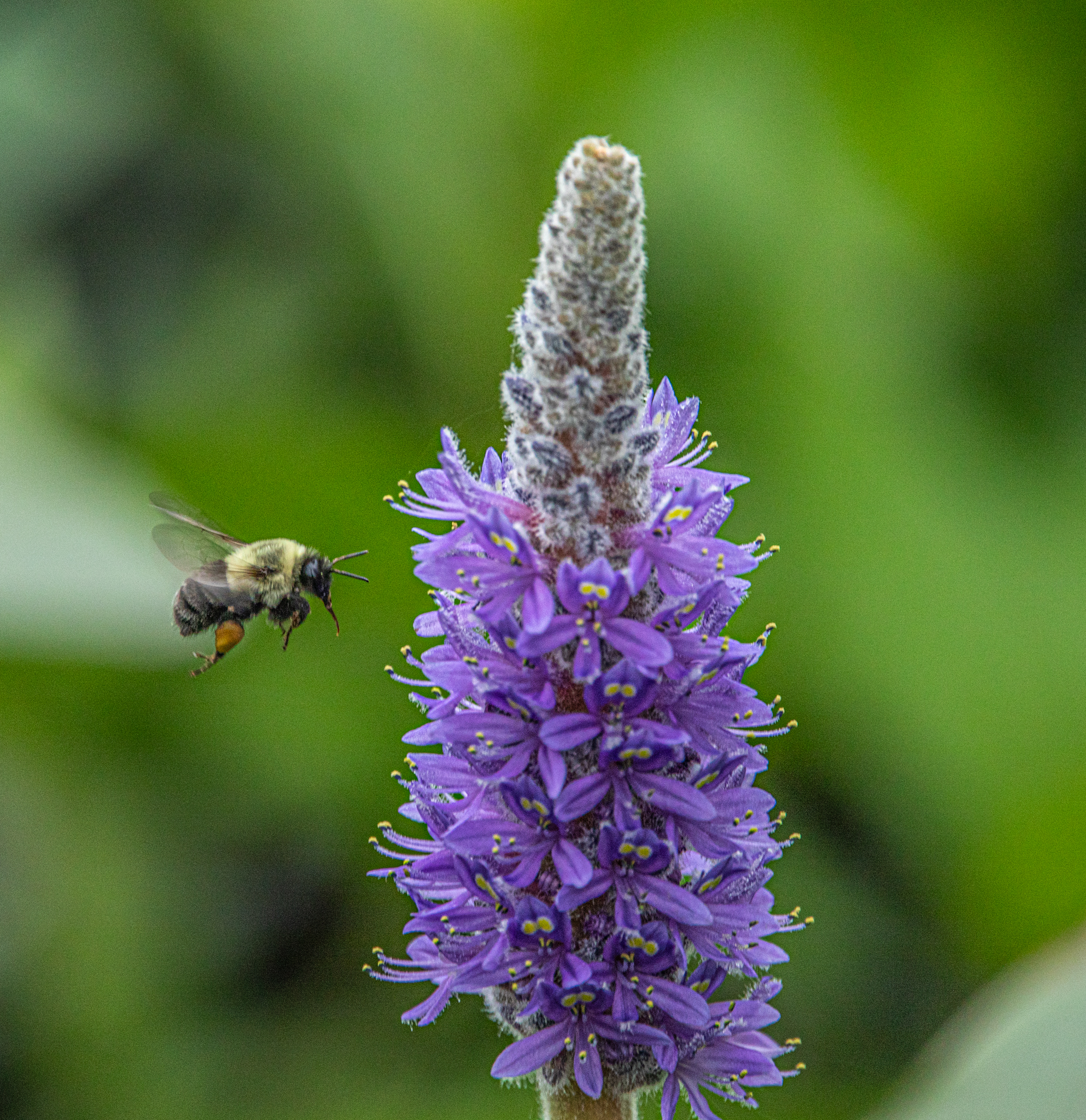
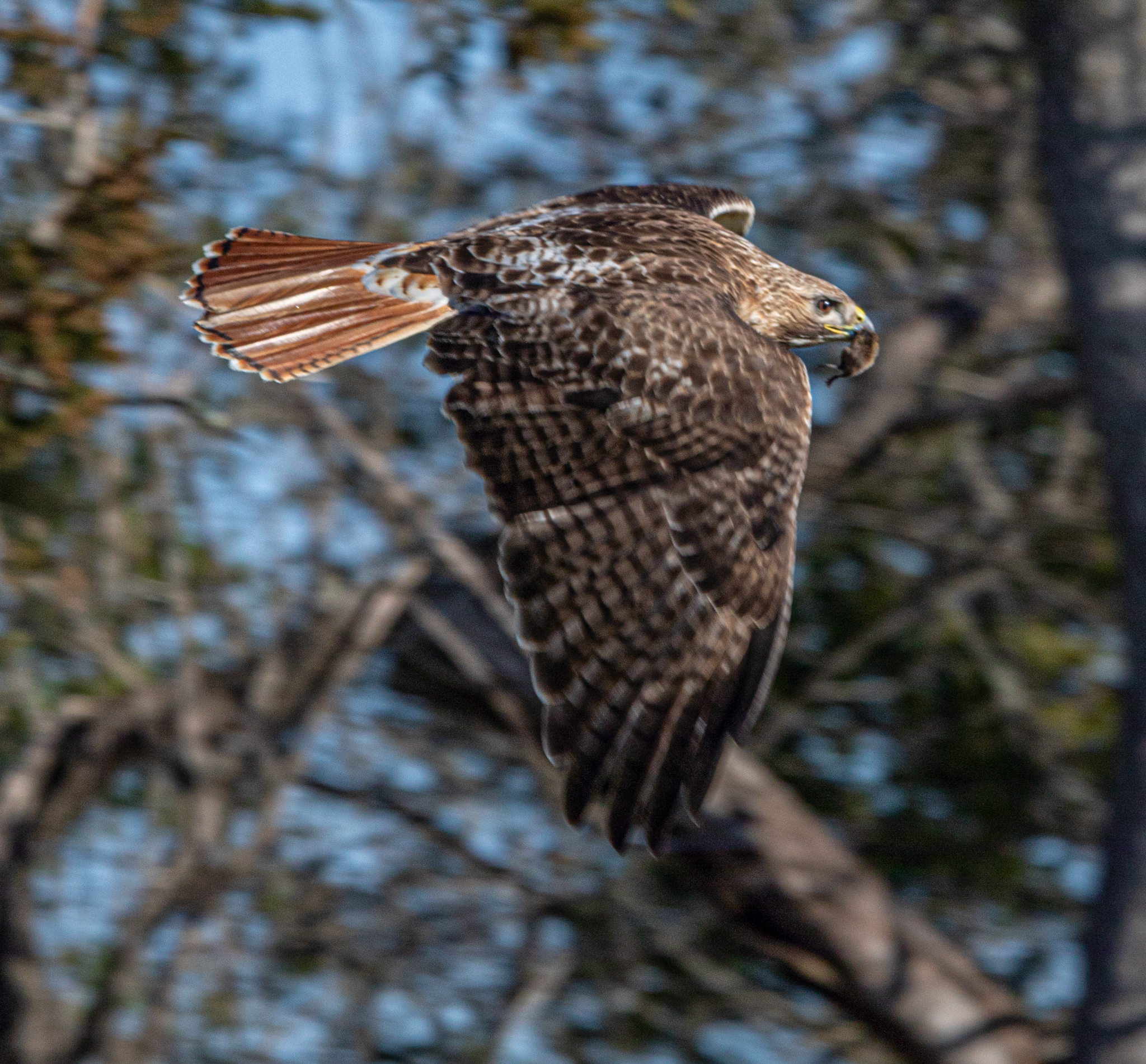
One of my other plans for the year was to photograph more wildlife. While you can’t always make something like that happen since a lot of it does come down to luck or being in the right place at the right time, l do think you can prepare for the opportunities. I was fortunate to photograph these beautiful critters.
Too bad this lady was looking at her phone when this happened.
I took these photos of a snake in March, when the temperatures were still cold in the morning but warmer in the afternoon.
How did I get so close to a big garter snake like this? Well, essentially, this snake was sluggish due to the cold weather. Garter snakes hibernate (technically they experience a process called brumation which I’ll explain later) through the winter, usually from late October through March or early April. But, if we have some warmer days they may come out sooner. This little guy or lady “froze” in a process called brumation (as opposed to hibernation). In colder temperatures, you may see snakes like this one here seemingly “frozen” as if they were perhaps dead or in a state of dormancy much like a person staring at their phone.
Hibernation of cold-blooded animals like snakes is called brumation. While mammals technically hibernate, snakes, reptiles and some other cold blooded animals experience a process called brumation. The difference between hibernation and brumation is that during brumation snakes can wake up to drink, go to the bathroom, and bask in the sun. But, just like hibernation, they still spend most of their winter in a dormant state.
Have no fear, as the Audubon specialist working there told me they often “unfreeze” when the temperatures increase (much like what bees do when the temperatures dip) when it gets warmer.
I did check on him or her before I left and the snake was still there undisturbed.
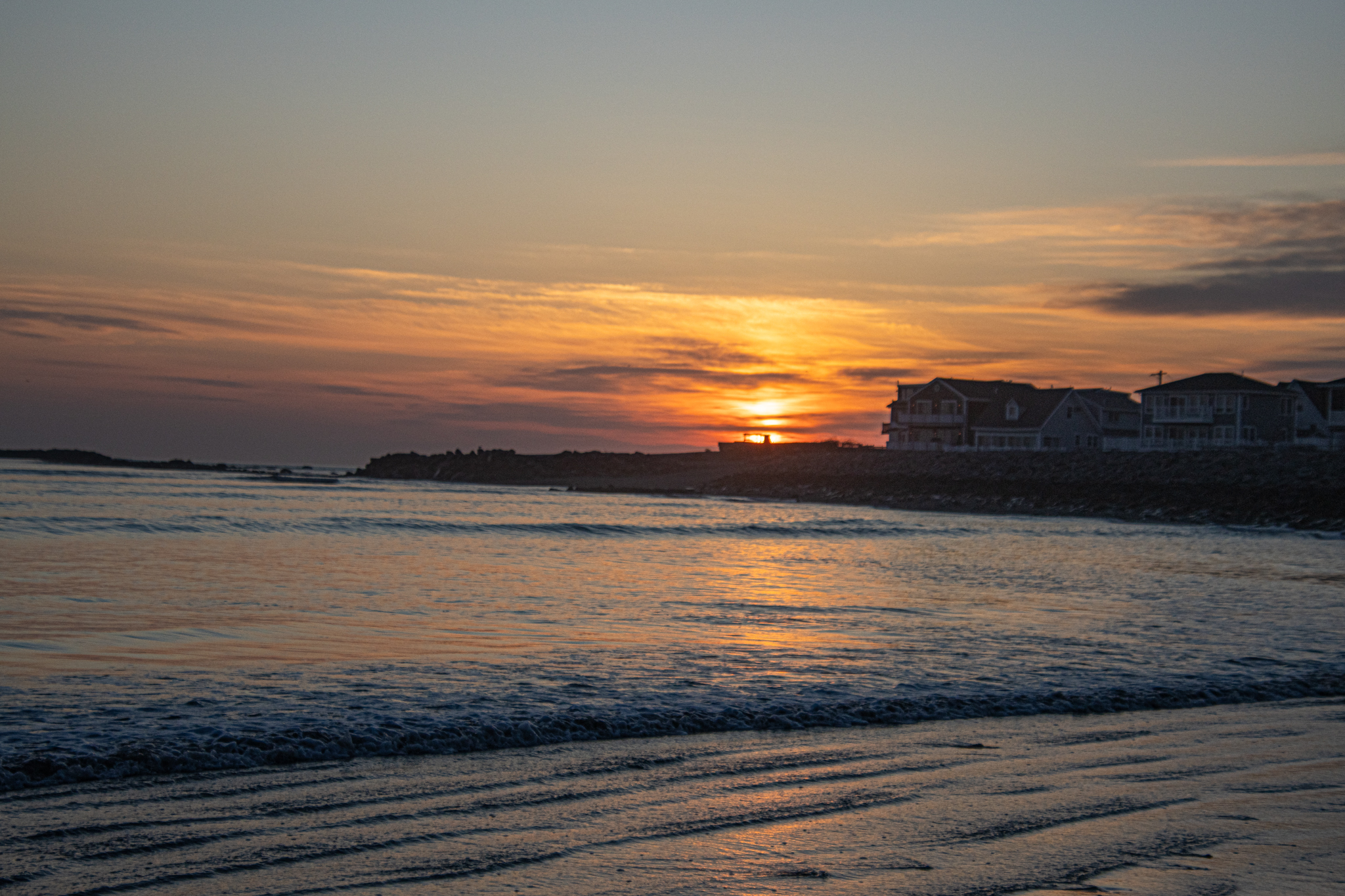
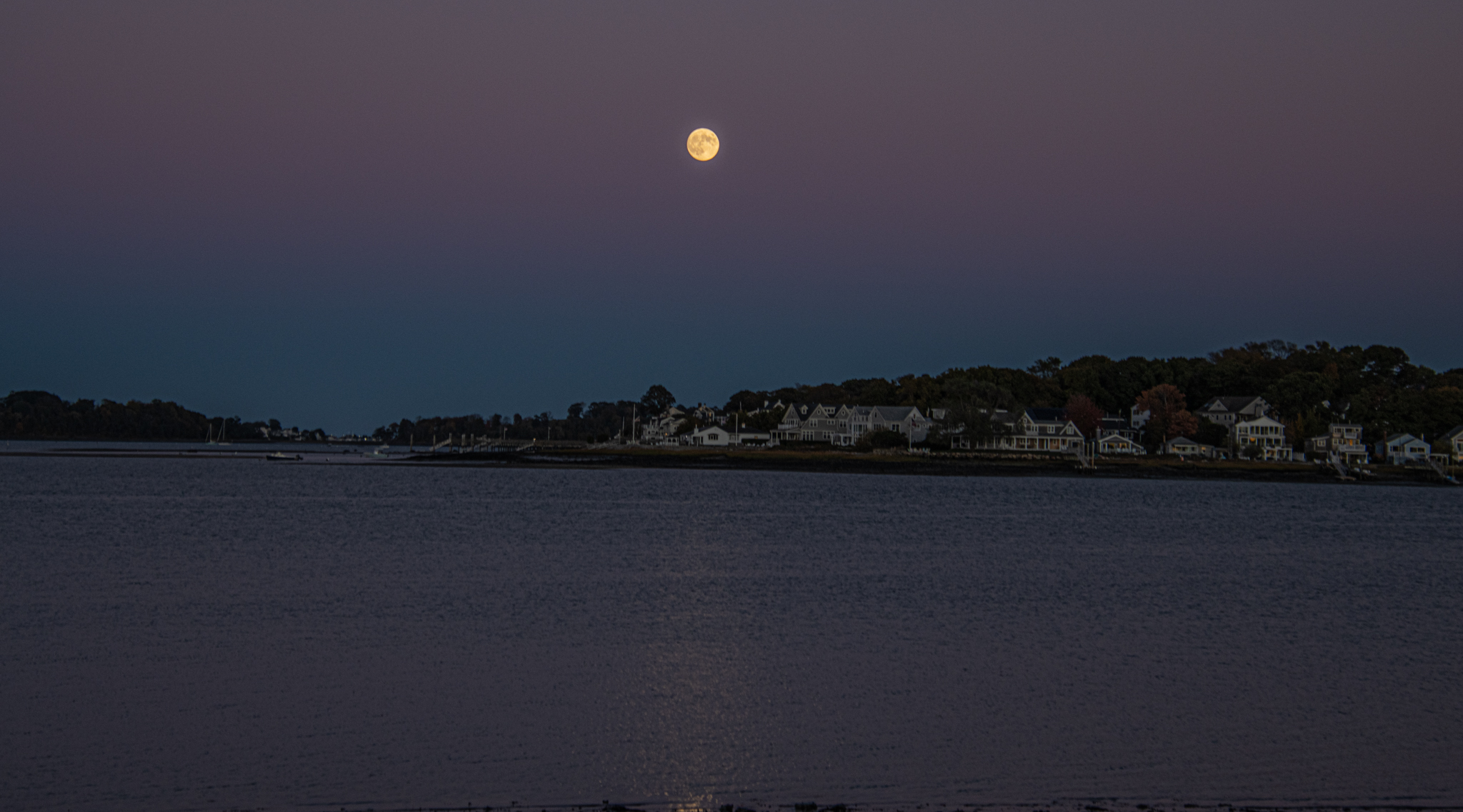
I also photographed some sunrises, a sunset and a full moon!
Cliff Walk, Newport, RI
Hampton Beach, Hampton, NH
Independence Park, Beverly, MA
Revere Beach, Revere, MA
Webb Memorial Park, Weymouth, MA
Webb Memorial Park, Weymouth, MA
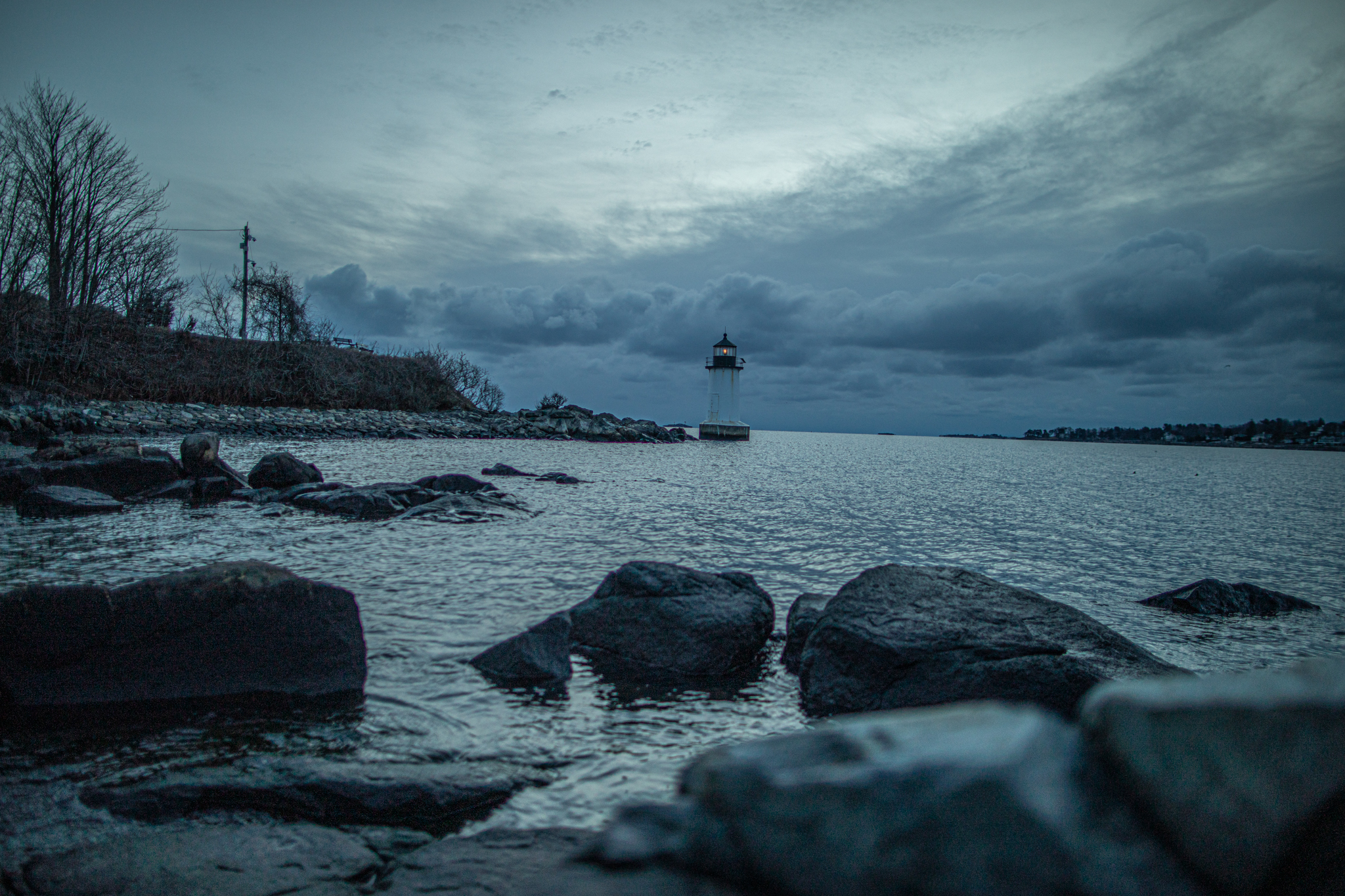
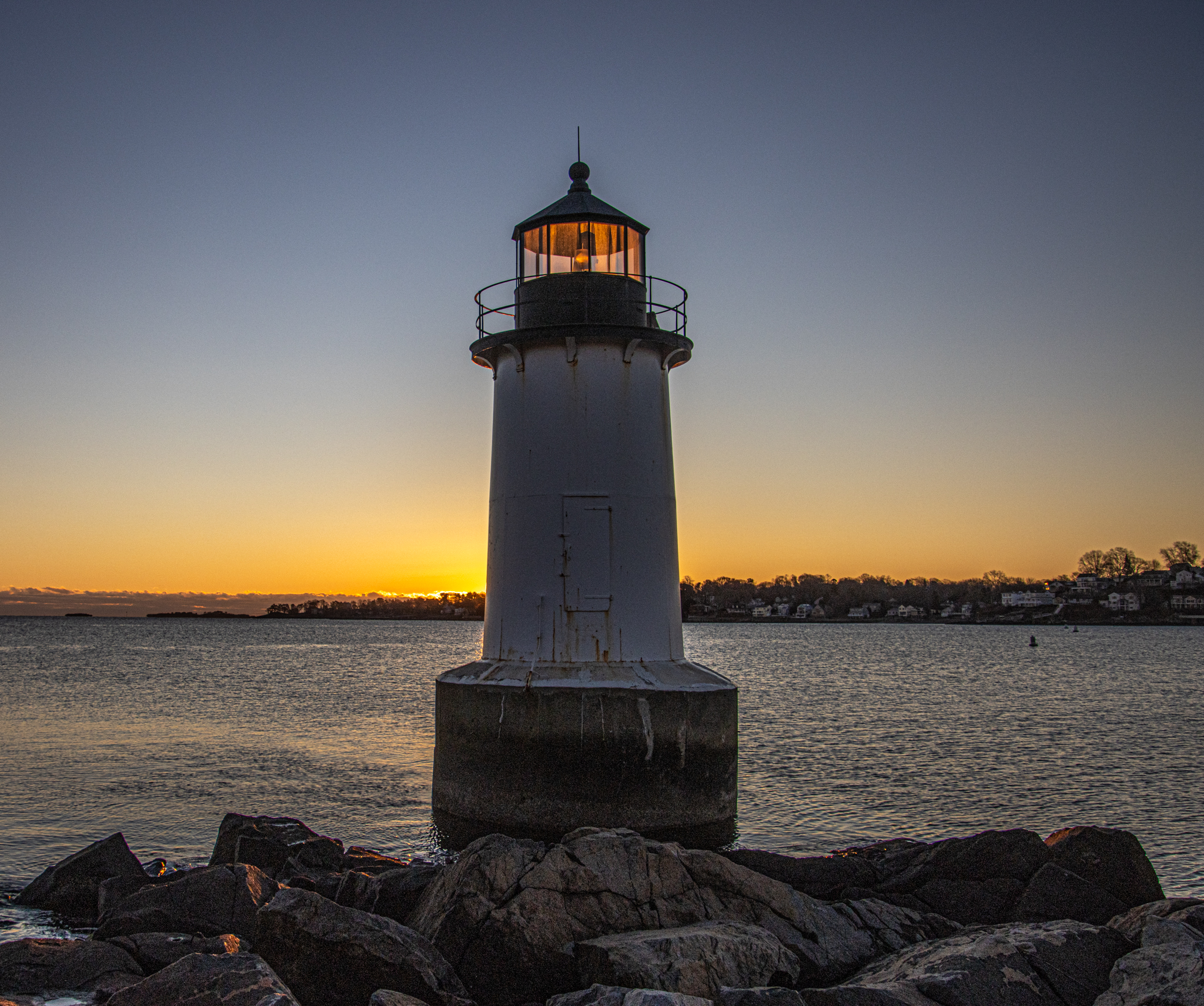
And, of course, I made several trips to my favorite lighthouse at Winter Island, Salem, MA!
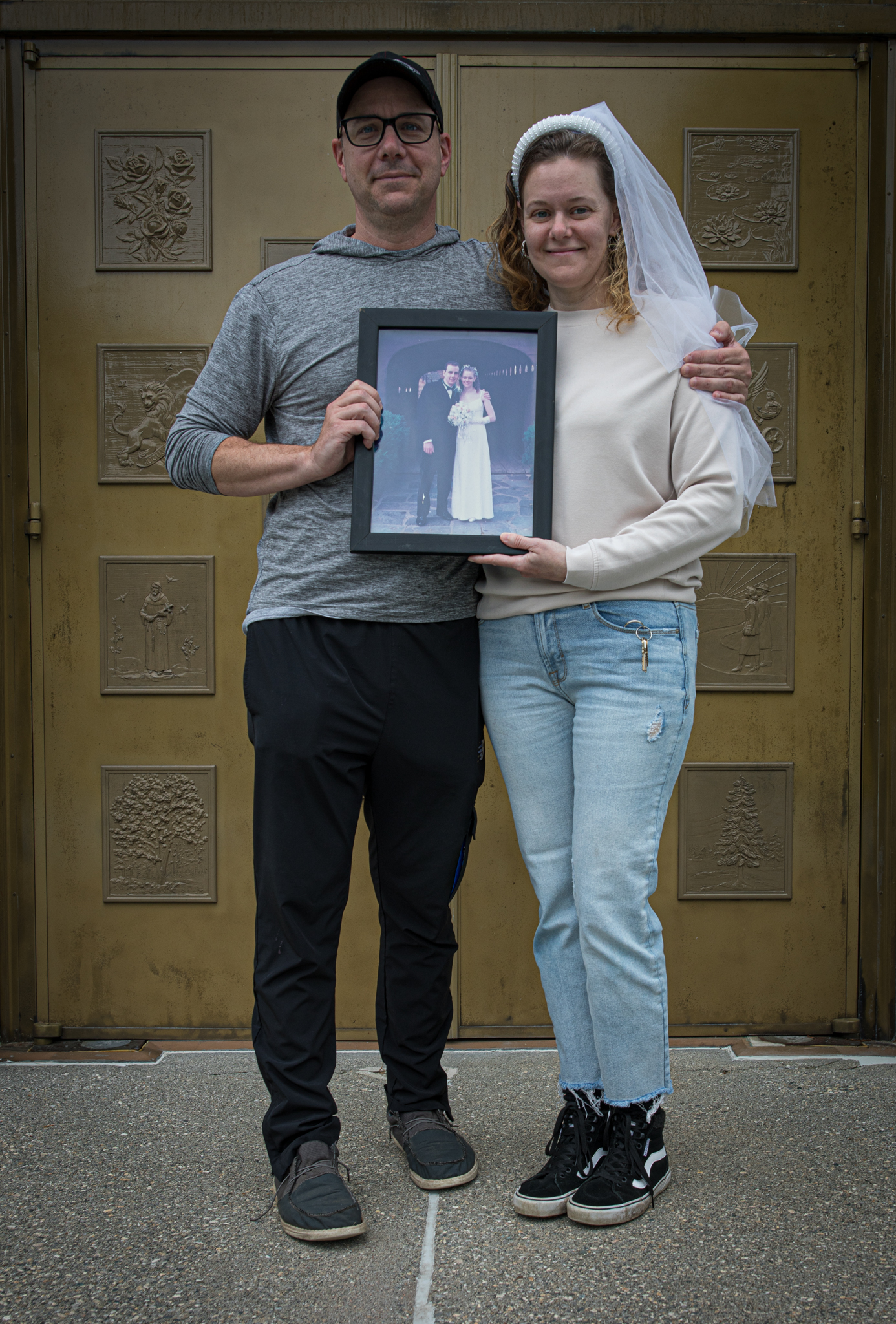
Stanley Park in Westfield, MA, celebrated their 75th anniversary. To commemorate this anniversary, the park officials invited all of the people who were married there to come back for a reunion! This couple looks like they’ve barely aged!
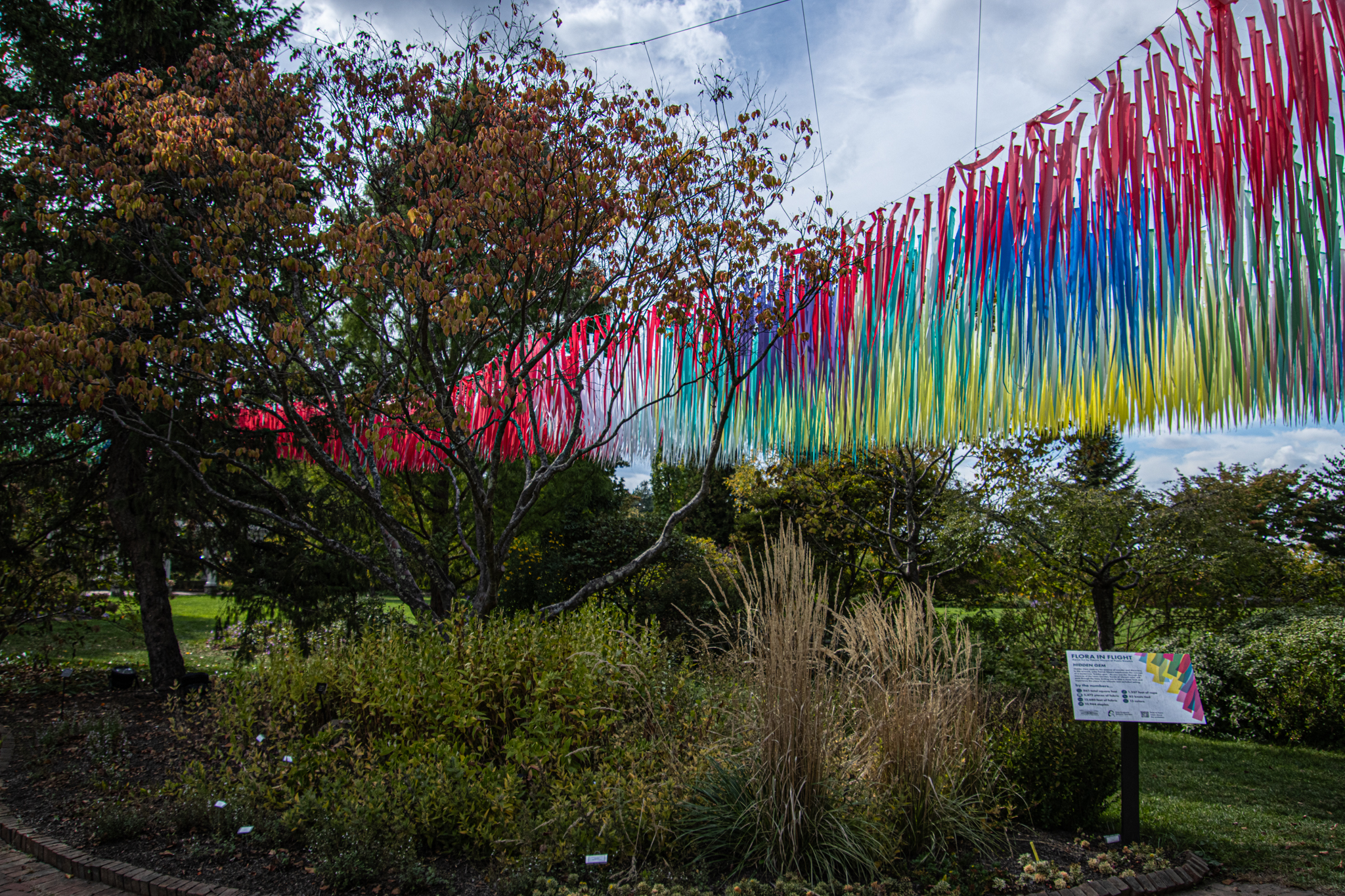
Another exhibit I was able to photograph was the Flora In Flight art display at the New England Botanical Garden. Designed by Poetic Kinetics, Flora In Flight is meant to inspire audiences and connect them with the environment through visually striking experiences.
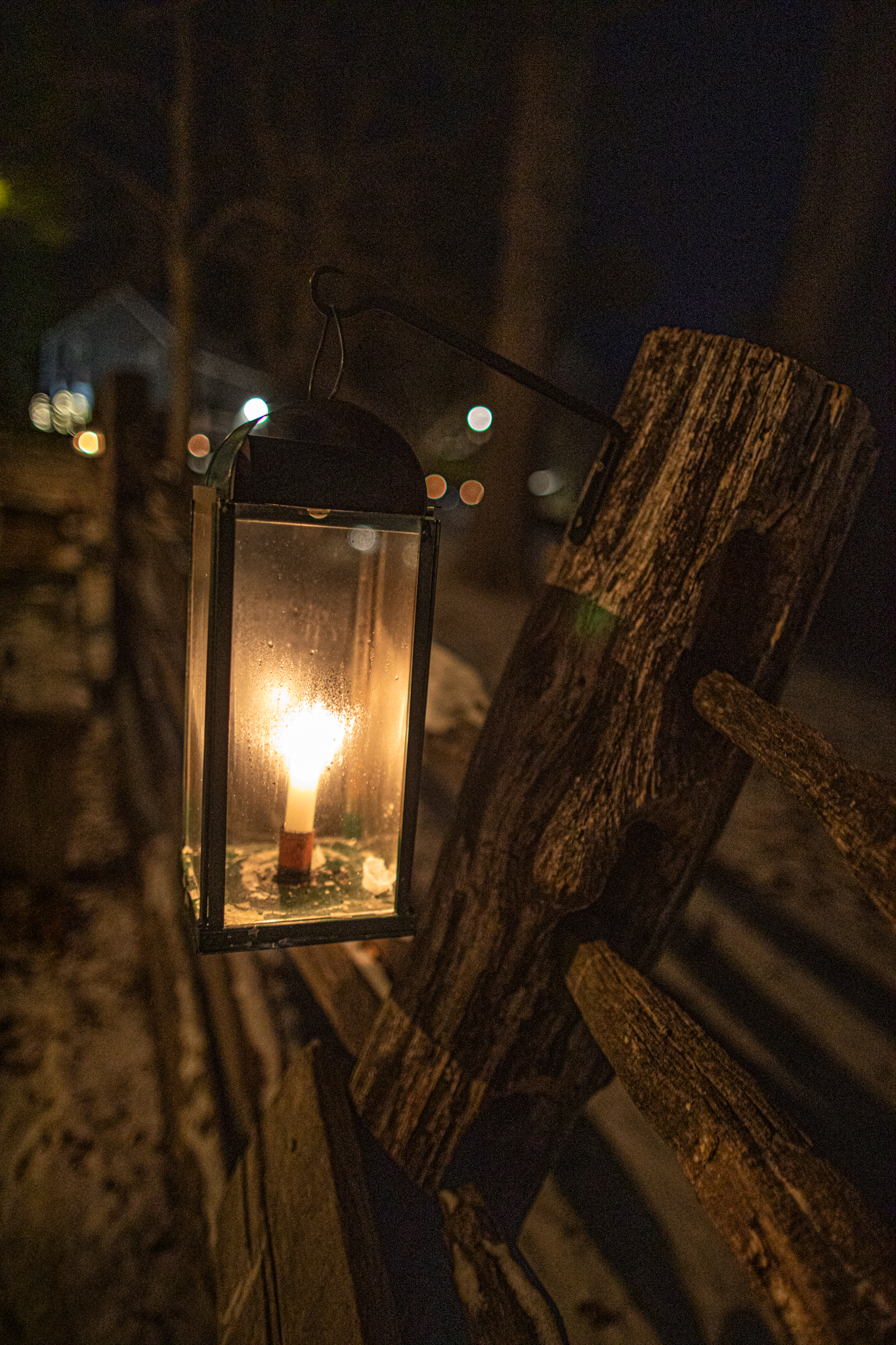
Recently, I made it out to the Christmas By Candlelight in Sturbridge, MA!
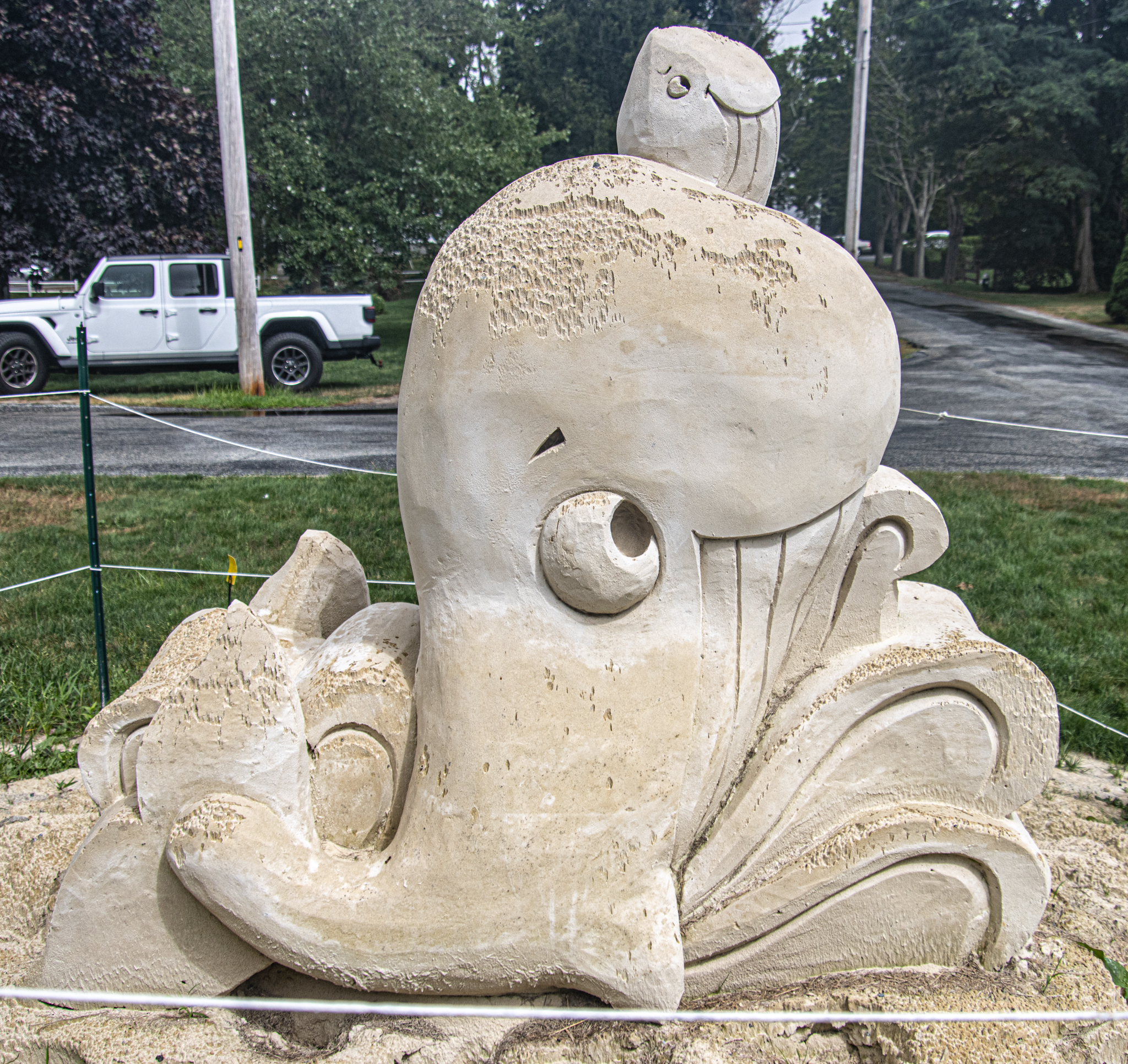
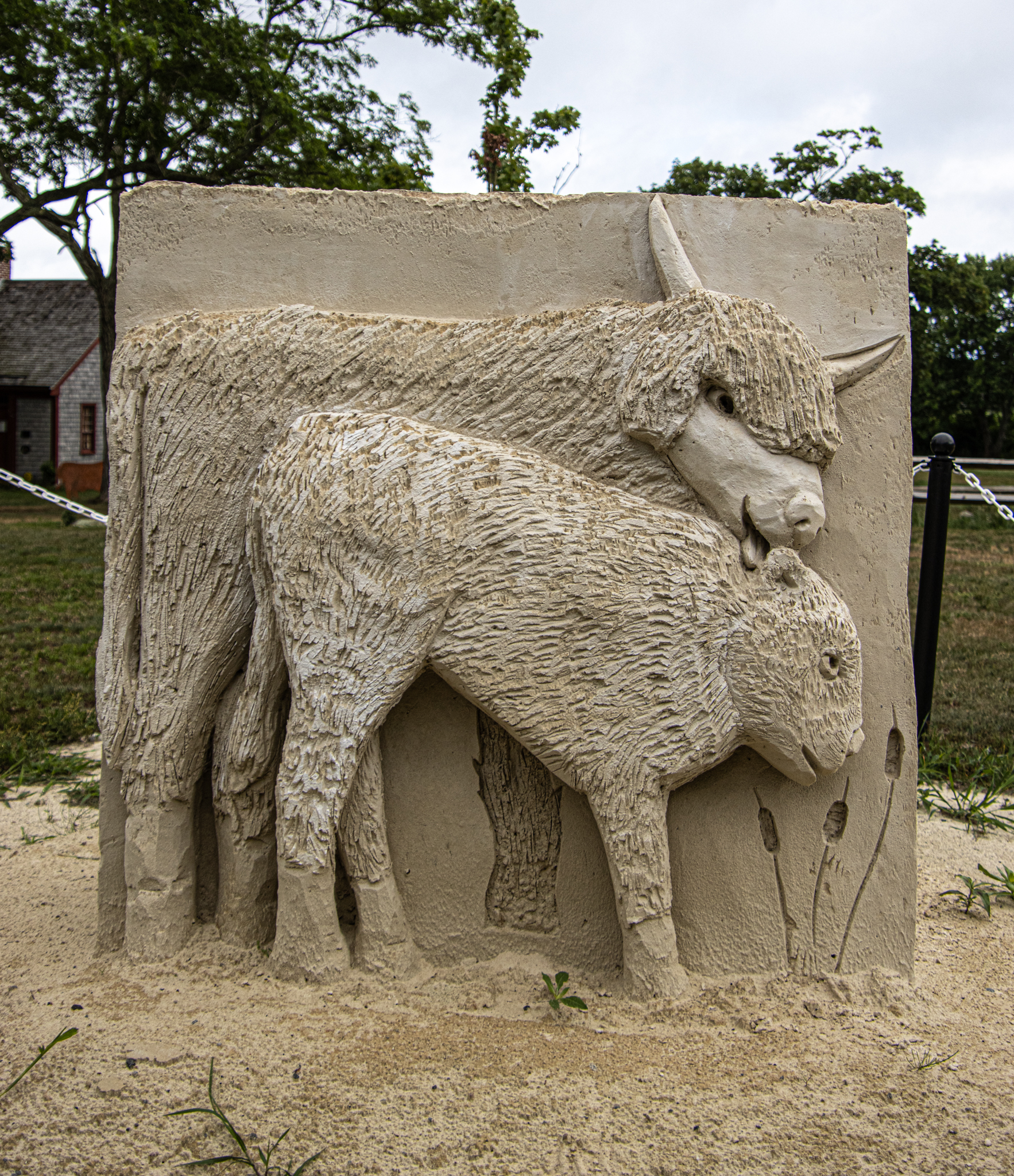
I also photographed some of the sand sculptures on the Yarmouth Sand Sculpture Trail.
So, I had a busy 2024! But, there is much more I want to see and show everyone in the upcoming year! I also plan on editing the remainder of the photos from the photo shoots above!
Thank you all for stopping by my posts!
I hope everyone has a happy, safe and successful 2025!
Not all of the buildings in the Christmas In Salem tour are homes. This part of the tour took us to the Grace Church.
Grace Church has been at its current location since 1926. Previously, it was a wooden Gothic Revival building in 1869. The original church was demolished as it was deemed inadequate for the needs of the congregation. Philip Horton Smith and Edgar Walker, both architects of Salem, constructed the stone masonry late Gothic Revival structure that exists at the location today. Four of the stained glass windows in the church were transferred from the original 1856 structure, two of which are by Tiffany.
While the church was being built, Grace Church acquired the Burill House as a Parish House. The building has been remodeled and enlarged while adding a cloistered wing to the church.
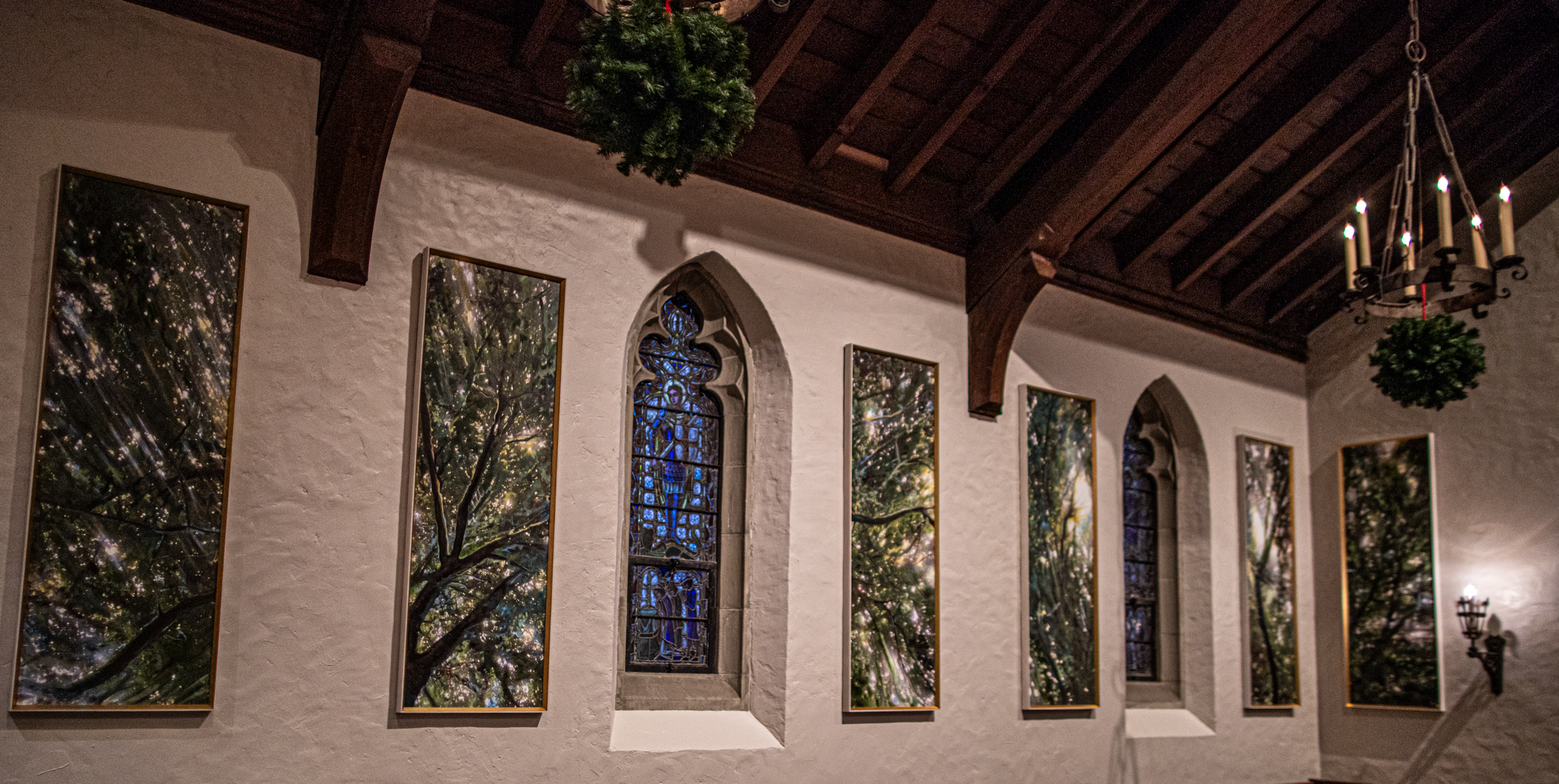
Susan Gentile’s “Heavenly Light” art project adorns the walls of the church.
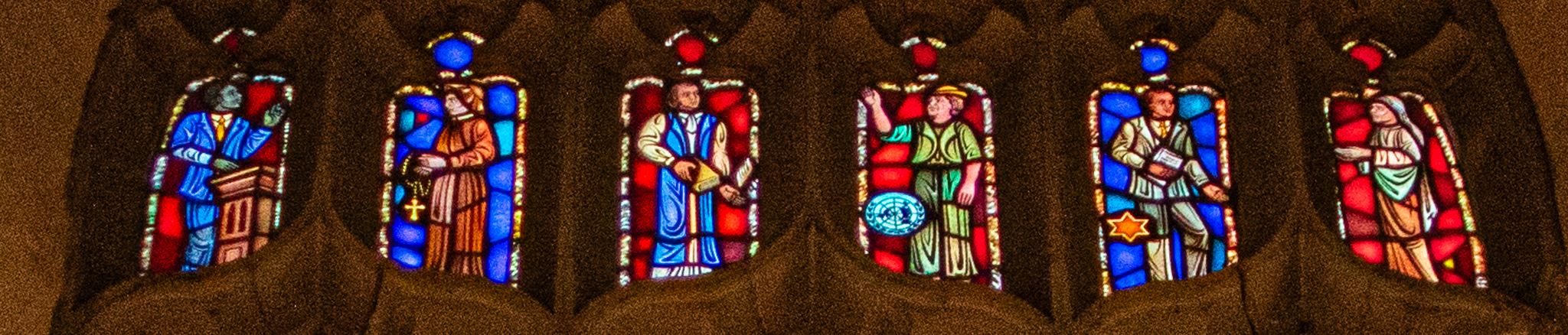
If you look closely at this stained glass window, you may see some historical figures (besides the obvious one).
In the second row of the stained glass window, there are images of Martin Luther King, Ghandi and Mother Teresa.
Grace Church is involved in many activities and causes such as the Abundant Life Garden which engages children in scripture and agriculture as well as many other causes.
Parking: There are several parking lots and garages in the Salem area
Universally Accessible: No, many of the homes do not have ramps or universally accessible entry
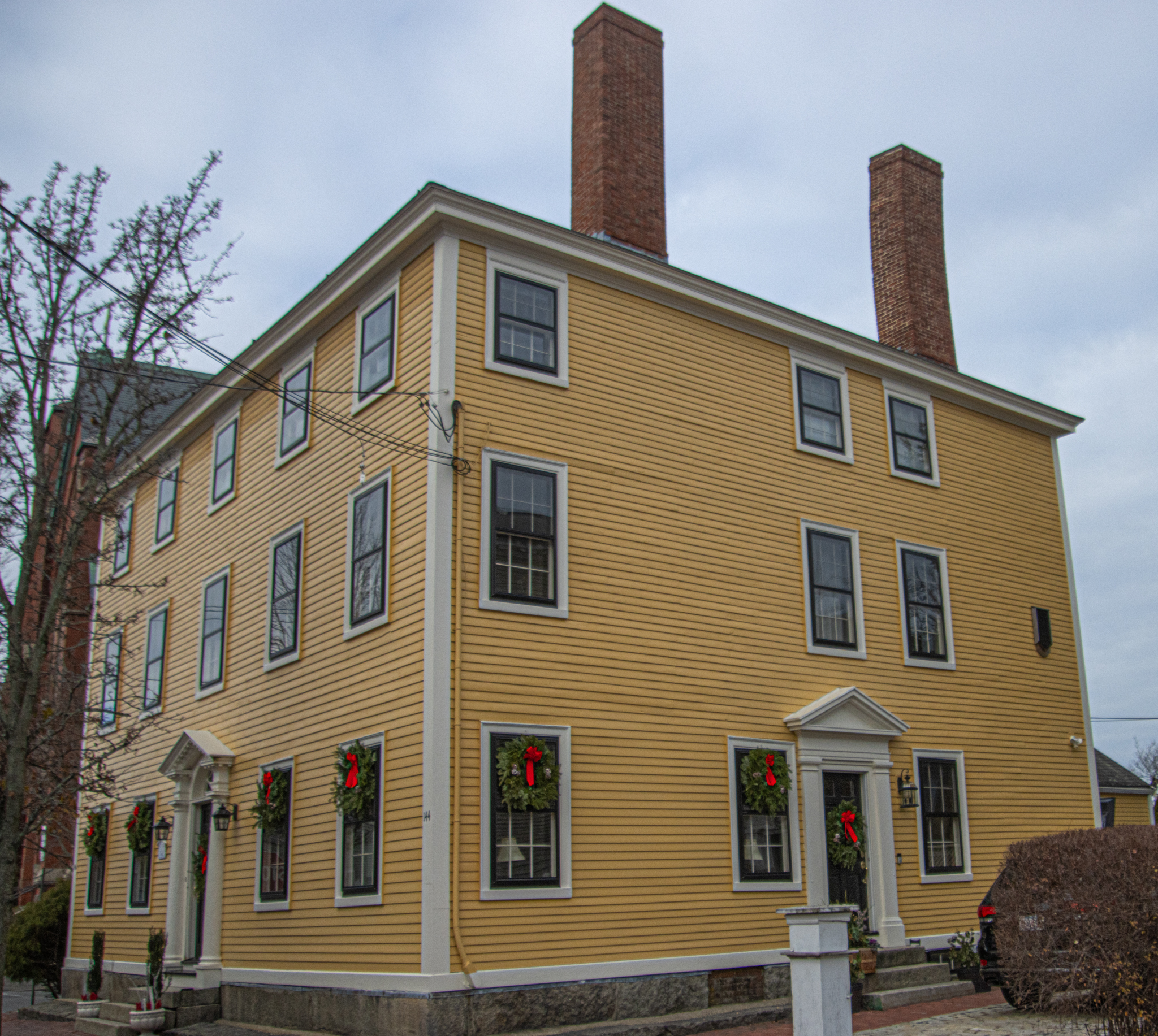
The second home on the Christmas In Salem tour is the Thomas Whittredge House. Thomas Whittredge, a shipmaster from Salem, purchased the land for the home on November 30, 1799. The house was finally built in 1802. The boundaries of the from the original deed have not changed an inch.
Fittingly, this home on Federal Street is built in the original Federal style which was popular from 1780 to 1820. The front facade is most noticeable due to its Doric pilasters elliptical fanlight above the door. Originally, there was a two story stable and a shed and outhouses on the property.
Whittredge was a master mariner who traded in the mid-Atlantic states. He owned two vessels that served as privateers during the war of 1812. He and his wife Sarah, a native of Danvers, were married in 1793. They lived in the home with their 4 children until Thomas’ death in 1829. Sarah lived in the house until 1841 when she transferred the deed to her daughter and son-in-law. The house, which was originally a single family home, was divided into a two-family home around 1885.
During the 1990s, a fire damaged the home. It would not be fully rebuilt until 20 years later.
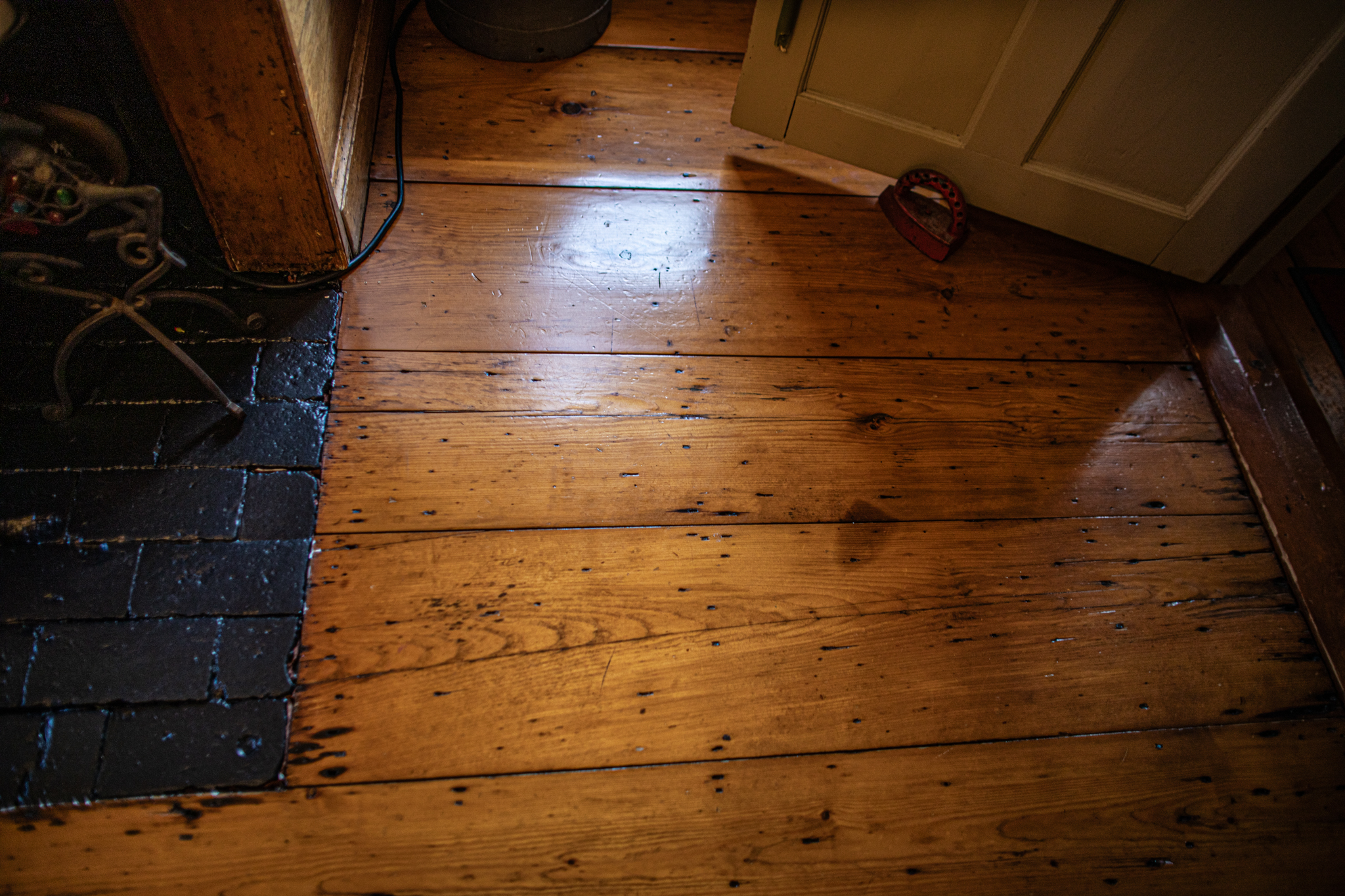
The home still has its original floors in the fireplace area.
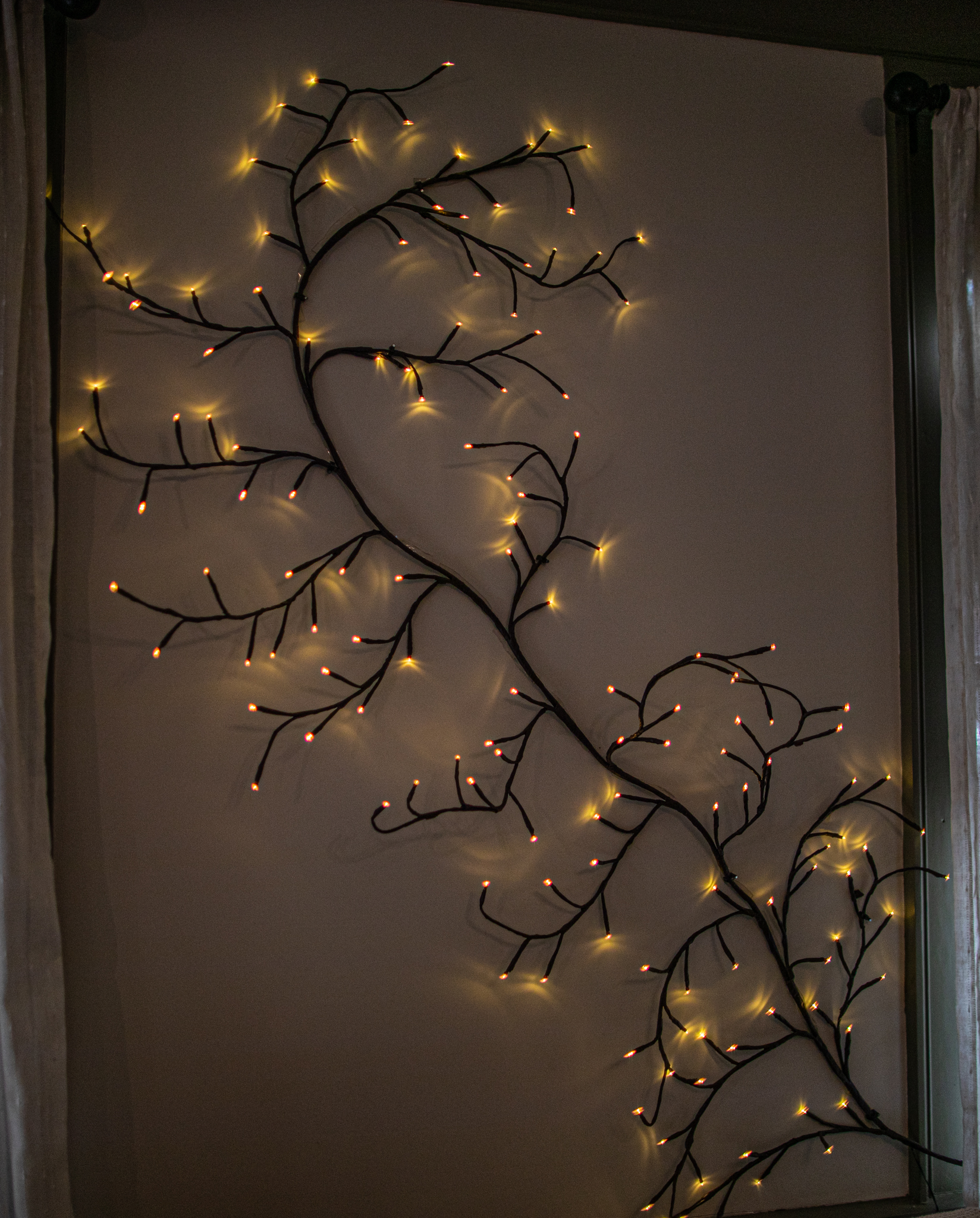
The house was dressed up for the holidays with bow, ribbons and a variety of lights!
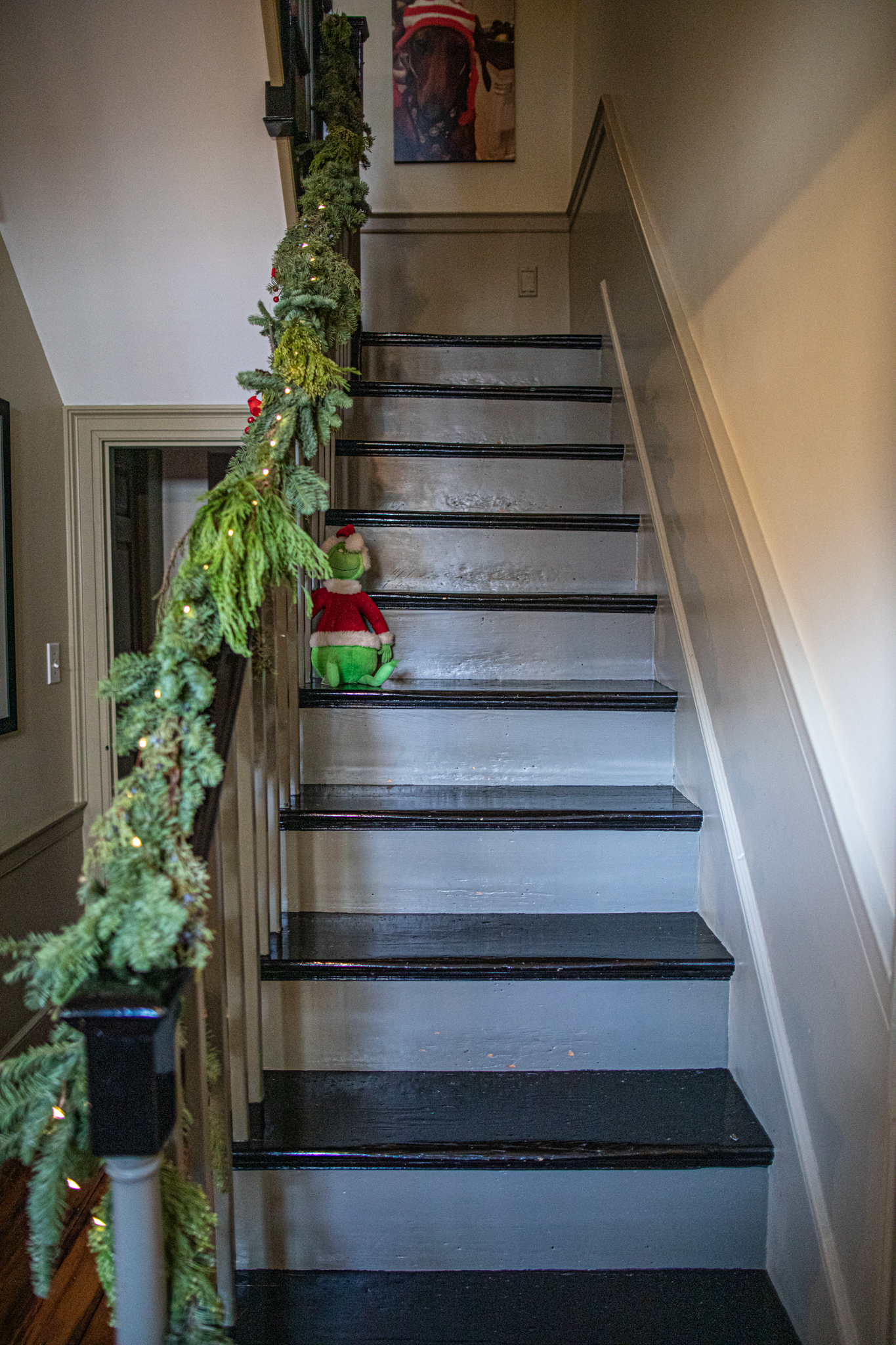
If you look closely up this stairwell, you might see a portrait of one of the family members!
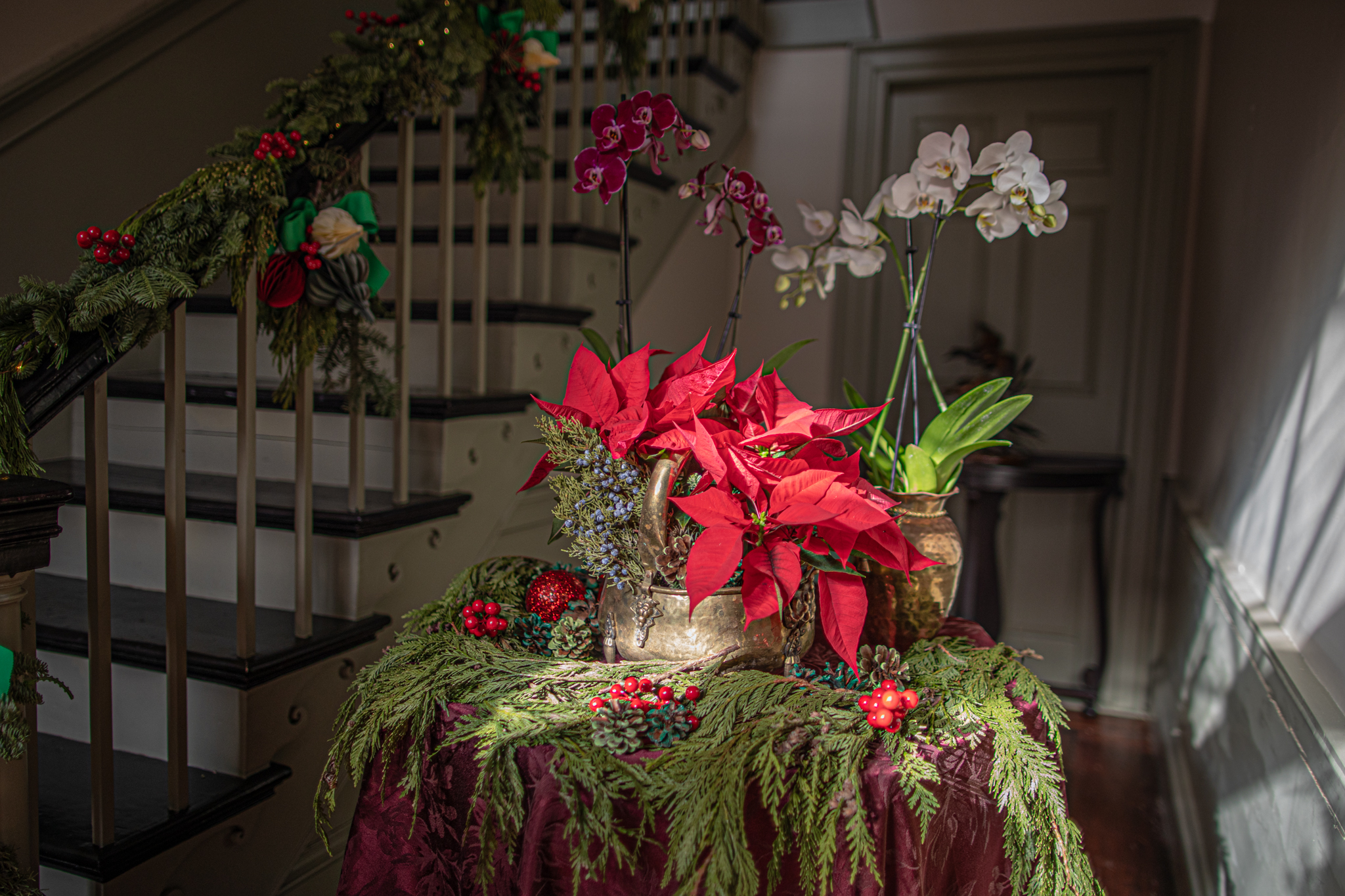
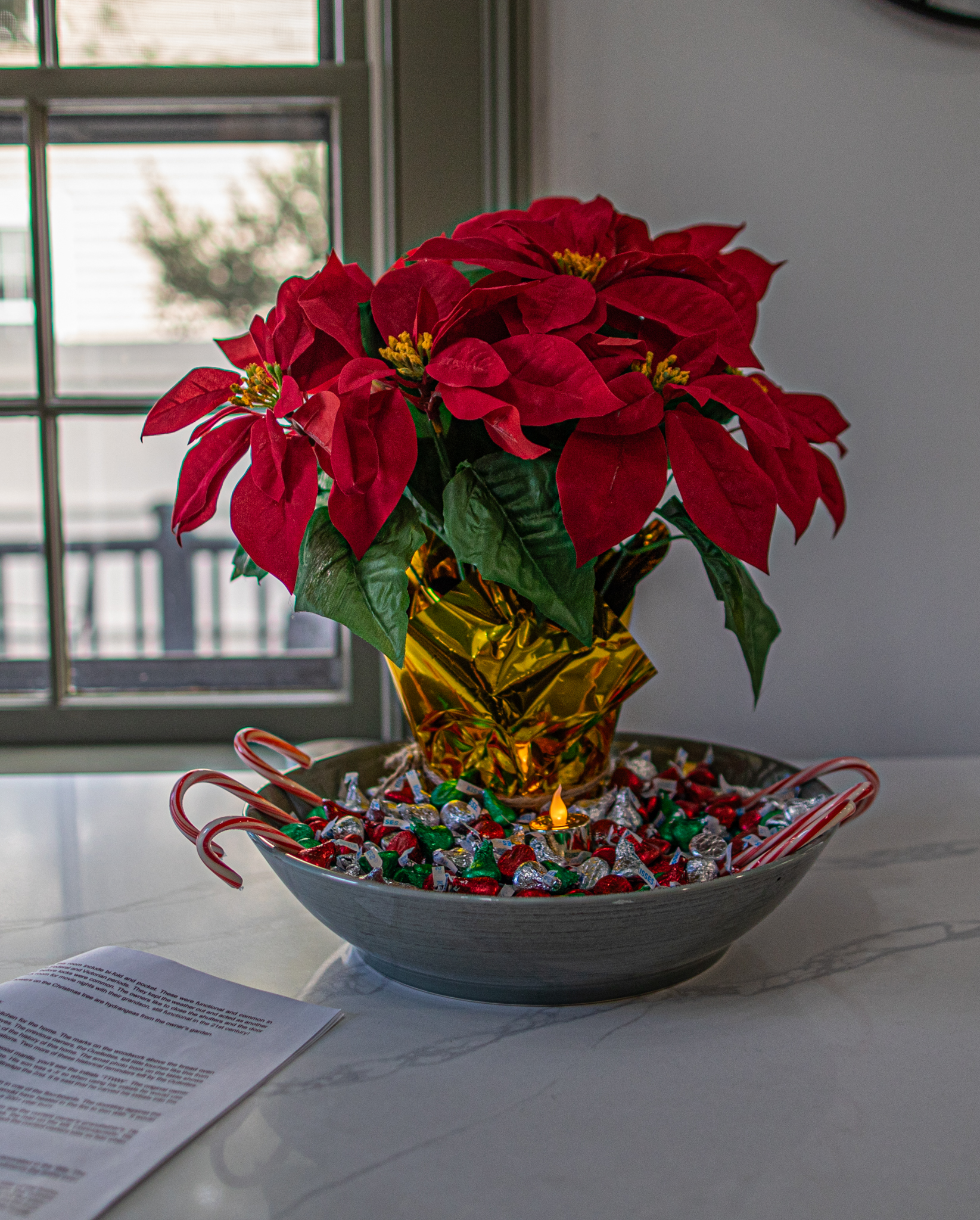
And what holiday home would be complete without a poinsettia! The best part were the free treats in the bowl!
Some of the visitors got into the holiday spirit and wore their best headwear for the event!
Parking: There are several parking lots and garages in the Salem area
Universally Accessible: No, many of the homes do not have ramps or universally accessible entry
When you ask most people what they think of when they think of Salem, MA they will most likely reply with something about Halloween and witches. However, Salem has become an all year round attraction. In fact, the Christmas in Salem event has quickly become one of the more popular events in Salem.
Christmas In Salem is a series of guided tours at 13 historic homes and buildings in Salem, MA. In these series of posts, I will take you all on these tours and give some observations from my perspective through my photos and the information provided by the informative tour hosts and the literature from this event.
The first home on the Christmas In Salem tour is the Cotting-Smith Assembly House (aka as the Assembly House) on Federal St. This house was used as the headquarters of the tour. People registered for the tour by showing their receipt and, upon registering, were given a handbook with the addresses and writeups for each building.
Built in 1782 as a “Federalist Clubhouse”, the Cotting-Smith Assembly House was used as a ballroom and concert venue as well as a place to host lectures and other events for Salem’s elite. The Marquis de Lafayette was said to have danced in that very house in 1784 and it is said that George Washington dined there in 1789. While the original documentation for the building is not available, it is believed the house was essentially plain and functional in its original state in 1782.
The building was originally funded as a joint stock venture. Once it was rendered obsolete in 1792, Jonathan Waldo, one of the original developers, obtained full ownership. Waldo then sold the house to Samuel Putnam in 1794. Either Waldo or Putnam hired renowned Salem architect and craftsman Samuel_McIntire to remodel it as a private home. McIntire added 4 pillar of iconic pilasters to the second floor facade and a pediment centered above. The Assembly House is said to the the only wooden structure designed by McIntire with a pavilion front. The house was later remodeled during the 1830s or 40s. During this time the Greek Revival portico was added to the front of the house featuring an ornate frieze of carved grape vines by master carpenter Joseph True. The Assembly House, which is now owned by the Peabody Essex Museum, is listed on the National Register of Historic Places.
The building acted as the meeting place for visitors to get their handbook of houses to visit and map of all of the buildings on the tour. So, there wasn’t much decor at this particular home. However, I did see some photo worthy things.
Sometimes the little things can tell a lot about a home. For instance, this wallpaper spoke to the trade relations between Salem and other countries. This wallpaper, which shows what looks like a rendition of life and culture of the people of Asia, may have been an example of how the owners traveled to certain parts of Asia. It was not unusual for people to put up wallpaper that reminded them of places they traveled to or traded with.
This is not an original print, though. It is a stylized representation of wallpaper from that time.
While wallpaper may not be in vogue now, it was a treasured possession of the wealthy at the time this house was built.
According to Historic New England, the earliest record of wallpaper in America is in the estate inventory of a Boston stationer in 1700, where “7 quires of painted paper and three reams of painted paper” were listed. But, only one wallpaper in Historic New England’s collection with a history in New England dates back to the 1700s. Like all early references, this was more descriptive of quantity than of design. Only one wallpaper in Historic New England’s collection with a history in New England dates to this early period. This wallpaper was later used to cover a copy book of poetry in 1783.
Initially, paper hangings, as wallpaper was called in the eighteenth century, were only available from stationer and book sellers. Or they could be custom ordered from merchants who specialized in importing luxury goods. Eventually, wall paper could be purchased from upholsterers.
Prior to 1760, only the wealthiest colonists in urban areas in New England could afford wallpaper. Wallpaper was expensive because of the process involved in making it. The rolls the wallpaper was printed on had to be made of individual sheets of paper. These sheets were glued together. Then, they were hand printed with wood blocks, one block for each color of the design.
That is what makes the Christmas In Salem event so interesting. You can learn so much about the history of wallpaper just by touring a historic home!
Please join me on my tours of all of these historic homes!
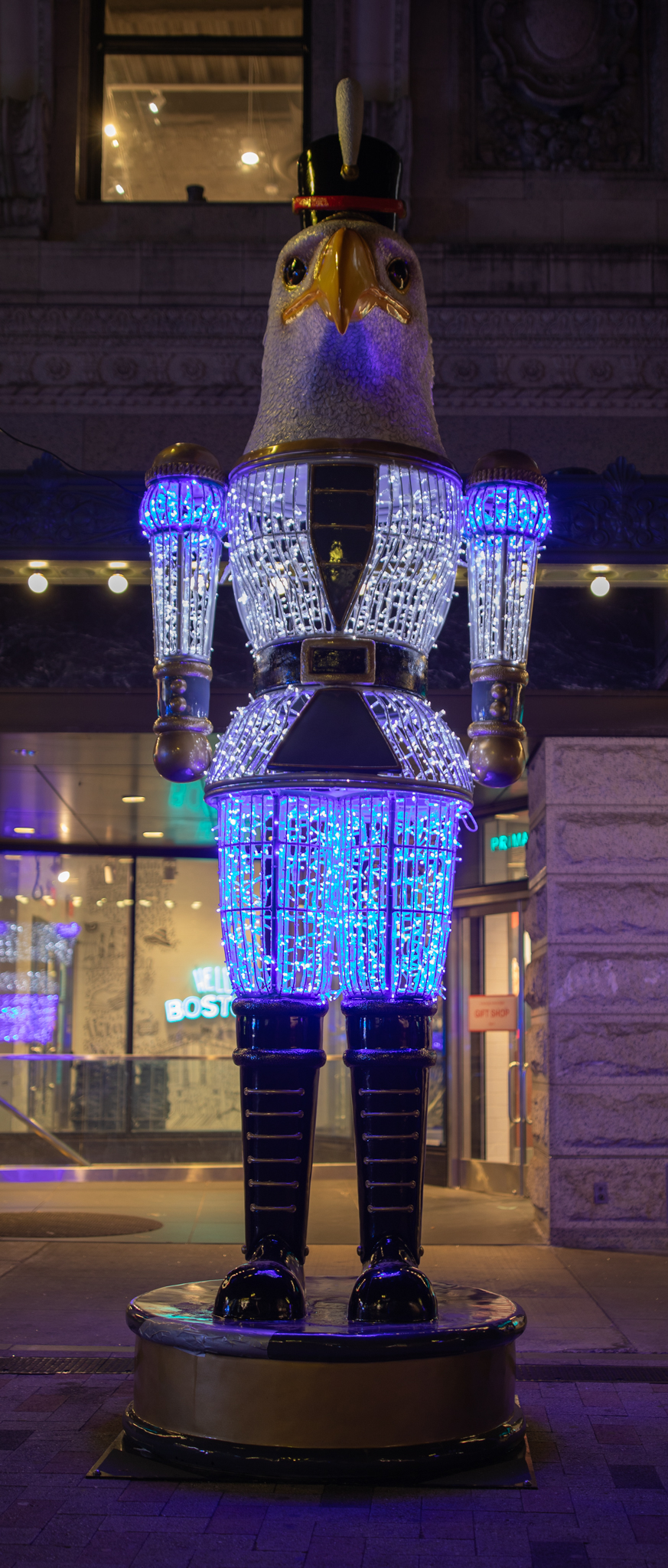
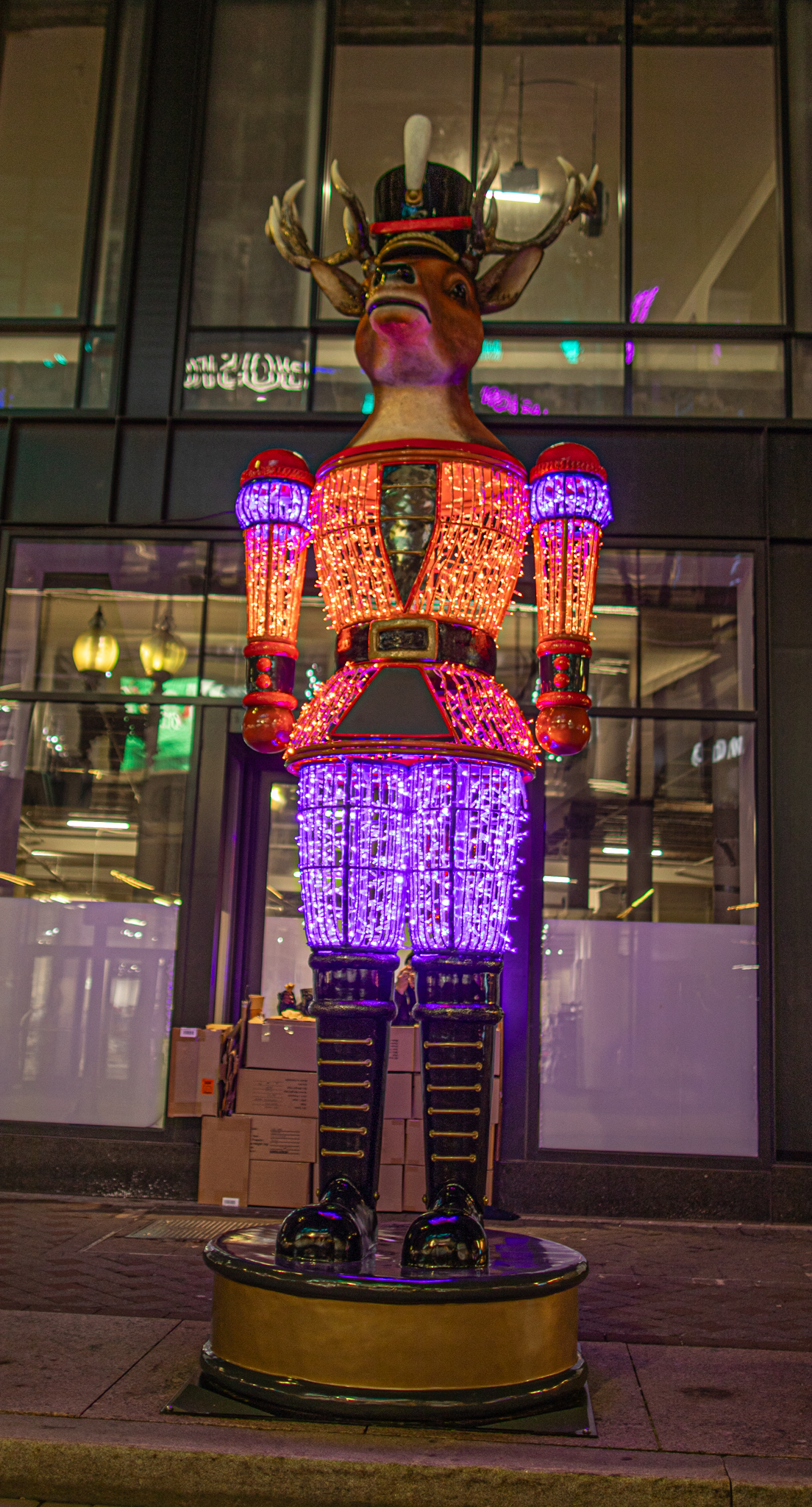
Just in time for the holiday season, 12 sixteen foot nutcrackers have been placed throughout in Boston’s Downtown Crossing area. But, these are not any regular nutcrackers.
The nutcrackers, which are fashioned with similar attire one would find on an actual nutcracker, have one significant difference…they have animal heads!
The animals for the designs of the nutcrackers were selected by children during a visit with Downtown Boston Alliance President Michael J. Nichols at a local Boston day care center. Some of the animals they suggested using for that statues include an elephant, a bear, an eagle, a duck (specifically a mallard) and a dog among other animals.
Most of the nutcrackers, 7 to be exact, are located on Washington St. For a point of reference, I am showing the statues from the area of Washington St near the Paramount and going up Washington St. I’m including a photo of the Paramount just because, even though it’s arguably one of the most over photographed spot in Boston (I see you Acorn St and Fan Pier).
The first statue is a polar bear. It is located by the Suffolk University Modern Theater (and the Paramount Theater).
This cute little cat is located near the WINDR Museum on Washington St. I don’t like that smile. It looks like he or she got into some cat nip!
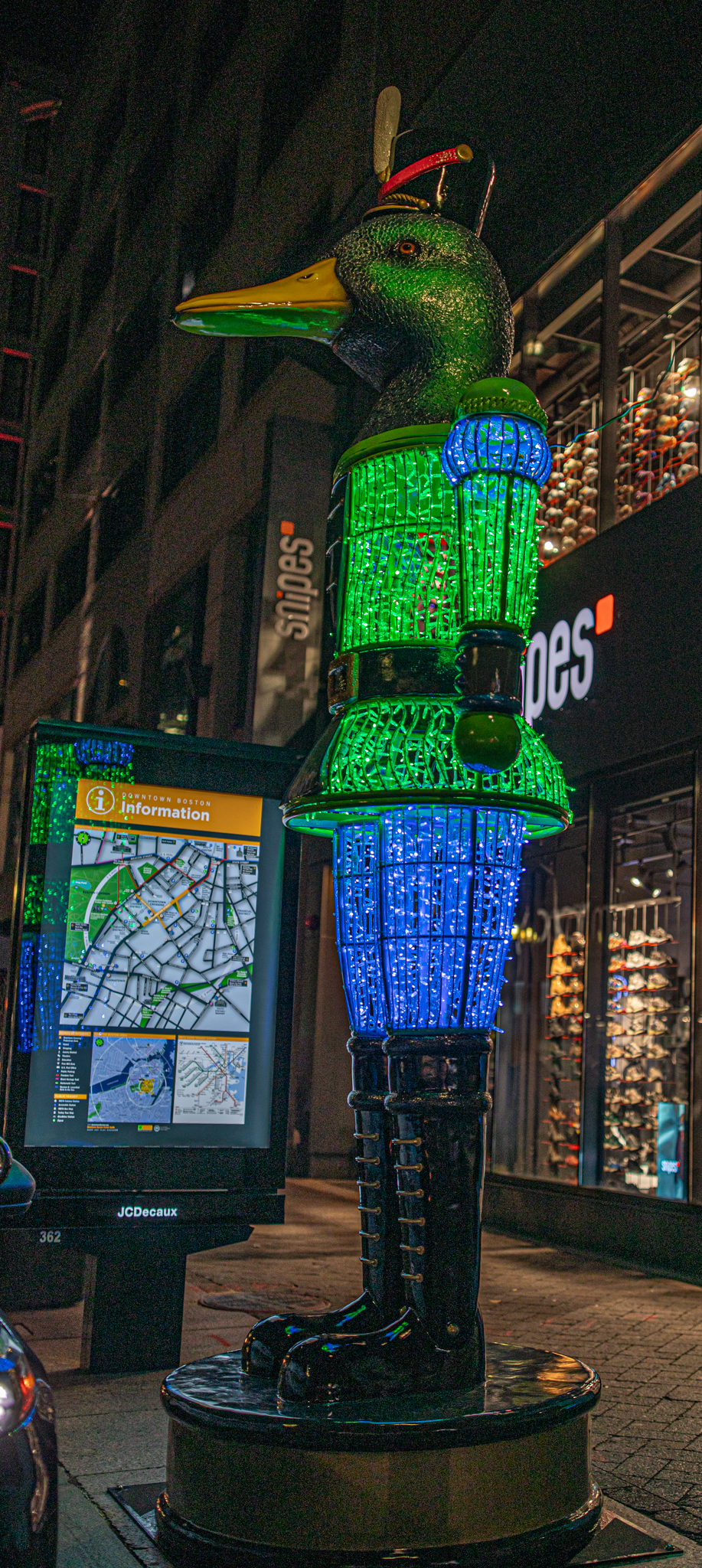
This mallard is located near Snipes (467 Washington St). Sometimes it was difficult to get a straight on photo of these statues because cars were parked in front of them. I actually just walked around and waited for the vehicles to move. But, taking a photo from an angle was a better option for this statue because the bill of the duck looks better from an angle.
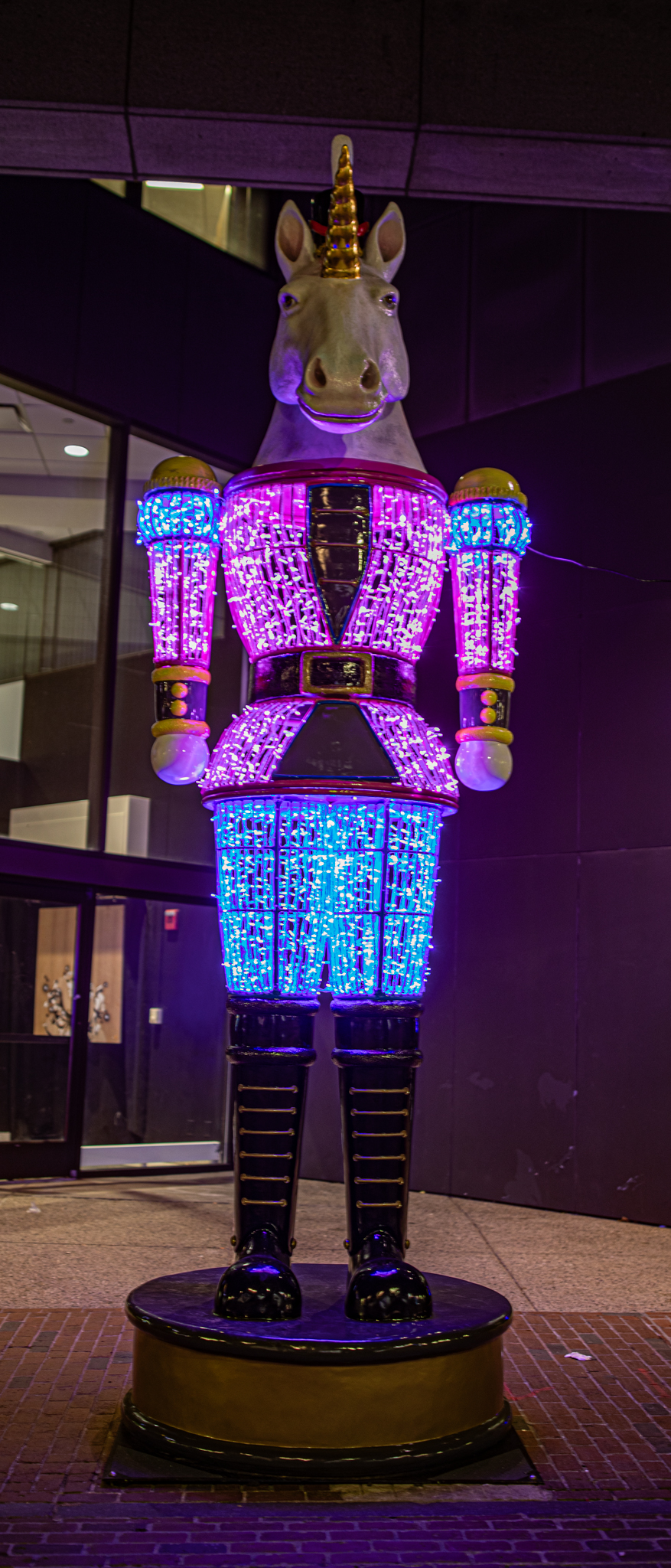
I found this unicorn on Winter St after I took the next left after the mallard.
Then, I walked back towards Washington St and crossed over to Winter St where I found these 4 statues of a rhino, a horse, an elephant and an eagle near Macy’s (450 Washington St).
Then, I continued back onto Washington St to photograph the remaining statues. I found this deer near the Gap and DSW stores.
Just as an fyi, the attached map is not accurate. The map shows the dog as being at this location.
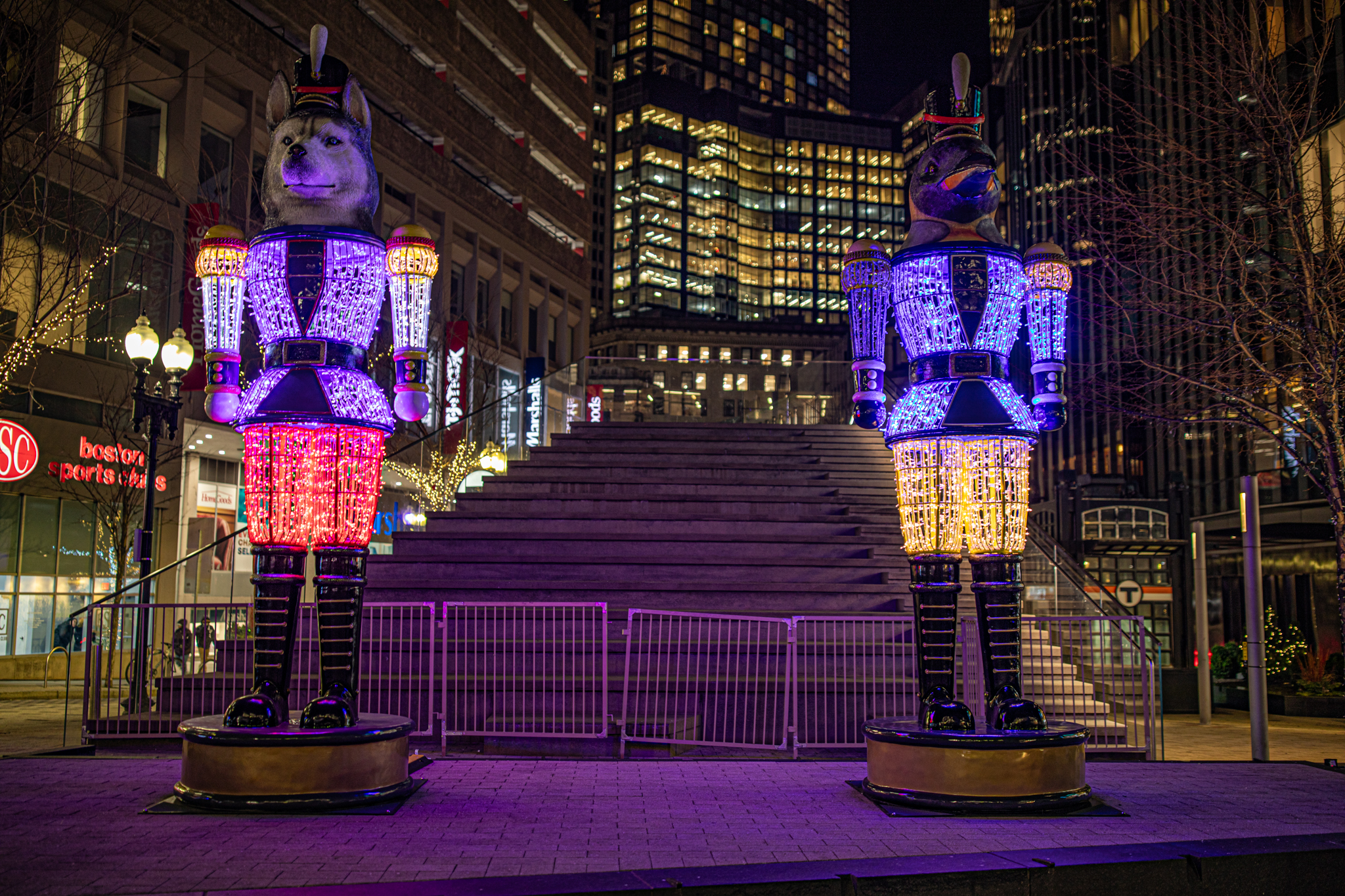
These 2 statues of a dog and another duck are located at the popular stairs between the TJ Maxx and Old Navy. I liked how the buildings looked in the background.
The last statue I found was of this beer near the Jewelers Building (333 Washington St)
All of the statues are easy to find and accessible to all. And I love the little accessories like the hats and the epaulets on their shoulders! I also appreciate how some of the animals seem to be talking or making faces in some cases. The best part, though, is the lights, of course. While you can view them day or night, the best time to view them is at night when the colors stand out more. However, the features may be easier to see during the daylight hours. But, don’t wait too long to see them. The statues will only be there until Jan. 2, 2025.
Of course, Boston was decked out with Christmas decor during my visit! So, as a bonus, I am adding this photo of one of the stars installed near one of the main streets in the city.
Location: College Highway, Southwick, MA (2 hours southwest of Boston, MA, 30 minutes northwest of Hartford, CT)
Cost: Free
Parking: Free parking was available at some of the local establishments including the shopping center on College Highway
Universally Accessible: Yes
Pet Friendly: Yes
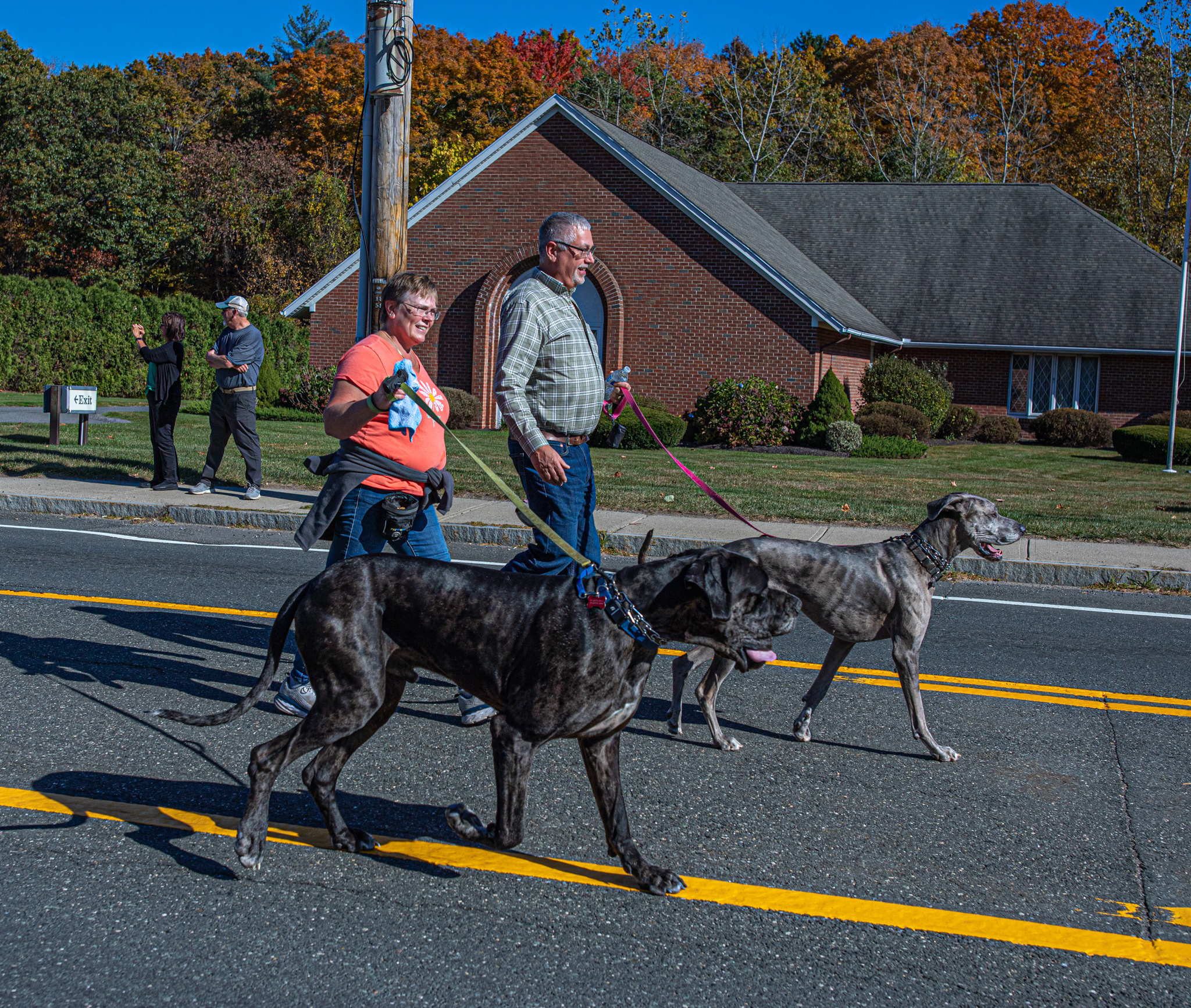
Summary: Horses, cows, dogs, chickens and even a few people marched in the 6th annual animal parade to raise funds for the Polverari-Southwick Animal Shelter.
Parades usually feature people as the main participants. However, the Farm Parade in Southwick, MA, is a little different. Animals were the main attraction at this parade. Officials projected that 75 to 100 animals of all kinds were expected at the parade.
The parade was free for all who came to watch. But, there was a $20 fee to enter the parade. The proceeds went to help the Polverari-Southwick Animal Shelter.
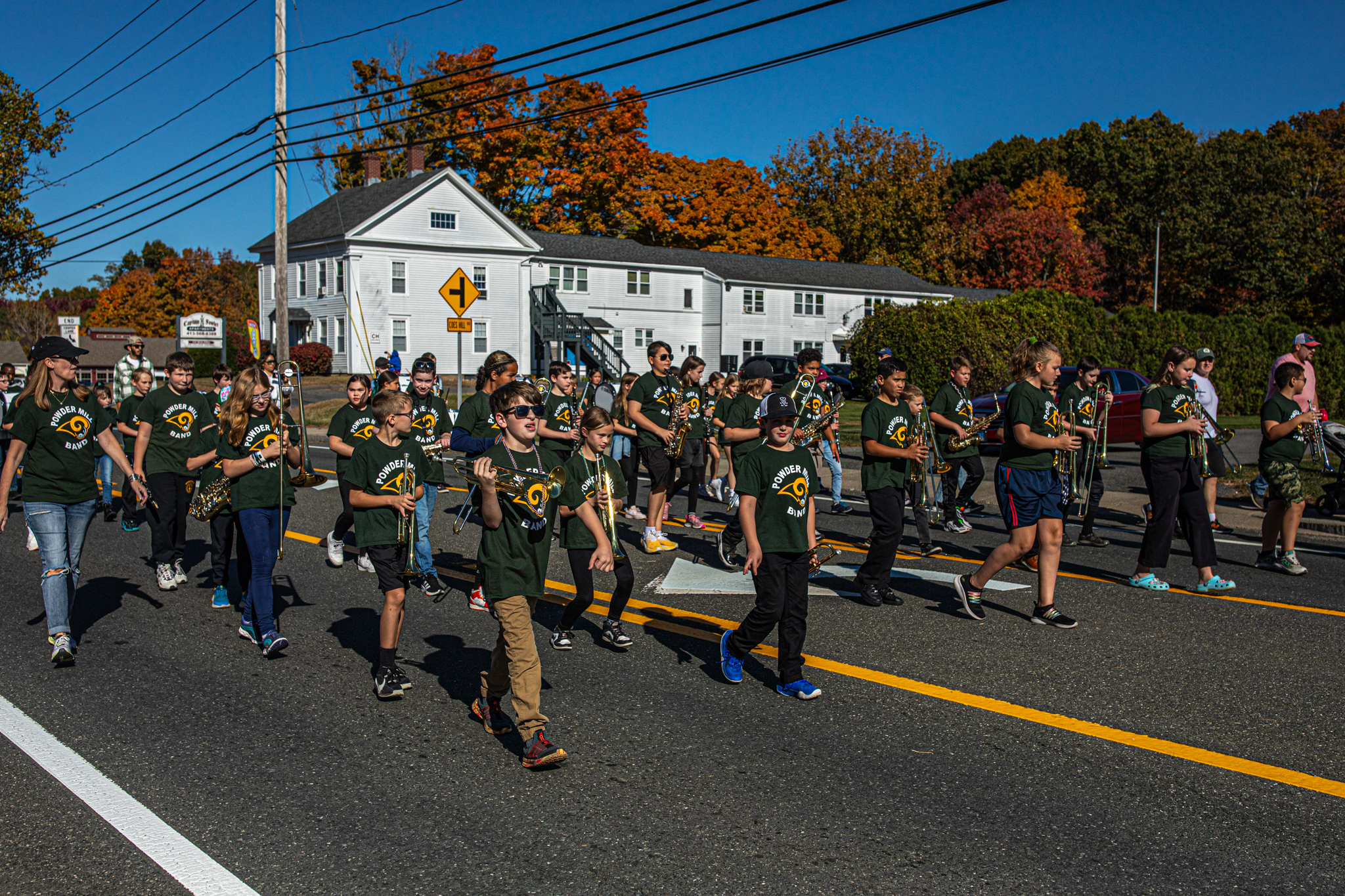
The Powder Mill School marching band provided the musical entertainment for the event.
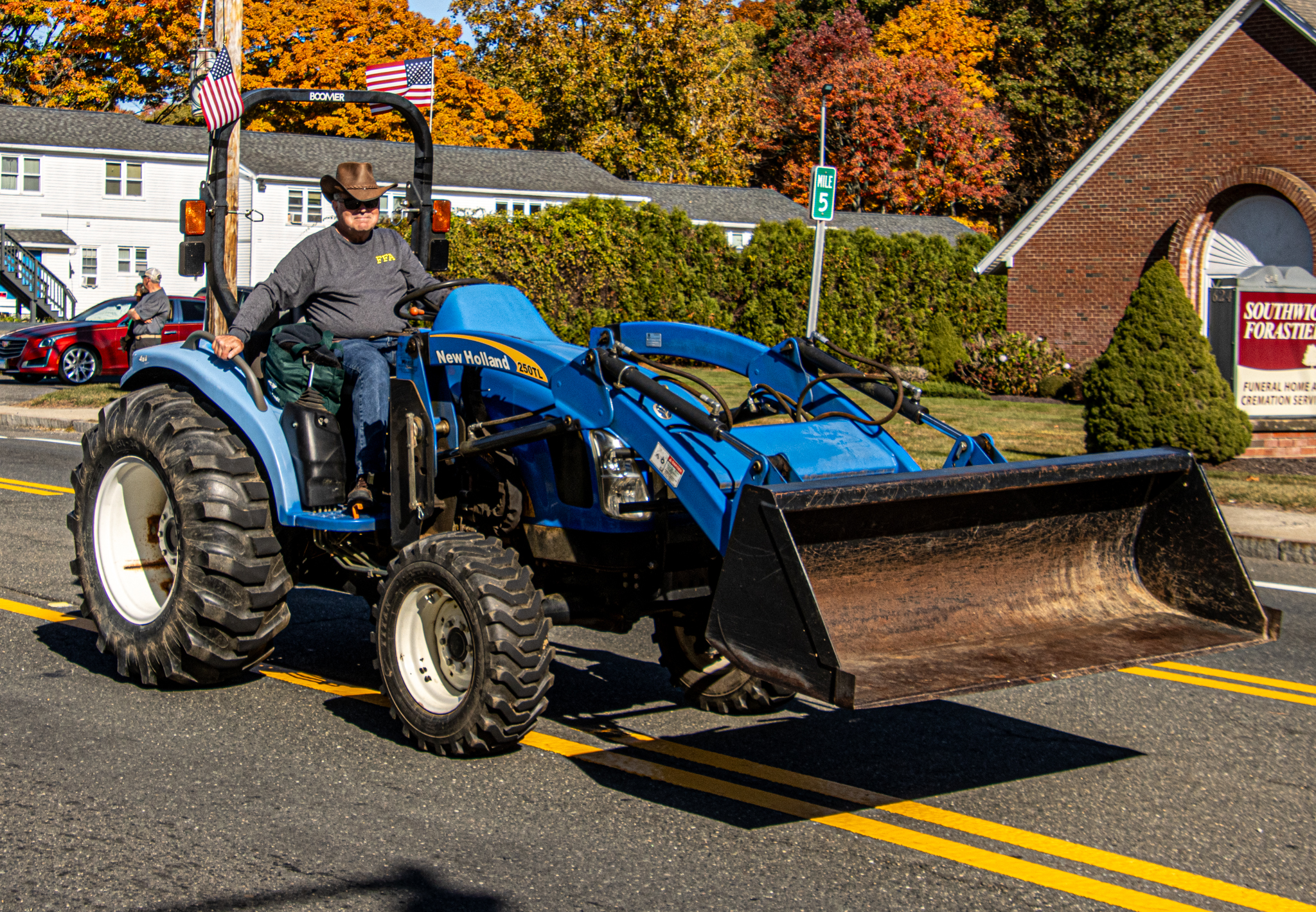
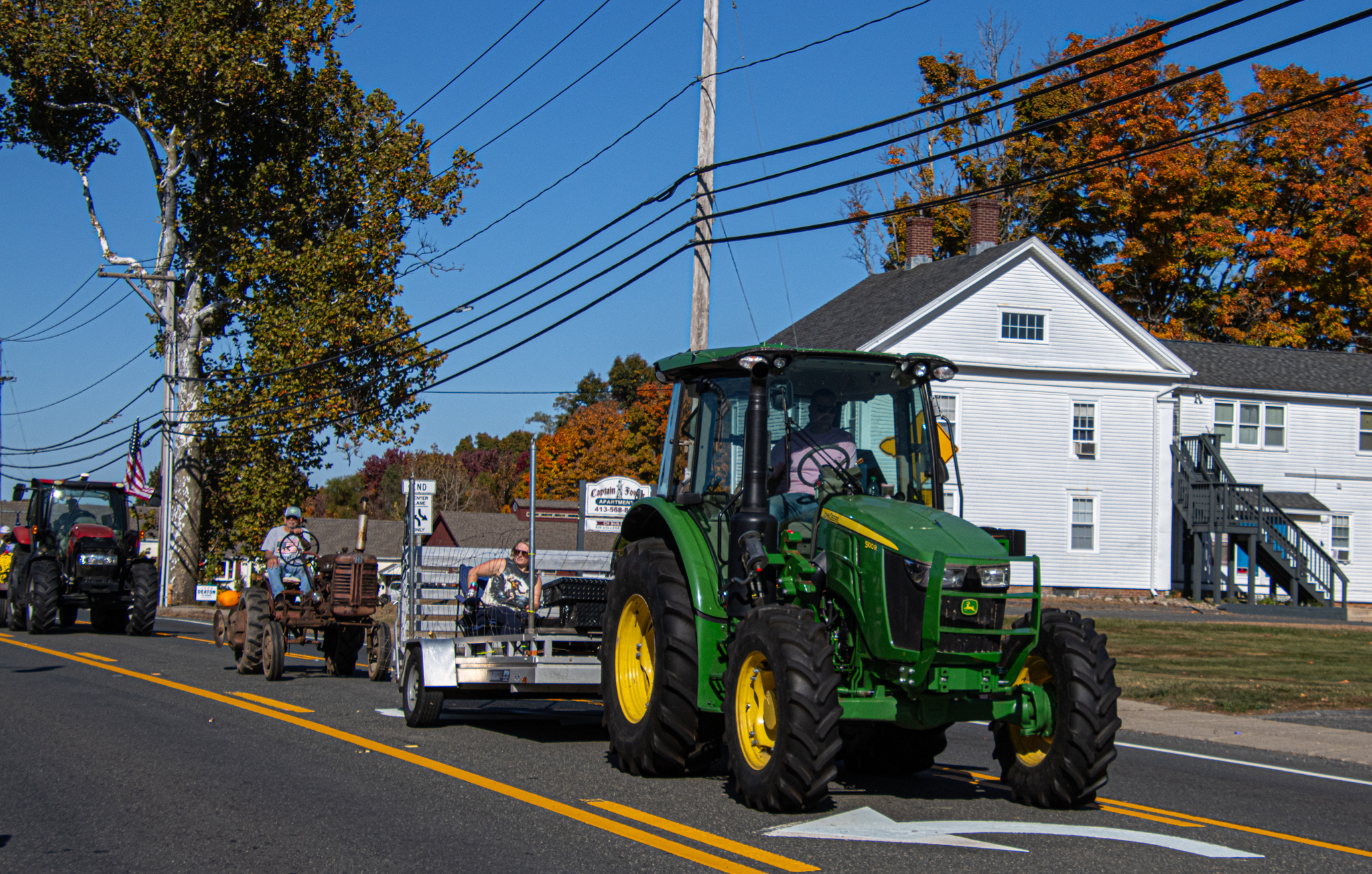
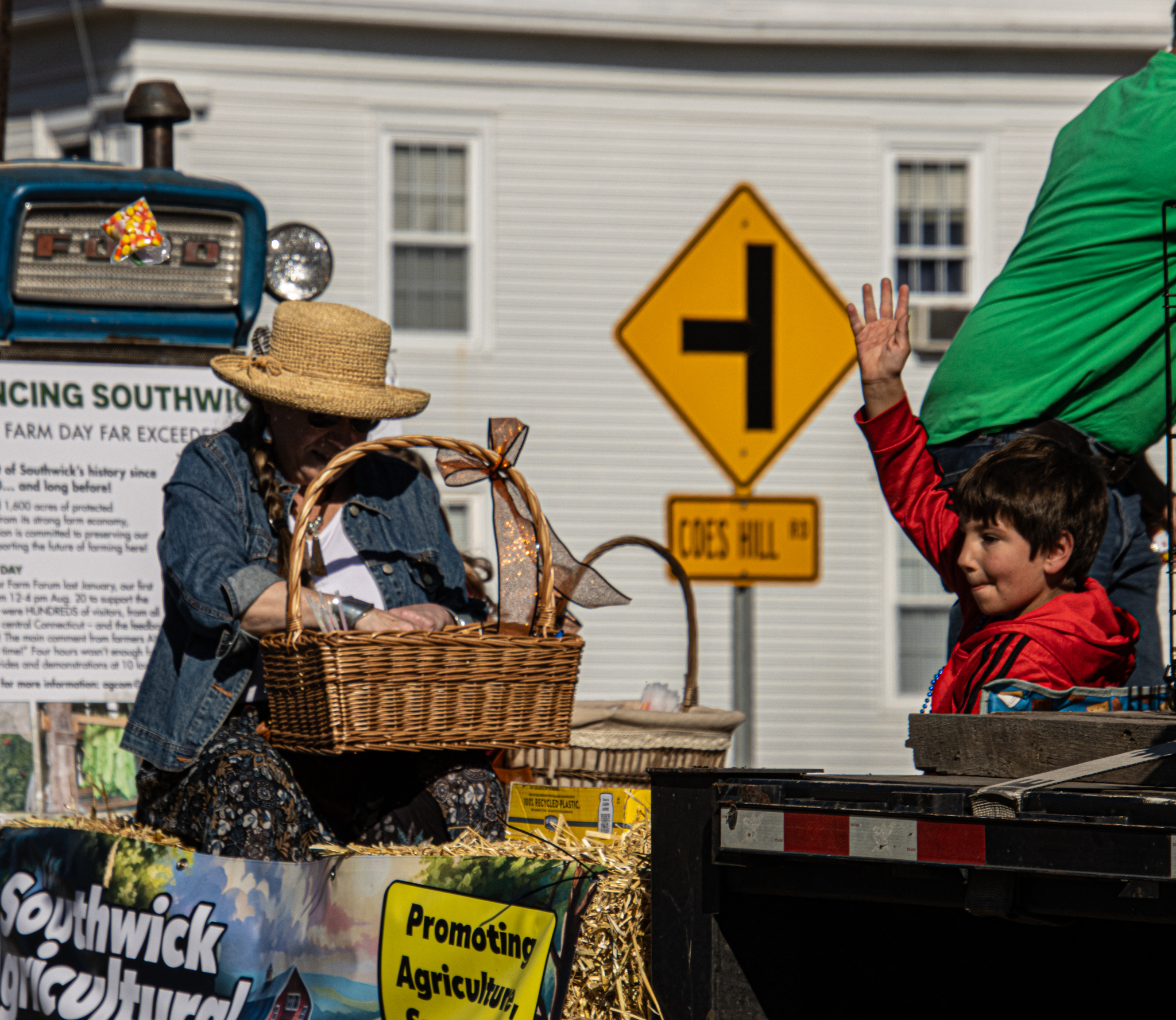
Another big attraction of the parade were the tractors, cars and other modes of transportation in the parade.
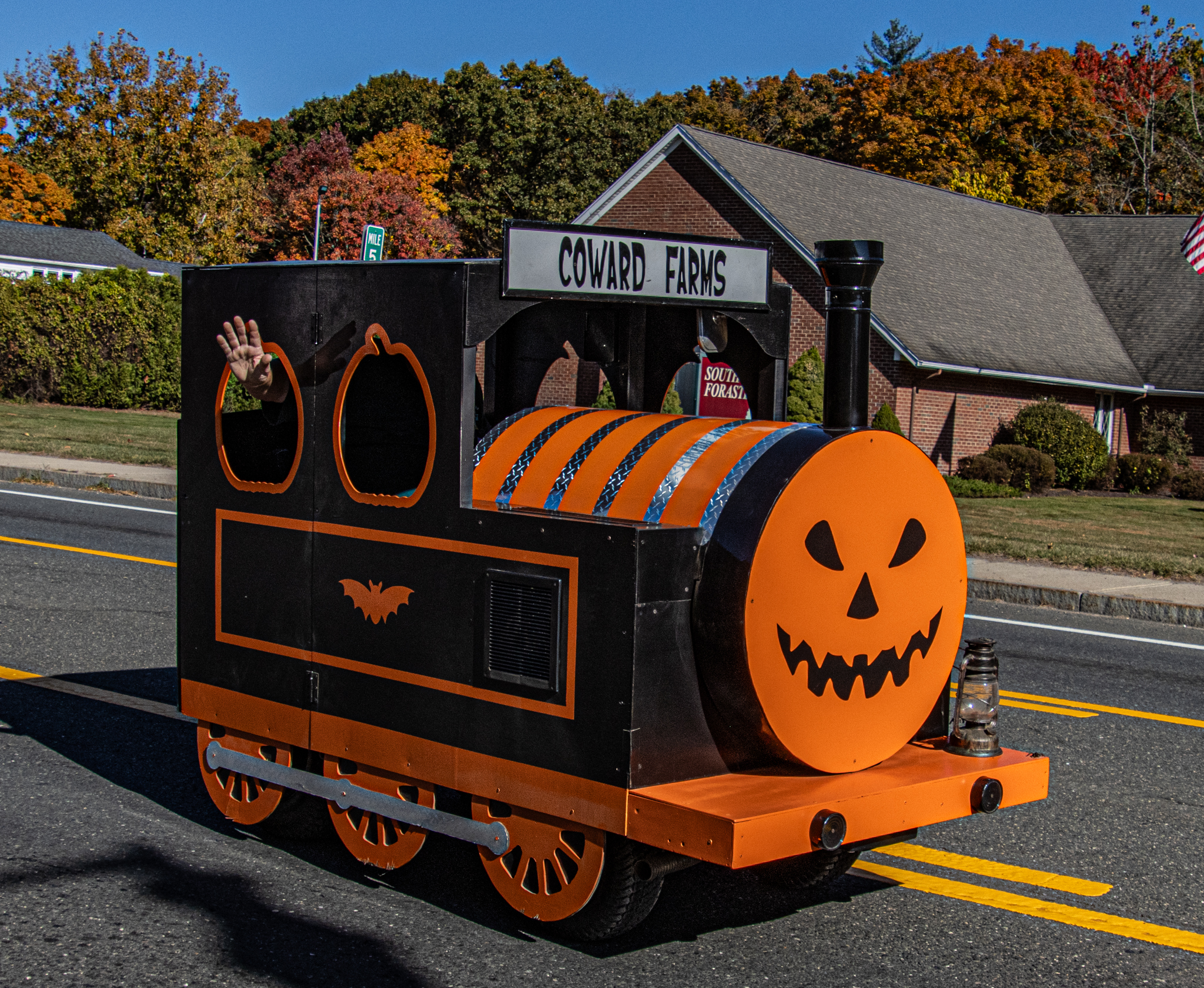
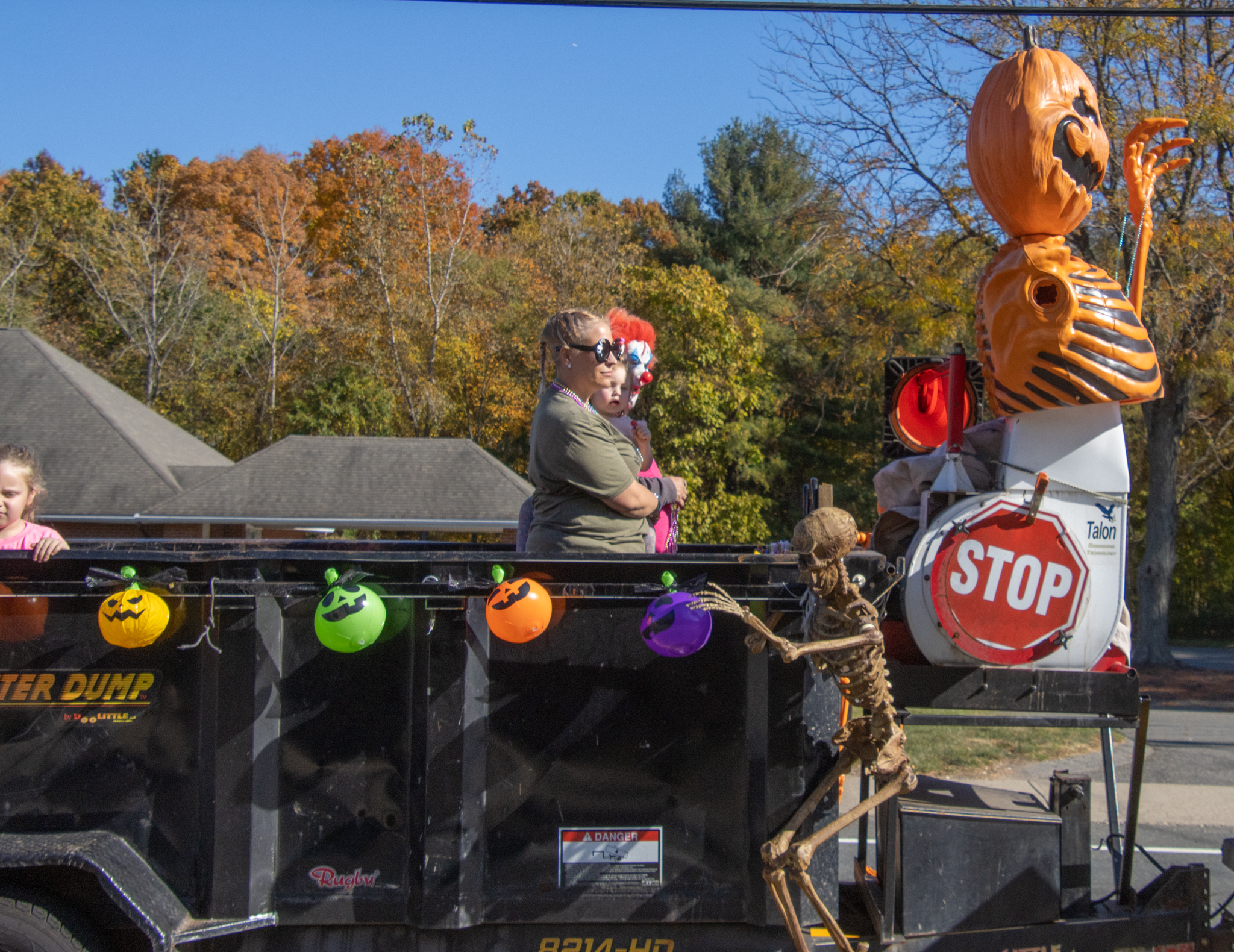
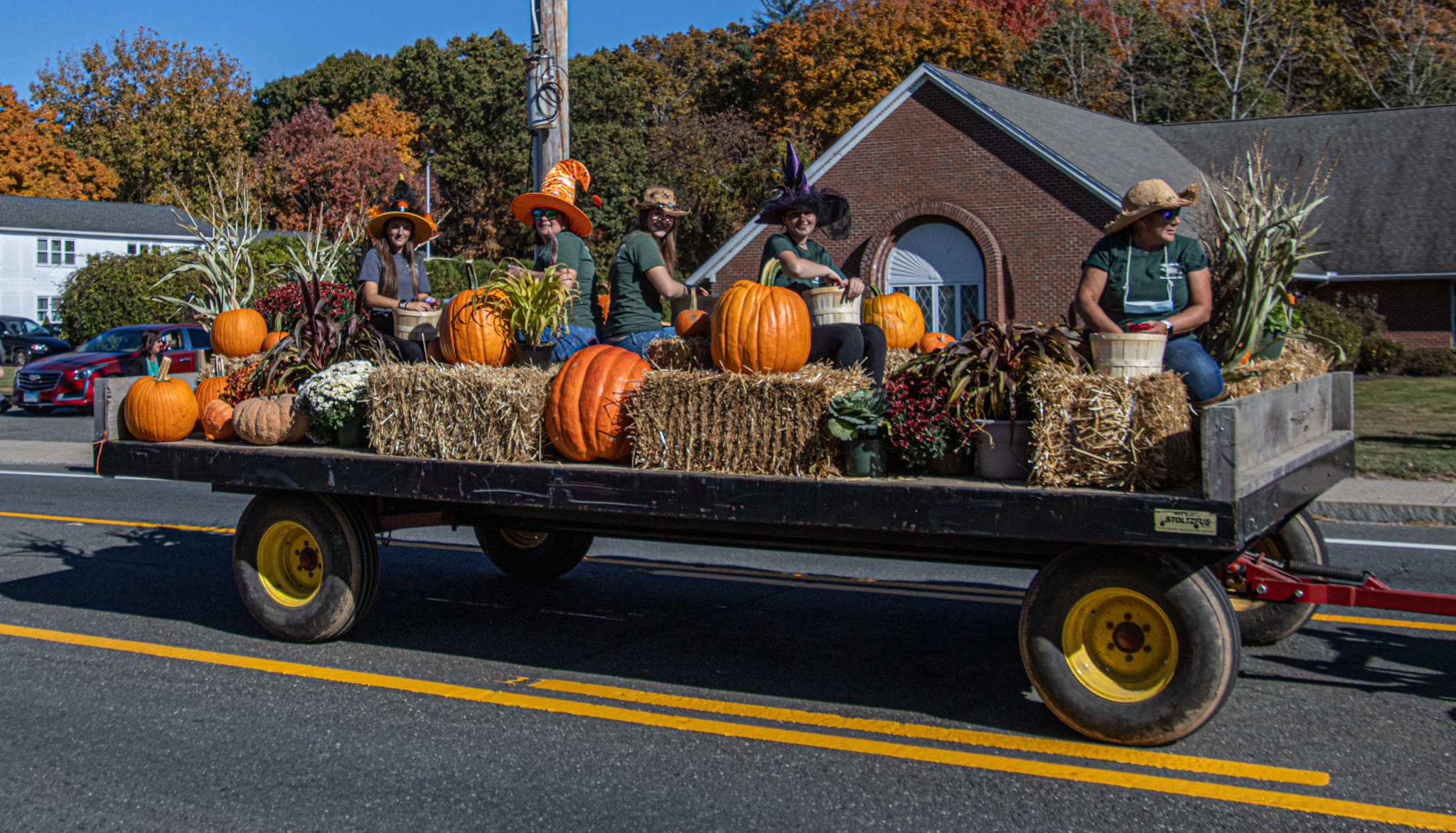
Since the parade was just before Halloween, there were lots of people dressed up and some of the vehicles were also decorated for the season!
But, out of all of the vehicles in the parade, the ones posted below are my favorites.
What fun it must have been to ride around in your own mini tractor or vehicle.
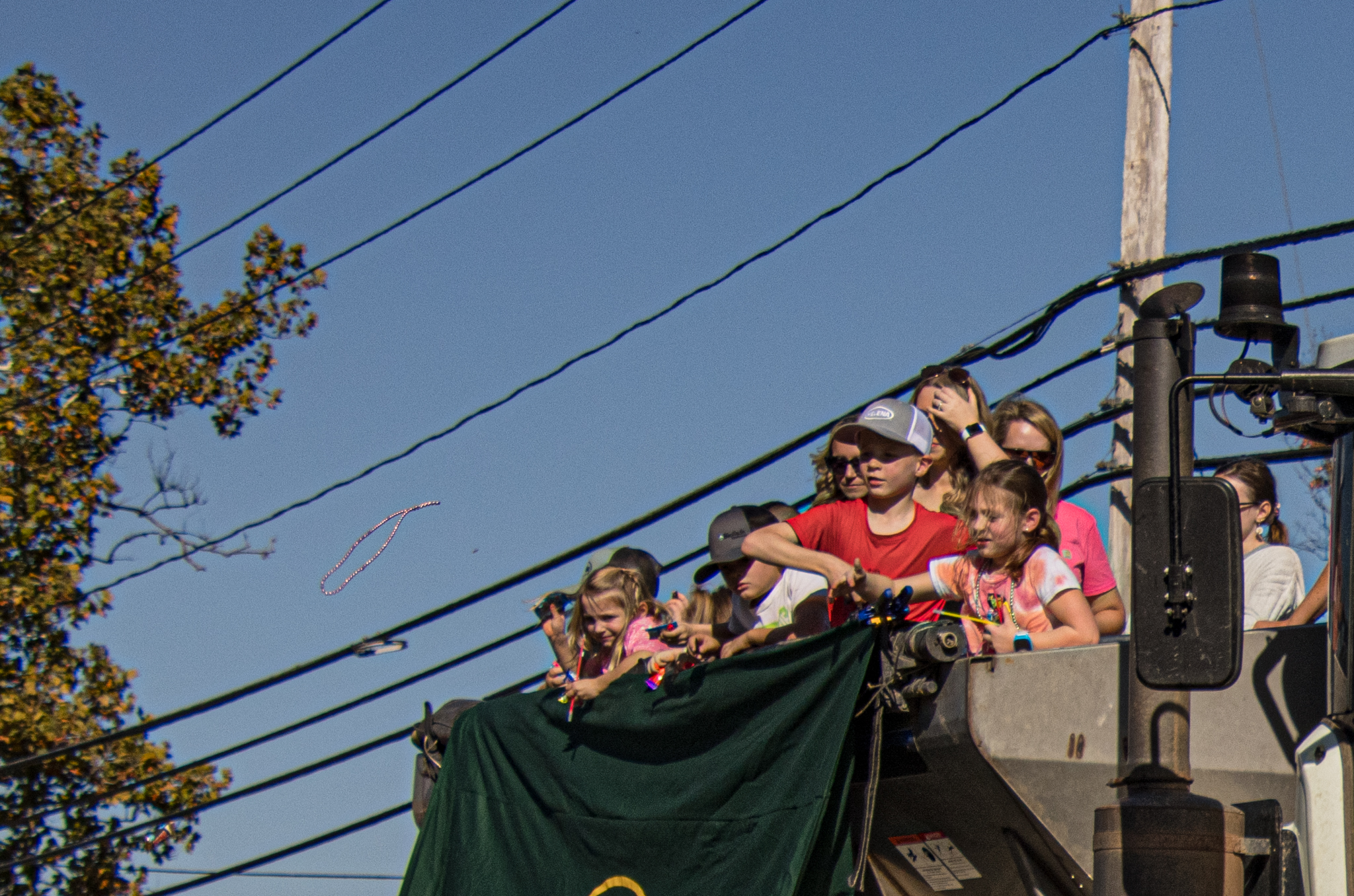
The people who went to the parade weren’t left out of the fun! As you may have noticed in the photo above, some of the people on the vehicles threw candy and beads to the onlookers!
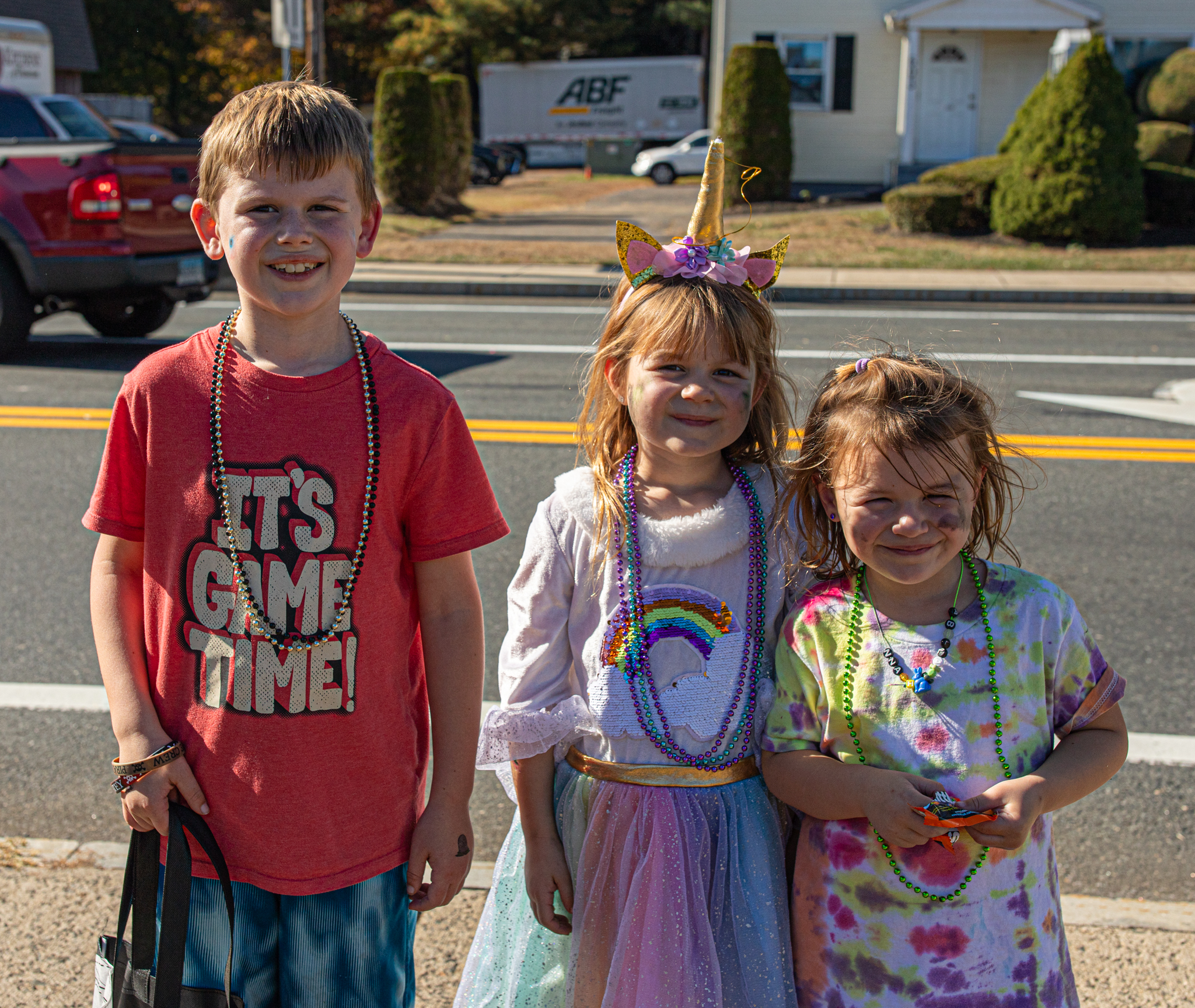
Although it wasn’t required, some of the visitors dressed up for the event!
The farm parade has been growing in size over the years and I look forward to seeing what the following years have in store!
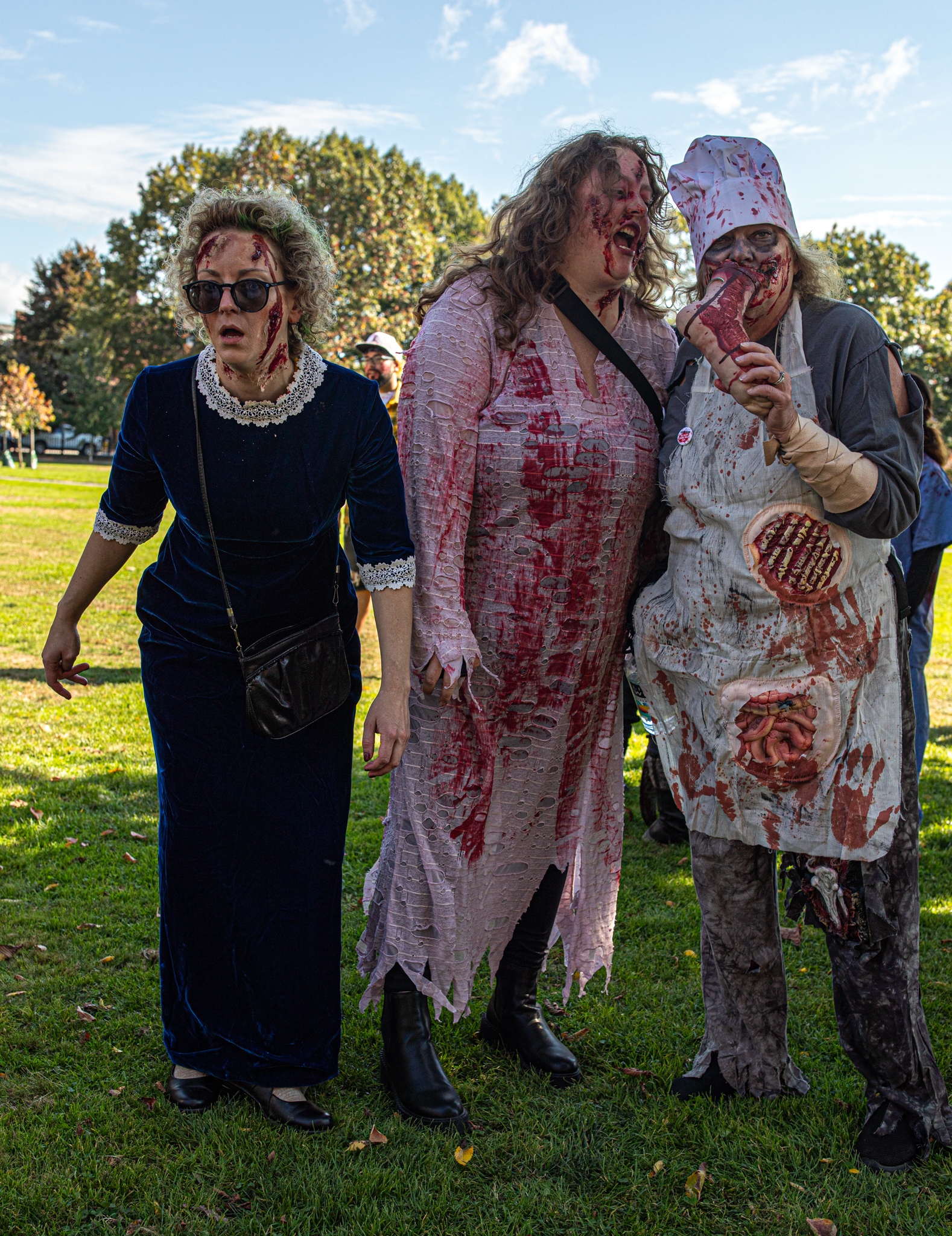
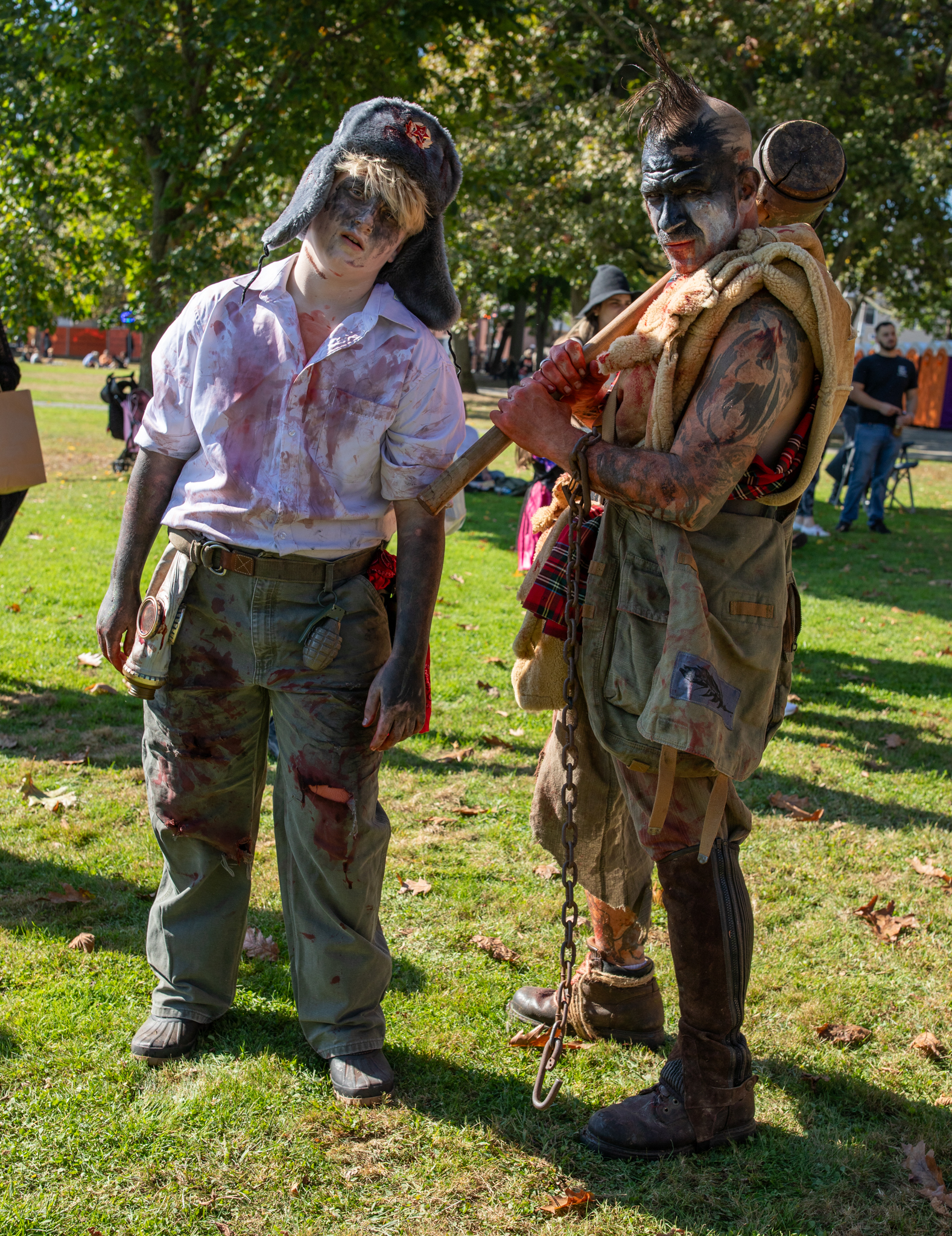
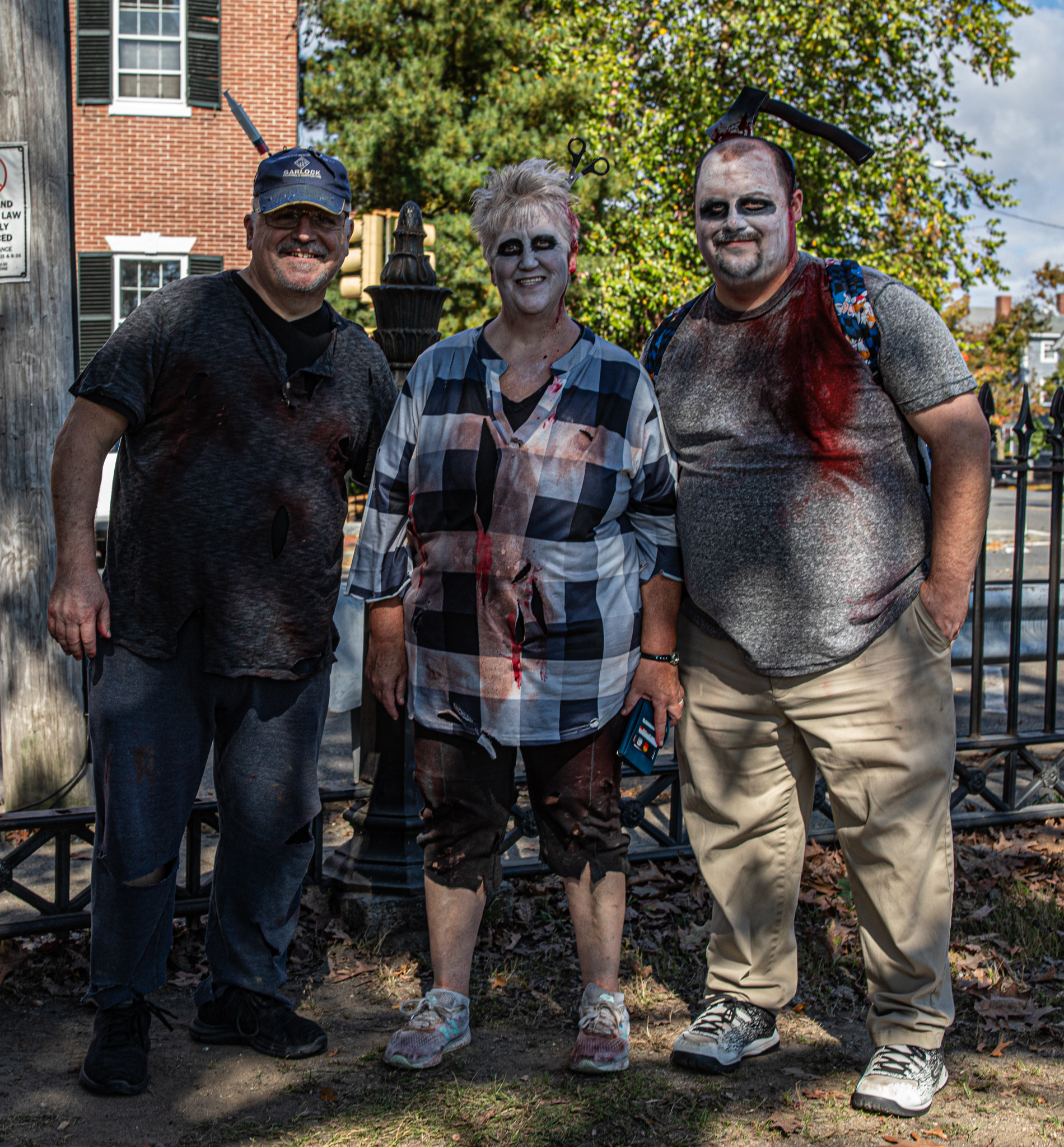
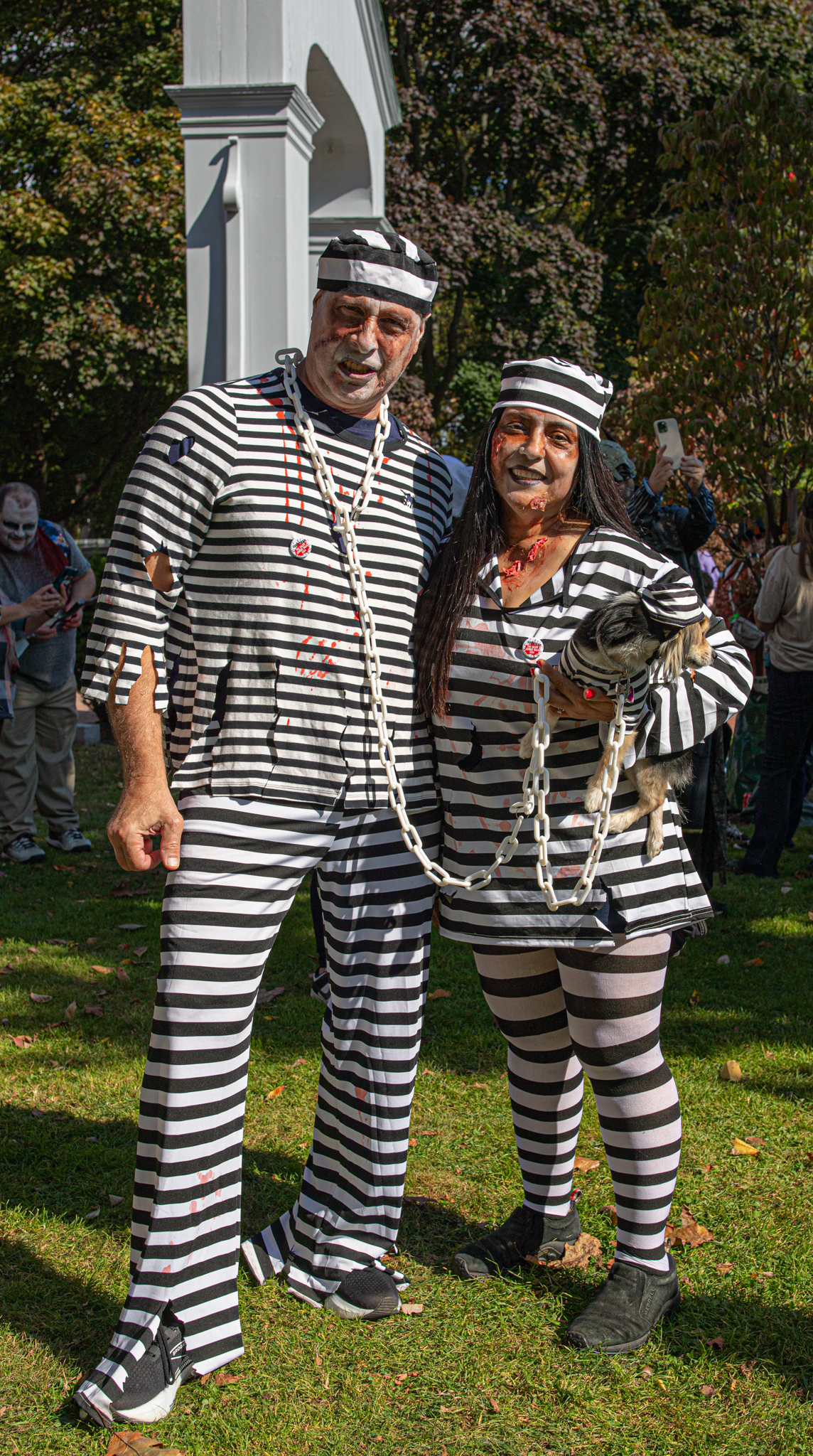
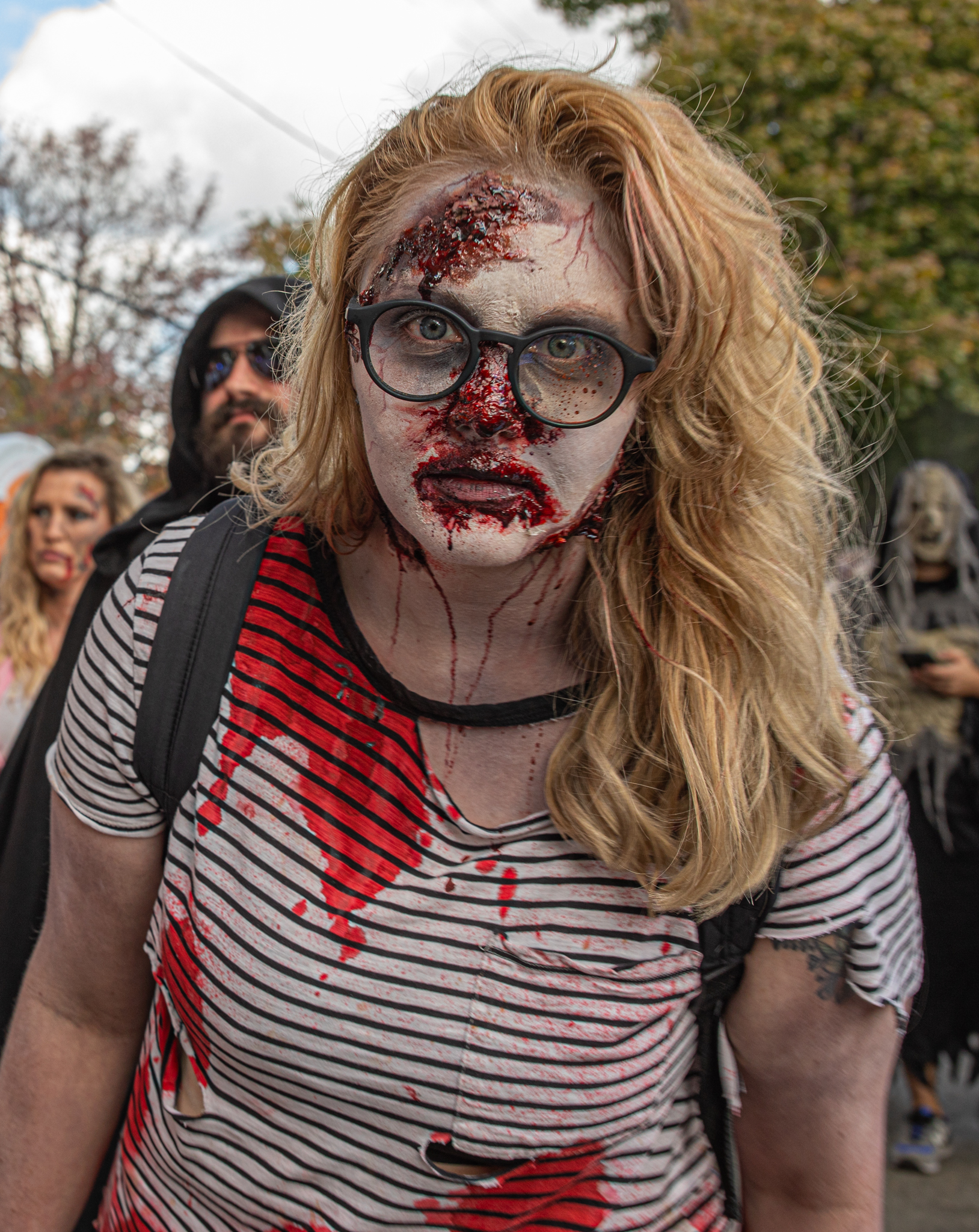
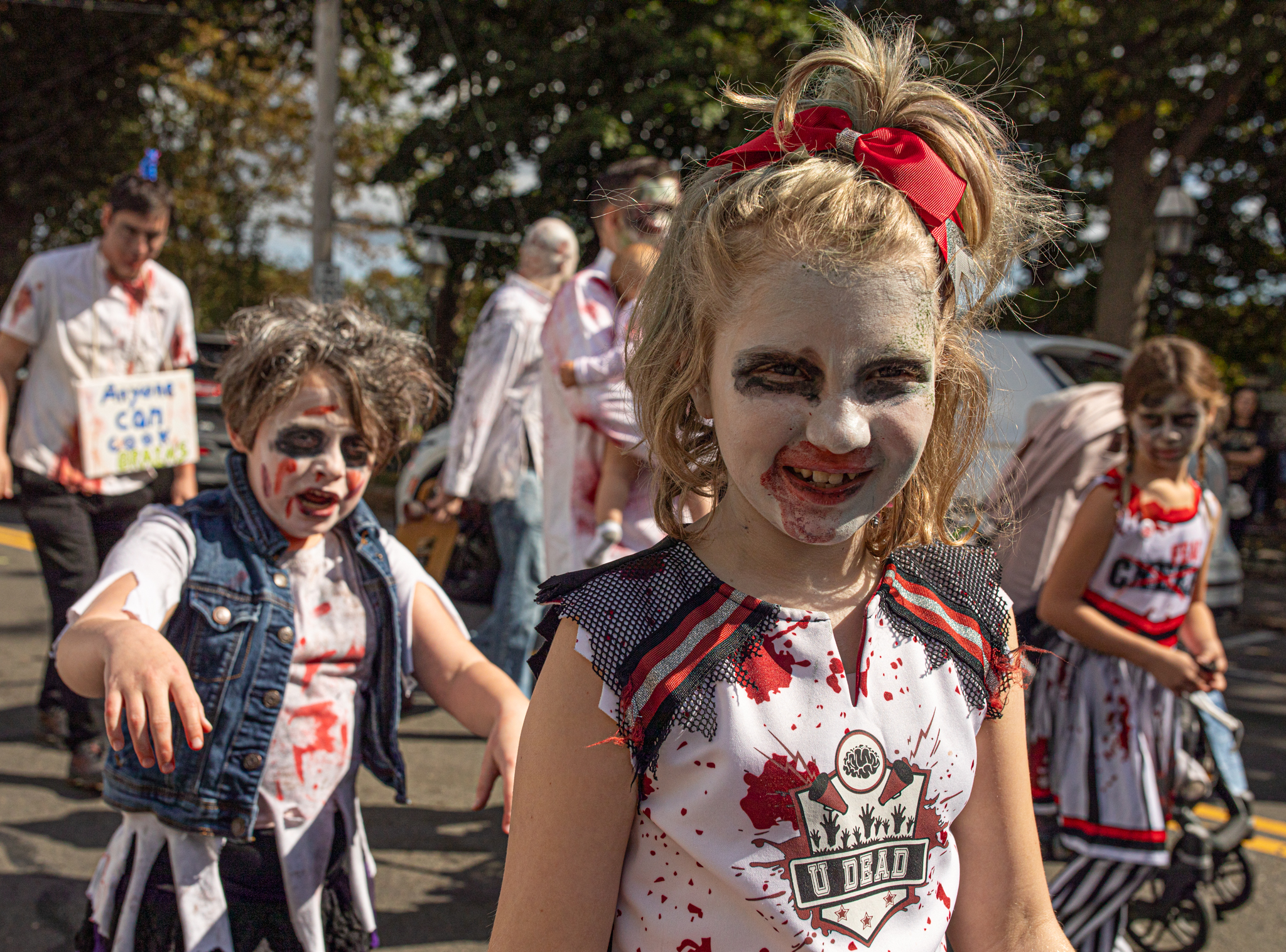
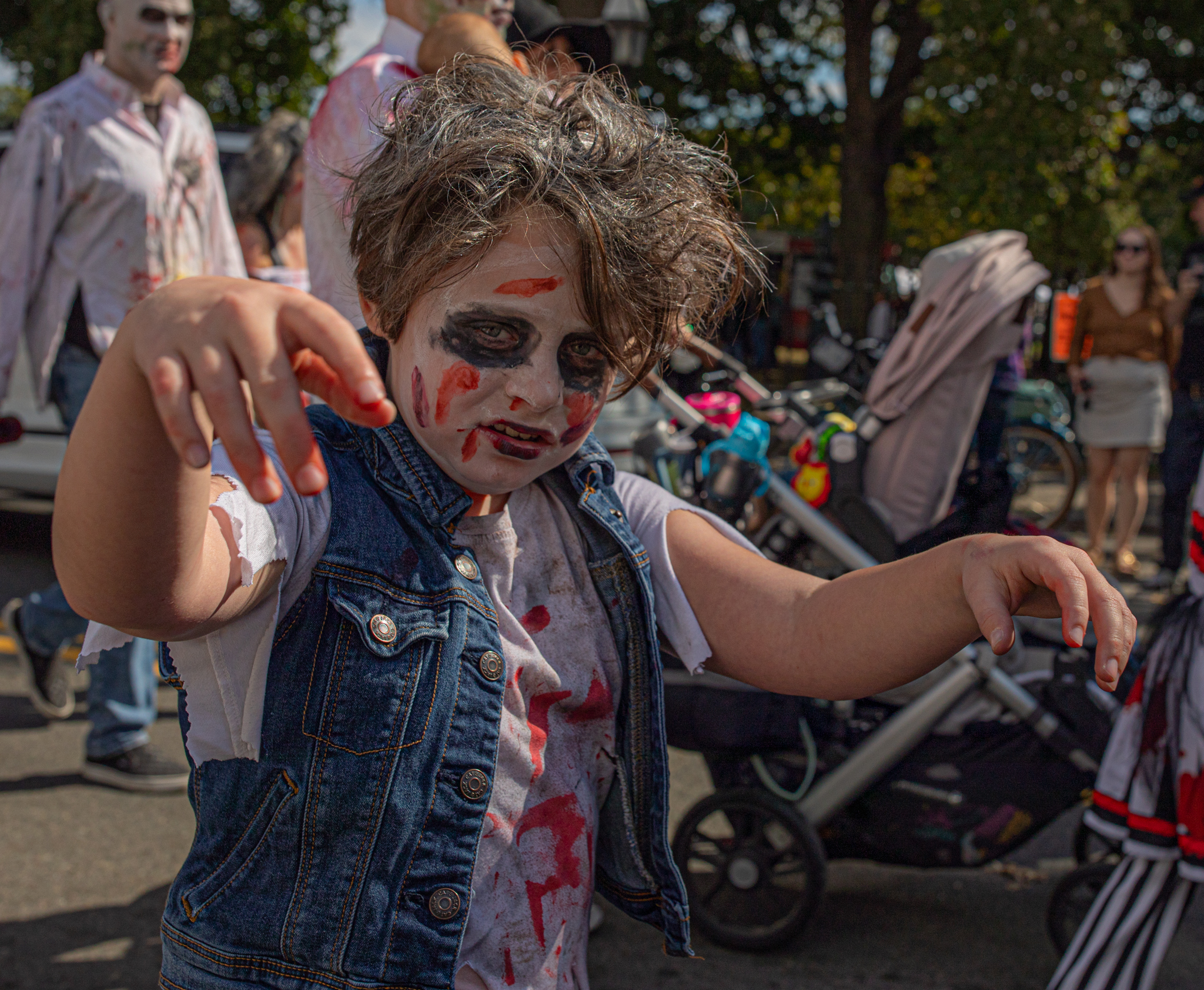
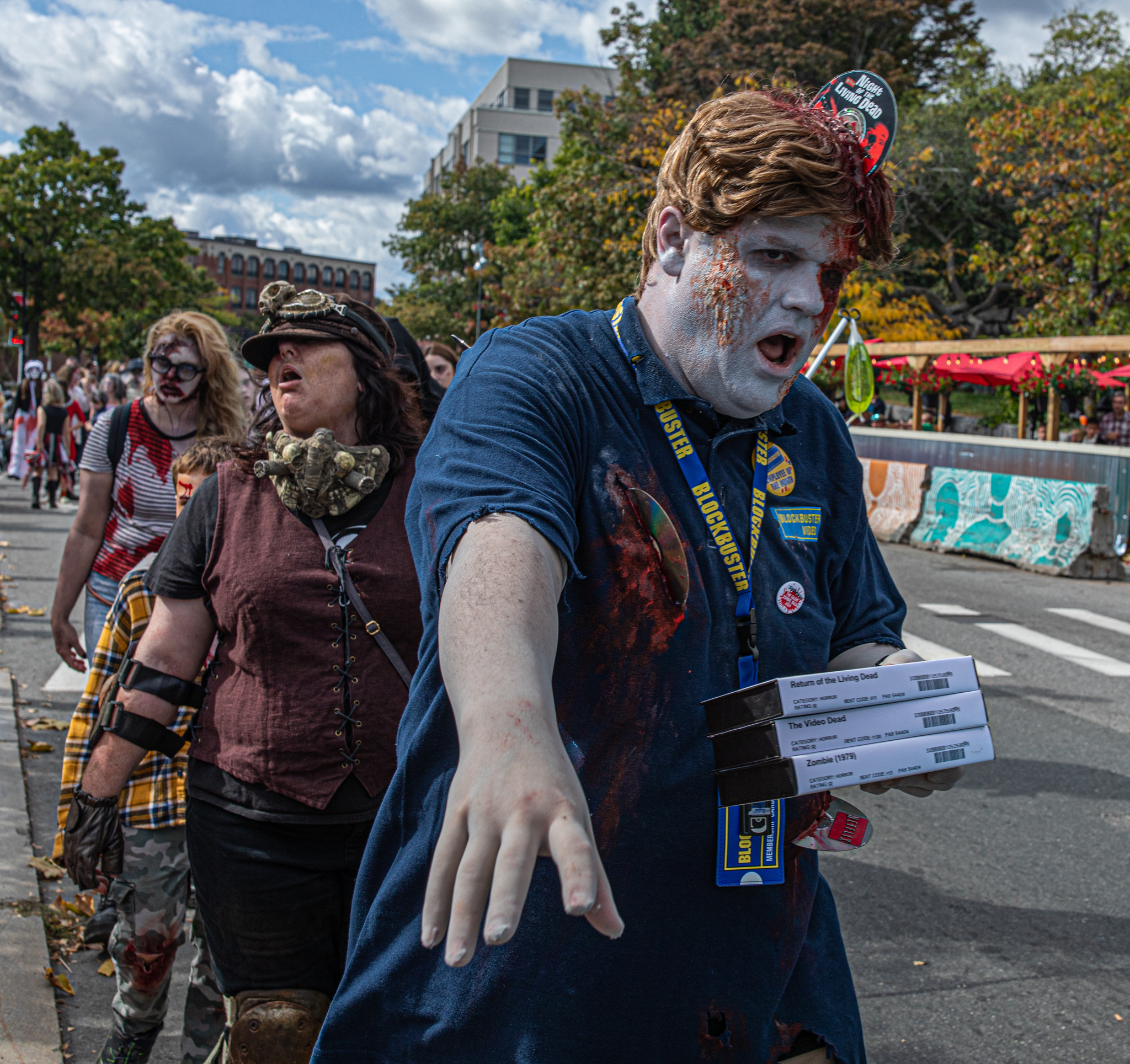
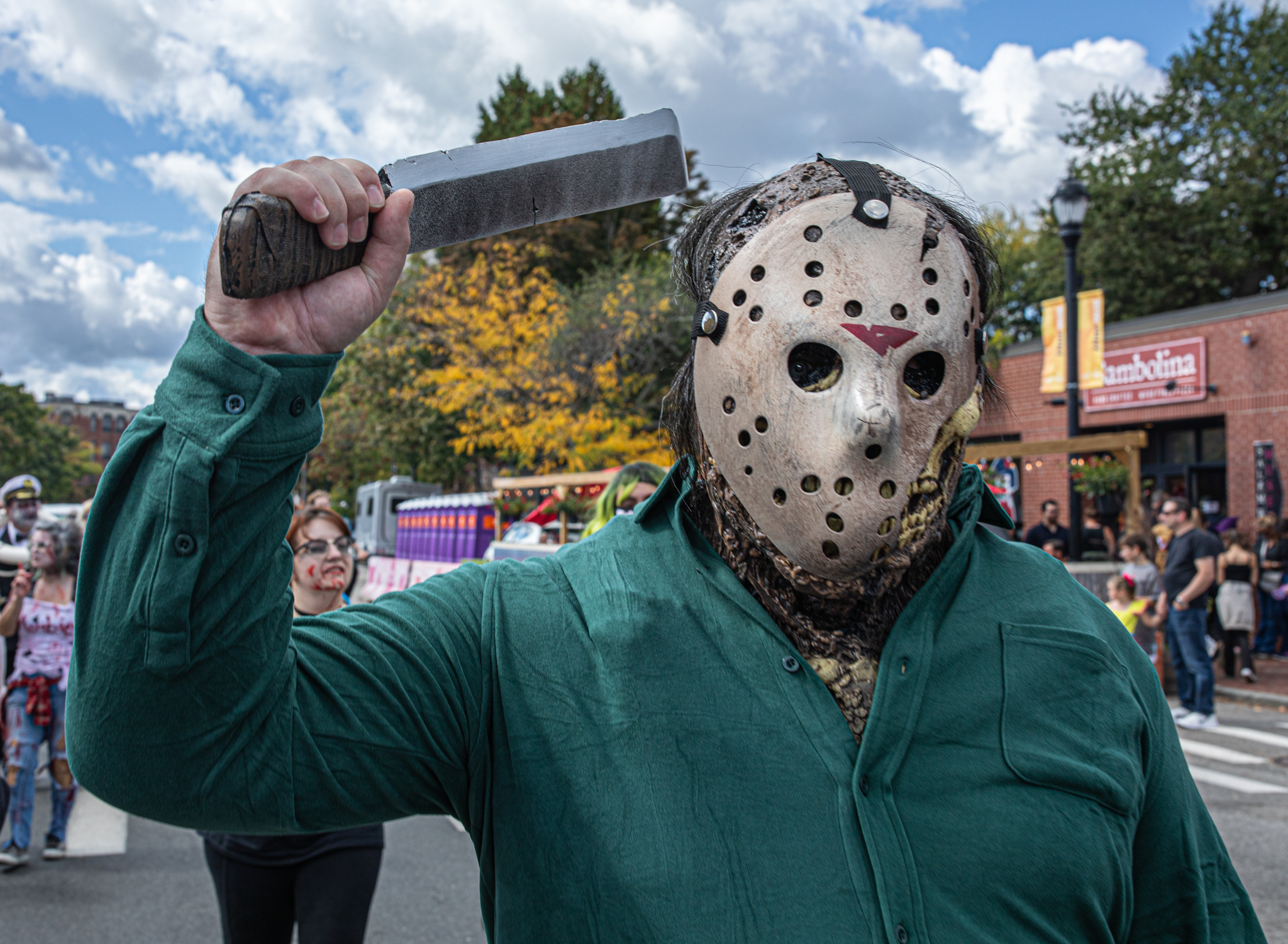
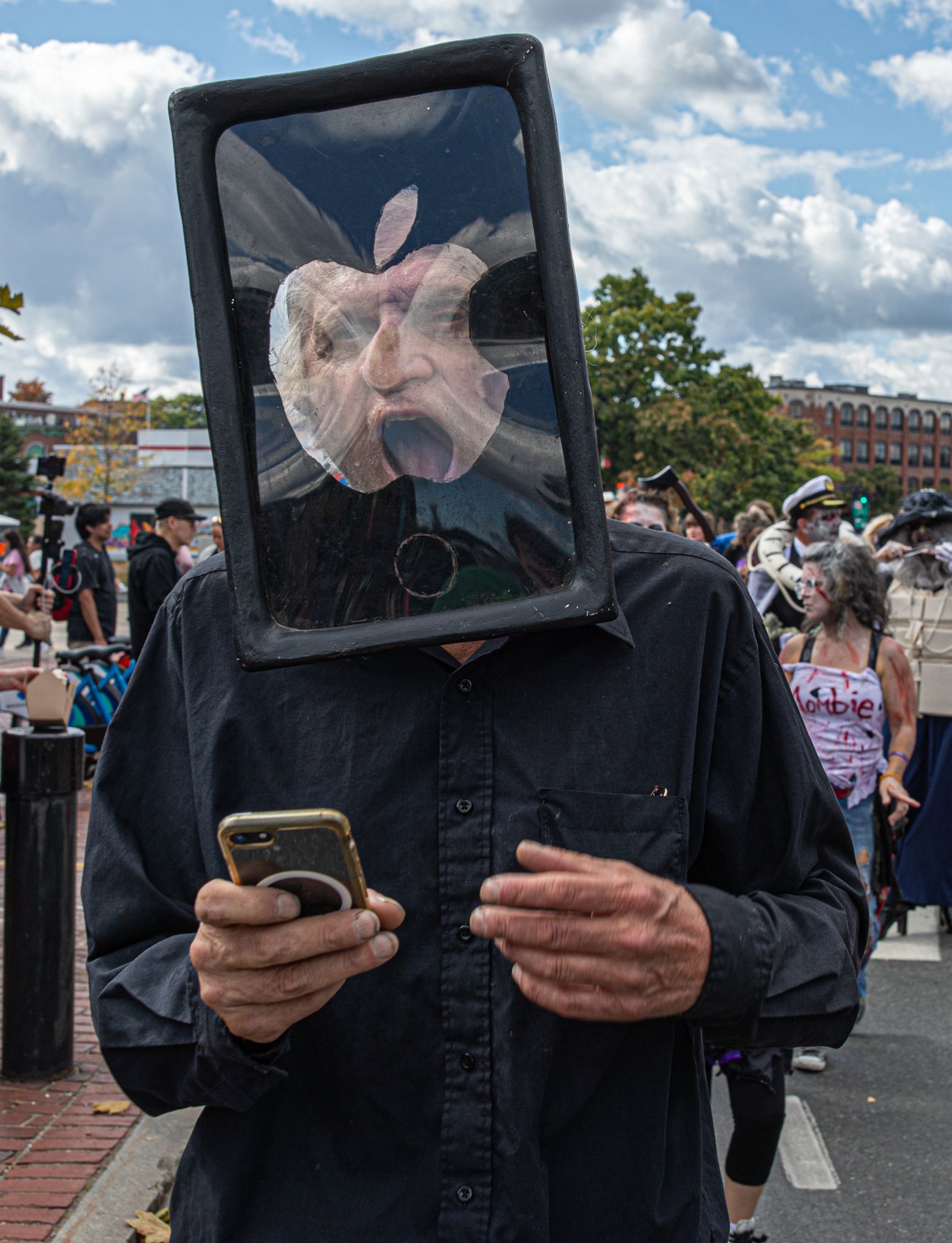
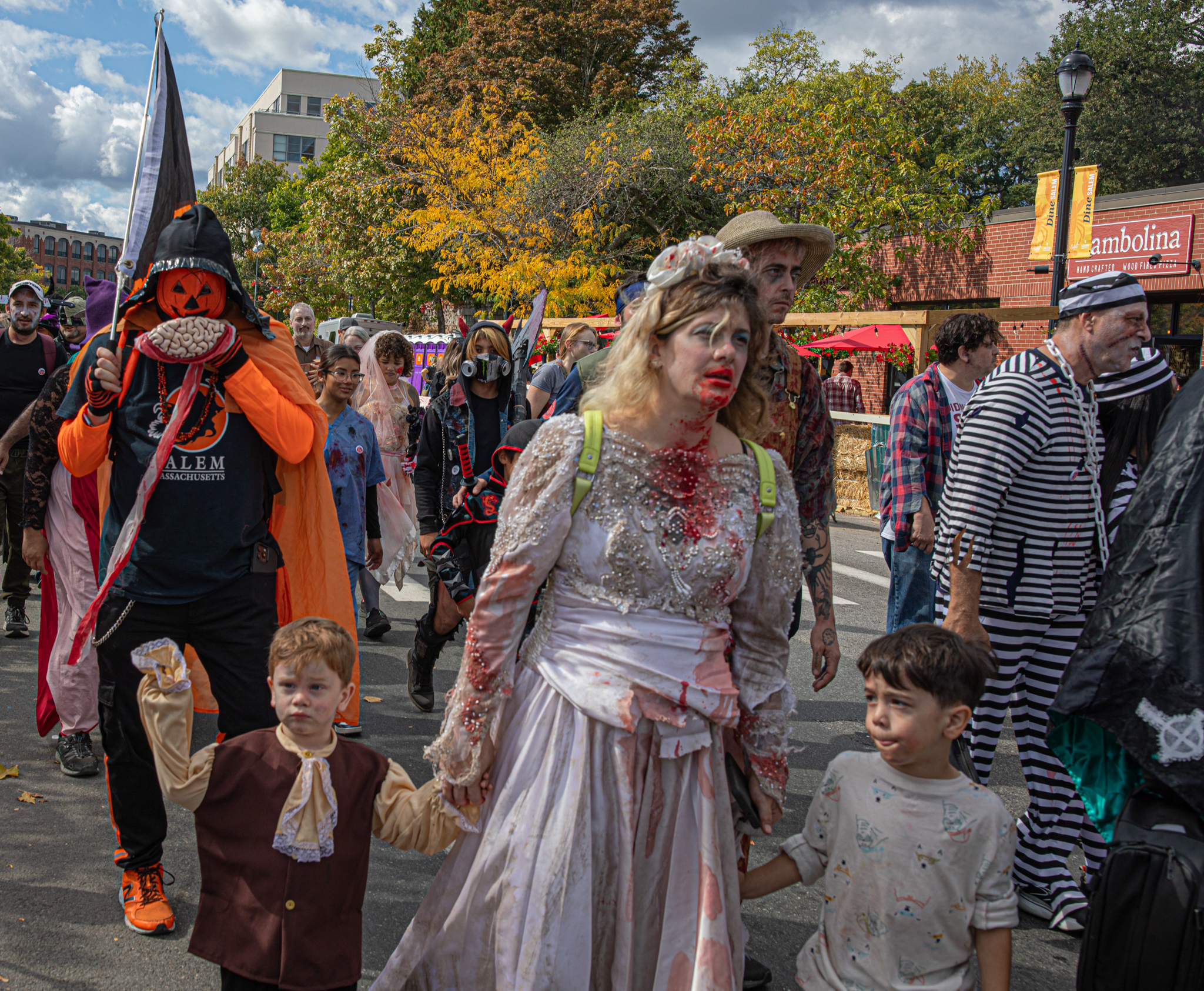
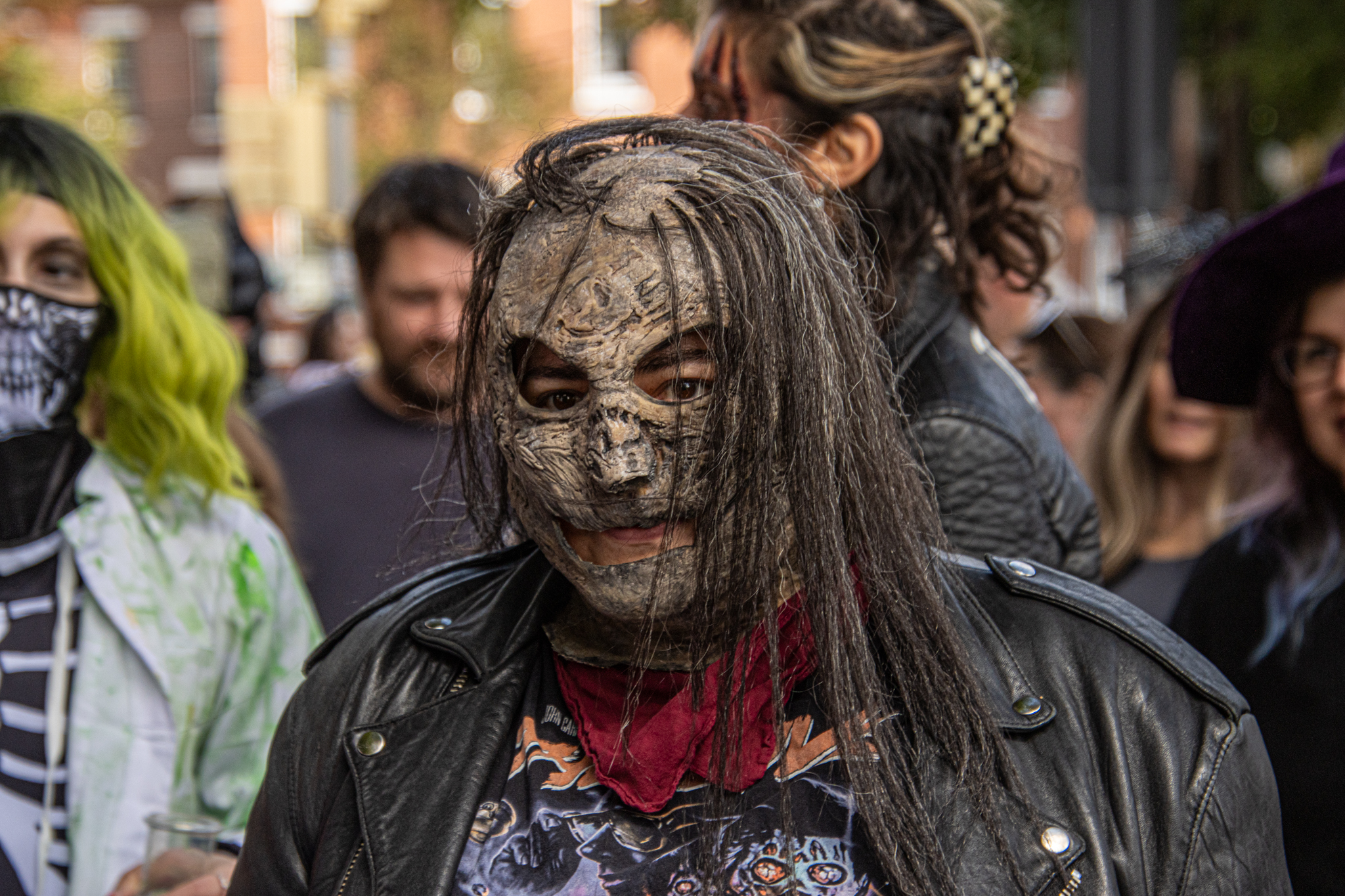
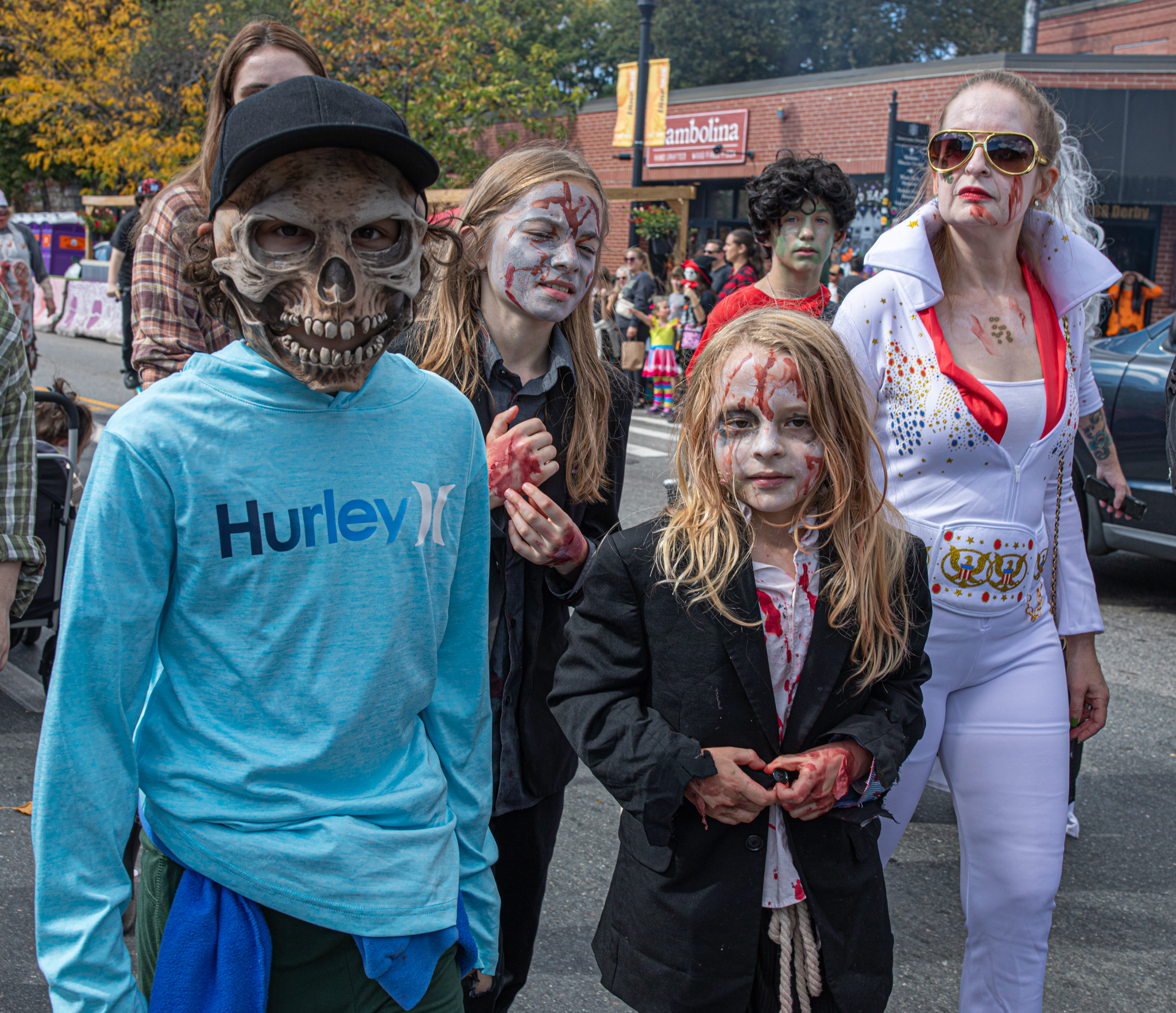
Summary: The zombies took over Salem, MA, earlier this month!
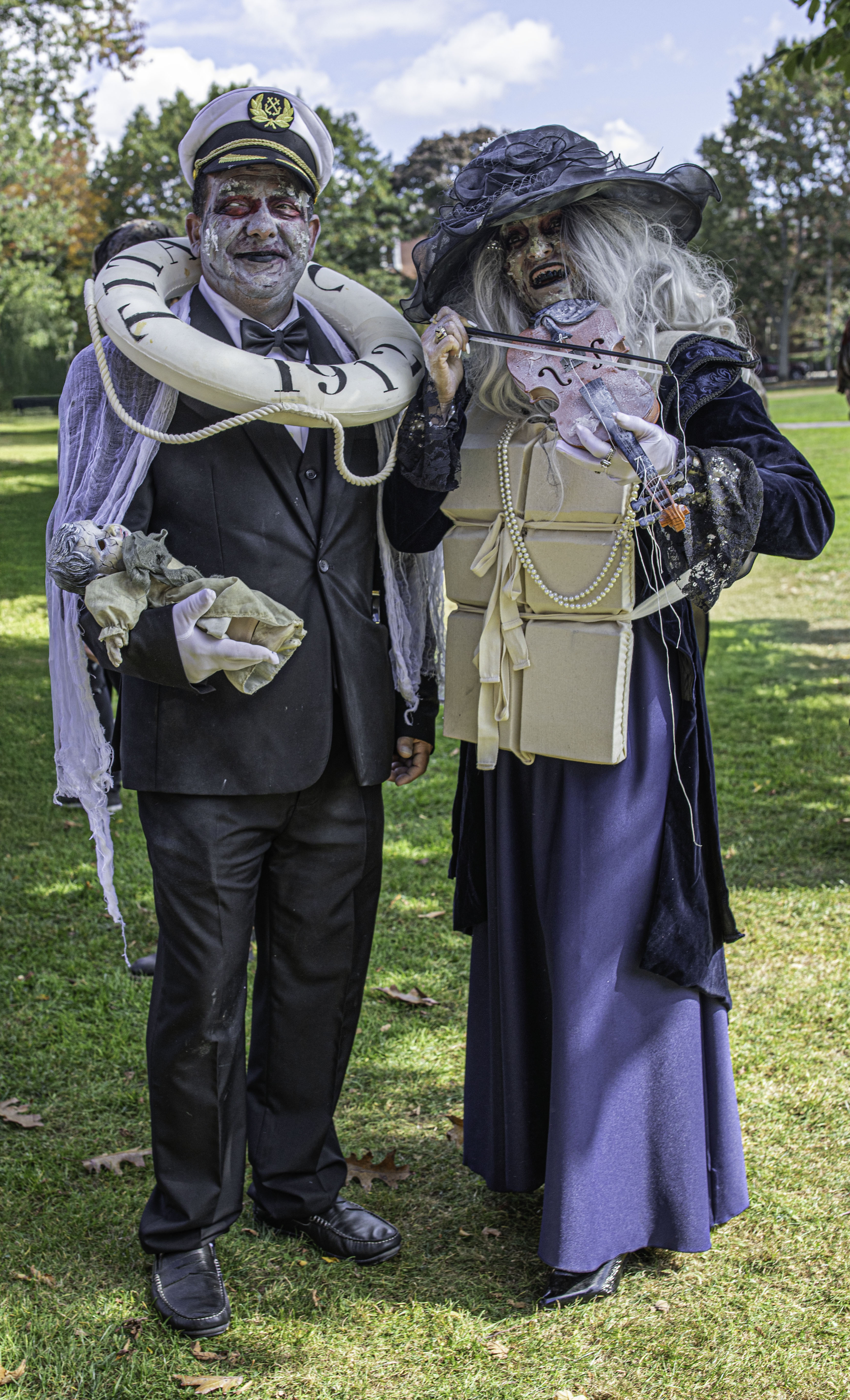
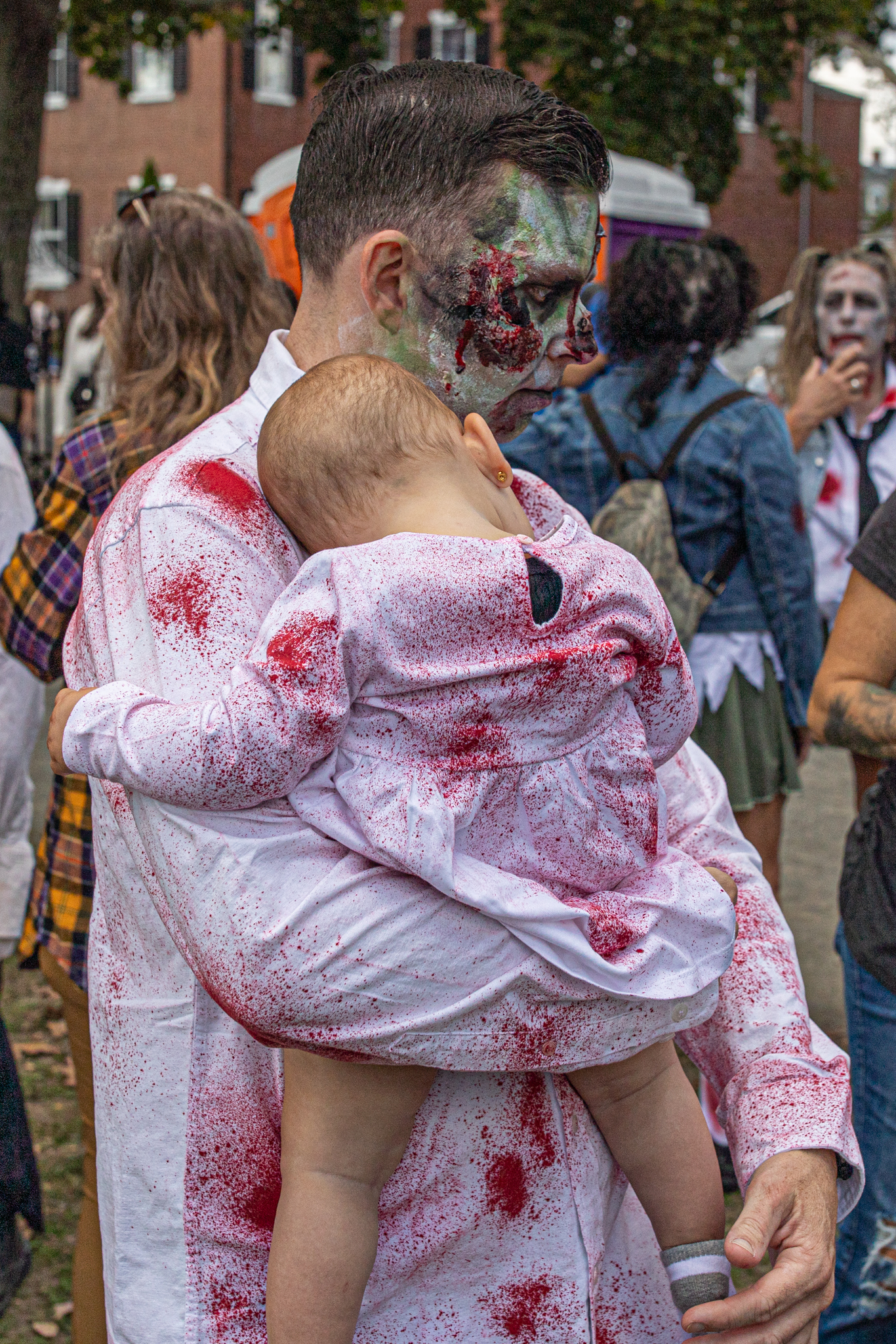
Zombies of all shapes, sizes and ages gathered in Salem, MA, to feast upon some of the brains of the city folk. They originally planned to go to Washington, DC. But, they would have gone hungry.
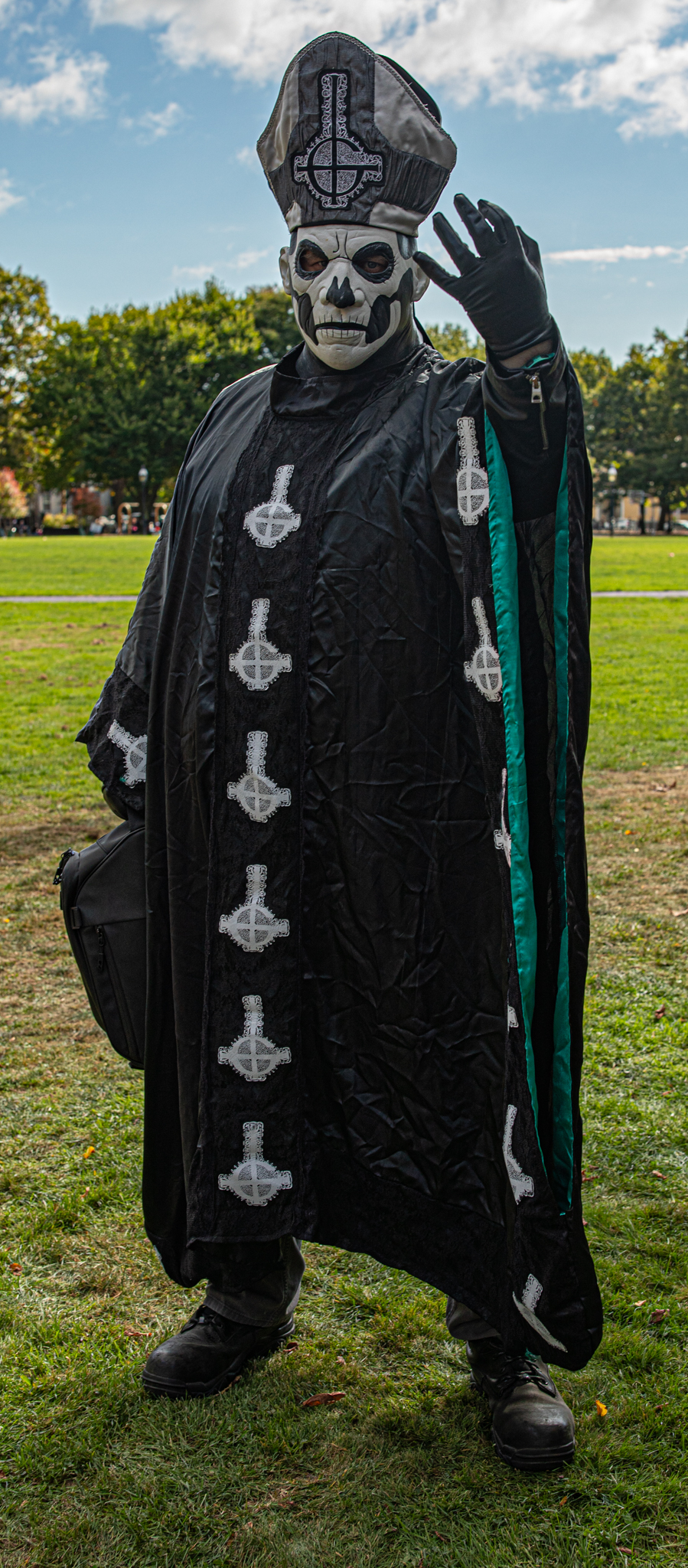
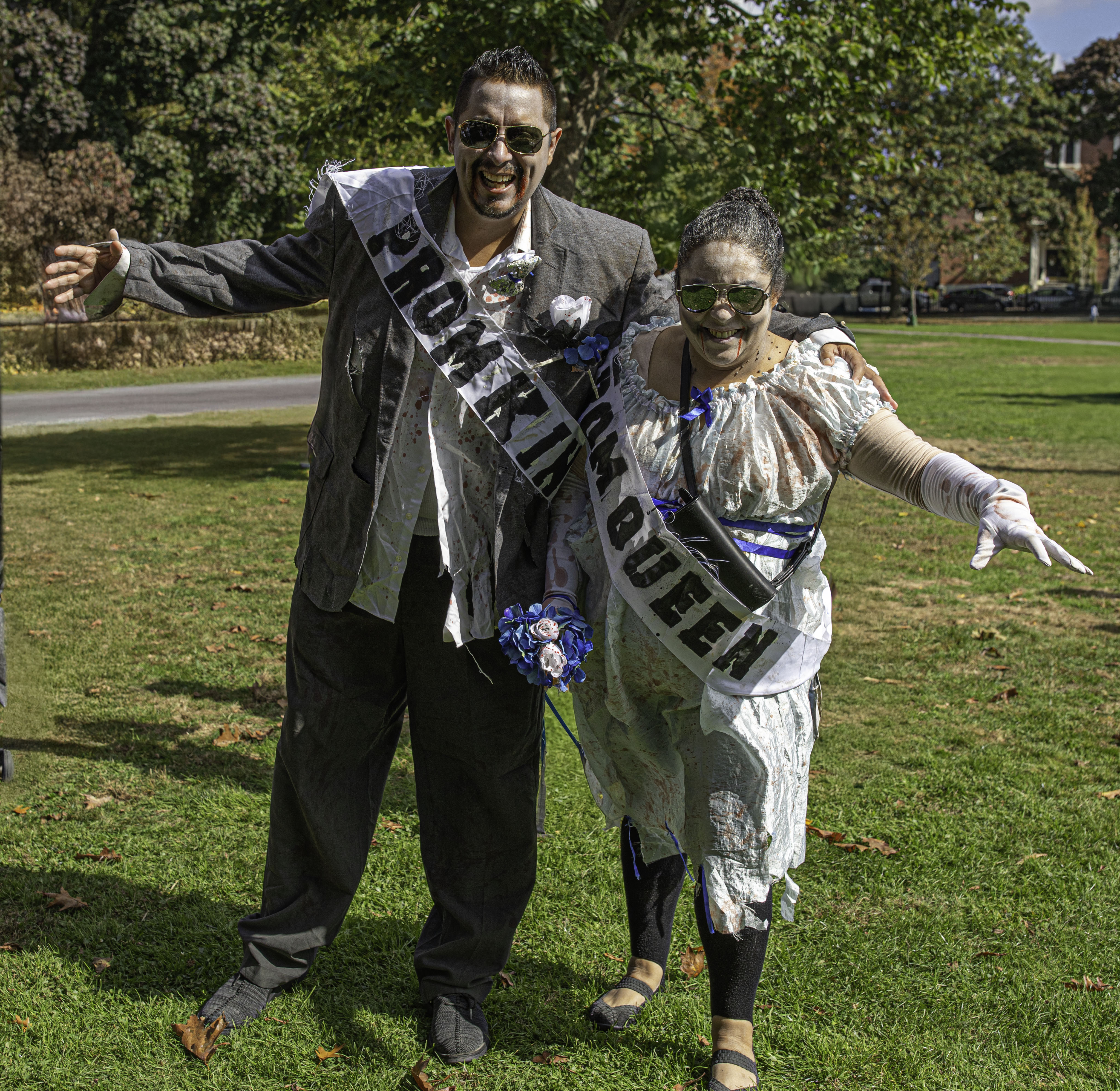
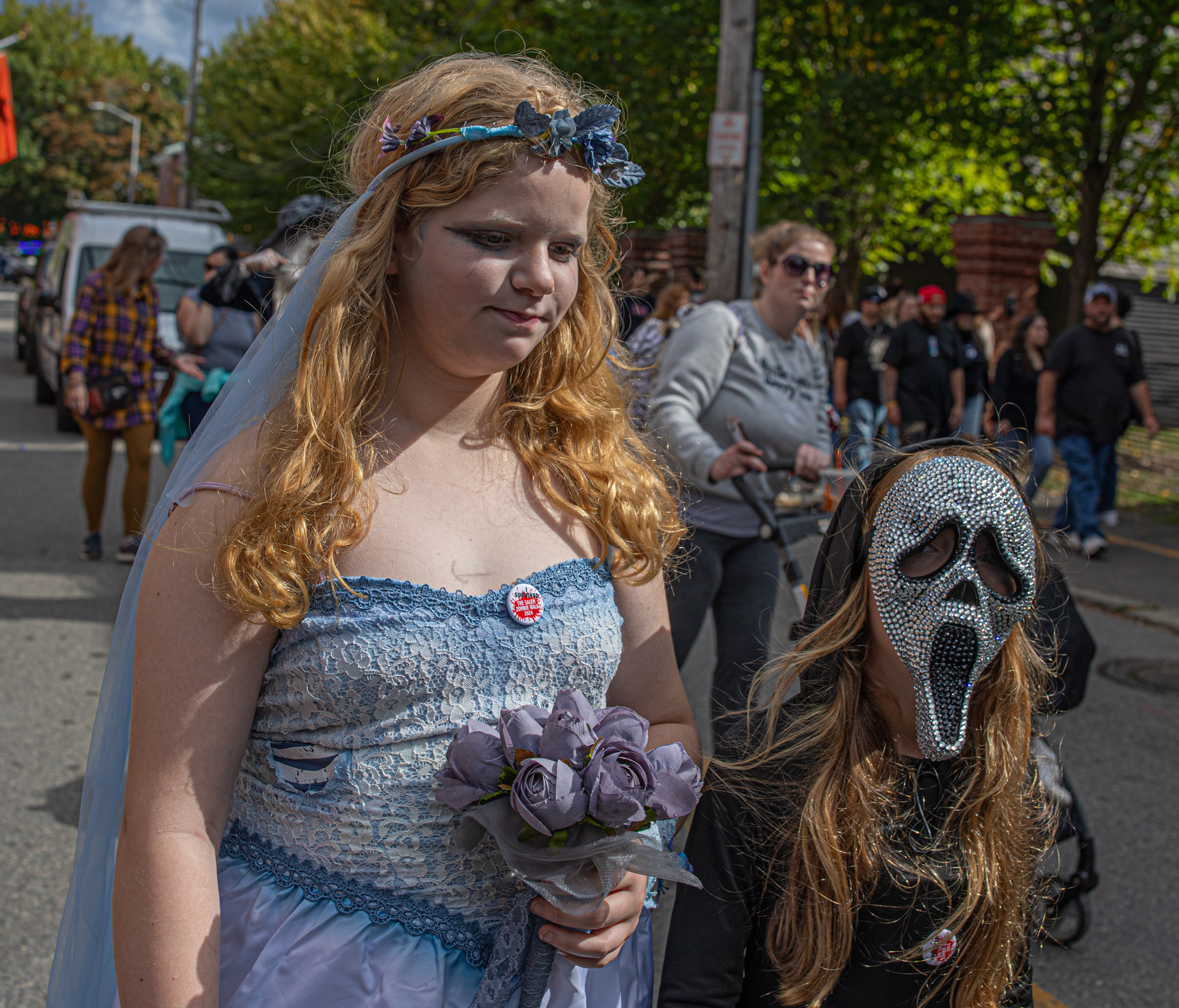
All of the zombies, monsters and other ghouls met up at Salem Commons for some photo opportunities. From prom queens to fear leaders, the costumes were as creative as they were scary!
Some of the zombies got tired even before the walk began.
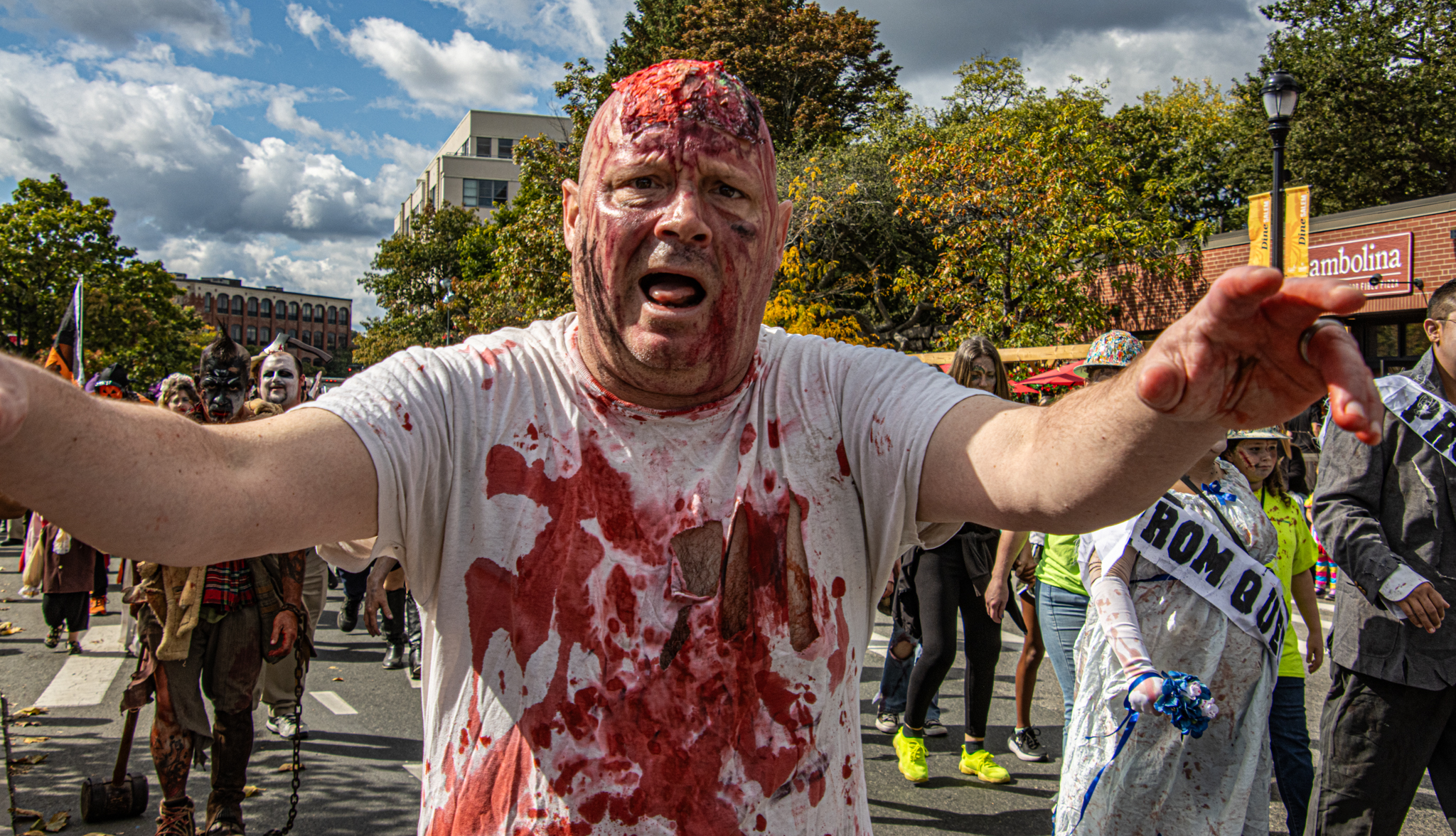
Eventually, the zombies lumbered their way through downtown Salem. Over the years, the walk has really grown in popularity. hundreds if not thousands of people lined the streets, many of them recording the walkers on their cellphones. And the zombies didn’t disappoint. They moaned, leaned into the cameras and shuffled their way through the streets. I love how they get into the spirit of the event!
In some of the photos, you may notice the participants were given buttons that state “I Survived the Zombie Walk!”…or did they? We may never know.
Despite all the moaning, shrieking and close calls with the zombies, the city survived the zombie walk just fine. This time.
The zombie in the video below usually brings his laboratory experiment with him each year!
Hours: The murals are available to view throughout the day
Parking: There is metered street parking available in the city. There are also two municipal parking lots in the city (see link below for more information)
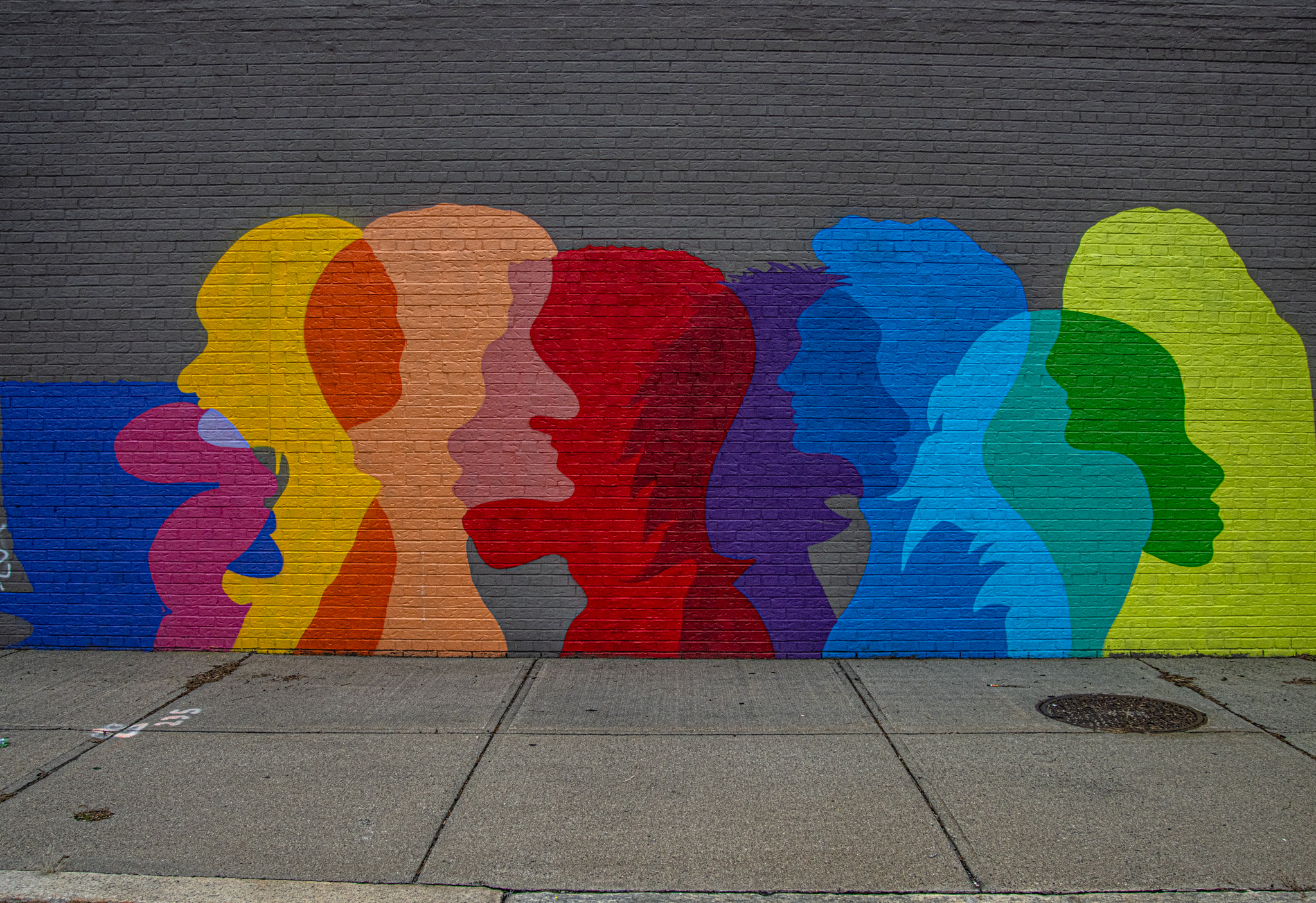
There always seems to be new works of art popping up throughout the various cities and towns all over New England. These works of art often have a special meaning or purpose behind them. The Beyond Walls mural project has been a big contributor to both exhibiting art and spreading their messages of heritage, pride and other important messages.
The Beyond Walls project features murals in several cities such as Massachusetts including Lynn, Haverhill, Lowell, Chicopee and the murals displayed in this post in Holyoke.
These murals are part of the El Corazon – The Heart of Holyoke from 2022 which I photographed and posted on my blog. But, the artists keep adding to the mural project or changing the murals over time. These murals were not made until after the initial murals were created. Some of the murals have a special meaning or message about the community or people from the community. Others are the free expression of art by the artist.
All of the locations for these murals are in Holyoke. I tried to list them in the order they can best be seen in case you want to make a trip to see them for yourself!
Holyoke Community College
303 Homestead Ave
While most of the murals are located near each other in the downtown Holyoke or South Holyoke area, this mural was located further away in the main campus at Holyoke Community College. Betsy Cananas was surprised and impressed with the diversity of the student population of Holyoke Community College, particularly the Latinx, particularly the Puerto Rican, population of the students. In this vein, she decided to create a mural depicting a bomba classroom. Betsy payed homage to the cultural roots of the audience as well as creating a visual narrative that resonates deeply with their experiences. There is more info about the mural and artist at the following link
Holyoke Health Center
230 Maple St
This mural is a mixture of many people and things that depict Holyoke. From the gorilla arms meant to show the strength of the community to the coquí, to old San Juan, to coconuts, jíbaro (farmer), salsa, plena, congas, food and tropical flowers there are many tributes to Holyoke and it’s people of Puerto Rican descent. The mural also gives a nod to the world famous Puerto Rican singer Hector LaVoe and, perhaps surprisingly, the Irish population of the area. To the right of the mural there is a portrait of John F Kennedy with the colors of the flag of Ireland. It really shouldn’t be a surprise, though. For over 70 years, they have held one of the most popular Irish Pride parades and Grand Colleen events in Massachusetts.
You can find out more about the mural and artist here.
284 Maple Street North Wall
No, this isn’t a mural of Abraham Lincoln, although the similarity may be uncanny. German artist, Case Maclaim painted this mural in honor of a former Pioneer Valley resident and well known abolitionist John Brown.
This mural by Alexis Diaz is a tribute to Boricuas and Latinos outside their homeland. Boricuas is a spirit, flavor, and rhythm that you’ll feel in every part of Puerto Rico. It is meant to honor all of those who left their homeland of Puerto Rico to seek a better future. According to the 2010 census, Holyoke, Massachusetts had the largest Puerto Rican population per capita of any city in the United States outside of Puerto Rico. So, Puerto Rico plays a central role in much of the art in of the city. There is more information about this mural and artist here.
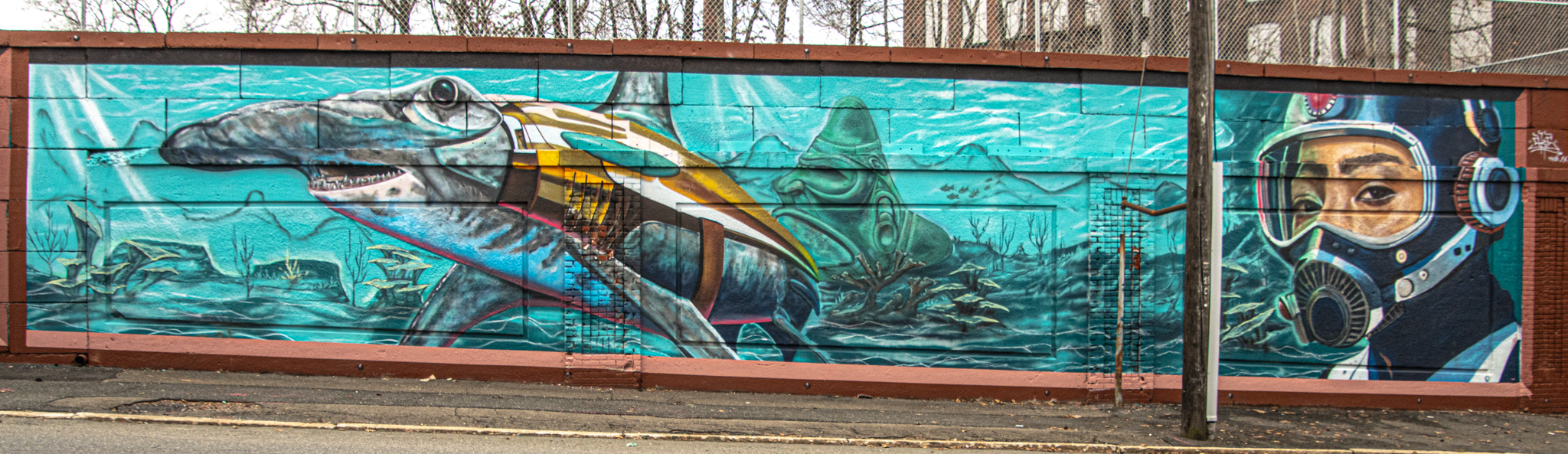
100 Appleton St
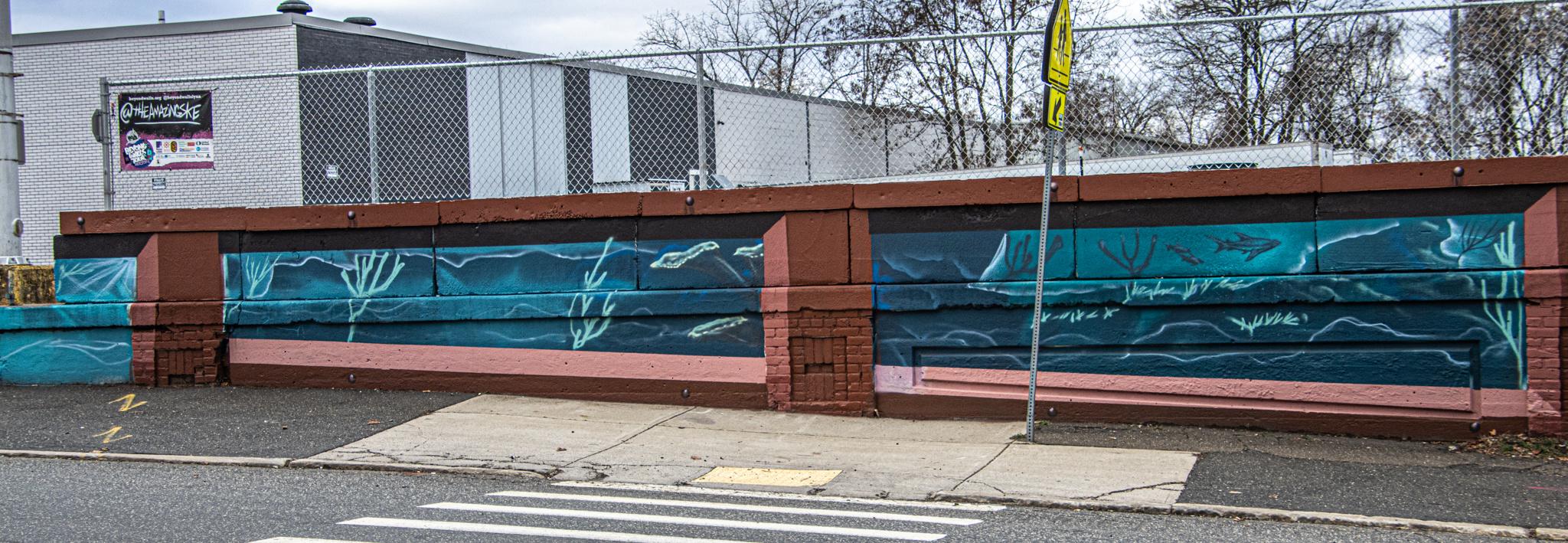
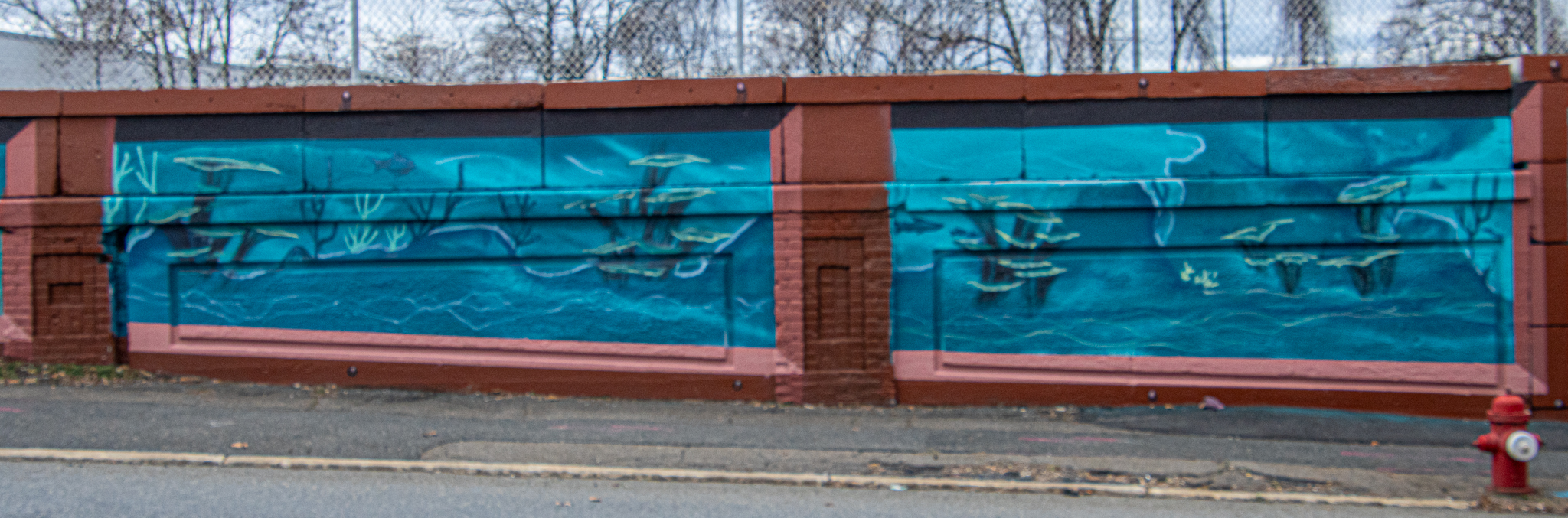
The Amazing Ske painted this mural to emphasize the importance of preserving the marine environment and the harmony generated among the different beings that inhabit it. The sharks, depicted with armor ,are portrayed as protectors of the ocean and their ability to maintain balance within it is reflected in the mural. The mural also reflects the message that all species are important and the need to work together to preserve the environment. Click here to find out more about the artist and mural.
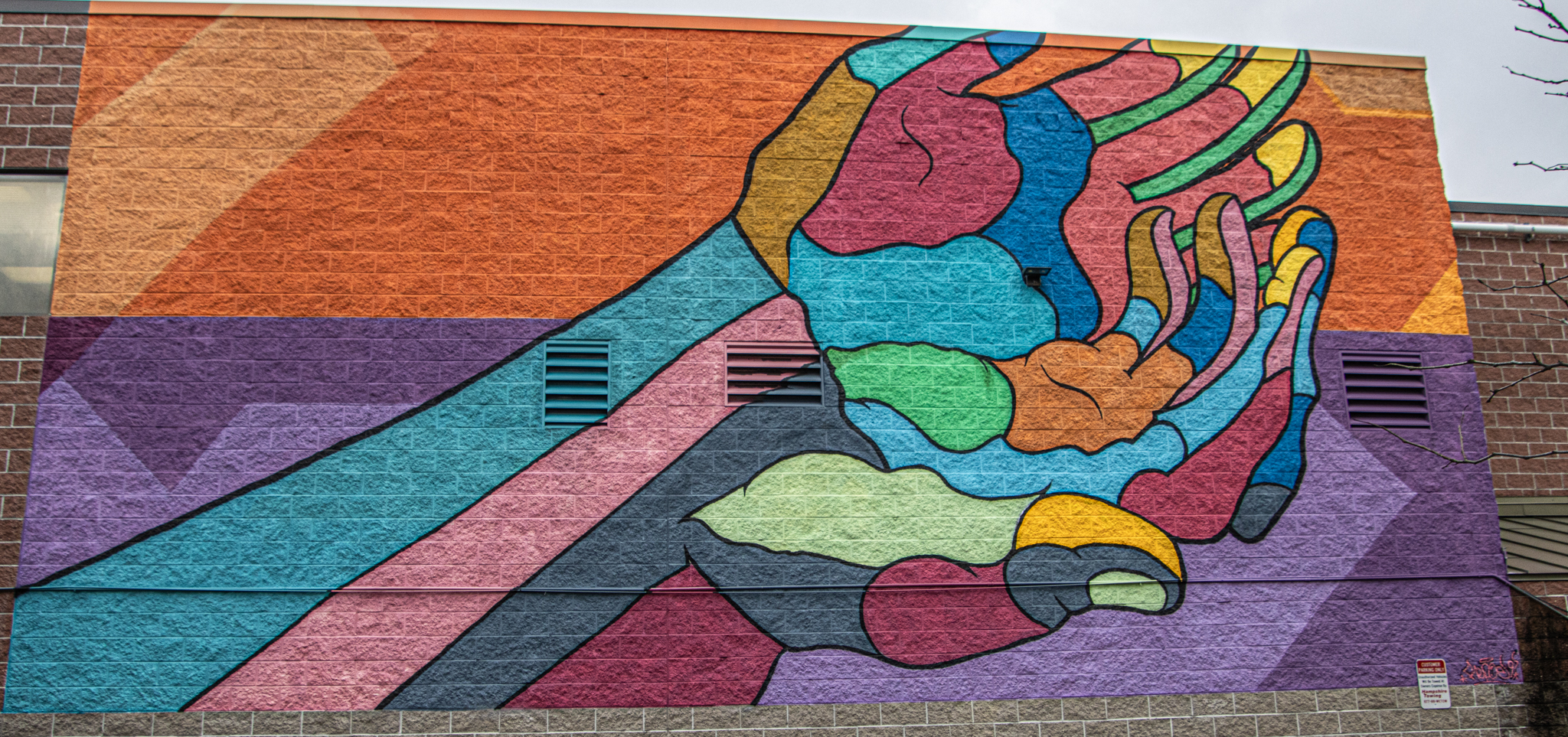
South Shore YMCA
171 Pine St
Repoe9 created this work of art to display the spirit of hope and resilience. The colors of the hands, reaching for the sky, are meant to express the hope of optimism and an uplifting energy. There is more information about the mural and artist here.
Lawler Insurance Agency
1 Main St
There was no information available for this mural.
Battleship Block
648 S. Summer St
and
660 S. Bridge St
Built in 1910, this housing complex and compound was built by German immigrant workers and sold to French-Canadian developers. The housing development was largely comprised of Yiddish-speaking Russians, Greeks, German-speaking Poles, and Germans, as well as native-born and French Canadian residents. Nearly all of the occupants were employees of paper, woolen, or thread mills. These murals were created by BKFoxx and CP1. Follow the link for more information and photos of the mural here.
University Products
517 Main St
While originally disappointed to have to take a photo of this mural behind a fence, I later thought the chain link fence gave the mural an added artistic value and perhaps even an unintended social commentary.
Created by GoFive and TakeOne, this mural, “Yo Soy…” or “I am…” is a mesage meant to extend out into this community, and all who see it, is a form of self affirmation. Yo Soy! I am anything and everything. The following poem was posted on the website for the mural:
I am a powerful force.
I am light.
I am beauty, undefined.
I am capable.
I am resilient.
I am, You are, We are
ENOUGH!
You can find out more about the mural and artist here.
Baustein Building
523 Main St
This vibrant tapestry of this mural by the artist Golden celebrates the rich history and enduring legacy of the American Thread Company which was a central part of Holyoke, Massachusetts. Each part of the mural represents artistic expression and the spirit that flourished within those walls. You can find out more about the mural, the artist and the the history of this building here.
Yellow Brick Management
346 Race St
This mural created on the the former Boy’s Club of Holyoke by Gleo and aptly titled “Child Flower” is meant to celebrate the youthful energy of the building’s history. Click here to find out more about the mural and the artist.
Battleship Block
648 S. Summer St – East Wall
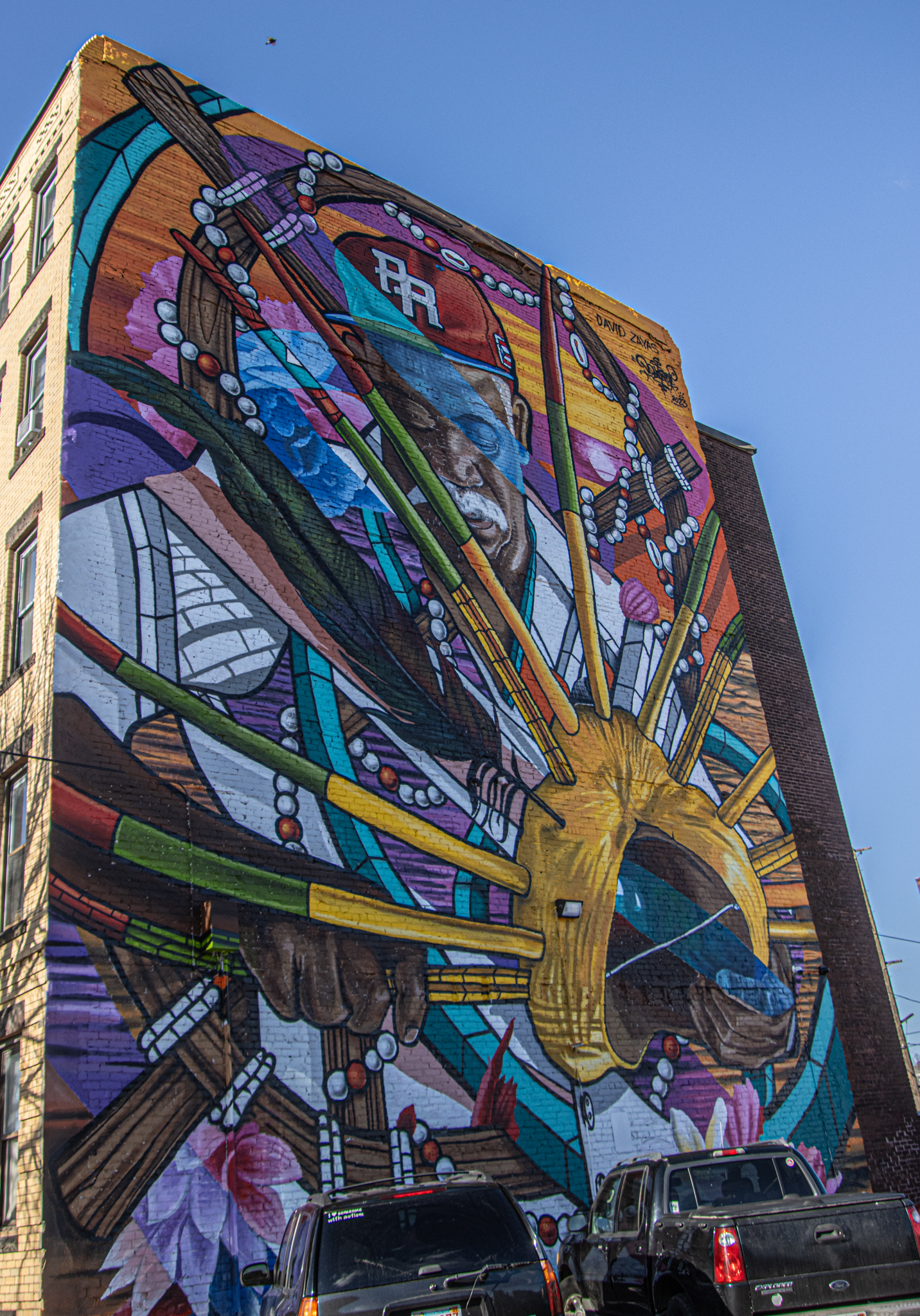
This mural “The Master of Masks” by Don Raúl Ayala Carrasquillo, Loizeño, who learned his craft from his father Don Castor Ayala, is meant to show the very same masks he learned to make from his dad. Don Raul added more color and additional horns to his masks and has passed down this art to his own children to preserve the tradition.
These murals are only a few of the works of art in the Beyond Walls mural project. Many of these murals either had been painted over older ones or were new additions to the El Corazon/The Heart Of Holyoke Mural Project that I posted about in 2022. If you do want to see these murals, and I highly suggest you do, do try to get there before they may be painted over again in the future!
Date Of Event: December 2, 2023 (event is held annually the first weekend of Dec)
Location: 13 Washington Square West, Salem, MA
Cost: Tickets for Christmas in Salem are available online at www.historicsalem.org at a cost of $40 for non-Historic Salem, Inc. members and $35 for HSI members. Tickets purchased the day of the tour are $45. Tour tickets including the Friday night candle-lit preview are $120 for non-HSI members and $100 for members of Historic Salem, Inc. Christmas in Salem proceeds support the preservation mission of Historic Salem, Inc.
Hours: Sat & Sun 10-4
Parking: there are several parking lots and metered street parking throughout the city.
Summary: The Christmas In Salem event consists of a tour of historic homes and buildings in Salem, MA. Each year, home owners and building management open their doors to visitors to get a glimpse into what these historic homes look like and what stories they may have.
Well, we made it ot the 10th and final house in the Christmas In Salem tour. This house was decorated a little different than the other houses on the tour as you will see later in this post. But, the house does have a rich history, just like the other homes in this tour.
The Andrew Safford House was commissioned in 1818 by John Andrew. Andrew made his fortune trading with Russia. He was also a partner with Samuel Archer in the merchant firm Archer and Andrew. For many years it was unclear who designed the house until The Peabody Essex Museum (who we will discuss later in thsi post) confirmed it was designed by Joseph True. True was a master carver and protege of famed Salem architect Samuel McIntire. The home features 4 large pine columns on the southern side of the house. The front parlor has a marble mantlepiece, a plaster -work ceiling and woodwork by Joseph True. One of the most prominent features of the house is the early nineteenth-century French wallpaper which depicts scenes of Cupid and Pysche (I had to Google that too).
After Andrew died in 1829, the house was divided between his widow Catherine and his son John Forrester Andrew. After John Forrester Andrew died in 1845 his widow, Louisa, owned the house until 1860. Over the next decade, the house was owned first by Edmund Smith, treasurer of the Naumkeag Steam Cotton Company, and a merchant named Frederic M. Creamer. In 1871 the house was purchased by James O. Safford, a leather manufacturer. The house then passed through several generations of the Safford family before being acquired by the Essex Institute in 1947. The Andrew-Safford House is still maintained by its current organization, the Peabody Essex Museum.
The Andrew-Safford House showcased both Christmas and Moby Dick decor. While that may seem like an unusual combination, it makes perfect sense.
Since the Peabody Essex Museum maintains the house, they decided to include elements of their upcoming exhibit Draw Me Ishmael: The Book Arts of Moby Dick which will feature artistic depictions of the novel. According to the museum, Moby Dick is the most continuously, frequently and diversely depicted American work of literature. So, take that 50 Shades of Grey.
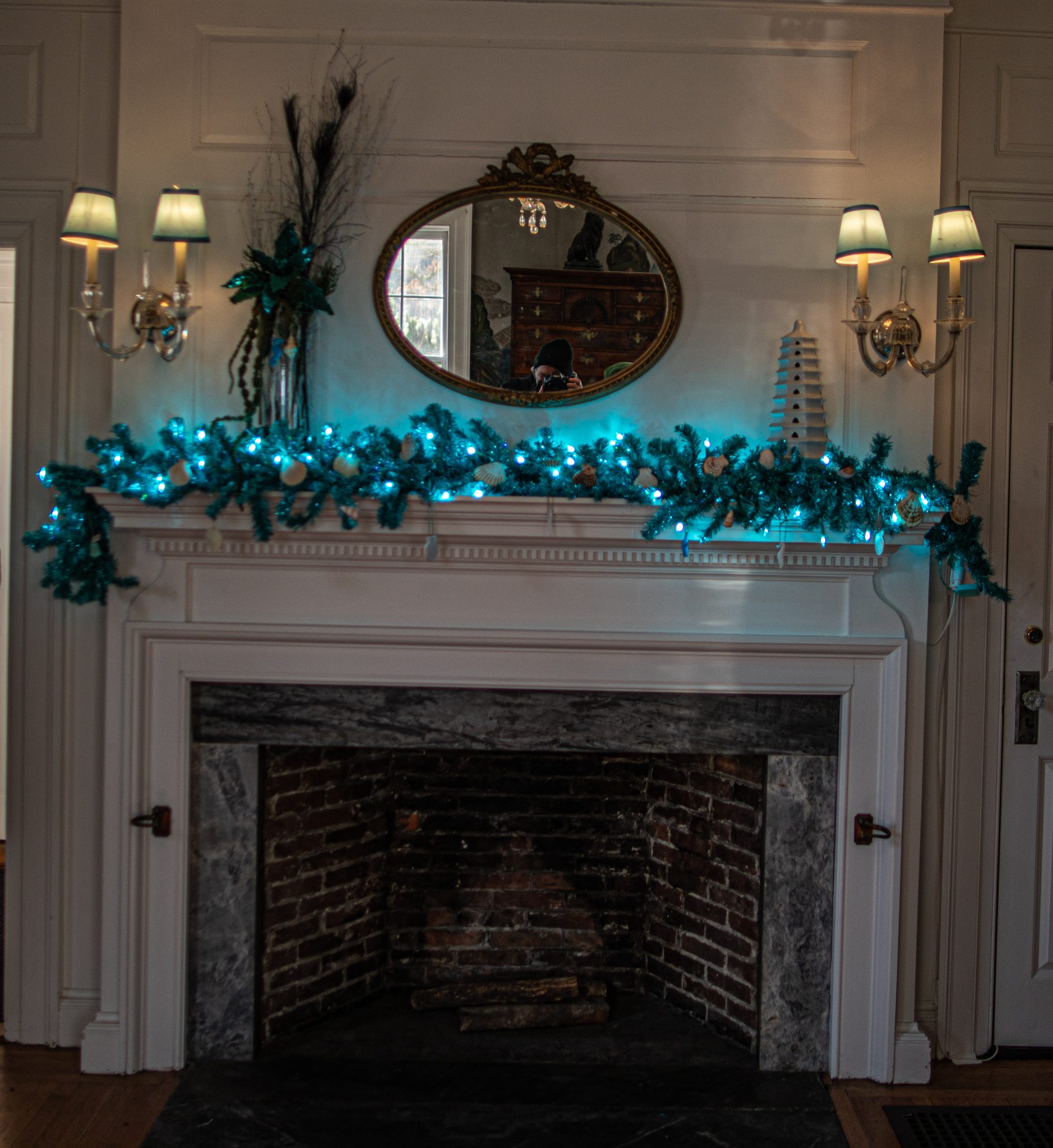
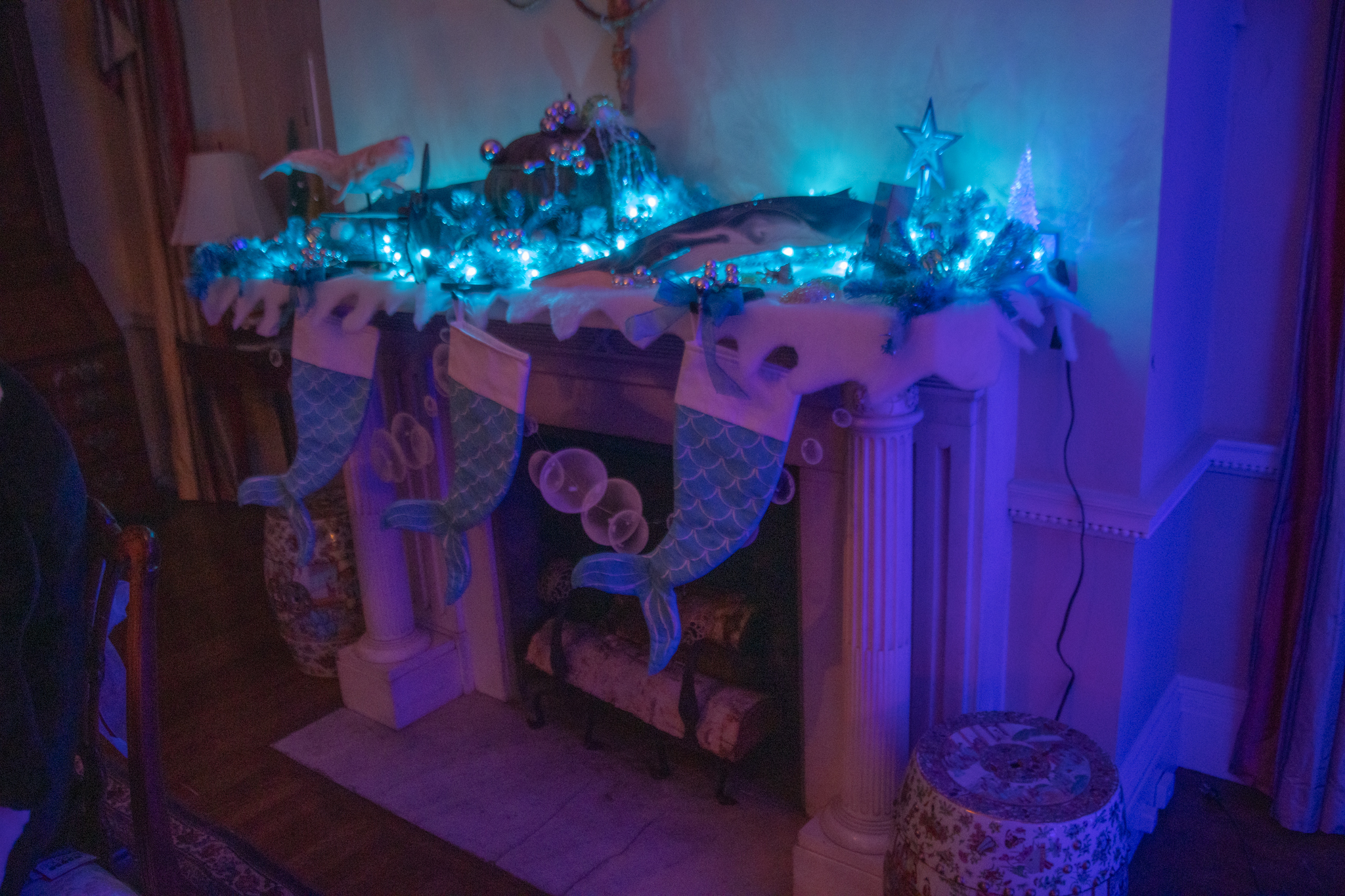
This was by far the most uniquely decorated home on the tour. The decor didn’t just include whale decorations (although there were some). There were also a penguin, jellyfish and whatever that pink thing is.
However, the main decor of the house was still Christmas and, of course, whale decor.
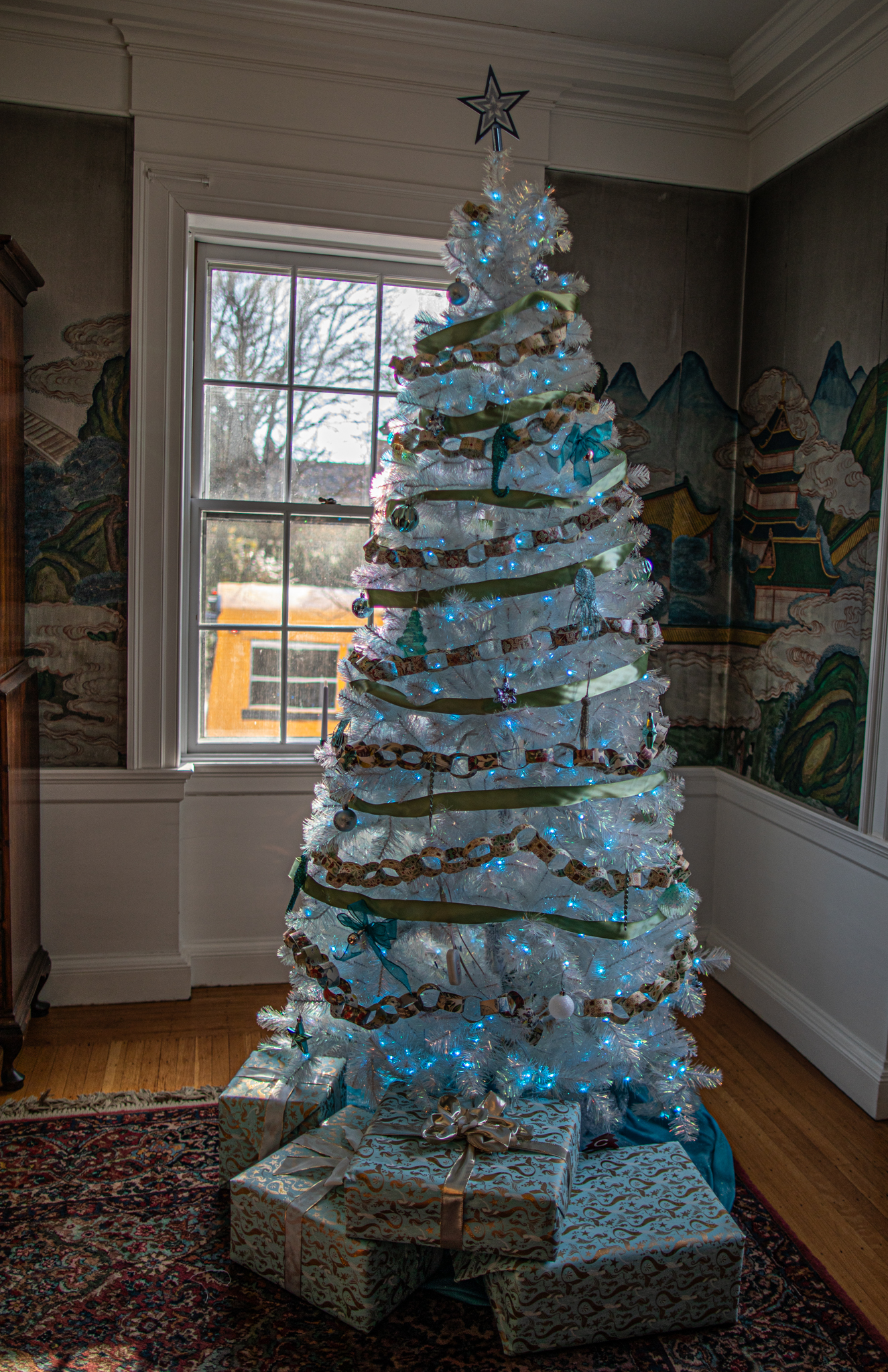
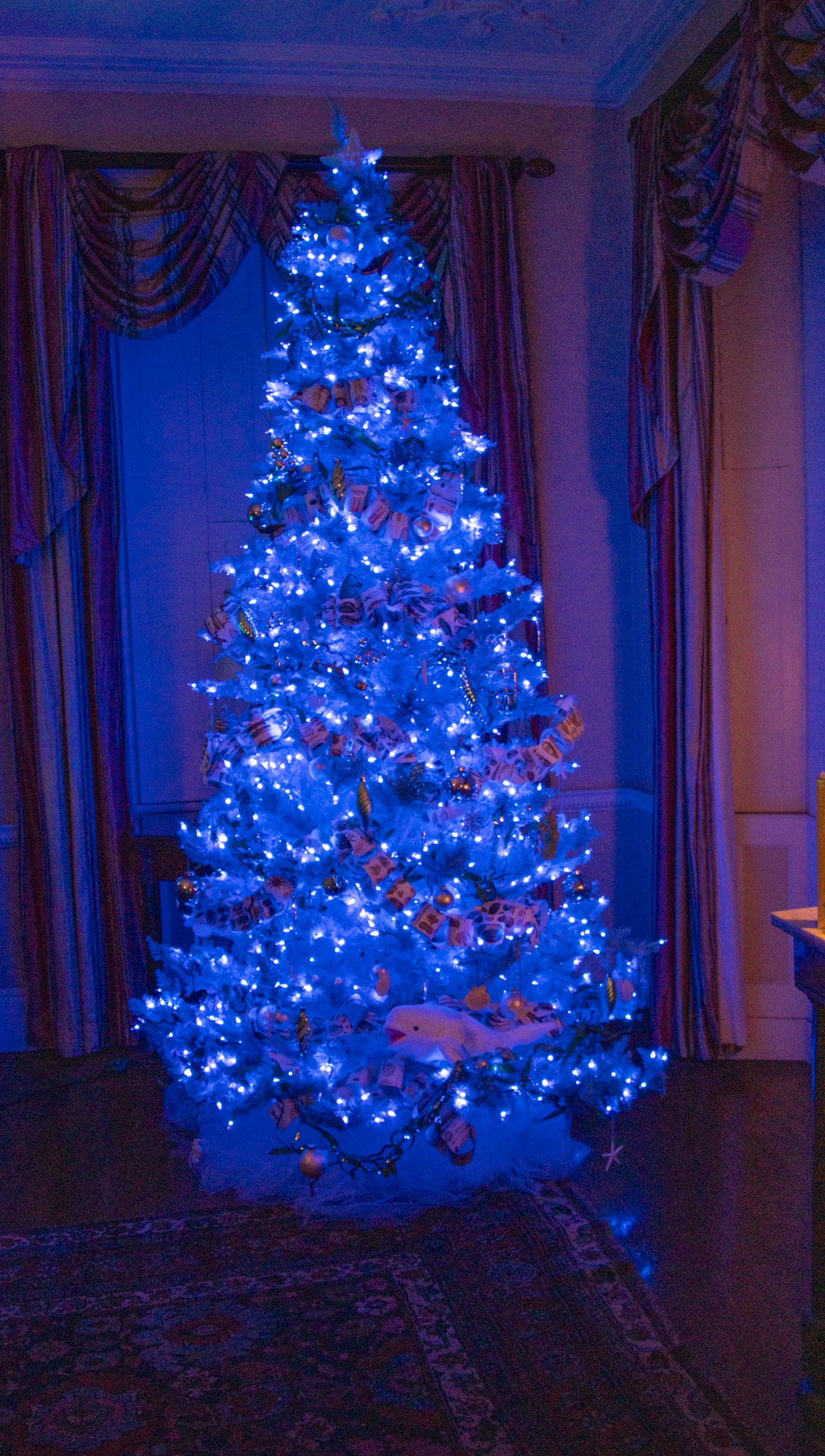
If you look closely at the Christmas trees (I know you must be thinking “my eyes” when you look at that blue tree) but you may see some marine life in the decorations such as sea horses and whales.
Another thing that I’ve mentioned in previous posts is how much I love the design, architecture and lighting fixtures of these historic homes.
The Call Me Ishmael exhibit will be on display at the Peabody Essex Museum from June 1, 2024 to January 4, 2026. You can find out more about the exhibit here
Thank you all for checking out my posts from this tour! I learned a lot about both these homes and how to photograph these beautiful homes in low light environments which can be challenging. I hope you join me later this year when I photograph this event again! And, of course, follow me here throughout the year on my many travels!
Don’t forget to check out my Facebook page for more content
You can follow me on Instagram at new.england.nomad_


























































































 New England Nomad