Category Archives: sculptures

Salem’s So Sweet (Salem, MA)

Dates Of Event: February 10-12, 2017 – usually the second weekend in February of each year (photos taken February 11)

Locations: Throughout the city of Salem

Hours:Visible 24 hours a day, until they melt

Cost: Free

Parking:Metered street parking is available and there are two big parking garages on New Liberty St and Congress St

The Downtown Garage (New Liberty St) costs $0.75 per hour.

The Waterfront Garage (Congress St) costs $0.25 per hour.

Both garages operate from 7:00 AM to 10:00 PM Sunday through Wednesday and from 7:00 AM to 2:00 AM Thursday through Saturday.

Public Transportation: The MBTA’s Commuter Rail has a stop which deposits its passengers right at Washington St.  $15 for a round trip ticket from North Station (fares vary depending upon where you leave from and where you are going)

MBTA Commuter Rail

Handicapped Accessible: Yes, but some roads and sidewalks are not shoveled well

Dog Friendly: Yes

Highlights: 26 Ice Sculptures scattered throughout the city of Salem, many sculptures are lit up at night, some shops and businesses offer discounts as part of the event

Web Site: Salem’s So Sweet

dsc_0847

Proving once again they are not exclusively a Fall destination, Salem Massachusetts has outdone itself with a sweet display of ice sculptures.

Widely known for their Halloween festivities, Salem has been trying to make their city a year round attraction for some time.  In fact, this weekend’s festivities were the 15th annual “Salem’s So Sweet” event.

The Salem’s So Sweet festivities began Friday night, February 10, with a chocolate and wine tasting at Colonial Hall at Rockafellas ($30 tickets).  Yum!

The sculptures look so much better when they are illuminated.  This was only the second year they illuminated the sculptures (at 5 p.m.) and not all of them were illuminated during my visit.  I was able to photograph all of the sculptures (except for the Han Solo sculpture which was not completed when I visited) and I photographed almost half off the illuminated sculptures.

The illuminated sculptures look better the later and darker it gets.  So, I stayed as late as I could to capture the beauty of the lighting against the dark background.  I also thought the holiday lights (still up in February) and of course the snow gave the photos a nice touch.

Since we had some inclement weather and the roads were snowy and icy, I elected to take the train into Salem.  It took a little longer than driving (not taking into account any accidents that may occur) but the transfers can be a hassle, especially having to cross the street from Park Street to get the train at North Station.

In any event, the train ride is comfortable and there are some pretty views along the way.

The 26 ice sculptures (25 not including the missing sculpture) are scattered around Salem although many of them are located in about a mile or two mile radius (on Essex, Washington and Hawthorn streets/boulevard).  The trickiest part is trying to get to the sculptures that are located on the outskirts (such as Bridge St and Derby St.  A trolley was planned to transport visitors to each of the sculptures but due to the inclement weather that plan was scrapped this year.

It’s a great activity for families and I saw quite a few parents and children looking for each sculpture and excitedly checking the sculpture off their list.  The children especially seemed to like hunting for each one.  Each sculpture is clearly marked and pretty easy to find if you use the map.  The Visitor Center also has bigger maps than the one on the web site and they are of course very helpful.

While they are generally located near each other by number, sometimes it’s easier to map out your own route and find them on your own regardless of the number of the sculpture which is what I did. I have included photos of the sculptures lit up as well if I was able to see them illuminated.  They look so much better when they are lit up!

The first set of photographs were located at or near Lappin Park, near the Bewitched Statue.  The first ice sculpture is Globe, sponsored by The Journeymasters

Han Solo is the second sculpture on their list.  Unfortunately, Han’s Falcon got stuck in traffic so his sculpture was not available to be photographed.

As if you haven’t seen enough of them yet, the third sculpture is a snowflake sponsored by Laura Lanes Skin Care.

Some of the lighted sculptures changed colors like this one sponsored by Salem State University; Opening of Sophia Gordon Center.

Accross from Lappin Park, on Washington St, is the ice sculpture at Rockafella’s.  The Rockafella’s Ice Bar is like a frozen patio.  The cold weather and icy bar didn’t stop them from grilling and enjoying the fresh air. At least you didn’t have to worry about your beer getting warm.

Farther down Washington St is Champagne sponsored by Adriaatic Restaurant & Bar.

Sponsored by Creative Salem, Hawthorne Hotel and Retonica and located on Front St is the ice sculpture Reflections.  This one was cool because you could stand behind the sculpture and act as though you are the reflection.

Next to the Reflections sculpture is Cinderella’s Carriage, also on Front St,sponsored by  Maria’s Sweet Somethings.  From a distance, if you look at a certain angle, you can almost see some driving the carriage with a top hat on.  Go on, let me know if you see it too.

The next ice sculpture on the list is Fish sponsored by Koto and located on Washington St.

The next ice sculpture is Lobster Love located at Turner’s Seafood on Church St.  This sculpture also changes colors when illuminated.

This sculpture is located by the Salem Cinema.  It is called Salem Film Fest 2017.

On St Peter St at Bit Bar is Arcade.

The next group of sculptures are all located on the Essex Street Pedestrian Mall and one on Central St which is an alley off the pedestrian mall walkway.

Green Tara, sponsored by Coon’s Card and Gift Shop, Penelope’s Pet Boutique and Tibet’s Art & Healing.

On the other side of the walkway, very close to Tara is Bella The Goat sponsored by Bella Research Group.  Bella’s sculpture also changed colors while it was lit.

Off Essex St on Central St is the Steampunk Heart ice sculpture.

The next two sculptures are both back on Essex St Pedestrian Mall.  This ice sculpture is located in front of the Peabody Essex Museum.  It is called Red Stiletto with Honda Engine and it was sculpted by David Crow.

On the other side of the walkway in front of the Museum Mall Place and very close to the red stiletto sculpture is the Winnie The Pooh ice sculpture.  Winnie doesn’t look very happy!

The next sculptures are located on Hawthorne Blvd and Essex St.  Sweet Jane’s Sweet Savings is located on Hawthorne Blvd.

dsc_0564

Queen Of Hearts is located across the street on Essex St.


The following ice sculptures are located on or off Derby and New Derby St.  Mug is located at the Notch Brewery and Tap Room.

These two sculptures are located at the Waterfront Hotel and Regata Ice Bar.  t first glance, it looks like one sculpture but they are actually two separate sculptures.

Across the street from the Waterfron Hotel is the Rumson’s Rum ice sculpture.

Candy is located in front of the House Of The Seven Gables and, aptly, across the street from Ye Olde Pepper Company (America’s oldest candy company).  Yes, those are real candies.  No, I did not eat any of them.

From Derby St, you would have to backtrack towards N. Washington St, near the Salem Commons to find Ruby Slippers located at the Salem Witch Museum.  And, yes, I agree.

The next ice sculpture is a little bit of a walk.  Bakery is located in the parking lot of Coffee Time Bake Shop (96 Bridge St).  In fact, you may want to drive to this sculpture.

And, yes, of course, there were lots of dogs in Salem checking out the sculptures.

Emmett is a 4 year old Cockapoo.  Look at those cute shoes!

Mattie is 7 years old.  She was bundled up for the cold weather!  She is also very well trained.

All of the dogs in Salem were prepared for the cold weather.  These dogs had some beautiful sweaters on keeping them both warm and fashionable.

I am not sure how long the sculptures are being displayed.  Between our erratic weather and hooligans who seem to get their kicks smashing ice art, I would suggest going soon to check them out before they’re gone!

Below is a video of the Bella The Goat ice sculpture changes colors.

Please connect with me on Facebook


The Nature of Glass: Contemporary Sculpture at Chesterwood 2016 (Stockbridge, MA)

Date Visited: July 16, 2016

Location: Chesterwood, 4 Williamsville Rd, Stockbridge, MA (413)298-3579

Hours: Open Saturday of Memorial Day Weekend to the Monday of Columbus Day Weekend. May 28 – October 10 of this year from 10am to 5pm daily. Self-guided tours only. Residence closed daily from 12:30pm – 2:00pm

Cost: Adults, $18.00; Seniors, $17.00; Grounds ONLY fee, $10.00; NTHP Members, Military & Children, 13-17, $9.00; Friends of Chesterwood & Children Under 13, Free

Parking: There is ample parking in the various parking areas for at least a couple hundred cars

Time To Allot For Visit: 1 hour to 2 hours (less if you don’t appreciate art)

Dog Friendly: No

Highlights: lots of art, statues, scenic trails

Nature Of Glass: Contemporary Sculpture

DSC_0496

Named after one of America’s foremost sculptor, Chesterwood is home to  the works of Daniel Chester French.  French’s work can be found on multiple continents.  His most prominent works include designing the Abraham Lincoln and the Minute Man statue in Concord, MA among many other works of art.

In addition to statues and replicas of French’s work, Chesterwood also shows off exhibits on its spacious grounds.  The latest exhibit, on display until September 18, is a bit of a break from the traditional pieces of French.  The Nature Of Glass shows a variety of unusual works of art for the entire family.

This blown gas display called Optic Lens Installation (2016) is by Richard Royal.  Part of the Optic lens series, this art evolved from his fascination with water or being near water as well as lighthouses and the Fresnel lens.  On the description plaque for this design, Royal said safety and security are recurring themes.  he finds glass and light as instruments of safety to be inspiring and he finds the system of glass and light to be metaphor for simple concepts and a reminder that basic things in life are sometimes the most important and have the strongest impact.

Throughout the exhibition, I found the artists to have a such depth and insight into what may seem to be simple displays.  This is a recurring theme throughout the displays.  It does make sense that the artists would have a deeper meaning to their work.  One does not put so much time and effort into a work of art without having some deep significance to their work and inspiration.

This sculpture by John Kiley is called Clear Cut (2016).  Kiley made this 8 foot sculpture out of glass, steel and Douglas fir.  According to the information on the sign next to the display, Kiley described his work as using circular openings to show interior divisions of space to alter their sense of space and light.  Depending on your point of view, the overlapping circles can focus your attention in different ways.  The Douglas fir is meant to connect the ground through a natural material to the sky using material engineered by humans, evoking a sense of history, place and reflection.

Martin Blank created Crystal Reveil (2012) from hot sculpted glass. The segments of the sculpture are curled and hollow so you can look through the sculpture and see a different form of negative space. The individual forms are very delicate and skin-like, similar to the madrone tree which is prevalent in the pacific Northwest.

Depending on where you stand and the time of day that you view Time Of Day – Blue Moment (2016), by Richard Jolley, looks different.  As you can see by the photos above, you see different things from each angle.  The work of art is of a veiled form of a human figure that changes color at specific times of the day.  The passage of light through the small portal will shift the light transmission and wash the figure in a blue light referencing daily time sequencing and change.  The intent, according to Jolley is to not only mark a specific, finite time of day but also to address the significance of the passage of time and awareness.  He went on to say how it addresses in a deeper sense time and the effect it has on every aspect of our existence.

I did photograph Time of Day again later in the day after viewing the other sculptures about an hour later to see any changes in the work.  Unfortunately, it was an overcast and misty day.  So, since there was a lack of light, the changes in the art work were very minor.  The photos are shown below

One In One (2014) by Thomas Scoon is a cast glass and granite sculpture.  Just short of 5 feet (57 inches to be exact), the figures are meant to show people rising from the external landscape.  He tried to choose rocks that evoked the feeling and gesture of human forms, specifically torsos and heads.  The layering of kiln-cast glass and stone allows light to pass through the figures and embodies the spiritual and physical essence of human nature into the sculpture.  He felt the combination of the materials expresses both the fragility and the enduring qualities and humanity.

Scoon continued with his granite and glass theme with Companion Series I-IV (2016).  Similar to the One In One sculpture,this work shows human figures made of cast glass and granite.  I suppose he didn’t want his other sculpture to feel lonely.

Earth/Sky (2016) by Tom Patti is one of the more unusual works at the exhibit.  Patti wanted to show the ambiguous condition between the literal and the phenomenal.  Patti felt the unique quality of the reflection combines the transparency of glass in his design.  This combination results in an ambiguous sense of space that obscures any references to the physical solidity of the materials, revealing the natural essence of the environment.

This work of art, like many more in the exhibit, was not as provocative because of the lack of light on the day of my visit.  If the sun had been out the shadows would have played off the work of art more dramatically.

One of the more unique works of art, Remember What (2016) by Marko Remec is 128 thirty two inch dome acrylic mirrors.  Also made of aluminum, steel hardware and twine, Remec’s work is described as a “chess pattern gone awry.”  The mirrors reflect 180 degrees of Chesterwood.  The work is a reconfiguration of the installation Can’t Hear You that had been displayed at MASS MoCA in North Adams, MA.

Another piece of work that would have benefited from sunlight, Vitro Muralis (2016) by William Carlson is made of granite, metal and glass.  The sculpture shares a common area of overlap.  The edges have a visual noise as they collide into shared space.  The transparent components are meant to offer a language of design as a text of spiral repetition and marks that are more musical than linguistic, according to Carlson.

Another design by William Carlson, Sine Nomine (Without A Name) (2014) is another sculpture made of metal and glass. The “x” in the middle of the sculpture is meant to reference missing identity.  It has also been used as a mark for those who cannot sign their name or in equations in algebra as an unknown in the equation.  Other interpretations include a reference to something that has been eliminated from a list.  The historical use of the x also makes it a powerful graphic symbol universally understood.  The exact meaning is not made clear in the plaque next to the sculpture.

Icebergs and Paraphernalia 117 (2007) was inspired by traveling through the Polar Regions, specifically a small stranded iceberg off the shore of Greenland that looked like a bird.  Created by Peter Bremers, the work of art is made of kiln-formed glass cut and polished and outdoor glass.  The almost marble structure pays tribute to the marble sculptures of the French.

Also made of kiln-formed glass cut and polished and outdoor glass, Movement II (2007) depicts a window moving forward.  The concept of the work is that we perceive “reality” as a dynamic image that changes in time and as a result of the viewer’s change in perception as well as how we rewrite history as our understanding of the past transforms the present and vice versa.

Daniel Clayman’s North 41.47 West 71.70 Copper (2016) may just look like an ordinary rock but there’s much more to this boulder.  The name coincides with the GPS coordinates where the boulder was found.  Copper refers to the interior treatment of the piece.  While on a jobsite excavation, Clayman observed large boulders being carted away to make room for a new landscape design. Clayman was struck with the idea of reformatting an ordinary boulder into a magical object.   When the sun is out, the sun reflects off the copper boulder making it a highly detailed surface (I had to use a flash to gain the same effect).

Julia’s Garden (the pieces range from 2010 to 2016) includes pieces from Nancy Callan’s Orbs And Winkle’s signature series.  The design consists of geometric forms (spheres and cones).  Callan strived to create a sense of infinity complexity with lines that wrap and fold around the shapes.  Each orb is like a world in itself.  The shapes of the orbs are said to represent planets.  The cones are meant to be like stocking caps – a reference to Rip Van Winkle – which gave the name Winkle to the pieces.  The cones also add a vertical element that echoes the growth of plants and trees – straight towards the sun as in White Spiral Cone or gently unfurling as in Ivory Winkle.

DSC_0474

Trigonal  (2016) by Kait Rhoads was inspired by a trip Rhoads took to  the Joshua Tree National Park in California after her the mother’s death.  Rhoads was struck by the beauty in the contrast of the quartz seams running through the fields of granite rock in the landscape.  Her search for healing and cleansing within a natural habitat largely untouched by man drew her to create the work of art.  She placed the color of the desert sky onto the form of the quartz crystal in a wash of opaque white ranging to intense transparent blue.

There is another work of art that I somehow missed.  Sidney Hutter’s Louie’s Electric Two (1976, revised in 2016) is sandblasted mirror glass design.

Dogs are not allowed at Chesterwood.  But, I did find this friendly cat.

Connect with me on Facebook to view photos, videos and other posts not included in this blog

New England Nomad


Rotary Common Park (Nashua, NH)

Date Visited: March 5, 2016

Location: 315 Main St, Nashua, NH

Reflection Garden & Labyrinth

DSC_0169

Located next to the New Hampshire Holocaust Memorial on Main Street across from a strip mall and busy roadway, the Rotary Common Park is a most unlikely place to find an art display.  But, the Rotary Common Park is just that; an outdoor art museum.  And this isn’t just some tourist attraction.  The art here is very thought-provoking and amazingly crafted.

DSC_0202DSC_0203DSC_0206DSC_0198

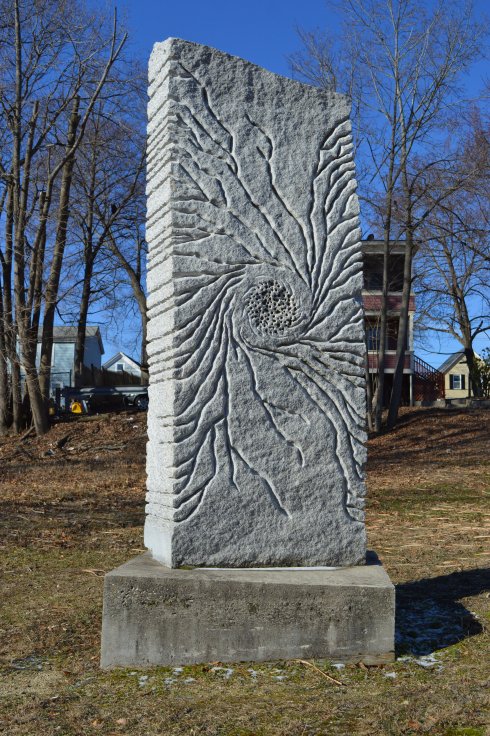
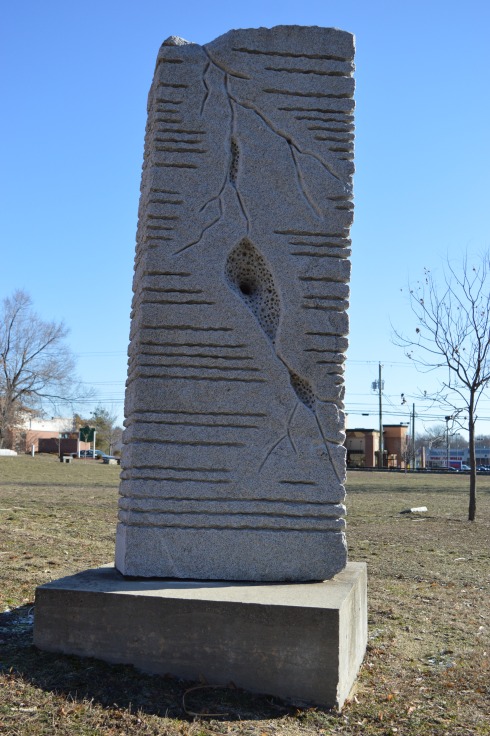
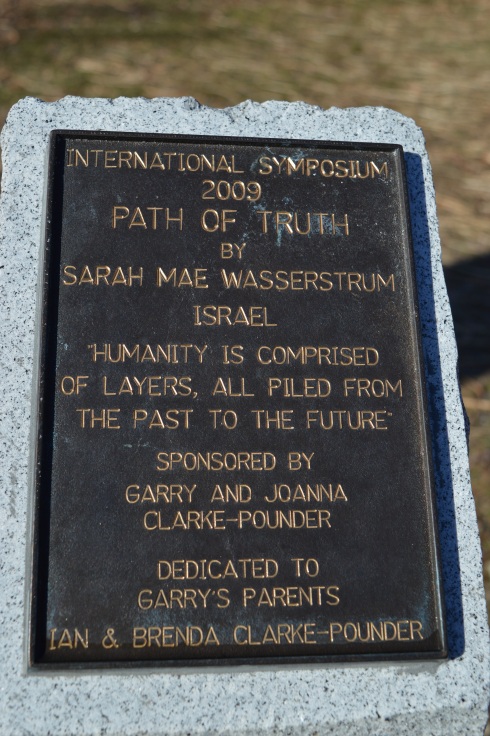
The “Path Of Truth” is a memorial to the “layers of humanity”.  Or, as Sarah Mae Wasserstrum said;

“From the Origin layers of Humanity, we are connected by a common denominator.”

She imagines humanity as like layers, some thicker and some modest, all plied from the past to the future.  The stone signifies the immense power of people and our ability to grow and change.


DSC_0162

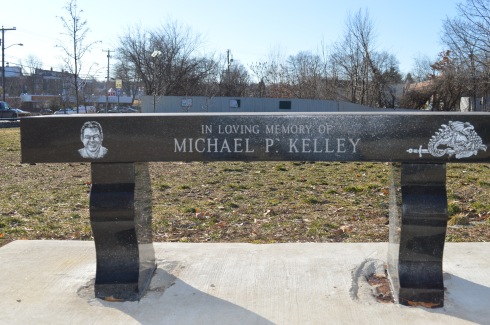
A bench dedicated to Michael Kelley.  Who was Michael?  What was he like?

Since it is located directly across from the Holocaust Memorial, the Reflection Garden & Labyrinth is the most popular spots at the park.  Benches, sculptures, tiles with words of inspiration and works of art dot the circular reflection area.

DSC_0228DSC_0222DSC_0218

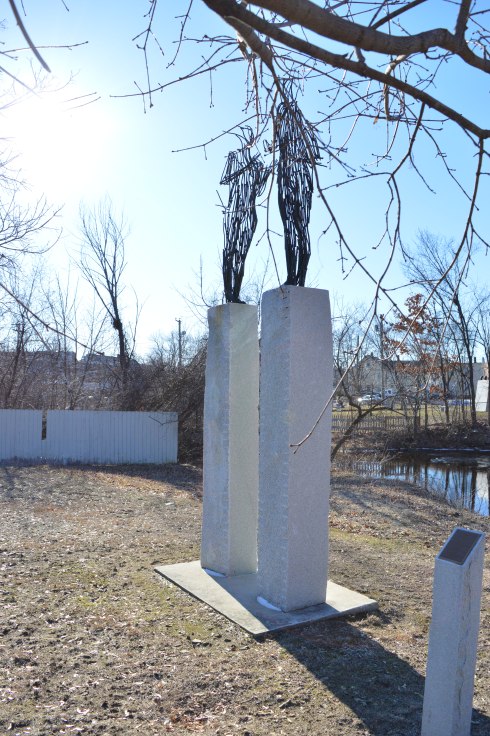
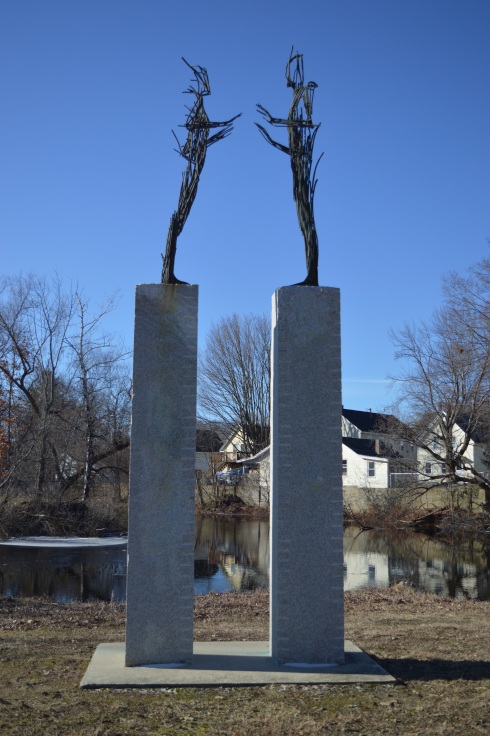
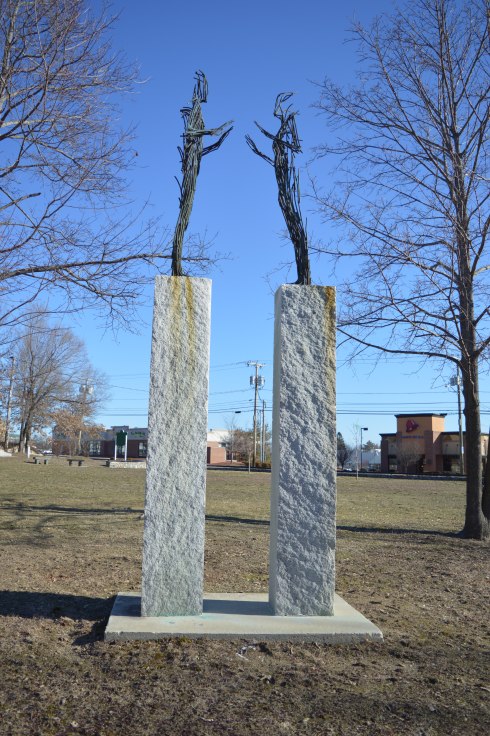
The “Encounter” sculpture by Luben Boykov,

Boykov described it as, “The present moment of meeting becoming a place in the future.”

Boykov explains the sculpture as a moment just before people meet that are so quick but also last forever.  It represents an encounter that can begin a lasting relationship.

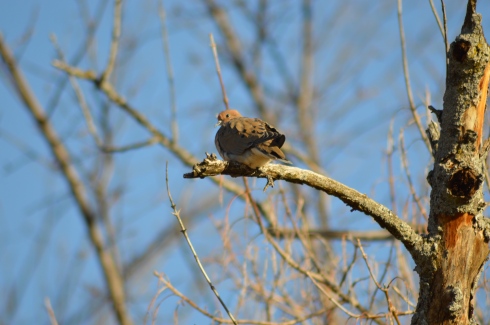
There was also a surprising amount of animal activity in the area like this bird and a thirsty cat.

DSC_0156DSC_0115

The displays at the Rotary Park change on a regular basis so keep an eye out if you’re in the area!

Please stop by my Facebook page and like my page.

New England Nomad


Anne Sullivan Memorial (Feeding Hills/Agawam, MA)

Dates Visited: July 11, 2015 and August 22, 2015

Parking: there is a parking lot located next to the memorial with over a dozen or so parking spaces.  There are also parking lots and off street parking nearby.

DSC_0025

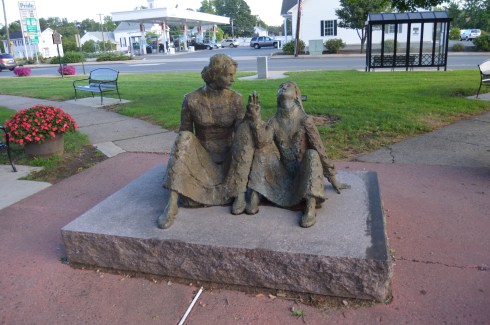
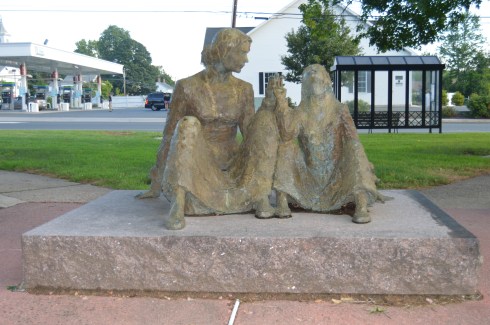
Although she is known more for her success as a teacher and most notably working with Hellen Keller in Tuscumbia, Alabama, and Boston, Massachusetts, Anne Sullivan is actually a product of Feeding Hills (a sub section of Agawam), Massachusetts.

I especially like how the trees still have leaves and the flowers are in bloom since I originally took these photos in the summer of last year.  It makes me yearn for the long spring and summer days.

I am never completely satisfied with my photos.  So, I made two trips to this memorial.  My biggest gripe with the first set of photos was there were too many cars and people in the background.  But, even when I went back another day earlier in the daytime there was still a lot of activity.  It is located by a busy intersection so it was unavoidable.  You can see the difference in the shadowing and angle of the sun from my two visits.

Sullivan lost her vision at an early age due to an infectious eye disease.  She would receive a series of treatments which considerably improved her vision while she was a student at Perkins School for the Blind in Boston.  This undoubtedly inspired her to work with other people who were visually impaired and challenged in other ways.

The centerpiece of the park is the monument of Anne Sullivan sitting with Helen Keller. The intensity in her stare is palpable. The sculpture, created by the Romanian-American sculptor Mico Kaufman, captures the moment Anne Sullivan successfully teaches Helen Keller her first word – “water.” The statue was dedicated on June 28, 1992.

DSC_0066DSC_0033DSC_0030DSC_0065DSC_0671DSC_0669

DSC_0666

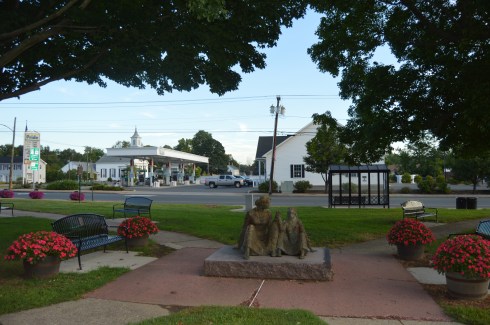
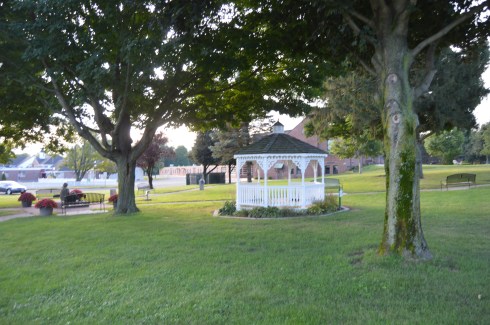
The park is well kept and there are many places to sit.  A gazebo stands off to the side as well.  It would be a peaceful place to relax and unwind, except the fact it is located at a busy intersection.

DSC_0039DSC_0662DSC_0064

There are additional monuments in the park.

This memorial is another tribute to Anne Sullivan’s work with Helen Keller.  The inscription reads, “Anne Sullivan…Teacher of Helen Keller.  Heroic friend of the deaf and blind.  Native of Feeding Hills.”

DSC_0063

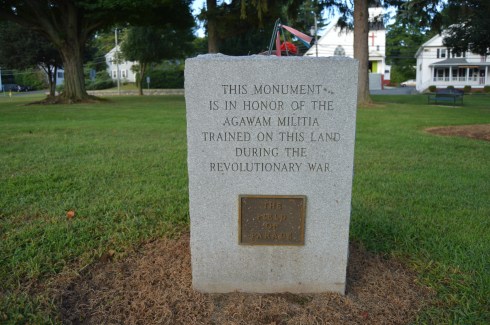
This memorial is a tribute to the Agawam Militia who trained on this land during the revolutionary War.  I am always fascinated at how seemingly ordinary places like a busy intersection has so much history and significance.  In fact, the land you are standng on, or the land your house or apartment building was built upon most certainly has a hidden history you are not privy to.

DSC_0047

DSC_0045

The trees at the Anne Sullivan memorial Park are very impressive, particularly when they still have their leaves.

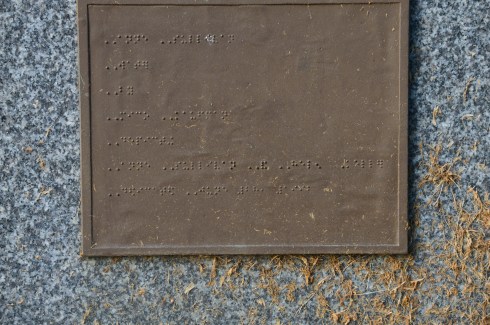
The last monument I photographed at the park names the people on the memorial committee.  If you look closely, you may notice the inscription is also written in braille.

DSC_0676DSC_0013


Dr. Seuss National Memorial Sculpture Garden (Springfield, MA)

Date visited: January 16, 2016


Located on the grounds of the Springfield Museums, the Dr.  Seuss National Memorial Sculpture Garden pays homage to one of Springfield’s most famous people, Theodor Seuss Geise (aka Dr. Seuss), and some of his characters.

This slideshow requires JavaScript.

The grounds are accessible to the public during the museum’s normal hours without a fee.  You only need to pay if you want access to the museums.  The garden does not only have sculptures and art work related to Dr. Seuss’ characters.  There are statues and other pieces of art and buildings on the grounds.

This slideshow requires JavaScript.

I will be posting about the Springfield Museums in a later post.  Here is a quick preview: