Category Archives: photography

Ipswich River Wildlife Sanctuary (Topsfield, MA)

Date Visited: July 16, 2016

Location: Mass Audubon, 87 Perkins Row, Topsfield, MA (about half an hour north of Boston, MA and an hour southeast of Manchester, NH) 978-887-9264

Hours: presently,  Tues–Fri, 9 am–4 pm
weekends & Mon holidays, 9 am–5 pm

November-April
Tues-Sun & Mon holidays, 9 am-4 pm

May-October
Tues–Fri, 9 am–4 pm
weekends & Mon holidays, 9 am–5 pm

Trails
Tues-Sun, & Mon holidays, dawn to dusk

Cost:

Members: Free
Nonmembers:
$4 Adults
$3 Children (2-12)
$3 Seniors (65+)

Parking: There are about 50 parking spots.  You shouldn’t have too much of a hard time finding parking unless there is an event or summer camp is in session

Size: 12 square miles

Time To Allot For Visit: I was there 5 hours and I still didn’t see everything but you can take in most of the best parts of the park in 2 to 3 hours

Dog Friendly: No, most Audubon parks are not dog friendly

Highlights: bodies of water, plentiful wildlife, pretty flowers and plants, observation tower, canoe rentals (if you’re a Mass Audubon member)

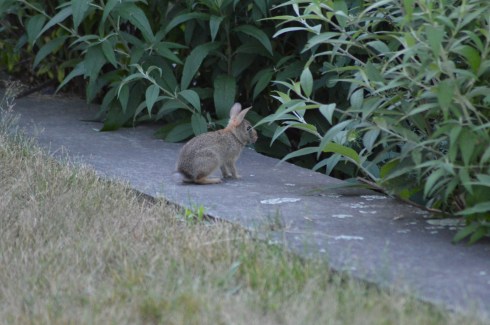
From the moment I walked to the visitor center at the Mass Audubon Ipswich River Wildlife Sanctuary, I encountered wildlife.  In fact, I found this rabbit chewing on some greenery in the shrub by the office.

DSC_0763

That is the great thing about Ipswich River Sanctuary.  If you’re an animal lover, or even if you just like them a little, then you will love this place.

Not only are the animals abundant, they are also relatively friendly and not all that shy.  Well, most of them weren’t too shy.

This slideshow requires JavaScript.

The well-fed red squirrel let me get very close to him or her, so long as I didn’t affect his or her food supply.  A lady who had been sitting there on the bridge wall before I arrived has been intentionally leaving seeds or some other type of food the squirrel was enjoying which allowed me to get some great shots.  Thanks, random lady!

There are also a wide variety of bugs and other insects at the park.  Bug spray and covering up are a must (I especially suggest a hat since one particular bug kept landing in my hair).  And most bug sprays don’t stop all bugs.  The black insect below was particularly menacing.  Also, I never saw so many dragon flies in one spot as I did at Ipswich River Sanctuary but they were pretty harmless.

There are some beautiful views and plant life at Ipswich River Wildlife Sanctuary.  The colors of the flowers really pop out and the trails are well defined.  Many of these pretty features of the landscape were created 15,000 years ago by a glacier.

This slideshow requires JavaScript.

You can also rent canoes, if you are a member, for $10/hour for a minimum of 2 hours.  So, the cost is $20 or more.  You pay for the canoes at the front office and then you have to lug the paddles and life vests along with a key to the where the canoes are locked up (about a half a mile or so away) at the canoe launch.  The canoe launch is right next to where the canoes are locked up.

One thing I have seen at other parks that is present at Ipswich are bat boxes.  These bat boxes are designed to give daytime roots for little brown bats.  Bats are important because they eat lots of mosquitoes and other insects, the plaque next to the boxes explains (then get more bats there please).  Little brown bats have been the victims of white nose syndrome,an illness which has been affecting brown bats while they hibernate during the winter.  The cause is not yet known.  So, the boxes are meant to give them a safe and convenient way for them to rest.  The boxes were constructed by Eagle Scout Sean Enos and Boy Scout Troop 48 of Lynnfield, MA.  The lumber was donate by a local business.

There is also an observation tower at Ipswich Wildlife Sanctuary.  The three story tower built of wood is a little shaky but safe.  The tower overlooks a swamp and meadow.  There wasn’t much wildlife except for the very occasional bird  (I included photos of the egret and other bird who landed in the water in the earlier slideshow).  I think that is you had unlimited time and a lot of patience as well as a good set of binoculars (I didn’t have any of those things) you could see a few grand birds.

This slideshow requires JavaScript.

One of the things I noticed and I had not seen before my trip to Ipswich are pink water lilies.  I have seen white water lilies but never saw the pink water lilies until my visit there.

Like most Mass Audubon sanctuaries, the Ipswich River Wildlife Sanctuary is well kept and family friendly.  The grounds are well manicured and there is even a play area for children.  They also have a summer camp program where they teach children about nature in a fun and exciting way.  All in all, the Ipswich River Wildlife Sanctuary is a fun and exciting place for people of all ages.

Please connect with me on Facebook: New England Nomad’s Facebook Page


The Nature of Glass: Contemporary Sculpture at Chesterwood 2016 (Stockbridge, MA)

Date Visited: July 16, 2016

Location: Chesterwood, 4 Williamsville Rd, Stockbridge, MA (413)298-3579

Hours: Open Saturday of Memorial Day Weekend to the Monday of Columbus Day Weekend. May 28 – October 10 of this year from 10am to 5pm daily. Self-guided tours only. Residence closed daily from 12:30pm – 2:00pm

Cost: Adults, $18.00; Seniors, $17.00; Grounds ONLY fee, $10.00; NTHP Members, Military & Children, 13-17, $9.00; Friends of Chesterwood & Children Under 13, Free

Parking: There is ample parking in the various parking areas for at least a couple hundred cars

Time To Allot For Visit: 1 hour to 2 hours (less if you don’t appreciate art)

Dog Friendly: No

Highlights: lots of art, statues, scenic trails

Nature Of Glass: Contemporary Sculpture
DSC_0496

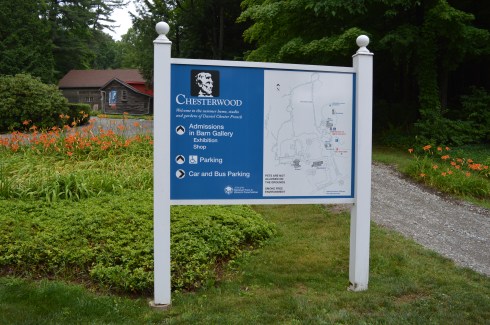
Named after one of America’s foremost sculptor, Chesterwood is home to  the works of Daniel Chester French.  French’s work can be found on multiple continents.  His most prominent works include designing the Abraham Lincoln and the Minute Man statue in Concord, MA among many other works of art.

In addition to statues and replicas of French’s work, Chesterwood also shows off exhibits on its spacious grounds.  The latest exhibit, on display until September 18, is a bit of a break from the traditional pieces of French.  The Nature Of Glass shows a variety of unusual works of art for the entire family.

This blown gas display called Optic Lens Installation (2016) is by Richard Royal.  Part of the Optic lens series, this art evolved from his fascination with water or being near water as well as lighthouses and the Fresnel lens.  On the description plaque for this design, Royal said safety and security are recurring themes.  he finds glass and light as instruments of safety to be inspiring and he finds the system of glass and light to be metaphor for simple concepts and a reminder that basic things in life are sometimes the most important and have the strongest impact.

Throughout the exhibition, I found the artists to have a such depth and insight into what may seem to be simple displays.  This is a recurring theme throughout the displays.  It does make sense that the artists would have a deeper meaning to their work.  One does not put so much time and effort into a work of art without having some deep significance to their work and inspiration.

This sculpture by John Kiley is called Clear Cut (2016).  Kiley made this 8 foot sculpture out of glass, steel and Douglas fir.  According to the information on the sign next to the display, Kiley described his work as using circular openings to show interior divisions of space to alter their sense of space and light.  Depending on your point of view, the overlapping circles can focus your attention in different ways.  The Douglas fir is meant to connect the ground through a natural material to the sky using material engineered by humans, evoking a sense of history, place and reflection.

Martin Blank created Crystal Reveil (2012) from hot sculpted glass. The segments of the sculpture are curled and hollow so you can look through the sculpture and see a different form of negative space. The individual forms are very delicate and skin-like, similar to the madrone tree which is prevalent in the pacific Northwest.

Depending on where you stand and the time of day that you view Time Of Day – Blue Moment (2016), by Richard Jolley, looks different.  As you can see by the photos above, you see different things from each angle.  The work of art is of a veiled form of a human figure that changes color at specific times of the day.  The passage of light through the small portal will shift the light transmission and wash the figure in a blue light referencing daily time sequencing and change.  The intent, according to Jolley is to not only mark a specific, finite time of day but also to address the significance of the passage of time and awareness.  He went on to say how it addresses in a deeper sense time and the effect it has on every aspect of our existence.

I did photograph Time of Day again later in the day after viewing the other sculptures about an hour later to see any changes in the work.  Unfortunately, it was an overcast and misty day.  So, since there was a lack of light, the changes in the art work were very minor.  The photos are shown below

One In One (2014) by Thomas Scoon is a cast glass and granite sculpture.  Just short of 5 feet (57 inches to be exact), the figures are meant to show people rising from the external landscape.  He tried to choose rocks that evoked the feeling and gesture of human forms, specifically torsos and heads.  The layering of kiln-cast glass and stone allows light to pass through the figures and embodies the spiritual and physical essence of human nature into the sculpture.  He felt the combination of the materials expresses both the fragility and the enduring qualities and humanity.

Scoon continued with his granite and glass theme with Companion Series I-IV (2016).  Similar to the One In One sculpture,this work shows human figures made of cast glass and granite.  I suppose he didn’t want his other sculpture to feel lonely.

Earth/Sky (2016) by Tom Patti is one of the more unusual works at the exhibit.  Patti wanted to show the ambiguous condition between the literal and the phenomenal.  Patti felt the unique quality of the reflection combines the transparency of glass in his design.  This combination results in an ambiguous sense of space that obscures any references to the physical solidity of the materials, revealing the natural essence of the environment.

This work of art, like many more in the exhibit, was not as provocative because of the lack of light on the day of my visit.  If the sun had been out the shadows would have played off the work of art more dramatically.

One of the more unique works of art, Remember What (2016) by Marko Remec is 128 thirty two inch dome acrylic mirrors.  Also made of aluminum, steel hardware and twine, Remec’s work is described as a “chess pattern gone awry.”  The mirrors reflect 180 degrees of Chesterwood.  The work is a reconfiguration of the installation Can’t Hear You that had been displayed at MASS MoCA in North Adams, MA.

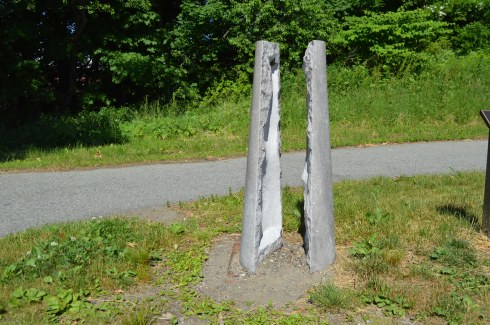
Another piece of work that would have benefited from sunlight, Vitro Muralis (2016) by William Carlson is made of granite, metal and glass.  The sculpture shares a common area of overlap.  The edges have a visual noise as they collide into shared space.  The transparent components are meant to offer a language of design as a text of spiral repetition and marks that are more musical than linguistic, according to Carlson.

Another design by William Carlson, Sine Nomine (Without A Name) (2014) is another sculpture made of metal and glass. The “x” in the middle of the sculpture is meant to reference missing identity.  It has also been used as a mark for those who cannot sign their name or in equations in algebra as an unknown in the equation.  Other interpretations include a reference to something that has been eliminated from a list.  The historical use of the x also makes it a powerful graphic symbol universally understood.  The exact meaning is not made clear in the plaque next to the sculpture.

Icebergs and Paraphernalia 117 (2007) was inspired by traveling through the Polar Regions, specifically a small stranded iceberg off the shore of Greenland that looked like a bird.  Created by Peter Bremers, the work of art is made of kiln-formed glass cut and polished and outdoor glass.  The almost marble structure pays tribute to the marble sculptures of the French.

Also made of kiln-formed glass cut and polished and outdoor glass, Movement II (2007) depicts a window moving forward.  The concept of the work is that we perceive “reality” as a dynamic image that changes in time and as a result of the viewer’s change in perception as well as how we rewrite history as our understanding of the past transforms the present and vice versa.

Daniel Clayman’s North 41.47 West 71.70 Copper (2016) may just look like an ordinary rock but there’s much more to this boulder.  The name coincides with the GPS coordinates where the boulder was found.  Copper refers to the interior treatment of the piece.  While on a jobsite excavation, Clayman observed large boulders being carted away to make room for a new landscape design. Clayman was struck with the idea of reformatting an ordinary boulder into a magical object.   When the sun is out, the sun reflects off the copper boulder making it a highly detailed surface (I had to use a flash to gain the same effect).

Julia’s Garden (the pieces range from 2010 to 2016) includes pieces from Nancy Callan’s Orbs And Winkle’s signature series.  The design consists of geometric forms (spheres and cones).  Callan strived to create a sense of infinity complexity with lines that wrap and fold around the shapes.  Each orb is like a world in itself.  The shapes of the orbs are said to represent planets.  The cones are meant to be like stocking caps – a reference to Rip Van Winkle – which gave the name Winkle to the pieces.  The cones also add a vertical element that echoes the growth of plants and trees – straight towards the sun as in White Spiral Cone or gently unfurling as in Ivory Winkle.
DSC_0474

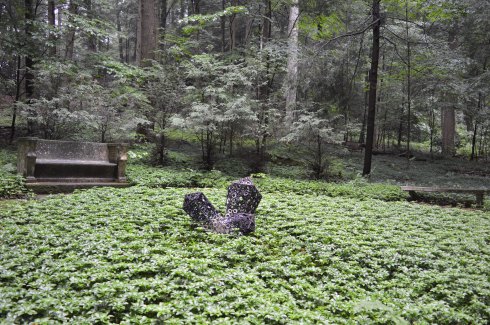
Trigonal  (2016) by Kait Rhoads was inspired by a trip Rhoads took to  the Joshua Tree National Park in California after her the mother’s death.  Rhoads was struck by the beauty in the contrast of the quartz seams running through the fields of granite rock in the landscape.  Her search for healing and cleansing within a natural habitat largely untouched by man drew her to create the work of art.  She placed the color of the desert sky onto the form of the quartz crystal in a wash of opaque white ranging to intense transparent blue.

There is another work of art that I somehow missed.  Sidney Hutter’s Louie’s Electric Two (1976, revised in 2016) is sandblasted mirror glass design.

Dogs are not allowed at Chesterwood.  But, I did find this friendly cat.

Connect with me on Facebook to view photos, videos and other posts not included in this blog

New England Nomad


Robinson State Park (Feeding Hills, MA)

Dates Visited: July 3 & 4, 2016

Location: 428 North St, Feeding Hills (Agawam), MA

Cost: $8 for MA vehicle, $10 for non-MA vehicle

Parking: There are about 50 parking spots in the park itself at various designated parking areas.  There are also several entrances besides the actual entrance to the park where you can park for free but there are gates at these entrances and you have to walk rather than drive to the beach and fields in the park.

Time To Allot For Visit: 3 to 4 hours to hike the entire park

Size of the park: 800 acres, 5 miles of frontage on the Westfield River

Dog Friendly: Yes

Highlights: walking trails, stream, beach, picnic area, fields, lots of wildlife, great for bikers, joggers, walkers and dogs

DSC_0244

Known for its abundant wildlife, long paved trail and scenic views of the Westfield River, Robinson State Park is one of my favorite parks to visit.  I love the paved, winding trail and abundant wildlife.  I have jogged the main trail hundreds, if not thousands, of times.  The wide paved trail is wide enough to accommodate joggers, bikers, walkers and even vehicles (cars are allowed on the main paved trail during the summer months only).

About a mile or a little more than a mile from the main entrance there is a small beach next to a grassy area for people to relax and sun themselves.  If you’re lucky, you may even see a tadpole.

This slideshow requires JavaScript.

One thing to keep in mind is there are a lot of bugs in the area.  Since it is located by a stream of water, bugs and mosquitoes are a real problem, especially during the summer months.  So, either cover up or use bug spray if you plan on hiking the various trails.  Another downside to the park, if you want to call it that, is that some trails just seem to end…right in people’s backyards.  This happened on two of the side trails I ventured on.  No biggie.  You just turn around and come back the way you came.  But it can be anticlimactic and annoying (for the homeowner as much as it would be for you).

The Westfield River runs along the paved trail giving off some pretty views.  There are some side trails you can use to get a better view.

There is a pond just down the trail from the beach.  I heard lots of frogs, toads and other wildlife in the pond but they are pretty well hidden.

Robinson Park is also teeming with wildlife.  In fact, Westfield, one of the cities the park borders, is known for its black squirrels.  Unfortunately, I didn’t see any during my visit or at least none that I could photograph.   But, there were plenty of other animals visible at the park the days I visited.

This slideshow requires JavaScript.

There is also a pond and a variety of trees, plants, flowers and berries along the trails.

The trails are well defined and there are a number of bridges at the park.

Because it has such a wide main trail and lots of area to roam, Robinson Park is a great place to walk your dog and I ran into quite a few cute dogs during my visits.

Oliver is an 11 year old Collie and Chow mix.

DSC_0230

DSC_0246

DSC_0257

Josie is a 9 year old Cocker Spaniel.

DSC_0216DSC_0222

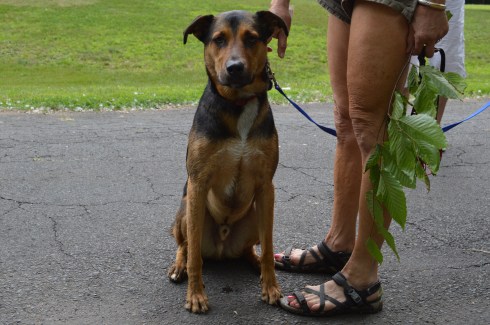
And Bruno is a 2 year old Shepherd and Lab mix rescue.

DSC_0990DSC_0989

Please connect with me on Facebook to view photos, videos and other posts I don’t include in my blog! New England Nomad


Coggeshall Farm Museum (Bristol, RI)

Date Visited: June 18, 2016

Location: 1 Colt Drive, Bristol, Rhode Island (about half an hour from Providence and 1 hour from Boston, MA)  (401) 253-9062

Hours: presently open Tue-Sun 10 a.m. to 4 p.m.

December 15 – April 15
Open Weekends, 10 am to 4 pm
Open February 16 – 21, 2016 for February vacation

April 15 – December 15
Open Tuesday through Sunday, 10 am to 4 pm.

Closed Thanksgiving, Christmas and New Year’s Day.

Cost:

Weekdays

Adults: $5
Seniors: $3
Children (3–12): $3
Children under 3: Free

Weekends

Adults: $7
Seniors: $5
Children (3–12): $5
Children under 3: Free

You can also purchase a membership for unlimited visits, free access to special events and discounts at their gift shop.  If you plan on going more than once or twice a year and especially if you go with your family, the membership is probably the best rate:


Individual membership: $25

Couples: $35

Family: $50

Parking:  There is a space for about 4 or 5 cars across from Coggeshall Farm.  You can also park at Colt State Park, which is adjacent to the farm but you may have to pay a fee to enter the park.

Size: 48 acres

Time To Allot For Visit: About An Hour

Dog Friendly: No (except for guide dogs)

Highlights: living museum, character actors, farm animals, historic style homes

Coggeshall Farm Museum

DSC_0467


You often find the most wonderful places in the most unexpected places.  On an otherwise nondescript trail at Colt State Park used for cycling and running, lies a farm frozen in time.

Established in 1973, the Coggeshall Museum Farm features interpreters and authentic reenactments of farm life in the year 1799.  Every last detail from the tools they use to the bedding (mostly hay) is authentic to the time it represents.

I loved the houses and workshops at Coggeshall.  The homes and interiors were definitely the highlight of the trip for me.  The rooms were modest and fairly bare (and I thought my room was small).

This slideshow requires JavaScript.

Even the papers and bills in the houses are accurate to those days.  They don’t accept them as legal tender though, in case you were wondering.

Coggeshall Farm Museum also has a variety of animals.  When I came to visit there were 2 steer, 11 sheep and several chickens, turkeys and other fowl.  I also got to see some newly hatched chicks.

When I asked how long they keep the animals there I was told they usually live 6 to 8 years and then they have a “retirement plan.”  Yes, everything gets used at the farm.

This slideshow requires JavaScript.

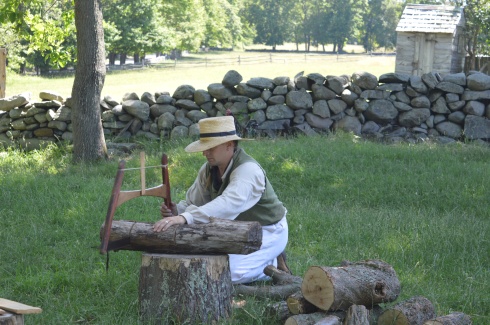
There were several character actors working during my visit.  This gentleman was cutting wood to store (it’s never too early to get ready for long, chilly winter nights).  When I asked how long it would take to cut all the wood he said, “util it is done”.  Where has that work ethic gone?

DSC_0380DSC_0372

The grounds are well kept and very pretty.  They also have a large grazing area for the animals.

Then there was Moe – the resident cat and pest control manager.  He was very friendly and playful as you can see.  Believe it or not, the chipmunk he’s hunting and carrying so gently escaped only a little worse for the wear.

This slideshow requires JavaScript.

Coggeshall Farm also lets the patrons partake in some tasks (such as cutting wood) as long as it is supervised and they  have many events throughout the year such as Arts On The Farm and Farm Camp.  Check their website for more details.


Old Sturbridge Village (Sturbridge, MA)

Date Visited: July 2, 2016

Location: 1 Old Sturbridge Village Rd, Sturbridge, MA 508-347-3362 (about 45 minutes east of Springfield, MA and an hour west of Boston, MA)

Hours: presently, open Daily | 9:30 am – 5:00 pm

November 1-27
Open Wednesday through Sunday | 9:30 am – 4:00 pm

December 2-4, 9-11, 16-18, 23
Christmas by Candlelight | 4:00 pm – 9:00 pm, Fri/Sat/Sun
Please Note: CLOSED during daytime hours
CLOSED December 24, 25

Cost: $28 for adult, $26 for seniors (55 and over), $14 for youths (3-17), children under 3 are admitted free.  They also have annual long family memberships.

Parking:  about 200 parking spots, fills up quickly.  Cars were parked on the grass and other non designated parking spaces when we left because of the large crowd

Time To Allot For Visit: I could spend all day here but 3 hours should do it.

Dog Friendly: No

Highlights: historical actors and portrayal of life in the colonial area era, historical homes, animals, family friendly events, special events throughout the year, stagecoach rides

Old Sturbridge Village

DSC_0992

What better time than the fourth of July to take a trip back to the colonial days of our country where they relive those early days everyday?

Old Sturbridge Village is 200 acre living museum which recreates life in rural New Ebgland during the 1790’s through the 1830’s.  It is the largest living museum in New England.


As you enter the grounds of Sturbridge Village you see flags that represent fallen servicemen and women.

DSC_0422


From the moment you walk into the museum, there are symbols and characters from the past everywhere.

The day began appropriately with the flag raising.  One of the historical actors selected two children from the crowd to help him raise the flag.

Throughout the day there were many more reenactments.  There was the firing of the cannons, marching, drilling and even musket firing (with blanks of course).

Of course, the houses are one of the biggest attractions.  The woman in this house was making stays.  This house is called the “Small House.”

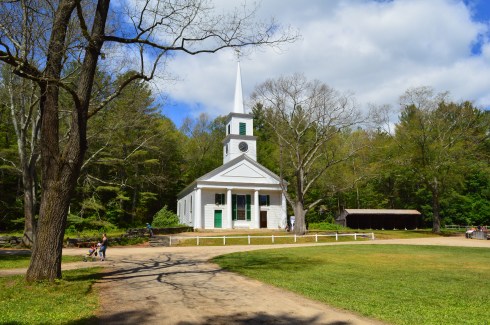
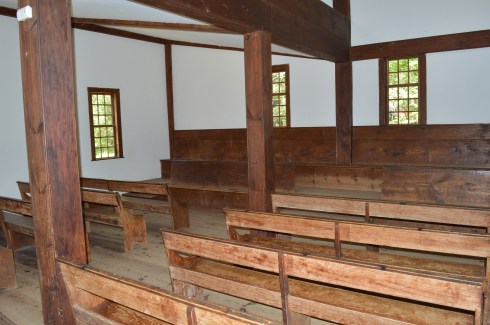
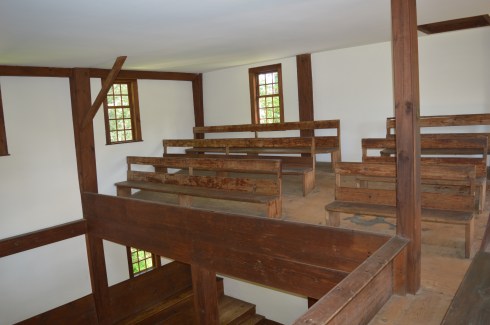
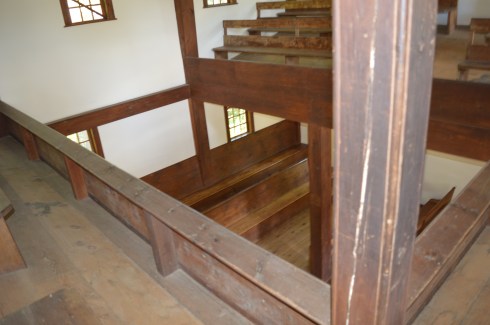
The Meetinghouse is another big attraction.  For 100 years, Friends, also known as Quakers, worshiped in this building.  This particular meetinghouse was originally set in Bolton, MA.  As you can see by the photos, there was no pulpit, altar, statues or other decorative symbols.  Men and women entered the meetinghouse separately in different entrances and sat on separate sides of the building.  The Quakers are remembered for their temperance and anti slavery beliefs.

DSC_0678DSC_0460DSC_0467DSC_0466DSC_0464DSC_0463DSC_0920DSC_0930


While the exterior of the houses were very pretty, the interior of the houses were even nicer.  It also gave you a real feel of what it was like to live back then.  The historical actors were both entertaining and engaging.

This slideshow requires JavaScript.

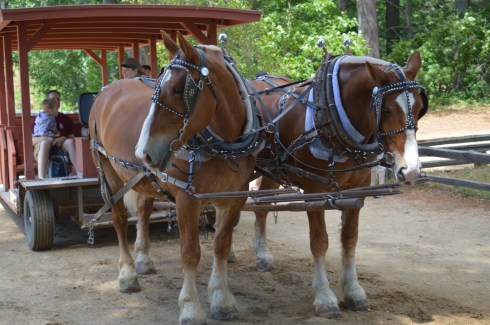
The other great thing about the village was the animals.  Meet Jim and Jerry (from left to right).  Jim and Jerry are the horses who drive the carry all wagon.

DSC_0730DSC_0584


There were also a variety of farm animals.  This sheep was wandering around until he heard his mom calling out to him for feeding time and he came running.

DSC_0846DSC_0848DSC_0847

The rest of the animals at the village were just as beautiful.

This slideshow requires JavaScript.

The village also has little shops and buildings with craftsman and people common to the era like a blacksmith and a tin maker as well as a band call the Quintebrass who played patriotic music of that era.


You could spend all day visiting the many buildings and attractions at the village or just taking in the beautiful views and atmosphere of the area.

This slideshow requires JavaScript.

Sturbridge Village even has toys from the era that kids (or adults) can play with.

The River Ride on the Quinebag takes you around the Quinebag River.  The boat driver also gave a historical overview of the area. The ride costs $3 a person and lasts about 10-15 minutes.

On the way out, there was a nice surprise.  We noticed a building set off to the side; the J. Cheney Wells Clock Gallery.  The clock gallery was a quiet clock museum.  It was fascinating seeing the evolution of time keeping and it felt like a library because it was quiet and set off by itself.  It was a nice break from the hustle and bustle of the historical museum area.

There is also a cafe there (most of their food is cooked outside barbecue style during the warmer seasons and the smell is sure to make you hungry).  There are also several comfort stations scattered around the area.

Below are some videos of the various recreations at Sturbridge Village.

The first cannon firing below was just to get the debris out of the cannon and prep it for the actual cannon firing which is in the second cannon firing video below the first cannon firing video.  The second video is a little long because the men wanted to wait until the stagecoach passed by so they didn’t startle the horse.

Please connect with me on Facebook: New England Nomad


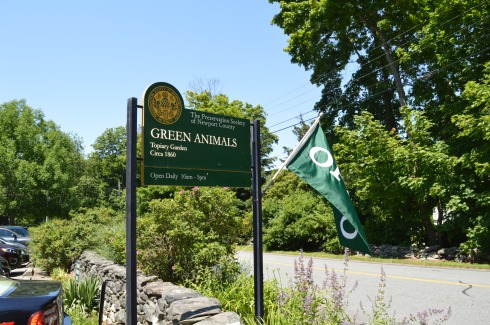
Green Animals Topiary Garden (Portsmouth, RI)

Date Visited: June 25, 2016

Location: 380 Corys Ln, Portsmouth, RI (about 15 minutes north of Newport, RI and 1 hour south of Boston, MA)  (401) 683-1267 

Hours: Open everyday  10-5 seasonally (May 21 – Oct. 10 this year but the dates may change each year)

Cost: $15.99 for adults, $6.99 for youth (ages 6-17).  There are discounts available if you provide an AARP card (I’m not quite that old yet) and if you have AAA and possibly if you’re in the military.  Take note that the Green Gardens is considered part of the Newport Mansions and their prices are based on how many houses you visit.  In this case, the price was based on a one house tour because there is only one mansion on the premises (the Brayton House)

Parking: Free parking for 24 vehicles

Dog Friendly: No (service dogs may be allowed)

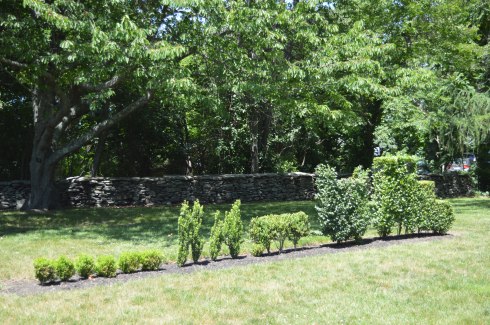
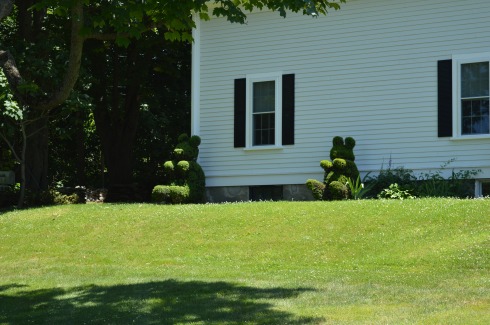
Highlights: shrubs and bushes cut into shapes of animals and other shapes, pretty flowers and gardens, mansion (Brayton House)

DSC_0506

If you think the grass is always greener on the other side, you’ve never been to the Green Animals Topiary Garden in Portsmouth, Rhode Island.

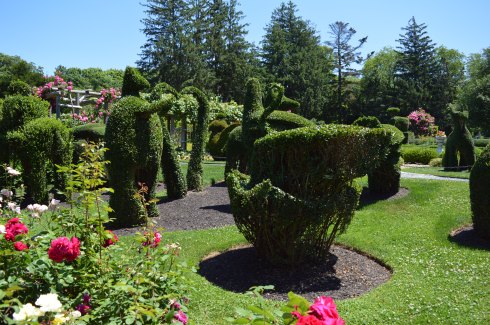
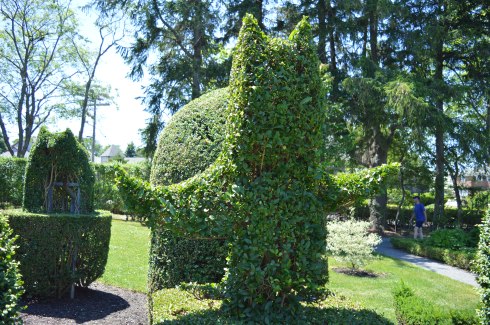
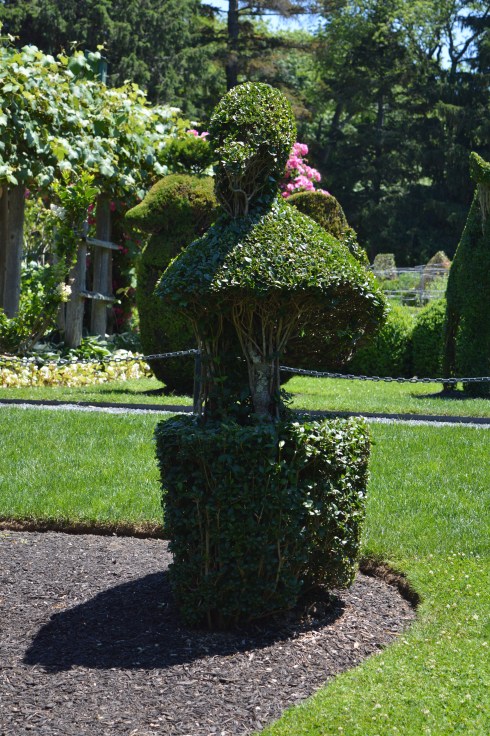
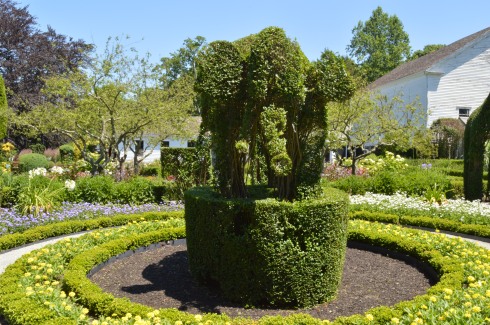
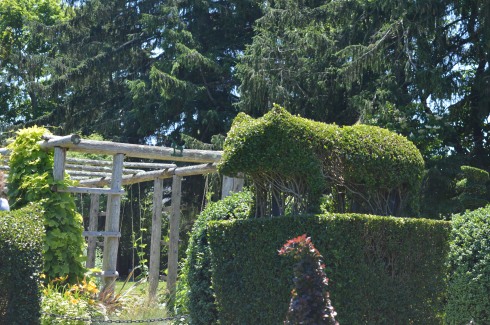
Located adjacent to the Brayton house, the Green Animals display is the brainchild of gardener Joseph Carreiro.  Carreiro began the topiary in 1905 and the 80 pieces of topiary have been in place at the garden ever since.

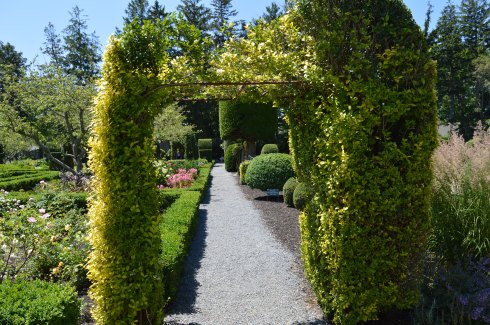
The topiary may be the main  attraction.  But the flowers and plants are also very pretty.  In fact, as much as I loved the different shapes at the topiary, I found the flowers and the garden near the side of the topiary to be just as appealing.

The website states there are 80 different shapes sculpted into the greenery (although I don’t remember seeing that many).  I have included the most interesting of these 80.

The Damask Rose Garden is featured at the entrance of the topiary.

DSC_0245

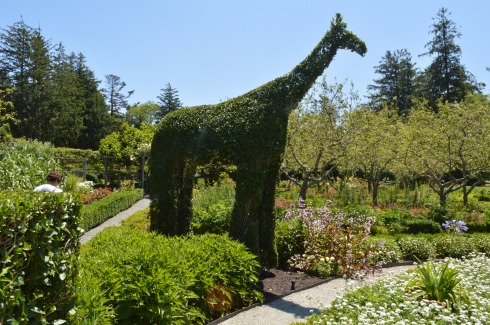
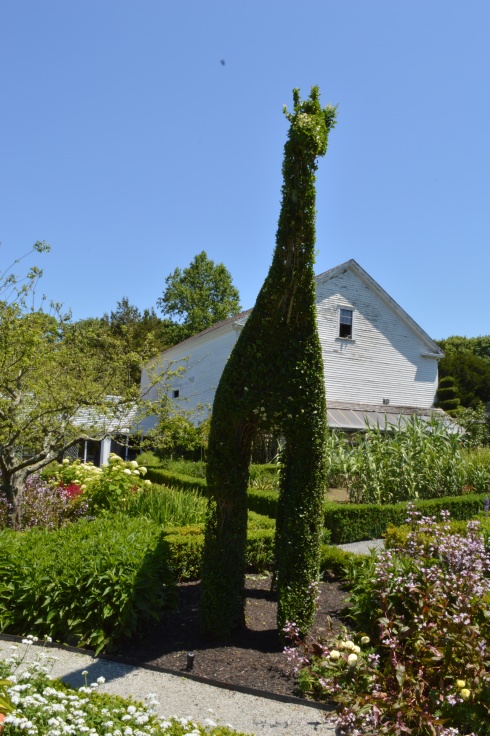
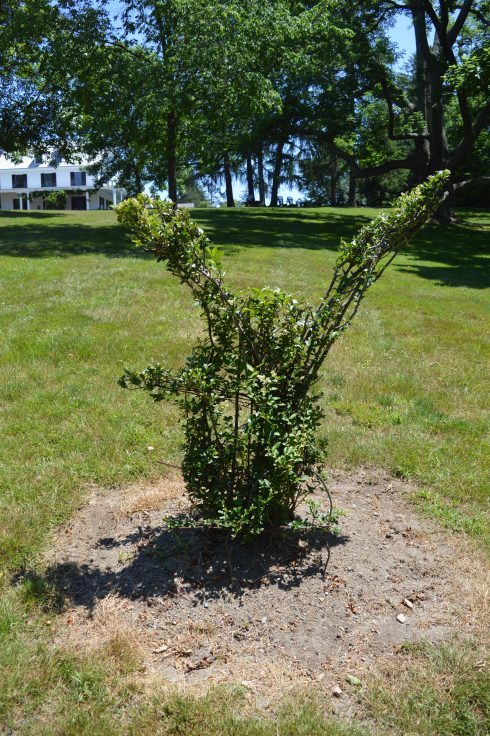
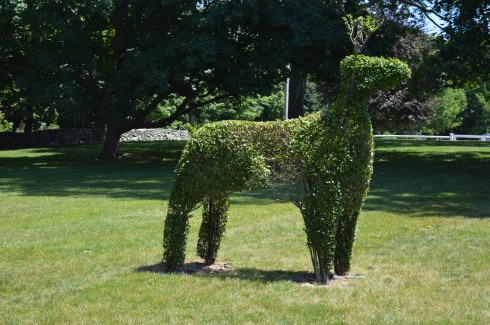
The topiary has shapes of all kinds of animals. Like this giraffe.

DSC_0306DSC_0303with her/his baby giraffe (the black dot in this and some other photo is dirt on my sensor which I didn’t notice until after I got home unfortunately)

DSC_0314

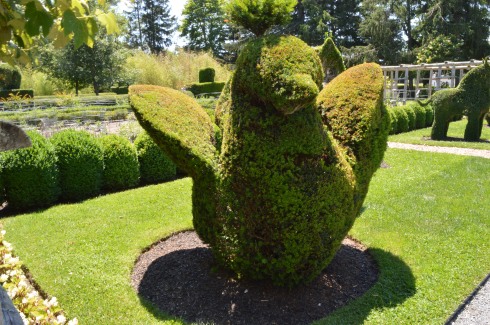
And this duck.

DSC_0311

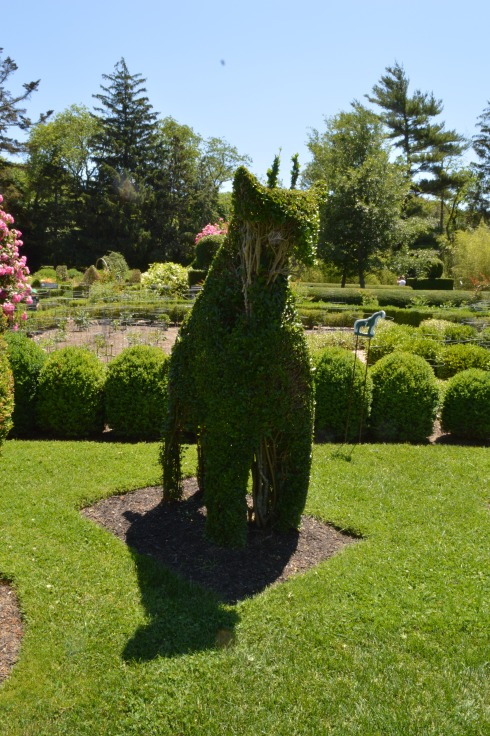
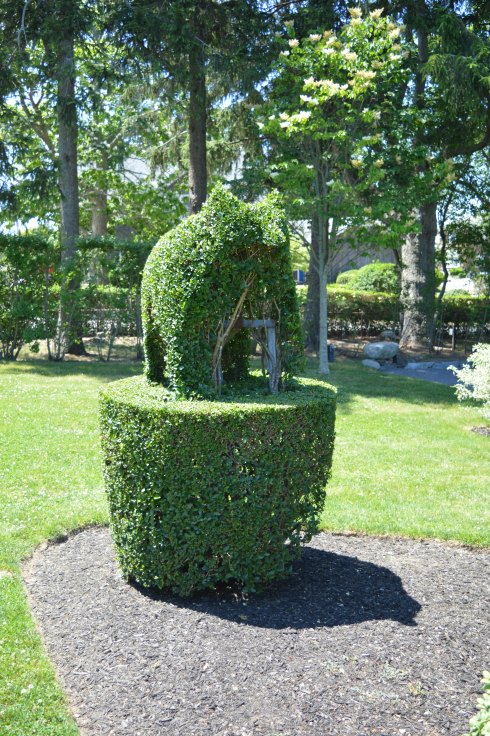
This is a growly bear (it is standing on its hind quarters)

DSC_0291

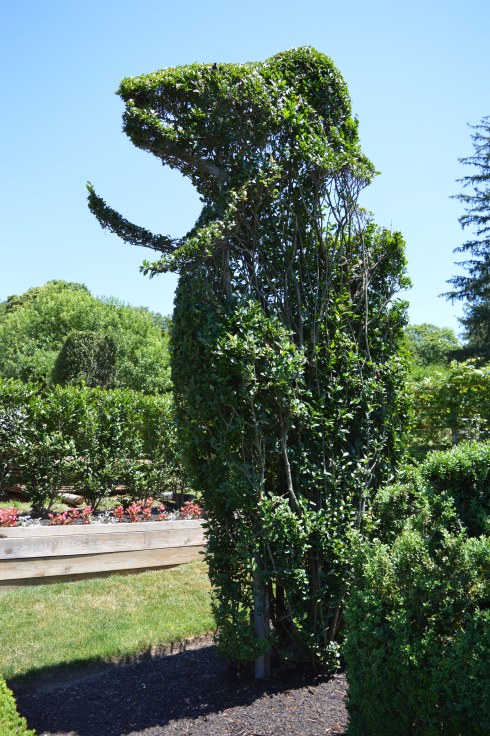
Not all of the shapes are made in the image of creatures that are presently with us.  This dinosaur was one of the scarier shapes in the garden.

DSC_0373

This colorful shape is of a yew rooster

DSC_0355

I don’t usually get this close to lions.

DSC_0347

This swan peaked her head out among the other green animals.

DSC_0351

This appears to be a bird

DSC_0460DSC_0462

It was a little warm for a polar bear

DSC_0464

Reindeers aren’t just in the North Pole.

DSC_0470

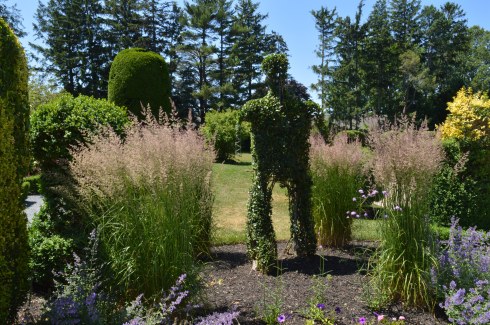
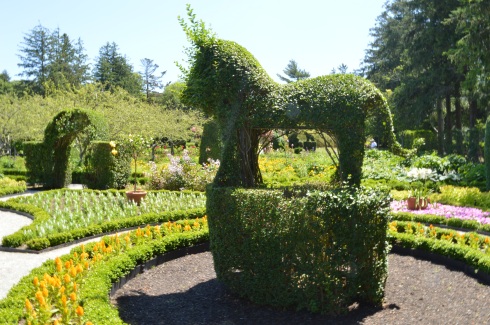
There are even human shapes cut into the greenery.  This human is riding a horse.

DSC_0360

This police officer helped direct traffic around the green garden.  I am not sure if he is affiliated with the Portsmouth department.

DSC_0246

There’s even a mythical unicorn

DSC_0295

This baby bear just wants a hug

DSC_0349

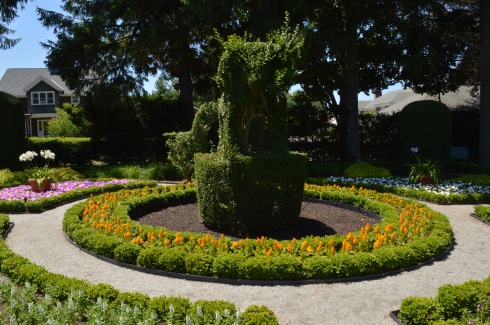
There are even inanimate objects cut into the greenery.  For instance, you can take a seat in this chair if you get tired (I am just kidding, you’re not allowed to climb and/or touch the greenery)

One of the few birds who actually sits still long enough for me to photograph him

DSC_0358

I looked like this elephant was going to charge!

DSC_0301

I don’t mean to boar you with this piece from the topiary.

DSC_0353

The handout I received did not have a description for this shape.  it appears to be a train.

DSC_0467

This mommy and baby bear were sitting outside the Brayton mansion.

DSC_0502

There is also a pet cemetery located at the topiary.  Four pets of the owners are buried there.  This section is very peaceful and decorative.  The cemetery has a bench for sitting and reflecting and gravestones with the names of the deceased friends.  It is very tranquil.

The flowers and garden are well kept and have some very vivid colors. I thought it was cute how they had “scarepeople” instead of scarecrows.  I also liked the different chairs and wind vane and other decor around the grounds.

This slideshow requires JavaScript.

There is also a fish pond with goldfish in it.

DSC_0328

I also liked the Brayton House.  They do not allow flash photography in the house (although you can take photos with your cellphone).  I don’t like how photos look on my cellphone so I didn’t take any photos in the house but it is a must see on the tour.


Cliff Walk (Newport, RI)

Dates Visited: June 25 & June 26, 2016

Location: 117 Memorial Blvd, Newport, RI (by Easton’s Beach)

Hours: open everyday dawn until dusk

Cost: Free

Parking: 3 hour metered parking is available at Easton Bank (but limited).  You can also park at other entry/exit points along the trail off Bellevue Ave (such as The Breakers mansion at 44 Ochre Point Ave which is free for a limited parking time and Narrangasett Ave.)

Distance: 3.5 miles each way

Time To Allot For Walk: The website suggests 2.5 hours.  I would allot 3-4 hours if you’re walking the entire trail (and back)

Dog Friendly: Yes

Highlights: scenic, free, always open, good for people of all ages, popular with joggers

DSC_0788DSC_0791

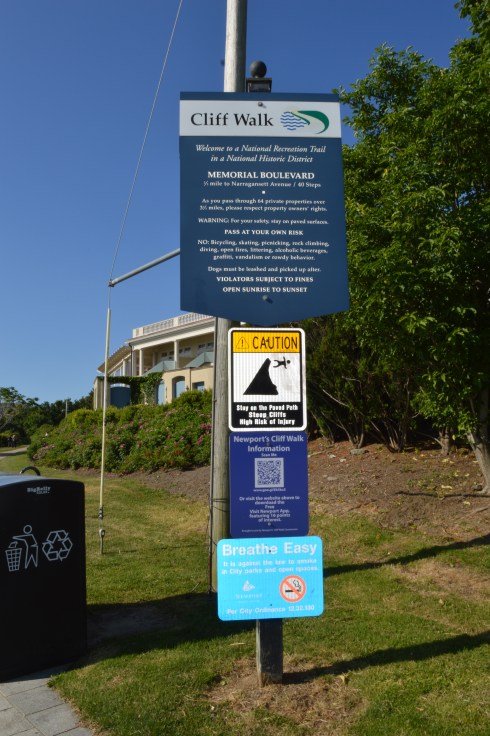
The Cliff Walk in Newport, Rhode Island, is not only a historically important attraction, it is also a great way to burn some extra calories or stroll along the shore, depending on your energy level.

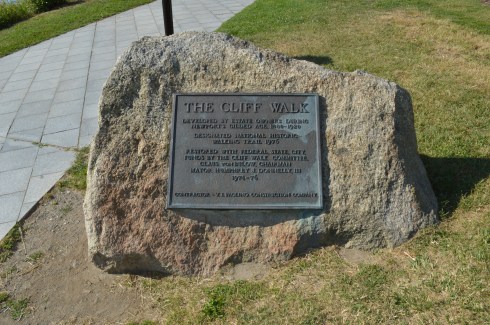
Construction of the Cliff Walk began in 1880.  Since then, the trail has been extended and designed over a series of redevelopment projects.

The Cliff Walk, which begins at Memorial Blvd or Bellevue Ave (depending on where you start) takes you on a series of breath taking views and, at times, challenging trails.  Most people begin the trail at Memorial Blvd next to Easton’s beach (also known as First Beach).  This trail ends at Bailey Beach.  There is one “comfort station” on the walk at Narragansett Rd.

Rather than backtracking on the trail to get back, which you can do, it is easier to take the first right at Bailey Beach which leads onto Bellevue Ave.  You can follow Bellevue Ave all the way back to Memorial Blvd or one of the many access points along  the trail since it runs parallel to the cliff.  It is easier because it is a straight and more direct route.  I used this path to get back and it cut my walking time in half.

The views of Rhode Island Sound and First Beach from the Cliff Walk are astounding.

This slideshow requires JavaScript.

The first two thirds of the 3.5 mile trek (starting from Memorial Blvd) is easy and well defined.  However, the terrain gets rocky, challenging and more scenic after the first 2 and a quarter miles.  The steps and paths go from being well defined and wide.

to rugged, rocky and narrow

Other than the challenging terrain, the Cliff Walk is an easy, fun trail  (it’s best to stop and turn around at the Breakers mansion or Webster Street if you’re starting from Memorial Blvd to avoid the more rocky terrain).

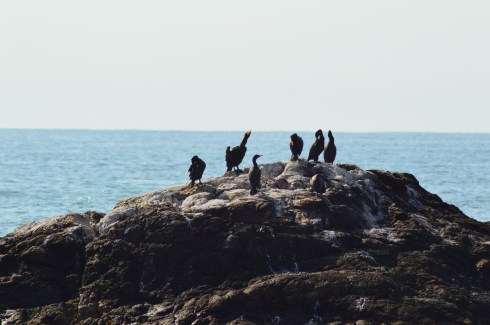
The Cliff Walk is also a good place for birding.  There were lots of birds flying here and there, calling out to each other and even a few relaxing on the rocks.  They look like they’re conspiring.

DSC_0792

Perhaps the most well known part of the trail is the 40 Steps.  In addition to providing you with an up close look of the shoreline, the 40 Steps also provides a little bit of history to the trail.  The 40 steps is where the servants and workers of the mansions used to congregate during the Gilded Age.

One of my favorite parts of the walk was watching the people on the various water crafts and other flotation devices.

Another great thing about the Cliff Walk are the unusual features of the trail.  Tunnels, makeshift trails, colorful flowers, even a memorial attached to a rock and other decorative items are scattered throughout the Cliff Walk.  The memorial on the rock is dedicated to former surfer pro Ryan Patrick Roberts, nicknamed “Gazoo”. Roberts, a Newport native, passed away February 5, 2000.  One wonders how they got the plaque on there and made it stay there.

This slideshow requires JavaScript.

The Cliff Walk also offers many great views of the mansions and other buildings built along the shore.

Some of the visitors at the Cliff Walk weren’t contend to stay on the trail.

There were a lot of dogs on the trail during my visits.  It is a great place to take your pup for a walk.  But, you may want to avoid the rockier terrain when you take your dog to the Cliff Walk.

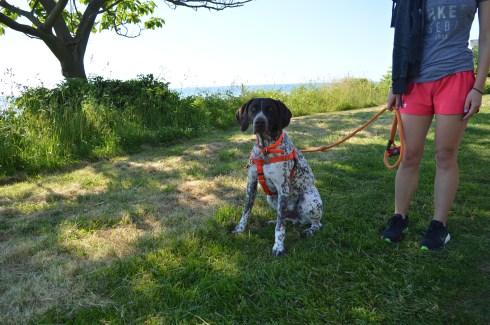
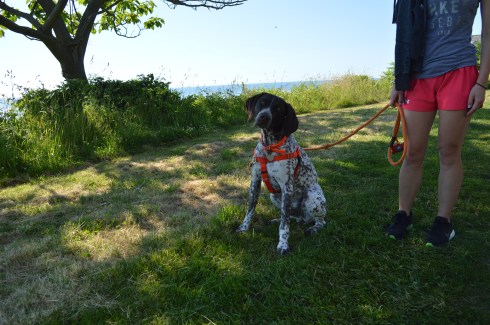
Remy is a 10 month German Short Hair Pointer and a loyal Red Sox fan I presume.

DSC_0811DSC_0813

Winston, a 4 year old Maltese from Seattle, WA, took the easy way around the Cliff Walk

DSC_0913DSC_0920

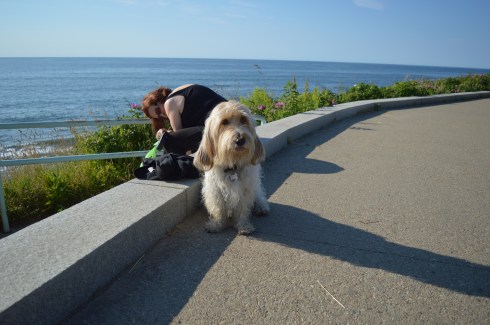
Fion is an 8 year old Petit Basset Griffon Vendeen.  Her breed is named after the area of France where that breed originated from (Vendeen).

DSC_0587DSC_0588

Believe it or not, Penny, a Great Pyrenees,  is only one year old.

DSC_0978DSC_0973

Connect with me on Facebook to see additional photos, videos and other posts I do post on this blog.  Thank you!

New England Nomad On Facebook


Colt State Park (Bristol, RI)

Date Visited: June 19, 2016

Location: Rte 114 (off Poppasquash Rd – yes that is the real name of the road – or Hope St depending which direction you’re coming from), Bristol, RI

Cost: It was free when I visited, according to the new parking fees it is $7 for residents and $14 for non residents to park at beaches in Rhode Island (lawmakers in Rhode Island recently cut the costs in half)

Parking: There are several parking areas.  But, they fill up quickly.  Arrive early to ensure you get a good spot, especially during the summer weekends.  There are also electric vehicle charging stations available for 4 hours max while enjoying the park or other facility.The EV station does not guarantee a space on full capacity days

Hours: open daily dawn to dusk.

Time To Allot For Visit: This can vary depending on what you’re doing there (kayaking, running, cycling, barbecuing, etc.)  If you’re just going for a walk or jog an hour to two hours should be enough time.  I spent three hours there but I was stopping a lot to take photos

Size of Park: 464 acres

Highlights: scenic waterscape, various wildlife, walking/running/biking trails, fields and picnic areas, beach, bridge and pretty architecture and well kept trails

DSC_0520

Named after Samuel P. Colt who owned the property in the early 1900’s where he built his home the Casino, Colt State Park has been considered the “gem of Rhode Island.”  With its pretty views, teeming wildlife and peaceful setting it lives up to its name.

This slideshow requires JavaScript.

The park is surrounded by water for people to launch their boats, kayaks and other types or watercraft.

DSC_0020

One of the best things about Colt State Park is the abundant wildlife.  There are birds aplenty.

DSC_0530DSC_0481

Egrets

DSC_0510

Red Winged Blackbird

DSC_0157

American Black Crow

DSC_0066

Mallard Duck

DSC_0046

Robin

DSC_0051

??????

There are many other animals at the park like this chipmunk

DSC_0132

I even saw lions at the park

DSC_0144

Off the beaten path, I found these top bar bee hives.  And they get nasty when you get too close and I had a bee sting to prove it!  I suppose I wouldn’t like it if someone came into my home and started taking photos either.

And, of course, there were dogs at the park.

DSC_0088DSC_0069

Butch, a Lab mix, is a shelter dog from South Carolina.  His mommy wasn’t sure of his age (either 3 or 4 years old probably).

DSC_0105DSC_0111

Max is a 6 year old English Lab.  He is also an AKC (American Kennel Club) dog.

Please connect with me on Facebook:  New England Nomad


Clipper City Rail Trail (Newburyport, MA)

Date Visited: June 18, 2016

Location: Off Low St, Newburyport, Massachusetts

Parking: I entered the trail from Low St and free parking is available at Cushing Park on Kent St (2 blocks away from the entrance to the park) and parking was ample there.  There are several other trailheads and depending upon where you join the trail there are various parking areas.  You can find parking at the local MBTA station on Parker St and some other designated places.  it is best to check their website for specific parking areas.  You may also find off street parking.

Hours: open everyday, dawn until dusk

Cost: Free

Dog Friendly:  Yes

Distance: 1.1 miles each way

Time To Allot:  Half an hour to an hour

Highlights: bridges, trails for cycling, running and walking, art, artifacts, flowers, trees, historical and other surprises along the trail.

The Clipper City Rail Trail is not just your ordinary run of the mill paved trail.  The 10 foot wide trail which eventually spills out on the Newburyport Harborwalk, is lined with various works of art and other surprises.  The great thing about the art and items on the trail is that they have special meaning and represent the people and times of the area.

DSC_0767DSC_0770

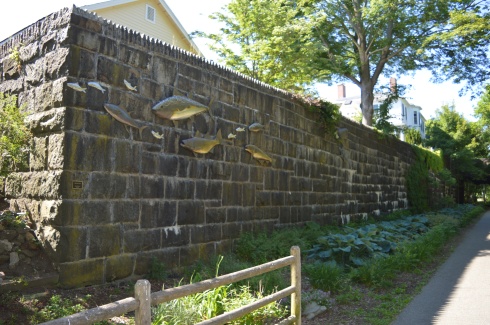
“Native Fish” by Bob Kimball (2010).  The sculpture consists of eleven stainless steel fish mounted on a large granite block wall on the edge of the Rail Trail.  The group of fish consist of half a dozen foot-long herring, two three-foot tuna, a five-foot cod and striped bass, and a seven-foot bluefin tuna.  The artist, Bob Kimball, is a brick and stone mason who specializes in working with copper, brass, glass and stainless steel.  He is based in the state of Washington.

DSC_0772DSC_0774

The “Great Blue Heron” piece was also created by Bob Kimball in 2010.  It was commissioned in memory of John Soward by his family and friends.  According to the plaque placed on the wall the work of art was dedicated to John Soward who lived on the other side of the wall where it is so prominently displayed.  The sculpture is based on John’s painting of the great blue heron.  John’s painting is below.  It’s a pretty accurate rendition.

soward watercolor

Around every corner and stretch of trail there is something interesting or fun to keep your interest peaked.  In fact, waiting to see what is next on the trail is enough to keep you going along the trail.

DSC_0784

“Wishbone” by James Irving (2010) is an interactive statue crafted by the Vermont based artist.  And, yes, you can sit on the seat there!

DSC_0796

DSC_0802

DSC_0792

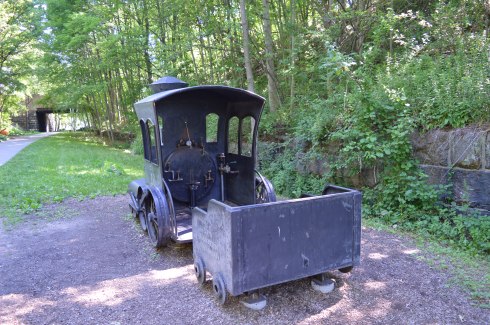
“Steam Loco” by Scott Kessel and Matt Niland (2010).  Kessel and Niland, both from Middletown, CT, created this play locomotive train to resemble the locomotives of the time.  It is a magnetic interactive destination for young children and their families.

The 19th century granite blocks pictured above once supported the Old Railroad Bridge Embankment at the Merrimack River (a mile or so from their current location).  The blocks were relocated during the building of the rail trail.  They are purposefully displayed in a star pattern.

There also a couple of bridges along the trail.

DSC_0808DSC_0811

Unfortunately, some of the works of art have either been vandalized or disturbed by nature.  As I often say, this is why we can’t have nice things.This work of art “Will He” by Simon LaRochelle, based out of Quebec, is supposed to have a bicycle wheel in between the two slabs of limestone.  See the actual sculpture below.

Will He

Some surprises along the trail are less artistic than others.

DSC_0819

DSC_0838DSC_0836DSC_0835

“Torrential Flight” an aluminum sculpture by Brian Russell (2010) from Tennessee.

“Eclipse” by Rob Lorenson (2010) is a stainless steel.  Rob is based in Middleborough, Massachusetts.

Rob has two sculptures on the trail.  Closer to the harborwalk at the end of the trail stands his sculpture “Brushstrokes” a  red powder coated aluminum

DSC_0909

Newburyport purchased a horse sculpture called “Clyde” from artist Jamie Burnes based out of Weston, Massachusetts and Santa Fe, Mexico. Jamie specializes in making sculptures of horses, bulls and other land based animals.  Originally displayed on the waterfront as part of the sculpture park, Clyde is made of corten weathering steel and black locust wood and was made specifically for the trail.

DSC_0928

“Sparrows” by Dale Rodgers (2011) based in Haverhill, Massachusetts.  “Sparrows” is a 16-foot corten weathering steel sculpture of two sparrows, naturally.

“G-Swirl” by Dale Rogers (his second sculpture on the trail) (2010) is a scaled up stainless steel abstract sculpture.

DSC_1024

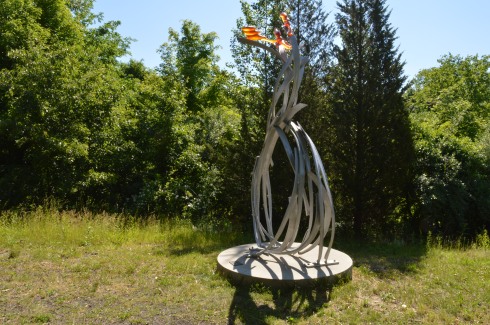
“Peace Offering” (2012) is not just a bronze sculpture.  It is actually a bench by Michael Alfano of Hopkinton, Massachusetts.  The bench acts as  a functional bench featuring a dove, in which the tail becomes the head of a hawk and the wings become hands that invite two people to sit down and discuss their differences.  The sculpture, which now sits at the harborwalk, down a flight of stairs from the rail trail, was purchased by Newburyport for the Rail Trail, in bronze.  There are also additional castings of the sculptures.  One of the additional castings was a gift of the 2012 Hopkinton High School graduates and is still at the high school.


Many of the models and structures are relevant to the history of the area like this rail.  The rail on the bridge is from the original rail trail that was in place during the train wreck on May 23, 1873.  The accident was due to a misplaced switch that forced a freight train onto a dead end side track.  Interestingly, no one was injured during the accident (the two passengers- a fireman and an engineer – jumped out of the train before it crashed) and the train was back on the track two days later.  But, it became famous, in part because many of the onlookers and the aforementioned engineer and fireman requested their photo be taken at the wreck.  The trail is also popular with skate and long boarders as you can see in the final photo.

DSC_0994DSC_1000DSC_1027

At the end of the southern most side of the trail is “Archway”by Mark Richey Woodworking.  The archway, made of white oak, leads to the commuter train, fittingly, at the end of the rail trail.

DSC_0942

There are also several well manicured and cared for plants, trees, graffiti and grassy areas on the trail.

This slideshow requires JavaScript.

As an added bonus (I know some of you who will really appreciate this), there is a pathway cut through the trees and brush to an ice cream shop with a handy sign to point the way.

There was also a PanMass Challenge when I was visiting.  The bike ride is actually a 5 mile loop that ends at the harborwalk.

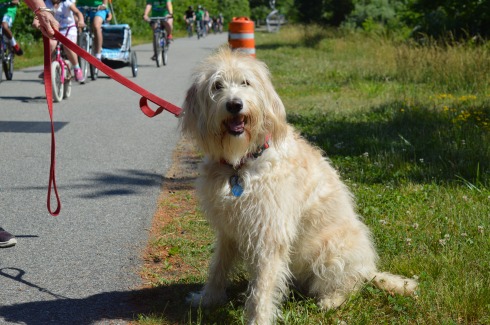
With its long, wide trails and grassy areas, the Clipper Rail Trail is a great place to walk your dog.  Rufus, a 5 year old sheepdoodle, enjoyed the cloudless, sunny day on the trail.

DSC_0936DSC_0931

And Savannah, a 4 year old Lab mix, took a break to pose for me.

DSC_0887DSC_0879


Hampton Beach Master Sand Sculpting Competition (Hampton Beach, NH)

Dates of Event: June 16-18

Location: 180 Ocean Blvd, Hampton Beach, New Hampshire (an hour north of Boston)

Parking: There are about 100 to 200 parking spots in front of the beach – you pay at a parking metered machine.  Or, you can find parking at parking lots on Ashworth St. The prices for parking vary depending on the season or month or when there is a special event such as the sand sculpting competition.  In April, metered parking costs $1 and hour and it costs $2 an hour from May until Nov.  Free parking begins Nov. 4.  Parking on Ashworth St. can vary depending on the time and day during “beach season”.   During my visit, parking was $10 in the morning but was increased to $15 in the afternoon for all day parking (until 2 a.m.) and $20 all day parking during the weekends in the summer.

Cost:  The beach does not have an admission fee.

Dog Friendly:  Yes, but not on the beach (at least not during beach season)

DSC_0308

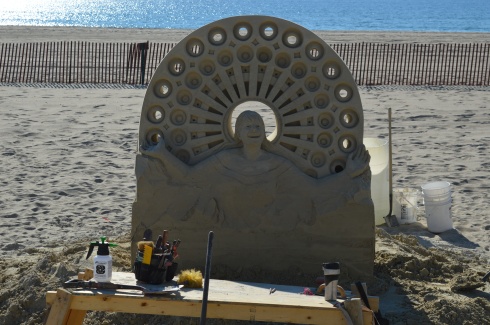
This time of year past 16 years, people flock to Hampton Beach to show off their sand sculpting skills.  It may seem like child’s play.  But, these are no run of the mill sand castles.  They really are works of art.

It takes a long time to construct these complex sculptures.  The photos below show the progression of the works of art.  It’s hard to believe some of the photos of the works of art are the same as the final work of art.  Some of these photos do not show the sculptures in their final phase.

“Emerge” by David Andrews (third place)

DSC_0124DSC_0525

“Rising From The Abyss” by Guy-Oliver Deaveau of Quebec (first place and Sculptor’s Choice)

DSC_0127DSC_0534

“She Loves Me” by Justin Gordon of Massachusetts (People’s Choice Award winner)

DSC_0139DSC_0546

“Dada Read” by Carl Jara of Ohio (4th place)

DSC_0223

DSC_0599

“Let It Be Magnificent” by Mélineige Beauregard of Montreal

DSC_0202

DSC_0588

“Phoenix Rising” by Karen Jean Fralich of Toronto (5th place)

DSC_0254DSC_0607

“Selfie In Sand” by Damon Langlois of British Columbia

DSC_0260DSC_0616

“Hunters Of The Sky” by Michel Lepire of Quebec

DSC_0274DSC_0620

“All Together Now” by Abe Waterman of Prince Edward Island (2nd place)

DSC_0287

DSC_0634

“It’s About Time” by Greg J. Grady of New Hampshire

DSC_0473DSC_0571

There were also some sculptures that weren’t part of the contest like this sand castle (what would a sand sculpture contest be without one?) and a sand sculpture designed for the sponsors of the event.

There were some other cool things at the event like Ronald McDonald (ok, I said some cool things) and a cool car that was being raffled off.

Dogs love the sand sculpting competition also.

DSC_0159

Tuckerman, a 9 year old Golden Retriever, looked like a teddy bear!

DSC_0335DSC_0433

Caspian, whose name is made up of the first letter of his guardian’s relatives, is a 4 year old Siberian Husky.  As you can see, he loved to be petted.

DSC_0495

Minnie got dressed up for the event!

DSC_0540

Lola’s smile was infectious.

DSC_0712DSC_0725

Becca, a terrier mix who turned one in May, wanted to play in the sand.

DSC_0594


As if one Burnese Mountain dog wasn’t enough, Brooksie, pitcured above, (3 years old) ran into his friend Guiness (5 years old)

DSC_0695

Guiness is on the left and Brooksie is on the right in this photo.

As you can see from the photos, the sand sculpting competition is a big hit with both people and dogs!

Although they all look great, I liked the “She Loves Me” sculpture (the third one listed in the photos) best.  What is your favorite sculpture?

Stop by my Facebook page to see photos, videos and other posts that I do not include on my WordPress blog: New England Nomad on Facebook