Category Archives: historical

Christmas In Salem – Boughs And Blossoms – John Fullington House (Salem, MA)

Date Of Visit: December 6, 2025

Location: 19 Cambridge St, Salem, MA (about 30 minutes northeast of Boston, MA)

Universally Accessible: No

Cost: $40 per ticket ($50 if you purchase day of tour tickets)

Parking: There are several parking garages in Salem, as well as metered on street parking.

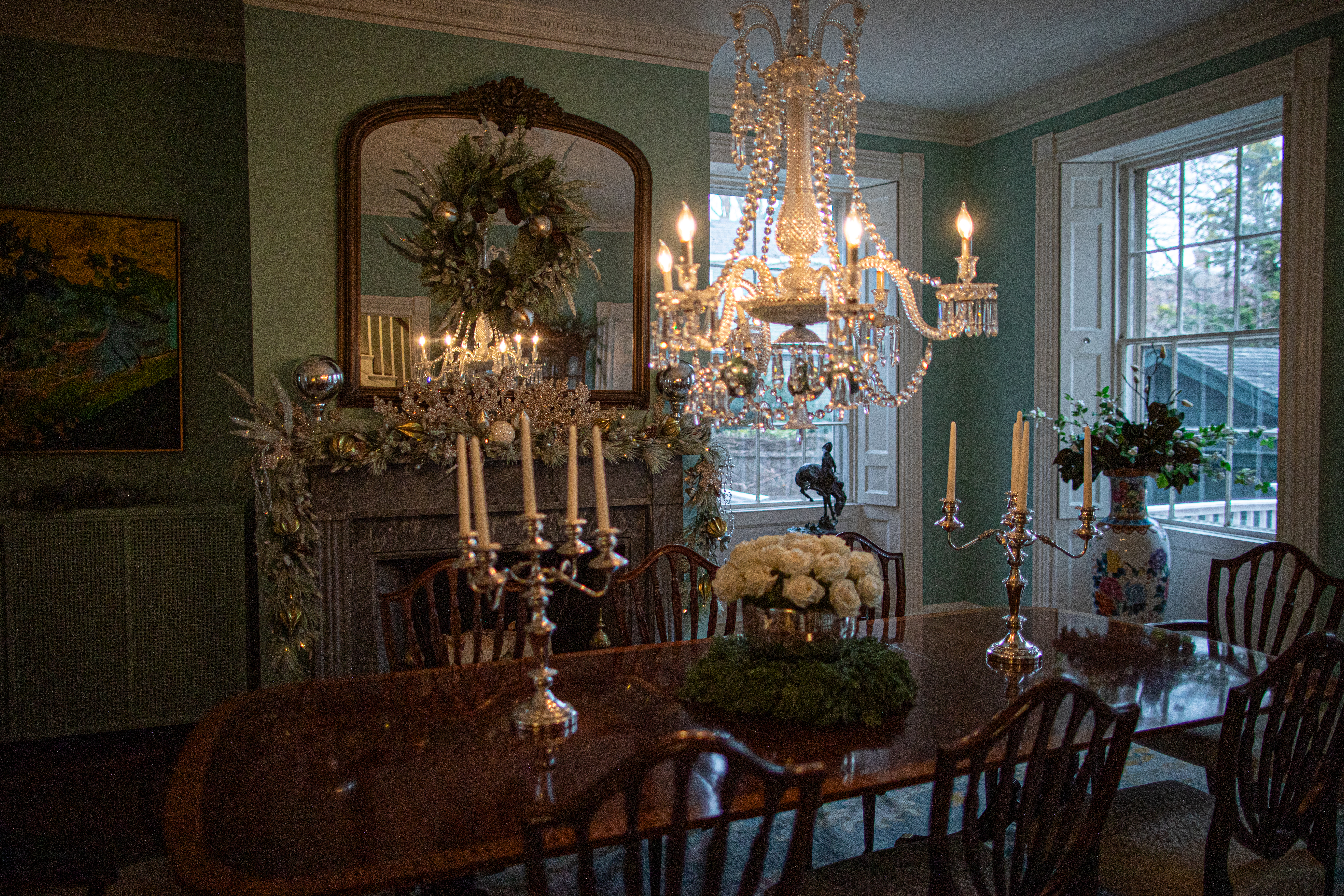
Summary: The John Fullington home, constructed in 1807, is full of lots of surprises.

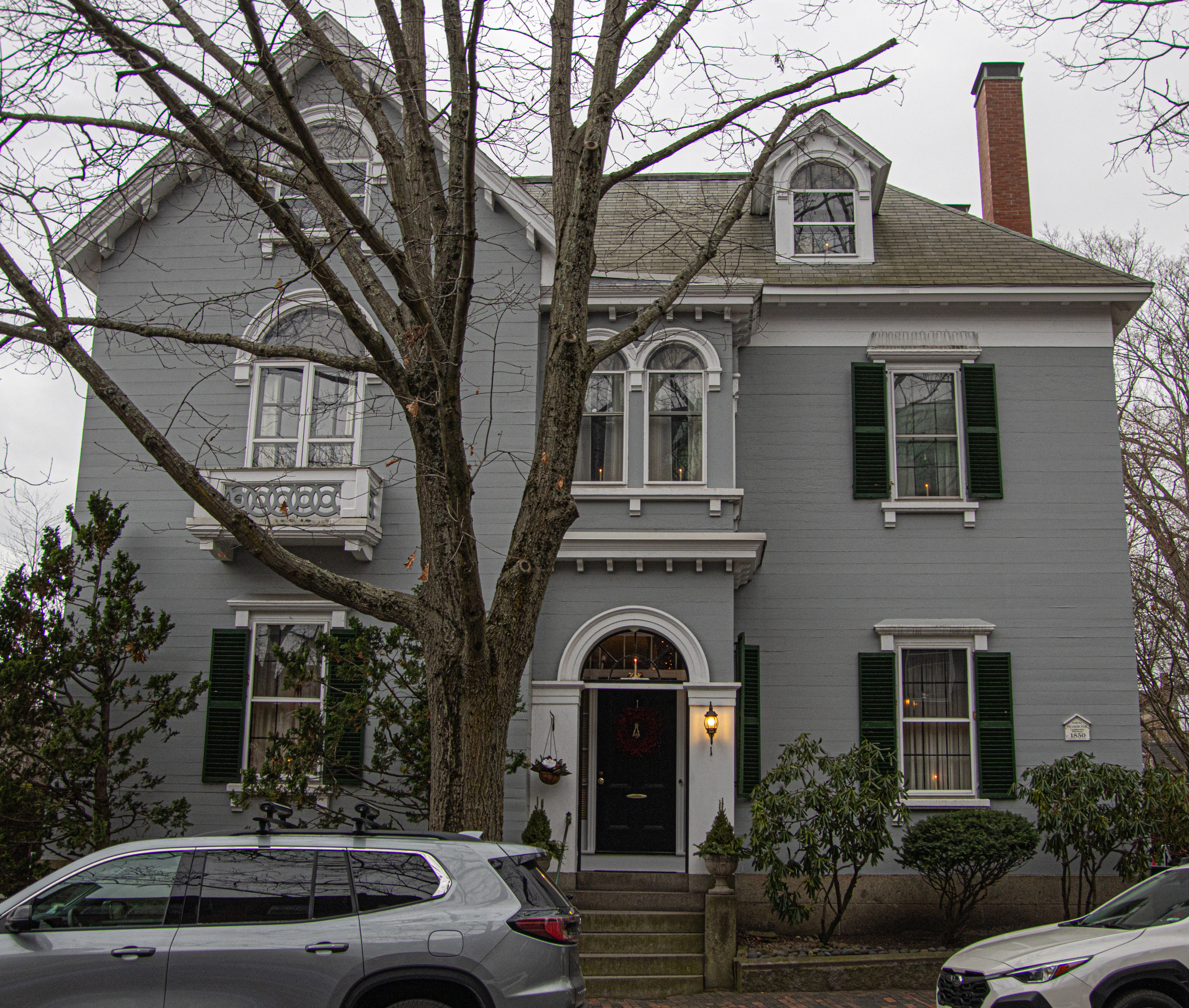
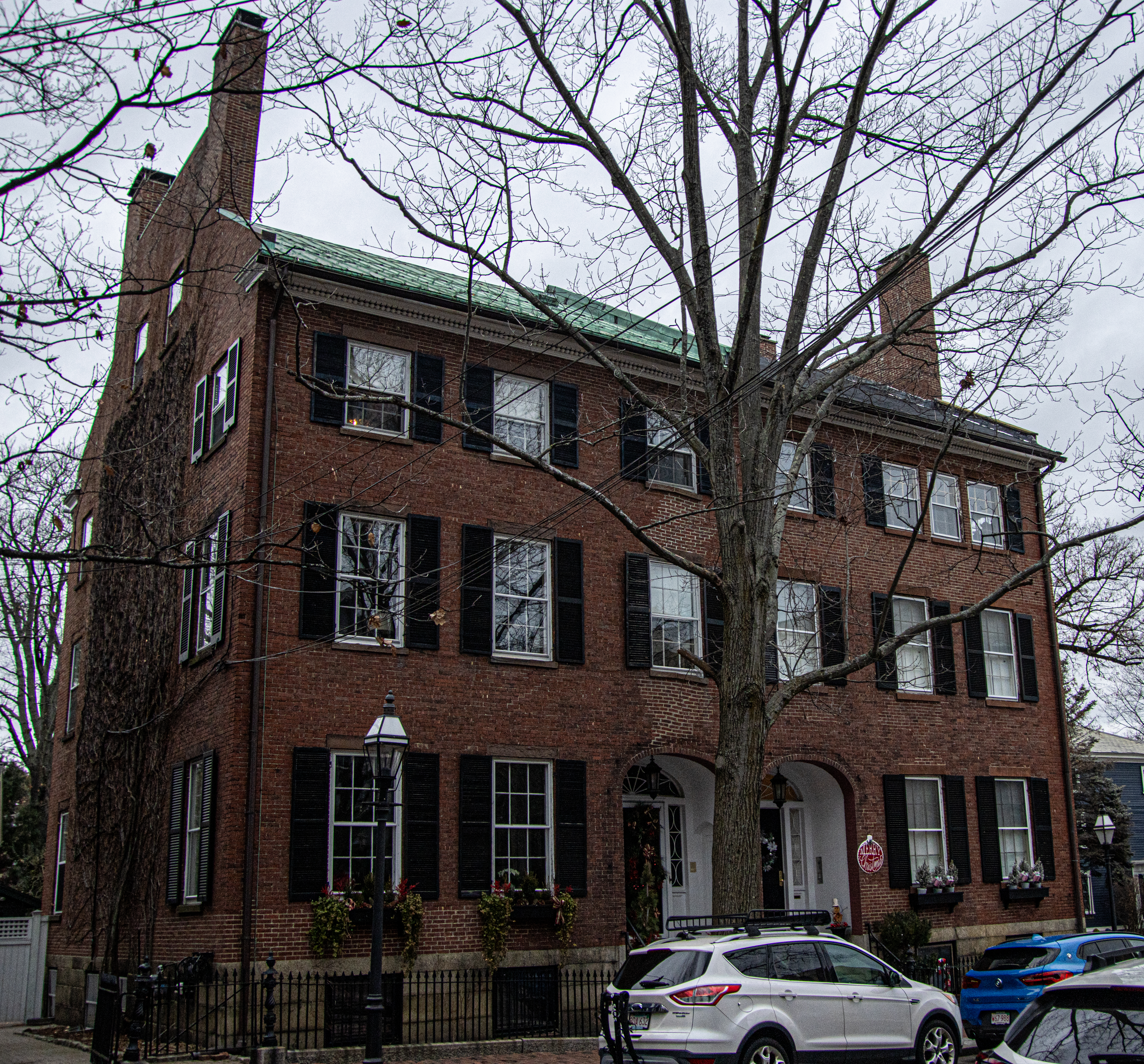
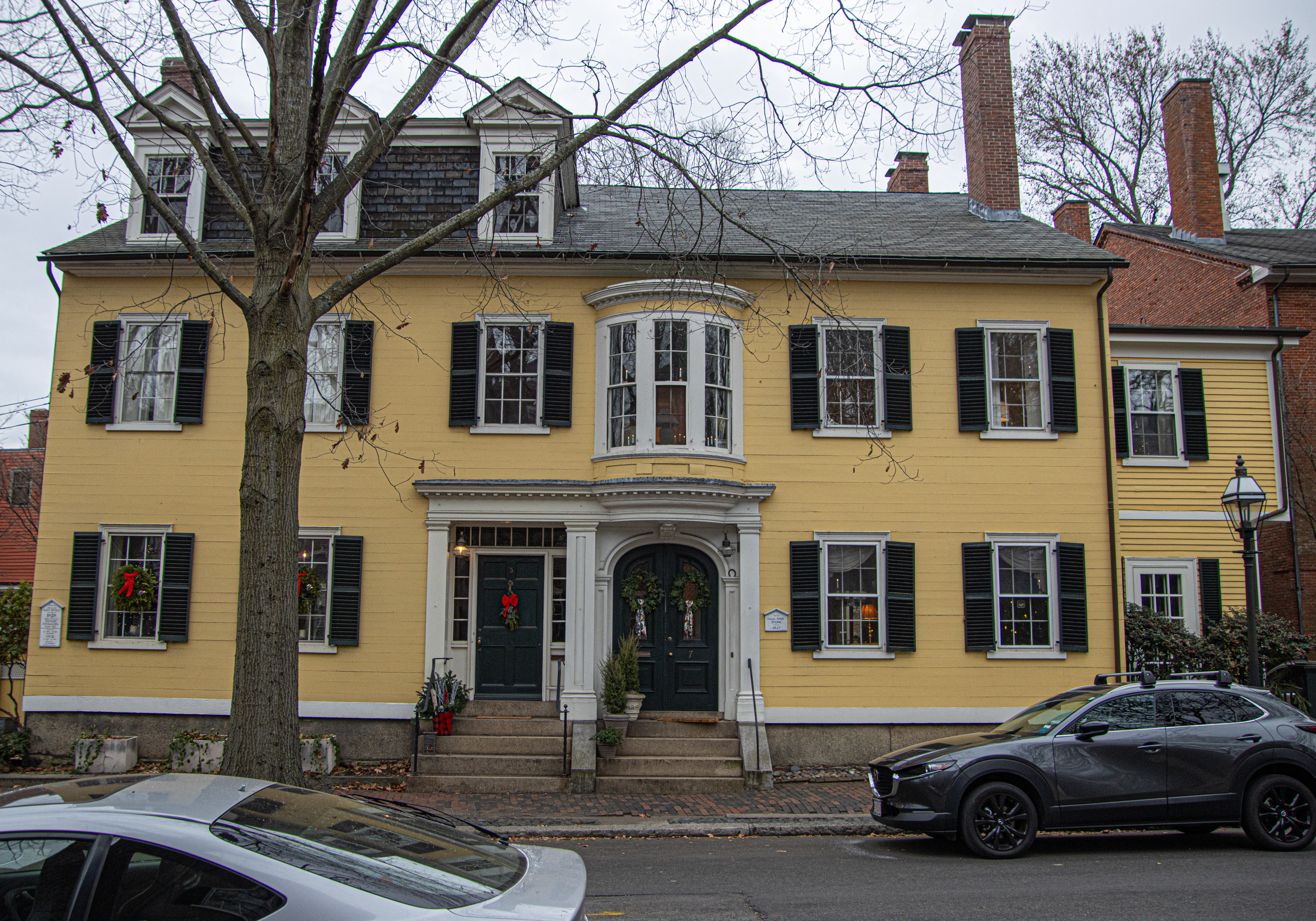
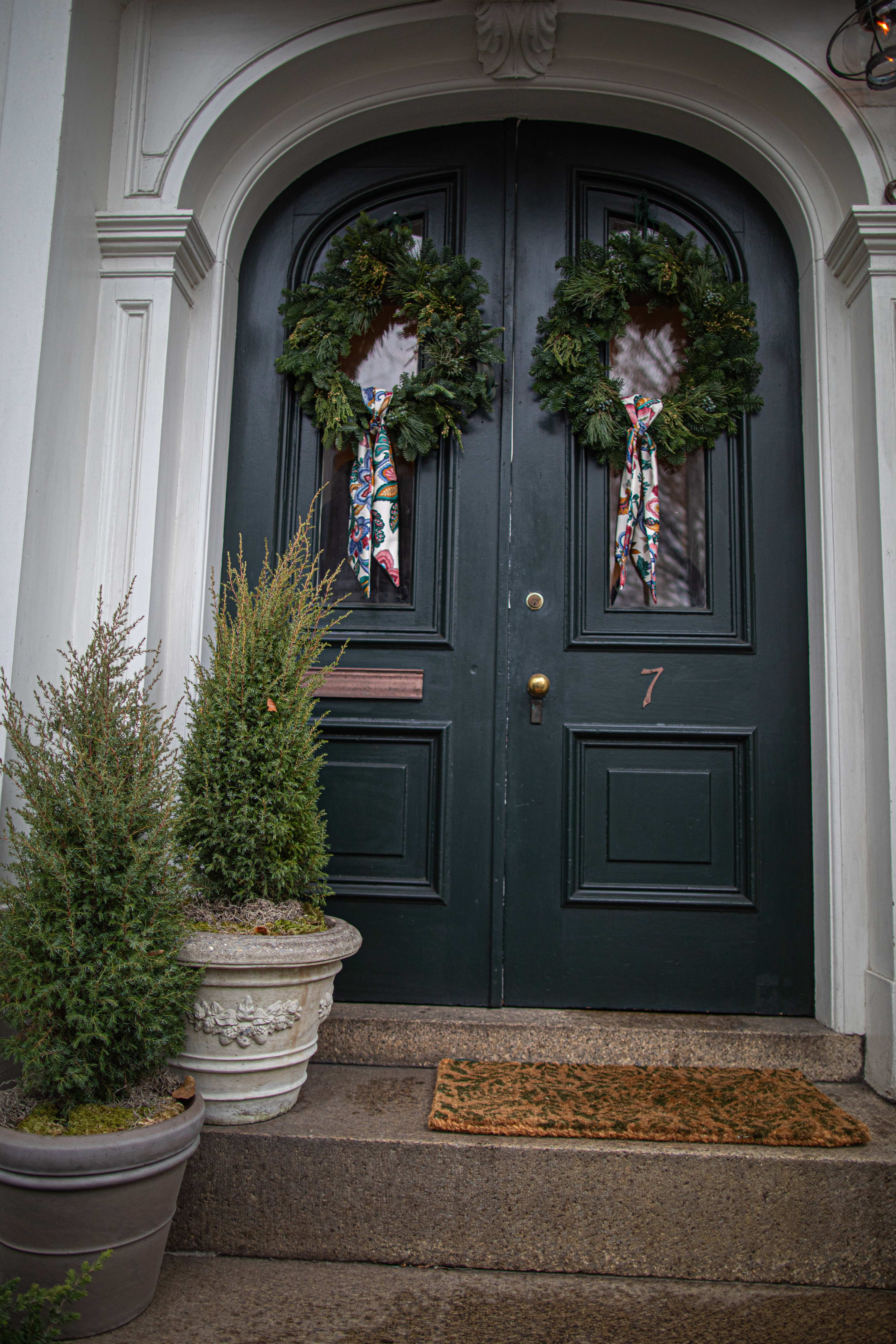
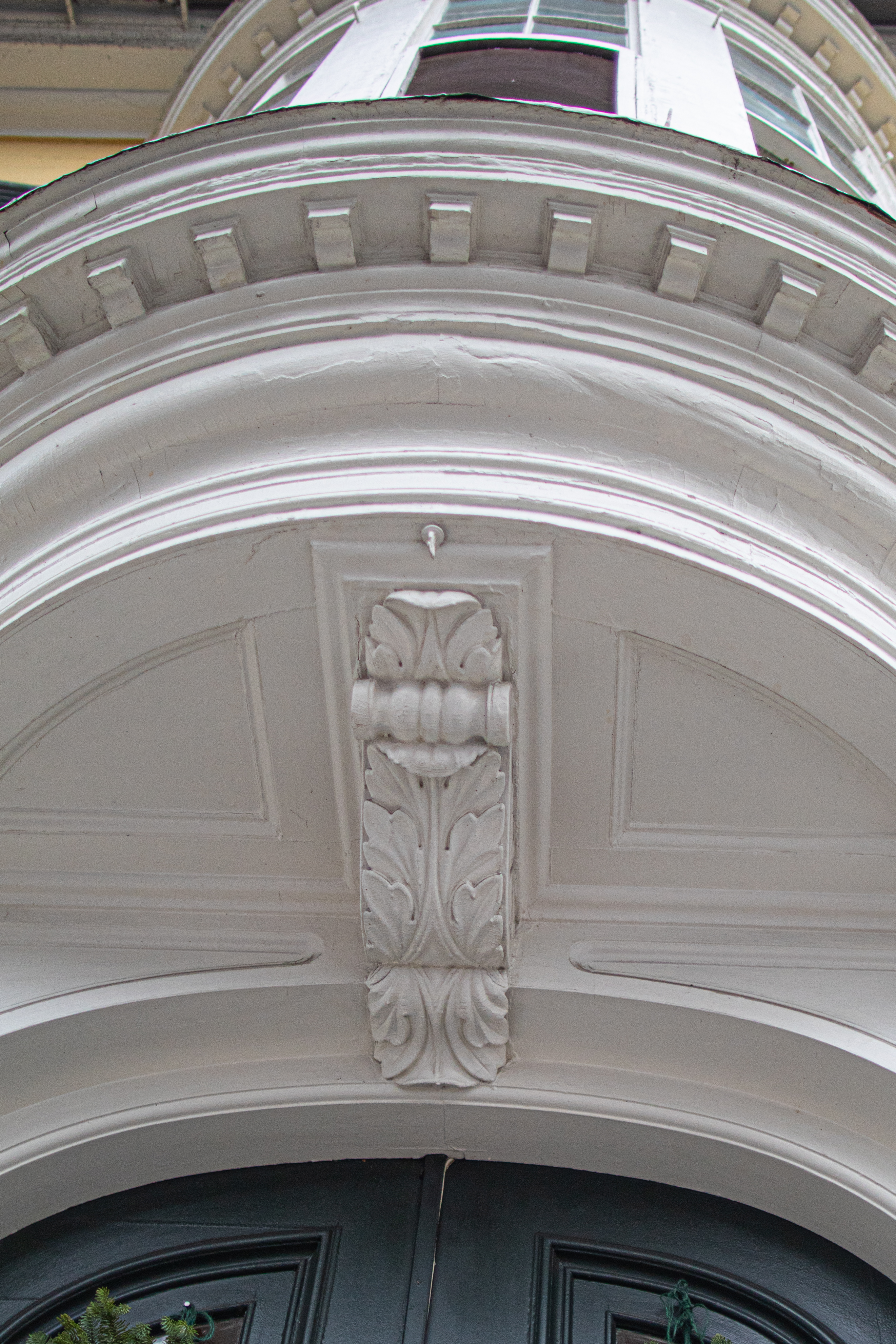
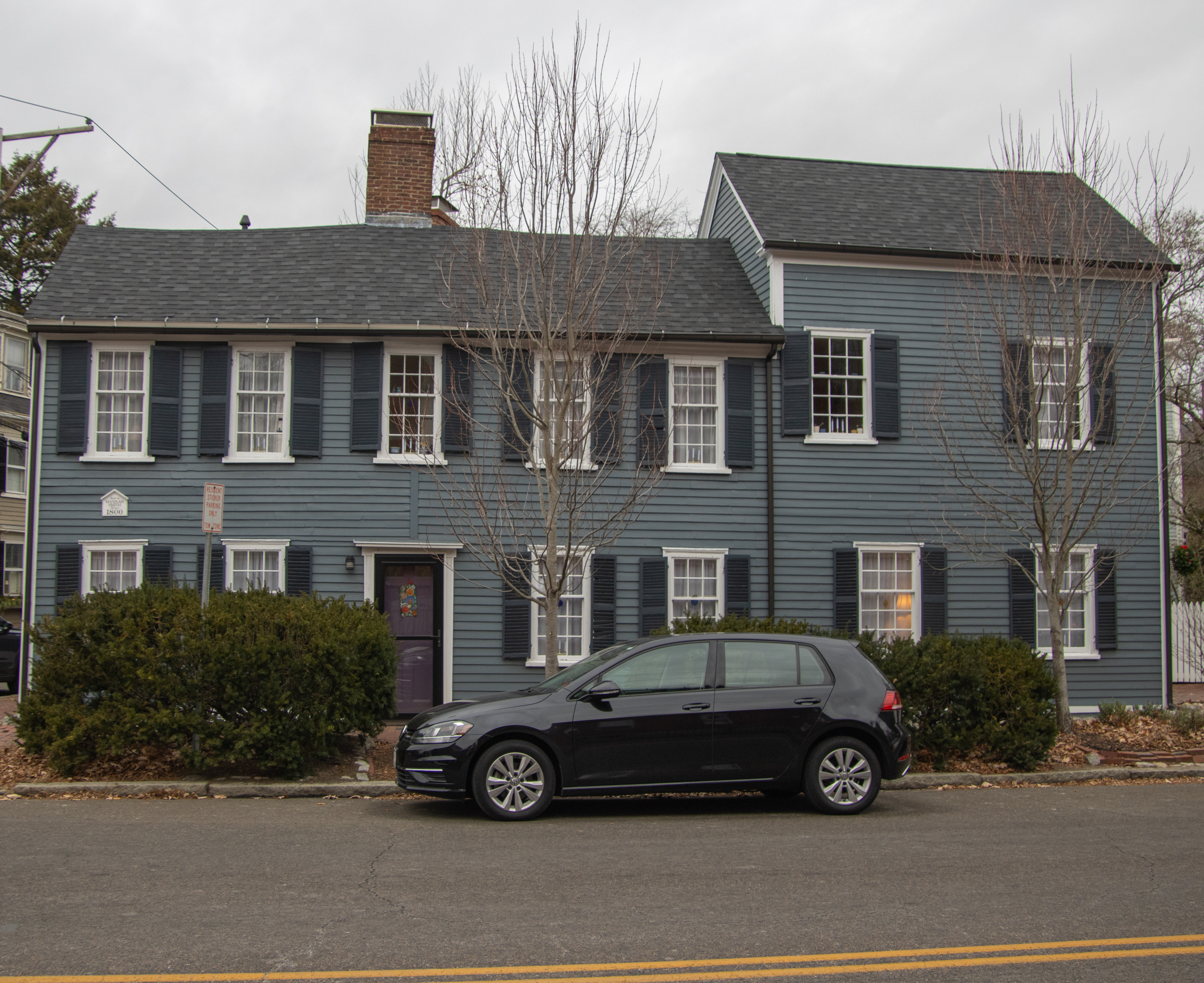
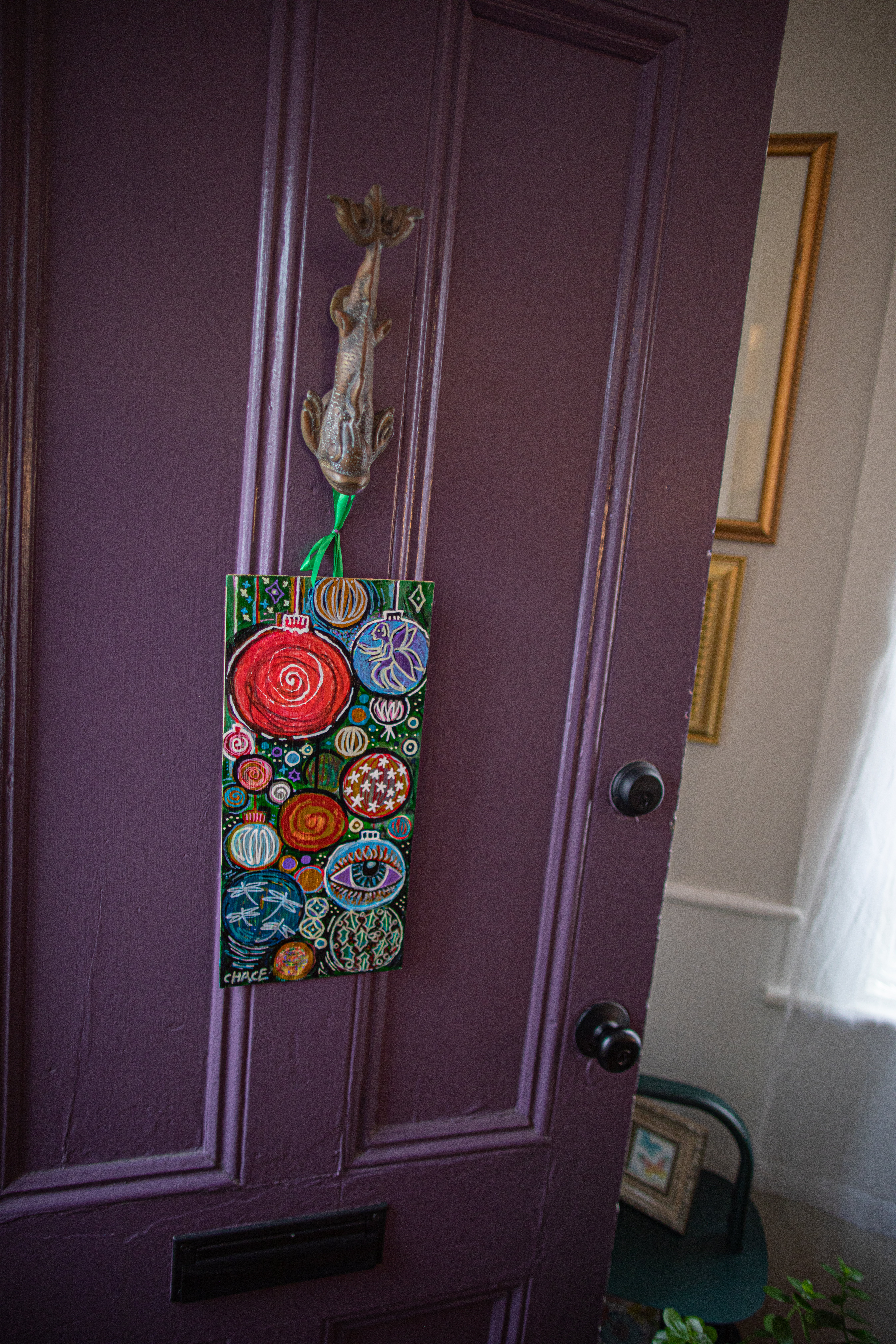
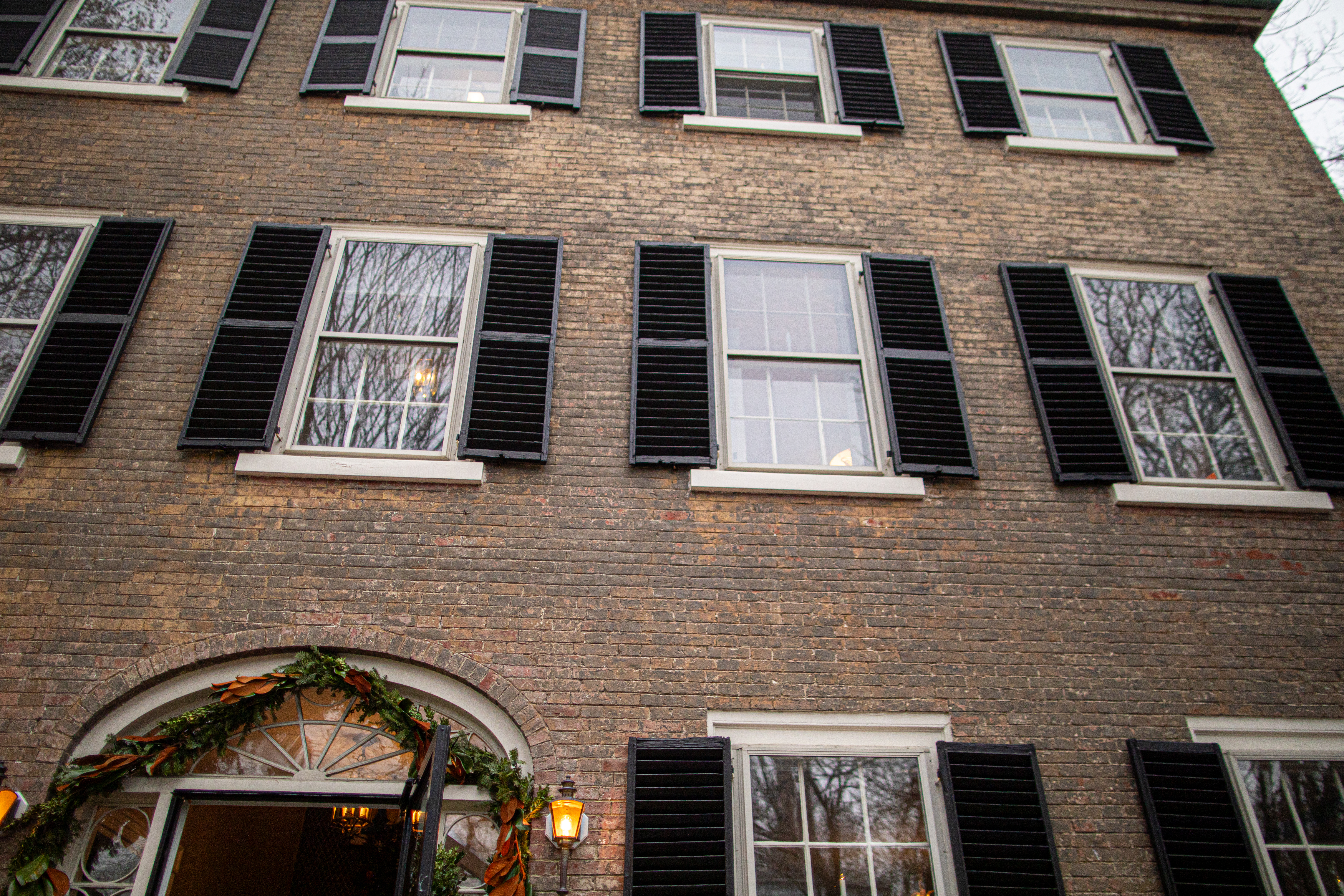
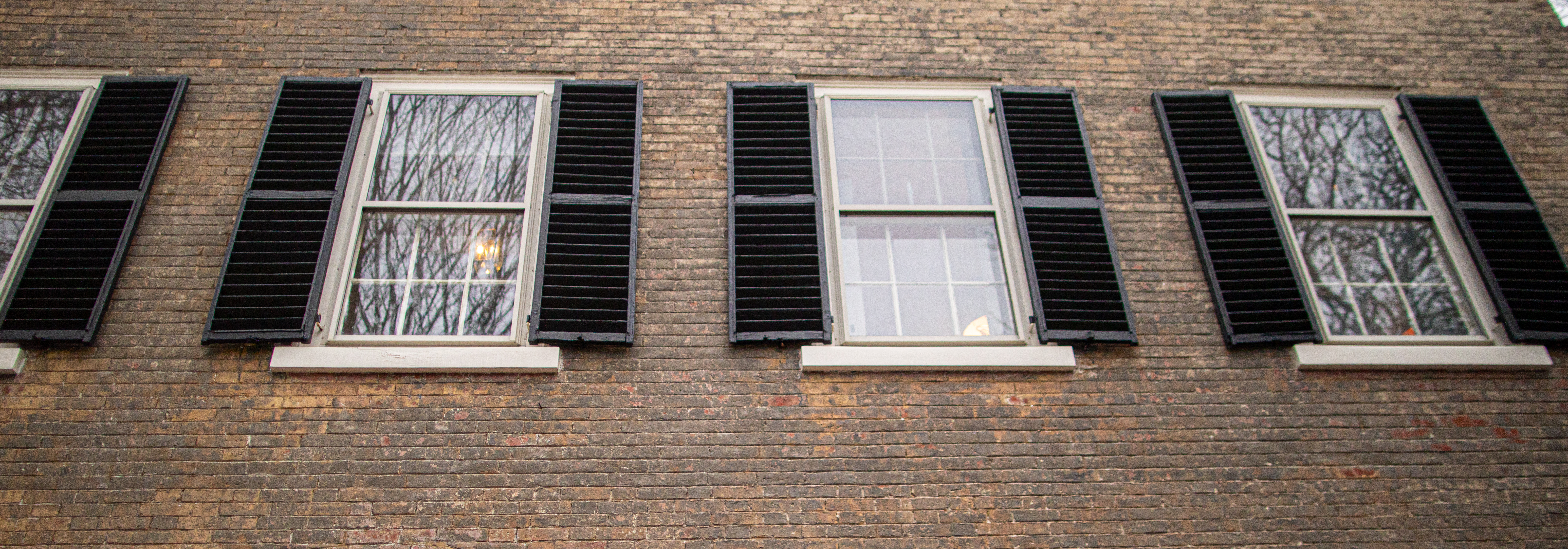
Although records show this home was built in 1807 by John Fullerton, it was really built by John Fullington, a bricklayer. The house has gone through some changes since it was originally built, though. It is now stylistically considered a mid 1860s home. While the original structure may have been in the federal Style, the house has been redesigned in the Second Empire Style around 1865. Some of the elements of the Second Empire Style include the mansard roof with flared eaves punctuated by dormer windows, large and small decorative brackets and the recessed side hall entrance containing double doors. The front doors were recently restored by a Salem based artisan. The door hood is topped by a flat cornice upon which rests a rectangular bay window.

During the late 19th century, renovations in the rear extension were added, creating a larger kitchen as well as a small upstairs bedroom.

James J. Buckley, a wine merchant, acquired the property in 1865. He most likely was responsible for the major renovations that were made to the house at that time. Buckley owned a liquor store on Washington St and shared the home with his wife Margaret and their son James O. Buckley. After Buckley’s death in the early 1870s, Margaret continued to live in the house until 1919 when it was sold to Isabella Murphy, the widow of John Murphy. Her son, Edward, a painter and leather worker, lived there with his wife until the 1950s. Mary Murphy occupied the house until the 1980s.

The home tour guide made an astute observation at the entry way of the home and I agree – the owner of the home must not have cats. If you know, you know.

The home did have some unique and unexpected features like this bell above the doorway.

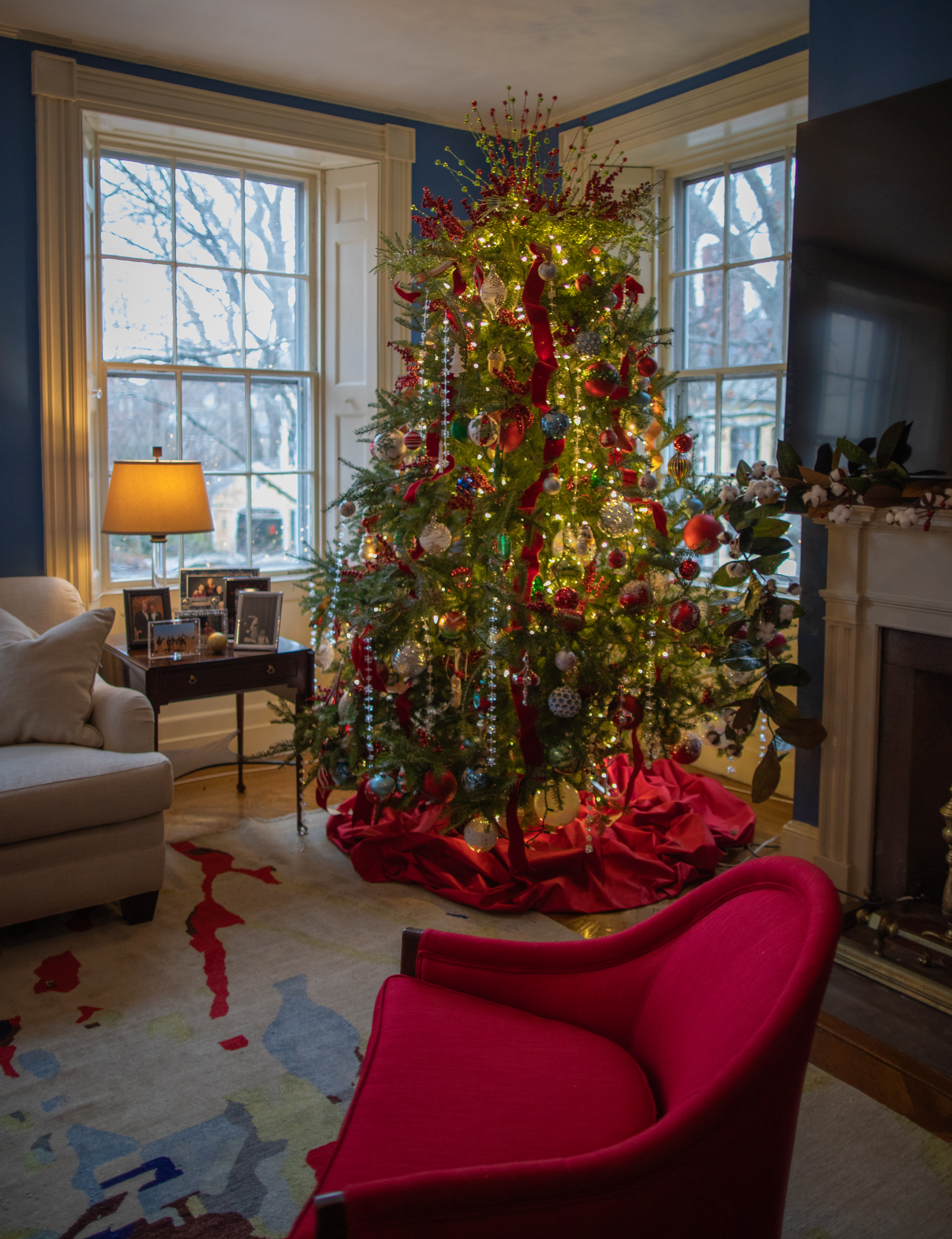
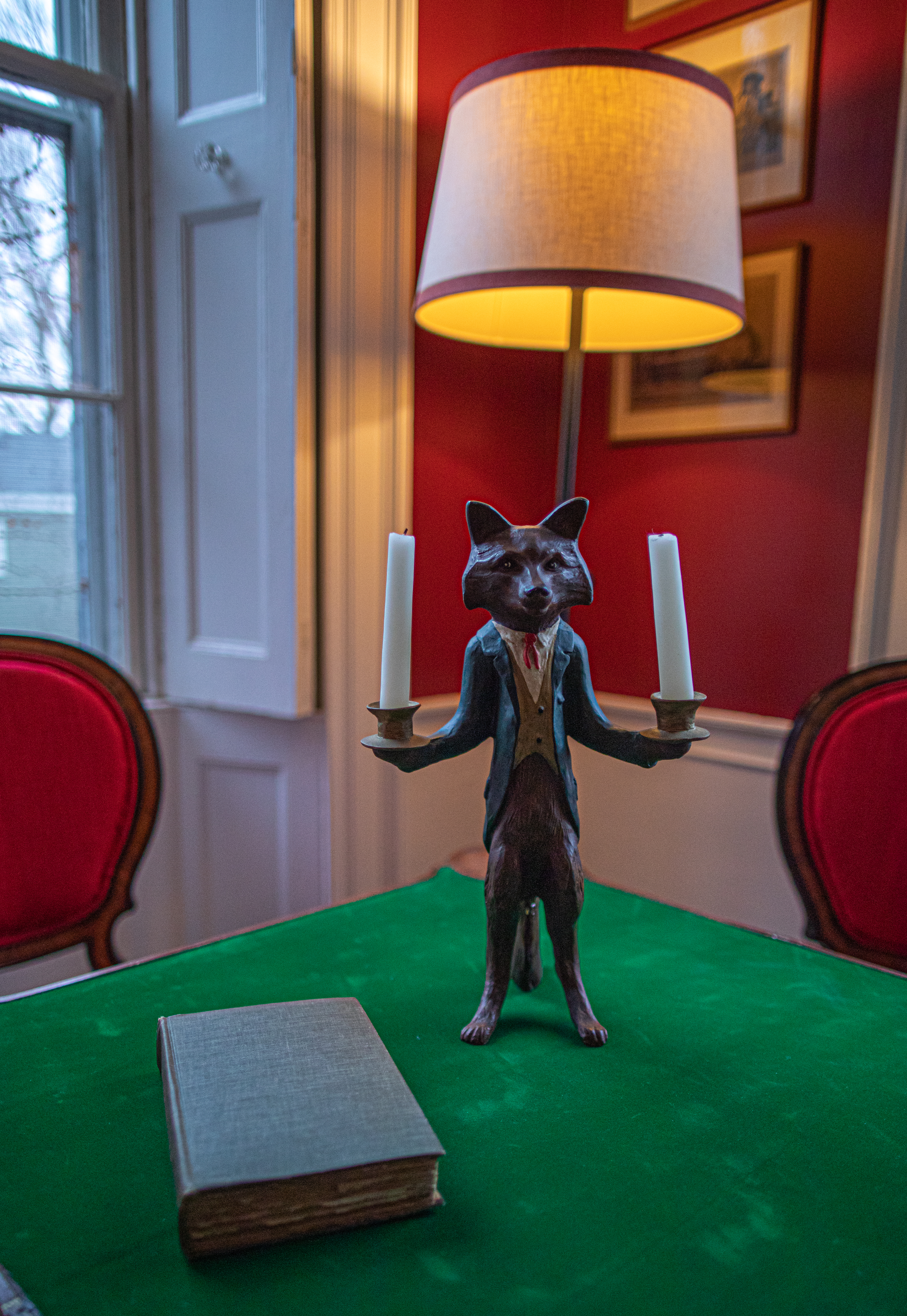
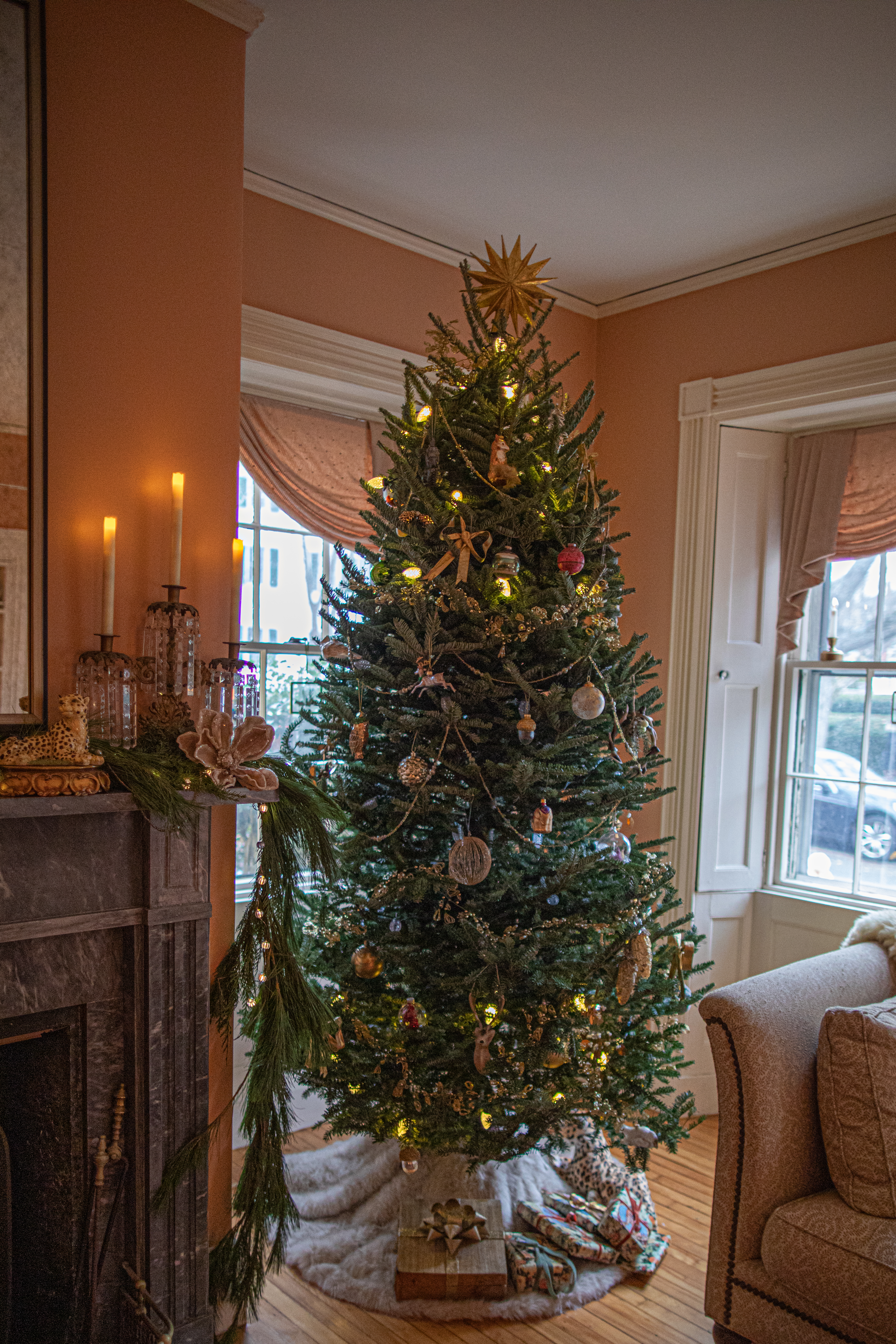
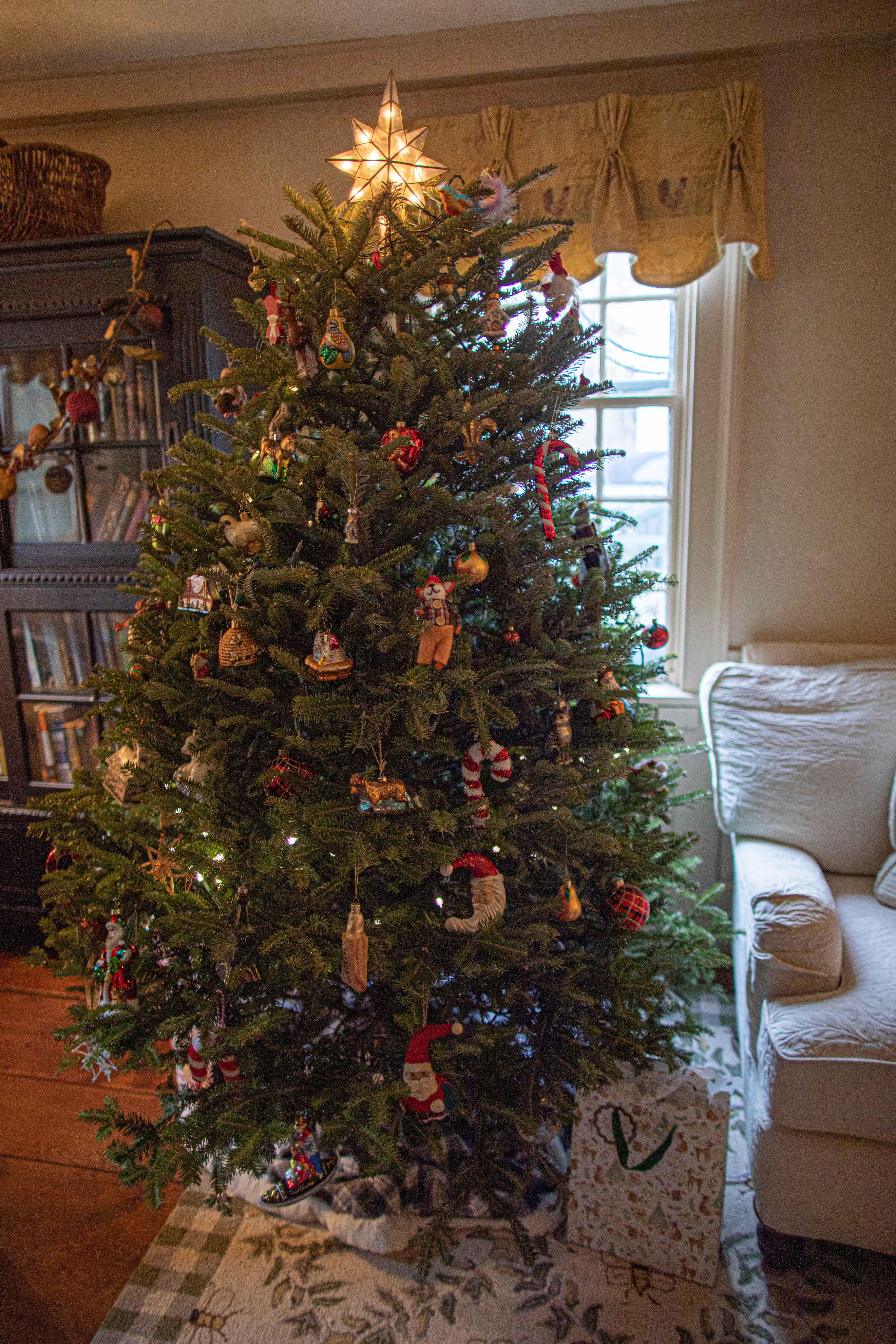
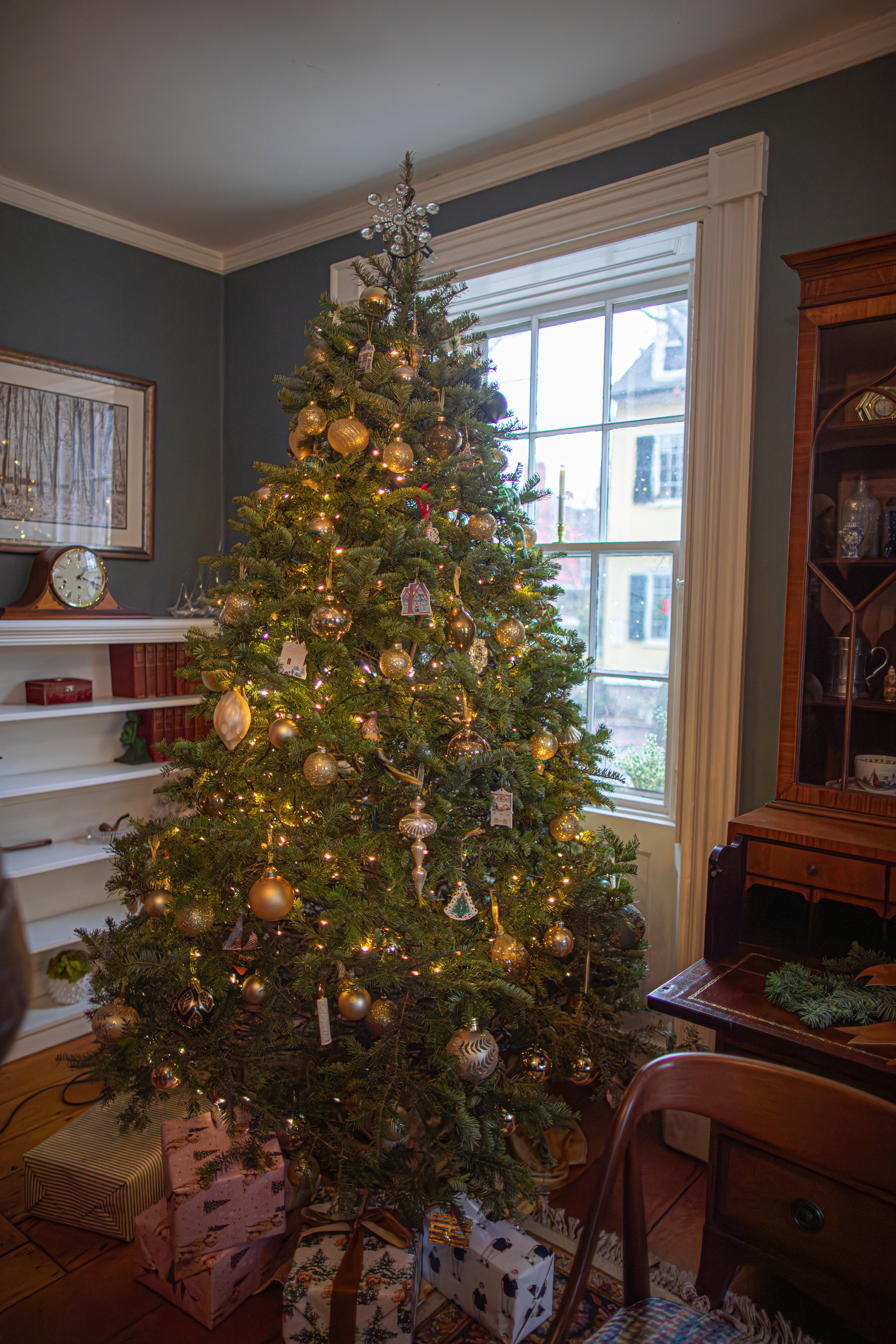
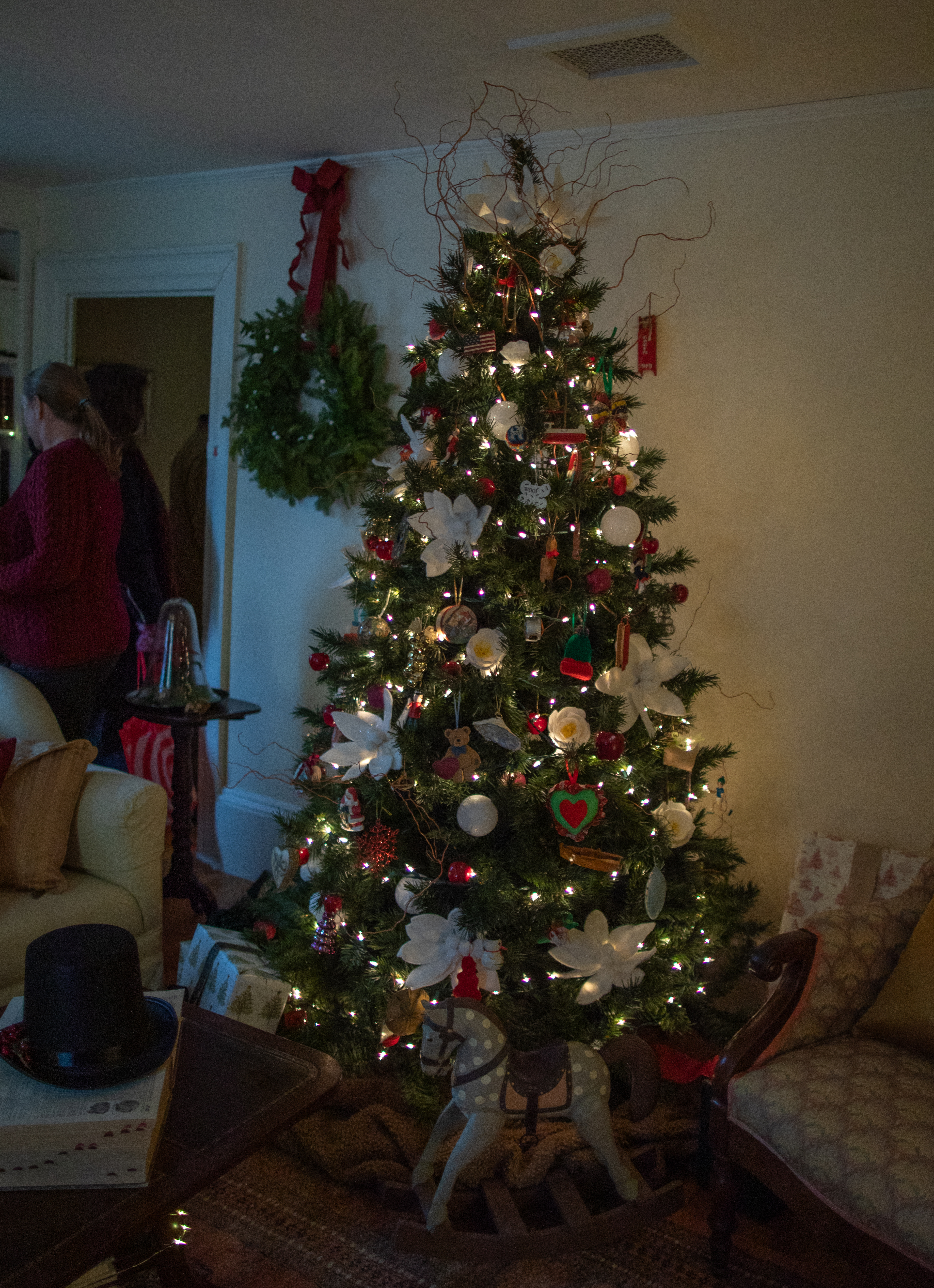
Besides a certain type of decor I will touch on later, the owner of the home has a special affinity for our 16th President. The top hat on the book is a tribute to Abraham Lincoln. There’s also an Easter egg on the floor on the right side of the Christmas tree.

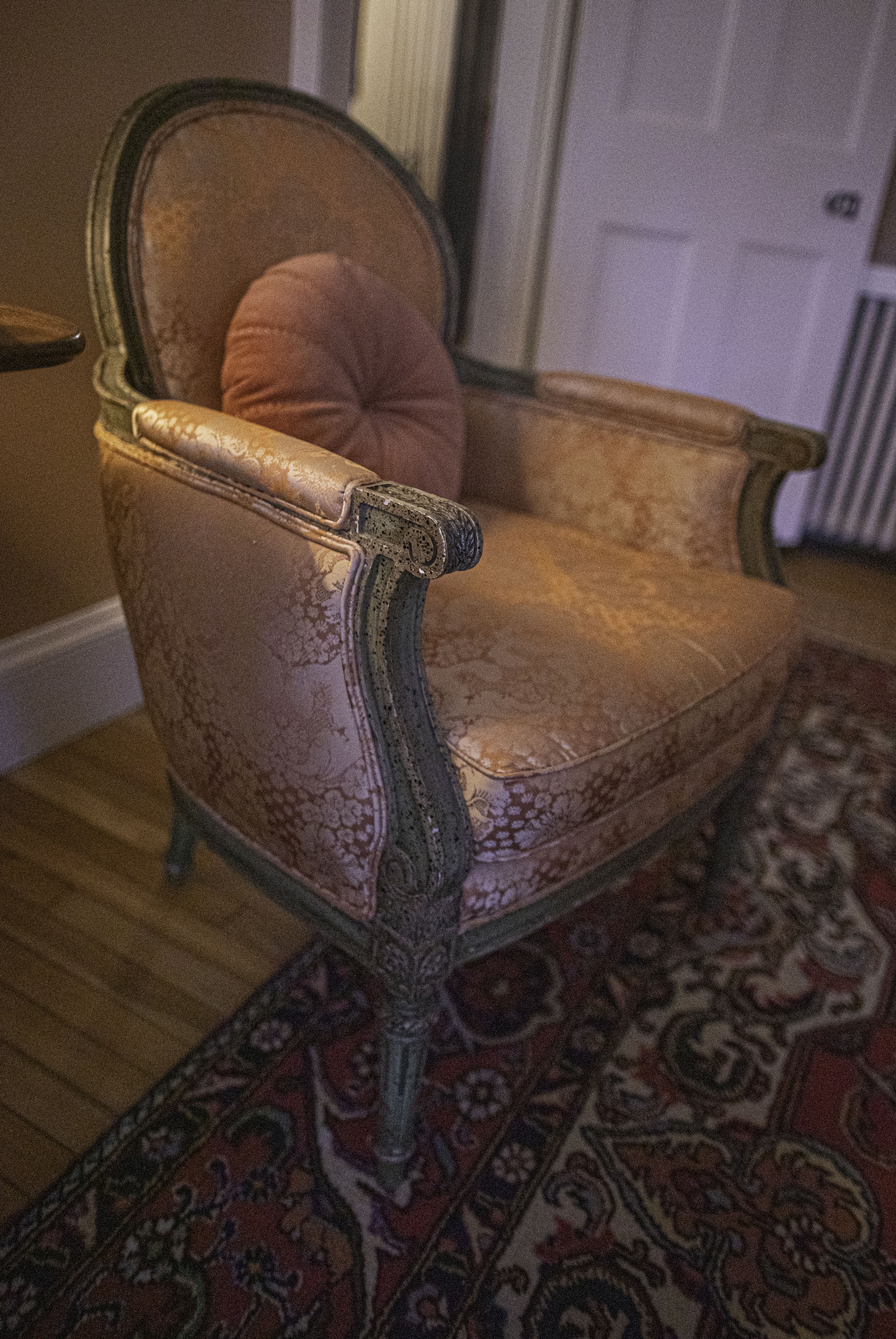
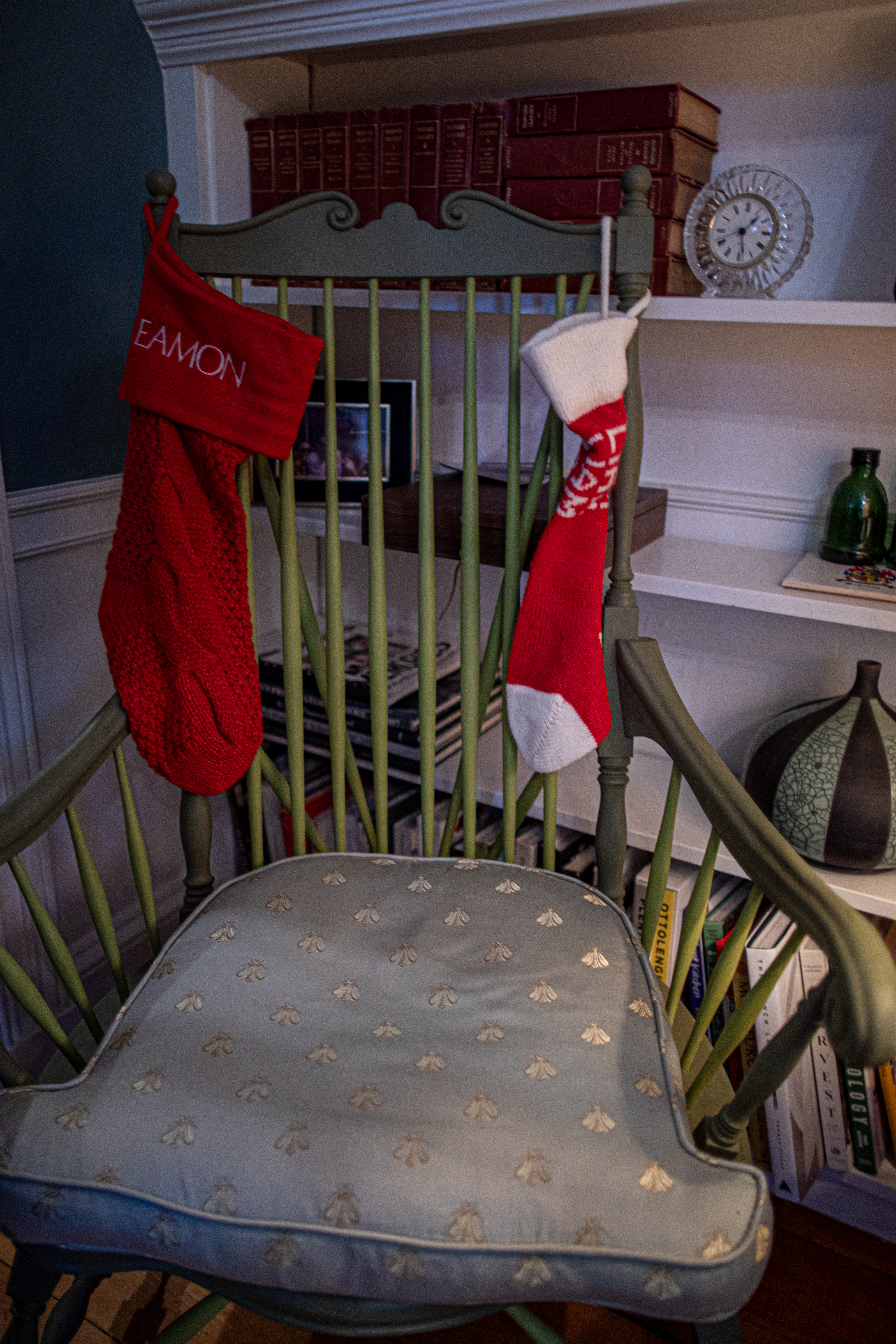
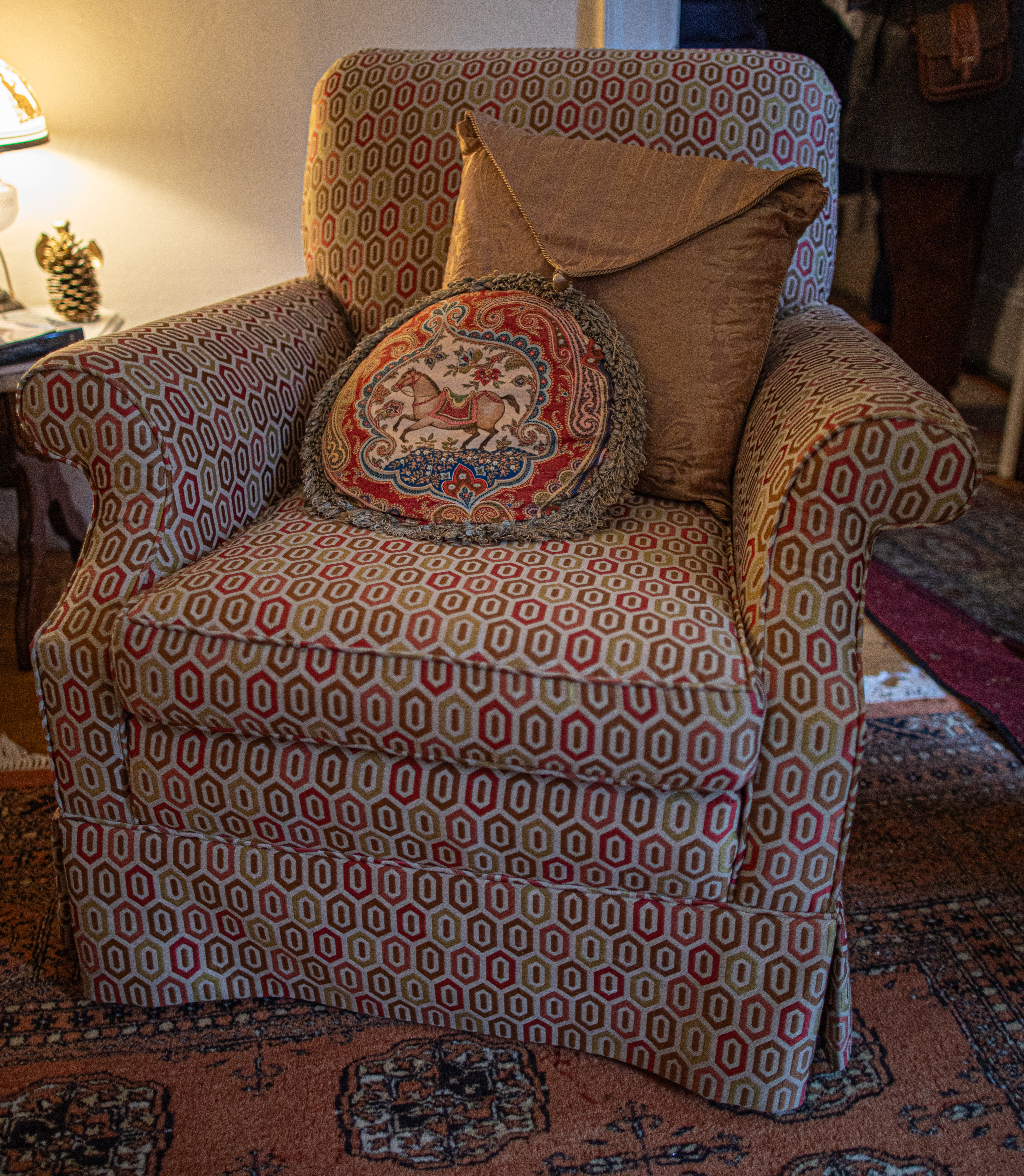
One of the pieces of decor that stood out to me were the chairs.

This chair is a 1880’s Victorian chair model.

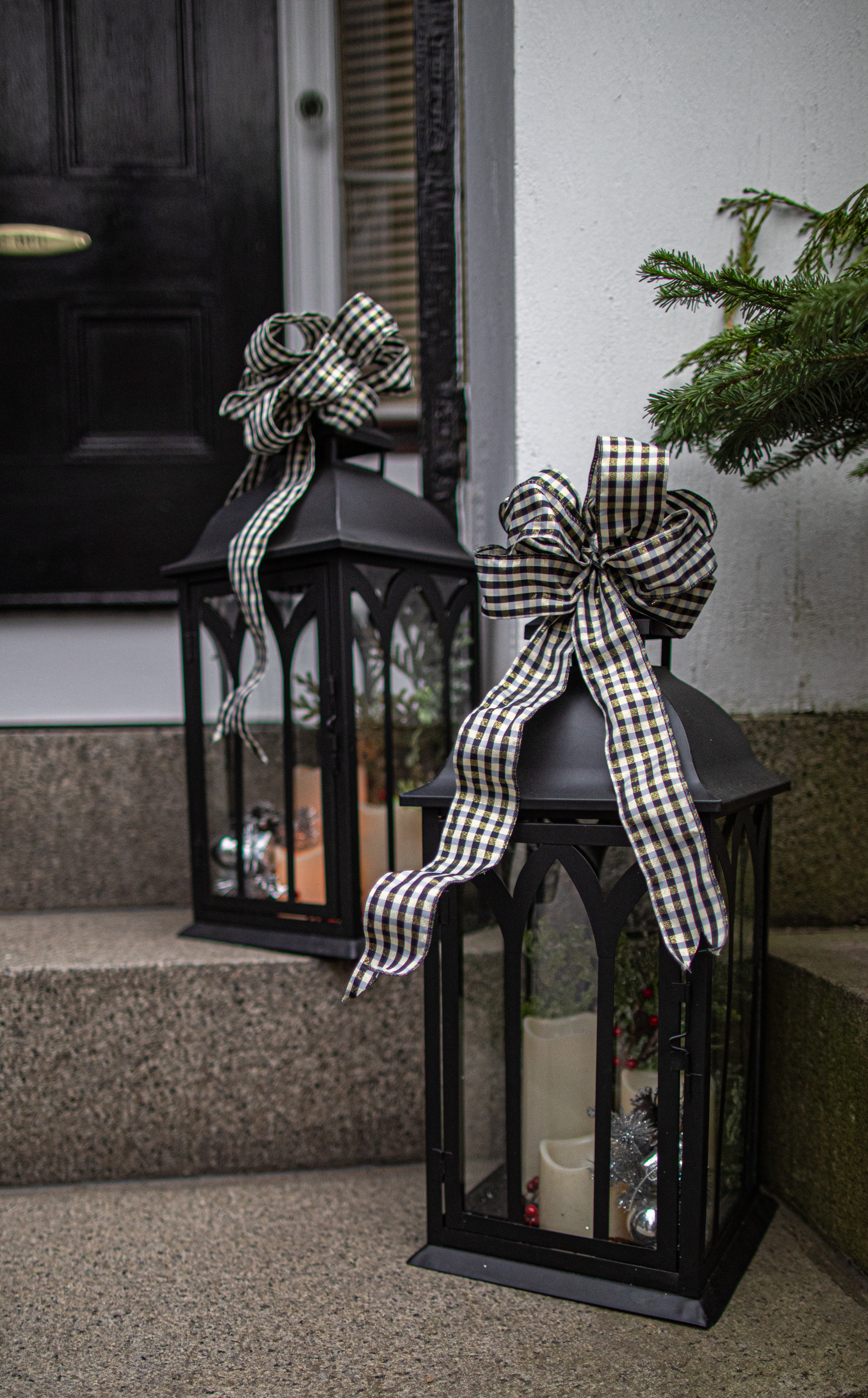
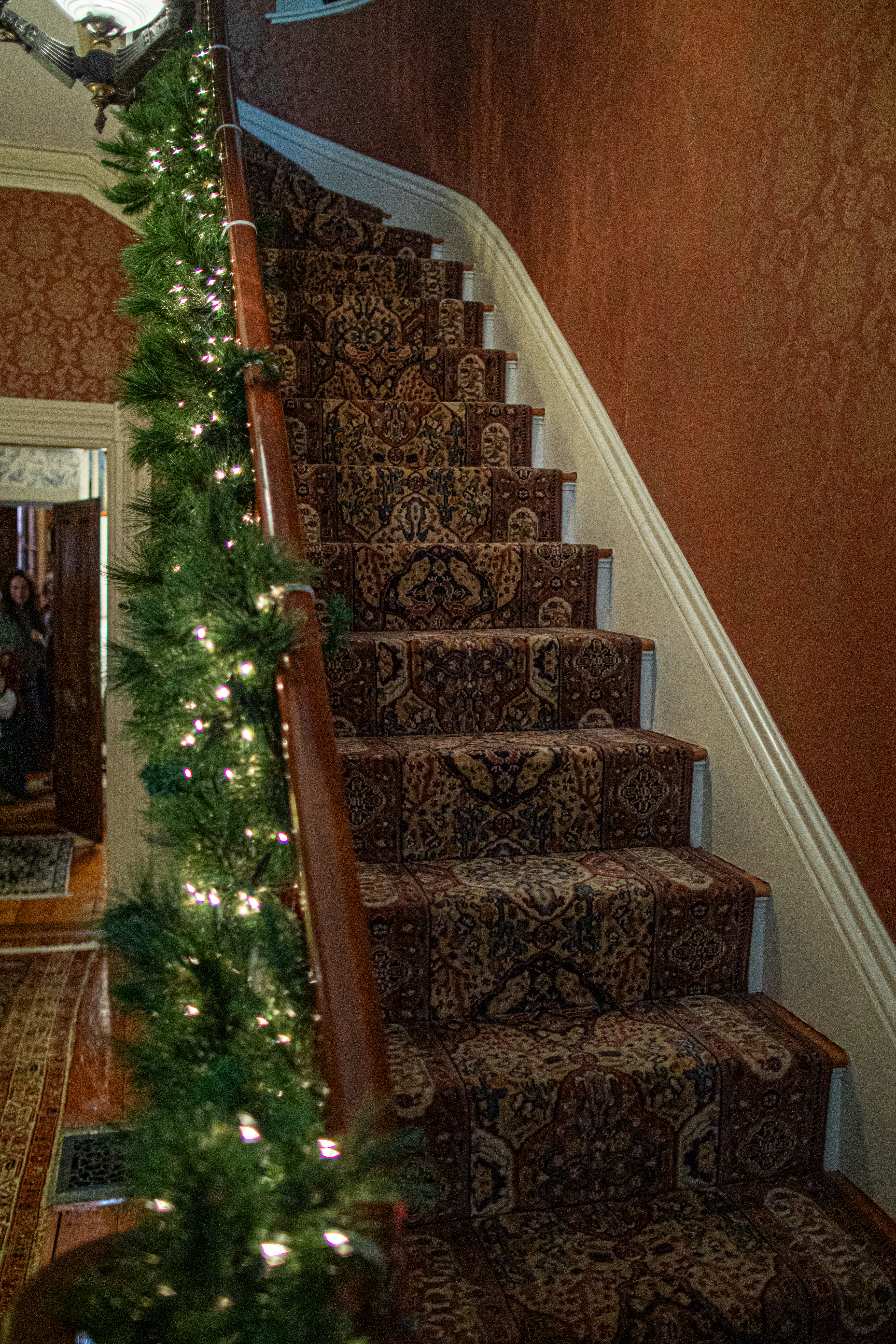
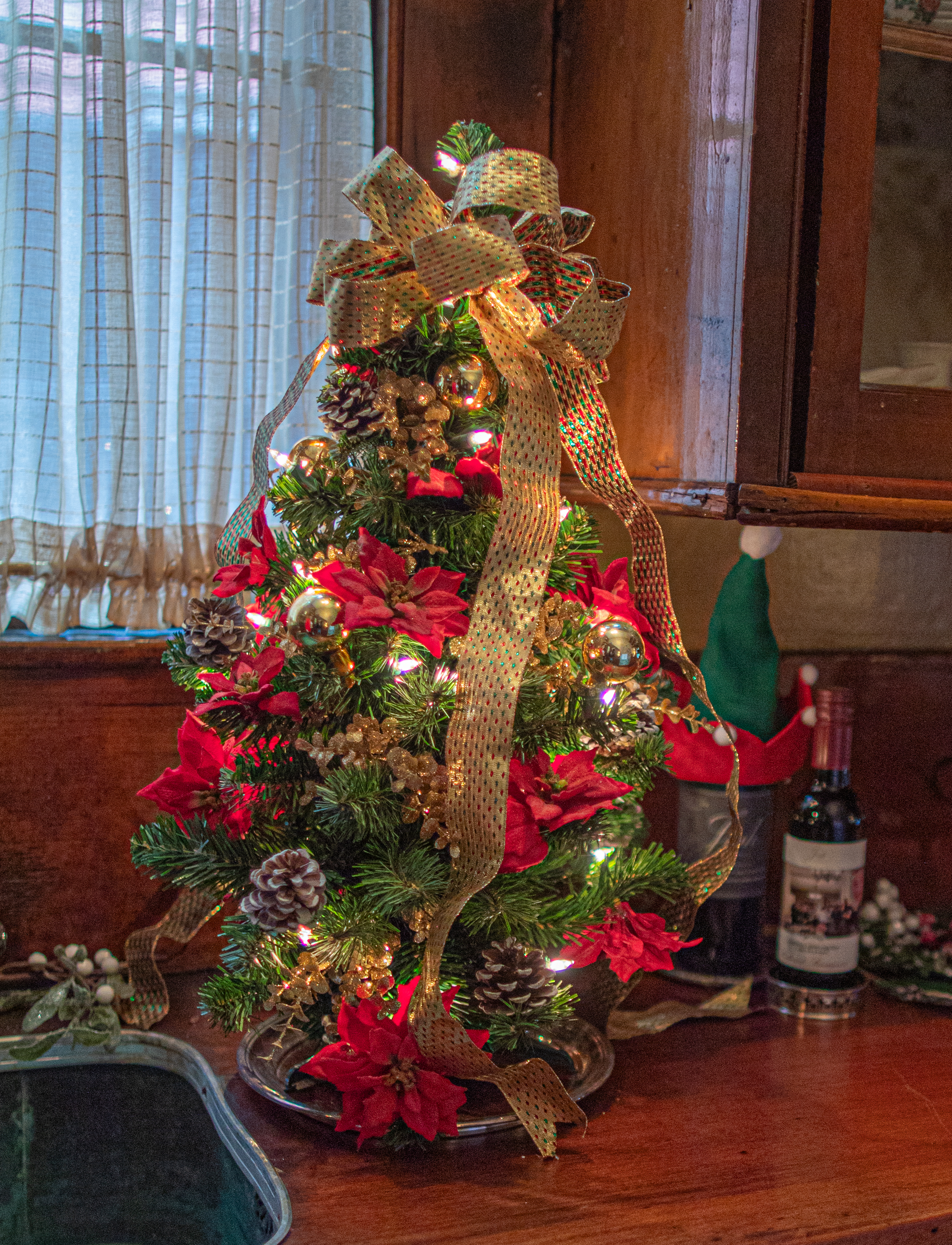
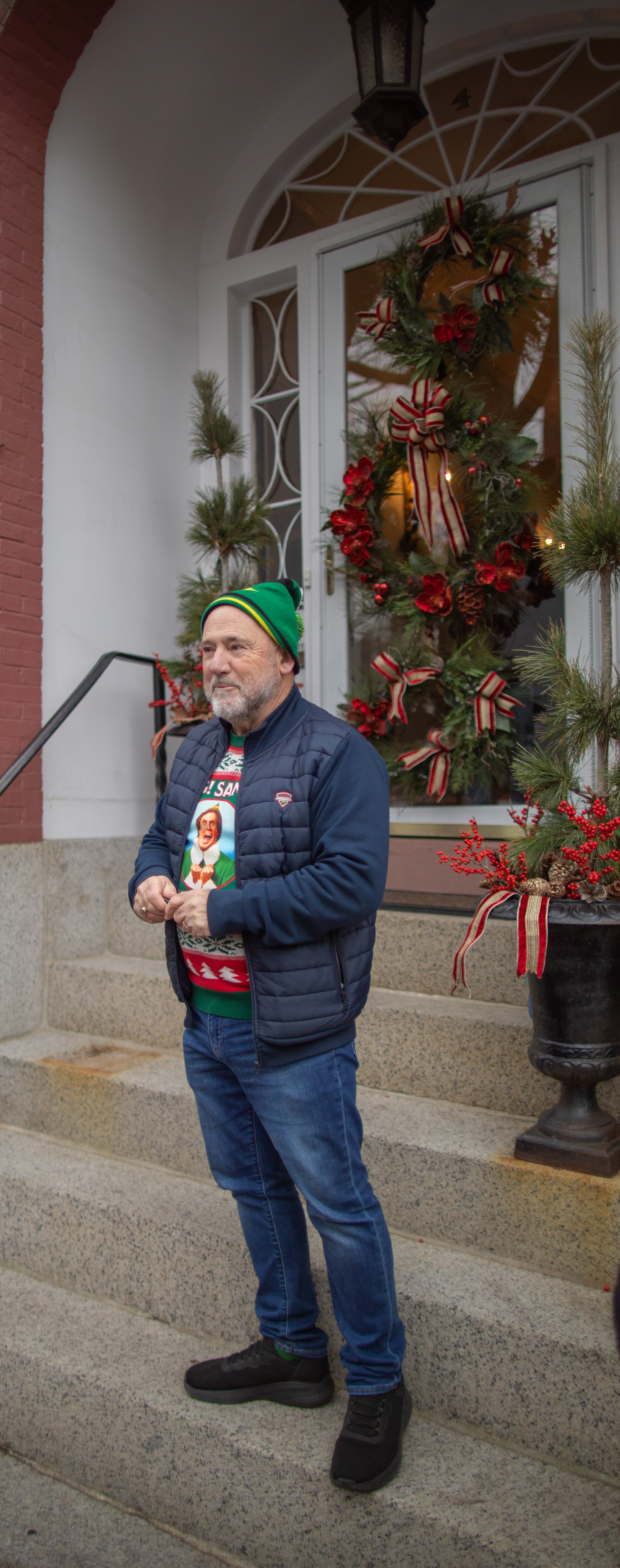
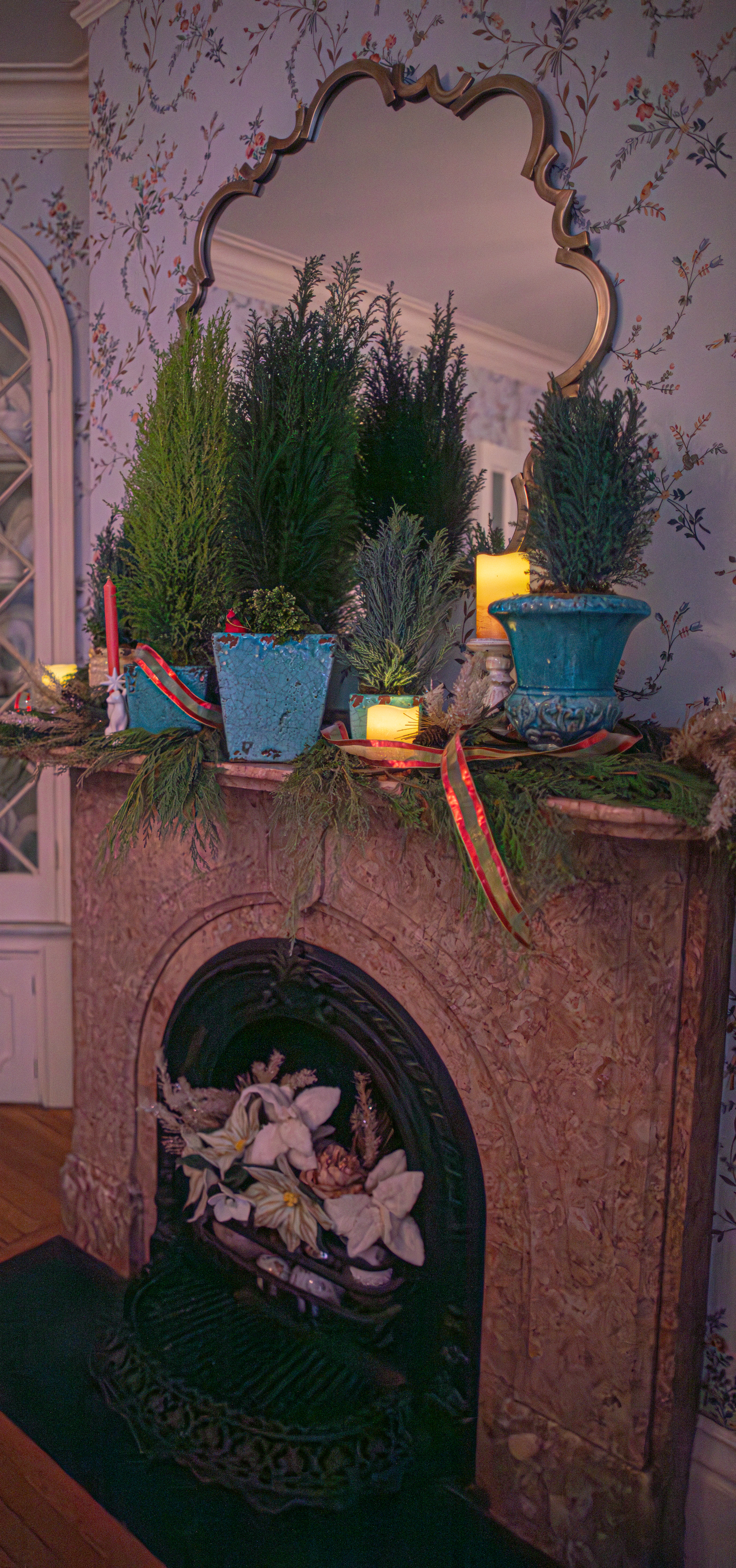
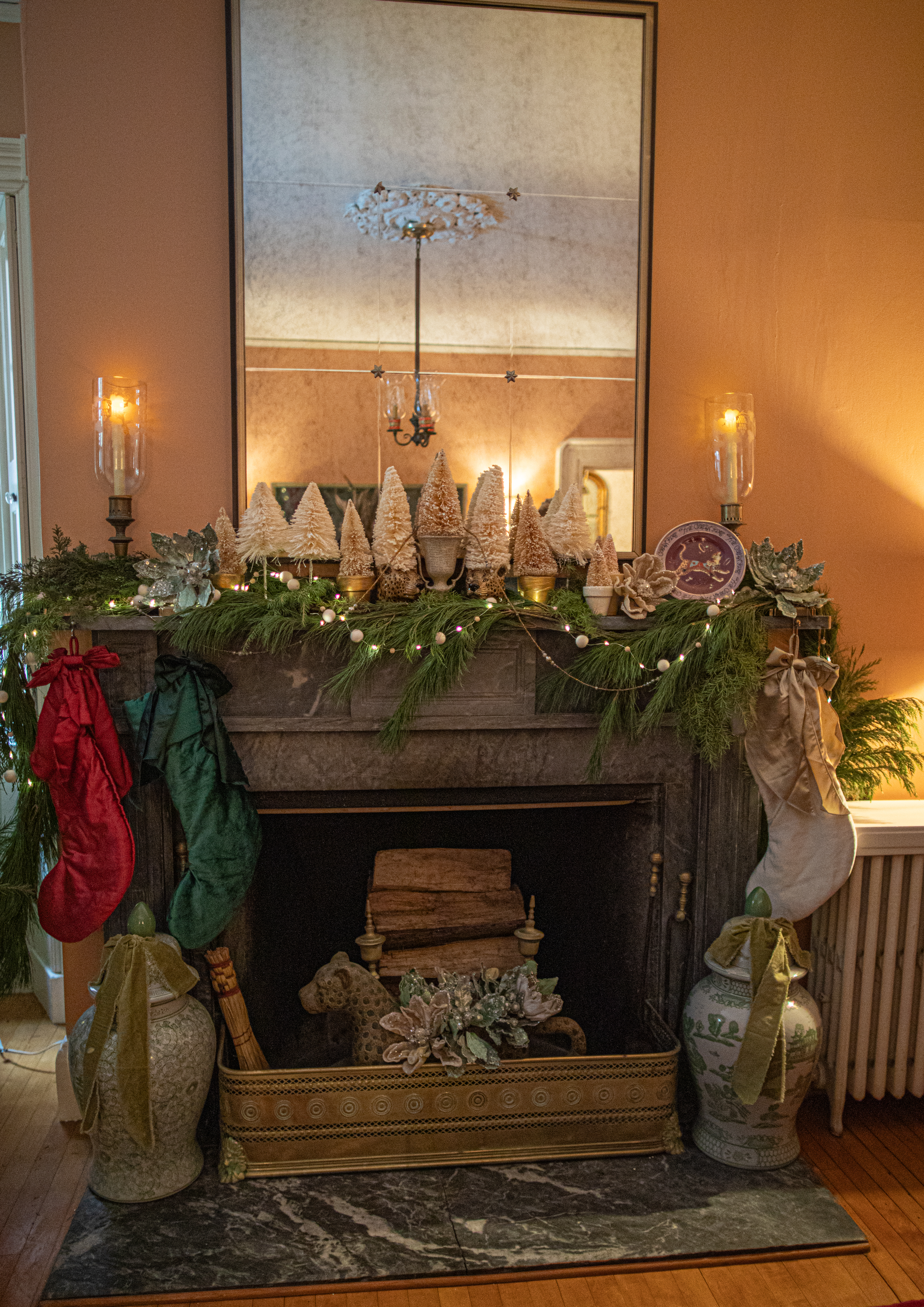
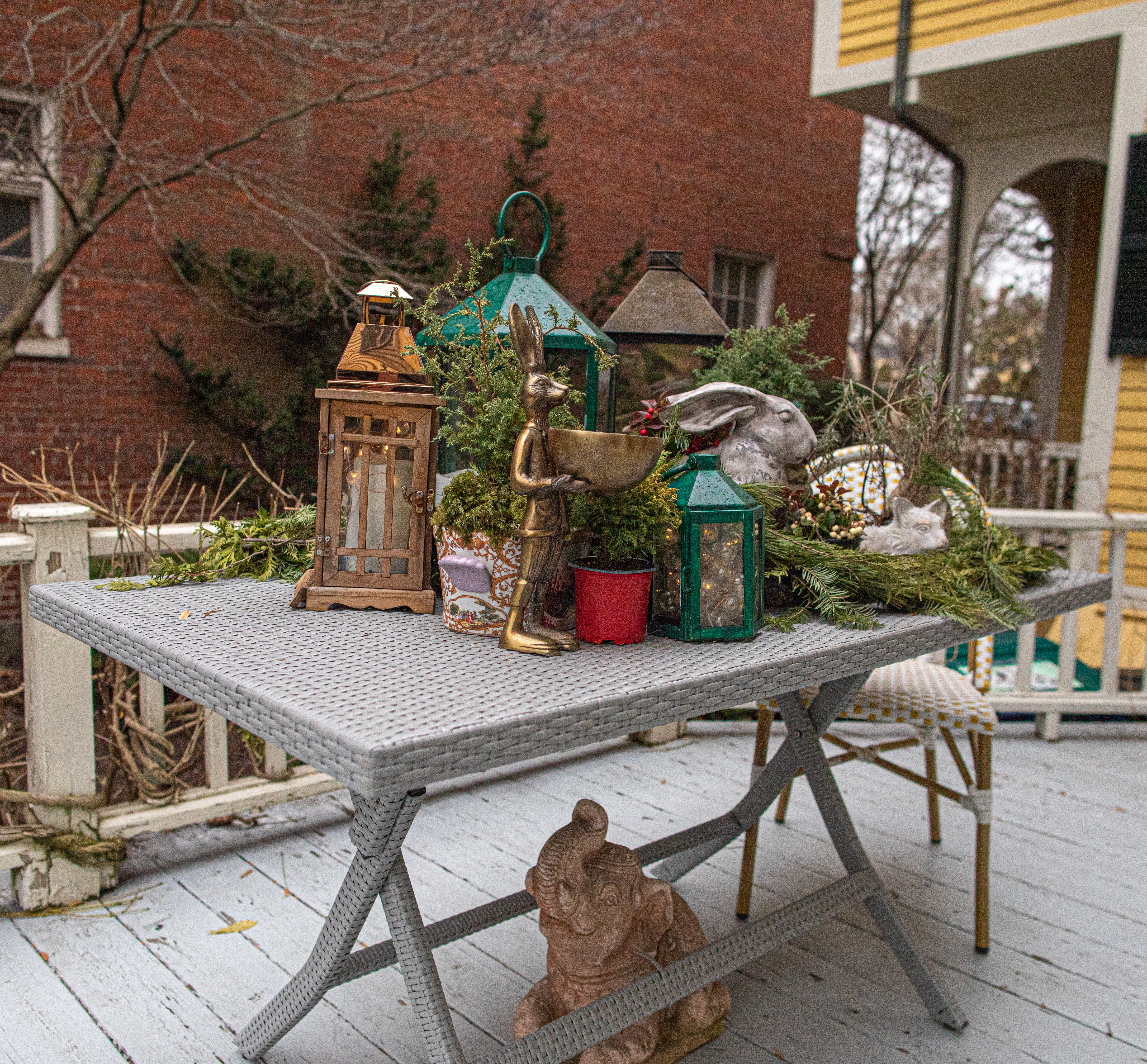
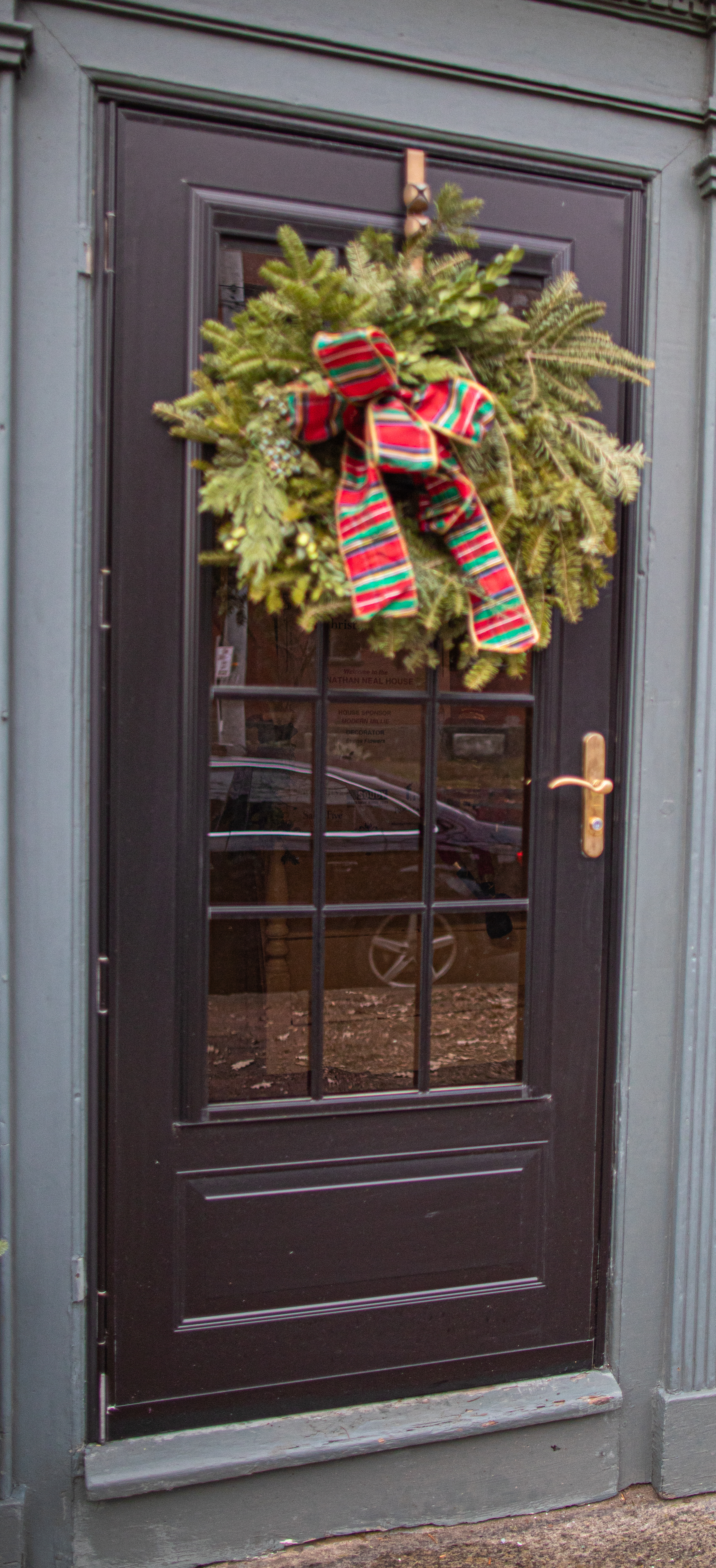
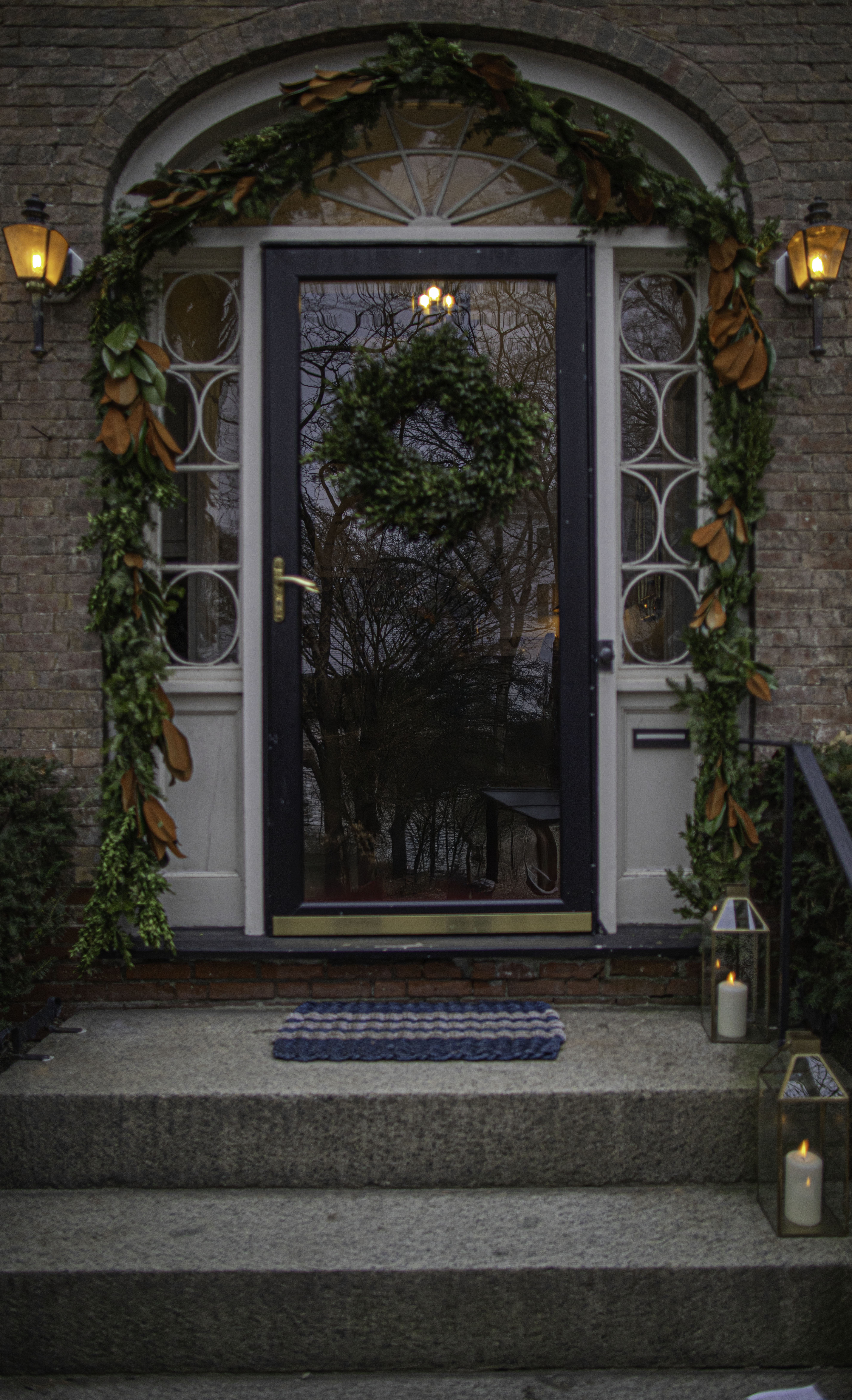
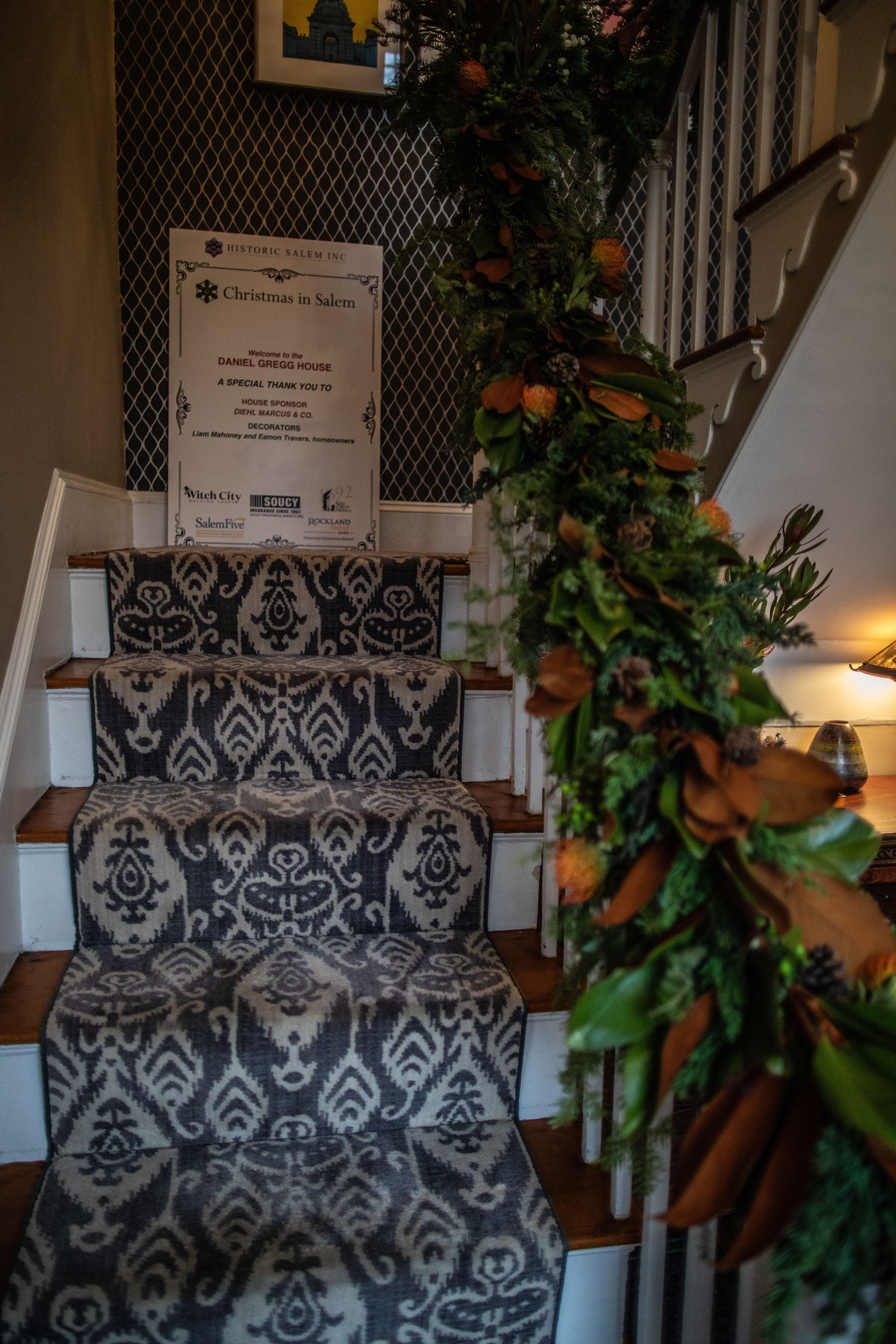
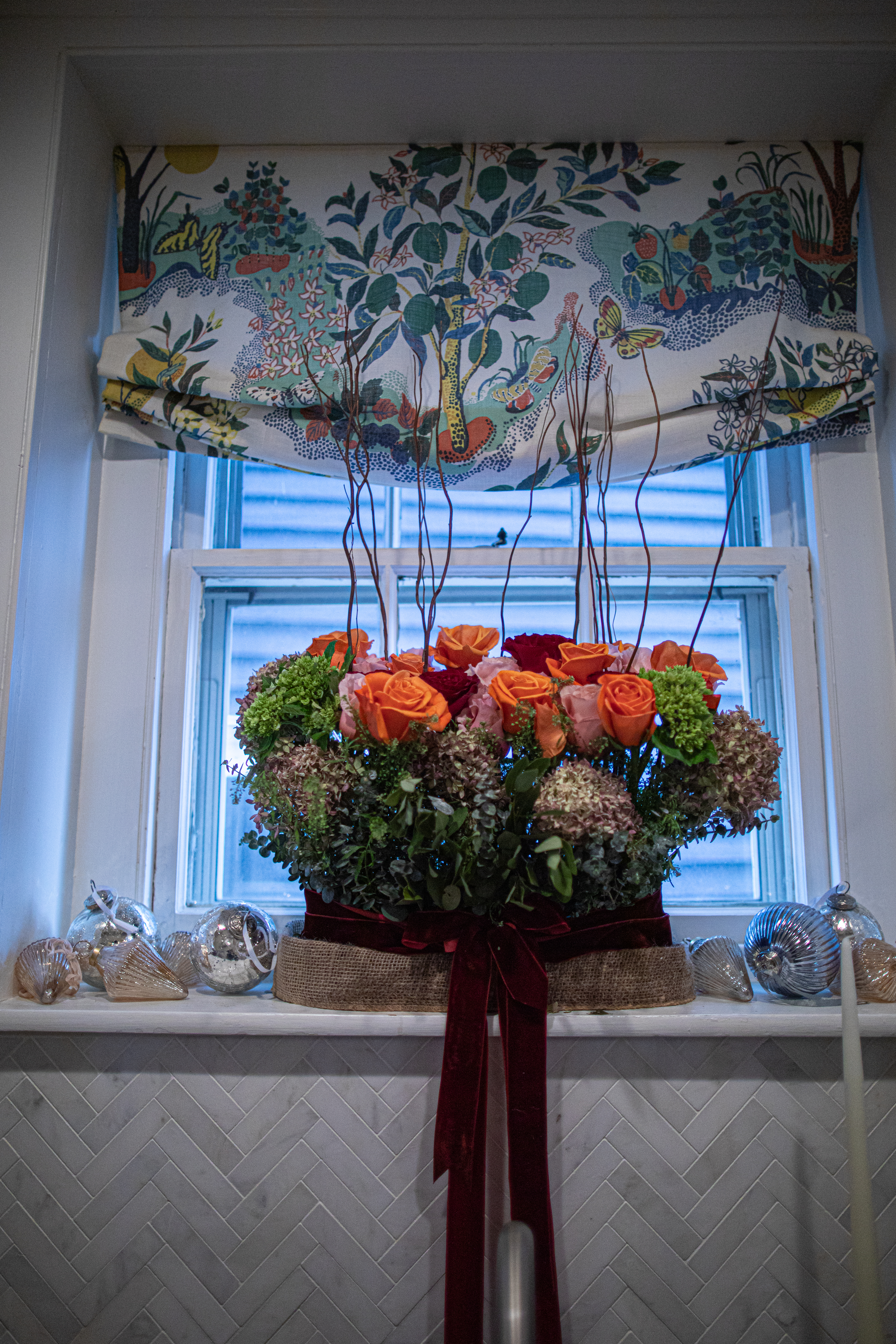
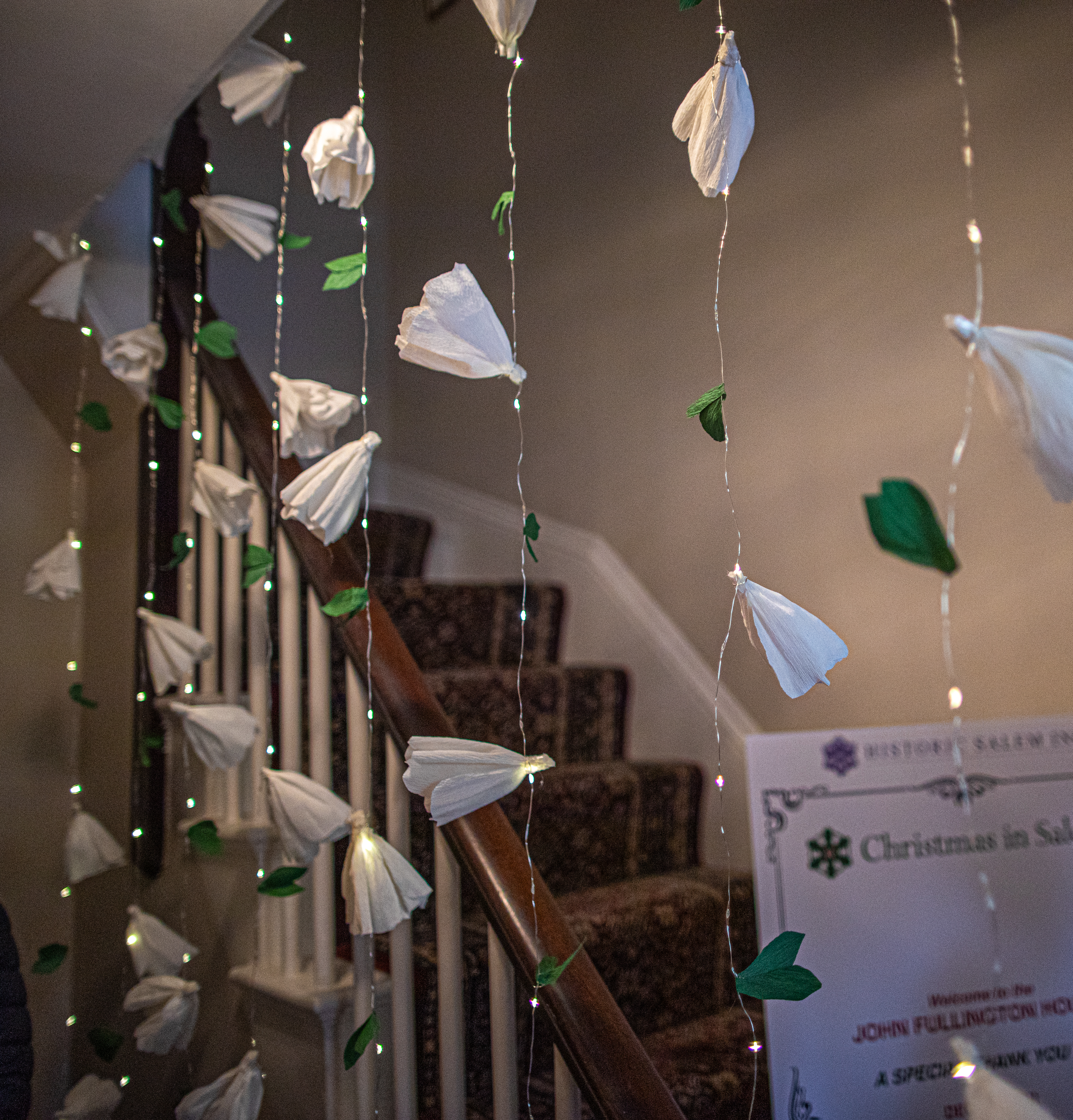
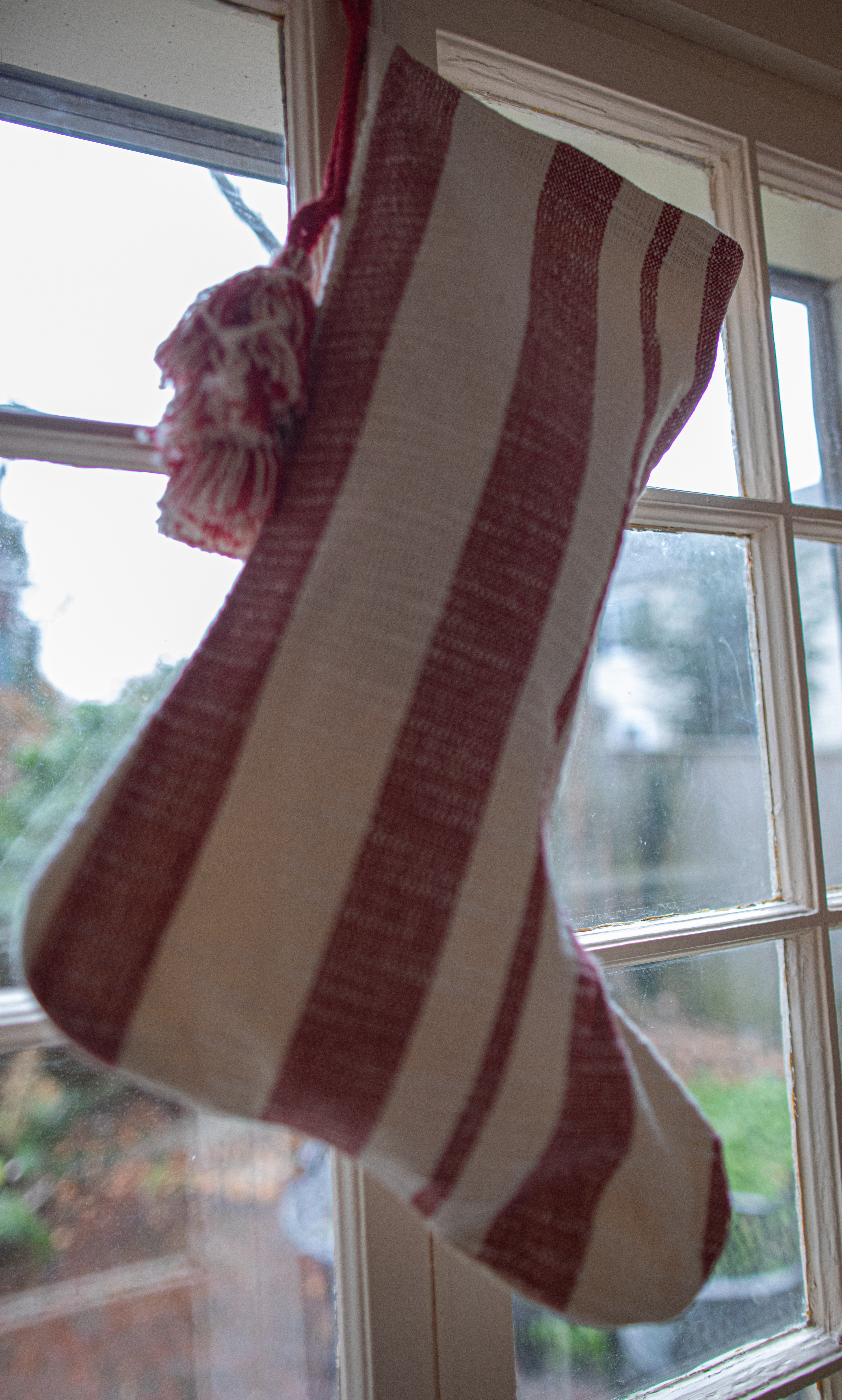
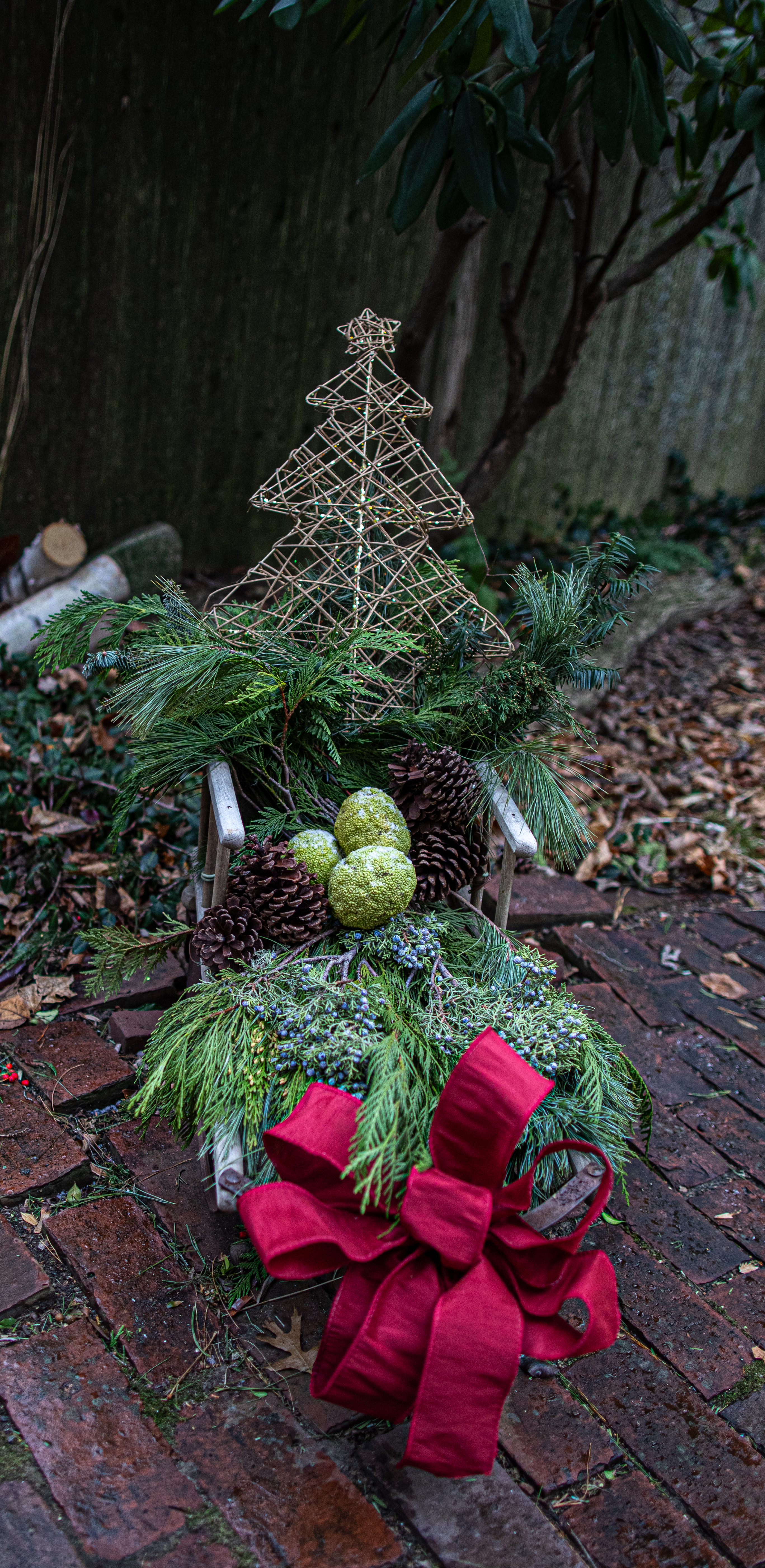
I also liked the Christmas decor in and outside of the home.

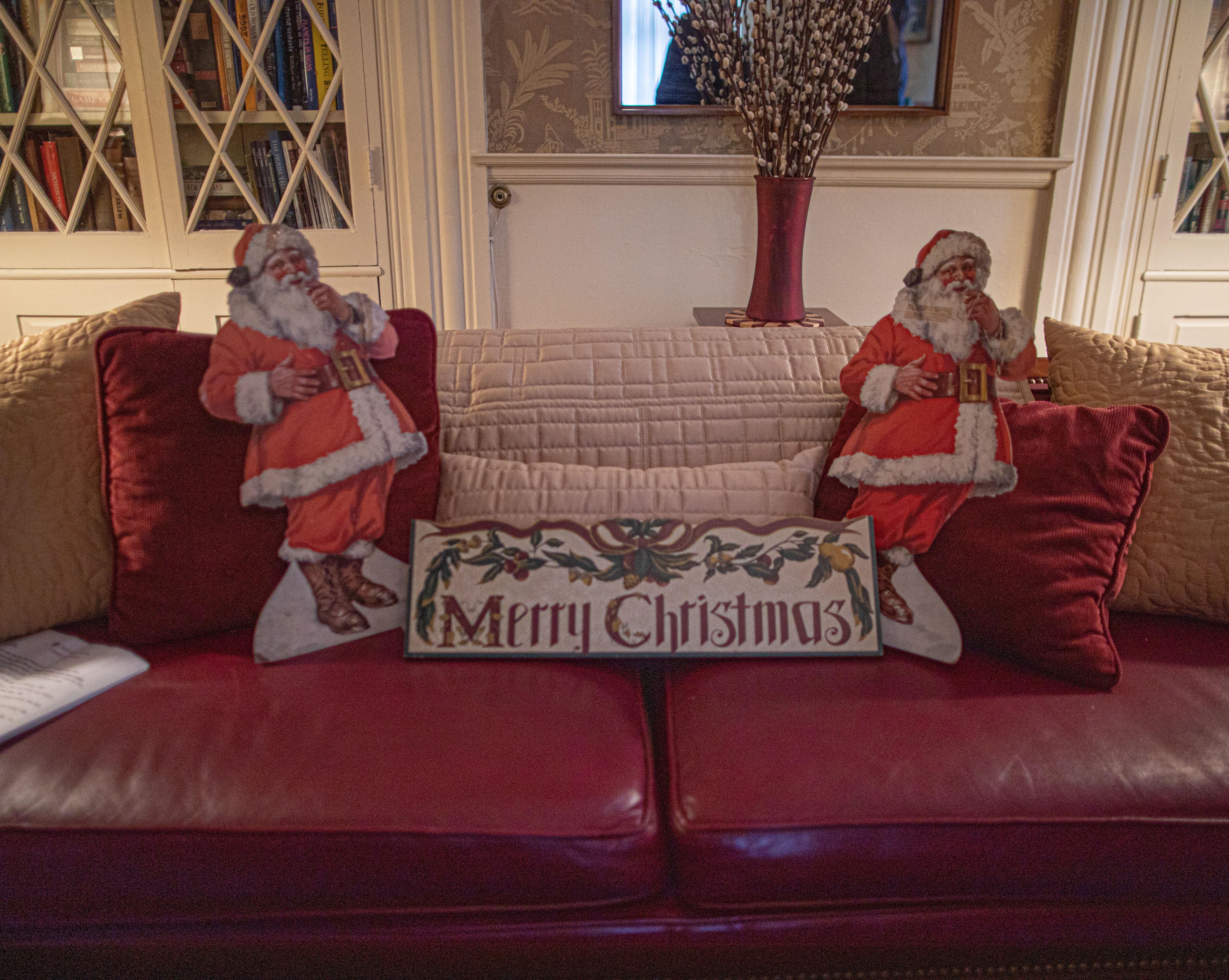
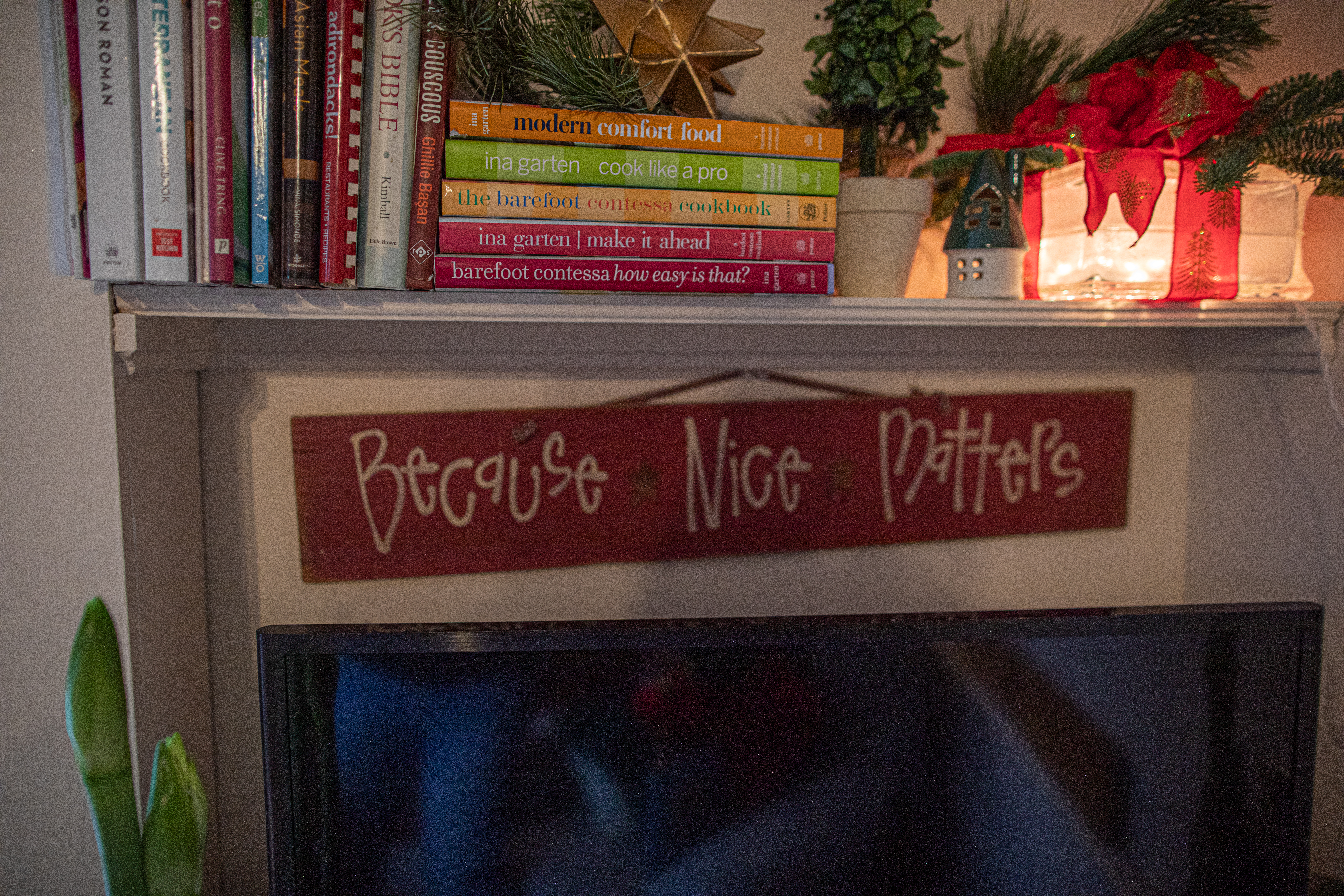
I agree with this sign!

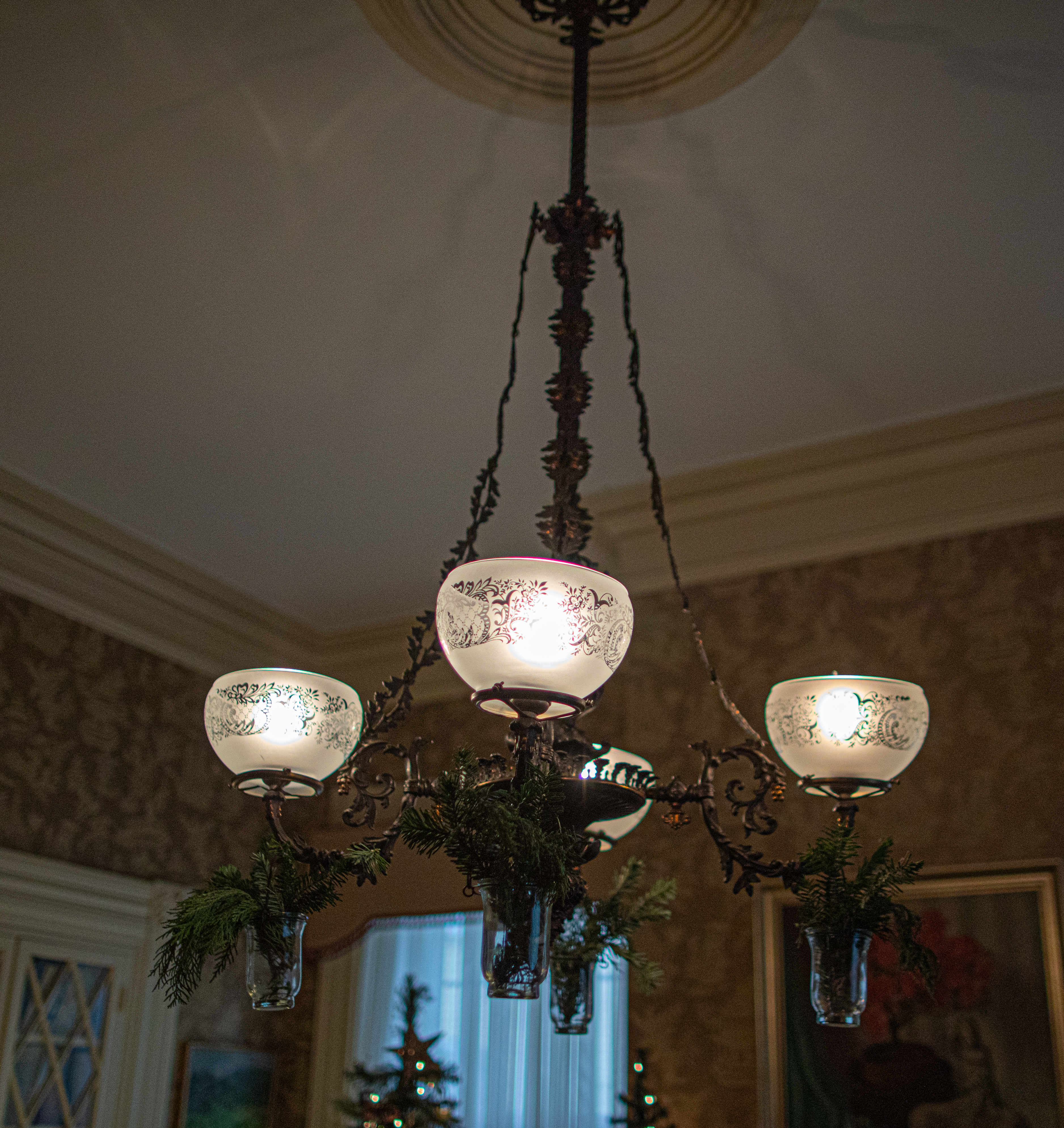
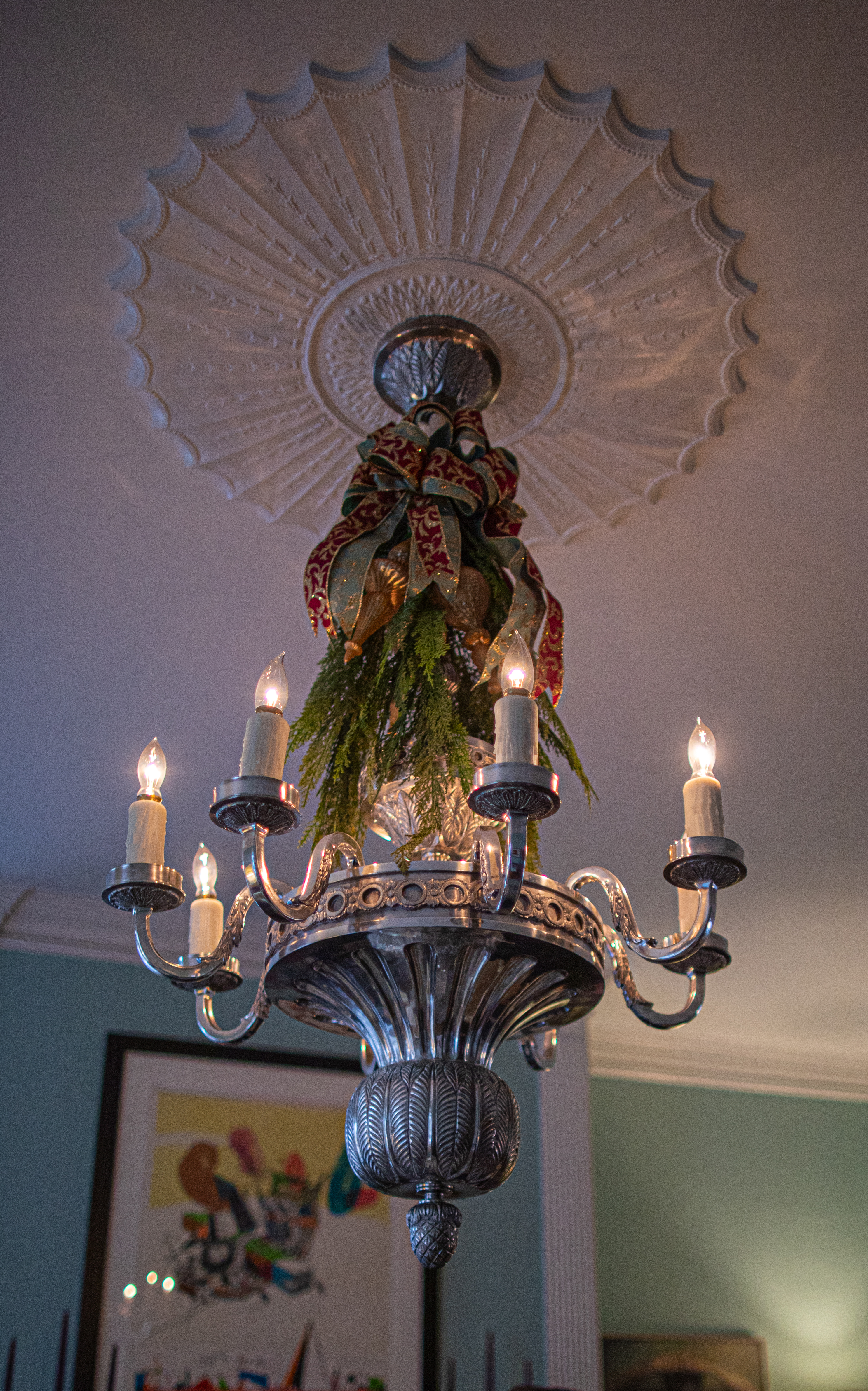
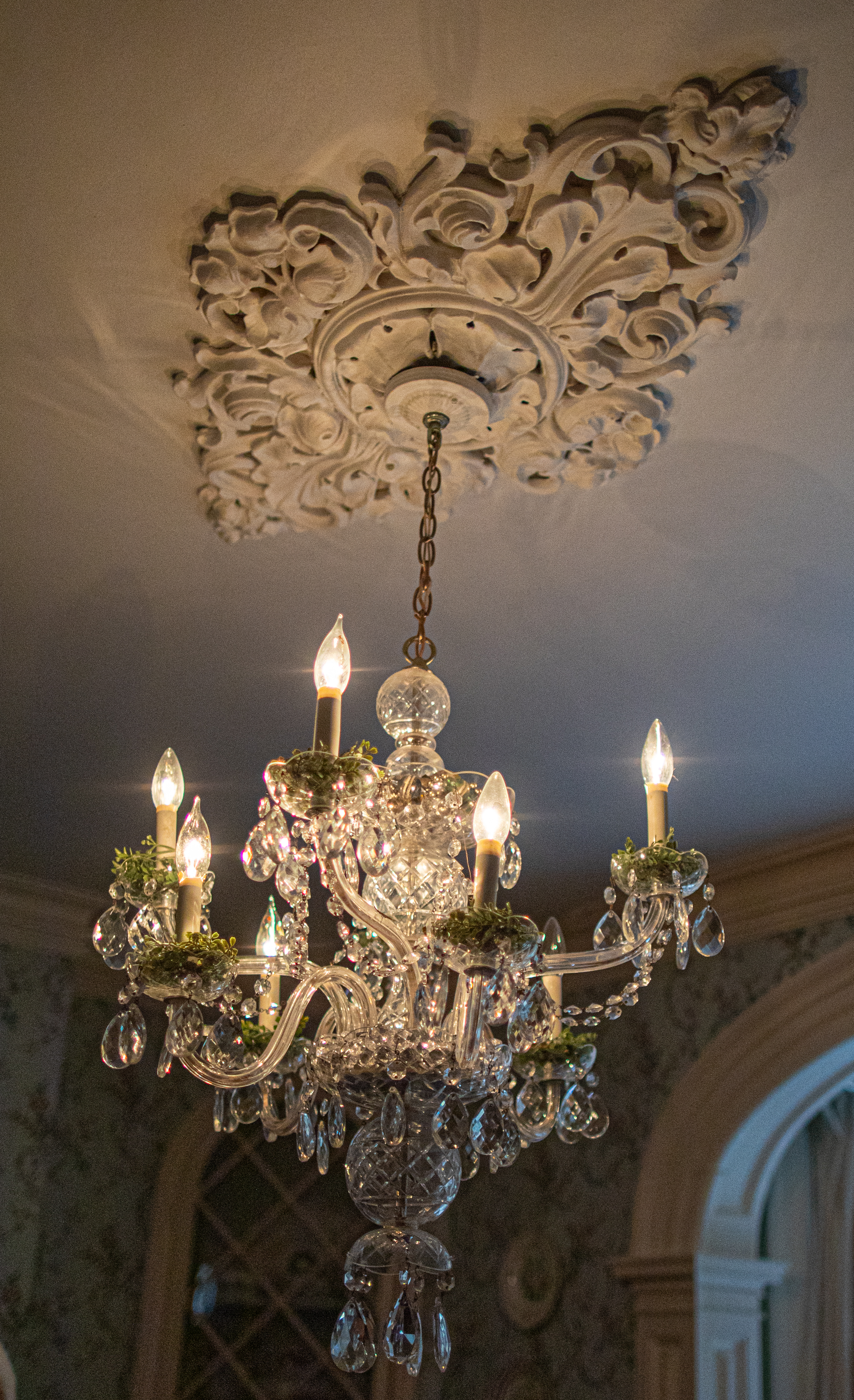
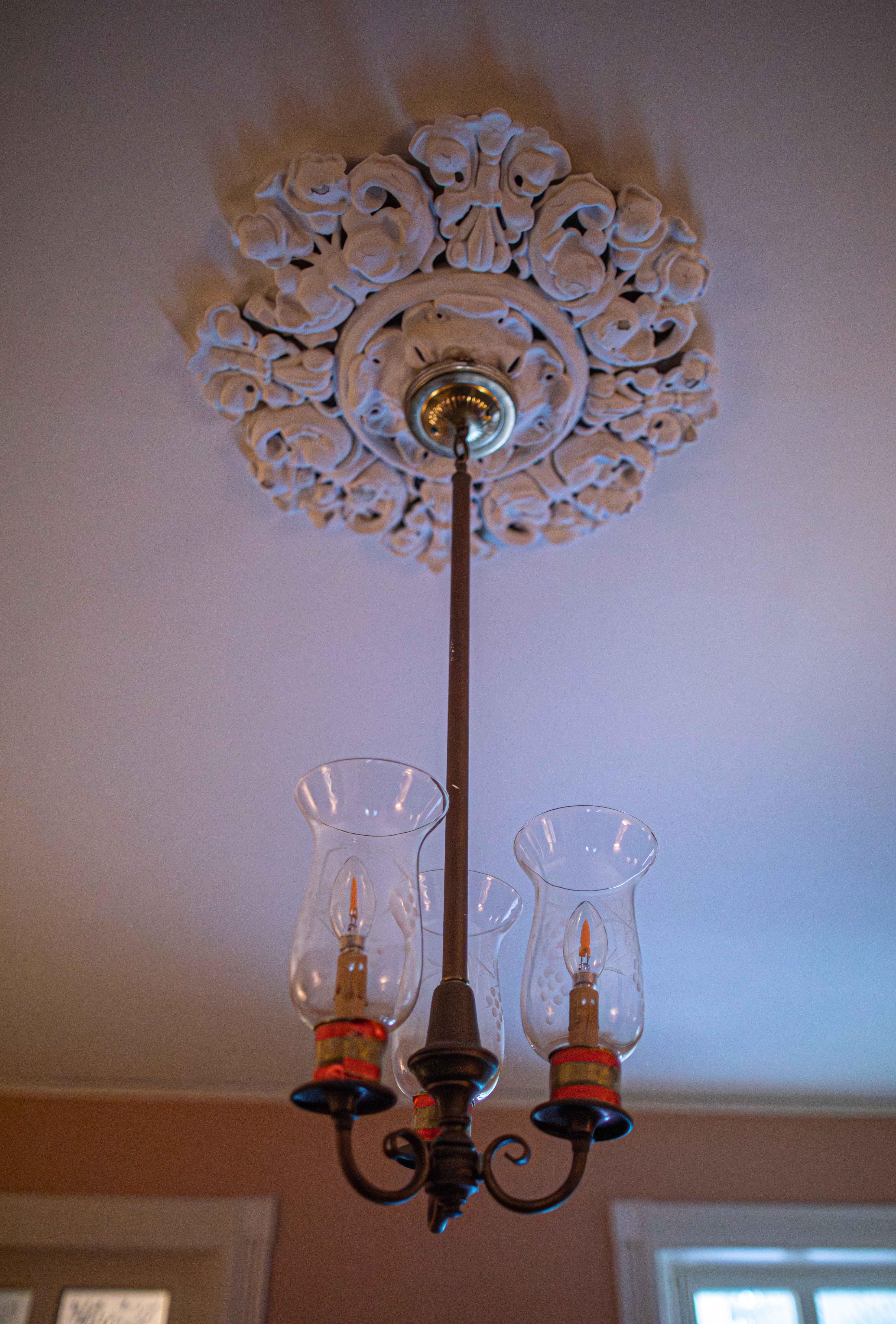
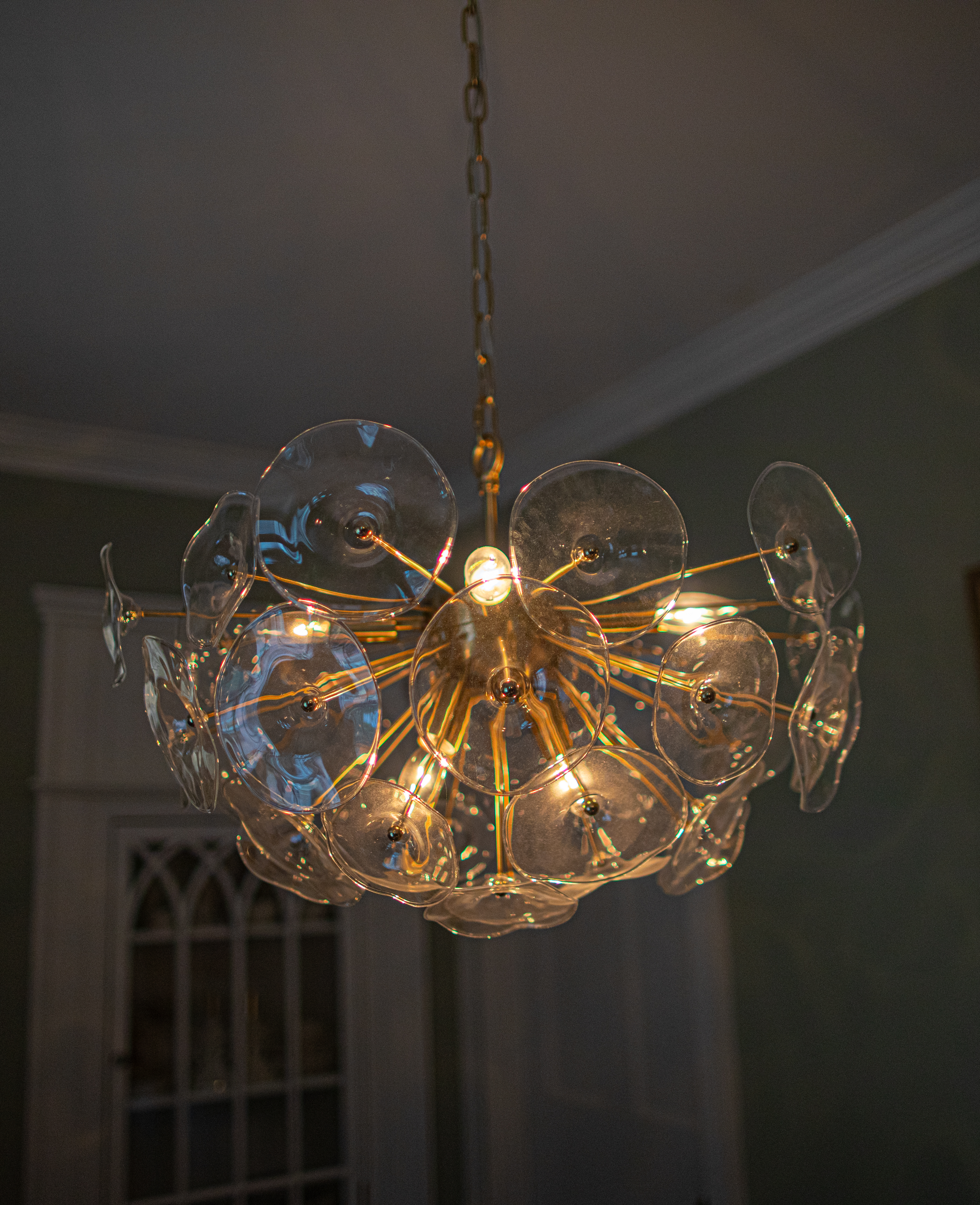
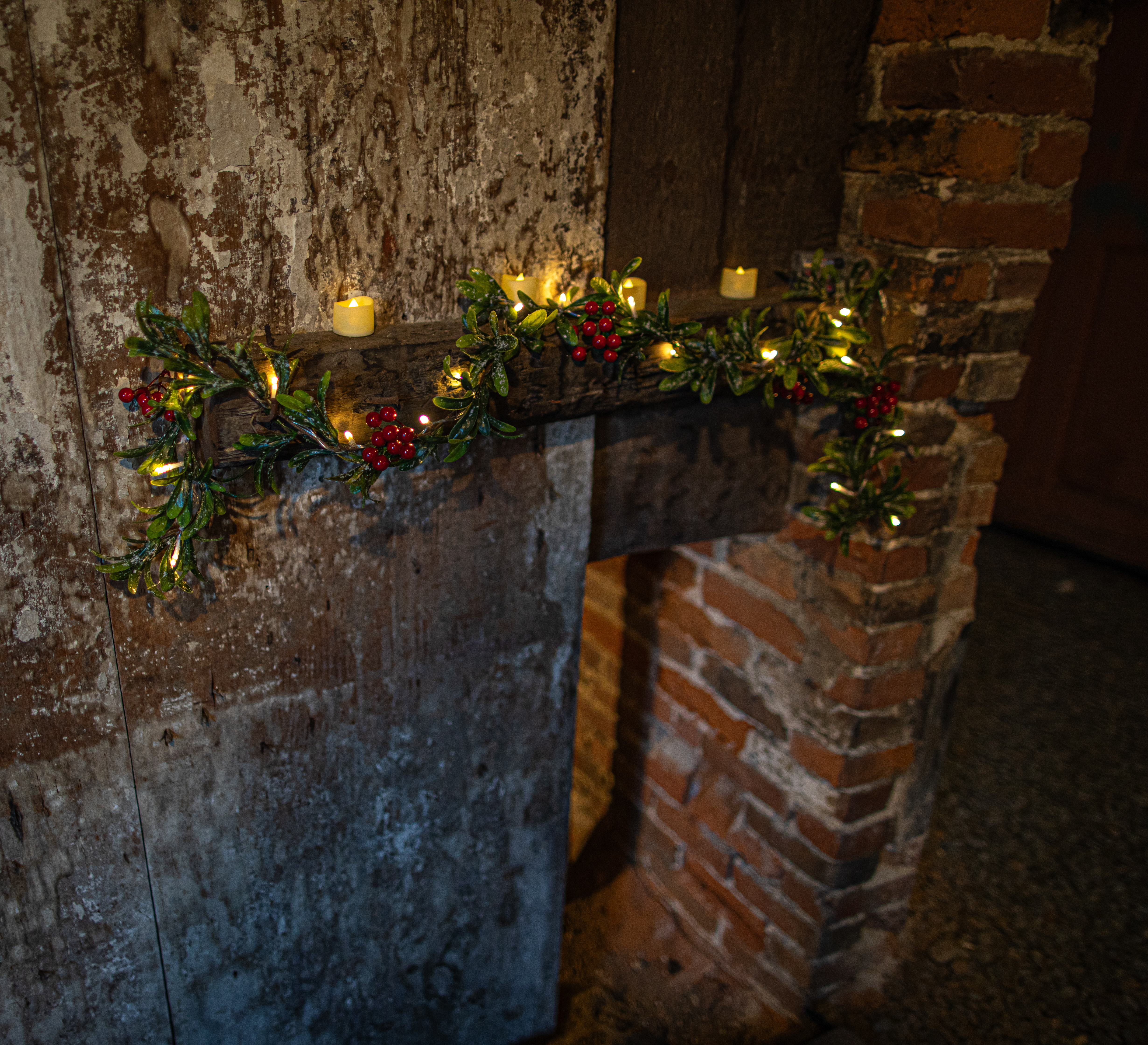
And, if you’ve been following my posts, you know I appreciate most of the lighting fixtures of these homes. This light had an environmental feel to it.

Now, back to the special theme of the home that I alluded to previously and the “Easter egg” from earlier in the post. This home like some of the homes on the tour had a theme or certain type of decor. The theme of this home was rocking horses! The owner of this home really likes rocking horses.

As you can see, the Fullington home was full of charm, Christmas cheer and a few pleasant surprises!


Christmas In Salem – Boughs & Blossoms – Joseph Kinsman House (Salem, MA)

Date Of Event: December 6, 2025

Location: 311 Essex St, Salem, MA (about 30 mins northeast of Boston, MA)

Universally Accessible: No

Cost: $40 ($50 if you buy ticket on day of tour)

Parking: There are several parking lots and garages and metered on street parking in Salem.

Summary: The Kinsman home has multiple Christmas trees, interesting art and decor and a lot of history!

Another home that I have walked past while marveling at its design is the Joseph Kinsman house. Some of the homes on this tour look like something you’d see in a movie. Wait until we get on to Chestnut St.

The Kinsman House has a long history of owners and changing locations. In 1850, Eliza Fiske sold her property which included her house on the corner of Essex and Summer Streets to John Kinsman, Superintendent of the Eastern Railroad, and his wife Nancy Fogg. The house, which was originally numbered 311 Essex St and later renumbered 309 after the Second Empire-style house was constructed, was demolished by the 1950s to make way for the expansion of Summer and North Streets (the streets adjacent to Essex St). Kinsman, after getting remarried to his second wife Martha Lord, sold his property to Caroline E and Joseph F. Dane, a shoe and leather dealer, on 1864, the lot already had two brick houses. Dane and his wife lived in 309 Essex St and rented out 311 Essex St to various tenants.

After their parents deaths in the early 1900s, the Dane children divided the property between the two buildings, selling 311 Essex St to Dr. George K. Blair, a renowned physician and surgeon in Salem. Madeline, his wife, lived at 311 Essex St until her death in 1983.

The tour guide for the home had some horns growing. He should have that looked at!

The entryway was decorated with some traditional Christmas decorations.

The spacious bedroom had a lot of character and pretty decor.

This painting of the house, done by a local artist, hung on the bedroom wall.

These colorful curtains were from high end decorators Cole & Son.

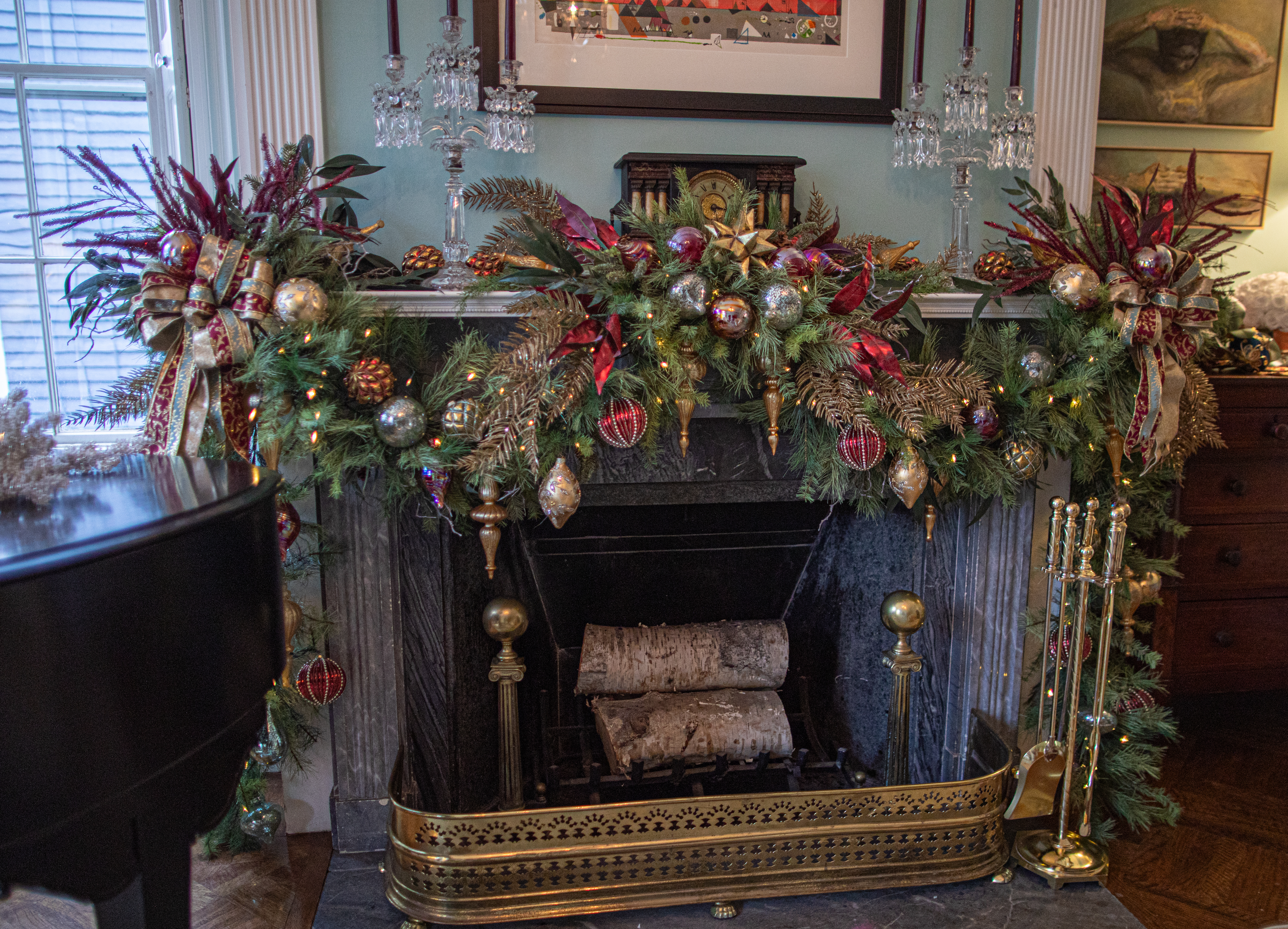
The decor on the fireplace mantle and table were emblematic of the aptly named “Boughs and Blossoms” tours. And, no, they are not decorated this way all year long! I did ask!

I’m always intrigued by the lighting fixtures at these historic homes.

The owner of the home is a connoisseur of whisky and other fine liquors. But, the tour guide assured us there was no liquor in this drink (wink, wink).

This so called “blessed buck” is indeed a real buck.

The home had various works of art and other types of decor around the home. I especially liked the painting in the middle. But, it is a house in Salem, So, of course, there was a skeleton and what appears to be a dragon in the group of paintings. This is what I like so much about these home tours. It’s interesting to see what they look like on the inside. And, it’s fun to see how different each of the home owners decorate.

There were quite a few trees in the home. One in the bedroom.

And in the kitchen.

And one outside

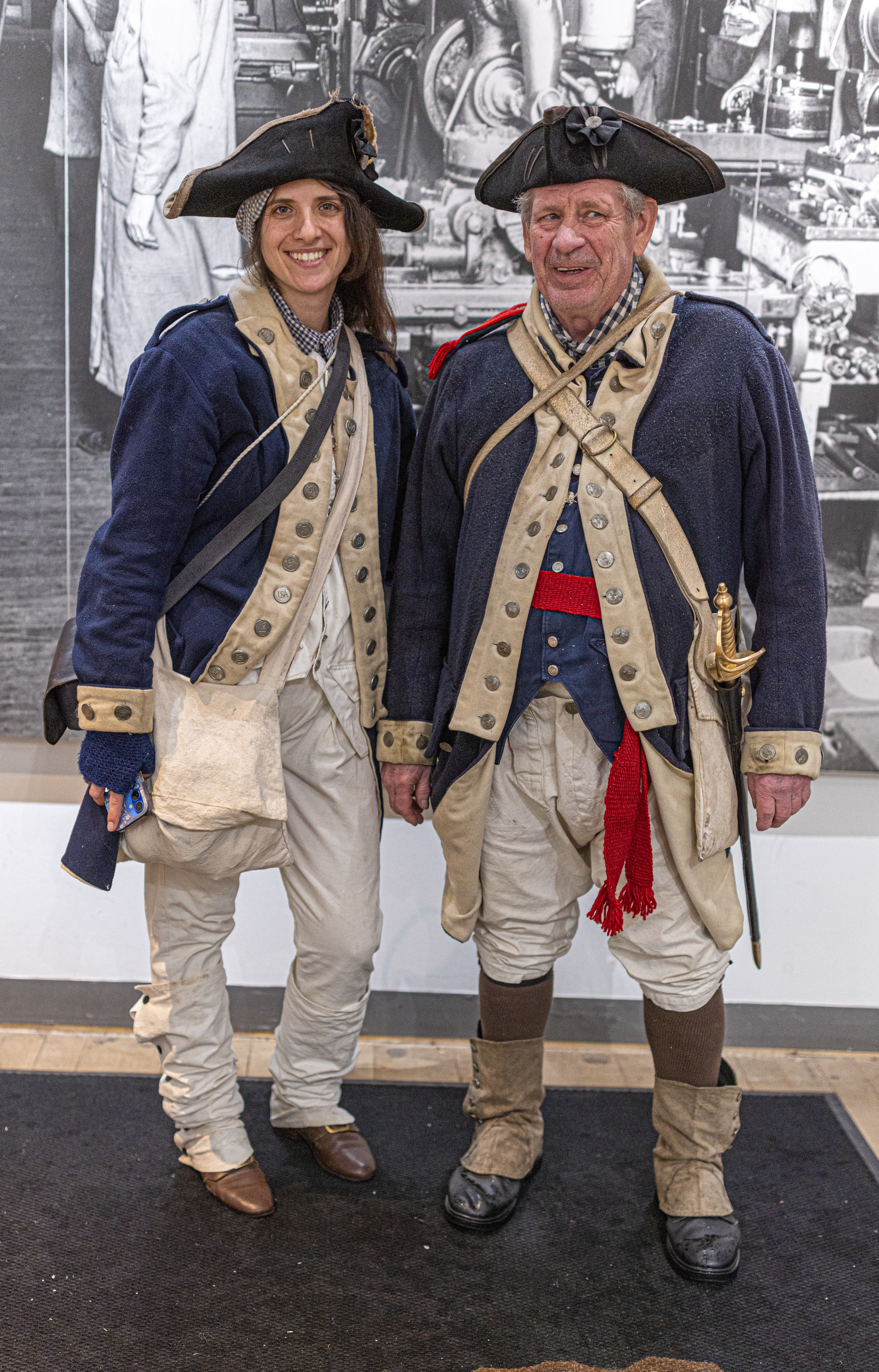
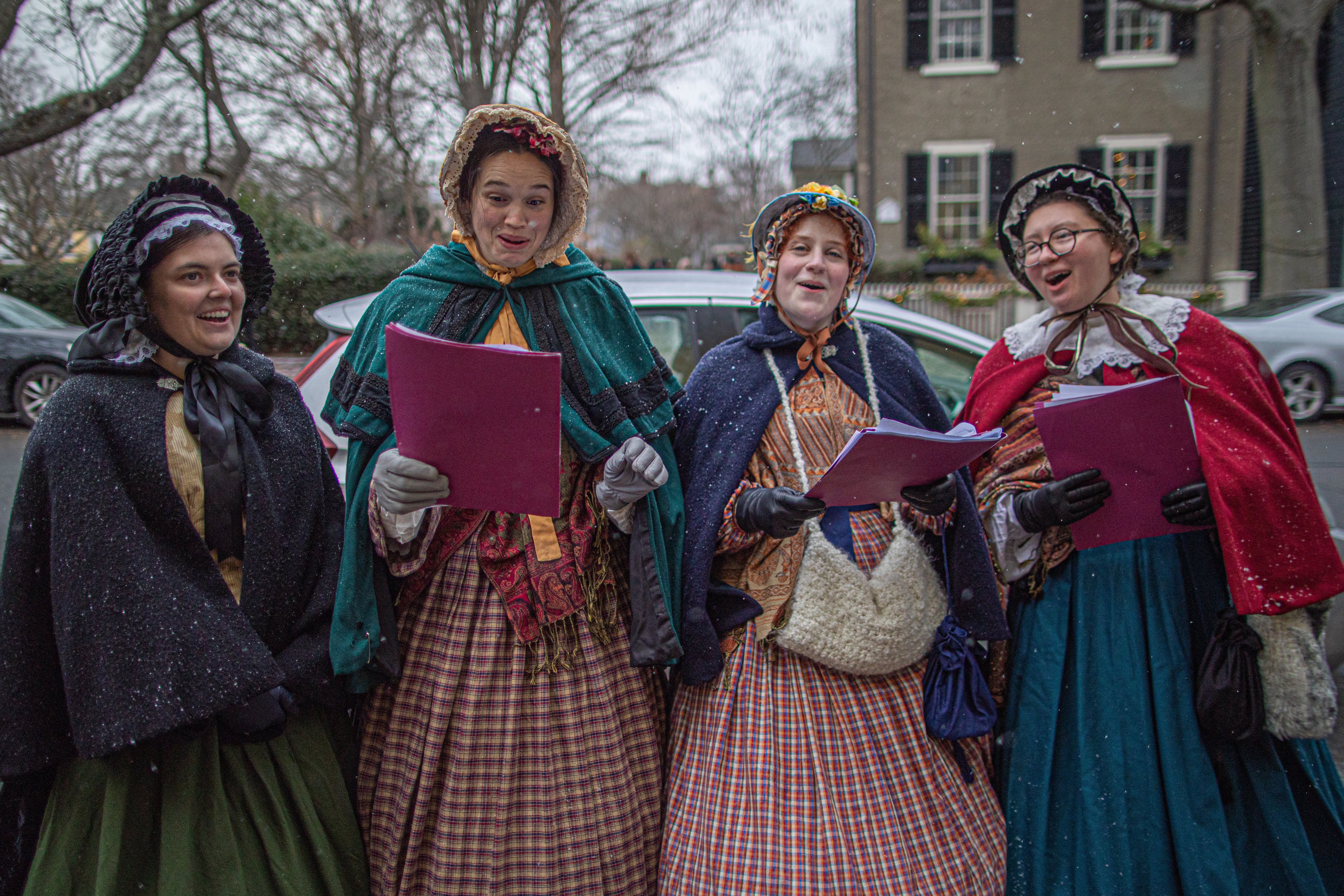
Some of the visitors dressed up for the event. These guys wore some festive headwear!

And these ladies wore their best hats! This is just another reason to love these tours! The people you meet are both interesting and fun to be around!


Christmas In Salem – Boughs & Blooms – Joshua Ward House (Salem, MA)

Date Of Visit: December 6, 2025

Location: John Ward House, 148 Washington St, Salem, MA (about 30 minutes northeast of Boston, MA)

Universally Accessible: No

Cost: $40 per ticket ($50 if you purchase day of tour tickets)

Parking: There are several parking garages in Salem, as well as metered on street parking.

Summary: The Joshua Ward House, rumored to be haunted, is said to be Salem’s oldest Federal style brick building. It was the first home on the Christmas In Salem’s Boughs & Blooms historic homes tour.

Salem’s not just a Halloween destination anymore and the throng of crowds at the Christmas In Salem historic homes tour, titled “Boughs & Blossoms, is proof of this. The event, which included tours of 12 historic homes, and a bonus tour of a tiny home, attracted thousands of visitors to the Witch City. And it seems to be a bigger event each year.

While you can visit the homes in any order you choose to, a list is provided of the homes on the tour and the Joshua Ward House was the first house on this list. I found most of the information for these blog posts in the guide book given to each person on the tour. But, all of the info about the homes aren’t just in the guide books. The tour guides also provided additional information not included in the guidebook which I am including in these posts.

Like many of the countless people who walk past this grand home, I always wondered what it looked like inside. So, it was very exciting to finally see the interior of this mysterious building.

Joshua Ward, a merchant and privateer, built the house shortly after the Revolutionary War. It is said to be the oldest Federal high style brick house in Salem. The house was built adjacent to Ward’s business activities by the waterfront and would have extensive views down to the harbor. It was built with the assistance of famed Salem architect and wood carver Samuel McIntyre. In fact, you will see Samuel’s handywork or influence in many of the homes in the tour.

For all of the gearheads out there, I used my Canon 5D Mark IV DSLR with a 24 mm while photographing this and all of the houses. Except, I did use my 90D Canon with a 18 to 400 mm lens for the photo of the exterior of the house so I could fit the entire exterior of the house in the frame. I also had to use a 1.4 aperture for most of the photos of the interior because of the low light environment.

The entrance to the home was decorated tastefully.

I thought this light was pretty unique.

While many inns, homes and other historical dwellings claim “George Washington slept here”, he really did sleep in the Joshua Ward home. When Washington visited Salem in 1789, diarist William Bentley recorded that Washington requested to sleep in the Joshua Ward house. He is said to have slept in the second level, southeast front bed chamber. When the home was turned into a hotel in the 19th century, it was known as the Washington Tavern in recognition of Washington’s visit. This bust was made in George’s honor.

Ok, now to address the elephant, or ghost, in the room. Since this is Salem, of course there is a connection to ghosts. The house has been widely said to be haunted. The house is said to be haunted because the home was built on the land where where High Sherriff George Corwin had his house. George Corwin was the person who issued the arrest warrants for the people accused in the Salem Witch trials. He is also the person who is said to have placed the stones on Giles Corey’s body to force his confession of being a witch. Giles never confessed. Instead, he’s alleged to have cursed Corwin and the city of Salem. His and the victims of the trials spirits are said to reside in the home. For whatever it’s worth, the tour guide at the house chuckled and told me he has never seen or heard any paranormal activity (although he did tell me he’s seen UFO’s or UAP).

The home has been refurbished and turned into a boutique hotel. It is also a National Historic Landmark and is listed on the National Register of Historic Places.

The work of art above the fireplace is called See No Evil.

The hotel has some luxurious accommodations. As long as you don’t mind sharing them with some uninvited guests!


Christmas In Salem – Boughs & Blooms – Tiny Home (Salem, MA)

Date Of Visit: December 6, 2025

Location: 5 Brown St, Salem, MA

Universally Accessible: This home was universally acceptable. But, many of the homes on the tour were not.

Cost: $40 per ticket ($50 if you purchase day of tour tickets)

Parking: There are several parking garages in Salem, as well as metered on street parking.

Summary: As part of the of the Christmas In Salem tour, the tour included a tiny home. The “Not So Tiny Home” gave a glimpse into a different type of home.

Christmas In Salem is known for the ornate historic homes in Salem, MA. But, this year there was a special home on the tour.

Considered a “bonus home” on the Christmas In Salem “Boughs and Blooms” historic homes tour, the “tiny home” on Broad St is part of the Peabody Essex Museum’s exhibition, “Not-So-Tiny Home.”

The creation of the New England couple Chloe Barcelou and Brandon Batchelder, the “Not So Tiny” home is a custom-built, 300-square-foot steampunk caravan. The tiny home was built to resemble a fairy-tale cottage, pirate ship and Victorian adventure.

Most of the inside of the home was built using recycled film sets, thrifted finds, and salvaged materials. The home is filled with secret compartments, fold-out furniture and other creative spatial solutions.

The tiny home was not open for tours. So, I was not able to take photos from inside the tiny home. But, I was able to find this photo of the inside of the tiny home on msn.com. Looks like a home I could get used to!

This is just a preview of the Christmas In Salem historic homes tour. There are many more homes on the Boughs and Blooms historic homes tour that I will post as soon as I can edit them!


Evening Of Illumination (Old Sturbridge Village, Sturbridge, MA)

Date Of Event: February 22, 2025

Location: Old Sturbridge Village, 1 Old Sturbridge Village Rd, Sturbridge, MA

Summary: Guided tours lit only by candle light showcased life before the use of electricity in New England.

It’s hard to believe but there once was a time when luxuries like IPads, streaming services and, of course, electrically powered lighting did not exist. But, Old Sturbridge Village was able to recreate these times at the Evening Of Illumination event in February.

At the first exhibit, the demonstrator showed off some of the different candles and lighting fixtures of the time.

During this event, one of the attendees asked if I could enable silent shooting on my camera as it was difficult to hear the speakers with the shutter of my camera going off. Unfortunately, my camera does not have this function. Modern mirrorless cameras do have this feature. But, my DSLR camera does not have silent mode (although there is a “quiet mode” that still makes a muted sound and is almost like a “slow mode”). So, out of respect for the people in the group, I did switch to video mode and I recorded videos at the historical homes. I did, however, also take a few photos in “quiet mode” when the speakers weren’t speaking. So, most of the remainder of this post will consist of videos from the event. Video recording is not my strong suit, particularly in low light situations and when there are bright light sources in low light. It really is a different skill set. So, I did have some challenges getting the lighting and focus right in some parts of these recordings.

At the next house, a violinist played a few songs. This is her version of “Park Waltz.” I especially like how she threw in a reference to the controversy surrounding her next piece. You may hear her say waltzing is a little bit controversial. In part, this is because waltzing is a form of dance where the dance partners are very close together. So close, in fact, their faces sometimes touched. Additionally, the dance partners would move or turn quickly and the dancing included fast tempos. How gauche!

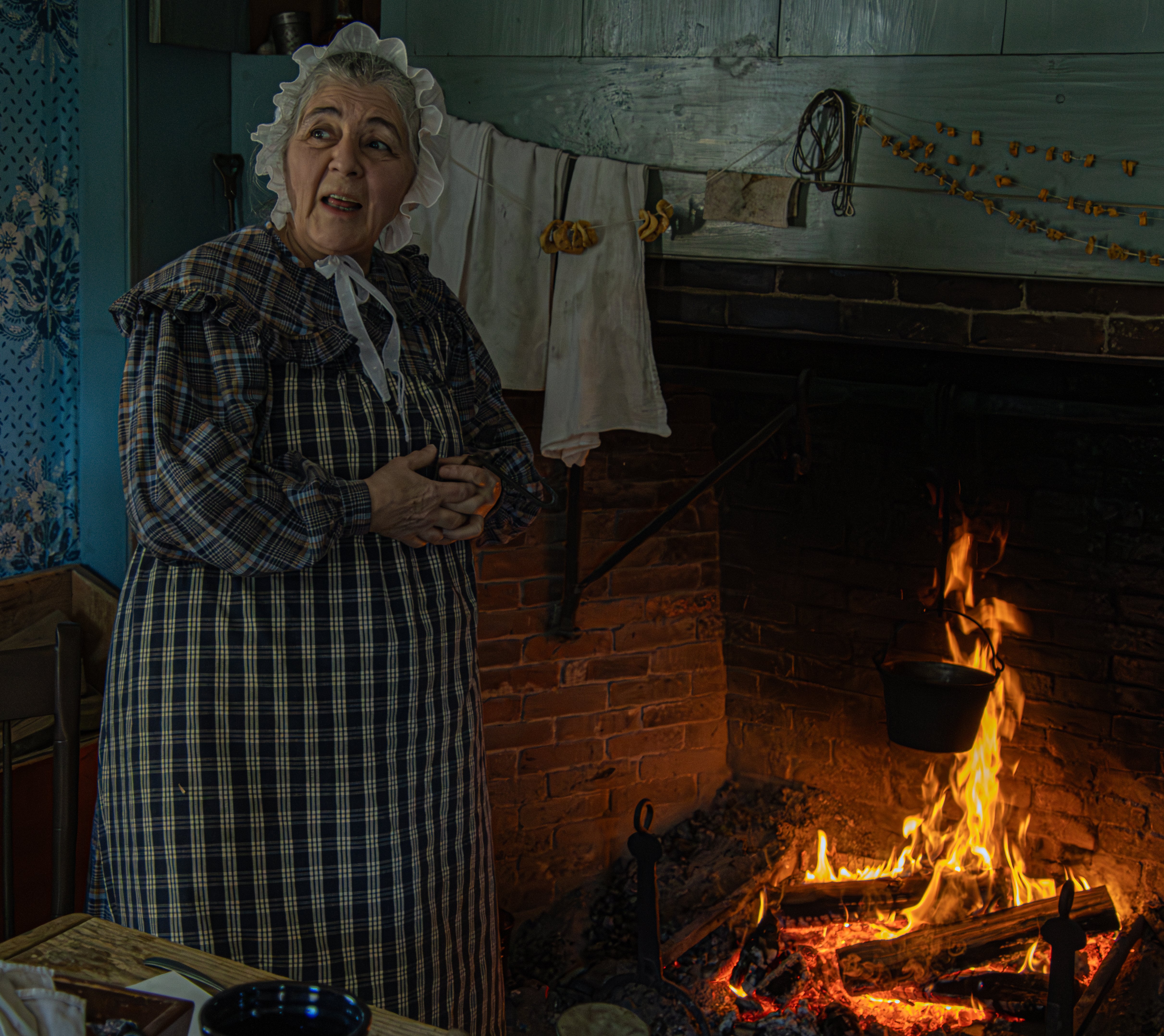
This historical actor showed everyone what her night time routine was like. Her routine included saying her night time prayers, laying out her clothes and washing her face and hands.

The gentleman at the next house showed us how people kept themselves entertained with a simple candlelight. It’s amazing the images you can create by candlelight.

He also told us some stories that people would share and showed us how people viewed images a s a form of entertainment (way before moving pictures became a thing).

What did people do before board games and apps? The historical actors at this house showed how they kept themselves entertained. Games like charades and asking riddles were popular forms of entertainment.

The shoemaker at the the village explained how a shoemaker’s job was like.

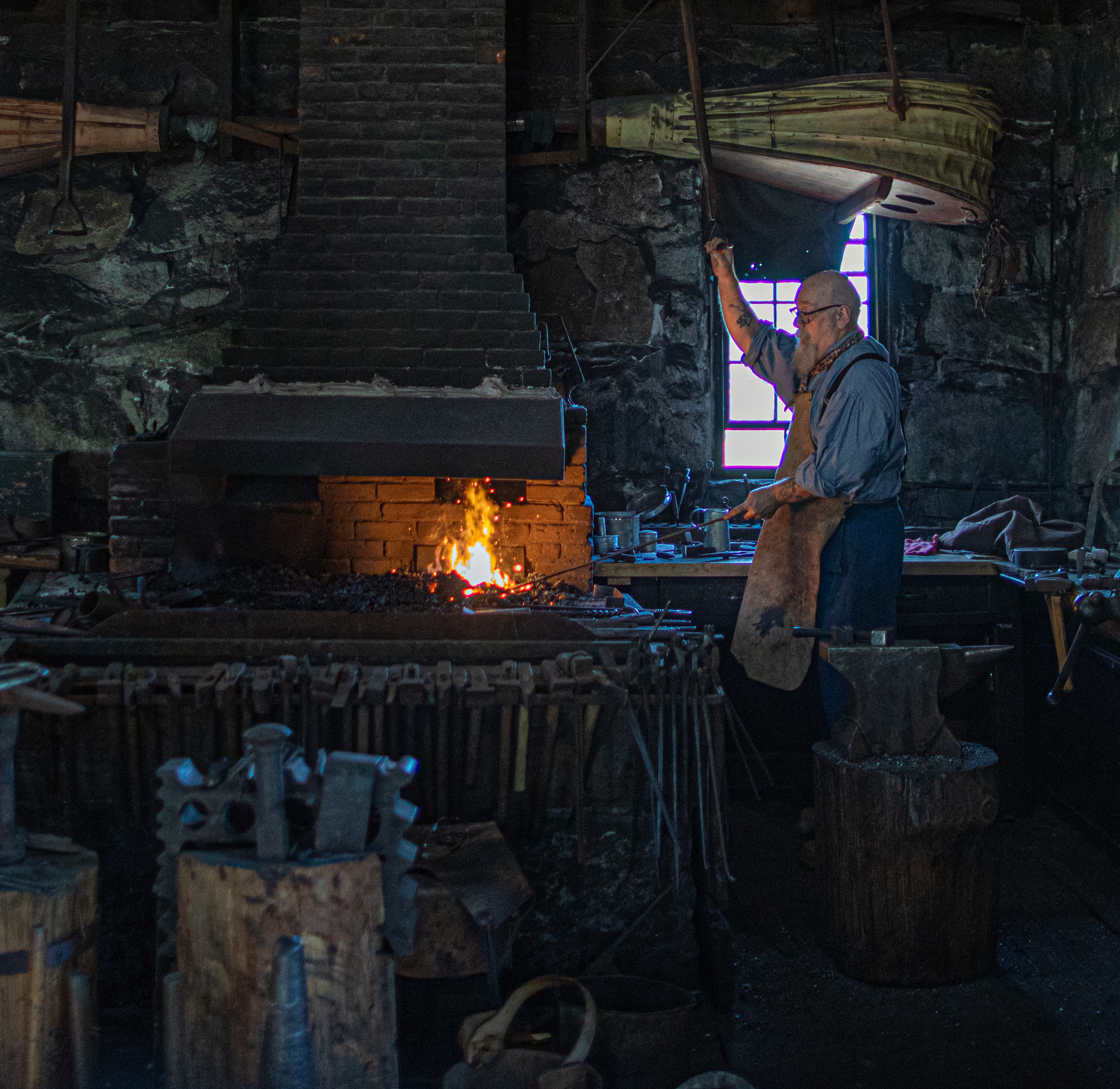
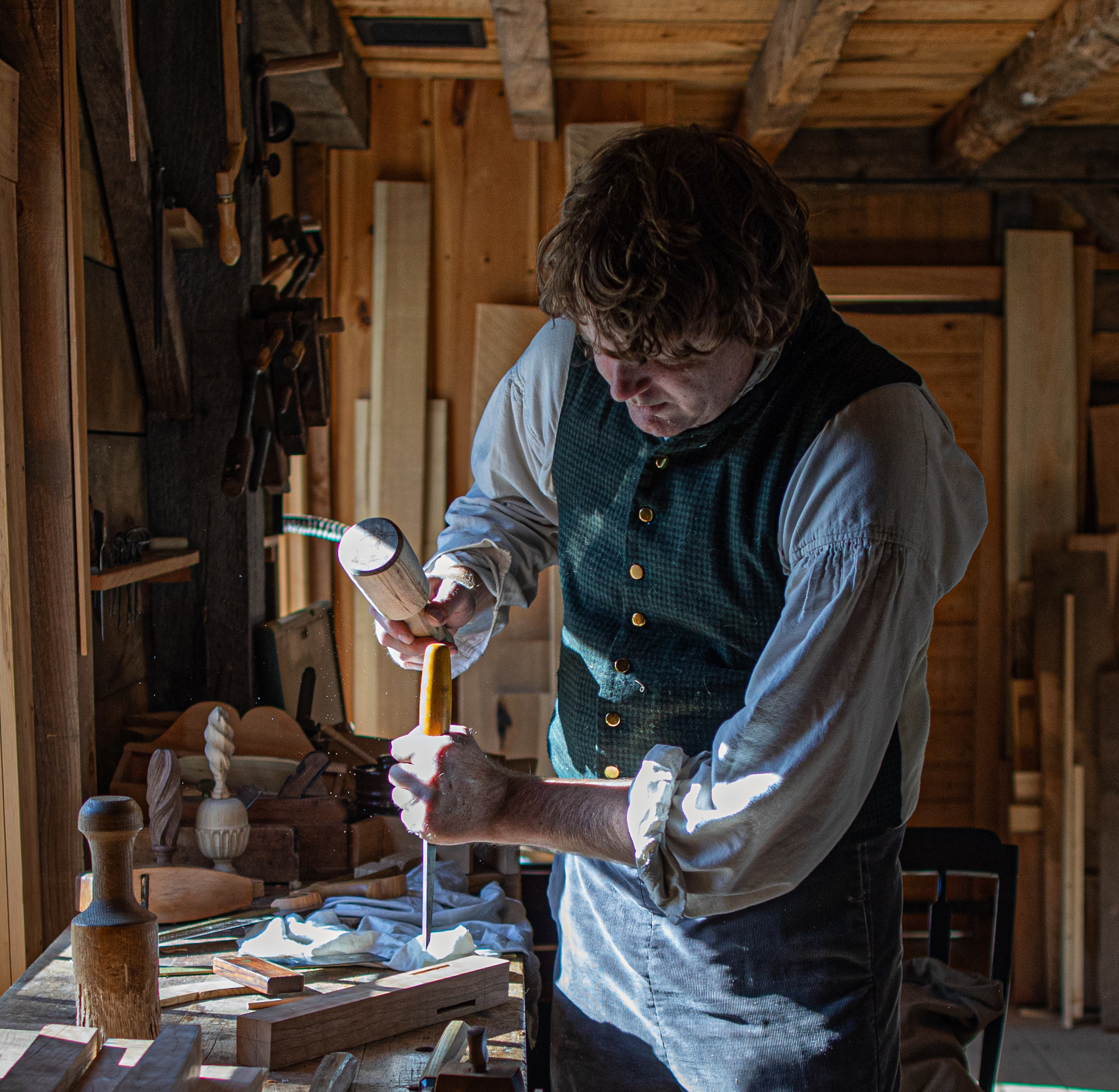
The furniture maker at the village described his job by candlelight.

A young couple talked about their lives as young people with a child.

Carolers sang “Yankee Doodle Dandy” at the Meetinghouse.

The shop keeper explained the details of her job and some of the merchandise in the shop.

There were also some great photo opportunities in the tavern and lobby.

If that wasn’t enough, there was also dancing! All the visitors were invited to watch and participate in dancing at the tavern.

While this event was a lot of fun and very informative, it also made me appreciate the luxuries I have!


2024 Christmas In Salem Part 14 – Bertram Family House (Salem, MA)

Date Of Visit: December 7, 2024

Location: 3 Carpenter St, Salem, MA

John Bertram, a wealthy merchant and philanthropist in Salem, built this house as an investment for his three daughters: Jennie, Annie and Clara. Upon his death in 1863, his own mansion was donated to the city of Salem. The building was donated as the future Salem Public Library. However, after the sisters showed interest in the home they inherited the house.

It is unlikely that Annie Webb ever lives on Carpenter St. Instead, Annie lived on Chestnut St with her husband, William G. Webb, and used the property on Carpenter St as a rental. Annie sold the house in 1920 to a long time tenant. A succession of owners occupied the house through the years before the current owners acquired it in 2011,

The Bertrams built the house in the Colonial Revival style, an architectural style popular in the 19th century which incorporated an eclectic mixture of stylistic details considered as representing aspects from several earlier historical styles. Ornamental elements typical of the Colonial Revival style used on the exterior of the house include dentilated and bolection moldings at the cornice and elaborate pediments over some of the first floor windows. The roof is an adaptation of the Mansard type popular in France about that time. The house is built in an L-shaped plan with the main entrance at the corner of the L where there is a single story porch.

Speaking of the porch, there was this cute pillow on a chair on the porch to the entrance of the house.

Inside the home there were more Christmas decorations.

This game looked like it would be fun to play!

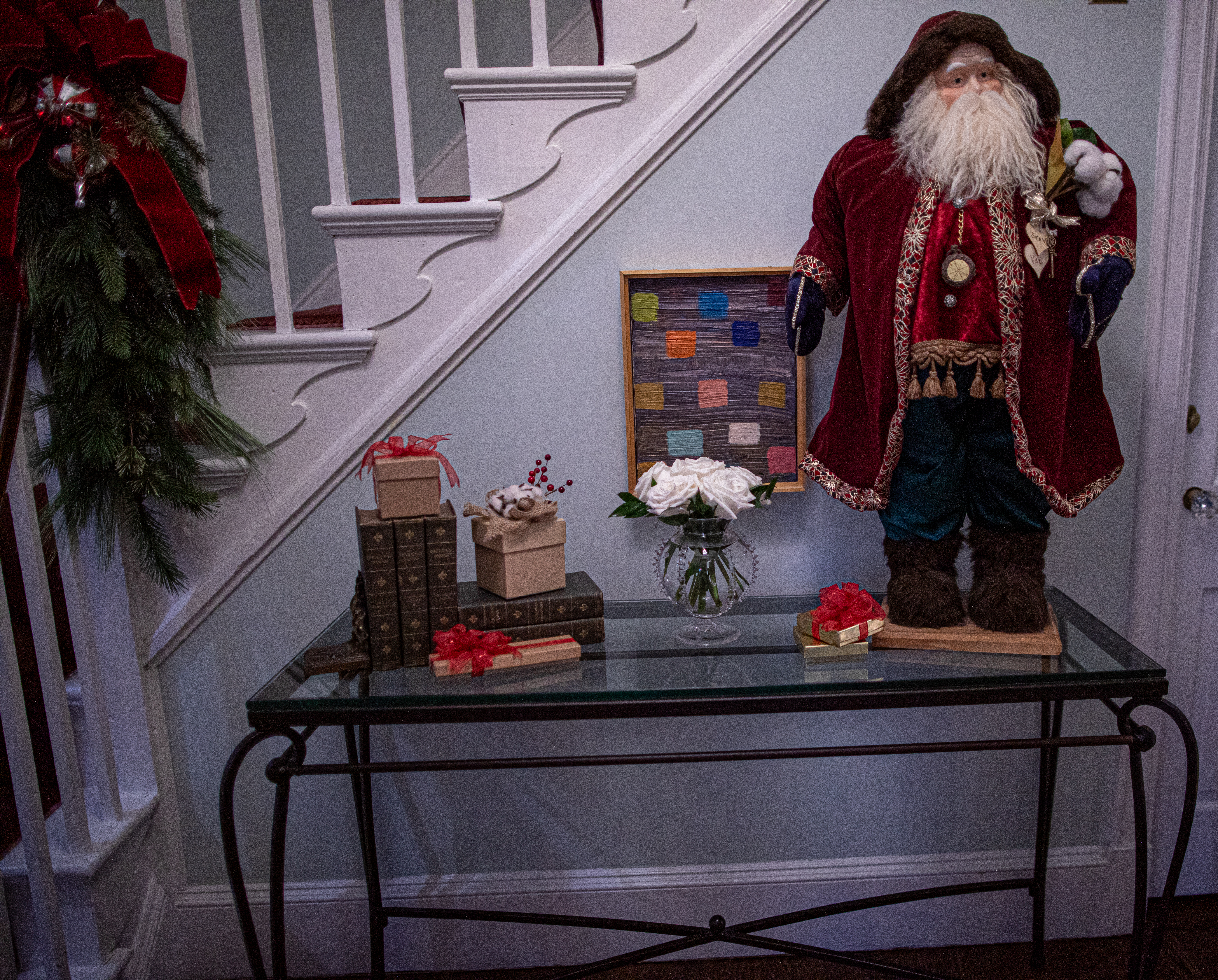
Meet Belsnickel. A crotchety, fur clad, gift bringer, Belsnickel is a figure in the folklore of Palatanite region of southwestern Germany along the Rhine (think Dwight from the office in the Christmas special). In some traditions, he is said to reward the good children while punishing the bad children. So, you really better be good!

This statue seemed like a kinder Belsnickel.

The sunny living room area gave some light and warmth to the home despite the wintry weather outside.

Of course, I spent a little extra time in my two favorite rooms: the kitchen and dining room.

And, of course, what would a Christmas home tour be without not one, but two Christmas trees!

This concludes the 2024 Christmas In Salem Home Tours posts! I hope you all have enjoyed the Christmas In Salem home tours as much as I enjoyed posting about them!


2024 Christmas In Salem Part 8 – The Witch House (Salem, MA)

Date Of Event: December 7, 2024

Location: 310 Essex St, Salem, MA

Website: The Witch House

The Witch House in Salem, MA, may be not only the most photographed housew in Salem, it may also be the most infamous.

Built in circa 1675, the building was built by Captain Nathaniel Davenport of Boston. The wood-frame and clapboard home was sold to Salem merchant Jonathan Corwin. After purchasing the home, Corwin hired mason Daniel Andrew to complete the structure.

In 1692, during the Salem witch trials, Corwin, who served as a magistrate and justice, would question and examine some of the accused witches in this very house. None of the accused ever lived in the house. And, of course, none of the accused witches were actual witches.

The house was built in a center chimney style. The clustered brick chimney served as an anchor for the house. A two-story projecting projecting porch is flanked by peaked gables on the facade, a rear lean-to extends the space on the back. The entire second story overhangs the first story in the front with decorative drop pendants at the ends of the overhangs of the porch.

Through the year, multiple changes and alterations were made to the structure. In the second-half of the 19th century, owner George P. Farrington, attached a drugstore to the east front of the structure.

In the 1940s, the city wanted to enlarge North St (the original location of the Witch House). But, the citizens of Salem raised $42,000 to save the home and to have it moved to its current location on Essex St. The Witch House was eventually opened as a museum in 1948.

I have mixed feelings about this house. Innumerable people line up to take photos in front of this infamous home. While it’s important to keep reminders of the past and it’s also good that places where tragic things have taken place have transformed into places of historic value (and business), it still doesn’t sit well with me.

The Witch House had a self-guided tour that had print outs with information about the house. While the house is generally known for the tragic events of the Salem witch trials, this tour dealt more with the Christmas traditions and some of the rituals and remedies of the day.

According to the handouts, the colonists brought over many of their Christmas traditions from England. Some of these traditions include eating and singing religious hymns. Did I mention eating?

I got hungry just posting these photos! And, of course, one would need implements to eat these foods.

These utensils were found through archeological digs and excavations.

The Christmas festivities from that time lasted from December 25 until the Twelfth Day, January 6. During this time period very little work was done. What a bunch of party animals.

The Witch House was festively decorated for the tours.

During the times of the witch trials, people used holly remedies as cures. Archeologists found ritual shell-cups in North America with residue dating back to 1,200 BC. The leaves can be used to make tea and alleviate digestive disorders, water retention, jaundice, rheumatism, periodic fevers, measles and respiratory illnesses such as cold, coughs, flu and pneumonia. Somedays I feel like I may have every single one of those. Holly leaves can also be used to treat symptoms of dizziness and high blood pressure. They also can be used topically for sores and itching.

There were some documents from the witch trials. These actual documents from the trials are kept in a sealed container.

The Witch House also displays an assortment of wares and other tools of the era.


2024 Christmas In Salem Part 6 – The Greymoor /Putnam-Balch House (Salem, MA)

Date Of Visit: Dec. 7, 2024

Location: 329 Essex St, Salem, MA

It’s easy to see why the Grey-Balch residency is considered “the most ambitious and outstanding residence of its era in Salem.”

The Greymoor-Balch House boasts rusticated wooden sheathing, paired pilasters with fluted tops at the corners of the facade and an elaborate arched dormer window above the second floor which is enhanced by a heavily bracketed cornice. The front entrance porch is supported by eight square molded columns capped by a balustrade with corner posts supporting urns.

The house’s decor is modeled after the Second Empire and Italianate styles.

Greymoor was built by James S. Putnam in 1872 after he demolished a house on that site which was owned by Benjamin Marston, a former Essex County high sheriff and colonel in the state militia. In 1881 the property was by Frank Balch. Balch worked at the Naumkeag Steam Co. Balch’s son is said to have improved x-ray technology by inventing the Balch Roentgen Scopic screen in 1916 which reduced the time required for taking an x-ray picture from 20 seconds to 1/5 of a second. Balch’s company, Balch Roentgenoscopic Screen Co, was located in Salem, MA.

The house served as Salem’s American Legion headquarters between 1921 and 1979. Between 1971 and 1981, Donald Costin restored the house as a private home. More recently, the current owners have restored the house to its original decor. The 6,352 square foot included 3 floors with 2.5 bathrooms, 5 bedrooms and 8 fireplaces. When the house was listed for sale in June, 2019, the house was listed for just under a paltry $1.4 million.

Upon entering the home, it was clear there was a lot of Christmas decor in the house.

I thought this arched door was very elegant.

Of course, my favorite of any home is the kitchen. I always like to look at the kitchens of these old homes! This very old looking cast iron coal stove had 6 burners. I especially enjoyed the artwork and decor above the stove.

In the hallway, there was this painted window that could be opened.

The home was tastefully decorated. I especially liked the lighting fixtures.

Fitz Blarney provided some holiday cheer.

I have a pet peeve about taking photos in general. But, especially with photos of homes. If there is a vehicle or some other obstruction, I won’t take head on photos of the building. So, I will often take photos from an angle or the side. However, this home is so pretty, I decided to include a front facing photo of the building from the real estate website when it was on the market (photo courtesy of priceypads.com).


2024 Christmas In Salem Part 1 – The Cotting-Smith Assembly House (Salem, MA)

Date Of Visit: December 7, 2024

Location: 138 Federal St, Salem, MA

Parking: There are several parking lots and garages in the Salem area

Universally Accessible: No, many of the homes do not have ramps or universally accessible entry

When you ask most people what they think of when they think of Salem, MA they will most likely reply with something about Halloween and witches. However, Salem has become an all year round attraction. In fact, the Christmas in Salem event has quickly become one of the more popular events in Salem.

Christmas In Salem is a series of guided tours at 13 historic homes and buildings in Salem, MA. In these series of posts, I will take you all on these tours and give some observations from my perspective through my photos and the information provided by the informative tour hosts and the literature from this event.

The first home on the Christmas In Salem tour is the Cotting-Smith Assembly House (aka as the Assembly House) on Federal St. This house was used as the headquarters of the tour. People registered for the tour by showing their receipt and, upon registering, were given a handbook with the addresses and writeups for each building.

Built in 1782 as a “Federalist Clubhouse”, the Cotting-Smith Assembly House was used as a ballroom and concert venue as well as a place to host lectures and other events for Salem’s elite. The Marquis de Lafayette was said to have danced in that very house in 1784 and it is said that George Washington dined there in 1789. While the original documentation for the building is not available, it is believed the house was essentially plain and functional in its original state in 1782.

The building was originally funded as a joint stock venture. Once it was rendered obsolete in 1792, Jonathan Waldo, one of the original developers, obtained full ownership. Waldo then sold the house to Samuel Putnam in 1794. Either Waldo or Putnam hired renowned Salem architect and craftsman Samuel_McIntire to remodel it as a private home. McIntire added 4 pillar of iconic pilasters to the second floor facade and a pediment centered above. The Assembly House is said to the the only wooden structure designed by McIntire with a pavilion front. The house was later remodeled during the 1830s or 40s. During this time the Greek Revival portico was added to the front of the house featuring an ornate frieze of carved grape vines by master carpenter Joseph True. The Assembly House, which is now owned by the Peabody Essex Museum, is listed on the National Register of Historic Places.

The building acted as the meeting place for visitors to get their handbook of houses to visit and map of all of the buildings on the tour. So, there wasn’t much decor at this particular home. However, I did see some photo worthy things.

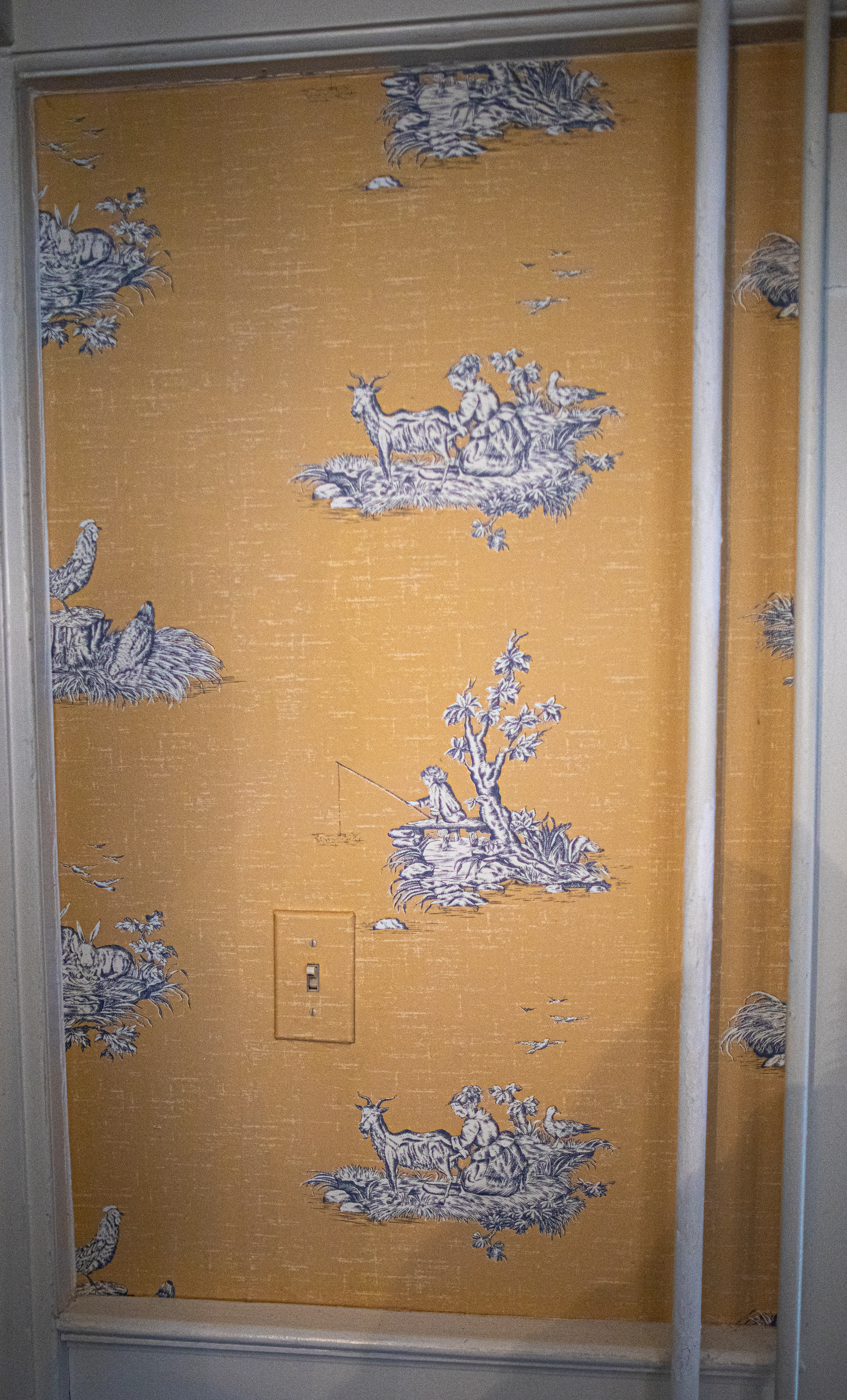
Sometimes the little things can tell a lot about a home. For instance, this wallpaper spoke to the trade relations between Salem and other countries. This wallpaper, which shows what looks like a rendition of life and culture of the people of Asia, may have been an example of how the owners traveled to certain parts of Asia. It was not unusual for people to put up wallpaper that reminded them of places they traveled to or traded with.
This is not an original print, though. It is a stylized representation of wallpaper from that time.

While wallpaper may not be in vogue now, it was a treasured possession of the wealthy at the time this house was built.

According to Historic New England, the earliest record of wallpaper in America is in the estate inventory of a Boston stationer in 1700, where “7 quires of painted paper and three reams of painted paper” were listed. But, only one wallpaper in Historic New England’s collection with a history in New England dates back to the 1700s. Like all early references, this was more descriptive of quantity than of design. Only one wallpaper in Historic New England’s collection with a history in New England dates to this early period. This wallpaper was later used to cover a copy book of poetry in 1783.

Initially, paper hangings, as wallpaper was called in the eighteenth century, were only available from stationer and book sellers. Or they could be custom ordered from merchants who specialized in importing luxury goods. Eventually, wall paper could be purchased from upholsterers.

Prior to 1760, only the wealthiest colonists in urban areas in New England could afford wallpaper. Wallpaper was expensive because of the process involved in making it. The rolls the wallpaper was printed on had to be made of individual sheets of paper. These sheets were glued together. Then, they were hand printed with wood blocks, one block for each color of the design.

That is what makes the Christmas In Salem event so interesting. You can learn so much about the history of wallpaper just by touring a historic home!

Please join me on my tours of all of these historic homes!

You can find me on Instagram here, new.england.nomad_

You can follow me on Facebook here.

If you want to see more photography from New England, click here to join my Photographers of New England Group on Facebook.

I don’t do Twitter and I’m too old for TikTok!


Redcoats & Rebels (Old Sturbridge Village, Sturbridge, MA)

Dates Of Event: August 3 & 4, 2024

Location: Old Sturbridge Village, 1 Old Sturbridge Village, Sturbridge, MA (1 hour and 30 minutes southwest of Boston, MA)

Hours: Hours and days of operation vary depending on the time of the year

Cost: $30 for adults, $28 for seniors (age 55+), and $15 for youth (ages 4-17). There is a $3 discount if you purchase tickets online. Military families also receive discounts.

Parking: Free parking is provided at the village

Summary: Hundreds of historical reenactors gathered at Old Sturbridge Village to recreate the Revolutionary War era.

Website: Old Sturbridge Village

The largest military re-enactment in New England, Redcoats and Rebels, made its annual appearance at Old Sturbridge Village earlier this month. From cooking demonstrations to the highlight of the event; the battle reenactment, the historical village depicted life in the colonial era. Many of the reenactors showed off their culinary chops and craft making skills.

One of the delicacies served up at the encampment was egg pie (yum). And, it is still considered a popular dish in some parts. The big meal of the day, however, was a turkey dinner with all the fixings.

Horses played an integral part of life during this time and there were many people riding or caring for their horses. I found it heartwarming to see the care and effort they put into caring for these animals.
Some of the items on display were toys from that era. I don’t know about you. But, I’d rather play with my phone!
Tents and soldiers could be found throughout the encampment.

Some of the weapons from that era were also on display. I especially appreciated the fine detail incorporated in these weapons.
Music also played a big part at the event.
These drummers had a unique type of drumming. Not only did they bang on their drums, they also banged their sticks together.

I noticed these musicians practicing before a musical event.

Doctor Newman, with the assistance of a fellow reenactor, explained the process of amputation during the Revolutionary War era. The average amputation at that time took 2 minutes and were done without any anesthesia. And, since liquor thins blood, they could not even take a few sips of whisky to help dull the pain.

For someone with such a gruesome job, Dr. Newman was a rather jovial sort.

The tools of the surgeon were shoddy. The white object that looks like a mitten was used to wrap the area where the amputation took place. It was a grim reminder of the cost of war that we should never forget.

There were many re-enactors I was fortunate enough to photograph at the event.

But, the re-enactors weren’t the only people who dressed up for the event. These visitors also dressed up in their best Colonial era attire.

Finally, after a busy day photographing the re-enactors, it was time for the Redcoats and Rebels battle to begin!

The battle was a realistic reenactment of the Revolutionary War.

As you can see by some of the soldiers in the photo below, the cannons did make a very loud noise.

The British proved to be a formidable opponent.

But, in the end, the Rebels were able to keep them at bay and eventually the Redcoats retreated.

Both armies made sure to not leave their wounded behind.

As I was leaving, I passed by the “Field Of Flags.” Each flag represents a person who had died serving their country. It was a moving display to never forget those who have sacrificed for their country.