Category Archives: Christmas

2024 Christmas In Salem Part 14 – Bertram Family House (Salem, MA)

Date Of Visit: December 7, 2024

Location: 3 Carpenter St, Salem, MA
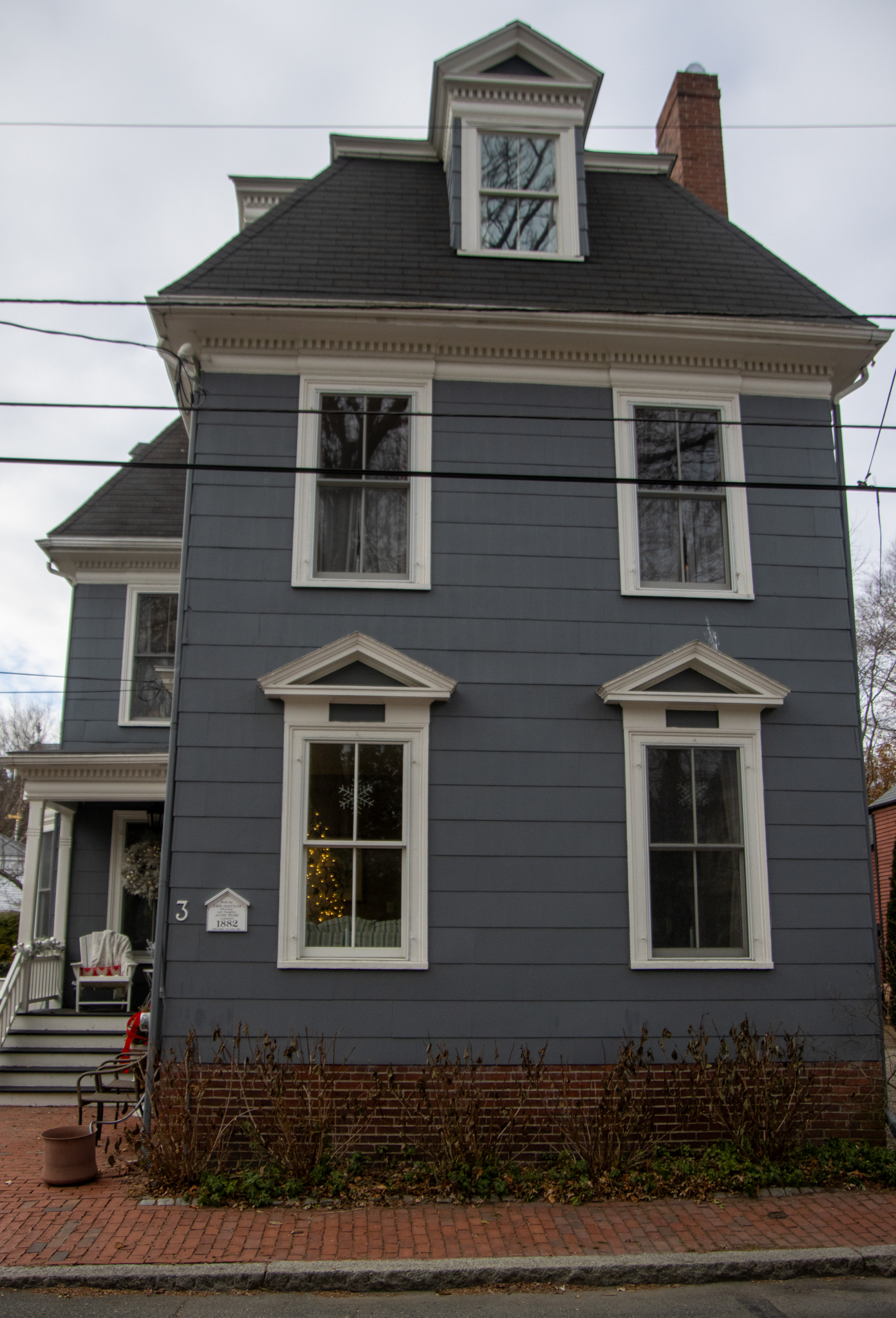
John Bertram, a wealthy merchant and philanthropist in Salem, built this house as an investment for his three daughters: Jennie, Annie and Clara. Upon his death in 1863, his own mansion was donated to the city of Salem. The building was donated as the future Salem Public Library. However, after the sisters showed interest in the home they inherited the house.

It is unlikely that Annie Webb ever lives on Carpenter St. Instead, Annie lived on Chestnut St with her husband, William G. Webb, and used the property on Carpenter St as a rental. Annie sold the house in 1920 to a long time tenant. A succession of owners occupied the house through the years before the current owners acquired it in 2011,

The Bertrams built the house in the Colonial Revival style, an architectural style popular in the 19th century which incorporated an eclectic mixture of stylistic details considered as representing aspects from several earlier historical styles. Ornamental elements typical of the Colonial Revival style used on the exterior of the house include dentilated and bolection moldings at the cornice and elaborate pediments over some of the first floor windows. The roof is an adaptation of the Mansard type popular in France about that time. The house is built in an L-shaped plan with the main entrance at the corner of the L where there is a single story porch.

Speaking of the porch, there was this cute pillow on a chair on the porch to the entrance of the house.

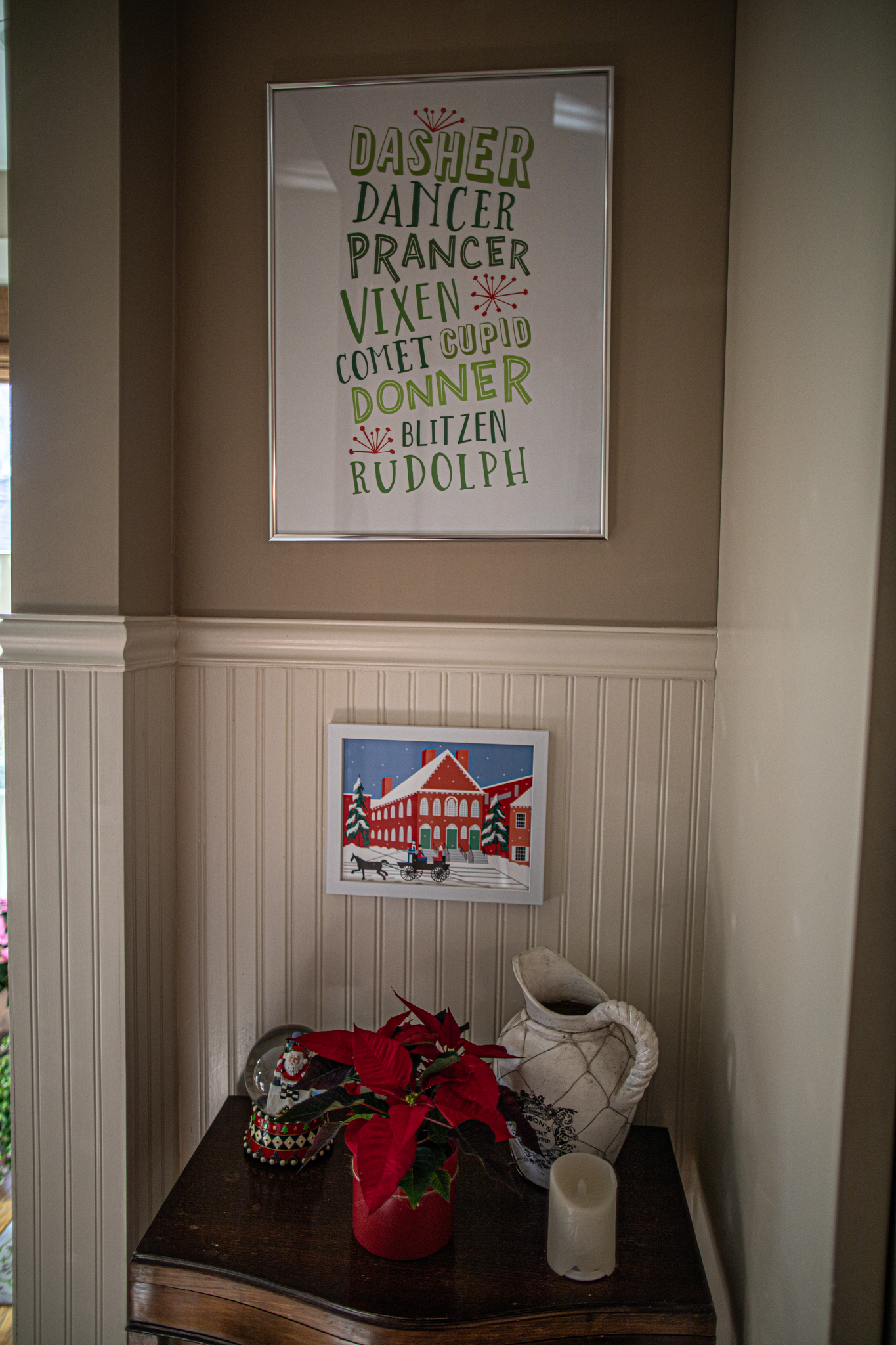
Inside the home there were more Christmas decorations.

This game looked like it would be fun to play!

Meet Belsnickel. A crotchety, fur clad, gift bringer, Belsnickel is a figure in the folklore of Palatanite region of southwestern Germany along the Rhine (think Dwight from the office in the Christmas special). In some traditions, he is said to reward the good children while punishing the bad children. So, you really better be good!
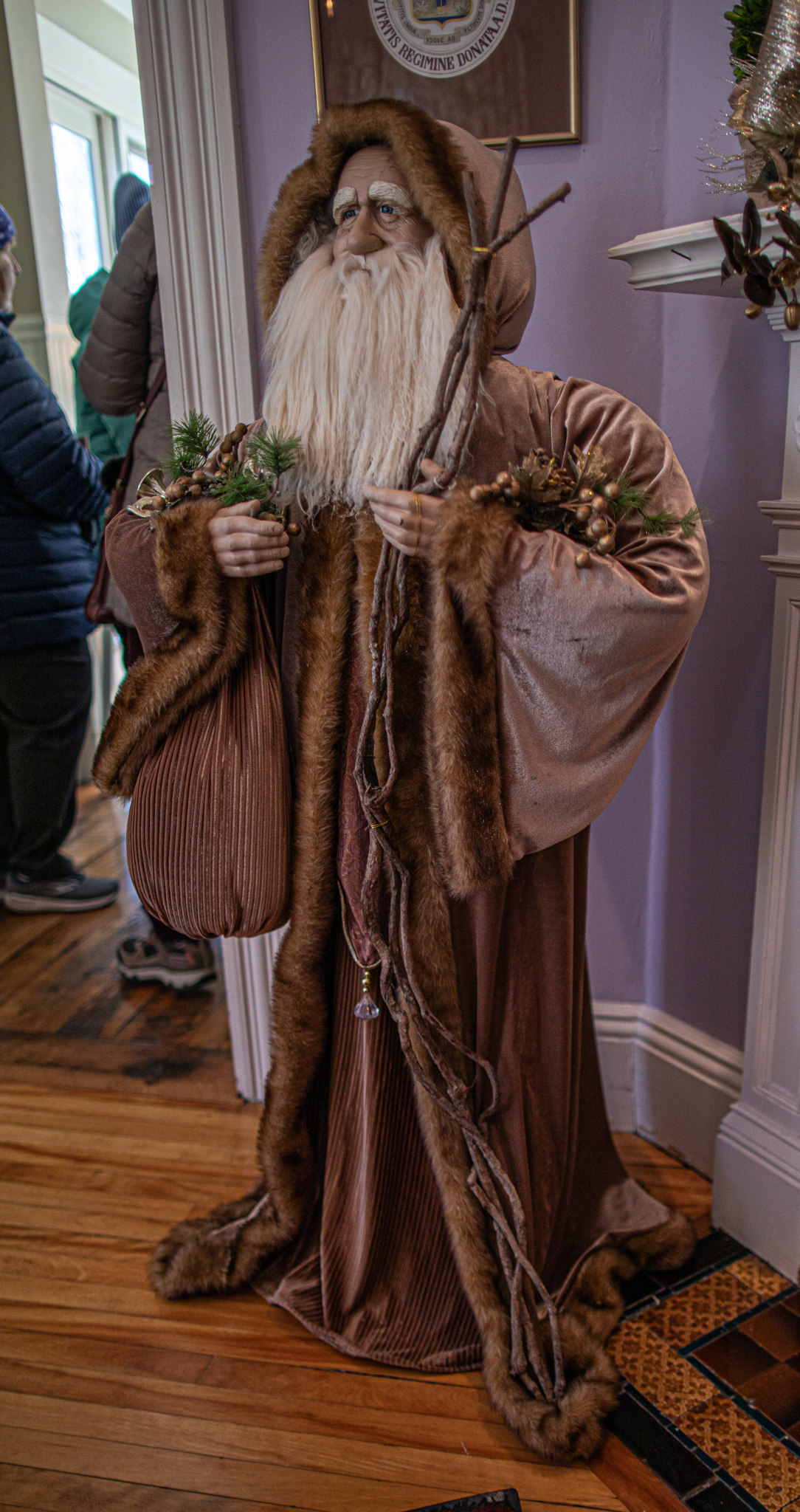
This statue seemed like a kinder Belsnickel.

The sunny living room area gave some light and warmth to the home despite the wintry weather outside.

Of course, I spent a little extra time in my two favorite rooms: the kitchen and dining room.
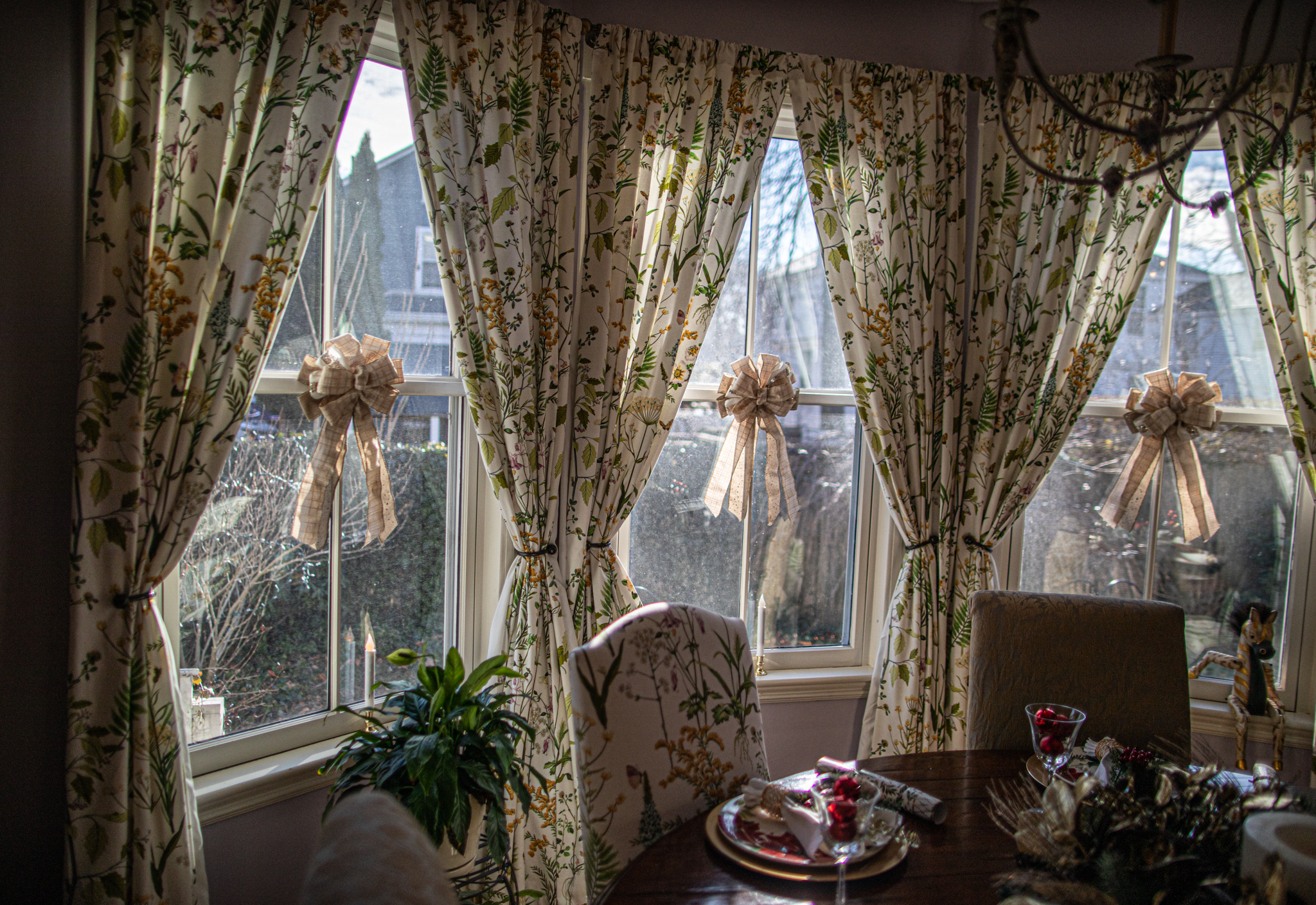
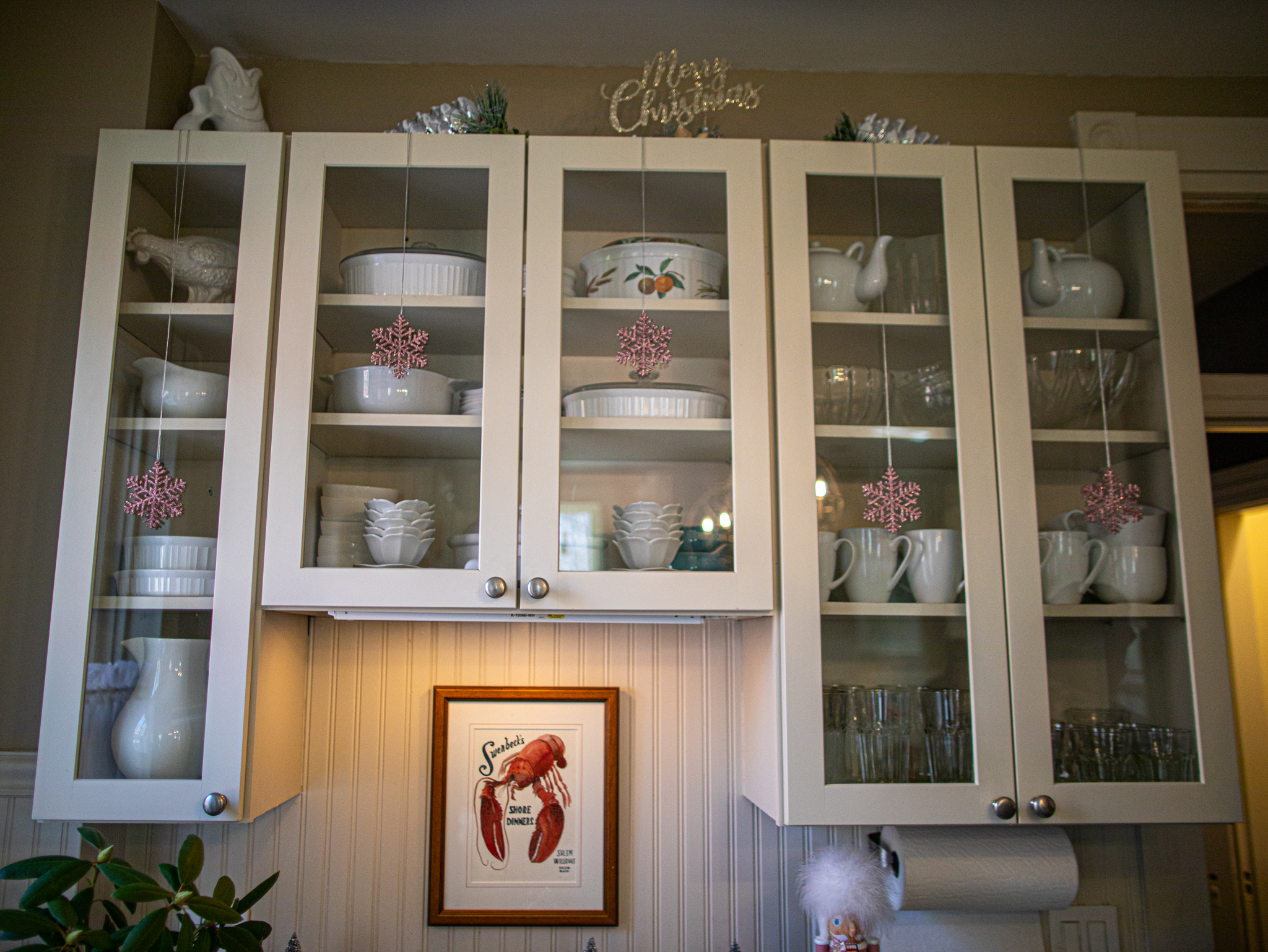
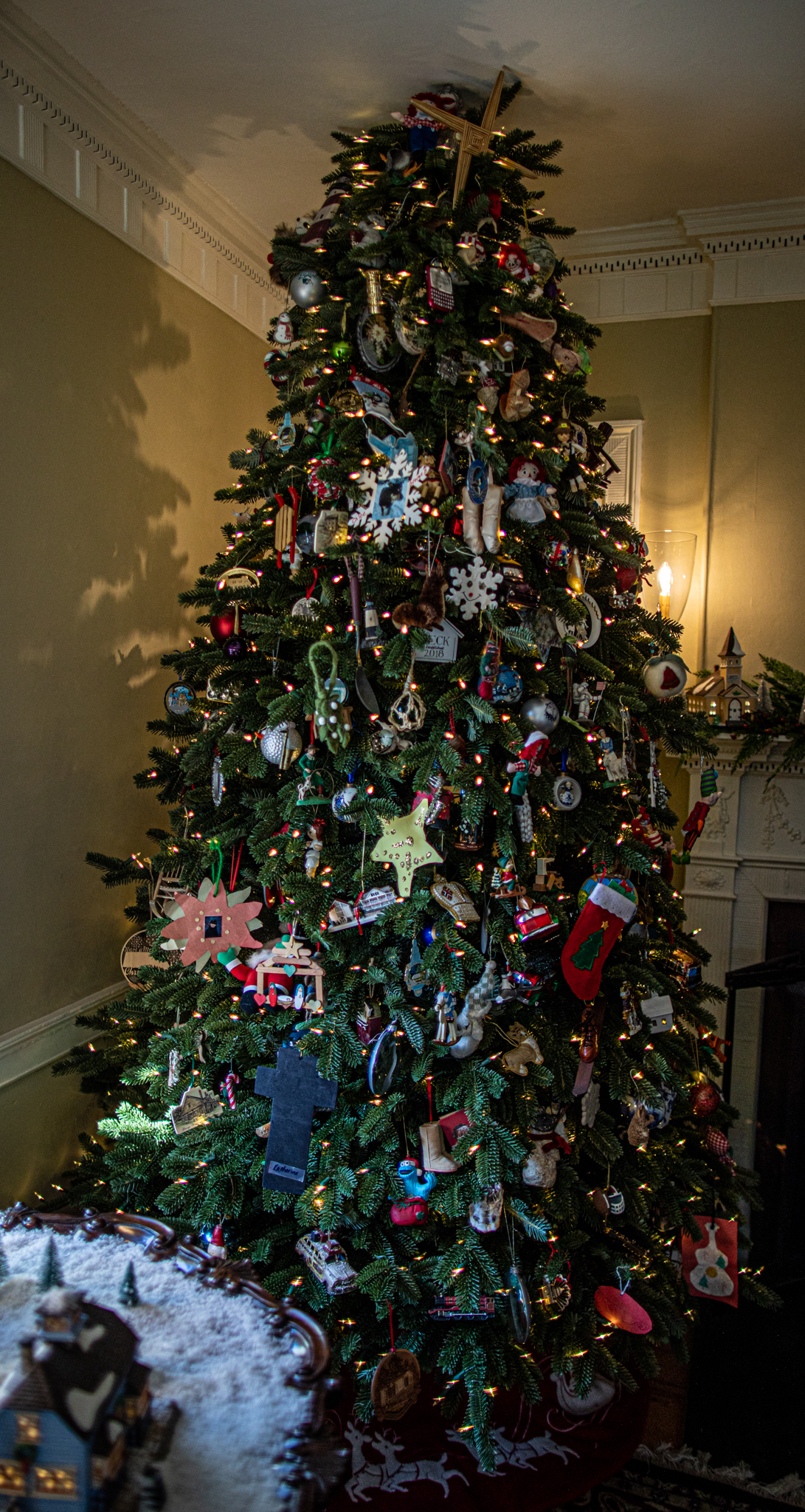
And, of course, what would a Christmas home tour be without not one, but two Christmas trees!

This concludes the 2024 Christmas In Salem Home Tours posts! I hope you all have enjoyed the Christmas In Salem home tours as much as I enjoyed posting about them!
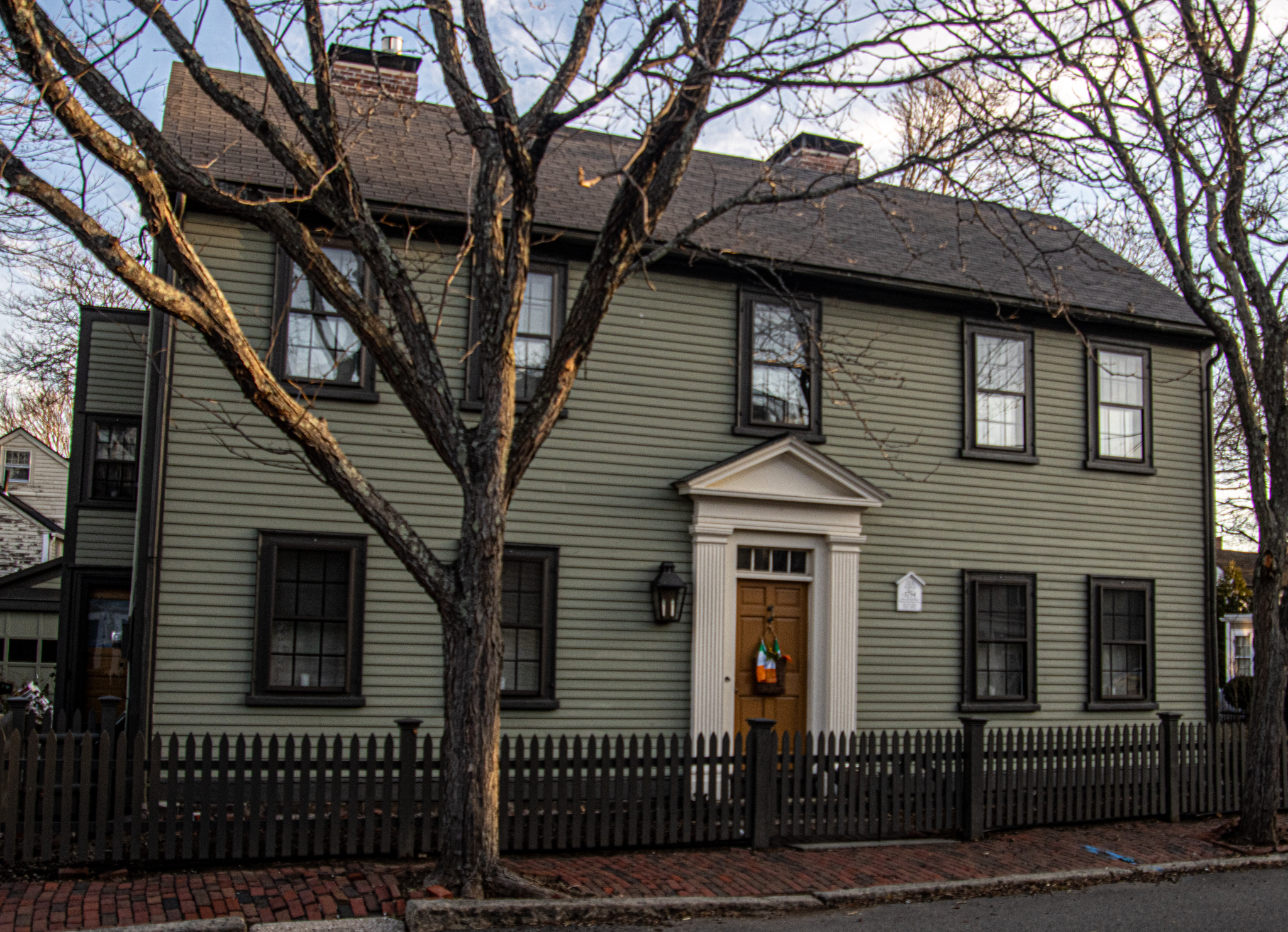

2024 Christmas In Salem Part 10 – THe John Dodge House (Salem, MA)

Date Of Visit: December 7, 2024

Location: 4 Andover St, Salem, MA

A two story clapboard Federal style house with five bays, the John Dodge House features a pedimented front entrance with fluted pilasters on either side of the door and horizontal row of lights above the door. The house was said to have been built around 1794 by a John Dodge. However, there were several men living in Salem at that time with the name of John Dodge (I’m sure the name Dodge was like Smith is these days). It is believed by historians the original owner was the John Dodge who died in 1812, leaving behind a wife and 6 children.

The house was sold to Lucius Bolles in 1808. Bolles was the first minister of the First Baptist Church of Salem and Corresponding Secretary of the Baptist Board of Foreign Missions fourteen years. He was also one of the founders of Newton Technological Institution.

Bolles sold the property to Priscilla Dike, the wife of John Dike, a prominent lumber and coal dealer. Mrs. Dike was the aunt of the famed Salem author, Nathaniel Hawthorne, who most likely visited the home frequently.

The keen eye may notice the photo of the house posted above was not taken during the tour. I missed this one during the tour. So, I took this photo last weekend.

The home had so many wonderful decorations.

Each of these figures on the mantle represents or is doing one of the things in the 12 days of Christmas. For instance, there is a caroler drumming.

And of course Christmas trees! I think this tree needed a little taken off the top!

I especially enjoyed the old timey decor of the wooden decorations.

While doing work around the house and property, there were some unexpected discoveries.

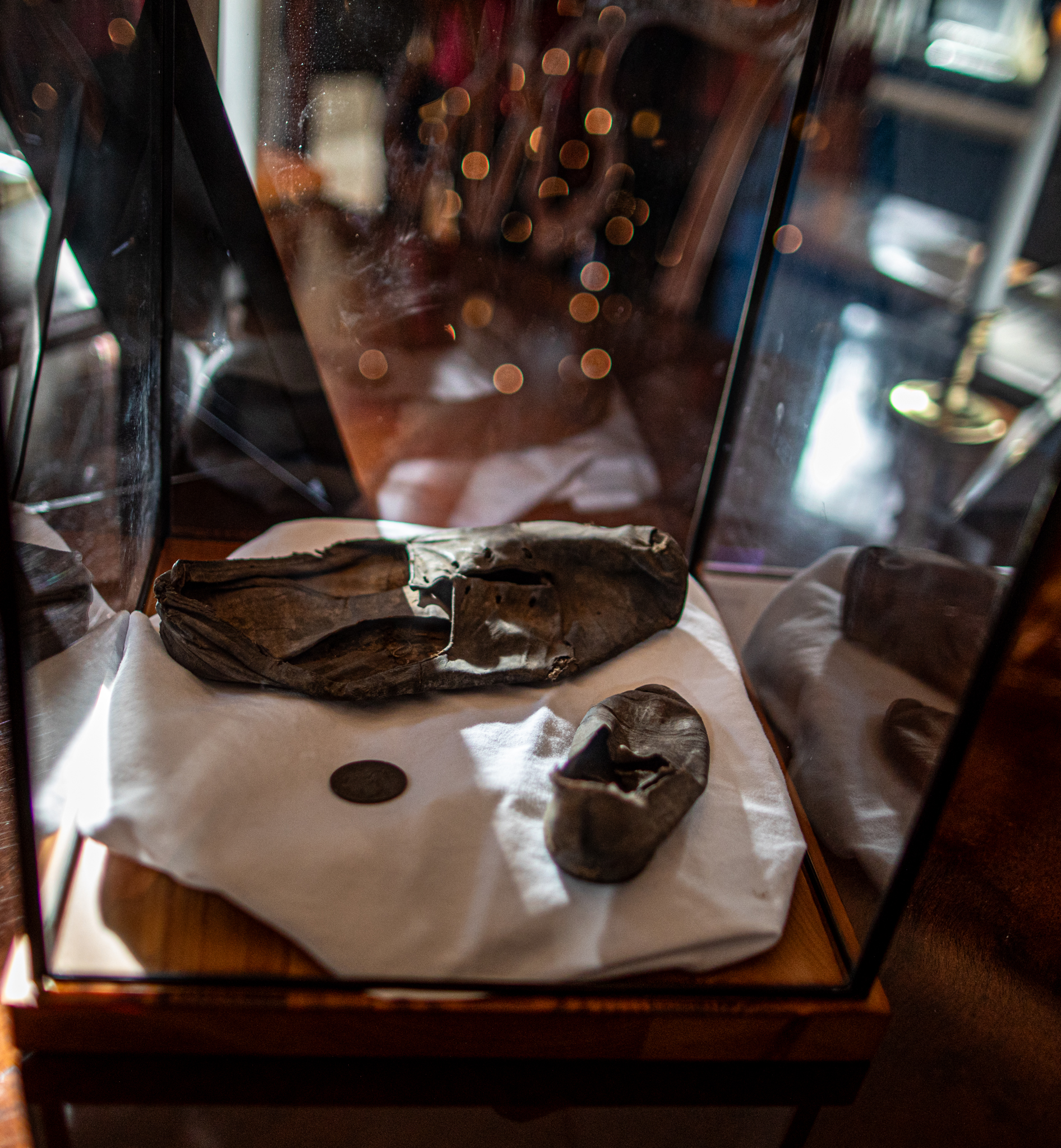
These shoes were found by the chimney near the attic. Shoes had a special significance during the times of the 1700 and 1800s. They are the only item of clothing that takes the shape of the person who was wearing them. They were believed to hold something of the wearer’s essence or personality even when they were not being worn. It was believed that it was this association with the wearer that could fight off evil spirits should they try to enter a home.

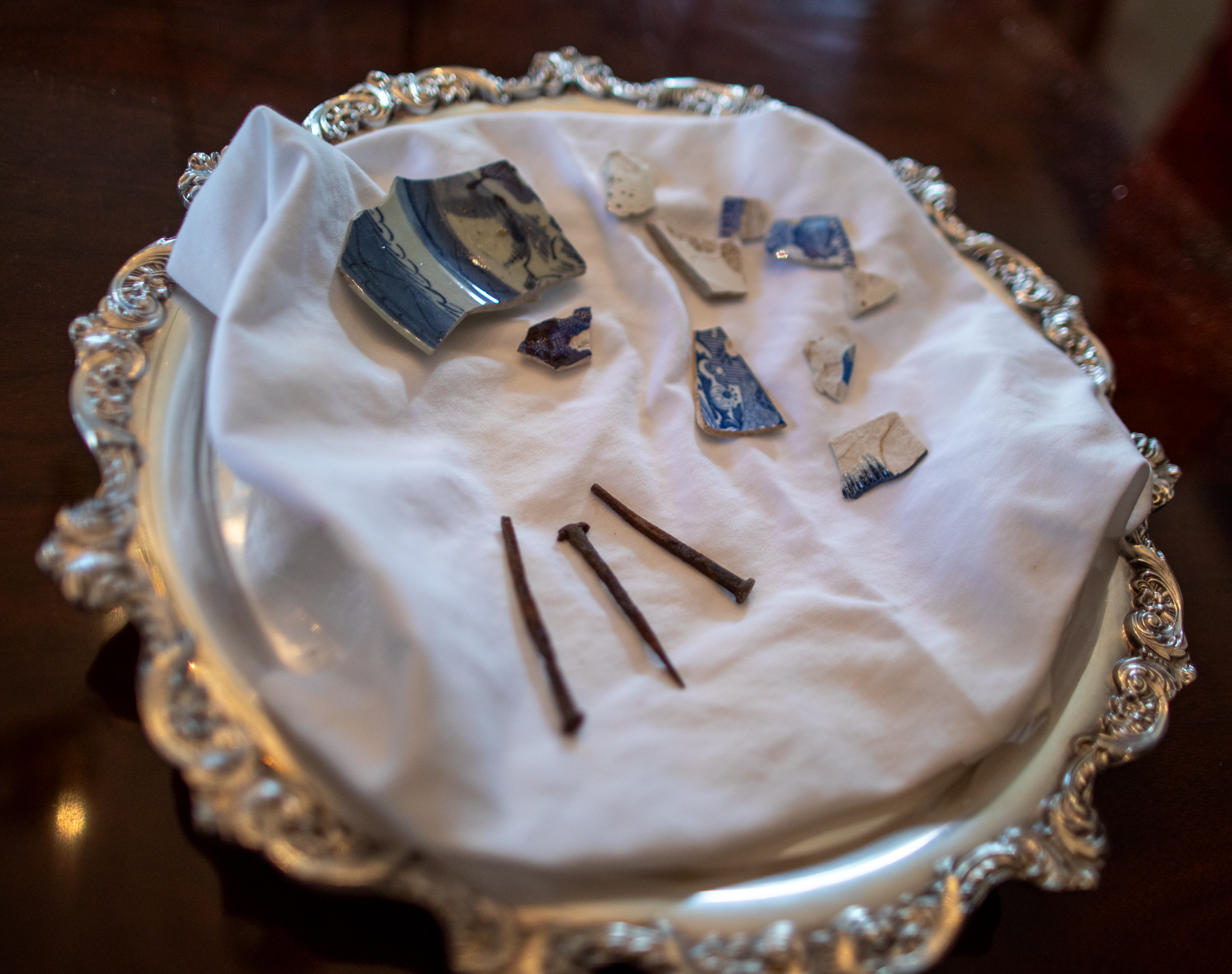
The blue and white Chinese porcelain pieces were found while digging in the cellar of the house. The wrought iron nails, also found in the cellar, are believed to be original to the house.

Believe it or not, this piece of furniture traveled from England to Salem! At least that is the story behind it. What is known for sure is it was transported from Boston to Salem.in 1794 which must have been an arduous journey. Although it may have been cleaned up and polished over the years, it’s incredible to see it has stayed in such good condition over the years.
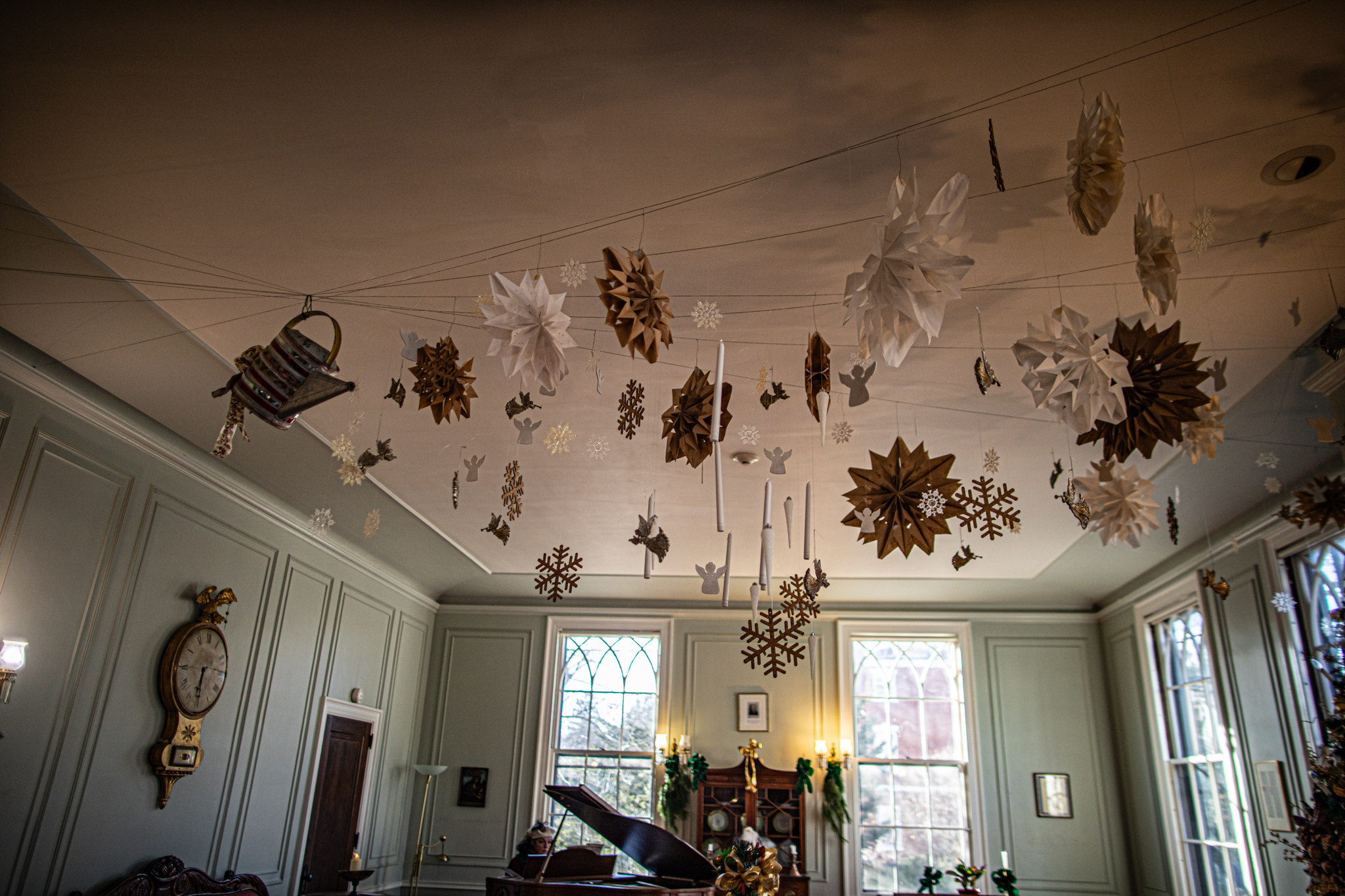
It feels weird posting about Christmas in March. Yet, I also feel a sense of warmth and joy looking back on these photos. Christmas decor and the Christmas spirit are always appropriate no matter the time of the year!


2024 Christmas In Salem Part 8 – The Witch House (Salem, MA)

Date Of Event: December 7, 2024

Location: 310 Essex St, Salem, MA

Website: The Witch House

The Witch House in Salem, MA, may be not only the most photographed housew in Salem, it may also be the most infamous.

Built in circa 1675, the building was built by Captain Nathaniel Davenport of Boston. The wood-frame and clapboard home was sold to Salem merchant Jonathan Corwin. After purchasing the home, Corwin hired mason Daniel Andrew to complete the structure.

In 1692, during the Salem witch trials, Corwin, who served as a magistrate and justice, would question and examine some of the accused witches in this very house. None of the accused ever lived in the house. And, of course, none of the accused witches were actual witches.

The house was built in a center chimney style. The clustered brick chimney served as an anchor for the house. A two-story projecting projecting porch is flanked by peaked gables on the facade, a rear lean-to extends the space on the back. The entire second story overhangs the first story in the front with decorative drop pendants at the ends of the overhangs of the porch.

Through the year, multiple changes and alterations were made to the structure. In the second-half of the 19th century, owner George P. Farrington, attached a drugstore to the east front of the structure.

In the 1940s, the city wanted to enlarge North St (the original location of the Witch House). But, the citizens of Salem raised $42,000 to save the home and to have it moved to its current location on Essex St. The Witch House was eventually opened as a museum in 1948.

I have mixed feelings about this house. Innumerable people line up to take photos in front of this infamous home. While it’s important to keep reminders of the past and it’s also good that places where tragic things have taken place have transformed into places of historic value (and business), it still doesn’t sit well with me.

The Witch House had a self-guided tour that had print outs with information about the house. While the house is generally known for the tragic events of the Salem witch trials, this tour dealt more with the Christmas traditions and some of the rituals and remedies of the day.

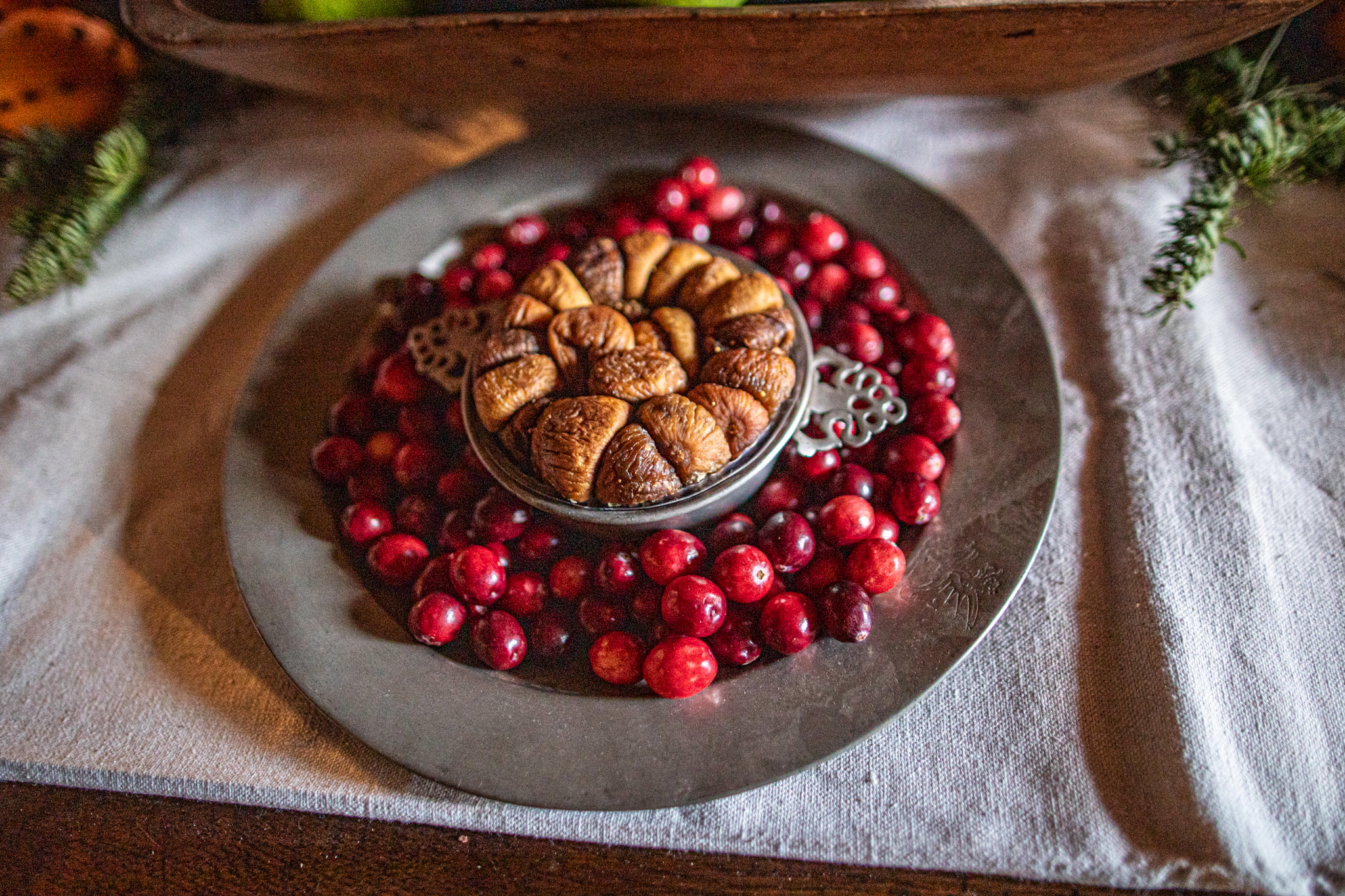
According to the handouts, the colonists brought over many of their Christmas traditions from England. Some of these traditions include eating and singing religious hymns. Did I mention eating?

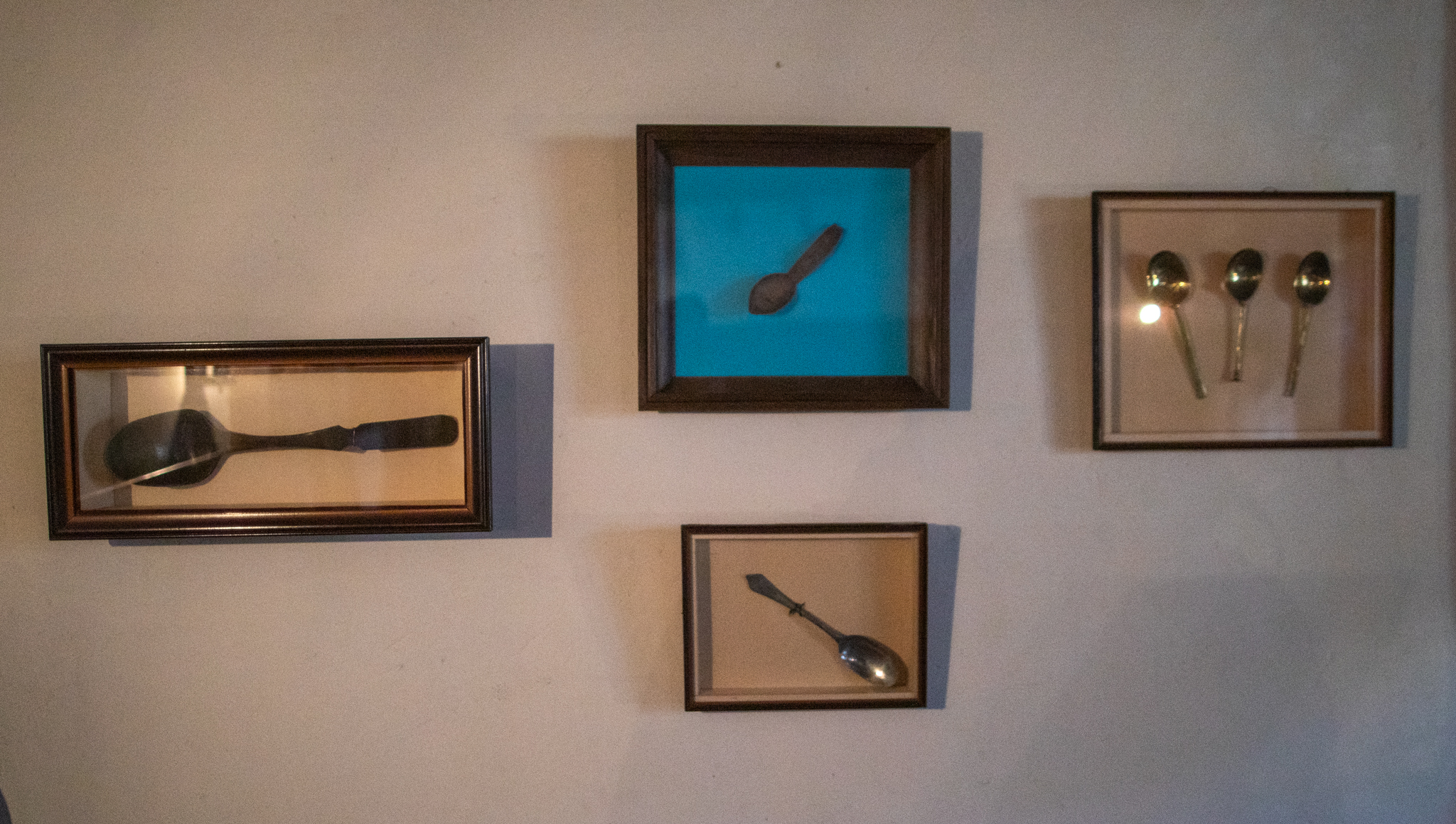
I got hungry just posting these photos! And, of course, one would need implements to eat these foods.

These utensils were found through archeological digs and excavations.

The Christmas festivities from that time lasted from December 25 until the Twelfth Day, January 6. During this time period very little work was done. What a bunch of party animals.

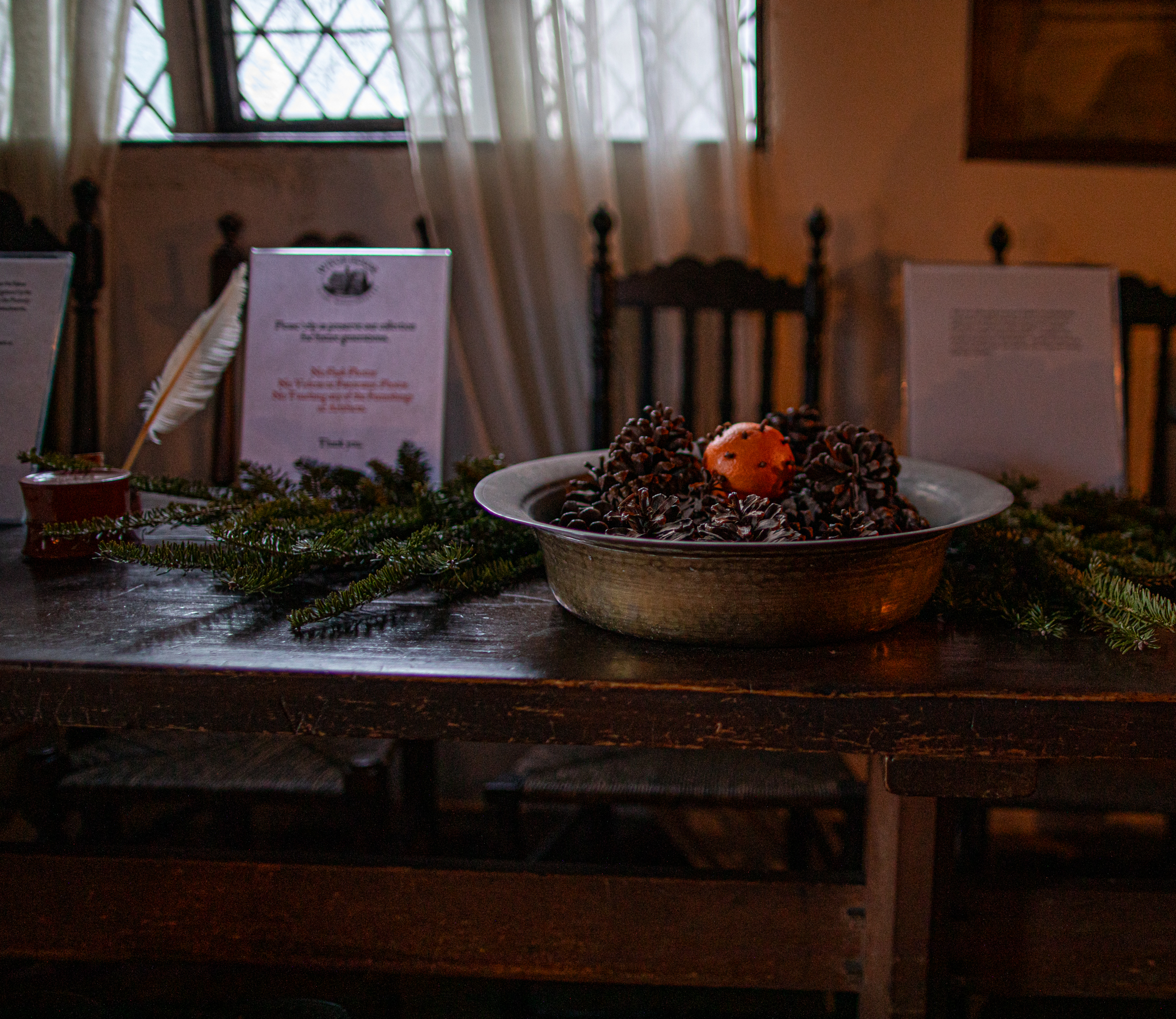
The Witch House was festively decorated for the tours.

During the times of the witch trials, people used holly remedies as cures. Archeologists found ritual shell-cups in North America with residue dating back to 1,200 BC. The leaves can be used to make tea and alleviate digestive disorders, water retention, jaundice, rheumatism, periodic fevers, measles and respiratory illnesses such as cold, coughs, flu and pneumonia. Somedays I feel like I may have every single one of those. Holly leaves can also be used to treat symptoms of dizziness and high blood pressure. They also can be used topically for sores and itching.

There were some documents from the witch trials. These actual documents from the trials are kept in a sealed container.

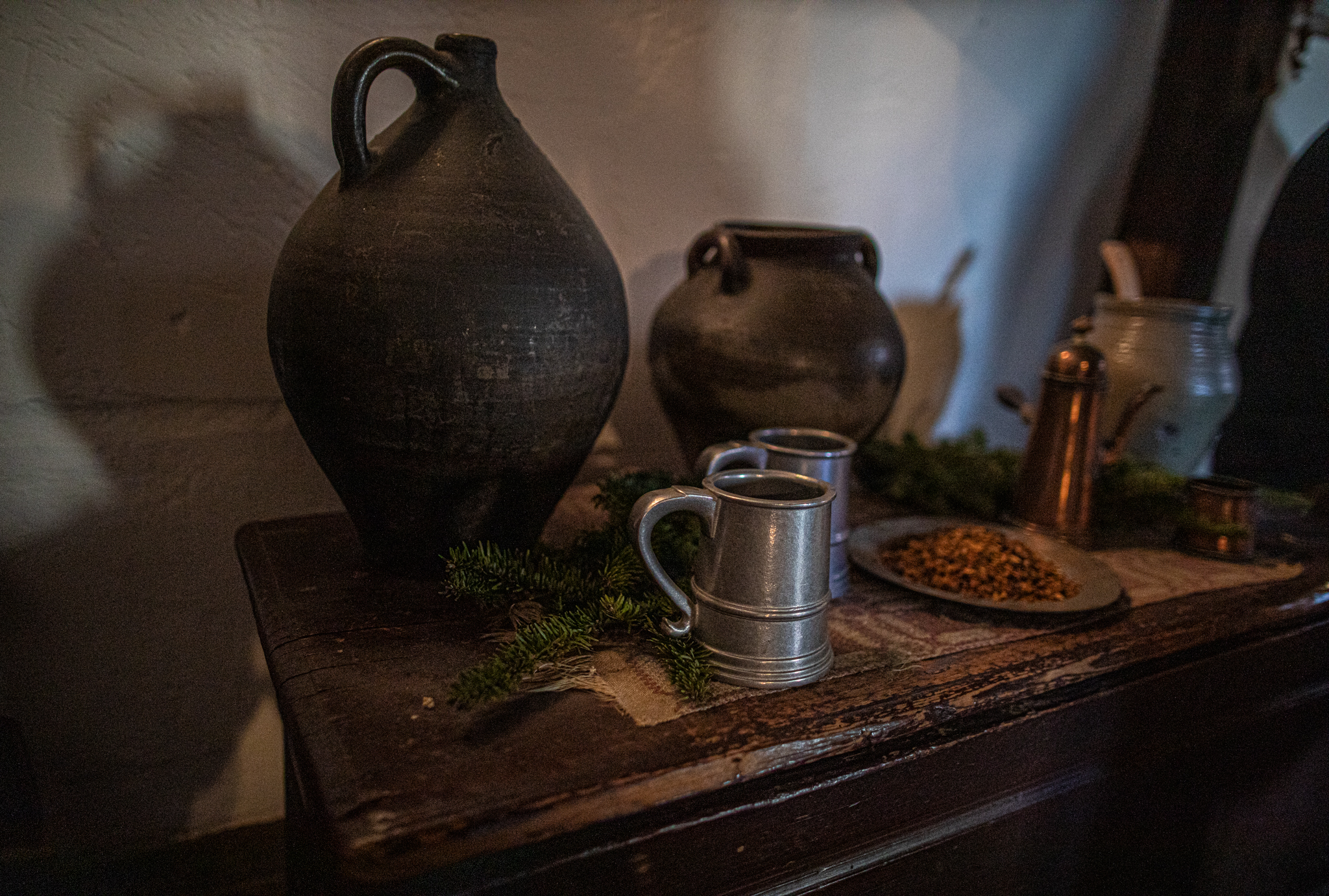
The Witch House also displays an assortment of wares and other tools of the era.


2024 Christmas In Salem Part 7 – First Church Of Salem (Salem, MA)

Date Of Visit: December 7, 2024

Location: 316 Essex St, Salem, MA

Hours: Open all day Saturday, special Sunday hours 1-4 pm

I am still planning on posting all of the summaries of my tours of the homes and buildings on the Christmas In Salem tour, albeit a little late. I did get side tracked with some other events I attended. But, I will now focus on these last remaining homes of the tour. I am also adding a bonus surprise to this post which will be revealed at the end of the description of this church.

From the 4 leaf clover-like design at the top of the building to the unique design, the First Church of Salem is one of the more recognized structures in the city of Salem, MA., that doesn’t have “witch: in it’s name. In fact, as I took the photo above a lady mentioned how it was one of the most photographed buildings in Salem. But, the interior of the building and the building’s history are lesser known points of interest.

Built in 1836, the The First Church of Salem is not only considered the continuous Protestant Congregation, it is also considered one of the best examples of stone masonry Gothic Revival ecclesiastical structures in the United States.

Constructed of cut and regularly coursed Quincy granite covered by a low-hipped slate roof, the First Church of Salem has symmetrical front facade on which is centered a square, crenelated attached bell tower with a Tudor-arch front doorway. Just like my home. Above the doorway is a large traceried (ornamental stone openwork) pointed-arch window. There are additional pointed-arch windows with basic tracery and diamond-shaped panes on either side of the tower and along the side walls. The church also houses stained glass windows by such names as Tiffany, LaFarge and Reynolds. Grace Park, widow of George Swinnerton Parker of Parker Brothers fame, dedicated one of the stained glass windows in memory of her husband and 2 sons.

Festive decor was abundant in the church.

In the back of the church, there was a room for functions and receiving people.

A pianist played some holiday music.

One of the interesting tidbits the guides for the church discussed was the church’s role in Leslie’s Retreat. To make a long story short, starting in 1718, the First Church of Salem broke into five different churches, with all but one rejoining the original First Church in later years. Today, the congregation worships at the meetinghouse of the North Church, built in 1836. The one congregation that remains independent is the Tabernacle Church in Salem, which separated from the First Church in 1734 over a row about a minister at the time. 

On February 26, 1775 at North Church, which is the current location of the First Church, Reverend Thomas Barnard Jr left his pulpit to join a group of Salem men to convince the British Colonel Leslie to not attack a munitions depot alleged to be stored in North Salem. After some cajoling (and perhaps some bending of the truth), Col. Leslie agreed to not attack. It is said that if not for the reverend’s efforts, the Revolutionary War would not have started in February, 1775 instead of April, 1775. A portrait of the reverend still hangs at the church.

Drum roll please for the bonus to this post…

Every so often, I am planning on adding book reviews from authors from New England or books about New England. I’ve read many books from authors based in New England or about the area. But, to refresh my memory, I will have to re-read some. If you do have any New England themed books or books written by people from New England, feel free to leave a comment or suggestion!

This was not my first go at a book by this author some of you may have heard of. And, although I’ve given this author many tries, I’ve never been overly impressed. But, that may be because it’s just not my personal taste of genre. However, this book was different. I am copying and pasting text from my goodreads review. Click on the link if you want to read the entire review. And, send a friend request if you’re a goodreads user!

The Shining – Stephen KIng

It may be surprising to some. But I am not a huge Stephen King fan. However, he definitely delivered in this effort.

Of course, I had seen the movie several times before reading the book. However, not everyone prefers the film over the book. In fact, Stephen King has been a sharp critic of the film version. While each production stands on their own, here’s what I appreciated about the book.

Jack Torrance. What a character. Unlike the film, Jack is a much more nuanced and layered character in King’s book. Sometimes he seems dangerous, indeed evil. Other times he seems almost relatable, particularly his struggles with his vices.

I also appreciated the Wendy character in the book. She was both sincere and, frankly, bad ass.

King transitioned smoothly to various side stories…


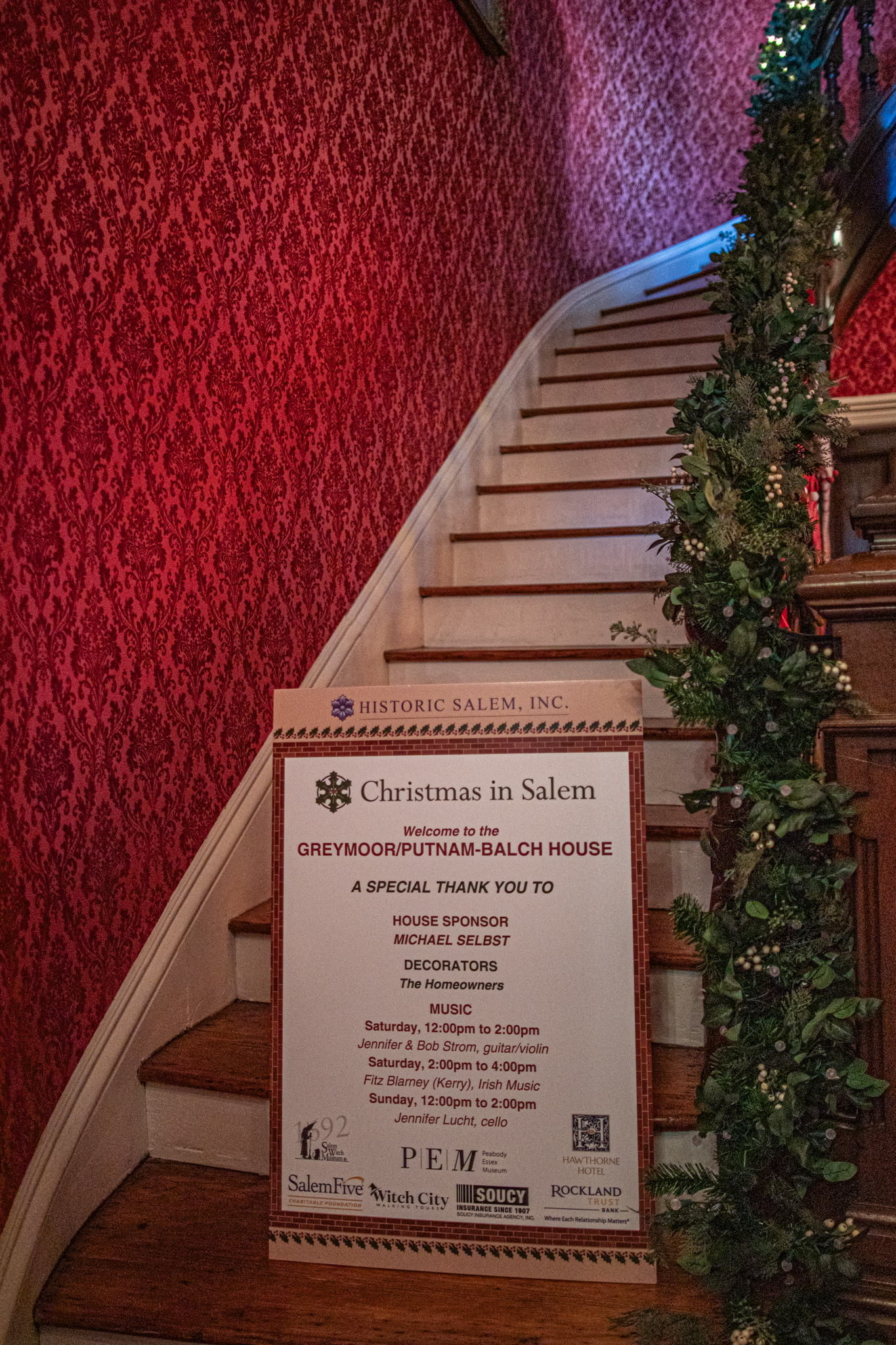
2024 Christmas In Salem Part 6 – The Greymoor /Putnam-Balch House (Salem, MA)

Date Of Visit: Dec. 7, 2024

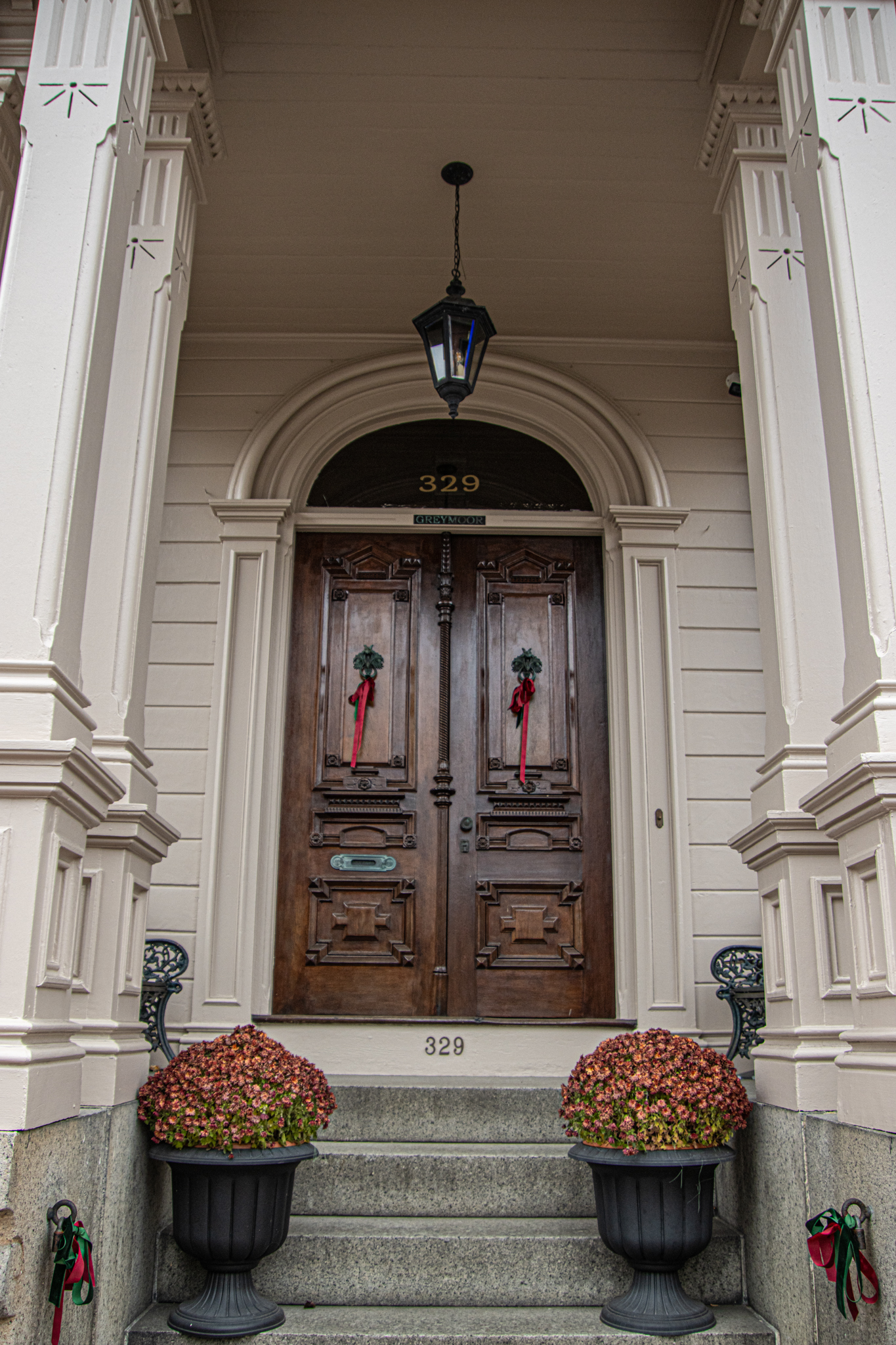
Location: 329 Essex St, Salem, MA

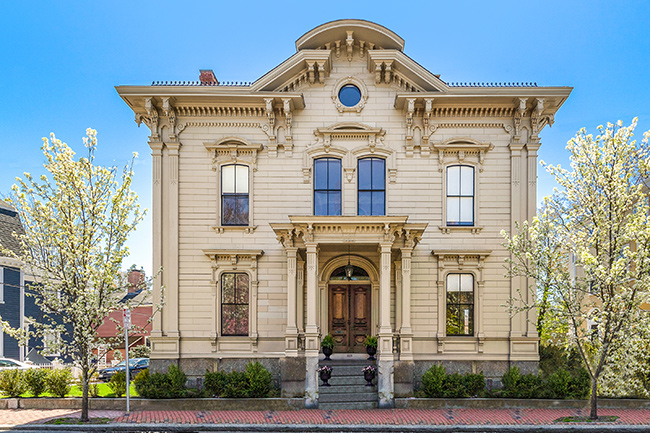
It’s easy to see why the Grey-Balch residency is considered “the most ambitious and outstanding residence of its era in Salem.”

The Greymoor-Balch House boasts rusticated wooden sheathing, paired pilasters with fluted tops at the corners of the facade and an elaborate arched dormer window above the second floor which is enhanced by a heavily bracketed cornice. The front entrance porch is supported by eight square molded columns capped by a balustrade with corner posts supporting urns.

The house’s decor is modeled after the Second Empire and Italianate styles.

Greymoor was built by James S. Putnam in 1872 after he demolished a house on that site which was owned by Benjamin Marston, a former Essex County high sheriff and colonel in the state militia. In 1881 the property was by Frank Balch. Balch worked at the Naumkeag Steam Co. Balch’s son is said to have improved x-ray technology by inventing the Balch Roentgen Scopic screen in 1916 which reduced the time required for taking an x-ray picture from 20 seconds to 1/5 of a second. Balch’s company, Balch Roentgenoscopic Screen Co, was located in Salem, MA.

The house served as Salem’s American Legion headquarters between 1921 and 1979. Between 1971 and 1981, Donald Costin restored the house as a private home. More recently, the current owners have restored the house to its original decor. The 6,352 square foot included 3 floors with 2.5 bathrooms, 5 bedrooms and 8 fireplaces. When the house was listed for sale in June, 2019, the house was listed for just under a paltry $1.4 million.

Upon entering the home, it was clear there was a lot of Christmas decor in the house.

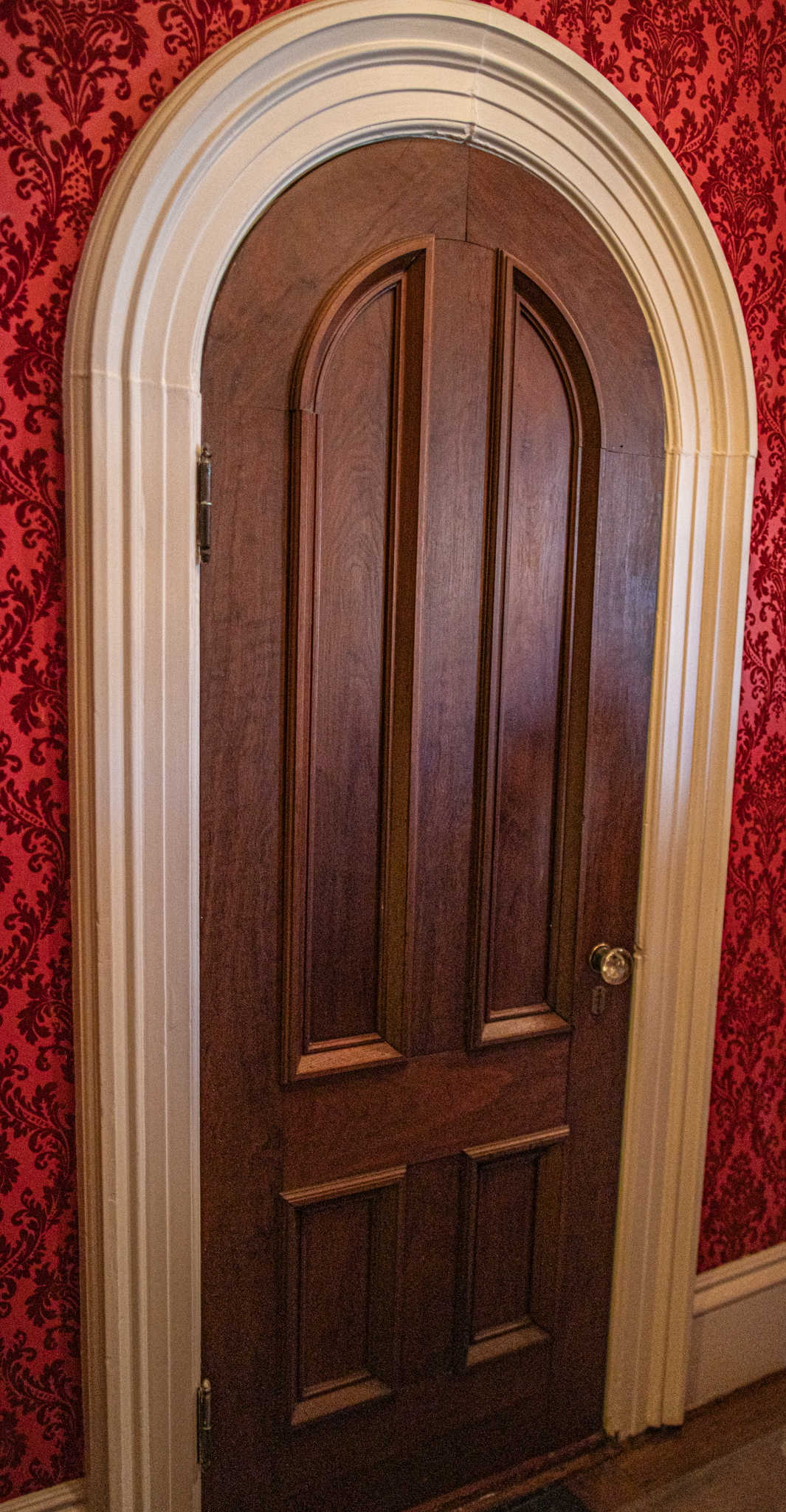
I thought this arched door was very elegant.

Of course, my favorite of any home is the kitchen. I always like to look at the kitchens of these old homes! This very old looking cast iron coal stove had 6 burners. I especially enjoyed the artwork and decor above the stove.

In the hallway, there was this painted window that could be opened.

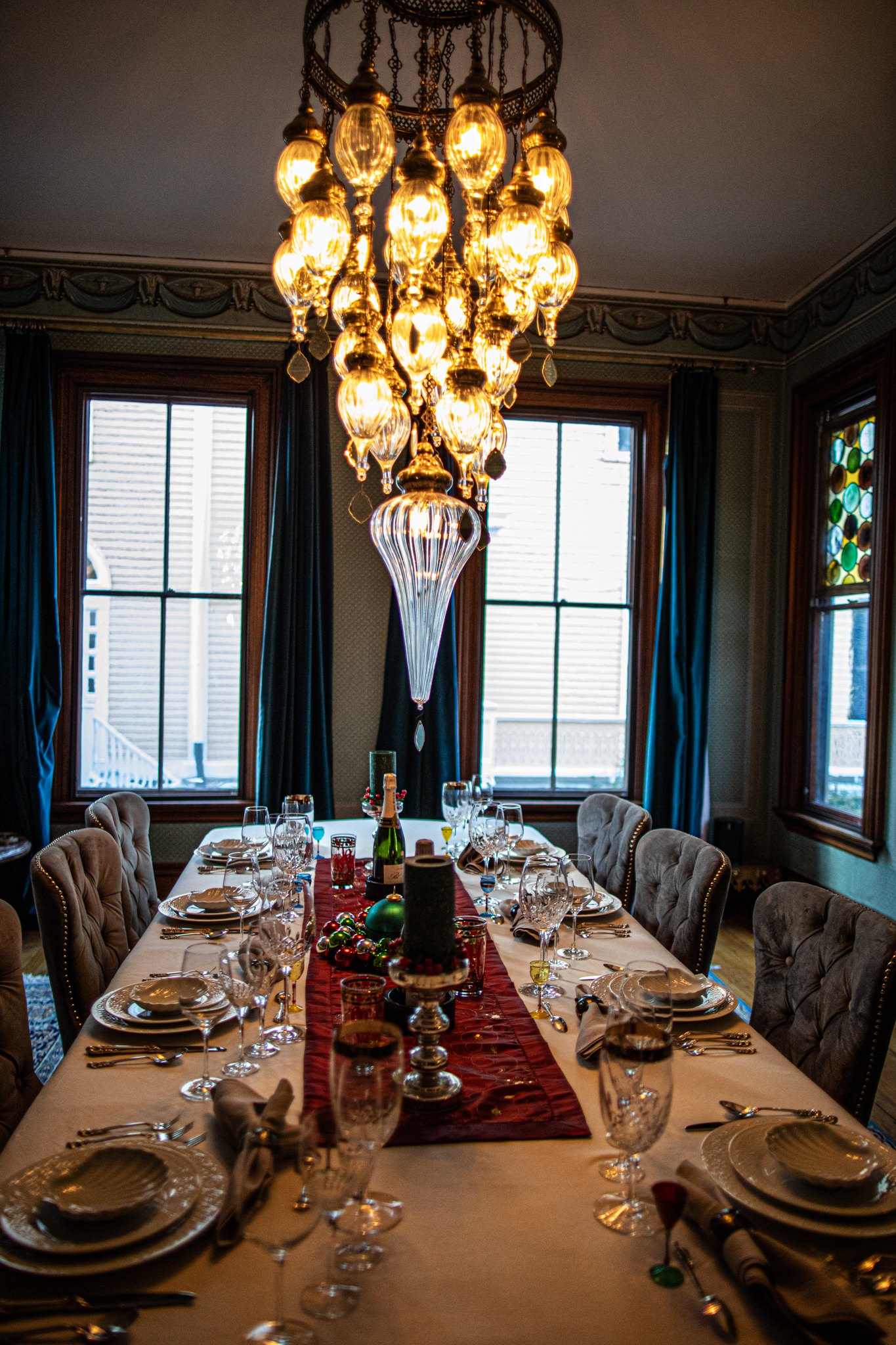
The home was tastefully decorated. I especially liked the lighting fixtures.

Fitz Blarney provided some holiday cheer.

I have a pet peeve about taking photos in general. But, especially with photos of homes. If there is a vehicle or some other obstruction, I won’t take head on photos of the building. So, I will often take photos from an angle or the side. However, this home is so pretty, I decided to include a front facing photo of the building from the real estate website when it was on the market (photo courtesy of priceypads.com).


Christmas By Candlelight 2024 (Old Sturbridge Village, Sturbridge, MA)

Date Of Visit: Dec. 21, 2024

Location: Old Sturbridge Village, 29 Stallion Hill Road
Sturbridge, MA (1 hour southwest of Boston, MA)

Universally Accessible: Some of the areas are universally accessible. But, many of the houses do not have ramps or other universally accessible entryways. See below for more details from their website:

Old Sturbridge Village is an outdoor museum with unpaved roads that lead to houses, farms, shops, mills, and gardens typical of 19th-century rural New England. While more than half of the Village’s historic buildings have wheelchair-accessible entrances, interior access varies. The Village’s unpaved roads are generally firm and stable. Most roads are level, with steeper grades located near the Bullard Tavern, Glass Exhibit, and Herb Garden. Longer, more gradual grades are located near the Visitor Center and Freeman Farmhouse.

Summary: Old Sturbridge Village hosted their annual Christmas By Candlelight event last month. Historical actors discussed the many historical aspects of the holiday and many Christmas decorations were on display.

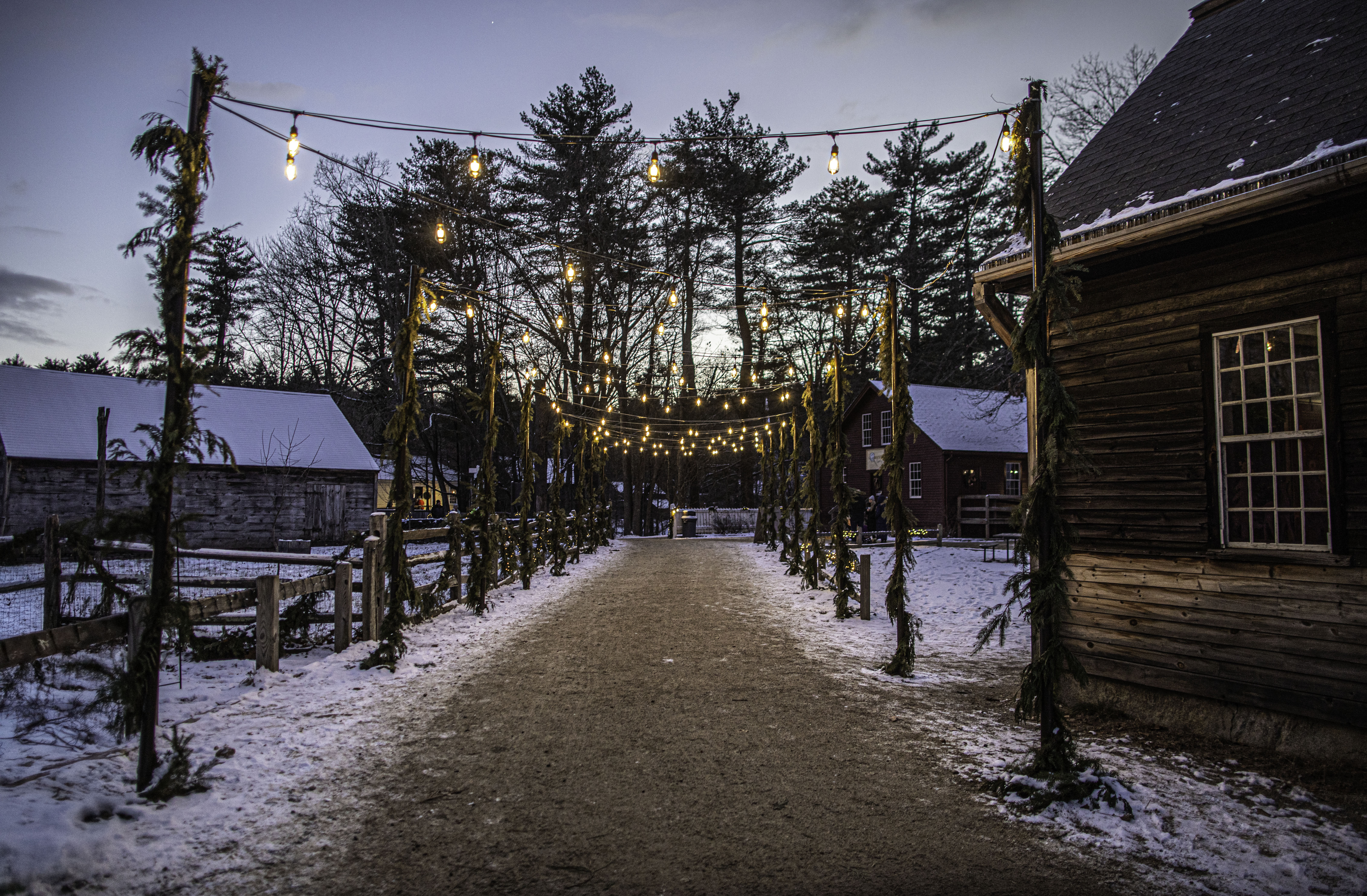
The spirit of Christmas was alive in Sturbridge, MA! An 1830s Christmas that is.

Every year, Sturbridge Village recreates Christmas during the olden days. Toys, treats and decorations were in abundance at the event.

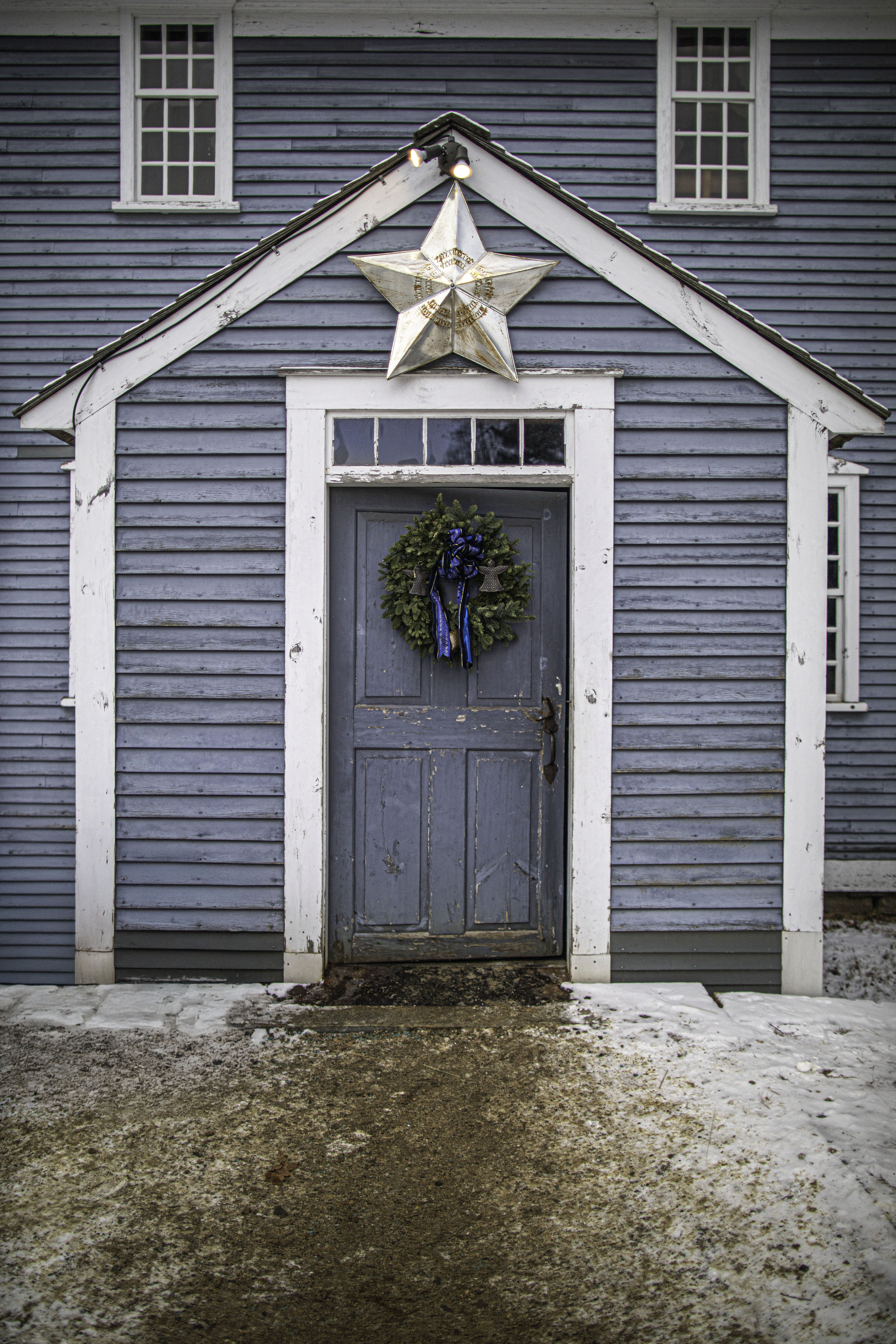
The first thing that caught my eye was the Tree of Heroes.

Each star hanging from the tree included the name of a service member from the area who has died. It is a sobering reminder of the sacrifice of others and the loss people feel this time of the year and throughout the years.

At the village, one of the biggest decorations, literally and figuratively, were the nutcrackers.

Although nutcrackers were a part of the Christmas decor of the 1800s, they really became more common in the states after World War II. American soldiers stationed in West Germany after the war would send them home as gifts.

Nutcrackers are said to represent fear and strength. And, in some cultures, luck. Since their purpose is to crack open the shells of nuts, which requires a certain amount of force and strength, they are figures of strength and being fierce. In fact, they are so fierce, according to German folklore, they were believed to ward off evil spirits and protect homes because of their strength.

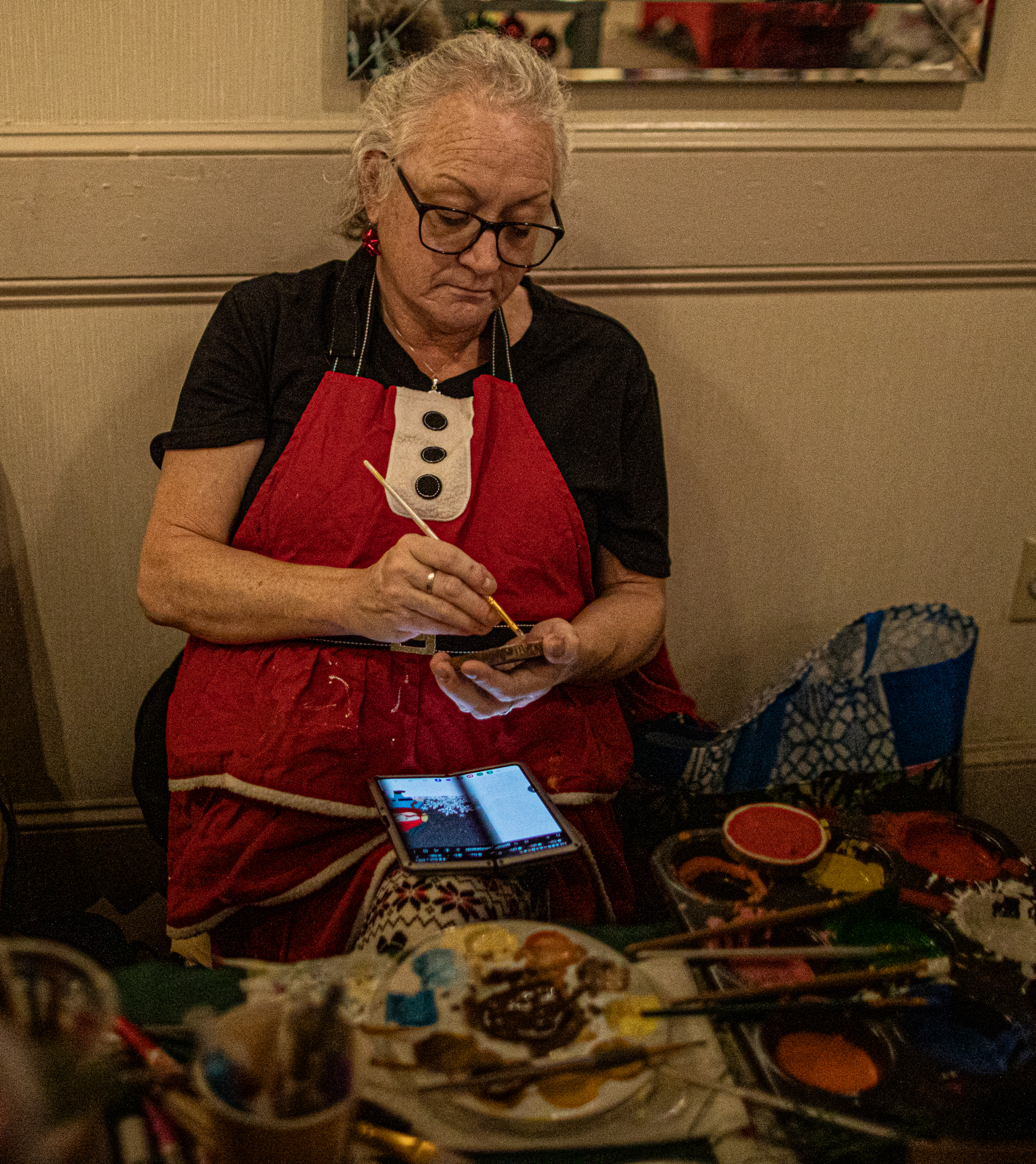
This employee at the village was working diligently on a nutcracker. The carved bodies of the nutcrackers are delivered to the village and the workers are responsible for painting and decorating them. She said she can paint and decorate one nutcracker in one evening (at least when people like me weren’t pestering her with questions). She told me the hardest part of decorating the nutcrackers is getting all the lines straight.

Of course, the homes, buildings and grounds were decorated for the season.

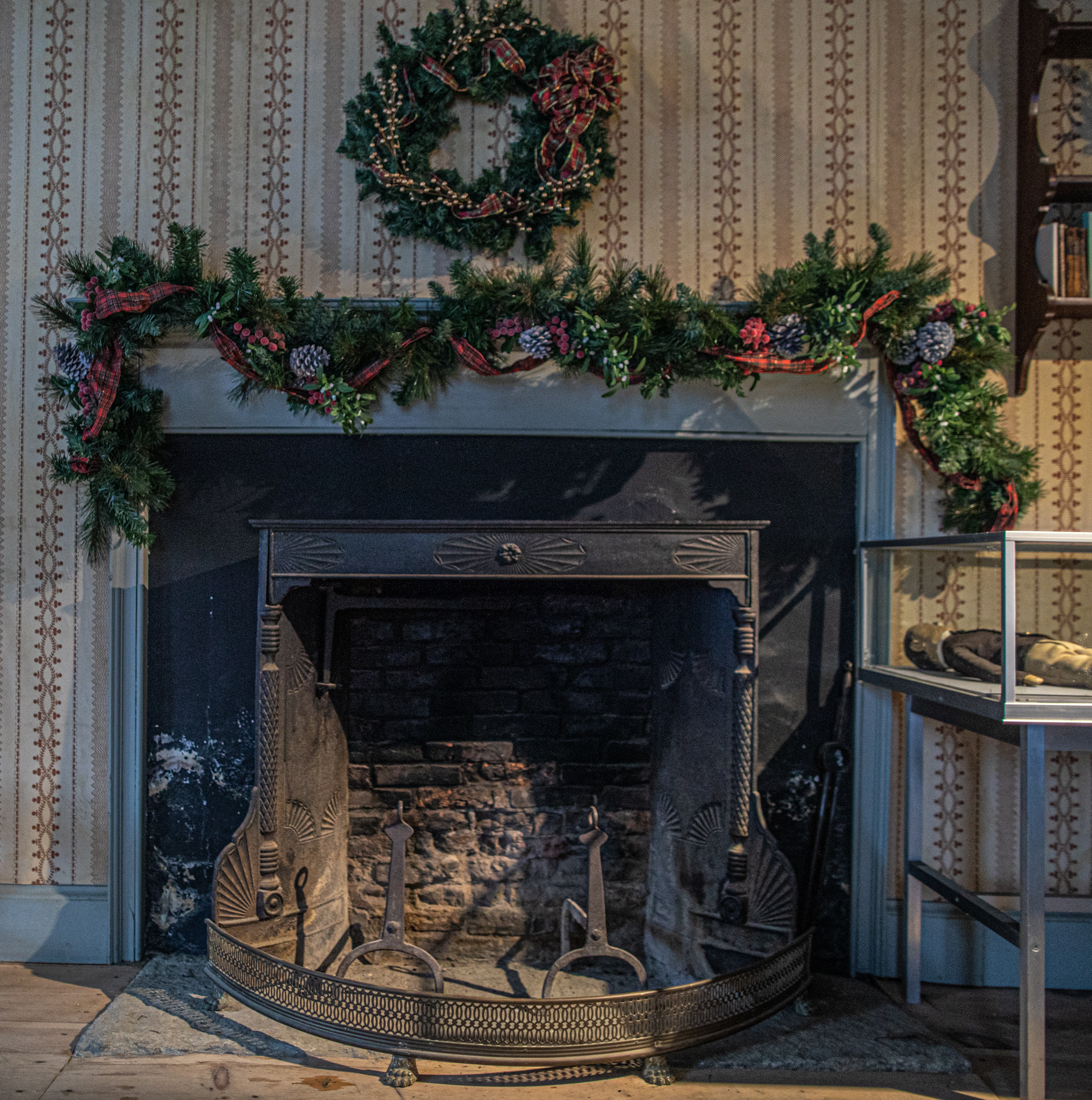
The interior of the homes were just as beautiful as the outside of them.

Toys, of course, are also a big part of the holiday. There were toys from the 1800s and modern day era at the event.

But, not all of the gifts children received were toys or dolls. Children in the 1800s would leave carrots and hay in their shoes to feed St Nick’s horse (or donkey) in the hopes he might leave gifts such as chocolates, candy, fruits, nuts, coins and other gifts in their shoes.

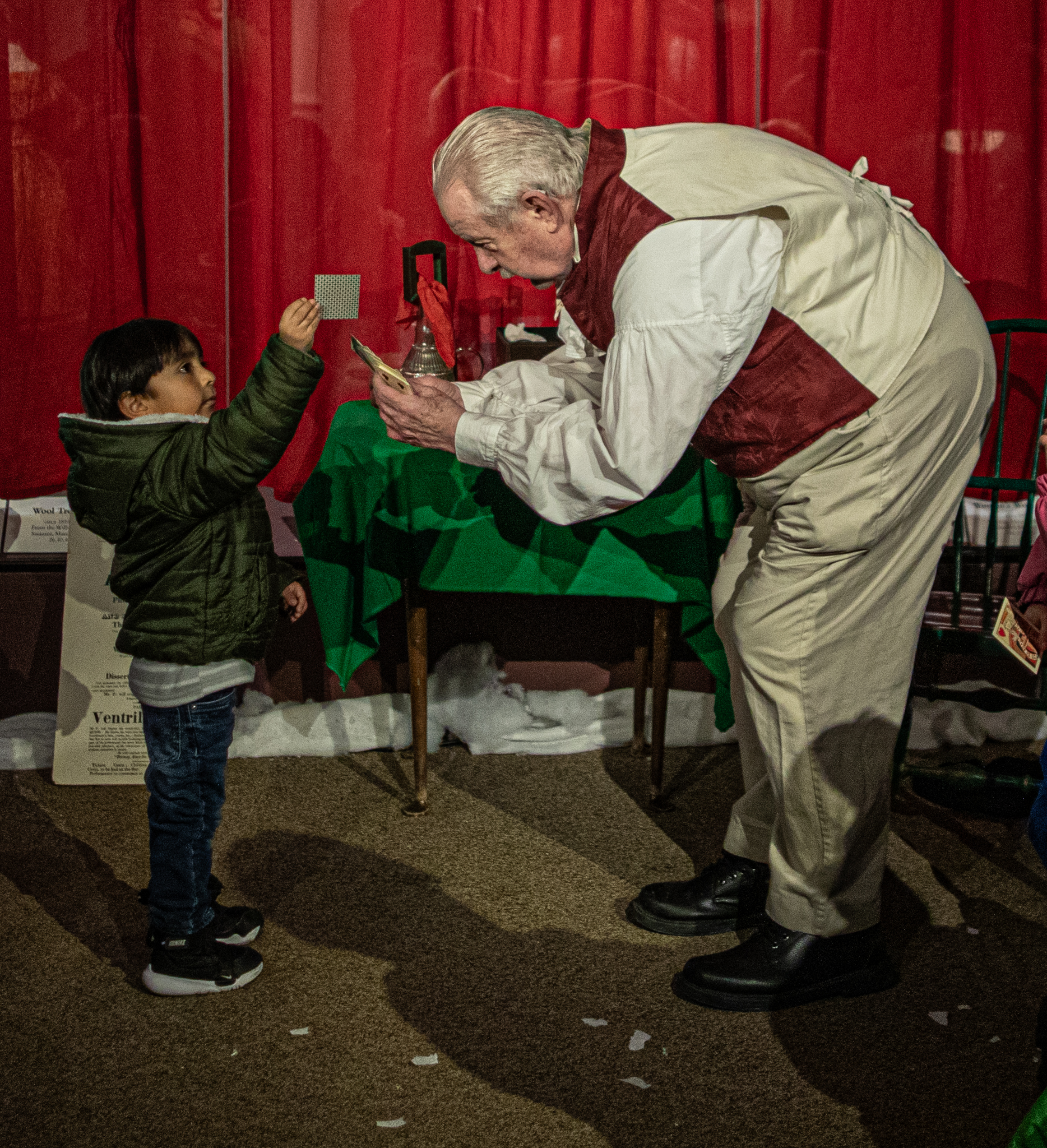
There were also musicians, magicians and other entertainers at the event.

Of course, what would the holidays be without food? The house where the Italian traditions were shown featured a Ceppo, a wooden pyramid structure designed to hold shelves full of different Christmas items. Some levels had gifts and food items while other levels had candles on them. Besides being a potential fire hazard, the Ceppo was meant to represent a flame and act as a substitute for the Yule log.

In the corner of the table you may have noticed a figure holding a stick.  La Befana, the “Christmas Witch”, is considered a good witch who rides around on her broomstick. She carries around a sack of gifts and candies for good children. The name  La Befana originates from the Greek word Epifania, the Italian name for the religious festival of the Epiphany.

The Italian Christmas Eve tradition of the Feast of the Seven Fishes was also discussed. But, thankfully, no fish was prepared or served at the event. In its place, cakes, cookies and other sweets were on display. And a chocolate layered cake was served. I did not partake. But, the consensus was it was “delicious.”

Just looking at all the photos makes me hungry! Believe it or not, even with all of the photos I have posted, I could have posted even more.

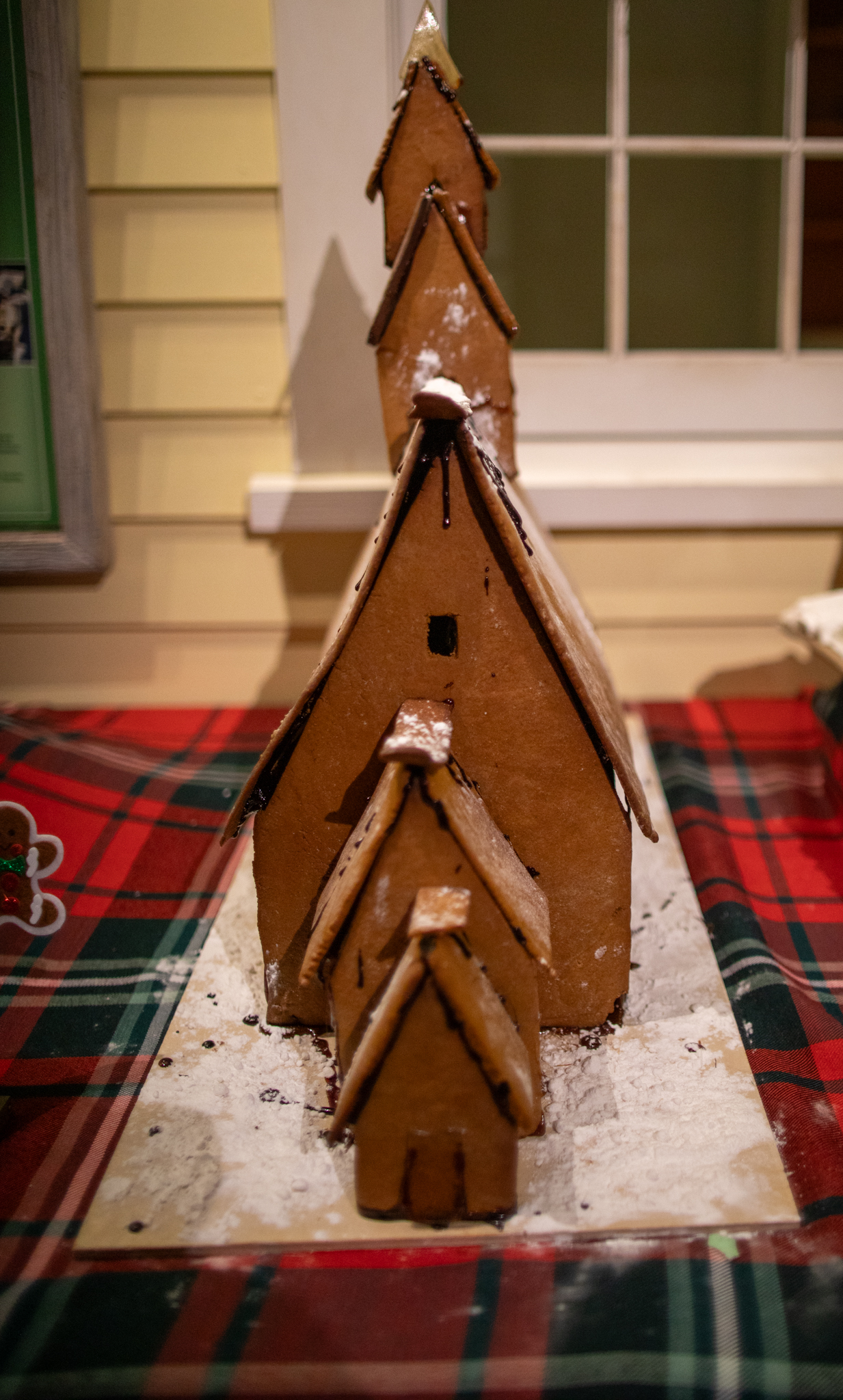
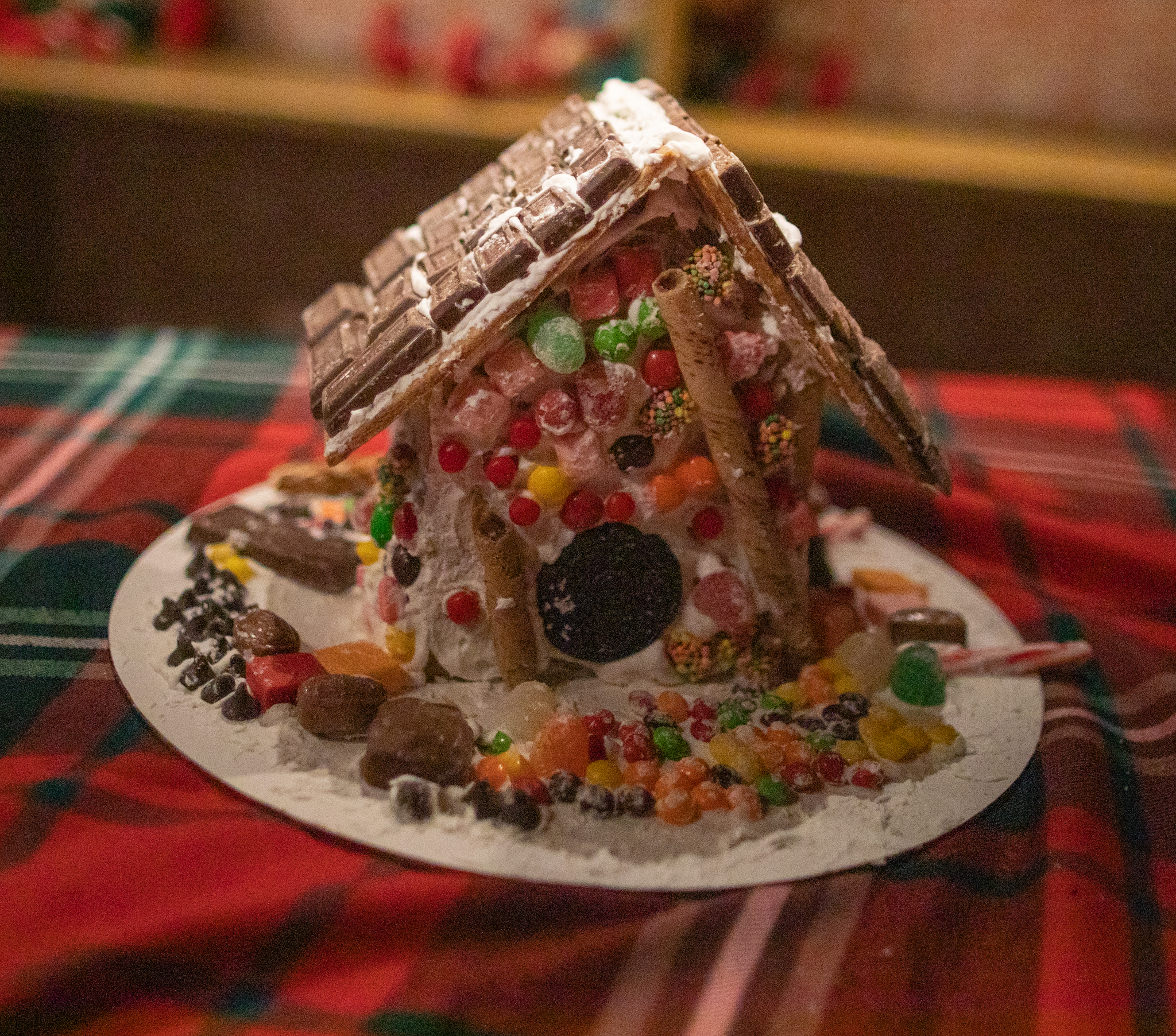
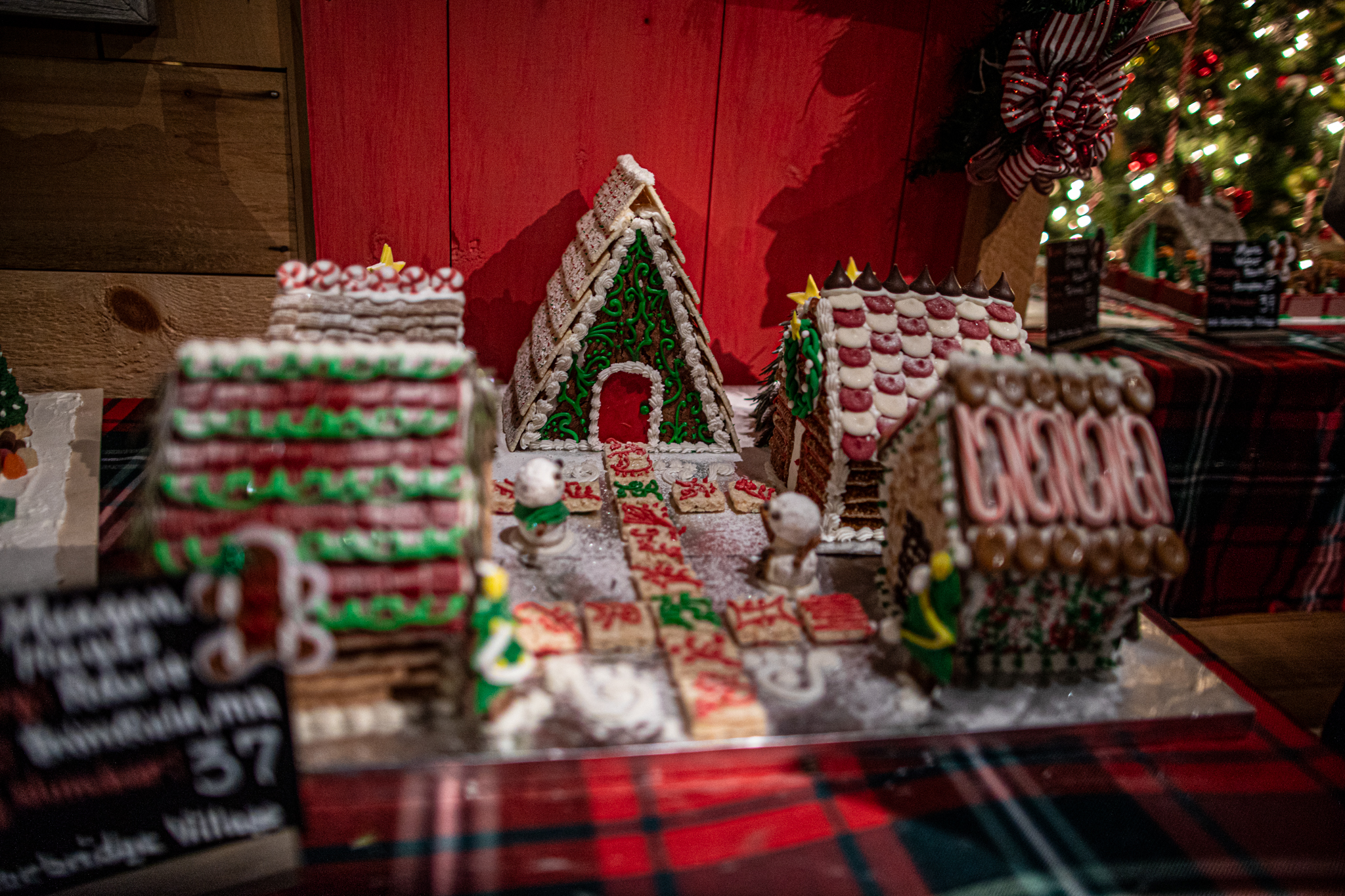
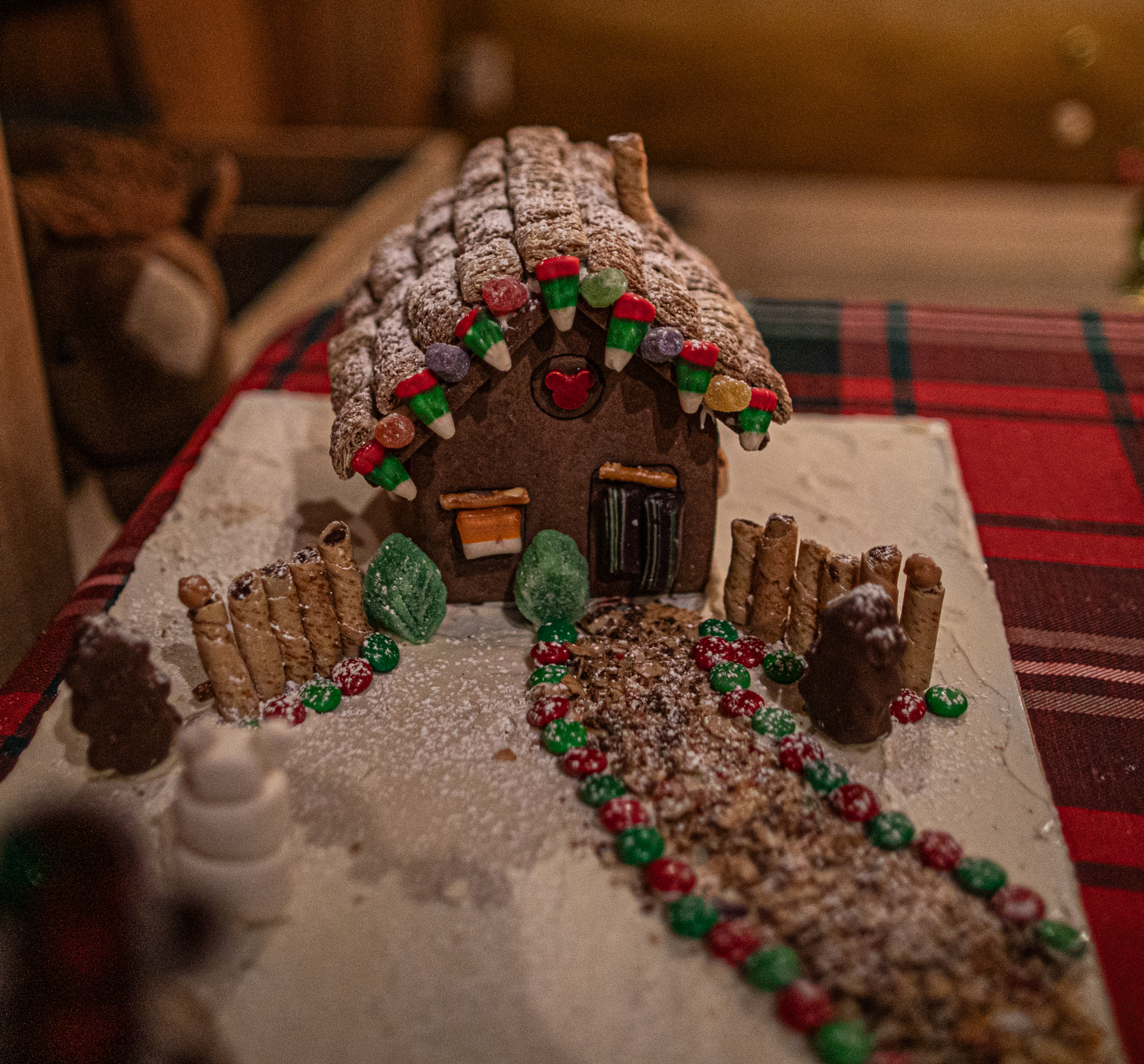
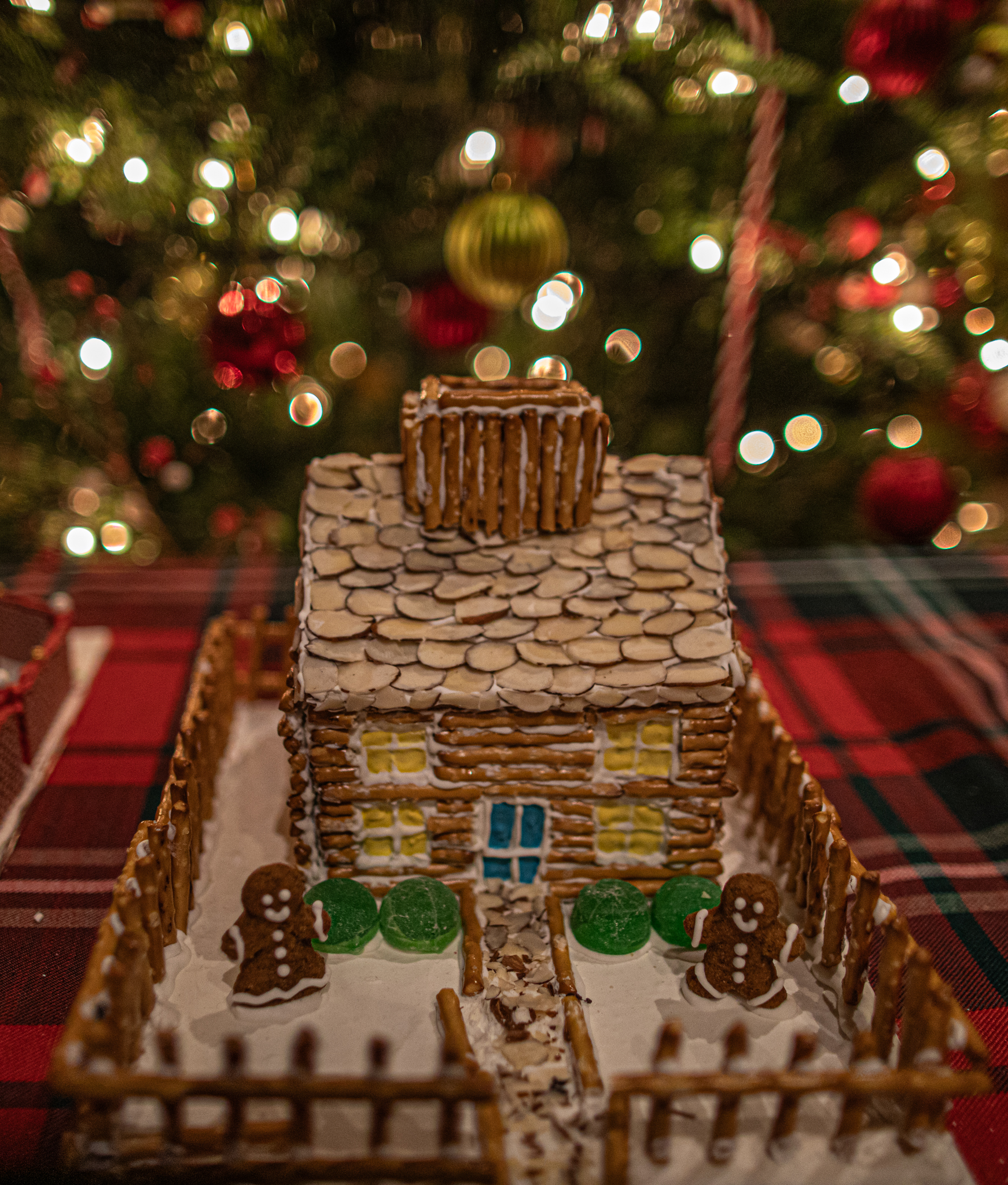
As an added bonus, there was a gingerbread house contest.

The “winning gingerbread house was “Best In Show” gingerbread house was this “Farm Creation.”

The rest of the gingerbread houses and other gingerbread structures are posted below, in no particular order.


Winterlights (Stockbridge, MA)

Dates Of Event: Nov. 29, 2024 -Jan.4, 2025

Location: Naumkeag, 5 Prospect Hill Rd, Stockbridge, MA (2 hours west of Boston, MA)

Cost: $25 for adults, $12 for children

Universally Accessible” No, the trail includes stairs and some hilly inclines

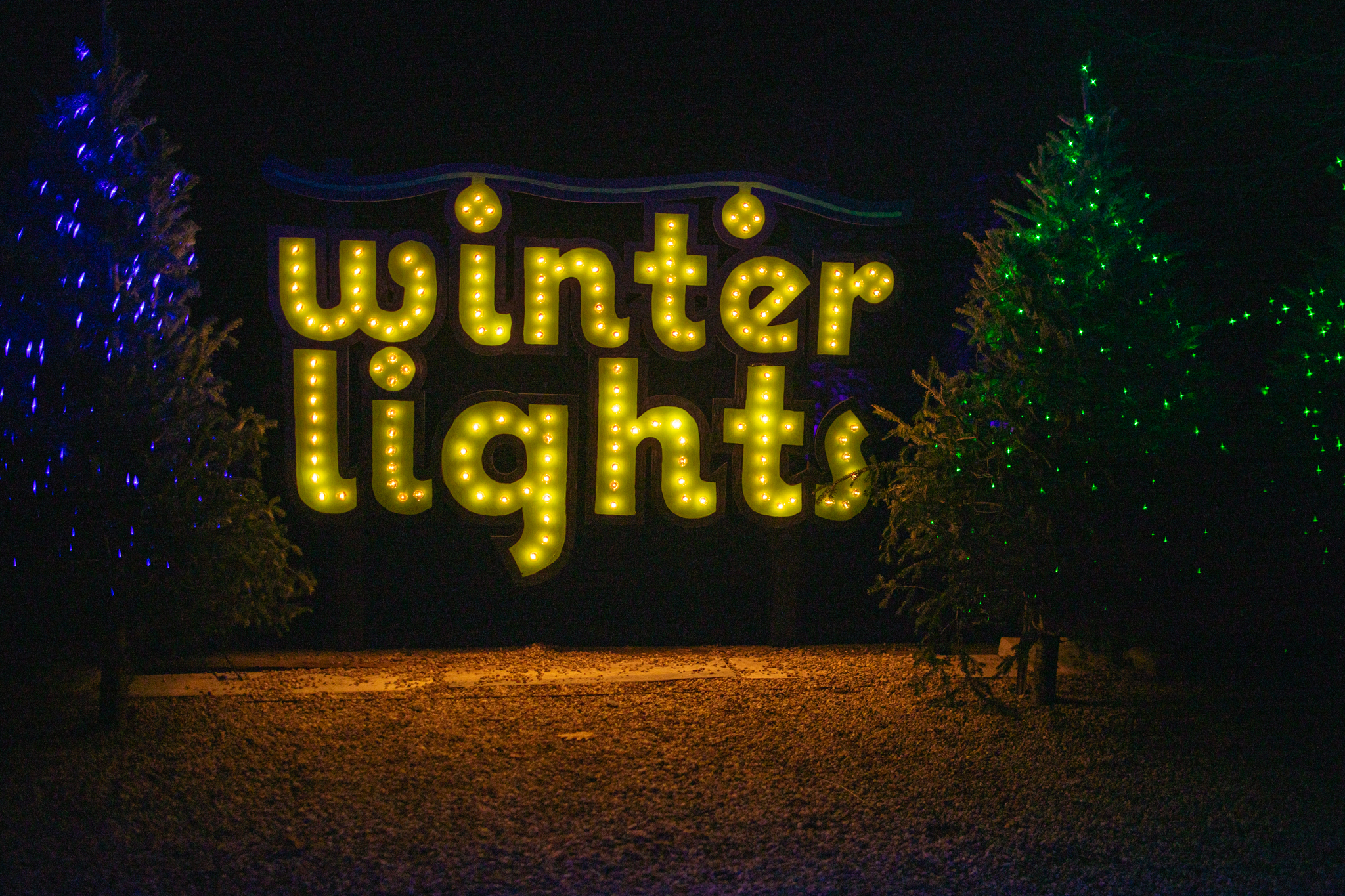
Summary: Hundreds of thousands of lights lit up Naumkeag in Stockbridge, MA

Ranked one of the top 10 winter attractions in the country, Naumkeag’s Winterlights display lived up to its hype this year!

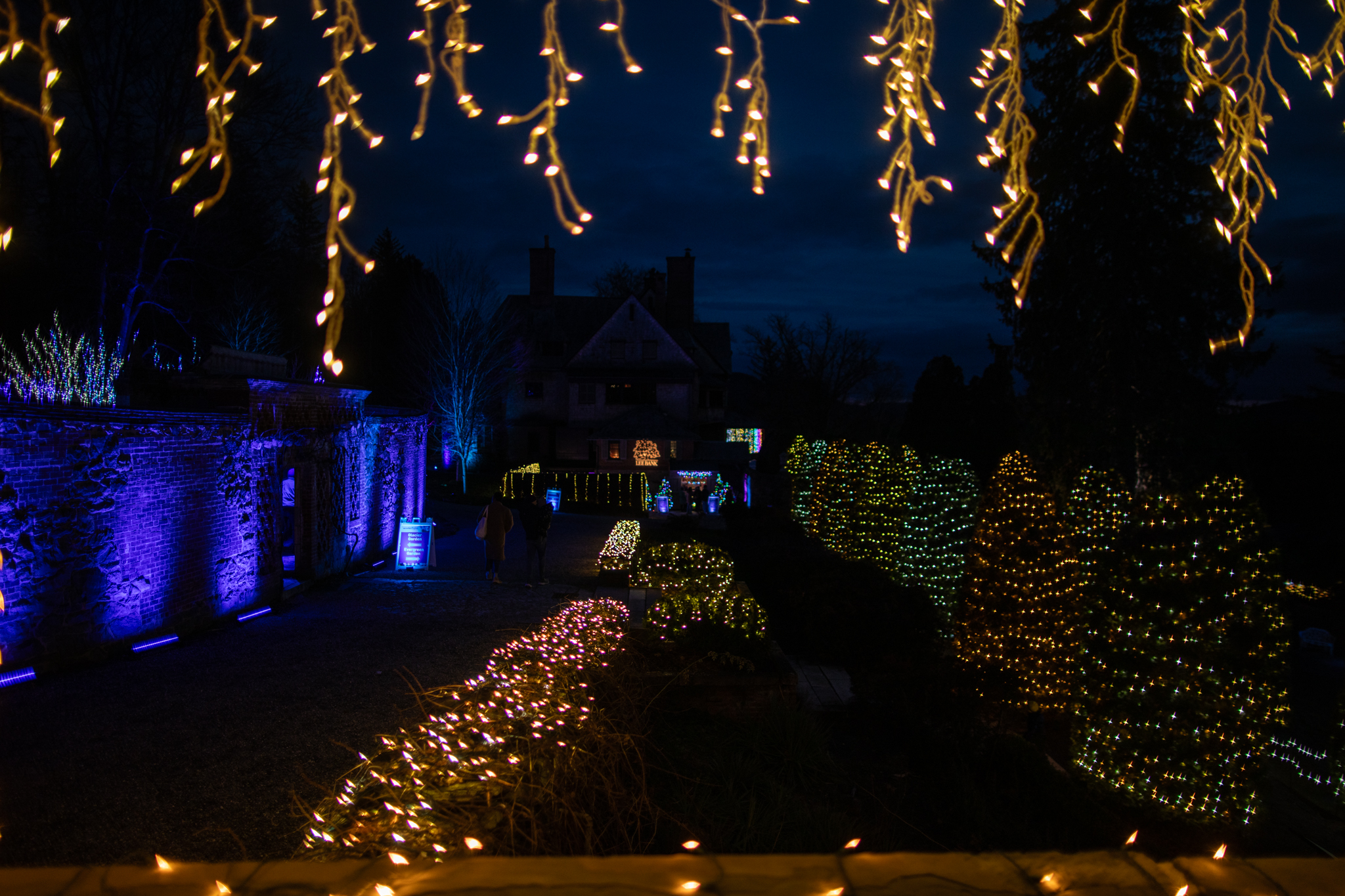
The estate, which boasts a home with a 44 rooms and 40 acres of land, kept visitors in awe with its grandeur.

Every time I photograph a low light event like this I wish I could take my tripod with me. It would be easier from a technical standpoint and the photos would look better. But, for good reasons, they are not usually allowed on the grounds. So, I did my best with my Canon 5D Mark IV with my 24 mm prime (1.4 aperture).

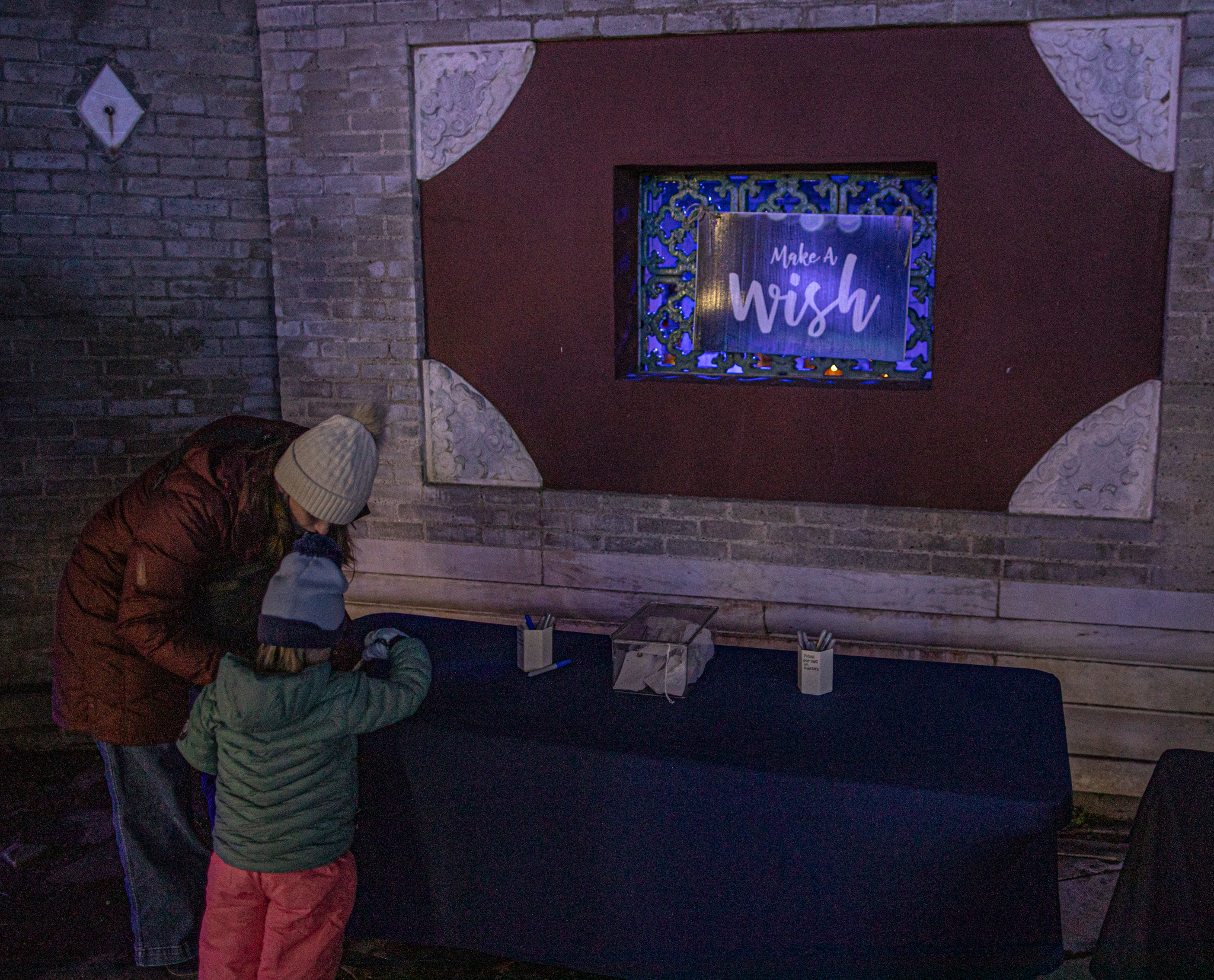
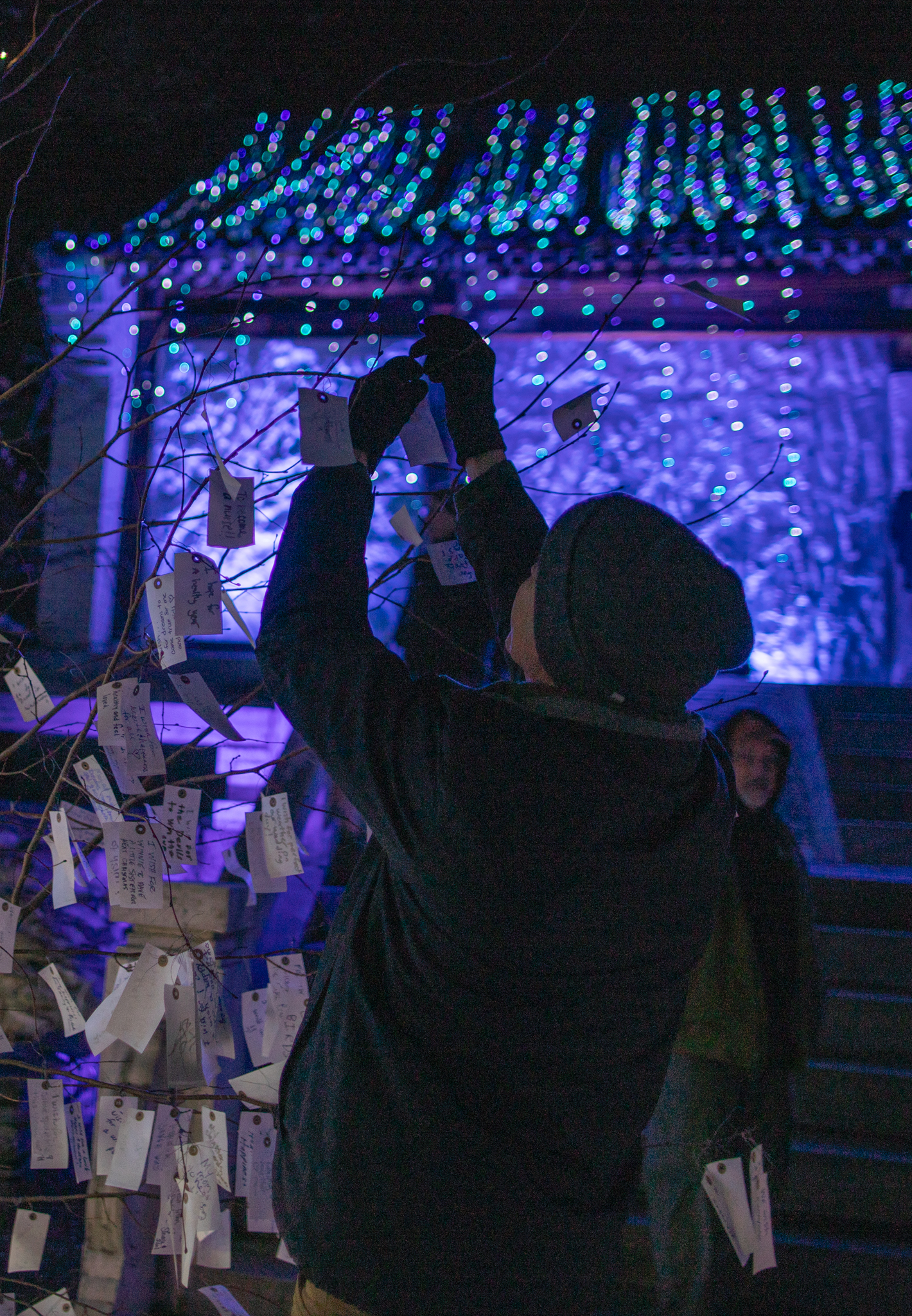
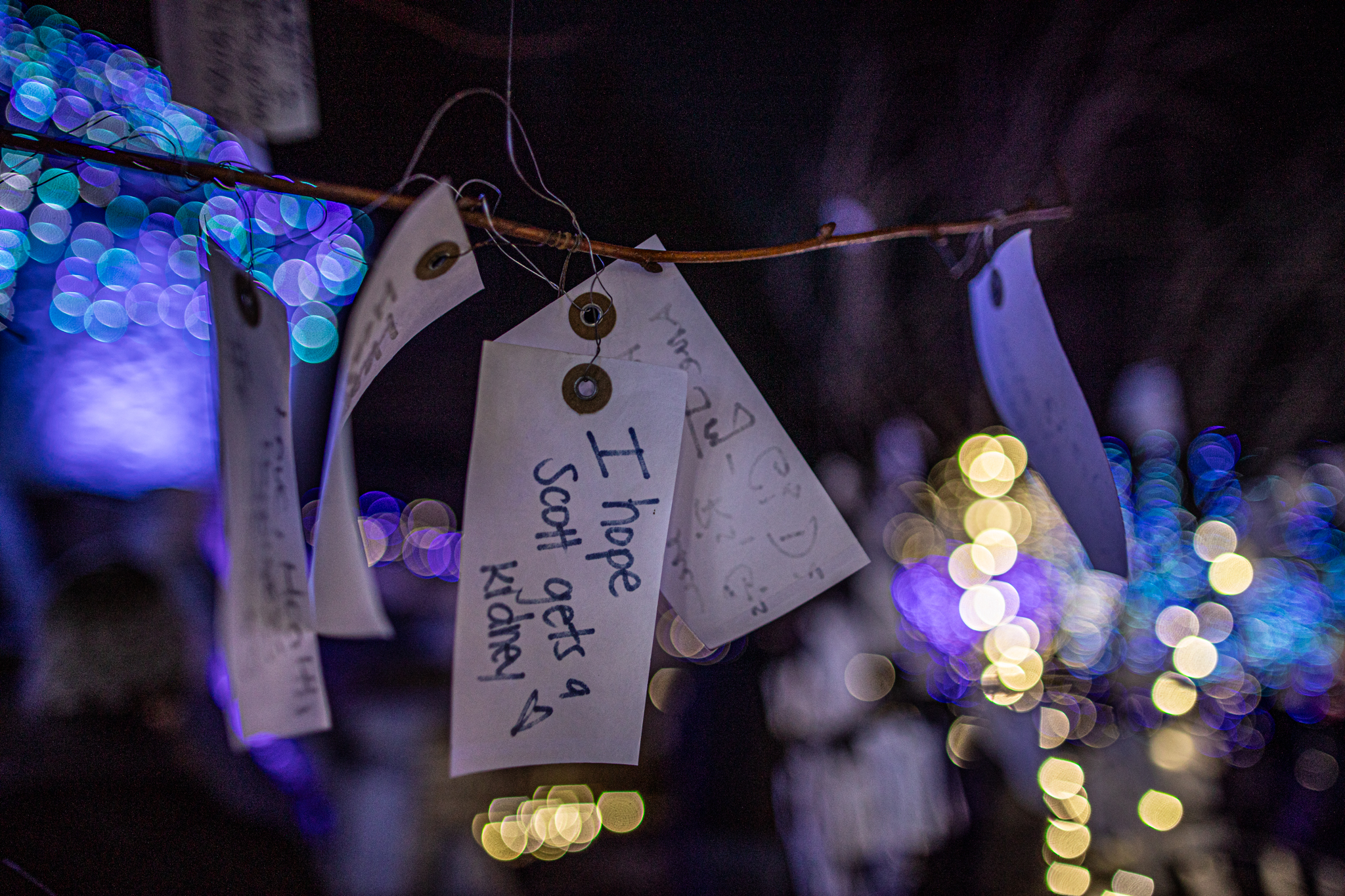
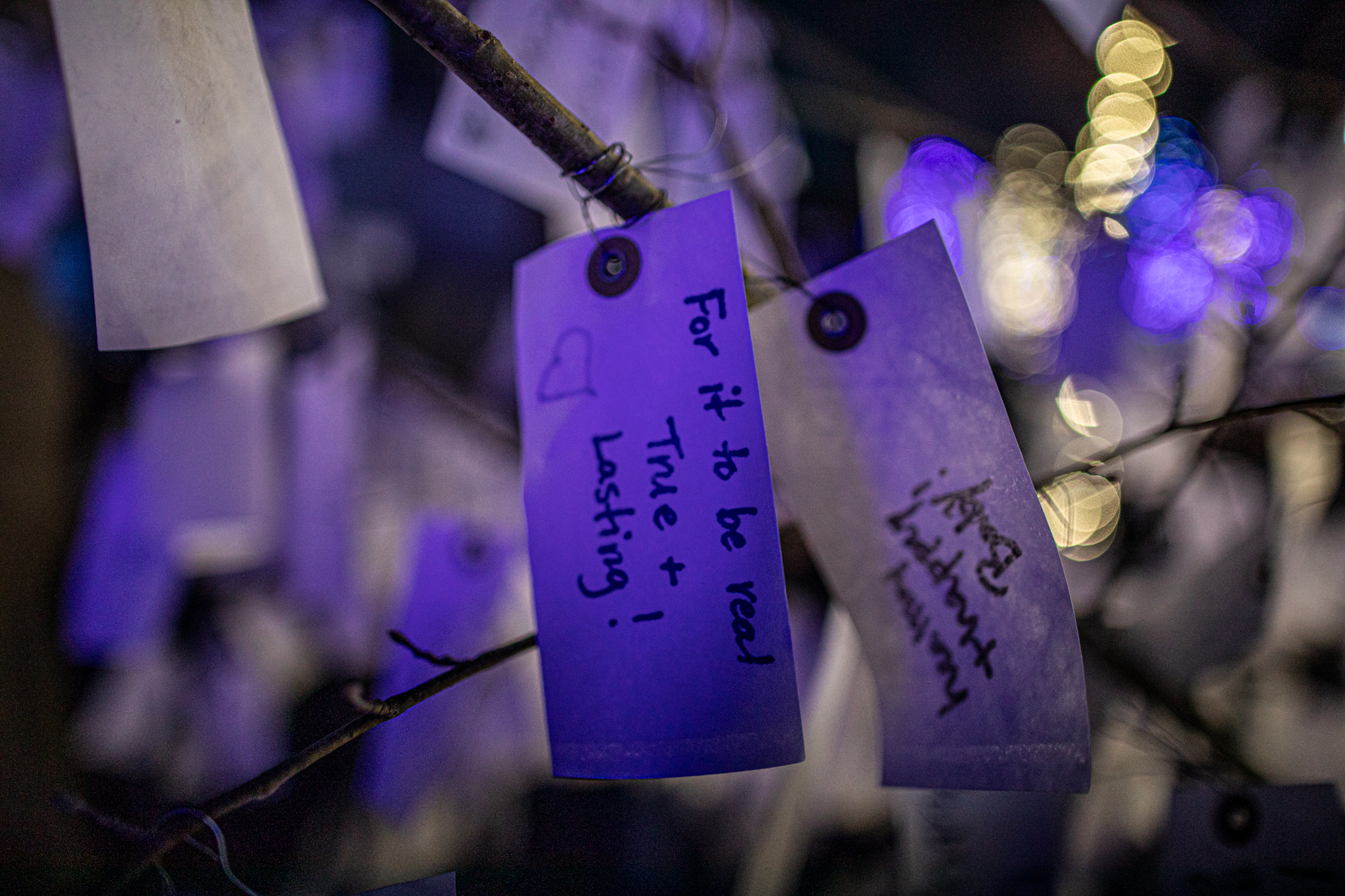
In the garden area, there was a “wish tree.” People could write their wishes for the upcoming year and hang them on a tree.

I wouldn’t mind extra pizza rolls either. And best wishes, Scott.

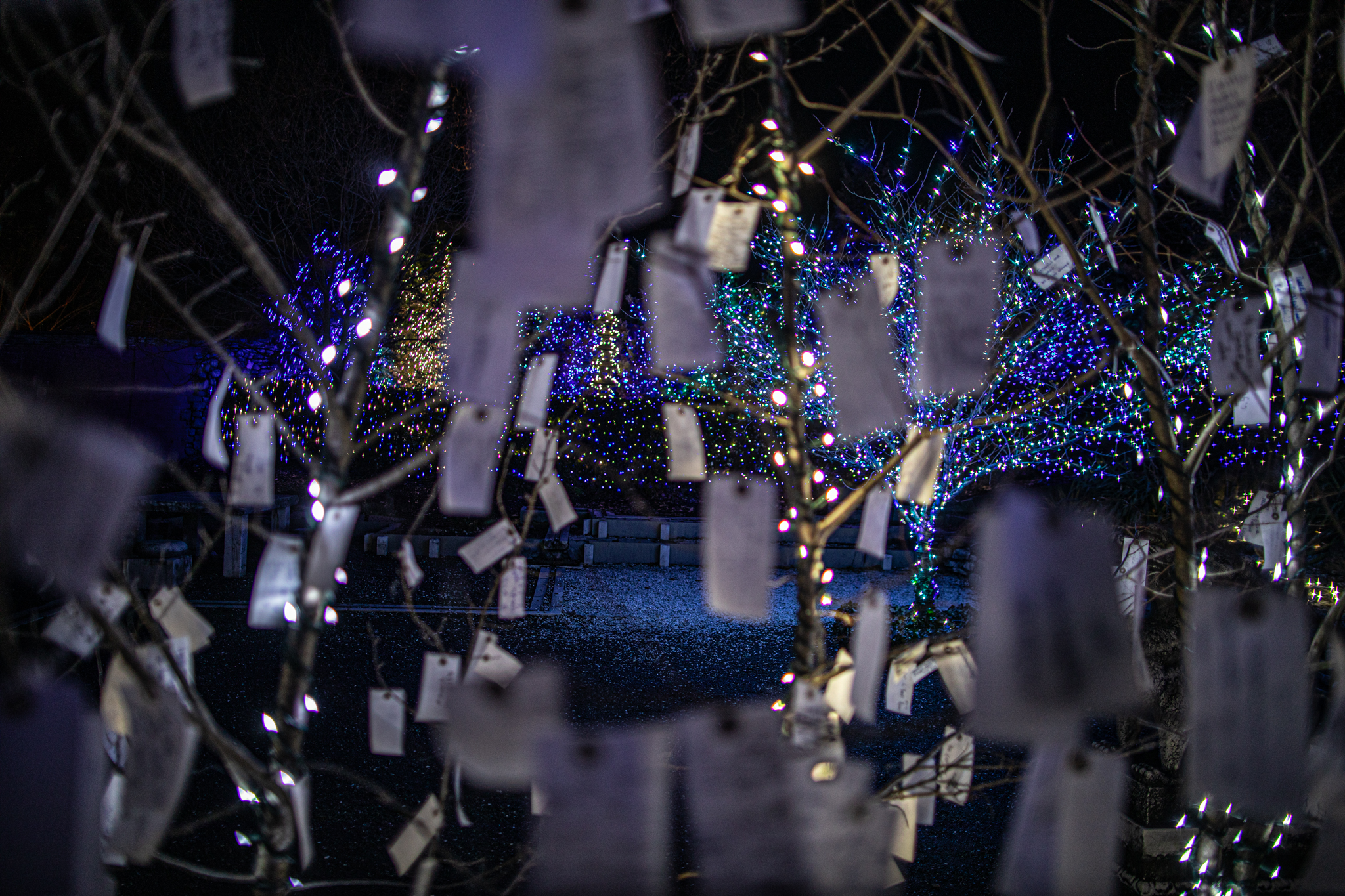
So many wishes…

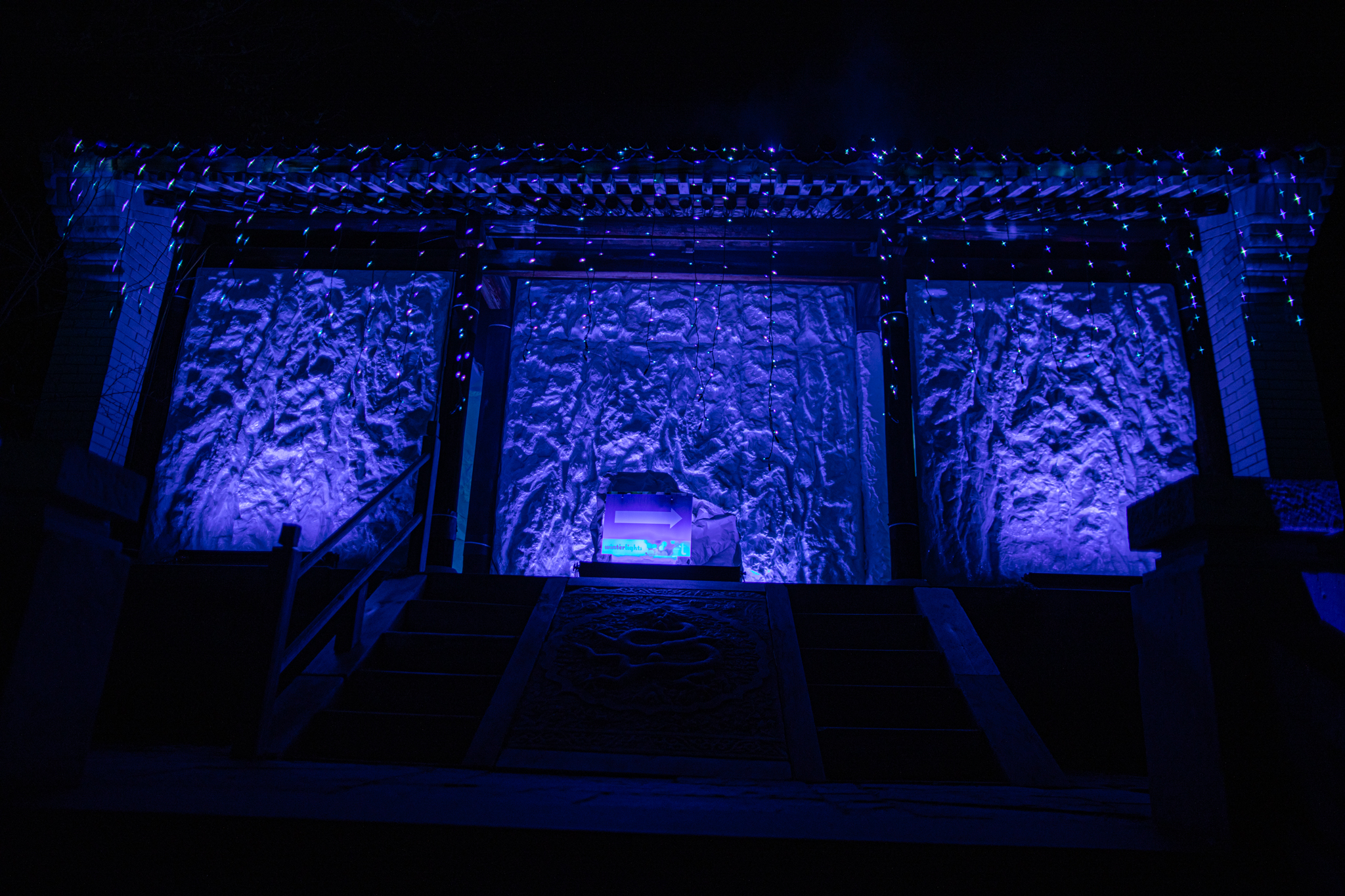
There was also an igloo like structure in the garden. You may see some fog that was piped into the area. (to the left of the third photo)

Everything was lit up and very festive looking!

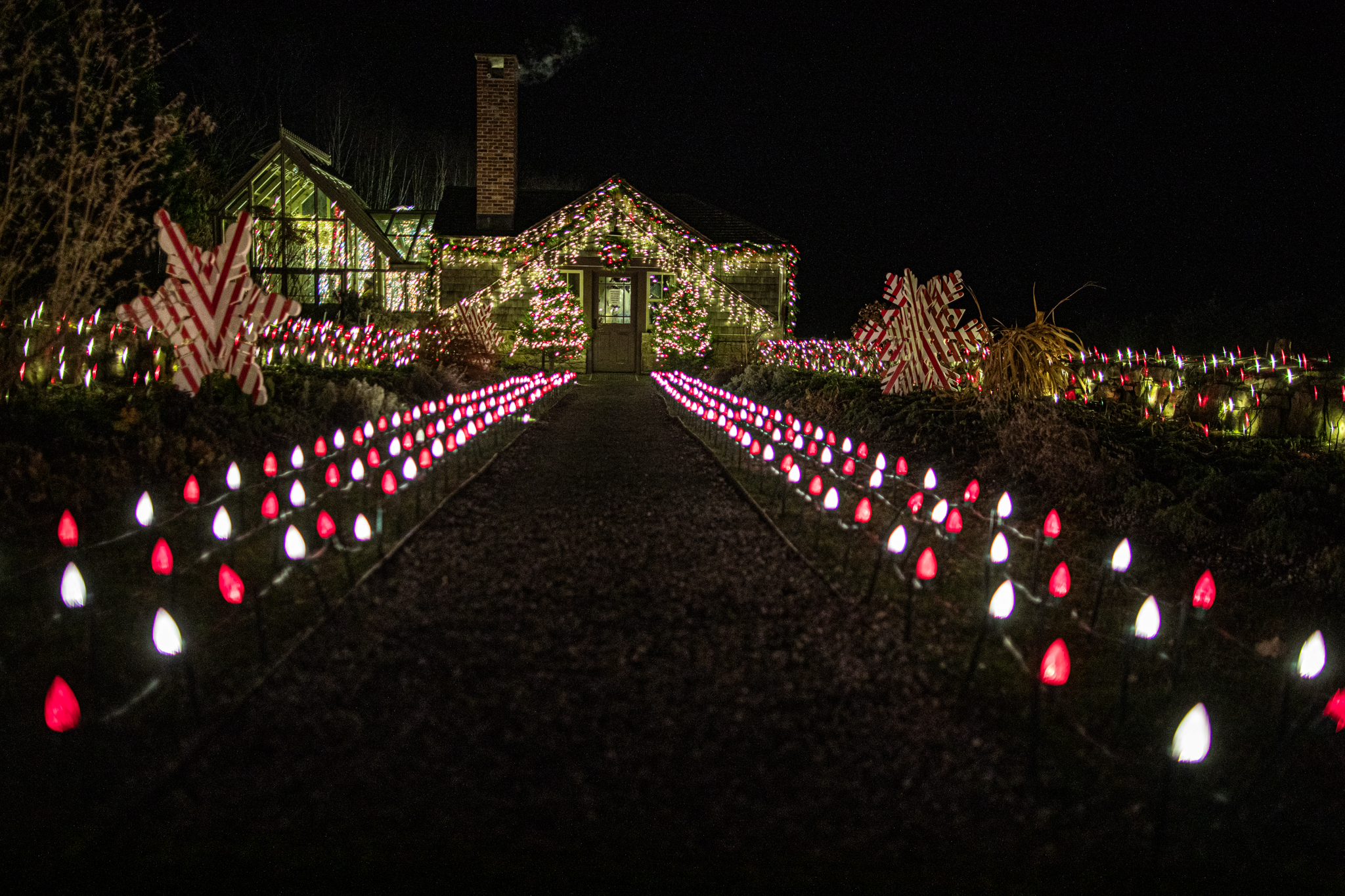
Along the trail there was a cute little greenhouse that was decorated for the holidays!

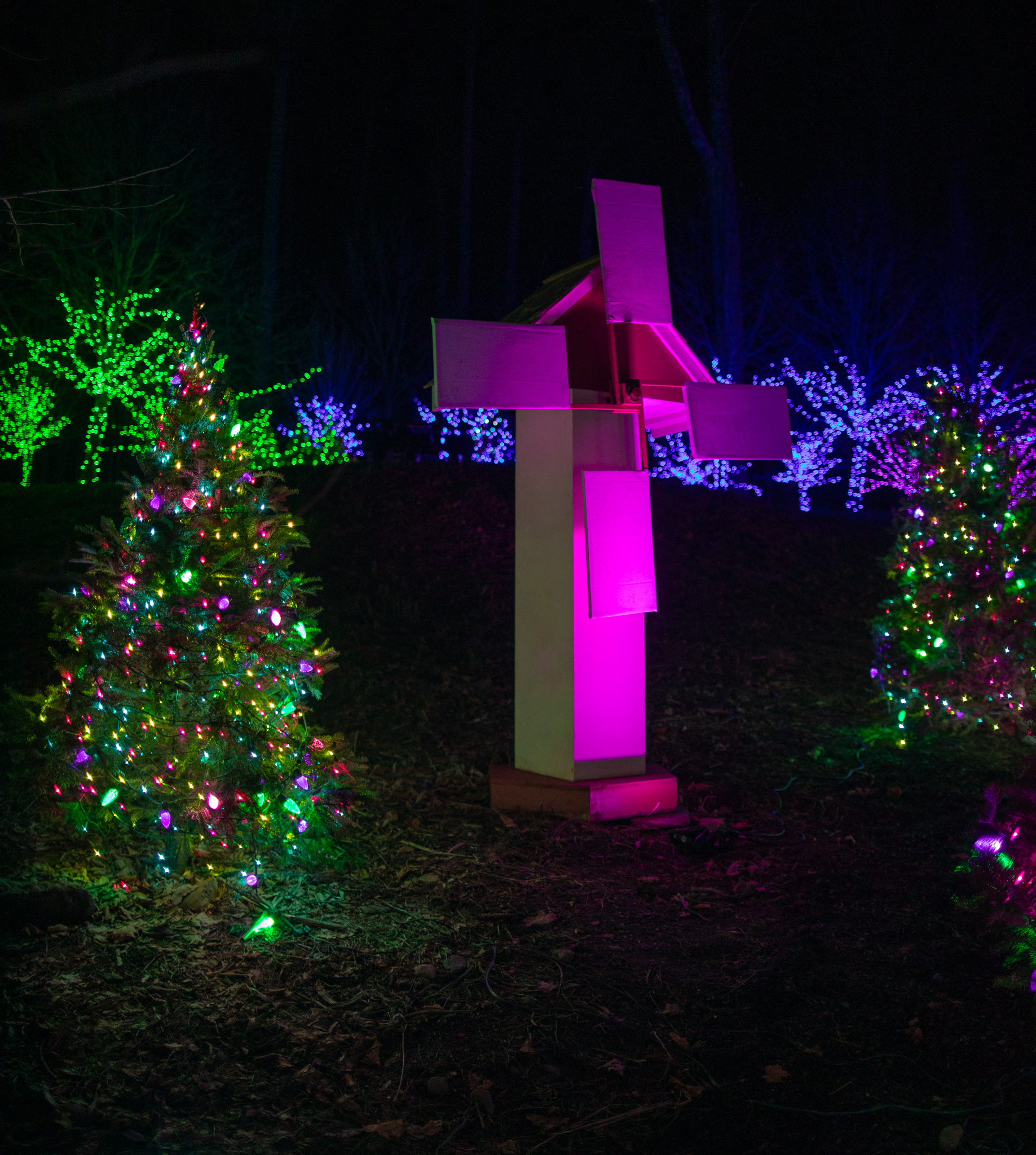
Along the main trail, there were a variety of lights and objects that were lit up!

This tree to the right of the photo reminded me of the trees un the Wizard Of Oz for some reason!

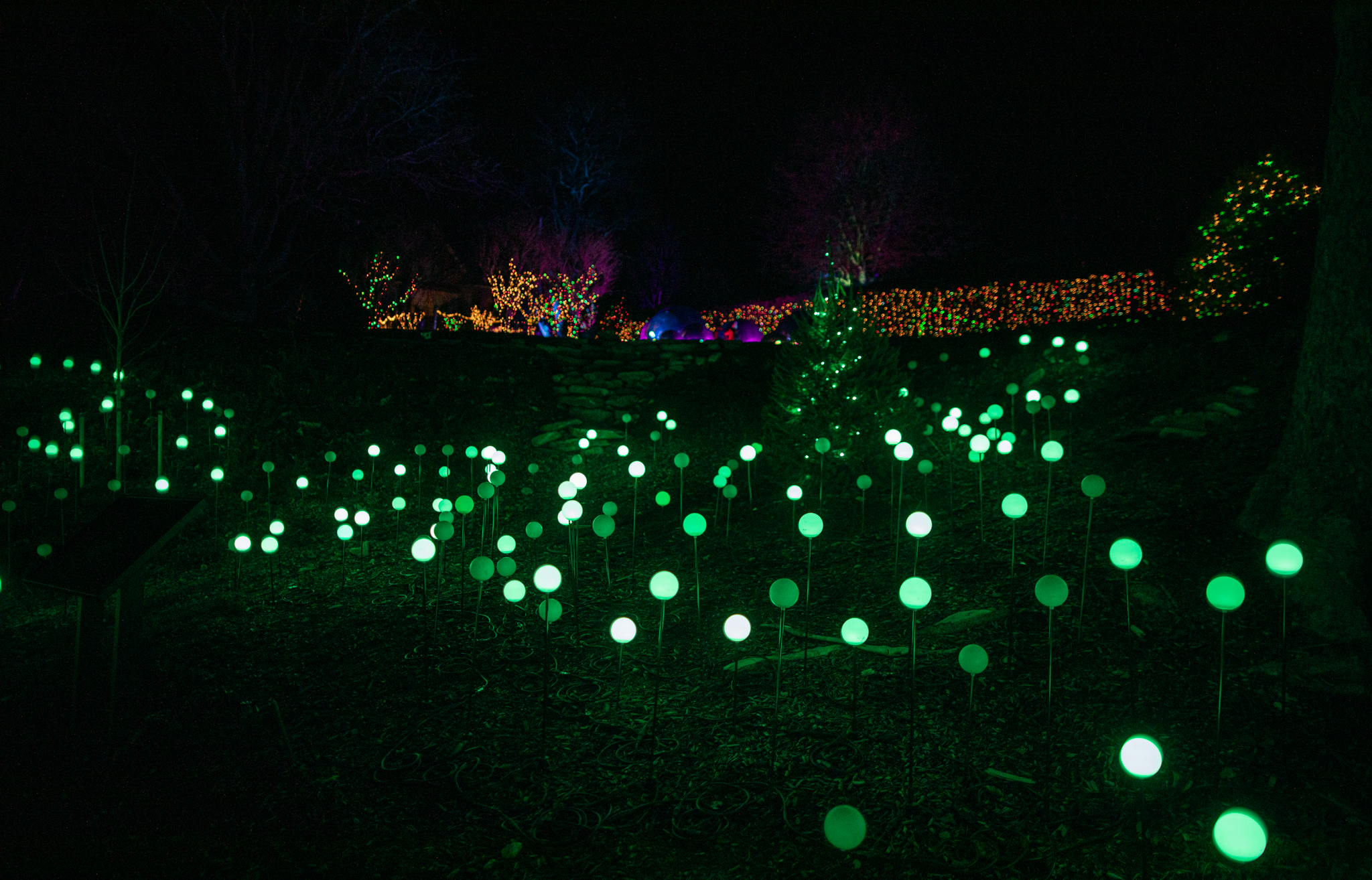
These very unique lights looked like insects.

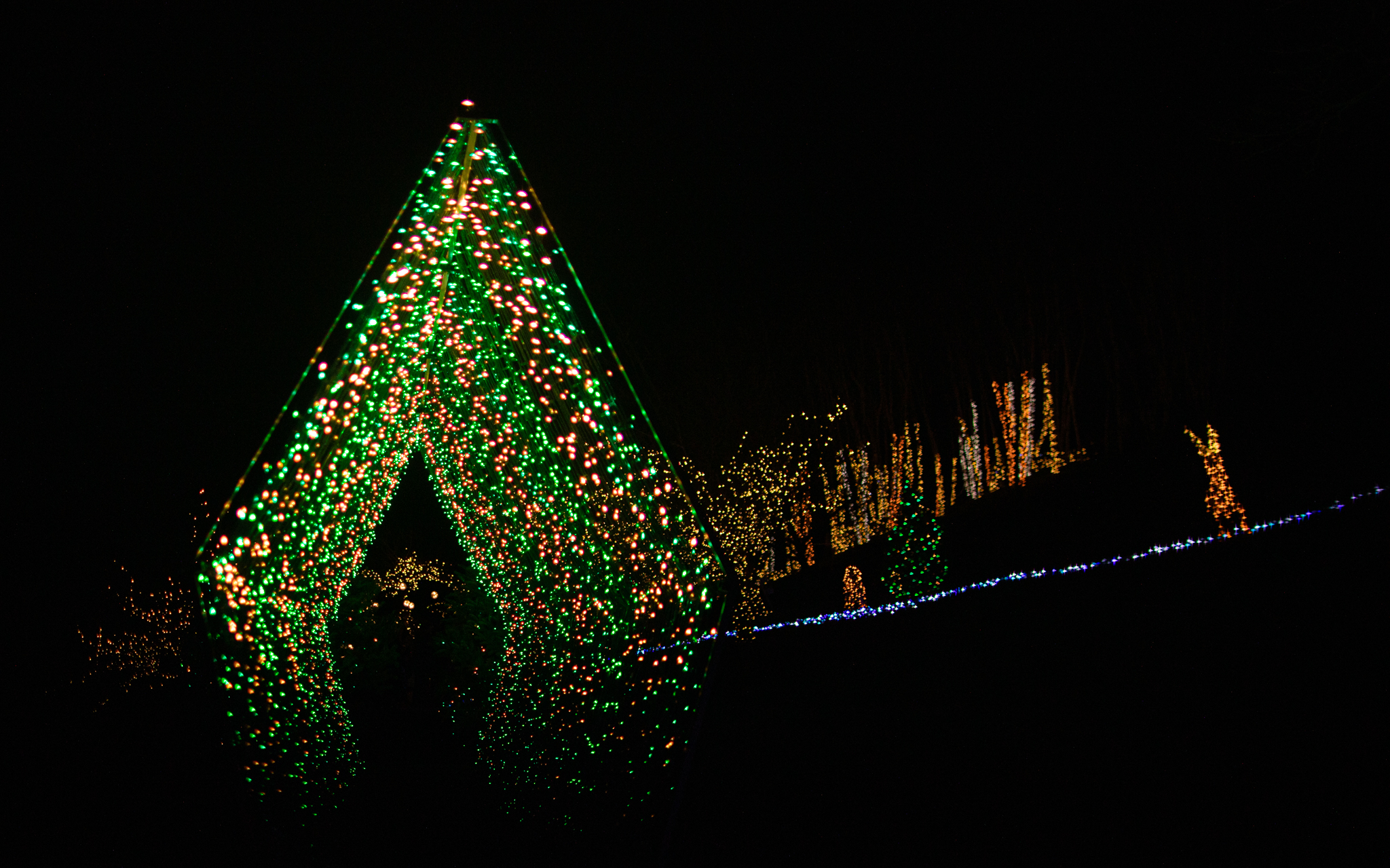
There were also these brightly lit hut like structures you could walk through.

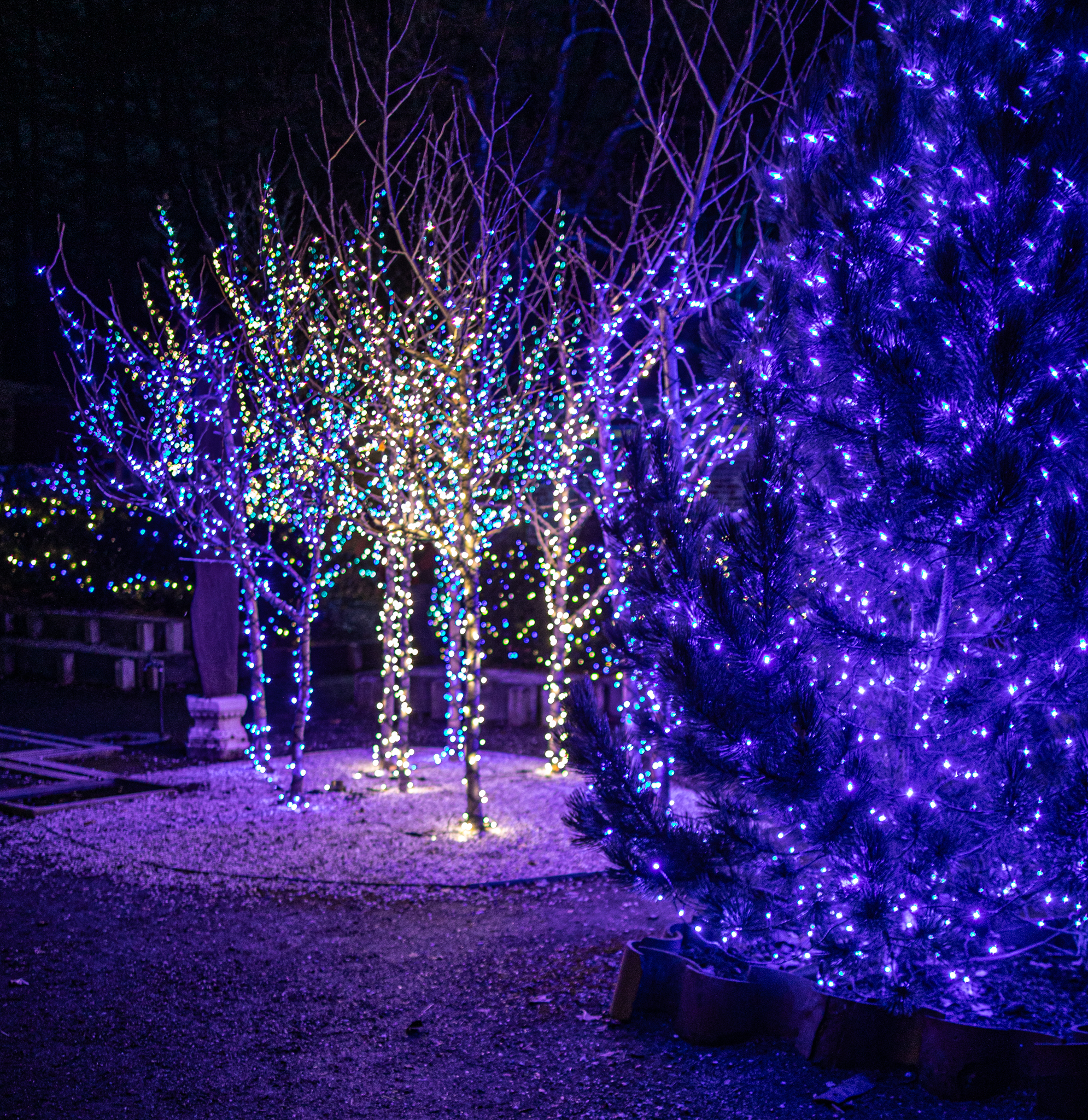
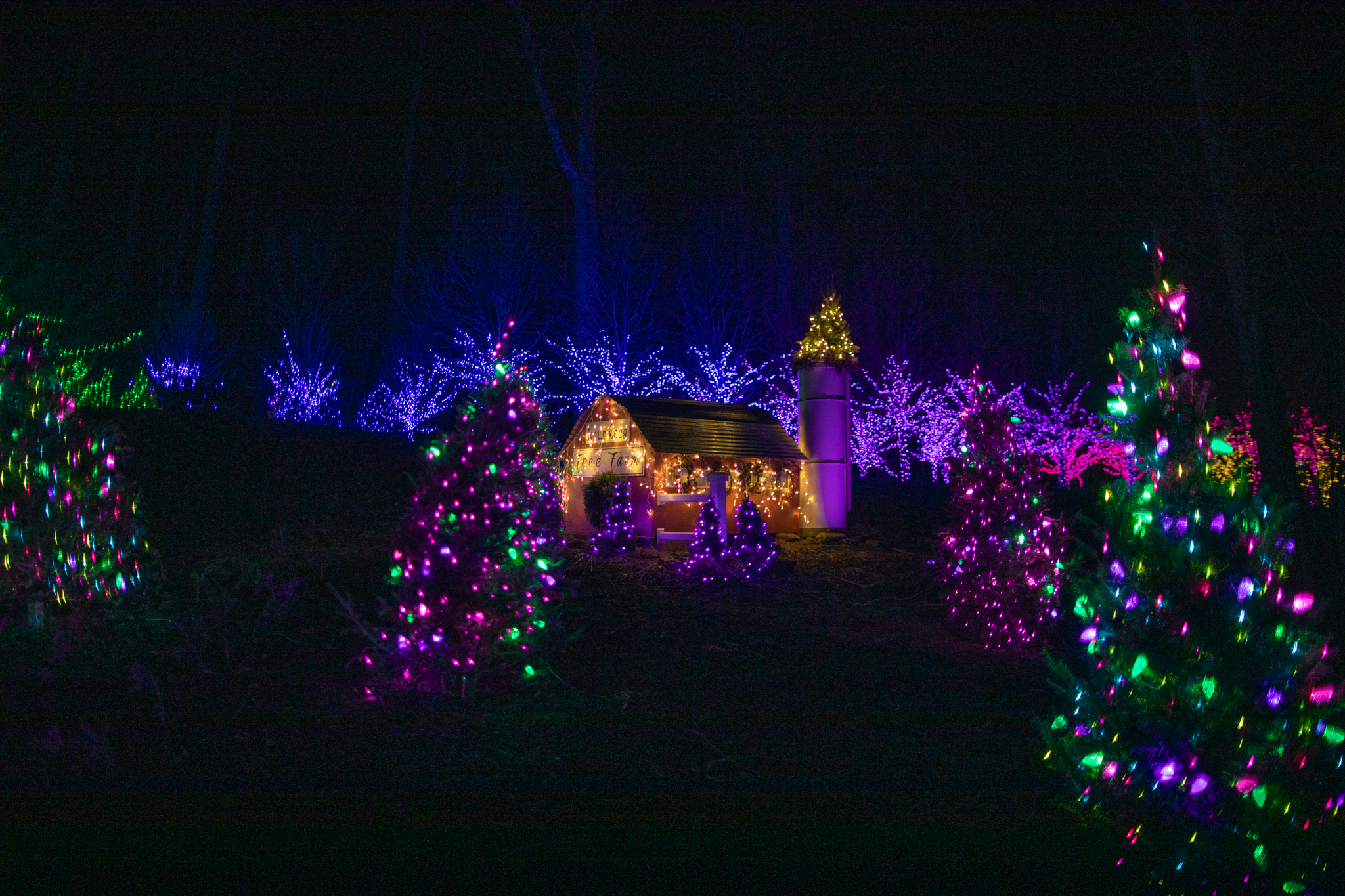
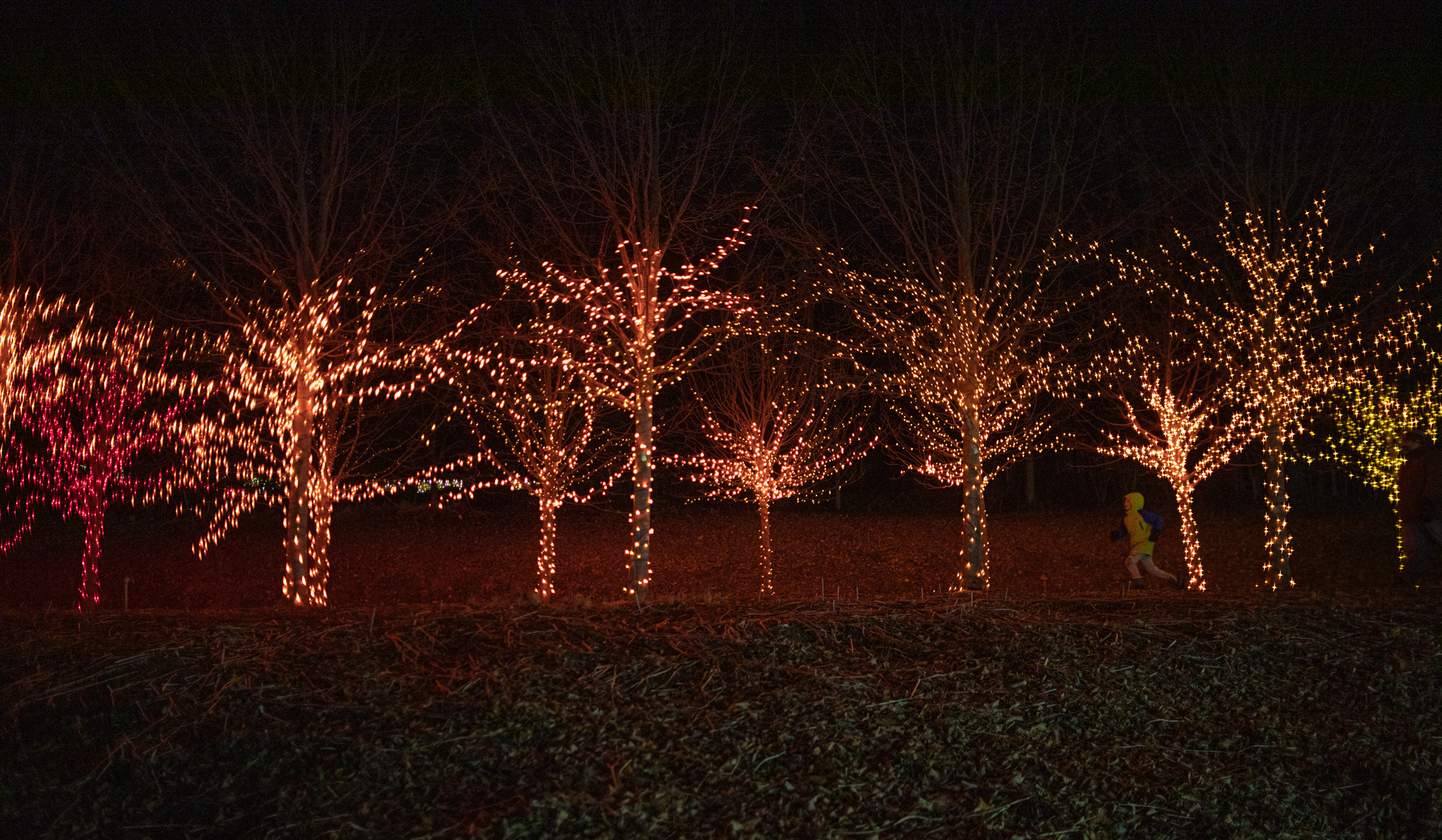
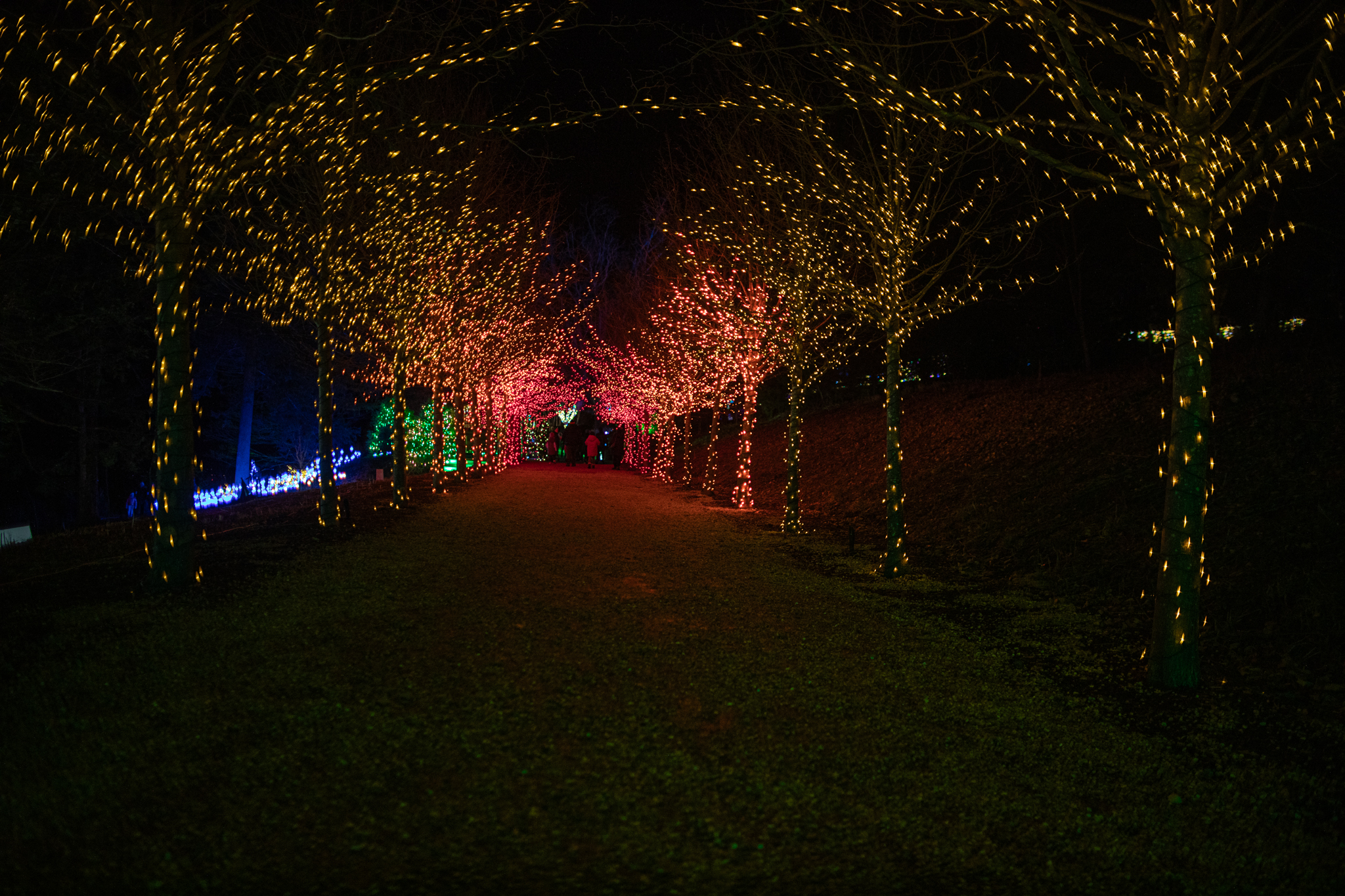
From a distance, the main attraction of the display, the trees along the path looked majestic all lit up!

But, they looked even better up close.

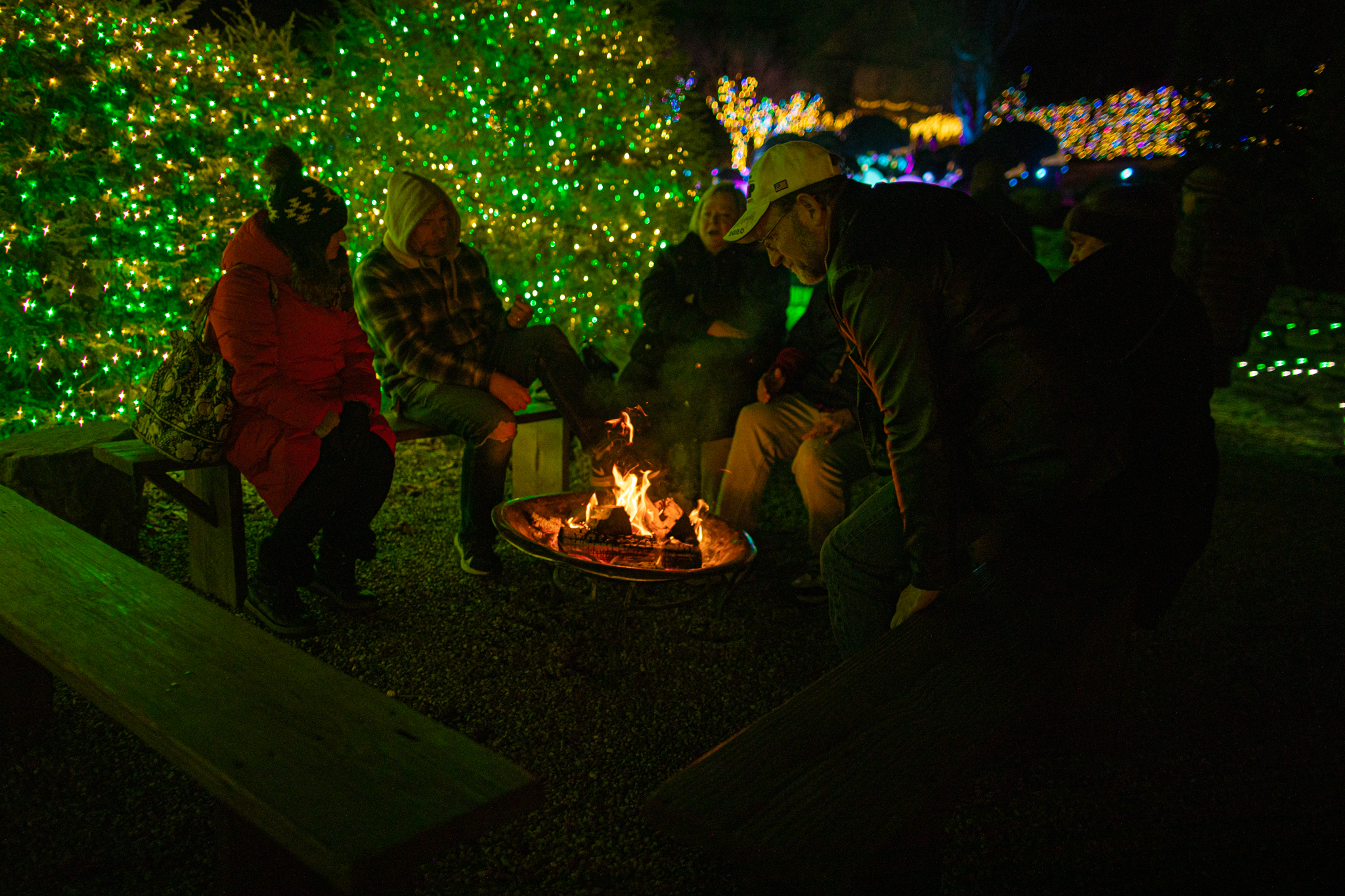
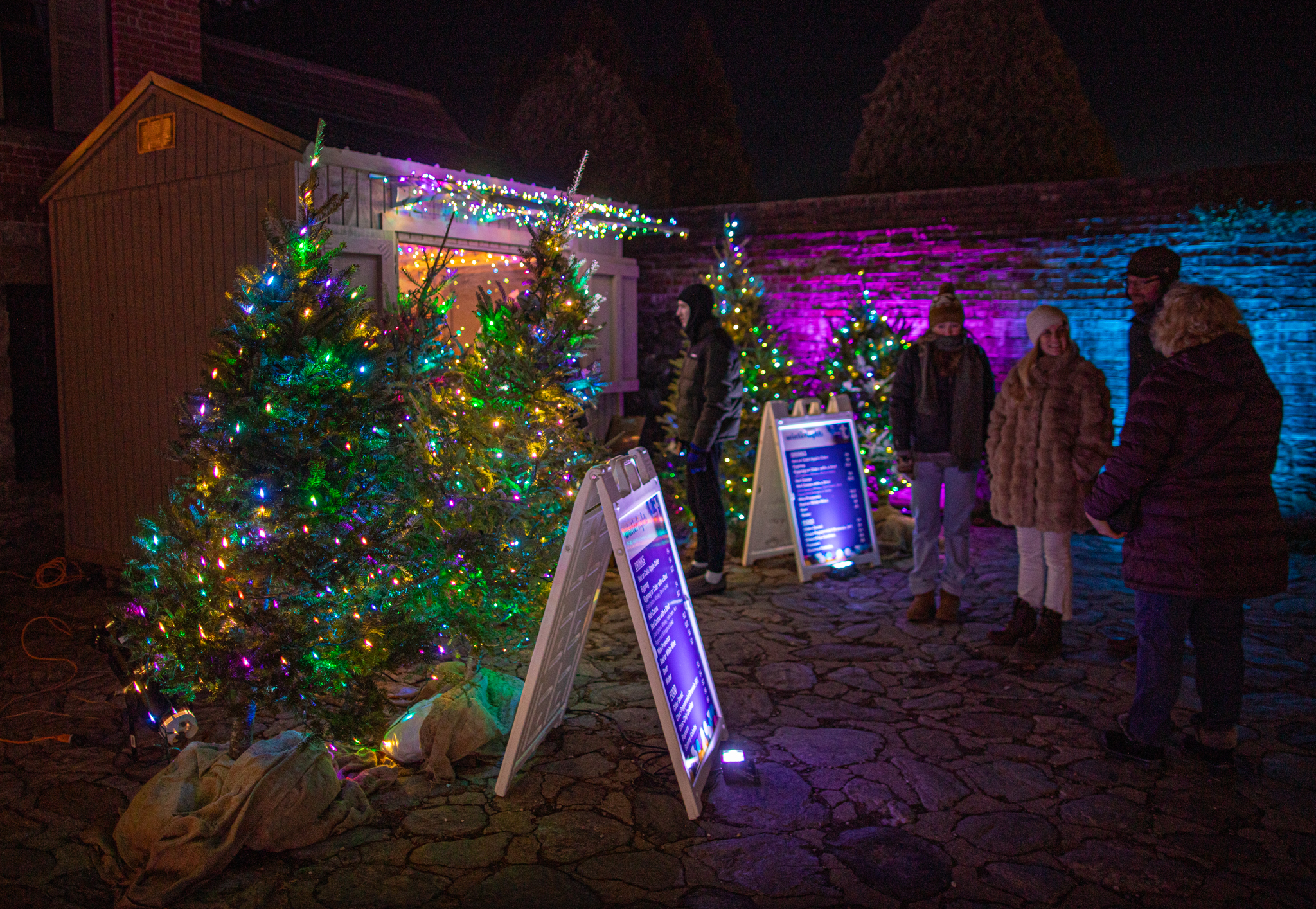
There were also places to sit by the fire and get a beverage or two.

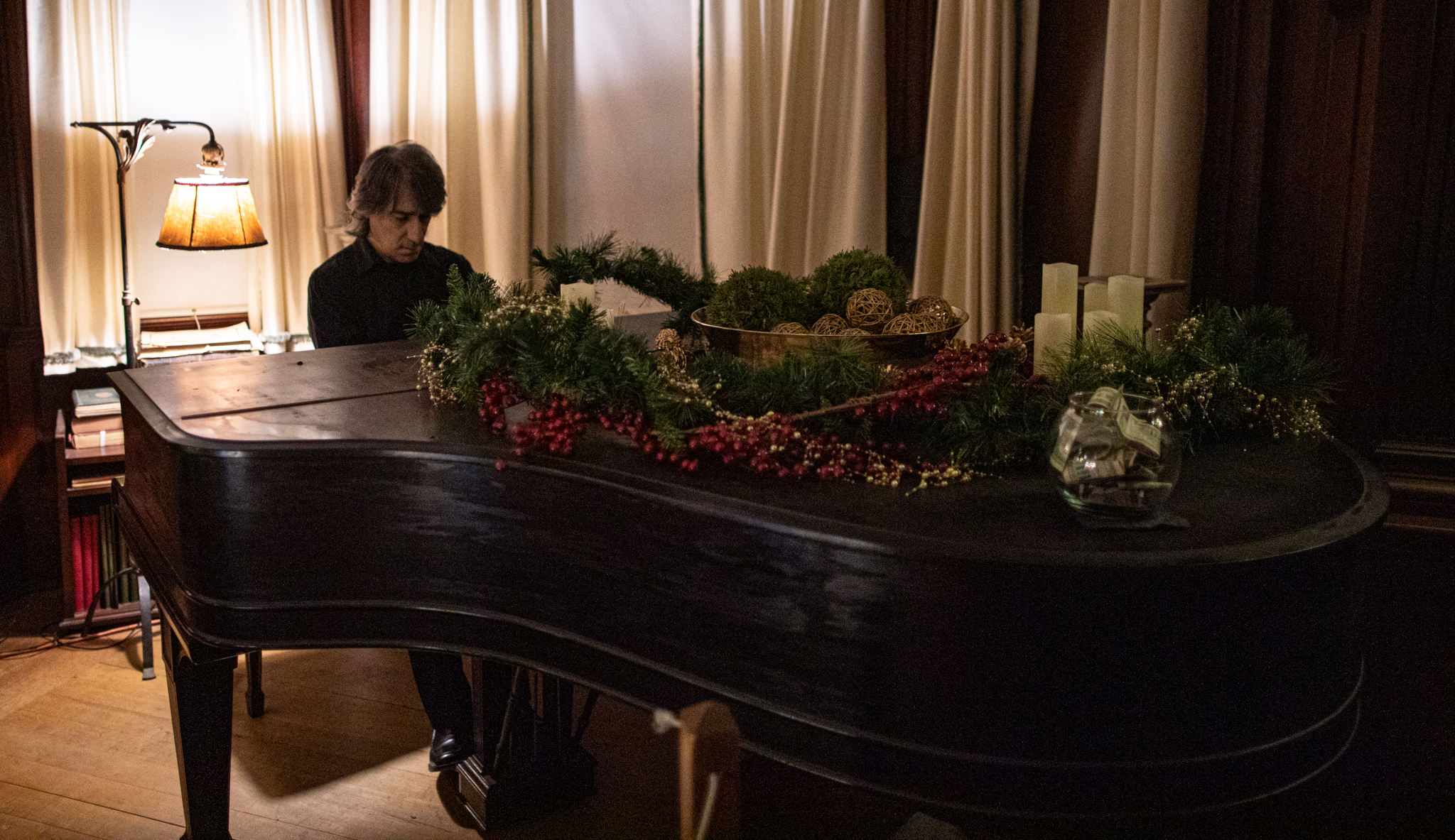
There were also decorations and a piano player at the home at Naumkeag.

The case in the photo below has a special collection of nutcrackers.

It’s hard to believe yet another holiday has come and gone! But, don’t fret! If you’re in New England, you only have 3 or 4 more moths of bone chilling weather!


2024 Christmas In Salem Part 1 – The Cotting-Smith Assembly House (Salem, MA)

Date Of Visit: December 7, 2024

Location: 138 Federal St, Salem, MA

Parking: There are several parking lots and garages in the Salem area

Universally Accessible: No, many of the homes do not have ramps or universally accessible entry

When you ask most people what they think of when they think of Salem, MA they will most likely reply with something about Halloween and witches. However, Salem has become an all year round attraction. In fact, the Christmas in Salem event has quickly become one of the more popular events in Salem.

Christmas In Salem is a series of guided tours at 13 historic homes and buildings in Salem, MA. In these series of posts, I will take you all on these tours and give some observations from my perspective through my photos and the information provided by the informative tour hosts and the literature from this event.

The first home on the Christmas In Salem tour is the Cotting-Smith Assembly House (aka as the Assembly House) on Federal St. This house was used as the headquarters of the tour. People registered for the tour by showing their receipt and, upon registering, were given a handbook with the addresses and writeups for each building.

Built in 1782 as a “Federalist Clubhouse”, the Cotting-Smith Assembly House was used as a ballroom and concert venue as well as a place to host lectures and other events for Salem’s elite. The Marquis de Lafayette was said to have danced in that very house in 1784 and it is said that George Washington dined there in 1789. While the original documentation for the building is not available, it is believed the house was essentially plain and functional in its original state in 1782.

The building was originally funded as a joint stock venture. Once it was rendered obsolete in 1792, Jonathan Waldo, one of the original developers, obtained full ownership. Waldo then sold the house to Samuel Putnam in 1794. Either Waldo or Putnam hired renowned Salem architect and craftsman Samuel_McIntire to remodel it as a private home. McIntire added 4 pillar of iconic pilasters to the second floor facade and a pediment centered above. The Assembly House is said to the the only wooden structure designed by McIntire with a pavilion front. The house was later remodeled during the 1830s or 40s. During this time the Greek Revival portico was added to the front of the house featuring an ornate frieze of carved grape vines by master carpenter Joseph True. The Assembly House, which is now owned by the Peabody Essex Museum, is listed on the National Register of Historic Places.

The building acted as the meeting place for visitors to get their handbook of houses to visit and map of all of the buildings on the tour. So, there wasn’t much decor at this particular home. However, I did see some photo worthy things.

Sometimes the little things can tell a lot about a home. For instance, this wallpaper spoke to the trade relations between Salem and other countries. This wallpaper, which shows what looks like a rendition of life and culture of the people of Asia, may have been an example of how the owners traveled to certain parts of Asia. It was not unusual for people to put up wallpaper that reminded them of places they traveled to or traded with.

This is not an original print, though. It is a stylized representation of wallpaper from that time.

While wallpaper may not be in vogue now, it was a treasured possession of the wealthy at the time this house was built.

According to Historic New England, the earliest record of wallpaper in America is in the estate inventory of a Boston stationer in 1700, where “7 quires of painted paper and three reams of painted paper” were listed. But, only one wallpaper in Historic New England’s collection with a history in New England dates back to the 1700s. Like all early references, this was more descriptive of quantity than of design. Only one wallpaper in Historic New England’s collection with a history in New England dates to this early period. This wallpaper was later used to cover a copy book of poetry in 1783.

Initially, paper hangings, as wallpaper was called in the eighteenth century, were only available from stationer and book sellers. Or they could be custom ordered from merchants who specialized in importing luxury goods. Eventually, wall paper could be purchased from upholsterers.

Prior to 1760, only the wealthiest colonists in urban areas in New England could afford wallpaper. Wallpaper was expensive because of the process involved in making it. The rolls the wallpaper was printed on had to be made of individual sheets of paper. These sheets were glued together. Then, they were hand printed with wood blocks, one block for each color of the design.

That is what makes the Christmas In Salem event so interesting. You can learn so much about the history of wallpaper just by touring a historic home!

Please join me on my tours of all of these historic homes!

You can find me on Instagram here, new.england.nomad_

You can follow me on Facebook here.

If you want to see more photography from New England, click here to join my Photographers of New England Group on Facebook.

I don’t do Twitter and I’m too old for TikTok!


Holiday Kingdom (Downtown Crossing, Boston, MA)

Date Of Visit: December 6, 2024

Location: Downtown Crossing, Boston, MA

Cost: Free

Parking: There are several parking garages in the area

Hours: They are visible 24 hours a day until Jan. 2

Universally Accessible: Yes

Dog Friendly: Yes

Summary: Twelve 16 foot nutcrackers with animal characteristics have been

Website: Holiday Kingdom

The nutcrackers have taken over Boston!

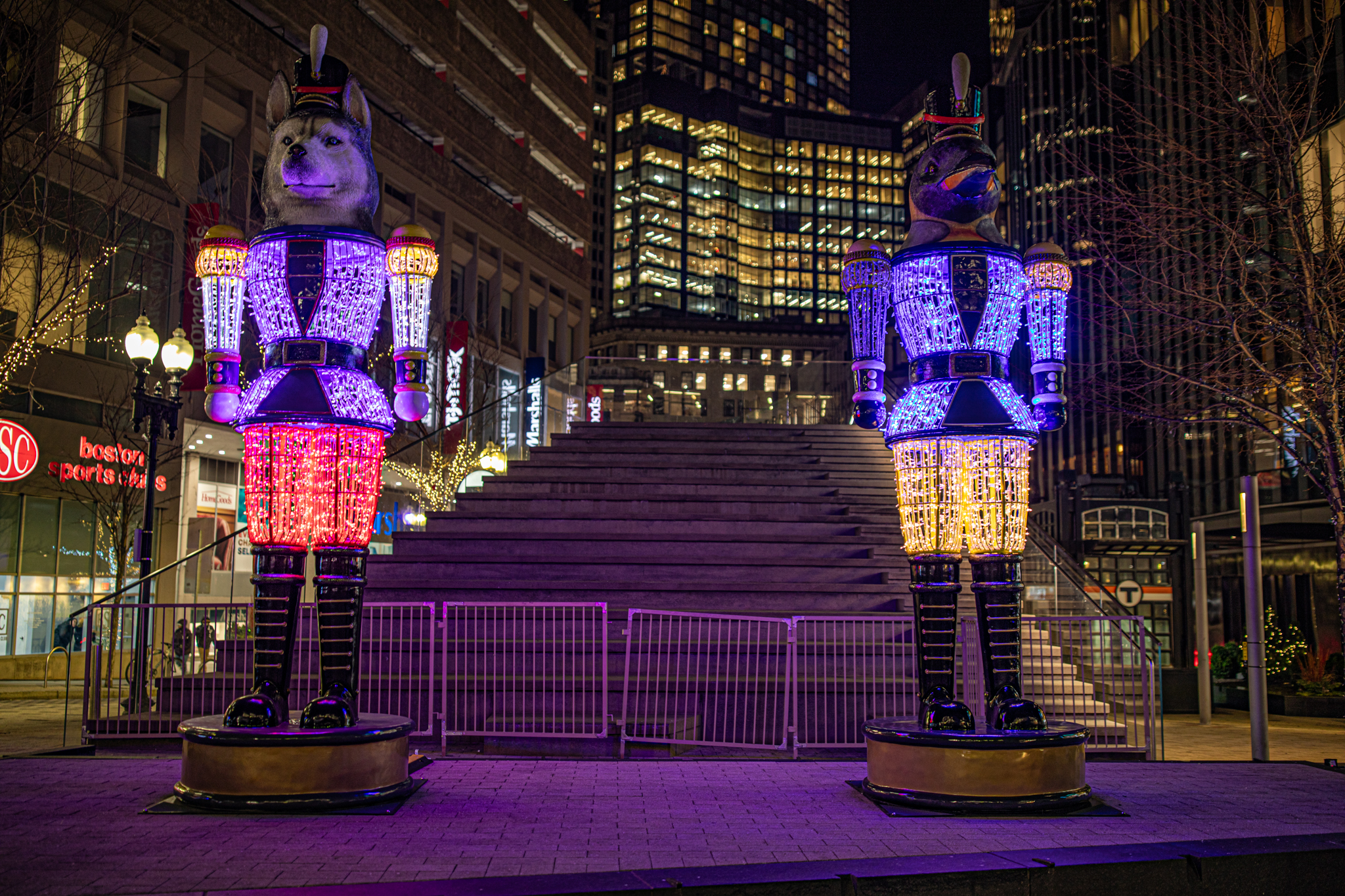
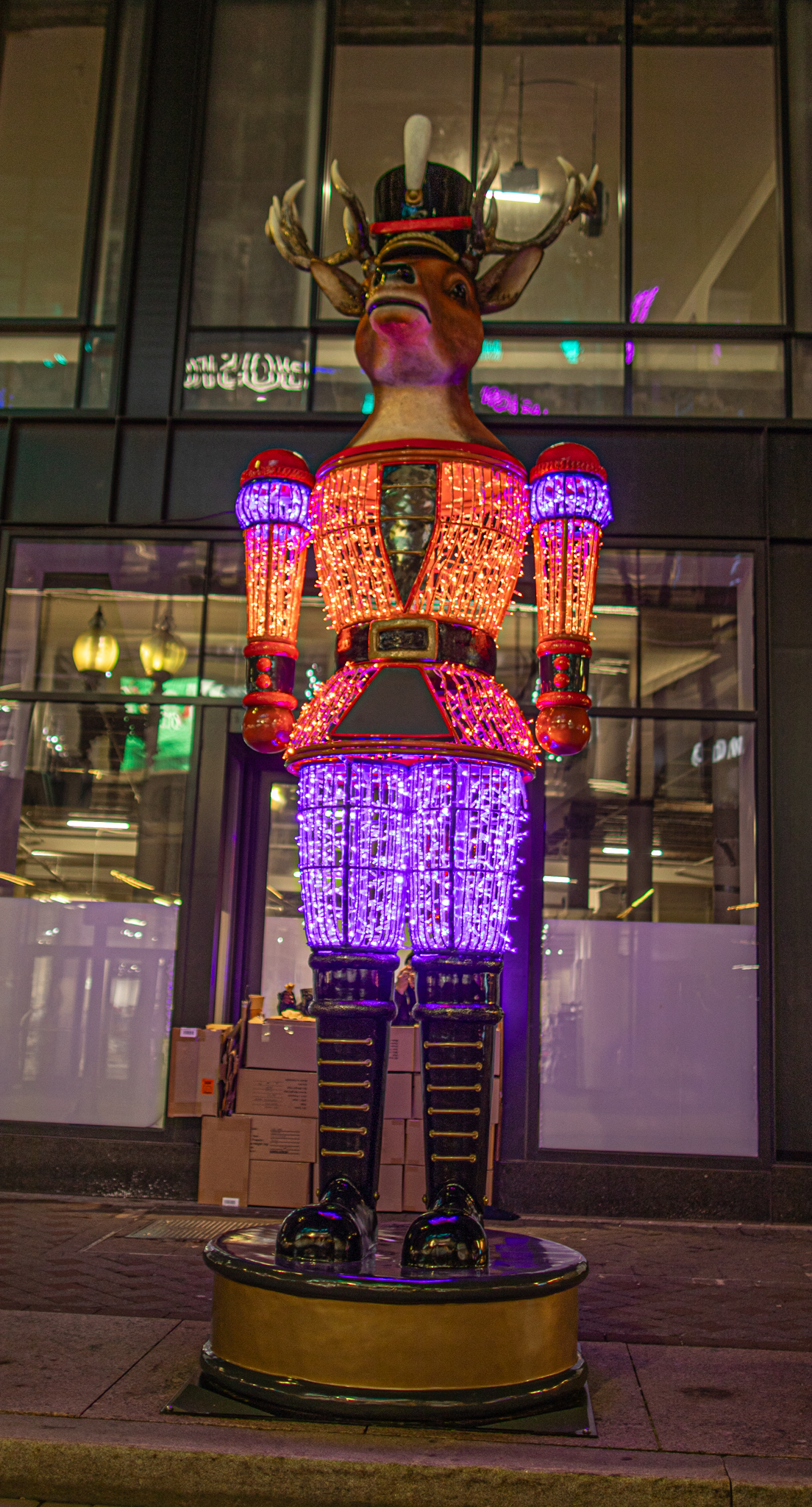
Just in time for the holiday season, 12 sixteen foot nutcrackers have been placed throughout in Boston’s Downtown Crossing area. But, these are not any regular nutcrackers.

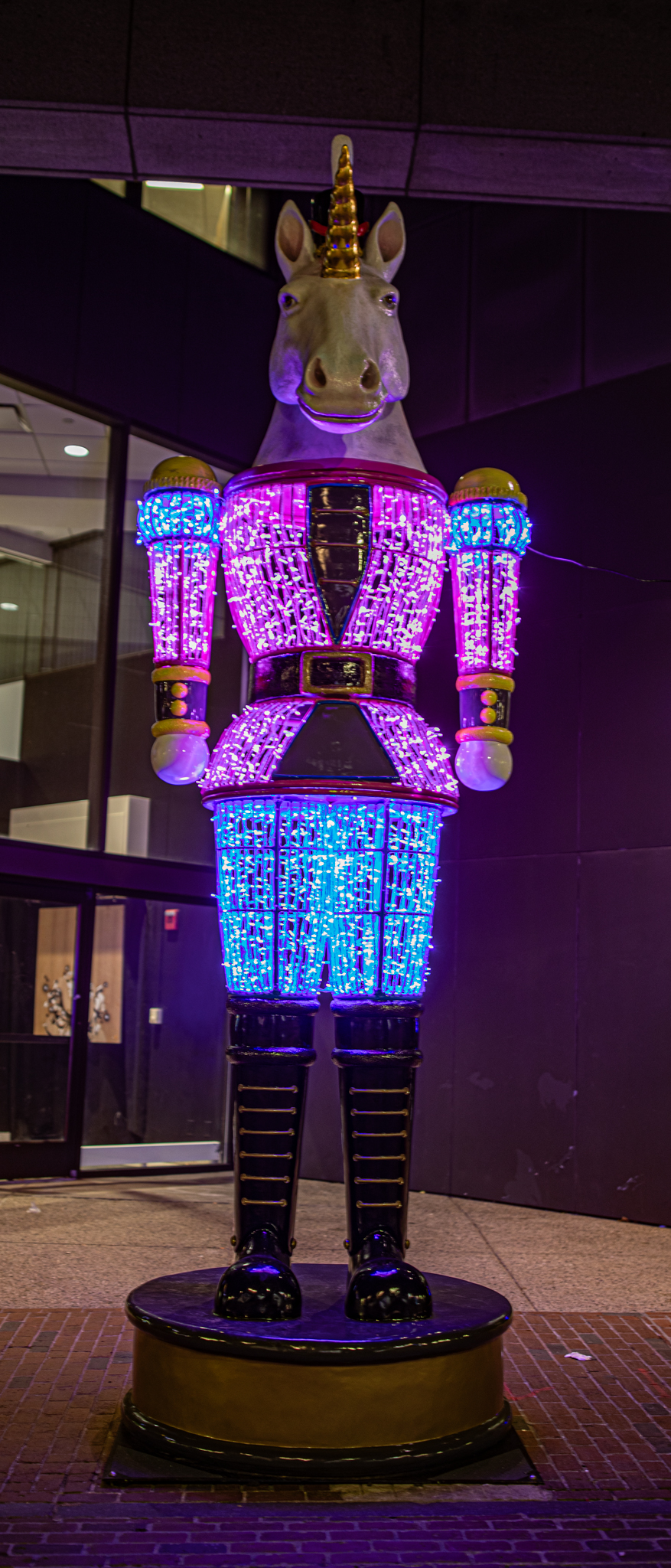
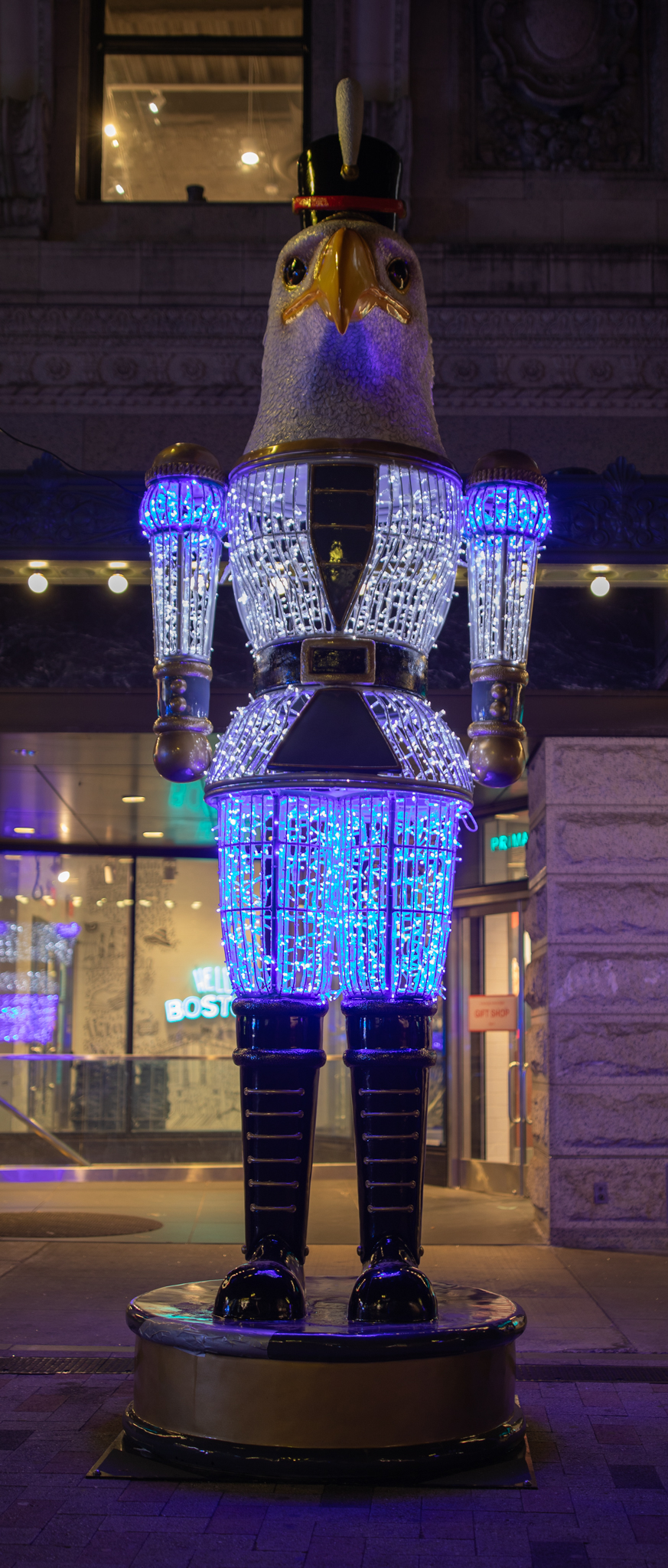
The nutcrackers, which are fashioned with similar attire one would find on an actual nutcracker, have one significant difference…they have animal heads!

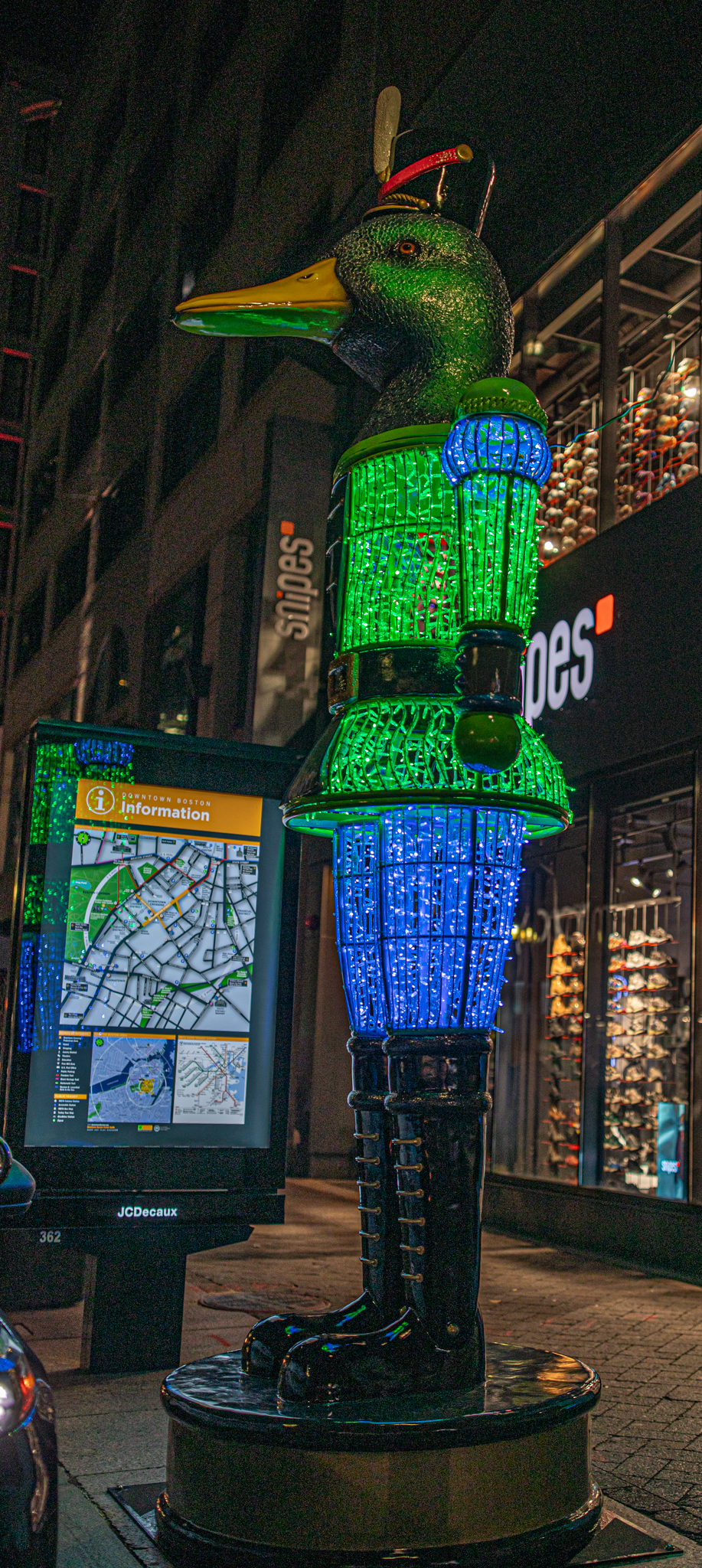
The animals for the designs of the nutcrackers were selected by children during a visit with Downtown Boston Alliance President Michael J. Nichols at a local Boston day care center. Some of the animals they suggested using for that statues include an elephant, a bear, an eagle, a duck (specifically a mallard) and a dog among other animals.

Most of the nutcrackers, 7 to be exact, are located on Washington St. For a point of reference, I am showing the statues from the area of Washington St near the Paramount and going up Washington St. I’m including a photo of the Paramount just because, even though it’s arguably one of the most over photographed spot in Boston (I see you Acorn St and Fan Pier).

The first statue is a polar bear. It is located by the Suffolk University Modern Theater (and the Paramount Theater).

This cute little cat is located near the WINDR Museum on Washington St. I don’t like that smile. It looks like he or she got into some cat nip!

This mallard is located near Snipes (467 Washington St). Sometimes it was difficult to get a straight on photo of these statues because cars were parked in front of them. I actually just walked around and waited for the vehicles to move. But, taking a photo from an angle was a better option for this statue because the bill of the duck looks better from an angle.

I found this unicorn on Winter St after I took the next left after the mallard.

Then, I walked back towards Washington St and crossed over to Winter St where I found these 4 statues of a rhino, a horse, an elephant and an eagle near Macy’s (450 Washington St).

Then, I continued back onto Washington St to photograph the remaining statues. I found this deer near the Gap and DSW stores.

Just as an fyi, the attached map is not accurate. The map shows the dog as being at this location.

These 2 statues of a dog and another duck are located at the popular stairs between the TJ Maxx and Old Navy. I liked how the buildings looked in the background.

The last statue I found was of this beer near the Jewelers Building (333 Washington St)

All of the statues are easy to find and accessible to all. And I love the little accessories like the hats and the epaulets on their shoulders! I also appreciate how some of the animals seem to be talking or making faces in some cases. The best part, though, is the lights, of course. While you can view them day or night, the best time to view them is at night when the colors stand out more. However, the features may be easier to see during the daylight hours. But, don’t wait too long to see them. The statues will only be there until Jan. 2, 2025.

Of course, Boston was decked out with Christmas decor during my visit! So, as a bonus, I am adding this photo of one of the stars installed near one of the main streets in the city.


2024 Feztival Of Trees (West Springfield, MA)

Date Of Event: November 30, 2024

Location: 1080 Riverdale, St West Springfield, MA (an hour and a half west of Boston, MA)

Website: Feztival Of Trees

Summary: The Mehla Shriners hosted their annual Feztival of Trees to raise funds for their charitable causes.

Trees were aglow in Springfield at the 2024 Feztival of Trees. As the name suggests, the festival was run by the Melha Shriners.

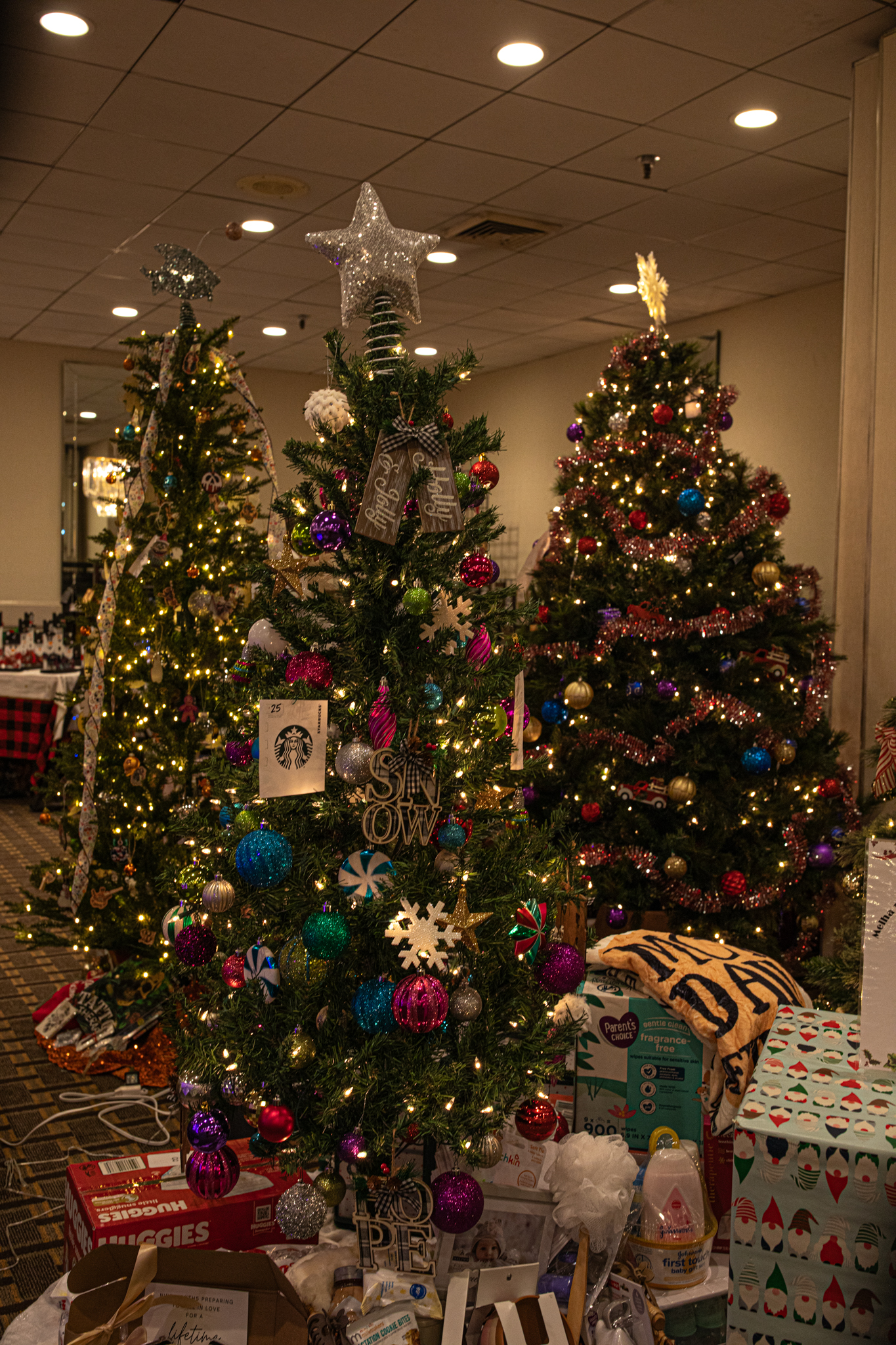
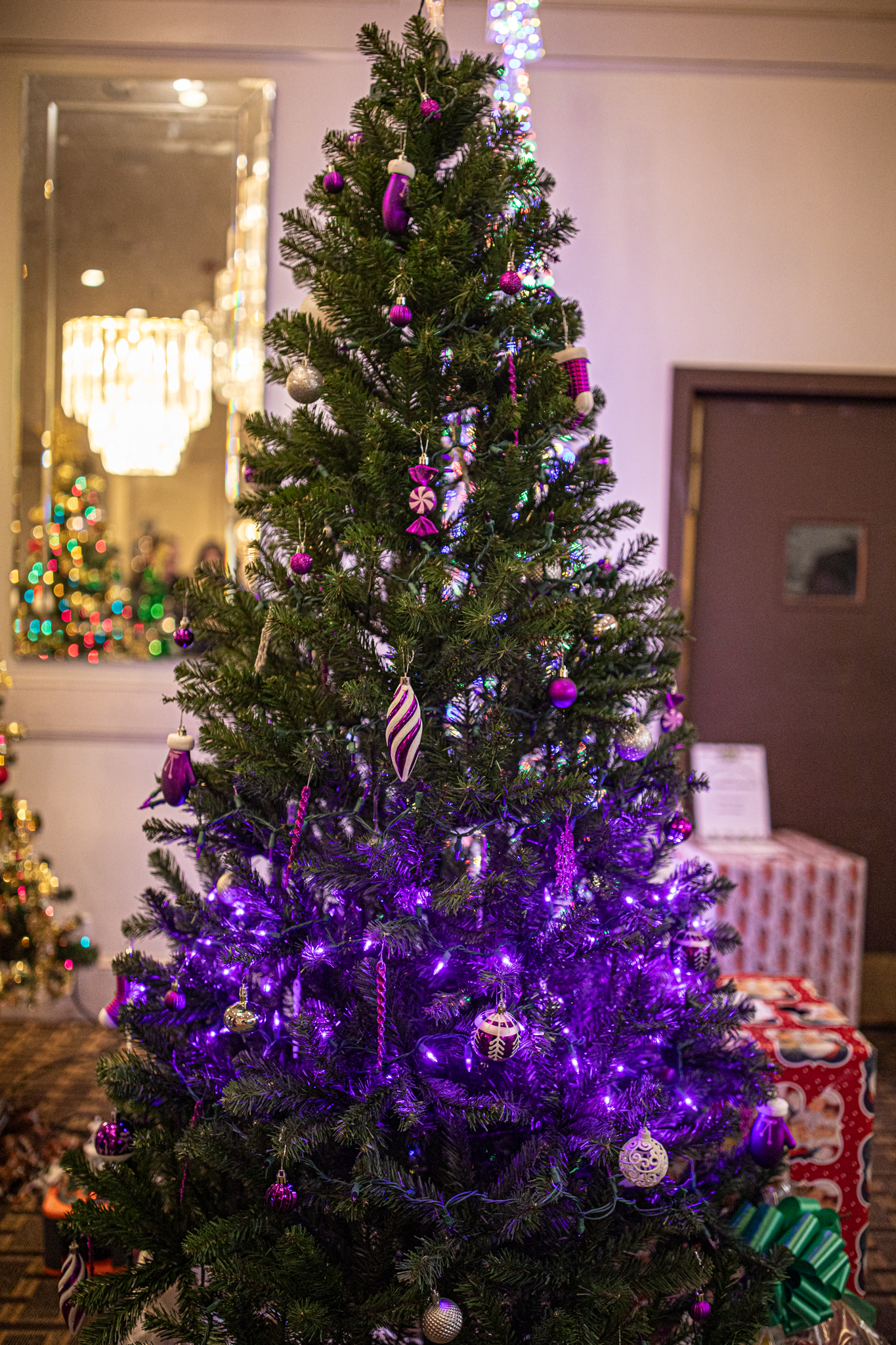
There were an array of different trees and wreaths to see.

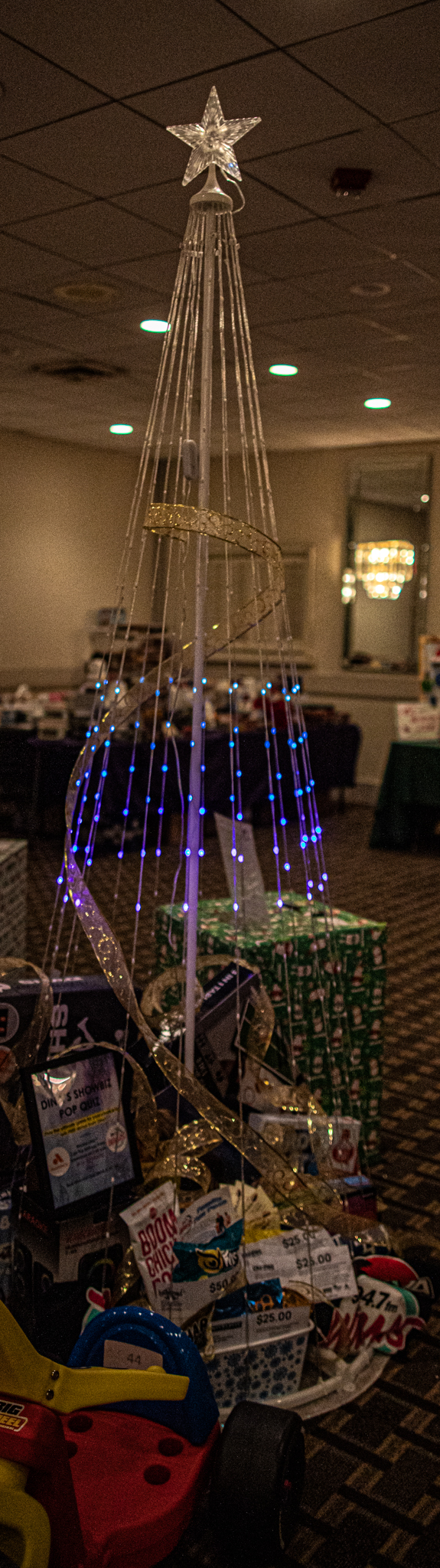
The trees that lit up were fun to watch!

Visitors could enter a raffle for their favorite trees. And there were many to chose from!
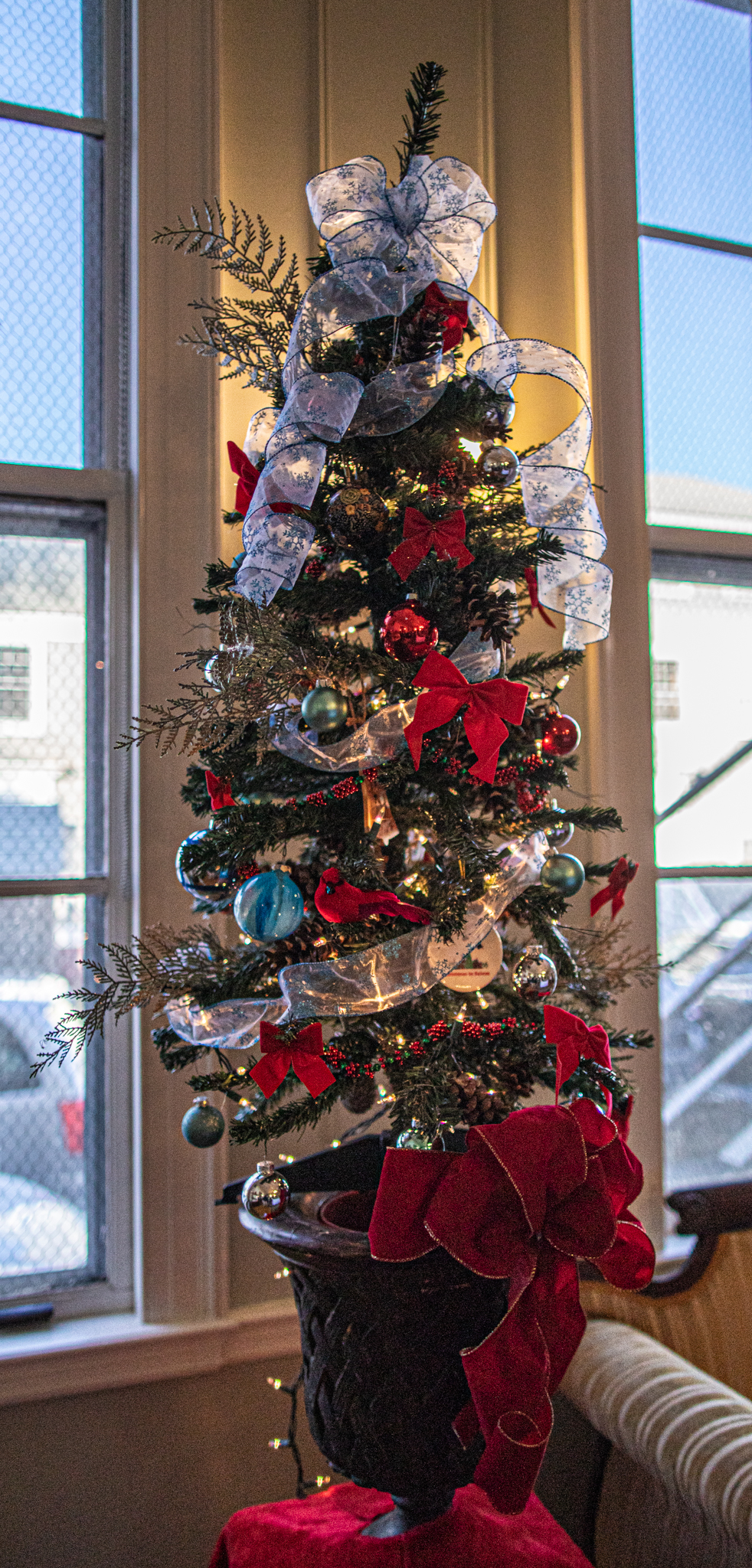
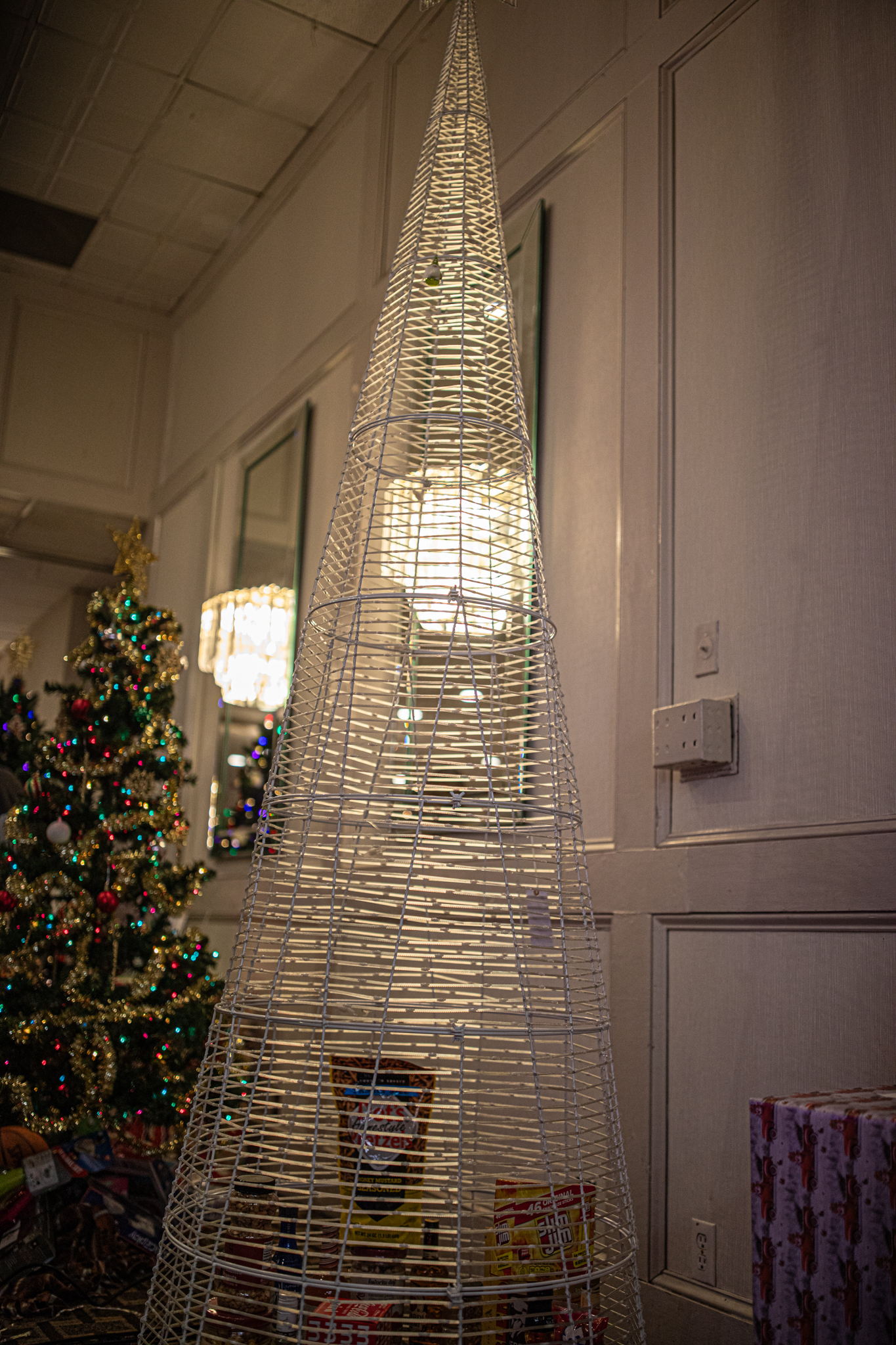
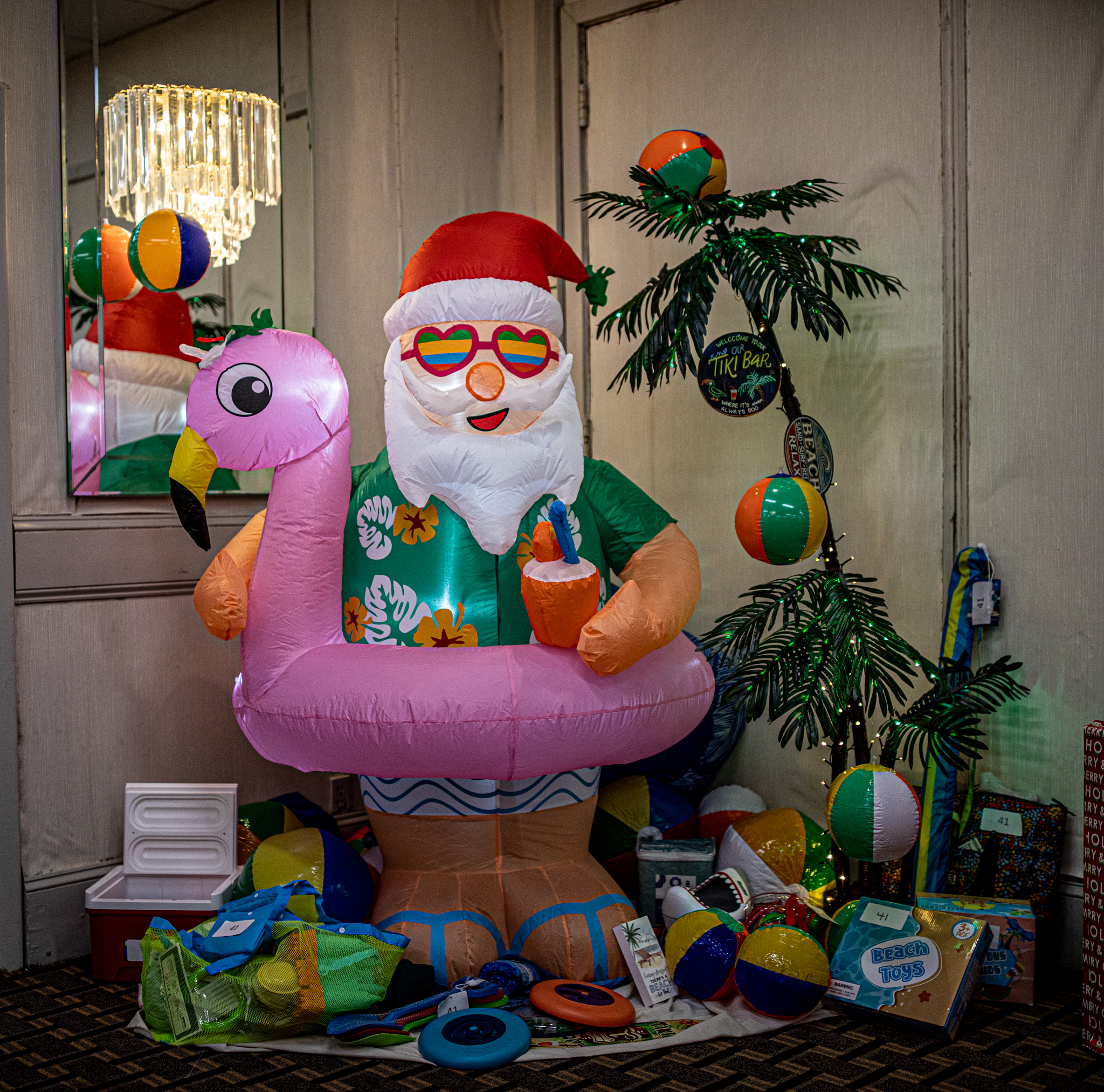
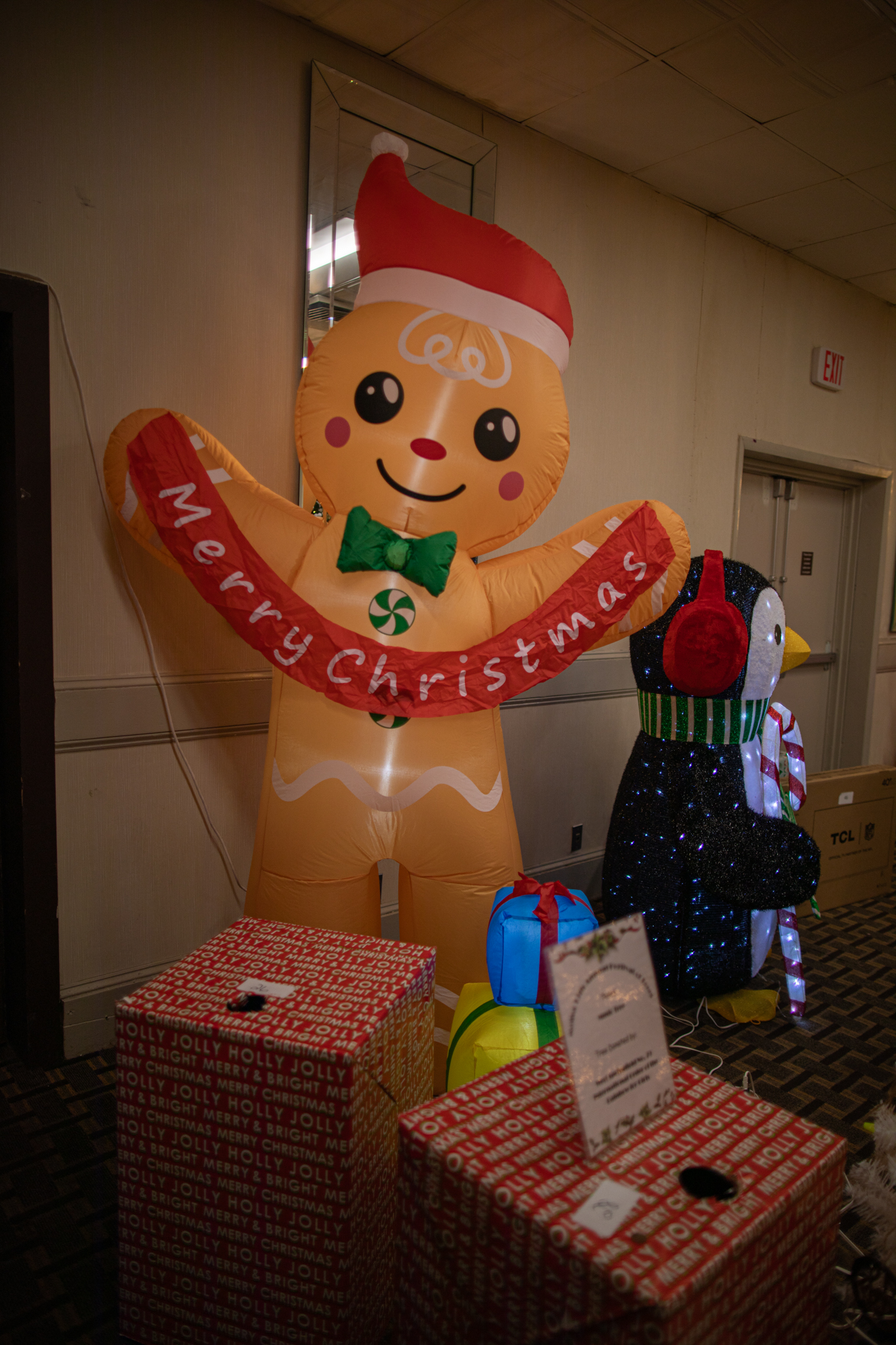
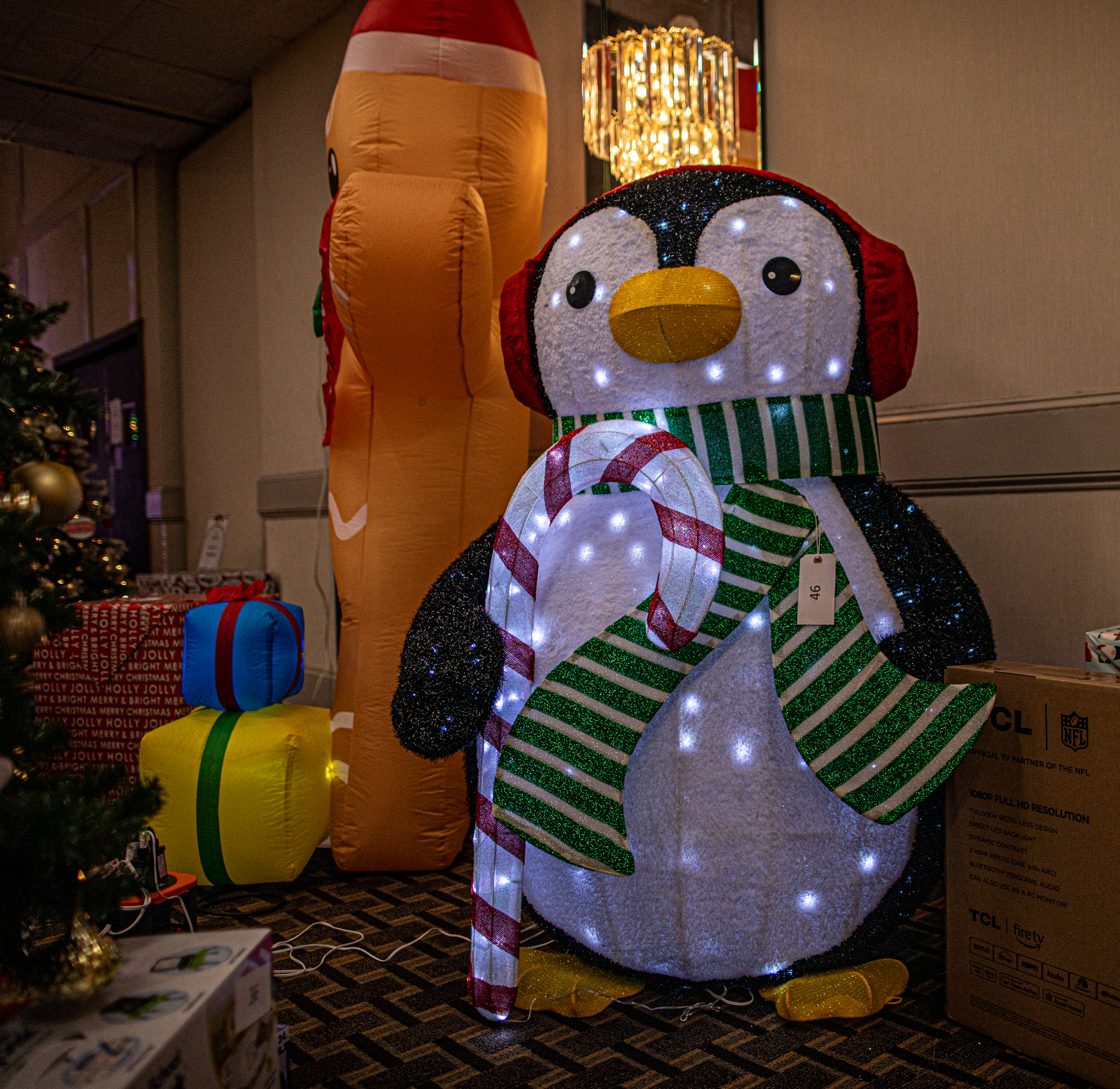
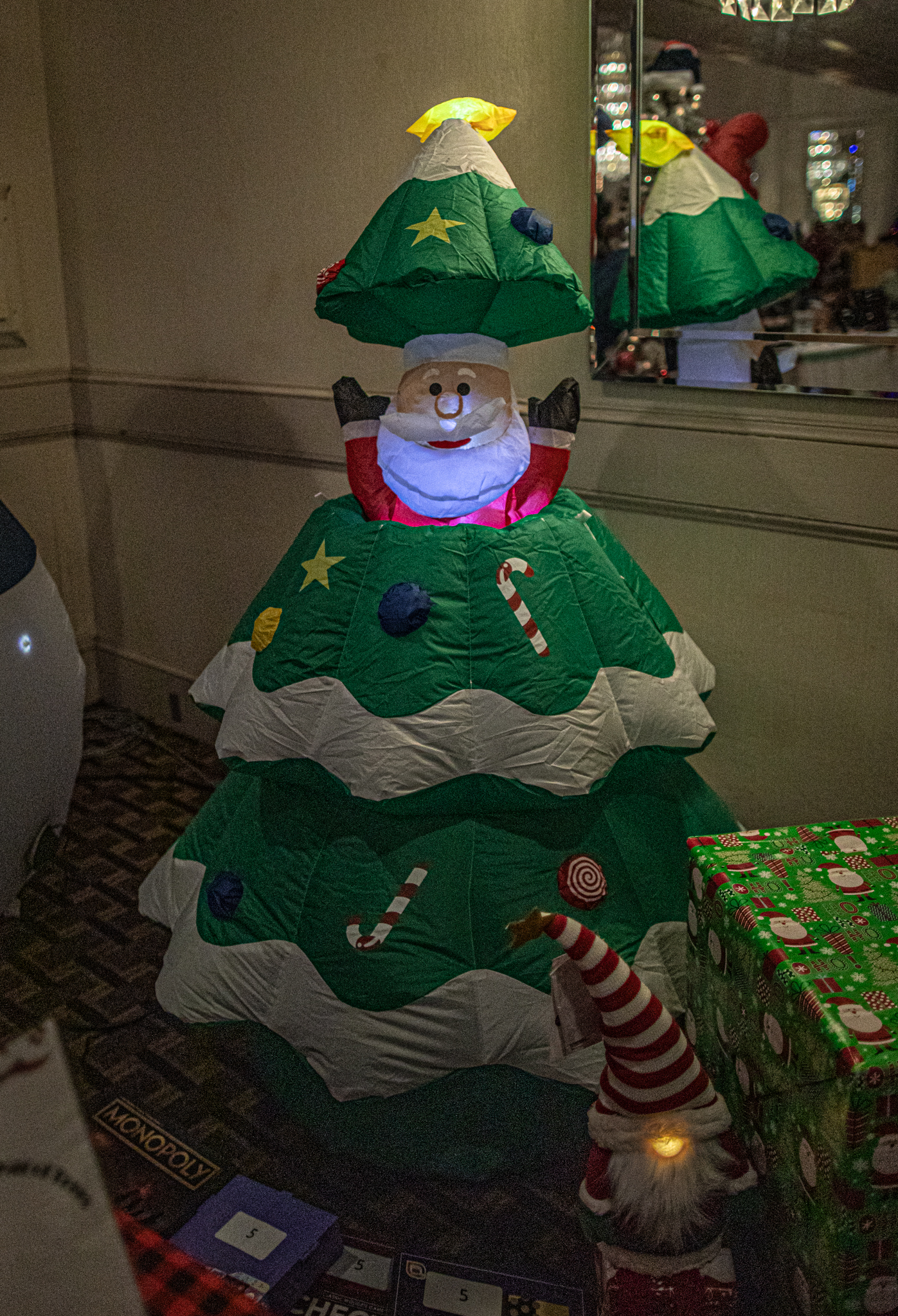
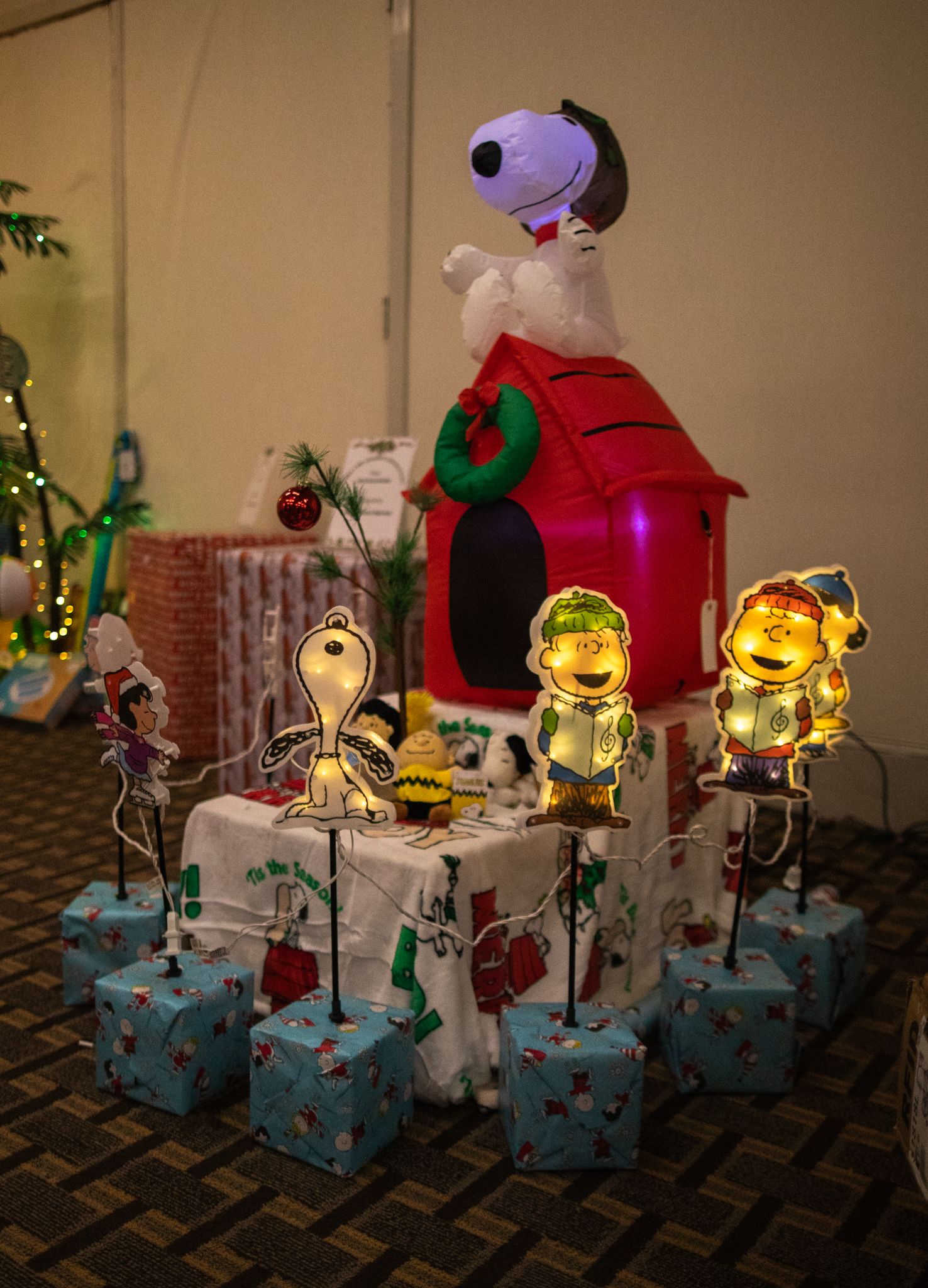
Some of my favorite decorations were not traditional trees or not even trees at all like this “ladder tree” and some of the inflatable decorations.

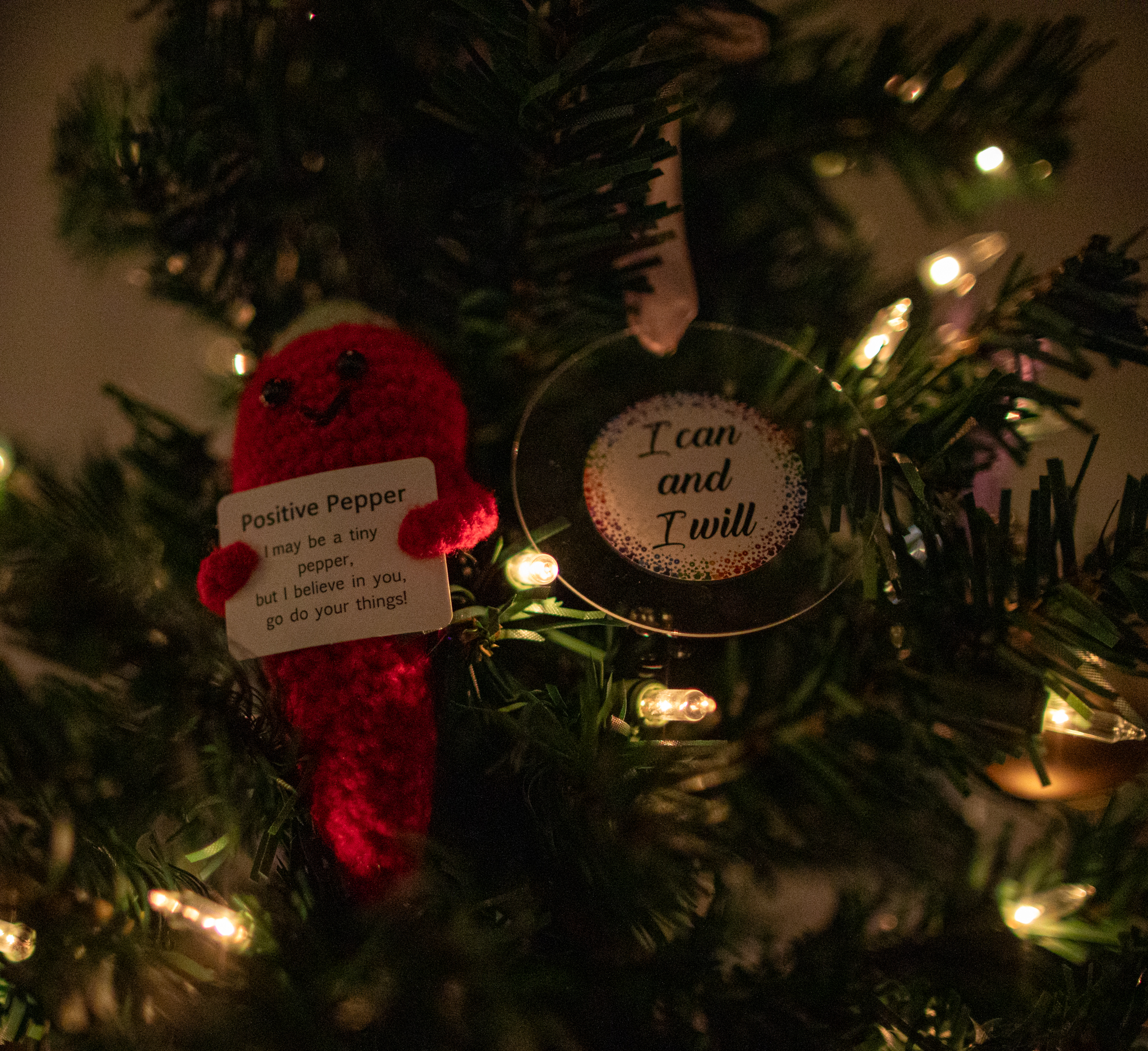
The ornaments and decor were very festive and at times inspiring!

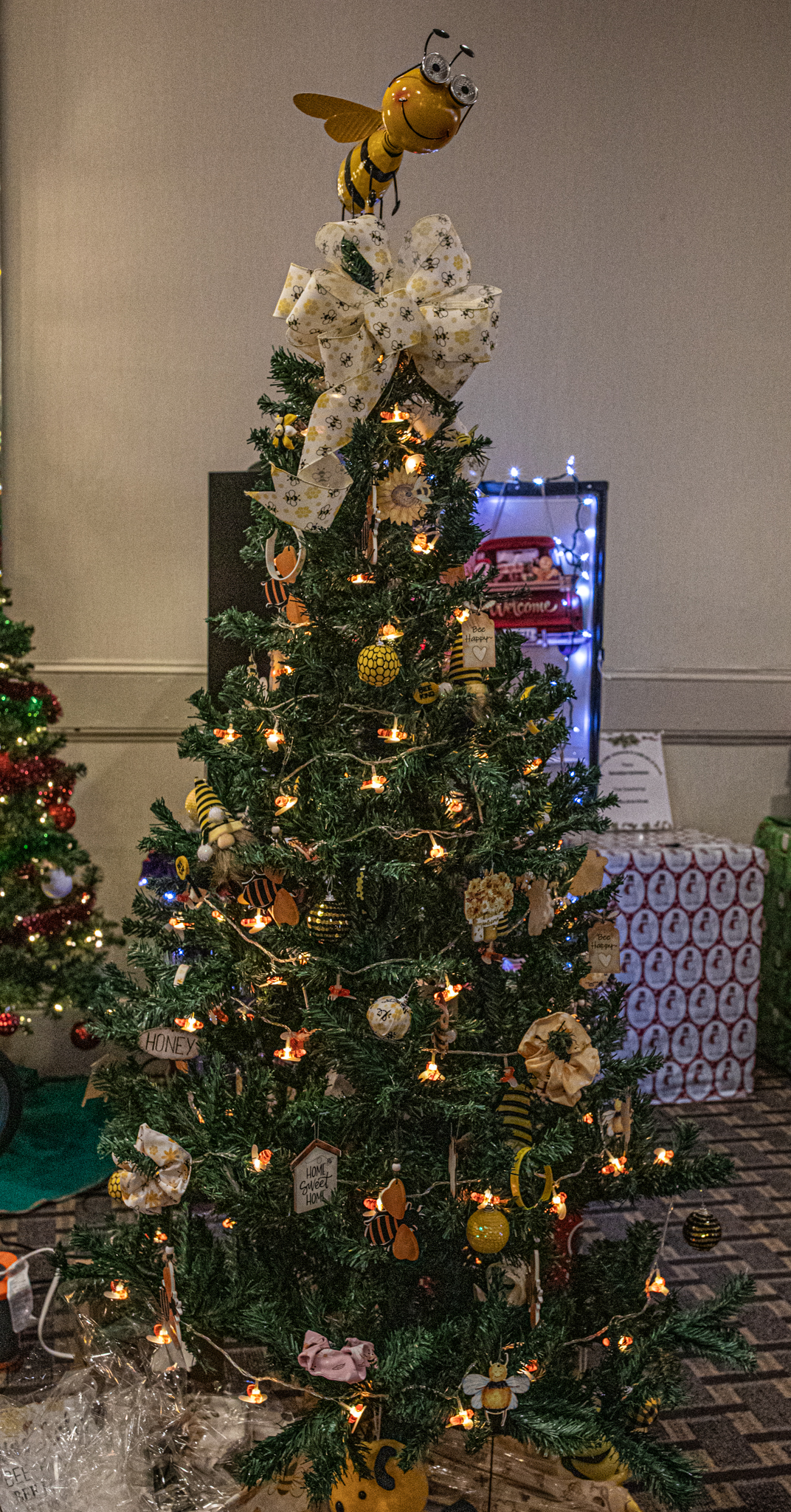
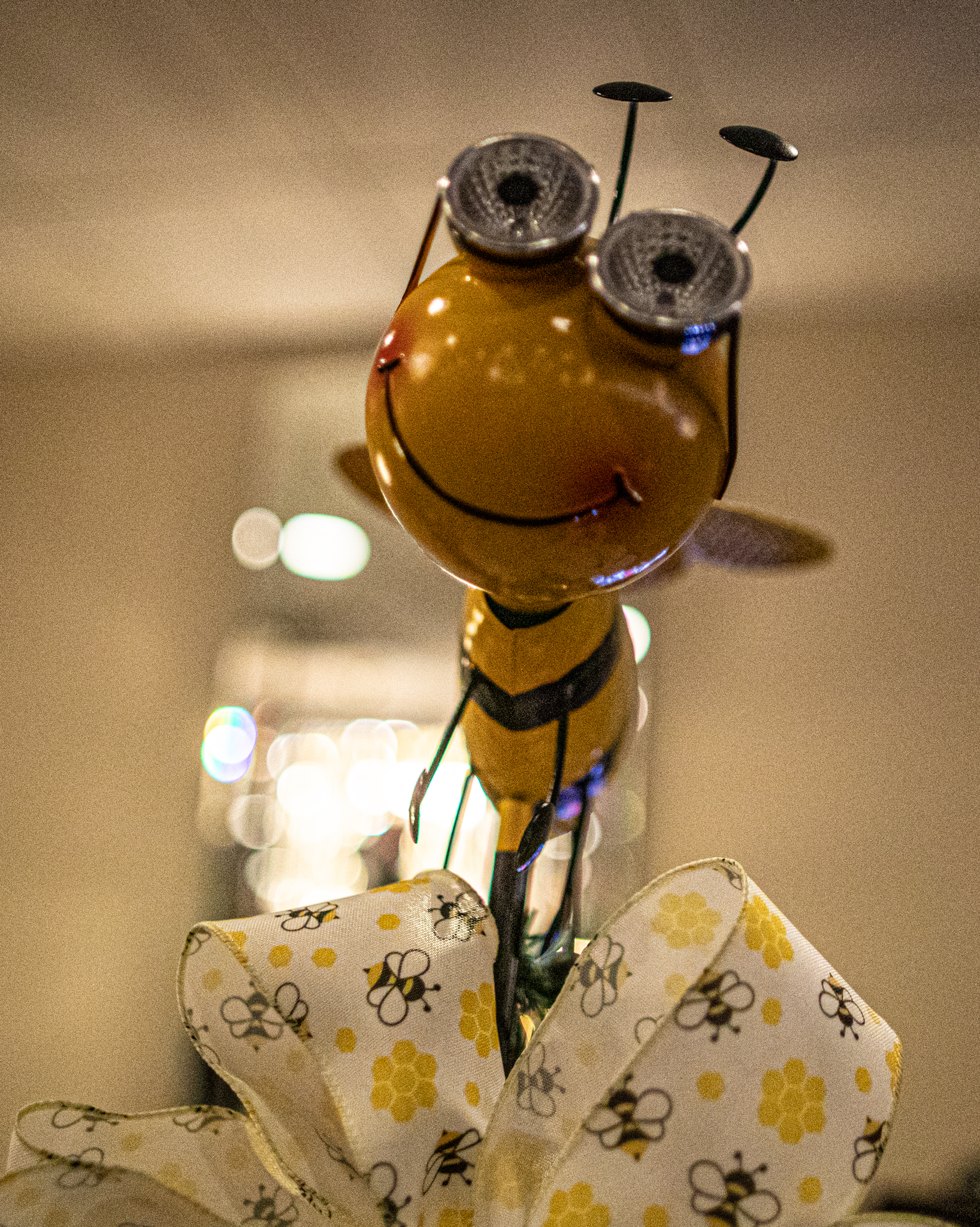
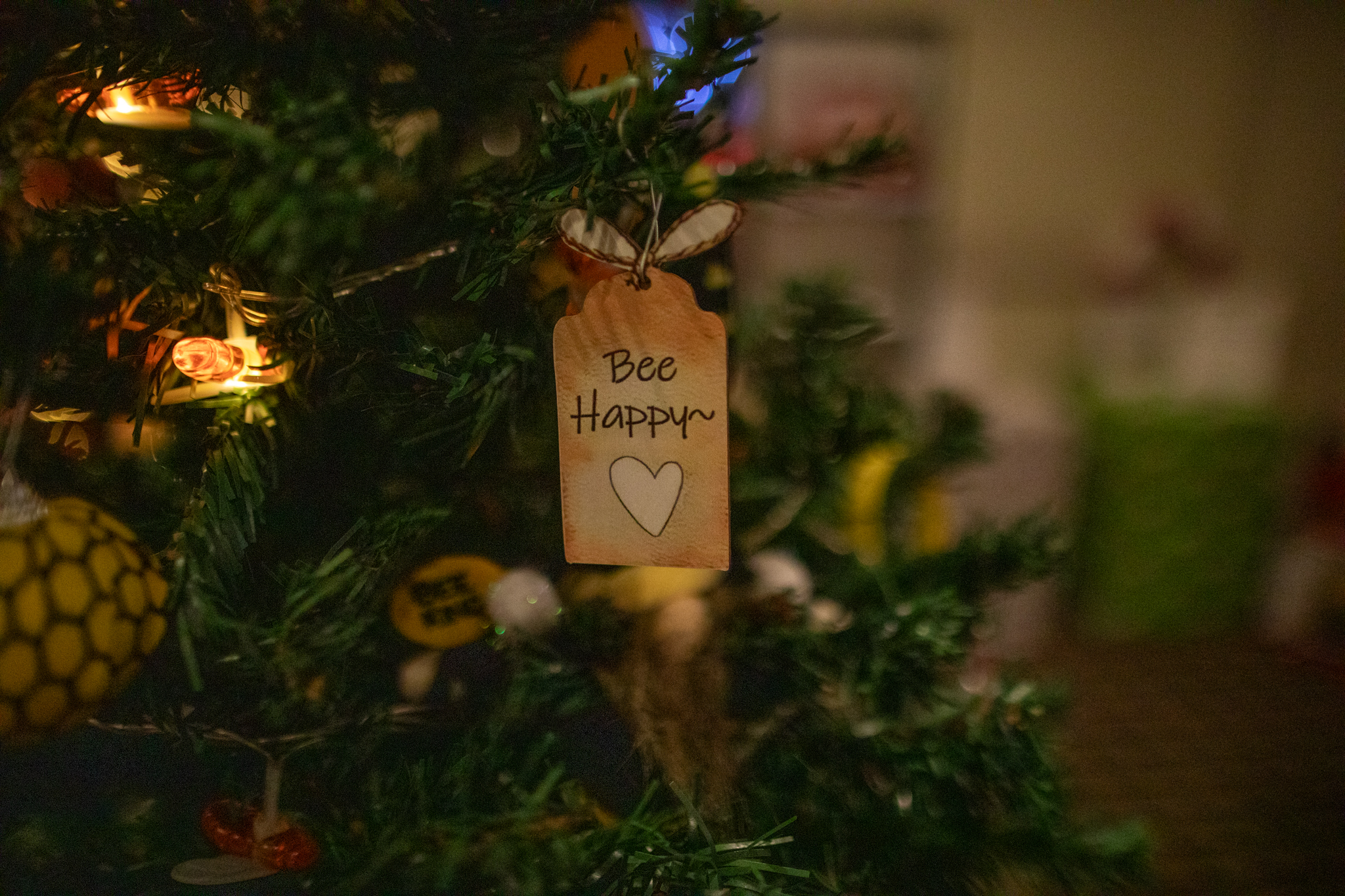
Some of the trees had themes. This tree had a bee theme.

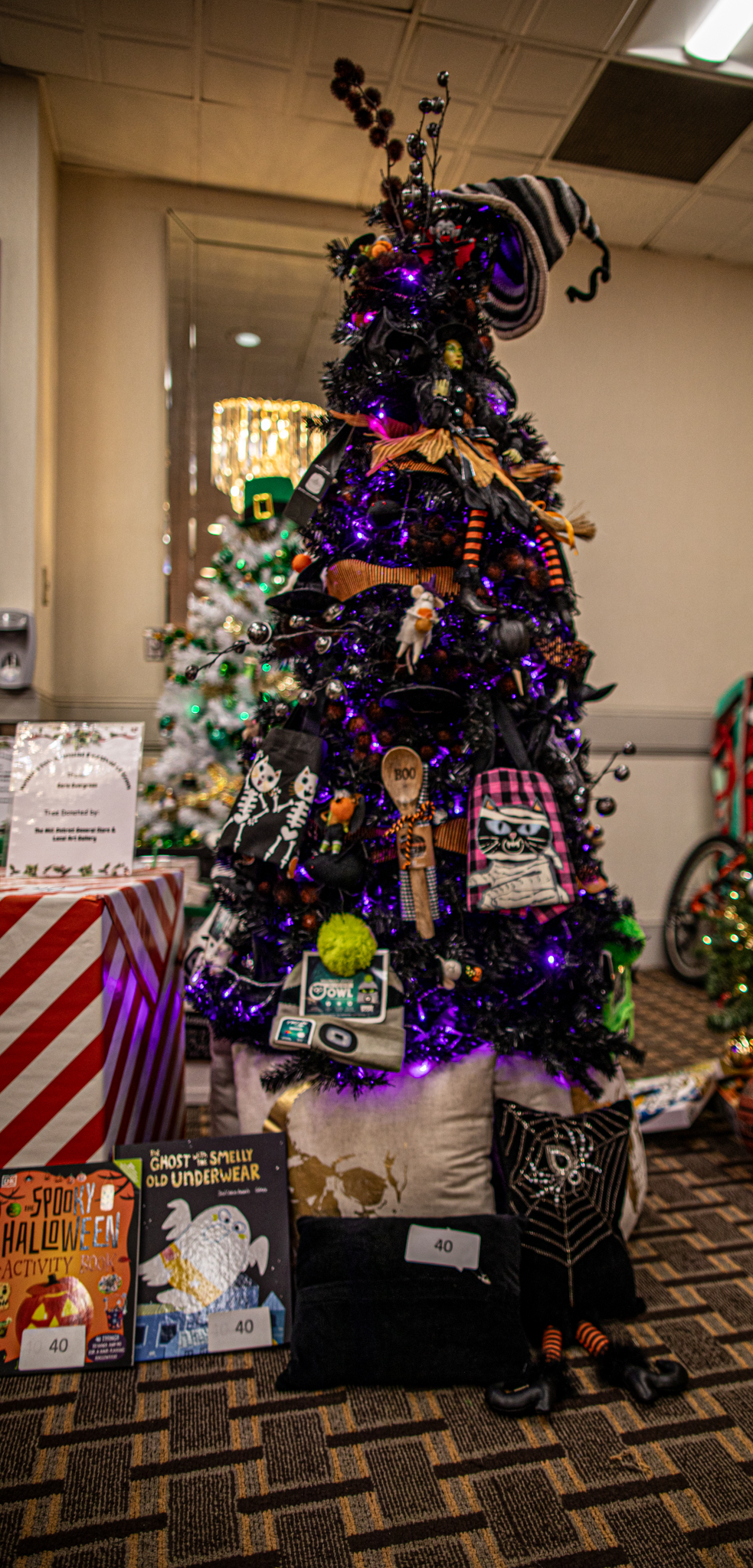
This was a Halloween tree!

And there was this Irish/St Patrick’s Day tree!

One particular themed tree stood out. “Snacking Around the Christmas Tree” was decorated by Ed Lyons in memory of his wife of 49 years. A variety of snacks such as M&M’s, Lay’s potato chips and Frito’s (his wife especially liked chips) hung from the tree. Ed used to jokingly call them “stinky snacks” because of their strong odors!

The Ornament Lady was taking orders for handmade ornaments…unless you wanted a Yankees ornament!

Mr. and Mrs. Clause stopped by to make sure everyone was still on the “nice” list! But, don’t worry if you’re not on the list! You still have a few more weeks to get on the list!

All of the proceeds generated from the event went to the Mehla Shriners to assist with their charitable endeavors!