Date Of Visit: June 15, 2025
Location: Winthrop St, Boston, MA
Cost: Free
Dog Friendly: Yes
Universally Accessible: Yes
Parking: There are several parking lots and metered street parking in the area
Summary: Dozens of bricks representing people, places and things related to Boston (and some of the surrounding areas such as Cambridge) are installed on the ground of the alley way on Winthrop St.
Watch where you’re stepping on Winthrop St in Boston, MA! You may be stepping on history.
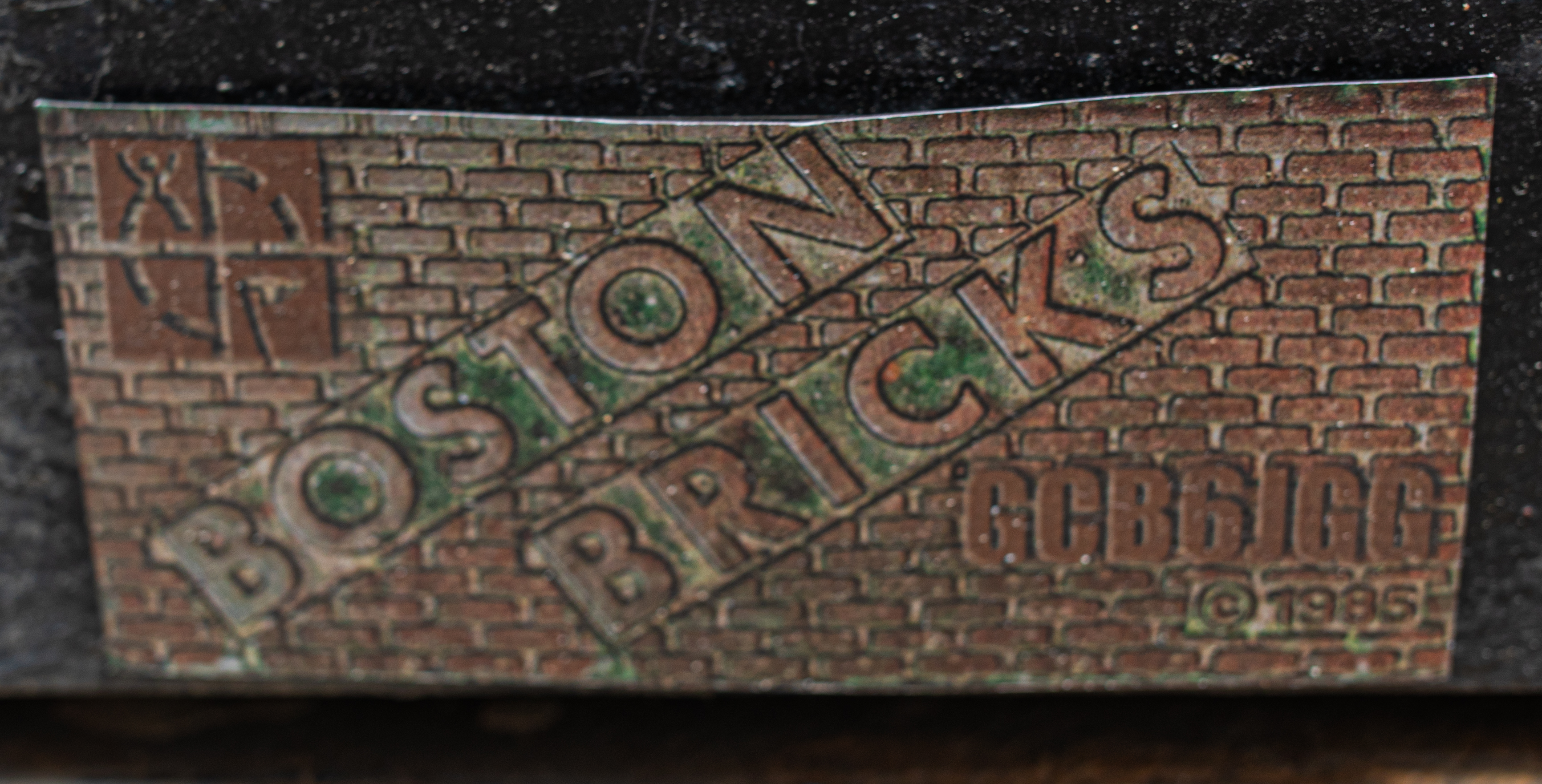
The roughly 100 bricks scattered along Winthrop St (don’t worry, I won’t include them all), which were created by sculptors Kate Burke and Gregg LeFevre in 1985, depict something related to Boston. The alleyway is easy to miss. So, you do have to pay close attention. It is located between Otis and Arch Streets


One of the bricks, which were funded by the Edward Ingersoll Browne Fund, is something any Boston driver can relate to. In fact, I think he cut me off the other day.
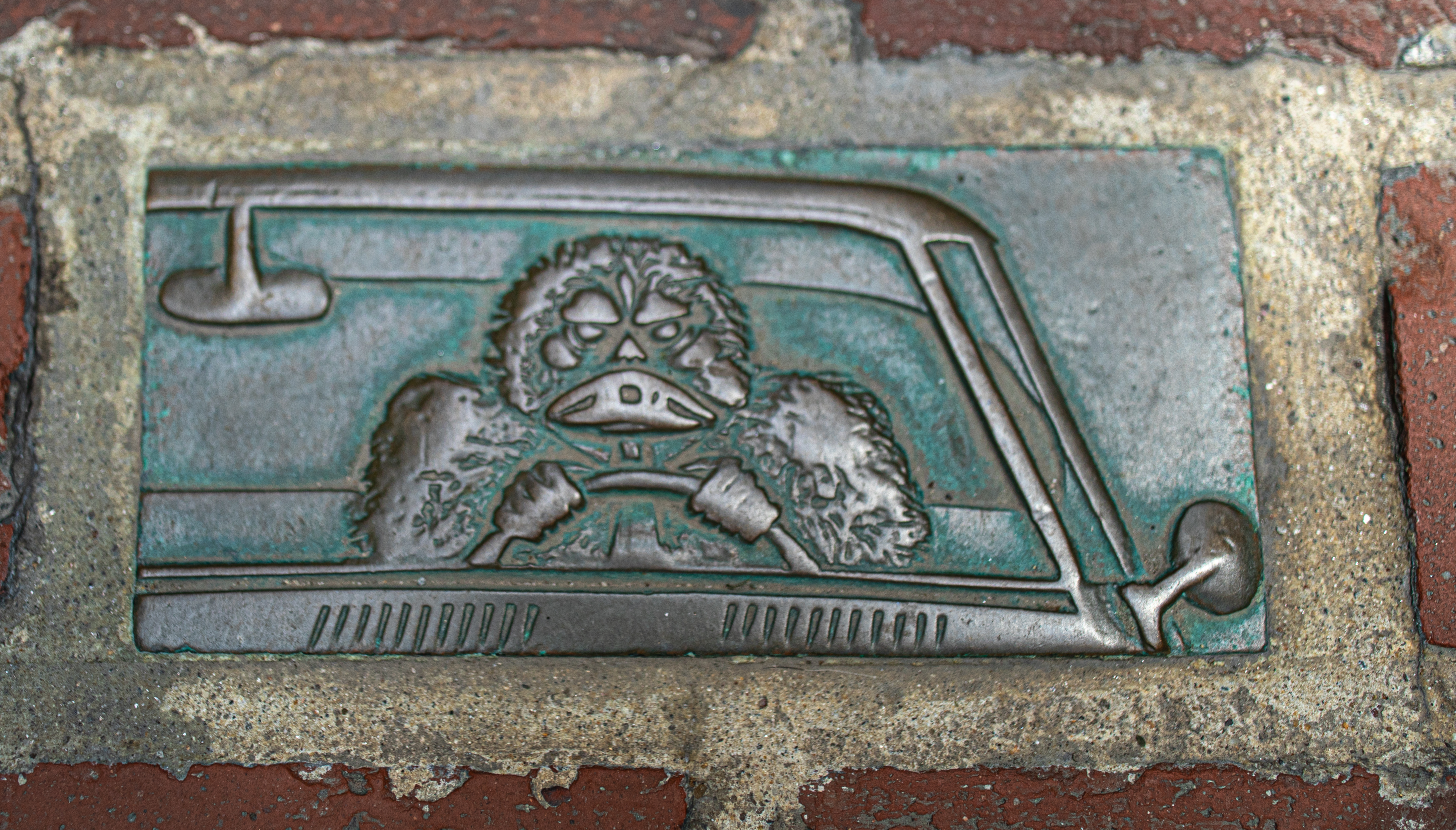
Yes, Boston drivers can be animals at times. At least he’s using the “10 and 2” steering wheel method.
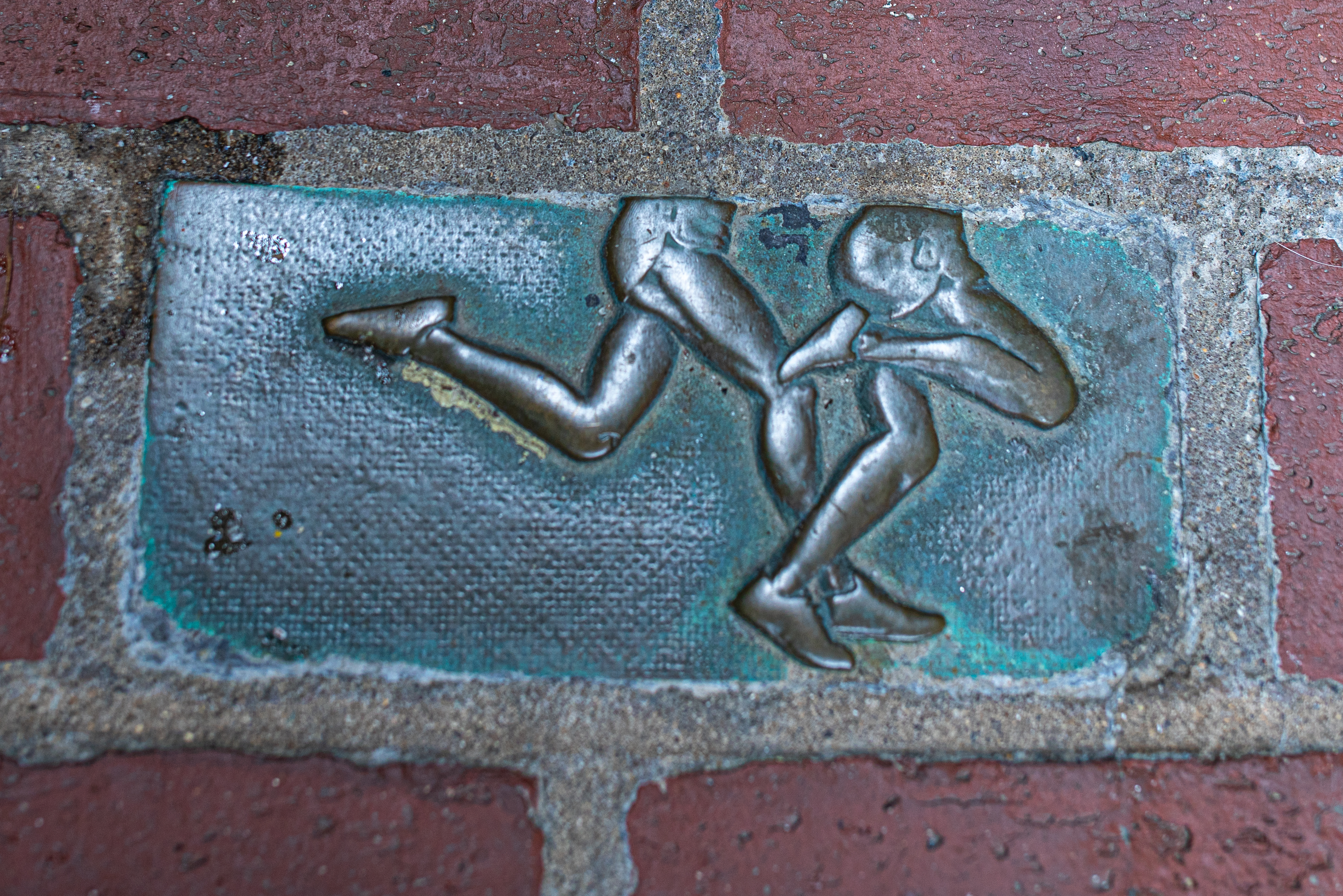
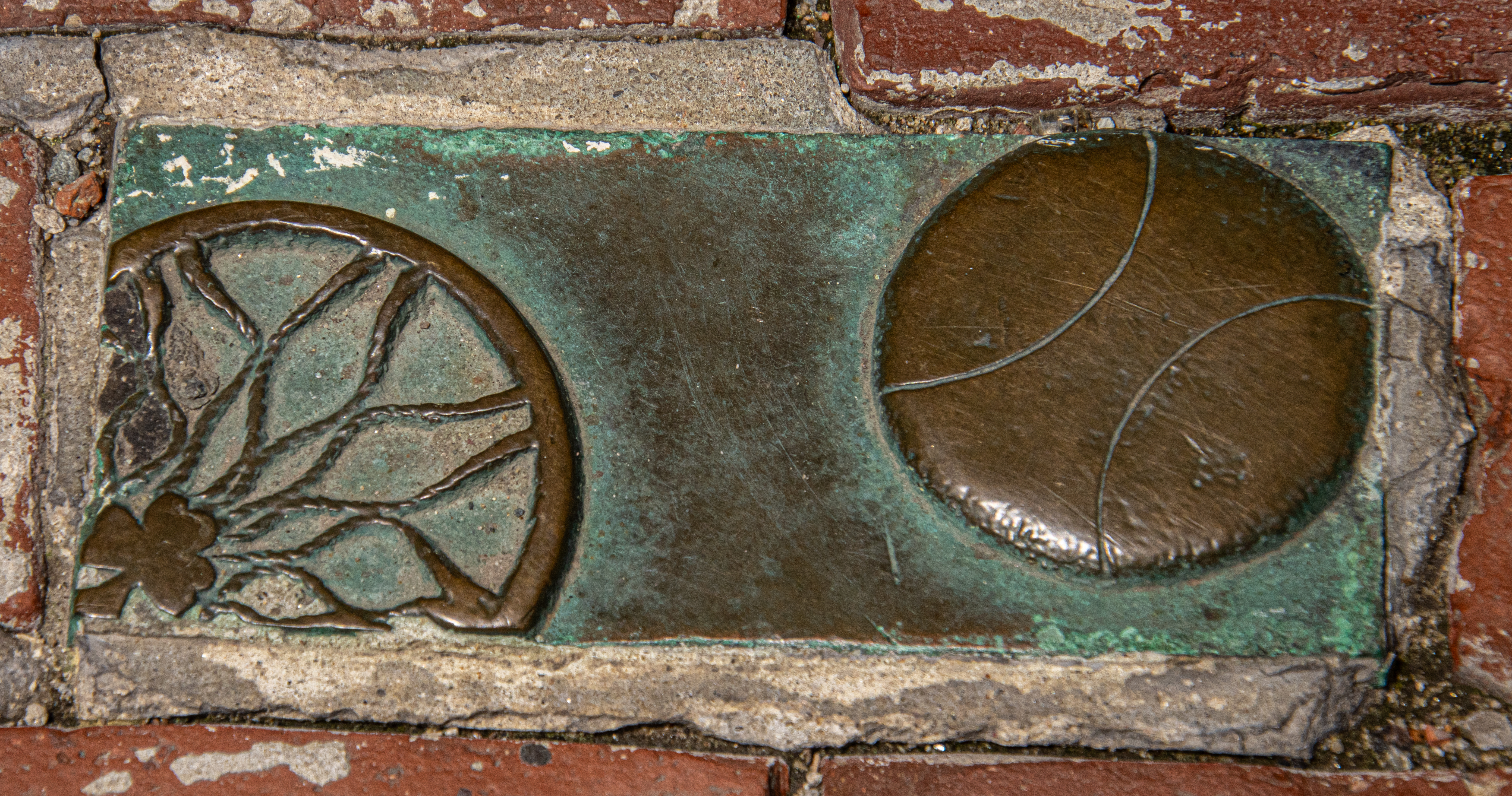
Like them or hate them, Boston is also known for its sports teams and sports in general. These bricks represent everything from the Boston Marathon (the longest active marathon in the United States) to the oldest Major League Baseball park in the states (Fenway Park) as well as some rowers and the most winning team (in terms of championships); the Boston Celtics.


This Boston Bruin logo was included in this brick which also contains logos of the MBTA (Massachusetts Bay Transportation Authority, or more commonly known as “the T” in Boston) as well as the logo for the New England Sea Aquarium in the left hand corner. “I can walk like a penguin.” If you got that reference your AARP card is in the mail.

Of course, Boston is a city of firsts. These bricks show off some of the firsts the city may or may not be known for. For instance, did you know the first wooden golf tee was invented in 1899 by Dr. George Franklin Grant in Boston, MA?

Another sports first is the claim to the use of the first baseball glove. Although it is debated (one historical reference states the first “buckskin” gloves, which were more like actual gloves, were worn as early as the 1860s). But, the first gloves that resemble what we use now are said to have been worn by first baseman Charles Waitt in Boston.

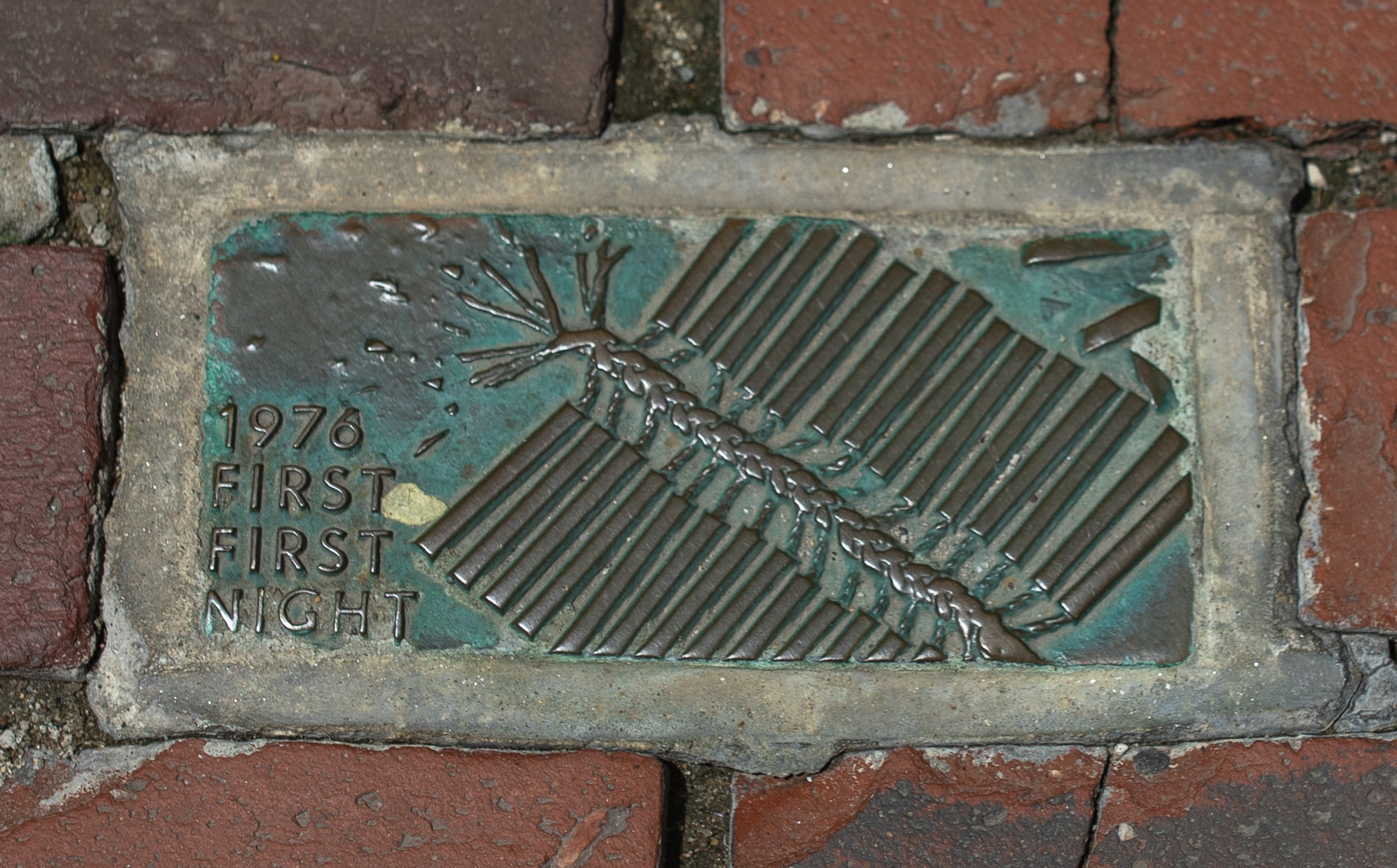
One more first represented by the bricks on Brick Alley is the first First Night which should really be called “First Morning” or “Last Night”. But I digress.
Boston held its first (and the country’s first) First Night December 31, 1976. I guess people just went to bed at a reasonable hour before then.
Another first in Boston is the first resident. After all, it had to be someone. And that someone was Rev. William Blaxton (also spelled Blackstone). He moved to what would later to Shawmut Peninsula which would later become known as Boston in 1625.

Since it is an area so rich in history, there were also several bricks dedicated to the history of the city.
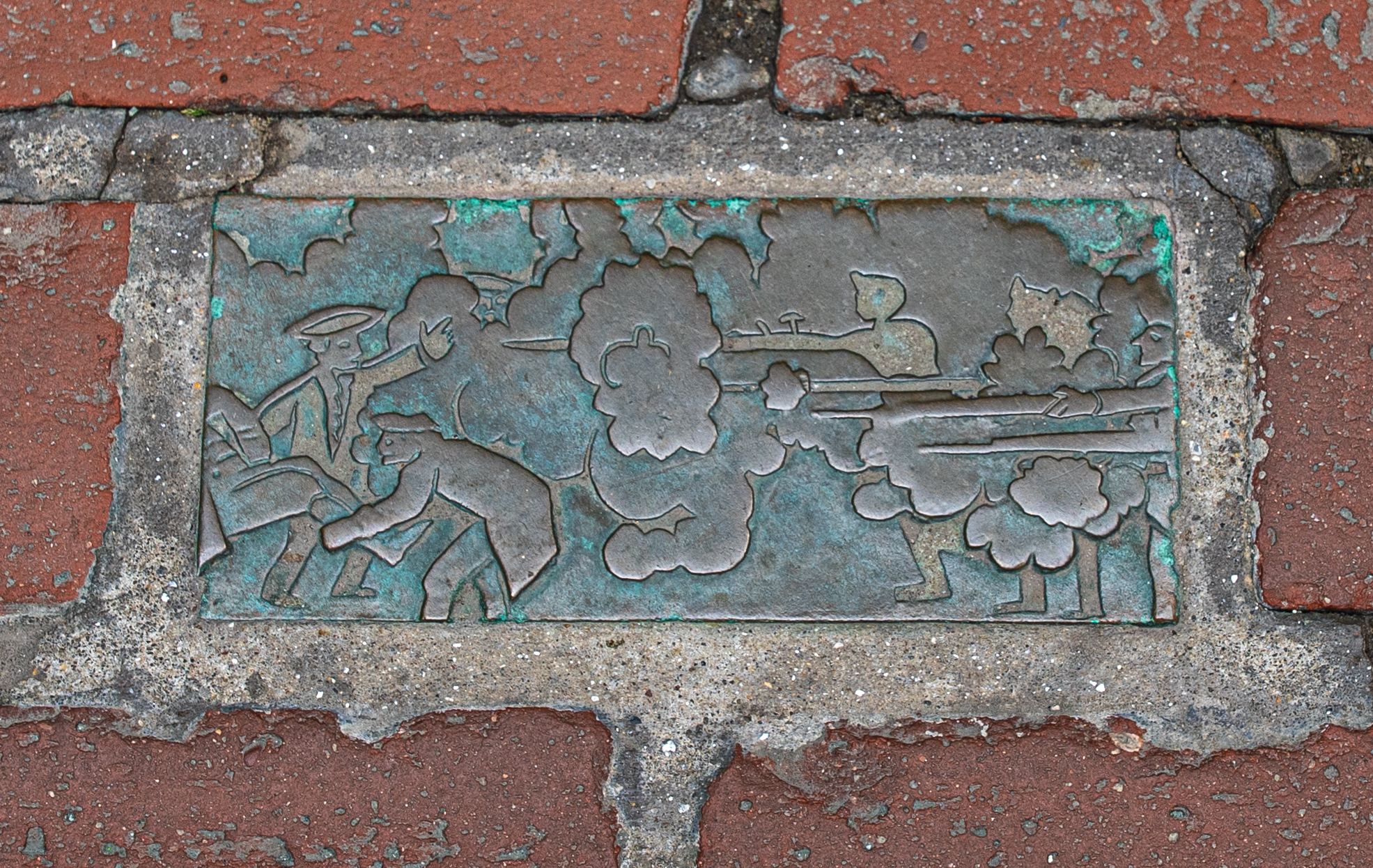
This brick could signify a few different battles or clashes in Boston or were part of the “Boston Campaign” of the American Revolutionary War. But, I am assuming this brick pays tribute to the “shot heard around the world” and the subsequent Battle of Lexington and Concord just outside of Boston. I’m not saying who shot first, though.
The first public park is indeed in Boston. Boston Common was established in 1634 by the Puritans to serve as meeting place for public, military and recreational purposes. A lot of effort and care were used to show all of the paths in the park.

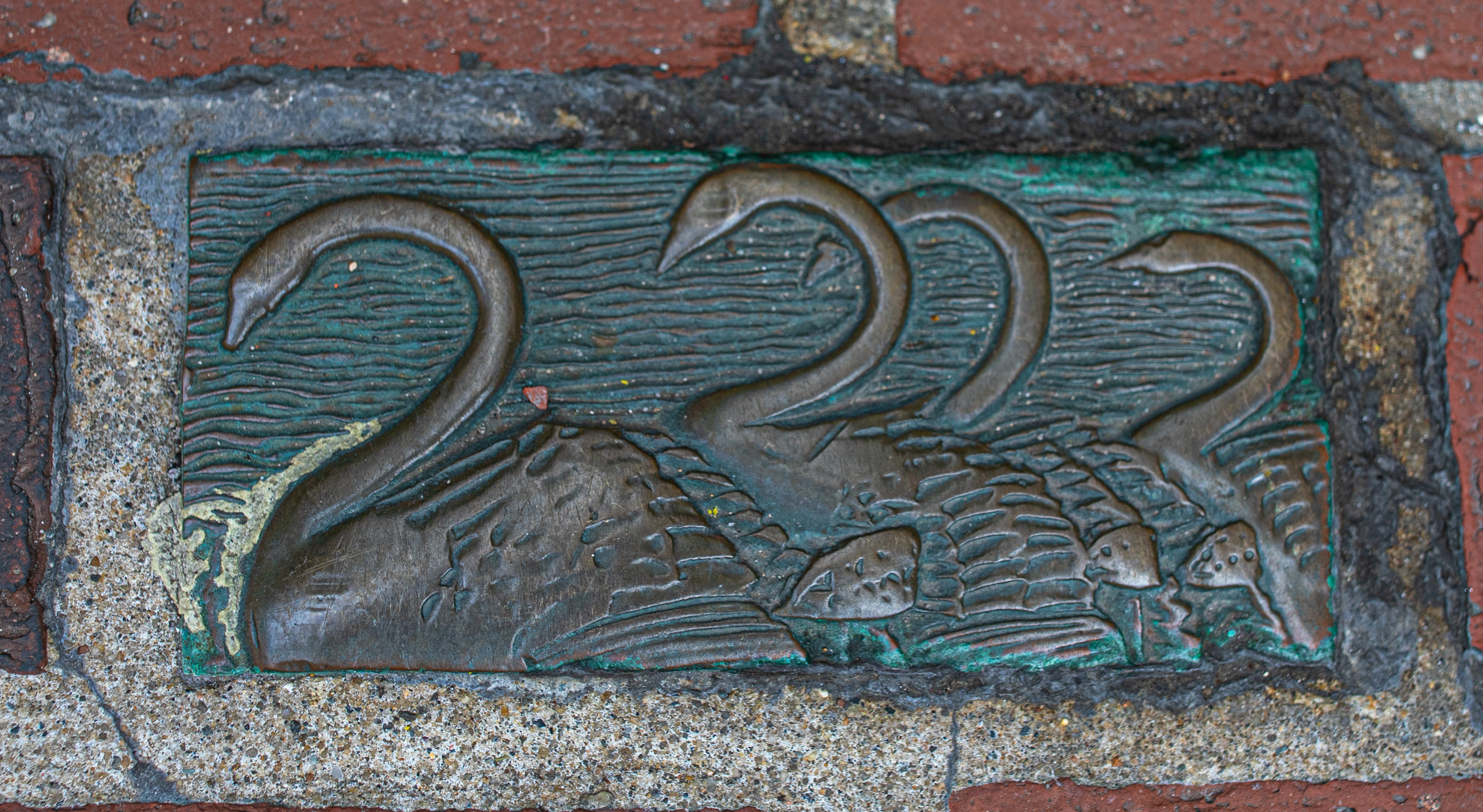
These swan boats which are in use every summer in the public garden adjacent to the Boston Commons,. They have been in operation in one form or another since 1877 when Robert Paget, a ship builder in Boston started making them.
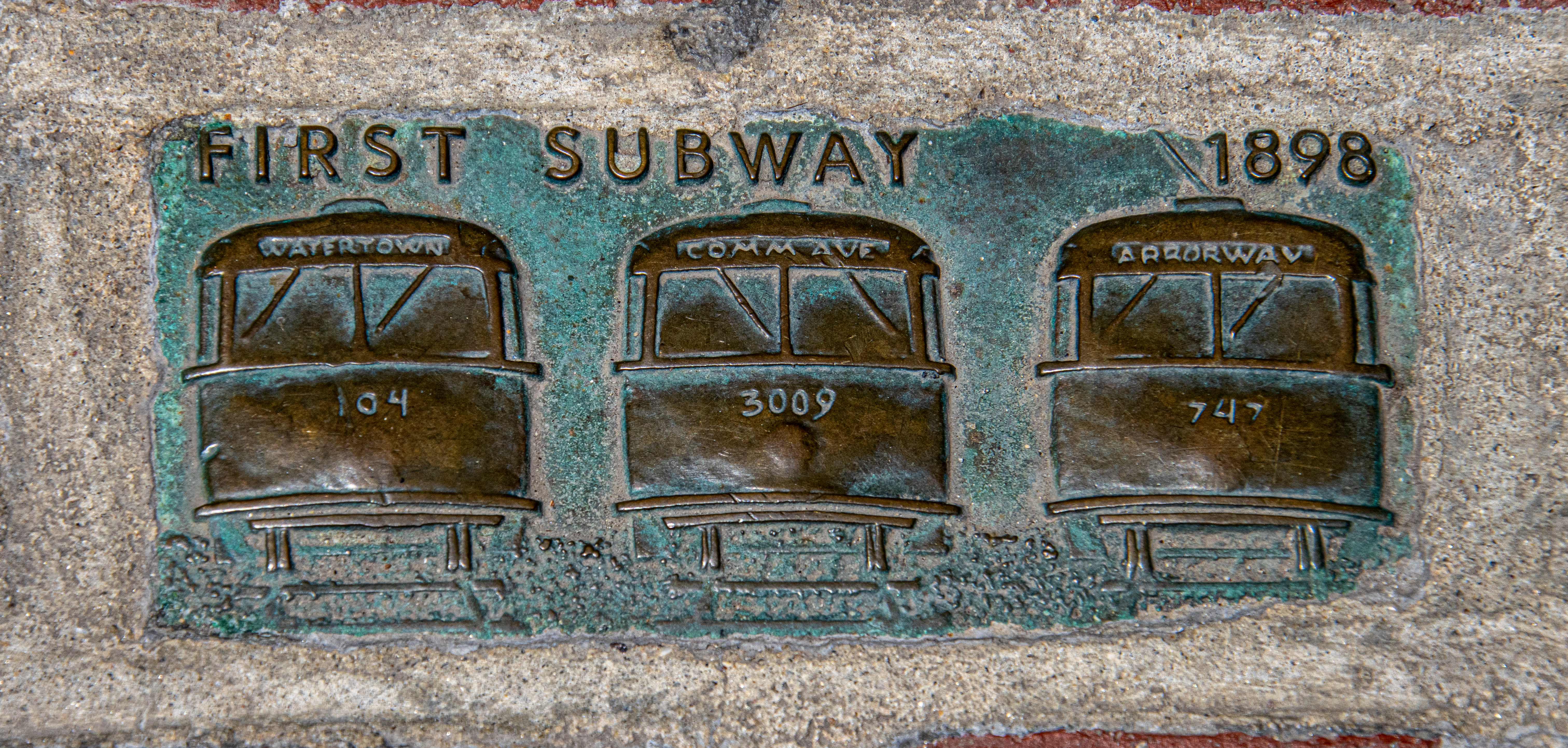
Another first is the Boston subway system. The subway system in Boston is the first in this country (the first subway stops were Boylston and Park Street). The first trains began operating in 1898 and I think they’re still in use today. At least it feels that way,
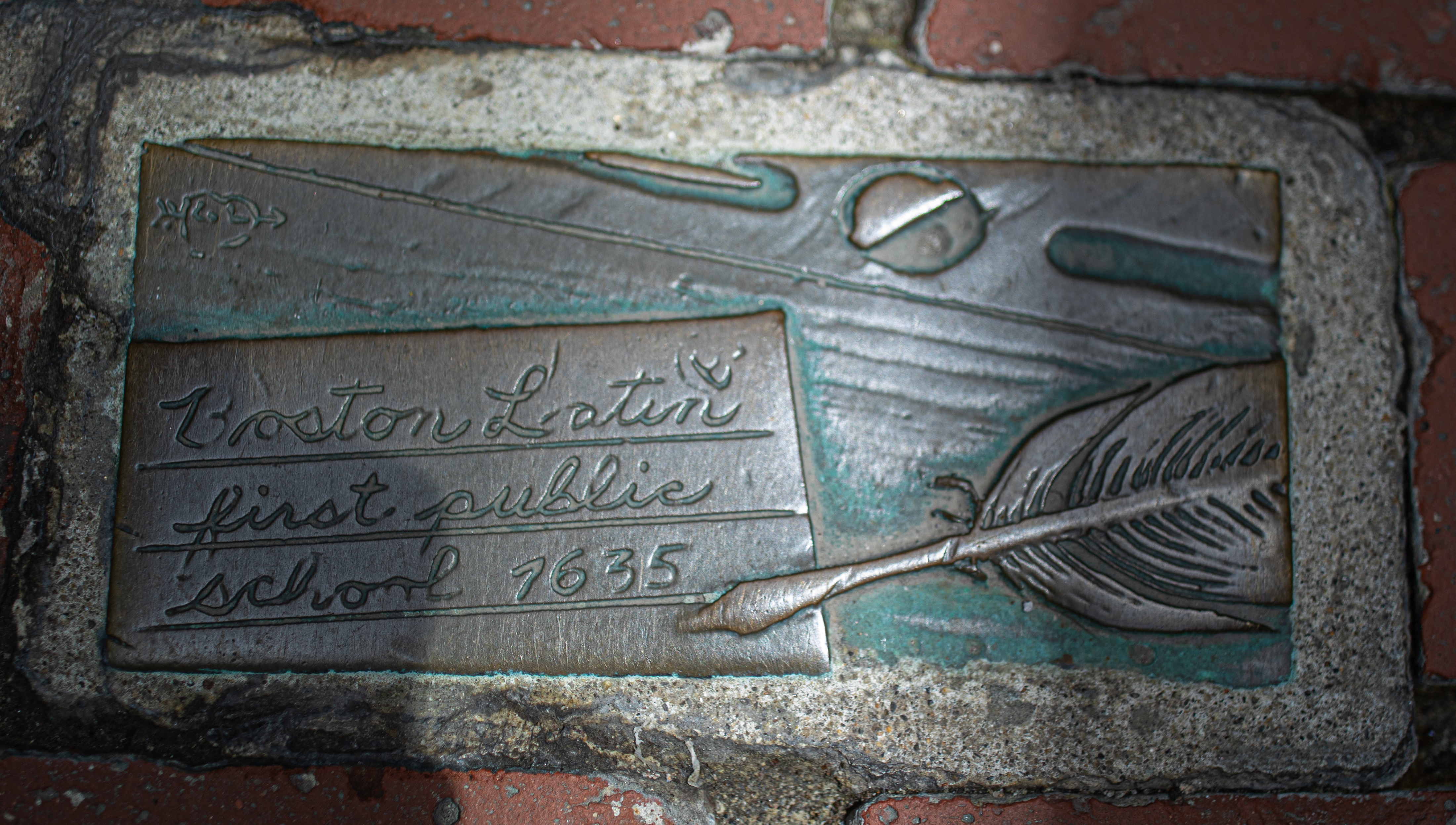
The Boston Latin School, which was founded in Boston in 1635, is the first public school in the country. It has been in continuous operation since it formed on April 23, 1635. And, no, I wasn’t in attendance. I’m not that old.
While the sewing machine is in its earliest forms was not invented in Boston, the inventor of the first practical and commonly used sewing machine was a mechanic from Boston named Elias Howe. Elias invented the first modern lockstitch sewing machine in 1845. The underlying lockstitch design Elias invented became the foundation for most modern day sewing machines and is still used to this day in most sewing machines.

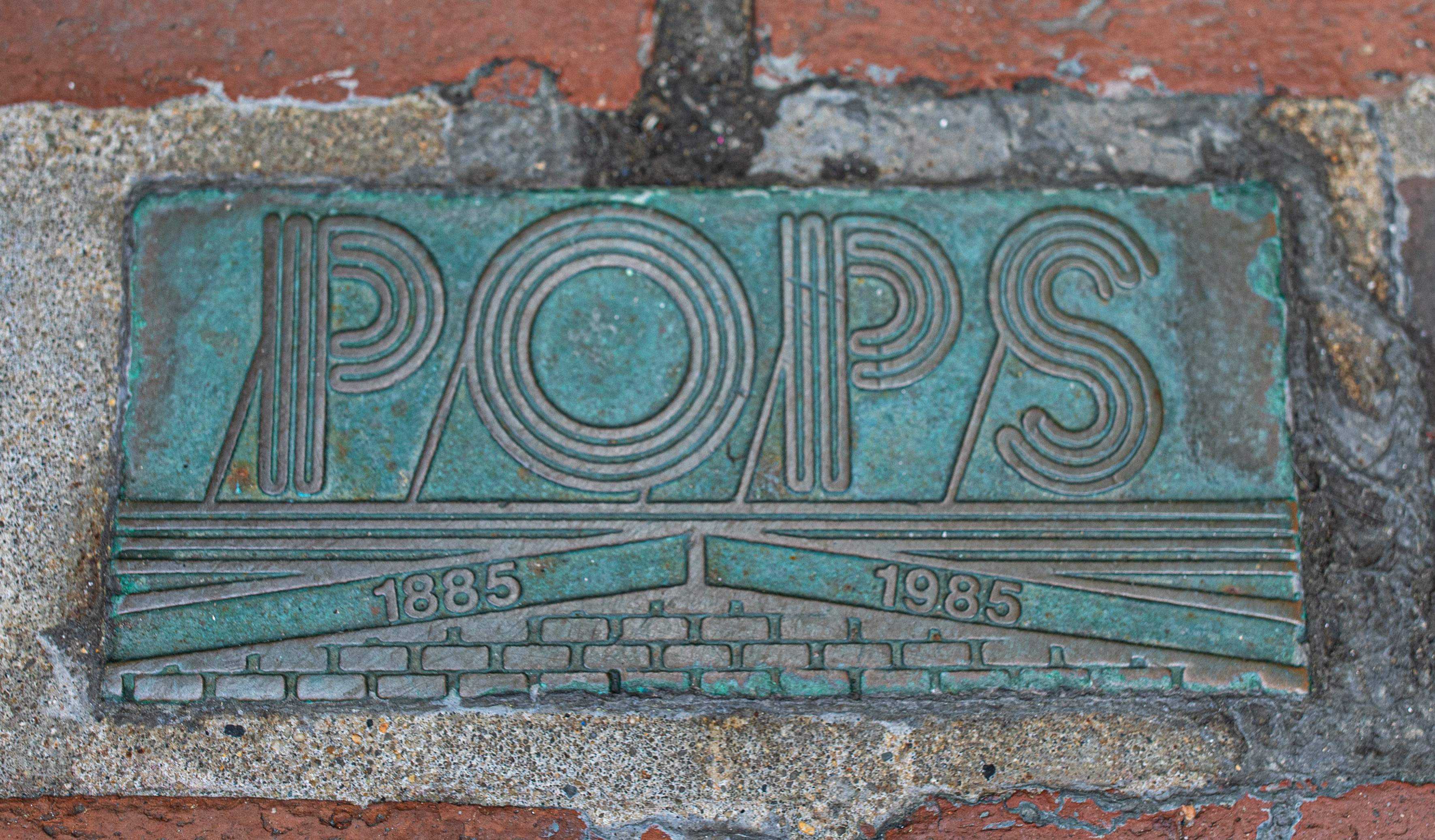
Boston is also known for its many arts and entertainment. These bricks include the POPS (the Boston Pops). Although they’re most famously known for their performances during the 4th of July celebrations on the Charles River Esplanade, they perform on many other occasions at many other venues.
This brick is a tribute to the ballet dancers that perform at the many events throughout the year. But, I will always get Nutcracker vibes when I see them.
The opera is also a staple of the art which is plentiful in the area.

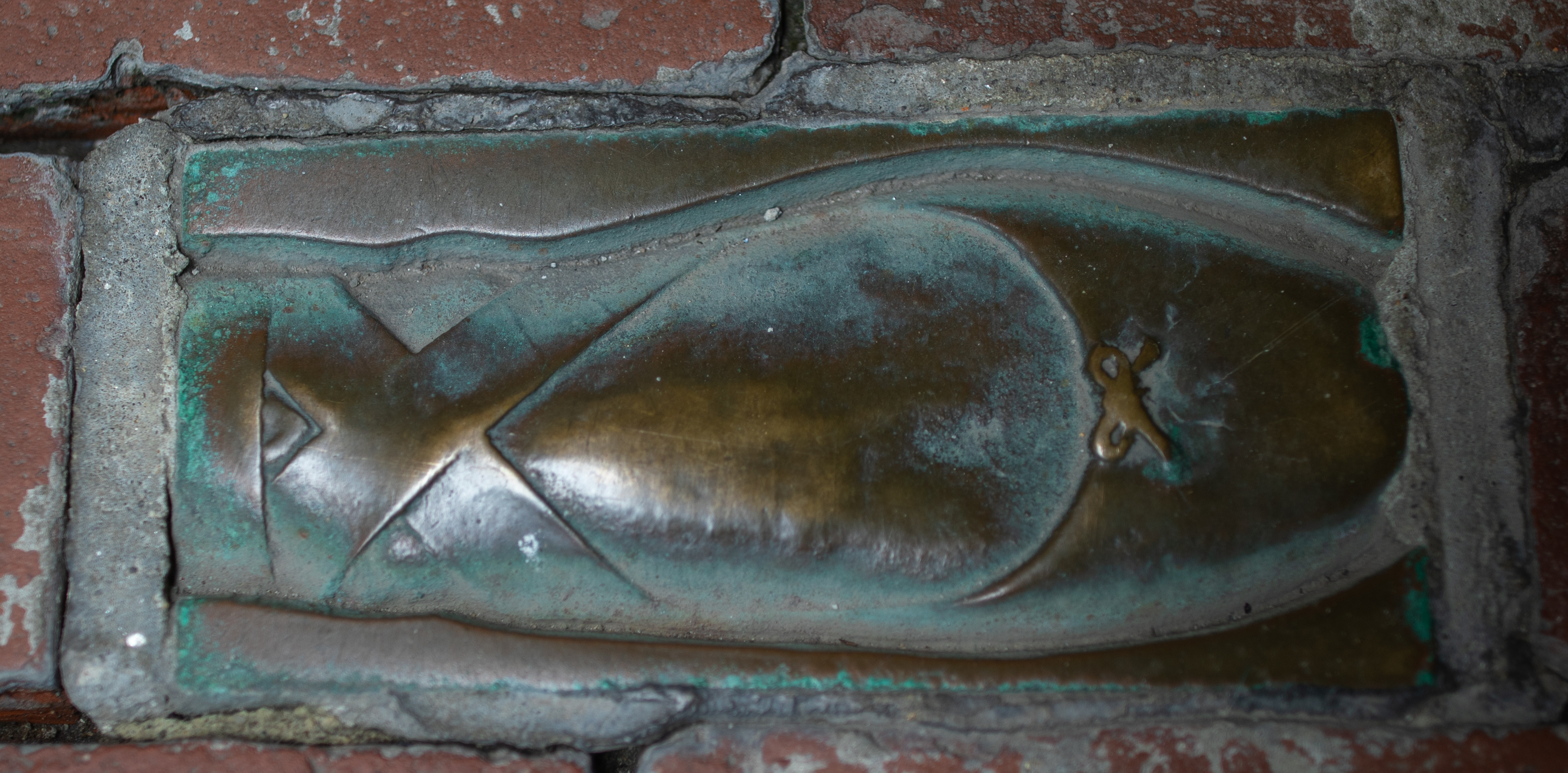
This brass instrument is commonly used in the Boston Pops concerts and at other concerts throughout the city.

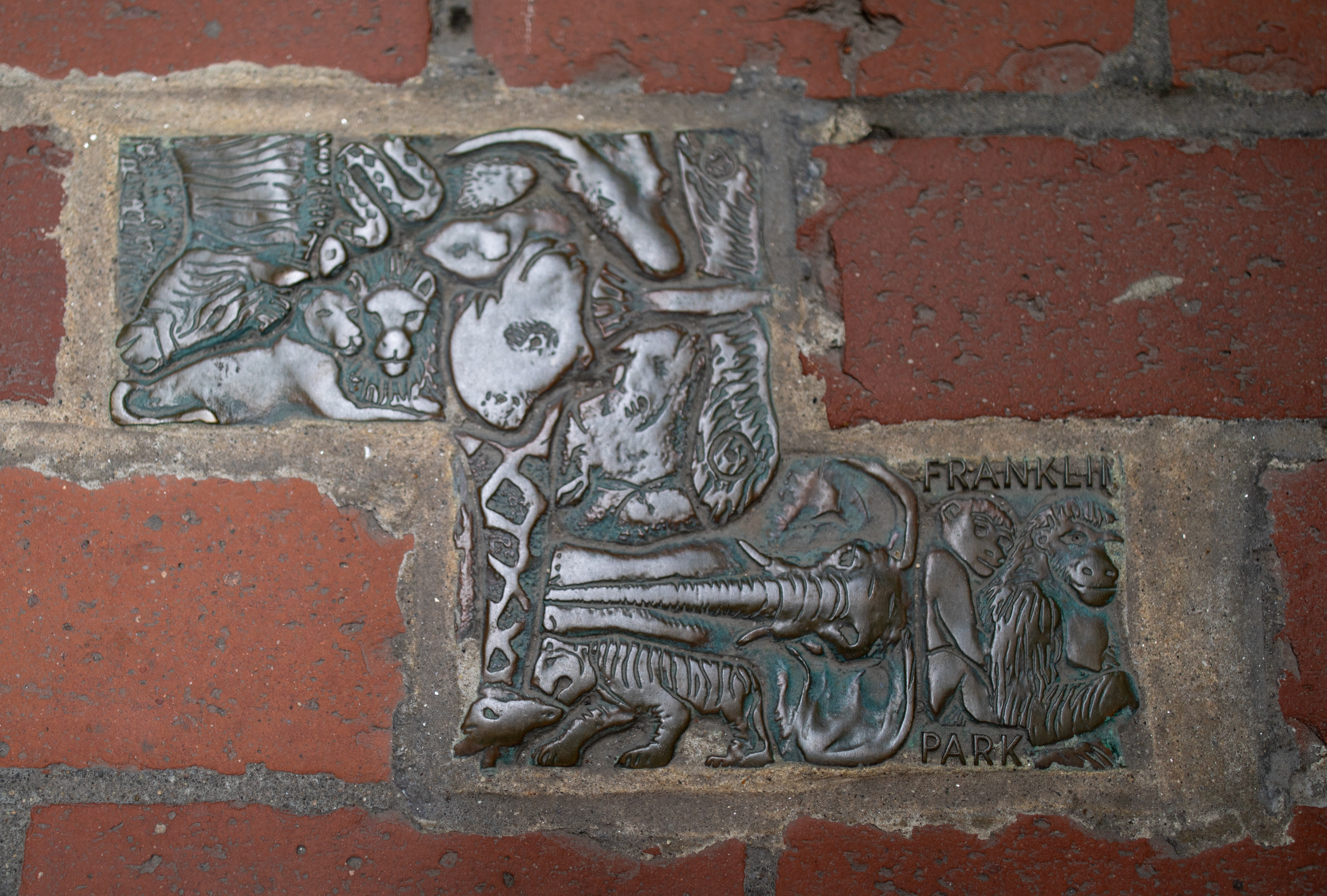
The Franklin Park Zoo in Boston, MA, is one of the oldest continuously running zoos. But, not the oldest in the country. The 72 acre zoo opened on October 4, 1912.
Boston is proud of its history and accomplishments. One of those accomplishments championed by President Kennedy, from Boston, was sending astronauts to the moon by the end of the decade, although he was not alive to see it to fruition. This brick shows both the moon and the approximate distance to the moon.

This brick shows some of the most famous people from Boston in their final resting places.

Speaking of final resting places, many of these newspapers no longer exist. A few, like the Boston Herald, the Boston Globe and Christian Science Monitor are still in operation, though.

This historical event was a real mess. The Molasses Flood of 1919 was just that; a flood of molasses. On January 15, 1919, a 58 foot tall and 98 foot diameter molasses storage tank in Boston’s North End burst, releasing 2.3 millions of molasses into the streets. The dark brown syrup is said to have reached speeds of 35 miles per hour and left a 10 foot deep, 100 yard tidal wave that destroyed everything in its path. Twenty one people were killed and 150 more people were injured. Wen the air is just so and the breeze is just right, it’s said you can still smell the thick scent of molasses.

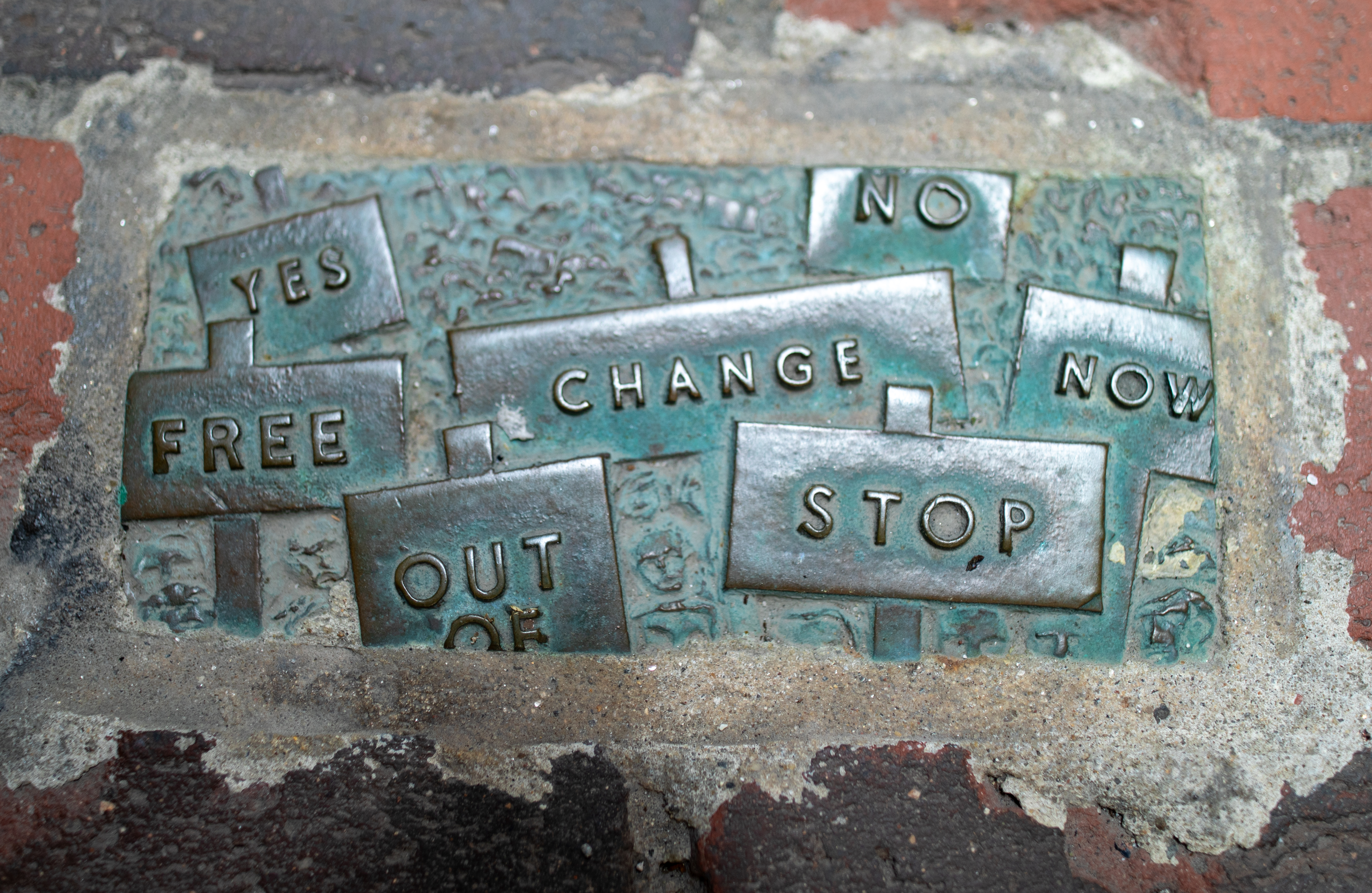
These bricks are representative of the protests and how we have worked to make the world a little bit better.
I never liked tea anyway.

“Yes”. “No.” I wish they’d make up their minds.
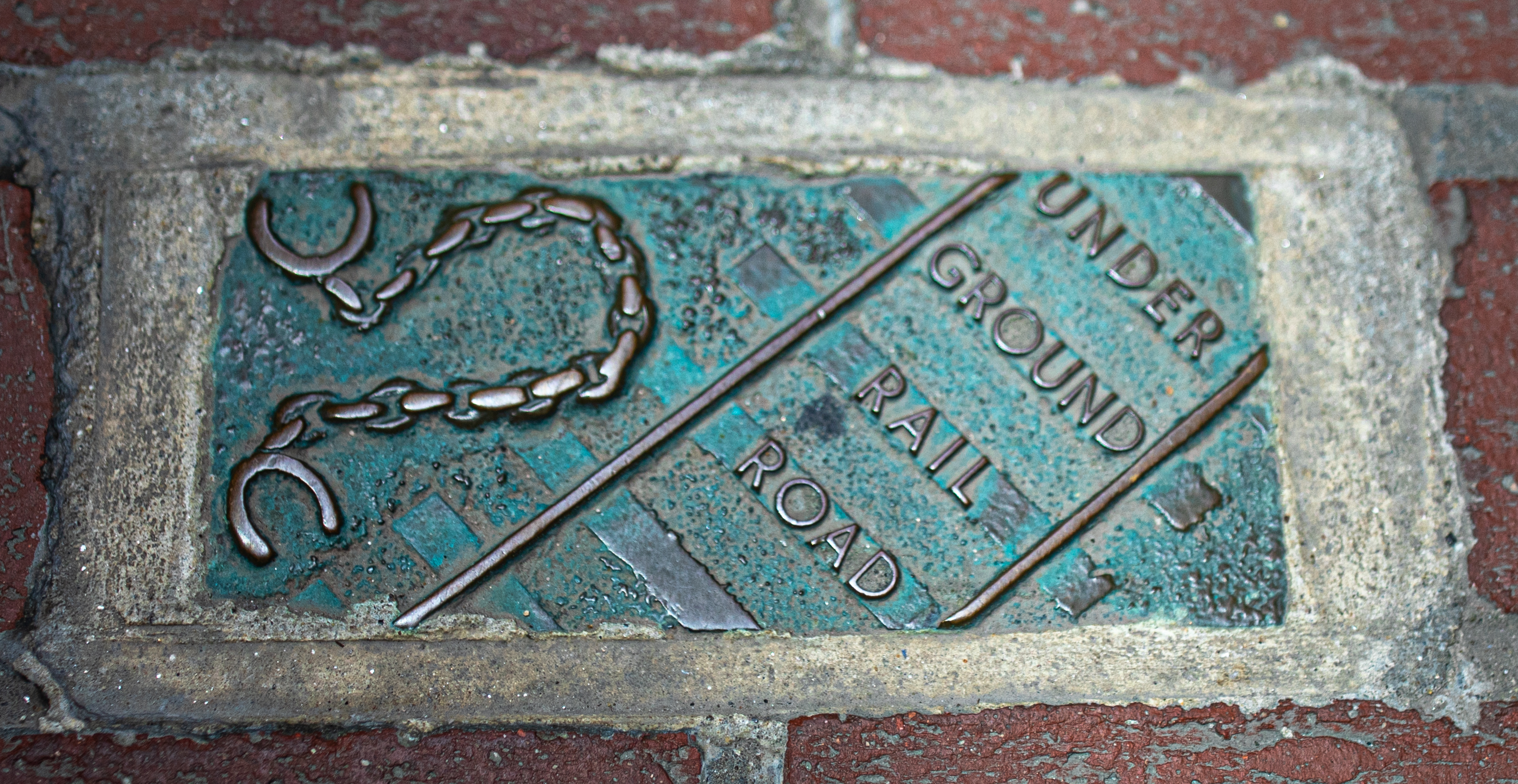
The Underground Railroad did include parts of Boston, specifically the north slope of Beacon Hill and other areas in Boston.
The Stamp Act was another political issue that was hotly debated and protested. If only things were still so simple today.

We have a lot of famous landmarks and buildings. A few of them were represented in the alley.
As it is stated clearly on it, this brick is a depiction of the State House in Boston, MA. Yes, the dome is really covered in real gold leaf. And you wonder why we’re so grumpy.

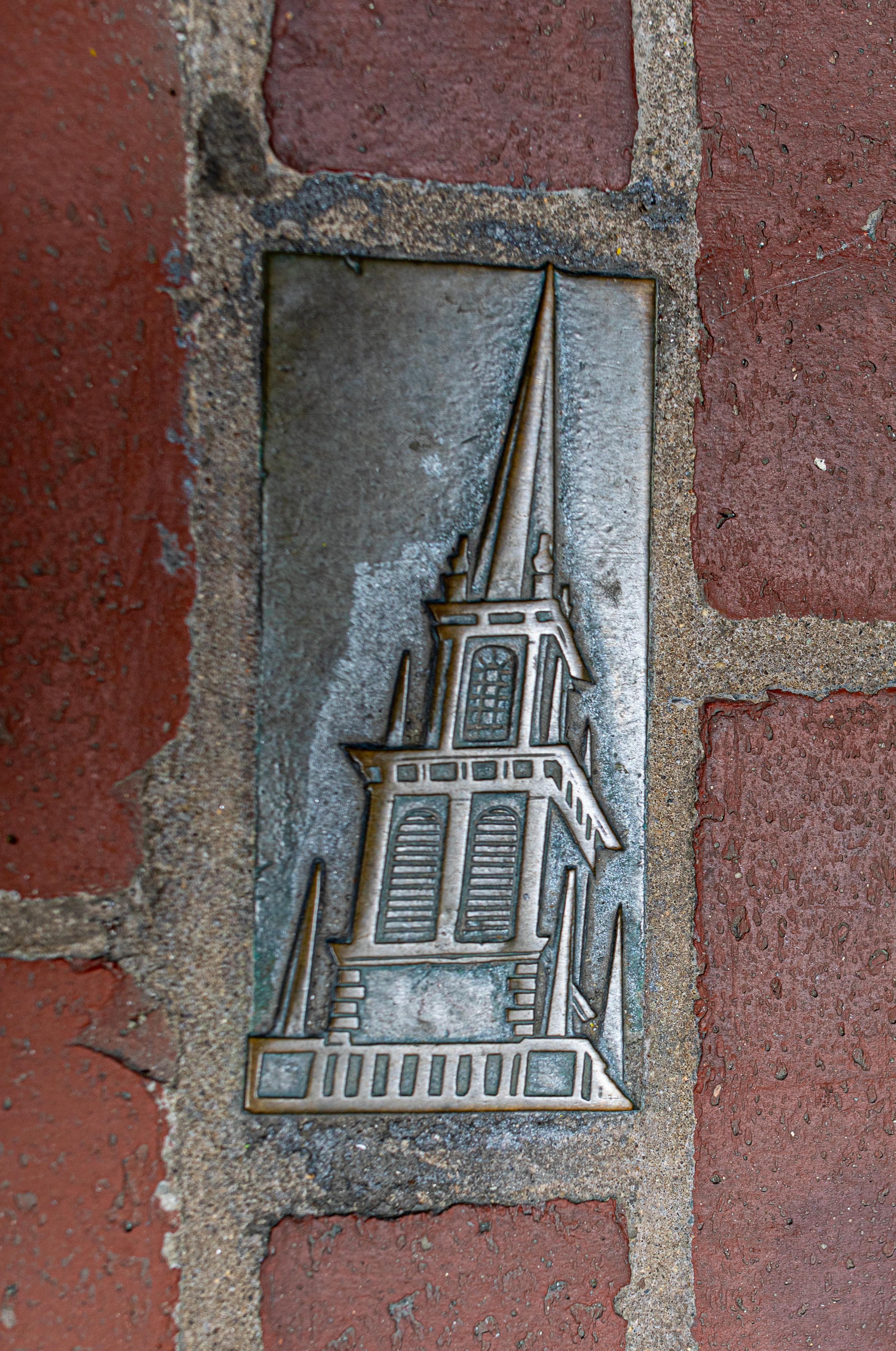
This brick is an artful design of the Old North Church in Boston, MA
The Custom House Tower, also located in Boston, MA, is also on one of the bricks.

Some of the bricks would need a little explaining. So, what’s a “Smoot”!?
A “smoot” is a non-standard unit of measurement (defined as 5 ft 7 inches). This measurement perfectly fits Oliver Smoot, an MIT fraternity pledge from 1958. The fraternity members used poor Oliver to measure the Harvard Bridge in Cambridge, MA (it measured 364.4 smoots long). The fraternity brothers measured him, made him lie on the bridge, marked his full body length and continued the process until they had covered the entire length of the bridge. And I thought I had a lot of free time. The “smoot” has remained a tradition at MIT and a well known landmark (by locals at least). And each year the fraternity repaints the yellow markings.

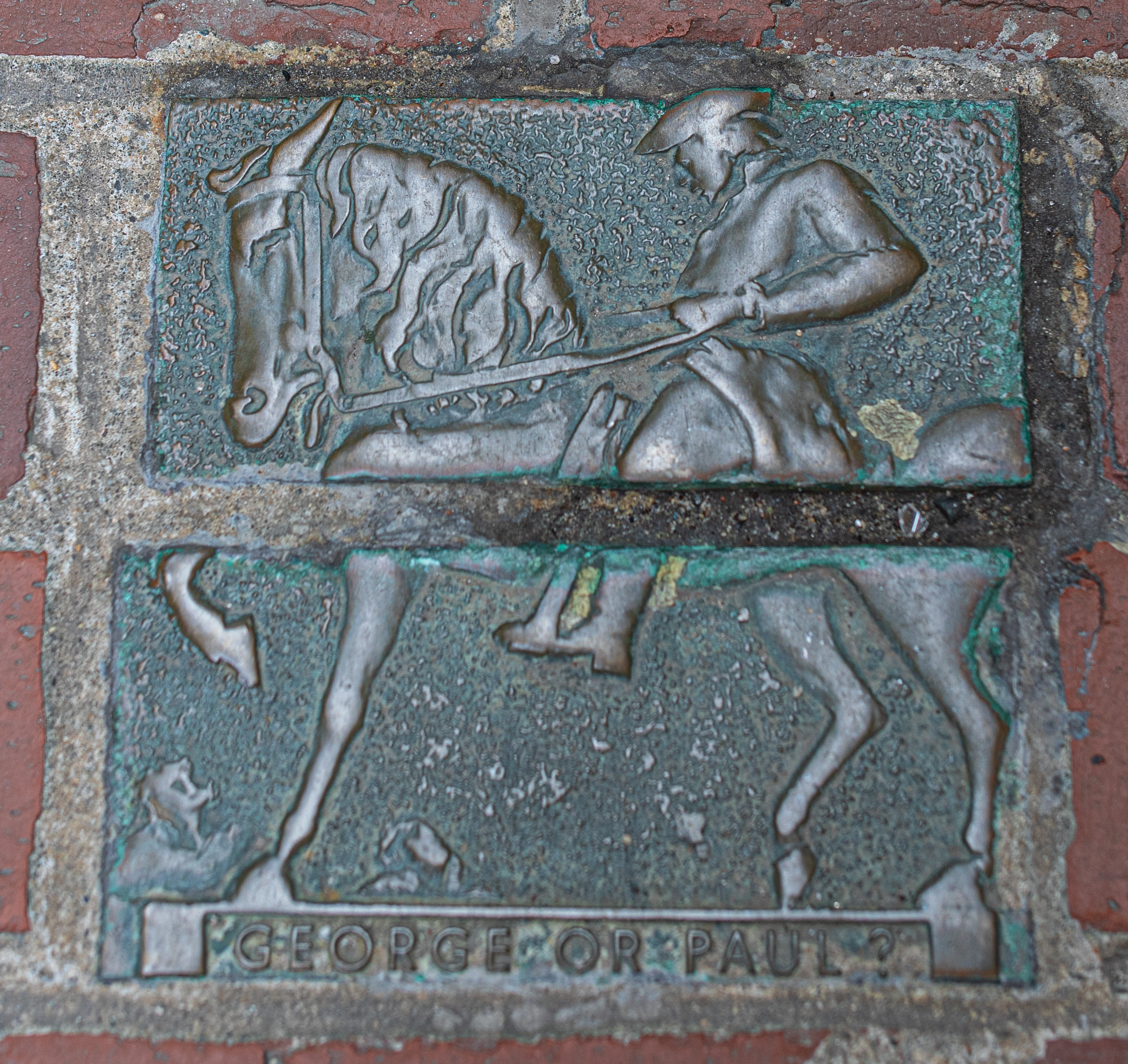
Another brick that may need some explaining is this brick that has “George or Paul?” No, not those George and Paul. There are two statues in Boston of two pretty famous people. One statue with George Washington on a horse is in the Boston Public Garden. The other statue is of Paul Revere, undoubtedly on his ride to warn us all about the British, is located in Paul Revere Mall in Boston’s North End.
This may seem like a pretty straightforward design on the brick below. It is the Longfellow Bridge which spans the Charles River and connects Boston’s Beacon Hill to the Kendall Square area of Cambridge, MA (or vice versa). The bridge has an interesting history and background. The S and the P are meant to represent “salt” and “pepper” as it is also known as the “Salt” and “Pepper” bridge because the shape of the central towers on the bridge resemble salt and pepper shakers. Great. Now I’m hungry.
When it was originally built in 1845, the bridge was named the West Bridge. It was rebuilt in 1906 and eventually it was named the Longfellow Bridge after a certain writer penned a poem about the original bridge (West Bridge) entitled “The Bridge.”

These two seemingly random creatures actually have a very close connection to our history. They are both located on a very old and important historical building; the Old State House. Located on Washington St in Boston, the original State House is also near the site of the Boston Massacre. In any event, this lion and unicorn are located on the exterior of the building near the roof. These are the same figures used in the coat of arms for the United Kingdom which are reminders of its past.


These are only roughly half of the bricks on the alleyway. So, there are many more for you to find on your own! Just don’t forget to look down!
 New England Nomad