Wed.-Mon.: Two museum highlights tours: B6: The Robert W. Wilson Building and Buildings 4, 5, and 7 at 2pm Summer Hours (begin June 2018)
10am—6pm Sundays—Wednesdays
10am—7pm Thursdays—Saturdays
Cost:
Admission
Adults $20
Seniors / Veterans $18
Students with ID $12
Kids (6–16) $8
EBT/WIC Cardholder $2
They also offer 2 day and 3 day admission tickets
Parking: There are four parking lots in the museum parking area
This pole with mirrors on it is just one of the unusual work of art on the grounds of the museum. This work of art is part of the Totally Totem exhibit by Marko Remec that was on the grounds of the museum in 2016. Marko attached ready-made objects such as mops, brooms, safety mirrors, and rear-view mirrors to utility poles, transforming them into contemporary totems.
It’s a bird. It’s a plane. Oh, never mind, it’s just a trailer on top of a bridge.
This work of art, part of a three part art piece titled, “All Utopias Fell”, was created by Michael Oatman. The trailer, called The Shining, is a 1970’s era Airstream mobile home that Oatman bought online from a dealer in Ohio.
The worst part of the exhibit for some may be the walk along some narrow steps inside a creepy boiler house, more on that later, and then a short jaunt along a bridge to the Airstream.
““The Library of the Sun”, the decorative interior of the Airstream is the second part of the exhibit. Decorations, prints as well as a variety of other vintage and novelty items line the walls and shelves of the trailer. Many of the items inside the Airstream are humorous relics of the past. A rotary phone, a sewing machine, a workbench, books held into place with leather safety belts and even a photo of Guy Lombardo and real jars of preserved food. are just a few of the vintage memorabilia inside the mobile home.
The third and final part of the exhibit is “Codex Solis” which is a a solar panel project that Oatman has worked to create with the museum for the past 3 years. The solar panels Every task light and video screen on the Airstream is powered by the solar panels according to Oatman. According to their website, roughly 25% of MASS MoCA’s energy is produced on-site through solar panels on these roofs
The views from the exhibit are stunning.
The work of art is inspired by vintage era pulp aeronauts such as Buck Rogers, Tom Swift, and Tom Corbett: Space Cadet, as well as the works of Giotto, Jules Verne, NASA, and Chris Marker’s 1962 film La Jetée. Slightly larger than my apartment, The Shining does seem like it could be a little cramped for most people.
These cans were strategically placed to form some artistic displays.
“All Those Vanished Engines” is an audio and visual exhibit by Stephen Vitiello. Inspired by a commissioned text by novelist Paul Park, the exhibit uses both sound and visual arts to entertain its viewers.
The Boiler House was commissioned by Sprague Electric Company in 1947. It was preserved by the museum as a relic of the great industrial age of carbon. There are three boiler hoppers, coal hoppers, steam fittings and ash disposal conveyors. Especially after viewing the solar panels on the roofs of some of the buildings, it is a reminder of how far we have come in our technology. I couldn’t help but think Freddy Krueger was lurking around one of the corners.
There are a lot of strange works of art on th emuseum grounds. I’m not sure what these are supposed to be.
Remind me to never bring my camera to MASS MoCA. There is so much more art to share from this museum. But, I may be taking a break from posting the art from this haven for art lovers.
I have some other interesting photos from places and events I have visited recently. So, I am taking a short break from my MASS MoCA posts. But, I will resume my MASS MoCA series after I post some photos of winter in New England!
Wed.-Mon.: Two museum highlights tours: B6: The Robert W. Wilson Building and Buildings 4, 5, and 7 at 2pm Summer Hours (begin June 2018)
10am—6pm Sundays—Wednesdays
10am—7pm Thursdays—Saturdays
Cost:
Admission
Adults $20
Seniors / Veterans $18
Students with ID $12
Kids (6–16) $8
EBT/WIC Cardholder $2
They also offer 2 day and 3 day admission tickets
Parking: There are four parking lots in the museum parking area
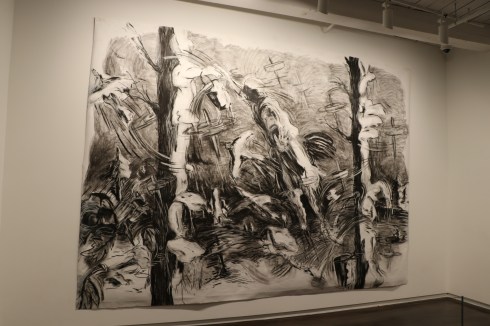
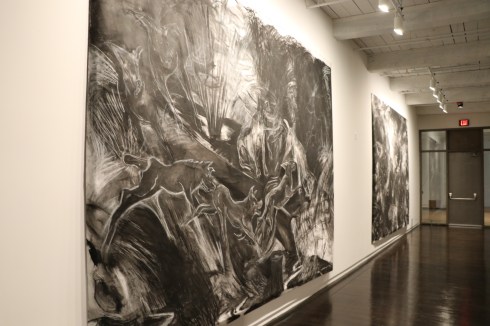
One of the featured artists at MASS MoCA is artist, musician, composer, film producer and entertainer Laurie Anderson. All of the art posted below was made by Laurie with charcoal. These drawings feature dog Lollabelle and visions of the Tibetan afterlife as her inspirations.
Many of the exhibits at MASS MoCA have a social, political or other type of message. This exhibit showcased some of the different aspects of the criminal justice system. The scanner like devices in the pink and blue lights had text that looked like police chatter on it. Along the walls are fingerprints taken from people who have been arrested and reports that have been blocked out.
The exhibit also included a collection of documents from prisoners in Guantanamo Bay and some of the other holding facilities overseas. Many of them, but not all were blacked out. Some were entirely blacked out. What struck me is how some things, like how an inmate injured himself or some other traumatic event, were explained so matter of fact.
This mural has the lyrics to the Graham Koxon song, “Fame And Fortune” in it.
Resist the temptation to sit on this bench created by Jenny Holzer.
Thank you for stopping by and checking out part IV of my blog post series on the art at MASS MoCA. Believe it or not, yes, there’s more. Part V of my series will include some of the outdoor art and some very interesting art from some unusual places at the museum. Stay tuned.
Wed.-Mon.: Two museum highlights tours: B6: The Robert W. Wilson Building and Buildings 4, 5, and 7 at 2pm Summer Hours (begin June 2018)
10am—6pm Sundays—Wednesdays
10am—7pm Thursdays—Saturdays
Cost:
Admission
Adults $20
Seniors / Veterans $18
Students with ID $12
Kids (6–16) $8
EBT/WIC Cardholder $2
They also offer 2 day and 3 day admission tickets
Parking: There are four parking lots in the museum parking area
In part III of my trip to MASS MoCA I am highlighting some of the found art and the works of Louise Bourgeios and some unusual musical instruments.
Robert Rauschenberg (1925–2008) is one of the featured artists at the museum. His work, “The Lurid Attack of the Monsters from the Postal News Aug. 1875 (Kabal American Zephyr)” is made up of saws, wheels and other discarded items. Pictured on the wooden beam of the sculpture are photos of butterflies, John Lennon playing the piano and kids playing in a pool as well as some other photos.
The following works of art are part of the found art sculptures exhibit, “Thumbs Up For The Mothership” by Lonnie Holley and Dawn DeDeaux. The display is described as an artistic response to the state of the earth, both environmental and political.
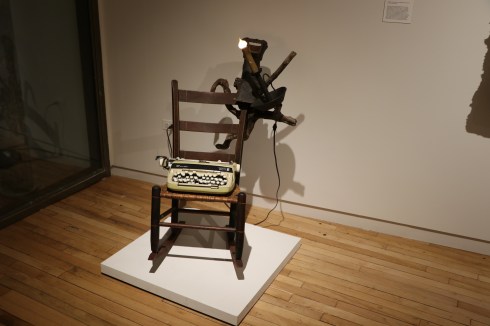
“The Writing Man’s Chair” (2017) is a tribute to William Arnett, a friend of artist and creator Lonnie Holley. William was a close friend of Lonnie’s and one of the first people Lonnie knew who showed a genuine interest in his work. The sculpture is made of a rocking chair, found typewriter, water pump and roots and candle lamp.
“Do Not Write On This” (2007) by Lonnie Holley, made of a wood pallet, straw, stuffed animal, commemorative photo, nails and wood. The work of art is about respecting nature. According to Lonnie, he lost relatives in fires. The sculpture is meant to remind people about our effect on nature.
“Weighed Down By The Hose” (2008) by Lonnie Holley is made of a rocking chair, old quilt, heart-shaped box and rubber hose. The fire hose wraps around the chair like a memory. The sculpture is meant to be a reminder of the civil rights struggle that still envelopes us like a quilt. Lonnie found the rocking chair on the side of a Birmingham, Alabama road. The little tin heart is meant to be a container for memories in the act of love.
“The Last Formation” (2017) by Lonnie Holley is made of a dressmaker’s form and wooden shoe supports. The old wooden feet in the dress reminded Lonnie of the bodies captured in nets in Africa as well as the bodies stuffed together in the holds of slave cargo ships. Lonnie explained the mother’s body, represented by the dressmaker’s form, is like a cargo hold. The “Last Formation” is the woman’s body with all of her offspring’s offspring.
“Busted Without Arms” (2016) by Lonnie Holley is made of a dress form, gun grip display and model handguns. Lonnie said his motivation for this work of art were the news stories of unarmed black people being killed.
“Waking Up In The Bed Of Death (Watching the Marchers’ Dreams Die)” (2016) by Lonnie Holley is made of an old bed frame, found quilt, shoe store displays and a shoe fitting stool. The sculpture is meant to show the struggle of the civil rights movement which Lonnie describes as being like a long and arduous journey to the top of a mountain. Lonnie thinks people these days consider the civil rights struggle to be like an elevator to the top, rather than the long struggle it really is.
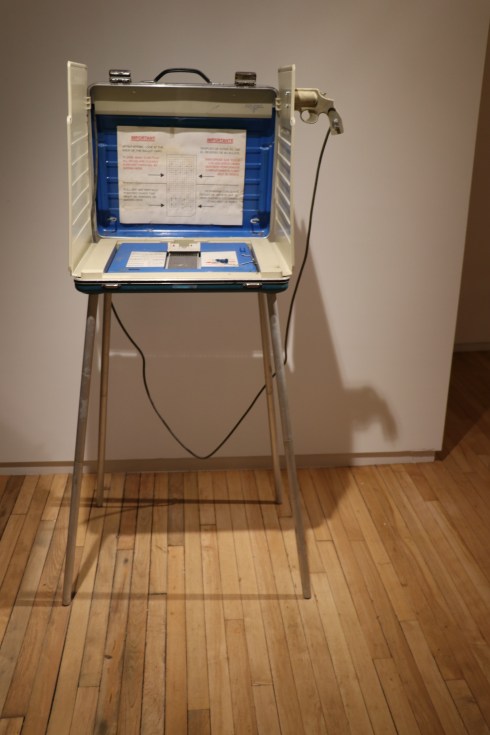
“In The Grip Of Power” (2016) by Lonnie Holley is made of a decommissioned voting booth, gun grip display and model handgun. Lonnie found what looked like a suitcase while he was in Nashville, Tennessee. Later, he would realize the suitcase was actually a voting booth. This made Lonnie think of the struggles people have gone through to gain the right to vote. When Lonnie found gun store display while he was in North Carolina, he got the idea to combine the two items. Lonnie decided to make a display that had a voting booth that, when you leaned in to vote, had a gun pointing at you.
“Broken But Still Strong” (2014) by Lonnie Holley is made of a bicycle, cement mixer, scaffolding parts, a blown-out truck tire, tools, motor and bolts. This sculpture is about the Native American struggle. He described their struggle as “broken but strong.” The work of art honors the reuse of materials before we rid ourselves of them. One of Lonnie’s grandmothers was part Cree and Cherokee and one of his grandfathers was part Cherokee and black and white. He said they taught him about materials and he still uses that wisdom now.
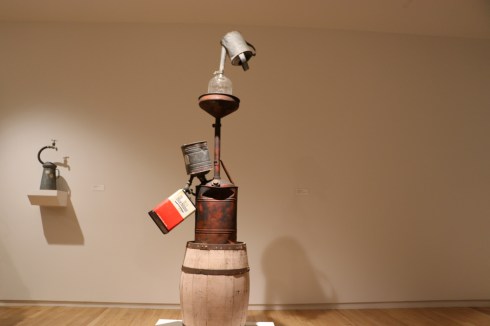
“Another Blue Ribbon First: America’s First: America’s Chemistry Project” (2016) by Lonnie Holley is made of a wooden powder keg, oil can, White House vinegar bottle, kerosene can, Blue Ribbon Lubrication oil can, brass house faucet, water can and oil changing can.
“Climbing To Better Understand The World” (2014) by Lonnie Holley is made of a library ladder, barbed wire, wires, a globe, a computer keyboard and a computer monitor. Lonnie explained that he never had a chance to go to school when he was young and he had to learn by watching others or from doing things himself. Now, access to information is much easier. But, it is also easier to find “fake news.” The sculpture also conveys how this information on the internet and from other sources is not equally available to everyone.
“The Mantle (I’ve Seen The Future And It Was Yesterday)” (2016-2017) and “Broken Mirror” (2017) were created by Dawn DeDeaux. The multimedia work of art, “The Mantle” is made of an aluminum mantle with objects. The “Broken Mirror” work of art is a transparency on a convex mirror.
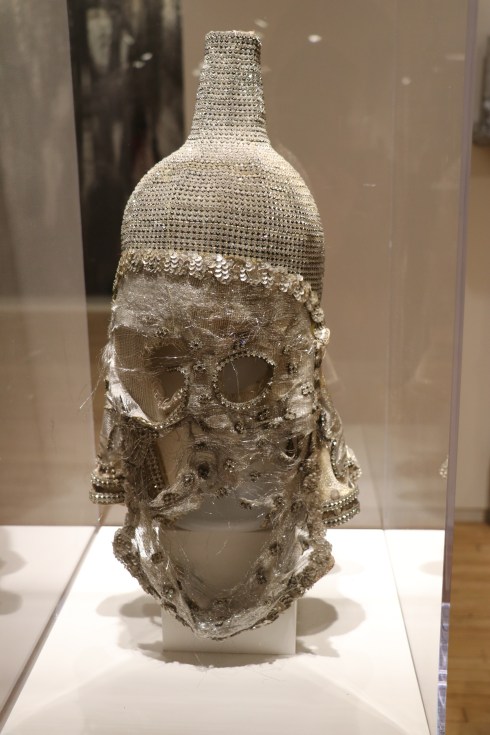
“Found Object: Mardi Gras Masque of the Babylonian Style” (2014) is a work of art from Dawn DeDeaux.
Another exhibit at the museum is a collection of art from the late artist Louise Bourgeois.
The first sculpture in this exhibit is “The Couple” (2007-2009). This sculpture is an aluminum piece hanging from the ceiling. The sculpture is of a couple intertwined for eternity.
“Nature Study” (1984) is made of marble and steel.
Many of Louise Bourgeois’ art deal with human sexuality and the male and female anatomy (gross!). These sculptures are meant to show how we all share male and female traits.
“Heel on peel to seal the deal feet to sky life” is a work of art by Jenny Holzer.
Gunnar Schonbeck’s “No Experience Required” work of art is a collection of instruments he made from a collection of everyday materials. The late Gunnar Schonbeck, a graduate of Bennington College in Vermont, believes “art belongs to everyone.” He used these unusual instruments in some of his concerts.
While you can’t use the instruments in the “No Experience Necessary” exhibit, you can use the instruments in a room nearby.
People of all ages, skill levels and backgrounds can use these instruments. Banging on the drums there can be a great way to blow off steam, too. Trust me, it can be a pretty loud room!
Thank you for stopping by for my third installment from my trips to MASS MoCA. Believe it or not, there is a lot more I plan on sharing with you all!
Wed.-Mon.: Two museum highlights tours: B6: The Robert W. Wilson Building and Buildings 4, 5, and 7 at 2pm Summer Hours (begin June 2018)
10am—6pm Sundays—Wednesdays
10am—7pm Thursdays—Saturdays
Cost:
Admission
Adults $20
Seniors / Veterans $18
Students with ID $12
Kids (6–16) $8
EBT/WIC Cardholder $2
They also offer 2 day and 3 day admission tickets
Parking: There are four parking lots in the museum parking area
As I mentioned in part I of my MASS MoCA post which can you find here, MASS MoCA has such a vast collection of art and creative works, you could spend an entire weekend there taking in all of the art in the various buildings. In fact, I had to make two trips myself to be able to see everything.
In the previous post, we saw some of the incredible works of Sol Levitt. But, there are many more creative exhibits at the museum. One of the more unique works in a display by Nick Cave.
Located in Building #5 at the museum, Nick Cave’s exhibit, “Until”, is, in part, a collection of 16,000 aluminum wind spinners hung from the ceiling. This exhibit is the creation of Chicago artist, Nick Cave (not to be confused with the singer by the same name). As you may see from the photos and videos below, the spinners seem to change colors and design as they spin. As you may notice in the photos and videos of the spinners, guns seem to play an integral role in the designs of the spinners. Spinning guns. Nothing good could come from that. I especially like looking at people’s expressions as they look at them.
For those who aren’t afraid of heights, in the midst of the various spinners are ladders that you can climb to look at another part of the exhibit. Statues, figurines and other types of decor are strewn on top of chandeliers.
The items on the chandeliers are meant to represent the days of the past.
Also part of Nick Cave’s exhibit, is a tent structure made of quilts. The quilts have some creative designs to them and they are sure to get the attention of curiosity seekers, both young and old.
Ad you walk through the hallways to all of the different exhibits , there are lots of art that can catch your eye.
This exhibit, also in Building Number 5, is called, “A Quake In Paradise (Labyrinth).” The maze-like exhibit includes a group of panels printed with the artist’s signature that layers mechanically reproduced imagery.
Believe it or not, there are many, many more exhibits and works of art I am going to showcase in future posts. Below, are two videos from Nick Cave’s “Until” exhibit. I took the first two videos. The last video posted is from the account of jay sarajevo.
Wed.-Mon.: Two museum highlights tours: B6: The Robert W. Wilson Building and Buildings 4, 5, and 7 at 2pm Summer Hours (begin June 2018)
10am—6pm Sundays—Wednesdays
10am—7pm Thursdays—Saturdays
Cost:
Admission
Adults $20
Seniors / Veterans $18
Students with ID $12
Kids (6–16) $8
EBT/WIC Cardholder $2
They also offer 2 day and 3 day admission tickets
Parking: There are four parking lots in the museum parking area
As I was looking through my photos from last year, I came across some photos I took at MASS MoCA last summer. Since there are so many photos of many different exhibits, I am planning on posting my photos in several parts. I hope you enjoy this trip through the many art works and creative exhibits at this very unique museum.
Once the site of a factory building complex, MASS MoCA (Massachusetts Museum of Contemporary Art) is now home to a variety of art from a variety of artists and styles.
Formerly the Arnold Print Building which operated there from 1860 to 1942 and the Sprague Electric Company, MASS MoCA consists of several buildings, some of which are connected by bridges and walk ways.
MASS MoCA has both permanent exhibits (or at least semi permanent exhibits) as well as many temporary exhibits.
Decorated walls are a constant theme at the museum. One of the permanent exhibits on display at the museum are these walls with stylized designs on them.
This work of art by Barbara Takenaga called Nebraska (2015)is composed of acrylic on digitally printed wallpaper. The wallpaper was translated from her handcrafted easel work. The 120 foot mural represents the open plain of Nebraska, Takenaga’s home state. The design is meant to represent the corn and stars that are evident on an evening in her home state. The work of art is meant to show the “blue hour” when the earth and sky begin to merge.
On the second floor of the museum, there are several walls with different designs painted on them.
The following art is part of Sol Lewitt’s A Wall Drawing Retro-spective exhibit.
This exhibit comprises 105 of LeWitt’s large-scale wall drawings, spanning the artist’s career from 1969 to 2007. These works of art take up nearly an acre of specially built interior walls that have been installed, per LeWitt’s own specification. They span over three stories of a historic mill building situated at the heart of MASS MoCA’s campus. The 27,000-square-foot structure, known as Building #7, has been fully restored for the exhibition by Bruner/Cott & Associates architects.
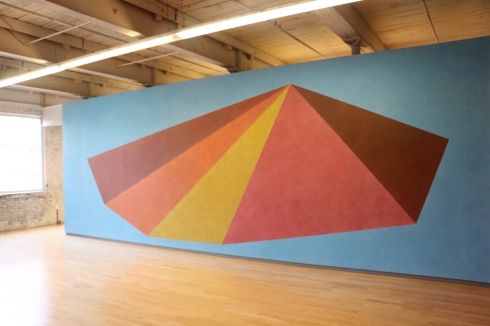
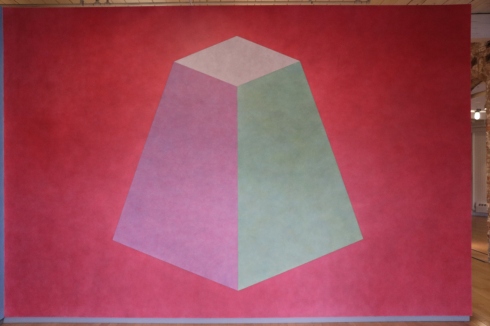
“Wall Drawing 439” – May, 1985, asymmetrical pyramid with color ink washes superimposed. Color ink wash.
“Wall Drawing 527” – April, 1987, two flat-topped pyramids with color ink washes superimposed. Color ink wash.
From left to right: “Wall Drawing 583H” : rectangles with color ink washes superimposed. Each is bordered by a 10-inch band with color ink washes superimposed, a 1/2 inch white band and a 4 inch black band – color ink wash, December, 1988
Center: “Wall Drawing 584 H”: squares, divided horizontally and vertically into four equal parts. Within each part, color ink washes superimposed. The squares are bordered by a 1/2 inch white band and a 4 inch black band – color ink wash, January, 1989
Right: “Wall Drawing 583F”” rectangles, with color ink washes superimposed. Each is bordered by a 10 inch band with color ink washes superimposed, a 1/2 inch white band and a 4 inch black band – color ink wash, December, 1988
In the far right corner of this display by itself is “Wall Drawing 725” – On a blue wall, a black square within a white border. India ink, color ink wash, gouache. April, 1993.
“Wall Drawing 343 A-F”: On a black wall, nine geometric figures (including right triangle, cross, X) in squares. The backgrounds are filled in solid white.
December 1980
White crayon on black wall
“Wall Drawing 340”
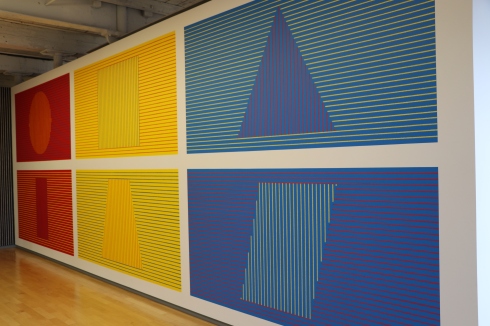
Six-part drawing. The wall is divided horizontally and vertically into six equal parts. 1st part: On red, blue horizontal parallel lines, and in the center, a circle within which are yellow vertical parallel lines; 2nd part: On yellow, red horizontal parallel lines, and in the center, a square within which are blue vertical parallel lines; 3rd part: On blue, yellow horizontal parallel lines, and in the center, a triangle within which are red vertical parallel lines; 4th part: On red, yellow horizontal parallel lines, and in the center, a rectangle within which are blue vertical parallel lines; 5th part: On yellow, blue horizontal parallel lines, and in the center, a trapezoid within which are red vertical parallel lines; 6th part: On blue, red horizontal parallel lines, and in the center, a parallelogram within which are yellow vertical parallel lines. The horizontal lines do not enter the figures.
July 1980
Red, yellow, blue crayon on red, yellow and blue wall
“Wall Drawing 335”:
On four black walls, white vertical parallel lines, and in the center of the walls, eight geometric figures (including cross, X) within which are white horizontal parallel lines. The vertical lines do not enter the figures.
May 1980
White crayon on black wall
I found myself mesmerized by these works of art. It seemed like the colors and shapes were busy, as if staring at some of them too long can give you a headache. Yet, I couldn’t stop looking at them. Some of them, especially the lines on the wall with the circles and rectangles on the grey wall seemed to change shapes and direction based on which direction you looked at it from.
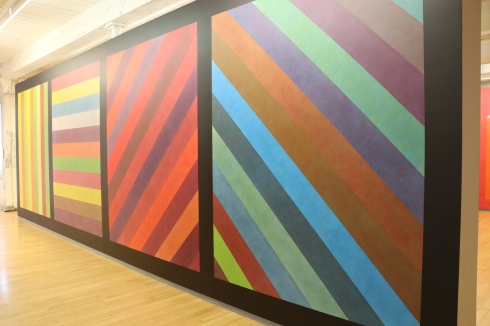
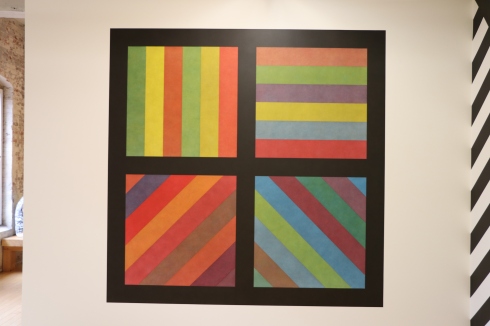
“Wall Drawing 681C”: a wall divided vertically into four equal squares separated and bordered by black bands. Within each square bands in one of four bands in one of four directions each with color ink superimposed. Color ink wash, August, 1993
“Wall Drawing 414”
Drawing Series IV (A) with India ink washes. (24 Drawings.)
March 1984
India ink wash
“Wall Drawing 391”
Two-part drawing. The two walls are each divided horizontally and vertically into four equal parts. First wall: 12-inch (30 cm) bands of lines in four directions, one direction in each part, drawn in black India ink. Second wall: Same, but with four colors drawn in India ink and color ink washes.
April 1983
India ink and color ink wash
I especially liked how the walls were displayed throughout the room. The aisles between the walls made for good photo opportunities.
Across from “Wall Drawing 414” was the color version of the same work of art
“Wall Drawing 413”
Drawing Series IV (A) with color ink washes. (24 drawings.)
March 1984
Color ink wash
“Wall Drawing 692”
Continuous forms with color ink washes superimposed.
October 1991
Color ink wash
“Wall Drawing 610”
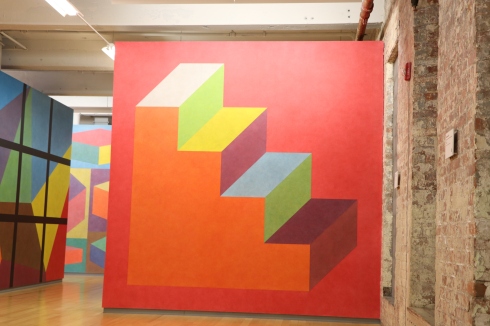
Isometric figure with color ink washes superimposed.
June 1989
Color ink wash
“Wall Drawing 422”
The room (or wall) is divided vertically into fifteen parts. All one-, two-, three-, and four-part combinations of four colors, using color ink washes.
November 1984
Color ink wash
“Wall Drawing 614”
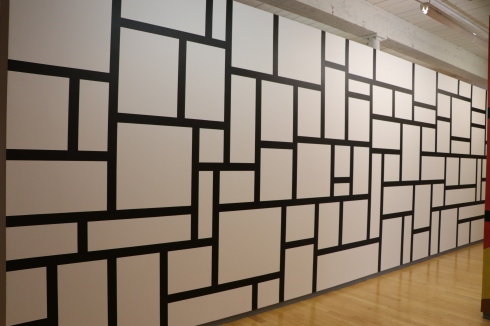
Rectangles formed by 3-inch (8 cm) wide India ink bands, meeting at right angles.
July 1989
India ink
“Wall Drawing 684A”
Squares bordered and divided horizontally and vertically into four equal squares, each with bands in one of four directions.
June 1999
Color ink wash
“Wall Drawing 630” & “Wall Drawing 631”
“Wall Drawing 630”
A wall is divided horizontally into two equal parts. Top: alternating horizontal black and white 8-inch (20 cm) bands. Bottom: alternating vertical black and white 8-inch (20 cm) bands.
January 1990
India ink
“Wall Drawing 631”
A wall is divided into two equal parts by a line drawn from corner to corner. Left: alternating diagonal black and white 8-inch (20 cm) bands from the lower left. Right: alternating diagonal black and white 8-inch (20 cm) bands from the upper right.
January 1990
India ink
“Wall Drawing 766”
Twenty-one isometric cubes of varying sizes, each with color ink washes superimposed.
September 1994
Color ink wash
“Wall Drawing 415D”
Double Drawing. Right: Isometric Figure (Cube) with progressively darker graduations of gray on each of three planes; Left: Isometric figure with red, yellow, and blue superimposed progressively on each of the three planes. The background is gray.
March 1993
Color ink wash
“Wall Drawing 522D” (to the right in the photo)
Tilted forms with color ink washes superimposed.
December 1987
Color ink wash
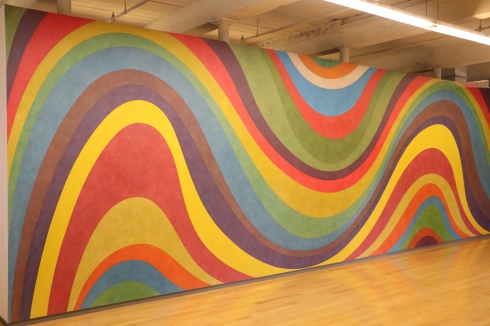
“Wall Drawing 793B”
Irregular wavy color bands.
January 1996
Color ink wash
“Wall Drawing 792”
Black rectangles and squares.
June 1995
Dispersion paint
“Wall Drawing 579”
Three concentric arches. The outside one is blue; the middle red; and the inside one is yellow.
November 1988
Color ink wash
“Wall Drawing 766”
Twenty-one isometric cubes of varying sizes, each with color ink washes superimposed.
September 1994
Color ink wash
“Wall Drawing 386”
Stars with three, four, five, six, seven, eight, and nine points, drawn with a light tone India ink wash inside, an India ink wash outside, separated by a 6-inch (15 cm) white band.
January 1983
India ink wash
Based on the museum’s website, there appears to be many more walls with Lewitt’s work on them in the building, many of which seem to have been added since my visit.
Cosmic Latte is an exhibit designed by famed artist Seymour Finch. The 350 lights are meant to represent a constellation. The name Cosmic Latte refers to the official name given to the color of our universe. A 2009 study of the light emitted by 200,000 galaxies proved the light of our universe is more of a beige color than the blue color it is usually described. The spacing of the fixtures is meant to model the atomic of powdered pigments that Finch used to emulate the specific Cosmic Latte color. He used the following colors to achieve this Cosmic Latte hue: titanium white, Mars Yellow, chrome yellow and cadium red.
The fixtures are arranged in a similar pattern to that of the Milky Way as it is observed in the Northern Hemisphere in March. The undulating swathe of the lights relates to the nearby Hoosic River which is visible through the windows.
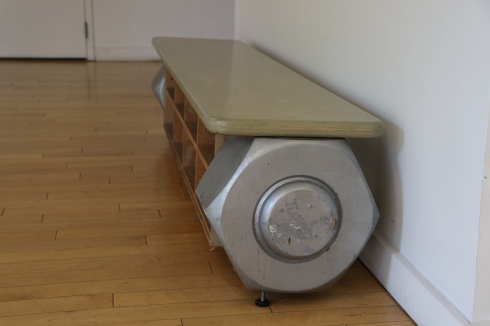
Art is everywhere at MASS MoCA. These benches with cubby hole storage were located just outside of Kidland, where the Cavernous display was located.
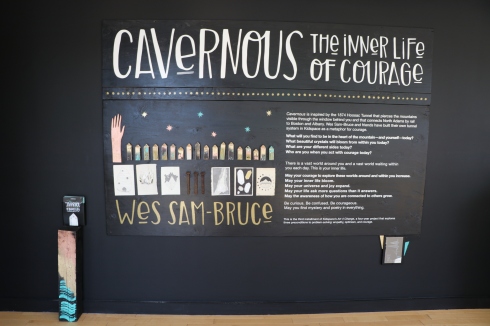
During my visit, there was a special, temporary exhibit on display for children. Inspired by the Hoosac Tunnel which, in 1974, was built to be part of a rail system that connects Albany NY to Boston, MA, Cavernous: The Inner Life of Courage is an interactive work of art in which visitors can walk inside and play inside. The exhibit is meant to teach visitors what it takes to be courageous and persevere in the face of mountain-sized obstacles. Visitors are invited to play in a tunnel-like structure built specifically for the museum. Designs and words are written on the floors and walls. There are also cushioned seating for children to sit on inside the work of art. Good luck getting the kiddies to leave!
Children and other visitors were encouraged to leave little notes in the cavern.
The tunnel system that was built was meant to be a metaphor for courage.
This exhibit was part of the Kidspace area of the museum.
This is part one of a multiple series post. I am not sure how many posts will be involved in the MASS MoCA serries. But, stayed tuned for more creative works of art!
Below are some videos of the work involved in creating some of the art at MASS MoCA
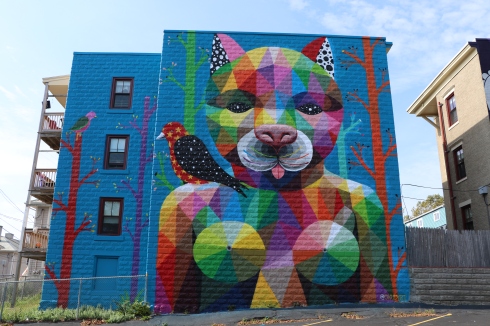
some of these murals are in residential areas or painted on apartment complexes
Sometimes poor judgment can lead to good outcomes. Such was the case when I decided, against my better judgment, to visit Salem, MA (the Halloween headquarter of America) on a Saturday afternoon in October. Parking was sparse (all of the main parking lots and parking spaces were taken or full). But, because I had to park farther away from the downtown area, we spotted another hidden treasure in the city.
These murals were found on Congress St
But, most of the murals are located on Harbor St and Ward St.
These murals were all located along a wall on Harbor St. Some of them were so well done they actually looked like photographs.
As these murals show, Salem is so much more than scary monsters and witchcraft lore.
So, the next time you’re in Salem, don’t just spend your time looking for ghosts and goblins, make sure to stop by and take a look at these works of art!
Highlights: Art displays, shops, restaurant, holiday displays
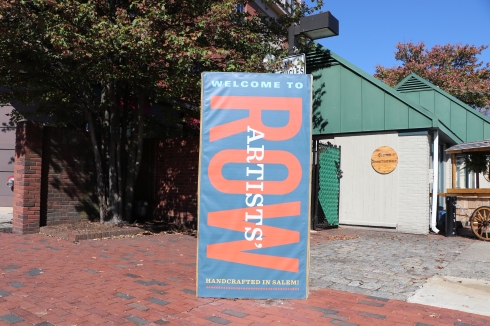
A haven for artists, art lovers or just people looking for unique works of art, Atists’ Row is another area which showcases the art and creativity of Salem.
I photographed Artists’ Row during my many excursions to Salem during the month of October.
As the name suggests, art is evident throughout the row.
From time to time, Artist Row has different art on display throughout the alley. This particular art display was on exhibit during my visits. The lettering and images bumped out so you can feel the images even if you couldn’t see them. I especially like the references to Salem that are portrayed throughout the work of art.
Art is abundant along the Row.
You can not only view art on Artists’ Row. You can create you own art as well.Artists of all ages and backgrounds have the chance to create their own or just sit and enjoy the art around them. The tables with the plants growing out off them are one of the favorites of the visitors at Arrtists’ Row.
These rocks with words and quotes painted on them are piled on the side of the row for anyone in need of some inspiration.
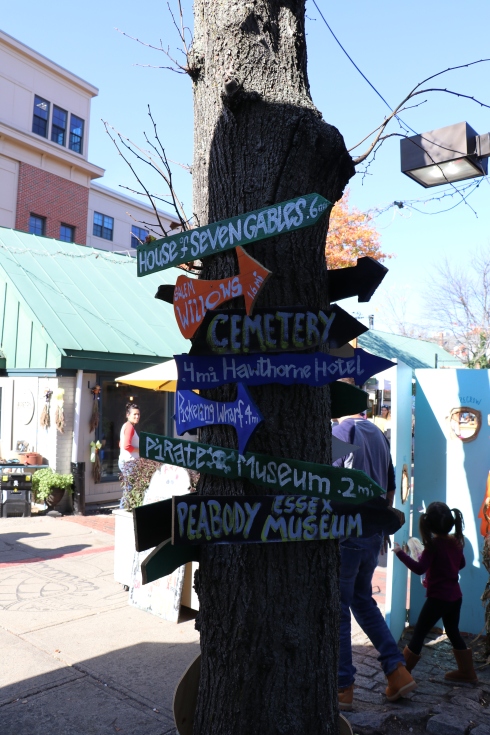
These helpful signs show you which direction to go if you are lost.
The shops along the row offer a variety of handmade crafts and other creative works of art.
The shops on Artists Row have to sign leases each year and, due to the weather conditions, some of the shops are not open year round. So it is possible that some of the shops listed below may not be there when you visit.
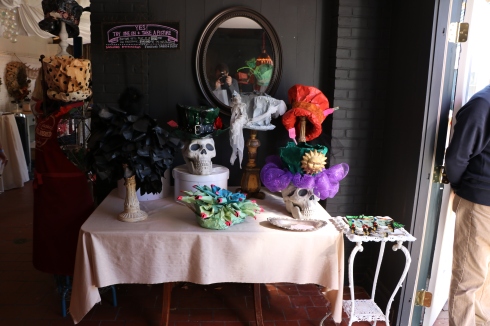
Grace & Diggs has a variety of handmade, items all made by the owner Linda. Many of the goods there have a very Halloween in Salem theme.
There is also a stand with hats on them that you can take a selfie with and post on Facebook (don’t forget to hashtag Grace&Diggs when you post the photo)!
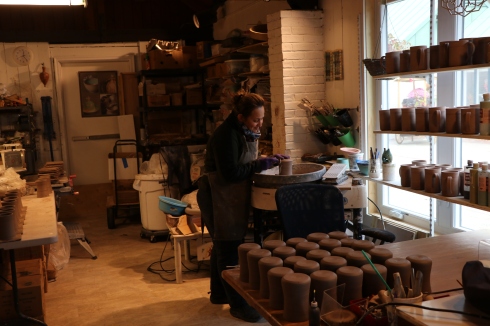
Ceramics By Sibel also has a variety of arts and crafts, all hand made by Sibel. Many of her works are made using clay. On her website, Sibel says she is “made of clay. It is in my DNA.” When she is not operating her business, Sibel sells her art at fairs and other markets (she is only by appointment only in Nov and Dec and her business is closed after Dec until May)
Sibel was busy working on a new piece of art during my visit.
Boston Woodturning is another shop on the row. Boston Woodturning creates crafts out of wood at their shop. They also held a fun event in October in which they helped create and design little ghosts and scarecrows out of recycled materials for the children who stopped by their store.
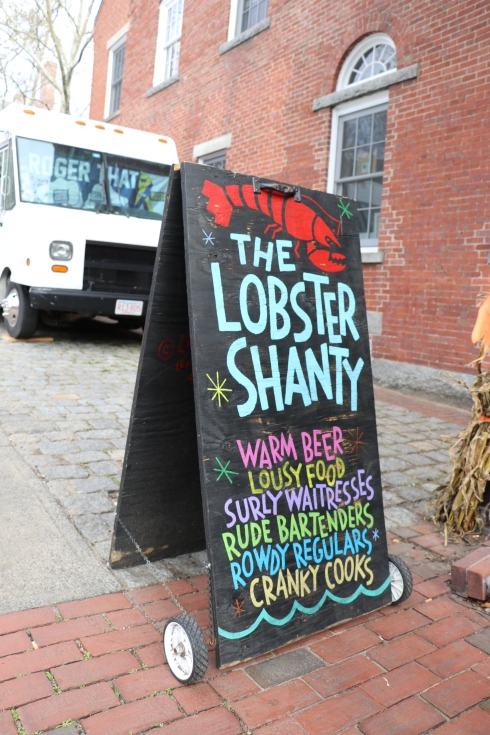
The one mainstay throughout the year is the Lobster Shanty.
Sounds like my kind of place!
Now that the huge crowds of the Halloween season have long since dispersed and the area is tastefully decorated for the holiday season, it may be a great time to visit Artists’ Row.
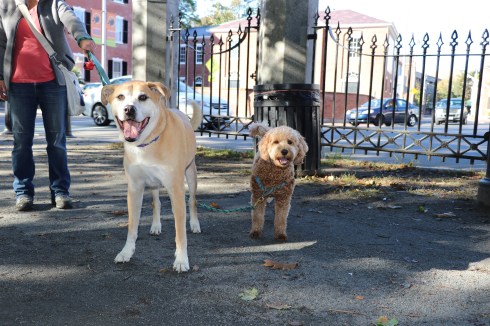
Dogs like to walk among the art on Artist’ Row. Must be because of all of the trees there.
Bernie is a 10 year old Rat Terrier. His mom said he thinks he is the “Mayor Of Salem”. Take that, Kim Driscoil!
Hugo is a 9 year old Great Pyrenees. You can follow him on Instagram at hugoofsalem
Location: The Bridge at 211, 211 Bridge St, Salem, MA
Hours: Hours may vary
Cost: Free
Parking: There is limited parking available at the location. There is also metered street parking throughout Salem.
Highlights: art created by local artists
Tips:
Exhibit is up until October 29
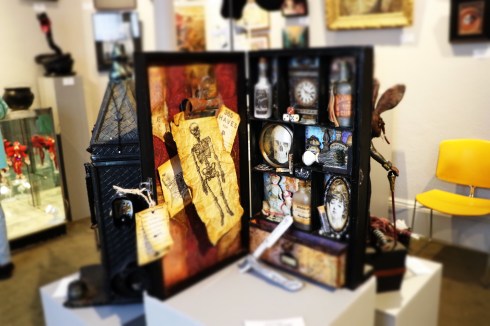
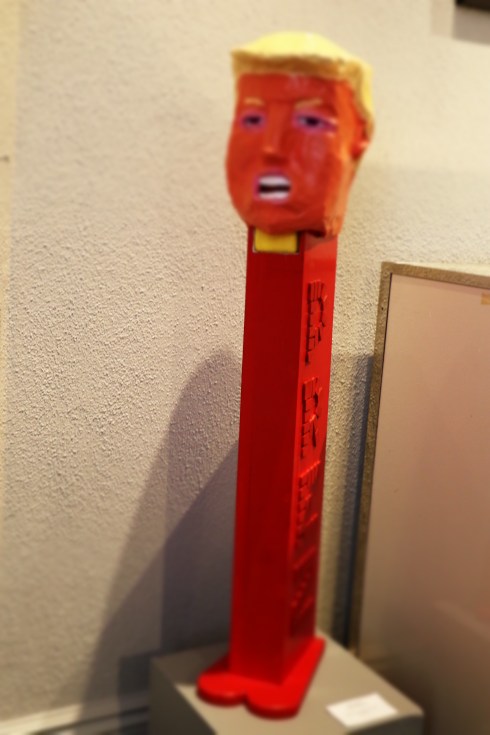
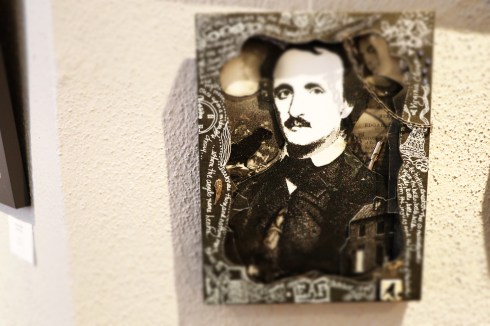
As if the Faint Of Art art display wasn’t scary enough, the Bridge at 211 isn’t done yet. While not technically part of the “Faint Of Art” exhibit, the Bridge at 211 also has a collection of other art, both spooky and otherwise, on display in their art display rooms.
Ranging from humorous to downright spooky, you are bound to find something that catches your eye.
As you enter the rooms with all of the art carefully placed displayed, it is easy to be overwhelmed with the sheer volume and quality of the art around you. Where to start? Was the first thought that came to mind. After collecting my bearings, I noticed this interesting lamp.
Location: The Bridge at 211, 211 Bridge St, Salem, MA
Hours: Hours may vary
Cost: Free
Parking: There is limited parking available at the location. There is also metered street parking throughout Salem.
Highlights: art created by local artists
Tips:
Exhibit is up until October 29
Art and Halloween are the perfect combination for Salem. With a thriving art community and its dark history, the Salem Arts Association, “Faint Of Art” exhibit makes for a great display for this time of the year!
The exhibit, being displayed at the Bridge at 211, consists of art created mostly by people from Salem and the neighboring towns and cities such as Lynn and Peabody.
While there is more than just the Faint Of Art display at the Bridge, the Faint Of Art display is located in the foyer or hallway of the building.
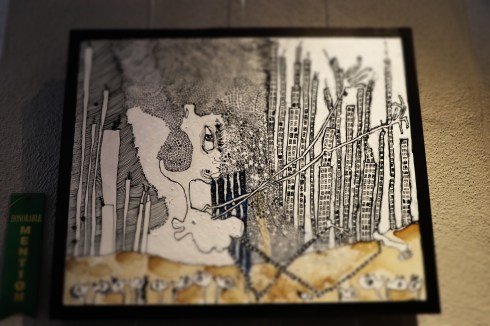
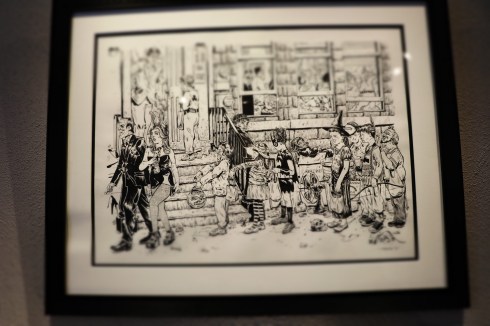
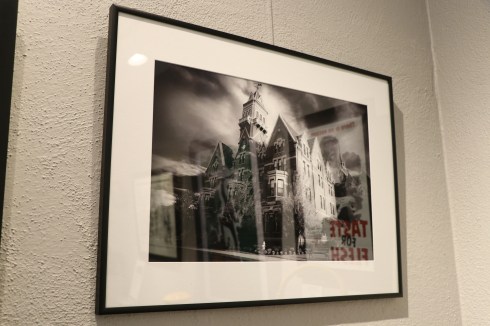
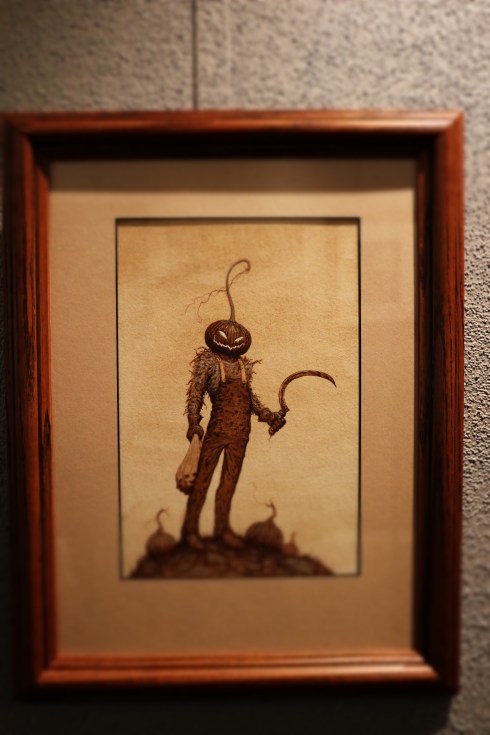
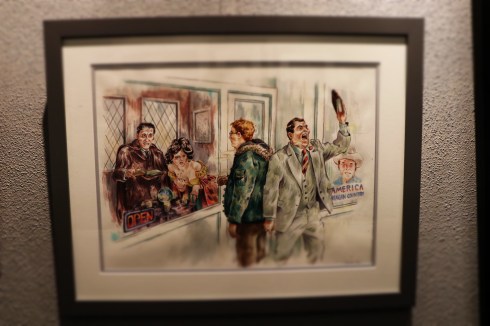
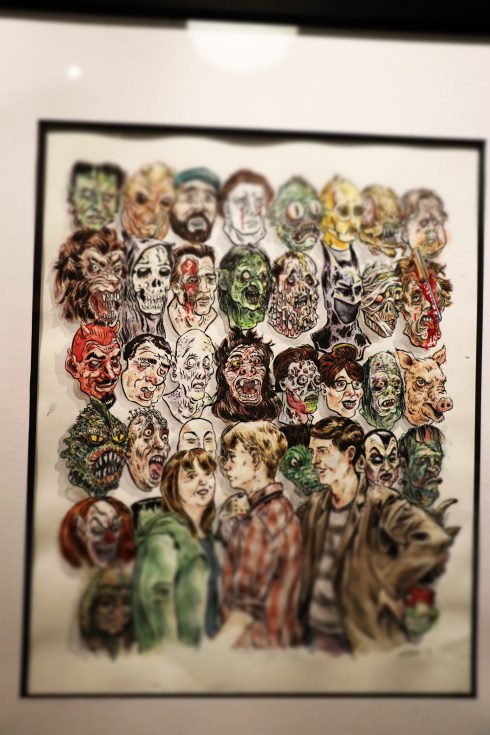
The art mostly consists of mostly paintings, photographs and sketches. Some of the works had a glare reflecting off the glass they were framed in which I couldn’t avoid capturing unfortunately. Consequently, had to take some of these photos from unusual angles to cut down on the shadows and glare.
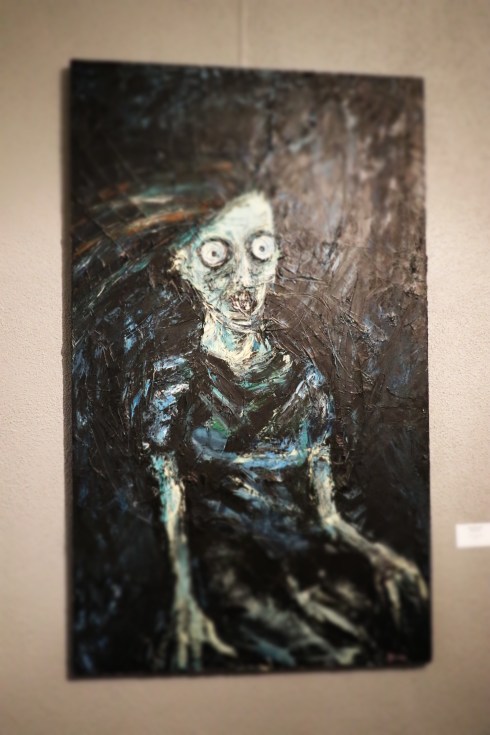
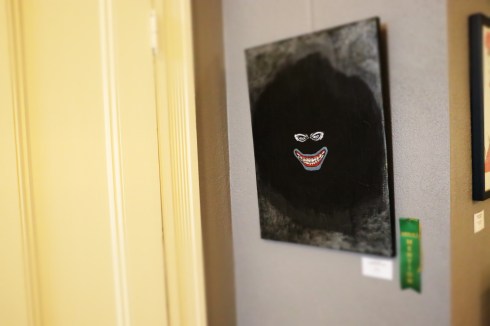
The first work I noticed was very scary and set the tone for the rest of the exhibit.
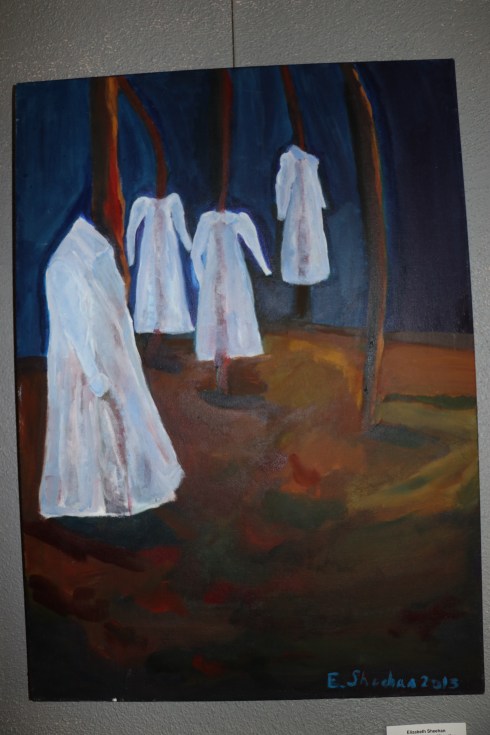
Nightmare is by Anne Benecke.. It is an oil on canvas painting.
Frighteningly Friendly by Cindy Allen. Acrylic. (Honorable Mention)
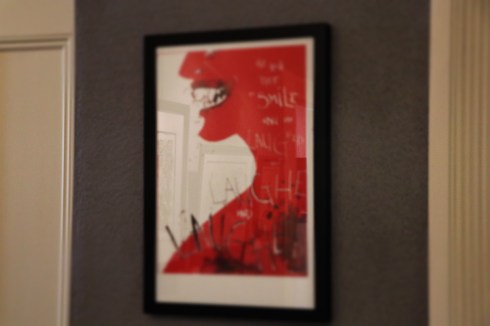
She Laughed by Maura McGonagle. Ink on paper.
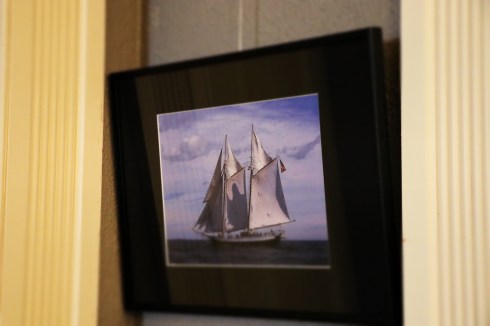
Ghost Ship 2 by Rod Parker. Photograph.
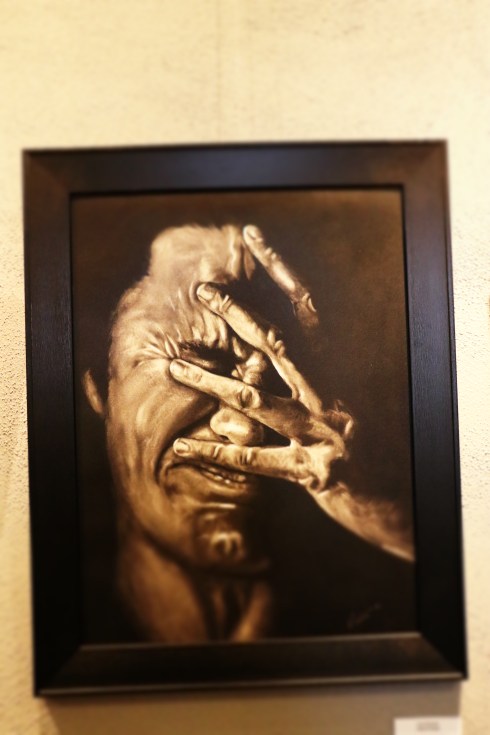
I make that face a lot, too. Man In The Mirror by Leo Vincent. Reverse oil painting on paper.
Jenny by Joey Phoenix. Acrylic on canvas.
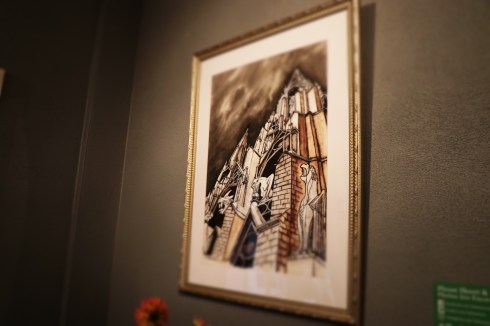
The Gargoyle by Nancy Barnes. Pastel.
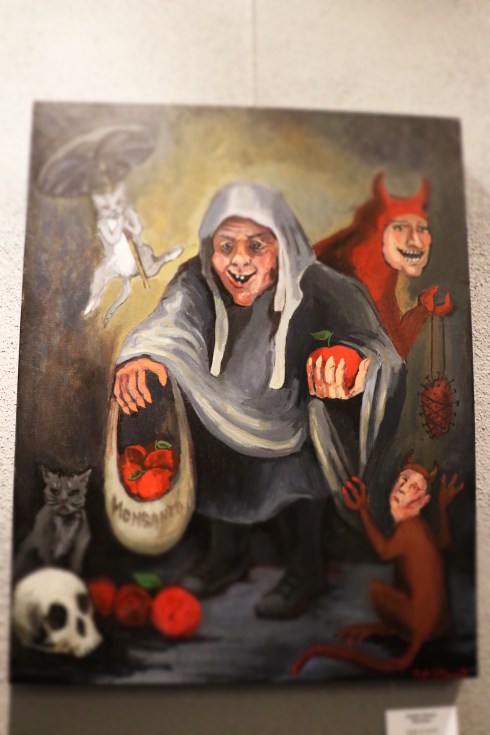
Another one of my favorites. Monsanto by Heather Stewart. Acrylic on canvas.
Gargoyle Palace by Roberta Will. Sumi stick wash, pen, ink.
Raymond Gilbert. Oil on canvas.
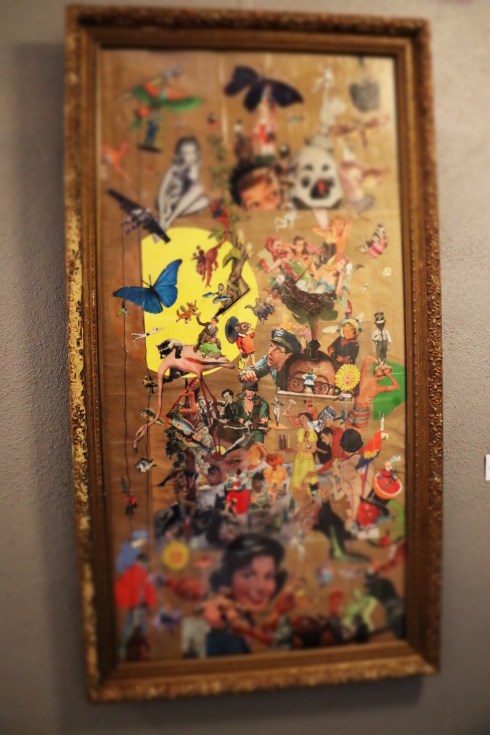
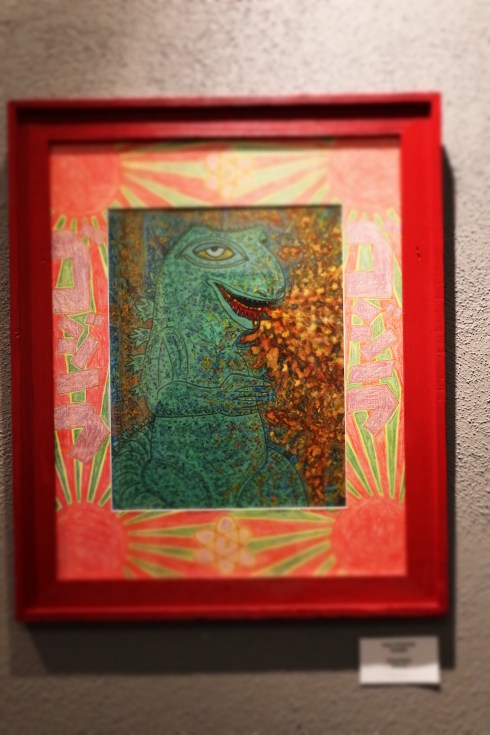
Godzilla by Peter Grimshaw. Mixed-media.
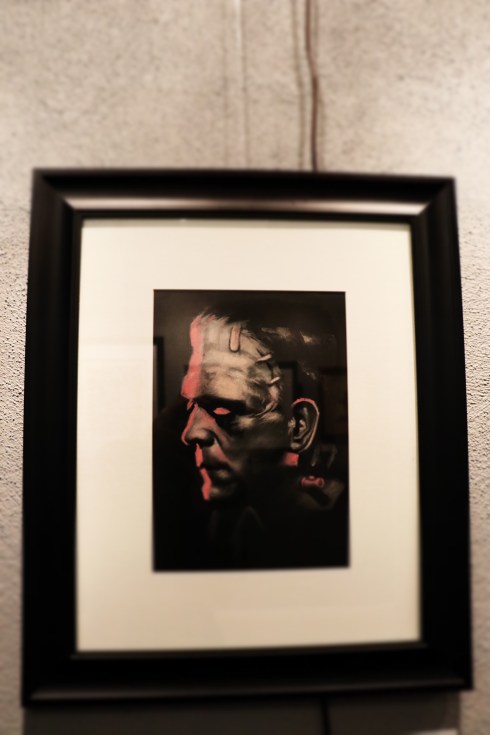
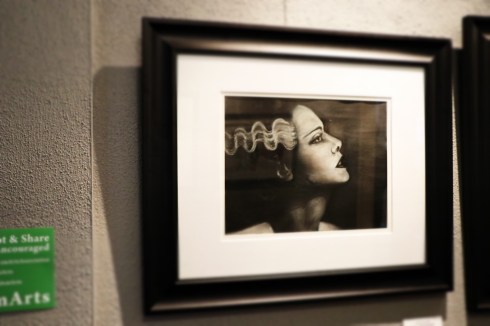
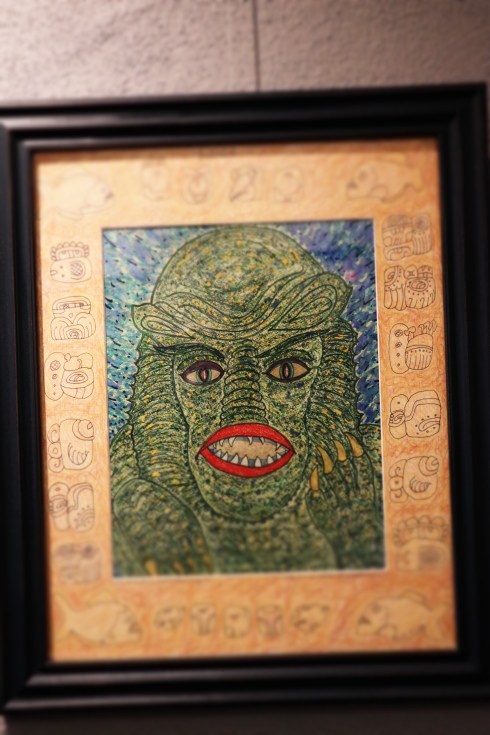
The Creature From The Black Lagoon by Peter Grimshaw. Mixed-media.
Anything You Want But Nothing You Need by Raymond Gilbert. Oil on canvas.
Til Death Do Us Part by Carli Kusiolek. Watercolor, pen and ink.
Untitled by Heather Meri Stewart. Pen and ink.
While this concludes the photos from the “Faint Of Art” collection, there were many more works of art displayed in the other rooms at the Bridge at 211 which I will include in my next blog post.
Which one did you like best? Let me know in the comments below!
Location: parking lot of Avon Free Public Library, 281 Country Club Road, Avon, CT
Highlights: A life size sculpture of Amy reading a book and clutching a teddy bear
Tips:
The sculpture is located in the parking lot next to the left side of the library
Sixteen years. Who could imagine so much time has passed?
One hundred and fifty six people with ties to Connecticut died on that tragic day. A memorial rests on the grounds of the Avon Free Public Library to memorialize one of these, and indeed all of the victims of this day.
Amy Toyen, a resident of Connecticut and employee of Thomson Financial in Newton, Connecticut. As a side note, when I researched this memorial and Amy, I never knew she worked at the very same corporation I used to work at. It’s amazing how we all seem to be connected in some way.
Amy, a 1995 Avon High graduate, was killed Sept. 11 while she set up her company’s display booth for a trade show on the 106th floor of the World Trade Center’s north tower.
Dedicated by the 2001-2002 Avon High School Student Government and the Avon community, the 22″ bronze statue depicts a young child, Amy Toyen, on a granite bench reading a book, a teddy bear resting in the crook of her elbow.
To help create the sculpture, Amy’s parents selected a group of photos that portray their daughter as they remember her.
The sculpture shows Amy in daisy print dress, her favorite sneakers and ponytails tied with pompom rubber bands
A scholarship was also started in Amy’s name. The first recipient of the annual Amy E. Toyen Memorial Scholarship went to Christine Bialaski, an Avon High senior and honors student who is active in community service, music and field hockey.
Coincidentally, the Bialaski family lives down the street from the Toyens. As a young child, Amy Toyen often waited for the morning school bus at the Bialaskis’ home after her mother left for her teaching job at Renbrook School.
The sculptor, Marilyn Parkinson Thrall of Canton, Connecticut, stops by every once in a while to polish and clean up the sculpture.
The statue, a reminder of all that was lost that day, remembers Amy in a younger, more carefree time.






























































 New England Nomad