Date Of Visit: December 7, 2024
Location: 138 Federal St, Salem, MA
Parking: There are several parking lots and garages in the Salem area
Universally Accessible: No, many of the homes do not have ramps or universally accessible entry

When you ask most people what they think of when they think of Salem, MA they will most likely reply with something about Halloween and witches. However, Salem has become an all year round attraction. In fact, the Christmas in Salem event has quickly become one of the more popular events in Salem.
Christmas In Salem is a series of guided tours at 13 historic homes and buildings in Salem, MA. In these series of posts, I will take you all on these tours and give some observations from my perspective through my photos and the information provided by the informative tour hosts and the literature from this event.
The first home on the Christmas In Salem tour is the Cotting-Smith Assembly House (aka as the Assembly House) on Federal St. This house was used as the headquarters of the tour. People registered for the tour by showing their receipt and, upon registering, were given a handbook with the addresses and writeups for each building.
Built in 1782 as a “Federalist Clubhouse”, the Cotting-Smith Assembly House was used as a ballroom and concert venue as well as a place to host lectures and other events for Salem’s elite. The Marquis de Lafayette was said to have danced in that very house in 1784 and it is said that George Washington dined there in 1789. While the original documentation for the building is not available, it is believed the house was essentially plain and functional in its original state in 1782.
The building was originally funded as a joint stock venture. Once it was rendered obsolete in 1792, Jonathan Waldo, one of the original developers, obtained full ownership. Waldo then sold the house to Samuel Putnam in 1794. Either Waldo or Putnam hired renowned Salem architect and craftsman Samuel_McIntire to remodel it as a private home. McIntire added 4 pillar of iconic pilasters to the second floor facade and a pediment centered above. The Assembly House is said to the the only wooden structure designed by McIntire with a pavilion front. The house was later remodeled during the 1830s or 40s. During this time the Greek Revival portico was added to the front of the house featuring an ornate frieze of carved grape vines by master carpenter Joseph True. The Assembly House, which is now owned by the Peabody Essex Museum, is listed on the National Register of Historic Places.
The building acted as the meeting place for visitors to get their handbook of houses to visit and map of all of the buildings on the tour. So, there wasn’t much decor at this particular home. However, I did see some photo worthy things.

Sometimes the little things can tell a lot about a home. For instance, this wallpaper spoke to the trade relations between Salem and other countries. This wallpaper, which shows what looks like a rendition of life and culture of the people of Asia, may have been an example of how the owners traveled to certain parts of Asia. It was not unusual for people to put up wallpaper that reminded them of places they traveled to or traded with.

This is not an original print, though. It is a stylized representation of wallpaper from that time.
While wallpaper may not be in vogue now, it was a treasured possession of the wealthy at the time this house was built.
According to Historic New England, the earliest record of wallpaper in America is in the estate inventory of a Boston stationer in 1700, where “7 quires of painted paper and three reams of painted paper” were listed. But, only one wallpaper in Historic New England’s collection with a history in New England dates back to the 1700s. Like all early references, this was more descriptive of quantity than of design. Only one wallpaper in Historic New England’s collection with a history in New England dates to this early period. This wallpaper was later used to cover a copy book of poetry in 1783.
Initially, paper hangings, as wallpaper was called in the eighteenth century, were only available from stationer and book sellers. Or they could be custom ordered from merchants who specialized in importing luxury goods. Eventually, wall paper could be purchased from upholsterers.
Prior to 1760, only the wealthiest colonists in urban areas in New England could afford wallpaper. Wallpaper was expensive because of the process involved in making it. The rolls the wallpaper was printed on had to be made of individual sheets of paper. These sheets were glued together. Then, they were hand printed with wood blocks, one block for each color of the design.
That is what makes the Christmas In Salem event so interesting. You can learn so much about the history of wallpaper just by touring a historic home!
Please join me on my tours of all of these historic homes!
You can find me on Instagram here, new.england.nomad_
You can follow me on Facebook here.
If you want to see more photography from New England, click here to join my Photographers of New England Group on Facebook.
I don’t do Twitter and I’m too old for TikTok!

 New England Nomad
December 19th, 2024 at 11:59 pm
Very interesting. And a beautiful building.
LikeLiked by 2 people
December 20th, 2024 at 12:08 am
Thank you! Yes, it was a great place to start of the tour!
LikeLiked by 2 people
December 20th, 2024 at 12:41 am
It sounds like a fascinating town, although the name conjures up all those scary things! I hadn’t realized that wallpaper was so expensive in those days. I do love wallpaper actually.
LikeLiked by 1 person
December 20th, 2024 at 5:25 pm
Yes, it does conjure up those scary things. But, the city has so much more to offer, especially with its rich history. Thank you for the thoughtful comment!
LikeLike
December 20th, 2024 at 7:15 am
LikeLiked by 1 person
December 21st, 2024 at 9:10 am
Merry Christmas!
LikeLiked by 1 person
December 20th, 2024 at 8:02 am
The Assembly House is really impressive, Wayne. The tour must be great.
LikeLiked by 1 person
December 21st, 2024 at 8:51 am
Yes it is! I think it’s also one of the oldest homes on the tour!
LikeLiked by 1 person
December 20th, 2024 at 9:51 am
My husband and I used to live in a 1730’s house in New Hampshire. We loved going to the Peabody Essex Museum house tours. We enjoyed seeing homes similar to ours and learning about their history. Thanks for the tour.
LikeLiked by 1 person
December 21st, 2024 at 8:49 am
I would love to live in a house from that era! Thank you for stopping by and commenting!
LikeLiked by 1 person
December 22nd, 2024 at 8:07 pm
Lovely house and thanks for the charming and very interesting tour! I love old homes like this one.
LikeLiked by 1 person
December 27th, 2024 at 7:44 pm
That sounds like a lovely use for/of wall paper – to have it serve as a reminder of places you have been. That is cool. I didn’t know that.
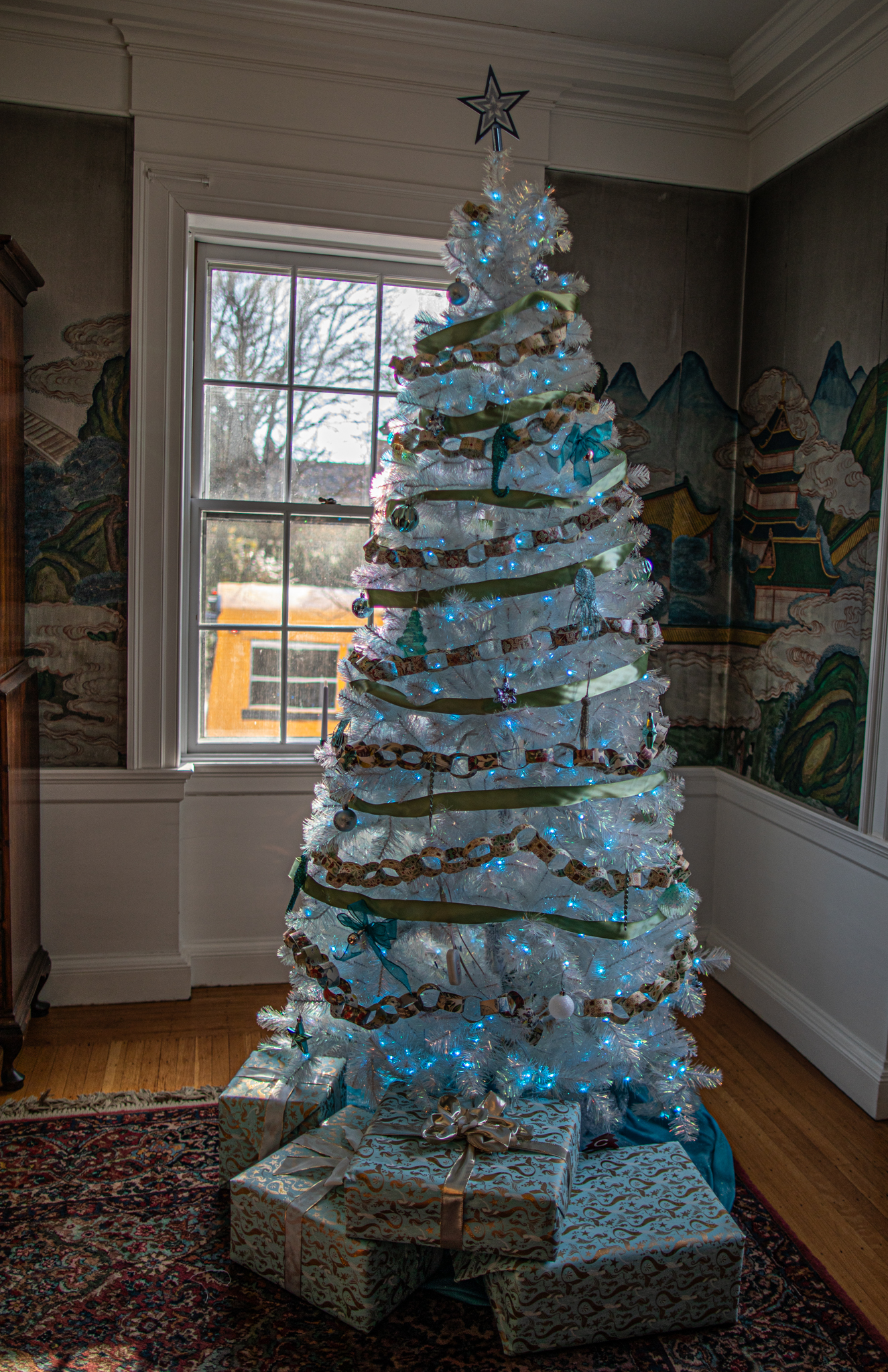
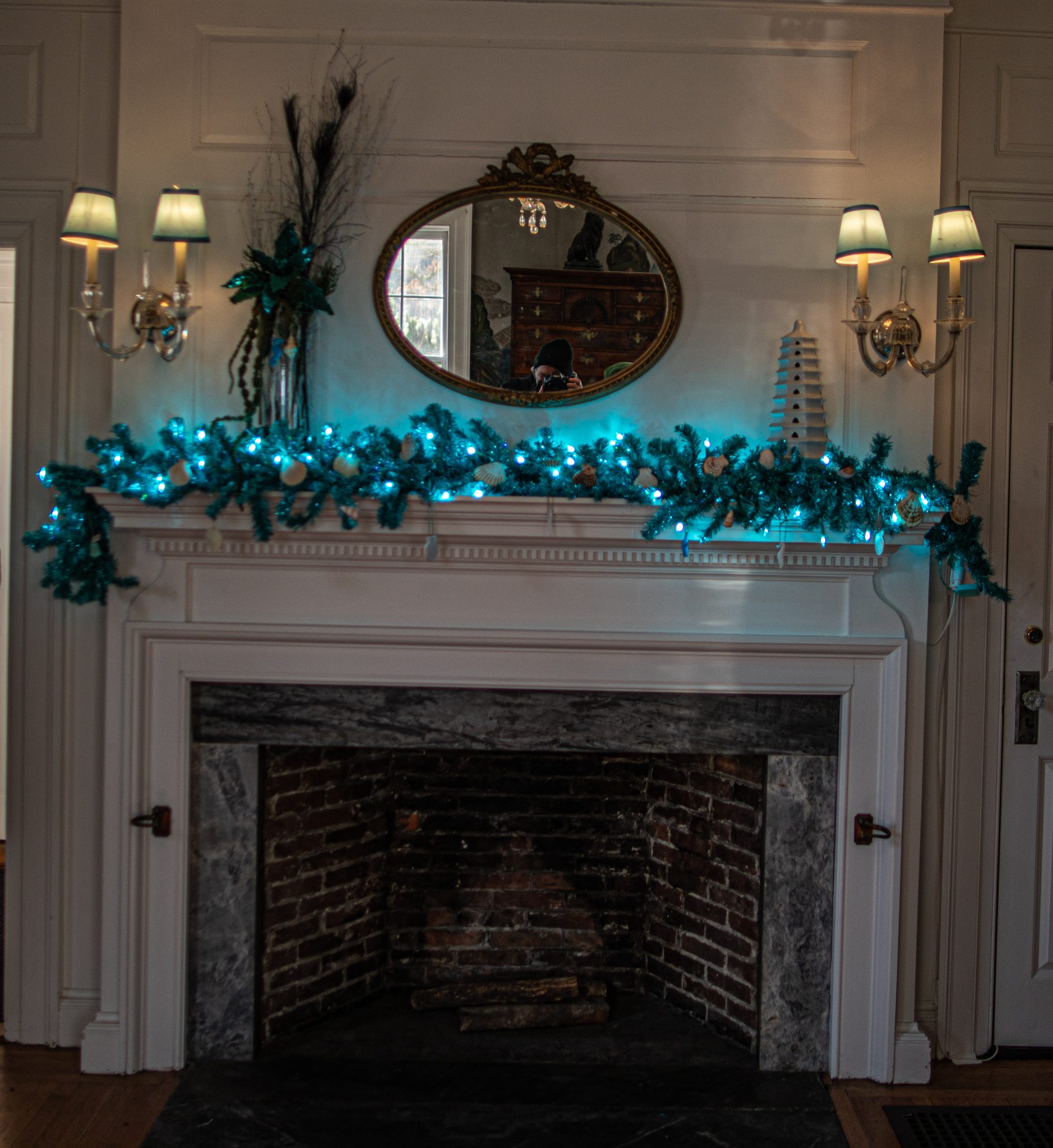
I love that tree and the blue-lighted garland!
LikeLiked by 1 person
December 28th, 2024 at 11:22 am
Yes and I’ve seen it in other homes during previous tours. One house had wallpaper with images of places from they visited in Europe!
LikeLiked by 1 person
December 28th, 2024 at 7:43 pm
That is very interesting.
LikeLike